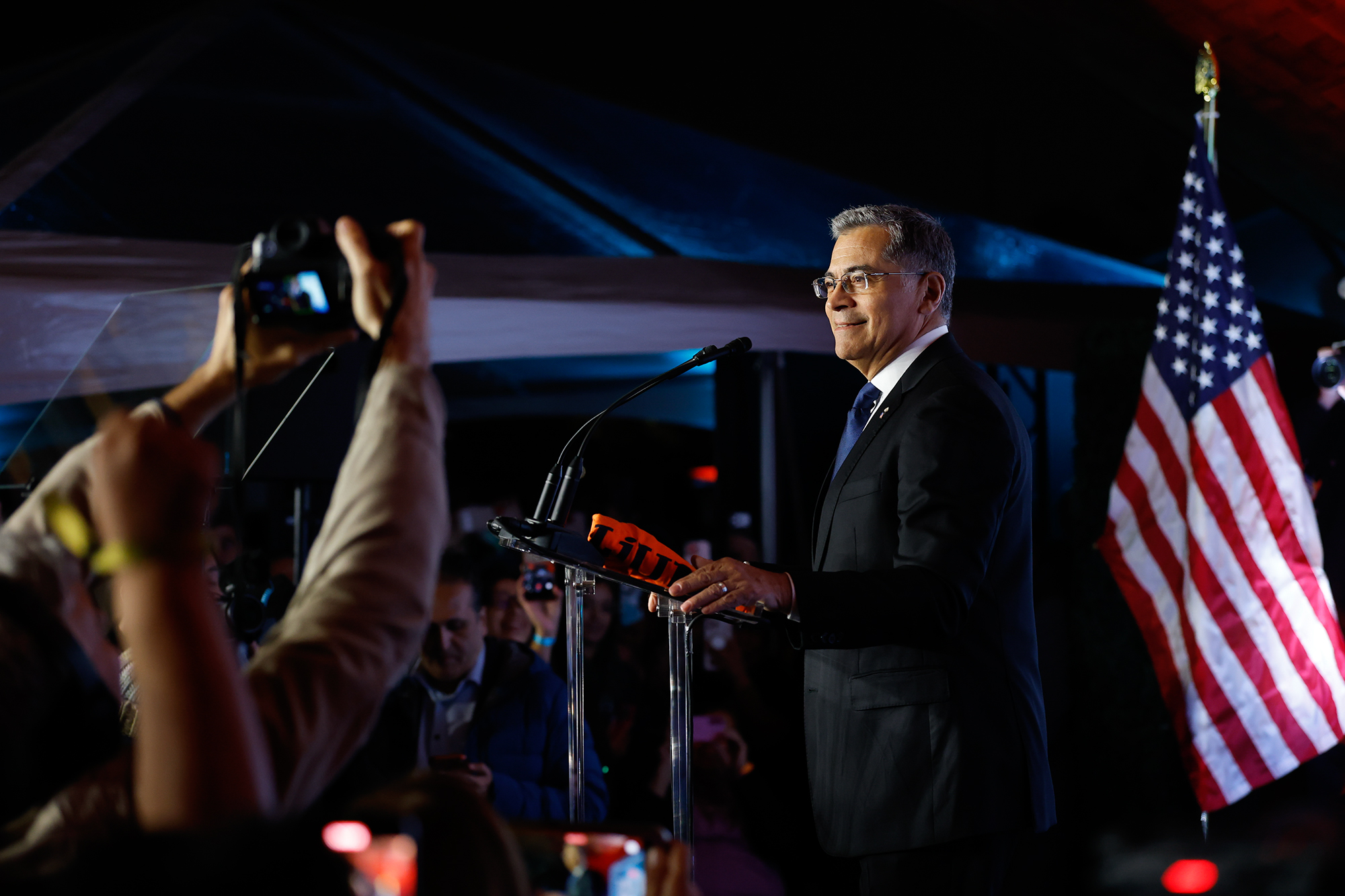
Laura Fitzgerald is a reporter for KQED's California Politics and Government Desk. She covers state and local Bay Area politics, California's state legislature, and elections. Laura is a graduate of the UC Berkeley Graduate School of Journalism and UC Davis.
California’s Legislature Is Becoming Bluer Than Ever. That Doesn’t Mean They All Agree
California Budget Analyst Warns Stock Market Crash Poses Risk of Ballooning Deficit
Effort to Make It Harder to Pass Local Taxes Fails
California Election Results Take Shape
After Historic Blue Wave, California Democrats Hope to Turn Their Focus Inward
Lee Triumphs in Oakland Mayor’s Race; ‘Strong Mayor’ Measure Leading
Proposition 4 Would Let More Cities Fund Campaigns. In Oakland, That’s Been a Struggle
Judge Blocks DHS From Sending Armed Agents to Question Voters in Search for Noncitizens
Big Tech Money and Trump DOJ Lawsuit Hit California's Elections
Trump Administration Sues California After Demands to Prove Voters’ Citizenship
Newsom Signs Bill to Boost Local Newsrooms, Calling Out Trump’s Restrictions on Press
Player sponsored by
window.__IS_SSR__=true
window.__INITIAL_STATE__={
"attachmentsReducer": {
"audio_0": {
"type": "attachments",
"id": "audio_0",
"imgSizes": {
"kqedFullSize": {
"file": "https://ww2.kqed.org/news/wp-content/themes/KQED-unified/img/audio_bgs/background0.jpg"
}
}
},
"audio_1": {
"type": "attachments",
"id": "audio_1",
"imgSizes": {
"kqedFullSize": {
"file": "https://ww2.kqed.org/news/wp-content/themes/KQED-unified/img/audio_bgs/background1.jpg"
}
}
},
"audio_2": {
"type": "attachments",
"id": "audio_2",
"imgSizes": {
"kqedFullSize": {
"file": "https://ww2.kqed.org/news/wp-content/themes/KQED-unified/img/audio_bgs/background2.jpg"
}
}
},
"audio_3": {
"type": "attachments",
"id": "audio_3",
"imgSizes": {
"kqedFullSize": {
"file": "https://ww2.kqed.org/news/wp-content/themes/KQED-unified/img/audio_bgs/background3.jpg"
}
}
},
"audio_4": {
"type": "attachments",
"id": "audio_4",
"imgSizes": {
"kqedFullSize": {
"file": "https://ww2.kqed.org/news/wp-content/themes/KQED-unified/img/audio_bgs/background4.jpg"
}
}
},
"placeholder": {
"type": "attachments",
"id": "placeholder",
"imgSizes": {
"thumbnail": {
"file": "https://cdn.kqed.org/wp-content/uploads/2024/12/KQED-Default-Image-816638274-2000x1333-1-160x107.jpg",
"width": 160,
"height": 107,
"mimeType": "image/jpeg"
},
"medium": {
"file": "https://cdn.kqed.org/wp-content/uploads/2024/12/KQED-Default-Image-816638274-2000x1333-1-800x533.jpg",
"width": 800,
"height": 533,
"mimeType": "image/jpeg"
},
"medium_large": {
"file": "https://cdn.kqed.org/wp-content/uploads/2024/12/KQED-Default-Image-816638274-2000x1333-1-768x512.jpg",
"width": 768,
"height": 512,
"mimeType": "image/jpeg"
},
"large": {
"file": "https://cdn.kqed.org/wp-content/uploads/2024/12/KQED-Default-Image-816638274-2000x1333-1-1020x680.jpg",
"width": 1020,
"height": 680,
"mimeType": "image/jpeg"
},
"1536x1536": {
"file": "https://cdn.kqed.org/wp-content/uploads/2024/12/KQED-Default-Image-816638274-2000x1333-1-1536x1024.jpg",
"width": 1536,
"height": 1024,
"mimeType": "image/jpeg"
},
"fd-lrg": {
"file": "https://cdn.kqed.org/wp-content/uploads/2024/12/KQED-Default-Image-816638274-2000x1333-1-1536x1024.jpg",
"width": 1536,
"height": 1024,
"mimeType": "image/jpeg"
},
"fd-med": {
"file": "https://cdn.kqed.org/wp-content/uploads/2024/12/KQED-Default-Image-816638274-2000x1333-1-1020x680.jpg",
"width": 1020,
"height": 680,
"mimeType": "image/jpeg"
},
"fd-sm": {
"file": "https://cdn.kqed.org/wp-content/uploads/2024/12/KQED-Default-Image-816638274-2000x1333-1-800x533.jpg",
"width": 800,
"height": 533,
"mimeType": "image/jpeg"
},
"post-thumbnail": {
"file": "https://cdn.kqed.org/wp-content/uploads/2024/12/KQED-Default-Image-816638274-2000x1333-1-672x372.jpg",
"width": 672,
"height": 372,
"mimeType": "image/jpeg"
},
"twentyfourteen-full-width": {
"file": "https://cdn.kqed.org/wp-content/uploads/2024/12/KQED-Default-Image-816638274-2000x1333-1-1038x576.jpg",
"width": 1038,
"height": 576,
"mimeType": "image/jpeg"
},
"xxsmall": {
"file": "https://cdn.kqed.org/wp-content/uploads/2024/12/KQED-Default-Image-816638274-2000x1333-1-160x107.jpg",
"width": 160,
"height": 107,
"mimeType": "image/jpeg"
},
"xsmall": {
"file": "https://cdn.kqed.org/wp-content/uploads/2024/12/KQED-Default-Image-816638274-2000x1333-1-672x372.jpg",
"width": 672,
"height": 372,
"mimeType": "image/jpeg"
},
"small": {
"file": "https://cdn.kqed.org/wp-content/uploads/2024/12/KQED-Default-Image-816638274-2000x1333-1-672x372.jpg",
"width": 672,
"height": 372,
"mimeType": "image/jpeg"
},
"xlarge": {
"file": "https://cdn.kqed.org/wp-content/uploads/2024/12/KQED-Default-Image-816638274-2000x1333-1-1020x680.jpg",
"width": 1020,
"height": 680,
"mimeType": "image/jpeg"
},
"full-width": {
"file": "https://cdn.kqed.org/wp-content/uploads/2024/12/KQED-Default-Image-816638274-2000x1333-1-1920x1280.jpg",
"width": 1920,
"height": 1280,
"mimeType": "image/jpeg"
},
"guest-author-32": {
"file": "https://cdn.kqed.org/wp-content/uploads/2025/01/KQED-Default-Image-816638274-1333x1333-1-160x160.jpg",
"width": 32,
"height": 32,
"mimeType": "image/jpeg"
},
"guest-author-50": {
"file": "https://cdn.kqed.org/wp-content/uploads/2025/01/KQED-Default-Image-816638274-1333x1333-1-160x160.jpg",
"width": 50,
"height": 50,
"mimeType": "image/jpeg"
},
"guest-author-64": {
"file": "https://cdn.kqed.org/wp-content/uploads/2025/01/KQED-Default-Image-816638274-1333x1333-1-160x160.jpg",
"width": 64,
"height": 64,
"mimeType": "image/jpeg"
},
"guest-author-96": {
"file": "https://cdn.kqed.org/wp-content/uploads/2025/01/KQED-Default-Image-816638274-1333x1333-1-160x160.jpg",
"width": 96,
"height": 96,
"mimeType": "image/jpeg"
},
"guest-author-128": {
"file": "https://cdn.kqed.org/wp-content/uploads/2025/01/KQED-Default-Image-816638274-1333x1333-1-160x160.jpg",
"width": 128,
"height": 128,
"mimeType": "image/jpeg"
},
"detail": {
"file": "https://cdn.kqed.org/wp-content/uploads/2025/01/KQED-Default-Image-816638274-1333x1333-1-160x160.jpg",
"width": 160,
"height": 160,
"mimeType": "image/jpeg"
},
"kqedFullSize": {
"file": "https://cdn.kqed.org/wp-content/uploads/2024/12/KQED-Default-Image-816638274-2000x1333-1.jpg",
"width": 2000,
"height": 1333
}
}
},
"news_12108092": {
"type": "attachments",
"id": "news_12108092",
"meta": {
"index": "attachments_1716263798",
"site": "news",
"id": "12108092",
"found": true
},
"title": "110326_Becerra-Watch-Party_FG_CM_03",
"publishDate": 1793771638,
"status": "inherit",
"parent": 0,
"modified": 1793782679,
"caption": "Governor-elect Xavier Becerra speaks to supporters during an election night watch party at Drake's: The Barn in Sacramento on Nov. 3, 2026.",
"credit": "Fred Greaves for CalMatters",
"altTag": null,
"description": null,
"imgSizes": {
"thumbnail": {
"file": "https://cdn.kqed.org/wp-content/uploads/sites/10/2026/11/110326_Becerra-Watch-Party_FG_CM_03-2ba9faf2-160x107.jpg",
"width": 160,
"height": 107,
"mimeType": "image/jpeg"
},
"1536x1536": {
"file": "https://cdn.kqed.org/wp-content/uploads/sites/10/2026/11/110326_Becerra-Watch-Party_FG_CM_03-2ba9faf2-1536x1024.jpg",
"width": 1536,
"height": 1024,
"mimeType": "image/jpeg"
},
"post-thumbnail": {
"file": "https://cdn.kqed.org/wp-content/uploads/sites/10/2026/11/110326_Becerra-Watch-Party_FG_CM_03-2ba9faf2-672x372.jpg",
"width": 672,
"height": 372,
"mimeType": "image/jpeg"
},
"twentyfourteen-full-width": {
"file": "https://cdn.kqed.org/wp-content/uploads/sites/10/2026/11/110326_Becerra-Watch-Party_FG_CM_03-2ba9faf2-1038x576.jpg",
"width": 1038,
"height": 576,
"mimeType": "image/jpeg"
},
"npr-cds-wide": {
"file": "https://cdn.kqed.org/wp-content/uploads/sites/10/2026/11/110326_Becerra-Watch-Party_FG_CM_03-2ba9faf2-1200x675.jpg",
"width": 1200,
"height": 675,
"mimeType": "image/jpeg"
},
"npr-cds-square": {
"file": "https://cdn.kqed.org/wp-content/uploads/sites/10/2026/11/110326_Becerra-Watch-Party_FG_CM_03-2ba9faf2-600x600.jpg",
"width": 600,
"height": 600,
"mimeType": "image/jpeg"
},
"kqedFullSize": {
"file": "https://cdn.kqed.org/wp-content/uploads/sites/10/2026/11/110326_Becerra-Watch-Party_FG_CM_03-2ba9faf2.jpg",
"width": 2000,
"height": 1333
}
},
"isLoading": false,
"fetchFailed": false
},
"news_12110608": {
"type": "attachments",
"id": "news_12110608",
"meta": {
"index": "attachments_1716263798",
"site": "news",
"id": "12110608",
"found": true
},
"title": "The California State Capitol in Sacramento on Feb. 7, 2023.",
"publishDate": 1795114104,
"status": "inherit",
"parent": 12110603,
"modified": 1795114115,
"caption": "The California State Capitol in Sacramento on Feb. 7, 2023.",
"credit": "Beth LaBerge/KQED",
"altTag": null,
"description": null,
"imgSizes": {
"thumbnail": {
"file": "https://cdn.kqed.org/wp-content/uploads/sites/10/2026/11/009_KQED_Sacramento_02072023_qed-28d41130-160x107.jpg",
"width": 160,
"height": 107,
"mimeType": "image/jpeg"
},
"1536x1536": {
"file": "https://cdn.kqed.org/wp-content/uploads/sites/10/2026/11/009_KQED_Sacramento_02072023_qed-28d41130-1536x1024.jpg",
"width": 1536,
"height": 1024,
"mimeType": "image/jpeg"
},
"post-thumbnail": {
"file": "https://cdn.kqed.org/wp-content/uploads/sites/10/2026/11/009_KQED_Sacramento_02072023_qed-28d41130-672x372.jpg",
"width": 672,
"height": 372,
"mimeType": "image/jpeg"
},
"twentyfourteen-full-width": {
"file": "https://cdn.kqed.org/wp-content/uploads/sites/10/2026/11/009_KQED_Sacramento_02072023_qed-28d41130-1038x576.jpg",
"width": 1038,
"height": 576,
"mimeType": "image/jpeg"
},
"npr-cds-wide": {
"file": "https://cdn.kqed.org/wp-content/uploads/sites/10/2026/11/009_KQED_Sacramento_02072023_qed-28d41130-1200x675.jpg",
"width": 1200,
"height": 675,
"mimeType": "image/jpeg"
},
"npr-cds-square": {
"file": "https://cdn.kqed.org/wp-content/uploads/sites/10/2026/11/009_KQED_Sacramento_02072023_qed-28d41130-600x600.jpg",
"width": 600,
"height": 600,
"mimeType": "image/jpeg"
},
"kqedFullSize": {
"file": "https://cdn.kqed.org/wp-content/uploads/sites/10/2026/11/009_KQED_Sacramento_02072023_qed-28d41130.jpg",
"width": 2000,
"height": 1333
}
},
"isLoading": false,
"fetchFailed": false
},
"news_12040805": {
"type": "attachments",
"id": "news_12040805",
"meta": {
"index": "attachments_1716263798",
"site": "news",
"id": "12040805",
"found": true
},
"title": "The California State Capitol in Sacramento on May 6, 2025.",
"publishDate": 1747693423,
"status": "inherit",
"parent": 0,
"modified": 1747693538,
"caption": "The California State Capitol in Sacramento on May 6, 2025.",
"credit": "Beth LaBerge/KQED",
"altTag": null,
"description": null,
"imgSizes": {
"medium": {
"file": "https://cdn.kqed.org/wp-content/uploads/sites/10/2025/05/250506-SACRAMENTOFILE-02-BL-KQED-800x533.jpg",
"width": 800,
"height": 533,
"mimeType": "image/jpeg"
},
"large": {
"file": "https://cdn.kqed.org/wp-content/uploads/sites/10/2025/05/250506-SACRAMENTOFILE-02-BL-KQED-1020x680.jpg",
"width": 1020,
"height": 680,
"mimeType": "image/jpeg"
},
"thumbnail": {
"file": "https://cdn.kqed.org/wp-content/uploads/sites/10/2025/05/250506-SACRAMENTOFILE-02-BL-KQED-160x107.jpg",
"width": 160,
"height": 107,
"mimeType": "image/jpeg"
},
"1536x1536": {
"file": "https://cdn.kqed.org/wp-content/uploads/sites/10/2025/05/250506-SACRAMENTOFILE-02-BL-KQED-1536x1024.jpg",
"width": 1536,
"height": 1024,
"mimeType": "image/jpeg"
},
"post-thumbnail": {
"file": "https://cdn.kqed.org/wp-content/uploads/sites/10/2025/05/250506-SACRAMENTOFILE-02-BL-KQED-672x372.jpg",
"width": 672,
"height": 372,
"mimeType": "image/jpeg"
},
"twentyfourteen-full-width": {
"file": "https://cdn.kqed.org/wp-content/uploads/sites/10/2025/05/250506-SACRAMENTOFILE-02-BL-KQED-1038x576.jpg",
"width": 1038,
"height": 576,
"mimeType": "image/jpeg"
},
"full-width": {
"file": "https://cdn.kqed.org/wp-content/uploads/sites/10/2025/05/250506-SACRAMENTOFILE-02-BL-KQED-1920x1280.jpg",
"width": 1920,
"height": 1280,
"mimeType": "image/jpeg"
},
"kqedFullSize": {
"file": "https://cdn.kqed.org/wp-content/uploads/sites/10/2025/05/250506-SACRAMENTOFILE-02-BL-KQED.jpg",
"width": 2000,
"height": 1333
}
},
"isLoading": false,
"fetchFailed": false
},
"news_12103665": {
"type": "attachments",
"id": "news_12103665",
"meta": {
"index": "attachments_1716263798",
"site": "news",
"id": "12103665",
"found": true
},
"title": "An official ballot for San Francisco’s Nov. 3 election on Oct. 6, 2026.",
"publishDate": 1791498285,
"status": "inherit",
"parent": 0,
"modified": 1791498402,
"caption": "An official ballot for San Francisco’s Nov. 3 election on Oct. 6, 2026.",
"credit": "Beth LaBerge/KQED",
"altTag": null,
"description": null,
"imgSizes": {
"thumbnail": {
"file": "https://cdn.kqed.org/wp-content/uploads/sites/10/2026/10/261006-ELECTIONSTOCKIMAGERY-03-BL-KQED-b19194d8-160x107.jpg",
"width": 160,
"height": 107,
"mimeType": "image/jpeg"
},
"1536x1536": {
"file": "https://cdn.kqed.org/wp-content/uploads/sites/10/2026/10/261006-ELECTIONSTOCKIMAGERY-03-BL-KQED-b19194d8-1536x1024.jpg",
"width": 1536,
"height": 1024,
"mimeType": "image/jpeg"
},
"post-thumbnail": {
"file": "https://cdn.kqed.org/wp-content/uploads/sites/10/2026/10/261006-ELECTIONSTOCKIMAGERY-03-BL-KQED-b19194d8-672x372.jpg",
"width": 672,
"height": 372,
"mimeType": "image/jpeg"
},
"twentyfourteen-full-width": {
"file": "https://cdn.kqed.org/wp-content/uploads/sites/10/2026/10/261006-ELECTIONSTOCKIMAGERY-03-BL-KQED-b19194d8-1038x576.jpg",
"width": 1038,
"height": 576,
"mimeType": "image/jpeg"
},
"npr-cds-wide": {
"file": "https://cdn.kqed.org/wp-content/uploads/sites/10/2026/10/261006-ELECTIONSTOCKIMAGERY-03-BL-KQED-b19194d8-1200x675.jpg",
"width": 1200,
"height": 675,
"mimeType": "image/jpeg"
},
"npr-cds-square": {
"file": "https://cdn.kqed.org/wp-content/uploads/sites/10/2026/10/261006-ELECTIONSTOCKIMAGERY-03-BL-KQED-b19194d8-600x600.jpg",
"width": 600,
"height": 600,
"mimeType": "image/jpeg"
},
"kqedFullSize": {
"file": "https://cdn.kqed.org/wp-content/uploads/sites/10/2026/10/261006-ELECTIONSTOCKIMAGERY-03-BL-KQED-b19194d8.jpg",
"width": 2000,
"height": 1333
}
},
"isLoading": false,
"fetchFailed": false
},
"news_12100478": {
"type": "attachments",
"id": "news_12100478",
"meta": {
"index": "attachments_1716263798",
"site": "news",
"id": "12100478",
"found": true
},
"title": "260917-JaneKimPB-02-BL_qed",
"publishDate": 1789687668,
"status": "inherit",
"parent": 0,
"modified": 1789687708,
"caption": "Jane Kim, former San Francisco supervisor and candidate for CA insurance commissioner, speaks with politics reporter Marisa Lagos for Political Breakdown at the KQED offices in San Francisco on Sept. 17, 2026.",
"credit": "Beth LaBerge/KQED",
"altTag": null,
"description": null,
"imgSizes": {
"thumbnail": {
"file": "https://cdn.kqed.org/wp-content/uploads/sites/10/2026/09/260917-JaneKimPB-02-BL_qed-160x107.jpg",
"width": 160,
"height": 107,
"mimeType": "image/jpeg"
},
"1536x1536": {
"file": "https://cdn.kqed.org/wp-content/uploads/sites/10/2026/09/260917-JaneKimPB-02-BL_qed-1536x1024.jpg",
"width": 1536,
"height": 1024,
"mimeType": "image/jpeg"
},
"post-thumbnail": {
"file": "https://cdn.kqed.org/wp-content/uploads/sites/10/2026/09/260917-JaneKimPB-02-BL_qed-672x372.jpg",
"width": 672,
"height": 372,
"mimeType": "image/jpeg"
},
"twentyfourteen-full-width": {
"file": "https://cdn.kqed.org/wp-content/uploads/sites/10/2026/09/260917-JaneKimPB-02-BL_qed-1038x576.jpg",
"width": 1038,
"height": 576,
"mimeType": "image/jpeg"
},
"npr-cds-wide": {
"file": "https://cdn.kqed.org/wp-content/uploads/sites/10/2026/09/260917-JaneKimPB-02-BL_qed-1200x675.jpg",
"width": 1200,
"height": 675,
"mimeType": "image/jpeg"
},
"npr-cds-square": {
"file": "https://cdn.kqed.org/wp-content/uploads/sites/10/2026/09/260917-JaneKimPB-02-BL_qed-600x600.jpg",
"width": 600,
"height": 600,
"mimeType": "image/jpeg"
},
"kqedFullSize": {
"file": "https://cdn.kqed.org/wp-content/uploads/sites/10/2026/09/260917-JaneKimPB-02-BL_qed.jpg",
"width": 1999,
"height": 1333
}
},
"isLoading": false,
"fetchFailed": false
},
"news_12106175": {
"type": "attachments",
"id": "news_12106175",
"meta": {
"index": "attachments_1716263798",
"site": "news",
"id": "12106175",
"found": true
},
"title": "261023-PROP50VICTORYLAP-33-BL-KQED",
"publishDate": 1792794742,
"status": "inherit",
"parent": 0,
"modified": 1792794759,
"caption": "Gov. Gavin Newsom speaks at a rally alongside California Democratic Party members, labor leaders and advocates in San Francisco on Oct. 23, 2026.",
"credit": "Beth LaBerge/KQED",
"altTag": null,
"description": null,
"imgSizes": {
"thumbnail": {
"file": "https://cdn.kqed.org/wp-content/uploads/sites/10/2026/10/261023-PROP50VICTORYLAP-33-BL-KQED-7273678d-160x107.jpg",
"width": 160,
"height": 107,
"mimeType": "image/jpeg"
},
"1536x1536": {
"file": "https://cdn.kqed.org/wp-content/uploads/sites/10/2026/10/261023-PROP50VICTORYLAP-33-BL-KQED-7273678d-1536x1024.jpg",
"width": 1536,
"height": 1024,
"mimeType": "image/jpeg"
},
"post-thumbnail": {
"file": "https://cdn.kqed.org/wp-content/uploads/sites/10/2026/10/261023-PROP50VICTORYLAP-33-BL-KQED-7273678d-672x372.jpg",
"width": 672,
"height": 372,
"mimeType": "image/jpeg"
},
"twentyfourteen-full-width": {
"file": "https://cdn.kqed.org/wp-content/uploads/sites/10/2026/10/261023-PROP50VICTORYLAP-33-BL-KQED-7273678d-1038x576.jpg",
"width": 1038,
"height": 576,
"mimeType": "image/jpeg"
},
"npr-cds-wide": {
"file": "https://cdn.kqed.org/wp-content/uploads/sites/10/2026/10/261023-PROP50VICTORYLAP-33-BL-KQED-7273678d-1200x675.jpg",
"width": 1200,
"height": 675,
"mimeType": "image/jpeg"
},
"npr-cds-square": {
"file": "https://cdn.kqed.org/wp-content/uploads/sites/10/2026/10/261023-PROP50VICTORYLAP-33-BL-KQED-7273678d-600x600.jpg",
"width": 600,
"height": 600,
"mimeType": "image/jpeg"
},
"kqedFullSize": {
"file": "https://cdn.kqed.org/wp-content/uploads/sites/10/2026/10/261023-PROP50VICTORYLAP-33-BL-KQED-7273678d.jpg",
"width": 2000,
"height": 1333
}
},
"isLoading": false,
"fetchFailed": false
},
"news_12108156": {
"type": "attachments",
"id": "news_12108156",
"meta": {
"index": "attachments_1716263798",
"site": "news",
"id": "12108156",
"found": true
},
"title": "110326-ELECTIONNIGHTBARBARALEEMEASUREEEWATCHPARTY-49-MC-KQED",
"publishDate": 1793773882,
"status": "inherit",
"parent": 0,
"modified": 1793773882,
"caption": "Oakland mayor Barbara Lee, speaks to reporters after winning reelection at a Democratic Party watch party on November 3, 2026, in Oakland.",
"credit": null,
"altTag": null,
"description": null,
"imgSizes": {
"thumbnail": {
"file": "https://cdn.kqed.org/wp-content/uploads/sites/10/2026/11/110326-ELECTIONNIGHTBARBARALEEMEASUREEEWATCHPARTY-49-MC-KQED-f74b6792-160x107.jpg",
"width": 160,
"height": 107,
"mimeType": "image/jpeg"
},
"1536x1536": {
"file": "https://cdn.kqed.org/wp-content/uploads/sites/10/2026/11/110326-ELECTIONNIGHTBARBARALEEMEASUREEEWATCHPARTY-49-MC-KQED-f74b6792-1536x1025.jpg",
"width": 1536,
"height": 1025,
"mimeType": "image/jpeg"
},
"post-thumbnail": {
"file": "https://cdn.kqed.org/wp-content/uploads/sites/10/2026/11/110326-ELECTIONNIGHTBARBARALEEMEASUREEEWATCHPARTY-49-MC-KQED-f74b6792-672x372.jpg",
"width": 672,
"height": 372,
"mimeType": "image/jpeg"
},
"twentyfourteen-full-width": {
"file": "https://cdn.kqed.org/wp-content/uploads/sites/10/2026/11/110326-ELECTIONNIGHTBARBARALEEMEASUREEEWATCHPARTY-49-MC-KQED-f74b6792-1038x576.jpg",
"width": 1038,
"height": 576,
"mimeType": "image/jpeg"
},
"npr-cds-wide": {
"file": "https://cdn.kqed.org/wp-content/uploads/sites/10/2026/11/110326-ELECTIONNIGHTBARBARALEEMEASUREEEWATCHPARTY-49-MC-KQED-f74b6792-1200x675.jpg",
"width": 1200,
"height": 675,
"mimeType": "image/jpeg"
},
"npr-cds-square": {
"file": "https://cdn.kqed.org/wp-content/uploads/sites/10/2026/11/110326-ELECTIONNIGHTBARBARALEEMEASUREEEWATCHPARTY-49-MC-KQED-f74b6792-600x600.jpg",
"width": 600,
"height": 600,
"mimeType": "image/jpeg"
},
"kqedFullSize": {
"file": "https://cdn.kqed.org/wp-content/uploads/sites/10/2026/11/110326-ELECTIONNIGHTBARBARALEEMEASUREEEWATCHPARTY-49-MC-KQED-f74b6792.jpg",
"width": 2000,
"height": 1334
}
},
"isLoading": false,
"fetchFailed": false
},
"news_12105265": {
"type": "attachments",
"id": "news_12105265",
"meta": {
"index": "attachments_1716263798",
"site": "news",
"id": "12105265",
"found": true
},
"title": "Yes on Prop 4 posters",
"publishDate": 1792512429,
"status": "inherit",
"parent": 0,
"modified": 1792695140,
"caption": "Yes on Prop. 4 East Bay hosts campaign kick off at First Unitarian Church of Oakland in Oakland on Saturday, Oct. 3, 2026. Proposition 4 would give local governments the ability to establish public financing options for political campaigns.",
"credit": "Amir Aziz for KQED",
"altTag": null,
"description": null,
"imgSizes": {
"thumbnail": {
"file": "https://cdn.kqed.org/wp-content/uploads/sites/10/2026/10/PUBLIC-FINANCING_YES-ON-PROP-4-CAMPAIGN-KICKOFF_20261003_AZIZ_008-KQED-0ad3d610-160x107.jpg",
"width": 160,
"height": 107,
"mimeType": "image/jpeg"
},
"1536x1536": {
"file": "https://cdn.kqed.org/wp-content/uploads/sites/10/2026/10/PUBLIC-FINANCING_YES-ON-PROP-4-CAMPAIGN-KICKOFF_20261003_AZIZ_008-KQED-0ad3d610-1536x1024.jpg",
"width": 1536,
"height": 1024,
"mimeType": "image/jpeg"
},
"post-thumbnail": {
"file": "https://cdn.kqed.org/wp-content/uploads/sites/10/2026/10/PUBLIC-FINANCING_YES-ON-PROP-4-CAMPAIGN-KICKOFF_20261003_AZIZ_008-KQED-0ad3d610-672x372.jpg",
"width": 672,
"height": 372,
"mimeType": "image/jpeg"
},
"twentyfourteen-full-width": {
"file": "https://cdn.kqed.org/wp-content/uploads/sites/10/2026/10/PUBLIC-FINANCING_YES-ON-PROP-4-CAMPAIGN-KICKOFF_20261003_AZIZ_008-KQED-0ad3d610-1038x576.jpg",
"width": 1038,
"height": 576,
"mimeType": "image/jpeg"
},
"npr-cds-wide": {
"file": "https://cdn.kqed.org/wp-content/uploads/sites/10/2026/10/PUBLIC-FINANCING_YES-ON-PROP-4-CAMPAIGN-KICKOFF_20261003_AZIZ_008-KQED-0ad3d610-1200x675.jpg",
"width": 1200,
"height": 675,
"mimeType": "image/jpeg"
},
"npr-cds-square": {
"file": "https://cdn.kqed.org/wp-content/uploads/sites/10/2026/10/PUBLIC-FINANCING_YES-ON-PROP-4-CAMPAIGN-KICKOFF_20261003_AZIZ_008-KQED-0ad3d610-600x600.jpg",
"width": 600,
"height": 600,
"mimeType": "image/jpeg"
},
"kqedFullSize": {
"file": "https://cdn.kqed.org/wp-content/uploads/sites/10/2026/10/PUBLIC-FINANCING_YES-ON-PROP-4-CAMPAIGN-KICKOFF_20261003_AZIZ_008-KQED-0ad3d610.jpg",
"width": 2000,
"height": 1333
}
},
"isLoading": false,
"fetchFailed": false
},
"news_12094887": {
"type": "attachments",
"id": "news_12094887",
"meta": {
"index": "attachments_1716263798",
"site": "news",
"id": "12094887",
"found": true
},
"title": "20260602_Primary2026CD4_GC-11_qed",
"publishDate": 1786490037,
"status": "inherit",
"parent": 12094872,
"modified": 1792427301,
"caption": "A voter casts their ballot at the Veterans Memorial Center in Davis on June 2, 2026.",
"credit": "Gina Castro/KQED",
"altTag": null,
"description": null,
"imgSizes": {
"thumbnail": {
"file": "https://cdn.kqed.org/wp-content/uploads/sites/10/2026/08/20260602_Primary2026CD4_GC-11_qed-160x107.jpg",
"width": 160,
"height": 107,
"mimeType": "image/jpeg"
},
"1536x1536": {
"file": "https://cdn.kqed.org/wp-content/uploads/sites/10/2026/08/20260602_Primary2026CD4_GC-11_qed-1536x1024.jpg",
"width": 1536,
"height": 1024,
"mimeType": "image/jpeg"
},
"post-thumbnail": {
"file": "https://cdn.kqed.org/wp-content/uploads/sites/10/2026/08/20260602_Primary2026CD4_GC-11_qed-672x372.jpg",
"width": 672,
"height": 372,
"mimeType": "image/jpeg"
},
"twentyfourteen-full-width": {
"file": "https://cdn.kqed.org/wp-content/uploads/sites/10/2026/08/20260602_Primary2026CD4_GC-11_qed-1038x576.jpg",
"width": 1038,
"height": 576,
"mimeType": "image/jpeg"
},
"npr-cds-wide": {
"file": "https://cdn.kqed.org/wp-content/uploads/sites/10/2026/08/20260602_Primary2026CD4_GC-11_qed-1200x675.jpg",
"width": 1200,
"height": 675,
"mimeType": "image/jpeg"
},
"npr-cds-square": {
"file": "https://cdn.kqed.org/wp-content/uploads/sites/10/2026/08/20260602_Primary2026CD4_GC-11_qed-600x600.jpg",
"width": 600,
"height": 600,
"mimeType": "image/jpeg"
},
"kqedFullSize": {
"file": "https://cdn.kqed.org/wp-content/uploads/sites/10/2026/08/20260602_Primary2026CD4_GC-11_qed.jpg",
"width": 2000,
"height": 1333
}
},
"isLoading": false,
"fetchFailed": false
},
"news_12104743": {
"type": "attachments",
"id": "news_12104743",
"meta": {
"index": "attachments_1716263798",
"site": "news",
"id": "12104743",
"found": true
},
"title": "AD 12 Candidates",
"publishDate": 1792168182,
"status": "inherit",
"parent": 12104720,
"modified": 1792168340,
"caption": "Rohnert Park City Councilmember Jackie Elward and Eric Lucan, who are running for California State Assembly, posing for a portrait in San Rafael on Oct. 15, 2026",
"credit": "Beth LaBerge/KQED",
"altTag": null,
"description": null,
"imgSizes": {
"thumbnail": {
"file": "https://cdn.kqed.org/wp-content/uploads/sites/10/2026/10/1-5c67be11-160x107.jpg",
"width": 160,
"height": 107,
"mimeType": "image/jpeg"
},
"1536x1536": {
"file": "https://cdn.kqed.org/wp-content/uploads/sites/10/2026/10/1-5c67be11-1536x1024.jpg",
"width": 1536,
"height": 1024,
"mimeType": "image/jpeg"
},
"post-thumbnail": {
"file": "https://cdn.kqed.org/wp-content/uploads/sites/10/2026/10/1-5c67be11-672x372.jpg",
"width": 672,
"height": 372,
"mimeType": "image/jpeg"
},
"twentyfourteen-full-width": {
"file": "https://cdn.kqed.org/wp-content/uploads/sites/10/2026/10/1-5c67be11-1038x576.jpg",
"width": 1038,
"height": 576,
"mimeType": "image/jpeg"
},
"npr-cds-wide": {
"file": "https://cdn.kqed.org/wp-content/uploads/sites/10/2026/10/1-5c67be11-1200x675.jpg",
"width": 1200,
"height": 675,
"mimeType": "image/jpeg"
},
"npr-cds-square": {
"file": "https://cdn.kqed.org/wp-content/uploads/sites/10/2026/10/1-5c67be11-600x600.jpg",
"width": 600,
"height": 600,
"mimeType": "image/jpeg"
},
"kqedFullSize": {
"file": "https://cdn.kqed.org/wp-content/uploads/sites/10/2026/10/1-5c67be11.jpg",
"width": 2000,
"height": 1333
}
},
"isLoading": false,
"fetchFailed": false
},
"news_12104429": {
"type": "attachments",
"id": "news_12104429",
"meta": {
"index": "attachments_1716263798",
"site": "news",
"id": "12104429",
"found": true
},
"title": "Warner Bros",
"publishDate": 1792016504,
"status": "inherit",
"parent": 12104425,
"modified": 1792016532,
"caption": "California Attorney General Rob Bonta speaks during a press conference, Oct. 8, 2024, in San Francisco. ",
"credit": "Minh Connors/AP Photo",
"altTag": null,
"description": null,
"imgSizes": {
"thumbnail": {
"file": "https://cdn.kqed.org/wp-content/uploads/sites/10/2026/10/RobBontaAPPhoto-abaecf7c-160x114.jpg",
"width": 160,
"height": 114,
"mimeType": "image/jpeg"
},
"1536x1536": {
"file": "https://cdn.kqed.org/wp-content/uploads/sites/10/2026/10/RobBontaAPPhoto-abaecf7c-1536x1091.jpg",
"width": 1536,
"height": 1091,
"mimeType": "image/jpeg"
},
"post-thumbnail": {
"file": "https://cdn.kqed.org/wp-content/uploads/sites/10/2026/10/RobBontaAPPhoto-abaecf7c-672x372.jpg",
"width": 672,
"height": 372,
"mimeType": "image/jpeg"
},
"twentyfourteen-full-width": {
"file": "https://cdn.kqed.org/wp-content/uploads/sites/10/2026/10/RobBontaAPPhoto-abaecf7c-1038x576.jpg",
"width": 1038,
"height": 576,
"mimeType": "image/jpeg"
},
"npr-cds-wide": {
"file": "https://cdn.kqed.org/wp-content/uploads/sites/10/2026/10/RobBontaAPPhoto-abaecf7c-1200x675.jpg",
"width": 1200,
"height": 675,
"mimeType": "image/jpeg"
},
"npr-cds-square": {
"file": "https://cdn.kqed.org/wp-content/uploads/sites/10/2026/10/RobBontaAPPhoto-abaecf7c-600x600.jpg",
"width": 600,
"height": 600,
"mimeType": "image/jpeg"
},
"kqedFullSize": {
"file": "https://cdn.kqed.org/wp-content/uploads/sites/10/2026/10/RobBontaAPPhoto-abaecf7c.jpg",
"width": 2000,
"height": 1420
}
},
"isLoading": false,
"fetchFailed": false
},
"news_12102455": {
"type": "attachments",
"id": "news_12102455",
"meta": {
"index": "attachments_1716263798",
"site": "news",
"id": "12102455",
"found": true
},
"title": "Trump News Media",
"publishDate": 1790891035,
"status": "inherit",
"parent": 12102345,
"modified": 1790898815,
"caption": "A sign in support of news outlets is seen at the White House press room on Sept. 19, 2026, in Washington, D.C.",
"credit": "Jose Luis Magana/AP Photo",
"altTag": null,
"description": null,
"imgSizes": {
"thumbnail": {
"file": "https://cdn.kqed.org/wp-content/uploads/sites/10/2026/10/JournalismAP-160x107.jpg",
"width": 160,
"height": 107,
"mimeType": "image/jpeg"
},
"1536x1536": {
"file": "https://cdn.kqed.org/wp-content/uploads/sites/10/2026/10/JournalismAP-1536x1024.jpg",
"width": 1536,
"height": 1024,
"mimeType": "image/jpeg"
},
"post-thumbnail": {
"file": "https://cdn.kqed.org/wp-content/uploads/sites/10/2026/10/JournalismAP-672x372.jpg",
"width": 672,
"height": 372,
"mimeType": "image/jpeg"
},
"twentyfourteen-full-width": {
"file": "https://cdn.kqed.org/wp-content/uploads/sites/10/2026/10/JournalismAP-1038x576.jpg",
"width": 1038,
"height": 576,
"mimeType": "image/jpeg"
},
"npr-cds-wide": {
"file": "https://cdn.kqed.org/wp-content/uploads/sites/10/2026/10/JournalismAP-1200x675.jpg",
"width": 1200,
"height": 675,
"mimeType": "image/jpeg"
},
"npr-cds-square": {
"file": "https://cdn.kqed.org/wp-content/uploads/sites/10/2026/10/JournalismAP-600x600.jpg",
"width": 600,
"height": 600,
"mimeType": "image/jpeg"
},
"kqedFullSize": {
"file": "https://cdn.kqed.org/wp-content/uploads/sites/10/2026/10/JournalismAP.jpg",
"width": 2000,
"height": 1333
}
},
"isLoading": false,
"fetchFailed": false
}
},
"audioPlayerReducer": {
"postId": "stream_live",
"isPaused": true,
"isPlaying": false,
"pfsActive": false,
"pledgeModalIsOpen": true,
"playerDrawerIsOpen": false,
"liveAudioPlayStartedAt": 0,
"liveAudioPlayContext": ""
},
"authorsReducer": {
"lfitzgerald": {
"type": "authors",
"id": "12033",
"meta": {
"index": "authors_1716337520",
"id": "12033",
"found": true
},
"name": "Laura Fitzgerald",
"firstName": "Laura",
"lastName": "Fitzgerald",
"slug": "lfitzgerald",
"email": "lfitzgerald@kqed.org",
"display_author_email": true,
"staff_mastheads": [],
"title": "Politics Reporter",
"bio": "Laura Fitzgerald is a reporter for KQED's California Politics and Government Desk. She covers state and local Bay Area politics, California's state legislature, and elections. Laura is a graduate of the UC Berkeley Graduate School of Journalism and UC Davis.",
"avatar": "https://secure.gravatar.com/avatar/5d0c7e3bd84e0b6570305007f6804a66f0aff7a0e6c93cdfc39cd714346d57c9?s=600&d=blank&r=g",
"twitter": null,
"bluesky": null,
"facebook": null,
"instagram": null,
"linkedin": null,
"sites": [
{
"site": "news",
"roles": [
"editor"
]
}
],
"headData": {
"title": "Laura Fitzgerald | KQED",
"description": "Politics Reporter",
"ogImgSrc": "https://secure.gravatar.com/avatar/5d0c7e3bd84e0b6570305007f6804a66f0aff7a0e6c93cdfc39cd714346d57c9?s=600&d=blank&r=g",
"twImgSrc": "https://secure.gravatar.com/avatar/5d0c7e3bd84e0b6570305007f6804a66f0aff7a0e6c93cdfc39cd714346d57c9?s=600&d=blank&r=g"
},
"isLoading": false,
"link": "/author/lfitzgerald"
},
"gmarzorati": {
"type": "authors",
"id": "227",
"meta": {
"index": "authors_1716337520",
"id": "227",
"found": true
},
"name": "Guy Marzorati",
"firstName": "Guy",
"lastName": "Marzorati",
"slug": "gmarzorati",
"email": "gmarzorati@KQED.org",
"display_author_email": true,
"staff_mastheads": [
"news"
],
"title": "Correspondent",
"bio": "Guy Marzorati is a correspondent on KQED's California Politics and Government Desk, based in San Jose. A graduate of Santa Clara University, Guy joined KQED in 2013. He reports on state and local politics and produces KQED's digital voter guide.",
"avatar": "https://secure.gravatar.com/avatar/771cddf45ce3a8ed533d82dcc214e9ef925d76d2af5794a33da1ce439eb54a32?s=600&d=blank&r=g",
"twitter": "guymarzorati",
"bluesky": null,
"facebook": null,
"instagram": null,
"linkedin": null,
"sites": [
{
"site": "",
"roles": [
"editor"
]
},
{
"site": "news",
"roles": [
"editor"
]
},
{
"site": "science",
"roles": [
"editor"
]
},
{
"site": "forum",
"roles": [
"editor"
]
},
{
"site": "elections",
"roles": [
"editor"
]
},
{
"site": "liveblog",
"roles": [
"editor"
]
}
],
"headData": {
"title": "Guy Marzorati | KQED",
"description": "Correspondent",
"ogImgSrc": "https://secure.gravatar.com/avatar/771cddf45ce3a8ed533d82dcc214e9ef925d76d2af5794a33da1ce439eb54a32?s=600&d=blank&r=g",
"twImgSrc": "https://secure.gravatar.com/avatar/771cddf45ce3a8ed533d82dcc214e9ef925d76d2af5794a33da1ce439eb54a32?s=600&d=blank&r=g"
},
"isLoading": false,
"link": "/author/gmarzorati"
},
"scottshafer": {
"type": "authors",
"id": "255",
"meta": {
"index": "authors_1716337520",
"id": "255",
"found": true
},
"name": "Scott Shafer",
"firstName": "Scott",
"lastName": "Shafer",
"slug": "scottshafer",
"email": "sshafer@kqed.org",
"display_author_email": false,
"staff_mastheads": [
"news"
],
"title": "KQED Contributor",
"bio": "Scott Shafer is the senior politics correspondent with the KQED Politics and Government desk. He is co-host of \u003cem>Political Breakdown\u003c/em>, the award-winning radio show and podcast with a personal take on the world of politics. Scott came to KQED in 1998 to host the statewide \u003cem>California Report\u003c/em>. Prior to that he had extended stints in politics and government. He uses that inside experience at KQED in his, reporting, hosting and analysis for the politics desk. Scott recently completed a 5-part podcast titled \u003cem>The Speaker\u003c/em>, examining Rep. Nancy Pelosi's life and legacy. Previously he collaborated on \u003cem>Political Breakdown\u003c/em> and on \u003cem>The Political Mind of Jerry Brown\u003c/em>, an eight-part series about the life and extraordinary political career of the former governor. For fun, he plays water polo and swims with the San Francisco Tsunami.",
"avatar": "https://secure.gravatar.com/avatar/a269f2db8e99b39bacd3dfb517e1aea56c8d9706cde1d375abfd9fba57eede2c?s=600&d=blank&r=g",
"twitter": "scottshafer",
"bluesky": null,
"facebook": null,
"instagram": null,
"linkedin": null,
"sites": [
{
"site": "news",
"roles": [
"editor"
]
},
{
"site": "stateofhealth",
"roles": [
"author"
]
},
{
"site": "science",
"roles": [
"author"
]
},
{
"site": "forum",
"roles": [
"subscriber"
]
},
{
"site": "liveblog",
"roles": [
"author"
]
}
],
"headData": {
"title": "Scott Shafer | KQED",
"description": "KQED Contributor",
"ogImgSrc": "https://secure.gravatar.com/avatar/a269f2db8e99b39bacd3dfb517e1aea56c8d9706cde1d375abfd9fba57eede2c?s=600&d=blank&r=g",
"twImgSrc": "https://secure.gravatar.com/avatar/a269f2db8e99b39bacd3dfb517e1aea56c8d9706cde1d375abfd9fba57eede2c?s=600&d=blank&r=g"
},
"isLoading": false,
"link": "/author/scottshafer"
},
"mlagos": {
"type": "authors",
"id": "3239",
"meta": {
"index": "authors_1716337520",
"id": "3239",
"found": true
},
"name": "Marisa Lagos",
"firstName": "Marisa",
"lastName": "Lagos",
"slug": "mlagos",
"email": "mlagos@kqed.org",
"display_author_email": false,
"staff_mastheads": [
"news"
],
"title": "KQED Contributor",
"bio": "Marisa Lagos is a correspondent for KQED’s California Politics and Government Desk and co-hosts the award-winning show and podcast, Political Breakdown. At KQED, Lagos also conducts reporting, analysis and investigations into state, local and national politics for radio, TV, online and onstage. In 2022, she and co-host, Scott Shafer, moderated the only gubernatorial debate in California. In 2020, the \u003ci>Washington Post\u003c/i> named her one of the top political journalists in California; she was nominated for a Peabody and won several other awards for her work investigating the 2017 California wildfires. She has worked at the \u003ci>San Francisco Chronicle\u003c/i>, \u003ci>San Francisco Examiner\u003c/i> and \u003ci>Los Angeles Times\u003c/i>. A UC Santa Barbara graduate, she lives in San Francisco with her two sons and husband.",
"avatar": "https://secure.gravatar.com/avatar/a261a0d3696fc066871ef96b85b5e7d2?s=600&d=blank&r=g",
"twitter": "@mlagos",
"facebook": null,
"instagram": null,
"linkedin": null,
"sites": [
{
"site": "arts",
"roles": [
"author"
]
},
{
"site": "news",
"roles": [
"editor"
]
},
{
"site": "science",
"roles": [
"editor"
]
},
{
"site": "forum",
"roles": [
"author"
]
},
{
"site": "liveblog",
"roles": [
"author"
]
}
],
"headData": {
"title": "Marisa Lagos | KQED",
"description": "KQED Contributor",
"ogImgSrc": "https://secure.gravatar.com/avatar/a261a0d3696fc066871ef96b85b5e7d2?s=600&d=blank&r=g",
"twImgSrc": "https://secure.gravatar.com/avatar/a261a0d3696fc066871ef96b85b5e7d2?s=600&d=blank&r=g"
},
"isLoading": false,
"link": "/author/mlagos"
},
"ibloom": {
"type": "authors",
"id": "11805",
"meta": {
"index": "authors_1716337520",
"id": "11805",
"found": true
},
"name": "Izzy Bloom",
"firstName": "Izzy",
"lastName": "Bloom",
"slug": "ibloom",
"email": "ibloom@kqed.org",
"display_author_email": false,
"staff_mastheads": [],
"title": "KQED Reporter & Producer",
"bio": "Izzy is a reporter and producer on KQED's California Politics & Government Desk. She joined the desk in 2024 to produce Political Breakdown, covering local and national elections and attending the RNC and DNC in Milwaukee and Chicago. \r\n\r\nBefore that, Izzy was a producer on The California Report and reported long-form stories for The California Report Magazine. She was a finalist for the Third Coast/Richard H. Driehaus Foundation Competition and was awarded for her reporting on indigenous land back by the Society of Professional Journalists. Izzy received her master's in journalism from the University of California, Berkeley.",
"avatar": "https://secure.gravatar.com/avatar/cc4d272ca430783ee1a8efac470a6b1e0fdd082c3beb61da019801d0ff751c8c?s=600&d=blank&r=g",
"twitter": null,
"bluesky": null,
"facebook": null,
"instagram": null,
"linkedin": null,
"sites": [
{
"site": "news",
"roles": [
"editor"
]
},
{
"site": "perspectives",
"roles": [
"editor"
]
}
],
"headData": {
"title": "Izzy Bloom | KQED",
"description": "KQED Reporter & Producer",
"ogImgSrc": "https://secure.gravatar.com/avatar/cc4d272ca430783ee1a8efac470a6b1e0fdd082c3beb61da019801d0ff751c8c?s=600&d=blank&r=g",
"twImgSrc": "https://secure.gravatar.com/avatar/cc4d272ca430783ee1a8efac470a6b1e0fdd082c3beb61da019801d0ff751c8c?s=600&d=blank&r=g"
},
"isLoading": false,
"link": "/author/ibloom"
},
"jservantez": {
"type": "authors",
"id": "11909",
"meta": {
"index": "authors_1716337520",
"id": "11909",
"found": true
},
"name": "Jared Servantez",
"firstName": "Jared",
"lastName": "Servantez",
"slug": "jservantez",
"email": "jservantez@kqed.org",
"display_author_email": true,
"staff_mastheads": [
"news"
],
"title": "KQED Contributor",
"bio": "Jared Servantez is the editor of KQED's Express Desk, leading the newsroom's online breaking news operation. He most recently worked for the Los Angeles Times, where he served as a breaking news editor, the Metro Desk's night editor, and a copy editor. Jared is a graduate of the USC Annenberg School for Communication and Journalism.",
"avatar": "https://secure.gravatar.com/avatar/f0e317c67bb498c3f077f033d1cc79e62f3bc1303fa20a14e8880d31fbe7e01e?s=600&d=blank&r=g",
"twitter": "jservantez",
"bluesky": null,
"facebook": null,
"instagram": null,
"linkedin": null,
"sites": [
{
"site": "news",
"roles": [
"editor"
]
},
{
"site": "science",
"roles": [
"editor",
"author"
]
},
{
"site": "liveblog",
"roles": [
"editor"
]
}
],
"headData": {
"title": "Jared Servantez | KQED",
"description": "KQED Contributor",
"ogImgSrc": "https://secure.gravatar.com/avatar/f0e317c67bb498c3f077f033d1cc79e62f3bc1303fa20a14e8880d31fbe7e01e?s=600&d=blank&r=g",
"twImgSrc": "https://secure.gravatar.com/avatar/f0e317c67bb498c3f077f033d1cc79e62f3bc1303fa20a14e8880d31fbe7e01e?s=600&d=blank&r=g"
},
"isLoading": false,
"link": "/author/jservantez"
}
},
"pagesReducer": {
"author_lfitzgerald": {
"type": "pages",
"id": "12033",
"meta": {
"index": "authors_1716337520",
"id": "12033",
"score": 6.8279905,
"site": "authors"
},
"name": "Laura Fitzgerald",
"firstName": "Laura",
"lastName": "Fitzgerald",
"slug": "lfitzgerald",
"email": "lfitzgerald@kqed.org",
"display_author_email": true,
"staff_mastheads": [],
"title": "Politics Reporter",
"bio": "Laura Fitzgerald is a reporter for KQED's California Politics and Government Desk. She covers state and local Bay Area politics, California's state legislature, and elections. Laura is a graduate of the UC Berkeley Graduate School of Journalism and UC Davis.",
"avatar": "https://secure.gravatar.com/avatar/5d0c7e3bd84e0b6570305007f6804a66f0aff7a0e6c93cdfc39cd714346d57c9?s=600&d=blank&r=g",
"twitter": null,
"bluesky": null,
"facebook": null,
"instagram": null,
"linkedin": null,
"sites": [
{
"site": "news",
"roles": [
"editor"
]
}
],
"headData": {
"title": "Laura Fitzgerald | KQED",
"description": "Politics Reporter",
"ogImgSrc": "https://secure.gravatar.com/avatar/5d0c7e3bd84e0b6570305007f6804a66f0aff7a0e6c93cdfc39cd714346d57c9?s=600&d=blank&r=g",
"twImgSrc": "https://secure.gravatar.com/avatar/5d0c7e3bd84e0b6570305007f6804a66f0aff7a0e6c93cdfc39cd714346d57c9?s=600&d=blank&r=g"
},
"isLoading": false,
"hasAllInfo": true,
"blocks": [
{
"blockName": "kqed/staff-member",
"attrs": {
"author": {
"type": "authors",
"id": "12033",
"meta": {
"index": "authors_1716337520",
"id": "12033",
"score": 6.8279905
},
"name": "Laura Fitzgerald",
"firstName": "Laura",
"lastName": "Fitzgerald",
"slug": "lfitzgerald",
"email": "lfitzgerald@kqed.org",
"display_author_email": true,
"staff_mastheads": [],
"title": "Politics Reporter",
"bio": "Laura Fitzgerald is a reporter for KQED's California Politics and Government Desk. She covers state and local Bay Area politics, California's state legislature, and elections. Laura is a graduate of the UC Berkeley Graduate School of Journalism and UC Davis.",
"avatar": "https://secure.gravatar.com/avatar/5d0c7e3bd84e0b6570305007f6804a66f0aff7a0e6c93cdfc39cd714346d57c9?s=600&d=blank&r=g",
"twitter": null,
"bluesky": null,
"facebook": null,
"instagram": null,
"linkedin": null,
"sites": [
{
"site": "news",
"roles": [
"editor"
]
}
],
"headData": {
"title": "Laura Fitzgerald | KQED",
"description": "Politics Reporter",
"ogImgSrc": "https://secure.gravatar.com/avatar/5d0c7e3bd84e0b6570305007f6804a66f0aff7a0e6c93cdfc39cd714346d57c9?s=600&d=blank&r=g",
"twImgSrc": "https://secure.gravatar.com/avatar/5d0c7e3bd84e0b6570305007f6804a66f0aff7a0e6c93cdfc39cd714346d57c9?s=600&d=blank&r=g"
},
"isLoading": false,
"link": "/author/lfitzgerald",
"hasAllInfo": true
}
}
},
{
"blockName": "kqed/post-list",
"attrs": {
"query": "posts?author=12033&authorName=Laura Fitzgerald",
"title": "By Laura Fitzgerald",
"layout": "cardArticle2",
"className": "wp-block--nomargintop",
"seeMore": true
}
}
]
}
},
"pfsSessionReducer": {},
"postsReducer": {
"stream_live": {
"type": "live",
"id": "stream_live",
"audioUrl": "https://hls.kqed.org/hls/kqed_app/playlist.m3u8",
"title": "Live Stream",
"excerpt": "Live Stream information currently unavailable.",
"link": "/radio",
"featImg": "",
"label": {
"name": "KQED Live",
"link": "/"
}
},
"stream_kqedNewscast": {
"type": "posts",
"id": "stream_kqedNewscast",
"audioUrl": "https://www.kqed.org/.stream/anon/radio/RDnews/newscast.mp3?_=1",
"title": "KQED Newscast",
"featImg": "",
"label": {
"name": "88.5 FM",
"link": "/"
}
},
"news_12110856": {
"type": "posts",
"id": "news_12110856",
"meta": {
"index": "posts_1716263798",
"site": "news",
"id": "12110856",
"score": null,
"sort": [
1795219800000
]
},
"guestAuthors": [],
"slug": "xavier-becerra-inherits-a-budget-shortfall",
"title": "Xavier Becerra Inherits a Budget Shortfall",
"publishDate": 1795219800,
"format": "audio",
"headTitle": "Xavier Becerra Inherits a Budget Shortfall | KQED",
"labelTerm": {},
"content": "\n\u003cp class=\"wp-block-paragraph\">A \u003ca href=\"https://www.kqed.org/news/12110232/california-budget-analyst-warns-stock-market-crash-poses-risk-of-ballooning-deficit\">new report\u003c/a> from the nonpartisan Legislative Analyst’s Office warns that California faces a budget shortfall for the fifth year in a row. That’s because the state’s spending consistently exceeds revenue and there is a threat of an artificial intelligence stock market crash. Marisa, Guy and KQED’s Laura Fitzgerald discuss the fiscal situation that will greet Gov.-elect Xavier Becerra when he’s sworn in on January 4th. \u003c/p>\n\n\n\n\u003cp class=\"wp-block-paragraph\">Plus, Democrats in the state Legislature will have their \u003ca href=\"https://www.kqed.org/news/12110603/californias-legislature-is-becoming-bluer-than-ever-that-doesnt-mean-they-all-agree\">largest caucus\u003c/a> in modern history following wins in this month’s election. Could that increase intraparty fights in Sacramento?\u003c/p>\n",
"blocks": [
{
"blockName": "core/paragraph",
"attrs": {
"dropCap": false
},
"innerHTML": "\n\u003cp>A \u003ca href=\"https://www.kqed.org/news/12110232/california-budget-analyst-warns-stock-market-crash-poses-risk-of-ballooning-deficit\">new report\u003c/a> from the nonpartisan Legislative Analyst’s Office warns that California faces a budget shortfall for the fifth year in a row. That’s because the state’s spending consistently exceeds revenue and there is a threat of an artificial intelligence stock market crash. Marisa, Guy and KQED’s Laura Fitzgerald discuss the fiscal situation that will greet Gov.-elect Xavier Becerra when he’s sworn in on January 4th. \u003c/p>\n",
"innerContent": [
"\n\u003cp>A \u003ca href=\"https://www.kqed.org/news/12110232/california-budget-analyst-warns-stock-market-crash-poses-risk-of-ballooning-deficit\">new report\u003c/a> from the nonpartisan Legislative Analyst’s Office warns that California faces a budget shortfall for the fifth year in a row. That’s because the state’s spending consistently exceeds revenue and there is a threat of an artificial intelligence stock market crash. Marisa, Guy and KQED’s Laura Fitzgerald discuss the fiscal situation that will greet Gov.-elect Xavier Becerra when he’s sworn in on January 4th. \u003c/p>\n"
],
"innerBlocks": []
},
{
"blockName": "core/paragraph",
"attrs": {
"dropCap": false
},
"innerHTML": "\n\u003cp>Plus, Democrats in the state Legislature will have their \u003ca href=\"https://www.kqed.org/news/12110603/californias-legislature-is-becoming-bluer-than-ever-that-doesnt-mean-they-all-agree\">largest caucus\u003c/a> in modern history following wins in this month’s election. Could that increase intraparty fights in Sacramento?\u003c/p>\n",
"innerContent": [
"\n\u003cp>Plus, Democrats in the state Legislature will have their \u003ca href=\"https://www.kqed.org/news/12110603/californias-legislature-is-becoming-bluer-than-ever-that-doesnt-mean-they-all-agree\">largest caucus\u003c/a> in modern history following wins in this month’s election. Could that increase intraparty fights in Sacramento?\u003c/p>\n"
],
"innerBlocks": []
}
],
"excerpt": "When Xavier Becerra takes over as governor next year, he'll be met with a budget deficit and a record Democratic caucus. ",
"status": "publish",
"parent": 0,
"modified": 1795209944,
"stats": {
"hasAudio": false,
"hasVideo": false,
"hasChartOrMap": false,
"iframeSrcs": [],
"hasGoogleForm": false,
"hasGallery": false,
"hasHearkenModule": false,
"hasPolis": false,
"paragraphCount": 0,
"wordCount": 100
},
"headData": {
"title": "Xavier Becerra Inherits a Budget Shortfall | KQED",
"description": "When Xavier Becerra takes over as governor next year, he'll be met with a budget deficit and a record Democratic caucus. ",
"ogTitle": "",
"ogDescription": "",
"ogImgId": "",
"twTitle": "",
"twDescription": "",
"twImgId": "",
"schema": {
"@context": "https://schema.org",
"@type": "NewsArticle",
"headline": "Xavier Becerra Inherits a Budget Shortfall",
"datePublished": "2026-11-20T16:10:00-08:00",
"dateModified": "2026-11-20T13:25:44-08:00",
"image": "https://cdn.kqed.org/wp-content/uploads/2020/02/KQED-OG-Image@1x.png",
"isAccessibleForFree": "True",
"publisher": {
"@type": "NewsMediaOrganization",
"@id": "https://www.kqed.org/#organization",
"name": "KQED",
"logo": "https://cdn.kqed.org/wp-content/uploads/2020/02/KQED-OG-Image@1x.png",
"url": "https://www.kqed.org",
"sameAs": [
"https://www.facebook.com/KQED",
"https://twitter.com/KQED",
"https://www.instagram.com/kqed/",
"https://www.tiktok.com/@kqedofficial",
"https://www.linkedin.com/company/kqed",
"https://www.youtube.com/channel/UCeC0IOo7i1P_61zVUWbJ4nw"
]
}
}
},
"primaryCategory": {
"termId": 13,
"slug": "politics",
"name": "Politics"
},
"source": "Political Breakdown",
"audioUrl": "https://www.podtrac.com/pts/redirect.mp3/traffic.megaphone.fm/KQINC4062859259.mp3",
"sticky": false,
"templateType": "standard",
"featuredImageType": "standard",
"excludeFromSiteSearch": "Include",
"articleAge": "0",
"path": "/news/12110856/xavier-becerra-inherits-a-budget-shortfall",
"audioTrackLength": null,
"parsedContent": [
{
"type": "contentString",
"content": "\u003cdiv class=\"post-body\">\u003cp>\n\u003cp class=\"wp-block-paragraph\">A \u003ca href=\"https://www.kqed.org/news/12110232/california-budget-analyst-warns-stock-market-crash-poses-risk-of-ballooning-deficit\">new report\u003c/a> from the nonpartisan Legislative Analyst’s Office warns that California faces a budget shortfall for the fifth year in a row. That’s because the state’s spending consistently exceeds revenue and there is a threat of an artificial intelligence stock market crash. Marisa, Guy and KQED’s Laura Fitzgerald discuss the fiscal situation that will greet Gov.-elect Xavier Becerra when he’s sworn in on January 4th. \u003c/p>\n\n\n\n\u003cp class=\"wp-block-paragraph\">Plus, Democrats in the state Legislature will have their \u003ca href=\"https://www.kqed.org/news/12110603/californias-legislature-is-becoming-bluer-than-ever-that-doesnt-mean-they-all-agree\">largest caucus\u003c/a> in modern history following wins in this month’s election. Could that increase intraparty fights in Sacramento?\u003c/p>\n\u003c/div>\u003c/p>",
"attributes": {
"named": {},
"numeric": []
}
}
],
"link": "/news/12110856/xavier-becerra-inherits-a-budget-shortfall",
"authors": [
"3239",
"227",
"12033"
],
"programs": [
"news_33544"
],
"categories": [
"news_8",
"news_13"
],
"tags": [
"news_37190",
"news_22235",
"news_17968"
],
"featImg": "news_12108092",
"label": "source_news_12110856"
},
"news_12110603": {
"type": "posts",
"id": "news_12110603",
"meta": {
"index": "posts_1716263798",
"site": "news",
"id": "12110603",
"score": null,
"sort": [
1795195385000
]
},
"guestAuthors": [],
"slug": "californias-legislature-is-becoming-bluer-than-ever-that-doesnt-mean-they-all-agree",
"title": "California’s Legislature Is Becoming Bluer Than Ever. That Doesn’t Mean They All Agree",
"publishDate": 1795195385,
"format": "standard",
"headTitle": "California’s Legislature Is Becoming Bluer Than Ever. That Doesn’t Mean They All Agree | KQED",
"labelTerm": {
"site": "news"
},
"content": "\n\u003cp class=\"wp-block-paragraph\">Democratic leaders in \u003ca href=\"https://www.kqed.org/news/tag/sacramento\">Sacramento\u003c/a> are celebrating their largest caucus in the state Legislature’s modern history, but it’s possible this could bring more chaos than cohesion to the Capitol.\u003c/p>\n\n\n\n\u003cp class=\"wp-block-paragraph\">After this month’s \u003ca href=\"https://www.kqed.org/electionsnews\">midterm election\u003c/a>, the record number of Democrats could mean more ideological factions, fueling discord and infighting within each chamber’s left-leaning caucus. Democrats already hold supermajorities in both houses.\u003c/p>\n\n\n\n\u003cp class=\"wp-block-paragraph\">Come December, the 80-member Assembly will have a record 68 Democrats sworn in. Democrats will hold 32 out of 40 seats in the Senate, on par with the 2023-24 legislative session. \u003c/p>\n\n\n\n\u003cp class=\"wp-block-paragraph\">Both the Assembly and Senate will have the \u003ca href=\"https://www.kqed.org/news/12109411/republicans-face-historic-lows-in-the-state-assembly-following-blue-wave-election\">fewest Republican members\u003c/a> in 150 years.\u003c/p>\n\n\n\n\u003cp class=\"wp-block-paragraph\">The record number of Democrats is likely to highlight differences between progressives and the “mod caucus,” an unofficial voting bloc of pro-business moderate Democrats.\u003c/p>\n\n\n\n\u003cfigure class=\"wp-block-image size-full\">\u003cimg loading=\"lazy\" decoding=\"async\" width=\"2000\" height=\"1334\" src=\"https://cdn.kqed.org/wp-content/uploads/sites/10/2024/03/AP24074730909903-scaled-e1795113551418.jpg\" alt=\"Two men in light gray suits talk and share a laugh.\" class=\"wp-image-11979728\"/>\u003cfigcaption class=\"wp-element-caption\">Former California Assembly Speaker Anthony Rendon (left) and Assembly Republican Leader James Gallagher talk during the Assembly session at the Capitol in Sacramento, Aug. 31, 2022. (Rich Pedroncelli/AP Photo)\u003c/figcaption>\u003c/figure>\n\n\n\n\u003cp class=\"wp-block-paragraph\">“When you have a bigger caucus, the mod caucus is emboldened to a large extent,” said former Democratic Assembly Speaker Anthony Rendon, who led the chamber from 2016 to 2023.\u003c/p>\n\n\n\n\u003cp class=\"wp-block-paragraph\">Assemblymember Blanca Rubio of the San Gabriel Valley, who leads the mod caucus, sees an opportunity to make gains and recruit newly elected members as more Democrats from purple districts head to the Capitol.\u003c/p>\n\n\n\n\u003cp class=\"wp-block-paragraph\">“If some of our new colleagues want to keep their positions, they need to vote their district,” Rubio said. “Like the folks in the Central Valley, they can’t be too ultra-progressive with issues because their district doesn’t support it.”\u003c/p>\n\n\n\n\u003cp class=\"wp-block-paragraph\">As caucus leader and more senior member, Rubio sees it as her responsibility to mentor incoming members in swing districts — a voice of moderation with the warning: “Remember, you’re purple.”\u003c/p>\n\n\n\n\u003cp class=\"wp-block-paragraph\">\u003cstrong>“\u003c/strong>If you don’t do what your district asked you to do, you are not going to get reelected, period,” Rubio said.\u003c/p>\n\n\n\n\u003cfigure class=\"wp-block-image size-full\">\u003cimg loading=\"lazy\" decoding=\"async\" width=\"1920\" height=\"1080\" src=\"https://cdn.kqed.org/wp-content/uploads/sites/10/2017/05/RS25108_Rubio-yard-qut.jpg\" alt=\"Asm. Blanca Rubio (C) with her sisters Sylvia (L) and Susan (R) at her Baldwin Park home.\" class=\"wp-image-11435722\" srcset=\"https://cdn.kqed.org/wp-content/uploads/sites/10/2017/05/RS25108_Rubio-yard-qut.jpg 1920w, https://cdn.kqed.org/wp-content/uploads/sites/10/2017/05/RS25108_Rubio-yard-qut-160x90.jpg 160w, https://cdn.kqed.org/wp-content/uploads/sites/10/2017/05/RS25108_Rubio-yard-qut-800x450.jpg 800w, https://cdn.kqed.org/wp-content/uploads/sites/10/2017/05/RS25108_Rubio-yard-qut-1020x574.jpg 1020w, https://cdn.kqed.org/wp-content/uploads/sites/10/2017/05/RS25108_Rubio-yard-qut-1180x664.jpg 1180w, https://cdn.kqed.org/wp-content/uploads/sites/10/2017/05/RS25108_Rubio-yard-qut-960x540.jpg 960w, https://cdn.kqed.org/wp-content/uploads/sites/10/2017/05/RS25108_Rubio-yard-qut-240x135.jpg 240w, https://cdn.kqed.org/wp-content/uploads/sites/10/2017/05/RS25108_Rubio-yard-qut-375x211.jpg 375w, https://cdn.kqed.org/wp-content/uploads/sites/10/2017/05/RS25108_Rubio-yard-qut-520x293.jpg 520w\" sizes=\"auto, (max-width: 1920px) 100vw, 1920px\" />\u003cfigcaption class=\"wp-element-caption\">Assemblymember Blanca Rubio (center) with her sisters Sylvia (left) and Susan (right) at her Baldwin Park home. (Katie Orr/KQED)\u003c/figcaption>\u003c/figure>\n\n\n\n\u003cp class=\"wp-block-paragraph\">It’s a balance that some incoming Democrats will have to strike as they start to take votes on legislation next year. That includes Ida Obeso-Martinez, who defeated incumbent Republican Assemblymember Jeff Gonzalez in a district that encompasses most of the state’s southeast corner, including parts of Imperial, Riverside and San Bernardino counties.\u003c/p>\n\n\n\n\u003cp class=\"wp-block-paragraph\">“My representation is always the district and the needs of the district,” Obeso-Martinez told KQED’s \u003ca href=\"https://www.kqed.org/news/12109060/nurse-practitioner-ida-obeso-martinez-flipped-a-red-assembly-district-blue\">\u003cem>Political Breakdown\u003c/em>\u003c/a> this month. “Not every state mandate always applies to where we’re at, especially in our rural areas, and so I need to be a good advocate for this particular district because the needs of this district are different — our transportation needs — than, say, San Francisco.”\u003c/p>\n\n\n\n\u003cp class=\"wp-block-paragraph\">If the mod caucus were to grow in numbers and power, it could have significant implications for tech, labor, public safety and environmental policy. \u003c/p>\n\n\n\n\n\n\u003cp class=\"wp-block-paragraph\">Historically, the group of lawmakers has pushed back on attempts to regulate industry in ways they think could be burdensome for California business owners. According to Rubio, she and her more moderate colleagues play an important role in preventing legislation from going too far in either direction ideologically, and her goal “has always been to be thoughtful with legislation, be business-friendly.”\u003c/p>\n\n\n\n\u003cp class=\"wp-block-paragraph\">\u003cstrong>“\u003c/strong>I think it is when you drive up costs on businesses, whether it’s through regulation or through taxes, those additional costs ultimately trickle down to the consumer in some way,” said Jennifer Barrera, president and CEO of the California Chamber of Commerce, which has found allies in moderate Democrats who successfully push back on efforts from the left to increase corporate accountability, limit tax breaks and enhance wage requirements.\u003c/p>\n\n\n\n\u003cp class=\"wp-block-paragraph\">This past legislative session, a bill that would have \u003ca href=\"https://www.kqed.org/news/12088157/surveillance-pricing-is-making-life-more-expensive-heres-how-it-works-and-what-you-can-do\">banned surveillance pricing\u003c/a> stalled after moderate Democrats withheld support. A bill seeking to crack down on monopolistic practices in corporate California was also watered down in the final weeks of session after facing resistance from business advocates and moderate members. CalChamber opposed both bills.\u003c/p>\n\n\n\n\u003cp class=\"wp-block-paragraph\">But Barrera said it remains to be seen what a bluer Legislature will mean for the organization’s priorities.\u003c/p>\n\n\n\n\u003cp class=\"wp-block-paragraph\">“A lot of these members that are coming in have not been tested as far as where they’re at on any particular policy,” Barrera said. “But I think as we head into the 2027 legislative session, affordability is top of mind for all voters.”\u003c/p>\n\n\n\n\u003ch2 class=\"wp-block-heading\">Progressives remain optimistic\u003c/h2>\n\n\n\n\u003cp class=\"wp-block-paragraph\">As lawmakers look ahead to their next legislative cycle, Democratic leaders are touting their party’s record electoral wins as an asset when it comes to tackling California’s cost-of-living crisis. \u003c/p>\n\n\n\n\u003cp class=\"wp-block-paragraph\">“We have more women than ever before and members from every corner of the state. That means more perspectives, more debate and better ideas than this Legislature has ever had,” Rivas said in a statement.\u003c/p>\n\n\n\n\u003cp class=\"wp-block-paragraph\">While Democrats’ significant supermajority means the caucus will have more of a cushion on matters that require two-thirds vote approval, including tax increases and budget trailer bills, it also means leaders like Assembly Speaker Robert Rivas will face more demands from members.\u003c/p>\n\n\n\n\u003cfigure class=\"wp-block-image size-full\">\u003cimg loading=\"lazy\" decoding=\"async\" width=\"1920\" height=\"1280\" src=\"https://cdn.kqed.org/wp-content/uploads/sites/10/2024/04/240314-ROBERT-RIVAS-ON-PB-MD-15_qut.jpg\" alt=\"A man stands outside in a blue business suit.\" class=\"wp-image-11982425\" srcset=\"https://cdn.kqed.org/wp-content/uploads/sites/10/2024/04/240314-ROBERT-RIVAS-ON-PB-MD-15_qut.jpg 1920w, https://cdn.kqed.org/wp-content/uploads/sites/10/2024/04/240314-ROBERT-RIVAS-ON-PB-MD-15_qut-800x533.jpg 800w, https://cdn.kqed.org/wp-content/uploads/sites/10/2024/04/240314-ROBERT-RIVAS-ON-PB-MD-15_qut-1020x680.jpg 1020w, https://cdn.kqed.org/wp-content/uploads/sites/10/2024/04/240314-ROBERT-RIVAS-ON-PB-MD-15_qut-160x107.jpg 160w, https://cdn.kqed.org/wp-content/uploads/sites/10/2024/04/240314-ROBERT-RIVAS-ON-PB-MD-15_qut-1536x1024.jpg 1536w\" sizes=\"auto, (max-width: 1920px) 100vw, 1920px\" />\u003cfigcaption class=\"wp-element-caption\">Speaker of the California State Assembly Robert Rivas on the State Capitol grounds in Sacramento on March 14, 2024. (Martin do Nascimento/KQED)\u003c/figcaption>\u003c/figure>\n\n\n\n\u003cp class=\"wp-block-paragraph\">\u003cstrong>“\u003c/strong>I think most members of the caucus would tell you: ‘We don’t want more competition. We don’t want more Dems. There’s too few resources as it is,’” said Rendon, the former Assembly speaker.\u003c/p>\n\n\n\n\u003cp class=\"wp-block-paragraph\">Rendon oversaw record gains for Democrats in 2022 when the caucus reached 62 members. He recalls having to stretch resources — including committee memberships, chairmanships and office budgets — in order to satisfy his growing caucus. More members means more mouths to feed, he said.\u003c/p>\n\n\n\n\u003cp class=\"wp-block-paragraph\">“We certainly did create roles or responsibilities and even committee chairmanships for people so we can have more goodies to pass out,” Rendon said.\u003c/p>\n\n\n\n\u003cp class=\"wp-block-paragraph\">It’s a dynamic Rivas could also face this upcoming year.\u003c/p>\n\n\n\n\u003cp class=\"wp-block-paragraph\">Some members of the Legislature’s progressive wing, meanwhile, are hopeful that a bigger Democratic supermajority will translate into a stronger appetite to make life more affordable for Californians. \u003c/p>\n\n\n\n\u003cp class=\"wp-block-paragraph\">But the progressive Democrats’ approach to tackling the crisis has differed from that of their more moderate colleagues. They have focused on increasing corporate accountability, including legislation to raise taxes for big businesses, require higher wages and impose stronger environmental regulations on in-state manufacturers and distributors. \u003c/p>\n\n\n\n\u003cfigure class=\"wp-block-image size-full\">\u003cimg loading=\"lazy\" decoding=\"async\" width=\"1920\" height=\"1600\" src=\"https://cdn.kqed.org/wp-content/uploads/sites/10/2017/05/AhsDesk.jpg\" alt=\"Asm. Ash Kalra in his San Jose district office.\" class=\"wp-image-11436115\" srcset=\"https://cdn.kqed.org/wp-content/uploads/sites/10/2017/05/AhsDesk.jpg 1920w, https://cdn.kqed.org/wp-content/uploads/sites/10/2017/05/AhsDesk-160x133.jpg 160w, https://cdn.kqed.org/wp-content/uploads/sites/10/2017/05/AhsDesk-800x667.jpg 800w, https://cdn.kqed.org/wp-content/uploads/sites/10/2017/05/AhsDesk-1020x850.jpg 1020w, https://cdn.kqed.org/wp-content/uploads/sites/10/2017/05/AhsDesk-1180x983.jpg 1180w, https://cdn.kqed.org/wp-content/uploads/sites/10/2017/05/AhsDesk-960x800.jpg 960w, https://cdn.kqed.org/wp-content/uploads/sites/10/2017/05/AhsDesk-240x200.jpg 240w, https://cdn.kqed.org/wp-content/uploads/sites/10/2017/05/AhsDesk-375x313.jpg 375w, https://cdn.kqed.org/wp-content/uploads/sites/10/2017/05/AhsDesk-520x433.jpg 520w\" sizes=\"auto, (max-width: 1920px) 100vw, 1920px\" />\u003cfigcaption class=\"wp-element-caption\">Assemblymember Ash Kalra in his San José district office. (Katie Orr/KQED)\u003c/figcaption>\u003c/figure>\n\n\n\n\u003cp class=\"wp-block-paragraph\">“The reality is that it’s not a matter of whether the moderate policies work. We know they don’t. Trickle-down does not work,” said Democratic Assemblymember Ash Kalra of San José, who used to head the legislative Progressive Caucus. “We need to have elected officials that are less concerned about who’s writing checks to their campaigns and more concerned about families trying to pay the rent.\u003cem>”\u003c/em>\u003c/p>\n\n\n\n\u003cp class=\"wp-block-paragraph\">Kalra is optimistic that a larger Democratic caucus will help move the needle on the left’s longtime policy agenda. He wants lawmakers to be more aggressive when it comes to protecting renters, establishing single-payer healthcare and increasing taxes for the state’s billionaire class.\u003c/p>\n\n\n\n\u003cp class=\"wp-block-paragraph\">Regarding the incoming class of swing-district Democrats, Kalra argues they are perhaps best positioned to champion progressive solutions to lower costs.\u003c/p>\n\n\n\n\u003cp class=\"wp-block-paragraph\">“The reality is that in those purple districts is where you’re finding some of the most suffering when it comes to affordability,” Kalra said. “The Democrats coming in have a huge opportunity to actually get meaningful things done to uplift those families that have been ignored by Republican legislators for so long.”\u003c/p>\n\n\n\n\u003cp class=\"wp-block-paragraph\">\u003cem>KQED’s\u003c/em> \u003ca href=\"https://www.kqed.org/author/mlagos\">\u003cem>Marisa Lagos\u003c/em>\u003c/a> \u003cem>contributed to this report.\u003c/em>\u003c/p>\n",
"blocks": [
{
"blockName": "core/paragraph",
"attrs": {
"dropCap": false
},
"innerHTML": "\n\u003cp>Democratic leaders in \u003ca href=\"https://www.kqed.org/news/tag/sacramento\">Sacramento\u003c/a> are celebrating their largest caucus in the state Legislature’s modern history, but it’s possible this could bring more chaos than cohesion to the Capitol.\u003c/p>\n",
"innerContent": [
"\n\u003cp>Democratic leaders in \u003ca href=\"https://www.kqed.org/news/tag/sacramento\">Sacramento\u003c/a> are celebrating their largest caucus in the state Legislature’s modern history, but it’s possible this could bring more chaos than cohesion to the Capitol.\u003c/p>\n"
],
"innerBlocks": []
},
{
"blockName": "core/paragraph",
"attrs": {
"dropCap": false
},
"innerHTML": "\n\u003cp>After this month’s \u003ca href=\"https://www.kqed.org/electionsnews\">midterm election\u003c/a>, the record number of Democrats could mean more ideological factions, fueling discord and infighting within each chamber’s left-leaning caucus. Democrats already hold supermajorities in both houses.\u003c/p>\n",
"innerContent": [
"\n\u003cp>After this month’s \u003ca href=\"https://www.kqed.org/electionsnews\">midterm election\u003c/a>, the record number of Democrats could mean more ideological factions, fueling discord and infighting within each chamber’s left-leaning caucus. Democrats already hold supermajorities in both houses.\u003c/p>\n"
],
"innerBlocks": []
},
{
"blockName": "core/paragraph",
"attrs": {
"dropCap": false
},
"innerHTML": "\n\u003cp>Come December, the 80-member Assembly will have a record 68 Democrats sworn in. Democrats will hold 32 out of 40 seats in the Senate, on par with the 2023-24 legislative session. \u003c/p>\n",
"innerContent": [
"\n\u003cp>Come December, the 80-member Assembly will have a record 68 Democrats sworn in. Democrats will hold 32 out of 40 seats in the Senate, on par with the 2023-24 legislative session. \u003c/p>\n"
],
"innerBlocks": []
},
{
"blockName": "core/paragraph",
"attrs": {
"dropCap": false
},
"innerHTML": "\n\u003cp>Both the Assembly and Senate will have the \u003ca href=\"https://www.kqed.org/news/12109411/republicans-face-historic-lows-in-the-state-assembly-following-blue-wave-election\">fewest Republican members\u003c/a> in 150 years.\u003c/p>\n",
"innerContent": [
"\n\u003cp>Both the Assembly and Senate will have the \u003ca href=\"https://www.kqed.org/news/12109411/republicans-face-historic-lows-in-the-state-assembly-following-blue-wave-election\">fewest Republican members\u003c/a> in 150 years.\u003c/p>\n"
],
"innerBlocks": []
},
{
"blockName": "core/paragraph",
"attrs": {
"dropCap": false
},
"innerHTML": "\n\u003cp>The record number of Democrats is likely to highlight differences between progressives and the “mod caucus,” an unofficial voting bloc of pro-business moderate Democrats.\u003c/p>\n",
"innerContent": [
"\n\u003cp>The record number of Democrats is likely to highlight differences between progressives and the “mod caucus,” an unofficial voting bloc of pro-business moderate Democrats.\u003c/p>\n"
],
"innerBlocks": []
},
{
"blockName": "core/image",
"attrs": {
"id": 11979728,
"sizeSlug": "full",
"linkDestination": "none",
"alt": "Two men in light gray suits talk and share a laugh.",
"isDecorative": false
},
"innerHTML": "\n\u003cfigure class=\"wp-block-image size-full\">\u003cimg src=\"https://cdn.kqed.org/wp-content/uploads/sites/10/2024/03/AP24074730909903-scaled-e1795113551418.jpg\" alt=\"Two men in light gray suits talk and share a laugh.\" class=\"wp-image-11979728\"/>\u003cfigcaption class=\"wp-element-caption\">Former California Assembly Speaker Anthony Rendon (left) and Assembly Republican Leader James Gallagher talk during the Assembly session at the Capitol in Sacramento, Aug. 31, 2022. \u003ccite class=\"wp-inline-image-credit\"> (Rich Pedroncelli/AP Photo)\u003c/cite>\u003c/figcaption>\u003c/figure>\n",
"innerContent": [
"\n\u003cfigure class=\"wp-block-image size-full\">\u003cimg src=\"https://cdn.kqed.org/wp-content/uploads/sites/10/2024/03/AP24074730909903-scaled-e1795113551418.jpg\" alt=\"Two men in light gray suits talk and share a laugh.\" class=\"wp-image-11979728\"/>\u003cfigcaption class=\"wp-element-caption\">Former California Assembly Speaker Anthony Rendon (left) and Assembly Republican Leader James Gallagher talk during the Assembly session at the Capitol in Sacramento, Aug. 31, 2022. \u003ccite class=\"wp-inline-image-credit\"> (Rich Pedroncelli/AP Photo)\u003c/cite>\u003c/figcaption>\u003c/figure>\n"
],
"innerBlocks": []
},
{
"blockName": "core/paragraph",
"attrs": {
"dropCap": false
},
"innerHTML": "\n\u003cp>“When you have a bigger caucus, the mod caucus is emboldened to a large extent,” said former Democratic Assembly Speaker Anthony Rendon, who led the chamber from 2016 to 2023.\u003c/p>\n",
"innerContent": [
"\n\u003cp>“When you have a bigger caucus, the mod caucus is emboldened to a large extent,” said former Democratic Assembly Speaker Anthony Rendon, who led the chamber from 2016 to 2023.\u003c/p>\n"
],
"innerBlocks": []
},
{
"blockName": "core/paragraph",
"attrs": {
"dropCap": false
},
"innerHTML": "\n\u003cp>Assemblymember Blanca Rubio of the San Gabriel Valley, who leads the mod caucus, sees an opportunity to make gains and recruit newly elected members as more Democrats from purple districts head to the Capitol.\u003c/p>\n",
"innerContent": [
"\n\u003cp>Assemblymember Blanca Rubio of the San Gabriel Valley, who leads the mod caucus, sees an opportunity to make gains and recruit newly elected members as more Democrats from purple districts head to the Capitol.\u003c/p>\n"
],
"innerBlocks": []
},
{
"blockName": "core/paragraph",
"attrs": {
"dropCap": false
},
"innerHTML": "\n\u003cp>“If some of our new colleagues want to keep their positions, they need to vote their district,” Rubio said. “Like the folks in the Central Valley, they can’t be too ultra-progressive with issues because their district doesn’t support it.”\u003c/p>\n",
"innerContent": [
"\n\u003cp>“If some of our new colleagues want to keep their positions, they need to vote their district,” Rubio said. “Like the folks in the Central Valley, they can’t be too ultra-progressive with issues because their district doesn’t support it.”\u003c/p>\n"
],
"innerBlocks": []
},
{
"blockName": "core/paragraph",
"attrs": {
"dropCap": false
},
"innerHTML": "\n\u003cp>As caucus leader and more senior member, Rubio sees it as her responsibility to mentor incoming members in swing districts — a voice of moderation with the warning: “Remember, you’re purple.”\u003c/p>\n",
"innerContent": [
"\n\u003cp>As caucus leader and more senior member, Rubio sees it as her responsibility to mentor incoming members in swing districts — a voice of moderation with the warning: “Remember, you’re purple.”\u003c/p>\n"
],
"innerBlocks": []
},
{
"blockName": "core/paragraph",
"attrs": {
"dropCap": false
},
"innerHTML": "\n\u003cp>\u003cstrong>“\u003c/strong>If you don’t do what your district asked you to do, you are not going to get reelected, period,” Rubio said.\u003c/p>\n",
"innerContent": [
"\n\u003cp>\u003cstrong>“\u003c/strong>If you don’t do what your district asked you to do, you are not going to get reelected, period,” Rubio said.\u003c/p>\n"
],
"innerBlocks": []
},
{
"blockName": "core/image",
"attrs": {
"id": 11435722,
"sizeSlug": "full",
"linkDestination": "none",
"alt": "Asm. Blanca Rubio (C) with her sisters Sylvia (L) and Susan (R) at her Baldwin Park home.",
"srcset": "https://cdn.kqed.org/wp-content/uploads/sites/10/2017/05/RS25108_Rubio-yard-qut.jpg 1920w, https://cdn.kqed.org/wp-content/uploads/sites/10/2017/05/RS25108_Rubio-yard-qut-160x90.jpg 160w, https://cdn.kqed.org/wp-content/uploads/sites/10/2017/05/RS25108_Rubio-yard-qut-800x450.jpg 800w, https://cdn.kqed.org/wp-content/uploads/sites/10/2017/05/RS25108_Rubio-yard-qut-1020x574.jpg 1020w, https://cdn.kqed.org/wp-content/uploads/sites/10/2017/05/RS25108_Rubio-yard-qut-1180x664.jpg 1180w, https://cdn.kqed.org/wp-content/uploads/sites/10/2017/05/RS25108_Rubio-yard-qut-960x540.jpg 960w, https://cdn.kqed.org/wp-content/uploads/sites/10/2017/05/RS25108_Rubio-yard-qut-240x135.jpg 240w, https://cdn.kqed.org/wp-content/uploads/sites/10/2017/05/RS25108_Rubio-yard-qut-375x211.jpg 375w, https://cdn.kqed.org/wp-content/uploads/sites/10/2017/05/RS25108_Rubio-yard-qut-520x293.jpg 520w",
"sizes": "(min-width: 992px) min(100vw, 1536px), (min-width: 768px) min(100vw, 1280px), min(100vw, 1020px)",
"isDecorative": false
},
"innerHTML": "\n\u003cfigure class=\"wp-block-image size-full\">\u003cimg src=\"https://cdn.kqed.org/wp-content/uploads/sites/10/2017/05/RS25108_Rubio-yard-qut.jpg\" alt=\"Asm. Blanca Rubio (C) with her sisters Sylvia (L) and Susan (R) at her Baldwin Park home.\" class=\"wp-image-11435722\" srcset=\"https://cdn.kqed.org/wp-content/uploads/sites/10/2017/05/RS25108_Rubio-yard-qut.jpg 1920w, https://cdn.kqed.org/wp-content/uploads/sites/10/2017/05/RS25108_Rubio-yard-qut-160x90.jpg 160w, https://cdn.kqed.org/wp-content/uploads/sites/10/2017/05/RS25108_Rubio-yard-qut-800x450.jpg 800w, https://cdn.kqed.org/wp-content/uploads/sites/10/2017/05/RS25108_Rubio-yard-qut-1020x574.jpg 1020w, https://cdn.kqed.org/wp-content/uploads/sites/10/2017/05/RS25108_Rubio-yard-qut-1180x664.jpg 1180w, https://cdn.kqed.org/wp-content/uploads/sites/10/2017/05/RS25108_Rubio-yard-qut-960x540.jpg 960w, https://cdn.kqed.org/wp-content/uploads/sites/10/2017/05/RS25108_Rubio-yard-qut-240x135.jpg 240w, https://cdn.kqed.org/wp-content/uploads/sites/10/2017/05/RS25108_Rubio-yard-qut-375x211.jpg 375w, https://cdn.kqed.org/wp-content/uploads/sites/10/2017/05/RS25108_Rubio-yard-qut-520x293.jpg 520w\" sizes=\"(min-width: 992px) min(100vw, 1536px), (min-width: 768px) min(100vw, 1280px), min(100vw, 1020px)\"/>\u003cfigcaption class=\"wp-element-caption\">Assemblymember Blanca Rubio (center) with her sisters Sylvia (left) and Susan (right) at her Baldwin Park home.\u003ccite class=\"wp-inline-image-credit\"> (Katie Orr/KQED)\u003c/cite>\u003c/figcaption>\u003c/figure>\n",
"innerContent": [
"\n\u003cfigure class=\"wp-block-image size-full\">\u003cimg src=\"https://cdn.kqed.org/wp-content/uploads/sites/10/2017/05/RS25108_Rubio-yard-qut.jpg\" alt=\"Asm. Blanca Rubio (C) with her sisters Sylvia (L) and Susan (R) at her Baldwin Park home.\" class=\"wp-image-11435722\"/>\u003cfigcaption class=\"wp-element-caption\">Assemblymember Blanca Rubio (center) with her sisters Sylvia (left) and Susan (right) at her Baldwin Park home.\u003ccite class=\"wp-inline-image-credit\"> (Katie Orr/KQED)\u003c/cite>\u003c/figcaption>\u003c/figure>\n"
],
"innerBlocks": []
},
{
"blockName": "core/paragraph",
"attrs": {
"dropCap": false
},
"innerHTML": "\n\u003cp>It’s a balance that some incoming Democrats will have to strike as they start to take votes on legislation next year. That includes Ida Obeso-Martinez, who defeated incumbent Republican Assemblymember Jeff Gonzalez in a district that encompasses most of the state’s southeast corner, including parts of Imperial, Riverside and San Bernardino counties.\u003c/p>\n",
"innerContent": [
"\n\u003cp>It’s a balance that some incoming Democrats will have to strike as they start to take votes on legislation next year. That includes Ida Obeso-Martinez, who defeated incumbent Republican Assemblymember Jeff Gonzalez in a district that encompasses most of the state’s southeast corner, including parts of Imperial, Riverside and San Bernardino counties.\u003c/p>\n"
],
"innerBlocks": []
},
{
"blockName": "core/paragraph",
"attrs": {
"dropCap": false
},
"innerHTML": "\n\u003cp>“My representation is always the district and the needs of the district,” Obeso-Martinez told KQED’s \u003ca href=\"https://www.kqed.org/news/12109060/nurse-practitioner-ida-obeso-martinez-flipped-a-red-assembly-district-blue\">\u003cem>Political Breakdown\u003c/em>\u003c/a> this month. “Not every state mandate always applies to where we’re at, especially in our rural areas, and so I need to be a good advocate for this particular district because the needs of this district are different — our transportation needs — than, say, San Francisco.”\u003c/p>\n",
"innerContent": [
"\n\u003cp>“My representation is always the district and the needs of the district,” Obeso-Martinez told KQED’s \u003ca href=\"https://www.kqed.org/news/12109060/nurse-practitioner-ida-obeso-martinez-flipped-a-red-assembly-district-blue\">\u003cem>Political Breakdown\u003c/em>\u003c/a> this month. “Not every state mandate always applies to where we’re at, especially in our rural areas, and so I need to be a good advocate for this particular district because the needs of this district are different — our transportation needs — than, say, San Francisco.”\u003c/p>\n"
],
"innerBlocks": []
},
{
"blockName": "core/paragraph",
"attrs": {
"dropCap": false
},
"innerHTML": "\n\u003cp>If the mod caucus were to grow in numbers and power, it could have significant implications for tech, labor, public safety and environmental policy. \u003c/p>\n",
"innerContent": [
"\n\u003cp>If the mod caucus were to grow in numbers and power, it could have significant implications for tech, labor, public safety and environmental policy. \u003c/p>\n"
],
"innerBlocks": []
},
{
"blockName": "kqed-v2/related-articles",
"attrs": {
"postIds": [
"news_12107102"
],
"label": "Related Articles",
"maxPosts": 1,
"showImages": false,
"heroImage": "https://cdn.kqed.org/wp-content/uploads/sites/10/2026/06/EricJonesGetty.jpg",
"heroImageSrcset": "https://cdn.kqed.org/wp-content/uploads/sites/10/2026/06/EricJonesGetty.jpg 2000w, https://cdn.kqed.org/wp-content/uploads/sites/10/2026/06/EricJonesGetty-160x104.jpg 160w",
"heroImageWidth": 2000,
"heroImageHeight": 1300,
"query": "",
"labelWasCleared": false,
"heroImageAlt": "",
"heroImageLink": "",
"labelLink": "",
"alignment": "right",
"target": "_self",
"manualLinks": [],
"posts": []
},
"innerHTML": "",
"innerContent": [],
"innerBlocks": []
},
{
"blockName": "core/paragraph",
"attrs": {
"dropCap": false
},
"innerHTML": "\n\u003cp>Historically, the group of lawmakers has pushed back on attempts to regulate industry in ways they think could be burdensome for California business owners. According to Rubio, she and her more moderate colleagues play an important role in preventing legislation from going too far in either direction ideologically, and her goal “has always been to be thoughtful with legislation, be business-friendly.”\u003c/p>\n",
"innerContent": [
"\n\u003cp>Historically, the group of lawmakers has pushed back on attempts to regulate industry in ways they think could be burdensome for California business owners. According to Rubio, she and her more moderate colleagues play an important role in preventing legislation from going too far in either direction ideologically, and her goal “has always been to be thoughtful with legislation, be business-friendly.”\u003c/p>\n"
],
"innerBlocks": []
},
{
"blockName": "core/paragraph",
"attrs": {
"dropCap": false
},
"innerHTML": "\n\u003cp>\u003cstrong>“\u003c/strong>I think it is when you drive up costs on businesses, whether it’s through regulation or through taxes, those additional costs ultimately trickle down to the consumer in some way,” said Jennifer Barrera, president and CEO of the California Chamber of Commerce, which has found allies in moderate Democrats who successfully push back on efforts from the left to increase corporate accountability, limit tax breaks and enhance wage requirements.\u003c/p>\n",
"innerContent": [
"\n\u003cp>\u003cstrong>“\u003c/strong>I think it is when you drive up costs on businesses, whether it’s through regulation or through taxes, those additional costs ultimately trickle down to the consumer in some way,” said Jennifer Barrera, president and CEO of the California Chamber of Commerce, which has found allies in moderate Democrats who successfully push back on efforts from the left to increase corporate accountability, limit tax breaks and enhance wage requirements.\u003c/p>\n"
],
"innerBlocks": []
},
{
"blockName": "core/paragraph",
"attrs": {
"dropCap": false
},
"innerHTML": "\n\u003cp>This past legislative session, a bill that would have \u003ca href=\"https://www.kqed.org/news/12088157/surveillance-pricing-is-making-life-more-expensive-heres-how-it-works-and-what-you-can-do\">banned surveillance pricing\u003c/a> stalled after moderate Democrats withheld support. A bill seeking to crack down on monopolistic practices in corporate California was also watered down in the final weeks of session after facing resistance from business advocates and moderate members. CalChamber opposed both bills.\u003c/p>\n",
"innerContent": [
"\n\u003cp>This past legislative session, a bill that would have \u003ca href=\"https://www.kqed.org/news/12088157/surveillance-pricing-is-making-life-more-expensive-heres-how-it-works-and-what-you-can-do\">banned surveillance pricing\u003c/a> stalled after moderate Democrats withheld support. A bill seeking to crack down on monopolistic practices in corporate California was also watered down in the final weeks of session after facing resistance from business advocates and moderate members. CalChamber opposed both bills.\u003c/p>\n"
],
"innerBlocks": []
},
{
"blockName": "core/paragraph",
"attrs": {
"dropCap": false
},
"innerHTML": "\n\u003cp>But Barrera said it remains to be seen what a bluer Legislature will mean for the organization’s priorities.\u003c/p>\n",
"innerContent": [
"\n\u003cp>But Barrera said it remains to be seen what a bluer Legislature will mean for the organization’s priorities.\u003c/p>\n"
],
"innerBlocks": []
},
{
"blockName": "core/paragraph",
"attrs": {
"dropCap": false
},
"innerHTML": "\n\u003cp>“A lot of these members that are coming in have not been tested as far as where they’re at on any particular policy,” Barrera said. “But I think as we head into the 2027 legislative session, affordability is top of mind for all voters.”\u003c/p>\n",
"innerContent": [
"\n\u003cp>“A lot of these members that are coming in have not been tested as far as where they’re at on any particular policy,” Barrera said. “But I think as we head into the 2027 legislative session, affordability is top of mind for all voters.”\u003c/p>\n"
],
"innerBlocks": []
},
{
"blockName": "core/heading",
"attrs": {
"text": "Progressives remain optimistic",
"level": 2
},
"innerHTML": "\n\u003ch2 class=\"wp-block-heading\">Progressives remain optimistic\u003c/h2>\n",
"innerContent": [
"\n\u003ch2 class=\"wp-block-heading\">Progressives remain optimistic\u003c/h2>\n"
],
"innerBlocks": []
},
{
"blockName": "core/paragraph",
"attrs": {
"dropCap": false
},
"innerHTML": "\n\u003cp>As lawmakers look ahead to their next legislative cycle, Democratic leaders are touting their party’s record electoral wins as an asset when it comes to tackling California’s cost-of-living crisis. \u003c/p>\n",
"innerContent": [
"\n\u003cp>As lawmakers look ahead to their next legislative cycle, Democratic leaders are touting their party’s record electoral wins as an asset when it comes to tackling California’s cost-of-living crisis. \u003c/p>\n"
],
"innerBlocks": []
},
{
"blockName": "core/paragraph",
"attrs": {
"dropCap": false
},
"innerHTML": "\n\u003cp>“We have more women than ever before and members from every corner of the state. That means more perspectives, more debate and better ideas than this Legislature has ever had,” Rivas said in a statement.\u003c/p>\n",
"innerContent": [
"\n\u003cp>“We have more women than ever before and members from every corner of the state. That means more perspectives, more debate and better ideas than this Legislature has ever had,” Rivas said in a statement.\u003c/p>\n"
],
"innerBlocks": []
},
{
"blockName": "core/paragraph",
"attrs": {
"dropCap": false
},
"innerHTML": "\n\u003cp>While Democrats’ significant supermajority means the caucus will have more of a cushion on matters that require two-thirds vote approval, including tax increases and budget trailer bills, it also means leaders like Assembly Speaker Robert Rivas will face more demands from members.\u003c/p>\n",
"innerContent": [
"\n\u003cp>While Democrats’ significant supermajority means the caucus will have more of a cushion on matters that require two-thirds vote approval, including tax increases and budget trailer bills, it also means leaders like Assembly Speaker Robert Rivas will face more demands from members.\u003c/p>\n"
],
"innerBlocks": []
},
{
"blockName": "core/image",
"attrs": {
"id": 11982425,
"sizeSlug": "full",
"linkDestination": "none",
"alt": "A man stands outside in a blue business suit.",
"srcset": "https://cdn.kqed.org/wp-content/uploads/sites/10/2024/04/240314-ROBERT-RIVAS-ON-PB-MD-15_qut.jpg 1920w, https://cdn.kqed.org/wp-content/uploads/sites/10/2024/04/240314-ROBERT-RIVAS-ON-PB-MD-15_qut-800x533.jpg 800w, https://cdn.kqed.org/wp-content/uploads/sites/10/2024/04/240314-ROBERT-RIVAS-ON-PB-MD-15_qut-1020x680.jpg 1020w, https://cdn.kqed.org/wp-content/uploads/sites/10/2024/04/240314-ROBERT-RIVAS-ON-PB-MD-15_qut-160x107.jpg 160w, https://cdn.kqed.org/wp-content/uploads/sites/10/2024/04/240314-ROBERT-RIVAS-ON-PB-MD-15_qut-1536x1024.jpg 1536w",
"sizes": "(min-width: 992px) min(100vw, 1536px), (min-width: 768px) min(100vw, 1280px), min(100vw, 1020px)",
"isDecorative": false
},
"innerHTML": "\n\u003cfigure class=\"wp-block-image size-full\">\u003cimg src=\"https://cdn.kqed.org/wp-content/uploads/sites/10/2024/04/240314-ROBERT-RIVAS-ON-PB-MD-15_qut.jpg\" alt=\"A man stands outside in a blue business suit.\" class=\"wp-image-11982425\" srcset=\"https://cdn.kqed.org/wp-content/uploads/sites/10/2024/04/240314-ROBERT-RIVAS-ON-PB-MD-15_qut.jpg 1920w, https://cdn.kqed.org/wp-content/uploads/sites/10/2024/04/240314-ROBERT-RIVAS-ON-PB-MD-15_qut-800x533.jpg 800w, https://cdn.kqed.org/wp-content/uploads/sites/10/2024/04/240314-ROBERT-RIVAS-ON-PB-MD-15_qut-1020x680.jpg 1020w, https://cdn.kqed.org/wp-content/uploads/sites/10/2024/04/240314-ROBERT-RIVAS-ON-PB-MD-15_qut-160x107.jpg 160w, https://cdn.kqed.org/wp-content/uploads/sites/10/2024/04/240314-ROBERT-RIVAS-ON-PB-MD-15_qut-1536x1024.jpg 1536w\" sizes=\"(min-width: 992px) min(100vw, 1536px), (min-width: 768px) min(100vw, 1280px), min(100vw, 1020px)\"/>\u003cfigcaption class=\"wp-element-caption\">Speaker of the California State Assembly Robert Rivas on the State Capitol grounds in Sacramento on March 14, 2024.\u003ccite class=\"wp-inline-image-credit\"> (Martin do Nascimento/KQED)\u003c/cite>\u003c/figcaption>\u003c/figure>\n",
"innerContent": [
"\n\u003cfigure class=\"wp-block-image size-full\">\u003cimg src=\"https://cdn.kqed.org/wp-content/uploads/sites/10/2024/04/240314-ROBERT-RIVAS-ON-PB-MD-15_qut.jpg\" alt=\"A man stands outside in a blue business suit.\" class=\"wp-image-11982425\"/>\u003cfigcaption class=\"wp-element-caption\">Speaker of the California State Assembly Robert Rivas on the State Capitol grounds in Sacramento on March 14, 2024.\u003ccite class=\"wp-inline-image-credit\"> (Martin do Nascimento/KQED)\u003c/cite>\u003c/figcaption>\u003c/figure>\n"
],
"innerBlocks": []
},
{
"blockName": "core/paragraph",
"attrs": {
"dropCap": false
},
"innerHTML": "\n\u003cp>\u003cstrong>“\u003c/strong>I think most members of the caucus would tell you: ‘We don’t want more competition. We don’t want more Dems. There’s too few resources as it is,’” said Rendon, the former Assembly speaker.\u003c/p>\n",
"innerContent": [
"\n\u003cp>\u003cstrong>“\u003c/strong>I think most members of the caucus would tell you: ‘We don’t want more competition. We don’t want more Dems. There’s too few resources as it is,’” said Rendon, the former Assembly speaker.\u003c/p>\n"
],
"innerBlocks": []
},
{
"blockName": "core/paragraph",
"attrs": {
"dropCap": false
},
"innerHTML": "\n\u003cp>Rendon oversaw record gains for Democrats in 2022 when the caucus reached 62 members. He recalls having to stretch resources — including committee memberships, chairmanships and office budgets — in order to satisfy his growing caucus. More members means more mouths to feed, he said.\u003c/p>\n",
"innerContent": [
"\n\u003cp>Rendon oversaw record gains for Democrats in 2022 when the caucus reached 62 members. He recalls having to stretch resources — including committee memberships, chairmanships and office budgets — in order to satisfy his growing caucus. More members means more mouths to feed, he said.\u003c/p>\n"
],
"innerBlocks": []
},
{
"blockName": "core/paragraph",
"attrs": {
"dropCap": false
},
"innerHTML": "\n\u003cp>“We certainly did create roles or responsibilities and even committee chairmanships for people so we can have more goodies to pass out,” Rendon said.\u003c/p>\n",
"innerContent": [
"\n\u003cp>“We certainly did create roles or responsibilities and even committee chairmanships for people so we can have more goodies to pass out,” Rendon said.\u003c/p>\n"
],
"innerBlocks": []
},
{
"blockName": "core/paragraph",
"attrs": {
"dropCap": false
},
"innerHTML": "\n\u003cp>It’s a dynamic Rivas could also face this upcoming year.\u003c/p>\n",
"innerContent": [
"\n\u003cp>It’s a dynamic Rivas could also face this upcoming year.\u003c/p>\n"
],
"innerBlocks": []
},
{
"blockName": "core/paragraph",
"attrs": {
"dropCap": false
},
"innerHTML": "\n\u003cp>Some members of the Legislature’s progressive wing, meanwhile, are hopeful that a bigger Democratic supermajority will translate into a stronger appetite to make life more affordable for Californians. \u003c/p>\n",
"innerContent": [
"\n\u003cp>Some members of the Legislature’s progressive wing, meanwhile, are hopeful that a bigger Democratic supermajority will translate into a stronger appetite to make life more affordable for Californians. \u003c/p>\n"
],
"innerBlocks": []
},
{
"blockName": "core/paragraph",
"attrs": {
"dropCap": false
},
"innerHTML": "\n\u003cp>But the progressive Democrats’ approach to tackling the crisis has differed from that of their more moderate colleagues. They have focused on increasing corporate accountability, including legislation to raise taxes for big businesses, require higher wages and impose stronger environmental regulations on in-state manufacturers and distributors. \u003c/p>\n",
"innerContent": [
"\n\u003cp>But the progressive Democrats’ approach to tackling the crisis has differed from that of their more moderate colleagues. They have focused on increasing corporate accountability, including legislation to raise taxes for big businesses, require higher wages and impose stronger environmental regulations on in-state manufacturers and distributors. \u003c/p>\n"
],
"innerBlocks": []
},
{
"blockName": "core/image",
"attrs": {
"id": 11436115,
"sizeSlug": "full",
"linkDestination": "none",
"alt": "Asm. Ash Kalra in his San Jose district office.",
"srcset": "https://cdn.kqed.org/wp-content/uploads/sites/10/2017/05/AhsDesk.jpg 1920w, https://cdn.kqed.org/wp-content/uploads/sites/10/2017/05/AhsDesk-160x133.jpg 160w, https://cdn.kqed.org/wp-content/uploads/sites/10/2017/05/AhsDesk-800x667.jpg 800w, https://cdn.kqed.org/wp-content/uploads/sites/10/2017/05/AhsDesk-1020x850.jpg 1020w, https://cdn.kqed.org/wp-content/uploads/sites/10/2017/05/AhsDesk-1180x983.jpg 1180w, https://cdn.kqed.org/wp-content/uploads/sites/10/2017/05/AhsDesk-960x800.jpg 960w, https://cdn.kqed.org/wp-content/uploads/sites/10/2017/05/AhsDesk-240x200.jpg 240w, https://cdn.kqed.org/wp-content/uploads/sites/10/2017/05/AhsDesk-375x313.jpg 375w, https://cdn.kqed.org/wp-content/uploads/sites/10/2017/05/AhsDesk-520x433.jpg 520w",
"sizes": "(min-width: 992px) min(100vw, 1536px), (min-width: 768px) min(100vw, 1280px), min(100vw, 1020px)",
"isDecorative": false
},
"innerHTML": "\n\u003cfigure class=\"wp-block-image size-full\">\u003cimg src=\"https://cdn.kqed.org/wp-content/uploads/sites/10/2017/05/AhsDesk.jpg\" alt=\"Asm. Ash Kalra in his San Jose district office.\" class=\"wp-image-11436115\" srcset=\"https://cdn.kqed.org/wp-content/uploads/sites/10/2017/05/AhsDesk.jpg 1920w, https://cdn.kqed.org/wp-content/uploads/sites/10/2017/05/AhsDesk-160x133.jpg 160w, https://cdn.kqed.org/wp-content/uploads/sites/10/2017/05/AhsDesk-800x667.jpg 800w, https://cdn.kqed.org/wp-content/uploads/sites/10/2017/05/AhsDesk-1020x850.jpg 1020w, https://cdn.kqed.org/wp-content/uploads/sites/10/2017/05/AhsDesk-1180x983.jpg 1180w, https://cdn.kqed.org/wp-content/uploads/sites/10/2017/05/AhsDesk-960x800.jpg 960w, https://cdn.kqed.org/wp-content/uploads/sites/10/2017/05/AhsDesk-240x200.jpg 240w, https://cdn.kqed.org/wp-content/uploads/sites/10/2017/05/AhsDesk-375x313.jpg 375w, https://cdn.kqed.org/wp-content/uploads/sites/10/2017/05/AhsDesk-520x433.jpg 520w\" sizes=\"(min-width: 992px) min(100vw, 1536px), (min-width: 768px) min(100vw, 1280px), min(100vw, 1020px)\"/>\u003cfigcaption class=\"wp-element-caption\">Assemblymember Ash Kalra in his San José district office. \u003ccite class=\"wp-inline-image-credit\"> (Katie Orr/KQED)\u003c/cite>\u003c/figcaption>\u003c/figure>\n",
"innerContent": [
"\n\u003cfigure class=\"wp-block-image size-full\">\u003cimg src=\"https://cdn.kqed.org/wp-content/uploads/sites/10/2017/05/AhsDesk.jpg\" alt=\"Asm. Ash Kalra in his San Jose district office.\" class=\"wp-image-11436115\"/>\u003cfigcaption class=\"wp-element-caption\">Assemblymember Ash Kalra in his San José district office. \u003ccite class=\"wp-inline-image-credit\"> (Katie Orr/KQED)\u003c/cite>\u003c/figcaption>\u003c/figure>\n"
],
"innerBlocks": []
},
{
"blockName": "core/paragraph",
"attrs": {
"dropCap": false
},
"innerHTML": "\n\u003cp>“The reality is that it’s not a matter of whether the moderate policies work. We know they don’t. Trickle-down does not work,” said Democratic Assemblymember Ash Kalra of San José, who used to head the legislative Progressive Caucus. “We need to have elected officials that are less concerned about who’s writing checks to their campaigns and more concerned about families trying to pay the rent.\u003cem>”\u003c/em>\u003c/p>\n",
"innerContent": [
"\n\u003cp>“The reality is that it’s not a matter of whether the moderate policies work. We know they don’t. Trickle-down does not work,” said Democratic Assemblymember Ash Kalra of San José, who used to head the legislative Progressive Caucus. “We need to have elected officials that are less concerned about who’s writing checks to their campaigns and more concerned about families trying to pay the rent.\u003cem>”\u003c/em>\u003c/p>\n"
],
"innerBlocks": []
},
{
"blockName": "core/paragraph",
"attrs": {
"dropCap": false
},
"innerHTML": "\n\u003cp>Kalra is optimistic that a larger Democratic caucus will help move the needle on the left’s longtime policy agenda. He wants lawmakers to be more aggressive when it comes to protecting renters, establishing single-payer healthcare and increasing taxes for the state’s billionaire class.\u003c/p>\n",
"innerContent": [
"\n\u003cp>Kalra is optimistic that a larger Democratic caucus will help move the needle on the left’s longtime policy agenda. He wants lawmakers to be more aggressive when it comes to protecting renters, establishing single-payer healthcare and increasing taxes for the state’s billionaire class.\u003c/p>\n"
],
"innerBlocks": []
},
{
"blockName": "core/paragraph",
"attrs": {
"dropCap": false
},
"innerHTML": "\n\u003cp>Regarding the incoming class of swing-district Democrats, Kalra argues they are perhaps best positioned to champion progressive solutions to lower costs.\u003c/p>\n",
"innerContent": [
"\n\u003cp>Regarding the incoming class of swing-district Democrats, Kalra argues they are perhaps best positioned to champion progressive solutions to lower costs.\u003c/p>\n"
],
"innerBlocks": []
},
{
"blockName": "core/paragraph",
"attrs": {
"dropCap": false
},
"innerHTML": "\n\u003cp>“The reality is that in those purple districts is where you’re finding some of the most suffering when it comes to affordability,” Kalra said. “The Democrats coming in have a huge opportunity to actually get meaningful things done to uplift those families that have been ignored by Republican legislators for so long.”\u003c/p>\n",
"innerContent": [
"\n\u003cp>“The reality is that in those purple districts is where you’re finding some of the most suffering when it comes to affordability,” Kalra said. “The Democrats coming in have a huge opportunity to actually get meaningful things done to uplift those families that have been ignored by Republican legislators for so long.”\u003c/p>\n"
],
"innerBlocks": []
},
{
"blockName": "core/paragraph",
"attrs": {
"dropCap": false
},
"innerHTML": "\n\u003cp>\u003cem>KQED’s\u003c/em> \u003ca href=\"https://www.kqed.org/author/mlagos\">\u003cem>Marisa Lagos\u003c/em>\u003c/a> \u003cem>contributed to this report.\u003c/em>\u003c/p>\n",
"innerContent": [
"\n\u003cp>\u003cem>KQED’s\u003c/em> \u003ca href=\"https://www.kqed.org/author/mlagos\">\u003cem>Marisa Lagos\u003c/em>\u003c/a> \u003cem>contributed to this report.\u003c/em>\u003c/p>\n"
],
"innerBlocks": []
}
],
"excerpt": "As Democrats prepare to govern with their largest caucus in modern history, ideological splits and pressures on new members from swing districts could have major implications for policy. \n",
"status": "publish",
"parent": 0,
"modified": 1795202053,
"stats": {
"hasAudio": false,
"hasVideo": false,
"hasChartOrMap": false,
"iframeSrcs": [],
"hasGoogleForm": false,
"hasGallery": false,
"hasHearkenModule": false,
"hasPolis": false,
"paragraphCount": 0,
"wordCount": 1292
},
"headData": {
"title": "California’s Legislature Is Becoming Bluer Than Ever. That Doesn’t Mean They All Agree | KQED",
"description": "As Democrats prepare to govern with their largest caucus in modern history, ideological splits and pressures on new members from swing districts could have major implications for policy. \n",
"ogTitle": "",
"ogDescription": "",
"ogImgId": "",
"twTitle": "",
"twDescription": "",
"twImgId": "",
"schema": {
"@context": "https://schema.org",
"@type": "NewsArticle",
"headline": "California’s Legislature Is Becoming Bluer Than Ever. That Doesn’t Mean They All Agree",
"datePublished": "2026-11-20T09:23:05-08:00",
"dateModified": "2026-11-20T11:14:13-08:00",
"image": "https://cdn.kqed.org/wp-content/uploads/2020/02/KQED-OG-Image@1x.png",
"isAccessibleForFree": "True",
"publisher": {
"@type": "NewsMediaOrganization",
"@id": "https://www.kqed.org/#organization",
"name": "KQED",
"logo": "https://cdn.kqed.org/wp-content/uploads/2020/02/KQED-OG-Image@1x.png",
"url": "https://www.kqed.org",
"sameAs": [
"https://www.facebook.com/KQED",
"https://twitter.com/KQED",
"https://www.instagram.com/kqed/",
"https://www.tiktok.com/@kqedofficial",
"https://www.linkedin.com/company/kqed",
"https://www.youtube.com/channel/UCeC0IOo7i1P_61zVUWbJ4nw"
]
}
}
},
"primaryCategory": {
"termId": 13,
"slug": "politics",
"name": "Politics"
},
"sticky": false,
"nprStoryId": "kqed-12110603",
"templateType": "standard",
"featuredImageType": "standard",
"excludeFromSiteSearch": "Include",
"articleAge": "0",
"path": "/news/12110603/californias-legislature-is-becoming-bluer-than-ever-that-doesnt-mean-they-all-agree",
"audioTrackLength": null,
"parsedContent": [
{
"type": "contentString",
"content": "\u003cdiv class=\"post-body\">\u003cp>\n\u003cp class=\"wp-block-paragraph\">Democratic leaders in \u003ca href=\"https://www.kqed.org/news/tag/sacramento\">Sacramento\u003c/a> are celebrating their largest caucus in the state Legislature’s modern history, but it’s possible this could bring more chaos than cohesion to the Capitol.\u003c/p>\n\n\n\n\u003cp class=\"wp-block-paragraph\">After this month’s \u003ca href=\"https://www.kqed.org/electionsnews\">midterm election\u003c/a>, the record number of Democrats could mean more ideological factions, fueling discord and infighting within each chamber’s left-leaning caucus. Democrats already hold supermajorities in both houses.\u003c/p>\n\n\n\n\u003cp class=\"wp-block-paragraph\">Come December, the 80-member Assembly will have a record 68 Democrats sworn in. Democrats will hold 32 out of 40 seats in the Senate, on par with the 2023-24 legislative session. \u003c/p>\n\n\n\n\u003cp class=\"wp-block-paragraph\">Both the Assembly and Senate will have the \u003ca href=\"https://www.kqed.org/news/12109411/republicans-face-historic-lows-in-the-state-assembly-following-blue-wave-election\">fewest Republican members\u003c/a> in 150 years.\u003c/p>\n\n\n\n\u003cp class=\"wp-block-paragraph\">The record number of Democrats is likely to highlight differences between progressives and the “mod caucus,” an unofficial voting bloc of pro-business moderate Democrats.\u003c/p>\n\n\n\n\u003cfigure class=\"wp-block-image size-full\">\u003cimg loading=\"lazy\" decoding=\"async\" width=\"2000\" height=\"1334\" src=\"https://cdn.kqed.org/wp-content/uploads/sites/10/2024/03/AP24074730909903-scaled-e1795113551418.jpg\" alt=\"Two men in light gray suits talk and share a laugh.\" class=\"wp-image-11979728\"/>\u003cfigcaption class=\"wp-element-caption\">Former California Assembly Speaker Anthony Rendon (left) and Assembly Republican Leader James Gallagher talk during the Assembly session at the Capitol in Sacramento, Aug. 31, 2022. (Rich Pedroncelli/AP Photo)\u003c/figcaption>\u003c/figure>\n\n\n\n\u003cp class=\"wp-block-paragraph\">“When you have a bigger caucus, the mod caucus is emboldened to a large extent,” said former Democratic Assembly Speaker Anthony Rendon, who led the chamber from 2016 to 2023.\u003c/p>\n\n\n\n\u003cp class=\"wp-block-paragraph\">Assemblymember Blanca Rubio of the San Gabriel Valley, who leads the mod caucus, sees an opportunity to make gains and recruit newly elected members as more Democrats from purple districts head to the Capitol.\u003c/p>\n\n\n\n\u003cp class=\"wp-block-paragraph\">“If some of our new colleagues want to keep their positions, they need to vote their district,” Rubio said. “Like the folks in the Central Valley, they can’t be too ultra-progressive with issues because their district doesn’t support it.”\u003c/p>\n\n\n\n\u003cp class=\"wp-block-paragraph\">As caucus leader and more senior member, Rubio sees it as her responsibility to mentor incoming members in swing districts — a voice of moderation with the warning: “Remember, you’re purple.”\u003c/p>\n\n\n\n\u003cp class=\"wp-block-paragraph\">\u003cstrong>“\u003c/strong>If you don’t do what your district asked you to do, you are not going to get reelected, period,” Rubio said.\u003c/p>\n\n\n\n\u003cfigure class=\"wp-block-image size-full\">\u003cimg loading=\"lazy\" decoding=\"async\" width=\"1920\" height=\"1080\" src=\"https://cdn.kqed.org/wp-content/uploads/sites/10/2017/05/RS25108_Rubio-yard-qut.jpg\" alt=\"Asm. Blanca Rubio (C) with her sisters Sylvia (L) and Susan (R) at her Baldwin Park home.\" class=\"wp-image-11435722\" srcset=\"https://cdn.kqed.org/wp-content/uploads/sites/10/2017/05/RS25108_Rubio-yard-qut.jpg 1920w, https://cdn.kqed.org/wp-content/uploads/sites/10/2017/05/RS25108_Rubio-yard-qut-160x90.jpg 160w, https://cdn.kqed.org/wp-content/uploads/sites/10/2017/05/RS25108_Rubio-yard-qut-800x450.jpg 800w, https://cdn.kqed.org/wp-content/uploads/sites/10/2017/05/RS25108_Rubio-yard-qut-1020x574.jpg 1020w, https://cdn.kqed.org/wp-content/uploads/sites/10/2017/05/RS25108_Rubio-yard-qut-1180x664.jpg 1180w, https://cdn.kqed.org/wp-content/uploads/sites/10/2017/05/RS25108_Rubio-yard-qut-960x540.jpg 960w, https://cdn.kqed.org/wp-content/uploads/sites/10/2017/05/RS25108_Rubio-yard-qut-240x135.jpg 240w, https://cdn.kqed.org/wp-content/uploads/sites/10/2017/05/RS25108_Rubio-yard-qut-375x211.jpg 375w, https://cdn.kqed.org/wp-content/uploads/sites/10/2017/05/RS25108_Rubio-yard-qut-520x293.jpg 520w\" sizes=\"auto, (max-width: 1920px) 100vw, 1920px\" />\u003cfigcaption class=\"wp-element-caption\">Assemblymember Blanca Rubio (center) with her sisters Sylvia (left) and Susan (right) at her Baldwin Park home. (Katie Orr/KQED)\u003c/figcaption>\u003c/figure>\n\n\n\n\u003cp class=\"wp-block-paragraph\">It’s a balance that some incoming Democrats will have to strike as they start to take votes on legislation next year. That includes Ida Obeso-Martinez, who defeated incumbent Republican Assemblymember Jeff Gonzalez in a district that encompasses most of the state’s southeast corner, including parts of Imperial, Riverside and San Bernardino counties.\u003c/p>\n\n\n\n\u003cp class=\"wp-block-paragraph\">“My representation is always the district and the needs of the district,” Obeso-Martinez told KQED’s \u003ca href=\"https://www.kqed.org/news/12109060/nurse-practitioner-ida-obeso-martinez-flipped-a-red-assembly-district-blue\">\u003cem>Political Breakdown\u003c/em>\u003c/a> this month. “Not every state mandate always applies to where we’re at, especially in our rural areas, and so I need to be a good advocate for this particular district because the needs of this district are different — our transportation needs — than, say, San Francisco.”\u003c/p>\n\n\n\n\u003cp class=\"wp-block-paragraph\">If the mod caucus were to grow in numbers and power, it could have significant implications for tech, labor, public safety and environmental policy. \u003c/p>\n\n\n\n\n\n\u003cp class=\"wp-block-paragraph\">Historically, the group of lawmakers has pushed back on attempts to regulate industry in ways they think could be burdensome for California business owners. According to Rubio, she and her more moderate colleagues play an important role in preventing legislation from going too far in either direction ideologically, and her goal “has always been to be thoughtful with legislation, be business-friendly.”\u003c/p>\n\n\n\n\u003cp class=\"wp-block-paragraph\">\u003cstrong>“\u003c/strong>I think it is when you drive up costs on businesses, whether it’s through regulation or through taxes, those additional costs ultimately trickle down to the consumer in some way,” said Jennifer Barrera, president and CEO of the California Chamber of Commerce, which has found allies in moderate Democrats who successfully push back on efforts from the left to increase corporate accountability, limit tax breaks and enhance wage requirements.\u003c/p>\n\n\n\n\u003cp class=\"wp-block-paragraph\">This past legislative session, a bill that would have \u003ca href=\"https://www.kqed.org/news/12088157/surveillance-pricing-is-making-life-more-expensive-heres-how-it-works-and-what-you-can-do\">banned surveillance pricing\u003c/a> stalled after moderate Democrats withheld support. A bill seeking to crack down on monopolistic practices in corporate California was also watered down in the final weeks of session after facing resistance from business advocates and moderate members. CalChamber opposed both bills.\u003c/p>\n\n\n\n\u003cp class=\"wp-block-paragraph\">But Barrera said it remains to be seen what a bluer Legislature will mean for the organization’s priorities.\u003c/p>\n\n\n\n\u003cp class=\"wp-block-paragraph\">“A lot of these members that are coming in have not been tested as far as where they’re at on any particular policy,” Barrera said. “But I think as we head into the 2027 legislative session, affordability is top of mind for all voters.”\u003c/p>\n\n\n\n\u003ch2 class=\"wp-block-heading\">Progressives remain optimistic\u003c/h2>\n\n\n\n\u003cp class=\"wp-block-paragraph\">As lawmakers look ahead to their next legislative cycle, Democratic leaders are touting their party’s record electoral wins as an asset when it comes to tackling California’s cost-of-living crisis. \u003c/p>\n\n\n\n\u003cp class=\"wp-block-paragraph\">“We have more women than ever before and members from every corner of the state. That means more perspectives, more debate and better ideas than this Legislature has ever had,” Rivas said in a statement.\u003c/p>\n\n\n\n\u003cp class=\"wp-block-paragraph\">While Democrats’ significant supermajority means the caucus will have more of a cushion on matters that require two-thirds vote approval, including tax increases and budget trailer bills, it also means leaders like Assembly Speaker Robert Rivas will face more demands from members.\u003c/p>\n\n\n\n\u003cfigure class=\"wp-block-image size-full\">\u003cimg loading=\"lazy\" decoding=\"async\" width=\"1920\" height=\"1280\" src=\"https://cdn.kqed.org/wp-content/uploads/sites/10/2024/04/240314-ROBERT-RIVAS-ON-PB-MD-15_qut.jpg\" alt=\"A man stands outside in a blue business suit.\" class=\"wp-image-11982425\" srcset=\"https://cdn.kqed.org/wp-content/uploads/sites/10/2024/04/240314-ROBERT-RIVAS-ON-PB-MD-15_qut.jpg 1920w, https://cdn.kqed.org/wp-content/uploads/sites/10/2024/04/240314-ROBERT-RIVAS-ON-PB-MD-15_qut-800x533.jpg 800w, https://cdn.kqed.org/wp-content/uploads/sites/10/2024/04/240314-ROBERT-RIVAS-ON-PB-MD-15_qut-1020x680.jpg 1020w, https://cdn.kqed.org/wp-content/uploads/sites/10/2024/04/240314-ROBERT-RIVAS-ON-PB-MD-15_qut-160x107.jpg 160w, https://cdn.kqed.org/wp-content/uploads/sites/10/2024/04/240314-ROBERT-RIVAS-ON-PB-MD-15_qut-1536x1024.jpg 1536w\" sizes=\"auto, (max-width: 1920px) 100vw, 1920px\" />\u003cfigcaption class=\"wp-element-caption\">Speaker of the California State Assembly Robert Rivas on the State Capitol grounds in Sacramento on March 14, 2024. (Martin do Nascimento/KQED)\u003c/figcaption>\u003c/figure>\n\n\n\n\u003cp class=\"wp-block-paragraph\">\u003cstrong>“\u003c/strong>I think most members of the caucus would tell you: ‘We don’t want more competition. We don’t want more Dems. There’s too few resources as it is,’” said Rendon, the former Assembly speaker.\u003c/p>\n\n\n\n\u003cp class=\"wp-block-paragraph\">Rendon oversaw record gains for Democrats in 2022 when the caucus reached 62 members. He recalls having to stretch resources — including committee memberships, chairmanships and office budgets — in order to satisfy his growing caucus. More members means more mouths to feed, he said.\u003c/p>\n\n\n\n\u003cp class=\"wp-block-paragraph\">“We certainly did create roles or responsibilities and even committee chairmanships for people so we can have more goodies to pass out,” Rendon said.\u003c/p>\n\n\n\n\u003cp class=\"wp-block-paragraph\">It’s a dynamic Rivas could also face this upcoming year.\u003c/p>\n\n\n\n\u003cp class=\"wp-block-paragraph\">Some members of the Legislature’s progressive wing, meanwhile, are hopeful that a bigger Democratic supermajority will translate into a stronger appetite to make life more affordable for Californians. \u003c/p>\n\n\n\n\u003cp class=\"wp-block-paragraph\">But the progressive Democrats’ approach to tackling the crisis has differed from that of their more moderate colleagues. They have focused on increasing corporate accountability, including legislation to raise taxes for big businesses, require higher wages and impose stronger environmental regulations on in-state manufacturers and distributors. \u003c/p>\n\n\n\n\u003cfigure class=\"wp-block-image size-full\">\u003cimg loading=\"lazy\" decoding=\"async\" width=\"1920\" height=\"1600\" src=\"https://cdn.kqed.org/wp-content/uploads/sites/10/2017/05/AhsDesk.jpg\" alt=\"Asm. Ash Kalra in his San Jose district office.\" class=\"wp-image-11436115\" srcset=\"https://cdn.kqed.org/wp-content/uploads/sites/10/2017/05/AhsDesk.jpg 1920w, https://cdn.kqed.org/wp-content/uploads/sites/10/2017/05/AhsDesk-160x133.jpg 160w, https://cdn.kqed.org/wp-content/uploads/sites/10/2017/05/AhsDesk-800x667.jpg 800w, https://cdn.kqed.org/wp-content/uploads/sites/10/2017/05/AhsDesk-1020x850.jpg 1020w, https://cdn.kqed.org/wp-content/uploads/sites/10/2017/05/AhsDesk-1180x983.jpg 1180w, https://cdn.kqed.org/wp-content/uploads/sites/10/2017/05/AhsDesk-960x800.jpg 960w, https://cdn.kqed.org/wp-content/uploads/sites/10/2017/05/AhsDesk-240x200.jpg 240w, https://cdn.kqed.org/wp-content/uploads/sites/10/2017/05/AhsDesk-375x313.jpg 375w, https://cdn.kqed.org/wp-content/uploads/sites/10/2017/05/AhsDesk-520x433.jpg 520w\" sizes=\"auto, (max-width: 1920px) 100vw, 1920px\" />\u003cfigcaption class=\"wp-element-caption\">Assemblymember Ash Kalra in his San José district office. (Katie Orr/KQED)\u003c/figcaption>\u003c/figure>\n\n\n\n\u003cp class=\"wp-block-paragraph\">“The reality is that it’s not a matter of whether the moderate policies work. We know they don’t. Trickle-down does not work,” said Democratic Assemblymember Ash Kalra of San José, who used to head the legislative Progressive Caucus. “We need to have elected officials that are less concerned about who’s writing checks to their campaigns and more concerned about families trying to pay the rent.\u003cem>”\u003c/em>\u003c/p>\n\n\n\n\u003cp class=\"wp-block-paragraph\">Kalra is optimistic that a larger Democratic caucus will help move the needle on the left’s longtime policy agenda. He wants lawmakers to be more aggressive when it comes to protecting renters, establishing single-payer healthcare and increasing taxes for the state’s billionaire class.\u003c/p>\n\n\n\n\u003cp class=\"wp-block-paragraph\">Regarding the incoming class of swing-district Democrats, Kalra argues they are perhaps best positioned to champion progressive solutions to lower costs.\u003c/p>\n\n\n\n\u003cp class=\"wp-block-paragraph\">“The reality is that in those purple districts is where you’re finding some of the most suffering when it comes to affordability,” Kalra said. “The Democrats coming in have a huge opportunity to actually get meaningful things done to uplift those families that have been ignored by Republican legislators for so long.”\u003c/p>\n\n\n\n\u003cp class=\"wp-block-paragraph\">\u003cem>KQED’s\u003c/em> \u003ca href=\"https://www.kqed.org/author/mlagos\">\u003cem>Marisa Lagos\u003c/em>\u003c/a> \u003cem>contributed to this report.\u003c/em>\u003c/p>\n\u003c/div>\u003c/p>",
"attributes": {
"named": {},
"numeric": []
}
}
],
"link": "/news/12110603/californias-legislature-is-becoming-bluer-than-ever-that-doesnt-mean-they-all-agree",
"authors": [
"12033"
],
"categories": [
"news_31795",
"news_8",
"news_13"
],
"tags": [
"news_20156",
"news_20251",
"news_2704",
"news_36336",
"news_27626",
"news_34377",
"news_17968"
],
"featImg": "news_12110608",
"label": "news"
},
"news_12110232": {
"type": "posts",
"id": "news_12110232",
"meta": {
"index": "posts_1716263798",
"site": "news",
"id": "12110232",
"score": null,
"sort": [
1795039118000
]
},
"guestAuthors": [],
"slug": "california-budget-analyst-warns-stock-market-crash-poses-risk-of-ballooning-deficit",
"title": "California Budget Analyst Warns Stock Market Crash Poses Risk of Ballooning Deficit",
"publishDate": 1795039118,
"format": "standard",
"headTitle": "California Budget Analyst Warns Stock Market Crash Poses Risk of Ballooning Deficit | KQED",
"labelTerm": {
"site": "news"
},
"content": "\n\u003cp class=\"wp-block-paragraph\">Despite raking in near-record revenues, California faces a possible \u003ca href=\"https://www.kqed.org/news/tag/california-budget\">budget\u003c/a> shortfall for the fifth year in a row and remains vulnerable to a downturn in the stock market, according to an annual budget report the Legislative Analyst’s Office released on Wednesday.\u003c/p>\n\n\n\n\u003cp class=\"wp-block-paragraph\">The \u003ca href=\"https://lao.ca.gov/reports/2026/5214/2027-28-Fiscal-Outlook-111826.pdf\">report\u003c/a>, which serves as a starting point for state budget proposals and negotiations, comes as Democratic Gov.-elect \u003ca href=\"https://www.kqed.org/news/tag/xavier-becerra\">Xavier Becerra\u003c/a> prepares to take office and work with lawmakers on his first spending plan.\u003c/p>\n\n\n\n\u003cp class=\"wp-block-paragraph\">While the LAO projects the state could face a $2 billion deficit for the 2027-28 budget year — modest in comparison to projections in recent years — it warns the shortfall could exceed $15 billion the following year.\u003c/p>\n\n\n\n\u003cp class=\"wp-block-paragraph\">That’s because the state is consistently spending more than it earns, largely on the back of personal income and corporate tax revenue.\u003c/p>\n\n\n\n\u003cfigure class=\"wp-block-image size-full\">\u003cimg loading=\"lazy\" decoding=\"async\" width=\"2560\" height=\"1706\" src=\"https://cdn.kqed.org/wp-content/uploads/sites/10/2026/11/GettyImages-2302993176-e5b5859f-scaled.jpg\" alt=\"\" class=\"wp-image-12108278\" srcset=\"https://cdn.kqed.org/wp-content/uploads/sites/10/2026/11/GettyImages-2302993176-e5b5859f-scaled.jpg 2560w, https://cdn.kqed.org/wp-content/uploads/sites/10/2026/11/GettyImages-2302993176-e5b5859f-2000x1333.jpg 2000w, https://cdn.kqed.org/wp-content/uploads/sites/10/2026/11/GettyImages-2302993176-e5b5859f-160x107.jpg 160w, https://cdn.kqed.org/wp-content/uploads/sites/10/2026/11/GettyImages-2302993176-e5b5859f-1536x1024.jpg 1536w, https://cdn.kqed.org/wp-content/uploads/sites/10/2026/11/GettyImages-2302993176-e5b5859f-2048x1365.jpg 2048w\" sizes=\"auto, (max-width: 2560px) 100vw, 2560px\" />\u003cfigcaption class=\"wp-element-caption\">California Gov.-elect Xavier Becerra speaks at an election night event on Nov. 3, 2026 in Sacramento, California. (Photo by Benjamin Fanjoy/Getty Images)\u003c/figcaption>\u003c/figure>\n\n\n\n\u003cp class=\"wp-block-paragraph\">“Our central message here is that the state budget is overextended at this point,” California Legislative Analyst Gabriel Petek told reporters on Wednesday.\u003c/p>\n\n\n\n\u003cp class=\"wp-block-paragraph\">But the bigger concern, Petek said, is the looming threat of a stock market crash, which could push California’s annual deficits past $30 billion given the state budget’s reliance on volatile revenue streams.\u003c/p>\n\n\n\n\u003cp class=\"wp-block-paragraph\">For years, the LAO has warned the Legislature to be wary of a possibly overheated stock market and a \u003ca href=\"https://www.kqed.org/forum/2010101911907/if-we-are-in-an-ai-bubble-what-happens-if-it-pops\">speculative bubble\u003c/a> from the booming artificial intelligence industry.\u003c/p>\n\n\n\n\n\n\u003cp class=\"wp-block-paragraph\">On Wednesday, Petek again encouraged careful spending and for the state to grow its reserves to prepare for a possible downturn.\u003c/p>\n\n\n\n\u003cp class=\"wp-block-paragraph\">“While the stock market’s recent run has been great for many investors and the state budget, it now appears to have advanced to a dangerous stage,” Petek said in the report. “The risk now facing state revenues is that this boom, like many in the past, will abruptly end in a bust.”\u003c/p>\n\n\n\n\u003cp class=\"wp-block-paragraph\">The warning comes amid turmoil in Silicon Valley, even as AI lab Anthropic prepares to make \u003ca href=\"https://www.kqed.org/news/12106480/anthropic-ipo-open-ai-when-will-go-public-effect-on-san-francisco-bay-area\">a massive debut\u003c/a> on the stock market this week.\u003c/p>\n\n\n\n\u003cp class=\"wp-block-paragraph\">California-based chip manufacturer Nvidia saw its stock price go into a tailspin last week after CEO Jensen Huang admitted to an extramarital affair with an alleged Chinese spy and \u003ca href=\"https://www.kqed.org/forum/2010101916078/jensen-huangs-resignation-shakes-the-ai-industry\">resigned\u003c/a>.\u003c/p>\n\n\n\n\u003cp class=\"wp-block-paragraph\">Petek and other experts say it remains to be seen how the company’s recent fall will affect California’s projected revenues. The state’s progressive tax structure means it relies heavily on tax revenue from corporations and high-income residents. \u003c/p>\n\n\n\n\u003cp class=\"wp-block-paragraph\">However, experts are steadfast in the message that Nvidia’s plummeting stock price alone won’t drastically harm the state’s fiscal position.\u003c/p>\n\n\n\n\u003cfigure class=\"wp-block-image size-full\">\u003cimg loading=\"lazy\" decoding=\"async\" width=\"2000\" height=\"1333\" src=\"https://cdn.kqed.org/wp-content/uploads/sites/10/2026/11/AP26312766429671-87fcc510.jpg\" alt=\"\" class=\"wp-image-12108849\" srcset=\"https://cdn.kqed.org/wp-content/uploads/sites/10/2026/11/AP26312766429671-87fcc510.jpg 2000w, https://cdn.kqed.org/wp-content/uploads/sites/10/2026/11/AP26312766429671-87fcc510-160x107.jpg 160w, https://cdn.kqed.org/wp-content/uploads/sites/10/2026/11/AP26312766429671-87fcc510-1536x1024.jpg 1536w\" sizes=\"auto, (max-width: 2000px) 100vw, 2000px\" />\u003cfigcaption class=\"wp-element-caption\">Nvidia CEO Jensen Huang listens as President Donald Trump speaks during an event at the U.S. Institute of Peace, Oct. 8, 2026, in Washington. (Julia Demaree Nikhinson/AP)\u003c/figcaption>\u003c/figure>\n\n\n\n\u003cp class=\"wp-block-paragraph\">\u003cstrong>“\u003c/strong>I don’t think that we’re likely to see any immediate impact on the state budget from their stock price falling,” said Chris Hoene, executive director of the California Budget and Policy Center. “The taxes that they pay to the state aren’t necessarily based on the stock price; they’re based on the sales of their chips.”\u003c/p>\n\n\n\n\u003cp class=\"wp-block-paragraph\">California has long navigated the ups and downs of individual technology companies, which haven’t moved the needle significantly for the state’s fiscal outlook.\u003c/p>\n\n\n\n\u003cp class=\"wp-block-paragraph\">The state’s booming, home-grown AI industry has brought an unexpected budget windfall to the tune of billions of dollars. Revenues started to soar in 2024-25 due to investor enthusiasm and a subsequent stock market rally. \u003c/p>\n\n\n\n\u003cp class=\"wp-block-paragraph\">The pressing question, some experts and lawmakers say, is whether Nvidia’s recent decline signals the start of a broader economic downturn, one triggered by an overvaluation of AI companies in general. \u003c/p>\n\n\n\n\u003cp class=\"wp-block-paragraph\">“Where it would be a concern is if it were a precursor to a broader selloff in the market,” said Petek.\u003c/p>\n\n\n\n\u003cp class=\"wp-block-paragraph\">If that’s the case, California could see a dramatic drop in revenue.\u003c/p>\n\n\n\n\u003cfigure class=\"wp-block-image size-full\">\u003cimg loading=\"lazy\" decoding=\"async\" width=\"2000\" height=\"1334\" src=\"https://cdn.kqed.org/wp-content/uploads/sites/10/2025/09/GettyImages-2159671948-scaled-e1781542152687.jpg\" alt=\"\" class=\"wp-image-12058035\"/>\u003cfigcaption class=\"wp-element-caption\">Close-up of a phone screen in Lafayette, California, on June 27, 2024, displaying Claude, a generative artificial intelligence chatbot from Anthropic powered by a large language model (or LLM). (Smith Collection/Gado via Getty Images)\u003c/figcaption>\u003c/figure>\n\n\n\n\u003cp class=\"wp-block-paragraph\">“Obviously there are financial consequences to what has happened with Nvidia, but those are more modest compared to what we might see if there is a broader market downturn or a broader bubble that’s burst with AI,” said Assemblymember Jesse Gabriel, D-Los Angeles, who chairs the Assembly Budget Committee.\u003c/p>\n\n\n\n\u003cp class=\"wp-block-paragraph\">At the same time, California could get an unexpected bump in income tax revenue from \u003ca href=\"https://www.kqed.org/news/12106384/ai-giant-anthropic-files-for-an-ipo-that-could-break-records\">Anthropic’s initial public offering\u003c/a> on Thursday, as many of its employees and investors are expected to suddenly become very wealthy. But the size of that bump is hard to know.\u003c/p>\n\n\n\n\u003cp class=\"wp-block-paragraph\">“Obviously, when some of these companies go public, when they do well, it can have important consequences for our state budget. \u003c/p>\n\n\n\n\u003cp class=\"wp-block-paragraph\">But again, I think it’s looking at the sector more broadly that is going to tell us the real story about where we’re headed,” Gabriel said.\u003c/p>\n\n\n\n\u003cp class=\"wp-block-paragraph\">Becerra is expected to release his first budget blueprint in early January. The governor’s annual budget forecast typically differs from LAO projections in terms of a possible budget deficit.\u003c/p>\n",
"blocks": [
{
"blockName": "core/paragraph",
"attrs": {
"dropCap": false
},
"innerHTML": "\n\u003cp>Despite raking in near-record revenues, California faces a possible \u003ca href=\"https://www.kqed.org/news/tag/california-budget\">budget\u003c/a> shortfall for the fifth year in a row and remains vulnerable to a downturn in the stock market, according to an annual budget report the Legislative Analyst’s Office released on Wednesday.\u003c/p>\n",
"innerContent": [
"\n\u003cp>Despite raking in near-record revenues, California faces a possible \u003ca href=\"https://www.kqed.org/news/tag/california-budget\">budget\u003c/a> shortfall for the fifth year in a row and remains vulnerable to a downturn in the stock market, according to an annual budget report the Legislative Analyst’s Office released on Wednesday.\u003c/p>\n"
],
"innerBlocks": []
},
{
"blockName": "core/paragraph",
"attrs": {
"dropCap": false
},
"innerHTML": "\n\u003cp>The \u003ca href=\"https://lao.ca.gov/reports/2026/5214/2027-28-Fiscal-Outlook-111826.pdf\">report\u003c/a>, which serves as a starting point for state budget proposals and negotiations, comes as Democratic Gov.-elect \u003ca href=\"https://www.kqed.org/news/tag/xavier-becerra\">Xavier Becerra\u003c/a> prepares to take office and work with lawmakers on his first spending plan.\u003c/p>\n",
"innerContent": [
"\n\u003cp>The \u003ca href=\"https://lao.ca.gov/reports/2026/5214/2027-28-Fiscal-Outlook-111826.pdf\">report\u003c/a>, which serves as a starting point for state budget proposals and negotiations, comes as Democratic Gov.-elect \u003ca href=\"https://www.kqed.org/news/tag/xavier-becerra\">Xavier Becerra\u003c/a> prepares to take office and work with lawmakers on his first spending plan.\u003c/p>\n"
],
"innerBlocks": []
},
{
"blockName": "core/paragraph",
"attrs": {
"dropCap": false
},
"innerHTML": "\n\u003cp>While the LAO projects the state could face a $2 billion deficit for the 2027-28 budget year — modest in comparison to projections in recent years — it warns the shortfall could exceed $15 billion the following year.\u003c/p>\n",
"innerContent": [
"\n\u003cp>While the LAO projects the state could face a $2 billion deficit for the 2027-28 budget year — modest in comparison to projections in recent years — it warns the shortfall could exceed $15 billion the following year.\u003c/p>\n"
],
"innerBlocks": []
},
{
"blockName": "core/paragraph",
"attrs": {
"dropCap": false
},
"innerHTML": "\n\u003cp>That’s because the state is consistently spending more than it earns, largely on the back of personal income and corporate tax revenue.\u003c/p>\n",
"innerContent": [
"\n\u003cp>That’s because the state is consistently spending more than it earns, largely on the back of personal income and corporate tax revenue.\u003c/p>\n"
],
"innerBlocks": []
},
{
"blockName": "core/image",
"attrs": {
"id": 12108278,
"sizeSlug": "full",
"linkDestination": "none",
"alt": "",
"srcset": "https://cdn.kqed.org/wp-content/uploads/sites/10/2026/11/GettyImages-2302993176-e5b5859f-scaled.jpg 2560w, https://cdn.kqed.org/wp-content/uploads/sites/10/2026/11/GettyImages-2302993176-e5b5859f-2000x1333.jpg 2000w, https://cdn.kqed.org/wp-content/uploads/sites/10/2026/11/GettyImages-2302993176-e5b5859f-160x107.jpg 160w, https://cdn.kqed.org/wp-content/uploads/sites/10/2026/11/GettyImages-2302993176-e5b5859f-1536x1024.jpg 1536w, https://cdn.kqed.org/wp-content/uploads/sites/10/2026/11/GettyImages-2302993176-e5b5859f-2048x1365.jpg 2048w",
"sizes": "(min-width: 992px) min(100vw, 1536px), (min-width: 768px) min(100vw, 1280px), min(100vw, 1020px)",
"isDecorative": false
},
"innerHTML": "\n\u003cfigure class=\"wp-block-image size-full\">\u003cimg src=\"https://cdn.kqed.org/wp-content/uploads/sites/10/2026/11/GettyImages-2302993176-e5b5859f-scaled.jpg\" alt=\"\" class=\"wp-image-12108278\" srcset=\"https://cdn.kqed.org/wp-content/uploads/sites/10/2026/11/GettyImages-2302993176-e5b5859f-scaled.jpg 2560w, https://cdn.kqed.org/wp-content/uploads/sites/10/2026/11/GettyImages-2302993176-e5b5859f-2000x1333.jpg 2000w, https://cdn.kqed.org/wp-content/uploads/sites/10/2026/11/GettyImages-2302993176-e5b5859f-160x107.jpg 160w, https://cdn.kqed.org/wp-content/uploads/sites/10/2026/11/GettyImages-2302993176-e5b5859f-1536x1024.jpg 1536w, https://cdn.kqed.org/wp-content/uploads/sites/10/2026/11/GettyImages-2302993176-e5b5859f-2048x1365.jpg 2048w\" sizes=\"(min-width: 992px) min(100vw, 1536px), (min-width: 768px) min(100vw, 1280px), min(100vw, 1020px)\"/>\u003cfigcaption class=\"wp-element-caption\">California Gov.-elect Xavier Becerra speaks at an election night event on Nov. 3, 2026 in Sacramento, California. \u003ccite class=\"wp-inline-image-credit\"> (Photo by Benjamin Fanjoy/Getty Images)\u003c/cite>\u003c/figcaption>\u003c/figure>\n",
"innerContent": [
"\n\u003cfigure class=\"wp-block-image size-full\">\u003cimg src=\"https://cdn.kqed.org/wp-content/uploads/sites/10/2026/11/GettyImages-2302993176-e5b5859f-scaled.jpg\" alt=\"\" class=\"wp-image-12108278\"/>\u003cfigcaption class=\"wp-element-caption\">California Gov.-elect Xavier Becerra speaks at an election night event on Nov. 3, 2026 in Sacramento, California. \u003ccite class=\"wp-inline-image-credit\"> (Photo by Benjamin Fanjoy/Getty Images)\u003c/cite>\u003c/figcaption>\u003c/figure>\n"
],
"innerBlocks": []
},
{
"blockName": "core/paragraph",
"attrs": {
"dropCap": false
},
"innerHTML": "\n\u003cp>“Our central message here is that the state budget is overextended at this point,” California Legislative Analyst Gabriel Petek told reporters on Wednesday.\u003c/p>\n",
"innerContent": [
"\n\u003cp>“Our central message here is that the state budget is overextended at this point,” California Legislative Analyst Gabriel Petek told reporters on Wednesday.\u003c/p>\n"
],
"innerBlocks": []
},
{
"blockName": "core/paragraph",
"attrs": {
"dropCap": false
},
"innerHTML": "\n\u003cp>But the bigger concern, Petek said, is the looming threat of a stock market crash, which could push California’s annual deficits past $30 billion given the state budget’s reliance on volatile revenue streams.\u003c/p>\n",
"innerContent": [
"\n\u003cp>But the bigger concern, Petek said, is the looming threat of a stock market crash, which could push California’s annual deficits past $30 billion given the state budget’s reliance on volatile revenue streams.\u003c/p>\n"
],
"innerBlocks": []
},
{
"blockName": "core/paragraph",
"attrs": {
"dropCap": false
},
"innerHTML": "\n\u003cp>For years, the LAO has warned the Legislature to be wary of a possibly overheated stock market and a \u003ca href=\"https://www.kqed.org/forum/2010101911907/if-we-are-in-an-ai-bubble-what-happens-if-it-pops\">speculative bubble\u003c/a> from the booming artificial intelligence industry.\u003c/p>\n",
"innerContent": [
"\n\u003cp>For years, the LAO has warned the Legislature to be wary of a possibly overheated stock market and a \u003ca href=\"https://www.kqed.org/forum/2010101911907/if-we-are-in-an-ai-bubble-what-happens-if-it-pops\">speculative bubble\u003c/a> from the booming artificial intelligence industry.\u003c/p>\n"
],
"innerBlocks": []
},
{
"blockName": "kqed-v2/related-articles",
"attrs": {
"postIds": [
"news_12109909"
],
"label": "Related Articles",
"maxPosts": 1,
"showImages": false,
"heroImage": "https://cdn.kqed.org/wp-content/uploads/sites/10/2024/10/AGBontaAP1-1536x1024.jpg",
"heroImageSrcset": "https://cdn.kqed.org/wp-content/uploads/sites/10/2024/10/AGBontaAP1.jpg 2000w, https://cdn.kqed.org/wp-content/uploads/sites/10/2024/10/AGBontaAP1-800x533.jpg 800w, https://cdn.kqed.org/wp-content/uploads/sites/10/2024/10/AGBontaAP1-1020x680.jpg 1020w, https://cdn.kqed.org/wp-content/uploads/sites/10/2024/10/AGBontaAP1-160x107.jpg 160w",
"heroImageWidth": 2000,
"heroImageHeight": 1333,
"query": "",
"labelWasCleared": false,
"heroImageAlt": "",
"heroImageLink": "",
"labelLink": "",
"alignment": "right",
"target": "_self",
"manualLinks": [],
"posts": []
},
"innerHTML": "",
"innerContent": [],
"innerBlocks": []
},
{
"blockName": "core/paragraph",
"attrs": {
"dropCap": false
},
"innerHTML": "\n\u003cp>On Wednesday, Petek again encouraged careful spending and for the state to grow its reserves to prepare for a possible downturn.\u003c/p>\n",
"innerContent": [
"\n\u003cp>On Wednesday, Petek again encouraged careful spending and for the state to grow its reserves to prepare for a possible downturn.\u003c/p>\n"
],
"innerBlocks": []
},
{
"blockName": "core/paragraph",
"attrs": {
"dropCap": false
},
"innerHTML": "\n\u003cp>“While the stock market’s recent run has been great for many investors and the state budget, it now appears to have advanced to a dangerous stage,” Petek said in the report. “The risk now facing state revenues is that this boom, like many in the past, will abruptly end in a bust.”\u003c/p>\n",
"innerContent": [
"\n\u003cp>“While the stock market’s recent run has been great for many investors and the state budget, it now appears to have advanced to a dangerous stage,” Petek said in the report. “The risk now facing state revenues is that this boom, like many in the past, will abruptly end in a bust.”\u003c/p>\n"
],
"innerBlocks": []
},
{
"blockName": "core/paragraph",
"attrs": {
"dropCap": false
},
"innerHTML": "\n\u003cp>The warning comes amid turmoil in Silicon Valley, even as AI lab Anthropic prepares to make \u003ca href=\"https://www.kqed.org/news/12106480/anthropic-ipo-open-ai-when-will-go-public-effect-on-san-francisco-bay-area\">a massive debut\u003c/a> on the stock market this week.\u003c/p>\n",
"innerContent": [
"\n\u003cp>The warning comes amid turmoil in Silicon Valley, even as AI lab Anthropic prepares to make \u003ca href=\"https://www.kqed.org/news/12106480/anthropic-ipo-open-ai-when-will-go-public-effect-on-san-francisco-bay-area\">a massive debut\u003c/a> on the stock market this week.\u003c/p>\n"
],
"innerBlocks": []
},
{
"blockName": "core/paragraph",
"attrs": {
"dropCap": false
},
"innerHTML": "\n\u003cp>California-based chip manufacturer Nvidia saw its stock price go into a tailspin last week after CEO Jensen Huang admitted to an extramarital affair with an alleged Chinese spy and \u003ca href=\"https://www.kqed.org/forum/2010101916078/jensen-huangs-resignation-shakes-the-ai-industry\">resigned\u003c/a>.\u003c/p>\n",
"innerContent": [
"\n\u003cp>California-based chip manufacturer Nvidia saw its stock price go into a tailspin last week after CEO Jensen Huang admitted to an extramarital affair with an alleged Chinese spy and \u003ca href=\"https://www.kqed.org/forum/2010101916078/jensen-huangs-resignation-shakes-the-ai-industry\">resigned\u003c/a>.\u003c/p>\n"
],
"innerBlocks": []
},
{
"blockName": "core/paragraph",
"attrs": {
"dropCap": false
},
"innerHTML": "\n\u003cp>Petek and other experts say it remains to be seen how the company’s recent fall will affect California’s projected revenues. The state’s progressive tax structure means it relies heavily on tax revenue from corporations and high-income residents. \u003c/p>\n",
"innerContent": [
"\n\u003cp>Petek and other experts say it remains to be seen how the company’s recent fall will affect California’s projected revenues. The state’s progressive tax structure means it relies heavily on tax revenue from corporations and high-income residents. \u003c/p>\n"
],
"innerBlocks": []
},
{
"blockName": "core/paragraph",
"attrs": {
"dropCap": false
},
"innerHTML": "\n\u003cp>However, experts are steadfast in the message that Nvidia’s plummeting stock price alone won’t drastically harm the state’s fiscal position.\u003c/p>\n",
"innerContent": [
"\n\u003cp>However, experts are steadfast in the message that Nvidia’s plummeting stock price alone won’t drastically harm the state’s fiscal position.\u003c/p>\n"
],
"innerBlocks": []
},
{
"blockName": "core/image",
"attrs": {
"id": 12108849,
"sizeSlug": "full",
"linkDestination": "none",
"alt": "",
"srcset": "https://cdn.kqed.org/wp-content/uploads/sites/10/2026/11/AP26312766429671-87fcc510.jpg 2000w, https://cdn.kqed.org/wp-content/uploads/sites/10/2026/11/AP26312766429671-87fcc510-160x107.jpg 160w, https://cdn.kqed.org/wp-content/uploads/sites/10/2026/11/AP26312766429671-87fcc510-1536x1024.jpg 1536w",
"sizes": "(min-width: 992px) min(100vw, 1536px), (min-width: 768px) min(100vw, 1280px), min(100vw, 1020px)",
"isDecorative": false
},
"innerHTML": "\n\u003cfigure class=\"wp-block-image size-full\">\u003cimg src=\"https://cdn.kqed.org/wp-content/uploads/sites/10/2026/11/AP26312766429671-87fcc510.jpg\" alt=\"\" class=\"wp-image-12108849\" srcset=\"https://cdn.kqed.org/wp-content/uploads/sites/10/2026/11/AP26312766429671-87fcc510.jpg 2000w, https://cdn.kqed.org/wp-content/uploads/sites/10/2026/11/AP26312766429671-87fcc510-160x107.jpg 160w, https://cdn.kqed.org/wp-content/uploads/sites/10/2026/11/AP26312766429671-87fcc510-1536x1024.jpg 1536w\" sizes=\"(min-width: 992px) min(100vw, 1536px), (min-width: 768px) min(100vw, 1280px), min(100vw, 1020px)\"/>\u003cfigcaption class=\"wp-element-caption\">Nvidia CEO Jensen Huang listens as President Donald Trump speaks during an event at the U.S. Institute of Peace, Oct. 8, 2026, in Washington. \u003ccite class=\"wp-inline-image-credit\"> (Julia Demaree Nikhinson/AP)\u003c/cite>\u003c/figcaption>\u003c/figure>\n",
"innerContent": [
"\n\u003cfigure class=\"wp-block-image size-full\">\u003cimg src=\"https://cdn.kqed.org/wp-content/uploads/sites/10/2026/11/AP26312766429671-87fcc510.jpg\" alt=\"\" class=\"wp-image-12108849\"/>\u003cfigcaption class=\"wp-element-caption\">Nvidia CEO Jensen Huang listens as President Donald Trump speaks during an event at the U.S. Institute of Peace, Oct. 8, 2026, in Washington. \u003ccite class=\"wp-inline-image-credit\"> (Julia Demaree Nikhinson/AP)\u003c/cite>\u003c/figcaption>\u003c/figure>\n"
],
"innerBlocks": []
},
{
"blockName": "core/paragraph",
"attrs": {
"dropCap": false
},
"innerHTML": "\n\u003cp>\u003cstrong>“\u003c/strong>I don’t think that we’re likely to see any immediate impact on the state budget from their stock price falling,” said Chris Hoene, executive director of the California Budget and Policy Center. “The taxes that they pay to the state aren’t necessarily based on the stock price; they’re based on the sales of their chips.”\u003c/p>\n",
"innerContent": [
"\n\u003cp>\u003cstrong>“\u003c/strong>I don’t think that we’re likely to see any immediate impact on the state budget from their stock price falling,” said Chris Hoene, executive director of the California Budget and Policy Center. “The taxes that they pay to the state aren’t necessarily based on the stock price; they’re based on the sales of their chips.”\u003c/p>\n"
],
"innerBlocks": []
},
{
"blockName": "core/paragraph",
"attrs": {
"dropCap": false
},
"innerHTML": "\n\u003cp>California has long navigated the ups and downs of individual technology companies, which haven’t moved the needle significantly for the state’s fiscal outlook.\u003c/p>\n",
"innerContent": [
"\n\u003cp>California has long navigated the ups and downs of individual technology companies, which haven’t moved the needle significantly for the state’s fiscal outlook.\u003c/p>\n"
],
"innerBlocks": []
},
{
"blockName": "core/paragraph",
"attrs": {
"dropCap": false
},
"innerHTML": "\n\u003cp>The state’s booming, home-grown AI industry has brought an unexpected budget windfall to the tune of billions of dollars. Revenues started to soar in 2024-25 due to investor enthusiasm and a subsequent stock market rally. \u003c/p>\n",
"innerContent": [
"\n\u003cp>The state’s booming, home-grown AI industry has brought an unexpected budget windfall to the tune of billions of dollars. Revenues started to soar in 2024-25 due to investor enthusiasm and a subsequent stock market rally. \u003c/p>\n"
],
"innerBlocks": []
},
{
"blockName": "core/paragraph",
"attrs": {
"dropCap": false
},
"innerHTML": "\n\u003cp>The pressing question, some experts and lawmakers say, is whether Nvidia’s recent decline signals the start of a broader economic downturn, one triggered by an overvaluation of AI companies in general. \u003c/p>\n",
"innerContent": [
"\n\u003cp>The pressing question, some experts and lawmakers say, is whether Nvidia’s recent decline signals the start of a broader economic downturn, one triggered by an overvaluation of AI companies in general. \u003c/p>\n"
],
"innerBlocks": []
},
{
"blockName": "core/paragraph",
"attrs": {
"dropCap": false
},
"innerHTML": "\n\u003cp>“Where it would be a concern is if it were a precursor to a broader selloff in the market,” said Petek.\u003c/p>\n",
"innerContent": [
"\n\u003cp>“Where it would be a concern is if it were a precursor to a broader selloff in the market,” said Petek.\u003c/p>\n"
],
"innerBlocks": []
},
{
"blockName": "core/paragraph",
"attrs": {
"dropCap": false
},
"innerHTML": "\n\u003cp>If that’s the case, California could see a dramatic drop in revenue.\u003c/p>\n",
"innerContent": [
"\n\u003cp>If that’s the case, California could see a dramatic drop in revenue.\u003c/p>\n"
],
"innerBlocks": []
},
{
"blockName": "core/image",
"attrs": {
"id": 12058035,
"sizeSlug": "full",
"linkDestination": "none",
"alt": "",
"isDecorative": false
},
"innerHTML": "\n\u003cfigure class=\"wp-block-image size-full\">\u003cimg src=\"https://cdn.kqed.org/wp-content/uploads/sites/10/2025/09/GettyImages-2159671948-scaled-e1781542152687.jpg\" alt=\"\" class=\"wp-image-12058035\"/>\u003cfigcaption class=\"wp-element-caption\">Close-up of a phone screen in Lafayette, California, on June 27, 2024, displaying Claude, a generative artificial intelligence chatbot from Anthropic powered by a large language model (or LLM).\u003ccite class=\"wp-inline-image-credit\"> (Smith Collection/Gado via Getty Images)\u003c/cite>\u003c/figcaption>\u003c/figure>\n",
"innerContent": [
"\n\u003cfigure class=\"wp-block-image size-full\">\u003cimg src=\"https://cdn.kqed.org/wp-content/uploads/sites/10/2025/09/GettyImages-2159671948-scaled-e1781542152687.jpg\" alt=\"\" class=\"wp-image-12058035\"/>\u003cfigcaption class=\"wp-element-caption\">Close-up of a phone screen in Lafayette, California, on June 27, 2024, displaying Claude, a generative artificial intelligence chatbot from Anthropic powered by a large language model (or LLM).\u003ccite class=\"wp-inline-image-credit\"> (Smith Collection/Gado via Getty Images)\u003c/cite>\u003c/figcaption>\u003c/figure>\n"
],
"innerBlocks": []
},
{
"blockName": "core/paragraph",
"attrs": {
"dropCap": false
},
"innerHTML": "\n\u003cp>“Obviously there are financial consequences to what has happened with Nvidia, but those are more modest compared to what we might see if there is a broader market downturn or a broader bubble that’s burst with AI,” said Assemblymember Jesse Gabriel, D-Los Angeles, who chairs the Assembly Budget Committee.\u003c/p>\n",
"innerContent": [
"\n\u003cp>“Obviously there are financial consequences to what has happened with Nvidia, but those are more modest compared to what we might see if there is a broader market downturn or a broader bubble that’s burst with AI,” said Assemblymember Jesse Gabriel, D-Los Angeles, who chairs the Assembly Budget Committee.\u003c/p>\n"
],
"innerBlocks": []
},
{
"blockName": "core/paragraph",
"attrs": {
"dropCap": false
},
"innerHTML": "\n\u003cp>At the same time, California could get an unexpected bump in income tax revenue from \u003ca href=\"https://www.kqed.org/news/12106384/ai-giant-anthropic-files-for-an-ipo-that-could-break-records\">Anthropic’s initial public offering\u003c/a> on Thursday, as many of its employees and investors are expected to suddenly become very wealthy. But the size of that bump is hard to know.\u003c/p>\n",
"innerContent": [
"\n\u003cp>At the same time, California could get an unexpected bump in income tax revenue from \u003ca href=\"https://www.kqed.org/news/12106384/ai-giant-anthropic-files-for-an-ipo-that-could-break-records\">Anthropic’s initial public offering\u003c/a> on Thursday, as many of its employees and investors are expected to suddenly become very wealthy. But the size of that bump is hard to know.\u003c/p>\n"
],
"innerBlocks": []
},
{
"blockName": "core/paragraph",
"attrs": {
"dropCap": false
},
"innerHTML": "\n\u003cp>“Obviously, when some of these companies go public, when they do well, it can have important consequences for our state budget. \u003c/p>\n",
"innerContent": [
"\n\u003cp>“Obviously, when some of these companies go public, when they do well, it can have important consequences for our state budget. \u003c/p>\n"
],
"innerBlocks": []
},
{
"blockName": "core/paragraph",
"attrs": {
"dropCap": false
},
"innerHTML": "\n\u003cp>But again, I think it’s looking at the sector more broadly that is going to tell us the real story about where we’re headed,” Gabriel said.\u003c/p>\n",
"innerContent": [
"\n\u003cp>But again, I think it’s looking at the sector more broadly that is going to tell us the real story about where we’re headed,” Gabriel said.\u003c/p>\n"
],
"innerBlocks": []
},
{
"blockName": "core/paragraph",
"attrs": {
"dropCap": false
},
"innerHTML": "\n\u003cp>Becerra is expected to release his first budget blueprint in early January. The governor’s annual budget forecast typically differs from LAO projections in terms of a possible budget deficit.\u003c/p>\n",
"innerContent": [
"\n\u003cp>Becerra is expected to release his first budget blueprint in early January. The governor’s annual budget forecast typically differs from LAO projections in terms of a possible budget deficit.\u003c/p>\n"
],
"innerBlocks": []
}
],
"excerpt": "The state faces a projected $2 billion shortfall next year, but if the Nvidia slide signals a broader economic downturn to come, the effects would be far greater.",
"status": "publish",
"parent": 0,
"modified": 1795045396,
"stats": {
"hasAudio": false,
"hasVideo": false,
"hasChartOrMap": false,
"iframeSrcs": [],
"hasGoogleForm": false,
"hasGallery": false,
"hasHearkenModule": false,
"hasPolis": false,
"paragraphCount": 0,
"wordCount": 878
},
"headData": {
"title": "California Budget Analyst Warns Stock Market Crash Poses Risk of Ballooning Deficit | KQED",
"description": "The state faces a projected $2 billion shortfall next year, but if the Nvidia slide signals a broader economic downturn to come, the effects would be far greater.",
"ogTitle": "",
"ogDescription": "",
"ogImgId": "",
"twTitle": "",
"twDescription": "",
"twImgId": "",
"schema": {
"@context": "https://schema.org",
"@type": "NewsArticle",
"headline": "California Budget Analyst Warns Stock Market Crash Poses Risk of Ballooning Deficit",
"datePublished": "2026-11-18T13:58:38-08:00",
"dateModified": "2026-11-18T15:43:16-08:00",
"image": "https://cdn.kqed.org/wp-content/uploads/2020/02/KQED-OG-Image@1x.png",
"isAccessibleForFree": "True",
"publisher": {
"@type": "NewsMediaOrganization",
"@id": "https://www.kqed.org/#organization",
"name": "KQED",
"logo": "https://cdn.kqed.org/wp-content/uploads/2020/02/KQED-OG-Image@1x.png",
"url": "https://www.kqed.org",
"sameAs": [
"https://www.facebook.com/KQED",
"https://twitter.com/KQED",
"https://www.instagram.com/kqed/",
"https://www.tiktok.com/@kqedofficial",
"https://www.linkedin.com/company/kqed",
"https://www.youtube.com/channel/UCeC0IOo7i1P_61zVUWbJ4nw"
]
}
}
},
"primaryCategory": {
"termId": 13,
"slug": "politics",
"name": "Politics"
},
"sticky": false,
"nprStoryId": "kqed-12110232",
"templateType": "standard",
"featuredImageType": "standard",
"excludeFromSiteSearch": "Include",
"articleAge": "0",
"path": "/news/12110232/california-budget-analyst-warns-stock-market-crash-poses-risk-of-ballooning-deficit",
"audioTrackLength": null,
"parsedContent": [
{
"type": "contentString",
"content": "\u003cdiv class=\"post-body\">\u003cp>\n\u003cp class=\"wp-block-paragraph\">Despite raking in near-record revenues, California faces a possible \u003ca href=\"https://www.kqed.org/news/tag/california-budget\">budget\u003c/a> shortfall for the fifth year in a row and remains vulnerable to a downturn in the stock market, according to an annual budget report the Legislative Analyst’s Office released on Wednesday.\u003c/p>\n\n\n\n\u003cp class=\"wp-block-paragraph\">The \u003ca href=\"https://lao.ca.gov/reports/2026/5214/2027-28-Fiscal-Outlook-111826.pdf\">report\u003c/a>, which serves as a starting point for state budget proposals and negotiations, comes as Democratic Gov.-elect \u003ca href=\"https://www.kqed.org/news/tag/xavier-becerra\">Xavier Becerra\u003c/a> prepares to take office and work with lawmakers on his first spending plan.\u003c/p>\n\n\n\n\u003cp class=\"wp-block-paragraph\">While the LAO projects the state could face a $2 billion deficit for the 2027-28 budget year — modest in comparison to projections in recent years — it warns the shortfall could exceed $15 billion the following year.\u003c/p>\n\n\n\n\u003cp class=\"wp-block-paragraph\">That’s because the state is consistently spending more than it earns, largely on the back of personal income and corporate tax revenue.\u003c/p>\n\n\n\n\u003cfigure class=\"wp-block-image size-full\">\u003cimg loading=\"lazy\" decoding=\"async\" width=\"2560\" height=\"1706\" src=\"https://cdn.kqed.org/wp-content/uploads/sites/10/2026/11/GettyImages-2302993176-e5b5859f-scaled.jpg\" alt=\"\" class=\"wp-image-12108278\" srcset=\"https://cdn.kqed.org/wp-content/uploads/sites/10/2026/11/GettyImages-2302993176-e5b5859f-scaled.jpg 2560w, https://cdn.kqed.org/wp-content/uploads/sites/10/2026/11/GettyImages-2302993176-e5b5859f-2000x1333.jpg 2000w, https://cdn.kqed.org/wp-content/uploads/sites/10/2026/11/GettyImages-2302993176-e5b5859f-160x107.jpg 160w, https://cdn.kqed.org/wp-content/uploads/sites/10/2026/11/GettyImages-2302993176-e5b5859f-1536x1024.jpg 1536w, https://cdn.kqed.org/wp-content/uploads/sites/10/2026/11/GettyImages-2302993176-e5b5859f-2048x1365.jpg 2048w\" sizes=\"auto, (max-width: 2560px) 100vw, 2560px\" />\u003cfigcaption class=\"wp-element-caption\">California Gov.-elect Xavier Becerra speaks at an election night event on Nov. 3, 2026 in Sacramento, California. (Photo by Benjamin Fanjoy/Getty Images)\u003c/figcaption>\u003c/figure>\n\n\n\n\u003cp class=\"wp-block-paragraph\">“Our central message here is that the state budget is overextended at this point,” California Legislative Analyst Gabriel Petek told reporters on Wednesday.\u003c/p>\n\n\n\n\u003cp class=\"wp-block-paragraph\">But the bigger concern, Petek said, is the looming threat of a stock market crash, which could push California’s annual deficits past $30 billion given the state budget’s reliance on volatile revenue streams.\u003c/p>\n\n\n\n\u003cp class=\"wp-block-paragraph\">For years, the LAO has warned the Legislature to be wary of a possibly overheated stock market and a \u003ca href=\"https://www.kqed.org/forum/2010101911907/if-we-are-in-an-ai-bubble-what-happens-if-it-pops\">speculative bubble\u003c/a> from the booming artificial intelligence industry.\u003c/p>\n\n\n\n\n\n\u003cp class=\"wp-block-paragraph\">On Wednesday, Petek again encouraged careful spending and for the state to grow its reserves to prepare for a possible downturn.\u003c/p>\n\n\n\n\u003cp class=\"wp-block-paragraph\">“While the stock market’s recent run has been great for many investors and the state budget, it now appears to have advanced to a dangerous stage,” Petek said in the report. “The risk now facing state revenues is that this boom, like many in the past, will abruptly end in a bust.”\u003c/p>\n\n\n\n\u003cp class=\"wp-block-paragraph\">The warning comes amid turmoil in Silicon Valley, even as AI lab Anthropic prepares to make \u003ca href=\"https://www.kqed.org/news/12106480/anthropic-ipo-open-ai-when-will-go-public-effect-on-san-francisco-bay-area\">a massive debut\u003c/a> on the stock market this week.\u003c/p>\n\n\n\n\u003cp class=\"wp-block-paragraph\">California-based chip manufacturer Nvidia saw its stock price go into a tailspin last week after CEO Jensen Huang admitted to an extramarital affair with an alleged Chinese spy and \u003ca href=\"https://www.kqed.org/forum/2010101916078/jensen-huangs-resignation-shakes-the-ai-industry\">resigned\u003c/a>.\u003c/p>\n\n\n\n\u003cp class=\"wp-block-paragraph\">Petek and other experts say it remains to be seen how the company’s recent fall will affect California’s projected revenues. The state’s progressive tax structure means it relies heavily on tax revenue from corporations and high-income residents. \u003c/p>\n\n\n\n\u003cp class=\"wp-block-paragraph\">However, experts are steadfast in the message that Nvidia’s plummeting stock price alone won’t drastically harm the state’s fiscal position.\u003c/p>\n\n\n\n\u003cfigure class=\"wp-block-image size-full\">\u003cimg loading=\"lazy\" decoding=\"async\" width=\"2000\" height=\"1333\" src=\"https://cdn.kqed.org/wp-content/uploads/sites/10/2026/11/AP26312766429671-87fcc510.jpg\" alt=\"\" class=\"wp-image-12108849\" srcset=\"https://cdn.kqed.org/wp-content/uploads/sites/10/2026/11/AP26312766429671-87fcc510.jpg 2000w, https://cdn.kqed.org/wp-content/uploads/sites/10/2026/11/AP26312766429671-87fcc510-160x107.jpg 160w, https://cdn.kqed.org/wp-content/uploads/sites/10/2026/11/AP26312766429671-87fcc510-1536x1024.jpg 1536w\" sizes=\"auto, (max-width: 2000px) 100vw, 2000px\" />\u003cfigcaption class=\"wp-element-caption\">Nvidia CEO Jensen Huang listens as President Donald Trump speaks during an event at the U.S. Institute of Peace, Oct. 8, 2026, in Washington. (Julia Demaree Nikhinson/AP)\u003c/figcaption>\u003c/figure>\n\n\n\n\u003cp class=\"wp-block-paragraph\">\u003cstrong>“\u003c/strong>I don’t think that we’re likely to see any immediate impact on the state budget from their stock price falling,” said Chris Hoene, executive director of the California Budget and Policy Center. “The taxes that they pay to the state aren’t necessarily based on the stock price; they’re based on the sales of their chips.”\u003c/p>\n\n\n\n\u003cp class=\"wp-block-paragraph\">California has long navigated the ups and downs of individual technology companies, which haven’t moved the needle significantly for the state’s fiscal outlook.\u003c/p>\n\n\n\n\u003cp class=\"wp-block-paragraph\">The state’s booming, home-grown AI industry has brought an unexpected budget windfall to the tune of billions of dollars. Revenues started to soar in 2024-25 due to investor enthusiasm and a subsequent stock market rally. \u003c/p>\n\n\n\n\u003cp class=\"wp-block-paragraph\">The pressing question, some experts and lawmakers say, is whether Nvidia’s recent decline signals the start of a broader economic downturn, one triggered by an overvaluation of AI companies in general. \u003c/p>\n\n\n\n\u003cp class=\"wp-block-paragraph\">“Where it would be a concern is if it were a precursor to a broader selloff in the market,” said Petek.\u003c/p>\n\n\n\n\u003cp class=\"wp-block-paragraph\">If that’s the case, California could see a dramatic drop in revenue.\u003c/p>\n\n\n\n\u003cfigure class=\"wp-block-image size-full\">\u003cimg loading=\"lazy\" decoding=\"async\" width=\"2000\" height=\"1334\" src=\"https://cdn.kqed.org/wp-content/uploads/sites/10/2025/09/GettyImages-2159671948-scaled-e1781542152687.jpg\" alt=\"\" class=\"wp-image-12058035\"/>\u003cfigcaption class=\"wp-element-caption\">Close-up of a phone screen in Lafayette, California, on June 27, 2024, displaying Claude, a generative artificial intelligence chatbot from Anthropic powered by a large language model (or LLM). (Smith Collection/Gado via Getty Images)\u003c/figcaption>\u003c/figure>\n\n\n\n\u003cp class=\"wp-block-paragraph\">“Obviously there are financial consequences to what has happened with Nvidia, but those are more modest compared to what we might see if there is a broader market downturn or a broader bubble that’s burst with AI,” said Assemblymember Jesse Gabriel, D-Los Angeles, who chairs the Assembly Budget Committee.\u003c/p>\n\n\n\n\u003cp class=\"wp-block-paragraph\">At the same time, California could get an unexpected bump in income tax revenue from \u003ca href=\"https://www.kqed.org/news/12106384/ai-giant-anthropic-files-for-an-ipo-that-could-break-records\">Anthropic’s initial public offering\u003c/a> on Thursday, as many of its employees and investors are expected to suddenly become very wealthy. But the size of that bump is hard to know.\u003c/p>\n\n\n\n\u003cp class=\"wp-block-paragraph\">“Obviously, when some of these companies go public, when they do well, it can have important consequences for our state budget. \u003c/p>\n\n\n\n\u003cp class=\"wp-block-paragraph\">But again, I think it’s looking at the sector more broadly that is going to tell us the real story about where we’re headed,” Gabriel said.\u003c/p>\n\n\n\n\u003cp class=\"wp-block-paragraph\">Becerra is expected to release his first budget blueprint in early January. The governor’s annual budget forecast typically differs from LAO projections in terms of a possible budget deficit.\u003c/p>\n\u003c/div>\u003c/p>",
"attributes": {
"named": {},
"numeric": []
}
}
],
"link": "/news/12110232/california-budget-analyst-warns-stock-market-crash-poses-risk-of-ballooning-deficit",
"authors": [
"12033"
],
"categories": [
"news_28250",
"news_8",
"news_13"
],
"tags": [
"news_25184",
"news_34755",
"news_18538",
"news_402",
"news_36336",
"news_34377",
"news_37620",
"news_17968",
"news_1631",
"news_20378"
],
"featImg": "news_12040805",
"label": "news"
},
"news_12106888": {
"type": "posts",
"id": "news_12106888",
"meta": {
"index": "posts_1716263798",
"site": "news",
"id": "12106888",
"score": null,
"sort": [
1794254040000
]
},
"guestAuthors": [],
"slug": "effort-to-make-it-harder-to-pass-local-taxes-lags-in-early-results",
"title": "Effort to Make It Harder to Pass Local Taxes Fails",
"publishDate": 1794254040,
"format": "standard",
"headTitle": "Effort to Make It Harder to Pass Local Taxes Fails | KQED",
"labelTerm": {
"site": "news"
},
"content": "\n\u003cp class=\"wp-block-paragraph\">A measure that aimed to make it more difficult to pass local tax initiatives in \u003ca href=\"https://www.kqed.org/news/tag/california\">California\u003c/a> failed, according to a race call by the \u003cem>Associated Press\u003c/em>.\u003c/p>\n\n\n\n\u003cp class=\"wp-block-paragraph\">The measure failed with 56.9% of voters opposing and just 43% voting yes.\u003c/p>\n\n\n\n\u003cp class=\"wp-block-paragraph\">The measure would have raised the vote threshold to approve citizen-led special tax measures from a simple majority to two-thirds.\u003c/p>\n\n\n\n\u003cfigure class=\"wp-block-image size-full\">\u003cimg loading=\"lazy\" decoding=\"async\" width=\"1980\" height=\"1320\" src=\"https://cdn.kqed.org/wp-content/uploads/sites/10/2026/05/GettyImages-2277856381.jpg\" alt=\"\" class=\"wp-image-12085438\" srcset=\"https://cdn.kqed.org/wp-content/uploads/sites/10/2026/05/GettyImages-2277856381.jpg 1980w, https://cdn.kqed.org/wp-content/uploads/sites/10/2026/05/GettyImages-2277856381-160x107.jpg 160w, https://cdn.kqed.org/wp-content/uploads/sites/10/2026/05/GettyImages-2277856381-1536x1024.jpg 1536w\" sizes=\"auto, (max-width: 1980px) 100vw, 1980px\" />\u003cfigcaption class=\"wp-element-caption\">Election workers sort ballots at Contra Costa County’s election operations facility on May 27, 2026, in Martinez, California. (Benjamin Fanjoy/Getty Images)\u003c/figcaption>\u003c/figure>\n\n\n\n\u003cp class=\"wp-block-paragraph\">Currently, tax ballot initiatives proposed by cities and counties require the two-thirds threshold to pass, but special taxes brought forth by citizens through a signature-gathering drive only require a simple majority.\u003c/p>\n\n\n\n\u003cp class=\"wp-block-paragraph\">The taxpayer advocates supporting Proposition 43, including the Howard-Jarvis Taxpayer Association, have argued it’s needed to protect Californians from a growing tax burden.\u003c/p>\n\n\n\n\u003cp class=\"wp-block-paragraph\">“The problem with California is not that our taxes are too low; it’s that we are spending way too much money, so we need to limit the taxes that people are having to pay,” San Diego Republican Assemblymember Carl DeMaio said in a video on behalf of his organization, Reform California.\u003c/p>\n\n\n\n\n\n\u003cp class=\"wp-block-paragraph\">DeMaio’s argument is among a chorus of Republican voices who say that California has a spending problem and is unaccountable to taxpayers. \u003c/p>\n\n\n\n\u003cp class=\"wp-block-paragraph\">They billed Proposition 43 as a way to rein in taxes to protect Californians, especially considering the state’s high cost of living.\u003c/p>\n\n\n\n\u003cp class=\"wp-block-paragraph\">Democratic leaders largely opposed the measure, warning it would limit citizens’ ability to approve special taxes to fund the local services they rely on, like transportation, infrastructure, affordable housing and public safety programs.\u003c/p>\n\n\n\n\u003cp class=\"wp-block-paragraph\">\u003cstrong>“\u003c/strong>What it does is it places a roadblock in front of voters, in front of citizens, in front of residents and their ability to fund vital functions in their own communities,” Oakland Mayor Barbara Lee said during a press conference held by the No on 43 campaign last month.\u003c/p>\n\n\n\n\u003cp class=\"wp-block-paragraph\">Proposition 43 has also faced opposition from firefighters, labor unions and counties, who have said they’re concerned it would limit essential funding streams for key public services.\u003c/p>\n\n\n\n\u003cp class=\"wp-block-paragraph\">“When communities cannot fund essential services, there are real consequences. Response times get longer. Services get cut. Bus and trains become less reliable, and our communities become less safe and less resilient,” San Francisco Mayor Daniel Lurie said at the same opposition press conference.\u003c/p>\n",
"blocks": [
{
"blockName": "core/paragraph",
"attrs": {
"dropCap": false
},
"innerHTML": "\n\u003cp>A measure that aimed to make it more difficult to pass local tax initiatives in \u003ca href=\"https://www.kqed.org/news/tag/california\">California\u003c/a> failed, according to a race call by the \u003cem>Associated Press\u003c/em>.\u003c/p>\n",
"innerContent": [
"\n\u003cp>A measure that aimed to make it more difficult to pass local tax initiatives in \u003ca href=\"https://www.kqed.org/news/tag/california\">California\u003c/a> failed, according to a race call by the \u003cem>Associated Press\u003c/em>.\u003c/p>\n"
],
"innerBlocks": []
},
{
"blockName": "core/paragraph",
"attrs": {
"dropCap": false
},
"innerHTML": "\n\u003cp>The measure failed with 56.9% of voters opposing and just 43% voting yes.\u003c/p>\n",
"innerContent": [
"\n\u003cp>The measure failed with 56.9% of voters opposing and just 43% voting yes.\u003c/p>\n"
],
"innerBlocks": []
},
{
"blockName": "core/paragraph",
"attrs": {
"dropCap": false
},
"innerHTML": "\n\u003cp>The measure would have raised the vote threshold to approve citizen-led special tax measures from a simple majority to two-thirds.\u003c/p>\n",
"innerContent": [
"\n\u003cp>The measure would have raised the vote threshold to approve citizen-led special tax measures from a simple majority to two-thirds.\u003c/p>\n"
],
"innerBlocks": []
},
{
"blockName": "core/image",
"attrs": {
"id": 12085438,
"sizeSlug": "full",
"linkDestination": "none",
"alt": "",
"srcset": "https://cdn.kqed.org/wp-content/uploads/sites/10/2026/05/GettyImages-2277856381.jpg 1980w, https://cdn.kqed.org/wp-content/uploads/sites/10/2026/05/GettyImages-2277856381-160x107.jpg 160w, https://cdn.kqed.org/wp-content/uploads/sites/10/2026/05/GettyImages-2277856381-1536x1024.jpg 1536w",
"sizes": "(min-width: 992px) min(100vw, 1536px), (min-width: 768px) min(100vw, 1280px), min(100vw, 1020px)",
"isDecorative": false
},
"innerHTML": "\n\u003cfigure class=\"wp-block-image size-full\">\u003cimg src=\"https://cdn.kqed.org/wp-content/uploads/sites/10/2026/05/GettyImages-2277856381.jpg\" alt=\"\" class=\"wp-image-12085438\" srcset=\"https://cdn.kqed.org/wp-content/uploads/sites/10/2026/05/GettyImages-2277856381.jpg 1980w, https://cdn.kqed.org/wp-content/uploads/sites/10/2026/05/GettyImages-2277856381-160x107.jpg 160w, https://cdn.kqed.org/wp-content/uploads/sites/10/2026/05/GettyImages-2277856381-1536x1024.jpg 1536w\" sizes=\"(min-width: 992px) min(100vw, 1536px), (min-width: 768px) min(100vw, 1280px), min(100vw, 1020px)\"/>\u003cfigcaption class=\"wp-element-caption\">Election workers sort ballots at Contra Costa County’s election operations facility on May 27, 2026, in Martinez, California. \u003ccite class=\"wp-inline-image-credit\"> (Benjamin Fanjoy/Getty Images)\u003c/cite>\u003c/figcaption>\u003c/figure>\n",
"innerContent": [
"\n\u003cfigure class=\"wp-block-image size-full\">\u003cimg src=\"https://cdn.kqed.org/wp-content/uploads/sites/10/2026/05/GettyImages-2277856381.jpg\" alt=\"\" class=\"wp-image-12085438\"/>\u003cfigcaption class=\"wp-element-caption\">Election workers sort ballots at Contra Costa County’s election operations facility on May 27, 2026, in Martinez, California. \u003ccite class=\"wp-inline-image-credit\"> (Benjamin Fanjoy/Getty Images)\u003c/cite>\u003c/figcaption>\u003c/figure>\n"
],
"innerBlocks": []
},
{
"blockName": "core/paragraph",
"attrs": {
"dropCap": false
},
"innerHTML": "\n\u003cp>Currently, tax ballot initiatives proposed by cities and counties require the two-thirds threshold to pass, but special taxes brought forth by citizens through a signature-gathering drive only require a simple majority.\u003c/p>\n",
"innerContent": [
"\n\u003cp>Currently, tax ballot initiatives proposed by cities and counties require the two-thirds threshold to pass, but special taxes brought forth by citizens through a signature-gathering drive only require a simple majority.\u003c/p>\n"
],
"innerBlocks": []
},
{
"blockName": "core/paragraph",
"attrs": {
"dropCap": false
},
"innerHTML": "\n\u003cp>The taxpayer advocates supporting Proposition 43, including the Howard-Jarvis Taxpayer Association, have argued it’s needed to protect Californians from a growing tax burden.\u003c/p>\n",
"innerContent": [
"\n\u003cp>The taxpayer advocates supporting Proposition 43, including the Howard-Jarvis Taxpayer Association, have argued it’s needed to protect Californians from a growing tax burden.\u003c/p>\n"
],
"innerBlocks": []
},
{
"blockName": "core/paragraph",
"attrs": {
"dropCap": false
},
"innerHTML": "\n\u003cp>“The problem with California is not that our taxes are too low; it’s that we are spending way too much money, so we need to limit the taxes that people are having to pay,” San Diego Republican Assemblymember Carl DeMaio said in a video on behalf of his organization, Reform California.\u003c/p>\n",
"innerContent": [
"\n\u003cp>“The problem with California is not that our taxes are too low; it’s that we are spending way too much money, so we need to limit the taxes that people are having to pay,” San Diego Republican Assemblymember Carl DeMaio said in a video on behalf of his organization, Reform California.\u003c/p>\n"
],
"innerBlocks": []
},
{
"blockName": "kqed-v2/related-articles",
"attrs": {
"label": "Live 2026 Election Results",
"heroImage": "https://cdn.kqed.org/wp-content/uploads/sites/80/2026/09/Aside-Propositions-2026-Midterm-Election-1200x1200@2x.png",
"heroImageLink": "https://www.kqed.org/elections/results/california",
"manualLinks": [
{
"url": "https://www.kqed.org/elections/results/california",
"title": "Learn about the results of the California Propositions"
}
],
"query": "",
"postIds": [],
"labelWasCleared": false,
"maxPosts": 3,
"showImages": true,
"heroImageAlt": "",
"labelLink": "",
"alignment": "right",
"target": "_self",
"posts": []
},
"innerHTML": "",
"innerContent": [],
"innerBlocks": []
},
{
"blockName": "core/paragraph",
"attrs": {
"dropCap": false
},
"innerHTML": "\n\u003cp>DeMaio’s argument is among a chorus of Republican voices who say that California has a spending problem and is unaccountable to taxpayers. \u003c/p>\n",
"innerContent": [
"\n\u003cp>DeMaio’s argument is among a chorus of Republican voices who say that California has a spending problem and is unaccountable to taxpayers. \u003c/p>\n"
],
"innerBlocks": []
},
{
"blockName": "core/paragraph",
"attrs": {
"dropCap": false
},
"innerHTML": "\n\u003cp>They billed Proposition 43 as a way to rein in taxes to protect Californians, especially considering the state’s high cost of living.\u003c/p>\n",
"innerContent": [
"\n\u003cp>They billed Proposition 43 as a way to rein in taxes to protect Californians, especially considering the state’s high cost of living.\u003c/p>\n"
],
"innerBlocks": []
},
{
"blockName": "core/paragraph",
"attrs": {
"dropCap": false
},
"innerHTML": "\n\u003cp>Democratic leaders largely opposed the measure, warning it would limit citizens’ ability to approve special taxes to fund the local services they rely on, like transportation, infrastructure, affordable housing and public safety programs.\u003c/p>\n",
"innerContent": [
"\n\u003cp>Democratic leaders largely opposed the measure, warning it would limit citizens’ ability to approve special taxes to fund the local services they rely on, like transportation, infrastructure, affordable housing and public safety programs.\u003c/p>\n"
],
"innerBlocks": []
},
{
"blockName": "core/paragraph",
"attrs": {
"dropCap": false
},
"innerHTML": "\n\u003cp>\u003cstrong>“\u003c/strong>What it does is it places a roadblock in front of voters, in front of citizens, in front of residents and their ability to fund vital functions in their own communities,” Oakland Mayor Barbara Lee said during a press conference held by the No on 43 campaign last month.\u003c/p>\n",
"innerContent": [
"\n\u003cp>\u003cstrong>“\u003c/strong>What it does is it places a roadblock in front of voters, in front of citizens, in front of residents and their ability to fund vital functions in their own communities,” Oakland Mayor Barbara Lee said during a press conference held by the No on 43 campaign last month.\u003c/p>\n"
],
"innerBlocks": []
},
{
"blockName": "core/paragraph",
"attrs": {
"dropCap": false
},
"innerHTML": "\n\u003cp>Proposition 43 has also faced opposition from firefighters, labor unions and counties, who have said they’re concerned it would limit essential funding streams for key public services.\u003c/p>\n",
"innerContent": [
"\n\u003cp>Proposition 43 has also faced opposition from firefighters, labor unions and counties, who have said they’re concerned it would limit essential funding streams for key public services.\u003c/p>\n"
],
"innerBlocks": []
},
{
"blockName": "core/paragraph",
"attrs": {
"dropCap": false
},
"innerHTML": "\n\u003cp>“When communities cannot fund essential services, there are real consequences. Response times get longer. Services get cut. Bus and trains become less reliable, and our communities become less safe and less resilient,” San Francisco Mayor Daniel Lurie said at the same opposition press conference.\u003c/p>\n",
"innerContent": [
"\n\u003cp>“When communities cannot fund essential services, there are real consequences. Response times get longer. Services get cut. Bus and trains become less reliable, and our communities become less safe and less resilient,” San Francisco Mayor Daniel Lurie said at the same opposition press conference.\u003c/p>\n"
],
"innerBlocks": []
}
],
"excerpt": "The proposal would have raised the vote threshold to pass local citizens’ revenue initiatives from a simple majority to two-thirds.",
"status": "publish",
"parent": 0,
"modified": 1794256805,
"stats": {
"hasAudio": false,
"hasVideo": false,
"hasChartOrMap": false,
"iframeSrcs": [],
"hasGoogleForm": false,
"hasGallery": false,
"hasHearkenModule": false,
"hasPolis": false,
"paragraphCount": 0,
"wordCount": 397
},
"headData": {
"title": "Effort to Make It Harder to Pass Local Taxes Fails | KQED",
"description": "The proposal would have raised the vote threshold to pass local citizens’ revenue initiatives from a simple majority to two-thirds.",
"ogTitle": "",
"ogDescription": "",
"ogImgId": "",
"twTitle": "",
"twDescription": "",
"twImgId": "",
"schema": {
"@context": "https://schema.org",
"@type": "NewsArticle",
"headline": "Effort to Make It Harder to Pass Local Taxes Fails",
"datePublished": "2026-11-09T11:54:00-08:00",
"dateModified": "2026-11-09T12:40:05-08:00",
"image": "https://cdn.kqed.org/wp-content/uploads/2020/02/KQED-OG-Image@1x.png",
"isAccessibleForFree": "True",
"publisher": {
"@type": "NewsMediaOrganization",
"@id": "https://www.kqed.org/#organization",
"name": "KQED",
"logo": "https://cdn.kqed.org/wp-content/uploads/2020/02/KQED-OG-Image@1x.png",
"url": "https://www.kqed.org",
"sameAs": [
"https://www.facebook.com/KQED",
"https://twitter.com/KQED",
"https://www.instagram.com/kqed/",
"https://www.tiktok.com/@kqedofficial",
"https://www.linkedin.com/company/kqed",
"https://www.youtube.com/channel/UCeC0IOo7i1P_61zVUWbJ4nw"
]
}
}
},
"primaryCategory": {
"termId": 13,
"slug": "politics",
"name": "Politics"
},
"sticky": false,
"nprStoryId": "kqed-12106888",
"templateType": "standard",
"featuredImageType": "standard",
"excludeFromSiteSearch": "Include",
"articleAge": "0",
"path": "/news/12106888/effort-to-make-it-harder-to-pass-local-taxes-lags-in-early-results",
"audioTrackLength": null,
"parsedContent": [
{
"type": "contentString",
"content": "\u003cdiv class=\"post-body\">\u003cp>\n\u003cp class=\"wp-block-paragraph\">A measure that aimed to make it more difficult to pass local tax initiatives in \u003ca href=\"https://www.kqed.org/news/tag/california\">California\u003c/a> failed, according to a race call by the \u003cem>Associated Press\u003c/em>.\u003c/p>\n\n\n\n\u003cp class=\"wp-block-paragraph\">The measure failed with 56.9% of voters opposing and just 43% voting yes.\u003c/p>\n\n\n\n\u003cp class=\"wp-block-paragraph\">The measure would have raised the vote threshold to approve citizen-led special tax measures from a simple majority to two-thirds.\u003c/p>\n\n\n\n\u003cfigure class=\"wp-block-image size-full\">\u003cimg loading=\"lazy\" decoding=\"async\" width=\"1980\" height=\"1320\" src=\"https://cdn.kqed.org/wp-content/uploads/sites/10/2026/05/GettyImages-2277856381.jpg\" alt=\"\" class=\"wp-image-12085438\" srcset=\"https://cdn.kqed.org/wp-content/uploads/sites/10/2026/05/GettyImages-2277856381.jpg 1980w, https://cdn.kqed.org/wp-content/uploads/sites/10/2026/05/GettyImages-2277856381-160x107.jpg 160w, https://cdn.kqed.org/wp-content/uploads/sites/10/2026/05/GettyImages-2277856381-1536x1024.jpg 1536w\" sizes=\"auto, (max-width: 1980px) 100vw, 1980px\" />\u003cfigcaption class=\"wp-element-caption\">Election workers sort ballots at Contra Costa County’s election operations facility on May 27, 2026, in Martinez, California. (Benjamin Fanjoy/Getty Images)\u003c/figcaption>\u003c/figure>\n\n\n\n\u003cp class=\"wp-block-paragraph\">Currently, tax ballot initiatives proposed by cities and counties require the two-thirds threshold to pass, but special taxes brought forth by citizens through a signature-gathering drive only require a simple majority.\u003c/p>\n\n\n\n\u003cp class=\"wp-block-paragraph\">The taxpayer advocates supporting Proposition 43, including the Howard-Jarvis Taxpayer Association, have argued it’s needed to protect Californians from a growing tax burden.\u003c/p>\n\n\n\n\u003cp class=\"wp-block-paragraph\">“The problem with California is not that our taxes are too low; it’s that we are spending way too much money, so we need to limit the taxes that people are having to pay,” San Diego Republican Assemblymember Carl DeMaio said in a video on behalf of his organization, Reform California.\u003c/p>\n\n\n\n\n\n\u003cp class=\"wp-block-paragraph\">DeMaio’s argument is among a chorus of Republican voices who say that California has a spending problem and is unaccountable to taxpayers. \u003c/p>\n\n\n\n\u003cp class=\"wp-block-paragraph\">They billed Proposition 43 as a way to rein in taxes to protect Californians, especially considering the state’s high cost of living.\u003c/p>\n\n\n\n\u003cp class=\"wp-block-paragraph\">Democratic leaders largely opposed the measure, warning it would limit citizens’ ability to approve special taxes to fund the local services they rely on, like transportation, infrastructure, affordable housing and public safety programs.\u003c/p>\n\n\n\n\u003cp class=\"wp-block-paragraph\">\u003cstrong>“\u003c/strong>What it does is it places a roadblock in front of voters, in front of citizens, in front of residents and their ability to fund vital functions in their own communities,” Oakland Mayor Barbara Lee said during a press conference held by the No on 43 campaign last month.\u003c/p>\n\n\n\n\u003cp class=\"wp-block-paragraph\">Proposition 43 has also faced opposition from firefighters, labor unions and counties, who have said they’re concerned it would limit essential funding streams for key public services.\u003c/p>\n\n\n\n\u003cp class=\"wp-block-paragraph\">“When communities cannot fund essential services, there are real consequences. Response times get longer. Services get cut. Bus and trains become less reliable, and our communities become less safe and less resilient,” San Francisco Mayor Daniel Lurie said at the same opposition press conference.\u003c/p>\n\u003c/div>\u003c/p>",
"attributes": {
"named": {},
"numeric": []
}
}
],
"link": "/news/12106888/effort-to-make-it-harder-to-pass-local-taxes-lags-in-early-results",
"authors": [
"12033"
],
"categories": [
"news_31795",
"news_28250",
"news_8",
"news_13"
],
"tags": [
"news_1386",
"news_18538",
"news_36336",
"news_23394",
"news_37675",
"news_34377",
"news_37560",
"news_36062",
"news_17968",
"news_37539",
"news_37559",
"news_37540",
"news_423",
"news_36929"
],
"featImg": "news_12103665",
"label": "news"
},
"news_12108759": {
"type": "posts",
"id": "news_12108759",
"meta": {
"index": "posts_1716263798",
"site": "news",
"id": "12108759",
"score": null,
"sort": [
1794009900000
]
},
"guestAuthors": [],
"slug": "california-election-results-take-shape",
"title": "California Election Results Take Shape",
"publishDate": 1794009900,
"format": "standard",
"headTitle": "California Election Results Take Shape | KQED",
"labelTerm": {},
"content": "\n\u003cp class=\"wp-block-paragraph\">California voters cast their ballots on Tuesday and the results are starting to take shape. Governor-elect Xavier Becerra held his first press conference this week but offered few details of his agenda for next year. Jane Kim declared victory in the insurance commissioner race, although her opponent has not yet conceded. \u003c/p>\n\n\n\n\u003cp class=\"wp-block-paragraph\">Candidates backed by Silicon Valley are leading most of their Assembly and Senate contests, while several Democrat-versus-Democrat congressional races produced surprising outcomes. Locally, San Francisco Mayor Daniel Lurie and Oakland Mayor Barbara Lee scored big wins. The politics team digs into all of it.\u003c/p>\n\n\n\n\u003cp class=\"wp-block-paragraph\">Follow the latest results with \u003ca href=\"https://www.kqed.org/elections/results/california\">KQED’s election tracker\u003c/a>.\u003c/p>\n\n\n\n\u003cp class=\"wp-block-paragraph\">Plus, check out \u003ca href=\"https://www.kqed.org/newsletters/political-breakdown\">Political Breakdown’s weekly newsletter\u003c/a>, delivered straight to your inbox.\u003c/p>\n",
"blocks": [
{
"blockName": "core/paragraph",
"attrs": {
"dropCap": false
},
"innerHTML": "\n\u003cp>California voters cast their ballots on Tuesday and the results are starting to take shape. Governor-elect Xavier Becerra held his first press conference this week but offered few details of his agenda for next year. Jane Kim declared victory in the insurance commissioner race, although her opponent has not yet conceded. \u003c/p>\n",
"innerContent": [
"\n\u003cp>California voters cast their ballots on Tuesday and the results are starting to take shape. Governor-elect Xavier Becerra held his first press conference this week but offered few details of his agenda for next year. Jane Kim declared victory in the insurance commissioner race, although her opponent has not yet conceded. \u003c/p>\n"
],
"innerBlocks": []
},
{
"blockName": "core/paragraph",
"attrs": {
"dropCap": false
},
"innerHTML": "\n\u003cp>Candidates backed by Silicon Valley are leading most of their Assembly and Senate contests, while several Democrat-versus-Democrat congressional races produced surprising outcomes. Locally, San Francisco Mayor Daniel Lurie and Oakland Mayor Barbara Lee scored big wins. The politics team digs into all of it.\u003c/p>\n",
"innerContent": [
"\n\u003cp>Candidates backed by Silicon Valley are leading most of their Assembly and Senate contests, while several Democrat-versus-Democrat congressional races produced surprising outcomes. Locally, San Francisco Mayor Daniel Lurie and Oakland Mayor Barbara Lee scored big wins. The politics team digs into all of it.\u003c/p>\n"
],
"innerBlocks": []
},
{
"blockName": "core/paragraph",
"attrs": {
"dropCap": false
},
"innerHTML": "\n\u003cp>Follow the latest results with \u003ca href=\"https://www.kqed.org/elections/results/california\">KQED’s election tracker\u003c/a>.\u003c/p>\n",
"innerContent": [
"\n\u003cp>Follow the latest results with \u003ca href=\"https://www.kqed.org/elections/results/california\">KQED’s election tracker\u003c/a>.\u003c/p>\n"
],
"innerBlocks": []
},
{
"blockName": "core/paragraph",
"attrs": {
"dropCap": false
},
"innerHTML": "\n\u003cp>Plus, check out \u003ca href=\"https://www.kqed.org/newsletters/political-breakdown\">Political Breakdown’s weekly newsletter\u003c/a>, delivered straight to your inbox.\u003c/p>\n",
"innerContent": [
"\n\u003cp>Plus, check out \u003ca href=\"https://www.kqed.org/newsletters/political-breakdown\">Political Breakdown’s weekly newsletter\u003c/a>, delivered straight to your inbox.\u003c/p>\n"
],
"innerBlocks": []
}
],
"excerpt": null,
"status": "publish",
"parent": 0,
"modified": 1794010154,
"stats": {
"hasAudio": false,
"hasVideo": false,
"hasChartOrMap": false,
"iframeSrcs": [],
"hasGoogleForm": false,
"hasGallery": false,
"hasHearkenModule": false,
"hasPolis": false,
"paragraphCount": 0,
"wordCount": 121
},
"headData": {
"title": "California Election Results Take Shape | KQED",
"description": "California voters cast their ballots on Tuesday and the results are starting to take shape. Governor-elect Xavier Becerra held his first press conference this week but offered few details of his agenda for next year. Jane Kim declared victory in the insurance commissioner race, although her opponent has not yet conceded. Candidates backed by Silicon Valley are leading most of their Assembly and Senate contests, while several Democrat-versus-Democrat congressional races produced surprising outcomes. Locally, San Francisco Mayor Daniel Lurie and Oakland Mayor Barbara Lee scored big wins. The politics team digs into all of it. Follow the latest results with KQED’s",
"ogTitle": "",
"ogDescription": "",
"ogImgId": "",
"twTitle": "",
"twDescription": "",
"twImgId": "",
"schema": {
"@context": "https://schema.org",
"@type": "NewsArticle",
"headline": "California Election Results Take Shape",
"datePublished": "2026-11-06T16:05:00-08:00",
"dateModified": "2026-11-06T16:09:14-08:00",
"image": "https://cdn.kqed.org/wp-content/uploads/2020/02/KQED-OG-Image@1x.png",
"isAccessibleForFree": "True",
"publisher": {
"@type": "NewsMediaOrganization",
"@id": "https://www.kqed.org/#organization",
"name": "KQED",
"logo": "https://cdn.kqed.org/wp-content/uploads/2020/02/KQED-OG-Image@1x.png",
"url": "https://www.kqed.org",
"sameAs": [
"https://www.facebook.com/KQED",
"https://twitter.com/KQED",
"https://www.instagram.com/kqed/",
"https://www.tiktok.com/@kqedofficial",
"https://www.linkedin.com/company/kqed",
"https://www.youtube.com/channel/UCeC0IOo7i1P_61zVUWbJ4nw"
]
}
}
},
"primaryCategory": {
"termId": 13,
"slug": "politics",
"name": "Politics"
},
"source": "Political Breakdown",
"audioUrl": "https://www.podtrac.com/pts/redirect.mp3/traffic.megaphone.fm/KQINC6097637967.mp3",
"sticky": false,
"nprStoryId": "kqed-12108759",
"templateType": "standard",
"featuredImageType": "standard",
"excludeFromSiteSearch": "Include",
"articleAge": "0",
"path": "/news/12108759/california-election-results-take-shape",
"audioTrackLength": null,
"parsedContent": [
{
"type": "contentString",
"content": "\u003cdiv class=\"post-body\">\u003cp>\n\u003cp class=\"wp-block-paragraph\">California voters cast their ballots on Tuesday and the results are starting to take shape. Governor-elect Xavier Becerra held his first press conference this week but offered few details of his agenda for next year. Jane Kim declared victory in the insurance commissioner race, although her opponent has not yet conceded. \u003c/p>\n\n\n\n\u003cp class=\"wp-block-paragraph\">Candidates backed by Silicon Valley are leading most of their Assembly and Senate contests, while several Democrat-versus-Democrat congressional races produced surprising outcomes. Locally, San Francisco Mayor Daniel Lurie and Oakland Mayor Barbara Lee scored big wins. The politics team digs into all of it.\u003c/p>\n\n\n\n\u003cp class=\"wp-block-paragraph\">Follow the latest results with \u003ca href=\"https://www.kqed.org/elections/results/california\">KQED’s election tracker\u003c/a>.\u003c/p>\n\n\n\n\u003cp class=\"wp-block-paragraph\">Plus, check out \u003ca href=\"https://www.kqed.org/newsletters/political-breakdown\">Political Breakdown’s weekly newsletter\u003c/a>, delivered straight to your inbox.\u003c/p>\n\u003c/div>\u003c/p>",
"attributes": {
"named": {},
"numeric": []
}
}
],
"link": "/news/12108759/california-election-results-take-shape",
"authors": [
"3239",
"255",
"227",
"12033"
],
"programs": [
"news_33544"
],
"categories": [
"news_8",
"news_13"
],
"tags": [
"news_36336",
"news_37190",
"news_22235",
"news_17968"
],
"featImg": "news_12100478",
"label": "source_news_12108759"
},
"news_12108358": {
"type": "posts",
"id": "news_12108358",
"meta": {
"index": "posts_1716263798",
"site": "news",
"id": "12108358",
"score": null,
"sort": [
1793844911000
]
},
"guestAuthors": [],
"slug": "after-historic-blue-wave-california-democrats-hope-to-turn-their-focus-inward",
"title": "After Historic Blue Wave, California Democrats Hope to Turn Their Focus Inward",
"publishDate": 1793844911,
"format": "standard",
"headTitle": "After Historic Blue Wave, California Democrats Hope to Turn Their Focus Inward | KQED",
"labelTerm": {
"site": "news"
},
"content": "\n\u003cp class=\"wp-block-paragraph\">As \u003ca href=\"https://www.kqed.org/news/12107117/california-democrats-flip-multiple-house-seats-adding-to-nationwide-blue-wave\">Democrats swept\u003c/a> in several races across the nation in Tuesday’s midterm election, flipping control of Congress and multiple states, the already blue state of California simply got a few shades darker.\u003c/p>\n\n\n\n\u003cp class=\"wp-block-paragraph\">The party is poised to pick up five new House seats redrawn under last year’s mid-decade redistricting measure, Proposition 50, which was \u003ca href=\"https://www.kqed.org/news/12106022/california-democrats-rally-to-deliver-on-proposition-50-was-it-really-needed\">designed to favor Democrats\u003c/a>. The Democratic supermajorities in both the state Assembly and Senate are projected to grow as well.\u003c/p>\n\n\n\n\u003cp class=\"wp-block-paragraph\">“The blue wave that started in California with Prop. 50 is sweeping the nation. Democrats flipped Congress, and I’m honored to lead what will be the largest Democratic State Assembly caucus in modern history,” Democratic Assembly Speaker Robert Rivas said in a statement.\u003c/p>\n\n\n\n\u003cp class=\"wp-block-paragraph\">Many in the party see Tuesday’s overwhelming wave of Democratic wins as a referendum on Trump administration policies that have cost the state. \u003c/p>\n\n\n\n\u003cfigure class=\"wp-block-image size-full\">\u003cimg loading=\"lazy\" decoding=\"async\" width=\"2000\" height=\"1333\" src=\"https://cdn.kqed.org/wp-content/uploads/sites/10/2026/10/261023-PROP50VICTORYLAP-10-BL-KQED-56f2a152.jpg\" alt=\"\" class=\"wp-image-12106171\" srcset=\"https://cdn.kqed.org/wp-content/uploads/sites/10/2026/10/261023-PROP50VICTORYLAP-10-BL-KQED-56f2a152.jpg 2000w, https://cdn.kqed.org/wp-content/uploads/sites/10/2026/10/261023-PROP50VICTORYLAP-10-BL-KQED-56f2a152-160x107.jpg 160w, https://cdn.kqed.org/wp-content/uploads/sites/10/2026/10/261023-PROP50VICTORYLAP-10-BL-KQED-56f2a152-1536x1024.jpg 1536w\" sizes=\"auto, (max-width: 2000px) 100vw, 2000px\" />\u003cfigcaption class=\"wp-element-caption\">A crowd listens to speakers during a rally with California Democratic Party members, labor leaders, and advocates in San Francisco on Oct. 23, 2026. (Beth LaBerge/KQED)\u003c/figcaption>\u003c/figure>\n\n\n\n\u003cp class=\"wp-block-paragraph\">But as the newly elected majority heads to Washington, now could be an opportunity for California Democrats and state officials to refocus on the main issues facing their constituents after playing defense for the past two years. It will also make it easier for the state to work with Washington.\u003c/p>\n\n\n\n\u003cp class=\"wp-block-paragraph\">“Tuesday night was a Democratic tidal wave across the nation, but California was already at high tide,” said Dan Schnur, professor of political communication at UC Berkeley and the University of Southern California. “When you think about the way our state government interacts with Washington, being Democratic allies in charge of Congress, rather than Republican opponents, is going to make a world of difference.”\u003c/p>\n\n\n\n\u003cp class=\"wp-block-paragraph\">The state has largely served as a progressive bulwark against the Trump administration — California has sued the federal government over 100 times since President Donald Trump took office for the second time, in an effort to protect federal funding for healthcare, environmental programs and food assistance.\u003c/p>\n\n\n\n\n\n\u003cp class=\"wp-block-paragraph\">\u003cstrong>“\u003c/strong>I’m not going to sugarcoat it. These past two years have been tough. Higher prices, more wars, corruption, and lawlessness. But we hung in there, fought back,” \u003ca href=\"https://www.kqed.org/news/12107022/xavier-becerra-wins-california-governors-race\">Democratic Gov.-elect Xavier Becerra\u003c/a> said to a room full of supporters on Tuesday night.\u003c/p>\n\n\n\n\u003cp class=\"wp-block-paragraph\">It’s likely California will continue to play a key role in pushing back against the Trump administration as the House transitions to Democratic control. Several members of California’s Democratic congressional delegation will take charge over key committees positioned to investigate the president’s administration.\u003c/p>\n\n\n\n\u003cp class=\"wp-block-paragraph\">“Having allies on Capitol Hill could make it much easier for California to get the kind of hearing that they want when they’re bringing policy concerns to Washington,” Schnur said.\u003c/p>\n\n\n\n\u003cp class=\"wp-block-paragraph\">Rep. Robert Garcia of Los Angeles will chair the House Committee on Oversight and Government, Rep. Jared Huffman of San Rafael will lead the House Natural Resources Committee, and Rep. Maxine Waters of Los Angeles will head the House Committee on Financial Services. \u003c/p>\n\n\n\n\u003cp class=\"wp-block-paragraph\">The committees could hold oversight hearings and investigate potential corruption within the executive branch, Trump’s efforts to alter historical landmarks and monuments, and the Trump family’s record cryptocurrency profits since the president returned to office.\u003c/p>\n\n\n\n\u003cp class=\"wp-block-paragraph\">“We’ve had to really walk and chew gum at the same time,” said Democratic Assemblymember Buffy Wicks of Berkeley. “I think what we will see now is because now Democrats control the House and the Senate in D.C., we have strong, very strong congressional leadership across the country who is going to do the heavy lifting of fighting the Trump administration.\u003cem>”\u003c/em>\u003c/p>\n\n\n\n\u003cfigure class=\"wp-block-image size-full\">\u003cimg loading=\"lazy\" decoding=\"async\" width=\"2000\" height=\"1338\" src=\"https://cdn.kqed.org/wp-content/uploads/sites/10/2026/11/GETTYIMAGES-2302983680-KQED-d9b9f419.jpg\" alt=\"\" class=\"wp-image-12108062\" srcset=\"https://cdn.kqed.org/wp-content/uploads/sites/10/2026/11/GETTYIMAGES-2302983680-KQED-d9b9f419.jpg 2000w, https://cdn.kqed.org/wp-content/uploads/sites/10/2026/11/GETTYIMAGES-2302983680-KQED-d9b9f419-160x107.jpg 160w, https://cdn.kqed.org/wp-content/uploads/sites/10/2026/11/GETTYIMAGES-2302983680-KQED-d9b9f419-1536x1028.jpg 1536w\" sizes=\"auto, (max-width: 2000px) 100vw, 2000px\" />\u003cfigcaption class=\"wp-element-caption\">California Gov.-elect Xavier Becerra shakes hands after addressing supporters and the press as results come in on election night at Drake’s: The Barn in Sacramento on Nov. 3, 2026. (Carlos Avila Gonzalez/San Francisco Chronicle via Getty Images)\u003c/figcaption>\u003c/figure>\n\n\n\n\u003cp class=\"wp-block-paragraph\">Wicks said this means she and her colleagues in the state Legislature can refocus on key \u003ca href=\"https://www.kqed.org/news/12106883/californians-pass-homeownership-bond-affordable-housing-funding-leads-in-early-returns\">affordability solutions\u003c/a> for California, especially fast-tracking the development of affordable housing — a priority she hopes the state’s incoming governor will share.\u003c/p>\n\n\n\n\u003cp class=\"wp-block-paragraph\">Becerra has offered few details in the way of specific policies he’ll pursue, having run a relatively quiet campaign since his triumph in the June primary. The first window into his plans for California will be the release of his January budget proposal.\u003c/p>\n\n\n\n\u003cp class=\"wp-block-paragraph\">“There will be some clear messages, and that’s because Xavier Becerra and his team want to come out of their administration in the first 100 days with three or four big ideas, three or four key things that they want to move forward,” said David McCuan, professor of political science at Sonoma State University.\u003c/p>\n\n\n\n\u003cp class=\"wp-block-paragraph\">One key priority could be healthcare. Becerra has signaled he wants to protect \u003ca href=\"https://www.kqed.org/news/12031544/providing-health-care-for-immigrants-is-costing-california-more-than-expected-is-coverage-at-risk\">Medi-Cal coverage for immigrants without legal status\u003c/a>, a policy that Gov. Gavin Newsom tried to roll back toward the end of his tenure in an effort to cut state spending and narrow the state’s budget deficit.\u003c/p>\n\n\n\n\u003cp class=\"wp-block-paragraph\">Other pillars could be in continuation of the state Legislature’s ongoing efforts, such as increasing affordability and strengthening \u003ca href=\"https://www.kqed.org/news/12106430/californias-new-ai-bossware-laws-are-about-to-take-effect-are-employers-ready\">regulations on artificial intelligence\u003c/a>.\u003c/p>\n\n\n\n\u003cp class=\"wp-block-paragraph\">“Despite all our fortune, economic security is slipping out of reach for too many of our families,” Becerra told supporters on election night. “Despite our shared values, not everyone who builds and harvests the California success story gets to enjoy its fruit. As governor, my mission is straightforward, but not simple: Deliver a California we can afford, and defend a California that we can’t afford to lose.”\u003c/p>\n",
"blocks": [
{
"blockName": "core/paragraph",
"attrs": {
"dropCap": false
},
"innerHTML": "\n\u003cp>As \u003ca href=\"https://www.kqed.org/news/12107117/california-democrats-flip-multiple-house-seats-adding-to-nationwide-blue-wave\">Democrats swept\u003c/a> in several races across the nation in Tuesday’s midterm election, flipping control of Congress and multiple states, the already blue state of California simply got a few shades darker.\u003c/p>\n",
"innerContent": [
"\n\u003cp>As \u003ca href=\"https://www.kqed.org/news/12107117/california-democrats-flip-multiple-house-seats-adding-to-nationwide-blue-wave\">Democrats swept\u003c/a> in several races across the nation in Tuesday’s midterm election, flipping control of Congress and multiple states, the already blue state of California simply got a few shades darker.\u003c/p>\n"
],
"innerBlocks": []
},
{
"blockName": "core/paragraph",
"attrs": {
"dropCap": false
},
"innerHTML": "\n\u003cp>The party is poised to pick up five new House seats redrawn under last year’s mid-decade redistricting measure, Proposition 50, which was \u003ca href=\"https://www.kqed.org/news/12106022/california-democrats-rally-to-deliver-on-proposition-50-was-it-really-needed\">designed to favor Democrats\u003c/a>. The Democratic supermajorities in both the state Assembly and Senate are projected to grow as well.\u003c/p>\n",
"innerContent": [
"\n\u003cp>The party is poised to pick up five new House seats redrawn under last year’s mid-decade redistricting measure, Proposition 50, which was \u003ca href=\"https://www.kqed.org/news/12106022/california-democrats-rally-to-deliver-on-proposition-50-was-it-really-needed\">designed to favor Democrats\u003c/a>. The Democratic supermajorities in both the state Assembly and Senate are projected to grow as well.\u003c/p>\n"
],
"innerBlocks": []
},
{
"blockName": "core/paragraph",
"attrs": {
"dropCap": false
},
"innerHTML": "\n\u003cp>“The blue wave that started in California with Prop. 50 is sweeping the nation. Democrats flipped Congress, and I’m honored to lead what will be the largest Democratic State Assembly caucus in modern history,” Democratic Assembly Speaker Robert Rivas said in a statement.\u003c/p>\n",
"innerContent": [
"\n\u003cp>“The blue wave that started in California with Prop. 50 is sweeping the nation. Democrats flipped Congress, and I’m honored to lead what will be the largest Democratic State Assembly caucus in modern history,” Democratic Assembly Speaker Robert Rivas said in a statement.\u003c/p>\n"
],
"innerBlocks": []
},
{
"blockName": "core/paragraph",
"attrs": {
"dropCap": false
},
"innerHTML": "\n\u003cp>Many in the party see Tuesday’s overwhelming wave of Democratic wins as a referendum on Trump administration policies that have cost the state. \u003c/p>\n",
"innerContent": [
"\n\u003cp>Many in the party see Tuesday’s overwhelming wave of Democratic wins as a referendum on Trump administration policies that have cost the state. \u003c/p>\n"
],
"innerBlocks": []
},
{
"blockName": "core/image",
"attrs": {
"id": 12106171,
"sizeSlug": "full",
"linkDestination": "none",
"alt": "",
"srcset": "https://cdn.kqed.org/wp-content/uploads/sites/10/2026/10/261023-PROP50VICTORYLAP-10-BL-KQED-56f2a152.jpg 2000w, https://cdn.kqed.org/wp-content/uploads/sites/10/2026/10/261023-PROP50VICTORYLAP-10-BL-KQED-56f2a152-160x107.jpg 160w, https://cdn.kqed.org/wp-content/uploads/sites/10/2026/10/261023-PROP50VICTORYLAP-10-BL-KQED-56f2a152-1536x1024.jpg 1536w",
"sizes": "(min-width: 992px) min(100vw, 1536px), (min-width: 768px) min(100vw, 1280px), min(100vw, 1020px)",
"isDecorative": false
},
"innerHTML": "\n\u003cfigure class=\"wp-block-image size-full\">\u003cimg src=\"https://cdn.kqed.org/wp-content/uploads/sites/10/2026/10/261023-PROP50VICTORYLAP-10-BL-KQED-56f2a152.jpg\" alt=\"\" class=\"wp-image-12106171\" srcset=\"https://cdn.kqed.org/wp-content/uploads/sites/10/2026/10/261023-PROP50VICTORYLAP-10-BL-KQED-56f2a152.jpg 2000w, https://cdn.kqed.org/wp-content/uploads/sites/10/2026/10/261023-PROP50VICTORYLAP-10-BL-KQED-56f2a152-160x107.jpg 160w, https://cdn.kqed.org/wp-content/uploads/sites/10/2026/10/261023-PROP50VICTORYLAP-10-BL-KQED-56f2a152-1536x1024.jpg 1536w\" sizes=\"(min-width: 992px) min(100vw, 1536px), (min-width: 768px) min(100vw, 1280px), min(100vw, 1020px)\"/>\u003cfigcaption class=\"wp-element-caption\">A crowd listens to speakers during a rally with California Democratic Party members, labor leaders, and advocates in San Francisco on Oct. 23, 2026.\u003ccite class=\"wp-inline-image-credit\"> (Beth LaBerge/KQED)\u003c/cite>\u003c/figcaption>\u003c/figure>\n",
"innerContent": [
"\n\u003cfigure class=\"wp-block-image size-full\">\u003cimg src=\"https://cdn.kqed.org/wp-content/uploads/sites/10/2026/10/261023-PROP50VICTORYLAP-10-BL-KQED-56f2a152.jpg\" alt=\"\" class=\"wp-image-12106171\"/>\u003cfigcaption class=\"wp-element-caption\">A crowd listens to speakers during a rally with California Democratic Party members, labor leaders, and advocates in San Francisco on Oct. 23, 2026.\u003ccite class=\"wp-inline-image-credit\"> (Beth LaBerge/KQED)\u003c/cite>\u003c/figcaption>\u003c/figure>\n"
],
"innerBlocks": []
},
{
"blockName": "core/paragraph",
"attrs": {
"dropCap": false
},
"innerHTML": "\n\u003cp>But as the newly elected majority heads to Washington, now could be an opportunity for California Democrats and state officials to refocus on the main issues facing their constituents after playing defense for the past two years. It will also make it easier for the state to work with Washington.\u003c/p>\n",
"innerContent": [
"\n\u003cp>But as the newly elected majority heads to Washington, now could be an opportunity for California Democrats and state officials to refocus on the main issues facing their constituents after playing defense for the past two years. It will also make it easier for the state to work with Washington.\u003c/p>\n"
],
"innerBlocks": []
},
{
"blockName": "core/paragraph",
"attrs": {
"dropCap": false
},
"innerHTML": "\n\u003cp>“Tuesday night was a Democratic tidal wave across the nation, but California was already at high tide,” said Dan Schnur, professor of political communication at UC Berkeley and the University of Southern California. “When you think about the way our state government interacts with Washington, being Democratic allies in charge of Congress, rather than Republican opponents, is going to make a world of difference.”\u003c/p>\n",
"innerContent": [
"\n\u003cp>“Tuesday night was a Democratic tidal wave across the nation, but California was already at high tide,” said Dan Schnur, professor of political communication at UC Berkeley and the University of Southern California. “When you think about the way our state government interacts with Washington, being Democratic allies in charge of Congress, rather than Republican opponents, is going to make a world of difference.”\u003c/p>\n"
],
"innerBlocks": []
},
{
"blockName": "core/paragraph",
"attrs": {
"dropCap": false
},
"innerHTML": "\n\u003cp>The state has largely served as a progressive bulwark against the Trump administration — California has sued the federal government over 100 times since President Donald Trump took office for the second time, in an effort to protect federal funding for healthcare, environmental programs and food assistance.\u003c/p>\n",
"innerContent": [
"\n\u003cp>The state has largely served as a progressive bulwark against the Trump administration — California has sued the federal government over 100 times since President Donald Trump took office for the second time, in an effort to protect federal funding for healthcare, environmental programs and food assistance.\u003c/p>\n"
],
"innerBlocks": []
},
{
"blockName": "kqed-v2/related-articles",
"attrs": {
"label": "Live 2026 Election Results",
"heroImage": "https://cdn.kqed.org/wp-content/uploads/sites/80/2026/10/Aside-Results-California-2026-Midterm-Election-2-1200x1200@2x-72a647e6.png",
"heroImageLink": "https://www.kqed.org/elections/results",
"manualLinks": [
{
"url": "https://www.kqed.org/elections/results",
"title": "Follow results for every Bay Area race in the 2026 election"
}
],
"query": "",
"postIds": [],
"labelWasCleared": false,
"maxPosts": 3,
"showImages": true,
"heroImageAlt": "",
"labelLink": "",
"alignment": "right",
"target": "_self",
"posts": []
},
"innerHTML": "",
"innerContent": [],
"innerBlocks": []
},
{
"blockName": "core/paragraph",
"attrs": {
"dropCap": false
},
"innerHTML": "\n\u003cp>\u003cstrong>“\u003c/strong>I’m not going to sugarcoat it. These past two years have been tough. Higher prices, more wars, corruption, and lawlessness. But we hung in there, fought back,” \u003ca href=\"https://www.kqed.org/news/12107022/xavier-becerra-wins-california-governors-race\">Democratic Gov.-elect Xavier Becerra\u003c/a> said to a room full of supporters on Tuesday night.\u003c/p>\n",
"innerContent": [
"\n\u003cp>\u003cstrong>“\u003c/strong>I’m not going to sugarcoat it. These past two years have been tough. Higher prices, more wars, corruption, and lawlessness. But we hung in there, fought back,” \u003ca href=\"https://www.kqed.org/news/12107022/xavier-becerra-wins-california-governors-race\">Democratic Gov.-elect Xavier Becerra\u003c/a> said to a room full of supporters on Tuesday night.\u003c/p>\n"
],
"innerBlocks": []
},
{
"blockName": "core/paragraph",
"attrs": {
"dropCap": false
},
"innerHTML": "\n\u003cp>It’s likely California will continue to play a key role in pushing back against the Trump administration as the House transitions to Democratic control. Several members of California’s Democratic congressional delegation will take charge over key committees positioned to investigate the president’s administration.\u003c/p>\n",
"innerContent": [
"\n\u003cp>It’s likely California will continue to play a key role in pushing back against the Trump administration as the House transitions to Democratic control. Several members of California’s Democratic congressional delegation will take charge over key committees positioned to investigate the president’s administration.\u003c/p>\n"
],
"innerBlocks": []
},
{
"blockName": "core/paragraph",
"attrs": {
"dropCap": false
},
"innerHTML": "\n\u003cp>“Having allies on Capitol Hill could make it much easier for California to get the kind of hearing that they want when they’re bringing policy concerns to Washington,” Schnur said.\u003c/p>\n",
"innerContent": [
"\n\u003cp>“Having allies on Capitol Hill could make it much easier for California to get the kind of hearing that they want when they’re bringing policy concerns to Washington,” Schnur said.\u003c/p>\n"
],
"innerBlocks": []
},
{
"blockName": "core/paragraph",
"attrs": {
"dropCap": false
},
"innerHTML": "\n\u003cp>Rep. Robert Garcia of Los Angeles will chair the House Committee on Oversight and Government, Rep. Jared Huffman of San Rafael will lead the House Natural Resources Committee, and Rep. Maxine Waters of Los Angeles will head the House Committee on Financial Services. \u003c/p>\n",
"innerContent": [
"\n\u003cp>Rep. Robert Garcia of Los Angeles will chair the House Committee on Oversight and Government, Rep. Jared Huffman of San Rafael will lead the House Natural Resources Committee, and Rep. Maxine Waters of Los Angeles will head the House Committee on Financial Services. \u003c/p>\n"
],
"innerBlocks": []
},
{
"blockName": "core/paragraph",
"attrs": {
"dropCap": false
},
"innerHTML": "\n\u003cp>The committees could hold oversight hearings and investigate potential corruption within the executive branch, Trump’s efforts to alter historical landmarks and monuments, and the Trump family’s record cryptocurrency profits since the president returned to office.\u003c/p>\n",
"innerContent": [
"\n\u003cp>The committees could hold oversight hearings and investigate potential corruption within the executive branch, Trump’s efforts to alter historical landmarks and monuments, and the Trump family’s record cryptocurrency profits since the president returned to office.\u003c/p>\n"
],
"innerBlocks": []
},
{
"blockName": "core/paragraph",
"attrs": {
"dropCap": false
},
"innerHTML": "\n\u003cp>“We’ve had to really walk and chew gum at the same time,” said Democratic Assemblymember Buffy Wicks of Berkeley. “I think what we will see now is because now Democrats control the House and the Senate in D.C., we have strong, very strong congressional leadership across the country who is going to do the heavy lifting of fighting the Trump administration.\u003cem>”\u003c/em>\u003c/p>\n",
"innerContent": [
"\n\u003cp>“We’ve had to really walk and chew gum at the same time,” said Democratic Assemblymember Buffy Wicks of Berkeley. “I think what we will see now is because now Democrats control the House and the Senate in D.C., we have strong, very strong congressional leadership across the country who is going to do the heavy lifting of fighting the Trump administration.\u003cem>”\u003c/em>\u003c/p>\n"
],
"innerBlocks": []
},
{
"blockName": "core/image",
"attrs": {
"id": 12108062,
"sizeSlug": "full",
"linkDestination": "none",
"alt": "",
"srcset": "https://cdn.kqed.org/wp-content/uploads/sites/10/2026/11/GETTYIMAGES-2302983680-KQED-d9b9f419.jpg 2000w, https://cdn.kqed.org/wp-content/uploads/sites/10/2026/11/GETTYIMAGES-2302983680-KQED-d9b9f419-160x107.jpg 160w, https://cdn.kqed.org/wp-content/uploads/sites/10/2026/11/GETTYIMAGES-2302983680-KQED-d9b9f419-1536x1028.jpg 1536w",
"sizes": "(min-width: 992px) min(100vw, 1536px), (min-width: 768px) min(100vw, 1280px), min(100vw, 1020px)",
"isDecorative": false
},
"innerHTML": "\n\u003cfigure class=\"wp-block-image size-full\">\u003cimg src=\"https://cdn.kqed.org/wp-content/uploads/sites/10/2026/11/GETTYIMAGES-2302983680-KQED-d9b9f419.jpg\" alt=\"\" class=\"wp-image-12108062\" srcset=\"https://cdn.kqed.org/wp-content/uploads/sites/10/2026/11/GETTYIMAGES-2302983680-KQED-d9b9f419.jpg 2000w, https://cdn.kqed.org/wp-content/uploads/sites/10/2026/11/GETTYIMAGES-2302983680-KQED-d9b9f419-160x107.jpg 160w, https://cdn.kqed.org/wp-content/uploads/sites/10/2026/11/GETTYIMAGES-2302983680-KQED-d9b9f419-1536x1028.jpg 1536w\" sizes=\"(min-width: 992px) min(100vw, 1536px), (min-width: 768px) min(100vw, 1280px), min(100vw, 1020px)\"/>\u003cfigcaption class=\"wp-element-caption\">California Gov.-elect Xavier Becerra shakes hands after addressing supporters and the press as results come in on election night at Drake’s: The Barn in Sacramento on Nov. 3, 2026.\u003ccite class=\"wp-inline-image-credit\"> (Carlos Avila Gonzalez/San Francisco Chronicle via Getty Images)\u003c/cite>\u003c/figcaption>\u003c/figure>\n",
"innerContent": [
"\n\u003cfigure class=\"wp-block-image size-full\">\u003cimg src=\"https://cdn.kqed.org/wp-content/uploads/sites/10/2026/11/GETTYIMAGES-2302983680-KQED-d9b9f419.jpg\" alt=\"\" class=\"wp-image-12108062\"/>\u003cfigcaption class=\"wp-element-caption\">California Gov.-elect Xavier Becerra shakes hands after addressing supporters and the press as results come in on election night at Drake’s: The Barn in Sacramento on Nov. 3, 2026.\u003ccite class=\"wp-inline-image-credit\"> (Carlos Avila Gonzalez/San Francisco Chronicle via Getty Images)\u003c/cite>\u003c/figcaption>\u003c/figure>\n"
],
"innerBlocks": []
},
{
"blockName": "core/paragraph",
"attrs": {
"dropCap": false
},
"innerHTML": "\n\u003cp>Wicks said this means she and her colleagues in the state Legislature can refocus on key \u003ca href=\"https://www.kqed.org/news/12106883/californians-pass-homeownership-bond-affordable-housing-funding-leads-in-early-returns\">affordability solutions\u003c/a> for California, especially fast-tracking the development of affordable housing — a priority she hopes the state’s incoming governor will share.\u003c/p>\n",
"innerContent": [
"\n\u003cp>Wicks said this means she and her colleagues in the state Legislature can refocus on key \u003ca href=\"https://www.kqed.org/news/12106883/californians-pass-homeownership-bond-affordable-housing-funding-leads-in-early-returns\">affordability solutions\u003c/a> for California, especially fast-tracking the development of affordable housing — a priority she hopes the state’s incoming governor will share.\u003c/p>\n"
],
"innerBlocks": []
},
{
"blockName": "core/paragraph",
"attrs": {
"dropCap": false
},
"innerHTML": "\n\u003cp>Becerra has offered few details in the way of specific policies he’ll pursue, having run a relatively quiet campaign since his triumph in the June primary. The first window into his plans for California will be the release of his January budget proposal.\u003c/p>\n",
"innerContent": [
"\n\u003cp>Becerra has offered few details in the way of specific policies he’ll pursue, having run a relatively quiet campaign since his triumph in the June primary. The first window into his plans for California will be the release of his January budget proposal.\u003c/p>\n"
],
"innerBlocks": []
},
{
"blockName": "core/paragraph",
"attrs": {
"dropCap": false
},
"innerHTML": "\n\u003cp>“There will be some clear messages, and that’s because Xavier Becerra and his team want to come out of their administration in the first 100 days with three or four big ideas, three or four key things that they want to move forward,” said David McCuan, professor of political science at Sonoma State University.\u003c/p>\n",
"innerContent": [
"\n\u003cp>“There will be some clear messages, and that’s because Xavier Becerra and his team want to come out of their administration in the first 100 days with three or four big ideas, three or four key things that they want to move forward,” said David McCuan, professor of political science at Sonoma State University.\u003c/p>\n"
],
"innerBlocks": []
},
{
"blockName": "core/paragraph",
"attrs": {
"dropCap": false
},
"innerHTML": "\n\u003cp>One key priority could be healthcare. Becerra has signaled he wants to protect \u003ca href=\"https://www.kqed.org/news/12031544/providing-health-care-for-immigrants-is-costing-california-more-than-expected-is-coverage-at-risk\">Medi-Cal coverage for immigrants without legal status\u003c/a>, a policy that Gov. Gavin Newsom tried to roll back toward the end of his tenure in an effort to cut state spending and narrow the state’s budget deficit.\u003c/p>\n",
"innerContent": [
"\n\u003cp>One key priority could be healthcare. Becerra has signaled he wants to protect \u003ca href=\"https://www.kqed.org/news/12031544/providing-health-care-for-immigrants-is-costing-california-more-than-expected-is-coverage-at-risk\">Medi-Cal coverage for immigrants without legal status\u003c/a>, a policy that Gov. Gavin Newsom tried to roll back toward the end of his tenure in an effort to cut state spending and narrow the state’s budget deficit.\u003c/p>\n"
],
"innerBlocks": []
},
{
"blockName": "core/paragraph",
"attrs": {
"dropCap": false
},
"innerHTML": "\n\u003cp>Other pillars could be in continuation of the state Legislature’s ongoing efforts, such as increasing affordability and strengthening \u003ca href=\"https://www.kqed.org/news/12106430/californias-new-ai-bossware-laws-are-about-to-take-effect-are-employers-ready\">regulations on artificial intelligence\u003c/a>.\u003c/p>\n",
"innerContent": [
"\n\u003cp>Other pillars could be in continuation of the state Legislature’s ongoing efforts, such as increasing affordability and strengthening \u003ca href=\"https://www.kqed.org/news/12106430/californias-new-ai-bossware-laws-are-about-to-take-effect-are-employers-ready\">regulations on artificial intelligence\u003c/a>.\u003c/p>\n"
],
"innerBlocks": []
},
{
"blockName": "core/paragraph",
"attrs": {
"dropCap": false
},
"innerHTML": "\n\u003cp>“Despite all our fortune, economic security is slipping out of reach for too many of our families,” Becerra told supporters on election night. “Despite our shared values, not everyone who builds and harvests the California success story gets to enjoy its fruit. As governor, my mission is straightforward, but not simple: Deliver a California we can afford, and defend a California that we can’t afford to lose.”\u003c/p>\n",
"innerContent": [
"\n\u003cp>“Despite all our fortune, economic security is slipping out of reach for too many of our families,” Becerra told supporters on election night. “Despite our shared values, not everyone who builds and harvests the California success story gets to enjoy its fruit. As governor, my mission is straightforward, but not simple: Deliver a California we can afford, and defend a California that we can’t afford to lose.”\u003c/p>\n"
],
"innerBlocks": []
}
],
"excerpt": "With a Democratic Congress, now could be an opportunity for state lawmakers to refocus on affordability and other issues facing Californians after two years of Trump defense.",
"status": "publish",
"parent": 0,
"modified": 1793989826,
"stats": {
"hasAudio": false,
"hasVideo": false,
"hasChartOrMap": false,
"iframeSrcs": [],
"hasGoogleForm": false,
"hasGallery": false,
"hasHearkenModule": false,
"hasPolis": false,
"paragraphCount": 0,
"wordCount": 921
},
"headData": {
"title": "After Historic Blue Wave, California Democrats Hope to Turn Their Focus Inward | KQED",
"description": "With a Democratic Congress, now could be an opportunity for state lawmakers to refocus on affordability and other issues facing Californians after two years of Trump defense.",
"ogTitle": "",
"ogDescription": "",
"ogImgId": "",
"twTitle": "",
"twDescription": "",
"twImgId": "",
"schema": {
"@context": "https://schema.org",
"@type": "NewsArticle",
"headline": "After Historic Blue Wave, California Democrats Hope to Turn Their Focus Inward",
"datePublished": "2026-11-04T18:15:11-08:00",
"dateModified": "2026-11-06T10:30:26-08:00",
"image": "https://cdn.kqed.org/wp-content/uploads/2020/02/KQED-OG-Image@1x.png",
"isAccessibleForFree": "True",
"publisher": {
"@type": "NewsMediaOrganization",
"@id": "https://www.kqed.org/#organization",
"name": "KQED",
"logo": "https://cdn.kqed.org/wp-content/uploads/2020/02/KQED-OG-Image@1x.png",
"url": "https://www.kqed.org",
"sameAs": [
"https://www.facebook.com/KQED",
"https://twitter.com/KQED",
"https://www.instagram.com/kqed/",
"https://www.tiktok.com/@kqedofficial",
"https://www.linkedin.com/company/kqed",
"https://www.youtube.com/channel/UCeC0IOo7i1P_61zVUWbJ4nw"
]
}
}
},
"primaryCategory": {
"termId": 13,
"slug": "politics",
"name": "Politics"
},
"audioUrl": "https://traffic.omny.fm/d/clips/0af137ef-751e-4b19-a055-aaef00d2d578/ffca7e9f-6831-41c5-bcaf-aaef00f5a073/95b3720c-e0e4-4f80-b7dd-b4f901318268/audio.mp3",
"sticky": false,
"nprStoryId": "kqed-12108358",
"templateType": "standard",
"featuredImageType": "standard",
"excludeFromSiteSearch": "Include",
"articleAge": "0",
"path": "/news/12108358/after-historic-blue-wave-california-democrats-hope-to-turn-their-focus-inward",
"audioTrackLength": null,
"parsedContent": [
{
"type": "contentString",
"content": "\u003cdiv class=\"post-body\">\u003cp>\n\u003cp class=\"wp-block-paragraph\">As \u003ca href=\"https://www.kqed.org/news/12107117/california-democrats-flip-multiple-house-seats-adding-to-nationwide-blue-wave\">Democrats swept\u003c/a> in several races across the nation in Tuesday’s midterm election, flipping control of Congress and multiple states, the already blue state of California simply got a few shades darker.\u003c/p>\n\n\n\n\u003cp class=\"wp-block-paragraph\">The party is poised to pick up five new House seats redrawn under last year’s mid-decade redistricting measure, Proposition 50, which was \u003ca href=\"https://www.kqed.org/news/12106022/california-democrats-rally-to-deliver-on-proposition-50-was-it-really-needed\">designed to favor Democrats\u003c/a>. The Democratic supermajorities in both the state Assembly and Senate are projected to grow as well.\u003c/p>\n\n\n\n\u003cp class=\"wp-block-paragraph\">“The blue wave that started in California with Prop. 50 is sweeping the nation. Democrats flipped Congress, and I’m honored to lead what will be the largest Democratic State Assembly caucus in modern history,” Democratic Assembly Speaker Robert Rivas said in a statement.\u003c/p>\n\n\n\n\u003cp class=\"wp-block-paragraph\">Many in the party see Tuesday’s overwhelming wave of Democratic wins as a referendum on Trump administration policies that have cost the state. \u003c/p>\n\n\n\n\u003cfigure class=\"wp-block-image size-full\">\u003cimg loading=\"lazy\" decoding=\"async\" width=\"2000\" height=\"1333\" src=\"https://cdn.kqed.org/wp-content/uploads/sites/10/2026/10/261023-PROP50VICTORYLAP-10-BL-KQED-56f2a152.jpg\" alt=\"\" class=\"wp-image-12106171\" srcset=\"https://cdn.kqed.org/wp-content/uploads/sites/10/2026/10/261023-PROP50VICTORYLAP-10-BL-KQED-56f2a152.jpg 2000w, https://cdn.kqed.org/wp-content/uploads/sites/10/2026/10/261023-PROP50VICTORYLAP-10-BL-KQED-56f2a152-160x107.jpg 160w, https://cdn.kqed.org/wp-content/uploads/sites/10/2026/10/261023-PROP50VICTORYLAP-10-BL-KQED-56f2a152-1536x1024.jpg 1536w\" sizes=\"auto, (max-width: 2000px) 100vw, 2000px\" />\u003cfigcaption class=\"wp-element-caption\">A crowd listens to speakers during a rally with California Democratic Party members, labor leaders, and advocates in San Francisco on Oct. 23, 2026. (Beth LaBerge/KQED)\u003c/figcaption>\u003c/figure>\n\n\n\n\u003cp class=\"wp-block-paragraph\">But as the newly elected majority heads to Washington, now could be an opportunity for California Democrats and state officials to refocus on the main issues facing their constituents after playing defense for the past two years. It will also make it easier for the state to work with Washington.\u003c/p>\n\n\n\n\u003cp class=\"wp-block-paragraph\">“Tuesday night was a Democratic tidal wave across the nation, but California was already at high tide,” said Dan Schnur, professor of political communication at UC Berkeley and the University of Southern California. “When you think about the way our state government interacts with Washington, being Democratic allies in charge of Congress, rather than Republican opponents, is going to make a world of difference.”\u003c/p>\n\n\n\n\u003cp class=\"wp-block-paragraph\">The state has largely served as a progressive bulwark against the Trump administration — California has sued the federal government over 100 times since President Donald Trump took office for the second time, in an effort to protect federal funding for healthcare, environmental programs and food assistance.\u003c/p>\n\n\n\n\n\n\u003cp class=\"wp-block-paragraph\">\u003cstrong>“\u003c/strong>I’m not going to sugarcoat it. These past two years have been tough. Higher prices, more wars, corruption, and lawlessness. But we hung in there, fought back,” \u003ca href=\"https://www.kqed.org/news/12107022/xavier-becerra-wins-california-governors-race\">Democratic Gov.-elect Xavier Becerra\u003c/a> said to a room full of supporters on Tuesday night.\u003c/p>\n\n\n\n\u003cp class=\"wp-block-paragraph\">It’s likely California will continue to play a key role in pushing back against the Trump administration as the House transitions to Democratic control. Several members of California’s Democratic congressional delegation will take charge over key committees positioned to investigate the president’s administration.\u003c/p>\n\n\n\n\u003cp class=\"wp-block-paragraph\">“Having allies on Capitol Hill could make it much easier for California to get the kind of hearing that they want when they’re bringing policy concerns to Washington,” Schnur said.\u003c/p>\n\n\n\n\u003cp class=\"wp-block-paragraph\">Rep. Robert Garcia of Los Angeles will chair the House Committee on Oversight and Government, Rep. Jared Huffman of San Rafael will lead the House Natural Resources Committee, and Rep. Maxine Waters of Los Angeles will head the House Committee on Financial Services. \u003c/p>\n\n\n\n\u003cp class=\"wp-block-paragraph\">The committees could hold oversight hearings and investigate potential corruption within the executive branch, Trump’s efforts to alter historical landmarks and monuments, and the Trump family’s record cryptocurrency profits since the president returned to office.\u003c/p>\n\n\n\n\u003cp class=\"wp-block-paragraph\">“We’ve had to really walk and chew gum at the same time,” said Democratic Assemblymember Buffy Wicks of Berkeley. “I think what we will see now is because now Democrats control the House and the Senate in D.C., we have strong, very strong congressional leadership across the country who is going to do the heavy lifting of fighting the Trump administration.\u003cem>”\u003c/em>\u003c/p>\n\n\n\n\u003cfigure class=\"wp-block-image size-full\">\u003cimg loading=\"lazy\" decoding=\"async\" width=\"2000\" height=\"1338\" src=\"https://cdn.kqed.org/wp-content/uploads/sites/10/2026/11/GETTYIMAGES-2302983680-KQED-d9b9f419.jpg\" alt=\"\" class=\"wp-image-12108062\" srcset=\"https://cdn.kqed.org/wp-content/uploads/sites/10/2026/11/GETTYIMAGES-2302983680-KQED-d9b9f419.jpg 2000w, https://cdn.kqed.org/wp-content/uploads/sites/10/2026/11/GETTYIMAGES-2302983680-KQED-d9b9f419-160x107.jpg 160w, https://cdn.kqed.org/wp-content/uploads/sites/10/2026/11/GETTYIMAGES-2302983680-KQED-d9b9f419-1536x1028.jpg 1536w\" sizes=\"auto, (max-width: 2000px) 100vw, 2000px\" />\u003cfigcaption class=\"wp-element-caption\">California Gov.-elect Xavier Becerra shakes hands after addressing supporters and the press as results come in on election night at Drake’s: The Barn in Sacramento on Nov. 3, 2026. (Carlos Avila Gonzalez/San Francisco Chronicle via Getty Images)\u003c/figcaption>\u003c/figure>\n\n\n\n\u003cp class=\"wp-block-paragraph\">Wicks said this means she and her colleagues in the state Legislature can refocus on key \u003ca href=\"https://www.kqed.org/news/12106883/californians-pass-homeownership-bond-affordable-housing-funding-leads-in-early-returns\">affordability solutions\u003c/a> for California, especially fast-tracking the development of affordable housing — a priority she hopes the state’s incoming governor will share.\u003c/p>\n\n\n\n\u003cp class=\"wp-block-paragraph\">Becerra has offered few details in the way of specific policies he’ll pursue, having run a relatively quiet campaign since his triumph in the June primary. The first window into his plans for California will be the release of his January budget proposal.\u003c/p>\n\n\n\n\u003cp class=\"wp-block-paragraph\">“There will be some clear messages, and that’s because Xavier Becerra and his team want to come out of their administration in the first 100 days with three or four big ideas, three or four key things that they want to move forward,” said David McCuan, professor of political science at Sonoma State University.\u003c/p>\n\n\n\n\u003cp class=\"wp-block-paragraph\">One key priority could be healthcare. Becerra has signaled he wants to protect \u003ca href=\"https://www.kqed.org/news/12031544/providing-health-care-for-immigrants-is-costing-california-more-than-expected-is-coverage-at-risk\">Medi-Cal coverage for immigrants without legal status\u003c/a>, a policy that Gov. Gavin Newsom tried to roll back toward the end of his tenure in an effort to cut state spending and narrow the state’s budget deficit.\u003c/p>\n\n\n\n\u003cp class=\"wp-block-paragraph\">Other pillars could be in continuation of the state Legislature’s ongoing efforts, such as increasing affordability and strengthening \u003ca href=\"https://www.kqed.org/news/12106430/californias-new-ai-bossware-laws-are-about-to-take-effect-are-employers-ready\">regulations on artificial intelligence\u003c/a>.\u003c/p>\n\n\n\n\u003cp class=\"wp-block-paragraph\">“Despite all our fortune, economic security is slipping out of reach for too many of our families,” Becerra told supporters on election night. “Despite our shared values, not everyone who builds and harvests the California success story gets to enjoy its fruit. As governor, my mission is straightforward, but not simple: Deliver a California we can afford, and defend a California that we can’t afford to lose.”\u003c/p>\n\u003c/div>\u003c/p>",
"attributes": {
"named": {},
"numeric": []
}
}
],
"link": "/news/12108358/after-historic-blue-wave-california-democrats-hope-to-turn-their-focus-inward",
"authors": [
"12033"
],
"categories": [
"news_31795",
"news_8",
"news_13"
],
"tags": [
"news_1386",
"news_18538",
"news_36336",
"news_17968",
"news_37571",
"news_36929"
],
"featImg": "news_12106175",
"label": "news"
},
"news_12107000": {
"type": "posts",
"id": "news_12107000",
"meta": {
"index": "posts_1716263798",
"site": "news",
"id": "12107000",
"score": null,
"sort": [
1793814224000
]
},
"guestAuthors": [],
"slug": "lee-headed-for-victory-in-oakland-mayors-race-strong-mayor-measure-leading",
"title": "Lee Triumphs in Oakland Mayor’s Race; ‘Strong Mayor’ Measure Leading",
"publishDate": 1793814224,
"format": "standard",
"headTitle": "Lee Triumphs in Oakland Mayor’s Race; ‘Strong Mayor’ Measure Leading | KQED",
"labelTerm": {
"site": "news"
},
"content": "\n\u003cp class=\"wp-block-paragraph\">A year and a half after \u003ca href=\"https://www.kqed.org/news/tag/oakland\">Oakland\u003c/a> voters chose Barbara Lee to lead a city reeling from a fiscal crisis and a major political scandal, they’ve re-elected the former member of Congress to a full four-year term.\u003c/p>\n\n\n\n\u003cp class=\"wp-block-paragraph\">Lee, elected last year to replace recalled Mayor Sheng Thao, won easily in the ranked-choice contest with just over 84% of the vote in results reported early Wednesday.\u003c/p>\n\n\n\n\u003cp class=\"wp-block-paragraph\">Three other candidates on the ballot, including Brenda Grisham, a community organizer who was one of the chief organizers behind the recall of Mayor Thao, split the remaining 15% of the vote.\u003c/p>\n\n\n\n\u003cp class=\"wp-block-paragraph\">“Whether you voted for me or not, we are one Oakland,” Lee said to a room of cheering supporters at a party in downtown Oakland on Tuesday night. “You told me what you want and that’s safer streets, cleaner neighborhoods, affordable housing, good jobs, strong businesses, addressing homelessness and a City Hall that works for you. No excuses, you wanted results.”\u003c/p>\n\n\n\n\u003cfigure class=\"wp-block-image size-full\">\u003cimg loading=\"lazy\" decoding=\"async\" width=\"2000\" height=\"1334\" src=\"https://cdn.kqed.org/wp-content/uploads/sites/10/2026/11/110326-11.03.26.ELECTIONNIGHTBARBARALEEMEASUREEEWATCHPARTY-31-MC-KQED-c6b2b31c.jpg\" alt=\"\" class=\"wp-image-12108153\" srcset=\"https://cdn.kqed.org/wp-content/uploads/sites/10/2026/11/110326-11.03.26.ELECTIONNIGHTBARBARALEEMEASUREEEWATCHPARTY-31-MC-KQED-c6b2b31c.jpg 2000w, https://cdn.kqed.org/wp-content/uploads/sites/10/2026/11/110326-11.03.26.ELECTIONNIGHTBARBARALEEMEASUREEEWATCHPARTY-31-MC-KQED-c6b2b31c-160x107.jpg 160w, https://cdn.kqed.org/wp-content/uploads/sites/10/2026/11/110326-11.03.26.ELECTIONNIGHTBARBARALEEMEASUREEEWATCHPARTY-31-MC-KQED-c6b2b31c-1536x1025.jpg 1536w\" sizes=\"auto, (max-width: 2000px) 100vw, 2000px\" />\u003cfigcaption class=\"wp-element-caption\">People celebrate Democratic gains at a Democratic Party watch party on November 3, 2026, in Oakland.\u003c/figcaption>\u003c/figure>\n\n\n\n\u003cp class=\"wp-block-paragraph\">Lee has appeared to enjoy widespread support among voters during her 18 months in office, as reflected in \u003ca href=\"https://www.oaklandchamber.com/2026-pulse-of-oakland-poll-results/\">a recent Oakland Chamber of Commerce poll\u003c/a> in which 46% of respondents saying the city is headed in the right direction. That’s a dramatic turnaround from two years ago, when just 12% said the city was on the right track.\u003c/p>\n\n\n\n\u003cp class=\"wp-block-paragraph\">Also a good sign for Lee: Oakland voters seem poised to give the city’s mayor more power through a “strong mayor” initiative, Measure EE. The proposal had racked up a 74% “yes” vote in early returns.\u003c/p>\n\n\n\n\u003cp class=\"wp-block-paragraph\">Measure EE would restructure Oakland’s city government, amending the City Charter to designate the mayor as the chief executive responsible for city departments and operations. \u003c/p>\n\n\n\n\u003cp class=\"wp-block-paragraph\">The mayor would have veto power over legislation and line items in the budget, with the eight-member City Council able to override vetoes with six votes. The mayor would also gain more control over hiring and firing department heads and other city personnel. Measure EE would make the City Council a full-time position with higher pay.\u003c/p>\n\n\n\n\n\n\u003cp class=\"wp-block-paragraph\">Oakland’s current government is a hybrid mayor-council system. It’s among the vast majority of California cities that rely on a professional manager, like a city manager or city administrator, for key city functions. But the city is caught between the council-manager and strong mayor systems of governance, said Gail Wallace of the League of Women Voters Oakland.\u003c/p>\n\n\n\n\u003cp class=\"wp-block-paragraph\">“Being caught between those two models, the allocation of responsibilities and therefore the ability to hold people accountable — the wires got crossed,” Wallace said. “That is one of the reasons that we need a change to the charter to clarify roles and responsibilities so that people can hold their officials and employees accountable.”\u003c/p>\n\n\n\n\u003cp class=\"wp-block-paragraph\">Most in Oakland agree the current system isn’t working — the city faces a major budget shortfall and public distrust in city spending has historically been high. But many disagree on which direction the city should move.\u003c/p>\n\n\n\n\u003cp class=\"wp-block-paragraph\">Measure EE proponents say the proposal could ease the delivery of key city services, especially if Oaklanders know who is ultimately on the hook in City Hall.\u003c/p>\n\n\n\n\u003cp class=\"wp-block-paragraph\">“Most residents have told me, and this was even when I was a member of Congress, that people don’t know who is responsible for what. People get the run around, city services are not delivered,” Lee told KQED in the days leading up to the election.\u003c/p>\n\n\n\n\u003cp class=\"wp-block-paragraph\">But the timing was tricky for strong mayor supporters.\u003c/p>\n\n\n\n\u003cp class=\"wp-block-paragraph\">Oakland voters were asked to give their mayor more power at the same time that former Mayor Sheng Thao and three co-defendants are on trial for federal corruption charges.\u003c/p>\n\n\n\n\u003cp class=\"wp-block-paragraph\">Measure EE opponents argued that this should be a warning to Oaklanders about further empowering the office of mayor, characterizing the initiative as a “power grab” that could enable future bad actors in City Hall.\u003c/p>\n\n\n\n\u003cfigure class=\"wp-block-image size-full\">\u003cimg loading=\"lazy\" decoding=\"async\" width=\"2000\" height=\"1334\" src=\"https://cdn.kqed.org/wp-content/uploads/sites/10/2026/11/110326-ELECTIONNIGHTBARBARALEEMEASUREEEWATCHPARTY-50-MC-KQED-9b376ada.jpg\" alt=\"\" class=\"wp-image-12108157\" srcset=\"https://cdn.kqed.org/wp-content/uploads/sites/10/2026/11/110326-ELECTIONNIGHTBARBARALEEMEASUREEEWATCHPARTY-50-MC-KQED-9b376ada.jpg 2000w, https://cdn.kqed.org/wp-content/uploads/sites/10/2026/11/110326-ELECTIONNIGHTBARBARALEEMEASUREEEWATCHPARTY-50-MC-KQED-9b376ada-160x107.jpg 160w, https://cdn.kqed.org/wp-content/uploads/sites/10/2026/11/110326-ELECTIONNIGHTBARBARALEEMEASUREEEWATCHPARTY-50-MC-KQED-9b376ada-1536x1025.jpg 1536w\" sizes=\"auto, (max-width: 2000px) 100vw, 2000px\" />\u003cfigcaption class=\"wp-element-caption\">Oakland mayor Barbara Lee, celebrates with Oakland City Council member, Charlene Wang, after they both won their reelection races at a Democratic Party watch party on November 3, 2026, in Oakland.\u003c/figcaption>\u003c/figure>\n\n\n\n\u003cp class=\"wp-block-paragraph\">“Oakland needs to make this decision based on any possible mayor that comes forward under this system and not just the current mayor that we have today, and that’s important for those making this decision to understand. It’s not just about Barbara Lee,” former Oakland City Councilmember Loren Taylor said.\u003c/p>\n\n\n\n\u003cp class=\"wp-block-paragraph\">Ben Gould, an Oakland resident who volunteers on the city’s Budget Advisory Commission, agrees Measure EE could help clarify who is responsible for what in city government. However, he said that doesn’t guarantee there will be a way to hold leaders accountable if they don’t deliver.\u003c/p>\n\n\n\n\u003cp class=\"wp-block-paragraph\">“I think it makes the mayor harder to hold accountable. They don’t have to go to city council meetings. I don’t have to answer questions in front of the public,” Gould said.\u003c/p>\n\n\n\n\u003cp class=\"wp-block-paragraph\">Still, the measure has broad support among Oakland leaders and community groups who say Oakland needs a change.\u003c/p>\n\n\n\n\u003cp class=\"wp-block-paragraph\">\u003cstrong>“\u003c/strong>I think most people either are supporting Barbara Lee, are supporting some kind of change, or just want to see something different happen in Oakland and aren’t necessarily thinking, ‘Yeah, strong mayor is the way we want to see our city run,’” Gould said. “They just want to have a better shot at something working better than it is right now.”\u003c/p>\n\n\n\n\u003cp class=\"wp-block-paragraph\">In other notable East Bay races:\u003c/p>\n\n\n\n\u003cp class=\"wp-block-paragraph\">\u003cstrong>Berkeley Rent Control\u003c/strong>\u003c/p>\n\n\n\n\u003cp class=\"wp-block-paragraph\">A measure aiming to give Berkeley renters more protections is ahead based on early results. First reports from county election officials showed the measure leading with a 67.5% “yes” vote. \u003c/p>\n\n\n\n\u003cp class=\"wp-block-paragraph\">Berkeley’s Measure X aims to amend the city’s current rent control ordinance to give tenants more protections. It would cap rent increases at 10% in a single year. It would also make it easier for renters to form tenant associations — the current ordinance allows renters to do this if there are 10 or more units on a single property, but Measure X would lower that threshold to five units. It also seeks to protect tenant association power if property management changes hands.\u003c/p>\n\n\n\n\u003cp class=\"wp-block-paragraph\">\u003cstrong>Berkeley Soda Tax Increase\u003c/strong>\u003c/p>\n\n\n\n\u003cp class=\"wp-block-paragraph\">Measure AA, a proposal to raise the soda tax in Berkeley appears to be headed toward approval. Early returns showed the measure winning with a 76.2% “yes” vote. \u003c/p>\n\n\n\n\u003cp class=\"wp-block-paragraph\">The East Bay city was the first in the nation to establish a tax on sugary beverages in 2014. Distributors are currently required to pay a penny per fluid ounce of each soda drink that’s sold to retailers in the city. \u003c/p>\n\n\n\n\u003cp class=\"wp-block-paragraph\">Measure AA seeks to double the tax to two cents per ounce, with 42.5% of revenue going towards cooking and gardening programs at Berkeley schools.\u003c/p>\n\n\n\n\u003cp class=\"wp-block-paragraph\">Another 42.5% would be allocated for health, dental and water services. The remainder would fund administrative oversight and reporting.\u003c/p>\n\n\n\n\u003cp class=\"wp-block-paragraph\">Proponents argue the first-in-the-nation tax has been successful: Tax revenue has funded preventive health programs and helped grow a cooking program in Berkeley schools. A tax increase is necessary to adjust for inflation and preserve these programs, supporters say.\u003c/p>\n\n\n\n\u003cp class=\"wp-block-paragraph\">The American Beverage Association of California opposed the tax and has consistently fought similar local efforts across the state.\u003c/p>\n",
"blocks": [
{
"blockName": "core/paragraph",
"attrs": {
"dropCap": false
},
"innerHTML": "\n\u003cp>A year and a half after \u003ca href=\"https://www.kqed.org/news/tag/oakland\">Oakland\u003c/a> voters chose Barbara Lee to lead a city reeling from a fiscal crisis and a major political scandal, they’ve re-elected the former member of Congress to a full four-year term.\u003c/p>\n",
"innerContent": [
"\n\u003cp>A year and a half after \u003ca href=\"https://www.kqed.org/news/tag/oakland\">Oakland\u003c/a> voters chose Barbara Lee to lead a city reeling from a fiscal crisis and a major political scandal, they’ve re-elected the former member of Congress to a full four-year term.\u003c/p>\n"
],
"innerBlocks": []
},
{
"blockName": "core/paragraph",
"attrs": {
"dropCap": false
},
"innerHTML": "\n\u003cp>Lee, elected last year to replace recalled Mayor Sheng Thao, won easily in the ranked-choice contest with just over 84% of the vote in results reported early Wednesday.\u003c/p>\n",
"innerContent": [
"\n\u003cp>Lee, elected last year to replace recalled Mayor Sheng Thao, won easily in the ranked-choice contest with just over 84% of the vote in results reported early Wednesday.\u003c/p>\n"
],
"innerBlocks": []
},
{
"blockName": "core/paragraph",
"attrs": {
"dropCap": false
},
"innerHTML": "\n\u003cp>Three other candidates on the ballot, including Brenda Grisham, a community organizer who was one of the chief organizers behind the recall of Mayor Thao, split the remaining 15% of the vote.\u003c/p>\n",
"innerContent": [
"\n\u003cp>Three other candidates on the ballot, including Brenda Grisham, a community organizer who was one of the chief organizers behind the recall of Mayor Thao, split the remaining 15% of the vote.\u003c/p>\n"
],
"innerBlocks": []
},
{
"blockName": "core/paragraph",
"attrs": {
"dropCap": false
},
"innerHTML": "\n\u003cp>“Whether you voted for me or not, we are one Oakland,” Lee said to a room of cheering supporters at a party in downtown Oakland on Tuesday night. “You told me what you want and that’s safer streets, cleaner neighborhoods, affordable housing, good jobs, strong businesses, addressing homelessness and a City Hall that works for you. No excuses, you wanted results.”\u003c/p>\n",
"innerContent": [
"\n\u003cp>“Whether you voted for me or not, we are one Oakland,” Lee said to a room of cheering supporters at a party in downtown Oakland on Tuesday night. “You told me what you want and that’s safer streets, cleaner neighborhoods, affordable housing, good jobs, strong businesses, addressing homelessness and a City Hall that works for you. No excuses, you wanted results.”\u003c/p>\n"
],
"innerBlocks": []
},
{
"blockName": "core/image",
"attrs": {
"id": 12108153,
"sizeSlug": "full",
"linkDestination": "none",
"alt": "",
"srcset": "https://cdn.kqed.org/wp-content/uploads/sites/10/2026/11/110326-11.03.26.ELECTIONNIGHTBARBARALEEMEASUREEEWATCHPARTY-31-MC-KQED-c6b2b31c.jpg 2000w, https://cdn.kqed.org/wp-content/uploads/sites/10/2026/11/110326-11.03.26.ELECTIONNIGHTBARBARALEEMEASUREEEWATCHPARTY-31-MC-KQED-c6b2b31c-160x107.jpg 160w, https://cdn.kqed.org/wp-content/uploads/sites/10/2026/11/110326-11.03.26.ELECTIONNIGHTBARBARALEEMEASUREEEWATCHPARTY-31-MC-KQED-c6b2b31c-1536x1025.jpg 1536w",
"sizes": "(min-width: 992px) min(100vw, 1536px), (min-width: 768px) min(100vw, 1280px), min(100vw, 1020px)",
"isDecorative": false
},
"innerHTML": "\n\u003cfigure class=\"wp-block-image size-full\">\u003cimg src=\"https://cdn.kqed.org/wp-content/uploads/sites/10/2026/11/110326-11.03.26.ELECTIONNIGHTBARBARALEEMEASUREEEWATCHPARTY-31-MC-KQED-c6b2b31c.jpg\" alt=\"\" class=\"wp-image-12108153\" srcset=\"https://cdn.kqed.org/wp-content/uploads/sites/10/2026/11/110326-11.03.26.ELECTIONNIGHTBARBARALEEMEASUREEEWATCHPARTY-31-MC-KQED-c6b2b31c.jpg 2000w, https://cdn.kqed.org/wp-content/uploads/sites/10/2026/11/110326-11.03.26.ELECTIONNIGHTBARBARALEEMEASUREEEWATCHPARTY-31-MC-KQED-c6b2b31c-160x107.jpg 160w, https://cdn.kqed.org/wp-content/uploads/sites/10/2026/11/110326-11.03.26.ELECTIONNIGHTBARBARALEEMEASUREEEWATCHPARTY-31-MC-KQED-c6b2b31c-1536x1025.jpg 1536w\" sizes=\"(min-width: 992px) min(100vw, 1536px), (min-width: 768px) min(100vw, 1280px), min(100vw, 1020px)\"/>\u003cfigcaption class=\"wp-element-caption\">People celebrate Democratic gains at a Democratic Party watch party on November 3, 2026, in Oakland.\u003c/figcaption>\u003c/figure>\n",
"innerContent": [
"\n\u003cfigure class=\"wp-block-image size-full\">\u003cimg src=\"https://cdn.kqed.org/wp-content/uploads/sites/10/2026/11/110326-11.03.26.ELECTIONNIGHTBARBARALEEMEASUREEEWATCHPARTY-31-MC-KQED-c6b2b31c.jpg\" alt=\"\" class=\"wp-image-12108153\"/>\u003cfigcaption class=\"wp-element-caption\">People celebrate Democratic gains at a Democratic Party watch party on November 3, 2026, in Oakland.\u003c/figcaption>\u003c/figure>\n"
],
"innerBlocks": []
},
{
"blockName": "core/paragraph",
"attrs": {
"dropCap": false
},
"innerHTML": "\n\u003cp>Lee has appeared to enjoy widespread support among voters during her 18 months in office, as reflected in \u003ca href=\"https://www.oaklandchamber.com/2026-pulse-of-oakland-poll-results/\">a recent Oakland Chamber of Commerce poll\u003c/a> in which 46% of respondents saying the city is headed in the right direction. That’s a dramatic turnaround from two years ago, when just 12% said the city was on the right track.\u003c/p>\n",
"innerContent": [
"\n\u003cp>Lee has appeared to enjoy widespread support among voters during her 18 months in office, as reflected in \u003ca href=\"https://www.oaklandchamber.com/2026-pulse-of-oakland-poll-results/\">a recent Oakland Chamber of Commerce poll\u003c/a> in which 46% of respondents saying the city is headed in the right direction. That’s a dramatic turnaround from two years ago, when just 12% said the city was on the right track.\u003c/p>\n"
],
"innerBlocks": []
},
{
"blockName": "core/paragraph",
"attrs": {
"dropCap": false
},
"innerHTML": "\n\u003cp>Also a good sign for Lee: Oakland voters seem poised to give the city’s mayor more power through a “strong mayor” initiative, Measure EE. The proposal had racked up a 74% “yes” vote in early returns.\u003c/p>\n",
"innerContent": [
"\n\u003cp>Also a good sign for Lee: Oakland voters seem poised to give the city’s mayor more power through a “strong mayor” initiative, Measure EE. The proposal had racked up a 74% “yes” vote in early returns.\u003c/p>\n"
],
"innerBlocks": []
},
{
"blockName": "core/paragraph",
"attrs": {
"dropCap": false
},
"innerHTML": "\n\u003cp>Measure EE would restructure Oakland’s city government, amending the City Charter to designate the mayor as the chief executive responsible for city departments and operations. \u003c/p>\n",
"innerContent": [
"\n\u003cp>Measure EE would restructure Oakland’s city government, amending the City Charter to designate the mayor as the chief executive responsible for city departments and operations. \u003c/p>\n"
],
"innerBlocks": []
},
{
"blockName": "core/paragraph",
"attrs": {
"dropCap": false
},
"innerHTML": "\n\u003cp>The mayor would have veto power over legislation and line items in the budget, with the eight-member City Council able to override vetoes with six votes. The mayor would also gain more control over hiring and firing department heads and other city personnel. Measure EE would make the City Council a full-time position with higher pay.\u003c/p>\n",
"innerContent": [
"\n\u003cp>The mayor would have veto power over legislation and line items in the budget, with the eight-member City Council able to override vetoes with six votes. The mayor would also gain more control over hiring and firing department heads and other city personnel. Measure EE would make the City Council a full-time position with higher pay.\u003c/p>\n"
],
"innerBlocks": []
},
{
"blockName": "kqed-v2/related-articles",
"attrs": {
"label": "Live 2026 Election Results",
"heroImage": "https://cdn.kqed.org/wp-content/uploads/sites/80/2026/10/Aside-Results-2026-Midterm-Election-Bay-Area-1200x1200@2x-b09b29c0.png",
"heroImageLink": "https://www.kqed.org/elections/results/bayarea",
"manualLinks": [
{
"url": "https://www.kqed.org/elections/results/bayarea",
"title": "Learn about the results for every single race and measure across the nine Bay Area counties"
}
],
"query": "",
"postIds": [],
"labelWasCleared": false,
"maxPosts": 3,
"showImages": true,
"heroImageAlt": "",
"labelLink": "",
"alignment": "right",
"target": "_self",
"posts": []
},
"innerHTML": "",
"innerContent": [],
"innerBlocks": []
},
{
"blockName": "core/paragraph",
"attrs": {
"dropCap": false
},
"innerHTML": "\n\u003cp>Oakland’s current government is a hybrid mayor-council system. It’s among the vast majority of California cities that rely on a professional manager, like a city manager or city administrator, for key city functions. But the city is caught between the council-manager and strong mayor systems of governance, said Gail Wallace of the League of Women Voters Oakland.\u003c/p>\n",
"innerContent": [
"\n\u003cp>Oakland’s current government is a hybrid mayor-council system. It’s among the vast majority of California cities that rely on a professional manager, like a city manager or city administrator, for key city functions. But the city is caught between the council-manager and strong mayor systems of governance, said Gail Wallace of the League of Women Voters Oakland.\u003c/p>\n"
],
"innerBlocks": []
},
{
"blockName": "core/paragraph",
"attrs": {
"dropCap": false
},
"innerHTML": "\n\u003cp>“Being caught between those two models, the allocation of responsibilities and therefore the ability to hold people accountable — the wires got crossed,” Wallace said. “That is one of the reasons that we need a change to the charter to clarify roles and responsibilities so that people can hold their officials and employees accountable.”\u003c/p>\n",
"innerContent": [
"\n\u003cp>“Being caught between those two models, the allocation of responsibilities and therefore the ability to hold people accountable — the wires got crossed,” Wallace said. “That is one of the reasons that we need a change to the charter to clarify roles and responsibilities so that people can hold their officials and employees accountable.”\u003c/p>\n"
],
"innerBlocks": []
},
{
"blockName": "core/paragraph",
"attrs": {
"dropCap": false
},
"innerHTML": "\n\u003cp>Most in Oakland agree the current system isn’t working — the city faces a major budget shortfall and public distrust in city spending has historically been high. But many disagree on which direction the city should move.\u003c/p>\n",
"innerContent": [
"\n\u003cp>Most in Oakland agree the current system isn’t working — the city faces a major budget shortfall and public distrust in city spending has historically been high. But many disagree on which direction the city should move.\u003c/p>\n"
],
"innerBlocks": []
},
{
"blockName": "core/paragraph",
"attrs": {
"dropCap": false
},
"innerHTML": "\n\u003cp>Measure EE proponents say the proposal could ease the delivery of key city services, especially if Oaklanders know who is ultimately on the hook in City Hall.\u003c/p>\n",
"innerContent": [
"\n\u003cp>Measure EE proponents say the proposal could ease the delivery of key city services, especially if Oaklanders know who is ultimately on the hook in City Hall.\u003c/p>\n"
],
"innerBlocks": []
},
{
"blockName": "core/paragraph",
"attrs": {
"dropCap": false
},
"innerHTML": "\n\u003cp>“Most residents have told me, and this was even when I was a member of Congress, that people don’t know who is responsible for what. People get the run around, city services are not delivered,” Lee told KQED in the days leading up to the election.\u003c/p>\n",
"innerContent": [
"\n\u003cp>“Most residents have told me, and this was even when I was a member of Congress, that people don’t know who is responsible for what. People get the run around, city services are not delivered,” Lee told KQED in the days leading up to the election.\u003c/p>\n"
],
"innerBlocks": []
},
{
"blockName": "core/paragraph",
"attrs": {
"dropCap": false
},
"innerHTML": "\n\u003cp>But the timing was tricky for strong mayor supporters.\u003c/p>\n",
"innerContent": [
"\n\u003cp>But the timing was tricky for strong mayor supporters.\u003c/p>\n"
],
"innerBlocks": []
},
{
"blockName": "core/paragraph",
"attrs": {
"dropCap": false
},
"innerHTML": "\n\u003cp>Oakland voters were asked to give their mayor more power at the same time that former Mayor Sheng Thao and three co-defendants are on trial for federal corruption charges.\u003c/p>\n",
"innerContent": [
"\n\u003cp>Oakland voters were asked to give their mayor more power at the same time that former Mayor Sheng Thao and three co-defendants are on trial for federal corruption charges.\u003c/p>\n"
],
"innerBlocks": []
},
{
"blockName": "core/paragraph",
"attrs": {
"dropCap": false
},
"innerHTML": "\n\u003cp>Measure EE opponents argued that this should be a warning to Oaklanders about further empowering the office of mayor, characterizing the initiative as a “power grab” that could enable future bad actors in City Hall.\u003c/p>\n",
"innerContent": [
"\n\u003cp>Measure EE opponents argued that this should be a warning to Oaklanders about further empowering the office of mayor, characterizing the initiative as a “power grab” that could enable future bad actors in City Hall.\u003c/p>\n"
],
"innerBlocks": []
},
{
"blockName": "core/image",
"attrs": {
"id": 12108157,
"sizeSlug": "full",
"linkDestination": "none",
"alt": "",
"srcset": "https://cdn.kqed.org/wp-content/uploads/sites/10/2026/11/110326-ELECTIONNIGHTBARBARALEEMEASUREEEWATCHPARTY-50-MC-KQED-9b376ada.jpg 2000w, https://cdn.kqed.org/wp-content/uploads/sites/10/2026/11/110326-ELECTIONNIGHTBARBARALEEMEASUREEEWATCHPARTY-50-MC-KQED-9b376ada-160x107.jpg 160w, https://cdn.kqed.org/wp-content/uploads/sites/10/2026/11/110326-ELECTIONNIGHTBARBARALEEMEASUREEEWATCHPARTY-50-MC-KQED-9b376ada-1536x1025.jpg 1536w",
"sizes": "(min-width: 992px) min(100vw, 1536px), (min-width: 768px) min(100vw, 1280px), min(100vw, 1020px)",
"isDecorative": false
},
"innerHTML": "\n\u003cfigure class=\"wp-block-image size-full\">\u003cimg src=\"https://cdn.kqed.org/wp-content/uploads/sites/10/2026/11/110326-ELECTIONNIGHTBARBARALEEMEASUREEEWATCHPARTY-50-MC-KQED-9b376ada.jpg\" alt=\"\" class=\"wp-image-12108157\" srcset=\"https://cdn.kqed.org/wp-content/uploads/sites/10/2026/11/110326-ELECTIONNIGHTBARBARALEEMEASUREEEWATCHPARTY-50-MC-KQED-9b376ada.jpg 2000w, https://cdn.kqed.org/wp-content/uploads/sites/10/2026/11/110326-ELECTIONNIGHTBARBARALEEMEASUREEEWATCHPARTY-50-MC-KQED-9b376ada-160x107.jpg 160w, https://cdn.kqed.org/wp-content/uploads/sites/10/2026/11/110326-ELECTIONNIGHTBARBARALEEMEASUREEEWATCHPARTY-50-MC-KQED-9b376ada-1536x1025.jpg 1536w\" sizes=\"(min-width: 992px) min(100vw, 1536px), (min-width: 768px) min(100vw, 1280px), min(100vw, 1020px)\"/>\u003cfigcaption class=\"wp-element-caption\">Oakland mayor Barbara Lee, celebrates with Oakland City Council member, Charlene Wang, after they both won their reelection races at a Democratic Party watch party on November 3, 2026, in Oakland.\u003c/figcaption>\u003c/figure>\n",
"innerContent": [
"\n\u003cfigure class=\"wp-block-image size-full\">\u003cimg src=\"https://cdn.kqed.org/wp-content/uploads/sites/10/2026/11/110326-ELECTIONNIGHTBARBARALEEMEASUREEEWATCHPARTY-50-MC-KQED-9b376ada.jpg\" alt=\"\" class=\"wp-image-12108157\"/>\u003cfigcaption class=\"wp-element-caption\">Oakland mayor Barbara Lee, celebrates with Oakland City Council member, Charlene Wang, after they both won their reelection races at a Democratic Party watch party on November 3, 2026, in Oakland.\u003c/figcaption>\u003c/figure>\n"
],
"innerBlocks": []
},
{
"blockName": "core/paragraph",
"attrs": {
"dropCap": false
},
"innerHTML": "\n\u003cp>“Oakland needs to make this decision based on any possible mayor that comes forward under this system and not just the current mayor that we have today, and that’s important for those making this decision to understand. It’s not just about Barbara Lee,” former Oakland City Councilmember Loren Taylor said.\u003c/p>\n",
"innerContent": [
"\n\u003cp>“Oakland needs to make this decision based on any possible mayor that comes forward under this system and not just the current mayor that we have today, and that’s important for those making this decision to understand. It’s not just about Barbara Lee,” former Oakland City Councilmember Loren Taylor said.\u003c/p>\n"
],
"innerBlocks": []
},
{
"blockName": "core/paragraph",
"attrs": {
"dropCap": false
},
"innerHTML": "\n\u003cp>Ben Gould, an Oakland resident who volunteers on the city’s Budget Advisory Commission, agrees Measure EE could help clarify who is responsible for what in city government. However, he said that doesn’t guarantee there will be a way to hold leaders accountable if they don’t deliver.\u003c/p>\n",
"innerContent": [
"\n\u003cp>Ben Gould, an Oakland resident who volunteers on the city’s Budget Advisory Commission, agrees Measure EE could help clarify who is responsible for what in city government. However, he said that doesn’t guarantee there will be a way to hold leaders accountable if they don’t deliver.\u003c/p>\n"
],
"innerBlocks": []
},
{
"blockName": "core/paragraph",
"attrs": {
"dropCap": false
},
"innerHTML": "\n\u003cp>“I think it makes the mayor harder to hold accountable. They don’t have to go to city council meetings. I don’t have to answer questions in front of the public,” Gould said.\u003c/p>\n",
"innerContent": [
"\n\u003cp>“I think it makes the mayor harder to hold accountable. They don’t have to go to city council meetings. I don’t have to answer questions in front of the public,” Gould said.\u003c/p>\n"
],
"innerBlocks": []
},
{
"blockName": "core/paragraph",
"attrs": {
"dropCap": false
},
"innerHTML": "\n\u003cp>Still, the measure has broad support among Oakland leaders and community groups who say Oakland needs a change.\u003c/p>\n",
"innerContent": [
"\n\u003cp>Still, the measure has broad support among Oakland leaders and community groups who say Oakland needs a change.\u003c/p>\n"
],
"innerBlocks": []
},
{
"blockName": "core/paragraph",
"attrs": {
"dropCap": false
},
"innerHTML": "\n\u003cp>\u003cstrong>“\u003c/strong>I think most people either are supporting Barbara Lee, are supporting some kind of change, or just want to see something different happen in Oakland and aren’t necessarily thinking, ‘Yeah, strong mayor is the way we want to see our city run,’” Gould said. “They just want to have a better shot at something working better than it is right now.”\u003c/p>\n",
"innerContent": [
"\n\u003cp>\u003cstrong>“\u003c/strong>I think most people either are supporting Barbara Lee, are supporting some kind of change, or just want to see something different happen in Oakland and aren’t necessarily thinking, ‘Yeah, strong mayor is the way we want to see our city run,’” Gould said. “They just want to have a better shot at something working better than it is right now.”\u003c/p>\n"
],
"innerBlocks": []
},
{
"blockName": "core/paragraph",
"attrs": {
"dropCap": false
},
"innerHTML": "\n\u003cp>In other notable East Bay races:\u003c/p>\n",
"innerContent": [
"\n\u003cp>In other notable East Bay races:\u003c/p>\n"
],
"innerBlocks": []
},
{
"blockName": "core/paragraph",
"attrs": {
"dropCap": false
},
"innerHTML": "\n\u003cp>\u003cstrong>Berkeley Rent Control\u003c/strong>\u003c/p>\n",
"innerContent": [
"\n\u003cp>\u003cstrong>Berkeley Rent Control\u003c/strong>\u003c/p>\n"
],
"innerBlocks": []
},
{
"blockName": "core/paragraph",
"attrs": {
"dropCap": false
},
"innerHTML": "\n\u003cp>A measure aiming to give Berkeley renters more protections is ahead based on early results. First reports from county election officials showed the measure leading with a 67.5% “yes” vote. \u003c/p>\n",
"innerContent": [
"\n\u003cp>A measure aiming to give Berkeley renters more protections is ahead based on early results. First reports from county election officials showed the measure leading with a 67.5% “yes” vote. \u003c/p>\n"
],
"innerBlocks": []
},
{
"blockName": "core/paragraph",
"attrs": {
"dropCap": false
},
"innerHTML": "\n\u003cp>Berkeley’s Measure X aims to amend the city’s current rent control ordinance to give tenants more protections. It would cap rent increases at 10% in a single year. It would also make it easier for renters to form tenant associations — the current ordinance allows renters to do this if there are 10 or more units on a single property, but Measure X would lower that threshold to five units. It also seeks to protect tenant association power if property management changes hands.\u003c/p>\n",
"innerContent": [
"\n\u003cp>Berkeley’s Measure X aims to amend the city’s current rent control ordinance to give tenants more protections. It would cap rent increases at 10% in a single year. It would also make it easier for renters to form tenant associations — the current ordinance allows renters to do this if there are 10 or more units on a single property, but Measure X would lower that threshold to five units. It also seeks to protect tenant association power if property management changes hands.\u003c/p>\n"
],
"innerBlocks": []
},
{
"blockName": "core/paragraph",
"attrs": {
"dropCap": false
},
"innerHTML": "\n\u003cp>\u003cstrong>Berkeley Soda Tax Increase\u003c/strong>\u003c/p>\n",
"innerContent": [
"\n\u003cp>\u003cstrong>Berkeley Soda Tax Increase\u003c/strong>\u003c/p>\n"
],
"innerBlocks": []
},
{
"blockName": "core/paragraph",
"attrs": {
"dropCap": false
},
"innerHTML": "\n\u003cp>Measure AA, a proposal to raise the soda tax in Berkeley appears to be headed toward approval. Early returns showed the measure winning with a 76.2% “yes” vote. \u003c/p>\n",
"innerContent": [
"\n\u003cp>Measure AA, a proposal to raise the soda tax in Berkeley appears to be headed toward approval. Early returns showed the measure winning with a 76.2% “yes” vote. \u003c/p>\n"
],
"innerBlocks": []
},
{
"blockName": "core/paragraph",
"attrs": {
"dropCap": false
},
"innerHTML": "\n\u003cp>The East Bay city was the first in the nation to establish a tax on sugary beverages in 2014. Distributors are currently required to pay a penny per fluid ounce of each soda drink that’s sold to retailers in the city. \u003c/p>\n",
"innerContent": [
"\n\u003cp>The East Bay city was the first in the nation to establish a tax on sugary beverages in 2014. Distributors are currently required to pay a penny per fluid ounce of each soda drink that’s sold to retailers in the city. \u003c/p>\n"
],
"innerBlocks": []
},
{
"blockName": "core/paragraph",
"attrs": {
"dropCap": false
},
"innerHTML": "\n\u003cp>Measure AA seeks to double the tax to two cents per ounce, with 42.5% of revenue going towards cooking and gardening programs at Berkeley schools.\u003c/p>\n",
"innerContent": [
"\n\u003cp>Measure AA seeks to double the tax to two cents per ounce, with 42.5% of revenue going towards cooking and gardening programs at Berkeley schools.\u003c/p>\n"
],
"innerBlocks": []
},
{
"blockName": "core/paragraph",
"attrs": {
"dropCap": false
},
"innerHTML": "\n\u003cp>Another 42.5% would be allocated for health, dental and water services. The remainder would fund administrative oversight and reporting.\u003c/p>\n",
"innerContent": [
"\n\u003cp>Another 42.5% would be allocated for health, dental and water services. The remainder would fund administrative oversight and reporting.\u003c/p>\n"
],
"innerBlocks": []
},
{
"blockName": "core/paragraph",
"attrs": {
"dropCap": false
},
"innerHTML": "\n\u003cp>Proponents argue the first-in-the-nation tax has been successful: Tax revenue has funded preventive health programs and helped grow a cooking program in Berkeley schools. A tax increase is necessary to adjust for inflation and preserve these programs, supporters say.\u003c/p>\n",
"innerContent": [
"\n\u003cp>Proponents argue the first-in-the-nation tax has been successful: Tax revenue has funded preventive health programs and helped grow a cooking program in Berkeley schools. A tax increase is necessary to adjust for inflation and preserve these programs, supporters say.\u003c/p>\n"
],
"innerBlocks": []
},
{
"blockName": "core/paragraph",
"attrs": {
"dropCap": false
},
"innerHTML": "\n\u003cp>The American Beverage Association of California opposed the tax and has consistently fought similar local efforts across the state.\u003c/p>\n",
"innerContent": [
"\n\u003cp>The American Beverage Association of California opposed the tax and has consistently fought similar local efforts across the state.\u003c/p>\n"
],
"innerBlocks": []
}
],
"excerpt": "Eighteen months after taking the city’s reins in the midst of a major political scandal and budget crisis, voters give Barbara Lee the nod to lead the city for next four years. A measure that would give her more decision-making power was also ahead. ",
"status": "publish",
"parent": 0,
"modified": 1793814283,
"stats": {
"hasAudio": false,
"hasVideo": false,
"hasChartOrMap": false,
"iframeSrcs": [],
"hasGoogleForm": false,
"hasGallery": false,
"hasHearkenModule": false,
"hasPolis": false,
"paragraphCount": 0,
"wordCount": 1218
},
"headData": {
"title": "Lee Triumphs in Oakland Mayor’s Race; ‘Strong Mayor’ Measure Leading | KQED",
"description": "Eighteen months after taking the city’s reins in the midst of a major political scandal and budget crisis, voters give Barbara Lee the nod to lead the city for next four years. A measure that would give her more decision-making power was also ahead. ",
"ogTitle": "",
"ogDescription": "",
"ogImgId": "",
"twTitle": "",
"twDescription": "",
"twImgId": "",
"schema": {
"@context": "https://schema.org",
"@type": "NewsArticle",
"headline": "Lee Triumphs in Oakland Mayor’s Race; ‘Strong Mayor’ Measure Leading",
"datePublished": "2026-11-04T09:43:44-08:00",
"dateModified": "2026-11-04T09:44:43-08:00",
"image": "https://cdn.kqed.org/wp-content/uploads/2020/02/KQED-OG-Image@1x.png",
"isAccessibleForFree": "True",
"publisher": {
"@type": "NewsMediaOrganization",
"@id": "https://www.kqed.org/#organization",
"name": "KQED",
"logo": "https://cdn.kqed.org/wp-content/uploads/2020/02/KQED-OG-Image@1x.png",
"url": "https://www.kqed.org",
"sameAs": [
"https://www.facebook.com/KQED",
"https://twitter.com/KQED",
"https://www.instagram.com/kqed/",
"https://www.tiktok.com/@kqedofficial",
"https://www.linkedin.com/company/kqed",
"https://www.youtube.com/channel/UCeC0IOo7i1P_61zVUWbJ4nw"
]
}
}
},
"primaryCategory": {
"termId": 13,
"slug": "politics",
"name": "Politics"
},
"sticky": false,
"nprStoryId": "kqed-12107000",
"templateType": "standard",
"featuredImageType": "standard",
"excludeFromSiteSearch": "Include",
"articleAge": "0",
"path": "/news/12107000/lee-headed-for-victory-in-oakland-mayors-race-strong-mayor-measure-leading",
"audioTrackLength": null,
"parsedContent": [
{
"type": "contentString",
"content": "\u003cdiv class=\"post-body\">\u003cp>\n\u003cp class=\"wp-block-paragraph\">A year and a half after \u003ca href=\"https://www.kqed.org/news/tag/oakland\">Oakland\u003c/a> voters chose Barbara Lee to lead a city reeling from a fiscal crisis and a major political scandal, they’ve re-elected the former member of Congress to a full four-year term.\u003c/p>\n\n\n\n\u003cp class=\"wp-block-paragraph\">Lee, elected last year to replace recalled Mayor Sheng Thao, won easily in the ranked-choice contest with just over 84% of the vote in results reported early Wednesday.\u003c/p>\n\n\n\n\u003cp class=\"wp-block-paragraph\">Three other candidates on the ballot, including Brenda Grisham, a community organizer who was one of the chief organizers behind the recall of Mayor Thao, split the remaining 15% of the vote.\u003c/p>\n\n\n\n\u003cp class=\"wp-block-paragraph\">“Whether you voted for me or not, we are one Oakland,” Lee said to a room of cheering supporters at a party in downtown Oakland on Tuesday night. “You told me what you want and that’s safer streets, cleaner neighborhoods, affordable housing, good jobs, strong businesses, addressing homelessness and a City Hall that works for you. No excuses, you wanted results.”\u003c/p>\n\n\n\n\u003cfigure class=\"wp-block-image size-full\">\u003cimg loading=\"lazy\" decoding=\"async\" width=\"2000\" height=\"1334\" src=\"https://cdn.kqed.org/wp-content/uploads/sites/10/2026/11/110326-11.03.26.ELECTIONNIGHTBARBARALEEMEASUREEEWATCHPARTY-31-MC-KQED-c6b2b31c.jpg\" alt=\"\" class=\"wp-image-12108153\" srcset=\"https://cdn.kqed.org/wp-content/uploads/sites/10/2026/11/110326-11.03.26.ELECTIONNIGHTBARBARALEEMEASUREEEWATCHPARTY-31-MC-KQED-c6b2b31c.jpg 2000w, https://cdn.kqed.org/wp-content/uploads/sites/10/2026/11/110326-11.03.26.ELECTIONNIGHTBARBARALEEMEASUREEEWATCHPARTY-31-MC-KQED-c6b2b31c-160x107.jpg 160w, https://cdn.kqed.org/wp-content/uploads/sites/10/2026/11/110326-11.03.26.ELECTIONNIGHTBARBARALEEMEASUREEEWATCHPARTY-31-MC-KQED-c6b2b31c-1536x1025.jpg 1536w\" sizes=\"auto, (max-width: 2000px) 100vw, 2000px\" />\u003cfigcaption class=\"wp-element-caption\">People celebrate Democratic gains at a Democratic Party watch party on November 3, 2026, in Oakland.\u003c/figcaption>\u003c/figure>\n\n\n\n\u003cp class=\"wp-block-paragraph\">Lee has appeared to enjoy widespread support among voters during her 18 months in office, as reflected in \u003ca href=\"https://www.oaklandchamber.com/2026-pulse-of-oakland-poll-results/\">a recent Oakland Chamber of Commerce poll\u003c/a> in which 46% of respondents saying the city is headed in the right direction. That’s a dramatic turnaround from two years ago, when just 12% said the city was on the right track.\u003c/p>\n\n\n\n\u003cp class=\"wp-block-paragraph\">Also a good sign for Lee: Oakland voters seem poised to give the city’s mayor more power through a “strong mayor” initiative, Measure EE. The proposal had racked up a 74% “yes” vote in early returns.\u003c/p>\n\n\n\n\u003cp class=\"wp-block-paragraph\">Measure EE would restructure Oakland’s city government, amending the City Charter to designate the mayor as the chief executive responsible for city departments and operations. \u003c/p>\n\n\n\n\u003cp class=\"wp-block-paragraph\">The mayor would have veto power over legislation and line items in the budget, with the eight-member City Council able to override vetoes with six votes. The mayor would also gain more control over hiring and firing department heads and other city personnel. Measure EE would make the City Council a full-time position with higher pay.\u003c/p>\n\n\n\n\n\n\u003cp class=\"wp-block-paragraph\">Oakland’s current government is a hybrid mayor-council system. It’s among the vast majority of California cities that rely on a professional manager, like a city manager or city administrator, for key city functions. But the city is caught between the council-manager and strong mayor systems of governance, said Gail Wallace of the League of Women Voters Oakland.\u003c/p>\n\n\n\n\u003cp class=\"wp-block-paragraph\">“Being caught between those two models, the allocation of responsibilities and therefore the ability to hold people accountable — the wires got crossed,” Wallace said. “That is one of the reasons that we need a change to the charter to clarify roles and responsibilities so that people can hold their officials and employees accountable.”\u003c/p>\n\n\n\n\u003cp class=\"wp-block-paragraph\">Most in Oakland agree the current system isn’t working — the city faces a major budget shortfall and public distrust in city spending has historically been high. But many disagree on which direction the city should move.\u003c/p>\n\n\n\n\u003cp class=\"wp-block-paragraph\">Measure EE proponents say the proposal could ease the delivery of key city services, especially if Oaklanders know who is ultimately on the hook in City Hall.\u003c/p>\n\n\n\n\u003cp class=\"wp-block-paragraph\">“Most residents have told me, and this was even when I was a member of Congress, that people don’t know who is responsible for what. People get the run around, city services are not delivered,” Lee told KQED in the days leading up to the election.\u003c/p>\n\n\n\n\u003cp class=\"wp-block-paragraph\">But the timing was tricky for strong mayor supporters.\u003c/p>\n\n\n\n\u003cp class=\"wp-block-paragraph\">Oakland voters were asked to give their mayor more power at the same time that former Mayor Sheng Thao and three co-defendants are on trial for federal corruption charges.\u003c/p>\n\n\n\n\u003cp class=\"wp-block-paragraph\">Measure EE opponents argued that this should be a warning to Oaklanders about further empowering the office of mayor, characterizing the initiative as a “power grab” that could enable future bad actors in City Hall.\u003c/p>\n\n\n\n\u003cfigure class=\"wp-block-image size-full\">\u003cimg loading=\"lazy\" decoding=\"async\" width=\"2000\" height=\"1334\" src=\"https://cdn.kqed.org/wp-content/uploads/sites/10/2026/11/110326-ELECTIONNIGHTBARBARALEEMEASUREEEWATCHPARTY-50-MC-KQED-9b376ada.jpg\" alt=\"\" class=\"wp-image-12108157\" srcset=\"https://cdn.kqed.org/wp-content/uploads/sites/10/2026/11/110326-ELECTIONNIGHTBARBARALEEMEASUREEEWATCHPARTY-50-MC-KQED-9b376ada.jpg 2000w, https://cdn.kqed.org/wp-content/uploads/sites/10/2026/11/110326-ELECTIONNIGHTBARBARALEEMEASUREEEWATCHPARTY-50-MC-KQED-9b376ada-160x107.jpg 160w, https://cdn.kqed.org/wp-content/uploads/sites/10/2026/11/110326-ELECTIONNIGHTBARBARALEEMEASUREEEWATCHPARTY-50-MC-KQED-9b376ada-1536x1025.jpg 1536w\" sizes=\"auto, (max-width: 2000px) 100vw, 2000px\" />\u003cfigcaption class=\"wp-element-caption\">Oakland mayor Barbara Lee, celebrates with Oakland City Council member, Charlene Wang, after they both won their reelection races at a Democratic Party watch party on November 3, 2026, in Oakland.\u003c/figcaption>\u003c/figure>\n\n\n\n\u003cp class=\"wp-block-paragraph\">“Oakland needs to make this decision based on any possible mayor that comes forward under this system and not just the current mayor that we have today, and that’s important for those making this decision to understand. It’s not just about Barbara Lee,” former Oakland City Councilmember Loren Taylor said.\u003c/p>\n\n\n\n\u003cp class=\"wp-block-paragraph\">Ben Gould, an Oakland resident who volunteers on the city’s Budget Advisory Commission, agrees Measure EE could help clarify who is responsible for what in city government. However, he said that doesn’t guarantee there will be a way to hold leaders accountable if they don’t deliver.\u003c/p>\n\n\n\n\u003cp class=\"wp-block-paragraph\">“I think it makes the mayor harder to hold accountable. They don’t have to go to city council meetings. I don’t have to answer questions in front of the public,” Gould said.\u003c/p>\n\n\n\n\u003cp class=\"wp-block-paragraph\">Still, the measure has broad support among Oakland leaders and community groups who say Oakland needs a change.\u003c/p>\n\n\n\n\u003cp class=\"wp-block-paragraph\">\u003cstrong>“\u003c/strong>I think most people either are supporting Barbara Lee, are supporting some kind of change, or just want to see something different happen in Oakland and aren’t necessarily thinking, ‘Yeah, strong mayor is the way we want to see our city run,’” Gould said. “They just want to have a better shot at something working better than it is right now.”\u003c/p>\n\n\n\n\u003cp class=\"wp-block-paragraph\">In other notable East Bay races:\u003c/p>\n\n\n\n\u003cp class=\"wp-block-paragraph\">\u003cstrong>Berkeley Rent Control\u003c/strong>\u003c/p>\n\n\n\n\u003cp class=\"wp-block-paragraph\">A measure aiming to give Berkeley renters more protections is ahead based on early results. First reports from county election officials showed the measure leading with a 67.5% “yes” vote. \u003c/p>\n\n\n\n\u003cp class=\"wp-block-paragraph\">Berkeley’s Measure X aims to amend the city’s current rent control ordinance to give tenants more protections. It would cap rent increases at 10% in a single year. It would also make it easier for renters to form tenant associations — the current ordinance allows renters to do this if there are 10 or more units on a single property, but Measure X would lower that threshold to five units. It also seeks to protect tenant association power if property management changes hands.\u003c/p>\n\n\n\n\u003cp class=\"wp-block-paragraph\">\u003cstrong>Berkeley Soda Tax Increase\u003c/strong>\u003c/p>\n\n\n\n\u003cp class=\"wp-block-paragraph\">Measure AA, a proposal to raise the soda tax in Berkeley appears to be headed toward approval. Early returns showed the measure winning with a 76.2% “yes” vote. \u003c/p>\n\n\n\n\u003cp class=\"wp-block-paragraph\">The East Bay city was the first in the nation to establish a tax on sugary beverages in 2014. Distributors are currently required to pay a penny per fluid ounce of each soda drink that’s sold to retailers in the city. \u003c/p>\n\n\n\n\u003cp class=\"wp-block-paragraph\">Measure AA seeks to double the tax to two cents per ounce, with 42.5% of revenue going towards cooking and gardening programs at Berkeley schools.\u003c/p>\n\n\n\n\u003cp class=\"wp-block-paragraph\">Another 42.5% would be allocated for health, dental and water services. The remainder would fund administrative oversight and reporting.\u003c/p>\n\n\n\n\u003cp class=\"wp-block-paragraph\">Proponents argue the first-in-the-nation tax has been successful: Tax revenue has funded preventive health programs and helped grow a cooking program in Berkeley schools. A tax increase is necessary to adjust for inflation and preserve these programs, supporters say.\u003c/p>\n\n\n\n\u003cp class=\"wp-block-paragraph\">The American Beverage Association of California opposed the tax and has consistently fought similar local efforts across the state.\u003c/p>\n\u003c/div>\u003c/p>",
"attributes": {
"named": {},
"numeric": []
}
}
],
"link": "/news/12107000/lee-headed-for-victory-in-oakland-mayors-race-strong-mayor-measure-leading",
"authors": [
"12033"
],
"categories": [
"news_31795",
"news_28250",
"news_8",
"news_13"
],
"tags": [
"news_22185",
"news_1386",
"news_18538",
"news_36336",
"news_23394",
"news_36064",
"news_36062",
"news_34054",
"news_17968",
"news_36929"
],
"featImg": "news_12108156",
"label": "news"
},
"news_12105796": {
"type": "posts",
"id": "news_12105796",
"meta": {
"index": "posts_1716263798",
"site": "news",
"id": "12105796",
"score": null,
"sort": [
1792764000000
]
},
"guestAuthors": [],
"slug": "proposition-4-would-let-more-cities-fund-campaigns-in-oakland-thats-been-a-struggle",
"title": "Proposition 4 Would Let More Cities Fund Campaigns. In Oakland, That’s Been a Struggle",
"publishDate": 1792764000,
"format": "standard",
"headTitle": "Proposition 4 Would Let More Cities Fund Campaigns. In Oakland, That’s Been a Struggle | KQED",
"labelTerm": {
"site": "news"
},
"content": "\n\u003cp class=\"wp-block-paragraph\">Trent Lange stands in front of a banner hastily taped to the wall reading “Elections should be won, not bought.” The message seems to resonate with the roughly two dozen activists gathered at the First Unitarian Church in downtown \u003ca href=\"https://www.kqed.org/news/tag/oakland\">Oakland\u003c/a>, all members of the California Clean Money Campaign.\u003c/p>\n\n\n\n\u003cp class=\"wp-block-paragraph\">“Who thinks that the amount of money in politics is outrageous and is corrupting our democracy?” Lange asks the crowd, which responds with a cheer. Lange and the grassroots organization he leads want to limit the growing influence of corporate donors on political campaigns. \u003c/p>\n\n\n\n\u003cp class=\"wp-block-paragraph\">It’s why they are rallying around \u003ca href=\"https://www.kqed.org/voterguide/california/proposition-4\">Proposition 4\u003c/a>, the measure on California’s November ballot that would allow all local governments to establish their own public campaign financing programs. Currently, most cities are barred from using taxpayer dollars for such programs.\u003c/p>\n\n\n\n\u003cp class=\"wp-block-paragraph\">“If we can lift this ban on public financing that stops communities from passing public financing, then we can empower voters [and] give candidates, good candidates, a chance to run for office and win — even when they’re not backed by corporate special interests,” Lange said.\u003c/p>\n\n\n\n\u003cfigure class=\"wp-block-image size-full\">\u003cimg loading=\"lazy\" decoding=\"async\" width=\"2000\" height=\"1333\" src=\"https://cdn.kqed.org/wp-content/uploads/sites/10/2026/10/PUBLIC-FINANCING_YES-ON-PROP-4-CAMPAIGN-KICKOFF_20261003_AZIZ_017-KQED-2e7e7563.jpg\" alt=\"\" class=\"wp-image-12105270\" srcset=\"https://cdn.kqed.org/wp-content/uploads/sites/10/2026/10/PUBLIC-FINANCING_YES-ON-PROP-4-CAMPAIGN-KICKOFF_20261003_AZIZ_017-KQED-2e7e7563.jpg 2000w, https://cdn.kqed.org/wp-content/uploads/sites/10/2026/10/PUBLIC-FINANCING_YES-ON-PROP-4-CAMPAIGN-KICKOFF_20261003_AZIZ_017-KQED-2e7e7563-160x107.jpg 160w, https://cdn.kqed.org/wp-content/uploads/sites/10/2026/10/PUBLIC-FINANCING_YES-ON-PROP-4-CAMPAIGN-KICKOFF_20261003_AZIZ_017-KQED-2e7e7563-1536x1024.jpg 1536w\" sizes=\"auto, (max-width: 2000px) 100vw, 2000px\" />\u003cfigcaption class=\"wp-element-caption\">Berkeley Mayor Adena Ishii speaks to the Yes on Prop. 4 East Bay campaign kickoff crowd at First Unitarian Church of Oakland in Oakland on Saturday, Oct. 3, 2026. Proposition 4 would give local governments the ability to establish public financing options for political campaigns. (Amir Aziz for KQED)\u003c/figcaption>\u003c/figure>\n\n\n\n\u003cp class=\"wp-block-paragraph\">Some charter cities exempted from the 1988 ban, including Los Angeles, San Francisco and Berkeley, have approved their own local public campaign financing programs. Here in Oakland, however, residents have yet to receive a single dollar from its signature public financing program as the city struggles to get it off the ground.\u003c/p>\n\n\n\n\u003cp class=\"wp-block-paragraph\">Oakland residents overwhelmingly voted to adopt the “Democracy Dollars” program in 2022, but city officials have delayed the program’s rollout twice now, citing the city’s \u003ca href=\"https://www.kqed.org/news/12086350/oaklands-measure-e-tax-in-trouble-threatening-a-push-to-boost-ailing-city-services\">massive budget shortfall\u003c/a>. \u003c/p>\n\n\n\n\u003cp class=\"wp-block-paragraph\">“We’re disappointed that Oakland hasn’t found the money yet to pay for it, though we understand they are in a very serious budget deficit,” Lange said. “We think that the fact that over 70% of voters voted for Oakland to have a public financing system with democracy vouchers shows how much they want it — and it’s a good investment.”\u003c/p>\n\n\n\n\u003cp class=\"wp-block-paragraph\">It’s a problem that might not be unique to Oakland, even if Proposition 4 passes. While the measure would allow cities to create their own public financing programs, it wouldn’t provide any funding for cities to pay for them.\u003c/p>\n\n\n\n\u003ch2 class=\"wp-block-heading\">A promise delayed\u003c/h2>\n\n\n\n\u003cp class=\"wp-block-paragraph\">Under Oakland’s Democracy Dollars program, each resident is supposed to receive four $25 vouchers they can donate to the local candidate of their choice. The city is required to allocate $4 million for the vouchers each election cycle, with unused funds rolling over to future elections.\u003c/p>\n\n\n\n\u003cp class=\"wp-block-paragraph\">The program was pitched as a promise to limit the undue influence of big corporate donors and empower Oakland residents to invest in the local candidates they believe in. \u003c/p>\n\n\n\n\u003cp class=\"wp-block-paragraph\">It was also seen as an opportunity to give grassroots candidates a fighting chance against those backed by special interests. Both are also arguments that supporters of Proposition 4 have made in favor of the measure.\u003c/p>\n\n\n\n\u003cfigure class=\"wp-block-image size-full\">\u003cimg loading=\"lazy\" decoding=\"async\" width=\"2000\" height=\"1333\" src=\"https://cdn.kqed.org/wp-content/uploads/sites/10/2026/10/PUBLIC-FINANCING_YES-ON-PROP-4-CAMPAIGN-KICKOFF_20261003_AZIZ_014-KQED-635ed86f.jpg\" alt=\"\" class=\"wp-image-12105269\" srcset=\"https://cdn.kqed.org/wp-content/uploads/sites/10/2026/10/PUBLIC-FINANCING_YES-ON-PROP-4-CAMPAIGN-KICKOFF_20261003_AZIZ_014-KQED-635ed86f.jpg 2000w, https://cdn.kqed.org/wp-content/uploads/sites/10/2026/10/PUBLIC-FINANCING_YES-ON-PROP-4-CAMPAIGN-KICKOFF_20261003_AZIZ_014-KQED-635ed86f-160x107.jpg 160w, https://cdn.kqed.org/wp-content/uploads/sites/10/2026/10/PUBLIC-FINANCING_YES-ON-PROP-4-CAMPAIGN-KICKOFF_20261003_AZIZ_014-KQED-635ed86f-1536x1024.jpg 1536w\" sizes=\"auto, (max-width: 2000px) 100vw, 2000px\" />\u003cfigcaption class=\"wp-element-caption\">State Sen. Jerry McNerney, D-Pleasanton, speaks to the Yes on Prop. 4 East Bay campaign kickoff crowd at First Unitarian Church of Oakland in Oakland on Saturday, Oct. 3, 2026. Proposition 4 would give local governments the ability to establish public financing options for political campaigns. (Amir Aziz for KQED)\u003c/figcaption>\u003c/figure>\n\n\n\n\u003cp class=\"wp-block-paragraph\">Opponents, however, say taxpayer dollars should not be used to fund political campaigns, especially when cities and the state are trying to balance the budget.\u003c/p>\n\n\n\n\u003cp class=\"wp-block-paragraph\">“First and foremost, California isn’t doing a good job with its finances. They continue to raise taxes and cut services, both at the state and local level,” said Assemblymember Carl DeMaio, R-San Diego, who is urging a no vote on Proposition 4. “And now the politicians want to use our scarce tax dollars to fund their political campaigns. This is outrageous.”\u003c/p>\n\n\n\n\u003cp class=\"wp-block-paragraph\">In Oakland, city administrators initially signaled the Democracy Dollars program would be in place for the 2024 election cycle, though it was postponed until 2026. Now city officials say the full program could be on hold for two more election seasons.\u003c/p>\n\n\n\n\n\n\u003cp class=\"wp-block-paragraph\">“The Public Ethics Commission is planning for a potential scaled-down Democracy Dollars program for the 2030 election,” Suzanne Doran, executive director of the Oakland Public Ethics Commission, said in a statement. “Implementation would depend on available funding and city budget decisions; no launch date has been confirmed.”\u003c/p>\n\n\n\n\u003cp class=\"wp-block-paragraph\">Oakland’s Roadmap to Fiscal Health, the city’s multi-year plan to improve its financial outlook, includes a plan to fully fund the program in 2032. While Oakland is technically among the California charter cities that have a public financing program, Oaklanders have not had an opportunity to participate.\u003c/p>\n\n\n\n\u003cp class=\"wp-block-paragraph\">“The City of Oakland has to come up with creative solutions to make sure that we have that in place,” said Keith Brown, an Oakland resident and leader on the Alameda Labor Council, who attended the California Clean Money Campaign’s Proposition 4 rally in the city’s downtown.\u003c/p>\n\n\n\n\u003cp class=\"wp-block-paragraph\">Even though Brown understands his city faces a challenging financial situation, he said it doesn’t change his support for the city’s Democracy Dollars program.\u003c/p>\n\n\n\n\u003cp class=\"wp-block-paragraph\">\u003cstrong>“\u003c/strong>I think it must be a priority for all elected officials to come up with policies and solutions to promote democracy and bring democracy in the hands of working people,” Brown said.\u003c/p>\n\n\n\n\u003cp class=\"wp-block-paragraph\">Oakland’s delay in getting its campaign financing program off the ground could serve as a warning for advocates who want to see public financing spread to other municipalities.\u003c/p>\n\n\n\n\u003cfigure class=\"wp-block-image size-full\">\u003cimg loading=\"lazy\" decoding=\"async\" width=\"2000\" height=\"1333\" src=\"https://cdn.kqed.org/wp-content/uploads/sites/10/2026/10/PUBLIC-FINANCING_YES-ON-PROP-4-CAMPAIGN-KICKOFF_20261003_AZIZ_002-KQED-bdc4d203.jpg\" alt=\"\" class=\"wp-image-12105262\" srcset=\"https://cdn.kqed.org/wp-content/uploads/sites/10/2026/10/PUBLIC-FINANCING_YES-ON-PROP-4-CAMPAIGN-KICKOFF_20261003_AZIZ_002-KQED-bdc4d203.jpg 2000w, https://cdn.kqed.org/wp-content/uploads/sites/10/2026/10/PUBLIC-FINANCING_YES-ON-PROP-4-CAMPAIGN-KICKOFF_20261003_AZIZ_002-KQED-bdc4d203-160x107.jpg 160w, https://cdn.kqed.org/wp-content/uploads/sites/10/2026/10/PUBLIC-FINANCING_YES-ON-PROP-4-CAMPAIGN-KICKOFF_20261003_AZIZ_002-KQED-bdc4d203-1536x1024.jpg 1536w\" sizes=\"auto, (max-width: 2000px) 100vw, 2000px\" />\u003cfigcaption class=\"wp-element-caption\">Yes on Prop. 4 East Bay hosts campaign kickoff at First Unitarian Church of Oakland in Oakland on Saturday, Oct. 3, 2026. Proposition 4 would give local governments the ability to establish public financing options for political campaigns. (Amir Aziz for KQED)\u003c/figcaption>\u003c/figure>\n\n\n\n\u003cp class=\"wp-block-paragraph\">The fact that Oakland’s Measure W contained a provision allowing the city to delay its implementation should be avoided for future program development, said Sean McMorris, program manager for transparency, ethics and accountability at the nonpartisan watchdog group California Common Cause. The group advocated for Oakland’s measure and is backing Proposition 4.\u003c/p>\n\n\n\n\u003cp class=\"wp-block-paragraph\">\u003cstrong>“\u003c/strong>I don’t think that is something we would recommend that jurisdictions do in the future because it isn’t out and it makes the program unreliable,” McMorris said. “Candidates need to know they’re going to be reliably able to use this program and they’re not going to have to worry about it being taken away from them from election to election.”\u003c/p>\n\n\n\n\u003cp class=\"wp-block-paragraph\">In neighboring Berkeley, Mayor Adena Ishii attributes the city’s public financing program for making it possible for her to run without access to wealthy donors. She also said it helped her make history as the first Asian American and woman of color to be elected mayor of Berkeley.\u003c/p>\n\n\n\n\u003cp class=\"wp-block-paragraph\">Ishii’s reliance on Berkeley’s matching funds program led her to run a grassroots campaign, focusing on individual donors in Berkeley rather than larger, corporate donors. It’s something she’d like to see Oakland do as well.\u003c/p>\n\n\n\n\u003cp class=\"wp-block-paragraph\">“It’s important to put your money where your mouth is, and if this is a priority to make sure it’s the will of the people that’s being represented in public office, then it’s important for cities to make sure that the funding is there too,” Ishii said.\u003c/p>\n",
"blocks": [
{
"blockName": "core/paragraph",
"attrs": {
"dropCap": false
},
"innerHTML": "\n\u003cp>Trent Lange stands in front of a banner hastily taped to the wall reading “Elections should be won, not bought.” The message seems to resonate with the roughly two dozen activists gathered at the First Unitarian Church in downtown \u003ca href=\"https://www.kqed.org/news/tag/oakland\">Oakland\u003c/a>, all members of the California Clean Money Campaign.\u003c/p>\n",
"innerContent": [
"\n\u003cp>Trent Lange stands in front of a banner hastily taped to the wall reading “Elections should be won, not bought.” The message seems to resonate with the roughly two dozen activists gathered at the First Unitarian Church in downtown \u003ca href=\"https://www.kqed.org/news/tag/oakland\">Oakland\u003c/a>, all members of the California Clean Money Campaign.\u003c/p>\n"
],
"innerBlocks": []
},
{
"blockName": "core/paragraph",
"attrs": {
"dropCap": false
},
"innerHTML": "\n\u003cp>“Who thinks that the amount of money in politics is outrageous and is corrupting our democracy?” Lange asks the crowd, which responds with a cheer. Lange and the grassroots organization he leads want to limit the growing influence of corporate donors on political campaigns. \u003c/p>\n",
"innerContent": [
"\n\u003cp>“Who thinks that the amount of money in politics is outrageous and is corrupting our democracy?” Lange asks the crowd, which responds with a cheer. Lange and the grassroots organization he leads want to limit the growing influence of corporate donors on political campaigns. \u003c/p>\n"
],
"innerBlocks": []
},
{
"blockName": "core/paragraph",
"attrs": {
"dropCap": false
},
"innerHTML": "\n\u003cp>It’s why they are rallying around \u003ca href=\"https://www.kqed.org/voterguide/california/proposition-4\">Proposition 4\u003c/a>, the measure on California’s November ballot that would allow all local governments to establish their own public campaign financing programs. Currently, most cities are barred from using taxpayer dollars for such programs.\u003c/p>\n",
"innerContent": [
"\n\u003cp>It’s why they are rallying around \u003ca href=\"https://www.kqed.org/voterguide/california/proposition-4\">Proposition 4\u003c/a>, the measure on California’s November ballot that would allow all local governments to establish their own public campaign financing programs. Currently, most cities are barred from using taxpayer dollars for such programs.\u003c/p>\n"
],
"innerBlocks": []
},
{
"blockName": "core/paragraph",
"attrs": {
"dropCap": false
},
"innerHTML": "\n\u003cp>“If we can lift this ban on public financing that stops communities from passing public financing, then we can empower voters [and] give candidates, good candidates, a chance to run for office and win — even when they’re not backed by corporate special interests,” Lange said.\u003c/p>\n",
"innerContent": [
"\n\u003cp>“If we can lift this ban on public financing that stops communities from passing public financing, then we can empower voters [and] give candidates, good candidates, a chance to run for office and win — even when they’re not backed by corporate special interests,” Lange said.\u003c/p>\n"
],
"innerBlocks": []
},
{
"blockName": "core/image",
"attrs": {
"id": 12105270,
"sizeSlug": "full",
"linkDestination": "none",
"alt": "",
"srcset": "https://cdn.kqed.org/wp-content/uploads/sites/10/2026/10/PUBLIC-FINANCING_YES-ON-PROP-4-CAMPAIGN-KICKOFF_20261003_AZIZ_017-KQED-2e7e7563.jpg 2000w, https://cdn.kqed.org/wp-content/uploads/sites/10/2026/10/PUBLIC-FINANCING_YES-ON-PROP-4-CAMPAIGN-KICKOFF_20261003_AZIZ_017-KQED-2e7e7563-160x107.jpg 160w, https://cdn.kqed.org/wp-content/uploads/sites/10/2026/10/PUBLIC-FINANCING_YES-ON-PROP-4-CAMPAIGN-KICKOFF_20261003_AZIZ_017-KQED-2e7e7563-1536x1024.jpg 1536w",
"sizes": "(min-width: 992px) min(100vw, 1536px), (min-width: 768px) min(100vw, 1280px), min(100vw, 1020px)",
"isDecorative": false
},
"innerHTML": "\n\u003cfigure class=\"wp-block-image size-full\">\u003cimg src=\"https://cdn.kqed.org/wp-content/uploads/sites/10/2026/10/PUBLIC-FINANCING_YES-ON-PROP-4-CAMPAIGN-KICKOFF_20261003_AZIZ_017-KQED-2e7e7563.jpg\" alt=\"\" class=\"wp-image-12105270\" srcset=\"https://cdn.kqed.org/wp-content/uploads/sites/10/2026/10/PUBLIC-FINANCING_YES-ON-PROP-4-CAMPAIGN-KICKOFF_20261003_AZIZ_017-KQED-2e7e7563.jpg 2000w, https://cdn.kqed.org/wp-content/uploads/sites/10/2026/10/PUBLIC-FINANCING_YES-ON-PROP-4-CAMPAIGN-KICKOFF_20261003_AZIZ_017-KQED-2e7e7563-160x107.jpg 160w, https://cdn.kqed.org/wp-content/uploads/sites/10/2026/10/PUBLIC-FINANCING_YES-ON-PROP-4-CAMPAIGN-KICKOFF_20261003_AZIZ_017-KQED-2e7e7563-1536x1024.jpg 1536w\" sizes=\"(min-width: 992px) min(100vw, 1536px), (min-width: 768px) min(100vw, 1280px), min(100vw, 1020px)\"/>\u003cfigcaption class=\"wp-element-caption\">Berkeley Mayor Adena Ishii speaks to the Yes on Prop. 4 East Bay campaign kickoff crowd at First Unitarian Church of Oakland in Oakland on Saturday, Oct. 3, 2026. Proposition 4 would give local governments the ability to establish public financing options for political campaigns.\u003ccite class=\"wp-inline-image-credit\"> (Amir Aziz for KQED)\u003c/cite>\u003c/figcaption>\u003c/figure>\n",
"innerContent": [
"\n\u003cfigure class=\"wp-block-image size-full\">\u003cimg src=\"https://cdn.kqed.org/wp-content/uploads/sites/10/2026/10/PUBLIC-FINANCING_YES-ON-PROP-4-CAMPAIGN-KICKOFF_20261003_AZIZ_017-KQED-2e7e7563.jpg\" alt=\"\" class=\"wp-image-12105270\"/>\u003cfigcaption class=\"wp-element-caption\">Berkeley Mayor Adena Ishii speaks to the Yes on Prop. 4 East Bay campaign kickoff crowd at First Unitarian Church of Oakland in Oakland on Saturday, Oct. 3, 2026. Proposition 4 would give local governments the ability to establish public financing options for political campaigns.\u003ccite class=\"wp-inline-image-credit\"> (Amir Aziz for KQED)\u003c/cite>\u003c/figcaption>\u003c/figure>\n"
],
"innerBlocks": []
},
{
"blockName": "core/paragraph",
"attrs": {
"dropCap": false
},
"innerHTML": "\n\u003cp>Some charter cities exempted from the 1988 ban, including Los Angeles, San Francisco and Berkeley, have approved their own local public campaign financing programs. Here in Oakland, however, residents have yet to receive a single dollar from its signature public financing program as the city struggles to get it off the ground.\u003c/p>\n",
"innerContent": [
"\n\u003cp>Some charter cities exempted from the 1988 ban, including Los Angeles, San Francisco and Berkeley, have approved their own local public campaign financing programs. Here in Oakland, however, residents have yet to receive a single dollar from its signature public financing program as the city struggles to get it off the ground.\u003c/p>\n"
],
"innerBlocks": []
},
{
"blockName": "core/paragraph",
"attrs": {
"dropCap": false
},
"innerHTML": "\n\u003cp>Oakland residents overwhelmingly voted to adopt the “Democracy Dollars” program in 2022, but city officials have delayed the program’s rollout twice now, citing the city’s \u003ca href=\"https://www.kqed.org/news/12086350/oaklands-measure-e-tax-in-trouble-threatening-a-push-to-boost-ailing-city-services\">massive budget shortfall\u003c/a>. \u003c/p>\n",
"innerContent": [
"\n\u003cp>Oakland residents overwhelmingly voted to adopt the “Democracy Dollars” program in 2022, but city officials have delayed the program’s rollout twice now, citing the city’s \u003ca href=\"https://www.kqed.org/news/12086350/oaklands-measure-e-tax-in-trouble-threatening-a-push-to-boost-ailing-city-services\">massive budget shortfall\u003c/a>. \u003c/p>\n"
],
"innerBlocks": []
},
{
"blockName": "core/paragraph",
"attrs": {
"dropCap": false
},
"innerHTML": "\n\u003cp>“We’re disappointed that Oakland hasn’t found the money yet to pay for it, though we understand they are in a very serious budget deficit,” Lange said. “We think that the fact that over 70% of voters voted for Oakland to have a public financing system with democracy vouchers shows how much they want it — and it’s a good investment.”\u003c/p>\n",
"innerContent": [
"\n\u003cp>“We’re disappointed that Oakland hasn’t found the money yet to pay for it, though we understand they are in a very serious budget deficit,” Lange said. “We think that the fact that over 70% of voters voted for Oakland to have a public financing system with democracy vouchers shows how much they want it — and it’s a good investment.”\u003c/p>\n"
],
"innerBlocks": []
},
{
"blockName": "core/paragraph",
"attrs": {
"dropCap": false
},
"innerHTML": "\n\u003cp>It’s a problem that might not be unique to Oakland, even if Proposition 4 passes. While the measure would allow cities to create their own public financing programs, it wouldn’t provide any funding for cities to pay for them.\u003c/p>\n",
"innerContent": [
"\n\u003cp>It’s a problem that might not be unique to Oakland, even if Proposition 4 passes. While the measure would allow cities to create their own public financing programs, it wouldn’t provide any funding for cities to pay for them.\u003c/p>\n"
],
"innerBlocks": []
},
{
"blockName": "core/heading",
"attrs": {
"text": "A promise delayed",
"level": 2
},
"innerHTML": "\n\u003ch2 class=\"wp-block-heading\">A promise delayed\u003c/h2>\n",
"innerContent": [
"\n\u003ch2 class=\"wp-block-heading\">A promise delayed\u003c/h2>\n"
],
"innerBlocks": []
},
{
"blockName": "core/paragraph",
"attrs": {
"dropCap": false
},
"innerHTML": "\n\u003cp>Under Oakland’s Democracy Dollars program, each resident is supposed to receive four $25 vouchers they can donate to the local candidate of their choice. The city is required to allocate $4 million for the vouchers each election cycle, with unused funds rolling over to future elections.\u003c/p>\n",
"innerContent": [
"\n\u003cp>Under Oakland’s Democracy Dollars program, each resident is supposed to receive four $25 vouchers they can donate to the local candidate of their choice. The city is required to allocate $4 million for the vouchers each election cycle, with unused funds rolling over to future elections.\u003c/p>\n"
],
"innerBlocks": []
},
{
"blockName": "core/paragraph",
"attrs": {
"dropCap": false
},
"innerHTML": "\n\u003cp>The program was pitched as a promise to limit the undue influence of big corporate donors and empower Oakland residents to invest in the local candidates they believe in. \u003c/p>\n",
"innerContent": [
"\n\u003cp>The program was pitched as a promise to limit the undue influence of big corporate donors and empower Oakland residents to invest in the local candidates they believe in. \u003c/p>\n"
],
"innerBlocks": []
},
{
"blockName": "core/paragraph",
"attrs": {
"dropCap": false
},
"innerHTML": "\n\u003cp>It was also seen as an opportunity to give grassroots candidates a fighting chance against those backed by special interests. Both are also arguments that supporters of Proposition 4 have made in favor of the measure.\u003c/p>\n",
"innerContent": [
"\n\u003cp>It was also seen as an opportunity to give grassroots candidates a fighting chance against those backed by special interests. Both are also arguments that supporters of Proposition 4 have made in favor of the measure.\u003c/p>\n"
],
"innerBlocks": []
},
{
"blockName": "core/image",
"attrs": {
"id": 12105269,
"sizeSlug": "full",
"linkDestination": "none",
"alt": "",
"srcset": "https://cdn.kqed.org/wp-content/uploads/sites/10/2026/10/PUBLIC-FINANCING_YES-ON-PROP-4-CAMPAIGN-KICKOFF_20261003_AZIZ_014-KQED-635ed86f.jpg 2000w, https://cdn.kqed.org/wp-content/uploads/sites/10/2026/10/PUBLIC-FINANCING_YES-ON-PROP-4-CAMPAIGN-KICKOFF_20261003_AZIZ_014-KQED-635ed86f-160x107.jpg 160w, https://cdn.kqed.org/wp-content/uploads/sites/10/2026/10/PUBLIC-FINANCING_YES-ON-PROP-4-CAMPAIGN-KICKOFF_20261003_AZIZ_014-KQED-635ed86f-1536x1024.jpg 1536w",
"sizes": "(min-width: 992px) min(100vw, 1536px), (min-width: 768px) min(100vw, 1280px), min(100vw, 1020px)",
"isDecorative": false
},
"innerHTML": "\n\u003cfigure class=\"wp-block-image size-full\">\u003cimg src=\"https://cdn.kqed.org/wp-content/uploads/sites/10/2026/10/PUBLIC-FINANCING_YES-ON-PROP-4-CAMPAIGN-KICKOFF_20261003_AZIZ_014-KQED-635ed86f.jpg\" alt=\"\" class=\"wp-image-12105269\" srcset=\"https://cdn.kqed.org/wp-content/uploads/sites/10/2026/10/PUBLIC-FINANCING_YES-ON-PROP-4-CAMPAIGN-KICKOFF_20261003_AZIZ_014-KQED-635ed86f.jpg 2000w, https://cdn.kqed.org/wp-content/uploads/sites/10/2026/10/PUBLIC-FINANCING_YES-ON-PROP-4-CAMPAIGN-KICKOFF_20261003_AZIZ_014-KQED-635ed86f-160x107.jpg 160w, https://cdn.kqed.org/wp-content/uploads/sites/10/2026/10/PUBLIC-FINANCING_YES-ON-PROP-4-CAMPAIGN-KICKOFF_20261003_AZIZ_014-KQED-635ed86f-1536x1024.jpg 1536w\" sizes=\"(min-width: 992px) min(100vw, 1536px), (min-width: 768px) min(100vw, 1280px), min(100vw, 1020px)\"/>\u003cfigcaption class=\"wp-element-caption\">State Sen. Jerry McNerney, D-Pleasanton, speaks to the Yes on Prop. 4 East Bay campaign kickoff crowd at First Unitarian Church of Oakland in Oakland on Saturday, Oct. 3, 2026. Proposition 4 would give local governments the ability to establish public financing options for political campaigns.\u003ccite class=\"wp-inline-image-credit\"> (Amir Aziz for KQED)\u003c/cite>\u003c/figcaption>\u003c/figure>\n",
"innerContent": [
"\n\u003cfigure class=\"wp-block-image size-full\">\u003cimg src=\"https://cdn.kqed.org/wp-content/uploads/sites/10/2026/10/PUBLIC-FINANCING_YES-ON-PROP-4-CAMPAIGN-KICKOFF_20261003_AZIZ_014-KQED-635ed86f.jpg\" alt=\"\" class=\"wp-image-12105269\"/>\u003cfigcaption class=\"wp-element-caption\">State Sen. Jerry McNerney, D-Pleasanton, speaks to the Yes on Prop. 4 East Bay campaign kickoff crowd at First Unitarian Church of Oakland in Oakland on Saturday, Oct. 3, 2026. Proposition 4 would give local governments the ability to establish public financing options for political campaigns.\u003ccite class=\"wp-inline-image-credit\"> (Amir Aziz for KQED)\u003c/cite>\u003c/figcaption>\u003c/figure>\n"
],
"innerBlocks": []
},
{
"blockName": "core/paragraph",
"attrs": {
"dropCap": false
},
"innerHTML": "\n\u003cp>Opponents, however, say taxpayer dollars should not be used to fund political campaigns, especially when cities and the state are trying to balance the budget.\u003c/p>\n",
"innerContent": [
"\n\u003cp>Opponents, however, say taxpayer dollars should not be used to fund political campaigns, especially when cities and the state are trying to balance the budget.\u003c/p>\n"
],
"innerBlocks": []
},
{
"blockName": "core/paragraph",
"attrs": {
"dropCap": false
},
"innerHTML": "\n\u003cp>“First and foremost, California isn’t doing a good job with its finances. They continue to raise taxes and cut services, both at the state and local level,” said Assemblymember Carl DeMaio, R-San Diego, who is urging a no vote on Proposition 4. “And now the politicians want to use our scarce tax dollars to fund their political campaigns. This is outrageous.”\u003c/p>\n",
"innerContent": [
"\n\u003cp>“First and foremost, California isn’t doing a good job with its finances. They continue to raise taxes and cut services, both at the state and local level,” said Assemblymember Carl DeMaio, R-San Diego, who is urging a no vote on Proposition 4. “And now the politicians want to use our scarce tax dollars to fund their political campaigns. This is outrageous.”\u003c/p>\n"
],
"innerBlocks": []
},
{
"blockName": "core/paragraph",
"attrs": {
"dropCap": false
},
"innerHTML": "\n\u003cp>In Oakland, city administrators initially signaled the Democracy Dollars program would be in place for the 2024 election cycle, though it was postponed until 2026. Now city officials say the full program could be on hold for two more election seasons.\u003c/p>\n",
"innerContent": [
"\n\u003cp>In Oakland, city administrators initially signaled the Democracy Dollars program would be in place for the 2024 election cycle, though it was postponed until 2026. Now city officials say the full program could be on hold for two more election seasons.\u003c/p>\n"
],
"innerBlocks": []
},
{
"blockName": "kqed-v2/related-articles",
"attrs": {
"label": "From the 2026 Voter Guide",
"heroImage": "https://cdn.kqed.org/wp-content/uploads/sites/80/2026/09/Aside-Proposition-4-2026-Midterm-Election-1200x1200@2x.jpg",
"heroImageLink": "https://www.kqed.org/voterguide/california/proposition-4",
"manualLinks": [
{
"url": "https://www.kqed.org/voterguide/california/proposition-4",
"title": "Learn about Proposition 4 and its supporters, opponents, and arguments"
}
],
"query": "",
"postIds": [],
"labelWasCleared": false,
"maxPosts": 3,
"showImages": true,
"heroImageAlt": "",
"labelLink": "",
"alignment": "right",
"target": "_self",
"posts": []
},
"innerHTML": "",
"innerContent": [],
"innerBlocks": []
},
{
"blockName": "core/paragraph",
"attrs": {
"dropCap": false
},
"innerHTML": "\n\u003cp>“The Public Ethics Commission is planning for a potential scaled-down Democracy Dollars program for the 2030 election,” Suzanne Doran, executive director of the Oakland Public Ethics Commission, said in a statement. “Implementation would depend on available funding and city budget decisions; no launch date has been confirmed.”\u003c/p>\n",
"innerContent": [
"\n\u003cp>“The Public Ethics Commission is planning for a potential scaled-down Democracy Dollars program for the 2030 election,” Suzanne Doran, executive director of the Oakland Public Ethics Commission, said in a statement. “Implementation would depend on available funding and city budget decisions; no launch date has been confirmed.”\u003c/p>\n"
],
"innerBlocks": []
},
{
"blockName": "core/paragraph",
"attrs": {
"dropCap": false
},
"innerHTML": "\n\u003cp>Oakland’s Roadmap to Fiscal Health, the city’s multi-year plan to improve its financial outlook, includes a plan to fully fund the program in 2032. While Oakland is technically among the California charter cities that have a public financing program, Oaklanders have not had an opportunity to participate.\u003c/p>\n",
"innerContent": [
"\n\u003cp>Oakland’s Roadmap to Fiscal Health, the city’s multi-year plan to improve its financial outlook, includes a plan to fully fund the program in 2032. While Oakland is technically among the California charter cities that have a public financing program, Oaklanders have not had an opportunity to participate.\u003c/p>\n"
],
"innerBlocks": []
},
{
"blockName": "core/paragraph",
"attrs": {
"dropCap": false
},
"innerHTML": "\n\u003cp>“The City of Oakland has to come up with creative solutions to make sure that we have that in place,” said Keith Brown, an Oakland resident and leader on the Alameda Labor Council, who attended the California Clean Money Campaign’s Proposition 4 rally in the city’s downtown.\u003c/p>\n",
"innerContent": [
"\n\u003cp>“The City of Oakland has to come up with creative solutions to make sure that we have that in place,” said Keith Brown, an Oakland resident and leader on the Alameda Labor Council, who attended the California Clean Money Campaign’s Proposition 4 rally in the city’s downtown.\u003c/p>\n"
],
"innerBlocks": []
},
{
"blockName": "core/paragraph",
"attrs": {
"dropCap": false
},
"innerHTML": "\n\u003cp>Even though Brown understands his city faces a challenging financial situation, he said it doesn’t change his support for the city’s Democracy Dollars program.\u003c/p>\n",
"innerContent": [
"\n\u003cp>Even though Brown understands his city faces a challenging financial situation, he said it doesn’t change his support for the city’s Democracy Dollars program.\u003c/p>\n"
],
"innerBlocks": []
},
{
"blockName": "core/paragraph",
"attrs": {
"dropCap": false
},
"innerHTML": "\n\u003cp>\u003cstrong>“\u003c/strong>I think it must be a priority for all elected officials to come up with policies and solutions to promote democracy and bring democracy in the hands of working people,” Brown said.\u003c/p>\n",
"innerContent": [
"\n\u003cp>\u003cstrong>“\u003c/strong>I think it must be a priority for all elected officials to come up with policies and solutions to promote democracy and bring democracy in the hands of working people,” Brown said.\u003c/p>\n"
],
"innerBlocks": []
},
{
"blockName": "core/paragraph",
"attrs": {
"dropCap": false
},
"innerHTML": "\n\u003cp>Oakland’s delay in getting its campaign financing program off the ground could serve as a warning for advocates who want to see public financing spread to other municipalities.\u003c/p>\n",
"innerContent": [
"\n\u003cp>Oakland’s delay in getting its campaign financing program off the ground could serve as a warning for advocates who want to see public financing spread to other municipalities.\u003c/p>\n"
],
"innerBlocks": []
},
{
"blockName": "core/image",
"attrs": {
"id": 12105262,
"sizeSlug": "full",
"linkDestination": "none",
"alt": "",
"srcset": "https://cdn.kqed.org/wp-content/uploads/sites/10/2026/10/PUBLIC-FINANCING_YES-ON-PROP-4-CAMPAIGN-KICKOFF_20261003_AZIZ_002-KQED-bdc4d203.jpg 2000w, https://cdn.kqed.org/wp-content/uploads/sites/10/2026/10/PUBLIC-FINANCING_YES-ON-PROP-4-CAMPAIGN-KICKOFF_20261003_AZIZ_002-KQED-bdc4d203-160x107.jpg 160w, https://cdn.kqed.org/wp-content/uploads/sites/10/2026/10/PUBLIC-FINANCING_YES-ON-PROP-4-CAMPAIGN-KICKOFF_20261003_AZIZ_002-KQED-bdc4d203-1536x1024.jpg 1536w",
"sizes": "(min-width: 992px) min(100vw, 1536px), (min-width: 768px) min(100vw, 1280px), min(100vw, 1020px)",
"isDecorative": false
},
"innerHTML": "\n\u003cfigure class=\"wp-block-image size-full\">\u003cimg src=\"https://cdn.kqed.org/wp-content/uploads/sites/10/2026/10/PUBLIC-FINANCING_YES-ON-PROP-4-CAMPAIGN-KICKOFF_20261003_AZIZ_002-KQED-bdc4d203.jpg\" alt=\"\" class=\"wp-image-12105262\" srcset=\"https://cdn.kqed.org/wp-content/uploads/sites/10/2026/10/PUBLIC-FINANCING_YES-ON-PROP-4-CAMPAIGN-KICKOFF_20261003_AZIZ_002-KQED-bdc4d203.jpg 2000w, https://cdn.kqed.org/wp-content/uploads/sites/10/2026/10/PUBLIC-FINANCING_YES-ON-PROP-4-CAMPAIGN-KICKOFF_20261003_AZIZ_002-KQED-bdc4d203-160x107.jpg 160w, https://cdn.kqed.org/wp-content/uploads/sites/10/2026/10/PUBLIC-FINANCING_YES-ON-PROP-4-CAMPAIGN-KICKOFF_20261003_AZIZ_002-KQED-bdc4d203-1536x1024.jpg 1536w\" sizes=\"(min-width: 992px) min(100vw, 1536px), (min-width: 768px) min(100vw, 1280px), min(100vw, 1020px)\"/>\u003cfigcaption class=\"wp-element-caption\">Yes on Prop. 4 East Bay hosts campaign kickoff at First Unitarian Church of Oakland in Oakland on Saturday, Oct. 3, 2026. Proposition 4 would give local governments the ability to establish public financing options for political campaigns.\u003ccite class=\"wp-inline-image-credit\"> (Amir Aziz for KQED)\u003c/cite>\u003c/figcaption>\u003c/figure>\n",
"innerContent": [
"\n\u003cfigure class=\"wp-block-image size-full\">\u003cimg src=\"https://cdn.kqed.org/wp-content/uploads/sites/10/2026/10/PUBLIC-FINANCING_YES-ON-PROP-4-CAMPAIGN-KICKOFF_20261003_AZIZ_002-KQED-bdc4d203.jpg\" alt=\"\" class=\"wp-image-12105262\"/>\u003cfigcaption class=\"wp-element-caption\">Yes on Prop. 4 East Bay hosts campaign kickoff at First Unitarian Church of Oakland in Oakland on Saturday, Oct. 3, 2026. Proposition 4 would give local governments the ability to establish public financing options for political campaigns.\u003ccite class=\"wp-inline-image-credit\"> (Amir Aziz for KQED)\u003c/cite>\u003c/figcaption>\u003c/figure>\n"
],
"innerBlocks": []
},
{
"blockName": "core/paragraph",
"attrs": {
"dropCap": false
},
"innerHTML": "\n\u003cp>The fact that Oakland’s Measure W contained a provision allowing the city to delay its implementation should be avoided for future program development, said Sean McMorris, program manager for transparency, ethics and accountability at the nonpartisan watchdog group California Common Cause. The group advocated for Oakland’s measure and is backing Proposition 4.\u003c/p>\n",
"innerContent": [
"\n\u003cp>The fact that Oakland’s Measure W contained a provision allowing the city to delay its implementation should be avoided for future program development, said Sean McMorris, program manager for transparency, ethics and accountability at the nonpartisan watchdog group California Common Cause. The group advocated for Oakland’s measure and is backing Proposition 4.\u003c/p>\n"
],
"innerBlocks": []
},
{
"blockName": "core/paragraph",
"attrs": {
"dropCap": false
},
"innerHTML": "\n\u003cp>\u003cstrong>“\u003c/strong>I don’t think that is something we would recommend that jurisdictions do in the future because it isn’t out and it makes the program unreliable,” McMorris said. “Candidates need to know they’re going to be reliably able to use this program and they’re not going to have to worry about it being taken away from them from election to election.”\u003c/p>\n",
"innerContent": [
"\n\u003cp>\u003cstrong>“\u003c/strong>I don’t think that is something we would recommend that jurisdictions do in the future because it isn’t out and it makes the program unreliable,” McMorris said. “Candidates need to know they’re going to be reliably able to use this program and they’re not going to have to worry about it being taken away from them from election to election.”\u003c/p>\n"
],
"innerBlocks": []
},
{
"blockName": "core/paragraph",
"attrs": {
"dropCap": false
},
"innerHTML": "\n\u003cp>In neighboring Berkeley, Mayor Adena Ishii attributes the city’s public financing program for making it possible for her to run without access to wealthy donors. She also said it helped her make history as the first Asian American and woman of color to be elected mayor of Berkeley.\u003c/p>\n",
"innerContent": [
"\n\u003cp>In neighboring Berkeley, Mayor Adena Ishii attributes the city’s public financing program for making it possible for her to run without access to wealthy donors. She also said it helped her make history as the first Asian American and woman of color to be elected mayor of Berkeley.\u003c/p>\n"
],
"innerBlocks": []
},
{
"blockName": "core/paragraph",
"attrs": {
"dropCap": false
},
"innerHTML": "\n\u003cp>Ishii’s reliance on Berkeley’s matching funds program led her to run a grassroots campaign, focusing on individual donors in Berkeley rather than larger, corporate donors. It’s something she’d like to see Oakland do as well.\u003c/p>\n",
"innerContent": [
"\n\u003cp>Ishii’s reliance on Berkeley’s matching funds program led her to run a grassroots campaign, focusing on individual donors in Berkeley rather than larger, corporate donors. It’s something she’d like to see Oakland do as well.\u003c/p>\n"
],
"innerBlocks": []
},
{
"blockName": "core/paragraph",
"attrs": {
"dropCap": false
},
"innerHTML": "\n\u003cp>“It’s important to put your money where your mouth is, and if this is a priority to make sure it’s the will of the people that’s being represented in public office, then it’s important for cities to make sure that the funding is there too,” Ishii said.\u003c/p>\n",
"innerContent": [
"\n\u003cp>“It’s important to put your money where your mouth is, and if this is a priority to make sure it’s the will of the people that’s being represented in public office, then it’s important for cities to make sure that the funding is there too,” Ishii said.\u003c/p>\n"
],
"innerBlocks": []
}
],
"excerpt": "Most California cities are barred from setting up public campaign financing programs. Oakland overwhelmingly approved one in 2022, but budget problems have gotten in the way.",
"status": "publish",
"parent": 0,
"modified": 1793137266,
"stats": {
"hasAudio": false,
"hasVideo": false,
"hasChartOrMap": false,
"iframeSrcs": [],
"hasGoogleForm": false,
"hasGallery": false,
"hasHearkenModule": false,
"hasPolis": false,
"paragraphCount": 0,
"wordCount": 1255
},
"headData": {
"title": "Proposition 4 Would Let More Cities Fund Campaigns. In Oakland, That’s Been a Struggle | KQED",
"description": "Most California cities are barred from setting up public campaign financing programs. Oakland overwhelmingly approved one in 2022, but budget problems have gotten in the way.",
"ogTitle": "",
"ogDescription": "",
"ogImgId": "",
"twTitle": "",
"twDescription": "",
"twImgId": "",
"schema": {
"@context": "https://schema.org",
"@type": "NewsArticle",
"headline": "Proposition 4 Would Let More Cities Fund Campaigns. In Oakland, That’s Been a Struggle",
"datePublished": "2026-10-23T07:00:00-07:00",
"dateModified": "2026-10-27T14:41:06-07:00",
"image": "https://cdn.kqed.org/wp-content/uploads/2020/02/KQED-OG-Image@1x.png",
"isAccessibleForFree": "True",
"publisher": {
"@type": "NewsMediaOrganization",
"@id": "https://www.kqed.org/#organization",
"name": "KQED",
"logo": "https://cdn.kqed.org/wp-content/uploads/2020/02/KQED-OG-Image@1x.png",
"url": "https://www.kqed.org",
"sameAs": [
"https://www.facebook.com/KQED",
"https://twitter.com/KQED",
"https://www.instagram.com/kqed/",
"https://www.tiktok.com/@kqedofficial",
"https://www.linkedin.com/company/kqed",
"https://www.youtube.com/channel/UCeC0IOo7i1P_61zVUWbJ4nw"
]
}
}
},
"primaryCategory": {
"termId": 13,
"slug": "politics",
"name": "Politics"
},
"audioUrl": "https://traffic.omny.fm/d/clips/0af137ef-751e-4b19-a055-aaef00d2d578/ffca7e9f-6831-41c5-bcaf-aaef00f5a073/da357120-e9e6-4543-91ef-b4f00145c493/audio.mp3",
"sticky": false,
"nprStoryId": "kqed-12105796",
"templateType": "standard",
"featuredImageType": "standard",
"excludeFromSiteSearch": "Include",
"articleAge": "0",
"path": "/news/12105796/proposition-4-would-let-more-cities-fund-campaigns-in-oakland-thats-been-a-struggle",
"audioTrackLength": null,
"parsedContent": [
{
"type": "contentString",
"content": "\u003cdiv class=\"post-body\">\u003cp>\n\u003cp class=\"wp-block-paragraph\">Trent Lange stands in front of a banner hastily taped to the wall reading “Elections should be won, not bought.” The message seems to resonate with the roughly two dozen activists gathered at the First Unitarian Church in downtown \u003ca href=\"https://www.kqed.org/news/tag/oakland\">Oakland\u003c/a>, all members of the California Clean Money Campaign.\u003c/p>\n\n\n\n\u003cp class=\"wp-block-paragraph\">“Who thinks that the amount of money in politics is outrageous and is corrupting our democracy?” Lange asks the crowd, which responds with a cheer. Lange and the grassroots organization he leads want to limit the growing influence of corporate donors on political campaigns. \u003c/p>\n\n\n\n\u003cp class=\"wp-block-paragraph\">It’s why they are rallying around \u003ca href=\"https://www.kqed.org/voterguide/california/proposition-4\">Proposition 4\u003c/a>, the measure on California’s November ballot that would allow all local governments to establish their own public campaign financing programs. Currently, most cities are barred from using taxpayer dollars for such programs.\u003c/p>\n\n\n\n\u003cp class=\"wp-block-paragraph\">“If we can lift this ban on public financing that stops communities from passing public financing, then we can empower voters [and] give candidates, good candidates, a chance to run for office and win — even when they’re not backed by corporate special interests,” Lange said.\u003c/p>\n\n\n\n\u003cfigure class=\"wp-block-image size-full\">\u003cimg loading=\"lazy\" decoding=\"async\" width=\"2000\" height=\"1333\" src=\"https://cdn.kqed.org/wp-content/uploads/sites/10/2026/10/PUBLIC-FINANCING_YES-ON-PROP-4-CAMPAIGN-KICKOFF_20261003_AZIZ_017-KQED-2e7e7563.jpg\" alt=\"\" class=\"wp-image-12105270\" srcset=\"https://cdn.kqed.org/wp-content/uploads/sites/10/2026/10/PUBLIC-FINANCING_YES-ON-PROP-4-CAMPAIGN-KICKOFF_20261003_AZIZ_017-KQED-2e7e7563.jpg 2000w, https://cdn.kqed.org/wp-content/uploads/sites/10/2026/10/PUBLIC-FINANCING_YES-ON-PROP-4-CAMPAIGN-KICKOFF_20261003_AZIZ_017-KQED-2e7e7563-160x107.jpg 160w, https://cdn.kqed.org/wp-content/uploads/sites/10/2026/10/PUBLIC-FINANCING_YES-ON-PROP-4-CAMPAIGN-KICKOFF_20261003_AZIZ_017-KQED-2e7e7563-1536x1024.jpg 1536w\" sizes=\"auto, (max-width: 2000px) 100vw, 2000px\" />\u003cfigcaption class=\"wp-element-caption\">Berkeley Mayor Adena Ishii speaks to the Yes on Prop. 4 East Bay campaign kickoff crowd at First Unitarian Church of Oakland in Oakland on Saturday, Oct. 3, 2026. Proposition 4 would give local governments the ability to establish public financing options for political campaigns. (Amir Aziz for KQED)\u003c/figcaption>\u003c/figure>\n\n\n\n\u003cp class=\"wp-block-paragraph\">Some charter cities exempted from the 1988 ban, including Los Angeles, San Francisco and Berkeley, have approved their own local public campaign financing programs. Here in Oakland, however, residents have yet to receive a single dollar from its signature public financing program as the city struggles to get it off the ground.\u003c/p>\n\n\n\n\u003cp class=\"wp-block-paragraph\">Oakland residents overwhelmingly voted to adopt the “Democracy Dollars” program in 2022, but city officials have delayed the program’s rollout twice now, citing the city’s \u003ca href=\"https://www.kqed.org/news/12086350/oaklands-measure-e-tax-in-trouble-threatening-a-push-to-boost-ailing-city-services\">massive budget shortfall\u003c/a>. \u003c/p>\n\n\n\n\u003cp class=\"wp-block-paragraph\">“We’re disappointed that Oakland hasn’t found the money yet to pay for it, though we understand they are in a very serious budget deficit,” Lange said. “We think that the fact that over 70% of voters voted for Oakland to have a public financing system with democracy vouchers shows how much they want it — and it’s a good investment.”\u003c/p>\n\n\n\n\u003cp class=\"wp-block-paragraph\">It’s a problem that might not be unique to Oakland, even if Proposition 4 passes. While the measure would allow cities to create their own public financing programs, it wouldn’t provide any funding for cities to pay for them.\u003c/p>\n\n\n\n\u003ch2 class=\"wp-block-heading\">A promise delayed\u003c/h2>\n\n\n\n\u003cp class=\"wp-block-paragraph\">Under Oakland’s Democracy Dollars program, each resident is supposed to receive four $25 vouchers they can donate to the local candidate of their choice. The city is required to allocate $4 million for the vouchers each election cycle, with unused funds rolling over to future elections.\u003c/p>\n\n\n\n\u003cp class=\"wp-block-paragraph\">The program was pitched as a promise to limit the undue influence of big corporate donors and empower Oakland residents to invest in the local candidates they believe in. \u003c/p>\n\n\n\n\u003cp class=\"wp-block-paragraph\">It was also seen as an opportunity to give grassroots candidates a fighting chance against those backed by special interests. Both are also arguments that supporters of Proposition 4 have made in favor of the measure.\u003c/p>\n\n\n\n\u003cfigure class=\"wp-block-image size-full\">\u003cimg loading=\"lazy\" decoding=\"async\" width=\"2000\" height=\"1333\" src=\"https://cdn.kqed.org/wp-content/uploads/sites/10/2026/10/PUBLIC-FINANCING_YES-ON-PROP-4-CAMPAIGN-KICKOFF_20261003_AZIZ_014-KQED-635ed86f.jpg\" alt=\"\" class=\"wp-image-12105269\" srcset=\"https://cdn.kqed.org/wp-content/uploads/sites/10/2026/10/PUBLIC-FINANCING_YES-ON-PROP-4-CAMPAIGN-KICKOFF_20261003_AZIZ_014-KQED-635ed86f.jpg 2000w, https://cdn.kqed.org/wp-content/uploads/sites/10/2026/10/PUBLIC-FINANCING_YES-ON-PROP-4-CAMPAIGN-KICKOFF_20261003_AZIZ_014-KQED-635ed86f-160x107.jpg 160w, https://cdn.kqed.org/wp-content/uploads/sites/10/2026/10/PUBLIC-FINANCING_YES-ON-PROP-4-CAMPAIGN-KICKOFF_20261003_AZIZ_014-KQED-635ed86f-1536x1024.jpg 1536w\" sizes=\"auto, (max-width: 2000px) 100vw, 2000px\" />\u003cfigcaption class=\"wp-element-caption\">State Sen. Jerry McNerney, D-Pleasanton, speaks to the Yes on Prop. 4 East Bay campaign kickoff crowd at First Unitarian Church of Oakland in Oakland on Saturday, Oct. 3, 2026. Proposition 4 would give local governments the ability to establish public financing options for political campaigns. (Amir Aziz for KQED)\u003c/figcaption>\u003c/figure>\n\n\n\n\u003cp class=\"wp-block-paragraph\">Opponents, however, say taxpayer dollars should not be used to fund political campaigns, especially when cities and the state are trying to balance the budget.\u003c/p>\n\n\n\n\u003cp class=\"wp-block-paragraph\">“First and foremost, California isn’t doing a good job with its finances. They continue to raise taxes and cut services, both at the state and local level,” said Assemblymember Carl DeMaio, R-San Diego, who is urging a no vote on Proposition 4. “And now the politicians want to use our scarce tax dollars to fund their political campaigns. This is outrageous.”\u003c/p>\n\n\n\n\u003cp class=\"wp-block-paragraph\">In Oakland, city administrators initially signaled the Democracy Dollars program would be in place for the 2024 election cycle, though it was postponed until 2026. Now city officials say the full program could be on hold for two more election seasons.\u003c/p>\n\n\n\n\n\n\u003cp class=\"wp-block-paragraph\">“The Public Ethics Commission is planning for a potential scaled-down Democracy Dollars program for the 2030 election,” Suzanne Doran, executive director of the Oakland Public Ethics Commission, said in a statement. “Implementation would depend on available funding and city budget decisions; no launch date has been confirmed.”\u003c/p>\n\n\n\n\u003cp class=\"wp-block-paragraph\">Oakland’s Roadmap to Fiscal Health, the city’s multi-year plan to improve its financial outlook, includes a plan to fully fund the program in 2032. While Oakland is technically among the California charter cities that have a public financing program, Oaklanders have not had an opportunity to participate.\u003c/p>\n\n\n\n\u003cp class=\"wp-block-paragraph\">“The City of Oakland has to come up with creative solutions to make sure that we have that in place,” said Keith Brown, an Oakland resident and leader on the Alameda Labor Council, who attended the California Clean Money Campaign’s Proposition 4 rally in the city’s downtown.\u003c/p>\n\n\n\n\u003cp class=\"wp-block-paragraph\">Even though Brown understands his city faces a challenging financial situation, he said it doesn’t change his support for the city’s Democracy Dollars program.\u003c/p>\n\n\n\n\u003cp class=\"wp-block-paragraph\">\u003cstrong>“\u003c/strong>I think it must be a priority for all elected officials to come up with policies and solutions to promote democracy and bring democracy in the hands of working people,” Brown said.\u003c/p>\n\n\n\n\u003cp class=\"wp-block-paragraph\">Oakland’s delay in getting its campaign financing program off the ground could serve as a warning for advocates who want to see public financing spread to other municipalities.\u003c/p>\n\n\n\n\u003cfigure class=\"wp-block-image size-full\">\u003cimg loading=\"lazy\" decoding=\"async\" width=\"2000\" height=\"1333\" src=\"https://cdn.kqed.org/wp-content/uploads/sites/10/2026/10/PUBLIC-FINANCING_YES-ON-PROP-4-CAMPAIGN-KICKOFF_20261003_AZIZ_002-KQED-bdc4d203.jpg\" alt=\"\" class=\"wp-image-12105262\" srcset=\"https://cdn.kqed.org/wp-content/uploads/sites/10/2026/10/PUBLIC-FINANCING_YES-ON-PROP-4-CAMPAIGN-KICKOFF_20261003_AZIZ_002-KQED-bdc4d203.jpg 2000w, https://cdn.kqed.org/wp-content/uploads/sites/10/2026/10/PUBLIC-FINANCING_YES-ON-PROP-4-CAMPAIGN-KICKOFF_20261003_AZIZ_002-KQED-bdc4d203-160x107.jpg 160w, https://cdn.kqed.org/wp-content/uploads/sites/10/2026/10/PUBLIC-FINANCING_YES-ON-PROP-4-CAMPAIGN-KICKOFF_20261003_AZIZ_002-KQED-bdc4d203-1536x1024.jpg 1536w\" sizes=\"auto, (max-width: 2000px) 100vw, 2000px\" />\u003cfigcaption class=\"wp-element-caption\">Yes on Prop. 4 East Bay hosts campaign kickoff at First Unitarian Church of Oakland in Oakland on Saturday, Oct. 3, 2026. Proposition 4 would give local governments the ability to establish public financing options for political campaigns. (Amir Aziz for KQED)\u003c/figcaption>\u003c/figure>\n\n\n\n\u003cp class=\"wp-block-paragraph\">The fact that Oakland’s Measure W contained a provision allowing the city to delay its implementation should be avoided for future program development, said Sean McMorris, program manager for transparency, ethics and accountability at the nonpartisan watchdog group California Common Cause. The group advocated for Oakland’s measure and is backing Proposition 4.\u003c/p>\n\n\n\n\u003cp class=\"wp-block-paragraph\">\u003cstrong>“\u003c/strong>I don’t think that is something we would recommend that jurisdictions do in the future because it isn’t out and it makes the program unreliable,” McMorris said. “Candidates need to know they’re going to be reliably able to use this program and they’re not going to have to worry about it being taken away from them from election to election.”\u003c/p>\n\n\n\n\u003cp class=\"wp-block-paragraph\">In neighboring Berkeley, Mayor Adena Ishii attributes the city’s public financing program for making it possible for her to run without access to wealthy donors. She also said it helped her make history as the first Asian American and woman of color to be elected mayor of Berkeley.\u003c/p>\n\n\n\n\u003cp class=\"wp-block-paragraph\">Ishii’s reliance on Berkeley’s matching funds program led her to run a grassroots campaign, focusing on individual donors in Berkeley rather than larger, corporate donors. It’s something she’d like to see Oakland do as well.\u003c/p>\n\n\n\n\u003cp class=\"wp-block-paragraph\">“It’s important to put your money where your mouth is, and if this is a priority to make sure it’s the will of the people that’s being represented in public office, then it’s important for cities to make sure that the funding is there too,” Ishii said.\u003c/p>\n\u003c/div>\u003c/p>",
"attributes": {
"named": {},
"numeric": []
}
}
],
"link": "/news/12105796/proposition-4-would-let-more-cities-fund-campaigns-in-oakland-thats-been-a-struggle",
"authors": [
"12033"
],
"categories": [
"news_31795",
"news_8",
"news_13"
],
"tags": [
"news_18538",
"news_20118",
"news_19905",
"news_26256",
"news_36336",
"news_27626",
"news_34377",
"news_17968",
"news_37571",
"news_36929"
],
"featImg": "news_12105265",
"label": "news"
},
"news_12105068": {
"type": "posts",
"id": "news_12105068",
"meta": {
"index": "posts_1716263798",
"site": "news",
"id": "12105068",
"score": null,
"sort": [
1792703643000
]
},
"guestAuthors": [],
"slug": "judge-blocks-dhs-from-sending-armed-agents-to-question-voters-in-search-for-noncitizens",
"title": "Judge Blocks DHS From Sending Armed Agents to Question Voters in Search for Noncitizens",
"publishDate": 1792703643,
"format": "standard",
"headTitle": "Judge Blocks DHS From Sending Armed Agents to Question Voters in Search for Noncitizens | KQED",
"labelTerm": {
"site": "news"
},
"content": "\n\u003cp class=\"wp-block-paragraph\">A federal judge in Oakland has temporarily blocked the U.S. \u003ca href=\"https://www.kqed.org/news/tag/department-of-homeland-security\">Department of Homeland Security\u003c/a> from sending armed agents to interrogate registered voters it suspects are noncitizens.\u003c/p>\n\n\n\n\u003cp class=\"wp-block-paragraph\">In the weeks leading up to the Nov. 3 midterm election, DHS and Homeland Security Investigations (HSI) have surged field investigations in nine states, including California, sending agents to the homes of people who the agency said may have registered illegally. \u003c/p>\n\n\n\n\u003cp class=\"wp-block-paragraph\">Voter and immigrant rights advocates — in a coalition joined by the city and county of San Francisco and Santa Clara County — sued to block the practice, arguing that interrogations by armed agents could intimidate eligible voters ahead of the midterm election.\u003c/p>\n\n\n\n\u003cp class=\"wp-block-paragraph\">In a preliminary injunction issued late Wednesday, U.S. District Judge Araceli Martinéz-Olguín ruled that the practice violates the federal Voting Rights Act and questioned the data that the federal government used to identify those it believes are ineligible to vote.\u003c/p>\n\n\n\n\u003cfigure class=\"wp-block-image size-full\">\u003cimg loading=\"lazy\" decoding=\"async\" width=\"2000\" height=\"1353\" src=\"https://cdn.kqed.org/wp-content/uploads/sites/10/2026/06/CaliforniaElection2026Getty-e1781204236548.jpg\" alt=\"\" class=\"wp-image-12087079\"/>\u003cfigcaption class=\"wp-element-caption\">An election worker processes mail-in ballots for the California state primary election at the Los Angeles County Ballot Processing Center on June 5, 2026, in City of Industry, California. The U.S. Department of Justice sent a federal prosecutor to observe ballot counting in Los Angeles County after President Donald Trump alleged, without evidence, that delays in counting ballots were the result of election fraud. (Justin Sullivan/Getty Images)\u003c/figcaption>\u003c/figure>\n\n\n\n\u003cp class=\"wp-block-paragraph\">“At issue here is the reliance on admittedly flawed and incomplete data to create a list of individuals for HSI to interview in the months leading up to an election,” Martinéz-Olguín wrote in her ruling. “Including the rollout of a social media campaign publishing photos and videos of individuals being arrested.”\u003c/p>\n\n\n\n\u003cp class=\"wp-block-paragraph\">The U.S. Department of Justice relied on the same data to identify 28 noncitizens in California and \u003ca href=\"https://www.kqed.org/news/12105139/federal-prosecutors-charge-28-california-green-card-holders-with-voting-violations\">charge them with election offenses\u003c/a> on Monday, in an escalation of tensions over the state’s voting process. The individuals are all lawful permanent residents, otherwise referred to as green card holders, according to the department.\u003c/p>\n\n\n\n\u003cp class=\"wp-block-paragraph\">Last week, the U.S. government \u003ca href=\"https://www.kqed.org/news/12104425/california-officials-denounce-trump-dojs-demands-to-prove-voters-citizenship\">sued California and Los Angeles County over their voter rolls\u003c/a>, two days after it demanded the state provide proof of citizenship for around 20,000 registered voters it believes may be noncitizens. \u003c/p>\n\n\n\n\n\n\u003cp class=\"wp-block-paragraph\">The DOJ asked a court to block California election officials from counting their ballots. The state has asked the Justice Department for information about how it determined the registrants in question were likely ineligible, but state officials said they have not received it.\u003c/p>\n\n\n\n\u003cp class=\"wp-block-paragraph\">Meanwhile, this week’s ruling temporarily blocks DHS in its latest effort to root out alleged voter fraud, which the department documented in a recent social media campaign.\u003c/p>\n\n\n\n\u003cp class=\"wp-block-paragraph\">“HSI in Northern California will investigate any allegations of noncitizen voting and is committed to ensuring the enforcement of federal election law,” HSI NorCal wrote in a \u003ca href=\"https://x.com/HSISanFrancisco/status/2098537887965077953\">social media post\u003c/a> last month. The post is accompanied by photos of armed agents approaching what appear to be front doors at private residences.\u003c/p>\n\n\n\n\u003cp class=\"wp-block-paragraph\">Martinéz-Olguín’s ruling blocks the practice starting Friday through Election Day. The judge also said, “The federal government has a vested interest in free elections untainted by the threat that officers will dissuade voter engagement programs from conducting their core civic functions.”\u003c/p>\n\n\n\n\u003cp class=\"wp-block-paragraph\">It’s a win for advocacy groups including the California Nurses Association and the Voto Latino Foundation, both plaintiffs in the case.\u003c/p>\n\n\n\n\u003cp class=\"wp-block-paragraph\">“Today, the courts affirmed a vital principle of our democracy: Voting is a fundamental right that citizens — whether born here or naturalized — should be able to exercise without armed government agents harassing them,” Beau Tremitiere, an attorney with the Protect Democracy Project who argued on behalf of plaintiffs in the case, said in a statement.\u003c/p>\n",
"blocks": [
{
"blockName": "core/paragraph",
"attrs": {
"dropCap": false
},
"innerHTML": "\n\u003cp>A federal judge in Oakland has temporarily blocked the U.S. \u003ca href=\"https://www.kqed.org/news/tag/department-of-homeland-security\">Department of Homeland Security\u003c/a> from sending armed agents to interrogate registered voters it suspects are noncitizens.\u003c/p>\n",
"innerContent": [
"\n\u003cp>A federal judge in Oakland has temporarily blocked the U.S. \u003ca href=\"https://www.kqed.org/news/tag/department-of-homeland-security\">Department of Homeland Security\u003c/a> from sending armed agents to interrogate registered voters it suspects are noncitizens.\u003c/p>\n"
],
"innerBlocks": []
},
{
"blockName": "core/paragraph",
"attrs": {
"dropCap": false
},
"innerHTML": "\n\u003cp>In the weeks leading up to the Nov. 3 midterm election, DHS and Homeland Security Investigations (HSI) have surged field investigations in nine states, including California, sending agents to the homes of people who the agency said may have registered illegally. \u003c/p>\n",
"innerContent": [
"\n\u003cp>In the weeks leading up to the Nov. 3 midterm election, DHS and Homeland Security Investigations (HSI) have surged field investigations in nine states, including California, sending agents to the homes of people who the agency said may have registered illegally. \u003c/p>\n"
],
"innerBlocks": []
},
{
"blockName": "core/paragraph",
"attrs": {
"dropCap": false
},
"innerHTML": "\n\u003cp>Voter and immigrant rights advocates — in a coalition joined by the city and county of San Francisco and Santa Clara County — sued to block the practice, arguing that interrogations by armed agents could intimidate eligible voters ahead of the midterm election.\u003c/p>\n",
"innerContent": [
"\n\u003cp>Voter and immigrant rights advocates — in a coalition joined by the city and county of San Francisco and Santa Clara County — sued to block the practice, arguing that interrogations by armed agents could intimidate eligible voters ahead of the midterm election.\u003c/p>\n"
],
"innerBlocks": []
},
{
"blockName": "core/paragraph",
"attrs": {
"dropCap": false
},
"innerHTML": "\n\u003cp>In a preliminary injunction issued late Wednesday, U.S. District Judge Araceli Martinéz-Olguín ruled that the practice violates the federal Voting Rights Act and questioned the data that the federal government used to identify those it believes are ineligible to vote.\u003c/p>\n",
"innerContent": [
"\n\u003cp>In a preliminary injunction issued late Wednesday, U.S. District Judge Araceli Martinéz-Olguín ruled that the practice violates the federal Voting Rights Act and questioned the data that the federal government used to identify those it believes are ineligible to vote.\u003c/p>\n"
],
"innerBlocks": []
},
{
"blockName": "core/image",
"attrs": {
"id": 12087079,
"sizeSlug": "full",
"linkDestination": "none",
"alt": "",
"isDecorative": false
},
"innerHTML": "\n\u003cfigure class=\"wp-block-image size-full\">\u003cimg src=\"https://cdn.kqed.org/wp-content/uploads/sites/10/2026/06/CaliforniaElection2026Getty-e1781204236548.jpg\" alt=\"\" class=\"wp-image-12087079\"/>\u003cfigcaption class=\"wp-element-caption\">An election worker processes mail-in ballots for the California state primary election at the Los Angeles County Ballot Processing Center on June 5, 2026, in City of Industry, California. The U.S. Department of Justice sent a federal prosecutor to observe ballot counting in Los Angeles County after President Donald Trump alleged, without evidence, that delays in counting ballots were the result of election fraud.\u003ccite class=\"wp-inline-image-credit\"> (Justin Sullivan/Getty Images)\u003c/cite>\u003c/figcaption>\u003c/figure>\n",
"innerContent": [
"\n\u003cfigure class=\"wp-block-image size-full\">\u003cimg src=\"https://cdn.kqed.org/wp-content/uploads/sites/10/2026/06/CaliforniaElection2026Getty-e1781204236548.jpg\" alt=\"\" class=\"wp-image-12087079\"/>\u003cfigcaption class=\"wp-element-caption\">An election worker processes mail-in ballots for the California state primary election at the Los Angeles County Ballot Processing Center on June 5, 2026, in City of Industry, California. The U.S. Department of Justice sent a federal prosecutor to observe ballot counting in Los Angeles County after President Donald Trump alleged, without evidence, that delays in counting ballots were the result of election fraud.\u003ccite class=\"wp-inline-image-credit\"> (Justin Sullivan/Getty Images)\u003c/cite>\u003c/figcaption>\u003c/figure>\n"
],
"innerBlocks": []
},
{
"blockName": "core/paragraph",
"attrs": {
"dropCap": false
},
"innerHTML": "\n\u003cp>“At issue here is the reliance on admittedly flawed and incomplete data to create a list of individuals for HSI to interview in the months leading up to an election,” Martinéz-Olguín wrote in her ruling. “Including the rollout of a social media campaign publishing photos and videos of individuals being arrested.”\u003c/p>\n",
"innerContent": [
"\n\u003cp>“At issue here is the reliance on admittedly flawed and incomplete data to create a list of individuals for HSI to interview in the months leading up to an election,” Martinéz-Olguín wrote in her ruling. “Including the rollout of a social media campaign publishing photos and videos of individuals being arrested.”\u003c/p>\n"
],
"innerBlocks": []
},
{
"blockName": "core/paragraph",
"attrs": {
"dropCap": false
},
"innerHTML": "\n\u003cp>The U.S. Department of Justice relied on the same data to identify 28 noncitizens in California and \u003ca href=\"https://www.kqed.org/news/12105139/federal-prosecutors-charge-28-california-green-card-holders-with-voting-violations\">charge them with election offenses\u003c/a> on Monday, in an escalation of tensions over the state’s voting process. The individuals are all lawful permanent residents, otherwise referred to as green card holders, according to the department.\u003c/p>\n",
"innerContent": [
"\n\u003cp>The U.S. Department of Justice relied on the same data to identify 28 noncitizens in California and \u003ca href=\"https://www.kqed.org/news/12105139/federal-prosecutors-charge-28-california-green-card-holders-with-voting-violations\">charge them with election offenses\u003c/a> on Monday, in an escalation of tensions over the state’s voting process. The individuals are all lawful permanent residents, otherwise referred to as green card holders, according to the department.\u003c/p>\n"
],
"innerBlocks": []
},
{
"blockName": "core/paragraph",
"attrs": {
"dropCap": false
},
"innerHTML": "\n\u003cp>Last week, the U.S. government \u003ca href=\"https://www.kqed.org/news/12104425/california-officials-denounce-trump-dojs-demands-to-prove-voters-citizenship\">sued California and Los Angeles County over their voter rolls\u003c/a>, two days after it demanded the state provide proof of citizenship for around 20,000 registered voters it believes may be noncitizens. \u003c/p>\n",
"innerContent": [
"\n\u003cp>Last week, the U.S. government \u003ca href=\"https://www.kqed.org/news/12104425/california-officials-denounce-trump-dojs-demands-to-prove-voters-citizenship\">sued California and Los Angeles County over their voter rolls\u003c/a>, two days after it demanded the state provide proof of citizenship for around 20,000 registered voters it believes may be noncitizens. \u003c/p>\n"
],
"innerBlocks": []
},
{
"blockName": "kqed-v2/related-articles",
"attrs": {
"label": "2026 California Voter Guide",
"heroImage": "https://cdn.kqed.org/wp-content/uploads/sites/80/2026/09/Aside-California-Voter-Guide-2026-Midterm-Election-1200x1200@2x.png",
"heroImageLink": "https://www.kqed.org/voterguide",
"manualLinks": [
{
"url": "https://www.kqed.org/voterguide",
"title": "Learn everything you need to cast an informed ballot for the 2026 election"
}
],
"query": "",
"postIds": [],
"labelWasCleared": false,
"maxPosts": 3,
"showImages": true,
"heroImageAlt": "",
"labelLink": "",
"alignment": "right",
"target": "_self",
"posts": []
},
"innerHTML": "",
"innerContent": [],
"innerBlocks": []
},
{
"blockName": "core/paragraph",
"attrs": {
"dropCap": false
},
"innerHTML": "\n\u003cp>The DOJ asked a court to block California election officials from counting their ballots. The state has asked the Justice Department for information about how it determined the registrants in question were likely ineligible, but state officials said they have not received it.\u003c/p>\n",
"innerContent": [
"\n\u003cp>The DOJ asked a court to block California election officials from counting their ballots. The state has asked the Justice Department for information about how it determined the registrants in question were likely ineligible, but state officials said they have not received it.\u003c/p>\n"
],
"innerBlocks": []
},
{
"blockName": "core/paragraph",
"attrs": {
"dropCap": false
},
"innerHTML": "\n\u003cp>Meanwhile, this week’s ruling temporarily blocks DHS in its latest effort to root out alleged voter fraud, which the department documented in a recent social media campaign.\u003c/p>\n",
"innerContent": [
"\n\u003cp>Meanwhile, this week’s ruling temporarily blocks DHS in its latest effort to root out alleged voter fraud, which the department documented in a recent social media campaign.\u003c/p>\n"
],
"innerBlocks": []
},
{
"blockName": "core/paragraph",
"attrs": {
"dropCap": false
},
"innerHTML": "\n\u003cp>“HSI in Northern California will investigate any allegations of noncitizen voting and is committed to ensuring the enforcement of federal election law,” HSI NorCal wrote in a \u003ca href=\"https://x.com/HSISanFrancisco/status/2098537887965077953\">social media post\u003c/a> last month. The post is accompanied by photos of armed agents approaching what appear to be front doors at private residences.\u003c/p>\n",
"innerContent": [
"\n\u003cp>“HSI in Northern California will investigate any allegations of noncitizen voting and is committed to ensuring the enforcement of federal election law,” HSI NorCal wrote in a \u003ca href=\"https://x.com/HSISanFrancisco/status/2098537887965077953\">social media post\u003c/a> last month. The post is accompanied by photos of armed agents approaching what appear to be front doors at private residences.\u003c/p>\n"
],
"innerBlocks": []
},
{
"blockName": "core/paragraph",
"attrs": {
"dropCap": false
},
"innerHTML": "\n\u003cp>Martinéz-Olguín’s ruling blocks the practice starting Friday through Election Day. The judge also said, “The federal government has a vested interest in free elections untainted by the threat that officers will dissuade voter engagement programs from conducting their core civic functions.”\u003c/p>\n",
"innerContent": [
"\n\u003cp>Martinéz-Olguín’s ruling blocks the practice starting Friday through Election Day. The judge also said, “The federal government has a vested interest in free elections untainted by the threat that officers will dissuade voter engagement programs from conducting their core civic functions.”\u003c/p>\n"
],
"innerBlocks": []
},
{
"blockName": "core/paragraph",
"attrs": {
"dropCap": false
},
"innerHTML": "\n\u003cp>It’s a win for advocacy groups including the California Nurses Association and the Voto Latino Foundation, both plaintiffs in the case.\u003c/p>\n",
"innerContent": [
"\n\u003cp>It’s a win for advocacy groups including the California Nurses Association and the Voto Latino Foundation, both plaintiffs in the case.\u003c/p>\n"
],
"innerBlocks": []
},
{
"blockName": "core/paragraph",
"attrs": {
"dropCap": false
},
"innerHTML": "\n\u003cp>“Today, the courts affirmed a vital principle of our democracy: Voting is a fundamental right that citizens — whether born here or naturalized — should be able to exercise without armed government agents harassing them,” Beau Tremitiere, an attorney with the Protect Democracy Project who argued on behalf of plaintiffs in the case, said in a statement.\u003c/p>\n",
"innerContent": [
"\n\u003cp>“Today, the courts affirmed a vital principle of our democracy: Voting is a fundamental right that citizens — whether born here or naturalized — should be able to exercise without armed government agents harassing them,” Beau Tremitiere, an attorney with the Protect Democracy Project who argued on behalf of plaintiffs in the case, said in a statement.\u003c/p>\n"
],
"innerBlocks": []
}
],
"excerpt": "Just weeks before Election Day, a federal judge has ordered a halt to the interrogations, arguing that they could intimidate eligible voters and questioning the government’s data.",
"status": "publish",
"parent": 0,
"modified": 1792705624,
"stats": {
"hasAudio": false,
"hasVideo": false,
"hasChartOrMap": false,
"iframeSrcs": [],
"hasGoogleForm": false,
"hasGallery": false,
"hasHearkenModule": false,
"hasPolis": false,
"paragraphCount": 0,
"wordCount": 614
},
"headData": {
"title": "Judge Blocks DHS From Sending Armed Agents to Question Voters in Search for Noncitizens | KQED",
"description": "Just weeks before Election Day, a federal judge has ordered a halt to the interrogations, arguing that they could intimidate eligible voters and questioning the government’s data.",
"ogTitle": "",
"ogDescription": "",
"ogImgId": "",
"twTitle": "",
"twDescription": "",
"twImgId": "",
"schema": {
"@context": "https://schema.org",
"@type": "NewsArticle",
"headline": "Judge Blocks DHS From Sending Armed Agents to Question Voters in Search for Noncitizens",
"datePublished": "2026-10-22T14:14:03-07:00",
"dateModified": "2026-10-22T14:47:04-07:00",
"image": "https://cdn.kqed.org/wp-content/uploads/2020/02/KQED-OG-Image@1x.png",
"isAccessibleForFree": "True",
"publisher": {
"@type": "NewsMediaOrganization",
"@id": "https://www.kqed.org/#organization",
"name": "KQED",
"logo": "https://cdn.kqed.org/wp-content/uploads/2020/02/KQED-OG-Image@1x.png",
"url": "https://www.kqed.org",
"sameAs": [
"https://www.facebook.com/KQED",
"https://twitter.com/KQED",
"https://www.instagram.com/kqed/",
"https://www.tiktok.com/@kqedofficial",
"https://www.linkedin.com/company/kqed",
"https://www.youtube.com/channel/UCeC0IOo7i1P_61zVUWbJ4nw"
]
}
}
},
"primaryCategory": {
"termId": 13,
"slug": "politics",
"name": "Politics"
},
"sticky": false,
"nprStoryId": "kqed-12105068",
"templateType": "standard",
"featuredImageType": "standard",
"excludeFromSiteSearch": "Include",
"showOnAuthorArchivePages": "No",
"articleAge": "0",
"path": "/news/12105068/judge-blocks-dhs-from-sending-armed-agents-to-question-voters-in-search-for-noncitizens",
"audioTrackLength": null,
"parsedContent": [
{
"type": "contentString",
"content": "\u003cdiv class=\"post-body\">\u003cp>\n\u003cp class=\"wp-block-paragraph\">A federal judge in Oakland has temporarily blocked the U.S. \u003ca href=\"https://www.kqed.org/news/tag/department-of-homeland-security\">Department of Homeland Security\u003c/a> from sending armed agents to interrogate registered voters it suspects are noncitizens.\u003c/p>\n\n\n\n\u003cp class=\"wp-block-paragraph\">In the weeks leading up to the Nov. 3 midterm election, DHS and Homeland Security Investigations (HSI) have surged field investigations in nine states, including California, sending agents to the homes of people who the agency said may have registered illegally. \u003c/p>\n\n\n\n\u003cp class=\"wp-block-paragraph\">Voter and immigrant rights advocates — in a coalition joined by the city and county of San Francisco and Santa Clara County — sued to block the practice, arguing that interrogations by armed agents could intimidate eligible voters ahead of the midterm election.\u003c/p>\n\n\n\n\u003cp class=\"wp-block-paragraph\">In a preliminary injunction issued late Wednesday, U.S. District Judge Araceli Martinéz-Olguín ruled that the practice violates the federal Voting Rights Act and questioned the data that the federal government used to identify those it believes are ineligible to vote.\u003c/p>\n\n\n\n\u003cfigure class=\"wp-block-image size-full\">\u003cimg loading=\"lazy\" decoding=\"async\" width=\"2000\" height=\"1353\" src=\"https://cdn.kqed.org/wp-content/uploads/sites/10/2026/06/CaliforniaElection2026Getty-e1781204236548.jpg\" alt=\"\" class=\"wp-image-12087079\"/>\u003cfigcaption class=\"wp-element-caption\">An election worker processes mail-in ballots for the California state primary election at the Los Angeles County Ballot Processing Center on June 5, 2026, in City of Industry, California. The U.S. Department of Justice sent a federal prosecutor to observe ballot counting in Los Angeles County after President Donald Trump alleged, without evidence, that delays in counting ballots were the result of election fraud. (Justin Sullivan/Getty Images)\u003c/figcaption>\u003c/figure>\n\n\n\n\u003cp class=\"wp-block-paragraph\">“At issue here is the reliance on admittedly flawed and incomplete data to create a list of individuals for HSI to interview in the months leading up to an election,” Martinéz-Olguín wrote in her ruling. “Including the rollout of a social media campaign publishing photos and videos of individuals being arrested.”\u003c/p>\n\n\n\n\u003cp class=\"wp-block-paragraph\">The U.S. Department of Justice relied on the same data to identify 28 noncitizens in California and \u003ca href=\"https://www.kqed.org/news/12105139/federal-prosecutors-charge-28-california-green-card-holders-with-voting-violations\">charge them with election offenses\u003c/a> on Monday, in an escalation of tensions over the state’s voting process. The individuals are all lawful permanent residents, otherwise referred to as green card holders, according to the department.\u003c/p>\n\n\n\n\u003cp class=\"wp-block-paragraph\">Last week, the U.S. government \u003ca href=\"https://www.kqed.org/news/12104425/california-officials-denounce-trump-dojs-demands-to-prove-voters-citizenship\">sued California and Los Angeles County over their voter rolls\u003c/a>, two days after it demanded the state provide proof of citizenship for around 20,000 registered voters it believes may be noncitizens. \u003c/p>\n\n\n\n\n\n\u003cp class=\"wp-block-paragraph\">The DOJ asked a court to block California election officials from counting their ballots. The state has asked the Justice Department for information about how it determined the registrants in question were likely ineligible, but state officials said they have not received it.\u003c/p>\n\n\n\n\u003cp class=\"wp-block-paragraph\">Meanwhile, this week’s ruling temporarily blocks DHS in its latest effort to root out alleged voter fraud, which the department documented in a recent social media campaign.\u003c/p>\n\n\n\n\u003cp class=\"wp-block-paragraph\">“HSI in Northern California will investigate any allegations of noncitizen voting and is committed to ensuring the enforcement of federal election law,” HSI NorCal wrote in a \u003ca href=\"https://x.com/HSISanFrancisco/status/2098537887965077953\">social media post\u003c/a> last month. The post is accompanied by photos of armed agents approaching what appear to be front doors at private residences.\u003c/p>\n\n\n\n\u003cp class=\"wp-block-paragraph\">Martinéz-Olguín’s ruling blocks the practice starting Friday through Election Day. The judge also said, “The federal government has a vested interest in free elections untainted by the threat that officers will dissuade voter engagement programs from conducting their core civic functions.”\u003c/p>\n\n\n\n\u003cp class=\"wp-block-paragraph\">It’s a win for advocacy groups including the California Nurses Association and the Voto Latino Foundation, both plaintiffs in the case.\u003c/p>\n\n\n\n\u003cp class=\"wp-block-paragraph\">“Today, the courts affirmed a vital principle of our democracy: Voting is a fundamental right that citizens — whether born here or naturalized — should be able to exercise without armed government agents harassing them,” Beau Tremitiere, an attorney with the Protect Democracy Project who argued on behalf of plaintiffs in the case, said in a statement.\u003c/p>\n\u003c/div>\u003c/p>",
"attributes": {
"named": {},
"numeric": []
}
}
],
"link": "/news/12105068/judge-blocks-dhs-from-sending-armed-agents-to-question-voters-in-search-for-noncitizens",
"authors": [
"12033"
],
"categories": [
"news_31795",
"news_8",
"news_13"
],
"tags": [
"news_18538",
"news_22883",
"news_32894",
"news_36336",
"news_27626",
"news_34377",
"news_34054",
"news_17968",
"news_35336",
"news_36929"
],
"featImg": "news_12094887",
"label": "news"
},
"news_12104891": {
"type": "posts",
"id": "news_12104891",
"meta": {
"index": "posts_1716263798",
"site": "news",
"id": "12104891",
"score": null,
"sort": [
1792191900000
]
},
"guestAuthors": [],
"slug": "big-tech-money-and-trump-doj-lawsuit-hit-californias-elections",
"title": "Big Tech Money and Trump DOJ Lawsuit Hit California's Elections",
"publishDate": 1792191900,
"format": "standard",
"headTitle": "Big Tech Money and Trump DOJ Lawsuit Hit California’s Elections | KQED",
"labelTerm": {},
"content": "\n\u003cp>Big Tech interests are spending tens of millions in California’s state legislative races this election cycle. Marisa and Scott sit down with KQED’s Izzy Bloom, who’s been reporting on the spending in a local \u003ca href=\"https://www.kqed.org/news/12104544/in-this-north-bay-assembly-race-big-tech-and-labor-battle-it-out\">North Bay Assembly race\u003c/a>. They discuss what it reveals about a shift in political spending strategy by tech industry leaders. \u003c/p>\n\n\n\n\u003cp>Then, they’re joined by KQED’s Laura Fitzgerald to discuss the Trump administration’s \u003ca href=\"https://www.kqed.org/news/12104425/california-officials-denounce-trump-dojs-demands-to-prove-voters-citizenship\">lawsuit\u003c/a> this week against California, demanding state elections officials withhold ballots from 20,000 voters that the Department of Justice flagged as potentially ineligible.\u003c/p>\n\n\n\n\u003cp>Don’t forget to use \u003ca href=\"https://www.kqed.org/voterguide\">KQED’s voter guide\u003c/a> when filling out your ballot!\u003c/p>\n\n\n\n\u003cp>Plus, check out \u003ca href=\"https://www.kqed.org/newsletters/political-breakdown\">Political Breakdown’s weekly newsletter\u003c/a>, delivered straight to your inbox.\u003c/p>\n\n\n\n\u003cp>\u003c/p>\n",
"blocks": [
{
"blockName": "core/paragraph",
"attrs": {
"dropCap": false
},
"innerHTML": "\n\u003cp>Big Tech interests are spending tens of millions in California’s state legislative races this election cycle. Marisa and Scott sit down with KQED’s Izzy Bloom, who’s been reporting on the spending in a local \u003ca href=\"https://www.kqed.org/news/12104544/in-this-north-bay-assembly-race-big-tech-and-labor-battle-it-out\">North Bay Assembly race\u003c/a>. They discuss what it reveals about a shift in political spending strategy by tech industry leaders. \u003c/p>\n",
"innerContent": [
"\n\u003cp>Big Tech interests are spending tens of millions in California’s state legislative races this election cycle. Marisa and Scott sit down with KQED’s Izzy Bloom, who’s been reporting on the spending in a local \u003ca href=\"https://www.kqed.org/news/12104544/in-this-north-bay-assembly-race-big-tech-and-labor-battle-it-out\">North Bay Assembly race\u003c/a>. They discuss what it reveals about a shift in political spending strategy by tech industry leaders. \u003c/p>\n"
],
"innerBlocks": []
},
{
"blockName": "core/paragraph",
"attrs": {
"dropCap": false
},
"innerHTML": "\n\u003cp>Then, they’re joined by KQED’s Laura Fitzgerald to discuss the Trump administration’s \u003ca href=\"https://www.kqed.org/news/12104425/california-officials-denounce-trump-dojs-demands-to-prove-voters-citizenship\">lawsuit\u003c/a> this week against California, demanding state elections officials withhold ballots from 20,000 voters that the Department of Justice flagged as potentially ineligible.\u003c/p>\n",
"innerContent": [
"\n\u003cp>Then, they’re joined by KQED’s Laura Fitzgerald to discuss the Trump administration’s \u003ca href=\"https://www.kqed.org/news/12104425/california-officials-denounce-trump-dojs-demands-to-prove-voters-citizenship\">lawsuit\u003c/a> this week against California, demanding state elections officials withhold ballots from 20,000 voters that the Department of Justice flagged as potentially ineligible.\u003c/p>\n"
],
"innerBlocks": []
},
{
"blockName": "core/paragraph",
"attrs": {
"dropCap": false
},
"innerHTML": "\n\u003cp>Don’t forget to use \u003ca href=\"https://www.kqed.org/voterguide\">KQED’s voter guide\u003c/a> when filling out your ballot!\u003c/p>\n",
"innerContent": [
"\n\u003cp>Don’t forget to use \u003ca href=\"https://www.kqed.org/voterguide\">KQED’s voter guide\u003c/a> when filling out your ballot!\u003c/p>\n"
],
"innerBlocks": []
},
{
"blockName": "core/paragraph",
"attrs": {
"dropCap": false
},
"innerHTML": "\n\u003cp>Plus, check out \u003ca href=\"https://www.kqed.org/newsletters/political-breakdown\">Political Breakdown’s weekly newsletter\u003c/a>, delivered straight to your inbox.\u003c/p>\n",
"innerContent": [
"\n\u003cp>Plus, check out \u003ca href=\"https://www.kqed.org/newsletters/political-breakdown\">Political Breakdown’s weekly newsletter\u003c/a>, delivered straight to your inbox.\u003c/p>\n"
],
"innerBlocks": []
},
{
"blockName": "core/paragraph",
"attrs": {
"dropCap": false
},
"innerHTML": "\n\u003cp>\u003c/p>\n",
"innerContent": [
"\n\u003cp>\u003c/p>\n"
],
"innerBlocks": []
}
],
"excerpt": "Silicon Valley is pouring money into downballot competitions, including a North Bay Assembly race. Plus, the DOJ targets California's elections a few weeks before Election Day. ",
"status": "publish",
"parent": 0,
"modified": 1792190088,
"stats": {
"hasAudio": false,
"hasVideo": false,
"hasChartOrMap": false,
"iframeSrcs": [],
"hasGoogleForm": false,
"hasGallery": false,
"hasHearkenModule": false,
"hasPolis": false,
"paragraphCount": 5,
"wordCount": 125
},
"headData": {
"title": "Big Tech Money and Trump DOJ Lawsuit Hit California's Elections | KQED",
"description": "Silicon Valley is pouring money into downballot competitions, including a North Bay Assembly race. Plus, the DOJ targets California's elections a few weeks before Election Day. ",
"ogTitle": "",
"ogDescription": "",
"ogImgId": "",
"twTitle": "",
"twDescription": "",
"twImgId": "",
"schema": {
"@context": "https://schema.org",
"@type": "NewsArticle",
"headline": "Big Tech Money and Trump DOJ Lawsuit Hit California's Elections",
"datePublished": "2026-10-16T16:05:00-07:00",
"dateModified": "2026-10-16T15:34:48-07:00",
"image": "https://cdn.kqed.org/wp-content/uploads/2020/02/KQED-OG-Image@1x.png",
"isAccessibleForFree": "True",
"publisher": {
"@type": "NewsMediaOrganization",
"@id": "https://www.kqed.org/#organization",
"name": "KQED",
"logo": "https://cdn.kqed.org/wp-content/uploads/2020/02/KQED-OG-Image@1x.png",
"url": "https://www.kqed.org",
"sameAs": [
"https://www.facebook.com/KQED",
"https://twitter.com/KQED",
"https://www.instagram.com/kqed/",
"https://www.tiktok.com/@kqedofficial",
"https://www.linkedin.com/company/kqed",
"https://www.youtube.com/channel/UCeC0IOo7i1P_61zVUWbJ4nw"
]
}
}
},
"primaryCategory": {
"termId": 13,
"slug": "politics",
"name": "Politics"
},
"source": "Political Breakdown",
"audioUrl": "https://www.podtrac.com/pts/redirect.mp3/traffic.megaphone.fm/KQINC6521169522.mp3",
"sticky": false,
"templateType": "standard",
"featuredImageType": "standard",
"excludeFromSiteSearch": "Include",
"articleAge": "0",
"path": "/news/12104891/big-tech-money-and-trump-doj-lawsuit-hit-californias-elections",
"audioTrackLength": null,
"parsedContent": [
{
"type": "contentString",
"content": "\u003cdiv class=\"post-body\">\u003cp>\n\u003cp>Big Tech interests are spending tens of millions in California’s state legislative races this election cycle. Marisa and Scott sit down with KQED’s Izzy Bloom, who’s been reporting on the spending in a local \u003ca href=\"https://www.kqed.org/news/12104544/in-this-north-bay-assembly-race-big-tech-and-labor-battle-it-out\">North Bay Assembly race\u003c/a>. They discuss what it reveals about a shift in political spending strategy by tech industry leaders. \u003c/p>\n\n\n\n\u003cp>Then, they’re joined by KQED’s Laura Fitzgerald to discuss the Trump administration’s \u003ca href=\"https://www.kqed.org/news/12104425/california-officials-denounce-trump-dojs-demands-to-prove-voters-citizenship\">lawsuit\u003c/a> this week against California, demanding state elections officials withhold ballots from 20,000 voters that the Department of Justice flagged as potentially ineligible.\u003c/p>\n\n\n\n\u003cp>Don’t forget to use \u003ca href=\"https://www.kqed.org/voterguide\">KQED’s voter guide\u003c/a> when filling out your ballot!\u003c/p>\n\n\n\n\u003cp>Plus, check out \u003ca href=\"https://www.kqed.org/newsletters/political-breakdown\">Political Breakdown’s weekly newsletter\u003c/a>, delivered straight to your inbox.\u003c/p>\n\n\n\n\u003cp>\u003c/p>\n\u003c/div>\u003c/p>",
"attributes": {
"named": {},
"numeric": []
}
}
],
"link": "/news/12104891/big-tech-money-and-trump-doj-lawsuit-hit-californias-elections",
"authors": [
"3239",
"255",
"11805",
"12033"
],
"programs": [
"news_33544"
],
"categories": [
"news_8",
"news_13"
],
"tags": [
"news_36741",
"news_37190",
"news_22235",
"news_17968"
],
"featImg": "news_12104743",
"label": "source_news_12104891"
},
"news_12104425": {
"type": "posts",
"id": "news_12104425",
"meta": {
"index": "posts_1716263798",
"site": "news",
"id": "12104425",
"score": null,
"sort": [
1792097126000
]
},
"guestAuthors": [],
"slug": "california-officials-denounce-trump-dojs-demands-to-prove-voters-citizenship",
"title": "Trump Administration Sues California After Demands to Prove Voters’ Citizenship",
"publishDate": 1792097126,
"format": "standard",
"headTitle": "Trump Administration Sues California After Demands to Prove Voters’ Citizenship | KQED",
"labelTerm": {
"site": "news"
},
"content": "\n\u003cp>The \u003ca href=\"https://www.kqed.org/news/tag/trump-administration\">Trump administration\u003c/a> sued California and state elections officials on Thursday, two days after demanding that they prove U.S. citizenship for tens of thousands of registered voters — or set aside their ballots.\u003c/p>\n\n\n\n\u003cp>The unusual lawsuit, filed weeks before Election Day, immediately drew criticism from Gov. Gavin Newsom and state officials, who have accused President Donald Trump and the federal government of stoking unfounded concerns about voter fraud and trying to intimidate voters.\u003c/p>\n\n\n\n\u003cp>In letters sent Tuesday to California Secretary of State Shirley Weber and Los Angeles County Registrar of Voters Dean Logan, who are also named as defendants in the lawsuit, the U.S. Department of Justice gave officials two days to confirm the voters’ citizenship status, ramping up its pressure on the state to \u003ca href=\"https://www.kqed.org/news/tag/election-integrity\">root out alleged voter fraud\u003c/a> ahead of the Nov. 3 midterm election.\u003c/p>\n\n\n\n\u003cp>The letters sent by acting U.S. Deputy Attorney General Trent McCotter were accompanied by a password-protected thumb drive that the DOJ said contained the names of over 20,000 voters who the federal government “believes are likely noncitizens.”\u003c/p>\n\n\n\n\u003cp>In its complaint filed Thursday, the Justice Department asked a federal court to order California to set aside the vote-by-mail ballots sent to those people and to block the state from counting those ballots until the voters’ citizenship status can be confirmed.\u003c/p>\n\n\n\n\u003cfigure class=\"wp-block-image size-full\">\u003cimg loading=\"lazy\" decoding=\"async\" width=\"2000\" height=\"1333\" src=\"https://cdn.kqed.org/wp-content/uploads/sites/10/2026/10/DOJAPPhoto-196de4d3.jpg\" alt=\"\" class=\"wp-image-12104428\" srcset=\"https://cdn.kqed.org/wp-content/uploads/sites/10/2026/10/DOJAPPhoto-196de4d3.jpg 2000w, https://cdn.kqed.org/wp-content/uploads/sites/10/2026/10/DOJAPPhoto-196de4d3-160x107.jpg 160w, https://cdn.kqed.org/wp-content/uploads/sites/10/2026/10/DOJAPPhoto-196de4d3-1536x1024.jpg 1536w\" sizes=\"auto, (max-width: 2000px) 100vw, 2000px\" />\u003cfigcaption class=\"wp-element-caption\">The U.S. Department of Justice logo is seen on a podium before a press conference, May 6, 2025, at the Justice Department in Washington. (Julia Demaree Nikhinson/AP Photo)\u003c/figcaption>\u003c/figure>\n\n\n\n\u003cp>“This is a sad, desperate attempt by Trump to use his politicized Justice Department to try to suppress California voters just three weeks before Election Day,” Newsom said in a statement. “Courts have made clear the federal government has no role in running state elections. We will defend free and fair elections in the Golden State and call out every authoritarian attempt to undermine our democracy.” \u003c/p>\n\n\n\n\u003cp>Legal experts say the lawsuit faces an uphill battle. Similar suits by the Trump administration over California’s voter rolls have been unsuccessful since the start of Trump’s second term.\u003c/p>\n\n\n\n\u003cp>“We are nineteen days away from the last day of voting. Six million ballots have already been cast. This is not a good faith effort based on the timing,” said David Becker, who heads the nonpartisan Center for Election Innovation and Research.\u003c/p>\n\n\n\n\u003cp>Attorney General Todd Blanche said the 20,000 individuals were flagged as likely noncitizens by U.S. Citizenship and Immigration Services and the investigative arm of the Department of Homeland Security.\u003c/p>\n\n\n\n\u003cp>“We provided California an opportunity to self-correct its records, and we requested that it segregate the suspected illegal ballots for the upcoming election,” Blanche said in a statement. “California has refused to comply and intends to facilitate noncitizens in voting, which is a violation of federal law.” \u003c/p>\n\n\n\n\u003cp>In a statement, Logan said Los Angeles County election officials did not try accessing the thumb drive because it didn’t meet the registrar’s security standards.\u003c/p>\n\n\n\n\n\n\u003cp>After McCotter sent the letters to Weber and Logan, California Attorney General Rob Bonta denounced the Trump administration for taking such a step while voters across the state are already filling out \u003ca href=\"https://www.kqed.org/news/12103647/dropbox-near-me-san-francisco-bay-area-find-my-polling-place-election-day-voter-guide-california-midterm-elections-2026-vote-for-governor\">vote-by-mail ballots\u003c/a>. \u003c/p>\n\n\n\n\u003cp>“Every count, recount, hand count, lawsuit, and audit has found that there’s no widespread voter fraud in the U.S.,” Bonta wrote in a \u003ca href=\"https://x.com/AGRobBonta/status/2110834245312839757\">post\u003c/a> on X, responding to the lawsuit. “The Trump Admin’s last-minute demands are meritless, and we look forward to making our case in court.”\u003c/p>\n\n\n\n\u003cp>On Thursday, Weber’s office released a response to McCotter’s letter in which the state’s top elections official said she aimed “to set the record straight.” \u003c/p>\n\n\n\n\u003cp>She noted “serious doubts” about the accuracy of the list as well as an earlier claim from DHS Secretary Markwayne Mullin that over 190,000 registered California voters “may be” noncitizens. California has yet to receive any response to a request for the data and methodology behind those claims, Weber said, noting that courts have found the federal government’s citizenship records to be unreliable.\u003c/p>\n\n\n\n\u003cp>“If the federal government possesses proof that certain registered voters in California are ineligible, we will welcome the opportunity to review that evidence and any supporting data or methodology,” Weber wrote in her letter to McCotter. “However, I will not disenfranchise thousands of Californians—or order any county elections official to do so—based solely upon an unsupported and likely inaccurate ‘belie[f]’ that certain voters are ‘likely’ noncitizens.”\u003c/p>\n\n\n\n\u003cp>Democratic Sen. Alex Padilla joined other California officials in labeling the lawsuit an attempt at election interference.\u003c/p>\n\n\n\n\u003cp>“We’ve seen this coming: Donald Trump’s Department of Justice with no authority is now actively trying to interfere in the 2026 elections and strong-arm California into purging names from our voter rolls and blocking mail ballots based purely on vague allegations less than three weeks before Election Day,” Padilla said in a statement Thursday. “This lawsuit has no legal basis or evidence behind it and is nothing more than a blatant abuse of power designed to sow distrust in our elections and threaten Americans’ right to vote.”\u003c/p>\n\n\n\n\u003cfigure class=\"wp-block-image size-full\">\u003cimg loading=\"lazy\" decoding=\"async\" width=\"2000\" height=\"1334\" src=\"https://cdn.kqed.org/wp-content/uploads/sites/10/2026/07/GettyImages-2285787606-scaled-e1791586238561.jpg\" alt=\"\" class=\"wp-image-12091600\"/>\u003cfigcaption class=\"wp-element-caption\">U.S. President Donald Trump addresses the nation from the East Room of the White House on July 16, 2026, in Washington, D.C. (Saul Loeb/Pool via Getty Images)\u003c/figcaption>\u003c/figure>\n\n\n\n\u003cp>The Department of Justice’s demands come after most California counties already began mailing ballots to voters last week. \u003c/p>\n\n\n\n\u003cp>“California’s voter lists are public, and this administration has had 21 months with total control of the federal government to review those public lists. … One must question why the DOJ would violate its own rules about investigating elections close to Election Day, and over a week after they knew the state had already mailed ballots out, particularly when their past claims have been full of errors,” Becker said.\u003c/p>\n\n\n\n\u003cp>It wasn’t immediately clear whether any other county elections offices received similar letters from the Trump administration, though several Northern California counties contacted by KQED had not as of Wednesday afternoon.\u003c/p>\n\n\n\n\u003cp>“Unless we hear otherwise from the California Secretary of State, there will be no changes to Vote-by-Mail procedures in Sonoma County for the Nov. 3, 2026, General Election,” Wendy Hudson, deputy chief registrar of voters for Sonoma County, said in a statement to KQED.\u003c/p>\n\n\n\n\u003cp>Officials in Marin, Sonoma, Contra Costa, Solano and Yolo counties also said they hadn’t received any communication from the federal government demanding proof of citizenship for the voters on their rolls.\u003c/p>\n\n\n\n\u003cp>“Registration data is cross-checked at the state level, with other state and federal agencies to ensure that only eligible people are registered,” Hudson said. “If someone does not confirm on a voter registration application that they are a U.S. citizen, we would not process their voter registration application.”\u003c/p>\n\n\n\n\u003cp>\u003cem>KQED’s \u003ca href=\"https://www.kqed.org/author/mlagos\">Marisa Lagos\u003c/a>\u003c/em> \u003cem>and \u003ca href=\"https://www.kqed.org/author/ibloom\">Izzy Bloom\u003c/a> contributed to this report. \u003c/em>\u003c/p>\n",
"blocks": [
{
"blockName": "core/paragraph",
"attrs": {
"dropCap": false
},
"innerHTML": "\n\u003cp>The \u003ca href=\"https://www.kqed.org/news/tag/trump-administration\">Trump administration\u003c/a> sued California and state elections officials on Thursday, two days after demanding that they prove U.S. citizenship for tens of thousands of registered voters — or set aside their ballots.\u003c/p>\n",
"innerContent": [
"\n\u003cp>The \u003ca href=\"https://www.kqed.org/news/tag/trump-administration\">Trump administration\u003c/a> sued California and state elections officials on Thursday, two days after demanding that they prove U.S. citizenship for tens of thousands of registered voters — or set aside their ballots.\u003c/p>\n"
],
"innerBlocks": []
},
{
"blockName": "core/paragraph",
"attrs": {
"dropCap": false
},
"innerHTML": "\n\u003cp>The unusual lawsuit, filed weeks before Election Day, immediately drew criticism from Gov. Gavin Newsom and state officials, who have accused President Donald Trump and the federal government of stoking unfounded concerns about voter fraud and trying to intimidate voters.\u003c/p>\n",
"innerContent": [
"\n\u003cp>The unusual lawsuit, filed weeks before Election Day, immediately drew criticism from Gov. Gavin Newsom and state officials, who have accused President Donald Trump and the federal government of stoking unfounded concerns about voter fraud and trying to intimidate voters.\u003c/p>\n"
],
"innerBlocks": []
},
{
"blockName": "core/paragraph",
"attrs": {
"dropCap": false
},
"innerHTML": "\n\u003cp>In letters sent Tuesday to California Secretary of State Shirley Weber and Los Angeles County Registrar of Voters Dean Logan, who are also named as defendants in the lawsuit, the U.S. Department of Justice gave officials two days to confirm the voters’ citizenship status, ramping up its pressure on the state to \u003ca href=\"https://www.kqed.org/news/tag/election-integrity\">root out alleged voter fraud\u003c/a> ahead of the Nov. 3 midterm election.\u003c/p>\n",
"innerContent": [
"\n\u003cp>In letters sent Tuesday to California Secretary of State Shirley Weber and Los Angeles County Registrar of Voters Dean Logan, who are also named as defendants in the lawsuit, the U.S. Department of Justice gave officials two days to confirm the voters’ citizenship status, ramping up its pressure on the state to \u003ca href=\"https://www.kqed.org/news/tag/election-integrity\">root out alleged voter fraud\u003c/a> ahead of the Nov. 3 midterm election.\u003c/p>\n"
],
"innerBlocks": []
},
{
"blockName": "core/paragraph",
"attrs": {
"dropCap": false
},
"innerHTML": "\n\u003cp>The letters sent by acting U.S. Deputy Attorney General Trent McCotter were accompanied by a password-protected thumb drive that the DOJ said contained the names of over 20,000 voters who the federal government “believes are likely noncitizens.”\u003c/p>\n",
"innerContent": [
"\n\u003cp>The letters sent by acting U.S. Deputy Attorney General Trent McCotter were accompanied by a password-protected thumb drive that the DOJ said contained the names of over 20,000 voters who the federal government “believes are likely noncitizens.”\u003c/p>\n"
],
"innerBlocks": []
},
{
"blockName": "core/paragraph",
"attrs": {
"dropCap": false
},
"innerHTML": "\n\u003cp>In its complaint filed Thursday, the Justice Department asked a federal court to order California to set aside the vote-by-mail ballots sent to those people and to block the state from counting those ballots until the voters’ citizenship status can be confirmed.\u003c/p>\n",
"innerContent": [
"\n\u003cp>In its complaint filed Thursday, the Justice Department asked a federal court to order California to set aside the vote-by-mail ballots sent to those people and to block the state from counting those ballots until the voters’ citizenship status can be confirmed.\u003c/p>\n"
],
"innerBlocks": []
},
{
"blockName": "core/image",
"attrs": {
"id": 12104428,
"sizeSlug": "full",
"linkDestination": "none",
"alt": "",
"srcset": "https://cdn.kqed.org/wp-content/uploads/sites/10/2026/10/DOJAPPhoto-196de4d3.jpg 2000w, https://cdn.kqed.org/wp-content/uploads/sites/10/2026/10/DOJAPPhoto-196de4d3-160x107.jpg 160w, https://cdn.kqed.org/wp-content/uploads/sites/10/2026/10/DOJAPPhoto-196de4d3-1536x1024.jpg 1536w",
"sizes": "(min-width: 992px) min(100vw, 1536px), (min-width: 768px) min(100vw, 1280px), min(100vw, 1020px)"
},
"innerHTML": "\n\u003cfigure class=\"wp-block-image size-full\">\u003cimg src=\"https://cdn.kqed.org/wp-content/uploads/sites/10/2026/10/DOJAPPhoto-196de4d3.jpg\" alt=\"\" class=\"wp-image-12104428\" srcset=\"https://cdn.kqed.org/wp-content/uploads/sites/10/2026/10/DOJAPPhoto-196de4d3.jpg 2000w, https://cdn.kqed.org/wp-content/uploads/sites/10/2026/10/DOJAPPhoto-196de4d3-160x107.jpg 160w, https://cdn.kqed.org/wp-content/uploads/sites/10/2026/10/DOJAPPhoto-196de4d3-1536x1024.jpg 1536w\" sizes=\"(min-width: 992px) min(100vw, 1536px), (min-width: 768px) min(100vw, 1280px), min(100vw, 1020px)\"/>\u003cfigcaption class=\"wp-element-caption\">The U.S. Department of Justice logo is seen on a podium before a press conference, May 6, 2025, at the Justice Department in Washington. \u003ccite class=\"wp-inline-image-credit\"> (Julia Demaree Nikhinson/AP Photo)\u003c/cite>\u003c/figcaption>\u003c/figure>\n",
"innerContent": [
"\n\u003cfigure class=\"wp-block-image size-full\">\u003cimg src=\"https://cdn.kqed.org/wp-content/uploads/sites/10/2026/10/DOJAPPhoto-196de4d3.jpg\" alt=\"\" class=\"wp-image-12104428\"/>\u003cfigcaption class=\"wp-element-caption\">The U.S. Department of Justice logo is seen on a podium before a press conference, May 6, 2025, at the Justice Department in Washington. \u003ccite class=\"wp-inline-image-credit\"> (Julia Demaree Nikhinson/AP Photo)\u003c/cite>\u003c/figcaption>\u003c/figure>\n"
],
"innerBlocks": []
},
{
"blockName": "core/paragraph",
"attrs": {
"dropCap": false
},
"innerHTML": "\n\u003cp>“This is a sad, desperate attempt by Trump to use his politicized Justice Department to try to suppress California voters just three weeks before Election Day,” Newsom said in a statement. “Courts have made clear the federal government has no role in running state elections. We will defend free and fair elections in the Golden State and call out every authoritarian attempt to undermine our democracy.” \u003c/p>\n",
"innerContent": [
"\n\u003cp>“This is a sad, desperate attempt by Trump to use his politicized Justice Department to try to suppress California voters just three weeks before Election Day,” Newsom said in a statement. “Courts have made clear the federal government has no role in running state elections. We will defend free and fair elections in the Golden State and call out every authoritarian attempt to undermine our democracy.” \u003c/p>\n"
],
"innerBlocks": []
},
{
"blockName": "core/paragraph",
"attrs": {
"dropCap": false
},
"innerHTML": "\n\u003cp>Legal experts say the lawsuit faces an uphill battle. Similar suits by the Trump administration over California’s voter rolls have been unsuccessful since the start of Trump’s second term.\u003c/p>\n",
"innerContent": [
"\n\u003cp>Legal experts say the lawsuit faces an uphill battle. Similar suits by the Trump administration over California’s voter rolls have been unsuccessful since the start of Trump’s second term.\u003c/p>\n"
],
"innerBlocks": []
},
{
"blockName": "core/paragraph",
"attrs": {
"dropCap": false
},
"innerHTML": "\n\u003cp>“We are nineteen days away from the last day of voting. Six million ballots have already been cast. This is not a good faith effort based on the timing,” said David Becker, who heads the nonpartisan Center for Election Innovation and Research.\u003c/p>\n",
"innerContent": [
"\n\u003cp>“We are nineteen days away from the last day of voting. Six million ballots have already been cast. This is not a good faith effort based on the timing,” said David Becker, who heads the nonpartisan Center for Election Innovation and Research.\u003c/p>\n"
],
"innerBlocks": []
},
{
"blockName": "core/paragraph",
"attrs": {
"dropCap": false
},
"innerHTML": "\n\u003cp>Attorney General Todd Blanche said the 20,000 individuals were flagged as likely noncitizens by U.S. Citizenship and Immigration Services and the investigative arm of the Department of Homeland Security.\u003c/p>\n",
"innerContent": [
"\n\u003cp>Attorney General Todd Blanche said the 20,000 individuals were flagged as likely noncitizens by U.S. Citizenship and Immigration Services and the investigative arm of the Department of Homeland Security.\u003c/p>\n"
],
"innerBlocks": []
},
{
"blockName": "core/paragraph",
"attrs": {
"dropCap": false
},
"innerHTML": "\n\u003cp>“We provided California an opportunity to self-correct its records, and we requested that it segregate the suspected illegal ballots for the upcoming election,” Blanche said in a statement. “California has refused to comply and intends to facilitate noncitizens in voting, which is a violation of federal law.” \u003c/p>\n",
"innerContent": [
"\n\u003cp>“We provided California an opportunity to self-correct its records, and we requested that it segregate the suspected illegal ballots for the upcoming election,” Blanche said in a statement. “California has refused to comply and intends to facilitate noncitizens in voting, which is a violation of federal law.” \u003c/p>\n"
],
"innerBlocks": []
},
{
"blockName": "core/paragraph",
"attrs": {
"dropCap": false
},
"innerHTML": "\n\u003cp>In a statement, Logan said Los Angeles County election officials did not try accessing the thumb drive because it didn’t meet the registrar’s security standards.\u003c/p>\n",
"innerContent": [
"\n\u003cp>In a statement, Logan said Los Angeles County election officials did not try accessing the thumb drive because it didn’t meet the registrar’s security standards.\u003c/p>\n"
],
"innerBlocks": []
},
{
"blockName": "kqed-v2/related-articles",
"attrs": {
"label": "2026 California Voter Guide",
"heroImage": "https://cdn.kqed.org/wp-content/uploads/sites/80/2026/09/Aside-California-Voter-Guide-2026-Midterm-Election-1200x1200@2x.png",
"heroImageLink": "https://www.kqed.org/voterguide",
"manualLinks": [
{
"url": "https://www.kqed.org/voterguide",
"title": "Learn everything you need to cast an informed ballot for the 2026 election"
}
],
"query": "",
"postIds": [],
"labelWasCleared": false,
"maxPosts": 3,
"showImages": true,
"heroImageAlt": "",
"labelLink": "",
"alignment": "right",
"target": "_self",
"posts": []
},
"innerHTML": "",
"innerContent": [],
"innerBlocks": []
},
{
"blockName": "core/paragraph",
"attrs": {
"dropCap": false
},
"innerHTML": "\n\u003cp>After McCotter sent the letters to Weber and Logan, California Attorney General Rob Bonta denounced the Trump administration for taking such a step while voters across the state are already filling out \u003ca href=\"https://www.kqed.org/news/12103647/dropbox-near-me-san-francisco-bay-area-find-my-polling-place-election-day-voter-guide-california-midterm-elections-2026-vote-for-governor\">vote-by-mail ballots\u003c/a>. \u003c/p>\n",
"innerContent": [
"\n\u003cp>After McCotter sent the letters to Weber and Logan, California Attorney General Rob Bonta denounced the Trump administration for taking such a step while voters across the state are already filling out \u003ca href=\"https://www.kqed.org/news/12103647/dropbox-near-me-san-francisco-bay-area-find-my-polling-place-election-day-voter-guide-california-midterm-elections-2026-vote-for-governor\">vote-by-mail ballots\u003c/a>. \u003c/p>\n"
],
"innerBlocks": []
},
{
"blockName": "core/paragraph",
"attrs": {
"dropCap": false
},
"innerHTML": "\n\u003cp>“Every count, recount, hand count, lawsuit, and audit has found that there’s no widespread voter fraud in the U.S.,” Bonta wrote in a \u003ca href=\"https://x.com/AGRobBonta/status/2110834245312839757\">post\u003c/a> on X, responding to the lawsuit. “The Trump Admin’s last-minute demands are meritless, and we look forward to making our case in court.”\u003c/p>\n",
"innerContent": [
"\n\u003cp>“Every count, recount, hand count, lawsuit, and audit has found that there’s no widespread voter fraud in the U.S.,” Bonta wrote in a \u003ca href=\"https://x.com/AGRobBonta/status/2110834245312839757\">post\u003c/a> on X, responding to the lawsuit. “The Trump Admin’s last-minute demands are meritless, and we look forward to making our case in court.”\u003c/p>\n"
],
"innerBlocks": []
},
{
"blockName": "core/paragraph",
"attrs": {
"dropCap": false
},
"innerHTML": "\n\u003cp>On Thursday, Weber’s office released a response to McCotter’s letter in which the state’s top elections official said she aimed “to set the record straight.” \u003c/p>\n",
"innerContent": [
"\n\u003cp>On Thursday, Weber’s office released a response to McCotter’s letter in which the state’s top elections official said she aimed “to set the record straight.” \u003c/p>\n"
],
"innerBlocks": []
},
{
"blockName": "core/paragraph",
"attrs": {
"dropCap": false
},
"innerHTML": "\n\u003cp>She noted “serious doubts” about the accuracy of the list as well as an earlier claim from DHS Secretary Markwayne Mullin that over 190,000 registered California voters “may be” noncitizens. California has yet to receive any response to a request for the data and methodology behind those claims, Weber said, noting that courts have found the federal government’s citizenship records to be unreliable.\u003c/p>\n",
"innerContent": [
"\n\u003cp>She noted “serious doubts” about the accuracy of the list as well as an earlier claim from DHS Secretary Markwayne Mullin that over 190,000 registered California voters “may be” noncitizens. California has yet to receive any response to a request for the data and methodology behind those claims, Weber said, noting that courts have found the federal government’s citizenship records to be unreliable.\u003c/p>\n"
],
"innerBlocks": []
},
{
"blockName": "core/paragraph",
"attrs": {
"dropCap": false
},
"innerHTML": "\n\u003cp>“If the federal government possesses proof that certain registered voters in California are ineligible, we will welcome the opportunity to review that evidence and any supporting data or methodology,” Weber wrote in her letter to McCotter. “However, I will not disenfranchise thousands of Californians—or order any county elections official to do so—based solely upon an unsupported and likely inaccurate ‘belie[f]’ that certain voters are ‘likely’ noncitizens.”\u003c/p>\n",
"innerContent": [
"\n\u003cp>“If the federal government possesses proof that certain registered voters in California are ineligible, we will welcome the opportunity to review that evidence and any supporting data or methodology,” Weber wrote in her letter to McCotter. “However, I will not disenfranchise thousands of Californians—or order any county elections official to do so—based solely upon an unsupported and likely inaccurate ‘belie[f]’ that certain voters are ‘likely’ noncitizens.”\u003c/p>\n"
],
"innerBlocks": []
},
{
"blockName": "core/paragraph",
"attrs": {
"dropCap": false
},
"innerHTML": "\n\u003cp>Democratic Sen. Alex Padilla joined other California officials in labeling the lawsuit an attempt at election interference.\u003c/p>\n",
"innerContent": [
"\n\u003cp>Democratic Sen. Alex Padilla joined other California officials in labeling the lawsuit an attempt at election interference.\u003c/p>\n"
],
"innerBlocks": []
},
{
"blockName": "core/paragraph",
"attrs": {
"dropCap": false
},
"innerHTML": "\n\u003cp>“We’ve seen this coming: Donald Trump’s Department of Justice with no authority is now actively trying to interfere in the 2026 elections and strong-arm California into purging names from our voter rolls and blocking mail ballots based purely on vague allegations less than three weeks before Election Day,” Padilla said in a statement Thursday. “This lawsuit has no legal basis or evidence behind it and is nothing more than a blatant abuse of power designed to sow distrust in our elections and threaten Americans’ right to vote.”\u003c/p>\n",
"innerContent": [
"\n\u003cp>“We’ve seen this coming: Donald Trump’s Department of Justice with no authority is now actively trying to interfere in the 2026 elections and strong-arm California into purging names from our voter rolls and blocking mail ballots based purely on vague allegations less than three weeks before Election Day,” Padilla said in a statement Thursday. “This lawsuit has no legal basis or evidence behind it and is nothing more than a blatant abuse of power designed to sow distrust in our elections and threaten Americans’ right to vote.”\u003c/p>\n"
],
"innerBlocks": []
},
{
"blockName": "core/image",
"attrs": {
"id": 12091600,
"sizeSlug": "full",
"linkDestination": "none",
"alt": ""
},
"innerHTML": "\n\u003cfigure class=\"wp-block-image size-full\">\u003cimg src=\"https://cdn.kqed.org/wp-content/uploads/sites/10/2026/07/GettyImages-2285787606-scaled-e1791586238561.jpg\" alt=\"\" class=\"wp-image-12091600\"/>\u003cfigcaption class=\"wp-element-caption\">U.S. President Donald Trump addresses the nation from the East Room of the White House on July 16, 2026, in Washington, D.C. \u003ccite class=\"wp-inline-image-credit\"> (Saul Loeb/Pool via Getty Images)\u003c/cite>\u003c/figcaption>\u003c/figure>\n",
"innerContent": [
"\n\u003cfigure class=\"wp-block-image size-full\">\u003cimg src=\"https://cdn.kqed.org/wp-content/uploads/sites/10/2026/07/GettyImages-2285787606-scaled-e1791586238561.jpg\" alt=\"\" class=\"wp-image-12091600\"/>\u003cfigcaption class=\"wp-element-caption\">U.S. President Donald Trump addresses the nation from the East Room of the White House on July 16, 2026, in Washington, D.C. \u003ccite class=\"wp-inline-image-credit\"> (Saul Loeb/Pool via Getty Images)\u003c/cite>\u003c/figcaption>\u003c/figure>\n"
],
"innerBlocks": []
},
{
"blockName": "core/paragraph",
"attrs": {
"dropCap": false
},
"innerHTML": "\n\u003cp>The Department of Justice’s demands come after most California counties already began mailing ballots to voters last week. \u003c/p>\n",
"innerContent": [
"\n\u003cp>The Department of Justice’s demands come after most California counties already began mailing ballots to voters last week. \u003c/p>\n"
],
"innerBlocks": []
},
{
"blockName": "core/paragraph",
"attrs": {
"dropCap": false
},
"innerHTML": "\n\u003cp>“California’s voter lists are public, and this administration has had 21 months with total control of the federal government to review those public lists. … One must question why the DOJ would violate its own rules about investigating elections close to Election Day, and over a week after they knew the state had already mailed ballots out, particularly when their past claims have been full of errors,” Becker said.\u003c/p>\n",
"innerContent": [
"\n\u003cp>“California’s voter lists are public, and this administration has had 21 months with total control of the federal government to review those public lists. … One must question why the DOJ would violate its own rules about investigating elections close to Election Day, and over a week after they knew the state had already mailed ballots out, particularly when their past claims have been full of errors,” Becker said.\u003c/p>\n"
],
"innerBlocks": []
},
{
"blockName": "core/paragraph",
"attrs": {
"dropCap": false
},
"innerHTML": "\n\u003cp>It wasn’t immediately clear whether any other county elections offices received similar letters from the Trump administration, though several Northern California counties contacted by KQED had not as of Wednesday afternoon.\u003c/p>\n",
"innerContent": [
"\n\u003cp>It wasn’t immediately clear whether any other county elections offices received similar letters from the Trump administration, though several Northern California counties contacted by KQED had not as of Wednesday afternoon.\u003c/p>\n"
],
"innerBlocks": []
},
{
"blockName": "core/paragraph",
"attrs": {
"dropCap": false
},
"innerHTML": "\n\u003cp>“Unless we hear otherwise from the California Secretary of State, there will be no changes to Vote-by-Mail procedures in Sonoma County for the Nov. 3, 2026, General Election,” Wendy Hudson, deputy chief registrar of voters for Sonoma County, said in a statement to KQED.\u003c/p>\n",
"innerContent": [
"\n\u003cp>“Unless we hear otherwise from the California Secretary of State, there will be no changes to Vote-by-Mail procedures in Sonoma County for the Nov. 3, 2026, General Election,” Wendy Hudson, deputy chief registrar of voters for Sonoma County, said in a statement to KQED.\u003c/p>\n"
],
"innerBlocks": []
},
{
"blockName": "core/paragraph",
"attrs": {
"dropCap": false
},
"innerHTML": "\n\u003cp>Officials in Marin, Sonoma, Contra Costa, Solano and Yolo counties also said they hadn’t received any communication from the federal government demanding proof of citizenship for the voters on their rolls.\u003c/p>\n",
"innerContent": [
"\n\u003cp>Officials in Marin, Sonoma, Contra Costa, Solano and Yolo counties also said they hadn’t received any communication from the federal government demanding proof of citizenship for the voters on their rolls.\u003c/p>\n"
],
"innerBlocks": []
},
{
"blockName": "core/paragraph",
"attrs": {
"dropCap": false
},
"innerHTML": "\n\u003cp>“Registration data is cross-checked at the state level, with other state and federal agencies to ensure that only eligible people are registered,” Hudson said. “If someone does not confirm on a voter registration application that they are a U.S. citizen, we would not process their voter registration application.”\u003c/p>\n",
"innerContent": [
"\n\u003cp>“Registration data is cross-checked at the state level, with other state and federal agencies to ensure that only eligible people are registered,” Hudson said. “If someone does not confirm on a voter registration application that they are a U.S. citizen, we would not process their voter registration application.”\u003c/p>\n"
],
"innerBlocks": []
},
{
"blockName": "core/paragraph",
"attrs": {
"dropCap": false
},
"innerHTML": "\n\u003cp>\u003cem>KQED’s \u003ca href=\"https://www.kqed.org/author/mlagos\">Marisa Lagos\u003c/a>\u003c/em> \u003cem>and \u003ca href=\"https://www.kqed.org/author/ibloom\">Izzy Bloom\u003c/a> contributed to this report. \u003c/em>\u003c/p>\n",
"innerContent": [
"\n\u003cp>\u003cem>KQED’s \u003ca href=\"https://www.kqed.org/author/mlagos\">Marisa Lagos\u003c/a>\u003c/em> \u003cem>and \u003ca href=\"https://www.kqed.org/author/ibloom\">Izzy Bloom\u003c/a> contributed to this report. \u003c/em>\u003c/p>\n"
],
"innerBlocks": []
}
],
"excerpt": "Just weeks before Election Day, the U.S. Department of Justice is asking a federal court to order California to withhold ballots from 20,000 voters it flagged as potentially ineligible.",
"status": "publish",
"parent": 0,
"modified": 1792117633,
"stats": {
"hasAudio": false,
"hasVideo": false,
"hasChartOrMap": false,
"iframeSrcs": [],
"hasGoogleForm": false,
"hasGallery": false,
"hasHearkenModule": false,
"hasPolis": false,
"paragraphCount": 25,
"wordCount": 1148
},
"headData": {
"title": "Trump Administration Sues California After Demands to Prove Voters’ Citizenship | KQED",
"description": "Just weeks before Election Day, the U.S. Department of Justice is asking a federal court to order California to withhold ballots from 20,000 voters it flagged as potentially ineligible.",
"ogTitle": "",
"ogDescription": "",
"ogImgId": "",
"twTitle": "",
"twDescription": "",
"twImgId": "",
"schema": {
"@context": "https://schema.org",
"@type": "NewsArticle",
"headline": "Trump Administration Sues California After Demands to Prove Voters’ Citizenship",
"datePublished": "2026-10-15T13:45:26-07:00",
"dateModified": "2026-10-15T19:27:13-07:00",
"image": "https://cdn.kqed.org/wp-content/uploads/2020/02/KQED-OG-Image@1x.png",
"isAccessibleForFree": "True",
"publisher": {
"@type": "NewsMediaOrganization",
"@id": "https://www.kqed.org/#organization",
"name": "KQED",
"logo": "https://cdn.kqed.org/wp-content/uploads/2020/02/KQED-OG-Image@1x.png",
"url": "https://www.kqed.org",
"sameAs": [
"https://www.facebook.com/KQED",
"https://twitter.com/KQED",
"https://www.instagram.com/kqed/",
"https://www.tiktok.com/@kqedofficial",
"https://www.linkedin.com/company/kqed",
"https://www.youtube.com/channel/UCeC0IOo7i1P_61zVUWbJ4nw"
]
}
}
},
"primaryCategory": {
"termId": 13,
"slug": "politics",
"name": "Politics"
},
"sticky": false,
"nprStoryId": "kqed-12104425",
"templateType": "standard",
"featuredImageType": "standard",
"excludeFromSiteSearch": "Include",
"showOnAuthorArchivePages": "No",
"articleAge": "0",
"path": "/news/12104425/california-officials-denounce-trump-dojs-demands-to-prove-voters-citizenship",
"audioTrackLength": null,
"parsedContent": [
{
"type": "contentString",
"content": "\u003cdiv class=\"post-body\">\u003cp>\n\u003cp>The \u003ca href=\"https://www.kqed.org/news/tag/trump-administration\">Trump administration\u003c/a> sued California and state elections officials on Thursday, two days after demanding that they prove U.S. citizenship for tens of thousands of registered voters — or set aside their ballots.\u003c/p>\n\n\n\n\u003cp>The unusual lawsuit, filed weeks before Election Day, immediately drew criticism from Gov. Gavin Newsom and state officials, who have accused President Donald Trump and the federal government of stoking unfounded concerns about voter fraud and trying to intimidate voters.\u003c/p>\n\n\n\n\u003cp>In letters sent Tuesday to California Secretary of State Shirley Weber and Los Angeles County Registrar of Voters Dean Logan, who are also named as defendants in the lawsuit, the U.S. Department of Justice gave officials two days to confirm the voters’ citizenship status, ramping up its pressure on the state to \u003ca href=\"https://www.kqed.org/news/tag/election-integrity\">root out alleged voter fraud\u003c/a> ahead of the Nov. 3 midterm election.\u003c/p>\n\n\n\n\u003cp>The letters sent by acting U.S. Deputy Attorney General Trent McCotter were accompanied by a password-protected thumb drive that the DOJ said contained the names of over 20,000 voters who the federal government “believes are likely noncitizens.”\u003c/p>\n\n\n\n\u003cp>In its complaint filed Thursday, the Justice Department asked a federal court to order California to set aside the vote-by-mail ballots sent to those people and to block the state from counting those ballots until the voters’ citizenship status can be confirmed.\u003c/p>\n\n\n\n\u003cfigure class=\"wp-block-image size-full\">\u003cimg loading=\"lazy\" decoding=\"async\" width=\"2000\" height=\"1333\" src=\"https://cdn.kqed.org/wp-content/uploads/sites/10/2026/10/DOJAPPhoto-196de4d3.jpg\" alt=\"\" class=\"wp-image-12104428\" srcset=\"https://cdn.kqed.org/wp-content/uploads/sites/10/2026/10/DOJAPPhoto-196de4d3.jpg 2000w, https://cdn.kqed.org/wp-content/uploads/sites/10/2026/10/DOJAPPhoto-196de4d3-160x107.jpg 160w, https://cdn.kqed.org/wp-content/uploads/sites/10/2026/10/DOJAPPhoto-196de4d3-1536x1024.jpg 1536w\" sizes=\"auto, (max-width: 2000px) 100vw, 2000px\" />\u003cfigcaption class=\"wp-element-caption\">The U.S. Department of Justice logo is seen on a podium before a press conference, May 6, 2025, at the Justice Department in Washington. (Julia Demaree Nikhinson/AP Photo)\u003c/figcaption>\u003c/figure>\n\n\n\n\u003cp>“This is a sad, desperate attempt by Trump to use his politicized Justice Department to try to suppress California voters just three weeks before Election Day,” Newsom said in a statement. “Courts have made clear the federal government has no role in running state elections. We will defend free and fair elections in the Golden State and call out every authoritarian attempt to undermine our democracy.” \u003c/p>\n\n\n\n\u003cp>Legal experts say the lawsuit faces an uphill battle. Similar suits by the Trump administration over California’s voter rolls have been unsuccessful since the start of Trump’s second term.\u003c/p>\n\n\n\n\u003cp>“We are nineteen days away from the last day of voting. Six million ballots have already been cast. This is not a good faith effort based on the timing,” said David Becker, who heads the nonpartisan Center for Election Innovation and Research.\u003c/p>\n\n\n\n\u003cp>Attorney General Todd Blanche said the 20,000 individuals were flagged as likely noncitizens by U.S. Citizenship and Immigration Services and the investigative arm of the Department of Homeland Security.\u003c/p>\n\n\n\n\u003cp>“We provided California an opportunity to self-correct its records, and we requested that it segregate the suspected illegal ballots for the upcoming election,” Blanche said in a statement. “California has refused to comply and intends to facilitate noncitizens in voting, which is a violation of federal law.” \u003c/p>\n\n\n\n\u003cp>In a statement, Logan said Los Angeles County election officials did not try accessing the thumb drive because it didn’t meet the registrar’s security standards.\u003c/p>\n\n\n\n\n\n\u003cp>After McCotter sent the letters to Weber and Logan, California Attorney General Rob Bonta denounced the Trump administration for taking such a step while voters across the state are already filling out \u003ca href=\"https://www.kqed.org/news/12103647/dropbox-near-me-san-francisco-bay-area-find-my-polling-place-election-day-voter-guide-california-midterm-elections-2026-vote-for-governor\">vote-by-mail ballots\u003c/a>. \u003c/p>\n\n\n\n\u003cp>“Every count, recount, hand count, lawsuit, and audit has found that there’s no widespread voter fraud in the U.S.,” Bonta wrote in a \u003ca href=\"https://x.com/AGRobBonta/status/2110834245312839757\">post\u003c/a> on X, responding to the lawsuit. “The Trump Admin’s last-minute demands are meritless, and we look forward to making our case in court.”\u003c/p>\n\n\n\n\u003cp>On Thursday, Weber’s office released a response to McCotter’s letter in which the state’s top elections official said she aimed “to set the record straight.” \u003c/p>\n\n\n\n\u003cp>She noted “serious doubts” about the accuracy of the list as well as an earlier claim from DHS Secretary Markwayne Mullin that over 190,000 registered California voters “may be” noncitizens. California has yet to receive any response to a request for the data and methodology behind those claims, Weber said, noting that courts have found the federal government’s citizenship records to be unreliable.\u003c/p>\n\n\n\n\u003cp>“If the federal government possesses proof that certain registered voters in California are ineligible, we will welcome the opportunity to review that evidence and any supporting data or methodology,” Weber wrote in her letter to McCotter. “However, I will not disenfranchise thousands of Californians—or order any county elections official to do so—based solely upon an unsupported and likely inaccurate ‘belie[f]’ that certain voters are ‘likely’ noncitizens.”\u003c/p>\n\n\n\n\u003cp>Democratic Sen. Alex Padilla joined other California officials in labeling the lawsuit an attempt at election interference.\u003c/p>\n\n\n\n\u003cp>“We’ve seen this coming: Donald Trump’s Department of Justice with no authority is now actively trying to interfere in the 2026 elections and strong-arm California into purging names from our voter rolls and blocking mail ballots based purely on vague allegations less than three weeks before Election Day,” Padilla said in a statement Thursday. “This lawsuit has no legal basis or evidence behind it and is nothing more than a blatant abuse of power designed to sow distrust in our elections and threaten Americans’ right to vote.”\u003c/p>\n\n\n\n\u003cfigure class=\"wp-block-image size-full\">\u003cimg loading=\"lazy\" decoding=\"async\" width=\"2000\" height=\"1334\" src=\"https://cdn.kqed.org/wp-content/uploads/sites/10/2026/07/GettyImages-2285787606-scaled-e1791586238561.jpg\" alt=\"\" class=\"wp-image-12091600\"/>\u003cfigcaption class=\"wp-element-caption\">U.S. President Donald Trump addresses the nation from the East Room of the White House on July 16, 2026, in Washington, D.C. (Saul Loeb/Pool via Getty Images)\u003c/figcaption>\u003c/figure>\n\n\n\n\u003cp>The Department of Justice’s demands come after most California counties already began mailing ballots to voters last week. \u003c/p>\n\n\n\n\u003cp>“California’s voter lists are public, and this administration has had 21 months with total control of the federal government to review those public lists. … One must question why the DOJ would violate its own rules about investigating elections close to Election Day, and over a week after they knew the state had already mailed ballots out, particularly when their past claims have been full of errors,” Becker said.\u003c/p>\n\n\n\n\u003cp>It wasn’t immediately clear whether any other county elections offices received similar letters from the Trump administration, though several Northern California counties contacted by KQED had not as of Wednesday afternoon.\u003c/p>\n\n\n\n\u003cp>“Unless we hear otherwise from the California Secretary of State, there will be no changes to Vote-by-Mail procedures in Sonoma County for the Nov. 3, 2026, General Election,” Wendy Hudson, deputy chief registrar of voters for Sonoma County, said in a statement to KQED.\u003c/p>\n\n\n\n\u003cp>Officials in Marin, Sonoma, Contra Costa, Solano and Yolo counties also said they hadn’t received any communication from the federal government demanding proof of citizenship for the voters on their rolls.\u003c/p>\n\n\n\n\u003cp>“Registration data is cross-checked at the state level, with other state and federal agencies to ensure that only eligible people are registered,” Hudson said. “If someone does not confirm on a voter registration application that they are a U.S. citizen, we would not process their voter registration application.”\u003c/p>\n\n\n\n\u003cp>\u003cem>KQED’s \u003ca href=\"https://www.kqed.org/author/mlagos\">Marisa Lagos\u003c/a>\u003c/em> \u003cem>and \u003ca href=\"https://www.kqed.org/author/ibloom\">Izzy Bloom\u003c/a> contributed to this report. \u003c/em>\u003c/p>\n\u003c/div>\u003c/p>",
"attributes": {
"named": {},
"numeric": []
}
}
],
"link": "/news/12104425/california-officials-denounce-trump-dojs-demands-to-prove-voters-citizenship",
"authors": [
"12033",
"11909"
],
"categories": [
"news_31795",
"news_1169",
"news_6188",
"news_28250",
"news_8",
"news_13"
],
"tags": [
"news_4750",
"news_1323",
"news_36336",
"news_27626",
"news_34377",
"news_20202",
"news_17968",
"news_36929"
],
"featImg": "news_12104429",
"label": "news"
},
"news_12102345": {
"type": "posts",
"id": "news_12102345",
"meta": {
"index": "posts_1716263798",
"site": "news",
"id": "12102345",
"score": null,
"sort": [
1790897053000
]
},
"guestAuthors": [],
"slug": "newsom-signs-bill-to-boost-local-newsrooms-calling-out-trumps-restrictions-on-press",
"title": "Newsom Signs Bill to Boost Local Newsrooms, Calling Out Trump’s Restrictions on Press",
"publishDate": 1790897053,
"format": "standard",
"headTitle": "Newsom Signs Bill to Boost Local Newsrooms, Calling Out Trump’s Restrictions on Press | KQED",
"labelTerm": {
"site": "news"
},
"content": "\n\u003cp>In a bid to boost a news industry buffeted by financial turmoil and hostility from the federal government, Gov. \u003ca href=\"https://www.kqed.org/news/tag/gavin-newsom\">Gavin Newsom\u003c/a> signed a new law on Wednesday designed to give local newsrooms thousands of dollars in tax breaks for each journalist they employ.\u003c/p>\n\n\n\n\u003cp>Sitting in his Sacramento office surrounded by members of California’s Capitol press corps, Newsom recalled witnessing the “hollowing out” of local newsrooms in the years since he served as a San Francisco county supervisor. \u003c/p>\n\n\n\n\u003cp>He told reporters the refundable tax credits — ranging from $7,500 to $20,000 apiece — would empower local newsrooms to continue pursuing political stories.\u003c/p>\n\n\n\n\u003cp>“It’s journalists that need to report those stories and local journalists that need to uncover and sort of peel back the facade if democracy is going to survive, let alone thrive,” Newsom said.\u003c/p>\n\n\n\n\u003cp>Starting next year, print, digital and broadcast media organizations can claim $20,000 tax credits for each of the first five journalists they employ and $15,000 for every additional reporter. The \u003ca href=\"https://leginfo.legislature.ca.gov/faces/billNavClient.xhtml?bill_id=202520260AB2222\">new law\u003c/a> also establishes a $7,500 tax credit for part-time journalist positions.\u003c/p>\n\n\n\n\u003cfigure class=\"wp-block-image size-full\">\u003cimg loading=\"lazy\" decoding=\"async\" width=\"2000\" height=\"1337\" src=\"https://cdn.kqed.org/wp-content/uploads/sites/10/2026/06/GavinJenniferNewsomGetty.jpg\" alt=\"\" class=\"wp-image-12087658\" srcset=\"https://cdn.kqed.org/wp-content/uploads/sites/10/2026/06/GavinJenniferNewsomGetty.jpg 2000w, https://cdn.kqed.org/wp-content/uploads/sites/10/2026/06/GavinJenniferNewsomGetty-160x107.jpg 160w, https://cdn.kqed.org/wp-content/uploads/sites/10/2026/06/GavinJenniferNewsomGetty-1536x1027.jpg 1536w\" sizes=\"auto, (max-width: 2000px) 100vw, 2000px\" />\u003cfigcaption class=\"wp-element-caption\">Gov. Gavin Newsom speaks as his wife, Jennifer Siebel Newsom (left), looks on during an election night gathering at California Democratic headquarters in Sacramento on Nov. 4, 2025. (Justin Sullivan/Getty Images)\u003c/figcaption>\u003c/figure>\n\n\n\n\u003cp>Newsom’s signing comes after the Trump administration tried to restrict press access to the White House for multiple national media outlets, including CNN, MS NOW and Politico, a move Newsom sharply criticized.\u003c/p>\n\n\n\n\u003cp>However, the Democratic governor expressed concern that the tax breaks as written in the law he signed would also support larger news outlets that don’t require state intervention to stay afloat, including those owned by hedge funds and billionaires.\u003c/p>\n\n\n\n\u003cp>“I could’ve vetoed it, but that would’ve been — at this moment of anxiety and stress and everything that Donald Trump is trying to do, I couldn’t do that,” Newsom said.\u003c/p>\n\n\n\n\u003cp>Assemblymember Buffy Wicks, D-Oakland, one of the lawmakers who authored the bill, celebrated the signing.\u003c/p>\n\n\n\n\n\n\u003cp>“AB 2222 puts real resources behind keeping journalists on the job, strengthening local newsrooms, and making sure communities have the reporting they need to stay informed and hold people in power accountable,” Wicks said in a statement. “I’m grateful to Governor Newsom for recognizing what’s at stake and signing this bill into law.” \u003c/p>\n\n\n\n\u003cp>The new tax breaks come at a trying time for local newsrooms in California. The California-based news organization McClatchy, which owns multiple outlets including \u003cem>The Sacramento Bee\u003c/em>, \u003cem>The Fresno Bee\u003c/em> and \u003cem>The Modesto Bee\u003c/em>, laid off around 30% of its unionized workforce in September.\u003c/p>\n\n\n\n\u003cp>Public broadcasting stations have also rushed to fill a budget gap after losing funding from the Corporation for Public Broadcasting, which \u003ca href=\"https://www.npr.org/2026/01/06/nx-s1-5668292/the-corporation-for-public-broadcasting-votes-to-end-operations\">dissolved this year\u003c/a> following the elimination of \u003ca href=\"https://www.kqed.org/news/12044021/house-votes-to-claw-back-1-1-billion-from-public-media\">federal funding\u003c/a> by the Trump administration and Congress.\u003c/p>\n\n\n\n\u003cp>“Broadcasters chose this business because we want to serve our community. We understand the importance of unbiased access to information,” Jeffrey Knox, a broadcaster and SAG-AFTRA union board member, said during testimony in a committee hearing at the state Capitol in April. “And sadly, the corporate-dominated media space is becoming increasingly hostile to local journalists and our ability to keep our communities informed and our livelihood sustained.”\u003c/p>\n\n\n\n\u003cp>Newsom’s administration also established the California Civic Media Program through legislation in 2025. The local journalism grant program is a $20 million public-private partnership equally funded through California’s state budget and matching funds from Google. It launched this year.\u003c/p>\n\n\n\n\u003cp>\u003cem>Note: KQED’s news reporters are represented by SAG-AFTRA (\u003c/em>\u003cem>Screen Actors Guild\u003c/em>\u003cem> – American Federation of Television and Radio Artists\u003c/em>\u003cem>).\u003c/em>\u003c/p>\n",
"blocks": [
{
"blockName": "core/paragraph",
"attrs": {
"dropCap": false
},
"innerHTML": "\n\u003cp>In a bid to boost a news industry buffeted by financial turmoil and hostility from the federal government, Gov. \u003ca href=\"https://www.kqed.org/news/tag/gavin-newsom\">Gavin Newsom\u003c/a> signed a new law on Wednesday designed to give local newsrooms thousands of dollars in tax breaks for each journalist they employ.\u003c/p>\n",
"innerContent": [
"\n\u003cp>In a bid to boost a news industry buffeted by financial turmoil and hostility from the federal government, Gov. \u003ca href=\"https://www.kqed.org/news/tag/gavin-newsom\">Gavin Newsom\u003c/a> signed a new law on Wednesday designed to give local newsrooms thousands of dollars in tax breaks for each journalist they employ.\u003c/p>\n"
],
"innerBlocks": []
},
{
"blockName": "core/paragraph",
"attrs": {
"dropCap": false
},
"innerHTML": "\n\u003cp>Sitting in his Sacramento office surrounded by members of California’s Capitol press corps, Newsom recalled witnessing the “hollowing out” of local newsrooms in the years since he served as a San Francisco county supervisor. \u003c/p>\n",
"innerContent": [
"\n\u003cp>Sitting in his Sacramento office surrounded by members of California’s Capitol press corps, Newsom recalled witnessing the “hollowing out” of local newsrooms in the years since he served as a San Francisco county supervisor. \u003c/p>\n"
],
"innerBlocks": []
},
{
"blockName": "core/paragraph",
"attrs": {
"dropCap": false
},
"innerHTML": "\n\u003cp>He told reporters the refundable tax credits — ranging from $7,500 to $20,000 apiece — would empower local newsrooms to continue pursuing political stories.\u003c/p>\n",
"innerContent": [
"\n\u003cp>He told reporters the refundable tax credits — ranging from $7,500 to $20,000 apiece — would empower local newsrooms to continue pursuing political stories.\u003c/p>\n"
],
"innerBlocks": []
},
{
"blockName": "core/paragraph",
"attrs": {
"dropCap": false
},
"innerHTML": "\n\u003cp>“It’s journalists that need to report those stories and local journalists that need to uncover and sort of peel back the facade if democracy is going to survive, let alone thrive,” Newsom said.\u003c/p>\n",
"innerContent": [
"\n\u003cp>“It’s journalists that need to report those stories and local journalists that need to uncover and sort of peel back the facade if democracy is going to survive, let alone thrive,” Newsom said.\u003c/p>\n"
],
"innerBlocks": []
},
{
"blockName": "core/paragraph",
"attrs": {
"dropCap": false
},
"innerHTML": "\n\u003cp>Starting next year, print, digital and broadcast media organizations can claim $20,000 tax credits for each of the first five journalists they employ and $15,000 for every additional reporter. The \u003ca href=\"https://leginfo.legislature.ca.gov/faces/billNavClient.xhtml?bill_id=202520260AB2222\">new law\u003c/a> also establishes a $7,500 tax credit for part-time journalist positions.\u003c/p>\n",
"innerContent": [
"\n\u003cp>Starting next year, print, digital and broadcast media organizations can claim $20,000 tax credits for each of the first five journalists they employ and $15,000 for every additional reporter. The \u003ca href=\"https://leginfo.legislature.ca.gov/faces/billNavClient.xhtml?bill_id=202520260AB2222\">new law\u003c/a> also establishes a $7,500 tax credit for part-time journalist positions.\u003c/p>\n"
],
"innerBlocks": []
},
{
"blockName": "core/image",
"attrs": {
"id": 12087658,
"sizeSlug": "full",
"linkDestination": "none",
"alt": "",
"srcset": "https://cdn.kqed.org/wp-content/uploads/sites/10/2026/06/GavinJenniferNewsomGetty.jpg 2000w, https://cdn.kqed.org/wp-content/uploads/sites/10/2026/06/GavinJenniferNewsomGetty-160x107.jpg 160w, https://cdn.kqed.org/wp-content/uploads/sites/10/2026/06/GavinJenniferNewsomGetty-1536x1027.jpg 1536w",
"sizes": "(min-width: 992px) min(100vw, 1536px), (min-width: 768px) min(100vw, 1280px), min(100vw, 1020px)"
},
"innerHTML": "\n\u003cfigure class=\"wp-block-image size-full\">\u003cimg src=\"https://cdn.kqed.org/wp-content/uploads/sites/10/2026/06/GavinJenniferNewsomGetty.jpg\" alt=\"\" class=\"wp-image-12087658\" srcset=\"https://cdn.kqed.org/wp-content/uploads/sites/10/2026/06/GavinJenniferNewsomGetty.jpg 2000w, https://cdn.kqed.org/wp-content/uploads/sites/10/2026/06/GavinJenniferNewsomGetty-160x107.jpg 160w, https://cdn.kqed.org/wp-content/uploads/sites/10/2026/06/GavinJenniferNewsomGetty-1536x1027.jpg 1536w\" sizes=\"(min-width: 992px) min(100vw, 1536px), (min-width: 768px) min(100vw, 1280px), min(100vw, 1020px)\"/>\u003cfigcaption class=\"wp-element-caption\">Gov. Gavin Newsom speaks as his wife, Jennifer Siebel Newsom (left), looks on during an election night gathering at California Democratic headquarters in Sacramento on Nov. 4, 2025.\u003ccite class=\"wp-inline-image-credit\"> (Justin Sullivan/Getty Images)\u003c/cite>\u003c/figcaption>\u003c/figure>\n",
"innerContent": [
"\n\u003cfigure class=\"wp-block-image size-full\">\u003cimg src=\"https://cdn.kqed.org/wp-content/uploads/sites/10/2026/06/GavinJenniferNewsomGetty.jpg\" alt=\"\" class=\"wp-image-12087658\"/>\u003cfigcaption class=\"wp-element-caption\">Gov. Gavin Newsom speaks as his wife, Jennifer Siebel Newsom (left), looks on during an election night gathering at California Democratic headquarters in Sacramento on Nov. 4, 2025.\u003ccite class=\"wp-inline-image-credit\"> (Justin Sullivan/Getty Images)\u003c/cite>\u003c/figcaption>\u003c/figure>\n"
],
"innerBlocks": []
},
{
"blockName": "core/paragraph",
"attrs": {
"dropCap": false
},
"innerHTML": "\n\u003cp>Newsom’s signing comes after the Trump administration tried to restrict press access to the White House for multiple national media outlets, including CNN, MS NOW and Politico, a move Newsom sharply criticized.\u003c/p>\n",
"innerContent": [
"\n\u003cp>Newsom’s signing comes after the Trump administration tried to restrict press access to the White House for multiple national media outlets, including CNN, MS NOW and Politico, a move Newsom sharply criticized.\u003c/p>\n"
],
"innerBlocks": []
},
{
"blockName": "core/paragraph",
"attrs": {
"dropCap": false
},
"innerHTML": "\n\u003cp>However, the Democratic governor expressed concern that the tax breaks as written in the law he signed would also support larger news outlets that don’t require state intervention to stay afloat, including those owned by hedge funds and billionaires.\u003c/p>\n",
"innerContent": [
"\n\u003cp>However, the Democratic governor expressed concern that the tax breaks as written in the law he signed would also support larger news outlets that don’t require state intervention to stay afloat, including those owned by hedge funds and billionaires.\u003c/p>\n"
],
"innerBlocks": []
},
{
"blockName": "core/paragraph",
"attrs": {
"dropCap": false
},
"innerHTML": "\n\u003cp>“I could’ve vetoed it, but that would’ve been — at this moment of anxiety and stress and everything that Donald Trump is trying to do, I couldn’t do that,” Newsom said.\u003c/p>\n",
"innerContent": [
"\n\u003cp>“I could’ve vetoed it, but that would’ve been — at this moment of anxiety and stress and everything that Donald Trump is trying to do, I couldn’t do that,” Newsom said.\u003c/p>\n"
],
"innerBlocks": []
},
{
"blockName": "core/paragraph",
"attrs": {
"dropCap": false
},
"innerHTML": "\n\u003cp>Assemblymember Buffy Wicks, D-Oakland, one of the lawmakers who authored the bill, celebrated the signing.\u003c/p>\n",
"innerContent": [
"\n\u003cp>Assemblymember Buffy Wicks, D-Oakland, one of the lawmakers who authored the bill, celebrated the signing.\u003c/p>\n"
],
"innerBlocks": []
},
{
"blockName": "kqed-v2/related-articles",
"attrs": {
"postIds": [
"news_12089920"
],
"label": "Related Articles",
"maxPosts": 1,
"showImages": false,
"heroImage": "https://cdn.kqed.org/wp-content/uploads/sites/10/2026/07/260717-RUSSIANJOURNALISTSEXILE-05-BL-KQED.jpg",
"query": "",
"labelWasCleared": false,
"heroImageAlt": "",
"heroImageLink": "",
"labelLink": "",
"alignment": "right",
"target": "_self",
"manualLinks": [],
"posts": []
},
"innerHTML": "",
"innerContent": [],
"innerBlocks": []
},
{
"blockName": "core/paragraph",
"attrs": {
"dropCap": false
},
"innerHTML": "\n\u003cp>“AB 2222 puts real resources behind keeping journalists on the job, strengthening local newsrooms, and making sure communities have the reporting they need to stay informed and hold people in power accountable,” Wicks said in a statement. “I’m grateful to Governor Newsom for recognizing what’s at stake and signing this bill into law.” \u003c/p>\n",
"innerContent": [
"\n\u003cp>“AB 2222 puts real resources behind keeping journalists on the job, strengthening local newsrooms, and making sure communities have the reporting they need to stay informed and hold people in power accountable,” Wicks said in a statement. “I’m grateful to Governor Newsom for recognizing what’s at stake and signing this bill into law.” \u003c/p>\n"
],
"innerBlocks": []
},
{
"blockName": "core/paragraph",
"attrs": {
"dropCap": false
},
"innerHTML": "\n\u003cp>The new tax breaks come at a trying time for local newsrooms in California. The California-based news organization McClatchy, which owns multiple outlets including \u003cem>The Sacramento Bee\u003c/em>, \u003cem>The Fresno Bee\u003c/em> and \u003cem>The Modesto Bee\u003c/em>, laid off around 30% of its unionized workforce in September.\u003c/p>\n",
"innerContent": [
"\n\u003cp>The new tax breaks come at a trying time for local newsrooms in California. The California-based news organization McClatchy, which owns multiple outlets including \u003cem>The Sacramento Bee\u003c/em>, \u003cem>The Fresno Bee\u003c/em> and \u003cem>The Modesto Bee\u003c/em>, laid off around 30% of its unionized workforce in September.\u003c/p>\n"
],
"innerBlocks": []
},
{
"blockName": "core/paragraph",
"attrs": {
"dropCap": false
},
"innerHTML": "\n\u003cp>Public broadcasting stations have also rushed to fill a budget gap after losing funding from the Corporation for Public Broadcasting, which \u003ca href=\"https://www.npr.org/2026/01/06/nx-s1-5668292/the-corporation-for-public-broadcasting-votes-to-end-operations\">dissolved this year\u003c/a> following the elimination of \u003ca href=\"https://www.kqed.org/news/12044021/house-votes-to-claw-back-1-1-billion-from-public-media\">federal funding\u003c/a> by the Trump administration and Congress.\u003c/p>\n",
"innerContent": [
"\n\u003cp>Public broadcasting stations have also rushed to fill a budget gap after losing funding from the Corporation for Public Broadcasting, which \u003ca href=\"https://www.npr.org/2026/01/06/nx-s1-5668292/the-corporation-for-public-broadcasting-votes-to-end-operations\">dissolved this year\u003c/a> following the elimination of \u003ca href=\"https://www.kqed.org/news/12044021/house-votes-to-claw-back-1-1-billion-from-public-media\">federal funding\u003c/a> by the Trump administration and Congress.\u003c/p>\n"
],
"innerBlocks": []
},
{
"blockName": "core/paragraph",
"attrs": {
"dropCap": false
},
"innerHTML": "\n\u003cp>“Broadcasters chose this business because we want to serve our community. We understand the importance of unbiased access to information,” Jeffrey Knox, a broadcaster and SAG-AFTRA union board member, said during testimony in a committee hearing at the state Capitol in April. “And sadly, the corporate-dominated media space is becoming increasingly hostile to local journalists and our ability to keep our communities informed and our livelihood sustained.”\u003c/p>\n",
"innerContent": [
"\n\u003cp>“Broadcasters chose this business because we want to serve our community. We understand the importance of unbiased access to information,” Jeffrey Knox, a broadcaster and SAG-AFTRA union board member, said during testimony in a committee hearing at the state Capitol in April. “And sadly, the corporate-dominated media space is becoming increasingly hostile to local journalists and our ability to keep our communities informed and our livelihood sustained.”\u003c/p>\n"
],
"innerBlocks": []
},
{
"blockName": "core/paragraph",
"attrs": {
"dropCap": false
},
"innerHTML": "\n\u003cp>Newsom’s administration also established the California Civic Media Program through legislation in 2025. The local journalism grant program is a $20 million public-private partnership equally funded through California’s state budget and matching funds from Google. It launched this year.\u003c/p>\n",
"innerContent": [
"\n\u003cp>Newsom’s administration also established the California Civic Media Program through legislation in 2025. The local journalism grant program is a $20 million public-private partnership equally funded through California’s state budget and matching funds from Google. It launched this year.\u003c/p>\n"
],
"innerBlocks": []
},
{
"blockName": "core/paragraph",
"attrs": {
"dropCap": false
},
"innerHTML": "\n\u003cp>\u003cem>Note: KQED’s news reporters are represented by SAG-AFTRA (\u003c/em>\u003cem>Screen Actors Guild\u003c/em>\u003cem> – American Federation of Television and Radio Artists\u003c/em>\u003cem>).\u003c/em>\u003c/p>\n",
"innerContent": [
"\n\u003cp>\u003cem>Note: KQED’s news reporters are represented by SAG-AFTRA (\u003c/em>\u003cem>Screen Actors Guild\u003c/em>\u003cem> – American Federation of Television and Radio Artists\u003c/em>\u003cem>).\u003c/em>\u003c/p>\n"
],
"innerBlocks": []
}
],
"excerpt": "The new law establishes thousands of dollars in tax breaks for local newsrooms to hire California-based reporters starting next year.",
"status": "publish",
"parent": 0,
"modified": 1792025387,
"stats": {
"hasAudio": false,
"hasVideo": false,
"hasChartOrMap": false,
"iframeSrcs": [],
"hasGoogleForm": false,
"hasGallery": false,
"hasHearkenModule": false,
"hasPolis": false,
"paragraphCount": 15,
"wordCount": 605
},
"headData": {
"title": "Newsom Signs Bill to Boost Local Newsrooms, Calling Out Trump’s Restrictions on Press | KQED",
"description": "The new law establishes thousands of dollars in tax breaks for local newsrooms to hire California-based reporters starting next year.",
"ogTitle": "",
"ogDescription": "",
"ogImgId": "",
"twTitle": "",
"twDescription": "",
"twImgId": "",
"schema": {
"@context": "https://schema.org",
"@type": "NewsArticle",
"headline": "Newsom Signs Bill to Boost Local Newsrooms, Calling Out Trump’s Restrictions on Press",
"datePublished": "2026-10-01T16:24:13-07:00",
"dateModified": "2026-10-14T17:49:47-07:00",
"image": "https://cdn.kqed.org/wp-content/uploads/2020/02/KQED-OG-Image@1x.png",
"isAccessibleForFree": "True",
"publisher": {
"@type": "NewsMediaOrganization",
"@id": "https://www.kqed.org/#organization",
"name": "KQED",
"logo": "https://cdn.kqed.org/wp-content/uploads/2020/02/KQED-OG-Image@1x.png",
"url": "https://www.kqed.org",
"sameAs": [
"https://www.facebook.com/KQED",
"https://twitter.com/KQED",
"https://www.instagram.com/kqed/",
"https://www.tiktok.com/@kqedofficial",
"https://www.linkedin.com/company/kqed",
"https://www.youtube.com/channel/UCeC0IOo7i1P_61zVUWbJ4nw"
]
}
}
},
"primaryCategory": {
"termId": 13,
"slug": "politics",
"name": "Politics"
},
"sticky": false,
"nprStoryId": "kqed-12102345",
"templateType": "standard",
"featuredImageType": "standard",
"excludeFromSiteSearch": "Include",
"showOnAuthorArchivePages": "No",
"articleAge": "0",
"path": "/news/12102345/newsom-signs-bill-to-boost-local-newsrooms-calling-out-trumps-restrictions-on-press",
"audioTrackLength": null,
"parsedContent": [
{
"type": "contentString",
"content": "\u003cdiv class=\"post-body\">\u003cp>\n\u003cp>In a bid to boost a news industry buffeted by financial turmoil and hostility from the federal government, Gov. \u003ca href=\"https://www.kqed.org/news/tag/gavin-newsom\">Gavin Newsom\u003c/a> signed a new law on Wednesday designed to give local newsrooms thousands of dollars in tax breaks for each journalist they employ.\u003c/p>\n\n\n\n\u003cp>Sitting in his Sacramento office surrounded by members of California’s Capitol press corps, Newsom recalled witnessing the “hollowing out” of local newsrooms in the years since he served as a San Francisco county supervisor. \u003c/p>\n\n\n\n\u003cp>He told reporters the refundable tax credits — ranging from $7,500 to $20,000 apiece — would empower local newsrooms to continue pursuing political stories.\u003c/p>\n\n\n\n\u003cp>“It’s journalists that need to report those stories and local journalists that need to uncover and sort of peel back the facade if democracy is going to survive, let alone thrive,” Newsom said.\u003c/p>\n\n\n\n\u003cp>Starting next year, print, digital and broadcast media organizations can claim $20,000 tax credits for each of the first five journalists they employ and $15,000 for every additional reporter. The \u003ca href=\"https://leginfo.legislature.ca.gov/faces/billNavClient.xhtml?bill_id=202520260AB2222\">new law\u003c/a> also establishes a $7,500 tax credit for part-time journalist positions.\u003c/p>\n\n\n\n\u003cfigure class=\"wp-block-image size-full\">\u003cimg loading=\"lazy\" decoding=\"async\" width=\"2000\" height=\"1337\" src=\"https://cdn.kqed.org/wp-content/uploads/sites/10/2026/06/GavinJenniferNewsomGetty.jpg\" alt=\"\" class=\"wp-image-12087658\" srcset=\"https://cdn.kqed.org/wp-content/uploads/sites/10/2026/06/GavinJenniferNewsomGetty.jpg 2000w, https://cdn.kqed.org/wp-content/uploads/sites/10/2026/06/GavinJenniferNewsomGetty-160x107.jpg 160w, https://cdn.kqed.org/wp-content/uploads/sites/10/2026/06/GavinJenniferNewsomGetty-1536x1027.jpg 1536w\" sizes=\"auto, (max-width: 2000px) 100vw, 2000px\" />\u003cfigcaption class=\"wp-element-caption\">Gov. Gavin Newsom speaks as his wife, Jennifer Siebel Newsom (left), looks on during an election night gathering at California Democratic headquarters in Sacramento on Nov. 4, 2025. (Justin Sullivan/Getty Images)\u003c/figcaption>\u003c/figure>\n\n\n\n\u003cp>Newsom’s signing comes after the Trump administration tried to restrict press access to the White House for multiple national media outlets, including CNN, MS NOW and Politico, a move Newsom sharply criticized.\u003c/p>\n\n\n\n\u003cp>However, the Democratic governor expressed concern that the tax breaks as written in the law he signed would also support larger news outlets that don’t require state intervention to stay afloat, including those owned by hedge funds and billionaires.\u003c/p>\n\n\n\n\u003cp>“I could’ve vetoed it, but that would’ve been — at this moment of anxiety and stress and everything that Donald Trump is trying to do, I couldn’t do that,” Newsom said.\u003c/p>\n\n\n\n\u003cp>Assemblymember Buffy Wicks, D-Oakland, one of the lawmakers who authored the bill, celebrated the signing.\u003c/p>\n\n\n\n\n\n\u003cp>“AB 2222 puts real resources behind keeping journalists on the job, strengthening local newsrooms, and making sure communities have the reporting they need to stay informed and hold people in power accountable,” Wicks said in a statement. “I’m grateful to Governor Newsom for recognizing what’s at stake and signing this bill into law.” \u003c/p>\n\n\n\n\u003cp>The new tax breaks come at a trying time for local newsrooms in California. The California-based news organization McClatchy, which owns multiple outlets including \u003cem>The Sacramento Bee\u003c/em>, \u003cem>The Fresno Bee\u003c/em> and \u003cem>The Modesto Bee\u003c/em>, laid off around 30% of its unionized workforce in September.\u003c/p>\n\n\n\n\u003cp>Public broadcasting stations have also rushed to fill a budget gap after losing funding from the Corporation for Public Broadcasting, which \u003ca href=\"https://www.npr.org/2026/01/06/nx-s1-5668292/the-corporation-for-public-broadcasting-votes-to-end-operations\">dissolved this year\u003c/a> following the elimination of \u003ca href=\"https://www.kqed.org/news/12044021/house-votes-to-claw-back-1-1-billion-from-public-media\">federal funding\u003c/a> by the Trump administration and Congress.\u003c/p>\n\n\n\n\u003cp>“Broadcasters chose this business because we want to serve our community. We understand the importance of unbiased access to information,” Jeffrey Knox, a broadcaster and SAG-AFTRA union board member, said during testimony in a committee hearing at the state Capitol in April. “And sadly, the corporate-dominated media space is becoming increasingly hostile to local journalists and our ability to keep our communities informed and our livelihood sustained.”\u003c/p>\n\n\n\n\u003cp>Newsom’s administration also established the California Civic Media Program through legislation in 2025. The local journalism grant program is a $20 million public-private partnership equally funded through California’s state budget and matching funds from Google. It launched this year.\u003c/p>\n\n\n\n\u003cp>\u003cem>Note: KQED’s news reporters are represented by SAG-AFTRA (\u003c/em>\u003cem>Screen Actors Guild\u003c/em>\u003cem> – American Federation of Television and Radio Artists\u003c/em>\u003cem>).\u003c/em>\u003c/p>\n\u003c/div>\u003c/p>",
"attributes": {
"named": {},
"numeric": []
}
}
],
"link": "/news/12102345/newsom-signs-bill-to-boost-local-newsrooms-calling-out-trumps-restrictions-on-press",
"authors": [
"12033"
],
"categories": [
"news_31795",
"news_8",
"news_13"
],
"tags": [
"news_18538",
"news_4750",
"news_1323",
"news_34377",
"news_23960",
"news_16",
"news_2670",
"news_34532",
"news_17968"
],
"featImg": "news_12102455",
"label": "news"
}
},
"podcastsReducer": {
"isFetching": false,
"fetchFailed": false,
"hasFetched": false,
"podcasts": {}
},
"radioProgramsReducer": {
"isFetching": false,
"fetchFailed": false,
"hasFetched": false,
"radioPrograms": {}
},
"radioSearchSegmentsReducer": {},
"programsReducer": {
"all-things-considered": {
"id": "all-things-considered",
"title": "All Things Considered",
"info": "Every weekday, \u003cem>All Things Considered\u003c/em> hosts Robert Siegel, Audie Cornish, Ari Shapiro, and Kelly McEvers present the program's trademark mix of news, interviews, commentaries, reviews, and offbeat features. Michel Martin hosts on the weekends.",
"airtime": "MON-FRI 1pm-2pm, 4:30pm-6:30pm\u003cbr />SAT-SUN 5pm-6pm",
"imageSrc": "https://cdn.kqed.org/wp-content/uploads/2024/04/All-Things-Considered-Podcast-Tile-360x360-1.jpg",
"officialWebsiteLink": "https://www.npr.org/programs/all-things-considered/",
"meta": {
"site": "news",
"source": "npr"
},
"link": "/radio/program/all-things-considered"
},
"american-suburb-podcast": {
"id": "american-suburb-podcast",
"title": "American Suburb: The Podcast",
"tagline": "The flip side of gentrification, told through one town",
"info": "Gentrification is changing cities across America, forcing people from neighborhoods they have long called home. Call them the displaced. Now those priced out of the Bay Area are looking for a better life in an unlikely place. American Suburb follows this migration to one California town along the Delta, 45 miles from San Francisco. But is this once sleepy suburb ready for them?",
"imageSrc": "https://cdn.kqed.org/wp-content/uploads/2024/04/American-Suburb-Podcast-Tile-703x703-1.jpg",
"officialWebsiteLink": "/news/series/american-suburb-podcast",
"meta": {
"site": "news",
"source": "kqed",
"order": 19
},
"link": "/news/series/american-suburb-podcast/",
"subscribe": {
"npr": "https://rpb3r.app.goo.gl/RBrW",
"apple": "https://itunes.apple.com/WebObjects/MZStore.woa/wa/viewPodcast?mt=2&id=1287748328",
"tuneIn": "https://tunein.com/radio/American-Suburb-p1086805/",
"rss": "https://ww2.kqed.org/news/series/american-suburb-podcast/feed/podcast",
"google": "https://podcasts.google.com/feed/aHR0cHM6Ly9mZWVkcy5tZWdhcGhvbmUuZm0vS1FJTkMzMDExODgxNjA5"
}
},
"baycurious": {
"id": "baycurious",
"title": "Bay Curious",
"tagline": "Exploring the Bay Area, one question at a time",
"info": "KQED’s new podcast, Bay Curious, gets to the bottom of the mysteries — both profound and peculiar — that give the Bay Area its unique identity. And we’ll do it with your help! You ask the questions. You decide what Bay Curious investigates. And you join us on the journey to find the answers.",
"imageSrc": "https://cdn.kqed.org/wp-content/uploads/2024/04/Bay-Curious-Podcast-Tile-703x703-1.jpg",
"imageAlt": "KQED Bay Curious",
"officialWebsiteLink": "/news/series/baycurious",
"meta": {
"site": "news",
"source": "kqed",
"order": 3
},
"link": "/podcasts/baycurious",
"subscribe": {
"apple": "https://podcasts.apple.com/us/podcast/bay-curious/id1172473406",
"npr": "https://www.npr.org/podcasts/500557090/bay-curious",
"rss": "https://ww2.kqed.org/news/category/bay-curious-podcast/feed/podcast",
"amazon": "https://music.amazon.com/podcasts/9a90d476-aa04-455d-9a4c-0871ed6216d4/bay-curious",
"stitcher": "https://www.stitcher.com/podcast/kqed/bay-curious",
"spotify": "https://open.spotify.com/show/6O76IdmhixfijmhTZLIJ8k"
}
},
"bbc-world-service": {
"id": "bbc-world-service",
"title": "BBC World Service",
"info": "The day's top stories from BBC News compiled twice daily in the week, once at weekends.",
"airtime": "MON-FRI 9pm-10pm, TUE-FRI 1am-2am",
"imageSrc": "https://cdn.kqed.org/wp-content/uploads/2024/04/BBC-World-Service-Podcast-Tile-360x360-1.jpg",
"officialWebsiteLink": "https://www.bbc.co.uk/sounds/play/live:bbc_world_service",
"meta": {
"site": "news",
"source": "BBC World Service"
},
"link": "/radio/program/bbc-world-service",
"subscribe": {
"apple": "https://itunes.apple.com/us/podcast/global-news-podcast/id135067274?mt=2",
"tuneIn": "https://tunein.com/radio/BBC-World-Service-p455581/",
"rss": "https://podcasts.files.bbci.co.uk/p02nq0gn.rss"
}
},
"californiareport": {
"id": "californiareport",
"title": "The California Report",
"tagline": "California, day by day",
"info": "KQED’s statewide radio news program providing daily coverage of issues, trends and public policy decisions.",
"imageSrc": "https://cdn.kqed.org/wp-content/uploads/2024/04/The-California-Report-Podcast-Tile-703x703-1.jpg",
"imageAlt": "KQED The California Report",
"officialWebsiteLink": "/californiareport",
"meta": {
"site": "news",
"source": "kqed",
"order": 8
},
"link": "/californiareport",
"subscribe": {
"apple": "https://podcasts.apple.com/us/podcast/kqeds-the-california-report/id79681292",
"amazon": "https://music.amazon.com/podcasts/26099305-72af-4542-9dde-ac1807fe36d5/kqed-s-the-california-report",
"npr": "https://www.npr.org/podcasts/432285393/the-california-report",
"stitcher": "https://www.stitcher.com/podcast/kqedfm-kqeds-the-california-report-podcast-8838",
"rss": "https://ww2.kqed.org/news/tag/tcram/feed/podcast"
}
},
"californiareportmagazine": {
"id": "californiareportmagazine",
"title": "The California Report Magazine",
"tagline": "Your state, your stories",
"info": "Every week, The California Report Magazine takes you on a road trip for the ears: to visit the places and meet the people who make California unique. The in-depth storytelling podcast from the California Report.",
"airtime": "FRI 4:30pm-5pm, 6:30pm-7pm, 11pm-11:30pm",
"imageSrc": "https://cdn.kqed.org/wp-content/uploads/2024/04/The-California-Report-Magazine-Podcast-Tile-703x703-1.jpg",
"imageAlt": "KQED The California Report Magazine",
"officialWebsiteLink": "/californiareportmagazine",
"meta": {
"site": "news",
"source": "kqed",
"order": 10
},
"link": "/californiareportmagazine",
"subscribe": {
"apple": "https://podcasts.apple.com/us/podcast/the-california-report-magazine/id1314750545",
"google": "https://podcasts.google.com/feed/aHR0cHM6Ly9mZWVkcy5tZWdhcGhvbmUuZm0vS1FJTkM3NjkwNjk1OTAz",
"npr": "https://www.npr.org/podcasts/564733126/the-california-report-magazine",
"stitcher": "https://www.stitcher.com/podcast/kqed/the-california-report-magazine",
"rss": "https://ww2.kqed.org/news/tag/tcrmag/feed/podcast"
}
},
"city-arts": {
"id": "city-arts",
"title": "City Arts & Lectures",
"info": "A one-hour radio program to hear celebrated writers, artists and thinkers address contemporary ideas and values, often discussing the creative process. Please note: tapes or transcripts are not available",
"imageSrc": "https://ww2.kqed.org/radio/wp-content/uploads/sites/50/2018/05/cityartsandlecture-300x300.jpg",
"officialWebsiteLink": "https://www.cityarts.net/",
"airtime": "SUN 1pm-2pm, TUE 10pm, WED 1am",
"meta": {
"site": "news",
"source": "City Arts & Lectures"
},
"link": "https://www.cityarts.net",
"subscribe": {
"tuneIn": "https://tunein.com/radio/City-Arts-and-Lectures-p692/",
"rss": "https://www.cityarts.net/feed/"
}
},
"closealltabs": {
"id": "closealltabs",
"title": "Close All Tabs",
"tagline": "Your irreverent guide to the trends redefining our world",
"info": "Close All Tabs breaks down how digital culture shapes our world through thoughtful insights and irreverent humor.",
"imageSrc": "https://cdn.kqed.org/wp-content/uploads/2025/02/CAT_2_Tile-scaled.jpg",
"imageAlt": "KQED Close All Tabs",
"officialWebsiteLink": "/podcasts/closealltabs",
"meta": {
"site": "news",
"source": "kqed",
"order": 1
},
"link": "/podcasts/closealltabs",
"subscribe": {
"apple": "https://podcasts.apple.com/us/podcast/close-all-tabs/id214663465",
"rss": "https://feeds.megaphone.fm/KQINC6993880386",
"amazon": "https://music.amazon.com/podcasts/92d9d4ac-67a3-4eed-b10a-fb45d45b1ef2/close-all-tabs",
"spotify": "https://open.spotify.com/show/6LAJFHnGK1pYXYzv6SIol6?si=deb0cae19813417c"
}
},
"code-switch-life-kit": {
"id": "code-switch-life-kit",
"title": "Code Switch / Life Kit",
"info": "\u003cem>Code Switch\u003c/em>, which listeners will hear in the first part of the hour, has fearless and much-needed conversations about race. Hosted by journalists of color, the show tackles the subject of race head-on, exploring how it impacts every part of society — from politics and pop culture to history, sports and more.\u003cbr />\u003cbr />\u003cem>Life Kit\u003c/em>, which will be in the second part of the hour, guides you through spaces and feelings no one prepares you for — from finances to mental health, from workplace microaggressions to imposter syndrome, from relationships to parenting. The show features experts with real world experience and shares their knowledge. Because everyone needs a little help being human.\u003cbr />\u003cbr />\u003ca href=\"https://www.npr.org/podcasts/510312/codeswitch\">\u003cem>Code Switch\u003c/em> offical site and podcast\u003c/a>\u003cbr />\u003ca href=\"https://www.npr.org/lifekit\">\u003cem>Life Kit\u003c/em> offical site and podcast\u003c/a>\u003cbr />",
"airtime": "SUN 9pm-10pm",
"imageSrc": "https://cdn.kqed.org/wp-content/uploads/2024/04/Code-Switch-Life-Kit-Podcast-Tile-360x360-1.jpg",
"meta": {
"site": "radio",
"source": "npr"
},
"link": "/radio/program/code-switch-life-kit",
"subscribe": {
"apple": "https://podcasts.apple.com/podcast/1112190608?mt=2&at=11l79Y&ct=nprdirectory",
"google": "https://podcasts.google.com/feed/aHR0cHM6Ly93d3cubnByLm9yZy9yc3MvcG9kY2FzdC5waHA_aWQ9NTEwMzEy",
"spotify": "https://open.spotify.com/show/3bExJ9JQpkwNhoHvaIIuyV",
"rss": "https://feeds.npr.org/510312/podcast.xml"
}
},
"commonwealth-club": {
"id": "commonwealth-club",
"title": "Commonwealth Club of California Podcast",
"info": "The Commonwealth Club of California is the nation's oldest and largest public affairs forum. As a non-partisan forum, The Club brings to the public airwaves diverse viewpoints on important topics. The Club's weekly radio broadcast - the oldest in the U.S., dating back to 1924 - is carried across the nation on public radio stations and is now podcasting. Our website archive features audio of our recent programs, as well as selected speeches from our long and distinguished history. This podcast feed is usually updated twice a week and is always un-edited.",
"airtime": "THU 10pm, FRI 1am",
"imageSrc": "https://cdn.kqed.org/wp-content/uploads/2024/04/Commonwealth-Club-Podcast-Tile-360x360-1.jpg",
"officialWebsiteLink": "https://www.commonwealthclub.org/podcasts",
"meta": {
"site": "news",
"source": "Commonwealth Club of California"
},
"link": "/radio/program/commonwealth-club",
"subscribe": {
"apple": "https://itunes.apple.com/us/podcast/commonwealth-club-of-california-podcast/id976334034?mt=2",
"google": "https://podcasts.google.com/feed/aHR0cDovL3d3dy5jb21tb253ZWFsdGhjbHViLm9yZy9hdWRpby9wb2RjYXN0L3dlZWtseS54bWw",
"tuneIn": "https://tunein.com/radio/Commonwealth-Club-of-California-p1060/"
}
},
"forum": {
"id": "forum",
"title": "Forum",
"tagline": "The conversation starts here",
"info": "KQED’s live call-in program discussing local, state, national and international issues, as well as in-depth interviews.",
"airtime": "MON-FRI 9am-11am, 10pm-11pm",
"imageSrc": "https://cdn.kqed.org/wp-content/uploads/2024/04/Forum-Podcast-Tile-703x703-1.jpg",
"imageAlt": "KQED Forum with Mina Kim and Alexis Madrigal",
"officialWebsiteLink": "/forum",
"meta": {
"site": "news",
"source": "kqed",
"order": 9
},
"link": "/forum",
"subscribe": {
"apple": "https://podcasts.apple.com/us/podcast/kqeds-forum/id73329719",
"google": "https://podcasts.google.com/feed/aHR0cHM6Ly9mZWVkcy5tZWdhcGhvbmUuZm0vS1FJTkM5NTU3MzgxNjMz",
"npr": "https://www.npr.org/podcasts/432307980/forum",
"stitcher": "https://www.stitcher.com/podcast/kqedfm-kqeds-forum-podcast",
"rss": "https://feeds.megaphone.fm/KQINC9557381633"
}
},
"freakonomics-radio": {
"id": "freakonomics-radio",
"title": "Freakonomics Radio",
"info": "Freakonomics Radio is a one-hour award-winning podcast and public-radio project hosted by Stephen Dubner, with co-author Steve Levitt as a regular guest. It is produced in partnership with WNYC.",
"imageSrc": "https://ww2.kqed.org/news/wp-content/uploads/sites/10/2018/05/freakonomicsRadio.png",
"officialWebsiteLink": "http://freakonomics.com/",
"airtime": "SUN 1am-2am, SAT 3pm-4pm",
"meta": {
"site": "radio",
"source": "WNYC"
},
"link": "/radio/program/freakonomics-radio",
"subscribe": {
"npr": "https://rpb3r.app.goo.gl/4s8b",
"apple": "https://itunes.apple.com/us/podcast/freakonomics-radio/id354668519",
"tuneIn": "https://tunein.com/podcasts/WNYC-Podcasts/Freakonomics-Radio-p272293/",
"rss": "https://feeds.feedburner.com/freakonomicsradio"
}
},
"fresh-air": {
"id": "fresh-air",
"title": "Fresh Air",
"info": "Hosted by Terry Gross, \u003cem>Fresh Air from WHYY\u003c/em> is the Peabody Award-winning weekday magazine of contemporary arts and issues. One of public radio's most popular programs, Fresh Air features intimate conversations with today's biggest luminaries.",
"airtime": "MON-FRI 7pm-8pm",
"imageSrc": "https://cdn.kqed.org/wp-content/uploads/2024/04/Fresh-Air-Podcast-Tile-360x360-1.jpg",
"officialWebsiteLink": "https://www.npr.org/programs/fresh-air/",
"meta": {
"site": "radio",
"source": "npr"
},
"link": "/radio/program/fresh-air",
"subscribe": {
"npr": "https://rpb3r.app.goo.gl/4s8b",
"apple": "https://itunes.apple.com/WebObjects/MZStore.woa/wa/viewPodcast?s=143441&mt=2&id=214089682&at=11l79Y&ct=nprdirectory",
"tuneIn": "https://tunein.com/radio/Fresh-Air-p17/",
"rss": "https://feeds.npr.org/381444908/podcast.xml"
}
},
"here-and-now": {
"id": "here-and-now",
"title": "Here & Now",
"info": "A live production of NPR and WBUR Boston, in collaboration with stations across the country, Here & Now reflects the fluid world of news as it's happening in the middle of the day, with timely, in-depth news, interviews and conversation. Hosted by Robin Young, Jeremy Hobson and Tonya Mosley.",
"airtime": "MON-THU 11am-12pm",
"imageSrc": "https://cdn.kqed.org/wp-content/uploads/2024/04/Here-And-Now-Podcast-Tile-360x360-1.jpg",
"officialWebsiteLink": "http://www.wbur.org/hereandnow",
"meta": {
"site": "news",
"source": "npr"
},
"link": "/radio/program/here-and-now",
"subsdcribe": {
"apple": "https://itunes.apple.com/WebObjects/MZStore.woa/wa/viewPodcast?mt=2&id=426698661",
"tuneIn": "https://tunein.com/radio/Here--Now-p211/",
"rss": "https://feeds.npr.org/510051/podcast.xml"
}
},
"hidden-brain": {
"id": "hidden-brain",
"title": "Hidden Brain",
"info": "Shankar Vedantam uses science and storytelling to reveal the unconscious patterns that drive human behavior, shape our choices and direct our relationships.",
"imageSrc": "https://ww2.kqed.org/radio/wp-content/uploads/sites/50/2018/05/hiddenbrain.jpg",
"officialWebsiteLink": "https://www.npr.org/series/423302056/hidden-brain",
"airtime": "SUN 7pm-8pm",
"meta": {
"site": "news",
"source": "NPR"
},
"link": "/radio/program/hidden-brain",
"subscribe": {
"apple": "https://itunes.apple.com/us/podcast/hidden-brain/id1028908750?mt=2",
"tuneIn": "https://tunein.com/podcasts/Science-Podcasts/Hidden-Brain-p787503/",
"rss": "https://feeds.npr.org/510308/podcast.xml"
}
},
"how-i-built-this": {
"id": "how-i-built-this",
"title": "How I Built This with Guy Raz",
"info": "Guy Raz dives into the stories behind some of the world's best known companies. How I Built This weaves a narrative journey about innovators, entrepreneurs and idealists—and the movements they built.",
"imageSrc": "https://ww2.kqed.org/news/wp-content/uploads/sites/10/2018/05/howIBuiltThis.png",
"officialWebsiteLink": "https://www.npr.org/podcasts/510313/how-i-built-this",
"airtime": "SUN 7:30pm-8pm",
"meta": {
"site": "news",
"source": "npr"
},
"link": "/radio/program/how-i-built-this",
"subscribe": {
"npr": "https://rpb3r.app.goo.gl/3zxy",
"apple": "https://itunes.apple.com/us/podcast/how-i-built-this-with-guy-raz/id1150510297?mt=2",
"tuneIn": "https://tunein.com/podcasts/Arts--Culture-Podcasts/How-I-Built-This-p910896/",
"rss": "https://feeds.npr.org/510313/podcast.xml"
}
},
"hyphenacion": {
"id": "hyphenacion",
"title": "Hyphenación",
"tagline": "Where conversation and cultura meet",
"info": "What kind of no sabo word is Hyphenación? For us, it’s about living within a hyphenation. Like being a third-gen Mexican-American from the Texas border now living that Bay Area Chicano life. Like Xorje! Each week we bring together a couple of hyphenated Latinos to talk all about personal life choices: family, careers, relationships, belonging … everything is on the table. ",
"imageSrc": "https://cdn.kqed.org/wp-content/uploads/2025/03/Hyphenacion_FinalAssets_PodcastTile.png",
"imageAlt": "KQED Hyphenación",
"officialWebsiteLink": "/podcasts/hyphenacion",
"meta": {
"site": "news",
"source": "kqed",
"order": 15
},
"link": "/podcasts/hyphenacion",
"subscribe": {
"apple": "https://podcasts.apple.com/us/podcast/hyphenaci%C3%B3n/id1191591838",
"spotify": "https://open.spotify.com/show/2p3Fifq96nw9BPcmFdIq0o?si=39209f7b25774f38",
"youtube": "https://www.youtube.com/c/kqedarts",
"amazon": "https://music.amazon.com/podcasts/6c3dd23c-93fb-4aab-97ba-1725fa6315f1/hyphenaci%C3%B3n",
"rss": "https://feeds.megaphone.fm/KQINC2275451163"
}
},
"jerrybrown": {
"id": "jerrybrown",
"title": "The Political Mind of Jerry Brown",
"tagline": "Lessons from a lifetime in politics",
"info": "The Political Mind of Jerry Brown brings listeners the wisdom of the former Governor, Mayor, and presidential candidate. Scott Shafer interviewed Brown for more than 40 hours, covering the former governor's life and half-century in the political game – and Brown has some lessons he'd like to share. ",
"imageSrc": "https://cdn.kqed.org/wp-content/uploads/2024/04/The-Political-Mind-of-Jerry-Brown-Podcast-Tile-703x703-1.jpg",
"imageAlt": "KQED The Political Mind of Jerry Brown",
"officialWebsiteLink": "/podcasts/jerrybrown",
"meta": {
"site": "news",
"source": "kqed",
"order": 18
},
"link": "/podcasts/jerrybrown",
"subscribe": {
"npr": "https://www.npr.org/podcasts/790253322/the-political-mind-of-jerry-brown",
"apple": "https://itunes.apple.com/us/podcast/id1492194549",
"rss": "https://ww2.kqed.org/news/series/jerrybrown/feed/podcast/",
"tuneIn": "http://tun.in/pjGcK",
"stitcher": "https://www.stitcher.com/podcast/kqed/the-political-mind-of-jerry-brown",
"spotify": "https://open.spotify.com/show/54C1dmuyFyKMFttY6X2j6r?si=K8SgRCoISNK6ZbjpXrX5-w",
"amazon": "https://music.amazon.com/podcasts/44420f75-3b0e-4301-ab3b-16da6b09e543/the-political-mind-of-jerry-brown"
}
},
"latino-usa": {
"id": "latino-usa",
"title": "Latino USA",
"airtime": "MON 1am-2am, SUN 6pm-7pm",
"info": "Latino USA, the radio journal of news and culture, is the only national, English-language radio program produced from a Latino perspective.",
"imageSrc": "https://ww2.kqed.org/radio/wp-content/uploads/sites/50/2018/04/latinoUsa.jpg",
"officialWebsiteLink": "http://latinousa.org/",
"meta": {
"site": "news",
"source": "npr"
},
"link": "/radio/program/latino-usa",
"subscribe": {
"npr": "https://rpb3r.app.goo.gl/xtTd",
"apple": "https://itunes.apple.com/WebObjects/MZStore.woa/wa/viewPodcast?s=143441&mt=2&id=79681317&at=11l79Y&ct=nprdirectory",
"tuneIn": "https://tunein.com/radio/Latino-USA-p621/",
"rss": "https://feeds.npr.org/510016/podcast.xml"
}
},
"marketplace": {
"id": "marketplace",
"title": "Marketplace",
"info": "Our flagship program, helmed by Kai Ryssdal, examines what the day in money delivered, through stories, conversations, newsworthy numbers and more. Updated Monday through Friday at about 3:30 p.m. PT.",
"airtime": "MON-FRI 4pm-4:30pm, MON-WED 6:30pm-7pm",
"imageSrc": "https://cdn.kqed.org/wp-content/uploads/2024/04/Marketplace-Podcast-Tile-360x360-1.jpg",
"officialWebsiteLink": "https://www.marketplace.org/",
"meta": {
"site": "news",
"source": "American Public Media"
},
"link": "/radio/program/marketplace",
"subscribe": {
"apple": "https://itunes.apple.com/WebObjects/MZStore.woa/wa/viewPodcast?s=143441&mt=2&id=201853034&at=11l79Y&ct=nprdirectory",
"tuneIn": "https://tunein.com/radio/APM-Marketplace-p88/",
"rss": "https://feeds.publicradio.org/public_feeds/marketplace-pm/rss/rss"
}
},
"masters-of-scale": {
"id": "masters-of-scale",
"title": "Masters of Scale",
"info": "Masters of Scale is an original podcast in which LinkedIn co-founder and Greylock Partner Reid Hoffman sets out to describe and prove theories that explain how great entrepreneurs take their companies from zero to a gazillion in ingenious fashion.",
"airtime": "Every other Wednesday June 12 through October 16 at 8pm (repeats Thursdays at 2am)",
"imageSrc": "https://cdn.kqed.org/wp-content/uploads/2024/04/Masters-of-Scale-Podcast-Tile-360x360-1.jpg",
"officialWebsiteLink": "https://mastersofscale.com/",
"meta": {
"site": "radio",
"source": "WaitWhat"
},
"link": "/radio/program/masters-of-scale",
"subscribe": {
"apple": "http://mastersofscale.app.link/",
"rss": "https://rss.art19.com/masters-of-scale"
}
},
"mindshift": {
"id": "mindshift",
"title": "MindShift",
"tagline": "A podcast about the future of learning and how we raise our kids",
"info": "The MindShift podcast explores the innovations in education that are shaping how kids learn. Hosts Ki Sung and Katrina Schwartz introduce listeners to educators, researchers, parents and students who are developing effective ways to improve how kids learn. We cover topics like how fed-up administrators are developing surprising tactics to deal with classroom disruptions; how listening to podcasts are helping kids develop reading skills; the consequences of overparenting; and why interdisciplinary learning can engage students on all ends of the traditional achievement spectrum. This podcast is part of the MindShift education site, a division of KQED News. KQED is an NPR/PBS member station based in San Francisco. You can also visit the MindShift website for episodes and supplemental blog posts or tweet us \u003ca href=\"https://twitter.com/MindShiftKQED\">@MindShiftKQED\u003c/a> or visit us at \u003ca href=\"/mindshift\">MindShift.KQED.org\u003c/a>",
"imageSrc": "https://cdn.kqed.org/wp-content/uploads/2024/04/Mindshift-Podcast-Tile-703x703-1.jpg",
"imageAlt": "KQED MindShift: How We Will Learn",
"officialWebsiteLink": "/mindshift/",
"meta": {
"site": "news",
"source": "kqed",
"order": 12
},
"link": "/podcasts/mindshift",
"subscribe": {
"apple": "https://podcasts.apple.com/us/podcast/mindshift-podcast/id1078765985",
"google": "https://podcasts.google.com/feed/aHR0cHM6Ly9mZWVkcy5tZWdhcGhvbmUuZm0vS1FJTkM1NzY0NjAwNDI5",
"npr": "https://www.npr.org/podcasts/464615685/mind-shift-podcast",
"stitcher": "https://www.stitcher.com/podcast/kqed/stories-teachers-share",
"spotify": "https://open.spotify.com/show/0MxSpNYZKNprFLCl7eEtyx"
}
},
"morning-edition": {
"id": "morning-edition",
"title": "Morning Edition",
"info": "\u003cem>Morning Edition\u003c/em> takes listeners around the country and the world with multi-faceted stories and commentaries every weekday. Hosts Steve Inskeep, David Greene and Rachel Martin bring you the latest breaking news and features to prepare you for the day.",
"airtime": "MON-FRI 3am-9am",
"imageSrc": "https://cdn.kqed.org/wp-content/uploads/2024/04/Morning-Edition-Podcast-Tile-360x360-1.jpg",
"officialWebsiteLink": "https://www.npr.org/programs/morning-edition/",
"meta": {
"site": "news",
"source": "npr"
},
"link": "/radio/program/morning-edition"
},
"onourwatch": {
"id": "onourwatch",
"title": "On Our Watch",
"tagline": "Deeply-reported investigative journalism",
"info": "For decades, the process for how police police themselves has been inconsistent – if not opaque. In some states, like California, these proceedings were completely hidden. After a new police transparency law unsealed scores of internal affairs files, our reporters set out to examine these cases and the shadow world of police discipline. On Our Watch brings listeners into the rooms where officers are questioned and witnesses are interrogated to find out who this system is really protecting. Is it the officers, or the public they've sworn to serve?",
"imageSrc": "https://cdn.kqed.org/wp-content/uploads/2024/04/On-Our-Watch-Podcast-Tile-703x703-1.jpg",
"imageAlt": "On Our Watch from NPR and KQED",
"officialWebsiteLink": "/podcasts/onourwatch",
"meta": {
"site": "news",
"source": "kqed",
"order": 11
},
"link": "/podcasts/onourwatch",
"subscribe": {
"apple": "https://podcasts.apple.com/podcast/id1567098962",
"google": "https://podcasts.google.com/feed/aHR0cHM6Ly9mZWVkcy5ucHIub3JnLzUxMDM2MC9wb2RjYXN0LnhtbD9zYz1nb29nbGVwb2RjYXN0cw",
"npr": "https://rpb3r.app.goo.gl/onourwatch",
"spotify": "https://open.spotify.com/show/0OLWoyizopu6tY1XiuX70x",
"tuneIn": "https://tunein.com/radio/On-Our-Watch-p1436229/",
"stitcher": "https://www.stitcher.com/show/on-our-watch",
"rss": "https://feeds.npr.org/510360/podcast.xml"
}
},
"on-the-media": {
"id": "on-the-media",
"title": "On The Media",
"info": "Our weekly podcast explores how the media 'sausage' is made, casts an incisive eye on fluctuations in the marketplace of ideas, and examines threats to the freedom of information and expression in America and abroad. For one hour a week, the show tries to lift the veil from the process of \"making media,\" especially news media, because it's through that lens that we see the world and the world sees us",
"airtime": "SUN 2pm-3pm, MON 12am-1am",
"imageSrc": "https://ww2.kqed.org/radio/wp-content/uploads/sites/50/2018/04/onTheMedia.png",
"officialWebsiteLink": "https://www.wnycstudios.org/shows/otm",
"meta": {
"site": "news",
"source": "wnyc"
},
"link": "/radio/program/on-the-media",
"subscribe": {
"apple": "https://itunes.apple.com/us/podcast/on-the-media/id73330715?mt=2",
"tuneIn": "https://tunein.com/radio/On-the-Media-p69/",
"rss": "http://feeds.wnyc.org/onthemedia"
}
},
"pbs-newshour": {
"id": "pbs-newshour",
"title": "PBS NewsHour",
"info": "Analysis, background reports and updates from the PBS NewsHour putting today's news in context.",
"airtime": "MON-FRI 3pm-4pm",
"imageSrc": "https://cdn.kqed.org/wp-content/uploads/2024/04/PBS-News-Hour-Podcast-Tile-360x360-1.jpg",
"officialWebsiteLink": "https://www.pbs.org/newshour/",
"meta": {
"site": "news",
"source": "pbs"
},
"link": "/radio/program/pbs-newshour",
"subscribe": {
"apple": "https://itunes.apple.com/us/podcast/pbs-newshour-full-show/id394432287?mt=2",
"tuneIn": "https://tunein.com/radio/PBS-NewsHour---Full-Show-p425698/",
"rss": "https://www.pbs.org/newshour/feeds/rss/podcasts/show"
}
},
"perspectives": {
"id": "perspectives",
"title": "Perspectives",
"tagline": "KQED's series of daily listener commentaries since 1991",
"info": "KQED's series of daily listener commentaries since 1991.",
"imageSrc": "https://cdn.kqed.org/wp-content/uploads/2025/01/Perspectives_Tile_Final.jpg",
"imageAlt": "KQED Perspectives",
"officialWebsiteLink": "/perspectives/",
"meta": {
"site": "radio",
"source": "kqed",
"order": 14
},
"link": "/perspectives",
"subscribe": {
"apple": "https://podcasts.apple.com/us/podcast/id73801135",
"npr": "https://www.npr.org/podcasts/432309616/perspectives",
"rss": "https://ww2.kqed.org/perspectives/category/perspectives/feed/",
"google": "https://podcasts.google.com/feed/aHR0cHM6Ly93dzIua3FlZC5vcmcvcGVyc3BlY3RpdmVzL2NhdGVnb3J5L3BlcnNwZWN0aXZlcy9mZWVkLw"
}
},
"planet-money": {
"id": "planet-money",
"title": "Planet Money",
"info": "The economy explained. Imagine you could call up a friend and say, Meet me at the bar and tell me what's going on with the economy. Now imagine that's actually a fun evening.",
"airtime": "SUN 3pm-4pm",
"imageSrc": "https://ww2.kqed.org/radio/wp-content/uploads/sites/50/2018/04/planetmoney.jpg",
"officialWebsiteLink": "https://www.npr.org/sections/money/",
"meta": {
"site": "news",
"source": "npr"
},
"link": "/radio/program/planet-money",
"subscribe": {
"npr": "https://rpb3r.app.goo.gl/M4f5",
"apple": "https://itunes.apple.com/us/podcast/planet-money/id290783428?mt=2",
"tuneIn": "https://tunein.com/podcasts/Business--Economics-Podcasts/Planet-Money-p164680/",
"rss": "https://feeds.npr.org/510289/podcast.xml"
}
},
"politicalbreakdown": {
"id": "politicalbreakdown",
"title": "Political Breakdown",
"tagline": "Politics from a personal perspective",
"info": "Political Breakdown is a new series that explores the political intersection of California and the nation. Each week hosts Scott Shafer and Marisa Lagos are joined with a new special guest to unpack politics -- with personality — and offer an insider’s glimpse at how politics happens.",
"airtime": "THU 6:30pm-7pm",
"imageSrc": "https://cdn.kqed.org/wp-content/uploads/2024/04/Political-Breakdown-2024-Podcast-Tile-703x703-1.jpg",
"imageAlt": "KQED Political Breakdown",
"officialWebsiteLink": "/podcasts/politicalbreakdown",
"meta": {
"site": "radio",
"source": "kqed",
"order": 5
},
"link": "/podcasts/politicalbreakdown",
"subscribe": {
"apple": "https://podcasts.apple.com/us/podcast/political-breakdown/id1327641087",
"amazon": "https://music.amazon.com/podcasts/e0c2d153-ad36-4c8d-901d-f1da6a724824/political-breakdown",
"npr": "https://www.npr.org/podcasts/572155894/political-breakdown",
"stitcher": "https://www.stitcher.com/podcast/kqed/political-breakdown",
"spotify": "https://open.spotify.com/show/07RVyIjIdk2WDuVehvBMoN",
"rss": "https://ww2.kqed.org/news/tag/political-breakdown/feed/podcast"
}
},
"possible": {
"id": "possible",
"title": "Possible",
"info": "Possible is hosted by entrepreneur Reid Hoffman and writer Aria Finger. Together in Possible, Hoffman and Finger lead enlightening discussions about building a brighter collective future. The show features interviews with visionary guests like Trevor Noah, Sam Altman and Janette Sadik-Khan. Possible paints an optimistic portrait of the world we can create through science, policy, business, art and our shared humanity. It asks: What if everything goes right for once? How can we get there? Each episode also includes a short fiction story generated by advanced AI GPT-4, serving as a thought-provoking springboard to speculate how humanity could leverage technology for good.",
"airtime": "SUN 2pm",
"imageSrc": "https://cdn.kqed.org/wp-content/uploads/2024/04/Possible-Podcast-Tile-360x360-1.jpg",
"officialWebsiteLink": "https://www.possible.fm/",
"meta": {
"site": "news",
"source": "Possible"
},
"link": "/radio/program/possible",
"subscribe": {
"apple": "https://podcasts.apple.com/us/podcast/possible/id1677184070",
"spotify": "https://open.spotify.com/show/730YpdUSNlMyPQwNnyjp4k"
}
},
"pri-the-world": {
"id": "pri-the-world",
"title": "PRI's The World: Latest Edition",
"info": "Each weekday, host Marco Werman and his team of producers bring you the world's most interesting stories in an hour of radio that reminds us just how small our planet really is.",
"airtime": "MON-FRI 2pm-3pm",
"imageSrc": "https://cdn.kqed.org/wp-content/uploads/2024/04/The-World-Podcast-Tile-360x360-1.jpg",
"officialWebsiteLink": "https://www.pri.org/programs/the-world",
"meta": {
"site": "news",
"source": "PRI"
},
"link": "/radio/program/pri-the-world",
"subscribe": {
"apple": "https://itunes.apple.com/us/podcast/pris-the-world-latest-edition/id278196007?mt=2",
"tuneIn": "https://tunein.com/podcasts/News--Politics-Podcasts/PRIs-The-World-p24/",
"rss": "http://feeds.feedburner.com/pri/theworld"
}
},
"radiolab": {
"id": "radiolab",
"title": "Radiolab",
"info": "A two-time Peabody Award-winner, Radiolab is an investigation told through sounds and stories, and centered around one big idea. In the Radiolab world, information sounds like music and science and culture collide. Hosted by Jad Abumrad and Robert Krulwich, the show is designed for listeners who demand skepticism, but appreciate wonder. WNYC Studios is the producer of other leading podcasts including Freakonomics Radio, Death, Sex & Money, On the Media and many more.",
"airtime": "SUN 12am-1am, SAT 2pm-3pm",
"imageSrc": "https://ww2.kqed.org/radio/wp-content/uploads/sites/50/2018/04/radiolab1400.png",
"officialWebsiteLink": "https://www.wnycstudios.org/shows/radiolab/",
"meta": {
"site": "science",
"source": "WNYC"
},
"link": "/radio/program/radiolab",
"subscribe": {
"apple": "https://itunes.apple.com/us/podcast/radiolab/id152249110?mt=2",
"tuneIn": "https://tunein.com/radio/RadioLab-p68032/",
"rss": "https://feeds.wnyc.org/radiolab"
}
},
"reveal": {
"id": "reveal",
"title": "Reveal",
"info": "Created by The Center for Investigative Reporting and PRX, Reveal is public radios first one-hour weekly radio show and podcast dedicated to investigative reporting. Credible, fact based and without a partisan agenda, Reveal combines the power and artistry of driveway moment storytelling with data-rich reporting on critically important issues. The result is stories that inform and inspire, arming our listeners with information to right injustices, hold the powerful accountable and improve lives.Reveal is hosted by Al Letson and showcases the award-winning work of CIR and newsrooms large and small across the nation. In a radio and podcast market crowded with choices, Reveal focuses on important and often surprising stories that illuminate the world for our listeners.",
"airtime": "SAT 4pm-5pm",
"imageSrc": "https://ww2.kqed.org/radio/wp-content/uploads/sites/50/2018/04/reveal300px.png",
"officialWebsiteLink": "https://www.revealnews.org/episodes/",
"meta": {
"site": "news",
"source": "npr"
},
"link": "/radio/program/reveal",
"subscribe": {
"apple": "https://itunes.apple.com/us/podcast/reveal/id886009669",
"tuneIn": "https://tunein.com/radio/Reveal-p679597/",
"rss": "http://feeds.revealradio.org/revealpodcast"
}
},
"rightnowish": {
"id": "rightnowish",
"title": "Rightnowish",
"tagline": "Art is where you find it",
"info": "Rightnowish digs into life in the Bay Area right now… ish. Journalist Pendarvis Harshaw takes us to galleries painted on the sides of liquor stores in West Oakland. We'll dance in warehouses in the Bayview, make smoothies with kids in South Berkeley, and listen to classical music in a 1984 Cutlass Supreme in Richmond. Every week, Pen talks to movers and shakers about how the Bay Area shapes what they create, and how they shape the place we call home.",
"imageSrc": "https://cdn.kqed.org/wp-content/uploads/2024/04/Rightnowish-Podcast-Tile-500x500-1.jpg",
"imageAlt": "KQED Rightnowish with Pendarvis Harshaw",
"officialWebsiteLink": "/podcasts/rightnowish",
"meta": {
"site": "arts",
"source": "kqed",
"order": 16
},
"link": "/podcasts/rightnowish",
"subscribe": {
"npr": "https://www.npr.org/podcasts/721590300/rightnowish",
"rss": "https://ww2.kqed.org/arts/programs/rightnowish/feed/podcast",
"apple": "https://podcasts.apple.com/us/podcast/rightnowish/id1482187648",
"stitcher": "https://www.stitcher.com/podcast/kqed/rightnowish",
"google": "https://podcasts.google.com/feed/aHR0cHM6Ly9mZWVkcy5tZWdhcGhvbmUuZm0vS1FJTkMxMjU5MTY3NDc4",
"spotify": "https://open.spotify.com/show/7kEJuafTzTVan7B78ttz1I"
}
},
"science-friday": {
"id": "science-friday",
"title": "Science Friday",
"info": "Science Friday is a weekly science talk show, broadcast live over public radio stations nationwide. Each week, the show focuses on science topics that are in the news and tries to bring an educated, balanced discussion to bear on the scientific issues at hand. Panels of expert guests join host Ira Flatow, a veteran science journalist, to discuss science and to take questions from listeners during the call-in portion of the program.",
"airtime": "FRI 11am-1pm",
"imageSrc": "https://cdn.kqed.org/wp-content/uploads/2024/04/Science-Friday-Podcast-Tile-360x360-1.jpg",
"officialWebsiteLink": "https://www.wnycstudios.org/shows/science-friday",
"meta": {
"site": "news",
"source": "npr"
},
"link": "/radio/program/science-friday",
"subscribe": {
"apple": "https://itunes.apple.com/WebObjects/MZStore.woa/wa/viewPodcast?s=143441&mt=2&id=73329284&at=11l79Y&ct=nprdirectory",
"tuneIn": "https://tunein.com/radio/Science-Friday-p394/",
"rss": "http://feeds.wnyc.org/science-friday"
}
},
"snap-judgment": {
"id": "snap-judgment",
"title": "Snap Judgment",
"tagline": "Real stories with killer beats",
"info": "The Snap Judgment radio show and podcast mixes real stories with killer beats to produce cinematic, dramatic radio. Snap's musical brand of storytelling dares listeners to see the world through the eyes of another. This is storytelling... with a BEAT!! Snap first aired on public radio stations nationwide in July 2010. Today, Snap Judgment airs on over 450 public radio stations and is brought to the airwaves by KQED & PRX.",
"airtime": "SAT 1pm-2pm, 9pm-10pm",
"imageSrc": "https://cdn.kqed.org/wp-content/uploads/2024/05/Snap-Judgment-Podcast-Tile-703x703-1.jpg",
"imageAlt": "KQED Snap Judgment",
"officialWebsiteLink": "https://snapjudgment.org",
"meta": {
"site": "arts",
"source": "kqed",
"order": 4
},
"link": "https://snapjudgment.org",
"subscribe": {
"apple": "https://podcasts.apple.com/us/podcast/snap-judgment/id283657561",
"npr": "https://www.npr.org/podcasts/449018144/snap-judgment",
"stitcher": "https://www.pandora.com/podcast/snap-judgment/PC:241?source=stitcher-sunset",
"spotify": "https://open.spotify.com/show/3Cct7ZWmxHNAtLgBTqjC5v",
"rss": "https://snap.feed.snapjudgment.org/"
}
},
"soldout": {
"id": "soldout",
"title": "SOLD OUT: Rethinking Housing in America",
"tagline": "A new future for housing",
"info": "Sold Out: Rethinking Housing in America",
"imageSrc": "https://cdn.kqed.org/wp-content/uploads/2024/04/Sold-Out-Podcast-Tile-703x703-1.jpg",
"imageAlt": "KQED Sold Out: Rethinking Housing in America",
"officialWebsiteLink": "/podcasts/soldout",
"meta": {
"site": "news",
"source": "kqed",
"order": 13
},
"link": "/podcasts/soldout",
"subscribe": {
"npr": "https://www.npr.org/podcasts/911586047/s-o-l-d-o-u-t-a-new-future-for-housing",
"apple": "https://podcasts.apple.com/us/podcast/introducing-sold-out-rethinking-housing-in-america/id1531354937",
"rss": "https://feeds.megaphone.fm/soldout",
"spotify": "https://open.spotify.com/show/38dTBSk2ISFoPiyYNoKn1X",
"stitcher": "https://www.stitcher.com/podcast/kqed/sold-out-rethinking-housing-in-america",
"tunein": "https://tunein.com/radio/SOLD-OUT-Rethinking-Housing-in-America-p1365871/"
}
},
"spooked": {
"id": "spooked",
"title": "Spooked",
"tagline": "True-life supernatural stories",
"info": "",
"imageSrc": "https://cdn.kqed.org/wp-content/uploads/2024/10/Spooked-Podcast-Tile-703x703-1.jpg",
"imageAlt": "KQED Spooked",
"officialWebsiteLink": "https://spookedpodcast.org/",
"meta": {
"site": "news",
"source": "kqed",
"order": 7
},
"link": "https://spookedpodcast.org/",
"subscribe": {
"apple": "https://podcasts.apple.com/us/podcast/spooked/id1279361017",
"npr": "https://www.npr.org/podcasts/549547848/snap-judgment-presents-spooked",
"spotify": "https://open.spotify.com/show/76571Rfl3m7PLJQZKQIGCT",
"rss": "https://feeds.simplecast.com/TBotaapn"
}
},
"tech-nation": {
"id": "tech-nation",
"title": "Tech Nation Radio Podcast",
"info": "Tech Nation is a weekly public radio program, hosted by Dr. Moira Gunn. Founded in 1993, it has grown from a simple interview show to a multi-faceted production, featuring conversations with noted technology and science leaders, and a weekly science and technology-related commentary.",
"airtime": "FRI 10pm",
"imageSrc": "https://cdn.kqed.org/wp-content/uploads/2024/04/Tech-Nation-Radio-Podcast-Tile-360x360-1.jpg",
"officialWebsiteLink": "http://technation.podomatic.com/",
"meta": {
"site": "science",
"source": "Tech Nation Media"
},
"link": "/radio/program/tech-nation",
"subscribe": {
"rss": "https://technation.podomatic.com/rss2.xml"
}
},
"ted-radio-hour": {
"id": "ted-radio-hour",
"title": "TED Radio Hour",
"info": "The TED Radio Hour is a journey through fascinating ideas, astonishing inventions, fresh approaches to old problems, and new ways to think and create.",
"airtime": "SUN 3pm-4pm, SAT 10pm-11pm",
"imageSrc": "https://ww2.kqed.org/radio/wp-content/uploads/sites/50/2018/04/tedRadioHour.jpg",
"officialWebsiteLink": "https://www.npr.org/programs/ted-radio-hour/?showDate=2018-06-22",
"meta": {
"site": "news",
"source": "npr"
},
"link": "/radio/program/ted-radio-hour",
"subscribe": {
"npr": "https://rpb3r.app.goo.gl/8vsS",
"apple": "https://itunes.apple.com/WebObjects/MZStore.woa/wa/viewPodcast?s=143441&mt=2&id=523121474&at=11l79Y&ct=nprdirectory",
"tuneIn": "https://tunein.com/radio/TED-Radio-Hour-p418021/",
"rss": "https://feeds.npr.org/510298/podcast.xml"
}
},
"thebay": {
"id": "thebay",
"title": "The Bay",
"tagline": "Local news to keep you rooted",
"info": "Host Devin Katayama walks you through the biggest story of the day with reporters and newsmakers.",
"imageSrc": "https://cdn.kqed.org/wp-content/uploads/2024/04/The-Bay-Podcast-Tile-703x703-1.jpg",
"imageAlt": "KQED The Bay",
"officialWebsiteLink": "/podcasts/thebay",
"meta": {
"site": "radio",
"source": "kqed",
"order": 2
},
"link": "/podcasts/thebay",
"subscribe": {
"apple": "https://podcasts.apple.com/us/podcast/the-bay/id1350043452",
"amazon": "https://music.amazon.com/podcasts/d800ea4c-7a2c-42f2-b861-edaf78a5db0b/the-bay",
"npr": "https://www.npr.org/podcasts/586725995/the-bay",
"stitcher": "https://www.stitcher.com/podcast/kqed/the-bay",
"spotify": "https://open.spotify.com/show/4BIKBKIujizLHlIlBNaAqQ",
"rss": "https://feeds.megaphone.fm/KQINC8259786327"
}
},
"thelatest": {
"id": "thelatest",
"title": "The Latest",
"tagline": "Trusted local news in real time",
"info": "",
"imageSrc": "https://cdn.kqed.org/wp-content/uploads/2025/05/The-Latest-2025-Podcast-Tile-703x703-1.jpg",
"imageAlt": "KQED The Latest",
"officialWebsiteLink": "/thelatest",
"meta": {
"site": "news",
"source": "kqed",
"order": 6
},
"link": "/thelatest",
"subscribe": {
"apple": "https://podcasts.apple.com/us/podcast/the-latest-from-kqed/id1197721799",
"npr": "https://www.npr.org/podcasts/1257949365/the-latest-from-k-q-e-d",
"spotify": "https://open.spotify.com/show/5KIIXMgM9GTi5AepwOYvIZ?si=bd3053fec7244dba",
"rss": "https://feeds.megaphone.fm/KQINC9137121918"
}
},
"theleap": {
"id": "theleap",
"title": "The Leap",
"tagline": "What if you closed your eyes, and jumped?",
"info": "Stories about people making dramatic, risky changes, told by award-winning public radio reporter Judy Campbell.",
"imageSrc": "https://cdn.kqed.org/wp-content/uploads/2024/04/The-Leap-Podcast-Tile-703x703-1.jpg",
"imageAlt": "KQED The Leap",
"officialWebsiteLink": "/podcasts/theleap",
"meta": {
"site": "news",
"source": "kqed",
"order": 17
},
"link": "/podcasts/theleap",
"subscribe": {
"apple": "https://podcasts.apple.com/us/podcast/the-leap/id1046668171",
"npr": "https://www.npr.org/podcasts/447248267/the-leap",
"stitcher": "https://www.stitcher.com/podcast/kqed/the-leap",
"spotify": "https://open.spotify.com/show/3sSlVHHzU0ytLwuGs1SD1U",
"rss": "https://ww2.kqed.org/news/programs/the-leap/feed/podcast"
}
},
"the-moth-radio-hour": {
"id": "the-moth-radio-hour",
"title": "The Moth Radio Hour",
"info": "Since its launch in 1997, The Moth has presented thousands of true stories, told live and without notes, to standing-room-only crowds worldwide. Moth storytellers stand alone, under a spotlight, with only a microphone and a roomful of strangers. The storyteller and the audience embark on a high-wire act of shared experience which is both terrifying and exhilarating. Since 2008, The Moth podcast has featured many of our favorite stories told live on Moth stages around the country. For information on all of our programs and live events, visit themoth.org.",
"airtime": "SAT 8pm-9pm and SUN 11am-12pm",
"imageSrc": "https://ww2.kqed.org/radio/wp-content/uploads/sites/50/2018/04/theMoth.jpg",
"officialWebsiteLink": "https://themoth.org/",
"meta": {
"site": "arts",
"source": "prx"
},
"link": "/radio/program/the-moth-radio-hour",
"subscribe": {
"apple": "https://itunes.apple.com/us/podcast/the-moth-podcast/id275699983?mt=2",
"tuneIn": "https://tunein.com/radio/The-Moth-p273888/",
"rss": "http://feeds.themoth.org/themothpodcast"
}
},
"the-new-yorker-radio-hour": {
"id": "the-new-yorker-radio-hour",
"title": "The New Yorker Radio Hour",
"info": "The New Yorker Radio Hour is a weekly program presented by the magazine's editor, David Remnick, and produced by WNYC Studios and The New Yorker. Each episode features a diverse mix of interviews, profiles, storytelling, and an occasional burst of humor inspired by the magazine, and shaped by its writers, artists, and editors. This isn't a radio version of a magazine, but something all its own, reflecting the rich possibilities of audio storytelling and conversation. Theme music for the show was composed and performed by Merrill Garbus of tUnE-YArDs.",
"airtime": "SAT 10am-11am",
"imageSrc": "https://cdn.kqed.org/wp-content/uploads/2024/04/The-New-Yorker-Podcast-Tile-360x360-1.jpg",
"officialWebsiteLink": "https://www.wnycstudios.org/shows/tnyradiohour",
"meta": {
"site": "arts",
"source": "WNYC"
},
"link": "/radio/program/the-new-yorker-radio-hour",
"subscribe": {
"apple": "https://itunes.apple.com/us/podcast/id1050430296",
"tuneIn": "https://tunein.com/podcasts/WNYC-Podcasts/New-Yorker-Radio-Hour-p803804/",
"rss": "https://feeds.feedburner.com/newyorkerradiohour"
}
},
"the-sam-sanders-show": {
"id": "the-sam-sanders-show",
"title": "The Sam Sanders Show",
"info": "One of public radio's most dynamic voices, Sam Sanders helped launch The NPR Politics Podcast and hosted NPR's hit show It's Been A Minute. Now, the award-winning host returns with something brand new, The Sam Sanders Show. Every week, Sam Sanders and friends dig into the culture that shapes our lives: what's driving the biggest trends, how artists really think, and even the memes you can't stop scrolling past. Sam is beloved for his way of unpacking the world and bringing you up close to fresh currents and engaging conversations. The Sam Sanders Show is smart, funny and always a good time.",
"airtime": "FRI 12-1pm AND SAT 11am-12pm",
"imageSrc": "https://cdn.kqed.org/wp-content/uploads/2025/11/The-Sam-Sanders-Show-Podcast-Tile-400x400-1.jpg",
"officialWebsiteLink": "https://www.kcrw.com/shows/the-sam-sanders-show/latest",
"meta": {
"site": "arts",
"source": "KCRW"
},
"link": "https://www.kcrw.com/shows/the-sam-sanders-show/latest",
"subscribe": {
"rss": "https://feed.cdnstream1.com/zjb/feed/download/ac/28/59/ac28594c-e1d0-4231-8728-61865cdc80e8.xml"
}
},
"the-splendid-table": {
"id": "the-splendid-table",
"title": "The Splendid Table",
"info": "\u003cem>The Splendid Table\u003c/em> hosts our nation's conversations about cooking, sustainability and food culture.",
"imageSrc": "https://cdn.kqed.org/wp-content/uploads/2024/04/The-Splendid-Table-Podcast-Tile-360x360-1.jpg",
"officialWebsiteLink": "https://www.splendidtable.org/",
"airtime": "SUN 10-11 pm",
"meta": {
"site": "radio",
"source": "npr"
},
"link": "/radio/program/the-splendid-table"
},
"this-american-life": {
"id": "this-american-life",
"title": "This American Life",
"info": "This American Life is a weekly public radio show, heard by 2.2 million people on more than 500 stations. Another 2.5 million people download the weekly podcast. It is hosted by Ira Glass, produced in collaboration with Chicago Public Media, delivered to stations by PRX The Public Radio Exchange, and has won all of the major broadcasting awards.",
"airtime": "SAT 12pm-1pm, 7pm-8pm",
"imageSrc": "https://ww2.kqed.org/radio/wp-content/uploads/sites/50/2018/04/thisAmericanLife.png",
"officialWebsiteLink": "https://www.thisamericanlife.org/",
"meta": {
"site": "news",
"source": "wbez"
},
"link": "/radio/program/this-american-life",
"subscribe": {
"apple": "https://itunes.apple.com/WebObjects/MZStore.woa/wa/viewPodcast?s=143441&mt=2&id=201671138&at=11l79Y&ct=nprdirectory",
"rss": "https://www.thisamericanlife.org/podcast/rss.xml"
}
},
"tinydeskradio": {
"id": "tinydeskradio",
"title": "Tiny Desk Radio",
"info": "We're bringing the best of Tiny Desk to the airwaves, only on public radio.",
"airtime": "SUN 8pm and SAT 9pm",
"imageSrc": "https://cdn.kqed.org/wp-content/uploads/2025/04/300x300-For-Member-Station-Logo-Tiny-Desk-Radio-@2x.png",
"officialWebsiteLink": "https://www.npr.org/series/g-s1-52030/tiny-desk-radio",
"meta": {
"site": "news",
"source": "npr"
},
"link": "/radio/program/tinydeskradio",
"subscribe": {
"rss": "https://feeds.npr.org/g-s1-52030/rss.xml"
}
},
"wait-wait-dont-tell-me": {
"id": "wait-wait-dont-tell-me",
"title": "Wait Wait... Don't Tell Me!",
"info": "Peter Sagal and Bill Kurtis host the weekly NPR News quiz show alongside some of the best and brightest news and entertainment personalities.",
"airtime": "SUN 10am-11am, SAT 11am-12pm, SAT 6pm-7pm",
"imageSrc": "https://cdn.kqed.org/wp-content/uploads/2024/04/Wait-Wait-Podcast-Tile-300x300-1.jpg",
"officialWebsiteLink": "https://www.npr.org/programs/wait-wait-dont-tell-me/",
"meta": {
"site": "news",
"source": "npr"
},
"link": "/radio/program/wait-wait-dont-tell-me",
"subscribe": {
"npr": "https://rpb3r.app.goo.gl/Xogv",
"apple": "https://itunes.apple.com/WebObjects/MZStore.woa/wa/viewPodcast?s=143441&mt=2&id=121493804&at=11l79Y&ct=nprdirectory",
"tuneIn": "https://tunein.com/radio/Wait-Wait-Dont-Tell-Me-p46/",
"rss": "https://feeds.npr.org/344098539/podcast.xml"
}
},
"weekend-edition-saturday": {
"id": "weekend-edition-saturday",
"title": "Weekend Edition Saturday",
"info": "Weekend Edition Saturday wraps up the week's news and offers a mix of analysis and features on a wide range of topics, including arts, sports, entertainment, and human interest stories. The two-hour program is hosted by NPR's Peabody Award-winning Scott Simon.",
"airtime": "SAT 5am-10am",
"imageSrc": "https://cdn.kqed.org/wp-content/uploads/2024/04/Weekend-Edition-Podcast-Tile-360x360-1.jpg",
"officialWebsiteLink": "https://www.npr.org/programs/weekend-edition-saturday/",
"meta": {
"site": "news",
"source": "npr"
},
"link": "/radio/program/weekend-edition-saturday"
},
"weekend-edition-sunday": {
"id": "weekend-edition-sunday",
"title": "Weekend Edition Sunday",
"info": "Weekend Edition Sunday features interviews with newsmakers, artists, scientists, politicians, musicians, writers, theologians and historians. The program has covered news events from Nelson Mandela's 1990 release from a South African prison to the capture of Saddam Hussein.",
"airtime": "SUN 5am-10am",
"imageSrc": "https://cdn.kqed.org/wp-content/uploads/2024/04/Weekend-Edition-Podcast-Tile-360x360-1.jpg",
"officialWebsiteLink": "https://www.npr.org/programs/weekend-edition-sunday/",
"meta": {
"site": "news",
"source": "npr"
},
"link": "/radio/program/weekend-edition-sunday"
}
},
"racesReducer": {},
"racesGenElectionReducer": {},
"racesGenElection2026Reducer": {},
"racesGeneralEl2026Reducer": {},
"radioSchedulesReducer": {},
"listsReducer": {
"posts?author=12033&authorName=Laura Fitzgerald": {
"isFetching": false,
"latestQuery": {
"from": 0,
"size": 12
},
"vitalsOnly": false,
"totalRequested": 12,
"isLoading": false,
"isLoadingMore": true,
"total": {
"value": 13,
"relation": "eq"
},
"items": [
"news_12110856",
"news_12110603",
"news_12110232",
"news_12106888",
"news_12108759",
"news_12108358",
"news_12107000",
"news_12105796",
"news_12105068",
"news_12104891",
"news_12104425",
"news_12102345"
],
"complete": true
}
},
"recallGuideReducer": {
"intros": {},
"policy": {},
"candidates": {}
},
"savedArticleReducer": {
"articles": [],
"status": {}
},
"newslettersReducer": {
"isFetching": false,
"fetchFailed": false,
"hasFetched": false,
"newsletters": {},
"isSubscribing": false,
"isUnsubscribing": false,
"subscribedNewsletters": {}
},
"termsReducer": {
"about": {
"name": "About",
"type": "terms",
"id": "about",
"slug": "about",
"link": "/about",
"taxonomy": "site"
},
"arts": {
"name": "Arts & Culture",
"grouping": [
"arts",
"pop",
"trulyca"
],
"description": "KQED Arts provides daily in-depth coverage of the Bay Area's music, art, film, performing arts, literature and arts news, as well as cultural commentary and criticism.",
"type": "terms",
"id": "arts",
"slug": "arts",
"link": "/arts",
"taxonomy": "site"
},
"artschool": {
"name": "Art School",
"parent": "arts",
"type": "terms",
"id": "artschool",
"slug": "artschool",
"link": "/artschool",
"taxonomy": "site"
},
"bayareabites": {
"name": "KQED food",
"grouping": [
"food",
"bayareabites",
"checkplease"
],
"parent": "food",
"type": "terms",
"id": "bayareabites",
"slug": "bayareabites",
"link": "/food",
"taxonomy": "site"
},
"bayareahiphop": {
"name": "Bay Area Hiphop",
"type": "terms",
"id": "bayareahiphop",
"slug": "bayareahiphop",
"link": "/bayareahiphop",
"taxonomy": "site"
},
"campaign21": {
"name": "Campaign 21",
"type": "terms",
"id": "campaign21",
"slug": "campaign21",
"link": "/campaign21",
"taxonomy": "site"
},
"careers": {
"name": "Careers",
"type": "terms",
"id": "careers",
"slug": "careers",
"link": "/careers",
"taxonomy": "site"
},
"checkplease": {
"name": "KQED food",
"grouping": [
"food",
"bayareabites",
"checkplease"
],
"parent": "food",
"type": "terms",
"id": "checkplease",
"slug": "checkplease",
"link": "/food",
"taxonomy": "site"
},
"education": {
"name": "Education",
"grouping": [
"education"
],
"type": "terms",
"id": "education",
"slug": "education",
"link": "/education",
"taxonomy": "site"
},
"elections": {
"name": "Elections",
"type": "terms",
"id": "elections",
"slug": "elections",
"link": "/elections",
"taxonomy": "site"
},
"events": {
"name": "Events",
"type": "terms",
"id": "events",
"slug": "events",
"link": "/events",
"taxonomy": "site"
},
"event": {
"name": "Event",
"alias": "events",
"type": "terms",
"id": "event",
"slug": "event",
"link": "/event",
"taxonomy": "site"
},
"filmschoolshorts": {
"name": "Film School Shorts",
"type": "terms",
"id": "filmschoolshorts",
"slug": "filmschoolshorts",
"link": "/filmschoolshorts",
"taxonomy": "site"
},
"food": {
"name": "KQED food",
"grouping": [
"food",
"bayareabites",
"checkplease"
],
"type": "terms",
"id": "food",
"slug": "food",
"link": "/food",
"taxonomy": "site"
},
"forum": {
"name": "Forum",
"relatedContentQuery": "posts/forum?",
"parent": "news",
"type": "terms",
"id": "forum",
"slug": "forum",
"link": "/forum",
"taxonomy": "site"
},
"futureofyou": {
"name": "Future of You",
"grouping": [
"science",
"futureofyou"
],
"parent": "science",
"type": "terms",
"id": "futureofyou",
"slug": "futureofyou",
"link": "/futureofyou",
"taxonomy": "site"
},
"jpepinheart": {
"name": "KQED food",
"relatedContentQuery": "posts/food,bayareabites,checkplease",
"parent": "food",
"type": "terms",
"id": "jpepinheart",
"slug": "jpepinheart",
"link": "/food",
"taxonomy": "site"
},
"liveblog": {
"name": "Live Blog",
"type": "terms",
"id": "liveblog",
"slug": "liveblog",
"link": "/liveblog",
"taxonomy": "site"
},
"livetv": {
"name": "Live TV",
"parent": "tv",
"type": "terms",
"id": "livetv",
"slug": "livetv",
"link": "/livetv",
"taxonomy": "site"
},
"lowdown": {
"name": "The Lowdown",
"relatedContentQuery": "posts/lowdown?",
"parent": "news",
"type": "terms",
"id": "lowdown",
"slug": "lowdown",
"link": "/lowdown",
"taxonomy": "site"
},
"mindshift": {
"name": "Mindshift",
"parent": "news",
"description": "MindShift explores the future of education by highlighting the innovative – and sometimes counterintuitive – ways educators and parents are helping all children succeed.",
"type": "terms",
"id": "mindshift",
"slug": "mindshift",
"link": "/mindshift",
"taxonomy": "site"
},
"news": {
"name": "News",
"grouping": [
"news",
"forum"
],
"type": "terms",
"id": "news",
"slug": "news",
"link": "/news",
"taxonomy": "site"
},
"newsletters": {
"name": "newsletters",
"type": "terms",
"id": "newsletters",
"slug": "newsletters",
"link": "/newsletters",
"taxonomy": "site"
},
"perspectives": {
"name": "Perspectives",
"parent": "radio",
"type": "terms",
"id": "perspectives",
"slug": "perspectives",
"link": "/perspectives",
"taxonomy": "site"
},
"podcasts": {
"name": "Podcasts",
"type": "terms",
"id": "podcasts",
"slug": "podcasts",
"link": "/podcasts",
"taxonomy": "site"
},
"pop": {
"name": "Pop",
"parent": "arts",
"type": "terms",
"id": "pop",
"slug": "pop",
"link": "/pop",
"taxonomy": "site"
},
"pressroom": {
"name": "Pressroom",
"type": "terms",
"id": "pressroom",
"slug": "pressroom",
"link": "/pressroom",
"taxonomy": "site"
},
"quest": {
"name": "Quest",
"parent": "science",
"type": "terms",
"id": "quest",
"slug": "quest",
"link": "/quest",
"taxonomy": "site"
},
"radio": {
"name": "Radio",
"grouping": [
"forum",
"perspectives"
],
"description": "Listen to KQED Public Radio – home of Forum and The California Report – on 88.5 FM in San Francisco, 89.3 FM in Sacramento, 88.3 FM in Santa Rosa and 88.1 FM in Martinez.",
"type": "terms",
"id": "radio",
"slug": "radio",
"link": "/radio",
"taxonomy": "site"
},
"root": {
"name": "KQED",
"image": "https://ww2.kqed.org/app/uploads/2020/02/KQED-OG-Image@1x.png",
"imageWidth": 1200,
"imageHeight": 630,
"headData": {
"title": "KQED | News, Radio, Podcasts, TV | Public Media for Northern California",
"description": "KQED provides public radio, television, and independent reporting on issues that matter to the Bay Area. We’re the NPR and PBS member station for Northern California."
},
"type": "terms",
"id": "root",
"slug": "root",
"link": "/root",
"taxonomy": "site"
},
"science": {
"name": "Science",
"grouping": [
"science",
"futureofyou"
],
"description": "KQED Science brings you award-winning science and environment coverage from the Bay Area and beyond.",
"type": "terms",
"id": "science",
"slug": "science",
"link": "/science",
"taxonomy": "site"
},
"stateofhealth": {
"name": "State of Health",
"parent": "science",
"type": "terms",
"id": "stateofhealth",
"slug": "stateofhealth",
"link": "/stateofhealth",
"taxonomy": "site"
},
"support": {
"name": "Support",
"type": "terms",
"id": "support",
"slug": "support",
"link": "/support",
"taxonomy": "site"
},
"thedolist": {
"name": "The Do List",
"parent": "arts",
"type": "terms",
"id": "thedolist",
"slug": "thedolist",
"link": "/thedolist",
"taxonomy": "site"
},
"trulyca": {
"name": "Truly CA",
"grouping": [
"arts",
"pop",
"trulyca"
],
"parent": "arts",
"type": "terms",
"id": "trulyca",
"slug": "trulyca",
"link": "/trulyca",
"taxonomy": "site"
},
"tv": {
"name": "TV",
"type": "terms",
"id": "tv",
"slug": "tv",
"link": "/tv",
"taxonomy": "site"
},
"voterguide": {
"name": "Voter Guide",
"parent": "elections",
"alias": "elections",
"type": "terms",
"id": "voterguide",
"slug": "voterguide",
"link": "/voterguide",
"taxonomy": "site"
},
"guiaelectoral": {
"name": "Guia Electoral",
"parent": "elections",
"alias": "elections",
"type": "terms",
"id": "guiaelectoral",
"slug": "guiaelectoral",
"link": "/guiaelectoral",
"taxonomy": "site"
},
"source_news_12110856": {
"type": "terms",
"id": "source_news_12110856",
"meta": {
"override": true
},
"name": "Political Breakdown",
"isLoading": false
},
"source_news_12108759": {
"type": "terms",
"id": "source_news_12108759",
"meta": {
"override": true
},
"name": "Political Breakdown",
"isLoading": false
},
"source_news_12104891": {
"type": "terms",
"id": "source_news_12104891",
"meta": {
"override": true
},
"name": "Political Breakdown",
"isLoading": false
},
"news_33544": {
"type": "terms",
"id": "news_33544",
"meta": {
"index": "terms_1716263798",
"site": "news",
"id": "33544",
"found": true
},
"relationships": {},
"featImg": null,
"name": "Political Breakdown",
"description": null,
"taxonomy": "program",
"headData": {
"twImgId": null,
"twTitle": null,
"ogTitle": null,
"ogImgId": null,
"twDescription": null,
"description": null,
"title": "Political Breakdown Archives | KQED News",
"ogDescription": null
},
"ttid": 33561,
"slug": "political-breakdown",
"isLoading": false,
"link": "/news/program/political-breakdown"
},
"news_8": {
"type": "terms",
"id": "news_8",
"meta": {
"index": "terms_1716263798",
"site": "news",
"id": "8",
"found": true
},
"relationships": {},
"featImg": null,
"name": "News",
"description": null,
"taxonomy": "category",
"headData": {
"twImgId": null,
"twTitle": null,
"ogTitle": null,
"ogImgId": null,
"twDescription": null,
"description": null,
"title": "News Archives | KQED News",
"ogDescription": null
},
"ttid": 8,
"slug": "news",
"isLoading": false,
"link": "/news/category/news"
},
"news_13": {
"type": "terms",
"id": "news_13",
"meta": {
"index": "terms_1716263798",
"site": "news",
"id": "13",
"found": true
},
"relationships": {},
"name": "Politics",
"slug": "politics",
"taxonomy": "category",
"description": null,
"featImg": null,
"headData": {
"title": "Politics | KQED News",
"description": null,
"ogTitle": null,
"ogDescription": null,
"ogImgId": null,
"twTitle": null,
"twDescription": null,
"twImgId": null
},
"ttid": 13,
"isLoading": false,
"link": "/news/category/politics"
},
"news_37190": {
"type": "terms",
"id": "news_37190",
"meta": {
"index": "terms_1716263798",
"site": "news",
"id": "37190",
"found": true
},
"relationships": {},
"name": "featured politics",
"slug": "featured-politics-2",
"taxonomy": "tag",
"description": null,
"featImg": null,
"headData": {
"title": "featured politics | KQED News",
"description": null,
"ogTitle": null,
"ogDescription": null,
"ogImgId": null,
"twTitle": null,
"twDescription": null,
"twImgId": null
},
"ttid": 37207,
"isLoading": false,
"link": "/news/tag/featured-politics-2"
},
"news_22235": {
"type": "terms",
"id": "news_22235",
"meta": {
"index": "terms_1716263798",
"site": "news",
"id": "22235",
"found": true
},
"relationships": {},
"featImg": null,
"name": "Political Breakdown",
"description": "\u003cimg class=\"alignnone size-medium wp-image-11638190\" src=\"https://ww2.kqed.org/news/wp-content/uploads/sites/10/2018/01/PB-for-FB-links.png\" alt=\"\" />\r\n\r\nJoin hosts\u003cstrong> Scott Shafer\u003c/strong> and \u003cstrong>Marisa Lagos\u003c/strong> as they unpack the week in politics with a California perspective. Featuring interviews with reporters and other insiders involved in the craft of politics—including elected officials, candidates, pollsters, campaign managers, fundraisers, and other political players—\u003ci>Political Breakdown \u003c/i>pulls back the curtain to offer an insider’s glimpse at how politics works today.\r\n\r\n\u003ca href=\"https://itunes.apple.com/us/podcast/political-breakdown/id1327641087?mt=2\">\u003cimg src=\"https://ww2.kqed.org/news/wp-content/uploads/sites/10/2018/01/Listen_on_Apple_Podcasts_sRGB_US-e1515635079510.png\" />\u003c/a>",
"taxonomy": "tag",
"headData": {
"twImgId": null,
"twTitle": null,
"ogTitle": null,
"ogImgId": null,
"twDescription": null,
"description": "Join hosts Scott Shafer and Marisa Lagos as they unpack the week in politics with a California perspective. Featuring interviews with reporters and other insiders involved in the craft of politics—including elected officials, candidates, pollsters, campaign managers, fundraisers, and other political players—Political Breakdown pulls back the curtain to offer an insider’s glimpse at how politics works today.",
"title": "Political Breakdown Archives | KQED News",
"ogDescription": null
},
"ttid": 22252,
"slug": "political-breakdown",
"isLoading": false,
"link": "/news/tag/political-breakdown"
},
"news_17968": {
"type": "terms",
"id": "news_17968",
"meta": {
"index": "terms_1716263798",
"site": "news",
"id": "17968",
"found": true
},
"relationships": {},
"name": "Politics",
"slug": "politics",
"taxonomy": "tag",
"description": null,
"featImg": null,
"headData": {
"title": "Politics | KQED News",
"description": null,
"ogTitle": null,
"ogDescription": null,
"ogImgId": null,
"twTitle": null,
"twDescription": null,
"twImgId": null
},
"ttid": 18002,
"isLoading": false,
"link": "/news/tag/politics"
},
"news_31795": {
"type": "terms",
"id": "news_31795",
"meta": {
"index": "terms_1716263798",
"site": "news",
"id": "31795",
"found": true
},
"relationships": {},
"featImg": null,
"name": "California",
"description": null,
"taxonomy": "category",
"headData": {
"twImgId": null,
"twTitle": null,
"ogTitle": null,
"ogImgId": null,
"twDescription": null,
"description": null,
"title": "California Archives | KQED News",
"ogDescription": null
},
"ttid": 31812,
"slug": "california",
"isLoading": false,
"link": "/news/category/california"
},
"news_20156": {
"type": "terms",
"id": "news_20156",
"meta": {
"index": "terms_1716263798",
"site": "news",
"id": "20156",
"found": true
},
"relationships": {},
"featImg": null,
"name": "California Democratic Party",
"description": null,
"taxonomy": "tag",
"headData": {
"twImgId": null,
"twTitle": null,
"ogTitle": null,
"ogImgId": null,
"twDescription": null,
"description": null,
"title": "California Democratic Party Archives | KQED News",
"ogDescription": null
},
"ttid": 20173,
"slug": "california-democratic-party",
"isLoading": false,
"link": "/news/tag/california-democratic-party"
},
"news_20251": {
"type": "terms",
"id": "news_20251",
"meta": {
"index": "terms_1716263798",
"site": "news",
"id": "20251",
"found": true
},
"relationships": {},
"featImg": null,
"name": "California Democrats",
"description": null,
"taxonomy": "tag",
"headData": {
"twImgId": null,
"twTitle": null,
"ogTitle": null,
"ogImgId": null,
"twDescription": null,
"description": null,
"title": "California Democrats Archives | KQED News",
"ogDescription": null
},
"ttid": 20268,
"slug": "california-democrats",
"isLoading": false,
"link": "/news/tag/california-democrats"
},
"news_2704": {
"type": "terms",
"id": "news_2704",
"meta": {
"index": "terms_1716263798",
"site": "news",
"id": "2704",
"found": true
},
"relationships": {},
"featImg": null,
"name": "California Legislature",
"description": null,
"taxonomy": "tag",
"headData": {
"twImgId": null,
"twTitle": null,
"ogTitle": null,
"ogImgId": null,
"twDescription": null,
"description": null,
"title": "California Legislature Archives | KQED News",
"ogDescription": null
},
"ttid": 2722,
"slug": "california-legislature",
"isLoading": false,
"link": "/news/tag/california-legislature"
},
"news_36336": {
"type": "terms",
"id": "news_36336",
"meta": {
"index": "terms_1716263798",
"site": "news",
"id": "36336",
"found": true
},
"relationships": {},
"name": "Election 2026",
"slug": "election-2026",
"taxonomy": "tag",
"description": null,
"featImg": null,
"headData": {
"title": "Election 2026 | KQED News",
"description": null,
"ogTitle": null,
"ogDescription": null,
"ogImgId": null,
"twTitle": null,
"twDescription": null,
"twImgId": null
},
"ttid": 36353,
"isLoading": false,
"link": "/news/tag/election-2026"
},
"news_27626": {
"type": "terms",
"id": "news_27626",
"meta": {
"index": "terms_1716263798",
"site": "news",
"id": "27626",
"found": true
},
"relationships": {},
"featImg": null,
"name": "featured-news",
"description": null,
"taxonomy": "tag",
"headData": {
"twImgId": null,
"twTitle": null,
"ogTitle": null,
"ogImgId": null,
"twDescription": null,
"description": null,
"title": "featured-news Archives | KQED News",
"ogDescription": null
},
"ttid": 27643,
"slug": "featured-news",
"isLoading": false,
"link": "/news/tag/featured-news"
},
"news_34377": {
"type": "terms",
"id": "news_34377",
"meta": {
"index": "terms_1716263798",
"site": "news",
"id": "34377",
"found": true
},
"relationships": {},
"name": "featured-politics",
"slug": "featured-politics",
"taxonomy": "tag",
"description": null,
"featImg": null,
"headData": {
"title": "featured-politics Archives | KQED News",
"description": null,
"ogTitle": null,
"ogDescription": null,
"ogImgId": null,
"twTitle": null,
"twDescription": null,
"twImgId": null
},
"ttid": 34394,
"isLoading": false,
"link": "/news/tag/featured-politics"
},
"news_33738": {
"type": "terms",
"id": "news_33738",
"meta": {
"index": "terms_1716263798",
"site": "news",
"id": "33738",
"found": true
},
"relationships": {},
"featImg": null,
"name": "California",
"description": null,
"taxonomy": "interest",
"headData": {
"twImgId": null,
"twTitle": null,
"ogTitle": null,
"ogImgId": null,
"twDescription": null,
"description": null,
"title": "California Archives | KQED News",
"ogDescription": null
},
"ttid": 33755,
"slug": "california",
"isLoading": false,
"link": "/news/interest/california"
},
"news_33734": {
"type": "terms",
"id": "news_33734",
"meta": {
"index": "terms_1716263798",
"site": "news",
"id": "33734",
"found": true
},
"relationships": {},
"featImg": null,
"name": "Local Politics",
"description": null,
"taxonomy": "interest",
"headData": {
"twImgId": null,
"twTitle": null,
"ogTitle": null,
"ogImgId": null,
"twDescription": null,
"description": null,
"title": "Local Politics Archives | KQED News",
"ogDescription": null
},
"ttid": 33751,
"slug": "local-politics",
"isLoading": false,
"link": "/news/interest/local-politics"
},
"news_33733": {
"type": "terms",
"id": "news_33733",
"meta": {
"index": "terms_1716263798",
"site": "news",
"id": "33733",
"found": true
},
"relationships": {},
"featImg": null,
"name": "News",
"description": null,
"taxonomy": "interest",
"headData": {
"twImgId": null,
"twTitle": null,
"ogTitle": null,
"ogImgId": null,
"twDescription": null,
"description": null,
"title": "News Archives | KQED News",
"ogDescription": null
},
"ttid": 33750,
"slug": "news",
"isLoading": false,
"link": "/news/interest/news"
},
"news_28250": {
"type": "terms",
"id": "news_28250",
"meta": {
"index": "terms_1716263798",
"site": "news",
"id": "28250",
"found": true
},
"relationships": {},
"featImg": null,
"name": "Local",
"description": null,
"taxonomy": "category",
"headData": {
"twImgId": null,
"twTitle": null,
"ogTitle": null,
"ogImgId": null,
"twDescription": null,
"description": null,
"title": "Local Archives | KQED News",
"ogDescription": null
},
"ttid": 28267,
"slug": "local",
"isLoading": false,
"link": "/news/category/local"
},
"news_25184": {
"type": "terms",
"id": "news_25184",
"meta": {
"index": "terms_1716263798",
"site": "news",
"id": "25184",
"found": true
},
"relationships": {},
"featImg": null,
"name": "AI",
"description": null,
"taxonomy": "tag",
"headData": {
"twImgId": null,
"twTitle": null,
"ogTitle": null,
"ogImgId": null,
"twDescription": null,
"description": null,
"title": "AI Archives | KQED News",
"ogDescription": null
},
"ttid": 25201,
"slug": "ai",
"isLoading": false,
"link": "/news/tag/ai"
},
"news_34755": {
"type": "terms",
"id": "news_34755",
"meta": {
"index": "terms_1716263798",
"site": "news",
"id": "34755",
"found": true
},
"relationships": {},
"name": "artificial intelligence",
"slug": "artificial-intelligence",
"taxonomy": "tag",
"description": null,
"featImg": null,
"headData": {
"title": "artificial intelligence | KQED News",
"description": null,
"ogTitle": null,
"ogDescription": null,
"ogImgId": null,
"twTitle": null,
"twDescription": null,
"twImgId": null
},
"ttid": 34772,
"isLoading": false,
"link": "/news/tag/artificial-intelligence"
},
"news_18538": {
"type": "terms",
"id": "news_18538",
"meta": {
"index": "terms_1716263798",
"site": "news",
"id": "18538",
"found": true
},
"relationships": {},
"featImg": null,
"name": "California",
"description": null,
"taxonomy": "tag",
"headData": {
"twImgId": null,
"twTitle": null,
"ogTitle": null,
"ogImgId": null,
"twDescription": null,
"description": null,
"title": "California Archives | KQED News",
"ogDescription": null
},
"ttid": 31,
"slug": "california",
"isLoading": false,
"link": "/news/tag/california"
},
"news_402": {
"type": "terms",
"id": "news_402",
"meta": {
"index": "terms_1716263798",
"site": "news",
"id": "402",
"found": true
},
"relationships": {},
"featImg": null,
"name": "California budget",
"description": null,
"taxonomy": "tag",
"headData": {
"twImgId": null,
"twTitle": null,
"ogTitle": null,
"ogImgId": null,
"twDescription": null,
"description": null,
"title": "California budget Archives | KQED News",
"ogDescription": null
},
"ttid": 410,
"slug": "california-budget",
"isLoading": false,
"link": "/news/tag/california-budget"
},
"news_37620": {
"type": "terms",
"id": "news_37620",
"meta": {
"index": "terms_1716263798",
"site": "news",
"id": "37620",
"found": true
},
"relationships": {},
"name": "Nvidia",
"slug": "nvidia",
"taxonomy": "tag",
"description": null,
"featImg": null,
"headData": {
"title": "Nvidia | KQED News",
"description": null,
"ogTitle": null,
"ogDescription": null,
"ogImgId": null,
"twTitle": null,
"twDescription": null,
"twImgId": null
},
"ttid": 37637,
"isLoading": false,
"link": "/news/tag/nvidia"
},
"news_1631": {
"type": "terms",
"id": "news_1631",
"meta": {
"index": "terms_1716263798",
"site": "news",
"id": "1631",
"found": true
},
"relationships": {},
"name": "Technology",
"slug": "technology",
"taxonomy": "tag",
"description": null,
"featImg": null,
"headData": {
"title": "Technology | KQED News",
"description": null,
"ogTitle": null,
"ogDescription": null,
"ogImgId": null,
"twTitle": null,
"twDescription": null,
"twImgId": null
},
"ttid": 1643,
"isLoading": false,
"link": "/news/tag/technology"
},
"news_20378": {
"type": "terms",
"id": "news_20378",
"meta": {
"index": "terms_1716263798",
"site": "news",
"id": "20378",
"found": true
},
"relationships": {},
"featImg": null,
"name": "Xavier Becerra",
"description": null,
"taxonomy": "tag",
"headData": {
"twImgId": null,
"twTitle": null,
"ogTitle": null,
"ogImgId": null,
"twDescription": null,
"description": null,
"title": "Xavier Becerra Archives | KQED News",
"ogDescription": null
},
"ttid": 20395,
"slug": "xavier-becerra",
"isLoading": false,
"link": "/news/tag/xavier-becerra"
},
"news_1386": {
"type": "terms",
"id": "news_1386",
"meta": {
"index": "terms_1716263798",
"site": "news",
"id": "1386",
"found": true
},
"relationships": {},
"featImg": null,
"name": "Bay Area",
"description": null,
"taxonomy": "tag",
"headData": {
"twImgId": null,
"twTitle": null,
"ogTitle": null,
"ogImgId": null,
"twDescription": null,
"description": null,
"title": "Bay Area Archives | KQED News",
"ogDescription": null
},
"ttid": 1398,
"slug": "bay-area",
"isLoading": false,
"link": "/news/tag/bay-area"
},
"news_23394": {
"type": "terms",
"id": "news_23394",
"meta": {
"index": "terms_1716263798",
"site": "news",
"id": "23394",
"found": true
},
"relationships": {},
"featImg": null,
"name": "elections",
"description": null,
"taxonomy": "tag",
"headData": {
"twImgId": null,
"twTitle": null,
"ogTitle": null,
"ogImgId": null,
"twDescription": null,
"description": null,
"title": "elections Archives | KQED News",
"ogDescription": null
},
"ttid": 23411,
"slug": "elections",
"isLoading": false,
"link": "/news/tag/elections"
},
"news_37675": {
"type": "terms",
"id": "news_37675",
"meta": {
"index": "terms_1716263798",
"site": "news",
"id": "37675",
"found": true
},
"relationships": {},
"name": "Elections 2026",
"slug": "elections-2026",
"taxonomy": "tag",
"description": null,
"featImg": null,
"headData": {
"title": "Elections 2026 | KQED News",
"description": null,
"ogTitle": null,
"ogDescription": null,
"ogImgId": null,
"twTitle": null,
"twDescription": null,
"twImgId": null
},
"ttid": 37692,
"isLoading": false,
"link": "/news/tag/elections-2026"
},
"news_37560": {
"type": "terms",
"id": "news_37560",
"meta": {
"index": "terms_1716263798",
"site": "news",
"id": "37560",
"found": true
},
"relationships": {},
"name": "local taxes",
"slug": "local-taxes",
"taxonomy": "tag",
"description": null,
"featImg": null,
"headData": {
"title": "local taxes | KQED News",
"description": null,
"ogTitle": null,
"ogDescription": null,
"ogImgId": null,
"twTitle": null,
"twDescription": null,
"twImgId": null
},
"ttid": 37577,
"isLoading": false,
"link": "/news/tag/local-taxes"
},
"news_36062": {
"type": "terms",
"id": "news_36062",
"meta": {
"index": "terms_1716263798",
"site": "news",
"id": "36062",
"found": true
},
"relationships": {},
"name": "Mid-Terms",
"slug": "mid-terms",
"taxonomy": "tag",
"description": null,
"featImg": null,
"headData": {
"title": "Mid-Terms | KQED News",
"description": null,
"ogTitle": null,
"ogDescription": null,
"ogImgId": null,
"twTitle": null,
"twDescription": null,
"twImgId": null
},
"ttid": 36079,
"isLoading": false,
"link": "/news/tag/mid-terms"
},
"news_37539": {
"type": "terms",
"id": "news_37539",
"meta": {
"index": "terms_1716263798",
"site": "news",
"id": "37539",
"found": true
},
"relationships": {},
"name": "Prop 43",
"slug": "prop-43",
"taxonomy": "tag",
"description": null,
"featImg": null,
"headData": {
"title": "Prop 43 | KQED News",
"description": null,
"ogTitle": null,
"ogDescription": null,
"ogImgId": null,
"twTitle": null,
"twDescription": null,
"twImgId": null
},
"ttid": 37556,
"isLoading": false,
"link": "/news/tag/prop-43"
},
"news_37559": {
"type": "terms",
"id": "news_37559",
"meta": {
"index": "terms_1716263798",
"site": "news",
"id": "37559",
"found": true
},
"relationships": {},
"name": "Proposition 43",
"slug": "proposition-43",
"taxonomy": "tag",
"description": null,
"featImg": null,
"headData": {
"title": "Proposition 43 | KQED News",
"description": null,
"ogTitle": null,
"ogDescription": null,
"ogImgId": null,
"twTitle": null,
"twDescription": null,
"twImgId": null
},
"ttid": 37576,
"isLoading": false,
"link": "/news/tag/proposition-43"
},
"news_37540": {
"type": "terms",
"id": "news_37540",
"meta": {
"index": "terms_1716263798",
"site": "news",
"id": "37540",
"found": true
},
"relationships": {},
"name": "special taxes",
"slug": "special-taxes",
"taxonomy": "tag",
"description": null,
"featImg": null,
"headData": {
"title": "special taxes | KQED News",
"description": null,
"ogTitle": null,
"ogDescription": null,
"ogImgId": null,
"twTitle": null,
"twDescription": null,
"twImgId": null
},
"ttid": 37557,
"isLoading": false,
"link": "/news/tag/special-taxes"
},
"news_423": {
"type": "terms",
"id": "news_423",
"meta": {
"index": "terms_1716263798",
"site": "news",
"id": "423",
"found": true
},
"relationships": {},
"featImg": null,
"name": "taxes",
"description": null,
"taxonomy": "tag",
"headData": {
"twImgId": null,
"twTitle": null,
"ogTitle": null,
"ogImgId": null,
"twDescription": null,
"description": null,
"title": "taxes Archives | KQED News",
"ogDescription": null
},
"ttid": 432,
"slug": "taxes",
"isLoading": false,
"link": "/news/tag/taxes"
},
"news_36929": {
"type": "terms",
"id": "news_36929",
"meta": {
"index": "terms_1716263798",
"site": "news",
"id": "36929",
"found": true
},
"relationships": {},
"name": "Voting 2026",
"slug": "voting-2026",
"taxonomy": "tag",
"description": null,
"featImg": null,
"headData": {
"title": "Voting 2026 | KQED News",
"description": null,
"ogTitle": null,
"ogDescription": null,
"ogImgId": null,
"twTitle": null,
"twDescription": null,
"twImgId": null
},
"ttid": 36946,
"isLoading": false,
"link": "/news/tag/voting-2026"
},
"news_37571": {
"type": "terms",
"id": "news_37571",
"meta": {
"index": "terms_1716263798",
"site": "news",
"id": "37571",
"found": true
},
"relationships": {},
"name": "Qed Up",
"slug": "qed-up-2",
"taxonomy": "tag",
"description": "Qed Up is KQED audio newsletter developed by Emiko Oda and Gilare Zada.",
"featImg": null,
"headData": {
"title": "Qed Up | KQED News",
"description": "Qed Up is KQED audio newsletter developed by Emiko Oda and Gilare Zada.",
"ogTitle": null,
"ogDescription": null,
"ogImgId": null,
"twTitle": null,
"twDescription": null,
"twImgId": null
},
"ttid": 37588,
"isLoading": false,
"link": "/news/tag/qed-up-2"
},
"news_22185": {
"type": "terms",
"id": "news_22185",
"meta": {
"index": "terms_1716263798",
"site": "news",
"id": "22185",
"found": true
},
"relationships": {},
"featImg": null,
"name": "Barbara Lee",
"description": null,
"taxonomy": "tag",
"headData": {
"twImgId": null,
"twTitle": null,
"ogTitle": null,
"ogImgId": null,
"twDescription": null,
"description": null,
"title": "Barbara Lee Archives | KQED News",
"ogDescription": null
},
"ttid": 22202,
"slug": "barbara-lee",
"isLoading": false,
"link": "/news/tag/barbara-lee"
},
"news_36064": {
"type": "terms",
"id": "news_36064",
"meta": {
"index": "terms_1716263798",
"site": "news",
"id": "36064",
"found": true
},
"relationships": {},
"name": "Mid-Term Elections",
"slug": "mid-term-elections",
"taxonomy": "tag",
"description": null,
"featImg": null,
"headData": {
"title": "Mid-Term Elections | KQED News",
"description": null,
"ogTitle": null,
"ogDescription": null,
"ogImgId": null,
"twTitle": null,
"twDescription": null,
"twImgId": null
},
"ttid": 36081,
"isLoading": false,
"link": "/news/tag/mid-term-elections"
},
"news_34054": {
"type": "terms",
"id": "news_34054",
"meta": {
"index": "terms_1716263798",
"site": "news",
"id": "34054",
"found": true
},
"relationships": {},
"featImg": null,
"name": "oakland",
"description": null,
"taxonomy": "tag",
"headData": {
"twImgId": null,
"twTitle": null,
"ogTitle": null,
"ogImgId": null,
"twDescription": null,
"description": null,
"title": "oakland Archives | KQED News",
"ogDescription": null
},
"ttid": 34071,
"slug": "oakland",
"isLoading": false,
"link": "/news/tag/oakland"
},
"news_33730": {
"type": "terms",
"id": "news_33730",
"meta": {
"index": "terms_1716263798",
"site": "news",
"id": "33730",
"found": true
},
"relationships": {},
"featImg": null,
"name": "Oakland",
"description": null,
"taxonomy": "interest",
"headData": {
"twImgId": null,
"twTitle": null,
"ogTitle": null,
"ogImgId": null,
"twDescription": null,
"description": null,
"title": "Oakland Archives | KQED News",
"ogDescription": null
},
"ttid": 33747,
"slug": "oakland",
"isLoading": false,
"link": "/news/interest/oakland"
},
"news_20118": {
"type": "terms",
"id": "news_20118",
"meta": {
"index": "terms_1716263798",
"site": "news",
"id": "20118",
"found": true
},
"relationships": {},
"featImg": null,
"name": "campaign contributions",
"description": null,
"taxonomy": "tag",
"headData": {
"twImgId": null,
"twTitle": null,
"ogTitle": null,
"ogImgId": null,
"twDescription": null,
"description": null,
"title": "campaign contributions Archives | KQED News",
"ogDescription": null
},
"ttid": 20135,
"slug": "campaign-contributions",
"isLoading": false,
"link": "/news/tag/campaign-contributions"
},
"news_19905": {
"type": "terms",
"id": "news_19905",
"meta": {
"index": "terms_1716263798",
"site": "news",
"id": "19905",
"found": true
},
"relationships": {},
"featImg": null,
"name": "campaign finance",
"description": null,
"taxonomy": "tag",
"headData": {
"twImgId": null,
"twTitle": null,
"ogTitle": null,
"ogImgId": null,
"twDescription": null,
"description": null,
"title": "campaign finance Archives | KQED News",
"ogDescription": null
},
"ttid": 19922,
"slug": "campaign-finance",
"isLoading": false,
"link": "/news/tag/campaign-finance"
},
"news_26256": {
"type": "terms",
"id": "news_26256",
"meta": {
"index": "terms_1716263798",
"site": "news",
"id": "26256",
"found": true
},
"relationships": {},
"featImg": null,
"name": "campaign fundraising",
"description": null,
"taxonomy": "tag",
"headData": {
"twImgId": null,
"twTitle": null,
"ogTitle": null,
"ogImgId": null,
"twDescription": null,
"description": null,
"title": "campaign fundraising Archives | KQED News",
"ogDescription": null
},
"ttid": 26273,
"slug": "campaign-fundraising",
"isLoading": false,
"link": "/news/tag/campaign-fundraising"
},
"news_22883": {
"type": "terms",
"id": "news_22883",
"meta": {
"index": "terms_1716263798",
"site": "news",
"id": "22883",
"found": true
},
"relationships": {},
"featImg": null,
"name": "citizenship",
"description": null,
"taxonomy": "tag",
"headData": {
"twImgId": null,
"twTitle": null,
"ogTitle": null,
"ogImgId": null,
"twDescription": null,
"description": null,
"title": "citizenship Archives | KQED News",
"ogDescription": null
},
"ttid": 22900,
"slug": "citizenship",
"isLoading": false,
"link": "/news/tag/citizenship"
},
"news_32894": {
"type": "terms",
"id": "news_32894",
"meta": {
"index": "terms_1716263798",
"site": "news",
"id": "32894",
"found": true
},
"relationships": {},
"name": "DOJ",
"slug": "doj",
"taxonomy": "tag",
"description": null,
"featImg": null,
"headData": {
"title": "DOJ | KQED News",
"description": null,
"ogTitle": null,
"ogDescription": null,
"ogImgId": null,
"twTitle": null,
"twDescription": null,
"twImgId": null,
"metaRobotsNoIndex": "noindex"
},
"ttid": 32911,
"isLoading": false,
"link": "/news/tag/doj"
},
"news_35336": {
"type": "terms",
"id": "news_35336",
"meta": {
"index": "terms_1716263798",
"site": "news",
"id": "35336",
"found": true
},
"relationships": {},
"name": "Trump",
"slug": "trump",
"taxonomy": "tag",
"description": null,
"featImg": null,
"headData": {
"title": "Trump | KQED News",
"description": null,
"ogTitle": null,
"ogDescription": null,
"ogImgId": null,
"twTitle": null,
"twDescription": null,
"twImgId": null
},
"ttid": 35353,
"isLoading": false,
"link": "/news/tag/trump"
},
"news_36741": {
"type": "terms",
"id": "news_36741",
"meta": {
"index": "terms_1716263798",
"site": "news",
"id": "36741",
"found": true
},
"relationships": {},
"name": "Big Tech",
"slug": "big-tech",
"taxonomy": "tag",
"description": null,
"featImg": null,
"headData": {
"title": "Big Tech | KQED News",
"description": null,
"ogTitle": null,
"ogDescription": null,
"ogImgId": null,
"twTitle": null,
"twDescription": null,
"twImgId": null
},
"ttid": 36758,
"isLoading": false,
"link": "/news/tag/big-tech"
},
"news_1169": {
"type": "terms",
"id": "news_1169",
"meta": {
"index": "terms_1716263798",
"site": "news",
"id": "1169",
"found": true
},
"relationships": {},
"featImg": null,
"name": "Immigration",
"description": null,
"taxonomy": "category",
"headData": {
"twImgId": null,
"twTitle": null,
"ogTitle": null,
"ogImgId": null,
"twDescription": null,
"description": null,
"title": "Immigration Archives | KQED News",
"ogDescription": null
},
"ttid": 1180,
"slug": "immigration",
"isLoading": false,
"link": "/news/category/immigration"
},
"news_6188": {
"type": "terms",
"id": "news_6188",
"meta": {
"index": "terms_1716263798",
"site": "news",
"id": "6188",
"found": true
},
"relationships": {},
"featImg": null,
"name": "Law and Justice",
"description": null,
"taxonomy": "category",
"headData": {
"twImgId": null,
"twTitle": null,
"ogTitle": null,
"ogImgId": null,
"twDescription": null,
"description": null,
"title": "Law and Justice Archives | KQED News",
"ogDescription": null
},
"ttid": 6212,
"slug": "law-and-justice",
"isLoading": false,
"link": "/news/category/law-and-justice"
},
"news_4750": {
"type": "terms",
"id": "news_4750",
"meta": {
"index": "terms_1716263798",
"site": "news",
"id": "4750",
"found": true
},
"relationships": {},
"featImg": null,
"name": "civil rights",
"description": null,
"taxonomy": "tag",
"headData": {
"twImgId": null,
"twTitle": null,
"ogTitle": null,
"ogImgId": null,
"twDescription": null,
"description": null,
"title": "civil rights Archives | KQED News",
"ogDescription": null
},
"ttid": 4769,
"slug": "civil-rights",
"isLoading": false,
"link": "/news/tag/civil-rights"
},
"news_1323": {
"type": "terms",
"id": "news_1323",
"meta": {
"index": "terms_1716263798",
"site": "news",
"id": "1323",
"found": true
},
"relationships": {},
"featImg": null,
"name": "Donald Trump",
"description": null,
"taxonomy": "tag",
"headData": {
"twImgId": null,
"twTitle": null,
"ogTitle": null,
"ogImgId": null,
"twDescription": null,
"description": null,
"title": "Donald Trump Archives | KQED News",
"ogDescription": null
},
"ttid": 1335,
"slug": "donald-trump",
"isLoading": false,
"link": "/news/tag/donald-trump"
},
"news_20202": {
"type": "terms",
"id": "news_20202",
"meta": {
"index": "terms_1716263798",
"site": "news",
"id": "20202",
"found": true
},
"relationships": {},
"featImg": null,
"name": "immigration",
"description": null,
"taxonomy": "tag",
"headData": {
"twImgId": null,
"twTitle": null,
"ogTitle": null,
"ogImgId": null,
"twDescription": null,
"description": null,
"title": "immigration Archives | KQED News",
"ogDescription": null
},
"ttid": 20219,
"slug": "immigration",
"isLoading": false,
"link": "/news/tag/immigration"
},
"news_33748": {
"type": "terms",
"id": "news_33748",
"meta": {
"index": "terms_1716263798",
"site": "news",
"id": "33748",
"found": true
},
"relationships": {},
"featImg": null,
"name": "Immigration",
"description": null,
"taxonomy": "interest",
"headData": {
"twImgId": null,
"twTitle": null,
"ogTitle": null,
"ogImgId": null,
"twDescription": null,
"description": null,
"title": "Immigration Archives | KQED News",
"ogDescription": null
},
"ttid": 33765,
"slug": "immigration",
"isLoading": false,
"link": "/news/interest/immigration"
},
"news_23960": {
"type": "terms",
"id": "news_23960",
"meta": {
"index": "terms_1716263798",
"site": "news",
"id": "23960",
"found": true
},
"relationships": {},
"featImg": null,
"name": "First Amendment",
"description": null,
"taxonomy": "tag",
"headData": {
"twImgId": null,
"twTitle": null,
"ogTitle": null,
"ogImgId": null,
"twDescription": null,
"description": null,
"title": "First Amendment Archives | KQED News",
"ogDescription": null
},
"ttid": 23977,
"slug": "first-amendment",
"isLoading": false,
"link": "/news/tag/first-amendment"
},
"news_16": {
"type": "terms",
"id": "news_16",
"meta": {
"index": "terms_1716263798",
"site": "news",
"id": "16",
"found": true
},
"relationships": {},
"featImg": null,
"name": "Gavin Newsom",
"description": null,
"taxonomy": "tag",
"headData": {
"twImgId": null,
"twTitle": null,
"ogTitle": null,
"ogImgId": null,
"twDescription": null,
"description": null,
"title": "Gavin Newsom Archives | KQED News",
"ogDescription": null
},
"ttid": 16,
"slug": "gavin-newsom",
"isLoading": false,
"link": "/news/tag/gavin-newsom"
},
"news_2670": {
"type": "terms",
"id": "news_2670",
"meta": {
"index": "terms_1716263798",
"site": "news",
"id": "2670",
"found": true
},
"relationships": {},
"featImg": null,
"name": "journalism",
"description": null,
"taxonomy": "tag",
"headData": {
"twImgId": null,
"twTitle": null,
"ogTitle": null,
"ogImgId": null,
"twDescription": null,
"description": null,
"title": "journalism Archives | KQED News",
"ogDescription": null
},
"ttid": 2687,
"slug": "journalism",
"isLoading": false,
"link": "/news/tag/journalism"
},
"news_34532": {
"type": "terms",
"id": "news_34532",
"meta": {
"index": "terms_1716263798",
"site": "news",
"id": "34532",
"found": true
},
"relationships": {},
"name": "new bills",
"slug": "new-bills",
"taxonomy": "tag",
"description": null,
"featImg": null,
"headData": {
"title": "new bills | KQED News",
"description": null,
"ogTitle": null,
"ogDescription": null,
"ogImgId": null,
"twTitle": null,
"twDescription": null,
"twImgId": null,
"metaRobotsNoIndex": "noindex"
},
"ttid": 34549,
"isLoading": false,
"link": "/news/tag/new-bills"
}
},
"userPermissionsReducer": {
"wpLoggedIn": false
},
"eventsReducer": {},
"fssReducer": {},
"tvDailyScheduleReducer": {},
"tvWeeklyScheduleReducer": {},
"tvPrimetimeScheduleReducer": {},
"tvMonthlyScheduleReducer": {},
"userAccountReducer": {
"user": {
"email": null,
"emailStatus": "EMAIL_UNVALIDATED",
"loggedStatus": "LOGGED_OUT",
"loggingChecked": false,
"articles": [],
"firstName": null,
"lastName": null,
"phoneNumber": null,
"fetchingMembership": false,
"membershipError": false,
"memberships": [
{
"id": null,
"startDate": null,
"firstName": null,
"lastName": null,
"familyNumber": null,
"memberNumber": null,
"memberSince": null,
"expirationDate": null,
"pfsEligible": false,
"isSustaining": false,
"membershipLevel": "Prospect",
"membershipStatus": "Non Member",
"lastGiftDate": null,
"renewalDate": null,
"lastDonationAmount": null
}
]
},
"authModal": {
"isOpen": false,
"view": "LANDING_VIEW"
},
"error": null
},
"youthMediaReducer": {},
"checkPleaseReducer": {
"filterData": {
"region": {
"key": "Restaurant Region",
"filters": [
"Any Region"
]
},
"cuisine": {
"key": "Restaurant Cuisine",
"filters": [
"Any Cuisine"
]
}
},
"restaurantDataById": {},
"restaurantIdsSorted": [],
"error": null
},
"userAgentReducer": {
"userAgent": "Mozilla/5.0 AppleWebKit/537.36 (KHTML, like Gecko; compatible; ClaudeBot/1.0; +claudebot@anthropic.com)",
"isBot": true
},
"requestOutcomesReducer": {
"notFound": []
},
"navPromosReducer": {
"isFetching": false,
"fetchFailed": false,
"hasFetched": true,
"promos": {
"news": {},
"podcasts-radio": {},
"video-tv": {},
"events": {},
"support": {
"name": "Shop exclusive Bay Area offers",
"link": "https://shop.kqed.org/",
"imageURL": "https://cdn.kqed.org/wp-content/uploads/2026/11/Nav-Support-KQED-Marketplace@2x-e29b8111.png",
"description": "100% of net proceeds go to support KQED’s mission."
}
}
}
}