window.__IS_SSR__=true
window.__INITIAL_STATE__={
"attachmentsReducer": {
"audio_0": {
"type": "attachments",
"id": "audio_0",
"imgSizes": {
"kqedFullSize": {
"file": "https://ww2.kqed.org/news/wp-content/themes/KQED-unified/img/audio_bgs/background0.jpg"
}
}
},
"audio_1": {
"type": "attachments",
"id": "audio_1",
"imgSizes": {
"kqedFullSize": {
"file": "https://ww2.kqed.org/news/wp-content/themes/KQED-unified/img/audio_bgs/background1.jpg"
}
}
},
"audio_2": {
"type": "attachments",
"id": "audio_2",
"imgSizes": {
"kqedFullSize": {
"file": "https://ww2.kqed.org/news/wp-content/themes/KQED-unified/img/audio_bgs/background2.jpg"
}
}
},
"audio_3": {
"type": "attachments",
"id": "audio_3",
"imgSizes": {
"kqedFullSize": {
"file": "https://ww2.kqed.org/news/wp-content/themes/KQED-unified/img/audio_bgs/background3.jpg"
}
}
},
"audio_4": {
"type": "attachments",
"id": "audio_4",
"imgSizes": {
"kqedFullSize": {
"file": "https://ww2.kqed.org/news/wp-content/themes/KQED-unified/img/audio_bgs/background4.jpg"
}
}
},
"placeholder": {
"type": "attachments",
"id": "placeholder",
"imgSizes": {
"thumbnail": {
"file": "https://cdn.kqed.org/wp-content/uploads/2024/12/KQED-Default-Image-816638274-2000x1333-1-160x107.jpg",
"width": 160,
"height": 107,
"mimeType": "image/jpeg"
},
"medium": {
"file": "https://cdn.kqed.org/wp-content/uploads/2024/12/KQED-Default-Image-816638274-2000x1333-1-800x533.jpg",
"width": 800,
"height": 533,
"mimeType": "image/jpeg"
},
"medium_large": {
"file": "https://cdn.kqed.org/wp-content/uploads/2024/12/KQED-Default-Image-816638274-2000x1333-1-768x512.jpg",
"width": 768,
"height": 512,
"mimeType": "image/jpeg"
},
"large": {
"file": "https://cdn.kqed.org/wp-content/uploads/2024/12/KQED-Default-Image-816638274-2000x1333-1-1020x680.jpg",
"width": 1020,
"height": 680,
"mimeType": "image/jpeg"
},
"1536x1536": {
"file": "https://cdn.kqed.org/wp-content/uploads/2024/12/KQED-Default-Image-816638274-2000x1333-1-1536x1024.jpg",
"width": 1536,
"height": 1024,
"mimeType": "image/jpeg"
},
"fd-lrg": {
"file": "https://cdn.kqed.org/wp-content/uploads/2024/12/KQED-Default-Image-816638274-2000x1333-1-1536x1024.jpg",
"width": 1536,
"height": 1024,
"mimeType": "image/jpeg"
},
"fd-med": {
"file": "https://cdn.kqed.org/wp-content/uploads/2024/12/KQED-Default-Image-816638274-2000x1333-1-1020x680.jpg",
"width": 1020,
"height": 680,
"mimeType": "image/jpeg"
},
"fd-sm": {
"file": "https://cdn.kqed.org/wp-content/uploads/2024/12/KQED-Default-Image-816638274-2000x1333-1-800x533.jpg",
"width": 800,
"height": 533,
"mimeType": "image/jpeg"
},
"post-thumbnail": {
"file": "https://cdn.kqed.org/wp-content/uploads/2024/12/KQED-Default-Image-816638274-2000x1333-1-672x372.jpg",
"width": 672,
"height": 372,
"mimeType": "image/jpeg"
},
"twentyfourteen-full-width": {
"file": "https://cdn.kqed.org/wp-content/uploads/2024/12/KQED-Default-Image-816638274-2000x1333-1-1038x576.jpg",
"width": 1038,
"height": 576,
"mimeType": "image/jpeg"
},
"xxsmall": {
"file": "https://cdn.kqed.org/wp-content/uploads/2024/12/KQED-Default-Image-816638274-2000x1333-1-160x107.jpg",
"width": 160,
"height": 107,
"mimeType": "image/jpeg"
},
"xsmall": {
"file": "https://cdn.kqed.org/wp-content/uploads/2024/12/KQED-Default-Image-816638274-2000x1333-1-672x372.jpg",
"width": 672,
"height": 372,
"mimeType": "image/jpeg"
},
"small": {
"file": "https://cdn.kqed.org/wp-content/uploads/2024/12/KQED-Default-Image-816638274-2000x1333-1-672x372.jpg",
"width": 672,
"height": 372,
"mimeType": "image/jpeg"
},
"xlarge": {
"file": "https://cdn.kqed.org/wp-content/uploads/2024/12/KQED-Default-Image-816638274-2000x1333-1-1020x680.jpg",
"width": 1020,
"height": 680,
"mimeType": "image/jpeg"
},
"full-width": {
"file": "https://cdn.kqed.org/wp-content/uploads/2024/12/KQED-Default-Image-816638274-2000x1333-1-1920x1280.jpg",
"width": 1920,
"height": 1280,
"mimeType": "image/jpeg"
},
"guest-author-32": {
"file": "https://cdn.kqed.org/wp-content/uploads/2025/01/KQED-Default-Image-816638274-1333x1333-1-160x160.jpg",
"width": 32,
"height": 32,
"mimeType": "image/jpeg"
},
"guest-author-50": {
"file": "https://cdn.kqed.org/wp-content/uploads/2025/01/KQED-Default-Image-816638274-1333x1333-1-160x160.jpg",
"width": 50,
"height": 50,
"mimeType": "image/jpeg"
},
"guest-author-64": {
"file": "https://cdn.kqed.org/wp-content/uploads/2025/01/KQED-Default-Image-816638274-1333x1333-1-160x160.jpg",
"width": 64,
"height": 64,
"mimeType": "image/jpeg"
},
"guest-author-96": {
"file": "https://cdn.kqed.org/wp-content/uploads/2025/01/KQED-Default-Image-816638274-1333x1333-1-160x160.jpg",
"width": 96,
"height": 96,
"mimeType": "image/jpeg"
},
"guest-author-128": {
"file": "https://cdn.kqed.org/wp-content/uploads/2025/01/KQED-Default-Image-816638274-1333x1333-1-160x160.jpg",
"width": 128,
"height": 128,
"mimeType": "image/jpeg"
},
"detail": {
"file": "https://cdn.kqed.org/wp-content/uploads/2025/01/KQED-Default-Image-816638274-1333x1333-1-160x160.jpg",
"width": 160,
"height": 160,
"mimeType": "image/jpeg"
},
"kqedFullSize": {
"file": "https://cdn.kqed.org/wp-content/uploads/2024/12/KQED-Default-Image-816638274-2000x1333-1.jpg",
"width": 2000,
"height": 1333
}
}
},
"arts_13928636": {
"type": "attachments",
"id": "arts_13928636",
"meta": {
"index": "attachments_1716263798",
"site": "arts",
"id": "13928636",
"found": true
},
"parent": 13928550,
"imgSizes": {
"twentyfourteen-full-width": {
"file": "https://ww2.kqed.org/app/uploads/sites/2/2023/05/CassetteTapesOakland_Square-1038x576.jpg",
"width": 1038,
"mimeType": "image/jpeg",
"height": 576
},
"thumbnail": {
"file": "https://ww2.kqed.org/app/uploads/sites/2/2023/05/CassetteTapesOakland_Square-160x160.jpg",
"width": 160,
"mimeType": "image/jpeg",
"height": 160
},
"post-thumbnail": {
"file": "https://ww2.kqed.org/app/uploads/sites/2/2023/05/CassetteTapesOakland_Square-672x372.jpg",
"width": 672,
"mimeType": "image/jpeg",
"height": 372
},
"kqedFullSize": {
"file": "https://ww2.kqed.org/app/uploads/sites/2/2023/05/CassetteTapesOakland_Square.jpg",
"width": 1080,
"height": 1080
},
"large": {
"file": "https://ww2.kqed.org/app/uploads/sites/2/2023/05/CassetteTapesOakland_Square-1020x1020.jpg",
"width": 1020,
"mimeType": "image/jpeg",
"height": 1020
},
"medium": {
"file": "https://ww2.kqed.org/app/uploads/sites/2/2023/05/CassetteTapesOakland_Square-800x800.jpg",
"width": 800,
"mimeType": "image/jpeg",
"height": 800
},
"medium_large": {
"file": "https://ww2.kqed.org/app/uploads/sites/2/2023/05/CassetteTapesOakland_Square-768x768.jpg",
"width": 768,
"mimeType": "image/jpeg",
"height": 768
}
},
"publishDate": 1683155527,
"modified": 1683156115,
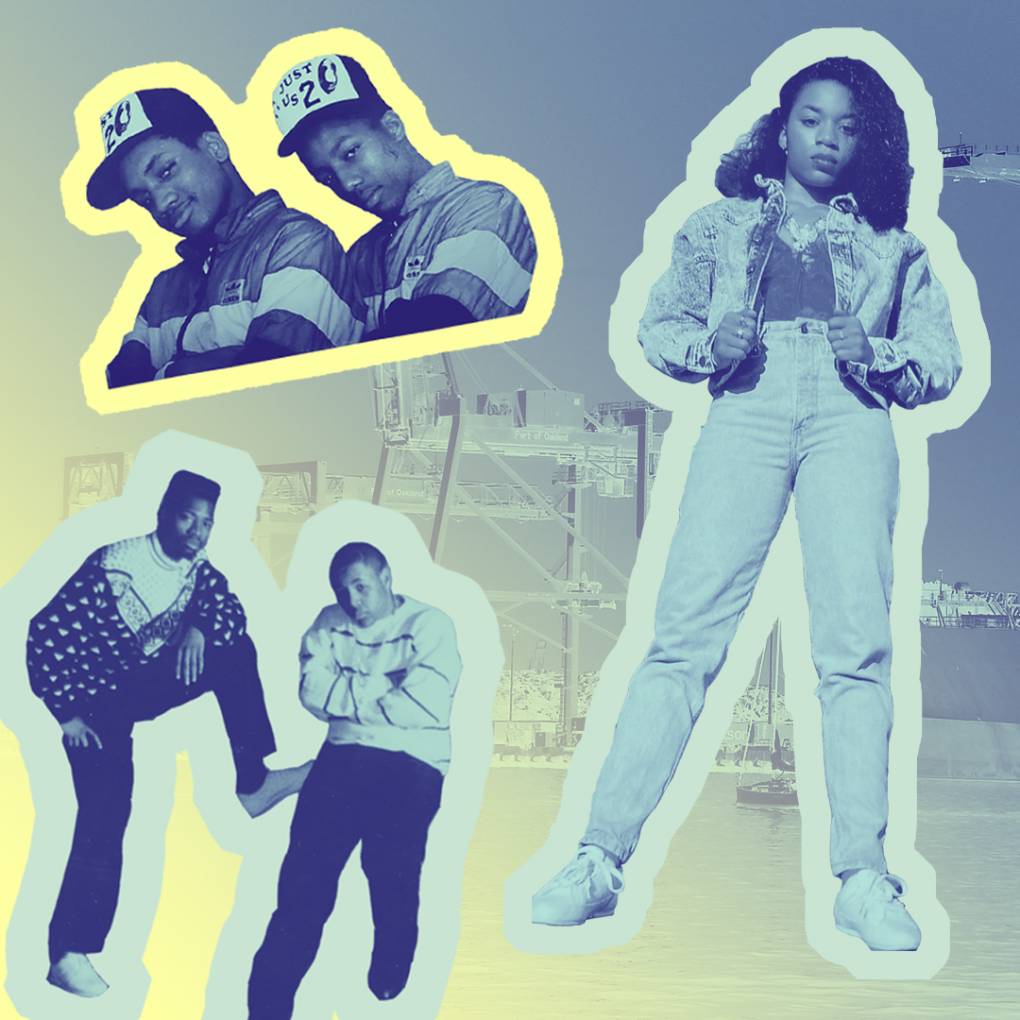
"caption": "Along with major artists like Too Short and Tupac, the streets of the Town produced dozens of independent rappers whose rare underground cassettes contain Oakland gold. (Clockwise from top left: Mr. Fresh & Master T.M.D., Cassidine, Easy-A-Ski.",
"description": null,
"title": "CassetteTapesOakland_Square",
"credit": "Collage by Sarah Hotchkiss",
"status": "inherit",
"altTag": null,
"isLoading": false,
"fetchFailed": false
},
"arts_13928637": {
"type": "attachments",
"id": "arts_13928637",
"meta": {
"index": "attachments_1716263798",
"site": "arts",
"id": "13928637",
"found": true
},
"parent": 13928550,
"imgSizes": {
"twentyfourteen-full-width": {
"file": "https://ww2.kqed.org/app/uploads/sites/2/2023/05/CassetteTapesOakland_COVER-1038x576.jpg",
"width": 1038,
"mimeType": "image/jpeg",
"height": 576
},
"thumbnail": {
"file": "https://ww2.kqed.org/app/uploads/sites/2/2023/05/CassetteTapesOakland_COVER-160x90.jpg",
"width": 160,
"mimeType": "image/jpeg",
"height": 90
},
"post-thumbnail": {
"file": "https://ww2.kqed.org/app/uploads/sites/2/2023/05/CassetteTapesOakland_COVER-672x372.jpg",
"width": 672,
"mimeType": "image/jpeg",
"height": 372
},
"kqedFullSize": {
"file": "https://ww2.kqed.org/app/uploads/sites/2/2023/05/CassetteTapesOakland_COVER.jpg",
"width": 1920,
"height": 1080
},
"large": {
"file": "https://ww2.kqed.org/app/uploads/sites/2/2023/05/CassetteTapesOakland_COVER-1020x574.jpg",
"width": 1020,
"mimeType": "image/jpeg",
"height": 574
},
"1536x1536": {
"file": "https://ww2.kqed.org/app/uploads/sites/2/2023/05/CassetteTapesOakland_COVER-1536x864.jpg",
"width": 1536,
"mimeType": "image/jpeg",
"height": 864
},
"medium": {
"file": "https://ww2.kqed.org/app/uploads/sites/2/2023/05/CassetteTapesOakland_COVER-800x450.jpg",
"width": 800,
"mimeType": "image/jpeg",
"height": 450
},
"medium_large": {
"file": "https://ww2.kqed.org/app/uploads/sites/2/2023/05/CassetteTapesOakland_COVER-768x432.jpg",
"width": 768,
"mimeType": "image/jpeg",
"height": 432
}
},
"publishDate": 1683155533,
"modified": 1683156068,
"caption": "Along with major artists like Too Short and Tupac, the streets of the Town produced dozens of independent rappers whose rare underground cassettes contain Oakland gold. (Clockwise from top left: Mr. Fresh & Master T.M.D., Cassidine, Mac Mill, M.C. Jay and DJ Villian, Easy-A-Ski.",
"description": null,
"title": "CassetteTapesOakland_COVER",
"credit": "Collage by Sarah Hotchkiss",
"status": "inherit",
"altTag": null,
"isLoading": false,
"fetchFailed": false
},
"arts_13928561": {
"type": "attachments",
"id": "arts_13928561",
"meta": {
"index": "attachments_1716263798",
"site": "arts",
"id": "13928561",
"found": true
},
"parent": 13928457,
"imgSizes": {
"twentyfourteen-full-width": {
"file": "https://ww2.kqed.org/app/uploads/sites/2/2023/05/BayAreaAlbumsChatGPT_cover-1038x576.jpg",
"width": 1038,
"mimeType": "image/jpeg",
"height": 576
},
"thumbnail": {
"file": "https://ww2.kqed.org/app/uploads/sites/2/2023/05/BayAreaAlbumsChatGPT_cover-160x90.jpg",
"width": 160,
"mimeType": "image/jpeg",
"height": 90
},
"post-thumbnail": {
"file": "https://ww2.kqed.org/app/uploads/sites/2/2023/05/BayAreaAlbumsChatGPT_cover-672x372.jpg",
"width": 672,
"mimeType": "image/jpeg",
"height": 372
},
"kqedFullSize": {
"file": "https://ww2.kqed.org/app/uploads/sites/2/2023/05/BayAreaAlbumsChatGPT_cover.jpg",
"width": 1920,
"height": 1080
},
"large": {
"file": "https://ww2.kqed.org/app/uploads/sites/2/2023/05/BayAreaAlbumsChatGPT_cover-1020x574.jpg",
"width": 1020,
"mimeType": "image/jpeg",
"height": 574
},
"1536x1536": {
"file": "https://ww2.kqed.org/app/uploads/sites/2/2023/05/BayAreaAlbumsChatGPT_cover-1536x864.jpg",
"width": 1536,
"mimeType": "image/jpeg",
"height": 864
},
"medium": {
"file": "https://ww2.kqed.org/app/uploads/sites/2/2023/05/BayAreaAlbumsChatGPT_cover-800x450.jpg",
"width": 800,
"mimeType": "image/jpeg",
"height": 450
},
"medium_large": {
"file": "https://ww2.kqed.org/app/uploads/sites/2/2023/05/BayAreaAlbumsChatGPT_cover-768x432.jpg",
"width": 768,
"mimeType": "image/jpeg",
"height": 432
}
},
"publishDate": 1683059112,
"modified": 1683059751,
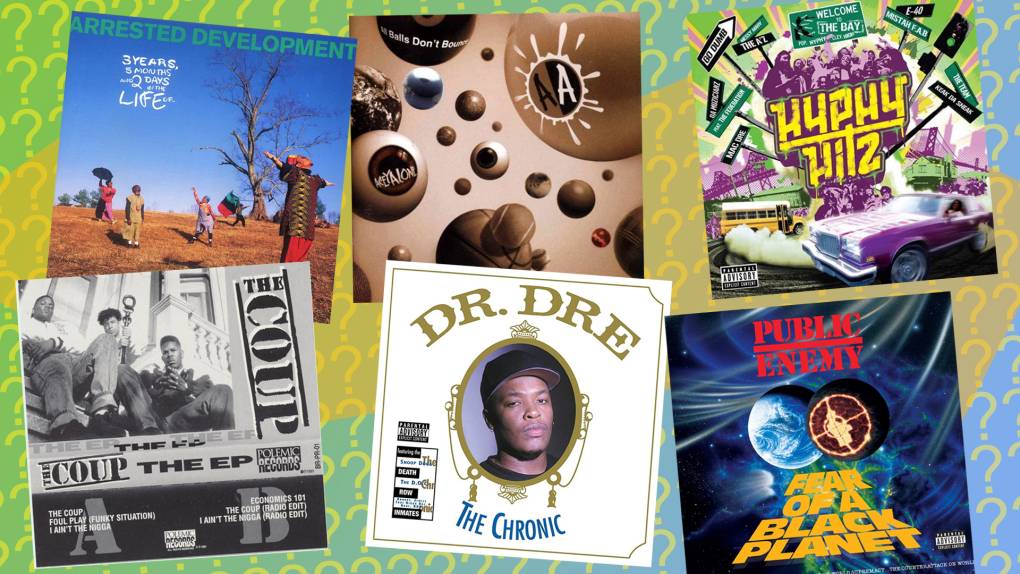
"caption": "Some of ChatGPT's responses when asked to name the best Bay Area rap albums. It would appear artificial intelligence still has a lot to learn.",
"description": null,
"title": "BayAreaAlbumsChatGPT_cover",
"credit": "Capitol Records/TVT Records/Def Jam/UMG/Interscope/Polemic Records",
"status": "inherit",
"altTag": "a collage of six albums: 3 Years, 5 Months and 2 Days in the Life Of...' by Arrested Development; 'The Chronic' by Dr. Dre, 'Fear of a Black Planet' by Arrested Development; 'Hyphy Hitz'; 'The Coup' by The Coup; and 'All Balls Don't Bounce' by Aceyalone",
"isLoading": false,
"fetchFailed": false
},
"arts_13928079": {
"type": "attachments",
"id": "arts_13928079",
"meta": {
"index": "attachments_1716263798",
"site": "arts",
"id": "13928079",
"found": true
},
"parent": 13928057,
"imgSizes": {
"twentyfourteen-full-width": {
"file": "https://ww2.kqed.org/app/uploads/sites/2/2023/04/sq-1038x576.jpg",
"width": 1038,
"mimeType": "image/jpeg",
"height": 576
},
"thumbnail": {
"file": "https://ww2.kqed.org/app/uploads/sites/2/2023/04/sq-160x160.jpg",
"width": 160,
"mimeType": "image/jpeg",
"height": 160
},
"post-thumbnail": {
"file": "https://ww2.kqed.org/app/uploads/sites/2/2023/04/sq-672x372.jpg",
"width": 672,
"mimeType": "image/jpeg",
"height": 372
},
"kqedFullSize": {
"file": "https://ww2.kqed.org/app/uploads/sites/2/2023/04/sq.jpg",
"width": 1280,
"height": 1280
},
"large": {
"file": "https://ww2.kqed.org/app/uploads/sites/2/2023/04/sq-1020x1020.jpg",
"width": 1020,
"mimeType": "image/jpeg",
"height": 1020
},
"medium": {
"file": "https://ww2.kqed.org/app/uploads/sites/2/2023/04/sq-800x800.jpg",
"width": 800,
"mimeType": "image/jpeg",
"height": 800
},
"medium_large": {
"file": "https://ww2.kqed.org/app/uploads/sites/2/2023/04/sq-768x768.jpg",
"width": 768,
"mimeType": "image/jpeg",
"height": 768
}
},
"publishDate": 1682029245,
"modified": 1682103797,
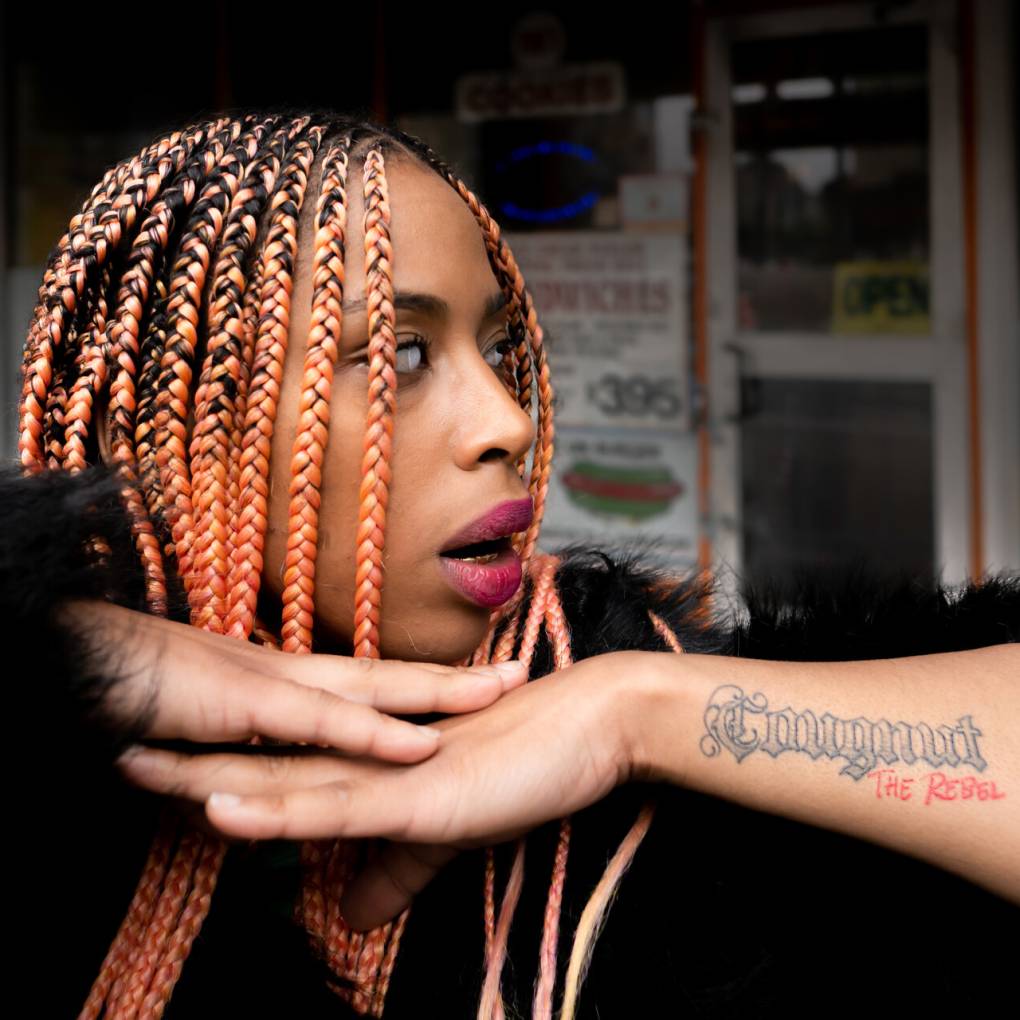
"caption": "Alien Mac Kitty has found her own lane as a rapper while honoring her father Cougnut, one of the first and most distinctive San Francisco rappers on wax.",
"description": null,
"title": "sq",
"credit": "Beth LaBerge/KQED",
"status": "inherit",
"altTag": "A young Black woman with bright extensions and an arm tattoo reading 'Cougnut - the Rebel' looks to the right with treated contacts",
"isLoading": false,
"fetchFailed": false
},
"arts_13928063": {
"type": "attachments",
"id": "arts_13928063",
"meta": {
"index": "attachments_1716263798",
"site": "arts",
"id": "13928063",
"found": true
},
"parent": 13928057,
"imgSizes": {
"twentyfourteen-full-width": {
"file": "https://ww2.kqed.org/app/uploads/sites/2/2023/04/RS64528_016_KQED_AlienMacKitty_04102023-qut-1-1038x576.jpg",
"width": 1038,
"mimeType": "image/jpeg",
"height": 576
},
"thumbnail": {
"file": "https://ww2.kqed.org/app/uploads/sites/2/2023/04/RS64528_016_KQED_AlienMacKitty_04102023-qut-1-160x107.jpg",
"width": 160,
"mimeType": "image/jpeg",
"height": 107
},
"post-thumbnail": {
"file": "https://ww2.kqed.org/app/uploads/sites/2/2023/04/RS64528_016_KQED_AlienMacKitty_04102023-qut-1-672x372.jpg",
"width": 672,
"mimeType": "image/jpeg",
"height": 372
},
"kqedFullSize": {
"file": "https://ww2.kqed.org/app/uploads/sites/2/2023/04/RS64528_016_KQED_AlienMacKitty_04102023-qut-1.jpg",
"width": 1920,
"height": 1280
},
"large": {
"file": "https://ww2.kqed.org/app/uploads/sites/2/2023/04/RS64528_016_KQED_AlienMacKitty_04102023-qut-1-1020x680.jpg",
"width": 1020,
"mimeType": "image/jpeg",
"height": 680
},
"1536x1536": {
"file": "https://ww2.kqed.org/app/uploads/sites/2/2023/04/RS64528_016_KQED_AlienMacKitty_04102023-qut-1-1536x1024.jpg",
"width": 1536,
"mimeType": "image/jpeg",
"height": 1024
},
"medium": {
"file": "https://ww2.kqed.org/app/uploads/sites/2/2023/04/RS64528_016_KQED_AlienMacKitty_04102023-qut-1-800x533.jpg",
"width": 800,
"mimeType": "image/jpeg",
"height": 533
},
"medium_large": {
"file": "https://ww2.kqed.org/app/uploads/sites/2/2023/04/RS64528_016_KQED_AlienMacKitty_04102023-qut-1-768x512.jpg",
"width": 768,
"mimeType": "image/jpeg",
"height": 512
}
},
"publishDate": 1682019656,
"modified": 1682019656,
"caption": "Alien Mac Kitty at Miyako's Ice Cream in the Fillmore neighborhood of San Francisco on April 10, 2023.",
"description": null,
"title": "RS64528_016_KQED_AlienMacKitty_04102023-qut",
"credit": null,
"status": "inherit",
"altTag": null,
"isLoading": false,
"fetchFailed": false
},
"arts_13928007": {
"type": "attachments",
"id": "arts_13928007",
"meta": {
"index": "attachments_1716263798",
"site": "arts",
"id": "13928007",
"found": true
},
"parent": 13927810,
"imgSizes": {
"twentyfourteen-full-width": {
"file": "https://ww2.kqed.org/app/uploads/sites/2/2023/04/Brenda.Square.MAIN_-1038x576.jpg",
"width": 1038,
"mimeType": "image/jpeg",
"height": 576
},
"thumbnail": {
"file": "https://ww2.kqed.org/app/uploads/sites/2/2023/04/Brenda.Square.MAIN_-160x160.jpg",
"width": 160,
"mimeType": "image/jpeg",
"height": 160
},
"post-thumbnail": {
"file": "https://ww2.kqed.org/app/uploads/sites/2/2023/04/Brenda.Square.MAIN_-672x372.jpg",
"width": 672,
"mimeType": "image/jpeg",
"height": 372
},
"kqedFullSize": {
"file": "https://ww2.kqed.org/app/uploads/sites/2/2023/04/Brenda.Square.MAIN_.jpg",
"width": 1060,
"height": 1060
},
"large": {
"file": "https://ww2.kqed.org/app/uploads/sites/2/2023/04/Brenda.Square.MAIN_-1020x1020.jpg",
"width": 1020,
"mimeType": "image/jpeg",
"height": 1020
},
"medium": {
"file": "https://ww2.kqed.org/app/uploads/sites/2/2023/04/Brenda.Square.MAIN_-800x800.jpg",
"width": 800,
"mimeType": "image/jpeg",
"height": 800
},
"medium_large": {
"file": "https://ww2.kqed.org/app/uploads/sites/2/2023/04/Brenda.Square.MAIN_-768x768.jpg",
"width": 768,
"mimeType": "image/jpeg",
"height": 768
}
},
"publishDate": 1681919459,
"modified": 1681919479,
"caption": "Ethel Love, at age 17, as Brenda in Tupac Shakur's music video for 'Brenda's Got a Baby.' Love says the role came naturally to her 'because it was similar to my life already.'",
"description": null,
"title": "Brenda.Square.MAIN",
"credit": "YouTube/Interscope Records",
"status": "inherit",
"altTag": null,
"isLoading": false,
"fetchFailed": false
},
"arts_13927713": {
"type": "attachments",
"id": "arts_13927713",
"meta": {
"index": "attachments_1716263798",
"site": "arts",
"id": "13927713",
"found": true
},
"parent": 13927403,
"imgSizes": {
"twentyfourteen-full-width": {
"file": "https://ww2.kqed.org/app/uploads/sites/2/2023/04/Copy-of-Pass-The-Aux-template-1-1038x576.png",
"width": 1038,
"mimeType": "image/png",
"height": 576
},
"thumbnail": {
"file": "https://ww2.kqed.org/app/uploads/sites/2/2023/04/Copy-of-Pass-The-Aux-template-1-160x90.png",
"width": 160,
"mimeType": "image/png",
"height": 90
},
"post-thumbnail": {
"file": "https://ww2.kqed.org/app/uploads/sites/2/2023/04/Copy-of-Pass-The-Aux-template-1-672x372.png",
"width": 672,
"mimeType": "image/png",
"height": 372
},
"kqedFullSize": {
"file": "https://ww2.kqed.org/app/uploads/sites/2/2023/04/Copy-of-Pass-The-Aux-template-1.png",
"width": 1920,
"height": 1080
},
"large": {
"file": "https://ww2.kqed.org/app/uploads/sites/2/2023/04/Copy-of-Pass-The-Aux-template-1-1020x574.png",
"width": 1020,
"mimeType": "image/png",
"height": 574
},
"1536x1536": {
"file": "https://ww2.kqed.org/app/uploads/sites/2/2023/04/Copy-of-Pass-The-Aux-template-1-1536x864.png",
"width": 1536,
"mimeType": "image/png",
"height": 864
},
"medium": {
"file": "https://ww2.kqed.org/app/uploads/sites/2/2023/04/Copy-of-Pass-The-Aux-template-1-800x450.png",
"width": 800,
"mimeType": "image/png",
"height": 450
},
"medium_large": {
"file": "https://ww2.kqed.org/app/uploads/sites/2/2023/04/Copy-of-Pass-The-Aux-template-1-768x432.png",
"width": 768,
"mimeType": "image/png",
"height": 432
}
},
"publishDate": 1681330857,
"modified": 1681331153,
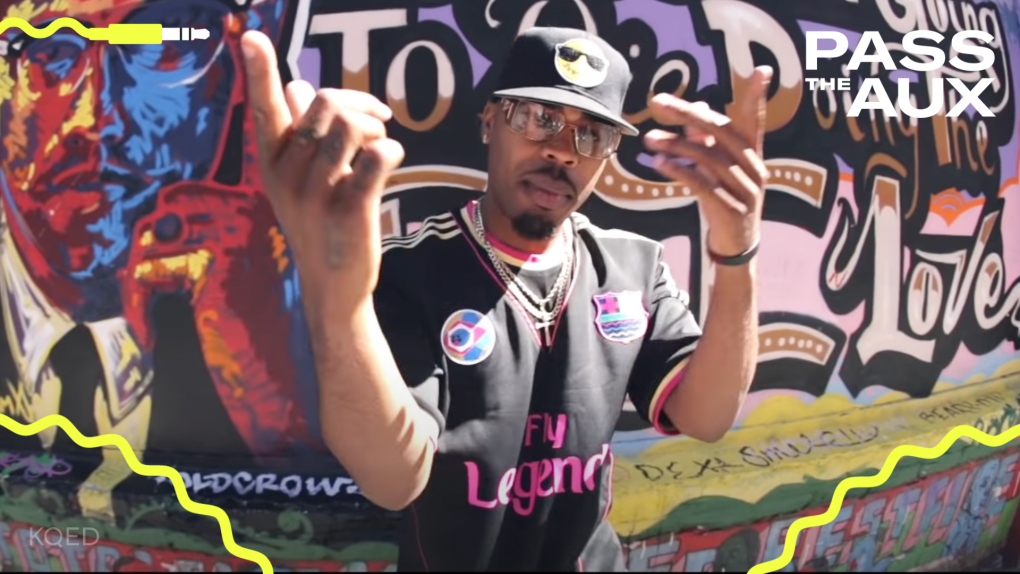
"caption": "Kool John, a representative of Richmond and the HBK Gang, has released his ninth album.",
"description": null,
"title": "Copy of Pass The Aux template (1)",
"credit": "Courtesy of Kool John",
"status": "inherit",
"altTag": "a young Black man in a black and pink shirt and a black ballcap and glasses with a goatee stands in front of a wall with street art",
"isLoading": false,
"fetchFailed": false
},
"arts_13927685": {
"type": "attachments",
"id": "arts_13927685",
"meta": {
"index": "attachments_1716263798",
"site": "arts",
"id": "13927685",
"found": true
},
"parent": 0,
"imgSizes": {
"thumbnail": {
"file": "https://ww2.kqed.org/app/uploads/sites/2/2023/04/DelGif2-v1-BB-160x174.gif",
"width": 160,
"mimeType": "image/gif",
"height": 174
},
"post-thumbnail": {
"file": "https://ww2.kqed.org/app/uploads/sites/2/2023/04/DelGif2-v1-BB-500x372.gif",
"width": 500,
"mimeType": "image/gif",
"height": 372
},
"kqedFullSize": {
"file": "https://ww2.kqed.org/app/uploads/sites/2/2023/04/DelGif2-v1-BB.gif",
"width": 500,
"height": 544
}
},
"publishDate": 1681313890,
"modified": 1681317761,
"caption": null,
"description": null,
"title": "DelGif2-v1-BB",
"credit": "Beth LaBerge/KQED; Animation by Bryan Bindloss",
"status": "inherit",
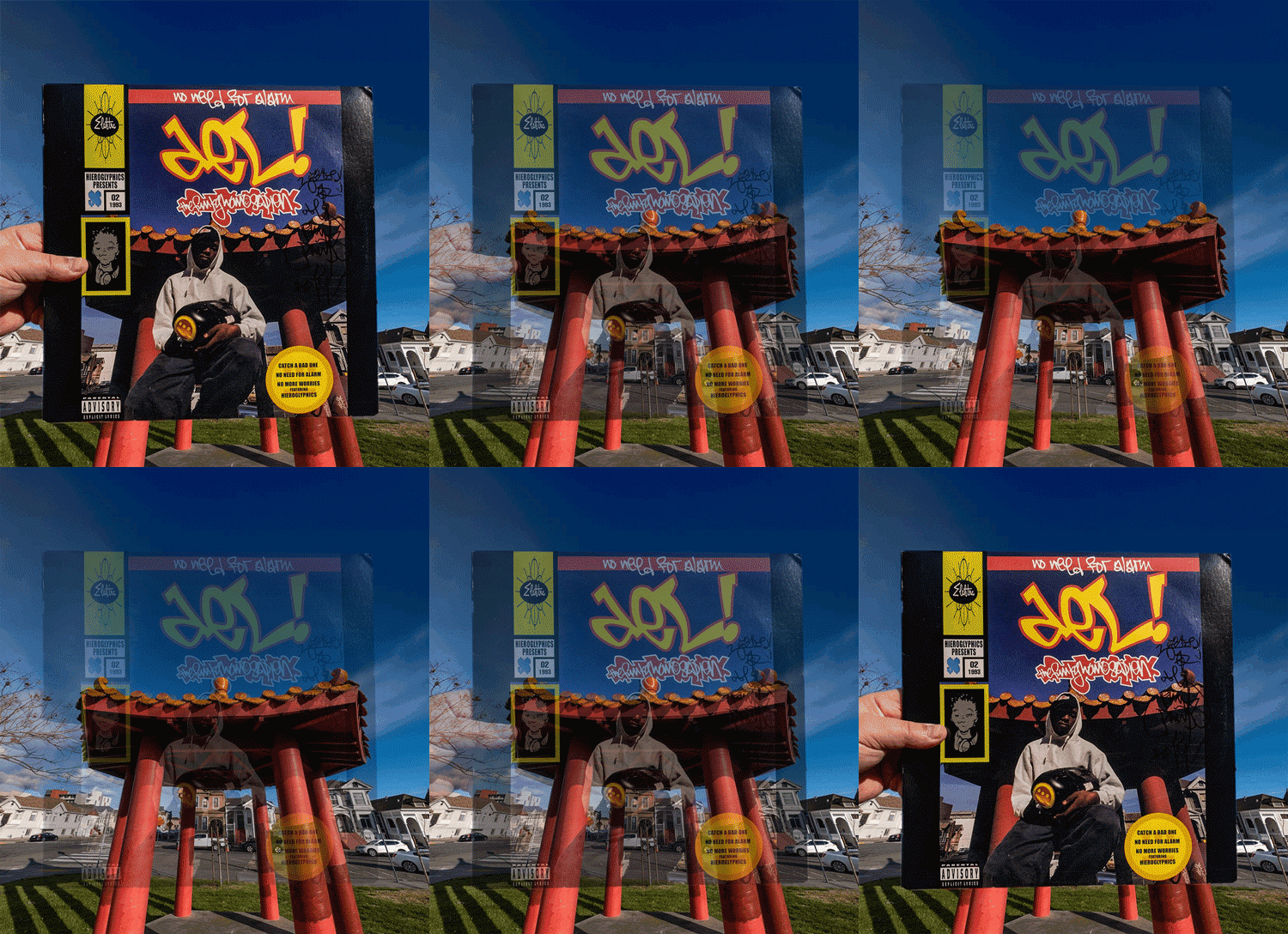
"altTag": "a record cover cycles in and out of the background where its original cover photo was shot, showing a pagoda and victorian houses",
"isLoading": false,
"fetchFailed": false
},
"arts_13927697": {
"type": "attachments",
"id": "arts_13927697",
"meta": {
"index": "attachments_1716263798",
"site": "arts",
"id": "13927697",
"found": true
},
"parent": 13927692,
"imgSizes": {
"twentyfourteen-full-width": {
"file": "https://ww2.kqed.org/app/uploads/sites/2/2023/04/Del.16x9.cover_.pagoda-1038x576.jpg",
"width": 1038,
"mimeType": "image/jpeg",
"height": 576
},
"thumbnail": {
"file": "https://ww2.kqed.org/app/uploads/sites/2/2023/04/Del.16x9.cover_.pagoda-160x90.jpg",
"width": 160,
"mimeType": "image/jpeg",
"height": 90
},
"post-thumbnail": {
"file": "https://ww2.kqed.org/app/uploads/sites/2/2023/04/Del.16x9.cover_.pagoda-672x372.jpg",
"width": 672,
"mimeType": "image/jpeg",
"height": 372
},
"kqedFullSize": {
"file": "https://ww2.kqed.org/app/uploads/sites/2/2023/04/Del.16x9.cover_.pagoda.jpg",
"width": 1920,
"height": 1080
},
"large": {
"file": "https://ww2.kqed.org/app/uploads/sites/2/2023/04/Del.16x9.cover_.pagoda-1020x574.jpg",
"width": 1020,
"mimeType": "image/jpeg",
"height": 574
},
"1536x1536": {
"file": "https://ww2.kqed.org/app/uploads/sites/2/2023/04/Del.16x9.cover_.pagoda-1536x864.jpg",
"width": 1536,
"mimeType": "image/jpeg",
"height": 864
},
"medium": {
"file": "https://ww2.kqed.org/app/uploads/sites/2/2023/04/Del.16x9.cover_.pagoda-800x450.jpg",
"width": 800,
"mimeType": "image/jpeg",
"height": 450
},
"medium_large": {
"file": "https://ww2.kqed.org/app/uploads/sites/2/2023/04/Del.16x9.cover_.pagoda-768x432.jpg",
"width": 768,
"mimeType": "image/jpeg",
"height": 432
}
},
"publishDate": 1681317515,
"modified": 1681317541,
"caption": null,
"description": null,
"title": "Del.16x9.cover.pagoda",
"credit": "Beth LaBerge/KQED",
"status": "inherit",
"altTag": null,
"isLoading": false,
"fetchFailed": false
},
"arts_13927644": {
"type": "attachments",
"id": "arts_13927644",
"meta": {
"index": "attachments_1716263798",
"site": "arts",
"id": "13927644",
"found": true
},
"parent": 13927576,
"imgSizes": {
"twentyfourteen-full-width": {
"file": "https://ww2.kqed.org/app/uploads/sites/2/2023/04/IMG_6902-1038x576.jpg",
"width": 1038,
"mimeType": "image/jpeg",
"height": 576
},
"thumbnail": {
"file": "https://ww2.kqed.org/app/uploads/sites/2/2023/04/IMG_6902-160x107.jpg",
"width": 160,
"mimeType": "image/jpeg",
"height": 107
},
"post-thumbnail": {
"file": "https://ww2.kqed.org/app/uploads/sites/2/2023/04/IMG_6902-672x372.jpg",
"width": 672,
"mimeType": "image/jpeg",
"height": 372
},
"kqedFullSize": {
"file": "https://ww2.kqed.org/app/uploads/sites/2/2023/04/IMG_6902.jpg",
"width": 1607,
"height": 1071
},
"large": {
"file": "https://ww2.kqed.org/app/uploads/sites/2/2023/04/IMG_6902-1020x680.jpg",
"width": 1020,
"mimeType": "image/jpeg",
"height": 680
},
"1536x1536": {
"file": "https://ww2.kqed.org/app/uploads/sites/2/2023/04/IMG_6902-1536x1024.jpg",
"width": 1536,
"mimeType": "image/jpeg",
"height": 1024
},
"medium": {
"file": "https://ww2.kqed.org/app/uploads/sites/2/2023/04/IMG_6902-800x533.jpg",
"width": 800,
"mimeType": "image/jpeg",
"height": 533
},
"medium_large": {
"file": "https://ww2.kqed.org/app/uploads/sites/2/2023/04/IMG_6902-768x512.jpg",
"width": 768,
"mimeType": "image/jpeg",
"height": 512
}
},
"publishDate": 1681231539,
"modified": 1681231681,
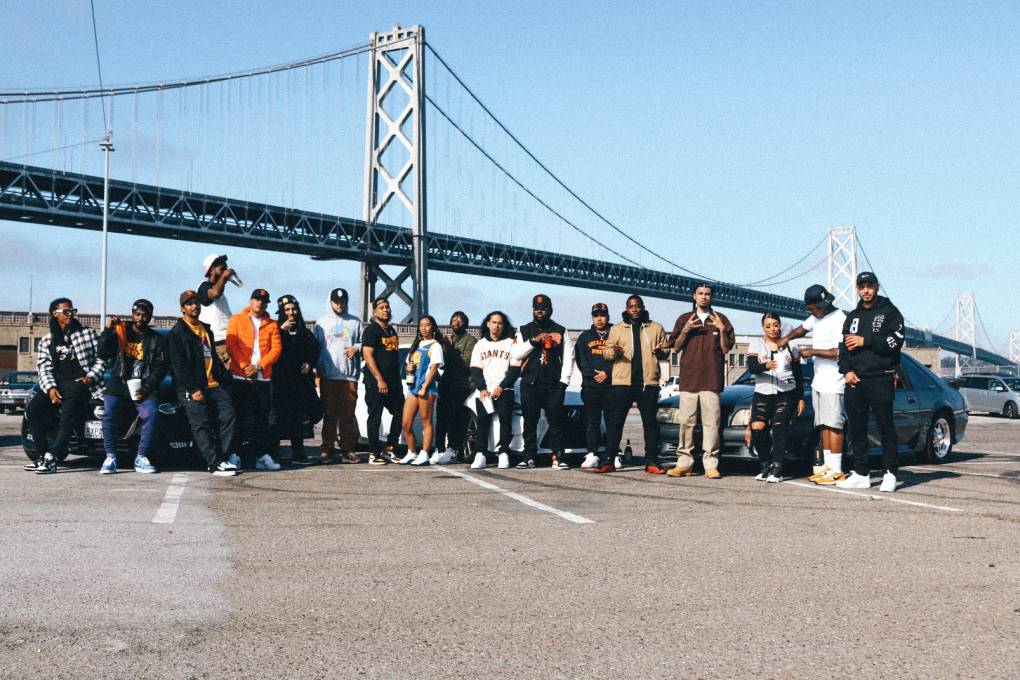
"caption": "The 30 artists on 'Frisco Daze,' a new rap compilation, came together to make a statement about unity across neighborhoods and cultures. ",
"description": null,
"title": "IMG_6902",
"credit": "Zeus Cano (@zeustheprestigious)",
"status": "inherit",
"altTag": "A large group of 30 diverse, young hip-hop artists poses in front of the Bay Bridge.",
"isLoading": false,
"fetchFailed": false
},
"arts_13927364": {
"type": "attachments",
"id": "arts_13927364",
"meta": {
"index": "attachments_1716263798",
"site": "arts",
"id": "13927364",
"found": true
},
"parent": 13927349,
"imgSizes": {
"twentyfourteen-full-width": {
"file": "https://ww2.kqed.org/app/uploads/sites/2/2023/04/photo-forward_____separate_logos__2_-1038x576.png",
"width": 1038,
"mimeType": "image/png",
"height": 576
},
"thumbnail": {
"file": "https://ww2.kqed.org/app/uploads/sites/2/2023/04/photo-forward_____separate_logos__2_-160x160.png",
"width": 160,
"mimeType": "image/png",
"height": 160
},
"post-thumbnail": {
"file": "https://ww2.kqed.org/app/uploads/sites/2/2023/04/photo-forward_____separate_logos__2_-672x372.png",
"width": 672,
"mimeType": "image/png",
"height": 372
},
"kqedFullSize": {
"file": "https://ww2.kqed.org/app/uploads/sites/2/2023/04/photo-forward_____separate_logos__2_.png",
"width": 1080,
"height": 1080
},
"large": {
"file": "https://ww2.kqed.org/app/uploads/sites/2/2023/04/photo-forward_____separate_logos__2_-1020x1020.png",
"width": 1020,
"mimeType": "image/png",
"height": 1020
},
"medium": {
"file": "https://ww2.kqed.org/app/uploads/sites/2/2023/04/photo-forward_____separate_logos__2_-800x800.png",
"width": 800,
"mimeType": "image/png",
"height": 800
},
"medium_large": {
"file": "https://ww2.kqed.org/app/uploads/sites/2/2023/04/photo-forward_____separate_logos__2_-768x768.png",
"width": 768,
"mimeType": "image/png",
"height": 768
}
},
"publishDate": 1680663395,
"modified": 1680663902,
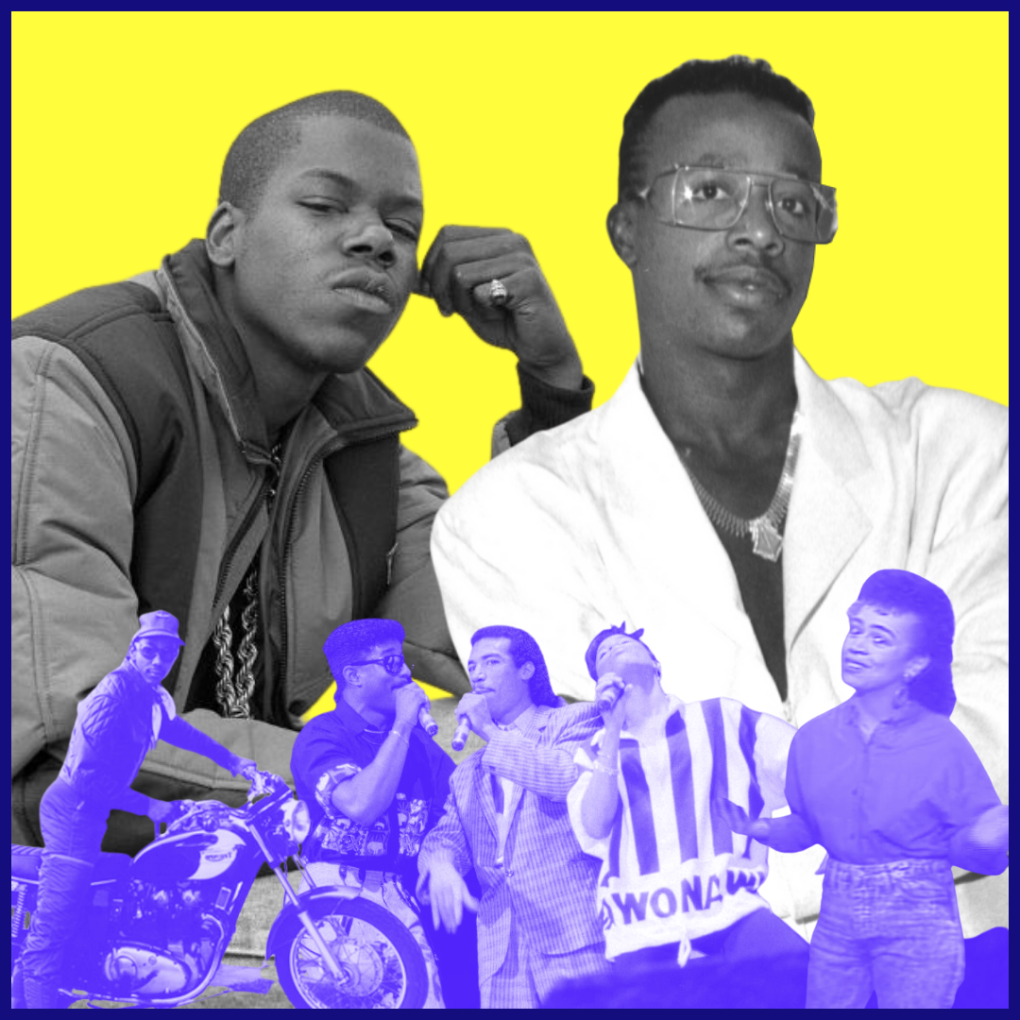
"caption": "In the 1980s, Bay Area hip-hop hadn't yet coalesced into an identifiable regional sound. After years of street dance, DJing and graffiti sharing equal space in hip-hop, however, rapping took over, and the Bay Area's bass-heavy trademark would arrive at the end of the decade. (Clockwise from top left: Too Short, MC Hammer, Dominique DiPrima, Club Nouveau, and Motorcycle Mike.)",
"description": null,
"title": "photo-forward_____separate_logos__2_",
"credit": "Steve Ringman/San Francisco Chronicle via Getty Images; Al Pereira/Michael Ochs Archives/Getty Images; SFSU Television Archives; Raymond Boyd/Getty Images; Hodisk Records",
"status": "inherit",
"altTag": null,
"isLoading": false,
"fetchFailed": false
},
"arts_13927363": {
"type": "attachments",
"id": "arts_13927363",
"meta": {
"index": "attachments_1716263798",
"site": "arts",
"id": "13927363",
"found": true
},
"parent": 13927349,
"imgSizes": {
"twentyfourteen-full-width": {
"file": "https://ww2.kqed.org/app/uploads/sites/2/2023/04/that_s_my_word_____featured_image__3_-1038x576.png",
"width": 1038,
"mimeType": "image/png",
"height": 576
},
"thumbnail": {
"file": "https://ww2.kqed.org/app/uploads/sites/2/2023/04/that_s_my_word_____featured_image__3_-160x90.png",
"width": 160,
"mimeType": "image/png",
"height": 90
},
"post-thumbnail": {
"file": "https://ww2.kqed.org/app/uploads/sites/2/2023/04/that_s_my_word_____featured_image__3_-672x372.png",
"width": 672,
"mimeType": "image/png",
"height": 372
},
"kqedFullSize": {
"file": "https://ww2.kqed.org/app/uploads/sites/2/2023/04/that_s_my_word_____featured_image__3_.png",
"width": 1920,
"height": 1080
},
"large": {
"file": "https://ww2.kqed.org/app/uploads/sites/2/2023/04/that_s_my_word_____featured_image__3_-1020x574.png",
"width": 1020,
"mimeType": "image/png",
"height": 574
},
"1536x1536": {
"file": "https://ww2.kqed.org/app/uploads/sites/2/2023/04/that_s_my_word_____featured_image__3_-1536x864.png",
"width": 1536,
"mimeType": "image/png",
"height": 864
},
"medium": {
"file": "https://ww2.kqed.org/app/uploads/sites/2/2023/04/that_s_my_word_____featured_image__3_-800x450.png",
"width": 800,
"mimeType": "image/png",
"height": 450
},
"medium_large": {
"file": "https://ww2.kqed.org/app/uploads/sites/2/2023/04/that_s_my_word_____featured_image__3_-768x432.png",
"width": 768,
"mimeType": "image/png",
"height": 432
}
},
"publishDate": 1680663386,
"modified": 1680663880,
"caption": "In the 1980s, Bay Area hip-hop hadn't yet coalesced into an identifiable regional sound. After years of street dance, DJing and graffiti sharing equal space in hip-hop, however, rapping took over, and the Bay Area's bass-heavy trademark would arrive at the end of the decade. (Clockwise from top left: Too Short, MC Hammer, Dominique DiPrima, Club Nouveau, and Motorcycle Mike.)",
"description": null,
"title": "that_s_my_word_____featured_image__3_",
"credit": "Steve Ringman/San Francisco Chronicle via Getty Images; Al Pereira/Michael Ochs Archives/Getty Images; SFSU Television Archives; Raymond Boyd/Getty Images; Hodisk Records",
"status": "inherit",
"altTag": null,
"isLoading": false,
"fetchFailed": false
},
"arts_13927081": {
"type": "attachments",
"id": "arts_13927081",
"meta": {
"index": "attachments_1716263798",
"site": "arts",
"id": "13927081",
"found": true
},
"parent": 13927070,
"imgSizes": {
"twentyfourteen-full-width": {
"file": "https://ww2.kqed.org/app/uploads/sites/2/2023/03/women-of-the-bay-mix-featured-image-1038x576.png",
"width": 1038,
"mimeType": "image/png",
"height": 576
},
"thumbnail": {
"file": "https://ww2.kqed.org/app/uploads/sites/2/2023/03/women-of-the-bay-mix-featured-image-160x160.png",
"width": 160,
"mimeType": "image/png",
"height": 160
},
"post-thumbnail": {
"file": "https://ww2.kqed.org/app/uploads/sites/2/2023/03/women-of-the-bay-mix-featured-image-672x372.png",
"width": 672,
"mimeType": "image/png",
"height": 372
},
"kqedFullSize": {
"file": "https://ww2.kqed.org/app/uploads/sites/2/2023/03/women-of-the-bay-mix-featured-image.png",
"width": 1080,
"height": 1080
},
"large": {
"file": "https://ww2.kqed.org/app/uploads/sites/2/2023/03/women-of-the-bay-mix-featured-image-1020x1020.png",
"width": 1020,
"mimeType": "image/png",
"height": 1020
},
"medium": {
"file": "https://ww2.kqed.org/app/uploads/sites/2/2023/03/women-of-the-bay-mix-featured-image-800x800.png",
"width": 800,
"mimeType": "image/png",
"height": 800
},
"medium_large": {
"file": "https://ww2.kqed.org/app/uploads/sites/2/2023/03/women-of-the-bay-mix-featured-image-768x768.png",
"width": 768,
"mimeType": "image/png",
"height": 768
}
},
"publishDate": 1680040543,
"modified": 1680040724,
"caption": "Pam the Funkstress, Kamaiyah and Ruby Ibarra are featured in an exclusive That's My Word DJ mix by Tamara Palmer, honoring 36 years of Bay Area women's contributions to hip-hop.",
"description": null,
"title": "women of the bay mix featured image",
"credit": "Photos: Gabe Meline, Estefany Gonzalez. Collage: Becca Kao",
"status": "inherit",
"altTag": "A collage features Pam the Funkstress on her turntables, Kamaiyah performing in a windbreaker jumpsuit and Ruby Ibarra posing in a bucket hat.",
"isLoading": false,
"fetchFailed": false
},
"arts_13927082": {
"type": "attachments",
"id": "arts_13927082",
"meta": {
"index": "attachments_1716263798",
"site": "arts",
"id": "13927082",
"found": true
},
"parent": 13927070,
"imgSizes": {
"twentyfourteen-full-width": {
"file": "https://ww2.kqed.org/app/uploads/sites/2/2023/03/Thats-My-Word-Women-of-the-Bay-—-Featured-Image-1038x576.png",
"width": 1038,
"mimeType": "image/png",
"height": 576
},
"thumbnail": {
"file": "https://ww2.kqed.org/app/uploads/sites/2/2023/03/Thats-My-Word-Women-of-the-Bay-—-Featured-Image-160x90.png",
"width": 160,
"mimeType": "image/png",
"height": 90
},
"post-thumbnail": {
"file": "https://ww2.kqed.org/app/uploads/sites/2/2023/03/Thats-My-Word-Women-of-the-Bay-—-Featured-Image-672x372.png",
"width": 672,
"mimeType": "image/png",
"height": 372
},
"kqedFullSize": {
"file": "https://ww2.kqed.org/app/uploads/sites/2/2023/03/Thats-My-Word-Women-of-the-Bay-—-Featured-Image.png",
"width": 1920,
"height": 1080
},
"large": {
"file": "https://ww2.kqed.org/app/uploads/sites/2/2023/03/Thats-My-Word-Women-of-the-Bay-—-Featured-Image-1020x574.png",
"width": 1020,
"mimeType": "image/png",
"height": 574
},
"1536x1536": {
"file": "https://ww2.kqed.org/app/uploads/sites/2/2023/03/Thats-My-Word-Women-of-the-Bay-—-Featured-Image-1536x864.png",
"width": 1536,
"mimeType": "image/png",
"height": 864
},
"medium": {
"file": "https://ww2.kqed.org/app/uploads/sites/2/2023/03/Thats-My-Word-Women-of-the-Bay-—-Featured-Image-800x450.png",
"width": 800,
"mimeType": "image/png",
"height": 450
},
"medium_large": {
"file": "https://ww2.kqed.org/app/uploads/sites/2/2023/03/Thats-My-Word-Women-of-the-Bay-—-Featured-Image-768x432.png",
"width": 768,
"mimeType": "image/png",
"height": 432
}
},
"publishDate": 1680040665,
"modified": 1680040762,
"caption": "Pam the Funkstress, Kamaiyah and Ruby Ibarra are featured in an exclusive That's My Word DJ mix by Tamara Palmer, honoring 36 years of Bay Area women's contributions to hip-hop.",
"description": null,
"title": "That's My Word Women of the Bay — Featured Image",
"credit": "Photos: Gabe Meline, Estefany Gonzalez. Collage: Becca Kao",
"status": "inherit",
"altTag": "A collage features Pam the Funkstress on her turntables, Kamaiyah performing in a windbreaker jumpsuit and Ruby Ibarra posing in a bucket hat.",
"isLoading": false,
"fetchFailed": false
},
"arts_13927035": {
"type": "attachments",
"id": "arts_13927035",
"meta": {
"index": "attachments_1716263798",
"site": "arts",
"id": "13927035",
"found": true
},
"parent": 13926968,
"imgSizes": {
"twentyfourteen-full-width": {
"file": "https://ww2.kqed.org/app/uploads/sites/2/2023/03/the-healing_cover-1038x576.jpg",
"width": 1038,
"mimeType": "image/jpeg",
"height": 576
},
"thumbnail": {
"file": "https://ww2.kqed.org/app/uploads/sites/2/2023/03/the-healing_cover-160x90.jpg",
"width": 160,
"mimeType": "image/jpeg",
"height": 90
},
"post-thumbnail": {
"file": "https://ww2.kqed.org/app/uploads/sites/2/2023/03/the-healing_cover-672x372.jpg",
"width": 672,
"mimeType": "image/jpeg",
"height": 372
},
"kqedFullSize": {
"file": "https://ww2.kqed.org/app/uploads/sites/2/2023/03/the-healing_cover.jpg",
"width": 1600,
"height": 900
},
"large": {
"file": "https://ww2.kqed.org/app/uploads/sites/2/2023/03/the-healing_cover-1020x574.jpg",
"width": 1020,
"mimeType": "image/jpeg",
"height": 574
},
"1536x1536": {
"file": "https://ww2.kqed.org/app/uploads/sites/2/2023/03/the-healing_cover-1536x864.jpg",
"width": 1536,
"mimeType": "image/jpeg",
"height": 864
},
"medium": {
"file": "https://ww2.kqed.org/app/uploads/sites/2/2023/03/the-healing_cover-800x450.jpg",
"width": 800,
"mimeType": "image/jpeg",
"height": 450
},
"medium_large": {
"file": "https://ww2.kqed.org/app/uploads/sites/2/2023/03/the-healing_cover-768x432.jpg",
"width": 768,
"mimeType": "image/jpeg",
"height": 432
}
},
"publishDate": 1680029378,
"modified": 1680031456,
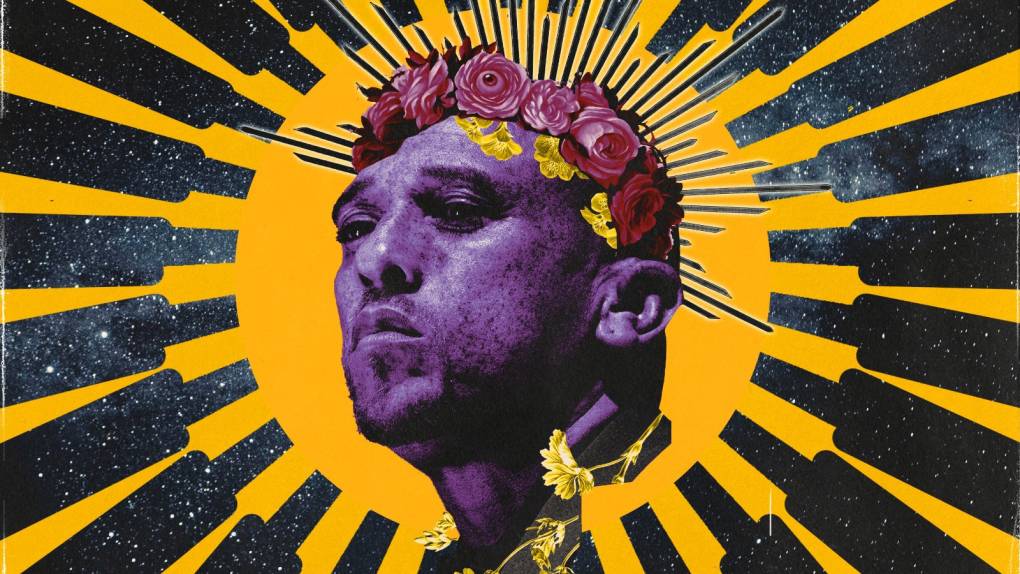
"caption": "'The Healing' is Kev Choice's ode to healthy relationships.",
"description": null,
"title": "the-healing_cover",
"credit": "Courtesy of the artist",
"status": "inherit",
"altTag": "an illustration of the musician Kev Choice with a crown of roses",
"isLoading": false,
"fetchFailed": false
},
"arts_13926978": {
"type": "attachments",
"id": "arts_13926978",
"meta": {
"index": "attachments_1716263798",
"site": "arts",
"id": "13926978",
"found": true
},
"parent": 13926749,
"imgSizes": {
"twentyfourteen-full-width": {
"file": "https://ww2.kqed.org/app/uploads/sites/2/2023/03/tasty_tings_spread-crop-1038x576.jpg",
"width": 1038,
"mimeType": "image/jpeg",
"height": 576
},
"thumbnail": {
"file": "https://ww2.kqed.org/app/uploads/sites/2/2023/03/tasty_tings_spread-crop-160x90.jpg",
"width": 160,
"mimeType": "image/jpeg",
"height": 90
},
"post-thumbnail": {
"file": "https://ww2.kqed.org/app/uploads/sites/2/2023/03/tasty_tings_spread-crop-672x372.jpg",
"width": 672,
"mimeType": "image/jpeg",
"height": 372
},
"kqedFullSize": {
"file": "https://ww2.kqed.org/app/uploads/sites/2/2023/03/tasty_tings_spread-crop.jpg",
"width": 1920,
"height": 1080
},
"large": {
"file": "https://ww2.kqed.org/app/uploads/sites/2/2023/03/tasty_tings_spread-crop-1020x574.jpg",
"width": 1020,
"mimeType": "image/jpeg",
"height": 574
},
"1536x1536": {
"file": "https://ww2.kqed.org/app/uploads/sites/2/2023/03/tasty_tings_spread-crop-1536x864.jpg",
"width": 1536,
"mimeType": "image/jpeg",
"height": 864
},
"medium": {
"file": "https://ww2.kqed.org/app/uploads/sites/2/2023/03/tasty_tings_spread-crop-800x450.jpg",
"width": 800,
"mimeType": "image/jpeg",
"height": 450
},
"medium_large": {
"file": "https://ww2.kqed.org/app/uploads/sites/2/2023/03/tasty_tings_spread-crop-768x432.jpg",
"width": 768,
"mimeType": "image/jpeg",
"height": 432
}
},
"publishDate": 1679938763,
"modified": 1679938965,
"caption": "A colorful spread of Tasty Tings' Jamaican beef patties.",
"description": null,
"title": "tasty_tings_spread-crop",
"credit": "Elliott Alexander",
"status": "inherit",
"altTag": "A colorful spread of Jamaican beef patties on a table",
"isLoading": false,
"fetchFailed": false
},
"arts_13926516": {
"type": "attachments",
"id": "arts_13926516",
"meta": {
"index": "attachments_1716263798",
"site": "arts",
"id": "13926516",
"found": true
},
"parent": 13926515,
"imgSizes": {
"twentyfourteen-full-width": {
"file": "https://ww2.kqed.org/app/uploads/sites/2/2023/03/yllw_s1_ut_101_220315_pagwar_00261rc3_3000_custom-48d76aab5e0c6e0e720e982d58735226da0a4c77-scaled-e1679338208341-1038x576.jpg",
"width": 1038,
"mimeType": "image/jpeg",
"height": 576
},
"thumbnail": {
"file": "https://ww2.kqed.org/app/uploads/sites/2/2023/03/yllw_s1_ut_101_220315_pagwar_00261rc3_3000_custom-48d76aab5e0c6e0e720e982d58735226da0a4c77-scaled-e1679338208341-160x107.jpg",
"width": 160,
"mimeType": "image/jpeg",
"height": 107
},
"post-thumbnail": {
"file": "https://ww2.kqed.org/app/uploads/sites/2/2023/03/yllw_s1_ut_101_220315_pagwar_00261rc3_3000_custom-48d76aab5e0c6e0e720e982d58735226da0a4c77-scaled-e1679338208341-672x372.jpg",
"width": 672,
"mimeType": "image/jpeg",
"height": 372
},
"kqedFullSize": {
"file": "https://ww2.kqed.org/app/uploads/sites/2/2023/03/yllw_s1_ut_101_220315_pagwar_00261rc3_3000_custom-48d76aab5e0c6e0e720e982d58735226da0a4c77-scaled-e1679338208341.jpg",
"width": 1920,
"height": 1279
},
"2048x2048": {
"file": "https://ww2.kqed.org/app/uploads/sites/2/2023/03/yllw_s1_ut_101_220315_pagwar_00261rc3_3000_custom-48d76aab5e0c6e0e720e982d58735226da0a4c77-2048x1364.jpg",
"width": 2048,
"mimeType": "image/jpeg",
"height": 1364
},
"large": {
"file": "https://ww2.kqed.org/app/uploads/sites/2/2023/03/yllw_s1_ut_101_220315_pagwar_00261rc3_3000_custom-48d76aab5e0c6e0e720e982d58735226da0a4c77-scaled-e1679338208341-1020x679.jpg",
"width": 1020,
"mimeType": "image/jpeg",
"height": 679
},
"1536x1536": {
"file": "https://ww2.kqed.org/app/uploads/sites/2/2023/03/yllw_s1_ut_101_220315_pagwar_00261rc3_3000_custom-48d76aab5e0c6e0e720e982d58735226da0a4c77-scaled-e1679338208341-1536x1023.jpg",
"width": 1536,
"mimeType": "image/jpeg",
"height": 1023
},
"full-width": {
"file": "https://ww2.kqed.org/app/uploads/sites/2/2023/03/yllw_s1_ut_101_220315_pagwar_00261rc3_3000_custom-48d76aab5e0c6e0e720e982d58735226da0a4c77-1920x1279.jpg",
"width": 1920,
"mimeType": "image/jpeg",
"height": 1279
},
"medium": {
"file": "https://ww2.kqed.org/app/uploads/sites/2/2023/03/yllw_s1_ut_101_220315_pagwar_00261rc3_3000_custom-48d76aab5e0c6e0e720e982d58735226da0a4c77-scaled-e1679338208341-800x533.jpg",
"width": 800,
"mimeType": "image/jpeg",
"height": 533
},
"medium_large": {
"file": "https://ww2.kqed.org/app/uploads/sites/2/2023/03/yllw_s1_ut_101_220315_pagwar_00261rc3_3000_custom-48d76aab5e0c6e0e720e982d58735226da0a4c77-scaled-e1679338208341-768x512.jpg",
"width": 768,
"mimeType": "image/jpeg",
"height": 512
}
},
"publishDate": 1679336507,
"modified": 1679338481,
"caption": "Chloe Bailey and Dominique Fishback play sisters in ‘Swarm’.",
"description": null,
"title": "Chloe Bailey and Dominique Fishback play sisters in ‘Swarm’.",
"credit": "Warrick Page/ Prime Video",
"status": "inherit",
"altTag": "A young Black woman sits at a vanity table with a mirror framed by lights. Make-up sits before her. Leaning on her shoulder smiling is another young Black woman with manicured fingernails.",
"isLoading": false,
"fetchFailed": false
}
},
"audioPlayerReducer": {
"postId": "stream_live",
"isPaused": true,
"isPlaying": false,
"pfsActive": false,
"pledgeModalIsOpen": true,
"playerDrawerIsOpen": false,
"liveAudioPlayStartedAt": 0,
"liveAudioPlayContext": ""
},
"authorsReducer": {
"byline_arts_13928550": {
"type": "authors",
"id": "byline_arts_13928550",
"meta": {
"override": true
},
"slug": "byline_arts_13928550",
"name": "J. Darrah",
"isLoading": false
},
"byline_arts_13927692": {
"type": "authors",
"id": "byline_arts_13927692",
"meta": {
"override": true
},
"slug": "byline_arts_13927692",
"name": "Del the Funky Homosapien",
"isLoading": false
},
"byline_arts_13926515": {
"type": "authors",
"id": "byline_arts_13926515",
"meta": {
"override": true
},
"slug": "byline_arts_13926515",
"name": "Aisha Harris",
"isLoading": false
},
"tamarapalmer": {
"type": "authors",
"id": "5111",
"meta": {
"index": "authors_1716337520",
"id": "5111",
"found": true
},
"name": "Tamara Palmer",
"firstName": "Tamara",
"lastName": "Palmer",
"slug": "tamarapalmer",
"email": "countryfriedsoul@gmail.com",
"display_author_email": false,
"staff_mastheads": [],
"title": "KQED Contributor",
"bio": "I'm a professional DJ, freelance writer, recipe developer and independent publisher of zines about music and food. You'll find my byline in a wide range of news, tech and entertainment publications. My first book \u003ci>Country Fried Soul: Adventures in Dirty South Hip-Hop\u003c/i> was published in 2005, and a more personal West Coast anthology called \u003ci>California Love\u003c/i> is planned for 2023.",
"avatar": "https://secure.gravatar.com/avatar/c8befc278d4c9854b7bbbaa2b9b37a3acb2a834e69d071b638644f0a1739362d?s=600&d=blank&r=g",
"twitter": null,
"bluesky": null,
"facebook": null,
"instagram": null,
"linkedin": null,
"sites": [
{
"site": "arts",
"roles": [
"contributor"
]
},
{
"site": "bayareabites",
"roles": [
"subscriber"
]
}
],
"headData": {
"title": "Tamara Palmer | KQED",
"description": "KQED Contributor",
"ogImgSrc": "https://secure.gravatar.com/avatar/c8befc278d4c9854b7bbbaa2b9b37a3acb2a834e69d071b638644f0a1739362d?s=600&d=blank&r=g",
"twImgSrc": "https://secure.gravatar.com/avatar/c8befc278d4c9854b7bbbaa2b9b37a3acb2a834e69d071b638644f0a1739362d?s=600&d=blank&r=g"
},
"isLoading": false,
"link": "/author/tamarapalmer"
},
"nvoynovskaya": {
"type": "authors",
"id": "11387",
"meta": {
"index": "authors_1716337520",
"id": "11387",
"found": true
},
"name": "Nastia Voynovskaya",
"firstName": "Nastia",
"lastName": "Voynovskaya",
"slug": "nvoynovskaya",
"email": "nvoynovskaya@kqed.org",
"display_author_email": false,
"staff_mastheads": [
"arts"
],
"title": "Editor and reporter",
"bio": "Nastia Voynovskaya is a reporter, editor and host at KQED Arts & Culture. She's been covering the arts in the Bay Area for over a decade, with a focus on music, queer culture, labor issues and grassroots organizing. She has edited KQED story series such as Trans Bay: A History of San Francisco's Gender-Diverse Community, and co-created KQED's Bay Area hip-hop history project, That's My Word. Nastia's work has been recognized by the Society of Professional Journalists and San Francisco Press Club. She regularly appears on podcasts and radio programs, including NPR's All Songs Considered, and hosts live events where music, culture and conversation meet.",
"avatar": "https://secure.gravatar.com/avatar/5025ee460e5a85d69ca20ea6c6f2f80d7e17795c828f61ea3aecfcd924e9042e?s=600&d=blank&r=g",
"twitter": null,
"bluesky": null,
"facebook": null,
"instagram": "https://www.instagram.com/nananastia/",
"linkedin": null,
"sites": [
{
"site": "",
"roles": [
"editor"
]
},
{
"site": "arts",
"roles": [
"administrator"
]
},
{
"site": "news",
"roles": [
"editor"
]
},
{
"site": "pop",
"roles": [
"administrator"
]
},
{
"site": "bayareabites",
"roles": [
"editor"
]
},
{
"site": "podcasts",
"roles": [
"editor"
]
},
{
"site": "hiphop",
"roles": [
"editor"
]
}
],
"headData": {
"title": "Nastia Voynovskaya | KQED",
"description": "Editor and reporter",
"ogImgSrc": "https://secure.gravatar.com/avatar/5025ee460e5a85d69ca20ea6c6f2f80d7e17795c828f61ea3aecfcd924e9042e?s=600&d=blank&r=g",
"twImgSrc": "https://secure.gravatar.com/avatar/5025ee460e5a85d69ca20ea6c6f2f80d7e17795c828f61ea3aecfcd924e9042e?s=600&d=blank&r=g"
},
"isLoading": false,
"link": "/author/nvoynovskaya"
},
"ogpenn": {
"type": "authors",
"id": "11491",
"meta": {
"index": "authors_1716337520",
"id": "11491",
"found": true
},
"name": "Pendarvis Harshaw",
"firstName": "Pendarvis",
"lastName": "Harshaw",
"slug": "ogpenn",
"email": "ogpenn@gmail.com",
"display_author_email": false,
"staff_mastheads": [
"arts"
],
"title": "Community Engagement Reporter",
"bio": "Pendarvis Harshaw is an educator, host and writer with KQED Arts.",
"avatar": "https://secure.gravatar.com/avatar/972b77ee8e3f346ae2b00622661187fbfabd059b5693bbdc1475ea7a722fd4cd?s=600&d=blank&r=g",
"twitter": null,
"bluesky": null,
"facebook": null,
"instagram": "ogpenn",
"linkedin": null,
"sites": [
{
"site": "arts",
"roles": [
"administrator"
]
},
{
"site": "news",
"roles": [
"editor"
]
},
{
"site": "bayareabites",
"roles": [
"author"
]
},
{
"site": "hiphop",
"roles": [
"editor"
]
}
],
"headData": {
"title": "Pendarvis Harshaw | KQED",
"description": "Community Engagement Reporter",
"ogImgSrc": "https://secure.gravatar.com/avatar/972b77ee8e3f346ae2b00622661187fbfabd059b5693bbdc1475ea7a722fd4cd?s=600&d=blank&r=g",
"twImgSrc": "https://secure.gravatar.com/avatar/972b77ee8e3f346ae2b00622661187fbfabd059b5693bbdc1475ea7a722fd4cd?s=600&d=blank&r=g"
},
"isLoading": false,
"link": "/author/ogpenn"
},
"achazaro": {
"type": "authors",
"id": "11748",
"meta": {
"index": "authors_1716337520",
"id": "11748",
"found": true
},
"name": "Alan Chazaro",
"firstName": "Alan",
"lastName": "Chazaro",
"slug": "achazaro",
"email": "agchazaro@gmail.com",
"display_author_email": true,
"staff_mastheads": [],
"title": "Food Writer and Reporter",
"bio": "Alan Chazaro is the author of \u003cem>This Is Not a Frank Ocean Cover Album\u003c/em> (Black Lawrence Press, 2019), \u003cem>Piñata Theory\u003c/em> (Black Lawrence Press, 2020), and \u003cem>Notes from the Eastern Span of the Bay Bridge\u003c/em> (Ghost City Press, 2021). He is a graduate of June Jordan’s Poetry for the People program at UC Berkeley and a former Lawrence Ferlinghetti Fellow at the University of San Francisco. He writes about sports, food, art, music, education, and culture while repping the Bay on \u003ca href=\"https://twitter.com/alan_chazaro\">Twitter\u003c/a> and \u003ca href=\"https://www.instagram.com/alan_chazaro/?hl=en\">Instagram\u003c/a> at @alan_chazaro.",
"avatar": "https://secure.gravatar.com/avatar/ea8b6dd970fc5c29e7a188e7d5861df7?s=600&d=blank&r=g",
"twitter": "alan_chazaro",
"facebook": null,
"instagram": null,
"linkedin": null,
"sites": [
{
"site": "arts",
"roles": [
"contributor"
]
},
{
"site": "news",
"roles": [
"editor"
]
}
],
"headData": {
"title": "Alan Chazaro | KQED",
"description": "Food Writer and Reporter",
"ogImgSrc": "https://secure.gravatar.com/avatar/ea8b6dd970fc5c29e7a188e7d5861df7?s=600&d=blank&r=g",
"twImgSrc": "https://secure.gravatar.com/avatar/ea8b6dd970fc5c29e7a188e7d5861df7?s=600&d=blank&r=g"
},
"isLoading": false,
"link": "/author/achazaro"
},
"mreeves": {
"type": "authors",
"id": "11855",
"meta": {
"index": "authors_1716337520",
"id": "11855",
"found": true
},
"name": "Mosi Reeves",
"firstName": "Mosi",
"lastName": "Reeves",
"slug": "mreeves",
"email": "infamous30@gmail.com",
"display_author_email": false,
"staff_mastheads": [],
"title": "KQED Contributor",
"bio": "Mosi Reeves is a journalist and cultural critic based in Oakland, California. In addition to KQED, his work has appeared in \u003cem>Rolling Stone\u003c/em>, \u003cem>The Wire\u003c/em>, Pitchfork, \u003cem>Billboard\u003c/em>, and Grammy.com.",
"avatar": "https://secure.gravatar.com/avatar/6f376003ca1cf7a873edc107f5f331f1?s=600&d=blank&r=g",
"twitter": null,
"facebook": null,
"instagram": null,
"linkedin": null,
"sites": [
{
"site": "arts",
"roles": [
"contributor"
]
},
{
"site": "pop",
"roles": [
"contributor"
]
}
],
"headData": {
"title": "Mosi Reeves | KQED",
"description": "KQED Contributor",
"ogImgSrc": "https://secure.gravatar.com/avatar/6f376003ca1cf7a873edc107f5f331f1?s=600&d=blank&r=g",
"twImgSrc": "https://secure.gravatar.com/avatar/6f376003ca1cf7a873edc107f5f331f1?s=600&d=blank&r=g"
},
"isLoading": false,
"link": "/author/mreeves"
}
},
"pagesReducer": {
"arts_tag_hip-hop": {
"type": "terms",
"id": "arts_831",
"meta": {
"index": "terms_1716263798",
"site": "arts",
"id": "831",
"score": 8.794622
},
"featImg": null,
"name": "Hip Hop",
"description": null,
"taxonomy": "tag",
"headData": {
"twImgId": null,
"twTitle": null,
"socialTitle": "Fresh Off the Streets: Get Amped by the Bay's Hottest Hip-Hop Stories",
"ogTitle": null,
"ogImgId": null,
"twDescription": null,
"description": "Discover rising stars, hidden gems, and live events that'll keep your head nodding. Find your next favorite local hip hop artist right here.",
"metaRobotsNoIndex": "index",
"title": "Fresh Off the Streets: Get Amped by the Bay's Hottest Hip-Hop Stories",
"ogDescription": null
},
"ttid": 849,
"slug": "hip-hop",
"isLoading": false,
"title": "Hip Hop",
"pageMeta": {
"site": "arts",
"WpPageTemplate": "page-topic-editorial",
"currentPage": 13
},
"blocks": [
{
"blockName": "kqed/post-list",
"attrs": {
"layout": "cardArticle2",
"query": "posts/arts?tag=hip-hop",
"seeMore": false,
"paginated": true,
"page": 13
}
},
{
"blockName": "kqed/ad"
}
]
}
},
"pfsSessionReducer": {},
"postsReducer": {
"stream_live": {
"type": "live",
"id": "stream_live",
"audioUrl": "https://streams.kqed.org/kqedradio",
"title": "Live Stream",
"excerpt": "Live Stream information currently unavailable.",
"link": "/radio",
"featImg": "",
"label": {
"name": "KQED Live",
"link": "/"
}
},
"stream_kqedNewscast": {
"type": "posts",
"id": "stream_kqedNewscast",
"audioUrl": "https://www.kqed.org/.stream/anon/radio/RDnews/newscast.mp3?_=1",
"title": "KQED Newscast",
"featImg": "",
"label": {
"name": "88.5 FM",
"link": "/"
}
},
"arts_13928550": {
"type": "posts",
"id": "arts_13928550",
"meta": {
"index": "posts_1716263798",
"site": "arts",
"id": "13928550",
"score": null,
"sort": [
1683157005000
]
},
"guestAuthors": [],
"slug": "20-best-rare-oakland-rap-tapes",
"title": "20 Oakland Rap Tapes You've (Probably) Never Heard Before",
"publishDate": 1683157005,
"format": "aside",
"headTitle": "20 Oakland Rap Tapes You’ve (Probably) Never Heard Before | KQED",
"labelTerm": {},
"content": "\u003cfigure id=\"attachment_13928637\" class=\"wp-caption aligncenter\" style=\"max-width: 1920px\">\u003cimg loading=\"lazy\" decoding=\"async\" src=\"https://ww2.kqed.org/app/uploads/sites/2/2023/05/CassetteTapesOakland_COVER.jpg\" alt=\"\" width=\"1920\" height=\"1080\" class=\"size-full wp-image-13928637\" srcset=\"https://cdn.kqed.org/wp-content/uploads/sites/2/2023/05/CassetteTapesOakland_COVER.jpg 1920w, https://cdn.kqed.org/wp-content/uploads/sites/2/2023/05/CassetteTapesOakland_COVER-800x450.jpg 800w, https://cdn.kqed.org/wp-content/uploads/sites/2/2023/05/CassetteTapesOakland_COVER-1020x574.jpg 1020w, https://cdn.kqed.org/wp-content/uploads/sites/2/2023/05/CassetteTapesOakland_COVER-160x90.jpg 160w, https://cdn.kqed.org/wp-content/uploads/sites/2/2023/05/CassetteTapesOakland_COVER-768x432.jpg 768w, https://cdn.kqed.org/wp-content/uploads/sites/2/2023/05/CassetteTapesOakland_COVER-1536x864.jpg 1536w\" sizes=\"(max-width: 1920px) 100vw, 1920px\">\u003cfigcaption class=\"wp-caption-text\">Along with major artists like Too Short and Tupac, the streets of the Town produced dozens of independent rappers whose rare underground cassettes contain Oakland gold. (Clockwise from top left: Mr. Fresh & Master T.M.D., Cassidine, Mac Mill, M.C. Jay and DJ Villian, Easy-A-Ski. \u003ccite>(Collage by Sarah Hotchkiss)\u003c/cite>\u003c/figcaption>\u003c/figure>\n\u003cp>\u003cem>\u003cstrong>Editor’s note\u003c/strong>: This story is part of \u003c/em>\u003ca href=\"https://www.kqed.org/bayareahiphop\">That’s My Word\u003c/a>\u003cem>, KQED’s year-long exploration of \u003ca href=\"https://www.kqed.org/bayareahiphop\">Bay Area hip-hop\u003c/a> history.\u003c/em>\u003c/p>\n\u003cp>\u003cem>An obsessive collector of underground Bay Area rap cassettes, J. Darrah has chronicled \u003ca href=\"https://12manrambotapes.blogspot.com/\">over 500 Northern California hip-hop tapes from 1985–2000\u003c/a> on his blog, \u003ca href=\"https://12manrambotapes.blogspot.com/\">12ManRambo\u003c/a>. Here, he shares 20 standout tracks from mostly unknown Oakland rap artists who recorded some straight-up heat for posterity.\u003c/em>\u003c/p>\n\u003cp>\u003cspan style=\"font-size: 4.6875em;float: left;line-height: 0.733em;padding: 0.05em 0.1em 0 0;font-family: times, serif, georgia\">I\u003c/span>t’s an exhilarating and strange feeling to randomly find a tape like \u003ca href=\"https://12manrambotapes.blogspot.com/2012/08/step-g-dream-oakland-strip-oakland-91.html\">MC Sirgeo’s “Oakland Strip”\u003c/a> and, after being mesmerized by the “self-done” cover art, you pop the tape into the deck and think “Damn, this guy’s got sort of a funny voice… but so did MC Pooh and even Too Short, right?”\u003c/p>\n\u003cp>[aside postID='arts_13927349']The beat is a slumper, and the dude is rapping about “taking Coolidge up to Macarthur” (an intersection I lived near for 10 years) in his drop-top Mustang. Then you start finding other tapes from the same era and city, and they just happen to have MC Sirgeo listed prominently in the shout-outs inside the J-card. You start to wonder why you’ve never heard of this guy before.\u003c/p>\n\u003cp>Or when you find a tape from the early ’90s at the Oakland Coliseum flea market by a rapper named \u003ca href=\"https://12manrambotapes.blogspot.com/2012/08/the-govenor-feat-2pac-richie-rich.html\">The Govenor\u003c/a> and see that he’s got 2pac & Richie Rich featured on there, and you pop \u003cem>that\u003c/em> tape in the deck and it’s absolutely incredible. The Govenor not only keeps up with the two heavyweights, he even seems to have been actual friends with them for a while. (Would you believe that the “feature” fee was \u003cem>zero\u003c/em> dollars?).\u003c/p>\n\u003cp>These are just two of the many revelations I’ve had digging around the East Bay and beyond for the past 20 years, finding different releases, most on cassette, from Bay Area artists that seem to have been almost completely overlooked. You won’t find these songs on streaming, but they all link together in small ways to form a clearer picture of Oakland rap history.\u003c/p>\n\u003cp>Here are 20 tracks from Oakland rappers from the mid ’80s to early ’90s that you’ve likely never heard — but that definitely have historical significance, and influenced the formative years of Bay Area rap.\u003c/p>\n\u003cp>https://youtu.be/qC7ecFVkGIE\u003c/p>\n\u003ch2>1. Mr. Fresh & Master T.M.D., ‘What Fer’ (1986)\u003c/h2>\n\u003cp>A fun little jam from way back in ’86 featuring a very young Master T.M.D. (Total Mind Devastator), whose later group \u003ca href=\"https://www.youtube.com/watch?v=1_dnat21y5w\">Capital Tax\u003c/a> went on to be signed to MCA. Was this really the “slang of Oakland” at the time, or did they simply make this track “just to be buggin’,” as they state at the end?\u003c/p>\n\u003cp>https://youtu.be/vfMxP1fUzVE\u003c/p>\n\u003ch2>2. MC Sirgeo, ‘Oakland Strip’ (1989)\u003c/h2>\n\u003cp>An underground classic from MC Sirgeo before he formed his group \u003ca href=\"https://www.discogs.com/artist/963392-Step-G\">Step G\u003c/a>. Lingo is spit and spots are name-dropped as Sirgeo gives a virtual tour of East Oakland via his drop-top ‘Stang: “The light turned green and I was back on the scene / Right by Eastmont and Mickey D’s / Parked right by the 43 bus stop / Ya see they all love me ‘cuz I’m rollin’ a drop.”\u003c/p>\n\u003cp>https://youtu.be/Ds_psH1TrJo\u003c/p>\n\u003ch2>3. East Side Oakland, ‘Eastmont Mall’ (1990)\u003c/h2>\n\u003cp>MC Tray-C and Gino Blacknell (the son of legendary Bay soul/funk artist \u003ca href=\"https://studylib.net/doc/8069642/in-1961-the-earliest-incarnation-of-the-band-was-at-hoove...\">Eugene Blacknell\u003c/a>, and whose \u003ca href=\"https://www.discogs.com/artist/370548-Gino-Blacknell?type=Credits&subtype=Production&filter_anv=0\">production credits\u003c/a> comprise a who’s-who of formative East Oakland rap) come with a dreamy ode to the town square of the East Side, the \u003ca href=\"http://www.kqed.org/bayareahiphop/timeline#the-eastmont-malls-grand-opening\">Eastmont Mall\u003c/a>.\u003c/p>\n\u003cp>https://youtu.be/3q8mwbBRvoc\u003c/p>\n\u003ch2>4. Underground Rebellion, ‘Gin & Juice’ (1991)\u003c/h2>\n\u003cp>Preceding Snoop’s classic hit of the same name by a few years, MC Jullie D and pioneering West Oakland MC and producer \u003ca href=\"https://www.discogs.com/artist/359766-Krushadelic?type=Credits&filter_anv=0\">Krushadelic\u003c/a> (RIP) take a few too many gulps “down the throat chamber” over a clever Jimmy Spicer “Money (Dollar Bill Y’all)” / Vaughan Mason & Crew “Bounce, Rock, Skate, Roll” blend, all the while hittin’ the dank and gettin’ “major high!”\u003c/p>\n\u003cp>https://www.youtube.com/watch?v=-6_Ln7LhzwQ&ab_channel=deathsounds\u003c/p>\n\u003ch2>5. Cassidine, ‘Yeah Bitch I’m Cassidine’ (1988)\u003c/h2>\n\u003cp>Seen as by some as the original Foxy Brown or Lil Kim of Rap, Cassidine definitely aimed to prove that she could get as nasty as her labelmate Too Short. Call her or her other labelmate \u003ca href=\"https://www.youtube.com/watch?v=9yB2vcs16VY&ab_channel=rapreal\">Kimmie Fresh\u003c/a> gimmicky Dean Hodges-funded products of his infamous \u003ca href=\"https://www.discogs.com/label/27733-75-Girls-Records-And-Tapes\">75 Girls\u003c/a> label if you want, but these girls could \u003cem>rap\u003c/em> — and in an ideal world, they would have been the start of a much bigger movement of Oakland female rappers.\u003c/p>\n\u003cp>https://www.youtube.com/watch?v=YEOpHvj2rLI\u003c/p>\n\u003ch2>6. Conscious Daughters, ‘Princess of Poetry (Original Demo Version)’ (1991)\u003c/h2>\n\u003cp>Though the explosion of female rappers didn’t quite materialize, the \u003ca href=\"https://www.kqed.org/arts/13925177/the-conscious-daughters-raps-sucka-free-thelma-and-louise-rewrote-the-rules\">Conscious Daughters\u003c/a> took the Bay by storm. We all know CMG and Special One’s classic \u003cem>\u003ca href=\"https://www.youtube.com/watch?v=Pa3iq2CsW-g\">Ear to the Street\u003c/a>\u003c/em> LP, but prior to their full-length debut came their demo tape from ’91, which includes the original version of “Princess of Poetry.” Witness how they simply rip the mic to shreds despite the rather generic, skeletal production, which under the guidance of SF’s mighty “Black Panther of Hip-Hop,” Paris, would be vastly improved upon two years later.\u003c/p>\n\u003cp>https://www.youtube.com/watch?v=UiBQEHtLts0\u003c/p>\n\u003ch2>7. Mac Mill, ‘Lifetime Mission’ (1990)\u003c/h2>\n\u003cp>Before Mac Mall, there was \u003ca href=\"https://www.youtube.com/watch?v=5u3eiG9BtdE&list=PLHaMBojaobux8fAV_B3Iq-KsXOKbK2V0e&index=3\">Mac Mill\u003c/a>, a North Oakland veteran on the mic who had been making tapes since the mid-’80s, similar to those of Too Short and \u003ca href=\"https://www.youtube.com/watch?v=4I-LUdwVn_8&t=1s\">Freddy B\u003c/a> with 10-minute raps over Sugar Hill and Def Jam 12″ instrumentals. The fact that he never delivered a full-length is a damn shame. His 1990 \u003cem>Run of the Mill\u003c/em> EP release, however, contained three solid tracks that showcased his talents. “Lifetime Mission” is a long, way-out storytelling rhyme with his “funky def rhymes and Arabian words” that finds him mackin’ on a tender while visiting his cousins in Zanzibar and beyond.\u003c/p>\n\u003cp>https://www.youtube.com/watch?v=sqZIfdbutt8\u003c/p>\n\u003ch2>8. Em-Cee Quik and DJ K-OS, ‘Just Rollin’ (1988)\u003c/h2>\n\u003cp>Em-Cee Quik a.k.a. Sir Quickdraw a.k.a. A Brotha Named Quick a.k.a. Naru is somewhat of a silent factor in the East Bay rap scene. With his 1987 Macola-distributed “\u003ca href=\"https://www.youtube.com/watch?v=NRuv7r_6A24\">Rapaholic\u003c/a>” 12″, he got an early start busting solid rhymes on wax. A year later, he and DJ Dav-id K-os came hard and ballsy as hell with B-side “Just Rollin,” which is not about rollin’ in his Cougar or Mustang…but on his \u003cem>bike\u003c/em>! Quick went on to release his dope album \u003cem>\u003ca href=\"https://www.youtube.com/watch?v=BEgpsTIPnmU\">Never in Your Wildest Dreams\u003c/a>\u003c/em> in ’94 on the APG-related Basement Flavor label, with production from \u003ca href=\"https://www.discogs.com/artist/198047-Bas-1\">Bas-1\u003c/a> and \u003ca href=\"https://www.discogs.com/artist/379417-Turntable-T?type=Credits&filter_anv=0\">Turntable T\u003c/a>.\u003c/p>\n\u003cp>https://www.youtube.com/watch?v=iVc2d4ufBVM\u003c/p>\n\u003ch2>9. MC Jay & DJ Villian, ‘City Of A Gangster’ (1990)\u003c/h2>\n\u003cp>MC Jay a.k.a. Jay Soul was a super-talented rapper and producer from East Oakland who put down an impressive but virtually unheard catalog on his \u003ca href=\"https://www.discogs.com/label/467354-Cali-Jam-Music\">Cali-Jam Music\u003c/a> label in the early ’90s. After releasing his own killer cassette-only release \u003cem>\u003ca href=\"https://12manrambotapes.blogspot.com/2013/04/mc-jay-dj-villian-once-again-oakland-91.html\">Once Again\u003c/a>\u003c/em> along with DJ Villian, as well as his ventures with \u003ca href=\"https://12manrambotapes.blogspot.com/2013/04/lavish-style-hustlers-klan-ridin-high.html\">Lavish Style Hustlers Klan\u003c/a> and \u003ca href=\"https://12manrambotapes.blogspot.com/2012/08/twon-dead-end-oakland-93.html\">Twon\u003c/a>, he seemed to simply disappear. “City of a Gangster” is a classic slow and heavy-rolling track warning of the dangers of the crime-ridden streets of Oakland in the late ’80s/early ’90s.\u003c/p>\n\u003cp>https://www.youtube.com/watch?v=tsJYRTCpl1Q\u003c/p>\n\u003ch2>10. Freddy B, ‘Dopefene Beat (I Want Some Helium)’ (1992)\u003c/h2>\n\u003cp>A lethal, bugged-out display of imaginative storytelling from Too Short’s old partner in crime Freddy B. (“Oh yeah, it takes me back to back in the days / When me and my boy Short Dog were just chillin’ / Oh yeah, we used to do somethin’ like this…”) Far outdated for ’92 (sadly, Freddy B was behind bars for much of the ’80s while Short made major moves), this song hints at the more far-out tracks the duo might have made selling “special request” tapes to local dealers and pimps around Sobrante Park and beyond.\u003c/p>\n\u003cp>https://www.youtube.com/watch?v=ogNoOCIVPrI\u003c/p>\n\u003ch2>11. Morocco Moe, ‘Task’ (1988)\u003c/h2>\n\u003cp>A classic overlooked cut by \u003ca href=\"https://12manrambotapes.blogspot.com/2013/04/morocco-moe-did-it-my-damn-self-oakland.html\">Morocco Moe\u003c/a> (RIP), this comes off as an updated, more hardcore version of Toddy Tee’s “\u003ca href=\"https://www.youtube.com/watch?v=wUxH5APAEmA&ab_channel=The4-TrackIsKing\">Batteram\u003c/a>” complete with a slick Kraftwerk “Man Machine” sample. Over omnipresent local producer Raul “EFX” Recinos’ beat, Moe warns of the feds that come knocking on your door when you least expect it.\u003c/p>\n\u003cp>https://www.youtube.com/watch?v=oxP_y-ACG_A\u003c/p>\n\u003ch2>12. Spice 1, ‘East Bay Gangsta (Original Version)’ (1991)\u003c/h2>\n\u003cp>OK, yeah — we don’t care he was originally from Hayward! This \u003ca href=\"https://12manrambotapes.blogspot.com/2013/04/spice-1-etc-187-proof-dope-like-pound.html\">mysterious tape\u003c/a>, likely put out by \u003ca href=\"https://www.discogs.com/artist/1272883-Pizo\">DJ Pizo\u003c/a>, introduced the world to \u003ca href=\"https://www.discogs.com/artist/137528-The-Coup\">The Coup\u003c/a>. On the heels of Too Short’s \u003ca href=\"https://www.discogs.com/release/734047-The-Dangerous-Crew-Dangerous-Crew\">first Dangerous Crew compilation\u003c/a>, it also reintroduced a more full-fledged hardcore Spice 1 just before signing to Jive Records. With classic punchline- and murder-laced rhymes over a brilliantly dense sample merging of the O’Jays “Got To Give The People” and 9th Creation’s “Bubble Gum,” Spice shows why he became one of the top Bay Area rappers of all time, especially with lines as mundane as “Rollin’ thicker than a milkshake / I like to eat crab but I prefer steak” that \u003cem>still\u003c/em> sound fly as all hell.\u003c/p>\n\u003cp>https://www.youtube.com/watch?v=YsuZZxRrxt0\u003c/p>\n\u003ch2>13. Commanda C & DJ MF, ‘Check ‘Em’ (1992)\u003c/h2>\n\u003cp>A random demo tape found at \u003ca href=\"https://www.daveyd.com/whoisdaveyd.html\">Davey “I Got Everyone’s Demo Tape” D\u003c/a>‘s crib about 10 years ago, only to find out afterward that \u003ca href=\"https://www.youtube.com/watch?v=L_71XuDWzeE&t=42s&ab_channel=JimRichards\">Commanda C was wreckin’ Sproul Plaza as far back as ’84\u003c/a>. With a thick East Bay “\u003ca href=\"https://youtu.be/7xKkSpna9bA?t=100\">country accent, hillbillies-and-all-that\u003c/a>” delivery and Hiero-esque wordplay (“Here’s the album / Now tell me how come / You haven’t bought it yet / Man, how dumb”), this guy definitely gets my vote for Influential Rapper That Almost Nobody Ever Heard Of.\u003c/p>\n\u003cp>https://www.youtube.com/watch?v=4f7warzCk78\u003c/p>\n\u003ch2>14. FM Blue feat. Dangerous Dame, ‘Oakland Styles’ (1993)\u003c/h2>\n\u003cp>A loose \u003ca href=\"https://www.discogs.com/artist/197231-The-Dangerous-Crew\">Dangerous Crew\u003c/a> member with flows for days, this track finds FM Blue and the legendary \u003ca href=\"http://www.kqed.org/bayareahiphop/timeline#dangerous-dames-town-tribute-oaktown\">Dangerous Dame\u003c/a> (RIP) trading verses over a classic Ant Banks beat. Likely the very first release on \u003ca href=\"https://www.discogs.com/label/662358-CELLBLOCK-Productions\">Cell Block Records\u003c/a>, which also released Dangerous Crew members Rappin’ Ron & Ant Diddley Dog’s almost equally slept-on album \u003cem>\u003ca href=\"https://12manrambotapes.blogspot.com/2018/07/rappin-ron-ant-diddly-dog-bad-n-fluenz.html\">Bad N-Fluenz\u003c/a>\u003c/em>, it’s still a bit of a mystery why this wasn’t released on any other format than cassette in ’93.\u003c/p>\n\u003cp>https://www.youtube.com/watch?v=vpoFnXAC-8U\u003c/p>\n\u003ch2>15. Easy A-Ski, ‘High Stepping’ (1990)\u003c/h2>\n\u003cp>Before he shortened his name and got with a young up-and-coming New Orleans transplant by the name of \u003ca href=\"http://www.kqed.org/bayareahiphop/timeline#master-p-establishes-no-limit-records-in-richmond\">Master P\u003c/a> who signed him to No Limit Records, EA-Ski was gettin’ busy over James Brown loops with his DJ, CMT. A solid debut here, but his production sound would soon change drastically post-\u003cem>Chronic\u003c/em> (EA-Ski became a frequent Dr. Dre collaborator through the mid- to late-’90s) and help pave the way for the glorious sound of \u003ca href=\"https://www.youtube.com/watch?v=AQnnIlk7ojU\">mobb music\u003c/a>.\u003c/p>\n\u003cp>https://www.youtube.com/watch?v=VC6bf3ib3Hc\u003c/p>\n\u003ch2>16. APG, ‘Action Packed Gangstas’ (1989)\u003c/h2>\n\u003cp>The \u003ca href=\"https://www.youtube.com/watch?v=WXBkiwQ_ZGo\">APG Crew\u003c/a> was a legendary 12-or-more-man crew outta North Oakland (853 Apgar St., to be exact), including the main dudes putting the whole Voltron-like ensemble together, the Blackwell brothers. Marlon (a.k.a. \u003ca href=\"https://www.discogs.com/artist/680232-MC-Mello-Mar\">MC Mello Mar\u003c/a>) and \u003ca href=\"https://www.discogs.com/artist/233085-Allen-Blackwell\">Allen Blackwell\u003c/a> (RIP), who ran Metro Records, linked with the very fine talents of DJ Red, \u003ca href=\"https://www.discogs.com/artist/224834-J-Cutt?type=Credits&subtype=Production&filter_anv=0\">J-Cutt\u003c/a> and MC Money Ray, who is featured here on the lead-off track from the album. It’s a perfect early blend of East Coast-style production and undeniably Oakland vocal delivery. Long live APG!\u003c/p>\n\u003cp>https://www.youtube.com/watch?v=jRTZ5iwtI24\u003c/p>\n\u003ch2>17. Delinquents, ‘Bitches Ain’t Shit’ (1992)\u003c/h2>\n\u003cp>Incredibly dope duo G-Stak and Big V a.k.a. V-Dal of East Oakland started their own label \u003ca href=\"https://www.discogs.com/label/44068-Dank-Or-Die-Records\">Dank Or Die\u003c/a> in ’92 and were even briefly signed to Priority Records in ’97. This track, off their solid debut \u003cem>Insane\u003c/em>, utilizes a cool Middle Eastern sample alongside The Controllers “Stay.”\u003c/p>\n\u003ch2>18. The Govenor feat. Richie Rich & 2pac, ‘Gaffled Like That’ (1992)\u003c/h2>\n\u003cp>https://www.youtube.com/watch?v=JBN2n_KnxRc\u003c/p>\n\u003cp>An absolutely classic “\u003ca href=\"https://www.youtube.com/watch?v=oTfkAicXmEo&ab_channel=IceCubeVEVO\">Jackin’ For Beats\u003c/a>“-style jam featuring some top-notch ’92 verses from major factors 2pac and Richie Rich over A-1 production from 415’s \u003ca href=\"https://www.discogs.com/artist/173778-DJ-Daryl?type=Credits&subtype=Production&filter_anv=0\">DJ Daryl\u003c/a>, who went on to be a bonafide super-producer shortly after this. Their sense of fun in the studio and camaraderie really shows; 2pac fires off an amazing verse, but nothing can beat the 415 veteran Rich’s tale of outsmarting the po-po’s while simultaneously ducking the jackers in the Fillmore, on his way to “get a fat feast on” at his cousin’s Thanksgiving party.\u003c/p>\n\u003cp>https://www.youtube.com/watch?v=7jY7Q-vGZ34\u003c/p>\n\u003ch2>19. The Ansārs, ‘Not A Dance Tune’ (1991)\u003c/h2>\n\u003cp>Led by a very young \u003ca href=\"https://www.discogs.com/artist/190818-Askari-X\">Askari X\u003c/a> and featuring veteran MC Tray-C of \u003ca href=\"https://www.discogs.com/release/7963606-East-Side-Oakland-Tyme-4-Unutha-Blackout-\">East Side Oakland\u003c/a>, this serious group was aligned philosophically with the Nation Of Islam and the Uhuru Movement. They only dropped one EP release in ’91 on the \u003ca href=\"https://www.discogs.com/label/43966-Righteous-Records\">Righteous Records\u003c/a> label before Askari was incarcerated for suspected bank robbery the very next year (the same year in which his classic solo debut \u003cem>\u003ca href=\"https://www.youtube.com/watch?v=9SatYcmmSWA\">Ward Of The State\u003c/a>\u003c/em> was released). NYC’s Dead Prez cite Askari as a major influence, and even commissioned him to produce a track off their 2003 mixtape \u003cem>Get Free or Die Tryin’\u003c/em>.\u003c/p>\n\u003cp>https://www.youtube.com/watch?v=bW7904AQhNE\u003c/p>\n\u003ch2>20. TKO, ‘415-510’ (1993)\u003c/h2>\n\u003cp>Mac Ted (RIP) and Kette of the “twomps” make up the duo TKO (Ted & Kette from Oakland) and put out a true gem of a tape, \u003cem>\u003ca href=\"https://12manrambotapes.blogspot.com/2012/08/tko-lets-get-ready-to-rumble-oakland-93.html\">Let’s Get Ready To Rumble\u003c/a>\u003c/em>, in ’93. Ted had already been featured on the Triple R Productions \u003cem>\u003ca href=\"https://12manrambotapes.blogspot.com/2013/08/triple-r-productions-extra-extra.html\">Extra! Extra!\u003c/a>\u003c/em> mini-compilation from ’89, in addition to kicking a dope guest verse on overlooked Oakland rapper \u003ca href=\"https://www.discogs.com/release/12721272-Chocolate-Milk-Big-Payback\">Chocolate Milk\u003c/a>‘s debut full-length. Here, he gets so honed in on the details of the day’s activities in his hood he even mentions the hat his homeboy is sporting (“Reg has got a hat that reads ‘All The Way To Heaven'”) and name-drops \u003ca href=\"https://www.loc8nearme.com/california/oakland/eng-market-tonys-liquor/3757328/\">Tony’s Liquor Store\u003c/a>, which is still around on 23rd and East 20th.\u003c/p>\n\u003cp>But mainly, in this song (essentially a glorious ode to Richie Rich’s “\u003ca href=\"https://www.youtube.com/watch?v=K9GIhOBH9fU&ab_channel=TunedInMusicChannel\">415\u003c/a>“), he’s frustrated about the area code change in the East Bay that occurred in late ’92 (“Me, I kinda took the shit personal / I think the shit shoulda been vice-verso / They changed the 415 to the 510… / Now what the fuck they do that fo’?”).\u003c/p>\n\u003cp>[ad fullwidth]\u003c/p>\n\u003cp>This track has to be my favorite of all the lesser-known Oakland raps, and it truly marks the end of an era in East Bay rap. Years ago, I was blown away when I mentioned this track to my boy Clint at my local liquor store \u003ca href=\"https://2starmarket.com/\">Two Star Market\u003c/a> and he immediately started reciting the hook. I mentioned Mac Ted and he said “Yep, from the 20’s — that’s where I grew up!”\u003c/p>\n\u003cp>Stuff like that makes me very happy to be a life-long rap fan – especially after moving to Oaktown and discovering what a treasure this city really is. Dangerous Dame (RIP) once said “New York is the place where the rappers dwell / But I don’t even care cuz I’m hard as hell / Yes Oakland’s comin’ up and it’s gonna be known / As the itty-bitty-city of the microphone.” But as I’ve found more and more tapes like these, I can say: Oakland deserves to be known as “The city where you got your whole style, swagger and slang from!”\u003c/p>\n\u003cp>\u003cimg loading=\"lazy\" decoding=\"async\" src=\"https://ww2.kqed.org/app/uploads/sites/2/2016/06/Turntable.Break_.jpg\" alt=\"\" width=\"800\" height=\"60\" class=\"aligncenter size-full wp-image-11687704\" srcset=\"https://cdn.kqed.org/wp-content/uploads/sites/2/2016/06/Turntable.Break_.jpg 800w, https://cdn.kqed.org/wp-content/uploads/sites/2/2016/06/Turntable.Break_-400x30.jpg 400w, https://cdn.kqed.org/wp-content/uploads/sites/2/2016/06/Turntable.Break_-768x58.jpg 768w\" sizes=\"(max-width: 800px) 100vw, 800px\">\u003c/p>\n\u003cp>\u003c/p>\n\u003cp>[ad alignright]\u003c/p>\n\u003cp>[ad floatright]\u003c/p>\n",
"blocks": [],
"excerpt": "Listen to rare songs from a massive archive of over 500 underground rap tapes.",
"status": "publish",
"parent": 0,
"modified": 1726791184,
"stats": {
"hasAudio": false,
"hasVideo": true,
"hasChartOrMap": false,
"iframeSrcs": [],
"hasGoogleForm": false,
"hasGallery": false,
"hasHearkenModule": false,
"hasPolis": false,
"paragraphCount": 35,
"wordCount": 2924
},
"headData": {
"title": "20 Oakland Rap Tapes You've (Probably) Never Heard Before | KQED",
"description": "Listen to rare songs from a massive archive of over 500 underground rap tapes.",
"ogTitle": "20 Oakland Rap Tapes You've (Probably) Never Heard Before",
"ogDescription": "Listen to rare songs from a massive archive of over 500 underground rap tapes.",
"ogImgId": "arts_13928637",
"twTitle": "20 Oakland Rap Tapes You've (Probably) Never Heard Before",
"twDescription": "Listen to rare songs from a massive archive of over 500 underground rap tapes.",
"twImgId": "arts_13928637",
"schema": {
"@context": "https://schema.org",
"@type": "Article",
"headline": "20 Oakland Rap Tapes You've (Probably) Never Heard Before",
"datePublished": "2023-05-03T16:36:45-07:00",
"dateModified": "2024-09-19T17:13:04-07:00",
"image": "https://cdn.kqed.org/wp-content/uploads/2020/02/KQED-OG-Image@1x.png"
}
},
"source": "That's My Word",
"sourceUrl": "/bayareahiphop",
"sticky": false,
"nprByline": "J. Darrah",
"templateType": "standard",
"featuredImageType": "standard",
"excludeFromSiteSearch": "Include",
"showOnAuthorArchivePages": "No",
"articleAge": "0",
"path": "/arts/13928550/20-best-rare-oakland-rap-tapes",
"audioTrackLength": null,
"parsedContent": [
{
"type": "contentString",
"content": "\u003cdiv class=\"post-body\">\u003cp>\u003cfigure id=\"attachment_13928637\" class=\"wp-caption aligncenter\" style=\"max-width: 1920px\">\u003cimg loading=\"lazy\" decoding=\"async\" src=\"https://ww2.kqed.org/app/uploads/sites/2/2023/05/CassetteTapesOakland_COVER.jpg\" alt=\"\" width=\"1920\" height=\"1080\" class=\"size-full wp-image-13928637\" srcset=\"https://cdn.kqed.org/wp-content/uploads/sites/2/2023/05/CassetteTapesOakland_COVER.jpg 1920w, https://cdn.kqed.org/wp-content/uploads/sites/2/2023/05/CassetteTapesOakland_COVER-800x450.jpg 800w, https://cdn.kqed.org/wp-content/uploads/sites/2/2023/05/CassetteTapesOakland_COVER-1020x574.jpg 1020w, https://cdn.kqed.org/wp-content/uploads/sites/2/2023/05/CassetteTapesOakland_COVER-160x90.jpg 160w, https://cdn.kqed.org/wp-content/uploads/sites/2/2023/05/CassetteTapesOakland_COVER-768x432.jpg 768w, https://cdn.kqed.org/wp-content/uploads/sites/2/2023/05/CassetteTapesOakland_COVER-1536x864.jpg 1536w\" sizes=\"(max-width: 1920px) 100vw, 1920px\">\u003cfigcaption class=\"wp-caption-text\">Along with major artists like Too Short and Tupac, the streets of the Town produced dozens of independent rappers whose rare underground cassettes contain Oakland gold. (Clockwise from top left: Mr. Fresh & Master T.M.D., Cassidine, Mac Mill, M.C. Jay and DJ Villian, Easy-A-Ski. \u003ccite>(Collage by Sarah Hotchkiss)\u003c/cite>\u003c/figcaption>\u003c/figure>\n\u003cp>\u003cem>\u003cstrong>Editor’s note\u003c/strong>: This story is part of \u003c/em>\u003ca href=\"https://www.kqed.org/bayareahiphop\">That’s My Word\u003c/a>\u003cem>, KQED’s year-long exploration of \u003ca href=\"https://www.kqed.org/bayareahiphop\">Bay Area hip-hop\u003c/a> history.\u003c/em>\u003c/p>\n\u003cp>\u003cem>An obsessive collector of underground Bay Area rap cassettes, J. Darrah has chronicled \u003ca href=\"https://12manrambotapes.blogspot.com/\">over 500 Northern California hip-hop tapes from 1985–2000\u003c/a> on his blog, \u003ca href=\"https://12manrambotapes.blogspot.com/\">12ManRambo\u003c/a>. Here, he shares 20 standout tracks from mostly unknown Oakland rap artists who recorded some straight-up heat for posterity.\u003c/em>\u003c/p>\n\u003cp>\u003cspan style=\"font-size: 4.6875em;float: left;line-height: 0.733em;padding: 0.05em 0.1em 0 0;font-family: times, serif, georgia\">I\u003c/span>t’s an exhilarating and strange feeling to randomly find a tape like \u003ca href=\"https://12manrambotapes.blogspot.com/2012/08/step-g-dream-oakland-strip-oakland-91.html\">MC Sirgeo’s “Oakland Strip”\u003c/a> and, after being mesmerized by the “self-done” cover art, you pop the tape into the deck and think “Damn, this guy’s got sort of a funny voice… but so did MC Pooh and even Too Short, right?”\u003c/p>\n\u003cp>\u003c/p>\u003c/div>",
"attributes": {
"named": {},
"numeric": []
}
},
{
"type": "component",
"content": "",
"name": "aside",
"attributes": {
"named": {
"postid": "arts_13927349",
"label": ""
},
"numeric": []
}
},
{
"type": "contentString",
"content": "\u003cdiv class=\"post-body\">\u003cp>The beat is a slumper, and the dude is rapping about “taking Coolidge up to Macarthur” (an intersection I lived near for 10 years) in his drop-top Mustang. Then you start finding other tapes from the same era and city, and they just happen to have MC Sirgeo listed prominently in the shout-outs inside the J-card. You start to wonder why you’ve never heard of this guy before.\u003c/p>\n\u003cp>Or when you find a tape from the early ’90s at the Oakland Coliseum flea market by a rapper named \u003ca href=\"https://12manrambotapes.blogspot.com/2012/08/the-govenor-feat-2pac-richie-rich.html\">The Govenor\u003c/a> and see that he’s got 2pac & Richie Rich featured on there, and you pop \u003cem>that\u003c/em> tape in the deck and it’s absolutely incredible. The Govenor not only keeps up with the two heavyweights, he even seems to have been actual friends with them for a while. (Would you believe that the “feature” fee was \u003cem>zero\u003c/em> dollars?).\u003c/p>\n\u003cp>These are just two of the many revelations I’ve had digging around the East Bay and beyond for the past 20 years, finding different releases, most on cassette, from Bay Area artists that seem to have been almost completely overlooked. You won’t find these songs on streaming, but they all link together in small ways to form a clearer picture of Oakland rap history.\u003c/p>\n\u003cp>Here are 20 tracks from Oakland rappers from the mid ’80s to early ’90s that you’ve likely never heard — but that definitely have historical significance, and influenced the formative years of Bay Area rap.\u003c/p>\u003c/p>\u003cp>\u003cspan class='utils-parseShortcode-shortcodes-__youtubeShortcode__embedYoutube'>\n \u003cspan class='utils-parseShortcode-shortcodes-__youtubeShortcode__embedYoutubeInside'>\n \u003ciframe\n loading='lazy'\n class='utils-parseShortcode-shortcodes-__youtubeShortcode__youtubePlayer'\n type='text/html'\n src='//www.youtube.com/embed/qC7ecFVkGIE'\n title='//www.youtube.com/embed/qC7ecFVkGIE'\n allowfullscreen='true'\n style='border:0;'>\u003c/iframe>\n \u003c/span>\n \u003c/span>\u003c/p>\u003cp>\u003ch2>1. Mr. Fresh & Master T.M.D., ‘What Fer’ (1986)\u003c/h2>\n\u003cp>A fun little jam from way back in ’86 featuring a very young Master T.M.D. (Total Mind Devastator), whose later group \u003ca href=\"https://www.youtube.com/watch?v=1_dnat21y5w\">Capital Tax\u003c/a> went on to be signed to MCA. Was this really the “slang of Oakland” at the time, or did they simply make this track “just to be buggin’,” as they state at the end?\u003c/p>\u003c/p>\u003cp>\u003cspan class='utils-parseShortcode-shortcodes-__youtubeShortcode__embedYoutube'>\n \u003cspan class='utils-parseShortcode-shortcodes-__youtubeShortcode__embedYoutubeInside'>\n \u003ciframe\n loading='lazy'\n class='utils-parseShortcode-shortcodes-__youtubeShortcode__youtubePlayer'\n type='text/html'\n src='//www.youtube.com/embed/vfMxP1fUzVE'\n title='//www.youtube.com/embed/vfMxP1fUzVE'\n allowfullscreen='true'\n style='border:0;'>\u003c/iframe>\n \u003c/span>\n \u003c/span>\u003c/p>\u003cp>\u003ch2>2. MC Sirgeo, ‘Oakland Strip’ (1989)\u003c/h2>\n\u003cp>An underground classic from MC Sirgeo before he formed his group \u003ca href=\"https://www.discogs.com/artist/963392-Step-G\">Step G\u003c/a>. Lingo is spit and spots are name-dropped as Sirgeo gives a virtual tour of East Oakland via his drop-top ‘Stang: “The light turned green and I was back on the scene / Right by Eastmont and Mickey D’s / Parked right by the 43 bus stop / Ya see they all love me ‘cuz I’m rollin’ a drop.”\u003c/p>\u003c/p>\u003cp>\u003cspan class='utils-parseShortcode-shortcodes-__youtubeShortcode__embedYoutube'>\n \u003cspan class='utils-parseShortcode-shortcodes-__youtubeShortcode__embedYoutubeInside'>\n \u003ciframe\n loading='lazy'\n class='utils-parseShortcode-shortcodes-__youtubeShortcode__youtubePlayer'\n type='text/html'\n src='//www.youtube.com/embed/Ds_psH1TrJo'\n title='//www.youtube.com/embed/Ds_psH1TrJo'\n allowfullscreen='true'\n style='border:0;'>\u003c/iframe>\n \u003c/span>\n \u003c/span>\u003c/p>\u003cp>\u003ch2>3. East Side Oakland, ‘Eastmont Mall’ (1990)\u003c/h2>\n\u003cp>MC Tray-C and Gino Blacknell (the son of legendary Bay soul/funk artist \u003ca href=\"https://studylib.net/doc/8069642/in-1961-the-earliest-incarnation-of-the-band-was-at-hoove...\">Eugene Blacknell\u003c/a>, and whose \u003ca href=\"https://www.discogs.com/artist/370548-Gino-Blacknell?type=Credits&subtype=Production&filter_anv=0\">production credits\u003c/a> comprise a who’s-who of formative East Oakland rap) come with a dreamy ode to the town square of the East Side, the \u003ca href=\"http://www.kqed.org/bayareahiphop/timeline#the-eastmont-malls-grand-opening\">Eastmont Mall\u003c/a>.\u003c/p>\u003c/p>\u003cp>\u003cspan class='utils-parseShortcode-shortcodes-__youtubeShortcode__embedYoutube'>\n \u003cspan class='utils-parseShortcode-shortcodes-__youtubeShortcode__embedYoutubeInside'>\n \u003ciframe\n loading='lazy'\n class='utils-parseShortcode-shortcodes-__youtubeShortcode__youtubePlayer'\n type='text/html'\n src='//www.youtube.com/embed/3q8mwbBRvoc'\n title='//www.youtube.com/embed/3q8mwbBRvoc'\n allowfullscreen='true'\n style='border:0;'>\u003c/iframe>\n \u003c/span>\n \u003c/span>\u003c/p>\u003cp>\u003ch2>4. Underground Rebellion, ‘Gin & Juice’ (1991)\u003c/h2>\n\u003cp>Preceding Snoop’s classic hit of the same name by a few years, MC Jullie D and pioneering West Oakland MC and producer \u003ca href=\"https://www.discogs.com/artist/359766-Krushadelic?type=Credits&filter_anv=0\">Krushadelic\u003c/a> (RIP) take a few too many gulps “down the throat chamber” over a clever Jimmy Spicer “Money (Dollar Bill Y’all)” / Vaughan Mason & Crew “Bounce, Rock, Skate, Roll” blend, all the while hittin’ the dank and gettin’ “major high!”\u003c/p>\u003c/p>\u003cp>\u003cspan class='utils-parseShortcode-shortcodes-__youtubeShortcode__embedYoutube'>\n \u003cspan class='utils-parseShortcode-shortcodes-__youtubeShortcode__embedYoutubeInside'>\n \u003ciframe\n loading='lazy'\n class='utils-parseShortcode-shortcodes-__youtubeShortcode__youtubePlayer'\n type='text/html'\n src='//www.youtube.com/embed/-6_Ln7LhzwQ'\n title='//www.youtube.com/embed/-6_Ln7LhzwQ'\n allowfullscreen='true'\n style='border:0;'>\u003c/iframe>\n \u003c/span>\n \u003c/span>\u003c/p>\u003cp>\u003ch2>5. Cassidine, ‘Yeah Bitch I’m Cassidine’ (1988)\u003c/h2>\n\u003cp>Seen as by some as the original Foxy Brown or Lil Kim of Rap, Cassidine definitely aimed to prove that she could get as nasty as her labelmate Too Short. Call her or her other labelmate \u003ca href=\"https://www.youtube.com/watch?v=9yB2vcs16VY&ab_channel=rapreal\">Kimmie Fresh\u003c/a> gimmicky Dean Hodges-funded products of his infamous \u003ca href=\"https://www.discogs.com/label/27733-75-Girls-Records-And-Tapes\">75 Girls\u003c/a> label if you want, but these girls could \u003cem>rap\u003c/em> — and in an ideal world, they would have been the start of a much bigger movement of Oakland female rappers.\u003c/p>\u003c/p>\u003cp>\u003cspan class='utils-parseShortcode-shortcodes-__youtubeShortcode__embedYoutube'>\n \u003cspan class='utils-parseShortcode-shortcodes-__youtubeShortcode__embedYoutubeInside'>\n \u003ciframe\n loading='lazy'\n class='utils-parseShortcode-shortcodes-__youtubeShortcode__youtubePlayer'\n type='text/html'\n src='//www.youtube.com/embed/YEOpHvj2rLI'\n title='//www.youtube.com/embed/YEOpHvj2rLI'\n allowfullscreen='true'\n style='border:0;'>\u003c/iframe>\n \u003c/span>\n \u003c/span>\u003c/p>\u003cp>\u003ch2>6. Conscious Daughters, ‘Princess of Poetry (Original Demo Version)’ (1991)\u003c/h2>\n\u003cp>Though the explosion of female rappers didn’t quite materialize, the \u003ca href=\"https://www.kqed.org/arts/13925177/the-conscious-daughters-raps-sucka-free-thelma-and-louise-rewrote-the-rules\">Conscious Daughters\u003c/a> took the Bay by storm. We all know CMG and Special One’s classic \u003cem>\u003ca href=\"https://www.youtube.com/watch?v=Pa3iq2CsW-g\">Ear to the Street\u003c/a>\u003c/em> LP, but prior to their full-length debut came their demo tape from ’91, which includes the original version of “Princess of Poetry.” Witness how they simply rip the mic to shreds despite the rather generic, skeletal production, which under the guidance of SF’s mighty “Black Panther of Hip-Hop,” Paris, would be vastly improved upon two years later.\u003c/p>\u003c/p>\u003cp>\u003cspan class='utils-parseShortcode-shortcodes-__youtubeShortcode__embedYoutube'>\n \u003cspan class='utils-parseShortcode-shortcodes-__youtubeShortcode__embedYoutubeInside'>\n \u003ciframe\n loading='lazy'\n class='utils-parseShortcode-shortcodes-__youtubeShortcode__youtubePlayer'\n type='text/html'\n src='//www.youtube.com/embed/UiBQEHtLts0'\n title='//www.youtube.com/embed/UiBQEHtLts0'\n allowfullscreen='true'\n style='border:0;'>\u003c/iframe>\n \u003c/span>\n \u003c/span>\u003c/p>\u003cp>\u003ch2>7. Mac Mill, ‘Lifetime Mission’ (1990)\u003c/h2>\n\u003cp>Before Mac Mall, there was \u003ca href=\"https://www.youtube.com/watch?v=5u3eiG9BtdE&list=PLHaMBojaobux8fAV_B3Iq-KsXOKbK2V0e&index=3\">Mac Mill\u003c/a>, a North Oakland veteran on the mic who had been making tapes since the mid-’80s, similar to those of Too Short and \u003ca href=\"https://www.youtube.com/watch?v=4I-LUdwVn_8&t=1s\">Freddy B\u003c/a> with 10-minute raps over Sugar Hill and Def Jam 12″ instrumentals. The fact that he never delivered a full-length is a damn shame. His 1990 \u003cem>Run of the Mill\u003c/em> EP release, however, contained three solid tracks that showcased his talents. “Lifetime Mission” is a long, way-out storytelling rhyme with his “funky def rhymes and Arabian words” that finds him mackin’ on a tender while visiting his cousins in Zanzibar and beyond.\u003c/p>\u003c/p>\u003cp>\u003cspan class='utils-parseShortcode-shortcodes-__youtubeShortcode__embedYoutube'>\n \u003cspan class='utils-parseShortcode-shortcodes-__youtubeShortcode__embedYoutubeInside'>\n \u003ciframe\n loading='lazy'\n class='utils-parseShortcode-shortcodes-__youtubeShortcode__youtubePlayer'\n type='text/html'\n src='//www.youtube.com/embed/sqZIfdbutt8'\n title='//www.youtube.com/embed/sqZIfdbutt8'\n allowfullscreen='true'\n style='border:0;'>\u003c/iframe>\n \u003c/span>\n \u003c/span>\u003c/p>\u003cp>\u003ch2>8. Em-Cee Quik and DJ K-OS, ‘Just Rollin’ (1988)\u003c/h2>\n\u003cp>Em-Cee Quik a.k.a. Sir Quickdraw a.k.a. A Brotha Named Quick a.k.a. Naru is somewhat of a silent factor in the East Bay rap scene. With his 1987 Macola-distributed “\u003ca href=\"https://www.youtube.com/watch?v=NRuv7r_6A24\">Rapaholic\u003c/a>” 12″, he got an early start busting solid rhymes on wax. A year later, he and DJ Dav-id K-os came hard and ballsy as hell with B-side “Just Rollin,” which is not about rollin’ in his Cougar or Mustang…but on his \u003cem>bike\u003c/em>! Quick went on to release his dope album \u003cem>\u003ca href=\"https://www.youtube.com/watch?v=BEgpsTIPnmU\">Never in Your Wildest Dreams\u003c/a>\u003c/em> in ’94 on the APG-related Basement Flavor label, with production from \u003ca href=\"https://www.discogs.com/artist/198047-Bas-1\">Bas-1\u003c/a> and \u003ca href=\"https://www.discogs.com/artist/379417-Turntable-T?type=Credits&filter_anv=0\">Turntable T\u003c/a>.\u003c/p>\u003c/p>\u003cp>\u003cspan class='utils-parseShortcode-shortcodes-__youtubeShortcode__embedYoutube'>\n \u003cspan class='utils-parseShortcode-shortcodes-__youtubeShortcode__embedYoutubeInside'>\n \u003ciframe\n loading='lazy'\n class='utils-parseShortcode-shortcodes-__youtubeShortcode__youtubePlayer'\n type='text/html'\n src='//www.youtube.com/embed/iVc2d4ufBVM'\n title='//www.youtube.com/embed/iVc2d4ufBVM'\n allowfullscreen='true'\n style='border:0;'>\u003c/iframe>\n \u003c/span>\n \u003c/span>\u003c/p>\u003cp>\u003ch2>9. MC Jay & DJ Villian, ‘City Of A Gangster’ (1990)\u003c/h2>\n\u003cp>MC Jay a.k.a. Jay Soul was a super-talented rapper and producer from East Oakland who put down an impressive but virtually unheard catalog on his \u003ca href=\"https://www.discogs.com/label/467354-Cali-Jam-Music\">Cali-Jam Music\u003c/a> label in the early ’90s. After releasing his own killer cassette-only release \u003cem>\u003ca href=\"https://12manrambotapes.blogspot.com/2013/04/mc-jay-dj-villian-once-again-oakland-91.html\">Once Again\u003c/a>\u003c/em> along with DJ Villian, as well as his ventures with \u003ca href=\"https://12manrambotapes.blogspot.com/2013/04/lavish-style-hustlers-klan-ridin-high.html\">Lavish Style Hustlers Klan\u003c/a> and \u003ca href=\"https://12manrambotapes.blogspot.com/2012/08/twon-dead-end-oakland-93.html\">Twon\u003c/a>, he seemed to simply disappear. “City of a Gangster” is a classic slow and heavy-rolling track warning of the dangers of the crime-ridden streets of Oakland in the late ’80s/early ’90s.\u003c/p>\u003c/p>\u003cp>\u003cspan class='utils-parseShortcode-shortcodes-__youtubeShortcode__embedYoutube'>\n \u003cspan class='utils-parseShortcode-shortcodes-__youtubeShortcode__embedYoutubeInside'>\n \u003ciframe\n loading='lazy'\n class='utils-parseShortcode-shortcodes-__youtubeShortcode__youtubePlayer'\n type='text/html'\n src='//www.youtube.com/embed/tsJYRTCpl1Q'\n title='//www.youtube.com/embed/tsJYRTCpl1Q'\n allowfullscreen='true'\n style='border:0;'>\u003c/iframe>\n \u003c/span>\n \u003c/span>\u003c/p>\u003cp>\u003ch2>10. Freddy B, ‘Dopefene Beat (I Want Some Helium)’ (1992)\u003c/h2>\n\u003cp>A lethal, bugged-out display of imaginative storytelling from Too Short’s old partner in crime Freddy B. (“Oh yeah, it takes me back to back in the days / When me and my boy Short Dog were just chillin’ / Oh yeah, we used to do somethin’ like this…”) Far outdated for ’92 (sadly, Freddy B was behind bars for much of the ’80s while Short made major moves), this song hints at the more far-out tracks the duo might have made selling “special request” tapes to local dealers and pimps around Sobrante Park and beyond.\u003c/p>\u003c/p>\u003cp>\u003cspan class='utils-parseShortcode-shortcodes-__youtubeShortcode__embedYoutube'>\n \u003cspan class='utils-parseShortcode-shortcodes-__youtubeShortcode__embedYoutubeInside'>\n \u003ciframe\n loading='lazy'\n class='utils-parseShortcode-shortcodes-__youtubeShortcode__youtubePlayer'\n type='text/html'\n src='//www.youtube.com/embed/ogNoOCIVPrI'\n title='//www.youtube.com/embed/ogNoOCIVPrI'\n allowfullscreen='true'\n style='border:0;'>\u003c/iframe>\n \u003c/span>\n \u003c/span>\u003c/p>\u003cp>\u003ch2>11. Morocco Moe, ‘Task’ (1988)\u003c/h2>\n\u003cp>A classic overlooked cut by \u003ca href=\"https://12manrambotapes.blogspot.com/2013/04/morocco-moe-did-it-my-damn-self-oakland.html\">Morocco Moe\u003c/a> (RIP), this comes off as an updated, more hardcore version of Toddy Tee’s “\u003ca href=\"https://www.youtube.com/watch?v=wUxH5APAEmA&ab_channel=The4-TrackIsKing\">Batteram\u003c/a>” complete with a slick Kraftwerk “Man Machine” sample. Over omnipresent local producer Raul “EFX” Recinos’ beat, Moe warns of the feds that come knocking on your door when you least expect it.\u003c/p>\u003c/p>\u003cp>\u003cspan class='utils-parseShortcode-shortcodes-__youtubeShortcode__embedYoutube'>\n \u003cspan class='utils-parseShortcode-shortcodes-__youtubeShortcode__embedYoutubeInside'>\n \u003ciframe\n loading='lazy'\n class='utils-parseShortcode-shortcodes-__youtubeShortcode__youtubePlayer'\n type='text/html'\n src='//www.youtube.com/embed/oxP_y-ACG_A'\n title='//www.youtube.com/embed/oxP_y-ACG_A'\n allowfullscreen='true'\n style='border:0;'>\u003c/iframe>\n \u003c/span>\n \u003c/span>\u003c/p>\u003cp>\u003ch2>12. Spice 1, ‘East Bay Gangsta (Original Version)’ (1991)\u003c/h2>\n\u003cp>OK, yeah — we don’t care he was originally from Hayward! This \u003ca href=\"https://12manrambotapes.blogspot.com/2013/04/spice-1-etc-187-proof-dope-like-pound.html\">mysterious tape\u003c/a>, likely put out by \u003ca href=\"https://www.discogs.com/artist/1272883-Pizo\">DJ Pizo\u003c/a>, introduced the world to \u003ca href=\"https://www.discogs.com/artist/137528-The-Coup\">The Coup\u003c/a>. On the heels of Too Short’s \u003ca href=\"https://www.discogs.com/release/734047-The-Dangerous-Crew-Dangerous-Crew\">first Dangerous Crew compilation\u003c/a>, it also reintroduced a more full-fledged hardcore Spice 1 just before signing to Jive Records. With classic punchline- and murder-laced rhymes over a brilliantly dense sample merging of the O’Jays “Got To Give The People” and 9th Creation’s “Bubble Gum,” Spice shows why he became one of the top Bay Area rappers of all time, especially with lines as mundane as “Rollin’ thicker than a milkshake / I like to eat crab but I prefer steak” that \u003cem>still\u003c/em> sound fly as all hell.\u003c/p>\u003c/p>\u003cp>\u003cspan class='utils-parseShortcode-shortcodes-__youtubeShortcode__embedYoutube'>\n \u003cspan class='utils-parseShortcode-shortcodes-__youtubeShortcode__embedYoutubeInside'>\n \u003ciframe\n loading='lazy'\n class='utils-parseShortcode-shortcodes-__youtubeShortcode__youtubePlayer'\n type='text/html'\n src='//www.youtube.com/embed/YsuZZxRrxt0'\n title='//www.youtube.com/embed/YsuZZxRrxt0'\n allowfullscreen='true'\n style='border:0;'>\u003c/iframe>\n \u003c/span>\n \u003c/span>\u003c/p>\u003cp>\u003ch2>13. Commanda C & DJ MF, ‘Check ‘Em’ (1992)\u003c/h2>\n\u003cp>A random demo tape found at \u003ca href=\"https://www.daveyd.com/whoisdaveyd.html\">Davey “I Got Everyone’s Demo Tape” D\u003c/a>‘s crib about 10 years ago, only to find out afterward that \u003ca href=\"https://www.youtube.com/watch?v=L_71XuDWzeE&t=42s&ab_channel=JimRichards\">Commanda C was wreckin’ Sproul Plaza as far back as ’84\u003c/a>. With a thick East Bay “\u003ca href=\"https://youtu.be/7xKkSpna9bA?t=100\">country accent, hillbillies-and-all-that\u003c/a>” delivery and Hiero-esque wordplay (“Here’s the album / Now tell me how come / You haven’t bought it yet / Man, how dumb”), this guy definitely gets my vote for Influential Rapper That Almost Nobody Ever Heard Of.\u003c/p>\u003c/p>\u003cp>\u003cspan class='utils-parseShortcode-shortcodes-__youtubeShortcode__embedYoutube'>\n \u003cspan class='utils-parseShortcode-shortcodes-__youtubeShortcode__embedYoutubeInside'>\n \u003ciframe\n loading='lazy'\n class='utils-parseShortcode-shortcodes-__youtubeShortcode__youtubePlayer'\n type='text/html'\n src='//www.youtube.com/embed/4f7warzCk78'\n title='//www.youtube.com/embed/4f7warzCk78'\n allowfullscreen='true'\n style='border:0;'>\u003c/iframe>\n \u003c/span>\n \u003c/span>\u003c/p>\u003cp>\u003ch2>14. FM Blue feat. Dangerous Dame, ‘Oakland Styles’ (1993)\u003c/h2>\n\u003cp>A loose \u003ca href=\"https://www.discogs.com/artist/197231-The-Dangerous-Crew\">Dangerous Crew\u003c/a> member with flows for days, this track finds FM Blue and the legendary \u003ca href=\"http://www.kqed.org/bayareahiphop/timeline#dangerous-dames-town-tribute-oaktown\">Dangerous Dame\u003c/a> (RIP) trading verses over a classic Ant Banks beat. Likely the very first release on \u003ca href=\"https://www.discogs.com/label/662358-CELLBLOCK-Productions\">Cell Block Records\u003c/a>, which also released Dangerous Crew members Rappin’ Ron & Ant Diddley Dog’s almost equally slept-on album \u003cem>\u003ca href=\"https://12manrambotapes.blogspot.com/2018/07/rappin-ron-ant-diddly-dog-bad-n-fluenz.html\">Bad N-Fluenz\u003c/a>\u003c/em>, it’s still a bit of a mystery why this wasn’t released on any other format than cassette in ’93.\u003c/p>\u003c/p>\u003cp>\u003cspan class='utils-parseShortcode-shortcodes-__youtubeShortcode__embedYoutube'>\n \u003cspan class='utils-parseShortcode-shortcodes-__youtubeShortcode__embedYoutubeInside'>\n \u003ciframe\n loading='lazy'\n class='utils-parseShortcode-shortcodes-__youtubeShortcode__youtubePlayer'\n type='text/html'\n src='//www.youtube.com/embed/vpoFnXAC-8U'\n title='//www.youtube.com/embed/vpoFnXAC-8U'\n allowfullscreen='true'\n style='border:0;'>\u003c/iframe>\n \u003c/span>\n \u003c/span>\u003c/p>\u003cp>\u003ch2>15. Easy A-Ski, ‘High Stepping’ (1990)\u003c/h2>\n\u003cp>Before he shortened his name and got with a young up-and-coming New Orleans transplant by the name of \u003ca href=\"http://www.kqed.org/bayareahiphop/timeline#master-p-establishes-no-limit-records-in-richmond\">Master P\u003c/a> who signed him to No Limit Records, EA-Ski was gettin’ busy over James Brown loops with his DJ, CMT. A solid debut here, but his production sound would soon change drastically post-\u003cem>Chronic\u003c/em> (EA-Ski became a frequent Dr. Dre collaborator through the mid- to late-’90s) and help pave the way for the glorious sound of \u003ca href=\"https://www.youtube.com/watch?v=AQnnIlk7ojU\">mobb music\u003c/a>.\u003c/p>\u003c/p>\u003cp>\u003cspan class='utils-parseShortcode-shortcodes-__youtubeShortcode__embedYoutube'>\n \u003cspan class='utils-parseShortcode-shortcodes-__youtubeShortcode__embedYoutubeInside'>\n \u003ciframe\n loading='lazy'\n class='utils-parseShortcode-shortcodes-__youtubeShortcode__youtubePlayer'\n type='text/html'\n src='//www.youtube.com/embed/VC6bf3ib3Hc'\n title='//www.youtube.com/embed/VC6bf3ib3Hc'\n allowfullscreen='true'\n style='border:0;'>\u003c/iframe>\n \u003c/span>\n \u003c/span>\u003c/p>\u003cp>\u003ch2>16. APG, ‘Action Packed Gangstas’ (1989)\u003c/h2>\n\u003cp>The \u003ca href=\"https://www.youtube.com/watch?v=WXBkiwQ_ZGo\">APG Crew\u003c/a> was a legendary 12-or-more-man crew outta North Oakland (853 Apgar St., to be exact), including the main dudes putting the whole Voltron-like ensemble together, the Blackwell brothers. Marlon (a.k.a. \u003ca href=\"https://www.discogs.com/artist/680232-MC-Mello-Mar\">MC Mello Mar\u003c/a>) and \u003ca href=\"https://www.discogs.com/artist/233085-Allen-Blackwell\">Allen Blackwell\u003c/a> (RIP), who ran Metro Records, linked with the very fine talents of DJ Red, \u003ca href=\"https://www.discogs.com/artist/224834-J-Cutt?type=Credits&subtype=Production&filter_anv=0\">J-Cutt\u003c/a> and MC Money Ray, who is featured here on the lead-off track from the album. It’s a perfect early blend of East Coast-style production and undeniably Oakland vocal delivery. Long live APG!\u003c/p>\u003c/p>\u003cp>\u003cspan class='utils-parseShortcode-shortcodes-__youtubeShortcode__embedYoutube'>\n \u003cspan class='utils-parseShortcode-shortcodes-__youtubeShortcode__embedYoutubeInside'>\n \u003ciframe\n loading='lazy'\n class='utils-parseShortcode-shortcodes-__youtubeShortcode__youtubePlayer'\n type='text/html'\n src='//www.youtube.com/embed/jRTZ5iwtI24'\n title='//www.youtube.com/embed/jRTZ5iwtI24'\n allowfullscreen='true'\n style='border:0;'>\u003c/iframe>\n \u003c/span>\n \u003c/span>\u003c/p>\u003cp>\u003ch2>17. Delinquents, ‘Bitches Ain’t Shit’ (1992)\u003c/h2>\n\u003cp>Incredibly dope duo G-Stak and Big V a.k.a. V-Dal of East Oakland started their own label \u003ca href=\"https://www.discogs.com/label/44068-Dank-Or-Die-Records\">Dank Or Die\u003c/a> in ’92 and were even briefly signed to Priority Records in ’97. This track, off their solid debut \u003cem>Insane\u003c/em>, utilizes a cool Middle Eastern sample alongside The Controllers “Stay.”\u003c/p>\n\u003ch2>18. The Govenor feat. Richie Rich & 2pac, ‘Gaffled Like That’ (1992)\u003c/h2>\u003c/p>\u003cp>\u003cspan class='utils-parseShortcode-shortcodes-__youtubeShortcode__embedYoutube'>\n \u003cspan class='utils-parseShortcode-shortcodes-__youtubeShortcode__embedYoutubeInside'>\n \u003ciframe\n loading='lazy'\n class='utils-parseShortcode-shortcodes-__youtubeShortcode__youtubePlayer'\n type='text/html'\n src='//www.youtube.com/embed/JBN2n_KnxRc'\n title='//www.youtube.com/embed/JBN2n_KnxRc'\n allowfullscreen='true'\n style='border:0;'>\u003c/iframe>\n \u003c/span>\n \u003c/span>\u003c/p>\u003cp>\u003cp>An absolutely classic “\u003ca href=\"https://www.youtube.com/watch?v=oTfkAicXmEo&ab_channel=IceCubeVEVO\">Jackin’ For Beats\u003c/a>“-style jam featuring some top-notch ’92 verses from major factors 2pac and Richie Rich over A-1 production from 415’s \u003ca href=\"https://www.discogs.com/artist/173778-DJ-Daryl?type=Credits&subtype=Production&filter_anv=0\">DJ Daryl\u003c/a>, who went on to be a bonafide super-producer shortly after this. Their sense of fun in the studio and camaraderie really shows; 2pac fires off an amazing verse, but nothing can beat the 415 veteran Rich’s tale of outsmarting the po-po’s while simultaneously ducking the jackers in the Fillmore, on his way to “get a fat feast on” at his cousin’s Thanksgiving party.\u003c/p>\u003c/p>\u003cp>\u003cspan class='utils-parseShortcode-shortcodes-__youtubeShortcode__embedYoutube'>\n \u003cspan class='utils-parseShortcode-shortcodes-__youtubeShortcode__embedYoutubeInside'>\n \u003ciframe\n loading='lazy'\n class='utils-parseShortcode-shortcodes-__youtubeShortcode__youtubePlayer'\n type='text/html'\n src='//www.youtube.com/embed/7jY7Q-vGZ34'\n title='//www.youtube.com/embed/7jY7Q-vGZ34'\n allowfullscreen='true'\n style='border:0;'>\u003c/iframe>\n \u003c/span>\n \u003c/span>\u003c/p>\u003cp>\u003ch2>19. The Ansārs, ‘Not A Dance Tune’ (1991)\u003c/h2>\n\u003cp>Led by a very young \u003ca href=\"https://www.discogs.com/artist/190818-Askari-X\">Askari X\u003c/a> and featuring veteran MC Tray-C of \u003ca href=\"https://www.discogs.com/release/7963606-East-Side-Oakland-Tyme-4-Unutha-Blackout-\">East Side Oakland\u003c/a>, this serious group was aligned philosophically with the Nation Of Islam and the Uhuru Movement. They only dropped one EP release in ’91 on the \u003ca href=\"https://www.discogs.com/label/43966-Righteous-Records\">Righteous Records\u003c/a> label before Askari was incarcerated for suspected bank robbery the very next year (the same year in which his classic solo debut \u003cem>\u003ca href=\"https://www.youtube.com/watch?v=9SatYcmmSWA\">Ward Of The State\u003c/a>\u003c/em> was released). NYC’s Dead Prez cite Askari as a major influence, and even commissioned him to produce a track off their 2003 mixtape \u003cem>Get Free or Die Tryin’\u003c/em>.\u003c/p>\u003c/p>\u003cp>\u003cspan class='utils-parseShortcode-shortcodes-__youtubeShortcode__embedYoutube'>\n \u003cspan class='utils-parseShortcode-shortcodes-__youtubeShortcode__embedYoutubeInside'>\n \u003ciframe\n loading='lazy'\n class='utils-parseShortcode-shortcodes-__youtubeShortcode__youtubePlayer'\n type='text/html'\n src='//www.youtube.com/embed/bW7904AQhNE'\n title='//www.youtube.com/embed/bW7904AQhNE'\n allowfullscreen='true'\n style='border:0;'>\u003c/iframe>\n \u003c/span>\n \u003c/span>\u003c/p>\u003cp>\u003ch2>20. TKO, ‘415-510’ (1993)\u003c/h2>\n\u003cp>Mac Ted (RIP) and Kette of the “twomps” make up the duo TKO (Ted & Kette from Oakland) and put out a true gem of a tape, \u003cem>\u003ca href=\"https://12manrambotapes.blogspot.com/2012/08/tko-lets-get-ready-to-rumble-oakland-93.html\">Let’s Get Ready To Rumble\u003c/a>\u003c/em>, in ’93. Ted had already been featured on the Triple R Productions \u003cem>\u003ca href=\"https://12manrambotapes.blogspot.com/2013/08/triple-r-productions-extra-extra.html\">Extra! Extra!\u003c/a>\u003c/em> mini-compilation from ’89, in addition to kicking a dope guest verse on overlooked Oakland rapper \u003ca href=\"https://www.discogs.com/release/12721272-Chocolate-Milk-Big-Payback\">Chocolate Milk\u003c/a>‘s debut full-length. Here, he gets so honed in on the details of the day’s activities in his hood he even mentions the hat his homeboy is sporting (“Reg has got a hat that reads ‘All The Way To Heaven'”) and name-drops \u003ca href=\"https://www.loc8nearme.com/california/oakland/eng-market-tonys-liquor/3757328/\">Tony’s Liquor Store\u003c/a>, which is still around on 23rd and East 20th.\u003c/p>\n\u003cp>But mainly, in this song (essentially a glorious ode to Richie Rich’s “\u003ca href=\"https://www.youtube.com/watch?v=K9GIhOBH9fU&ab_channel=TunedInMusicChannel\">415\u003c/a>“), he’s frustrated about the area code change in the East Bay that occurred in late ’92 (“Me, I kinda took the shit personal / I think the shit shoulda been vice-verso / They changed the 415 to the 510… / Now what the fuck they do that fo’?”).\u003c/p>\n\u003cp>\u003c/p>\u003c/div>",
"attributes": {
"named": {},
"numeric": []
}
},
{
"type": "component",
"content": "",
"name": "ad",
"attributes": {
"named": {
"label": "fullwidth"
},
"numeric": [
"fullwidth"
]
}
},
{
"type": "contentString",
"content": "\u003cdiv class=\"post-body\">\u003cp>\u003c/p>\n\u003cp>This track has to be my favorite of all the lesser-known Oakland raps, and it truly marks the end of an era in East Bay rap. Years ago, I was blown away when I mentioned this track to my boy Clint at my local liquor store \u003ca href=\"https://2starmarket.com/\">Two Star Market\u003c/a> and he immediately started reciting the hook. I mentioned Mac Ted and he said “Yep, from the 20’s — that’s where I grew up!”\u003c/p>\n\u003cp>Stuff like that makes me very happy to be a life-long rap fan – especially after moving to Oaktown and discovering what a treasure this city really is. Dangerous Dame (RIP) once said “New York is the place where the rappers dwell / But I don’t even care cuz I’m hard as hell / Yes Oakland’s comin’ up and it’s gonna be known / As the itty-bitty-city of the microphone.” But as I’ve found more and more tapes like these, I can say: Oakland deserves to be known as “The city where you got your whole style, swagger and slang from!”\u003c/p>\n\u003cp>\u003cimg loading=\"lazy\" decoding=\"async\" src=\"https://ww2.kqed.org/app/uploads/sites/2/2016/06/Turntable.Break_.jpg\" alt=\"\" width=\"800\" height=\"60\" class=\"aligncenter size-full wp-image-11687704\" srcset=\"https://cdn.kqed.org/wp-content/uploads/sites/2/2016/06/Turntable.Break_.jpg 800w, https://cdn.kqed.org/wp-content/uploads/sites/2/2016/06/Turntable.Break_-400x30.jpg 400w, https://cdn.kqed.org/wp-content/uploads/sites/2/2016/06/Turntable.Break_-768x58.jpg 768w\" sizes=\"(max-width: 800px) 100vw, 800px\">\u003c/p>\n\u003cp>\u003c/p>\n\u003cp>\u003c/p>\u003c/div>",
"attributes": {
"named": {},
"numeric": []
}
},
{
"type": "component",
"content": "",
"name": "ad",
"attributes": {
"named": {
"label": "alignright"
},
"numeric": [
"alignright"
]
}
},
{
"type": "contentString",
"content": "\u003cdiv class=\"post-body\">\u003cp>\u003c/p>\n\u003cp>\u003c/p>\u003c/div>",
"attributes": {
"named": {},
"numeric": []
}
},
{
"type": "component",
"content": "",
"name": "ad",
"attributes": {
"named": {
"label": "floatright"
},
"numeric": [
"floatright"
]
}
},
{
"type": "contentString",
"content": "\u003cdiv class=\"post-body\">\u003cp>\u003c/p>\n\u003c/div>\u003c/p>",
"attributes": {
"named": {},
"numeric": []
}
}
],
"link": "/arts/13928550/20-best-rare-oakland-rap-tapes",
"authors": [
"byline_arts_13928550"
],
"series": [
"arts_22314"
],
"categories": [
"arts_1",
"arts_69"
],
"tags": [
"arts_8505",
"arts_20453",
"arts_10342",
"arts_10278",
"arts_831",
"arts_1143",
"arts_974",
"arts_19347"
],
"featImg": "arts_13928636",
"label": "source_arts_13928550"
},
"arts_13928457": {
"type": "posts",
"id": "arts_13928457",
"meta": {
"index": "posts_1716263798",
"site": "arts",
"id": "13928457",
"score": null,
"sort": [
1683062340000
]
},
"guestAuthors": [],
"slug": "chatgpt-says-these-are-the-best-bay-area-rap-albums-of-all-time",
"title": "AI Says These Are the Best Bay Area Rap Albums of All Time",
"publishDate": 1683062340,
"format": "standard",
"headTitle": "AI Says These Are the Best Bay Area Rap Albums of All Time | KQED",
"labelTerm": {
"site": "arts"
},
"content": "\u003cp>The headlines are all about AI these days — most recently with \u003ca href=\"https://www.cnn.com/videos/business/2023/04/23/drake-the-weeknd-ai-song-sarlin-acostanr-contd-vpx.cnn\">an “AI Drake” song\u003c/a> and a \u003ca href=\"https://twitter.com/DanteTheDon/status/1652371178403536898\">Biggie version of Nas’ “NY State of Mind.”\u003c/a> Both have gone viral and reintroduced a running debate about the dangers and \u003ca href=\"https://www.vice.com/en/article/4a3vmn/heart-on-my-sleeve-ai-music-drake-the-weeknd-lawyer-explains\">legal implications\u003c/a> of artificial intelligence. One thing is painfully clear: it’s not going away anytime soon.\u003c/p>\n\u003cp>I grew up along Highway 101, on the northern edge of Silicon Valley — just one exit away from where Google’s Mountain View campus would eventually sprout, and only a few miles from Facebook’s headquarters in East Palo Alto. I won’t lie — my lifelong proximity to every tech trend has made me skeptical, if not resistant, to the latest technologies.[aside postid='arts_13928057']\u003c/p>\n\u003cp>So when my wife started messing around with \u003ca href=\"https://www.entrepreneur.com/business-news/what-the-controversy-surrounding-chatgpt-really-tells-us/443735\">OpenAI’s controversial ChatGPT\u003c/a> on her new phone, I surprised myself when I asked her to engage the hyper-algorithmic platform to answer what I thought was a basic question:\u003c/p>\n\u003cp>“What are the best Bay Area rap albums?”\u003c/p>\n\u003cp>Deep down, I was curious if the decades I’d spent digging through crates, listening to cassettes, burning CDs, freestyling in the back of parked cars and on corners, doing graffiti, attending hip-hop events, reading about the subject, taking college courses about the genre, discussing the craft with artists and religiously streaming the newest talents on today’s apps would compare to the almighty knowledge of ChatGPT.\u003c/p>\n\u003cp>Here’s what it spit out.\u003c/p>\n\u003ch2>Ironically, A.I. approves of funky homosapiens\u003c/h2>\n\u003cp>Before listing what it deemed the best 10 Bay Area albums, ChatGPT opened with a preamble: “The San Francisco Bay Area has been an important hub for hip hop since the early days of the genre, and has produced some of the most innovative and influential rap albums of all time.” Truer words have never been typed by a non-corporeal cloud.[aside postid='arts_13927692']Though the list in its entirety had some disastrous flubs (more on those later), I was impressed by the specificity of the suggestions. This isn’t just a beginner’s list that any bozo might posit at trivia night in a desperate attempt to appear knowledgeable. It actually offers some gems, worthy of consideration for any true Bay Area hip-hop head.\u003c/p>\n\u003cp>Here are the highlights from OpenAI’s suggestions, as they randomly populated my screen:\u003c/p>\n\u003cp>https://www.youtube.com/watch?v=fXJc2NYwHjw\u003c/p>\n\u003cp>\u003cspan style=\"color: #ffffff\">.\u003c/span>\u003cbr>\n\u003cstrong>\u003ci>‘93 Til Infinity\u003c/i> by Souls of Mischief\u003c/strong>. Classic record, no pushback here.\u003c/p>\n\u003cp>\u003cstrong>\u003ci>Deltron 3030\u003c/i> by Deltron 3030\u003c/strong>. To be fair, I’m not sure this is considered a strictly “Bay Area rap” album. It’s a collaboration between two Bay Area legends and a Canadian, and is as much a science fiction odyssey as it is rap. But sure. We’ll toss it in.\u003c/p>\n\u003cfigure id=\"attachment_13928552\" class=\"wp-caption aligncenter\" style=\"max-width: 600px\">\u003ca href=\"https://ww2.kqed.org/app/uploads/sites/2/2023/05/R-4580478-1368992589-6879.jpg\">\u003cimg loading=\"lazy\" decoding=\"async\" class=\"size-full wp-image-13928552\" src=\"https://ww2.kqed.org/app/uploads/sites/2/2023/05/R-4580478-1368992589-6879.jpg\" alt=\"a black cassette tape that reads 'The Coup, The EP' in white letters\" width=\"600\" height=\"373\" srcset=\"https://cdn.kqed.org/wp-content/uploads/sites/2/2023/05/R-4580478-1368992589-6879.jpg 600w, https://cdn.kqed.org/wp-content/uploads/sites/2/2023/05/R-4580478-1368992589-6879-160x99.jpg 160w\" sizes=\"(max-width: 600px) 100vw, 600px\">\u003c/a>\u003cfigcaption class=\"wp-caption-text\">The Coup’s 1991 EP. \u003ccite>(via Discogs)\u003c/cite>\u003c/figcaption>\u003c/figure>\n\u003cp>\u003cstrong>\u003ci>The Coup\u003c/i> by The Coup\u003c/strong>. Of all the Coup’s releases, ChatGPT picked this obscure, cassette-only 1991 EP — technically not an album — released decades before the group’s frontman and Town activist, Boots Riley, pursued an alternative career as \u003ca href=\"https://www.kqed.org/arts/13831773/boots-riley-receives-sundance-vanguard-award\">a dope filmmaker\u003c/a> who premiered his latest script, \u003ci>I’m A Virgo\u003c/i>, at \u003ca href=\"https://www.kqed.org/arts/13926757/2023-sffilm-festival-bay-area-guide\">this year’s SFFILM\u003c/a>.\u003c/p>\n\u003cp>\u003cstrong>\u003ci>Hyphy Hitz\u003c/i>\u003c/strong>. A sweep-kick compilation of Bay Area hyphy anthems featuring The Federation, Keak Da Sneak and The Team. Looks like it came from the bargain bin at Walmart.\u003c/p>\n\u003cfigure id=\"attachment_13928542\" class=\"wp-caption aligncenter\" style=\"max-width: 640px\">\u003ca href=\"https://ww2.kqed.org/app/uploads/sites/2/2023/05/ab67616d0000b2737cce383225f743beac4c5bb2.jpg\">\u003cimg loading=\"lazy\" decoding=\"async\" class=\"size-full wp-image-13928542\" src=\"https://ww2.kqed.org/app/uploads/sites/2/2023/05/ab67616d0000b2737cce383225f743beac4c5bb2.jpg\" alt=\"an album cover that reads 'The Jacka Presents the artist records The A.R. Street Album, with four young Black men in black and white t-shirts posing against a white wall\" width=\"640\" height=\"640\" srcset=\"https://cdn.kqed.org/wp-content/uploads/sites/2/2023/05/ab67616d0000b2737cce383225f743beac4c5bb2.jpg 640w, https://cdn.kqed.org/wp-content/uploads/sites/2/2023/05/ab67616d0000b2737cce383225f743beac4c5bb2-160x160.jpg 160w\" sizes=\"(max-width: 640px) 100vw, 640px\">\u003c/a>\u003cfigcaption class=\"wp-caption-text\">The cover of ‘The Jacka Presents The Artist Records – The A.R Street Album.’ Kind of a surprising choice in the context of the rest of The Jacka’s catalogue, but we’ll take it. \u003ccite>(The Artist Records/SMC Entertainment )\u003c/cite>\u003c/figcaption>\u003c/figure>\n\u003cp>\u003cstrong>\u003ci>The Jacka Presents: \u003c/i>\u003c/strong>\u003cem>\u003cstrong>The A.R. Street Album by The Jacka\u003c/strong>.\u003c/em> A 2012 label showcase that features Bay Area mainstays like Husalah and Fed-X. An odd selection, though ChatGPT did respectfully note Jacka’s passing in 2015.\u003c/p>\n\u003cp>https://www.youtube.com/watch?v=SkgiqoLpwSc\u003c/p>\n\u003cp>\u003cspan style=\"color: #ffffff\">.\u003c/span>\u003cbr>\n\u003cstrong>\u003ci>I\u003c/i>\u003ci>n A Major Way\u003c/i> by E-40\u003c/strong>. My personal favorite here, and still among the most-played CDs in my outdated stick-shift vehicle to this day. (I told you, I don’t fully trust automation.)\u003c/p>\n\u003cp>Overall: a couple miscalculations, but it represents the diversity of the region’s soundscape. You get a mandatory Hyphy compilation from the early aughts; a bit of darkly synthesized mobb music from the early ’90s; a taste of the East Bay’s weird, underground flavors; political credos from a group of revolutionaries; and the soundtrack of a street legend, murdered in his prime. That’s a solid encapsulation of what makes Bay Area rap so prolific and multifaceted.\u003c/p>\n\u003cp>So far, if you didn’t know that a non-human compiled this list, it probably wouldn’t arouse any suspicion that it was churned out by a computer. What would absolutely be a red flag, though, is the remaining four albums.\u003c/p>\n\u003ch2>A.I. inevitably misinterprets and misinforms\u003c/h2>\n\u003cp>Anyone worth their salt in hip-hop knows that regional pride is one of the most beautiful and sacred aspects of the culture. You would never catch a New York-bred rapper repping Chicago, and you wouldn’t label a Southern rapper’s music as representative of the Midwestern experience. It’s practically hip-hop law to flex your area code; to misinterpret or overlook these regional distinctions is definitely a violation of hip-hop’s territorial ethos.[aside postid='arts_13924042']\u003c/p>\n\u003cp>So to put Public Enemy (a pioneering East Coast group), Aceyalone (a distinguished L.A. lyricist recently nominated for a Grammy), Dr. Dre (is there anyone, besides Snoop, who is more representative of L.A.?), and Arrested Development (an Atlanta-bred collective) on a Bay Area rap list is alarmingly off-base.\u003c/p>\n\u003cp>To the credit of ChatGPT, it provides context for its choices, and that’s where its failures got especially interesting. It’s where the cultural layers became nuanced, and where ChatGPT — whose parent company, OpenAI, is based in San Francisco — failed to distinguish literal information from regional common sense.\u003c/p>\n\u003cp>According to the bot’s Ultron-esque index, Public Enemy’s \u003ci>Fear of a Black Planet \u003c/i>was recorded in Sausalito; Aceyalone’s \u003ci>All Balls Don’t Bounce\u003c/i> was recorded in Berkeley; Dr. Dre’s \u003ci>The Chronic \u003c/i>features “Bay Area artists like Too $hort, MC Ren and Eazy-E”; and Arrested Developments’ \u003ci>3 Years, 5 Months and 2 Days in the Life Of… \u003c/i>was recorded in San Francisco.\u003c/p>\n\u003cp>And none of that is true.\u003c/p>\n\u003cp>Public Enemy recorded \u003ci>Black Planet\u003c/i> at \u003ca href=\"https://www.spin.com/2015/04/public-enemy-fear-of-a-black-planet-chuck-d-interview-1990/\">Green Street Recording Studios in New York’s SoHo\u003c/a>. Aceyalone did his thing at \u003ca href=\"https://www.discogs.com/release/2896429-Aceyalone-All-Balls-Dont-Bounce\">Kitchen Sync Studios in Hollywood\u003c/a>. Dr. Dre and his crew of Compton (not Bay Area) rappers laid it down at Death Row Studios in Los Angeles, while Too $hort doesn’t appear anywhere on the project. And Arrested Development, the group that always reps the South? \u003ca href=\"https://lifeoftherecord.com/arrested-development/\">They recorded their debut in, you guessed it, the South\u003c/a>.\u003c/p>\n\u003cp>You’re maybe wondering how the hell ChatGPT got it \u003ci>that\u003c/i> wrong: In what parallel multiverse does Long Island become Sausalito? Why would a group that helped put ATL on the map suddenly switch coasts and record in Frisco?\u003c/p>\n\u003cp>And even if these albums had been recorded in the Bay, would they be considered foundational to the legacy of Bay Area rap, and representative of our region’s unique vibe? I’d vote no.\u003c/p>\n\u003cp>My weekend dabbles with ChatGPT — the highly-touted, highly-automated information generator that can’t yet distinguish cultural fabrics because it is, obviously, \u003ca href=\"https://theconversation.com/it-takes-a-body-to-understand-the-world-why-chatgpt-and-other-language-ais-dont-know-what-theyre-saying-201280\">lacking a sensory connection to our world\u003c/a> — once again reminded me what I’d already sensed. Tech is cool, but it will never be able to replace the grains of our fullest, most intuitive humanity.\u003c/p>\n\u003cp>Maybe that’s because ChatGPT has never danced to Mac Dre or The Whole Damn Yey at a house party in Oakland or San Jose. And let’s hope it never does.\u003c/p>\n\u003cp>\u003cimg loading=\"lazy\" decoding=\"async\" class=\"aligncenter size-medium wp-image-12127869\" src=\"https://ww2.kqed.org/app/uploads/sites/2/2016/09/Q.Logo_.Break_-800x78.jpg\" alt=\"\" width=\"800\" height=\"78\" srcset=\"https://cdn.kqed.org/wp-content/uploads/sites/2/2016/09/Q.Logo_.Break_.jpg 800w, https://cdn.kqed.org/wp-content/uploads/sites/2/2016/09/Q.Logo_.Break_-400x39.jpg 400w, https://cdn.kqed.org/wp-content/uploads/sites/2/2016/09/Q.Logo_.Break_-768x75.jpg 768w\" sizes=\"(max-width: 800px) 100vw, 800px\">\u003c/p>\n\u003cp>[ad fullwidth]\u003c/p>\n\u003cp>[ad floatright]\u003c/p>\n",
"blocks": [],
"excerpt": "What ChatGPT's hit-and-miss knowledge about Bay Area hip-hop reveals about the technology’s limits.",
"status": "publish",
"parent": 0,
"modified": 1726758722,
"stats": {
"hasAudio": false,
"hasVideo": true,
"hasChartOrMap": false,
"iframeSrcs": [],
"hasGoogleForm": false,
"hasGallery": false,
"hasHearkenModule": false,
"hasPolis": false,
"paragraphCount": 29,
"wordCount": 1377
},
"headData": {
"title": "AI Says These Are the Best Bay Area Rap Albums of All Time | KQED",
"description": "What ChatGPT's hit-and-miss knowledge about Bay Area hip-hop reveals about the technology’s limits.",
"ogTitle": "",
"ogDescription": "",
"ogImgId": "",
"twTitle": "",
"twDescription": "",
"twImgId": "",
"schema": {
"@context": "https://schema.org",
"@type": "Article",
"headline": "AI Says These Are the Best Bay Area Rap Albums of All Time",
"datePublished": "2023-05-02T14:19:00-07:00",
"dateModified": "2024-09-19T08:12:02-07:00",
"image": "https://cdn.kqed.org/wp-content/uploads/2020/02/KQED-OG-Image@1x.png"
}
},
"sticky": false,
"templateType": "standard",
"featuredImageType": "standard",
"excludeFromSiteSearch": "Include",
"articleAge": "0",
"path": "/arts/13928457/chatgpt-says-these-are-the-best-bay-area-rap-albums-of-all-time",
"audioTrackLength": null,
"parsedContent": [
{
"type": "contentString",
"content": "\u003cdiv class=\"post-body\">\u003cp>\u003cp>The headlines are all about AI these days — most recently with \u003ca href=\"https://www.cnn.com/videos/business/2023/04/23/drake-the-weeknd-ai-song-sarlin-acostanr-contd-vpx.cnn\">an “AI Drake” song\u003c/a> and a \u003ca href=\"https://twitter.com/DanteTheDon/status/1652371178403536898\">Biggie version of Nas’ “NY State of Mind.”\u003c/a> Both have gone viral and reintroduced a running debate about the dangers and \u003ca href=\"https://www.vice.com/en/article/4a3vmn/heart-on-my-sleeve-ai-music-drake-the-weeknd-lawyer-explains\">legal implications\u003c/a> of artificial intelligence. One thing is painfully clear: it’s not going away anytime soon.\u003c/p>\n\u003cp>I grew up along Highway 101, on the northern edge of Silicon Valley — just one exit away from where Google’s Mountain View campus would eventually sprout, and only a few miles from Facebook’s headquarters in East Palo Alto. I won’t lie — my lifelong proximity to every tech trend has made me skeptical, if not resistant, to the latest technologies.\u003c/p>\u003c/div>",
"attributes": {
"named": {},
"numeric": []
}
},
{
"type": "component",
"content": "",
"name": "aside",
"attributes": {
"named": {
"postid": "arts_13928057",
"label": ""
},
"numeric": []
}
},
{
"type": "contentString",
"content": "\u003cdiv class=\"post-body\">\u003cp>\u003c/p>\n\u003cp>So when my wife started messing around with \u003ca href=\"https://www.entrepreneur.com/business-news/what-the-controversy-surrounding-chatgpt-really-tells-us/443735\">OpenAI’s controversial ChatGPT\u003c/a> on her new phone, I surprised myself when I asked her to engage the hyper-algorithmic platform to answer what I thought was a basic question:\u003c/p>\n\u003cp>“What are the best Bay Area rap albums?”\u003c/p>\n\u003cp>Deep down, I was curious if the decades I’d spent digging through crates, listening to cassettes, burning CDs, freestyling in the back of parked cars and on corners, doing graffiti, attending hip-hop events, reading about the subject, taking college courses about the genre, discussing the craft with artists and religiously streaming the newest talents on today’s apps would compare to the almighty knowledge of ChatGPT.\u003c/p>\n\u003cp>Here’s what it spit out.\u003c/p>\n\u003ch2>Ironically, A.I. approves of funky homosapiens\u003c/h2>\n\u003cp>Before listing what it deemed the best 10 Bay Area albums, ChatGPT opened with a preamble: “The San Francisco Bay Area has been an important hub for hip hop since the early days of the genre, and has produced some of the most innovative and influential rap albums of all time.” Truer words have never been typed by a non-corporeal cloud.\u003c/p>\u003c/div>",
"attributes": {
"named": {},
"numeric": []
}
},
{
"type": "component",
"content": "",
"name": "aside",
"attributes": {
"named": {
"postid": "arts_13927692",
"label": ""
},
"numeric": []
}
},
{
"type": "contentString",
"content": "\u003cdiv class=\"post-body\">\u003cp>Though the list in its entirety had some disastrous flubs (more on those later), I was impressed by the specificity of the suggestions. This isn’t just a beginner’s list that any bozo might posit at trivia night in a desperate attempt to appear knowledgeable. It actually offers some gems, worthy of consideration for any true Bay Area hip-hop head.\u003c/p>\n\u003cp>Here are the highlights from OpenAI’s suggestions, as they randomly populated my screen:\u003c/p>\u003c/p>\u003cp>\u003cspan class='utils-parseShortcode-shortcodes-__youtubeShortcode__embedYoutube'>\n \u003cspan class='utils-parseShortcode-shortcodes-__youtubeShortcode__embedYoutubeInside'>\n \u003ciframe\n loading='lazy'\n class='utils-parseShortcode-shortcodes-__youtubeShortcode__youtubePlayer'\n type='text/html'\n src='//www.youtube.com/embed/fXJc2NYwHjw'\n title='//www.youtube.com/embed/fXJc2NYwHjw'\n allowfullscreen='true'\n style='border:0;'>\u003c/iframe>\n \u003c/span>\n \u003c/span>\u003c/p>\u003cp>\u003cp>\u003cspan style=\"color: #ffffff\">.\u003c/span>\u003cbr>\n\u003cstrong>\u003ci>‘93 Til Infinity\u003c/i> by Souls of Mischief\u003c/strong>. Classic record, no pushback here.\u003c/p>\n\u003cp>\u003cstrong>\u003ci>Deltron 3030\u003c/i> by Deltron 3030\u003c/strong>. To be fair, I’m not sure this is considered a strictly “Bay Area rap” album. It’s a collaboration between two Bay Area legends and a Canadian, and is as much a science fiction odyssey as it is rap. But sure. We’ll toss it in.\u003c/p>\n\u003cfigure id=\"attachment_13928552\" class=\"wp-caption aligncenter\" style=\"max-width: 600px\">\u003ca href=\"https://ww2.kqed.org/app/uploads/sites/2/2023/05/R-4580478-1368992589-6879.jpg\">\u003cimg loading=\"lazy\" decoding=\"async\" class=\"size-full wp-image-13928552\" src=\"https://ww2.kqed.org/app/uploads/sites/2/2023/05/R-4580478-1368992589-6879.jpg\" alt=\"a black cassette tape that reads 'The Coup, The EP' in white letters\" width=\"600\" height=\"373\" srcset=\"https://cdn.kqed.org/wp-content/uploads/sites/2/2023/05/R-4580478-1368992589-6879.jpg 600w, https://cdn.kqed.org/wp-content/uploads/sites/2/2023/05/R-4580478-1368992589-6879-160x99.jpg 160w\" sizes=\"(max-width: 600px) 100vw, 600px\">\u003c/a>\u003cfigcaption class=\"wp-caption-text\">The Coup’s 1991 EP. \u003ccite>(via Discogs)\u003c/cite>\u003c/figcaption>\u003c/figure>\n\u003cp>\u003cstrong>\u003ci>The Coup\u003c/i> by The Coup\u003c/strong>. Of all the Coup’s releases, ChatGPT picked this obscure, cassette-only 1991 EP — technically not an album — released decades before the group’s frontman and Town activist, Boots Riley, pursued an alternative career as \u003ca href=\"https://www.kqed.org/arts/13831773/boots-riley-receives-sundance-vanguard-award\">a dope filmmaker\u003c/a> who premiered his latest script, \u003ci>I’m A Virgo\u003c/i>, at \u003ca href=\"https://www.kqed.org/arts/13926757/2023-sffilm-festival-bay-area-guide\">this year’s SFFILM\u003c/a>.\u003c/p>\n\u003cp>\u003cstrong>\u003ci>Hyphy Hitz\u003c/i>\u003c/strong>. A sweep-kick compilation of Bay Area hyphy anthems featuring The Federation, Keak Da Sneak and The Team. Looks like it came from the bargain bin at Walmart.\u003c/p>\n\u003cfigure id=\"attachment_13928542\" class=\"wp-caption aligncenter\" style=\"max-width: 640px\">\u003ca href=\"https://ww2.kqed.org/app/uploads/sites/2/2023/05/ab67616d0000b2737cce383225f743beac4c5bb2.jpg\">\u003cimg loading=\"lazy\" decoding=\"async\" class=\"size-full wp-image-13928542\" src=\"https://ww2.kqed.org/app/uploads/sites/2/2023/05/ab67616d0000b2737cce383225f743beac4c5bb2.jpg\" alt=\"an album cover that reads 'The Jacka Presents the artist records The A.R. Street Album, with four young Black men in black and white t-shirts posing against a white wall\" width=\"640\" height=\"640\" srcset=\"https://cdn.kqed.org/wp-content/uploads/sites/2/2023/05/ab67616d0000b2737cce383225f743beac4c5bb2.jpg 640w, https://cdn.kqed.org/wp-content/uploads/sites/2/2023/05/ab67616d0000b2737cce383225f743beac4c5bb2-160x160.jpg 160w\" sizes=\"(max-width: 640px) 100vw, 640px\">\u003c/a>\u003cfigcaption class=\"wp-caption-text\">The cover of ‘The Jacka Presents The Artist Records – The A.R Street Album.’ Kind of a surprising choice in the context of the rest of The Jacka’s catalogue, but we’ll take it. \u003ccite>(The Artist Records/SMC Entertainment )\u003c/cite>\u003c/figcaption>\u003c/figure>\n\u003cp>\u003cstrong>\u003ci>The Jacka Presents: \u003c/i>\u003c/strong>\u003cem>\u003cstrong>The A.R. Street Album by The Jacka\u003c/strong>.\u003c/em> A 2012 label showcase that features Bay Area mainstays like Husalah and Fed-X. An odd selection, though ChatGPT did respectfully note Jacka’s passing in 2015.\u003c/p>\u003c/p>\u003cp>\u003cspan class='utils-parseShortcode-shortcodes-__youtubeShortcode__embedYoutube'>\n \u003cspan class='utils-parseShortcode-shortcodes-__youtubeShortcode__embedYoutubeInside'>\n \u003ciframe\n loading='lazy'\n class='utils-parseShortcode-shortcodes-__youtubeShortcode__youtubePlayer'\n type='text/html'\n src='//www.youtube.com/embed/SkgiqoLpwSc'\n title='//www.youtube.com/embed/SkgiqoLpwSc'\n allowfullscreen='true'\n style='border:0;'>\u003c/iframe>\n \u003c/span>\n \u003c/span>\u003c/p>\u003cp>\u003cp>\u003cspan style=\"color: #ffffff\">.\u003c/span>\u003cbr>\n\u003cstrong>\u003ci>I\u003c/i>\u003ci>n A Major Way\u003c/i> by E-40\u003c/strong>. My personal favorite here, and still among the most-played CDs in my outdated stick-shift vehicle to this day. (I told you, I don’t fully trust automation.)\u003c/p>\n\u003cp>Overall: a couple miscalculations, but it represents the diversity of the region’s soundscape. You get a mandatory Hyphy compilation from the early aughts; a bit of darkly synthesized mobb music from the early ’90s; a taste of the East Bay’s weird, underground flavors; political credos from a group of revolutionaries; and the soundtrack of a street legend, murdered in his prime. That’s a solid encapsulation of what makes Bay Area rap so prolific and multifaceted.\u003c/p>\n\u003cp>So far, if you didn’t know that a non-human compiled this list, it probably wouldn’t arouse any suspicion that it was churned out by a computer. What would absolutely be a red flag, though, is the remaining four albums.\u003c/p>\n\u003ch2>A.I. inevitably misinterprets and misinforms\u003c/h2>\n\u003cp>Anyone worth their salt in hip-hop knows that regional pride is one of the most beautiful and sacred aspects of the culture. You would never catch a New York-bred rapper repping Chicago, and you wouldn’t label a Southern rapper’s music as representative of the Midwestern experience. It’s practically hip-hop law to flex your area code; to misinterpret or overlook these regional distinctions is definitely a violation of hip-hop’s territorial ethos.\u003c/p>\u003c/div>",
"attributes": {
"named": {},
"numeric": []
}
},
{
"type": "component",
"content": "",
"name": "aside",
"attributes": {
"named": {
"postid": "arts_13924042",
"label": ""
},
"numeric": []
}
},
{
"type": "contentString",
"content": "\u003cdiv class=\"post-body\">\u003cp>\u003c/p>\n\u003cp>So to put Public Enemy (a pioneering East Coast group), Aceyalone (a distinguished L.A. lyricist recently nominated for a Grammy), Dr. Dre (is there anyone, besides Snoop, who is more representative of L.A.?), and Arrested Development (an Atlanta-bred collective) on a Bay Area rap list is alarmingly off-base.\u003c/p>\n\u003cp>To the credit of ChatGPT, it provides context for its choices, and that’s where its failures got especially interesting. It’s where the cultural layers became nuanced, and where ChatGPT — whose parent company, OpenAI, is based in San Francisco — failed to distinguish literal information from regional common sense.\u003c/p>\n\u003cp>According to the bot’s Ultron-esque index, Public Enemy’s \u003ci>Fear of a Black Planet \u003c/i>was recorded in Sausalito; Aceyalone’s \u003ci>All Balls Don’t Bounce\u003c/i> was recorded in Berkeley; Dr. Dre’s \u003ci>The Chronic \u003c/i>features “Bay Area artists like Too $hort, MC Ren and Eazy-E”; and Arrested Developments’ \u003ci>3 Years, 5 Months and 2 Days in the Life Of… \u003c/i>was recorded in San Francisco.\u003c/p>\n\u003cp>And none of that is true.\u003c/p>\n\u003cp>Public Enemy recorded \u003ci>Black Planet\u003c/i> at \u003ca href=\"https://www.spin.com/2015/04/public-enemy-fear-of-a-black-planet-chuck-d-interview-1990/\">Green Street Recording Studios in New York’s SoHo\u003c/a>. Aceyalone did his thing at \u003ca href=\"https://www.discogs.com/release/2896429-Aceyalone-All-Balls-Dont-Bounce\">Kitchen Sync Studios in Hollywood\u003c/a>. Dr. Dre and his crew of Compton (not Bay Area) rappers laid it down at Death Row Studios in Los Angeles, while Too $hort doesn’t appear anywhere on the project. And Arrested Development, the group that always reps the South? \u003ca href=\"https://lifeoftherecord.com/arrested-development/\">They recorded their debut in, you guessed it, the South\u003c/a>.\u003c/p>\n\u003cp>You’re maybe wondering how the hell ChatGPT got it \u003ci>that\u003c/i> wrong: In what parallel multiverse does Long Island become Sausalito? Why would a group that helped put ATL on the map suddenly switch coasts and record in Frisco?\u003c/p>\n\u003cp>And even if these albums had been recorded in the Bay, would they be considered foundational to the legacy of Bay Area rap, and representative of our region’s unique vibe? I’d vote no.\u003c/p>\n\u003cp>My weekend dabbles with ChatGPT — the highly-touted, highly-automated information generator that can’t yet distinguish cultural fabrics because it is, obviously, \u003ca href=\"https://theconversation.com/it-takes-a-body-to-understand-the-world-why-chatgpt-and-other-language-ais-dont-know-what-theyre-saying-201280\">lacking a sensory connection to our world\u003c/a> — once again reminded me what I’d already sensed. Tech is cool, but it will never be able to replace the grains of our fullest, most intuitive humanity.\u003c/p>\n\u003cp>Maybe that’s because ChatGPT has never danced to Mac Dre or The Whole Damn Yey at a house party in Oakland or San Jose. And let’s hope it never does.\u003c/p>\n\u003cp>\u003cimg loading=\"lazy\" decoding=\"async\" class=\"aligncenter size-medium wp-image-12127869\" src=\"https://ww2.kqed.org/app/uploads/sites/2/2016/09/Q.Logo_.Break_-800x78.jpg\" alt=\"\" width=\"800\" height=\"78\" srcset=\"https://cdn.kqed.org/wp-content/uploads/sites/2/2016/09/Q.Logo_.Break_.jpg 800w, https://cdn.kqed.org/wp-content/uploads/sites/2/2016/09/Q.Logo_.Break_-400x39.jpg 400w, https://cdn.kqed.org/wp-content/uploads/sites/2/2016/09/Q.Logo_.Break_-768x75.jpg 768w\" sizes=\"(max-width: 800px) 100vw, 800px\">\u003c/p>\n\u003cp>\u003c/p>\u003c/div>",
"attributes": {
"named": {},
"numeric": []
}
},
{
"type": "component",
"content": "",
"name": "ad",
"attributes": {
"named": {
"label": "fullwidth"
},
"numeric": [
"fullwidth"
]
}
},
{
"type": "contentString",
"content": "\u003cdiv class=\"post-body\">\u003cp>\u003c/p>\n\u003cp>\u003c/p>\u003c/div>",
"attributes": {
"named": {},
"numeric": []
}
},
{
"type": "component",
"content": "",
"name": "ad",
"attributes": {
"named": {
"label": "floatright"
},
"numeric": [
"floatright"
]
}
},
{
"type": "contentString",
"content": "\u003cdiv class=\"post-body\">\u003cp>\u003c/p>\n\u003c/div>\u003c/p>",
"attributes": {
"named": {},
"numeric": []
}
}
],
"link": "/arts/13928457/chatgpt-says-these-are-the-best-bay-area-rap-albums-of-all-time",
"authors": [
"11748"
],
"categories": [
"arts_1",
"arts_69"
],
"tags": [
"arts_3634",
"arts_11374",
"arts_5397",
"arts_1998",
"arts_1601",
"arts_10278",
"arts_831",
"arts_2173",
"arts_20411",
"arts_1935"
],
"featImg": "arts_13928561",
"label": "arts"
},
"arts_13928057": {
"type": "posts",
"id": "arts_13928057",
"meta": {
"index": "posts_1716263798",
"site": "arts",
"id": "13928057",
"score": null,
"sort": [
1682535645000
]
},
"guestAuthors": [],
"slug": "alien-mac-kitty-cougnut-daughter-san-francisco-frisco-rap-legacy",
"title": "Alien Mac Kitty, Cougnut’s Daughter, Boldly Continues a Frisco Rap Legacy",
"publishDate": 1682535645,
"format": "standard",
"headTitle": "Alien Mac Kitty, Cougnut’s Daughter, Boldly Continues a Frisco Rap Legacy | KQED",
"labelTerm": {},
"content": "\u003cp>\u003cem>\u003cstrong>Editor’s note\u003c/strong>: This story is part of \u003c/em>\u003ca href=\"https://www.kqed.org/bayareahiphop\">That’s My Word\u003c/a>\u003cem>, KQED’s year-long exploration of \u003ca href=\"https://www.kqed.org/bayareahiphop\">Bay Area hip-hop\u003c/a> history, with new content dropping all throughout 2023.\u003c/em>\u003c/p>\n\u003cp>\u003cspan style=\"font-size: 4.6875em;float: left;line-height: 0.733em;padding: 0.05em 0.1em 0 0;font-family: times, serif, georgia\">I\u003c/span>n San Francisco rap circles, Cougnut is a name spoken with reverence.\u003c/p>\n\u003cp>\u003ca href=\"https://www.kqed.org/arts/13923766/rbl-posse-a-lesson-to-be-learned-album-cover\">Black C of RBL Posse\u003c/a> called the late rapper “the top dog” in a \u003ca href=\"https://www.youtube.com/watch?v=U_aqLbhoU0E\">Thizzler interview\u003c/a>. On his \u003ca href=\"https://podcasters.spotify.com/pod/show/nativesonzpodcast/episodes/Episode-29---RIP-Cougnut-e5cm1c\">\u003cem>Native Sonz\u003c/em> podcast\u003c/a>, artist manager D.E.O. said that “he regulated shit” and brought peace to the streets. “There might not be the hip-hop scene in San Francisco if not for Cougnut,” added rapper Dregs One.\u003c/p>\n\u003cp>But to Mariah Fields, a.k.a. \u003ca href=\"https://www.instagram.com/alienmackitty/\">Alien Mac Kitty\u003c/a> (A.M.K), Cougnut was just Dad. As a young child in the ’90s, she had some indication that her charismatic, funny father, Ronald, was \u003ci>somebody\u003c/i>. But she had no idea that he was a voice for the City’s underworld, and that his gravelly raps empowered those who survived incarceration and violence. She didn’t know that Cougnut and his group I.M.P. were among the first Frisco rappers on wax in the late ’80s, and that fans across the Bay Area considered them icons.\u003c/p>\n\u003cp>“He’s my dad, so I’m not knowing the hype around it — it would just annoy me,” Alien Mac Kitty says of her childhood. “But over time I could just tell by the way people gravitated towards him that he was an important person. … It was just hard when we had our time and then people would come up like, ‘Oh my God, Cougnut.’ Like, back off, get away from my dad, get away from me.”\u003c/p>\n\u003cp>[ad fullwidth]\u003c/p>\n\u003cp>Now grown up and a rising rapper herself, Alien Mac Kitty has a different appreciation of Cougnut’s artistry, and is on a mission to carry on his legacy while making her own mark.\u003c/p>\n\u003cfigure id=\"attachment_13928058\" class=\"wp-caption aligncenter\" style=\"max-width: 800px\">\u003cimg loading=\"lazy\" decoding=\"async\" class=\"size-medium wp-image-13928058\" src=\"https://ww2.kqed.org/app/uploads/sites/2/2023/04/IMG_7931-800x776.jpg\" alt=\"\" width=\"800\" height=\"776\" srcset=\"https://cdn.kqed.org/wp-content/uploads/sites/2/2023/04/IMG_7931-800x776.jpg 800w, https://cdn.kqed.org/wp-content/uploads/sites/2/2023/04/IMG_7931-1020x989.jpg 1020w, https://cdn.kqed.org/wp-content/uploads/sites/2/2023/04/IMG_7931-160x155.jpg 160w, https://cdn.kqed.org/wp-content/uploads/sites/2/2023/04/IMG_7931-768x745.jpg 768w, https://cdn.kqed.org/wp-content/uploads/sites/2/2023/04/IMG_7931.jpg 1125w\" sizes=\"(max-width: 800px) 100vw, 800px\">\u003cfigcaption class=\"wp-caption-text\">A young Alien Mac Kitty (Mariah Fields) with her dad, Ronald, a.k.a. Cougnut, and mom, Gloria, in the Fillmore district of San Francisco in the ’90s. \u003ccite>(Courtesy of Alien Mac Kitty)\u003c/cite>\u003c/figcaption>\u003c/figure>\n\u003cp>Star power runs in the Fields family, and it’s hard to miss Alien Mac Kitty when we meet on a weekday afternoon for veggie burgers in the Haight. True to her name, her vibe is Hello Kitty meets Mac Dre: she wears psychedelic prints, silver cowboy boots and a fur coat, and waist-length, pink braids frame her neon-pink pout. Alien Mac Kitty’s music has a similarly adventurous, let-your-freak-flag-fly flavor — on a first listen, it’s a far cry from her dad’s stone-cold gangster lyrics and villainous delivery. But there are shared qualities between father and daughter, including a willingness to absolutely go for it — to commit to a captivating, edgy persona, and to explore taboos.\u003c/p>\n\u003cp>“I could only imagine if he were here, what type of mentor he would be and how he would guide me,” A.M.K says. “Gosh, he was way ahead of his time, and his style is just unmatched, and never could be duplicated.”\u003c/p>\n\u003cp>https://youtu.be/ripfyFBFBGY\u003c/p>\n\u003ch2>Healing grief through music\u003c/h2>\n\u003cp>Surprisingly, even though I.M.P.’s iconic 1995 album \u003ci>Ill Mannered Playas\u003c/i> came out during her childhood, Alien Mac Kitty didn’t listen to Cougnut’s music until she was an adult. As a kid growing up in the Fillmore, she wasn’t \u003cem>allowed\u003c/em> to listen to it — her dad’s preferred subject matter of ruthless street life was not exactly PG. After Cougnut died in a car crash in 2001, when A.M.K was just 11 years old, grief made revisiting his discography unbearable. That feeling was compounded by the loss of Alien Mac Kitty’s mother, Gloria, a visual artist, in 2009.\u003c/p>\n\u003cp>“It actually took me about 17 years to visit his gravestone,” says A.M.K. “I ran from that for so long because I was afraid. But when I finally went and visited him, it brought me closure and I saw how peaceful things were.”\u003c/p>\n\u003cp>When A.M.K finally listened to Cougnut’s music in her 20s, she was able to see her dad in a new light. She admires his vivid storytelling on I.M.P’s 1989 “\u003ca href=\"https://youtu.be/_vi2hSsHzUI\">I’m Rollin’\u003c/a>,” and gets amped to the aggression of 1995’s “\u003ca href=\"https://youtu.be/IdTDc8JO4xI\">Boots Laced Tight\u003c/a>.” “\u003ca href=\"https://youtu.be/Qz6RbMUYWPs\">Tell Me Something Good\u003c/a>” — a 1994 Cougnut single from Master P’s \u003ci>West Coast Bad Boyz\u003c/i> compilation — shows an unusually vulnerable side of the rapper, where he laments cycles of violence and mourns friends gone too soon.\u003c/p>\n\u003cp>“I have my mom’s diary writings and I have my dad’s music, so I want to try to figure him out,” she says. “I want to try to get to know him. So what’s in his mind? I listen to his music and I feel like we have a lot of similarities, and that’s all I have.”\u003c/p>\n\u003cfigure id=\"attachment_13928060\" class=\"wp-caption aligncenter\" style=\"max-width: 800px\">\u003cimg loading=\"lazy\" decoding=\"async\" class=\"size-medium wp-image-13928060\" src=\"https://ww2.kqed.org/app/uploads/sites/2/2023/04/RS64525_014_KQED_AlienMacKitty_04102023-qut-800x533.jpg\" alt=\"\" width=\"800\" height=\"533\" srcset=\"https://cdn.kqed.org/wp-content/uploads/sites/2/2023/04/RS64525_014_KQED_AlienMacKitty_04102023-qut-800x533.jpg 800w, https://cdn.kqed.org/wp-content/uploads/sites/2/2023/04/RS64525_014_KQED_AlienMacKitty_04102023-qut-1020x680.jpg 1020w, https://cdn.kqed.org/wp-content/uploads/sites/2/2023/04/RS64525_014_KQED_AlienMacKitty_04102023-qut-160x107.jpg 160w, https://cdn.kqed.org/wp-content/uploads/sites/2/2023/04/RS64525_014_KQED_AlienMacKitty_04102023-qut-768x512.jpg 768w, https://cdn.kqed.org/wp-content/uploads/sites/2/2023/04/RS64525_014_KQED_AlienMacKitty_04102023-qut-1536x1024.jpg 1536w, https://cdn.kqed.org/wp-content/uploads/sites/2/2023/04/RS64525_014_KQED_AlienMacKitty_04102023-qut.jpg 1920w\" sizes=\"(max-width: 800px) 100vw, 800px\">\u003cfigcaption class=\"wp-caption-text\">Alien Mac Kitty and her son, Cassidy, visit Miyako’s Ice Cream in the Fillmore neighborhood of San Francisco, where she grew up, on April 10, 2023. \u003ccite>(Beth LaBerge/KQED)\u003c/cite>\u003c/figcaption>\u003c/figure>\n\u003cp>For years, Alien Mac Kitty didn’t think of herself as a rapper. Her paintings were her first love — when we meet, she’s wearing a self-made button with a drawing of a cool alien girl with three eyes and pink hair. Rap is “something I’ve always wanted to do at the right time, but I just didn’t want to recreate my dad,” she says.\u003c/p>\n\u003cp>Grief rippled throughout Alien Mac Kitty’s life, and after years of focusing on healing, she now finds herself in a “grounded, elevated space,” and is ready to express herself with intention. “I did a lot of inner work and spiritual work, and just facing myself in a lot of stuff. And then Alien Mac Kitty came. Now — \u003ci>eeow\u003c/i> — I’m here from outer space.”\u003c/p>\n\u003cp>https://youtu.be/IZPLFCumml4\u003c/p>\n\u003ch2>A little help from her O.G.s\u003c/h2>\n\u003cp>Cougnut’s peers and other San Francisco hip-hop veterans have helped A.M.K find her footing. Rapper and activist \u003ca href=\"https://www.instagram.com/equipto_415/\">Equipto\u003c/a>, a Cougnut fan since his early teens, encouraged her to throw a tribute art show for her dad in 2019, her first major effort to promote and preserve his legacy.\u003c/p>\n\u003cp>“Growing up in the Mission District as a young kid, and hearing [Cougnut’s] music coming out of people’s cars everywhere, out of people’s radios everywhere, it was like an anthem,” Equipto recalls. “It was like, ‘Oh, we can make music, too. San Francisco could get recognized, too, along with the New Yorks and the LAs.’ It just brought this this whole empowerment to San Francisco kids.”\u003c/p>\n\u003cp>Supporting Alien Mac Kitty was a “no-brainer,” he says. “I seen her art and I seen her energy and I heard the music, and I knew that she was a star.”\u003c/p>\n\u003cp>Equipto also watched A.M.K grapple with differentiating herself from her father while finding ways to honor him, and encouraged her to keep going. “I think her finding that balance and be her own individual yet still carry on that legacy in such a strong [way] is incredible.”\u003c/p>\n\u003cp>https://youtu.be/bTa1xSBzn6k\u003c/p>\n\u003cp>\u003ca href=\"https://www.instagram.com/tc1.2.3/\">T.C.\u003c/a>, a veteran producer and engineer who worked with Cougnut on iconic I.M.P. tracks like “Merciless” and “I Smell Jealousy,” welcomed A.M.K into his studio.\u003c/p>\n\u003cp>“Anytime I have a question, he’ll help me,” Alien Mac Kitty says. “[T.C.] took me under his wing, and I have so much love for him.”\u003c/p>\n\u003cp>For T.C., offering guidance came naturally: “With the relationship me and her dad had, it was only right, you know?”\u003c/p>\n\u003cp>T.C. first met Cougnut in the late ’80s, when Cougnut responded to a flyer advertising a new music studio in Lakeview, his neighborhood. T.C. was a producer and engineer there, and the two instantly clicked. Their friendship was one of friendly competition, of challenging each other to improve their craft.\u003c/p>\n\u003cp>“His voice alone was intimidating. He had a very strong voice,” T.C. says.\u003c/p>\n\u003cfigure id=\"attachment_13928078\" class=\"wp-caption aligncenter\" style=\"max-width: 800px\">\u003cimg loading=\"lazy\" decoding=\"async\" class=\"size-medium wp-image-13928078\" src=\"https://ww2.kqed.org/app/uploads/sites/2/2023/04/017_AlienMacKittyElRio_04152023-800x533.jpg\" alt=\"Alien Mac Kitty swings her pink braids while rapping into a microphone.\" width=\"800\" height=\"533\" srcset=\"https://cdn.kqed.org/wp-content/uploads/sites/2/2023/04/017_AlienMacKittyElRio_04152023-800x533.jpg 800w, https://cdn.kqed.org/wp-content/uploads/sites/2/2023/04/017_AlienMacKittyElRio_04152023-1020x680.jpg 1020w, https://cdn.kqed.org/wp-content/uploads/sites/2/2023/04/017_AlienMacKittyElRio_04152023-160x107.jpg 160w, https://cdn.kqed.org/wp-content/uploads/sites/2/2023/04/017_AlienMacKittyElRio_04152023-768x512.jpg 768w, https://cdn.kqed.org/wp-content/uploads/sites/2/2023/04/017_AlienMacKittyElRio_04152023-1536x1024.jpg 1536w, https://cdn.kqed.org/wp-content/uploads/sites/2/2023/04/017_AlienMacKittyElRio_04152023.jpg 1920w\" sizes=\"(max-width: 800px) 100vw, 800px\">\u003cfigcaption class=\"wp-caption-text\">Alien Mac Kitty performs at a 415 Day event with Family Not A Group at El Rio in San Francisco on April 15, 2023.\u003c/figcaption>\u003c/figure>\n\u003cp>“He was a rapper’s rapper,” he adds. “Like, if he see other rappers coming around, he’d go up to they face — ‘Hey, check this out’ — and start rapping to ’em.”\u003c/p>\n\u003cp>T.C. sees the same boldness in Cougnut’s daughter. “She’s really passionate about her art, her freedom of speech. And I call her an artist because she does all genres.”\u003c/p>\n\u003cp>While T.C. also produced legendary San Francisco artists like RBL Posse and Andre Nickatina, he estimates that Cougnut was the first rapper out of the City to make an impact throughout the whole Bay Area.\u003c/p>\n\u003cp>“We ain’t playin’, man. I feel like the Bay Area right now is the place to be as far as this rap scene,” Cougnut said in a 1996 interview with the \u003ca href=\"https://mrdoxey.wordpress.com/2005/07/29/classic-interview-cougnut-of-imp-rip/\">\u003ci>No Joke\u003c/i> rap newsletter\u003c/a>. “We’re not LA. We’re not New York, but I feel like the Bay Area is blowin’ up so much right now to where I think everything comin’ up out this Bay Area is hittin’.”\u003c/p>\n\u003cfigure id=\"attachment_13928082\" class=\"wp-caption aligncenter\" style=\"max-width: 800px\">\u003cimg loading=\"lazy\" decoding=\"async\" class=\"size-medium wp-image-13928082\" src=\"https://ww2.kqed.org/app/uploads/sites/2/2023/04/RS64538_008_KQED_AlienMacKittyElRio_04152023-qut-800x533.jpg\" alt=\"Alien Mac Kitty raps into a mic on El Rio's patio while wearing a T-shirt with a portrait of her father, Cougnut.\" width=\"800\" height=\"533\" srcset=\"https://cdn.kqed.org/wp-content/uploads/sites/2/2023/04/RS64538_008_KQED_AlienMacKittyElRio_04152023-qut-800x533.jpg 800w, https://cdn.kqed.org/wp-content/uploads/sites/2/2023/04/RS64538_008_KQED_AlienMacKittyElRio_04152023-qut-1020x680.jpg 1020w, https://cdn.kqed.org/wp-content/uploads/sites/2/2023/04/RS64538_008_KQED_AlienMacKittyElRio_04152023-qut-160x107.jpg 160w, https://cdn.kqed.org/wp-content/uploads/sites/2/2023/04/RS64538_008_KQED_AlienMacKittyElRio_04152023-qut-768x512.jpg 768w, https://cdn.kqed.org/wp-content/uploads/sites/2/2023/04/RS64538_008_KQED_AlienMacKittyElRio_04152023-qut-1536x1024.jpg 1536w, https://cdn.kqed.org/wp-content/uploads/sites/2/2023/04/RS64538_008_KQED_AlienMacKittyElRio_04152023-qut.jpg 1920w\" sizes=\"(max-width: 800px) 100vw, 800px\">\u003cfigcaption class=\"wp-caption-text\">Alien Mac Kitty performs at a 415 Day event with Family Not A Group at El Rio in San Francisco on April 15, 2023. \u003ccite>(Beth LaBerge/KQED)\u003c/cite>\u003c/figcaption>\u003c/figure>\n\u003ch2>The future looks bright for A.M.K\u003c/h2>\n\u003cp>A.M.K has been releasing singles since 2019, and her 2022 EP \u003ca href=\"https://open.spotify.com/album/15BsRTY6WuZYJrp0FSyyvz\">\u003ci>Out Her Space\u003c/i>\u003c/a> is her most complete body of work yet — full of uptempo, rambunctious tracks for going dumb on the dance floor, with catchy call-and-response hooks. Most recently, she was featured on the \u003ci>\u003ca href=\"https://www.kqed.org/arts/13927576/frisco-daze-san-francisco-rap-album\">Frisco Daze\u003c/a>\u003c/i> rap compilation alongside 30 up-and-coming artists born and raised in San Francisco. Her fanbase is growing, and people are starting to repeat her slogan, “Fuck Charles,” which isn’t a diss to a specific person — she uses it to cast away the negative forces of the universe. [aside postid='arts_13927576']\u003c/p>\n\u003cp>When Alien Mac Kitty performs live, her energy is infectious. On a recent Saturday afternoon, at Family Not a Group’s 415 Day party at San Francisco’s El Rio, she presided over an enraptured crowd: “Get those fucking dicks up, fuckos,” she yelled over the screech of an electric guitar, clarifying that by “dicks,” she means “energy.” Definitely a brash entrance, but the audience cheered approvingly in response.\u003c/p>\n\u003cp>She wore a Starter jacket emblazoned with Cougnut’s name, and custom-painted shirt with his portrait. She invokes him often during performances “to give me that strength to execute it and rock out,” she says.\u003c/p>\n\u003cp>“I’m doing this for you,” she tells her dad, wherever he may be in the next realm, “and us, and the legacy.”\u003c/p>\n\u003cfigure id=\"attachment_13928067\" class=\"wp-caption aligncenter\" style=\"max-width: 800px\">\u003cimg loading=\"lazy\" decoding=\"async\" class=\"size-medium wp-image-13928067\" src=\"https://ww2.kqed.org/app/uploads/sites/2/2023/04/IMG_7950-800x787.jpg\" alt=\"\" width=\"800\" height=\"787\" srcset=\"https://cdn.kqed.org/wp-content/uploads/sites/2/2023/04/IMG_7950-800x787.jpg 800w, https://cdn.kqed.org/wp-content/uploads/sites/2/2023/04/IMG_7950-1020x1004.jpg 1020w, https://cdn.kqed.org/wp-content/uploads/sites/2/2023/04/IMG_7950-160x157.jpg 160w, https://cdn.kqed.org/wp-content/uploads/sites/2/2023/04/IMG_7950-768x756.jpg 768w, https://cdn.kqed.org/wp-content/uploads/sites/2/2023/04/IMG_7950.jpg 1125w\" sizes=\"(max-width: 800px) 100vw, 800px\">\u003cfigcaption class=\"wp-caption-text\">Cougnut and a young Alien Mac Kitty. \u003ccite>(Courtesy of Alien Mac Kitty)\u003c/cite>\u003c/figcaption>\u003c/figure>\n\u003cp>\u003cimg loading=\"lazy\" decoding=\"async\" class=\"aligncenter size-medium wp-image-12127869\" src=\"https://ww2.kqed.org/app/uploads/sites/2/2016/09/Q.Logo_.Break_-800x78.jpg\" alt=\"\" width=\"800\" height=\"78\" srcset=\"https://cdn.kqed.org/wp-content/uploads/sites/2/2016/09/Q.Logo_.Break_.jpg 800w, https://cdn.kqed.org/wp-content/uploads/sites/2/2016/09/Q.Logo_.Break_-400x39.jpg 400w, https://cdn.kqed.org/wp-content/uploads/sites/2/2016/09/Q.Logo_.Break_-768x75.jpg 768w\" sizes=\"(max-width: 800px) 100vw, 800px\">\u003c/p>\n\u003cp>[ad floatright]\u003c/p>\n\u003cp>\u003ci>Alien Mac Kitty performs in the Starlet Room at Harlow’s in Sacramento on June 30 for the \u003ca href=\"https://www.instagram.com/allthingsindieshowcase/\">All Things Indie showcase\u003c/a>.\u003c/i>\u003c/p>\n\n",
"blocks": [],
"excerpt": "Her late father inspired a generation of San Francisco rappers. Now, she's making her mark on her own terms.",
"status": "publish",
"parent": 0,
"modified": 1726791185,
"stats": {
"hasAudio": false,
"hasVideo": false,
"hasChartOrMap": false,
"iframeSrcs": [],
"hasGoogleForm": false,
"hasGallery": false,
"hasHearkenModule": false,
"hasPolis": false,
"paragraphCount": 35,
"wordCount": 2006
},
"headData": {
"title": "Alien Mac Kitty, Cougnut’s Daughter, Boldly Continues a Frisco Rap Legacy | KQED",
"description": "Her late father inspired a generation of San Francisco rappers. Now, she's making her mark on her own terms.",
"ogTitle": "",
"ogDescription": "",
"ogImgId": "arts_13928063",
"twTitle": "",
"twDescription": "",
"twImgId": "arts_13928063",
"schema": {
"@context": "https://schema.org",
"@type": "Article",
"headline": "Alien Mac Kitty, Cougnut’s Daughter, Boldly Continues a Frisco Rap Legacy",
"datePublished": "2023-04-26T12:00:45-07:00",
"dateModified": "2024-09-19T17:13:05-07:00",
"image": "https://cdn.kqed.org/wp-content/uploads/2020/02/KQED-OG-Image@1x.png"
}
},
"source": "That's My Word",
"sourceUrl": "http://kqed.org/bayareahiphop",
"sticky": false,
"templateType": "standard",
"featuredImageType": "standard",
"excludeFromSiteSearch": "Include",
"articleAge": "0",
"path": "/arts/13928057/alien-mac-kitty-cougnut-daughter-san-francisco-frisco-rap-legacy",
"audioTrackLength": null,
"parsedContent": [
{
"type": "contentString",
"content": "\u003cdiv class=\"post-body\">\u003cp>\u003cp>\u003cem>\u003cstrong>Editor’s note\u003c/strong>: This story is part of \u003c/em>\u003ca href=\"https://www.kqed.org/bayareahiphop\">That’s My Word\u003c/a>\u003cem>, KQED’s year-long exploration of \u003ca href=\"https://www.kqed.org/bayareahiphop\">Bay Area hip-hop\u003c/a> history, with new content dropping all throughout 2023.\u003c/em>\u003c/p>\n\u003cp>\u003cspan style=\"font-size: 4.6875em;float: left;line-height: 0.733em;padding: 0.05em 0.1em 0 0;font-family: times, serif, georgia\">I\u003c/span>n San Francisco rap circles, Cougnut is a name spoken with reverence.\u003c/p>\n\u003cp>\u003ca href=\"https://www.kqed.org/arts/13923766/rbl-posse-a-lesson-to-be-learned-album-cover\">Black C of RBL Posse\u003c/a> called the late rapper “the top dog” in a \u003ca href=\"https://www.youtube.com/watch?v=U_aqLbhoU0E\">Thizzler interview\u003c/a>. On his \u003ca href=\"https://podcasters.spotify.com/pod/show/nativesonzpodcast/episodes/Episode-29---RIP-Cougnut-e5cm1c\">\u003cem>Native Sonz\u003c/em> podcast\u003c/a>, artist manager D.E.O. said that “he regulated shit” and brought peace to the streets. “There might not be the hip-hop scene in San Francisco if not for Cougnut,” added rapper Dregs One.\u003c/p>\n\u003cp>But to Mariah Fields, a.k.a. \u003ca href=\"https://www.instagram.com/alienmackitty/\">Alien Mac Kitty\u003c/a> (A.M.K), Cougnut was just Dad. As a young child in the ’90s, she had some indication that her charismatic, funny father, Ronald, was \u003ci>somebody\u003c/i>. But she had no idea that he was a voice for the City’s underworld, and that his gravelly raps empowered those who survived incarceration and violence. She didn’t know that Cougnut and his group I.M.P. were among the first Frisco rappers on wax in the late ’80s, and that fans across the Bay Area considered them icons.\u003c/p>\n\u003cp>“He’s my dad, so I’m not knowing the hype around it — it would just annoy me,” Alien Mac Kitty says of her childhood. “But over time I could just tell by the way people gravitated towards him that he was an important person. … It was just hard when we had our time and then people would come up like, ‘Oh my God, Cougnut.’ Like, back off, get away from my dad, get away from me.”\u003c/p>\n\u003cp>\u003c/p>\u003c/div>",
"attributes": {
"named": {},
"numeric": []
}
},
{
"type": "component",
"content": "",
"name": "ad",
"attributes": {
"named": {
"label": "fullwidth"
},
"numeric": [
"fullwidth"
]
}
},
{
"type": "contentString",
"content": "\u003cdiv class=\"post-body\">\u003cp>\u003c/p>\n\u003cp>Now grown up and a rising rapper herself, Alien Mac Kitty has a different appreciation of Cougnut’s artistry, and is on a mission to carry on his legacy while making her own mark.\u003c/p>\n\u003cfigure id=\"attachment_13928058\" class=\"wp-caption aligncenter\" style=\"max-width: 800px\">\u003cimg loading=\"lazy\" decoding=\"async\" class=\"size-medium wp-image-13928058\" src=\"https://ww2.kqed.org/app/uploads/sites/2/2023/04/IMG_7931-800x776.jpg\" alt=\"\" width=\"800\" height=\"776\" srcset=\"https://cdn.kqed.org/wp-content/uploads/sites/2/2023/04/IMG_7931-800x776.jpg 800w, https://cdn.kqed.org/wp-content/uploads/sites/2/2023/04/IMG_7931-1020x989.jpg 1020w, https://cdn.kqed.org/wp-content/uploads/sites/2/2023/04/IMG_7931-160x155.jpg 160w, https://cdn.kqed.org/wp-content/uploads/sites/2/2023/04/IMG_7931-768x745.jpg 768w, https://cdn.kqed.org/wp-content/uploads/sites/2/2023/04/IMG_7931.jpg 1125w\" sizes=\"(max-width: 800px) 100vw, 800px\">\u003cfigcaption class=\"wp-caption-text\">A young Alien Mac Kitty (Mariah Fields) with her dad, Ronald, a.k.a. Cougnut, and mom, Gloria, in the Fillmore district of San Francisco in the ’90s. \u003ccite>(Courtesy of Alien Mac Kitty)\u003c/cite>\u003c/figcaption>\u003c/figure>\n\u003cp>Star power runs in the Fields family, and it’s hard to miss Alien Mac Kitty when we meet on a weekday afternoon for veggie burgers in the Haight. True to her name, her vibe is Hello Kitty meets Mac Dre: she wears psychedelic prints, silver cowboy boots and a fur coat, and waist-length, pink braids frame her neon-pink pout. Alien Mac Kitty’s music has a similarly adventurous, let-your-freak-flag-fly flavor — on a first listen, it’s a far cry from her dad’s stone-cold gangster lyrics and villainous delivery. But there are shared qualities between father and daughter, including a willingness to absolutely go for it — to commit to a captivating, edgy persona, and to explore taboos.\u003c/p>\n\u003cp>“I could only imagine if he were here, what type of mentor he would be and how he would guide me,” A.M.K says. “Gosh, he was way ahead of his time, and his style is just unmatched, and never could be duplicated.”\u003c/p>\u003c/p>\u003cp>\u003cspan class='utils-parseShortcode-shortcodes-__youtubeShortcode__embedYoutube'>\n \u003cspan class='utils-parseShortcode-shortcodes-__youtubeShortcode__embedYoutubeInside'>\n \u003ciframe\n loading='lazy'\n class='utils-parseShortcode-shortcodes-__youtubeShortcode__youtubePlayer'\n type='text/html'\n src='//www.youtube.com/embed/ripfyFBFBGY'\n title='//www.youtube.com/embed/ripfyFBFBGY'\n allowfullscreen='true'\n style='border:0;'>\u003c/iframe>\n \u003c/span>\n \u003c/span>\u003c/p>\u003cp>\u003ch2>Healing grief through music\u003c/h2>\n\u003cp>Surprisingly, even though I.M.P.’s iconic 1995 album \u003ci>Ill Mannered Playas\u003c/i> came out during her childhood, Alien Mac Kitty didn’t listen to Cougnut’s music until she was an adult. As a kid growing up in the Fillmore, she wasn’t \u003cem>allowed\u003c/em> to listen to it — her dad’s preferred subject matter of ruthless street life was not exactly PG. After Cougnut died in a car crash in 2001, when A.M.K was just 11 years old, grief made revisiting his discography unbearable. That feeling was compounded by the loss of Alien Mac Kitty’s mother, Gloria, a visual artist, in 2009.\u003c/p>\n\u003cp>“It actually took me about 17 years to visit his gravestone,” says A.M.K. “I ran from that for so long because I was afraid. But when I finally went and visited him, it brought me closure and I saw how peaceful things were.”\u003c/p>\n\u003cp>When A.M.K finally listened to Cougnut’s music in her 20s, she was able to see her dad in a new light. She admires his vivid storytelling on I.M.P’s 1989 “\u003ca href=\"https://youtu.be/_vi2hSsHzUI\">I’m Rollin’\u003c/a>,” and gets amped to the aggression of 1995’s “\u003ca href=\"https://youtu.be/IdTDc8JO4xI\">Boots Laced Tight\u003c/a>.” “\u003ca href=\"https://youtu.be/Qz6RbMUYWPs\">Tell Me Something Good\u003c/a>” — a 1994 Cougnut single from Master P’s \u003ci>West Coast Bad Boyz\u003c/i> compilation — shows an unusually vulnerable side of the rapper, where he laments cycles of violence and mourns friends gone too soon.\u003c/p>\n\u003cp>“I have my mom’s diary writings and I have my dad’s music, so I want to try to figure him out,” she says. “I want to try to get to know him. So what’s in his mind? I listen to his music and I feel like we have a lot of similarities, and that’s all I have.”\u003c/p>\n\u003cfigure id=\"attachment_13928060\" class=\"wp-caption aligncenter\" style=\"max-width: 800px\">\u003cimg loading=\"lazy\" decoding=\"async\" class=\"size-medium wp-image-13928060\" src=\"https://ww2.kqed.org/app/uploads/sites/2/2023/04/RS64525_014_KQED_AlienMacKitty_04102023-qut-800x533.jpg\" alt=\"\" width=\"800\" height=\"533\" srcset=\"https://cdn.kqed.org/wp-content/uploads/sites/2/2023/04/RS64525_014_KQED_AlienMacKitty_04102023-qut-800x533.jpg 800w, https://cdn.kqed.org/wp-content/uploads/sites/2/2023/04/RS64525_014_KQED_AlienMacKitty_04102023-qut-1020x680.jpg 1020w, https://cdn.kqed.org/wp-content/uploads/sites/2/2023/04/RS64525_014_KQED_AlienMacKitty_04102023-qut-160x107.jpg 160w, https://cdn.kqed.org/wp-content/uploads/sites/2/2023/04/RS64525_014_KQED_AlienMacKitty_04102023-qut-768x512.jpg 768w, https://cdn.kqed.org/wp-content/uploads/sites/2/2023/04/RS64525_014_KQED_AlienMacKitty_04102023-qut-1536x1024.jpg 1536w, https://cdn.kqed.org/wp-content/uploads/sites/2/2023/04/RS64525_014_KQED_AlienMacKitty_04102023-qut.jpg 1920w\" sizes=\"(max-width: 800px) 100vw, 800px\">\u003cfigcaption class=\"wp-caption-text\">Alien Mac Kitty and her son, Cassidy, visit Miyako’s Ice Cream in the Fillmore neighborhood of San Francisco, where she grew up, on April 10, 2023. \u003ccite>(Beth LaBerge/KQED)\u003c/cite>\u003c/figcaption>\u003c/figure>\n\u003cp>For years, Alien Mac Kitty didn’t think of herself as a rapper. Her paintings were her first love — when we meet, she’s wearing a self-made button with a drawing of a cool alien girl with three eyes and pink hair. Rap is “something I’ve always wanted to do at the right time, but I just didn’t want to recreate my dad,” she says.\u003c/p>\n\u003cp>Grief rippled throughout Alien Mac Kitty’s life, and after years of focusing on healing, she now finds herself in a “grounded, elevated space,” and is ready to express herself with intention. “I did a lot of inner work and spiritual work, and just facing myself in a lot of stuff. And then Alien Mac Kitty came. Now — \u003ci>eeow\u003c/i> — I’m here from outer space.”\u003c/p>\u003c/p>\u003cp>\u003cspan class='utils-parseShortcode-shortcodes-__youtubeShortcode__embedYoutube'>\n \u003cspan class='utils-parseShortcode-shortcodes-__youtubeShortcode__embedYoutubeInside'>\n \u003ciframe\n loading='lazy'\n class='utils-parseShortcode-shortcodes-__youtubeShortcode__youtubePlayer'\n type='text/html'\n src='//www.youtube.com/embed/IZPLFCumml4'\n title='//www.youtube.com/embed/IZPLFCumml4'\n allowfullscreen='true'\n style='border:0;'>\u003c/iframe>\n \u003c/span>\n \u003c/span>\u003c/p>\u003cp>\u003ch2>A little help from her O.G.s\u003c/h2>\n\u003cp>Cougnut’s peers and other San Francisco hip-hop veterans have helped A.M.K find her footing. Rapper and activist \u003ca href=\"https://www.instagram.com/equipto_415/\">Equipto\u003c/a>, a Cougnut fan since his early teens, encouraged her to throw a tribute art show for her dad in 2019, her first major effort to promote and preserve his legacy.\u003c/p>\n\u003cp>“Growing up in the Mission District as a young kid, and hearing [Cougnut’s] music coming out of people’s cars everywhere, out of people’s radios everywhere, it was like an anthem,” Equipto recalls. “It was like, ‘Oh, we can make music, too. San Francisco could get recognized, too, along with the New Yorks and the LAs.’ It just brought this this whole empowerment to San Francisco kids.”\u003c/p>\n\u003cp>Supporting Alien Mac Kitty was a “no-brainer,” he says. “I seen her art and I seen her energy and I heard the music, and I knew that she was a star.”\u003c/p>\n\u003cp>Equipto also watched A.M.K grapple with differentiating herself from her father while finding ways to honor him, and encouraged her to keep going. “I think her finding that balance and be her own individual yet still carry on that legacy in such a strong [way] is incredible.”\u003c/p>\u003c/p>\u003cp>\u003cspan class='utils-parseShortcode-shortcodes-__youtubeShortcode__embedYoutube'>\n \u003cspan class='utils-parseShortcode-shortcodes-__youtubeShortcode__embedYoutubeInside'>\n \u003ciframe\n loading='lazy'\n class='utils-parseShortcode-shortcodes-__youtubeShortcode__youtubePlayer'\n type='text/html'\n src='//www.youtube.com/embed/bTa1xSBzn6k'\n title='//www.youtube.com/embed/bTa1xSBzn6k'\n allowfullscreen='true'\n style='border:0;'>\u003c/iframe>\n \u003c/span>\n \u003c/span>\u003c/p>\u003cp>\u003cp>\u003ca href=\"https://www.instagram.com/tc1.2.3/\">T.C.\u003c/a>, a veteran producer and engineer who worked with Cougnut on iconic I.M.P. tracks like “Merciless” and “I Smell Jealousy,” welcomed A.M.K into his studio.\u003c/p>\n\u003cp>“Anytime I have a question, he’ll help me,” Alien Mac Kitty says. “[T.C.] took me under his wing, and I have so much love for him.”\u003c/p>\n\u003cp>For T.C., offering guidance came naturally: “With the relationship me and her dad had, it was only right, you know?”\u003c/p>\n\u003cp>T.C. first met Cougnut in the late ’80s, when Cougnut responded to a flyer advertising a new music studio in Lakeview, his neighborhood. T.C. was a producer and engineer there, and the two instantly clicked. Their friendship was one of friendly competition, of challenging each other to improve their craft.\u003c/p>\n\u003cp>“His voice alone was intimidating. He had a very strong voice,” T.C. says.\u003c/p>\n\u003cfigure id=\"attachment_13928078\" class=\"wp-caption aligncenter\" style=\"max-width: 800px\">\u003cimg loading=\"lazy\" decoding=\"async\" class=\"size-medium wp-image-13928078\" src=\"https://ww2.kqed.org/app/uploads/sites/2/2023/04/017_AlienMacKittyElRio_04152023-800x533.jpg\" alt=\"Alien Mac Kitty swings her pink braids while rapping into a microphone.\" width=\"800\" height=\"533\" srcset=\"https://cdn.kqed.org/wp-content/uploads/sites/2/2023/04/017_AlienMacKittyElRio_04152023-800x533.jpg 800w, https://cdn.kqed.org/wp-content/uploads/sites/2/2023/04/017_AlienMacKittyElRio_04152023-1020x680.jpg 1020w, https://cdn.kqed.org/wp-content/uploads/sites/2/2023/04/017_AlienMacKittyElRio_04152023-160x107.jpg 160w, https://cdn.kqed.org/wp-content/uploads/sites/2/2023/04/017_AlienMacKittyElRio_04152023-768x512.jpg 768w, https://cdn.kqed.org/wp-content/uploads/sites/2/2023/04/017_AlienMacKittyElRio_04152023-1536x1024.jpg 1536w, https://cdn.kqed.org/wp-content/uploads/sites/2/2023/04/017_AlienMacKittyElRio_04152023.jpg 1920w\" sizes=\"(max-width: 800px) 100vw, 800px\">\u003cfigcaption class=\"wp-caption-text\">Alien Mac Kitty performs at a 415 Day event with Family Not A Group at El Rio in San Francisco on April 15, 2023.\u003c/figcaption>\u003c/figure>\n\u003cp>“He was a rapper’s rapper,” he adds. “Like, if he see other rappers coming around, he’d go up to they face — ‘Hey, check this out’ — and start rapping to ’em.”\u003c/p>\n\u003cp>T.C. sees the same boldness in Cougnut’s daughter. “She’s really passionate about her art, her freedom of speech. And I call her an artist because she does all genres.”\u003c/p>\n\u003cp>While T.C. also produced legendary San Francisco artists like RBL Posse and Andre Nickatina, he estimates that Cougnut was the first rapper out of the City to make an impact throughout the whole Bay Area.\u003c/p>\n\u003cp>“We ain’t playin’, man. I feel like the Bay Area right now is the place to be as far as this rap scene,” Cougnut said in a 1996 interview with the \u003ca href=\"https://mrdoxey.wordpress.com/2005/07/29/classic-interview-cougnut-of-imp-rip/\">\u003ci>No Joke\u003c/i> rap newsletter\u003c/a>. “We’re not LA. We’re not New York, but I feel like the Bay Area is blowin’ up so much right now to where I think everything comin’ up out this Bay Area is hittin’.”\u003c/p>\n\u003cfigure id=\"attachment_13928082\" class=\"wp-caption aligncenter\" style=\"max-width: 800px\">\u003cimg loading=\"lazy\" decoding=\"async\" class=\"size-medium wp-image-13928082\" src=\"https://ww2.kqed.org/app/uploads/sites/2/2023/04/RS64538_008_KQED_AlienMacKittyElRio_04152023-qut-800x533.jpg\" alt=\"Alien Mac Kitty raps into a mic on El Rio's patio while wearing a T-shirt with a portrait of her father, Cougnut.\" width=\"800\" height=\"533\" srcset=\"https://cdn.kqed.org/wp-content/uploads/sites/2/2023/04/RS64538_008_KQED_AlienMacKittyElRio_04152023-qut-800x533.jpg 800w, https://cdn.kqed.org/wp-content/uploads/sites/2/2023/04/RS64538_008_KQED_AlienMacKittyElRio_04152023-qut-1020x680.jpg 1020w, https://cdn.kqed.org/wp-content/uploads/sites/2/2023/04/RS64538_008_KQED_AlienMacKittyElRio_04152023-qut-160x107.jpg 160w, https://cdn.kqed.org/wp-content/uploads/sites/2/2023/04/RS64538_008_KQED_AlienMacKittyElRio_04152023-qut-768x512.jpg 768w, https://cdn.kqed.org/wp-content/uploads/sites/2/2023/04/RS64538_008_KQED_AlienMacKittyElRio_04152023-qut-1536x1024.jpg 1536w, https://cdn.kqed.org/wp-content/uploads/sites/2/2023/04/RS64538_008_KQED_AlienMacKittyElRio_04152023-qut.jpg 1920w\" sizes=\"(max-width: 800px) 100vw, 800px\">\u003cfigcaption class=\"wp-caption-text\">Alien Mac Kitty performs at a 415 Day event with Family Not A Group at El Rio in San Francisco on April 15, 2023. \u003ccite>(Beth LaBerge/KQED)\u003c/cite>\u003c/figcaption>\u003c/figure>\n\u003ch2>The future looks bright for A.M.K\u003c/h2>\n\u003cp>A.M.K has been releasing singles since 2019, and her 2022 EP \u003ca href=\"https://open.spotify.com/album/15BsRTY6WuZYJrp0FSyyvz\">\u003ci>Out Her Space\u003c/i>\u003c/a> is her most complete body of work yet — full of uptempo, rambunctious tracks for going dumb on the dance floor, with catchy call-and-response hooks. Most recently, she was featured on the \u003ci>\u003ca href=\"https://www.kqed.org/arts/13927576/frisco-daze-san-francisco-rap-album\">Frisco Daze\u003c/a>\u003c/i> rap compilation alongside 30 up-and-coming artists born and raised in San Francisco. Her fanbase is growing, and people are starting to repeat her slogan, “Fuck Charles,” which isn’t a diss to a specific person — she uses it to cast away the negative forces of the universe. \u003c/p>\u003c/div>",
"attributes": {
"named": {},
"numeric": []
}
},
{
"type": "component",
"content": "",
"name": "aside",
"attributes": {
"named": {
"postid": "arts_13927576",
"label": ""
},
"numeric": []
}
},
{
"type": "contentString",
"content": "\u003cdiv class=\"post-body\">\u003cp>\u003c/p>\n\u003cp>When Alien Mac Kitty performs live, her energy is infectious. On a recent Saturday afternoon, at Family Not a Group’s 415 Day party at San Francisco’s El Rio, she presided over an enraptured crowd: “Get those fucking dicks up, fuckos,” she yelled over the screech of an electric guitar, clarifying that by “dicks,” she means “energy.” Definitely a brash entrance, but the audience cheered approvingly in response.\u003c/p>\n\u003cp>She wore a Starter jacket emblazoned with Cougnut’s name, and custom-painted shirt with his portrait. She invokes him often during performances “to give me that strength to execute it and rock out,” she says.\u003c/p>\n\u003cp>“I’m doing this for you,” she tells her dad, wherever he may be in the next realm, “and us, and the legacy.”\u003c/p>\n\u003cfigure id=\"attachment_13928067\" class=\"wp-caption aligncenter\" style=\"max-width: 800px\">\u003cimg loading=\"lazy\" decoding=\"async\" class=\"size-medium wp-image-13928067\" src=\"https://ww2.kqed.org/app/uploads/sites/2/2023/04/IMG_7950-800x787.jpg\" alt=\"\" width=\"800\" height=\"787\" srcset=\"https://cdn.kqed.org/wp-content/uploads/sites/2/2023/04/IMG_7950-800x787.jpg 800w, https://cdn.kqed.org/wp-content/uploads/sites/2/2023/04/IMG_7950-1020x1004.jpg 1020w, https://cdn.kqed.org/wp-content/uploads/sites/2/2023/04/IMG_7950-160x157.jpg 160w, https://cdn.kqed.org/wp-content/uploads/sites/2/2023/04/IMG_7950-768x756.jpg 768w, https://cdn.kqed.org/wp-content/uploads/sites/2/2023/04/IMG_7950.jpg 1125w\" sizes=\"(max-width: 800px) 100vw, 800px\">\u003cfigcaption class=\"wp-caption-text\">Cougnut and a young Alien Mac Kitty. \u003ccite>(Courtesy of Alien Mac Kitty)\u003c/cite>\u003c/figcaption>\u003c/figure>\n\u003cp>\u003cimg loading=\"lazy\" decoding=\"async\" class=\"aligncenter size-medium wp-image-12127869\" src=\"https://ww2.kqed.org/app/uploads/sites/2/2016/09/Q.Logo_.Break_-800x78.jpg\" alt=\"\" width=\"800\" height=\"78\" srcset=\"https://cdn.kqed.org/wp-content/uploads/sites/2/2016/09/Q.Logo_.Break_.jpg 800w, https://cdn.kqed.org/wp-content/uploads/sites/2/2016/09/Q.Logo_.Break_-400x39.jpg 400w, https://cdn.kqed.org/wp-content/uploads/sites/2/2016/09/Q.Logo_.Break_-768x75.jpg 768w\" sizes=\"(max-width: 800px) 100vw, 800px\">\u003c/p>\n\u003cp>\u003c/p>\u003c/div>",
"attributes": {
"named": {},
"numeric": []
}
},
{
"type": "component",
"content": "",
"name": "ad",
"attributes": {
"named": {
"label": "floatright"
},
"numeric": [
"floatright"
]
}
},
{
"type": "contentString",
"content": "\u003cdiv class=\"post-body\">\u003cp>\u003c/p>\n\u003cp>\u003ci>Alien Mac Kitty performs in the Starlet Room at Harlow’s in Sacramento on June 30 for the \u003ca href=\"https://www.instagram.com/allthingsindieshowcase/\">All Things Indie showcase\u003c/a>.\u003c/i>\u003c/p>\n\n\u003c/div>\u003c/p>",
"attributes": {
"named": {},
"numeric": []
}
}
],
"link": "/arts/13928057/alien-mac-kitty-cougnut-daughter-san-francisco-frisco-rap-legacy",
"authors": [
"11387"
],
"series": [
"arts_22314"
],
"categories": [
"arts_1",
"arts_69"
],
"tags": [
"arts_20326",
"arts_10342",
"arts_10278",
"arts_831",
"arts_974",
"arts_4355",
"arts_19347"
],
"featImg": "arts_13928079",
"label": "source_arts_13928057"
},
"arts_13927810": {
"type": "posts",
"id": "arts_13927810",
"meta": {
"index": "posts_1716263798",
"site": "arts",
"id": "13927810",
"score": null,
"sort": [
1681930840000
]
},
"guestAuthors": [],
"slug": "brendas-got-a-baby-tupac-shakur-ethel-love",
"title": "'Brenda's Got a Baby' — Then and Now",
"publishDate": 1681930840,
"format": "aside",
"headTitle": "‘Brenda’s Got a Baby’ — Then and Now | KQED",
"labelTerm": {},
"content": "\u003cfigure id=\"attachment_13927959\" class=\"wp-caption aligncenter\" style=\"max-width: 800px\">\u003cimg loading=\"lazy\" decoding=\"async\" class=\"size-medium wp-image-13927959\" src=\"https://ww2.kqed.org/app/uploads/sites/2/2023/04/Brenda.MAIN_-1-800x601.jpg\" alt=\"A young woman in a top ponytail holds a white blanket containing a baby\" width=\"800\" height=\"601\" srcset=\"https://cdn.kqed.org/wp-content/uploads/sites/2/2023/04/Brenda.MAIN_-1-800x601.jpg 800w, https://cdn.kqed.org/wp-content/uploads/sites/2/2023/04/Brenda.MAIN_-1-1020x767.jpg 1020w, https://cdn.kqed.org/wp-content/uploads/sites/2/2023/04/Brenda.MAIN_-1-160x120.jpg 160w, https://cdn.kqed.org/wp-content/uploads/sites/2/2023/04/Brenda.MAIN_-1-768x577.jpg 768w, https://cdn.kqed.org/wp-content/uploads/sites/2/2023/04/Brenda.MAIN_-1.jpg 1410w\" sizes=\"(max-width: 800px) 100vw, 800px\">\u003cfigcaption class=\"wp-caption-text\">Ethel Love, at age 17, as Brenda in Tupac Shakur’s music video for ‘Brenda’s Got a Baby.’ Love says the role came naturally, ‘because it was similar to my life already.’ \u003ccite>(YouTube/Interscope Records)\u003c/cite>\u003c/figcaption>\u003c/figure>\n\u003cp>\u003cem>\u003cstrong>Editor’s note\u003c/strong>: This story is part of \u003c/em>\u003ca href=\"https://www.kqed.org/bayareahiphop\">That’s My Word\u003c/a>\u003cem>, KQED’s year-long exploration of \u003ca href=\"https://www.kqed.org/bayareahiphop\">Bay Area hip-hop\u003c/a> history, with new content dropping all throughout 2023.\u003c/em>\u003c/p>\n\u003cp>\u003cspan style=\"font-size: 4.6875em;float: left;line-height: 0.733em;padding: 0.05em 0.1em 0 0;font-family: times, serif, georgia\">T\u003c/span>here’s an alley in downtown Oakland that connects Webster Street and Harrison Street, between 12th Street and 13th Street. Situated on the border of downtown and Chinatown, gated on both ends and naturally lit from above, the block-long walkway has been the site of day parties, shady doings, and a runway for rats in the middle of the night.\u003c/p>\n\u003cp>I’d often walk past this alley when I lived on 13th and Webster, thinking nothing of it. That is, until one day when I was watching the 1992 music video for Tupac’s classic song, “Brenda’s Got A Baby.”\u003c/p>\n\u003cp>It suddenly hit me: \u003cem>That’s the spot where Brenda’s body was found\u003c/em>.\u003c/p>\n\u003cfigure id=\"attachment_13927967\" class=\"wp-caption aligncenter\" style=\"max-width: 720px\">\u003cimg loading=\"lazy\" decoding=\"async\" class=\"size-full wp-image-13927967\" src=\"https://ww2.kqed.org/app/uploads/sites/2/2023/04/screenshot_2023-04-17_at_10.44.49_am_720.png\" alt=\"\" width=\"720\" height=\"520\" srcset=\"https://cdn.kqed.org/wp-content/uploads/sites/2/2023/04/screenshot_2023-04-17_at_10.44.49_am_720.png 720w, https://cdn.kqed.org/wp-content/uploads/sites/2/2023/04/screenshot_2023-04-17_at_10.44.49_am_720-160x116.png 160w\" sizes=\"(max-width: 720px) 100vw, 720px\">\u003cfigcaption class=\"wp-caption-text\">A scene from Tupac Shakur’s video for ‘Brenda’s Got a Baby.’ \u003ccite>(YouTube/Interscope Records)\u003c/cite>\u003c/figcaption>\u003c/figure>\n\u003cp>In the video, an OPD cruiser idles in the alley as Brenda’s body is covered by a bloody white sheet — not far from where, earlier in the video, she’d dropped her newborn in a dumpster. As Tupac narrates the story, Brenda’s death is shown reported on the front page of the Oakland Tribune.\u003c/p>\n\u003cp>[ad fullwidth]\u003c/p>\n\u003cp>Brenda’s death may have been fictitious, but as the video notes, it was based on a true story. Tupac had been inspired by one particularly heinous account of a 12 year-old girl in New York who was molested and impregnated by a family member — a story that symbolizes the unfortunate reality too many young people face, then and now.\u003c/p>\n\u003cp>As the video begins, the character of Brenda walks down the street holding a baby wrapped in a white cloth. Her image then cross-dissolves, revealing Tupac surrounded by a crew of teenagers and young adults.\u003c/p>\n\u003cp>Money B, rapper of Digital Underground fame and friend of Tupac, is among the people in the posse. Money B says everyone in that shot, aside from him and Pac’s childhood friend Mouse Man, were artists Pac was working to develop at the time. “Pac was very strategic in all of that,” Money B says, on a group call. “He understood product placement and branding from the very beginning.”\u003c/p>\n\u003cfigure id=\"attachment_13927969\" class=\"wp-caption aligncenter\" style=\"max-width: 720px\">\u003cimg loading=\"lazy\" decoding=\"async\" class=\"size-full wp-image-13927969\" src=\"https://ww2.kqed.org/app/uploads/sites/2/2023/04/screenshot_2023-04-17_at_10.46.18_am_720.png\" alt=\"\" width=\"720\" height=\"530\" srcset=\"https://cdn.kqed.org/wp-content/uploads/sites/2/2023/04/screenshot_2023-04-17_at_10.46.18_am_720.png 720w, https://cdn.kqed.org/wp-content/uploads/sites/2/2023/04/screenshot_2023-04-17_at_10.46.18_am_720-160x118.png 160w\" sizes=\"(max-width: 720px) 100vw, 720px\">\u003cfigcaption class=\"wp-caption-text\">A scene from Tupac Shakur’s video for ‘Brenda’s Got a Baby.’ \u003ccite>(YouTube/Interscope Records)\u003c/cite>\u003c/figcaption>\u003c/figure>\n\u003cp>There’s some other Easter eggs in the video too, says Money B, including Digital Underground’s DJ Fuze portraying a cop, a street pole adorned with an Oakland logo, and a cardboard sign reading “Bush Sucks,” a shot at George H.W. Bush, the United States’ sitting president at the time.\u003c/p>\n\u003cp>In addition to appearing in the video, Money B is featured on the song through a brief back and forth with Pac:\u003c/p>\n\u003cp>“I hear Brenda’s got a baby / But Brenda’s barely got a brain / A damn shame, the girl can hardly spell her name,” says Tupac.\u003c/p>\n\u003cp>“That’s not our problem, that’s up to Brenda’s family,” says Money B.\u003c/p>\n\u003cp>To which Pac responds, “Well, let me show ya how it affects the whole community.”\u003c/p>\n\u003cp>Discussing the music video now, Money B laughs and says, “When I say that line, I’m leaning down, and I try to get up and I stumble, and I fall, and I do a smirk, like, ‘Oh shit, I scrubbed.’ But they kept it in there.”\u003c/p>\n\u003cp>[aside postID='arts_11696060']Tupac wrote the whole song, including that line for Money B, before Deon “Big D the Impossible” Evans produced the track. The day they recorded it, Money B happened to be hanging out with Chicago singer Dave Hollister (formerly of Blackstreet) and Roniece Levias (who has also worked with Too Short, E-40 and Digital Underground). When they heard the beat in Starlight studio, the two vocalists, both steeped in the church, began to sing.\u003c/p>\n\u003cp>“They were going back and forth,” Money B says of Levias and Hollister. “They caught a groove and Pac was like, ‘Go in there and do that.’ That was on the spot, spur of the moment, lightning in a bottle.” Atron Gregory, Tupac’s former manager, chimes in on the call: “That was the first time on a hip-hop record that singing was done all the way through the record. There was singing on hip-hop records, but not all the way through.”\u003c/p>\n\u003cp>Money B points out another distinguishing feature of the song: “Brenda’s Got a Baby is just one verse,” he says. “It’s not like: song, hook, song, hook. All (Tupac) wanted to do is tell a story, and everything else just happened on the spot.”\u003c/p>\n\u003cfigure id=\"attachment_13927973\" class=\"wp-caption aligncenter\" style=\"max-width: 720px\">\u003cimg loading=\"lazy\" decoding=\"async\" class=\"size-full wp-image-13927973\" src=\"https://ww2.kqed.org/app/uploads/sites/2/2023/04/screenshot_2023-04-17_at_8.20.26_am_720.png\" alt=\"\" width=\"720\" height=\"503\" srcset=\"https://cdn.kqed.org/wp-content/uploads/sites/2/2023/04/screenshot_2023-04-17_at_8.20.26_am_720.png 720w, https://cdn.kqed.org/wp-content/uploads/sites/2/2023/04/screenshot_2023-04-17_at_8.20.26_am_720-160x112.png 160w\" sizes=\"(max-width: 720px) 100vw, 720px\">\u003cfigcaption class=\"wp-caption-text\">Ethel Love, who played Brenda in Tupac Shakur’s ‘Brenda’s Got a Baby Video,’ pictured in a recent photo. \u003ccite>(Courtesy Ethel Love)\u003c/cite>\u003c/figcaption>\u003c/figure>\n\u003cp>\u003cspan style=\"font-size: 4.6875em;float: left;line-height: 0.733em;padding: 0.05em 0.1em 0 0;font-family: times, serif, georgia\">E\u003c/span>thel Love, the woman who portrayed Brenda in the music video, is watching her grandchildren when she joins the call. Bright-spirited and full of energy, she talks to us from a car in Georgia, preparing to celebrate her 49th birthday, remembering the video shoot vividly.\u003c/p>\n\u003cp>“I didn’t hear the story for the first time until after I did the video,” says Love.\u003c/p>\n\u003cp>Just 17 years old at the time, Love was tapped by her brother Deandre (a.k.a. Papa Doc), a friend of Tupac’s, to be the lead actress. Love says the video’s directors, Allen and Albert Hughes, let the song’s lyrics inform their direction, and simply told Love what they wanted her to do in each scene.\u003c/p>\n\u003cp>Love, who was raised between North and Central Richmond and grew up in the church, was involved in the arts through the East Bay Center for the Performing Arts. But she’d never done anything of this magnitude.\u003c/p>\n\u003cp>https://www.youtube.com/watch?v=NRWUs0KtB-I\u003c/p>\n\u003cp>Money B interjects, “Do you remember my momma being your momma?” His question about his real mother portraying Love’s mother in the video is met with a round of laughs. “Yes,” says Love, before explaining that arguing with her fictional mother on the set wasn’t a far stretch from her real life. “I’d just not too long ago went off on my momma … because I wanted to hang out, and my momma attacked me, and I was talking to her just like that.”\u003c/p>\n\u003cp>Love was a mother of one at the time, and says she drew from her own experience in portraying the role of Brenda. “It was easy because it was similar to my life already,” she says. Aside from Brenda becoming a prostitute, the girls’ stories had eerie parallels. “All that was so real,” she says, “because I was living that life.”\u003c/p>\n\u003cp>The weight of the moment is broken by the laughter of one of Love’s four grandchildren in the background of the call. “Brenda’s still got a lot of babies,” Love jokes.\u003c/p>\n\u003cp>\u003cimg loading=\"lazy\" decoding=\"async\" class=\"aligncenter size-full wp-image-13927968\" src=\"https://ww2.kqed.org/app/uploads/sites/2/2023/04/screenshot_2023-04-17_at_10.44.28_am_720.png\" alt=\"\" width=\"720\" height=\"430\" srcset=\"https://cdn.kqed.org/wp-content/uploads/sites/2/2023/04/screenshot_2023-04-17_at_10.44.28_am_720.png 720w, https://cdn.kqed.org/wp-content/uploads/sites/2/2023/04/screenshot_2023-04-17_at_10.44.28_am_720-160x96.png 160w\" sizes=\"(max-width: 720px) 100vw, 720px\">\u003c/p>\n\u003cp>In the early ’90s, after the video dropped, life changed for Love. “It was hard walking down the hallway at school, because everyone thought I was different now, because I was on a popular video with this popular young man,” says Love. People questioned why she didn’t tell them what she was doing; all the while Love just wanted to remain low-key.\u003c/p>\n\u003cp>“I was always secretive anyway,” says Love, anecdotally sharing that she had quietly been driving to school since the age of 13, parking around the corner and not telling anyone. But now she was on TV, and friends she grew up with were changing on her. People she didn’t know treated her equally as weird. “I couldn’t go outside like I used to for a while, especially with my daughter. It used to scare her,” says Love. “People used to come up to her and say, ‘Oh my god, you that girl from the video?!’ Screaming and trying to touch me and grab her. It was really weird.”\u003c/p>\n\u003cp>Love soon had two more daughters, and as her children matured, she shared with them the story of the music video, the song and the golden plaque she received from her role in it all. She also warned her children not to tell anyone about her role in Tupac’s video, because she didn’t want them to be treated differently in school. But as the girls grew older, they kept seeing images of their mother on social media.\u003c/p>\n\u003cfigure id=\"attachment_13927976\" class=\"wp-caption aligncenter\" style=\"max-width: 720px\">\u003cimg loading=\"lazy\" decoding=\"async\" class=\"size-full wp-image-13927976\" src=\"https://ww2.kqed.org/app/uploads/sites/2/2023/04/screenshot_2023-04-17_at_8.22.01_am_720-1.png\" alt=\"\" width=\"720\" height=\"678\" srcset=\"https://cdn.kqed.org/wp-content/uploads/sites/2/2023/04/screenshot_2023-04-17_at_8.22.01_am_720-1.png 720w, https://cdn.kqed.org/wp-content/uploads/sites/2/2023/04/screenshot_2023-04-17_at_8.22.01_am_720-1-160x151.png 160w\" sizes=\"(max-width: 720px) 100vw, 720px\">\u003cfigcaption class=\"wp-caption-text\">Ethel Love as a teenager. \u003ccite>(Courtesy Ethel Love)\u003c/cite>\u003c/figcaption>\u003c/figure>\n\u003cp>“Only reason I’m \u003ca href=\"https://www.facebook.com/ethelloveeddy/\">on Facebook\u003c/a> and \u003ca href=\"https://www.instagram.com/therealbrenda2/?hl=en\">Instagram\u003c/a> is because my kids,” says Love. She imitates her children as she says, “Mom look, you in the feed again. They’re saying you’re LisaRaye.”\u003c/p>\n\u003cp>Atron and Money B laugh, they’ve heard that rumor too. (LisaRaye appeared in a different Tupac video, “Toss It Up.”) Love sees no shade in being mixed up with another successful beautiful Black woman. But Love is not LisaRaye, nor is she “Brenda.” Instead, Love is quite clear on who she is and how, as a child, she portrayed an image that spoke to some of the largest issues facing society.\u003c/p>\n\u003cp>“I like the bathroom scene,” Love tells me, referring to the moment in the video when Brenda is physically delivering the baby. “Because that is so real to people that have kids, but don’t know how to tell their parents they’re having a child. (They) end up having a child in the bathtub or in a bathroom,” says Love. One of her own family members, she adds, experienced this firsthand.\u003c/p>\n\u003cp>One of Ethel’s grand-babies enters the screen as I ask about last year’s overturning of Roe v. Wade, reproductive rights and how hip-hop has addressed this issue—or added to the issue.\u003c/p>\n\u003cp>Love says she didn’t understand at the time, but being a grandmother now, she sees the significance of her role. Not just as a character in a popular music video from four decades ago, but as a volunteer babysitter, reproductive health advocate and firm believer in the concept of a village raising a child.\u003c/p>\n\u003cfigure id=\"attachment_13927970\" class=\"wp-caption aligncenter\" style=\"max-width: 720px\">\u003cimg loading=\"lazy\" decoding=\"async\" class=\"size-full wp-image-13927970\" src=\"https://ww2.kqed.org/app/uploads/sites/2/2023/04/screenshot_2023-04-17_at_10.41.12_am_720.png\" alt=\"\" width=\"720\" height=\"526\" srcset=\"https://cdn.kqed.org/wp-content/uploads/sites/2/2023/04/screenshot_2023-04-17_at_10.41.12_am_720.png 720w, https://cdn.kqed.org/wp-content/uploads/sites/2/2023/04/screenshot_2023-04-17_at_10.41.12_am_720-160x117.png 160w\" sizes=\"(max-width: 720px) 100vw, 720px\">\u003cfigcaption class=\"wp-caption-text\">A scene from Tupac Shakur’s video for ‘Brenda’s Got a Baby.’ \u003ccite>(YouTube/Interscope Records)\u003c/cite>\u003c/figcaption>\u003c/figure>\n\u003cp>\u003cspan style=\"font-size: 4.6875em;float: left;line-height: 0.733em;padding: 0.05em 0.1em 0 0;font-family: times, serif, georgia\">W\u003c/span>hen she looks back at the music video, and considers how far she’s come, she realizes that, in many ways, she’s still that person — the one Tupac saw when he suggested her for the role. “It’s like he marked me,” says Love. “He knew that I was going to be that person. I’ve always been that person. I had other people’s kids before I had kids. I’m a nurturer.”\u003c/p>\n\u003cp>On the note of reproductive health and healthy methods of community support, I ask Money B again about that line of his: “That’s not our problem, that’s up to Brenda’s family.”\u003c/p>\n\u003cp>[aside postID='pop_23762']Money B refers to he and Tupac’s shared Black Panther lineage. Pac’s mother, the late Afeni Shakur, was a New York Black Panther Party member and a part of the Panther 21. As a child in the Bay Area, Money B attended the Black Panther Party’s Freedom School in Oakland. With that community-oriented foundation, Money B and Tupac share the same mindset as Ethel Love: it takes a village.\u003c/p>\n\u003cp>“It’s the mentality that a lot of us have, or have had, when it comes to raising the youth,” says Money B. When done right, he says, it’s amazing the difference that we can collectively make.\u003c/p>\n\u003cp>Before the call ends, Mon, as friends call him, tells Love how happy he is to see her, and how proud he is of the woman she’s become; he brags that he’s going to tell his mother about her.\u003c/p>\n\u003cp>[ad floatright]\u003c/p>\n\u003cp>Love responds, “Give her a hug and a kiss for me.”\u003c/p>\n\n",
"blocks": [],
"excerpt": "Talking with the star of Tupac Shakur’s groundbreaking music video filmed in downtown Oakland.",
"status": "publish",
"parent": 0,
"modified": 1726791361,
"stats": {
"hasAudio": false,
"hasVideo": true,
"hasChartOrMap": false,
"iframeSrcs": [],
"hasGoogleForm": false,
"hasGallery": false,
"hasHearkenModule": false,
"hasPolis": false,
"paragraphCount": 41,
"wordCount": 2195
},
"headData": {
"title": "Talking With the Star of Tupac's Video for 'Brenda's Got a Baby' | KQED",
"description": "The story of Tupac Shakur’s groundbreaking music video filmed in downtown Oakland.",
"ogTitle": "",
"ogDescription": "",
"ogImgId": "",
"twTitle": "",
"twDescription": "",
"twImgId": "",
"socialTitle": "Talking With the Star of Tupac's Video for 'Brenda's Got a Baby' %%page%% %%sep%% KQED",
"socialDescription": "The story of Tupac Shakur’s groundbreaking music video filmed in downtown Oakland.",
"schema": {
"@context": "https://schema.org",
"@type": "Article",
"headline": "'Brenda's Got a Baby' — Then and Now",
"datePublished": "2023-04-19T12:00:40-07:00",
"dateModified": "2024-09-19T17:16:01-07:00",
"image": "https://cdn.kqed.org/wp-content/uploads/2020/02/KQED-OG-Image@1x.png"
}
},
"source": "That's My Word",
"sourceUrl": "https://www.kqed.org/bayareahiphop",
"sticky": false,
"templateType": "standard",
"featuredImageType": "standard",
"excludeFromSiteSearch": "Include",
"articleAge": "0",
"path": "/arts/13927810/brendas-got-a-baby-tupac-shakur-ethel-love",
"audioTrackLength": null,
"parsedContent": [
{
"type": "contentString",
"content": "\u003cdiv class=\"post-body\">\u003cp>\u003cfigure id=\"attachment_13927959\" class=\"wp-caption aligncenter\" style=\"max-width: 800px\">\u003cimg loading=\"lazy\" decoding=\"async\" class=\"size-medium wp-image-13927959\" src=\"https://ww2.kqed.org/app/uploads/sites/2/2023/04/Brenda.MAIN_-1-800x601.jpg\" alt=\"A young woman in a top ponytail holds a white blanket containing a baby\" width=\"800\" height=\"601\" srcset=\"https://cdn.kqed.org/wp-content/uploads/sites/2/2023/04/Brenda.MAIN_-1-800x601.jpg 800w, https://cdn.kqed.org/wp-content/uploads/sites/2/2023/04/Brenda.MAIN_-1-1020x767.jpg 1020w, https://cdn.kqed.org/wp-content/uploads/sites/2/2023/04/Brenda.MAIN_-1-160x120.jpg 160w, https://cdn.kqed.org/wp-content/uploads/sites/2/2023/04/Brenda.MAIN_-1-768x577.jpg 768w, https://cdn.kqed.org/wp-content/uploads/sites/2/2023/04/Brenda.MAIN_-1.jpg 1410w\" sizes=\"(max-width: 800px) 100vw, 800px\">\u003cfigcaption class=\"wp-caption-text\">Ethel Love, at age 17, as Brenda in Tupac Shakur’s music video for ‘Brenda’s Got a Baby.’ Love says the role came naturally, ‘because it was similar to my life already.’ \u003ccite>(YouTube/Interscope Records)\u003c/cite>\u003c/figcaption>\u003c/figure>\n\u003cp>\u003cem>\u003cstrong>Editor’s note\u003c/strong>: This story is part of \u003c/em>\u003ca href=\"https://www.kqed.org/bayareahiphop\">That’s My Word\u003c/a>\u003cem>, KQED’s year-long exploration of \u003ca href=\"https://www.kqed.org/bayareahiphop\">Bay Area hip-hop\u003c/a> history, with new content dropping all throughout 2023.\u003c/em>\u003c/p>\n\u003cp>\u003cspan style=\"font-size: 4.6875em;float: left;line-height: 0.733em;padding: 0.05em 0.1em 0 0;font-family: times, serif, georgia\">T\u003c/span>here’s an alley in downtown Oakland that connects Webster Street and Harrison Street, between 12th Street and 13th Street. Situated on the border of downtown and Chinatown, gated on both ends and naturally lit from above, the block-long walkway has been the site of day parties, shady doings, and a runway for rats in the middle of the night.\u003c/p>\n\u003cp>I’d often walk past this alley when I lived on 13th and Webster, thinking nothing of it. That is, until one day when I was watching the 1992 music video for Tupac’s classic song, “Brenda’s Got A Baby.”\u003c/p>\n\u003cp>It suddenly hit me: \u003cem>That’s the spot where Brenda’s body was found\u003c/em>.\u003c/p>\n\u003cfigure id=\"attachment_13927967\" class=\"wp-caption aligncenter\" style=\"max-width: 720px\">\u003cimg loading=\"lazy\" decoding=\"async\" class=\"size-full wp-image-13927967\" src=\"https://ww2.kqed.org/app/uploads/sites/2/2023/04/screenshot_2023-04-17_at_10.44.49_am_720.png\" alt=\"\" width=\"720\" height=\"520\" srcset=\"https://cdn.kqed.org/wp-content/uploads/sites/2/2023/04/screenshot_2023-04-17_at_10.44.49_am_720.png 720w, https://cdn.kqed.org/wp-content/uploads/sites/2/2023/04/screenshot_2023-04-17_at_10.44.49_am_720-160x116.png 160w\" sizes=\"(max-width: 720px) 100vw, 720px\">\u003cfigcaption class=\"wp-caption-text\">A scene from Tupac Shakur’s video for ‘Brenda’s Got a Baby.’ \u003ccite>(YouTube/Interscope Records)\u003c/cite>\u003c/figcaption>\u003c/figure>\n\u003cp>In the video, an OPD cruiser idles in the alley as Brenda’s body is covered by a bloody white sheet — not far from where, earlier in the video, she’d dropped her newborn in a dumpster. As Tupac narrates the story, Brenda’s death is shown reported on the front page of the Oakland Tribune.\u003c/p>\n\u003cp>\u003c/p>\u003c/div>",
"attributes": {
"named": {},
"numeric": []
}
},
{
"type": "component",
"content": "",
"name": "ad",
"attributes": {
"named": {
"label": "fullwidth"
},
"numeric": [
"fullwidth"
]
}
},
{
"type": "contentString",
"content": "\u003cdiv class=\"post-body\">\u003cp>\u003c/p>\n\u003cp>Brenda’s death may have been fictitious, but as the video notes, it was based on a true story. Tupac had been inspired by one particularly heinous account of a 12 year-old girl in New York who was molested and impregnated by a family member — a story that symbolizes the unfortunate reality too many young people face, then and now.\u003c/p>\n\u003cp>As the video begins, the character of Brenda walks down the street holding a baby wrapped in a white cloth. Her image then cross-dissolves, revealing Tupac surrounded by a crew of teenagers and young adults.\u003c/p>\n\u003cp>Money B, rapper of Digital Underground fame and friend of Tupac, is among the people in the posse. Money B says everyone in that shot, aside from him and Pac’s childhood friend Mouse Man, were artists Pac was working to develop at the time. “Pac was very strategic in all of that,” Money B says, on a group call. “He understood product placement and branding from the very beginning.”\u003c/p>\n\u003cfigure id=\"attachment_13927969\" class=\"wp-caption aligncenter\" style=\"max-width: 720px\">\u003cimg loading=\"lazy\" decoding=\"async\" class=\"size-full wp-image-13927969\" src=\"https://ww2.kqed.org/app/uploads/sites/2/2023/04/screenshot_2023-04-17_at_10.46.18_am_720.png\" alt=\"\" width=\"720\" height=\"530\" srcset=\"https://cdn.kqed.org/wp-content/uploads/sites/2/2023/04/screenshot_2023-04-17_at_10.46.18_am_720.png 720w, https://cdn.kqed.org/wp-content/uploads/sites/2/2023/04/screenshot_2023-04-17_at_10.46.18_am_720-160x118.png 160w\" sizes=\"(max-width: 720px) 100vw, 720px\">\u003cfigcaption class=\"wp-caption-text\">A scene from Tupac Shakur’s video for ‘Brenda’s Got a Baby.’ \u003ccite>(YouTube/Interscope Records)\u003c/cite>\u003c/figcaption>\u003c/figure>\n\u003cp>There’s some other Easter eggs in the video too, says Money B, including Digital Underground’s DJ Fuze portraying a cop, a street pole adorned with an Oakland logo, and a cardboard sign reading “Bush Sucks,” a shot at George H.W. Bush, the United States’ sitting president at the time.\u003c/p>\n\u003cp>In addition to appearing in the video, Money B is featured on the song through a brief back and forth with Pac:\u003c/p>\n\u003cp>“I hear Brenda’s got a baby / But Brenda’s barely got a brain / A damn shame, the girl can hardly spell her name,” says Tupac.\u003c/p>\n\u003cp>“That’s not our problem, that’s up to Brenda’s family,” says Money B.\u003c/p>\n\u003cp>To which Pac responds, “Well, let me show ya how it affects the whole community.”\u003c/p>\n\u003cp>Discussing the music video now, Money B laughs and says, “When I say that line, I’m leaning down, and I try to get up and I stumble, and I fall, and I do a smirk, like, ‘Oh shit, I scrubbed.’ But they kept it in there.”\u003c/p>\n\u003cp>\u003c/p>\u003c/div>",
"attributes": {
"named": {},
"numeric": []
}
},
{
"type": "component",
"content": "",
"name": "aside",
"attributes": {
"named": {
"postid": "arts_11696060",
"label": ""
},
"numeric": []
}
},
{
"type": "contentString",
"content": "\u003cdiv class=\"post-body\">\u003cp>Tupac wrote the whole song, including that line for Money B, before Deon “Big D the Impossible” Evans produced the track. The day they recorded it, Money B happened to be hanging out with Chicago singer Dave Hollister (formerly of Blackstreet) and Roniece Levias (who has also worked with Too Short, E-40 and Digital Underground). When they heard the beat in Starlight studio, the two vocalists, both steeped in the church, began to sing.\u003c/p>\n\u003cp>“They were going back and forth,” Money B says of Levias and Hollister. “They caught a groove and Pac was like, ‘Go in there and do that.’ That was on the spot, spur of the moment, lightning in a bottle.” Atron Gregory, Tupac’s former manager, chimes in on the call: “That was the first time on a hip-hop record that singing was done all the way through the record. There was singing on hip-hop records, but not all the way through.”\u003c/p>\n\u003cp>Money B points out another distinguishing feature of the song: “Brenda’s Got a Baby is just one verse,” he says. “It’s not like: song, hook, song, hook. All (Tupac) wanted to do is tell a story, and everything else just happened on the spot.”\u003c/p>\n\u003cfigure id=\"attachment_13927973\" class=\"wp-caption aligncenter\" style=\"max-width: 720px\">\u003cimg loading=\"lazy\" decoding=\"async\" class=\"size-full wp-image-13927973\" src=\"https://ww2.kqed.org/app/uploads/sites/2/2023/04/screenshot_2023-04-17_at_8.20.26_am_720.png\" alt=\"\" width=\"720\" height=\"503\" srcset=\"https://cdn.kqed.org/wp-content/uploads/sites/2/2023/04/screenshot_2023-04-17_at_8.20.26_am_720.png 720w, https://cdn.kqed.org/wp-content/uploads/sites/2/2023/04/screenshot_2023-04-17_at_8.20.26_am_720-160x112.png 160w\" sizes=\"(max-width: 720px) 100vw, 720px\">\u003cfigcaption class=\"wp-caption-text\">Ethel Love, who played Brenda in Tupac Shakur’s ‘Brenda’s Got a Baby Video,’ pictured in a recent photo. \u003ccite>(Courtesy Ethel Love)\u003c/cite>\u003c/figcaption>\u003c/figure>\n\u003cp>\u003cspan style=\"font-size: 4.6875em;float: left;line-height: 0.733em;padding: 0.05em 0.1em 0 0;font-family: times, serif, georgia\">E\u003c/span>thel Love, the woman who portrayed Brenda in the music video, is watching her grandchildren when she joins the call. Bright-spirited and full of energy, she talks to us from a car in Georgia, preparing to celebrate her 49th birthday, remembering the video shoot vividly.\u003c/p>\n\u003cp>“I didn’t hear the story for the first time until after I did the video,” says Love.\u003c/p>\n\u003cp>Just 17 years old at the time, Love was tapped by her brother Deandre (a.k.a. Papa Doc), a friend of Tupac’s, to be the lead actress. Love says the video’s directors, Allen and Albert Hughes, let the song’s lyrics inform their direction, and simply told Love what they wanted her to do in each scene.\u003c/p>\n\u003cp>Love, who was raised between North and Central Richmond and grew up in the church, was involved in the arts through the East Bay Center for the Performing Arts. But she’d never done anything of this magnitude.\u003c/p>\u003c/p>\u003cp>\u003cspan class='utils-parseShortcode-shortcodes-__youtubeShortcode__embedYoutube'>\n \u003cspan class='utils-parseShortcode-shortcodes-__youtubeShortcode__embedYoutubeInside'>\n \u003ciframe\n loading='lazy'\n class='utils-parseShortcode-shortcodes-__youtubeShortcode__youtubePlayer'\n type='text/html'\n src='//www.youtube.com/embed/NRWUs0KtB-I'\n title='//www.youtube.com/embed/NRWUs0KtB-I'\n allowfullscreen='true'\n style='border:0;'>\u003c/iframe>\n \u003c/span>\n \u003c/span>\u003c/p>\u003cp>\u003cp>Money B interjects, “Do you remember my momma being your momma?” His question about his real mother portraying Love’s mother in the video is met with a round of laughs. “Yes,” says Love, before explaining that arguing with her fictional mother on the set wasn’t a far stretch from her real life. “I’d just not too long ago went off on my momma … because I wanted to hang out, and my momma attacked me, and I was talking to her just like that.”\u003c/p>\n\u003cp>Love was a mother of one at the time, and says she drew from her own experience in portraying the role of Brenda. “It was easy because it was similar to my life already,” she says. Aside from Brenda becoming a prostitute, the girls’ stories had eerie parallels. “All that was so real,” she says, “because I was living that life.”\u003c/p>\n\u003cp>The weight of the moment is broken by the laughter of one of Love’s four grandchildren in the background of the call. “Brenda’s still got a lot of babies,” Love jokes.\u003c/p>\n\u003cp>\u003cimg loading=\"lazy\" decoding=\"async\" class=\"aligncenter size-full wp-image-13927968\" src=\"https://ww2.kqed.org/app/uploads/sites/2/2023/04/screenshot_2023-04-17_at_10.44.28_am_720.png\" alt=\"\" width=\"720\" height=\"430\" srcset=\"https://cdn.kqed.org/wp-content/uploads/sites/2/2023/04/screenshot_2023-04-17_at_10.44.28_am_720.png 720w, https://cdn.kqed.org/wp-content/uploads/sites/2/2023/04/screenshot_2023-04-17_at_10.44.28_am_720-160x96.png 160w\" sizes=\"(max-width: 720px) 100vw, 720px\">\u003c/p>\n\u003cp>In the early ’90s, after the video dropped, life changed for Love. “It was hard walking down the hallway at school, because everyone thought I was different now, because I was on a popular video with this popular young man,” says Love. People questioned why she didn’t tell them what she was doing; all the while Love just wanted to remain low-key.\u003c/p>\n\u003cp>“I was always secretive anyway,” says Love, anecdotally sharing that she had quietly been driving to school since the age of 13, parking around the corner and not telling anyone. But now she was on TV, and friends she grew up with were changing on her. People she didn’t know treated her equally as weird. “I couldn’t go outside like I used to for a while, especially with my daughter. It used to scare her,” says Love. “People used to come up to her and say, ‘Oh my god, you that girl from the video?!’ Screaming and trying to touch me and grab her. It was really weird.”\u003c/p>\n\u003cp>Love soon had two more daughters, and as her children matured, she shared with them the story of the music video, the song and the golden plaque she received from her role in it all. She also warned her children not to tell anyone about her role in Tupac’s video, because she didn’t want them to be treated differently in school. But as the girls grew older, they kept seeing images of their mother on social media.\u003c/p>\n\u003cfigure id=\"attachment_13927976\" class=\"wp-caption aligncenter\" style=\"max-width: 720px\">\u003cimg loading=\"lazy\" decoding=\"async\" class=\"size-full wp-image-13927976\" src=\"https://ww2.kqed.org/app/uploads/sites/2/2023/04/screenshot_2023-04-17_at_8.22.01_am_720-1.png\" alt=\"\" width=\"720\" height=\"678\" srcset=\"https://cdn.kqed.org/wp-content/uploads/sites/2/2023/04/screenshot_2023-04-17_at_8.22.01_am_720-1.png 720w, https://cdn.kqed.org/wp-content/uploads/sites/2/2023/04/screenshot_2023-04-17_at_8.22.01_am_720-1-160x151.png 160w\" sizes=\"(max-width: 720px) 100vw, 720px\">\u003cfigcaption class=\"wp-caption-text\">Ethel Love as a teenager. \u003ccite>(Courtesy Ethel Love)\u003c/cite>\u003c/figcaption>\u003c/figure>\n\u003cp>“Only reason I’m \u003ca href=\"https://www.facebook.com/ethelloveeddy/\">on Facebook\u003c/a> and \u003ca href=\"https://www.instagram.com/therealbrenda2/?hl=en\">Instagram\u003c/a> is because my kids,” says Love. She imitates her children as she says, “Mom look, you in the feed again. They’re saying you’re LisaRaye.”\u003c/p>\n\u003cp>Atron and Money B laugh, they’ve heard that rumor too. (LisaRaye appeared in a different Tupac video, “Toss It Up.”) Love sees no shade in being mixed up with another successful beautiful Black woman. But Love is not LisaRaye, nor is she “Brenda.” Instead, Love is quite clear on who she is and how, as a child, she portrayed an image that spoke to some of the largest issues facing society.\u003c/p>\n\u003cp>“I like the bathroom scene,” Love tells me, referring to the moment in the video when Brenda is physically delivering the baby. “Because that is so real to people that have kids, but don’t know how to tell their parents they’re having a child. (They) end up having a child in the bathtub or in a bathroom,” says Love. One of her own family members, she adds, experienced this firsthand.\u003c/p>\n\u003cp>One of Ethel’s grand-babies enters the screen as I ask about last year’s overturning of Roe v. Wade, reproductive rights and how hip-hop has addressed this issue—or added to the issue.\u003c/p>\n\u003cp>Love says she didn’t understand at the time, but being a grandmother now, she sees the significance of her role. Not just as a character in a popular music video from four decades ago, but as a volunteer babysitter, reproductive health advocate and firm believer in the concept of a village raising a child.\u003c/p>\n\u003cfigure id=\"attachment_13927970\" class=\"wp-caption aligncenter\" style=\"max-width: 720px\">\u003cimg loading=\"lazy\" decoding=\"async\" class=\"size-full wp-image-13927970\" src=\"https://ww2.kqed.org/app/uploads/sites/2/2023/04/screenshot_2023-04-17_at_10.41.12_am_720.png\" alt=\"\" width=\"720\" height=\"526\" srcset=\"https://cdn.kqed.org/wp-content/uploads/sites/2/2023/04/screenshot_2023-04-17_at_10.41.12_am_720.png 720w, https://cdn.kqed.org/wp-content/uploads/sites/2/2023/04/screenshot_2023-04-17_at_10.41.12_am_720-160x117.png 160w\" sizes=\"(max-width: 720px) 100vw, 720px\">\u003cfigcaption class=\"wp-caption-text\">A scene from Tupac Shakur’s video for ‘Brenda’s Got a Baby.’ \u003ccite>(YouTube/Interscope Records)\u003c/cite>\u003c/figcaption>\u003c/figure>\n\u003cp>\u003cspan style=\"font-size: 4.6875em;float: left;line-height: 0.733em;padding: 0.05em 0.1em 0 0;font-family: times, serif, georgia\">W\u003c/span>hen she looks back at the music video, and considers how far she’s come, she realizes that, in many ways, she’s still that person — the one Tupac saw when he suggested her for the role. “It’s like he marked me,” says Love. “He knew that I was going to be that person. I’ve always been that person. I had other people’s kids before I had kids. I’m a nurturer.”\u003c/p>\n\u003cp>On the note of reproductive health and healthy methods of community support, I ask Money B again about that line of his: “That’s not our problem, that’s up to Brenda’s family.”\u003c/p>\n\u003cp>\u003c/p>\u003c/div>",
"attributes": {
"named": {},
"numeric": []
}
},
{
"type": "component",
"content": "",
"name": "aside",
"attributes": {
"named": {
"postid": "pop_23762",
"label": ""
},
"numeric": []
}
},
{
"type": "contentString",
"content": "\u003cdiv class=\"post-body\">\u003cp>Money B refers to he and Tupac’s shared Black Panther lineage. Pac’s mother, the late Afeni Shakur, was a New York Black Panther Party member and a part of the Panther 21. As a child in the Bay Area, Money B attended the Black Panther Party’s Freedom School in Oakland. With that community-oriented foundation, Money B and Tupac share the same mindset as Ethel Love: it takes a village.\u003c/p>\n\u003cp>“It’s the mentality that a lot of us have, or have had, when it comes to raising the youth,” says Money B. When done right, he says, it’s amazing the difference that we can collectively make.\u003c/p>\n\u003cp>Before the call ends, Mon, as friends call him, tells Love how happy he is to see her, and how proud he is of the woman she’s become; he brags that he’s going to tell his mother about her.\u003c/p>\n\u003cp>\u003c/p>\u003c/div>",
"attributes": {
"named": {},
"numeric": []
}
},
{
"type": "component",
"content": "",
"name": "ad",
"attributes": {
"named": {
"label": "floatright"
},
"numeric": [
"floatright"
]
}
},
{
"type": "contentString",
"content": "\u003cdiv class=\"post-body\">\u003cp>\u003c/p>\n\u003cp>Love responds, “Give her a hug and a kiss for me.”\u003c/p>\n\n\u003c/div>\u003c/p>",
"attributes": {
"named": {},
"numeric": []
}
}
],
"link": "/arts/13927810/brendas-got-a-baby-tupac-shakur-ethel-love",
"authors": [
"11491"
],
"series": [
"arts_22314"
],
"categories": [
"arts_1",
"arts_7862",
"arts_69",
"arts_75"
],
"tags": [
"arts_8505",
"arts_10342",
"arts_10278",
"arts_831",
"arts_1143",
"arts_19347",
"arts_6903"
],
"featImg": "arts_13928007",
"label": "source_arts_13927810"
},
"arts_13927403": {
"type": "posts",
"id": "arts_13927403",
"meta": {
"index": "posts_1716263798",
"site": "arts",
"id": "13927403",
"score": null,
"sort": [
1681488004000
]
},
"guestAuthors": [],
"slug": "kool-johns-up-all-night-3-is-as-cool-as-youd-expect",
"title": "Kool John’s ‘Up All Night 3’ Is as Cool as Ever",
"publishDate": 1681488004,
"format": "standard",
"headTitle": "Kool John’s ‘Up All Night 3’ Is as Cool as Ever | KQED",
"labelTerm": {},
"content": "\u003cp>In an era of constant rebrands, consistency can be refreshing. It’s particularly admirable when an artist who has spent their career carving out a distinct regional sound continues to deliver what fans want without feeling the need to switch it up for a new demographic.\u003c/p>\n\u003cp>One such Bay Area loyalist is\u003ca href=\"https://www.instagram.com/k00lj0hn_/?hl=en\"> Kool John\u003c/a>, the\u003ca href=\"https://www.youtube.com/watch?v=pM_1hpCVlic\"> Heartbreak Gang rap crew\u003c/a> ambassador and self-proclaimed “OG in the game” with “gray hairs, mayne,” who has once again dished out his style of Northern California slaps for local ears.\u003c/p>\n\u003cp>The rapper’s latest effort, \u003ci>Up All Night 3\u003c/i>, is proof of his 10-toes-down approach to “mainey nights” music. As the title suggests, it’s an after-hours soundtrack for neon-pooled outings. With album cover art that pays tribute to strip club addictions, it also conjures notions of\u003ca href=\"https://www.rapmusicguide.com/digital/4990/too-hort-the-up-all-nite-crew-set-up-shop\"> Too $hort’s former label, Up All Nite\u003c/a>, which spotlighted artists such as East Palo Alto’s Dem Hoodstarz and Berkeley’s The Pack for their house party exploits. Kool John is a continuation of that energy.\u003c/p>\n\u003cp>A “real Richmond” representative, Kool John stays true to his compass, never veering off course from the post-Hyphy, Hennessy-drenched flows he’s been delivering since his 2013 debut, \u003ci>Peace, Love, Shmoplife\u003c/i>. Now nine albums deep, he’s capping off his \u003ci>Up All Night\u003c/i> “trilogy” — which he kicked off in 2017 — with his \u003ca href=\"https://shmoplife.com/\">smiley-face-with-sunglasses motif\u003c/a>. Do not press play on this Kool John album expecting to be profoundly mindblown by poetic lyricism or insightful commentary; instead, embrace the wave of restrained coolness, sexual boasting and money-filled conquests typical of an HBK Gang offering.\u003c/p>\n\u003cp>https://www.youtube.com/watch?v=42AkZKabfIY&list=OLAK5uy_n3nKb88HUsYWr8jYS3lqtuQVcMF4ZjNsM\u003c/p>\n\u003cp>[ad fullwidth]\u003c/p>\n\u003cp>The veteran spitter provides a tracklist filled with Shmophouse bops. The album’s standouts include the opening tracks “Intervention” and “No Announcements” — zappy, bass-heavy blappers that establish the tone of what’s to follow. At its best, this record is a nostalgic romanticization of Richmond’s rap glory, with mentions of the industrial port city’s legacy of producing successful acts like Erk the Jerk (now known as Kevin Allen) and LoveRance. Production from\u003ca href=\"https://www.instagram.com/iamsu/?hl=en\"> Iamsu!\u003c/a>, along with features from longtime collaborators Skipper, Show Banga and St Spitta, and newcomer Dolla$ Up Nero, round out the consistently upbeat project.\u003c/p>\n\u003cp>The 26-minute listen is reminiscent of a drive down Macdonald Avenue — with enough shoutouts, toasts and celebrations to last all night.\u003c/p>\n\u003cp>\u003cimg loading=\"lazy\" decoding=\"async\" class=\"aligncenter size-full wp-image-12127869\" src=\"https://ww2.kqed.org/app/uploads/sites/2/2016/09/Q.Logo_.Break_.jpg\" alt=\"\" width=\"800\" height=\"78\" srcset=\"https://cdn.kqed.org/wp-content/uploads/sites/2/2016/09/Q.Logo_.Break_.jpg 800w, https://cdn.kqed.org/wp-content/uploads/sites/2/2016/09/Q.Logo_.Break_-400x39.jpg 400w, https://cdn.kqed.org/wp-content/uploads/sites/2/2016/09/Q.Logo_.Break_-768x75.jpg 768w\" sizes=\"(max-width: 800px) 100vw, 800px\">\u003c/p>\n\u003cp>\u003c/p>\n\u003cp>\u003cem>‘Up All Night 3’ is streaming on all platforms as of March 31.\u003c/em>\u003c/p>\n\n",
"blocks": [],
"excerpt": "The veteran Richmond rapper delivers what fans want with a zappy, bass-heavy ode to after-hours life in the Bay.",
"status": "publish",
"parent": 0,
"modified": 1726758767,
"stats": {
"hasAudio": false,
"hasVideo": true,
"hasChartOrMap": false,
"iframeSrcs": [],
"hasGoogleForm": false,
"hasGallery": false,
"hasHearkenModule": false,
"hasPolis": false,
"paragraphCount": 10,
"wordCount": 451
},
"headData": {
"title": "Kool John’s ‘Up All Night 3’ Is as Cool as Ever | KQED",
"description": "The veteran Richmond rapper delivers what fans want with a zappy, bass-heavy ode to after-hours life in the Bay.",
"ogTitle": "",
"ogDescription": "",
"ogImgId": "",
"twTitle": "",
"twDescription": "",
"twImgId": "",
"schema": {
"@context": "https://schema.org",
"@type": "Article",
"headline": "Kool John’s ‘Up All Night 3’ Is as Cool as Ever",
"datePublished": "2023-04-14T09:00:04-07:00",
"dateModified": "2024-09-19T08:12:47-07:00",
"image": "https://cdn.kqed.org/wp-content/uploads/2020/02/KQED-OG-Image@1x.png"
}
},
"source": "Pass The Aux",
"sticky": false,
"excludeFromSiteSearch": "Include",
"articleAge": "0",
"path": "/arts/13927403/kool-johns-up-all-night-3-is-as-cool-as-youd-expect",
"audioTrackLength": null,
"parsedContent": [
{
"type": "contentString",
"content": "\u003cdiv class=\"post-body\">\u003cp>\u003cp>In an era of constant rebrands, consistency can be refreshing. It’s particularly admirable when an artist who has spent their career carving out a distinct regional sound continues to deliver what fans want without feeling the need to switch it up for a new demographic.\u003c/p>\n\u003cp>One such Bay Area loyalist is\u003ca href=\"https://www.instagram.com/k00lj0hn_/?hl=en\"> Kool John\u003c/a>, the\u003ca href=\"https://www.youtube.com/watch?v=pM_1hpCVlic\"> Heartbreak Gang rap crew\u003c/a> ambassador and self-proclaimed “OG in the game” with “gray hairs, mayne,” who has once again dished out his style of Northern California slaps for local ears.\u003c/p>\n\u003cp>The rapper’s latest effort, \u003ci>Up All Night 3\u003c/i>, is proof of his 10-toes-down approach to “mainey nights” music. As the title suggests, it’s an after-hours soundtrack for neon-pooled outings. With album cover art that pays tribute to strip club addictions, it also conjures notions of\u003ca href=\"https://www.rapmusicguide.com/digital/4990/too-hort-the-up-all-nite-crew-set-up-shop\"> Too $hort’s former label, Up All Nite\u003c/a>, which spotlighted artists such as East Palo Alto’s Dem Hoodstarz and Berkeley’s The Pack for their house party exploits. Kool John is a continuation of that energy.\u003c/p>\n\u003cp>A “real Richmond” representative, Kool John stays true to his compass, never veering off course from the post-Hyphy, Hennessy-drenched flows he’s been delivering since his 2013 debut, \u003ci>Peace, Love, Shmoplife\u003c/i>. Now nine albums deep, he’s capping off his \u003ci>Up All Night\u003c/i> “trilogy” — which he kicked off in 2017 — with his \u003ca href=\"https://shmoplife.com/\">smiley-face-with-sunglasses motif\u003c/a>. Do not press play on this Kool John album expecting to be profoundly mindblown by poetic lyricism or insightful commentary; instead, embrace the wave of restrained coolness, sexual boasting and money-filled conquests typical of an HBK Gang offering.\u003c/p>\u003c/p>\u003cp>\u003cspan class='utils-parseShortcode-shortcodes-__youtubeShortcode__embedYoutube'>\n \u003cspan class='utils-parseShortcode-shortcodes-__youtubeShortcode__embedYoutubeInside'>\n \u003ciframe\n loading='lazy'\n class='utils-parseShortcode-shortcodes-__youtubeShortcode__youtubePlayer'\n type='text/html'\n src='//www.youtube.com/embed/42AkZKabfIY'\n title='//www.youtube.com/embed/42AkZKabfIY'\n allowfullscreen='true'\n style='border:0;'>\u003c/iframe>\n \u003c/span>\n \u003c/span>\u003c/p>\u003cp>\u003cp>\u003c/p>\u003c/div>",
"attributes": {
"named": {},
"numeric": []
}
},
{
"type": "component",
"content": "",
"name": "ad",
"attributes": {
"named": {
"label": "fullwidth"
},
"numeric": [
"fullwidth"
]
}
},
{
"type": "contentString",
"content": "\u003cdiv class=\"post-body\">\u003cp>\u003c/p>\n\u003cp>The veteran spitter provides a tracklist filled with Shmophouse bops. The album’s standouts include the opening tracks “Intervention” and “No Announcements” — zappy, bass-heavy blappers that establish the tone of what’s to follow. At its best, this record is a nostalgic romanticization of Richmond’s rap glory, with mentions of the industrial port city’s legacy of producing successful acts like Erk the Jerk (now known as Kevin Allen) and LoveRance. Production from\u003ca href=\"https://www.instagram.com/iamsu/?hl=en\"> Iamsu!\u003c/a>, along with features from longtime collaborators Skipper, Show Banga and St Spitta, and newcomer Dolla$ Up Nero, round out the consistently upbeat project.\u003c/p>\n\u003cp>The 26-minute listen is reminiscent of a drive down Macdonald Avenue — with enough shoutouts, toasts and celebrations to last all night.\u003c/p>\n\u003cp>\u003cimg loading=\"lazy\" decoding=\"async\" class=\"aligncenter size-full wp-image-12127869\" src=\"https://ww2.kqed.org/app/uploads/sites/2/2016/09/Q.Logo_.Break_.jpg\" alt=\"\" width=\"800\" height=\"78\" srcset=\"https://cdn.kqed.org/wp-content/uploads/sites/2/2016/09/Q.Logo_.Break_.jpg 800w, https://cdn.kqed.org/wp-content/uploads/sites/2/2016/09/Q.Logo_.Break_-400x39.jpg 400w, https://cdn.kqed.org/wp-content/uploads/sites/2/2016/09/Q.Logo_.Break_-768x75.jpg 768w\" sizes=\"(max-width: 800px) 100vw, 800px\">\u003c/p>\n\u003cp>\u003c/p>\n\u003cp>\u003cem>‘Up All Night 3’ is streaming on all platforms as of March 31.\u003c/em>\u003c/p>\n\n\u003c/div>\u003c/p>",
"attributes": {
"named": {},
"numeric": []
}
}
],
"link": "/arts/13927403/kool-johns-up-all-night-3-is-as-cool-as-youd-expect",
"authors": [
"11748"
],
"categories": [
"arts_1"
],
"tags": [
"arts_20220",
"arts_831",
"arts_13240",
"arts_2479",
"arts_9963"
],
"featImg": "arts_13927713",
"label": "source_arts_13927403"
},
"arts_13927692": {
"type": "posts",
"id": "arts_13927692",
"meta": {
"index": "posts_1716263798",
"site": "arts",
"id": "13927692",
"score": null,
"sort": [
1681326623000
]
},
"guestAuthors": [],
"slug": "del-funky-homosapien-no-need-for-alarm-30-years-anniversary",
"title": "Looking Back on My Album ‘No Need for Alarm,’ 30 Years Later",
"publishDate": 1681326623,
"format": "aside",
"headTitle": "Looking Back on My Album ‘No Need for Alarm,’ 30 Years Later | KQED",
"labelTerm": {},
"content": "\u003cfigure id=\"attachment_13927684\" class=\"wp-caption aligncenter\" style=\"max-width: 792px\">\u003cimg loading=\"lazy\" decoding=\"async\" class=\"size-full wp-image-13927684\" src=\"https://ww2.kqed.org/app/uploads/sites/2/2023/04/DEL.GIF.Horiz_.USE_.gif\" alt=\"a record cover cycles in and out of the background where its original cover photo was shot, showing a pagoda and victorian houses\" width=\"792\" height=\"565\">\u003cfigcaption class=\"wp-caption-text\">Released Nov. 23, 1993, Del the Funky Homosapien’s ‘No Need for Alarm’ is shown at the original location of its cover photo, in Chinese Garden Park at Alice and 7th Streets in Oakland. \u003ccite>(Photos by Beth LaBerge/KQED; animation by Bryan Bindloss/KQED)\u003c/cite>\u003c/figcaption>\u003c/figure>\n\u003cp>\u003cem>\u003cstrong>Editor’s note\u003c/strong>: This story is part of \u003ca href=\"https://www.kqed.org/bayareahiphop\">That’s My Word\u003c/a>, KQED’s year-long exploration of \u003ca href=\"https://www.kqed.org/bayareahiphop\">Bay Area hip-hop\u003c/a> history, with new content dropping all throughout 2023.\u003c/em>\u003c/p>\n\u003cp>\u003cem>Del the Funky Homosapien’s sophomore album \u003c/em>No Need For Alarm\u003cem> is a Bay Area classic that proved his uncompromising skill and helped establish the Hieroglyphics collective nationally as a creative force. Here, from an interview condensed for length and clarity, Del, a.k.a. Teren Delvon Jones, recalls the circumstances of the album’s recording, artwork and reception.\u003c/em>\u003c/p>\n\u003cp>\u003cem>\u003cstrong>As told to\u003c/strong>: Gabe Meline\u003c/em>\u003c/p>\n\u003cp>\u003cspan style=\"font-size: 4.6875em;float: left;line-height: 0.733em;padding: 0.05em 0.1em 0 0;font-family: times, serif, georgia\">W\u003c/span>hen I was making \u003cem>No Need for Alarm\u003c/em>, I was in a dark space. I had a lot of issues growing up. I don’t think I was aware of it then, but looking back, I was in an angsty space. I was dealing with issues of abuse, being different from everybody, pretty much being a loner except for people that was into the culture I was, which was not that many. I appreciated the camaraderie that I had, too, don’t get me wrong. But yeah, I had an attitude.\u003c/p>\n\u003cp>I had come out with my first album, \u003cem>I Wish My Brother George Was Here\u003c/em>, which I made with Ice Cube — he’s my cousin. And the response from a lot of heads was not at all what I expected. It wasn’t celebratory. It was more like, “OK, you’re selling out. Why’re you rappin’ over P-Funk shit?” So, that caused me to be, like, “All right, I’m just going all in this time, just to show motherfuckers what I really be on.”\u003c/p>\n\u003cp>And I think that hurt Cube — I think he was like, “OK, well, damn, you didn’t like the first album?” I’m like, “Nah, nah, I like it, but, you know…” It was just that, from my little social network, I wasn’t getting the love that I thought I was going to get. It was the opposite. Because motherfuckers already done heard all my demos and shit. They knew how wild I could get.\u003c/p>\n\u003cfigure id=\"attachment_13927683\" class=\"wp-caption aligncenter\" style=\"max-width: 800px\">\u003cimg loading=\"lazy\" decoding=\"async\" class=\"size-medium wp-image-13927683\" src=\"https://ww2.kqed.org/app/uploads/sites/2/2023/04/Del.ApolloTheater.1992-800x532.jpg\" alt=\"A man in a baseball cap, sunglasses, nose ring and sweatshirt holds a microphone out to the crowd\" width=\"800\" height=\"532\" srcset=\"https://cdn.kqed.org/wp-content/uploads/sites/2/2023/04/Del.ApolloTheater.1992-800x532.jpg 800w, https://cdn.kqed.org/wp-content/uploads/sites/2/2023/04/Del.ApolloTheater.1992-1020x678.jpg 1020w, https://cdn.kqed.org/wp-content/uploads/sites/2/2023/04/Del.ApolloTheater.1992-160x106.jpg 160w, https://cdn.kqed.org/wp-content/uploads/sites/2/2023/04/Del.ApolloTheater.1992-768x511.jpg 768w, https://cdn.kqed.org/wp-content/uploads/sites/2/2023/04/Del.ApolloTheater.1992.jpg 1024w\" sizes=\"(max-width: 800px) 100vw, 800px\">\u003cfigcaption class=\"wp-caption-text\">Del the Funky Homosapien onstage at the Apollo Theater in Harlem on Feb. 22, 1992, the year before ‘No Need for Alarm.’ \u003ccite>(Al Pereira/Michael Ochs Archives/Getty Images)\u003c/cite>\u003c/figcaption>\u003c/figure>\n\u003cp>So that’s what I did for \u003cem>No Need for Alarm\u003c/em>. I’m a battle rapper by nature. That’s what I really do. It was limited on the first album. And that was probably a wise decision, because a lot of people can’t understand that shit.\u003c/p>\n\u003cp>I was in transition. I was couch-surfing for a minute, living with different people, roommating. In ’93, I ended up living in New York mixing the album, doing whatever I needed to do for the album, so I had a little flat in New York that I was staying out of.\u003c/p>\n\u003cp>[aside postID='arts_13923766']Before mixing in New York, though, we recorded at Hyde Street Studios in San Francisco, with Matt Kelly. Matt Kelly is one of my mentors. He really showed me how to mix, he showed me how to be able to listen to the mix, how to work the equipment in the studio. When I had questions, he would answer my questions and really fuck with me. He took me under his wing and showed me a lot.\u003c/p>\n\u003cp>Some people write in the studio. We were more self-reliant — we had songs done before we even hit the studio. Nine times out of 10 when we hit the studio, we’re there to record the shit and get it done.\u003c/p>\n\u003cp>Our time outside the studio, though, that would be when we were smoking and drinking, making beats, selecting shit. Motherfuckers might bring records over, I’d be like, “Ooh, what’s this?” Be like, “Ooh, okay. We’ll use that real quick.” I might be at Opio’s house with A-Plus, Tajai might be there, we might be listening to records. His stepfather had a great collection of records, so we’d just be in his office, listening to records, getting ideas, maybe watching anime or something, playing video games.\u003c/p>\n\u003cfigure id=\"attachment_13927690\" class=\"wp-caption aligncenter\" style=\"max-width: 600px\">\u003cimg loading=\"lazy\" decoding=\"async\" class=\"size-full wp-image-13927690\" src=\"https://ww2.kqed.org/app/uploads/sites/2/2023/04/Del.BackCover.600.72dpi.jpg\" alt=\"a young man in a superman t-shirt smokes in a park\" width=\"600\" height=\"840\" srcset=\"https://cdn.kqed.org/wp-content/uploads/sites/2/2023/04/Del.BackCover.600.72dpi.jpg 600w, https://cdn.kqed.org/wp-content/uploads/sites/2/2023/04/Del.BackCover.600.72dpi-160x224.jpg 160w\" sizes=\"(max-width: 600px) 100vw, 600px\">\u003cfigcaption class=\"wp-caption-text\">Del: ‘One of my favorite songs from around that time, ‘Pistol Whippers,’ it didn’t even make the album. I was proud of the production on that one. I just thought that beat was hella crazy.’ \u003ccite>(Carl Posey / Elektra Records)\u003c/cite>\u003c/figcaption>\u003c/figure>\n\u003cp>The album came out and Elektra Records loved it. I don’t know if Cube loved it, but Elektra was fully supportive. And Dante Ross was my dog over there — he’s part of the culture, so he felt it. I was with Sophia Chang too, she was A&R over at Jive Records, and got Souls of Mischief and Casual on the label there. She ended up leaving, but I still was good friends with her. So when I was in New York, I would never be at my little flat. A lot of the time I’d either be at Dante’s crib, or Sophia’s crib, or over at Kurious Jorge’s crib.\u003c/p>\n\u003cp>I appreciated their friendship and the encouragement, because like I said, I was in a dark place. I don’t even think I really believed in my shit like that, but Sophia and Dante really backed it, especially Sophia. I appreciated her taste because she fucked with Wu-Tang, she knew what was up. So it was big for her to be like, “Nah, this really is tight. Go forward.” Even when Cube was like, “Whatever, man, if you wanna do what you wanna to do, go ahead.”\u003c/p>\n\u003cp>https://www.youtube.com/watch?v=spcKBTfjW1M\u003c/p>\n\u003cp>I will say this, there’s some things I said about women on that album that I’m not too proud of. I was a kid, but no excuses. I said some shit about white people on there that I’m not too proud of. I don’t really feel like that. Like I said, I have my issues — and, I’m Black, growing up in that era, so it was different. I think people that heard it understood where I was coming from, too, because I wasn’t trying to be malicious, necessarily. I was just letting it spill out, whatever the fuck it was.\u003c/p>\n\u003cp>Oakland had crack going on and the high murder rate, which affected me, but I didn’t wanna rap about that shit. For me, hip-hop was like how it was for motherfuckers in the Bronx, like Ultramagnetic MCs. I done talked to Kool Keith, and he was like, “You might come home and see a hand in the mailbox, or your next-door neighbor might have a gorilla in this house.” Just wild shit. Because if you’ve got dope money, you might be trying to floss, maybe you might get a tiger.\u003c/p>\n\u003cp>But Ultramag, they’re trying to escape that shit. They’re like, “Man, why I wanna rap about gangster shit? I don’t wanna rap about that shit.” So, that’s how I was. It did affect me, but hip-hop gave me a vehicle to escape it.\u003c/p>\n\u003cfigure id=\"attachment_13927688\" class=\"wp-caption aligncenter\" style=\"max-width: 800px\">\u003cimg loading=\"lazy\" decoding=\"async\" class=\"size-medium wp-image-13927688\" src=\"https://ww2.kqed.org/app/uploads/sites/2/2023/04/Del.Square.NoLP_.72dpi-800x800.jpg\" alt=\"a red pagoda in a park, with victorian houses in the background\" width=\"800\" height=\"800\" srcset=\"https://cdn.kqed.org/wp-content/uploads/sites/2/2023/04/Del.Square.NoLP_.72dpi-800x800.jpg 800w, https://cdn.kqed.org/wp-content/uploads/sites/2/2023/04/Del.Square.NoLP_.72dpi-1020x1020.jpg 1020w, https://cdn.kqed.org/wp-content/uploads/sites/2/2023/04/Del.Square.NoLP_.72dpi-160x160.jpg 160w, https://cdn.kqed.org/wp-content/uploads/sites/2/2023/04/Del.Square.NoLP_.72dpi-768x768.jpg 768w, https://cdn.kqed.org/wp-content/uploads/sites/2/2023/04/Del.Square.NoLP_.72dpi-1536x1536.jpg 1536w, https://cdn.kqed.org/wp-content/uploads/sites/2/2023/04/Del.Square.NoLP_.72dpi.jpg 1920w\" sizes=\"(max-width: 800px) 100vw, 800px\">\u003cfigcaption class=\"wp-caption-text\">The pagoda at Chinese Garden Park in Oakland, where the ‘No Need for Alarm’ cover photo was shot. Photographer Carl Posey recalls of the location: “The idea was to take people out of their typical element, and try something different.” \u003ccite>(Beth LaBerge/KQED)\u003c/cite>\u003c/figcaption>\u003c/figure>\n\u003cp>The album cover was shot by Carl Posey. The pagoda, you know, I love all kind of different cultures, and that just spoke to me, the structure and how it looked. Maybe since I was into anime and shit, martial arts, that might’ve had a slight thing to do with it too. But I just like Chinatown too, you feel me?\u003c/p>\n\u003cp>[aside postID='arts_13924167']We shot at the pagoda, then I picked this other spot that’s an underpass over by Lake Merritt, by the college. These are places that I liked to go to at night, because I was like, a street kid. I might not have had a place to go sometimes, so I’d just be out at night, tripping or whatever, in some of the places that I like to be at.\u003c/p>\n\u003cp>We did a comic book design for the cover. That was my idea. I was into Marvel and DC, but I was also heavy into underground comics. Vaughn Bodē, Mark Bodē, \u003cem>Teenage Mutant Ninja Turtles\u003c/em>, all that shit was starting to come out and really bust the bubble. I did the lettering too. I’m a visual artist first and foremost, so I already had an artistic vision. Elektra was just gracious enough to let me go with it.\u003c/p>\n\u003cfigure id=\"attachment_13927691\" class=\"wp-caption aligncenter\" style=\"max-width: 800px\">\u003cimg loading=\"lazy\" decoding=\"async\" class=\"size-full wp-image-13927691\" src=\"https://ww2.kqed.org/app/uploads/sites/2/2023/04/Del.PressPhoto.93.800.72dpi.jpg\" alt=\"a man in a bucket hat sitting in a concrete culvert holds his hands out toward the camera\" width=\"800\" height=\"800\" srcset=\"https://cdn.kqed.org/wp-content/uploads/sites/2/2023/04/Del.PressPhoto.93.800.72dpi.jpg 800w, https://cdn.kqed.org/wp-content/uploads/sites/2/2023/04/Del.PressPhoto.93.800.72dpi-160x160.jpg 160w, https://cdn.kqed.org/wp-content/uploads/sites/2/2023/04/Del.PressPhoto.93.800.72dpi-768x768.jpg 768w\" sizes=\"(max-width: 800px) 100vw, 800px\">\u003cfigcaption class=\"wp-caption-text\">Del the Funky Homosapien in Oakland, in 1993, in a publicity photo for ‘No Need for Alarm.’ ‘I think, looking back, Cube feels like, ‘Okay, you really did your thing. You didn’t try to ride my coattails. You did your thing and you became successful for that.’ I think he respects that now.’ \u003ccite>(Carl Posey / Elektra Records)\u003c/cite>\u003c/figcaption>\u003c/figure>\n\u003cp>Man, I wish I still had that boombox I’m holding on the cover. I’d be playing all the classics on it. I was a huge Gang Starr fan. Ultramag, Erick Sermon, Jungle Brothers, De La, KMD, Brand Nubian. I also might be fucking with some dub, too, some King Tubby or Scratch Perry. I’d listen to dancehall too, and a bit of punk rock, like Black Flag.\u003c/p>\n\u003cp>I was 20 when I recorded \u003cem>No Need for Alarm\u003c/em>. I’m 50 now. I don’t feel 50, because I don’t drive. I skate everywhere. In certain ways I feel my age because of some of the injuries I’ve had, like when I was with the Gorillaz, I had a real bad injury, fell off the stage, damn near killed myself. But I don’t feel like I look hella old, either.\u003c/p>\n\u003cp>[ad fullwidth]\u003c/p>\n\u003cp>Hip-hop is 50 now, too, and it’s gotten to the point where it’s so far removed from where it was. The essence of it is so far removed from where kids is at now. I’m not saying that don’t nobody care about it, because a lot of kids do care about it, and they try to research the shit and figure it out. It speaks to them. But it’s been commercialized to the point where it’s been milked down by corporate society, motherfuckers feasting on shit, just wearing it into the ground. That’s the sad situation of it.\u003c/p>\n\u003cp>I’m not trying to sound hella dark or nothing, because I do got a lot of hope in the shit. There’s been new movements within hip-hop that took it somewhere else, that maybe a lot of old heads might not really fuck with. But I feel, overall, just the corporate rule, always, that’s what it is — “We trying to make money off this.” Ain’t really no concern about the culture or people.\u003c/p>\n\u003cp>As for \u003cem>No Need for Alarm\u003c/em>, I’m just glad people still fuck with it, 30 years later. One love to all the supporters and all the fans. I love you all.\u003c/p>\n\u003cp>\u003cimg loading=\"lazy\" decoding=\"async\" class=\"aligncenter size-medium wp-image-11687704\" src=\"https://ww2.kqed.org/app/uploads/sites/2/2016/06/Turntable.Break_-800x60.jpg\" alt=\"\" width=\"800\" height=\"60\" srcset=\"https://cdn.kqed.org/wp-content/uploads/sites/2/2016/06/Turntable.Break_.jpg 800w, https://cdn.kqed.org/wp-content/uploads/sites/2/2016/06/Turntable.Break_-400x30.jpg 400w, https://cdn.kqed.org/wp-content/uploads/sites/2/2016/06/Turntable.Break_-768x58.jpg 768w\" sizes=\"(max-width: 800px) 100vw, 800px\">\u003c/p>\n\u003cp>[ad floatright]\u003c/p>\n",
"blocks": [],
"excerpt": "Del the Funky Homosapien tells all about recording, being 'in a dark space,' and rapping as an escape.",
"status": "publish",
"parent": 0,
"modified": 1726791190,
"stats": {
"hasAudio": false,
"hasVideo": true,
"hasChartOrMap": false,
"iframeSrcs": [],
"hasGoogleForm": false,
"hasGallery": false,
"hasHearkenModule": false,
"hasPolis": false,
"paragraphCount": 27,
"wordCount": 2037
},
"headData": {
"title": "Del the Funky Homosapien Looks Back on 'No Need for Alarm,' 30 Years Later | KQED",
"description": "Del the Funky Homosapien tells all about recording 'No Need for Alarm,' being 'in a dark space,' and rapping as an escape.",
"ogTitle": "How I Recorded ‘No Need for Alarm’ While Couchsurfing 30 Years Ago",
"ogDescription": "Del the Funky Homosapien tells all about recording, being 'in a dark space,' and rapping as an escape.",
"ogImgId": "arts_13927697",
"twTitle": "How I Recorded ‘No Need for Alarm’ While Couchsurfing 30 Years Ago",
"twDescription": "Del the Funky Homosapien tells all about recording, being 'in a dark space,' and rapping as an escape.",
"twImgId": "arts_13927697",
"socialTitle": "Del the Funky Homosapien Looks Back on 'No Need for Alarm,' 30 Years Later %%page%% %%sep%% KQED",
"socialDescription": "Del the Funky Homosapien tells all about recording 'No Need for Alarm,' being 'in a dark space,' and rapping as an escape.",
"schema": {
"@context": "https://schema.org",
"@type": "Article",
"headline": "Looking Back on My Album ‘No Need for Alarm,’ 30 Years Later",
"datePublished": "2023-04-12T12:10:23-07:00",
"dateModified": "2024-09-19T17:13:10-07:00",
"image": "https://cdn.kqed.org/wp-content/uploads/2020/02/KQED-OG-Image@1x.png"
}
},
"source": "That's My Word",
"sourceUrl": "https://www.kqed.org/bayareahiphop",
"sticky": false,
"nprByline": "Del the Funky Homosapien",
"templateType": "standard",
"featuredImageType": "standard",
"excludeFromSiteSearch": "Include",
"showOnAuthorArchivePages": "Yes",
"articleAge": "0",
"path": "/arts/13927692/del-funky-homosapien-no-need-for-alarm-30-years-anniversary",
"audioTrackLength": null,
"parsedContent": [
{
"type": "contentString",
"content": "\u003cdiv class=\"post-body\">\u003cp>\u003cfigure id=\"attachment_13927684\" class=\"wp-caption aligncenter\" style=\"max-width: 792px\">\u003cimg loading=\"lazy\" decoding=\"async\" class=\"size-full wp-image-13927684\" src=\"https://ww2.kqed.org/app/uploads/sites/2/2023/04/DEL.GIF.Horiz_.USE_.gif\" alt=\"a record cover cycles in and out of the background where its original cover photo was shot, showing a pagoda and victorian houses\" width=\"792\" height=\"565\">\u003cfigcaption class=\"wp-caption-text\">Released Nov. 23, 1993, Del the Funky Homosapien’s ‘No Need for Alarm’ is shown at the original location of its cover photo, in Chinese Garden Park at Alice and 7th Streets in Oakland. \u003ccite>(Photos by Beth LaBerge/KQED; animation by Bryan Bindloss/KQED)\u003c/cite>\u003c/figcaption>\u003c/figure>\n\u003cp>\u003cem>\u003cstrong>Editor’s note\u003c/strong>: This story is part of \u003ca href=\"https://www.kqed.org/bayareahiphop\">That’s My Word\u003c/a>, KQED’s year-long exploration of \u003ca href=\"https://www.kqed.org/bayareahiphop\">Bay Area hip-hop\u003c/a> history, with new content dropping all throughout 2023.\u003c/em>\u003c/p>\n\u003cp>\u003cem>Del the Funky Homosapien’s sophomore album \u003c/em>No Need For Alarm\u003cem> is a Bay Area classic that proved his uncompromising skill and helped establish the Hieroglyphics collective nationally as a creative force. Here, from an interview condensed for length and clarity, Del, a.k.a. Teren Delvon Jones, recalls the circumstances of the album’s recording, artwork and reception.\u003c/em>\u003c/p>\n\u003cp>\u003cem>\u003cstrong>As told to\u003c/strong>: Gabe Meline\u003c/em>\u003c/p>\n\u003cp>\u003cspan style=\"font-size: 4.6875em;float: left;line-height: 0.733em;padding: 0.05em 0.1em 0 0;font-family: times, serif, georgia\">W\u003c/span>hen I was making \u003cem>No Need for Alarm\u003c/em>, I was in a dark space. I had a lot of issues growing up. I don’t think I was aware of it then, but looking back, I was in an angsty space. I was dealing with issues of abuse, being different from everybody, pretty much being a loner except for people that was into the culture I was, which was not that many. I appreciated the camaraderie that I had, too, don’t get me wrong. But yeah, I had an attitude.\u003c/p>\n\u003cp>I had come out with my first album, \u003cem>I Wish My Brother George Was Here\u003c/em>, which I made with Ice Cube — he’s my cousin. And the response from a lot of heads was not at all what I expected. It wasn’t celebratory. It was more like, “OK, you’re selling out. Why’re you rappin’ over P-Funk shit?” So, that caused me to be, like, “All right, I’m just going all in this time, just to show motherfuckers what I really be on.”\u003c/p>\n\u003cp>And I think that hurt Cube — I think he was like, “OK, well, damn, you didn’t like the first album?” I’m like, “Nah, nah, I like it, but, you know…” It was just that, from my little social network, I wasn’t getting the love that I thought I was going to get. It was the opposite. Because motherfuckers already done heard all my demos and shit. They knew how wild I could get.\u003c/p>\n\u003cfigure id=\"attachment_13927683\" class=\"wp-caption aligncenter\" style=\"max-width: 800px\">\u003cimg loading=\"lazy\" decoding=\"async\" class=\"size-medium wp-image-13927683\" src=\"https://ww2.kqed.org/app/uploads/sites/2/2023/04/Del.ApolloTheater.1992-800x532.jpg\" alt=\"A man in a baseball cap, sunglasses, nose ring and sweatshirt holds a microphone out to the crowd\" width=\"800\" height=\"532\" srcset=\"https://cdn.kqed.org/wp-content/uploads/sites/2/2023/04/Del.ApolloTheater.1992-800x532.jpg 800w, https://cdn.kqed.org/wp-content/uploads/sites/2/2023/04/Del.ApolloTheater.1992-1020x678.jpg 1020w, https://cdn.kqed.org/wp-content/uploads/sites/2/2023/04/Del.ApolloTheater.1992-160x106.jpg 160w, https://cdn.kqed.org/wp-content/uploads/sites/2/2023/04/Del.ApolloTheater.1992-768x511.jpg 768w, https://cdn.kqed.org/wp-content/uploads/sites/2/2023/04/Del.ApolloTheater.1992.jpg 1024w\" sizes=\"(max-width: 800px) 100vw, 800px\">\u003cfigcaption class=\"wp-caption-text\">Del the Funky Homosapien onstage at the Apollo Theater in Harlem on Feb. 22, 1992, the year before ‘No Need for Alarm.’ \u003ccite>(Al Pereira/Michael Ochs Archives/Getty Images)\u003c/cite>\u003c/figcaption>\u003c/figure>\n\u003cp>So that’s what I did for \u003cem>No Need for Alarm\u003c/em>. I’m a battle rapper by nature. That’s what I really do. It was limited on the first album. And that was probably a wise decision, because a lot of people can’t understand that shit.\u003c/p>\n\u003cp>I was in transition. I was couch-surfing for a minute, living with different people, roommating. In ’93, I ended up living in New York mixing the album, doing whatever I needed to do for the album, so I had a little flat in New York that I was staying out of.\u003c/p>\n\u003cp>\u003c/p>\u003c/div>",
"attributes": {
"named": {},
"numeric": []
}
},
{
"type": "component",
"content": "",
"name": "aside",
"attributes": {
"named": {
"postid": "arts_13923766",
"label": ""
},
"numeric": []
}
},
{
"type": "contentString",
"content": "\u003cdiv class=\"post-body\">\u003cp>Before mixing in New York, though, we recorded at Hyde Street Studios in San Francisco, with Matt Kelly. Matt Kelly is one of my mentors. He really showed me how to mix, he showed me how to be able to listen to the mix, how to work the equipment in the studio. When I had questions, he would answer my questions and really fuck with me. He took me under his wing and showed me a lot.\u003c/p>\n\u003cp>Some people write in the studio. We were more self-reliant — we had songs done before we even hit the studio. Nine times out of 10 when we hit the studio, we’re there to record the shit and get it done.\u003c/p>\n\u003cp>Our time outside the studio, though, that would be when we were smoking and drinking, making beats, selecting shit. Motherfuckers might bring records over, I’d be like, “Ooh, what’s this?” Be like, “Ooh, okay. We’ll use that real quick.” I might be at Opio’s house with A-Plus, Tajai might be there, we might be listening to records. His stepfather had a great collection of records, so we’d just be in his office, listening to records, getting ideas, maybe watching anime or something, playing video games.\u003c/p>\n\u003cfigure id=\"attachment_13927690\" class=\"wp-caption aligncenter\" style=\"max-width: 600px\">\u003cimg loading=\"lazy\" decoding=\"async\" class=\"size-full wp-image-13927690\" src=\"https://ww2.kqed.org/app/uploads/sites/2/2023/04/Del.BackCover.600.72dpi.jpg\" alt=\"a young man in a superman t-shirt smokes in a park\" width=\"600\" height=\"840\" srcset=\"https://cdn.kqed.org/wp-content/uploads/sites/2/2023/04/Del.BackCover.600.72dpi.jpg 600w, https://cdn.kqed.org/wp-content/uploads/sites/2/2023/04/Del.BackCover.600.72dpi-160x224.jpg 160w\" sizes=\"(max-width: 600px) 100vw, 600px\">\u003cfigcaption class=\"wp-caption-text\">Del: ‘One of my favorite songs from around that time, ‘Pistol Whippers,’ it didn’t even make the album. I was proud of the production on that one. I just thought that beat was hella crazy.’ \u003ccite>(Carl Posey / Elektra Records)\u003c/cite>\u003c/figcaption>\u003c/figure>\n\u003cp>The album came out and Elektra Records loved it. I don’t know if Cube loved it, but Elektra was fully supportive. And Dante Ross was my dog over there — he’s part of the culture, so he felt it. I was with Sophia Chang too, she was A&R over at Jive Records, and got Souls of Mischief and Casual on the label there. She ended up leaving, but I still was good friends with her. So when I was in New York, I would never be at my little flat. A lot of the time I’d either be at Dante’s crib, or Sophia’s crib, or over at Kurious Jorge’s crib.\u003c/p>\n\u003cp>I appreciated their friendship and the encouragement, because like I said, I was in a dark place. I don’t even think I really believed in my shit like that, but Sophia and Dante really backed it, especially Sophia. I appreciated her taste because she fucked with Wu-Tang, she knew what was up. So it was big for her to be like, “Nah, this really is tight. Go forward.” Even when Cube was like, “Whatever, man, if you wanna do what you wanna to do, go ahead.”\u003c/p>\u003c/p>\u003cp>\u003cspan class='utils-parseShortcode-shortcodes-__youtubeShortcode__embedYoutube'>\n \u003cspan class='utils-parseShortcode-shortcodes-__youtubeShortcode__embedYoutubeInside'>\n \u003ciframe\n loading='lazy'\n class='utils-parseShortcode-shortcodes-__youtubeShortcode__youtubePlayer'\n type='text/html'\n src='//www.youtube.com/embed/spcKBTfjW1M'\n title='//www.youtube.com/embed/spcKBTfjW1M'\n allowfullscreen='true'\n style='border:0;'>\u003c/iframe>\n \u003c/span>\n \u003c/span>\u003c/p>\u003cp>\u003cp>I will say this, there’s some things I said about women on that album that I’m not too proud of. I was a kid, but no excuses. I said some shit about white people on there that I’m not too proud of. I don’t really feel like that. Like I said, I have my issues — and, I’m Black, growing up in that era, so it was different. I think people that heard it understood where I was coming from, too, because I wasn’t trying to be malicious, necessarily. I was just letting it spill out, whatever the fuck it was.\u003c/p>\n\u003cp>Oakland had crack going on and the high murder rate, which affected me, but I didn’t wanna rap about that shit. For me, hip-hop was like how it was for motherfuckers in the Bronx, like Ultramagnetic MCs. I done talked to Kool Keith, and he was like, “You might come home and see a hand in the mailbox, or your next-door neighbor might have a gorilla in this house.” Just wild shit. Because if you’ve got dope money, you might be trying to floss, maybe you might get a tiger.\u003c/p>\n\u003cp>But Ultramag, they’re trying to escape that shit. They’re like, “Man, why I wanna rap about gangster shit? I don’t wanna rap about that shit.” So, that’s how I was. It did affect me, but hip-hop gave me a vehicle to escape it.\u003c/p>\n\u003cfigure id=\"attachment_13927688\" class=\"wp-caption aligncenter\" style=\"max-width: 800px\">\u003cimg loading=\"lazy\" decoding=\"async\" class=\"size-medium wp-image-13927688\" src=\"https://ww2.kqed.org/app/uploads/sites/2/2023/04/Del.Square.NoLP_.72dpi-800x800.jpg\" alt=\"a red pagoda in a park, with victorian houses in the background\" width=\"800\" height=\"800\" srcset=\"https://cdn.kqed.org/wp-content/uploads/sites/2/2023/04/Del.Square.NoLP_.72dpi-800x800.jpg 800w, https://cdn.kqed.org/wp-content/uploads/sites/2/2023/04/Del.Square.NoLP_.72dpi-1020x1020.jpg 1020w, https://cdn.kqed.org/wp-content/uploads/sites/2/2023/04/Del.Square.NoLP_.72dpi-160x160.jpg 160w, https://cdn.kqed.org/wp-content/uploads/sites/2/2023/04/Del.Square.NoLP_.72dpi-768x768.jpg 768w, https://cdn.kqed.org/wp-content/uploads/sites/2/2023/04/Del.Square.NoLP_.72dpi-1536x1536.jpg 1536w, https://cdn.kqed.org/wp-content/uploads/sites/2/2023/04/Del.Square.NoLP_.72dpi.jpg 1920w\" sizes=\"(max-width: 800px) 100vw, 800px\">\u003cfigcaption class=\"wp-caption-text\">The pagoda at Chinese Garden Park in Oakland, where the ‘No Need for Alarm’ cover photo was shot. Photographer Carl Posey recalls of the location: “The idea was to take people out of their typical element, and try something different.” \u003ccite>(Beth LaBerge/KQED)\u003c/cite>\u003c/figcaption>\u003c/figure>\n\u003cp>The album cover was shot by Carl Posey. The pagoda, you know, I love all kind of different cultures, and that just spoke to me, the structure and how it looked. Maybe since I was into anime and shit, martial arts, that might’ve had a slight thing to do with it too. But I just like Chinatown too, you feel me?\u003c/p>\n\u003cp>\u003c/p>\u003c/div>",
"attributes": {
"named": {},
"numeric": []
}
},
{
"type": "component",
"content": "",
"name": "aside",
"attributes": {
"named": {
"postid": "arts_13924167",
"label": ""
},
"numeric": []
}
},
{
"type": "contentString",
"content": "\u003cdiv class=\"post-body\">\u003cp>We shot at the pagoda, then I picked this other spot that’s an underpass over by Lake Merritt, by the college. These are places that I liked to go to at night, because I was like, a street kid. I might not have had a place to go sometimes, so I’d just be out at night, tripping or whatever, in some of the places that I like to be at.\u003c/p>\n\u003cp>We did a comic book design for the cover. That was my idea. I was into Marvel and DC, but I was also heavy into underground comics. Vaughn Bodē, Mark Bodē, \u003cem>Teenage Mutant Ninja Turtles\u003c/em>, all that shit was starting to come out and really bust the bubble. I did the lettering too. I’m a visual artist first and foremost, so I already had an artistic vision. Elektra was just gracious enough to let me go with it.\u003c/p>\n\u003cfigure id=\"attachment_13927691\" class=\"wp-caption aligncenter\" style=\"max-width: 800px\">\u003cimg loading=\"lazy\" decoding=\"async\" class=\"size-full wp-image-13927691\" src=\"https://ww2.kqed.org/app/uploads/sites/2/2023/04/Del.PressPhoto.93.800.72dpi.jpg\" alt=\"a man in a bucket hat sitting in a concrete culvert holds his hands out toward the camera\" width=\"800\" height=\"800\" srcset=\"https://cdn.kqed.org/wp-content/uploads/sites/2/2023/04/Del.PressPhoto.93.800.72dpi.jpg 800w, https://cdn.kqed.org/wp-content/uploads/sites/2/2023/04/Del.PressPhoto.93.800.72dpi-160x160.jpg 160w, https://cdn.kqed.org/wp-content/uploads/sites/2/2023/04/Del.PressPhoto.93.800.72dpi-768x768.jpg 768w\" sizes=\"(max-width: 800px) 100vw, 800px\">\u003cfigcaption class=\"wp-caption-text\">Del the Funky Homosapien in Oakland, in 1993, in a publicity photo for ‘No Need for Alarm.’ ‘I think, looking back, Cube feels like, ‘Okay, you really did your thing. You didn’t try to ride my coattails. You did your thing and you became successful for that.’ I think he respects that now.’ \u003ccite>(Carl Posey / Elektra Records)\u003c/cite>\u003c/figcaption>\u003c/figure>\n\u003cp>Man, I wish I still had that boombox I’m holding on the cover. I’d be playing all the classics on it. I was a huge Gang Starr fan. Ultramag, Erick Sermon, Jungle Brothers, De La, KMD, Brand Nubian. I also might be fucking with some dub, too, some King Tubby or Scratch Perry. I’d listen to dancehall too, and a bit of punk rock, like Black Flag.\u003c/p>\n\u003cp>I was 20 when I recorded \u003cem>No Need for Alarm\u003c/em>. I’m 50 now. I don’t feel 50, because I don’t drive. I skate everywhere. In certain ways I feel my age because of some of the injuries I’ve had, like when I was with the Gorillaz, I had a real bad injury, fell off the stage, damn near killed myself. But I don’t feel like I look hella old, either.\u003c/p>\n\u003cp>\u003c/p>\u003c/div>",
"attributes": {
"named": {},
"numeric": []
}
},
{
"type": "component",
"content": "",
"name": "ad",
"attributes": {
"named": {
"label": "fullwidth"
},
"numeric": [
"fullwidth"
]
}
},
{
"type": "contentString",
"content": "\u003cdiv class=\"post-body\">\u003cp>\u003c/p>\n\u003cp>Hip-hop is 50 now, too, and it’s gotten to the point where it’s so far removed from where it was. The essence of it is so far removed from where kids is at now. I’m not saying that don’t nobody care about it, because a lot of kids do care about it, and they try to research the shit and figure it out. It speaks to them. But it’s been commercialized to the point where it’s been milked down by corporate society, motherfuckers feasting on shit, just wearing it into the ground. That’s the sad situation of it.\u003c/p>\n\u003cp>I’m not trying to sound hella dark or nothing, because I do got a lot of hope in the shit. There’s been new movements within hip-hop that took it somewhere else, that maybe a lot of old heads might not really fuck with. But I feel, overall, just the corporate rule, always, that’s what it is — “We trying to make money off this.” Ain’t really no concern about the culture or people.\u003c/p>\n\u003cp>As for \u003cem>No Need for Alarm\u003c/em>, I’m just glad people still fuck with it, 30 years later. One love to all the supporters and all the fans. I love you all.\u003c/p>\n\u003cp>\u003cimg loading=\"lazy\" decoding=\"async\" class=\"aligncenter size-medium wp-image-11687704\" src=\"https://ww2.kqed.org/app/uploads/sites/2/2016/06/Turntable.Break_-800x60.jpg\" alt=\"\" width=\"800\" height=\"60\" srcset=\"https://cdn.kqed.org/wp-content/uploads/sites/2/2016/06/Turntable.Break_.jpg 800w, https://cdn.kqed.org/wp-content/uploads/sites/2/2016/06/Turntable.Break_-400x30.jpg 400w, https://cdn.kqed.org/wp-content/uploads/sites/2/2016/06/Turntable.Break_-768x58.jpg 768w\" sizes=\"(max-width: 800px) 100vw, 800px\">\u003c/p>\n\u003cp>\u003c/p>\u003c/div>",
"attributes": {
"named": {},
"numeric": []
}
},
{
"type": "component",
"content": "",
"name": "ad",
"attributes": {
"named": {
"label": "floatright"
},
"numeric": [
"floatright"
]
}
},
{
"type": "contentString",
"content": "\u003cdiv class=\"post-body\">\u003cp>\u003c/p>\n\u003c/div>\u003c/p>",
"attributes": {
"named": {},
"numeric": []
}
}
],
"link": "/arts/13927692/del-funky-homosapien-no-need-for-alarm-30-years-anniversary",
"authors": [
"byline_arts_13927692"
],
"series": [
"arts_22314"
],
"categories": [
"arts_1",
"arts_7862",
"arts_69",
"arts_75",
"arts_70"
],
"tags": [
"arts_8505",
"arts_10342",
"arts_10278",
"arts_2284",
"arts_831",
"arts_1143",
"arts_19347"
],
"featImg": "arts_13927685",
"label": "source_arts_13927692"
},
"arts_13927576": {
"type": "posts",
"id": "arts_13927576",
"meta": {
"index": "posts_1716263798",
"site": "arts",
"id": "13927576",
"score": null,
"sort": [
1681236446000
]
},
"guestAuthors": [],
"slug": "frisco-daze-san-francisco-rap-album",
"title": "‘Frisco Daze’ Puts on a New Generation of San Francisco Rap",
"publishDate": 1681236446,
"format": "standard",
"headTitle": "‘Frisco Daze’ Puts on a New Generation of San Francisco Rap | KQED",
"labelTerm": {
"term": 140,
"site": "arts"
},
"content": "\u003cp>At a recent Friday night function just blocks from the Salesforce Tower, there isn’t a Patagonia vest in sight. The evening’s unofficial dress code is orange and black: Giants gear, Jordans, hoops and long lashes. Bass frequencies pump through the speakers, camera phones light up and braids start flying as the room erupts in dance — not the typical vibe of a bar nestled between corporate offices in San Francisco’s Financial District.\u003c/p>\n\u003cp>“With gentrification, there are a lot of things that don’t feel like they’re for us,” says Antonio Murcia, a.k.a. DeLaCity, between greeting groups of smiling attendees. “We wanted to create something for the San Francisco natives.”\u003c/p>\n\u003cp>\u003c!-- iframe plugin v.4.3 wordpress.org/plugins/iframe/ -->\u003cbr>\n\u003ciframe loading=\"lazy\" style=\"border: 0; width: 100%; height: 120px;\" src=\"https://bandcamp.com/EmbeddedPlayer/album=3711643683/size=large/bgcol=ffffff/linkcol=0687f5/tracklist=false/artwork=small/transparent=true/\" width=\"100%\" height=\"500\" scrolling=\"yes\" class=\"iframe-class\" frameborder=\"0\">\u003c/iframe>\u003c/p>\n\u003cp>That something is the new album \u003ca href=\"https://www.instagram.com/friscodaze415/\">\u003ci>Frisco Daze\u003c/i>\u003c/a>, a rap compilation featuring 30 up-and-coming artists all born and raised in the City. \u003ca href=\"https://www.instagram.com/delacity/\">DeLaCity\u003c/a>, who runs a clothing brand of the same name, executive-produced \u003cem>Frisco Daze\u003c/em> with rapper-turned-engineer Mix (Martin Encinas Leon) and DJSay (Von Parker). The three are longtime friends and collaborators: DeLaCity and DJSay co-founded the party crew \u003ca href=\"https://www.instagram.com/saucefamcollective/\">Sauce Fam Collective\u003c/a> with Chase Collins, and DJSay is also a member of \u003ca href=\"https://www.instagram.com/familynotagroup__/\">Family Not a Group\u003c/a> (FNG), a squad of San Francisco DJs and rappers, 17 members deep. [aside postid='arts_13910221']\u003c/p>\n\u003cp>Thanks to this type of teamwork, San Francisco natives have been making their presence known in a transplant-heavy city where tech is king. Their efforts are clearly resonating: Family Not a Group regularly packs out venues like El Rio and Curio Bar. SOMArts’ acclaimed, recent \u003ca href=\"https://www.kqed.org/arts/13926133/muni-raised-me-somarts-san-francisco\">\u003ci>Muni Raised Me\u003c/i> exhibition\u003c/a> — which included art by several FNG and Sauce Fam affiliates — uplifted the stories of working-class, Black, Brown and immigrant San Francisco. And \u003ca href=\"https://www.okayplayer.com/originals/larry-june-the-alchemist-the-great-escape.html\">Larry June’s national success\u003c/a> is putting a spotlight back on Frisco rap.\u003c/p>\n\u003cp>[ad fullwidth]\u003c/p>\n\u003cp>https://youtu.be/ORy0slIG-yQ\u003c/p>\n\u003cp>\u003ci>Frisco Daze\u003c/i> is just the latest development in this cresting wave of creative momentum. City kids are tired of their voices being drowned out, and they have something to say.\u003c/p>\n\u003cp>“It’s my big mission to highlight the art and culture scene in San Francisco because we were very deprived of that, like before COVID and during COVID,” says DJSay. “And that was the push to be collaborative because — knowing what you’re up against, especially in San Francisco, given the price of rent.”\u003c/p>\n\u003cp>Produced entirely by Adeyemi, \u003ci>Frisco Daze\u003c/i> is pure windows-down party music with a signature, Bay Area slap. DJSay, Mix and DeLaCity conceived its 14 tracks as a journey through a perfect San Francisco day. “Rollin’ Up at Bernal,” which samples Otis Redding’s “Sittin’ On (The Dock of the Bay),” shows Professa Gabel, DinaRo, Serg2x, Ozer, Monk HTS and Made.by.Harry trading bars at a smoke spot with a view. “High Speeds N Heem” by OBN Emony and Allmothug is a perfect soundtrack for the corner store run before the house party. “Azul (DemSco)” pays homage to Dominican dembow and San Francisco’s Latin party scene, with verses from JaaayStayTru, Lirico en la Casa and Frisco Baby, whose double-time, bilingual bars sound like they could catch fire.\u003c/p>\n\u003cp>https://youtu.be/g9QTeGv3QKU\u003c/p>\n\u003cp>\u003cem>Frisco Daze\u003c/em>’s three executive producers are all in their late 20s and early 30s, and the featured artists range from 18–44 years old. And with samples from San Francisco 1970s Latin soul legends Malo, and the city’s ’90s underground icons like Cold World Hustlers and Paris, “the Black Panther of hip-hop,” the project has an intergenerational appeal.\u003c/p>\n\u003cp>\u003ci>Frisco Daze\u003c/i> might not be conscious rap in terms of lyrical content, but it embodies an activist mission. The album’s three executive producers and many of its artists devote themselves to community work. By day, DeLaCity is a services coordinator at \u003ca href=\"https://www.ifrsf.org/rtp?locale=en\">Roadmap to Peace\u003c/a>, a Mission-based Latinx violence prevention initiative. DJSay volunteers with \u003ca href=\"https://www.us4usbayarea.org/\">Us4Us\u003c/a>, an organization with similar goals in Bayview/Hunters Point. And Mix — proudly the first member of his family to go to college — mentors youth at two educational initiatives, the \u003ca href=\"https://thesmartprogram.org/\">SMART Program\u003c/a> and \u003ca href=\"https://devmission.org/\">Dev/Mission\u003c/a>.\u003c/p>\n\u003cfigure id=\"attachment_13927635\" class=\"wp-caption aligncenter\" style=\"max-width: 800px\">\u003cimg loading=\"lazy\" decoding=\"async\" class=\"size-medium wp-image-13927635\" src=\"https://ww2.kqed.org/app/uploads/sites/2/2023/04/Picsart_23-04-10_06-53-02-945-800x585.jpg\" alt=\"A young Black man and two young Latino men make an announcement behind DJ gear at a party. \" width=\"800\" height=\"585\" srcset=\"https://cdn.kqed.org/wp-content/uploads/sites/2/2023/04/Picsart_23-04-10_06-53-02-945-800x585.jpg 800w, https://cdn.kqed.org/wp-content/uploads/sites/2/2023/04/Picsart_23-04-10_06-53-02-945-1020x746.jpg 1020w, https://cdn.kqed.org/wp-content/uploads/sites/2/2023/04/Picsart_23-04-10_06-53-02-945-160x117.jpg 160w, https://cdn.kqed.org/wp-content/uploads/sites/2/2023/04/Picsart_23-04-10_06-53-02-945-768x561.jpg 768w, https://cdn.kqed.org/wp-content/uploads/sites/2/2023/04/Picsart_23-04-10_06-53-02-945-1536x1123.jpg 1536w, https://cdn.kqed.org/wp-content/uploads/sites/2/2023/04/Picsart_23-04-10_06-53-02-945.jpg 1640w\" sizes=\"(max-width: 800px) 100vw, 800px\">\u003cfigcaption class=\"wp-caption-text\">DJSay, Mix and DeLaCity (left to right) executive produced ‘Frisco Daze.’ \u003ccite>(Zeus Cano (@zeustheprestigious))\u003c/cite>\u003c/figcaption>\u003c/figure>\n\u003cp>In other words, DeLaCity, DJSay and Mix don’t just make music about their love for their city — they live it. One of their goals is to inspire San Francisco unity across neighborhoods and cultures. After all, that hasn’t always been the case in the Sucka Free City. In the late ’80s, a neighborhood \u003ca href=\"https://medium.com/@bayareahiphoparchive/in-conversation-with-black-c-from-rbl-p-81d5909efdd8\">beef between Sunnydale and the Fillmore\u003c/a> resulted in violence. A peaceful period followed when Frisco rap rose to national prominence in the early ’90s, following the success of RBL Posse, I.M.P., Messy Marv and JT the Bigga Figga. But too often, tragedy and incarceration \u003ca href=\"https://www.sfgate.com/crime/article/For-S-F-rappers-another-dream-deferred-2560404.php\">derailed the careers of San Francisco’s biggest stars\u003c/a>, and Oakland and Vallejo emerged as more prominent powerhouses of Bay Area rap.\u003c/p>\n\u003cp>“San Francisco’s biggest problem was that we were always competing against each other, competing for the same space,” says Mix. “And, basically, we were our own worst enemy. And I think what we’re seeing today — and not just with us, but different collectives, different artists, different organizations — we are seeing the result of the mindset changing in the City, and different neighborhoods having peace.”\u003c/p>\n\u003cfigure id=\"attachment_13927636\" class=\"wp-caption aligncenter\" style=\"max-width: 800px\">\u003cimg loading=\"lazy\" decoding=\"async\" class=\"size-medium wp-image-13927636\" src=\"https://ww2.kqed.org/app/uploads/sites/2/2023/04/Picsart_23-04-10_06-55-01-237-800x1066.jpg\" alt=\"Three young women with matching pink and white Frisco Daze shirts, denim shorts, braids and hoop earrings pose for a photo. \" width=\"800\" height=\"1066\" srcset=\"https://cdn.kqed.org/wp-content/uploads/sites/2/2023/04/Picsart_23-04-10_06-55-01-237-800x1066.jpg 800w, https://cdn.kqed.org/wp-content/uploads/sites/2/2023/04/Picsart_23-04-10_06-55-01-237-1020x1360.jpg 1020w, https://cdn.kqed.org/wp-content/uploads/sites/2/2023/04/Picsart_23-04-10_06-55-01-237-160x213.jpg 160w, https://cdn.kqed.org/wp-content/uploads/sites/2/2023/04/Picsart_23-04-10_06-55-01-237-768x1024.jpg 768w, https://cdn.kqed.org/wp-content/uploads/sites/2/2023/04/Picsart_23-04-10_06-55-01-237.jpg 1024w\" sizes=\"(max-width: 800px) 100vw, 800px\">\u003cfigcaption class=\"wp-caption-text\">R&B group In Tha Moment contributed vocals and did the skits on ‘Frisco Daze.’ \u003ccite>(Zeus Cano (@zeustheprestigious))\u003c/cite>\u003c/figcaption>\u003c/figure>\n\u003cp>With the guidance of mentors like beloved Us4Us founder and \u003ca href=\"https://sfbayview.com/2021/01/uncle-damien-in-action/\">activist Uncle Damien\u003c/a>, who blesses \u003cem>Frisco Daze\u003c/em> on the intro, the next generation is growing up with a different message. “When we were in high school, we had \u003ca href=\"https://www.sfgate.com/news/article/S-F-gang-injunction-zone-controversial-3264233.php\">the gang injunction stuff\u003c/a> going on in the City, and the harsh sentencing that was happening with the D.A. [Kamala Harris] at the time — all of these things impacted a generation,” says Mix. “And now that people are coming out of jail, and people have suffered through so much, they don’t want to repeat that cycle. And it’s being expressed through the music.”\u003c/p>\n\u003cfigure id=\"attachment_13927638\" class=\"wp-caption aligncenter\" style=\"max-width: 800px\">\u003cimg loading=\"lazy\" decoding=\"async\" class=\"size-medium wp-image-13927638\" src=\"https://ww2.kqed.org/app/uploads/sites/2/2023/04/Picsart_23-04-10_06-47-51-396-800x534.jpg\" alt=\"\" width=\"800\" height=\"534\" srcset=\"https://cdn.kqed.org/wp-content/uploads/sites/2/2023/04/Picsart_23-04-10_06-47-51-396-800x534.jpg 800w, https://cdn.kqed.org/wp-content/uploads/sites/2/2023/04/Picsart_23-04-10_06-47-51-396-1020x681.jpg 1020w, https://cdn.kqed.org/wp-content/uploads/sites/2/2023/04/Picsart_23-04-10_06-47-51-396-160x107.jpg 160w, https://cdn.kqed.org/wp-content/uploads/sites/2/2023/04/Picsart_23-04-10_06-47-51-396-768x513.jpg 768w, https://cdn.kqed.org/wp-content/uploads/sites/2/2023/04/Picsart_23-04-10_06-47-51-396-1536x1025.jpg 1536w, https://cdn.kqed.org/wp-content/uploads/sites/2/2023/04/Picsart_23-04-10_06-47-51-396.jpg 1870w\" sizes=\"(max-width: 800px) 100vw, 800px\">\u003cfigcaption class=\"wp-caption-text\">Alien Mac Kitty (right) goes dumb to ‘Late Night Hype,’ her ‘Frisco Daze’ track with EaSWay, Afterthought and Real KMS. \u003ccite>(Zeus Cano (@zeustheprestigious))\u003c/cite>\u003c/figcaption>\u003c/figure>\n\u003cp>That grassroots push for Frisco unity is picking up momentum just in time for 415 Day on April 15. The \u003ci>Frisco Daze\u003c/i> crew is getting ready to celebrate the album with \u003ca href=\"https://www.instagram.com/p/Cq3OArMJE8g/\">415 Daze Fest\u003c/a>, with live performances and vendors at Monarch Gardens, and \u003ca href=\"https://www.instagram.com/p/CqmFmYDJSPg/\">415 Nights\u003c/a> at ArenaSF, the official release party with a headlining performance from Young Bari.\u003c/p>\n\u003cp>And, already, the project is resonating. “Me and Antonio go out on random nights and just have a big ol’ speaker playing the music to see the feedback. People bobbing their heads, asking, ‘What song is that?’ is such a great feeling,” says DJSay.\u003c/p>\n\u003cp>“Some O.G. that rides a chopper came up,” DeLaCity says, “this gangster-ass dude, was like, ‘What’s that song right there?”\u003c/p>\n\u003cp>\u003cimg loading=\"lazy\" decoding=\"async\" class=\"aligncenter size-medium wp-image-11687704\" src=\"https://ww2.kqed.org/app/uploads/sites/2/2016/06/Turntable.Break_-800x60.jpg\" alt=\"\" width=\"800\" height=\"60\" srcset=\"https://cdn.kqed.org/wp-content/uploads/sites/2/2016/06/Turntable.Break_.jpg 800w, https://cdn.kqed.org/wp-content/uploads/sites/2/2016/06/Turntable.Break_-400x30.jpg 400w, https://cdn.kqed.org/wp-content/uploads/sites/2/2016/06/Turntable.Break_-768x58.jpg 768w\" sizes=\"(max-width: 800px) 100vw, 800px\">\u003c/p>\n\u003cp>\u003cem>\u003ca href=\"https://www.instagram.com/p/Cq3OArMJE8g/\">415 Daze Fest\u003c/a> takes place on April 15, 1-7 p.m., at Monarch Gardens, with food, vendors and performances by Stunnaman02, Allmothug, OBN Emony, Frisco Baby, In tha Moment and more. \u003c/em>\u003c/p>\n\u003cp>\u003cem>Family Not a Group presents \u003ca href=\"https://tockify.com/elriosf2/detail/3089/1681596000000\">It’s a 415 Day Function at El Rio\u003c/a> on April 15, 3-8 p.m. with performances by Stunnaman02, Alien Mac Kitty, Grand-O, Sutro, Afterthought and Professa Gabel. \u003c/em>\u003c/p>\n\u003cp>[ad floatright]\u003c/p>\n\u003cp>\u003cem>And \u003ca href=\"https://www.instagram.com/p/CqmFmYDJSPg/\">415 Nights\u003c/a>, the Frisco Daze release party, takes place April 15 9 p.m. – 2 a.m. at ArenaSF, with music by Young Bari, Zo Rosales, Sean G, DJSay, West Carolina and TheCityKid.\u003c/em>\u003c/p>\n\n",
"blocks": [],
"excerpt": "The compilation features 30 up-and-coming young artists in a movement for Frisco unity. ",
"status": "publish",
"parent": 0,
"modified": 1726758789,
"stats": {
"hasAudio": false,
"hasVideo": false,
"hasChartOrMap": true,
"iframeSrcs": [
"https://bandcamp.com/EmbeddedPlayer/album=3711643683/size=large/bgcol=ffffff/linkcol=0687f5/tracklist=false/artwork=small/transparent=true/"
],
"hasGoogleForm": false,
"hasGallery": false,
"hasHearkenModule": false,
"hasPolis": false,
"paragraphCount": 22,
"wordCount": 1335
},
"headData": {
"title": "‘Frisco Daze’ Puts on a New Generation of San Francisco Rap | KQED",
"description": "The compilation features 30 up-and-coming young artists in a movement for Frisco unity. ",
"ogTitle": "",
"ogDescription": "",
"ogImgId": "",
"twTitle": "",
"twDescription": "",
"twImgId": "",
"schema": {
"@context": "https://schema.org",
"@type": "Article",
"headline": "‘Frisco Daze’ Puts on a New Generation of San Francisco Rap",
"datePublished": "2023-04-11T11:07:26-07:00",
"dateModified": "2024-09-19T08:13:09-07:00",
"image": "https://cdn.kqed.org/wp-content/uploads/2020/02/KQED-OG-Image@1x.png"
}
},
"sticky": false,
"templateType": "standard",
"featuredImageType": "standard",
"excludeFromSiteSearch": "Include",
"articleAge": "0",
"path": "/arts/13927576/frisco-daze-san-francisco-rap-album",
"audioTrackLength": null,
"parsedContent": [
{
"type": "contentString",
"content": "\u003cdiv class=\"post-body\">\u003cp>\u003cp>At a recent Friday night function just blocks from the Salesforce Tower, there isn’t a Patagonia vest in sight. The evening’s unofficial dress code is orange and black: Giants gear, Jordans, hoops and long lashes. Bass frequencies pump through the speakers, camera phones light up and braids start flying as the room erupts in dance — not the typical vibe of a bar nestled between corporate offices in San Francisco’s Financial District.\u003c/p>\n\u003cp>“With gentrification, there are a lot of things that don’t feel like they’re for us,” says Antonio Murcia, a.k.a. DeLaCity, between greeting groups of smiling attendees. “We wanted to create something for the San Francisco natives.”\u003c/p>\n\u003cp>\u003c!-- iframe plugin v.4.3 wordpress.org/plugins/iframe/ -->\u003cbr>\n\u003ciframe loading=\"lazy\" style=\"border: 0; width: 100%; height: 120px;\" src=\"https://bandcamp.com/EmbeddedPlayer/album=3711643683/size=large/bgcol=ffffff/linkcol=0687f5/tracklist=false/artwork=small/transparent=true/\" width=\"100%\" height=\"500\" scrolling=\"yes\" class=\"iframe-class\" frameborder=\"0\">\u003c/iframe>\u003c/p>\n\u003cp>That something is the new album \u003ca href=\"https://www.instagram.com/friscodaze415/\">\u003ci>Frisco Daze\u003c/i>\u003c/a>, a rap compilation featuring 30 up-and-coming artists all born and raised in the City. \u003ca href=\"https://www.instagram.com/delacity/\">DeLaCity\u003c/a>, who runs a clothing brand of the same name, executive-produced \u003cem>Frisco Daze\u003c/em> with rapper-turned-engineer Mix (Martin Encinas Leon) and DJSay (Von Parker). The three are longtime friends and collaborators: DeLaCity and DJSay co-founded the party crew \u003ca href=\"https://www.instagram.com/saucefamcollective/\">Sauce Fam Collective\u003c/a> with Chase Collins, and DJSay is also a member of \u003ca href=\"https://www.instagram.com/familynotagroup__/\">Family Not a Group\u003c/a> (FNG), a squad of San Francisco DJs and rappers, 17 members deep. \u003c/p>\u003c/div>",
"attributes": {
"named": {},
"numeric": []
}
},
{
"type": "component",
"content": "",
"name": "aside",
"attributes": {
"named": {
"postid": "arts_13910221",
"label": ""
},
"numeric": []
}
},
{
"type": "contentString",
"content": "\u003cdiv class=\"post-body\">\u003cp>\u003c/p>\n\u003cp>Thanks to this type of teamwork, San Francisco natives have been making their presence known in a transplant-heavy city where tech is king. Their efforts are clearly resonating: Family Not a Group regularly packs out venues like El Rio and Curio Bar. SOMArts’ acclaimed, recent \u003ca href=\"https://www.kqed.org/arts/13926133/muni-raised-me-somarts-san-francisco\">\u003ci>Muni Raised Me\u003c/i> exhibition\u003c/a> — which included art by several FNG and Sauce Fam affiliates — uplifted the stories of working-class, Black, Brown and immigrant San Francisco. And \u003ca href=\"https://www.okayplayer.com/originals/larry-june-the-alchemist-the-great-escape.html\">Larry June’s national success\u003c/a> is putting a spotlight back on Frisco rap.\u003c/p>\n\u003cp>\u003c/p>\u003c/div>",
"attributes": {
"named": {},
"numeric": []
}
},
{
"type": "component",
"content": "",
"name": "ad",
"attributes": {
"named": {
"label": "fullwidth"
},
"numeric": [
"fullwidth"
]
}
},
{
"type": "contentString",
"content": "\u003cdiv class=\"post-body\">\u003cp>\u003c/p>\u003c/p>\u003cp>\u003cspan class='utils-parseShortcode-shortcodes-__youtubeShortcode__embedYoutube'>\n \u003cspan class='utils-parseShortcode-shortcodes-__youtubeShortcode__embedYoutubeInside'>\n \u003ciframe\n loading='lazy'\n class='utils-parseShortcode-shortcodes-__youtubeShortcode__youtubePlayer'\n type='text/html'\n src='//www.youtube.com/embed/ORy0slIG-yQ'\n title='//www.youtube.com/embed/ORy0slIG-yQ'\n allowfullscreen='true'\n style='border:0;'>\u003c/iframe>\n \u003c/span>\n \u003c/span>\u003c/p>\u003cp>\u003cp>\u003ci>Frisco Daze\u003c/i> is just the latest development in this cresting wave of creative momentum. City kids are tired of their voices being drowned out, and they have something to say.\u003c/p>\n\u003cp>“It’s my big mission to highlight the art and culture scene in San Francisco because we were very deprived of that, like before COVID and during COVID,” says DJSay. “And that was the push to be collaborative because — knowing what you’re up against, especially in San Francisco, given the price of rent.”\u003c/p>\n\u003cp>Produced entirely by Adeyemi, \u003ci>Frisco Daze\u003c/i> is pure windows-down party music with a signature, Bay Area slap. DJSay, Mix and DeLaCity conceived its 14 tracks as a journey through a perfect San Francisco day. “Rollin’ Up at Bernal,” which samples Otis Redding’s “Sittin’ On (The Dock of the Bay),” shows Professa Gabel, DinaRo, Serg2x, Ozer, Monk HTS and Made.by.Harry trading bars at a smoke spot with a view. “High Speeds N Heem” by OBN Emony and Allmothug is a perfect soundtrack for the corner store run before the house party. “Azul (DemSco)” pays homage to Dominican dembow and San Francisco’s Latin party scene, with verses from JaaayStayTru, Lirico en la Casa and Frisco Baby, whose double-time, bilingual bars sound like they could catch fire.\u003c/p>\u003c/p>\u003cp>\u003cspan class='utils-parseShortcode-shortcodes-__youtubeShortcode__embedYoutube'>\n \u003cspan class='utils-parseShortcode-shortcodes-__youtubeShortcode__embedYoutubeInside'>\n \u003ciframe\n loading='lazy'\n class='utils-parseShortcode-shortcodes-__youtubeShortcode__youtubePlayer'\n type='text/html'\n src='//www.youtube.com/embed/g9QTeGv3QKU'\n title='//www.youtube.com/embed/g9QTeGv3QKU'\n allowfullscreen='true'\n style='border:0;'>\u003c/iframe>\n \u003c/span>\n \u003c/span>\u003c/p>\u003cp>\u003cp>\u003cem>Frisco Daze\u003c/em>’s three executive producers are all in their late 20s and early 30s, and the featured artists range from 18–44 years old. And with samples from San Francisco 1970s Latin soul legends Malo, and the city’s ’90s underground icons like Cold World Hustlers and Paris, “the Black Panther of hip-hop,” the project has an intergenerational appeal.\u003c/p>\n\u003cp>\u003ci>Frisco Daze\u003c/i> might not be conscious rap in terms of lyrical content, but it embodies an activist mission. The album’s three executive producers and many of its artists devote themselves to community work. By day, DeLaCity is a services coordinator at \u003ca href=\"https://www.ifrsf.org/rtp?locale=en\">Roadmap to Peace\u003c/a>, a Mission-based Latinx violence prevention initiative. DJSay volunteers with \u003ca href=\"https://www.us4usbayarea.org/\">Us4Us\u003c/a>, an organization with similar goals in Bayview/Hunters Point. And Mix — proudly the first member of his family to go to college — mentors youth at two educational initiatives, the \u003ca href=\"https://thesmartprogram.org/\">SMART Program\u003c/a> and \u003ca href=\"https://devmission.org/\">Dev/Mission\u003c/a>.\u003c/p>\n\u003cfigure id=\"attachment_13927635\" class=\"wp-caption aligncenter\" style=\"max-width: 800px\">\u003cimg loading=\"lazy\" decoding=\"async\" class=\"size-medium wp-image-13927635\" src=\"https://ww2.kqed.org/app/uploads/sites/2/2023/04/Picsart_23-04-10_06-53-02-945-800x585.jpg\" alt=\"A young Black man and two young Latino men make an announcement behind DJ gear at a party. \" width=\"800\" height=\"585\" srcset=\"https://cdn.kqed.org/wp-content/uploads/sites/2/2023/04/Picsart_23-04-10_06-53-02-945-800x585.jpg 800w, https://cdn.kqed.org/wp-content/uploads/sites/2/2023/04/Picsart_23-04-10_06-53-02-945-1020x746.jpg 1020w, https://cdn.kqed.org/wp-content/uploads/sites/2/2023/04/Picsart_23-04-10_06-53-02-945-160x117.jpg 160w, https://cdn.kqed.org/wp-content/uploads/sites/2/2023/04/Picsart_23-04-10_06-53-02-945-768x561.jpg 768w, https://cdn.kqed.org/wp-content/uploads/sites/2/2023/04/Picsart_23-04-10_06-53-02-945-1536x1123.jpg 1536w, https://cdn.kqed.org/wp-content/uploads/sites/2/2023/04/Picsart_23-04-10_06-53-02-945.jpg 1640w\" sizes=\"(max-width: 800px) 100vw, 800px\">\u003cfigcaption class=\"wp-caption-text\">DJSay, Mix and DeLaCity (left to right) executive produced ‘Frisco Daze.’ \u003ccite>(Zeus Cano (@zeustheprestigious))\u003c/cite>\u003c/figcaption>\u003c/figure>\n\u003cp>In other words, DeLaCity, DJSay and Mix don’t just make music about their love for their city — they live it. One of their goals is to inspire San Francisco unity across neighborhoods and cultures. After all, that hasn’t always been the case in the Sucka Free City. In the late ’80s, a neighborhood \u003ca href=\"https://medium.com/@bayareahiphoparchive/in-conversation-with-black-c-from-rbl-p-81d5909efdd8\">beef between Sunnydale and the Fillmore\u003c/a> resulted in violence. A peaceful period followed when Frisco rap rose to national prominence in the early ’90s, following the success of RBL Posse, I.M.P., Messy Marv and JT the Bigga Figga. But too often, tragedy and incarceration \u003ca href=\"https://www.sfgate.com/crime/article/For-S-F-rappers-another-dream-deferred-2560404.php\">derailed the careers of San Francisco’s biggest stars\u003c/a>, and Oakland and Vallejo emerged as more prominent powerhouses of Bay Area rap.\u003c/p>\n\u003cp>“San Francisco’s biggest problem was that we were always competing against each other, competing for the same space,” says Mix. “And, basically, we were our own worst enemy. And I think what we’re seeing today — and not just with us, but different collectives, different artists, different organizations — we are seeing the result of the mindset changing in the City, and different neighborhoods having peace.”\u003c/p>\n\u003cfigure id=\"attachment_13927636\" class=\"wp-caption aligncenter\" style=\"max-width: 800px\">\u003cimg loading=\"lazy\" decoding=\"async\" class=\"size-medium wp-image-13927636\" src=\"https://ww2.kqed.org/app/uploads/sites/2/2023/04/Picsart_23-04-10_06-55-01-237-800x1066.jpg\" alt=\"Three young women with matching pink and white Frisco Daze shirts, denim shorts, braids and hoop earrings pose for a photo. \" width=\"800\" height=\"1066\" srcset=\"https://cdn.kqed.org/wp-content/uploads/sites/2/2023/04/Picsart_23-04-10_06-55-01-237-800x1066.jpg 800w, https://cdn.kqed.org/wp-content/uploads/sites/2/2023/04/Picsart_23-04-10_06-55-01-237-1020x1360.jpg 1020w, https://cdn.kqed.org/wp-content/uploads/sites/2/2023/04/Picsart_23-04-10_06-55-01-237-160x213.jpg 160w, https://cdn.kqed.org/wp-content/uploads/sites/2/2023/04/Picsart_23-04-10_06-55-01-237-768x1024.jpg 768w, https://cdn.kqed.org/wp-content/uploads/sites/2/2023/04/Picsart_23-04-10_06-55-01-237.jpg 1024w\" sizes=\"(max-width: 800px) 100vw, 800px\">\u003cfigcaption class=\"wp-caption-text\">R&B group In Tha Moment contributed vocals and did the skits on ‘Frisco Daze.’ \u003ccite>(Zeus Cano (@zeustheprestigious))\u003c/cite>\u003c/figcaption>\u003c/figure>\n\u003cp>With the guidance of mentors like beloved Us4Us founder and \u003ca href=\"https://sfbayview.com/2021/01/uncle-damien-in-action/\">activist Uncle Damien\u003c/a>, who blesses \u003cem>Frisco Daze\u003c/em> on the intro, the next generation is growing up with a different message. “When we were in high school, we had \u003ca href=\"https://www.sfgate.com/news/article/S-F-gang-injunction-zone-controversial-3264233.php\">the gang injunction stuff\u003c/a> going on in the City, and the harsh sentencing that was happening with the D.A. [Kamala Harris] at the time — all of these things impacted a generation,” says Mix. “And now that people are coming out of jail, and people have suffered through so much, they don’t want to repeat that cycle. And it’s being expressed through the music.”\u003c/p>\n\u003cfigure id=\"attachment_13927638\" class=\"wp-caption aligncenter\" style=\"max-width: 800px\">\u003cimg loading=\"lazy\" decoding=\"async\" class=\"size-medium wp-image-13927638\" src=\"https://ww2.kqed.org/app/uploads/sites/2/2023/04/Picsart_23-04-10_06-47-51-396-800x534.jpg\" alt=\"\" width=\"800\" height=\"534\" srcset=\"https://cdn.kqed.org/wp-content/uploads/sites/2/2023/04/Picsart_23-04-10_06-47-51-396-800x534.jpg 800w, https://cdn.kqed.org/wp-content/uploads/sites/2/2023/04/Picsart_23-04-10_06-47-51-396-1020x681.jpg 1020w, https://cdn.kqed.org/wp-content/uploads/sites/2/2023/04/Picsart_23-04-10_06-47-51-396-160x107.jpg 160w, https://cdn.kqed.org/wp-content/uploads/sites/2/2023/04/Picsart_23-04-10_06-47-51-396-768x513.jpg 768w, https://cdn.kqed.org/wp-content/uploads/sites/2/2023/04/Picsart_23-04-10_06-47-51-396-1536x1025.jpg 1536w, https://cdn.kqed.org/wp-content/uploads/sites/2/2023/04/Picsart_23-04-10_06-47-51-396.jpg 1870w\" sizes=\"(max-width: 800px) 100vw, 800px\">\u003cfigcaption class=\"wp-caption-text\">Alien Mac Kitty (right) goes dumb to ‘Late Night Hype,’ her ‘Frisco Daze’ track with EaSWay, Afterthought and Real KMS. \u003ccite>(Zeus Cano (@zeustheprestigious))\u003c/cite>\u003c/figcaption>\u003c/figure>\n\u003cp>That grassroots push for Frisco unity is picking up momentum just in time for 415 Day on April 15. The \u003ci>Frisco Daze\u003c/i> crew is getting ready to celebrate the album with \u003ca href=\"https://www.instagram.com/p/Cq3OArMJE8g/\">415 Daze Fest\u003c/a>, with live performances and vendors at Monarch Gardens, and \u003ca href=\"https://www.instagram.com/p/CqmFmYDJSPg/\">415 Nights\u003c/a> at ArenaSF, the official release party with a headlining performance from Young Bari.\u003c/p>\n\u003cp>And, already, the project is resonating. “Me and Antonio go out on random nights and just have a big ol’ speaker playing the music to see the feedback. People bobbing their heads, asking, ‘What song is that?’ is such a great feeling,” says DJSay.\u003c/p>\n\u003cp>“Some O.G. that rides a chopper came up,” DeLaCity says, “this gangster-ass dude, was like, ‘What’s that song right there?”\u003c/p>\n\u003cp>\u003cimg loading=\"lazy\" decoding=\"async\" class=\"aligncenter size-medium wp-image-11687704\" src=\"https://ww2.kqed.org/app/uploads/sites/2/2016/06/Turntable.Break_-800x60.jpg\" alt=\"\" width=\"800\" height=\"60\" srcset=\"https://cdn.kqed.org/wp-content/uploads/sites/2/2016/06/Turntable.Break_.jpg 800w, https://cdn.kqed.org/wp-content/uploads/sites/2/2016/06/Turntable.Break_-400x30.jpg 400w, https://cdn.kqed.org/wp-content/uploads/sites/2/2016/06/Turntable.Break_-768x58.jpg 768w\" sizes=\"(max-width: 800px) 100vw, 800px\">\u003c/p>\n\u003cp>\u003cem>\u003ca href=\"https://www.instagram.com/p/Cq3OArMJE8g/\">415 Daze Fest\u003c/a> takes place on April 15, 1-7 p.m., at Monarch Gardens, with food, vendors and performances by Stunnaman02, Allmothug, OBN Emony, Frisco Baby, In tha Moment and more. \u003c/em>\u003c/p>\n\u003cp>\u003cem>Family Not a Group presents \u003ca href=\"https://tockify.com/elriosf2/detail/3089/1681596000000\">It’s a 415 Day Function at El Rio\u003c/a> on April 15, 3-8 p.m. with performances by Stunnaman02, Alien Mac Kitty, Grand-O, Sutro, Afterthought and Professa Gabel. \u003c/em>\u003c/p>\n\u003cp>\u003c/p>\u003c/div>",
"attributes": {
"named": {},
"numeric": []
}
},
{
"type": "component",
"content": "",
"name": "ad",
"attributes": {
"named": {
"label": "floatright"
},
"numeric": [
"floatright"
]
}
},
{
"type": "contentString",
"content": "\u003cdiv class=\"post-body\">\u003cp>\u003c/p>\n\u003cp>\u003cem>And \u003ca href=\"https://www.instagram.com/p/CqmFmYDJSPg/\">415 Nights\u003c/a>, the Frisco Daze release party, takes place April 15 9 p.m. – 2 a.m. at ArenaSF, with music by Young Bari, Zo Rosales, Sean G, DJSay, West Carolina and TheCityKid.\u003c/em>\u003c/p>\n\n\u003c/div>\u003c/p>",
"attributes": {
"named": {},
"numeric": []
}
}
],
"link": "/arts/13927576/frisco-daze-san-francisco-rap-album",
"authors": [
"11387"
],
"programs": [
"arts_140"
],
"categories": [
"arts_1",
"arts_69"
],
"tags": [
"arts_21930",
"arts_10278",
"arts_831",
"arts_9337",
"arts_585"
],
"featImg": "arts_13927644",
"label": "arts_140"
},
"arts_13927349": {
"type": "posts",
"id": "arts_13927349",
"meta": {
"index": "posts_1716263798",
"site": "arts",
"id": "13927349",
"score": null,
"sort": [
1680722857000
]
},
"guestAuthors": [],
"slug": "bay-area-hip-hop-1980s",
"title": "How Bay Area Hip-Hop Found Its Sound in the 1980s",
"publishDate": 1680722857,
"format": "aside",
"headTitle": "How Bay Area Hip-Hop Found Its Sound in the 1980s | KQED",
"labelTerm": {},
"content": "\u003cfigure id=\"attachment_13927363\" class=\"wp-caption aligncenter\" style=\"max-width: 800px\">\u003cimg loading=\"lazy\" decoding=\"async\" src=\"https://ww2.kqed.org/app/uploads/sites/2/2023/04/that_s_my_word_____featured_image__3_-800x450.png\" alt=\"\" width=\"800\" height=\"450\" class=\"size-medium wp-image-13927363\" srcset=\"https://cdn.kqed.org/wp-content/uploads/sites/2/2023/04/that_s_my_word_____featured_image__3_-800x450.png 800w, https://cdn.kqed.org/wp-content/uploads/sites/2/2023/04/that_s_my_word_____featured_image__3_-1020x574.png 1020w, https://cdn.kqed.org/wp-content/uploads/sites/2/2023/04/that_s_my_word_____featured_image__3_-160x90.png 160w, https://cdn.kqed.org/wp-content/uploads/sites/2/2023/04/that_s_my_word_____featured_image__3_-768x432.png 768w, https://cdn.kqed.org/wp-content/uploads/sites/2/2023/04/that_s_my_word_____featured_image__3_-1536x864.png 1536w, https://cdn.kqed.org/wp-content/uploads/sites/2/2023/04/that_s_my_word_____featured_image__3_.png 1920w\" sizes=\"auto, (max-width: 800px) 100vw, 800px\">\u003cfigcaption class=\"wp-caption-text\">In the mid-1980s, after years of street dance, DJing and graffiti sharing equal space, rapping took center stage. The Bay Area’s bass-heavy sound would arrive at the end of the decade. (Clockwise from top left: Too Short, MC Hammer, Dominique DiPrima, Club Nouveau, and Motorcycle Mike.) \u003ccite>(Steve Ringman/San Francisco Chronicle via Getty Images; Al Pereira/Michael Ochs Archives/Getty Images; SFSU Television Archives; Raymond Boyd/Getty Images; Hodisk Records)\u003c/cite>\u003c/figcaption>\u003c/figure>\n\u003cp>\u003cem>\u003cstrong>Editor’s note\u003c/strong>: This story is part of \u003c/em>\u003ca href=\"https://www.kqed.org/bayareahiphop\">That’s My Word\u003c/a>\u003cem>, KQED’s year-long exploration of \u003ca href=\"https://www.kqed.org/bayareahiphop\">Bay Area hip-hop\u003c/a> history, with new content dropping all throughout 2023.\u003c/em>\u003c/p>\n\u003cp>\u003cspan style=\"font-size: 4.6875em;float: left;line-height: 0.733em;padding: 0.05em 0.1em 0 0;font-family: times, serif, georgia\">I\u003c/span>t’s a wintry January evening when Bas-1 brings me to Del the Funky Homosapien’s house in the East Bay. For much of the afternoon, Bas — the \u003ca href=\"https://eastbayexpress.com/old-school-fool-1/\">Oakland native\u003c/a> who’s worked with Digital Underground and released \u003ca href=\"https://www.youtube.com/results?search_query=bas-1+full+album+mentally+astute\">his own solo records\u003c/a> — has schooled me on the origins of the Bay Area hip-hop sound.\u003c/p>\n\u003cp>Bas lists numerous rappers from the ’80s, and not just Todd “Too Short” Shaw, the East Oakland rapper who famously hustled homemade cassette tapes. I’ve never heard most of the names Bas mentions: MC Chocolate Milk, Windell Baby Doll, Davy Def, Buddy Bean, Reggie Reg Rock Ski.ter, M.C. Tracy, Rock Master Fresh, Nic Nack, Kimmie Fresh, and the Acorn Crew with Grandmaster Fresh (a rapper later known as “DJ Daryl” Anderson, famed for producing tracks like 415’s “\u003ca href=\"https://www.youtube.com/watch?v=yuZ6CAwZmys\">Side Show\u003c/a>” and 2Pac’s “\u003ca href=\"https://www.youtube.com/watch?v=fAJfDP3b5_U\">Keep Ya Head Up\u003c/a>”).\u003c/p>\n\u003cp>[aside postID='arts_13924126']Many of these early Bay Area rappers never put out a commercially available record. Instead, their work is mostly confined to locally distributed cassette tapes — collectors call them “gray tapes” — that are now nearly impossible to find. They publicly broadcasted these tapes throughout neighborhoods, utilizing boomboxes and car stereos as well as stereos at house parties. “None of them sound like Too Short,” says Bas. “Some of these people didn’t put out recordings, but they were known.”\u003c/p>\n\u003cp>Throughout the 1980s, Bay Area hip-hop was an artistic movement struggling for a distinct identity. The first half of the decade was defined by street dance and aerosol art as much as rap and DJing. But as local youth began to absorb the sounds emanating from national hotspots like New York, they created a distinctive style all their own — one that would make a global impact in the years to come.\u003c/p>\n\u003cp>[ad fullwidth]\u003c/p>\n\u003cp>At Del’s house, Bas queues up an extraordinary live video clip of \u003ca href=\"https://www.youtube.com/watch?v=5u3eiG9BtdE\">Mac Mill, Emperor E, and DJ Anthony “K-os” Bryant\u003c/a> performing at \u003ca href=\"https://www.kqed.org/news/11690787/when-oakland-was-a-chocolate-city-a-brief-history-of-festival-at-the-lake\">Festival at the Lake\u003c/a>, a now-defunct annual event held at Lake Merritt, in 1988. (Alex “Naru” Reece, who organized the showcase where Mac Mill performed, clarified in a follow-up conversation that it didn’t happen during Festival at the Lake. He also says the showcase was filmed in 1986 for a 1988 video compilation.)\u003c/p>\n\u003cp>Mac Mill and Emperor E go back and forth, trading sound effects and dense Oakland slang as K-os cuts and scratches copies of Long Island band Original Concept’s deathless bass classic, “\u003ca href=\"https://www.youtube.com/watch?v=ai4VC0NUxl4\">Knowledge Me\u003c/a>.” Bas praises Mac Mill’s unusual “Arabian” style, which the latter deployed nearly a decade later with the 1995 single “\u003ca href=\"https://www.youtube.com/watch?v=5_f0TB3Igro\">Arabian Hump\u003c/a>.”\u003c/p>\n\u003cp>https://www.youtube.com/watch?v=5u3eiG9BtdE\u003c/p>\n\u003cp>Then, Bas-1 calls Chris “CJ Flash” Jourdan, an OG who worked with Timex Social Club, the Berkeley teen band whose 1986 electro-funk classic, “\u003ca href=\"https://www.youtube.com/watch?v=jVce2IeYcTg\">Rumors\u003c/a>,” represented the first national breakthrough for Bay Area hip-hop culture. As Bas broadcasts CJ Flash’s voice from his phone through Del’s stereo equipment, CJ Flash spends the next hour or so describing a fledging scene where poppers and boogaloo dancers, not rappers or DJs, were the prime attractions. \u003c/p>\n\u003cp>These ensembles drew from a street-dance tradition that \u003ca href=\"https://www.kqed.org/arts/13891300/reclaiming-the-legacy-of-oaklands-boogaloo-dance-culture\">dates back decades\u003c/a>. Their kinetic performances ignited crowds at high schools, house parties, and public spaces like Justin Herman Plaza and Union Square in San Francisco and UC Berkeley’s Sproul Plaza. Battles even took place on the street, with crews traveling to different neighborhoods around the region to seek out rivals. “You could meet with people on their turf and get down, and hopefully not get thumped in the process,” says CJ Flash. Many Bay Area hip-hop pioneers got their start in dance crews, including Club Nouveau’s Jay King (who pop-locked with The Unknowns), DJ King Tech (who was known as Wizard, and danced with Master City Breakers), and Flash himself (who \u003ca href=\"https://www.youtube.com/watch?v=ub1TtnI4dh8\">performed with UFO\u003c/a>).\u003c/p>\n\u003cp>https://www.youtube.com/watch?v=ub1TtnI4dh8\u003c/p>\n\u003cp>By contrast, rapping was a relatively new and undeveloped skill, the lowest element on the hip-hop totem pole. “Anybody could rap. Anybody could say a bunch of basic rhyme words with no style and flavor,” says Bas, noting as an aside that “most folks couldn’t understand the lyrics anyway.”\u003c/p>\n\u003cp>How is a discussion about street dancers connected to an exploration of the Bay Area hip-hop sound? It’s important to understand the conditions under which the genre emerged locally.\u003c/p>\n\u003ch2>Turntables, Casios and Homemade Tapes\u003c/h2>\n\u003cp>As KQED’s Eric Arnold explains in “\u003ca href=\"https://www.kqed.org/arts/13924126/the-bay-area-was-hip-hop-before-there-was-hip-hop\">The Bay Area Was Hip-Hop Before There Was Hip-Hop\u003c/a>,” foundational elements such as spoken word, funk, and rhythm & blues existed locally well before New Jersey trio Sugarhill Gang arrived with “\u003ca href=\"https://www.youtube.com/watch?v=rKTUAESacQM\">Rapper’s Delight\u003c/a>” in the fall of 1979.\u003c/p>\n\u003cp>[aside postID='arts_13923978']At the same time, the Bay Area was not the Bronx, where breakbeat culture catalyzed and fermented. Bronx DJs, MCs and B-boys like Kool Herc, Grandmaster Flash, Afrika Bambaataa, Grandmaster Caz, the Rock Steady Crew and many others gained renown among mid-’70s New York youth long before “Rapper’s Delight.” By contrast, as CJ Flash explains, it took much of the 1980s for Bay Area youth to develop the cadences and rhythms we now associate with modern rap.\u003c/p>\n\u003cp>Back then, enterprising musicians couldn’t purchase studio software and distribute their own music on an internet platform like Soundcloud. Recording equipment was expensive. An unsigned artist needed the financial and business expertise to manufacture vinyl and cassettes with artwork, much less convince record stores like Leopold’s Records in Berkeley to carry them. (Recordable CD-Rs weren’t widely used until the 1990s.)\u003c/p>\n\u003cp>This helps explain why so many rappers utilized turntables and Casio keyboards, and then recorded their songs using the microphone input on relatively cheap stereo equipment. Captured on recordable cassettes like Maxell and TDK, some of these “gray tapes” simply had stickers with handwritten titles. More often, they weren’t labeled at all.\u003c/p>\n\u003cfigure id=\"attachment_13927410\" class=\"wp-caption aligncenter\" style=\"max-width: 800px\">\u003cimg loading=\"lazy\" decoding=\"async\" src=\"https://ww2.kqed.org/app/uploads/sites/2/2023/04/Naru.BoxofTapes.CloseUp-800x600.jpg\" alt=\"\" width=\"800\" height=\"600\" class=\"size-medium wp-image-13927410\" srcset=\"https://cdn.kqed.org/wp-content/uploads/sites/2/2023/04/Naru.BoxofTapes.CloseUp-800x600.jpg 800w, https://cdn.kqed.org/wp-content/uploads/sites/2/2023/04/Naru.BoxofTapes.CloseUp-1020x765.jpg 1020w, https://cdn.kqed.org/wp-content/uploads/sites/2/2023/04/Naru.BoxofTapes.CloseUp-160x120.jpg 160w, https://cdn.kqed.org/wp-content/uploads/sites/2/2023/04/Naru.BoxofTapes.CloseUp-768x576.jpg 768w, https://cdn.kqed.org/wp-content/uploads/sites/2/2023/04/Naru.BoxofTapes.CloseUp-1536x1152.jpg 1536w, https://cdn.kqed.org/wp-content/uploads/sites/2/2023/04/Naru.BoxofTapes.CloseUp.jpg 1920w\" sizes=\"auto, (max-width: 800px) 100vw, 800px\">\u003cfigcaption class=\"wp-caption-text\">A box of handmade Bay Area rap tapes, part of Naru’s home archives. \u003ccite>(Mosi Reeves)\u003c/cite>\u003c/figcaption>\u003c/figure>\n\u003cp>In those days, Too Short was an outlier, a Fremont High School student who canvassed East Oakland spots like Arroyo Park, \u003ca href=\"https://medium.com/@bayareahiphoparchive/in-conversation-with-56fae687e9c\">selling copies of “Game Raps”\u003c/a> at a few dollars a pop. Since Short was originally from Los Angeles, he relied on rap partner Tony “Freddy B” Adams to show him around the Town. The duo \u003ca href=\"http://www.kqed.org/bayareahiphop/timeline#too-short-and-freddy-b-start-making-handmade-tapes\">made customized tapes for local drug dealers and players\u003c/a> in the city’s nightlife — now known as “special request” tapes — shouting out the customers’ names in their raps.\u003c/p>\n\u003cp>“Short was a hustler,” says CJ Flash. “He had a style of telling stories that was so outlandish and so funny that word got around.” Short and Freddy B developed the trademark “Biiiiitch!” catchphrase, and Short has often said that he and Freddy B intended to get famous together. Unfortunately, Freddy B was in prison when Short released his landmark “\u003ca href=\"https://www.youtube.com/watch?v=YwVJTvOO4yY\">Freaky Tales\u003c/a>” tape in 1987. (Adams is \u003ca href=\"https://www.dailyrepublic.com/all-dr-news/solano-news/local-features/from-too-hort-colleague-to-christian-missionary/\">now a minister\u003c/a> at Mount Calvary Baptist Church in Fairfield.)\u003c/p>\n\u003cfigure id=\"attachment_13927341\" class=\"wp-caption aligncenter\" style=\"max-width: 676px\">\u003cimg loading=\"lazy\" decoding=\"async\" src=\"https://ww2.kqed.org/app/uploads/sites/2/2023/04/TooShort.SFExaminer.1984.jpg\" alt=\"\" width=\"676\" height=\"455\" class=\"size-full wp-image-13927341\" srcset=\"https://cdn.kqed.org/wp-content/uploads/sites/2/2023/04/TooShort.SFExaminer.1984.jpg 676w, https://cdn.kqed.org/wp-content/uploads/sites/2/2023/04/TooShort.SFExaminer.1984-160x108.jpg 160w\" sizes=\"auto, (max-width: 676px) 100vw, 676px\">\u003cfigcaption class=\"wp-caption-text\">Too Short in 1984, at the age of 18. \u003ccite>(Katy Raddatz/San Francisco Examiner/Bancroft Library)\u003c/cite>\u003c/figcaption>\u003c/figure>\n\u003cp>Others like Sir Quick Draw, Mac Mill, and Chief Naked Head (later known as Premo; he passed away in January of 2023) simply gave away their tapes or let friends copy or “dub” the originals. As Richmond rapper \u003ca href=\"https://www.kqed.org/arts/13925761/magic-mike-richmond-calvin-t-rap-hip-hop\">Magic Mike explained in a recent interview with Dregs One\u003c/a>, dubs of his tracks circulated as widely as Germany. “It was more or less trying to make a name for yourself…you had to make a tape,” adds CJ Flash.\u003c/p>\n\u003cp>Most importantly, Bay Area hip-hop in the ’80s was a primordial soup of youngsters figuring out what the local sound would be. The answers wouldn’t arrive until near the end of the decade. “The Bay Area was behind,” says CJ Flash, comparing it to more advanced regions like Los Angeles, South Florida, and New York. “We never thought about radio.”\u003c/p>\n\u003ch2>‘A Pivotal Moment’\u003c/h2>\n\u003cp>Alex “Naru Kwina” Hence remembers the first time he heard the Sugarhill Gang’s “Rapper’s Delight” as a 14-year-old preparing to attend Oakland High School. “When the song went off, everybody ran outside, like, ‘Did you hear that song?!” he laughs, calling it one of the best moments of his life. “It was a pivotal moment, bro. We literally started rapping the song and trying to remember it.” \u003c/p>\n\u003cp>Naru called himself Sir Quick Draw, an alias inspired by Hanna-Barbera cartoon \u003cem>Quick Draw McGraw\u003c/em> as well as the fact that, as a runner, “I was hella fast.” He took inspiration from Kurtis Blow, the Harlem rapper who scored major hits like 1980’s “\u003ca href=\"https://www.youtube.com/watch?v=qzl-2g5HhaI\">The Breaks\u003c/a>.” And Naru almost immediately began recording his voice on tape. His first original song was “The Caveman Rap,” which was inspired by Brooklyn rapper Jimmy Spicer’s 1980 single “\u003ca href=\"https://www.youtube.com/watch?v=nkGLco0tGqc\">Adventures of Super Rhyme\u003c/a>.” Naru can still recite those verses from memory: \u003cem>Now people come and take a trip in time with me / Back to that sweet year one million B.C.\u003c/em>\u003c/p>\n\u003cp>“I still got that old-school flavor, man,” he admits. “Hip-hop was more fun for me back then.”\u003c/p>\n\u003cfigure id=\"attachment_13927368\" class=\"wp-caption aligncenter\" style=\"max-width: 600px\">\u003cimg loading=\"lazy\" decoding=\"async\" src=\"https://ww2.kqed.org/app/uploads/sites/2/2023/04/Naru.Boxes_.1.jpg\" alt=\"\" width=\"600\" height=\"840\" class=\"size-full wp-image-13927368\" srcset=\"https://cdn.kqed.org/wp-content/uploads/sites/2/2023/04/Naru.Boxes_.1.jpg 600w, https://cdn.kqed.org/wp-content/uploads/sites/2/2023/04/Naru.Boxes_.1-160x224.jpg 160w\" sizes=\"auto, (max-width: 600px) 100vw, 600px\">\u003cfigcaption class=\"wp-caption-text\">Naru Kwina, who recorded under the names Sir Quick Draw and Em Cee Quick, poses with his home archives. \u003ccite>(Mosi Reeves)\u003c/cite>\u003c/figcaption>\u003c/figure>\n\u003cp>But rap in the Bay Area didn’t take off right away. “Most people would rap other people’s songs. They’d just repeat what they heard on the radio,” says Naru. Aspiring MCs honed their craft by congregating at Eastmont Mall, “trying to impress the girls, and getting our names on our derby jackets.” And when Tom Tom Club’s 1981 hit “\u003ca href=\"https://www.youtube.com/watch?v=ECiMhe4E0pI\">Genius of Love\u003c/a>” dropped? “Everybody rapped over that joint, man. Too many people.”\u003c/p>\n\u003cp>It’s worth remembering that hip-hop was a phenomenon developed essentially by Black and Brown children. Rapping, pop-locking, spray-painting aerosol art on neighborhood walls, even DJing: These were youthful forms of play and creative expression.\u003c/p>\n\u003cp>Bas, who grew up in North Oakland, remembers \u003ca href=\"http://www.kqed.org/bayareahiphop/timeline#at-fishermans-wharf-a-street-dance-destination-emerges\">popping and “roboting” at Pier 39 on Fisherman’s Wharf\u003c/a> in the late ’70s as a child. “You have people like Ben [James] from Live Incorporated doing pantomime and roboting,” he says, noting one of the better-known dance crews. Dancers competed for attention and tips that they could spend on Snickers bars and arcade games. “Battle-wise, you had to have skill and talent to a certain caliber in order to truly be out on the Wharf or on Market [and Powell] in front of the cable cars,” he says.\u003c/p>\n\u003cfigure id=\"attachment_13927321\" class=\"wp-caption aligncenter\" style=\"max-width: 800px\">\u003cimg loading=\"lazy\" decoding=\"async\" src=\"https://ww2.kqed.org/app/uploads/sites/2/2023/04/GettyImages-1298788791-800x547.jpg\" alt=\"\" width=\"800\" height=\"547\" class=\"size-medium wp-image-13927321\" srcset=\"https://cdn.kqed.org/wp-content/uploads/sites/2/2023/04/GettyImages-1298788791-800x547.jpg 800w, https://cdn.kqed.org/wp-content/uploads/sites/2/2023/04/GettyImages-1298788791-1020x697.jpg 1020w, https://cdn.kqed.org/wp-content/uploads/sites/2/2023/04/GettyImages-1298788791-160x109.jpg 160w, https://cdn.kqed.org/wp-content/uploads/sites/2/2023/04/GettyImages-1298788791-768x525.jpg 768w, https://cdn.kqed.org/wp-content/uploads/sites/2/2023/04/GettyImages-1298788791.jpg 1024w\" sizes=\"auto, (max-width: 800px) 100vw, 800px\">\u003cfigcaption class=\"wp-caption-text\">A street dance crew called The Vita Family perform at Pier 39 in 1986. \u003ccite>(Liz Hafalia/San Francisco Chronicle via Getty Images)\u003c/cite>\u003c/figcaption>\u003c/figure>\n\u003cp>Local newspaper stories focused on the emergence of hip-hop as a youth obsession. Enterprising teachers incorporated it into their lesson plans. On high-school campuses, fledgling DJs like Joseph Thomas “G.I. Joe” Simms Jr. at El Cerrito High School and groups like the Devastating Four proliferated. At house parties, mobile DJ crews spun the latest electro, boogie-funk, and rap hits.\u003c/p>\n\u003cp>Gatherings at schools, churches, and community centers typically reserved a few minutes for fledgling local rap and dance crews to perform. This was also the era of \u003ca href=\"http://www.kqed.org/bayareahiphop/timeline#nancy-reagan-visits-oakland-and-coins-the-phrase-just-say-no\">the Reagan Administration’s “Just Say No” campaign\u003c/a>, and kids were often asked to help spread an anti-drug message through raps. “Inspired by rapping groups such as Sugar Hill, Run DMC, Jeckyl and Hyde and Mell (sic) and the Furious Five, teen-agers create their own raps mostly for fun and to bring attention to themselves,” read a June 29, 1985, story in the \u003cem>San Francisco Examiner\u003c/em>. \u003c/p>\n\u003cp>[aside postID='arts_13925415']In the first half of the decade, street dance remained a focal point. \u003ca href=\"https://www.npr.org/2022/12/04/1140504217/double-dutch-fantastic-four-holiday-classic\">Double Dutch jump-rope competitions\u003c/a> sponsored by McDonald’s drew thousands to Lincoln Square Center in Oakland. The San Francisco Street Breakers held a fundraising benefit, “Super Break Sunday,” at San Francisco’s Palace of Fine Arts in 1985. \u003c/p>\n\u003cp>Ironically, street dance “got played out” after the success of Hollywood movies like \u003cem>Beat Street\u003c/em> and \u003cem>Breakin’\u003c/em>, and rap music moved to the center of hip-hop culture. Quickening the process were concerts by Black music stars like the \u003ca href=\"http://www.kqed.org/bayareahiphop/timeline#the-fresh-fest-comes-to-oakland\">Fresh Festival\u003c/a>, the first national hip-hop tour, with headliners Run-DMC at the Oakland Coliseum. Local radio tentatively began to experiment with rap, notably KMEL-FM and its mix DJs such as Michael Erickson and \u003ca href=\"https://www.kqed.org/arts/13828163/watch-cameron-paul-give-a-masterclass-in-early-djing\">the late Cameron Paul\u003c/a>.\u003c/p>\n\u003cfigure id=\"attachment_13927323\" class=\"wp-caption aligncenter\" style=\"max-width: 640px\">\u003cimg loading=\"lazy\" decoding=\"async\" src=\"https://ww2.kqed.org/app/uploads/sites/2/2023/04/FreshFest.Flyer_-1020x1517.jpg\" alt=\"\" width=\"640\" height=\"952\" class=\"size-large wp-image-13927323\" srcset=\"https://cdn.kqed.org/wp-content/uploads/sites/2/2023/04/FreshFest.Flyer_-1020x1517.jpg 1020w, https://cdn.kqed.org/wp-content/uploads/sites/2/2023/04/FreshFest.Flyer_-800x1190.jpg 800w, https://cdn.kqed.org/wp-content/uploads/sites/2/2023/04/FreshFest.Flyer_-160x238.jpg 160w, https://cdn.kqed.org/wp-content/uploads/sites/2/2023/04/FreshFest.Flyer_-768x1142.jpg 768w, https://cdn.kqed.org/wp-content/uploads/sites/2/2023/04/FreshFest.Flyer_-1033x1536.jpg 1033w, https://cdn.kqed.org/wp-content/uploads/sites/2/2023/04/FreshFest.Flyer_.jpg 1345w\" sizes=\"auto, (max-width: 640px) 100vw, 640px\">\u003cfigcaption class=\"wp-caption-text\">A flyer for the Fresh Festival, which arrived in Oakland in 1984.\u003c/figcaption>\u003c/figure>\n\u003cp>“By 1985, there was this incredible scene in the South Bay,” says Adisa “The Bishop” Banjoko. As a teen DJ in San Bruno “who looked like Urkel,” he remembers traveling far and wide to buy records, from Creative Music Emporium in San Francisco to T’s Wauzi in Oakland. Meanwhile, nightclubs like Mothers and Studio 47 brought a fusion of hip-hop, freestyle and techno. “San Jose had underage hip-hop teenage clubs, and no other city had those,” he says. (Banjoko later became a rapper, a journalist, and now promotes jiu-jitsu, meditation and chess with his company \u003ca href=\"https://www.instagram.com/real64blocks/?hl=en\">64 Blocks\u003c/a>.)\u003c/p>\n\u003cp>Back in Oakland, Naru continued making tapes. “I come from a musical family. My cousin’s the Maestro” — a.k.a. producer Keenan Foster, who has worked with Too Short, Dru Down, and Askari X — “and a lot of my family sings. I got a drum machine, a little Yamaha keyboard. I would play my bass lines. We had double-cassette decks.” He collaborated with Taj “Turntable T” Tilghman, “who was dope on the turntables.” Turntable T eventually bought a Roland TR-808 drum machine, the instrument du jour for def beat MCs. “When that 808 came, that was it. Everyone loved that deck. \u003cem>Boom!\u003c/em>”\u003c/p>\n\u003cp>“Gray tapes” that circulated weren’t the EP and album-length releases we’re familiar with today. Some tapes only had one song per side; or maybe just one song on one side, period. Artists were judged not only by their ability to rap engagingly for several minutes, but also to chop up a familiar beat like Whodini’s “\u003ca href=\"https://www.youtube.com/watch?v=o5r0i2ZAbCc\">Friends\u003c/a>,” transforming it into something fresh and original; or even make rudimentary 808 beats. For example, Too Short drew attention for “rapping the longest,” as Bas explains, leading to songs that lasted eight or nine minutes.\u003c/p>\n\u003cfigure id=\"attachment_13927334\" class=\"wp-caption aligncenter\" style=\"max-width: 800px\">\u003cimg loading=\"lazy\" decoding=\"async\" src=\"https://ww2.kqed.org/app/uploads/sites/2/2023/04/Adisa.portrait-800x682.jpg\" alt=\"\" width=\"800\" height=\"682\" class=\"size-medium wp-image-13927334\" srcset=\"https://cdn.kqed.org/wp-content/uploads/sites/2/2023/04/Adisa.portrait-800x682.jpg 800w, https://cdn.kqed.org/wp-content/uploads/sites/2/2023/04/Adisa.portrait-1020x870.jpg 1020w, https://cdn.kqed.org/wp-content/uploads/sites/2/2023/04/Adisa.portrait-160x136.jpg 160w, https://cdn.kqed.org/wp-content/uploads/sites/2/2023/04/Adisa.portrait-768x655.jpg 768w, https://cdn.kqed.org/wp-content/uploads/sites/2/2023/04/Adisa.portrait.jpg 1200w\" sizes=\"auto, (max-width: 800px) 100vw, 800px\">\u003cfigcaption class=\"wp-caption-text\">Adisa Banjoko in the 1980s. \u003ccite>(Courtesy Adisa Banjoko)\u003c/cite>\u003c/figcaption>\u003c/figure>\n\u003cp>“Those tapes were everywhere. Everyone was trying to see what was possible,” says Banjoko. In 1987, he began making raps under the name MC Most Ill. His first song was “Rhyme Junkie.” “The truth was, some of it was really cool but a lot of it actually also sucked, because [the art form] was brand new. … The quality control was not there.”\u003c/p>\n\u003cp>On August 18, 1984, the \u003cem>San Francisco Examiner\u003c/em> published an article called “Rapping with Too-Short,” the first story on the 18-year-old prodigy. Pacific News Service journalist Anthony Adams called Short’s songs “preacher-like yarns over pre-recorded music,” and noted that one of them was about automaker John DeLorean, whose conviction for cocaine trafficking made national news. Short claimed he and his partner Freddy B sold over 2,000 tapes. \u003c/p>\n\u003cp>The \u003cem>Chronicle-Examiner\u003c/em> also frequently interviewed \u003ca href=\"https://www.dominiquediprima.com/\">Dominique “Lady D” DiPrima\u003c/a>, a New York transplant and San Francisco State University student who rapped, sung, and organized events. DiPrima possessed a rich family pedigree — her father was the jazz writer Amiri Baraka, her mother the beat poet Diane DiPrima. In late 1984, \u003ca href=\"http://www.kqed.org/bayareahiphop/timeline#home-turf-premieres-on-kron-tv\">KRON-TV recruited her to host \u003cem>Home Turf\u003c/em>\u003c/a>, a Saturday-afternoon program that became appointment viewing for local teens.\u003c/p>\n\u003cp>“Everyone had a crush on Dominique,” says Naru, giggling.\u003c/p>\n\u003cfigure id=\"attachment_13927320\" class=\"wp-caption aligncenter\" style=\"max-width: 800px\">\u003cimg loading=\"lazy\" decoding=\"async\" src=\"https://ww2.kqed.org/app/uploads/sites/2/2023/04/DominiqueDiprima.HomeTurf.SFSU_-800x541.png\" alt=\"\" width=\"800\" height=\"541\" class=\"size-medium wp-image-13927320\" srcset=\"https://cdn.kqed.org/wp-content/uploads/sites/2/2023/04/DominiqueDiprima.HomeTurf.SFSU_-800x541.png 800w, https://cdn.kqed.org/wp-content/uploads/sites/2/2023/04/DominiqueDiprima.HomeTurf.SFSU_-1020x690.png 1020w, https://cdn.kqed.org/wp-content/uploads/sites/2/2023/04/DominiqueDiprima.HomeTurf.SFSU_-160x108.png 160w, https://cdn.kqed.org/wp-content/uploads/sites/2/2023/04/DominiqueDiprima.HomeTurf.SFSU_-768x520.png 768w, https://cdn.kqed.org/wp-content/uploads/sites/2/2023/04/DominiqueDiprima.HomeTurf.SFSU_-1536x1039.png 1536w, https://cdn.kqed.org/wp-content/uploads/sites/2/2023/04/DominiqueDiprima.HomeTurf.SFSU_.png 1540w\" sizes=\"auto, (max-width: 800px) 100vw, 800px\">\u003cfigcaption class=\"wp-caption-text\">Dominique DiPrima, pictured here hosting a 1987 episode of ‘Home Turf’ on KRON-4. \u003ccite>(SFSU Television Archive)\u003c/cite>\u003c/figcaption>\u003c/figure>\n\u003ch2>The First Bay Area Rap Record Opens the Floodgates\u003c/h2>\n\u003cp>One of the under-acknowledged aspects of early hip-hop is the way elder Black musicians shepherded young artists into the recording industry.\u003c/p>\n\u003cp>The late Sylvia Robinson, who was inducted into the Rock & Roll Hall of Fame in 2022, initially emerged in the mid-’50s as one-half of Mickey & Sylvia, who scored a national hit with “\u003ca href=\"https://www.youtube.com/watch?v=5SwMB9v1pQ4\">Love Is Strange\u003c/a>.” As a ’70s solo artist and producer, Robinson made slinky, Eartha Kitt-like erotic disco capers such as “\u003ca href=\"https://www.youtube.com/watch?v=NA2X1040_gY\">Pillow Talk\u003c/a>” and “\u003ca href=\"https://www.youtube.com/watch?v=EPScEJ66_m4\">Sweet Stuff\u003c/a>.” After discovering hip-hop when she heard DJ Lovebug Starski at a party, Robinson formed Sugar Hill Records, and turned three rapping teens she found in New Jersey into its first act, the Sugarhill Gang.\u003c/p>\n\u003cp>This process of soul veterans working with young people resulted in independent 12” singles that mirrored — if not yet accurately capturing — the nascent rap sound at a time when big companies virtually ignored it. With his Mercury Records contract, Kurtis Blow was the only act with a major album deal. A handful of other pioneers like DJ Hollywood scored one-off 12” deals.\u003c/p>\n\u003cp>A similar process played out in the Bay Area.\u003c/p>\n\u003cp>https://www.youtube.com/watch?v=2R_h9BCuvBE\u003c/p>\n\u003cp>The first Bay Area rap record is widely considered to be Phil “Motorcycle Mike” Lewis and the Rat Trap Band’s “\u003ca href=\"https://www.youtube.com/watch?v=p4Odk2Vu70s\">Super Rat\u003c/a>,” a 1981 boogie-funk single notoriously released by East Oakland heroin kingpin Milton “Mickey Mo” Moore’s Hodisk Records. The name “Hodisk” was a cheeky reference to his onetime side business as a pimp. (Moore has since reformed and is now a pastor in West Oakland.) In fact, Mickey Mo boasts in his 1996 autobiography \u003cem>\u003ca href=\"https://www.youtube.com/watch?v=9qy6RNV6f5w\">The Man: The Life Story of a Drug Kingpin\u003c/a>\u003c/em>, “Hodisk Records became the first record company on the West Coast to release a rap record.” (The first L.A. rap record, Disco Daddy and Captain Rapp’s “The Gigolo Rapp,” was also released in 1981.)\u003c/p>\n\u003cp>Mickey Mo has another claim to rap lore: In 1980, he \u003ca href=\"http://www.kqed.org/bayareahiphop/timeline#the-first-rap-performance-on-a-major-stage\">helped finance an Oakland Coliseum concert\u003c/a> headlined by L.A. funk band War, with the Sugarhill Gang as a supporting act. Journalist Lee Hildebrand’s pre-concert interview with the Gang in the \u003cem>Oakland Tribune\u003c/em> was the first mention of rap music in the local press. A second funk-rap novelty, Steve Walker’s “\u003ca href=\"https://www.youtube.com/watch?v=vB9jCLUWwBY\">Tally Ho!\u003c/a>,” also appeared in 1981. In 1983, San Francisco’s Debo & Brian released the electro-funk EP \u003cem>\u003ca href=\"https://www.youtube.com/watch?v=vgv_AfTbEng\">This Is It\u003c/a>\u003c/em>. The momentum had started.\u003c/p>\n\u003cp>“I had made this vow that I would never ever do anything having to do with rap,” laughs Claytoven Richardson. During his long career, the Berkeley-born, Oakland-raised Richardson worked with Aretha Franklin, Kenny G, Whitney Houston, Elton John, and Celine Dion. But in the early ’80s, he was best known as a singer, producer, and arranger with hot dancefloor jazz-funk bands like Bill Summers & Summers’ Heat. His anti-rap stance reflected the music industry at large in the 1980s. “Nobody had the foresight to see that it would morph and change and do the things that it’s done,” he says.\u003c/p>\n\u003cfigure id=\"attachment_13927369\" class=\"wp-caption aligncenter\" style=\"max-width: 625px\">\u003cimg loading=\"lazy\" decoding=\"async\" src=\"https://ww2.kqed.org/app/uploads/sites/2/2023/04/ClaytovenRichardson.jpg\" alt=\"\" width=\"625\" height=\"352\" class=\"size-full wp-image-13927369\" srcset=\"https://cdn.kqed.org/wp-content/uploads/sites/2/2023/04/ClaytovenRichardson.jpg 625w, https://cdn.kqed.org/wp-content/uploads/sites/2/2023/04/ClaytovenRichardson-160x90.jpg 160w\" sizes=\"auto, (max-width: 625px) 100vw, 625px\">\u003cfigcaption class=\"wp-caption-text\">Claytoven Richardson pictured in March 2023 in Los Angeles, California. \u003ccite>(Steven Simione/Getty Images)\u003c/cite>\u003c/figcaption>\u003c/figure>\n\u003cp>Still, Richardson couldn’t avoid the increasingly popular genre when he scored a production deal at Fantasy Records, the onetime Berkeley jazz label also known for innovative acts like Sylvester and Cybotron, as well as one-off singles generated by a “throw it against the wall and see if it sticks” philosophy. \u003c/p>\n\u003cp>One of the records Richardson produced in that anything-goes environment was Mighty Mouth’s satirical complaint, “\u003ca href=\"https://www.youtube.com/watch?v=VU1hAFnrtU8\">I’m All Rapped Out\u003c/a>.” (He wasn’t the only one annoyed over rap; perhaps out of wishful thinking, a 1985 \u003cem>San Francisco Chronicle\u003c/em> article referred to the “fast-fading hip-hop scene.”) A vocalist named Lawrence Pittman didn’t show up for the session, so Richardson performed the lyrics himself. However, Pittman showed up to rap on Mighty Mouth’s second single, “\u003ca href=\"https://www.youtube.com/watch?v=IqfQcLbemE4\">The Roaches\u003c/a>,” which parodied Whodini’s electro hit, “Freaks Come Out at Night.”\u003c/p>\n\u003cp>Other scattered local raps appeared between 1985 and 1986. Former boogaloo dancer Jay King, just home from a stint in the Air Force and splitting time between Sacramento and Vallejo, formed a group called Frost and released “\u003ca href=\"https://www.youtube.com/watch?v=hObIekxeoSg\">Battle Beat\u003c/a>.” His friends Denzil Foster & Thomas McElroy produced it, as well as another electro-rap track, Sorcerey’s “\u003ca href=\"https://www.youtube.com/watch?v=6ap6uw-kX8o\">Woo Baby\u003c/a>.” Pittsburg rapper James “Red Beat” Briggs issued “\u003ca href=\"https://www.youtube.com/watch?v=a7dUlMEZUSc\">Freak City\u003c/a>,” which was later remixed by N.W.A. co-founder Arabian Prince. And there was Rodney “Disco Alamo” Brown, from Richmond, whose 12” “\u003ca href=\"https://www.youtube.com/watch?v=6K-pXg1DY98\">The Task Force\u003c/a>” is \u003ca href=\"http://www.kqed.org/bayareahiphop/timeline#richmonds-task-force-memorialized-on-wax\">an early example\u003c/a> of Bay Area rap chronicling street life.\u003c/p>\n\u003cfigure id=\"attachment_13927313\" class=\"wp-caption aligncenter\" style=\"max-width: 800px\">\u003cimg loading=\"lazy\" decoding=\"async\" src=\"https://ww2.kqed.org/app/uploads/sites/2/2023/04/GettyImages-1206295164-800x484.jpg\" alt=\"\" width=\"800\" height=\"484\" class=\"size-medium wp-image-13927313\" srcset=\"https://cdn.kqed.org/wp-content/uploads/sites/2/2023/04/GettyImages-1206295164-800x484.jpg 800w, https://cdn.kqed.org/wp-content/uploads/sites/2/2023/04/GettyImages-1206295164-1020x618.jpg 1020w, https://cdn.kqed.org/wp-content/uploads/sites/2/2023/04/GettyImages-1206295164-160x97.jpg 160w, https://cdn.kqed.org/wp-content/uploads/sites/2/2023/04/GettyImages-1206295164-768x465.jpg 768w, https://cdn.kqed.org/wp-content/uploads/sites/2/2023/04/GettyImages-1206295164.jpg 1024w\" sizes=\"auto, (max-width: 800px) 100vw, 800px\">\u003cfigcaption class=\"wp-caption-text\">Too Short, pictured at his manager’s house in Oakland on September 21, 1987. \u003ccite>(Steve Ringman/San Francisco Chronicle via Getty Images)\u003c/cite>\u003c/figcaption>\u003c/figure>\n\u003cp>Most importantly, Too Short’s rising buzz led to a deal with deep East Oakland entrepreneur Dean Hodges’ 75 Girls label. Released in 1985, the resulting \u003cem>Don’t Stop Rappin’\u003c/em> was the first official album by a local rapper. While fans of a certain age still treasure protean electro-funk tracks like “\u003ca href=\"https://www.youtube.com/watch?v=L2ywke376NQ\">Girl\u003c/a>” — which E-40 referenced on his 1998 hit, “Earl, That’s Yo Life” — the album couldn’t compare to his raunchy and wickedly hilarious “special request” tapes.\u003c/p>\n\u003cp>It was during this period that Naru finally got his chance in the studio. Since 1984, UC Berkeley station \u003ca href=\"http://www.kqed.org/bayareahiphop/timeline#college-radio-makes-its-mark\">KALX-FM\u003c/a> served as home to “Music for the People,” a Sunday-morning community affairs and music show hosted by the late Charles “Natty Prep” Douglass, as well as DJs like Billy “Jam” Kiernan (who also broadcast on San Francisco State University station KUSF-FM), David “Davey D” Cook, and funkster Rickey “The Uhuru Maggot” Vincent. When Naru won \u003ca href=\"https://wfmu.org/playlists/shows/107287\">a 1986 rap contest hosted by Billy Jam on KALX\u003c/a>, he earned a deal with Bay Wave Records, a local imprint distributed by Hollywood-based Macola Records. Richardson was hired to produce the session.\u003c/p>\n\u003cp>https://www.youtube.com/watch?v=dLlNn1Zh1ww\u003c/p>\n\u003cp>“[Quick Draw] was a great rapper. He had a lot of great lyrics and ideas,” says Richardson. On “\u003ca href=\"https://www.youtube.com/watch?v=dLlNn1Zh1ww\">Rapaholic\u003c/a>,” Richardson and session engineer Michael Denten (who later worked with Spice 1 and E-40) accompanied Quick Draw’s dexterous and energetic raps with sharp-angled percussive edits and sound effects reminiscent of The Art of Noise and Mantronix.\u003c/p>\n\u003cp>“Respect to Claytoven,” says Naru, who not only continues to make music but also owns a company, \u003ca href=\"http://hiplearning.org/\">Hip Learning\u003c/a>, that promotes childhood education with rap. He wasn’t entirely satisfied with the “Rapaholic” experience: “They made the record sound hella more polished. It was [supposed to be] a little more underground than that.” However, he adds, “[Claytoven] taught us a lot in the studio about the mics they use and how to mix. It was a good experience.”\u003c/p>\n\u003cfigure id=\"attachment_13927411\" class=\"wp-caption aligncenter\" style=\"max-width: 600px\">\u003cimg loading=\"lazy\" decoding=\"async\" src=\"https://ww2.kqed.org/app/uploads/sites/2/2023/04/SirQuickdrawFlyer.72dpi.jpg\" alt=\"\" width=\"600\" height=\"889\" class=\"size-full wp-image-13927411\" srcset=\"https://cdn.kqed.org/wp-content/uploads/sites/2/2023/04/SirQuickdrawFlyer.72dpi.jpg 600w, https://cdn.kqed.org/wp-content/uploads/sites/2/2023/04/SirQuickdrawFlyer.72dpi-160x237.jpg 160w\" sizes=\"auto, (max-width: 600px) 100vw, 600px\">\u003cfigcaption class=\"wp-caption-text\">A photocopied flyer advertising Sir Quick Draw’s single ‘Rapaholic.’ \u003ccite>(Mosi Reeves)\u003c/cite>\u003c/figcaption>\u003c/figure>\n\u003ch2>A Radio Breakthrough — And a Kid Named Hammer\u003c/h2>\n\u003cp>As the trajectory of Bay Area hip-hop waxed and waned, three catalyzing moments brought the scene into focus.\u003c/p>\n\u003cp>The first was an R&B track. Timex Social Club’s “Rumors” captured the pulse of Bay Area youth culture, from Marcus Thompson and Alex Hill’s skittering electro-funk bass and drums to singer Michael Marshall’s distinctly regional accent and coy recitation of schoolyard gossip (“Did you hear the one about Michael? Some say he must be gay…”) Produced by Jay King and Denzil Foster and released on King’s Jay Records in February 1986, it mushroomed into a top ten \u003cem>Billboard\u003c/em> pop hit and dominated radio all year.\u003c/p>\n\u003cp>https://www.youtube.com/watch?v=jVce2IeYcTg\u003c/p>\n\u003cp>But by the summer, Timex Social Club was falling apart and trading accusations with King over money and credit. The group’s only album \u003cem>Vicious Rumors\u003c/em> — by that point it was just Michael Marshall — featured drum programming from CJ Flash and a shout-out to KALX’s Natty Prep, who helped break “Rumors” on his “Music and Life” show. Marshall retreated from the spotlight before \u003ca href=\"http://www.kqed.org/bayareahiphop/timeline#i-got-5-on-it-remix-a-meeting-of-greats-recorded-in-alameda\">re-emerging as the hook man\u003c/a> on the Luniz’ 1995 smash “\u003ca href=\"https://www.youtube.com/watch?v=ERtkpnXLrL4\">I Got 5 on It\u003c/a>.”\u003c/p>\n\u003cp>After breaking with Timex Social Club, King formed a group called Jet Set and signed a deal with Warner Bros. Records. The group changed their name to Club Nouveau before debuting with the single “\u003ca href=\"https://www.youtube.com/watch?v=lKWhkjXV5uM\">Jealousy\u003c/a>.” A follow-up, the Bill Withers cover “\u003ca href=\"https://www.youtube.com/watch?v=kbyjaUJWWmk\">Lean on Me\u003c/a>,” went to number-one on the \u003cem>Billboard\u003c/em> Hot 100, while Club Nouveau’s debut album \u003cem>Life, Love & Pain\u003c/em> went platinum.\u003c/p>\n\u003cfigure id=\"attachment_13927310\" class=\"wp-caption aligncenter\" style=\"max-width: 800px\">\u003cimg loading=\"lazy\" decoding=\"async\" src=\"https://ww2.kqed.org/app/uploads/sites/2/2023/04/GettyImages-1346275851-800x489.jpg\" alt=\"\" width=\"800\" height=\"489\" class=\"size-medium wp-image-13927310\" srcset=\"https://cdn.kqed.org/wp-content/uploads/sites/2/2023/04/GettyImages-1346275851-800x489.jpg 800w, https://cdn.kqed.org/wp-content/uploads/sites/2/2023/04/GettyImages-1346275851-1020x624.jpg 1020w, https://cdn.kqed.org/wp-content/uploads/sites/2/2023/04/GettyImages-1346275851-160x98.jpg 160w, https://cdn.kqed.org/wp-content/uploads/sites/2/2023/04/GettyImages-1346275851-768x470.jpg 768w, https://cdn.kqed.org/wp-content/uploads/sites/2/2023/04/GettyImages-1346275851.jpg 1024w\" sizes=\"auto, (max-width: 800px) 100vw, 800px\">\u003cfigcaption class=\"wp-caption-text\">Singers Samuelle Prater, Jay King and Valerie Watson of Club Nouveau performs at the U.I.C. Pavilion in Chicago, Illinois in August 1987. \u003ccite>(Raymond Boyd/Getty Images)\u003c/cite>\u003c/figcaption>\u003c/figure>\n\u003cp>King’s growing stardom rippled across the Bay and reached Felton Pilate, the Vallejo keyboardist, singer, and producer best known as a driving force in Bay Area funk stars Con Funk Shun. The two had already worked together on King’s onetime rap group Frost; Pilate engineered that record. Pilate soon added one of King’s projects, Sacramento R&B/rap group New Choice, to a growing slate of projects he produced and engineered at his Felstar Studios.\u003c/p>\n\u003cp>Felstar Studios was the culmination of work he had begun while not touring and rehearsing with Con Funk Shun. At his home studio on Sandpiper Drive in Vallejo, Pilate helped assemble records for fledgling local artists. “I never thought of myself as just a studio,” he says, where he simply records his clients. “I have a little experience here. I’ve got several gold albums. Here, let me pass on some of this knowledge.” When asked if he considered himself a mentor, he demurs, even though that’s arguably what he was. \u003c/p>\n\u003cp>When Pilate opened Felstar Studios on Sonoma Boulevard, his trusted associate was James Earley, a young engineer whom he credits for adding a more contemporary sensibility to the Studios’ output. Among the locals who came to them were M.V.P., a family trio consisting of Earl Stevens, Danell Stevens, and Brandt Jones. Their 1988 12”, \u003cem>\u003ca href=\"https://www.youtube.com/watch?v=sfLuAL6DueI\">The Kings Men\u003c/a>\u003c/em>, also included Tanina Stevens and Angela Pressley, who called themselves Sugar ‘N’ Spice. The members of M.V.P. updated their stage names to E-40, D-Shot and B-Legit, added Tanina as Suga T, and \u003ca href=\"http://www.kqed.org/bayareahiphop/timeline#the-clicks-down-dirty-ushers-in-mobb-music-era\">evolved into The Click\u003c/a>, arguably becoming the most famous rap group to emerge from Vallejo.\u003c/p>\n\u003cfigure id=\"attachment_13927370\" class=\"wp-caption aligncenter\" style=\"max-width: 700px\">\u003cimg loading=\"lazy\" decoding=\"async\" src=\"https://ww2.kqed.org/app/uploads/sites/2/2023/04/MVP.e-40.jpg\" alt=\"\" width=\"700\" height=\"700\" class=\"size-full wp-image-13927370\" srcset=\"https://cdn.kqed.org/wp-content/uploads/sites/2/2023/04/MVP.e-40.jpg 700w, https://cdn.kqed.org/wp-content/uploads/sites/2/2023/04/MVP.e-40-160x160.jpg 160w\" sizes=\"auto, (max-width: 700px) 100vw, 700px\">\u003cfigcaption class=\"wp-caption-text\">M.V.P., a 1988 Vallejo rap group featuring Busy D, E-40 and Legit (L–R). The three would later add E-40’s sister Suga T and become known as The Click. \u003ccite>(Gerry Ericksen / Rushforce Records)\u003c/cite>\u003c/figcaption>\u003c/figure>\n\u003cp>In 1986, Pilate and Earley both had solo deals at Berkeley’s Fantasy Records. It was there that Pilate met a former Oakland A’s batboy named Stanley “Holyghost Boy” Burrell through Fantasy Records producer Fred L. Pittman. “Fred would often hire me to do keyboard arrangements for him,” says Pilate. When Pittman asked him to play keys for Holyghost Boy, Pilate responded, “Hey Fred, why don’t you let me take the reins on this?”\u003c/p>\n\u003cp>As a classically trained jazz and classical musician, Pilate didn’t think much of rap, even though Con Funk Shun not only included a rap verse on a 1982 single, “\u003ca href=\"https://www.youtube.com/watch?v=GQ9GHVTI-EE\">Ain’t Nobody Baby\u003c/a>”; but also made “\u003ca href=\"https://www.youtube.com/watch?v=kmmzvN7raB0\">Electric Lady\u003c/a>,” a 1985 hit produced by Larry Smith of Whodini fame that landed in the top five of \u003cem>Billboard\u003c/em>’s Black Singles chart. “Musically, I wasn’t a fan, but as a producer, I said, ‘I can do this,’” he says. “Like everyone else, Con Funk Shun wanted to be relevant, and rap was all over the radio.”\u003c/p>\n\u003cp>The tracks Burrell brought to Pilate consisted of him rapping over sparse Yamaha RX5 drum-machine parts. Pilate responded by going into “study mode.” He listened to the rap stuff that was getting airplay like Doug E. Fresh & the Get Fresh Crew. As a result, the skittering percussion on Burrell’s “\u003ca href=\"https://www.youtube.com/watch?v=akVWFiptGNY\">Let’s Get It Started\u003c/a>” is reminiscent of the go-go-inspired arrangements on Doug E. Fresh hits like “\u003ca href=\"https://www.youtube.com/watch?v=6sGw9GSCiYU\">The Show\u003c/a>” and “\u003ca href=\"https://www.youtube.com/watch?v=-UtqnKIF7kE\">All the Way to Heaven\u003c/a>.”\u003c/p>\n\u003cfigure id=\"attachment_13927325\" class=\"wp-caption aligncenter\" style=\"max-width: 800px\">\u003cimg loading=\"lazy\" decoding=\"async\" src=\"https://ww2.kqed.org/app/uploads/sites/2/2023/04/Hammer.VIdeoShoot.NewParish.Getty_-800x565.jpg\" alt=\"\" width=\"800\" height=\"565\" class=\"size-medium wp-image-13927325\" srcset=\"https://cdn.kqed.org/wp-content/uploads/sites/2/2023/04/Hammer.VIdeoShoot.NewParish.Getty_-800x565.jpg 800w, https://cdn.kqed.org/wp-content/uploads/sites/2/2023/04/Hammer.VIdeoShoot.NewParish.Getty_-1020x720.jpg 1020w, https://cdn.kqed.org/wp-content/uploads/sites/2/2023/04/Hammer.VIdeoShoot.NewParish.Getty_-160x113.jpg 160w, https://cdn.kqed.org/wp-content/uploads/sites/2/2023/04/Hammer.VIdeoShoot.NewParish.Getty_-768x542.jpg 768w, https://cdn.kqed.org/wp-content/uploads/sites/2/2023/04/Hammer.VIdeoShoot.NewParish.Getty_.jpg 1024w\" sizes=\"auto, (max-width: 800px) 100vw, 800px\">\u003cfigcaption class=\"wp-caption-text\">MC Hammer films the music video for ‘Let’s Get It Started’ at Sweet Jimmie’s nightclub in downtown Oakland, March 19, 1988. \u003ccite>(Deanne Fitzmaurice/San Francisco Chronicle via Getty Images)\u003c/cite>\u003c/figcaption>\u003c/figure>\n\u003cp>“My thing was to make it more music-driven than beat-driven,” says Pilate. In many cases, he simply “listened to what [Burrell] was talking about and wrote a straight R&B song underneath it.” He also gives credit to Earley, who helped refine the drum programming and brought “that younger ear” to the project. They incorporated stock horn stabs from a battery of Juno, Roland, and Yamaha drum machines. Meanwhile, Kent “The Lone Mixer” Wilson and Bryant “D.J. Redeemed” Marable added rhythmic scratches by cutting up Curtis Mayfield and Beastie Boys records.\u003c/p>\n\u003cp>After the demos were finished, Fantasy Records dropped Pilate, Earley and Burrell from their deals. “They weren’t really sure how to market any of us,” says Pilate. Then, he chuckles, “The next time I ran into the Holyghost Boy, he had changed his name to MC Hammer.” After forming Bustin’ Records in Fremont with financial help from Oakland A’s ballplayers like Mike Davis and Dwayne Murphy, Hammer turned the Pilate demos into three 12”s — “Ring ’Em,” “The Thrill Is Gone” and “Let’s Get It Started” — and the 1987 album \u003cem>Feel My Power\u003c/em>. “I was like, man, those were rough mixes! You were supposed to come back and let me fix that!” Pilate laughs.\u003c/p>\n\u003cp>Everyone involved in Bay Area hip-hop has vivid memories of MC Hammer blowing up. Near-mythical stories of his local takeover abound, like attending local concerts surrounded by a massive crew; or tearing up the dance floor at The Silks, a popular nightclub in Emeryville.\u003c/p>\n\u003cfigure id=\"attachment_13927324\" class=\"wp-caption aligncenter\" style=\"max-width: 800px\">\u003cimg loading=\"lazy\" decoding=\"async\" src=\"https://ww2.kqed.org/app/uploads/sites/2/2023/04/Hammer.Pilate-800x727.jpg\" alt=\"\" width=\"800\" height=\"727\" class=\"size-medium wp-image-13927324\" srcset=\"https://cdn.kqed.org/wp-content/uploads/sites/2/2023/04/Hammer.Pilate-800x727.jpg 800w, https://cdn.kqed.org/wp-content/uploads/sites/2/2023/04/Hammer.Pilate-1020x926.jpg 1020w, https://cdn.kqed.org/wp-content/uploads/sites/2/2023/04/Hammer.Pilate-160x145.jpg 160w, https://cdn.kqed.org/wp-content/uploads/sites/2/2023/04/Hammer.Pilate-768x698.jpg 768w, https://cdn.kqed.org/wp-content/uploads/sites/2/2023/04/Hammer.Pilate.jpg 1058w\" sizes=\"auto, (max-width: 800px) 100vw, 800px\">\u003cfigcaption class=\"wp-caption-text\">MC Hammer and Fenton Pilate in modern times. Pilate engineered and co-produced MC Hammer’s first recordings. \u003ccite>(Courtesy Felton Pilate)\u003c/cite>\u003c/figcaption>\u003c/figure>\n\u003cp>Today, it’s worth revisiting \u003cem>Feel My Power\u003c/em> and 1988’s \u003cem>Let’s Get It Started\u003c/em>. Released after Hammer signed with Capitol Records, \u003cem>Let’s Get It Started\u003c/em> found Hammer and Pilate remixing those original demos while adding vital new tracks like “\u003ca href=\"https://www.youtube.com/watch?v=9sZVcXzSE3M\">Pump It Up\u003c/a>.” The results are bombastic and vibrant dance-floor jams as ecstatic as anything by Kid ‘n’ Play and Salt-n-Pepa. Hammer’s subsequent leap into pop superstardom with 1990’s \u003cem>Please Hammer Don’t Hurt ‘Em\u003c/em> and the ubiquity of “U Can’t Touch This” obscure just how great those early tracks are.\u003c/p>\n\u003ch2>Eight Woofers in the Trunk\u003c/h2>\n\u003cp>MC Hammer’s major-label arrival in 1988 capped a year of Bay Area hip-hop on the cusp of national exposure. \u003c/p>\n\u003cp>After Too Short issued \u003cem>Born to Mack\u003c/em> in the fall of 1987 on his Dangerous Music label, Jive Records picked it up. (Dangerous Music also issued \u003cem>Dangerous Crew\u003c/em>, a compilation of vital Bay Area acts like Spice-1, Rappin’ 4-Tay, and the female duo Danger Zone.) Digital Underground’s playful and psychedelic “\u003ca href=\"https://www.youtube.com/watch?v=5zQ1frcgSbI\">Underwater Rimes\u003c/a> / \u003ca href=\"https://www.youtube.com/watch?v=VpBNB20wVo0\">Your Life’s a Cartoon\u003c/a>” led to a deal with Tommy Boy. Local talent waited in the wings, including rapper/producer Paris (A.T.C.’s “\u003ca href=\"https://www.youtube.com/watch?v=yHpiPWfOBk4\">Cisco Jam\u003c/a>”), Sway & King Tech (\u003cem>\u003ca href=\"https://www.youtube.com/watch?v=FBJujmVXiwE\">Flynamic Force\u003c/a>\u003c/em> EP), Dangerous Dame (“\u003ca href=\"https://www.youtube.com/watch?v=t9Frj4j09GE\">The Power That’s Packed\u003c/a>”), and MC Twist and the Def Squad (“\u003ca href=\"https://www.youtube.com/watch?v=4lZz7qhjfjw\">Just Rock\u003c/a>”). And the late Cameron Paul, known for his “Beats & Pieces” breakbeats, remixed Queens trio Salt-n-Pepa’s 1987 track “\u003ca href=\"https://www.youtube.com/watch?v=SPkdk1oMmtE\">Push It\u003c/a>” into a global phenomenon.\u003c/p>\n\u003cfigure id=\"attachment_13828164\" class=\"wp-caption aligncenter\" style=\"max-width: 800px\">\u003cimg loading=\"lazy\" decoding=\"async\" src=\"https://ww2.kqed.org/app/uploads/sites/2/2018/03/CameronPaul-800x496.jpg\" alt=\"Cameron Paul reveals his mixing secrets.\" width=\"800\" height=\"496\" class=\"size-medium wp-image-13828164\" srcset=\"https://cdn.kqed.org/wp-content/uploads/sites/2/2018/03/CameronPaul.jpg 800w, https://cdn.kqed.org/wp-content/uploads/sites/2/2018/03/CameronPaul-160x99.jpg 160w, https://cdn.kqed.org/wp-content/uploads/sites/2/2018/03/CameronPaul-768x476.jpg 768w, https://cdn.kqed.org/wp-content/uploads/sites/2/2018/03/CameronPaul-240x149.jpg 240w, https://cdn.kqed.org/wp-content/uploads/sites/2/2018/03/CameronPaul-375x233.jpg 375w, https://cdn.kqed.org/wp-content/uploads/sites/2/2018/03/CameronPaul-520x322.jpg 520w\" sizes=\"auto, (max-width: 800px) 100vw, 800px\">\u003cfigcaption class=\"wp-caption-text\">Cameron Paul, who provided the spine of New Orleans bounce music with ‘Brown Beats’ and recorded a smash-hit remix of Salt ‘n’ Pepa’s ‘Push It,’ was also a prominent club and radio megamix DJ in San Francisco. \u003ccite>(YouTube)\u003c/cite>\u003c/figcaption>\u003c/figure>\n\u003cp>Incidentally, the first local group to score a major label deal wasn’t Hammer, but Surf MCs, a Berkeley group that Profile Records promoted as a Beastie Boys-like rap/rock crossover. Their 1987 album \u003cem>\u003ca href=\"https://www.youtube.com/watch?v=ojCAqdBA7uA\">Surf or Die\u003c/a>\u003c/em> proved a flop.\u003c/p>\n\u003cp>Yet the third moment that catalyzed Bay Area hip-hop wasn’t a singular record like Timex Social Club’s “Rumors,” or an artist like Hammer and Short. It was the sound of walloping, all-enveloping bass.\u003c/p>\n\u003cp>Made for surgically enhanced car and jeep stereos, the bass colossus is as much a feature of hip-hop in the mid-’80s as the pounding Roland TR-808 machine, from Rick Rubin’s production on LL Cool J’s “Rock the Bells” and T La Rock’s “It’s Yours” to Rodney O and DJ Joe Cooley’s “Everlasting Bass” and Dr. Dre’s work on Eazy-E’s “The Boyz-N-The Hood.” It also mirrors the crack-cocaine epidemic that began to blight and distort communities across the country. As street life turned treacherous, the specter of the hustler, and whether to become one, cast a growing shadow.\u003c/p>\n\u003cp>[aside postID='arts_13925761']“Then the new style came, the bass got deeper / You gave up the mike and bought you a beeper / Do you want to rap or sell coke? / Brothers like you ain’t never broke,” Too Short memorably rapped on his 1989 hit, “\u003ca href=\"https://www.youtube.com/watch?v=CvfUUOO0xoM\">Life Is…Too Short\u003c/a>.”\u003c/p>\n\u003cp>Banjoko recalls how the presence of gangs transformed local shows. “You would see a bunch of people dressed up together [in the same gear], and you might assume they were a rap or dance crew. They were young drug lords,” he says. “You could get trampled, beat up or robbed by any of them. I remember 69 Ville being massively deep at the Fresh Fest and the [Run-DMC] Raising Hell tour. They were terrifying, straight up. You were going to tuck your chain, you were going to take your Kangol off, or they were going to take it.”\u003c/p>\n\u003cfigure id=\"attachment_13927326\" class=\"wp-caption aligncenter\" style=\"max-width: 600px\">\u003cimg loading=\"lazy\" decoding=\"async\" src=\"https://ww2.kqed.org/app/uploads/sites/2/2023/04/HughEMC.jpg\" alt=\"\" width=\"600\" height=\"409\" class=\"size-full wp-image-13927326\" srcset=\"https://cdn.kqed.org/wp-content/uploads/sites/2/2023/04/HughEMC.jpg 600w, https://cdn.kqed.org/wp-content/uploads/sites/2/2023/04/HughEMC-160x109.jpg 160w\" sizes=\"auto, (max-width: 600px) 100vw, 600px\">\u003cfigcaption class=\"wp-caption-text\">Hugh EMC, the San Francisco rapper whose 1988 single ‘It’s the Game’ unflinchingly chronicled street life. \u003ccite>(Soul Sonic Records)\u003c/cite>\u003c/figcaption>\u003c/figure>\n\u003cp>Rap imagery became more honest and explicit. Some like Richmond rapper Magic Mike, San Francisco’s Hugh EMC (“\u003ca href=\"https://www.youtube.com/watch?v=b_p7L0eJfKI\">It’s the Game\u003c/a>”), and Oakland’s Hollywood (“\u003ca href=\"https://www.discogs.com/release/641778-Hollywood-Stay-Heart-And-Soul-Raps-Just-A-Battlefield\">Gangster Rap\u003c/a>”) seemed to embrace the hustler ethos, while cautiously adding verses about the consequences of that lifestyle. Then there was Oakland rapper Morocco Moe, whose “\u003ca href=\"https://www.youtube.com/watch?v=ogNoOCIVPrI\">Task\u003c/a>” criticized how law enforcement brutalized communities in the War on Drugs: “Their intentions are good/But their actions are wrong.”\u003c/p>\n\u003cp>“Every Black neighborhood was infested” with crack, says Vallejo producer Khayree Shaheed. “There was an influx of money coming into young Black men, but there was also a lot of death occurring.” The epidemic also marked his entry into the world of rap.\u003c/p>\n\u003cp>As a descendant of the Bay Area’s vaunted funk tradition, Khayree spent the ’70s and early ’80s playing bass guitar for bands like Grand Larceny, Body Mind & Spirit and Touch of Class (with keyboardist Rosie Gaines, who later joined Prince & the New Power Generation). His travels took him across the U.S. and even to Japan, where Touch of Class lived and performed for several months. (Though his bands made demos, there are no official recordings to date.) When asked about the first time he heard rap, Khayree cites “jazzoetry” ensembles like The Last Poets, not the Sugarhill Gang. And as a youth growing up on Lofas Place in Vallejo, he spent plenty of time following Con Funk Shun, hoping to apprentice with the biggest band in the city.\u003c/p>\n\u003cfigure id=\"attachment_13927412\" class=\"wp-caption aligncenter\" style=\"max-width: 800px\">\u003cimg loading=\"lazy\" decoding=\"async\" src=\"https://ww2.kqed.org/app/uploads/sites/2/2023/04/Khayree.1979.DockoftheBay.72dpi-800x510.jpg\" alt=\"\" width=\"800\" height=\"510\" class=\"size-medium wp-image-13927412\" srcset=\"https://cdn.kqed.org/wp-content/uploads/sites/2/2023/04/Khayree.1979.DockoftheBay.72dpi-800x510.jpg 800w, https://cdn.kqed.org/wp-content/uploads/sites/2/2023/04/Khayree.1979.DockoftheBay.72dpi-1020x651.jpg 1020w, https://cdn.kqed.org/wp-content/uploads/sites/2/2023/04/Khayree.1979.DockoftheBay.72dpi-160x102.jpg 160w, https://cdn.kqed.org/wp-content/uploads/sites/2/2023/04/Khayree.1979.DockoftheBay.72dpi-768x490.jpg 768w, https://cdn.kqed.org/wp-content/uploads/sites/2/2023/04/Khayree.1979.DockoftheBay.72dpi-1536x980.jpg 1536w, https://cdn.kqed.org/wp-content/uploads/sites/2/2023/04/Khayree.1979.DockoftheBay.72dpi.jpg 1920w\" sizes=\"auto, (max-width: 800px) 100vw, 800px\">\u003cfigcaption class=\"wp-caption-text\">Vallejo musician Khayree Shaheed, playing bass onstage in 1979. \u003ccite>(Courtesy Khayree Shaheed)\u003c/cite>\u003c/figcaption>\u003c/figure>\n\u003cp>Khayree was in his mid-20s when Rod “I.C.E.” Andrews and Dan “Luvva D” Morrison a.k.a. the Luvva Twins brought Khayree a demo they had made on a Casio keyboard, “Hubba Head.” The song title was slang for a crack addict, and the duo described the “hubba head’s” descent into addiction with charismatic punch. They arranged the music and rapped most of the lyrics, while Khayree dropped a short verse and added guitar.\u003c/p>\n\u003cp>Khayree had already spent time at Pilate’s home studio, honing his writing and production skills. (“I always enjoyed working with him,” says Pilate.) Now, he brought “Hubba Head” to Pilate, and the two prepared it for release. Setting up his own label, Big Bank Records, Khayree distributed two hundred copies of the 12” to DJs and influencers. “The record was super popular in the streets,” says Khayree.\u003c/p>\n\u003cp>https://www.youtube.com/watch?v=pArkWvlAebg\u003c/p>\n\u003cp>After “Hubba Head,” Khayree began working with Jay King, a fellow graduate of Vallejo High School. The opportunity to write and produce New Choice’s 1987 single “\u003ca href=\"https://www.youtube.com/watch?v=Q-VLZQ4X1yA\">Cold Stupid\u003c/a>” and most of the quintet’s 1988 debut, \u003cem>At Last\u003c/em>, gave him important experience on a major project and financial stability. By fusing bass, funky R&B and hip-hop breakbeats, New Choice reflected a parallel R&B movement that both influenced and was inspired by the hip-hop scene. Similar Bay Area acts included Oakland’s Tony! Toni! Toné!, who parlayed backing sessions for Sheila E. and Tramaine Hawkins into a major-label deal.\u003c/p>\n\u003cp>Flush from his experience with New Choice, Khayree was ready to start his own company. “I’m listening to EPMD’s \u003cem>Strictly Business\u003c/em>,” he says, inspiring the name of his second label, Strictly Business Records. He knew that Mike “The Mac” Robinson, who also grew up on Lofas Place, was a rapper. Robinson hailed from a musical family: his uncle Steve “Silver” Scales was a well-traveled Vallejo funk percussionist who played with Talking Heads, Tom Tom Club, and the B-52s. (Though it would be a delicious coincidence, Scales didn’t perform on “Genius of Love.”) Khayree encouraged Robinson to take music more seriously. Meanwhile, Robinson’s mother drew the memorable Strictly Business logo: an open briefcase, ready for business.\u003c/p>\n\u003cp>In 1988, Khayree released The Mac’s three-song EP, “\u003ca href=\"https://www.discogs.com/release/805531-The-Mac-Im-Ah-Big-Mac\">I’m Ah Big Mac\u003c/a>.” Heard now, what immediately stands out is the unique \u003cem>tone\u003c/em> of the bass. “We used synthesizers that had dumb-fat bass lines,” explains Khayree in reference to himself and Too Short as well as future Bay Area colleagues like Ant Banks. By comparison, he says, other regional scenes relied on a “natural” bass guitar or samples from records. “You feel it through your whole body. … You can get it with a bass guitar, depending on how you EQ the bass and what you run your guitar through. But you’re \u003cem>never\u003c/em> going to touch the subs and the depth of a Minimoog, of the Oberheim Ovx, or the Roland Juno 106.” The EP’s highlight is its B-side “The Game Is Thick,” which centers on a sample of Prince’s “D.M.S.R.” \u003c/p>\n\u003cfigure id=\"attachment_13927371\" class=\"wp-caption aligncenter\" style=\"max-width: 800px\">\u003cimg loading=\"lazy\" decoding=\"async\" src=\"https://ww2.kqed.org/app/uploads/sites/2/2023/04/TheMac.GameisThick-800x498.jpg\" alt=\"\" width=\"800\" height=\"498\" class=\"size-medium wp-image-13927371\" srcset=\"https://cdn.kqed.org/wp-content/uploads/sites/2/2023/04/TheMac.GameisThick-800x498.jpg 800w, https://cdn.kqed.org/wp-content/uploads/sites/2/2023/04/TheMac.GameisThick-1020x635.jpg 1020w, https://cdn.kqed.org/wp-content/uploads/sites/2/2023/04/TheMac.GameisThick-160x100.jpg 160w, https://cdn.kqed.org/wp-content/uploads/sites/2/2023/04/TheMac.GameisThick-768x478.jpg 768w, https://cdn.kqed.org/wp-content/uploads/sites/2/2023/04/TheMac.GameisThick.jpg 1537w\" sizes=\"auto, (max-width: 800px) 100vw, 800px\">\u003cfigcaption class=\"wp-caption-text\">Khayree and The Mac (L–R), pictured on the cover of The Mac’s ‘The Game is Thick.’ \u003ccite>(Phil Bray / Strictly Business Records)\u003c/cite>\u003c/figcaption>\u003c/figure>\n\u003cp>In 1989, Khayree remixed and re-released “\u003ca href=\"https://www.youtube.com/watch?v=tCxGl7Ok1YI\">The Game Is Thick\u003c/a>” as a standalone 12” with a memorable cover photo: Khayree looking super-clean in a grey suit, clasping a briefcase, with The Mac in a red-and-black bomber jacket. Khayree calls the style “pimping.” “We didn’t mean pimping so much as getting prostitutes to work,” he explains. “It’s an attitude, and it’s a musical style.” The “game” is a metaphor for life in the Black community. Street slang illustrated complex situations, whether it was dealing with the repercussions of a raging crack epidemic, or simply navigating the tensions of everyday living. Meanwhile, The Mac’s “cool, silky, pimpish” flow and Khayree’s synthesized bass production proved a clear predecessor to the ’90s mob-music sound that took over Bay Area rap.\u003c/p>\n\u003cp>[aside postID='arts_13924167']Upon release, “The Game Is Thick” didn’t make a major impact, and most copies went to local DJ pools. “We promoted records out of the trunk,” says Khayree. “We went from Bobby G’s Soul Disco in San Francisco to [Rico Casanova’s record pool] The Pros in Oakland.” Still, “The Game Is Thick” remix received a mention in Davey “D” Cook’s April 7, 1989 “Beats & Breaks” column for \u003cem>BAM\u003c/em> Magazine. “Let me tell you, it’s hyped to the max,” Davey D wrote.\u003c/p>\n\u003cp>With Khayree’s encouragement, the Mac taught himself how to produce music with synth keyboards. He also introduced Khayree to another Vallejo artist, Andre “Mac Dre” Hicks, who became Strictly Business’ second act. By the time The Mac was shot and killed on July 23, 1991 in what Khayree calls “a case of mistaken identity,” the two had recorded dozens of tracks and released a third and final 12” protesting police violence, 1990’s “Enuff of Tis Sh-t!” One of The Mac’s beats posthumously appeared on Mac Dre’s 1993 track, “\u003ca href=\"https://www.youtube.com/watch?v=slA_s7tSjMU\">The M.A.C. & Mac D.R.E.\u003c/a>”\u003c/p>\n\u003cfigure id=\"attachment_13927413\" class=\"wp-caption aligncenter\" style=\"max-width: 800px\">\u003cimg loading=\"lazy\" decoding=\"async\" src=\"https://ww2.kqed.org/app/uploads/sites/2/2023/04/Khayree.KoolMoeDee.72dpi-800x523.jpg\" alt=\"\" width=\"800\" height=\"523\" class=\"size-medium wp-image-13927413\" srcset=\"https://cdn.kqed.org/wp-content/uploads/sites/2/2023/04/Khayree.KoolMoeDee.72dpi-800x523.jpg 800w, https://cdn.kqed.org/wp-content/uploads/sites/2/2023/04/Khayree.KoolMoeDee.72dpi-1020x666.jpg 1020w, https://cdn.kqed.org/wp-content/uploads/sites/2/2023/04/Khayree.KoolMoeDee.72dpi-160x105.jpg 160w, https://cdn.kqed.org/wp-content/uploads/sites/2/2023/04/Khayree.KoolMoeDee.72dpi-768x502.jpg 768w, https://cdn.kqed.org/wp-content/uploads/sites/2/2023/04/Khayree.KoolMoeDee.72dpi-1536x1003.jpg 1536w, https://cdn.kqed.org/wp-content/uploads/sites/2/2023/04/Khayree.KoolMoeDee.72dpi.jpg 1920w\" sizes=\"auto, (max-width: 800px) 100vw, 800px\">\u003cfigcaption class=\"wp-caption-text\">Khayree with Kool Moe Dee at the 1988 BRE Conference in Los Angeles. \u003ccite>(Courtesy Khayree Shaheed)\u003c/cite>\u003c/figcaption>\u003c/figure>\n\u003cp>“Mike had a big, big loving heart,” remembers Khayree, sounding wistful. He emphasizes how The Mac left behind a daughter, “Mac” Reina Robinson, and a pregnant girlfriend who gave birth to his son, Mike. At one point, Khayree plays a voicemail of The Mac passionately singing a funky, swinging hook, as if to counteract the stereotype that rappers aren’t musicians. He talks about how The Mac’s way of playing simple, evocative keyboard notes for maximum effect echoes in the work of his famed protégé, Mac Dre. “I miss him,” he says.\u003c/p>\n\u003cp>[ad floatright]\u003c/p>\n\u003cp>Bay Area rap broke wide at the end of the decade, leading to a 1989 story in the \u003cem>New York Times\u003c/em>, “\u003ca href=\"https://www.nytimes.com/1989/09/10/arts/rap-by-the-bay-oakland-emerges-as-a-force-in-pop.html\">Rap by the Bay: Oakland Emerges as a Force in Pop\u003c/a>.” Not every local pioneer who laid the groundwork would enjoy the fruits of that success. But their stories are essential to understanding how local hip-hop came of age, and everything that came after.\u003c/p>\n\n",
"blocks": [],
"excerpt": "Casio keyboards, homemade tapes and the boundless creativity of Bay Area youth flourished in the 1980s hip-hop scene.",
"status": "publish",
"parent": 0,
"modified": 1754411768,
"stats": {
"hasAudio": false,
"hasVideo": true,
"hasChartOrMap": false,
"iframeSrcs": [],
"hasGoogleForm": false,
"hasGallery": false,
"hasHearkenModule": false,
"hasPolis": false,
"paragraphCount": 86,
"wordCount": 7705
},
"headData": {
"title": "Bay Area Hip-Hop in the 1980s: A Look Back | KQED",
"description": "Casio keyboards, homemade tapes and the boundless creativity of Bay Area youth flourished in the 1980s hip-hop scene.",
"ogTitle": "How Bay Area Hip-Hop Found Its Sound in the 1980s",
"ogDescription": "Casio keyboards, homemade tapes and the boundless creativity of Bay Area youth flourished in the 1980s hip-hop scene.",
"ogImgId": "arts_13927363",
"twTitle": "How Bay Area Hip-Hop Found Its Sound in the 1980s",
"twDescription": "Casio keyboards, homemade tapes and the boundless creativity of Bay Area youth flourished in the 1980s hip-hop scene.",
"twImgId": "arts_13927363",
"socialTitle": "Bay Area Hip-Hop in the 1980s: A Look Back %%page%% %%sep%% KQED",
"socialDescription": "Casio keyboards, homemade tapes and the boundless creativity of Bay Area youth flourished in the 1980s hip-hop scene.",
"schema": {
"@context": "https://schema.org",
"@type": "Article",
"headline": "How Bay Area Hip-Hop Found Its Sound in the 1980s",
"datePublished": "2023-04-05T12:27:37-07:00",
"dateModified": "2025-08-05T09:36:08-07:00",
"image": "https://cdn.kqed.org/wp-content/uploads/2020/02/KQED-OG-Image@1x.png"
}
},
"primaryCategory": {
"termId": 1,
"slug": "arts",
"name": "Arts"
},
"source": "That's My Word",
"sourceUrl": "https://www.kqed.org/bayareahiphop",
"sticky": false,
"templateType": "standard",
"featuredImageType": "standard",
"excludeFromSiteSearch": "Include",
"articleAge": "0",
"path": "/arts/13927349/bay-area-hip-hop-1980s",
"audioTrackLength": null,
"parsedContent": [
{
"type": "contentString",
"content": "\u003cdiv class=\"post-body\">\u003cp>\u003cfigure id=\"attachment_13927363\" class=\"wp-caption aligncenter\" style=\"max-width: 800px\">\u003cimg loading=\"lazy\" decoding=\"async\" src=\"https://ww2.kqed.org/app/uploads/sites/2/2023/04/that_s_my_word_____featured_image__3_-800x450.png\" alt=\"\" width=\"800\" height=\"450\" class=\"size-medium wp-image-13927363\" srcset=\"https://cdn.kqed.org/wp-content/uploads/sites/2/2023/04/that_s_my_word_____featured_image__3_-800x450.png 800w, https://cdn.kqed.org/wp-content/uploads/sites/2/2023/04/that_s_my_word_____featured_image__3_-1020x574.png 1020w, https://cdn.kqed.org/wp-content/uploads/sites/2/2023/04/that_s_my_word_____featured_image__3_-160x90.png 160w, https://cdn.kqed.org/wp-content/uploads/sites/2/2023/04/that_s_my_word_____featured_image__3_-768x432.png 768w, https://cdn.kqed.org/wp-content/uploads/sites/2/2023/04/that_s_my_word_____featured_image__3_-1536x864.png 1536w, https://cdn.kqed.org/wp-content/uploads/sites/2/2023/04/that_s_my_word_____featured_image__3_.png 1920w\" sizes=\"auto, (max-width: 800px) 100vw, 800px\">\u003cfigcaption class=\"wp-caption-text\">In the mid-1980s, after years of street dance, DJing and graffiti sharing equal space, rapping took center stage. The Bay Area’s bass-heavy sound would arrive at the end of the decade. (Clockwise from top left: Too Short, MC Hammer, Dominique DiPrima, Club Nouveau, and Motorcycle Mike.) \u003ccite>(Steve Ringman/San Francisco Chronicle via Getty Images; Al Pereira/Michael Ochs Archives/Getty Images; SFSU Television Archives; Raymond Boyd/Getty Images; Hodisk Records)\u003c/cite>\u003c/figcaption>\u003c/figure>\n\u003cp>\u003cem>\u003cstrong>Editor’s note\u003c/strong>: This story is part of \u003c/em>\u003ca href=\"https://www.kqed.org/bayareahiphop\">That’s My Word\u003c/a>\u003cem>, KQED’s year-long exploration of \u003ca href=\"https://www.kqed.org/bayareahiphop\">Bay Area hip-hop\u003c/a> history, with new content dropping all throughout 2023.\u003c/em>\u003c/p>\n\u003cp>\u003cspan style=\"font-size: 4.6875em;float: left;line-height: 0.733em;padding: 0.05em 0.1em 0 0;font-family: times, serif, georgia\">I\u003c/span>t’s a wintry January evening when Bas-1 brings me to Del the Funky Homosapien’s house in the East Bay. For much of the afternoon, Bas — the \u003ca href=\"https://eastbayexpress.com/old-school-fool-1/\">Oakland native\u003c/a> who’s worked with Digital Underground and released \u003ca href=\"https://www.youtube.com/results?search_query=bas-1+full+album+mentally+astute\">his own solo records\u003c/a> — has schooled me on the origins of the Bay Area hip-hop sound.\u003c/p>\n\u003cp>Bas lists numerous rappers from the ’80s, and not just Todd “Too Short” Shaw, the East Oakland rapper who famously hustled homemade cassette tapes. I’ve never heard most of the names Bas mentions: MC Chocolate Milk, Windell Baby Doll, Davy Def, Buddy Bean, Reggie Reg Rock Ski.ter, M.C. Tracy, Rock Master Fresh, Nic Nack, Kimmie Fresh, and the Acorn Crew with Grandmaster Fresh (a rapper later known as “DJ Daryl” Anderson, famed for producing tracks like 415’s “\u003ca href=\"https://www.youtube.com/watch?v=yuZ6CAwZmys\">Side Show\u003c/a>” and 2Pac’s “\u003ca href=\"https://www.youtube.com/watch?v=fAJfDP3b5_U\">Keep Ya Head Up\u003c/a>”).\u003c/p>\n\u003cp>\u003c/p>\u003c/div>",
"attributes": {
"named": {},
"numeric": []
}
},
{
"type": "component",
"content": "",
"name": "aside",
"attributes": {
"named": {
"postid": "arts_13924126",
"label": ""
},
"numeric": []
}
},
{
"type": "contentString",
"content": "\u003cdiv class=\"post-body\">\u003cp>Many of these early Bay Area rappers never put out a commercially available record. Instead, their work is mostly confined to locally distributed cassette tapes — collectors call them “gray tapes” — that are now nearly impossible to find. They publicly broadcasted these tapes throughout neighborhoods, utilizing boomboxes and car stereos as well as stereos at house parties. “None of them sound like Too Short,” says Bas. “Some of these people didn’t put out recordings, but they were known.”\u003c/p>\n\u003cp>Throughout the 1980s, Bay Area hip-hop was an artistic movement struggling for a distinct identity. The first half of the decade was defined by street dance and aerosol art as much as rap and DJing. But as local youth began to absorb the sounds emanating from national hotspots like New York, they created a distinctive style all their own — one that would make a global impact in the years to come.\u003c/p>\n\u003cp>\u003c/p>\u003c/div>",
"attributes": {
"named": {},
"numeric": []
}
},
{
"type": "component",
"content": "",
"name": "ad",
"attributes": {
"named": {
"label": "fullwidth"
},
"numeric": [
"fullwidth"
]
}
},
{
"type": "contentString",
"content": "\u003cdiv class=\"post-body\">\u003cp>\u003c/p>\n\u003cp>At Del’s house, Bas queues up an extraordinary live video clip of \u003ca href=\"https://www.youtube.com/watch?v=5u3eiG9BtdE\">Mac Mill, Emperor E, and DJ Anthony “K-os” Bryant\u003c/a> performing at \u003ca href=\"https://www.kqed.org/news/11690787/when-oakland-was-a-chocolate-city-a-brief-history-of-festival-at-the-lake\">Festival at the Lake\u003c/a>, a now-defunct annual event held at Lake Merritt, in 1988. (Alex “Naru” Reece, who organized the showcase where Mac Mill performed, clarified in a follow-up conversation that it didn’t happen during Festival at the Lake. He also says the showcase was filmed in 1986 for a 1988 video compilation.)\u003c/p>\n\u003cp>Mac Mill and Emperor E go back and forth, trading sound effects and dense Oakland slang as K-os cuts and scratches copies of Long Island band Original Concept’s deathless bass classic, “\u003ca href=\"https://www.youtube.com/watch?v=ai4VC0NUxl4\">Knowledge Me\u003c/a>.” Bas praises Mac Mill’s unusual “Arabian” style, which the latter deployed nearly a decade later with the 1995 single “\u003ca href=\"https://www.youtube.com/watch?v=5_f0TB3Igro\">Arabian Hump\u003c/a>.”\u003c/p>\u003c/p>\u003cp>\u003cspan class='utils-parseShortcode-shortcodes-__youtubeShortcode__embedYoutube'>\n \u003cspan class='utils-parseShortcode-shortcodes-__youtubeShortcode__embedYoutubeInside'>\n \u003ciframe\n loading='lazy'\n class='utils-parseShortcode-shortcodes-__youtubeShortcode__youtubePlayer'\n type='text/html'\n src='//www.youtube.com/embed/5u3eiG9BtdE'\n title='//www.youtube.com/embed/5u3eiG9BtdE'\n allowfullscreen='true'\n style='border:0;'>\u003c/iframe>\n \u003c/span>\n \u003c/span>\u003c/p>\u003cp>\u003cp>Then, Bas-1 calls Chris “CJ Flash” Jourdan, an OG who worked with Timex Social Club, the Berkeley teen band whose 1986 electro-funk classic, “\u003ca href=\"https://www.youtube.com/watch?v=jVce2IeYcTg\">Rumors\u003c/a>,” represented the first national breakthrough for Bay Area hip-hop culture. As Bas broadcasts CJ Flash’s voice from his phone through Del’s stereo equipment, CJ Flash spends the next hour or so describing a fledging scene where poppers and boogaloo dancers, not rappers or DJs, were the prime attractions. \u003c/p>\n\u003cp>These ensembles drew from a street-dance tradition that \u003ca href=\"https://www.kqed.org/arts/13891300/reclaiming-the-legacy-of-oaklands-boogaloo-dance-culture\">dates back decades\u003c/a>. Their kinetic performances ignited crowds at high schools, house parties, and public spaces like Justin Herman Plaza and Union Square in San Francisco and UC Berkeley’s Sproul Plaza. Battles even took place on the street, with crews traveling to different neighborhoods around the region to seek out rivals. “You could meet with people on their turf and get down, and hopefully not get thumped in the process,” says CJ Flash. Many Bay Area hip-hop pioneers got their start in dance crews, including Club Nouveau’s Jay King (who pop-locked with The Unknowns), DJ King Tech (who was known as Wizard, and danced with Master City Breakers), and Flash himself (who \u003ca href=\"https://www.youtube.com/watch?v=ub1TtnI4dh8\">performed with UFO\u003c/a>).\u003c/p>\u003c/p>\u003cp>\u003cspan class='utils-parseShortcode-shortcodes-__youtubeShortcode__embedYoutube'>\n \u003cspan class='utils-parseShortcode-shortcodes-__youtubeShortcode__embedYoutubeInside'>\n \u003ciframe\n loading='lazy'\n class='utils-parseShortcode-shortcodes-__youtubeShortcode__youtubePlayer'\n type='text/html'\n src='//www.youtube.com/embed/ub1TtnI4dh8'\n title='//www.youtube.com/embed/ub1TtnI4dh8'\n allowfullscreen='true'\n style='border:0;'>\u003c/iframe>\n \u003c/span>\n \u003c/span>\u003c/p>\u003cp>\u003cp>By contrast, rapping was a relatively new and undeveloped skill, the lowest element on the hip-hop totem pole. “Anybody could rap. Anybody could say a bunch of basic rhyme words with no style and flavor,” says Bas, noting as an aside that “most folks couldn’t understand the lyrics anyway.”\u003c/p>\n\u003cp>How is a discussion about street dancers connected to an exploration of the Bay Area hip-hop sound? It’s important to understand the conditions under which the genre emerged locally.\u003c/p>\n\u003ch2>Turntables, Casios and Homemade Tapes\u003c/h2>\n\u003cp>As KQED’s Eric Arnold explains in “\u003ca href=\"https://www.kqed.org/arts/13924126/the-bay-area-was-hip-hop-before-there-was-hip-hop\">The Bay Area Was Hip-Hop Before There Was Hip-Hop\u003c/a>,” foundational elements such as spoken word, funk, and rhythm & blues existed locally well before New Jersey trio Sugarhill Gang arrived with “\u003ca href=\"https://www.youtube.com/watch?v=rKTUAESacQM\">Rapper’s Delight\u003c/a>” in the fall of 1979.\u003c/p>\n\u003cp>\u003c/p>\u003c/div>",
"attributes": {
"named": {},
"numeric": []
}
},
{
"type": "component",
"content": "",
"name": "aside",
"attributes": {
"named": {
"postid": "arts_13923978",
"label": ""
},
"numeric": []
}
},
{
"type": "contentString",
"content": "\u003cdiv class=\"post-body\">\u003cp>At the same time, the Bay Area was not the Bronx, where breakbeat culture catalyzed and fermented. Bronx DJs, MCs and B-boys like Kool Herc, Grandmaster Flash, Afrika Bambaataa, Grandmaster Caz, the Rock Steady Crew and many others gained renown among mid-’70s New York youth long before “Rapper’s Delight.” By contrast, as CJ Flash explains, it took much of the 1980s for Bay Area youth to develop the cadences and rhythms we now associate with modern rap.\u003c/p>\n\u003cp>Back then, enterprising musicians couldn’t purchase studio software and distribute their own music on an internet platform like Soundcloud. Recording equipment was expensive. An unsigned artist needed the financial and business expertise to manufacture vinyl and cassettes with artwork, much less convince record stores like Leopold’s Records in Berkeley to carry them. (Recordable CD-Rs weren’t widely used until the 1990s.)\u003c/p>\n\u003cp>This helps explain why so many rappers utilized turntables and Casio keyboards, and then recorded their songs using the microphone input on relatively cheap stereo equipment. Captured on recordable cassettes like Maxell and TDK, some of these “gray tapes” simply had stickers with handwritten titles. More often, they weren’t labeled at all.\u003c/p>\n\u003cfigure id=\"attachment_13927410\" class=\"wp-caption aligncenter\" style=\"max-width: 800px\">\u003cimg loading=\"lazy\" decoding=\"async\" src=\"https://ww2.kqed.org/app/uploads/sites/2/2023/04/Naru.BoxofTapes.CloseUp-800x600.jpg\" alt=\"\" width=\"800\" height=\"600\" class=\"size-medium wp-image-13927410\" srcset=\"https://cdn.kqed.org/wp-content/uploads/sites/2/2023/04/Naru.BoxofTapes.CloseUp-800x600.jpg 800w, https://cdn.kqed.org/wp-content/uploads/sites/2/2023/04/Naru.BoxofTapes.CloseUp-1020x765.jpg 1020w, https://cdn.kqed.org/wp-content/uploads/sites/2/2023/04/Naru.BoxofTapes.CloseUp-160x120.jpg 160w, https://cdn.kqed.org/wp-content/uploads/sites/2/2023/04/Naru.BoxofTapes.CloseUp-768x576.jpg 768w, https://cdn.kqed.org/wp-content/uploads/sites/2/2023/04/Naru.BoxofTapes.CloseUp-1536x1152.jpg 1536w, https://cdn.kqed.org/wp-content/uploads/sites/2/2023/04/Naru.BoxofTapes.CloseUp.jpg 1920w\" sizes=\"auto, (max-width: 800px) 100vw, 800px\">\u003cfigcaption class=\"wp-caption-text\">A box of handmade Bay Area rap tapes, part of Naru’s home archives. \u003ccite>(Mosi Reeves)\u003c/cite>\u003c/figcaption>\u003c/figure>\n\u003cp>In those days, Too Short was an outlier, a Fremont High School student who canvassed East Oakland spots like Arroyo Park, \u003ca href=\"https://medium.com/@bayareahiphoparchive/in-conversation-with-56fae687e9c\">selling copies of “Game Raps”\u003c/a> at a few dollars a pop. Since Short was originally from Los Angeles, he relied on rap partner Tony “Freddy B” Adams to show him around the Town. The duo \u003ca href=\"http://www.kqed.org/bayareahiphop/timeline#too-short-and-freddy-b-start-making-handmade-tapes\">made customized tapes for local drug dealers and players\u003c/a> in the city’s nightlife — now known as “special request” tapes — shouting out the customers’ names in their raps.\u003c/p>\n\u003cp>“Short was a hustler,” says CJ Flash. “He had a style of telling stories that was so outlandish and so funny that word got around.” Short and Freddy B developed the trademark “Biiiiitch!” catchphrase, and Short has often said that he and Freddy B intended to get famous together. Unfortunately, Freddy B was in prison when Short released his landmark “\u003ca href=\"https://www.youtube.com/watch?v=YwVJTvOO4yY\">Freaky Tales\u003c/a>” tape in 1987. (Adams is \u003ca href=\"https://www.dailyrepublic.com/all-dr-news/solano-news/local-features/from-too-hort-colleague-to-christian-missionary/\">now a minister\u003c/a> at Mount Calvary Baptist Church in Fairfield.)\u003c/p>\n\u003cfigure id=\"attachment_13927341\" class=\"wp-caption aligncenter\" style=\"max-width: 676px\">\u003cimg loading=\"lazy\" decoding=\"async\" src=\"https://ww2.kqed.org/app/uploads/sites/2/2023/04/TooShort.SFExaminer.1984.jpg\" alt=\"\" width=\"676\" height=\"455\" class=\"size-full wp-image-13927341\" srcset=\"https://cdn.kqed.org/wp-content/uploads/sites/2/2023/04/TooShort.SFExaminer.1984.jpg 676w, https://cdn.kqed.org/wp-content/uploads/sites/2/2023/04/TooShort.SFExaminer.1984-160x108.jpg 160w\" sizes=\"auto, (max-width: 676px) 100vw, 676px\">\u003cfigcaption class=\"wp-caption-text\">Too Short in 1984, at the age of 18. \u003ccite>(Katy Raddatz/San Francisco Examiner/Bancroft Library)\u003c/cite>\u003c/figcaption>\u003c/figure>\n\u003cp>Others like Sir Quick Draw, Mac Mill, and Chief Naked Head (later known as Premo; he passed away in January of 2023) simply gave away their tapes or let friends copy or “dub” the originals. As Richmond rapper \u003ca href=\"https://www.kqed.org/arts/13925761/magic-mike-richmond-calvin-t-rap-hip-hop\">Magic Mike explained in a recent interview with Dregs One\u003c/a>, dubs of his tracks circulated as widely as Germany. “It was more or less trying to make a name for yourself…you had to make a tape,” adds CJ Flash.\u003c/p>\n\u003cp>Most importantly, Bay Area hip-hop in the ’80s was a primordial soup of youngsters figuring out what the local sound would be. The answers wouldn’t arrive until near the end of the decade. “The Bay Area was behind,” says CJ Flash, comparing it to more advanced regions like Los Angeles, South Florida, and New York. “We never thought about radio.”\u003c/p>\n\u003ch2>‘A Pivotal Moment’\u003c/h2>\n\u003cp>Alex “Naru Kwina” Hence remembers the first time he heard the Sugarhill Gang’s “Rapper’s Delight” as a 14-year-old preparing to attend Oakland High School. “When the song went off, everybody ran outside, like, ‘Did you hear that song?!” he laughs, calling it one of the best moments of his life. “It was a pivotal moment, bro. We literally started rapping the song and trying to remember it.” \u003c/p>\n\u003cp>Naru called himself Sir Quick Draw, an alias inspired by Hanna-Barbera cartoon \u003cem>Quick Draw McGraw\u003c/em> as well as the fact that, as a runner, “I was hella fast.” He took inspiration from Kurtis Blow, the Harlem rapper who scored major hits like 1980’s “\u003ca href=\"https://www.youtube.com/watch?v=qzl-2g5HhaI\">The Breaks\u003c/a>.” And Naru almost immediately began recording his voice on tape. His first original song was “The Caveman Rap,” which was inspired by Brooklyn rapper Jimmy Spicer’s 1980 single “\u003ca href=\"https://www.youtube.com/watch?v=nkGLco0tGqc\">Adventures of Super Rhyme\u003c/a>.” Naru can still recite those verses from memory: \u003cem>Now people come and take a trip in time with me / Back to that sweet year one million B.C.\u003c/em>\u003c/p>\n\u003cp>“I still got that old-school flavor, man,” he admits. “Hip-hop was more fun for me back then.”\u003c/p>\n\u003cfigure id=\"attachment_13927368\" class=\"wp-caption aligncenter\" style=\"max-width: 600px\">\u003cimg loading=\"lazy\" decoding=\"async\" src=\"https://ww2.kqed.org/app/uploads/sites/2/2023/04/Naru.Boxes_.1.jpg\" alt=\"\" width=\"600\" height=\"840\" class=\"size-full wp-image-13927368\" srcset=\"https://cdn.kqed.org/wp-content/uploads/sites/2/2023/04/Naru.Boxes_.1.jpg 600w, https://cdn.kqed.org/wp-content/uploads/sites/2/2023/04/Naru.Boxes_.1-160x224.jpg 160w\" sizes=\"auto, (max-width: 600px) 100vw, 600px\">\u003cfigcaption class=\"wp-caption-text\">Naru Kwina, who recorded under the names Sir Quick Draw and Em Cee Quick, poses with his home archives. \u003ccite>(Mosi Reeves)\u003c/cite>\u003c/figcaption>\u003c/figure>\n\u003cp>But rap in the Bay Area didn’t take off right away. “Most people would rap other people’s songs. They’d just repeat what they heard on the radio,” says Naru. Aspiring MCs honed their craft by congregating at Eastmont Mall, “trying to impress the girls, and getting our names on our derby jackets.” And when Tom Tom Club’s 1981 hit “\u003ca href=\"https://www.youtube.com/watch?v=ECiMhe4E0pI\">Genius of Love\u003c/a>” dropped? “Everybody rapped over that joint, man. Too many people.”\u003c/p>\n\u003cp>It’s worth remembering that hip-hop was a phenomenon developed essentially by Black and Brown children. Rapping, pop-locking, spray-painting aerosol art on neighborhood walls, even DJing: These were youthful forms of play and creative expression.\u003c/p>\n\u003cp>Bas, who grew up in North Oakland, remembers \u003ca href=\"http://www.kqed.org/bayareahiphop/timeline#at-fishermans-wharf-a-street-dance-destination-emerges\">popping and “roboting” at Pier 39 on Fisherman’s Wharf\u003c/a> in the late ’70s as a child. “You have people like Ben [James] from Live Incorporated doing pantomime and roboting,” he says, noting one of the better-known dance crews. Dancers competed for attention and tips that they could spend on Snickers bars and arcade games. “Battle-wise, you had to have skill and talent to a certain caliber in order to truly be out on the Wharf or on Market [and Powell] in front of the cable cars,” he says.\u003c/p>\n\u003cfigure id=\"attachment_13927321\" class=\"wp-caption aligncenter\" style=\"max-width: 800px\">\u003cimg loading=\"lazy\" decoding=\"async\" src=\"https://ww2.kqed.org/app/uploads/sites/2/2023/04/GettyImages-1298788791-800x547.jpg\" alt=\"\" width=\"800\" height=\"547\" class=\"size-medium wp-image-13927321\" srcset=\"https://cdn.kqed.org/wp-content/uploads/sites/2/2023/04/GettyImages-1298788791-800x547.jpg 800w, https://cdn.kqed.org/wp-content/uploads/sites/2/2023/04/GettyImages-1298788791-1020x697.jpg 1020w, https://cdn.kqed.org/wp-content/uploads/sites/2/2023/04/GettyImages-1298788791-160x109.jpg 160w, https://cdn.kqed.org/wp-content/uploads/sites/2/2023/04/GettyImages-1298788791-768x525.jpg 768w, https://cdn.kqed.org/wp-content/uploads/sites/2/2023/04/GettyImages-1298788791.jpg 1024w\" sizes=\"auto, (max-width: 800px) 100vw, 800px\">\u003cfigcaption class=\"wp-caption-text\">A street dance crew called The Vita Family perform at Pier 39 in 1986. \u003ccite>(Liz Hafalia/San Francisco Chronicle via Getty Images)\u003c/cite>\u003c/figcaption>\u003c/figure>\n\u003cp>Local newspaper stories focused on the emergence of hip-hop as a youth obsession. Enterprising teachers incorporated it into their lesson plans. On high-school campuses, fledgling DJs like Joseph Thomas “G.I. Joe” Simms Jr. at El Cerrito High School and groups like the Devastating Four proliferated. At house parties, mobile DJ crews spun the latest electro, boogie-funk, and rap hits.\u003c/p>\n\u003cp>Gatherings at schools, churches, and community centers typically reserved a few minutes for fledgling local rap and dance crews to perform. This was also the era of \u003ca href=\"http://www.kqed.org/bayareahiphop/timeline#nancy-reagan-visits-oakland-and-coins-the-phrase-just-say-no\">the Reagan Administration’s “Just Say No” campaign\u003c/a>, and kids were often asked to help spread an anti-drug message through raps. “Inspired by rapping groups such as Sugar Hill, Run DMC, Jeckyl and Hyde and Mell (sic) and the Furious Five, teen-agers create their own raps mostly for fun and to bring attention to themselves,” read a June 29, 1985, story in the \u003cem>San Francisco Examiner\u003c/em>. \u003c/p>\n\u003cp>\u003c/p>\u003c/div>",
"attributes": {
"named": {},
"numeric": []
}
},
{
"type": "component",
"content": "",
"name": "aside",
"attributes": {
"named": {
"postid": "arts_13925415",
"label": ""
},
"numeric": []
}
},
{
"type": "contentString",
"content": "\u003cdiv class=\"post-body\">\u003cp>In the first half of the decade, street dance remained a focal point. \u003ca href=\"https://www.npr.org/2022/12/04/1140504217/double-dutch-fantastic-four-holiday-classic\">Double Dutch jump-rope competitions\u003c/a> sponsored by McDonald’s drew thousands to Lincoln Square Center in Oakland. The San Francisco Street Breakers held a fundraising benefit, “Super Break Sunday,” at San Francisco’s Palace of Fine Arts in 1985. \u003c/p>\n\u003cp>Ironically, street dance “got played out” after the success of Hollywood movies like \u003cem>Beat Street\u003c/em> and \u003cem>Breakin’\u003c/em>, and rap music moved to the center of hip-hop culture. Quickening the process were concerts by Black music stars like the \u003ca href=\"http://www.kqed.org/bayareahiphop/timeline#the-fresh-fest-comes-to-oakland\">Fresh Festival\u003c/a>, the first national hip-hop tour, with headliners Run-DMC at the Oakland Coliseum. Local radio tentatively began to experiment with rap, notably KMEL-FM and its mix DJs such as Michael Erickson and \u003ca href=\"https://www.kqed.org/arts/13828163/watch-cameron-paul-give-a-masterclass-in-early-djing\">the late Cameron Paul\u003c/a>.\u003c/p>\n\u003cfigure id=\"attachment_13927323\" class=\"wp-caption aligncenter\" style=\"max-width: 640px\">\u003cimg loading=\"lazy\" decoding=\"async\" src=\"https://ww2.kqed.org/app/uploads/sites/2/2023/04/FreshFest.Flyer_-1020x1517.jpg\" alt=\"\" width=\"640\" height=\"952\" class=\"size-large wp-image-13927323\" srcset=\"https://cdn.kqed.org/wp-content/uploads/sites/2/2023/04/FreshFest.Flyer_-1020x1517.jpg 1020w, https://cdn.kqed.org/wp-content/uploads/sites/2/2023/04/FreshFest.Flyer_-800x1190.jpg 800w, https://cdn.kqed.org/wp-content/uploads/sites/2/2023/04/FreshFest.Flyer_-160x238.jpg 160w, https://cdn.kqed.org/wp-content/uploads/sites/2/2023/04/FreshFest.Flyer_-768x1142.jpg 768w, https://cdn.kqed.org/wp-content/uploads/sites/2/2023/04/FreshFest.Flyer_-1033x1536.jpg 1033w, https://cdn.kqed.org/wp-content/uploads/sites/2/2023/04/FreshFest.Flyer_.jpg 1345w\" sizes=\"auto, (max-width: 640px) 100vw, 640px\">\u003cfigcaption class=\"wp-caption-text\">A flyer for the Fresh Festival, which arrived in Oakland in 1984.\u003c/figcaption>\u003c/figure>\n\u003cp>“By 1985, there was this incredible scene in the South Bay,” says Adisa “The Bishop” Banjoko. As a teen DJ in San Bruno “who looked like Urkel,” he remembers traveling far and wide to buy records, from Creative Music Emporium in San Francisco to T’s Wauzi in Oakland. Meanwhile, nightclubs like Mothers and Studio 47 brought a fusion of hip-hop, freestyle and techno. “San Jose had underage hip-hop teenage clubs, and no other city had those,” he says. (Banjoko later became a rapper, a journalist, and now promotes jiu-jitsu, meditation and chess with his company \u003ca href=\"https://www.instagram.com/real64blocks/?hl=en\">64 Blocks\u003c/a>.)\u003c/p>\n\u003cp>Back in Oakland, Naru continued making tapes. “I come from a musical family. My cousin’s the Maestro” — a.k.a. producer Keenan Foster, who has worked with Too Short, Dru Down, and Askari X — “and a lot of my family sings. I got a drum machine, a little Yamaha keyboard. I would play my bass lines. We had double-cassette decks.” He collaborated with Taj “Turntable T” Tilghman, “who was dope on the turntables.” Turntable T eventually bought a Roland TR-808 drum machine, the instrument du jour for def beat MCs. “When that 808 came, that was it. Everyone loved that deck. \u003cem>Boom!\u003c/em>”\u003c/p>\n\u003cp>“Gray tapes” that circulated weren’t the EP and album-length releases we’re familiar with today. Some tapes only had one song per side; or maybe just one song on one side, period. Artists were judged not only by their ability to rap engagingly for several minutes, but also to chop up a familiar beat like Whodini’s “\u003ca href=\"https://www.youtube.com/watch?v=o5r0i2ZAbCc\">Friends\u003c/a>,” transforming it into something fresh and original; or even make rudimentary 808 beats. For example, Too Short drew attention for “rapping the longest,” as Bas explains, leading to songs that lasted eight or nine minutes.\u003c/p>\n\u003cfigure id=\"attachment_13927334\" class=\"wp-caption aligncenter\" style=\"max-width: 800px\">\u003cimg loading=\"lazy\" decoding=\"async\" src=\"https://ww2.kqed.org/app/uploads/sites/2/2023/04/Adisa.portrait-800x682.jpg\" alt=\"\" width=\"800\" height=\"682\" class=\"size-medium wp-image-13927334\" srcset=\"https://cdn.kqed.org/wp-content/uploads/sites/2/2023/04/Adisa.portrait-800x682.jpg 800w, https://cdn.kqed.org/wp-content/uploads/sites/2/2023/04/Adisa.portrait-1020x870.jpg 1020w, https://cdn.kqed.org/wp-content/uploads/sites/2/2023/04/Adisa.portrait-160x136.jpg 160w, https://cdn.kqed.org/wp-content/uploads/sites/2/2023/04/Adisa.portrait-768x655.jpg 768w, https://cdn.kqed.org/wp-content/uploads/sites/2/2023/04/Adisa.portrait.jpg 1200w\" sizes=\"auto, (max-width: 800px) 100vw, 800px\">\u003cfigcaption class=\"wp-caption-text\">Adisa Banjoko in the 1980s. \u003ccite>(Courtesy Adisa Banjoko)\u003c/cite>\u003c/figcaption>\u003c/figure>\n\u003cp>“Those tapes were everywhere. Everyone was trying to see what was possible,” says Banjoko. In 1987, he began making raps under the name MC Most Ill. His first song was “Rhyme Junkie.” “The truth was, some of it was really cool but a lot of it actually also sucked, because [the art form] was brand new. … The quality control was not there.”\u003c/p>\n\u003cp>On August 18, 1984, the \u003cem>San Francisco Examiner\u003c/em> published an article called “Rapping with Too-Short,” the first story on the 18-year-old prodigy. Pacific News Service journalist Anthony Adams called Short’s songs “preacher-like yarns over pre-recorded music,” and noted that one of them was about automaker John DeLorean, whose conviction for cocaine trafficking made national news. Short claimed he and his partner Freddy B sold over 2,000 tapes. \u003c/p>\n\u003cp>The \u003cem>Chronicle-Examiner\u003c/em> also frequently interviewed \u003ca href=\"https://www.dominiquediprima.com/\">Dominique “Lady D” DiPrima\u003c/a>, a New York transplant and San Francisco State University student who rapped, sung, and organized events. DiPrima possessed a rich family pedigree — her father was the jazz writer Amiri Baraka, her mother the beat poet Diane DiPrima. In late 1984, \u003ca href=\"http://www.kqed.org/bayareahiphop/timeline#home-turf-premieres-on-kron-tv\">KRON-TV recruited her to host \u003cem>Home Turf\u003c/em>\u003c/a>, a Saturday-afternoon program that became appointment viewing for local teens.\u003c/p>\n\u003cp>“Everyone had a crush on Dominique,” says Naru, giggling.\u003c/p>\n\u003cfigure id=\"attachment_13927320\" class=\"wp-caption aligncenter\" style=\"max-width: 800px\">\u003cimg loading=\"lazy\" decoding=\"async\" src=\"https://ww2.kqed.org/app/uploads/sites/2/2023/04/DominiqueDiprima.HomeTurf.SFSU_-800x541.png\" alt=\"\" width=\"800\" height=\"541\" class=\"size-medium wp-image-13927320\" srcset=\"https://cdn.kqed.org/wp-content/uploads/sites/2/2023/04/DominiqueDiprima.HomeTurf.SFSU_-800x541.png 800w, https://cdn.kqed.org/wp-content/uploads/sites/2/2023/04/DominiqueDiprima.HomeTurf.SFSU_-1020x690.png 1020w, https://cdn.kqed.org/wp-content/uploads/sites/2/2023/04/DominiqueDiprima.HomeTurf.SFSU_-160x108.png 160w, https://cdn.kqed.org/wp-content/uploads/sites/2/2023/04/DominiqueDiprima.HomeTurf.SFSU_-768x520.png 768w, https://cdn.kqed.org/wp-content/uploads/sites/2/2023/04/DominiqueDiprima.HomeTurf.SFSU_-1536x1039.png 1536w, https://cdn.kqed.org/wp-content/uploads/sites/2/2023/04/DominiqueDiprima.HomeTurf.SFSU_.png 1540w\" sizes=\"auto, (max-width: 800px) 100vw, 800px\">\u003cfigcaption class=\"wp-caption-text\">Dominique DiPrima, pictured here hosting a 1987 episode of ‘Home Turf’ on KRON-4. \u003ccite>(SFSU Television Archive)\u003c/cite>\u003c/figcaption>\u003c/figure>\n\u003ch2>The First Bay Area Rap Record Opens the Floodgates\u003c/h2>\n\u003cp>One of the under-acknowledged aspects of early hip-hop is the way elder Black musicians shepherded young artists into the recording industry.\u003c/p>\n\u003cp>The late Sylvia Robinson, who was inducted into the Rock & Roll Hall of Fame in 2022, initially emerged in the mid-’50s as one-half of Mickey & Sylvia, who scored a national hit with “\u003ca href=\"https://www.youtube.com/watch?v=5SwMB9v1pQ4\">Love Is Strange\u003c/a>.” As a ’70s solo artist and producer, Robinson made slinky, Eartha Kitt-like erotic disco capers such as “\u003ca href=\"https://www.youtube.com/watch?v=NA2X1040_gY\">Pillow Talk\u003c/a>” and “\u003ca href=\"https://www.youtube.com/watch?v=EPScEJ66_m4\">Sweet Stuff\u003c/a>.” After discovering hip-hop when she heard DJ Lovebug Starski at a party, Robinson formed Sugar Hill Records, and turned three rapping teens she found in New Jersey into its first act, the Sugarhill Gang.\u003c/p>\n\u003cp>This process of soul veterans working with young people resulted in independent 12” singles that mirrored — if not yet accurately capturing — the nascent rap sound at a time when big companies virtually ignored it. With his Mercury Records contract, Kurtis Blow was the only act with a major album deal. A handful of other pioneers like DJ Hollywood scored one-off 12” deals.\u003c/p>\n\u003cp>A similar process played out in the Bay Area.\u003c/p>\u003c/p>\u003cp>\u003cspan class='utils-parseShortcode-shortcodes-__youtubeShortcode__embedYoutube'>\n \u003cspan class='utils-parseShortcode-shortcodes-__youtubeShortcode__embedYoutubeInside'>\n \u003ciframe\n loading='lazy'\n class='utils-parseShortcode-shortcodes-__youtubeShortcode__youtubePlayer'\n type='text/html'\n src='//www.youtube.com/embed/2R_h9BCuvBE'\n title='//www.youtube.com/embed/2R_h9BCuvBE'\n allowfullscreen='true'\n style='border:0;'>\u003c/iframe>\n \u003c/span>\n \u003c/span>\u003c/p>\u003cp>\u003cp>The first Bay Area rap record is widely considered to be Phil “Motorcycle Mike” Lewis and the Rat Trap Band’s “\u003ca href=\"https://www.youtube.com/watch?v=p4Odk2Vu70s\">Super Rat\u003c/a>,” a 1981 boogie-funk single notoriously released by East Oakland heroin kingpin Milton “Mickey Mo” Moore’s Hodisk Records. The name “Hodisk” was a cheeky reference to his onetime side business as a pimp. (Moore has since reformed and is now a pastor in West Oakland.) In fact, Mickey Mo boasts in his 1996 autobiography \u003cem>\u003ca href=\"https://www.youtube.com/watch?v=9qy6RNV6f5w\">The Man: The Life Story of a Drug Kingpin\u003c/a>\u003c/em>, “Hodisk Records became the first record company on the West Coast to release a rap record.” (The first L.A. rap record, Disco Daddy and Captain Rapp’s “The Gigolo Rapp,” was also released in 1981.)\u003c/p>\n\u003cp>Mickey Mo has another claim to rap lore: In 1980, he \u003ca href=\"http://www.kqed.org/bayareahiphop/timeline#the-first-rap-performance-on-a-major-stage\">helped finance an Oakland Coliseum concert\u003c/a> headlined by L.A. funk band War, with the Sugarhill Gang as a supporting act. Journalist Lee Hildebrand’s pre-concert interview with the Gang in the \u003cem>Oakland Tribune\u003c/em> was the first mention of rap music in the local press. A second funk-rap novelty, Steve Walker’s “\u003ca href=\"https://www.youtube.com/watch?v=vB9jCLUWwBY\">Tally Ho!\u003c/a>,” also appeared in 1981. In 1983, San Francisco’s Debo & Brian released the electro-funk EP \u003cem>\u003ca href=\"https://www.youtube.com/watch?v=vgv_AfTbEng\">This Is It\u003c/a>\u003c/em>. The momentum had started.\u003c/p>\n\u003cp>“I had made this vow that I would never ever do anything having to do with rap,” laughs Claytoven Richardson. During his long career, the Berkeley-born, Oakland-raised Richardson worked with Aretha Franklin, Kenny G, Whitney Houston, Elton John, and Celine Dion. But in the early ’80s, he was best known as a singer, producer, and arranger with hot dancefloor jazz-funk bands like Bill Summers & Summers’ Heat. His anti-rap stance reflected the music industry at large in the 1980s. “Nobody had the foresight to see that it would morph and change and do the things that it’s done,” he says.\u003c/p>\n\u003cfigure id=\"attachment_13927369\" class=\"wp-caption aligncenter\" style=\"max-width: 625px\">\u003cimg loading=\"lazy\" decoding=\"async\" src=\"https://ww2.kqed.org/app/uploads/sites/2/2023/04/ClaytovenRichardson.jpg\" alt=\"\" width=\"625\" height=\"352\" class=\"size-full wp-image-13927369\" srcset=\"https://cdn.kqed.org/wp-content/uploads/sites/2/2023/04/ClaytovenRichardson.jpg 625w, https://cdn.kqed.org/wp-content/uploads/sites/2/2023/04/ClaytovenRichardson-160x90.jpg 160w\" sizes=\"auto, (max-width: 625px) 100vw, 625px\">\u003cfigcaption class=\"wp-caption-text\">Claytoven Richardson pictured in March 2023 in Los Angeles, California. \u003ccite>(Steven Simione/Getty Images)\u003c/cite>\u003c/figcaption>\u003c/figure>\n\u003cp>Still, Richardson couldn’t avoid the increasingly popular genre when he scored a production deal at Fantasy Records, the onetime Berkeley jazz label also known for innovative acts like Sylvester and Cybotron, as well as one-off singles generated by a “throw it against the wall and see if it sticks” philosophy. \u003c/p>\n\u003cp>One of the records Richardson produced in that anything-goes environment was Mighty Mouth’s satirical complaint, “\u003ca href=\"https://www.youtube.com/watch?v=VU1hAFnrtU8\">I’m All Rapped Out\u003c/a>.” (He wasn’t the only one annoyed over rap; perhaps out of wishful thinking, a 1985 \u003cem>San Francisco Chronicle\u003c/em> article referred to the “fast-fading hip-hop scene.”) A vocalist named Lawrence Pittman didn’t show up for the session, so Richardson performed the lyrics himself. However, Pittman showed up to rap on Mighty Mouth’s second single, “\u003ca href=\"https://www.youtube.com/watch?v=IqfQcLbemE4\">The Roaches\u003c/a>,” which parodied Whodini’s electro hit, “Freaks Come Out at Night.”\u003c/p>\n\u003cp>Other scattered local raps appeared between 1985 and 1986. Former boogaloo dancer Jay King, just home from a stint in the Air Force and splitting time between Sacramento and Vallejo, formed a group called Frost and released “\u003ca href=\"https://www.youtube.com/watch?v=hObIekxeoSg\">Battle Beat\u003c/a>.” His friends Denzil Foster & Thomas McElroy produced it, as well as another electro-rap track, Sorcerey’s “\u003ca href=\"https://www.youtube.com/watch?v=6ap6uw-kX8o\">Woo Baby\u003c/a>.” Pittsburg rapper James “Red Beat” Briggs issued “\u003ca href=\"https://www.youtube.com/watch?v=a7dUlMEZUSc\">Freak City\u003c/a>,” which was later remixed by N.W.A. co-founder Arabian Prince. And there was Rodney “Disco Alamo” Brown, from Richmond, whose 12” “\u003ca href=\"https://www.youtube.com/watch?v=6K-pXg1DY98\">The Task Force\u003c/a>” is \u003ca href=\"http://www.kqed.org/bayareahiphop/timeline#richmonds-task-force-memorialized-on-wax\">an early example\u003c/a> of Bay Area rap chronicling street life.\u003c/p>\n\u003cfigure id=\"attachment_13927313\" class=\"wp-caption aligncenter\" style=\"max-width: 800px\">\u003cimg loading=\"lazy\" decoding=\"async\" src=\"https://ww2.kqed.org/app/uploads/sites/2/2023/04/GettyImages-1206295164-800x484.jpg\" alt=\"\" width=\"800\" height=\"484\" class=\"size-medium wp-image-13927313\" srcset=\"https://cdn.kqed.org/wp-content/uploads/sites/2/2023/04/GettyImages-1206295164-800x484.jpg 800w, https://cdn.kqed.org/wp-content/uploads/sites/2/2023/04/GettyImages-1206295164-1020x618.jpg 1020w, https://cdn.kqed.org/wp-content/uploads/sites/2/2023/04/GettyImages-1206295164-160x97.jpg 160w, https://cdn.kqed.org/wp-content/uploads/sites/2/2023/04/GettyImages-1206295164-768x465.jpg 768w, https://cdn.kqed.org/wp-content/uploads/sites/2/2023/04/GettyImages-1206295164.jpg 1024w\" sizes=\"auto, (max-width: 800px) 100vw, 800px\">\u003cfigcaption class=\"wp-caption-text\">Too Short, pictured at his manager’s house in Oakland on September 21, 1987. \u003ccite>(Steve Ringman/San Francisco Chronicle via Getty Images)\u003c/cite>\u003c/figcaption>\u003c/figure>\n\u003cp>Most importantly, Too Short’s rising buzz led to a deal with deep East Oakland entrepreneur Dean Hodges’ 75 Girls label. Released in 1985, the resulting \u003cem>Don’t Stop Rappin’\u003c/em> was the first official album by a local rapper. While fans of a certain age still treasure protean electro-funk tracks like “\u003ca href=\"https://www.youtube.com/watch?v=L2ywke376NQ\">Girl\u003c/a>” — which E-40 referenced on his 1998 hit, “Earl, That’s Yo Life” — the album couldn’t compare to his raunchy and wickedly hilarious “special request” tapes.\u003c/p>\n\u003cp>It was during this period that Naru finally got his chance in the studio. Since 1984, UC Berkeley station \u003ca href=\"http://www.kqed.org/bayareahiphop/timeline#college-radio-makes-its-mark\">KALX-FM\u003c/a> served as home to “Music for the People,” a Sunday-morning community affairs and music show hosted by the late Charles “Natty Prep” Douglass, as well as DJs like Billy “Jam” Kiernan (who also broadcast on San Francisco State University station KUSF-FM), David “Davey D” Cook, and funkster Rickey “The Uhuru Maggot” Vincent. When Naru won \u003ca href=\"https://wfmu.org/playlists/shows/107287\">a 1986 rap contest hosted by Billy Jam on KALX\u003c/a>, he earned a deal with Bay Wave Records, a local imprint distributed by Hollywood-based Macola Records. Richardson was hired to produce the session.\u003c/p>\u003c/p>\u003cp>\u003cspan class='utils-parseShortcode-shortcodes-__youtubeShortcode__embedYoutube'>\n \u003cspan class='utils-parseShortcode-shortcodes-__youtubeShortcode__embedYoutubeInside'>\n \u003ciframe\n loading='lazy'\n class='utils-parseShortcode-shortcodes-__youtubeShortcode__youtubePlayer'\n type='text/html'\n src='//www.youtube.com/embed/dLlNn1Zh1ww'\n title='//www.youtube.com/embed/dLlNn1Zh1ww'\n allowfullscreen='true'\n style='border:0;'>\u003c/iframe>\n \u003c/span>\n \u003c/span>\u003c/p>\u003cp>\u003cp>“[Quick Draw] was a great rapper. He had a lot of great lyrics and ideas,” says Richardson. On “\u003ca href=\"https://www.youtube.com/watch?v=dLlNn1Zh1ww\">Rapaholic\u003c/a>,” Richardson and session engineer Michael Denten (who later worked with Spice 1 and E-40) accompanied Quick Draw’s dexterous and energetic raps with sharp-angled percussive edits and sound effects reminiscent of The Art of Noise and Mantronix.\u003c/p>\n\u003cp>“Respect to Claytoven,” says Naru, who not only continues to make music but also owns a company, \u003ca href=\"http://hiplearning.org/\">Hip Learning\u003c/a>, that promotes childhood education with rap. He wasn’t entirely satisfied with the “Rapaholic” experience: “They made the record sound hella more polished. It was [supposed to be] a little more underground than that.” However, he adds, “[Claytoven] taught us a lot in the studio about the mics they use and how to mix. It was a good experience.”\u003c/p>\n\u003cfigure id=\"attachment_13927411\" class=\"wp-caption aligncenter\" style=\"max-width: 600px\">\u003cimg loading=\"lazy\" decoding=\"async\" src=\"https://ww2.kqed.org/app/uploads/sites/2/2023/04/SirQuickdrawFlyer.72dpi.jpg\" alt=\"\" width=\"600\" height=\"889\" class=\"size-full wp-image-13927411\" srcset=\"https://cdn.kqed.org/wp-content/uploads/sites/2/2023/04/SirQuickdrawFlyer.72dpi.jpg 600w, https://cdn.kqed.org/wp-content/uploads/sites/2/2023/04/SirQuickdrawFlyer.72dpi-160x237.jpg 160w\" sizes=\"auto, (max-width: 600px) 100vw, 600px\">\u003cfigcaption class=\"wp-caption-text\">A photocopied flyer advertising Sir Quick Draw’s single ‘Rapaholic.’ \u003ccite>(Mosi Reeves)\u003c/cite>\u003c/figcaption>\u003c/figure>\n\u003ch2>A Radio Breakthrough — And a Kid Named Hammer\u003c/h2>\n\u003cp>As the trajectory of Bay Area hip-hop waxed and waned, three catalyzing moments brought the scene into focus.\u003c/p>\n\u003cp>The first was an R&B track. Timex Social Club’s “Rumors” captured the pulse of Bay Area youth culture, from Marcus Thompson and Alex Hill’s skittering electro-funk bass and drums to singer Michael Marshall’s distinctly regional accent and coy recitation of schoolyard gossip (“Did you hear the one about Michael? Some say he must be gay…”) Produced by Jay King and Denzil Foster and released on King’s Jay Records in February 1986, it mushroomed into a top ten \u003cem>Billboard\u003c/em> pop hit and dominated radio all year.\u003c/p>\u003c/p>\u003cp>\u003cspan class='utils-parseShortcode-shortcodes-__youtubeShortcode__embedYoutube'>\n \u003cspan class='utils-parseShortcode-shortcodes-__youtubeShortcode__embedYoutubeInside'>\n \u003ciframe\n loading='lazy'\n class='utils-parseShortcode-shortcodes-__youtubeShortcode__youtubePlayer'\n type='text/html'\n src='//www.youtube.com/embed/jVce2IeYcTg'\n title='//www.youtube.com/embed/jVce2IeYcTg'\n allowfullscreen='true'\n style='border:0;'>\u003c/iframe>\n \u003c/span>\n \u003c/span>\u003c/p>\u003cp>\u003cp>But by the summer, Timex Social Club was falling apart and trading accusations with King over money and credit. The group’s only album \u003cem>Vicious Rumors\u003c/em> — by that point it was just Michael Marshall — featured drum programming from CJ Flash and a shout-out to KALX’s Natty Prep, who helped break “Rumors” on his “Music and Life” show. Marshall retreated from the spotlight before \u003ca href=\"http://www.kqed.org/bayareahiphop/timeline#i-got-5-on-it-remix-a-meeting-of-greats-recorded-in-alameda\">re-emerging as the hook man\u003c/a> on the Luniz’ 1995 smash “\u003ca href=\"https://www.youtube.com/watch?v=ERtkpnXLrL4\">I Got 5 on It\u003c/a>.”\u003c/p>\n\u003cp>After breaking with Timex Social Club, King formed a group called Jet Set and signed a deal with Warner Bros. Records. The group changed their name to Club Nouveau before debuting with the single “\u003ca href=\"https://www.youtube.com/watch?v=lKWhkjXV5uM\">Jealousy\u003c/a>.” A follow-up, the Bill Withers cover “\u003ca href=\"https://www.youtube.com/watch?v=kbyjaUJWWmk\">Lean on Me\u003c/a>,” went to number-one on the \u003cem>Billboard\u003c/em> Hot 100, while Club Nouveau’s debut album \u003cem>Life, Love & Pain\u003c/em> went platinum.\u003c/p>\n\u003cfigure id=\"attachment_13927310\" class=\"wp-caption aligncenter\" style=\"max-width: 800px\">\u003cimg loading=\"lazy\" decoding=\"async\" src=\"https://ww2.kqed.org/app/uploads/sites/2/2023/04/GettyImages-1346275851-800x489.jpg\" alt=\"\" width=\"800\" height=\"489\" class=\"size-medium wp-image-13927310\" srcset=\"https://cdn.kqed.org/wp-content/uploads/sites/2/2023/04/GettyImages-1346275851-800x489.jpg 800w, https://cdn.kqed.org/wp-content/uploads/sites/2/2023/04/GettyImages-1346275851-1020x624.jpg 1020w, https://cdn.kqed.org/wp-content/uploads/sites/2/2023/04/GettyImages-1346275851-160x98.jpg 160w, https://cdn.kqed.org/wp-content/uploads/sites/2/2023/04/GettyImages-1346275851-768x470.jpg 768w, https://cdn.kqed.org/wp-content/uploads/sites/2/2023/04/GettyImages-1346275851.jpg 1024w\" sizes=\"auto, (max-width: 800px) 100vw, 800px\">\u003cfigcaption class=\"wp-caption-text\">Singers Samuelle Prater, Jay King and Valerie Watson of Club Nouveau performs at the U.I.C. Pavilion in Chicago, Illinois in August 1987. \u003ccite>(Raymond Boyd/Getty Images)\u003c/cite>\u003c/figcaption>\u003c/figure>\n\u003cp>King’s growing stardom rippled across the Bay and reached Felton Pilate, the Vallejo keyboardist, singer, and producer best known as a driving force in Bay Area funk stars Con Funk Shun. The two had already worked together on King’s onetime rap group Frost; Pilate engineered that record. Pilate soon added one of King’s projects, Sacramento R&B/rap group New Choice, to a growing slate of projects he produced and engineered at his Felstar Studios.\u003c/p>\n\u003cp>Felstar Studios was the culmination of work he had begun while not touring and rehearsing with Con Funk Shun. At his home studio on Sandpiper Drive in Vallejo, Pilate helped assemble records for fledgling local artists. “I never thought of myself as just a studio,” he says, where he simply records his clients. “I have a little experience here. I’ve got several gold albums. Here, let me pass on some of this knowledge.” When asked if he considered himself a mentor, he demurs, even though that’s arguably what he was. \u003c/p>\n\u003cp>When Pilate opened Felstar Studios on Sonoma Boulevard, his trusted associate was James Earley, a young engineer whom he credits for adding a more contemporary sensibility to the Studios’ output. Among the locals who came to them were M.V.P., a family trio consisting of Earl Stevens, Danell Stevens, and Brandt Jones. Their 1988 12”, \u003cem>\u003ca href=\"https://www.youtube.com/watch?v=sfLuAL6DueI\">The Kings Men\u003c/a>\u003c/em>, also included Tanina Stevens and Angela Pressley, who called themselves Sugar ‘N’ Spice. The members of M.V.P. updated their stage names to E-40, D-Shot and B-Legit, added Tanina as Suga T, and \u003ca href=\"http://www.kqed.org/bayareahiphop/timeline#the-clicks-down-dirty-ushers-in-mobb-music-era\">evolved into The Click\u003c/a>, arguably becoming the most famous rap group to emerge from Vallejo.\u003c/p>\n\u003cfigure id=\"attachment_13927370\" class=\"wp-caption aligncenter\" style=\"max-width: 700px\">\u003cimg loading=\"lazy\" decoding=\"async\" src=\"https://ww2.kqed.org/app/uploads/sites/2/2023/04/MVP.e-40.jpg\" alt=\"\" width=\"700\" height=\"700\" class=\"size-full wp-image-13927370\" srcset=\"https://cdn.kqed.org/wp-content/uploads/sites/2/2023/04/MVP.e-40.jpg 700w, https://cdn.kqed.org/wp-content/uploads/sites/2/2023/04/MVP.e-40-160x160.jpg 160w\" sizes=\"auto, (max-width: 700px) 100vw, 700px\">\u003cfigcaption class=\"wp-caption-text\">M.V.P., a 1988 Vallejo rap group featuring Busy D, E-40 and Legit (L–R). The three would later add E-40’s sister Suga T and become known as The Click. \u003ccite>(Gerry Ericksen / Rushforce Records)\u003c/cite>\u003c/figcaption>\u003c/figure>\n\u003cp>In 1986, Pilate and Earley both had solo deals at Berkeley’s Fantasy Records. It was there that Pilate met a former Oakland A’s batboy named Stanley “Holyghost Boy” Burrell through Fantasy Records producer Fred L. Pittman. “Fred would often hire me to do keyboard arrangements for him,” says Pilate. When Pittman asked him to play keys for Holyghost Boy, Pilate responded, “Hey Fred, why don’t you let me take the reins on this?”\u003c/p>\n\u003cp>As a classically trained jazz and classical musician, Pilate didn’t think much of rap, even though Con Funk Shun not only included a rap verse on a 1982 single, “\u003ca href=\"https://www.youtube.com/watch?v=GQ9GHVTI-EE\">Ain’t Nobody Baby\u003c/a>”; but also made “\u003ca href=\"https://www.youtube.com/watch?v=kmmzvN7raB0\">Electric Lady\u003c/a>,” a 1985 hit produced by Larry Smith of Whodini fame that landed in the top five of \u003cem>Billboard\u003c/em>’s Black Singles chart. “Musically, I wasn’t a fan, but as a producer, I said, ‘I can do this,’” he says. “Like everyone else, Con Funk Shun wanted to be relevant, and rap was all over the radio.”\u003c/p>\n\u003cp>The tracks Burrell brought to Pilate consisted of him rapping over sparse Yamaha RX5 drum-machine parts. Pilate responded by going into “study mode.” He listened to the rap stuff that was getting airplay like Doug E. Fresh & the Get Fresh Crew. As a result, the skittering percussion on Burrell’s “\u003ca href=\"https://www.youtube.com/watch?v=akVWFiptGNY\">Let’s Get It Started\u003c/a>” is reminiscent of the go-go-inspired arrangements on Doug E. Fresh hits like “\u003ca href=\"https://www.youtube.com/watch?v=6sGw9GSCiYU\">The Show\u003c/a>” and “\u003ca href=\"https://www.youtube.com/watch?v=-UtqnKIF7kE\">All the Way to Heaven\u003c/a>.”\u003c/p>\n\u003cfigure id=\"attachment_13927325\" class=\"wp-caption aligncenter\" style=\"max-width: 800px\">\u003cimg loading=\"lazy\" decoding=\"async\" src=\"https://ww2.kqed.org/app/uploads/sites/2/2023/04/Hammer.VIdeoShoot.NewParish.Getty_-800x565.jpg\" alt=\"\" width=\"800\" height=\"565\" class=\"size-medium wp-image-13927325\" srcset=\"https://cdn.kqed.org/wp-content/uploads/sites/2/2023/04/Hammer.VIdeoShoot.NewParish.Getty_-800x565.jpg 800w, https://cdn.kqed.org/wp-content/uploads/sites/2/2023/04/Hammer.VIdeoShoot.NewParish.Getty_-1020x720.jpg 1020w, https://cdn.kqed.org/wp-content/uploads/sites/2/2023/04/Hammer.VIdeoShoot.NewParish.Getty_-160x113.jpg 160w, https://cdn.kqed.org/wp-content/uploads/sites/2/2023/04/Hammer.VIdeoShoot.NewParish.Getty_-768x542.jpg 768w, https://cdn.kqed.org/wp-content/uploads/sites/2/2023/04/Hammer.VIdeoShoot.NewParish.Getty_.jpg 1024w\" sizes=\"auto, (max-width: 800px) 100vw, 800px\">\u003cfigcaption class=\"wp-caption-text\">MC Hammer films the music video for ‘Let’s Get It Started’ at Sweet Jimmie’s nightclub in downtown Oakland, March 19, 1988. \u003ccite>(Deanne Fitzmaurice/San Francisco Chronicle via Getty Images)\u003c/cite>\u003c/figcaption>\u003c/figure>\n\u003cp>“My thing was to make it more music-driven than beat-driven,” says Pilate. In many cases, he simply “listened to what [Burrell] was talking about and wrote a straight R&B song underneath it.” He also gives credit to Earley, who helped refine the drum programming and brought “that younger ear” to the project. They incorporated stock horn stabs from a battery of Juno, Roland, and Yamaha drum machines. Meanwhile, Kent “The Lone Mixer” Wilson and Bryant “D.J. Redeemed” Marable added rhythmic scratches by cutting up Curtis Mayfield and Beastie Boys records.\u003c/p>\n\u003cp>After the demos were finished, Fantasy Records dropped Pilate, Earley and Burrell from their deals. “They weren’t really sure how to market any of us,” says Pilate. Then, he chuckles, “The next time I ran into the Holyghost Boy, he had changed his name to MC Hammer.” After forming Bustin’ Records in Fremont with financial help from Oakland A’s ballplayers like Mike Davis and Dwayne Murphy, Hammer turned the Pilate demos into three 12”s — “Ring ’Em,” “The Thrill Is Gone” and “Let’s Get It Started” — and the 1987 album \u003cem>Feel My Power\u003c/em>. “I was like, man, those were rough mixes! You were supposed to come back and let me fix that!” Pilate laughs.\u003c/p>\n\u003cp>Everyone involved in Bay Area hip-hop has vivid memories of MC Hammer blowing up. Near-mythical stories of his local takeover abound, like attending local concerts surrounded by a massive crew; or tearing up the dance floor at The Silks, a popular nightclub in Emeryville.\u003c/p>\n\u003cfigure id=\"attachment_13927324\" class=\"wp-caption aligncenter\" style=\"max-width: 800px\">\u003cimg loading=\"lazy\" decoding=\"async\" src=\"https://ww2.kqed.org/app/uploads/sites/2/2023/04/Hammer.Pilate-800x727.jpg\" alt=\"\" width=\"800\" height=\"727\" class=\"size-medium wp-image-13927324\" srcset=\"https://cdn.kqed.org/wp-content/uploads/sites/2/2023/04/Hammer.Pilate-800x727.jpg 800w, https://cdn.kqed.org/wp-content/uploads/sites/2/2023/04/Hammer.Pilate-1020x926.jpg 1020w, https://cdn.kqed.org/wp-content/uploads/sites/2/2023/04/Hammer.Pilate-160x145.jpg 160w, https://cdn.kqed.org/wp-content/uploads/sites/2/2023/04/Hammer.Pilate-768x698.jpg 768w, https://cdn.kqed.org/wp-content/uploads/sites/2/2023/04/Hammer.Pilate.jpg 1058w\" sizes=\"auto, (max-width: 800px) 100vw, 800px\">\u003cfigcaption class=\"wp-caption-text\">MC Hammer and Fenton Pilate in modern times. Pilate engineered and co-produced MC Hammer’s first recordings. \u003ccite>(Courtesy Felton Pilate)\u003c/cite>\u003c/figcaption>\u003c/figure>\n\u003cp>Today, it’s worth revisiting \u003cem>Feel My Power\u003c/em> and 1988’s \u003cem>Let’s Get It Started\u003c/em>. Released after Hammer signed with Capitol Records, \u003cem>Let’s Get It Started\u003c/em> found Hammer and Pilate remixing those original demos while adding vital new tracks like “\u003ca href=\"https://www.youtube.com/watch?v=9sZVcXzSE3M\">Pump It Up\u003c/a>.” The results are bombastic and vibrant dance-floor jams as ecstatic as anything by Kid ‘n’ Play and Salt-n-Pepa. Hammer’s subsequent leap into pop superstardom with 1990’s \u003cem>Please Hammer Don’t Hurt ‘Em\u003c/em> and the ubiquity of “U Can’t Touch This” obscure just how great those early tracks are.\u003c/p>\n\u003ch2>Eight Woofers in the Trunk\u003c/h2>\n\u003cp>MC Hammer’s major-label arrival in 1988 capped a year of Bay Area hip-hop on the cusp of national exposure. \u003c/p>\n\u003cp>After Too Short issued \u003cem>Born to Mack\u003c/em> in the fall of 1987 on his Dangerous Music label, Jive Records picked it up. (Dangerous Music also issued \u003cem>Dangerous Crew\u003c/em>, a compilation of vital Bay Area acts like Spice-1, Rappin’ 4-Tay, and the female duo Danger Zone.) Digital Underground’s playful and psychedelic “\u003ca href=\"https://www.youtube.com/watch?v=5zQ1frcgSbI\">Underwater Rimes\u003c/a> / \u003ca href=\"https://www.youtube.com/watch?v=VpBNB20wVo0\">Your Life’s a Cartoon\u003c/a>” led to a deal with Tommy Boy. Local talent waited in the wings, including rapper/producer Paris (A.T.C.’s “\u003ca href=\"https://www.youtube.com/watch?v=yHpiPWfOBk4\">Cisco Jam\u003c/a>”), Sway & King Tech (\u003cem>\u003ca href=\"https://www.youtube.com/watch?v=FBJujmVXiwE\">Flynamic Force\u003c/a>\u003c/em> EP), Dangerous Dame (“\u003ca href=\"https://www.youtube.com/watch?v=t9Frj4j09GE\">The Power That’s Packed\u003c/a>”), and MC Twist and the Def Squad (“\u003ca href=\"https://www.youtube.com/watch?v=4lZz7qhjfjw\">Just Rock\u003c/a>”). And the late Cameron Paul, known for his “Beats & Pieces” breakbeats, remixed Queens trio Salt-n-Pepa’s 1987 track “\u003ca href=\"https://www.youtube.com/watch?v=SPkdk1oMmtE\">Push It\u003c/a>” into a global phenomenon.\u003c/p>\n\u003cfigure id=\"attachment_13828164\" class=\"wp-caption aligncenter\" style=\"max-width: 800px\">\u003cimg loading=\"lazy\" decoding=\"async\" src=\"https://ww2.kqed.org/app/uploads/sites/2/2018/03/CameronPaul-800x496.jpg\" alt=\"Cameron Paul reveals his mixing secrets.\" width=\"800\" height=\"496\" class=\"size-medium wp-image-13828164\" srcset=\"https://cdn.kqed.org/wp-content/uploads/sites/2/2018/03/CameronPaul.jpg 800w, https://cdn.kqed.org/wp-content/uploads/sites/2/2018/03/CameronPaul-160x99.jpg 160w, https://cdn.kqed.org/wp-content/uploads/sites/2/2018/03/CameronPaul-768x476.jpg 768w, https://cdn.kqed.org/wp-content/uploads/sites/2/2018/03/CameronPaul-240x149.jpg 240w, https://cdn.kqed.org/wp-content/uploads/sites/2/2018/03/CameronPaul-375x233.jpg 375w, https://cdn.kqed.org/wp-content/uploads/sites/2/2018/03/CameronPaul-520x322.jpg 520w\" sizes=\"auto, (max-width: 800px) 100vw, 800px\">\u003cfigcaption class=\"wp-caption-text\">Cameron Paul, who provided the spine of New Orleans bounce music with ‘Brown Beats’ and recorded a smash-hit remix of Salt ‘n’ Pepa’s ‘Push It,’ was also a prominent club and radio megamix DJ in San Francisco. \u003ccite>(YouTube)\u003c/cite>\u003c/figcaption>\u003c/figure>\n\u003cp>Incidentally, the first local group to score a major label deal wasn’t Hammer, but Surf MCs, a Berkeley group that Profile Records promoted as a Beastie Boys-like rap/rock crossover. Their 1987 album \u003cem>\u003ca href=\"https://www.youtube.com/watch?v=ojCAqdBA7uA\">Surf or Die\u003c/a>\u003c/em> proved a flop.\u003c/p>\n\u003cp>Yet the third moment that catalyzed Bay Area hip-hop wasn’t a singular record like Timex Social Club’s “Rumors,” or an artist like Hammer and Short. It was the sound of walloping, all-enveloping bass.\u003c/p>\n\u003cp>Made for surgically enhanced car and jeep stereos, the bass colossus is as much a feature of hip-hop in the mid-’80s as the pounding Roland TR-808 machine, from Rick Rubin’s production on LL Cool J’s “Rock the Bells” and T La Rock’s “It’s Yours” to Rodney O and DJ Joe Cooley’s “Everlasting Bass” and Dr. Dre’s work on Eazy-E’s “The Boyz-N-The Hood.” It also mirrors the crack-cocaine epidemic that began to blight and distort communities across the country. As street life turned treacherous, the specter of the hustler, and whether to become one, cast a growing shadow.\u003c/p>\n\u003cp>\u003c/p>\u003c/div>",
"attributes": {
"named": {},
"numeric": []
}
},
{
"type": "component",
"content": "",
"name": "aside",
"attributes": {
"named": {
"postid": "arts_13925761",
"label": ""
},
"numeric": []
}
},
{
"type": "contentString",
"content": "\u003cdiv class=\"post-body\">\u003cp>“Then the new style came, the bass got deeper / You gave up the mike and bought you a beeper / Do you want to rap or sell coke? / Brothers like you ain’t never broke,” Too Short memorably rapped on his 1989 hit, “\u003ca href=\"https://www.youtube.com/watch?v=CvfUUOO0xoM\">Life Is…Too Short\u003c/a>.”\u003c/p>\n\u003cp>Banjoko recalls how the presence of gangs transformed local shows. “You would see a bunch of people dressed up together [in the same gear], and you might assume they were a rap or dance crew. They were young drug lords,” he says. “You could get trampled, beat up or robbed by any of them. I remember 69 Ville being massively deep at the Fresh Fest and the [Run-DMC] Raising Hell tour. They were terrifying, straight up. You were going to tuck your chain, you were going to take your Kangol off, or they were going to take it.”\u003c/p>\n\u003cfigure id=\"attachment_13927326\" class=\"wp-caption aligncenter\" style=\"max-width: 600px\">\u003cimg loading=\"lazy\" decoding=\"async\" src=\"https://ww2.kqed.org/app/uploads/sites/2/2023/04/HughEMC.jpg\" alt=\"\" width=\"600\" height=\"409\" class=\"size-full wp-image-13927326\" srcset=\"https://cdn.kqed.org/wp-content/uploads/sites/2/2023/04/HughEMC.jpg 600w, https://cdn.kqed.org/wp-content/uploads/sites/2/2023/04/HughEMC-160x109.jpg 160w\" sizes=\"auto, (max-width: 600px) 100vw, 600px\">\u003cfigcaption class=\"wp-caption-text\">Hugh EMC, the San Francisco rapper whose 1988 single ‘It’s the Game’ unflinchingly chronicled street life. \u003ccite>(Soul Sonic Records)\u003c/cite>\u003c/figcaption>\u003c/figure>\n\u003cp>Rap imagery became more honest and explicit. Some like Richmond rapper Magic Mike, San Francisco’s Hugh EMC (“\u003ca href=\"https://www.youtube.com/watch?v=b_p7L0eJfKI\">It’s the Game\u003c/a>”), and Oakland’s Hollywood (“\u003ca href=\"https://www.discogs.com/release/641778-Hollywood-Stay-Heart-And-Soul-Raps-Just-A-Battlefield\">Gangster Rap\u003c/a>”) seemed to embrace the hustler ethos, while cautiously adding verses about the consequences of that lifestyle. Then there was Oakland rapper Morocco Moe, whose “\u003ca href=\"https://www.youtube.com/watch?v=ogNoOCIVPrI\">Task\u003c/a>” criticized how law enforcement brutalized communities in the War on Drugs: “Their intentions are good/But their actions are wrong.”\u003c/p>\n\u003cp>“Every Black neighborhood was infested” with crack, says Vallejo producer Khayree Shaheed. “There was an influx of money coming into young Black men, but there was also a lot of death occurring.” The epidemic also marked his entry into the world of rap.\u003c/p>\n\u003cp>As a descendant of the Bay Area’s vaunted funk tradition, Khayree spent the ’70s and early ’80s playing bass guitar for bands like Grand Larceny, Body Mind & Spirit and Touch of Class (with keyboardist Rosie Gaines, who later joined Prince & the New Power Generation). His travels took him across the U.S. and even to Japan, where Touch of Class lived and performed for several months. (Though his bands made demos, there are no official recordings to date.) When asked about the first time he heard rap, Khayree cites “jazzoetry” ensembles like The Last Poets, not the Sugarhill Gang. And as a youth growing up on Lofas Place in Vallejo, he spent plenty of time following Con Funk Shun, hoping to apprentice with the biggest band in the city.\u003c/p>\n\u003cfigure id=\"attachment_13927412\" class=\"wp-caption aligncenter\" style=\"max-width: 800px\">\u003cimg loading=\"lazy\" decoding=\"async\" src=\"https://ww2.kqed.org/app/uploads/sites/2/2023/04/Khayree.1979.DockoftheBay.72dpi-800x510.jpg\" alt=\"\" width=\"800\" height=\"510\" class=\"size-medium wp-image-13927412\" srcset=\"https://cdn.kqed.org/wp-content/uploads/sites/2/2023/04/Khayree.1979.DockoftheBay.72dpi-800x510.jpg 800w, https://cdn.kqed.org/wp-content/uploads/sites/2/2023/04/Khayree.1979.DockoftheBay.72dpi-1020x651.jpg 1020w, https://cdn.kqed.org/wp-content/uploads/sites/2/2023/04/Khayree.1979.DockoftheBay.72dpi-160x102.jpg 160w, https://cdn.kqed.org/wp-content/uploads/sites/2/2023/04/Khayree.1979.DockoftheBay.72dpi-768x490.jpg 768w, https://cdn.kqed.org/wp-content/uploads/sites/2/2023/04/Khayree.1979.DockoftheBay.72dpi-1536x980.jpg 1536w, https://cdn.kqed.org/wp-content/uploads/sites/2/2023/04/Khayree.1979.DockoftheBay.72dpi.jpg 1920w\" sizes=\"auto, (max-width: 800px) 100vw, 800px\">\u003cfigcaption class=\"wp-caption-text\">Vallejo musician Khayree Shaheed, playing bass onstage in 1979. \u003ccite>(Courtesy Khayree Shaheed)\u003c/cite>\u003c/figcaption>\u003c/figure>\n\u003cp>Khayree was in his mid-20s when Rod “I.C.E.” Andrews and Dan “Luvva D” Morrison a.k.a. the Luvva Twins brought Khayree a demo they had made on a Casio keyboard, “Hubba Head.” The song title was slang for a crack addict, and the duo described the “hubba head’s” descent into addiction with charismatic punch. They arranged the music and rapped most of the lyrics, while Khayree dropped a short verse and added guitar.\u003c/p>\n\u003cp>Khayree had already spent time at Pilate’s home studio, honing his writing and production skills. (“I always enjoyed working with him,” says Pilate.) Now, he brought “Hubba Head” to Pilate, and the two prepared it for release. Setting up his own label, Big Bank Records, Khayree distributed two hundred copies of the 12” to DJs and influencers. “The record was super popular in the streets,” says Khayree.\u003c/p>\u003c/p>\u003cp>\u003cspan class='utils-parseShortcode-shortcodes-__youtubeShortcode__embedYoutube'>\n \u003cspan class='utils-parseShortcode-shortcodes-__youtubeShortcode__embedYoutubeInside'>\n \u003ciframe\n loading='lazy'\n class='utils-parseShortcode-shortcodes-__youtubeShortcode__youtubePlayer'\n type='text/html'\n src='//www.youtube.com/embed/pArkWvlAebg'\n title='//www.youtube.com/embed/pArkWvlAebg'\n allowfullscreen='true'\n style='border:0;'>\u003c/iframe>\n \u003c/span>\n \u003c/span>\u003c/p>\u003cp>\u003cp>After “Hubba Head,” Khayree began working with Jay King, a fellow graduate of Vallejo High School. The opportunity to write and produce New Choice’s 1987 single “\u003ca href=\"https://www.youtube.com/watch?v=Q-VLZQ4X1yA\">Cold Stupid\u003c/a>” and most of the quintet’s 1988 debut, \u003cem>At Last\u003c/em>, gave him important experience on a major project and financial stability. By fusing bass, funky R&B and hip-hop breakbeats, New Choice reflected a parallel R&B movement that both influenced and was inspired by the hip-hop scene. Similar Bay Area acts included Oakland’s Tony! Toni! Toné!, who parlayed backing sessions for Sheila E. and Tramaine Hawkins into a major-label deal.\u003c/p>\n\u003cp>Flush from his experience with New Choice, Khayree was ready to start his own company. “I’m listening to EPMD’s \u003cem>Strictly Business\u003c/em>,” he says, inspiring the name of his second label, Strictly Business Records. He knew that Mike “The Mac” Robinson, who also grew up on Lofas Place, was a rapper. Robinson hailed from a musical family: his uncle Steve “Silver” Scales was a well-traveled Vallejo funk percussionist who played with Talking Heads, Tom Tom Club, and the B-52s. (Though it would be a delicious coincidence, Scales didn’t perform on “Genius of Love.”) Khayree encouraged Robinson to take music more seriously. Meanwhile, Robinson’s mother drew the memorable Strictly Business logo: an open briefcase, ready for business.\u003c/p>\n\u003cp>In 1988, Khayree released The Mac’s three-song EP, “\u003ca href=\"https://www.discogs.com/release/805531-The-Mac-Im-Ah-Big-Mac\">I’m Ah Big Mac\u003c/a>.” Heard now, what immediately stands out is the unique \u003cem>tone\u003c/em> of the bass. “We used synthesizers that had dumb-fat bass lines,” explains Khayree in reference to himself and Too Short as well as future Bay Area colleagues like Ant Banks. By comparison, he says, other regional scenes relied on a “natural” bass guitar or samples from records. “You feel it through your whole body. … You can get it with a bass guitar, depending on how you EQ the bass and what you run your guitar through. But you’re \u003cem>never\u003c/em> going to touch the subs and the depth of a Minimoog, of the Oberheim Ovx, or the Roland Juno 106.” The EP’s highlight is its B-side “The Game Is Thick,” which centers on a sample of Prince’s “D.M.S.R.” \u003c/p>\n\u003cfigure id=\"attachment_13927371\" class=\"wp-caption aligncenter\" style=\"max-width: 800px\">\u003cimg loading=\"lazy\" decoding=\"async\" src=\"https://ww2.kqed.org/app/uploads/sites/2/2023/04/TheMac.GameisThick-800x498.jpg\" alt=\"\" width=\"800\" height=\"498\" class=\"size-medium wp-image-13927371\" srcset=\"https://cdn.kqed.org/wp-content/uploads/sites/2/2023/04/TheMac.GameisThick-800x498.jpg 800w, https://cdn.kqed.org/wp-content/uploads/sites/2/2023/04/TheMac.GameisThick-1020x635.jpg 1020w, https://cdn.kqed.org/wp-content/uploads/sites/2/2023/04/TheMac.GameisThick-160x100.jpg 160w, https://cdn.kqed.org/wp-content/uploads/sites/2/2023/04/TheMac.GameisThick-768x478.jpg 768w, https://cdn.kqed.org/wp-content/uploads/sites/2/2023/04/TheMac.GameisThick.jpg 1537w\" sizes=\"auto, (max-width: 800px) 100vw, 800px\">\u003cfigcaption class=\"wp-caption-text\">Khayree and The Mac (L–R), pictured on the cover of The Mac’s ‘The Game is Thick.’ \u003ccite>(Phil Bray / Strictly Business Records)\u003c/cite>\u003c/figcaption>\u003c/figure>\n\u003cp>In 1989, Khayree remixed and re-released “\u003ca href=\"https://www.youtube.com/watch?v=tCxGl7Ok1YI\">The Game Is Thick\u003c/a>” as a standalone 12” with a memorable cover photo: Khayree looking super-clean in a grey suit, clasping a briefcase, with The Mac in a red-and-black bomber jacket. Khayree calls the style “pimping.” “We didn’t mean pimping so much as getting prostitutes to work,” he explains. “It’s an attitude, and it’s a musical style.” The “game” is a metaphor for life in the Black community. Street slang illustrated complex situations, whether it was dealing with the repercussions of a raging crack epidemic, or simply navigating the tensions of everyday living. Meanwhile, The Mac’s “cool, silky, pimpish” flow and Khayree’s synthesized bass production proved a clear predecessor to the ’90s mob-music sound that took over Bay Area rap.\u003c/p>\n\u003cp>\u003c/p>\u003c/div>",
"attributes": {
"named": {},
"numeric": []
}
},
{
"type": "component",
"content": "",
"name": "aside",
"attributes": {
"named": {
"postid": "arts_13924167",
"label": ""
},
"numeric": []
}
},
{
"type": "contentString",
"content": "\u003cdiv class=\"post-body\">\u003cp>Upon release, “The Game Is Thick” didn’t make a major impact, and most copies went to local DJ pools. “We promoted records out of the trunk,” says Khayree. “We went from Bobby G’s Soul Disco in San Francisco to [Rico Casanova’s record pool] The Pros in Oakland.” Still, “The Game Is Thick” remix received a mention in Davey “D” Cook’s April 7, 1989 “Beats & Breaks” column for \u003cem>BAM\u003c/em> Magazine. “Let me tell you, it’s hyped to the max,” Davey D wrote.\u003c/p>\n\u003cp>With Khayree’s encouragement, the Mac taught himself how to produce music with synth keyboards. He also introduced Khayree to another Vallejo artist, Andre “Mac Dre” Hicks, who became Strictly Business’ second act. By the time The Mac was shot and killed on July 23, 1991 in what Khayree calls “a case of mistaken identity,” the two had recorded dozens of tracks and released a third and final 12” protesting police violence, 1990’s “Enuff of Tis Sh-t!” One of The Mac’s beats posthumously appeared on Mac Dre’s 1993 track, “\u003ca href=\"https://www.youtube.com/watch?v=slA_s7tSjMU\">The M.A.C. & Mac D.R.E.\u003c/a>”\u003c/p>\n\u003cfigure id=\"attachment_13927413\" class=\"wp-caption aligncenter\" style=\"max-width: 800px\">\u003cimg loading=\"lazy\" decoding=\"async\" src=\"https://ww2.kqed.org/app/uploads/sites/2/2023/04/Khayree.KoolMoeDee.72dpi-800x523.jpg\" alt=\"\" width=\"800\" height=\"523\" class=\"size-medium wp-image-13927413\" srcset=\"https://cdn.kqed.org/wp-content/uploads/sites/2/2023/04/Khayree.KoolMoeDee.72dpi-800x523.jpg 800w, https://cdn.kqed.org/wp-content/uploads/sites/2/2023/04/Khayree.KoolMoeDee.72dpi-1020x666.jpg 1020w, https://cdn.kqed.org/wp-content/uploads/sites/2/2023/04/Khayree.KoolMoeDee.72dpi-160x105.jpg 160w, https://cdn.kqed.org/wp-content/uploads/sites/2/2023/04/Khayree.KoolMoeDee.72dpi-768x502.jpg 768w, https://cdn.kqed.org/wp-content/uploads/sites/2/2023/04/Khayree.KoolMoeDee.72dpi-1536x1003.jpg 1536w, https://cdn.kqed.org/wp-content/uploads/sites/2/2023/04/Khayree.KoolMoeDee.72dpi.jpg 1920w\" sizes=\"auto, (max-width: 800px) 100vw, 800px\">\u003cfigcaption class=\"wp-caption-text\">Khayree with Kool Moe Dee at the 1988 BRE Conference in Los Angeles. \u003ccite>(Courtesy Khayree Shaheed)\u003c/cite>\u003c/figcaption>\u003c/figure>\n\u003cp>“Mike had a big, big loving heart,” remembers Khayree, sounding wistful. He emphasizes how The Mac left behind a daughter, “Mac” Reina Robinson, and a pregnant girlfriend who gave birth to his son, Mike. At one point, Khayree plays a voicemail of The Mac passionately singing a funky, swinging hook, as if to counteract the stereotype that rappers aren’t musicians. He talks about how The Mac’s way of playing simple, evocative keyboard notes for maximum effect echoes in the work of his famed protégé, Mac Dre. “I miss him,” he says.\u003c/p>\n\u003cp>\u003c/p>\u003c/div>",
"attributes": {
"named": {},
"numeric": []
}
},
{
"type": "component",
"content": "",
"name": "ad",
"attributes": {
"named": {
"label": "floatright"
},
"numeric": [
"floatright"
]
}
},
{
"type": "contentString",
"content": "\u003cdiv class=\"post-body\">\u003cp>\u003c/p>\n\u003cp>Bay Area rap broke wide at the end of the decade, leading to a 1989 story in the \u003cem>New York Times\u003c/em>, “\u003ca href=\"https://www.nytimes.com/1989/09/10/arts/rap-by-the-bay-oakland-emerges-as-a-force-in-pop.html\">Rap by the Bay: Oakland Emerges as a Force in Pop\u003c/a>.” Not every local pioneer who laid the groundwork would enjoy the fruits of that success. But their stories are essential to understanding how local hip-hop came of age, and everything that came after.\u003c/p>\n\n\u003c/div>\u003c/p>",
"attributes": {
"named": {},
"numeric": []
}
}
],
"link": "/arts/13927349/bay-area-hip-hop-1980s",
"authors": [
"11855"
],
"series": [
"arts_22314"
],
"categories": [
"arts_1",
"arts_966",
"arts_7862",
"arts_69",
"arts_75",
"arts_990",
"arts_70"
],
"tags": [
"arts_5397",
"arts_10278",
"arts_831",
"arts_1143",
"arts_19346",
"arts_3478",
"arts_3800"
],
"featImg": "arts_13927364",
"label": "source_arts_13927349"
},
"arts_13927070": {
"type": "posts",
"id": "arts_13927070",
"meta": {
"index": "posts_1716263798",
"site": "arts",
"id": "13927070",
"score": null,
"sort": [
1680113321000
]
},
"guestAuthors": [],
"slug": "listen-our-thats-my-word-dj-mix-honors-36-years-of-women-in-hip-hop",
"title": "Listen: Our ‘That’s My Word’ DJ Mix Honors 36 Years of Women in Hip-Hop",
"publishDate": 1680113321,
"format": "standard",
"headTitle": "Listen: Our ‘That’s My Word’ DJ Mix Honors 36 Years of Women in Hip-Hop | KQED",
"labelTerm": {},
"content": "\u003cp>\u003cb>\u003ci>Editor’s note:\u003c/i>\u003c/b>\u003ci> This story is part of\u003c/i>\u003ca href=\"http://kqed.org/bayareahiphop\"> That’s My Word\u003c/a>\u003ci>, KQED’s year-long exploration of \u003ca href=\"https://www.kqed.org/bayareahiphop\">Bay Area hip-hop history\u003c/a>, with new content dropping all throughout 2023. \u003c/i>\u003c/p>\n\u003cp>Women’s contributions to the Bay Area hip-hop scene are rarely at the forefront, but they’re all that we’re banging in this exclusive music mix of tracks from 1987 to 2023. [aside label='More on Women in Bay Area Hip-Hop' postid='arts_13925177,arts_13924828,arts_13906176']\u003c/p>\n\u003cp>I grew up watching the wonderful \u003ca href=\"https://www.instagram.com/diprimaradio/?hl=en\">Dominique DiPrima\u003c/a> on \u003cem>Home Turf\u003c/em> (which aired from 1984 to 1992), and wanted to become a DJ after seeing teenagers named QBert and Mix Master Mike spinning live on the local weekly show. Seeing DiPrima as the host communicated to my young mind that there were no boundaries for women in hip-hop. Decades later, though, female Northern California rap legends are still largely unsung, and artists featured in this mix — like The Deffa Heffa, Suga-T, New Choice and Marvaless — are not as known as their male counterparts.\u003c/p>\n\u003cp>Press play and feel a spectrum of vibes conjured by mixing 36 years of Bay Area hip-hop history from a woman’s perspective. This set was recorded live with love on turntables, with no edits or premeditated order, and is dedicated to the memories of \u003ca href=\"https://www.kqed.org/arts/13810229/remembering-dj-stef-a-bay-area-underground-hip-hop-icon\">DJ Stef\u003c/a> and \u003ca href=\"https://www.kqed.org/arts/13818092/pam-the-funkstress-pioneering-bay-area-dj-passes-away\">Pam The Funkstress\u003c/a>, who each make a sentimental appearance.\u003c/p>\n\u003cp>Please note that there are a few selections in the mix that are lacking in audio quality — that’s because they’re not currently available in digital form commercially, but they merit inclusion so that the work isn’t completely lost to time.\u003c/p>\n\u003cp>[ad fullwidth]\u003c/p>\n\u003cp>\u003c!-- iframe plugin v.4.3 wordpress.org/plugins/iframe/ -->\u003cbr>\n\u003ciframe loading=\"lazy\" width=\"100%\" height=\"120\" src=\"https://www.mixcloud.com/widget/iframe/?hide_cover=1&feed=%2Fteemoney415%2Fbay-area-women-in-rap%2F\" frameborder=\"0\" scrolling=\"yes\" class=\"iframe-class\">\u003c/iframe>\u003c/p>\n\u003ch2>Tracklist\u003c/h2>\n\u003cp>The Conscious Daughters, “Somethin’ to Ride to (Fonky Expedition)” (1993)\u003c/p>\n\u003cp>Female Fonk, “Sucka Free” (1993)\u003c/p>\n\u003cp>Suga-T, “Suga Daddy” (1996)\u003c/p>\n\u003cp>Kamaiyah, “How Does It Feel” (2016)\u003c/p>\n\u003cp>The Deffa Heffa featuring Suga-T, “Shay Deffa” (2009)\u003c/p>\n\u003cp>CMG and Pam The Funkstress, “Jane and The Funkstress Interlude” (2011)\u003c/p>\n\u003cp>Ruby Ibarra, “Brown Out” (2017)\u003c/p>\n\u003cp>Rocky Rivera, “Brown Babies” (2015)\u003c/p>\n\u003cp>TotogangzMau, “Grow Up” (2023)\u003c/p>\n\u003cp>Marvaless, “Ghetto Blues” (1994)\u003c/p>\n\u003cp>DJ Stef, aircheck from Vinyl Exchange Radio (2007)\u003c/p>\n\u003cp>Mystic, “We Are The People (All Around The World)” (2020)\u003c/p>\n\u003cp>New Choice, “Cold Stupid” (1987)\u003c/p>\n\u003cp>Saweetie featuring H.E.R., “Closer” (2022)\u003c/p>\n\u003cp>Paris Nights, “Ashanti” (2020)\u003c/p>\n\u003cp>Oaktown’s 3.5.7, ”Juicy Gotcha Krazy” (1989)\u003c/p>\n\u003cp>Gina Madrid, “Dame La Mano” (2020)\u003c/p>\n\u003cp>\u003c/p>\n\u003cp>\u003cimg loading=\"lazy\" decoding=\"async\" class=\"aligncenter size-medium wp-image-11687704\" src=\"https://ww2.kqed.org/app/uploads/sites/2/2016/06/Turntable.Break_-800x60.jpg\" alt=\"\" width=\"800\" height=\"60\" srcset=\"https://cdn.kqed.org/wp-content/uploads/sites/2/2016/06/Turntable.Break_.jpg 800w, https://cdn.kqed.org/wp-content/uploads/sites/2/2016/06/Turntable.Break_-400x30.jpg 400w, https://cdn.kqed.org/wp-content/uploads/sites/2/2016/06/Turntable.Break_-768x58.jpg 768w\" sizes=\"(max-width: 800px) 100vw, 800px\">\u003c/p>\n\n",
"blocks": [],
"excerpt": "Behind the decks, DJ and journalist Tamara Palmer spotlights women’s contributions to hip-hop history.",
"status": "publish",
"parent": 0,
"modified": 1726791192,
"stats": {
"hasAudio": false,
"hasVideo": false,
"hasChartOrMap": true,
"iframeSrcs": [
"https://www.mixcloud.com/widget/iframe/"
],
"hasGoogleForm": false,
"hasGallery": false,
"hasHearkenModule": false,
"hasPolis": false,
"paragraphCount": 26,
"wordCount": 441
},
"headData": {
"title": "Listen: Our ‘That’s My Word’ DJ Mix Honors 36 Years of Women in Hip-Hop | KQED",
"description": "Behind the decks, DJ and journalist Tamara Palmer spotlights women’s contributions to hip-hop history.",
"ogTitle": "",
"ogDescription": "",
"ogImgId": "arts_13927082",
"twTitle": "",
"twDescription": "",
"twImgId": "arts_13927082",
"schema": {
"@context": "https://schema.org",
"@type": "Article",
"headline": "Listen: Our ‘That’s My Word’ DJ Mix Honors 36 Years of Women in Hip-Hop",
"datePublished": "2023-03-29T11:08:41-07:00",
"dateModified": "2024-09-19T17:13:12-07:00",
"image": "https://cdn.kqed.org/wp-content/uploads/2020/02/KQED-OG-Image@1x.png"
}
},
"source": "That's My Word",
"sourceUrl": "kqed.org/bayareahiphop",
"sticky": false,
"templateType": "standard",
"featuredImageType": "standard",
"excludeFromSiteSearch": "Include",
"showOnAuthorArchivePages": "No",
"articleAge": "0",
"path": "/arts/13927070/listen-our-thats-my-word-dj-mix-honors-36-years-of-women-in-hip-hop",
"audioTrackLength": null,
"parsedContent": [
{
"type": "contentString",
"content": "\u003cdiv class=\"post-body\">\u003cp>\u003cp>\u003cb>\u003ci>Editor’s note:\u003c/i>\u003c/b>\u003ci> This story is part of\u003c/i>\u003ca href=\"http://kqed.org/bayareahiphop\"> That’s My Word\u003c/a>\u003ci>, KQED’s year-long exploration of \u003ca href=\"https://www.kqed.org/bayareahiphop\">Bay Area hip-hop history\u003c/a>, with new content dropping all throughout 2023. \u003c/i>\u003c/p>\n\u003cp>Women’s contributions to the Bay Area hip-hop scene are rarely at the forefront, but they’re all that we’re banging in this exclusive music mix of tracks from 1987 to 2023. \u003c/p>\u003c/div>",
"attributes": {
"named": {},
"numeric": []
}
},
{
"type": "component",
"content": "",
"name": "aside",
"attributes": {
"named": {
"label": "More on Women in Bay Area Hip-Hop ",
"postid": "arts_13925177,arts_13924828,arts_13906176"
},
"numeric": []
}
},
{
"type": "contentString",
"content": "\u003cdiv class=\"post-body\">\u003cp>\u003c/p>\n\u003cp>I grew up watching the wonderful \u003ca href=\"https://www.instagram.com/diprimaradio/?hl=en\">Dominique DiPrima\u003c/a> on \u003cem>Home Turf\u003c/em> (which aired from 1984 to 1992), and wanted to become a DJ after seeing teenagers named QBert and Mix Master Mike spinning live on the local weekly show. Seeing DiPrima as the host communicated to my young mind that there were no boundaries for women in hip-hop. Decades later, though, female Northern California rap legends are still largely unsung, and artists featured in this mix — like The Deffa Heffa, Suga-T, New Choice and Marvaless — are not as known as their male counterparts.\u003c/p>\n\u003cp>Press play and feel a spectrum of vibes conjured by mixing 36 years of Bay Area hip-hop history from a woman’s perspective. This set was recorded live with love on turntables, with no edits or premeditated order, and is dedicated to the memories of \u003ca href=\"https://www.kqed.org/arts/13810229/remembering-dj-stef-a-bay-area-underground-hip-hop-icon\">DJ Stef\u003c/a> and \u003ca href=\"https://www.kqed.org/arts/13818092/pam-the-funkstress-pioneering-bay-area-dj-passes-away\">Pam The Funkstress\u003c/a>, who each make a sentimental appearance.\u003c/p>\n\u003cp>Please note that there are a few selections in the mix that are lacking in audio quality — that’s because they’re not currently available in digital form commercially, but they merit inclusion so that the work isn’t completely lost to time.\u003c/p>\n\u003cp>\u003c/p>\u003c/div>",
"attributes": {
"named": {},
"numeric": []
}
},
{
"type": "component",
"content": "",
"name": "ad",
"attributes": {
"named": {
"label": "fullwidth"
},
"numeric": [
"fullwidth"
]
}
},
{
"type": "contentString",
"content": "\u003cdiv class=\"post-body\">\u003cp>\u003c/p>\n\u003cp>\u003c!-- iframe plugin v.4.3 wordpress.org/plugins/iframe/ -->\u003cbr>\n\u003ciframe loading=\"lazy\" width=\"100%\" height=\"120\" src=\"https://www.mixcloud.com/widget/iframe/?hide_cover=1&feed=%2Fteemoney415%2Fbay-area-women-in-rap%2F\" frameborder=\"0\" scrolling=\"yes\" class=\"iframe-class\">\u003c/iframe>\u003c/p>\n\u003ch2>Tracklist\u003c/h2>\n\u003cp>The Conscious Daughters, “Somethin’ to Ride to (Fonky Expedition)” (1993)\u003c/p>\n\u003cp>Female Fonk, “Sucka Free” (1993)\u003c/p>\n\u003cp>Suga-T, “Suga Daddy” (1996)\u003c/p>\n\u003cp>Kamaiyah, “How Does It Feel” (2016)\u003c/p>\n\u003cp>The Deffa Heffa featuring Suga-T, “Shay Deffa” (2009)\u003c/p>\n\u003cp>CMG and Pam The Funkstress, “Jane and The Funkstress Interlude” (2011)\u003c/p>\n\u003cp>Ruby Ibarra, “Brown Out” (2017)\u003c/p>\n\u003cp>Rocky Rivera, “Brown Babies” (2015)\u003c/p>\n\u003cp>TotogangzMau, “Grow Up” (2023)\u003c/p>\n\u003cp>Marvaless, “Ghetto Blues” (1994)\u003c/p>\n\u003cp>DJ Stef, aircheck from Vinyl Exchange Radio (2007)\u003c/p>\n\u003cp>Mystic, “We Are The People (All Around The World)” (2020)\u003c/p>\n\u003cp>New Choice, “Cold Stupid” (1987)\u003c/p>\n\u003cp>Saweetie featuring H.E.R., “Closer” (2022)\u003c/p>\n\u003cp>Paris Nights, “Ashanti” (2020)\u003c/p>\n\u003cp>Oaktown’s 3.5.7, ”Juicy Gotcha Krazy” (1989)\u003c/p>\n\u003cp>Gina Madrid, “Dame La Mano” (2020)\u003c/p>\n\u003cp>\u003c/p>\n\u003cp>\u003cimg loading=\"lazy\" decoding=\"async\" class=\"aligncenter size-medium wp-image-11687704\" src=\"https://ww2.kqed.org/app/uploads/sites/2/2016/06/Turntable.Break_-800x60.jpg\" alt=\"\" width=\"800\" height=\"60\" srcset=\"https://cdn.kqed.org/wp-content/uploads/sites/2/2016/06/Turntable.Break_.jpg 800w, https://cdn.kqed.org/wp-content/uploads/sites/2/2016/06/Turntable.Break_-400x30.jpg 400w, https://cdn.kqed.org/wp-content/uploads/sites/2/2016/06/Turntable.Break_-768x58.jpg 768w\" sizes=\"(max-width: 800px) 100vw, 800px\">\u003c/p>\n\n\u003c/div>\u003c/p>",
"attributes": {
"named": {},
"numeric": []
}
}
],
"link": "/arts/13927070/listen-our-thats-my-word-dj-mix-honors-36-years-of-women-in-hip-hop",
"authors": [
"5111"
],
"series": [
"arts_22314"
],
"categories": [
"arts_1"
],
"tags": [
"arts_8505",
"arts_831",
"arts_1558",
"arts_4219",
"arts_8924",
"arts_19347",
"arts_20141"
],
"featImg": "arts_13927081",
"label": "source_arts_13927070"
},
"arts_13926968": {
"type": "posts",
"id": "arts_13926968",
"meta": {
"index": "posts_1716263798",
"site": "arts",
"id": "13926968",
"score": null,
"sort": [
1680034557000
]
},
"parent": 0,
"labelTerm": {
"site": "arts",
"term": 140
},
"blocks": [],
"publishDate": 1680034557,
"format": "standard",
"title": "Kev Choice Delivers Symphonic Rap with Newest Album, ‘The Healing’",
"headTitle": "Kev Choice Delivers Symphonic Rap with Newest Album, ‘The Healing’ | KQED",
"content": "\u003cp>In 2018, the Oakland Symphony’s “Rooted in Oakland” series brought an orchestral ensemble to the Paramount Theatre. But instead of the 50-piece band playing the usual Mozart or Bach, they summoned the mobbish energy of Too $hort, the Luniz and Dru Down. The mastermind behind that string-heavy tour de hyphy? Oakland’s own, \u003ca href=\"https://www.kqed.org/arts/13878382/kev-choices-social-distancing-album-captures-four-weeks-of-hope-and-grief\">Kev Choice\u003c/a>.\u003c/p>\n\u003cp>\u003ca href=\"https://www.instagram.com/kevchoice/?hl=en\">Choice\u003c/a> isn’t just a prolific, classically trained composer and arranger who has worked with the Oakland and \u003ca href=\"https://www.youtube.com/watch?v=LYuoaytEeDE\">San Francisco\u003c/a> symphonies, though; he also raps, produces, sings and is an especially fire pianist. His wide-ranging list of collaborators includes NBA superstar Damian Lillard and local rap savant \u003ca href=\"https://www.kqed.org/arts/13915940/rexx-life-raj-the-blue-hour-empire\">Rexx Life Raj\u003c/a>.\u003c/p>\n\u003cp>[aside postID='arts_13878382']Now, the chameleonic artist is on the verge of a new sound, one that synthesizes his maturity as a veteran Bay Area musician with his latest project, \u003ci>The Healing\u003c/i>. He’ll debut select tracks from the album as a “ghetto upscale” pre-release party with guest performances from \u003ca href=\"https://www.youtube.com/watch?v=7AnAwaYmIlE\">Rob Woods\u003c/a> and \u003ca href=\"https://youtu.be/aR1LVuhivnY\">T. Carriér\u003c/a> on Friday, April 7, at the New Parish in Oakland.\u003c/p>\n\u003cp>The event will serve as a teaser for the upcoming full-length album (scheduled to be dropped at the end of April). It’s a celebration of the local arts community that has pushed him towards his musical peak — “from concert halls to sidewalks,” as Choice puts it. Though listed as a solo project, the album’s various features — which include Woods and Carriér and contributions from \u003ca href=\"https://www.instagram.com/djdsharp/?hl=en\">DJ D-Sharp\u003c/a> and \u003ca href=\"https://www.instagram.com/drewwwbanga/\">Drew Banga\u003c/a> — are meant to tell a story about the kinds of relationships that men, Black men in particular, are capable of healing from.\u003c/p>\n\u003cp>“It’s a dope energy to build on. Just seeing how we’re all aligned as men in music, hip hop, community. We focus on craft, positive messaging,” he says. “There’s lots of issues around commitment, trust and transparency in any relationship. This is me telling that in a musical form.”\u003c/p>\n\u003cp>[ad fullwidth]\u003c/p>\n\u003cp>The album is part of a planned trilogy, something Choice says is influenced by his work as an orchestra arranger in a genre which often features a series of movements and sequences to create epic emotion. \u003ci>The Healing\u003c/i> is a preamble of sorts, and Choice later plans to explore the stages of “progression” and “transformation.”\u003c/p>\n\u003cp>“It’s about my growth as a human, musician and artist,” he adds. “Every step is building towards a larger composition. This is that first step for people to recognize and hear those elements I’ve been working on.”\u003c/p>\n\u003cp>\u003cimg loading=\"lazy\" decoding=\"async\" class=\"aligncenter size-full wp-image-12127869\" src=\"https://ww2.kqed.org/app/uploads/sites/2/2016/09/Q.Logo_.Break_.jpg\" alt=\"\" width=\"800\" height=\"78\" srcset=\"https://cdn.kqed.org/wp-content/uploads/sites/2/2016/09/Q.Logo_.Break_.jpg 800w, https://cdn.kqed.org/wp-content/uploads/sites/2/2016/09/Q.Logo_.Break_-400x39.jpg 400w, https://cdn.kqed.org/wp-content/uploads/sites/2/2016/09/Q.Logo_.Break_-768x75.jpg 768w\" sizes=\"(max-width: 800px) 100vw, 800px\">\u003c/p>\n\u003cp>\u003c/p>\n\u003cp>\u003ci>‘The Healing’ album pre-release party will be at \u003ca href=\"https://www.instagram.com/thenewparish/?hl=en\">The New Parish\u003c/a> (1743 San Pablo Ave., Oakland) on Friday, April 7 at 8 p.m. Tickets are $15-40 \u003ca href=\"https://www.ticketweb.com/event/kev-choice-t-carrier-rob-the-new-parish-tickets/12972385\">in advance\u003c/a>, $20 at the door.\u003c/i>\u003c/p>\n\n",
"stats": {
"hasVideo": false,
"hasChartOrMap": false,
"hasAudio": false,
"hasPolis": false,
"wordCount": 491,
"hasGoogleForm": false,
"hasGallery": false,
"hasHearkenModule": false,
"iframeSrcs": [],
"paragraphCount": 11
},
"modified": 1705005691,
"excerpt": "An album pre-release party on April 7 celebrates the versatile Oakland artist’s newest work, part of a planned trilogy.",
"headData": {
"twImgId": "",
"twTitle": "Kev Choice Delivers Symphonic Rap with Newest Album, ‘The Healing’",
"socialTitle": "Kev Choice’s New Album ‘The Healing’ Delivers Symphonic Rap %%page%% %%sep%% KQED",
"ogTitle": "Kev Choice Delivers Symphonic Rap with Newest Album, ‘The Healing’",
"ogImgId": "",
"twDescription": "",
"description": "An album pre-release party on April 7 celebrates the versatile Oakland artist’s newest work, part of a planned trilogy.",
"title": "Kev Choice’s New Album ‘The Healing’ Delivers Symphonic Rap | KQED",
"ogDescription": "",
"schema": {
"@context": "https://schema.org",
"@type": "Article",
"headline": "Kev Choice Delivers Symphonic Rap with Newest Album, ‘The Healing’",
"datePublished": "2023-03-28T13:15:57-07:00",
"dateModified": "2024-01-11T12:41:31-08:00",
"image": "https://cdn.kqed.org/wp-content/uploads/2020/02/KQED-OG-Image@1x.png"
}
},
"guestAuthors": [],
"slug": "kev-choice-the-healing-album-pre-release-party-new-parish",
"status": "publish",
"templateType": "standard",
"excludeFromSiteSearch": "Include",
"featuredImageType": "standard",
"sticky": false,
"WpOldSlug": "kev-choice-the-healing-album-release-new-parish",
"articleAge": "0",
"path": "/arts/13926968/kev-choice-the-healing-album-pre-release-party-new-parish",
"audioTrackLength": null,
"parsedContent": [
{
"type": "contentString",
"content": "\u003cdiv class=\"post-body\">\u003cp>\u003cp>In 2018, the Oakland Symphony’s “Rooted in Oakland” series brought an orchestral ensemble to the Paramount Theatre. But instead of the 50-piece band playing the usual Mozart or Bach, they summoned the mobbish energy of Too $hort, the Luniz and Dru Down. The mastermind behind that string-heavy tour de hyphy? Oakland’s own, \u003ca href=\"https://www.kqed.org/arts/13878382/kev-choices-social-distancing-album-captures-four-weeks-of-hope-and-grief\">Kev Choice\u003c/a>.\u003c/p>\n\u003cp>\u003ca href=\"https://www.instagram.com/kevchoice/?hl=en\">Choice\u003c/a> isn’t just a prolific, classically trained composer and arranger who has worked with the Oakland and \u003ca href=\"https://www.youtube.com/watch?v=LYuoaytEeDE\">San Francisco\u003c/a> symphonies, though; he also raps, produces, sings and is an especially fire pianist. His wide-ranging list of collaborators includes NBA superstar Damian Lillard and local rap savant \u003ca href=\"https://www.kqed.org/arts/13915940/rexx-life-raj-the-blue-hour-empire\">Rexx Life Raj\u003c/a>.\u003c/p>\n\u003cp>\u003c/p>\u003c/div>",
"attributes": {
"named": {},
"numeric": []
}
},
{
"type": "component",
"content": "",
"name": "aside",
"attributes": {
"named": {
"postid": "arts_13878382",
"label": ""
},
"numeric": []
}
},
{
"type": "contentString",
"content": "\u003cdiv class=\"post-body\">\u003cp>Now, the chameleonic artist is on the verge of a new sound, one that synthesizes his maturity as a veteran Bay Area musician with his latest project, \u003ci>The Healing\u003c/i>. He’ll debut select tracks from the album as a “ghetto upscale” pre-release party with guest performances from \u003ca href=\"https://www.youtube.com/watch?v=7AnAwaYmIlE\">Rob Woods\u003c/a> and \u003ca href=\"https://youtu.be/aR1LVuhivnY\">T. Carriér\u003c/a> on Friday, April 7, at the New Parish in Oakland.\u003c/p>\n\u003cp>The event will serve as a teaser for the upcoming full-length album (scheduled to be dropped at the end of April). It’s a celebration of the local arts community that has pushed him towards his musical peak — “from concert halls to sidewalks,” as Choice puts it. Though listed as a solo project, the album’s various features — which include Woods and Carriér and contributions from \u003ca href=\"https://www.instagram.com/djdsharp/?hl=en\">DJ D-Sharp\u003c/a> and \u003ca href=\"https://www.instagram.com/drewwwbanga/\">Drew Banga\u003c/a> — are meant to tell a story about the kinds of relationships that men, Black men in particular, are capable of healing from.\u003c/p>\n\u003cp>“It’s a dope energy to build on. Just seeing how we’re all aligned as men in music, hip hop, community. We focus on craft, positive messaging,” he says. “There’s lots of issues around commitment, trust and transparency in any relationship. This is me telling that in a musical form.”\u003c/p>\n\u003cp>\u003c/p>\u003c/div>",
"attributes": {
"named": {},
"numeric": []
}
},
{
"type": "component",
"content": "",
"name": "ad",
"attributes": {
"named": {
"label": "fullwidth"
},
"numeric": [
"fullwidth"
]
}
},
{
"type": "contentString",
"content": "\u003cdiv class=\"post-body\">\u003cp>\u003c/p>\n\u003cp>The album is part of a planned trilogy, something Choice says is influenced by his work as an orchestra arranger in a genre which often features a series of movements and sequences to create epic emotion. \u003ci>The Healing\u003c/i> is a preamble of sorts, and Choice later plans to explore the stages of “progression” and “transformation.”\u003c/p>\n\u003cp>“It’s about my growth as a human, musician and artist,” he adds. “Every step is building towards a larger composition. This is that first step for people to recognize and hear those elements I’ve been working on.”\u003c/p>\n\u003cp>\u003cimg loading=\"lazy\" decoding=\"async\" class=\"aligncenter size-full wp-image-12127869\" src=\"https://ww2.kqed.org/app/uploads/sites/2/2016/09/Q.Logo_.Break_.jpg\" alt=\"\" width=\"800\" height=\"78\" srcset=\"https://cdn.kqed.org/wp-content/uploads/sites/2/2016/09/Q.Logo_.Break_.jpg 800w, https://cdn.kqed.org/wp-content/uploads/sites/2/2016/09/Q.Logo_.Break_-400x39.jpg 400w, https://cdn.kqed.org/wp-content/uploads/sites/2/2016/09/Q.Logo_.Break_-768x75.jpg 768w\" sizes=\"(max-width: 800px) 100vw, 800px\">\u003c/p>\n\u003cp>\u003c/p>\n\u003cp>\u003ci>‘The Healing’ album pre-release party will be at \u003ca href=\"https://www.instagram.com/thenewparish/?hl=en\">The New Parish\u003c/a> (1743 San Pablo Ave., Oakland) on Friday, April 7 at 8 p.m. Tickets are $15-40 \u003ca href=\"https://www.ticketweb.com/event/kev-choice-t-carrier-rob-the-new-parish-tickets/12972385\">in advance\u003c/a>, $20 at the door.\u003c/i>\u003c/p>\n\n\u003c/div>\u003c/p>",
"attributes": {
"named": {},
"numeric": []
}
}
],
"link": "/arts/13926968/kev-choice-the-healing-album-pre-release-party-new-parish",
"authors": [
"11748"
],
"programs": [
"arts_140"
],
"categories": [
"arts_1",
"arts_69"
],
"tags": [
"arts_8505",
"arts_831",
"arts_5371",
"arts_6387",
"arts_3281",
"arts_1367",
"arts_585"
],
"featImg": "arts_13927035",
"label": "arts_140"
},
"arts_13926749": {
"type": "posts",
"id": "arts_13926749",
"meta": {
"index": "posts_1716263798",
"site": "arts",
"id": "13926749",
"score": null,
"sort": [
1679946321000
]
},
"guestAuthors": [],
"slug": "tasty-tings-jamaican-beef-patties-sf-oakland",
"title": "Tasty Tings Is an Underground Jamaican Patty Party in the Bay",
"publishDate": 1679946321,
"format": "standard",
"headTitle": "Tasty Tings Is an Underground Jamaican Patty Party in the Bay | KQED",
"labelTerm": {},
"content": "\u003cp>\u003cb>\u003ci>¡Hella Hungry! is a column about Bay Area foodmakers, exploring the region’s culinary cultures through the mouth of a first-\u003c/i>\u003c/b>\u003cb>generation\u003c/b>\u003cb>\u003ci> local.\u003c/i>\u003c/b>\u003c/p>\n\u003cp>Jamaican beef patties are one of those foods you can only truly appreciate if you’ve ever lived outside of the Bay Area. Hefty enough to satiate your stomach, compact enough to grub on while walking to the bus stop and packing enough kick to light up your taste buds, these patties are a quintessentially Caribbean street food that West Coast cities generally lack.\u003c/p>\n\u003cp>It wasn’t until I migrated to the East Coast, where the Caribbean population is far more sizable than it is in California, that I fell in love with the gold-flaked zing of the Jamaican patty. Similar to an empanada, the patties are warm, spicy, beefed up and — very importantly — affordable enough to buy with whatever dollar bills you have crinkled up in your pockets. Often stuffed with various combinations of meats or veggies, Jamaican patties are a versatile vessel for deliciousness. They got me through my coldest winters in Boston and proved to be a worthy substitute for the street tacos I sorely missed, especially after late-night functions.\u003c/p>\n\u003cp>Ever since returning to the Bay, I’ve noticed the lack of Caribbean patties here. I missed them. So you can understand my excitement when I found Tasty Tings, a one-woman pop-up run by Bayview born-and-raised Alyssa Magdaluyo, who was vending the Jamaican baked goods on a sidewalk in Oakland. I immediately stopped what I was doing, crossed the street and ordered a few to take home to my wife, who misses Jamaican beef patties even more than I do.\u003c/p>\n\u003cfigure id=\"attachment_13926981\" class=\"wp-caption alignnone\" style=\"max-width: 1920px\">\u003cimg loading=\"lazy\" decoding=\"async\" class=\"size-full wp-image-13926981\" src=\"https://ww2.kqed.org/app/uploads/sites/2/2023/03/tasty-tings-owner.jpg\" alt=\"The owner of Tasty Tings poses in front of a sign for her Jamaican food pop up.\" width=\"1920\" height=\"1908\" srcset=\"https://cdn.kqed.org/wp-content/uploads/sites/2/2023/03/tasty-tings-owner.jpg 1920w, https://cdn.kqed.org/wp-content/uploads/sites/2/2023/03/tasty-tings-owner-800x795.jpg 800w, https://cdn.kqed.org/wp-content/uploads/sites/2/2023/03/tasty-tings-owner-1020x1014.jpg 1020w, https://cdn.kqed.org/wp-content/uploads/sites/2/2023/03/tasty-tings-owner-160x159.jpg 160w, https://cdn.kqed.org/wp-content/uploads/sites/2/2023/03/tasty-tings-owner-768x763.jpg 768w, https://cdn.kqed.org/wp-content/uploads/sites/2/2023/03/tasty-tings-owner-1536x1526.jpg 1536w\" sizes=\"(max-width: 1920px) 100vw, 1920px\">\u003cfigcaption class=\"wp-caption-text\">Alyssa Magdaluyo poses at a food pop-up event. \u003ccite>(Courtesy of Tasty Tings)\u003c/cite>\u003c/figcaption>\u003c/figure>\n\u003cp>Magdaluyo, who is a mix of Jamaican, Filipina, Chinese and Creole heritages, uses her food as a way to console herself and others. “I love eating,” she says. “But also I love being able to feed. To be able to share food with others is the most comforting experience.”\u003c/p>\n\u003cp>[ad fullwidth]\u003c/p>\n\u003cp>Here’s what the 28-year-old had to say about her Frisco flavors — served with a dash of Caribbean fire.\u003c/p>\n\u003cp>\u003ci>This interview has been edited for length and clarity.\u003c/i>\u003c/p>\n\u003cp style=\"text-align: center\">\u003ci>********\u003c/i>\u003c/p>\n\u003cp>\u003cb>Alan Chazaro: You’re a full-time food hustler. How did you get into foodmaking?\u003c/b>\u003c/p>\n\u003cp>\u003cb>Alyssa Magdaluyo: \u003c/b>I just love cooking. I’m the youngest of three siblings. By the time I was born my mom was over cooking. It was always make-your-own-dinner night. The fridge was always stocked, so that was an entryway into cooking. Growing up, I’ve always wanted [to own] a bakery or restaurant or to be a food columnist, but living in San Francisco is hella expensive to eat out all the time. Cooking became a survival thing and a way to eat food I can’t afford.\u003c/p>\n\u003cp>\u003cb>Why did you start Tasty Tings?\u003c/b>\u003c/p>\n\u003cp>I wanted to hit up Jamaica, the motherland — but then COVID happened. I hit up the Philippines before that though. I also visited New Orleans since I’m Creole. Since I couldn’t go to Jamaica, I started experimenting more with patties, and I put it on social media. People just wanted to keep eating my food. This is my third official year since shelter in place. Every year I’m just surprised. I think I’ll have to get a job serving again, but my people and my community have always held me and supported me. Like damn, I make really good food, and I hold it to the standards of any job I’ve ever had.\u003c/p>\n\u003cp>\u003cb>Tell us about the Jamaican-style patties you serve.\u003c/b>\u003c/p>\n\u003cp>It’s like an empanada. I do a lentil one — lentils stewed in coconut cream and garlic. You can tell I’m Filipino because of all the garlic (laughs). I love the mushroom, too. It’s spicy jerk mushroom and bell peppers. Sometimes I be making it a little too spicy ‘cause the marinade gets absorbed into the dough (laughs). The beef and cheese are really popular. I like cheese, so I’m always trying to add more cheese. The shrimp one is really fire — jerk shrimp with cheese. It has caramelized leeks and bell peppers. And curry chicken was my other favorite.\u003c/p>\n\u003cp>Every year I try to do another [flavor] and perfect it. I usually do a sweet one for fun — coconut condensed milk and bananas. I wanna do a plantain one, a spicy one. But it would be hella dense. I’m trying to mix it up this year. October is Filipino Heritage Month, and I do try to do Filipino flavors, like longaniza. It’s longaniza pork in spicy papaya salad with an egg. It’s difficult putting that together.\u003c/p>\n\u003cfigure id=\"attachment_13926977\" class=\"wp-caption alignnone\" style=\"max-width: 800px\">\u003cimg loading=\"lazy\" decoding=\"async\" class=\"size-medium wp-image-13926977\" src=\"https://ww2.kqed.org/app/uploads/sites/2/2023/03/tasty_tings_beef-800x534.jpg\" alt=\"A Jamaican beef patty on a wooden table\" width=\"800\" height=\"534\" srcset=\"https://cdn.kqed.org/wp-content/uploads/sites/2/2023/03/tasty_tings_beef-800x534.jpg 800w, https://cdn.kqed.org/wp-content/uploads/sites/2/2023/03/tasty_tings_beef-1020x681.jpg 1020w, https://cdn.kqed.org/wp-content/uploads/sites/2/2023/03/tasty_tings_beef-160x107.jpg 160w, https://cdn.kqed.org/wp-content/uploads/sites/2/2023/03/tasty_tings_beef-768x513.jpg 768w, https://cdn.kqed.org/wp-content/uploads/sites/2/2023/03/tasty_tings_beef-1536x1026.jpg 1536w, https://cdn.kqed.org/wp-content/uploads/sites/2/2023/03/tasty_tings_beef.jpg 1920w\" sizes=\"(max-width: 800px) 100vw, 800px\">\u003cfigcaption class=\"wp-caption-text\">A classic Jamaican beef patty from Tasty Tings. \u003ccite>(Elliott Alexander)\u003c/cite>\u003c/figcaption>\u003c/figure>\n\u003cp>\u003cb>What’s your process for making a batch of patties?\u003c/b>\u003c/p>\n\u003cp>I have a prep station at my house. It’s in my living room. It’s all super small-batch. I can probably yield 150 max. I usually just get everything from the store — Mandela or Berkeley Bowl, they have all those special seasonings. I used the smoked salt for the chicken and the jerk because it gives it that flavor since I can’t barbecue mushrooms. Jerk is like Jamaican-style barbecue, basically. I’m trying to infuse those flavors without actually grilling. I just be going crazy looking at patties after that (laughs).\u003c/p>\n\u003cp>\u003cb>You proudly grew up in San Francisco. How does that influence your approach?\u003c/b>\u003c/p>\n\u003cp>[aside postID='arts_13925984,arts_13922141,arts_13926878']I went to school in Pac Heights, and all my classmates were Chinese. And I lived in Bayview where all my neighbors were Black. They each saw me as the other. I just rolled with it. I lived on a hill, right in the middle, so I just created a balance. Took what I liked and kept it pushing.\u003c/p>\n\u003cp>Being from the city and watching it change all the time, especially from living in Bayview, you see it all change, and it’s disheartening. Police corruption, community issues. I like to walk down 24th Street to remember I live here, I’m from here. That’s a mental health walk for me. I’m so grateful. SF breaks my heart so much, but I still love it. It’s like a relationship. I ride so hard for being on this land, but it’s disheartening when it doesn’t want to push you forward also.\u003c/p>\n\u003cp>\u003cb>You often collaborate with local artists, including \u003c/b>\u003ca href=\"https://www.kqed.org/arts/13910221/family-not-a-group-san-francisco-rap\">\u003cb>Family Not A Group\u003c/b>\u003c/a>\u003cb>, the San Francisco collective. What’s your connection to them?\u003c/b>\u003c/p>\n\u003cp>I fucking love FNG. Shout out to all 17 of y’all. I honestly have a personal relationship with everyone in FNG. Just from being raised in this city. The artist hub [in San Francisco] is so small. It makes sense for us to use our platforms to help each other. I wouldn’t be where I’m at without having the support of my community. It’s a beautiful space to be a part of. I’ve known \u003ca href=\"https://www.instagram.com/thejenset/?hl=en\">DJ Jenset\u003c/a> since we were 15. \u003ca href=\"https://www.instagram.com/everybodylovezmike/\">Mike Evans\u003c/a> and \u003ca href=\"https://www.instagram.com/baghead.fng/\">Baghead\u003c/a> I knew from when we were in the Mario Woods Coalition together. I love being around them. Seeing them all together is even better because we’ve shared experiences together. FNG reminds me that we exist.\u003c/p>\n\u003cp>\u003cb>What’s the \u003c/b>\u003ca href=\"https://www.facebook.com/justice4mariowoodscoalition/\">\u003cb>Mario Woods Coalition\u003c/b>\u003c/a>\u003cb>?\u003c/b>\u003c/p>\n\u003cp>It was a grip of people combating police brutality. We had meetings and set up protest dates. Being in that space helped me. I didn’t really have a group of friends in my community until I went to those meetings. Thank god I wasn’t the only one worrying about this. I was happy I found a safe space where we were trying to do something about it and not just being terrorized.\u003c/p>\n\u003cp>\u003cb>What’s one thing about San Francisco you think outsiders might not understand?\u003c/b>\u003c/p>\n\u003cp>It’s pushed out so many people. [But] the community is what makes it beautiful. It’s not Lands End hype. [That’s] so fake. This isn’t what people are here for. They want the art, the music, the community leaders, the muralists.\u003c/p>\n\u003cp>[pullquote size=\"large\" align=\"right\" citation=\"Alyssa Magdaluyo\"]“I think of it not like a capitalistic transaction but an energy exchange. I’ll nourish you, and you help me nourish myself.”[/pullquote]I honestly got evicted out of my family home five years ago, and I came to Oakland. I didn’t think I would enjoy it… well that’s not true. I just love my home [in SF]. But I’ve learned about a new community, and Oakland holds it down. I’m eternally grateful to stay in the Bay. But I love my home and being able to feed you guys and go to all these cool shows.\u003c/p>\n\u003cp>\u003cb>Do you have any favorite beef patty hideouts in the Bay Area besides your own?\u003c/b>\u003c/p>\n\u003cp>I honestly haven’t had many beef patties in the Bay. \u003ca href=\"https://www.instagram.com/peachespatties/?hl=en\">Peaches Patties\u003c/a> — she was at Outside Lands. Those are freakin’ good. I honestly went to New York and did some research and development (laughs). There’s this one in New York, I wish i could tell you where it was, a Senegalese spot; they make these curry goat patties. So good. But I’m not handling goat. That’s just next level.\u003c/p>\n\u003cp>\u003cb>What are the realities of operating a pop-up food business in the Bay?\u003c/b>\u003c/p>\n\u003cp>Just trying to find a balance between handling and saving my mental health and physical health and not burning out — having better boundaries. I can’t overextend myself and make 250 patties to sell out. I’m staying in my lane of 100 to 50 small-batch [so I can] have a real connection with the people I’m vending to rather than having only a transactional moment. I didn’t start it for that. This was a passion project to share comfort with friends and my community [during the pandemic], and it extended to a lot of people who needed food vendors. I think of it not like a capitalistic transaction but an energy exchange. I’ll nourish you, and you help me nourish myself.\u003c/p>\n\u003cp>\u003cimg loading=\"lazy\" decoding=\"async\" class=\"size-full wp-image-12904247 aligncenter\" src=\"https://ww2.kqed.org/app/uploads/sites/2/2017/03/Q.Logo_.Break_-400x39.jpg\" alt=\"\" width=\"400\" height=\"39\" srcset=\"https://cdn.kqed.org/wp-content/uploads/sites/2/2017/03/Q.Logo_.Break_-400x39.jpg 400w, https://cdn.kqed.org/wp-content/uploads/sites/2/2017/03/Q.Logo_.Break_-400x39-160x16.jpg 160w, https://cdn.kqed.org/wp-content/uploads/sites/2/2017/03/Q.Logo_.Break_-400x39-240x23.jpg 240w, https://cdn.kqed.org/wp-content/uploads/sites/2/2017/03/Q.Logo_.Break_-400x39-375x37.jpg 375w\" sizes=\"(max-width: 400px) 100vw, 400px\">\u003c/p>\n\u003cp>[ad floatright]\u003c/p>\n\u003cp>\u003ci>Follow \u003c/i>\u003ca href=\"https://www.instagram.com/tasty_tings/\">\u003ci>Tasty Tings\u003c/i>\u003c/a>\u003ci> on Instagram for announcements on pop-up events and locations around the Bay Area. Catering is also available; send inquiries to \u003c/i>\u003ca href=\"mailto:tastytings@gmail.com\">\u003ci>tastytings@gmail.com\u003c/i>\u003c/a>\u003ci>.\u003cbr>\n\u003c/i>\u003c/p>\n\n",
"blocks": [],
"excerpt": "The pop-up's creative flavors include spicy jerk mushrooms, stewed lentils and even Filipino longaniza pork.",
"status": "publish",
"parent": 0,
"modified": 1727131892,
"stats": {
"hasAudio": false,
"hasVideo": false,
"hasChartOrMap": false,
"iframeSrcs": [],
"hasGoogleForm": false,
"hasGallery": false,
"hasHearkenModule": false,
"hasPolis": false,
"paragraphCount": 34,
"wordCount": 1821
},
"headData": {
"title": "Tasty Tings Is an Underground Jamaican Patty Party in Oakland and SF | KQED",
"description": "The pop-up's creative flavors include spicy jerk mushrooms, stewed lentils and even Filipino longaniza pork.",
"ogTitle": "Tasty Tings Is an Underground Jamaican Patty Party in the Bay",
"ogDescription": "",
"ogImgId": "",
"twTitle": "Tasty Tings Is an Underground Jamaican Patty Party in the Bay",
"twDescription": "",
"twImgId": "",
"socialTitle": "Tasty Tings Is an Underground Jamaican Patty Party in Oakland and SF %%page%% %%sep%% KQED",
"schema": {
"@context": "https://schema.org",
"@type": "Article",
"headline": "Tasty Tings Is an Underground Jamaican Patty Party in the Bay",
"datePublished": "2023-03-27T12:45:21-07:00",
"dateModified": "2024-09-23T15:51:32-07:00",
"image": "https://cdn.kqed.org/wp-content/uploads/2020/02/KQED-OG-Image@1x.png"
}
},
"source": "Food",
"sourceUrl": "https://www.kqed.org/food",
"sticky": false,
"excludeFromSiteSearch": "Include",
"articleAge": "0",
"path": "/arts/13926749/tasty-tings-jamaican-beef-patties-sf-oakland",
"audioTrackLength": null,
"parsedContent": [
{
"type": "contentString",
"content": "\u003cdiv class=\"post-body\">\u003cp>\u003cp>\u003cb>\u003ci>¡Hella Hungry! is a column about Bay Area foodmakers, exploring the region’s culinary cultures through the mouth of a first-\u003c/i>\u003c/b>\u003cb>generation\u003c/b>\u003cb>\u003ci> local.\u003c/i>\u003c/b>\u003c/p>\n\u003cp>Jamaican beef patties are one of those foods you can only truly appreciate if you’ve ever lived outside of the Bay Area. Hefty enough to satiate your stomach, compact enough to grub on while walking to the bus stop and packing enough kick to light up your taste buds, these patties are a quintessentially Caribbean street food that West Coast cities generally lack.\u003c/p>\n\u003cp>It wasn’t until I migrated to the East Coast, where the Caribbean population is far more sizable than it is in California, that I fell in love with the gold-flaked zing of the Jamaican patty. Similar to an empanada, the patties are warm, spicy, beefed up and — very importantly — affordable enough to buy with whatever dollar bills you have crinkled up in your pockets. Often stuffed with various combinations of meats or veggies, Jamaican patties are a versatile vessel for deliciousness. They got me through my coldest winters in Boston and proved to be a worthy substitute for the street tacos I sorely missed, especially after late-night functions.\u003c/p>\n\u003cp>Ever since returning to the Bay, I’ve noticed the lack of Caribbean patties here. I missed them. So you can understand my excitement when I found Tasty Tings, a one-woman pop-up run by Bayview born-and-raised Alyssa Magdaluyo, who was vending the Jamaican baked goods on a sidewalk in Oakland. I immediately stopped what I was doing, crossed the street and ordered a few to take home to my wife, who misses Jamaican beef patties even more than I do.\u003c/p>\n\u003cfigure id=\"attachment_13926981\" class=\"wp-caption alignnone\" style=\"max-width: 1920px\">\u003cimg loading=\"lazy\" decoding=\"async\" class=\"size-full wp-image-13926981\" src=\"https://ww2.kqed.org/app/uploads/sites/2/2023/03/tasty-tings-owner.jpg\" alt=\"The owner of Tasty Tings poses in front of a sign for her Jamaican food pop up.\" width=\"1920\" height=\"1908\" srcset=\"https://cdn.kqed.org/wp-content/uploads/sites/2/2023/03/tasty-tings-owner.jpg 1920w, https://cdn.kqed.org/wp-content/uploads/sites/2/2023/03/tasty-tings-owner-800x795.jpg 800w, https://cdn.kqed.org/wp-content/uploads/sites/2/2023/03/tasty-tings-owner-1020x1014.jpg 1020w, https://cdn.kqed.org/wp-content/uploads/sites/2/2023/03/tasty-tings-owner-160x159.jpg 160w, https://cdn.kqed.org/wp-content/uploads/sites/2/2023/03/tasty-tings-owner-768x763.jpg 768w, https://cdn.kqed.org/wp-content/uploads/sites/2/2023/03/tasty-tings-owner-1536x1526.jpg 1536w\" sizes=\"(max-width: 1920px) 100vw, 1920px\">\u003cfigcaption class=\"wp-caption-text\">Alyssa Magdaluyo poses at a food pop-up event. \u003ccite>(Courtesy of Tasty Tings)\u003c/cite>\u003c/figcaption>\u003c/figure>\n\u003cp>Magdaluyo, who is a mix of Jamaican, Filipina, Chinese and Creole heritages, uses her food as a way to console herself and others. “I love eating,” she says. “But also I love being able to feed. To be able to share food with others is the most comforting experience.”\u003c/p>\n\u003cp>\u003c/p>\u003c/div>",
"attributes": {
"named": {},
"numeric": []
}
},
{
"type": "component",
"content": "",
"name": "ad",
"attributes": {
"named": {
"label": "fullwidth"
},
"numeric": [
"fullwidth"
]
}
},
{
"type": "contentString",
"content": "\u003cdiv class=\"post-body\">\u003cp>\u003c/p>\n\u003cp>Here’s what the 28-year-old had to say about her Frisco flavors — served with a dash of Caribbean fire.\u003c/p>\n\u003cp>\u003ci>This interview has been edited for length and clarity.\u003c/i>\u003c/p>\n\u003cp style=\"text-align: center\">\u003ci>********\u003c/i>\u003c/p>\n\u003cp>\u003cb>Alan Chazaro: You’re a full-time food hustler. How did you get into foodmaking?\u003c/b>\u003c/p>\n\u003cp>\u003cb>Alyssa Magdaluyo: \u003c/b>I just love cooking. I’m the youngest of three siblings. By the time I was born my mom was over cooking. It was always make-your-own-dinner night. The fridge was always stocked, so that was an entryway into cooking. Growing up, I’ve always wanted [to own] a bakery or restaurant or to be a food columnist, but living in San Francisco is hella expensive to eat out all the time. Cooking became a survival thing and a way to eat food I can’t afford.\u003c/p>\n\u003cp>\u003cb>Why did you start Tasty Tings?\u003c/b>\u003c/p>\n\u003cp>I wanted to hit up Jamaica, the motherland — but then COVID happened. I hit up the Philippines before that though. I also visited New Orleans since I’m Creole. Since I couldn’t go to Jamaica, I started experimenting more with patties, and I put it on social media. People just wanted to keep eating my food. This is my third official year since shelter in place. Every year I’m just surprised. I think I’ll have to get a job serving again, but my people and my community have always held me and supported me. Like damn, I make really good food, and I hold it to the standards of any job I’ve ever had.\u003c/p>\n\u003cp>\u003cb>Tell us about the Jamaican-style patties you serve.\u003c/b>\u003c/p>\n\u003cp>It’s like an empanada. I do a lentil one — lentils stewed in coconut cream and garlic. You can tell I’m Filipino because of all the garlic (laughs). I love the mushroom, too. It’s spicy jerk mushroom and bell peppers. Sometimes I be making it a little too spicy ‘cause the marinade gets absorbed into the dough (laughs). The beef and cheese are really popular. I like cheese, so I’m always trying to add more cheese. The shrimp one is really fire — jerk shrimp with cheese. It has caramelized leeks and bell peppers. And curry chicken was my other favorite.\u003c/p>\n\u003cp>Every year I try to do another [flavor] and perfect it. I usually do a sweet one for fun — coconut condensed milk and bananas. I wanna do a plantain one, a spicy one. But it would be hella dense. I’m trying to mix it up this year. October is Filipino Heritage Month, and I do try to do Filipino flavors, like longaniza. It’s longaniza pork in spicy papaya salad with an egg. It’s difficult putting that together.\u003c/p>\n\u003cfigure id=\"attachment_13926977\" class=\"wp-caption alignnone\" style=\"max-width: 800px\">\u003cimg loading=\"lazy\" decoding=\"async\" class=\"size-medium wp-image-13926977\" src=\"https://ww2.kqed.org/app/uploads/sites/2/2023/03/tasty_tings_beef-800x534.jpg\" alt=\"A Jamaican beef patty on a wooden table\" width=\"800\" height=\"534\" srcset=\"https://cdn.kqed.org/wp-content/uploads/sites/2/2023/03/tasty_tings_beef-800x534.jpg 800w, https://cdn.kqed.org/wp-content/uploads/sites/2/2023/03/tasty_tings_beef-1020x681.jpg 1020w, https://cdn.kqed.org/wp-content/uploads/sites/2/2023/03/tasty_tings_beef-160x107.jpg 160w, https://cdn.kqed.org/wp-content/uploads/sites/2/2023/03/tasty_tings_beef-768x513.jpg 768w, https://cdn.kqed.org/wp-content/uploads/sites/2/2023/03/tasty_tings_beef-1536x1026.jpg 1536w, https://cdn.kqed.org/wp-content/uploads/sites/2/2023/03/tasty_tings_beef.jpg 1920w\" sizes=\"(max-width: 800px) 100vw, 800px\">\u003cfigcaption class=\"wp-caption-text\">A classic Jamaican beef patty from Tasty Tings. \u003ccite>(Elliott Alexander)\u003c/cite>\u003c/figcaption>\u003c/figure>\n\u003cp>\u003cb>What’s your process for making a batch of patties?\u003c/b>\u003c/p>\n\u003cp>I have a prep station at my house. It’s in my living room. It’s all super small-batch. I can probably yield 150 max. I usually just get everything from the store — Mandela or Berkeley Bowl, they have all those special seasonings. I used the smoked salt for the chicken and the jerk because it gives it that flavor since I can’t barbecue mushrooms. Jerk is like Jamaican-style barbecue, basically. I’m trying to infuse those flavors without actually grilling. I just be going crazy looking at patties after that (laughs).\u003c/p>\n\u003cp>\u003cb>You proudly grew up in San Francisco. How does that influence your approach?\u003c/b>\u003c/p>\n\u003cp>\u003c/p>\u003c/div>",
"attributes": {
"named": {},
"numeric": []
}
},
{
"type": "component",
"content": "",
"name": "aside",
"attributes": {
"named": {
"postid": "arts_13925984,arts_13922141,arts_13926878",
"label": ""
},
"numeric": []
}
},
{
"type": "contentString",
"content": "\u003cdiv class=\"post-body\">\u003cp>I went to school in Pac Heights, and all my classmates were Chinese. And I lived in Bayview where all my neighbors were Black. They each saw me as the other. I just rolled with it. I lived on a hill, right in the middle, so I just created a balance. Took what I liked and kept it pushing.\u003c/p>\n\u003cp>Being from the city and watching it change all the time, especially from living in Bayview, you see it all change, and it’s disheartening. Police corruption, community issues. I like to walk down 24th Street to remember I live here, I’m from here. That’s a mental health walk for me. I’m so grateful. SF breaks my heart so much, but I still love it. It’s like a relationship. I ride so hard for being on this land, but it’s disheartening when it doesn’t want to push you forward also.\u003c/p>\n\u003cp>\u003cb>You often collaborate with local artists, including \u003c/b>\u003ca href=\"https://www.kqed.org/arts/13910221/family-not-a-group-san-francisco-rap\">\u003cb>Family Not A Group\u003c/b>\u003c/a>\u003cb>, the San Francisco collective. What’s your connection to them?\u003c/b>\u003c/p>\n\u003cp>I fucking love FNG. Shout out to all 17 of y’all. I honestly have a personal relationship with everyone in FNG. Just from being raised in this city. The artist hub [in San Francisco] is so small. It makes sense for us to use our platforms to help each other. I wouldn’t be where I’m at without having the support of my community. It’s a beautiful space to be a part of. I’ve known \u003ca href=\"https://www.instagram.com/thejenset/?hl=en\">DJ Jenset\u003c/a> since we were 15. \u003ca href=\"https://www.instagram.com/everybodylovezmike/\">Mike Evans\u003c/a> and \u003ca href=\"https://www.instagram.com/baghead.fng/\">Baghead\u003c/a> I knew from when we were in the Mario Woods Coalition together. I love being around them. Seeing them all together is even better because we’ve shared experiences together. FNG reminds me that we exist.\u003c/p>\n\u003cp>\u003cb>What’s the \u003c/b>\u003ca href=\"https://www.facebook.com/justice4mariowoodscoalition/\">\u003cb>Mario Woods Coalition\u003c/b>\u003c/a>\u003cb>?\u003c/b>\u003c/p>\n\u003cp>It was a grip of people combating police brutality. We had meetings and set up protest dates. Being in that space helped me. I didn’t really have a group of friends in my community until I went to those meetings. Thank god I wasn’t the only one worrying about this. I was happy I found a safe space where we were trying to do something about it and not just being terrorized.\u003c/p>\n\u003cp>\u003cb>What’s one thing about San Francisco you think outsiders might not understand?\u003c/b>\u003c/p>\n\u003cp>It’s pushed out so many people. [But] the community is what makes it beautiful. It’s not Lands End hype. [That’s] so fake. This isn’t what people are here for. They want the art, the music, the community leaders, the muralists.\u003c/p>\n\u003cp>\u003c/p>\u003c/div>",
"attributes": {
"named": {},
"numeric": []
}
},
{
"type": "component",
"content": "“I think of it not like a capitalistic transaction but an energy exchange. I’ll nourish you, and you help me nourish myself.”",
"name": "pullquote",
"attributes": {
"named": {
"size": "large",
"align": "right",
"citation": "Alyssa Magdaluyo",
"label": ""
},
"numeric": []
}
},
{
"type": "contentString",
"content": "\u003cdiv class=\"post-body\">\u003cp>I honestly got evicted out of my family home five years ago, and I came to Oakland. I didn’t think I would enjoy it… well that’s not true. I just love my home [in SF]. But I’ve learned about a new community, and Oakland holds it down. I’m eternally grateful to stay in the Bay. But I love my home and being able to feed you guys and go to all these cool shows.\u003c/p>\n\u003cp>\u003cb>Do you have any favorite beef patty hideouts in the Bay Area besides your own?\u003c/b>\u003c/p>\n\u003cp>I honestly haven’t had many beef patties in the Bay. \u003ca href=\"https://www.instagram.com/peachespatties/?hl=en\">Peaches Patties\u003c/a> — she was at Outside Lands. Those are freakin’ good. I honestly went to New York and did some research and development (laughs). There’s this one in New York, I wish i could tell you where it was, a Senegalese spot; they make these curry goat patties. So good. But I’m not handling goat. That’s just next level.\u003c/p>\n\u003cp>\u003cb>What are the realities of operating a pop-up food business in the Bay?\u003c/b>\u003c/p>\n\u003cp>Just trying to find a balance between handling and saving my mental health and physical health and not burning out — having better boundaries. I can’t overextend myself and make 250 patties to sell out. I’m staying in my lane of 100 to 50 small-batch [so I can] have a real connection with the people I’m vending to rather than having only a transactional moment. I didn’t start it for that. This was a passion project to share comfort with friends and my community [during the pandemic], and it extended to a lot of people who needed food vendors. I think of it not like a capitalistic transaction but an energy exchange. I’ll nourish you, and you help me nourish myself.\u003c/p>\n\u003cp>\u003cimg loading=\"lazy\" decoding=\"async\" class=\"size-full wp-image-12904247 aligncenter\" src=\"https://ww2.kqed.org/app/uploads/sites/2/2017/03/Q.Logo_.Break_-400x39.jpg\" alt=\"\" width=\"400\" height=\"39\" srcset=\"https://cdn.kqed.org/wp-content/uploads/sites/2/2017/03/Q.Logo_.Break_-400x39.jpg 400w, https://cdn.kqed.org/wp-content/uploads/sites/2/2017/03/Q.Logo_.Break_-400x39-160x16.jpg 160w, https://cdn.kqed.org/wp-content/uploads/sites/2/2017/03/Q.Logo_.Break_-400x39-240x23.jpg 240w, https://cdn.kqed.org/wp-content/uploads/sites/2/2017/03/Q.Logo_.Break_-400x39-375x37.jpg 375w\" sizes=\"(max-width: 400px) 100vw, 400px\">\u003c/p>\n\u003cp>\u003c/p>\u003c/div>",
"attributes": {
"named": {},
"numeric": []
}
},
{
"type": "component",
"content": "",
"name": "ad",
"attributes": {
"named": {
"label": "floatright"
},
"numeric": [
"floatright"
]
}
},
{
"type": "contentString",
"content": "\u003cdiv class=\"post-body\">\u003cp>\u003c/p>\n\u003cp>\u003ci>Follow \u003c/i>\u003ca href=\"https://www.instagram.com/tasty_tings/\">\u003ci>Tasty Tings\u003c/i>\u003c/a>\u003ci> on Instagram for announcements on pop-up events and locations around the Bay Area. Catering is also available; send inquiries to \u003c/i>\u003ca href=\"mailto:tastytings@gmail.com\">\u003ci>tastytings@gmail.com\u003c/i>\u003c/a>\u003ci>.\u003cbr>\n\u003c/i>\u003c/p>\n\n\u003c/div>\u003c/p>",
"attributes": {
"named": {},
"numeric": []
}
}
],
"link": "/arts/13926749/tasty-tings-jamaican-beef-patties-sf-oakland",
"authors": [
"11748"
],
"series": [
"arts_22307"
],
"categories": [
"arts_1",
"arts_12276"
],
"tags": [
"arts_4018",
"arts_21619",
"arts_10278",
"arts_14183",
"arts_1297",
"arts_17573",
"arts_831",
"arts_1143",
"arts_20116"
],
"featImg": "arts_13926978",
"label": "source_arts_13926749"
},
"arts_13926515": {
"type": "posts",
"id": "arts_13926515",
"meta": {
"index": "posts_1716263798",
"site": "arts",
"id": "13926515",
"score": null,
"sort": [
1679338939000
]
},
"parent": 0,
"labelTerm": {
"site": "arts",
"term": 140
},
"blocks": [],
"publishDate": 1679338939,
"format": "standard",
"title": "‘Swarm’ is About How We’re Doing Fandom Wrong",
"headTitle": "‘Swarm’ is About How We’re Doing Fandom Wrong | KQED",
"content": "\u003cp>\u003cem>Many spoilers for Season 1 of \u003c/em>Swarm \u003cem>lie ahead. \u003c/em>\u003c/p>\n\u003cp>[aside postid='arts_13925147']Once upon a time, not so long ago, an internet personality dared to publicly criticize a very famous musician with an overly zealous fanbase. Those stans descended upon the critic swiftly, hopping into their mentions and DMs to talk trash and even go so far as to post death and rape threats. The involved parties shall remain nameless here because I’m not particularly interested in dealing with these stans myself. But let’s just say said artist — whose admirers are collectively named after a popular children’s toy — has elicited and even encouraged this behavior many times before. It’s one of the more nightmarish scenarios that can play out on the internet, an all-too-common “love” language spoken across fandoms of all kinds.\u003c/p>\n\u003cp>\u003cem>Swarm\u003c/em>, a bizarre new series created by \u003ca href=\"https://www.imdb.com/name/nm3958656/\">Janine Nabers\u003c/a> and Donald Glover and streaming on Prime Video, takes that nightmare and pushes it to its most extreme limits, concocting a thriller that serves as a spikey admonishment of celebrity worship. Like Glover’s previous project \u003cem>Atlanta\u003c/em> (which Nabers also contributed to), it expresses a discomfort with and cynical attitude toward social media and fame to sometimes frustrating results.\u003c/p>\n\u003ch3>Hive mind\u003c/h3>\n\u003cp>An excellent Dominique Fishback plays Dre, a socially inept retail worker with just two interests in life: Her sister Marissa (Chloe Bailey), an up-and-coming makeup artist, and the global pop superstar Ni’Jah (Nirine S. Brown). As kids, Dre and Marissa bonded over their shared love for Ni’Jah, but now that they’re both young adults rooming together and with bills to pay, Dre’s fandom remains in arrested development; she speaks breathlessly of the artist, and she takes anything that registers as less than glowing praise of the singer as a very personal affront. She can barely sustain a conversation without mentioning Ni’Jah and spends half of the rent on tickets to a concert, a surprise for Marissa’s birthday. From the get-go, it’s clear something is \u003cem>off\u003c/em> about Dre.\u003c/p>\n\u003cp>https://www.youtube.com/watch?v=SDHxie2QcJI\u003c/p>\n\u003cp>[ad fullwidth]\u003c/p>\n\u003cp>At the end of the first episode, Marissa is dead (she dies by suicide after finding out her boyfriend Khalid, played by Damson Idris, cheated on her) and Dre’s already simmering obsession with Ni’Jah boils over into fully unhinged. She sets off on a killing spree, hopping around various cities under assumed aliases and identities; most of her victims have spoken ill of Ni’Jah either online or in Dre’s presence. “Who’s your favorite artist?” she baits them. If they don’t say Ni’Jah or fail to muster up much enthusiasm for her artistry — which is often — they’re doomed.\u003c/p>\n\u003cp>Unlike me, the writers of \u003cem>Swarm \u003c/em>are far less opaque in their references to a pop culture icon and their devoted followers: Ni’Jah’s legion of fans are known as “The Swarm,” and the bumblebee emoji is their insignia; she’s revered as a \u003cem>queen \u003c/em>and a \u003cem>goddess\u003c/em>. She’s won dozens of Grammys; her husband is a famous rapper with whom she’s done a joint tour called “Running Scared.” There’s surveillance camera footage of said husband being attacked by a woman in an elevator while an expressionless Ni’Jah stands by and does nothing.\u003c/p>\n\u003cp>[aside postid='arts_13831328']She is an obvious, translucently veiled analog for the real-life \u003cem>queen\u003c/em> and \u003cem>goddess\u003c/em> Beyoncé Giselle Knowles-Carter — right down to the show’s clever depiction of a notoriously odd incident \u003ca href=\"https://www.essence.com/gallery/rihanna-was-the-fashion-queen-of-the-night-at-the-2023-oscars/\">long rumored to have involved the actress Sanaa Lathan\u003c/a>. Yet for all the highly specific Beyhive Easter eggs — or honeycombs? … actually, let me not force this metaphor — strewn throughout, there’s the dreadful understanding that this is only about Beyoncé in an abstract sense. Really, it’s about taking the idea of the devoted fan and stretching it to its limits, in calling upon the tendencies of obsessive fans and sadistic serial killers both fictional and real — like \u003cem>Misery\u003c/em>’s Annie Wilkes, Mark David Chapman, Jeffrey Dahmer, and \u003ca href=\"https://www.npr.org/2023/03/09/1162167877/you-is-back-and-joe-is-still-chaotic-evil\">\u003cem>You’\u003c/em>s Joe Goldberg\u003c/a> — and putting them in the shoes of a Black woman. To add to the surrealness of it all, Marissa’s ghost seems to be “communicating” with Dre via text message, egging her on like the dog that “inspired” the Son of Sam.\u003c/p>\n\u003ch3>‘Falling Through the Cracks’\u003c/h3>\n\u003cp>There’s been a small uptick in amoral or morally dubious Black women TV characters lately (see \u003ca href=\"https://www.npr.org/2020/12/03/941425173/hbos-industry-features-the-most-fascinating-character-on-tv-right-now\">\u003cem>Industry’\u003c/em>s Harper\u003c/a>, for one), but there’s something especially notable about \u003cem>Swarm\u003c/em>, and its creators are absolutely aware of it. In the first couple of episodes, it falls into the trappings of many serial killer narratives by leaning into the shock value and novelty of a Black woman dropping bodies left and right; Dre is seen primarily through a series of tics (binge eating, rattling off Ni’Jah’s accomplishments) and a singlemindedness to commit murder.\u003c/p>\n\u003cp>Nevertheless, Fishback is mesmerizing and clearly committed to the role. And the show begins to find its groove a bit later when Dre ends up at a commune made up of woo-woo influencer types, including one played by Billie Eilish, who coerces Dre into unpacking her traumas and confronting, to some extent, her crimes. It feels like a direct reference to \u003cem>Get Out\u003c/em>’s Sunken Place, allowing a bit of Dre’s humanity to crack through to the surface and for us to more deeply contemplate what it means to form an attachment to an iconic figure you have no real interpersonal connection to.\u003c/p>\n\u003cfigure id=\"attachment_13926524\" class=\"wp-caption aligncenter\" style=\"max-width: 800px\">\u003cimg loading=\"lazy\" decoding=\"async\" class=\"size-medium wp-image-13926524\" src=\"https://ww2.kqed.org/app/uploads/sites/2/2023/03/Screen-Shot-2023-03-20-at-11.38.09-AM-800x534.png\" alt=\"A young Black woman sits in front of a campfire, a serene expression on her face. A white woman sits nearby, a half-smile on her face.\" width=\"800\" height=\"534\" srcset=\"https://cdn.kqed.org/wp-content/uploads/sites/2/2023/03/Screen-Shot-2023-03-20-at-11.38.09-AM-800x534.png 800w, https://cdn.kqed.org/wp-content/uploads/sites/2/2023/03/Screen-Shot-2023-03-20-at-11.38.09-AM-1020x681.png 1020w, https://cdn.kqed.org/wp-content/uploads/sites/2/2023/03/Screen-Shot-2023-03-20-at-11.38.09-AM-160x107.png 160w, https://cdn.kqed.org/wp-content/uploads/sites/2/2023/03/Screen-Shot-2023-03-20-at-11.38.09-AM-768x513.png 768w, https://cdn.kqed.org/wp-content/uploads/sites/2/2023/03/Screen-Shot-2023-03-20-at-11.38.09-AM.png 1518w\" sizes=\"(max-width: 800px) 100vw, 800px\">\u003cfigcaption class=\"wp-caption-text\">Dominique Fishback in ‘Swarm.’ \u003ccite>(Quantrell D. Colbert/Prime Video)\u003c/cite>\u003c/figcaption>\u003c/figure>\n\u003cp>The series suggests Dre has been able to get away with her crimes largely because of her invisibility as a Black woman, and the penultimate episode (one of the show’s best) is a faux crime documentary show-within-the-show called “Falling Through the Cracks.” It profiles a Black detective named Loretta Greene, who presents herself as uniquely capable of recognizing a Black woman serial killer based on explicit cultural clues like Hot Cheetos and shea butter.\u003c/p>\n\u003cp>[aside postid='arts_13925365']That Dre is ultimately seen in this way by another Black woman echoes how the show attempts to be in dialogue with its audience — it’s a very specific type of viewer who will recognize the irony in casting Paris Jackson in a cameo as a stripper who claims to be Black on her dad’s side. (As well as this kicker: “That’s why my stage name is \u003ca href=\"https://www.allure.com/story/halsey-cover-interview-august-2021\">Halsey\u003c/a>.”) Like the fandoms it’s satirizing and critiquing, it speaks a language all its own, one that requires being constantly online, knowing your memes, and staying up on your Black celeb gossip to even begin to unpack it.\u003c/p>\n\u003ch3>“Stan correct”\u003c/h3>\n\u003cp>Even if the reference points are plentiful and Dre is a refreshing spin on the sociopathic serial killer, what should we make of this funhouse mirror interpretation of fandom’s twisted facets? A bit can be gleaned from the second episode of \u003cem>Atlanta\u003c/em>, where local rapper Paper Boi (Brian Tyree Henry) encounters a fan at a restaurant. The interaction starts friendly enough, but then the fan’s tone gets more serious, almost grave: “Don’t let me down, man. If you let me down – I don’t know what I’d do.” Paper Boi’s confused and creeped out, as he should be.\u003c/p>\n\u003cp>The moment moves on quickly, but the man’s plea to the stranger he admires says a lot about how many of us project onto artists and perceive intimacy with them where none exists. Dre embodies that Paper Boi fan to the nth degree. Her relentless preoccupation ostensibly leads to a complete break from reality upon the death of her sister Marissa, and we’re left wondering whether what we’ve witnessed is only a product of Dre’s troubled mind: In the final moments of the last episode, Dre makes her way into a Ni’Jah concert, jumps on stage and stops the show. Ni’Jah encourages Dre to sing, though in a shocking reveal, the face of Marissa is now superimposed upon Ni’Jah’s body. Then Ni’Jah whisks Dre away into a limo and cradles her in her arms. Dre seems, finally, at peace.\u003c/p>\n\u003cfigure id=\"attachment_13926517\" class=\"wp-caption aligncenter\" style=\"max-width: 800px\">\u003cimg loading=\"lazy\" decoding=\"async\" class=\"size-medium wp-image-13926517\" src=\"https://ww2.kqed.org/app/uploads/sites/2/2023/03/yllw_s1_ut_101_220322_pagwar_00129rc3_3000_custom-8b665313d191d451f55e985192df1d65f1f6dca4-scaled-e1679337819834-800x533.jpg\" alt=\"A young Black woman wearing a low-cut, sequined lilac top looks inside a black envelope with the word Ni'Jah on the front, and smiles.\" width=\"800\" height=\"533\" srcset=\"https://cdn.kqed.org/wp-content/uploads/sites/2/2023/03/yllw_s1_ut_101_220322_pagwar_00129rc3_3000_custom-8b665313d191d451f55e985192df1d65f1f6dca4-scaled-e1679337819834-800x533.jpg 800w, https://cdn.kqed.org/wp-content/uploads/sites/2/2023/03/yllw_s1_ut_101_220322_pagwar_00129rc3_3000_custom-8b665313d191d451f55e985192df1d65f1f6dca4-scaled-e1679337819834-1020x679.jpg 1020w, https://cdn.kqed.org/wp-content/uploads/sites/2/2023/03/yllw_s1_ut_101_220322_pagwar_00129rc3_3000_custom-8b665313d191d451f55e985192df1d65f1f6dca4-scaled-e1679337819834-160x107.jpg 160w, https://cdn.kqed.org/wp-content/uploads/sites/2/2023/03/yllw_s1_ut_101_220322_pagwar_00129rc3_3000_custom-8b665313d191d451f55e985192df1d65f1f6dca4-scaled-e1679337819834-768x512.jpg 768w, https://cdn.kqed.org/wp-content/uploads/sites/2/2023/03/yllw_s1_ut_101_220322_pagwar_00129rc3_3000_custom-8b665313d191d451f55e985192df1d65f1f6dca4-scaled-e1679337819834-1536x1023.jpg 1536w, https://cdn.kqed.org/wp-content/uploads/sites/2/2023/03/yllw_s1_ut_101_220322_pagwar_00129rc3_3000_custom-8b665313d191d451f55e985192df1d65f1f6dca4-scaled-e1679337819834.jpg 1920w\" sizes=\"(max-width: 800px) 100vw, 800px\">\u003cfigcaption class=\"wp-caption-text\">Fishback in the Beyoncé-inspired thriller series. \u003ccite>(Warrick Page/Prime Video)\u003c/cite>\u003c/figcaption>\u003c/figure>\n\u003cp>This is the most time we spend in the presence of “Ni’Jah” for the entire series; heretofore, she’s only been refracted as a flat symbol, a montage of fleeting images, musical snippets, social media reactions and glowing adjectives. Who Ni’Jah really is as an artist is less important to Dre and the story than who she supposedly represents to her and other starry-eyed fans — and that, \u003cem>Swarm \u003c/em>implies, is the problem. The show’s tagline is “Stan correct,” a play on words that could possess multiple meanings; one that takes on the perspective of Dre and her ilk or one that points the finger at Dre and her ilk.\u003c/p>\n\u003cp>Curiously, this also makes it so that all the onus falls on the stans and that the many ways artists can fuel these responses, either directly or indirectly, are left uninterrogated. (It’s perhaps not a coincidence that Donald Glover and Chloe Bailey have had close working relationships with Beyoncé. It’s also probably not a coincidence that Glover once \u003ca href=\"https://www.interviewmagazine.com/culture/donald-glover-interviews-donald-glover\">infamously and irritatingly interviewed himself\u003c/a>.)\u003c/p>\n\u003cp>But \u003cem>Swarm \u003c/em>is at its best when it leans into the absurdities of social media and the ease of slippage between internet selves and “real” selves. Ultimately \u003cem>Swarm \u003c/em>seems to want viewers to recognize a bit of themselves in Dre — the part that might put a little too much stock in celebrity, the part that may occasionally forget that everyone, including those strangers you argue with on the internet, is human, too.\u003c/p>\n\u003cdiv class=\"fullattribution\">\u003cem>Copyright 2023 NPR. To see more, \u003ca href=\"https://www.npr.org\" target=\"_blank\" rel=\"noopener\">visit NPR\u003c/a>.\u003cimg decoding=\"async\" src=\"https://www.google-analytics.com/__utm.gif?utmac=UA-5828686-4&utmdt=%27Swarm%27+is+about+how+we%27re+doing+fandom+wrong&utme=8(APIKey)9(MDAxOTAwOTE4MDEyMTkxMDAzNjczZDljZA004)\">\u003c/em>\u003c/div>\n\u003cp>\u003cimg loading=\"lazy\" decoding=\"async\" class=\"aligncenter size-medium wp-image-12127869\" src=\"https://ww2.kqed.org/arts/wp-content/uploads/sites/2/2016/09/Q.Logo_.Break_-800x78.jpg\" alt=\"\" width=\"800\" height=\"78\" srcset=\"https://cdn.kqed.org/wp-content/uploads/sites/2/2016/09/Q.Logo_.Break_.jpg 800w, https://cdn.kqed.org/wp-content/uploads/sites/2/2016/09/Q.Logo_.Break_-400x39.jpg 400w, https://cdn.kqed.org/wp-content/uploads/sites/2/2016/09/Q.Logo_.Break_-768x75.jpg 768w\" sizes=\"(max-width: 800px) 100vw, 800px\">\u003c/p>\n\u003cp>[ad floatright]\u003c/p>\n\u003cp>\u003cem>‘Swarm’ is streaming on Prime Video now. \u003ca href=\"https://www.amazon.com/Swarm-Season-1/dp/B0B8NLVH1L\">Details here\u003c/a>. \u003c/em>\u003c/p>\n\n",
"stats": {
"hasVideo": true,
"hasChartOrMap": false,
"hasAudio": false,
"hasPolis": false,
"wordCount": 1776,
"hasGoogleForm": false,
"hasGallery": false,
"hasHearkenModule": false,
"iframeSrcs": [],
"paragraphCount": 20
},
"modified": 1705005721,
"excerpt": "The bizarre new thriller created by Janine Nabers and Donald Glover serves as a spikey admonishment of celebrity worship.",
"headData": {
"twImgId": "",
"twTitle": "'Swarm' is About How We’re Doing Fandom Wrong",
"socialTitle": "‘Swarm’ Review: New Donald Glover Series Explores Fandom %%page%% %%sep%% KQED",
"ogTitle": "'Swarm' is About How We’re Doing Fandom Wrong",
"ogImgId": "",
"twDescription": "",
"description": "The bizarre new thriller created by Janine Nabers and Donald Glover serves as a spikey admonishment of celebrity worship.",
"title": "‘Swarm’ Review: New Donald Glover Series Explores Fandom | KQED",
"ogDescription": "",
"schema": {
"@context": "https://schema.org",
"@type": "Article",
"headline": "‘Swarm’ is About How We’re Doing Fandom Wrong",
"datePublished": "2023-03-20T12:02:19-07:00",
"dateModified": "2024-01-11T12:42:01-08:00",
"image": "https://cdn.kqed.org/wp-content/uploads/2020/02/KQED-OG-Image@1x.png"
}
},
"guestAuthors": [],
"slug": "swarm-is-about-how-were-doing-fandom-wrong",
"status": "publish",
"nprApiLink": "http://api.npr.org/query?id=1164268840&apiKey=MDAxOTAwOTE4MDEyMTkxMDAzNjczZDljZA004",
"templateType": "standard",
"nprStoryDate": "Mon, 20 Mar 2023 05:01:09 -0400",
"excludeFromSiteSearch": "Include",
"nprLastModifiedDate": "Mon, 20 Mar 2023 06:38:56 -0400",
"featuredImageType": "standard",
"nprHtmlLink": "https://www.npr.org/2023/03/20/1164268840/swarm-is-about-how-were-doing-fandom-wrong?ft=nprml&f=1164268840",
"nprImageAgency": "Prime Video",
"nprStoryId": "1164268840",
"nprByline": "Aisha Harris",
"sticky": false,
"nprImageCredit": "Warrick Page",
"showOnAuthorArchivePages": "No",
"articleAge": "0",
"nprRetrievedStory": "1",
"nprPubDate": "Mon, 20 Mar 2023 06:38:00 -0400",
"path": "/arts/13926515/swarm-is-about-how-were-doing-fandom-wrong",
"audioTrackLength": null,
"parsedContent": [
{
"type": "contentString",
"content": "\u003cdiv class=\"post-body\">\u003cp>\u003cp>\u003cem>Many spoilers for Season 1 of \u003c/em>Swarm \u003cem>lie ahead. \u003c/em>\u003c/p>\n\u003cp>\u003c/p>\u003c/div>",
"attributes": {
"named": {},
"numeric": []
}
},
{
"type": "component",
"content": "",
"name": "aside",
"attributes": {
"named": {
"postid": "arts_13925147",
"label": ""
},
"numeric": []
}
},
{
"type": "contentString",
"content": "\u003cdiv class=\"post-body\">\u003cp>Once upon a time, not so long ago, an internet personality dared to publicly criticize a very famous musician with an overly zealous fanbase. Those stans descended upon the critic swiftly, hopping into their mentions and DMs to talk trash and even go so far as to post death and rape threats. The involved parties shall remain nameless here because I’m not particularly interested in dealing with these stans myself. But let’s just say said artist — whose admirers are collectively named after a popular children’s toy — has elicited and even encouraged this behavior many times before. It’s one of the more nightmarish scenarios that can play out on the internet, an all-too-common “love” language spoken across fandoms of all kinds.\u003c/p>\n\u003cp>\u003cem>Swarm\u003c/em>, a bizarre new series created by \u003ca href=\"https://www.imdb.com/name/nm3958656/\">Janine Nabers\u003c/a> and Donald Glover and streaming on Prime Video, takes that nightmare and pushes it to its most extreme limits, concocting a thriller that serves as a spikey admonishment of celebrity worship. Like Glover’s previous project \u003cem>Atlanta\u003c/em> (which Nabers also contributed to), it expresses a discomfort with and cynical attitude toward social media and fame to sometimes frustrating results.\u003c/p>\n\u003ch3>Hive mind\u003c/h3>\n\u003cp>An excellent Dominique Fishback plays Dre, a socially inept retail worker with just two interests in life: Her sister Marissa (Chloe Bailey), an up-and-coming makeup artist, and the global pop superstar Ni’Jah (Nirine S. Brown). As kids, Dre and Marissa bonded over their shared love for Ni’Jah, but now that they’re both young adults rooming together and with bills to pay, Dre’s fandom remains in arrested development; she speaks breathlessly of the artist, and she takes anything that registers as less than glowing praise of the singer as a very personal affront. She can barely sustain a conversation without mentioning Ni’Jah and spends half of the rent on tickets to a concert, a surprise for Marissa’s birthday. From the get-go, it’s clear something is \u003cem>off\u003c/em> about Dre.\u003c/p>\u003c/p>\u003cp>\u003cspan class='utils-parseShortcode-shortcodes-__youtubeShortcode__embedYoutube'>\n \u003cspan class='utils-parseShortcode-shortcodes-__youtubeShortcode__embedYoutubeInside'>\n \u003ciframe\n loading='lazy'\n class='utils-parseShortcode-shortcodes-__youtubeShortcode__youtubePlayer'\n type='text/html'\n src='//www.youtube.com/embed/SDHxie2QcJI'\n title='//www.youtube.com/embed/SDHxie2QcJI'\n allowfullscreen='true'\n style='border:0;'>\u003c/iframe>\n \u003c/span>\n \u003c/span>\u003c/p>\u003cp>\u003cp>\u003c/p>\u003c/div>",
"attributes": {
"named": {},
"numeric": []
}
},
{
"type": "component",
"content": "",
"name": "ad",
"attributes": {
"named": {
"label": "fullwidth"
},
"numeric": [
"fullwidth"
]
}
},
{
"type": "contentString",
"content": "\u003cdiv class=\"post-body\">\u003cp>\u003c/p>\n\u003cp>At the end of the first episode, Marissa is dead (she dies by suicide after finding out her boyfriend Khalid, played by Damson Idris, cheated on her) and Dre’s already simmering obsession with Ni’Jah boils over into fully unhinged. She sets off on a killing spree, hopping around various cities under assumed aliases and identities; most of her victims have spoken ill of Ni’Jah either online or in Dre’s presence. “Who’s your favorite artist?” she baits them. If they don’t say Ni’Jah or fail to muster up much enthusiasm for her artistry — which is often — they’re doomed.\u003c/p>\n\u003cp>Unlike me, the writers of \u003cem>Swarm \u003c/em>are far less opaque in their references to a pop culture icon and their devoted followers: Ni’Jah’s legion of fans are known as “The Swarm,” and the bumblebee emoji is their insignia; she’s revered as a \u003cem>queen \u003c/em>and a \u003cem>goddess\u003c/em>. She’s won dozens of Grammys; her husband is a famous rapper with whom she’s done a joint tour called “Running Scared.” There’s surveillance camera footage of said husband being attacked by a woman in an elevator while an expressionless Ni’Jah stands by and does nothing.\u003c/p>\n\u003cp>\u003c/p>\u003c/div>",
"attributes": {
"named": {},
"numeric": []
}
},
{
"type": "component",
"content": "",
"name": "aside",
"attributes": {
"named": {
"postid": "arts_13831328",
"label": ""
},
"numeric": []
}
},
{
"type": "contentString",
"content": "\u003cdiv class=\"post-body\">\u003cp>She is an obvious, translucently veiled analog for the real-life \u003cem>queen\u003c/em> and \u003cem>goddess\u003c/em> Beyoncé Giselle Knowles-Carter — right down to the show’s clever depiction of a notoriously odd incident \u003ca href=\"https://www.essence.com/gallery/rihanna-was-the-fashion-queen-of-the-night-at-the-2023-oscars/\">long rumored to have involved the actress Sanaa Lathan\u003c/a>. Yet for all the highly specific Beyhive Easter eggs — or honeycombs? … actually, let me not force this metaphor — strewn throughout, there’s the dreadful understanding that this is only about Beyoncé in an abstract sense. Really, it’s about taking the idea of the devoted fan and stretching it to its limits, in calling upon the tendencies of obsessive fans and sadistic serial killers both fictional and real — like \u003cem>Misery\u003c/em>’s Annie Wilkes, Mark David Chapman, Jeffrey Dahmer, and \u003ca href=\"https://www.npr.org/2023/03/09/1162167877/you-is-back-and-joe-is-still-chaotic-evil\">\u003cem>You’\u003c/em>s Joe Goldberg\u003c/a> — and putting them in the shoes of a Black woman. To add to the surrealness of it all, Marissa’s ghost seems to be “communicating” with Dre via text message, egging her on like the dog that “inspired” the Son of Sam.\u003c/p>\n\u003ch3>‘Falling Through the Cracks’\u003c/h3>\n\u003cp>There’s been a small uptick in amoral or morally dubious Black women TV characters lately (see \u003ca href=\"https://www.npr.org/2020/12/03/941425173/hbos-industry-features-the-most-fascinating-character-on-tv-right-now\">\u003cem>Industry’\u003c/em>s Harper\u003c/a>, for one), but there’s something especially notable about \u003cem>Swarm\u003c/em>, and its creators are absolutely aware of it. In the first couple of episodes, it falls into the trappings of many serial killer narratives by leaning into the shock value and novelty of a Black woman dropping bodies left and right; Dre is seen primarily through a series of tics (binge eating, rattling off Ni’Jah’s accomplishments) and a singlemindedness to commit murder.\u003c/p>\n\u003cp>Nevertheless, Fishback is mesmerizing and clearly committed to the role. And the show begins to find its groove a bit later when Dre ends up at a commune made up of woo-woo influencer types, including one played by Billie Eilish, who coerces Dre into unpacking her traumas and confronting, to some extent, her crimes. It feels like a direct reference to \u003cem>Get Out\u003c/em>’s Sunken Place, allowing a bit of Dre’s humanity to crack through to the surface and for us to more deeply contemplate what it means to form an attachment to an iconic figure you have no real interpersonal connection to.\u003c/p>\n\u003cfigure id=\"attachment_13926524\" class=\"wp-caption aligncenter\" style=\"max-width: 800px\">\u003cimg loading=\"lazy\" decoding=\"async\" class=\"size-medium wp-image-13926524\" src=\"https://ww2.kqed.org/app/uploads/sites/2/2023/03/Screen-Shot-2023-03-20-at-11.38.09-AM-800x534.png\" alt=\"A young Black woman sits in front of a campfire, a serene expression on her face. A white woman sits nearby, a half-smile on her face.\" width=\"800\" height=\"534\" srcset=\"https://cdn.kqed.org/wp-content/uploads/sites/2/2023/03/Screen-Shot-2023-03-20-at-11.38.09-AM-800x534.png 800w, https://cdn.kqed.org/wp-content/uploads/sites/2/2023/03/Screen-Shot-2023-03-20-at-11.38.09-AM-1020x681.png 1020w, https://cdn.kqed.org/wp-content/uploads/sites/2/2023/03/Screen-Shot-2023-03-20-at-11.38.09-AM-160x107.png 160w, https://cdn.kqed.org/wp-content/uploads/sites/2/2023/03/Screen-Shot-2023-03-20-at-11.38.09-AM-768x513.png 768w, https://cdn.kqed.org/wp-content/uploads/sites/2/2023/03/Screen-Shot-2023-03-20-at-11.38.09-AM.png 1518w\" sizes=\"(max-width: 800px) 100vw, 800px\">\u003cfigcaption class=\"wp-caption-text\">Dominique Fishback in ‘Swarm.’ \u003ccite>(Quantrell D. Colbert/Prime Video)\u003c/cite>\u003c/figcaption>\u003c/figure>\n\u003cp>The series suggests Dre has been able to get away with her crimes largely because of her invisibility as a Black woman, and the penultimate episode (one of the show’s best) is a faux crime documentary show-within-the-show called “Falling Through the Cracks.” It profiles a Black detective named Loretta Greene, who presents herself as uniquely capable of recognizing a Black woman serial killer based on explicit cultural clues like Hot Cheetos and shea butter.\u003c/p>\n\u003cp>\u003c/p>\u003c/div>",
"attributes": {
"named": {},
"numeric": []
}
},
{
"type": "component",
"content": "",
"name": "aside",
"attributes": {
"named": {
"postid": "arts_13925365",
"label": ""
},
"numeric": []
}
},
{
"type": "contentString",
"content": "\u003cdiv class=\"post-body\">\u003cp>That Dre is ultimately seen in this way by another Black woman echoes how the show attempts to be in dialogue with its audience — it’s a very specific type of viewer who will recognize the irony in casting Paris Jackson in a cameo as a stripper who claims to be Black on her dad’s side. (As well as this kicker: “That’s why my stage name is \u003ca href=\"https://www.allure.com/story/halsey-cover-interview-august-2021\">Halsey\u003c/a>.”) Like the fandoms it’s satirizing and critiquing, it speaks a language all its own, one that requires being constantly online, knowing your memes, and staying up on your Black celeb gossip to even begin to unpack it.\u003c/p>\n\u003ch3>“Stan correct”\u003c/h3>\n\u003cp>Even if the reference points are plentiful and Dre is a refreshing spin on the sociopathic serial killer, what should we make of this funhouse mirror interpretation of fandom’s twisted facets? A bit can be gleaned from the second episode of \u003cem>Atlanta\u003c/em>, where local rapper Paper Boi (Brian Tyree Henry) encounters a fan at a restaurant. The interaction starts friendly enough, but then the fan’s tone gets more serious, almost grave: “Don’t let me down, man. If you let me down – I don’t know what I’d do.” Paper Boi’s confused and creeped out, as he should be.\u003c/p>\n\u003cp>The moment moves on quickly, but the man’s plea to the stranger he admires says a lot about how many of us project onto artists and perceive intimacy with them where none exists. Dre embodies that Paper Boi fan to the nth degree. Her relentless preoccupation ostensibly leads to a complete break from reality upon the death of her sister Marissa, and we’re left wondering whether what we’ve witnessed is only a product of Dre’s troubled mind: In the final moments of the last episode, Dre makes her way into a Ni’Jah concert, jumps on stage and stops the show. Ni’Jah encourages Dre to sing, though in a shocking reveal, the face of Marissa is now superimposed upon Ni’Jah’s body. Then Ni’Jah whisks Dre away into a limo and cradles her in her arms. Dre seems, finally, at peace.\u003c/p>\n\u003cfigure id=\"attachment_13926517\" class=\"wp-caption aligncenter\" style=\"max-width: 800px\">\u003cimg loading=\"lazy\" decoding=\"async\" class=\"size-medium wp-image-13926517\" src=\"https://ww2.kqed.org/app/uploads/sites/2/2023/03/yllw_s1_ut_101_220322_pagwar_00129rc3_3000_custom-8b665313d191d451f55e985192df1d65f1f6dca4-scaled-e1679337819834-800x533.jpg\" alt=\"A young Black woman wearing a low-cut, sequined lilac top looks inside a black envelope with the word Ni'Jah on the front, and smiles.\" width=\"800\" height=\"533\" srcset=\"https://cdn.kqed.org/wp-content/uploads/sites/2/2023/03/yllw_s1_ut_101_220322_pagwar_00129rc3_3000_custom-8b665313d191d451f55e985192df1d65f1f6dca4-scaled-e1679337819834-800x533.jpg 800w, https://cdn.kqed.org/wp-content/uploads/sites/2/2023/03/yllw_s1_ut_101_220322_pagwar_00129rc3_3000_custom-8b665313d191d451f55e985192df1d65f1f6dca4-scaled-e1679337819834-1020x679.jpg 1020w, https://cdn.kqed.org/wp-content/uploads/sites/2/2023/03/yllw_s1_ut_101_220322_pagwar_00129rc3_3000_custom-8b665313d191d451f55e985192df1d65f1f6dca4-scaled-e1679337819834-160x107.jpg 160w, https://cdn.kqed.org/wp-content/uploads/sites/2/2023/03/yllw_s1_ut_101_220322_pagwar_00129rc3_3000_custom-8b665313d191d451f55e985192df1d65f1f6dca4-scaled-e1679337819834-768x512.jpg 768w, https://cdn.kqed.org/wp-content/uploads/sites/2/2023/03/yllw_s1_ut_101_220322_pagwar_00129rc3_3000_custom-8b665313d191d451f55e985192df1d65f1f6dca4-scaled-e1679337819834-1536x1023.jpg 1536w, https://cdn.kqed.org/wp-content/uploads/sites/2/2023/03/yllw_s1_ut_101_220322_pagwar_00129rc3_3000_custom-8b665313d191d451f55e985192df1d65f1f6dca4-scaled-e1679337819834.jpg 1920w\" sizes=\"(max-width: 800px) 100vw, 800px\">\u003cfigcaption class=\"wp-caption-text\">Fishback in the Beyoncé-inspired thriller series. \u003ccite>(Warrick Page/Prime Video)\u003c/cite>\u003c/figcaption>\u003c/figure>\n\u003cp>This is the most time we spend in the presence of “Ni’Jah” for the entire series; heretofore, she’s only been refracted as a flat symbol, a montage of fleeting images, musical snippets, social media reactions and glowing adjectives. Who Ni’Jah really is as an artist is less important to Dre and the story than who she supposedly represents to her and other starry-eyed fans — and that, \u003cem>Swarm \u003c/em>implies, is the problem. The show’s tagline is “Stan correct,” a play on words that could possess multiple meanings; one that takes on the perspective of Dre and her ilk or one that points the finger at Dre and her ilk.\u003c/p>\n\u003cp>Curiously, this also makes it so that all the onus falls on the stans and that the many ways artists can fuel these responses, either directly or indirectly, are left uninterrogated. (It’s perhaps not a coincidence that Donald Glover and Chloe Bailey have had close working relationships with Beyoncé. It’s also probably not a coincidence that Glover once \u003ca href=\"https://www.interviewmagazine.com/culture/donald-glover-interviews-donald-glover\">infamously and irritatingly interviewed himself\u003c/a>.)\u003c/p>\n\u003cp>But \u003cem>Swarm \u003c/em>is at its best when it leans into the absurdities of social media and the ease of slippage between internet selves and “real” selves. Ultimately \u003cem>Swarm \u003c/em>seems to want viewers to recognize a bit of themselves in Dre — the part that might put a little too much stock in celebrity, the part that may occasionally forget that everyone, including those strangers you argue with on the internet, is human, too.\u003c/p>\n\u003cdiv class=\"fullattribution\">\u003cem>Copyright 2023 NPR. To see more, \u003ca href=\"https://www.npr.org\" target=\"_blank\" rel=\"noopener\">visit NPR\u003c/a>.\u003cimg decoding=\"async\" src=\"https://www.google-analytics.com/__utm.gif?utmac=UA-5828686-4&utmdt=%27Swarm%27+is+about+how+we%27re+doing+fandom+wrong&utme=8(APIKey)9(MDAxOTAwOTE4MDEyMTkxMDAzNjczZDljZA004)\">\u003c/em>\u003c/div>\n\u003cp>\u003cimg loading=\"lazy\" decoding=\"async\" class=\"aligncenter size-medium wp-image-12127869\" src=\"https://ww2.kqed.org/arts/wp-content/uploads/sites/2/2016/09/Q.Logo_.Break_-800x78.jpg\" alt=\"\" width=\"800\" height=\"78\" srcset=\"https://cdn.kqed.org/wp-content/uploads/sites/2/2016/09/Q.Logo_.Break_.jpg 800w, https://cdn.kqed.org/wp-content/uploads/sites/2/2016/09/Q.Logo_.Break_-400x39.jpg 400w, https://cdn.kqed.org/wp-content/uploads/sites/2/2016/09/Q.Logo_.Break_-768x75.jpg 768w\" sizes=\"(max-width: 800px) 100vw, 800px\">\u003c/p>\n\u003cp>\u003c/p>\u003c/div>",
"attributes": {
"named": {},
"numeric": []
}
},
{
"type": "component",
"content": "",
"name": "ad",
"attributes": {
"named": {
"label": "floatright"
},
"numeric": [
"floatright"
]
}
},
{
"type": "contentString",
"content": "\u003cdiv class=\"post-body\">\u003cp>\u003c/p>\n\u003cp>\u003cem>‘Swarm’ is streaming on Prime Video now. \u003ca href=\"https://www.amazon.com/Swarm-Season-1/dp/B0B8NLVH1L\">Details here\u003c/a>. \u003c/em>\u003c/p>\n\n\u003c/div>\u003c/p>",
"attributes": {
"named": {},
"numeric": []
}
}
],
"link": "/arts/13926515/swarm-is-about-how-were-doing-fandom-wrong",
"authors": [
"byline_arts_13926515"
],
"programs": [
"arts_140"
],
"categories": [
"arts_1",
"arts_75",
"arts_990"
],
"tags": [
"arts_7164",
"arts_831",
"arts_10521",
"arts_585"
],
"affiliates": [
"arts_137"
],
"featImg": "arts_13926516",
"label": "arts_140"
}
},
"podcastsReducer": {
"isFetching": false,
"fetchFailed": false,
"hasFetched": false,
"podcasts": {}
},
"radioProgramsReducer": {
"isFetching": false,
"fetchFailed": false,
"hasFetched": false,
"radioPrograms": {}
},
"radioSearchSegmentsReducer": {},
"programsReducer": {
"all-things-considered": {
"id": "all-things-considered",
"title": "All Things Considered",
"info": "Every weekday, \u003cem>All Things Considered\u003c/em> hosts Robert Siegel, Audie Cornish, Ari Shapiro, and Kelly McEvers present the program's trademark mix of news, interviews, commentaries, reviews, and offbeat features. Michel Martin hosts on the weekends.",
"airtime": "MON-FRI 1pm-2pm, 4:30pm-6:30pm\u003cbr />SAT-SUN 5pm-6pm",
"imageSrc": "https://cdn.kqed.org/wp-content/uploads/2024/04/All-Things-Considered-Podcast-Tile-360x360-1.jpg",
"officialWebsiteLink": "https://www.npr.org/programs/all-things-considered/",
"meta": {
"site": "news",
"source": "npr"
},
"link": "/radio/program/all-things-considered"
},
"american-suburb-podcast": {
"id": "american-suburb-podcast",
"title": "American Suburb: The Podcast",
"tagline": "The flip side of gentrification, told through one town",
"info": "Gentrification is changing cities across America, forcing people from neighborhoods they have long called home. Call them the displaced. Now those priced out of the Bay Area are looking for a better life in an unlikely place. American Suburb follows this migration to one California town along the Delta, 45 miles from San Francisco. But is this once sleepy suburb ready for them?",
"imageSrc": "https://cdn.kqed.org/wp-content/uploads/2024/04/American-Suburb-Podcast-Tile-703x703-1.jpg",
"officialWebsiteLink": "/news/series/american-suburb-podcast",
"meta": {
"site": "news",
"source": "kqed",
"order": 19
},
"link": "/news/series/american-suburb-podcast/",
"subscribe": {
"npr": "https://rpb3r.app.goo.gl/RBrW",
"apple": "https://itunes.apple.com/WebObjects/MZStore.woa/wa/viewPodcast?mt=2&id=1287748328",
"tuneIn": "https://tunein.com/radio/American-Suburb-p1086805/",
"rss": "https://ww2.kqed.org/news/series/american-suburb-podcast/feed/podcast",
"google": "https://podcasts.google.com/feed/aHR0cHM6Ly9mZWVkcy5tZWdhcGhvbmUuZm0vS1FJTkMzMDExODgxNjA5"
}
},
"baycurious": {
"id": "baycurious",
"title": "Bay Curious",
"tagline": "Exploring the Bay Area, one question at a time",
"info": "KQED’s new podcast, Bay Curious, gets to the bottom of the mysteries — both profound and peculiar — that give the Bay Area its unique identity. And we’ll do it with your help! You ask the questions. You decide what Bay Curious investigates. And you join us on the journey to find the answers.",
"imageSrc": "https://cdn.kqed.org/wp-content/uploads/2024/04/Bay-Curious-Podcast-Tile-703x703-1.jpg",
"imageAlt": "KQED Bay Curious",
"officialWebsiteLink": "/news/series/baycurious",
"meta": {
"site": "news",
"source": "kqed",
"order": 3
},
"link": "/podcasts/baycurious",
"subscribe": {
"apple": "https://podcasts.apple.com/us/podcast/bay-curious/id1172473406",
"npr": "https://www.npr.org/podcasts/500557090/bay-curious",
"rss": "https://ww2.kqed.org/news/category/bay-curious-podcast/feed/podcast",
"amazon": "https://music.amazon.com/podcasts/9a90d476-aa04-455d-9a4c-0871ed6216d4/bay-curious",
"stitcher": "https://www.stitcher.com/podcast/kqed/bay-curious",
"spotify": "https://open.spotify.com/show/6O76IdmhixfijmhTZLIJ8k"
}
},
"bbc-world-service": {
"id": "bbc-world-service",
"title": "BBC World Service",
"info": "The day's top stories from BBC News compiled twice daily in the week, once at weekends.",
"airtime": "MON-FRI 9pm-10pm, TUE-FRI 1am-2am",
"imageSrc": "https://cdn.kqed.org/wp-content/uploads/2024/04/BBC-World-Service-Podcast-Tile-360x360-1.jpg",
"officialWebsiteLink": "https://www.bbc.co.uk/sounds/play/live:bbc_world_service",
"meta": {
"site": "news",
"source": "BBC World Service"
},
"link": "/radio/program/bbc-world-service",
"subscribe": {
"apple": "https://itunes.apple.com/us/podcast/global-news-podcast/id135067274?mt=2",
"tuneIn": "https://tunein.com/radio/BBC-World-Service-p455581/",
"rss": "https://podcasts.files.bbci.co.uk/p02nq0gn.rss"
}
},
"californiareport": {
"id": "californiareport",
"title": "The California Report",
"tagline": "California, day by day",
"info": "KQED’s statewide radio news program providing daily coverage of issues, trends and public policy decisions.",
"imageSrc": "https://cdn.kqed.org/wp-content/uploads/2024/04/The-California-Report-Podcast-Tile-703x703-1.jpg",
"imageAlt": "KQED The California Report",
"officialWebsiteLink": "/californiareport",
"meta": {
"site": "news",
"source": "kqed",
"order": 8
},
"link": "/californiareport",
"subscribe": {
"apple": "https://podcasts.apple.com/us/podcast/kqeds-the-california-report/id79681292",
"amazon": "https://music.amazon.com/podcasts/26099305-72af-4542-9dde-ac1807fe36d5/kqed-s-the-california-report",
"npr": "https://www.npr.org/podcasts/432285393/the-california-report",
"stitcher": "https://www.stitcher.com/podcast/kqedfm-kqeds-the-california-report-podcast-8838",
"rss": "https://ww2.kqed.org/news/tag/tcram/feed/podcast"
}
},
"californiareportmagazine": {
"id": "californiareportmagazine",
"title": "The California Report Magazine",
"tagline": "Your state, your stories",
"info": "Every week, The California Report Magazine takes you on a road trip for the ears: to visit the places and meet the people who make California unique. The in-depth storytelling podcast from the California Report.",
"airtime": "FRI 4:30pm-5pm, 6:30pm-7pm, 11pm-11:30pm",
"imageSrc": "https://cdn.kqed.org/wp-content/uploads/2024/04/The-California-Report-Magazine-Podcast-Tile-703x703-1.jpg",
"imageAlt": "KQED The California Report Magazine",
"officialWebsiteLink": "/californiareportmagazine",
"meta": {
"site": "news",
"source": "kqed",
"order": 10
},
"link": "/californiareportmagazine",
"subscribe": {
"apple": "https://podcasts.apple.com/us/podcast/the-california-report-magazine/id1314750545",
"google": "https://podcasts.google.com/feed/aHR0cHM6Ly9mZWVkcy5tZWdhcGhvbmUuZm0vS1FJTkM3NjkwNjk1OTAz",
"npr": "https://www.npr.org/podcasts/564733126/the-california-report-magazine",
"stitcher": "https://www.stitcher.com/podcast/kqed/the-california-report-magazine",
"rss": "https://ww2.kqed.org/news/tag/tcrmag/feed/podcast"
}
},
"city-arts": {
"id": "city-arts",
"title": "City Arts & Lectures",
"info": "A one-hour radio program to hear celebrated writers, artists and thinkers address contemporary ideas and values, often discussing the creative process. Please note: tapes or transcripts are not available",
"imageSrc": "https://ww2.kqed.org/radio/wp-content/uploads/sites/50/2018/05/cityartsandlecture-300x300.jpg",
"officialWebsiteLink": "https://www.cityarts.net/",
"airtime": "SUN 1pm-2pm, TUE 10pm, WED 1am",
"meta": {
"site": "news",
"source": "City Arts & Lectures"
},
"link": "https://www.cityarts.net",
"subscribe": {
"tuneIn": "https://tunein.com/radio/City-Arts-and-Lectures-p692/",
"rss": "https://www.cityarts.net/feed/"
}
},
"closealltabs": {
"id": "closealltabs",
"title": "Close All Tabs",
"tagline": "Your irreverent guide to the trends redefining our world",
"info": "Close All Tabs breaks down how digital culture shapes our world through thoughtful insights and irreverent humor.",
"imageSrc": "https://cdn.kqed.org/wp-content/uploads/2025/02/CAT_2_Tile-scaled.jpg",
"imageAlt": "KQED Close All Tabs",
"officialWebsiteLink": "/podcasts/closealltabs",
"meta": {
"site": "news",
"source": "kqed",
"order": 1
},
"link": "/podcasts/closealltabs",
"subscribe": {
"apple": "https://podcasts.apple.com/us/podcast/close-all-tabs/id214663465",
"rss": "https://feeds.megaphone.fm/KQINC6993880386",
"amazon": "https://music.amazon.com/podcasts/92d9d4ac-67a3-4eed-b10a-fb45d45b1ef2/close-all-tabs",
"spotify": "https://open.spotify.com/show/6LAJFHnGK1pYXYzv6SIol6?si=deb0cae19813417c"
}
},
"code-switch-life-kit": {
"id": "code-switch-life-kit",
"title": "Code Switch / Life Kit",
"info": "\u003cem>Code Switch\u003c/em>, which listeners will hear in the first part of the hour, has fearless and much-needed conversations about race. Hosted by journalists of color, the show tackles the subject of race head-on, exploring how it impacts every part of society — from politics and pop culture to history, sports and more.\u003cbr />\u003cbr />\u003cem>Life Kit\u003c/em>, which will be in the second part of the hour, guides you through spaces and feelings no one prepares you for — from finances to mental health, from workplace microaggressions to imposter syndrome, from relationships to parenting. The show features experts with real world experience and shares their knowledge. Because everyone needs a little help being human.\u003cbr />\u003cbr />\u003ca href=\"https://www.npr.org/podcasts/510312/codeswitch\">\u003cem>Code Switch\u003c/em> offical site and podcast\u003c/a>\u003cbr />\u003ca href=\"https://www.npr.org/lifekit\">\u003cem>Life Kit\u003c/em> offical site and podcast\u003c/a>\u003cbr />",
"airtime": "SUN 9pm-10pm",
"imageSrc": "https://cdn.kqed.org/wp-content/uploads/2024/04/Code-Switch-Life-Kit-Podcast-Tile-360x360-1.jpg",
"meta": {
"site": "radio",
"source": "npr"
},
"link": "/radio/program/code-switch-life-kit",
"subscribe": {
"apple": "https://podcasts.apple.com/podcast/1112190608?mt=2&at=11l79Y&ct=nprdirectory",
"google": "https://podcasts.google.com/feed/aHR0cHM6Ly93d3cubnByLm9yZy9yc3MvcG9kY2FzdC5waHA_aWQ9NTEwMzEy",
"spotify": "https://open.spotify.com/show/3bExJ9JQpkwNhoHvaIIuyV",
"rss": "https://feeds.npr.org/510312/podcast.xml"
}
},
"commonwealth-club": {
"id": "commonwealth-club",
"title": "Commonwealth Club of California Podcast",
"info": "The Commonwealth Club of California is the nation's oldest and largest public affairs forum. As a non-partisan forum, The Club brings to the public airwaves diverse viewpoints on important topics. The Club's weekly radio broadcast - the oldest in the U.S., dating back to 1924 - is carried across the nation on public radio stations and is now podcasting. Our website archive features audio of our recent programs, as well as selected speeches from our long and distinguished history. This podcast feed is usually updated twice a week and is always un-edited.",
"airtime": "THU 10pm, FRI 1am",
"imageSrc": "https://cdn.kqed.org/wp-content/uploads/2024/04/Commonwealth-Club-Podcast-Tile-360x360-1.jpg",
"officialWebsiteLink": "https://www.commonwealthclub.org/podcasts",
"meta": {
"site": "news",
"source": "Commonwealth Club of California"
},
"link": "/radio/program/commonwealth-club",
"subscribe": {
"apple": "https://itunes.apple.com/us/podcast/commonwealth-club-of-california-podcast/id976334034?mt=2",
"google": "https://podcasts.google.com/feed/aHR0cDovL3d3dy5jb21tb253ZWFsdGhjbHViLm9yZy9hdWRpby9wb2RjYXN0L3dlZWtseS54bWw",
"tuneIn": "https://tunein.com/radio/Commonwealth-Club-of-California-p1060/"
}
},
"forum": {
"id": "forum",
"title": "Forum",
"tagline": "The conversation starts here",
"info": "KQED’s live call-in program discussing local, state, national and international issues, as well as in-depth interviews.",
"airtime": "MON-FRI 9am-11am, 10pm-11pm",
"imageSrc": "https://cdn.kqed.org/wp-content/uploads/2024/04/Forum-Podcast-Tile-703x703-1.jpg",
"imageAlt": "KQED Forum with Mina Kim and Alexis Madrigal",
"officialWebsiteLink": "/forum",
"meta": {
"site": "news",
"source": "kqed",
"order": 9
},
"link": "/forum",
"subscribe": {
"apple": "https://podcasts.apple.com/us/podcast/kqeds-forum/id73329719",
"google": "https://podcasts.google.com/feed/aHR0cHM6Ly9mZWVkcy5tZWdhcGhvbmUuZm0vS1FJTkM5NTU3MzgxNjMz",
"npr": "https://www.npr.org/podcasts/432307980/forum",
"stitcher": "https://www.stitcher.com/podcast/kqedfm-kqeds-forum-podcast",
"rss": "https://feeds.megaphone.fm/KQINC9557381633"
}
},
"freakonomics-radio": {
"id": "freakonomics-radio",
"title": "Freakonomics Radio",
"info": "Freakonomics Radio is a one-hour award-winning podcast and public-radio project hosted by Stephen Dubner, with co-author Steve Levitt as a regular guest. It is produced in partnership with WNYC.",
"imageSrc": "https://ww2.kqed.org/news/wp-content/uploads/sites/10/2018/05/freakonomicsRadio.png",
"officialWebsiteLink": "http://freakonomics.com/",
"airtime": "SUN 1am-2am, SAT 3pm-4pm",
"meta": {
"site": "radio",
"source": "WNYC"
},
"link": "/radio/program/freakonomics-radio",
"subscribe": {
"npr": "https://rpb3r.app.goo.gl/4s8b",
"apple": "https://itunes.apple.com/us/podcast/freakonomics-radio/id354668519",
"tuneIn": "https://tunein.com/podcasts/WNYC-Podcasts/Freakonomics-Radio-p272293/",
"rss": "https://feeds.feedburner.com/freakonomicsradio"
}
},
"fresh-air": {
"id": "fresh-air",
"title": "Fresh Air",
"info": "Hosted by Terry Gross, \u003cem>Fresh Air from WHYY\u003c/em> is the Peabody Award-winning weekday magazine of contemporary arts and issues. One of public radio's most popular programs, Fresh Air features intimate conversations with today's biggest luminaries.",
"airtime": "MON-FRI 7pm-8pm",
"imageSrc": "https://cdn.kqed.org/wp-content/uploads/2024/04/Fresh-Air-Podcast-Tile-360x360-1.jpg",
"officialWebsiteLink": "https://www.npr.org/programs/fresh-air/",
"meta": {
"site": "radio",
"source": "npr"
},
"link": "/radio/program/fresh-air",
"subscribe": {
"npr": "https://rpb3r.app.goo.gl/4s8b",
"apple": "https://itunes.apple.com/WebObjects/MZStore.woa/wa/viewPodcast?s=143441&mt=2&id=214089682&at=11l79Y&ct=nprdirectory",
"tuneIn": "https://tunein.com/radio/Fresh-Air-p17/",
"rss": "https://feeds.npr.org/381444908/podcast.xml"
}
},
"here-and-now": {
"id": "here-and-now",
"title": "Here & Now",
"info": "A live production of NPR and WBUR Boston, in collaboration with stations across the country, Here & Now reflects the fluid world of news as it's happening in the middle of the day, with timely, in-depth news, interviews and conversation. Hosted by Robin Young, Jeremy Hobson and Tonya Mosley.",
"airtime": "MON-THU 11am-12pm",
"imageSrc": "https://cdn.kqed.org/wp-content/uploads/2024/04/Here-And-Now-Podcast-Tile-360x360-1.jpg",
"officialWebsiteLink": "http://www.wbur.org/hereandnow",
"meta": {
"site": "news",
"source": "npr"
},
"link": "/radio/program/here-and-now",
"subsdcribe": {
"apple": "https://itunes.apple.com/WebObjects/MZStore.woa/wa/viewPodcast?mt=2&id=426698661",
"tuneIn": "https://tunein.com/radio/Here--Now-p211/",
"rss": "https://feeds.npr.org/510051/podcast.xml"
}
},
"hidden-brain": {
"id": "hidden-brain",
"title": "Hidden Brain",
"info": "Shankar Vedantam uses science and storytelling to reveal the unconscious patterns that drive human behavior, shape our choices and direct our relationships.",
"imageSrc": "https://ww2.kqed.org/radio/wp-content/uploads/sites/50/2018/05/hiddenbrain.jpg",
"officialWebsiteLink": "https://www.npr.org/series/423302056/hidden-brain",
"airtime": "SUN 7pm-8pm",
"meta": {
"site": "news",
"source": "NPR"
},
"link": "/radio/program/hidden-brain",
"subscribe": {
"apple": "https://itunes.apple.com/us/podcast/hidden-brain/id1028908750?mt=2",
"tuneIn": "https://tunein.com/podcasts/Science-Podcasts/Hidden-Brain-p787503/",
"rss": "https://feeds.npr.org/510308/podcast.xml"
}
},
"how-i-built-this": {
"id": "how-i-built-this",
"title": "How I Built This with Guy Raz",
"info": "Guy Raz dives into the stories behind some of the world's best known companies. How I Built This weaves a narrative journey about innovators, entrepreneurs and idealists—and the movements they built.",
"imageSrc": "https://ww2.kqed.org/news/wp-content/uploads/sites/10/2018/05/howIBuiltThis.png",
"officialWebsiteLink": "https://www.npr.org/podcasts/510313/how-i-built-this",
"airtime": "SUN 7:30pm-8pm",
"meta": {
"site": "news",
"source": "npr"
},
"link": "/radio/program/how-i-built-this",
"subscribe": {
"npr": "https://rpb3r.app.goo.gl/3zxy",
"apple": "https://itunes.apple.com/us/podcast/how-i-built-this-with-guy-raz/id1150510297?mt=2",
"tuneIn": "https://tunein.com/podcasts/Arts--Culture-Podcasts/How-I-Built-This-p910896/",
"rss": "https://feeds.npr.org/510313/podcast.xml"
}
},
"hyphenacion": {
"id": "hyphenacion",
"title": "Hyphenación",
"tagline": "Where conversation and cultura meet",
"info": "What kind of no sabo word is Hyphenación? For us, it’s about living within a hyphenation. Like being a third-gen Mexican-American from the Texas border now living that Bay Area Chicano life. Like Xorje! Each week we bring together a couple of hyphenated Latinos to talk all about personal life choices: family, careers, relationships, belonging … everything is on the table. ",
"imageSrc": "https://cdn.kqed.org/wp-content/uploads/2025/03/Hyphenacion_FinalAssets_PodcastTile.png",
"imageAlt": "KQED Hyphenación",
"officialWebsiteLink": "/podcasts/hyphenacion",
"meta": {
"site": "news",
"source": "kqed",
"order": 15
},
"link": "/podcasts/hyphenacion",
"subscribe": {
"apple": "https://podcasts.apple.com/us/podcast/hyphenaci%C3%B3n/id1191591838",
"spotify": "https://open.spotify.com/show/2p3Fifq96nw9BPcmFdIq0o?si=39209f7b25774f38",
"youtube": "https://www.youtube.com/c/kqedarts",
"amazon": "https://music.amazon.com/podcasts/6c3dd23c-93fb-4aab-97ba-1725fa6315f1/hyphenaci%C3%B3n",
"rss": "https://feeds.megaphone.fm/KQINC2275451163"
}
},
"jerrybrown": {
"id": "jerrybrown",
"title": "The Political Mind of Jerry Brown",
"tagline": "Lessons from a lifetime in politics",
"info": "The Political Mind of Jerry Brown brings listeners the wisdom of the former Governor, Mayor, and presidential candidate. Scott Shafer interviewed Brown for more than 40 hours, covering the former governor's life and half-century in the political game – and Brown has some lessons he'd like to share. ",
"imageSrc": "https://cdn.kqed.org/wp-content/uploads/2024/04/The-Political-Mind-of-Jerry-Brown-Podcast-Tile-703x703-1.jpg",
"imageAlt": "KQED The Political Mind of Jerry Brown",
"officialWebsiteLink": "/podcasts/jerrybrown",
"meta": {
"site": "news",
"source": "kqed",
"order": 18
},
"link": "/podcasts/jerrybrown",
"subscribe": {
"npr": "https://www.npr.org/podcasts/790253322/the-political-mind-of-jerry-brown",
"apple": "https://itunes.apple.com/us/podcast/id1492194549",
"rss": "https://ww2.kqed.org/news/series/jerrybrown/feed/podcast/",
"tuneIn": "http://tun.in/pjGcK",
"stitcher": "https://www.stitcher.com/podcast/kqed/the-political-mind-of-jerry-brown",
"spotify": "https://open.spotify.com/show/54C1dmuyFyKMFttY6X2j6r?si=K8SgRCoISNK6ZbjpXrX5-w",
"amazon": "https://music.amazon.com/podcasts/44420f75-3b0e-4301-ab3b-16da6b09e543/the-political-mind-of-jerry-brown"
}
},
"latino-usa": {
"id": "latino-usa",
"title": "Latino USA",
"airtime": "MON 1am-2am, SUN 6pm-7pm",
"info": "Latino USA, the radio journal of news and culture, is the only national, English-language radio program produced from a Latino perspective.",
"imageSrc": "https://ww2.kqed.org/radio/wp-content/uploads/sites/50/2018/04/latinoUsa.jpg",
"officialWebsiteLink": "http://latinousa.org/",
"meta": {
"site": "news",
"source": "npr"
},
"link": "/radio/program/latino-usa",
"subscribe": {
"npr": "https://rpb3r.app.goo.gl/xtTd",
"apple": "https://itunes.apple.com/WebObjects/MZStore.woa/wa/viewPodcast?s=143441&mt=2&id=79681317&at=11l79Y&ct=nprdirectory",
"tuneIn": "https://tunein.com/radio/Latino-USA-p621/",
"rss": "https://feeds.npr.org/510016/podcast.xml"
}
},
"marketplace": {
"id": "marketplace",
"title": "Marketplace",
"info": "Our flagship program, helmed by Kai Ryssdal, examines what the day in money delivered, through stories, conversations, newsworthy numbers and more. Updated Monday through Friday at about 3:30 p.m. PT.",
"airtime": "MON-FRI 4pm-4:30pm, MON-WED 6:30pm-7pm",
"imageSrc": "https://cdn.kqed.org/wp-content/uploads/2024/04/Marketplace-Podcast-Tile-360x360-1.jpg",
"officialWebsiteLink": "https://www.marketplace.org/",
"meta": {
"site": "news",
"source": "American Public Media"
},
"link": "/radio/program/marketplace",
"subscribe": {
"apple": "https://itunes.apple.com/WebObjects/MZStore.woa/wa/viewPodcast?s=143441&mt=2&id=201853034&at=11l79Y&ct=nprdirectory",
"tuneIn": "https://tunein.com/radio/APM-Marketplace-p88/",
"rss": "https://feeds.publicradio.org/public_feeds/marketplace-pm/rss/rss"
}
},
"masters-of-scale": {
"id": "masters-of-scale",
"title": "Masters of Scale",
"info": "Masters of Scale is an original podcast in which LinkedIn co-founder and Greylock Partner Reid Hoffman sets out to describe and prove theories that explain how great entrepreneurs take their companies from zero to a gazillion in ingenious fashion.",
"airtime": "Every other Wednesday June 12 through October 16 at 8pm (repeats Thursdays at 2am)",
"imageSrc": "https://cdn.kqed.org/wp-content/uploads/2024/04/Masters-of-Scale-Podcast-Tile-360x360-1.jpg",
"officialWebsiteLink": "https://mastersofscale.com/",
"meta": {
"site": "radio",
"source": "WaitWhat"
},
"link": "/radio/program/masters-of-scale",
"subscribe": {
"apple": "http://mastersofscale.app.link/",
"rss": "https://rss.art19.com/masters-of-scale"
}
},
"mindshift": {
"id": "mindshift",
"title": "MindShift",
"tagline": "A podcast about the future of learning and how we raise our kids",
"info": "The MindShift podcast explores the innovations in education that are shaping how kids learn. Hosts Ki Sung and Katrina Schwartz introduce listeners to educators, researchers, parents and students who are developing effective ways to improve how kids learn. We cover topics like how fed-up administrators are developing surprising tactics to deal with classroom disruptions; how listening to podcasts are helping kids develop reading skills; the consequences of overparenting; and why interdisciplinary learning can engage students on all ends of the traditional achievement spectrum. This podcast is part of the MindShift education site, a division of KQED News. KQED is an NPR/PBS member station based in San Francisco. You can also visit the MindShift website for episodes and supplemental blog posts or tweet us \u003ca href=\"https://twitter.com/MindShiftKQED\">@MindShiftKQED\u003c/a> or visit us at \u003ca href=\"/mindshift\">MindShift.KQED.org\u003c/a>",
"imageSrc": "https://cdn.kqed.org/wp-content/uploads/2024/04/Mindshift-Podcast-Tile-703x703-1.jpg",
"imageAlt": "KQED MindShift: How We Will Learn",
"officialWebsiteLink": "/mindshift/",
"meta": {
"site": "news",
"source": "kqed",
"order": 12
},
"link": "/podcasts/mindshift",
"subscribe": {
"apple": "https://podcasts.apple.com/us/podcast/mindshift-podcast/id1078765985",
"google": "https://podcasts.google.com/feed/aHR0cHM6Ly9mZWVkcy5tZWdhcGhvbmUuZm0vS1FJTkM1NzY0NjAwNDI5",
"npr": "https://www.npr.org/podcasts/464615685/mind-shift-podcast",
"stitcher": "https://www.stitcher.com/podcast/kqed/stories-teachers-share",
"spotify": "https://open.spotify.com/show/0MxSpNYZKNprFLCl7eEtyx"
}
},
"morning-edition": {
"id": "morning-edition",
"title": "Morning Edition",
"info": "\u003cem>Morning Edition\u003c/em> takes listeners around the country and the world with multi-faceted stories and commentaries every weekday. Hosts Steve Inskeep, David Greene and Rachel Martin bring you the latest breaking news and features to prepare you for the day.",
"airtime": "MON-FRI 3am-9am",
"imageSrc": "https://cdn.kqed.org/wp-content/uploads/2024/04/Morning-Edition-Podcast-Tile-360x360-1.jpg",
"officialWebsiteLink": "https://www.npr.org/programs/morning-edition/",
"meta": {
"site": "news",
"source": "npr"
},
"link": "/radio/program/morning-edition"
},
"onourwatch": {
"id": "onourwatch",
"title": "On Our Watch",
"tagline": "Deeply-reported investigative journalism",
"info": "For decades, the process for how police police themselves has been inconsistent – if not opaque. In some states, like California, these proceedings were completely hidden. After a new police transparency law unsealed scores of internal affairs files, our reporters set out to examine these cases and the shadow world of police discipline. On Our Watch brings listeners into the rooms where officers are questioned and witnesses are interrogated to find out who this system is really protecting. Is it the officers, or the public they've sworn to serve?",
"imageSrc": "https://cdn.kqed.org/wp-content/uploads/2024/04/On-Our-Watch-Podcast-Tile-703x703-1.jpg",
"imageAlt": "On Our Watch from NPR and KQED",
"officialWebsiteLink": "/podcasts/onourwatch",
"meta": {
"site": "news",
"source": "kqed",
"order": 11
},
"link": "/podcasts/onourwatch",
"subscribe": {
"apple": "https://podcasts.apple.com/podcast/id1567098962",
"google": "https://podcasts.google.com/feed/aHR0cHM6Ly9mZWVkcy5ucHIub3JnLzUxMDM2MC9wb2RjYXN0LnhtbD9zYz1nb29nbGVwb2RjYXN0cw",
"npr": "https://rpb3r.app.goo.gl/onourwatch",
"spotify": "https://open.spotify.com/show/0OLWoyizopu6tY1XiuX70x",
"tuneIn": "https://tunein.com/radio/On-Our-Watch-p1436229/",
"stitcher": "https://www.stitcher.com/show/on-our-watch",
"rss": "https://feeds.npr.org/510360/podcast.xml"
}
},
"on-the-media": {
"id": "on-the-media",
"title": "On The Media",
"info": "Our weekly podcast explores how the media 'sausage' is made, casts an incisive eye on fluctuations in the marketplace of ideas, and examines threats to the freedom of information and expression in America and abroad. For one hour a week, the show tries to lift the veil from the process of \"making media,\" especially news media, because it's through that lens that we see the world and the world sees us",
"airtime": "SUN 2pm-3pm, MON 12am-1am",
"imageSrc": "https://ww2.kqed.org/radio/wp-content/uploads/sites/50/2018/04/onTheMedia.png",
"officialWebsiteLink": "https://www.wnycstudios.org/shows/otm",
"meta": {
"site": "news",
"source": "wnyc"
},
"link": "/radio/program/on-the-media",
"subscribe": {
"apple": "https://itunes.apple.com/us/podcast/on-the-media/id73330715?mt=2",
"tuneIn": "https://tunein.com/radio/On-the-Media-p69/",
"rss": "http://feeds.wnyc.org/onthemedia"
}
},
"pbs-newshour": {
"id": "pbs-newshour",
"title": "PBS NewsHour",
"info": "Analysis, background reports and updates from the PBS NewsHour putting today's news in context.",
"airtime": "MON-FRI 3pm-4pm",
"imageSrc": "https://cdn.kqed.org/wp-content/uploads/2024/04/PBS-News-Hour-Podcast-Tile-360x360-1.jpg",
"officialWebsiteLink": "https://www.pbs.org/newshour/",
"meta": {
"site": "news",
"source": "pbs"
},
"link": "/radio/program/pbs-newshour",
"subscribe": {
"apple": "https://itunes.apple.com/us/podcast/pbs-newshour-full-show/id394432287?mt=2",
"tuneIn": "https://tunein.com/radio/PBS-NewsHour---Full-Show-p425698/",
"rss": "https://www.pbs.org/newshour/feeds/rss/podcasts/show"
}
},
"perspectives": {
"id": "perspectives",
"title": "Perspectives",
"tagline": "KQED's series of daily listener commentaries since 1991",
"info": "KQED's series of daily listener commentaries since 1991.",
"imageSrc": "https://cdn.kqed.org/wp-content/uploads/2025/01/Perspectives_Tile_Final.jpg",
"imageAlt": "KQED Perspectives",
"officialWebsiteLink": "/perspectives/",
"meta": {
"site": "radio",
"source": "kqed",
"order": 14
},
"link": "/perspectives",
"subscribe": {
"apple": "https://podcasts.apple.com/us/podcast/id73801135",
"npr": "https://www.npr.org/podcasts/432309616/perspectives",
"rss": "https://ww2.kqed.org/perspectives/category/perspectives/feed/",
"google": "https://podcasts.google.com/feed/aHR0cHM6Ly93dzIua3FlZC5vcmcvcGVyc3BlY3RpdmVzL2NhdGVnb3J5L3BlcnNwZWN0aXZlcy9mZWVkLw"
}
},
"planet-money": {
"id": "planet-money",
"title": "Planet Money",
"info": "The economy explained. Imagine you could call up a friend and say, Meet me at the bar and tell me what's going on with the economy. Now imagine that's actually a fun evening.",
"airtime": "SUN 3pm-4pm",
"imageSrc": "https://ww2.kqed.org/radio/wp-content/uploads/sites/50/2018/04/planetmoney.jpg",
"officialWebsiteLink": "https://www.npr.org/sections/money/",
"meta": {
"site": "news",
"source": "npr"
},
"link": "/radio/program/planet-money",
"subscribe": {
"npr": "https://rpb3r.app.goo.gl/M4f5",
"apple": "https://itunes.apple.com/us/podcast/planet-money/id290783428?mt=2",
"tuneIn": "https://tunein.com/podcasts/Business--Economics-Podcasts/Planet-Money-p164680/",
"rss": "https://feeds.npr.org/510289/podcast.xml"
}
},
"politicalbreakdown": {
"id": "politicalbreakdown",
"title": "Political Breakdown",
"tagline": "Politics from a personal perspective",
"info": "Political Breakdown is a new series that explores the political intersection of California and the nation. Each week hosts Scott Shafer and Marisa Lagos are joined with a new special guest to unpack politics -- with personality — and offer an insider’s glimpse at how politics happens.",
"airtime": "THU 6:30pm-7pm",
"imageSrc": "https://cdn.kqed.org/wp-content/uploads/2024/04/Political-Breakdown-2024-Podcast-Tile-703x703-1.jpg",
"imageAlt": "KQED Political Breakdown",
"officialWebsiteLink": "/podcasts/politicalbreakdown",
"meta": {
"site": "radio",
"source": "kqed",
"order": 5
},
"link": "/podcasts/politicalbreakdown",
"subscribe": {
"apple": "https://podcasts.apple.com/us/podcast/political-breakdown/id1327641087",
"amazon": "https://music.amazon.com/podcasts/e0c2d153-ad36-4c8d-901d-f1da6a724824/political-breakdown",
"npr": "https://www.npr.org/podcasts/572155894/political-breakdown",
"stitcher": "https://www.stitcher.com/podcast/kqed/political-breakdown",
"spotify": "https://open.spotify.com/show/07RVyIjIdk2WDuVehvBMoN",
"rss": "https://ww2.kqed.org/news/tag/political-breakdown/feed/podcast"
}
},
"possible": {
"id": "possible",
"title": "Possible",
"info": "Possible is hosted by entrepreneur Reid Hoffman and writer Aria Finger. Together in Possible, Hoffman and Finger lead enlightening discussions about building a brighter collective future. The show features interviews with visionary guests like Trevor Noah, Sam Altman and Janette Sadik-Khan. Possible paints an optimistic portrait of the world we can create through science, policy, business, art and our shared humanity. It asks: What if everything goes right for once? How can we get there? Each episode also includes a short fiction story generated by advanced AI GPT-4, serving as a thought-provoking springboard to speculate how humanity could leverage technology for good.",
"airtime": "SUN 2pm",
"imageSrc": "https://cdn.kqed.org/wp-content/uploads/2024/04/Possible-Podcast-Tile-360x360-1.jpg",
"officialWebsiteLink": "https://www.possible.fm/",
"meta": {
"site": "news",
"source": "Possible"
},
"link": "/radio/program/possible",
"subscribe": {
"apple": "https://podcasts.apple.com/us/podcast/possible/id1677184070",
"spotify": "https://open.spotify.com/show/730YpdUSNlMyPQwNnyjp4k"
}
},
"pri-the-world": {
"id": "pri-the-world",
"title": "PRI's The World: Latest Edition",
"info": "Each weekday, host Marco Werman and his team of producers bring you the world's most interesting stories in an hour of radio that reminds us just how small our planet really is.",
"airtime": "MON-FRI 2pm-3pm",
"imageSrc": "https://cdn.kqed.org/wp-content/uploads/2024/04/The-World-Podcast-Tile-360x360-1.jpg",
"officialWebsiteLink": "https://www.pri.org/programs/the-world",
"meta": {
"site": "news",
"source": "PRI"
},
"link": "/radio/program/pri-the-world",
"subscribe": {
"apple": "https://itunes.apple.com/us/podcast/pris-the-world-latest-edition/id278196007?mt=2",
"tuneIn": "https://tunein.com/podcasts/News--Politics-Podcasts/PRIs-The-World-p24/",
"rss": "http://feeds.feedburner.com/pri/theworld"
}
},
"radiolab": {
"id": "radiolab",
"title": "Radiolab",
"info": "A two-time Peabody Award-winner, Radiolab is an investigation told through sounds and stories, and centered around one big idea. In the Radiolab world, information sounds like music and science and culture collide. Hosted by Jad Abumrad and Robert Krulwich, the show is designed for listeners who demand skepticism, but appreciate wonder. WNYC Studios is the producer of other leading podcasts including Freakonomics Radio, Death, Sex & Money, On the Media and many more.",
"airtime": "SUN 12am-1am, SAT 2pm-3pm",
"imageSrc": "https://ww2.kqed.org/radio/wp-content/uploads/sites/50/2018/04/radiolab1400.png",
"officialWebsiteLink": "https://www.wnycstudios.org/shows/radiolab/",
"meta": {
"site": "science",
"source": "WNYC"
},
"link": "/radio/program/radiolab",
"subscribe": {
"apple": "https://itunes.apple.com/us/podcast/radiolab/id152249110?mt=2",
"tuneIn": "https://tunein.com/radio/RadioLab-p68032/",
"rss": "https://feeds.wnyc.org/radiolab"
}
},
"reveal": {
"id": "reveal",
"title": "Reveal",
"info": "Created by The Center for Investigative Reporting and PRX, Reveal is public radios first one-hour weekly radio show and podcast dedicated to investigative reporting. Credible, fact based and without a partisan agenda, Reveal combines the power and artistry of driveway moment storytelling with data-rich reporting on critically important issues. The result is stories that inform and inspire, arming our listeners with information to right injustices, hold the powerful accountable and improve lives.Reveal is hosted by Al Letson and showcases the award-winning work of CIR and newsrooms large and small across the nation. In a radio and podcast market crowded with choices, Reveal focuses on important and often surprising stories that illuminate the world for our listeners.",
"airtime": "SAT 4pm-5pm",
"imageSrc": "https://ww2.kqed.org/radio/wp-content/uploads/sites/50/2018/04/reveal300px.png",
"officialWebsiteLink": "https://www.revealnews.org/episodes/",
"meta": {
"site": "news",
"source": "npr"
},
"link": "/radio/program/reveal",
"subscribe": {
"apple": "https://itunes.apple.com/us/podcast/reveal/id886009669",
"tuneIn": "https://tunein.com/radio/Reveal-p679597/",
"rss": "http://feeds.revealradio.org/revealpodcast"
}
},
"rightnowish": {
"id": "rightnowish",
"title": "Rightnowish",
"tagline": "Art is where you find it",
"info": "Rightnowish digs into life in the Bay Area right now… ish. Journalist Pendarvis Harshaw takes us to galleries painted on the sides of liquor stores in West Oakland. We'll dance in warehouses in the Bayview, make smoothies with kids in South Berkeley, and listen to classical music in a 1984 Cutlass Supreme in Richmond. Every week, Pen talks to movers and shakers about how the Bay Area shapes what they create, and how they shape the place we call home.",
"imageSrc": "https://cdn.kqed.org/wp-content/uploads/2024/04/Rightnowish-Podcast-Tile-500x500-1.jpg",
"imageAlt": "KQED Rightnowish with Pendarvis Harshaw",
"officialWebsiteLink": "/podcasts/rightnowish",
"meta": {
"site": "arts",
"source": "kqed",
"order": 16
},
"link": "/podcasts/rightnowish",
"subscribe": {
"npr": "https://www.npr.org/podcasts/721590300/rightnowish",
"rss": "https://ww2.kqed.org/arts/programs/rightnowish/feed/podcast",
"apple": "https://podcasts.apple.com/us/podcast/rightnowish/id1482187648",
"stitcher": "https://www.stitcher.com/podcast/kqed/rightnowish",
"google": "https://podcasts.google.com/feed/aHR0cHM6Ly9mZWVkcy5tZWdhcGhvbmUuZm0vS1FJTkMxMjU5MTY3NDc4",
"spotify": "https://open.spotify.com/show/7kEJuafTzTVan7B78ttz1I"
}
},
"science-friday": {
"id": "science-friday",
"title": "Science Friday",
"info": "Science Friday is a weekly science talk show, broadcast live over public radio stations nationwide. Each week, the show focuses on science topics that are in the news and tries to bring an educated, balanced discussion to bear on the scientific issues at hand. Panels of expert guests join host Ira Flatow, a veteran science journalist, to discuss science and to take questions from listeners during the call-in portion of the program.",
"airtime": "FRI 11am-1pm",
"imageSrc": "https://cdn.kqed.org/wp-content/uploads/2024/04/Science-Friday-Podcast-Tile-360x360-1.jpg",
"officialWebsiteLink": "https://www.wnycstudios.org/shows/science-friday",
"meta": {
"site": "news",
"source": "npr"
},
"link": "/radio/program/science-friday",
"subscribe": {
"apple": "https://itunes.apple.com/WebObjects/MZStore.woa/wa/viewPodcast?s=143441&mt=2&id=73329284&at=11l79Y&ct=nprdirectory",
"tuneIn": "https://tunein.com/radio/Science-Friday-p394/",
"rss": "http://feeds.wnyc.org/science-friday"
}
},
"snap-judgment": {
"id": "snap-judgment",
"title": "Snap Judgment",
"tagline": "Real stories with killer beats",
"info": "The Snap Judgment radio show and podcast mixes real stories with killer beats to produce cinematic, dramatic radio. Snap's musical brand of storytelling dares listeners to see the world through the eyes of another. This is storytelling... with a BEAT!! Snap first aired on public radio stations nationwide in July 2010. Today, Snap Judgment airs on over 450 public radio stations and is brought to the airwaves by KQED & PRX.",
"airtime": "SAT 1pm-2pm, 9pm-10pm",
"imageSrc": "https://cdn.kqed.org/wp-content/uploads/2024/05/Snap-Judgment-Podcast-Tile-703x703-1.jpg",
"imageAlt": "KQED Snap Judgment",
"officialWebsiteLink": "https://snapjudgment.org",
"meta": {
"site": "arts",
"source": "kqed",
"order": 4
},
"link": "https://snapjudgment.org",
"subscribe": {
"apple": "https://podcasts.apple.com/us/podcast/snap-judgment/id283657561",
"npr": "https://www.npr.org/podcasts/449018144/snap-judgment",
"stitcher": "https://www.pandora.com/podcast/snap-judgment/PC:241?source=stitcher-sunset",
"spotify": "https://open.spotify.com/show/3Cct7ZWmxHNAtLgBTqjC5v",
"rss": "https://snap.feed.snapjudgment.org/"
}
},
"soldout": {
"id": "soldout",
"title": "SOLD OUT: Rethinking Housing in America",
"tagline": "A new future for housing",
"info": "Sold Out: Rethinking Housing in America",
"imageSrc": "https://cdn.kqed.org/wp-content/uploads/2024/04/Sold-Out-Podcast-Tile-703x703-1.jpg",
"imageAlt": "KQED Sold Out: Rethinking Housing in America",
"officialWebsiteLink": "/podcasts/soldout",
"meta": {
"site": "news",
"source": "kqed",
"order": 13
},
"link": "/podcasts/soldout",
"subscribe": {
"npr": "https://www.npr.org/podcasts/911586047/s-o-l-d-o-u-t-a-new-future-for-housing",
"apple": "https://podcasts.apple.com/us/podcast/introducing-sold-out-rethinking-housing-in-america/id1531354937",
"rss": "https://feeds.megaphone.fm/soldout",
"spotify": "https://open.spotify.com/show/38dTBSk2ISFoPiyYNoKn1X",
"stitcher": "https://www.stitcher.com/podcast/kqed/sold-out-rethinking-housing-in-america",
"tunein": "https://tunein.com/radio/SOLD-OUT-Rethinking-Housing-in-America-p1365871/"
}
},
"spooked": {
"id": "spooked",
"title": "Spooked",
"tagline": "True-life supernatural stories",
"info": "",
"imageSrc": "https://cdn.kqed.org/wp-content/uploads/2024/10/Spooked-Podcast-Tile-703x703-1.jpg",
"imageAlt": "KQED Spooked",
"officialWebsiteLink": "https://spookedpodcast.org/",
"meta": {
"site": "news",
"source": "kqed",
"order": 7
},
"link": "https://spookedpodcast.org/",
"subscribe": {
"apple": "https://podcasts.apple.com/us/podcast/spooked/id1279361017",
"npr": "https://www.npr.org/podcasts/549547848/snap-judgment-presents-spooked",
"spotify": "https://open.spotify.com/show/76571Rfl3m7PLJQZKQIGCT",
"rss": "https://feeds.simplecast.com/TBotaapn"
}
},
"tech-nation": {
"id": "tech-nation",
"title": "Tech Nation Radio Podcast",
"info": "Tech Nation is a weekly public radio program, hosted by Dr. Moira Gunn. Founded in 1993, it has grown from a simple interview show to a multi-faceted production, featuring conversations with noted technology and science leaders, and a weekly science and technology-related commentary.",
"airtime": "FRI 10pm",
"imageSrc": "https://cdn.kqed.org/wp-content/uploads/2024/04/Tech-Nation-Radio-Podcast-Tile-360x360-1.jpg",
"officialWebsiteLink": "http://technation.podomatic.com/",
"meta": {
"site": "science",
"source": "Tech Nation Media"
},
"link": "/radio/program/tech-nation",
"subscribe": {
"rss": "https://technation.podomatic.com/rss2.xml"
}
},
"ted-radio-hour": {
"id": "ted-radio-hour",
"title": "TED Radio Hour",
"info": "The TED Radio Hour is a journey through fascinating ideas, astonishing inventions, fresh approaches to old problems, and new ways to think and create.",
"airtime": "SUN 3pm-4pm, SAT 10pm-11pm",
"imageSrc": "https://ww2.kqed.org/radio/wp-content/uploads/sites/50/2018/04/tedRadioHour.jpg",
"officialWebsiteLink": "https://www.npr.org/programs/ted-radio-hour/?showDate=2018-06-22",
"meta": {
"site": "news",
"source": "npr"
},
"link": "/radio/program/ted-radio-hour",
"subscribe": {
"npr": "https://rpb3r.app.goo.gl/8vsS",
"apple": "https://itunes.apple.com/WebObjects/MZStore.woa/wa/viewPodcast?s=143441&mt=2&id=523121474&at=11l79Y&ct=nprdirectory",
"tuneIn": "https://tunein.com/radio/TED-Radio-Hour-p418021/",
"rss": "https://feeds.npr.org/510298/podcast.xml"
}
},
"thebay": {
"id": "thebay",
"title": "The Bay",
"tagline": "Local news to keep you rooted",
"info": "Host Devin Katayama walks you through the biggest story of the day with reporters and newsmakers.",
"imageSrc": "https://cdn.kqed.org/wp-content/uploads/2024/04/The-Bay-Podcast-Tile-703x703-1.jpg",
"imageAlt": "KQED The Bay",
"officialWebsiteLink": "/podcasts/thebay",
"meta": {
"site": "radio",
"source": "kqed",
"order": 2
},
"link": "/podcasts/thebay",
"subscribe": {
"apple": "https://podcasts.apple.com/us/podcast/the-bay/id1350043452",
"amazon": "https://music.amazon.com/podcasts/d800ea4c-7a2c-42f2-b861-edaf78a5db0b/the-bay",
"npr": "https://www.npr.org/podcasts/586725995/the-bay",
"stitcher": "https://www.stitcher.com/podcast/kqed/the-bay",
"spotify": "https://open.spotify.com/show/4BIKBKIujizLHlIlBNaAqQ",
"rss": "https://feeds.megaphone.fm/KQINC8259786327"
}
},
"thelatest": {
"id": "thelatest",
"title": "The Latest",
"tagline": "Trusted local news in real time",
"info": "",
"imageSrc": "https://cdn.kqed.org/wp-content/uploads/2025/05/The-Latest-2025-Podcast-Tile-703x703-1.jpg",
"imageAlt": "KQED The Latest",
"officialWebsiteLink": "/thelatest",
"meta": {
"site": "news",
"source": "kqed",
"order": 6
},
"link": "/thelatest",
"subscribe": {
"apple": "https://podcasts.apple.com/us/podcast/the-latest-from-kqed/id1197721799",
"npr": "https://www.npr.org/podcasts/1257949365/the-latest-from-k-q-e-d",
"spotify": "https://open.spotify.com/show/5KIIXMgM9GTi5AepwOYvIZ?si=bd3053fec7244dba",
"rss": "https://feeds.megaphone.fm/KQINC9137121918"
}
},
"theleap": {
"id": "theleap",
"title": "The Leap",
"tagline": "What if you closed your eyes, and jumped?",
"info": "Stories about people making dramatic, risky changes, told by award-winning public radio reporter Judy Campbell.",
"imageSrc": "https://cdn.kqed.org/wp-content/uploads/2024/04/The-Leap-Podcast-Tile-703x703-1.jpg",
"imageAlt": "KQED The Leap",
"officialWebsiteLink": "/podcasts/theleap",
"meta": {
"site": "news",
"source": "kqed",
"order": 17
},
"link": "/podcasts/theleap",
"subscribe": {
"apple": "https://podcasts.apple.com/us/podcast/the-leap/id1046668171",
"npr": "https://www.npr.org/podcasts/447248267/the-leap",
"stitcher": "https://www.stitcher.com/podcast/kqed/the-leap",
"spotify": "https://open.spotify.com/show/3sSlVHHzU0ytLwuGs1SD1U",
"rss": "https://ww2.kqed.org/news/programs/the-leap/feed/podcast"
}
},
"the-moth-radio-hour": {
"id": "the-moth-radio-hour",
"title": "The Moth Radio Hour",
"info": "Since its launch in 1997, The Moth has presented thousands of true stories, told live and without notes, to standing-room-only crowds worldwide. Moth storytellers stand alone, under a spotlight, with only a microphone and a roomful of strangers. The storyteller and the audience embark on a high-wire act of shared experience which is both terrifying and exhilarating. Since 2008, The Moth podcast has featured many of our favorite stories told live on Moth stages around the country. For information on all of our programs and live events, visit themoth.org.",
"airtime": "SAT 8pm-9pm and SUN 11am-12pm",
"imageSrc": "https://ww2.kqed.org/radio/wp-content/uploads/sites/50/2018/04/theMoth.jpg",
"officialWebsiteLink": "https://themoth.org/",
"meta": {
"site": "arts",
"source": "prx"
},
"link": "/radio/program/the-moth-radio-hour",
"subscribe": {
"apple": "https://itunes.apple.com/us/podcast/the-moth-podcast/id275699983?mt=2",
"tuneIn": "https://tunein.com/radio/The-Moth-p273888/",
"rss": "http://feeds.themoth.org/themothpodcast"
}
},
"the-new-yorker-radio-hour": {
"id": "the-new-yorker-radio-hour",
"title": "The New Yorker Radio Hour",
"info": "The New Yorker Radio Hour is a weekly program presented by the magazine's editor, David Remnick, and produced by WNYC Studios and The New Yorker. Each episode features a diverse mix of interviews, profiles, storytelling, and an occasional burst of humor inspired by the magazine, and shaped by its writers, artists, and editors. This isn't a radio version of a magazine, but something all its own, reflecting the rich possibilities of audio storytelling and conversation. Theme music for the show was composed and performed by Merrill Garbus of tUnE-YArDs.",
"airtime": "SAT 10am-11am",
"imageSrc": "https://cdn.kqed.org/wp-content/uploads/2024/04/The-New-Yorker-Podcast-Tile-360x360-1.jpg",
"officialWebsiteLink": "https://www.wnycstudios.org/shows/tnyradiohour",
"meta": {
"site": "arts",
"source": "WNYC"
},
"link": "/radio/program/the-new-yorker-radio-hour",
"subscribe": {
"apple": "https://itunes.apple.com/us/podcast/id1050430296",
"tuneIn": "https://tunein.com/podcasts/WNYC-Podcasts/New-Yorker-Radio-Hour-p803804/",
"rss": "https://feeds.feedburner.com/newyorkerradiohour"
}
},
"the-sam-sanders-show": {
"id": "the-sam-sanders-show",
"title": "The Sam Sanders Show",
"info": "One of public radio's most dynamic voices, Sam Sanders helped launch The NPR Politics Podcast and hosted NPR's hit show It's Been A Minute. Now, the award-winning host returns with something brand new, The Sam Sanders Show. Every week, Sam Sanders and friends dig into the culture that shapes our lives: what's driving the biggest trends, how artists really think, and even the memes you can't stop scrolling past. Sam is beloved for his way of unpacking the world and bringing you up close to fresh currents and engaging conversations. The Sam Sanders Show is smart, funny and always a good time.",
"airtime": "FRI 12-1pm AND SAT 11am-12pm",
"imageSrc": "https://cdn.kqed.org/wp-content/uploads/2025/11/The-Sam-Sanders-Show-Podcast-Tile-400x400-1.jpg",
"officialWebsiteLink": "https://www.kcrw.com/shows/the-sam-sanders-show/latest",
"meta": {
"site": "arts",
"source": "KCRW"
},
"link": "https://www.kcrw.com/shows/the-sam-sanders-show/latest",
"subscribe": {
"rss": "https://feed.cdnstream1.com/zjb/feed/download/ac/28/59/ac28594c-e1d0-4231-8728-61865cdc80e8.xml"
}
},
"the-splendid-table": {
"id": "the-splendid-table",
"title": "The Splendid Table",
"info": "\u003cem>The Splendid Table\u003c/em> hosts our nation's conversations about cooking, sustainability and food culture.",
"imageSrc": "https://cdn.kqed.org/wp-content/uploads/2024/04/The-Splendid-Table-Podcast-Tile-360x360-1.jpg",
"officialWebsiteLink": "https://www.splendidtable.org/",
"airtime": "SUN 10-11 pm",
"meta": {
"site": "radio",
"source": "npr"
},
"link": "/radio/program/the-splendid-table"
},
"this-american-life": {
"id": "this-american-life",
"title": "This American Life",
"info": "This American Life is a weekly public radio show, heard by 2.2 million people on more than 500 stations. Another 2.5 million people download the weekly podcast. It is hosted by Ira Glass, produced in collaboration with Chicago Public Media, delivered to stations by PRX The Public Radio Exchange, and has won all of the major broadcasting awards.",
"airtime": "SAT 12pm-1pm, 7pm-8pm",
"imageSrc": "https://ww2.kqed.org/radio/wp-content/uploads/sites/50/2018/04/thisAmericanLife.png",
"officialWebsiteLink": "https://www.thisamericanlife.org/",
"meta": {
"site": "news",
"source": "wbez"
},
"link": "/radio/program/this-american-life",
"subscribe": {
"apple": "https://itunes.apple.com/WebObjects/MZStore.woa/wa/viewPodcast?s=143441&mt=2&id=201671138&at=11l79Y&ct=nprdirectory",
"rss": "https://www.thisamericanlife.org/podcast/rss.xml"
}
},
"tinydeskradio": {
"id": "tinydeskradio",
"title": "Tiny Desk Radio",
"info": "We're bringing the best of Tiny Desk to the airwaves, only on public radio.",
"airtime": "SUN 8pm and SAT 9pm",
"imageSrc": "https://cdn.kqed.org/wp-content/uploads/2025/04/300x300-For-Member-Station-Logo-Tiny-Desk-Radio-@2x.png",
"officialWebsiteLink": "https://www.npr.org/series/g-s1-52030/tiny-desk-radio",
"meta": {
"site": "news",
"source": "npr"
},
"link": "/radio/program/tinydeskradio",
"subscribe": {
"rss": "https://feeds.npr.org/g-s1-52030/rss.xml"
}
},
"wait-wait-dont-tell-me": {
"id": "wait-wait-dont-tell-me",
"title": "Wait Wait... Don't Tell Me!",
"info": "Peter Sagal and Bill Kurtis host the weekly NPR News quiz show alongside some of the best and brightest news and entertainment personalities.",
"airtime": "SUN 10am-11am, SAT 11am-12pm, SAT 6pm-7pm",
"imageSrc": "https://cdn.kqed.org/wp-content/uploads/2024/04/Wait-Wait-Podcast-Tile-300x300-1.jpg",
"officialWebsiteLink": "https://www.npr.org/programs/wait-wait-dont-tell-me/",
"meta": {
"site": "news",
"source": "npr"
},
"link": "/radio/program/wait-wait-dont-tell-me",
"subscribe": {
"npr": "https://rpb3r.app.goo.gl/Xogv",
"apple": "https://itunes.apple.com/WebObjects/MZStore.woa/wa/viewPodcast?s=143441&mt=2&id=121493804&at=11l79Y&ct=nprdirectory",
"tuneIn": "https://tunein.com/radio/Wait-Wait-Dont-Tell-Me-p46/",
"rss": "https://feeds.npr.org/344098539/podcast.xml"
}
},
"weekend-edition-saturday": {
"id": "weekend-edition-saturday",
"title": "Weekend Edition Saturday",
"info": "Weekend Edition Saturday wraps up the week's news and offers a mix of analysis and features on a wide range of topics, including arts, sports, entertainment, and human interest stories. The two-hour program is hosted by NPR's Peabody Award-winning Scott Simon.",
"airtime": "SAT 5am-10am",
"imageSrc": "https://cdn.kqed.org/wp-content/uploads/2024/04/Weekend-Edition-Podcast-Tile-360x360-1.jpg",
"officialWebsiteLink": "https://www.npr.org/programs/weekend-edition-saturday/",
"meta": {
"site": "news",
"source": "npr"
},
"link": "/radio/program/weekend-edition-saturday"
},
"weekend-edition-sunday": {
"id": "weekend-edition-sunday",
"title": "Weekend Edition Sunday",
"info": "Weekend Edition Sunday features interviews with newsmakers, artists, scientists, politicians, musicians, writers, theologians and historians. The program has covered news events from Nelson Mandela's 1990 release from a South African prison to the capture of Saddam Hussein.",
"airtime": "SUN 5am-10am",
"imageSrc": "https://cdn.kqed.org/wp-content/uploads/2024/04/Weekend-Edition-Podcast-Tile-360x360-1.jpg",
"officialWebsiteLink": "https://www.npr.org/programs/weekend-edition-sunday/",
"meta": {
"site": "news",
"source": "npr"
},
"link": "/radio/program/weekend-edition-sunday"
}
},
"racesReducer": {},
"racesGenElectionReducer": {},
"racesGenElection2026Reducer": {},
"radioSchedulesReducer": {},
"listsReducer": {
"posts/arts?tag=hip-hop": {
"isFetching": false,
"latestQuery": {
"from": 144,
"size": 12
},
"vitalsOnly": false,
"totalRequested": 12,
"isLoading": false,
"isLoadingMore": true,
"total": {
"value": 436,
"relation": "eq"
},
"items": [
"arts_13928550",
"arts_13928457",
"arts_13928057",
"arts_13927810",
"arts_13927403",
"arts_13927692",
"arts_13927576",
"arts_13927349",
"arts_13927070",
"arts_13926968",
"arts_13926749",
"arts_13926515"
],
"complete": true
}
},
"recallGuideReducer": {
"intros": {},
"policy": {},
"candidates": {}
},
"savedArticleReducer": {
"articles": [],
"status": {}
},
"newslettersReducer": {
"isFetching": false,
"fetchFailed": false,
"hasFetched": false,
"newsletters": {},
"isSubscribing": false,
"isUnsubscribing": false,
"subscribedNewsletters": {}
},
"termsReducer": {
"about": {
"name": "About",
"type": "terms",
"id": "about",
"slug": "about",
"link": "/about",
"taxonomy": "site"
},
"arts": {
"name": "Arts & Culture",
"grouping": [
"arts",
"pop",
"trulyca"
],
"description": "KQED Arts provides daily in-depth coverage of the Bay Area's music, art, film, performing arts, literature and arts news, as well as cultural commentary and criticism.",
"type": "terms",
"id": "arts",
"slug": "arts",
"link": "/arts",
"taxonomy": "site"
},
"artschool": {
"name": "Art School",
"parent": "arts",
"type": "terms",
"id": "artschool",
"slug": "artschool",
"link": "/artschool",
"taxonomy": "site"
},
"bayareabites": {
"name": "KQED food",
"grouping": [
"food",
"bayareabites",
"checkplease"
],
"parent": "food",
"type": "terms",
"id": "bayareabites",
"slug": "bayareabites",
"link": "/food",
"taxonomy": "site"
},
"bayareahiphop": {
"name": "Bay Area Hiphop",
"type": "terms",
"id": "bayareahiphop",
"slug": "bayareahiphop",
"link": "/bayareahiphop",
"taxonomy": "site"
},
"campaign21": {
"name": "Campaign 21",
"type": "terms",
"id": "campaign21",
"slug": "campaign21",
"link": "/campaign21",
"taxonomy": "site"
},
"careers": {
"name": "Careers",
"type": "terms",
"id": "careers",
"slug": "careers",
"link": "/careers",
"taxonomy": "site"
},
"checkplease": {
"name": "KQED food",
"grouping": [
"food",
"bayareabites",
"checkplease"
],
"parent": "food",
"type": "terms",
"id": "checkplease",
"slug": "checkplease",
"link": "/food",
"taxonomy": "site"
},
"education": {
"name": "Education",
"grouping": [
"education"
],
"type": "terms",
"id": "education",
"slug": "education",
"link": "/education",
"taxonomy": "site"
},
"elections": {
"name": "Elections",
"type": "terms",
"id": "elections",
"slug": "elections",
"link": "/elections",
"taxonomy": "site"
},
"events": {
"name": "Events",
"type": "terms",
"id": "events",
"slug": "events",
"link": "/events",
"taxonomy": "site"
},
"event": {
"name": "Event",
"alias": "events",
"type": "terms",
"id": "event",
"slug": "event",
"link": "/event",
"taxonomy": "site"
},
"filmschoolshorts": {
"name": "Film School Shorts",
"type": "terms",
"id": "filmschoolshorts",
"slug": "filmschoolshorts",
"link": "/filmschoolshorts",
"taxonomy": "site"
},
"food": {
"name": "KQED food",
"grouping": [
"food",
"bayareabites",
"checkplease"
],
"type": "terms",
"id": "food",
"slug": "food",
"link": "/food",
"taxonomy": "site"
},
"forum": {
"name": "Forum",
"relatedContentQuery": "posts/forum?",
"parent": "news",
"type": "terms",
"id": "forum",
"slug": "forum",
"link": "/forum",
"taxonomy": "site"
},
"futureofyou": {
"name": "Future of You",
"grouping": [
"science",
"futureofyou"
],
"parent": "science",
"type": "terms",
"id": "futureofyou",
"slug": "futureofyou",
"link": "/futureofyou",
"taxonomy": "site"
},
"jpepinheart": {
"name": "KQED food",
"relatedContentQuery": "posts/food,bayareabites,checkplease",
"parent": "food",
"type": "terms",
"id": "jpepinheart",
"slug": "jpepinheart",
"link": "/food",
"taxonomy": "site"
},
"liveblog": {
"name": "Live Blog",
"type": "terms",
"id": "liveblog",
"slug": "liveblog",
"link": "/liveblog",
"taxonomy": "site"
},
"livetv": {
"name": "Live TV",
"parent": "tv",
"type": "terms",
"id": "livetv",
"slug": "livetv",
"link": "/livetv",
"taxonomy": "site"
},
"lowdown": {
"name": "The Lowdown",
"relatedContentQuery": "posts/lowdown?",
"parent": "news",
"type": "terms",
"id": "lowdown",
"slug": "lowdown",
"link": "/lowdown",
"taxonomy": "site"
},
"mindshift": {
"name": "Mindshift",
"parent": "news",
"description": "MindShift explores the future of education by highlighting the innovative – and sometimes counterintuitive – ways educators and parents are helping all children succeed.",
"type": "terms",
"id": "mindshift",
"slug": "mindshift",
"link": "/mindshift",
"taxonomy": "site"
},
"news": {
"name": "News",
"grouping": [
"news",
"forum"
],
"type": "terms",
"id": "news",
"slug": "news",
"link": "/news",
"taxonomy": "site"
},
"newsletters": {
"name": "newsletters",
"type": "terms",
"id": "newsletters",
"slug": "newsletters",
"link": "/newsletters",
"taxonomy": "site"
},
"perspectives": {
"name": "Perspectives",
"parent": "radio",
"type": "terms",
"id": "perspectives",
"slug": "perspectives",
"link": "/perspectives",
"taxonomy": "site"
},
"podcasts": {
"name": "Podcasts",
"type": "terms",
"id": "podcasts",
"slug": "podcasts",
"link": "/podcasts",
"taxonomy": "site"
},
"pop": {
"name": "Pop",
"parent": "arts",
"type": "terms",
"id": "pop",
"slug": "pop",
"link": "/pop",
"taxonomy": "site"
},
"pressroom": {
"name": "Pressroom",
"type": "terms",
"id": "pressroom",
"slug": "pressroom",
"link": "/pressroom",
"taxonomy": "site"
},
"quest": {
"name": "Quest",
"parent": "science",
"type": "terms",
"id": "quest",
"slug": "quest",
"link": "/quest",
"taxonomy": "site"
},
"radio": {
"name": "Radio",
"grouping": [
"forum",
"perspectives"
],
"description": "Listen to KQED Public Radio – home of Forum and The California Report – on 88.5 FM in San Francisco, 89.3 FM in Sacramento, 88.3 FM in Santa Rosa and 88.1 FM in Martinez.",
"type": "terms",
"id": "radio",
"slug": "radio",
"link": "/radio",
"taxonomy": "site"
},
"root": {
"name": "KQED",
"image": "https://ww2.kqed.org/app/uploads/2020/02/KQED-OG-Image@1x.png",
"imageWidth": 1200,
"imageHeight": 630,
"headData": {
"title": "KQED | News, Radio, Podcasts, TV | Public Media for Northern California",
"description": "KQED provides public radio, television, and independent reporting on issues that matter to the Bay Area. We’re the NPR and PBS member station for Northern California."
},
"type": "terms",
"id": "root",
"slug": "root",
"link": "/root",
"taxonomy": "site"
},
"science": {
"name": "Science",
"grouping": [
"science",
"futureofyou"
],
"description": "KQED Science brings you award-winning science and environment coverage from the Bay Area and beyond.",
"type": "terms",
"id": "science",
"slug": "science",
"link": "/science",
"taxonomy": "site"
},
"stateofhealth": {
"name": "State of Health",
"parent": "science",
"type": "terms",
"id": "stateofhealth",
"slug": "stateofhealth",
"link": "/stateofhealth",
"taxonomy": "site"
},
"support": {
"name": "Support",
"type": "terms",
"id": "support",
"slug": "support",
"link": "/support",
"taxonomy": "site"
},
"thedolist": {
"name": "The Do List",
"parent": "arts",
"type": "terms",
"id": "thedolist",
"slug": "thedolist",
"link": "/thedolist",
"taxonomy": "site"
},
"trulyca": {
"name": "Truly CA",
"grouping": [
"arts",
"pop",
"trulyca"
],
"parent": "arts",
"type": "terms",
"id": "trulyca",
"slug": "trulyca",
"link": "/trulyca",
"taxonomy": "site"
},
"tv": {
"name": "TV",
"type": "terms",
"id": "tv",
"slug": "tv",
"link": "/tv",
"taxonomy": "site"
},
"voterguide": {
"name": "Voter Guide",
"parent": "elections",
"alias": "elections",
"type": "terms",
"id": "voterguide",
"slug": "voterguide",
"link": "/voterguide",
"taxonomy": "site"
},
"guiaelectoral": {
"name": "Guia Electoral",
"parent": "elections",
"alias": "elections",
"type": "terms",
"id": "guiaelectoral",
"slug": "guiaelectoral",
"link": "/guiaelectoral",
"taxonomy": "site"
},
"arts_tag_hip-hop": {
"isLoading": true
},
"arts_831": {
"type": "terms",
"id": "arts_831",
"meta": {
"index": "terms_1716263798",
"site": "arts",
"id": "831",
"found": true
},
"relationships": {},
"featImg": null,
"name": "Hip Hop",
"description": null,
"taxonomy": "tag",
"headData": {
"twImgId": null,
"twTitle": null,
"socialTitle": "Fresh Off the Streets: Get Amped by the Bay's Hottest Hip-Hop Stories",
"ogTitle": null,
"ogImgId": null,
"twDescription": null,
"description": "Discover rising stars, hidden gems, and live events that'll keep your head nodding. Find your next favorite local hip hop artist right here.",
"metaRobotsNoIndex": "index",
"title": "Fresh Off the Streets: Get Amped by the Bay's Hottest Hip-Hop Stories",
"ogDescription": null
},
"ttid": 849,
"slug": "hip-hop",
"isLoading": false,
"link": "/arts/tag/hip-hop"
},
"source_arts_13928550": {
"type": "terms",
"id": "source_arts_13928550",
"meta": {
"override": true
},
"name": "That's My Word",
"link": "/bayareahiphop",
"isLoading": false
},
"source_arts_13928057": {
"type": "terms",
"id": "source_arts_13928057",
"meta": {
"override": true
},
"name": "That's My Word",
"link": "http://kqed.org/bayareahiphop",
"isLoading": false
},
"source_arts_13927810": {
"type": "terms",
"id": "source_arts_13927810",
"meta": {
"override": true
},
"name": "That's My Word",
"link": "https://www.kqed.org/bayareahiphop",
"isLoading": false
},
"source_arts_13927403": {
"type": "terms",
"id": "source_arts_13927403",
"meta": {
"override": true
},
"name": "Pass The Aux",
"isLoading": false
},
"source_arts_13927692": {
"type": "terms",
"id": "source_arts_13927692",
"meta": {
"override": true
},
"name": "That's My Word",
"link": "https://www.kqed.org/bayareahiphop",
"isLoading": false
},
"source_arts_13927349": {
"type": "terms",
"id": "source_arts_13927349",
"meta": {
"override": true
},
"name": "That's My Word",
"link": "https://www.kqed.org/bayareahiphop",
"isLoading": false
},
"source_arts_13927070": {
"type": "terms",
"id": "source_arts_13927070",
"meta": {
"override": true
},
"name": "That's My Word",
"link": "kqed.org/bayareahiphop",
"isLoading": false
},
"source_arts_13926749": {
"type": "terms",
"id": "source_arts_13926749",
"meta": {
"override": true
},
"name": "Food",
"link": "https://www.kqed.org/food",
"isLoading": false
},
"arts_22314": {
"type": "terms",
"id": "arts_22314",
"meta": {
"index": "terms_1716263798",
"site": "arts",
"id": "22314",
"found": true
},
"relationships": {},
"name": "That’s My Word",
"slug": "thats-my-word",
"taxonomy": "series",
"description": null,
"featImg": null,
"headData": {
"title": "That’s My Word | KQED Arts",
"description": null,
"ogTitle": null,
"ogDescription": null,
"ogImgId": null,
"twTitle": null,
"twDescription": null,
"twImgId": null
},
"ttid": 22326,
"isLoading": false,
"link": "/arts/series/thats-my-word"
},
"arts_1": {
"type": "terms",
"id": "arts_1",
"meta": {
"index": "terms_1716263798",
"site": "arts",
"id": "1",
"found": true
},
"relationships": {},
"featImg": null,
"name": "Arts",
"description": null,
"taxonomy": "category",
"headData": {
"twImgId": null,
"twTitle": null,
"ogTitle": null,
"ogImgId": null,
"twDescription": null,
"description": null,
"title": "Arts Archives | KQED Arts",
"ogDescription": null
},
"ttid": 1,
"slug": "arts",
"isLoading": false,
"link": "/arts/category/arts"
},
"arts_69": {
"type": "terms",
"id": "arts_69",
"meta": {
"index": "terms_1716263798",
"site": "arts",
"id": "69",
"found": true
},
"relationships": {},
"featImg": null,
"name": "Music",
"description": null,
"taxonomy": "category",
"headData": {
"twImgId": null,
"twTitle": null,
"ogTitle": null,
"ogImgId": null,
"twDescription": null,
"description": null,
"title": "Music Archives | KQED Arts",
"ogDescription": null
},
"ttid": 70,
"slug": "music",
"isLoading": false,
"link": "/arts/category/music"
},
"arts_8505": {
"type": "terms",
"id": "arts_8505",
"meta": {
"index": "terms_1716263798",
"site": "arts",
"id": "8505",
"found": true
},
"relationships": {},
"featImg": null,
"name": "bay area hip-hop",
"description": null,
"taxonomy": "tag",
"headData": {
"twImgId": null,
"twTitle": null,
"ogTitle": null,
"ogImgId": null,
"twDescription": null,
"description": null,
"title": "bay area hip-hop Archives | KQED Arts",
"ogDescription": null
},
"ttid": 8517,
"slug": "bay-area-hip-hop",
"isLoading": false,
"link": "/arts/tag/bay-area-hip-hop"
},
"arts_20453": {
"type": "terms",
"id": "arts_20453",
"meta": {
"index": "terms_1716263798",
"site": "arts",
"id": "20453",
"found": true
},
"relationships": {},
"featImg": null,
"name": "conscious daughters",
"description": null,
"taxonomy": "tag",
"headData": {
"twImgId": null,
"twTitle": null,
"ogTitle": null,
"ogImgId": null,
"twDescription": null,
"description": null,
"title": "conscious daughters Archives | KQED Arts",
"ogDescription": null
},
"ttid": 20465,
"slug": "conscious-daughters",
"isLoading": false,
"link": "/arts/tag/conscious-daughters"
},
"arts_10342": {
"type": "terms",
"id": "arts_10342",
"meta": {
"index": "terms_1716263798",
"site": "arts",
"id": "10342",
"found": true
},
"relationships": {},
"featImg": null,
"name": "editorspick",
"description": null,
"taxonomy": "tag",
"headData": {
"twImgId": null,
"twTitle": null,
"ogTitle": null,
"ogImgId": null,
"twDescription": null,
"description": null,
"title": "editorspick Archives | KQED Arts",
"ogDescription": null
},
"ttid": 10354,
"slug": "editorspick",
"isLoading": false,
"link": "/arts/tag/editorspick"
},
"arts_10278": {
"type": "terms",
"id": "arts_10278",
"meta": {
"index": "terms_1716263798",
"site": "arts",
"id": "10278",
"found": true
},
"relationships": {},
"featImg": null,
"name": "featured-arts",
"description": null,
"taxonomy": "tag",
"headData": {
"twImgId": null,
"twTitle": null,
"ogTitle": null,
"ogImgId": null,
"twDescription": null,
"description": null,
"title": "featured-arts Archives | KQED Arts",
"ogDescription": null
},
"ttid": 10290,
"slug": "featured-arts",
"isLoading": false,
"link": "/arts/tag/featured-arts"
},
"arts_1143": {
"type": "terms",
"id": "arts_1143",
"meta": {
"index": "terms_1716263798",
"site": "arts",
"id": "1143",
"found": true
},
"relationships": {},
"featImg": null,
"name": "Oakland",
"description": null,
"taxonomy": "tag",
"headData": {
"twImgId": null,
"twTitle": null,
"ogTitle": null,
"ogImgId": null,
"twDescription": null,
"description": null,
"title": "Oakland Archives | KQED Arts",
"ogDescription": null
},
"ttid": 692,
"slug": "oakland",
"isLoading": false,
"link": "/arts/tag/oakland"
},
"arts_974": {
"type": "terms",
"id": "arts_974",
"meta": {
"index": "terms_1716263798",
"site": "arts",
"id": "974",
"found": true
},
"relationships": {},
"featImg": null,
"name": "rap",
"description": null,
"taxonomy": "tag",
"headData": {
"twImgId": null,
"twTitle": null,
"ogTitle": null,
"ogImgId": null,
"twDescription": null,
"description": null,
"title": "rap Archives | KQED Arts",
"ogDescription": null
},
"ttid": 992,
"slug": "rap",
"isLoading": false,
"link": "/arts/tag/rap"
},
"arts_19347": {
"type": "terms",
"id": "arts_19347",
"meta": {
"index": "terms_1716263798",
"site": "arts",
"id": "19347",
"found": true
},
"relationships": {},
"featImg": null,
"name": "tmw-latest",
"description": null,
"taxonomy": "tag",
"headData": {
"twImgId": null,
"twTitle": null,
"ogTitle": null,
"ogImgId": null,
"twDescription": null,
"description": null,
"title": "tmw-latest Archives | KQED Arts",
"ogDescription": null
},
"ttid": 19359,
"slug": "tmw-latest",
"isLoading": false,
"link": "/arts/tag/tmw-latest"
},
"arts_3634": {
"type": "terms",
"id": "arts_3634",
"meta": {
"index": "terms_1716263798",
"site": "arts",
"id": "3634",
"found": true
},
"relationships": {},
"featImg": null,
"name": "artificial intelligence",
"description": null,
"taxonomy": "tag",
"headData": {
"twImgId": null,
"twTitle": null,
"ogTitle": null,
"ogImgId": null,
"twDescription": null,
"description": null,
"title": "artificial intelligence Archives | KQED Arts",
"ogDescription": null
},
"ttid": 3646,
"slug": "artificial-intelligence",
"isLoading": false,
"link": "/arts/tag/artificial-intelligence"
},
"arts_11374": {
"type": "terms",
"id": "arts_11374",
"meta": {
"index": "terms_1716263798",
"site": "arts",
"id": "11374",
"found": true
},
"relationships": {},
"featImg": null,
"name": "arts-featured",
"description": null,
"taxonomy": "tag",
"headData": {
"twImgId": null,
"twTitle": null,
"ogTitle": null,
"ogImgId": null,
"twDescription": null,
"description": null,
"title": "arts-featured Archives | KQED Arts",
"ogDescription": null
},
"ttid": 11386,
"slug": "arts-featured",
"isLoading": false,
"link": "/arts/tag/arts-featured"
},
"arts_5397": {
"type": "terms",
"id": "arts_5397",
"meta": {
"index": "terms_1716263798",
"site": "arts",
"id": "5397",
"found": true
},
"relationships": {},
"featImg": null,
"name": "bay area rap",
"description": null,
"taxonomy": "tag",
"headData": {
"twImgId": null,
"twTitle": null,
"ogTitle": null,
"ogImgId": null,
"twDescription": null,
"description": null,
"title": "bay area rap Archives | KQED Arts",
"ogDescription": null
},
"ttid": 5409,
"slug": "bay-area-rap",
"isLoading": false,
"link": "/arts/tag/bay-area-rap"
},
"arts_1998": {
"type": "terms",
"id": "arts_1998",
"meta": {
"index": "terms_1716263798",
"site": "arts",
"id": "1998",
"found": true
},
"relationships": {},
"featImg": null,
"name": "Boots Riley",
"description": null,
"taxonomy": "tag",
"headData": {
"twImgId": null,
"twTitle": null,
"ogTitle": null,
"ogImgId": null,
"twDescription": null,
"description": null,
"title": "Boots Riley Archives | KQED Arts",
"ogDescription": null
},
"ttid": 2010,
"slug": "boots-riley",
"isLoading": false,
"link": "/arts/tag/boots-riley"
},
"arts_1601": {
"type": "terms",
"id": "arts_1601",
"meta": {
"index": "terms_1716263798",
"site": "arts",
"id": "1601",
"found": true
},
"relationships": {},
"featImg": null,
"name": "E-40",
"description": null,
"taxonomy": "tag",
"headData": {
"twImgId": null,
"twTitle": null,
"ogTitle": null,
"ogImgId": null,
"twDescription": null,
"description": null,
"title": "E-40 Archives | KQED Arts",
"ogDescription": null
},
"ttid": 1613,
"slug": "e-40",
"isLoading": false,
"link": "/arts/tag/e-40"
},
"arts_2173": {
"type": "terms",
"id": "arts_2173",
"meta": {
"index": "terms_1716263798",
"site": "arts",
"id": "2173",
"found": true
},
"relationships": {},
"featImg": null,
"name": "keak da sneak",
"description": null,
"taxonomy": "tag",
"headData": {
"twImgId": null,
"twTitle": null,
"ogTitle": null,
"ogImgId": null,
"twDescription": null,
"description": null,
"title": "keak da sneak Archives | KQED Arts",
"ogDescription": null
},
"ttid": 2185,
"slug": "keak-da-sneak",
"isLoading": false,
"link": "/arts/tag/keak-da-sneak"
},
"arts_20411": {
"type": "terms",
"id": "arts_20411",
"meta": {
"index": "terms_1716263798",
"site": "arts",
"id": "20411",
"found": true
},
"relationships": {},
"featImg": null,
"name": "OpenAI",
"description": null,
"taxonomy": "tag",
"headData": {
"twImgId": null,
"twTitle": null,
"ogTitle": null,
"ogImgId": null,
"twDescription": null,
"description": null,
"title": "OpenAI Archives | KQED Arts",
"ogDescription": null
},
"ttid": 20423,
"slug": "openai",
"isLoading": false,
"link": "/arts/tag/openai"
},
"arts_1935": {
"type": "terms",
"id": "arts_1935",
"meta": {
"index": "terms_1716263798",
"site": "arts",
"id": "1935",
"found": true
},
"relationships": {},
"featImg": null,
"name": "tech",
"description": null,
"taxonomy": "tag",
"headData": {
"twImgId": null,
"twTitle": null,
"ogTitle": null,
"ogImgId": null,
"twDescription": null,
"description": null,
"title": "tech Archives | KQED Arts",
"ogDescription": null
},
"ttid": 1947,
"slug": "tech",
"isLoading": false,
"link": "/arts/tag/tech"
},
"arts_20326": {
"type": "terms",
"id": "arts_20326",
"meta": {
"index": "terms_1716263798",
"site": "arts",
"id": "20326",
"found": true
},
"relationships": {},
"featImg": null,
"name": "Alien Mac Kitty",
"description": null,
"taxonomy": "tag",
"headData": {
"twImgId": null,
"twTitle": null,
"ogTitle": null,
"ogImgId": null,
"twDescription": null,
"description": null,
"title": "Alien Mac Kitty Archives | KQED Arts",
"ogDescription": null
},
"ttid": 20338,
"slug": "alien-mac-kitty",
"isLoading": false,
"link": "/arts/tag/alien-mac-kitty"
},
"arts_4355": {
"type": "terms",
"id": "arts_4355",
"meta": {
"index": "terms_1716263798",
"site": "arts",
"id": "4355",
"found": true
},
"relationships": {},
"featImg": null,
"name": "rbl posse",
"description": null,
"taxonomy": "tag",
"headData": {
"twImgId": null,
"twTitle": null,
"ogTitle": null,
"ogImgId": null,
"twDescription": null,
"description": null,
"title": "rbl posse Archives | KQED Arts",
"ogDescription": null
},
"ttid": 4367,
"slug": "rbl-posse",
"isLoading": false,
"link": "/arts/tag/rbl-posse"
},
"arts_7862": {
"type": "terms",
"id": "arts_7862",
"meta": {
"index": "terms_1716263798",
"site": "arts",
"id": "7862",
"found": true
},
"relationships": {},
"featImg": null,
"name": "History",
"description": null,
"taxonomy": "category",
"headData": {
"twImgId": null,
"twTitle": null,
"ogTitle": null,
"ogImgId": null,
"twDescription": null,
"description": null,
"title": "History Archives | KQED Arts",
"ogDescription": null
},
"ttid": 7874,
"slug": "history",
"isLoading": false,
"link": "/arts/category/history"
},
"arts_75": {
"type": "terms",
"id": "arts_75",
"meta": {
"index": "terms_1716263798",
"site": "arts",
"id": "75",
"found": true
},
"relationships": {},
"featImg": null,
"name": "Pop Culture",
"description": null,
"taxonomy": "category",
"headData": {
"twImgId": null,
"twTitle": null,
"ogTitle": null,
"ogImgId": null,
"twDescription": null,
"description": null,
"title": "Pop Culture Archives | KQED Arts",
"ogDescription": null
},
"ttid": 76,
"slug": "popculture",
"isLoading": false,
"link": "/arts/category/popculture"
},
"arts_6903": {
"type": "terms",
"id": "arts_6903",
"meta": {
"index": "terms_1716263798",
"site": "arts",
"id": "6903",
"found": true
},
"relationships": {},
"featImg": null,
"name": "Tupac",
"description": null,
"taxonomy": "tag",
"headData": {
"twImgId": null,
"twTitle": null,
"ogTitle": null,
"ogImgId": null,
"twDescription": null,
"description": null,
"title": "Tupac Archives | KQED Arts",
"ogDescription": null
},
"ttid": 6915,
"slug": "tupac",
"isLoading": false,
"link": "/arts/tag/tupac"
},
"arts_20220": {
"type": "terms",
"id": "arts_20220",
"meta": {
"index": "terms_1716263798",
"site": "arts",
"id": "20220",
"found": true
},
"relationships": {},
"featImg": null,
"name": "HBK",
"description": null,
"taxonomy": "tag",
"headData": {
"twImgId": null,
"twTitle": null,
"ogTitle": null,
"ogImgId": null,
"twDescription": null,
"description": null,
"title": "HBK Archives | KQED Arts",
"ogDescription": null
},
"ttid": 20232,
"slug": "hbk",
"isLoading": false,
"link": "/arts/tag/hbk"
},
"arts_13240": {
"type": "terms",
"id": "arts_13240",
"meta": {
"index": "terms_1716263798",
"site": "arts",
"id": "13240",
"found": true
},
"relationships": {},
"featImg": null,
"name": "Pass the Aux",
"description": null,
"taxonomy": "tag",
"headData": {
"twImgId": null,
"twTitle": null,
"socialTitle": "Bay Area Beats: Discover New Music with KQED's Pass the Aux",
"ogTitle": null,
"ogImgId": null,
"twDescription": null,
"description": "Discover rising stars, genre-bending gems, and local legends recommended by our music experts. Tune in, crank it up, and find your next musical obsession.",
"metaRobotsNoIndex": "index",
"title": "Bay Area Beats: Discover New Music with KQED's Pass the Aux",
"ogDescription": null
},
"ttid": 13252,
"slug": "pass-the-aux",
"isLoading": false,
"link": "/arts/tag/pass-the-aux"
},
"arts_2479": {
"type": "terms",
"id": "arts_2479",
"meta": {
"index": "terms_1716263798",
"site": "arts",
"id": "2479",
"found": true
},
"relationships": {},
"featImg": null,
"name": "Richmond",
"description": null,
"taxonomy": "tag",
"headData": {
"twImgId": null,
"twTitle": null,
"ogTitle": null,
"ogImgId": null,
"twDescription": null,
"description": null,
"title": "Richmond Archives | KQED Arts",
"ogDescription": null
},
"ttid": 2491,
"slug": "richmond",
"isLoading": false,
"link": "/arts/tag/richmond"
},
"arts_9963": {
"type": "terms",
"id": "arts_9963",
"meta": {
"index": "terms_1716263798",
"site": "arts",
"id": "9963",
"found": true
},
"relationships": {},
"featImg": null,
"name": "Too $hort",
"description": null,
"taxonomy": "tag",
"headData": {
"twImgId": null,
"twTitle": null,
"ogTitle": null,
"ogImgId": null,
"twDescription": null,
"description": null,
"title": "Too $hort Archives | KQED Arts",
"ogDescription": null
},
"ttid": 9975,
"slug": "too-hort",
"isLoading": false,
"link": "/arts/tag/too-hort"
},
"arts_70": {
"type": "terms",
"id": "arts_70",
"meta": {
"index": "terms_1716263798",
"site": "arts",
"id": "70",
"found": true
},
"relationships": {},
"featImg": null,
"name": "Visual Arts",
"description": null,
"taxonomy": "category",
"headData": {
"twImgId": null,
"twTitle": null,
"ogTitle": null,
"ogImgId": null,
"twDescription": null,
"description": null,
"title": "Visual Arts Archives | KQED Arts",
"ogDescription": null
},
"ttid": 71,
"slug": "visualarts",
"isLoading": false,
"link": "/arts/category/visualarts"
},
"arts_2284": {
"type": "terms",
"id": "arts_2284",
"meta": {
"index": "terms_1716263798",
"site": "arts",
"id": "2284",
"found": true
},
"relationships": {},
"featImg": null,
"name": "Hieroglyphics",
"description": null,
"taxonomy": "tag",
"headData": {
"twImgId": null,
"twTitle": null,
"ogTitle": null,
"ogImgId": null,
"twDescription": null,
"description": null,
"title": "Hieroglyphics Archives | KQED Arts",
"ogDescription": null
},
"ttid": 2296,
"slug": "hieroglyphics",
"isLoading": false,
"link": "/arts/tag/hieroglyphics"
},
"arts_140": {
"type": "terms",
"id": "arts_140",
"meta": {
"index": "terms_1716263798",
"site": "arts",
"id": "140",
"found": true
},
"relationships": {},
"name": "The Do List",
"slug": "the-do-list",
"taxonomy": "program",
"description": null,
"featImg": "https://cdn.kqed.org/wp-content/uploads/sites/2/2015/11/The-Do-LIst-logo-2014-horizontal-015.png",
"headData": {
"title": "The Do List Archives | KQED Arts",
"description": null,
"ogTitle": null,
"ogDescription": null,
"ogImgId": null,
"twTitle": null,
"twDescription": null,
"twImgId": null
},
"ttid": 141,
"isLoading": false,
"link": "/arts/program/the-do-list"
},
"arts_21930": {
"type": "terms",
"id": "arts_21930",
"meta": {
"index": "terms_1716263798",
"site": "arts",
"id": "21930",
"found": true
},
"relationships": {},
"featImg": null,
"name": "Family Not a Group",
"description": null,
"taxonomy": "tag",
"headData": {
"twImgId": null,
"twTitle": null,
"ogTitle": null,
"ogImgId": null,
"twDescription": null,
"description": null,
"title": "Family Not a Group Archives | KQED Arts",
"ogDescription": null
},
"ttid": 21942,
"slug": "family-not-a-group",
"isLoading": false,
"link": "/arts/tag/family-not-a-group"
},
"arts_9337": {
"type": "terms",
"id": "arts_9337",
"meta": {
"index": "terms_1716263798",
"site": "arts",
"id": "9337",
"found": true
},
"relationships": {},
"featImg": null,
"name": "larry june",
"description": null,
"taxonomy": "tag",
"headData": {
"twImgId": null,
"twTitle": null,
"ogTitle": null,
"ogImgId": null,
"twDescription": null,
"description": null,
"title": "larry june Archives | KQED Arts",
"ogDescription": null
},
"ttid": 9349,
"slug": "larry-june",
"isLoading": false,
"link": "/arts/tag/larry-june"
},
"arts_585": {
"type": "terms",
"id": "arts_585",
"meta": {
"index": "terms_1716263798",
"site": "arts",
"id": "585",
"found": true
},
"relationships": {},
"featImg": null,
"name": "thedolist",
"description": null,
"taxonomy": "tag",
"headData": {
"twImgId": null,
"twTitle": null,
"ogTitle": null,
"ogImgId": null,
"twDescription": null,
"description": null,
"title": "thedolist Archives | KQED Arts",
"ogDescription": null
},
"ttid": 590,
"slug": "thedolist",
"isLoading": false,
"link": "/arts/tag/thedolist"
},
"arts_966": {
"type": "terms",
"id": "arts_966",
"meta": {
"index": "terms_1716263798",
"site": "arts",
"id": "966",
"found": true
},
"relationships": {},
"featImg": null,
"name": "Dance",
"description": null,
"taxonomy": "category",
"headData": {
"twImgId": null,
"twTitle": null,
"ogTitle": null,
"ogImgId": null,
"twDescription": null,
"description": null,
"title": "Dance Archives | KQED Arts",
"ogDescription": null
},
"ttid": 984,
"slug": "dance",
"isLoading": false,
"link": "/arts/category/dance"
},
"arts_990": {
"type": "terms",
"id": "arts_990",
"meta": {
"index": "terms_1716263798",
"site": "arts",
"id": "990",
"found": true
},
"relationships": {},
"featImg": null,
"name": "TV",
"description": null,
"taxonomy": "category",
"headData": {
"twImgId": null,
"twTitle": null,
"ogTitle": null,
"ogImgId": null,
"twDescription": null,
"description": null,
"title": "TV Archives | KQED Arts",
"ogDescription": null
},
"ttid": 1008,
"slug": "tv",
"isLoading": false,
"link": "/arts/category/tv"
},
"arts_19346": {
"type": "terms",
"id": "arts_19346",
"meta": {
"index": "terms_1716263798",
"site": "arts",
"id": "19346",
"found": true
},
"relationships": {},
"featImg": null,
"name": "tmw-featured",
"description": null,
"taxonomy": "tag",
"headData": {
"twImgId": null,
"twTitle": null,
"ogTitle": null,
"ogImgId": null,
"twDescription": null,
"description": null,
"title": "tmw-featured Archives | KQED Arts",
"ogDescription": null
},
"ttid": 19358,
"slug": "tmw-featured",
"isLoading": false,
"link": "/arts/tag/tmw-featured"
},
"arts_3478": {
"type": "terms",
"id": "arts_3478",
"meta": {
"index": "terms_1716263798",
"site": "arts",
"id": "3478",
"found": true
},
"relationships": {},
"featImg": null,
"name": "Too Short",
"description": null,
"taxonomy": "tag",
"headData": {
"twImgId": null,
"twTitle": null,
"ogTitle": null,
"ogImgId": null,
"twDescription": null,
"description": null,
"title": "Too Short Archives | KQED Arts",
"ogDescription": null
},
"ttid": 3490,
"slug": "too-short",
"isLoading": false,
"link": "/arts/tag/too-short"
},
"arts_3800": {
"type": "terms",
"id": "arts_3800",
"meta": {
"index": "terms_1716263798",
"site": "arts",
"id": "3800",
"found": true
},
"relationships": {},
"featImg": null,
"name": "vallejo",
"description": null,
"taxonomy": "tag",
"headData": {
"twImgId": null,
"twTitle": null,
"ogTitle": null,
"ogImgId": null,
"twDescription": null,
"description": null,
"title": "vallejo Archives | KQED Arts",
"ogDescription": null
},
"ttid": 3812,
"slug": "vallejo",
"isLoading": false,
"link": "/arts/tag/vallejo"
},
"arts_1558": {
"type": "terms",
"id": "arts_1558",
"meta": {
"index": "terms_1716263798",
"site": "arts",
"id": "1558",
"found": true
},
"relationships": {},
"featImg": null,
"name": "kamaiyah",
"description": null,
"taxonomy": "tag",
"headData": {
"twImgId": null,
"twTitle": null,
"ogTitle": null,
"ogImgId": null,
"twDescription": null,
"description": null,
"title": "kamaiyah Archives | KQED Arts",
"ogDescription": null
},
"ttid": 1570,
"slug": "kamaiyah",
"isLoading": false,
"link": "/arts/tag/kamaiyah"
},
"arts_4219": {
"type": "terms",
"id": "arts_4219",
"meta": {
"index": "terms_1716263798",
"site": "arts",
"id": "4219",
"found": true
},
"relationships": {},
"featImg": null,
"name": "rocky rivera",
"description": null,
"taxonomy": "tag",
"headData": {
"twImgId": null,
"twTitle": null,
"ogTitle": null,
"ogImgId": null,
"twDescription": null,
"description": null,
"title": "rocky rivera Archives | KQED Arts",
"ogDescription": null
},
"ttid": 4231,
"slug": "rocky-rivera",
"isLoading": false,
"link": "/arts/tag/rocky-rivera"
},
"arts_8924": {
"type": "terms",
"id": "arts_8924",
"meta": {
"index": "terms_1716263798",
"site": "arts",
"id": "8924",
"found": true
},
"relationships": {},
"featImg": null,
"name": "Ruby Ibarra",
"description": null,
"taxonomy": "tag",
"headData": {
"twImgId": null,
"twTitle": null,
"ogTitle": null,
"ogImgId": null,
"twDescription": null,
"description": null,
"title": "Ruby Ibarra Archives | KQED Arts",
"ogDescription": null
},
"ttid": 8936,
"slug": "ruby-ibarra",
"isLoading": false,
"link": "/arts/tag/ruby-ibarra"
},
"arts_20141": {
"type": "terms",
"id": "arts_20141",
"meta": {
"index": "terms_1716263798",
"site": "arts",
"id": "20141",
"found": true
},
"relationships": {},
"featImg": null,
"name": "women in hip-hop",
"description": null,
"taxonomy": "tag",
"headData": {
"twImgId": null,
"twTitle": null,
"ogTitle": null,
"ogImgId": null,
"twDescription": null,
"description": null,
"title": "women in hip-hop Archives | KQED Arts",
"ogDescription": null
},
"ttid": 20153,
"slug": "women-in-hip-hop",
"isLoading": false,
"link": "/arts/tag/women-in-hip-hop"
},
"arts_5371": {
"type": "terms",
"id": "arts_5371",
"meta": {
"index": "terms_1716263798",
"site": "arts",
"id": "5371",
"found": true
},
"relationships": {},
"featImg": null,
"name": "Kev Choice",
"description": null,
"taxonomy": "tag",
"headData": {
"twImgId": null,
"twTitle": null,
"ogTitle": null,
"ogImgId": null,
"twDescription": null,
"description": null,
"title": "Kev Choice Archives | KQED Arts",
"ogDescription": null
},
"ttid": 5383,
"slug": "kev-choice",
"isLoading": false,
"link": "/arts/tag/kev-choice"
},
"arts_6387": {
"type": "terms",
"id": "arts_6387",
"meta": {
"index": "terms_1716263798",
"site": "arts",
"id": "6387",
"found": true
},
"relationships": {},
"featImg": null,
"name": "music venues",
"description": null,
"taxonomy": "tag",
"headData": {
"twImgId": null,
"twTitle": null,
"ogTitle": null,
"ogImgId": null,
"twDescription": null,
"description": null,
"title": "music venues Archives | KQED Arts",
"ogDescription": null
},
"ttid": 6399,
"slug": "music-venues",
"isLoading": false,
"link": "/arts/tag/music-venues"
},
"arts_3281": {
"type": "terms",
"id": "arts_3281",
"meta": {
"index": "terms_1716263798",
"site": "arts",
"id": "3281",
"found": true
},
"relationships": {},
"featImg": null,
"name": "Oakland Symphony",
"description": null,
"taxonomy": "tag",
"headData": {
"twImgId": null,
"twTitle": null,
"ogTitle": null,
"ogImgId": null,
"twDescription": null,
"description": null,
"title": "Oakland Symphony Archives | KQED Arts",
"ogDescription": null
},
"ttid": 3293,
"slug": "oakland-symphony",
"isLoading": false,
"link": "/arts/tag/oakland-symphony"
},
"arts_1367": {
"type": "terms",
"id": "arts_1367",
"meta": {
"index": "terms_1716263798",
"site": "arts",
"id": "1367",
"found": true
},
"relationships": {},
"featImg": null,
"name": "San Francisco Symphony",
"description": null,
"taxonomy": "tag",
"headData": {
"twImgId": null,
"twTitle": null,
"ogTitle": null,
"ogImgId": null,
"twDescription": null,
"description": null,
"title": "San Francisco Symphony Archives | KQED Arts",
"ogDescription": null
},
"ttid": 1379,
"slug": "san-francisco-symphony",
"isLoading": false,
"link": "/arts/tag/san-francisco-symphony"
},
"arts_22307": {
"type": "terms",
"id": "arts_22307",
"meta": {
"index": "terms_1716263798",
"site": "arts",
"id": "22307",
"found": true
},
"relationships": {},
"name": "¡Hella Hungry!",
"slug": "hella-hungry",
"taxonomy": "series",
"description": null,
"featImg": null,
"headData": {
"title": "¡Hella Hungry! | KQED Arts",
"description": null,
"ogTitle": null,
"ogDescription": null,
"ogImgId": null,
"twTitle": null,
"twDescription": null,
"twImgId": null
},
"ttid": 22319,
"isLoading": false,
"link": "/arts/series/hella-hungry"
},
"arts_12276": {
"type": "terms",
"id": "arts_12276",
"meta": {
"index": "terms_1716263798",
"site": "arts",
"id": "12276",
"found": true
},
"relationships": {},
"featImg": null,
"name": "Food",
"description": null,
"taxonomy": "category",
"headData": {
"twImgId": null,
"twTitle": null,
"ogTitle": null,
"ogImgId": null,
"twDescription": null,
"description": "Explore the Bay Area culinary scene through KQED's food stories, recipes, dining experiences, and stories from the diverse tastemakers that define the Bay's cuisines.",
"title": "Bay Area Food Archives, Articles, News, and Reviews | KQED",
"ogDescription": null
},
"ttid": 12288,
"slug": "food",
"isLoading": false,
"link": "/arts/category/food"
},
"arts_4018": {
"type": "terms",
"id": "arts_4018",
"meta": {
"index": "terms_1716263798",
"site": "arts",
"id": "4018",
"found": true
},
"relationships": {},
"featImg": null,
"name": "bayview",
"description": null,
"taxonomy": "tag",
"headData": {
"twImgId": null,
"twTitle": null,
"ogTitle": null,
"ogImgId": null,
"twDescription": null,
"description": null,
"title": "bayview Archives | KQED Arts",
"ogDescription": null
},
"ttid": 4030,
"slug": "bayview",
"isLoading": false,
"link": "/arts/tag/bayview"
},
"arts_21619": {
"type": "terms",
"id": "arts_21619",
"meta": {
"index": "terms_1716263798",
"site": "arts",
"id": "21619",
"found": true
},
"relationships": {},
"featImg": null,
"name": "caribbean food",
"description": null,
"taxonomy": "tag",
"headData": {
"twImgId": null,
"twTitle": null,
"ogTitle": null,
"ogImgId": null,
"twDescription": null,
"description": null,
"title": "caribbean food Archives | KQED Arts",
"ogDescription": null
},
"ttid": 21631,
"slug": "caribbean-food",
"isLoading": false,
"link": "/arts/tag/caribbean-food"
},
"arts_14183": {
"type": "terms",
"id": "arts_14183",
"meta": {
"index": "terms_1716263798",
"site": "arts",
"id": "14183",
"found": true
},
"relationships": {},
"featImg": null,
"name": "Filipino food",
"description": null,
"taxonomy": "tag",
"headData": {
"twImgId": null,
"twTitle": null,
"ogTitle": null,
"ogImgId": null,
"twDescription": null,
"description": null,
"title": "Filipino food Archives | KQED Arts",
"ogDescription": null
},
"ttid": 14195,
"slug": "filipino-food",
"isLoading": false,
"link": "/arts/tag/filipino-food"
},
"arts_1297": {
"type": "terms",
"id": "arts_1297",
"meta": {
"index": "terms_1716263798",
"site": "arts",
"id": "1297",
"found": true
},
"relationships": {},
"featImg": null,
"name": "food",
"description": null,
"taxonomy": "tag",
"headData": {
"twImgId": null,
"twTitle": null,
"ogTitle": null,
"ogImgId": null,
"twDescription": null,
"description": null,
"title": "food Archives | KQED Arts",
"ogDescription": null
},
"ttid": 1309,
"slug": "food",
"isLoading": false,
"link": "/arts/tag/food"
},
"arts_17573": {
"type": "terms",
"id": "arts_17573",
"meta": {
"index": "terms_1716263798",
"site": "arts",
"id": "17573",
"found": true
},
"relationships": {},
"featImg": null,
"name": "hella hungry",
"description": null,
"taxonomy": "tag",
"headData": {
"twImgId": null,
"twTitle": null,
"socialTitle": "From Tamales to Trendy Toasts: Hella Hungry Tours Bay Area Flavors",
"ogTitle": null,
"ogImgId": null,
"twDescription": null,
"description": "KQED's food blog, Hella Hungry, dives into the Bay Area's diverse culinary scene. Discover hidden gems, meet passionate chefs, and explore the stories behind the flavors.",
"metaRobotsNoIndex": "index",
"title": "From Tamales to Trendy Toasts: Hella Hungry Tours Bay Area Flavors",
"ogDescription": null
},
"ttid": 17585,
"slug": "hella-hungry",
"isLoading": false,
"link": "/arts/tag/hella-hungry"
},
"arts_20116": {
"type": "terms",
"id": "arts_20116",
"meta": {
"index": "terms_1716263798",
"site": "arts",
"id": "20116",
"found": true
},
"relationships": {},
"featImg": null,
"name": "tasty tings",
"description": null,
"taxonomy": "tag",
"headData": {
"twImgId": null,
"twTitle": null,
"ogTitle": null,
"ogImgId": null,
"twDescription": null,
"description": null,
"title": "tasty tings Archives | KQED Arts",
"ogDescription": null
},
"ttid": 20128,
"slug": "tasty-tings",
"isLoading": false,
"link": "/arts/tag/tasty-tings"
},
"arts_7164": {
"type": "terms",
"id": "arts_7164",
"meta": {
"index": "terms_1716263798",
"site": "arts",
"id": "7164",
"found": true
},
"relationships": {},
"featImg": null,
"name": "billie eilish",
"description": null,
"taxonomy": "tag",
"headData": {
"twImgId": null,
"twTitle": null,
"ogTitle": null,
"ogImgId": null,
"twDescription": null,
"description": null,
"title": "billie eilish Archives | KQED Arts",
"ogDescription": null
},
"ttid": 7176,
"slug": "billie-eilish",
"isLoading": false,
"link": "/arts/tag/billie-eilish"
},
"arts_10521": {
"type": "terms",
"id": "arts_10521",
"meta": {
"index": "terms_1716263798",
"site": "arts",
"id": "10521",
"found": true
},
"relationships": {},
"featImg": null,
"name": "Prime Video",
"description": null,
"taxonomy": "tag",
"headData": {
"twImgId": null,
"twTitle": null,
"ogTitle": null,
"ogImgId": null,
"twDescription": null,
"description": null,
"title": "Prime Video Archives | KQED Arts",
"ogDescription": null
},
"ttid": 10533,
"slug": "prime-video",
"isLoading": false,
"link": "/arts/tag/prime-video"
},
"arts_137": {
"type": "terms",
"id": "arts_137",
"meta": {
"index": "terms_1716263798",
"site": "arts",
"id": "137",
"found": true
},
"relationships": {},
"featImg": "https://ww2.kqed.org/app/uploads/sites/2/2014/04/logo-npr-lg1.png",
"name": "NPR",
"description": null,
"taxonomy": "affiliate",
"headData": {
"twImgId": null,
"twTitle": null,
"ogTitle": null,
"ogImgId": null,
"twDescription": null,
"description": null,
"title": "NPR Archives | KQED Arts",
"ogDescription": null
},
"ttid": 138,
"slug": "npr",
"isLoading": false,
"link": "/arts/affiliate/npr"
}
},
"userPermissionsReducer": {
"wpLoggedIn": false
},
"eventsReducer": {},
"fssReducer": {},
"tvDailyScheduleReducer": {},
"tvWeeklyScheduleReducer": {},
"tvPrimetimeScheduleReducer": {},
"tvMonthlyScheduleReducer": {},
"userAccountReducer": {
"user": {
"email": null,
"emailStatus": "EMAIL_UNVALIDATED",
"loggedStatus": "LOGGED_OUT",
"loggingChecked": false,
"articles": [],
"firstName": null,
"lastName": null,
"phoneNumber": null,
"fetchingMembership": false,
"membershipError": false,
"memberships": [
{
"id": null,
"startDate": null,
"firstName": null,
"lastName": null,
"familyNumber": null,
"memberNumber": null,
"memberSince": null,
"expirationDate": null,
"pfsEligible": false,
"isSustaining": false,
"membershipLevel": "Prospect",
"membershipStatus": "Non Member",
"lastGiftDate": null,
"renewalDate": null,
"lastDonationAmount": null
}
]
},
"authModal": {
"isOpen": false,
"view": "LANDING_VIEW"
},
"error": null
},
"youthMediaReducer": {},
"checkPleaseReducer": {
"filterData": {
"region": {
"key": "Restaurant Region",
"filters": [
"Any Region"
]
},
"cuisine": {
"key": "Restaurant Cuisine",
"filters": [
"Any Cuisine"
]
}
},
"restaurantDataById": {},
"restaurantIdsSorted": [],
"error": null
},
"userAgentReducer": {
"userAgent": "Mozilla/5.0 AppleWebKit/537.36 (KHTML, like Gecko; compatible; ClaudeBot/1.0; +claudebot@anthropic.com)",
"isBot": true
},
"requestOutcomesReducer": {
"notFound": []
}
}