window.__IS_SSR__=true
window.__INITIAL_STATE__={
"attachmentsReducer": {
"audio_0": {
"type": "attachments",
"id": "audio_0",
"imgSizes": {
"kqedFullSize": {
"file": "https://ww2.kqed.org/news/wp-content/themes/KQED-unified/img/audio_bgs/background0.jpg"
}
}
},
"audio_1": {
"type": "attachments",
"id": "audio_1",
"imgSizes": {
"kqedFullSize": {
"file": "https://ww2.kqed.org/news/wp-content/themes/KQED-unified/img/audio_bgs/background1.jpg"
}
}
},
"audio_2": {
"type": "attachments",
"id": "audio_2",
"imgSizes": {
"kqedFullSize": {
"file": "https://ww2.kqed.org/news/wp-content/themes/KQED-unified/img/audio_bgs/background2.jpg"
}
}
},
"audio_3": {
"type": "attachments",
"id": "audio_3",
"imgSizes": {
"kqedFullSize": {
"file": "https://ww2.kqed.org/news/wp-content/themes/KQED-unified/img/audio_bgs/background3.jpg"
}
}
},
"audio_4": {
"type": "attachments",
"id": "audio_4",
"imgSizes": {
"kqedFullSize": {
"file": "https://ww2.kqed.org/news/wp-content/themes/KQED-unified/img/audio_bgs/background4.jpg"
}
}
},
"placeholder": {
"type": "attachments",
"id": "placeholder",
"imgSizes": {
"thumbnail": {
"file": "https://cdn.kqed.org/wp-content/uploads/2024/12/KQED-Default-Image-816638274-2000x1333-1-160x107.jpg",
"width": 160,
"height": 107,
"mimeType": "image/jpeg"
},
"medium": {
"file": "https://cdn.kqed.org/wp-content/uploads/2024/12/KQED-Default-Image-816638274-2000x1333-1-800x533.jpg",
"width": 800,
"height": 533,
"mimeType": "image/jpeg"
},
"medium_large": {
"file": "https://cdn.kqed.org/wp-content/uploads/2024/12/KQED-Default-Image-816638274-2000x1333-1-768x512.jpg",
"width": 768,
"height": 512,
"mimeType": "image/jpeg"
},
"large": {
"file": "https://cdn.kqed.org/wp-content/uploads/2024/12/KQED-Default-Image-816638274-2000x1333-1-1020x680.jpg",
"width": 1020,
"height": 680,
"mimeType": "image/jpeg"
},
"1536x1536": {
"file": "https://cdn.kqed.org/wp-content/uploads/2024/12/KQED-Default-Image-816638274-2000x1333-1-1536x1024.jpg",
"width": 1536,
"height": 1024,
"mimeType": "image/jpeg"
},
"fd-lrg": {
"file": "https://cdn.kqed.org/wp-content/uploads/2024/12/KQED-Default-Image-816638274-2000x1333-1-1536x1024.jpg",
"width": 1536,
"height": 1024,
"mimeType": "image/jpeg"
},
"fd-med": {
"file": "https://cdn.kqed.org/wp-content/uploads/2024/12/KQED-Default-Image-816638274-2000x1333-1-1020x680.jpg",
"width": 1020,
"height": 680,
"mimeType": "image/jpeg"
},
"fd-sm": {
"file": "https://cdn.kqed.org/wp-content/uploads/2024/12/KQED-Default-Image-816638274-2000x1333-1-800x533.jpg",
"width": 800,
"height": 533,
"mimeType": "image/jpeg"
},
"post-thumbnail": {
"file": "https://cdn.kqed.org/wp-content/uploads/2024/12/KQED-Default-Image-816638274-2000x1333-1-672x372.jpg",
"width": 672,
"height": 372,
"mimeType": "image/jpeg"
},
"twentyfourteen-full-width": {
"file": "https://cdn.kqed.org/wp-content/uploads/2024/12/KQED-Default-Image-816638274-2000x1333-1-1038x576.jpg",
"width": 1038,
"height": 576,
"mimeType": "image/jpeg"
},
"xxsmall": {
"file": "https://cdn.kqed.org/wp-content/uploads/2024/12/KQED-Default-Image-816638274-2000x1333-1-160x107.jpg",
"width": 160,
"height": 107,
"mimeType": "image/jpeg"
},
"xsmall": {
"file": "https://cdn.kqed.org/wp-content/uploads/2024/12/KQED-Default-Image-816638274-2000x1333-1-672x372.jpg",
"width": 672,
"height": 372,
"mimeType": "image/jpeg"
},
"small": {
"file": "https://cdn.kqed.org/wp-content/uploads/2024/12/KQED-Default-Image-816638274-2000x1333-1-672x372.jpg",
"width": 672,
"height": 372,
"mimeType": "image/jpeg"
},
"xlarge": {
"file": "https://cdn.kqed.org/wp-content/uploads/2024/12/KQED-Default-Image-816638274-2000x1333-1-1020x680.jpg",
"width": 1020,
"height": 680,
"mimeType": "image/jpeg"
},
"full-width": {
"file": "https://cdn.kqed.org/wp-content/uploads/2024/12/KQED-Default-Image-816638274-2000x1333-1-1920x1280.jpg",
"width": 1920,
"height": 1280,
"mimeType": "image/jpeg"
},
"guest-author-32": {
"file": "https://cdn.kqed.org/wp-content/uploads/2025/01/KQED-Default-Image-816638274-1333x1333-1-160x160.jpg",
"width": 32,
"height": 32,
"mimeType": "image/jpeg"
},
"guest-author-50": {
"file": "https://cdn.kqed.org/wp-content/uploads/2025/01/KQED-Default-Image-816638274-1333x1333-1-160x160.jpg",
"width": 50,
"height": 50,
"mimeType": "image/jpeg"
},
"guest-author-64": {
"file": "https://cdn.kqed.org/wp-content/uploads/2025/01/KQED-Default-Image-816638274-1333x1333-1-160x160.jpg",
"width": 64,
"height": 64,
"mimeType": "image/jpeg"
},
"guest-author-96": {
"file": "https://cdn.kqed.org/wp-content/uploads/2025/01/KQED-Default-Image-816638274-1333x1333-1-160x160.jpg",
"width": 96,
"height": 96,
"mimeType": "image/jpeg"
},
"guest-author-128": {
"file": "https://cdn.kqed.org/wp-content/uploads/2025/01/KQED-Default-Image-816638274-1333x1333-1-160x160.jpg",
"width": 128,
"height": 128,
"mimeType": "image/jpeg"
},
"detail": {
"file": "https://cdn.kqed.org/wp-content/uploads/2025/01/KQED-Default-Image-816638274-1333x1333-1-160x160.jpg",
"width": 160,
"height": 160,
"mimeType": "image/jpeg"
},
"kqedFullSize": {
"file": "https://cdn.kqed.org/wp-content/uploads/2024/12/KQED-Default-Image-816638274-2000x1333-1.jpg",
"width": 2000,
"height": 1333
}
}
},
"arts_12075497": {
"type": "attachments",
"id": "arts_12075497",
"meta": {
"index": "attachments_1716263798",
"site": "arts",
"id": "12075497",
"found": true
},
"parent": 12064915,
"imgSizes": {
"twentyfourteen-full-width": {
"file": "https://ww2.kqed.org/app/uploads/sites/2/2016/09/Caleb.MAIN_-1038x576.jpg",
"width": 1038,
"mimeType": "image/jpeg",
"height": 576
},
"thumbnail": {
"file": "https://ww2.kqed.org/app/uploads/sites/2/2016/09/Caleb.MAIN_-400x225.jpg",
"width": 400,
"mimeType": "image/jpeg",
"height": 225
},
"fd-sm": {
"file": "https://ww2.kqed.org/app/uploads/sites/2/2016/09/Caleb.MAIN_-960x540.jpg",
"width": 960,
"mimeType": "image/jpeg",
"height": 540
},
"post-thumbnail": {
"file": "https://ww2.kqed.org/app/uploads/sites/2/2016/09/Caleb.MAIN_-672x372.jpg",
"width": 672,
"mimeType": "image/jpeg",
"height": 372
},
"kqedFullSize": {
"file": "https://ww2.kqed.org/app/uploads/sites/2/2016/09/Caleb.MAIN_.jpg",
"width": 1920,
"height": 1080
},
"large": {
"file": "https://ww2.kqed.org/app/uploads/sites/2/2016/09/Caleb.MAIN_-1180x664.jpg",
"width": 1180,
"mimeType": "image/jpeg",
"height": 664
},
"guest-author-50": {
"file": "https://ww2.kqed.org/app/uploads/sites/2/2016/09/Caleb.MAIN_-50x50.jpg",
"width": 50,
"mimeType": "image/jpeg",
"height": 50
},
"guest-author-96": {
"file": "https://ww2.kqed.org/app/uploads/sites/2/2016/09/Caleb.MAIN_-96x96.jpg",
"width": 96,
"mimeType": "image/jpeg",
"height": 96
},
"medium": {
"file": "https://ww2.kqed.org/app/uploads/sites/2/2016/09/Caleb.MAIN_-800x450.jpg",
"width": 800,
"mimeType": "image/jpeg",
"height": 450
},
"guest-author-64": {
"file": "https://ww2.kqed.org/app/uploads/sites/2/2016/09/Caleb.MAIN_-64x64.jpg",
"width": 64,
"mimeType": "image/jpeg",
"height": 64
},
"guest-author-32": {
"file": "https://ww2.kqed.org/app/uploads/sites/2/2016/09/Caleb.MAIN_-32x32.jpg",
"width": 32,
"mimeType": "image/jpeg",
"height": 32
},
"fd-lrg": {
"file": "https://ww2.kqed.org/app/uploads/sites/2/2016/09/Caleb.MAIN_-1920x1080.jpg",
"width": 1920,
"mimeType": "image/jpeg",
"height": 1080
},
"fd-med": {
"file": "https://ww2.kqed.org/app/uploads/sites/2/2016/09/Caleb.MAIN_-1180x664.jpg",
"width": 1180,
"mimeType": "image/jpeg",
"height": 664
},
"detail": {
"file": "https://ww2.kqed.org/app/uploads/sites/2/2016/09/Caleb.MAIN_-150x150.jpg",
"width": 150,
"mimeType": "image/jpeg",
"height": 150
},
"medium_large": {
"file": "https://ww2.kqed.org/app/uploads/sites/2/2016/09/Caleb.MAIN_-768x432.jpg",
"width": 768,
"mimeType": "image/jpeg",
"height": 432
},
"guest-author-128": {
"file": "https://ww2.kqed.org/app/uploads/sites/2/2016/09/Caleb.MAIN_-128x128.jpg",
"width": 128,
"mimeType": "image/jpeg",
"height": 128
}
},
"publishDate": 1474015622,
"modified": 1474015834,
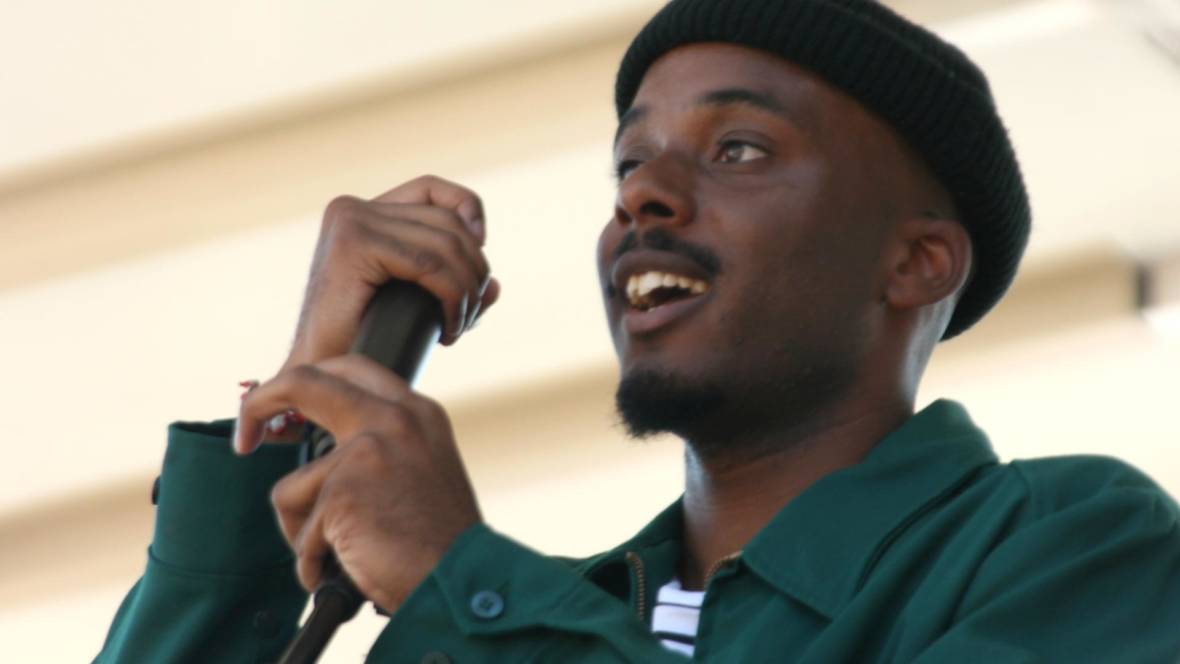
"caption": "At 23, Caleborate makes fully-formed, hard-knocking hip-hop records out of his Berkeley base.",
"description": "At 23, Caleborate makes fully-formed, hard-knocking hip-hop records out of his Berkeley base.",
"title": "Caleb.MAIN",
"credit": "Gabe Meline/KQED",
"status": "inherit",
"isLoading": false,
"fetchFailed": false
},
"arts_11696578": {
"type": "attachments",
"id": "arts_11696578",
"meta": {
"index": "attachments_1716263798",
"site": "arts",
"id": "11696578",
"found": true
},
"parent": 11696060,
"imgSizes": {
"twentyfourteen-full-width": {
"file": "https://ww2.kqed.org/app/uploads/sites/2/2016/06/2pac.MAIN_-1038x576.jpg",
"width": 1038,
"mimeType": "image/jpeg",
"height": 576
},
"thumbnail": {
"file": "https://ww2.kqed.org/app/uploads/sites/2/2016/06/2pac.MAIN_-400x225.jpg",
"width": 400,
"mimeType": "image/jpeg",
"height": 225
},
"fd-sm": {
"file": "https://ww2.kqed.org/app/uploads/sites/2/2016/06/2pac.MAIN_-960x540.jpg",
"width": 960,
"mimeType": "image/jpeg",
"height": 540
},
"post-thumbnail": {
"file": "https://ww2.kqed.org/app/uploads/sites/2/2016/06/2pac.MAIN_-672x372.jpg",
"width": 672,
"mimeType": "image/jpeg",
"height": 372
},
"kqedFullSize": {
"file": "https://ww2.kqed.org/app/uploads/sites/2/2016/06/2pac.MAIN_.jpg",
"width": 1920,
"height": 1080
},
"large": {
"file": "https://ww2.kqed.org/app/uploads/sites/2/2016/06/2pac.MAIN_-1180x664.jpg",
"width": 1180,
"mimeType": "image/jpeg",
"height": 664
},
"guest-author-50": {
"file": "https://ww2.kqed.org/app/uploads/sites/2/2016/06/2pac.MAIN_-50x50.jpg",
"width": 50,
"mimeType": "image/jpeg",
"height": 50
},
"guest-author-96": {
"file": "https://ww2.kqed.org/app/uploads/sites/2/2016/06/2pac.MAIN_-96x96.jpg",
"width": 96,
"mimeType": "image/jpeg",
"height": 96
},
"medium": {
"file": "https://ww2.kqed.org/app/uploads/sites/2/2016/06/2pac.MAIN_-800x450.jpg",
"width": 800,
"mimeType": "image/jpeg",
"height": 450
},
"guest-author-64": {
"file": "https://ww2.kqed.org/app/uploads/sites/2/2016/06/2pac.MAIN_-64x64.jpg",
"width": 64,
"mimeType": "image/jpeg",
"height": 64
},
"guest-author-32": {
"file": "https://ww2.kqed.org/app/uploads/sites/2/2016/06/2pac.MAIN_-32x32.jpg",
"width": 32,
"mimeType": "image/jpeg",
"height": 32
},
"fd-lrg": {
"file": "https://ww2.kqed.org/app/uploads/sites/2/2016/06/2pac.MAIN_-1920x1080.jpg",
"width": 1920,
"mimeType": "image/jpeg",
"height": 1080
},
"fd-med": {
"file": "https://ww2.kqed.org/app/uploads/sites/2/2016/06/2pac.MAIN_-1180x664.jpg",
"width": 1180,
"mimeType": "image/jpeg",
"height": 664
},
"detail": {
"file": "https://ww2.kqed.org/app/uploads/sites/2/2016/06/2pac.MAIN_-150x150.jpg",
"width": 150,
"mimeType": "image/jpeg",
"height": 150
},
"medium_large": {
"file": "https://ww2.kqed.org/app/uploads/sites/2/2016/06/2pac.MAIN_-768x432.jpg",
"width": 768,
"mimeType": "image/jpeg",
"height": 432
},
"guest-author-128": {
"file": "https://ww2.kqed.org/app/uploads/sites/2/2016/06/2pac.MAIN_-128x128.jpg",
"width": 128,
"mimeType": "image/jpeg",
"height": 128
}
},
"publishDate": 1466109409,
"modified": 1696010083,
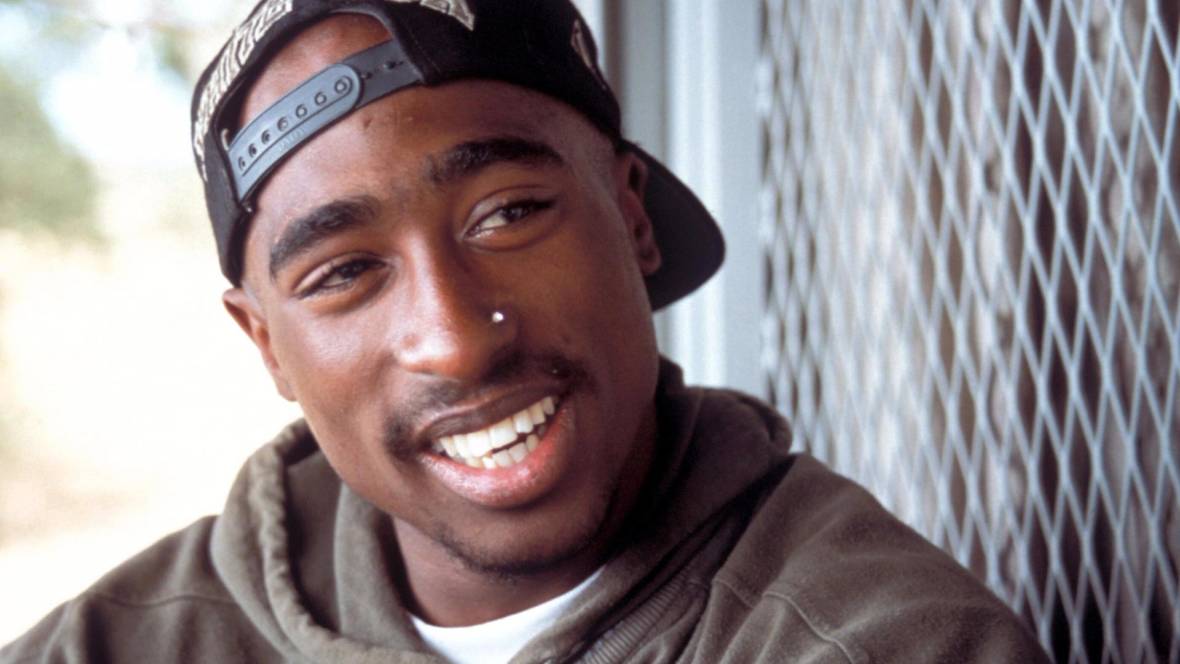
"caption": "Tupac Shakur in a still from the 1993 film 'Poetic Justice,' three years before his death.",
"description": "Tupac Shakur in a still from 'Poetic Justice.'",
"title": "2pac.MAIN",
"credit": "Columbia Pictures",
"status": "inherit",
"altTag": "Tupac Shakur in a still from 'Poetic Justice.'",
"isLoading": false,
"fetchFailed": false
},
"arts_13883473": {
"type": "attachments",
"id": "arts_13883473",
"meta": {
"index": "attachments_1716263798",
"site": "arts",
"id": "13883473",
"found": true
},
"parent": 10224812,
"imgSizes": {
"twentyfourteen-full-width": {
"file": "https://ww2.kqed.org/app/uploads/sites/2/2014/12/LilB.Bookstore-1038x576.jpg",
"width": 1038,
"mimeType": "image/jpeg",
"height": 576
},
"thumbnail": {
"file": "https://ww2.kqed.org/app/uploads/sites/2/2014/12/LilB.Bookstore-160x90.jpg",
"width": 160,
"mimeType": "image/jpeg",
"height": 90
},
"post-thumbnail": {
"file": "https://ww2.kqed.org/app/uploads/sites/2/2014/12/LilB.Bookstore-672x372.jpg",
"width": 672,
"mimeType": "image/jpeg",
"height": 372
},
"kqedFullSize": {
"file": "https://ww2.kqed.org/app/uploads/sites/2/2014/12/LilB.Bookstore.jpg",
"width": 1600,
"height": 900
},
"large": {
"file": "https://ww2.kqed.org/app/uploads/sites/2/2014/12/LilB.Bookstore-1020x574.jpg",
"width": 1020,
"mimeType": "image/jpeg",
"height": 574
},
"1536x1536": {
"file": "https://ww2.kqed.org/app/uploads/sites/2/2014/12/LilB.Bookstore-1536x864.jpg",
"width": 1536,
"mimeType": "image/jpeg",
"height": 864
},
"medium": {
"file": "https://ww2.kqed.org/app/uploads/sites/2/2014/12/LilB.Bookstore-800x450.jpg",
"width": 800,
"mimeType": "image/jpeg",
"height": 450
},
"medium_large": {
"file": "https://ww2.kqed.org/app/uploads/sites/2/2014/12/LilB.Bookstore-768x432.jpg",
"width": 768,
"mimeType": "image/jpeg",
"height": 432
}
},
"publishDate": 1594925810,
"modified": 1594925908,
"caption": "Lil B.",
"description": "Lil B.",
"title": "LilB.Bookstore",
"credit": "Courtesy Brandon McCartney",
"status": "inherit",
"isLoading": false,
"fetchFailed": false
},
"arts_10144909": {
"type": "attachments",
"id": "arts_10144909",
"meta": {
"index": "attachments_1716263798",
"site": "arts",
"id": "10144909",
"found": true
},
"parent": 10144907,
"imgSizes": {
"thumbnail": {
"file": "https://ww2.kqed.org/app/uploads/sites/2/2014/11/Digable-400x220.jpg",
"width": 400,
"mimeType": "image/jpeg",
"height": 220
},
"post-thumbnail": {
"file": "https://ww2.kqed.org/app/uploads/sites/2/2014/11/Digable-672x372.jpg",
"width": 672,
"mimeType": "image/jpeg",
"height": 372
},
"kqedFullSize": {
"file": "https://ww2.kqed.org/app/uploads/sites/2/2014/11/Digable.jpg",
"width": 900,
"height": 496
},
"guest-author-96": {
"file": "https://ww2.kqed.org/app/uploads/sites/2/2014/11/Digable-96x96.jpg",
"width": 96,
"mimeType": "image/jpeg",
"height": 96
},
"medium": {
"file": "https://ww2.kqed.org/app/uploads/sites/2/2014/11/Digable-800x440.jpg",
"width": 800,
"mimeType": "image/jpeg",
"height": 440
},
"guest-author-64": {
"file": "https://ww2.kqed.org/app/uploads/sites/2/2014/11/Digable-64x64.jpg",
"width": 64,
"mimeType": "image/jpeg",
"height": 64
},
"detail": {
"file": "https://ww2.kqed.org/app/uploads/sites/2/2014/11/Digable-75x75.jpg",
"width": 75,
"mimeType": "image/jpeg",
"height": 75
},
"guest-author-32": {
"file": "https://ww2.kqed.org/app/uploads/sites/2/2014/11/Digable-32x32.jpg",
"width": 32,
"mimeType": "image/jpeg",
"height": 32
},
"guest-author-128": {
"file": "https://ww2.kqed.org/app/uploads/sites/2/2014/11/Digable-128x128.jpg",
"width": 128,
"mimeType": "image/jpeg",
"height": 128
}
},
"publishDate": 1414870638,
"modified": 1656618333,
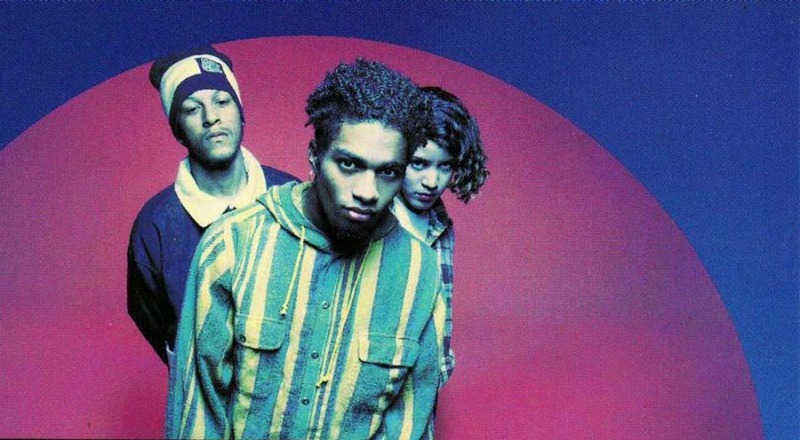
"caption": "Digable Planets in 1993.",
"description": null,
"title": "Digable",
"credit": null,
"status": "inherit",
"altTag": "A hip-hop trio, one woman and two men, laugh while seated in the grass.",
"isLoading": false,
"fetchFailed": false
}
},
"audioPlayerReducer": {
"postId": "stream_live",
"isPaused": true,
"isPlaying": false,
"pfsActive": false,
"pledgeModalIsOpen": true,
"playerDrawerIsOpen": false,
"liveAudioPlayStartedAt": 0,
"liveAudioPlayContext": ""
},
"authorsReducer": {
"gmeline": {
"type": "authors",
"id": "185",
"meta": {
"index": "authors_1716337520",
"id": "185",
"found": true
},
"name": "Gabe Meline",
"firstName": "Gabe",
"lastName": "Meline",
"slug": "gmeline",
"email": "gmeline@kqed.org",
"display_author_email": true,
"staff_mastheads": [
"arts"
],
"title": "Senior Editor, KQED Arts & Culture",
"bio": "Gabe Meline entered journalism at age 15 making photocopied zines, and has since earned awards from the Edward R. Murrow Awards, the Society for Professional Journalists, the Online Journalism Awards, the Association of Alternative Newsweeklies and the California Newspaper Publishers Association. Prior to KQED, he was the editor of the \u003cem>North Bay Bohemian\u003c/em> and a touring musician. He lives with his wife and daughter in his hometown of Santa Rosa, CA.",
"avatar": "https://secure.gravatar.com/avatar/5bebe57be0d8bc2dd318934feb47299e2d2d10cba28d09d8d7afb389a2ce2bdd?s=600&d=blank&r=g",
"twitter": null,
"bluesky": null,
"facebook": null,
"instagram": null,
"linkedin": null,
"sites": [
{
"site": "",
"roles": [
"editor"
]
},
{
"site": "arts",
"roles": [
"administrator"
]
},
{
"site": "artschool",
"roles": [
"editor"
]
},
{
"site": "news",
"roles": [
"author"
]
},
{
"site": "pop",
"roles": [
"editor"
]
},
{
"site": "bayareabites",
"roles": [
"editor"
]
},
{
"site": "food",
"roles": [
"editor"
]
},
{
"site": "forum",
"roles": [
"administrator"
]
},
{
"site": "liveblog",
"roles": [
"editor"
]
},
{
"site": "hiphop",
"roles": [
"editor"
]
}
],
"headData": {
"title": "Gabe Meline | KQED",
"description": "Senior Editor, KQED Arts & Culture",
"ogImgSrc": "https://secure.gravatar.com/avatar/5bebe57be0d8bc2dd318934feb47299e2d2d10cba28d09d8d7afb389a2ce2bdd?s=600&d=blank&r=g",
"twImgSrc": "https://secure.gravatar.com/avatar/5bebe57be0d8bc2dd318934feb47299e2d2d10cba28d09d8d7afb389a2ce2bdd?s=600&d=blank&r=g"
},
"isLoading": false,
"link": "/author/gmeline"
}
},
"pagesReducer": {
"arts_tag_hip-hop": {
"type": "terms",
"id": "arts_831",
"meta": {
"index": "terms_1716263798",
"site": "arts",
"id": "831",
"score": 8.794562
},
"featImg": null,
"name": "Hip Hop",
"description": null,
"taxonomy": "tag",
"headData": {
"twImgId": null,
"twTitle": null,
"socialTitle": "Fresh Off the Streets: Get Amped by the Bay's Hottest Hip-Hop Stories",
"ogTitle": null,
"ogImgId": null,
"twDescription": null,
"description": "Discover rising stars, hidden gems, and live events that'll keep your head nodding. Find your next favorite local hip hop artist right here.",
"metaRobotsNoIndex": "index",
"title": "Fresh Off the Streets: Get Amped by the Bay's Hottest Hip-Hop Stories",
"ogDescription": null
},
"ttid": 849,
"slug": "hip-hop",
"isLoading": false,
"title": "Hip Hop",
"pageMeta": {
"site": "arts",
"WpPageTemplate": "page-topic-editorial",
"currentPage": 37
},
"blocks": [
{
"blockName": "kqed/post-list",
"attrs": {
"layout": "cardArticle2",
"query": "posts/arts?tag=hip-hop",
"seeMore": false,
"paginated": true,
"page": 37
}
},
{
"blockName": "kqed/ad"
}
]
}
},
"pfsSessionReducer": {},
"postsReducer": {
"stream_live": {
"type": "live",
"id": "stream_live",
"audioUrl": "https://streams.kqed.org/kqedradio",
"title": "Live Stream",
"excerpt": "Live Stream information currently unavailable.",
"link": "/radio",
"featImg": "",
"label": {
"name": "KQED Live",
"link": "/"
}
},
"stream_kqedNewscast": {
"type": "posts",
"id": "stream_kqedNewscast",
"audioUrl": "https://www.kqed.org/.stream/anon/radio/RDnews/newscast.mp3?_=1",
"title": "KQED Newscast",
"featImg": "",
"label": {
"name": "88.5 FM",
"link": "/"
}
},
"arts_12064915": {
"type": "posts",
"id": "arts_12064915",
"meta": {
"index": "posts_1716263798",
"site": "arts",
"id": "12064915",
"score": null,
"sort": [
1474038029000
]
},
"parent": 0,
"labelTerm": {
"site": "arts"
},
"blocks": [],
"publishDate": 1474038029,
"format": "image",
"title": "Meet 23-Year-Old Caleborate, the East Bay's Next Rap Titan",
"headTitle": "Meet 23-Year-Old Caleborate, the East Bay’s Next Rap Titan | KQED",
"content": "\u003cp>Caleborate’s already been recognized at least 20 times today, here on Telegraph Avenue. It’s become a running joke: as soon as he starts telling me something important, the short, eloquent rapper gets interrupted, usually by girls, and asked for a selfie. When he makes the turn to Dwight Way, bumping into a kid in glasses, a striped shirt and backpack, he offers a polite apology—”Oh, sorry, man.”\u003c/p>\n\u003cp>“Wait, wait!” says the kid, popping his earbuds out and fishing for his phone. He holds up the screen to show what he’d been listening to, at that very moment: Caleborate’s own album \u003cem>\u003ca href=\"https://soundcloud.com/caleborate/sets/1993a-1\" target=\"_blank\" rel=\"noopener noreferrer\">1993\u003c/a>\u003c/em>—one of the best, if not \u003cem>the\u003c/em> best, Bay Area rap albums of the year. \u003c/p>\n\u003cp>https://www.youtube.com/watch?v=J6fAQlZECJ4\u003c/p>\n\u003cp>The album’s only been out for three days, but judging by the hordes of fans on the street here in Berkeley, you’d think it was already platinum. The two share a laugh and \u003ca href=\"https://twitter.com/jonahhhhz/status/771168122283761664\" target=\"_blank\" rel=\"noopener noreferrer\">a requisite photo\u003c/a>, and the kid echoes just about everyone else who’s stopped the 23-year-old rapper today to give ups to \u003cem>1993\u003c/em>. \u003c/p>\n\u003cp>Fame in the East Bay is a strange ladder, with different rungs. For every Metallica, Counting Crows or Green Day who made it to the top, there are a hundred tiers in Caleborate’s field—Mystik Journeymen or Hieroglyphics or Living Legends, rap artists who once made a name for themselves by selling tapes on this very street. \u003c/p>\n\u003cfigure id=\"attachment_12075494\" class=\"wp-caption aligncenter\" style=\"max-width: 800px\">\u003cimg loading=\"lazy\" decoding=\"async\" src=\"http://ww2.kqed.org/arts/wp-content/uploads/sites/2/2016/09/Caleb.Girls_-800x450.jpg\" alt=\"Caleborate with fans at Sproul Plaza, UC Berkeley.\" width=\"800\" height=\"450\" class=\"size-medium wp-image-12075494\" srcset=\"https://cdn.kqed.org/wp-content/uploads/sites/2/2016/09/Caleb.Girls_-800x450.jpg 800w, https://cdn.kqed.org/wp-content/uploads/sites/2/2016/09/Caleb.Girls_-400x225.jpg 400w, https://cdn.kqed.org/wp-content/uploads/sites/2/2016/09/Caleb.Girls_-768x432.jpg 768w, https://cdn.kqed.org/wp-content/uploads/sites/2/2016/09/Caleb.Girls_-1180x664.jpg 1180w, https://cdn.kqed.org/wp-content/uploads/sites/2/2016/09/Caleb.Girls_.jpg 1920w, https://cdn.kqed.org/wp-content/uploads/sites/2/2016/09/Caleb.Girls_-960x540.jpg 960w\" sizes=\"(max-width: 800px) 100vw, 800px\">\u003cfigcaption class=\"wp-caption-text\">Caleborate with fans at Sproul Plaza, UC Berkeley. \u003ccite>(Gabe Meline)\u003c/cite>\u003c/figcaption>\u003c/figure>\n\u003cp>As Caleborate stands in front of Rasputin Music, dreaming of the day the store displays his album art in its sidewalk gallery (“that’s when I’ll know I’ve made it,” he says), I notice a tall figure in mottled dreadlocks and a goatee walking toward us. He’s fiftysomething, pudgy, wearing a Gram Parsons T-shirt and carrying a tote bag.\u003c/p>\n\u003cp>[ad fullwidth]\u003c/p>\n\u003cp>I do a double-take, and then it hits me: it’s Adam Duritz, the \u003ca href=\"https://en.wikipedia.org/wiki/Adam_Duritz\" target=\"_blank\" rel=\"noopener noreferrer\">lead singer\u003c/a> for Counting Crows.\u003c/p>\n\u003cp>I turn and watch Duritz walk Telegraph, past hordes of uninterested young students, down the block and around the corner. Nobody recognizes him. \u003cem>Nobody\u003c/em>. Meanwhile, yet another fan stops to take a photo with Caleborate, this young, hungry rapper from Berkeley who hasn’t made it yet.\u003c/p>\n\u003cp>\u003cimg loading=\"lazy\" decoding=\"async\" src=\"http://ww2.kqed.org/arts/wp-content/uploads/sites/2/2016/09/Sneaker.Break_.jpg\" alt=\"Sneaker.Break\" width=\"800\" height=\"81\" class=\"aligncenter size-full wp-image-12075306\" srcset=\"https://cdn.kqed.org/wp-content/uploads/sites/2/2016/09/Sneaker.Break_.jpg 800w, https://cdn.kqed.org/wp-content/uploads/sites/2/2016/09/Sneaker.Break_-400x41.jpg 400w, https://cdn.kqed.org/wp-content/uploads/sites/2/2016/09/Sneaker.Break_-768x78.jpg 768w\" sizes=\"(max-width: 800px) 100vw, 800px\">\u003c/p>\n\u003cp>If Caleborate set out to make an album designed to appeal to older rap fans raised on Eric B. & Rakim and A Tribe Called Quest, he certainly succeeded: \u003cem>1993\u003c/em> hits on all the pleasure centers from the golden age of hip-hop. But that’s not what he intended. “I made \u003cem>1993\u003c/em> to speak for and to people in their twenties everywhere,” he says. “People need that confirmation that someone else is in these shoes too.”\u003c/p>\n\u003cp>So, with millennial subject matter and a ’90s aesthetic—soulful samples, boom-bap drums—songs like “For Sallie Mae” and “August 28” speak to the reality of being young, broke, and ambitious in the Bay Area, a reality Caleborate knows all too well since moving here five years ago.\u003c/p>\n\u003cfigure id=\"attachment_12075503\" class=\"wp-caption aligncenter\" style=\"max-width: 800px\">\u003cimg loading=\"lazy\" decoding=\"async\" src=\"http://ww2.kqed.org/arts/wp-content/uploads/sites/2/2016/09/Caleb.WashedoutWhite-800x450.jpg\" alt=\"Caleborate.\" width=\"800\" height=\"450\" class=\"size-medium wp-image-12075503\" srcset=\"https://cdn.kqed.org/wp-content/uploads/sites/2/2016/09/Caleb.WashedoutWhite-800x450.jpg 800w, https://cdn.kqed.org/wp-content/uploads/sites/2/2016/09/Caleb.WashedoutWhite-400x225.jpg 400w, https://cdn.kqed.org/wp-content/uploads/sites/2/2016/09/Caleb.WashedoutWhite-768x432.jpg 768w, https://cdn.kqed.org/wp-content/uploads/sites/2/2016/09/Caleb.WashedoutWhite-1180x664.jpg 1180w, https://cdn.kqed.org/wp-content/uploads/sites/2/2016/09/Caleb.WashedoutWhite.jpg 1920w, https://cdn.kqed.org/wp-content/uploads/sites/2/2016/09/Caleb.WashedoutWhite-960x540.jpg 960w\" sizes=\"(max-width: 800px) 100vw, 800px\">\u003cfigcaption class=\"wp-caption-text\">Caleborate. \u003ccite>(Gabe Meline)\u003c/cite>\u003c/figcaption>\u003c/figure>\n\u003cp>Born in 1993, the kid known as Caleb Parker grew up in South Side Sacramento. At age 10, he immersed himself in Kanye West’s \u003cem>The College Dropout\u003c/em>, particularly the song “Last Call,” which inspired him to pick up the alto sax. (“Allure,” from Jay-Z’s \u003cem>The Black Album\u003c/em>, was another song on heavy rotation.)\u003c/p>\n\u003cp>He eventually went to Sheldon High, where he played basketball, did some theater, and started writing music in junior year—an anomaly in a mostly white school, where students often referred to him as “that black kid that raps” (he still uses “TBKTR” as his publishing acronym). In 2011, his dad went through a divorce, moved to Atlanta, and suddenly left his son to live with his brother in Berkeley: “One bag, no money, and a couch where I lay,” as he raps on \u003cem>1993\u003c/em>’s “August 28.”\u003c/p>\n\u003cp>There are passing mentions on \u003cem>1993\u003c/em> of Caleborate’s dad’s time in jail, and when I ask about it, his normally upbeat demeanor turns pensive. “I don’t think it was mentally healthy for my dad to leave California and go to Atlanta,” he says, softly. “When you’re mid-50s and you’re away from your kids, your grandchild was born and you’re not there for that, your brother passes and you’re not there for that—you’re not there for any of these things, and you’re alone? Me and my dad kinda share the same mind, so I know how potentially dangerous being alone and having that kind of idle time can be.”\u003c/p>\n\u003cfigure id=\"attachment_12075500\" class=\"wp-caption aligncenter\" style=\"max-width: 800px\">\u003cimg loading=\"lazy\" decoding=\"async\" src=\"http://ww2.kqed.org/arts/wp-content/uploads/sites/2/2016/09/Caleb.UCB_-800x450.jpg\" alt=\"Caleborate performs at UC Berkeley.\" width=\"800\" height=\"450\" class=\"size-medium wp-image-12075500\" srcset=\"https://cdn.kqed.org/wp-content/uploads/sites/2/2016/09/Caleb.UCB_-800x450.jpg 800w, https://cdn.kqed.org/wp-content/uploads/sites/2/2016/09/Caleb.UCB_-400x225.jpg 400w, https://cdn.kqed.org/wp-content/uploads/sites/2/2016/09/Caleb.UCB_-768x432.jpg 768w, https://cdn.kqed.org/wp-content/uploads/sites/2/2016/09/Caleb.UCB_-1180x664.jpg 1180w, https://cdn.kqed.org/wp-content/uploads/sites/2/2016/09/Caleb.UCB_.jpg 1920w, https://cdn.kqed.org/wp-content/uploads/sites/2/2016/09/Caleb.UCB_-960x540.jpg 960w\" sizes=\"(max-width: 800px) 100vw, 800px\">\u003cfigcaption class=\"wp-caption-text\">Caleborate performs at UC Berkeley. \u003ccite>(Gabe Meline)\u003c/cite>\u003c/figcaption>\u003c/figure>\n\u003cp>Disorderly conduct was the charge against his dad; it involved getting upset with some kids in the neighborhood who were doing something they shouldn’t have, but that’s all Caleborate can really say. He didn’t even know where his dad had disappeared to, until he and his family turned to Google and found his dad’s name in the county jail records. It was a shock to the son who spent every single day with his dad until age 18, talking about everything, receiving guidance.\u003c/p>\n\u003cp>“I worry and I’m concerned for his safety,” says Caleborate, who now stays with his aunt in Berkeley. “But then at a certain point, I just washed my hands of the situation. And I think that’s the scariest part of all. I love my dad and I miss him, but I’m worried that maybe I’m OK now, you know what I mean? That’s what scares me. That I could say, ‘I’ll take it from here.’”\u003c/p>\n\u003cp>His dad was in jail for over a year. Caleborate kept busy writing and recording an album, \u003cem>Hella Good\u003c/em>. He didn’t tell his dad about it.\u003c/p>\n\u003cp>\u003cimg loading=\"lazy\" decoding=\"async\" src=\"http://ww2.kqed.org/arts/wp-content/uploads/sites/2/2016/09/Sneaker.Break_.jpg\" alt=\"Sneaker.Break\" width=\"800\" height=\"81\" class=\"aligncenter size-full wp-image-12075306\" srcset=\"https://cdn.kqed.org/wp-content/uploads/sites/2/2016/09/Sneaker.Break_.jpg 800w, https://cdn.kqed.org/wp-content/uploads/sites/2/2016/09/Sneaker.Break_-400x41.jpg 400w, https://cdn.kqed.org/wp-content/uploads/sites/2/2016/09/Sneaker.Break_-768x78.jpg 768w\" sizes=\"(max-width: 800px) 100vw, 800px\">\u003c/p>\n\u003cp>\u003cem>Hella Good\u003c/em> was promoted in a distinctly 21st-century fashion: through rampant, repeated commenting on YouTube videos by artists to whom Caleborate’s own music owes a debt, like Chance the Rapper, Childish Gambino and J. Cole. His pitch was simple.\u003c/p>\n\u003cblockquote>\u003cp>1.I’m a 20 year old rapper, student and graphic designer\u003cbr>\n2.I’m going to an Art University studying to be news broadcaster, but music is my main dream.\u003cbr>\n3.I work on campus at my school as well as off campus assisting and eat ramen for dinner, I really work hard AND chase my dream at the same time!\u003cbr>\n4.I have two albums out now and I’m working on another album all on my own dollar!\u003cbr>\n5.I REALLY hate spamming, but it’s all I got. Give me a (“THUMBS UP”) so others can notice me. THANK YOU! 🙂\u003c/p>\u003c/blockquote>\n\u003cp>https://www.youtube.com/watch?v=83wOmk9yLPs\u003c/p>\n\u003cp>\u003ca href=\"https://www.reddit.com/r/hiphopheads/comments/293frq/hhh_meet_caleborate_the_kid_who_youtube_spammed/\" target=\"_blank\" rel=\"noopener noreferrer\">The tactic worked\u003c/a>. (Most of the replies took the form of “I wanted to hate you for spamming, but can’t lie, your shit is tight.”) He made enough of a splash to attract fellow East Bay hip-hop talents like G-Eazy, who last year appeared on the single “\u003ca href=\"https://soundcloud.com/caleborate/want-it-all-ft-g-eazy-prod-cal-a\" target=\"_blank\" rel=\"noopener noreferrer\">Want it All\u003c/a>” free of charge; to go on a west coast tour with P-Lo and Kehlani’s DJ Noodles; and to take a hiatus from attending Ex’pression College to focus on his next album.\u003c/p>\n\u003cp>The Friday before \u003cem>1993\u003c/em>’s release, Caleborate performed in Lower Sproul Plaza at UC Berkeley to over 1,000 people, warming the stage for headliner Kehlani. Though technical issues interrupted the set, he showed skilled ease on the mic (he staunchly refuses to rap over his own vocals), and covered for the set’s glitches with his natural charm, shouting out popular spots on Telegraph between songs.\u003c/p>\n\u003cfigure id=\"attachment_12075504\" class=\"wp-caption aligncenter\" style=\"max-width: 800px\">\u003cimg loading=\"lazy\" decoding=\"async\" src=\"http://ww2.kqed.org/arts/wp-content/uploads/sites/2/2016/09/CalebatUCBLight-800x450.jpg\" alt=\"Caleborate performs at UC Berkeley.\" width=\"800\" height=\"450\" class=\"size-medium wp-image-12075504\" srcset=\"https://cdn.kqed.org/wp-content/uploads/sites/2/2016/09/CalebatUCBLight-800x450.jpg 800w, https://cdn.kqed.org/wp-content/uploads/sites/2/2016/09/CalebatUCBLight-400x225.jpg 400w, https://cdn.kqed.org/wp-content/uploads/sites/2/2016/09/CalebatUCBLight-768x432.jpg 768w, https://cdn.kqed.org/wp-content/uploads/sites/2/2016/09/CalebatUCBLight-960x540.jpg 960w, https://cdn.kqed.org/wp-content/uploads/sites/2/2016/09/CalebatUCBLight.jpg 1080w\" sizes=\"(max-width: 800px) 100vw, 800px\">\u003cfigcaption class=\"wp-caption-text\">Caleborate performs at UC Berkeley. \u003ccite>(Instagram)\u003c/cite>\u003c/figcaption>\u003c/figure>\n\u003cp>Likewise, \u003cem>1993\u003c/em> is more polished than \u003cem>Hella Good\u003c/em>, and more focused on every level. Its production, by P-Lo, Julia Lewis, Mikos Da Gawd, Wax Roof, Ian McKee, HBK’s Kuya Beats, Cal-A and more, is a smooth, satisfying IV drip of memorable beats and samples. And Caleborate’s lyrics, in particular, operate like a Jenga puzzle, with key words and phrases holding up entire lines later in the song.\u003c/p>\n\u003cp>And though his natural nasal tone is initially reminiscent of Chance or Kendrick, he’s grown into a voice and flow that’s indisputably his own, used to amplify issues like gentrification and displacement—issues that have \u003ca href=\"https://ww2.kqed.org/news/2015/04/24/san-francisco-could-be-a-lot-whiter-in-25-years-predicts-a-new-profile-of-bay-area/\" target=\"_blank\" rel=\"noopener noreferrer\">decimated the black population\u003c/a> in the Bay Area (and have priced out fellow rap artists \u003ca href=\"https://ww2.kqed.org/pop/2016/06/29/on-zion-is-tech-a-housing-crisis-turns-personal/\" target=\"_blank\" rel=\"noopener noreferrer\">like Zion-I\u003c/a>).\u003c/p>\n\u003cp>https://www.youtube.com/watch?v=xnJBBsTO2OQ\u003c/p>\n\u003cp>But like Lil B, the most positive rapper in the Bay Area and perhaps the world, Caleborate crafts songs that always reach for a sense of hope. There’s a conspicuous lack of violence in \u003cem>1993\u003c/em>, for example, even though just this year Caleborate \u003ca href=\"http://www.sacbee.com/news/local/crime/article52832725.html\" target=\"_blank\" rel=\"noopener noreferrer\">lost a childhood friend\u003c/a>, Darien McLaurin, who was shot, Caleborate says, “over some gang shit in Sacramento.” On the day we walk around Berkeley, he and Kale, his DJ, repeatedly wrestle with the tragic and untimely death of Terrance McCrary, Jr.—a.k.a. T-Mack, the 22-year-old Berkeley High grad who was shot and killed last month.\u003c/p>\n\u003cp>That may explain Caleborate’s subtle reference to certain white rap fans in \u003cem>1993\u003c/em>’s “250 AM”: \u003c/p>\n\u003cblockquote>\u003cp>The hipsters all at the shows with the money and the clothes\u003cbr>\nand they all wanna say the N-word\u003cbr>\nOooooh, the truth hurts, don’t it?\u003cbr>\nMy friends die over shit you flauntin’\u003c/p>\u003c/blockquote>\n\u003cfigure id=\"attachment_12075491\" class=\"wp-caption aligncenter\" style=\"max-width: 800px\">\u003cimg loading=\"lazy\" decoding=\"async\" src=\"http://ww2.kqed.org/arts/wp-content/uploads/sites/2/2016/09/Caleb.Ankles-800x450.jpg\" alt=\"Caleborate, with no socks, as usual.\" width=\"800\" height=\"450\" class=\"size-medium wp-image-12075491\" srcset=\"https://cdn.kqed.org/wp-content/uploads/sites/2/2016/09/Caleb.Ankles-800x450.jpg 800w, https://cdn.kqed.org/wp-content/uploads/sites/2/2016/09/Caleb.Ankles-400x225.jpg 400w, https://cdn.kqed.org/wp-content/uploads/sites/2/2016/09/Caleb.Ankles-768x432.jpg 768w, https://cdn.kqed.org/wp-content/uploads/sites/2/2016/09/Caleb.Ankles-1180x664.jpg 1180w, https://cdn.kqed.org/wp-content/uploads/sites/2/2016/09/Caleb.Ankles.jpg 1920w, https://cdn.kqed.org/wp-content/uploads/sites/2/2016/09/Caleb.Ankles-960x540.jpg 960w\" sizes=\"(max-width: 800px) 100vw, 800px\">\u003cfigcaption class=\"wp-caption-text\">Caleborate, with no socks, as usual. \u003ccite>(Gabe Meline)\u003c/cite>\u003c/figcaption>\u003c/figure>\n\u003cp>“I did a show with Vince Staples for Noise Pop, and I had this weird moment where I’m watching him perform ‘\u003ca href=\"https://www.youtube.com/watch?v=NJLfCBBcZAo\" target=\"_blank\" rel=\"noopener noreferrer\">Blue Suede\u003c/a>,’ and I’m lookin’ in the crowd, and it’s like… not very many black people,” Caleborate says. “Everyone there, they all fit this hipster demographic: they kinda look like techies, they got thick mustaches and flannels, and you’re listening to these lines from ‘Blue Suede,’ and you’re like… does this even make sense? I don’t want you to be down because it looks cool and sounds cool. I want you to be down because you actually understand what it’s like in my shoes, or at least \u003cem>want\u003c/em> to understand it. Not just to wanna take the picture, or be in the crowd and say that you were doin’ some hood shit when my song came on, and then you go back to your regular life and that’s it.”\u003c/p>\n\u003cp>The UC Berkeley campanile cuts off Caleborate, loudly tolling its bells across campus, which gives him a moment to think. He looks up. “Just know that it’s real for us,” he says. “It’s not just a lyric in a song. It’s a moment that I have to live with for the rest of my life.”\u003c/p>\n\u003cp>\u003cimg loading=\"lazy\" decoding=\"async\" src=\"http://ww2.kqed.org/arts/wp-content/uploads/sites/2/2016/09/Sneaker.Break_.jpg\" alt=\"Sneaker.Break\" width=\"800\" height=\"81\" class=\"aligncenter size-full wp-image-12075306\" srcset=\"https://cdn.kqed.org/wp-content/uploads/sites/2/2016/09/Sneaker.Break_.jpg 800w, https://cdn.kqed.org/wp-content/uploads/sites/2/2016/09/Sneaker.Break_-400x41.jpg 400w, https://cdn.kqed.org/wp-content/uploads/sites/2/2016/09/Sneaker.Break_-768x78.jpg 768w\" sizes=\"(max-width: 800px) 100vw, 800px\">\u003c/p>\n\u003cp>Hiero Day is a \u003ca href=\"http://www.hieroday.com/\" target=\"_blank\" rel=\"noopener noreferrer\">joyful celebration\u003c/a> of Oakland’s heart and soul, an annual block party that brings together younger artists like Rexx Life Raj, Elujay and Rocky Rivera with the old guard standbys of Souls of Mischief, Too Short, Paris and more. At this year’s fest, Caleborate has an early afternoon slot on a sunny side stage, but it doesn’t keep the crowd from losing their mind.\u003c/p>\n\u003cp>It’s a party setting. Caleborate sings “Consequences” (“I just wanna chill, smoke, drink an’ be cool”), points to his shoes when someone yells “Free the Ankle!” (wearing no socks has become his \u003ca href=\"https://twitter.com/search?f=tweets&vertical=default&q=%23freetheankle%20tbktr&src=typd\" target=\"_blank\" rel=\"noopener noreferrer\">hashtag trademark\u003c/a>), and, for the song “Saggin Par,” jumps off the stage and breaks through the metal barricades separating him from his crowd. The beat drops and bedlam ensues; a \u003ca href=\"https://www.instagram.com/p/BJ_apMPg9nb/\" target=\"_blank\" rel=\"noopener noreferrer\">pit forms\u003c/a>, Caleborate screams along with dozens of others in \u003ca href=\"https://www.instagram.com/p/BKCncQRgJtw/?taken-by=caleborate&hl=en\" target=\"_blank\" rel=\"noopener noreferrer\">body-slamming cathartic release\u003c/a>, and for a moment it actually feels like a punk show from the \u003cem>year\u003c/em> 1993. \u003c/p>\n\u003cfigure id=\"attachment_12075492\" class=\"wp-caption aligncenter\" style=\"max-width: 800px\">\u003cimg loading=\"lazy\" decoding=\"async\" src=\"http://ww2.kqed.org/arts/wp-content/uploads/sites/2/2016/09/Caleb.Crowd_-800x450.jpg\" alt=\"Caleborate with the crowd at Hiero Day 2016.\" width=\"800\" height=\"450\" class=\"size-medium wp-image-12075492\" srcset=\"https://cdn.kqed.org/wp-content/uploads/sites/2/2016/09/Caleb.Crowd_-800x450.jpg 800w, https://cdn.kqed.org/wp-content/uploads/sites/2/2016/09/Caleb.Crowd_-400x225.jpg 400w, https://cdn.kqed.org/wp-content/uploads/sites/2/2016/09/Caleb.Crowd_-768x432.jpg 768w, https://cdn.kqed.org/wp-content/uploads/sites/2/2016/09/Caleb.Crowd_-1180x664.jpg 1180w, https://cdn.kqed.org/wp-content/uploads/sites/2/2016/09/Caleb.Crowd_.jpg 1920w, https://cdn.kqed.org/wp-content/uploads/sites/2/2016/09/Caleb.Crowd_-960x540.jpg 960w\" sizes=\"(max-width: 800px) 100vw, 800px\">\u003cfigcaption class=\"wp-caption-text\">Caleborate with the crowd at Hiero Day 2016. \u003ccite>(Gabe Meline)\u003c/cite>\u003c/figcaption>\u003c/figure>\n\u003cp>Then, back on stage is Caleborate, the skinny bald kid who looks on the bright side. The kid who’s seen his dad go to jail, his friends killed, his peers suffocated under a mountain of debt, his city mutated by crippling changes, his culture co-opted by techies, and he starts talking about the one thing that keeps him afloat: having a dream.\u003c/p>\n\u003cp>“I appreciate y’all because y’all came out,” he says, wiping the sweat away. “We all blessed because we alive today, OK?”\u003c/p>\n\u003cp>\u003cimg loading=\"lazy\" decoding=\"async\" src=\"http://ww2.kqed.org/arts/wp-content/uploads/sites/2/2016/09/Sneaker.Break_.jpg\" alt=\"Sneaker.Break\" width=\"800\" height=\"81\" class=\"aligncenter size-full wp-image-12075306\" srcset=\"https://cdn.kqed.org/wp-content/uploads/sites/2/2016/09/Sneaker.Break_.jpg 800w, https://cdn.kqed.org/wp-content/uploads/sites/2/2016/09/Sneaker.Break_-400x41.jpg 400w, https://cdn.kqed.org/wp-content/uploads/sites/2/2016/09/Sneaker.Break_-768x78.jpg 768w\" sizes=\"(max-width: 800px) 100vw, 800px\">\u003c/p>\n\u003cp> \u003c/p>\n\u003cp>[ad floatright]\u003c/p>\n\u003cp>\u003cem>Caleborate’s new album ‘1993’ \u003ca href=\"https://soundcloud.com/caleborate/sets/1993a-1\" target=\"_blank\" rel=\"noopener noreferrer\">is out now\u003c/a>. For more, hit him up \u003ca href=\"https://www.instagram.com/caleborate/?hl=en\" target=\"_blank\" rel=\"noopener noreferrer\">on Instagram\u003c/a>, or walk down Telegraph with no socks—you’ll run into him sooner or later.\u003c/em>\u003c/p>\n\n",
"stats": {
"hasVideo": true,
"hasChartOrMap": false,
"hasAudio": false,
"hasPolis": false,
"wordCount": 2264,
"hasGoogleForm": false,
"hasGallery": false,
"hasHearkenModule": false,
"iframeSrcs": [],
"paragraphCount": 37
},
"modified": 1705033009,
"excerpt": "The Berkeley rapper talks about white kids at his shows, his dad's time in jail, and the hopeful forces behind his excellent new album '1993.'",
"headData": {
"twImgId": "",
"twTitle": "",
"ogTitle": "",
"ogImgId": "",
"twDescription": "",
"description": "The Berkeley rapper talks about white kids at his shows, his dad's time in jail, and the hopeful forces behind his excellent new album '1993.'",
"title": "Meet 23-Year-Old Caleborate, the East Bay's Next Rap Titan | KQED",
"ogDescription": "",
"schema": {
"@context": "https://schema.org",
"@type": "Article",
"headline": "Meet 23-Year-Old Caleborate, the East Bay's Next Rap Titan",
"datePublished": "2016-09-16T08:00:29-07:00",
"dateModified": "2024-01-11T20:16:49-08:00",
"image": "https://cdn.kqed.org/wp-content/uploads/2020/02/KQED-OG-Image@1x.png"
}
},
"guestAuthors": [],
"slug": "meet-23-year-old-caleborate-the-east-bays-next-rap-titan",
"status": "publish",
"templateType": "standard",
"excludeFromSiteSearch": "Include",
"featuredImageType": "standard",
"sticky": false,
"path": "/arts/12064915/meet-23-year-old-caleborate-the-east-bays-next-rap-titan",
"audioTrackLength": null,
"parsedContent": [
{
"type": "contentString",
"content": "\u003cdiv class=\"post-body\">\u003cp>\u003cp>Caleborate’s already been recognized at least 20 times today, here on Telegraph Avenue. It’s become a running joke: as soon as he starts telling me something important, the short, eloquent rapper gets interrupted, usually by girls, and asked for a selfie. When he makes the turn to Dwight Way, bumping into a kid in glasses, a striped shirt and backpack, he offers a polite apology—”Oh, sorry, man.”\u003c/p>\n\u003cp>“Wait, wait!” says the kid, popping his earbuds out and fishing for his phone. He holds up the screen to show what he’d been listening to, at that very moment: Caleborate’s own album \u003cem>\u003ca href=\"https://soundcloud.com/caleborate/sets/1993a-1\" target=\"_blank\" rel=\"noopener noreferrer\">1993\u003c/a>\u003c/em>—one of the best, if not \u003cem>the\u003c/em> best, Bay Area rap albums of the year. \u003c/p>\u003c/p>\u003cp>\u003cspan class='utils-parseShortcode-shortcodes-__youtubeShortcode__embedYoutube'>\n \u003cspan class='utils-parseShortcode-shortcodes-__youtubeShortcode__embedYoutubeInside'>\n \u003ciframe\n loading='lazy'\n class='utils-parseShortcode-shortcodes-__youtubeShortcode__youtubePlayer'\n type='text/html'\n src='//www.youtube.com/embed/J6fAQlZECJ4'\n title='//www.youtube.com/embed/J6fAQlZECJ4'\n allowfullscreen='true'\n style='border:0;'>\u003c/iframe>\n \u003c/span>\n \u003c/span>\u003c/p>\u003cp>\u003cp>The album’s only been out for three days, but judging by the hordes of fans on the street here in Berkeley, you’d think it was already platinum. The two share a laugh and \u003ca href=\"https://twitter.com/jonahhhhz/status/771168122283761664\" target=\"_blank\" rel=\"noopener noreferrer\">a requisite photo\u003c/a>, and the kid echoes just about everyone else who’s stopped the 23-year-old rapper today to give ups to \u003cem>1993\u003c/em>. \u003c/p>\n\u003cp>Fame in the East Bay is a strange ladder, with different rungs. For every Metallica, Counting Crows or Green Day who made it to the top, there are a hundred tiers in Caleborate’s field—Mystik Journeymen or Hieroglyphics or Living Legends, rap artists who once made a name for themselves by selling tapes on this very street. \u003c/p>\n\u003cfigure id=\"attachment_12075494\" class=\"wp-caption aligncenter\" style=\"max-width: 800px\">\u003cimg loading=\"lazy\" decoding=\"async\" src=\"http://ww2.kqed.org/arts/wp-content/uploads/sites/2/2016/09/Caleb.Girls_-800x450.jpg\" alt=\"Caleborate with fans at Sproul Plaza, UC Berkeley.\" width=\"800\" height=\"450\" class=\"size-medium wp-image-12075494\" srcset=\"https://cdn.kqed.org/wp-content/uploads/sites/2/2016/09/Caleb.Girls_-800x450.jpg 800w, https://cdn.kqed.org/wp-content/uploads/sites/2/2016/09/Caleb.Girls_-400x225.jpg 400w, https://cdn.kqed.org/wp-content/uploads/sites/2/2016/09/Caleb.Girls_-768x432.jpg 768w, https://cdn.kqed.org/wp-content/uploads/sites/2/2016/09/Caleb.Girls_-1180x664.jpg 1180w, https://cdn.kqed.org/wp-content/uploads/sites/2/2016/09/Caleb.Girls_.jpg 1920w, https://cdn.kqed.org/wp-content/uploads/sites/2/2016/09/Caleb.Girls_-960x540.jpg 960w\" sizes=\"(max-width: 800px) 100vw, 800px\">\u003cfigcaption class=\"wp-caption-text\">Caleborate with fans at Sproul Plaza, UC Berkeley. \u003ccite>(Gabe Meline)\u003c/cite>\u003c/figcaption>\u003c/figure>\n\u003cp>As Caleborate stands in front of Rasputin Music, dreaming of the day the store displays his album art in its sidewalk gallery (“that’s when I’ll know I’ve made it,” he says), I notice a tall figure in mottled dreadlocks and a goatee walking toward us. He’s fiftysomething, pudgy, wearing a Gram Parsons T-shirt and carrying a tote bag.\u003c/p>\n\u003cp>\u003c/p>\u003c/div>",
"attributes": {
"named": {},
"numeric": []
}
},
{
"type": "component",
"content": "",
"name": "ad",
"attributes": {
"named": {
"label": "fullwidth"
},
"numeric": [
"fullwidth"
]
}
},
{
"type": "contentString",
"content": "\u003cdiv class=\"post-body\">\u003cp>\u003c/p>\n\u003cp>I do a double-take, and then it hits me: it’s Adam Duritz, the \u003ca href=\"https://en.wikipedia.org/wiki/Adam_Duritz\" target=\"_blank\" rel=\"noopener noreferrer\">lead singer\u003c/a> for Counting Crows.\u003c/p>\n\u003cp>I turn and watch Duritz walk Telegraph, past hordes of uninterested young students, down the block and around the corner. Nobody recognizes him. \u003cem>Nobody\u003c/em>. Meanwhile, yet another fan stops to take a photo with Caleborate, this young, hungry rapper from Berkeley who hasn’t made it yet.\u003c/p>\n\u003cp>\u003cimg loading=\"lazy\" decoding=\"async\" src=\"http://ww2.kqed.org/arts/wp-content/uploads/sites/2/2016/09/Sneaker.Break_.jpg\" alt=\"Sneaker.Break\" width=\"800\" height=\"81\" class=\"aligncenter size-full wp-image-12075306\" srcset=\"https://cdn.kqed.org/wp-content/uploads/sites/2/2016/09/Sneaker.Break_.jpg 800w, https://cdn.kqed.org/wp-content/uploads/sites/2/2016/09/Sneaker.Break_-400x41.jpg 400w, https://cdn.kqed.org/wp-content/uploads/sites/2/2016/09/Sneaker.Break_-768x78.jpg 768w\" sizes=\"(max-width: 800px) 100vw, 800px\">\u003c/p>\n\u003cp>If Caleborate set out to make an album designed to appeal to older rap fans raised on Eric B. & Rakim and A Tribe Called Quest, he certainly succeeded: \u003cem>1993\u003c/em> hits on all the pleasure centers from the golden age of hip-hop. But that’s not what he intended. “I made \u003cem>1993\u003c/em> to speak for and to people in their twenties everywhere,” he says. “People need that confirmation that someone else is in these shoes too.”\u003c/p>\n\u003cp>So, with millennial subject matter and a ’90s aesthetic—soulful samples, boom-bap drums—songs like “For Sallie Mae” and “August 28” speak to the reality of being young, broke, and ambitious in the Bay Area, a reality Caleborate knows all too well since moving here five years ago.\u003c/p>\n\u003cfigure id=\"attachment_12075503\" class=\"wp-caption aligncenter\" style=\"max-width: 800px\">\u003cimg loading=\"lazy\" decoding=\"async\" src=\"http://ww2.kqed.org/arts/wp-content/uploads/sites/2/2016/09/Caleb.WashedoutWhite-800x450.jpg\" alt=\"Caleborate.\" width=\"800\" height=\"450\" class=\"size-medium wp-image-12075503\" srcset=\"https://cdn.kqed.org/wp-content/uploads/sites/2/2016/09/Caleb.WashedoutWhite-800x450.jpg 800w, https://cdn.kqed.org/wp-content/uploads/sites/2/2016/09/Caleb.WashedoutWhite-400x225.jpg 400w, https://cdn.kqed.org/wp-content/uploads/sites/2/2016/09/Caleb.WashedoutWhite-768x432.jpg 768w, https://cdn.kqed.org/wp-content/uploads/sites/2/2016/09/Caleb.WashedoutWhite-1180x664.jpg 1180w, https://cdn.kqed.org/wp-content/uploads/sites/2/2016/09/Caleb.WashedoutWhite.jpg 1920w, https://cdn.kqed.org/wp-content/uploads/sites/2/2016/09/Caleb.WashedoutWhite-960x540.jpg 960w\" sizes=\"(max-width: 800px) 100vw, 800px\">\u003cfigcaption class=\"wp-caption-text\">Caleborate. \u003ccite>(Gabe Meline)\u003c/cite>\u003c/figcaption>\u003c/figure>\n\u003cp>Born in 1993, the kid known as Caleb Parker grew up in South Side Sacramento. At age 10, he immersed himself in Kanye West’s \u003cem>The College Dropout\u003c/em>, particularly the song “Last Call,” which inspired him to pick up the alto sax. (“Allure,” from Jay-Z’s \u003cem>The Black Album\u003c/em>, was another song on heavy rotation.)\u003c/p>\n\u003cp>He eventually went to Sheldon High, where he played basketball, did some theater, and started writing music in junior year—an anomaly in a mostly white school, where students often referred to him as “that black kid that raps” (he still uses “TBKTR” as his publishing acronym). In 2011, his dad went through a divorce, moved to Atlanta, and suddenly left his son to live with his brother in Berkeley: “One bag, no money, and a couch where I lay,” as he raps on \u003cem>1993\u003c/em>’s “August 28.”\u003c/p>\n\u003cp>There are passing mentions on \u003cem>1993\u003c/em> of Caleborate’s dad’s time in jail, and when I ask about it, his normally upbeat demeanor turns pensive. “I don’t think it was mentally healthy for my dad to leave California and go to Atlanta,” he says, softly. “When you’re mid-50s and you’re away from your kids, your grandchild was born and you’re not there for that, your brother passes and you’re not there for that—you’re not there for any of these things, and you’re alone? Me and my dad kinda share the same mind, so I know how potentially dangerous being alone and having that kind of idle time can be.”\u003c/p>\n\u003cfigure id=\"attachment_12075500\" class=\"wp-caption aligncenter\" style=\"max-width: 800px\">\u003cimg loading=\"lazy\" decoding=\"async\" src=\"http://ww2.kqed.org/arts/wp-content/uploads/sites/2/2016/09/Caleb.UCB_-800x450.jpg\" alt=\"Caleborate performs at UC Berkeley.\" width=\"800\" height=\"450\" class=\"size-medium wp-image-12075500\" srcset=\"https://cdn.kqed.org/wp-content/uploads/sites/2/2016/09/Caleb.UCB_-800x450.jpg 800w, https://cdn.kqed.org/wp-content/uploads/sites/2/2016/09/Caleb.UCB_-400x225.jpg 400w, https://cdn.kqed.org/wp-content/uploads/sites/2/2016/09/Caleb.UCB_-768x432.jpg 768w, https://cdn.kqed.org/wp-content/uploads/sites/2/2016/09/Caleb.UCB_-1180x664.jpg 1180w, https://cdn.kqed.org/wp-content/uploads/sites/2/2016/09/Caleb.UCB_.jpg 1920w, https://cdn.kqed.org/wp-content/uploads/sites/2/2016/09/Caleb.UCB_-960x540.jpg 960w\" sizes=\"(max-width: 800px) 100vw, 800px\">\u003cfigcaption class=\"wp-caption-text\">Caleborate performs at UC Berkeley. \u003ccite>(Gabe Meline)\u003c/cite>\u003c/figcaption>\u003c/figure>\n\u003cp>Disorderly conduct was the charge against his dad; it involved getting upset with some kids in the neighborhood who were doing something they shouldn’t have, but that’s all Caleborate can really say. He didn’t even know where his dad had disappeared to, until he and his family turned to Google and found his dad’s name in the county jail records. It was a shock to the son who spent every single day with his dad until age 18, talking about everything, receiving guidance.\u003c/p>\n\u003cp>“I worry and I’m concerned for his safety,” says Caleborate, who now stays with his aunt in Berkeley. “But then at a certain point, I just washed my hands of the situation. And I think that’s the scariest part of all. I love my dad and I miss him, but I’m worried that maybe I’m OK now, you know what I mean? That’s what scares me. That I could say, ‘I’ll take it from here.’”\u003c/p>\n\u003cp>His dad was in jail for over a year. Caleborate kept busy writing and recording an album, \u003cem>Hella Good\u003c/em>. He didn’t tell his dad about it.\u003c/p>\n\u003cp>\u003cimg loading=\"lazy\" decoding=\"async\" src=\"http://ww2.kqed.org/arts/wp-content/uploads/sites/2/2016/09/Sneaker.Break_.jpg\" alt=\"Sneaker.Break\" width=\"800\" height=\"81\" class=\"aligncenter size-full wp-image-12075306\" srcset=\"https://cdn.kqed.org/wp-content/uploads/sites/2/2016/09/Sneaker.Break_.jpg 800w, https://cdn.kqed.org/wp-content/uploads/sites/2/2016/09/Sneaker.Break_-400x41.jpg 400w, https://cdn.kqed.org/wp-content/uploads/sites/2/2016/09/Sneaker.Break_-768x78.jpg 768w\" sizes=\"(max-width: 800px) 100vw, 800px\">\u003c/p>\n\u003cp>\u003cem>Hella Good\u003c/em> was promoted in a distinctly 21st-century fashion: through rampant, repeated commenting on YouTube videos by artists to whom Caleborate’s own music owes a debt, like Chance the Rapper, Childish Gambino and J. Cole. His pitch was simple.\u003c/p>\n\u003cblockquote>\u003cp>1.I’m a 20 year old rapper, student and graphic designer\u003cbr>\n2.I’m going to an Art University studying to be news broadcaster, but music is my main dream.\u003cbr>\n3.I work on campus at my school as well as off campus assisting and eat ramen for dinner, I really work hard AND chase my dream at the same time!\u003cbr>\n4.I have two albums out now and I’m working on another album all on my own dollar!\u003cbr>\n5.I REALLY hate spamming, but it’s all I got. Give me a (“THUMBS UP”) so others can notice me. THANK YOU! 🙂\u003c/p>\u003c/blockquote>\u003c/p>\u003cp>\u003cspan class='utils-parseShortcode-shortcodes-__youtubeShortcode__embedYoutube'>\n \u003cspan class='utils-parseShortcode-shortcodes-__youtubeShortcode__embedYoutubeInside'>\n \u003ciframe\n loading='lazy'\n class='utils-parseShortcode-shortcodes-__youtubeShortcode__youtubePlayer'\n type='text/html'\n src='//www.youtube.com/embed/83wOmk9yLPs'\n title='//www.youtube.com/embed/83wOmk9yLPs'\n allowfullscreen='true'\n style='border:0;'>\u003c/iframe>\n \u003c/span>\n \u003c/span>\u003c/p>\u003cp>\u003cp>\u003ca href=\"https://www.reddit.com/r/hiphopheads/comments/293frq/hhh_meet_caleborate_the_kid_who_youtube_spammed/\" target=\"_blank\" rel=\"noopener noreferrer\">The tactic worked\u003c/a>. (Most of the replies took the form of “I wanted to hate you for spamming, but can’t lie, your shit is tight.”) He made enough of a splash to attract fellow East Bay hip-hop talents like G-Eazy, who last year appeared on the single “\u003ca href=\"https://soundcloud.com/caleborate/want-it-all-ft-g-eazy-prod-cal-a\" target=\"_blank\" rel=\"noopener noreferrer\">Want it All\u003c/a>” free of charge; to go on a west coast tour with P-Lo and Kehlani’s DJ Noodles; and to take a hiatus from attending Ex’pression College to focus on his next album.\u003c/p>\n\u003cp>The Friday before \u003cem>1993\u003c/em>’s release, Caleborate performed in Lower Sproul Plaza at UC Berkeley to over 1,000 people, warming the stage for headliner Kehlani. Though technical issues interrupted the set, he showed skilled ease on the mic (he staunchly refuses to rap over his own vocals), and covered for the set’s glitches with his natural charm, shouting out popular spots on Telegraph between songs.\u003c/p>\n\u003cfigure id=\"attachment_12075504\" class=\"wp-caption aligncenter\" style=\"max-width: 800px\">\u003cimg loading=\"lazy\" decoding=\"async\" src=\"http://ww2.kqed.org/arts/wp-content/uploads/sites/2/2016/09/CalebatUCBLight-800x450.jpg\" alt=\"Caleborate performs at UC Berkeley.\" width=\"800\" height=\"450\" class=\"size-medium wp-image-12075504\" srcset=\"https://cdn.kqed.org/wp-content/uploads/sites/2/2016/09/CalebatUCBLight-800x450.jpg 800w, https://cdn.kqed.org/wp-content/uploads/sites/2/2016/09/CalebatUCBLight-400x225.jpg 400w, https://cdn.kqed.org/wp-content/uploads/sites/2/2016/09/CalebatUCBLight-768x432.jpg 768w, https://cdn.kqed.org/wp-content/uploads/sites/2/2016/09/CalebatUCBLight-960x540.jpg 960w, https://cdn.kqed.org/wp-content/uploads/sites/2/2016/09/CalebatUCBLight.jpg 1080w\" sizes=\"(max-width: 800px) 100vw, 800px\">\u003cfigcaption class=\"wp-caption-text\">Caleborate performs at UC Berkeley. \u003ccite>(Instagram)\u003c/cite>\u003c/figcaption>\u003c/figure>\n\u003cp>Likewise, \u003cem>1993\u003c/em> is more polished than \u003cem>Hella Good\u003c/em>, and more focused on every level. Its production, by P-Lo, Julia Lewis, Mikos Da Gawd, Wax Roof, Ian McKee, HBK’s Kuya Beats, Cal-A and more, is a smooth, satisfying IV drip of memorable beats and samples. And Caleborate’s lyrics, in particular, operate like a Jenga puzzle, with key words and phrases holding up entire lines later in the song.\u003c/p>\n\u003cp>And though his natural nasal tone is initially reminiscent of Chance or Kendrick, he’s grown into a voice and flow that’s indisputably his own, used to amplify issues like gentrification and displacement—issues that have \u003ca href=\"https://ww2.kqed.org/news/2015/04/24/san-francisco-could-be-a-lot-whiter-in-25-years-predicts-a-new-profile-of-bay-area/\" target=\"_blank\" rel=\"noopener noreferrer\">decimated the black population\u003c/a> in the Bay Area (and have priced out fellow rap artists \u003ca href=\"https://ww2.kqed.org/pop/2016/06/29/on-zion-is-tech-a-housing-crisis-turns-personal/\" target=\"_blank\" rel=\"noopener noreferrer\">like Zion-I\u003c/a>).\u003c/p>\u003c/p>\u003cp>\u003cspan class='utils-parseShortcode-shortcodes-__youtubeShortcode__embedYoutube'>\n \u003cspan class='utils-parseShortcode-shortcodes-__youtubeShortcode__embedYoutubeInside'>\n \u003ciframe\n loading='lazy'\n class='utils-parseShortcode-shortcodes-__youtubeShortcode__youtubePlayer'\n type='text/html'\n src='//www.youtube.com/embed/xnJBBsTO2OQ'\n title='//www.youtube.com/embed/xnJBBsTO2OQ'\n allowfullscreen='true'\n style='border:0;'>\u003c/iframe>\n \u003c/span>\n \u003c/span>\u003c/p>\u003cp>\u003cp>But like Lil B, the most positive rapper in the Bay Area and perhaps the world, Caleborate crafts songs that always reach for a sense of hope. There’s a conspicuous lack of violence in \u003cem>1993\u003c/em>, for example, even though just this year Caleborate \u003ca href=\"http://www.sacbee.com/news/local/crime/article52832725.html\" target=\"_blank\" rel=\"noopener noreferrer\">lost a childhood friend\u003c/a>, Darien McLaurin, who was shot, Caleborate says, “over some gang shit in Sacramento.” On the day we walk around Berkeley, he and Kale, his DJ, repeatedly wrestle with the tragic and untimely death of Terrance McCrary, Jr.—a.k.a. T-Mack, the 22-year-old Berkeley High grad who was shot and killed last month.\u003c/p>\n\u003cp>That may explain Caleborate’s subtle reference to certain white rap fans in \u003cem>1993\u003c/em>’s “250 AM”: \u003c/p>\n\u003cblockquote>\u003cp>The hipsters all at the shows with the money and the clothes\u003cbr>\nand they all wanna say the N-word\u003cbr>\nOooooh, the truth hurts, don’t it?\u003cbr>\nMy friends die over shit you flauntin’\u003c/p>\u003c/blockquote>\n\u003cfigure id=\"attachment_12075491\" class=\"wp-caption aligncenter\" style=\"max-width: 800px\">\u003cimg loading=\"lazy\" decoding=\"async\" src=\"http://ww2.kqed.org/arts/wp-content/uploads/sites/2/2016/09/Caleb.Ankles-800x450.jpg\" alt=\"Caleborate, with no socks, as usual.\" width=\"800\" height=\"450\" class=\"size-medium wp-image-12075491\" srcset=\"https://cdn.kqed.org/wp-content/uploads/sites/2/2016/09/Caleb.Ankles-800x450.jpg 800w, https://cdn.kqed.org/wp-content/uploads/sites/2/2016/09/Caleb.Ankles-400x225.jpg 400w, https://cdn.kqed.org/wp-content/uploads/sites/2/2016/09/Caleb.Ankles-768x432.jpg 768w, https://cdn.kqed.org/wp-content/uploads/sites/2/2016/09/Caleb.Ankles-1180x664.jpg 1180w, https://cdn.kqed.org/wp-content/uploads/sites/2/2016/09/Caleb.Ankles.jpg 1920w, https://cdn.kqed.org/wp-content/uploads/sites/2/2016/09/Caleb.Ankles-960x540.jpg 960w\" sizes=\"(max-width: 800px) 100vw, 800px\">\u003cfigcaption class=\"wp-caption-text\">Caleborate, with no socks, as usual. \u003ccite>(Gabe Meline)\u003c/cite>\u003c/figcaption>\u003c/figure>\n\u003cp>“I did a show with Vince Staples for Noise Pop, and I had this weird moment where I’m watching him perform ‘\u003ca href=\"https://www.youtube.com/watch?v=NJLfCBBcZAo\" target=\"_blank\" rel=\"noopener noreferrer\">Blue Suede\u003c/a>,’ and I’m lookin’ in the crowd, and it’s like… not very many black people,” Caleborate says. “Everyone there, they all fit this hipster demographic: they kinda look like techies, they got thick mustaches and flannels, and you’re listening to these lines from ‘Blue Suede,’ and you’re like… does this even make sense? I don’t want you to be down because it looks cool and sounds cool. I want you to be down because you actually understand what it’s like in my shoes, or at least \u003cem>want\u003c/em> to understand it. Not just to wanna take the picture, or be in the crowd and say that you were doin’ some hood shit when my song came on, and then you go back to your regular life and that’s it.”\u003c/p>\n\u003cp>The UC Berkeley campanile cuts off Caleborate, loudly tolling its bells across campus, which gives him a moment to think. He looks up. “Just know that it’s real for us,” he says. “It’s not just a lyric in a song. It’s a moment that I have to live with for the rest of my life.”\u003c/p>\n\u003cp>\u003cimg loading=\"lazy\" decoding=\"async\" src=\"http://ww2.kqed.org/arts/wp-content/uploads/sites/2/2016/09/Sneaker.Break_.jpg\" alt=\"Sneaker.Break\" width=\"800\" height=\"81\" class=\"aligncenter size-full wp-image-12075306\" srcset=\"https://cdn.kqed.org/wp-content/uploads/sites/2/2016/09/Sneaker.Break_.jpg 800w, https://cdn.kqed.org/wp-content/uploads/sites/2/2016/09/Sneaker.Break_-400x41.jpg 400w, https://cdn.kqed.org/wp-content/uploads/sites/2/2016/09/Sneaker.Break_-768x78.jpg 768w\" sizes=\"(max-width: 800px) 100vw, 800px\">\u003c/p>\n\u003cp>Hiero Day is a \u003ca href=\"http://www.hieroday.com/\" target=\"_blank\" rel=\"noopener noreferrer\">joyful celebration\u003c/a> of Oakland’s heart and soul, an annual block party that brings together younger artists like Rexx Life Raj, Elujay and Rocky Rivera with the old guard standbys of Souls of Mischief, Too Short, Paris and more. At this year’s fest, Caleborate has an early afternoon slot on a sunny side stage, but it doesn’t keep the crowd from losing their mind.\u003c/p>\n\u003cp>It’s a party setting. Caleborate sings “Consequences” (“I just wanna chill, smoke, drink an’ be cool”), points to his shoes when someone yells “Free the Ankle!” (wearing no socks has become his \u003ca href=\"https://twitter.com/search?f=tweets&vertical=default&q=%23freetheankle%20tbktr&src=typd\" target=\"_blank\" rel=\"noopener noreferrer\">hashtag trademark\u003c/a>), and, for the song “Saggin Par,” jumps off the stage and breaks through the metal barricades separating him from his crowd. The beat drops and bedlam ensues; a \u003ca href=\"https://www.instagram.com/p/BJ_apMPg9nb/\" target=\"_blank\" rel=\"noopener noreferrer\">pit forms\u003c/a>, Caleborate screams along with dozens of others in \u003ca href=\"https://www.instagram.com/p/BKCncQRgJtw/?taken-by=caleborate&hl=en\" target=\"_blank\" rel=\"noopener noreferrer\">body-slamming cathartic release\u003c/a>, and for a moment it actually feels like a punk show from the \u003cem>year\u003c/em> 1993. \u003c/p>\n\u003cfigure id=\"attachment_12075492\" class=\"wp-caption aligncenter\" style=\"max-width: 800px\">\u003cimg loading=\"lazy\" decoding=\"async\" src=\"http://ww2.kqed.org/arts/wp-content/uploads/sites/2/2016/09/Caleb.Crowd_-800x450.jpg\" alt=\"Caleborate with the crowd at Hiero Day 2016.\" width=\"800\" height=\"450\" class=\"size-medium wp-image-12075492\" srcset=\"https://cdn.kqed.org/wp-content/uploads/sites/2/2016/09/Caleb.Crowd_-800x450.jpg 800w, https://cdn.kqed.org/wp-content/uploads/sites/2/2016/09/Caleb.Crowd_-400x225.jpg 400w, https://cdn.kqed.org/wp-content/uploads/sites/2/2016/09/Caleb.Crowd_-768x432.jpg 768w, https://cdn.kqed.org/wp-content/uploads/sites/2/2016/09/Caleb.Crowd_-1180x664.jpg 1180w, https://cdn.kqed.org/wp-content/uploads/sites/2/2016/09/Caleb.Crowd_.jpg 1920w, https://cdn.kqed.org/wp-content/uploads/sites/2/2016/09/Caleb.Crowd_-960x540.jpg 960w\" sizes=\"(max-width: 800px) 100vw, 800px\">\u003cfigcaption class=\"wp-caption-text\">Caleborate with the crowd at Hiero Day 2016. \u003ccite>(Gabe Meline)\u003c/cite>\u003c/figcaption>\u003c/figure>\n\u003cp>Then, back on stage is Caleborate, the skinny bald kid who looks on the bright side. The kid who’s seen his dad go to jail, his friends killed, his peers suffocated under a mountain of debt, his city mutated by crippling changes, his culture co-opted by techies, and he starts talking about the one thing that keeps him afloat: having a dream.\u003c/p>\n\u003cp>“I appreciate y’all because y’all came out,” he says, wiping the sweat away. “We all blessed because we alive today, OK?”\u003c/p>\n\u003cp>\u003cimg loading=\"lazy\" decoding=\"async\" src=\"http://ww2.kqed.org/arts/wp-content/uploads/sites/2/2016/09/Sneaker.Break_.jpg\" alt=\"Sneaker.Break\" width=\"800\" height=\"81\" class=\"aligncenter size-full wp-image-12075306\" srcset=\"https://cdn.kqed.org/wp-content/uploads/sites/2/2016/09/Sneaker.Break_.jpg 800w, https://cdn.kqed.org/wp-content/uploads/sites/2/2016/09/Sneaker.Break_-400x41.jpg 400w, https://cdn.kqed.org/wp-content/uploads/sites/2/2016/09/Sneaker.Break_-768x78.jpg 768w\" sizes=\"(max-width: 800px) 100vw, 800px\">\u003c/p>\n\u003cp> \u003c/p>\n\u003cp>\u003c/p>\u003c/div>",
"attributes": {
"named": {},
"numeric": []
}
},
{
"type": "component",
"content": "",
"name": "ad",
"attributes": {
"named": {
"label": "floatright"
},
"numeric": [
"floatright"
]
}
},
{
"type": "contentString",
"content": "\u003cdiv class=\"post-body\">\u003cp>\u003c/p>\n\u003cp>\u003cem>Caleborate’s new album ‘1993’ \u003ca href=\"https://soundcloud.com/caleborate/sets/1993a-1\" target=\"_blank\" rel=\"noopener noreferrer\">is out now\u003c/a>. For more, hit him up \u003ca href=\"https://www.instagram.com/caleborate/?hl=en\" target=\"_blank\" rel=\"noopener noreferrer\">on Instagram\u003c/a>, or walk down Telegraph with no socks—you’ll run into him sooner or later.\u003c/em>\u003c/p>\n\n\u003c/div>\u003c/p>",
"attributes": {
"named": {},
"numeric": []
}
}
],
"link": "/arts/12064915/meet-23-year-old-caleborate-the-east-bays-next-rap-titan",
"authors": [
"185"
],
"categories": [
"arts_69"
],
"tags": [
"arts_1270",
"arts_1604",
"arts_1118",
"arts_1088",
"arts_831",
"arts_596",
"arts_1143",
"arts_1401",
"arts_974"
],
"featImg": "arts_12075497",
"label": "arts"
},
"arts_11696060": {
"type": "posts",
"id": "arts_11696060",
"meta": {
"index": "posts_1716263798",
"site": "arts",
"id": "11696060",
"score": null,
"sort": [
1466113514000
]
},
"guestAuthors": [],
"slug": "its-tupac-day-in-oakland-where-he-once-sued-the-police-for-10-million",
"title": "Remembering the Time Tupac Shakur Sued the Oakland Police for $10 Million",
"publishDate": 1466113514,
"format": "standard",
"headTitle": "Remembering the Time Tupac Shakur Sued the Oakland Police for $10 Million | KQED",
"labelTerm": {
"term": 22314,
"site": "arts"
},
"content": "\u003cp>In honor of the late rapper’s birthday, Oakland has \u003ca href=\"http://www.okayplayer.com/news/tupac-shakur-day-oakland-june-16.html\" target=\"_blank\" rel=\"noopener noreferrer\">proclaimed June 16 to be Tupac Shakur Day\u003c/a>—a nice, overdue gesture to the years Shakur spent living in Oakland. But the text of the \u003ca href=\"http://www.okayplayer.com/news/tupac-shakur-day-oakland-june-16.html\" target=\"_blank\" rel=\"noopener noreferrer\">official honor\u003c/a> is also missing a key part of Shakur’s history with the city.\u003c/p>\n\u003cp>Mayoral proclamations are usually forgotten after a few years. What’s \u003cem>not\u003c/em> likely to be forgotten is the Oakland Police Department’s jaywalking stop of Tupac Shakur in October 1991, which resulted in Shakur allegedly slammed to the ground and arrested.\u003c/p>\n\u003cp>That’s because in a rare early case of a rap artist suing the police, Shakur subsequently brought a $10 million civil suit against the OPD for their actions—and in an even rarer conclusion, the suit was settled for a reported $42,000.\u003c/p>\n\u003cfigure id=\"attachment_11696582\" class=\"wp-caption aligncenter\" style=\"max-width: 800px\">\u003cimg loading=\"lazy\" decoding=\"async\" class=\"size-medium wp-image-11696582\" src=\"http://ww2.kqed.org/arts/wp-content/uploads/sites/2/2016/06/bdwy17th-800x396.jpg\" alt=\"The intersection of 17th and Broadway, where Tupac's incident with police is said to have happened.\" width=\"800\" height=\"396\" srcset=\"https://cdn.kqed.org/wp-content/uploads/sites/2/2016/06/bdwy17th-800x396.jpg 800w, https://cdn.kqed.org/wp-content/uploads/sites/2/2016/06/bdwy17th-400x198.jpg 400w, https://cdn.kqed.org/wp-content/uploads/sites/2/2016/06/bdwy17th-768x380.jpg 768w, https://cdn.kqed.org/wp-content/uploads/sites/2/2016/06/bdwy17th-1180x584.jpg 1180w, https://cdn.kqed.org/wp-content/uploads/sites/2/2016/06/bdwy17th.jpg 1920w, https://cdn.kqed.org/wp-content/uploads/sites/2/2016/06/bdwy17th-960x475.jpg 960w\" sizes=\"(max-width: 800px) 100vw, 800px\">\u003cfigcaption class=\"wp-caption-text\">The intersection of 17th and Broadway, where Tupac’s incident with police is said to have happened.\u003c/figcaption>\u003c/figure>\n\u003cp>You can read the \u003ca href=\"http://www.okayplayer.com/news/tupac-shakur-day-oakland-june-16.html\" target=\"_blank\" rel=\"noopener noreferrer\">full proclamation\u003c/a>, which recounts Shakur’s involvement with Oakland hip-hop group Digital Underground, his own solo album sales, and his hit songs. But while Oakland’s police department seems to constantly be \u003ca href=\"http://www.eastbayexpress.com/oakland/badge-of-dishonor-top-oakland-police-department-officials-looked-away-as-east-bay-cops-sexually-exploited-and-trafficked-a-teenagerdepartmen/Content?oid=4832543\" target=\"_blank\" rel=\"noopener noreferrer\">in the midst of another scandal\u003c/a>, an additional stanza would seem appropriate today:\u003c/p>\n\u003cp>\u003cem>…and WHEREAS, in our ongoing efforts to better our police force, we remember the ways in which Shakur held our department to a higher standard…\u003c/em>\u003c/p>\n\u003cp>[ad fullwidth]\u003c/p>\n\u003cp>One can dream.\u003c/p>\n\u003cp>In 1991, Shakur was walking at what’s long been rumored as the intersection of 17th and Broadway in downtown Oakland when he was stopped by officers for jaywalking. What happened next was recounted by Shakur in \u003ca href=\"http://www.daveyd.com/interview2pacrare.html\" target=\"_blank\" rel=\"noopener noreferrer\">an interview with hip-hop journalist Davey D\u003c/a>:\u003c/p>\n\u003cblockquote>\u003cp>\u003cstrong>Davey D\u003c/strong>: Can talk about your recent encounter with police brutality at the hands of the Oakland PD?\u003c/p>\n\u003cp>\u003cstrong>Tupac\u003c/strong>: We’re letting the law do its job. It’s making its way through the court system. We filed a claim.\u003c/p>\n\u003cp>\u003cstrong>Davey D\u003c/strong>: Recount the incident for those who don’t know.\u003c/p>\n\u003cp>\u003cstrong>Tupac\u003c/strong>: For everyone who doesn’t know, I, an innocent young black male, was walking down the streets of Oakland minding my own business and the police department saw fit for me to be trained or snapped back into my place. So they asked for my ID and sweated me about my name because my name is “Tupac.” My final words to them was “fuck y’all.” Next thing I know I was in a chokehold passing out with cuffs on, headed for jail for resisting arrest. Yes, you heard right—I was arrested for resisting arrest.\u003c/p>\n\u003cp>\u003cstrong>Davey D\u003c/strong>: Where is all this now?\u003c/p>\n\u003cp>\u003cstrong>Tupac\u003c/strong>: We’re in the midst of having a $10 million dollar lawsuit against the Oakland Police Department. If I win and get the money, then the Oakland Police department is going to buy a Boys Home, me a house, my family a house, and a ‘Stop Police Brutality Center’ and other little odd things like that.\u003c/p>\u003c/blockquote>\n\u003cfigure id=\"attachment_11696580\" class=\"wp-caption aligncenter\" style=\"max-width: 800px\">\u003cimg loading=\"lazy\" decoding=\"async\" class=\"size-medium wp-image-11696580\" src=\"http://ww2.kqed.org/arts/wp-content/uploads/sites/2/2016/06/2pacbooklet-800x450.jpg\" alt=\"Shakur, in the booklet for 'All Eyez on Me.'\" width=\"800\" height=\"450\" srcset=\"https://cdn.kqed.org/wp-content/uploads/sites/2/2016/06/2pacbooklet-800x450.jpg 800w, https://cdn.kqed.org/wp-content/uploads/sites/2/2016/06/2pacbooklet-400x225.jpg 400w, https://cdn.kqed.org/wp-content/uploads/sites/2/2016/06/2pacbooklet-768x432.jpg 768w, https://cdn.kqed.org/wp-content/uploads/sites/2/2016/06/2pacbooklet-1180x664.jpg 1180w, https://cdn.kqed.org/wp-content/uploads/sites/2/2016/06/2pacbooklet.jpg 1920w, https://cdn.kqed.org/wp-content/uploads/sites/2/2016/06/2pacbooklet-960x540.jpg 960w\" sizes=\"(max-width: 800px) 100vw, 800px\">\u003cfigcaption class=\"wp-caption-text\">Shakur, in the booklet for ‘All Eyez on Me.’ \u003ccite>(Interscope Records)\u003c/cite>\u003c/figcaption>\u003c/figure>\n\u003cp>Shakur, the son of \u003ca href=\"http://ww2.kqed.org/pop/2016/05/04/you-cant-kill-the-revolution-davey-d-on-tupacs-mother-afeni-shakur/\" target=\"_blank\" rel=\"noopener noreferrer\">the late Black Panther Afeni Shakur\u003c/a>, was raised with the importance of community building. His goal to build a boys’ home and center for police brutality is even more laudable considering the rapper was without any secure income: his debut album \u003cem>2Pacalypse Now\u003c/em> wouldn’t be released for another month. But Shakur wanted to give back to Oakland, claiming in interviews after moving to L.A. that “I give all my love to Oakland, if I’ma claim somewhere, I’ma claim Oakland… everything I do, you can give it to Oakland.”\u003c/p>\n\u003cp>For more historical context, consider that in 1991, the Rodney King jury had yet to acquit four officers involved in the infamous LAPD beating, and Rodney King had yet to be awarded any damages. As for a young black man suing the police department for what most black residents of Oakland at the time could testify was a routine occurrence? In 1991, that was a brazen move; to Shakur, however, it was simply asserting his civil rights.\u003c/p>\n\u003cp>https://www.youtube.com/watch?v=yCYT3T3UBdw\u003c/p>\n\u003cp>And especially before smartphone cameras provided quick, reliable evidence in police brutality cases, a $42,000 settlement to a young rapper—whose music would be the subject of \u003ca href=\"http://www.nytimes.com/1996/09/14/arts/tupac-shakur-25-rap-performer-who-personified-violence-dies.html?pagewanted=2\" target=\"_blank\" rel=\"noopener noreferrer\">an attempted ban by the vice president of the United States\u003c/a> for its criticism of police—was groundbreaking.\u003c/p>\n\u003cp>So, happy Tupac Shakur Day. But while you’re playing “\u003ca href=\"https://www.youtube.com/watch?v=FWOsbGP5Ox4\" target=\"_blank\" rel=\"noopener noreferrer\">California Love\u003c/a>” to celebrate, remember the determined young black man who kept pushing for a better world, kept fighting for his rights, and reminded us all to \u003ca href=\"https://www.youtube.com/watch?v=XW--IGAfeas\" target=\"_blank\" rel=\"noopener noreferrer\">keep our heads up\u003c/a>.\u003c/p>\n\u003cp>\u003cem>Watch one of Shakur’s greatest interview segments below.\u003c/em>\u003c/p>\n\u003cp>\u003c/p>\n\u003cp>https://www.youtube.com/watch?v=HuBWjhEax3g\u003c/p>\n\n",
"blocks": [],
"excerpt": "Tupac filed suit for being slammed to the ground by Oakland police and arrested—and he won.",
"status": "publish",
"parent": 0,
"modified": 1726790290,
"stats": {
"hasAudio": false,
"hasVideo": true,
"hasChartOrMap": false,
"iframeSrcs": [],
"hasGoogleForm": false,
"hasGallery": false,
"hasHearkenModule": false,
"hasPolis": false,
"paragraphCount": 20,
"wordCount": 824
},
"headData": {
"title": "Remembering the Time Tupac Shakur Sued the Oakland Police for $10 Million | KQED",
"description": "Tupac filed suit for being slammed to the ground by Oakland police and arrested—and he won.",
"ogTitle": "",
"ogDescription": "",
"ogImgId": "",
"twTitle": "",
"twDescription": "",
"twImgId": "",
"schema": {
"@context": "https://schema.org",
"@type": "Article",
"headline": "Remembering the Time Tupac Shakur Sued the Oakland Police for $10 Million",
"datePublished": "2016-06-16T14:45:14-07:00",
"dateModified": "2024-09-19T16:58:10-07:00",
"image": "https://cdn.kqed.org/wp-content/uploads/2020/02/KQED-OG-Image@1x.png"
}
},
"sticky": false,
"nprStoryId": "493814060",
"templateType": "standard",
"featuredImageType": "standard",
"excludeFromSiteSearch": "Include",
"articleAge": "0",
"path": "/arts/11696060/its-tupac-day-in-oakland-where-he-once-sued-the-police-for-10-million",
"audioTrackLength": null,
"parsedContent": [
{
"type": "contentString",
"content": "\u003cdiv class=\"post-body\">\u003cp>\u003cp>In honor of the late rapper’s birthday, Oakland has \u003ca href=\"http://www.okayplayer.com/news/tupac-shakur-day-oakland-june-16.html\" target=\"_blank\" rel=\"noopener noreferrer\">proclaimed June 16 to be Tupac Shakur Day\u003c/a>—a nice, overdue gesture to the years Shakur spent living in Oakland. But the text of the \u003ca href=\"http://www.okayplayer.com/news/tupac-shakur-day-oakland-june-16.html\" target=\"_blank\" rel=\"noopener noreferrer\">official honor\u003c/a> is also missing a key part of Shakur’s history with the city.\u003c/p>\n\u003cp>Mayoral proclamations are usually forgotten after a few years. What’s \u003cem>not\u003c/em> likely to be forgotten is the Oakland Police Department’s jaywalking stop of Tupac Shakur in October 1991, which resulted in Shakur allegedly slammed to the ground and arrested.\u003c/p>\n\u003cp>That’s because in a rare early case of a rap artist suing the police, Shakur subsequently brought a $10 million civil suit against the OPD for their actions—and in an even rarer conclusion, the suit was settled for a reported $42,000.\u003c/p>\n\u003cfigure id=\"attachment_11696582\" class=\"wp-caption aligncenter\" style=\"max-width: 800px\">\u003cimg loading=\"lazy\" decoding=\"async\" class=\"size-medium wp-image-11696582\" src=\"http://ww2.kqed.org/arts/wp-content/uploads/sites/2/2016/06/bdwy17th-800x396.jpg\" alt=\"The intersection of 17th and Broadway, where Tupac's incident with police is said to have happened.\" width=\"800\" height=\"396\" srcset=\"https://cdn.kqed.org/wp-content/uploads/sites/2/2016/06/bdwy17th-800x396.jpg 800w, https://cdn.kqed.org/wp-content/uploads/sites/2/2016/06/bdwy17th-400x198.jpg 400w, https://cdn.kqed.org/wp-content/uploads/sites/2/2016/06/bdwy17th-768x380.jpg 768w, https://cdn.kqed.org/wp-content/uploads/sites/2/2016/06/bdwy17th-1180x584.jpg 1180w, https://cdn.kqed.org/wp-content/uploads/sites/2/2016/06/bdwy17th.jpg 1920w, https://cdn.kqed.org/wp-content/uploads/sites/2/2016/06/bdwy17th-960x475.jpg 960w\" sizes=\"(max-width: 800px) 100vw, 800px\">\u003cfigcaption class=\"wp-caption-text\">The intersection of 17th and Broadway, where Tupac’s incident with police is said to have happened.\u003c/figcaption>\u003c/figure>\n\u003cp>You can read the \u003ca href=\"http://www.okayplayer.com/news/tupac-shakur-day-oakland-june-16.html\" target=\"_blank\" rel=\"noopener noreferrer\">full proclamation\u003c/a>, which recounts Shakur’s involvement with Oakland hip-hop group Digital Underground, his own solo album sales, and his hit songs. But while Oakland’s police department seems to constantly be \u003ca href=\"http://www.eastbayexpress.com/oakland/badge-of-dishonor-top-oakland-police-department-officials-looked-away-as-east-bay-cops-sexually-exploited-and-trafficked-a-teenagerdepartmen/Content?oid=4832543\" target=\"_blank\" rel=\"noopener noreferrer\">in the midst of another scandal\u003c/a>, an additional stanza would seem appropriate today:\u003c/p>\n\u003cp>\u003cem>…and WHEREAS, in our ongoing efforts to better our police force, we remember the ways in which Shakur held our department to a higher standard…\u003c/em>\u003c/p>\n\u003cp>\u003c/p>\u003c/div>",
"attributes": {
"named": {},
"numeric": []
}
},
{
"type": "component",
"content": "",
"name": "ad",
"attributes": {
"named": {
"label": "fullwidth"
},
"numeric": [
"fullwidth"
]
}
},
{
"type": "contentString",
"content": "\u003cdiv class=\"post-body\">\u003cp>\u003c/p>\n\u003cp>One can dream.\u003c/p>\n\u003cp>In 1991, Shakur was walking at what’s long been rumored as the intersection of 17th and Broadway in downtown Oakland when he was stopped by officers for jaywalking. What happened next was recounted by Shakur in \u003ca href=\"http://www.daveyd.com/interview2pacrare.html\" target=\"_blank\" rel=\"noopener noreferrer\">an interview with hip-hop journalist Davey D\u003c/a>:\u003c/p>\n\u003cblockquote>\u003cp>\u003cstrong>Davey D\u003c/strong>: Can talk about your recent encounter with police brutality at the hands of the Oakland PD?\u003c/p>\n\u003cp>\u003cstrong>Tupac\u003c/strong>: We’re letting the law do its job. It’s making its way through the court system. We filed a claim.\u003c/p>\n\u003cp>\u003cstrong>Davey D\u003c/strong>: Recount the incident for those who don’t know.\u003c/p>\n\u003cp>\u003cstrong>Tupac\u003c/strong>: For everyone who doesn’t know, I, an innocent young black male, was walking down the streets of Oakland minding my own business and the police department saw fit for me to be trained or snapped back into my place. So they asked for my ID and sweated me about my name because my name is “Tupac.” My final words to them was “fuck y’all.” Next thing I know I was in a chokehold passing out with cuffs on, headed for jail for resisting arrest. Yes, you heard right—I was arrested for resisting arrest.\u003c/p>\n\u003cp>\u003cstrong>Davey D\u003c/strong>: Where is all this now?\u003c/p>\n\u003cp>\u003cstrong>Tupac\u003c/strong>: We’re in the midst of having a $10 million dollar lawsuit against the Oakland Police Department. If I win and get the money, then the Oakland Police department is going to buy a Boys Home, me a house, my family a house, and a ‘Stop Police Brutality Center’ and other little odd things like that.\u003c/p>\u003c/blockquote>\n\u003cfigure id=\"attachment_11696580\" class=\"wp-caption aligncenter\" style=\"max-width: 800px\">\u003cimg loading=\"lazy\" decoding=\"async\" class=\"size-medium wp-image-11696580\" src=\"http://ww2.kqed.org/arts/wp-content/uploads/sites/2/2016/06/2pacbooklet-800x450.jpg\" alt=\"Shakur, in the booklet for 'All Eyez on Me.'\" width=\"800\" height=\"450\" srcset=\"https://cdn.kqed.org/wp-content/uploads/sites/2/2016/06/2pacbooklet-800x450.jpg 800w, https://cdn.kqed.org/wp-content/uploads/sites/2/2016/06/2pacbooklet-400x225.jpg 400w, https://cdn.kqed.org/wp-content/uploads/sites/2/2016/06/2pacbooklet-768x432.jpg 768w, https://cdn.kqed.org/wp-content/uploads/sites/2/2016/06/2pacbooklet-1180x664.jpg 1180w, https://cdn.kqed.org/wp-content/uploads/sites/2/2016/06/2pacbooklet.jpg 1920w, https://cdn.kqed.org/wp-content/uploads/sites/2/2016/06/2pacbooklet-960x540.jpg 960w\" sizes=\"(max-width: 800px) 100vw, 800px\">\u003cfigcaption class=\"wp-caption-text\">Shakur, in the booklet for ‘All Eyez on Me.’ \u003ccite>(Interscope Records)\u003c/cite>\u003c/figcaption>\u003c/figure>\n\u003cp>Shakur, the son of \u003ca href=\"http://ww2.kqed.org/pop/2016/05/04/you-cant-kill-the-revolution-davey-d-on-tupacs-mother-afeni-shakur/\" target=\"_blank\" rel=\"noopener noreferrer\">the late Black Panther Afeni Shakur\u003c/a>, was raised with the importance of community building. His goal to build a boys’ home and center for police brutality is even more laudable considering the rapper was without any secure income: his debut album \u003cem>2Pacalypse Now\u003c/em> wouldn’t be released for another month. But Shakur wanted to give back to Oakland, claiming in interviews after moving to L.A. that “I give all my love to Oakland, if I’ma claim somewhere, I’ma claim Oakland… everything I do, you can give it to Oakland.”\u003c/p>\n\u003cp>For more historical context, consider that in 1991, the Rodney King jury had yet to acquit four officers involved in the infamous LAPD beating, and Rodney King had yet to be awarded any damages. As for a young black man suing the police department for what most black residents of Oakland at the time could testify was a routine occurrence? In 1991, that was a brazen move; to Shakur, however, it was simply asserting his civil rights.\u003c/p>\u003c/p>\u003cp>\u003cspan class='utils-parseShortcode-shortcodes-__youtubeShortcode__embedYoutube'>\n \u003cspan class='utils-parseShortcode-shortcodes-__youtubeShortcode__embedYoutubeInside'>\n \u003ciframe\n loading='lazy'\n class='utils-parseShortcode-shortcodes-__youtubeShortcode__youtubePlayer'\n type='text/html'\n src='//www.youtube.com/embed/yCYT3T3UBdw'\n title='//www.youtube.com/embed/yCYT3T3UBdw'\n allowfullscreen='true'\n style='border:0;'>\u003c/iframe>\n \u003c/span>\n \u003c/span>\u003c/p>\u003cp>\u003cp>And especially before smartphone cameras provided quick, reliable evidence in police brutality cases, a $42,000 settlement to a young rapper—whose music would be the subject of \u003ca href=\"http://www.nytimes.com/1996/09/14/arts/tupac-shakur-25-rap-performer-who-personified-violence-dies.html?pagewanted=2\" target=\"_blank\" rel=\"noopener noreferrer\">an attempted ban by the vice president of the United States\u003c/a> for its criticism of police—was groundbreaking.\u003c/p>\n\u003cp>So, happy Tupac Shakur Day. But while you’re playing “\u003ca href=\"https://www.youtube.com/watch?v=FWOsbGP5Ox4\" target=\"_blank\" rel=\"noopener noreferrer\">California Love\u003c/a>” to celebrate, remember the determined young black man who kept pushing for a better world, kept fighting for his rights, and reminded us all to \u003ca href=\"https://www.youtube.com/watch?v=XW--IGAfeas\" target=\"_blank\" rel=\"noopener noreferrer\">keep our heads up\u003c/a>.\u003c/p>\n\u003cp>\u003cem>Watch one of Shakur’s greatest interview segments below.\u003c/em>\u003c/p>\n\u003cp>\u003c/p>\u003c/p>\u003cp>\u003cspan class='utils-parseShortcode-shortcodes-__youtubeShortcode__embedYoutube'>\n \u003cspan class='utils-parseShortcode-shortcodes-__youtubeShortcode__embedYoutubeInside'>\n \u003ciframe\n loading='lazy'\n class='utils-parseShortcode-shortcodes-__youtubeShortcode__youtubePlayer'\n type='text/html'\n src='//www.youtube.com/embed/HuBWjhEax3g'\n title='//www.youtube.com/embed/HuBWjhEax3g'\n allowfullscreen='true'\n style='border:0;'>\u003c/iframe>\n \u003c/span>\n \u003c/span>\u003c/p>\u003cp>\n\u003c/div>\u003c/p>",
"attributes": {
"named": {},
"numeric": []
}
}
],
"link": "/arts/11696060/its-tupac-day-in-oakland-where-he-once-sued-the-police-for-10-million",
"authors": [
"185"
],
"series": [
"arts_22314"
],
"categories": [
"arts_69"
],
"tags": [
"arts_1346",
"arts_7711",
"arts_831",
"arts_596",
"arts_1143",
"arts_4730",
"arts_5848",
"arts_19346",
"arts_6903",
"arts_4269"
],
"featImg": "arts_11696578",
"label": "arts_22314"
},
"arts_10224812": {
"type": "posts",
"id": "arts_10224812",
"meta": {
"index": "posts_1716263798",
"site": "arts",
"id": "10224812",
"score": null,
"sort": [
1418853658000
]
},
"parent": 0,
"labelTerm": {
"site": "arts",
"term": 140
},
"blocks": [],
"publishDate": 1418853658,
"format": "standard",
"title": "Thank You Based God: 10 Reasons Why You Should See Lil' B This Weekend",
"headTitle": "Thank You Based God: 10 Reasons Why You Should See Lil’ B This Weekend | KQED",
"content": "\u003caside class=\"event-info alignright\">\n\u003cfigure>\u003ca href=\"http://ww2.kqed.org/arts/programs/the-do-list/\">\u003cimg decoding=\"async\" src=\"http://ww2.kqed.org/wp-content/themes/KQED-unified/img/thedolist_icon.png\" alt=\"\" width=\"100\">\u003c/a>\u003c/figure>\n\u003ch3>\u003ca href=\"http://ww2.kqed.org/arts/the-do-list/lil-b/\">Event Information\u003c/a>\u003c/h3>\n\u003ch4>Lil’ B\u003c/h4>\n\u003cdiv class=\"event-desc\">Rare live show with prolific rap icon.\u003c/div>\n\u003cdiv class=\"event-dates\">\n\u003ch4>Dec. 19\u003c/h4>\n\u003c/div>\n\u003cdiv class=\"event-venue\">Phoenix Theater\u003c/div>\n\u003cul>\n\u003cli>\u003ca href=\"http://ww2.kqed.org/arts/the-do-list/lil-b/\">Details and tickets\u003c/a>\u003c/li>\n\u003c/ul>\n\u003c/aside>\n\u003cp>Are you one of the thousands of music fans who’ve routinely found themselves wondering, “Where are all the Bay Area rappers who release \u003ca href=\"http://youtu.be/5P6-V7J5S-0\" target=\"_blank\" rel=\"noopener noreferrer\">hip-hop videos of themselves crying inside pet stores\u003c/a>?”\u003c/p>\n\u003cp>Well, wonder no more. This Friday, the enigmatic Lil’ B, born Brandon McCartney and raised in Berkeley, performs at the Phoenix Theater in Petaluma. With his one-million strong \u003ca href=\"https://twitter.com/LILBTHEBASEDGOD\" target=\"_blank\" rel=\"noopener noreferrer\">Twitter following\u003c/a>, his vast recorded output of over 1,000 songs, critical accolades \u003ca href=\"http://www.laweekly.com/westcoastsound/2013/01/22/lil-b-is-the-most-important-rapper-of-the-decade-so-far\" target=\"_blank\" rel=\"noopener noreferrer\">calling him\u003c/a> “The Most Important Rapper of the Decade So Far,” and the fact that he hardly ever plays shows, it’s sure to sell out.\u003c/p>\n\u003cp>Here are 10 reasons to go see the wondrous miracle that is Lil’ B.\u003c/p>\n\u003ch2>\u003cstrong>1. He Loves You and Believes In You\u003c/strong>\u003c/h2>\n\u003cp>Ask anyone who’s interacted with Lil’ B—promoters, journalists, radio producers—and they’ll tell you that Lil’ B comes off as entirely sincere in his unrelenting positive promotion of all human beings. He’s posted hundreds of tweets with this essential message:\u003c/p>\n\u003cblockquote class=\"twitter-tweet\" lang=\"en\">\u003cp>\u003cimg loading=\"lazy\" decoding=\"async\" class=\"aligncenter size-full wp-image-10225059\" src=\"http://ww2.kqed.org/arts/wp-content/uploads/sites/2/2014/12/lilbamazing.jpg\" alt=\"lilbamazing\" width=\"614\" height=\"210\" srcset=\"https://cdn.kqed.org/wp-content/uploads/sites/2/2014/12/lilbamazing.jpg 614w, https://cdn.kqed.org/wp-content/uploads/sites/2/2014/12/lilbamazing-400x136.jpg 400w\" sizes=\"(max-width: 614px) 100vw, 614px\">\u003c/p>\u003c/blockquote>\n\u003cp>Lil’ B loves you so much that he gets \u003ca href=\"http://youtu.be/qiyNDqsYmu8?t=1m22s\" target=\"_blank\" rel=\"noopener noreferrer\">overcome with tears on stage\u003c/a> just thinking about it. How can you argue with that?\u003c/p>\n\u003ch2>\u003cstrong>2. He Wrote a Charting Hit at Age 15\u003c/strong>\u003c/h2>\n\u003cp>During the hyphy era, Lil’ B helped found The Pack, four oddball rappers who rode skateboards and \u003ca href=\"http://media.rapnews.net/ArtistPics/The_Pack/fp.jpg\" target=\"_blank\" rel=\"noopener noreferrer\">wore dayglo bandanas\u003c/a>. No one really knew what to make of them until their marvelous, razor-thin single, “Vans.” A hypnotic ode to the shoe brand that skirts along a spare backing track of hi-hats, finger snaps and gloppy synth octaves, it \u003ca href=\"http://www.billboard.com/artist/418784/pack/chart\" target=\"_blank\" rel=\"noopener noreferrer\">reached #58\u003c/a> on the Billboard Hot 100.\u003c/p>\n\u003cp>[ad fullwidth]\u003c/p>\n\u003cp>[youtube http://www.youtube.com/watch?v=5fR2OgGbKds]\u003c/p>\n\u003ch2>\u003cstrong>3. He Doesn’t Care About Your Curfew\u003c/strong>\u003c/h2>\n\u003cp>The last time Lil’ B played in the Bay Area, over a year ago, he serenaded a sold-out Regency Ballroom for over two hours. And then he kept going. And going. Someone emerged from the wings to tell him to stop. Instead, he motioned to his DJ to drop the beat and kept going. Eventually, after even more songs, right at midnight, the house lights came up and the mic was cut off. Lil’ B responded by jumping off the stage into the crowd. One by one, he hugged his fans. That’s how the show ended.\u003c/p>\n\u003ch2>\u003cstrong>4. His Curiosity About the Natural World is Endless\u003c/strong>\u003c/h2>\n\u003cp>Again, this tweet is representative of dozens of others about animals and nature—\u003ca href=\"https://twitter.com/lilbthebasedgod/status/56749765479772160\" target=\"_blank\" rel=\"noopener noreferrer\">humans reincarnated as dogs\u003c/a>, for example, or the \u003ca href=\"https://twitter.com/lilbthebasedgod/status/179924007364202496\" target=\"_blank\" rel=\"noopener noreferrer\">blessing of the gluteus maximus\u003c/a>. But this particular one contains a special sort of wonder and awe:\u003c/p>\n\u003cblockquote class=\"twitter-tweet\" lang=\"en\">\u003cp>\u003cimg loading=\"lazy\" decoding=\"async\" class=\"aligncenter size-full wp-image-10225060\" src=\"http://ww2.kqed.org/arts/wp-content/uploads/sites/2/2014/12/lilbbugs.jpg\" alt=\"lilbbugs\" width=\"613\" height=\"249\" srcset=\"https://cdn.kqed.org/wp-content/uploads/sites/2/2014/12/lilbbugs.jpg 613w, https://cdn.kqed.org/wp-content/uploads/sites/2/2014/12/lilbbugs-400x162.jpg 400w\" sizes=\"(max-width: 613px) 100vw, 613px\">\u003c/p>\u003c/blockquote>\n\u003ch2>\u003cstrong>5. He Put Out a Spoken-Word New Age Album\u003c/strong>\u003c/h2>\n\u003cp>One day in 2010, I walked into Aquarius Records and heard what sounded like Deepak Chopra on mushrooms over an Enya B-side. Imagine my surprise when it turned out to be Lil’ B. \u003cem>Rain In England\u003c/em> was released by \u003ca href=\"http://www.weirdforest.com/\" target=\"_blank\" rel=\"noopener noreferrer\">Weird Forest\u003c/a> records, who specialize in experimental noise and free jazz, and it’s basically a constant stream of Lil’ B’s stream-of-consciousness philosophies.\u003c/p>\n\u003cp>[youtube http://www.youtube.com/watch?v=ymC1ddmvxXg]\u003c/p>\n\u003ch2>\u003cstrong>6. He’ll Stop the Show to Meditate in the Corner\u003c/strong>\u003c/h2>\n\u003cp>No, really, he will. At that Regency Ballroom show, he wandered over to the side of the stage, sat down with a shirt over his head, and stayed like this for a good three minutes:\u003c/p>\n\u003cp>\u003cimg loading=\"lazy\" decoding=\"async\" class=\"aligncenter size-full wp-image-10224925\" src=\"http://ww2.kqed.org/arts/wp-content/uploads/sites/2/2014/12/LilBMeditation.jpg\" alt=\"LilBMeditation\" width=\"800\" height=\"507\" srcset=\"https://cdn.kqed.org/wp-content/uploads/sites/2/2014/12/LilBMeditation.jpg 800w, https://cdn.kqed.org/wp-content/uploads/sites/2/2014/12/LilBMeditation-400x253.jpg 400w\" sizes=\"(max-width: 800px) 100vw, 800px\">\u003c/p>\n\u003ch2>\u003cstrong>7. His Anthem of 2014: “No Black Person is Ugly”\u003c/strong>\u003c/h2>\n\u003cp>You don’t really need to know Lil’ B’s songs to enjoy his shows, but it helps to know a few hits (“Wonton Soup,” “\u003ca href=\"https://www.youtube.com/watch?v=i8u6EodZseg\" target=\"_blank\" rel=\"noopener noreferrer\">Ellen DeGeneres\u003c/a>“). Beyond viral jokes and into the realm of anthems comes “No Black Person is Ugly.” This year, while the killings of Michael Brown, Eric Garner and Tamir Rice by police sparked outrage, unease and marches nationwide, Lil’ B came through with this simple, empowering reminder. (His follow-up, “I Can’t Breathe,” \u003ca href=\"https://www.youtube.com/watch?v=PZLc3hYtBfk\" target=\"_blank\" rel=\"noopener noreferrer\">was released today\u003c/a>.)\u003c/p>\n\u003cp>[youtube http://www.youtube.com/watch?v=83p69JhDnwU]\u003c/p>\n\u003ch2>\u003cstrong>8. He Gets Asked to Lecture at NYU and MIT\u003c/strong>\u003c/h2>\n\u003cp>What’s more, he tends to win over new converts each time he does. \u003ca href=\"http://noisey.vice.com/blog/lil-b-mit-lecture\" target=\"_blank\" rel=\"noopener noreferrer\">Here is an account\u003c/a> of his MIT lecture by \u003cem>Vice\u003c/em>‘s Neil Martinez-Belkin, a former Lil’ B skeptic who discovers profundity and beauty and leaves with a newfound appreciation. (Note at the end, when a campus policeman agrees.)\u003c/p>\n\u003ch2>\u003cstrong>9. His Rap Meme is the Best Rap Meme\u003c/strong>\u003c/h2>\n\u003cp>The phrase “Thank You Based God” has swept the likenesses of \u003ca href=\"http://1.bp.blogspot.com/_wNZZ__BLJDI/TTEQ0kY7GxI/AAAAAAAABeU/Evf63QRTmnU/s640/glenn%20beck%20thank%20you%20based%20god.jpg\" target=\"_blank\" rel=\"noopener noreferrer\">Glenn Beck\u003c/a>, \u003ca href=\"http://i.ytimg.com/vi/tTJJayisU7A/hqdefault.jpg\" target=\"_blank\" rel=\"noopener noreferrer\">President Obama\u003c/a> and \u003ca href=\"http://www.thestranger.com/binary/fcb4/1342644086-vanderbeekbasedgod.jpg\" target=\"_blank\" rel=\"noopener noreferrer\">James Van Der Beek\u003c/a>. It even wormed its way into \u003ca href=\"https://www.youtube.com/watch?v=n-HdUZsWpHQ\" target=\"_blank\" rel=\"noopener noreferrer\">Fox News’ coverage of Osama Bin Laden’s death\u003c/a>. What, exactly, is “based,” you ask? Here we turn to Lil’ B himself, from \u003ca href=\"http://www.complex.com/music/2010/06/lil-b-talks-getting-sucker-punched-gay-rumors-drake-envy\" target=\"_blank\" rel=\"noopener noreferrer\">a 2010 interview\u003c/a> in \u003cem>Complex\u003c/em> magazine:\u003c/p>\n\u003cp>\u003cem>“Based means being yourself. Not being scared of what people think about you. Not being afraid to do what you wanna do. Being positive. When I was younger, based was a negative term that meant like dopehead, or basehead. People used to make fun of me. They was like, ‘You’re based.’ They’d use it as a negative. And what I did was turn that negative into a positive. I started embracing it like, ‘Yeah, I’m based.’ I made it mine. I embedded it in my head. Based is positive.”\u003c/em>\u003c/p>\n\u003ch2>\u003cstrong>10. Oh, Just Let a 15 Year-Old Explain It\u003c/strong>\u003c/h2>\n\u003cp>Here’s a text exchange from yesterday with my friend Evan, who’s still in high school:\u003c/p>\n\u003cp>\u003cimg loading=\"lazy\" decoding=\"async\" class=\"aligncenter size-full wp-image-10224927\" src=\"http://ww2.kqed.org/arts/wp-content/uploads/sites/2/2014/12/LilBText.jpg\" alt=\"LilBText\" width=\"600\" height=\"572\" srcset=\"https://cdn.kqed.org/wp-content/uploads/sites/2/2014/12/LilBText.jpg 600w, https://cdn.kqed.org/wp-content/uploads/sites/2/2014/12/LilBText-400x381.jpg 400w, https://cdn.kqed.org/wp-content/uploads/sites/2/2014/12/LilBText-32x32.jpg 32w\" sizes=\"(max-width: 600px) 100vw, 600px\">\u003c/p>\n\u003cp>That basically sums it up, folks. Lil’ B: All the decent things on the internet in human form. (And yeah, Evan, no problem on the ride.)\u003c/p>\n\u003cp>\u003c/p>\n\u003cp>\u003cem>Lil’ B plays Friday, Dec. 19, at the Phoenix Theater in Petaluma. Tickets, $30, can be found \u003ca href=\"http://www.ticketfly.com/purchase/event/704037?__utma=1.1139653297.1418241772.1418844050.1418850642.5&__utmb=1.1.10.1418850642&__utmc=1&__utmx=-&__utmz=1.1418850642.5.5.utmcsr=google%7Cutmccn=%28organic%29%7Cutmcmd=organic%7Cutmctr=%28not%20provided%29&__utmv=-&__utmk=209843989\" target=\"_blank\" rel=\"noopener noreferrer\">here\u003c/a>.\u003c/em>\u003c/p>\n\n",
"stats": {
"hasVideo": true,
"hasChartOrMap": false,
"hasAudio": false,
"hasPolis": false,
"wordCount": 1036,
"hasGoogleForm": false,
"hasGallery": false,
"hasHearkenModule": false,
"iframeSrcs": [],
"paragraphCount": 26
},
"modified": 1705047857,
"excerpt": "Love! Insects! Meditation! Pet Stores! Lil' B plays a rare show this weekend—discover our 10 reasons to see the Based God himself in person.",
"headData": {
"twImgId": "",
"twTitle": "",
"ogTitle": "",
"ogImgId": "",
"twDescription": "",
"description": "Love! Insects! Meditation! Pet Stores! Lil' B plays a rare show this weekend—discover our 10 reasons to see the Based God himself in person.",
"title": "Thank You Based God: 10 Reasons Why You Should See Lil' B This Weekend | KQED",
"ogDescription": "",
"schema": {
"@context": "https://schema.org",
"@type": "Article",
"headline": "Thank You Based God: 10 Reasons Why You Should See Lil' B This Weekend",
"datePublished": "2014-12-17T14:00:58-08:00",
"dateModified": "2024-01-12T00:24:17-08:00",
"image": "https://cdn.kqed.org/wp-content/uploads/2020/02/KQED-OG-Image@1x.png"
}
},
"guestAuthors": [],
"slug": "thank-you-based-god-10-reasons-why-you-should-see-lil-b-this-weekend",
"status": "publish",
"templateType": "standard",
"featuredImageType": "standard",
"sticky": false,
"path": "/arts/10224812/thank-you-based-god-10-reasons-why-you-should-see-lil-b-this-weekend",
"audioTrackLength": null,
"parsedContent": [
{
"type": "contentString",
"content": "\u003cdiv class=\"post-body\">\u003cp>\u003caside class=\"event-info alignright\">\n\u003cfigure>\u003ca href=\"http://ww2.kqed.org/arts/programs/the-do-list/\">\u003cimg decoding=\"async\" src=\"http://ww2.kqed.org/wp-content/themes/KQED-unified/img/thedolist_icon.png\" alt=\"\" width=\"100\">\u003c/a>\u003c/figure>\n\u003ch3>\u003ca href=\"http://ww2.kqed.org/arts/the-do-list/lil-b/\">Event Information\u003c/a>\u003c/h3>\n\u003ch4>Lil’ B\u003c/h4>\n\u003cdiv class=\"event-desc\">Rare live show with prolific rap icon.\u003c/div>\n\u003cdiv class=\"event-dates\">\n\u003ch4>Dec. 19\u003c/h4>\n\u003c/div>\n\u003cdiv class=\"event-venue\">Phoenix Theater\u003c/div>\n\u003cul>\n\u003cli>\u003ca href=\"http://ww2.kqed.org/arts/the-do-list/lil-b/\">Details and tickets\u003c/a>\u003c/li>\n\u003c/ul>\n\u003c/aside>\n\u003cp>Are you one of the thousands of music fans who’ve routinely found themselves wondering, “Where are all the Bay Area rappers who release \u003ca href=\"http://youtu.be/5P6-V7J5S-0\" target=\"_blank\" rel=\"noopener noreferrer\">hip-hop videos of themselves crying inside pet stores\u003c/a>?”\u003c/p>\n\u003cp>Well, wonder no more. This Friday, the enigmatic Lil’ B, born Brandon McCartney and raised in Berkeley, performs at the Phoenix Theater in Petaluma. With his one-million strong \u003ca href=\"https://twitter.com/LILBTHEBASEDGOD\" target=\"_blank\" rel=\"noopener noreferrer\">Twitter following\u003c/a>, his vast recorded output of over 1,000 songs, critical accolades \u003ca href=\"http://www.laweekly.com/westcoastsound/2013/01/22/lil-b-is-the-most-important-rapper-of-the-decade-so-far\" target=\"_blank\" rel=\"noopener noreferrer\">calling him\u003c/a> “The Most Important Rapper of the Decade So Far,” and the fact that he hardly ever plays shows, it’s sure to sell out.\u003c/p>\n\u003cp>Here are 10 reasons to go see the wondrous miracle that is Lil’ B.\u003c/p>\n\u003ch2>\u003cstrong>1. He Loves You and Believes In You\u003c/strong>\u003c/h2>\n\u003cp>Ask anyone who’s interacted with Lil’ B—promoters, journalists, radio producers—and they’ll tell you that Lil’ B comes off as entirely sincere in his unrelenting positive promotion of all human beings. He’s posted hundreds of tweets with this essential message:\u003c/p>\n\u003cblockquote class=\"twitter-tweet\" lang=\"en\">\u003cp>\u003cimg loading=\"lazy\" decoding=\"async\" class=\"aligncenter size-full wp-image-10225059\" src=\"http://ww2.kqed.org/arts/wp-content/uploads/sites/2/2014/12/lilbamazing.jpg\" alt=\"lilbamazing\" width=\"614\" height=\"210\" srcset=\"https://cdn.kqed.org/wp-content/uploads/sites/2/2014/12/lilbamazing.jpg 614w, https://cdn.kqed.org/wp-content/uploads/sites/2/2014/12/lilbamazing-400x136.jpg 400w\" sizes=\"(max-width: 614px) 100vw, 614px\">\u003c/p>\u003c/blockquote>\n\u003cp>Lil’ B loves you so much that he gets \u003ca href=\"http://youtu.be/qiyNDqsYmu8?t=1m22s\" target=\"_blank\" rel=\"noopener noreferrer\">overcome with tears on stage\u003c/a> just thinking about it. How can you argue with that?\u003c/p>\n\u003ch2>\u003cstrong>2. He Wrote a Charting Hit at Age 15\u003c/strong>\u003c/h2>\n\u003cp>During the hyphy era, Lil’ B helped found The Pack, four oddball rappers who rode skateboards and \u003ca href=\"http://media.rapnews.net/ArtistPics/The_Pack/fp.jpg\" target=\"_blank\" rel=\"noopener noreferrer\">wore dayglo bandanas\u003c/a>. No one really knew what to make of them until their marvelous, razor-thin single, “Vans.” A hypnotic ode to the shoe brand that skirts along a spare backing track of hi-hats, finger snaps and gloppy synth octaves, it \u003ca href=\"http://www.billboard.com/artist/418784/pack/chart\" target=\"_blank\" rel=\"noopener noreferrer\">reached #58\u003c/a> on the Billboard Hot 100.\u003c/p>\n\u003cp>\u003c/p>\u003c/div>",
"attributes": {
"named": {},
"numeric": []
}
},
{
"type": "component",
"content": "",
"name": "ad",
"attributes": {
"named": {
"label": "fullwidth"
},
"numeric": [
"fullwidth"
]
}
},
{
"type": "contentString",
"content": "\u003cdiv class=\"post-body\">\u003cp>\u003c/p>\n\u003cp>\u003c/p>\u003cp>\u003cspan class='utils-parseShortcode-shortcodes-__youtubeShortcode__embedYoutube'>\n \u003cspan class='utils-parseShortcode-shortcodes-__youtubeShortcode__embedYoutubeInside'>\n \u003ciframe\n loading='lazy'\n class='utils-parseShortcode-shortcodes-__youtubeShortcode__youtubePlayer'\n type='text/html'\n src='//www.youtube.com/embed/5fR2OgGbKds'\n title='//www.youtube.com/embed/5fR2OgGbKds'\n allowfullscreen='true'\n style='border:0;'>\u003c/iframe>\n \u003c/span>\n \u003c/span>\u003c/p>\u003cp>\u003c/p>\n\u003ch2>\u003cstrong>3. He Doesn’t Care About Your Curfew\u003c/strong>\u003c/h2>\n\u003cp>The last time Lil’ B played in the Bay Area, over a year ago, he serenaded a sold-out Regency Ballroom for over two hours. And then he kept going. And going. Someone emerged from the wings to tell him to stop. Instead, he motioned to his DJ to drop the beat and kept going. Eventually, after even more songs, right at midnight, the house lights came up and the mic was cut off. Lil’ B responded by jumping off the stage into the crowd. One by one, he hugged his fans. That’s how the show ended.\u003c/p>\n\u003ch2>\u003cstrong>4. His Curiosity About the Natural World is Endless\u003c/strong>\u003c/h2>\n\u003cp>Again, this tweet is representative of dozens of others about animals and nature—\u003ca href=\"https://twitter.com/lilbthebasedgod/status/56749765479772160\" target=\"_blank\" rel=\"noopener noreferrer\">humans reincarnated as dogs\u003c/a>, for example, or the \u003ca href=\"https://twitter.com/lilbthebasedgod/status/179924007364202496\" target=\"_blank\" rel=\"noopener noreferrer\">blessing of the gluteus maximus\u003c/a>. But this particular one contains a special sort of wonder and awe:\u003c/p>\n\u003cblockquote class=\"twitter-tweet\" lang=\"en\">\u003cp>\u003cimg loading=\"lazy\" decoding=\"async\" class=\"aligncenter size-full wp-image-10225060\" src=\"http://ww2.kqed.org/arts/wp-content/uploads/sites/2/2014/12/lilbbugs.jpg\" alt=\"lilbbugs\" width=\"613\" height=\"249\" srcset=\"https://cdn.kqed.org/wp-content/uploads/sites/2/2014/12/lilbbugs.jpg 613w, https://cdn.kqed.org/wp-content/uploads/sites/2/2014/12/lilbbugs-400x162.jpg 400w\" sizes=\"(max-width: 613px) 100vw, 613px\">\u003c/p>\u003c/blockquote>\n\u003ch2>\u003cstrong>5. He Put Out a Spoken-Word New Age Album\u003c/strong>\u003c/h2>\n\u003cp>One day in 2010, I walked into Aquarius Records and heard what sounded like Deepak Chopra on mushrooms over an Enya B-side. Imagine my surprise when it turned out to be Lil’ B. \u003cem>Rain In England\u003c/em> was released by \u003ca href=\"http://www.weirdforest.com/\" target=\"_blank\" rel=\"noopener noreferrer\">Weird Forest\u003c/a> records, who specialize in experimental noise and free jazz, and it’s basically a constant stream of Lil’ B’s stream-of-consciousness philosophies.\u003c/p>\n\u003cp>\u003c/p>\u003cp>\u003cspan class='utils-parseShortcode-shortcodes-__youtubeShortcode__embedYoutube'>\n \u003cspan class='utils-parseShortcode-shortcodes-__youtubeShortcode__embedYoutubeInside'>\n \u003ciframe\n loading='lazy'\n class='utils-parseShortcode-shortcodes-__youtubeShortcode__youtubePlayer'\n type='text/html'\n src='//www.youtube.com/embed/ymC1ddmvxXg'\n title='//www.youtube.com/embed/ymC1ddmvxXg'\n allowfullscreen='true'\n style='border:0;'>\u003c/iframe>\n \u003c/span>\n \u003c/span>\u003c/p>\u003cp>\u003c/p>\n\u003ch2>\u003cstrong>6. He’ll Stop the Show to Meditate in the Corner\u003c/strong>\u003c/h2>\n\u003cp>No, really, he will. At that Regency Ballroom show, he wandered over to the side of the stage, sat down with a shirt over his head, and stayed like this for a good three minutes:\u003c/p>\n\u003cp>\u003cimg loading=\"lazy\" decoding=\"async\" class=\"aligncenter size-full wp-image-10224925\" src=\"http://ww2.kqed.org/arts/wp-content/uploads/sites/2/2014/12/LilBMeditation.jpg\" alt=\"LilBMeditation\" width=\"800\" height=\"507\" srcset=\"https://cdn.kqed.org/wp-content/uploads/sites/2/2014/12/LilBMeditation.jpg 800w, https://cdn.kqed.org/wp-content/uploads/sites/2/2014/12/LilBMeditation-400x253.jpg 400w\" sizes=\"(max-width: 800px) 100vw, 800px\">\u003c/p>\n\u003ch2>\u003cstrong>7. His Anthem of 2014: “No Black Person is Ugly”\u003c/strong>\u003c/h2>\n\u003cp>You don’t really need to know Lil’ B’s songs to enjoy his shows, but it helps to know a few hits (“Wonton Soup,” “\u003ca href=\"https://www.youtube.com/watch?v=i8u6EodZseg\" target=\"_blank\" rel=\"noopener noreferrer\">Ellen DeGeneres\u003c/a>“). Beyond viral jokes and into the realm of anthems comes “No Black Person is Ugly.” This year, while the killings of Michael Brown, Eric Garner and Tamir Rice by police sparked outrage, unease and marches nationwide, Lil’ B came through with this simple, empowering reminder. (His follow-up, “I Can’t Breathe,” \u003ca href=\"https://www.youtube.com/watch?v=PZLc3hYtBfk\" target=\"_blank\" rel=\"noopener noreferrer\">was released today\u003c/a>.)\u003c/p>\n\u003cp>\u003c/p>\u003cp>\u003cspan class='utils-parseShortcode-shortcodes-__youtubeShortcode__embedYoutube'>\n \u003cspan class='utils-parseShortcode-shortcodes-__youtubeShortcode__embedYoutubeInside'>\n \u003ciframe\n loading='lazy'\n class='utils-parseShortcode-shortcodes-__youtubeShortcode__youtubePlayer'\n type='text/html'\n src='//www.youtube.com/embed/83p69JhDnwU'\n title='//www.youtube.com/embed/83p69JhDnwU'\n allowfullscreen='true'\n style='border:0;'>\u003c/iframe>\n \u003c/span>\n \u003c/span>\u003c/p>\u003cp>\u003c/p>\n\u003ch2>\u003cstrong>8. He Gets Asked to Lecture at NYU and MIT\u003c/strong>\u003c/h2>\n\u003cp>What’s more, he tends to win over new converts each time he does. \u003ca href=\"http://noisey.vice.com/blog/lil-b-mit-lecture\" target=\"_blank\" rel=\"noopener noreferrer\">Here is an account\u003c/a> of his MIT lecture by \u003cem>Vice\u003c/em>‘s Neil Martinez-Belkin, a former Lil’ B skeptic who discovers profundity and beauty and leaves with a newfound appreciation. (Note at the end, when a campus policeman agrees.)\u003c/p>\n\u003ch2>\u003cstrong>9. His Rap Meme is the Best Rap Meme\u003c/strong>\u003c/h2>\n\u003cp>The phrase “Thank You Based God” has swept the likenesses of \u003ca href=\"http://1.bp.blogspot.com/_wNZZ__BLJDI/TTEQ0kY7GxI/AAAAAAAABeU/Evf63QRTmnU/s640/glenn%20beck%20thank%20you%20based%20god.jpg\" target=\"_blank\" rel=\"noopener noreferrer\">Glenn Beck\u003c/a>, \u003ca href=\"http://i.ytimg.com/vi/tTJJayisU7A/hqdefault.jpg\" target=\"_blank\" rel=\"noopener noreferrer\">President Obama\u003c/a> and \u003ca href=\"http://www.thestranger.com/binary/fcb4/1342644086-vanderbeekbasedgod.jpg\" target=\"_blank\" rel=\"noopener noreferrer\">James Van Der Beek\u003c/a>. It even wormed its way into \u003ca href=\"https://www.youtube.com/watch?v=n-HdUZsWpHQ\" target=\"_blank\" rel=\"noopener noreferrer\">Fox News’ coverage of Osama Bin Laden’s death\u003c/a>. What, exactly, is “based,” you ask? Here we turn to Lil’ B himself, from \u003ca href=\"http://www.complex.com/music/2010/06/lil-b-talks-getting-sucker-punched-gay-rumors-drake-envy\" target=\"_blank\" rel=\"noopener noreferrer\">a 2010 interview\u003c/a> in \u003cem>Complex\u003c/em> magazine:\u003c/p>\n\u003cp>\u003cem>“Based means being yourself. Not being scared of what people think about you. Not being afraid to do what you wanna do. Being positive. When I was younger, based was a negative term that meant like dopehead, or basehead. People used to make fun of me. They was like, ‘You’re based.’ They’d use it as a negative. And what I did was turn that negative into a positive. I started embracing it like, ‘Yeah, I’m based.’ I made it mine. I embedded it in my head. Based is positive.”\u003c/em>\u003c/p>\n\u003ch2>\u003cstrong>10. Oh, Just Let a 15 Year-Old Explain It\u003c/strong>\u003c/h2>\n\u003cp>Here’s a text exchange from yesterday with my friend Evan, who’s still in high school:\u003c/p>\n\u003cp>\u003cimg loading=\"lazy\" decoding=\"async\" class=\"aligncenter size-full wp-image-10224927\" src=\"http://ww2.kqed.org/arts/wp-content/uploads/sites/2/2014/12/LilBText.jpg\" alt=\"LilBText\" width=\"600\" height=\"572\" srcset=\"https://cdn.kqed.org/wp-content/uploads/sites/2/2014/12/LilBText.jpg 600w, https://cdn.kqed.org/wp-content/uploads/sites/2/2014/12/LilBText-400x381.jpg 400w, https://cdn.kqed.org/wp-content/uploads/sites/2/2014/12/LilBText-32x32.jpg 32w\" sizes=\"(max-width: 600px) 100vw, 600px\">\u003c/p>\n\u003cp>That basically sums it up, folks. Lil’ B: All the decent things on the internet in human form. (And yeah, Evan, no problem on the ride.)\u003c/p>\n\u003cp>\u003c/p>\n\u003cp>\u003cem>Lil’ B plays Friday, Dec. 19, at the Phoenix Theater in Petaluma. Tickets, $30, can be found \u003ca href=\"http://www.ticketfly.com/purchase/event/704037?__utma=1.1139653297.1418241772.1418844050.1418850642.5&__utmb=1.1.10.1418850642&__utmc=1&__utmx=-&__utmz=1.1418850642.5.5.utmcsr=google%7Cutmccn=%28organic%29%7Cutmcmd=organic%7Cutmctr=%28not%20provided%29&__utmv=-&__utmk=209843989\" target=\"_blank\" rel=\"noopener noreferrer\">here\u003c/a>.\u003c/em>\u003c/p>\n\n\u003c/div>\u003c/p>",
"attributes": {
"named": {},
"numeric": []
}
}
],
"link": "/arts/10224812/thank-you-based-god-10-reasons-why-you-should-see-lil-b-this-weekend",
"authors": [
"185"
],
"programs": [
"arts_140"
],
"categories": [
"arts_1"
],
"tags": [
"arts_831",
"arts_596",
"arts_626"
],
"featImg": "arts_13883473",
"label": "arts_140"
},
"arts_10144907": {
"type": "posts",
"id": "arts_10144907",
"meta": {
"index": "posts_1716263798",
"site": "arts",
"id": "10144907",
"score": null,
"sort": [
1415217616000
]
},
"parent": 0,
"labelTerm": {
"site": "arts",
"term": 140
},
"blocks": [],
"publishDate": 1415217616,
"format": "standard",
"title": "The Top Five Hip-Hop Songs from 1993, with Marc Bamuthi Joseph",
"headTitle": "The Top Five Hip-Hop Songs from 1993, with Marc Bamuthi Joseph | KQED",
"content": "\u003caside class=\"event-info alignright\">\n\u003cfigure>\u003ca href=\"http://ww2.kqed.org/arts/programs/the-do-list/\">\u003cimg decoding=\"async\" src=\"http://ww2.kqed.org/wp-content/themes/KQED-unified/img/thedolist_icon.png\" alt=\"\" width=\"100\">\u003c/a>\u003c/figure>\n\u003ch3>\u003ca href=\"http://ww2.kqed.org/arts/the-do-list/classick-hip-hop-1993-edition/\">\u003cbr>\nEvent Information\u003c/a>\u003c/h3>\n\u003ch4>‘Clas/Sick Hip-Hop: 1993 Edition’\u003c/h4>\n\u003cdiv class=\"event-desc\">Two-day celebration of hip-hop’s golden year.\u003c/div>\n\u003cdiv class=\"event-dates\">\n\u003ch4>Nov. 7-8, 2014\u003c/h4>\n\u003c/div>\n\u003cdiv class=\"event-venue\">Yerba Buena Center for the Arts\u003c/div>\n\u003cul>\n\u003cli>\u003ca href=\"http://ww2.kqed.org/arts/the-do-list/classick-hip-hop-1993-edition/\">Details and tickets\u003c/a>\u003c/li>\n\u003c/ul>\n\u003c/aside>\n\u003cp>The year 1993 comes rushing back at the Yerba Buena Center for the Arts this weekend with \u003cem>Clas/Sick Hip-Hop: 1993 Edition\u003c/em>, a two-night tribute to the seminal year. With 25 MCs and two different orchestras, the event celebrates both the YBCA and the classic hip-hop tracks from that year turning the ripe adult age of 21—finally old enough, you could say, to drink all that St. Ides people \u003ca href=\"https://www.youtube.com/watch?v=az0_O-nIWU0\" target=\"_blank\" rel=\"noopener noreferrer\">once rapped about\u003c/a>.\u003c/p>\n\u003cp>The curator of \u003cem>Clas/Sick Hip-Hop\u003c/em> is \u003ca href=\"https://twitter.com/bamuthi\" target=\"_blank\" rel=\"noopener noreferrer\">Marc Bamuthi Joseph\u003c/a>, who had a pretty eventful year in 1993: he graduated from the Dalton School in Manhattan, performed in the Ntozake Shange play \u003cem>Betsey Brown\u003c/em> in New Jersey, and started his freshman year at the all-male, all-black Morehouse College in Atlanta. He also began to undertake projects combining spoken-word and dance, which, as he points out, “has essentially been my career ever since.”\u003c/p>\n\u003cp>When I asked Joseph to make a list of the top five hip-hop songs from 1993, I didn’t want the year’s biggest tracks or bestsellers. Instead, on the phone, we specifically discussed the songs with a particular personal resonance; the ones that meant the most to him, served as the soundtrack to his life, or changed his way of thinking.\u003c/p>\n\u003cp>In advance of this weekend’s show, Joseph’s picks from 1993 are below (“in no particular order”), with his commentary on each track.\u003c/p>\n\u003cp>\u003cstrong>“Electric Relaxation,” A Tribe Called Quest\u003c/strong>\u003c/p>\n\u003cp>[ad fullwidth]\u003c/p>\n\u003cp>http://www.youtube.com/watch?v=WHRnvjCkTsw\u003c/p>\n\u003cp>\u003cstrong>MBJ:\u003c/strong> So you gotta understand, man, A Tribe Called Quest—first of all, they were from Queens. They referenced Linden Boulevard, and 192, and that’s up the street from where I lived. So that was a big deal.\u003c/p>\n\u003cp>And Tribe Called Quest, De La Soul, Jungle Brothers, the whole Native Tongues: those people made it okay for me to be black and weird. There’s the fashion that they introduced, the black bohemian sound and outlook, but the music that Tribe was sampling—and “Electric Relaxation” features this amazing Ronnie Foster sample, from “\u003ca href=\"https://www.youtube.com/watch?v=6sf5deeGK4g\" target=\"_blank\" rel=\"noopener noreferrer\">Mystic Brew\u003c/a>”—totally opened me up musically, and also socially, to different expressions of the black experience beyond the boom-bap of, say, KRS-One, or the straight-ahead DJ / MC combo of Eric B. and Rakim or Gangstarr. This was a different sound. As a dancer who hadn’t yet embraced fully my poetic ambition and latent skill, I fell in love with the music first. I just couldn’t believe what I was hearing.\u003c/p>\n\u003cp>And I say all that, and then, I loved this girl. My prom date. And “Electric Relaxation” was a smooth-ass love song. I love that. And Phife’s line, “I like ’em brown, yellow, Puerto Rican or Haitian”—this was just a little bit after the Fugees, but even the Fugees weren’t putting their Haitian heritage upfront in such a memorable way, and in such a memorable song.\u003c/p>\n\u003cp>\u003cstrong>“Sound of the Police,” KRS-One\u003c/strong>\u003c/p>\n\u003cp>https://www.youtube.com/watch?v=9ZrAYxWPN6c\u003c/p>\n\u003cp>\u003cstrong>MBJ:\u003c/strong> The ubiquity of police presence in urban neighborhoods, and the looking-over-the-shoulder-ness of being a 17 year old African-American male in the summer of 1993, you know – growing up in New York, this is what I grew up on. From Michael Stewart to Yusef Hawkins, every year, there was some engagement with the police. And it hasn’t changed, right? The relationship between young African American males and our justice system has always been fragile and aggressive. And KRS has an exceptional talent for distilling macro topics into easily recitable histories.\u003c/p>\n\u003cp>That whole thing, “Overseer, overseer, overseer, overseer, overseer, officer, officer, officer, officer, officer”—it’s like, “oh, \u003cem>right\u003c/em>!” Like, he literally took 150 years of a paramilitary presence in the life of African-American males and just distilled it into two bars, you know, “Check the similarity!” So it became, ironically enough, a type of badge, a weapon, in and of itself just to be equipped with historical allegory for the relationship between an African male as property and also as an agent of both change and disruption in the dominant hegemony.\u003c/p>\n\u003cp>And with all that being said, it just knocks so hard. Like, the low end on that song is \u003cem>stupid\u003c/em>. And I remember being in places—and certainly this was true in Atlanta—where anytime somebody was in trouble, or when police was around, you could just go “Whoop! Whoop!” and folks knew exactly what you were doing. So it became a signifier, and still is a major signifier, within the culture. It just says so much. An onomatopoeia that does everything.\u003c/p>\n\u003cp>\u003cstrong>“’93 ‘Til Infinity,” Souls of Mischief\u003c/strong>\u003c/p>\n\u003cp>https://www.youtube.com/watch?v=fXJc2NYwHjw\u003c/p>\n\u003cp>\u003cstrong>MBJ:\u003c/strong> As someone who graduated high school that year, it’s the anthem for 37-, 38-, 39-year olds everywhere. You know, youth culture is not about immortalization. As a young person, you feel immortal. You don’t need to be historicized. You assume that you’ll be 17 forever, and like, twenty-something feels really, really old. So there’s something in the complication of feeling immortal and timeless, and still being tethered to a particular year. “93 ’til Infinity”—that’s all the romance and bravado of what it meant to be a teenager in that year.\u003c/p>\n\u003cp>You know, I had no plans on living in California. I didn’t know what I was gonna do with my life, really, at 17. I wasn’t connected to Oakland in any way. I didn’t know that I would be married, and have kids, and have a mortgage here and shit, and dogs. I didn’t think I was gonna have this version of my life. But whenever I hear that song, I feel 17 again. I think it’s one of the many reasons why we love music: because it locates us in a particular time and place.\u003c/p>\n\u003cp>\u003cstrong>“Rebirth of Slick (Cool Like Dat),” Digable Planets\u003c/strong>\u003c/p>\n\u003cp>https://www.youtube.com/watch?v=cM4kqL13jGM\u003c/p>\n\u003cp>\u003cstrong>MBJ:\u003c/strong> You know, I \u003cem>still\u003c/em> don’t know what those cats are saying! It’s funny, because the weakest rapper in the group, Doodlebug, he’s the one whose lyrics you know, because they’re so uncomplicated and straightforward. But the complexity of Mecca and Butterfly was really my introduction to spoken word. The jazz phrasing and the lack of commitment to a linear structure for storytelling—you know, De La Soul was in this family too, just in terms of the very tightly wound and intricately interconnected metaphors all wrapped around each other. De La Soul has that, but there’s a way that Digable, and on that song in particular, was almost arhythmical. Like, not anti-rhythmical, but that structure of the delivery wasn’t about one bar to another.\u003c/p>\n\u003cp>When I think about my current writing style, I was turned on by Ntozake Shange, by Nikki Giovanni, by Sonia Sanchez, and in a more prosaic way by Toni Morrison and Paule Marshall, but when I think about my writing style, the MCs that I owe the most debt to, in terms of a personal origin story, are Mecca and Butterfly. So I choose that song because it was probably the most influential, in that year, of how I currently like to write. That MCing sounds like the Harlem renaissance to me. “We be to rap what key be to lock”—that sounds like a Countee Cullen poem. It’s very simple, and intricate, right?\u003c/p>\n\u003cp>There’s so much to parse out in every individual line, but the meaning isn’t revealed to you at the end of the phrase. Which I think is how we hear most rap, especially in this modern era, this battle era, that’s so about the punchline at the end of the phrase. So it was the mystery of the song, and the relationship between the poetry that I was really into at the time—the poets of the Harlem renaissance—and the jazz era, with a hip-hop consciousness and flow. So that song didn’t turn me on to rap; that song turned me on to poetry. It told me I could be a poet, that was of hip-hop, who didn’t rap.\u003c/p>\n\u003cp>\u003cstrong>“I Am, I Be,” De La Soul\u003c/strong>\u003c/p>\n\u003cp>https://www.youtube.com/watch?v=guBCLlPfufg\u003c/p>\n\u003cp>\u003cstrong>MBJ:\u003c/strong> This is like pure nostalgia for me. “I am Posdnous, I be the new generation of slaves / Here to make papes to buy a record exec rakes / The pile of revenue I create / But I guess I don’t get a cut ’cause my rent’s a month late.” It’s like, so vulnerable. You know, MCing is about so much bravado and armature, and when everybody else is talking about how much money they had—and this is before the bling era of rap, so everybody knew that nobody was makin’ money, but everybody was frontin’, like somethin’—and he talks about his parents! His mom, who didn’t get to see him “grab the Plug two fame / Now it goes a little somethin’ like this / Look ma, no protection, now I got a daughter”—it’s like, really? Okay. It’s like, his parents, unprotected sex, he’s a father, he’s not makin’ no money, you know what I mean?\u003c/p>\n\u003cp>Along with that, everybody else—the Bomb Squad, etc.—were working with Clyde Stubblefield, looking to the percussion on the James Brown side of things, and this was a group that was pointing to the J.B. Horns. But not in a funk way, but in a really sorrowful, pensive, contemplative, beautiful, lyrical way. The arrangement is bass, piano, horns, it’s a really beautifully composed song.\u003c/p>\n\u003cp>[ad floatright]\u003c/p>\n\u003cp>But just the vulnerability, I think. \u003cem>Buhloone Mind State\u003c/em> came out when I was a freshman in college. And you can imagine, going to school with a whole bunch of black dudes, there was a \u003cem>lot\u003c/em> of posturing. But there was something contradictory in the increasingly complex survival mechanism of young black men who fell under a particular social pressure to present themselves in a certain kind of way. The way that you distinguished yourself was generally physical, and if it was talent-based, it was also about putting the next person down. And I just remember being in my dorm room and listening to that song, and it sounded like \u003cem>Kind of Blue\u003c/em> to me. It sounded like the Coltrane poster on my wall. It sounded like humility. Which helped me to reconcile some things about who I was within this culture.\u003c/p>\n\n",
"stats": {
"hasVideo": true,
"hasChartOrMap": false,
"hasAudio": false,
"hasPolis": false,
"wordCount": 1912,
"hasGoogleForm": false,
"hasGallery": false,
"hasHearkenModule": false,
"iframeSrcs": [],
"paragraphCount": 25
},
"modified": 1705048026,
"excerpt": "The curator picks his personal faves from the hallowed year.\r\n",
"headData": {
"twImgId": "",
"twTitle": "",
"ogTitle": "",
"ogImgId": "",
"twDescription": "",
"description": "The curator picks his personal faves from the hallowed year.\r\n",
"title": "The Top Five Hip-Hop Songs from 1993, with Marc Bamuthi Joseph | KQED",
"ogDescription": "",
"schema": {
"@context": "https://schema.org",
"@type": "Article",
"headline": "The Top Five Hip-Hop Songs from 1993, with Marc Bamuthi Joseph",
"datePublished": "2014-11-05T12:00:16-08:00",
"dateModified": "2024-01-12T00:27:06-08:00",
"image": "https://cdn.kqed.org/wp-content/uploads/2020/02/KQED-OG-Image@1x.png"
}
},
"guestAuthors": [],
"slug": "the-top-five-hip-hop-songs-from-1993-with-marc-bamuthi-joseph",
"status": "publish",
"templateType": "standard",
"featuredImageType": "standard",
"sticky": false,
"path": "/arts/10144907/the-top-five-hip-hop-songs-from-1993-with-marc-bamuthi-joseph",
"audioTrackLength": null,
"parsedContent": [
{
"type": "contentString",
"content": "\u003cdiv class=\"post-body\">\u003cp>\u003caside class=\"event-info alignright\">\n\u003cfigure>\u003ca href=\"http://ww2.kqed.org/arts/programs/the-do-list/\">\u003cimg decoding=\"async\" src=\"http://ww2.kqed.org/wp-content/themes/KQED-unified/img/thedolist_icon.png\" alt=\"\" width=\"100\">\u003c/a>\u003c/figure>\n\u003ch3>\u003ca href=\"http://ww2.kqed.org/arts/the-do-list/classick-hip-hop-1993-edition/\">\u003cbr>\nEvent Information\u003c/a>\u003c/h3>\n\u003ch4>‘Clas/Sick Hip-Hop: 1993 Edition’\u003c/h4>\n\u003cdiv class=\"event-desc\">Two-day celebration of hip-hop’s golden year.\u003c/div>\n\u003cdiv class=\"event-dates\">\n\u003ch4>Nov. 7-8, 2014\u003c/h4>\n\u003c/div>\n\u003cdiv class=\"event-venue\">Yerba Buena Center for the Arts\u003c/div>\n\u003cul>\n\u003cli>\u003ca href=\"http://ww2.kqed.org/arts/the-do-list/classick-hip-hop-1993-edition/\">Details and tickets\u003c/a>\u003c/li>\n\u003c/ul>\n\u003c/aside>\n\u003cp>The year 1993 comes rushing back at the Yerba Buena Center for the Arts this weekend with \u003cem>Clas/Sick Hip-Hop: 1993 Edition\u003c/em>, a two-night tribute to the seminal year. With 25 MCs and two different orchestras, the event celebrates both the YBCA and the classic hip-hop tracks from that year turning the ripe adult age of 21—finally old enough, you could say, to drink all that St. Ides people \u003ca href=\"https://www.youtube.com/watch?v=az0_O-nIWU0\" target=\"_blank\" rel=\"noopener noreferrer\">once rapped about\u003c/a>.\u003c/p>\n\u003cp>The curator of \u003cem>Clas/Sick Hip-Hop\u003c/em> is \u003ca href=\"https://twitter.com/bamuthi\" target=\"_blank\" rel=\"noopener noreferrer\">Marc Bamuthi Joseph\u003c/a>, who had a pretty eventful year in 1993: he graduated from the Dalton School in Manhattan, performed in the Ntozake Shange play \u003cem>Betsey Brown\u003c/em> in New Jersey, and started his freshman year at the all-male, all-black Morehouse College in Atlanta. He also began to undertake projects combining spoken-word and dance, which, as he points out, “has essentially been my career ever since.”\u003c/p>\n\u003cp>When I asked Joseph to make a list of the top five hip-hop songs from 1993, I didn’t want the year’s biggest tracks or bestsellers. Instead, on the phone, we specifically discussed the songs with a particular personal resonance; the ones that meant the most to him, served as the soundtrack to his life, or changed his way of thinking.\u003c/p>\n\u003cp>In advance of this weekend’s show, Joseph’s picks from 1993 are below (“in no particular order”), with his commentary on each track.\u003c/p>\n\u003cp>\u003cstrong>“Electric Relaxation,” A Tribe Called Quest\u003c/strong>\u003c/p>\n\u003cp>\u003c/p>\u003c/div>",
"attributes": {
"named": {},
"numeric": []
}
},
{
"type": "component",
"content": "",
"name": "ad",
"attributes": {
"named": {
"label": "fullwidth"
},
"numeric": [
"fullwidth"
]
}
},
{
"type": "contentString",
"content": "\u003cdiv class=\"post-body\">\u003cp>\u003c/p>\u003c/p>\u003cp>\u003cspan class='utils-parseShortcode-shortcodes-__youtubeShortcode__embedYoutube'>\n \u003cspan class='utils-parseShortcode-shortcodes-__youtubeShortcode__embedYoutubeInside'>\n \u003ciframe\n loading='lazy'\n class='utils-parseShortcode-shortcodes-__youtubeShortcode__youtubePlayer'\n type='text/html'\n src='//www.youtube.com/embed/WHRnvjCkTsw'\n title='//www.youtube.com/embed/WHRnvjCkTsw'\n allowfullscreen='true'\n style='border:0;'>\u003c/iframe>\n \u003c/span>\n \u003c/span>\u003c/p>\u003cp>\u003cp>\u003cstrong>MBJ:\u003c/strong> So you gotta understand, man, A Tribe Called Quest—first of all, they were from Queens. They referenced Linden Boulevard, and 192, and that’s up the street from where I lived. So that was a big deal.\u003c/p>\n\u003cp>And Tribe Called Quest, De La Soul, Jungle Brothers, the whole Native Tongues: those people made it okay for me to be black and weird. There’s the fashion that they introduced, the black bohemian sound and outlook, but the music that Tribe was sampling—and “Electric Relaxation” features this amazing Ronnie Foster sample, from “\u003ca href=\"https://www.youtube.com/watch?v=6sf5deeGK4g\" target=\"_blank\" rel=\"noopener noreferrer\">Mystic Brew\u003c/a>”—totally opened me up musically, and also socially, to different expressions of the black experience beyond the boom-bap of, say, KRS-One, or the straight-ahead DJ / MC combo of Eric B. and Rakim or Gangstarr. This was a different sound. As a dancer who hadn’t yet embraced fully my poetic ambition and latent skill, I fell in love with the music first. I just couldn’t believe what I was hearing.\u003c/p>\n\u003cp>And I say all that, and then, I loved this girl. My prom date. And “Electric Relaxation” was a smooth-ass love song. I love that. And Phife’s line, “I like ’em brown, yellow, Puerto Rican or Haitian”—this was just a little bit after the Fugees, but even the Fugees weren’t putting their Haitian heritage upfront in such a memorable way, and in such a memorable song.\u003c/p>\n\u003cp>\u003cstrong>“Sound of the Police,” KRS-One\u003c/strong>\u003c/p>\u003c/p>\u003cp>\u003cspan class='utils-parseShortcode-shortcodes-__youtubeShortcode__embedYoutube'>\n \u003cspan class='utils-parseShortcode-shortcodes-__youtubeShortcode__embedYoutubeInside'>\n \u003ciframe\n loading='lazy'\n class='utils-parseShortcode-shortcodes-__youtubeShortcode__youtubePlayer'\n type='text/html'\n src='//www.youtube.com/embed/9ZrAYxWPN6c'\n title='//www.youtube.com/embed/9ZrAYxWPN6c'\n allowfullscreen='true'\n style='border:0;'>\u003c/iframe>\n \u003c/span>\n \u003c/span>\u003c/p>\u003cp>\u003cp>\u003cstrong>MBJ:\u003c/strong> The ubiquity of police presence in urban neighborhoods, and the looking-over-the-shoulder-ness of being a 17 year old African-American male in the summer of 1993, you know – growing up in New York, this is what I grew up on. From Michael Stewart to Yusef Hawkins, every year, there was some engagement with the police. And it hasn’t changed, right? The relationship between young African American males and our justice system has always been fragile and aggressive. And KRS has an exceptional talent for distilling macro topics into easily recitable histories.\u003c/p>\n\u003cp>That whole thing, “Overseer, overseer, overseer, overseer, overseer, officer, officer, officer, officer, officer”—it’s like, “oh, \u003cem>right\u003c/em>!” Like, he literally took 150 years of a paramilitary presence in the life of African-American males and just distilled it into two bars, you know, “Check the similarity!” So it became, ironically enough, a type of badge, a weapon, in and of itself just to be equipped with historical allegory for the relationship between an African male as property and also as an agent of both change and disruption in the dominant hegemony.\u003c/p>\n\u003cp>And with all that being said, it just knocks so hard. Like, the low end on that song is \u003cem>stupid\u003c/em>. And I remember being in places—and certainly this was true in Atlanta—where anytime somebody was in trouble, or when police was around, you could just go “Whoop! Whoop!” and folks knew exactly what you were doing. So it became a signifier, and still is a major signifier, within the culture. It just says so much. An onomatopoeia that does everything.\u003c/p>\n\u003cp>\u003cstrong>“’93 ‘Til Infinity,” Souls of Mischief\u003c/strong>\u003c/p>\u003c/p>\u003cp>\u003cspan class='utils-parseShortcode-shortcodes-__youtubeShortcode__embedYoutube'>\n \u003cspan class='utils-parseShortcode-shortcodes-__youtubeShortcode__embedYoutubeInside'>\n \u003ciframe\n loading='lazy'\n class='utils-parseShortcode-shortcodes-__youtubeShortcode__youtubePlayer'\n type='text/html'\n src='//www.youtube.com/embed/fXJc2NYwHjw'\n title='//www.youtube.com/embed/fXJc2NYwHjw'\n allowfullscreen='true'\n style='border:0;'>\u003c/iframe>\n \u003c/span>\n \u003c/span>\u003c/p>\u003cp>\u003cp>\u003cstrong>MBJ:\u003c/strong> As someone who graduated high school that year, it’s the anthem for 37-, 38-, 39-year olds everywhere. You know, youth culture is not about immortalization. As a young person, you feel immortal. You don’t need to be historicized. You assume that you’ll be 17 forever, and like, twenty-something feels really, really old. So there’s something in the complication of feeling immortal and timeless, and still being tethered to a particular year. “93 ’til Infinity”—that’s all the romance and bravado of what it meant to be a teenager in that year.\u003c/p>\n\u003cp>You know, I had no plans on living in California. I didn’t know what I was gonna do with my life, really, at 17. I wasn’t connected to Oakland in any way. I didn’t know that I would be married, and have kids, and have a mortgage here and shit, and dogs. I didn’t think I was gonna have this version of my life. But whenever I hear that song, I feel 17 again. I think it’s one of the many reasons why we love music: because it locates us in a particular time and place.\u003c/p>\n\u003cp>\u003cstrong>“Rebirth of Slick (Cool Like Dat),” Digable Planets\u003c/strong>\u003c/p>\u003c/p>\u003cp>\u003cspan class='utils-parseShortcode-shortcodes-__youtubeShortcode__embedYoutube'>\n \u003cspan class='utils-parseShortcode-shortcodes-__youtubeShortcode__embedYoutubeInside'>\n \u003ciframe\n loading='lazy'\n class='utils-parseShortcode-shortcodes-__youtubeShortcode__youtubePlayer'\n type='text/html'\n src='//www.youtube.com/embed/cM4kqL13jGM'\n title='//www.youtube.com/embed/cM4kqL13jGM'\n allowfullscreen='true'\n style='border:0;'>\u003c/iframe>\n \u003c/span>\n \u003c/span>\u003c/p>\u003cp>\u003cp>\u003cstrong>MBJ:\u003c/strong> You know, I \u003cem>still\u003c/em> don’t know what those cats are saying! It’s funny, because the weakest rapper in the group, Doodlebug, he’s the one whose lyrics you know, because they’re so uncomplicated and straightforward. But the complexity of Mecca and Butterfly was really my introduction to spoken word. The jazz phrasing and the lack of commitment to a linear structure for storytelling—you know, De La Soul was in this family too, just in terms of the very tightly wound and intricately interconnected metaphors all wrapped around each other. De La Soul has that, but there’s a way that Digable, and on that song in particular, was almost arhythmical. Like, not anti-rhythmical, but that structure of the delivery wasn’t about one bar to another.\u003c/p>\n\u003cp>When I think about my current writing style, I was turned on by Ntozake Shange, by Nikki Giovanni, by Sonia Sanchez, and in a more prosaic way by Toni Morrison and Paule Marshall, but when I think about my writing style, the MCs that I owe the most debt to, in terms of a personal origin story, are Mecca and Butterfly. So I choose that song because it was probably the most influential, in that year, of how I currently like to write. That MCing sounds like the Harlem renaissance to me. “We be to rap what key be to lock”—that sounds like a Countee Cullen poem. It’s very simple, and intricate, right?\u003c/p>\n\u003cp>There’s so much to parse out in every individual line, but the meaning isn’t revealed to you at the end of the phrase. Which I think is how we hear most rap, especially in this modern era, this battle era, that’s so about the punchline at the end of the phrase. So it was the mystery of the song, and the relationship between the poetry that I was really into at the time—the poets of the Harlem renaissance—and the jazz era, with a hip-hop consciousness and flow. So that song didn’t turn me on to rap; that song turned me on to poetry. It told me I could be a poet, that was of hip-hop, who didn’t rap.\u003c/p>\n\u003cp>\u003cstrong>“I Am, I Be,” De La Soul\u003c/strong>\u003c/p>\u003c/p>\u003cp>\u003cspan class='utils-parseShortcode-shortcodes-__youtubeShortcode__embedYoutube'>\n \u003cspan class='utils-parseShortcode-shortcodes-__youtubeShortcode__embedYoutubeInside'>\n \u003ciframe\n loading='lazy'\n class='utils-parseShortcode-shortcodes-__youtubeShortcode__youtubePlayer'\n type='text/html'\n src='//www.youtube.com/embed/guBCLlPfufg'\n title='//www.youtube.com/embed/guBCLlPfufg'\n allowfullscreen='true'\n style='border:0;'>\u003c/iframe>\n \u003c/span>\n \u003c/span>\u003c/p>\u003cp>\u003cp>\u003cstrong>MBJ:\u003c/strong> This is like pure nostalgia for me. “I am Posdnous, I be the new generation of slaves / Here to make papes to buy a record exec rakes / The pile of revenue I create / But I guess I don’t get a cut ’cause my rent’s a month late.” It’s like, so vulnerable. You know, MCing is about so much bravado and armature, and when everybody else is talking about how much money they had—and this is before the bling era of rap, so everybody knew that nobody was makin’ money, but everybody was frontin’, like somethin’—and he talks about his parents! His mom, who didn’t get to see him “grab the Plug two fame / Now it goes a little somethin’ like this / Look ma, no protection, now I got a daughter”—it’s like, really? Okay. It’s like, his parents, unprotected sex, he’s a father, he’s not makin’ no money, you know what I mean?\u003c/p>\n\u003cp>Along with that, everybody else—the Bomb Squad, etc.—were working with Clyde Stubblefield, looking to the percussion on the James Brown side of things, and this was a group that was pointing to the J.B. Horns. But not in a funk way, but in a really sorrowful, pensive, contemplative, beautiful, lyrical way. The arrangement is bass, piano, horns, it’s a really beautifully composed song.\u003c/p>\n\u003cp>\u003c/p>\u003c/div>",
"attributes": {
"named": {},
"numeric": []
}
},
{
"type": "component",
"content": "",
"name": "ad",
"attributes": {
"named": {
"label": "floatright"
},
"numeric": [
"floatright"
]
}
},
{
"type": "contentString",
"content": "\u003cdiv class=\"post-body\">\u003cp>\u003c/p>\n\u003cp>But just the vulnerability, I think. \u003cem>Buhloone Mind State\u003c/em> came out when I was a freshman in college. And you can imagine, going to school with a whole bunch of black dudes, there was a \u003cem>lot\u003c/em> of posturing. But there was something contradictory in the increasingly complex survival mechanism of young black men who fell under a particular social pressure to present themselves in a certain kind of way. The way that you distinguished yourself was generally physical, and if it was talent-based, it was also about putting the next person down. And I just remember being in my dorm room and listening to that song, and it sounded like \u003cem>Kind of Blue\u003c/em> to me. It sounded like the Coltrane poster on my wall. It sounded like humility. Which helped me to reconcile some things about who I was within this culture.\u003c/p>\n\n\u003c/div>\u003c/p>",
"attributes": {
"named": {},
"numeric": []
}
}
],
"link": "/arts/10144907/the-top-five-hip-hop-songs-from-1993-with-marc-bamuthi-joseph",
"authors": [
"185"
],
"programs": [
"arts_140"
],
"categories": [
"arts_69"
],
"tags": [
"arts_831",
"arts_596",
"arts_974"
],
"featImg": "arts_10144909",
"label": "arts_140"
}
},
"podcastsReducer": {
"isFetching": false,
"fetchFailed": false,
"hasFetched": false,
"podcasts": {}
},
"radioProgramsReducer": {
"isFetching": false,
"fetchFailed": false,
"hasFetched": false,
"radioPrograms": {}
},
"radioSearchSegmentsReducer": {},
"programsReducer": {
"all-things-considered": {
"id": "all-things-considered",
"title": "All Things Considered",
"info": "Every weekday, \u003cem>All Things Considered\u003c/em> hosts Robert Siegel, Audie Cornish, Ari Shapiro, and Kelly McEvers present the program's trademark mix of news, interviews, commentaries, reviews, and offbeat features. Michel Martin hosts on the weekends.",
"airtime": "MON-FRI 1pm-2pm, 4:30pm-6:30pm\u003cbr />SAT-SUN 5pm-6pm",
"imageSrc": "https://cdn.kqed.org/wp-content/uploads/2024/04/All-Things-Considered-Podcast-Tile-360x360-1.jpg",
"officialWebsiteLink": "https://www.npr.org/programs/all-things-considered/",
"meta": {
"site": "news",
"source": "npr"
},
"link": "/radio/program/all-things-considered"
},
"american-suburb-podcast": {
"id": "american-suburb-podcast",
"title": "American Suburb: The Podcast",
"tagline": "The flip side of gentrification, told through one town",
"info": "Gentrification is changing cities across America, forcing people from neighborhoods they have long called home. Call them the displaced. Now those priced out of the Bay Area are looking for a better life in an unlikely place. American Suburb follows this migration to one California town along the Delta, 45 miles from San Francisco. But is this once sleepy suburb ready for them?",
"imageSrc": "https://cdn.kqed.org/wp-content/uploads/2024/04/American-Suburb-Podcast-Tile-703x703-1.jpg",
"officialWebsiteLink": "/news/series/american-suburb-podcast",
"meta": {
"site": "news",
"source": "kqed",
"order": 19
},
"link": "/news/series/american-suburb-podcast/",
"subscribe": {
"npr": "https://rpb3r.app.goo.gl/RBrW",
"apple": "https://itunes.apple.com/WebObjects/MZStore.woa/wa/viewPodcast?mt=2&id=1287748328",
"tuneIn": "https://tunein.com/radio/American-Suburb-p1086805/",
"rss": "https://ww2.kqed.org/news/series/american-suburb-podcast/feed/podcast",
"google": "https://podcasts.google.com/feed/aHR0cHM6Ly9mZWVkcy5tZWdhcGhvbmUuZm0vS1FJTkMzMDExODgxNjA5"
}
},
"baycurious": {
"id": "baycurious",
"title": "Bay Curious",
"tagline": "Exploring the Bay Area, one question at a time",
"info": "KQED’s new podcast, Bay Curious, gets to the bottom of the mysteries — both profound and peculiar — that give the Bay Area its unique identity. And we’ll do it with your help! You ask the questions. You decide what Bay Curious investigates. And you join us on the journey to find the answers.",
"imageSrc": "https://cdn.kqed.org/wp-content/uploads/2024/04/Bay-Curious-Podcast-Tile-703x703-1.jpg",
"imageAlt": "KQED Bay Curious",
"officialWebsiteLink": "/news/series/baycurious",
"meta": {
"site": "news",
"source": "kqed",
"order": 3
},
"link": "/podcasts/baycurious",
"subscribe": {
"apple": "https://podcasts.apple.com/us/podcast/bay-curious/id1172473406",
"npr": "https://www.npr.org/podcasts/500557090/bay-curious",
"rss": "https://ww2.kqed.org/news/category/bay-curious-podcast/feed/podcast",
"amazon": "https://music.amazon.com/podcasts/9a90d476-aa04-455d-9a4c-0871ed6216d4/bay-curious",
"stitcher": "https://www.stitcher.com/podcast/kqed/bay-curious",
"spotify": "https://open.spotify.com/show/6O76IdmhixfijmhTZLIJ8k"
}
},
"bbc-world-service": {
"id": "bbc-world-service",
"title": "BBC World Service",
"info": "The day's top stories from BBC News compiled twice daily in the week, once at weekends.",
"airtime": "MON-FRI 9pm-10pm, TUE-FRI 1am-2am",
"imageSrc": "https://cdn.kqed.org/wp-content/uploads/2024/04/BBC-World-Service-Podcast-Tile-360x360-1.jpg",
"officialWebsiteLink": "https://www.bbc.co.uk/sounds/play/live:bbc_world_service",
"meta": {
"site": "news",
"source": "BBC World Service"
},
"link": "/radio/program/bbc-world-service",
"subscribe": {
"apple": "https://itunes.apple.com/us/podcast/global-news-podcast/id135067274?mt=2",
"tuneIn": "https://tunein.com/radio/BBC-World-Service-p455581/",
"rss": "https://podcasts.files.bbci.co.uk/p02nq0gn.rss"
}
},
"californiareport": {
"id": "californiareport",
"title": "The California Report",
"tagline": "California, day by day",
"info": "KQED’s statewide radio news program providing daily coverage of issues, trends and public policy decisions.",
"imageSrc": "https://cdn.kqed.org/wp-content/uploads/2024/04/The-California-Report-Podcast-Tile-703x703-1.jpg",
"imageAlt": "KQED The California Report",
"officialWebsiteLink": "/californiareport",
"meta": {
"site": "news",
"source": "kqed",
"order": 8
},
"link": "/californiareport",
"subscribe": {
"apple": "https://podcasts.apple.com/us/podcast/kqeds-the-california-report/id79681292",
"amazon": "https://music.amazon.com/podcasts/26099305-72af-4542-9dde-ac1807fe36d5/kqed-s-the-california-report",
"npr": "https://www.npr.org/podcasts/432285393/the-california-report",
"stitcher": "https://www.stitcher.com/podcast/kqedfm-kqeds-the-california-report-podcast-8838",
"rss": "https://ww2.kqed.org/news/tag/tcram/feed/podcast"
}
},
"californiareportmagazine": {
"id": "californiareportmagazine",
"title": "The California Report Magazine",
"tagline": "Your state, your stories",
"info": "Every week, The California Report Magazine takes you on a road trip for the ears: to visit the places and meet the people who make California unique. The in-depth storytelling podcast from the California Report.",
"airtime": "FRI 4:30pm-5pm, 6:30pm-7pm, 11pm-11:30pm",
"imageSrc": "https://cdn.kqed.org/wp-content/uploads/2024/04/The-California-Report-Magazine-Podcast-Tile-703x703-1.jpg",
"imageAlt": "KQED The California Report Magazine",
"officialWebsiteLink": "/californiareportmagazine",
"meta": {
"site": "news",
"source": "kqed",
"order": 10
},
"link": "/californiareportmagazine",
"subscribe": {
"apple": "https://podcasts.apple.com/us/podcast/the-california-report-magazine/id1314750545",
"google": "https://podcasts.google.com/feed/aHR0cHM6Ly9mZWVkcy5tZWdhcGhvbmUuZm0vS1FJTkM3NjkwNjk1OTAz",
"npr": "https://www.npr.org/podcasts/564733126/the-california-report-magazine",
"stitcher": "https://www.stitcher.com/podcast/kqed/the-california-report-magazine",
"rss": "https://ww2.kqed.org/news/tag/tcrmag/feed/podcast"
}
},
"city-arts": {
"id": "city-arts",
"title": "City Arts & Lectures",
"info": "A one-hour radio program to hear celebrated writers, artists and thinkers address contemporary ideas and values, often discussing the creative process. Please note: tapes or transcripts are not available",
"imageSrc": "https://ww2.kqed.org/radio/wp-content/uploads/sites/50/2018/05/cityartsandlecture-300x300.jpg",
"officialWebsiteLink": "https://www.cityarts.net/",
"airtime": "SUN 1pm-2pm, TUE 10pm, WED 1am",
"meta": {
"site": "news",
"source": "City Arts & Lectures"
},
"link": "https://www.cityarts.net",
"subscribe": {
"tuneIn": "https://tunein.com/radio/City-Arts-and-Lectures-p692/",
"rss": "https://www.cityarts.net/feed/"
}
},
"closealltabs": {
"id": "closealltabs",
"title": "Close All Tabs",
"tagline": "Your irreverent guide to the trends redefining our world",
"info": "Close All Tabs breaks down how digital culture shapes our world through thoughtful insights and irreverent humor.",
"imageSrc": "https://cdn.kqed.org/wp-content/uploads/2025/02/CAT_2_Tile-scaled.jpg",
"imageAlt": "KQED Close All Tabs",
"officialWebsiteLink": "/podcasts/closealltabs",
"meta": {
"site": "news",
"source": "kqed",
"order": 1
},
"link": "/podcasts/closealltabs",
"subscribe": {
"apple": "https://podcasts.apple.com/us/podcast/close-all-tabs/id214663465",
"rss": "https://feeds.megaphone.fm/KQINC6993880386",
"amazon": "https://music.amazon.com/podcasts/92d9d4ac-67a3-4eed-b10a-fb45d45b1ef2/close-all-tabs",
"spotify": "https://open.spotify.com/show/6LAJFHnGK1pYXYzv6SIol6?si=deb0cae19813417c"
}
},
"code-switch-life-kit": {
"id": "code-switch-life-kit",
"title": "Code Switch / Life Kit",
"info": "\u003cem>Code Switch\u003c/em>, which listeners will hear in the first part of the hour, has fearless and much-needed conversations about race. Hosted by journalists of color, the show tackles the subject of race head-on, exploring how it impacts every part of society — from politics and pop culture to history, sports and more.\u003cbr />\u003cbr />\u003cem>Life Kit\u003c/em>, which will be in the second part of the hour, guides you through spaces and feelings no one prepares you for — from finances to mental health, from workplace microaggressions to imposter syndrome, from relationships to parenting. The show features experts with real world experience and shares their knowledge. Because everyone needs a little help being human.\u003cbr />\u003cbr />\u003ca href=\"https://www.npr.org/podcasts/510312/codeswitch\">\u003cem>Code Switch\u003c/em> offical site and podcast\u003c/a>\u003cbr />\u003ca href=\"https://www.npr.org/lifekit\">\u003cem>Life Kit\u003c/em> offical site and podcast\u003c/a>\u003cbr />",
"airtime": "SUN 9pm-10pm",
"imageSrc": "https://cdn.kqed.org/wp-content/uploads/2024/04/Code-Switch-Life-Kit-Podcast-Tile-360x360-1.jpg",
"meta": {
"site": "radio",
"source": "npr"
},
"link": "/radio/program/code-switch-life-kit",
"subscribe": {
"apple": "https://podcasts.apple.com/podcast/1112190608?mt=2&at=11l79Y&ct=nprdirectory",
"google": "https://podcasts.google.com/feed/aHR0cHM6Ly93d3cubnByLm9yZy9yc3MvcG9kY2FzdC5waHA_aWQ9NTEwMzEy",
"spotify": "https://open.spotify.com/show/3bExJ9JQpkwNhoHvaIIuyV",
"rss": "https://feeds.npr.org/510312/podcast.xml"
}
},
"commonwealth-club": {
"id": "commonwealth-club",
"title": "Commonwealth Club of California Podcast",
"info": "The Commonwealth Club of California is the nation's oldest and largest public affairs forum. As a non-partisan forum, The Club brings to the public airwaves diverse viewpoints on important topics. The Club's weekly radio broadcast - the oldest in the U.S., dating back to 1924 - is carried across the nation on public radio stations and is now podcasting. Our website archive features audio of our recent programs, as well as selected speeches from our long and distinguished history. This podcast feed is usually updated twice a week and is always un-edited.",
"airtime": "THU 10pm, FRI 1am",
"imageSrc": "https://cdn.kqed.org/wp-content/uploads/2024/04/Commonwealth-Club-Podcast-Tile-360x360-1.jpg",
"officialWebsiteLink": "https://www.commonwealthclub.org/podcasts",
"meta": {
"site": "news",
"source": "Commonwealth Club of California"
},
"link": "/radio/program/commonwealth-club",
"subscribe": {
"apple": "https://itunes.apple.com/us/podcast/commonwealth-club-of-california-podcast/id976334034?mt=2",
"google": "https://podcasts.google.com/feed/aHR0cDovL3d3dy5jb21tb253ZWFsdGhjbHViLm9yZy9hdWRpby9wb2RjYXN0L3dlZWtseS54bWw",
"tuneIn": "https://tunein.com/radio/Commonwealth-Club-of-California-p1060/"
}
},
"forum": {
"id": "forum",
"title": "Forum",
"tagline": "The conversation starts here",
"info": "KQED’s live call-in program discussing local, state, national and international issues, as well as in-depth interviews.",
"airtime": "MON-FRI 9am-11am, 10pm-11pm",
"imageSrc": "https://cdn.kqed.org/wp-content/uploads/2024/04/Forum-Podcast-Tile-703x703-1.jpg",
"imageAlt": "KQED Forum with Mina Kim and Alexis Madrigal",
"officialWebsiteLink": "/forum",
"meta": {
"site": "news",
"source": "kqed",
"order": 9
},
"link": "/forum",
"subscribe": {
"apple": "https://podcasts.apple.com/us/podcast/kqeds-forum/id73329719",
"google": "https://podcasts.google.com/feed/aHR0cHM6Ly9mZWVkcy5tZWdhcGhvbmUuZm0vS1FJTkM5NTU3MzgxNjMz",
"npr": "https://www.npr.org/podcasts/432307980/forum",
"stitcher": "https://www.stitcher.com/podcast/kqedfm-kqeds-forum-podcast",
"rss": "https://feeds.megaphone.fm/KQINC9557381633"
}
},
"freakonomics-radio": {
"id": "freakonomics-radio",
"title": "Freakonomics Radio",
"info": "Freakonomics Radio is a one-hour award-winning podcast and public-radio project hosted by Stephen Dubner, with co-author Steve Levitt as a regular guest. It is produced in partnership with WNYC.",
"imageSrc": "https://ww2.kqed.org/news/wp-content/uploads/sites/10/2018/05/freakonomicsRadio.png",
"officialWebsiteLink": "http://freakonomics.com/",
"airtime": "SUN 1am-2am, SAT 3pm-4pm",
"meta": {
"site": "radio",
"source": "WNYC"
},
"link": "/radio/program/freakonomics-radio",
"subscribe": {
"npr": "https://rpb3r.app.goo.gl/4s8b",
"apple": "https://itunes.apple.com/us/podcast/freakonomics-radio/id354668519",
"tuneIn": "https://tunein.com/podcasts/WNYC-Podcasts/Freakonomics-Radio-p272293/",
"rss": "https://feeds.feedburner.com/freakonomicsradio"
}
},
"fresh-air": {
"id": "fresh-air",
"title": "Fresh Air",
"info": "Hosted by Terry Gross, \u003cem>Fresh Air from WHYY\u003c/em> is the Peabody Award-winning weekday magazine of contemporary arts and issues. One of public radio's most popular programs, Fresh Air features intimate conversations with today's biggest luminaries.",
"airtime": "MON-FRI 7pm-8pm",
"imageSrc": "https://cdn.kqed.org/wp-content/uploads/2024/04/Fresh-Air-Podcast-Tile-360x360-1.jpg",
"officialWebsiteLink": "https://www.npr.org/programs/fresh-air/",
"meta": {
"site": "radio",
"source": "npr"
},
"link": "/radio/program/fresh-air",
"subscribe": {
"npr": "https://rpb3r.app.goo.gl/4s8b",
"apple": "https://itunes.apple.com/WebObjects/MZStore.woa/wa/viewPodcast?s=143441&mt=2&id=214089682&at=11l79Y&ct=nprdirectory",
"tuneIn": "https://tunein.com/radio/Fresh-Air-p17/",
"rss": "https://feeds.npr.org/381444908/podcast.xml"
}
},
"here-and-now": {
"id": "here-and-now",
"title": "Here & Now",
"info": "A live production of NPR and WBUR Boston, in collaboration with stations across the country, Here & Now reflects the fluid world of news as it's happening in the middle of the day, with timely, in-depth news, interviews and conversation. Hosted by Robin Young, Jeremy Hobson and Tonya Mosley.",
"airtime": "MON-THU 11am-12pm",
"imageSrc": "https://cdn.kqed.org/wp-content/uploads/2024/04/Here-And-Now-Podcast-Tile-360x360-1.jpg",
"officialWebsiteLink": "http://www.wbur.org/hereandnow",
"meta": {
"site": "news",
"source": "npr"
},
"link": "/radio/program/here-and-now",
"subsdcribe": {
"apple": "https://itunes.apple.com/WebObjects/MZStore.woa/wa/viewPodcast?mt=2&id=426698661",
"tuneIn": "https://tunein.com/radio/Here--Now-p211/",
"rss": "https://feeds.npr.org/510051/podcast.xml"
}
},
"hidden-brain": {
"id": "hidden-brain",
"title": "Hidden Brain",
"info": "Shankar Vedantam uses science and storytelling to reveal the unconscious patterns that drive human behavior, shape our choices and direct our relationships.",
"imageSrc": "https://ww2.kqed.org/radio/wp-content/uploads/sites/50/2018/05/hiddenbrain.jpg",
"officialWebsiteLink": "https://www.npr.org/series/423302056/hidden-brain",
"airtime": "SUN 7pm-8pm",
"meta": {
"site": "news",
"source": "NPR"
},
"link": "/radio/program/hidden-brain",
"subscribe": {
"apple": "https://itunes.apple.com/us/podcast/hidden-brain/id1028908750?mt=2",
"tuneIn": "https://tunein.com/podcasts/Science-Podcasts/Hidden-Brain-p787503/",
"rss": "https://feeds.npr.org/510308/podcast.xml"
}
},
"how-i-built-this": {
"id": "how-i-built-this",
"title": "How I Built This with Guy Raz",
"info": "Guy Raz dives into the stories behind some of the world's best known companies. How I Built This weaves a narrative journey about innovators, entrepreneurs and idealists—and the movements they built.",
"imageSrc": "https://ww2.kqed.org/news/wp-content/uploads/sites/10/2018/05/howIBuiltThis.png",
"officialWebsiteLink": "https://www.npr.org/podcasts/510313/how-i-built-this",
"airtime": "SUN 7:30pm-8pm",
"meta": {
"site": "news",
"source": "npr"
},
"link": "/radio/program/how-i-built-this",
"subscribe": {
"npr": "https://rpb3r.app.goo.gl/3zxy",
"apple": "https://itunes.apple.com/us/podcast/how-i-built-this-with-guy-raz/id1150510297?mt=2",
"tuneIn": "https://tunein.com/podcasts/Arts--Culture-Podcasts/How-I-Built-This-p910896/",
"rss": "https://feeds.npr.org/510313/podcast.xml"
}
},
"hyphenacion": {
"id": "hyphenacion",
"title": "Hyphenación",
"tagline": "Where conversation and cultura meet",
"info": "What kind of no sabo word is Hyphenación? For us, it’s about living within a hyphenation. Like being a third-gen Mexican-American from the Texas border now living that Bay Area Chicano life. Like Xorje! Each week we bring together a couple of hyphenated Latinos to talk all about personal life choices: family, careers, relationships, belonging … everything is on the table. ",
"imageSrc": "https://cdn.kqed.org/wp-content/uploads/2025/03/Hyphenacion_FinalAssets_PodcastTile.png",
"imageAlt": "KQED Hyphenación",
"officialWebsiteLink": "/podcasts/hyphenacion",
"meta": {
"site": "news",
"source": "kqed",
"order": 15
},
"link": "/podcasts/hyphenacion",
"subscribe": {
"apple": "https://podcasts.apple.com/us/podcast/hyphenaci%C3%B3n/id1191591838",
"spotify": "https://open.spotify.com/show/2p3Fifq96nw9BPcmFdIq0o?si=39209f7b25774f38",
"youtube": "https://www.youtube.com/c/kqedarts",
"amazon": "https://music.amazon.com/podcasts/6c3dd23c-93fb-4aab-97ba-1725fa6315f1/hyphenaci%C3%B3n",
"rss": "https://feeds.megaphone.fm/KQINC2275451163"
}
},
"jerrybrown": {
"id": "jerrybrown",
"title": "The Political Mind of Jerry Brown",
"tagline": "Lessons from a lifetime in politics",
"info": "The Political Mind of Jerry Brown brings listeners the wisdom of the former Governor, Mayor, and presidential candidate. Scott Shafer interviewed Brown for more than 40 hours, covering the former governor's life and half-century in the political game – and Brown has some lessons he'd like to share. ",
"imageSrc": "https://cdn.kqed.org/wp-content/uploads/2024/04/The-Political-Mind-of-Jerry-Brown-Podcast-Tile-703x703-1.jpg",
"imageAlt": "KQED The Political Mind of Jerry Brown",
"officialWebsiteLink": "/podcasts/jerrybrown",
"meta": {
"site": "news",
"source": "kqed",
"order": 18
},
"link": "/podcasts/jerrybrown",
"subscribe": {
"npr": "https://www.npr.org/podcasts/790253322/the-political-mind-of-jerry-brown",
"apple": "https://itunes.apple.com/us/podcast/id1492194549",
"rss": "https://ww2.kqed.org/news/series/jerrybrown/feed/podcast/",
"tuneIn": "http://tun.in/pjGcK",
"stitcher": "https://www.stitcher.com/podcast/kqed/the-political-mind-of-jerry-brown",
"spotify": "https://open.spotify.com/show/54C1dmuyFyKMFttY6X2j6r?si=K8SgRCoISNK6ZbjpXrX5-w",
"amazon": "https://music.amazon.com/podcasts/44420f75-3b0e-4301-ab3b-16da6b09e543/the-political-mind-of-jerry-brown"
}
},
"latino-usa": {
"id": "latino-usa",
"title": "Latino USA",
"airtime": "MON 1am-2am, SUN 6pm-7pm",
"info": "Latino USA, the radio journal of news and culture, is the only national, English-language radio program produced from a Latino perspective.",
"imageSrc": "https://ww2.kqed.org/radio/wp-content/uploads/sites/50/2018/04/latinoUsa.jpg",
"officialWebsiteLink": "http://latinousa.org/",
"meta": {
"site": "news",
"source": "npr"
},
"link": "/radio/program/latino-usa",
"subscribe": {
"npr": "https://rpb3r.app.goo.gl/xtTd",
"apple": "https://itunes.apple.com/WebObjects/MZStore.woa/wa/viewPodcast?s=143441&mt=2&id=79681317&at=11l79Y&ct=nprdirectory",
"tuneIn": "https://tunein.com/radio/Latino-USA-p621/",
"rss": "https://feeds.npr.org/510016/podcast.xml"
}
},
"marketplace": {
"id": "marketplace",
"title": "Marketplace",
"info": "Our flagship program, helmed by Kai Ryssdal, examines what the day in money delivered, through stories, conversations, newsworthy numbers and more. Updated Monday through Friday at about 3:30 p.m. PT.",
"airtime": "MON-FRI 4pm-4:30pm, MON-WED 6:30pm-7pm",
"imageSrc": "https://cdn.kqed.org/wp-content/uploads/2024/04/Marketplace-Podcast-Tile-360x360-1.jpg",
"officialWebsiteLink": "https://www.marketplace.org/",
"meta": {
"site": "news",
"source": "American Public Media"
},
"link": "/radio/program/marketplace",
"subscribe": {
"apple": "https://itunes.apple.com/WebObjects/MZStore.woa/wa/viewPodcast?s=143441&mt=2&id=201853034&at=11l79Y&ct=nprdirectory",
"tuneIn": "https://tunein.com/radio/APM-Marketplace-p88/",
"rss": "https://feeds.publicradio.org/public_feeds/marketplace-pm/rss/rss"
}
},
"masters-of-scale": {
"id": "masters-of-scale",
"title": "Masters of Scale",
"info": "Masters of Scale is an original podcast in which LinkedIn co-founder and Greylock Partner Reid Hoffman sets out to describe and prove theories that explain how great entrepreneurs take their companies from zero to a gazillion in ingenious fashion.",
"airtime": "Every other Wednesday June 12 through October 16 at 8pm (repeats Thursdays at 2am)",
"imageSrc": "https://cdn.kqed.org/wp-content/uploads/2024/04/Masters-of-Scale-Podcast-Tile-360x360-1.jpg",
"officialWebsiteLink": "https://mastersofscale.com/",
"meta": {
"site": "radio",
"source": "WaitWhat"
},
"link": "/radio/program/masters-of-scale",
"subscribe": {
"apple": "http://mastersofscale.app.link/",
"rss": "https://rss.art19.com/masters-of-scale"
}
},
"mindshift": {
"id": "mindshift",
"title": "MindShift",
"tagline": "A podcast about the future of learning and how we raise our kids",
"info": "The MindShift podcast explores the innovations in education that are shaping how kids learn. Hosts Ki Sung and Katrina Schwartz introduce listeners to educators, researchers, parents and students who are developing effective ways to improve how kids learn. We cover topics like how fed-up administrators are developing surprising tactics to deal with classroom disruptions; how listening to podcasts are helping kids develop reading skills; the consequences of overparenting; and why interdisciplinary learning can engage students on all ends of the traditional achievement spectrum. This podcast is part of the MindShift education site, a division of KQED News. KQED is an NPR/PBS member station based in San Francisco. You can also visit the MindShift website for episodes and supplemental blog posts or tweet us \u003ca href=\"https://twitter.com/MindShiftKQED\">@MindShiftKQED\u003c/a> or visit us at \u003ca href=\"/mindshift\">MindShift.KQED.org\u003c/a>",
"imageSrc": "https://cdn.kqed.org/wp-content/uploads/2024/04/Mindshift-Podcast-Tile-703x703-1.jpg",
"imageAlt": "KQED MindShift: How We Will Learn",
"officialWebsiteLink": "/mindshift/",
"meta": {
"site": "news",
"source": "kqed",
"order": 12
},
"link": "/podcasts/mindshift",
"subscribe": {
"apple": "https://podcasts.apple.com/us/podcast/mindshift-podcast/id1078765985",
"google": "https://podcasts.google.com/feed/aHR0cHM6Ly9mZWVkcy5tZWdhcGhvbmUuZm0vS1FJTkM1NzY0NjAwNDI5",
"npr": "https://www.npr.org/podcasts/464615685/mind-shift-podcast",
"stitcher": "https://www.stitcher.com/podcast/kqed/stories-teachers-share",
"spotify": "https://open.spotify.com/show/0MxSpNYZKNprFLCl7eEtyx"
}
},
"morning-edition": {
"id": "morning-edition",
"title": "Morning Edition",
"info": "\u003cem>Morning Edition\u003c/em> takes listeners around the country and the world with multi-faceted stories and commentaries every weekday. Hosts Steve Inskeep, David Greene and Rachel Martin bring you the latest breaking news and features to prepare you for the day.",
"airtime": "MON-FRI 3am-9am",
"imageSrc": "https://cdn.kqed.org/wp-content/uploads/2024/04/Morning-Edition-Podcast-Tile-360x360-1.jpg",
"officialWebsiteLink": "https://www.npr.org/programs/morning-edition/",
"meta": {
"site": "news",
"source": "npr"
},
"link": "/radio/program/morning-edition"
},
"onourwatch": {
"id": "onourwatch",
"title": "On Our Watch",
"tagline": "Deeply-reported investigative journalism",
"info": "For decades, the process for how police police themselves has been inconsistent – if not opaque. In some states, like California, these proceedings were completely hidden. After a new police transparency law unsealed scores of internal affairs files, our reporters set out to examine these cases and the shadow world of police discipline. On Our Watch brings listeners into the rooms where officers are questioned and witnesses are interrogated to find out who this system is really protecting. Is it the officers, or the public they've sworn to serve?",
"imageSrc": "https://cdn.kqed.org/wp-content/uploads/2024/04/On-Our-Watch-Podcast-Tile-703x703-1.jpg",
"imageAlt": "On Our Watch from NPR and KQED",
"officialWebsiteLink": "/podcasts/onourwatch",
"meta": {
"site": "news",
"source": "kqed",
"order": 11
},
"link": "/podcasts/onourwatch",
"subscribe": {
"apple": "https://podcasts.apple.com/podcast/id1567098962",
"google": "https://podcasts.google.com/feed/aHR0cHM6Ly9mZWVkcy5ucHIub3JnLzUxMDM2MC9wb2RjYXN0LnhtbD9zYz1nb29nbGVwb2RjYXN0cw",
"npr": "https://rpb3r.app.goo.gl/onourwatch",
"spotify": "https://open.spotify.com/show/0OLWoyizopu6tY1XiuX70x",
"tuneIn": "https://tunein.com/radio/On-Our-Watch-p1436229/",
"stitcher": "https://www.stitcher.com/show/on-our-watch",
"rss": "https://feeds.npr.org/510360/podcast.xml"
}
},
"on-the-media": {
"id": "on-the-media",
"title": "On The Media",
"info": "Our weekly podcast explores how the media 'sausage' is made, casts an incisive eye on fluctuations in the marketplace of ideas, and examines threats to the freedom of information and expression in America and abroad. For one hour a week, the show tries to lift the veil from the process of \"making media,\" especially news media, because it's through that lens that we see the world and the world sees us",
"airtime": "SUN 2pm-3pm, MON 12am-1am",
"imageSrc": "https://ww2.kqed.org/radio/wp-content/uploads/sites/50/2018/04/onTheMedia.png",
"officialWebsiteLink": "https://www.wnycstudios.org/shows/otm",
"meta": {
"site": "news",
"source": "wnyc"
},
"link": "/radio/program/on-the-media",
"subscribe": {
"apple": "https://itunes.apple.com/us/podcast/on-the-media/id73330715?mt=2",
"tuneIn": "https://tunein.com/radio/On-the-Media-p69/",
"rss": "http://feeds.wnyc.org/onthemedia"
}
},
"pbs-newshour": {
"id": "pbs-newshour",
"title": "PBS NewsHour",
"info": "Analysis, background reports and updates from the PBS NewsHour putting today's news in context.",
"airtime": "MON-FRI 3pm-4pm",
"imageSrc": "https://cdn.kqed.org/wp-content/uploads/2024/04/PBS-News-Hour-Podcast-Tile-360x360-1.jpg",
"officialWebsiteLink": "https://www.pbs.org/newshour/",
"meta": {
"site": "news",
"source": "pbs"
},
"link": "/radio/program/pbs-newshour",
"subscribe": {
"apple": "https://itunes.apple.com/us/podcast/pbs-newshour-full-show/id394432287?mt=2",
"tuneIn": "https://tunein.com/radio/PBS-NewsHour---Full-Show-p425698/",
"rss": "https://www.pbs.org/newshour/feeds/rss/podcasts/show"
}
},
"perspectives": {
"id": "perspectives",
"title": "Perspectives",
"tagline": "KQED's series of daily listener commentaries since 1991",
"info": "KQED's series of daily listener commentaries since 1991.",
"imageSrc": "https://cdn.kqed.org/wp-content/uploads/2025/01/Perspectives_Tile_Final.jpg",
"imageAlt": "KQED Perspectives",
"officialWebsiteLink": "/perspectives/",
"meta": {
"site": "radio",
"source": "kqed",
"order": 14
},
"link": "/perspectives",
"subscribe": {
"apple": "https://podcasts.apple.com/us/podcast/id73801135",
"npr": "https://www.npr.org/podcasts/432309616/perspectives",
"rss": "https://ww2.kqed.org/perspectives/category/perspectives/feed/",
"google": "https://podcasts.google.com/feed/aHR0cHM6Ly93dzIua3FlZC5vcmcvcGVyc3BlY3RpdmVzL2NhdGVnb3J5L3BlcnNwZWN0aXZlcy9mZWVkLw"
}
},
"planet-money": {
"id": "planet-money",
"title": "Planet Money",
"info": "The economy explained. Imagine you could call up a friend and say, Meet me at the bar and tell me what's going on with the economy. Now imagine that's actually a fun evening.",
"airtime": "SUN 3pm-4pm",
"imageSrc": "https://ww2.kqed.org/radio/wp-content/uploads/sites/50/2018/04/planetmoney.jpg",
"officialWebsiteLink": "https://www.npr.org/sections/money/",
"meta": {
"site": "news",
"source": "npr"
},
"link": "/radio/program/planet-money",
"subscribe": {
"npr": "https://rpb3r.app.goo.gl/M4f5",
"apple": "https://itunes.apple.com/us/podcast/planet-money/id290783428?mt=2",
"tuneIn": "https://tunein.com/podcasts/Business--Economics-Podcasts/Planet-Money-p164680/",
"rss": "https://feeds.npr.org/510289/podcast.xml"
}
},
"politicalbreakdown": {
"id": "politicalbreakdown",
"title": "Political Breakdown",
"tagline": "Politics from a personal perspective",
"info": "Political Breakdown is a new series that explores the political intersection of California and the nation. Each week hosts Scott Shafer and Marisa Lagos are joined with a new special guest to unpack politics -- with personality — and offer an insider’s glimpse at how politics happens.",
"airtime": "THU 6:30pm-7pm",
"imageSrc": "https://cdn.kqed.org/wp-content/uploads/2024/04/Political-Breakdown-2024-Podcast-Tile-703x703-1.jpg",
"imageAlt": "KQED Political Breakdown",
"officialWebsiteLink": "/podcasts/politicalbreakdown",
"meta": {
"site": "radio",
"source": "kqed",
"order": 5
},
"link": "/podcasts/politicalbreakdown",
"subscribe": {
"apple": "https://podcasts.apple.com/us/podcast/political-breakdown/id1327641087",
"amazon": "https://music.amazon.com/podcasts/e0c2d153-ad36-4c8d-901d-f1da6a724824/political-breakdown",
"npr": "https://www.npr.org/podcasts/572155894/political-breakdown",
"stitcher": "https://www.stitcher.com/podcast/kqed/political-breakdown",
"spotify": "https://open.spotify.com/show/07RVyIjIdk2WDuVehvBMoN",
"rss": "https://ww2.kqed.org/news/tag/political-breakdown/feed/podcast"
}
},
"possible": {
"id": "possible",
"title": "Possible",
"info": "Possible is hosted by entrepreneur Reid Hoffman and writer Aria Finger. Together in Possible, Hoffman and Finger lead enlightening discussions about building a brighter collective future. The show features interviews with visionary guests like Trevor Noah, Sam Altman and Janette Sadik-Khan. Possible paints an optimistic portrait of the world we can create through science, policy, business, art and our shared humanity. It asks: What if everything goes right for once? How can we get there? Each episode also includes a short fiction story generated by advanced AI GPT-4, serving as a thought-provoking springboard to speculate how humanity could leverage technology for good.",
"airtime": "SUN 2pm",
"imageSrc": "https://cdn.kqed.org/wp-content/uploads/2024/04/Possible-Podcast-Tile-360x360-1.jpg",
"officialWebsiteLink": "https://www.possible.fm/",
"meta": {
"site": "news",
"source": "Possible"
},
"link": "/radio/program/possible",
"subscribe": {
"apple": "https://podcasts.apple.com/us/podcast/possible/id1677184070",
"spotify": "https://open.spotify.com/show/730YpdUSNlMyPQwNnyjp4k"
}
},
"pri-the-world": {
"id": "pri-the-world",
"title": "PRI's The World: Latest Edition",
"info": "Each weekday, host Marco Werman and his team of producers bring you the world's most interesting stories in an hour of radio that reminds us just how small our planet really is.",
"airtime": "MON-FRI 2pm-3pm",
"imageSrc": "https://cdn.kqed.org/wp-content/uploads/2024/04/The-World-Podcast-Tile-360x360-1.jpg",
"officialWebsiteLink": "https://www.pri.org/programs/the-world",
"meta": {
"site": "news",
"source": "PRI"
},
"link": "/radio/program/pri-the-world",
"subscribe": {
"apple": "https://itunes.apple.com/us/podcast/pris-the-world-latest-edition/id278196007?mt=2",
"tuneIn": "https://tunein.com/podcasts/News--Politics-Podcasts/PRIs-The-World-p24/",
"rss": "http://feeds.feedburner.com/pri/theworld"
}
},
"radiolab": {
"id": "radiolab",
"title": "Radiolab",
"info": "A two-time Peabody Award-winner, Radiolab is an investigation told through sounds and stories, and centered around one big idea. In the Radiolab world, information sounds like music and science and culture collide. Hosted by Jad Abumrad and Robert Krulwich, the show is designed for listeners who demand skepticism, but appreciate wonder. WNYC Studios is the producer of other leading podcasts including Freakonomics Radio, Death, Sex & Money, On the Media and many more.",
"airtime": "SUN 12am-1am, SAT 2pm-3pm",
"imageSrc": "https://ww2.kqed.org/radio/wp-content/uploads/sites/50/2018/04/radiolab1400.png",
"officialWebsiteLink": "https://www.wnycstudios.org/shows/radiolab/",
"meta": {
"site": "science",
"source": "WNYC"
},
"link": "/radio/program/radiolab",
"subscribe": {
"apple": "https://itunes.apple.com/us/podcast/radiolab/id152249110?mt=2",
"tuneIn": "https://tunein.com/radio/RadioLab-p68032/",
"rss": "https://feeds.wnyc.org/radiolab"
}
},
"reveal": {
"id": "reveal",
"title": "Reveal",
"info": "Created by The Center for Investigative Reporting and PRX, Reveal is public radios first one-hour weekly radio show and podcast dedicated to investigative reporting. Credible, fact based and without a partisan agenda, Reveal combines the power and artistry of driveway moment storytelling with data-rich reporting on critically important issues. The result is stories that inform and inspire, arming our listeners with information to right injustices, hold the powerful accountable and improve lives.Reveal is hosted by Al Letson and showcases the award-winning work of CIR and newsrooms large and small across the nation. In a radio and podcast market crowded with choices, Reveal focuses on important and often surprising stories that illuminate the world for our listeners.",
"airtime": "SAT 4pm-5pm",
"imageSrc": "https://ww2.kqed.org/radio/wp-content/uploads/sites/50/2018/04/reveal300px.png",
"officialWebsiteLink": "https://www.revealnews.org/episodes/",
"meta": {
"site": "news",
"source": "npr"
},
"link": "/radio/program/reveal",
"subscribe": {
"apple": "https://itunes.apple.com/us/podcast/reveal/id886009669",
"tuneIn": "https://tunein.com/radio/Reveal-p679597/",
"rss": "http://feeds.revealradio.org/revealpodcast"
}
},
"rightnowish": {
"id": "rightnowish",
"title": "Rightnowish",
"tagline": "Art is where you find it",
"info": "Rightnowish digs into life in the Bay Area right now… ish. Journalist Pendarvis Harshaw takes us to galleries painted on the sides of liquor stores in West Oakland. We'll dance in warehouses in the Bayview, make smoothies with kids in South Berkeley, and listen to classical music in a 1984 Cutlass Supreme in Richmond. Every week, Pen talks to movers and shakers about how the Bay Area shapes what they create, and how they shape the place we call home.",
"imageSrc": "https://cdn.kqed.org/wp-content/uploads/2024/04/Rightnowish-Podcast-Tile-500x500-1.jpg",
"imageAlt": "KQED Rightnowish with Pendarvis Harshaw",
"officialWebsiteLink": "/podcasts/rightnowish",
"meta": {
"site": "arts",
"source": "kqed",
"order": 16
},
"link": "/podcasts/rightnowish",
"subscribe": {
"npr": "https://www.npr.org/podcasts/721590300/rightnowish",
"rss": "https://ww2.kqed.org/arts/programs/rightnowish/feed/podcast",
"apple": "https://podcasts.apple.com/us/podcast/rightnowish/id1482187648",
"stitcher": "https://www.stitcher.com/podcast/kqed/rightnowish",
"google": "https://podcasts.google.com/feed/aHR0cHM6Ly9mZWVkcy5tZWdhcGhvbmUuZm0vS1FJTkMxMjU5MTY3NDc4",
"spotify": "https://open.spotify.com/show/7kEJuafTzTVan7B78ttz1I"
}
},
"science-friday": {
"id": "science-friday",
"title": "Science Friday",
"info": "Science Friday is a weekly science talk show, broadcast live over public radio stations nationwide. Each week, the show focuses on science topics that are in the news and tries to bring an educated, balanced discussion to bear on the scientific issues at hand. Panels of expert guests join host Ira Flatow, a veteran science journalist, to discuss science and to take questions from listeners during the call-in portion of the program.",
"airtime": "FRI 11am-1pm",
"imageSrc": "https://cdn.kqed.org/wp-content/uploads/2024/04/Science-Friday-Podcast-Tile-360x360-1.jpg",
"officialWebsiteLink": "https://www.wnycstudios.org/shows/science-friday",
"meta": {
"site": "news",
"source": "npr"
},
"link": "/radio/program/science-friday",
"subscribe": {
"apple": "https://itunes.apple.com/WebObjects/MZStore.woa/wa/viewPodcast?s=143441&mt=2&id=73329284&at=11l79Y&ct=nprdirectory",
"tuneIn": "https://tunein.com/radio/Science-Friday-p394/",
"rss": "http://feeds.wnyc.org/science-friday"
}
},
"snap-judgment": {
"id": "snap-judgment",
"title": "Snap Judgment",
"tagline": "Real stories with killer beats",
"info": "The Snap Judgment radio show and podcast mixes real stories with killer beats to produce cinematic, dramatic radio. Snap's musical brand of storytelling dares listeners to see the world through the eyes of another. This is storytelling... with a BEAT!! Snap first aired on public radio stations nationwide in July 2010. Today, Snap Judgment airs on over 450 public radio stations and is brought to the airwaves by KQED & PRX.",
"airtime": "SAT 1pm-2pm, 9pm-10pm",
"imageSrc": "https://cdn.kqed.org/wp-content/uploads/2024/05/Snap-Judgment-Podcast-Tile-703x703-1.jpg",
"imageAlt": "KQED Snap Judgment",
"officialWebsiteLink": "https://snapjudgment.org",
"meta": {
"site": "arts",
"source": "kqed",
"order": 4
},
"link": "https://snapjudgment.org",
"subscribe": {
"apple": "https://podcasts.apple.com/us/podcast/snap-judgment/id283657561",
"npr": "https://www.npr.org/podcasts/449018144/snap-judgment",
"stitcher": "https://www.pandora.com/podcast/snap-judgment/PC:241?source=stitcher-sunset",
"spotify": "https://open.spotify.com/show/3Cct7ZWmxHNAtLgBTqjC5v",
"rss": "https://snap.feed.snapjudgment.org/"
}
},
"soldout": {
"id": "soldout",
"title": "SOLD OUT: Rethinking Housing in America",
"tagline": "A new future for housing",
"info": "Sold Out: Rethinking Housing in America",
"imageSrc": "https://cdn.kqed.org/wp-content/uploads/2024/04/Sold-Out-Podcast-Tile-703x703-1.jpg",
"imageAlt": "KQED Sold Out: Rethinking Housing in America",
"officialWebsiteLink": "/podcasts/soldout",
"meta": {
"site": "news",
"source": "kqed",
"order": 13
},
"link": "/podcasts/soldout",
"subscribe": {
"npr": "https://www.npr.org/podcasts/911586047/s-o-l-d-o-u-t-a-new-future-for-housing",
"apple": "https://podcasts.apple.com/us/podcast/introducing-sold-out-rethinking-housing-in-america/id1531354937",
"rss": "https://feeds.megaphone.fm/soldout",
"spotify": "https://open.spotify.com/show/38dTBSk2ISFoPiyYNoKn1X",
"stitcher": "https://www.stitcher.com/podcast/kqed/sold-out-rethinking-housing-in-america",
"tunein": "https://tunein.com/radio/SOLD-OUT-Rethinking-Housing-in-America-p1365871/"
}
},
"spooked": {
"id": "spooked",
"title": "Spooked",
"tagline": "True-life supernatural stories",
"info": "",
"imageSrc": "https://cdn.kqed.org/wp-content/uploads/2024/10/Spooked-Podcast-Tile-703x703-1.jpg",
"imageAlt": "KQED Spooked",
"officialWebsiteLink": "https://spookedpodcast.org/",
"meta": {
"site": "news",
"source": "kqed",
"order": 7
},
"link": "https://spookedpodcast.org/",
"subscribe": {
"apple": "https://podcasts.apple.com/us/podcast/spooked/id1279361017",
"npr": "https://www.npr.org/podcasts/549547848/snap-judgment-presents-spooked",
"spotify": "https://open.spotify.com/show/76571Rfl3m7PLJQZKQIGCT",
"rss": "https://feeds.simplecast.com/TBotaapn"
}
},
"tech-nation": {
"id": "tech-nation",
"title": "Tech Nation Radio Podcast",
"info": "Tech Nation is a weekly public radio program, hosted by Dr. Moira Gunn. Founded in 1993, it has grown from a simple interview show to a multi-faceted production, featuring conversations with noted technology and science leaders, and a weekly science and technology-related commentary.",
"airtime": "FRI 10pm",
"imageSrc": "https://cdn.kqed.org/wp-content/uploads/2024/04/Tech-Nation-Radio-Podcast-Tile-360x360-1.jpg",
"officialWebsiteLink": "http://technation.podomatic.com/",
"meta": {
"site": "science",
"source": "Tech Nation Media"
},
"link": "/radio/program/tech-nation",
"subscribe": {
"rss": "https://technation.podomatic.com/rss2.xml"
}
},
"ted-radio-hour": {
"id": "ted-radio-hour",
"title": "TED Radio Hour",
"info": "The TED Radio Hour is a journey through fascinating ideas, astonishing inventions, fresh approaches to old problems, and new ways to think and create.",
"airtime": "SUN 3pm-4pm, SAT 10pm-11pm",
"imageSrc": "https://ww2.kqed.org/radio/wp-content/uploads/sites/50/2018/04/tedRadioHour.jpg",
"officialWebsiteLink": "https://www.npr.org/programs/ted-radio-hour/?showDate=2018-06-22",
"meta": {
"site": "news",
"source": "npr"
},
"link": "/radio/program/ted-radio-hour",
"subscribe": {
"npr": "https://rpb3r.app.goo.gl/8vsS",
"apple": "https://itunes.apple.com/WebObjects/MZStore.woa/wa/viewPodcast?s=143441&mt=2&id=523121474&at=11l79Y&ct=nprdirectory",
"tuneIn": "https://tunein.com/radio/TED-Radio-Hour-p418021/",
"rss": "https://feeds.npr.org/510298/podcast.xml"
}
},
"thebay": {
"id": "thebay",
"title": "The Bay",
"tagline": "Local news to keep you rooted",
"info": "Host Devin Katayama walks you through the biggest story of the day with reporters and newsmakers.",
"imageSrc": "https://cdn.kqed.org/wp-content/uploads/2024/04/The-Bay-Podcast-Tile-703x703-1.jpg",
"imageAlt": "KQED The Bay",
"officialWebsiteLink": "/podcasts/thebay",
"meta": {
"site": "radio",
"source": "kqed",
"order": 2
},
"link": "/podcasts/thebay",
"subscribe": {
"apple": "https://podcasts.apple.com/us/podcast/the-bay/id1350043452",
"amazon": "https://music.amazon.com/podcasts/d800ea4c-7a2c-42f2-b861-edaf78a5db0b/the-bay",
"npr": "https://www.npr.org/podcasts/586725995/the-bay",
"stitcher": "https://www.stitcher.com/podcast/kqed/the-bay",
"spotify": "https://open.spotify.com/show/4BIKBKIujizLHlIlBNaAqQ",
"rss": "https://feeds.megaphone.fm/KQINC8259786327"
}
},
"thelatest": {
"id": "thelatest",
"title": "The Latest",
"tagline": "Trusted local news in real time",
"info": "",
"imageSrc": "https://cdn.kqed.org/wp-content/uploads/2025/05/The-Latest-2025-Podcast-Tile-703x703-1.jpg",
"imageAlt": "KQED The Latest",
"officialWebsiteLink": "/thelatest",
"meta": {
"site": "news",
"source": "kqed",
"order": 6
},
"link": "/thelatest",
"subscribe": {
"apple": "https://podcasts.apple.com/us/podcast/the-latest-from-kqed/id1197721799",
"npr": "https://www.npr.org/podcasts/1257949365/the-latest-from-k-q-e-d",
"spotify": "https://open.spotify.com/show/5KIIXMgM9GTi5AepwOYvIZ?si=bd3053fec7244dba",
"rss": "https://feeds.megaphone.fm/KQINC9137121918"
}
},
"theleap": {
"id": "theleap",
"title": "The Leap",
"tagline": "What if you closed your eyes, and jumped?",
"info": "Stories about people making dramatic, risky changes, told by award-winning public radio reporter Judy Campbell.",
"imageSrc": "https://cdn.kqed.org/wp-content/uploads/2024/04/The-Leap-Podcast-Tile-703x703-1.jpg",
"imageAlt": "KQED The Leap",
"officialWebsiteLink": "/podcasts/theleap",
"meta": {
"site": "news",
"source": "kqed",
"order": 17
},
"link": "/podcasts/theleap",
"subscribe": {
"apple": "https://podcasts.apple.com/us/podcast/the-leap/id1046668171",
"npr": "https://www.npr.org/podcasts/447248267/the-leap",
"stitcher": "https://www.stitcher.com/podcast/kqed/the-leap",
"spotify": "https://open.spotify.com/show/3sSlVHHzU0ytLwuGs1SD1U",
"rss": "https://ww2.kqed.org/news/programs/the-leap/feed/podcast"
}
},
"the-moth-radio-hour": {
"id": "the-moth-radio-hour",
"title": "The Moth Radio Hour",
"info": "Since its launch in 1997, The Moth has presented thousands of true stories, told live and without notes, to standing-room-only crowds worldwide. Moth storytellers stand alone, under a spotlight, with only a microphone and a roomful of strangers. The storyteller and the audience embark on a high-wire act of shared experience which is both terrifying and exhilarating. Since 2008, The Moth podcast has featured many of our favorite stories told live on Moth stages around the country. For information on all of our programs and live events, visit themoth.org.",
"airtime": "SAT 8pm-9pm and SUN 11am-12pm",
"imageSrc": "https://ww2.kqed.org/radio/wp-content/uploads/sites/50/2018/04/theMoth.jpg",
"officialWebsiteLink": "https://themoth.org/",
"meta": {
"site": "arts",
"source": "prx"
},
"link": "/radio/program/the-moth-radio-hour",
"subscribe": {
"apple": "https://itunes.apple.com/us/podcast/the-moth-podcast/id275699983?mt=2",
"tuneIn": "https://tunein.com/radio/The-Moth-p273888/",
"rss": "http://feeds.themoth.org/themothpodcast"
}
},
"the-new-yorker-radio-hour": {
"id": "the-new-yorker-radio-hour",
"title": "The New Yorker Radio Hour",
"info": "The New Yorker Radio Hour is a weekly program presented by the magazine's editor, David Remnick, and produced by WNYC Studios and The New Yorker. Each episode features a diverse mix of interviews, profiles, storytelling, and an occasional burst of humor inspired by the magazine, and shaped by its writers, artists, and editors. This isn't a radio version of a magazine, but something all its own, reflecting the rich possibilities of audio storytelling and conversation. Theme music for the show was composed and performed by Merrill Garbus of tUnE-YArDs.",
"airtime": "SAT 10am-11am",
"imageSrc": "https://cdn.kqed.org/wp-content/uploads/2024/04/The-New-Yorker-Podcast-Tile-360x360-1.jpg",
"officialWebsiteLink": "https://www.wnycstudios.org/shows/tnyradiohour",
"meta": {
"site": "arts",
"source": "WNYC"
},
"link": "/radio/program/the-new-yorker-radio-hour",
"subscribe": {
"apple": "https://itunes.apple.com/us/podcast/id1050430296",
"tuneIn": "https://tunein.com/podcasts/WNYC-Podcasts/New-Yorker-Radio-Hour-p803804/",
"rss": "https://feeds.feedburner.com/newyorkerradiohour"
}
},
"the-sam-sanders-show": {
"id": "the-sam-sanders-show",
"title": "The Sam Sanders Show",
"info": "One of public radio's most dynamic voices, Sam Sanders helped launch The NPR Politics Podcast and hosted NPR's hit show It's Been A Minute. Now, the award-winning host returns with something brand new, The Sam Sanders Show. Every week, Sam Sanders and friends dig into the culture that shapes our lives: what's driving the biggest trends, how artists really think, and even the memes you can't stop scrolling past. Sam is beloved for his way of unpacking the world and bringing you up close to fresh currents and engaging conversations. The Sam Sanders Show is smart, funny and always a good time.",
"airtime": "FRI 12-1pm AND SAT 11am-12pm",
"imageSrc": "https://cdn.kqed.org/wp-content/uploads/2025/11/The-Sam-Sanders-Show-Podcast-Tile-400x400-1.jpg",
"officialWebsiteLink": "https://www.kcrw.com/shows/the-sam-sanders-show/latest",
"meta": {
"site": "arts",
"source": "KCRW"
},
"link": "https://www.kcrw.com/shows/the-sam-sanders-show/latest",
"subscribe": {
"rss": "https://feed.cdnstream1.com/zjb/feed/download/ac/28/59/ac28594c-e1d0-4231-8728-61865cdc80e8.xml"
}
},
"the-splendid-table": {
"id": "the-splendid-table",
"title": "The Splendid Table",
"info": "\u003cem>The Splendid Table\u003c/em> hosts our nation's conversations about cooking, sustainability and food culture.",
"imageSrc": "https://cdn.kqed.org/wp-content/uploads/2024/04/The-Splendid-Table-Podcast-Tile-360x360-1.jpg",
"officialWebsiteLink": "https://www.splendidtable.org/",
"airtime": "SUN 10-11 pm",
"meta": {
"site": "radio",
"source": "npr"
},
"link": "/radio/program/the-splendid-table"
},
"this-american-life": {
"id": "this-american-life",
"title": "This American Life",
"info": "This American Life is a weekly public radio show, heard by 2.2 million people on more than 500 stations. Another 2.5 million people download the weekly podcast. It is hosted by Ira Glass, produced in collaboration with Chicago Public Media, delivered to stations by PRX The Public Radio Exchange, and has won all of the major broadcasting awards.",
"airtime": "SAT 12pm-1pm, 7pm-8pm",
"imageSrc": "https://ww2.kqed.org/radio/wp-content/uploads/sites/50/2018/04/thisAmericanLife.png",
"officialWebsiteLink": "https://www.thisamericanlife.org/",
"meta": {
"site": "news",
"source": "wbez"
},
"link": "/radio/program/this-american-life",
"subscribe": {
"apple": "https://itunes.apple.com/WebObjects/MZStore.woa/wa/viewPodcast?s=143441&mt=2&id=201671138&at=11l79Y&ct=nprdirectory",
"rss": "https://www.thisamericanlife.org/podcast/rss.xml"
}
},
"tinydeskradio": {
"id": "tinydeskradio",
"title": "Tiny Desk Radio",
"info": "We're bringing the best of Tiny Desk to the airwaves, only on public radio.",
"airtime": "SUN 8pm and SAT 9pm",
"imageSrc": "https://cdn.kqed.org/wp-content/uploads/2025/04/300x300-For-Member-Station-Logo-Tiny-Desk-Radio-@2x.png",
"officialWebsiteLink": "https://www.npr.org/series/g-s1-52030/tiny-desk-radio",
"meta": {
"site": "news",
"source": "npr"
},
"link": "/radio/program/tinydeskradio",
"subscribe": {
"rss": "https://feeds.npr.org/g-s1-52030/rss.xml"
}
},
"wait-wait-dont-tell-me": {
"id": "wait-wait-dont-tell-me",
"title": "Wait Wait... Don't Tell Me!",
"info": "Peter Sagal and Bill Kurtis host the weekly NPR News quiz show alongside some of the best and brightest news and entertainment personalities.",
"airtime": "SUN 10am-11am, SAT 11am-12pm, SAT 6pm-7pm",
"imageSrc": "https://cdn.kqed.org/wp-content/uploads/2024/04/Wait-Wait-Podcast-Tile-300x300-1.jpg",
"officialWebsiteLink": "https://www.npr.org/programs/wait-wait-dont-tell-me/",
"meta": {
"site": "news",
"source": "npr"
},
"link": "/radio/program/wait-wait-dont-tell-me",
"subscribe": {
"npr": "https://rpb3r.app.goo.gl/Xogv",
"apple": "https://itunes.apple.com/WebObjects/MZStore.woa/wa/viewPodcast?s=143441&mt=2&id=121493804&at=11l79Y&ct=nprdirectory",
"tuneIn": "https://tunein.com/radio/Wait-Wait-Dont-Tell-Me-p46/",
"rss": "https://feeds.npr.org/344098539/podcast.xml"
}
},
"weekend-edition-saturday": {
"id": "weekend-edition-saturday",
"title": "Weekend Edition Saturday",
"info": "Weekend Edition Saturday wraps up the week's news and offers a mix of analysis and features on a wide range of topics, including arts, sports, entertainment, and human interest stories. The two-hour program is hosted by NPR's Peabody Award-winning Scott Simon.",
"airtime": "SAT 5am-10am",
"imageSrc": "https://cdn.kqed.org/wp-content/uploads/2024/04/Weekend-Edition-Podcast-Tile-360x360-1.jpg",
"officialWebsiteLink": "https://www.npr.org/programs/weekend-edition-saturday/",
"meta": {
"site": "news",
"source": "npr"
},
"link": "/radio/program/weekend-edition-saturday"
},
"weekend-edition-sunday": {
"id": "weekend-edition-sunday",
"title": "Weekend Edition Sunday",
"info": "Weekend Edition Sunday features interviews with newsmakers, artists, scientists, politicians, musicians, writers, theologians and historians. The program has covered news events from Nelson Mandela's 1990 release from a South African prison to the capture of Saddam Hussein.",
"airtime": "SUN 5am-10am",
"imageSrc": "https://cdn.kqed.org/wp-content/uploads/2024/04/Weekend-Edition-Podcast-Tile-360x360-1.jpg",
"officialWebsiteLink": "https://www.npr.org/programs/weekend-edition-sunday/",
"meta": {
"site": "news",
"source": "npr"
},
"link": "/radio/program/weekend-edition-sunday"
}
},
"racesReducer": {},
"racesGenElectionReducer": {},
"racesGenElection2026Reducer": {},
"radioSchedulesReducer": {},
"listsReducer": {
"posts/arts?tag=hip-hop": {
"isFetching": false,
"latestQuery": {
"from": 432,
"size": 12
},
"vitalsOnly": false,
"totalRequested": 4,
"isLoading": false,
"isLoadingMore": true,
"total": {
"value": 436,
"relation": "eq"
},
"items": [
"arts_12064915",
"arts_11696060",
"arts_10224812",
"arts_10144907"
],
"complete": true
}
},
"recallGuideReducer": {
"intros": {},
"policy": {},
"candidates": {}
},
"savedArticleReducer": {
"articles": [],
"status": {}
},
"newslettersReducer": {
"isFetching": false,
"fetchFailed": false,
"hasFetched": false,
"newsletters": {},
"isSubscribing": false,
"isUnsubscribing": false,
"subscribedNewsletters": {}
},
"termsReducer": {
"about": {
"name": "About",
"type": "terms",
"id": "about",
"slug": "about",
"link": "/about",
"taxonomy": "site"
},
"arts": {
"name": "Arts & Culture",
"grouping": [
"arts",
"pop",
"trulyca"
],
"description": "KQED Arts provides daily in-depth coverage of the Bay Area's music, art, film, performing arts, literature and arts news, as well as cultural commentary and criticism.",
"type": "terms",
"id": "arts",
"slug": "arts",
"link": "/arts",
"taxonomy": "site"
},
"artschool": {
"name": "Art School",
"parent": "arts",
"type": "terms",
"id": "artschool",
"slug": "artschool",
"link": "/artschool",
"taxonomy": "site"
},
"bayareabites": {
"name": "KQED food",
"grouping": [
"food",
"bayareabites",
"checkplease"
],
"parent": "food",
"type": "terms",
"id": "bayareabites",
"slug": "bayareabites",
"link": "/food",
"taxonomy": "site"
},
"bayareahiphop": {
"name": "Bay Area Hiphop",
"type": "terms",
"id": "bayareahiphop",
"slug": "bayareahiphop",
"link": "/bayareahiphop",
"taxonomy": "site"
},
"campaign21": {
"name": "Campaign 21",
"type": "terms",
"id": "campaign21",
"slug": "campaign21",
"link": "/campaign21",
"taxonomy": "site"
},
"careers": {
"name": "Careers",
"type": "terms",
"id": "careers",
"slug": "careers",
"link": "/careers",
"taxonomy": "site"
},
"checkplease": {
"name": "KQED food",
"grouping": [
"food",
"bayareabites",
"checkplease"
],
"parent": "food",
"type": "terms",
"id": "checkplease",
"slug": "checkplease",
"link": "/food",
"taxonomy": "site"
},
"education": {
"name": "Education",
"grouping": [
"education"
],
"type": "terms",
"id": "education",
"slug": "education",
"link": "/education",
"taxonomy": "site"
},
"elections": {
"name": "Elections",
"type": "terms",
"id": "elections",
"slug": "elections",
"link": "/elections",
"taxonomy": "site"
},
"events": {
"name": "Events",
"type": "terms",
"id": "events",
"slug": "events",
"link": "/events",
"taxonomy": "site"
},
"event": {
"name": "Event",
"alias": "events",
"type": "terms",
"id": "event",
"slug": "event",
"link": "/event",
"taxonomy": "site"
},
"filmschoolshorts": {
"name": "Film School Shorts",
"type": "terms",
"id": "filmschoolshorts",
"slug": "filmschoolshorts",
"link": "/filmschoolshorts",
"taxonomy": "site"
},
"food": {
"name": "KQED food",
"grouping": [
"food",
"bayareabites",
"checkplease"
],
"type": "terms",
"id": "food",
"slug": "food",
"link": "/food",
"taxonomy": "site"
},
"forum": {
"name": "Forum",
"relatedContentQuery": "posts/forum?",
"parent": "news",
"type": "terms",
"id": "forum",
"slug": "forum",
"link": "/forum",
"taxonomy": "site"
},
"futureofyou": {
"name": "Future of You",
"grouping": [
"science",
"futureofyou"
],
"parent": "science",
"type": "terms",
"id": "futureofyou",
"slug": "futureofyou",
"link": "/futureofyou",
"taxonomy": "site"
},
"jpepinheart": {
"name": "KQED food",
"relatedContentQuery": "posts/food,bayareabites,checkplease",
"parent": "food",
"type": "terms",
"id": "jpepinheart",
"slug": "jpepinheart",
"link": "/food",
"taxonomy": "site"
},
"liveblog": {
"name": "Live Blog",
"type": "terms",
"id": "liveblog",
"slug": "liveblog",
"link": "/liveblog",
"taxonomy": "site"
},
"livetv": {
"name": "Live TV",
"parent": "tv",
"type": "terms",
"id": "livetv",
"slug": "livetv",
"link": "/livetv",
"taxonomy": "site"
},
"lowdown": {
"name": "The Lowdown",
"relatedContentQuery": "posts/lowdown?",
"parent": "news",
"type": "terms",
"id": "lowdown",
"slug": "lowdown",
"link": "/lowdown",
"taxonomy": "site"
},
"mindshift": {
"name": "Mindshift",
"parent": "news",
"description": "MindShift explores the future of education by highlighting the innovative – and sometimes counterintuitive – ways educators and parents are helping all children succeed.",
"type": "terms",
"id": "mindshift",
"slug": "mindshift",
"link": "/mindshift",
"taxonomy": "site"
},
"news": {
"name": "News",
"grouping": [
"news",
"forum"
],
"type": "terms",
"id": "news",
"slug": "news",
"link": "/news",
"taxonomy": "site"
},
"newsletters": {
"name": "newsletters",
"type": "terms",
"id": "newsletters",
"slug": "newsletters",
"link": "/newsletters",
"taxonomy": "site"
},
"perspectives": {
"name": "Perspectives",
"parent": "radio",
"type": "terms",
"id": "perspectives",
"slug": "perspectives",
"link": "/perspectives",
"taxonomy": "site"
},
"podcasts": {
"name": "Podcasts",
"type": "terms",
"id": "podcasts",
"slug": "podcasts",
"link": "/podcasts",
"taxonomy": "site"
},
"pop": {
"name": "Pop",
"parent": "arts",
"type": "terms",
"id": "pop",
"slug": "pop",
"link": "/pop",
"taxonomy": "site"
},
"pressroom": {
"name": "Pressroom",
"type": "terms",
"id": "pressroom",
"slug": "pressroom",
"link": "/pressroom",
"taxonomy": "site"
},
"quest": {
"name": "Quest",
"parent": "science",
"type": "terms",
"id": "quest",
"slug": "quest",
"link": "/quest",
"taxonomy": "site"
},
"radio": {
"name": "Radio",
"grouping": [
"forum",
"perspectives"
],
"description": "Listen to KQED Public Radio – home of Forum and The California Report – on 88.5 FM in San Francisco, 89.3 FM in Sacramento, 88.3 FM in Santa Rosa and 88.1 FM in Martinez.",
"type": "terms",
"id": "radio",
"slug": "radio",
"link": "/radio",
"taxonomy": "site"
},
"root": {
"name": "KQED",
"image": "https://ww2.kqed.org/app/uploads/2020/02/KQED-OG-Image@1x.png",
"imageWidth": 1200,
"imageHeight": 630,
"headData": {
"title": "KQED | News, Radio, Podcasts, TV | Public Media for Northern California",
"description": "KQED provides public radio, television, and independent reporting on issues that matter to the Bay Area. We’re the NPR and PBS member station for Northern California."
},
"type": "terms",
"id": "root",
"slug": "root",
"link": "/root",
"taxonomy": "site"
},
"science": {
"name": "Science",
"grouping": [
"science",
"futureofyou"
],
"description": "KQED Science brings you award-winning science and environment coverage from the Bay Area and beyond.",
"type": "terms",
"id": "science",
"slug": "science",
"link": "/science",
"taxonomy": "site"
},
"stateofhealth": {
"name": "State of Health",
"parent": "science",
"type": "terms",
"id": "stateofhealth",
"slug": "stateofhealth",
"link": "/stateofhealth",
"taxonomy": "site"
},
"support": {
"name": "Support",
"type": "terms",
"id": "support",
"slug": "support",
"link": "/support",
"taxonomy": "site"
},
"thedolist": {
"name": "The Do List",
"parent": "arts",
"type": "terms",
"id": "thedolist",
"slug": "thedolist",
"link": "/thedolist",
"taxonomy": "site"
},
"trulyca": {
"name": "Truly CA",
"grouping": [
"arts",
"pop",
"trulyca"
],
"parent": "arts",
"type": "terms",
"id": "trulyca",
"slug": "trulyca",
"link": "/trulyca",
"taxonomy": "site"
},
"tv": {
"name": "TV",
"type": "terms",
"id": "tv",
"slug": "tv",
"link": "/tv",
"taxonomy": "site"
},
"voterguide": {
"name": "Voter Guide",
"parent": "elections",
"alias": "elections",
"type": "terms",
"id": "voterguide",
"slug": "voterguide",
"link": "/voterguide",
"taxonomy": "site"
},
"guiaelectoral": {
"name": "Guia Electoral",
"parent": "elections",
"alias": "elections",
"type": "terms",
"id": "guiaelectoral",
"slug": "guiaelectoral",
"link": "/guiaelectoral",
"taxonomy": "site"
},
"arts_tag_hip-hop": {
"isLoading": true
},
"arts_831": {
"type": "terms",
"id": "arts_831",
"meta": {
"index": "terms_1716263798",
"site": "arts",
"id": "831",
"found": true
},
"relationships": {},
"featImg": null,
"name": "Hip Hop",
"description": null,
"taxonomy": "tag",
"headData": {
"twImgId": null,
"twTitle": null,
"socialTitle": "Fresh Off the Streets: Get Amped by the Bay's Hottest Hip-Hop Stories",
"ogTitle": null,
"ogImgId": null,
"twDescription": null,
"description": "Discover rising stars, hidden gems, and live events that'll keep your head nodding. Find your next favorite local hip hop artist right here.",
"metaRobotsNoIndex": "index",
"title": "Fresh Off the Streets: Get Amped by the Bay's Hottest Hip-Hop Stories",
"ogDescription": null
},
"ttid": 849,
"slug": "hip-hop",
"isLoading": false,
"link": "/arts/tag/hip-hop"
},
"arts_69": {
"type": "terms",
"id": "arts_69",
"meta": {
"index": "terms_1716263798",
"site": "arts",
"id": "69",
"found": true
},
"relationships": {},
"featImg": null,
"name": "Music",
"description": null,
"taxonomy": "category",
"headData": {
"twImgId": null,
"twTitle": null,
"ogTitle": null,
"ogImgId": null,
"twDescription": null,
"description": null,
"title": "Music Archives | KQED Arts",
"ogDescription": null
},
"ttid": 70,
"slug": "music",
"isLoading": false,
"link": "/arts/category/music"
},
"arts_1270": {
"type": "terms",
"id": "arts_1270",
"meta": {
"index": "terms_1716263798",
"site": "arts",
"id": "1270",
"found": true
},
"relationships": {},
"featImg": null,
"name": "Berkeley",
"description": null,
"taxonomy": "tag",
"headData": {
"twImgId": null,
"twTitle": null,
"ogTitle": null,
"ogImgId": null,
"twDescription": null,
"description": null,
"title": "Berkeley Archives | KQED Arts",
"ogDescription": null
},
"ttid": 1282,
"slug": "berkeley",
"isLoading": false,
"link": "/arts/tag/berkeley"
},
"arts_1604": {
"type": "terms",
"id": "arts_1604",
"meta": {
"index": "terms_1716263798",
"site": "arts",
"id": "1604",
"found": true
},
"relationships": {},
"featImg": null,
"name": "caleborate",
"description": null,
"taxonomy": "tag",
"headData": {
"twImgId": null,
"twTitle": null,
"ogTitle": null,
"ogImgId": null,
"twDescription": null,
"description": null,
"title": "caleborate Archives | KQED Arts",
"ogDescription": null
},
"ttid": 1616,
"slug": "caleborate",
"isLoading": false,
"link": "/arts/tag/caleborate"
},
"arts_1118": {
"type": "terms",
"id": "arts_1118",
"meta": {
"index": "terms_1716263798",
"site": "arts",
"id": "1118",
"found": true
},
"relationships": {},
"featImg": null,
"name": "featured",
"description": null,
"taxonomy": "tag",
"headData": {
"twImgId": null,
"twTitle": null,
"ogTitle": null,
"ogImgId": null,
"twDescription": null,
"description": null,
"title": "featured Archives | KQED Arts",
"ogDescription": null
},
"ttid": 1135,
"slug": "featured",
"isLoading": false,
"link": "/arts/tag/featured"
},
"arts_1088": {
"type": "terms",
"id": "arts_1088",
"meta": {
"index": "terms_1716263798",
"site": "arts",
"id": "1088",
"found": true
},
"relationships": {},
"featImg": null,
"name": "Hiero Day",
"description": null,
"taxonomy": "tag",
"headData": {
"twImgId": null,
"twTitle": null,
"ogTitle": null,
"ogImgId": null,
"twDescription": null,
"description": null,
"title": "Hiero Day Archives | KQED Arts",
"ogDescription": null
},
"ttid": 1105,
"slug": "hiero-day",
"isLoading": false,
"link": "/arts/tag/hiero-day"
},
"arts_596": {
"type": "terms",
"id": "arts_596",
"meta": {
"index": "terms_1716263798",
"site": "arts",
"id": "596",
"found": true
},
"relationships": {},
"featImg": null,
"name": "ntv",
"description": null,
"taxonomy": "tag",
"headData": {
"twImgId": null,
"twTitle": null,
"ogTitle": null,
"ogImgId": null,
"twDescription": null,
"description": null,
"title": "ntv Archives | KQED Arts",
"ogDescription": null
},
"ttid": 602,
"slug": "ntv",
"isLoading": false,
"link": "/arts/tag/ntv"
},
"arts_1143": {
"type": "terms",
"id": "arts_1143",
"meta": {
"index": "terms_1716263798",
"site": "arts",
"id": "1143",
"found": true
},
"relationships": {},
"featImg": null,
"name": "Oakland",
"description": null,
"taxonomy": "tag",
"headData": {
"twImgId": null,
"twTitle": null,
"ogTitle": null,
"ogImgId": null,
"twDescription": null,
"description": null,
"title": "Oakland Archives | KQED Arts",
"ogDescription": null
},
"ttid": 692,
"slug": "oakland",
"isLoading": false,
"link": "/arts/tag/oakland"
},
"arts_1401": {
"type": "terms",
"id": "arts_1401",
"meta": {
"index": "terms_1716263798",
"site": "arts",
"id": "1401",
"found": true
},
"relationships": {},
"featImg": null,
"name": "profile",
"description": null,
"taxonomy": "tag",
"headData": {
"twImgId": null,
"twTitle": null,
"ogTitle": null,
"ogImgId": null,
"twDescription": null,
"description": null,
"title": "profile Archives | KQED Arts",
"ogDescription": null
},
"ttid": 1413,
"slug": "profile",
"isLoading": false,
"link": "/arts/tag/profile"
},
"arts_974": {
"type": "terms",
"id": "arts_974",
"meta": {
"index": "terms_1716263798",
"site": "arts",
"id": "974",
"found": true
},
"relationships": {},
"featImg": null,
"name": "rap",
"description": null,
"taxonomy": "tag",
"headData": {
"twImgId": null,
"twTitle": null,
"ogTitle": null,
"ogImgId": null,
"twDescription": null,
"description": null,
"title": "rap Archives | KQED Arts",
"ogDescription": null
},
"ttid": 992,
"slug": "rap",
"isLoading": false,
"link": "/arts/tag/rap"
},
"arts_22314": {
"type": "terms",
"id": "arts_22314",
"meta": {
"index": "terms_1716263798",
"site": "arts",
"id": "22314",
"found": true
},
"relationships": {},
"name": "That’s My Word",
"slug": "thats-my-word",
"taxonomy": "series",
"description": null,
"featImg": null,
"headData": {
"title": "That’s My Word | KQED Arts",
"description": null,
"ogTitle": null,
"ogDescription": null,
"ogImgId": null,
"twTitle": null,
"twDescription": null,
"twImgId": null
},
"ttid": 22326,
"isLoading": false,
"link": "/arts/series/thats-my-word"
},
"arts_1346": {
"type": "terms",
"id": "arts_1346",
"meta": {
"index": "terms_1716263798",
"site": "arts",
"id": "1346",
"found": true
},
"relationships": {},
"featImg": null,
"name": "Black Panthers",
"description": null,
"taxonomy": "tag",
"headData": {
"twImgId": null,
"twTitle": null,
"ogTitle": null,
"ogImgId": null,
"twDescription": null,
"description": null,
"title": "Black Panthers Archives | KQED Arts",
"ogDescription": null
},
"ttid": 1358,
"slug": "black-panthers",
"isLoading": false,
"link": "/arts/tag/black-panthers"
},
"arts_7711": {
"type": "terms",
"id": "arts_7711",
"meta": {
"index": "terms_1716263798",
"site": "arts",
"id": "7711",
"found": true
},
"relationships": {},
"featImg": null,
"name": "Davey D",
"description": null,
"taxonomy": "tag",
"headData": {
"twImgId": null,
"twTitle": null,
"ogTitle": null,
"ogImgId": null,
"twDescription": null,
"description": null,
"title": "Davey D Archives | KQED Arts",
"ogDescription": null
},
"ttid": 7723,
"slug": "davey-d",
"isLoading": false,
"link": "/arts/tag/davey-d"
},
"arts_4730": {
"type": "terms",
"id": "arts_4730",
"meta": {
"index": "terms_1716263798",
"site": "arts",
"id": "4730",
"found": true
},
"relationships": {},
"featImg": null,
"name": "police",
"description": null,
"taxonomy": "tag",
"headData": {
"twImgId": null,
"twTitle": null,
"ogTitle": null,
"ogImgId": null,
"twDescription": null,
"description": null,
"title": "police Archives | KQED Arts",
"ogDescription": null
},
"ttid": 4742,
"slug": "police",
"isLoading": false,
"link": "/arts/tag/police"
},
"arts_5848": {
"type": "terms",
"id": "arts_5848",
"meta": {
"index": "terms_1716263798",
"site": "arts",
"id": "5848",
"found": true
},
"relationships": {},
"featImg": null,
"name": "police brutality",
"description": null,
"taxonomy": "tag",
"headData": {
"twImgId": null,
"twTitle": null,
"ogTitle": null,
"ogImgId": null,
"twDescription": null,
"description": null,
"title": "police brutality Archives | KQED Arts",
"ogDescription": null
},
"ttid": 5860,
"slug": "police-brutality",
"isLoading": false,
"link": "/arts/tag/police-brutality"
},
"arts_19346": {
"type": "terms",
"id": "arts_19346",
"meta": {
"index": "terms_1716263798",
"site": "arts",
"id": "19346",
"found": true
},
"relationships": {},
"featImg": null,
"name": "tmw-featured",
"description": null,
"taxonomy": "tag",
"headData": {
"twImgId": null,
"twTitle": null,
"ogTitle": null,
"ogImgId": null,
"twDescription": null,
"description": null,
"title": "tmw-featured Archives | KQED Arts",
"ogDescription": null
},
"ttid": 19358,
"slug": "tmw-featured",
"isLoading": false,
"link": "/arts/tag/tmw-featured"
},
"arts_6903": {
"type": "terms",
"id": "arts_6903",
"meta": {
"index": "terms_1716263798",
"site": "arts",
"id": "6903",
"found": true
},
"relationships": {},
"featImg": null,
"name": "Tupac",
"description": null,
"taxonomy": "tag",
"headData": {
"twImgId": null,
"twTitle": null,
"ogTitle": null,
"ogImgId": null,
"twDescription": null,
"description": null,
"title": "Tupac Archives | KQED Arts",
"ogDescription": null
},
"ttid": 6915,
"slug": "tupac",
"isLoading": false,
"link": "/arts/tag/tupac"
},
"arts_4269": {
"type": "terms",
"id": "arts_4269",
"meta": {
"index": "terms_1716263798",
"site": "arts",
"id": "4269",
"found": true
},
"relationships": {},
"featImg": null,
"name": "tupac shakur",
"description": null,
"taxonomy": "tag",
"headData": {
"twImgId": null,
"twTitle": null,
"ogTitle": null,
"ogImgId": null,
"twDescription": null,
"description": null,
"title": "tupac shakur Archives | KQED Arts",
"ogDescription": null
},
"ttid": 4281,
"slug": "tupac-shakur",
"isLoading": false,
"link": "/arts/tag/tupac-shakur"
},
"arts_140": {
"type": "terms",
"id": "arts_140",
"meta": {
"index": "terms_1716263798",
"site": "arts",
"id": "140",
"found": true
},
"relationships": {},
"name": "The Do List",
"slug": "the-do-list",
"taxonomy": "program",
"description": null,
"featImg": "https://cdn.kqed.org/wp-content/uploads/sites/2/2015/11/The-Do-LIst-logo-2014-horizontal-015.png",
"headData": {
"title": "The Do List Archives | KQED Arts",
"description": null,
"ogTitle": null,
"ogDescription": null,
"ogImgId": null,
"twTitle": null,
"twDescription": null,
"twImgId": null
},
"ttid": 141,
"isLoading": false,
"link": "/arts/program/the-do-list"
},
"arts_1": {
"type": "terms",
"id": "arts_1",
"meta": {
"index": "terms_1716263798",
"site": "arts",
"id": "1",
"found": true
},
"relationships": {},
"featImg": null,
"name": "Arts",
"description": null,
"taxonomy": "category",
"headData": {
"twImgId": null,
"twTitle": null,
"ogTitle": null,
"ogImgId": null,
"twDescription": null,
"description": null,
"title": "Arts Archives | KQED Arts",
"ogDescription": null
},
"ttid": 1,
"slug": "arts",
"isLoading": false,
"link": "/arts/category/arts"
},
"arts_626": {
"type": "terms",
"id": "arts_626",
"meta": {
"index": "terms_1716263798",
"site": "arts",
"id": "626",
"found": true
},
"relationships": {},
"featImg": null,
"name": "the-do-list-featured",
"description": null,
"taxonomy": "tag",
"headData": {
"twImgId": null,
"twTitle": null,
"ogTitle": null,
"ogImgId": null,
"twDescription": null,
"description": null,
"title": "the-do-list-featured Archives | KQED Arts",
"ogDescription": null
},
"ttid": 634,
"slug": "the-do-list-featured",
"isLoading": false,
"link": "/arts/tag/the-do-list-featured"
}
},
"userPermissionsReducer": {
"wpLoggedIn": false
},
"eventsReducer": {},
"fssReducer": {},
"tvDailyScheduleReducer": {},
"tvWeeklyScheduleReducer": {},
"tvPrimetimeScheduleReducer": {},
"tvMonthlyScheduleReducer": {},
"userAccountReducer": {
"user": {
"email": null,
"emailStatus": "EMAIL_UNVALIDATED",
"loggedStatus": "LOGGED_OUT",
"loggingChecked": false,
"articles": [],
"firstName": null,
"lastName": null,
"phoneNumber": null,
"fetchingMembership": false,
"membershipError": false,
"memberships": [
{
"id": null,
"startDate": null,
"firstName": null,
"lastName": null,
"familyNumber": null,
"memberNumber": null,
"memberSince": null,
"expirationDate": null,
"pfsEligible": false,
"isSustaining": false,
"membershipLevel": "Prospect",
"membershipStatus": "Non Member",
"lastGiftDate": null,
"renewalDate": null,
"lastDonationAmount": null
}
]
},
"authModal": {
"isOpen": false,
"view": "LANDING_VIEW"
},
"error": null
},
"youthMediaReducer": {},
"checkPleaseReducer": {
"filterData": {
"region": {
"key": "Restaurant Region",
"filters": [
"Any Region"
]
},
"cuisine": {
"key": "Restaurant Cuisine",
"filters": [
"Any Cuisine"
]
}
},
"restaurantDataById": {},
"restaurantIdsSorted": [],
"error": null
},
"userAgentReducer": {
"userAgent": "Mozilla/5.0 AppleWebKit/537.36 (KHTML, like Gecko; compatible; ClaudeBot/1.0; +claudebot@anthropic.com)",
"isBot": true
},
"requestOutcomesReducer": {
"notFound": []
}
}