window.__IS_SSR__=true
window.__INITIAL_STATE__={
"attachmentsReducer": {
"audio_0": {
"type": "attachments",
"id": "audio_0",
"imgSizes": {
"kqedFullSize": {
"file": "https://ww2.kqed.org/news/wp-content/themes/KQED-unified/img/audio_bgs/background0.jpg"
}
}
},
"audio_1": {
"type": "attachments",
"id": "audio_1",
"imgSizes": {
"kqedFullSize": {
"file": "https://ww2.kqed.org/news/wp-content/themes/KQED-unified/img/audio_bgs/background1.jpg"
}
}
},
"audio_2": {
"type": "attachments",
"id": "audio_2",
"imgSizes": {
"kqedFullSize": {
"file": "https://ww2.kqed.org/news/wp-content/themes/KQED-unified/img/audio_bgs/background2.jpg"
}
}
},
"audio_3": {
"type": "attachments",
"id": "audio_3",
"imgSizes": {
"kqedFullSize": {
"file": "https://ww2.kqed.org/news/wp-content/themes/KQED-unified/img/audio_bgs/background3.jpg"
}
}
},
"audio_4": {
"type": "attachments",
"id": "audio_4",
"imgSizes": {
"kqedFullSize": {
"file": "https://ww2.kqed.org/news/wp-content/themes/KQED-unified/img/audio_bgs/background4.jpg"
}
}
},
"placeholder": {
"type": "attachments",
"id": "placeholder",
"imgSizes": {
"thumbnail": {
"file": "https://cdn.kqed.org/wp-content/uploads/2024/12/KQED-Default-Image-816638274-2000x1333-1-160x107.jpg",
"width": 160,
"height": 107,
"mimeType": "image/jpeg"
},
"medium": {
"file": "https://cdn.kqed.org/wp-content/uploads/2024/12/KQED-Default-Image-816638274-2000x1333-1-800x533.jpg",
"width": 800,
"height": 533,
"mimeType": "image/jpeg"
},
"medium_large": {
"file": "https://cdn.kqed.org/wp-content/uploads/2024/12/KQED-Default-Image-816638274-2000x1333-1-768x512.jpg",
"width": 768,
"height": 512,
"mimeType": "image/jpeg"
},
"large": {
"file": "https://cdn.kqed.org/wp-content/uploads/2024/12/KQED-Default-Image-816638274-2000x1333-1-1020x680.jpg",
"width": 1020,
"height": 680,
"mimeType": "image/jpeg"
},
"1536x1536": {
"file": "https://cdn.kqed.org/wp-content/uploads/2024/12/KQED-Default-Image-816638274-2000x1333-1-1536x1024.jpg",
"width": 1536,
"height": 1024,
"mimeType": "image/jpeg"
},
"fd-lrg": {
"file": "https://cdn.kqed.org/wp-content/uploads/2024/12/KQED-Default-Image-816638274-2000x1333-1-1536x1024.jpg",
"width": 1536,
"height": 1024,
"mimeType": "image/jpeg"
},
"fd-med": {
"file": "https://cdn.kqed.org/wp-content/uploads/2024/12/KQED-Default-Image-816638274-2000x1333-1-1020x680.jpg",
"width": 1020,
"height": 680,
"mimeType": "image/jpeg"
},
"fd-sm": {
"file": "https://cdn.kqed.org/wp-content/uploads/2024/12/KQED-Default-Image-816638274-2000x1333-1-800x533.jpg",
"width": 800,
"height": 533,
"mimeType": "image/jpeg"
},
"post-thumbnail": {
"file": "https://cdn.kqed.org/wp-content/uploads/2024/12/KQED-Default-Image-816638274-2000x1333-1-672x372.jpg",
"width": 672,
"height": 372,
"mimeType": "image/jpeg"
},
"twentyfourteen-full-width": {
"file": "https://cdn.kqed.org/wp-content/uploads/2024/12/KQED-Default-Image-816638274-2000x1333-1-1038x576.jpg",
"width": 1038,
"height": 576,
"mimeType": "image/jpeg"
},
"xxsmall": {
"file": "https://cdn.kqed.org/wp-content/uploads/2024/12/KQED-Default-Image-816638274-2000x1333-1-160x107.jpg",
"width": 160,
"height": 107,
"mimeType": "image/jpeg"
},
"xsmall": {
"file": "https://cdn.kqed.org/wp-content/uploads/2024/12/KQED-Default-Image-816638274-2000x1333-1-672x372.jpg",
"width": 672,
"height": 372,
"mimeType": "image/jpeg"
},
"small": {
"file": "https://cdn.kqed.org/wp-content/uploads/2024/12/KQED-Default-Image-816638274-2000x1333-1-672x372.jpg",
"width": 672,
"height": 372,
"mimeType": "image/jpeg"
},
"xlarge": {
"file": "https://cdn.kqed.org/wp-content/uploads/2024/12/KQED-Default-Image-816638274-2000x1333-1-1020x680.jpg",
"width": 1020,
"height": 680,
"mimeType": "image/jpeg"
},
"full-width": {
"file": "https://cdn.kqed.org/wp-content/uploads/2024/12/KQED-Default-Image-816638274-2000x1333-1-1920x1280.jpg",
"width": 1920,
"height": 1280,
"mimeType": "image/jpeg"
},
"guest-author-32": {
"file": "https://cdn.kqed.org/wp-content/uploads/2025/01/KQED-Default-Image-816638274-1333x1333-1-160x160.jpg",
"width": 32,
"height": 32,
"mimeType": "image/jpeg"
},
"guest-author-50": {
"file": "https://cdn.kqed.org/wp-content/uploads/2025/01/KQED-Default-Image-816638274-1333x1333-1-160x160.jpg",
"width": 50,
"height": 50,
"mimeType": "image/jpeg"
},
"guest-author-64": {
"file": "https://cdn.kqed.org/wp-content/uploads/2025/01/KQED-Default-Image-816638274-1333x1333-1-160x160.jpg",
"width": 64,
"height": 64,
"mimeType": "image/jpeg"
},
"guest-author-96": {
"file": "https://cdn.kqed.org/wp-content/uploads/2025/01/KQED-Default-Image-816638274-1333x1333-1-160x160.jpg",
"width": 96,
"height": 96,
"mimeType": "image/jpeg"
},
"guest-author-128": {
"file": "https://cdn.kqed.org/wp-content/uploads/2025/01/KQED-Default-Image-816638274-1333x1333-1-160x160.jpg",
"width": 128,
"height": 128,
"mimeType": "image/jpeg"
},
"detail": {
"file": "https://cdn.kqed.org/wp-content/uploads/2025/01/KQED-Default-Image-816638274-1333x1333-1-160x160.jpg",
"width": 160,
"height": 160,
"mimeType": "image/jpeg"
},
"kqedFullSize": {
"file": "https://cdn.kqed.org/wp-content/uploads/2024/12/KQED-Default-Image-816638274-2000x1333-1.jpg",
"width": 2000,
"height": 1333
}
}
},
"arts_13931462": {
"type": "attachments",
"id": "arts_13931462",
"meta": {
"index": "attachments_1716263798",
"site": "arts",
"id": "13931462",
"found": true
},
"parent": 13931387,
"imgSizes": {
"thumbnail": {
"file": "https://ww2.kqed.org/app/uploads/sites/2/2023/07/dsc06369_720-160x107.jpg",
"width": 160,
"mimeType": "image/jpeg",
"height": 107
},
"post-thumbnail": {
"file": "https://ww2.kqed.org/app/uploads/sites/2/2023/07/dsc06369_720-672x372.jpg",
"width": 672,
"mimeType": "image/jpeg",
"height": 372
},
"kqedFullSize": {
"file": "https://ww2.kqed.org/app/uploads/sites/2/2023/07/dsc06369_720.jpg",
"width": 720,
"height": 481
}
},
"publishDate": 1689086852,
"modified": 1689086918,
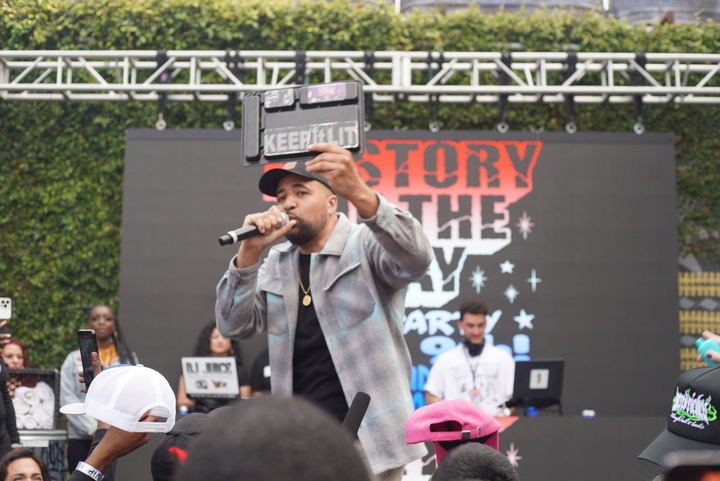
"caption": "People handed Dregs-One rolling trays, hats and other miscellaneous items for him to freestyle about, and he did so with ease. ",
"description": "People handed Dregs-One rolling trays, hats and other miscellaneous items for him to freestyle about, and he did so with ease. ",
"title": "People handed Dregs-One rolling trays, hats and other miscellaneous items for him to freestyle about, and he did so with ease.",
"credit": "Pendarvis Harshaw",
"status": "inherit",
"altTag": "People handed Dregs-One rolling trays, hats and other miscellaneous items for him to freestyle about, and he did so with ease.",
"isLoading": false,
"fetchFailed": false
},
"arts_13931025": {
"type": "attachments",
"id": "arts_13931025",
"meta": {
"index": "attachments_1716263798",
"site": "arts",
"id": "13931025",
"found": true
},
"parent": 13931016,
"imgSizes": {
"twentyfourteen-full-width": {
"file": "https://ww2.kqed.org/app/uploads/sites/2/2023/06/Copy-of-Pass-The-Aux-template-22-1038x576.jpg",
"width": 1038,
"mimeType": "image/jpeg",
"height": 576
},
"thumbnail": {
"file": "https://ww2.kqed.org/app/uploads/sites/2/2023/06/Copy-of-Pass-The-Aux-template-22-160x90.jpg",
"width": 160,
"mimeType": "image/jpeg",
"height": 90
},
"post-thumbnail": {
"file": "https://ww2.kqed.org/app/uploads/sites/2/2023/06/Copy-of-Pass-The-Aux-template-22-672x372.jpg",
"width": 672,
"mimeType": "image/jpeg",
"height": 372
},
"kqedFullSize": {
"file": "https://ww2.kqed.org/app/uploads/sites/2/2023/06/Copy-of-Pass-The-Aux-template-22.jpg",
"width": 1920,
"height": 1080
},
"large": {
"file": "https://ww2.kqed.org/app/uploads/sites/2/2023/06/Copy-of-Pass-The-Aux-template-22-1020x574.jpg",
"width": 1020,
"mimeType": "image/jpeg",
"height": 574
},
"1536x1536": {
"file": "https://ww2.kqed.org/app/uploads/sites/2/2023/06/Copy-of-Pass-The-Aux-template-22-1536x864.jpg",
"width": 1536,
"mimeType": "image/jpeg",
"height": 864
},
"medium": {
"file": "https://ww2.kqed.org/app/uploads/sites/2/2023/06/Copy-of-Pass-The-Aux-template-22-800x450.jpg",
"width": 800,
"mimeType": "image/jpeg",
"height": 450
},
"medium_large": {
"file": "https://ww2.kqed.org/app/uploads/sites/2/2023/06/Copy-of-Pass-The-Aux-template-22-768x432.jpg",
"width": 768,
"mimeType": "image/jpeg",
"height": 432
}
},
"publishDate": 1687989901,
"modified": 1687990901,
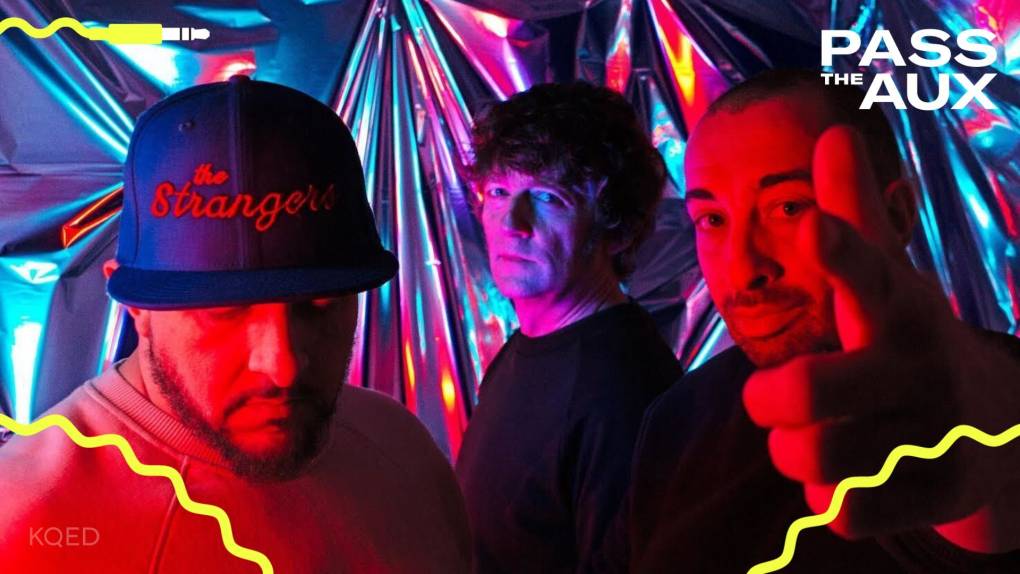
"caption": "The Strangers consist of Lateef the Truthspeaker (left), Hervé Salters (center) and Leeroy (right).",
"description": null,
"title": "Copy of Pass The Aux template (22)",
"credit": "Jules & Adele Salters",
"status": "inherit",
"altTag": "three musicians stand in a darkened room with neon lighting",
"isLoading": false,
"fetchFailed": false
},
"arts_13930929": {
"type": "attachments",
"id": "arts_13930929",
"meta": {
"index": "attachments_1716263798",
"site": "arts",
"id": "13930929",
"found": true
},
"parent": 13930867,
"imgSizes": {
"twentyfourteen-full-width": {
"file": "https://ww2.kqed.org/app/uploads/sites/2/2023/06/pimp-culture-essay-2-1038x576.png",
"width": 1038,
"mimeType": "image/png",
"height": 576
},
"thumbnail": {
"file": "https://ww2.kqed.org/app/uploads/sites/2/2023/06/pimp-culture-essay-2-160x160.png",
"width": 160,
"mimeType": "image/png",
"height": 160
},
"post-thumbnail": {
"file": "https://ww2.kqed.org/app/uploads/sites/2/2023/06/pimp-culture-essay-2-672x372.png",
"width": 672,
"mimeType": "image/png",
"height": 372
},
"kqedFullSize": {
"file": "https://ww2.kqed.org/app/uploads/sites/2/2023/06/pimp-culture-essay-2.png",
"width": 1080,
"height": 1080
},
"large": {
"file": "https://ww2.kqed.org/app/uploads/sites/2/2023/06/pimp-culture-essay-2-1020x1020.png",
"width": 1020,
"mimeType": "image/png",
"height": 1020
},
"medium": {
"file": "https://ww2.kqed.org/app/uploads/sites/2/2023/06/pimp-culture-essay-2-800x800.png",
"width": 800,
"mimeType": "image/png",
"height": 800
},
"medium_large": {
"file": "https://ww2.kqed.org/app/uploads/sites/2/2023/06/pimp-culture-essay-2-768x768.png",
"width": 768,
"mimeType": "image/png",
"height": 768
}
},
"publishDate": 1687885716,
"modified": 1687886892,
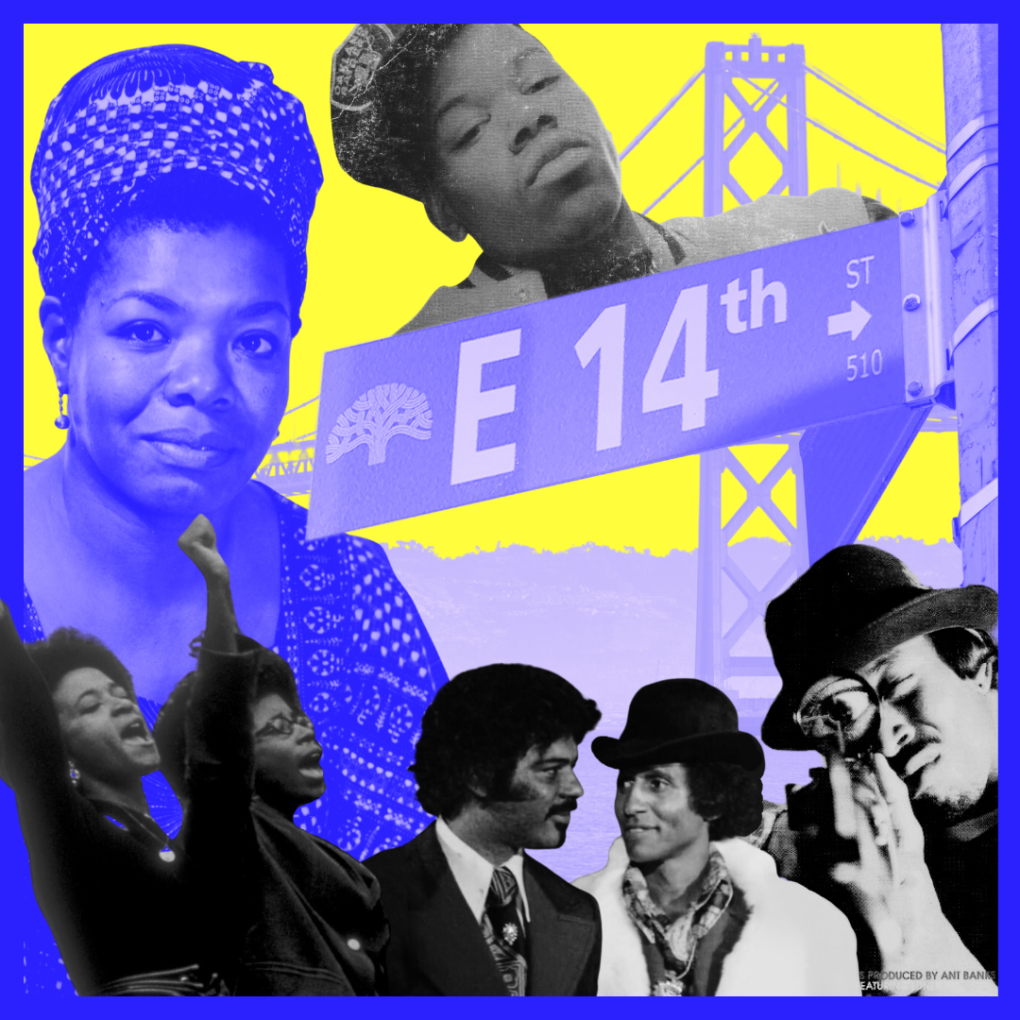
"caption": "In our new vodcast 'What's Pimpin'?,' hosts Maddy Clifford, Coco Peila and RyanNicole dissect why Oakland came to be known as \"the land of pimps and Panthers.\" Clockwise from left: Maya Angelou; Too Short; Dru Down; Frank Ward and Max Julien in 'The Mack;' and women of the Black Panther Party.",
"description": null,
"title": "pimp culture essay 2",
"credit": "Michael Ochs Archives/Getty Images; Jive Records/Dangerous Music; C-Note Records; New Line Cinema; Pirkle Jones and Ruth-Marion Baruch",
"status": "inherit",
"altTag": "A yellow-and-blue collage features cultural figures that represent Black feminism and pimp culture, two themes explored in our new vodcast, 'What's Pimpin'?'",
"isLoading": false,
"fetchFailed": false
},
"arts_13930933": {
"type": "attachments",
"id": "arts_13930933",
"meta": {
"index": "attachments_1716263798",
"site": "arts",
"id": "13930933",
"found": true
},
"parent": 13930867,
"imgSizes": {
"twentyfourteen-full-width": {
"file": "https://ww2.kqed.org/app/uploads/sites/2/2023/06/pimp-culture-essay-1038x576.png",
"width": 1038,
"mimeType": "image/png",
"height": 576
},
"thumbnail": {
"file": "https://ww2.kqed.org/app/uploads/sites/2/2023/06/pimp-culture-essay-160x90.png",
"width": 160,
"mimeType": "image/png",
"height": 90
},
"post-thumbnail": {
"file": "https://ww2.kqed.org/app/uploads/sites/2/2023/06/pimp-culture-essay-672x372.png",
"width": 672,
"mimeType": "image/png",
"height": 372
},
"kqedFullSize": {
"file": "https://ww2.kqed.org/app/uploads/sites/2/2023/06/pimp-culture-essay.png",
"width": 1920,
"height": 1080
},
"large": {
"file": "https://ww2.kqed.org/app/uploads/sites/2/2023/06/pimp-culture-essay-1020x574.png",
"width": 1020,
"mimeType": "image/png",
"height": 574
},
"1536x1536": {
"file": "https://ww2.kqed.org/app/uploads/sites/2/2023/06/pimp-culture-essay-1536x864.png",
"width": 1536,
"mimeType": "image/png",
"height": 864
},
"medium": {
"file": "https://ww2.kqed.org/app/uploads/sites/2/2023/06/pimp-culture-essay-800x450.png",
"width": 800,
"mimeType": "image/png",
"height": 450
},
"medium_large": {
"file": "https://ww2.kqed.org/app/uploads/sites/2/2023/06/pimp-culture-essay-768x432.png",
"width": 768,
"mimeType": "image/png",
"height": 432
}
},
"publishDate": 1687886878,
"modified": 1687886908,
"caption": "In our new vodcast 'What's Pimpin'?,' hosts Maddy Clifford, Coco Peila and RyanNicole dissect why Oakland came to be known as \"the land of pimps and Panthers.\" Clockwise from left: Maya Angelou; Too Short; Dru Down; Frank Ward and Max Julien in 'The Mack;' and women of the Black Panther Party.",
"description": null,
"title": "pimp culture essay",
"credit": "Michael Ochs Archives/Getty Images; Jive Records/Dangerous Music; C-Note Records; New Line Cinema; Pirkle Jones and Ruth-Marion Baruch",
"status": "inherit",
"altTag": "A yellow-and-blue collage features cultural figures that represent Black feminism and pimp culture, two themes explored in our new vodcast, 'What's Pimpin'?'",
"isLoading": false,
"fetchFailed": false
},
"arts_13930915": {
"type": "attachments",
"id": "arts_13930915",
"meta": {
"index": "attachments_1716263798",
"site": "arts",
"id": "13930915",
"found": true
},
"parent": 13930908,
"imgSizes": {
"twentyfourteen-full-width": {
"file": "https://ww2.kqed.org/app/uploads/sites/2/2023/06/GettyImages-1502130231-scaled-e1687808335341-1038x576.jpg",
"width": 1038,
"mimeType": "image/jpeg",
"height": 576
},
"thumbnail": {
"file": "https://ww2.kqed.org/app/uploads/sites/2/2023/06/GettyImages-1502130231-scaled-e1687808335341-160x118.jpg",
"width": 160,
"mimeType": "image/jpeg",
"height": 118
},
"post-thumbnail": {
"file": "https://ww2.kqed.org/app/uploads/sites/2/2023/06/GettyImages-1502130231-scaled-e1687808335341-672x372.jpg",
"width": 672,
"mimeType": "image/jpeg",
"height": 372
},
"kqedFullSize": {
"file": "https://ww2.kqed.org/app/uploads/sites/2/2023/06/GettyImages-1502130231-scaled-e1687808335341.jpg",
"width": 1920,
"height": 1415
},
"2048x2048": {
"file": "https://ww2.kqed.org/app/uploads/sites/2/2023/06/GettyImages-1502130231-2048x1508.jpg",
"width": 2048,
"mimeType": "image/jpeg",
"height": 1508
},
"large": {
"file": "https://ww2.kqed.org/app/uploads/sites/2/2023/06/GettyImages-1502130231-scaled-e1687808335341-1020x752.jpg",
"width": 1020,
"mimeType": "image/jpeg",
"height": 752
},
"1536x1536": {
"file": "https://ww2.kqed.org/app/uploads/sites/2/2023/06/GettyImages-1502130231-scaled-e1687808335341-1536x1132.jpg",
"width": 1536,
"mimeType": "image/jpeg",
"height": 1132
},
"full-width": {
"file": "https://ww2.kqed.org/app/uploads/sites/2/2023/06/GettyImages-1502130231-1920x1414.jpg",
"width": 1920,
"mimeType": "image/jpeg",
"height": 1414
},
"medium": {
"file": "https://ww2.kqed.org/app/uploads/sites/2/2023/06/GettyImages-1502130231-scaled-e1687808335341-800x590.jpg",
"width": 800,
"mimeType": "image/jpeg",
"height": 590
},
"medium_large": {
"file": "https://ww2.kqed.org/app/uploads/sites/2/2023/06/GettyImages-1502130231-scaled-e1687808335341-768x566.jpg",
"width": 768,
"mimeType": "image/jpeg",
"height": 566
}
},
"publishDate": 1687808297,
"modified": 1687808509,
"caption": "Sean Combs' son King Combs performs onstage during the BET Awards in Los Angeles, June 25, 2023.",
"description": null,
"title": "Sean Combs' son King Combs performs onstage during the BET Awards in Los Angeles, June 25, 2023.",
"credit": "Paras Griffin/Getty Images for BET",
"status": "inherit",
"altTag": "A young Black man waves onstage while smiling broadly. Behind him are five dancers clapping and smiling.",
"isLoading": false,
"fetchFailed": false
},
"arts_13930276": {
"type": "attachments",
"id": "arts_13930276",
"meta": {
"index": "attachments_1716263798",
"site": "arts",
"id": "13930276",
"found": true
},
"parent": 13930273,
"imgSizes": {
"twentyfourteen-full-width": {
"file": "https://ww2.kqed.org/app/uploads/sites/2/2023/06/Screenshot-2023-06-08-at-9.39.18-AM-1038x576.png",
"width": 1038,
"mimeType": "image/png",
"height": 576
},
"thumbnail": {
"file": "https://ww2.kqed.org/app/uploads/sites/2/2023/06/Screenshot-2023-06-08-at-9.39.18-AM-160x88.png",
"width": 160,
"mimeType": "image/png",
"height": 88
},
"post-thumbnail": {
"file": "https://ww2.kqed.org/app/uploads/sites/2/2023/06/Screenshot-2023-06-08-at-9.39.18-AM-672x372.png",
"width": 672,
"mimeType": "image/png",
"height": 372
},
"kqedFullSize": {
"file": "https://ww2.kqed.org/app/uploads/sites/2/2023/06/Screenshot-2023-06-08-at-9.39.18-AM.png",
"width": 2492,
"height": 1368
},
"2048x2048": {
"file": "https://ww2.kqed.org/app/uploads/sites/2/2023/06/Screenshot-2023-06-08-at-9.39.18-AM-2048x1124.png",
"width": 2048,
"mimeType": "image/png",
"height": 1124
},
"large": {
"file": "https://ww2.kqed.org/app/uploads/sites/2/2023/06/Screenshot-2023-06-08-at-9.39.18-AM-1020x560.png",
"width": 1020,
"mimeType": "image/png",
"height": 560
},
"1536x1536": {
"file": "https://ww2.kqed.org/app/uploads/sites/2/2023/06/Screenshot-2023-06-08-at-9.39.18-AM-1536x843.png",
"width": 1536,
"mimeType": "image/png",
"height": 843
},
"full-width": {
"file": "https://ww2.kqed.org/app/uploads/sites/2/2023/06/Screenshot-2023-06-08-at-9.39.18-AM-1920x1054.png",
"width": 1920,
"mimeType": "image/png",
"height": 1054
},
"medium": {
"file": "https://ww2.kqed.org/app/uploads/sites/2/2023/06/Screenshot-2023-06-08-at-9.39.18-AM-800x439.png",
"width": 800,
"mimeType": "image/png",
"height": 439
},
"medium_large": {
"file": "https://ww2.kqed.org/app/uploads/sites/2/2023/06/Screenshot-2023-06-08-at-9.39.18-AM-768x422.png",
"width": 768,
"mimeType": "image/png",
"height": 422
}
},
"publishDate": 1686242385,
"modified": 1686242412,
"caption": "Greg Bridges is photographed in black and white as he sits behind a microphone and soundboard at KPFA studios in Berkeley, while hosting a jazz radio show.",
"description": "Greg Bridges is photographed in black and white as he sits behind a microphone and soundboard at KPFA studios in Berkeley, while hosting a jazz radio show.",
"title": "Greg Bridges is photographed in black and white as he sits behind a microphone and soundboard at KPFA studios in Berkeley, while hosting a jazz radio show.",
"credit": "Pendarvis Harshaw",
"status": "inherit",
"altTag": "Greg Bridges is photographed in black and white as he sits behind a microphone and soundboard at KPFA studios in Berkeley, while hosting a jazz radio show.",
"isLoading": false,
"fetchFailed": false
},
"arts_13930125": {
"type": "attachments",
"id": "arts_13930125",
"meta": {
"index": "attachments_1716263798",
"site": "arts",
"id": "13930125",
"found": true
},
"parent": 13930122,
"imgSizes": {
"twentyfourteen-full-width": {
"file": "https://ww2.kqed.org/app/uploads/sites/2/2023/06/RS65564_013_KQEDArts_HipHop4ChangeBayview_05082023-qut-1038x576.jpg",
"width": 1038,
"mimeType": "image/jpeg",
"height": 576
},
"thumbnail": {
"file": "https://ww2.kqed.org/app/uploads/sites/2/2023/06/RS65564_013_KQEDArts_HipHop4ChangeBayview_05082023-qut-160x107.jpg",
"width": 160,
"mimeType": "image/jpeg",
"height": 107
},
"post-thumbnail": {
"file": "https://ww2.kqed.org/app/uploads/sites/2/2023/06/RS65564_013_KQEDArts_HipHop4ChangeBayview_05082023-qut-672x372.jpg",
"width": 672,
"mimeType": "image/jpeg",
"height": 372
},
"kqedFullSize": {
"file": "https://ww2.kqed.org/app/uploads/sites/2/2023/06/RS65564_013_KQEDArts_HipHop4ChangeBayview_05082023-qut.jpg",
"width": 1920,
"height": 1280
},
"large": {
"file": "https://ww2.kqed.org/app/uploads/sites/2/2023/06/RS65564_013_KQEDArts_HipHop4ChangeBayview_05082023-qut-1020x680.jpg",
"width": 1020,
"mimeType": "image/jpeg",
"height": 680
},
"1536x1536": {
"file": "https://ww2.kqed.org/app/uploads/sites/2/2023/06/RS65564_013_KQEDArts_HipHop4ChangeBayview_05082023-qut-1536x1024.jpg",
"width": 1536,
"mimeType": "image/jpeg",
"height": 1024
},
"medium": {
"file": "https://ww2.kqed.org/app/uploads/sites/2/2023/06/RS65564_013_KQEDArts_HipHop4ChangeBayview_05082023-qut-800x533.jpg",
"width": 800,
"mimeType": "image/jpeg",
"height": 533
},
"medium_large": {
"file": "https://ww2.kqed.org/app/uploads/sites/2/2023/06/RS65564_013_KQEDArts_HipHop4ChangeBayview_05082023-qut-768x512.jpg",
"width": 768,
"mimeType": "image/jpeg",
"height": 512
}
},
"publishDate": 1686075051,
"modified": 1686090701,
"caption": "The Hip Hop for Change leadership team (from left) Marlon Richardson, Pallavi Kidambi, Marc Stretch and Malina King at the organization's new Bayview-Hunters Point film and recording studio in San Francisco on May 8, 2023.",
"description": null,
"title": "RS65564_013_KQEDArts_HipHop4ChangeBayview_05082023-qut",
"credit": "Beth LaBerge/KQED",
"status": "inherit",
"altTag": "The four Hip-Hop for Change leaders, two men and two women, stand in front of a red studio backdrop covered in graffiti.",
"isLoading": false,
"fetchFailed": false
},
"arts_13929874": {
"type": "attachments",
"id": "arts_13929874",
"meta": {
"index": "attachments_1716263798",
"site": "arts",
"id": "13929874",
"found": true
},
"parent": 13929861,
"imgSizes": {
"twentyfourteen-full-width": {
"file": "https://ww2.kqed.org/app/uploads/sites/2/2023/05/Latyrx.Square.fin_-1038x576.jpg",
"width": 1038,
"mimeType": "image/jpeg",
"height": 576
},
"thumbnail": {
"file": "https://ww2.kqed.org/app/uploads/sites/2/2023/05/Latyrx.Square.fin_-160x160.jpg",
"width": 160,
"mimeType": "image/jpeg",
"height": 160
},
"post-thumbnail": {
"file": "https://ww2.kqed.org/app/uploads/sites/2/2023/05/Latyrx.Square.fin_-672x372.jpg",
"width": 672,
"mimeType": "image/jpeg",
"height": 372
},
"kqedFullSize": {
"file": "https://ww2.kqed.org/app/uploads/sites/2/2023/05/Latyrx.Square.fin_.jpg",
"width": 1920,
"height": 1920
},
"large": {
"file": "https://ww2.kqed.org/app/uploads/sites/2/2023/05/Latyrx.Square.fin_-1020x1020.jpg",
"width": 1020,
"mimeType": "image/jpeg",
"height": 1020
},
"1536x1536": {
"file": "https://ww2.kqed.org/app/uploads/sites/2/2023/05/Latyrx.Square.fin_-1536x1536.jpg",
"width": 1536,
"mimeType": "image/jpeg",
"height": 1536
},
"medium": {
"file": "https://ww2.kqed.org/app/uploads/sites/2/2023/05/Latyrx.Square.fin_-800x800.jpg",
"width": 800,
"mimeType": "image/jpeg",
"height": 800
},
"medium_large": {
"file": "https://ww2.kqed.org/app/uploads/sites/2/2023/05/Latyrx.Square.fin_-768x768.jpg",
"width": 768,
"mimeType": "image/jpeg",
"height": 768
}
},
"publishDate": 1685547787,
"modified": 1685547826,
"caption": "Lateef the Truthspeaker and Lyrics Born (L–R) interviewed at KQED on April 29, 2023.",
"description": null,
"title": "Latyrx.Square.fin",
"credit": "Alain McLaughlin",
"status": "inherit",
"altTag": "Two men in streetwear sit on a green couch, holding microphones",
"isLoading": false,
"fetchFailed": false
},
"arts_13929276": {
"type": "attachments",
"id": "arts_13929276",
"meta": {
"index": "attachments_1716263798",
"site": "arts",
"id": "13929276",
"found": true
},
"parent": 13929248,
"imgSizes": {
"twentyfourteen-full-width": {
"file": "https://cdn.kqed.org/wp-content/uploads/sites/2/2023/05/GettyImages-1471382956-1024x576.jpg",
"width": 1024,
"mimeType": "image/jpeg",
"height": 576
},
"thumbnail": {
"file": "https://cdn.kqed.org/wp-content/uploads/sites/2/2023/05/GettyImages-1471382956-160x107.jpg",
"width": 160,
"mimeType": "image/jpeg",
"height": 107
},
"post-thumbnail": {
"file": "https://cdn.kqed.org/wp-content/uploads/sites/2/2023/05/GettyImages-1471382956-672x372.jpg",
"width": 672,
"mimeType": "image/jpeg",
"height": 372
},
"kqedFullSize": {
"file": "https://cdn.kqed.org/wp-content/uploads/sites/2/2023/05/GettyImages-1471382956.jpg",
"width": 1024,
"height": 683
},
"large": {
"file": "https://cdn.kqed.org/wp-content/uploads/sites/2/2023/05/GettyImages-1471382956-1020x680.jpg",
"width": 1020,
"mimeType": "image/jpeg",
"height": 680
},
"medium": {
"file": "https://cdn.kqed.org/wp-content/uploads/sites/2/2023/05/GettyImages-1471382956-800x534.jpg",
"width": 800,
"mimeType": "image/jpeg",
"height": 534
},
"medium_large": {
"file": "https://cdn.kqed.org/wp-content/uploads/sites/2/2023/05/GettyImages-1471382956-768x512.jpg",
"width": 768,
"mimeType": "image/jpeg",
"height": 512
}
},
"publishDate": 1684351026,
"modified": 1713894734,
"caption": "Larry June performs at 2023 Rolling Loud Los Angeles at Hollywood Park Grounds on March 4, 2023, in Inglewood, California.",
"description": null,
"title": "2023 Rolling Loud Los Angeles",
"credit": "Photo by Timothy Norris/WireImage",
"status": "inherit",
"altTag": "Larry June raps into the microphone on a big festival stage. He's wearing a bucket hat, designer sunglasses and a bandana and is smiling.",
"isLoading": false,
"fetchFailed": false
},
"arts_13929238": {
"type": "attachments",
"id": "arts_13929238",
"meta": {
"index": "attachments_1716263798",
"site": "arts",
"id": "13929238",
"found": true
},
"parent": 13929233,
"imgSizes": {
"twentyfourteen-full-width": {
"file": "https://ww2.kqed.org/app/uploads/sites/2/2023/05/Tupac.16.9-1038x576.jpg",
"width": 1038,
"mimeType": "image/jpeg",
"height": 576
},
"thumbnail": {
"file": "https://ww2.kqed.org/app/uploads/sites/2/2023/05/Tupac.16.9-160x90.jpg",
"width": 160,
"mimeType": "image/jpeg",
"height": 90
},
"post-thumbnail": {
"file": "https://ww2.kqed.org/app/uploads/sites/2/2023/05/Tupac.16.9-672x372.jpg",
"width": 672,
"mimeType": "image/jpeg",
"height": 372
},
"kqedFullSize": {
"file": "https://ww2.kqed.org/app/uploads/sites/2/2023/05/Tupac.16.9.jpg",
"width": 1654,
"height": 930
},
"large": {
"file": "https://ww2.kqed.org/app/uploads/sites/2/2023/05/Tupac.16.9-1020x574.jpg",
"width": 1020,
"mimeType": "image/jpeg",
"height": 574
},
"1536x1536": {
"file": "https://ww2.kqed.org/app/uploads/sites/2/2023/05/Tupac.16.9-1536x864.jpg",
"width": 1536,
"mimeType": "image/jpeg",
"height": 864
},
"medium": {
"file": "https://ww2.kqed.org/app/uploads/sites/2/2023/05/Tupac.16.9-800x450.jpg",
"width": 800,
"mimeType": "image/jpeg",
"height": 450
},
"medium_large": {
"file": "https://ww2.kqed.org/app/uploads/sites/2/2023/05/Tupac.16.9-768x432.jpg",
"width": 768,
"mimeType": "image/jpeg",
"height": 432
}
},
"publishDate": 1684340512,
"modified": 1684340547,
"caption": "Tupac Shakur pictured in Oakland in 1992.",
"description": null,
"title": "Tupac.16.9",
"credit": "Gary Reyes / Oakland Tribune Staff Archives (MediaNews Group/Bay Area News via Getty Images)",
"status": "inherit",
"altTag": null,
"isLoading": false,
"fetchFailed": false
},
"arts_13929202": {
"type": "attachments",
"id": "arts_13929202",
"meta": {
"index": "attachments_1716263798",
"site": "arts",
"id": "13929202",
"found": true
},
"parent": 13929183,
"imgSizes": {
"twentyfourteen-full-width": {
"file": "https://ww2.kqed.org/app/uploads/sites/2/2023/05/OFFICIAL-BAHHA-PHOTO-2.3.23-1-1-1038x576.jpg",
"width": 1038,
"mimeType": "image/jpeg",
"height": 576
},
"thumbnail": {
"file": "https://ww2.kqed.org/app/uploads/sites/2/2023/05/OFFICIAL-BAHHA-PHOTO-2.3.23-1-1-160x144.jpg",
"width": 160,
"mimeType": "image/jpeg",
"height": 144
},
"post-thumbnail": {
"file": "https://ww2.kqed.org/app/uploads/sites/2/2023/05/OFFICIAL-BAHHA-PHOTO-2.3.23-1-1-672x372.jpg",
"width": 672,
"mimeType": "image/jpeg",
"height": 372
},
"kqedFullSize": {
"file": "https://ww2.kqed.org/app/uploads/sites/2/2023/05/OFFICIAL-BAHHA-PHOTO-2.3.23-1-1.jpg",
"width": 1896,
"height": 1702
},
"large": {
"file": "https://ww2.kqed.org/app/uploads/sites/2/2023/05/OFFICIAL-BAHHA-PHOTO-2.3.23-1-1-1020x916.jpg",
"width": 1020,
"mimeType": "image/jpeg",
"height": 916
},
"1536x1536": {
"file": "https://ww2.kqed.org/app/uploads/sites/2/2023/05/OFFICIAL-BAHHA-PHOTO-2.3.23-1-1-1536x1379.jpg",
"width": 1536,
"mimeType": "image/jpeg",
"height": 1379
},
"medium": {
"file": "https://ww2.kqed.org/app/uploads/sites/2/2023/05/OFFICIAL-BAHHA-PHOTO-2.3.23-1-1-800x718.jpg",
"width": 800,
"mimeType": "image/jpeg",
"height": 718
},
"medium_large": {
"file": "https://ww2.kqed.org/app/uploads/sites/2/2023/05/OFFICIAL-BAHHA-PHOTO-2.3.23-1-1-768x689.jpg",
"width": 768,
"mimeType": "image/jpeg",
"height": 689
}
},
"publishDate": 1684263526,
"modified": 1684263830,
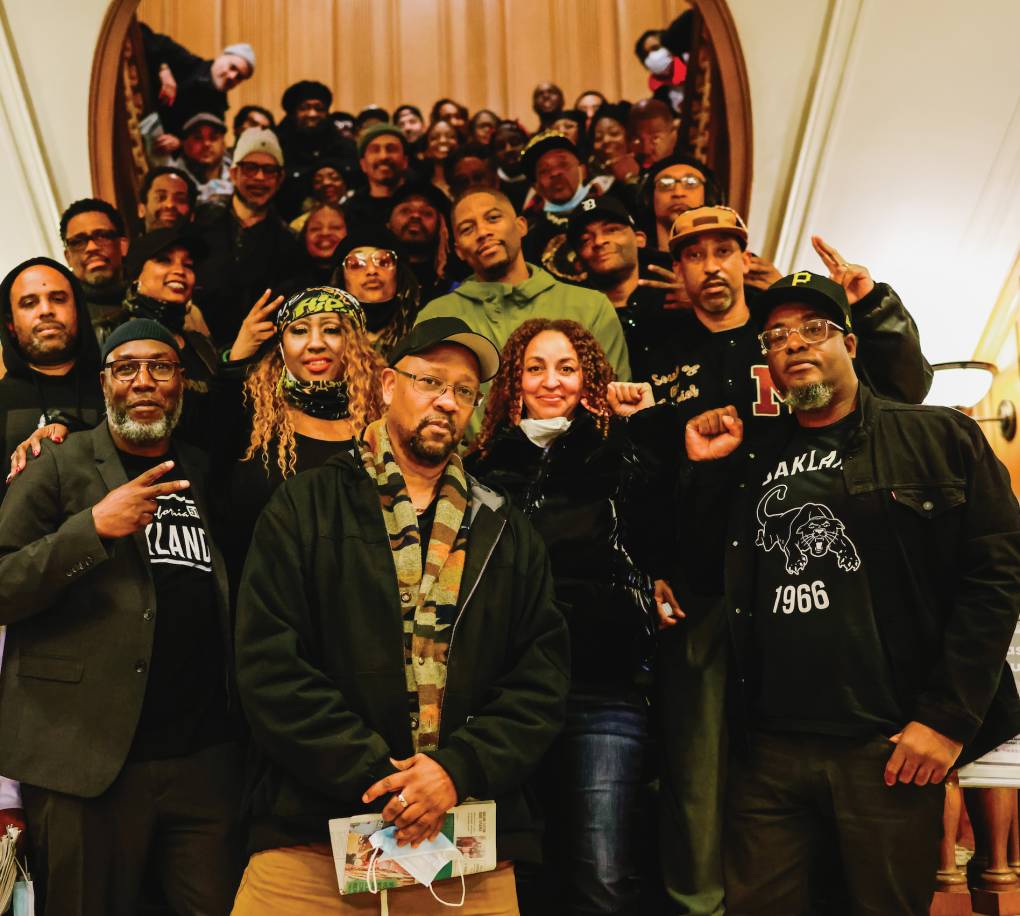
"caption": "The inaugural class of the Bay Area Hip-Hop Archives and friends at the African American Museum and Library at Oakland on Feb. 3, 2023. Front row, left to right: curator Jahi, Davey D and Refa One. Second row, left to right: Suga T, Mystic, Phesto Dee of Souls of Mischief. Third row, center: DJ D Sharp.",
"description": null,
"title": "OFFICIAL BAHHA PHOTO 2.3.23 (1)",
"credit": "Oakland Roots",
"status": "inherit",
"altTag": "A large group of hip-hop artists and cultural practitioners in their 40s and 50s stands in a stairwell of a library.",
"isLoading": false,
"fetchFailed": false
},
"arts_13928967": {
"type": "attachments",
"id": "arts_13928967",
"meta": {
"index": "attachments_1716263798",
"site": "arts",
"id": "13928967",
"found": true
},
"parent": 13928948,
"imgSizes": {
"twentyfourteen-full-width": {
"file": "https://ww2.kqed.org/app/uploads/sites/2/2023/05/BR.SelfReflection-1038x576.jpg",
"width": 1038,
"mimeType": "image/jpeg",
"height": 576
},
"thumbnail": {
"file": "https://ww2.kqed.org/app/uploads/sites/2/2023/05/BR.SelfReflection-160x160.jpg",
"width": 160,
"mimeType": "image/jpeg",
"height": 160
},
"post-thumbnail": {
"file": "https://ww2.kqed.org/app/uploads/sites/2/2023/05/BR.SelfReflection-672x372.jpg",
"width": 672,
"mimeType": "image/jpeg",
"height": 372
},
"kqedFullSize": {
"file": "https://ww2.kqed.org/app/uploads/sites/2/2023/05/BR.SelfReflection.jpg",
"width": 1920,
"height": 1920
},
"large": {
"file": "https://ww2.kqed.org/app/uploads/sites/2/2023/05/BR.SelfReflection-1020x1020.jpg",
"width": 1020,
"mimeType": "image/jpeg",
"height": 1020
},
"1536x1536": {
"file": "https://ww2.kqed.org/app/uploads/sites/2/2023/05/BR.SelfReflection-1536x1536.jpg",
"width": 1536,
"mimeType": "image/jpeg",
"height": 1536
},
"medium": {
"file": "https://ww2.kqed.org/app/uploads/sites/2/2023/05/BR.SelfReflection-800x800.jpg",
"width": 800,
"mimeType": "image/jpeg",
"height": 800
},
"medium_large": {
"file": "https://ww2.kqed.org/app/uploads/sites/2/2023/05/BR.SelfReflection-768x768.jpg",
"width": 768,
"mimeType": "image/jpeg",
"height": 768
}
},
"publishDate": 1683755291,
"modified": 1683762115,
"caption": "Brett Cook stands before his piece 'Self Reflection' at YBCA, as part of the exhibition 'Reflection & Action.'",
"description": null,
"title": "BR.SelfReflection",
"credit": "Eric Arnold/KQED",
"status": "inherit",
"altTag": null,
"isLoading": false,
"fetchFailed": false
},
"arts_13928990": {
"type": "attachments",
"id": "arts_13928990",
"meta": {
"index": "attachments_1716263798",
"site": "arts",
"id": "13928990",
"found": true
},
"parent": 13928948,
"imgSizes": {
"twentyfourteen-full-width": {
"file": "https://ww2.kqed.org/app/uploads/sites/2/2023/05/BR.SelfReflection.16.9-1038x576.jpg",
"width": 1038,
"mimeType": "image/jpeg",
"height": 576
},
"thumbnail": {
"file": "https://ww2.kqed.org/app/uploads/sites/2/2023/05/BR.SelfReflection.16.9-160x90.jpg",
"width": 160,
"mimeType": "image/jpeg",
"height": 90
},
"post-thumbnail": {
"file": "https://ww2.kqed.org/app/uploads/sites/2/2023/05/BR.SelfReflection.16.9-672x372.jpg",
"width": 672,
"mimeType": "image/jpeg",
"height": 372
},
"kqedFullSize": {
"file": "https://ww2.kqed.org/app/uploads/sites/2/2023/05/BR.SelfReflection.16.9.jpg",
"width": 1664,
"height": 936
},
"large": {
"file": "https://ww2.kqed.org/app/uploads/sites/2/2023/05/BR.SelfReflection.16.9-1020x574.jpg",
"width": 1020,
"mimeType": "image/jpeg",
"height": 574
},
"1536x1536": {
"file": "https://ww2.kqed.org/app/uploads/sites/2/2023/05/BR.SelfReflection.16.9-1536x864.jpg",
"width": 1536,
"mimeType": "image/jpeg",
"height": 864
},
"medium": {
"file": "https://ww2.kqed.org/app/uploads/sites/2/2023/05/BR.SelfReflection.16.9-800x450.jpg",
"width": 800,
"mimeType": "image/jpeg",
"height": 450
},
"medium_large": {
"file": "https://ww2.kqed.org/app/uploads/sites/2/2023/05/BR.SelfReflection.16.9-768x432.jpg",
"width": 768,
"mimeType": "image/jpeg",
"height": 432
}
},
"publishDate": 1683763584,
"modified": 1683763609,
"caption": "Brett Cook at YBCA in San Francisco.",
"description": null,
"title": "BR.SelfReflection.16.9",
"credit": "Eric Arnold/KQED",
"status": "inherit",
"altTag": null,
"isLoading": false,
"fetchFailed": false
},
"arts_13928684": {
"type": "attachments",
"id": "arts_13928684",
"meta": {
"index": "attachments_1716263798",
"site": "arts",
"id": "13928684",
"found": true
},
"parent": 13928681,
"imgSizes": {
"twentyfourteen-full-width": {
"file": "https://ww2.kqed.org/app/uploads/sites/2/2023/05/LfA_Mischief_press_10-1038x576.jpg",
"width": 1038,
"mimeType": "image/jpeg",
"height": 576
},
"thumbnail": {
"file": "https://ww2.kqed.org/app/uploads/sites/2/2023/05/LfA_Mischief_press_10-160x117.jpg",
"width": 160,
"mimeType": "image/jpeg",
"height": 117
},
"post-thumbnail": {
"file": "https://ww2.kqed.org/app/uploads/sites/2/2023/05/LfA_Mischief_press_10-672x372.jpg",
"width": 672,
"mimeType": "image/jpeg",
"height": 372
},
"kqedFullSize": {
"file": "https://ww2.kqed.org/app/uploads/sites/2/2023/05/LfA_Mischief_press_10-scaled.jpg",
"width": 2560,
"height": 1871
},
"2048x2048": {
"file": "https://ww2.kqed.org/app/uploads/sites/2/2023/05/LfA_Mischief_press_10-2048x1497.jpg",
"width": 2048,
"mimeType": "image/jpeg",
"height": 1497
},
"large": {
"file": "https://ww2.kqed.org/app/uploads/sites/2/2023/05/LfA_Mischief_press_10-1020x746.jpg",
"width": 1020,
"mimeType": "image/jpeg",
"height": 746
},
"1536x1536": {
"file": "https://ww2.kqed.org/app/uploads/sites/2/2023/05/LfA_Mischief_press_10-1536x1123.jpg",
"width": 1536,
"mimeType": "image/jpeg",
"height": 1123
},
"full-width": {
"file": "https://ww2.kqed.org/app/uploads/sites/2/2023/05/LfA_Mischief_press_10-1920x1404.jpg",
"width": 1920,
"mimeType": "image/jpeg",
"height": 1404
},
"medium": {
"file": "https://ww2.kqed.org/app/uploads/sites/2/2023/05/LfA_Mischief_press_10-800x585.jpg",
"width": 800,
"mimeType": "image/jpeg",
"height": 585
},
"medium_large": {
"file": "https://ww2.kqed.org/app/uploads/sites/2/2023/05/LfA_Mischief_press_10-768x561.jpg",
"width": 768,
"mimeType": "image/jpeg",
"height": 561
}
},
"publishDate": 1683246935,
"modified": 1683668450,
"caption": "Correspondence from Monk One sent to ‘Skills’ editor Greg Lamarche in the 1990s.",
"description": null,
"title": "Correspondence from Monk One sent to ‘Skills’ editor Greg Lamarche in the 1990s.",
"credit": "Letterform Archive",
"status": "inherit",
"altTag": "A map of Boston decorated colorfully with graffiti bubble writing.",
"isLoading": false,
"fetchFailed": false
}
},
"audioPlayerReducer": {
"postId": "stream_live",
"isPaused": true,
"isPlaying": false,
"pfsActive": false,
"pledgeModalIsOpen": true,
"playerDrawerIsOpen": false,
"liveAudioPlayStartedAt": 0,
"liveAudioPlayContext": ""
},
"authorsReducer": {
"byline_arts_13930908": {
"type": "authors",
"id": "byline_arts_13930908",
"meta": {
"override": true
},
"slug": "byline_arts_13930908",
"name": "Jonathan Landrum Jr.",
"isLoading": false
},
"gmeline": {
"type": "authors",
"id": "185",
"meta": {
"index": "authors_1716337520",
"id": "185",
"found": true
},
"name": "Gabe Meline",
"firstName": "Gabe",
"lastName": "Meline",
"slug": "gmeline",
"email": "gmeline@kqed.org",
"display_author_email": true,
"staff_mastheads": [
"arts"
],
"title": "Senior Editor, KQED Arts & Culture",
"bio": "Gabe Meline entered journalism at age 15 making photocopied zines, and has since earned awards from the Edward R. Murrow Awards, the Society for Professional Journalists, the Online Journalism Awards, the Association of Alternative Newsweeklies and the California Newspaper Publishers Association. Prior to KQED, he was the editor of the \u003cem>North Bay Bohemian\u003c/em> and a touring musician. He lives with his wife and daughter in his hometown of Santa Rosa, CA.",
"avatar": "https://secure.gravatar.com/avatar/5bebe57be0d8bc2dd318934feb47299e2d2d10cba28d09d8d7afb389a2ce2bdd?s=600&d=blank&r=g",
"twitter": null,
"bluesky": null,
"facebook": null,
"instagram": null,
"linkedin": null,
"sites": [
{
"site": "",
"roles": [
"editor"
]
},
{
"site": "arts",
"roles": [
"administrator"
]
},
{
"site": "artschool",
"roles": [
"editor"
]
},
{
"site": "news",
"roles": [
"author"
]
},
{
"site": "pop",
"roles": [
"editor"
]
},
{
"site": "bayareabites",
"roles": [
"editor"
]
},
{
"site": "food",
"roles": [
"editor"
]
},
{
"site": "forum",
"roles": [
"administrator"
]
},
{
"site": "liveblog",
"roles": [
"editor"
]
},
{
"site": "hiphop",
"roles": [
"editor"
]
}
],
"headData": {
"title": "Gabe Meline | KQED",
"description": "Senior Editor, KQED Arts & Culture",
"ogImgSrc": "https://secure.gravatar.com/avatar/5bebe57be0d8bc2dd318934feb47299e2d2d10cba28d09d8d7afb389a2ce2bdd?s=600&d=blank&r=g",
"twImgSrc": "https://secure.gravatar.com/avatar/5bebe57be0d8bc2dd318934feb47299e2d2d10cba28d09d8d7afb389a2ce2bdd?s=600&d=blank&r=g"
},
"isLoading": false,
"link": "/author/gmeline"
},
"ralexandra": {
"type": "authors",
"id": "11242",
"meta": {
"index": "authors_1716337520",
"id": "11242",
"found": true
},
"name": "Rae Alexandra",
"firstName": "Rae",
"lastName": "Alexandra",
"slug": "ralexandra",
"email": "ralexandra@kqed.org",
"display_author_email": true,
"staff_mastheads": [],
"title": "Reporter/Producer",
"bio": "Rae Alexandra is a Reporter/Producer for KQED Arts & Culture, and the creator/author of the \u003ca href=\"https://www.kqed.org/arts/program/rebel-girls-from-bay-area-history\">Rebel Girls From Bay Area History\u003c/a> and \u003ca href=\"https://www.kqed.org/bizarrebayarea\">Bizarre Bay Area\u003c/a> series. Her debut book, \u003ca href=\"https://citylights.com/politics-current-events-history/unsung-heroines35-women-who-changed/\">Unsung Heroines: 35 Women Who Changed the Bay Area\u003c/a> was published by City Lights in March 2026. In 2023, Rae was awarded an SPJ Excellence in Journalism Award for Arts & Culture. Rae was born and raised in Wales and subsequently — even after two decades in Northern California — still uses phrases that regularly baffle her coworkers.",
"avatar": "https://secure.gravatar.com/avatar/edfee8176c80cc0a382b051190f5341997df378a934a5774dcb0977732dfd401?s=600&d=blank&r=g",
"twitter": null,
"bluesky": null,
"facebook": null,
"instagram": null,
"linkedin": null,
"sites": [
{
"site": "arts",
"roles": [
"subscriber"
]
},
{
"site": "news",
"roles": [
"subscriber"
]
},
{
"site": "pop",
"roles": [
"subscriber"
]
},
{
"site": "bayareabites",
"roles": [
"subscriber"
]
},
{
"site": "science",
"roles": [
"subscriber"
]
}
],
"headData": {
"title": "Rae Alexandra | KQED",
"description": "Reporter/Producer",
"ogImgSrc": "https://secure.gravatar.com/avatar/edfee8176c80cc0a382b051190f5341997df378a934a5774dcb0977732dfd401?s=600&d=blank&r=g",
"twImgSrc": "https://secure.gravatar.com/avatar/edfee8176c80cc0a382b051190f5341997df378a934a5774dcb0977732dfd401?s=600&d=blank&r=g"
},
"isLoading": false,
"link": "/author/ralexandra"
},
"nvoynovskaya": {
"type": "authors",
"id": "11387",
"meta": {
"index": "authors_1716337520",
"id": "11387",
"found": true
},
"name": "Nastia Voynovskaya",
"firstName": "Nastia",
"lastName": "Voynovskaya",
"slug": "nvoynovskaya",
"email": "nvoynovskaya@kqed.org",
"display_author_email": false,
"staff_mastheads": [
"arts"
],
"title": "Editor and reporter",
"bio": "Nastia Voynovskaya is a reporter, editor and host at KQED Arts & Culture. She's been covering the arts in the Bay Area for over a decade, with a focus on music, queer culture, labor issues and grassroots organizing. She has edited KQED story series such as Trans Bay: A History of San Francisco's Gender-Diverse Community, and co-created KQED's Bay Area hip-hop history project, That's My Word. Nastia's work has been recognized by the Society of Professional Journalists and San Francisco Press Club. She regularly appears on podcasts and radio programs, including NPR's All Songs Considered, and hosts live events where music, culture and conversation meet.",
"avatar": "https://secure.gravatar.com/avatar/5025ee460e5a85d69ca20ea6c6f2f80d7e17795c828f61ea3aecfcd924e9042e?s=600&d=blank&r=g",
"twitter": null,
"bluesky": null,
"facebook": null,
"instagram": "https://www.instagram.com/nananastia/",
"linkedin": null,
"sites": [
{
"site": "",
"roles": [
"editor"
]
},
{
"site": "arts",
"roles": [
"administrator"
]
},
{
"site": "news",
"roles": [
"editor"
]
},
{
"site": "pop",
"roles": [
"administrator"
]
},
{
"site": "bayareabites",
"roles": [
"editor"
]
},
{
"site": "podcasts",
"roles": [
"editor"
]
},
{
"site": "hiphop",
"roles": [
"editor"
]
}
],
"headData": {
"title": "Nastia Voynovskaya | KQED",
"description": "Editor and reporter",
"ogImgSrc": "https://secure.gravatar.com/avatar/5025ee460e5a85d69ca20ea6c6f2f80d7e17795c828f61ea3aecfcd924e9042e?s=600&d=blank&r=g",
"twImgSrc": "https://secure.gravatar.com/avatar/5025ee460e5a85d69ca20ea6c6f2f80d7e17795c828f61ea3aecfcd924e9042e?s=600&d=blank&r=g"
},
"isLoading": false,
"link": "/author/nvoynovskaya"
},
"ogpenn": {
"type": "authors",
"id": "11491",
"meta": {
"index": "authors_1716337520",
"id": "11491",
"found": true
},
"name": "Pendarvis Harshaw",
"firstName": "Pendarvis",
"lastName": "Harshaw",
"slug": "ogpenn",
"email": "ogpenn@gmail.com",
"display_author_email": false,
"staff_mastheads": [
"arts"
],
"title": "Community Engagement Reporter",
"bio": "Pendarvis Harshaw is an educator, host and writer with KQED Arts.",
"avatar": "https://secure.gravatar.com/avatar/972b77ee8e3f346ae2b00622661187fbfabd059b5693bbdc1475ea7a722fd4cd?s=600&d=blank&r=g",
"twitter": null,
"bluesky": null,
"facebook": null,
"instagram": "ogpenn",
"linkedin": null,
"sites": [
{
"site": "arts",
"roles": [
"administrator"
]
},
{
"site": "news",
"roles": [
"editor"
]
},
{
"site": "bayareabites",
"roles": [
"author"
]
},
{
"site": "hiphop",
"roles": [
"editor"
]
}
],
"headData": {
"title": "Pendarvis Harshaw | KQED",
"description": "Community Engagement Reporter",
"ogImgSrc": "https://secure.gravatar.com/avatar/972b77ee8e3f346ae2b00622661187fbfabd059b5693bbdc1475ea7a722fd4cd?s=600&d=blank&r=g",
"twImgSrc": "https://secure.gravatar.com/avatar/972b77ee8e3f346ae2b00622661187fbfabd059b5693bbdc1475ea7a722fd4cd?s=600&d=blank&r=g"
},
"isLoading": false,
"link": "/author/ogpenn"
},
"mmedina": {
"type": "authors",
"id": "11528",
"meta": {
"index": "authors_1716337520",
"id": "11528",
"found": true
},
"name": "Marisol Medina-Cadena",
"firstName": "Marisol",
"lastName": "Medina-Cadena",
"slug": "mmedina",
"email": "mmedina@KQED.org",
"display_author_email": true,
"staff_mastheads": [],
"title": "Producer, Rightnowish Podcast",
"bio": "Marisol Medina-Cadena is a radio reporter and podcast producer. Before working at KQED, she produced for PBS member station, KCET, in Los Angeles. In 2017, Marisol won an Emmy Award for her work on the televised documentary, \u003cem>City Rising\u003c/em>, examining California's affordable housing crisis and the historical roots of gentrification.",
"avatar": "https://secure.gravatar.com/avatar/6c3db46a1cabb5e1fe9a365b5f4e681e?s=600&d=blank&r=g",
"twitter": "marisolreports",
"facebook": null,
"instagram": null,
"linkedin": null,
"sites": [
{
"site": "arts",
"roles": []
},
{
"site": "news",
"roles": [
"edit_others_posts"
]
}
],
"headData": {
"title": "Marisol Medina-Cadena | KQED",
"description": "Producer, Rightnowish Podcast",
"ogImgSrc": "https://secure.gravatar.com/avatar/6c3db46a1cabb5e1fe9a365b5f4e681e?s=600&d=blank&r=g",
"twImgSrc": "https://secure.gravatar.com/avatar/6c3db46a1cabb5e1fe9a365b5f4e681e?s=600&d=blank&r=g"
},
"isLoading": false,
"link": "/author/mmedina"
},
"maddycliff": {
"type": "authors",
"id": "11725",
"meta": {
"index": "authors_1716337520",
"id": "11725",
"found": true
},
"name": "Maddy Clifford",
"firstName": "Maddy",
"lastName": "Clifford",
"slug": "maddycliff",
"email": "maddycliff@gmail.com",
"display_author_email": true,
"staff_mastheads": [],
"title": "KQED Contributor",
"bio": "Maddy Clifford is an Oakland-based writer, artist, and activist. She has a notable career highlighted by her eight-year tenure as a Poet in Residence at the San Francisco Juvenile Justice Center. Following this, Maddy released a solo album titled \"downCHANTS\" and composed a forty-minute musical score for the aerial dance piece \"Apparatus of Repair\" in collaboration with Flyaway Productions. Her latest project is a video-podcast called \"What’s Pimpin’?\" produced with KQED Arts. Maddy's written contributions can be found in Prism Reports, Truthout and 48hills.",
"avatar": "https://secure.gravatar.com/avatar/a90ce07df8d231f24acf7ea72e94e394?s=600&d=blank&r=g",
"twitter": "@mad_lines",
"facebook": "https://www.facebook.com/MADlinesmusic/",
"instagram": "https://www.instagram.com/mad.lines/",
"linkedin": "https://www.linkedin.com/in/maddy-clifford-65ba7729/",
"sites": [
{
"site": "arts",
"roles": [
"contributor"
]
}
],
"headData": {
"title": "Maddy Clifford | KQED",
"description": "KQED Contributor",
"ogImgSrc": "https://secure.gravatar.com/avatar/a90ce07df8d231f24acf7ea72e94e394?s=600&d=blank&r=g",
"twImgSrc": "https://secure.gravatar.com/avatar/a90ce07df8d231f24acf7ea72e94e394?s=600&d=blank&r=g"
},
"isLoading": false,
"link": "/author/maddycliff"
},
"achazaro": {
"type": "authors",
"id": "11748",
"meta": {
"index": "authors_1716337520",
"id": "11748",
"found": true
},
"name": "Alan Chazaro",
"firstName": "Alan",
"lastName": "Chazaro",
"slug": "achazaro",
"email": "agchazaro@gmail.com",
"display_author_email": true,
"staff_mastheads": [],
"title": "Food Writer and Reporter",
"bio": "Alan Chazaro is the author of \u003cem>This Is Not a Frank Ocean Cover Album\u003c/em> (Black Lawrence Press, 2019), \u003cem>Piñata Theory\u003c/em> (Black Lawrence Press, 2020), and \u003cem>Notes from the Eastern Span of the Bay Bridge\u003c/em> (Ghost City Press, 2021). He is a graduate of June Jordan’s Poetry for the People program at UC Berkeley and a former Lawrence Ferlinghetti Fellow at the University of San Francisco. He writes about sports, food, art, music, education, and culture while repping the Bay on \u003ca href=\"https://twitter.com/alan_chazaro\">Twitter\u003c/a> and \u003ca href=\"https://www.instagram.com/alan_chazaro/?hl=en\">Instagram\u003c/a> at @alan_chazaro.",
"avatar": "https://secure.gravatar.com/avatar/ea8b6dd970fc5c29e7a188e7d5861df7?s=600&d=blank&r=g",
"twitter": "alan_chazaro",
"facebook": null,
"instagram": null,
"linkedin": null,
"sites": [
{
"site": "arts",
"roles": [
"contributor"
]
},
{
"site": "news",
"roles": [
"editor"
]
}
],
"headData": {
"title": "Alan Chazaro | KQED",
"description": "Food Writer and Reporter",
"ogImgSrc": "https://secure.gravatar.com/avatar/ea8b6dd970fc5c29e7a188e7d5861df7?s=600&d=blank&r=g",
"twImgSrc": "https://secure.gravatar.com/avatar/ea8b6dd970fc5c29e7a188e7d5861df7?s=600&d=blank&r=g"
},
"isLoading": false,
"link": "/author/achazaro"
},
"earnold": {
"type": "authors",
"id": "11839",
"meta": {
"index": "authors_1716337520",
"id": "11839",
"found": true
},
"name": "Eric Arnold",
"firstName": "Eric",
"lastName": "Arnold",
"slug": "earnold",
"email": "earnold@kqed.org",
"display_author_email": false,
"staff_mastheads": [],
"title": "Contributing Editor, 'That's My Word'",
"bio": "Eric Arnold has covered hip-hop locally and nationally for over 30 years. Formerly the managing editor of \u003cem>4080\u003c/em> and columnist for \u003cem>The Source\u003c/em>, he chronicled hyphy’s rise and fall, co-curated the Oakland Museum of California’s first hip-hop exhibit in 2018 and won a 2022 Northern California Emmy Award for a mini-documentary on Oakland’s Boogaloo dance culture. He is a contributing editor for \u003cem>That’s My Word\u003c/em>, KQED's series on the history of Bay Area hip-hop.",
"avatar": "https://secure.gravatar.com/avatar/ede45b04898456ad0893a2811e78b0a2?s=600&d=blank&r=g",
"twitter": null,
"facebook": null,
"instagram": null,
"linkedin": null,
"sites": [
{
"site": "arts",
"roles": [
"contributor"
]
},
{
"site": "news",
"roles": [
"contributor"
]
},
{
"site": "hiphop",
"roles": [
"contributor"
]
}
],
"headData": {
"title": "Eric Arnold | KQED",
"description": "Contributing Editor, 'That's My Word'",
"ogImgSrc": "https://secure.gravatar.com/avatar/ede45b04898456ad0893a2811e78b0a2?s=600&d=blank&r=g",
"twImgSrc": "https://secure.gravatar.com/avatar/ede45b04898456ad0893a2811e78b0a2?s=600&d=blank&r=g"
},
"isLoading": false,
"link": "/author/earnold"
}
},
"pagesReducer": {
"arts_tag_hip-hop": {
"type": "terms",
"id": "arts_831",
"meta": {
"index": "terms_1716263798",
"site": "arts",
"id": "831",
"score": 8.794602
},
"featImg": null,
"name": "Hip Hop",
"description": null,
"taxonomy": "tag",
"headData": {
"twImgId": null,
"twTitle": null,
"socialTitle": "Fresh Off the Streets: Get Amped by the Bay's Hottest Hip-Hop Stories",
"ogTitle": null,
"ogImgId": null,
"twDescription": null,
"description": "Discover rising stars, hidden gems, and live events that'll keep your head nodding. Find your next favorite local hip hop artist right here.",
"metaRobotsNoIndex": "index",
"title": "Fresh Off the Streets: Get Amped by the Bay's Hottest Hip-Hop Stories",
"ogDescription": null
},
"ttid": 849,
"slug": "hip-hop",
"isLoading": false,
"title": "Hip Hop",
"pageMeta": {
"site": "arts",
"WpPageTemplate": "page-topic-editorial",
"currentPage": 12
},
"blocks": [
{
"blockName": "kqed/post-list",
"attrs": {
"layout": "cardArticle2",
"query": "posts/arts?tag=hip-hop",
"seeMore": false,
"paginated": true,
"page": 12
}
},
{
"blockName": "kqed/ad"
}
]
}
},
"pfsSessionReducer": {},
"postsReducer": {
"stream_live": {
"type": "live",
"id": "stream_live",
"audioUrl": "https://streams.kqed.org/kqedradio",
"title": "Live Stream",
"excerpt": "Live Stream information currently unavailable.",
"link": "/radio",
"featImg": "",
"label": {
"name": "KQED Live",
"link": "/"
}
},
"stream_kqedNewscast": {
"type": "posts",
"id": "stream_kqedNewscast",
"audioUrl": "https://www.kqed.org/.stream/anon/radio/RDnews/newscast.mp3?_=1",
"title": "KQED Newscast",
"featImg": "",
"label": {
"name": "88.5 FM",
"link": "/"
}
},
"arts_13931155": {
"type": "posts",
"id": "arts_13931155",
"meta": {
"index": "posts_1716263798",
"site": "arts",
"id": "13931155",
"score": null,
"sort": [
1688408855000
]
},
"guestAuthors": [],
"slug": "dregs-one-history-of-the-bay-intluniz-mac-mall-keak-da-sneak-midway",
"title": "Dregs One Turns ‘History of the Bay’ Into an Epic San Francisco Day Party",
"publishDate": 1688408855,
"format": "aside",
"headTitle": "Dregs One Turns ‘History of the Bay’ Into an Epic San Francisco Day Party | KQED",
"labelTerm": {
"term": 140,
"site": "arts"
},
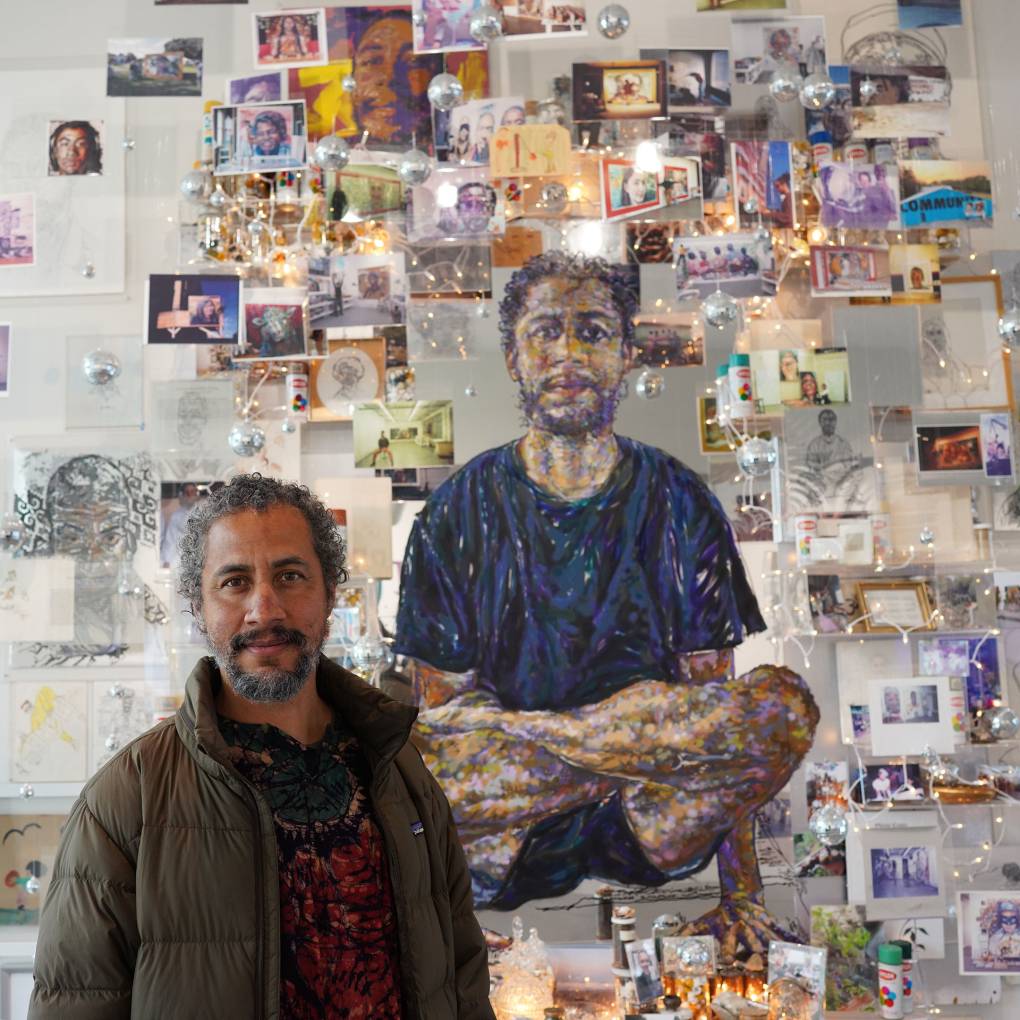
"content": "\u003cdiv class=\"mceTemp\">\u003c/div>\n\u003cfigure id=\"attachment_13931462\" class=\"wp-caption alignnone\" style=\"max-width: 720px\">\u003cimg loading=\"lazy\" decoding=\"async\" class=\"size-full wp-image-13931462\" src=\"https://ww2.kqed.org/app/uploads/sites/2/2023/07/dsc06369_720.jpg\" alt=\"People handed Dregs-One rolling trays, hats and other miscellaneous items for him to freestyle about, and he did so with ease.\" width=\"720\" height=\"481\" srcset=\"https://cdn.kqed.org/wp-content/uploads/sites/2/2023/07/dsc06369_720.jpg 720w, https://cdn.kqed.org/wp-content/uploads/sites/2/2023/07/dsc06369_720-160x107.jpg 160w\" sizes=\"(max-width: 720px) 100vw, 720px\">\u003cfigcaption class=\"wp-caption-text\">People handed Dregs-One rolling trays, hats and other miscellaneous items for him to freestyle about, and he did so with ease. \u003ccite>(Pendarvis Harshaw)\u003c/cite>\u003c/figcaption>\u003c/figure>\n\u003cp>There aren’t many artists in the Bay Area stitching the fabrics of community more colorfully than rapper, graffiti writer and historian \u003ca href=\"https://www.instagram.com/dregs_one/?hl=en\">Dregs One\u003c/a>.\u003c/p>\n\u003cp>The proud San Francisco lyricist and social advocate has undertaken one of the more important preservation projects in recent memory with his podcast \u003ca href=\"https://podcasts.apple.com/us/podcast/history-of-the-bay/id1643362991\">History of the Bay\u003c/a>. The series invites an intergenerational cast of Bay Area personalities — including \u003ca href=\"https://www.youtube.com/watch?v=RuJ-CQU-MJE\">P-Lo\u003c/a>, \u003ca href=\"https://www.youtube.com/watch?v=vkK9dYcLjso\">Rocky Rivera\u003c/a> and \u003ca href=\"https://www.kqed.org/arts/13925761/magic-mike-richmond-calvin-t-rap-hip-hop\">Magic Mike\u003c/a> — to discuss their experiences in Bay Area hip-hop, culture and politics with a laid-back, in-the-know flavor.\u003c/p>\n\u003cp>[aside postID='arts_13931387']Having received attention for \u003ca href=\"https://www.kqed.org/arts/13916721/sucka-free-history-with-dregs-one\">archiving largely untold Bay Area rap stories\u003c/a>, Dregs is now expanding his platform to community events with the inaugural \u003ca href=\"https://www.tixr.com/groups/midwaysf/events/derby-of-san-francisco-presents-history-of-the-bay-with-luniz-dregs-one-more-71892\">History of the Bay Day Party\u003c/a>. From the looks of it, it’ll be a real-life Bay Area Player’s Holiday.\u003c/p>\n\u003cp>In the spirit of connecting the Bay Area’s vast galaxy of hip-hop, the event includes a multitude of guests. Oakland rap legends the Luniz headline the stage, with Keak Da Sneak, Nef the Pharaoh, Mac Mall, San Quinn and Dregs One himself rounding out the afternoon lineup. (Also on stage is a panel on women in Bay Area hip-hop, moderated by KQED’s own Nastia Voynovskaya, an editor for KQED’s Bay Area hip-hop history series \u003ca href=\"https://www.kqed.org/bayareahiphop\">That’s My Word\u003c/a>.)\u003c/p>\n\u003cp>Beyond music, the day showcases the many subterraneous layers in hip-hop: graffiti artists (featuring a real-time mural painted by \u003ca href=\"https://www.youtube.com/watch?v=KyHVKCClBBo\">Crayone\u003c/a>); disc jockeys (with DJ sets from Juice, Sean G and \u003ca href=\"https://www.kqed.org/arts/13910221/family-not-a-group-san-francisco-rap\">Family Not A Group’s Jenset\u003c/a>); and traditionally unheard voices (CMG from the \u003ca href=\"https://www.kqed.org/arts/13925177/the-conscious-daughters-raps-sucka-free-thelma-and-louise-rewrote-the-rules\">Conscious Daughters\u003c/a> and \u003ca href=\"https://www.instagram.com/isawdray/?hl=en\">D-Ray\u003c/a> discuss their roles as women making waves in the scene). Throw into the mix food, ice cream from Mitchell’s, a live podcast recording, and vendors such as Derby of San Francisco and \u003ca href=\"https://www.dyingbreedsf.com/\">Dying Breed\u003c/a> purveying wildly localized merch — think Starters-esque windbreaker jackets with “FRI$CO” and “415” stitched onto them — and you’ve got a full-on function.\u003c/p>\n\u003cp>[ad fullwidth]\u003c/p>\n\u003cp>[aside postID='arts_13923938,arts_13931108']With this summer marking the \u003ca href=\"https://www.kqed.org/arts/13923938/thats-my-word-intro\">50th anniversary of hip-hop\u003c/a>, it’s a more fitting time than ever for Dregs One to champion the musical genre and cultural lifestyle in block-party fashion. At its core, hip-hop is — and will hopefully always be — an empowering intersection for jubilant expression, self-love, knowledge and the occasional thizz dance in a space filled with other hip-hop heads who, like anyone, want to be seen and appreciated. There’s no better moment to tap in.\u003c/p>\n\u003cp>\u003cimg loading=\"lazy\" decoding=\"async\" class=\"aligncenter size-medium wp-image-12127869\" src=\"https://ww2.kqed.org/app/uploads/sites/2/2016/09/Q.Logo_.Break_-800x78.jpg\" alt=\"\" width=\"800\" height=\"78\" srcset=\"https://cdn.kqed.org/wp-content/uploads/sites/2/2016/09/Q.Logo_.Break_.jpg 800w, https://cdn.kqed.org/wp-content/uploads/sites/2/2016/09/Q.Logo_.Break_-400x39.jpg 400w, https://cdn.kqed.org/wp-content/uploads/sites/2/2016/09/Q.Logo_.Break_-768x75.jpg 768w\" sizes=\"(max-width: 800px) 100vw, 800px\">\u003c/p>\n\u003cp>\u003cem>The History of the Bay Day Party gets underway Sunday, July 9, at 2 p.m. at The Midway in San Francisco. \u003ca href=\"https://www.tixr.com/groups/midwaysf/events/derby-of-san-francisco-presents-history-of-the-bay-with-luniz-dregs-one-more-71892\">Details here\u003c/a>.\u003c/em>\u003c/p>\n\u003cp>\u003c/p>\n\u003cp>\u003cem>The \u003ca href=\"https://www.youtube.com/playlist?list=PLrcnRVZo1Y9S-8xIlv8knxRcYwCqsu1OC\">‘History of the Bay’ podcast\u003c/a> airs regularly with periodic live recordings at Amoeba Music in San Francisco. Abbreviated versions can be seen on \u003ca href=\"https://www.tiktok.com/@dregs_one\">Dregs One’s TikTok\u003c/a>.\u003c/em>\u003c/p>\n\n",
"blocks": [],
"excerpt": "Performances by the Luniz, Keak Da Sneak, Mac Mall and others celebrate the Bay Area's contributions to hip-hop.\r\n",
"status": "publish",
"parent": 0,
"modified": 1726758485,
"stats": {
"hasAudio": false,
"hasVideo": false,
"hasChartOrMap": false,
"iframeSrcs": [],
"hasGoogleForm": false,
"hasGallery": false,
"hasHearkenModule": false,
"hasPolis": false,
"paragraphCount": 11,
"wordCount": 523
},
"headData": {
"title": "Dregs One Turns ‘History of the Bay’ Into an Epic San Francisco Day Party | KQED",
"description": "Performances by the Luniz, Keak Da Sneak, Mac Mall and others celebrate the Bay Area's contributions to hip-hop.\r\n",
"ogTitle": "",
"ogDescription": "",
"ogImgId": "",
"twTitle": "",
"twDescription": "",
"twImgId": "",
"schema": {
"@context": "https://schema.org",
"@type": "Article",
"headline": "Dregs One Turns ‘History of the Bay’ Into an Epic San Francisco Day Party",
"datePublished": "2023-07-03T11:27:35-07:00",
"dateModified": "2024-09-19T08:08:05-07:00",
"image": "https://cdn.kqed.org/wp-content/uploads/2020/02/KQED-OG-Image@1x.png"
}
},
"sticky": false,
"WpOldSlug": "dregs-one-turns-history-of-the-bay-into-an-epic-san-francisco-day-party",
"templateType": "standard",
"featuredImageType": "standard",
"excludeFromSiteSearch": "Include",
"articleAge": "0",
"path": "/arts/13931155/dregs-one-history-of-the-bay-intluniz-mac-mall-keak-da-sneak-midway",
"audioTrackLength": null,
"parsedContent": [
{
"type": "contentString",
"content": "\u003cdiv class=\"post-body\">\u003cp>\u003cdiv class=\"mceTemp\">\u003c/div>\n\u003cfigure id=\"attachment_13931462\" class=\"wp-caption alignnone\" style=\"max-width: 720px\">\u003cimg loading=\"lazy\" decoding=\"async\" class=\"size-full wp-image-13931462\" src=\"https://ww2.kqed.org/app/uploads/sites/2/2023/07/dsc06369_720.jpg\" alt=\"People handed Dregs-One rolling trays, hats and other miscellaneous items for him to freestyle about, and he did so with ease.\" width=\"720\" height=\"481\" srcset=\"https://cdn.kqed.org/wp-content/uploads/sites/2/2023/07/dsc06369_720.jpg 720w, https://cdn.kqed.org/wp-content/uploads/sites/2/2023/07/dsc06369_720-160x107.jpg 160w\" sizes=\"(max-width: 720px) 100vw, 720px\">\u003cfigcaption class=\"wp-caption-text\">People handed Dregs-One rolling trays, hats and other miscellaneous items for him to freestyle about, and he did so with ease. \u003ccite>(Pendarvis Harshaw)\u003c/cite>\u003c/figcaption>\u003c/figure>\n\u003cp>There aren’t many artists in the Bay Area stitching the fabrics of community more colorfully than rapper, graffiti writer and historian \u003ca href=\"https://www.instagram.com/dregs_one/?hl=en\">Dregs One\u003c/a>.\u003c/p>\n\u003cp>The proud San Francisco lyricist and social advocate has undertaken one of the more important preservation projects in recent memory with his podcast \u003ca href=\"https://podcasts.apple.com/us/podcast/history-of-the-bay/id1643362991\">History of the Bay\u003c/a>. The series invites an intergenerational cast of Bay Area personalities — including \u003ca href=\"https://www.youtube.com/watch?v=RuJ-CQU-MJE\">P-Lo\u003c/a>, \u003ca href=\"https://www.youtube.com/watch?v=vkK9dYcLjso\">Rocky Rivera\u003c/a> and \u003ca href=\"https://www.kqed.org/arts/13925761/magic-mike-richmond-calvin-t-rap-hip-hop\">Magic Mike\u003c/a> — to discuss their experiences in Bay Area hip-hop, culture and politics with a laid-back, in-the-know flavor.\u003c/p>\n\u003cp>\u003c/p>\u003c/div>",
"attributes": {
"named": {},
"numeric": []
}
},
{
"type": "component",
"content": "",
"name": "aside",
"attributes": {
"named": {
"postid": "arts_13931387",
"label": ""
},
"numeric": []
}
},
{
"type": "contentString",
"content": "\u003cdiv class=\"post-body\">\u003cp>Having received attention for \u003ca href=\"https://www.kqed.org/arts/13916721/sucka-free-history-with-dregs-one\">archiving largely untold Bay Area rap stories\u003c/a>, Dregs is now expanding his platform to community events with the inaugural \u003ca href=\"https://www.tixr.com/groups/midwaysf/events/derby-of-san-francisco-presents-history-of-the-bay-with-luniz-dregs-one-more-71892\">History of the Bay Day Party\u003c/a>. From the looks of it, it’ll be a real-life Bay Area Player’s Holiday.\u003c/p>\n\u003cp>In the spirit of connecting the Bay Area’s vast galaxy of hip-hop, the event includes a multitude of guests. Oakland rap legends the Luniz headline the stage, with Keak Da Sneak, Nef the Pharaoh, Mac Mall, San Quinn and Dregs One himself rounding out the afternoon lineup. (Also on stage is a panel on women in Bay Area hip-hop, moderated by KQED’s own Nastia Voynovskaya, an editor for KQED’s Bay Area hip-hop history series \u003ca href=\"https://www.kqed.org/bayareahiphop\">That’s My Word\u003c/a>.)\u003c/p>\n\u003cp>Beyond music, the day showcases the many subterraneous layers in hip-hop: graffiti artists (featuring a real-time mural painted by \u003ca href=\"https://www.youtube.com/watch?v=KyHVKCClBBo\">Crayone\u003c/a>); disc jockeys (with DJ sets from Juice, Sean G and \u003ca href=\"https://www.kqed.org/arts/13910221/family-not-a-group-san-francisco-rap\">Family Not A Group’s Jenset\u003c/a>); and traditionally unheard voices (CMG from the \u003ca href=\"https://www.kqed.org/arts/13925177/the-conscious-daughters-raps-sucka-free-thelma-and-louise-rewrote-the-rules\">Conscious Daughters\u003c/a> and \u003ca href=\"https://www.instagram.com/isawdray/?hl=en\">D-Ray\u003c/a> discuss their roles as women making waves in the scene). Throw into the mix food, ice cream from Mitchell’s, a live podcast recording, and vendors such as Derby of San Francisco and \u003ca href=\"https://www.dyingbreedsf.com/\">Dying Breed\u003c/a> purveying wildly localized merch — think Starters-esque windbreaker jackets with “FRI$CO” and “415” stitched onto them — and you’ve got a full-on function.\u003c/p>\n\u003cp>\u003c/p>\u003c/div>",
"attributes": {
"named": {},
"numeric": []
}
},
{
"type": "component",
"content": "",
"name": "ad",
"attributes": {
"named": {
"label": "fullwidth"
},
"numeric": [
"fullwidth"
]
}
},
{
"type": "contentString",
"content": "\u003cdiv class=\"post-body\">\u003cp>\u003c/p>\n\u003cp>\u003c/p>\u003c/div>",
"attributes": {
"named": {},
"numeric": []
}
},
{
"type": "component",
"content": "",
"name": "aside",
"attributes": {
"named": {
"postid": "arts_13923938,arts_13931108",
"label": ""
},
"numeric": []
}
},
{
"type": "contentString",
"content": "\u003cdiv class=\"post-body\">\u003cp>With this summer marking the \u003ca href=\"https://www.kqed.org/arts/13923938/thats-my-word-intro\">50th anniversary of hip-hop\u003c/a>, it’s a more fitting time than ever for Dregs One to champion the musical genre and cultural lifestyle in block-party fashion. At its core, hip-hop is — and will hopefully always be — an empowering intersection for jubilant expression, self-love, knowledge and the occasional thizz dance in a space filled with other hip-hop heads who, like anyone, want to be seen and appreciated. There’s no better moment to tap in.\u003c/p>\n\u003cp>\u003cimg loading=\"lazy\" decoding=\"async\" class=\"aligncenter size-medium wp-image-12127869\" src=\"https://ww2.kqed.org/app/uploads/sites/2/2016/09/Q.Logo_.Break_-800x78.jpg\" alt=\"\" width=\"800\" height=\"78\" srcset=\"https://cdn.kqed.org/wp-content/uploads/sites/2/2016/09/Q.Logo_.Break_.jpg 800w, https://cdn.kqed.org/wp-content/uploads/sites/2/2016/09/Q.Logo_.Break_-400x39.jpg 400w, https://cdn.kqed.org/wp-content/uploads/sites/2/2016/09/Q.Logo_.Break_-768x75.jpg 768w\" sizes=\"(max-width: 800px) 100vw, 800px\">\u003c/p>\n\u003cp>\u003cem>The History of the Bay Day Party gets underway Sunday, July 9, at 2 p.m. at The Midway in San Francisco. \u003ca href=\"https://www.tixr.com/groups/midwaysf/events/derby-of-san-francisco-presents-history-of-the-bay-with-luniz-dregs-one-more-71892\">Details here\u003c/a>.\u003c/em>\u003c/p>\n\u003cp>\u003c/p>\n\u003cp>\u003cem>The \u003ca href=\"https://www.youtube.com/playlist?list=PLrcnRVZo1Y9S-8xIlv8knxRcYwCqsu1OC\">‘History of the Bay’ podcast\u003c/a> airs regularly with periodic live recordings at Amoeba Music in San Francisco. Abbreviated versions can be seen on \u003ca href=\"https://www.tiktok.com/@dregs_one\">Dregs One’s TikTok\u003c/a>.\u003c/em>\u003c/p>\n\n\u003c/div>\u003c/p>",
"attributes": {
"named": {},
"numeric": []
}
}
],
"link": "/arts/13931155/dregs-one-history-of-the-bay-intluniz-mac-mall-keak-da-sneak-midway",
"authors": [
"11748"
],
"programs": [
"arts_140"
],
"categories": [
"arts_1",
"arts_69"
],
"tags": [
"arts_8505",
"arts_20453",
"arts_19561",
"arts_10278",
"arts_903",
"arts_831",
"arts_21047",
"arts_2173",
"arts_6299",
"arts_19496",
"arts_4219",
"arts_1146",
"arts_14114",
"arts_585"
],
"featImg": "arts_13931462",
"label": "arts_140"
},
"arts_13931016": {
"type": "posts",
"id": "arts_13931016",
"meta": {
"index": "posts_1716263798",
"site": "arts",
"id": "13931016",
"score": null,
"sort": [
1688059951000
]
},
"guestAuthors": [],
"slug": "oakland-meets-paris-in-the-strangers-fizzy-new-summer-anthem-movin-lateef-the-truthspeaker",
"title": "The Strangers Deliver a Bouncy, Bilingual Summer Anthem",
"publishDate": 1688059951,
"format": "standard",
"headTitle": "The Strangers Deliver a Bouncy, Bilingual Summer Anthem | KQED",
"labelTerm": {},
"content": "\u003cp>If you’re looking for a fun, fizzy summer anthem with electro-pop optimism at its core, the newly formed group The Strangers have you covered with their debut single, “Movin’.”\u003c/p>\n\u003cp>In their inaugural effort, this eclectic crew — which consists of Oakland rapper \u003ca href=\"https://www.instagram.com/truthspeaker/?hl=en\">Lateef the Truthspeaker\u003c/a>, Parisian emcee \u003ca href=\"https://www.instagram.com/leeroystagram/?hl=en\">Leeroy\u003c/a> and Berlin-based producer Hervé Salters, also known as General Elektriks — delivers a memorable teaser for their upcoming album, slated for this September.[aside postid='arts_13929861']\u003c/p>\n\u003cp>With an upbeat tempo and boom-bap lyricism, the song unites three artists from around the globe for a feel-good track that essentially promotes being outdoors and literally moving more. It’s perfectly timed for warm-weather outings and is clean enough to play for the entire family, which gives it an endearing touch.\u003c/p>\n\u003cp>It’s the kind of song that makes you want to get out of bed and move purposefully along with your day: “Handle all my bidness grab my coffee and my breakfast/ and my bag already packed so now I’m heading for the exit,” Lateef spits on the opening verse, like an experienced father on his way out the front door to put in an afternoon of work.\u003c/p>\n\u003cp>https://www.youtube.com/watch?v=Z8A-450oBm8\u003c/p>\n\u003cp>\u003cspan style=\"color: #ffffff\">p\u003c/span>\u003cbr>\nLateef, a celebrated Oakland wordsmith and \u003ca href=\"https://www.kqed.org/arts/13929861/latyrx-lateef-lyrics-born-solesides-quannum\">founding Latyrx member\u003c/a>, first tapped into the Parisian arts scene when he was touring Europe in the ’90s. That’s when he met Salters, a French native and the keyboardist for Blackalicious, the famed Sacramento hip-hop duo consisting of \u003ca href=\"https://www.kqed.org/arts/13899416/the-gift-of-gab-5-songs-to-know-by-the-blackalicious-legend\">Gift of Gab\u003c/a> and Chief Xcel. At the time, Leeroy was a member of France’s Wu-Tang-esque mega group of the decade, \u003ca href=\"https://www.instagram.com/saian.supacrew/?hl=en\">Saian Supa Crew\u003c/a>, who toured with Lateef and Salters.\u003c/p>\n\u003cp>But while they’ve shared stages, the trio never actually made music together until now. The old friends reconnected at last year’s Marseille Jazz Festival in France, then re-configured themselves like updated Transformers to do what they do best: rap over cool beats.\u003c/p>\n\u003cp>“Movin’” offers a glimpse into their funky fusion of modern sound, punctuated by Lateef’s rapid-fire delivery in English and Leeroy’s curvy flows in French. It’s all held together by the appealing bippity bop bounce of Salters on keyboard production.\u003c/p>\n\u003cp>For now, I’ll be moving along to their tune and waiting patiently until their extended project drops.\u003c/p>\n\u003cp>\u003cimg loading=\"lazy\" decoding=\"async\" class=\"alignnone size-medium wp-image-12127869\" src=\"https://ww2.kqed.org/app/uploads/sites/2/2016/09/Q.Logo_.Break_-800x78.jpg\" alt=\"\" width=\"800\" height=\"78\" srcset=\"https://cdn.kqed.org/wp-content/uploads/sites/2/2016/09/Q.Logo_.Break_.jpg 800w, https://cdn.kqed.org/wp-content/uploads/sites/2/2016/09/Q.Logo_.Break_-400x39.jpg 400w, https://cdn.kqed.org/wp-content/uploads/sites/2/2016/09/Q.Logo_.Break_-768x75.jpg 768w\" sizes=\"(max-width: 800px) 100vw, 800px\">\u003c/p>\n\u003cp>\u003ci>The Strangers’ debut single, \u003c/i>\u003ca href=\"https://open.spotify.com/artist/7pzxl4apBrrS6xfwP0EMCT?si=2t_E_SXDSN2Wm8_n0xoDAQ\">\u003ci>‘Movin,’ is available on all streaming platforms\u003c/i>\u003c/a>\u003ci>.\u003c/i>\u003c/p>\n\u003cp>[ad fullwidth]\u003c/p>\n\u003cp>\u003c/p>\n",
"blocks": [],
"excerpt": "Lateef the Truthspeaker, French emcee Leeroy and Berlin producer General Elektriks deliver an upbeat glimpse of a new project.",
"status": "publish",
"parent": 0,
"modified": 1726758498,
"stats": {
"hasAudio": false,
"hasVideo": true,
"hasChartOrMap": false,
"iframeSrcs": [],
"hasGoogleForm": false,
"hasGallery": false,
"hasHearkenModule": false,
"hasPolis": false,
"paragraphCount": 12,
"wordCount": 433
},
"headData": {
"title": "The Strangers Deliver a Bouncy, Bilingual Summer Anthem | KQED",
"description": "Lateef the Truthspeaker, French emcee Leeroy and Berlin producer General Elektriks deliver an upbeat glimpse of a new project.",
"ogTitle": "",
"ogDescription": "",
"ogImgId": "",
"twTitle": "",
"twDescription": "",
"twImgId": "",
"schema": {
"@context": "https://schema.org",
"@type": "Article",
"headline": "The Strangers Deliver a Bouncy, Bilingual Summer Anthem",
"datePublished": "2023-06-29T10:32:31-07:00",
"dateModified": "2024-09-19T08:08:18-07:00",
"image": "https://cdn.kqed.org/wp-content/uploads/2020/02/KQED-OG-Image@1x.png"
}
},
"source": "pass the aux",
"sourceUrl": "https://www.kqed.org/passtheaux",
"sticky": false,
"excludeFromSiteSearch": "Include",
"articleAge": "0",
"path": "/arts/13931016/oakland-meets-paris-in-the-strangers-fizzy-new-summer-anthem-movin-lateef-the-truthspeaker",
"audioTrackLength": null,
"parsedContent": [
{
"type": "contentString",
"content": "\u003cdiv class=\"post-body\">\u003cp>\u003cp>If you’re looking for a fun, fizzy summer anthem with electro-pop optimism at its core, the newly formed group The Strangers have you covered with their debut single, “Movin’.”\u003c/p>\n\u003cp>In their inaugural effort, this eclectic crew — which consists of Oakland rapper \u003ca href=\"https://www.instagram.com/truthspeaker/?hl=en\">Lateef the Truthspeaker\u003c/a>, Parisian emcee \u003ca href=\"https://www.instagram.com/leeroystagram/?hl=en\">Leeroy\u003c/a> and Berlin-based producer Hervé Salters, also known as General Elektriks — delivers a memorable teaser for their upcoming album, slated for this September.\u003c/p>\u003c/div>",
"attributes": {
"named": {},
"numeric": []
}
},
{
"type": "component",
"content": "",
"name": "aside",
"attributes": {
"named": {
"postid": "arts_13929861",
"label": ""
},
"numeric": []
}
},
{
"type": "contentString",
"content": "\u003cdiv class=\"post-body\">\u003cp>\u003c/p>\n\u003cp>With an upbeat tempo and boom-bap lyricism, the song unites three artists from around the globe for a feel-good track that essentially promotes being outdoors and literally moving more. It’s perfectly timed for warm-weather outings and is clean enough to play for the entire family, which gives it an endearing touch.\u003c/p>\n\u003cp>It’s the kind of song that makes you want to get out of bed and move purposefully along with your day: “Handle all my bidness grab my coffee and my breakfast/ and my bag already packed so now I’m heading for the exit,” Lateef spits on the opening verse, like an experienced father on his way out the front door to put in an afternoon of work.\u003c/p>\u003c/p>\u003cp>\u003cspan class='utils-parseShortcode-shortcodes-__youtubeShortcode__embedYoutube'>\n \u003cspan class='utils-parseShortcode-shortcodes-__youtubeShortcode__embedYoutubeInside'>\n \u003ciframe\n loading='lazy'\n class='utils-parseShortcode-shortcodes-__youtubeShortcode__youtubePlayer'\n type='text/html'\n src='//www.youtube.com/embed/Z8A-450oBm8'\n title='//www.youtube.com/embed/Z8A-450oBm8'\n allowfullscreen='true'\n style='border:0;'>\u003c/iframe>\n \u003c/span>\n \u003c/span>\u003c/p>\u003cp>\u003cp>\u003cspan style=\"color: #ffffff\">p\u003c/span>\u003cbr>\nLateef, a celebrated Oakland wordsmith and \u003ca href=\"https://www.kqed.org/arts/13929861/latyrx-lateef-lyrics-born-solesides-quannum\">founding Latyrx member\u003c/a>, first tapped into the Parisian arts scene when he was touring Europe in the ’90s. That’s when he met Salters, a French native and the keyboardist for Blackalicious, the famed Sacramento hip-hop duo consisting of \u003ca href=\"https://www.kqed.org/arts/13899416/the-gift-of-gab-5-songs-to-know-by-the-blackalicious-legend\">Gift of Gab\u003c/a> and Chief Xcel. At the time, Leeroy was a member of France’s Wu-Tang-esque mega group of the decade, \u003ca href=\"https://www.instagram.com/saian.supacrew/?hl=en\">Saian Supa Crew\u003c/a>, who toured with Lateef and Salters.\u003c/p>\n\u003cp>But while they’ve shared stages, the trio never actually made music together until now. The old friends reconnected at last year’s Marseille Jazz Festival in France, then re-configured themselves like updated Transformers to do what they do best: rap over cool beats.\u003c/p>\n\u003cp>“Movin’” offers a glimpse into their funky fusion of modern sound, punctuated by Lateef’s rapid-fire delivery in English and Leeroy’s curvy flows in French. It’s all held together by the appealing bippity bop bounce of Salters on keyboard production.\u003c/p>\n\u003cp>For now, I’ll be moving along to their tune and waiting patiently until their extended project drops.\u003c/p>\n\u003cp>\u003cimg loading=\"lazy\" decoding=\"async\" class=\"alignnone size-medium wp-image-12127869\" src=\"https://ww2.kqed.org/app/uploads/sites/2/2016/09/Q.Logo_.Break_-800x78.jpg\" alt=\"\" width=\"800\" height=\"78\" srcset=\"https://cdn.kqed.org/wp-content/uploads/sites/2/2016/09/Q.Logo_.Break_.jpg 800w, https://cdn.kqed.org/wp-content/uploads/sites/2/2016/09/Q.Logo_.Break_-400x39.jpg 400w, https://cdn.kqed.org/wp-content/uploads/sites/2/2016/09/Q.Logo_.Break_-768x75.jpg 768w\" sizes=\"(max-width: 800px) 100vw, 800px\">\u003c/p>\n\u003cp>\u003ci>The Strangers’ debut single, \u003c/i>\u003ca href=\"https://open.spotify.com/artist/7pzxl4apBrrS6xfwP0EMCT?si=2t_E_SXDSN2Wm8_n0xoDAQ\">\u003ci>‘Movin,’ is available on all streaming platforms\u003c/i>\u003c/a>\u003ci>.\u003c/i>\u003c/p>\n\u003cp>\u003c/p>\u003c/div>",
"attributes": {
"named": {},
"numeric": []
}
},
{
"type": "component",
"content": "",
"name": "ad",
"attributes": {
"named": {
"label": "fullwidth"
},
"numeric": [
"fullwidth"
]
}
},
{
"type": "contentString",
"content": "\u003cdiv class=\"post-body\">\u003cp>\u003c/p>\n\u003cp>\u003c/p>\n\u003c/div>\u003c/p>",
"attributes": {
"named": {},
"numeric": []
}
}
],
"link": "/arts/13931016/oakland-meets-paris-in-the-strangers-fizzy-new-summer-anthem-movin-lateef-the-truthspeaker",
"authors": [
"11748"
],
"categories": [
"arts_1",
"arts_69"
],
"tags": [
"arts_831",
"arts_17319",
"arts_20720",
"arts_1143",
"arts_13240"
],
"featImg": "arts_13931025",
"label": "source_arts_13931016"
},
"arts_13930867": {
"type": "posts",
"id": "arts_13930867",
"meta": {
"index": "posts_1716263798",
"site": "arts",
"id": "13930867",
"score": null,
"sort": [
1687964431000
]
},
"guestAuthors": [],
"slug": "whats-pimpin-culture-hip-hop-rap-sexism-misogynoir-black-women",
"title": "It’s Time to Unpack Pimp Culture in Bay Area Hip-Hop",
"publishDate": 1687964431,
"format": "aside",
"headTitle": "It’s Time to Unpack Pimp Culture in Bay Area Hip-Hop | KQED",
"labelTerm": {},
"content": "\u003cfigure id=\"attachment_13930933\" class=\"wp-caption aligncenter\" style=\"max-width: 800px\">\u003cimg loading=\"lazy\" decoding=\"async\" class=\"size-medium wp-image-13930933\" src=\"https://ww2.kqed.org/app/uploads/sites/2/2023/06/pimp-culture-essay-800x450.png\" alt=\"A yellow-and-blue collage features cultural figures that represent Black feminism and pimp culture, two themes explored in our new vodcast, 'What's Pimpin'?'\" width=\"800\" height=\"450\" srcset=\"https://cdn.kqed.org/wp-content/uploads/sites/2/2023/06/pimp-culture-essay-800x450.png 800w, https://cdn.kqed.org/wp-content/uploads/sites/2/2023/06/pimp-culture-essay-1020x574.png 1020w, https://cdn.kqed.org/wp-content/uploads/sites/2/2023/06/pimp-culture-essay-160x90.png 160w, https://cdn.kqed.org/wp-content/uploads/sites/2/2023/06/pimp-culture-essay-768x432.png 768w, https://cdn.kqed.org/wp-content/uploads/sites/2/2023/06/pimp-culture-essay-1536x864.png 1536w, https://cdn.kqed.org/wp-content/uploads/sites/2/2023/06/pimp-culture-essay.png 1920w\" sizes=\"(max-width: 800px) 100vw, 800px\">\u003cfigcaption class=\"wp-caption-text\">In our new vodcast ‘What’s Pimpin’?,’ hosts Maddy Clifford, Coco Peila and RyanNicole dissect why Oakland came to be known as “the land of pimps and Panthers.” Clockwise from left: Maya Angelou; Too Short; Dru Down; Frank Ward and Max Julien in ‘The Mack;’ and women of the Black Panther Party. \u003ccite>(Michael Ochs Archives/Getty Images; Jive Records/Dangerous Music; C-Note Records; New Line Cinema; Pirkle Jones and Ruth-Marion Baruch)\u003c/cite>\u003c/figcaption>\u003c/figure>\n\u003cp>\u003cb>\u003ci>Editor’s note:\u003c/i>\u003c/b>\u003ci> This story is part of\u003c/i>\u003ca href=\"http://kqed.org/bayareahiphop\"> That’s My Word\u003c/a>\u003ci>, KQED’s year-long exploration of \u003ca href=\"https://www.kqed.org/bayareahiphop\">Bay Area hip-hop history\u003c/a>, with new content dropping all throughout 2023. \u003c/i>\u003c/p>\n\u003cp>I’m a teaching artist standing before 20 teenage boys, mostly Black and brown. They’re inquisitive at the moment, which means I have just minutes to grab their attention before they zone out. Oh, and by the way, they’re incarcerated in the high-security unit at San Francisco Juvenile Hall.\u003c/p>\n\u003cp>“So feminism is…”\u003c/p>\n\u003cp>I trail off. The white, male teacher assigned to leading discussions for Women’s History Month eyes me. I’m nervous he’ll interrupt again, launching into a mansplanation about why the unit should care about the girls in their community.\u003c/p>\n\u003cp>“I know it’s sometimes hard for y’all to understand feminism because y’all go through so much,” I continue.\u003c/p>\n\u003cp>[ad fullwidth]\u003c/p>\n\u003cp>It’s true. Most of them sleep on concrete beds each night. They’re at a pivotal age, a time when they’re in desperate need of positive direction. Unfortunately, they’re locked up instead. And they’re inundated with notions of toxic masculinity.\u003c/p>\n\u003cp>It doesn’t help that most of the rap music they love reinforces the idea that women are objects. Sometimes they waste sharp wits cooking up ways to exploit young women in their lives. I remember one boy telling me: “I can’t wait to have a wife so she can pay for all my shit.” I guess that Mac Dre line — “\u003ca href=\"https://www.youtube.com/watch?v=6vE6oUc0t4o\">I treat my bitch like an ATM card\u003c/a>” — already got to him.\u003c/p>\n\u003cp>To combat this messaging, I handpick rap bars for our creative writing lessons. 2pac’s “\u003ca href=\"https://youtu.be/Mb1ZvUDvLDY\">Dear Mama\u003c/a>” is essentially an epistolary poem, and “\u003ca href=\"https://youtu.be/vYJCT8EqbtU\">Birds Eye View\u003c/a>” by Zion I is a great example of personification. But how am I supposed to compete with the allure of patriarchy?\u003c/p>\n\u003cp>I clear my throat and keep talking.\u003c/p>\n\u003cp>“Y’all probably heard about the #MeToo movement, right? Well, I met \u003ca href=\"https://www.taranaburke.com/\">Tarana Burke\u003c/a>. She’s the founder of the movement. She told me #MeToo isn’t a women’s movement, it’s a survivors’ movement.”\u003c/p>\n\u003cp>To my delight, some of my students nod. Furrowed brows begin to soften, and empathy permeates the room. It makes sense. Almost \u003ca href=\"https://kidsimprisoned.news21.com/foster-care-kids-juvenile-justice-system/\">60% of incarcerated youth\u003c/a> have been through the foster care system. And, according to one Johns Hopkins University study, foster youth are \u003ca href=\"https://www.focusforhealth.org/sex-abuse-and-the-foster-care-system/\">four times as likely to experience sexual abuse\u003c/a> as their peers. I wasn’t merely standing in front of a group of teenage boys. I was standing with fellow survivors. [aside postid='arts_13930886' hero='https://ww2.kqed.org/app/uploads/sites/2/2023/06/Whats-Pimpin-Episode-1-Wordpress-Thumbnail.jpg']\u003c/p>\n\u003cp>For decades, hip-hop has empowered and given voice to countless young people like my students. And now, the culture has grown up. In light of its 50th anniversary, isn’t it time we seriously examine hip-hop’s contradictions? If Bay Area hip-hop is “\u003ca href=\"https://www.kqed.org/arts/13923938/thats-my-word-intro\">the product of pimps and hustlers just as much as activists and intellectuals\u003c/a>,” how do we uplift its innovative potential while holding space to look at all the ways it falls short?\u003c/p>\n\u003cp>Throughout my decade-plus of experience as an educator, MC and community organizer, I’ve seen firsthand how hip-hop’s glorification of pimp culture harms people of all genders. Pimping obviously predates hip-hop. But that doesn’t mean we should normalize antiquated ideas about gender, or push played-out power dynamics. We can sugarcoat the truth, but at its root, pimp culture is about exploitation. Ignoring this reality risks harming some of the most marginalized people in the Bay Area. I’m talking about poor folks, and about Black, brown and Indigenous women, in addition to LGBTQ people. I promise you, they’re already paying the ultimate price.\u003c/p>\n\u003cp>In my poetry classes in juve, the poem “Still I Rise” by Maya Angelou was a favorite, especially among incarcerated girls. Something about rising “like dust” against all odds resonated with them. Still I Rise is also the name of a recent creative collaboration among myself and the Bay Area-rooted rappers \u003ca href=\"https://www.kqed.org/arts/13890558/with-labor-ryannicole-uplifts-black-womens-invisible-work\">RyanNicole\u003c/a> and \u003ca href=\"https://www.kqed.org/arts/13915289/hip-hop-songs-lyrics-abortion\">Coco Peila\u003c/a>. Together we’ve created a three-part video podcast, \u003ca href=\"https://www.kqed.org/arts/13930886/madlines-coco-peila-ryannicole-whats-pimpin-vodcast-1\">\u003ci>What’s Pimpin’?\u003c/i>\u003c/a> A new episode drops each Wednesday on \u003ca href=\"https://www.youtube.com/channel/UCS7Oxr5knNkZ8SlryFZnq0g\">KQED Arts & Culture’s YouTube channel\u003c/a> June 28–July 12, and our EP of the same title is coming soon. The project examines pimp culture, with a particular focus on misogynoir. Our goal: having tough conversations and cultivating solutions.\u003c/p>\n\u003cp>[pullquote size=\"large\" citation=\"Maddy Clifford, artist and co-host of 'What's Pimpin'?'\"]We want to separate hip-hop culture from pimp culture, which mirrors the exploitation and domination of colonialism, slavery and racial capitalism.[/pullquote]\u003c/p>\n\u003cp>Despite its flaws, Bay Area hip-hop is incredibly creative and full of liberatory potential. I saw this as a young rapper growing up in Seattle, when I had Andre Nickatina’s “\u003ca href=\"https://youtu.be/Ad4Bx8QCKSU\">Jungle\u003c/a>” on repeat. There was something wildly unique about his sound. He was nerdy — referencing \u003ci>Alice in Wonderland\u003c/i> and \u003ci>Star Wars\u003c/i> in his rhymes — yet dangerous. I could relate. Other Bay Area rappers shared my desire to use the music for revolutionary change. I sang along to Mystic’s “\u003ca href=\"https://youtu.be/GoK01XY52Uc\">The Life\u003c/a>” because it captured my passion to alleviate suffering. Bay Area hip-hop influenced my decision to move to Oakland in my early 20s, over a decade ago. It’s as multifaceted as the streets where it originates. [aside postid='arts_13931108' hero='https://ww2.kqed.org/app/uploads/sites/2/2023/07/Episode-2-Youtube-Thumbnail.jpg']\u003c/p>\n\u003cp>The conversations we’re having in \u003ci>What’s Pimpin’?\u003c/i> are challenging because critiquing Bay Area hip-hop can feel like airing out dirty laundry. The Bay Area often gets overlooked in the music industry despite its outsized influence. Since the \u003ca href=\"https://slate.com/podcasts/slow-burn/s3/biggie-and-tupac/e4/c-delores-tucker-against-hip-hop\">gangsta rap moral panic\u003c/a> of the early ’90s, white \u003ca href=\"https://apnews.com/article/a249c215c523dbd528710412cb91b193\">politicians\u003c/a>, pundits and other outsiders have bolstered their careers by vilifying hip-hop. And our racist criminal justice system has used \u003ca href=\"https://www.nbcnews.com/news/us-news/black-rappers-call-double-standard-using-hip-hop-lyrics-evidence-rappe-rcna65529\">rap lyrics to put people behind bars\u003c/a>. Fans are rightfully protective.\u003c/p>\n\u003cp>But as hip-hop artists who believe in gender equality, we want to push the culture forward. We want to separate hip-hop culture from pimp culture, which mirrors the exploitation and domination of colonialism, slavery and racial capitalism — it didn’t start in 1973 with the movie \u003ci>The Mack\u003c/i> and didn’t end the day Too Short got a \u003ca href=\"https://www.kqed.org/arts/13922548/too-short-way-oakland-street-renamed\">street named after him\u003c/a>.\u003c/p>\n\u003cfigure id=\"attachment_13930868\" class=\"wp-caption aligncenter\" style=\"max-width: 800px\">\u003cimg loading=\"lazy\" decoding=\"async\" class=\"size-medium wp-image-13930868\" src=\"https://ww2.kqed.org/app/uploads/sites/2/2023/06/SIR-artists-2-800x533.jpg\" alt=\"Three young Black female MCs pose together wearing black. A shadow falls over their faces.\" width=\"800\" height=\"533\" srcset=\"https://cdn.kqed.org/wp-content/uploads/sites/2/2023/06/SIR-artists-2-800x533.jpg 800w, https://cdn.kqed.org/wp-content/uploads/sites/2/2023/06/SIR-artists-2-1020x679.jpg 1020w, https://cdn.kqed.org/wp-content/uploads/sites/2/2023/06/SIR-artists-2-160x107.jpg 160w, https://cdn.kqed.org/wp-content/uploads/sites/2/2023/06/SIR-artists-2-768x511.jpg 768w, https://cdn.kqed.org/wp-content/uploads/sites/2/2023/06/SIR-artists-2.jpg 1280w\" sizes=\"(max-width: 800px) 100vw, 800px\">\u003cfigcaption class=\"wp-caption-text\">RyanNicole, Coco Peila and Maddy Clifford are Still I Rise. \u003ccite>(DIFF WORKS LLC)\u003c/cite>\u003c/figcaption>\u003c/figure>\n\u003cp>Rapping about pimping is profitable, but behind the glamorous image are real-world statistics about how Black women and girls are particularly vulnerable to exploitation and violence. A 2011 study tracking a two-year period showed that \u003ca href=\"https://rights4girls.org/wp-content/uploads/2019/05/Racial-Disparties-FactSheet-_Jan-2021.pdf\">94% of U.S. sex-trafficking victims were female\u003c/a>. Of those victims, 40% were Black and 24% were Latinx. Meanwhile, buyers are overwhelmingly white men.\u003c/p>\n\u003cp>Protecting Black women and girls is particularly difficult because they’re less likely to be reported missing. According to a \u003ca href=\"https://www.oaklandca.gov/news/2023/council-unanimously-votes-in-favor-of-councilmember-reids-resolution-supporting-the-establishment-of-a-statewide-ebony-alert-to-help-locate-missing-black-women-and-girls\">May statement from Oakland City Councilmember Treva Reid\u003c/a>, of the 1,500 missing-persons cases in Oakland this year, 400 of them are Black women. The stakes couldn’t be higher.\u003c/p>\n\u003cp>I’m a firm believer in the kind of love that Assata Shakur describes as “contraband in hell.” She says it’s as powerful as “an acid that eats away bars.” If we love our Bay Area community, then we can’t expect to actualize that love without having some uncomfortable conversations. My love for the men in my community motivates me to hold them accountable instead of coddling harmful behavior. My love has inspired me to spend almost a decade uplifting youth trapped in jail cells. My love isn’t about censorship — it’s about owning up to what’s being said. [aside postid='arts_13931295' hero='https://ww2.kqed.org/app/uploads/sites/2/2023/07/Whats-Pimpin-Episode-3-Wordpress-Thumbnail.jpg']\u003c/p>\n\u003cp>But I can’t love alone. I need men to step up and question their own conditioning. Our project \u003ca href=\"https://www.kqed.org/arts/13930886/madlines-coco-peila-ryannicole-whats-pimpin-vodcast-1\">\u003ci>What’s Pimpin’?\u003c/i>\u003c/a> isn’t the first to ask an age-old question about exploitation, coercion and control. I can only hope it won’t be the last.\u003c/p>\n\u003ch2>Resources\u003c/h2>\n\u003cp>The \u003ca href=\"https://humantraffickinghotline.org/en\">National Human Trafficking Hotline\u003c/a> is available at 1-888-373-7888 or via text message at 233733.\u003c/p>\n\u003cp>\u003ca href=\"https://bayareaworkerssupport.org/\">Bay Area Worker Support\u003c/a> offers mutual aid, social support and resources to people working in the sex trade.\u003c/p>\n\u003cp>\u003ca href=\"https://www.loveneverfailsus.com/\">Love Never Fails\u003c/a> provides housing and support to human-trafficking survivors.\u003c/p>\n\u003cp>\u003ca href=\"https://www.npr.org/podcasts/510357/louder-than-a-riot\">\u003cem>Louder Than a Riot\u003c/em>\u003c/a>, an NPR Podcast, examines misogynoir and homophobia in hip-hop.\u003c/p>\n\u003cp>\u003ca href=\"https://misssey.org/\">MISSSEY\u003c/a> works to prevent girls and gender-expansive youth from being sexually exploited, and supports survivors.\u003c/p>\n\u003cp>\u003ca href=\"https://www.rainn.org/\">RAINN\u003c/a> offers free, confidential help for survivors of sexual violence at 800-656-4673 or via chat at \u003ca href=\"http://online.rainn.org\">online.rainn.org\u003c/a>.\u003c/p>\n\u003cp>\u003ca href=\"https://rights4girls.org/\">Rights4Girls\u003c/a> offers numerous educational resources about sex trafficking.\u003c/p>\n\u003cp>The \u003ca href=\"https://southbayendtrafficking.org/\">South Bay Coalition to End Human Trafficking\u003c/a> provides resources to survivors in Santa Clara and San Benito counties.\u003c/p>\n\u003cp>[ad floatright]\u003c/p>\n\u003cp>\u003ca href=\"https://www.shademovement.org/about-us\">Survivors Healing, Advising and Dedicated to Empowerment (SHADE)\u003c/a> offers support groups, crisis response, peer counseling and more to human-trafficking survivors.\u003c/p>\n\n",
"blocks": [],
"excerpt": "'We can sugarcoat the truth, but at the root, pimp culture is about exploitation,' writes Maddy Clifford. ",
"status": "publish",
"parent": 0,
"modified": 1726790683,
"stats": {
"hasAudio": false,
"hasVideo": false,
"hasChartOrMap": false,
"iframeSrcs": [],
"hasGoogleForm": false,
"hasGallery": false,
"hasHearkenModule": false,
"hasPolis": false,
"paragraphCount": 33,
"wordCount": 1704
},
"headData": {
"title": "Unpacking Pimp Culture in Bay Area Hip-Hop | KQED",
"description": "'We can sugarcoat the truth, but at the root, pimp culture is about exploitation,' writes Maddy Clifford. ",
"ogTitle": "It's Time to Unpack Pimp Culture in Bay Area Hip-Hop",
"ogDescription": "",
"ogImgId": "arts_13930933",
"twTitle": "It's Time to Unpack Pimp Culture in Bay Area Hip-Hop",
"twDescription": "",
"twImgId": "arts_13930933",
"socialTitle": "Unpacking Pimp Culture in Bay Area Hip-Hop %%page%% %%sep%% KQED",
"schema": {
"@context": "https://schema.org",
"@type": "Article",
"headline": "It’s Time to Unpack Pimp Culture in Bay Area Hip-Hop",
"datePublished": "2023-06-28T08:00:31-07:00",
"dateModified": "2024-09-19T17:04:43-07:00",
"image": "https://cdn.kqed.org/wp-content/uploads/2020/02/KQED-OG-Image@1x.png"
}
},
"source": "That's My Word",
"sourceUrl": "https://www.kqed.org/bayareahiphop",
"sticky": false,
"templateType": "standard",
"featuredImageType": "standard",
"excludeFromSiteSearch": "Include",
"showOnAuthorArchivePages": "No",
"articleAge": "0",
"path": "/arts/13930867/whats-pimpin-culture-hip-hop-rap-sexism-misogynoir-black-women",
"audioTrackLength": null,
"parsedContent": [
{
"type": "contentString",
"content": "\u003cdiv class=\"post-body\">\u003cp>\u003cfigure id=\"attachment_13930933\" class=\"wp-caption aligncenter\" style=\"max-width: 800px\">\u003cimg loading=\"lazy\" decoding=\"async\" class=\"size-medium wp-image-13930933\" src=\"https://ww2.kqed.org/app/uploads/sites/2/2023/06/pimp-culture-essay-800x450.png\" alt=\"A yellow-and-blue collage features cultural figures that represent Black feminism and pimp culture, two themes explored in our new vodcast, 'What's Pimpin'?'\" width=\"800\" height=\"450\" srcset=\"https://cdn.kqed.org/wp-content/uploads/sites/2/2023/06/pimp-culture-essay-800x450.png 800w, https://cdn.kqed.org/wp-content/uploads/sites/2/2023/06/pimp-culture-essay-1020x574.png 1020w, https://cdn.kqed.org/wp-content/uploads/sites/2/2023/06/pimp-culture-essay-160x90.png 160w, https://cdn.kqed.org/wp-content/uploads/sites/2/2023/06/pimp-culture-essay-768x432.png 768w, https://cdn.kqed.org/wp-content/uploads/sites/2/2023/06/pimp-culture-essay-1536x864.png 1536w, https://cdn.kqed.org/wp-content/uploads/sites/2/2023/06/pimp-culture-essay.png 1920w\" sizes=\"(max-width: 800px) 100vw, 800px\">\u003cfigcaption class=\"wp-caption-text\">In our new vodcast ‘What’s Pimpin’?,’ hosts Maddy Clifford, Coco Peila and RyanNicole dissect why Oakland came to be known as “the land of pimps and Panthers.” Clockwise from left: Maya Angelou; Too Short; Dru Down; Frank Ward and Max Julien in ‘The Mack;’ and women of the Black Panther Party. \u003ccite>(Michael Ochs Archives/Getty Images; Jive Records/Dangerous Music; C-Note Records; New Line Cinema; Pirkle Jones and Ruth-Marion Baruch)\u003c/cite>\u003c/figcaption>\u003c/figure>\n\u003cp>\u003cb>\u003ci>Editor’s note:\u003c/i>\u003c/b>\u003ci> This story is part of\u003c/i>\u003ca href=\"http://kqed.org/bayareahiphop\"> That’s My Word\u003c/a>\u003ci>, KQED’s year-long exploration of \u003ca href=\"https://www.kqed.org/bayareahiphop\">Bay Area hip-hop history\u003c/a>, with new content dropping all throughout 2023. \u003c/i>\u003c/p>\n\u003cp>I’m a teaching artist standing before 20 teenage boys, mostly Black and brown. They’re inquisitive at the moment, which means I have just minutes to grab their attention before they zone out. Oh, and by the way, they’re incarcerated in the high-security unit at San Francisco Juvenile Hall.\u003c/p>\n\u003cp>“So feminism is…”\u003c/p>\n\u003cp>I trail off. The white, male teacher assigned to leading discussions for Women’s History Month eyes me. I’m nervous he’ll interrupt again, launching into a mansplanation about why the unit should care about the girls in their community.\u003c/p>\n\u003cp>“I know it’s sometimes hard for y’all to understand feminism because y’all go through so much,” I continue.\u003c/p>\n\u003cp>\u003c/p>\u003c/div>",
"attributes": {
"named": {},
"numeric": []
}
},
{
"type": "component",
"content": "",
"name": "ad",
"attributes": {
"named": {
"label": "fullwidth"
},
"numeric": [
"fullwidth"
]
}
},
{
"type": "contentString",
"content": "\u003cdiv class=\"post-body\">\u003cp>\u003c/p>\n\u003cp>It’s true. Most of them sleep on concrete beds each night. They’re at a pivotal age, a time when they’re in desperate need of positive direction. Unfortunately, they’re locked up instead. And they’re inundated with notions of toxic masculinity.\u003c/p>\n\u003cp>It doesn’t help that most of the rap music they love reinforces the idea that women are objects. Sometimes they waste sharp wits cooking up ways to exploit young women in their lives. I remember one boy telling me: “I can’t wait to have a wife so she can pay for all my shit.” I guess that Mac Dre line — “\u003ca href=\"https://www.youtube.com/watch?v=6vE6oUc0t4o\">I treat my bitch like an ATM card\u003c/a>” — already got to him.\u003c/p>\n\u003cp>To combat this messaging, I handpick rap bars for our creative writing lessons. 2pac’s “\u003ca href=\"https://youtu.be/Mb1ZvUDvLDY\">Dear Mama\u003c/a>” is essentially an epistolary poem, and “\u003ca href=\"https://youtu.be/vYJCT8EqbtU\">Birds Eye View\u003c/a>” by Zion I is a great example of personification. But how am I supposed to compete with the allure of patriarchy?\u003c/p>\n\u003cp>I clear my throat and keep talking.\u003c/p>\n\u003cp>“Y’all probably heard about the #MeToo movement, right? Well, I met \u003ca href=\"https://www.taranaburke.com/\">Tarana Burke\u003c/a>. She’s the founder of the movement. She told me #MeToo isn’t a women’s movement, it’s a survivors’ movement.”\u003c/p>\n\u003cp>To my delight, some of my students nod. Furrowed brows begin to soften, and empathy permeates the room. It makes sense. Almost \u003ca href=\"https://kidsimprisoned.news21.com/foster-care-kids-juvenile-justice-system/\">60% of incarcerated youth\u003c/a> have been through the foster care system. And, according to one Johns Hopkins University study, foster youth are \u003ca href=\"https://www.focusforhealth.org/sex-abuse-and-the-foster-care-system/\">four times as likely to experience sexual abuse\u003c/a> as their peers. I wasn’t merely standing in front of a group of teenage boys. I was standing with fellow survivors. \u003c/p>\u003c/div>",
"attributes": {
"named": {},
"numeric": []
}
},
{
"type": "component",
"content": "",
"name": "aside",
"attributes": {
"named": {
"postid": "arts_13930886",
"hero": "https://ww2.kqed.org/app/uploads/sites/2/2023/06/Whats-Pimpin-Episode-1-Wordpress-Thumbnail.jpg",
"label": ""
},
"numeric": []
}
},
{
"type": "contentString",
"content": "\u003cdiv class=\"post-body\">\u003cp>\u003c/p>\n\u003cp>For decades, hip-hop has empowered and given voice to countless young people like my students. And now, the culture has grown up. In light of its 50th anniversary, isn’t it time we seriously examine hip-hop’s contradictions? If Bay Area hip-hop is “\u003ca href=\"https://www.kqed.org/arts/13923938/thats-my-word-intro\">the product of pimps and hustlers just as much as activists and intellectuals\u003c/a>,” how do we uplift its innovative potential while holding space to look at all the ways it falls short?\u003c/p>\n\u003cp>Throughout my decade-plus of experience as an educator, MC and community organizer, I’ve seen firsthand how hip-hop’s glorification of pimp culture harms people of all genders. Pimping obviously predates hip-hop. But that doesn’t mean we should normalize antiquated ideas about gender, or push played-out power dynamics. We can sugarcoat the truth, but at its root, pimp culture is about exploitation. Ignoring this reality risks harming some of the most marginalized people in the Bay Area. I’m talking about poor folks, and about Black, brown and Indigenous women, in addition to LGBTQ people. I promise you, they’re already paying the ultimate price.\u003c/p>\n\u003cp>In my poetry classes in juve, the poem “Still I Rise” by Maya Angelou was a favorite, especially among incarcerated girls. Something about rising “like dust” against all odds resonated with them. Still I Rise is also the name of a recent creative collaboration among myself and the Bay Area-rooted rappers \u003ca href=\"https://www.kqed.org/arts/13890558/with-labor-ryannicole-uplifts-black-womens-invisible-work\">RyanNicole\u003c/a> and \u003ca href=\"https://www.kqed.org/arts/13915289/hip-hop-songs-lyrics-abortion\">Coco Peila\u003c/a>. Together we’ve created a three-part video podcast, \u003ca href=\"https://www.kqed.org/arts/13930886/madlines-coco-peila-ryannicole-whats-pimpin-vodcast-1\">\u003ci>What’s Pimpin’?\u003c/i>\u003c/a> A new episode drops each Wednesday on \u003ca href=\"https://www.youtube.com/channel/UCS7Oxr5knNkZ8SlryFZnq0g\">KQED Arts & Culture’s YouTube channel\u003c/a> June 28–July 12, and our EP of the same title is coming soon. The project examines pimp culture, with a particular focus on misogynoir. Our goal: having tough conversations and cultivating solutions.\u003c/p>\n\u003cp>\u003c/p>\u003c/div>",
"attributes": {
"named": {},
"numeric": []
}
},
{
"type": "component",
"content": "We want to separate hip-hop culture from pimp culture, which mirrors the exploitation and domination of colonialism, slavery and racial capitalism.",
"name": "pullquote",
"attributes": {
"named": {
"size": "large",
"citation": "Maddy Clifford, artist and co-host of 'What's Pimpin'?'",
"label": ""
},
"numeric": []
}
},
{
"type": "contentString",
"content": "\u003cdiv class=\"post-body\">\u003cp>\u003c/p>\n\u003cp>Despite its flaws, Bay Area hip-hop is incredibly creative and full of liberatory potential. I saw this as a young rapper growing up in Seattle, when I had Andre Nickatina’s “\u003ca href=\"https://youtu.be/Ad4Bx8QCKSU\">Jungle\u003c/a>” on repeat. There was something wildly unique about his sound. He was nerdy — referencing \u003ci>Alice in Wonderland\u003c/i> and \u003ci>Star Wars\u003c/i> in his rhymes — yet dangerous. I could relate. Other Bay Area rappers shared my desire to use the music for revolutionary change. I sang along to Mystic’s “\u003ca href=\"https://youtu.be/GoK01XY52Uc\">The Life\u003c/a>” because it captured my passion to alleviate suffering. Bay Area hip-hop influenced my decision to move to Oakland in my early 20s, over a decade ago. It’s as multifaceted as the streets where it originates. \u003c/p>\u003c/div>",
"attributes": {
"named": {},
"numeric": []
}
},
{
"type": "component",
"content": "",
"name": "aside",
"attributes": {
"named": {
"postid": "arts_13931108",
"hero": "https://ww2.kqed.org/app/uploads/sites/2/2023/07/Episode-2-Youtube-Thumbnail.jpg",
"label": ""
},
"numeric": []
}
},
{
"type": "contentString",
"content": "\u003cdiv class=\"post-body\">\u003cp>\u003c/p>\n\u003cp>The conversations we’re having in \u003ci>What’s Pimpin’?\u003c/i> are challenging because critiquing Bay Area hip-hop can feel like airing out dirty laundry. The Bay Area often gets overlooked in the music industry despite its outsized influence. Since the \u003ca href=\"https://slate.com/podcasts/slow-burn/s3/biggie-and-tupac/e4/c-delores-tucker-against-hip-hop\">gangsta rap moral panic\u003c/a> of the early ’90s, white \u003ca href=\"https://apnews.com/article/a249c215c523dbd528710412cb91b193\">politicians\u003c/a>, pundits and other outsiders have bolstered their careers by vilifying hip-hop. And our racist criminal justice system has used \u003ca href=\"https://www.nbcnews.com/news/us-news/black-rappers-call-double-standard-using-hip-hop-lyrics-evidence-rappe-rcna65529\">rap lyrics to put people behind bars\u003c/a>. Fans are rightfully protective.\u003c/p>\n\u003cp>But as hip-hop artists who believe in gender equality, we want to push the culture forward. We want to separate hip-hop culture from pimp culture, which mirrors the exploitation and domination of colonialism, slavery and racial capitalism — it didn’t start in 1973 with the movie \u003ci>The Mack\u003c/i> and didn’t end the day Too Short got a \u003ca href=\"https://www.kqed.org/arts/13922548/too-short-way-oakland-street-renamed\">street named after him\u003c/a>.\u003c/p>\n\u003cfigure id=\"attachment_13930868\" class=\"wp-caption aligncenter\" style=\"max-width: 800px\">\u003cimg loading=\"lazy\" decoding=\"async\" class=\"size-medium wp-image-13930868\" src=\"https://ww2.kqed.org/app/uploads/sites/2/2023/06/SIR-artists-2-800x533.jpg\" alt=\"Three young Black female MCs pose together wearing black. A shadow falls over their faces.\" width=\"800\" height=\"533\" srcset=\"https://cdn.kqed.org/wp-content/uploads/sites/2/2023/06/SIR-artists-2-800x533.jpg 800w, https://cdn.kqed.org/wp-content/uploads/sites/2/2023/06/SIR-artists-2-1020x679.jpg 1020w, https://cdn.kqed.org/wp-content/uploads/sites/2/2023/06/SIR-artists-2-160x107.jpg 160w, https://cdn.kqed.org/wp-content/uploads/sites/2/2023/06/SIR-artists-2-768x511.jpg 768w, https://cdn.kqed.org/wp-content/uploads/sites/2/2023/06/SIR-artists-2.jpg 1280w\" sizes=\"(max-width: 800px) 100vw, 800px\">\u003cfigcaption class=\"wp-caption-text\">RyanNicole, Coco Peila and Maddy Clifford are Still I Rise. \u003ccite>(DIFF WORKS LLC)\u003c/cite>\u003c/figcaption>\u003c/figure>\n\u003cp>Rapping about pimping is profitable, but behind the glamorous image are real-world statistics about how Black women and girls are particularly vulnerable to exploitation and violence. A 2011 study tracking a two-year period showed that \u003ca href=\"https://rights4girls.org/wp-content/uploads/2019/05/Racial-Disparties-FactSheet-_Jan-2021.pdf\">94% of U.S. sex-trafficking victims were female\u003c/a>. Of those victims, 40% were Black and 24% were Latinx. Meanwhile, buyers are overwhelmingly white men.\u003c/p>\n\u003cp>Protecting Black women and girls is particularly difficult because they’re less likely to be reported missing. According to a \u003ca href=\"https://www.oaklandca.gov/news/2023/council-unanimously-votes-in-favor-of-councilmember-reids-resolution-supporting-the-establishment-of-a-statewide-ebony-alert-to-help-locate-missing-black-women-and-girls\">May statement from Oakland City Councilmember Treva Reid\u003c/a>, of the 1,500 missing-persons cases in Oakland this year, 400 of them are Black women. The stakes couldn’t be higher.\u003c/p>\n\u003cp>I’m a firm believer in the kind of love that Assata Shakur describes as “contraband in hell.” She says it’s as powerful as “an acid that eats away bars.” If we love our Bay Area community, then we can’t expect to actualize that love without having some uncomfortable conversations. My love for the men in my community motivates me to hold them accountable instead of coddling harmful behavior. My love has inspired me to spend almost a decade uplifting youth trapped in jail cells. My love isn’t about censorship — it’s about owning up to what’s being said. \u003c/p>\u003c/div>",
"attributes": {
"named": {},
"numeric": []
}
},
{
"type": "component",
"content": "",
"name": "aside",
"attributes": {
"named": {
"postid": "arts_13931295",
"hero": "https://ww2.kqed.org/app/uploads/sites/2/2023/07/Whats-Pimpin-Episode-3-Wordpress-Thumbnail.jpg",
"label": ""
},
"numeric": []
}
},
{
"type": "contentString",
"content": "\u003cdiv class=\"post-body\">\u003cp>\u003c/p>\n\u003cp>But I can’t love alone. I need men to step up and question their own conditioning. Our project \u003ca href=\"https://www.kqed.org/arts/13930886/madlines-coco-peila-ryannicole-whats-pimpin-vodcast-1\">\u003ci>What’s Pimpin’?\u003c/i>\u003c/a> isn’t the first to ask an age-old question about exploitation, coercion and control. I can only hope it won’t be the last.\u003c/p>\n\u003ch2>Resources\u003c/h2>\n\u003cp>The \u003ca href=\"https://humantraffickinghotline.org/en\">National Human Trafficking Hotline\u003c/a> is available at 1-888-373-7888 or via text message at 233733.\u003c/p>\n\u003cp>\u003ca href=\"https://bayareaworkerssupport.org/\">Bay Area Worker Support\u003c/a> offers mutual aid, social support and resources to people working in the sex trade.\u003c/p>\n\u003cp>\u003ca href=\"https://www.loveneverfailsus.com/\">Love Never Fails\u003c/a> provides housing and support to human-trafficking survivors.\u003c/p>\n\u003cp>\u003ca href=\"https://www.npr.org/podcasts/510357/louder-than-a-riot\">\u003cem>Louder Than a Riot\u003c/em>\u003c/a>, an NPR Podcast, examines misogynoir and homophobia in hip-hop.\u003c/p>\n\u003cp>\u003ca href=\"https://misssey.org/\">MISSSEY\u003c/a> works to prevent girls and gender-expansive youth from being sexually exploited, and supports survivors.\u003c/p>\n\u003cp>\u003ca href=\"https://www.rainn.org/\">RAINN\u003c/a> offers free, confidential help for survivors of sexual violence at 800-656-4673 or via chat at \u003ca href=\"http://online.rainn.org\">online.rainn.org\u003c/a>.\u003c/p>\n\u003cp>\u003ca href=\"https://rights4girls.org/\">Rights4Girls\u003c/a> offers numerous educational resources about sex trafficking.\u003c/p>\n\u003cp>The \u003ca href=\"https://southbayendtrafficking.org/\">South Bay Coalition to End Human Trafficking\u003c/a> provides resources to survivors in Santa Clara and San Benito counties.\u003c/p>\n\u003cp>\u003c/p>\u003c/div>",
"attributes": {
"named": {},
"numeric": []
}
},
{
"type": "component",
"content": "",
"name": "ad",
"attributes": {
"named": {
"label": "floatright"
},
"numeric": [
"floatright"
]
}
},
{
"type": "contentString",
"content": "\u003cdiv class=\"post-body\">\u003cp>\u003c/p>\n\u003cp>\u003ca href=\"https://www.shademovement.org/about-us\">Survivors Healing, Advising and Dedicated to Empowerment (SHADE)\u003c/a> offers support groups, crisis response, peer counseling and more to human-trafficking survivors.\u003c/p>\n\n\u003c/div>\u003c/p>",
"attributes": {
"named": {},
"numeric": []
}
}
],
"link": "/arts/13930867/whats-pimpin-culture-hip-hop-rap-sexism-misogynoir-black-women",
"authors": [
"11725"
],
"series": [
"arts_22314"
],
"categories": [
"arts_1",
"arts_2303"
],
"tags": [
"arts_16989",
"arts_14452",
"arts_21002",
"arts_20980",
"arts_10278",
"arts_1962",
"arts_831",
"arts_10135",
"arts_17020",
"arts_1143",
"arts_974",
"arts_10325",
"arts_19347",
"arts_20984"
],
"featImg": "arts_13930929",
"label": "source_arts_13930867"
},
"arts_13930908": {
"type": "posts",
"id": "arts_13930908",
"meta": {
"index": "posts_1716263798",
"site": "arts",
"id": "13930908",
"score": null,
"sort": [
1687809499000
]
},
"parent": 0,
"labelTerm": {
"site": "arts"
},
"blocks": [],
"publishDate": 1687809499,
"format": "standard",
"title": "After the BET Awards, a Look Back at How the Network Helped Hip-Hop Grow",
"headTitle": "After the BET Awards, a Look Back at How the Network Helped Hip-Hop Grow | KQED",
"content": "\u003cp>\u003cem>Rap City. 106 & Park\u003c/em>. And even, \u003cem>Uncut\u003c/em>.\u003c/p>\n\u003cp>From innovative to provocative, BET has played a crucial role in creating several influential programs that helped spread hip-hop to millions of homes across the globe. Other than its rival show \u003cem>Yo! MTV Raps\u003c/em>, the network known as Black Entertainment Television took up the mantle — despite some reluctance — to showcase a misunderstood rap culture decades before it became today’s most popular music genre.\u003c/p>\n\u003cp>[aside postid='arts_13929900']For many, BET became a safe place for those within hip-hop to express their artistry, although not without criticism. Through it all, the network has been a mainstay for established and emerging rap artists.\u003c/p>\n\u003cp>It all came together during the BET Awards on Sunday. Show officials celebrated the genre’s 50th anniversary during the telecast dubbed as a “non-stop Hip-Hop Party.” It also comes at a pivotal time for the network, which will be soon be sold. Several Black entrepreneurs and celebrities, including Tyler Perry, media executive Byron Allen and rapper-entrepreneur Diddy, are interested in purchasing the network.\u003c/p>\n\u003cp>The new owner will acquire an important cultural fixture, one whose success was partially built on how it elevated hip-hop.\u003c/p>\n\u003cfigure id=\"attachment_13930909\" class=\"wp-caption aligncenter\" style=\"max-width: 800px\">\u003cimg loading=\"lazy\" decoding=\"async\" class=\"size-medium wp-image-13930909\" src=\"https://ww2.kqed.org/app/uploads/sites/2/2023/06/GettyImages-1436964378-scaled-e1687805985366-800x533.jpg\" alt=\"An attractive middle-aged Black man smiles on a red carpet. He is wearing black-rimmed glasses and a tuxedo.\" width=\"800\" height=\"533\" srcset=\"https://cdn.kqed.org/wp-content/uploads/sites/2/2023/06/GettyImages-1436964378-scaled-e1687805985366-800x533.jpg 800w, https://cdn.kqed.org/wp-content/uploads/sites/2/2023/06/GettyImages-1436964378-scaled-e1687805985366-1020x680.jpg 1020w, https://cdn.kqed.org/wp-content/uploads/sites/2/2023/06/GettyImages-1436964378-scaled-e1687805985366-160x107.jpg 160w, https://cdn.kqed.org/wp-content/uploads/sites/2/2023/06/GettyImages-1436964378-scaled-e1687805985366-768x512.jpg 768w, https://cdn.kqed.org/wp-content/uploads/sites/2/2023/06/GettyImages-1436964378-scaled-e1687805985366-1536x1024.jpg 1536w, https://cdn.kqed.org/wp-content/uploads/sites/2/2023/06/GettyImages-1436964378-scaled-e1687805985366.jpg 1920w\" sizes=\"(max-width: 800px) 100vw, 800px\">\u003cfigcaption class=\"wp-caption-text\">Tyler Perry in 2022. The entrepreneur has expressed an interest in purchasing BET. \u003ccite>(Axelle/Bauer-Griffin/FilmMagic)\u003c/cite>\u003c/figcaption>\u003c/figure>\n\u003cp>“BET was a big platform for hip-hop and urban music overall,” said E-40. His song “Tired of Being Stepped On” with the rap group The Click appeared on BET’s \u003cem>Video Soul,\u003c/em> which was created in 1981 at a time when MTV refused to play videos by most African Americans. The rapper recalled how guest host Jamie Foxx dissed The Click’s song but the comedian’s critical words didn’t faze him. He felt his group gained important exposure to promote their “unorthodox” West Coast rap style.\u003c/p>\n\u003cp>[ad fullwidth]\u003c/p>\n\u003cp>“The network really stepped up. We needed that,” said E-40, who also made a few appearances on another BET show called \u003cem>Rap City\u003c/em>, which featured hip-hop music videos, interviews and freestyles booth sessions with big names including Jay-Z, Lil Wayne and MC Lyte. The show, which highlighted popular and up-and-coming rappers, became the longest-running hip-hop TV show in history.\u003cbr>\nE-40 credited BET founder Robert Johnson for giving hip-hop a chance. Johnson built the brand into the leading TV network for Black Americans in hopes of creating content geared toward jazz, comedy and gospel. But at the time, he and other founders were unsure about featuring a rap show, believing the genre would be short lived.\u003c/p>\n\u003cp>Rival MTV’s \u003cem>Yo! MTV Raps\u003c/em>, however, showed that hip-hop had staying power.\u003c/p>\n\u003cfigure id=\"attachment_13930910\" class=\"wp-caption aligncenter\" style=\"max-width: 800px\">\u003cimg loading=\"lazy\" decoding=\"async\" class=\"size-medium wp-image-13930910\" src=\"https://ww2.kqed.org/app/uploads/sites/2/2023/06/GettyImages-1502095663-scaled-e1687806273125-800x533.jpg\" alt=\"A rapper performs on stage with a small crowd behind him. He wears a bucket hat, sunglasses and large gold medallion.\" width=\"800\" height=\"533\" srcset=\"https://cdn.kqed.org/wp-content/uploads/sites/2/2023/06/GettyImages-1502095663-scaled-e1687806273125-800x533.jpg 800w, https://cdn.kqed.org/wp-content/uploads/sites/2/2023/06/GettyImages-1502095663-scaled-e1687806273125-1020x680.jpg 1020w, https://cdn.kqed.org/wp-content/uploads/sites/2/2023/06/GettyImages-1502095663-scaled-e1687806273125-160x107.jpg 160w, https://cdn.kqed.org/wp-content/uploads/sites/2/2023/06/GettyImages-1502095663-scaled-e1687806273125-768x512.jpg 768w, https://cdn.kqed.org/wp-content/uploads/sites/2/2023/06/GettyImages-1502095663-scaled-e1687806273125-1536x1024.jpg 1536w, https://cdn.kqed.org/wp-content/uploads/sites/2/2023/06/GettyImages-1502095663-scaled-e1687806273125.jpg 1920w\" sizes=\"(max-width: 800px) 100vw, 800px\">\u003cfigcaption class=\"wp-caption-text\">E-40 at the 2023 BET Awards in Los Angeles. \u003ccite>(Paras Griffin/Getty Images for BET)\u003c/cite>\u003c/figcaption>\u003c/figure>\n\u003cp>“After kind of a brief initial hesitancy, the founders of BET really understood how hip-hop was transforming culture overall and specifically Black entertainment,” said Scott M. Mills, BET’s president and CEO.\u003c/p>\n\u003cp>“They rapidly embraced hip-hop as part of the mission of BET,” he said. “You went from BET having shows with no hip-hop artists or music to artists and music starting to trickle through shows to this full evolution of creating dedicated shows, celebrating hip-hop music, artists and culture.”\u003c/p>\n\u003cp>[aside postid='arts_13927349']BET’s decision to embrace hip-hop literally paid off: Johnson and his then-wife, Sheila, sold the network to Viacom in 2000 for $3 billion — which made them the nation’s first Black billionaires. He remained CEO until 2006.\u003c/p>\n\u003cp>After the sale, BET continued to beef up its content with reality shows and the network’s flagship program \u003cem>106 & Park\u003c/em>, a weekday show that started in 2000 and lasted for more than a decade. The show thrived with a video countdown, interviews and performances. A year later, the network started the BET Awards then the BET Hip-Hop Awards.\u003c/p>\n\u003cp>For Lil Jon, he certainly benefitted from appearing on \u003cem>106 & Park\u003c/em>. One day, the rapper-producer joined the show’s audience during the time when he had a hard time getting music on BET.\u003c/p>\n\u003cp>https://www.youtube.com/watch?v=9BeuGfuFIA8\u003c/p>\n\u003cp>Lil Jon had no clue \u003cem>106 & Park\u003c/em> co-host A.J. Calloway would notice him sitting in the crowd before he shouted out his name. The exposure helped him become more recognizable, particularly to the BET brass — who he says initially struggled to grasp the concept of his crunk music, which eventually gained mainstream appeal.\u003c/p>\n\u003cp>“We strived to be on \u003cem>Rap City.\u003c/em> We strived to be on \u003cem>106 & Park\u003c/em>,” Lil Jon said. “A.J. knew who I was, because he would go to the South and host things. He knew the power of my music … They would show me in the audience throughout the whole show. It was what they call an impression in the advertising world. It was a way for me to be around people at BET. They started to see and get familiar with me, and they wanted to look out for me. BET was just a place where we would get support from our community.”\u003c/p>\n\u003cp>[aside postid='arts_13929861']Like Lil Jon, other hip-hop artists took advantage of the exposure from BET — which often highlighted positive images of Black people through shows such as \u003cem>Teen Summit\u003c/em> and \u003cem>106 & Park\u003c/em>. But in the early-2000s, the network started to take an odd turn as several popular figures — from filmmaker Spike Lee to Public Enemy’s Chuck D — heavily criticized the channel’s content for depicting African Americans in a negative light.\u003c/p>\n\u003cp>Many took aim at the now-defunct \u003cem>BET: Uncut\u003c/em>, a late-night mature program that contained highly sexual content such as Ludacris’ “Booty Poppin” music video. The tipping point came after Nelly’s “Tip Drill” video featured women simulating sex acts with themselves while men grabbed their bodies.\u003c/p>\n\u003cp>\u003cem>Uncut\u003c/em> normally finished airing early Sunday just hours before the network’s faith-based programs began.\u003c/p>\n\u003cp>At the time, Big Boi of Outkast was taken aback by some of the raunchy content, calling it “distasteful” and “soft porn.” Other political figures and activists showed their displeasure. Co-founder Sheila Johnson even said in a 2010 interview that she was ashamed of BET, suggesting that no one, including her own children, should watch the channel.\u003c/p>\n\u003cp>After the backlash, BET took a new approach. The company researched what their viewers wanted to see and created a lineup of more family-oriented shows such as \u003cem>Reed Between the Lines\u003c/em> and \u003cem>Let’s\u003c/em> \u003cem>Stay Together\u003c/em>.\u003c/p>\n\u003cp>“If you look at it, hip-hop is like a huge family,” said Roxanne Shante. “You’re going to have family members that do things that’s necessarily not my thing.”\u003c/p>\n\u003cfigure id=\"attachment_13930911\" class=\"wp-caption aligncenter\" style=\"max-width: 800px\">\u003cimg loading=\"lazy\" decoding=\"async\" class=\"size-medium wp-image-13930911\" src=\"https://ww2.kqed.org/app/uploads/sites/2/2023/06/GettyImages-1491748126-scaled-e1687807323886-800x533.jpg\" alt=\"A Black woman stands onstage smiling broadly. She is wearing an off the shoulder red gown and holding her hands out in a half shrug.\" width=\"800\" height=\"533\" srcset=\"https://cdn.kqed.org/wp-content/uploads/sites/2/2023/06/GettyImages-1491748126-scaled-e1687807323886-800x533.jpg 800w, https://cdn.kqed.org/wp-content/uploads/sites/2/2023/06/GettyImages-1491748126-scaled-e1687807323886-1020x680.jpg 1020w, https://cdn.kqed.org/wp-content/uploads/sites/2/2023/06/GettyImages-1491748126-scaled-e1687807323886-160x107.jpg 160w, https://cdn.kqed.org/wp-content/uploads/sites/2/2023/06/GettyImages-1491748126-scaled-e1687807323886-768x512.jpg 768w, https://cdn.kqed.org/wp-content/uploads/sites/2/2023/06/GettyImages-1491748126-scaled-e1687807323886-1536x1024.jpg 1536w, https://cdn.kqed.org/wp-content/uploads/sites/2/2023/06/GettyImages-1491748126-scaled-e1687807323886.jpg 1920w\" sizes=\"(max-width: 800px) 100vw, 800px\">\u003cfigcaption class=\"wp-caption-text\">Roxanne Shante at the 2023 Black Music Honors in Atlanta, Georgia. \u003ccite>(Nykieria Chaney/ Getty Images)\u003c/cite>\u003c/figcaption>\u003c/figure>\n\u003cp>“But who am I to criticize what they go through? It’s a form of expression,” said the “Roxanne’s Revenge” rapper. “I think BET has shown its ability to go with that form of expression. Now, people are expressing themselves in a different way. And now, they cater to a different audience and started to show different programming.”\u003c/p>\n\u003cp>[aside postid='arts_13925931']Despite controversy, Mills said a symbolic relationship was kept between BET and the hip-hop community. He said the network has a chance to break new artists through the BET Hip-Hop Awards while showcasing the more popular ones at the BET Awards. He shouted out veteran rapper and Oscar-nominated actor Queen Latifah, who recently hosted the NAACP Image Awards this year.\u003c/p>\n\u003cp>“When you look at artists today, they’re profoundly talented,” he said. “The evolution of people deciding how they want to show up to the world is something that ultimately, I think we have to embrace. One thing about hip-hop, it’s always changing. We’re in the moment today, and that moment will evolve to whatever comes next.”\u003c/p>\n\u003cp>Mills said BET is exploring ways to bring back \u003cem>106 & Park\u003c/em> as a possible residency live show.\u003c/p>\n\u003cp>With a new buyer looking to purchase BET soon, the network’s future focus and how much it emphasizes hip-hop will be closely watched.\u003c/p>\n\u003cfigure id=\"attachment_13930912\" class=\"wp-caption aligncenter\" style=\"max-width: 800px\">\u003cimg loading=\"lazy\" decoding=\"async\" class=\"size-medium wp-image-13930912\" src=\"https://ww2.kqed.org/app/uploads/sites/2/2023/06/GettyImages-1502158893-scaled-e1687807420908-800x534.jpg\" alt=\"A bald Black man stands on a red carpet wearing white pants and a polo jersey. He is clasping his hands together.\" width=\"800\" height=\"534\" srcset=\"https://cdn.kqed.org/wp-content/uploads/sites/2/2023/06/GettyImages-1502158893-scaled-e1687807420908-800x534.jpg 800w, https://cdn.kqed.org/wp-content/uploads/sites/2/2023/06/GettyImages-1502158893-scaled-e1687807420908-1020x681.jpg 1020w, https://cdn.kqed.org/wp-content/uploads/sites/2/2023/06/GettyImages-1502158893-scaled-e1687807420908-160x107.jpg 160w, https://cdn.kqed.org/wp-content/uploads/sites/2/2023/06/GettyImages-1502158893-scaled-e1687807420908-768x512.jpg 768w, https://cdn.kqed.org/wp-content/uploads/sites/2/2023/06/GettyImages-1502158893-scaled-e1687807420908-1536x1025.jpg 1536w, https://cdn.kqed.org/wp-content/uploads/sites/2/2023/06/GettyImages-1502158893-scaled-e1687807420908.jpg 1920w\" sizes=\"(max-width: 800px) 100vw, 800px\">\u003cfigcaption class=\"wp-caption-text\">Too Short arrives at the 2023 BET Awards in Los Angeles. \u003ccite>(Aaron J. Thornton/Getty Images)\u003c/cite>\u003c/figcaption>\u003c/figure>\n\u003cp>Rapper Too Short said BET should continue to serve the Black community’s needs.\u003c/p>\n\u003cp>“\u003cem>Teen Summit\u003c/em> was the best show ever,” he said. “Just for kids to sit there and have an intellectual conversation every Saturday morning. That was amazing to see Black kids thinking intelligently and debating with each other and an audience tapping in.\u003c/p>\n\u003cp>“I don’t know why anybody doesn’t think that kind of programming is needed right now. I think BET just needs to be the community. Don’t show me an aspect. The whole thing. Be Black entertainment.”\u003c/p>\n\u003cp>[ad floatright]\u003c/p>\n\u003cp>\u003cem>Copyright 2023 Associated Press. To see more, \u003ca href=\"https://apnews.com/\" rel=\"noopener\">visit AP\u003c/a>.\u003c/em>\u003c/p>\n\n",
"stats": {
"hasVideo": true,
"hasChartOrMap": false,
"hasAudio": false,
"hasPolis": false,
"wordCount": 1570,
"hasGoogleForm": false,
"hasGallery": false,
"hasHearkenModule": false,
"iframeSrcs": [],
"paragraphCount": 32
},
"modified": 1705005342,
"excerpt": "“You went from BET having shows with no hip-hop to this full evolution of dedicated shows celebrating the music and culture.”",
"headData": {
"twImgId": "",
"twTitle": "After the BET Awards, a Look Back at How the Network Helped Hip-Hop Grow",
"socialTitle": "How BET Took Hip-Hop to the Mainstream%%page%% %%sep%% KQED",
"ogTitle": "After the BET Awards, a Look Back at How the Network Helped Hip-Hop Grow",
"ogImgId": "",
"twDescription": "",
"description": "“You went from BET having shows with no hip-hop to this full evolution of dedicated shows celebrating the music and culture.”",
"title": "How BET Took Hip-Hop to the Mainstream | KQED",
"ogDescription": "",
"schema": {
"@context": "https://schema.org",
"@type": "Article",
"headline": "After the BET Awards, a Look Back at How the Network Helped Hip-Hop Grow",
"datePublished": "2023-06-26T12:58:19-07:00",
"dateModified": "2024-01-11T12:35:42-08:00",
"image": "https://cdn.kqed.org/wp-content/uploads/2020/02/KQED-OG-Image@1x.png"
}
},
"guestAuthors": [],
"slug": "after-the-bet-awards-a-look-back-at-how-the-network-helped-hip-hop-grow",
"status": "publish",
"templateType": "standard",
"nprByline": "Jonathan Landrum Jr.",
"excludeFromSiteSearch": "Include",
"featuredImageType": "standard",
"sticky": false,
"showOnAuthorArchivePages": "No",
"articleAge": "0",
"path": "/arts/13930908/after-the-bet-awards-a-look-back-at-how-the-network-helped-hip-hop-grow",
"audioTrackLength": null,
"parsedContent": [
{
"type": "contentString",
"content": "\u003cdiv class=\"post-body\">\u003cp>\u003cp>\u003cem>Rap City. 106 & Park\u003c/em>. And even, \u003cem>Uncut\u003c/em>.\u003c/p>\n\u003cp>From innovative to provocative, BET has played a crucial role in creating several influential programs that helped spread hip-hop to millions of homes across the globe. Other than its rival show \u003cem>Yo! MTV Raps\u003c/em>, the network known as Black Entertainment Television took up the mantle — despite some reluctance — to showcase a misunderstood rap culture decades before it became today’s most popular music genre.\u003c/p>\n\u003cp>\u003c/p>\u003c/div>",
"attributes": {
"named": {},
"numeric": []
}
},
{
"type": "component",
"content": "",
"name": "aside",
"attributes": {
"named": {
"postid": "arts_13929900",
"label": ""
},
"numeric": []
}
},
{
"type": "contentString",
"content": "\u003cdiv class=\"post-body\">\u003cp>For many, BET became a safe place for those within hip-hop to express their artistry, although not without criticism. Through it all, the network has been a mainstay for established and emerging rap artists.\u003c/p>\n\u003cp>It all came together during the BET Awards on Sunday. Show officials celebrated the genre’s 50th anniversary during the telecast dubbed as a “non-stop Hip-Hop Party.” It also comes at a pivotal time for the network, which will be soon be sold. Several Black entrepreneurs and celebrities, including Tyler Perry, media executive Byron Allen and rapper-entrepreneur Diddy, are interested in purchasing the network.\u003c/p>\n\u003cp>The new owner will acquire an important cultural fixture, one whose success was partially built on how it elevated hip-hop.\u003c/p>\n\u003cfigure id=\"attachment_13930909\" class=\"wp-caption aligncenter\" style=\"max-width: 800px\">\u003cimg loading=\"lazy\" decoding=\"async\" class=\"size-medium wp-image-13930909\" src=\"https://ww2.kqed.org/app/uploads/sites/2/2023/06/GettyImages-1436964378-scaled-e1687805985366-800x533.jpg\" alt=\"An attractive middle-aged Black man smiles on a red carpet. He is wearing black-rimmed glasses and a tuxedo.\" width=\"800\" height=\"533\" srcset=\"https://cdn.kqed.org/wp-content/uploads/sites/2/2023/06/GettyImages-1436964378-scaled-e1687805985366-800x533.jpg 800w, https://cdn.kqed.org/wp-content/uploads/sites/2/2023/06/GettyImages-1436964378-scaled-e1687805985366-1020x680.jpg 1020w, https://cdn.kqed.org/wp-content/uploads/sites/2/2023/06/GettyImages-1436964378-scaled-e1687805985366-160x107.jpg 160w, https://cdn.kqed.org/wp-content/uploads/sites/2/2023/06/GettyImages-1436964378-scaled-e1687805985366-768x512.jpg 768w, https://cdn.kqed.org/wp-content/uploads/sites/2/2023/06/GettyImages-1436964378-scaled-e1687805985366-1536x1024.jpg 1536w, https://cdn.kqed.org/wp-content/uploads/sites/2/2023/06/GettyImages-1436964378-scaled-e1687805985366.jpg 1920w\" sizes=\"(max-width: 800px) 100vw, 800px\">\u003cfigcaption class=\"wp-caption-text\">Tyler Perry in 2022. The entrepreneur has expressed an interest in purchasing BET. \u003ccite>(Axelle/Bauer-Griffin/FilmMagic)\u003c/cite>\u003c/figcaption>\u003c/figure>\n\u003cp>“BET was a big platform for hip-hop and urban music overall,” said E-40. His song “Tired of Being Stepped On” with the rap group The Click appeared on BET’s \u003cem>Video Soul,\u003c/em> which was created in 1981 at a time when MTV refused to play videos by most African Americans. The rapper recalled how guest host Jamie Foxx dissed The Click’s song but the comedian’s critical words didn’t faze him. He felt his group gained important exposure to promote their “unorthodox” West Coast rap style.\u003c/p>\n\u003cp>\u003c/p>\u003c/div>",
"attributes": {
"named": {},
"numeric": []
}
},
{
"type": "component",
"content": "",
"name": "ad",
"attributes": {
"named": {
"label": "fullwidth"
},
"numeric": [
"fullwidth"
]
}
},
{
"type": "contentString",
"content": "\u003cdiv class=\"post-body\">\u003cp>\u003c/p>\n\u003cp>“The network really stepped up. We needed that,” said E-40, who also made a few appearances on another BET show called \u003cem>Rap City\u003c/em>, which featured hip-hop music videos, interviews and freestyles booth sessions with big names including Jay-Z, Lil Wayne and MC Lyte. The show, which highlighted popular and up-and-coming rappers, became the longest-running hip-hop TV show in history.\u003cbr>\nE-40 credited BET founder Robert Johnson for giving hip-hop a chance. Johnson built the brand into the leading TV network for Black Americans in hopes of creating content geared toward jazz, comedy and gospel. But at the time, he and other founders were unsure about featuring a rap show, believing the genre would be short lived.\u003c/p>\n\u003cp>Rival MTV’s \u003cem>Yo! MTV Raps\u003c/em>, however, showed that hip-hop had staying power.\u003c/p>\n\u003cfigure id=\"attachment_13930910\" class=\"wp-caption aligncenter\" style=\"max-width: 800px\">\u003cimg loading=\"lazy\" decoding=\"async\" class=\"size-medium wp-image-13930910\" src=\"https://ww2.kqed.org/app/uploads/sites/2/2023/06/GettyImages-1502095663-scaled-e1687806273125-800x533.jpg\" alt=\"A rapper performs on stage with a small crowd behind him. He wears a bucket hat, sunglasses and large gold medallion.\" width=\"800\" height=\"533\" srcset=\"https://cdn.kqed.org/wp-content/uploads/sites/2/2023/06/GettyImages-1502095663-scaled-e1687806273125-800x533.jpg 800w, https://cdn.kqed.org/wp-content/uploads/sites/2/2023/06/GettyImages-1502095663-scaled-e1687806273125-1020x680.jpg 1020w, https://cdn.kqed.org/wp-content/uploads/sites/2/2023/06/GettyImages-1502095663-scaled-e1687806273125-160x107.jpg 160w, https://cdn.kqed.org/wp-content/uploads/sites/2/2023/06/GettyImages-1502095663-scaled-e1687806273125-768x512.jpg 768w, https://cdn.kqed.org/wp-content/uploads/sites/2/2023/06/GettyImages-1502095663-scaled-e1687806273125-1536x1024.jpg 1536w, https://cdn.kqed.org/wp-content/uploads/sites/2/2023/06/GettyImages-1502095663-scaled-e1687806273125.jpg 1920w\" sizes=\"(max-width: 800px) 100vw, 800px\">\u003cfigcaption class=\"wp-caption-text\">E-40 at the 2023 BET Awards in Los Angeles. \u003ccite>(Paras Griffin/Getty Images for BET)\u003c/cite>\u003c/figcaption>\u003c/figure>\n\u003cp>“After kind of a brief initial hesitancy, the founders of BET really understood how hip-hop was transforming culture overall and specifically Black entertainment,” said Scott M. Mills, BET’s president and CEO.\u003c/p>\n\u003cp>“They rapidly embraced hip-hop as part of the mission of BET,” he said. “You went from BET having shows with no hip-hop artists or music to artists and music starting to trickle through shows to this full evolution of creating dedicated shows, celebrating hip-hop music, artists and culture.”\u003c/p>\n\u003cp>\u003c/p>\u003c/div>",
"attributes": {
"named": {},
"numeric": []
}
},
{
"type": "component",
"content": "",
"name": "aside",
"attributes": {
"named": {
"postid": "arts_13927349",
"label": ""
},
"numeric": []
}
},
{
"type": "contentString",
"content": "\u003cdiv class=\"post-body\">\u003cp>BET’s decision to embrace hip-hop literally paid off: Johnson and his then-wife, Sheila, sold the network to Viacom in 2000 for $3 billion — which made them the nation’s first Black billionaires. He remained CEO until 2006.\u003c/p>\n\u003cp>After the sale, BET continued to beef up its content with reality shows and the network’s flagship program \u003cem>106 & Park\u003c/em>, a weekday show that started in 2000 and lasted for more than a decade. The show thrived with a video countdown, interviews and performances. A year later, the network started the BET Awards then the BET Hip-Hop Awards.\u003c/p>\n\u003cp>For Lil Jon, he certainly benefitted from appearing on \u003cem>106 & Park\u003c/em>. One day, the rapper-producer joined the show’s audience during the time when he had a hard time getting music on BET.\u003c/p>\u003c/p>\u003cp>\u003cspan class='utils-parseShortcode-shortcodes-__youtubeShortcode__embedYoutube'>\n \u003cspan class='utils-parseShortcode-shortcodes-__youtubeShortcode__embedYoutubeInside'>\n \u003ciframe\n loading='lazy'\n class='utils-parseShortcode-shortcodes-__youtubeShortcode__youtubePlayer'\n type='text/html'\n src='//www.youtube.com/embed/9BeuGfuFIA8'\n title='//www.youtube.com/embed/9BeuGfuFIA8'\n allowfullscreen='true'\n style='border:0;'>\u003c/iframe>\n \u003c/span>\n \u003c/span>\u003c/p>\u003cp>\u003cp>Lil Jon had no clue \u003cem>106 & Park\u003c/em> co-host A.J. Calloway would notice him sitting in the crowd before he shouted out his name. The exposure helped him become more recognizable, particularly to the BET brass — who he says initially struggled to grasp the concept of his crunk music, which eventually gained mainstream appeal.\u003c/p>\n\u003cp>“We strived to be on \u003cem>Rap City.\u003c/em> We strived to be on \u003cem>106 & Park\u003c/em>,” Lil Jon said. “A.J. knew who I was, because he would go to the South and host things. He knew the power of my music … They would show me in the audience throughout the whole show. It was what they call an impression in the advertising world. It was a way for me to be around people at BET. They started to see and get familiar with me, and they wanted to look out for me. BET was just a place where we would get support from our community.”\u003c/p>\n\u003cp>\u003c/p>\u003c/div>",
"attributes": {
"named": {},
"numeric": []
}
},
{
"type": "component",
"content": "",
"name": "aside",
"attributes": {
"named": {
"postid": "arts_13929861",
"label": ""
},
"numeric": []
}
},
{
"type": "contentString",
"content": "\u003cdiv class=\"post-body\">\u003cp>Like Lil Jon, other hip-hop artists took advantage of the exposure from BET — which often highlighted positive images of Black people through shows such as \u003cem>Teen Summit\u003c/em> and \u003cem>106 & Park\u003c/em>. But in the early-2000s, the network started to take an odd turn as several popular figures — from filmmaker Spike Lee to Public Enemy’s Chuck D — heavily criticized the channel’s content for depicting African Americans in a negative light.\u003c/p>\n\u003cp>Many took aim at the now-defunct \u003cem>BET: Uncut\u003c/em>, a late-night mature program that contained highly sexual content such as Ludacris’ “Booty Poppin” music video. The tipping point came after Nelly’s “Tip Drill” video featured women simulating sex acts with themselves while men grabbed their bodies.\u003c/p>\n\u003cp>\u003cem>Uncut\u003c/em> normally finished airing early Sunday just hours before the network’s faith-based programs began.\u003c/p>\n\u003cp>At the time, Big Boi of Outkast was taken aback by some of the raunchy content, calling it “distasteful” and “soft porn.” Other political figures and activists showed their displeasure. Co-founder Sheila Johnson even said in a 2010 interview that she was ashamed of BET, suggesting that no one, including her own children, should watch the channel.\u003c/p>\n\u003cp>After the backlash, BET took a new approach. The company researched what their viewers wanted to see and created a lineup of more family-oriented shows such as \u003cem>Reed Between the Lines\u003c/em> and \u003cem>Let’s\u003c/em> \u003cem>Stay Together\u003c/em>.\u003c/p>\n\u003cp>“If you look at it, hip-hop is like a huge family,” said Roxanne Shante. “You’re going to have family members that do things that’s necessarily not my thing.”\u003c/p>\n\u003cfigure id=\"attachment_13930911\" class=\"wp-caption aligncenter\" style=\"max-width: 800px\">\u003cimg loading=\"lazy\" decoding=\"async\" class=\"size-medium wp-image-13930911\" src=\"https://ww2.kqed.org/app/uploads/sites/2/2023/06/GettyImages-1491748126-scaled-e1687807323886-800x533.jpg\" alt=\"A Black woman stands onstage smiling broadly. She is wearing an off the shoulder red gown and holding her hands out in a half shrug.\" width=\"800\" height=\"533\" srcset=\"https://cdn.kqed.org/wp-content/uploads/sites/2/2023/06/GettyImages-1491748126-scaled-e1687807323886-800x533.jpg 800w, https://cdn.kqed.org/wp-content/uploads/sites/2/2023/06/GettyImages-1491748126-scaled-e1687807323886-1020x680.jpg 1020w, https://cdn.kqed.org/wp-content/uploads/sites/2/2023/06/GettyImages-1491748126-scaled-e1687807323886-160x107.jpg 160w, https://cdn.kqed.org/wp-content/uploads/sites/2/2023/06/GettyImages-1491748126-scaled-e1687807323886-768x512.jpg 768w, https://cdn.kqed.org/wp-content/uploads/sites/2/2023/06/GettyImages-1491748126-scaled-e1687807323886-1536x1024.jpg 1536w, https://cdn.kqed.org/wp-content/uploads/sites/2/2023/06/GettyImages-1491748126-scaled-e1687807323886.jpg 1920w\" sizes=\"(max-width: 800px) 100vw, 800px\">\u003cfigcaption class=\"wp-caption-text\">Roxanne Shante at the 2023 Black Music Honors in Atlanta, Georgia. \u003ccite>(Nykieria Chaney/ Getty Images)\u003c/cite>\u003c/figcaption>\u003c/figure>\n\u003cp>“But who am I to criticize what they go through? It’s a form of expression,” said the “Roxanne’s Revenge” rapper. “I think BET has shown its ability to go with that form of expression. Now, people are expressing themselves in a different way. And now, they cater to a different audience and started to show different programming.”\u003c/p>\n\u003cp>\u003c/p>\u003c/div>",
"attributes": {
"named": {},
"numeric": []
}
},
{
"type": "component",
"content": "",
"name": "aside",
"attributes": {
"named": {
"postid": "arts_13925931",
"label": ""
},
"numeric": []
}
},
{
"type": "contentString",
"content": "\u003cdiv class=\"post-body\">\u003cp>Despite controversy, Mills said a symbolic relationship was kept between BET and the hip-hop community. He said the network has a chance to break new artists through the BET Hip-Hop Awards while showcasing the more popular ones at the BET Awards. He shouted out veteran rapper and Oscar-nominated actor Queen Latifah, who recently hosted the NAACP Image Awards this year.\u003c/p>\n\u003cp>“When you look at artists today, they’re profoundly talented,” he said. “The evolution of people deciding how they want to show up to the world is something that ultimately, I think we have to embrace. One thing about hip-hop, it’s always changing. We’re in the moment today, and that moment will evolve to whatever comes next.”\u003c/p>\n\u003cp>Mills said BET is exploring ways to bring back \u003cem>106 & Park\u003c/em> as a possible residency live show.\u003c/p>\n\u003cp>With a new buyer looking to purchase BET soon, the network’s future focus and how much it emphasizes hip-hop will be closely watched.\u003c/p>\n\u003cfigure id=\"attachment_13930912\" class=\"wp-caption aligncenter\" style=\"max-width: 800px\">\u003cimg loading=\"lazy\" decoding=\"async\" class=\"size-medium wp-image-13930912\" src=\"https://ww2.kqed.org/app/uploads/sites/2/2023/06/GettyImages-1502158893-scaled-e1687807420908-800x534.jpg\" alt=\"A bald Black man stands on a red carpet wearing white pants and a polo jersey. He is clasping his hands together.\" width=\"800\" height=\"534\" srcset=\"https://cdn.kqed.org/wp-content/uploads/sites/2/2023/06/GettyImages-1502158893-scaled-e1687807420908-800x534.jpg 800w, https://cdn.kqed.org/wp-content/uploads/sites/2/2023/06/GettyImages-1502158893-scaled-e1687807420908-1020x681.jpg 1020w, https://cdn.kqed.org/wp-content/uploads/sites/2/2023/06/GettyImages-1502158893-scaled-e1687807420908-160x107.jpg 160w, https://cdn.kqed.org/wp-content/uploads/sites/2/2023/06/GettyImages-1502158893-scaled-e1687807420908-768x512.jpg 768w, https://cdn.kqed.org/wp-content/uploads/sites/2/2023/06/GettyImages-1502158893-scaled-e1687807420908-1536x1025.jpg 1536w, https://cdn.kqed.org/wp-content/uploads/sites/2/2023/06/GettyImages-1502158893-scaled-e1687807420908.jpg 1920w\" sizes=\"(max-width: 800px) 100vw, 800px\">\u003cfigcaption class=\"wp-caption-text\">Too Short arrives at the 2023 BET Awards in Los Angeles. \u003ccite>(Aaron J. Thornton/Getty Images)\u003c/cite>\u003c/figcaption>\u003c/figure>\n\u003cp>Rapper Too Short said BET should continue to serve the Black community’s needs.\u003c/p>\n\u003cp>“\u003cem>Teen Summit\u003c/em> was the best show ever,” he said. “Just for kids to sit there and have an intellectual conversation every Saturday morning. That was amazing to see Black kids thinking intelligently and debating with each other and an audience tapping in.\u003c/p>\n\u003cp>“I don’t know why anybody doesn’t think that kind of programming is needed right now. I think BET just needs to be the community. Don’t show me an aspect. The whole thing. Be Black entertainment.”\u003c/p>\n\u003cp>\u003c/p>\u003c/div>",
"attributes": {
"named": {},
"numeric": []
}
},
{
"type": "component",
"content": "",
"name": "ad",
"attributes": {
"named": {
"label": "floatright"
},
"numeric": [
"floatright"
]
}
},
{
"type": "contentString",
"content": "\u003cdiv class=\"post-body\">\u003cp>\u003c/p>\n\u003cp>\u003cem>Copyright 2023 Associated Press. To see more, \u003ca href=\"https://apnews.com/\" rel=\"noopener\">visit AP\u003c/a>.\u003c/em>\u003c/p>\n\n\u003c/div>\u003c/p>",
"attributes": {
"named": {},
"numeric": []
}
}
],
"link": "/arts/13930908/after-the-bet-awards-a-look-back-at-how-the-network-helped-hip-hop-grow",
"authors": [
"byline_arts_13930908"
],
"categories": [
"arts_1",
"arts_69",
"arts_75",
"arts_990"
],
"tags": [
"arts_9943",
"arts_1601",
"arts_831",
"arts_20994",
"arts_3478"
],
"featImg": "arts_13930915",
"label": "arts"
},
"arts_13930273": {
"type": "posts",
"id": "arts_13930273",
"meta": {
"index": "posts_1716263798",
"site": "arts",
"id": "13930273",
"score": null,
"sort": [
1686304828000
]
},
"parent": 0,
"labelTerm": {
"site": "arts",
"term": 8720
},
"blocks": [],
"publishDate": 1686304828,
"format": "audio",
"title": "Liner Notes: Jazz Advocate, Greg Bridges",
"headTitle": "Liner Notes: Jazz Advocate, Greg Bridges | KQED",
"content": "\u003cp>Welcome to the first episode of Liner Notes, the Rightnowish podcast series all about jazz in the Bay Area. We’re starting this off with a conversation with someone who has a wealth of knowledge, especially when it comes to jazz, \u003ca href=\"https://www.instagram.com/g1rhythm/\" target=\"_blank\" rel=\"noopener\">Greg Bridges.\u003c/a>\u003c/p>\n\u003cp>As a journalist and longtime radio host at Bay Area radio stations KCSM and KPFA, Greg is steeped in Bay Area jazz history. As a reoccurring host of events like the San Jose Jazz Festival, he also has his finger on the current pulse of the culture. But this isn’t just a career choice, he was born into the world of jazz.\u003c/p>\n\u003cfigure id=\"attachment_13930285\" class=\"wp-caption aligncenter\" style=\"max-width: 800px\">\u003cimg loading=\"lazy\" decoding=\"async\" class=\"wp-image-13930285 size-medium\" title=\"Pendarvis Harshaw\" src=\"https://ww2.kqed.org/app/uploads/sites/2/2023/06/GregBridges-800x534.jpg\" alt=\"Greg Bridges, out in community at the 2013 Life is Living Festival in West Oakland. \" width=\"800\" height=\"534\" srcset=\"https://cdn.kqed.org/wp-content/uploads/sites/2/2023/06/GregBridges-800x534.jpg 800w, https://cdn.kqed.org/wp-content/uploads/sites/2/2023/06/GregBridges-1020x680.jpg 1020w, https://cdn.kqed.org/wp-content/uploads/sites/2/2023/06/GregBridges-160x107.jpg 160w, https://cdn.kqed.org/wp-content/uploads/sites/2/2023/06/GregBridges-768x512.jpg 768w, https://cdn.kqed.org/wp-content/uploads/sites/2/2023/06/GregBridges-1536x1024.jpg 1536w, https://cdn.kqed.org/wp-content/uploads/sites/2/2023/06/GregBridges.jpg 1600w\" sizes=\"(max-width: 800px) 100vw, 800px\">\u003cfigcaption class=\"wp-caption-text\">Greg Bridges, out in community at the 2013 Life is Living Festival in West Oakland. \u003ccite>(Pendarvis Harshaw)\u003c/cite>\u003c/figcaption>\u003c/figure>\n\u003cp>His father, \u003cspan style=\"font-weight: 400\">Oliver Johnson, played the drums with other notable musicians like Bobby Hutcherson, Dexter Gordon and Pharaoh Sanders. \u003c/span>\u003cspan style=\"font-weight: 400\">Now the musical legacy continues as Greg’s \u003c/span>children, Simone a.k.a. \u003ca href=\"https://www.instagram.com/nappy_nina/?hl=en\" target=\"_blank\" rel=\"noopener\">Nappy Nina\u003c/a> is a hip-hop artist, and his son Miles a.k.a. Théo Mode is a guitarist in the grunge punk band \u003ca href=\"https://www.instagram.com/webabyfang/?hl=en\" target=\"_blank\" rel=\"noopener\">babyfang.\u003c/a>\u003c/p>\n\u003cp>In this episode, Greg shares some family history and gives us the lay of the land when it comes to jazz in the Bay, he also shares some of the stories behind key cultural institutions and the secret ingredient that makes the Bay Area’s jazz scene unique.\u003c/p>\n\u003cp>\u003c!-- iframe plugin v.4.3 wordpress.org/plugins/iframe/ -->\u003cbr>\n\u003ciframe loading=\"lazy\" frameborder=\"0\" height=\"200\" scrolling=\"no\" src=\"https://playlist.megaphone.fm/?e=KQINC4300364745&light=true\" width=\"100%\" class=\"iframe-class\">\u003c/iframe>\u003c/p>\n\u003cp>\u003ca href=\"https://bit.ly/3ChSR6M\">Read the transcript\u003c/a>\u003c/p>\n\u003cp>Below are lightly edited excerpts of my conversation with Greg Bridges\u003c/p>\n\u003cp>HARSHAW: The “jazz voice.” When did you know that you had the “jazz voice?”\u003c/p>\n\u003cp>GREG BRIDGES, GUEST: I didn’t really know that I had, like a “jazz voice” per say. When I was in high school, I’d get comments that maybe I sounded older than I was.\u003cbr>\nEven as a kid, I wanted to work in radio, and most of my heroes were cats that were on like KDIA, KBLX, the old KSOL, KSAN, things like that and I would hear them and try and imitate some of them. You know, cats like Nick Harper, “Big Daddy” Roy Lee Freeman.\u003c/p>\n\u003cp>You know, I guess through imitating them I kind of developed a little something.\u003c/p>\n\u003cp>HARSHAW: What is it that makes the Bay Area’s jazz scene unique?\u003c/p>\n\u003cp>BRIDGES: There’s a bit of everything here, you know, everything that goes into jazz. There is, of course, you know the Black and the African-American experience that’s here. There’s also the Cuban influences, the Latin Influences, the Asian-American influences. There’s so much, so many different flavors here in the Bay Area and it all comes together, to make its own individual space or to blend in and create something totally new.\u003c/p>\n\u003cp>[aside tag ='liner-notes' label= 'More From the Liner Notes Series' num='5']\u003c/p>\n\u003cp>HARSHAW: With that said, since there are so many different flavors and angles and ways people take this thing called “jazz,” what is your definition of jazz?\u003c/p>\n\u003cp>BRIDGES: Freedom. Because even though musicians, you know, they learn their instruments, they learn their craft, they learn the theory of music. There is still a freedom of expression that there aren’t real rules for. There aren’t real boundaries. For me, jazz and what It stands for is freedom.\u003c/p>\n\u003cp>HARSHAW: You as a DJ, as a host, as a journalist, what’s your responsibility to the Bay Area’s jazz scene?\u003c/p>\n\u003cp>BRIDGES: I feel that my responsibility is to make sure that artists get heard, to make sure that people know who these artists are that they’re listening to. To know how, when and where they can see them and pick up the music.\u003c/p>\n\u003cp>My responsibility is to continue talking about this music, man, you know?\u003c/p>\n\u003cp>HARSHAW: The old saying is, what’s that, beating the drum?\u003c/p>\n\u003cp>BRIDGES: Beating the drum\u003c/p>\n\u003cp>\u003cimg loading=\"lazy\" decoding=\"async\" class=\"aligncenter size-full wp-image-12127869\" src=\"https://ww2.kqed.org/app/uploads/sites/2/2016/09/Q.Logo_.Break_.jpg\" alt=\"\" width=\"800\" height=\"78\" srcset=\"https://cdn.kqed.org/wp-content/uploads/sites/2/2016/09/Q.Logo_.Break_.jpg 800w, https://cdn.kqed.org/wp-content/uploads/sites/2/2016/09/Q.Logo_.Break_-400x39.jpg 400w, https://cdn.kqed.org/wp-content/uploads/sites/2/2016/09/Q.Logo_.Break_-768x75.jpg 768w\" sizes=\"(max-width: 800px) 100vw, 800px\">\u003c/p>\n\u003cp>\u003cstrong>\u003cem>Rightnowish is an arts and culture podcast produced at KQED. Listen to it wherever you get your podcasts or click the play button at the top of this page and subscribe to the show on \u003ca href=\"https://www.npr.org/podcasts/721590300/rightnowish\">NPR One\u003c/a>, \u003ca href=\"https://open.spotify.com/show/7kEJuafTzTVan7B78ttz1I\">Spotify\u003c/a>, \u003ca href=\"https://podcasts.apple.com/us/podcast/rightnowish/id1482187648\">Apple Podcasts\u003c/a>, \u003ca href=\"https://tunein.com/podcasts/Arts--Culture-Podcasts/Rightnowish-p1258245/\">TuneIn\u003c/a>, \u003ca href=\"https://www.stitcher.com/podcast/kqed/rightnowish\">Stitcher\u003c/a> or wherever you get your podcasts. \u003c/em>\u003c/strong>\u003c/p>\n\u003cp>[ad fullwidth]=\u003c/p>\n\u003cp>\u003c/p>\n",
"stats": {
"hasVideo": false,
"hasChartOrMap": false,
"hasAudio": true,
"hasPolis": false,
"wordCount": 711,
"hasGoogleForm": false,
"hasGallery": false,
"hasHearkenModule": false,
"iframeSrcs": [],
"paragraphCount": 24
},
"modified": 1710986446,
"excerpt": "Journalist and longtime radio host,Greg Bridges talks about raising visibility on Bay Area Jazz culture.",
"headData": {
"twImgId": "",
"twTitle": "",
"ogTitle": "",
"ogImgId": "",
"twDescription": "",
"description": "Journalist and longtime radio host,Greg Bridges talks about raising visibility on Bay Area Jazz culture.",
"socialDescription": "Journalist and longtime radio host,Greg Bridges talks about raising visibility on Bay Area Jazz culture.",
"title": "Liner Notes: Jazz Advocate, Greg Bridges | KQED",
"ogDescription": "",
"schema": {
"@context": "https://schema.org",
"@type": "Article",
"headline": "Liner Notes: Jazz Advocate, Greg Bridges",
"datePublished": "2023-06-09T03:00:28-07:00",
"dateModified": "2024-03-20T19:00:46-07:00",
"image": "https://cdn.kqed.org/wp-content/uploads/2020/02/KQED-OG-Image@1x.png"
}
},
"guestAuthors": [],
"slug": "liner-notes-greg-bridges-and-the-jazz-voice",
"status": "publish",
"audioUrl": "https://www.podtrac.com/pts/redirect.mp3/chrt.fm/track/G6C7C3/traffic.megaphone.fm/KQINC4300364745.mp3?updated=1686266094",
"excludeFromSiteSearch": "Include",
"sticky": false,
"subhead": "Host Greg Bridges lays out the Bay Area's jazz landscape. ",
"articleAge": "0",
"path": "/arts/13930273/liner-notes-greg-bridges-and-the-jazz-voice",
"audioTrackLength": null,
"parsedContent": [
{
"type": "contentString",
"content": "\u003cdiv class=\"post-body\">\u003cp>\u003cp>Welcome to the first episode of Liner Notes, the Rightnowish podcast series all about jazz in the Bay Area. We’re starting this off with a conversation with someone who has a wealth of knowledge, especially when it comes to jazz, \u003ca href=\"https://www.instagram.com/g1rhythm/\" target=\"_blank\" rel=\"noopener\">Greg Bridges.\u003c/a>\u003c/p>\n\u003cp>As a journalist and longtime radio host at Bay Area radio stations KCSM and KPFA, Greg is steeped in Bay Area jazz history. As a reoccurring host of events like the San Jose Jazz Festival, he also has his finger on the current pulse of the culture. But this isn’t just a career choice, he was born into the world of jazz.\u003c/p>\n\u003cfigure id=\"attachment_13930285\" class=\"wp-caption aligncenter\" style=\"max-width: 800px\">\u003cimg loading=\"lazy\" decoding=\"async\" class=\"wp-image-13930285 size-medium\" title=\"Pendarvis Harshaw\" src=\"https://ww2.kqed.org/app/uploads/sites/2/2023/06/GregBridges-800x534.jpg\" alt=\"Greg Bridges, out in community at the 2013 Life is Living Festival in West Oakland. \" width=\"800\" height=\"534\" srcset=\"https://cdn.kqed.org/wp-content/uploads/sites/2/2023/06/GregBridges-800x534.jpg 800w, https://cdn.kqed.org/wp-content/uploads/sites/2/2023/06/GregBridges-1020x680.jpg 1020w, https://cdn.kqed.org/wp-content/uploads/sites/2/2023/06/GregBridges-160x107.jpg 160w, https://cdn.kqed.org/wp-content/uploads/sites/2/2023/06/GregBridges-768x512.jpg 768w, https://cdn.kqed.org/wp-content/uploads/sites/2/2023/06/GregBridges-1536x1024.jpg 1536w, https://cdn.kqed.org/wp-content/uploads/sites/2/2023/06/GregBridges.jpg 1600w\" sizes=\"(max-width: 800px) 100vw, 800px\">\u003cfigcaption class=\"wp-caption-text\">Greg Bridges, out in community at the 2013 Life is Living Festival in West Oakland. \u003ccite>(Pendarvis Harshaw)\u003c/cite>\u003c/figcaption>\u003c/figure>\n\u003cp>His father, \u003cspan style=\"font-weight: 400\">Oliver Johnson, played the drums with other notable musicians like Bobby Hutcherson, Dexter Gordon and Pharaoh Sanders. \u003c/span>\u003cspan style=\"font-weight: 400\">Now the musical legacy continues as Greg’s \u003c/span>children, Simone a.k.a. \u003ca href=\"https://www.instagram.com/nappy_nina/?hl=en\" target=\"_blank\" rel=\"noopener\">Nappy Nina\u003c/a> is a hip-hop artist, and his son Miles a.k.a. Théo Mode is a guitarist in the grunge punk band \u003ca href=\"https://www.instagram.com/webabyfang/?hl=en\" target=\"_blank\" rel=\"noopener\">babyfang.\u003c/a>\u003c/p>\n\u003cp>In this episode, Greg shares some family history and gives us the lay of the land when it comes to jazz in the Bay, he also shares some of the stories behind key cultural institutions and the secret ingredient that makes the Bay Area’s jazz scene unique.\u003c/p>\n\u003cp>\u003c!-- iframe plugin v.4.3 wordpress.org/plugins/iframe/ -->\u003cbr>\n\u003ciframe loading=\"lazy\" frameborder=\"0\" height=\"200\" scrolling=\"no\" src=\"https://playlist.megaphone.fm/?e=KQINC4300364745&light=true\" width=\"100%\" class=\"iframe-class\">\u003c/iframe>\u003c/p>\n\u003cp>\u003ca href=\"https://bit.ly/3ChSR6M\">Read the transcript\u003c/a>\u003c/p>\n\u003cp>Below are lightly edited excerpts of my conversation with Greg Bridges\u003c/p>\n\u003cp>HARSHAW: The “jazz voice.” When did you know that you had the “jazz voice?”\u003c/p>\n\u003cp>GREG BRIDGES, GUEST: I didn’t really know that I had, like a “jazz voice” per say. When I was in high school, I’d get comments that maybe I sounded older than I was.\u003cbr>\nEven as a kid, I wanted to work in radio, and most of my heroes were cats that were on like KDIA, KBLX, the old KSOL, KSAN, things like that and I would hear them and try and imitate some of them. You know, cats like Nick Harper, “Big Daddy” Roy Lee Freeman.\u003c/p>\n\u003cp>You know, I guess through imitating them I kind of developed a little something.\u003c/p>\n\u003cp>HARSHAW: What is it that makes the Bay Area’s jazz scene unique?\u003c/p>\n\u003cp>BRIDGES: There’s a bit of everything here, you know, everything that goes into jazz. There is, of course, you know the Black and the African-American experience that’s here. There’s also the Cuban influences, the Latin Influences, the Asian-American influences. There’s so much, so many different flavors here in the Bay Area and it all comes together, to make its own individual space or to blend in and create something totally new.\u003c/p>\n\u003cp>\u003c/p>\u003c/div>",
"attributes": {
"named": {},
"numeric": []
}
},
{
"type": "component",
"content": "",
"name": "aside",
"attributes": {
"named": {
"tag": "liner-notes",
"label": "More From the Liner Notes Series ",
"num": "5"
},
"numeric": []
}
},
{
"type": "contentString",
"content": "\u003cdiv class=\"post-body\">\u003cp>\u003c/p>\n\u003cp>HARSHAW: With that said, since there are so many different flavors and angles and ways people take this thing called “jazz,” what is your definition of jazz?\u003c/p>\n\u003cp>BRIDGES: Freedom. Because even though musicians, you know, they learn their instruments, they learn their craft, they learn the theory of music. There is still a freedom of expression that there aren’t real rules for. There aren’t real boundaries. For me, jazz and what It stands for is freedom.\u003c/p>\n\u003cp>HARSHAW: You as a DJ, as a host, as a journalist, what’s your responsibility to the Bay Area’s jazz scene?\u003c/p>\n\u003cp>BRIDGES: I feel that my responsibility is to make sure that artists get heard, to make sure that people know who these artists are that they’re listening to. To know how, when and where they can see them and pick up the music.\u003c/p>\n\u003cp>My responsibility is to continue talking about this music, man, you know?\u003c/p>\n\u003cp>HARSHAW: The old saying is, what’s that, beating the drum?\u003c/p>\n\u003cp>BRIDGES: Beating the drum\u003c/p>\n\u003cp>\u003cimg loading=\"lazy\" decoding=\"async\" class=\"aligncenter size-full wp-image-12127869\" src=\"https://ww2.kqed.org/app/uploads/sites/2/2016/09/Q.Logo_.Break_.jpg\" alt=\"\" width=\"800\" height=\"78\" srcset=\"https://cdn.kqed.org/wp-content/uploads/sites/2/2016/09/Q.Logo_.Break_.jpg 800w, https://cdn.kqed.org/wp-content/uploads/sites/2/2016/09/Q.Logo_.Break_-400x39.jpg 400w, https://cdn.kqed.org/wp-content/uploads/sites/2/2016/09/Q.Logo_.Break_-768x75.jpg 768w\" sizes=\"(max-width: 800px) 100vw, 800px\">\u003c/p>\n\u003cp>\u003cstrong>\u003cem>Rightnowish is an arts and culture podcast produced at KQED. Listen to it wherever you get your podcasts or click the play button at the top of this page and subscribe to the show on \u003ca href=\"https://www.npr.org/podcasts/721590300/rightnowish\">NPR One\u003c/a>, \u003ca href=\"https://open.spotify.com/show/7kEJuafTzTVan7B78ttz1I\">Spotify\u003c/a>, \u003ca href=\"https://podcasts.apple.com/us/podcast/rightnowish/id1482187648\">Apple Podcasts\u003c/a>, \u003ca href=\"https://tunein.com/podcasts/Arts--Culture-Podcasts/Rightnowish-p1258245/\">TuneIn\u003c/a>, \u003ca href=\"https://www.stitcher.com/podcast/kqed/rightnowish\">Stitcher\u003c/a> or wherever you get your podcasts. \u003c/em>\u003c/strong>\u003c/p>\n\u003cp>\u003c/p>\u003c/div>",
"attributes": {
"named": {},
"numeric": []
}
},
{
"type": "component",
"content": "",
"name": "ad",
"attributes": {
"named": {
"label": "fullwidth"
},
"numeric": [
"fullwidth"
]
}
},
{
"type": "contentString",
"content": "\u003cdiv class=\"post-body\">\u003cp>=\u003c/p>\n\u003cp>\u003c/p>\n\u003c/div>\u003c/p>",
"attributes": {
"named": {},
"numeric": []
}
}
],
"link": "/arts/13930273/liner-notes-greg-bridges-and-the-jazz-voice",
"authors": [
"11491",
"11528"
],
"programs": [
"arts_8720"
],
"categories": [
"arts_1",
"arts_69",
"arts_21759"
],
"tags": [
"arts_8355",
"arts_831",
"arts_1420",
"arts_22035",
"arts_6764"
],
"featImg": "arts_13930276",
"label": "arts_8720"
},
"arts_13930122": {
"type": "posts",
"id": "arts_13930122",
"meta": {
"index": "posts_1716263798",
"site": "arts",
"id": "13930122",
"score": null,
"sort": [
1686157218000
]
},
"guestAuthors": [],
"slug": "hip-hop-for-change-studio-oakland-san-francisco-leadership-change",
"title": "At Hip Hop For Change, Two New Creative Studios and a Seismic Shift",
"publishDate": 1686157218,
"format": "standard",
"headTitle": "At Hip Hop For Change, Two New Creative Studios and a Seismic Shift | KQED",
"labelTerm": {},
"content": "\u003cp>\u003cem>\u003cstrong>Editor’s note\u003c/strong>: This story is part of \u003ca href=\"https://www.kqed.org/bayareahiphop\">That’s My Word\u003c/a>, KQED’s year-long exploration of \u003ca href=\"https://www.kqed.org/bayareahiphop\">Bay Area hip-hop\u003c/a> history.\u003c/em>\u003c/p>\n\u003cp>There’s a new creative hub blossoming between auto shops and construction businesses in San Francisco’s Bayview-Hunters Point. On a recent afternoon, \u003ca href=\"https://www.hiphopforchange.org/\">Hip Hop For Change\u003c/a>’s education director Marlon Richardson beams with excitement as he walks us through the 1,200-square-foot studio, which will soon come alive with possibilities: a recording space for music and podcasts; a lighting set-up for photography and video shoots; a screen-printing press for artist merch.\u003c/p>\n\u003cp>On June 26, Hip Hop For Change’s new San Francisco studio will be ready to welcome the thousands of children and young people the organization serves every year, plus local artists from its staff and the surrounding community. A second studio is coming soon to the organization’s North Oakland headquarters. And other developments are on the horizon, including a 24/7 online radio station and Pipeline 2 Positivity, a paid internship program for system-impacted youth to get training in artistic, professional and restorative justice skills.\u003c/p>\n\u003cp>“We’re putting them in a system that’s going to change the individual for the better, that’s going to prepare them for a world that has historically kept them out of the equation,” says Richardson, an MC and producer who performs as \u003ca href=\"https://www.instagram.com/unlearntheworld/\">UnLearn The World\u003c/a>. “And we’re saying that you can do so by being your most authentic self, finding your voice and letting your voice be heard as loud as possible across all these different creative spectrums.”\u003c/p>\n\u003cp>These new, ambitious projects come at an exciting time for Hip Hop For Change, but also one of seismic shifts for the organization. The most prominent hip-hop education nonprofit in the Bay Area has recently received an influx of funding from partners such as Meta and the San Francisco 49ers, which has allowed it to expand its youth programming. And the organization has ambitions to take its hip-hop curriculum — which teaches history, culture, beatmaking and other music skills at schools throughout California — nationwide.\u003c/p>\n\u003cfigure id=\"attachment_13930126\" class=\"wp-caption aligncenter\" style=\"max-width: 800px\">\u003cimg loading=\"lazy\" decoding=\"async\" class=\"size-medium wp-image-13930126\" src=\"https://ww2.kqed.org/app/uploads/sites/2/2023/06/RS65563_016_KQEDArts_HipHop4ChangeBayview_05082023-qut-800x533.jpg\" alt=\"\" width=\"800\" height=\"533\" srcset=\"https://cdn.kqed.org/wp-content/uploads/sites/2/2023/06/RS65563_016_KQEDArts_HipHop4ChangeBayview_05082023-qut-800x533.jpg 800w, https://cdn.kqed.org/wp-content/uploads/sites/2/2023/06/RS65563_016_KQEDArts_HipHop4ChangeBayview_05082023-qut-1020x680.jpg 1020w, https://cdn.kqed.org/wp-content/uploads/sites/2/2023/06/RS65563_016_KQEDArts_HipHop4ChangeBayview_05082023-qut-160x107.jpg 160w, https://cdn.kqed.org/wp-content/uploads/sites/2/2023/06/RS65563_016_KQEDArts_HipHop4ChangeBayview_05082023-qut-768x512.jpg 768w, https://cdn.kqed.org/wp-content/uploads/sites/2/2023/06/RS65563_016_KQEDArts_HipHop4ChangeBayview_05082023-qut-1536x1024.jpg 1536w, https://cdn.kqed.org/wp-content/uploads/sites/2/2023/06/RS65563_016_KQEDArts_HipHop4ChangeBayview_05082023-qut.jpg 1920w\" sizes=\"(max-width: 800px) 100vw, 800px\">\u003cfigcaption class=\"wp-caption-text\">Marlon Richardson, education director, poses for a portrait at Hip Hop For Change’s new Bayview-Hunters Point film and recording studio in San Francisco on May 8, 2023. \u003ccite>(Beth LaBerge/KQED)\u003c/cite>\u003c/figcaption>\u003c/figure>\n\u003cp>This period of growth has not been without turbulence: In March, the nonprofit announced on its Instagram that founder Khafre James was removed as executive director in January, and that he subsequently resigned. James, who oversaw the growth of the organization from a grassroots initiative, had been the face of the organization for 10 years, and the announcement stirred up controversy and speculation.\u003c/p>\n\u003cp>[ad fullwidth]\u003c/p>\n\u003cp>Since James’ departure, Hip Hop For Change is now collectively helmed by Richardson, grassroots director Malina King, marketing and creative director \u003ca href=\"https://www.instagram.com/stretchito/\">Marc Stretch\u003c/a> and grants manager \u003ca href=\"https://www.instagram.com/pallavi.kidambi/\">Pallavi Kidambi\u003c/a>. And the four of them were tight-lipped during our interview about the circumstances surrounding James’ departure, saying only that the organization’s board of directors hired an outside investigator to look into allegations about his leadership, which led to his removal. When reached by KQED, James pointed to a “disgruntled employee” and said “there was no merit” to the allegations.\u003c/p>\n\u003cp>“I’ve always been proud of what I started at Hip Hop For Change, and I wish them the best simply for the fact that they’re teaching babies in the community, the culture,” says James, whose new nonprofit, Hip Hop For the People, is hosting a free health and wellness summit at the New Parish with Inspectah Deck of Wu-Tang Clan on June 25. “As long as they’re doing that, they have my full blessing.”\u003c/p>\n\u003cfigure id=\"attachment_13930127\" class=\"wp-caption aligncenter\" style=\"max-width: 800px\">\u003cimg loading=\"lazy\" decoding=\"async\" class=\"size-medium wp-image-13930127\" src=\"https://ww2.kqed.org/app/uploads/sites/2/2023/06/RS65568_018_KQEDArts_HipHop4ChangeBayview_05082023-qut-800x533.jpg\" alt=\"\" width=\"800\" height=\"533\" srcset=\"https://cdn.kqed.org/wp-content/uploads/sites/2/2023/06/RS65568_018_KQEDArts_HipHop4ChangeBayview_05082023-qut-800x533.jpg 800w, https://cdn.kqed.org/wp-content/uploads/sites/2/2023/06/RS65568_018_KQEDArts_HipHop4ChangeBayview_05082023-qut-1020x680.jpg 1020w, https://cdn.kqed.org/wp-content/uploads/sites/2/2023/06/RS65568_018_KQEDArts_HipHop4ChangeBayview_05082023-qut-160x107.jpg 160w, https://cdn.kqed.org/wp-content/uploads/sites/2/2023/06/RS65568_018_KQEDArts_HipHop4ChangeBayview_05082023-qut-768x512.jpg 768w, https://cdn.kqed.org/wp-content/uploads/sites/2/2023/06/RS65568_018_KQEDArts_HipHop4ChangeBayview_05082023-qut-1536x1024.jpg 1536w, https://cdn.kqed.org/wp-content/uploads/sites/2/2023/06/RS65568_018_KQEDArts_HipHop4ChangeBayview_05082023-qut.jpg 1920w\" sizes=\"(max-width: 800px) 100vw, 800px\">\u003cfigcaption class=\"wp-caption-text\">Malina King, grassroots director, poses for a portrait at Hip Hop For Change’s new Bayview film and recording studio in San Francisco on May 8, 2023. \u003ccite>(Beth LaBerge/KQED)\u003c/cite>\u003c/figcaption>\u003c/figure>\n\u003cp>At Hip Hop For Change, its four leaders are focused on forward motion. King is building up the grassroots staff — the canvassing team with clipboards often seen asking passersby if they want to help end white supremacy — and expanding their professional development opportunities. Richardson is busy getting more hip-hop history and musical programming into schools up and down the state, from Los Angeles to Santa Rosa.\u003c/p>\n\u003cp>A number of schools have already seen those programs unlock students’ creativity and self-expression. Dr. Delores Thompson, the pathway coordinator at Oakland School for the Arts who began her career at Black-owned television station \u003ca href=\"https://www.kqed.org/arts/13877570/a-tribute-to-soul-beat-tv-the-black-owned-network-of-east-oakland\">Soul Beat TV\u003c/a>, says she appreciates Hip Hop For Change’s emphasis on storytelling — an empowering facet of the culture that is often neglected in the mainstream music industry.\u003c/p>\n\u003cfigure id=\"attachment_13930128\" class=\"wp-caption aligncenter\" style=\"max-width: 800px\">\u003cimg loading=\"lazy\" decoding=\"async\" class=\"size-medium wp-image-13930128\" src=\"https://ww2.kqed.org/app/uploads/sites/2/2023/06/RS65573_023_KQEDArts_HipHop4ChangeBayview_05082023-qut-800x533.jpg\" alt=\"\" width=\"800\" height=\"533\" srcset=\"https://cdn.kqed.org/wp-content/uploads/sites/2/2023/06/RS65573_023_KQEDArts_HipHop4ChangeBayview_05082023-qut-800x533.jpg 800w, https://cdn.kqed.org/wp-content/uploads/sites/2/2023/06/RS65573_023_KQEDArts_HipHop4ChangeBayview_05082023-qut-1020x680.jpg 1020w, https://cdn.kqed.org/wp-content/uploads/sites/2/2023/06/RS65573_023_KQEDArts_HipHop4ChangeBayview_05082023-qut-160x107.jpg 160w, https://cdn.kqed.org/wp-content/uploads/sites/2/2023/06/RS65573_023_KQEDArts_HipHop4ChangeBayview_05082023-qut-768x512.jpg 768w, https://cdn.kqed.org/wp-content/uploads/sites/2/2023/06/RS65573_023_KQEDArts_HipHop4ChangeBayview_05082023-qut-1536x1024.jpg 1536w, https://cdn.kqed.org/wp-content/uploads/sites/2/2023/06/RS65573_023_KQEDArts_HipHop4ChangeBayview_05082023-qut.jpg 1920w\" sizes=\"(max-width: 800px) 100vw, 800px\">\u003cfigcaption class=\"wp-caption-text\">Pallavi Kidambi, grants manager, poses for a portrait at Hip Hop for Change’s new Bayview film and recording studio in San Francisco on May 8, 2023. \u003ccite>(Beth LaBerge/KQED)\u003c/cite>\u003c/figcaption>\u003c/figure>\n\u003cp>“We’ve had hip-hop artists like Grandmaster Flash, ‘The Message,’ Public Enemy, you know, all these people that actually told stories and either undergirded movements and or started movements,” she says.\u003c/p>\n\u003cp>“Storytellers not only can lift up our community, but they can also help our community to go to the next level or kind of kite us to where we’re going,” Thompson adds. [aside postid='arts_13929183']\u003c/p>\n\u003cp>Kidambi, the grants manager, is securing more funding and also working on next year’s annual Women’s Empowerment Summit. Along with Stretch, the four Hip Hop For Change leaders are moving as a unit. All artists themselves, the youngest among them are still establishing themselves within hip-hop while the oldest have seen its evolution into a global force. As conversations about inclusivity evolve, the team has embraced intergenerational collaboration, and is a rare example of an explicitly pro-woman and pro-LGBTQ+ hip-hop organization.\u003c/p>\n\u003cfigure id=\"attachment_13930129\" class=\"wp-caption aligncenter\" style=\"max-width: 800px\">\u003cimg loading=\"lazy\" decoding=\"async\" class=\"size-medium wp-image-13930129\" src=\"https://ww2.kqed.org/app/uploads/sites/2/2023/06/RS65575_026_KQEDArts_HipHop4ChangeBayview_05082023-qut-800x533.jpg\" alt=\"\" width=\"800\" height=\"533\" srcset=\"https://cdn.kqed.org/wp-content/uploads/sites/2/2023/06/RS65575_026_KQEDArts_HipHop4ChangeBayview_05082023-qut-800x533.jpg 800w, https://cdn.kqed.org/wp-content/uploads/sites/2/2023/06/RS65575_026_KQEDArts_HipHop4ChangeBayview_05082023-qut-1020x680.jpg 1020w, https://cdn.kqed.org/wp-content/uploads/sites/2/2023/06/RS65575_026_KQEDArts_HipHop4ChangeBayview_05082023-qut-160x107.jpg 160w, https://cdn.kqed.org/wp-content/uploads/sites/2/2023/06/RS65575_026_KQEDArts_HipHop4ChangeBayview_05082023-qut-768x512.jpg 768w, https://cdn.kqed.org/wp-content/uploads/sites/2/2023/06/RS65575_026_KQEDArts_HipHop4ChangeBayview_05082023-qut-1536x1024.jpg 1536w, https://cdn.kqed.org/wp-content/uploads/sites/2/2023/06/RS65575_026_KQEDArts_HipHop4ChangeBayview_05082023-qut.jpg 1920w\" sizes=\"(max-width: 800px) 100vw, 800px\">\u003cfigcaption class=\"wp-caption-text\">Marc Stretch, marketing and creative director, poses for a portrait at Hip Hop For Change’s new Bayview film and recording studio in San Francisco on May 8, 2023. \u003ccite>(Beth LaBerge/KQED)\u003c/cite>\u003c/figcaption>\u003c/figure>\n\u003cp>“I am a Black Latina queer woman from East Oakland, and that is hip-hop,” says King. “I’m in the right place.”\u003c/p>\n\u003cp>“Hip-hop is expansive,” says Stretch. “It’s not defined by the ’90s, it’s not defined by the 2000s. It’s defined by whoever is listening to it, whoever’s creating it. … The culture is for all of us now, and we take from it what’s important to us. And sometimes the important part is just to be quiet and listen to someone else.”\u003c/p>\n\u003cp>\u003cimg loading=\"lazy\" decoding=\"async\" class=\"aligncenter size-medium wp-image-11687704\" src=\"https://ww2.kqed.org/app/uploads/sites/2/2016/06/Turntable.Break_-800x60.jpg\" alt=\"\" width=\"800\" height=\"60\" srcset=\"https://cdn.kqed.org/wp-content/uploads/sites/2/2016/06/Turntable.Break_.jpg 800w, https://cdn.kqed.org/wp-content/uploads/sites/2/2016/06/Turntable.Break_-400x30.jpg 400w, https://cdn.kqed.org/wp-content/uploads/sites/2/2016/06/Turntable.Break_-768x58.jpg 768w\" sizes=\"(max-width: 800px) 100vw, 800px\">\u003c/p>\n\u003cp>\u003cem>Hip Hop For Change’s \u003ca href=\"https://www.hiphopforchange.org/copy-of-agents-of-change\">Pipeline 2 Positivity\u003c/a> youth internship program is currently accepting applications. The organization’s San Francisco studio opens for bookings on June 26.\u003c/em>\u003c/p>\n\u003cp>\u003cem>UnLearn The World hosts a \u003ca href=\"https://www.instagram.com/p/CtH_AFluII8/\">youth MC Competition for Town Nights\u003c/a> with \u003ca href=\"https://www.kqed.org/arts/13918908/oakland-department-violence-prevention-curyj-restorative-justice-town-nights\">CURYJ\u003c/a> on June 16 at Josie de la Cruz Park in Oakland. UnLearn The World and Marc Stretch host \u003ca href=\"https://enjoymillvalley.com/double-the-juneteenth-mill-valleys-freedom-festival-on-downtown-plaza-is-june-17-marin-citys-follows-on-june-19/\">Mill Valley’s Juneteenth celebration\u003c/a> on June 17. And Hip Hop For Change curates a youth performance showcase at the \u003ca href=\"https://www.sjearthquakes.com/news/news-earthquakes-announce-2023-theme-nights\">San Jose Earthquakes\u003c/a> soccer game on July 1, celebrating hip-hop’s 50th anniversary.\u003c/em>\u003c/p>\n\u003cp>[ad floatright]\u003c/p>\n\u003cp>\u003cstrong>\u003cem>Correction: \u003c/em>\u003c/strong>\u003cem>This story listed the size of Hip Hop For Change’s San Francisco studio as 12,000 square feet when it is 1,200. \u003c/em>\u003c/p>\n\n",
"blocks": [],
"excerpt": "The Oakland educational nonprofit opens new facilities and expands its scope after its founder’s departure. ",
"status": "publish",
"parent": 0,
"modified": 1726791173,
"stats": {
"hasAudio": false,
"hasVideo": false,
"hasChartOrMap": false,
"iframeSrcs": [],
"hasGoogleForm": false,
"hasGallery": false,
"hasHearkenModule": false,
"hasPolis": false,
"paragraphCount": 21,
"wordCount": 1282
},
"headData": {
"title": "At Hip Hop for Change, New Leadership and an SF Studio | KQED",
"description": "The Oakland educational nonprofit opens new facilities and expands its scope after its founder’s departure. ",
"ogTitle": "At Hip Hop For Change, Two New Creative Studios and a Seismic Shift",
"ogDescription": "",
"ogImgId": "",
"twTitle": "At Hip Hop For Change, Two New Creative Studios and a Seismic Shift",
"twDescription": "",
"twImgId": "",
"socialTitle": "At Hip Hop for Change, New Leadership and an SF Studio %%page%% %%sep%% KQED",
"schema": {
"@context": "https://schema.org",
"@type": "Article",
"headline": "At Hip Hop For Change, Two New Creative Studios and a Seismic Shift",
"datePublished": "2023-06-07T10:00:18-07:00",
"dateModified": "2024-09-19T17:12:53-07:00",
"image": "https://cdn.kqed.org/wp-content/uploads/2020/02/KQED-OG-Image@1x.png"
}
},
"source": "That's My Word",
"sourceUrl": "https://www.kqed.org/bayareahiphop",
"sticky": false,
"templateType": "standard",
"featuredImageType": "standard",
"excludeFromSiteSearch": "Include",
"articleAge": "0",
"path": "/arts/13930122/hip-hop-for-change-studio-oakland-san-francisco-leadership-change",
"audioTrackLength": null,
"parsedContent": [
{
"type": "contentString",
"content": "\u003cdiv class=\"post-body\">\u003cp>\u003cp>\u003cem>\u003cstrong>Editor’s note\u003c/strong>: This story is part of \u003ca href=\"https://www.kqed.org/bayareahiphop\">That’s My Word\u003c/a>, KQED’s year-long exploration of \u003ca href=\"https://www.kqed.org/bayareahiphop\">Bay Area hip-hop\u003c/a> history.\u003c/em>\u003c/p>\n\u003cp>There’s a new creative hub blossoming between auto shops and construction businesses in San Francisco’s Bayview-Hunters Point. On a recent afternoon, \u003ca href=\"https://www.hiphopforchange.org/\">Hip Hop For Change\u003c/a>’s education director Marlon Richardson beams with excitement as he walks us through the 1,200-square-foot studio, which will soon come alive with possibilities: a recording space for music and podcasts; a lighting set-up for photography and video shoots; a screen-printing press for artist merch.\u003c/p>\n\u003cp>On June 26, Hip Hop For Change’s new San Francisco studio will be ready to welcome the thousands of children and young people the organization serves every year, plus local artists from its staff and the surrounding community. A second studio is coming soon to the organization’s North Oakland headquarters. And other developments are on the horizon, including a 24/7 online radio station and Pipeline 2 Positivity, a paid internship program for system-impacted youth to get training in artistic, professional and restorative justice skills.\u003c/p>\n\u003cp>“We’re putting them in a system that’s going to change the individual for the better, that’s going to prepare them for a world that has historically kept them out of the equation,” says Richardson, an MC and producer who performs as \u003ca href=\"https://www.instagram.com/unlearntheworld/\">UnLearn The World\u003c/a>. “And we’re saying that you can do so by being your most authentic self, finding your voice and letting your voice be heard as loud as possible across all these different creative spectrums.”\u003c/p>\n\u003cp>These new, ambitious projects come at an exciting time for Hip Hop For Change, but also one of seismic shifts for the organization. The most prominent hip-hop education nonprofit in the Bay Area has recently received an influx of funding from partners such as Meta and the San Francisco 49ers, which has allowed it to expand its youth programming. And the organization has ambitions to take its hip-hop curriculum — which teaches history, culture, beatmaking and other music skills at schools throughout California — nationwide.\u003c/p>\n\u003cfigure id=\"attachment_13930126\" class=\"wp-caption aligncenter\" style=\"max-width: 800px\">\u003cimg loading=\"lazy\" decoding=\"async\" class=\"size-medium wp-image-13930126\" src=\"https://ww2.kqed.org/app/uploads/sites/2/2023/06/RS65563_016_KQEDArts_HipHop4ChangeBayview_05082023-qut-800x533.jpg\" alt=\"\" width=\"800\" height=\"533\" srcset=\"https://cdn.kqed.org/wp-content/uploads/sites/2/2023/06/RS65563_016_KQEDArts_HipHop4ChangeBayview_05082023-qut-800x533.jpg 800w, https://cdn.kqed.org/wp-content/uploads/sites/2/2023/06/RS65563_016_KQEDArts_HipHop4ChangeBayview_05082023-qut-1020x680.jpg 1020w, https://cdn.kqed.org/wp-content/uploads/sites/2/2023/06/RS65563_016_KQEDArts_HipHop4ChangeBayview_05082023-qut-160x107.jpg 160w, https://cdn.kqed.org/wp-content/uploads/sites/2/2023/06/RS65563_016_KQEDArts_HipHop4ChangeBayview_05082023-qut-768x512.jpg 768w, https://cdn.kqed.org/wp-content/uploads/sites/2/2023/06/RS65563_016_KQEDArts_HipHop4ChangeBayview_05082023-qut-1536x1024.jpg 1536w, https://cdn.kqed.org/wp-content/uploads/sites/2/2023/06/RS65563_016_KQEDArts_HipHop4ChangeBayview_05082023-qut.jpg 1920w\" sizes=\"(max-width: 800px) 100vw, 800px\">\u003cfigcaption class=\"wp-caption-text\">Marlon Richardson, education director, poses for a portrait at Hip Hop For Change’s new Bayview-Hunters Point film and recording studio in San Francisco on May 8, 2023. \u003ccite>(Beth LaBerge/KQED)\u003c/cite>\u003c/figcaption>\u003c/figure>\n\u003cp>This period of growth has not been without turbulence: In March, the nonprofit announced on its Instagram that founder Khafre James was removed as executive director in January, and that he subsequently resigned. James, who oversaw the growth of the organization from a grassroots initiative, had been the face of the organization for 10 years, and the announcement stirred up controversy and speculation.\u003c/p>\n\u003cp>\u003c/p>\u003c/div>",
"attributes": {
"named": {},
"numeric": []
}
},
{
"type": "component",
"content": "",
"name": "ad",
"attributes": {
"named": {
"label": "fullwidth"
},
"numeric": [
"fullwidth"
]
}
},
{
"type": "contentString",
"content": "\u003cdiv class=\"post-body\">\u003cp>\u003c/p>\n\u003cp>Since James’ departure, Hip Hop For Change is now collectively helmed by Richardson, grassroots director Malina King, marketing and creative director \u003ca href=\"https://www.instagram.com/stretchito/\">Marc Stretch\u003c/a> and grants manager \u003ca href=\"https://www.instagram.com/pallavi.kidambi/\">Pallavi Kidambi\u003c/a>. And the four of them were tight-lipped during our interview about the circumstances surrounding James’ departure, saying only that the organization’s board of directors hired an outside investigator to look into allegations about his leadership, which led to his removal. When reached by KQED, James pointed to a “disgruntled employee” and said “there was no merit” to the allegations.\u003c/p>\n\u003cp>“I’ve always been proud of what I started at Hip Hop For Change, and I wish them the best simply for the fact that they’re teaching babies in the community, the culture,” says James, whose new nonprofit, Hip Hop For the People, is hosting a free health and wellness summit at the New Parish with Inspectah Deck of Wu-Tang Clan on June 25. “As long as they’re doing that, they have my full blessing.”\u003c/p>\n\u003cfigure id=\"attachment_13930127\" class=\"wp-caption aligncenter\" style=\"max-width: 800px\">\u003cimg loading=\"lazy\" decoding=\"async\" class=\"size-medium wp-image-13930127\" src=\"https://ww2.kqed.org/app/uploads/sites/2/2023/06/RS65568_018_KQEDArts_HipHop4ChangeBayview_05082023-qut-800x533.jpg\" alt=\"\" width=\"800\" height=\"533\" srcset=\"https://cdn.kqed.org/wp-content/uploads/sites/2/2023/06/RS65568_018_KQEDArts_HipHop4ChangeBayview_05082023-qut-800x533.jpg 800w, https://cdn.kqed.org/wp-content/uploads/sites/2/2023/06/RS65568_018_KQEDArts_HipHop4ChangeBayview_05082023-qut-1020x680.jpg 1020w, https://cdn.kqed.org/wp-content/uploads/sites/2/2023/06/RS65568_018_KQEDArts_HipHop4ChangeBayview_05082023-qut-160x107.jpg 160w, https://cdn.kqed.org/wp-content/uploads/sites/2/2023/06/RS65568_018_KQEDArts_HipHop4ChangeBayview_05082023-qut-768x512.jpg 768w, https://cdn.kqed.org/wp-content/uploads/sites/2/2023/06/RS65568_018_KQEDArts_HipHop4ChangeBayview_05082023-qut-1536x1024.jpg 1536w, https://cdn.kqed.org/wp-content/uploads/sites/2/2023/06/RS65568_018_KQEDArts_HipHop4ChangeBayview_05082023-qut.jpg 1920w\" sizes=\"(max-width: 800px) 100vw, 800px\">\u003cfigcaption class=\"wp-caption-text\">Malina King, grassroots director, poses for a portrait at Hip Hop For Change’s new Bayview film and recording studio in San Francisco on May 8, 2023. \u003ccite>(Beth LaBerge/KQED)\u003c/cite>\u003c/figcaption>\u003c/figure>\n\u003cp>At Hip Hop For Change, its four leaders are focused on forward motion. King is building up the grassroots staff — the canvassing team with clipboards often seen asking passersby if they want to help end white supremacy — and expanding their professional development opportunities. Richardson is busy getting more hip-hop history and musical programming into schools up and down the state, from Los Angeles to Santa Rosa.\u003c/p>\n\u003cp>A number of schools have already seen those programs unlock students’ creativity and self-expression. Dr. Delores Thompson, the pathway coordinator at Oakland School for the Arts who began her career at Black-owned television station \u003ca href=\"https://www.kqed.org/arts/13877570/a-tribute-to-soul-beat-tv-the-black-owned-network-of-east-oakland\">Soul Beat TV\u003c/a>, says she appreciates Hip Hop For Change’s emphasis on storytelling — an empowering facet of the culture that is often neglected in the mainstream music industry.\u003c/p>\n\u003cfigure id=\"attachment_13930128\" class=\"wp-caption aligncenter\" style=\"max-width: 800px\">\u003cimg loading=\"lazy\" decoding=\"async\" class=\"size-medium wp-image-13930128\" src=\"https://ww2.kqed.org/app/uploads/sites/2/2023/06/RS65573_023_KQEDArts_HipHop4ChangeBayview_05082023-qut-800x533.jpg\" alt=\"\" width=\"800\" height=\"533\" srcset=\"https://cdn.kqed.org/wp-content/uploads/sites/2/2023/06/RS65573_023_KQEDArts_HipHop4ChangeBayview_05082023-qut-800x533.jpg 800w, https://cdn.kqed.org/wp-content/uploads/sites/2/2023/06/RS65573_023_KQEDArts_HipHop4ChangeBayview_05082023-qut-1020x680.jpg 1020w, https://cdn.kqed.org/wp-content/uploads/sites/2/2023/06/RS65573_023_KQEDArts_HipHop4ChangeBayview_05082023-qut-160x107.jpg 160w, https://cdn.kqed.org/wp-content/uploads/sites/2/2023/06/RS65573_023_KQEDArts_HipHop4ChangeBayview_05082023-qut-768x512.jpg 768w, https://cdn.kqed.org/wp-content/uploads/sites/2/2023/06/RS65573_023_KQEDArts_HipHop4ChangeBayview_05082023-qut-1536x1024.jpg 1536w, https://cdn.kqed.org/wp-content/uploads/sites/2/2023/06/RS65573_023_KQEDArts_HipHop4ChangeBayview_05082023-qut.jpg 1920w\" sizes=\"(max-width: 800px) 100vw, 800px\">\u003cfigcaption class=\"wp-caption-text\">Pallavi Kidambi, grants manager, poses for a portrait at Hip Hop for Change’s new Bayview film and recording studio in San Francisco on May 8, 2023. \u003ccite>(Beth LaBerge/KQED)\u003c/cite>\u003c/figcaption>\u003c/figure>\n\u003cp>“We’ve had hip-hop artists like Grandmaster Flash, ‘The Message,’ Public Enemy, you know, all these people that actually told stories and either undergirded movements and or started movements,” she says.\u003c/p>\n\u003cp>“Storytellers not only can lift up our community, but they can also help our community to go to the next level or kind of kite us to where we’re going,” Thompson adds. \u003c/p>\u003c/div>",
"attributes": {
"named": {},
"numeric": []
}
},
{
"type": "component",
"content": "",
"name": "aside",
"attributes": {
"named": {
"postid": "arts_13929183",
"label": ""
},
"numeric": []
}
},
{
"type": "contentString",
"content": "\u003cdiv class=\"post-body\">\u003cp>\u003c/p>\n\u003cp>Kidambi, the grants manager, is securing more funding and also working on next year’s annual Women’s Empowerment Summit. Along with Stretch, the four Hip Hop For Change leaders are moving as a unit. All artists themselves, the youngest among them are still establishing themselves within hip-hop while the oldest have seen its evolution into a global force. As conversations about inclusivity evolve, the team has embraced intergenerational collaboration, and is a rare example of an explicitly pro-woman and pro-LGBTQ+ hip-hop organization.\u003c/p>\n\u003cfigure id=\"attachment_13930129\" class=\"wp-caption aligncenter\" style=\"max-width: 800px\">\u003cimg loading=\"lazy\" decoding=\"async\" class=\"size-medium wp-image-13930129\" src=\"https://ww2.kqed.org/app/uploads/sites/2/2023/06/RS65575_026_KQEDArts_HipHop4ChangeBayview_05082023-qut-800x533.jpg\" alt=\"\" width=\"800\" height=\"533\" srcset=\"https://cdn.kqed.org/wp-content/uploads/sites/2/2023/06/RS65575_026_KQEDArts_HipHop4ChangeBayview_05082023-qut-800x533.jpg 800w, https://cdn.kqed.org/wp-content/uploads/sites/2/2023/06/RS65575_026_KQEDArts_HipHop4ChangeBayview_05082023-qut-1020x680.jpg 1020w, https://cdn.kqed.org/wp-content/uploads/sites/2/2023/06/RS65575_026_KQEDArts_HipHop4ChangeBayview_05082023-qut-160x107.jpg 160w, https://cdn.kqed.org/wp-content/uploads/sites/2/2023/06/RS65575_026_KQEDArts_HipHop4ChangeBayview_05082023-qut-768x512.jpg 768w, https://cdn.kqed.org/wp-content/uploads/sites/2/2023/06/RS65575_026_KQEDArts_HipHop4ChangeBayview_05082023-qut-1536x1024.jpg 1536w, https://cdn.kqed.org/wp-content/uploads/sites/2/2023/06/RS65575_026_KQEDArts_HipHop4ChangeBayview_05082023-qut.jpg 1920w\" sizes=\"(max-width: 800px) 100vw, 800px\">\u003cfigcaption class=\"wp-caption-text\">Marc Stretch, marketing and creative director, poses for a portrait at Hip Hop For Change’s new Bayview film and recording studio in San Francisco on May 8, 2023. \u003ccite>(Beth LaBerge/KQED)\u003c/cite>\u003c/figcaption>\u003c/figure>\n\u003cp>“I am a Black Latina queer woman from East Oakland, and that is hip-hop,” says King. “I’m in the right place.”\u003c/p>\n\u003cp>“Hip-hop is expansive,” says Stretch. “It’s not defined by the ’90s, it’s not defined by the 2000s. It’s defined by whoever is listening to it, whoever’s creating it. … The culture is for all of us now, and we take from it what’s important to us. And sometimes the important part is just to be quiet and listen to someone else.”\u003c/p>\n\u003cp>\u003cimg loading=\"lazy\" decoding=\"async\" class=\"aligncenter size-medium wp-image-11687704\" src=\"https://ww2.kqed.org/app/uploads/sites/2/2016/06/Turntable.Break_-800x60.jpg\" alt=\"\" width=\"800\" height=\"60\" srcset=\"https://cdn.kqed.org/wp-content/uploads/sites/2/2016/06/Turntable.Break_.jpg 800w, https://cdn.kqed.org/wp-content/uploads/sites/2/2016/06/Turntable.Break_-400x30.jpg 400w, https://cdn.kqed.org/wp-content/uploads/sites/2/2016/06/Turntable.Break_-768x58.jpg 768w\" sizes=\"(max-width: 800px) 100vw, 800px\">\u003c/p>\n\u003cp>\u003cem>Hip Hop For Change’s \u003ca href=\"https://www.hiphopforchange.org/copy-of-agents-of-change\">Pipeline 2 Positivity\u003c/a> youth internship program is currently accepting applications. The organization’s San Francisco studio opens for bookings on June 26.\u003c/em>\u003c/p>\n\u003cp>\u003cem>UnLearn The World hosts a \u003ca href=\"https://www.instagram.com/p/CtH_AFluII8/\">youth MC Competition for Town Nights\u003c/a> with \u003ca href=\"https://www.kqed.org/arts/13918908/oakland-department-violence-prevention-curyj-restorative-justice-town-nights\">CURYJ\u003c/a> on June 16 at Josie de la Cruz Park in Oakland. UnLearn The World and Marc Stretch host \u003ca href=\"https://enjoymillvalley.com/double-the-juneteenth-mill-valleys-freedom-festival-on-downtown-plaza-is-june-17-marin-citys-follows-on-june-19/\">Mill Valley’s Juneteenth celebration\u003c/a> on June 17. And Hip Hop For Change curates a youth performance showcase at the \u003ca href=\"https://www.sjearthquakes.com/news/news-earthquakes-announce-2023-theme-nights\">San Jose Earthquakes\u003c/a> soccer game on July 1, celebrating hip-hop’s 50th anniversary.\u003c/em>\u003c/p>\n\u003cp>\u003c/p>\u003c/div>",
"attributes": {
"named": {},
"numeric": []
}
},
{
"type": "component",
"content": "",
"name": "ad",
"attributes": {
"named": {
"label": "floatright"
},
"numeric": [
"floatright"
]
}
},
{
"type": "contentString",
"content": "\u003cdiv class=\"post-body\">\u003cp>\u003c/p>\n\u003cp>\u003cstrong>\u003cem>Correction: \u003c/em>\u003c/strong>\u003cem>This story listed the size of Hip Hop For Change’s San Francisco studio as 12,000 square feet when it is 1,200. \u003c/em>\u003c/p>\n\n\u003c/div>\u003c/p>",
"attributes": {
"named": {},
"numeric": []
}
}
],
"link": "/arts/13930122/hip-hop-for-change-studio-oakland-san-francisco-leadership-change",
"authors": [
"11387"
],
"series": [
"arts_22314"
],
"categories": [
"arts_1",
"arts_69"
],
"tags": [
"arts_8505",
"arts_10278",
"arts_831",
"arts_1143",
"arts_1146",
"arts_19347"
],
"featImg": "arts_13930125",
"label": "source_arts_13930122"
},
"arts_13929861": {
"type": "posts",
"id": "arts_13929861",
"meta": {
"index": "posts_1716263798",
"site": "arts",
"id": "13929861",
"score": null,
"sort": [
1685566853000
]
},
"guestAuthors": [],
"slug": "latyrx-lateef-lyrics-born-solesides-quannum",
"title": "Lateef and Lyrics Born on Latyrx’s Early Years",
"publishDate": 1685566853,
"format": "video",
"headTitle": "Lateef and Lyrics Born on Latyrx’s Early Years | KQED",
"labelTerm": {},
"content": "\u003cp>\u003cem>\u003cstrong>Editor’s note\u003c/strong>: This story is part of \u003ca href=\"https://www.kqed.org/bayareahiphop\">That’s My Word\u003c/a>, KQED’s year-long exploration of \u003ca href=\"https://www.kqed.org/bayareahiphop\">Bay Area hip-hop\u003c/a> history.\u003c/em>\u003c/p>\n\u003cp>In the Hall of Game that is Bay Area hip-hop, independent collectives loom large. Along with Hieroglyphics and Living Legends, the fiercely creative, multicultural group \u003ca href=\"http://www.kqed.org/bayareahiphop/timeline#solesides-makes-its-debut\">Solesides\u003c/a> helped define a certain only-in-the-Bay sensibility. With groundbreaking artists like \u003ca href=\"https://www.kqed.org/arts/13842646/hip-hop-photographer-b-shot-just-about-anyone-that-mattered\">DJ Shadow\u003c/a> and \u003ca href=\"https://www.kqed.org/arts/13899416/the-gift-of-gab-5-songs-to-know-by-the-blackalicious-legend\">Blackalicious\u003c/a>, the crew added a new, abstracted dimension to Bay Area hip-hop. \u003c/p>\n\u003cp>One of its most dizzying groups was Latyrx. Above, watch Latyrx’s Lateef and Lyrics Born discuss Solesides’ early formation at UC Davis, its transformation into Quannum and its high-profile successes as a diverse Bay Area collective — as well as their enduring respect for their Bay Area colleagues and each other. \u003c/p>\n\u003cp>[aside postID='arts_13923938']\u003cem>Select questions from the interview, edited for length and clarity:\u003c/em>\u003c/p>\n\u003cp>\u003cstrong>In your own words, what makes Bay Area hip-hop special? \u003c/strong>\u003c/p>\n\u003cp>[ad fullwidth]\u003c/p>\n\u003cp>\u003cstrong>Lateef\u003c/strong>: The Bay Area has always been a hodgepodge of a lot of different cultures and communities. And you see a reflection of that in Bay Area hip-hop in a way that you don’t in a lot of the other parts of the country. So here you have early, early on, contributing, folks of all different cultures. You got the \u003ca href=\"https://www.kqed.org/arts/13905208/a-new-generation-of-filipino-hip-hop-builds-on-a-deep-bay-area-legacy\">Invisibl Skratch Piklz\u003c/a>, which have been holding down the Bay for a long time. Obviously you have \u003ca href=\"https://www.kqed.org/arts/13927349/bay-area-hip-hop-1980s\">Too Short\u003c/a>, \u003ca href=\"https://www.kqed.org/arts/13927692/del-funky-homosapien-no-need-for-alarm-30-years-anniversary\">Del\u003c/a>, \u003ca href=\"https://www.kqed.org/arts/13927349/bay-area-hip-hop-1980s\">MC Hammer\u003c/a>. Those three styles right there. Too Short is as gangster and pimp shit as it gets. MC Hammer, who’s the blueprint for what Puff Daddy did — just the idea that you could take over the world with your music, and it didn’t matter that you were from the Bay Area. That’s part of the Bay Area identity. Musically, Del, just extreme creativity. I sound the way that I do because of Del. And \u003ca href=\"https://www.kqed.org/arts/13824571/oakland-sideshows-legalize-macarthur\">Richie Rich\u003c/a>. I sound the way I do because of \u003cem>all\u003c/em> of those people. \u003c/p>\n\u003cfigure id=\"attachment_13929863\" class=\"wp-caption aligncenter\" style=\"max-width: 800px\">\u003cimg loading=\"lazy\" decoding=\"async\" src=\"https://ww2.kqed.org/app/uploads/sites/2/2023/05/Latyrx.Lateef-800x532.jpg\" alt=\"\" width=\"800\" height=\"532\" class=\"size-medium wp-image-13929863\" srcset=\"https://cdn.kqed.org/wp-content/uploads/sites/2/2023/05/Latyrx.Lateef-800x532.jpg 800w, https://cdn.kqed.org/wp-content/uploads/sites/2/2023/05/Latyrx.Lateef-1020x678.jpg 1020w, https://cdn.kqed.org/wp-content/uploads/sites/2/2023/05/Latyrx.Lateef-160x106.jpg 160w, https://cdn.kqed.org/wp-content/uploads/sites/2/2023/05/Latyrx.Lateef-768x511.jpg 768w, https://cdn.kqed.org/wp-content/uploads/sites/2/2023/05/Latyrx.Lateef-1536x1022.jpg 1536w, https://cdn.kqed.org/wp-content/uploads/sites/2/2023/05/Latyrx.Lateef.jpg 1920w\" sizes=\"(max-width: 800px) 100vw, 800px\">\u003cfigcaption class=\"wp-caption-text\">Lateef the Truthspeaker onstage at KQED. \u003ccite>(Alain McLaughlin)\u003c/cite>\u003c/figcaption>\u003c/figure>\n\u003cp>\u003cstrong>One thing we find in Bay Area hip-hop is this rich tradition of the independent hustle. You came together in the 1990s at this incredible scene around KDVS, the radio station at UC Davis, and became a major part of this lineage of independent collectives. Can you tell people a little bit about that? \u003c/strong>\u003c/p>\n\u003cp>\u003cstrong>Lyrics Born\u003c/strong>: You can’t really talk about music, in particular hip-hop, in the Bay Area without talking about this independent spirit. And then the label and music movement that spawned from that. You just have this intersectionality of free thought and politics and culture and history. You have all these dynamics that kind of converge. We have this very special culture. And the other thing that I think is notable is that we’re \u003cem>not\u003c/em> in New York. We’re \u003cem>not\u003c/em> in LA. So when we started Quannum and Solesides, it wasn’t because we wanted to set the world on fire as executives. Nobody else would put our music out! We had no choice. If we didn’t put it out, nobody else would. \u003c/p>\n\u003cp>\u003cstrong>Right out of the gate, Solesides and Latyrx reflected that multiculturalism of the Bay Area. Lyrics Born, you’re Japanese-American. Born in Tokyo, raised in Berkeley. And Lateef, you’re half Black, half Puerto Rican, some Algerian. How would you say your personal identity has come through in your music?\u003c/strong>\u003c/p>\n\u003cp>\u003cstrong>Lyrics Born\u003c/strong>: The interesting thing about the Bay Area, and particularly Solesides and Quannum in the early ’90s, is that it’s kind of a case study in how multicultural groups can really succeed. We had probably the most diverse group collective of professional musicians, successful professional musicians, maybe in the history of music. Right? Period. Black, white, Indian, Japanese, Chinese, Italian, Algerian, Puerto Rican. Every single food group was represented.\u003c/p>\n\u003cfigure id=\"attachment_13929864\" class=\"wp-caption aligncenter\" style=\"max-width: 800px\">\u003cimg loading=\"lazy\" decoding=\"async\" src=\"https://ww2.kqed.org/app/uploads/sites/2/2023/05/Latyrx.LyricsBorn-800x532.jpg\" alt=\"\" width=\"800\" height=\"532\" class=\"size-medium wp-image-13929864\" srcset=\"https://cdn.kqed.org/wp-content/uploads/sites/2/2023/05/Latyrx.LyricsBorn-800x532.jpg 800w, https://cdn.kqed.org/wp-content/uploads/sites/2/2023/05/Latyrx.LyricsBorn-1020x678.jpg 1020w, https://cdn.kqed.org/wp-content/uploads/sites/2/2023/05/Latyrx.LyricsBorn-160x106.jpg 160w, https://cdn.kqed.org/wp-content/uploads/sites/2/2023/05/Latyrx.LyricsBorn-768x511.jpg 768w, https://cdn.kqed.org/wp-content/uploads/sites/2/2023/05/Latyrx.LyricsBorn-1536x1022.jpg 1536w, https://cdn.kqed.org/wp-content/uploads/sites/2/2023/05/Latyrx.LyricsBorn.jpg 1920w\" sizes=\"(max-width: 800px) 100vw, 800px\">\u003cfigcaption class=\"wp-caption-text\">Lyrics Born onstage at KQED. \u003ccite>(Alain McLaughlin)\u003c/cite>\u003c/figcaption>\u003c/figure>\n\u003cp>\u003cstrong>Lateef\u003c/strong>: I’m going to add to this question of cultural diversity, and I’m just going to point out that, you know, one of the things that I was always impressed by with Lyrics Born, from the first time that I met him, was his originality. Even when we were really young, he found his voice very early, and it didn’t sound like anybody else’s voice.\u003c/p>\n\u003cp>But here’s the thing about him, that I think people don’t really realize, is that as far as Asian American males in music, Lyrics Born is like, the most successful pioneer. I consider myself to be revolutionary and, you know, on the edge and all that. But I’m supporting someone who is arguably more … there’s a quality to what Lyrics Born has been able to do that you can’t replicate. I don’t really care who you are. You can only be the first person to step on the moon. Only one person gets to do that! You know what I mean? And it’s like outside of Don Ho, this guy’s got the most records.\u003c/p>\n\u003cp>So when you talk about diversity, that’s true in a lot of ways for the Bay Area, and a lot of artists from here. But also for this man in particular. \u003c/p>\n\u003cp>\u003cem>Watch the whole interview above.\u003c/em>\u003c/p>\n\u003cp>\u003c/p>\n\u003cp>\u003cimg loading=\"lazy\" decoding=\"async\" src=\"https://ww2.kqed.org/app/uploads/sites/2/2016/06/Turntable.Break_-800x60.jpg\" alt=\"\" width=\"800\" height=\"60\" class=\"aligncenter size-medium wp-image-11687704\" srcset=\"https://cdn.kqed.org/wp-content/uploads/sites/2/2016/06/Turntable.Break_.jpg 800w, https://cdn.kqed.org/wp-content/uploads/sites/2/2016/06/Turntable.Break_-400x30.jpg 400w, https://cdn.kqed.org/wp-content/uploads/sites/2/2016/06/Turntable.Break_-768x58.jpg 768w\" sizes=\"(max-width: 800px) 100vw, 800px\">\u003c/p>\n\n",
"blocks": [],
"excerpt": "Watch Latyrx onstage at KQED, discussing their Solesides/Quannum crew and its place in Bay Area hip-hop.",
"status": "publish",
"parent": 0,
"modified": 1726791175,
"stats": {
"hasAudio": false,
"hasVideo": false,
"hasChartOrMap": false,
"iframeSrcs": [],
"hasGoogleForm": false,
"hasGallery": false,
"hasHearkenModule": false,
"hasPolis": false,
"paragraphCount": 17,
"wordCount": 912
},
"headData": {
"title": "Lateef and Lyrics Born on Latyrx’s Early Years | KQED",
"description": "Watch Latyrx onstage at KQED, discussing their Solesides/Quannum crew and its place in Bay Area hip-hop.",
"ogTitle": "",
"ogDescription": "",
"ogImgId": "",
"twTitle": "",
"twDescription": "",
"twImgId": "",
"schema": {
"@context": "https://schema.org",
"@type": "Article",
"headline": "Lateef and Lyrics Born on Latyrx’s Early Years",
"datePublished": "2023-05-31T14:00:53-07:00",
"dateModified": "2024-09-19T17:12:55-07:00",
"image": "https://cdn.kqed.org/wp-content/uploads/2020/02/KQED-OG-Image@1x.png"
}
},
"videoEmbed": "https://www.youtube.com/watch?v=JYcxUdaO1n4",
"source": "That's My Word ",
"sourceUrl": "/bayareahiphop",
"sticky": false,
"WpOldSlug": "lateef-and-lyrics-born-on-latyrxs-early-years",
"templateType": "standard",
"featuredImageType": "standard",
"excludeFromSiteSearch": "Include",
"articleAge": "0",
"path": "/arts/13929861/latyrx-lateef-lyrics-born-solesides-quannum",
"audioTrackLength": null,
"parsedContent": [
{
"type": "contentString",
"content": "\u003cdiv class=\"post-body\">\u003cp>\u003cp>\u003cem>\u003cstrong>Editor’s note\u003c/strong>: This story is part of \u003ca href=\"https://www.kqed.org/bayareahiphop\">That’s My Word\u003c/a>, KQED’s year-long exploration of \u003ca href=\"https://www.kqed.org/bayareahiphop\">Bay Area hip-hop\u003c/a> history.\u003c/em>\u003c/p>\n\u003cp>In the Hall of Game that is Bay Area hip-hop, independent collectives loom large. Along with Hieroglyphics and Living Legends, the fiercely creative, multicultural group \u003ca href=\"http://www.kqed.org/bayareahiphop/timeline#solesides-makes-its-debut\">Solesides\u003c/a> helped define a certain only-in-the-Bay sensibility. With groundbreaking artists like \u003ca href=\"https://www.kqed.org/arts/13842646/hip-hop-photographer-b-shot-just-about-anyone-that-mattered\">DJ Shadow\u003c/a> and \u003ca href=\"https://www.kqed.org/arts/13899416/the-gift-of-gab-5-songs-to-know-by-the-blackalicious-legend\">Blackalicious\u003c/a>, the crew added a new, abstracted dimension to Bay Area hip-hop. \u003c/p>\n\u003cp>One of its most dizzying groups was Latyrx. Above, watch Latyrx’s Lateef and Lyrics Born discuss Solesides’ early formation at UC Davis, its transformation into Quannum and its high-profile successes as a diverse Bay Area collective — as well as their enduring respect for their Bay Area colleagues and each other. \u003c/p>\n\u003cp>\u003c/p>\u003c/div>",
"attributes": {
"named": {},
"numeric": []
}
},
{
"type": "component",
"content": "",
"name": "aside",
"attributes": {
"named": {
"postid": "arts_13923938",
"label": ""
},
"numeric": []
}
},
{
"type": "contentString",
"content": "\u003cdiv class=\"post-body\">\u003cp>\u003cem>Select questions from the interview, edited for length and clarity:\u003c/em>\u003c/p>\n\u003cp>\u003cstrong>In your own words, what makes Bay Area hip-hop special? \u003c/strong>\u003c/p>\n\u003cp>\u003c/p>\u003c/div>",
"attributes": {
"named": {},
"numeric": []
}
},
{
"type": "component",
"content": "",
"name": "ad",
"attributes": {
"named": {
"label": "fullwidth"
},
"numeric": [
"fullwidth"
]
}
},
{
"type": "contentString",
"content": "\u003cdiv class=\"post-body\">\u003cp>\u003c/p>\n\u003cp>\u003cstrong>Lateef\u003c/strong>: The Bay Area has always been a hodgepodge of a lot of different cultures and communities. And you see a reflection of that in Bay Area hip-hop in a way that you don’t in a lot of the other parts of the country. So here you have early, early on, contributing, folks of all different cultures. You got the \u003ca href=\"https://www.kqed.org/arts/13905208/a-new-generation-of-filipino-hip-hop-builds-on-a-deep-bay-area-legacy\">Invisibl Skratch Piklz\u003c/a>, which have been holding down the Bay for a long time. Obviously you have \u003ca href=\"https://www.kqed.org/arts/13927349/bay-area-hip-hop-1980s\">Too Short\u003c/a>, \u003ca href=\"https://www.kqed.org/arts/13927692/del-funky-homosapien-no-need-for-alarm-30-years-anniversary\">Del\u003c/a>, \u003ca href=\"https://www.kqed.org/arts/13927349/bay-area-hip-hop-1980s\">MC Hammer\u003c/a>. Those three styles right there. Too Short is as gangster and pimp shit as it gets. MC Hammer, who’s the blueprint for what Puff Daddy did — just the idea that you could take over the world with your music, and it didn’t matter that you were from the Bay Area. That’s part of the Bay Area identity. Musically, Del, just extreme creativity. I sound the way that I do because of Del. And \u003ca href=\"https://www.kqed.org/arts/13824571/oakland-sideshows-legalize-macarthur\">Richie Rich\u003c/a>. I sound the way I do because of \u003cem>all\u003c/em> of those people. \u003c/p>\n\u003cfigure id=\"attachment_13929863\" class=\"wp-caption aligncenter\" style=\"max-width: 800px\">\u003cimg loading=\"lazy\" decoding=\"async\" src=\"https://ww2.kqed.org/app/uploads/sites/2/2023/05/Latyrx.Lateef-800x532.jpg\" alt=\"\" width=\"800\" height=\"532\" class=\"size-medium wp-image-13929863\" srcset=\"https://cdn.kqed.org/wp-content/uploads/sites/2/2023/05/Latyrx.Lateef-800x532.jpg 800w, https://cdn.kqed.org/wp-content/uploads/sites/2/2023/05/Latyrx.Lateef-1020x678.jpg 1020w, https://cdn.kqed.org/wp-content/uploads/sites/2/2023/05/Latyrx.Lateef-160x106.jpg 160w, https://cdn.kqed.org/wp-content/uploads/sites/2/2023/05/Latyrx.Lateef-768x511.jpg 768w, https://cdn.kqed.org/wp-content/uploads/sites/2/2023/05/Latyrx.Lateef-1536x1022.jpg 1536w, https://cdn.kqed.org/wp-content/uploads/sites/2/2023/05/Latyrx.Lateef.jpg 1920w\" sizes=\"(max-width: 800px) 100vw, 800px\">\u003cfigcaption class=\"wp-caption-text\">Lateef the Truthspeaker onstage at KQED. \u003ccite>(Alain McLaughlin)\u003c/cite>\u003c/figcaption>\u003c/figure>\n\u003cp>\u003cstrong>One thing we find in Bay Area hip-hop is this rich tradition of the independent hustle. You came together in the 1990s at this incredible scene around KDVS, the radio station at UC Davis, and became a major part of this lineage of independent collectives. Can you tell people a little bit about that? \u003c/strong>\u003c/p>\n\u003cp>\u003cstrong>Lyrics Born\u003c/strong>: You can’t really talk about music, in particular hip-hop, in the Bay Area without talking about this independent spirit. And then the label and music movement that spawned from that. You just have this intersectionality of free thought and politics and culture and history. You have all these dynamics that kind of converge. We have this very special culture. And the other thing that I think is notable is that we’re \u003cem>not\u003c/em> in New York. We’re \u003cem>not\u003c/em> in LA. So when we started Quannum and Solesides, it wasn’t because we wanted to set the world on fire as executives. Nobody else would put our music out! We had no choice. If we didn’t put it out, nobody else would. \u003c/p>\n\u003cp>\u003cstrong>Right out of the gate, Solesides and Latyrx reflected that multiculturalism of the Bay Area. Lyrics Born, you’re Japanese-American. Born in Tokyo, raised in Berkeley. And Lateef, you’re half Black, half Puerto Rican, some Algerian. How would you say your personal identity has come through in your music?\u003c/strong>\u003c/p>\n\u003cp>\u003cstrong>Lyrics Born\u003c/strong>: The interesting thing about the Bay Area, and particularly Solesides and Quannum in the early ’90s, is that it’s kind of a case study in how multicultural groups can really succeed. We had probably the most diverse group collective of professional musicians, successful professional musicians, maybe in the history of music. Right? Period. Black, white, Indian, Japanese, Chinese, Italian, Algerian, Puerto Rican. Every single food group was represented.\u003c/p>\n\u003cfigure id=\"attachment_13929864\" class=\"wp-caption aligncenter\" style=\"max-width: 800px\">\u003cimg loading=\"lazy\" decoding=\"async\" src=\"https://ww2.kqed.org/app/uploads/sites/2/2023/05/Latyrx.LyricsBorn-800x532.jpg\" alt=\"\" width=\"800\" height=\"532\" class=\"size-medium wp-image-13929864\" srcset=\"https://cdn.kqed.org/wp-content/uploads/sites/2/2023/05/Latyrx.LyricsBorn-800x532.jpg 800w, https://cdn.kqed.org/wp-content/uploads/sites/2/2023/05/Latyrx.LyricsBorn-1020x678.jpg 1020w, https://cdn.kqed.org/wp-content/uploads/sites/2/2023/05/Latyrx.LyricsBorn-160x106.jpg 160w, https://cdn.kqed.org/wp-content/uploads/sites/2/2023/05/Latyrx.LyricsBorn-768x511.jpg 768w, https://cdn.kqed.org/wp-content/uploads/sites/2/2023/05/Latyrx.LyricsBorn-1536x1022.jpg 1536w, https://cdn.kqed.org/wp-content/uploads/sites/2/2023/05/Latyrx.LyricsBorn.jpg 1920w\" sizes=\"(max-width: 800px) 100vw, 800px\">\u003cfigcaption class=\"wp-caption-text\">Lyrics Born onstage at KQED. \u003ccite>(Alain McLaughlin)\u003c/cite>\u003c/figcaption>\u003c/figure>\n\u003cp>\u003cstrong>Lateef\u003c/strong>: I’m going to add to this question of cultural diversity, and I’m just going to point out that, you know, one of the things that I was always impressed by with Lyrics Born, from the first time that I met him, was his originality. Even when we were really young, he found his voice very early, and it didn’t sound like anybody else’s voice.\u003c/p>\n\u003cp>But here’s the thing about him, that I think people don’t really realize, is that as far as Asian American males in music, Lyrics Born is like, the most successful pioneer. I consider myself to be revolutionary and, you know, on the edge and all that. But I’m supporting someone who is arguably more … there’s a quality to what Lyrics Born has been able to do that you can’t replicate. I don’t really care who you are. You can only be the first person to step on the moon. Only one person gets to do that! You know what I mean? And it’s like outside of Don Ho, this guy’s got the most records.\u003c/p>\n\u003cp>So when you talk about diversity, that’s true in a lot of ways for the Bay Area, and a lot of artists from here. But also for this man in particular. \u003c/p>\n\u003cp>\u003cem>Watch the whole interview above.\u003c/em>\u003c/p>\n\u003cp>\u003c/p>\n\u003cp>\u003cimg loading=\"lazy\" decoding=\"async\" src=\"https://ww2.kqed.org/app/uploads/sites/2/2016/06/Turntable.Break_-800x60.jpg\" alt=\"\" width=\"800\" height=\"60\" class=\"aligncenter size-medium wp-image-11687704\" srcset=\"https://cdn.kqed.org/wp-content/uploads/sites/2/2016/06/Turntable.Break_.jpg 800w, https://cdn.kqed.org/wp-content/uploads/sites/2/2016/06/Turntable.Break_-400x30.jpg 400w, https://cdn.kqed.org/wp-content/uploads/sites/2/2016/06/Turntable.Break_-768x58.jpg 768w\" sizes=\"(max-width: 800px) 100vw, 800px\">\u003c/p>\n\n\u003c/div>\u003c/p>",
"attributes": {
"named": {},
"numeric": []
}
}
],
"link": "/arts/13929861/latyrx-lateef-lyrics-born-solesides-quannum",
"authors": [
"185"
],
"series": [
"arts_22314"
],
"categories": [
"arts_1",
"arts_69"
],
"tags": [
"arts_10278",
"arts_831",
"arts_11789",
"arts_20720",
"arts_20719",
"arts_19347",
"arts_3478"
],
"featImg": "arts_13929874",
"label": "source_arts_13929861"
},
"arts_13929248": {
"type": "posts",
"id": "arts_13929248",
"meta": {
"index": "posts_1716263798",
"site": "arts",
"id": "13929248",
"score": null,
"sort": [
1684857603000
]
},
"parent": 0,
"labelTerm": {},
"blocks": [],
"publishDate": 1684857603,
"format": "aside",
"title": "10 Bay Area Summer Concerts Not to Miss in 2023",
"headTitle": "10 Bay Area Summer Concerts Not to Miss in 2023 | KQED",
"content": "\u003cp>\u003cem>\u003cstrong>Be sure to check out our full \u003ca href=\"https://www.kqed.org/summerguide2023\">2023 Summer Arts Guide to live music, movies, art, theater, festivals and more\u003c/a> in the Bay Area. \u003c/strong>\u003c/em>\u003c/p>\n\u003cp>Feeling the sun’s warmth, sipping something cold and dancing with friends is life-giving. And we need more of that medicine after three years of pandemic living. Fortunately for Bay Area music fans, there’s plenty of opportunity to do all of the above with a summer calendar packed with festivals and concerts. The events we’ve rounded up range from $free.99 to splurge-worthy experiences to help you get out there and make the most of our warm(ish)-weather months.\u003c/p>\n\u003cfigure id=\"attachment_13918676\" class=\"wp-caption aligncenter\" style=\"max-width: 800px\">\u003cimg loading=\"lazy\" decoding=\"async\" class=\"size-medium wp-image-13918676\" src=\"https://ww2.kqed.org/app/uploads/sites/2/2022/09/LaRussell-performs-at-Hiero-Day-on-Monday-Sept.-6-2022.-003-Estefany-Gonzalez-800x533.jpg\" alt=\"\" width=\"800\" height=\"533\" srcset=\"https://cdn.kqed.org/wp-content/uploads/sites/2/2022/09/LaRussell-performs-at-Hiero-Day-on-Monday-Sept.-6-2022.-003-Estefany-Gonzalez-800x533.jpg 800w, https://cdn.kqed.org/wp-content/uploads/sites/2/2022/09/LaRussell-performs-at-Hiero-Day-on-Monday-Sept.-6-2022.-003-Estefany-Gonzalez-1020x680.jpg 1020w, https://cdn.kqed.org/wp-content/uploads/sites/2/2022/09/LaRussell-performs-at-Hiero-Day-on-Monday-Sept.-6-2022.-003-Estefany-Gonzalez-160x107.jpg 160w, https://cdn.kqed.org/wp-content/uploads/sites/2/2022/09/LaRussell-performs-at-Hiero-Day-on-Monday-Sept.-6-2022.-003-Estefany-Gonzalez-768x512.jpg 768w, https://cdn.kqed.org/wp-content/uploads/sites/2/2022/09/LaRussell-performs-at-Hiero-Day-on-Monday-Sept.-6-2022.-003-Estefany-Gonzalez-1536x1024.jpg 1536w, https://cdn.kqed.org/wp-content/uploads/sites/2/2022/09/LaRussell-performs-at-Hiero-Day-on-Monday-Sept.-6-2022.-003-Estefany-Gonzalez.jpg 1920w\" sizes=\"(max-width: 800px) 100vw, 800px\">\u003cfigcaption class=\"wp-caption-text\">LaRussell performs at Hiero Day on Monday, Sept. 5, 2022. \u003ccite>(Estefany Gonzalez)\u003c/cite>\u003c/figcaption>\u003c/figure>\n\u003ch2>\u003ca href=\"https://www.whatstba.com/creator/larussell\">LaRussell Live From the Pergola\u003c/a>\u003c/h2>\n\u003cp>\u003ci>June 4–Aug. 6, 2023\u003cbr>\nVallejo\u003cbr>\nPay what you want\u003c/i>\u003c/p>\n\u003cp>Don’t let the boyish grin and Crocs fool you — \u003ca href=\"https://www.kqed.org/arts/13906706/the-year-larussell-called-his-shot\">LaRussell\u003c/a>’s \u003ca href=\"https://youtu.be/8FP5sc687-I\">razor-sharp lyrics\u003c/a> and savvy business maneuvers command respect. Truly a man of the people, he’s built a successful brand by selling pay-what-you-want concert tickets, and transparently narrating his artistic journey on social media in real time. His grassroots momentum has caught the eye of crucial industry figures: most recently, he appeared on a \u003ca href=\"https://www.youtube.com/watch?v=ITgGDY_B6mI\">DJ Drama mixtape\u003c/a> alongside Lil Wayne, Lil Baby and Tyler, the Creator. It probably won’t be too much longer that his backyard can contain his growing fanbase, so consider his summer Live from the Pergola shows a special opportunity to see the rising Vallejo artist perform at his parents’ house, surrounded by his real-life friends and family.\u003c/p>\n\u003cfigure id=\"attachment_13925602\" class=\"wp-caption aligncenter\" style=\"max-width: 800px\">\u003cimg loading=\"lazy\" decoding=\"async\" class=\"size-medium wp-image-13925602\" src=\"https://ww2.kqed.org/app/uploads/sites/2/2023/02/The-crowd-at-Kilowatt-Bar-in-San-Francisco-on-night-six-of-the-Noise-Pop-Music-and-Art-Festival-on-Saturday-Feb.-27-2023.-002-800x533.jpg\" alt=\"\" width=\"800\" height=\"533\" srcset=\"https://cdn.kqed.org/wp-content/uploads/sites/2/2023/02/The-crowd-at-Kilowatt-Bar-in-San-Francisco-on-night-six-of-the-Noise-Pop-Music-and-Art-Festival-on-Saturday-Feb.-27-2023.-002-800x533.jpg 800w, https://cdn.kqed.org/wp-content/uploads/sites/2/2023/02/The-crowd-at-Kilowatt-Bar-in-San-Francisco-on-night-six-of-the-Noise-Pop-Music-and-Art-Festival-on-Saturday-Feb.-27-2023.-002-1020x680.jpg 1020w, https://cdn.kqed.org/wp-content/uploads/sites/2/2023/02/The-crowd-at-Kilowatt-Bar-in-San-Francisco-on-night-six-of-the-Noise-Pop-Music-and-Art-Festival-on-Saturday-Feb.-27-2023.-002-160x107.jpg 160w, https://cdn.kqed.org/wp-content/uploads/sites/2/2023/02/The-crowd-at-Kilowatt-Bar-in-San-Francisco-on-night-six-of-the-Noise-Pop-Music-and-Art-Festival-on-Saturday-Feb.-27-2023.-002-768x512.jpg 768w, https://cdn.kqed.org/wp-content/uploads/sites/2/2023/02/The-crowd-at-Kilowatt-Bar-in-San-Francisco-on-night-six-of-the-Noise-Pop-Music-and-Art-Festival-on-Saturday-Feb.-27-2023.-002-1536x1024.jpg 1536w, https://cdn.kqed.org/wp-content/uploads/sites/2/2023/02/The-crowd-at-Kilowatt-Bar-in-San-Francisco-on-night-six-of-the-Noise-Pop-Music-and-Art-Festival-on-Saturday-Feb.-27-2023.-002.jpg 1920w\" sizes=\"(max-width: 800px) 100vw, 800px\">\u003cfigcaption class=\"wp-caption-text\">The crowd at Kilowatt Bar in San Francisco on night six of the Noise Pop Music and Art Festival on Saturday, Feb. 25, 2023. \u003ccite>(Estefany Gonzalez)\u003c/cite>\u003c/figcaption>\u003c/figure>\n\u003ch2>\u003ca href=\"https://www.summerofmusicsf.com/\">Summer of Music SF\u003c/a>\u003c/h2>\n\u003cp>\u003ci>Saturdays, June 17–Sept. 2023\u003cbr>\nVarious locations, San Francisco\u003cbr>\nFree\u003c/i>\u003c/p>\n\u003cp>[ad fullwidth]\u003c/p>\n\u003cp>Local musicians need a leg up to rebound from the \u003ca href=\"https://www.npr.org/2022/09/19/1122947022/tour-canceled-covid-safety-concerts-masks\">many difficulties they’ve faced during the pandemic\u003c/a>. And so do small businesses in neighborhoods with dwindling foot traffic and empty storefronts. As part of the solution, local promoter \u003ca href=\"https://www.kqed.org/arts/13925590/noise-pop-festival-2023-review\">Noise Pop\u003c/a> and the nonprofit \u003ca href=\"https://www.civicspacefoundation.org/\">Civic Joy Fund\u003c/a> are hoping to create a positive feedback loop of fun to bolster San Francisco’s culture and economy. Their new Summer of Music SF concert series kicks off in June, with free shows to be announced in neighborhoods such as the Mission, the Castro, Chinatown, Bayview and more.\u003c/p>\n\u003cfigure id=\"attachment_13842757\" class=\"wp-caption aligncenter\" style=\"max-width: 800px\">\u003cimg loading=\"lazy\" decoding=\"async\" class=\"size-medium wp-image-13842757\" src=\"https://ww2.kqed.org/app/uploads/sites/2/2018/10/MG_3471-800x533.jpg\" alt=\"Santigold performs at Treasure Island Music Festival on Oct. 13, 2018.\" width=\"800\" height=\"533\" srcset=\"https://cdn.kqed.org/wp-content/uploads/sites/2/2018/10/MG_3471.jpg 800w, https://cdn.kqed.org/wp-content/uploads/sites/2/2018/10/MG_3471-160x107.jpg 160w, https://cdn.kqed.org/wp-content/uploads/sites/2/2018/10/MG_3471-768x512.jpg 768w, https://cdn.kqed.org/wp-content/uploads/sites/2/2018/10/MG_3471-240x160.jpg 240w, https://cdn.kqed.org/wp-content/uploads/sites/2/2018/10/MG_3471-375x250.jpg 375w, https://cdn.kqed.org/wp-content/uploads/sites/2/2018/10/MG_3471-520x346.jpg 520w\" sizes=\"(max-width: 800px) 100vw, 800px\">\u003cfigcaption class=\"wp-caption-text\">Santigold performs at Treasure Island Music Festival on Oct. 13, 2018. \u003ccite>(Estefany Gonzalez)\u003c/cite>\u003c/figcaption>\u003c/figure>\n\u003ch2>\u003ca href=\"https://www.sterngrove.org/\">Stern Grove\u003c/a>\u003c/h2>\n\u003cp>\u003ci>Sundays, June 18–Aug. 20, 2023\u003cbr>\nStern Grove Meadow, San Francisco\u003cbr>\nFree with RSVP\u003c/i>\u003c/p>\n\u003cp>Stern Grove is a San Francisco institution, and this year the free series of park concerts kicks off with a performance by jazz fusion band Snarky Puppy. Other lineup highlights include the gritty synthpop of Santigold, the San Francisco Symphony, punk poet laureate Patti Smith and the Flaming Lips, who close out the festival at its annual Big Picnic.\u003c/p>\n\u003cfigure id=\"attachment_13929275\" class=\"wp-caption aligncenter\" style=\"max-width: 800px\">\u003cimg loading=\"lazy\" decoding=\"async\" class=\"size-medium wp-image-13929275\" src=\"https://ww2.kqed.org/app/uploads/sites/2/2023/05/GettyImages-500243726-800x534.jpg\" alt=\"Peaches, wearing faux-hawk, dark eye shadow and a pink, swirly costume, does a full split while holding the microphone out to the audience. \" width=\"800\" height=\"534\" srcset=\"https://cdn.kqed.org/wp-content/uploads/sites/2/2023/05/GettyImages-500243726-800x534.jpg 800w, https://cdn.kqed.org/wp-content/uploads/sites/2/2023/05/GettyImages-500243726-1020x680.jpg 1020w, https://cdn.kqed.org/wp-content/uploads/sites/2/2023/05/GettyImages-500243726-160x107.jpg 160w, https://cdn.kqed.org/wp-content/uploads/sites/2/2023/05/GettyImages-500243726-768x512.jpg 768w, https://cdn.kqed.org/wp-content/uploads/sites/2/2023/05/GettyImages-500243726.jpg 1024w\" sizes=\"(max-width: 800px) 100vw, 800px\">\u003cfigcaption class=\"wp-caption-text\">Peaches performs at Electric Ballroom on December 6, 2015 in London, England. \u003ccite>(Jim Dyson/Redferns)\u003c/cite>\u003c/figcaption>\u003c/figure>\n\u003ch2>\u003ca href=\"https://wl.seetickets.us/event/QUEERLY-BELOVEDPRIDE/548317?afflky=1015Folsom\">Peaches\u003c/a>\u003c/h2>\n\u003cp>\u003ci>With Micahtron and Your Muther\u003cbr>\nJune 25, 2023\u003cbr>\n1015 Folsom, San Francisco\u003cbr>\n$40+\u003c/i>\u003c/p>\n\u003cp>Way before it was mainstream, Peaches made anthems for the pursuit of feminine sexual pleasure — with album art that featured natural-body nudity, fake beards, balaclavas and other provocative fun that doesn’t cater to the male gaze. Now it seems like the world has caught up to the cult-favorite indie star, who’s been paving the way since 2000. \u003ca href=\"https://youtu.be/DgYSM91vJko\">\u003cem>What else is in the teaches of Peaches?\u003c/em>\u003c/a> If there’s one Pride event you can’t miss, it’s Peaches in a live show produced by feminist adult performer Courtney Trouble. Rapper Micahtron and genre-bending DJ Your Muther will open, with performances by Club Mercy BDSM Burlesque and more.\u003c/p>\n\u003cfigure id=\"attachment_13915730\" class=\"wp-caption aligncenter\" style=\"max-width: 800px\">\u003cimg loading=\"lazy\" decoding=\"async\" class=\"size-medium wp-image-13915730\" src=\"https://ww2.kqed.org/app/uploads/sites/2/2022/07/Bikini-Kill-headline-Mosswood-Meltdown-in-Oakland-on-Sunday-July-3-2022.-003-800x533.jpg\" alt=\"\" width=\"800\" height=\"533\" srcset=\"https://cdn.kqed.org/wp-content/uploads/sites/2/2022/07/Bikini-Kill-headline-Mosswood-Meltdown-in-Oakland-on-Sunday-July-3-2022.-003-800x533.jpg 800w, https://cdn.kqed.org/wp-content/uploads/sites/2/2022/07/Bikini-Kill-headline-Mosswood-Meltdown-in-Oakland-on-Sunday-July-3-2022.-003-1020x680.jpg 1020w, https://cdn.kqed.org/wp-content/uploads/sites/2/2022/07/Bikini-Kill-headline-Mosswood-Meltdown-in-Oakland-on-Sunday-July-3-2022.-003-160x107.jpg 160w, https://cdn.kqed.org/wp-content/uploads/sites/2/2022/07/Bikini-Kill-headline-Mosswood-Meltdown-in-Oakland-on-Sunday-July-3-2022.-003-768x512.jpg 768w, https://cdn.kqed.org/wp-content/uploads/sites/2/2022/07/Bikini-Kill-headline-Mosswood-Meltdown-in-Oakland-on-Sunday-July-3-2022.-003-1536x1024.jpg 1536w, https://cdn.kqed.org/wp-content/uploads/sites/2/2022/07/Bikini-Kill-headline-Mosswood-Meltdown-in-Oakland-on-Sunday-July-3-2022.-003.jpg 1920w\" sizes=\"(max-width: 800px) 100vw, 800px\">\u003cfigcaption class=\"wp-caption-text\">Bikini Kill on stage at Mosswood Meltdown in Oakland on Sunday, July 3, 2022. \u003ccite>(Estefany Gonzalez)\u003c/cite>\u003c/figcaption>\u003c/figure>\n\u003ch2>\u003ca href=\"https://mosswoodmeltdown.com/\">Mosswood Meltdown\u003c/a>\u003c/h2>\n\u003cp>\u003ci>July 1–2, 2023\u003cbr>\nMosswood Park, Oakland\u003cbr>\n$89+\u003c/i>\u003c/p>\n\u003cp>Mosswood Meltdown is a wholesome gathering for punks of all ages, and this year’s fest — hosted, as always, by counterculture godfather John Waters — brings some rare treats. Following last year’s \u003ca href=\"https://www.kqed.org/arts/13915779/mosswood-meltdown-2022-bikini-kill-kim-gordon\">near-spiritual Bikini Kill set\u003c/a>, Kathleen Hanna returns in a rare appearance with her electroclash outfit \u003ca href=\"https://youtu.be/aqhntKPh2EY\">Le Tigre\u003c/a>. Veteran female rap group JJ Fad, \u003ca href=\"https://www.kqed.org/food/series/cooking-with-brontez\">Brontez Purnell\u003c/a>’s lovably chaotic band Gravy Train!!!! and punky funk veterans ESG are among the standout acts.\u003c/p>\n\u003cfigure id=\"attachment_13848943\" class=\"wp-caption aligncenter\" style=\"max-width: 800px\">\u003cimg loading=\"lazy\" decoding=\"async\" class=\"size-medium wp-image-13848943\" src=\"https://ww2.kqed.org/app/uploads/sites/2/2019/01/IC3PEAK-800x450.jpg\" alt='Still from \"Смерти Больше Нет /Death No More.\"' width=\"800\" height=\"450\" srcset=\"https://cdn.kqed.org/wp-content/uploads/sites/2/2019/01/IC3PEAK-800x450.jpg 800w, https://cdn.kqed.org/wp-content/uploads/sites/2/2019/01/IC3PEAK-160x90.jpg 160w, https://cdn.kqed.org/wp-content/uploads/sites/2/2019/01/IC3PEAK-768x432.jpg 768w, https://cdn.kqed.org/wp-content/uploads/sites/2/2019/01/IC3PEAK-1020x574.jpg 1020w, https://cdn.kqed.org/wp-content/uploads/sites/2/2019/01/IC3PEAK-1200x675.jpg 1200w, https://cdn.kqed.org/wp-content/uploads/sites/2/2019/01/IC3PEAK.jpg 1920w, https://cdn.kqed.org/wp-content/uploads/sites/2/2019/01/IC3PEAK-1180x664.jpg 1180w, https://cdn.kqed.org/wp-content/uploads/sites/2/2019/01/IC3PEAK-960x540.jpg 960w, https://cdn.kqed.org/wp-content/uploads/sites/2/2019/01/IC3PEAK-240x135.jpg 240w, https://cdn.kqed.org/wp-content/uploads/sites/2/2019/01/IC3PEAK-375x211.jpg 375w, https://cdn.kqed.org/wp-content/uploads/sites/2/2019/01/IC3PEAK-520x293.jpg 520w\" sizes=\"(max-width: 800px) 100vw, 800px\">\u003cfigcaption class=\"wp-caption-text\">Still from “Смерти Больше Нет /Death No More.” \u003ccite>((IC3PEAK/YouTube))\u003c/cite>\u003c/figcaption>\u003c/figure>\n\u003ch2>\u003ca href=\"https://www.ticketweb.com/event/ic3peak-the-independent-tickets/13163608?pl=independentsf&REFID=clientsitewp\">Ic3peak\u003c/a>\u003c/h2>\n\u003cp>\u003ci>July 12, 2023\u003cbr>\nThe Independent, San Francisco\u003cbr>\n$25+\u003c/i>\u003c/p>\n\u003cp>Ic3peak embodies true punk — not just because of their screamo vocals or dark makeup, but because the Russian duo has made it their mission to stand against oppression in an era when political dissent is criminalized in their home country. The two have previously \u003ca href=\"https://www.kqed.org/arts/13848939/young-russian-musicians-struggle-under-government-scrutiny\">risked arrest\u003c/a> over anti-police lyrics. More recently, they’ve boldly taken a public anti-war stance, which carries a jail sentence in Russia. Fortunately their international profile is expanding, especially with their 2022 album \u003ca href=\"https://youtu.be/QZ8FOyJrgUg\">\u003ci>Kiss of Death\u003c/i>\u003c/a>, which features Russian and English lyrics in an exquisite nu metal, hyperpop and rap mashup.\u003c/p>\n\u003cfigure id=\"attachment_13929276\" class=\"wp-caption aligncenter\" style=\"max-width: 800px\">\u003cimg loading=\"lazy\" decoding=\"async\" class=\"size-medium wp-image-13929276\" src=\"https://ww2.kqed.org/app/uploads/sites/2/2023/05/GettyImages-1471382956-800x534.jpg\" alt=\"Larry June raps into the microphone on a big festival stage. He's wearing a bucket hat, designer sunglasses and a bandana and is smiling. \" width=\"800\" height=\"534\" srcset=\"https://cdn.kqed.org/wp-content/uploads/sites/2/2023/05/GettyImages-1471382956-800x534.jpg 800w, https://cdn.kqed.org/wp-content/uploads/sites/2/2023/05/GettyImages-1471382956-1020x680.jpg 1020w, https://cdn.kqed.org/wp-content/uploads/sites/2/2023/05/GettyImages-1471382956-160x107.jpg 160w, https://cdn.kqed.org/wp-content/uploads/sites/2/2023/05/GettyImages-1471382956-768x512.jpg 768w, https://cdn.kqed.org/wp-content/uploads/sites/2/2023/05/GettyImages-1471382956.jpg 1024w\" sizes=\"(max-width: 800px) 100vw, 800px\">\u003cfigcaption class=\"wp-caption-text\">Larry June performs during 2023 Rolling Loud Los Angeles at Hollywood Park Grounds on March 04, 2023 in Inglewood, California. \u003ccite>(Photo by Timothy Norris/WireImage)\u003c/cite>\u003c/figcaption>\u003c/figure>\n\u003ch2>\u003ca href=\"https://thefoxoakland.com/events/larry-june-230726\">Larry June\u003c/a>\u003c/h2>\n\u003cp>\u003ci>With The Alchemist, Monroe Flow and Dvme\u003cbr>\nJuly 26, 2023\u003cbr>\nThe Fox Theater, Oakland\u003cbr>\n$49.50+\u003c/i>\u003c/p>\n\u003cp>Larry June has had an impressive come-up this year. After a decade of grinding it out in the local scene — from early SoundCloud mixtapes to opening a \u003ca href=\"https://www.kqed.org/forum/2010101892498/all-you-can-eat-the-bay-areas-hip-hop-food-hustles\">boba shop\u003c/a> — the entrepreneurial rapper exploded nationally with his Alchemist-produced album \u003ca href=\"https://youtu.be/Kt_Q9DxNP9Q\">\u003ci>The Great Escape\u003c/i>\u003c/a>, a collection of luxuriously laidback rhymes for coastal drives to cliffside mansions. Aspirational yet playful, June’s raps bridge hip-hop generations, and he has a proud legion of fans at home in the Bay watching his rise. The two hometown dates of his national tour sold out, but fortunately The Fox Theater has added a third night with tickets available.\u003c/p>\n\u003cfigure id=\"attachment_13929299\" class=\"wp-caption aligncenter\" style=\"max-width: 800px\">\u003cimg loading=\"lazy\" decoding=\"async\" class=\"size-medium wp-image-13929299\" src=\"https://ww2.kqed.org/app/uploads/sites/2/2023/05/GettyImages-1168538954-800x546.jpg\" alt=\"Mary J. Blige sings into the mic while wearing a head-to-toe gold sequins outfit. \" width=\"800\" height=\"546\" srcset=\"https://cdn.kqed.org/wp-content/uploads/sites/2/2023/05/GettyImages-1168538954-800x546.jpg 800w, https://cdn.kqed.org/wp-content/uploads/sites/2/2023/05/GettyImages-1168538954-1020x696.jpg 1020w, https://cdn.kqed.org/wp-content/uploads/sites/2/2023/05/GettyImages-1168538954-160x109.jpg 160w, https://cdn.kqed.org/wp-content/uploads/sites/2/2023/05/GettyImages-1168538954-768x524.jpg 768w, https://cdn.kqed.org/wp-content/uploads/sites/2/2023/05/GettyImages-1168538954.jpg 1024w\" sizes=\"(max-width: 800px) 100vw, 800px\">\u003cfigcaption class=\"wp-caption-text\">Mary J. Blige performs at The Joint inside the Hard Rock Hotel & Casino on August 16, 2019 in Las Vegas, Nevada. \u003ccite>(Ethan Miller/Getty Images)\u003c/cite>\u003c/figcaption>\u003c/figure>\n\u003ch2>\u003ca href=\"https://www.bluenotejazz.com/jazz-festival-napa/tickets/\">Blue Note Jazz Festival\u003c/a>\u003c/h2>\n\u003cp>\u003ci>July 28–30, 2023\u003cbr>\nSilverado Resort, Napa\u003cbr>\nSingle-day general admission: $225+, three-day pass: $575+\u003c/i>\u003c/p>\n\u003cp>The 2010s saw the explosion of mega-fests like Coachella, whose lineups are enormous enough to appeal to hundreds of thousands of fans. But there’s something to be said for a more intimate experience catering to the diehards of a specific scene. Blue Note Jazz Festival is that event for the \u003ca href=\"https://www.kqed.org/arts/13916940/review-blue-note-jazz-festival-napa-valley\">grown-and-sexy hip-hop, jazz and soul crowd\u003c/a>. It’s definitely on the pricey side, and in a remote wine country location, but seeing Mary J. Blige, Nas and Chance the Rapper in a small-ish crowd as the sun sets behind oak trees sounds like a peak experience to me. This festival celebrates top-tier Black musical excellence: the 2023 lineup also includes funk legend \u003ca href=\"https://www.kqed.org/arts/13839952/its-that-naughty-feeling-george-clinton-on-funks-enduring-appeal\">George Clinton\u003c/a>, drum virtuoso Yussef Dayes and powerhouse vocalists like Ari Lennox.\u003c/p>\n\u003cfigure id=\"attachment_13829540\" class=\"wp-caption aligncenter\" style=\"max-width: 800px\">\u003cimg loading=\"lazy\" decoding=\"async\" class=\"size-medium wp-image-13829540\" src=\"https://ww2.kqed.org/app/uploads/sites/2/2018/04/gettyimages-922462102_custom-62c989e150c595ced4e24feb8de7a9f219abcd09-800x533.jpg\" alt=\"Kendrick Lamar, whose album DAMN. won this year's Pulitzer Prize for music, performs in London earlier this year.\" width=\"800\" height=\"533\" srcset=\"https://cdn.kqed.org/wp-content/uploads/sites/2/2018/04/gettyimages-922462102_custom-62c989e150c595ced4e24feb8de7a9f219abcd09-800x533.jpg 800w, https://cdn.kqed.org/wp-content/uploads/sites/2/2018/04/gettyimages-922462102_custom-62c989e150c595ced4e24feb8de7a9f219abcd09-160x107.jpg 160w, https://cdn.kqed.org/wp-content/uploads/sites/2/2018/04/gettyimages-922462102_custom-62c989e150c595ced4e24feb8de7a9f219abcd09-768x511.jpg 768w, https://cdn.kqed.org/wp-content/uploads/sites/2/2018/04/gettyimages-922462102_custom-62c989e150c595ced4e24feb8de7a9f219abcd09-1020x679.jpg 1020w, https://cdn.kqed.org/wp-content/uploads/sites/2/2018/04/gettyimages-922462102_custom-62c989e150c595ced4e24feb8de7a9f219abcd09-1200x799.jpg 1200w, https://cdn.kqed.org/wp-content/uploads/sites/2/2018/04/gettyimages-922462102_custom-62c989e150c595ced4e24feb8de7a9f219abcd09-1920x1278.jpg 1920w, https://cdn.kqed.org/wp-content/uploads/sites/2/2018/04/gettyimages-922462102_custom-62c989e150c595ced4e24feb8de7a9f219abcd09-1180x786.jpg 1180w, https://cdn.kqed.org/wp-content/uploads/sites/2/2018/04/gettyimages-922462102_custom-62c989e150c595ced4e24feb8de7a9f219abcd09-960x639.jpg 960w, https://cdn.kqed.org/wp-content/uploads/sites/2/2018/04/gettyimages-922462102_custom-62c989e150c595ced4e24feb8de7a9f219abcd09-240x160.jpg 240w, https://cdn.kqed.org/wp-content/uploads/sites/2/2018/04/gettyimages-922462102_custom-62c989e150c595ced4e24feb8de7a9f219abcd09-375x250.jpg 375w, https://cdn.kqed.org/wp-content/uploads/sites/2/2018/04/gettyimages-922462102_custom-62c989e150c595ced4e24feb8de7a9f219abcd09-520x346.jpg 520w, https://cdn.kqed.org/wp-content/uploads/sites/2/2018/04/gettyimages-922462102_custom-62c989e150c595ced4e24feb8de7a9f219abcd09.jpg 2048w\" sizes=\"(max-width: 800px) 100vw, 800px\">\u003cfigcaption class=\"wp-caption-text\">Kendrick Lamar live in London in 2018. \u003ccite>(Daniel Leal-Olivas/AFP/Getty Images)\u003c/cite>\u003c/figcaption>\u003c/figure>\n\u003ch2>\u003ca href=\"https://sfoutsidelands.com/\">Outside Lands Music & Arts Festival\u003c/a>\u003c/h2>\n\u003cp>\u003ci>Aug. 11–13, 2023\u003cbr>\nGolden Gate Park, San Francisco\u003cbr>\nSingle-day general admission: $199+, three-day pass: $449+ \u003c/i>[aside postid='arts_13929461']\u003c/p>\n\u003cp>Two words: Kendrick Lamar. Outside Lands, one of San Francisco’s most popular music festivals, secured one of this generation’s brightest hip-hop talents this year. The rest of its lineup features some pretty special selections, including sad-girl icon Lana Del Rey, queer country crooner Orville Peck, our nation’s hot girl-in-chief Megan Thee Stallion and Afrofuturist pop star Janelle Monáe — who just announced that they’ll usher in a\u003ca href=\"https://youtu.be/Y7S6wLP_vsY\"> luxuriously sex-positive summer\u003c/a> with their June album, \u003ci>The Age of Pleasure\u003c/i>.\u003c/p>\n\u003cfigure id=\"attachment_13929302\" class=\"wp-caption aligncenter\" style=\"max-width: 800px\">\u003cimg loading=\"lazy\" decoding=\"async\" class=\"size-medium wp-image-13929302\" src=\"https://ww2.kqed.org/app/uploads/sites/2/2023/05/GettyImages-172749170-800x533.jpg\" alt=\"The four MCs of Souls of Mischief - Opio, Tajai, Phesto and A-Plus - pose together at nightlife venue. \" width=\"800\" height=\"533\" srcset=\"https://cdn.kqed.org/wp-content/uploads/sites/2/2023/05/GettyImages-172749170-800x533.jpg 800w, https://cdn.kqed.org/wp-content/uploads/sites/2/2023/05/GettyImages-172749170-1020x680.jpg 1020w, https://cdn.kqed.org/wp-content/uploads/sites/2/2023/05/GettyImages-172749170-160x107.jpg 160w, https://cdn.kqed.org/wp-content/uploads/sites/2/2023/05/GettyImages-172749170-768x512.jpg 768w, https://cdn.kqed.org/wp-content/uploads/sites/2/2023/05/GettyImages-172749170-1536x1024.jpg 1536w, https://cdn.kqed.org/wp-content/uploads/sites/2/2023/05/GettyImages-172749170.jpg 1920w\" sizes=\"(max-width: 800px) 100vw, 800px\">\u003cfigcaption class=\"wp-caption-text\">Souls Of Mischief attends S.O.B.’s on July 3, 2013 in New York City. \u003ccite>(Johnny Nunez/WireImage)\u003c/cite>\u003c/figcaption>\u003c/figure>\n\u003ch2>\u003ca href=\"https://wl.seetickets.us/event/Souls-ofMischief/531255?afflky=GreatAmericanMusicHall\">Souls of Mischief\u003c/a>\u003c/h2>\n\u003cp>\u003ci>Aug. 14, 2023\u003cbr>\nGreat American Music Hall, San Francisco\u003cbr>\n$27+ \u003c/i>\u003c/p>\n\u003cp>[ad floatright]\u003c/p>\n\u003cp>Souls of Mischief have been chilling from \u003ca href=\"https://youtu.be/fXJc2NYwHjw\">\u003ci>93 ’til Infinity\u003c/i>\u003c/a>, and their Oakland alternative hip-hop opus turned 30 years old this year. The group is spending the year celebrating with a 93-stop world tour, which culminates in an intimate concert at the Great American Music Hall. Souls of Mischief and their larger collective, Hieroglyphics, set the bar for MCs of their generation with quick-witted, acrobatic rhymes. And they’ve given back to hip-hop culture through their annual festival \u003ca href=\"https://www.kqed.org/arts/tag/hiero-day\">Hiero Day\u003c/a>, which takes place a couple weeks after the GAMH show on Sept. 4 (lineup to be announced).\u003c/p>\n\n",
"stats": {
"hasVideo": false,
"hasChartOrMap": false,
"hasAudio": false,
"hasPolis": false,
"wordCount": 1492,
"hasGoogleForm": false,
"hasGallery": false,
"hasHearkenModule": false,
"iframeSrcs": [],
"paragraphCount": 24
},
"modified": 1705005469,
"excerpt": "Larry June headlines the Fox, Le Tigre returns at Mosswood Meltdown and LaRussell invites fans to his backyard.",
"headData": {
"twImgId": "",
"twTitle": "",
"ogTitle": "",
"ogImgId": "",
"twDescription": "",
"description": "Larry June headlines the Fox, Le Tigre returns at Mosswood Meltdown and LaRussell invites fans to his backyard.",
"title": "10 Bay Area Summer Concerts Not to Miss in 2023 | KQED",
"ogDescription": "",
"schema": {
"@context": "https://schema.org",
"@type": "Article",
"headline": "10 Bay Area Summer Concerts Not to Miss in 2023",
"datePublished": "2023-05-23T09:00:03-07:00",
"dateModified": "2024-01-11T12:37:49-08:00",
"image": "https://cdn.kqed.org/wp-content/uploads/2020/02/KQED-OG-Image@1x.png"
}
},
"guestAuthors": [],
"slug": "10-bay-area-summer-concerts-not-to-miss-in-2023",
"status": "publish",
"sourceUrl": "kqed.org/summerguide2023",
"templateType": "standard",
"excludeFromSiteSearch": "Include",
"featuredImageType": "standard",
"sticky": false,
"source": "Hot Summer Guide 2023",
"articleAge": "0",
"path": "/arts/13929248/10-bay-area-summer-concerts-not-to-miss-in-2023",
"audioTrackLength": null,
"parsedContent": [
{
"type": "contentString",
"content": "\u003cdiv class=\"post-body\">\u003cp>\u003cp>\u003cem>\u003cstrong>Be sure to check out our full \u003ca href=\"https://www.kqed.org/summerguide2023\">2023 Summer Arts Guide to live music, movies, art, theater, festivals and more\u003c/a> in the Bay Area. \u003c/strong>\u003c/em>\u003c/p>\n\u003cp>Feeling the sun’s warmth, sipping something cold and dancing with friends is life-giving. And we need more of that medicine after three years of pandemic living. Fortunately for Bay Area music fans, there’s plenty of opportunity to do all of the above with a summer calendar packed with festivals and concerts. The events we’ve rounded up range from $free.99 to splurge-worthy experiences to help you get out there and make the most of our warm(ish)-weather months.\u003c/p>\n\u003cfigure id=\"attachment_13918676\" class=\"wp-caption aligncenter\" style=\"max-width: 800px\">\u003cimg loading=\"lazy\" decoding=\"async\" class=\"size-medium wp-image-13918676\" src=\"https://ww2.kqed.org/app/uploads/sites/2/2022/09/LaRussell-performs-at-Hiero-Day-on-Monday-Sept.-6-2022.-003-Estefany-Gonzalez-800x533.jpg\" alt=\"\" width=\"800\" height=\"533\" srcset=\"https://cdn.kqed.org/wp-content/uploads/sites/2/2022/09/LaRussell-performs-at-Hiero-Day-on-Monday-Sept.-6-2022.-003-Estefany-Gonzalez-800x533.jpg 800w, https://cdn.kqed.org/wp-content/uploads/sites/2/2022/09/LaRussell-performs-at-Hiero-Day-on-Monday-Sept.-6-2022.-003-Estefany-Gonzalez-1020x680.jpg 1020w, https://cdn.kqed.org/wp-content/uploads/sites/2/2022/09/LaRussell-performs-at-Hiero-Day-on-Monday-Sept.-6-2022.-003-Estefany-Gonzalez-160x107.jpg 160w, https://cdn.kqed.org/wp-content/uploads/sites/2/2022/09/LaRussell-performs-at-Hiero-Day-on-Monday-Sept.-6-2022.-003-Estefany-Gonzalez-768x512.jpg 768w, https://cdn.kqed.org/wp-content/uploads/sites/2/2022/09/LaRussell-performs-at-Hiero-Day-on-Monday-Sept.-6-2022.-003-Estefany-Gonzalez-1536x1024.jpg 1536w, https://cdn.kqed.org/wp-content/uploads/sites/2/2022/09/LaRussell-performs-at-Hiero-Day-on-Monday-Sept.-6-2022.-003-Estefany-Gonzalez.jpg 1920w\" sizes=\"(max-width: 800px) 100vw, 800px\">\u003cfigcaption class=\"wp-caption-text\">LaRussell performs at Hiero Day on Monday, Sept. 5, 2022. \u003ccite>(Estefany Gonzalez)\u003c/cite>\u003c/figcaption>\u003c/figure>\n\u003ch2>\u003ca href=\"https://www.whatstba.com/creator/larussell\">LaRussell Live From the Pergola\u003c/a>\u003c/h2>\n\u003cp>\u003ci>June 4–Aug. 6, 2023\u003cbr>\nVallejo\u003cbr>\nPay what you want\u003c/i>\u003c/p>\n\u003cp>Don’t let the boyish grin and Crocs fool you — \u003ca href=\"https://www.kqed.org/arts/13906706/the-year-larussell-called-his-shot\">LaRussell\u003c/a>’s \u003ca href=\"https://youtu.be/8FP5sc687-I\">razor-sharp lyrics\u003c/a> and savvy business maneuvers command respect. Truly a man of the people, he’s built a successful brand by selling pay-what-you-want concert tickets, and transparently narrating his artistic journey on social media in real time. His grassroots momentum has caught the eye of crucial industry figures: most recently, he appeared on a \u003ca href=\"https://www.youtube.com/watch?v=ITgGDY_B6mI\">DJ Drama mixtape\u003c/a> alongside Lil Wayne, Lil Baby and Tyler, the Creator. It probably won’t be too much longer that his backyard can contain his growing fanbase, so consider his summer Live from the Pergola shows a special opportunity to see the rising Vallejo artist perform at his parents’ house, surrounded by his real-life friends and family.\u003c/p>\n\u003cfigure id=\"attachment_13925602\" class=\"wp-caption aligncenter\" style=\"max-width: 800px\">\u003cimg loading=\"lazy\" decoding=\"async\" class=\"size-medium wp-image-13925602\" src=\"https://ww2.kqed.org/app/uploads/sites/2/2023/02/The-crowd-at-Kilowatt-Bar-in-San-Francisco-on-night-six-of-the-Noise-Pop-Music-and-Art-Festival-on-Saturday-Feb.-27-2023.-002-800x533.jpg\" alt=\"\" width=\"800\" height=\"533\" srcset=\"https://cdn.kqed.org/wp-content/uploads/sites/2/2023/02/The-crowd-at-Kilowatt-Bar-in-San-Francisco-on-night-six-of-the-Noise-Pop-Music-and-Art-Festival-on-Saturday-Feb.-27-2023.-002-800x533.jpg 800w, https://cdn.kqed.org/wp-content/uploads/sites/2/2023/02/The-crowd-at-Kilowatt-Bar-in-San-Francisco-on-night-six-of-the-Noise-Pop-Music-and-Art-Festival-on-Saturday-Feb.-27-2023.-002-1020x680.jpg 1020w, https://cdn.kqed.org/wp-content/uploads/sites/2/2023/02/The-crowd-at-Kilowatt-Bar-in-San-Francisco-on-night-six-of-the-Noise-Pop-Music-and-Art-Festival-on-Saturday-Feb.-27-2023.-002-160x107.jpg 160w, https://cdn.kqed.org/wp-content/uploads/sites/2/2023/02/The-crowd-at-Kilowatt-Bar-in-San-Francisco-on-night-six-of-the-Noise-Pop-Music-and-Art-Festival-on-Saturday-Feb.-27-2023.-002-768x512.jpg 768w, https://cdn.kqed.org/wp-content/uploads/sites/2/2023/02/The-crowd-at-Kilowatt-Bar-in-San-Francisco-on-night-six-of-the-Noise-Pop-Music-and-Art-Festival-on-Saturday-Feb.-27-2023.-002-1536x1024.jpg 1536w, https://cdn.kqed.org/wp-content/uploads/sites/2/2023/02/The-crowd-at-Kilowatt-Bar-in-San-Francisco-on-night-six-of-the-Noise-Pop-Music-and-Art-Festival-on-Saturday-Feb.-27-2023.-002.jpg 1920w\" sizes=\"(max-width: 800px) 100vw, 800px\">\u003cfigcaption class=\"wp-caption-text\">The crowd at Kilowatt Bar in San Francisco on night six of the Noise Pop Music and Art Festival on Saturday, Feb. 25, 2023. \u003ccite>(Estefany Gonzalez)\u003c/cite>\u003c/figcaption>\u003c/figure>\n\u003ch2>\u003ca href=\"https://www.summerofmusicsf.com/\">Summer of Music SF\u003c/a>\u003c/h2>\n\u003cp>\u003ci>Saturdays, June 17–Sept. 2023\u003cbr>\nVarious locations, San Francisco\u003cbr>\nFree\u003c/i>\u003c/p>\n\u003cp>\u003c/p>\u003c/div>",
"attributes": {
"named": {},
"numeric": []
}
},
{
"type": "component",
"content": "",
"name": "ad",
"attributes": {
"named": {
"label": "fullwidth"
},
"numeric": [
"fullwidth"
]
}
},
{
"type": "contentString",
"content": "\u003cdiv class=\"post-body\">\u003cp>\u003c/p>\n\u003cp>Local musicians need a leg up to rebound from the \u003ca href=\"https://www.npr.org/2022/09/19/1122947022/tour-canceled-covid-safety-concerts-masks\">many difficulties they’ve faced during the pandemic\u003c/a>. And so do small businesses in neighborhoods with dwindling foot traffic and empty storefronts. As part of the solution, local promoter \u003ca href=\"https://www.kqed.org/arts/13925590/noise-pop-festival-2023-review\">Noise Pop\u003c/a> and the nonprofit \u003ca href=\"https://www.civicspacefoundation.org/\">Civic Joy Fund\u003c/a> are hoping to create a positive feedback loop of fun to bolster San Francisco’s culture and economy. Their new Summer of Music SF concert series kicks off in June, with free shows to be announced in neighborhoods such as the Mission, the Castro, Chinatown, Bayview and more.\u003c/p>\n\u003cfigure id=\"attachment_13842757\" class=\"wp-caption aligncenter\" style=\"max-width: 800px\">\u003cimg loading=\"lazy\" decoding=\"async\" class=\"size-medium wp-image-13842757\" src=\"https://ww2.kqed.org/app/uploads/sites/2/2018/10/MG_3471-800x533.jpg\" alt=\"Santigold performs at Treasure Island Music Festival on Oct. 13, 2018.\" width=\"800\" height=\"533\" srcset=\"https://cdn.kqed.org/wp-content/uploads/sites/2/2018/10/MG_3471.jpg 800w, https://cdn.kqed.org/wp-content/uploads/sites/2/2018/10/MG_3471-160x107.jpg 160w, https://cdn.kqed.org/wp-content/uploads/sites/2/2018/10/MG_3471-768x512.jpg 768w, https://cdn.kqed.org/wp-content/uploads/sites/2/2018/10/MG_3471-240x160.jpg 240w, https://cdn.kqed.org/wp-content/uploads/sites/2/2018/10/MG_3471-375x250.jpg 375w, https://cdn.kqed.org/wp-content/uploads/sites/2/2018/10/MG_3471-520x346.jpg 520w\" sizes=\"(max-width: 800px) 100vw, 800px\">\u003cfigcaption class=\"wp-caption-text\">Santigold performs at Treasure Island Music Festival on Oct. 13, 2018. \u003ccite>(Estefany Gonzalez)\u003c/cite>\u003c/figcaption>\u003c/figure>\n\u003ch2>\u003ca href=\"https://www.sterngrove.org/\">Stern Grove\u003c/a>\u003c/h2>\n\u003cp>\u003ci>Sundays, June 18–Aug. 20, 2023\u003cbr>\nStern Grove Meadow, San Francisco\u003cbr>\nFree with RSVP\u003c/i>\u003c/p>\n\u003cp>Stern Grove is a San Francisco institution, and this year the free series of park concerts kicks off with a performance by jazz fusion band Snarky Puppy. Other lineup highlights include the gritty synthpop of Santigold, the San Francisco Symphony, punk poet laureate Patti Smith and the Flaming Lips, who close out the festival at its annual Big Picnic.\u003c/p>\n\u003cfigure id=\"attachment_13929275\" class=\"wp-caption aligncenter\" style=\"max-width: 800px\">\u003cimg loading=\"lazy\" decoding=\"async\" class=\"size-medium wp-image-13929275\" src=\"https://ww2.kqed.org/app/uploads/sites/2/2023/05/GettyImages-500243726-800x534.jpg\" alt=\"Peaches, wearing faux-hawk, dark eye shadow and a pink, swirly costume, does a full split while holding the microphone out to the audience. \" width=\"800\" height=\"534\" srcset=\"https://cdn.kqed.org/wp-content/uploads/sites/2/2023/05/GettyImages-500243726-800x534.jpg 800w, https://cdn.kqed.org/wp-content/uploads/sites/2/2023/05/GettyImages-500243726-1020x680.jpg 1020w, https://cdn.kqed.org/wp-content/uploads/sites/2/2023/05/GettyImages-500243726-160x107.jpg 160w, https://cdn.kqed.org/wp-content/uploads/sites/2/2023/05/GettyImages-500243726-768x512.jpg 768w, https://cdn.kqed.org/wp-content/uploads/sites/2/2023/05/GettyImages-500243726.jpg 1024w\" sizes=\"(max-width: 800px) 100vw, 800px\">\u003cfigcaption class=\"wp-caption-text\">Peaches performs at Electric Ballroom on December 6, 2015 in London, England. \u003ccite>(Jim Dyson/Redferns)\u003c/cite>\u003c/figcaption>\u003c/figure>\n\u003ch2>\u003ca href=\"https://wl.seetickets.us/event/QUEERLY-BELOVEDPRIDE/548317?afflky=1015Folsom\">Peaches\u003c/a>\u003c/h2>\n\u003cp>\u003ci>With Micahtron and Your Muther\u003cbr>\nJune 25, 2023\u003cbr>\n1015 Folsom, San Francisco\u003cbr>\n$40+\u003c/i>\u003c/p>\n\u003cp>Way before it was mainstream, Peaches made anthems for the pursuit of feminine sexual pleasure — with album art that featured natural-body nudity, fake beards, balaclavas and other provocative fun that doesn’t cater to the male gaze. Now it seems like the world has caught up to the cult-favorite indie star, who’s been paving the way since 2000. \u003ca href=\"https://youtu.be/DgYSM91vJko\">\u003cem>What else is in the teaches of Peaches?\u003c/em>\u003c/a> If there’s one Pride event you can’t miss, it’s Peaches in a live show produced by feminist adult performer Courtney Trouble. Rapper Micahtron and genre-bending DJ Your Muther will open, with performances by Club Mercy BDSM Burlesque and more.\u003c/p>\n\u003cfigure id=\"attachment_13915730\" class=\"wp-caption aligncenter\" style=\"max-width: 800px\">\u003cimg loading=\"lazy\" decoding=\"async\" class=\"size-medium wp-image-13915730\" src=\"https://ww2.kqed.org/app/uploads/sites/2/2022/07/Bikini-Kill-headline-Mosswood-Meltdown-in-Oakland-on-Sunday-July-3-2022.-003-800x533.jpg\" alt=\"\" width=\"800\" height=\"533\" srcset=\"https://cdn.kqed.org/wp-content/uploads/sites/2/2022/07/Bikini-Kill-headline-Mosswood-Meltdown-in-Oakland-on-Sunday-July-3-2022.-003-800x533.jpg 800w, https://cdn.kqed.org/wp-content/uploads/sites/2/2022/07/Bikini-Kill-headline-Mosswood-Meltdown-in-Oakland-on-Sunday-July-3-2022.-003-1020x680.jpg 1020w, https://cdn.kqed.org/wp-content/uploads/sites/2/2022/07/Bikini-Kill-headline-Mosswood-Meltdown-in-Oakland-on-Sunday-July-3-2022.-003-160x107.jpg 160w, https://cdn.kqed.org/wp-content/uploads/sites/2/2022/07/Bikini-Kill-headline-Mosswood-Meltdown-in-Oakland-on-Sunday-July-3-2022.-003-768x512.jpg 768w, https://cdn.kqed.org/wp-content/uploads/sites/2/2022/07/Bikini-Kill-headline-Mosswood-Meltdown-in-Oakland-on-Sunday-July-3-2022.-003-1536x1024.jpg 1536w, https://cdn.kqed.org/wp-content/uploads/sites/2/2022/07/Bikini-Kill-headline-Mosswood-Meltdown-in-Oakland-on-Sunday-July-3-2022.-003.jpg 1920w\" sizes=\"(max-width: 800px) 100vw, 800px\">\u003cfigcaption class=\"wp-caption-text\">Bikini Kill on stage at Mosswood Meltdown in Oakland on Sunday, July 3, 2022. \u003ccite>(Estefany Gonzalez)\u003c/cite>\u003c/figcaption>\u003c/figure>\n\u003ch2>\u003ca href=\"https://mosswoodmeltdown.com/\">Mosswood Meltdown\u003c/a>\u003c/h2>\n\u003cp>\u003ci>July 1–2, 2023\u003cbr>\nMosswood Park, Oakland\u003cbr>\n$89+\u003c/i>\u003c/p>\n\u003cp>Mosswood Meltdown is a wholesome gathering for punks of all ages, and this year’s fest — hosted, as always, by counterculture godfather John Waters — brings some rare treats. Following last year’s \u003ca href=\"https://www.kqed.org/arts/13915779/mosswood-meltdown-2022-bikini-kill-kim-gordon\">near-spiritual Bikini Kill set\u003c/a>, Kathleen Hanna returns in a rare appearance with her electroclash outfit \u003ca href=\"https://youtu.be/aqhntKPh2EY\">Le Tigre\u003c/a>. Veteran female rap group JJ Fad, \u003ca href=\"https://www.kqed.org/food/series/cooking-with-brontez\">Brontez Purnell\u003c/a>’s lovably chaotic band Gravy Train!!!! and punky funk veterans ESG are among the standout acts.\u003c/p>\n\u003cfigure id=\"attachment_13848943\" class=\"wp-caption aligncenter\" style=\"max-width: 800px\">\u003cimg loading=\"lazy\" decoding=\"async\" class=\"size-medium wp-image-13848943\" src=\"https://ww2.kqed.org/app/uploads/sites/2/2019/01/IC3PEAK-800x450.jpg\" alt='Still from \"Смерти Больше Нет /Death No More.\"' width=\"800\" height=\"450\" srcset=\"https://cdn.kqed.org/wp-content/uploads/sites/2/2019/01/IC3PEAK-800x450.jpg 800w, https://cdn.kqed.org/wp-content/uploads/sites/2/2019/01/IC3PEAK-160x90.jpg 160w, https://cdn.kqed.org/wp-content/uploads/sites/2/2019/01/IC3PEAK-768x432.jpg 768w, https://cdn.kqed.org/wp-content/uploads/sites/2/2019/01/IC3PEAK-1020x574.jpg 1020w, https://cdn.kqed.org/wp-content/uploads/sites/2/2019/01/IC3PEAK-1200x675.jpg 1200w, https://cdn.kqed.org/wp-content/uploads/sites/2/2019/01/IC3PEAK.jpg 1920w, https://cdn.kqed.org/wp-content/uploads/sites/2/2019/01/IC3PEAK-1180x664.jpg 1180w, https://cdn.kqed.org/wp-content/uploads/sites/2/2019/01/IC3PEAK-960x540.jpg 960w, https://cdn.kqed.org/wp-content/uploads/sites/2/2019/01/IC3PEAK-240x135.jpg 240w, https://cdn.kqed.org/wp-content/uploads/sites/2/2019/01/IC3PEAK-375x211.jpg 375w, https://cdn.kqed.org/wp-content/uploads/sites/2/2019/01/IC3PEAK-520x293.jpg 520w\" sizes=\"(max-width: 800px) 100vw, 800px\">\u003cfigcaption class=\"wp-caption-text\">Still from “Смерти Больше Нет /Death No More.” \u003ccite>((IC3PEAK/YouTube))\u003c/cite>\u003c/figcaption>\u003c/figure>\n\u003ch2>\u003ca href=\"https://www.ticketweb.com/event/ic3peak-the-independent-tickets/13163608?pl=independentsf&REFID=clientsitewp\">Ic3peak\u003c/a>\u003c/h2>\n\u003cp>\u003ci>July 12, 2023\u003cbr>\nThe Independent, San Francisco\u003cbr>\n$25+\u003c/i>\u003c/p>\n\u003cp>Ic3peak embodies true punk — not just because of their screamo vocals or dark makeup, but because the Russian duo has made it their mission to stand against oppression in an era when political dissent is criminalized in their home country. The two have previously \u003ca href=\"https://www.kqed.org/arts/13848939/young-russian-musicians-struggle-under-government-scrutiny\">risked arrest\u003c/a> over anti-police lyrics. More recently, they’ve boldly taken a public anti-war stance, which carries a jail sentence in Russia. Fortunately their international profile is expanding, especially with their 2022 album \u003ca href=\"https://youtu.be/QZ8FOyJrgUg\">\u003ci>Kiss of Death\u003c/i>\u003c/a>, which features Russian and English lyrics in an exquisite nu metal, hyperpop and rap mashup.\u003c/p>\n\u003cfigure id=\"attachment_13929276\" class=\"wp-caption aligncenter\" style=\"max-width: 800px\">\u003cimg loading=\"lazy\" decoding=\"async\" class=\"size-medium wp-image-13929276\" src=\"https://ww2.kqed.org/app/uploads/sites/2/2023/05/GettyImages-1471382956-800x534.jpg\" alt=\"Larry June raps into the microphone on a big festival stage. He's wearing a bucket hat, designer sunglasses and a bandana and is smiling. \" width=\"800\" height=\"534\" srcset=\"https://cdn.kqed.org/wp-content/uploads/sites/2/2023/05/GettyImages-1471382956-800x534.jpg 800w, https://cdn.kqed.org/wp-content/uploads/sites/2/2023/05/GettyImages-1471382956-1020x680.jpg 1020w, https://cdn.kqed.org/wp-content/uploads/sites/2/2023/05/GettyImages-1471382956-160x107.jpg 160w, https://cdn.kqed.org/wp-content/uploads/sites/2/2023/05/GettyImages-1471382956-768x512.jpg 768w, https://cdn.kqed.org/wp-content/uploads/sites/2/2023/05/GettyImages-1471382956.jpg 1024w\" sizes=\"(max-width: 800px) 100vw, 800px\">\u003cfigcaption class=\"wp-caption-text\">Larry June performs during 2023 Rolling Loud Los Angeles at Hollywood Park Grounds on March 04, 2023 in Inglewood, California. \u003ccite>(Photo by Timothy Norris/WireImage)\u003c/cite>\u003c/figcaption>\u003c/figure>\n\u003ch2>\u003ca href=\"https://thefoxoakland.com/events/larry-june-230726\">Larry June\u003c/a>\u003c/h2>\n\u003cp>\u003ci>With The Alchemist, Monroe Flow and Dvme\u003cbr>\nJuly 26, 2023\u003cbr>\nThe Fox Theater, Oakland\u003cbr>\n$49.50+\u003c/i>\u003c/p>\n\u003cp>Larry June has had an impressive come-up this year. After a decade of grinding it out in the local scene — from early SoundCloud mixtapes to opening a \u003ca href=\"https://www.kqed.org/forum/2010101892498/all-you-can-eat-the-bay-areas-hip-hop-food-hustles\">boba shop\u003c/a> — the entrepreneurial rapper exploded nationally with his Alchemist-produced album \u003ca href=\"https://youtu.be/Kt_Q9DxNP9Q\">\u003ci>The Great Escape\u003c/i>\u003c/a>, a collection of luxuriously laidback rhymes for coastal drives to cliffside mansions. Aspirational yet playful, June’s raps bridge hip-hop generations, and he has a proud legion of fans at home in the Bay watching his rise. The two hometown dates of his national tour sold out, but fortunately The Fox Theater has added a third night with tickets available.\u003c/p>\n\u003cfigure id=\"attachment_13929299\" class=\"wp-caption aligncenter\" style=\"max-width: 800px\">\u003cimg loading=\"lazy\" decoding=\"async\" class=\"size-medium wp-image-13929299\" src=\"https://ww2.kqed.org/app/uploads/sites/2/2023/05/GettyImages-1168538954-800x546.jpg\" alt=\"Mary J. Blige sings into the mic while wearing a head-to-toe gold sequins outfit. \" width=\"800\" height=\"546\" srcset=\"https://cdn.kqed.org/wp-content/uploads/sites/2/2023/05/GettyImages-1168538954-800x546.jpg 800w, https://cdn.kqed.org/wp-content/uploads/sites/2/2023/05/GettyImages-1168538954-1020x696.jpg 1020w, https://cdn.kqed.org/wp-content/uploads/sites/2/2023/05/GettyImages-1168538954-160x109.jpg 160w, https://cdn.kqed.org/wp-content/uploads/sites/2/2023/05/GettyImages-1168538954-768x524.jpg 768w, https://cdn.kqed.org/wp-content/uploads/sites/2/2023/05/GettyImages-1168538954.jpg 1024w\" sizes=\"(max-width: 800px) 100vw, 800px\">\u003cfigcaption class=\"wp-caption-text\">Mary J. Blige performs at The Joint inside the Hard Rock Hotel & Casino on August 16, 2019 in Las Vegas, Nevada. \u003ccite>(Ethan Miller/Getty Images)\u003c/cite>\u003c/figcaption>\u003c/figure>\n\u003ch2>\u003ca href=\"https://www.bluenotejazz.com/jazz-festival-napa/tickets/\">Blue Note Jazz Festival\u003c/a>\u003c/h2>\n\u003cp>\u003ci>July 28–30, 2023\u003cbr>\nSilverado Resort, Napa\u003cbr>\nSingle-day general admission: $225+, three-day pass: $575+\u003c/i>\u003c/p>\n\u003cp>The 2010s saw the explosion of mega-fests like Coachella, whose lineups are enormous enough to appeal to hundreds of thousands of fans. But there’s something to be said for a more intimate experience catering to the diehards of a specific scene. Blue Note Jazz Festival is that event for the \u003ca href=\"https://www.kqed.org/arts/13916940/review-blue-note-jazz-festival-napa-valley\">grown-and-sexy hip-hop, jazz and soul crowd\u003c/a>. It’s definitely on the pricey side, and in a remote wine country location, but seeing Mary J. Blige, Nas and Chance the Rapper in a small-ish crowd as the sun sets behind oak trees sounds like a peak experience to me. This festival celebrates top-tier Black musical excellence: the 2023 lineup also includes funk legend \u003ca href=\"https://www.kqed.org/arts/13839952/its-that-naughty-feeling-george-clinton-on-funks-enduring-appeal\">George Clinton\u003c/a>, drum virtuoso Yussef Dayes and powerhouse vocalists like Ari Lennox.\u003c/p>\n\u003cfigure id=\"attachment_13829540\" class=\"wp-caption aligncenter\" style=\"max-width: 800px\">\u003cimg loading=\"lazy\" decoding=\"async\" class=\"size-medium wp-image-13829540\" src=\"https://ww2.kqed.org/app/uploads/sites/2/2018/04/gettyimages-922462102_custom-62c989e150c595ced4e24feb8de7a9f219abcd09-800x533.jpg\" alt=\"Kendrick Lamar, whose album DAMN. won this year's Pulitzer Prize for music, performs in London earlier this year.\" width=\"800\" height=\"533\" srcset=\"https://cdn.kqed.org/wp-content/uploads/sites/2/2018/04/gettyimages-922462102_custom-62c989e150c595ced4e24feb8de7a9f219abcd09-800x533.jpg 800w, https://cdn.kqed.org/wp-content/uploads/sites/2/2018/04/gettyimages-922462102_custom-62c989e150c595ced4e24feb8de7a9f219abcd09-160x107.jpg 160w, https://cdn.kqed.org/wp-content/uploads/sites/2/2018/04/gettyimages-922462102_custom-62c989e150c595ced4e24feb8de7a9f219abcd09-768x511.jpg 768w, https://cdn.kqed.org/wp-content/uploads/sites/2/2018/04/gettyimages-922462102_custom-62c989e150c595ced4e24feb8de7a9f219abcd09-1020x679.jpg 1020w, https://cdn.kqed.org/wp-content/uploads/sites/2/2018/04/gettyimages-922462102_custom-62c989e150c595ced4e24feb8de7a9f219abcd09-1200x799.jpg 1200w, https://cdn.kqed.org/wp-content/uploads/sites/2/2018/04/gettyimages-922462102_custom-62c989e150c595ced4e24feb8de7a9f219abcd09-1920x1278.jpg 1920w, https://cdn.kqed.org/wp-content/uploads/sites/2/2018/04/gettyimages-922462102_custom-62c989e150c595ced4e24feb8de7a9f219abcd09-1180x786.jpg 1180w, https://cdn.kqed.org/wp-content/uploads/sites/2/2018/04/gettyimages-922462102_custom-62c989e150c595ced4e24feb8de7a9f219abcd09-960x639.jpg 960w, https://cdn.kqed.org/wp-content/uploads/sites/2/2018/04/gettyimages-922462102_custom-62c989e150c595ced4e24feb8de7a9f219abcd09-240x160.jpg 240w, https://cdn.kqed.org/wp-content/uploads/sites/2/2018/04/gettyimages-922462102_custom-62c989e150c595ced4e24feb8de7a9f219abcd09-375x250.jpg 375w, https://cdn.kqed.org/wp-content/uploads/sites/2/2018/04/gettyimages-922462102_custom-62c989e150c595ced4e24feb8de7a9f219abcd09-520x346.jpg 520w, https://cdn.kqed.org/wp-content/uploads/sites/2/2018/04/gettyimages-922462102_custom-62c989e150c595ced4e24feb8de7a9f219abcd09.jpg 2048w\" sizes=\"(max-width: 800px) 100vw, 800px\">\u003cfigcaption class=\"wp-caption-text\">Kendrick Lamar live in London in 2018. \u003ccite>(Daniel Leal-Olivas/AFP/Getty Images)\u003c/cite>\u003c/figcaption>\u003c/figure>\n\u003ch2>\u003ca href=\"https://sfoutsidelands.com/\">Outside Lands Music & Arts Festival\u003c/a>\u003c/h2>\n\u003cp>\u003ci>Aug. 11–13, 2023\u003cbr>\nGolden Gate Park, San Francisco\u003cbr>\nSingle-day general admission: $199+, three-day pass: $449+ \u003c/i>\u003c/p>\u003c/div>",
"attributes": {
"named": {},
"numeric": []
}
},
{
"type": "component",
"content": "",
"name": "aside",
"attributes": {
"named": {
"postid": "arts_13929461",
"label": ""
},
"numeric": []
}
},
{
"type": "contentString",
"content": "\u003cdiv class=\"post-body\">\u003cp>\u003c/p>\n\u003cp>Two words: Kendrick Lamar. Outside Lands, one of San Francisco’s most popular music festivals, secured one of this generation’s brightest hip-hop talents this year. The rest of its lineup features some pretty special selections, including sad-girl icon Lana Del Rey, queer country crooner Orville Peck, our nation’s hot girl-in-chief Megan Thee Stallion and Afrofuturist pop star Janelle Monáe — who just announced that they’ll usher in a\u003ca href=\"https://youtu.be/Y7S6wLP_vsY\"> luxuriously sex-positive summer\u003c/a> with their June album, \u003ci>The Age of Pleasure\u003c/i>.\u003c/p>\n\u003cfigure id=\"attachment_13929302\" class=\"wp-caption aligncenter\" style=\"max-width: 800px\">\u003cimg loading=\"lazy\" decoding=\"async\" class=\"size-medium wp-image-13929302\" src=\"https://ww2.kqed.org/app/uploads/sites/2/2023/05/GettyImages-172749170-800x533.jpg\" alt=\"The four MCs of Souls of Mischief - Opio, Tajai, Phesto and A-Plus - pose together at nightlife venue. \" width=\"800\" height=\"533\" srcset=\"https://cdn.kqed.org/wp-content/uploads/sites/2/2023/05/GettyImages-172749170-800x533.jpg 800w, https://cdn.kqed.org/wp-content/uploads/sites/2/2023/05/GettyImages-172749170-1020x680.jpg 1020w, https://cdn.kqed.org/wp-content/uploads/sites/2/2023/05/GettyImages-172749170-160x107.jpg 160w, https://cdn.kqed.org/wp-content/uploads/sites/2/2023/05/GettyImages-172749170-768x512.jpg 768w, https://cdn.kqed.org/wp-content/uploads/sites/2/2023/05/GettyImages-172749170-1536x1024.jpg 1536w, https://cdn.kqed.org/wp-content/uploads/sites/2/2023/05/GettyImages-172749170.jpg 1920w\" sizes=\"(max-width: 800px) 100vw, 800px\">\u003cfigcaption class=\"wp-caption-text\">Souls Of Mischief attends S.O.B.’s on July 3, 2013 in New York City. \u003ccite>(Johnny Nunez/WireImage)\u003c/cite>\u003c/figcaption>\u003c/figure>\n\u003ch2>\u003ca href=\"https://wl.seetickets.us/event/Souls-ofMischief/531255?afflky=GreatAmericanMusicHall\">Souls of Mischief\u003c/a>\u003c/h2>\n\u003cp>\u003ci>Aug. 14, 2023\u003cbr>\nGreat American Music Hall, San Francisco\u003cbr>\n$27+ \u003c/i>\u003c/p>\n\u003cp>\u003c/p>\u003c/div>",
"attributes": {
"named": {},
"numeric": []
}
},
{
"type": "component",
"content": "",
"name": "ad",
"attributes": {
"named": {
"label": "floatright"
},
"numeric": [
"floatright"
]
}
},
{
"type": "contentString",
"content": "\u003cdiv class=\"post-body\">\u003cp>\u003c/p>\n\u003cp>Souls of Mischief have been chilling from \u003ca href=\"https://youtu.be/fXJc2NYwHjw\">\u003ci>93 ’til Infinity\u003c/i>\u003c/a>, and their Oakland alternative hip-hop opus turned 30 years old this year. The group is spending the year celebrating with a 93-stop world tour, which culminates in an intimate concert at the Great American Music Hall. Souls of Mischief and their larger collective, Hieroglyphics, set the bar for MCs of their generation with quick-witted, acrobatic rhymes. And they’ve given back to hip-hop culture through their annual festival \u003ca href=\"https://www.kqed.org/arts/tag/hiero-day\">Hiero Day\u003c/a>, which takes place a couple weeks after the GAMH show on Sept. 4 (lineup to be announced).\u003c/p>\n\n\u003c/div>\u003c/p>",
"attributes": {
"named": {},
"numeric": []
}
}
],
"link": "/arts/13929248/10-bay-area-summer-concerts-not-to-miss-in-2023",
"authors": [
"11387"
],
"programs": [
"arts_140"
],
"categories": [
"arts_1",
"arts_69",
"arts_235"
],
"tags": [
"arts_10278",
"arts_1006",
"arts_831",
"arts_1774",
"arts_9337",
"arts_13246",
"arts_1694",
"arts_6387",
"arts_1739",
"arts_1788",
"arts_20565",
"arts_585"
],
"featImg": "arts_13929276",
"label": "source_arts_13929248"
},
"arts_13929233": {
"type": "posts",
"id": "arts_13929233",
"meta": {
"index": "posts_1716263798",
"site": "arts",
"id": "13929233",
"score": null,
"sort": [
1684340901000
]
},
"guestAuthors": [],
"slug": "tupac-shakur-street-oakland-tupac-shakur-way",
"title": "Tupac Shakur to Have His Own Street, ‘Tupac Shakur Way,’ in Oakland",
"publishDate": 1684340901,
"format": "aside",
"headTitle": "Tupac Shakur to Have His Own Street, ‘Tupac Shakur Way,’ in Oakland | KQED",
"labelTerm": {
"site": "arts"
},
"content": "\u003cfigure id=\"attachment_13929237\" class=\"wp-caption aligncenter\" style=\"max-width: 800px\">\u003cimg loading=\"lazy\" decoding=\"async\" class=\"size-medium wp-image-13929237\" src=\"https://ww2.kqed.org/app/uploads/sites/2/2023/05/Tupac.Square-800x800.jpg\" alt=\"\" width=\"800\" height=\"800\" srcset=\"https://cdn.kqed.org/wp-content/uploads/sites/2/2023/05/Tupac.Square-800x800.jpg 800w, https://cdn.kqed.org/wp-content/uploads/sites/2/2023/05/Tupac.Square-1020x1020.jpg 1020w, https://cdn.kqed.org/wp-content/uploads/sites/2/2023/05/Tupac.Square-160x160.jpg 160w, https://cdn.kqed.org/wp-content/uploads/sites/2/2023/05/Tupac.Square-768x768.jpg 768w, https://cdn.kqed.org/wp-content/uploads/sites/2/2023/05/Tupac.Square-1536x1536.jpg 1536w, https://cdn.kqed.org/wp-content/uploads/sites/2/2023/05/Tupac.Square.jpg 1716w\" sizes=\"(max-width: 800px) 100vw, 800px\">\u003cfigcaption class=\"wp-caption-text\">Tupac Shakur pictured in Oakland in 1992. The rap icon is set to have an Oakland street renamed in his honor. \u003ccite>(Gary Reyes / Oakland Tribune Staff Archives (MediaNews Group/Bay Area News via Getty Images))\u003c/cite>\u003c/figcaption>\u003c/figure>\n\u003cp>Tupac Shakur will soon have an Oakland street named after him, following a unanimous vote by the Oakland City Council Tuesday night to honor the rap icon, whose career began in the Bay Area.\u003c/p>\n\u003cp>[aside postID='arts_13937563']MacArthur Boulevard between Grand Avenue and Van Buren Avenue will be known as “Tupac Shakur Way,” marked by commemorative signage. In the early 1990s, Shakur \u003ca href=\"https://www.julienslive.com/lot-details/index/catalog/192/lot/82603/\">lived in the apartment complex\u003c/a> at 275 MacArthur Boulevard.\u003c/p>\n\u003cp>Eight members of the council voted in favor of the renaming. No members voted against it.\u003c/p>\n\u003cp>Shakur moved to Oakland in the early 1990s, after brief stints living in Marin City and Santa Rosa. It was while living in Oakland that the ambitious young rapper split from Digital Underground and started his solo career with the 1991 LP \u003cem>2Pacalypse Now\u003c/em>.\u003c/p>\n\u003cp>[aside postID='arts_13927810']Shakur also \u003ca href=\"https://www.kqed.org/arts/13927810/brendas-got-a-baby-tupac-shakur-ethel-love\">filmed the pivotal music video for “Brenda’s Got a Baby” in downtown Oakland\u003c/a>, and famously \u003ca href=\"https://www.kqed.org/arts/11696060/its-tupac-day-in-oakland-where-he-once-sued-the-police-for-10-million\">sued the Oakland Police Department for slamming him to the ground\u003c/a> during a jaywalking arrest at 17th and Broadway.\u003c/p>\n\u003cp>[ad fullwidth]\u003c/p>\n\u003cp>Even after he moved to Los Angeles, Tupac \u003ca href=\"https://youtu.be/yCYT3T3UBdw\">credited Oakland\u003c/a> as the place “where I got the game at. … I give all my love to Oakland. If imma claim somewhere, imma claim Oakland.”\u003c/p>\n\u003cp>The \u003ca href=\"https://ww2.kqed.org/app/uploads/sites/2/2023/05/TupacShakurWay.pdf\">council’s resolution [PDF]\u003c/a> notes that a street renaming will be considered appropriate if “the individual has positively impacted the lives of a nation or the world.”\u003c/p>\n\u003cp>[aside postID='arts_13922616']The resolution continues: “MacArthur Boulevard between Grand Avenue and Van Buren Avenue where [Shakur] once lived serves to remind us of his contributions to Oakland and our communities through the celebration of art and culture as an awakening tool towards changes in society.”\u003c/p>\n\u003cp>This is the second time in the past year that Oakland has renamed a street after a rap artist. In December 2022, \u003ca href=\"https://www.kqed.org/arts/13922616/too-short-way-street-sign-unveiled-oakland\">a portion of Foothill Boulevard in East Oakland was renamed “Too Short Way.”\u003c/a>\u003c/p>\n\u003cp>\u003c/p>\n\u003cp>Costs for the signage will be covered by the Tupac Shakur Foundation. No timeline has been set for a street renaming ceremony.\u003c/p>\n\n",
"blocks": [],
"excerpt": "'Tupac Shakur Way' will be on MacArthur Boulevard near Grand Avenue after a unanimous city council vote. ",
"status": "publish",
"parent": 0,
"modified": 1726758648,
"stats": {
"hasAudio": false,
"hasVideo": false,
"hasChartOrMap": false,
"iframeSrcs": [],
"hasGoogleForm": false,
"hasGallery": false,
"hasHearkenModule": false,
"hasPolis": false,
"paragraphCount": 12,
"wordCount": 387
},
"headData": {
"title": "Tupac Shakur to Have His Own Street, ‘Tupac Shakur Way,’ in Oakland | KQED",
"description": "'Tupac Shakur Way' will be on MacArthur Boulevard near Grand Avenue after a unanimous city council vote. ",
"ogTitle": "",
"ogDescription": "",
"ogImgId": "",
"twTitle": "",
"twDescription": "",
"twImgId": "",
"schema": {
"@context": "https://schema.org",
"@type": "Article",
"headline": "Tupac Shakur to Have His Own Street, ‘Tupac Shakur Way,’ in Oakland",
"datePublished": "2023-05-17T09:28:21-07:00",
"dateModified": "2024-09-19T08:10:48-07:00",
"image": "https://cdn.kqed.org/wp-content/uploads/2020/02/KQED-OG-Image@1x.png"
}
},
"sticky": false,
"WpOldSlug": "tupac-shakur-to-have-his-own-street-tupac-shakur-way-in-oakland",
"templateType": "standard",
"featuredImageType": "standard",
"excludeFromSiteSearch": "Include",
"articleAge": "0",
"path": "/arts/13929233/tupac-shakur-street-oakland-tupac-shakur-way",
"audioTrackLength": null,
"parsedContent": [
{
"type": "contentString",
"content": "\u003cdiv class=\"post-body\">\u003cp>\u003cfigure id=\"attachment_13929237\" class=\"wp-caption aligncenter\" style=\"max-width: 800px\">\u003cimg loading=\"lazy\" decoding=\"async\" class=\"size-medium wp-image-13929237\" src=\"https://ww2.kqed.org/app/uploads/sites/2/2023/05/Tupac.Square-800x800.jpg\" alt=\"\" width=\"800\" height=\"800\" srcset=\"https://cdn.kqed.org/wp-content/uploads/sites/2/2023/05/Tupac.Square-800x800.jpg 800w, https://cdn.kqed.org/wp-content/uploads/sites/2/2023/05/Tupac.Square-1020x1020.jpg 1020w, https://cdn.kqed.org/wp-content/uploads/sites/2/2023/05/Tupac.Square-160x160.jpg 160w, https://cdn.kqed.org/wp-content/uploads/sites/2/2023/05/Tupac.Square-768x768.jpg 768w, https://cdn.kqed.org/wp-content/uploads/sites/2/2023/05/Tupac.Square-1536x1536.jpg 1536w, https://cdn.kqed.org/wp-content/uploads/sites/2/2023/05/Tupac.Square.jpg 1716w\" sizes=\"(max-width: 800px) 100vw, 800px\">\u003cfigcaption class=\"wp-caption-text\">Tupac Shakur pictured in Oakland in 1992. The rap icon is set to have an Oakland street renamed in his honor. \u003ccite>(Gary Reyes / Oakland Tribune Staff Archives (MediaNews Group/Bay Area News via Getty Images))\u003c/cite>\u003c/figcaption>\u003c/figure>\n\u003cp>Tupac Shakur will soon have an Oakland street named after him, following a unanimous vote by the Oakland City Council Tuesday night to honor the rap icon, whose career began in the Bay Area.\u003c/p>\n\u003cp>\u003c/p>\u003c/div>",
"attributes": {
"named": {},
"numeric": []
}
},
{
"type": "component",
"content": "",
"name": "aside",
"attributes": {
"named": {
"postid": "arts_13937563",
"label": ""
},
"numeric": []
}
},
{
"type": "contentString",
"content": "\u003cdiv class=\"post-body\">\u003cp>MacArthur Boulevard between Grand Avenue and Van Buren Avenue will be known as “Tupac Shakur Way,” marked by commemorative signage. In the early 1990s, Shakur \u003ca href=\"https://www.julienslive.com/lot-details/index/catalog/192/lot/82603/\">lived in the apartment complex\u003c/a> at 275 MacArthur Boulevard.\u003c/p>\n\u003cp>Eight members of the council voted in favor of the renaming. No members voted against it.\u003c/p>\n\u003cp>Shakur moved to Oakland in the early 1990s, after brief stints living in Marin City and Santa Rosa. It was while living in Oakland that the ambitious young rapper split from Digital Underground and started his solo career with the 1991 LP \u003cem>2Pacalypse Now\u003c/em>.\u003c/p>\n\u003cp>\u003c/p>\u003c/div>",
"attributes": {
"named": {},
"numeric": []
}
},
{
"type": "component",
"content": "",
"name": "aside",
"attributes": {
"named": {
"postid": "arts_13927810",
"label": ""
},
"numeric": []
}
},
{
"type": "contentString",
"content": "\u003cdiv class=\"post-body\">\u003cp>Shakur also \u003ca href=\"https://www.kqed.org/arts/13927810/brendas-got-a-baby-tupac-shakur-ethel-love\">filmed the pivotal music video for “Brenda’s Got a Baby” in downtown Oakland\u003c/a>, and famously \u003ca href=\"https://www.kqed.org/arts/11696060/its-tupac-day-in-oakland-where-he-once-sued-the-police-for-10-million\">sued the Oakland Police Department for slamming him to the ground\u003c/a> during a jaywalking arrest at 17th and Broadway.\u003c/p>\n\u003cp>\u003c/p>\u003c/div>",
"attributes": {
"named": {},
"numeric": []
}
},
{
"type": "component",
"content": "",
"name": "ad",
"attributes": {
"named": {
"label": "fullwidth"
},
"numeric": [
"fullwidth"
]
}
},
{
"type": "contentString",
"content": "\u003cdiv class=\"post-body\">\u003cp>\u003c/p>\n\u003cp>Even after he moved to Los Angeles, Tupac \u003ca href=\"https://youtu.be/yCYT3T3UBdw\">credited Oakland\u003c/a> as the place “where I got the game at. … I give all my love to Oakland. If imma claim somewhere, imma claim Oakland.”\u003c/p>\n\u003cp>The \u003ca href=\"https://ww2.kqed.org/app/uploads/sites/2/2023/05/TupacShakurWay.pdf\">council’s resolution [PDF]\u003c/a> notes that a street renaming will be considered appropriate if “the individual has positively impacted the lives of a nation or the world.”\u003c/p>\n\u003cp>\u003c/p>\u003c/div>",
"attributes": {
"named": {},
"numeric": []
}
},
{
"type": "component",
"content": "",
"name": "aside",
"attributes": {
"named": {
"postid": "arts_13922616",
"label": ""
},
"numeric": []
}
},
{
"type": "contentString",
"content": "\u003cdiv class=\"post-body\">\u003cp>The resolution continues: “MacArthur Boulevard between Grand Avenue and Van Buren Avenue where [Shakur] once lived serves to remind us of his contributions to Oakland and our communities through the celebration of art and culture as an awakening tool towards changes in society.”\u003c/p>\n\u003cp>This is the second time in the past year that Oakland has renamed a street after a rap artist. In December 2022, \u003ca href=\"https://www.kqed.org/arts/13922616/too-short-way-street-sign-unveiled-oakland\">a portion of Foothill Boulevard in East Oakland was renamed “Too Short Way.”\u003c/a>\u003c/p>\n\u003cp>\u003c/p>\n\u003cp>Costs for the signage will be covered by the Tupac Shakur Foundation. No timeline has been set for a street renaming ceremony.\u003c/p>\n\n\u003c/div>\u003c/p>",
"attributes": {
"named": {},
"numeric": []
}
}
],
"link": "/arts/13929233/tupac-shakur-street-oakland-tupac-shakur-way",
"authors": [
"185"
],
"categories": [
"arts_1",
"arts_69",
"arts_235"
],
"tags": [
"arts_10278",
"arts_831",
"arts_1143",
"arts_6903",
"arts_4269"
],
"featImg": "arts_13929238",
"label": "arts"
},
"arts_13929183": {
"type": "posts",
"id": "arts_13929183",
"meta": {
"index": "posts_1716263798",
"site": "arts",
"id": "13929183",
"score": null,
"sort": [
1684339247000
]
},
"guestAuthors": [],
"slug": "at-the-bay-area-hip-hop-archives-leaving-a-legacy-is-an-art",
"title": "At the Bay Area Hip-Hop Archives, Leaving a Legacy is an Art",
"publishDate": 1684339247,
"format": "standard",
"headTitle": "At the Bay Area Hip-Hop Archives, Leaving a Legacy is an Art | KQED",
"labelTerm": {},
"content": "\u003cp>\u003cem>\u003cstrong>Editor’s note\u003c/strong>: This story is part of \u003c/em>\u003ca href=\"https://www.kqed.org/bayareahiphop\">That’s My Word\u003c/a>\u003cem>, KQED’s year-long exploration of \u003ca href=\"https://www.kqed.org/bayareahiphop\">Bay Area hip-hop\u003c/a> history.\u003c/em>\u003c/p>\n\u003cp>The uneven power dynamics in hip-hop — and the music industry in general — are no secret: Mostly white executives enrich themselves from Black ingenuity, invest in the salacious and the sensational, and ignore the true diversity of the culture. That’s why, on a January Zoom call with the inaugural inductee class of the \u003ca href=\"https://microphonemechanics.com/bay-area-hip-hop-archives\">Bay Area Hip-Hop Archives\u003c/a>, Jahi implored: “Don’t leave your legacy to chance.”\u003c/p>\n\u003cp>Those in the virtual room included well-known figures like \u003ca href=\"https://www.instagram.com/suga_t_/\">Suga T\u003c/a> and \u003ca href=\"https://djdsharp.co/\">DJ D Sharp\u003c/a> of the Golden State Warriors. There was also \u003ca href=\"https://thembisamshaka.com/\">Thembisa Mshaka\u003c/a>, former editor of the influential industry magazine \u003ci>Gavin Report\u003c/i>; Helen Warren, mother of the late, great turntablist Pam the Funkstress; Black Panther-descended aerosol artist \u003ca href=\"http://www.refa1.com/\">Refa One\u003c/a>; rapper-turned-elementary educator \u003ca href=\"https://mysticworldwide.com/\">Mystic\u003c/a>; and others connected to hip-hop’s revolutionary core, who’ve helped build the culture in the Bay from the ground up. [aside postid='arts_13927349']\u003c/p>\n\u003cp>For archive curator Jahi, the time is right to preserve the Bay Area’s impact on hip-hop culture, which celebrates its 50th anniversary on Aug. 11, the day of \u003ca href=\"https://www.theguardian.com/music/2011/jun/13/dj-kool-herc-block-party\">DJ Kool Herc’s fateful 1973 Bronx block party\u003c/a>. Not to mention that, in recent years, the Bay Area has seen the untimely passing of numerous hip-hop greats in their 40s and 50s. The loss of \u003ca href=\"https://www.kqed.org/arts/13818092/pam-the-funkstress-pioneering-bay-area-dj-passes-away\">Pam the Funkstress\u003c/a>, Digital Underground frontman \u003ca href=\"https://www.kqed.org/arts/13896288/remembering-shock-g-the-funky-digital-underground-frontman-who-shaped-oakland-rap\">Shock G\u003c/a>, Zion I’s \u003ca href=\"https://www.kqed.org/arts/13920198/zumbi-zion-i-improper-restraint-at-hospital\">Zumbi\u003c/a> and Blackalicious’ \u003ca href=\"https://www.kqed.org/arts/13899378/blackalicious-gift-of-gab-a-celebrated-mc-dies-at-age-50\">Gift of Gab\u003c/a> sent shockwaves of grief throughout the Bay Area. For Jahi’s generation, time is precious, and the creators of the culture feel an imperative to leave a record for posterity.\u003c/p>\n\u003cp>“When you think about ancient Egypt and other societies, their cultures took dynasties to grow and develop,” says Jahi with reverence. “And in 50 years, look what we’ve created.”\u003c/p>\n\u003cfigure id=\"attachment_13929194\" class=\"wp-caption aligncenter\" style=\"max-width: 800px\">\u003cimg loading=\"lazy\" decoding=\"async\" class=\"size-medium wp-image-13929194\" src=\"https://ww2.kqed.org/app/uploads/sites/2/2023/05/Jahi-photo-1-800x1028.jpg\" alt=\"Jahi wears a fedora and black suit while giving a speech on stage. \" width=\"800\" height=\"1028\" srcset=\"https://cdn.kqed.org/wp-content/uploads/sites/2/2023/05/Jahi-photo-1-800x1028.jpg 800w, https://cdn.kqed.org/wp-content/uploads/sites/2/2023/05/Jahi-photo-1-160x206.jpg 160w, https://cdn.kqed.org/wp-content/uploads/sites/2/2023/05/Jahi-photo-1-768x987.jpg 768w, https://cdn.kqed.org/wp-content/uploads/sites/2/2023/05/Jahi-photo-1.jpg 935w\" sizes=\"(max-width: 800px) 100vw, 800px\">\u003cfigcaption class=\"wp-caption-text\">Bay Area Hip-Hop Archives curator Jahi had a successful career as an MC before foraying into exhibitions, theater and legacy work. \u003ccite>(Courtesy of Jahi)\u003c/cite>\u003c/figcaption>\u003c/figure>\n\u003cp>Indeed, hip-hop is now a multi-billion dollar industry with influence on Wall Street, the \u003ca href=\"https://www.paris2024.org/en/sport/breaking/\">2024 Olympics\u003c/a> and beyond. But it still remains a Black, working-class, grassroots culture that empowers, heals and politically mobilizes, an aspect that was front of mind for Jahi as he planned the archive, which is housed at the \u003ca href=\"https://oaklandlibrary.org/aamlo/\">African American Museum and Library at Oakland\u003c/a> (AAMLO).\u003c/p>\n\u003cp>[ad fullwidth]\u003c/p>\n\u003cp>Since inducting the first Bay Area Hip-Hop Archives class of 15 honorees during Black History Month, Jahi has gathered 1,000 artifacts and counting from their personal collections, some of which will be on view at AAMLO’s Aug. 11 block party celebrating hip-hop’s 50th anniversary, with another viewing to come in February 2024. Concert flyers, setlists, photos, audio and video interviews are getting the “white-glove” museum treatment for future fans, artists and scholars to explore. Jahi is also hosting a \u003ca href=\"https://www.instagram.com/p/Cryc31GpDH6/?igshid=MzRlODBiNWFlZA%3D%3D\">Meet the Curator Night\u003c/a> with music and discussion at AAMLO on May 19, and is gearing up to announce the next 40 honorees on Juneteenth next month. [pullquote size='large' citation='Jahi, Bay Area Hip-Hop Archives curator']‘When you think about ancient Egypt and other societies, their cultures took dynasties to grow and develop. And in 50 years, look what we’ve created.’[/pullquote]\u003c/p>\n\u003cp>To create the archive, Jahi sought out a partnership with a Black-led institution, and he found the right collaborator in AAMLO and its Chief Curator Bamidele Agbasegbe-Demerson. Prior to the Bay Area Hip-Hop Archives’ launch, AAMLO already had close to 12,000 artifacts and documents chronicling Black life in Northern California, from the Gold Rush to the Black Panther Party. “So we’re joining their community,” Jahi says. “And when we’re done, we’ll probably have about ten or 12,000 pieces from the Bay Area Hip-Hop Archives. It’s a level up — in terms of preservation, protection and, most importantly, the opportunity for artists to tell their story in their own voices so they are not erased.”\u003c/p>\n\u003cp>Beyond artists, the Bay Area Hip-Hop Archives honors people who’ve played a crucial role in facilitating the local scene, such as promoter \u003ca href=\"https://ankhmarketing.com/\">Ankh Marketing\u003c/a>, which has produced community events and big-name concerts with Goapele and Erykah Badu alike, and \u003ca href=\"https://youtu.be/lkadOO6UuR0\">the Upper Room\u003c/a>, a substance-free gathering space for the San Francisco spoken word and alternative hip-hop scenes of the ’90s. Other inductees include MC and queer party producer \u003ca href=\"https://www.instagram.com/aimathedrmr/?hl=en\">Aima the Dreamer\u003c/a>; journalist, scholar and DJ \u003ca href=\"https://daveyd.com/\">Davey D\u003c/a> (who serves as an advisor on KQED’s \u003cem>That’s My Word\u003c/em>); dance historian and photographer \u003ca href=\"http://www.iamtracibartlow.com/\">Traci Bartlow\u003c/a>; \u003ca href=\"https://www.instagram.com/realdjkevykev/?hl=en\">DJ Kevy Kev\u003c/a>; the “Black Panther of hip-hop,” \u003ca href=\"https://www.guerrillafunk.com/paris\">Paris\u003c/a>; poet and educator \u003ca href=\"https://www.instagram.com/mrdavis510/?hl=en\">Hodari Davis\u003c/a>; and \u003ca href=\"https://www.instagram.com/phestohierosoul/?hl=en\">Phesto Dee\u003c/a> of Souls of Mischief.\u003c/p>\n\u003cp>https://youtu.be/uMqQgf__apQ\u003c/p>\n\u003cp>Jahi himself comes from the activist, alternative corner of hip-hop — what he refers to as the “socially conscious, mostly profanity-free, life-affirming lane.” He’s called Oakland home for 24 years, but he grew up DJing and freestyling in East Cleveland in the early ’80s. It was a turbulent time in American history, with the crack epidemic and rise of mass incarceration, and hip-hop offered him a sense of belonging and an artistic outlet. “All the rappers had perfect attendance, because we was always at school 30 minutes before school opened so we could battle,” says Jahi.\u003c/p>\n\u003cp>Jahi’s path into music was somewhat unconventional: He had a successful career at an educational nonprofit before embarking on a professional music career at 28 years old, in the late ’90s. Public Enemy’s Chuck D and KRS One gave him some of his first big opportunities, which led to a major-label album and a successful stint in Europe. He later founded the production company Microphone Mechanics, which has been his springboard into museum exhibitions, theater and, now, the archives.\u003c/p>\n\u003cp>Jahi has an inclusive vision of hip-hop, and isn’t about creating a dichotomy of street-versus-conscious, mainstream-versus-underground — nor is he into shaming or excluding practitioners of the art form who are different from him. Instead, he wants to celebrate the many styles and philosophies, the collective efforts, that have made the culture such a potent form of expression. “Hip-hop is a house with many rooms, and we’ve been in the sex, drugs, violence, pimp, hustler room,” he says. “It’s not the whole house.”\u003c/p>\n\u003cp>At the unveiling of the Bay Area Hip-Hop Archives in February, artists spoke of unity and pride. “We built this community,” said Mystic. “We built this when we had no models. We created magazines, we produced albums, we threw events. We created what the dream needed to be, and it was grounded in the radically loving and socially political foundation that is Oakland.” [aside postid='arts_13906176']\u003c/p>\n\u003cp>“Everybody likes to make us believe, especially as Black people, that our history is kind of happenstance. You know, Martin just kind of wrote a speech, and Malcolm just showed up,” said Davey D. “And that makes for a good story, it makes it sound like these individuals were superhuman, when in fact they put in a lot of work. They were very intentional, they were in the pocket, they thought about things. Even in hip-hop.”\u003c/p>\n\u003cp>As the mic was passed around, other inductees spoke of their hopes for the next 50 years of hip-hop culture as calls of “ashe” resounded throughout AAMLO’s high-ceilinged, marbled halls. “For the level of murder and violence that exists in our streets, what are we saying with this culture?” asked Refa One. “Is it more healing and food, or is it toxic? Because it could be either one. … It could be a weapon to liberate us, or one to put our people down. … It’s got to have that knowledge element. That fifth element is key.” [aside postid='arts_13923978']\u003c/p>\n\u003cp>For his part, Jahi has ambitious plans to invest in that fifth element. After the next group of Bay Area Hip-Hop Archives inductees are announced on Juneteenth, he’s planning on hosting Friday nights at OMCA throughout the month of August, curating talks, performances and screenings for hip-hop’s 50th anniversary.\u003c/p>\n\u003cp>DJ Kool Herc’s foundational 1973 party was a back-to-school event. So in that spirit, AAMLO’s Aug. 11 block party will be a family-friendly affair hosted by \u003ca href=\"http://www.kqed.org/bayareahiphop/timeline#home-turf-premieres-on-kron-tv\">Dominique DiPrima\u003c/a>, with school supply giveaways, music by DJs Davey D, \u003ca href=\"https://www.kqed.org/arts/13915614/black-the-bay-areas-mother-of-djs-is-getting-the-recognition-she-deserves\">Black\u003c/a> and True Justice and an appearance from 12-year-old race car driver Cam-Man Races. The second class of the Archives will be formally inducted, and select items from the collections will be on view, with more to come next year.\u003c/p>\n\u003cp>And, of course, Jahi is busy documenting items and stories for the Bay Area Hip-Hop Archives, which he anticipates will be fully up and running in person and online in two to five years. He’s moving with intention, and already coming up with a succession plan and fundraising structure to keep the archives sustainable for generations to come.\u003c/p>\n\u003cp>“So a Black child that looks like me, that comes from the hood, can know that without anything other than sheer determination, you can make something happen,” Jahi says. “That’s what this legacy work is also about.”\u003c/p>\n\u003cp>\u003cimg loading=\"lazy\" decoding=\"async\" class=\"aligncenter size-medium wp-image-11687704\" src=\"https://ww2.kqed.org/app/uploads/sites/2/2016/06/Turntable.Break_-800x60.jpg\" alt=\"\" width=\"800\" height=\"60\" srcset=\"https://cdn.kqed.org/wp-content/uploads/sites/2/2016/06/Turntable.Break_.jpg 800w, https://cdn.kqed.org/wp-content/uploads/sites/2/2016/06/Turntable.Break_-400x30.jpg 400w, https://cdn.kqed.org/wp-content/uploads/sites/2/2016/06/Turntable.Break_-768x58.jpg 768w\" sizes=\"(max-width: 800px) 100vw, 800px\">\u003c/p>\n\u003cp>\u003cstrong>\u003cem>Upcoming Events\u003c/em>\u003c/strong>\u003c/p>\n\u003cp>\u003cem>The Bay Area Hip-Hop Archives’ \u003ca href=\"https://www.instagram.com/p/Cryc31GpDH6/?igshid=MzRlODBiNWFlZA%3D%3D\">Meet the Curator night\u003c/a> takes place at the African American Museum and Library at Oakland on May 19, 5-7 p.m.\u003c/em>\u003c/p>\n\u003cp>[ad floatright]\u003c/p>\n\u003cp>\u003cem>Jahi curates \u003ca href=\"https://museumca.org/about-friday-nights-at-omca-with-off-the-grid/?utm_campaign=OMCA+friday&utm_source=g&utm_medium=g&utm_campaignid=17402932715&utm_adgroupid=143053530931&utm_adid=601813286558&utm_placement=g&utm_agency=gupta&gclid=CjwKCAjw04yjBhApEiwAJcvNoeLJe-Tq8pu1hXdxKKrMNMwIdyAT1TnduoOrcc2dy-Osklytg0t1rhoCP3QQAvD_BwE\">Friday Nights at the Oakland Museum of California\u003c/a> throughout the month of August. Diamano Coura West African Dance Company performs on Aug. 4; Aug. 11 features DJ sets by Jahi and Davey D, a meet-and-greet with race-car driver Cameron “Cam-Man” Carraway, a turfing dance class with Telice and an induction ceremony for the Bay Area Hip-Hop Archives. Destiny Muhammad plays Bay Area hip-hop on jazz harp on Aug. 18; and programming concludes Aug. 25 with an evening of aerosol art with Refa One and hands-on beatmaking activities led by Seti X of June Jordan School for Equity. KQED’s \u003ca href=\"https://www.kqed.org/if-cities-could-dance\">If Cities Could Dance\u003c/a> series will screen on Aug. 4 and 11, and our video podcast \u003ca href=\"https://www.kqed.org/whatspimpin\">What’s Pimpin’?\u003c/a> screens on Aug. 18 and 25. \u003c/em>\u003c/p>\n\n",
"blocks": [],
"excerpt": "Housed at AAMLO, the archive gears up for its next inductee class — and a summer of musical events.",
"status": "publish",
"parent": 0,
"modified": 1726791179,
"stats": {
"hasAudio": false,
"hasVideo": false,
"hasChartOrMap": false,
"iframeSrcs": [],
"hasGoogleForm": false,
"hasGallery": false,
"hasHearkenModule": false,
"hasPolis": false,
"paragraphCount": 25,
"wordCount": 1826
},
"headData": {
"title": "At the Bay Area Hip-Hop Archives, Leaving a Legacy is an Art | KQED",
"description": "Housed at AAMLO, the archive gears up for its next inductee class — and a summer of musical events.",
"ogTitle": "",
"ogDescription": "",
"ogImgId": "",
"twTitle": "",
"twDescription": "",
"twImgId": "",
"schema": {
"@context": "https://schema.org",
"@type": "Article",
"headline": "At the Bay Area Hip-Hop Archives, Leaving a Legacy is an Art",
"datePublished": "2023-05-17T09:00:47-07:00",
"dateModified": "2024-09-19T17:12:59-07:00",
"image": "https://cdn.kqed.org/wp-content/uploads/2020/02/KQED-OG-Image@1x.png"
}
},
"source": "That's My Word",
"sourceUrl": "/bayareahiphop",
"sticky": false,
"templateType": "standard",
"featuredImageType": "standard",
"excludeFromSiteSearch": "Include",
"articleAge": "0",
"path": "/arts/13929183/at-the-bay-area-hip-hop-archives-leaving-a-legacy-is-an-art",
"audioTrackLength": null,
"parsedContent": [
{
"type": "contentString",
"content": "\u003cdiv class=\"post-body\">\u003cp>\u003cp>\u003cem>\u003cstrong>Editor’s note\u003c/strong>: This story is part of \u003c/em>\u003ca href=\"https://www.kqed.org/bayareahiphop\">That’s My Word\u003c/a>\u003cem>, KQED’s year-long exploration of \u003ca href=\"https://www.kqed.org/bayareahiphop\">Bay Area hip-hop\u003c/a> history.\u003c/em>\u003c/p>\n\u003cp>The uneven power dynamics in hip-hop — and the music industry in general — are no secret: Mostly white executives enrich themselves from Black ingenuity, invest in the salacious and the sensational, and ignore the true diversity of the culture. That’s why, on a January Zoom call with the inaugural inductee class of the \u003ca href=\"https://microphonemechanics.com/bay-area-hip-hop-archives\">Bay Area Hip-Hop Archives\u003c/a>, Jahi implored: “Don’t leave your legacy to chance.”\u003c/p>\n\u003cp>Those in the virtual room included well-known figures like \u003ca href=\"https://www.instagram.com/suga_t_/\">Suga T\u003c/a> and \u003ca href=\"https://djdsharp.co/\">DJ D Sharp\u003c/a> of the Golden State Warriors. There was also \u003ca href=\"https://thembisamshaka.com/\">Thembisa Mshaka\u003c/a>, former editor of the influential industry magazine \u003ci>Gavin Report\u003c/i>; Helen Warren, mother of the late, great turntablist Pam the Funkstress; Black Panther-descended aerosol artist \u003ca href=\"http://www.refa1.com/\">Refa One\u003c/a>; rapper-turned-elementary educator \u003ca href=\"https://mysticworldwide.com/\">Mystic\u003c/a>; and others connected to hip-hop’s revolutionary core, who’ve helped build the culture in the Bay from the ground up. \u003c/p>\u003c/div>",
"attributes": {
"named": {},
"numeric": []
}
},
{
"type": "component",
"content": "",
"name": "aside",
"attributes": {
"named": {
"postid": "arts_13927349",
"label": ""
},
"numeric": []
}
},
{
"type": "contentString",
"content": "\u003cdiv class=\"post-body\">\u003cp>\u003c/p>\n\u003cp>For archive curator Jahi, the time is right to preserve the Bay Area’s impact on hip-hop culture, which celebrates its 50th anniversary on Aug. 11, the day of \u003ca href=\"https://www.theguardian.com/music/2011/jun/13/dj-kool-herc-block-party\">DJ Kool Herc’s fateful 1973 Bronx block party\u003c/a>. Not to mention that, in recent years, the Bay Area has seen the untimely passing of numerous hip-hop greats in their 40s and 50s. The loss of \u003ca href=\"https://www.kqed.org/arts/13818092/pam-the-funkstress-pioneering-bay-area-dj-passes-away\">Pam the Funkstress\u003c/a>, Digital Underground frontman \u003ca href=\"https://www.kqed.org/arts/13896288/remembering-shock-g-the-funky-digital-underground-frontman-who-shaped-oakland-rap\">Shock G\u003c/a>, Zion I’s \u003ca href=\"https://www.kqed.org/arts/13920198/zumbi-zion-i-improper-restraint-at-hospital\">Zumbi\u003c/a> and Blackalicious’ \u003ca href=\"https://www.kqed.org/arts/13899378/blackalicious-gift-of-gab-a-celebrated-mc-dies-at-age-50\">Gift of Gab\u003c/a> sent shockwaves of grief throughout the Bay Area. For Jahi’s generation, time is precious, and the creators of the culture feel an imperative to leave a record for posterity.\u003c/p>\n\u003cp>“When you think about ancient Egypt and other societies, their cultures took dynasties to grow and develop,” says Jahi with reverence. “And in 50 years, look what we’ve created.”\u003c/p>\n\u003cfigure id=\"attachment_13929194\" class=\"wp-caption aligncenter\" style=\"max-width: 800px\">\u003cimg loading=\"lazy\" decoding=\"async\" class=\"size-medium wp-image-13929194\" src=\"https://ww2.kqed.org/app/uploads/sites/2/2023/05/Jahi-photo-1-800x1028.jpg\" alt=\"Jahi wears a fedora and black suit while giving a speech on stage. \" width=\"800\" height=\"1028\" srcset=\"https://cdn.kqed.org/wp-content/uploads/sites/2/2023/05/Jahi-photo-1-800x1028.jpg 800w, https://cdn.kqed.org/wp-content/uploads/sites/2/2023/05/Jahi-photo-1-160x206.jpg 160w, https://cdn.kqed.org/wp-content/uploads/sites/2/2023/05/Jahi-photo-1-768x987.jpg 768w, https://cdn.kqed.org/wp-content/uploads/sites/2/2023/05/Jahi-photo-1.jpg 935w\" sizes=\"(max-width: 800px) 100vw, 800px\">\u003cfigcaption class=\"wp-caption-text\">Bay Area Hip-Hop Archives curator Jahi had a successful career as an MC before foraying into exhibitions, theater and legacy work. \u003ccite>(Courtesy of Jahi)\u003c/cite>\u003c/figcaption>\u003c/figure>\n\u003cp>Indeed, hip-hop is now a multi-billion dollar industry with influence on Wall Street, the \u003ca href=\"https://www.paris2024.org/en/sport/breaking/\">2024 Olympics\u003c/a> and beyond. But it still remains a Black, working-class, grassroots culture that empowers, heals and politically mobilizes, an aspect that was front of mind for Jahi as he planned the archive, which is housed at the \u003ca href=\"https://oaklandlibrary.org/aamlo/\">African American Museum and Library at Oakland\u003c/a> (AAMLO).\u003c/p>\n\u003cp>\u003c/p>\u003c/div>",
"attributes": {
"named": {},
"numeric": []
}
},
{
"type": "component",
"content": "",
"name": "ad",
"attributes": {
"named": {
"label": "fullwidth"
},
"numeric": [
"fullwidth"
]
}
},
{
"type": "contentString",
"content": "\u003cdiv class=\"post-body\">\u003cp>\u003c/p>\n\u003cp>Since inducting the first Bay Area Hip-Hop Archives class of 15 honorees during Black History Month, Jahi has gathered 1,000 artifacts and counting from their personal collections, some of which will be on view at AAMLO’s Aug. 11 block party celebrating hip-hop’s 50th anniversary, with another viewing to come in February 2024. Concert flyers, setlists, photos, audio and video interviews are getting the “white-glove” museum treatment for future fans, artists and scholars to explore. Jahi is also hosting a \u003ca href=\"https://www.instagram.com/p/Cryc31GpDH6/?igshid=MzRlODBiNWFlZA%3D%3D\">Meet the Curator Night\u003c/a> with music and discussion at AAMLO on May 19, and is gearing up to announce the next 40 honorees on Juneteenth next month. \u003c/p>\u003c/div>",
"attributes": {
"named": {},
"numeric": []
}
},
{
"type": "component",
"content": "‘When you think about ancient Egypt and other societies, their cultures took dynasties to grow and develop. And in 50 years, look what we’ve created.’",
"name": "pullquote",
"attributes": {
"named": {
"size": "large",
"citation": "Jahi, Bay Area Hip-Hop Archives curator",
"label": ""
},
"numeric": []
}
},
{
"type": "contentString",
"content": "\u003cdiv class=\"post-body\">\u003cp>\u003c/p>\n\u003cp>To create the archive, Jahi sought out a partnership with a Black-led institution, and he found the right collaborator in AAMLO and its Chief Curator Bamidele Agbasegbe-Demerson. Prior to the Bay Area Hip-Hop Archives’ launch, AAMLO already had close to 12,000 artifacts and documents chronicling Black life in Northern California, from the Gold Rush to the Black Panther Party. “So we’re joining their community,” Jahi says. “And when we’re done, we’ll probably have about ten or 12,000 pieces from the Bay Area Hip-Hop Archives. It’s a level up — in terms of preservation, protection and, most importantly, the opportunity for artists to tell their story in their own voices so they are not erased.”\u003c/p>\n\u003cp>Beyond artists, the Bay Area Hip-Hop Archives honors people who’ve played a crucial role in facilitating the local scene, such as promoter \u003ca href=\"https://ankhmarketing.com/\">Ankh Marketing\u003c/a>, which has produced community events and big-name concerts with Goapele and Erykah Badu alike, and \u003ca href=\"https://youtu.be/lkadOO6UuR0\">the Upper Room\u003c/a>, a substance-free gathering space for the San Francisco spoken word and alternative hip-hop scenes of the ’90s. Other inductees include MC and queer party producer \u003ca href=\"https://www.instagram.com/aimathedrmr/?hl=en\">Aima the Dreamer\u003c/a>; journalist, scholar and DJ \u003ca href=\"https://daveyd.com/\">Davey D\u003c/a> (who serves as an advisor on KQED’s \u003cem>That’s My Word\u003c/em>); dance historian and photographer \u003ca href=\"http://www.iamtracibartlow.com/\">Traci Bartlow\u003c/a>; \u003ca href=\"https://www.instagram.com/realdjkevykev/?hl=en\">DJ Kevy Kev\u003c/a>; the “Black Panther of hip-hop,” \u003ca href=\"https://www.guerrillafunk.com/paris\">Paris\u003c/a>; poet and educator \u003ca href=\"https://www.instagram.com/mrdavis510/?hl=en\">Hodari Davis\u003c/a>; and \u003ca href=\"https://www.instagram.com/phestohierosoul/?hl=en\">Phesto Dee\u003c/a> of Souls of Mischief.\u003c/p>\u003c/p>\u003cp>\u003cspan class='utils-parseShortcode-shortcodes-__youtubeShortcode__embedYoutube'>\n \u003cspan class='utils-parseShortcode-shortcodes-__youtubeShortcode__embedYoutubeInside'>\n \u003ciframe\n loading='lazy'\n class='utils-parseShortcode-shortcodes-__youtubeShortcode__youtubePlayer'\n type='text/html'\n src='//www.youtube.com/embed/uMqQgf__apQ'\n title='//www.youtube.com/embed/uMqQgf__apQ'\n allowfullscreen='true'\n style='border:0;'>\u003c/iframe>\n \u003c/span>\n \u003c/span>\u003c/p>\u003cp>\u003cp>Jahi himself comes from the activist, alternative corner of hip-hop — what he refers to as the “socially conscious, mostly profanity-free, life-affirming lane.” He’s called Oakland home for 24 years, but he grew up DJing and freestyling in East Cleveland in the early ’80s. It was a turbulent time in American history, with the crack epidemic and rise of mass incarceration, and hip-hop offered him a sense of belonging and an artistic outlet. “All the rappers had perfect attendance, because we was always at school 30 minutes before school opened so we could battle,” says Jahi.\u003c/p>\n\u003cp>Jahi’s path into music was somewhat unconventional: He had a successful career at an educational nonprofit before embarking on a professional music career at 28 years old, in the late ’90s. Public Enemy’s Chuck D and KRS One gave him some of his first big opportunities, which led to a major-label album and a successful stint in Europe. He later founded the production company Microphone Mechanics, which has been his springboard into museum exhibitions, theater and, now, the archives.\u003c/p>\n\u003cp>Jahi has an inclusive vision of hip-hop, and isn’t about creating a dichotomy of street-versus-conscious, mainstream-versus-underground — nor is he into shaming or excluding practitioners of the art form who are different from him. Instead, he wants to celebrate the many styles and philosophies, the collective efforts, that have made the culture such a potent form of expression. “Hip-hop is a house with many rooms, and we’ve been in the sex, drugs, violence, pimp, hustler room,” he says. “It’s not the whole house.”\u003c/p>\n\u003cp>At the unveiling of the Bay Area Hip-Hop Archives in February, artists spoke of unity and pride. “We built this community,” said Mystic. “We built this when we had no models. We created magazines, we produced albums, we threw events. We created what the dream needed to be, and it was grounded in the radically loving and socially political foundation that is Oakland.” \u003c/p>\u003c/div>",
"attributes": {
"named": {},
"numeric": []
}
},
{
"type": "component",
"content": "",
"name": "aside",
"attributes": {
"named": {
"postid": "arts_13906176",
"label": ""
},
"numeric": []
}
},
{
"type": "contentString",
"content": "\u003cdiv class=\"post-body\">\u003cp>\u003c/p>\n\u003cp>“Everybody likes to make us believe, especially as Black people, that our history is kind of happenstance. You know, Martin just kind of wrote a speech, and Malcolm just showed up,” said Davey D. “And that makes for a good story, it makes it sound like these individuals were superhuman, when in fact they put in a lot of work. They were very intentional, they were in the pocket, they thought about things. Even in hip-hop.”\u003c/p>\n\u003cp>As the mic was passed around, other inductees spoke of their hopes for the next 50 years of hip-hop culture as calls of “ashe” resounded throughout AAMLO’s high-ceilinged, marbled halls. “For the level of murder and violence that exists in our streets, what are we saying with this culture?” asked Refa One. “Is it more healing and food, or is it toxic? Because it could be either one. … It could be a weapon to liberate us, or one to put our people down. … It’s got to have that knowledge element. That fifth element is key.” \u003c/p>\u003c/div>",
"attributes": {
"named": {},
"numeric": []
}
},
{
"type": "component",
"content": "",
"name": "aside",
"attributes": {
"named": {
"postid": "arts_13923978",
"label": ""
},
"numeric": []
}
},
{
"type": "contentString",
"content": "\u003cdiv class=\"post-body\">\u003cp>\u003c/p>\n\u003cp>For his part, Jahi has ambitious plans to invest in that fifth element. After the next group of Bay Area Hip-Hop Archives inductees are announced on Juneteenth, he’s planning on hosting Friday nights at OMCA throughout the month of August, curating talks, performances and screenings for hip-hop’s 50th anniversary.\u003c/p>\n\u003cp>DJ Kool Herc’s foundational 1973 party was a back-to-school event. So in that spirit, AAMLO’s Aug. 11 block party will be a family-friendly affair hosted by \u003ca href=\"http://www.kqed.org/bayareahiphop/timeline#home-turf-premieres-on-kron-tv\">Dominique DiPrima\u003c/a>, with school supply giveaways, music by DJs Davey D, \u003ca href=\"https://www.kqed.org/arts/13915614/black-the-bay-areas-mother-of-djs-is-getting-the-recognition-she-deserves\">Black\u003c/a> and True Justice and an appearance from 12-year-old race car driver Cam-Man Races. The second class of the Archives will be formally inducted, and select items from the collections will be on view, with more to come next year.\u003c/p>\n\u003cp>And, of course, Jahi is busy documenting items and stories for the Bay Area Hip-Hop Archives, which he anticipates will be fully up and running in person and online in two to five years. He’s moving with intention, and already coming up with a succession plan and fundraising structure to keep the archives sustainable for generations to come.\u003c/p>\n\u003cp>“So a Black child that looks like me, that comes from the hood, can know that without anything other than sheer determination, you can make something happen,” Jahi says. “That’s what this legacy work is also about.”\u003c/p>\n\u003cp>\u003cimg loading=\"lazy\" decoding=\"async\" class=\"aligncenter size-medium wp-image-11687704\" src=\"https://ww2.kqed.org/app/uploads/sites/2/2016/06/Turntable.Break_-800x60.jpg\" alt=\"\" width=\"800\" height=\"60\" srcset=\"https://cdn.kqed.org/wp-content/uploads/sites/2/2016/06/Turntable.Break_.jpg 800w, https://cdn.kqed.org/wp-content/uploads/sites/2/2016/06/Turntable.Break_-400x30.jpg 400w, https://cdn.kqed.org/wp-content/uploads/sites/2/2016/06/Turntable.Break_-768x58.jpg 768w\" sizes=\"(max-width: 800px) 100vw, 800px\">\u003c/p>\n\u003cp>\u003cstrong>\u003cem>Upcoming Events\u003c/em>\u003c/strong>\u003c/p>\n\u003cp>\u003cem>The Bay Area Hip-Hop Archives’ \u003ca href=\"https://www.instagram.com/p/Cryc31GpDH6/?igshid=MzRlODBiNWFlZA%3D%3D\">Meet the Curator night\u003c/a> takes place at the African American Museum and Library at Oakland on May 19, 5-7 p.m.\u003c/em>\u003c/p>\n\u003cp>\u003c/p>\u003c/div>",
"attributes": {
"named": {},
"numeric": []
}
},
{
"type": "component",
"content": "",
"name": "ad",
"attributes": {
"named": {
"label": "floatright"
},
"numeric": [
"floatright"
]
}
},
{
"type": "contentString",
"content": "\u003cdiv class=\"post-body\">\u003cp>\u003c/p>\n\u003cp>\u003cem>Jahi curates \u003ca href=\"https://museumca.org/about-friday-nights-at-omca-with-off-the-grid/?utm_campaign=OMCA+friday&utm_source=g&utm_medium=g&utm_campaignid=17402932715&utm_adgroupid=143053530931&utm_adid=601813286558&utm_placement=g&utm_agency=gupta&gclid=CjwKCAjw04yjBhApEiwAJcvNoeLJe-Tq8pu1hXdxKKrMNMwIdyAT1TnduoOrcc2dy-Osklytg0t1rhoCP3QQAvD_BwE\">Friday Nights at the Oakland Museum of California\u003c/a> throughout the month of August. Diamano Coura West African Dance Company performs on Aug. 4; Aug. 11 features DJ sets by Jahi and Davey D, a meet-and-greet with race-car driver Cameron “Cam-Man” Carraway, a turfing dance class with Telice and an induction ceremony for the Bay Area Hip-Hop Archives. Destiny Muhammad plays Bay Area hip-hop on jazz harp on Aug. 18; and programming concludes Aug. 25 with an evening of aerosol art with Refa One and hands-on beatmaking activities led by Seti X of June Jordan School for Equity. KQED’s \u003ca href=\"https://www.kqed.org/if-cities-could-dance\">If Cities Could Dance\u003c/a> series will screen on Aug. 4 and 11, and our video podcast \u003ca href=\"https://www.kqed.org/whatspimpin\">What’s Pimpin’?\u003c/a> screens on Aug. 18 and 25. \u003c/em>\u003c/p>\n\n\u003c/div>\u003c/p>",
"attributes": {
"named": {},
"numeric": []
}
}
],
"link": "/arts/13929183/at-the-bay-area-hip-hop-archives-leaving-a-legacy-is-an-art",
"authors": [
"11387"
],
"series": [
"arts_22314"
],
"categories": [
"arts_1",
"arts_69"
],
"tags": [
"arts_8505",
"arts_7711",
"arts_10342",
"arts_10278",
"arts_903",
"arts_831",
"arts_3477",
"arts_1143",
"arts_19347"
],
"featImg": "arts_13929202",
"label": "source_arts_13929183"
},
"arts_13928948": {
"type": "posts",
"id": "arts_13928948",
"meta": {
"index": "posts_1716263798",
"site": "arts",
"id": "13928948",
"score": null,
"sort": [
1683820845000
]
},
"guestAuthors": [],
"slug": "brett-cook-reflects-on-30-years-of-socially-conscious-art",
"title": "Brett Cook Reflects on 30 Years of Socially Conscious Art",
"publishDate": 1683820845,
"format": "standard",
"headTitle": "Brett Cook Reflects on 30 Years of Socially Conscious Art | KQED",
"labelTerm": {},
"content": "\u003cp>One of the highlights of \u003cem>Reflection & Action\u003c/em>, Brett Cook’s career-spanning exhibit at Yerba Buena Center for the Arts (with choreographer Liz Leman) seeks to make poignant, emotionally-resonant art out of unthinkable tragedy.\u003c/p>\n\u003cp>“The Black (W)hole” is an installation of six “Young Ghosts” — people of color from Oakland, all killed before their 32nd birthdays. Cook fashioned ancestor altars for the six subjects – Alex Goodwin Jr., Sahleem Tindle, Sultan Bey, Vernon Eddins Jr., Victor McElhaney, and Yasmeen Vaughan – using oil paint, mirrored plexiglass, wood, dye-infused metal prints, artificial flowers, and string lights. The choice of a mirrored surface is especially appropriate, as viewers can gaze deeply into the portal-like portraits and see their own reflections. \u003c/p>\n\u003cp>The portraits, adorned with photographs of their subjects from various stages of their brief lives, effectively serve as bridges to the spirit world, and reminders that urban youth of today often face greater trauma than their parents once did. These six Black lives mattered. Honoring their lives is an opportunity to lift up community health by naming them and acknowledging their existence. Some of us knew these six young people. Many of us know people just like them, who were taken too soon. While grief is unavoidable in these situations, there is solace to be found in Cook’s art, which celebrates these unfortunate martyrs while issuing a subliminal call to end the violence on our streets that kills our youth. \u003c/p>\n\u003cfigure id=\"attachment_13928966\" class=\"wp-caption aligncenter\" style=\"max-width: 640px\">\u003cimg loading=\"lazy\" decoding=\"async\" src=\"https://ww2.kqed.org/app/uploads/sites/2/2023/05/BR.victor-1020x801.jpg\" alt=\"\" width=\"640\" height=\"503\" class=\"size-large wp-image-13928966\" srcset=\"https://cdn.kqed.org/wp-content/uploads/sites/2/2023/05/BR.victor-1020x801.jpg 1020w, https://cdn.kqed.org/wp-content/uploads/sites/2/2023/05/BR.victor-800x628.jpg 800w, https://cdn.kqed.org/wp-content/uploads/sites/2/2023/05/BR.victor-160x126.jpg 160w, https://cdn.kqed.org/wp-content/uploads/sites/2/2023/05/BR.victor-768x603.jpg 768w, https://cdn.kqed.org/wp-content/uploads/sites/2/2023/05/BR.victor-1536x1206.jpg 1536w, https://cdn.kqed.org/wp-content/uploads/sites/2/2023/05/BR.victor.jpg 1920w\" sizes=\"(max-width: 640px) 100vw, 640px\">\u003cfigcaption class=\"wp-caption-text\">Brett Cook’s portrait of Victor McElhaney, as part of the ‘The Black (W)hole.’ \u003ccite>(Eric Arnold)\u003c/cite>\u003c/figcaption>\u003c/figure>\n\u003cp>That the installation serves its intended function was confirmed by a recent visit to the YBCA gallery, where Lynette McElhaney, Victor’s mother and a former Oakland city councilmember, was observed communing with her son’s portrait. McElhaney’s suffering has been the most public of all the Young Ghosts’ mothers; it’s entirely ironic that the founder of Oakland’s Department of Violence Prevention was later personally impacted by violence. She will never be the same again. But on this Thursday afternoon, in a nearly-empty gallery, she appears to be having a therapeutic experience, staring into Victor’s portrait and thinking unspoken words. The installation won’t bring her son back. But it allows her to interact with his image in a deeply spiritual way. \u003c/p>\n\u003cp>Cook’s artistic practice over the past 30-something years has frequently attained these elevated levels of poignance. His journey of creative expression began with a cultural identification with hip-hop, and an attraction to graffiti. Cook went from being a tagger to a piecer, and then a muralist, portraitist and multimedia creator, mastering each step along the way. His art has been intertwined with his work in education, which has added pedagogy, often of a radical nature, to his toolkit. And though he’s exhibited in Europe, completed projects in Mexico, and been part of an avant-garde New York loft scene during the late ’90s and early 2000s, much of his formative years as an artist-educator were shaped by his time in the Bay Area of the early ’80s through mid-’90s. \u003c/p>\n\u003cp>[ad fullwidth]\u003c/p>\n\u003cp>“When I started painting on walls, there was no hip-hop section at the record store,” Cook remembers, though hip-hop was already an extension of his cultural existence. “I was a popper. I was a writer. I wrote rhymes. And because I could draw good, I started painting on walls. I was painting in San Diego before Beat Street, before Sprite commercials with beats in them. And so there wasn’t even that traditional apprenticeship program, to kind of scaffold what I thought graffiti or hip-hop was supposed to be. It was really just a cultural expression of myself.” \u003c/p>\n\u003cfigure id=\"attachment_13928965\" class=\"wp-caption aligncenter\" style=\"max-width: 800px\">\u003cimg loading=\"lazy\" decoding=\"async\" src=\"https://ww2.kqed.org/app/uploads/sites/2/2023/05/BR.Crayon-800x530.jpg\" alt=\"\" width=\"800\" height=\"530\" class=\"size-medium wp-image-13928965\" srcset=\"https://cdn.kqed.org/wp-content/uploads/sites/2/2023/05/BR.Crayon-800x530.jpg 800w, https://cdn.kqed.org/wp-content/uploads/sites/2/2023/05/BR.Crayon-1020x676.jpg 1020w, https://cdn.kqed.org/wp-content/uploads/sites/2/2023/05/BR.Crayon-160x106.jpg 160w, https://cdn.kqed.org/wp-content/uploads/sites/2/2023/05/BR.Crayon-768x509.jpg 768w, https://cdn.kqed.org/wp-content/uploads/sites/2/2023/05/BR.Crayon.jpg 1089w\" sizes=\"(max-width: 800px) 100vw, 800px\">\u003cfigcaption class=\"wp-caption-text\">‘The Crayon,’ spray enamel on masonry (non-permissional\u003cbr>work), Psycho City, Market and Franklin Streets, San Francisco, 1988. \u003ccite>(Courtesy Brett Cook)\u003c/cite>\u003c/figcaption>\u003c/figure>\n\u003ch2>Coming of age in hip-hop\u003c/h2>\n\u003cp>Cook arrived in the Bay Area as a young UC Berkeley undergrad in 1986 – a time when local hip-hop and the graffiti subculture were both in formative stages. During the late ’80s, “there were comic book stores all over Telegraph (Avenue in Berkeley), and people were tagging all around. You could tell what a writer looked like, and you’re still stealing caps from spray fixative shops, from the art stores. For me, that was the burgeoning of the golden age of graffiti here in the Bay.”\u003c/p>\n\u003cp>[aside postID='arts_13926619']Cook studied art classes as an undergrad. But he also got an education in Hip-Hop Community 101. His neighbor in the UC Berkeley dorms was Ben “Beni B” Nickleberry – a hip-hop DJ who would mix records on turntables in his dorm room, whose KALX-FM show featured some of the earliest appearances by Digital Underground, and who would go on to become a founding member of the Bay Area Hip-Hop Coalition and the force behind indie hip-hop label ABB Records. Cook also soon met Dave “Davey D” Cook (no relation), who would go from KALX DJ to KMEL on-air personality to KPFA public affairs host and San Francisco State professor. Cook the art student also played on the lacrosse team with Michael O’Connor, who would later become a nightlife impresario, known for legendary venues Mr. Fives, the Justice League, and the New Parish. He remembers zipping on a scooter with O’Connor to catch shows at Wolfgang’s nightclub.\u003c/p>\n\u003cp>“We’re all just there as part of the same cultural tokens, all these people that became pillars of hip-hop evolution,” Cook says. “That was just part of our social network, you know, we need to call it hip-hop. (But) we were just like, yeah, that’s our folks.” \u003c/p>\n\u003cfigure id=\"attachment_13928969\" class=\"wp-caption aligncenter\" style=\"max-width: 600px\">\u003cimg loading=\"lazy\" decoding=\"async\" src=\"https://ww2.kqed.org/app/uploads/sites/2/2023/05/BR.self_.jpg\" alt=\"\" width=\"600\" height=\"745\" class=\"size-full wp-image-13928969\" srcset=\"https://cdn.kqed.org/wp-content/uploads/sites/2/2023/05/BR.self_.jpg 600w, https://cdn.kqed.org/wp-content/uploads/sites/2/2023/05/BR.self_-160x199.jpg 160w\" sizes=\"(max-width: 600px) 100vw, 600px\">\u003cfigcaption class=\"wp-caption-text\">‘Self,’ spray enamel on masonry,\u003cbr>non-permissional public work, Fruitvale tracks, Oakland, 1998.\u003cbr>The text reads: ‘The wall is my canvas, the canvas is my message, the message is my theory, the theory is my life.’ \u003ccite>(Courtesy Brett Cook)\u003c/cite>\u003c/figcaption>\u003c/figure>\n\u003cp>Back then, aerosol art was regarded as “a pejorative medium,” Cook says. When he started studying painting at UC Berkeley, his art teachers “would not look at this as a legitimate medium. And I understood that as racist. It was almost part of this chip on my shoulder that I had as a young practitioner.”\u003c/p>\n\u003cp>In San Diego, Cook recalls associating hip-hop with Black and brown inner-city communities, and thinking that was what defined hip-hop. The Bay’s multiculturalism threw him for a loop, before becoming part of his milieu. Another compelling aspect was the Bay’s focus on social justice and activism, and the influence of both institutional and non-profit spaces. In addition to hip-hop culture and graffiti style being embraced locally, he says, “this is a place with a mural tradition. This is a place with a public art tradition. There were all these other kind of engines that gave it energy in a unique way.” \u003c/p>\n\u003cp>In the late ’80s, he says, the Bay stood out from other regions. “Chicago, Los Angeles and San Francisco were all mural-making centers at that time,” Cook says, but “spray paint was not really embraced the same way it was here.” While New York also had an established mural tradition, and was obviously a major center of hip-hop culture, Cook notes street artists there felt more pressured to go the commercial route. \u003c/p>\n\u003cfigure id=\"attachment_13928959\" class=\"wp-caption aligncenter\" style=\"max-width: 600px\">\u003cimg loading=\"lazy\" decoding=\"async\" src=\"https://ww2.kqed.org/app/uploads/sites/2/2023/05/BR.headshot-800x800.jpg\" alt=\"\" width=\"600\" height=\"600\" class=\"size-medium wp-image-13928959\" srcset=\"https://cdn.kqed.org/wp-content/uploads/sites/2/2023/05/BR.headshot-800x800.jpg 800w, https://cdn.kqed.org/wp-content/uploads/sites/2/2023/05/BR.headshot-160x160.jpg 160w, https://cdn.kqed.org/wp-content/uploads/sites/2/2023/05/BR.headshot-768x768.jpg 768w, https://cdn.kqed.org/wp-content/uploads/sites/2/2023/05/BR.headshot.jpg 1000w\" sizes=\"(max-width: 600px) 100vw, 600px\">\u003cfigcaption class=\"wp-caption-text\">Brett Cook. \u003ccite>(Courtesy Brett Cook)\u003c/cite>\u003c/figcaption>\u003c/figure>\n\u003cp>In the ’90s, Cook threw himself into street art, most of it non-permitted, sometimes collaborating with another artist named Aaron Wade, sometimes piecing on his own. In addition to graffiti’s continued development, all kinds of other public work flourished at the time, in what Cook refers to as “a high-water mark of public art expression.”\u003c/p>\n\u003cp>Institutional support came first from community-oriented nonprofits and cultural centers, and later spread to museums and academic institutions. Early on, he says, the Luggage Store and Mural Resource Center supported emerging artists, as did Precita Eyes, which named Cook “Best New Muralist” for his spray-paint creations in 1993. \u003c/p>\n\u003cp>[aside postID='arts_13928681']In the mid-’90s, Cook became part of the first wave of Bay Area aerosol artists to exhibit at larger, well-respected institutional spaces, along with Barry “Twist” McGee. Those years were especially vibrant: Cook worked at Southern Exposure as a curator, created murals in Mission District alleys and elsewhere around the city, and still painted at the railroad tracks. “There was a really diverse way of understanding what it meant to be an artist,” he says. “(You) didn’t have to just be a writer, didn’t have to just do portraits, didn’t have to just be in the nonprofit system. That, I think, is part of how I got to manifest in the complexity that I am now.”\u003c/p>\n\u003cfigure id=\"attachment_13928962\" class=\"wp-caption aligncenter\" style=\"max-width: 800px\">\u003cimg loading=\"lazy\" decoding=\"async\" src=\"https://ww2.kqed.org/app/uploads/sites/2/2023/05/BR.youngghosts-800x450.jpg\" alt=\"\" width=\"800\" height=\"450\" class=\"size-medium wp-image-13928962\" srcset=\"https://cdn.kqed.org/wp-content/uploads/sites/2/2023/05/BR.youngghosts-800x450.jpg 800w, https://cdn.kqed.org/wp-content/uploads/sites/2/2023/05/BR.youngghosts-1020x574.jpg 1020w, https://cdn.kqed.org/wp-content/uploads/sites/2/2023/05/BR.youngghosts-160x90.jpg 160w, https://cdn.kqed.org/wp-content/uploads/sites/2/2023/05/BR.youngghosts-768x432.jpg 768w, https://cdn.kqed.org/wp-content/uploads/sites/2/2023/05/BR.youngghosts-1536x864.jpg 1536w, https://cdn.kqed.org/wp-content/uploads/sites/2/2023/05/BR.youngghosts.jpg 1920w\" sizes=\"(max-width: 800px) 100vw, 800px\">\u003cfigcaption class=\"wp-caption-text\">A portion of Brett Cook’s ‘Reflection & Action,’ at YBCA. \u003ccite>(Eric Arnold/KQED)\u003c/cite>\u003c/figcaption>\u003c/figure>\n\u003ch2>Voices of the people\u003c/h2>\n\u003cp>Intentionally, Cook’s portraits at YBCA aren’t overly photorealistic, which would perhaps conceal the human essence of the subjects, the seeming imperfections which reveal character and intangible qualities. Instead, though his portraits utilize photos as starting points, the finished images contain vibrant color palettes imbued with dynamic energy that become windows into the souls of the people Cook paints. The Young Ghosts – all of them joyful and filled with vitality – will be remembered as they were on their best days.\u003c/p>\n\u003cp>This empathetic connection with his subjects stretches back at least three decades. One of Cook’s first major installations, Homelessness, was completed in 1993 on the exterior of YBCA while the center was under construction. By all accounts, that project – photos of which are included in the current exhibition – was a turning point for the artist. \u003c/p>\n\u003cp>He recalls applying for the project (“at the time, no one was doing construction walls”) and being accepted, along with Michael Rios and Barry McGee. In those years, SoMA “was really an extension of the Tenderloin at that time,” he says, with working-class and immigrant families alongside unhoused people, who in the public’s perception were an eyesore but not yet an epidemic. \u003c/p>\n\u003cfigure id=\"attachment_13928963\" class=\"wp-caption aligncenter\" style=\"max-width: 800px\">\u003cimg loading=\"lazy\" decoding=\"async\" src=\"https://ww2.kqed.org/app/uploads/sites/2/2023/05/BR.YBCA_93-800x533.jpg\" alt=\"\" width=\"800\" height=\"533\" class=\"size-medium wp-image-13928963\" srcset=\"https://cdn.kqed.org/wp-content/uploads/sites/2/2023/05/BR.YBCA_93-800x533.jpg 800w, https://cdn.kqed.org/wp-content/uploads/sites/2/2023/05/BR.YBCA_93-1020x680.jpg 1020w, https://cdn.kqed.org/wp-content/uploads/sites/2/2023/05/BR.YBCA_93-160x107.jpg 160w, https://cdn.kqed.org/wp-content/uploads/sites/2/2023/05/BR.YBCA_93-768x512.jpg 768w, https://cdn.kqed.org/wp-content/uploads/sites/2/2023/05/BR.YBCA_93.jpg 1086w\" sizes=\"(max-width: 800px) 100vw, 800px\">\u003cfigcaption class=\"wp-caption-text\">A portion of ‘Homelessness,’ from the YBCA construction wall site.\u003cbr>Spray enamel on wood, Third\u003cbr>and Howard Streets, San Francisco, 1992. \u003ccite>(Courtesy Brett Cook )\u003c/cite>\u003c/figcaption>\u003c/figure>\n\u003cp>Initially, for the project, Cook “was just going to do portraits with statistics about homelessness, or being unhoused — we didn’t even use that term then. And then somewhere in the process, I got this idea to actually interview the people and use their voices, their quotes. And really, that was the beginning of my 30-year practice.”\u003c/p>\n\u003cp>After graduating from college, Cook moved to New York City in the late ’90s – a vibrant time for the city, with all kinds of cultural immersion opportunities. Headquartered in a live-work loft that he used as a studio, as well as to throw memorable all-night parties, he eased into the NYC art world and was embraced by the city’s hip-hop community. He took part in the first hip-hop exhibition at the Brooklyn Museum, and later exhibited in Europe with Sanford Biggars in another hip-hop-themed exhibition.\u003c/p>\n\u003cp>While his art eschews hip-hop cliches, incorporating hip-hop’s social and cultural sensibilities lent Cook agency. “Doing a project in hip-hop in Brooklyn in 1999, it was an investigation for me to realize like, yeah, really, hip-hop is me,” Cook says. “It’s my culture. It comes from me, from being a Black American exposed to the kind of aesthetic cues and the postmodernist sensibility of what it was and really the expression of my voice at that time.”\u003c/p>\n\u003cfigure id=\"attachment_13928964\" class=\"wp-caption aligncenter\" style=\"max-width: 800px\">\u003cimg loading=\"lazy\" decoding=\"async\" src=\"https://ww2.kqed.org/app/uploads/sites/2/2023/05/BR.Poor_-800x531.jpg\" alt=\"\" width=\"800\" height=\"531\" class=\"size-medium wp-image-13928964\" srcset=\"https://cdn.kqed.org/wp-content/uploads/sites/2/2023/05/BR.Poor_-800x531.jpg 800w, https://cdn.kqed.org/wp-content/uploads/sites/2/2023/05/BR.Poor_-1020x677.jpg 1020w, https://cdn.kqed.org/wp-content/uploads/sites/2/2023/05/BR.Poor_-160x106.jpg 160w, https://cdn.kqed.org/wp-content/uploads/sites/2/2023/05/BR.Poor_-768x510.jpg 768w, https://cdn.kqed.org/wp-content/uploads/sites/2/2023/05/BR.Poor_-1536x1019.jpg 1536w, https://cdn.kqed.org/wp-content/uploads/sites/2/2023/05/BR.Poor_.jpg 1810w\" sizes=\"(max-width: 800px) 100vw, 800px\">\u003cfigcaption class=\"wp-caption-text\">A public project with photos from the 6th Street photography workshop and the Luggage Store. Spray enamel on wood, San Francisco, 1993. \u003ccite>(Courtesy Brett Cook)\u003c/cite>\u003c/figcaption>\u003c/figure>\n\u003cp>Cook’s approach may not sound like the revolutionary counternarrative that it is. “In the history of Western art,” he explains, “the model almost never has a voice. …When you see Gauguin paint those naked ladies in Polynesia, even when you see someone doing a character on a wall somewhere, it’s usually through the filter of the artist (that) you’re hearing about that person. What started for me 30 years ago, and now has kind of evolved, is recognizing that actually, this is an opportunity to magnify this person’s voice, both literally and using quotations from interviews with them.”\u003c/p>\n\u003cp>Examples of this technique inform nearly every aspect of \u003cem>Reflection & Action\u003c/em>. Some of Cook’s subjects are well-known, with a degree of familiarity, celebrity, or at least expertise in their fields. But the majority are unsung figures like Oakland muralist Melanie Cervantes, grounded in community sensibilities and/or a personal aesthetic, who will be unfamiliar to many viewers. \u003c/p>\n\u003cfigure id=\"attachment_13928968\" class=\"wp-caption aligncenter\" style=\"max-width: 800px\">\u003cimg loading=\"lazy\" decoding=\"async\" src=\"https://ww2.kqed.org/app/uploads/sites/2/2023/05/BR.Bedoya-800x450.jpg\" alt=\"\" width=\"800\" height=\"450\" class=\"size-medium wp-image-13928968\" srcset=\"https://cdn.kqed.org/wp-content/uploads/sites/2/2023/05/BR.Bedoya-800x450.jpg 800w, https://cdn.kqed.org/wp-content/uploads/sites/2/2023/05/BR.Bedoya-1020x574.jpg 1020w, https://cdn.kqed.org/wp-content/uploads/sites/2/2023/05/BR.Bedoya-160x90.jpg 160w, https://cdn.kqed.org/wp-content/uploads/sites/2/2023/05/BR.Bedoya-768x432.jpg 768w, https://cdn.kqed.org/wp-content/uploads/sites/2/2023/05/BR.Bedoya-1536x864.jpg 1536w, https://cdn.kqed.org/wp-content/uploads/sites/2/2023/05/BR.Bedoya.jpg 1920w\" sizes=\"(max-width: 800px) 100vw, 800px\">\u003cfigcaption class=\"wp-caption-text\">Brett Cook with his portrait of Oakland poet and Cultural Affairs Manager Robert Bedoya at YBCA in San Francisco. \u003ccite>(Eric Arnold)\u003c/cite>\u003c/figcaption>\u003c/figure>\n\u003cp>Encountering Cook’s portrait of Roberto Bedoya, the viewer is led to contrast the portrait with its source photo, but also to balance the visual image with quotes about belonging, equity, and culture as important societal values. Awareness of Bedoya’s long history as a progressive Chicano-Latino poet, cultural policy advocate, and current Cultural Affairs Manager for the City of Oakland aren’t prerequisites for allowing his words and likeness to resonate. \u003c/p>\n\u003cp>“When I think about the conventions of the way people are trained to come into a museum or come into a gallery, there’s not the expectation that they’re supposed to do anything other than consume these passive objects,” he says. His work, however, has been informed “by the crucible of the Bay Area, of having a social justice sensibility, for so much of my life that it wasn’t just enough to make an object.”\u003c/p>\n\u003cfigure id=\"attachment_13928958\" class=\"wp-caption aligncenter\" style=\"max-width: 800px\">\u003cimg loading=\"lazy\" decoding=\"async\" src=\"https://ww2.kqed.org/app/uploads/sites/2/2023/05/BR.LilBobby-800x435.jpg\" alt=\"\" width=\"800\" height=\"435\" class=\"size-medium wp-image-13928958\" srcset=\"https://cdn.kqed.org/wp-content/uploads/sites/2/2023/05/BR.LilBobby-800x435.jpg 800w, https://cdn.kqed.org/wp-content/uploads/sites/2/2023/05/BR.LilBobby-1020x555.jpg 1020w, https://cdn.kqed.org/wp-content/uploads/sites/2/2023/05/BR.LilBobby-160x87.jpg 160w, https://cdn.kqed.org/wp-content/uploads/sites/2/2023/05/BR.LilBobby-768x418.jpg 768w, https://cdn.kqed.org/wp-content/uploads/sites/2/2023/05/BR.LilBobby.jpg 1500w\" sizes=\"(max-width: 800px) 100vw, 800px\">\u003cfigcaption class=\"wp-caption-text\">Brett Cook’s portrait of Little Bobby Hutton, accompanied by the 10th point of the Black Panthers’ Ten-Point Program, as part of a 2012 Oakland Museum of California installation in collaboration with Life is Living/Reflections of Healing. \u003ccite>(Courtesy Brett Cook)\u003c/cite>\u003c/figcaption>\u003c/figure>\n\u003ch2>Art as a healing force\u003c/h2>\n\u003cp>Healing urban communities of deep-rooted trauma has been a recurring theme of Cook’s work long before “The Black (W)hole.” \u003cem>Reflection & Action\u003c/em> includes a series of portraits done while Cook was living in Harlem in the late ’90 and 2000s that show everyday denizens of the New York neighborhood, which first appeared as public art installations intended to foster an authentic sense of community. Cook’s “Reflections of Healing” series from the 2010s immortalized local legends like former Black Panthers Lil Bobby Hutton — depicted as an angel, with wings — and Joan Tarika Lewis. This series was displayed during the annual Life Is Living festival in West Oakland’s DeFremery Park, which Cook assisted in curating, and has appeared on the exterior wall of the Oakland Museum of California, facing traffic on Lake Merritt Boulevard. \u003c/p>\n\u003cp>Addressing trauma remains a common theme in hip-hop as well, whether expressed through R.I.P. T-shirts, mural memorials, rapped eulogies, or turf dance tributes. Urban dwellers often have to maintain positivity in less-than-ideal living and environmental conditions, address social, cultural and economic inequity in positive ways, and claim identity separate from being othered.\u003c/p>\n\u003cfigure id=\"attachment_13928957\" class=\"wp-caption aligncenter\" style=\"max-width: 800px\">\u003cimg loading=\"lazy\" decoding=\"async\" src=\"https://ww2.kqed.org/app/uploads/sites/2/2023/05/BR.Overhead.YBCA_-800x533.jpg\" alt=\"\" width=\"800\" height=\"533\" class=\"size-medium wp-image-13928957\" srcset=\"https://cdn.kqed.org/wp-content/uploads/sites/2/2023/05/BR.Overhead.YBCA_-800x533.jpg 800w, https://cdn.kqed.org/wp-content/uploads/sites/2/2023/05/BR.Overhead.YBCA_-1020x680.jpg 1020w, https://cdn.kqed.org/wp-content/uploads/sites/2/2023/05/BR.Overhead.YBCA_-160x107.jpg 160w, https://cdn.kqed.org/wp-content/uploads/sites/2/2023/05/BR.Overhead.YBCA_-768x512.jpg 768w, https://cdn.kqed.org/wp-content/uploads/sites/2/2023/05/BR.Overhead.YBCA_-1536x1024.jpg 1536w, https://cdn.kqed.org/wp-content/uploads/sites/2/2023/05/BR.Overhead.YBCA_.jpg 1920w\" sizes=\"(max-width: 800px) 100vw, 800px\">\u003cfigcaption class=\"wp-caption-text\">An installation view of ‘Reflection & Action’ at YBCA. \u003ccite>(Charlie Villyard/YBCA)\u003c/cite>\u003c/figcaption>\u003c/figure>\n\u003cp>But while hip-hop has leaned in on social, economic and environmental conditions as causes for trauma and PTSD, considerably less emphasis has been placed on finding ways to heal. Cook doesn’t necessarily have all the answers. But he believes members of urban communities who can relate to the struggle do; they may just not know it yet. This is where the “Action” in \u003cem>Reflection & Action\u003c/em> comes in. Cook’s art is not intended to elicit passive participation. It’s a call for an intentional response; to find answers by looking at static-seeming fields like policymaking with creative eyes.\u003c/p>\n\u003cp>Cook explains how, a few years ago, he was involved in a collaborative project with SF State and the Health Equity Institute, “looking at public housing in San Francisco and what art and healing existed there, with the idea to support funding and programs through the development of these public housing projects, to give people more access to those things.”\u003c/p>\n\u003cp>The experience cemented a core belief in Cook’s work, and the way art interacts with the world. “I don’t think it’s just about developers,” he says. “It’s policymakers, it’s politicians, it’s educators. Within all of these different sectors, there is the possibility to be more creative with the way that we work.”\u003c/p>\n\u003cp>\u003cimg loading=\"lazy\" decoding=\"async\" src=\"https://ww2.kqed.org/app/uploads/sites/2/2017/03/Q.Logo_.Break_-400x39.jpg\" alt=\"\" width=\"400\" height=\"39\" class=\"aligncenter size-full wp-image-12904247\" srcset=\"https://cdn.kqed.org/wp-content/uploads/sites/2/2017/03/Q.Logo_.Break_-400x39.jpg 400w, https://cdn.kqed.org/wp-content/uploads/sites/2/2017/03/Q.Logo_.Break_-400x39-160x16.jpg 160w, https://cdn.kqed.org/wp-content/uploads/sites/2/2017/03/Q.Logo_.Break_-400x39-240x23.jpg 240w, https://cdn.kqed.org/wp-content/uploads/sites/2/2017/03/Q.Logo_.Break_-400x39-375x37.jpg 375w\" sizes=\"(max-width: 400px) 100vw, 400px\">\u003c/p>\n\u003cp>[ad floatright]\u003c/p>\n\u003cp>\u003cem>‘Reflection & Action’ runs through June 11, 2023, at the Yerba Buena Center for the Arts. \u003ca href=\"https://ybca.org/event/brett-cook-liz-lerman-reflection-and-action/\">Details here\u003c/a>.\u003c/em>\u003c/p>\n\n",
"blocks": [],
"excerpt": "Rooted in hip-hop, the Bay Area multimedia artist empathetically addresses trauma and healing.",
"status": "publish",
"parent": 0,
"modified": 1726791182,
"stats": {
"hasAudio": false,
"hasVideo": false,
"hasChartOrMap": false,
"iframeSrcs": [],
"hasGoogleForm": false,
"hasGallery": false,
"hasHearkenModule": false,
"hasPolis": false,
"paragraphCount": 34,
"wordCount": 2963
},
"headData": {
"title": "Brett Cook Reflects on 30 Years of Socially Conscious Art | KQED",
"description": "Rooted in hip-hop, the Bay Area multimedia artist empathetically addresses trauma and healing.",
"ogTitle": "Brett Cook Reflects on 30 Years of Socially Conscious Art",
"ogDescription": "Rooted in hip-hop, the Bay Area multimedia artist empathetically addresses trauma and healing.",
"ogImgId": "arts_13928990",
"twTitle": "Brett Cook Reflects on 30 Years of Socially Conscious Art",
"twDescription": "Rooted in hip-hop, the Bay Area multimedia artist empathetically addresses trauma and healing.",
"twImgId": "arts_13928990",
"schema": {
"@context": "https://schema.org",
"@type": "Article",
"headline": "Brett Cook Reflects on 30 Years of Socially Conscious Art",
"datePublished": "2023-05-11T09:00:45-07:00",
"dateModified": "2024-09-19T17:13:02-07:00",
"image": "https://cdn.kqed.org/wp-content/uploads/2020/02/KQED-OG-Image@1x.png"
}
},
"source": "That's My Word",
"sourceUrl": "/bayareahiphop",
"sticky": false,
"templateType": "standard",
"featuredImageType": "standard",
"excludeFromSiteSearch": "Include",
"articleAge": "0",
"path": "/arts/13928948/brett-cook-reflects-on-30-years-of-socially-conscious-art",
"audioTrackLength": null,
"parsedContent": [
{
"type": "contentString",
"content": "\u003cdiv class=\"post-body\">\u003cp>\u003cp>One of the highlights of \u003cem>Reflection & Action\u003c/em>, Brett Cook’s career-spanning exhibit at Yerba Buena Center for the Arts (with choreographer Liz Leman) seeks to make poignant, emotionally-resonant art out of unthinkable tragedy.\u003c/p>\n\u003cp>“The Black (W)hole” is an installation of six “Young Ghosts” — people of color from Oakland, all killed before their 32nd birthdays. Cook fashioned ancestor altars for the six subjects – Alex Goodwin Jr., Sahleem Tindle, Sultan Bey, Vernon Eddins Jr., Victor McElhaney, and Yasmeen Vaughan – using oil paint, mirrored plexiglass, wood, dye-infused metal prints, artificial flowers, and string lights. The choice of a mirrored surface is especially appropriate, as viewers can gaze deeply into the portal-like portraits and see their own reflections. \u003c/p>\n\u003cp>The portraits, adorned with photographs of their subjects from various stages of their brief lives, effectively serve as bridges to the spirit world, and reminders that urban youth of today often face greater trauma than their parents once did. These six Black lives mattered. Honoring their lives is an opportunity to lift up community health by naming them and acknowledging their existence. Some of us knew these six young people. Many of us know people just like them, who were taken too soon. While grief is unavoidable in these situations, there is solace to be found in Cook’s art, which celebrates these unfortunate martyrs while issuing a subliminal call to end the violence on our streets that kills our youth. \u003c/p>\n\u003cfigure id=\"attachment_13928966\" class=\"wp-caption aligncenter\" style=\"max-width: 640px\">\u003cimg loading=\"lazy\" decoding=\"async\" src=\"https://ww2.kqed.org/app/uploads/sites/2/2023/05/BR.victor-1020x801.jpg\" alt=\"\" width=\"640\" height=\"503\" class=\"size-large wp-image-13928966\" srcset=\"https://cdn.kqed.org/wp-content/uploads/sites/2/2023/05/BR.victor-1020x801.jpg 1020w, https://cdn.kqed.org/wp-content/uploads/sites/2/2023/05/BR.victor-800x628.jpg 800w, https://cdn.kqed.org/wp-content/uploads/sites/2/2023/05/BR.victor-160x126.jpg 160w, https://cdn.kqed.org/wp-content/uploads/sites/2/2023/05/BR.victor-768x603.jpg 768w, https://cdn.kqed.org/wp-content/uploads/sites/2/2023/05/BR.victor-1536x1206.jpg 1536w, https://cdn.kqed.org/wp-content/uploads/sites/2/2023/05/BR.victor.jpg 1920w\" sizes=\"(max-width: 640px) 100vw, 640px\">\u003cfigcaption class=\"wp-caption-text\">Brett Cook’s portrait of Victor McElhaney, as part of the ‘The Black (W)hole.’ \u003ccite>(Eric Arnold)\u003c/cite>\u003c/figcaption>\u003c/figure>\n\u003cp>That the installation serves its intended function was confirmed by a recent visit to the YBCA gallery, where Lynette McElhaney, Victor’s mother and a former Oakland city councilmember, was observed communing with her son’s portrait. McElhaney’s suffering has been the most public of all the Young Ghosts’ mothers; it’s entirely ironic that the founder of Oakland’s Department of Violence Prevention was later personally impacted by violence. She will never be the same again. But on this Thursday afternoon, in a nearly-empty gallery, she appears to be having a therapeutic experience, staring into Victor’s portrait and thinking unspoken words. The installation won’t bring her son back. But it allows her to interact with his image in a deeply spiritual way. \u003c/p>\n\u003cp>Cook’s artistic practice over the past 30-something years has frequently attained these elevated levels of poignance. His journey of creative expression began with a cultural identification with hip-hop, and an attraction to graffiti. Cook went from being a tagger to a piecer, and then a muralist, portraitist and multimedia creator, mastering each step along the way. His art has been intertwined with his work in education, which has added pedagogy, often of a radical nature, to his toolkit. And though he’s exhibited in Europe, completed projects in Mexico, and been part of an avant-garde New York loft scene during the late ’90s and early 2000s, much of his formative years as an artist-educator were shaped by his time in the Bay Area of the early ’80s through mid-’90s. \u003c/p>\n\u003cp>\u003c/p>\u003c/div>",
"attributes": {
"named": {},
"numeric": []
}
},
{
"type": "component",
"content": "",
"name": "ad",
"attributes": {
"named": {
"label": "fullwidth"
},
"numeric": [
"fullwidth"
]
}
},
{
"type": "contentString",
"content": "\u003cdiv class=\"post-body\">\u003cp>\u003c/p>\n\u003cp>“When I started painting on walls, there was no hip-hop section at the record store,” Cook remembers, though hip-hop was already an extension of his cultural existence. “I was a popper. I was a writer. I wrote rhymes. And because I could draw good, I started painting on walls. I was painting in San Diego before Beat Street, before Sprite commercials with beats in them. And so there wasn’t even that traditional apprenticeship program, to kind of scaffold what I thought graffiti or hip-hop was supposed to be. It was really just a cultural expression of myself.” \u003c/p>\n\u003cfigure id=\"attachment_13928965\" class=\"wp-caption aligncenter\" style=\"max-width: 800px\">\u003cimg loading=\"lazy\" decoding=\"async\" src=\"https://ww2.kqed.org/app/uploads/sites/2/2023/05/BR.Crayon-800x530.jpg\" alt=\"\" width=\"800\" height=\"530\" class=\"size-medium wp-image-13928965\" srcset=\"https://cdn.kqed.org/wp-content/uploads/sites/2/2023/05/BR.Crayon-800x530.jpg 800w, https://cdn.kqed.org/wp-content/uploads/sites/2/2023/05/BR.Crayon-1020x676.jpg 1020w, https://cdn.kqed.org/wp-content/uploads/sites/2/2023/05/BR.Crayon-160x106.jpg 160w, https://cdn.kqed.org/wp-content/uploads/sites/2/2023/05/BR.Crayon-768x509.jpg 768w, https://cdn.kqed.org/wp-content/uploads/sites/2/2023/05/BR.Crayon.jpg 1089w\" sizes=\"(max-width: 800px) 100vw, 800px\">\u003cfigcaption class=\"wp-caption-text\">‘The Crayon,’ spray enamel on masonry (non-permissional\u003cbr>work), Psycho City, Market and Franklin Streets, San Francisco, 1988. \u003ccite>(Courtesy Brett Cook)\u003c/cite>\u003c/figcaption>\u003c/figure>\n\u003ch2>Coming of age in hip-hop\u003c/h2>\n\u003cp>Cook arrived in the Bay Area as a young UC Berkeley undergrad in 1986 – a time when local hip-hop and the graffiti subculture were both in formative stages. During the late ’80s, “there were comic book stores all over Telegraph (Avenue in Berkeley), and people were tagging all around. You could tell what a writer looked like, and you’re still stealing caps from spray fixative shops, from the art stores. For me, that was the burgeoning of the golden age of graffiti here in the Bay.”\u003c/p>\n\u003cp>\u003c/p>\u003c/div>",
"attributes": {
"named": {},
"numeric": []
}
},
{
"type": "component",
"content": "",
"name": "aside",
"attributes": {
"named": {
"postid": "arts_13926619",
"label": ""
},
"numeric": []
}
},
{
"type": "contentString",
"content": "\u003cdiv class=\"post-body\">\u003cp>Cook studied art classes as an undergrad. But he also got an education in Hip-Hop Community 101. His neighbor in the UC Berkeley dorms was Ben “Beni B” Nickleberry – a hip-hop DJ who would mix records on turntables in his dorm room, whose KALX-FM show featured some of the earliest appearances by Digital Underground, and who would go on to become a founding member of the Bay Area Hip-Hop Coalition and the force behind indie hip-hop label ABB Records. Cook also soon met Dave “Davey D” Cook (no relation), who would go from KALX DJ to KMEL on-air personality to KPFA public affairs host and San Francisco State professor. Cook the art student also played on the lacrosse team with Michael O’Connor, who would later become a nightlife impresario, known for legendary venues Mr. Fives, the Justice League, and the New Parish. He remembers zipping on a scooter with O’Connor to catch shows at Wolfgang’s nightclub.\u003c/p>\n\u003cp>“We’re all just there as part of the same cultural tokens, all these people that became pillars of hip-hop evolution,” Cook says. “That was just part of our social network, you know, we need to call it hip-hop. (But) we were just like, yeah, that’s our folks.” \u003c/p>\n\u003cfigure id=\"attachment_13928969\" class=\"wp-caption aligncenter\" style=\"max-width: 600px\">\u003cimg loading=\"lazy\" decoding=\"async\" src=\"https://ww2.kqed.org/app/uploads/sites/2/2023/05/BR.self_.jpg\" alt=\"\" width=\"600\" height=\"745\" class=\"size-full wp-image-13928969\" srcset=\"https://cdn.kqed.org/wp-content/uploads/sites/2/2023/05/BR.self_.jpg 600w, https://cdn.kqed.org/wp-content/uploads/sites/2/2023/05/BR.self_-160x199.jpg 160w\" sizes=\"(max-width: 600px) 100vw, 600px\">\u003cfigcaption class=\"wp-caption-text\">‘Self,’ spray enamel on masonry,\u003cbr>non-permissional public work, Fruitvale tracks, Oakland, 1998.\u003cbr>The text reads: ‘The wall is my canvas, the canvas is my message, the message is my theory, the theory is my life.’ \u003ccite>(Courtesy Brett Cook)\u003c/cite>\u003c/figcaption>\u003c/figure>\n\u003cp>Back then, aerosol art was regarded as “a pejorative medium,” Cook says. When he started studying painting at UC Berkeley, his art teachers “would not look at this as a legitimate medium. And I understood that as racist. It was almost part of this chip on my shoulder that I had as a young practitioner.”\u003c/p>\n\u003cp>In San Diego, Cook recalls associating hip-hop with Black and brown inner-city communities, and thinking that was what defined hip-hop. The Bay’s multiculturalism threw him for a loop, before becoming part of his milieu. Another compelling aspect was the Bay’s focus on social justice and activism, and the influence of both institutional and non-profit spaces. In addition to hip-hop culture and graffiti style being embraced locally, he says, “this is a place with a mural tradition. This is a place with a public art tradition. There were all these other kind of engines that gave it energy in a unique way.” \u003c/p>\n\u003cp>In the late ’80s, he says, the Bay stood out from other regions. “Chicago, Los Angeles and San Francisco were all mural-making centers at that time,” Cook says, but “spray paint was not really embraced the same way it was here.” While New York also had an established mural tradition, and was obviously a major center of hip-hop culture, Cook notes street artists there felt more pressured to go the commercial route. \u003c/p>\n\u003cfigure id=\"attachment_13928959\" class=\"wp-caption aligncenter\" style=\"max-width: 600px\">\u003cimg loading=\"lazy\" decoding=\"async\" src=\"https://ww2.kqed.org/app/uploads/sites/2/2023/05/BR.headshot-800x800.jpg\" alt=\"\" width=\"600\" height=\"600\" class=\"size-medium wp-image-13928959\" srcset=\"https://cdn.kqed.org/wp-content/uploads/sites/2/2023/05/BR.headshot-800x800.jpg 800w, https://cdn.kqed.org/wp-content/uploads/sites/2/2023/05/BR.headshot-160x160.jpg 160w, https://cdn.kqed.org/wp-content/uploads/sites/2/2023/05/BR.headshot-768x768.jpg 768w, https://cdn.kqed.org/wp-content/uploads/sites/2/2023/05/BR.headshot.jpg 1000w\" sizes=\"(max-width: 600px) 100vw, 600px\">\u003cfigcaption class=\"wp-caption-text\">Brett Cook. \u003ccite>(Courtesy Brett Cook)\u003c/cite>\u003c/figcaption>\u003c/figure>\n\u003cp>In the ’90s, Cook threw himself into street art, most of it non-permitted, sometimes collaborating with another artist named Aaron Wade, sometimes piecing on his own. In addition to graffiti’s continued development, all kinds of other public work flourished at the time, in what Cook refers to as “a high-water mark of public art expression.”\u003c/p>\n\u003cp>Institutional support came first from community-oriented nonprofits and cultural centers, and later spread to museums and academic institutions. Early on, he says, the Luggage Store and Mural Resource Center supported emerging artists, as did Precita Eyes, which named Cook “Best New Muralist” for his spray-paint creations in 1993. \u003c/p>\n\u003cp>\u003c/p>\u003c/div>",
"attributes": {
"named": {},
"numeric": []
}
},
{
"type": "component",
"content": "",
"name": "aside",
"attributes": {
"named": {
"postid": "arts_13928681",
"label": ""
},
"numeric": []
}
},
{
"type": "contentString",
"content": "\u003cdiv class=\"post-body\">\u003cp>In the mid-’90s, Cook became part of the first wave of Bay Area aerosol artists to exhibit at larger, well-respected institutional spaces, along with Barry “Twist” McGee. Those years were especially vibrant: Cook worked at Southern Exposure as a curator, created murals in Mission District alleys and elsewhere around the city, and still painted at the railroad tracks. “There was a really diverse way of understanding what it meant to be an artist,” he says. “(You) didn’t have to just be a writer, didn’t have to just do portraits, didn’t have to just be in the nonprofit system. That, I think, is part of how I got to manifest in the complexity that I am now.”\u003c/p>\n\u003cfigure id=\"attachment_13928962\" class=\"wp-caption aligncenter\" style=\"max-width: 800px\">\u003cimg loading=\"lazy\" decoding=\"async\" src=\"https://ww2.kqed.org/app/uploads/sites/2/2023/05/BR.youngghosts-800x450.jpg\" alt=\"\" width=\"800\" height=\"450\" class=\"size-medium wp-image-13928962\" srcset=\"https://cdn.kqed.org/wp-content/uploads/sites/2/2023/05/BR.youngghosts-800x450.jpg 800w, https://cdn.kqed.org/wp-content/uploads/sites/2/2023/05/BR.youngghosts-1020x574.jpg 1020w, https://cdn.kqed.org/wp-content/uploads/sites/2/2023/05/BR.youngghosts-160x90.jpg 160w, https://cdn.kqed.org/wp-content/uploads/sites/2/2023/05/BR.youngghosts-768x432.jpg 768w, https://cdn.kqed.org/wp-content/uploads/sites/2/2023/05/BR.youngghosts-1536x864.jpg 1536w, https://cdn.kqed.org/wp-content/uploads/sites/2/2023/05/BR.youngghosts.jpg 1920w\" sizes=\"(max-width: 800px) 100vw, 800px\">\u003cfigcaption class=\"wp-caption-text\">A portion of Brett Cook’s ‘Reflection & Action,’ at YBCA. \u003ccite>(Eric Arnold/KQED)\u003c/cite>\u003c/figcaption>\u003c/figure>\n\u003ch2>Voices of the people\u003c/h2>\n\u003cp>Intentionally, Cook’s portraits at YBCA aren’t overly photorealistic, which would perhaps conceal the human essence of the subjects, the seeming imperfections which reveal character and intangible qualities. Instead, though his portraits utilize photos as starting points, the finished images contain vibrant color palettes imbued with dynamic energy that become windows into the souls of the people Cook paints. The Young Ghosts – all of them joyful and filled with vitality – will be remembered as they were on their best days.\u003c/p>\n\u003cp>This empathetic connection with his subjects stretches back at least three decades. One of Cook’s first major installations, Homelessness, was completed in 1993 on the exterior of YBCA while the center was under construction. By all accounts, that project – photos of which are included in the current exhibition – was a turning point for the artist. \u003c/p>\n\u003cp>He recalls applying for the project (“at the time, no one was doing construction walls”) and being accepted, along with Michael Rios and Barry McGee. In those years, SoMA “was really an extension of the Tenderloin at that time,” he says, with working-class and immigrant families alongside unhoused people, who in the public’s perception were an eyesore but not yet an epidemic. \u003c/p>\n\u003cfigure id=\"attachment_13928963\" class=\"wp-caption aligncenter\" style=\"max-width: 800px\">\u003cimg loading=\"lazy\" decoding=\"async\" src=\"https://ww2.kqed.org/app/uploads/sites/2/2023/05/BR.YBCA_93-800x533.jpg\" alt=\"\" width=\"800\" height=\"533\" class=\"size-medium wp-image-13928963\" srcset=\"https://cdn.kqed.org/wp-content/uploads/sites/2/2023/05/BR.YBCA_93-800x533.jpg 800w, https://cdn.kqed.org/wp-content/uploads/sites/2/2023/05/BR.YBCA_93-1020x680.jpg 1020w, https://cdn.kqed.org/wp-content/uploads/sites/2/2023/05/BR.YBCA_93-160x107.jpg 160w, https://cdn.kqed.org/wp-content/uploads/sites/2/2023/05/BR.YBCA_93-768x512.jpg 768w, https://cdn.kqed.org/wp-content/uploads/sites/2/2023/05/BR.YBCA_93.jpg 1086w\" sizes=\"(max-width: 800px) 100vw, 800px\">\u003cfigcaption class=\"wp-caption-text\">A portion of ‘Homelessness,’ from the YBCA construction wall site.\u003cbr>Spray enamel on wood, Third\u003cbr>and Howard Streets, San Francisco, 1992. \u003ccite>(Courtesy Brett Cook )\u003c/cite>\u003c/figcaption>\u003c/figure>\n\u003cp>Initially, for the project, Cook “was just going to do portraits with statistics about homelessness, or being unhoused — we didn’t even use that term then. And then somewhere in the process, I got this idea to actually interview the people and use their voices, their quotes. And really, that was the beginning of my 30-year practice.”\u003c/p>\n\u003cp>After graduating from college, Cook moved to New York City in the late ’90s – a vibrant time for the city, with all kinds of cultural immersion opportunities. Headquartered in a live-work loft that he used as a studio, as well as to throw memorable all-night parties, he eased into the NYC art world and was embraced by the city’s hip-hop community. He took part in the first hip-hop exhibition at the Brooklyn Museum, and later exhibited in Europe with Sanford Biggars in another hip-hop-themed exhibition.\u003c/p>\n\u003cp>While his art eschews hip-hop cliches, incorporating hip-hop’s social and cultural sensibilities lent Cook agency. “Doing a project in hip-hop in Brooklyn in 1999, it was an investigation for me to realize like, yeah, really, hip-hop is me,” Cook says. “It’s my culture. It comes from me, from being a Black American exposed to the kind of aesthetic cues and the postmodernist sensibility of what it was and really the expression of my voice at that time.”\u003c/p>\n\u003cfigure id=\"attachment_13928964\" class=\"wp-caption aligncenter\" style=\"max-width: 800px\">\u003cimg loading=\"lazy\" decoding=\"async\" src=\"https://ww2.kqed.org/app/uploads/sites/2/2023/05/BR.Poor_-800x531.jpg\" alt=\"\" width=\"800\" height=\"531\" class=\"size-medium wp-image-13928964\" srcset=\"https://cdn.kqed.org/wp-content/uploads/sites/2/2023/05/BR.Poor_-800x531.jpg 800w, https://cdn.kqed.org/wp-content/uploads/sites/2/2023/05/BR.Poor_-1020x677.jpg 1020w, https://cdn.kqed.org/wp-content/uploads/sites/2/2023/05/BR.Poor_-160x106.jpg 160w, https://cdn.kqed.org/wp-content/uploads/sites/2/2023/05/BR.Poor_-768x510.jpg 768w, https://cdn.kqed.org/wp-content/uploads/sites/2/2023/05/BR.Poor_-1536x1019.jpg 1536w, https://cdn.kqed.org/wp-content/uploads/sites/2/2023/05/BR.Poor_.jpg 1810w\" sizes=\"(max-width: 800px) 100vw, 800px\">\u003cfigcaption class=\"wp-caption-text\">A public project with photos from the 6th Street photography workshop and the Luggage Store. Spray enamel on wood, San Francisco, 1993. \u003ccite>(Courtesy Brett Cook)\u003c/cite>\u003c/figcaption>\u003c/figure>\n\u003cp>Cook’s approach may not sound like the revolutionary counternarrative that it is. “In the history of Western art,” he explains, “the model almost never has a voice. …When you see Gauguin paint those naked ladies in Polynesia, even when you see someone doing a character on a wall somewhere, it’s usually through the filter of the artist (that) you’re hearing about that person. What started for me 30 years ago, and now has kind of evolved, is recognizing that actually, this is an opportunity to magnify this person’s voice, both literally and using quotations from interviews with them.”\u003c/p>\n\u003cp>Examples of this technique inform nearly every aspect of \u003cem>Reflection & Action\u003c/em>. Some of Cook’s subjects are well-known, with a degree of familiarity, celebrity, or at least expertise in their fields. But the majority are unsung figures like Oakland muralist Melanie Cervantes, grounded in community sensibilities and/or a personal aesthetic, who will be unfamiliar to many viewers. \u003c/p>\n\u003cfigure id=\"attachment_13928968\" class=\"wp-caption aligncenter\" style=\"max-width: 800px\">\u003cimg loading=\"lazy\" decoding=\"async\" src=\"https://ww2.kqed.org/app/uploads/sites/2/2023/05/BR.Bedoya-800x450.jpg\" alt=\"\" width=\"800\" height=\"450\" class=\"size-medium wp-image-13928968\" srcset=\"https://cdn.kqed.org/wp-content/uploads/sites/2/2023/05/BR.Bedoya-800x450.jpg 800w, https://cdn.kqed.org/wp-content/uploads/sites/2/2023/05/BR.Bedoya-1020x574.jpg 1020w, https://cdn.kqed.org/wp-content/uploads/sites/2/2023/05/BR.Bedoya-160x90.jpg 160w, https://cdn.kqed.org/wp-content/uploads/sites/2/2023/05/BR.Bedoya-768x432.jpg 768w, https://cdn.kqed.org/wp-content/uploads/sites/2/2023/05/BR.Bedoya-1536x864.jpg 1536w, https://cdn.kqed.org/wp-content/uploads/sites/2/2023/05/BR.Bedoya.jpg 1920w\" sizes=\"(max-width: 800px) 100vw, 800px\">\u003cfigcaption class=\"wp-caption-text\">Brett Cook with his portrait of Oakland poet and Cultural Affairs Manager Robert Bedoya at YBCA in San Francisco. \u003ccite>(Eric Arnold)\u003c/cite>\u003c/figcaption>\u003c/figure>\n\u003cp>Encountering Cook’s portrait of Roberto Bedoya, the viewer is led to contrast the portrait with its source photo, but also to balance the visual image with quotes about belonging, equity, and culture as important societal values. Awareness of Bedoya’s long history as a progressive Chicano-Latino poet, cultural policy advocate, and current Cultural Affairs Manager for the City of Oakland aren’t prerequisites for allowing his words and likeness to resonate. \u003c/p>\n\u003cp>“When I think about the conventions of the way people are trained to come into a museum or come into a gallery, there’s not the expectation that they’re supposed to do anything other than consume these passive objects,” he says. His work, however, has been informed “by the crucible of the Bay Area, of having a social justice sensibility, for so much of my life that it wasn’t just enough to make an object.”\u003c/p>\n\u003cfigure id=\"attachment_13928958\" class=\"wp-caption aligncenter\" style=\"max-width: 800px\">\u003cimg loading=\"lazy\" decoding=\"async\" src=\"https://ww2.kqed.org/app/uploads/sites/2/2023/05/BR.LilBobby-800x435.jpg\" alt=\"\" width=\"800\" height=\"435\" class=\"size-medium wp-image-13928958\" srcset=\"https://cdn.kqed.org/wp-content/uploads/sites/2/2023/05/BR.LilBobby-800x435.jpg 800w, https://cdn.kqed.org/wp-content/uploads/sites/2/2023/05/BR.LilBobby-1020x555.jpg 1020w, https://cdn.kqed.org/wp-content/uploads/sites/2/2023/05/BR.LilBobby-160x87.jpg 160w, https://cdn.kqed.org/wp-content/uploads/sites/2/2023/05/BR.LilBobby-768x418.jpg 768w, https://cdn.kqed.org/wp-content/uploads/sites/2/2023/05/BR.LilBobby.jpg 1500w\" sizes=\"(max-width: 800px) 100vw, 800px\">\u003cfigcaption class=\"wp-caption-text\">Brett Cook’s portrait of Little Bobby Hutton, accompanied by the 10th point of the Black Panthers’ Ten-Point Program, as part of a 2012 Oakland Museum of California installation in collaboration with Life is Living/Reflections of Healing. \u003ccite>(Courtesy Brett Cook)\u003c/cite>\u003c/figcaption>\u003c/figure>\n\u003ch2>Art as a healing force\u003c/h2>\n\u003cp>Healing urban communities of deep-rooted trauma has been a recurring theme of Cook’s work long before “The Black (W)hole.” \u003cem>Reflection & Action\u003c/em> includes a series of portraits done while Cook was living in Harlem in the late ’90 and 2000s that show everyday denizens of the New York neighborhood, which first appeared as public art installations intended to foster an authentic sense of community. Cook’s “Reflections of Healing” series from the 2010s immortalized local legends like former Black Panthers Lil Bobby Hutton — depicted as an angel, with wings — and Joan Tarika Lewis. This series was displayed during the annual Life Is Living festival in West Oakland’s DeFremery Park, which Cook assisted in curating, and has appeared on the exterior wall of the Oakland Museum of California, facing traffic on Lake Merritt Boulevard. \u003c/p>\n\u003cp>Addressing trauma remains a common theme in hip-hop as well, whether expressed through R.I.P. T-shirts, mural memorials, rapped eulogies, or turf dance tributes. Urban dwellers often have to maintain positivity in less-than-ideal living and environmental conditions, address social, cultural and economic inequity in positive ways, and claim identity separate from being othered.\u003c/p>\n\u003cfigure id=\"attachment_13928957\" class=\"wp-caption aligncenter\" style=\"max-width: 800px\">\u003cimg loading=\"lazy\" decoding=\"async\" src=\"https://ww2.kqed.org/app/uploads/sites/2/2023/05/BR.Overhead.YBCA_-800x533.jpg\" alt=\"\" width=\"800\" height=\"533\" class=\"size-medium wp-image-13928957\" srcset=\"https://cdn.kqed.org/wp-content/uploads/sites/2/2023/05/BR.Overhead.YBCA_-800x533.jpg 800w, https://cdn.kqed.org/wp-content/uploads/sites/2/2023/05/BR.Overhead.YBCA_-1020x680.jpg 1020w, https://cdn.kqed.org/wp-content/uploads/sites/2/2023/05/BR.Overhead.YBCA_-160x107.jpg 160w, https://cdn.kqed.org/wp-content/uploads/sites/2/2023/05/BR.Overhead.YBCA_-768x512.jpg 768w, https://cdn.kqed.org/wp-content/uploads/sites/2/2023/05/BR.Overhead.YBCA_-1536x1024.jpg 1536w, https://cdn.kqed.org/wp-content/uploads/sites/2/2023/05/BR.Overhead.YBCA_.jpg 1920w\" sizes=\"(max-width: 800px) 100vw, 800px\">\u003cfigcaption class=\"wp-caption-text\">An installation view of ‘Reflection & Action’ at YBCA. \u003ccite>(Charlie Villyard/YBCA)\u003c/cite>\u003c/figcaption>\u003c/figure>\n\u003cp>But while hip-hop has leaned in on social, economic and environmental conditions as causes for trauma and PTSD, considerably less emphasis has been placed on finding ways to heal. Cook doesn’t necessarily have all the answers. But he believes members of urban communities who can relate to the struggle do; they may just not know it yet. This is where the “Action” in \u003cem>Reflection & Action\u003c/em> comes in. Cook’s art is not intended to elicit passive participation. It’s a call for an intentional response; to find answers by looking at static-seeming fields like policymaking with creative eyes.\u003c/p>\n\u003cp>Cook explains how, a few years ago, he was involved in a collaborative project with SF State and the Health Equity Institute, “looking at public housing in San Francisco and what art and healing existed there, with the idea to support funding and programs through the development of these public housing projects, to give people more access to those things.”\u003c/p>\n\u003cp>The experience cemented a core belief in Cook’s work, and the way art interacts with the world. “I don’t think it’s just about developers,” he says. “It’s policymakers, it’s politicians, it’s educators. Within all of these different sectors, there is the possibility to be more creative with the way that we work.”\u003c/p>\n\u003cp>\u003cimg loading=\"lazy\" decoding=\"async\" src=\"https://ww2.kqed.org/app/uploads/sites/2/2017/03/Q.Logo_.Break_-400x39.jpg\" alt=\"\" width=\"400\" height=\"39\" class=\"aligncenter size-full wp-image-12904247\" srcset=\"https://cdn.kqed.org/wp-content/uploads/sites/2/2017/03/Q.Logo_.Break_-400x39.jpg 400w, https://cdn.kqed.org/wp-content/uploads/sites/2/2017/03/Q.Logo_.Break_-400x39-160x16.jpg 160w, https://cdn.kqed.org/wp-content/uploads/sites/2/2017/03/Q.Logo_.Break_-400x39-240x23.jpg 240w, https://cdn.kqed.org/wp-content/uploads/sites/2/2017/03/Q.Logo_.Break_-400x39-375x37.jpg 375w\" sizes=\"(max-width: 400px) 100vw, 400px\">\u003c/p>\n\u003cp>\u003c/p>\u003c/div>",
"attributes": {
"named": {},
"numeric": []
}
},
{
"type": "component",
"content": "",
"name": "ad",
"attributes": {
"named": {
"label": "floatright"
},
"numeric": [
"floatright"
]
}
},
{
"type": "contentString",
"content": "\u003cdiv class=\"post-body\">\u003cp>\u003c/p>\n\u003cp>\u003cem>‘Reflection & Action’ runs through June 11, 2023, at the Yerba Buena Center for the Arts. \u003ca href=\"https://ybca.org/event/brett-cook-liz-lerman-reflection-and-action/\">Details here\u003c/a>.\u003c/em>\u003c/p>\n\n\u003c/div>\u003c/p>",
"attributes": {
"named": {},
"numeric": []
}
}
],
"link": "/arts/13928948/brett-cook-reflects-on-30-years-of-socially-conscious-art",
"authors": [
"11839"
],
"series": [
"arts_22314"
],
"categories": [
"arts_1",
"arts_69",
"arts_70"
],
"tags": [
"arts_903",
"arts_831",
"arts_19347",
"arts_1040"
],
"featImg": "arts_13928967",
"label": "source_arts_13928948"
},
"arts_13928681": {
"type": "posts",
"id": "arts_13928681",
"meta": {
"index": "posts_1716263798",
"site": "arts",
"id": "13928681",
"score": null,
"sort": [
1683670647000
]
},
"parent": 0,
"labelTerm": {
"site": "arts",
"term": 140
},
"blocks": [],
"publishDate": 1683670647,
"format": "standard",
"title": "The Colorful History of 1990s Graffiti Zines Comes Alive in New SF Exhibition",
"headTitle": "The Colorful History of 1990s Graffiti Zines Comes Alive in New SF Exhibition | KQED",
"content": "\u003cp>If you were a skater, punk or hip-hop fan in the ’90s, graffiti zines were just another part of the culture. The hand-stapled, photocopied scene reports were a product of graf writers and street art enthusiasts banding together, taking photos with cheap point-and-shoot cameras, developing the images, and then collaging the best ones to share with eager readers.\u003c/p>\n\u003cp>\u003ca href=\"https://letterformarchive.org/news/subscription-to-mischief-graffiti-zines-of-the-1990s-exhibition/\">\u003cem>Subscription to Mischief: Graffiti Zines of the 1990s\u003c/em>\u003c/a>, a new exhibition at \u003ca href=\"https://letterformarchive.org/\">Letterform Archive\u003c/a>, seeks to capture that community as it was before the new millennium rolled in. It’s a time machine for anyone who was there the first time around, and a valuable glimpse into a since-changed underground scene for those who weren’t.\u003c/p>\n\u003cfigure id=\"attachment_13928902\" class=\"wp-caption aligncenter\" style=\"max-width: 800px\">\u003cimg loading=\"lazy\" decoding=\"async\" class=\"size-medium wp-image-13928902\" src=\"https://ww2.kqed.org/app/uploads/sites/2/2023/05/Screen-Shot-2023-05-09-at-2.07.53-PM-800x477.png\" alt=\"A sheet of six images featuring the face of Andre the Giant with the text, 'Andre the Giant has a posse' and his height and weight.\" width=\"800\" height=\"477\" srcset=\"https://cdn.kqed.org/wp-content/uploads/sites/2/2023/05/Screen-Shot-2023-05-09-at-2.07.53-PM-800x477.png 800w, https://cdn.kqed.org/wp-content/uploads/sites/2/2023/05/Screen-Shot-2023-05-09-at-2.07.53-PM-1020x608.png 1020w, https://cdn.kqed.org/wp-content/uploads/sites/2/2023/05/Screen-Shot-2023-05-09-at-2.07.53-PM-160x95.png 160w, https://cdn.kqed.org/wp-content/uploads/sites/2/2023/05/Screen-Shot-2023-05-09-at-2.07.53-PM-768x458.png 768w, https://cdn.kqed.org/wp-content/uploads/sites/2/2023/05/Screen-Shot-2023-05-09-at-2.07.53-PM.png 1130w\" sizes=\"(max-width: 800px) 100vw, 800px\">\u003cfigcaption class=\"wp-caption-text\">Shepard Fairey’s ‘Andre the Giant has a posse’ stickers were ubiquitous in the latter half of the ’90s. This unusual full color set is on display at Letterform Archive as part of ‘Subscription to Mischief.’ \u003ccite>(Rae Alexandra)\u003c/cite>\u003c/figcaption>\u003c/figure>\n\u003cp>The small-but-dense exhibition was curated by Letterform Archive’s Kate Long Stellar and Rob Saunders, working in tandem with \u003ca href=\"http://www.greglamarche.com/\">Greg Lamarche\u003c/a> (a.k.a. \u003ca href=\"https://dirtypilot.com/collections/spone\">Sp.One\u003c/a>), the artist and former publisher of \u003cem>Skills\u003c/em> magazine. Fellow graffiti writers \u003ca href=\"https://www.keltroughtonstudio.com/\">Kel Troughton\u003c/a> and \u003ca href=\"https://www.instagram.com/chinobyi/?hl=en\">David Villorente\u003c/a> (a.k.a. \u003ca href=\"https://en.wikipedia.org/wiki/Chino_BYI\">Chino BYI\u003c/a>, former editor of \u003cem>The Source\u003c/em> magazine’s\u003cem> Graf Flix\u003c/em> column) also curated. As such, the final result is an authentic look at the underground scene from those immersed in it. Many of the items on display come from Lamarche’s own personal archive of graffiti-related artifacts he’s faithfully collected for more than three decades.\u003c/p>\n\u003cp>Glimpses of early works by street art giants like Barry McGee, Shepard Fairey and Steve Powers share equal billing with handwritten correspondence between those in the subculture at the time. The letters are often works of art in and of themselves, with highly stylized lettering and adjoining sketches. Their content is also a reminder of just how time- and effort-intensive these kinds of projects were in the days before the internet. “Take your time with my pictures,” a writer named The Dekster says in one letter. “I’m in no rush to get them back. I know they are in good hands.”\u003c/p>\n\u003cfigure id=\"attachment_13928683\" class=\"wp-caption aligncenter\" style=\"max-width: 800px\">\u003cimg loading=\"lazy\" decoding=\"async\" class=\"size-medium wp-image-13928683\" src=\"https://ww2.kqed.org/app/uploads/sites/2/2023/05/LfA_Mischief_press_11-800x683.jpg\" alt=\"A hand written letter and sketch of a man done in 90s hip hop style lays on a sheet next to a photo of graffiti, a sticker with a JOKER tag on it and some artwork of a guillotine.\" width=\"800\" height=\"683\" srcset=\"https://cdn.kqed.org/wp-content/uploads/sites/2/2023/05/LfA_Mischief_press_11-800x683.jpg 800w, https://cdn.kqed.org/wp-content/uploads/sites/2/2023/05/LfA_Mischief_press_11-1020x871.jpg 1020w, https://cdn.kqed.org/wp-content/uploads/sites/2/2023/05/LfA_Mischief_press_11-160x137.jpg 160w, https://cdn.kqed.org/wp-content/uploads/sites/2/2023/05/LfA_Mischief_press_11-768x656.jpg 768w, https://cdn.kqed.org/wp-content/uploads/sites/2/2023/05/LfA_Mischief_press_11-1536x1311.jpg 1536w, https://cdn.kqed.org/wp-content/uploads/sites/2/2023/05/LfA_Mischief_press_11.jpg 1749w\" sizes=\"(max-width: 800px) 100vw, 800px\">\u003cfigcaption class=\"wp-caption-text\">‘I’m back in the SF Bay Area where a lot of people are painting,’ this letter from Jerry (a.k.a. Joker) says. ‘So enclosed is (hopefully!) good photos of some of the new stuff that’s running.’ \u003ccite>(Letterpress Archive)\u003c/cite>\u003c/figcaption>\u003c/figure>\n\u003cp>Though \u003cem>Subscription to Mischief\u003c/em> is focused largely on the east coast — starting with the New York subway art of the ’70s and ’80s — it also reflects a global community. Zines from as far afield as Copenhagen, London and Stockholm are included. San Francisco is represented by \u003cem>Girlzbomb\u003c/em>, a zine by \u003ca href=\"https://www.instagram.com/jocelyn_superstar/?hl=en\">Jocelyn Superstar\u003c/a> about female graffiti writers, and \u003cem>Graffiti\u003c/em>, by Nate Smith and \u003ca href=\"https://rvca.com/anp/artists/josh-lazcano.html\">Josh Lazcano\u003c/a>. Artwork from longtime SF resident \u003ca href=\"https://www.mikegiant.com/\">Mike Giant\u003c/a> is also featured via a 1997 issue of \u003cem>Huffer\u003c/em>.\u003c/p>\n\u003cp>[ad fullwidth]\u003c/p>\n\u003cp>\u003cem>Subscription to Mischief\u003c/em> is a fascinating look at an incredibly specific moment in time. One that was forever changed by the arrival of the internet, legal clampdowns on graffiti and the advancement of street artists into mainstream culture. If you were a young person in the ’90s, expect pangs of intense nostalgia.\u003c/p>\n\u003cp>\u003c/p>\n\u003cp>\u003cimg loading=\"lazy\" decoding=\"async\" class=\"aligncenter size-medium wp-image-12127869\" src=\"https://ww2.kqed.org/arts/wp-content/uploads/sites/2/2016/09/Q.Logo_.Break_-800x78.jpg\" alt=\"\" width=\"800\" height=\"78\" srcset=\"https://cdn.kqed.org/wp-content/uploads/sites/2/2016/09/Q.Logo_.Break_.jpg 800w, https://cdn.kqed.org/wp-content/uploads/sites/2/2016/09/Q.Logo_.Break_-400x39.jpg 400w, https://cdn.kqed.org/wp-content/uploads/sites/2/2016/09/Q.Logo_.Break_-768x75.jpg 768w\" sizes=\"(max-width: 800px) 100vw, 800px\">\u003cbr>\n\u003cem>‘Subscription to Mischief: Graffiti Zines of the 1990s’ is on display through Nov. 1, 2023, at Letterform Archive (2325 Third St., Floor 4R, San Francisco). \u003ca href=\"https://letterformarchive.org/news/subscription-to-mischief-graffiti-zines-of-the-1990s-exhibition/\">Details here\u003c/a>.\u003c/em>\u003c/p>\n\n",
"stats": {
"hasVideo": false,
"hasChartOrMap": false,
"hasAudio": false,
"hasPolis": false,
"wordCount": 599,
"hasGoogleForm": false,
"hasGallery": false,
"hasHearkenModule": false,
"iframeSrcs": [],
"paragraphCount": 9
},
"modified": 1705005522,
"excerpt": "‘Subscription to Mischief: Graffiti Zines of the 1990s’ is a time machine back to the decade's subcultures.",
"headData": {
"twImgId": "",
"twTitle": "",
"ogTitle": "",
"ogImgId": "",
"twDescription": "",
"description": "‘Subscription to Mischief: Graffiti Zines of the 1990s’ is a time machine back to the decade's subcultures.",
"title": "The Colorful History of 1990s Graffiti Zines Comes Alive in New SF Exhibition | KQED",
"ogDescription": "",
"schema": {
"@context": "https://schema.org",
"@type": "Article",
"headline": "The Colorful History of 1990s Graffiti Zines Comes Alive in New SF Exhibition",
"datePublished": "2023-05-09T15:17:27-07:00",
"dateModified": "2024-01-11T12:38:42-08:00",
"image": "https://cdn.kqed.org/wp-content/uploads/2020/02/KQED-OG-Image@1x.png"
}
},
"guestAuthors": [],
"slug": "san-francisco-graffiti-exhibit-letterform-archive-fanzines",
"status": "publish",
"templateType": "standard",
"excludeFromSiteSearch": "Include",
"featuredImageType": "standard",
"sticky": false,
"articleAge": "0",
"path": "/arts/13928681/san-francisco-graffiti-exhibit-letterform-archive-fanzines",
"audioTrackLength": null,
"parsedContent": [
{
"type": "contentString",
"content": "\u003cdiv class=\"post-body\">\u003cp>\u003cp>If you were a skater, punk or hip-hop fan in the ’90s, graffiti zines were just another part of the culture. The hand-stapled, photocopied scene reports were a product of graf writers and street art enthusiasts banding together, taking photos with cheap point-and-shoot cameras, developing the images, and then collaging the best ones to share with eager readers.\u003c/p>\n\u003cp>\u003ca href=\"https://letterformarchive.org/news/subscription-to-mischief-graffiti-zines-of-the-1990s-exhibition/\">\u003cem>Subscription to Mischief: Graffiti Zines of the 1990s\u003c/em>\u003c/a>, a new exhibition at \u003ca href=\"https://letterformarchive.org/\">Letterform Archive\u003c/a>, seeks to capture that community as it was before the new millennium rolled in. It’s a time machine for anyone who was there the first time around, and a valuable glimpse into a since-changed underground scene for those who weren’t.\u003c/p>\n\u003cfigure id=\"attachment_13928902\" class=\"wp-caption aligncenter\" style=\"max-width: 800px\">\u003cimg loading=\"lazy\" decoding=\"async\" class=\"size-medium wp-image-13928902\" src=\"https://ww2.kqed.org/app/uploads/sites/2/2023/05/Screen-Shot-2023-05-09-at-2.07.53-PM-800x477.png\" alt=\"A sheet of six images featuring the face of Andre the Giant with the text, 'Andre the Giant has a posse' and his height and weight.\" width=\"800\" height=\"477\" srcset=\"https://cdn.kqed.org/wp-content/uploads/sites/2/2023/05/Screen-Shot-2023-05-09-at-2.07.53-PM-800x477.png 800w, https://cdn.kqed.org/wp-content/uploads/sites/2/2023/05/Screen-Shot-2023-05-09-at-2.07.53-PM-1020x608.png 1020w, https://cdn.kqed.org/wp-content/uploads/sites/2/2023/05/Screen-Shot-2023-05-09-at-2.07.53-PM-160x95.png 160w, https://cdn.kqed.org/wp-content/uploads/sites/2/2023/05/Screen-Shot-2023-05-09-at-2.07.53-PM-768x458.png 768w, https://cdn.kqed.org/wp-content/uploads/sites/2/2023/05/Screen-Shot-2023-05-09-at-2.07.53-PM.png 1130w\" sizes=\"(max-width: 800px) 100vw, 800px\">\u003cfigcaption class=\"wp-caption-text\">Shepard Fairey’s ‘Andre the Giant has a posse’ stickers were ubiquitous in the latter half of the ’90s. This unusual full color set is on display at Letterform Archive as part of ‘Subscription to Mischief.’ \u003ccite>(Rae Alexandra)\u003c/cite>\u003c/figcaption>\u003c/figure>\n\u003cp>The small-but-dense exhibition was curated by Letterform Archive’s Kate Long Stellar and Rob Saunders, working in tandem with \u003ca href=\"http://www.greglamarche.com/\">Greg Lamarche\u003c/a> (a.k.a. \u003ca href=\"https://dirtypilot.com/collections/spone\">Sp.One\u003c/a>), the artist and former publisher of \u003cem>Skills\u003c/em> magazine. Fellow graffiti writers \u003ca href=\"https://www.keltroughtonstudio.com/\">Kel Troughton\u003c/a> and \u003ca href=\"https://www.instagram.com/chinobyi/?hl=en\">David Villorente\u003c/a> (a.k.a. \u003ca href=\"https://en.wikipedia.org/wiki/Chino_BYI\">Chino BYI\u003c/a>, former editor of \u003cem>The Source\u003c/em> magazine’s\u003cem> Graf Flix\u003c/em> column) also curated. As such, the final result is an authentic look at the underground scene from those immersed in it. Many of the items on display come from Lamarche’s own personal archive of graffiti-related artifacts he’s faithfully collected for more than three decades.\u003c/p>\n\u003cp>Glimpses of early works by street art giants like Barry McGee, Shepard Fairey and Steve Powers share equal billing with handwritten correspondence between those in the subculture at the time. The letters are often works of art in and of themselves, with highly stylized lettering and adjoining sketches. Their content is also a reminder of just how time- and effort-intensive these kinds of projects were in the days before the internet. “Take your time with my pictures,” a writer named The Dekster says in one letter. “I’m in no rush to get them back. I know they are in good hands.”\u003c/p>\n\u003cfigure id=\"attachment_13928683\" class=\"wp-caption aligncenter\" style=\"max-width: 800px\">\u003cimg loading=\"lazy\" decoding=\"async\" class=\"size-medium wp-image-13928683\" src=\"https://ww2.kqed.org/app/uploads/sites/2/2023/05/LfA_Mischief_press_11-800x683.jpg\" alt=\"A hand written letter and sketch of a man done in 90s hip hop style lays on a sheet next to a photo of graffiti, a sticker with a JOKER tag on it and some artwork of a guillotine.\" width=\"800\" height=\"683\" srcset=\"https://cdn.kqed.org/wp-content/uploads/sites/2/2023/05/LfA_Mischief_press_11-800x683.jpg 800w, https://cdn.kqed.org/wp-content/uploads/sites/2/2023/05/LfA_Mischief_press_11-1020x871.jpg 1020w, https://cdn.kqed.org/wp-content/uploads/sites/2/2023/05/LfA_Mischief_press_11-160x137.jpg 160w, https://cdn.kqed.org/wp-content/uploads/sites/2/2023/05/LfA_Mischief_press_11-768x656.jpg 768w, https://cdn.kqed.org/wp-content/uploads/sites/2/2023/05/LfA_Mischief_press_11-1536x1311.jpg 1536w, https://cdn.kqed.org/wp-content/uploads/sites/2/2023/05/LfA_Mischief_press_11.jpg 1749w\" sizes=\"(max-width: 800px) 100vw, 800px\">\u003cfigcaption class=\"wp-caption-text\">‘I’m back in the SF Bay Area where a lot of people are painting,’ this letter from Jerry (a.k.a. Joker) says. ‘So enclosed is (hopefully!) good photos of some of the new stuff that’s running.’ \u003ccite>(Letterpress Archive)\u003c/cite>\u003c/figcaption>\u003c/figure>\n\u003cp>Though \u003cem>Subscription to Mischief\u003c/em> is focused largely on the east coast — starting with the New York subway art of the ’70s and ’80s — it also reflects a global community. Zines from as far afield as Copenhagen, London and Stockholm are included. San Francisco is represented by \u003cem>Girlzbomb\u003c/em>, a zine by \u003ca href=\"https://www.instagram.com/jocelyn_superstar/?hl=en\">Jocelyn Superstar\u003c/a> about female graffiti writers, and \u003cem>Graffiti\u003c/em>, by Nate Smith and \u003ca href=\"https://rvca.com/anp/artists/josh-lazcano.html\">Josh Lazcano\u003c/a>. Artwork from longtime SF resident \u003ca href=\"https://www.mikegiant.com/\">Mike Giant\u003c/a> is also featured via a 1997 issue of \u003cem>Huffer\u003c/em>.\u003c/p>\n\u003cp>\u003c/p>\u003c/div>",
"attributes": {
"named": {},
"numeric": []
}
},
{
"type": "component",
"content": "",
"name": "ad",
"attributes": {
"named": {
"label": "fullwidth"
},
"numeric": [
"fullwidth"
]
}
},
{
"type": "contentString",
"content": "\u003cdiv class=\"post-body\">\u003cp>\u003c/p>\n\u003cp>\u003cem>Subscription to Mischief\u003c/em> is a fascinating look at an incredibly specific moment in time. One that was forever changed by the arrival of the internet, legal clampdowns on graffiti and the advancement of street artists into mainstream culture. If you were a young person in the ’90s, expect pangs of intense nostalgia.\u003c/p>\n\u003cp>\u003c/p>\n\u003cp>\u003cimg loading=\"lazy\" decoding=\"async\" class=\"aligncenter size-medium wp-image-12127869\" src=\"https://ww2.kqed.org/arts/wp-content/uploads/sites/2/2016/09/Q.Logo_.Break_-800x78.jpg\" alt=\"\" width=\"800\" height=\"78\" srcset=\"https://cdn.kqed.org/wp-content/uploads/sites/2/2016/09/Q.Logo_.Break_.jpg 800w, https://cdn.kqed.org/wp-content/uploads/sites/2/2016/09/Q.Logo_.Break_-400x39.jpg 400w, https://cdn.kqed.org/wp-content/uploads/sites/2/2016/09/Q.Logo_.Break_-768x75.jpg 768w\" sizes=\"(max-width: 800px) 100vw, 800px\">\u003cbr>\n\u003cem>‘Subscription to Mischief: Graffiti Zines of the 1990s’ is on display through Nov. 1, 2023, at Letterform Archive (2325 Third St., Floor 4R, San Francisco). \u003ca href=\"https://letterformarchive.org/news/subscription-to-mischief-graffiti-zines-of-the-1990s-exhibition/\">Details here\u003c/a>.\u003c/em>\u003c/p>\n\n\u003c/div>\u003c/p>",
"attributes": {
"named": {},
"numeric": []
}
}
],
"link": "/arts/13928681/san-francisco-graffiti-exhibit-letterform-archive-fanzines",
"authors": [
"11242"
],
"programs": [
"arts_140"
],
"categories": [
"arts_1",
"arts_75",
"arts_70"
],
"tags": [
"arts_19562",
"arts_10278",
"arts_903",
"arts_831",
"arts_585",
"arts_901"
],
"featImg": "arts_13928684",
"label": "arts_140"
}
},
"podcastsReducer": {
"isFetching": false,
"fetchFailed": false,
"hasFetched": false,
"podcasts": {}
},
"radioProgramsReducer": {
"isFetching": false,
"fetchFailed": false,
"hasFetched": false,
"radioPrograms": {}
},
"radioSearchSegmentsReducer": {},
"programsReducer": {
"all-things-considered": {
"id": "all-things-considered",
"title": "All Things Considered",
"info": "Every weekday, \u003cem>All Things Considered\u003c/em> hosts Robert Siegel, Audie Cornish, Ari Shapiro, and Kelly McEvers present the program's trademark mix of news, interviews, commentaries, reviews, and offbeat features. Michel Martin hosts on the weekends.",
"airtime": "MON-FRI 1pm-2pm, 4:30pm-6:30pm\u003cbr />SAT-SUN 5pm-6pm",
"imageSrc": "https://cdn.kqed.org/wp-content/uploads/2024/04/All-Things-Considered-Podcast-Tile-360x360-1.jpg",
"officialWebsiteLink": "https://www.npr.org/programs/all-things-considered/",
"meta": {
"site": "news",
"source": "npr"
},
"link": "/radio/program/all-things-considered"
},
"american-suburb-podcast": {
"id": "american-suburb-podcast",
"title": "American Suburb: The Podcast",
"tagline": "The flip side of gentrification, told through one town",
"info": "Gentrification is changing cities across America, forcing people from neighborhoods they have long called home. Call them the displaced. Now those priced out of the Bay Area are looking for a better life in an unlikely place. American Suburb follows this migration to one California town along the Delta, 45 miles from San Francisco. But is this once sleepy suburb ready for them?",
"imageSrc": "https://cdn.kqed.org/wp-content/uploads/2024/04/American-Suburb-Podcast-Tile-703x703-1.jpg",
"officialWebsiteLink": "/news/series/american-suburb-podcast",
"meta": {
"site": "news",
"source": "kqed",
"order": 19
},
"link": "/news/series/american-suburb-podcast/",
"subscribe": {
"npr": "https://rpb3r.app.goo.gl/RBrW",
"apple": "https://itunes.apple.com/WebObjects/MZStore.woa/wa/viewPodcast?mt=2&id=1287748328",
"tuneIn": "https://tunein.com/radio/American-Suburb-p1086805/",
"rss": "https://ww2.kqed.org/news/series/american-suburb-podcast/feed/podcast",
"google": "https://podcasts.google.com/feed/aHR0cHM6Ly9mZWVkcy5tZWdhcGhvbmUuZm0vS1FJTkMzMDExODgxNjA5"
}
},
"baycurious": {
"id": "baycurious",
"title": "Bay Curious",
"tagline": "Exploring the Bay Area, one question at a time",
"info": "KQED’s new podcast, Bay Curious, gets to the bottom of the mysteries — both profound and peculiar — that give the Bay Area its unique identity. And we’ll do it with your help! You ask the questions. You decide what Bay Curious investigates. And you join us on the journey to find the answers.",
"imageSrc": "https://cdn.kqed.org/wp-content/uploads/2024/04/Bay-Curious-Podcast-Tile-703x703-1.jpg",
"imageAlt": "KQED Bay Curious",
"officialWebsiteLink": "/news/series/baycurious",
"meta": {
"site": "news",
"source": "kqed",
"order": 3
},
"link": "/podcasts/baycurious",
"subscribe": {
"apple": "https://podcasts.apple.com/us/podcast/bay-curious/id1172473406",
"npr": "https://www.npr.org/podcasts/500557090/bay-curious",
"rss": "https://ww2.kqed.org/news/category/bay-curious-podcast/feed/podcast",
"amazon": "https://music.amazon.com/podcasts/9a90d476-aa04-455d-9a4c-0871ed6216d4/bay-curious",
"stitcher": "https://www.stitcher.com/podcast/kqed/bay-curious",
"spotify": "https://open.spotify.com/show/6O76IdmhixfijmhTZLIJ8k"
}
},
"bbc-world-service": {
"id": "bbc-world-service",
"title": "BBC World Service",
"info": "The day's top stories from BBC News compiled twice daily in the week, once at weekends.",
"airtime": "MON-FRI 9pm-10pm, TUE-FRI 1am-2am",
"imageSrc": "https://cdn.kqed.org/wp-content/uploads/2024/04/BBC-World-Service-Podcast-Tile-360x360-1.jpg",
"officialWebsiteLink": "https://www.bbc.co.uk/sounds/play/live:bbc_world_service",
"meta": {
"site": "news",
"source": "BBC World Service"
},
"link": "/radio/program/bbc-world-service",
"subscribe": {
"apple": "https://itunes.apple.com/us/podcast/global-news-podcast/id135067274?mt=2",
"tuneIn": "https://tunein.com/radio/BBC-World-Service-p455581/",
"rss": "https://podcasts.files.bbci.co.uk/p02nq0gn.rss"
}
},
"californiareport": {
"id": "californiareport",
"title": "The California Report",
"tagline": "California, day by day",
"info": "KQED’s statewide radio news program providing daily coverage of issues, trends and public policy decisions.",
"imageSrc": "https://cdn.kqed.org/wp-content/uploads/2024/04/The-California-Report-Podcast-Tile-703x703-1.jpg",
"imageAlt": "KQED The California Report",
"officialWebsiteLink": "/californiareport",
"meta": {
"site": "news",
"source": "kqed",
"order": 8
},
"link": "/californiareport",
"subscribe": {
"apple": "https://podcasts.apple.com/us/podcast/kqeds-the-california-report/id79681292",
"amazon": "https://music.amazon.com/podcasts/26099305-72af-4542-9dde-ac1807fe36d5/kqed-s-the-california-report",
"npr": "https://www.npr.org/podcasts/432285393/the-california-report",
"stitcher": "https://www.stitcher.com/podcast/kqedfm-kqeds-the-california-report-podcast-8838",
"rss": "https://ww2.kqed.org/news/tag/tcram/feed/podcast"
}
},
"californiareportmagazine": {
"id": "californiareportmagazine",
"title": "The California Report Magazine",
"tagline": "Your state, your stories",
"info": "Every week, The California Report Magazine takes you on a road trip for the ears: to visit the places and meet the people who make California unique. The in-depth storytelling podcast from the California Report.",
"airtime": "FRI 4:30pm-5pm, 6:30pm-7pm, 11pm-11:30pm",
"imageSrc": "https://cdn.kqed.org/wp-content/uploads/2024/04/The-California-Report-Magazine-Podcast-Tile-703x703-1.jpg",
"imageAlt": "KQED The California Report Magazine",
"officialWebsiteLink": "/californiareportmagazine",
"meta": {
"site": "news",
"source": "kqed",
"order": 10
},
"link": "/californiareportmagazine",
"subscribe": {
"apple": "https://podcasts.apple.com/us/podcast/the-california-report-magazine/id1314750545",
"google": "https://podcasts.google.com/feed/aHR0cHM6Ly9mZWVkcy5tZWdhcGhvbmUuZm0vS1FJTkM3NjkwNjk1OTAz",
"npr": "https://www.npr.org/podcasts/564733126/the-california-report-magazine",
"stitcher": "https://www.stitcher.com/podcast/kqed/the-california-report-magazine",
"rss": "https://ww2.kqed.org/news/tag/tcrmag/feed/podcast"
}
},
"city-arts": {
"id": "city-arts",
"title": "City Arts & Lectures",
"info": "A one-hour radio program to hear celebrated writers, artists and thinkers address contemporary ideas and values, often discussing the creative process. Please note: tapes or transcripts are not available",
"imageSrc": "https://ww2.kqed.org/radio/wp-content/uploads/sites/50/2018/05/cityartsandlecture-300x300.jpg",
"officialWebsiteLink": "https://www.cityarts.net/",
"airtime": "SUN 1pm-2pm, TUE 10pm, WED 1am",
"meta": {
"site": "news",
"source": "City Arts & Lectures"
},
"link": "https://www.cityarts.net",
"subscribe": {
"tuneIn": "https://tunein.com/radio/City-Arts-and-Lectures-p692/",
"rss": "https://www.cityarts.net/feed/"
}
},
"closealltabs": {
"id": "closealltabs",
"title": "Close All Tabs",
"tagline": "Your irreverent guide to the trends redefining our world",
"info": "Close All Tabs breaks down how digital culture shapes our world through thoughtful insights and irreverent humor.",
"imageSrc": "https://cdn.kqed.org/wp-content/uploads/2025/02/CAT_2_Tile-scaled.jpg",
"imageAlt": "KQED Close All Tabs",
"officialWebsiteLink": "/podcasts/closealltabs",
"meta": {
"site": "news",
"source": "kqed",
"order": 1
},
"link": "/podcasts/closealltabs",
"subscribe": {
"apple": "https://podcasts.apple.com/us/podcast/close-all-tabs/id214663465",
"rss": "https://feeds.megaphone.fm/KQINC6993880386",
"amazon": "https://music.amazon.com/podcasts/92d9d4ac-67a3-4eed-b10a-fb45d45b1ef2/close-all-tabs",
"spotify": "https://open.spotify.com/show/6LAJFHnGK1pYXYzv6SIol6?si=deb0cae19813417c"
}
},
"code-switch-life-kit": {
"id": "code-switch-life-kit",
"title": "Code Switch / Life Kit",
"info": "\u003cem>Code Switch\u003c/em>, which listeners will hear in the first part of the hour, has fearless and much-needed conversations about race. Hosted by journalists of color, the show tackles the subject of race head-on, exploring how it impacts every part of society — from politics and pop culture to history, sports and more.\u003cbr />\u003cbr />\u003cem>Life Kit\u003c/em>, which will be in the second part of the hour, guides you through spaces and feelings no one prepares you for — from finances to mental health, from workplace microaggressions to imposter syndrome, from relationships to parenting. The show features experts with real world experience and shares their knowledge. Because everyone needs a little help being human.\u003cbr />\u003cbr />\u003ca href=\"https://www.npr.org/podcasts/510312/codeswitch\">\u003cem>Code Switch\u003c/em> offical site and podcast\u003c/a>\u003cbr />\u003ca href=\"https://www.npr.org/lifekit\">\u003cem>Life Kit\u003c/em> offical site and podcast\u003c/a>\u003cbr />",
"airtime": "SUN 9pm-10pm",
"imageSrc": "https://cdn.kqed.org/wp-content/uploads/2024/04/Code-Switch-Life-Kit-Podcast-Tile-360x360-1.jpg",
"meta": {
"site": "radio",
"source": "npr"
},
"link": "/radio/program/code-switch-life-kit",
"subscribe": {
"apple": "https://podcasts.apple.com/podcast/1112190608?mt=2&at=11l79Y&ct=nprdirectory",
"google": "https://podcasts.google.com/feed/aHR0cHM6Ly93d3cubnByLm9yZy9yc3MvcG9kY2FzdC5waHA_aWQ9NTEwMzEy",
"spotify": "https://open.spotify.com/show/3bExJ9JQpkwNhoHvaIIuyV",
"rss": "https://feeds.npr.org/510312/podcast.xml"
}
},
"commonwealth-club": {
"id": "commonwealth-club",
"title": "Commonwealth Club of California Podcast",
"info": "The Commonwealth Club of California is the nation's oldest and largest public affairs forum. As a non-partisan forum, The Club brings to the public airwaves diverse viewpoints on important topics. The Club's weekly radio broadcast - the oldest in the U.S., dating back to 1924 - is carried across the nation on public radio stations and is now podcasting. Our website archive features audio of our recent programs, as well as selected speeches from our long and distinguished history. This podcast feed is usually updated twice a week and is always un-edited.",
"airtime": "THU 10pm, FRI 1am",
"imageSrc": "https://cdn.kqed.org/wp-content/uploads/2024/04/Commonwealth-Club-Podcast-Tile-360x360-1.jpg",
"officialWebsiteLink": "https://www.commonwealthclub.org/podcasts",
"meta": {
"site": "news",
"source": "Commonwealth Club of California"
},
"link": "/radio/program/commonwealth-club",
"subscribe": {
"apple": "https://itunes.apple.com/us/podcast/commonwealth-club-of-california-podcast/id976334034?mt=2",
"google": "https://podcasts.google.com/feed/aHR0cDovL3d3dy5jb21tb253ZWFsdGhjbHViLm9yZy9hdWRpby9wb2RjYXN0L3dlZWtseS54bWw",
"tuneIn": "https://tunein.com/radio/Commonwealth-Club-of-California-p1060/"
}
},
"forum": {
"id": "forum",
"title": "Forum",
"tagline": "The conversation starts here",
"info": "KQED’s live call-in program discussing local, state, national and international issues, as well as in-depth interviews.",
"airtime": "MON-FRI 9am-11am, 10pm-11pm",
"imageSrc": "https://cdn.kqed.org/wp-content/uploads/2024/04/Forum-Podcast-Tile-703x703-1.jpg",
"imageAlt": "KQED Forum with Mina Kim and Alexis Madrigal",
"officialWebsiteLink": "/forum",
"meta": {
"site": "news",
"source": "kqed",
"order": 9
},
"link": "/forum",
"subscribe": {
"apple": "https://podcasts.apple.com/us/podcast/kqeds-forum/id73329719",
"google": "https://podcasts.google.com/feed/aHR0cHM6Ly9mZWVkcy5tZWdhcGhvbmUuZm0vS1FJTkM5NTU3MzgxNjMz",
"npr": "https://www.npr.org/podcasts/432307980/forum",
"stitcher": "https://www.stitcher.com/podcast/kqedfm-kqeds-forum-podcast",
"rss": "https://feeds.megaphone.fm/KQINC9557381633"
}
},
"freakonomics-radio": {
"id": "freakonomics-radio",
"title": "Freakonomics Radio",
"info": "Freakonomics Radio is a one-hour award-winning podcast and public-radio project hosted by Stephen Dubner, with co-author Steve Levitt as a regular guest. It is produced in partnership with WNYC.",
"imageSrc": "https://ww2.kqed.org/news/wp-content/uploads/sites/10/2018/05/freakonomicsRadio.png",
"officialWebsiteLink": "http://freakonomics.com/",
"airtime": "SUN 1am-2am, SAT 3pm-4pm",
"meta": {
"site": "radio",
"source": "WNYC"
},
"link": "/radio/program/freakonomics-radio",
"subscribe": {
"npr": "https://rpb3r.app.goo.gl/4s8b",
"apple": "https://itunes.apple.com/us/podcast/freakonomics-radio/id354668519",
"tuneIn": "https://tunein.com/podcasts/WNYC-Podcasts/Freakonomics-Radio-p272293/",
"rss": "https://feeds.feedburner.com/freakonomicsradio"
}
},
"fresh-air": {
"id": "fresh-air",
"title": "Fresh Air",
"info": "Hosted by Terry Gross, \u003cem>Fresh Air from WHYY\u003c/em> is the Peabody Award-winning weekday magazine of contemporary arts and issues. One of public radio's most popular programs, Fresh Air features intimate conversations with today's biggest luminaries.",
"airtime": "MON-FRI 7pm-8pm",
"imageSrc": "https://cdn.kqed.org/wp-content/uploads/2024/04/Fresh-Air-Podcast-Tile-360x360-1.jpg",
"officialWebsiteLink": "https://www.npr.org/programs/fresh-air/",
"meta": {
"site": "radio",
"source": "npr"
},
"link": "/radio/program/fresh-air",
"subscribe": {
"npr": "https://rpb3r.app.goo.gl/4s8b",
"apple": "https://itunes.apple.com/WebObjects/MZStore.woa/wa/viewPodcast?s=143441&mt=2&id=214089682&at=11l79Y&ct=nprdirectory",
"tuneIn": "https://tunein.com/radio/Fresh-Air-p17/",
"rss": "https://feeds.npr.org/381444908/podcast.xml"
}
},
"here-and-now": {
"id": "here-and-now",
"title": "Here & Now",
"info": "A live production of NPR and WBUR Boston, in collaboration with stations across the country, Here & Now reflects the fluid world of news as it's happening in the middle of the day, with timely, in-depth news, interviews and conversation. Hosted by Robin Young, Jeremy Hobson and Tonya Mosley.",
"airtime": "MON-THU 11am-12pm",
"imageSrc": "https://cdn.kqed.org/wp-content/uploads/2024/04/Here-And-Now-Podcast-Tile-360x360-1.jpg",
"officialWebsiteLink": "http://www.wbur.org/hereandnow",
"meta": {
"site": "news",
"source": "npr"
},
"link": "/radio/program/here-and-now",
"subsdcribe": {
"apple": "https://itunes.apple.com/WebObjects/MZStore.woa/wa/viewPodcast?mt=2&id=426698661",
"tuneIn": "https://tunein.com/radio/Here--Now-p211/",
"rss": "https://feeds.npr.org/510051/podcast.xml"
}
},
"hidden-brain": {
"id": "hidden-brain",
"title": "Hidden Brain",
"info": "Shankar Vedantam uses science and storytelling to reveal the unconscious patterns that drive human behavior, shape our choices and direct our relationships.",
"imageSrc": "https://ww2.kqed.org/radio/wp-content/uploads/sites/50/2018/05/hiddenbrain.jpg",
"officialWebsiteLink": "https://www.npr.org/series/423302056/hidden-brain",
"airtime": "SUN 7pm-8pm",
"meta": {
"site": "news",
"source": "NPR"
},
"link": "/radio/program/hidden-brain",
"subscribe": {
"apple": "https://itunes.apple.com/us/podcast/hidden-brain/id1028908750?mt=2",
"tuneIn": "https://tunein.com/podcasts/Science-Podcasts/Hidden-Brain-p787503/",
"rss": "https://feeds.npr.org/510308/podcast.xml"
}
},
"how-i-built-this": {
"id": "how-i-built-this",
"title": "How I Built This with Guy Raz",
"info": "Guy Raz dives into the stories behind some of the world's best known companies. How I Built This weaves a narrative journey about innovators, entrepreneurs and idealists—and the movements they built.",
"imageSrc": "https://ww2.kqed.org/news/wp-content/uploads/sites/10/2018/05/howIBuiltThis.png",
"officialWebsiteLink": "https://www.npr.org/podcasts/510313/how-i-built-this",
"airtime": "SUN 7:30pm-8pm",
"meta": {
"site": "news",
"source": "npr"
},
"link": "/radio/program/how-i-built-this",
"subscribe": {
"npr": "https://rpb3r.app.goo.gl/3zxy",
"apple": "https://itunes.apple.com/us/podcast/how-i-built-this-with-guy-raz/id1150510297?mt=2",
"tuneIn": "https://tunein.com/podcasts/Arts--Culture-Podcasts/How-I-Built-This-p910896/",
"rss": "https://feeds.npr.org/510313/podcast.xml"
}
},
"hyphenacion": {
"id": "hyphenacion",
"title": "Hyphenación",
"tagline": "Where conversation and cultura meet",
"info": "What kind of no sabo word is Hyphenación? For us, it’s about living within a hyphenation. Like being a third-gen Mexican-American from the Texas border now living that Bay Area Chicano life. Like Xorje! Each week we bring together a couple of hyphenated Latinos to talk all about personal life choices: family, careers, relationships, belonging … everything is on the table. ",
"imageSrc": "https://cdn.kqed.org/wp-content/uploads/2025/03/Hyphenacion_FinalAssets_PodcastTile.png",
"imageAlt": "KQED Hyphenación",
"officialWebsiteLink": "/podcasts/hyphenacion",
"meta": {
"site": "news",
"source": "kqed",
"order": 15
},
"link": "/podcasts/hyphenacion",
"subscribe": {
"apple": "https://podcasts.apple.com/us/podcast/hyphenaci%C3%B3n/id1191591838",
"spotify": "https://open.spotify.com/show/2p3Fifq96nw9BPcmFdIq0o?si=39209f7b25774f38",
"youtube": "https://www.youtube.com/c/kqedarts",
"amazon": "https://music.amazon.com/podcasts/6c3dd23c-93fb-4aab-97ba-1725fa6315f1/hyphenaci%C3%B3n",
"rss": "https://feeds.megaphone.fm/KQINC2275451163"
}
},
"jerrybrown": {
"id": "jerrybrown",
"title": "The Political Mind of Jerry Brown",
"tagline": "Lessons from a lifetime in politics",
"info": "The Political Mind of Jerry Brown brings listeners the wisdom of the former Governor, Mayor, and presidential candidate. Scott Shafer interviewed Brown for more than 40 hours, covering the former governor's life and half-century in the political game – and Brown has some lessons he'd like to share. ",
"imageSrc": "https://cdn.kqed.org/wp-content/uploads/2024/04/The-Political-Mind-of-Jerry-Brown-Podcast-Tile-703x703-1.jpg",
"imageAlt": "KQED The Political Mind of Jerry Brown",
"officialWebsiteLink": "/podcasts/jerrybrown",
"meta": {
"site": "news",
"source": "kqed",
"order": 18
},
"link": "/podcasts/jerrybrown",
"subscribe": {
"npr": "https://www.npr.org/podcasts/790253322/the-political-mind-of-jerry-brown",
"apple": "https://itunes.apple.com/us/podcast/id1492194549",
"rss": "https://ww2.kqed.org/news/series/jerrybrown/feed/podcast/",
"tuneIn": "http://tun.in/pjGcK",
"stitcher": "https://www.stitcher.com/podcast/kqed/the-political-mind-of-jerry-brown",
"spotify": "https://open.spotify.com/show/54C1dmuyFyKMFttY6X2j6r?si=K8SgRCoISNK6ZbjpXrX5-w",
"amazon": "https://music.amazon.com/podcasts/44420f75-3b0e-4301-ab3b-16da6b09e543/the-political-mind-of-jerry-brown"
}
},
"latino-usa": {
"id": "latino-usa",
"title": "Latino USA",
"airtime": "MON 1am-2am, SUN 6pm-7pm",
"info": "Latino USA, the radio journal of news and culture, is the only national, English-language radio program produced from a Latino perspective.",
"imageSrc": "https://ww2.kqed.org/radio/wp-content/uploads/sites/50/2018/04/latinoUsa.jpg",
"officialWebsiteLink": "http://latinousa.org/",
"meta": {
"site": "news",
"source": "npr"
},
"link": "/radio/program/latino-usa",
"subscribe": {
"npr": "https://rpb3r.app.goo.gl/xtTd",
"apple": "https://itunes.apple.com/WebObjects/MZStore.woa/wa/viewPodcast?s=143441&mt=2&id=79681317&at=11l79Y&ct=nprdirectory",
"tuneIn": "https://tunein.com/radio/Latino-USA-p621/",
"rss": "https://feeds.npr.org/510016/podcast.xml"
}
},
"marketplace": {
"id": "marketplace",
"title": "Marketplace",
"info": "Our flagship program, helmed by Kai Ryssdal, examines what the day in money delivered, through stories, conversations, newsworthy numbers and more. Updated Monday through Friday at about 3:30 p.m. PT.",
"airtime": "MON-FRI 4pm-4:30pm, MON-WED 6:30pm-7pm",
"imageSrc": "https://cdn.kqed.org/wp-content/uploads/2024/04/Marketplace-Podcast-Tile-360x360-1.jpg",
"officialWebsiteLink": "https://www.marketplace.org/",
"meta": {
"site": "news",
"source": "American Public Media"
},
"link": "/radio/program/marketplace",
"subscribe": {
"apple": "https://itunes.apple.com/WebObjects/MZStore.woa/wa/viewPodcast?s=143441&mt=2&id=201853034&at=11l79Y&ct=nprdirectory",
"tuneIn": "https://tunein.com/radio/APM-Marketplace-p88/",
"rss": "https://feeds.publicradio.org/public_feeds/marketplace-pm/rss/rss"
}
},
"masters-of-scale": {
"id": "masters-of-scale",
"title": "Masters of Scale",
"info": "Masters of Scale is an original podcast in which LinkedIn co-founder and Greylock Partner Reid Hoffman sets out to describe and prove theories that explain how great entrepreneurs take their companies from zero to a gazillion in ingenious fashion.",
"airtime": "Every other Wednesday June 12 through October 16 at 8pm (repeats Thursdays at 2am)",
"imageSrc": "https://cdn.kqed.org/wp-content/uploads/2024/04/Masters-of-Scale-Podcast-Tile-360x360-1.jpg",
"officialWebsiteLink": "https://mastersofscale.com/",
"meta": {
"site": "radio",
"source": "WaitWhat"
},
"link": "/radio/program/masters-of-scale",
"subscribe": {
"apple": "http://mastersofscale.app.link/",
"rss": "https://rss.art19.com/masters-of-scale"
}
},
"mindshift": {
"id": "mindshift",
"title": "MindShift",
"tagline": "A podcast about the future of learning and how we raise our kids",
"info": "The MindShift podcast explores the innovations in education that are shaping how kids learn. Hosts Ki Sung and Katrina Schwartz introduce listeners to educators, researchers, parents and students who are developing effective ways to improve how kids learn. We cover topics like how fed-up administrators are developing surprising tactics to deal with classroom disruptions; how listening to podcasts are helping kids develop reading skills; the consequences of overparenting; and why interdisciplinary learning can engage students on all ends of the traditional achievement spectrum. This podcast is part of the MindShift education site, a division of KQED News. KQED is an NPR/PBS member station based in San Francisco. You can also visit the MindShift website for episodes and supplemental blog posts or tweet us \u003ca href=\"https://twitter.com/MindShiftKQED\">@MindShiftKQED\u003c/a> or visit us at \u003ca href=\"/mindshift\">MindShift.KQED.org\u003c/a>",
"imageSrc": "https://cdn.kqed.org/wp-content/uploads/2024/04/Mindshift-Podcast-Tile-703x703-1.jpg",
"imageAlt": "KQED MindShift: How We Will Learn",
"officialWebsiteLink": "/mindshift/",
"meta": {
"site": "news",
"source": "kqed",
"order": 12
},
"link": "/podcasts/mindshift",
"subscribe": {
"apple": "https://podcasts.apple.com/us/podcast/mindshift-podcast/id1078765985",
"google": "https://podcasts.google.com/feed/aHR0cHM6Ly9mZWVkcy5tZWdhcGhvbmUuZm0vS1FJTkM1NzY0NjAwNDI5",
"npr": "https://www.npr.org/podcasts/464615685/mind-shift-podcast",
"stitcher": "https://www.stitcher.com/podcast/kqed/stories-teachers-share",
"spotify": "https://open.spotify.com/show/0MxSpNYZKNprFLCl7eEtyx"
}
},
"morning-edition": {
"id": "morning-edition",
"title": "Morning Edition",
"info": "\u003cem>Morning Edition\u003c/em> takes listeners around the country and the world with multi-faceted stories and commentaries every weekday. Hosts Steve Inskeep, David Greene and Rachel Martin bring you the latest breaking news and features to prepare you for the day.",
"airtime": "MON-FRI 3am-9am",
"imageSrc": "https://cdn.kqed.org/wp-content/uploads/2024/04/Morning-Edition-Podcast-Tile-360x360-1.jpg",
"officialWebsiteLink": "https://www.npr.org/programs/morning-edition/",
"meta": {
"site": "news",
"source": "npr"
},
"link": "/radio/program/morning-edition"
},
"onourwatch": {
"id": "onourwatch",
"title": "On Our Watch",
"tagline": "Deeply-reported investigative journalism",
"info": "For decades, the process for how police police themselves has been inconsistent – if not opaque. In some states, like California, these proceedings were completely hidden. After a new police transparency law unsealed scores of internal affairs files, our reporters set out to examine these cases and the shadow world of police discipline. On Our Watch brings listeners into the rooms where officers are questioned and witnesses are interrogated to find out who this system is really protecting. Is it the officers, or the public they've sworn to serve?",
"imageSrc": "https://cdn.kqed.org/wp-content/uploads/2024/04/On-Our-Watch-Podcast-Tile-703x703-1.jpg",
"imageAlt": "On Our Watch from NPR and KQED",
"officialWebsiteLink": "/podcasts/onourwatch",
"meta": {
"site": "news",
"source": "kqed",
"order": 11
},
"link": "/podcasts/onourwatch",
"subscribe": {
"apple": "https://podcasts.apple.com/podcast/id1567098962",
"google": "https://podcasts.google.com/feed/aHR0cHM6Ly9mZWVkcy5ucHIub3JnLzUxMDM2MC9wb2RjYXN0LnhtbD9zYz1nb29nbGVwb2RjYXN0cw",
"npr": "https://rpb3r.app.goo.gl/onourwatch",
"spotify": "https://open.spotify.com/show/0OLWoyizopu6tY1XiuX70x",
"tuneIn": "https://tunein.com/radio/On-Our-Watch-p1436229/",
"stitcher": "https://www.stitcher.com/show/on-our-watch",
"rss": "https://feeds.npr.org/510360/podcast.xml"
}
},
"on-the-media": {
"id": "on-the-media",
"title": "On The Media",
"info": "Our weekly podcast explores how the media 'sausage' is made, casts an incisive eye on fluctuations in the marketplace of ideas, and examines threats to the freedom of information and expression in America and abroad. For one hour a week, the show tries to lift the veil from the process of \"making media,\" especially news media, because it's through that lens that we see the world and the world sees us",
"airtime": "SUN 2pm-3pm, MON 12am-1am",
"imageSrc": "https://ww2.kqed.org/radio/wp-content/uploads/sites/50/2018/04/onTheMedia.png",
"officialWebsiteLink": "https://www.wnycstudios.org/shows/otm",
"meta": {
"site": "news",
"source": "wnyc"
},
"link": "/radio/program/on-the-media",
"subscribe": {
"apple": "https://itunes.apple.com/us/podcast/on-the-media/id73330715?mt=2",
"tuneIn": "https://tunein.com/radio/On-the-Media-p69/",
"rss": "http://feeds.wnyc.org/onthemedia"
}
},
"pbs-newshour": {
"id": "pbs-newshour",
"title": "PBS NewsHour",
"info": "Analysis, background reports and updates from the PBS NewsHour putting today's news in context.",
"airtime": "MON-FRI 3pm-4pm",
"imageSrc": "https://cdn.kqed.org/wp-content/uploads/2024/04/PBS-News-Hour-Podcast-Tile-360x360-1.jpg",
"officialWebsiteLink": "https://www.pbs.org/newshour/",
"meta": {
"site": "news",
"source": "pbs"
},
"link": "/radio/program/pbs-newshour",
"subscribe": {
"apple": "https://itunes.apple.com/us/podcast/pbs-newshour-full-show/id394432287?mt=2",
"tuneIn": "https://tunein.com/radio/PBS-NewsHour---Full-Show-p425698/",
"rss": "https://www.pbs.org/newshour/feeds/rss/podcasts/show"
}
},
"perspectives": {
"id": "perspectives",
"title": "Perspectives",
"tagline": "KQED's series of daily listener commentaries since 1991",
"info": "KQED's series of daily listener commentaries since 1991.",
"imageSrc": "https://cdn.kqed.org/wp-content/uploads/2025/01/Perspectives_Tile_Final.jpg",
"imageAlt": "KQED Perspectives",
"officialWebsiteLink": "/perspectives/",
"meta": {
"site": "radio",
"source": "kqed",
"order": 14
},
"link": "/perspectives",
"subscribe": {
"apple": "https://podcasts.apple.com/us/podcast/id73801135",
"npr": "https://www.npr.org/podcasts/432309616/perspectives",
"rss": "https://ww2.kqed.org/perspectives/category/perspectives/feed/",
"google": "https://podcasts.google.com/feed/aHR0cHM6Ly93dzIua3FlZC5vcmcvcGVyc3BlY3RpdmVzL2NhdGVnb3J5L3BlcnNwZWN0aXZlcy9mZWVkLw"
}
},
"planet-money": {
"id": "planet-money",
"title": "Planet Money",
"info": "The economy explained. Imagine you could call up a friend and say, Meet me at the bar and tell me what's going on with the economy. Now imagine that's actually a fun evening.",
"airtime": "SUN 3pm-4pm",
"imageSrc": "https://ww2.kqed.org/radio/wp-content/uploads/sites/50/2018/04/planetmoney.jpg",
"officialWebsiteLink": "https://www.npr.org/sections/money/",
"meta": {
"site": "news",
"source": "npr"
},
"link": "/radio/program/planet-money",
"subscribe": {
"npr": "https://rpb3r.app.goo.gl/M4f5",
"apple": "https://itunes.apple.com/us/podcast/planet-money/id290783428?mt=2",
"tuneIn": "https://tunein.com/podcasts/Business--Economics-Podcasts/Planet-Money-p164680/",
"rss": "https://feeds.npr.org/510289/podcast.xml"
}
},
"politicalbreakdown": {
"id": "politicalbreakdown",
"title": "Political Breakdown",
"tagline": "Politics from a personal perspective",
"info": "Political Breakdown is a new series that explores the political intersection of California and the nation. Each week hosts Scott Shafer and Marisa Lagos are joined with a new special guest to unpack politics -- with personality — and offer an insider’s glimpse at how politics happens.",
"airtime": "THU 6:30pm-7pm",
"imageSrc": "https://cdn.kqed.org/wp-content/uploads/2024/04/Political-Breakdown-2024-Podcast-Tile-703x703-1.jpg",
"imageAlt": "KQED Political Breakdown",
"officialWebsiteLink": "/podcasts/politicalbreakdown",
"meta": {
"site": "radio",
"source": "kqed",
"order": 5
},
"link": "/podcasts/politicalbreakdown",
"subscribe": {
"apple": "https://podcasts.apple.com/us/podcast/political-breakdown/id1327641087",
"amazon": "https://music.amazon.com/podcasts/e0c2d153-ad36-4c8d-901d-f1da6a724824/political-breakdown",
"npr": "https://www.npr.org/podcasts/572155894/political-breakdown",
"stitcher": "https://www.stitcher.com/podcast/kqed/political-breakdown",
"spotify": "https://open.spotify.com/show/07RVyIjIdk2WDuVehvBMoN",
"rss": "https://ww2.kqed.org/news/tag/political-breakdown/feed/podcast"
}
},
"possible": {
"id": "possible",
"title": "Possible",
"info": "Possible is hosted by entrepreneur Reid Hoffman and writer Aria Finger. Together in Possible, Hoffman and Finger lead enlightening discussions about building a brighter collective future. The show features interviews with visionary guests like Trevor Noah, Sam Altman and Janette Sadik-Khan. Possible paints an optimistic portrait of the world we can create through science, policy, business, art and our shared humanity. It asks: What if everything goes right for once? How can we get there? Each episode also includes a short fiction story generated by advanced AI GPT-4, serving as a thought-provoking springboard to speculate how humanity could leverage technology for good.",
"airtime": "SUN 2pm",
"imageSrc": "https://cdn.kqed.org/wp-content/uploads/2024/04/Possible-Podcast-Tile-360x360-1.jpg",
"officialWebsiteLink": "https://www.possible.fm/",
"meta": {
"site": "news",
"source": "Possible"
},
"link": "/radio/program/possible",
"subscribe": {
"apple": "https://podcasts.apple.com/us/podcast/possible/id1677184070",
"spotify": "https://open.spotify.com/show/730YpdUSNlMyPQwNnyjp4k"
}
},
"pri-the-world": {
"id": "pri-the-world",
"title": "PRI's The World: Latest Edition",
"info": "Each weekday, host Marco Werman and his team of producers bring you the world's most interesting stories in an hour of radio that reminds us just how small our planet really is.",
"airtime": "MON-FRI 2pm-3pm",
"imageSrc": "https://cdn.kqed.org/wp-content/uploads/2024/04/The-World-Podcast-Tile-360x360-1.jpg",
"officialWebsiteLink": "https://www.pri.org/programs/the-world",
"meta": {
"site": "news",
"source": "PRI"
},
"link": "/radio/program/pri-the-world",
"subscribe": {
"apple": "https://itunes.apple.com/us/podcast/pris-the-world-latest-edition/id278196007?mt=2",
"tuneIn": "https://tunein.com/podcasts/News--Politics-Podcasts/PRIs-The-World-p24/",
"rss": "http://feeds.feedburner.com/pri/theworld"
}
},
"radiolab": {
"id": "radiolab",
"title": "Radiolab",
"info": "A two-time Peabody Award-winner, Radiolab is an investigation told through sounds and stories, and centered around one big idea. In the Radiolab world, information sounds like music and science and culture collide. Hosted by Jad Abumrad and Robert Krulwich, the show is designed for listeners who demand skepticism, but appreciate wonder. WNYC Studios is the producer of other leading podcasts including Freakonomics Radio, Death, Sex & Money, On the Media and many more.",
"airtime": "SUN 12am-1am, SAT 2pm-3pm",
"imageSrc": "https://ww2.kqed.org/radio/wp-content/uploads/sites/50/2018/04/radiolab1400.png",
"officialWebsiteLink": "https://www.wnycstudios.org/shows/radiolab/",
"meta": {
"site": "science",
"source": "WNYC"
},
"link": "/radio/program/radiolab",
"subscribe": {
"apple": "https://itunes.apple.com/us/podcast/radiolab/id152249110?mt=2",
"tuneIn": "https://tunein.com/radio/RadioLab-p68032/",
"rss": "https://feeds.wnyc.org/radiolab"
}
},
"reveal": {
"id": "reveal",
"title": "Reveal",
"info": "Created by The Center for Investigative Reporting and PRX, Reveal is public radios first one-hour weekly radio show and podcast dedicated to investigative reporting. Credible, fact based and without a partisan agenda, Reveal combines the power and artistry of driveway moment storytelling with data-rich reporting on critically important issues. The result is stories that inform and inspire, arming our listeners with information to right injustices, hold the powerful accountable and improve lives.Reveal is hosted by Al Letson and showcases the award-winning work of CIR and newsrooms large and small across the nation. In a radio and podcast market crowded with choices, Reveal focuses on important and often surprising stories that illuminate the world for our listeners.",
"airtime": "SAT 4pm-5pm",
"imageSrc": "https://ww2.kqed.org/radio/wp-content/uploads/sites/50/2018/04/reveal300px.png",
"officialWebsiteLink": "https://www.revealnews.org/episodes/",
"meta": {
"site": "news",
"source": "npr"
},
"link": "/radio/program/reveal",
"subscribe": {
"apple": "https://itunes.apple.com/us/podcast/reveal/id886009669",
"tuneIn": "https://tunein.com/radio/Reveal-p679597/",
"rss": "http://feeds.revealradio.org/revealpodcast"
}
},
"rightnowish": {
"id": "rightnowish",
"title": "Rightnowish",
"tagline": "Art is where you find it",
"info": "Rightnowish digs into life in the Bay Area right now… ish. Journalist Pendarvis Harshaw takes us to galleries painted on the sides of liquor stores in West Oakland. We'll dance in warehouses in the Bayview, make smoothies with kids in South Berkeley, and listen to classical music in a 1984 Cutlass Supreme in Richmond. Every week, Pen talks to movers and shakers about how the Bay Area shapes what they create, and how they shape the place we call home.",
"imageSrc": "https://cdn.kqed.org/wp-content/uploads/2024/04/Rightnowish-Podcast-Tile-500x500-1.jpg",
"imageAlt": "KQED Rightnowish with Pendarvis Harshaw",
"officialWebsiteLink": "/podcasts/rightnowish",
"meta": {
"site": "arts",
"source": "kqed",
"order": 16
},
"link": "/podcasts/rightnowish",
"subscribe": {
"npr": "https://www.npr.org/podcasts/721590300/rightnowish",
"rss": "https://ww2.kqed.org/arts/programs/rightnowish/feed/podcast",
"apple": "https://podcasts.apple.com/us/podcast/rightnowish/id1482187648",
"stitcher": "https://www.stitcher.com/podcast/kqed/rightnowish",
"google": "https://podcasts.google.com/feed/aHR0cHM6Ly9mZWVkcy5tZWdhcGhvbmUuZm0vS1FJTkMxMjU5MTY3NDc4",
"spotify": "https://open.spotify.com/show/7kEJuafTzTVan7B78ttz1I"
}
},
"science-friday": {
"id": "science-friday",
"title": "Science Friday",
"info": "Science Friday is a weekly science talk show, broadcast live over public radio stations nationwide. Each week, the show focuses on science topics that are in the news and tries to bring an educated, balanced discussion to bear on the scientific issues at hand. Panels of expert guests join host Ira Flatow, a veteran science journalist, to discuss science and to take questions from listeners during the call-in portion of the program.",
"airtime": "FRI 11am-1pm",
"imageSrc": "https://cdn.kqed.org/wp-content/uploads/2024/04/Science-Friday-Podcast-Tile-360x360-1.jpg",
"officialWebsiteLink": "https://www.wnycstudios.org/shows/science-friday",
"meta": {
"site": "news",
"source": "npr"
},
"link": "/radio/program/science-friday",
"subscribe": {
"apple": "https://itunes.apple.com/WebObjects/MZStore.woa/wa/viewPodcast?s=143441&mt=2&id=73329284&at=11l79Y&ct=nprdirectory",
"tuneIn": "https://tunein.com/radio/Science-Friday-p394/",
"rss": "http://feeds.wnyc.org/science-friday"
}
},
"snap-judgment": {
"id": "snap-judgment",
"title": "Snap Judgment",
"tagline": "Real stories with killer beats",
"info": "The Snap Judgment radio show and podcast mixes real stories with killer beats to produce cinematic, dramatic radio. Snap's musical brand of storytelling dares listeners to see the world through the eyes of another. This is storytelling... with a BEAT!! Snap first aired on public radio stations nationwide in July 2010. Today, Snap Judgment airs on over 450 public radio stations and is brought to the airwaves by KQED & PRX.",
"airtime": "SAT 1pm-2pm, 9pm-10pm",
"imageSrc": "https://cdn.kqed.org/wp-content/uploads/2024/05/Snap-Judgment-Podcast-Tile-703x703-1.jpg",
"imageAlt": "KQED Snap Judgment",
"officialWebsiteLink": "https://snapjudgment.org",
"meta": {
"site": "arts",
"source": "kqed",
"order": 4
},
"link": "https://snapjudgment.org",
"subscribe": {
"apple": "https://podcasts.apple.com/us/podcast/snap-judgment/id283657561",
"npr": "https://www.npr.org/podcasts/449018144/snap-judgment",
"stitcher": "https://www.pandora.com/podcast/snap-judgment/PC:241?source=stitcher-sunset",
"spotify": "https://open.spotify.com/show/3Cct7ZWmxHNAtLgBTqjC5v",
"rss": "https://snap.feed.snapjudgment.org/"
}
},
"soldout": {
"id": "soldout",
"title": "SOLD OUT: Rethinking Housing in America",
"tagline": "A new future for housing",
"info": "Sold Out: Rethinking Housing in America",
"imageSrc": "https://cdn.kqed.org/wp-content/uploads/2024/04/Sold-Out-Podcast-Tile-703x703-1.jpg",
"imageAlt": "KQED Sold Out: Rethinking Housing in America",
"officialWebsiteLink": "/podcasts/soldout",
"meta": {
"site": "news",
"source": "kqed",
"order": 13
},
"link": "/podcasts/soldout",
"subscribe": {
"npr": "https://www.npr.org/podcasts/911586047/s-o-l-d-o-u-t-a-new-future-for-housing",
"apple": "https://podcasts.apple.com/us/podcast/introducing-sold-out-rethinking-housing-in-america/id1531354937",
"rss": "https://feeds.megaphone.fm/soldout",
"spotify": "https://open.spotify.com/show/38dTBSk2ISFoPiyYNoKn1X",
"stitcher": "https://www.stitcher.com/podcast/kqed/sold-out-rethinking-housing-in-america",
"tunein": "https://tunein.com/radio/SOLD-OUT-Rethinking-Housing-in-America-p1365871/"
}
},
"spooked": {
"id": "spooked",
"title": "Spooked",
"tagline": "True-life supernatural stories",
"info": "",
"imageSrc": "https://cdn.kqed.org/wp-content/uploads/2024/10/Spooked-Podcast-Tile-703x703-1.jpg",
"imageAlt": "KQED Spooked",
"officialWebsiteLink": "https://spookedpodcast.org/",
"meta": {
"site": "news",
"source": "kqed",
"order": 7
},
"link": "https://spookedpodcast.org/",
"subscribe": {
"apple": "https://podcasts.apple.com/us/podcast/spooked/id1279361017",
"npr": "https://www.npr.org/podcasts/549547848/snap-judgment-presents-spooked",
"spotify": "https://open.spotify.com/show/76571Rfl3m7PLJQZKQIGCT",
"rss": "https://feeds.simplecast.com/TBotaapn"
}
},
"tech-nation": {
"id": "tech-nation",
"title": "Tech Nation Radio Podcast",
"info": "Tech Nation is a weekly public radio program, hosted by Dr. Moira Gunn. Founded in 1993, it has grown from a simple interview show to a multi-faceted production, featuring conversations with noted technology and science leaders, and a weekly science and technology-related commentary.",
"airtime": "FRI 10pm",
"imageSrc": "https://cdn.kqed.org/wp-content/uploads/2024/04/Tech-Nation-Radio-Podcast-Tile-360x360-1.jpg",
"officialWebsiteLink": "http://technation.podomatic.com/",
"meta": {
"site": "science",
"source": "Tech Nation Media"
},
"link": "/radio/program/tech-nation",
"subscribe": {
"rss": "https://technation.podomatic.com/rss2.xml"
}
},
"ted-radio-hour": {
"id": "ted-radio-hour",
"title": "TED Radio Hour",
"info": "The TED Radio Hour is a journey through fascinating ideas, astonishing inventions, fresh approaches to old problems, and new ways to think and create.",
"airtime": "SUN 3pm-4pm, SAT 10pm-11pm",
"imageSrc": "https://ww2.kqed.org/radio/wp-content/uploads/sites/50/2018/04/tedRadioHour.jpg",
"officialWebsiteLink": "https://www.npr.org/programs/ted-radio-hour/?showDate=2018-06-22",
"meta": {
"site": "news",
"source": "npr"
},
"link": "/radio/program/ted-radio-hour",
"subscribe": {
"npr": "https://rpb3r.app.goo.gl/8vsS",
"apple": "https://itunes.apple.com/WebObjects/MZStore.woa/wa/viewPodcast?s=143441&mt=2&id=523121474&at=11l79Y&ct=nprdirectory",
"tuneIn": "https://tunein.com/radio/TED-Radio-Hour-p418021/",
"rss": "https://feeds.npr.org/510298/podcast.xml"
}
},
"thebay": {
"id": "thebay",
"title": "The Bay",
"tagline": "Local news to keep you rooted",
"info": "Host Devin Katayama walks you through the biggest story of the day with reporters and newsmakers.",
"imageSrc": "https://cdn.kqed.org/wp-content/uploads/2024/04/The-Bay-Podcast-Tile-703x703-1.jpg",
"imageAlt": "KQED The Bay",
"officialWebsiteLink": "/podcasts/thebay",
"meta": {
"site": "radio",
"source": "kqed",
"order": 2
},
"link": "/podcasts/thebay",
"subscribe": {
"apple": "https://podcasts.apple.com/us/podcast/the-bay/id1350043452",
"amazon": "https://music.amazon.com/podcasts/d800ea4c-7a2c-42f2-b861-edaf78a5db0b/the-bay",
"npr": "https://www.npr.org/podcasts/586725995/the-bay",
"stitcher": "https://www.stitcher.com/podcast/kqed/the-bay",
"spotify": "https://open.spotify.com/show/4BIKBKIujizLHlIlBNaAqQ",
"rss": "https://feeds.megaphone.fm/KQINC8259786327"
}
},
"thelatest": {
"id": "thelatest",
"title": "The Latest",
"tagline": "Trusted local news in real time",
"info": "",
"imageSrc": "https://cdn.kqed.org/wp-content/uploads/2025/05/The-Latest-2025-Podcast-Tile-703x703-1.jpg",
"imageAlt": "KQED The Latest",
"officialWebsiteLink": "/thelatest",
"meta": {
"site": "news",
"source": "kqed",
"order": 6
},
"link": "/thelatest",
"subscribe": {
"apple": "https://podcasts.apple.com/us/podcast/the-latest-from-kqed/id1197721799",
"npr": "https://www.npr.org/podcasts/1257949365/the-latest-from-k-q-e-d",
"spotify": "https://open.spotify.com/show/5KIIXMgM9GTi5AepwOYvIZ?si=bd3053fec7244dba",
"rss": "https://feeds.megaphone.fm/KQINC9137121918"
}
},
"theleap": {
"id": "theleap",
"title": "The Leap",
"tagline": "What if you closed your eyes, and jumped?",
"info": "Stories about people making dramatic, risky changes, told by award-winning public radio reporter Judy Campbell.",
"imageSrc": "https://cdn.kqed.org/wp-content/uploads/2024/04/The-Leap-Podcast-Tile-703x703-1.jpg",
"imageAlt": "KQED The Leap",
"officialWebsiteLink": "/podcasts/theleap",
"meta": {
"site": "news",
"source": "kqed",
"order": 17
},
"link": "/podcasts/theleap",
"subscribe": {
"apple": "https://podcasts.apple.com/us/podcast/the-leap/id1046668171",
"npr": "https://www.npr.org/podcasts/447248267/the-leap",
"stitcher": "https://www.stitcher.com/podcast/kqed/the-leap",
"spotify": "https://open.spotify.com/show/3sSlVHHzU0ytLwuGs1SD1U",
"rss": "https://ww2.kqed.org/news/programs/the-leap/feed/podcast"
}
},
"the-moth-radio-hour": {
"id": "the-moth-radio-hour",
"title": "The Moth Radio Hour",
"info": "Since its launch in 1997, The Moth has presented thousands of true stories, told live and without notes, to standing-room-only crowds worldwide. Moth storytellers stand alone, under a spotlight, with only a microphone and a roomful of strangers. The storyteller and the audience embark on a high-wire act of shared experience which is both terrifying and exhilarating. Since 2008, The Moth podcast has featured many of our favorite stories told live on Moth stages around the country. For information on all of our programs and live events, visit themoth.org.",
"airtime": "SAT 8pm-9pm and SUN 11am-12pm",
"imageSrc": "https://ww2.kqed.org/radio/wp-content/uploads/sites/50/2018/04/theMoth.jpg",
"officialWebsiteLink": "https://themoth.org/",
"meta": {
"site": "arts",
"source": "prx"
},
"link": "/radio/program/the-moth-radio-hour",
"subscribe": {
"apple": "https://itunes.apple.com/us/podcast/the-moth-podcast/id275699983?mt=2",
"tuneIn": "https://tunein.com/radio/The-Moth-p273888/",
"rss": "http://feeds.themoth.org/themothpodcast"
}
},
"the-new-yorker-radio-hour": {
"id": "the-new-yorker-radio-hour",
"title": "The New Yorker Radio Hour",
"info": "The New Yorker Radio Hour is a weekly program presented by the magazine's editor, David Remnick, and produced by WNYC Studios and The New Yorker. Each episode features a diverse mix of interviews, profiles, storytelling, and an occasional burst of humor inspired by the magazine, and shaped by its writers, artists, and editors. This isn't a radio version of a magazine, but something all its own, reflecting the rich possibilities of audio storytelling and conversation. Theme music for the show was composed and performed by Merrill Garbus of tUnE-YArDs.",
"airtime": "SAT 10am-11am",
"imageSrc": "https://cdn.kqed.org/wp-content/uploads/2024/04/The-New-Yorker-Podcast-Tile-360x360-1.jpg",
"officialWebsiteLink": "https://www.wnycstudios.org/shows/tnyradiohour",
"meta": {
"site": "arts",
"source": "WNYC"
},
"link": "/radio/program/the-new-yorker-radio-hour",
"subscribe": {
"apple": "https://itunes.apple.com/us/podcast/id1050430296",
"tuneIn": "https://tunein.com/podcasts/WNYC-Podcasts/New-Yorker-Radio-Hour-p803804/",
"rss": "https://feeds.feedburner.com/newyorkerradiohour"
}
},
"the-sam-sanders-show": {
"id": "the-sam-sanders-show",
"title": "The Sam Sanders Show",
"info": "One of public radio's most dynamic voices, Sam Sanders helped launch The NPR Politics Podcast and hosted NPR's hit show It's Been A Minute. Now, the award-winning host returns with something brand new, The Sam Sanders Show. Every week, Sam Sanders and friends dig into the culture that shapes our lives: what's driving the biggest trends, how artists really think, and even the memes you can't stop scrolling past. Sam is beloved for his way of unpacking the world and bringing you up close to fresh currents and engaging conversations. The Sam Sanders Show is smart, funny and always a good time.",
"airtime": "FRI 12-1pm AND SAT 11am-12pm",
"imageSrc": "https://cdn.kqed.org/wp-content/uploads/2025/11/The-Sam-Sanders-Show-Podcast-Tile-400x400-1.jpg",
"officialWebsiteLink": "https://www.kcrw.com/shows/the-sam-sanders-show/latest",
"meta": {
"site": "arts",
"source": "KCRW"
},
"link": "https://www.kcrw.com/shows/the-sam-sanders-show/latest",
"subscribe": {
"rss": "https://feed.cdnstream1.com/zjb/feed/download/ac/28/59/ac28594c-e1d0-4231-8728-61865cdc80e8.xml"
}
},
"the-splendid-table": {
"id": "the-splendid-table",
"title": "The Splendid Table",
"info": "\u003cem>The Splendid Table\u003c/em> hosts our nation's conversations about cooking, sustainability and food culture.",
"imageSrc": "https://cdn.kqed.org/wp-content/uploads/2024/04/The-Splendid-Table-Podcast-Tile-360x360-1.jpg",
"officialWebsiteLink": "https://www.splendidtable.org/",
"airtime": "SUN 10-11 pm",
"meta": {
"site": "radio",
"source": "npr"
},
"link": "/radio/program/the-splendid-table"
},
"this-american-life": {
"id": "this-american-life",
"title": "This American Life",
"info": "This American Life is a weekly public radio show, heard by 2.2 million people on more than 500 stations. Another 2.5 million people download the weekly podcast. It is hosted by Ira Glass, produced in collaboration with Chicago Public Media, delivered to stations by PRX The Public Radio Exchange, and has won all of the major broadcasting awards.",
"airtime": "SAT 12pm-1pm, 7pm-8pm",
"imageSrc": "https://ww2.kqed.org/radio/wp-content/uploads/sites/50/2018/04/thisAmericanLife.png",
"officialWebsiteLink": "https://www.thisamericanlife.org/",
"meta": {
"site": "news",
"source": "wbez"
},
"link": "/radio/program/this-american-life",
"subscribe": {
"apple": "https://itunes.apple.com/WebObjects/MZStore.woa/wa/viewPodcast?s=143441&mt=2&id=201671138&at=11l79Y&ct=nprdirectory",
"rss": "https://www.thisamericanlife.org/podcast/rss.xml"
}
},
"tinydeskradio": {
"id": "tinydeskradio",
"title": "Tiny Desk Radio",
"info": "We're bringing the best of Tiny Desk to the airwaves, only on public radio.",
"airtime": "SUN 8pm and SAT 9pm",
"imageSrc": "https://cdn.kqed.org/wp-content/uploads/2025/04/300x300-For-Member-Station-Logo-Tiny-Desk-Radio-@2x.png",
"officialWebsiteLink": "https://www.npr.org/series/g-s1-52030/tiny-desk-radio",
"meta": {
"site": "news",
"source": "npr"
},
"link": "/radio/program/tinydeskradio",
"subscribe": {
"rss": "https://feeds.npr.org/g-s1-52030/rss.xml"
}
},
"wait-wait-dont-tell-me": {
"id": "wait-wait-dont-tell-me",
"title": "Wait Wait... Don't Tell Me!",
"info": "Peter Sagal and Bill Kurtis host the weekly NPR News quiz show alongside some of the best and brightest news and entertainment personalities.",
"airtime": "SUN 10am-11am, SAT 11am-12pm, SAT 6pm-7pm",
"imageSrc": "https://cdn.kqed.org/wp-content/uploads/2024/04/Wait-Wait-Podcast-Tile-300x300-1.jpg",
"officialWebsiteLink": "https://www.npr.org/programs/wait-wait-dont-tell-me/",
"meta": {
"site": "news",
"source": "npr"
},
"link": "/radio/program/wait-wait-dont-tell-me",
"subscribe": {
"npr": "https://rpb3r.app.goo.gl/Xogv",
"apple": "https://itunes.apple.com/WebObjects/MZStore.woa/wa/viewPodcast?s=143441&mt=2&id=121493804&at=11l79Y&ct=nprdirectory",
"tuneIn": "https://tunein.com/radio/Wait-Wait-Dont-Tell-Me-p46/",
"rss": "https://feeds.npr.org/344098539/podcast.xml"
}
},
"weekend-edition-saturday": {
"id": "weekend-edition-saturday",
"title": "Weekend Edition Saturday",
"info": "Weekend Edition Saturday wraps up the week's news and offers a mix of analysis and features on a wide range of topics, including arts, sports, entertainment, and human interest stories. The two-hour program is hosted by NPR's Peabody Award-winning Scott Simon.",
"airtime": "SAT 5am-10am",
"imageSrc": "https://cdn.kqed.org/wp-content/uploads/2024/04/Weekend-Edition-Podcast-Tile-360x360-1.jpg",
"officialWebsiteLink": "https://www.npr.org/programs/weekend-edition-saturday/",
"meta": {
"site": "news",
"source": "npr"
},
"link": "/radio/program/weekend-edition-saturday"
},
"weekend-edition-sunday": {
"id": "weekend-edition-sunday",
"title": "Weekend Edition Sunday",
"info": "Weekend Edition Sunday features interviews with newsmakers, artists, scientists, politicians, musicians, writers, theologians and historians. The program has covered news events from Nelson Mandela's 1990 release from a South African prison to the capture of Saddam Hussein.",
"airtime": "SUN 5am-10am",
"imageSrc": "https://cdn.kqed.org/wp-content/uploads/2024/04/Weekend-Edition-Podcast-Tile-360x360-1.jpg",
"officialWebsiteLink": "https://www.npr.org/programs/weekend-edition-sunday/",
"meta": {
"site": "news",
"source": "npr"
},
"link": "/radio/program/weekend-edition-sunday"
}
},
"racesReducer": {},
"racesGenElectionReducer": {},
"racesGenElection2026Reducer": {},
"radioSchedulesReducer": {},
"listsReducer": {
"posts/arts?tag=hip-hop": {
"isFetching": false,
"latestQuery": {
"from": 132,
"size": 12
},
"vitalsOnly": false,
"totalRequested": 12,
"isLoading": false,
"isLoadingMore": true,
"total": {
"value": 436,
"relation": "eq"
},
"items": [
"arts_13931155",
"arts_13931016",
"arts_13930867",
"arts_13930908",
"arts_13930273",
"arts_13930122",
"arts_13929861",
"arts_13929248",
"arts_13929233",
"arts_13929183",
"arts_13928948",
"arts_13928681"
],
"complete": true
}
},
"recallGuideReducer": {
"intros": {},
"policy": {},
"candidates": {}
},
"savedArticleReducer": {
"articles": [],
"status": {}
},
"newslettersReducer": {
"isFetching": false,
"fetchFailed": false,
"hasFetched": false,
"newsletters": {},
"isSubscribing": false,
"isUnsubscribing": false,
"subscribedNewsletters": {}
},
"termsReducer": {
"about": {
"name": "About",
"type": "terms",
"id": "about",
"slug": "about",
"link": "/about",
"taxonomy": "site"
},
"arts": {
"name": "Arts & Culture",
"grouping": [
"arts",
"pop",
"trulyca"
],
"description": "KQED Arts provides daily in-depth coverage of the Bay Area's music, art, film, performing arts, literature and arts news, as well as cultural commentary and criticism.",
"type": "terms",
"id": "arts",
"slug": "arts",
"link": "/arts",
"taxonomy": "site"
},
"artschool": {
"name": "Art School",
"parent": "arts",
"type": "terms",
"id": "artschool",
"slug": "artschool",
"link": "/artschool",
"taxonomy": "site"
},
"bayareabites": {
"name": "KQED food",
"grouping": [
"food",
"bayareabites",
"checkplease"
],
"parent": "food",
"type": "terms",
"id": "bayareabites",
"slug": "bayareabites",
"link": "/food",
"taxonomy": "site"
},
"bayareahiphop": {
"name": "Bay Area Hiphop",
"type": "terms",
"id": "bayareahiphop",
"slug": "bayareahiphop",
"link": "/bayareahiphop",
"taxonomy": "site"
},
"campaign21": {
"name": "Campaign 21",
"type": "terms",
"id": "campaign21",
"slug": "campaign21",
"link": "/campaign21",
"taxonomy": "site"
},
"careers": {
"name": "Careers",
"type": "terms",
"id": "careers",
"slug": "careers",
"link": "/careers",
"taxonomy": "site"
},
"checkplease": {
"name": "KQED food",
"grouping": [
"food",
"bayareabites",
"checkplease"
],
"parent": "food",
"type": "terms",
"id": "checkplease",
"slug": "checkplease",
"link": "/food",
"taxonomy": "site"
},
"education": {
"name": "Education",
"grouping": [
"education"
],
"type": "terms",
"id": "education",
"slug": "education",
"link": "/education",
"taxonomy": "site"
},
"elections": {
"name": "Elections",
"type": "terms",
"id": "elections",
"slug": "elections",
"link": "/elections",
"taxonomy": "site"
},
"events": {
"name": "Events",
"type": "terms",
"id": "events",
"slug": "events",
"link": "/events",
"taxonomy": "site"
},
"event": {
"name": "Event",
"alias": "events",
"type": "terms",
"id": "event",
"slug": "event",
"link": "/event",
"taxonomy": "site"
},
"filmschoolshorts": {
"name": "Film School Shorts",
"type": "terms",
"id": "filmschoolshorts",
"slug": "filmschoolshorts",
"link": "/filmschoolshorts",
"taxonomy": "site"
},
"food": {
"name": "KQED food",
"grouping": [
"food",
"bayareabites",
"checkplease"
],
"type": "terms",
"id": "food",
"slug": "food",
"link": "/food",
"taxonomy": "site"
},
"forum": {
"name": "Forum",
"relatedContentQuery": "posts/forum?",
"parent": "news",
"type": "terms",
"id": "forum",
"slug": "forum",
"link": "/forum",
"taxonomy": "site"
},
"futureofyou": {
"name": "Future of You",
"grouping": [
"science",
"futureofyou"
],
"parent": "science",
"type": "terms",
"id": "futureofyou",
"slug": "futureofyou",
"link": "/futureofyou",
"taxonomy": "site"
},
"jpepinheart": {
"name": "KQED food",
"relatedContentQuery": "posts/food,bayareabites,checkplease",
"parent": "food",
"type": "terms",
"id": "jpepinheart",
"slug": "jpepinheart",
"link": "/food",
"taxonomy": "site"
},
"liveblog": {
"name": "Live Blog",
"type": "terms",
"id": "liveblog",
"slug": "liveblog",
"link": "/liveblog",
"taxonomy": "site"
},
"livetv": {
"name": "Live TV",
"parent": "tv",
"type": "terms",
"id": "livetv",
"slug": "livetv",
"link": "/livetv",
"taxonomy": "site"
},
"lowdown": {
"name": "The Lowdown",
"relatedContentQuery": "posts/lowdown?",
"parent": "news",
"type": "terms",
"id": "lowdown",
"slug": "lowdown",
"link": "/lowdown",
"taxonomy": "site"
},
"mindshift": {
"name": "Mindshift",
"parent": "news",
"description": "MindShift explores the future of education by highlighting the innovative – and sometimes counterintuitive – ways educators and parents are helping all children succeed.",
"type": "terms",
"id": "mindshift",
"slug": "mindshift",
"link": "/mindshift",
"taxonomy": "site"
},
"news": {
"name": "News",
"grouping": [
"news",
"forum"
],
"type": "terms",
"id": "news",
"slug": "news",
"link": "/news",
"taxonomy": "site"
},
"newsletters": {
"name": "newsletters",
"type": "terms",
"id": "newsletters",
"slug": "newsletters",
"link": "/newsletters",
"taxonomy": "site"
},
"perspectives": {
"name": "Perspectives",
"parent": "radio",
"type": "terms",
"id": "perspectives",
"slug": "perspectives",
"link": "/perspectives",
"taxonomy": "site"
},
"podcasts": {
"name": "Podcasts",
"type": "terms",
"id": "podcasts",
"slug": "podcasts",
"link": "/podcasts",
"taxonomy": "site"
},
"pop": {
"name": "Pop",
"parent": "arts",
"type": "terms",
"id": "pop",
"slug": "pop",
"link": "/pop",
"taxonomy": "site"
},
"pressroom": {
"name": "Pressroom",
"type": "terms",
"id": "pressroom",
"slug": "pressroom",
"link": "/pressroom",
"taxonomy": "site"
},
"quest": {
"name": "Quest",
"parent": "science",
"type": "terms",
"id": "quest",
"slug": "quest",
"link": "/quest",
"taxonomy": "site"
},
"radio": {
"name": "Radio",
"grouping": [
"forum",
"perspectives"
],
"description": "Listen to KQED Public Radio – home of Forum and The California Report – on 88.5 FM in San Francisco, 89.3 FM in Sacramento, 88.3 FM in Santa Rosa and 88.1 FM in Martinez.",
"type": "terms",
"id": "radio",
"slug": "radio",
"link": "/radio",
"taxonomy": "site"
},
"root": {
"name": "KQED",
"image": "https://ww2.kqed.org/app/uploads/2020/02/KQED-OG-Image@1x.png",
"imageWidth": 1200,
"imageHeight": 630,
"headData": {
"title": "KQED | News, Radio, Podcasts, TV | Public Media for Northern California",
"description": "KQED provides public radio, television, and independent reporting on issues that matter to the Bay Area. We’re the NPR and PBS member station for Northern California."
},
"type": "terms",
"id": "root",
"slug": "root",
"link": "/root",
"taxonomy": "site"
},
"science": {
"name": "Science",
"grouping": [
"science",
"futureofyou"
],
"description": "KQED Science brings you award-winning science and environment coverage from the Bay Area and beyond.",
"type": "terms",
"id": "science",
"slug": "science",
"link": "/science",
"taxonomy": "site"
},
"stateofhealth": {
"name": "State of Health",
"parent": "science",
"type": "terms",
"id": "stateofhealth",
"slug": "stateofhealth",
"link": "/stateofhealth",
"taxonomy": "site"
},
"support": {
"name": "Support",
"type": "terms",
"id": "support",
"slug": "support",
"link": "/support",
"taxonomy": "site"
},
"thedolist": {
"name": "The Do List",
"parent": "arts",
"type": "terms",
"id": "thedolist",
"slug": "thedolist",
"link": "/thedolist",
"taxonomy": "site"
},
"trulyca": {
"name": "Truly CA",
"grouping": [
"arts",
"pop",
"trulyca"
],
"parent": "arts",
"type": "terms",
"id": "trulyca",
"slug": "trulyca",
"link": "/trulyca",
"taxonomy": "site"
},
"tv": {
"name": "TV",
"type": "terms",
"id": "tv",
"slug": "tv",
"link": "/tv",
"taxonomy": "site"
},
"voterguide": {
"name": "Voter Guide",
"parent": "elections",
"alias": "elections",
"type": "terms",
"id": "voterguide",
"slug": "voterguide",
"link": "/voterguide",
"taxonomy": "site"
},
"guiaelectoral": {
"name": "Guia Electoral",
"parent": "elections",
"alias": "elections",
"type": "terms",
"id": "guiaelectoral",
"slug": "guiaelectoral",
"link": "/guiaelectoral",
"taxonomy": "site"
},
"arts_tag_hip-hop": {
"isLoading": true
},
"arts_831": {
"type": "terms",
"id": "arts_831",
"meta": {
"index": "terms_1716263798",
"site": "arts",
"id": "831",
"found": true
},
"relationships": {},
"featImg": null,
"name": "Hip Hop",
"description": null,
"taxonomy": "tag",
"headData": {
"twImgId": null,
"twTitle": null,
"socialTitle": "Fresh Off the Streets: Get Amped by the Bay's Hottest Hip-Hop Stories",
"ogTitle": null,
"ogImgId": null,
"twDescription": null,
"description": "Discover rising stars, hidden gems, and live events that'll keep your head nodding. Find your next favorite local hip hop artist right here.",
"metaRobotsNoIndex": "index",
"title": "Fresh Off the Streets: Get Amped by the Bay's Hottest Hip-Hop Stories",
"ogDescription": null
},
"ttid": 849,
"slug": "hip-hop",
"isLoading": false,
"link": "/arts/tag/hip-hop"
},
"source_arts_13931016": {
"type": "terms",
"id": "source_arts_13931016",
"meta": {
"override": true
},
"name": "pass the aux",
"link": "https://www.kqed.org/passtheaux",
"isLoading": false
},
"source_arts_13930867": {
"type": "terms",
"id": "source_arts_13930867",
"meta": {
"override": true
},
"name": "That's My Word",
"link": "https://www.kqed.org/bayareahiphop",
"isLoading": false
},
"source_arts_13930122": {
"type": "terms",
"id": "source_arts_13930122",
"meta": {
"override": true
},
"name": "That's My Word",
"link": "https://www.kqed.org/bayareahiphop",
"isLoading": false
},
"source_arts_13929861": {
"type": "terms",
"id": "source_arts_13929861",
"meta": {
"override": true
},
"name": "That's My Word ",
"link": "/bayareahiphop",
"isLoading": false
},
"source_arts_13929248": {
"type": "terms",
"id": "source_arts_13929248",
"meta": {
"override": true
},
"name": "Hot Summer Guide 2023",
"link": "kqed.org/summerguide2023",
"isLoading": false
},
"source_arts_13929183": {
"type": "terms",
"id": "source_arts_13929183",
"meta": {
"override": true
},
"name": "That's My Word",
"link": "/bayareahiphop",
"isLoading": false
},
"source_arts_13928948": {
"type": "terms",
"id": "source_arts_13928948",
"meta": {
"override": true
},
"name": "That's My Word",
"link": "/bayareahiphop",
"isLoading": false
},
"arts_140": {
"type": "terms",
"id": "arts_140",
"meta": {
"index": "terms_1716263798",
"site": "arts",
"id": "140",
"found": true
},
"relationships": {},
"name": "The Do List",
"slug": "the-do-list",
"taxonomy": "program",
"description": null,
"featImg": "https://cdn.kqed.org/wp-content/uploads/sites/2/2015/11/The-Do-LIst-logo-2014-horizontal-015.png",
"headData": {
"title": "The Do List Archives | KQED Arts",
"description": null,
"ogTitle": null,
"ogDescription": null,
"ogImgId": null,
"twTitle": null,
"twDescription": null,
"twImgId": null
},
"ttid": 141,
"isLoading": false,
"link": "/arts/program/the-do-list"
},
"arts_1": {
"type": "terms",
"id": "arts_1",
"meta": {
"index": "terms_1716263798",
"site": "arts",
"id": "1",
"found": true
},
"relationships": {},
"featImg": null,
"name": "Arts",
"description": null,
"taxonomy": "category",
"headData": {
"twImgId": null,
"twTitle": null,
"ogTitle": null,
"ogImgId": null,
"twDescription": null,
"description": null,
"title": "Arts Archives | KQED Arts",
"ogDescription": null
},
"ttid": 1,
"slug": "arts",
"isLoading": false,
"link": "/arts/category/arts"
},
"arts_69": {
"type": "terms",
"id": "arts_69",
"meta": {
"index": "terms_1716263798",
"site": "arts",
"id": "69",
"found": true
},
"relationships": {},
"featImg": null,
"name": "Music",
"description": null,
"taxonomy": "category",
"headData": {
"twImgId": null,
"twTitle": null,
"ogTitle": null,
"ogImgId": null,
"twDescription": null,
"description": null,
"title": "Music Archives | KQED Arts",
"ogDescription": null
},
"ttid": 70,
"slug": "music",
"isLoading": false,
"link": "/arts/category/music"
},
"arts_8505": {
"type": "terms",
"id": "arts_8505",
"meta": {
"index": "terms_1716263798",
"site": "arts",
"id": "8505",
"found": true
},
"relationships": {},
"featImg": null,
"name": "bay area hip-hop",
"description": null,
"taxonomy": "tag",
"headData": {
"twImgId": null,
"twTitle": null,
"ogTitle": null,
"ogImgId": null,
"twDescription": null,
"description": null,
"title": "bay area hip-hop Archives | KQED Arts",
"ogDescription": null
},
"ttid": 8517,
"slug": "bay-area-hip-hop",
"isLoading": false,
"link": "/arts/tag/bay-area-hip-hop"
},
"arts_20453": {
"type": "terms",
"id": "arts_20453",
"meta": {
"index": "terms_1716263798",
"site": "arts",
"id": "20453",
"found": true
},
"relationships": {},
"featImg": null,
"name": "conscious daughters",
"description": null,
"taxonomy": "tag",
"headData": {
"twImgId": null,
"twTitle": null,
"ogTitle": null,
"ogImgId": null,
"twDescription": null,
"description": null,
"title": "conscious daughters Archives | KQED Arts",
"ogDescription": null
},
"ttid": 20465,
"slug": "conscious-daughters",
"isLoading": false,
"link": "/arts/tag/conscious-daughters"
},
"arts_19561": {
"type": "terms",
"id": "arts_19561",
"meta": {
"index": "terms_1716263798",
"site": "arts",
"id": "19561",
"found": true
},
"relationships": {},
"featImg": null,
"name": "D-Ray",
"description": null,
"taxonomy": "tag",
"headData": {
"twImgId": null,
"twTitle": null,
"ogTitle": null,
"ogImgId": null,
"twDescription": null,
"description": null,
"title": "D-Ray Archives | KQED Arts",
"ogDescription": null
},
"ttid": 19573,
"slug": "d-ray",
"isLoading": false,
"link": "/arts/tag/d-ray"
},
"arts_10278": {
"type": "terms",
"id": "arts_10278",
"meta": {
"index": "terms_1716263798",
"site": "arts",
"id": "10278",
"found": true
},
"relationships": {},
"featImg": null,
"name": "featured-arts",
"description": null,
"taxonomy": "tag",
"headData": {
"twImgId": null,
"twTitle": null,
"ogTitle": null,
"ogImgId": null,
"twDescription": null,
"description": null,
"title": "featured-arts Archives | KQED Arts",
"ogDescription": null
},
"ttid": 10290,
"slug": "featured-arts",
"isLoading": false,
"link": "/arts/tag/featured-arts"
},
"arts_903": {
"type": "terms",
"id": "arts_903",
"meta": {
"index": "terms_1716263798",
"site": "arts",
"id": "903",
"found": true
},
"relationships": {},
"featImg": null,
"name": "graffiti",
"description": null,
"taxonomy": "tag",
"headData": {
"twImgId": null,
"twTitle": null,
"ogTitle": null,
"ogImgId": null,
"twDescription": null,
"description": null,
"title": "graffiti Archives | KQED Arts",
"ogDescription": null
},
"ttid": 921,
"slug": "graffiti",
"isLoading": false,
"link": "/arts/tag/graffiti"
},
"arts_21047": {
"type": "terms",
"id": "arts_21047",
"meta": {
"index": "terms_1716263798",
"site": "arts",
"id": "21047",
"found": true
},
"relationships": {},
"featImg": null,
"name": "History of the Bay",
"description": null,
"taxonomy": "tag",
"headData": {
"twImgId": null,
"twTitle": null,
"ogTitle": null,
"ogImgId": null,
"twDescription": null,
"description": null,
"title": "History of the Bay Archives | KQED Arts",
"ogDescription": null
},
"ttid": 21059,
"slug": "history-of-the-bay",
"isLoading": false,
"link": "/arts/tag/history-of-the-bay"
},
"arts_2173": {
"type": "terms",
"id": "arts_2173",
"meta": {
"index": "terms_1716263798",
"site": "arts",
"id": "2173",
"found": true
},
"relationships": {},
"featImg": null,
"name": "keak da sneak",
"description": null,
"taxonomy": "tag",
"headData": {
"twImgId": null,
"twTitle": null,
"ogTitle": null,
"ogImgId": null,
"twDescription": null,
"description": null,
"title": "keak da sneak Archives | KQED Arts",
"ogDescription": null
},
"ttid": 2185,
"slug": "keak-da-sneak",
"isLoading": false,
"link": "/arts/tag/keak-da-sneak"
},
"arts_6299": {
"type": "terms",
"id": "arts_6299",
"meta": {
"index": "terms_1716263798",
"site": "arts",
"id": "6299",
"found": true
},
"relationships": {},
"featImg": null,
"name": "luniz",
"description": null,
"taxonomy": "tag",
"headData": {
"twImgId": null,
"twTitle": null,
"ogTitle": null,
"ogImgId": null,
"twDescription": null,
"description": null,
"title": "luniz Archives | KQED Arts",
"ogDescription": null
},
"ttid": 6311,
"slug": "luniz",
"isLoading": false,
"link": "/arts/tag/luniz"
},
"arts_19496": {
"type": "terms",
"id": "arts_19496",
"meta": {
"index": "terms_1716263798",
"site": "arts",
"id": "19496",
"found": true
},
"relationships": {},
"featImg": null,
"name": "mac mall",
"description": null,
"taxonomy": "tag",
"headData": {
"twImgId": null,
"twTitle": null,
"ogTitle": null,
"ogImgId": null,
"twDescription": null,
"description": null,
"title": "mac mall Archives | KQED Arts",
"ogDescription": null
},
"ttid": 19508,
"slug": "mac-mall",
"isLoading": false,
"link": "/arts/tag/mac-mall"
},
"arts_4219": {
"type": "terms",
"id": "arts_4219",
"meta": {
"index": "terms_1716263798",
"site": "arts",
"id": "4219",
"found": true
},
"relationships": {},
"featImg": null,
"name": "rocky rivera",
"description": null,
"taxonomy": "tag",
"headData": {
"twImgId": null,
"twTitle": null,
"ogTitle": null,
"ogImgId": null,
"twDescription": null,
"description": null,
"title": "rocky rivera Archives | KQED Arts",
"ogDescription": null
},
"ttid": 4231,
"slug": "rocky-rivera",
"isLoading": false,
"link": "/arts/tag/rocky-rivera"
},
"arts_1146": {
"type": "terms",
"id": "arts_1146",
"meta": {
"index": "terms_1716263798",
"site": "arts",
"id": "1146",
"found": true
},
"relationships": {},
"featImg": null,
"name": "San Francisco",
"description": null,
"taxonomy": "tag",
"headData": {
"twImgId": null,
"twTitle": null,
"ogTitle": null,
"ogImgId": null,
"twDescription": null,
"description": null,
"title": "San Francisco Archives | KQED Arts",
"ogDescription": null
},
"ttid": 701,
"slug": "san-francisco",
"isLoading": false,
"link": "/arts/tag/san-francisco"
},
"arts_14114": {
"type": "terms",
"id": "arts_14114",
"meta": {
"index": "terms_1716263798",
"site": "arts",
"id": "14114",
"found": true
},
"relationships": {},
"featImg": null,
"name": "san quinn",
"description": null,
"taxonomy": "tag",
"headData": {
"twImgId": null,
"twTitle": null,
"ogTitle": null,
"ogImgId": null,
"twDescription": null,
"description": null,
"title": "san quinn Archives | KQED Arts",
"ogDescription": null
},
"ttid": 14126,
"slug": "san-quinn",
"isLoading": false,
"link": "/arts/tag/san-quinn"
},
"arts_585": {
"type": "terms",
"id": "arts_585",
"meta": {
"index": "terms_1716263798",
"site": "arts",
"id": "585",
"found": true
},
"relationships": {},
"featImg": null,
"name": "thedolist",
"description": null,
"taxonomy": "tag",
"headData": {
"twImgId": null,
"twTitle": null,
"ogTitle": null,
"ogImgId": null,
"twDescription": null,
"description": null,
"title": "thedolist Archives | KQED Arts",
"ogDescription": null
},
"ttid": 590,
"slug": "thedolist",
"isLoading": false,
"link": "/arts/tag/thedolist"
},
"arts_17319": {
"type": "terms",
"id": "arts_17319",
"meta": {
"index": "terms_1716263798",
"site": "arts",
"id": "17319",
"found": true
},
"relationships": {},
"featImg": null,
"name": "Lateef the Truthspeaker",
"description": null,
"taxonomy": "tag",
"headData": {
"twImgId": null,
"twTitle": null,
"ogTitle": null,
"ogImgId": null,
"twDescription": null,
"description": null,
"title": "Lateef the Truthspeaker Archives | KQED Arts",
"ogDescription": null
},
"ttid": 17331,
"slug": "lateef-the-truthspeaker",
"isLoading": false,
"link": "/arts/tag/lateef-the-truthspeaker"
},
"arts_20720": {
"type": "terms",
"id": "arts_20720",
"meta": {
"index": "terms_1716263798",
"site": "arts",
"id": "20720",
"found": true
},
"relationships": {},
"featImg": null,
"name": "latyrx",
"description": null,
"taxonomy": "tag",
"headData": {
"twImgId": null,
"twTitle": null,
"ogTitle": null,
"ogImgId": null,
"twDescription": null,
"description": null,
"title": "latyrx Archives | KQED Arts",
"ogDescription": null
},
"ttid": 20732,
"slug": "latyrx",
"isLoading": false,
"link": "/arts/tag/latyrx"
},
"arts_1143": {
"type": "terms",
"id": "arts_1143",
"meta": {
"index": "terms_1716263798",
"site": "arts",
"id": "1143",
"found": true
},
"relationships": {},
"featImg": null,
"name": "Oakland",
"description": null,
"taxonomy": "tag",
"headData": {
"twImgId": null,
"twTitle": null,
"ogTitle": null,
"ogImgId": null,
"twDescription": null,
"description": null,
"title": "Oakland Archives | KQED Arts",
"ogDescription": null
},
"ttid": 692,
"slug": "oakland",
"isLoading": false,
"link": "/arts/tag/oakland"
},
"arts_13240": {
"type": "terms",
"id": "arts_13240",
"meta": {
"index": "terms_1716263798",
"site": "arts",
"id": "13240",
"found": true
},
"relationships": {},
"featImg": null,
"name": "Pass the Aux",
"description": null,
"taxonomy": "tag",
"headData": {
"twImgId": null,
"twTitle": null,
"socialTitle": "Bay Area Beats: Discover New Music with KQED's Pass the Aux",
"ogTitle": null,
"ogImgId": null,
"twDescription": null,
"description": "Discover rising stars, genre-bending gems, and local legends recommended by our music experts. Tune in, crank it up, and find your next musical obsession.",
"metaRobotsNoIndex": "index",
"title": "Bay Area Beats: Discover New Music with KQED's Pass the Aux",
"ogDescription": null
},
"ttid": 13252,
"slug": "pass-the-aux",
"isLoading": false,
"link": "/arts/tag/pass-the-aux"
},
"arts_22314": {
"type": "terms",
"id": "arts_22314",
"meta": {
"index": "terms_1716263798",
"site": "arts",
"id": "22314",
"found": true
},
"relationships": {},
"name": "That’s My Word",
"slug": "thats-my-word",
"taxonomy": "series",
"description": null,
"featImg": null,
"headData": {
"title": "That’s My Word | KQED Arts",
"description": null,
"ogTitle": null,
"ogDescription": null,
"ogImgId": null,
"twTitle": null,
"twDescription": null,
"twImgId": null
},
"ttid": 22326,
"isLoading": false,
"link": "/arts/series/thats-my-word"
},
"arts_2303": {
"type": "terms",
"id": "arts_2303",
"meta": {
"index": "terms_1716263798",
"site": "arts",
"id": "2303",
"found": true
},
"relationships": {},
"featImg": null,
"name": "Commentary",
"description": null,
"taxonomy": "category",
"headData": {
"twImgId": null,
"twTitle": null,
"ogTitle": null,
"ogImgId": null,
"twDescription": null,
"description": null,
"title": "Commentary Archives | KQED Arts",
"ogDescription": null
},
"ttid": 2315,
"slug": "commentary",
"isLoading": false,
"link": "/arts/category/commentary"
},
"arts_16989": {
"type": "terms",
"id": "arts_16989",
"meta": {
"index": "terms_1716263798",
"site": "arts",
"id": "16989",
"found": true
},
"relationships": {},
"featImg": null,
"name": "arts commentary",
"description": null,
"taxonomy": "tag",
"headData": {
"twImgId": null,
"twTitle": null,
"ogTitle": null,
"ogImgId": null,
"twDescription": null,
"description": null,
"title": "arts commentary Archives | KQED Arts",
"ogDescription": null
},
"ttid": 17001,
"slug": "arts-commentary",
"isLoading": false,
"link": "/arts/tag/arts-commentary"
},
"arts_14452": {
"type": "terms",
"id": "arts_14452",
"meta": {
"index": "terms_1716263798",
"site": "arts",
"id": "14452",
"found": true
},
"relationships": {},
"featImg": null,
"name": "artscommentary",
"description": null,
"taxonomy": "tag",
"headData": {
"twImgId": null,
"twTitle": null,
"ogTitle": null,
"ogImgId": null,
"twDescription": null,
"description": null,
"title": "artscommentary Archives | KQED Arts",
"ogDescription": null
},
"ttid": 14464,
"slug": "artscommentary",
"isLoading": false,
"link": "/arts/tag/artscommentary"
},
"arts_21002": {
"type": "terms",
"id": "arts_21002",
"meta": {
"index": "terms_1716263798",
"site": "arts",
"id": "21002",
"found": true
},
"relationships": {},
"featImg": null,
"name": "Black feminism",
"description": null,
"taxonomy": "tag",
"headData": {
"twImgId": null,
"twTitle": null,
"ogTitle": null,
"ogImgId": null,
"twDescription": null,
"description": null,
"title": "Black feminism Archives | KQED Arts",
"ogDescription": null
},
"ttid": 21014,
"slug": "black-feminism",
"isLoading": false,
"link": "/arts/tag/black-feminism"
},
"arts_20980": {
"type": "terms",
"id": "arts_20980",
"meta": {
"index": "terms_1716263798",
"site": "arts",
"id": "20980",
"found": true
},
"relationships": {},
"featImg": null,
"name": "Coco Peila",
"description": null,
"taxonomy": "tag",
"headData": {
"twImgId": null,
"twTitle": null,
"ogTitle": null,
"ogImgId": null,
"twDescription": null,
"description": null,
"title": "Coco Peila Archives | KQED Arts",
"ogDescription": null
},
"ttid": 20992,
"slug": "coco-peila",
"isLoading": false,
"link": "/arts/tag/coco-peila"
},
"arts_1962": {
"type": "terms",
"id": "arts_1962",
"meta": {
"index": "terms_1716263798",
"site": "arts",
"id": "1962",
"found": true
},
"relationships": {},
"featImg": null,
"name": "feminism",
"description": null,
"taxonomy": "tag",
"headData": {
"twImgId": null,
"twTitle": null,
"ogTitle": null,
"ogImgId": null,
"twDescription": null,
"description": null,
"title": "feminism Archives | KQED Arts",
"ogDescription": null
},
"ttid": 1974,
"slug": "feminism",
"isLoading": false,
"link": "/arts/tag/feminism"
},
"arts_10135": {
"type": "terms",
"id": "arts_10135",
"meta": {
"index": "terms_1716263798",
"site": "arts",
"id": "10135",
"found": true
},
"relationships": {},
"featImg": null,
"name": "intersectional feminism",
"description": null,
"taxonomy": "tag",
"headData": {
"twImgId": null,
"twTitle": null,
"ogTitle": null,
"ogImgId": null,
"twDescription": null,
"description": null,
"title": "intersectional feminism Archives | KQED Arts",
"ogDescription": null
},
"ttid": 10147,
"slug": "intersectional-feminism",
"isLoading": false,
"link": "/arts/tag/intersectional-feminism"
},
"arts_17020": {
"type": "terms",
"id": "arts_17020",
"meta": {
"index": "terms_1716263798",
"site": "arts",
"id": "17020",
"found": true
},
"relationships": {},
"featImg": null,
"name": "misogynoir",
"description": null,
"taxonomy": "tag",
"headData": {
"twImgId": null,
"twTitle": null,
"ogTitle": null,
"ogImgId": null,
"twDescription": null,
"description": null,
"title": "misogynoir Archives | KQED Arts",
"ogDescription": null
},
"ttid": 17032,
"slug": "misogynoir",
"isLoading": false,
"link": "/arts/tag/misogynoir"
},
"arts_974": {
"type": "terms",
"id": "arts_974",
"meta": {
"index": "terms_1716263798",
"site": "arts",
"id": "974",
"found": true
},
"relationships": {},
"featImg": null,
"name": "rap",
"description": null,
"taxonomy": "tag",
"headData": {
"twImgId": null,
"twTitle": null,
"ogTitle": null,
"ogImgId": null,
"twDescription": null,
"description": null,
"title": "rap Archives | KQED Arts",
"ogDescription": null
},
"ttid": 992,
"slug": "rap",
"isLoading": false,
"link": "/arts/tag/rap"
},
"arts_10325": {
"type": "terms",
"id": "arts_10325",
"meta": {
"index": "terms_1716263798",
"site": "arts",
"id": "10325",
"found": true
},
"relationships": {},
"featImg": null,
"name": "Ryan Nicole Austin",
"description": null,
"taxonomy": "tag",
"headData": {
"twImgId": null,
"twTitle": null,
"ogTitle": null,
"ogImgId": null,
"twDescription": null,
"description": null,
"title": "Ryan Nicole Austin Archives | KQED Arts",
"ogDescription": null
},
"ttid": 10337,
"slug": "ryan-nicole-austin",
"isLoading": false,
"link": "/arts/tag/ryan-nicole-austin"
},
"arts_19347": {
"type": "terms",
"id": "arts_19347",
"meta": {
"index": "terms_1716263798",
"site": "arts",
"id": "19347",
"found": true
},
"relationships": {},
"featImg": null,
"name": "tmw-latest",
"description": null,
"taxonomy": "tag",
"headData": {
"twImgId": null,
"twTitle": null,
"ogTitle": null,
"ogImgId": null,
"twDescription": null,
"description": null,
"title": "tmw-latest Archives | KQED Arts",
"ogDescription": null
},
"ttid": 19359,
"slug": "tmw-latest",
"isLoading": false,
"link": "/arts/tag/tmw-latest"
},
"arts_20984": {
"type": "terms",
"id": "arts_20984",
"meta": {
"index": "terms_1716263798",
"site": "arts",
"id": "20984",
"found": true
},
"relationships": {
"ogImgId": {
"data": {
"type": "attachments",
"id": "arts_13931365"
}
},
"twImgId": {
"data": {
"type": "attachments",
"id": "arts_13931365"
}
}
},
"featImg": null,
"name": "What’s Pimpin’?",
"description": "In our YouTube series \u003ci>What’s Pimpin’?\u003c/i>, MCs Maddy Clifford, Coco Peila and RyanNicole have candid conversations about pimp culture in Bay Area hip-hop, and ask tough questions about how Black women are treated in rap and beyond.",
"taxonomy": "tag",
"headData": {
"twImgId": "arts_13931365",
"twTitle": null,
"ogTitle": null,
"ogImgId": "arts_13931365",
"twDescription": null,
"description": "In our YouTube series What’s Pimpin’?, MCs Maddy Clifford, Coco Peila and RyanNicole have candid conversations about pimp culture in Bay Area hip-hop, and ask tough questions about how Black women are treated in rap and beyond.",
"title": "What’s Pimpin’? Archives | KQED Arts",
"ogDescription": null
},
"ttid": 20996,
"slug": "whats-pimpin",
"isLoading": false,
"link": "/arts/tag/whats-pimpin"
},
"arts_75": {
"type": "terms",
"id": "arts_75",
"meta": {
"index": "terms_1716263798",
"site": "arts",
"id": "75",
"found": true
},
"relationships": {},
"featImg": null,
"name": "Pop Culture",
"description": null,
"taxonomy": "category",
"headData": {
"twImgId": null,
"twTitle": null,
"ogTitle": null,
"ogImgId": null,
"twDescription": null,
"description": null,
"title": "Pop Culture Archives | KQED Arts",
"ogDescription": null
},
"ttid": 76,
"slug": "popculture",
"isLoading": false,
"link": "/arts/category/popculture"
},
"arts_990": {
"type": "terms",
"id": "arts_990",
"meta": {
"index": "terms_1716263798",
"site": "arts",
"id": "990",
"found": true
},
"relationships": {},
"featImg": null,
"name": "TV",
"description": null,
"taxonomy": "category",
"headData": {
"twImgId": null,
"twTitle": null,
"ogTitle": null,
"ogImgId": null,
"twDescription": null,
"description": null,
"title": "TV Archives | KQED Arts",
"ogDescription": null
},
"ttid": 1008,
"slug": "tv",
"isLoading": false,
"link": "/arts/category/tv"
},
"arts_9943": {
"type": "terms",
"id": "arts_9943",
"meta": {
"index": "terms_1716263798",
"site": "arts",
"id": "9943",
"found": true
},
"relationships": {},
"featImg": null,
"name": "Awards",
"description": null,
"taxonomy": "tag",
"headData": {
"twImgId": null,
"twTitle": null,
"ogTitle": null,
"ogImgId": null,
"twDescription": null,
"description": null,
"title": "Awards Archives | KQED Arts",
"ogDescription": null
},
"ttid": 9955,
"slug": "awards",
"isLoading": false,
"link": "/arts/tag/awards"
},
"arts_1601": {
"type": "terms",
"id": "arts_1601",
"meta": {
"index": "terms_1716263798",
"site": "arts",
"id": "1601",
"found": true
},
"relationships": {},
"featImg": null,
"name": "E-40",
"description": null,
"taxonomy": "tag",
"headData": {
"twImgId": null,
"twTitle": null,
"ogTitle": null,
"ogImgId": null,
"twDescription": null,
"description": null,
"title": "E-40 Archives | KQED Arts",
"ogDescription": null
},
"ttid": 1613,
"slug": "e-40",
"isLoading": false,
"link": "/arts/tag/e-40"
},
"arts_20994": {
"type": "terms",
"id": "arts_20994",
"meta": {
"index": "terms_1716263798",
"site": "arts",
"id": "20994",
"found": true
},
"relationships": {},
"featImg": null,
"name": "Roxanne Shante",
"description": null,
"taxonomy": "tag",
"headData": {
"twImgId": null,
"twTitle": null,
"ogTitle": null,
"ogImgId": null,
"twDescription": null,
"description": null,
"title": "Roxanne Shante Archives | KQED Arts",
"ogDescription": null
},
"ttid": 21006,
"slug": "roxanne-shante",
"isLoading": false,
"link": "/arts/tag/roxanne-shante"
},
"arts_3478": {
"type": "terms",
"id": "arts_3478",
"meta": {
"index": "terms_1716263798",
"site": "arts",
"id": "3478",
"found": true
},
"relationships": {},
"featImg": null,
"name": "Too Short",
"description": null,
"taxonomy": "tag",
"headData": {
"twImgId": null,
"twTitle": null,
"ogTitle": null,
"ogImgId": null,
"twDescription": null,
"description": null,
"title": "Too Short Archives | KQED Arts",
"ogDescription": null
},
"ttid": 3490,
"slug": "too-short",
"isLoading": false,
"link": "/arts/tag/too-short"
},
"arts_8720": {
"type": "terms",
"id": "arts_8720",
"meta": {
"index": "terms_1716263798",
"site": "arts",
"id": "8720",
"found": true
},
"relationships": {},
"featImg": null,
"name": "Rightnowish",
"description": null,
"taxonomy": "program",
"headData": {
"twImgId": null,
"twTitle": null,
"ogTitle": null,
"ogImgId": null,
"twDescription": null,
"description": null,
"title": "Rightnowish Archives | KQED Arts",
"ogDescription": null
},
"ttid": 8732,
"slug": "rightnowish",
"isLoading": false,
"link": "/arts/program/rightnowish"
},
"arts_21759": {
"type": "terms",
"id": "arts_21759",
"meta": {
"index": "terms_1716263798",
"site": "arts",
"id": "21759",
"found": true
},
"relationships": {},
"featImg": null,
"name": "Podcast",
"description": null,
"taxonomy": "category",
"headData": {
"twImgId": null,
"twTitle": null,
"ogTitle": null,
"ogImgId": null,
"twDescription": null,
"description": null,
"title": "Podcast Archives | KQED Arts",
"ogDescription": null
},
"ttid": 21771,
"slug": "podcast",
"isLoading": false,
"link": "/arts/category/podcast"
},
"arts_8355": {
"type": "terms",
"id": "arts_8355",
"meta": {
"index": "terms_1716263798",
"site": "arts",
"id": "8355",
"found": true
},
"relationships": {},
"featImg": null,
"name": "bay area jazz",
"description": null,
"taxonomy": "tag",
"headData": {
"twImgId": null,
"twTitle": null,
"ogTitle": null,
"ogImgId": null,
"twDescription": null,
"description": null,
"title": "bay area jazz Archives | KQED Arts",
"ogDescription": null
},
"ttid": 8367,
"slug": "bay-area-jazz",
"isLoading": false,
"link": "/arts/tag/bay-area-jazz"
},
"arts_1420": {
"type": "terms",
"id": "arts_1420",
"meta": {
"index": "terms_1716263798",
"site": "arts",
"id": "1420",
"found": true
},
"relationships": {},
"featImg": null,
"name": "jazz",
"description": null,
"taxonomy": "tag",
"headData": {
"twImgId": null,
"twTitle": null,
"ogTitle": null,
"ogImgId": null,
"twDescription": null,
"description": null,
"title": "jazz Archives | KQED Arts",
"ogDescription": null
},
"ttid": 1432,
"slug": "jazz",
"isLoading": false,
"link": "/arts/tag/jazz"
},
"arts_22035": {
"type": "terms",
"id": "arts_22035",
"meta": {
"index": "terms_1716263798",
"site": "arts",
"id": "22035",
"found": true
},
"relationships": {},
"featImg": null,
"name": "liner-notes",
"description": null,
"taxonomy": "tag",
"headData": {
"twImgId": null,
"twTitle": null,
"ogTitle": null,
"ogImgId": null,
"twDescription": null,
"description": null,
"title": "liner-notes Archives | KQED Arts",
"ogDescription": null
},
"ttid": 22047,
"slug": "liner-notes",
"isLoading": false,
"link": "/arts/tag/liner-notes"
},
"arts_6764": {
"type": "terms",
"id": "arts_6764",
"meta": {
"index": "terms_1716263798",
"site": "arts",
"id": "6764",
"found": true
},
"relationships": {},
"featImg": "https://ww2.kqed.org/app/uploads/sites/2/2019/02/Rightnowish-Link-for-Social.jpg",
"name": "Rightnowish",
"description": "Art is where you find it. Each week, follow lifelong Oaklander, Pendarvis Harshaw, on a brief but memorable trip through the Bay Area’s creative hubs. ",
"taxonomy": "tag",
"headData": {
"twImgId": null,
"twTitle": null,
"ogTitle": null,
"ogImgId": null,
"twDescription": null,
"description": "Art is where you find it. Each week, follow lifelong Oaklander, Pendarvis Harshaw, on a brief but memorable trip through the Bay Area’s creative hubs.",
"title": "Rightnowish Archives | KQED Arts",
"ogDescription": null
},
"ttid": 6776,
"slug": "rightnowish",
"isLoading": false,
"link": "/arts/tag/rightnowish"
},
"arts_11789": {
"type": "terms",
"id": "arts_11789",
"meta": {
"index": "terms_1716263798",
"site": "arts",
"id": "11789",
"found": true
},
"relationships": {},
"featImg": null,
"name": "Jeff Chang",
"description": null,
"taxonomy": "tag",
"headData": {
"twImgId": null,
"twTitle": null,
"ogTitle": null,
"ogImgId": null,
"twDescription": null,
"description": null,
"title": "Jeff Chang Archives | KQED Arts",
"ogDescription": null
},
"ttid": 11801,
"slug": "jeff-chang",
"isLoading": false,
"link": "/arts/tag/jeff-chang"
},
"arts_20719": {
"type": "terms",
"id": "arts_20719",
"meta": {
"index": "terms_1716263798",
"site": "arts",
"id": "20719",
"found": true
},
"relationships": {},
"featImg": null,
"name": "lyrics born",
"description": null,
"taxonomy": "tag",
"headData": {
"twImgId": null,
"twTitle": null,
"ogTitle": null,
"ogImgId": null,
"twDescription": null,
"description": null,
"title": "lyrics born Archives | KQED Arts",
"ogDescription": null
},
"ttid": 20731,
"slug": "lyrics-born",
"isLoading": false,
"link": "/arts/tag/lyrics-born"
},
"arts_235": {
"type": "terms",
"id": "arts_235",
"meta": {
"index": "terms_1716263798",
"site": "arts",
"id": "235",
"found": true
},
"relationships": {},
"featImg": null,
"name": "News",
"description": null,
"taxonomy": "category",
"headData": {
"twImgId": null,
"twTitle": null,
"ogTitle": null,
"ogImgId": null,
"twDescription": null,
"description": null,
"title": "News Archives | KQED Arts",
"ogDescription": null
},
"ttid": 236,
"slug": "news",
"isLoading": false,
"link": "/arts/category/news"
},
"arts_1006": {
"type": "terms",
"id": "arts_1006",
"meta": {
"index": "terms_1716263798",
"site": "arts",
"id": "1006",
"found": true
},
"relationships": {},
"featImg": null,
"name": "guide",
"description": null,
"taxonomy": "tag",
"headData": {
"twImgId": null,
"twTitle": null,
"ogTitle": null,
"ogImgId": null,
"twDescription": null,
"description": null,
"title": "guide Archives | KQED Arts",
"ogDescription": null
},
"ttid": 1023,
"slug": "guide",
"isLoading": false,
"link": "/arts/tag/guide"
},
"arts_1774": {
"type": "terms",
"id": "arts_1774",
"meta": {
"index": "terms_1716263798",
"site": "arts",
"id": "1774",
"found": true
},
"relationships": {},
"featImg": null,
"name": "kendrick lamar",
"description": null,
"taxonomy": "tag",
"headData": {
"twImgId": null,
"twTitle": null,
"ogTitle": null,
"ogImgId": null,
"twDescription": null,
"description": null,
"title": "kendrick lamar Archives | KQED Arts",
"ogDescription": null
},
"ttid": 1786,
"slug": "kendrick-lamar",
"isLoading": false,
"link": "/arts/tag/kendrick-lamar"
},
"arts_9337": {
"type": "terms",
"id": "arts_9337",
"meta": {
"index": "terms_1716263798",
"site": "arts",
"id": "9337",
"found": true
},
"relationships": {},
"featImg": null,
"name": "larry june",
"description": null,
"taxonomy": "tag",
"headData": {
"twImgId": null,
"twTitle": null,
"ogTitle": null,
"ogImgId": null,
"twDescription": null,
"description": null,
"title": "larry june Archives | KQED Arts",
"ogDescription": null
},
"ttid": 9349,
"slug": "larry-june",
"isLoading": false,
"link": "/arts/tag/larry-june"
},
"arts_13246": {
"type": "terms",
"id": "arts_13246",
"meta": {
"index": "terms_1716263798",
"site": "arts",
"id": "13246",
"found": true
},
"relationships": {},
"featImg": null,
"name": "LaRussell",
"description": null,
"taxonomy": "tag",
"headData": {
"twImgId": null,
"twTitle": null,
"ogTitle": null,
"ogImgId": null,
"twDescription": null,
"description": null,
"title": "LaRussell Archives | KQED Arts",
"ogDescription": null
},
"ttid": 13258,
"slug": "larussell",
"isLoading": false,
"link": "/arts/tag/larussell"
},
"arts_1694": {
"type": "terms",
"id": "arts_1694",
"meta": {
"index": "terms_1716263798",
"site": "arts",
"id": "1694",
"found": true
},
"relationships": {},
"featImg": null,
"name": "music festivals",
"description": null,
"taxonomy": "tag",
"headData": {
"twImgId": null,
"twTitle": null,
"ogTitle": null,
"ogImgId": null,
"twDescription": null,
"description": null,
"title": "music festivals Archives | KQED Arts",
"ogDescription": null
},
"ttid": 1706,
"slug": "music-festivals",
"isLoading": false,
"link": "/arts/tag/music-festivals"
},
"arts_6387": {
"type": "terms",
"id": "arts_6387",
"meta": {
"index": "terms_1716263798",
"site": "arts",
"id": "6387",
"found": true
},
"relationships": {},
"featImg": null,
"name": "music venues",
"description": null,
"taxonomy": "tag",
"headData": {
"twImgId": null,
"twTitle": null,
"ogTitle": null,
"ogImgId": null,
"twDescription": null,
"description": null,
"title": "music venues Archives | KQED Arts",
"ogDescription": null
},
"ttid": 6399,
"slug": "music-venues",
"isLoading": false,
"link": "/arts/tag/music-venues"
},
"arts_1739": {
"type": "terms",
"id": "arts_1739",
"meta": {
"index": "terms_1716263798",
"site": "arts",
"id": "1739",
"found": true
},
"relationships": {},
"name": "Outside Lands",
"slug": "outside-lands",
"taxonomy": "tag",
"description": null,
"featImg": null,
"headData": {
"title": "Outside Lands | KQED Arts",
"description": null,
"ogTitle": null,
"ogDescription": null,
"ogImgId": null,
"twTitle": null,
"twDescription": null,
"twImgId": null
},
"ttid": 1751,
"isLoading": false,
"link": "/arts/tag/outside-lands"
},
"arts_1788": {
"type": "terms",
"id": "arts_1788",
"meta": {
"index": "terms_1716263798",
"site": "arts",
"id": "1788",
"found": true
},
"relationships": {},
"featImg": null,
"name": "stern grove",
"description": null,
"taxonomy": "tag",
"headData": {
"twImgId": null,
"twTitle": null,
"ogTitle": null,
"ogImgId": null,
"twDescription": null,
"description": null,
"title": "stern grove Archives | KQED Arts",
"ogDescription": null
},
"ttid": 1800,
"slug": "stern-grove",
"isLoading": false,
"link": "/arts/tag/stern-grove"
},
"arts_20565": {
"type": "terms",
"id": "arts_20565",
"meta": {
"index": "terms_1716263798",
"site": "arts",
"id": "20565",
"found": true
},
"relationships": {},
"featImg": null,
"name": "summerguide2023",
"description": null,
"taxonomy": "tag",
"headData": {
"twImgId": null,
"twTitle": null,
"ogTitle": null,
"ogImgId": null,
"twDescription": null,
"description": null,
"title": "summerguide2023 Archives | KQED Arts",
"ogDescription": null
},
"ttid": 20577,
"slug": "summerguide2023",
"isLoading": false,
"link": "/arts/tag/summerguide2023"
},
"arts_6903": {
"type": "terms",
"id": "arts_6903",
"meta": {
"index": "terms_1716263798",
"site": "arts",
"id": "6903",
"found": true
},
"relationships": {},
"featImg": null,
"name": "Tupac",
"description": null,
"taxonomy": "tag",
"headData": {
"twImgId": null,
"twTitle": null,
"ogTitle": null,
"ogImgId": null,
"twDescription": null,
"description": null,
"title": "Tupac Archives | KQED Arts",
"ogDescription": null
},
"ttid": 6915,
"slug": "tupac",
"isLoading": false,
"link": "/arts/tag/tupac"
},
"arts_4269": {
"type": "terms",
"id": "arts_4269",
"meta": {
"index": "terms_1716263798",
"site": "arts",
"id": "4269",
"found": true
},
"relationships": {},
"featImg": null,
"name": "tupac shakur",
"description": null,
"taxonomy": "tag",
"headData": {
"twImgId": null,
"twTitle": null,
"ogTitle": null,
"ogImgId": null,
"twDescription": null,
"description": null,
"title": "tupac shakur Archives | KQED Arts",
"ogDescription": null
},
"ttid": 4281,
"slug": "tupac-shakur",
"isLoading": false,
"link": "/arts/tag/tupac-shakur"
},
"arts_7711": {
"type": "terms",
"id": "arts_7711",
"meta": {
"index": "terms_1716263798",
"site": "arts",
"id": "7711",
"found": true
},
"relationships": {},
"featImg": null,
"name": "Davey D",
"description": null,
"taxonomy": "tag",
"headData": {
"twImgId": null,
"twTitle": null,
"ogTitle": null,
"ogImgId": null,
"twDescription": null,
"description": null,
"title": "Davey D Archives | KQED Arts",
"ogDescription": null
},
"ttid": 7723,
"slug": "davey-d",
"isLoading": false,
"link": "/arts/tag/davey-d"
},
"arts_10342": {
"type": "terms",
"id": "arts_10342",
"meta": {
"index": "terms_1716263798",
"site": "arts",
"id": "10342",
"found": true
},
"relationships": {},
"featImg": null,
"name": "editorspick",
"description": null,
"taxonomy": "tag",
"headData": {
"twImgId": null,
"twTitle": null,
"ogTitle": null,
"ogImgId": null,
"twDescription": null,
"description": null,
"title": "editorspick Archives | KQED Arts",
"ogDescription": null
},
"ttid": 10354,
"slug": "editorspick",
"isLoading": false,
"link": "/arts/tag/editorspick"
},
"arts_3477": {
"type": "terms",
"id": "arts_3477",
"meta": {
"index": "terms_1716263798",
"site": "arts",
"id": "3477",
"found": true
},
"relationships": {},
"featImg": null,
"name": "Mystic",
"description": null,
"taxonomy": "tag",
"headData": {
"twImgId": null,
"twTitle": null,
"ogTitle": null,
"ogImgId": null,
"twDescription": null,
"description": null,
"title": "Mystic Archives | KQED Arts",
"ogDescription": null
},
"ttid": 3489,
"slug": "mystic",
"isLoading": false,
"link": "/arts/tag/mystic"
},
"arts_70": {
"type": "terms",
"id": "arts_70",
"meta": {
"index": "terms_1716263798",
"site": "arts",
"id": "70",
"found": true
},
"relationships": {},
"featImg": null,
"name": "Visual Arts",
"description": null,
"taxonomy": "category",
"headData": {
"twImgId": null,
"twTitle": null,
"ogTitle": null,
"ogImgId": null,
"twDescription": null,
"description": null,
"title": "Visual Arts Archives | KQED Arts",
"ogDescription": null
},
"ttid": 71,
"slug": "visualarts",
"isLoading": false,
"link": "/arts/category/visualarts"
},
"arts_1040": {
"type": "terms",
"id": "arts_1040",
"meta": {
"index": "terms_1716263798",
"site": "arts",
"id": "1040",
"found": true
},
"relationships": {},
"featImg": null,
"name": "YBCA",
"description": null,
"taxonomy": "tag",
"headData": {
"twImgId": null,
"twTitle": null,
"ogTitle": null,
"ogImgId": null,
"twDescription": null,
"description": null,
"title": "YBCA Archives | KQED Arts",
"ogDescription": null
},
"ttid": 1057,
"slug": "ybca",
"isLoading": false,
"link": "/arts/tag/ybca"
},
"arts_19562": {
"type": "terms",
"id": "arts_19562",
"meta": {
"index": "terms_1716263798",
"site": "arts",
"id": "19562",
"found": true
},
"relationships": {},
"featImg": null,
"name": "fanzines",
"description": null,
"taxonomy": "tag",
"headData": {
"twImgId": null,
"twTitle": null,
"ogTitle": null,
"ogImgId": null,
"twDescription": null,
"description": null,
"title": "fanzines Archives | KQED Arts",
"ogDescription": null
},
"ttid": 19574,
"slug": "fanzines",
"isLoading": false,
"link": "/arts/tag/fanzines"
},
"arts_901": {
"type": "terms",
"id": "arts_901",
"meta": {
"index": "terms_1716263798",
"site": "arts",
"id": "901",
"found": true
},
"relationships": {},
"featImg": null,
"name": "visual art",
"description": null,
"taxonomy": "tag",
"headData": {
"twImgId": null,
"twTitle": null,
"ogTitle": null,
"ogImgId": null,
"twDescription": null,
"description": null,
"title": "visual art Archives | KQED Arts",
"ogDescription": null
},
"ttid": 919,
"slug": "visual-art",
"isLoading": false,
"link": "/arts/tag/visual-art"
}
},
"userPermissionsReducer": {
"wpLoggedIn": false
},
"eventsReducer": {},
"fssReducer": {},
"tvDailyScheduleReducer": {},
"tvWeeklyScheduleReducer": {},
"tvPrimetimeScheduleReducer": {},
"tvMonthlyScheduleReducer": {},
"userAccountReducer": {
"user": {
"email": null,
"emailStatus": "EMAIL_UNVALIDATED",
"loggedStatus": "LOGGED_OUT",
"loggingChecked": false,
"articles": [],
"firstName": null,
"lastName": null,
"phoneNumber": null,
"fetchingMembership": false,
"membershipError": false,
"memberships": [
{
"id": null,
"startDate": null,
"firstName": null,
"lastName": null,
"familyNumber": null,
"memberNumber": null,
"memberSince": null,
"expirationDate": null,
"pfsEligible": false,
"isSustaining": false,
"membershipLevel": "Prospect",
"membershipStatus": "Non Member",
"lastGiftDate": null,
"renewalDate": null,
"lastDonationAmount": null
}
]
},
"authModal": {
"isOpen": false,
"view": "LANDING_VIEW"
},
"error": null
},
"youthMediaReducer": {},
"checkPleaseReducer": {
"filterData": {
"region": {
"key": "Restaurant Region",
"filters": [
"Any Region"
]
},
"cuisine": {
"key": "Restaurant Cuisine",
"filters": [
"Any Cuisine"
]
}
},
"restaurantDataById": {},
"restaurantIdsSorted": [],
"error": null
},
"userAgentReducer": {
"userAgent": "Mozilla/5.0 AppleWebKit/537.36 (KHTML, like Gecko; compatible; ClaudeBot/1.0; +claudebot@anthropic.com)",
"isBot": true
},
"requestOutcomesReducer": {
"notFound": []
}
}