window.__IS_SSR__=true
window.__INITIAL_STATE__={
"attachmentsReducer": {
"audio_0": {
"type": "attachments",
"id": "audio_0",
"imgSizes": {
"kqedFullSize": {
"file": "https://ww2.kqed.org/news/wp-content/themes/KQED-unified/img/audio_bgs/background0.jpg"
}
}
},
"audio_1": {
"type": "attachments",
"id": "audio_1",
"imgSizes": {
"kqedFullSize": {
"file": "https://ww2.kqed.org/news/wp-content/themes/KQED-unified/img/audio_bgs/background1.jpg"
}
}
},
"audio_2": {
"type": "attachments",
"id": "audio_2",
"imgSizes": {
"kqedFullSize": {
"file": "https://ww2.kqed.org/news/wp-content/themes/KQED-unified/img/audio_bgs/background2.jpg"
}
}
},
"audio_3": {
"type": "attachments",
"id": "audio_3",
"imgSizes": {
"kqedFullSize": {
"file": "https://ww2.kqed.org/news/wp-content/themes/KQED-unified/img/audio_bgs/background3.jpg"
}
}
},
"audio_4": {
"type": "attachments",
"id": "audio_4",
"imgSizes": {
"kqedFullSize": {
"file": "https://ww2.kqed.org/news/wp-content/themes/KQED-unified/img/audio_bgs/background4.jpg"
}
}
},
"placeholder": {
"type": "attachments",
"id": "placeholder",
"imgSizes": {
"thumbnail": {
"file": "https://cdn.kqed.org/wp-content/uploads/2024/12/KQED-Default-Image-816638274-2000x1333-1-160x107.jpg",
"width": 160,
"height": 107,
"mimeType": "image/jpeg"
},
"medium": {
"file": "https://cdn.kqed.org/wp-content/uploads/2024/12/KQED-Default-Image-816638274-2000x1333-1-800x533.jpg",
"width": 800,
"height": 533,
"mimeType": "image/jpeg"
},
"medium_large": {
"file": "https://cdn.kqed.org/wp-content/uploads/2024/12/KQED-Default-Image-816638274-2000x1333-1-768x512.jpg",
"width": 768,
"height": 512,
"mimeType": "image/jpeg"
},
"large": {
"file": "https://cdn.kqed.org/wp-content/uploads/2024/12/KQED-Default-Image-816638274-2000x1333-1-1020x680.jpg",
"width": 1020,
"height": 680,
"mimeType": "image/jpeg"
},
"1536x1536": {
"file": "https://cdn.kqed.org/wp-content/uploads/2024/12/KQED-Default-Image-816638274-2000x1333-1-1536x1024.jpg",
"width": 1536,
"height": 1024,
"mimeType": "image/jpeg"
},
"fd-lrg": {
"file": "https://cdn.kqed.org/wp-content/uploads/2024/12/KQED-Default-Image-816638274-2000x1333-1-1536x1024.jpg",
"width": 1536,
"height": 1024,
"mimeType": "image/jpeg"
},
"fd-med": {
"file": "https://cdn.kqed.org/wp-content/uploads/2024/12/KQED-Default-Image-816638274-2000x1333-1-1020x680.jpg",
"width": 1020,
"height": 680,
"mimeType": "image/jpeg"
},
"fd-sm": {
"file": "https://cdn.kqed.org/wp-content/uploads/2024/12/KQED-Default-Image-816638274-2000x1333-1-800x533.jpg",
"width": 800,
"height": 533,
"mimeType": "image/jpeg"
},
"post-thumbnail": {
"file": "https://cdn.kqed.org/wp-content/uploads/2024/12/KQED-Default-Image-816638274-2000x1333-1-672x372.jpg",
"width": 672,
"height": 372,
"mimeType": "image/jpeg"
},
"twentyfourteen-full-width": {
"file": "https://cdn.kqed.org/wp-content/uploads/2024/12/KQED-Default-Image-816638274-2000x1333-1-1038x576.jpg",
"width": 1038,
"height": 576,
"mimeType": "image/jpeg"
},
"xxsmall": {
"file": "https://cdn.kqed.org/wp-content/uploads/2024/12/KQED-Default-Image-816638274-2000x1333-1-160x107.jpg",
"width": 160,
"height": 107,
"mimeType": "image/jpeg"
},
"xsmall": {
"file": "https://cdn.kqed.org/wp-content/uploads/2024/12/KQED-Default-Image-816638274-2000x1333-1-672x372.jpg",
"width": 672,
"height": 372,
"mimeType": "image/jpeg"
},
"small": {
"file": "https://cdn.kqed.org/wp-content/uploads/2024/12/KQED-Default-Image-816638274-2000x1333-1-672x372.jpg",
"width": 672,
"height": 372,
"mimeType": "image/jpeg"
},
"xlarge": {
"file": "https://cdn.kqed.org/wp-content/uploads/2024/12/KQED-Default-Image-816638274-2000x1333-1-1020x680.jpg",
"width": 1020,
"height": 680,
"mimeType": "image/jpeg"
},
"full-width": {
"file": "https://cdn.kqed.org/wp-content/uploads/2024/12/KQED-Default-Image-816638274-2000x1333-1-1920x1280.jpg",
"width": 1920,
"height": 1280,
"mimeType": "image/jpeg"
},
"guest-author-32": {
"file": "https://cdn.kqed.org/wp-content/uploads/2025/01/KQED-Default-Image-816638274-1333x1333-1-160x160.jpg",
"width": 32,
"height": 32,
"mimeType": "image/jpeg"
},
"guest-author-50": {
"file": "https://cdn.kqed.org/wp-content/uploads/2025/01/KQED-Default-Image-816638274-1333x1333-1-160x160.jpg",
"width": 50,
"height": 50,
"mimeType": "image/jpeg"
},
"guest-author-64": {
"file": "https://cdn.kqed.org/wp-content/uploads/2025/01/KQED-Default-Image-816638274-1333x1333-1-160x160.jpg",
"width": 64,
"height": 64,
"mimeType": "image/jpeg"
},
"guest-author-96": {
"file": "https://cdn.kqed.org/wp-content/uploads/2025/01/KQED-Default-Image-816638274-1333x1333-1-160x160.jpg",
"width": 96,
"height": 96,
"mimeType": "image/jpeg"
},
"guest-author-128": {
"file": "https://cdn.kqed.org/wp-content/uploads/2025/01/KQED-Default-Image-816638274-1333x1333-1-160x160.jpg",
"width": 128,
"height": 128,
"mimeType": "image/jpeg"
},
"detail": {
"file": "https://cdn.kqed.org/wp-content/uploads/2025/01/KQED-Default-Image-816638274-1333x1333-1-160x160.jpg",
"width": 160,
"height": 160,
"mimeType": "image/jpeg"
},
"kqedFullSize": {
"file": "https://cdn.kqed.org/wp-content/uploads/2024/12/KQED-Default-Image-816638274-2000x1333-1.jpg",
"width": 2000,
"height": 1333
}
}
},
"arts_13922818": {
"type": "attachments",
"id": "arts_13922818",
"meta": {
"index": "attachments_1716263798",
"site": "arts",
"id": "13922818",
"found": true
},
"parent": 13922811,
"imgSizes": {
"twentyfourteen-full-width": {
"file": "https://ww2.kqed.org/app/uploads/sites/2/2022/12/pexels-any-lane-5727926-1038x576.jpg",
"width": 1038,
"mimeType": "image/jpeg",
"height": 576
},
"thumbnail": {
"file": "https://ww2.kqed.org/app/uploads/sites/2/2022/12/pexels-any-lane-5727926-160x90.jpg",
"width": 160,
"mimeType": "image/jpeg",
"height": 90
},
"post-thumbnail": {
"file": "https://ww2.kqed.org/app/uploads/sites/2/2022/12/pexels-any-lane-5727926-672x372.jpg",
"width": 672,
"mimeType": "image/jpeg",
"height": 372
},
"kqedFullSize": {
"file": "https://ww2.kqed.org/app/uploads/sites/2/2022/12/pexels-any-lane-5727926.jpg",
"width": 1920,
"height": 1080
},
"large": {
"file": "https://ww2.kqed.org/app/uploads/sites/2/2022/12/pexels-any-lane-5727926-1020x574.jpg",
"width": 1020,
"mimeType": "image/jpeg",
"height": 574
},
"1536x1536": {
"file": "https://ww2.kqed.org/app/uploads/sites/2/2022/12/pexels-any-lane-5727926-1536x864.jpg",
"width": 1536,
"mimeType": "image/jpeg",
"height": 864
},
"medium": {
"file": "https://ww2.kqed.org/app/uploads/sites/2/2022/12/pexels-any-lane-5727926-800x450.jpg",
"width": 800,
"mimeType": "image/jpeg",
"height": 450
},
"medium_large": {
"file": "https://ww2.kqed.org/app/uploads/sites/2/2022/12/pexels-any-lane-5727926-768x432.jpg",
"width": 768,
"mimeType": "image/jpeg",
"height": 432
}
},
"publishDate": 1671220645,
"modified": 1671221195,
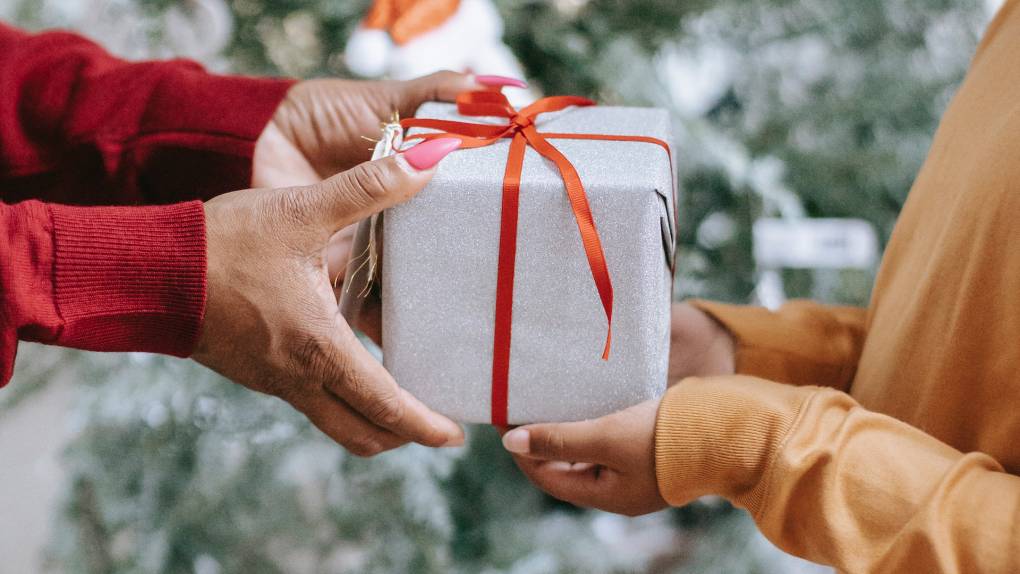
"caption": "At a time of unprecedented anti-trans legislation, it's important that adults make trans and gender-nonconforming young people feel loved during the holidays, writes therapist Veronica Esposito.",
"description": null,
"title": "pexels-any-lane-5727926",
"credit": "Any Lane/Pexels",
"status": "inherit",
"altTag": "An older person's hands place a Christmas gift into a child's hands.",
"isLoading": false,
"fetchFailed": false
},
"arts_13922776": {
"type": "attachments",
"id": "arts_13922776",
"meta": {
"index": "attachments_1716263798",
"site": "arts",
"id": "13922776",
"found": true
},
"parent": 13922774,
"imgSizes": {
"thumbnail": {
"file": "https://ww2.kqed.org/app/uploads/sites/2/2022/12/Quesabirria-160x90.jpg",
"width": 160,
"mimeType": "image/jpeg",
"height": 90
},
"post-thumbnail": {
"file": "https://ww2.kqed.org/app/uploads/sites/2/2022/12/Quesabirria-672x372.jpg",
"width": 672,
"mimeType": "image/jpeg",
"height": 372
},
"kqedFullSize": {
"file": "https://ww2.kqed.org/app/uploads/sites/2/2022/12/Quesabirria.jpg",
"width": 800,
"height": 450
},
"medium_large": {
"file": "https://ww2.kqed.org/app/uploads/sites/2/2022/12/Quesabirria-768x432.jpg",
"width": 768,
"mimeType": "image/jpeg",
"height": 432
}
},
"publishDate": 1671145359,
"modified": 1671145409,
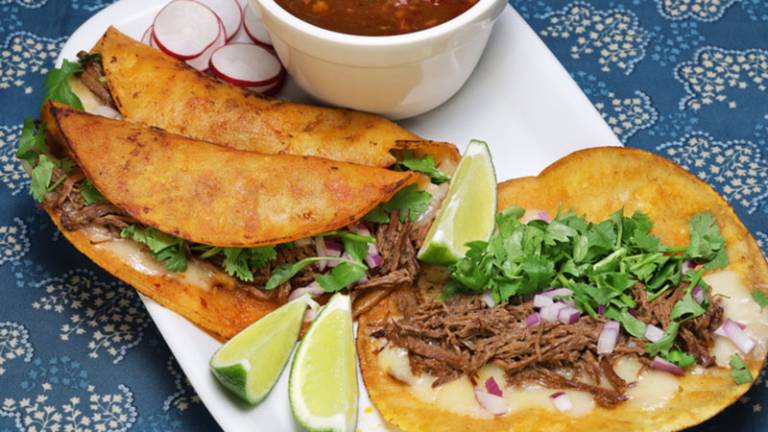
"caption": "We know those quesabirria tacos you ordered are good. But are you really gonna try to tell us they slap?",
"description": "We know those quesabirria tacos you ordered are good. But are you really gonna try to tell us they slap?",
"title": "We know those quesabirria tacos you ordered are good. But are you really gonna try to tell us they slap?",
"credit": "(iStock)",
"status": "inherit",
"altTag": "We know those quesabirria tacos you ordered are good. But are you really gonna try to tell us they slap?",
"isLoading": false,
"fetchFailed": false
},
"arts_13922291": {
"type": "attachments",
"id": "arts_13922291",
"meta": {
"index": "attachments_1716263798",
"site": "arts",
"id": "13922291",
"found": true
},
"parent": 13922186,
"imgSizes": {
"twentyfourteen-full-width": {
"file": "https://ww2.kqed.org/app/uploads/sites/2/2022/12/Vallejo.Sunset-1038x576.jpg",
"width": 1038,
"mimeType": "image/jpeg",
"height": 576
},
"thumbnail": {
"file": "https://ww2.kqed.org/app/uploads/sites/2/2022/12/Vallejo.Sunset-160x90.jpg",
"width": 160,
"mimeType": "image/jpeg",
"height": 90
},
"post-thumbnail": {
"file": "https://ww2.kqed.org/app/uploads/sites/2/2022/12/Vallejo.Sunset-672x372.jpg",
"width": 672,
"mimeType": "image/jpeg",
"height": 372
},
"kqedFullSize": {
"file": "https://ww2.kqed.org/app/uploads/sites/2/2022/12/Vallejo.Sunset.jpg",
"width": 1920,
"height": 1080
},
"large": {
"file": "https://ww2.kqed.org/app/uploads/sites/2/2022/12/Vallejo.Sunset-1020x574.jpg",
"width": 1020,
"mimeType": "image/jpeg",
"height": 574
},
"1536x1536": {
"file": "https://ww2.kqed.org/app/uploads/sites/2/2022/12/Vallejo.Sunset-1536x864.jpg",
"width": 1536,
"mimeType": "image/jpeg",
"height": 864
},
"medium": {
"file": "https://ww2.kqed.org/app/uploads/sites/2/2022/12/Vallejo.Sunset-800x450.jpg",
"width": 800,
"mimeType": "image/jpeg",
"height": 450
},
"medium_large": {
"file": "https://ww2.kqed.org/app/uploads/sites/2/2022/12/Vallejo.Sunset-768x432.jpg",
"width": 768,
"mimeType": "image/jpeg",
"height": 432
}
},
"publishDate": 1670003751,
"modified": 1670003847,
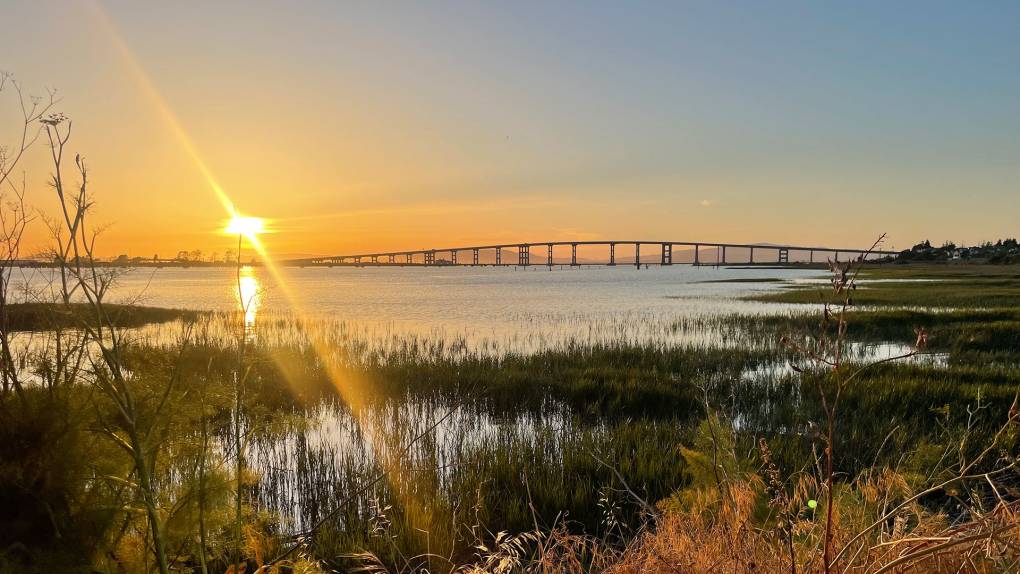
"caption": "The sun sets over Hwy. 37 in Vallejo — one of nature's many masterpieces on the canvas of Northern California. ",
"description": null,
"title": "Vallejo.Sunset",
"credit": "Pendarvis Harshaw",
"status": "inherit",
"altTag": "A low setting sun behind a bridge above water",
"isLoading": false,
"fetchFailed": false
},
"arts_13922255": {
"type": "attachments",
"id": "arts_13922255",
"meta": {
"index": "attachments_1716263798",
"site": "arts",
"id": "13922255",
"found": true
},
"parent": 13922179,
"imgSizes": {
"twentyfourteen-full-width": {
"file": "https://ww2.kqed.org/app/uploads/sites/2/2022/12/Gani.Taxi_.NYC_-1038x576.jpg",
"width": 1038,
"mimeType": "image/jpeg",
"height": 576
},
"thumbnail": {
"file": "https://ww2.kqed.org/app/uploads/sites/2/2022/12/Gani.Taxi_.NYC_-160x90.jpg",
"width": 160,
"mimeType": "image/jpeg",
"height": 90
},
"post-thumbnail": {
"file": "https://ww2.kqed.org/app/uploads/sites/2/2022/12/Gani.Taxi_.NYC_-672x372.jpg",
"width": 672,
"mimeType": "image/jpeg",
"height": 372
},
"kqedFullSize": {
"file": "https://ww2.kqed.org/app/uploads/sites/2/2022/12/Gani.Taxi_.NYC_.jpg",
"width": 1512,
"height": 851
},
"large": {
"file": "https://ww2.kqed.org/app/uploads/sites/2/2022/12/Gani.Taxi_.NYC_-1020x574.jpg",
"width": 1020,
"mimeType": "image/jpeg",
"height": 574
},
"medium": {
"file": "https://ww2.kqed.org/app/uploads/sites/2/2022/12/Gani.Taxi_.NYC_-800x450.jpg",
"width": 800,
"mimeType": "image/jpeg",
"height": 450
},
"medium_large": {
"file": "https://ww2.kqed.org/app/uploads/sites/2/2022/12/Gani.Taxi_.NYC_-768x432.jpg",
"width": 768,
"mimeType": "image/jpeg",
"height": 432
}
},
"publishDate": 1669945176,
"modified": 1669945425,
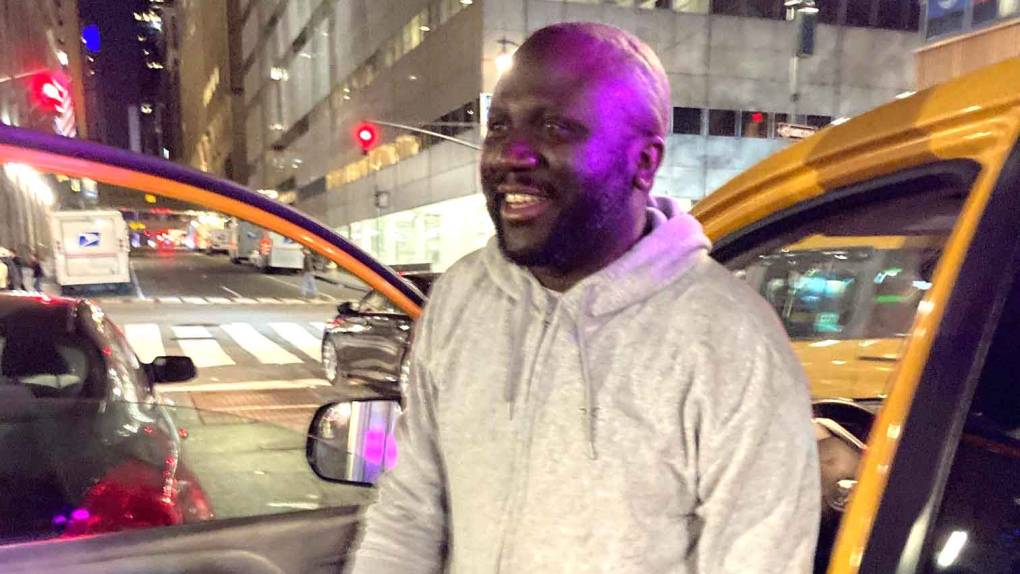
"caption": "Gani, a taxi driver in New York City, at the end of a long adventure. ",
"description": null,
"title": "Gani.Taxi.NYC",
"credit": "Gabe Meline/KQED",
"status": "inherit",
"altTag": null,
"isLoading": false,
"fetchFailed": false
},
"arts_13922220": {
"type": "attachments",
"id": "arts_13922220",
"meta": {
"index": "attachments_1716263798",
"site": "arts",
"id": "13922220",
"found": true
},
"parent": 13921882,
"imgSizes": {
"twentyfourteen-full-width": {
"file": "https://ww2.kqed.org/app/uploads/sites/2/2022/12/GettyImages-1322401462-1020x685-1-1038x576.jpg",
"width": 1038,
"mimeType": "image/jpeg",
"height": 576
},
"thumbnail": {
"file": "https://ww2.kqed.org/app/uploads/sites/2/2022/12/GettyImages-1322401462-1020x685-1-160x92.jpg",
"width": 160,
"mimeType": "image/jpeg",
"height": 92
},
"post-thumbnail": {
"file": "https://ww2.kqed.org/app/uploads/sites/2/2022/12/GettyImages-1322401462-1020x685-1-672x372.jpg",
"width": 672,
"mimeType": "image/jpeg",
"height": 372
},
"kqedFullSize": {
"file": "https://ww2.kqed.org/app/uploads/sites/2/2022/12/GettyImages-1322401462-1020x685-1.jpg",
"width": 1920,
"height": 1107
},
"large": {
"file": "https://ww2.kqed.org/app/uploads/sites/2/2022/12/GettyImages-1322401462-1020x685-1-1020x588.jpg",
"width": 1020,
"mimeType": "image/jpeg",
"height": 588
},
"1536x1536": {
"file": "https://ww2.kqed.org/app/uploads/sites/2/2022/12/GettyImages-1322401462-1020x685-1-1536x886.jpg",
"width": 1536,
"mimeType": "image/jpeg",
"height": 886
},
"medium": {
"file": "https://ww2.kqed.org/app/uploads/sites/2/2022/12/GettyImages-1322401462-1020x685-1-800x461.jpg",
"width": 800,
"mimeType": "image/jpeg",
"height": 461
},
"medium_large": {
"file": "https://ww2.kqed.org/app/uploads/sites/2/2022/12/GettyImages-1322401462-1020x685-1-768x443.jpg",
"width": 768,
"mimeType": "image/jpeg",
"height": 443
}
},
"publishDate": 1669922499,
"modified": 1669922535,
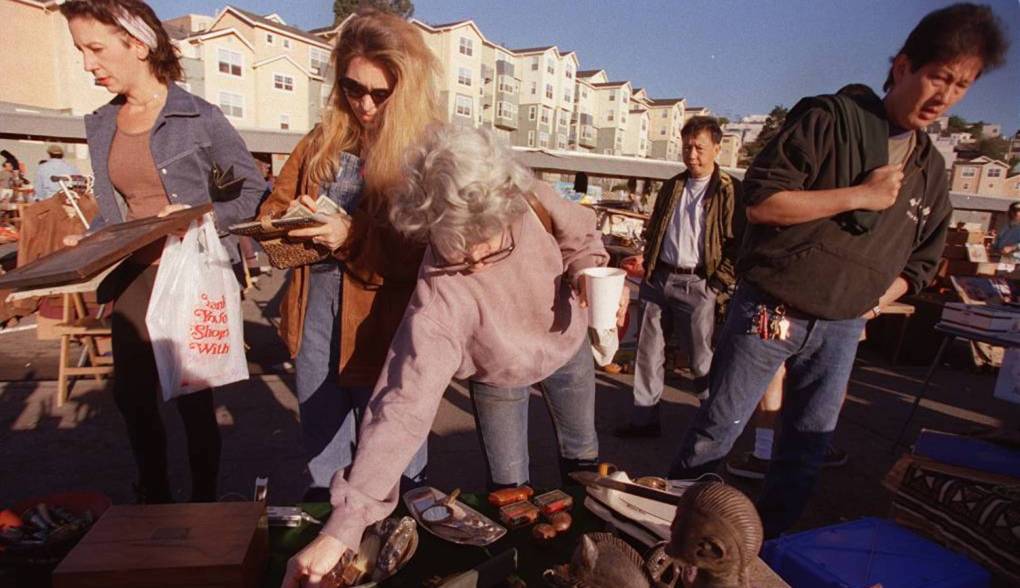
"caption": "Shoppers at the Alemany flea market look over a table in 1997.",
"description": null,
"title": "GettyImages-1322401462-1020x685",
"credit": "Photo by Lea Suzuki / The San Francisco Chronicle via Getty Images",
"status": "inherit",
"altTag": null,
"isLoading": false,
"fetchFailed": false
},
"arts_13922118": {
"type": "attachments",
"id": "arts_13922118",
"meta": {
"index": "attachments_1716263798",
"site": "arts",
"id": "13922118",
"found": true
},
"parent": 13922115,
"imgSizes": {
"twentyfourteen-full-width": {
"file": "https://ww2.kqed.org/app/uploads/sites/2/2022/11/BabyDub-1038x576.jpg",
"width": 1038,
"mimeType": "image/jpeg",
"height": 576
},
"thumbnail": {
"file": "https://ww2.kqed.org/app/uploads/sites/2/2022/11/BabyDub-160x90.jpg",
"width": 160,
"mimeType": "image/jpeg",
"height": 90
},
"post-thumbnail": {
"file": "https://ww2.kqed.org/app/uploads/sites/2/2022/11/BabyDub-672x372.jpg",
"width": 672,
"mimeType": "image/jpeg",
"height": 372
},
"kqedFullSize": {
"file": "https://ww2.kqed.org/app/uploads/sites/2/2022/11/BabyDub.jpg",
"width": 1920,
"height": 1080
},
"large": {
"file": "https://ww2.kqed.org/app/uploads/sites/2/2022/11/BabyDub-1020x574.jpg",
"width": 1020,
"mimeType": "image/jpeg",
"height": 574
},
"1536x1536": {
"file": "https://ww2.kqed.org/app/uploads/sites/2/2022/11/BabyDub-1536x864.jpg",
"width": 1536,
"mimeType": "image/jpeg",
"height": 864
},
"medium": {
"file": "https://ww2.kqed.org/app/uploads/sites/2/2022/11/BabyDub-800x450.jpg",
"width": 800,
"mimeType": "image/jpeg",
"height": 450
},
"medium_large": {
"file": "https://ww2.kqed.org/app/uploads/sites/2/2022/11/BabyDub-768x432.jpg",
"width": 768,
"mimeType": "image/jpeg",
"height": 432
}
},
"publishDate": 1669833596,
"modified": 1669833651,
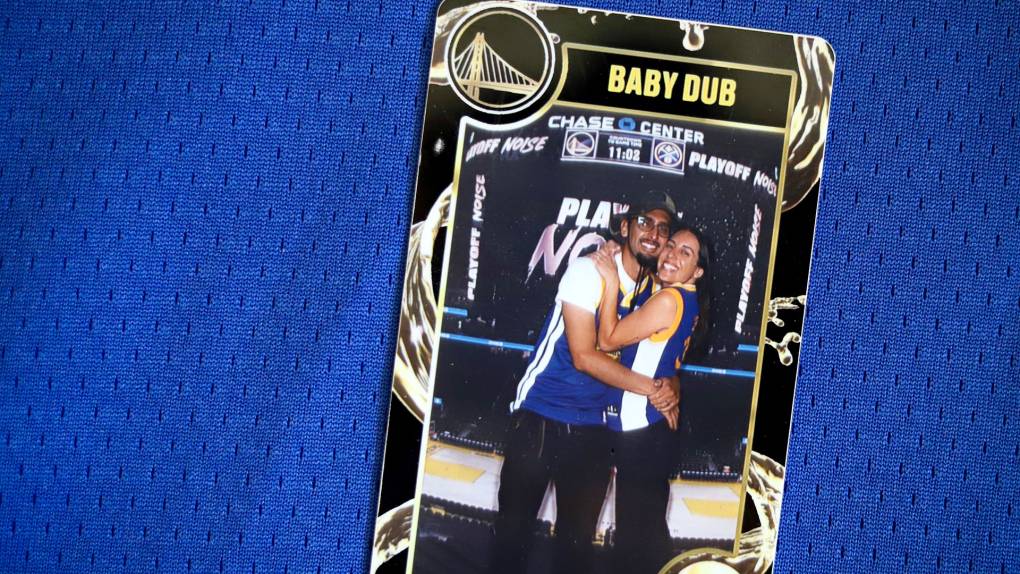
"caption": "A new member of the team is on the way.",
"description": null,
"title": "BabyDub",
"credit": "Alan Chazaro",
"status": "inherit",
"altTag": "A trading card with a photo of the author and his wife at the Chase Center",
"isLoading": false,
"fetchFailed": false
},
"arts_13922049": {
"type": "attachments",
"id": "arts_13922049",
"meta": {
"index": "attachments_1716263798",
"site": "arts",
"id": "13922049",
"found": true
},
"parent": 13922047,
"imgSizes": {
"thumbnail": {
"file": "https://ww2.kqed.org/app/uploads/sites/2/2022/11/575406_484238751646510_1776040795_n-160x119.jpg",
"width": 160,
"mimeType": "image/jpeg",
"height": 119
},
"post-thumbnail": {
"file": "https://ww2.kqed.org/app/uploads/sites/2/2022/11/575406_484238751646510_1776040795_n-672x372.jpg",
"width": 672,
"mimeType": "image/jpeg",
"height": 372
},
"kqedFullSize": {
"file": "https://ww2.kqed.org/app/uploads/sites/2/2022/11/575406_484238751646510_1776040795_n.jpg",
"width": 720,
"height": 536
}
},
"publishDate": 1669751210,
"modified": 1669751698,
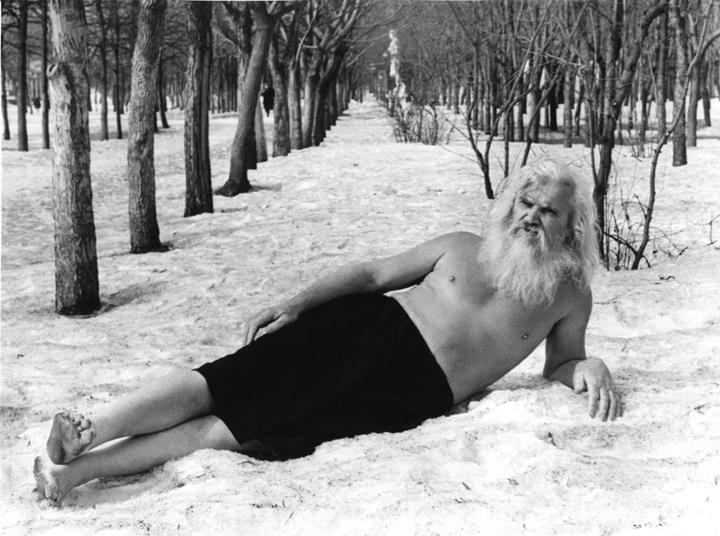
"caption": "Ukrainian-Russian mystic Porfiriy Ivanov, photographed at the end of his life in 1982, believed exposure to cold water made the body more resilient. ",
"description": null,
"title": "575406_484238751646510_1776040795_n",
"credit": "Edward Ettinger/Ogonyek",
"status": "inherit",
"altTag": null,
"isLoading": false,
"fetchFailed": false
},
"arts_13920867": {
"type": "attachments",
"id": "arts_13920867",
"meta": {
"index": "attachments_1716263798",
"site": "arts",
"id": "13920867",
"found": true
},
"parent": 13920829,
"imgSizes": {
"twentyfourteen-full-width": {
"file": "https://ww2.kqed.org/app/uploads/sites/2/2022/10/GettyImages-1429788074-1038x576.jpg",
"width": 1038,
"mimeType": "image/jpeg",
"height": 576
},
"thumbnail": {
"file": "https://ww2.kqed.org/app/uploads/sites/2/2022/10/GettyImages-1429788074-160x107.jpg",
"width": 160,
"mimeType": "image/jpeg",
"height": 107
},
"post-thumbnail": {
"file": "https://ww2.kqed.org/app/uploads/sites/2/2022/10/GettyImages-1429788074-672x372.jpg",
"width": 672,
"mimeType": "image/jpeg",
"height": 372
},
"kqedFullSize": {
"file": "https://ww2.kqed.org/app/uploads/sites/2/2022/10/GettyImages-1429788074-scaled.jpg",
"width": 2560,
"height": 1707
},
"2048x2048": {
"file": "https://ww2.kqed.org/app/uploads/sites/2/2022/10/GettyImages-1429788074-2048x1365.jpg",
"width": 2048,
"mimeType": "image/jpeg",
"height": 1365
},
"large": {
"file": "https://ww2.kqed.org/app/uploads/sites/2/2022/10/GettyImages-1429788074-1020x680.jpg",
"width": 1020,
"mimeType": "image/jpeg",
"height": 680
},
"1536x1536": {
"file": "https://ww2.kqed.org/app/uploads/sites/2/2022/10/GettyImages-1429788074-1536x1024.jpg",
"width": 1536,
"mimeType": "image/jpeg",
"height": 1024
},
"full-width": {
"file": "https://ww2.kqed.org/app/uploads/sites/2/2022/10/GettyImages-1429788074-1920x1280.jpg",
"width": 1920,
"mimeType": "image/jpeg",
"height": 1280
},
"medium": {
"file": "https://ww2.kqed.org/app/uploads/sites/2/2022/10/GettyImages-1429788074-800x533.jpg",
"width": 800,
"mimeType": "image/jpeg",
"height": 533
},
"medium_large": {
"file": "https://ww2.kqed.org/app/uploads/sites/2/2022/10/GettyImages-1429788074-768x512.jpg",
"width": 768,
"mimeType": "image/jpeg",
"height": 512
}
},
"publishDate": 1666731274,
"modified": 1666731377,
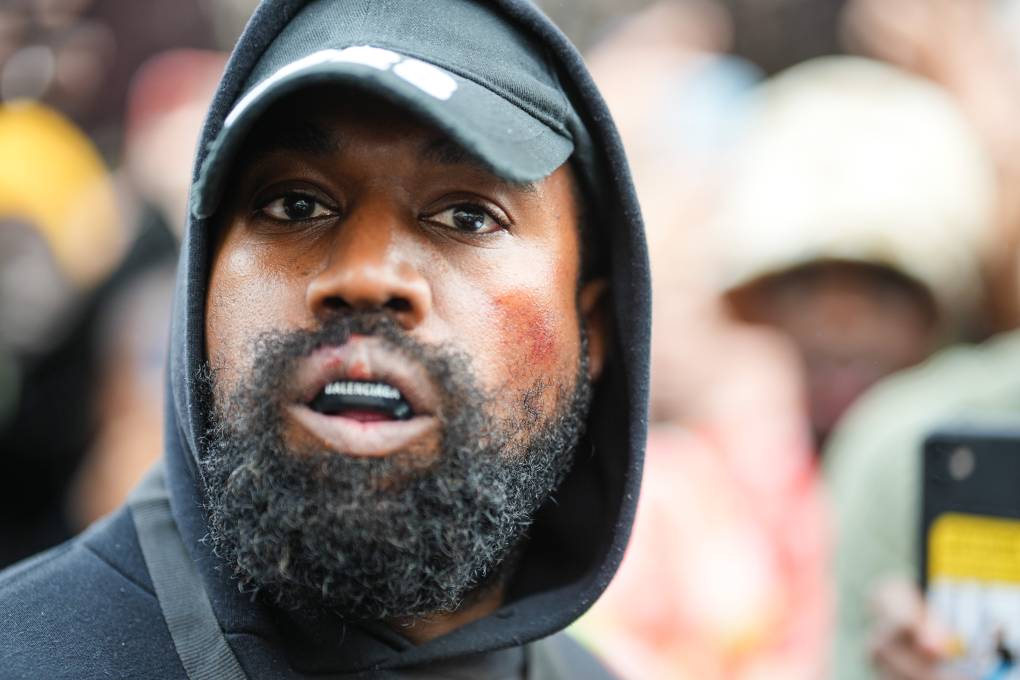
"caption": "Ye in Paris on Oct. 2, 2022.",
"description": null,
"title": "Ye in Paris on Oct. 2, 2022.",
"credit": "Edward Berthelot/GC Images",
"status": "inherit",
"altTag": "A bearded Black man wearing a black hoodie and baseball cap stares into the camera, mouth slightly open. He is wearing a mouthguard with Balenciaga written on it.",
"isLoading": false,
"fetchFailed": false
},
"arts_13920267": {
"type": "attachments",
"id": "arts_13920267",
"meta": {
"index": "attachments_1716263798",
"site": "arts",
"id": "13920267",
"found": true
},
"parent": 13919309,
"imgSizes": {
"twentyfourteen-full-width": {
"file": "https://ww2.kqed.org/app/uploads/sites/2/2022/10/WeStillHere_bigbro-1038x576.jpg",
"width": 1038,
"mimeType": "image/jpeg",
"height": 576
},
"thumbnail": {
"file": "https://ww2.kqed.org/app/uploads/sites/2/2022/10/WeStillHere_bigbro-160x90.jpg",
"width": 160,
"mimeType": "image/jpeg",
"height": 90
},
"post-thumbnail": {
"file": "https://ww2.kqed.org/app/uploads/sites/2/2022/10/WeStillHere_bigbro-672x372.jpg",
"width": 672,
"mimeType": "image/jpeg",
"height": 372
},
"kqedFullSize": {
"file": "https://ww2.kqed.org/app/uploads/sites/2/2022/10/WeStillHere_bigbro.jpg",
"width": 1920,
"height": 1080
},
"large": {
"file": "https://ww2.kqed.org/app/uploads/sites/2/2022/10/WeStillHere_bigbro-1020x574.jpg",
"width": 1020,
"mimeType": "image/jpeg",
"height": 574
},
"1536x1536": {
"file": "https://ww2.kqed.org/app/uploads/sites/2/2022/10/WeStillHere_bigbro-1536x864.jpg",
"width": 1536,
"mimeType": "image/jpeg",
"height": 864
},
"medium": {
"file": "https://ww2.kqed.org/app/uploads/sites/2/2022/10/WeStillHere_bigbro-800x450.jpg",
"width": 800,
"mimeType": "image/jpeg",
"height": 450
},
"medium_large": {
"file": "https://ww2.kqed.org/app/uploads/sites/2/2022/10/WeStillHere_bigbro-768x432.jpg",
"width": 768,
"mimeType": "image/jpeg",
"height": 432
}
},
"publishDate": 1665444768,
"modified": 1665444889,
"caption": "Two siblings in the Puerto Rican town of Comerío, after Hurricane Maria. A new film, 'We Still Here,' chronicles the community's rebuilding—and their fight against inequity.",
"description": null,
"title": "WeStillHere_bigbro",
"credit": "Courtesy Eli Jacobs-Fantauzzi",
"status": "inherit",
"altTag": "Two small children, a brother and sister, in a sparse room with gallons of water in the background",
"isLoading": false,
"fetchFailed": false
},
"arts_13919291": {
"type": "attachments",
"id": "arts_13919291",
"meta": {
"index": "attachments_1716263798",
"site": "arts",
"id": "13919291",
"found": true
},
"parent": 13919284,
"imgSizes": {
"twentyfourteen-full-width": {
"file": "https://ww2.kqed.org/app/uploads/sites/2/2022/09/GettyImages-1243360604-1038x576.jpg",
"width": 1038,
"mimeType": "image/jpeg",
"height": 576
},
"thumbnail": {
"file": "https://ww2.kqed.org/app/uploads/sites/2/2022/09/GettyImages-1243360604-160x101.jpg",
"width": 160,
"mimeType": "image/jpeg",
"height": 101
},
"post-thumbnail": {
"file": "https://ww2.kqed.org/app/uploads/sites/2/2022/09/GettyImages-1243360604-672x372.jpg",
"width": 672,
"mimeType": "image/jpeg",
"height": 372
},
"kqedFullSize": {
"file": "https://ww2.kqed.org/app/uploads/sites/2/2022/09/GettyImages-1243360604-scaled-e1663624088124.jpg",
"width": 1920,
"height": 1210
},
"2048x2048": {
"file": "https://ww2.kqed.org/app/uploads/sites/2/2022/09/GettyImages-1243360604-2048x1290.jpg",
"width": 2048,
"mimeType": "image/jpeg",
"height": 1290
},
"large": {
"file": "https://ww2.kqed.org/app/uploads/sites/2/2022/09/GettyImages-1243360604-1020x643.jpg",
"width": 1020,
"mimeType": "image/jpeg",
"height": 643
},
"1536x1536": {
"file": "https://ww2.kqed.org/app/uploads/sites/2/2022/09/GettyImages-1243360604-1536x968.jpg",
"width": 1536,
"mimeType": "image/jpeg",
"height": 968
},
"full-width": {
"file": "https://ww2.kqed.org/app/uploads/sites/2/2022/09/GettyImages-1243360604-1920x1210.jpg",
"width": 1920,
"mimeType": "image/jpeg",
"height": 1210
},
"medium": {
"file": "https://ww2.kqed.org/app/uploads/sites/2/2022/09/GettyImages-1243360604-800x504.jpg",
"width": 800,
"mimeType": "image/jpeg",
"height": 504
},
"medium_large": {
"file": "https://ww2.kqed.org/app/uploads/sites/2/2022/09/GettyImages-1243360604-768x484.jpg",
"width": 768,
"mimeType": "image/jpeg",
"height": 484
}
},
"publishDate": 1663623950,
"modified": 1663628600,
"caption": "Meghan Markle, Duchess of Sussex, riding to Queen Elizabeth's state funeral on Sept. 19, 2022.",
"description": null,
"title": "Meghan Markle, Duchess of Sussex driving to Queen Elizabeth's state funeral on Sept. 19, 2022.",
"credit": "Marko Djurica/Pool/AFP via Getty Images",
"status": "inherit",
"altTag": null,
"isLoading": false,
"fetchFailed": false
},
"arts_13918421": {
"type": "attachments",
"id": "arts_13918421",
"meta": {
"index": "attachments_1716263798",
"site": "arts",
"id": "13918421",
"found": true
},
"parent": 13918217,
"imgSizes": {
"twentyfourteen-full-width": {
"file": "https://ww2.kqed.org/app/uploads/sites/2/2022/08/Fallon.Sanz_-1038x576.jpg",
"width": 1038,
"mimeType": "image/jpeg",
"height": 576
},
"thumbnail": {
"file": "https://ww2.kqed.org/app/uploads/sites/2/2022/08/Fallon.Sanz_-160x100.jpg",
"width": 160,
"mimeType": "image/jpeg",
"height": 100
},
"post-thumbnail": {
"file": "https://ww2.kqed.org/app/uploads/sites/2/2022/08/Fallon.Sanz_-672x372.jpg",
"width": 672,
"mimeType": "image/jpeg",
"height": 372
},
"kqedFullSize": {
"file": "https://ww2.kqed.org/app/uploads/sites/2/2022/08/Fallon.Sanz_.jpg",
"width": 1780,
"height": 1113
},
"large": {
"file": "https://ww2.kqed.org/app/uploads/sites/2/2022/08/Fallon.Sanz_-1020x638.jpg",
"width": 1020,
"mimeType": "image/jpeg",
"height": 638
},
"1536x1536": {
"file": "https://ww2.kqed.org/app/uploads/sites/2/2022/08/Fallon.Sanz_-1536x960.jpg",
"width": 1536,
"mimeType": "image/jpeg",
"height": 960
},
"medium": {
"file": "https://ww2.kqed.org/app/uploads/sites/2/2022/08/Fallon.Sanz_-800x500.jpg",
"width": 800,
"mimeType": "image/jpeg",
"height": 500
},
"medium_large": {
"file": "https://ww2.kqed.org/app/uploads/sites/2/2022/08/Fallon.Sanz_-768x480.jpg",
"width": 768,
"mimeType": "image/jpeg",
"height": 480
}
},
"publishDate": 1661971990,
"modified": 1661972126,
"caption": "Jimmy Fallon and Horatio Sanz in 2002—the same year that Jane Doe alleges that Sanz abused her and Fallon was complicit. She was 17 at the time.",
"description": null,
"title": "Jimmy Fallon and Horatio Sanz in 2002—the same year that Jane Doe alleges that Sanz abused her and Fallon was complicit. She was 17 at the time.",
"credit": "Evan Agostini/ImageDirect",
"status": "inherit",
"altTag": "Jimmy Fallon with tousled hair, wearing a red T-shirt. Next to him is Horatio Sanz wearing sunglasses with red lenses and a blue shirt.",
"isLoading": false,
"fetchFailed": false
},
"arts_13914952": {
"type": "attachments",
"id": "arts_13914952",
"meta": {
"index": "attachments_1716263798",
"site": "arts",
"id": "13914952",
"found": true
},
"parent": 13914916,
"imgSizes": {
"twentyfourteen-full-width": {
"file": "https://ww2.kqed.org/app/uploads/sites/2/2022/06/StephOverhead_OVER-1038x576.jpg",
"width": 1038,
"mimeType": "image/jpeg",
"height": 576
},
"thumbnail": {
"file": "https://ww2.kqed.org/app/uploads/sites/2/2022/06/StephOverhead_OVER-160x107.jpg",
"width": 160,
"mimeType": "image/jpeg",
"height": 107
},
"post-thumbnail": {
"file": "https://ww2.kqed.org/app/uploads/sites/2/2022/06/StephOverhead_OVER-672x372.jpg",
"width": 672,
"mimeType": "image/jpeg",
"height": 372
},
"kqedFullSize": {
"file": "https://ww2.kqed.org/app/uploads/sites/2/2022/06/StephOverhead_OVER.jpg",
"width": 1920,
"height": 1281
},
"large": {
"file": "https://ww2.kqed.org/app/uploads/sites/2/2022/06/StephOverhead_OVER-1020x681.jpg",
"width": 1020,
"mimeType": "image/jpeg",
"height": 681
},
"1536x1536": {
"file": "https://ww2.kqed.org/app/uploads/sites/2/2022/06/StephOverhead_OVER-1536x1025.jpg",
"width": 1536,
"mimeType": "image/jpeg",
"height": 1025
},
"medium": {
"file": "https://ww2.kqed.org/app/uploads/sites/2/2022/06/StephOverhead_OVER-800x534.jpg",
"width": 800,
"mimeType": "image/jpeg",
"height": 534
},
"medium_large": {
"file": "https://ww2.kqed.org/app/uploads/sites/2/2022/06/StephOverhead_OVER-768x512.jpg",
"width": 768,
"mimeType": "image/jpeg",
"height": 512
}
},
"publishDate": 1655417455,
"modified": 1655418085,
"caption": "Stephen Curry of the Golden State Warriors drives to the basket against the Boston Celtics during the first quarter in Game Five of the 2022 NBA Finals at Chase Center on June 13, 2022 in San Francisco.",
"description": null,
"title": "StephOverhead_OVER",
"credit": "Photo by Ezra Shaw/Getty Images",
"status": "inherit",
"altTag": "Overhead view of Steph Curry making a basket with yellow court below",
"isLoading": false,
"fetchFailed": false
}
},
"audioPlayerReducer": {
"postId": "stream_live",
"isPaused": true,
"isPlaying": false,
"pfsActive": false,
"pledgeModalIsOpen": true,
"playerDrawerIsOpen": false,
"liveAudioPlayStartedAt": 0,
"liveAudioPlayContext": ""
},
"authorsReducer": {
"shotchkiss": {
"type": "authors",
"id": "61",
"meta": {
"index": "authors_1716337520",
"id": "61",
"found": true
},
"name": "Sarah Hotchkiss",
"firstName": "Sarah",
"lastName": "Hotchkiss",
"slug": "shotchkiss",
"email": "shotchkiss@kqed.org",
"display_author_email": true,
"staff_mastheads": [
"arts"
],
"title": "Senior Editor",
"bio": "Sarah Hotchkiss is a San Francisco \u003ca href=\"http://www.sarahhotchkiss.com\">artist\u003c/a> and arts writer. In 2019, she received the Dorothea & Leo Rabkin Foundation grant for visual art journalism and in 2020 she received a Society of Professional Journalists, Northern California award for excellence in arts and culture reporting.",
"avatar": "https://secure.gravatar.com/avatar/bc662df144b3d27fd8b1b6f1c2a420d34e91e53154d411bb7ad353cc8b6cea8d?s=600&d=blank&r=g",
"twitter": null,
"bluesky": null,
"facebook": null,
"instagram": null,
"linkedin": null,
"sites": [
{
"site": "",
"roles": [
"editor"
]
},
{
"site": "arts",
"roles": [
"Contributor",
"administrator"
]
},
{
"site": "artschool",
"roles": [
"administrator"
]
},
{
"site": "news",
"roles": [
"editor"
]
},
{
"site": "pop",
"roles": [
"administrator"
]
},
{
"site": "bayareabites",
"roles": [
"editor"
]
},
{
"site": "spark",
"roles": [
"editor"
]
},
{
"site": "checkplease",
"roles": [
"editor"
]
}
],
"headData": {
"title": "Sarah Hotchkiss | KQED",
"description": "Senior Editor",
"ogImgSrc": "https://secure.gravatar.com/avatar/bc662df144b3d27fd8b1b6f1c2a420d34e91e53154d411bb7ad353cc8b6cea8d?s=600&d=blank&r=g",
"twImgSrc": "https://secure.gravatar.com/avatar/bc662df144b3d27fd8b1b6f1c2a420d34e91e53154d411bb7ad353cc8b6cea8d?s=600&d=blank&r=g"
},
"isLoading": false,
"link": "/author/shotchkiss"
},
"gmeline": {
"type": "authors",
"id": "185",
"meta": {
"index": "authors_1716337520",
"id": "185",
"found": true
},
"name": "Gabe Meline",
"firstName": "Gabe",
"lastName": "Meline",
"slug": "gmeline",
"email": "gmeline@kqed.org",
"display_author_email": true,
"staff_mastheads": [
"arts"
],
"title": "Senior Editor, KQED Arts & Culture",
"bio": "Gabe Meline entered journalism at age 15 making photocopied zines, and has since earned awards from the Edward R. Murrow Awards, the Society for Professional Journalists, the Online Journalism Awards, the Association of Alternative Newsweeklies and the California Newspaper Publishers Association. Prior to KQED, he was the editor of the \u003cem>North Bay Bohemian\u003c/em> and a touring musician. He lives with his wife and daughter in his hometown of Santa Rosa, CA.",
"avatar": "https://secure.gravatar.com/avatar/5bebe57be0d8bc2dd318934feb47299e2d2d10cba28d09d8d7afb389a2ce2bdd?s=600&d=blank&r=g",
"twitter": null,
"bluesky": null,
"facebook": null,
"instagram": null,
"linkedin": null,
"sites": [
{
"site": "",
"roles": [
"editor"
]
},
{
"site": "arts",
"roles": [
"administrator"
]
},
{
"site": "artschool",
"roles": [
"editor"
]
},
{
"site": "news",
"roles": [
"author"
]
},
{
"site": "pop",
"roles": [
"editor"
]
},
{
"site": "bayareabites",
"roles": [
"editor"
]
},
{
"site": "food",
"roles": [
"editor"
]
},
{
"site": "forum",
"roles": [
"administrator"
]
},
{
"site": "liveblog",
"roles": [
"editor"
]
},
{
"site": "hiphop",
"roles": [
"editor"
]
}
],
"headData": {
"title": "Gabe Meline | KQED",
"description": "Senior Editor, KQED Arts & Culture",
"ogImgSrc": "https://secure.gravatar.com/avatar/5bebe57be0d8bc2dd318934feb47299e2d2d10cba28d09d8d7afb389a2ce2bdd?s=600&d=blank&r=g",
"twImgSrc": "https://secure.gravatar.com/avatar/5bebe57be0d8bc2dd318934feb47299e2d2d10cba28d09d8d7afb389a2ce2bdd?s=600&d=blank&r=g"
},
"isLoading": false,
"link": "/author/gmeline"
},
"ralexandra": {
"type": "authors",
"id": "11242",
"meta": {
"index": "authors_1716337520",
"id": "11242",
"found": true
},
"name": "Rae Alexandra",
"firstName": "Rae",
"lastName": "Alexandra",
"slug": "ralexandra",
"email": "ralexandra@kqed.org",
"display_author_email": true,
"staff_mastheads": [],
"title": "Reporter/Producer",
"bio": "Rae Alexandra is a Reporter/Producer for KQED Arts & Culture, and the creator/author of the \u003ca href=\"https://www.kqed.org/arts/program/rebel-girls-from-bay-area-history\">Rebel Girls From Bay Area History\u003c/a> and \u003ca href=\"https://www.kqed.org/bizarrebayarea\">Bizarre Bay Area\u003c/a> series. Her debut book, \u003ca href=\"https://citylights.com/politics-current-events-history/unsung-heroines35-women-who-changed/\">Unsung Heroines: 35 Women Who Changed the Bay Area\u003c/a> was published by City Lights in March 2026. In 2023, Rae was awarded an SPJ Excellence in Journalism Award for Arts & Culture. Rae was born and raised in Wales and subsequently — even after two decades in Northern California — still uses phrases that regularly baffle her coworkers.",
"avatar": "https://secure.gravatar.com/avatar/edfee8176c80cc0a382b051190f5341997df378a934a5774dcb0977732dfd401?s=600&d=blank&r=g",
"twitter": null,
"bluesky": null,
"facebook": null,
"instagram": null,
"linkedin": null,
"sites": [
{
"site": "arts",
"roles": [
"subscriber"
]
},
{
"site": "news",
"roles": [
"subscriber"
]
},
{
"site": "pop",
"roles": [
"subscriber"
]
},
{
"site": "bayareabites",
"roles": [
"subscriber"
]
},
{
"site": "science",
"roles": [
"subscriber"
]
}
],
"headData": {
"title": "Rae Alexandra | KQED",
"description": "Reporter/Producer",
"ogImgSrc": "https://secure.gravatar.com/avatar/edfee8176c80cc0a382b051190f5341997df378a934a5774dcb0977732dfd401?s=600&d=blank&r=g",
"twImgSrc": "https://secure.gravatar.com/avatar/edfee8176c80cc0a382b051190f5341997df378a934a5774dcb0977732dfd401?s=600&d=blank&r=g"
},
"isLoading": false,
"link": "/author/ralexandra"
},
"nvoynovskaya": {
"type": "authors",
"id": "11387",
"meta": {
"index": "authors_1716337520",
"id": "11387",
"found": true
},
"name": "Nastia Voynovskaya",
"firstName": "Nastia",
"lastName": "Voynovskaya",
"slug": "nvoynovskaya",
"email": "nvoynovskaya@kqed.org",
"display_author_email": false,
"staff_mastheads": [
"arts"
],
"title": "Editor and reporter",
"bio": "Nastia Voynovskaya is a reporter, editor and host at KQED Arts & Culture. She's been covering the arts in the Bay Area for over a decade, with a focus on music, queer culture, labor issues and grassroots organizing. She has edited KQED story series such as Trans Bay: A History of San Francisco's Gender-Diverse Community, and co-created KQED's Bay Area hip-hop history project, That's My Word. Nastia's work has been recognized by the Society of Professional Journalists and San Francisco Press Club. She regularly appears on podcasts and radio programs, including NPR's All Songs Considered, and hosts live events where music, culture and conversation meet.",
"avatar": "https://secure.gravatar.com/avatar/5025ee460e5a85d69ca20ea6c6f2f80d7e17795c828f61ea3aecfcd924e9042e?s=600&d=blank&r=g",
"twitter": null,
"bluesky": null,
"facebook": null,
"instagram": "https://www.instagram.com/nananastia/",
"linkedin": null,
"sites": [
{
"site": "",
"roles": [
"editor"
]
},
{
"site": "arts",
"roles": [
"administrator"
]
},
{
"site": "news",
"roles": [
"editor"
]
},
{
"site": "pop",
"roles": [
"administrator"
]
},
{
"site": "bayareabites",
"roles": [
"editor"
]
},
{
"site": "podcasts",
"roles": [
"editor"
]
},
{
"site": "hiphop",
"roles": [
"editor"
]
}
],
"headData": {
"title": "Nastia Voynovskaya | KQED",
"description": "Editor and reporter",
"ogImgSrc": "https://secure.gravatar.com/avatar/5025ee460e5a85d69ca20ea6c6f2f80d7e17795c828f61ea3aecfcd924e9042e?s=600&d=blank&r=g",
"twImgSrc": "https://secure.gravatar.com/avatar/5025ee460e5a85d69ca20ea6c6f2f80d7e17795c828f61ea3aecfcd924e9042e?s=600&d=blank&r=g"
},
"isLoading": false,
"link": "/author/nvoynovskaya"
},
"ogpenn": {
"type": "authors",
"id": "11491",
"meta": {
"index": "authors_1716337520",
"id": "11491",
"found": true
},
"name": "Pendarvis Harshaw",
"firstName": "Pendarvis",
"lastName": "Harshaw",
"slug": "ogpenn",
"email": "ogpenn@gmail.com",
"display_author_email": false,
"staff_mastheads": [
"arts"
],
"title": "Community Engagement Reporter",
"bio": "Pendarvis Harshaw is an educator, host and writer with KQED Arts.",
"avatar": "https://secure.gravatar.com/avatar/972b77ee8e3f346ae2b00622661187fbfabd059b5693bbdc1475ea7a722fd4cd?s=600&d=blank&r=g",
"twitter": null,
"bluesky": null,
"facebook": null,
"instagram": "ogpenn",
"linkedin": null,
"sites": [
{
"site": "arts",
"roles": [
"administrator"
]
},
{
"site": "news",
"roles": [
"editor"
]
},
{
"site": "bayareabites",
"roles": [
"author"
]
},
{
"site": "hiphop",
"roles": [
"editor"
]
}
],
"headData": {
"title": "Pendarvis Harshaw | KQED",
"description": "Community Engagement Reporter",
"ogImgSrc": "https://secure.gravatar.com/avatar/972b77ee8e3f346ae2b00622661187fbfabd059b5693bbdc1475ea7a722fd4cd?s=600&d=blank&r=g",
"twImgSrc": "https://secure.gravatar.com/avatar/972b77ee8e3f346ae2b00622661187fbfabd059b5693bbdc1475ea7a722fd4cd?s=600&d=blank&r=g"
},
"isLoading": false,
"link": "/author/ogpenn"
},
"mmedina": {
"type": "authors",
"id": "11528",
"meta": {
"index": "authors_1716337520",
"id": "11528",
"found": true
},
"name": "Marisol Medina-Cadena",
"firstName": "Marisol",
"lastName": "Medina-Cadena",
"slug": "mmedina",
"email": "mmedina@KQED.org",
"display_author_email": true,
"staff_mastheads": [],
"title": "Producer, Rightnowish Podcast",
"bio": "Marisol Medina-Cadena is a radio reporter and podcast producer. Before working at KQED, she produced for PBS member station, KCET, in Los Angeles. In 2017, Marisol won an Emmy Award for her work on the televised documentary, \u003cem>City Rising\u003c/em>, examining California's affordable housing crisis and the historical roots of gentrification.",
"avatar": "https://secure.gravatar.com/avatar/6c3db46a1cabb5e1fe9a365b5f4e681e?s=600&d=blank&r=g",
"twitter": "marisolreports",
"facebook": null,
"instagram": null,
"linkedin": null,
"sites": [
{
"site": "arts",
"roles": []
},
{
"site": "news",
"roles": [
"edit_others_posts"
]
}
],
"headData": {
"title": "Marisol Medina-Cadena | KQED",
"description": "Producer, Rightnowish Podcast",
"ogImgSrc": "https://secure.gravatar.com/avatar/6c3db46a1cabb5e1fe9a365b5f4e681e?s=600&d=blank&r=g",
"twImgSrc": "https://secure.gravatar.com/avatar/6c3db46a1cabb5e1fe9a365b5f4e681e?s=600&d=blank&r=g"
},
"isLoading": false,
"link": "/author/mmedina"
},
"achazaro": {
"type": "authors",
"id": "11748",
"meta": {
"index": "authors_1716337520",
"id": "11748",
"found": true
},
"name": "Alan Chazaro",
"firstName": "Alan",
"lastName": "Chazaro",
"slug": "achazaro",
"email": "agchazaro@gmail.com",
"display_author_email": true,
"staff_mastheads": [],
"title": "Food Writer and Reporter",
"bio": "Alan Chazaro is the author of \u003cem>This Is Not a Frank Ocean Cover Album\u003c/em> (Black Lawrence Press, 2019), \u003cem>Piñata Theory\u003c/em> (Black Lawrence Press, 2020), and \u003cem>Notes from the Eastern Span of the Bay Bridge\u003c/em> (Ghost City Press, 2021). He is a graduate of June Jordan’s Poetry for the People program at UC Berkeley and a former Lawrence Ferlinghetti Fellow at the University of San Francisco. He writes about sports, food, art, music, education, and culture while repping the Bay on \u003ca href=\"https://twitter.com/alan_chazaro\">Twitter\u003c/a> and \u003ca href=\"https://www.instagram.com/alan_chazaro/?hl=en\">Instagram\u003c/a> at @alan_chazaro.",
"avatar": "https://secure.gravatar.com/avatar/ea8b6dd970fc5c29e7a188e7d5861df7?s=600&d=blank&r=g",
"twitter": "alan_chazaro",
"facebook": null,
"instagram": null,
"linkedin": null,
"sites": [
{
"site": "arts",
"roles": [
"contributor"
]
},
{
"site": "news",
"roles": [
"editor"
]
}
],
"headData": {
"title": "Alan Chazaro | KQED",
"description": "Food Writer and Reporter",
"ogImgSrc": "https://secure.gravatar.com/avatar/ea8b6dd970fc5c29e7a188e7d5861df7?s=600&d=blank&r=g",
"twImgSrc": "https://secure.gravatar.com/avatar/ea8b6dd970fc5c29e7a188e7d5861df7?s=600&d=blank&r=g"
},
"isLoading": false,
"link": "/author/achazaro"
},
"vesposito": {
"type": "authors",
"id": "11934",
"meta": {
"index": "authors_1716337520",
"id": "11934",
"found": true
},
"name": "Veronica Esposito",
"firstName": "Veronica",
"lastName": "Esposito",
"slug": "vesposito",
"email": "ladoppiavitadinica@gmail.com",
"display_author_email": false,
"staff_mastheads": [],
"title": "KQED Contributor",
"bio": "Veronica Esposito is a Licensed Marriage and Family Therapist, as well as a freelance journalist covering the arts, lifestyle, and social justice for venues including The Guardian, KQED, World Literature Today, and many others. Her writing has appeared in dozens of venues, and she has published four books. As a therapist, she specializes in supporting and advocating for trans individuals, and more generally helps clients process and overcome traumatic histories, manage life transitions, and tell their own story.",
"avatar": "https://secure.gravatar.com/avatar/503a7126ebd8cb299fb632f755dac767?s=600&d=blank&r=g",
"twitter": null,
"facebook": null,
"instagram": null,
"linkedin": null,
"sites": [
{
"site": "arts",
"roles": [
"author"
]
}
],
"headData": {
"title": "Veronica Esposito | KQED",
"description": "KQED Contributor",
"ogImgSrc": "https://secure.gravatar.com/avatar/503a7126ebd8cb299fb632f755dac767?s=600&d=blank&r=g",
"twImgSrc": "https://secure.gravatar.com/avatar/503a7126ebd8cb299fb632f755dac767?s=600&d=blank&r=g"
},
"isLoading": false,
"link": "/author/vesposito"
}
},
"pagesReducer": {
"arts_tag_commentary": {
"type": "terms",
"id": "arts_2767",
"meta": {
"index": "terms_1716263798",
"site": "arts",
"id": "2767",
"score": 8.794542
},
"featImg": null,
"name": "commentary",
"description": null,
"taxonomy": "tag",
"headData": {
"twImgId": null,
"twTitle": null,
"ogTitle": null,
"ogImgId": null,
"twDescription": null,
"description": null,
"title": "commentary Archives | KQED Arts",
"ogDescription": null
},
"ttid": 2779,
"slug": "commentary",
"isLoading": false,
"title": "commentary",
"pageMeta": {
"site": "arts",
"WpPageTemplate": "page-topic-editorial",
"currentPage": 4
},
"blocks": [
{
"blockName": "kqed/post-list",
"attrs": {
"layout": "cardArticle2",
"query": "posts/arts?tag=commentary",
"seeMore": false,
"paginated": true,
"page": 4
}
},
{
"blockName": "kqed/ad"
}
]
}
},
"pfsSessionReducer": {},
"postsReducer": {
"stream_live": {
"type": "live",
"id": "stream_live",
"audioUrl": "https://streams.kqed.org/kqedradio",
"title": "Live Stream",
"excerpt": "Live Stream information currently unavailable.",
"link": "/radio",
"featImg": "",
"label": {
"name": "KQED Live",
"link": "/"
}
},
"stream_kqedNewscast": {
"type": "posts",
"id": "stream_kqedNewscast",
"audioUrl": "https://www.kqed.org/.stream/anon/radio/RDnews/newscast.mp3?_=1",
"title": "KQED Newscast",
"featImg": "",
"label": {
"name": "88.5 FM",
"link": "/"
}
},
"arts_13922811": {
"type": "posts",
"id": "arts_13922811",
"meta": {
"index": "posts_1716263798",
"site": "arts",
"id": "13922811",
"score": null,
"sort": [
1671472816000
]
},
"guestAuthors": [],
"slug": "this-holiday-season-let-trans-kids-be-kids",
"title": "This Holiday Season, Let Trans Kids Be Kids",
"publishDate": 1671472816,
"format": "standard",
"headTitle": "This Holiday Season, Let Trans Kids Be Kids | KQED",
"labelTerm": {},
"content": "\u003cp>Every young person deserves a normal childhood filled with school, extracurriculars, birthday celebrations and, of course, wonderful winter holidays. These early experiences are crucial parts of a healthy developmental path: Kids who don’t get them are at elevated risk for a host of lifelong mental health challenges, including difficulties managing relationships and a diminished ability to take care of oneself, find love or even hold a job.\u003c/p>\n\u003cp>Unfortunately, this December, transgender children across the country are going to have very abnormal holiday experiences. These kids are attempting to celebrate the holidays in the face of an unprecedented campaign of state-sponsored hatred against them, including hundreds of \u003ca href=\"https://www.washingtonpost.com/lifestyle/2022/10/14/anti-trans-bills/\" target=\"_blank\" rel=\"noopener noreferrer\">bills specifically targeting trans kids\u003c/a>, and crackpot misinformation purveyed by influencers with extremely broad reaches. And inevitably, around dinner tables and during gift exchanges, some of these children will find themselves at the center of debates about their right to exist. [aside postid='arts_13914743']\u003c/p>\n\u003cp>I well know the damage this does to children. I was once a trans kid, feeling the weight of a shameful secret that I held for my whole family, hyper-aware of anything that might reference the thing that we all daren’t speak of. And in my work providing peer support and mental health therapy to trans people, I’ve spoken with innumerable minors who tell me what it’s like to feel that they’re responsible for the feelings of all the adults around them. As a result, these children have elevated rates of anxiety, depression, self-harm and suicidality — things that are incredibly difficult to change if the adults responsible for these kids don’t step up.\u003c/p>\n\u003cp>Laura Anderson, a licensed child and family psychologist who has worked for years in trans healthcare, shared how complicated the holidays can be for everyone. She’s helped untangle complicated questions about which family members a kid is out to, whether or not relatives will respect a child’s identity, what to do if a child starts to feel uncomfortable during a gathering, and how to best make kids feel respected and affirmed. Even something as simple as a gift can be challenging: “What do you do if grandma buys all the boys dump trucks?” Anderson asks. “Trans kids can feel either seen or not seen based on if they’re misgendered by gifts. I’ve also seen adults laugh at gifts that are gender-expansive — you can see that they are uncomfortable.” [aside postid='education_535891']\u003c/p>\n\u003cp>Melissa Brown, a licensed marriage and family therapist, tells me about the guilt that her young trans clients internalize, coming to believe that they’re to blame for everything. “It’s really up to parents to say to them, you don’t have to take care of us, and it’s not your fault, you’re not responsible for this,” Brown says. “It’s about acknowledging that and dealing with it when it inevitably comes up.”\u003c/p>\n\u003cp>[ad fullwidth]\u003c/p>\n\u003cp>It’s normal and OK for adults to feel uncomfortable and confused when a child in their life comes out as trans. Brown notes that grief is a common experience; supporting a trans child can place adults into challenging situations. “I’ve worked with parents who have had to give up long-term friends,” Brown explains. “It’s hard for them to be able to hold that grief and loss of a relationship.” [pullquote]Just as I’ve seen how harmful it can be when parents don’t show up for their trans kids, I’ve also seen how transformative it is when those children feel truly loved and supported by their caregivers.[/pullquote]\u003c/p>\n\u003cp>Adults are certainly allowed to feel daunted by the challenge of making space for their trans kid to have a normal, happy childhood. But while parents work through their own issues, it’s not appropriate for them to make their children feel responsible. This sends the message to kids that they’re the problem and their parents feel ashamed of who they are, or that they can’t count on their parents’ unconditional love and support. Holidays are a crucial time when parents need to show their trans kids that they are loved.\u003c/p>\n\u003cp>Anderson believes that adults can help by taking the burden off of children and placing it where it belongs. She recommends that parents and relatives have frank talks with each other about anti-trans misinformation, or about old-school gender norms that are no longer valid. It’s the responsibility of adults to deal with this on their own, and not place the burden on children just trying to enjoy their holidays. [aside postid='arts_13881725']\u003c/p>\n\u003cp>Just as I’ve seen how harmful it can be when parents don’t show up for their trans kids, I’ve also seen how transformative it is when those children feel truly loved and supported by their caregivers. Moments like that are truly life-changing, and they create unique bonds among family. In the words of Anderson, “There’s a really distinct kind of closeness that can come with family, where you’re leaning into what kids need and communicating with their adults.”\u003c/p>\n\u003cp>This December, adults need to leave the politics at the door and really show up for the young people in their lives — after a long and difficult 2022, they deserve nothing less.\u003c/p>\n\u003cp>\u003cimg loading=\"lazy\" decoding=\"async\" class=\"aligncenter size-medium wp-image-12127869\" src=\"https://ww2.kqed.org/app/uploads/sites/2/2016/09/Q.Logo_.Break_-800x78.jpg\" alt=\"\" width=\"800\" height=\"78\" srcset=\"https://cdn.kqed.org/wp-content/uploads/sites/2/2016/09/Q.Logo_.Break_.jpg 800w, https://cdn.kqed.org/wp-content/uploads/sites/2/2016/09/Q.Logo_.Break_-400x39.jpg 400w, https://cdn.kqed.org/wp-content/uploads/sites/2/2016/09/Q.Logo_.Break_-768x75.jpg 768w\" sizes=\"(max-width: 800px) 100vw, 800px\">\u003c/p>\n\u003cp>\u003c/p>\n\u003cp>\u003cem>Veronica Esposito is a writer, transgender advocate and associate marriage and family therapist specializing in supporting transgender clients. \u003c/em>\u003c/p>\n\n",
"blocks": [],
"excerpt": "At a time of anti-trans legislation, it's crucial for adults to make gender-nonconforming kids feel loved.",
"status": "publish",
"parent": 0,
"modified": 1732568328,
"stats": {
"hasAudio": false,
"hasVideo": false,
"hasChartOrMap": false,
"iframeSrcs": [],
"hasGoogleForm": false,
"hasGallery": false,
"hasHearkenModule": false,
"hasPolis": false,
"paragraphCount": 14,
"wordCount": 952
},
"headData": {
"title": "This Holiday Season, Let Trans Kids Be Kids | KQED",
"description": "At a time of anti-trans legislation, it's crucial for adults to make gender-nonconforming kids feel loved.",
"ogTitle": "",
"ogDescription": "",
"ogImgId": "",
"twTitle": "",
"twDescription": "",
"twImgId": "",
"schema": {
"@context": "https://schema.org",
"@type": "Article",
"headline": "This Holiday Season, Let Trans Kids Be Kids",
"datePublished": "2022-12-19T10:00:16-08:00",
"dateModified": "2024-11-25T12:58:48-08:00",
"image": "https://cdn.kqed.org/wp-content/uploads/2020/02/KQED-OG-Image@1x.png"
}
},
"source": "Commentary",
"sourceUrl": "https://www.kqed.org/arts/category/commentary",
"sticky": false,
"templateType": "standard",
"featuredImageType": "standard",
"excludeFromSiteSearch": "Include",
"showOnAuthorArchivePages": "No",
"articleAge": "0",
"path": "/arts/13922811/this-holiday-season-let-trans-kids-be-kids",
"audioTrackLength": null,
"parsedContent": [
{
"type": "contentString",
"content": "\u003cdiv class=\"post-body\">\u003cp>\u003cp>Every young person deserves a normal childhood filled with school, extracurriculars, birthday celebrations and, of course, wonderful winter holidays. These early experiences are crucial parts of a healthy developmental path: Kids who don’t get them are at elevated risk for a host of lifelong mental health challenges, including difficulties managing relationships and a diminished ability to take care of oneself, find love or even hold a job.\u003c/p>\n\u003cp>Unfortunately, this December, transgender children across the country are going to have very abnormal holiday experiences. These kids are attempting to celebrate the holidays in the face of an unprecedented campaign of state-sponsored hatred against them, including hundreds of \u003ca href=\"https://www.washingtonpost.com/lifestyle/2022/10/14/anti-trans-bills/\" target=\"_blank\" rel=\"noopener noreferrer\">bills specifically targeting trans kids\u003c/a>, and crackpot misinformation purveyed by influencers with extremely broad reaches. And inevitably, around dinner tables and during gift exchanges, some of these children will find themselves at the center of debates about their right to exist. \u003c/p>\u003c/div>",
"attributes": {
"named": {},
"numeric": []
}
},
{
"type": "component",
"content": "",
"name": "aside",
"attributes": {
"named": {
"postid": "arts_13914743",
"label": ""
},
"numeric": []
}
},
{
"type": "contentString",
"content": "\u003cdiv class=\"post-body\">\u003cp>\u003c/p>\n\u003cp>I well know the damage this does to children. I was once a trans kid, feeling the weight of a shameful secret that I held for my whole family, hyper-aware of anything that might reference the thing that we all daren’t speak of. And in my work providing peer support and mental health therapy to trans people, I’ve spoken with innumerable minors who tell me what it’s like to feel that they’re responsible for the feelings of all the adults around them. As a result, these children have elevated rates of anxiety, depression, self-harm and suicidality — things that are incredibly difficult to change if the adults responsible for these kids don’t step up.\u003c/p>\n\u003cp>Laura Anderson, a licensed child and family psychologist who has worked for years in trans healthcare, shared how complicated the holidays can be for everyone. She’s helped untangle complicated questions about which family members a kid is out to, whether or not relatives will respect a child’s identity, what to do if a child starts to feel uncomfortable during a gathering, and how to best make kids feel respected and affirmed. Even something as simple as a gift can be challenging: “What do you do if grandma buys all the boys dump trucks?” Anderson asks. “Trans kids can feel either seen or not seen based on if they’re misgendered by gifts. I’ve also seen adults laugh at gifts that are gender-expansive — you can see that they are uncomfortable.” \u003c/p>\u003c/div>",
"attributes": {
"named": {},
"numeric": []
}
},
{
"type": "component",
"content": "",
"name": "aside",
"attributes": {
"named": {
"postid": "education_535891",
"label": ""
},
"numeric": []
}
},
{
"type": "contentString",
"content": "\u003cdiv class=\"post-body\">\u003cp>\u003c/p>\n\u003cp>Melissa Brown, a licensed marriage and family therapist, tells me about the guilt that her young trans clients internalize, coming to believe that they’re to blame for everything. “It’s really up to parents to say to them, you don’t have to take care of us, and it’s not your fault, you’re not responsible for this,” Brown says. “It’s about acknowledging that and dealing with it when it inevitably comes up.”\u003c/p>\n\u003cp>\u003c/p>\u003c/div>",
"attributes": {
"named": {},
"numeric": []
}
},
{
"type": "component",
"content": "",
"name": "ad",
"attributes": {
"named": {
"label": "fullwidth"
},
"numeric": [
"fullwidth"
]
}
},
{
"type": "contentString",
"content": "\u003cdiv class=\"post-body\">\u003cp>\u003c/p>\n\u003cp>It’s normal and OK for adults to feel uncomfortable and confused when a child in their life comes out as trans. Brown notes that grief is a common experience; supporting a trans child can place adults into challenging situations. “I’ve worked with parents who have had to give up long-term friends,” Brown explains. “It’s hard for them to be able to hold that grief and loss of a relationship.” \u003c/p>\u003c/div>",
"attributes": {
"named": {},
"numeric": []
}
},
{
"type": "component",
"content": "Just as I’ve seen how harmful it can be when parents don’t show up for their trans kids, I’ve also seen how transformative it is when those children feel truly loved and supported by their caregivers.",
"name": "pullquote",
"attributes": {
"named": {
"label": ""
},
"numeric": []
}
},
{
"type": "contentString",
"content": "\u003cdiv class=\"post-body\">\u003cp>\u003c/p>\n\u003cp>Adults are certainly allowed to feel daunted by the challenge of making space for their trans kid to have a normal, happy childhood. But while parents work through their own issues, it’s not appropriate for them to make their children feel responsible. This sends the message to kids that they’re the problem and their parents feel ashamed of who they are, or that they can’t count on their parents’ unconditional love and support. Holidays are a crucial time when parents need to show their trans kids that they are loved.\u003c/p>\n\u003cp>Anderson believes that adults can help by taking the burden off of children and placing it where it belongs. She recommends that parents and relatives have frank talks with each other about anti-trans misinformation, or about old-school gender norms that are no longer valid. It’s the responsibility of adults to deal with this on their own, and not place the burden on children just trying to enjoy their holidays. \u003c/p>\u003c/div>",
"attributes": {
"named": {},
"numeric": []
}
},
{
"type": "component",
"content": "",
"name": "aside",
"attributes": {
"named": {
"postid": "arts_13881725",
"label": ""
},
"numeric": []
}
},
{
"type": "contentString",
"content": "\u003cdiv class=\"post-body\">\u003cp>\u003c/p>\n\u003cp>Just as I’ve seen how harmful it can be when parents don’t show up for their trans kids, I’ve also seen how transformative it is when those children feel truly loved and supported by their caregivers. Moments like that are truly life-changing, and they create unique bonds among family. In the words of Anderson, “There’s a really distinct kind of closeness that can come with family, where you’re leaning into what kids need and communicating with their adults.”\u003c/p>\n\u003cp>This December, adults need to leave the politics at the door and really show up for the young people in their lives — after a long and difficult 2022, they deserve nothing less.\u003c/p>\n\u003cp>\u003cimg loading=\"lazy\" decoding=\"async\" class=\"aligncenter size-medium wp-image-12127869\" src=\"https://ww2.kqed.org/app/uploads/sites/2/2016/09/Q.Logo_.Break_-800x78.jpg\" alt=\"\" width=\"800\" height=\"78\" srcset=\"https://cdn.kqed.org/wp-content/uploads/sites/2/2016/09/Q.Logo_.Break_.jpg 800w, https://cdn.kqed.org/wp-content/uploads/sites/2/2016/09/Q.Logo_.Break_-400x39.jpg 400w, https://cdn.kqed.org/wp-content/uploads/sites/2/2016/09/Q.Logo_.Break_-768x75.jpg 768w\" sizes=\"(max-width: 800px) 100vw, 800px\">\u003c/p>\n\u003cp>\u003c/p>\n\u003cp>\u003cem>Veronica Esposito is a writer, transgender advocate and associate marriage and family therapist specializing in supporting transgender clients. \u003c/em>\u003c/p>\n\n\u003c/div>\u003c/p>",
"attributes": {
"named": {},
"numeric": []
}
}
],
"link": "/arts/13922811/this-holiday-season-let-trans-kids-be-kids",
"authors": [
"11934"
],
"categories": [
"arts_1",
"arts_2303"
],
"tags": [
"arts_2767",
"arts_10278",
"arts_3247",
"arts_3226",
"arts_4773",
"arts_702"
],
"featImg": "arts_13922818",
"label": "source_arts_13922811"
},
"arts_13922774": {
"type": "posts",
"id": "arts_13922774",
"meta": {
"index": "posts_1716263798",
"site": "arts",
"id": "13922774",
"score": null,
"sort": [
1671188409000
]
},
"guestAuthors": [],
"slug": "food-still-dont-slap",
"title": "Food (Still) Don't Slap",
"publishDate": 1671188409,
"format": "audio",
"headTitle": "Food (Still) Don’t Slap | KQED",
"labelTerm": {},
"content": "\u003cp>If you’re going to use Bay Area slang, use it right.\u003c/p>\n\u003cp>“Slap” is a term used in this region since the early 2000s to describe the sound of music laden with hard-hitting 808 drum machine beats and heavy bass lines. It’s not a word to describe a quality sandwich.\u003c/p>\n\u003cp>While language, especially slang, is full of words with multiple meanings, many folks from the soil have been on a mission to set the record straight on how the lingo should be used.\u003c/p>\n\u003cp>This week on Rightnowish, we’re diving deep into the etymology of the term and clarifying how it’s best applied.\u003c/p>\n\u003cp>\u003c!-- iframe plugin v.4.3 wordpress.org/plugins/iframe/ -->\u003cbr>\n\u003ciframe loading=\"lazy\" frameborder=\"0\" height=\"200\" scrolling=\"no\" src=\"https://playlist.megaphone.fm/?e=KQINC7779286777\" width=\"100%\" class=\"iframe-class\">\u003c/iframe>\u003c/p>\n\u003cp>This piece was originally published as a written article in January 2022, you can find that \u003ca href=\"https://www.kqed.org/arts/13908052/food-doesnt-slap\" target=\"_blank\" rel=\"noopener noreferrer\">by clicking here\u003c/a>.\u003c/p>\n\u003cp>\u003cimg loading=\"lazy\" decoding=\"async\" class=\"aligncenter size-full wp-image-12127869\" src=\"https://ww2.kqed.org/app/uploads/sites/2/2016/09/Q.Logo_.Break_.jpg\" alt=\"\" width=\"800\" height=\"78\" srcset=\"https://cdn.kqed.org/wp-content/uploads/sites/2/2016/09/Q.Logo_.Break_.jpg 800w, https://cdn.kqed.org/wp-content/uploads/sites/2/2016/09/Q.Logo_.Break_-400x39.jpg 400w, https://cdn.kqed.org/wp-content/uploads/sites/2/2016/09/Q.Logo_.Break_-768x75.jpg 768w\" sizes=\"(max-width: 800px) 100vw, 800px\">\u003c/p>\n\u003cp>\u003cstrong>\u003cem>Rightnowish is an arts and culture podcast produced at KQED. Listen to it wherever you get your podcasts or click the play button at the top of this page and subscribe to the show on \u003ca href=\"https://www.npr.org/podcasts/721590300/rightnowish\">NPR One\u003c/a>, \u003ca href=\"https://open.spotify.com/show/7kEJuafTzTVan7B78ttz1I\">Spotify\u003c/a>, \u003ca href=\"https://podcasts.apple.com/us/podcast/rightnowish/id1482187648\">Apple Podcasts\u003c/a>, \u003ca href=\"https://tunein.com/podcasts/Arts--Culture-Podcasts/Rightnowish-p1258245/\">TuneIn\u003c/a>, \u003ca href=\"https://www.stitcher.com/podcast/kqed/rightnowish\">Stitcher\u003c/a> or wherever you get your podcasts. \u003c/em>\u003c/strong>\u003c/p>\n\u003cp>[ad fullwidth]=\u003c/p>\n\u003cp>\u003c/p>\n",
"blocks": [],
"excerpt": null,
"status": "publish",
"parent": 0,
"modified": 1726759169,
"stats": {
"hasAudio": true,
"hasVideo": false,
"hasChartOrMap": false,
"iframeSrcs": [],
"hasGoogleForm": false,
"hasGallery": false,
"hasHearkenModule": false,
"hasPolis": false,
"paragraphCount": 10,
"wordCount": 181
},
"headData": {
"title": "Food (Still) Don't Slap | KQED",
"description": "If you're going to use Bay Area slang, use it right. "Slap" is a term used in this region since the early 2000s to describe the sound of music laden with hard-hitting 808 drum machine beats and heavy bass lines. It's not a word to describe a quality sandwich. While language, especially slang, is full of words with multiple meanings, many folks from the soil have been on a mission to set the record straight on how the lingo should be used. This week on Rightnowish, we're diving deep into the etymology of the term and clarifying how it's best",
"ogTitle": "",
"ogDescription": "",
"ogImgId": "",
"twTitle": "",
"twDescription": "",
"twImgId": "",
"schema": {
"@context": "https://schema.org",
"@type": "Article",
"headline": "Food (Still) Don't Slap",
"datePublished": "2022-12-16T03:00:09-08:00",
"dateModified": "2024-09-19T08:19:29-07:00",
"image": "https://cdn.kqed.org/wp-content/uploads/2020/02/KQED-OG-Image@1x.png"
}
},
"source": "Rightnowish",
"sourceUrl": "https://www.kqed.org/rightnowish",
"audioUrl": "https://www.podtrac.com/pts/redirect.mp3/chrt.fm/track/A511B8/traffic.megaphone.fm/KQINC7779286777.mp3?updated=1671175753",
"sticky": false,
"templateType": "standard",
"featuredImageType": "standard",
"excludeFromSiteSearch": "Include",
"articleAge": "0",
"path": "/arts/13922774/food-still-dont-slap",
"audioTrackLength": null,
"parsedContent": [
{
"type": "contentString",
"content": "\u003cdiv class=\"post-body\">\u003cp>\u003cp>If you’re going to use Bay Area slang, use it right.\u003c/p>\n\u003cp>“Slap” is a term used in this region since the early 2000s to describe the sound of music laden with hard-hitting 808 drum machine beats and heavy bass lines. It’s not a word to describe a quality sandwich.\u003c/p>\n\u003cp>While language, especially slang, is full of words with multiple meanings, many folks from the soil have been on a mission to set the record straight on how the lingo should be used.\u003c/p>\n\u003cp>This week on Rightnowish, we’re diving deep into the etymology of the term and clarifying how it’s best applied.\u003c/p>\n\u003cp>\u003c!-- iframe plugin v.4.3 wordpress.org/plugins/iframe/ -->\u003cbr>\n\u003ciframe loading=\"lazy\" frameborder=\"0\" height=\"200\" scrolling=\"no\" src=\"https://playlist.megaphone.fm/?e=KQINC7779286777\" width=\"100%\" class=\"iframe-class\">\u003c/iframe>\u003c/p>\n\u003cp>This piece was originally published as a written article in January 2022, you can find that \u003ca href=\"https://www.kqed.org/arts/13908052/food-doesnt-slap\" target=\"_blank\" rel=\"noopener noreferrer\">by clicking here\u003c/a>.\u003c/p>\n\u003cp>\u003cimg loading=\"lazy\" decoding=\"async\" class=\"aligncenter size-full wp-image-12127869\" src=\"https://ww2.kqed.org/app/uploads/sites/2/2016/09/Q.Logo_.Break_.jpg\" alt=\"\" width=\"800\" height=\"78\" srcset=\"https://cdn.kqed.org/wp-content/uploads/sites/2/2016/09/Q.Logo_.Break_.jpg 800w, https://cdn.kqed.org/wp-content/uploads/sites/2/2016/09/Q.Logo_.Break_-400x39.jpg 400w, https://cdn.kqed.org/wp-content/uploads/sites/2/2016/09/Q.Logo_.Break_-768x75.jpg 768w\" sizes=\"(max-width: 800px) 100vw, 800px\">\u003c/p>\n\u003cp>\u003cstrong>\u003cem>Rightnowish is an arts and culture podcast produced at KQED. Listen to it wherever you get your podcasts or click the play button at the top of this page and subscribe to the show on \u003ca href=\"https://www.npr.org/podcasts/721590300/rightnowish\">NPR One\u003c/a>, \u003ca href=\"https://open.spotify.com/show/7kEJuafTzTVan7B78ttz1I\">Spotify\u003c/a>, \u003ca href=\"https://podcasts.apple.com/us/podcast/rightnowish/id1482187648\">Apple Podcasts\u003c/a>, \u003ca href=\"https://tunein.com/podcasts/Arts--Culture-Podcasts/Rightnowish-p1258245/\">TuneIn\u003c/a>, \u003ca href=\"https://www.stitcher.com/podcast/kqed/rightnowish\">Stitcher\u003c/a> or wherever you get your podcasts. \u003c/em>\u003c/strong>\u003c/p>\n\u003cp>\u003c/p>\u003c/div>",
"attributes": {
"named": {},
"numeric": []
}
},
{
"type": "component",
"content": "",
"name": "ad",
"attributes": {
"named": {
"label": "fullwidth"
},
"numeric": [
"fullwidth"
]
}
},
{
"type": "contentString",
"content": "\u003cdiv class=\"post-body\">\u003cp>=\u003c/p>\n\u003cp>\u003c/p>\n\u003c/div>\u003c/p>",
"attributes": {
"named": {},
"numeric": []
}
}
],
"link": "/arts/13922774/food-still-dont-slap",
"authors": [
"11491",
"11528"
],
"programs": [
"arts_8720"
],
"categories": [
"arts_1",
"arts_2303",
"arts_12276",
"arts_21759"
],
"tags": [
"arts_1331",
"arts_2767",
"arts_6975",
"arts_1143"
],
"featImg": "arts_13922776",
"label": "source_arts_13922774"
},
"arts_13922186": {
"type": "posts",
"id": "arts_13922186",
"meta": {
"index": "posts_1716263798",
"site": "arts",
"id": "13922186",
"score": null,
"sort": [
1670007900000
]
},
"parent": 0,
"labelTerm": {},
"blocks": [],
"publishDate": 1670007900,
"format": "standard",
"title": "The Most Memorable Sunset of the Year",
"headTitle": "The Most Memorable Sunset of the Year | KQED",
"content": "\u003cp>\u003cem>This week, as we near the end of 2022, the writers and editors of KQED Arts & Culture are reflecting on \u003ca href=\"https://www.kqed.org/arts/tag/one-beautiful-thing\">One Beautiful Thing\u003c/a> from the year. Here, in a year of endless freeway commutes and big-city gridlock, correspondent Pendarvis Harshaw honors the spiritual regeneration of a well-timed sunset.\u003c/em>\u003c/p>\n\u003cp>\u003cspan style=\"font-size: 4.6875em;float: left;line-height: 0.733em;padding: 0.05em 0.1em 0 0;font-family: times, serif, georgia\">S\u003c/span>omeone asks you the best place to watch a sunset in Northern California, what do you say?\u003c/p>\n\u003cp>Driving down I-80 after leaving Tahoe? Sitting on a beach in Monterey? Pulled over somewhere on Hwy. 1, watching that big burning ball in the sky skinny dip into the Pacific?\u003c/p>\n\u003cp>\u003cimg loading=\"lazy\" decoding=\"async\" src=\"https://ww2.kqed.org/arts/wp-content/uploads/sites/2/2018/05/OGPenn.Cap_-160x184.jpg\" alt=\"\" width=\"160\" height=\"184\" class=\"alignright size-thumbnail wp-image-13833985\" srcset=\"https://cdn.kqed.org/wp-content/uploads/sites/2/2018/05/OGPenn.Cap_-160x184.jpg 160w, https://cdn.kqed.org/wp-content/uploads/sites/2/2018/05/OGPenn.Cap_.jpg 180w\" sizes=\"(max-width: 160px) 100vw, 160px\">This year alone, I’ve seen the sunset from the fishing pier in Benicia, and Lone Tree Point in Rodeo. Have you ever been to San Jose’s Alviso Marina? With its wetlands, wide array of birds and murky waves, it’s like another world during the evening hours.\u003c/p>\n\u003cp>One of my personal top five favorite spots is the east side of Lake Merritt; I love watching the pelicans dive into the water as the sun dips behind the Alameda County Courthouse. And quiet as it’s kept, another personal favorite is the McDonalds parking lot on the hillside of Vallejo’s Magazine Street.\u003c/p>\n\u003cp>[ad fullwidth]\u003c/p>\n\u003cp>This place we call home has so many large bodies of water, changes in elevation, amazing displays of architecture, and evenings of pleasant weather that you really can’t go wrong when it comes to a Northern California sunset. You could literally pull over at the intersection of Road 104 and Road 35 in Davis, among the cows, and fall in love with the colors of the sky.\u003c/p>\n\u003cfigure id=\"attachment_13922295\" class=\"wp-caption aligncenter\" style=\"max-width: 800px\">\u003cimg loading=\"lazy\" decoding=\"async\" src=\"https://ww2.kqed.org/app/uploads/sites/2/2022/12/Davis.Sunset-800x587.jpg\" alt=\"The sun disappears behind the plains of Central California, the sky a burnt amber and blue\" width=\"800\" height=\"587\" class=\"size-medium wp-image-13922295\" srcset=\"https://cdn.kqed.org/wp-content/uploads/sites/2/2022/12/Davis.Sunset-800x587.jpg 800w, https://cdn.kqed.org/wp-content/uploads/sites/2/2022/12/Davis.Sunset-1020x748.jpg 1020w, https://cdn.kqed.org/wp-content/uploads/sites/2/2022/12/Davis.Sunset-160x117.jpg 160w, https://cdn.kqed.org/wp-content/uploads/sites/2/2022/12/Davis.Sunset-768x563.jpg 768w, https://cdn.kqed.org/wp-content/uploads/sites/2/2022/12/Davis.Sunset-1536x1127.jpg 1536w, https://cdn.kqed.org/wp-content/uploads/sites/2/2022/12/Davis.Sunset.jpg 1885w\" sizes=\"(max-width: 800px) 100vw, 800px\">\u003cfigcaption class=\"wp-caption-text\">The view after pulling over at Road 104 and Road 35 in Davis, among the cows. \u003ccite>(Pendarvis Harshaw/KQED)\u003c/cite>\u003c/figcaption>\u003c/figure>\n\u003cp>\u003cspan style=\"font-size: 4.6875em;float: left;line-height: 0.733em;padding: 0.05em 0.1em 0 0;font-family: times, serif, georgia\">T\u003c/span>he most memorable sunset of my year, though, involves an unfortunate carjacking on the Bay Bridge, a much-needed conversation about the under-recognized legacy of San Francisco gangsta rap, and getting blasted by sand on Ocean Beach.\u003c/p>\n\u003cp>The story starts in a boutique hip-hop clothing shop in San Francisco’s Lakeview neighborhood. Varsity jackets and colorful hoodies line one wall, while the other bears a mural painted by \u003ca href=\"https://www.kqed.org/arts/13916721/sucka-free-history-with-dregs-one\">Dregs One\u003c/a>. It’s a collage of Bay Area rappers who’ve transitioned to ancestor-hood. I’m in the middle of the store chopping it up with the shop owner, \u003ca href=\"https://www.instagram.com/cellski415/?hl=en\">Cellski\u003c/a>, a San Francisco rap icon whose career spans four decades.\u003c/p>\n\u003cp>He’s telling me about the history of rappers and dope dealers in the City. That leads to a conversation about Chemical Baby, Cellski’s clothing line, a name inspired by the toxic dirt and water found in his community, as well as the drugs.\u003c/p>\n\u003cfigure id=\"attachment_13922284\" class=\"wp-caption aligncenter\" style=\"max-width: 640px\">\u003cimg loading=\"lazy\" decoding=\"async\" src=\"https://ww2.kqed.org/app/uploads/sites/2/2022/12/IMG_8555-1020x1360.jpg\" alt=\"San Francisco hip-hop legend Cellski, at his boutique clothing store in Lakeview.\" width=\"640\" height=\"853\" class=\"size-large wp-image-13922284\" srcset=\"https://cdn.kqed.org/wp-content/uploads/sites/2/2022/12/IMG_8555-1020x1360.jpg 1020w, https://cdn.kqed.org/wp-content/uploads/sites/2/2022/12/IMG_8555-800x1067.jpg 800w, https://cdn.kqed.org/wp-content/uploads/sites/2/2022/12/IMG_8555-160x213.jpg 160w, https://cdn.kqed.org/wp-content/uploads/sites/2/2022/12/IMG_8555-768x1024.jpg 768w, https://cdn.kqed.org/wp-content/uploads/sites/2/2022/12/IMG_8555-1152x1536.jpg 1152w, https://cdn.kqed.org/wp-content/uploads/sites/2/2022/12/IMG_8555-1536x2048.jpg 1536w, https://cdn.kqed.org/wp-content/uploads/sites/2/2022/12/IMG_8555-scaled.jpg 1920w\" sizes=\"(max-width: 640px) 100vw, 640px\">\u003cfigcaption class=\"wp-caption-text\">San Francisco hip-hop legend Cellski at his boutique clothing store in Lakeview. \u003ccite>(Pendarvis Harshaw/KQED)\u003c/cite>\u003c/figcaption>\u003c/figure>\n\u003cp>We talk about some of his upcoming plans, and then I shake his hand and head toward the door, ready to drive back to Sacramento. He warns me about traffic. On top of the usual 5 p.m. gridlock, apparently there’d been\u003ca href=\"https://www.kron4.com/news/bay-area/chp-looks-for-armed-carjacking-suspect-on-bay-bridge/\"> a carjacking on the Bay Bridge\u003c/a> earlier that day, and The City was a shitshow.\u003c/p>\n\u003cp>So I decide to kill time by grabbing a slice from Northgate Pizza and hitting Ocean Beach. That’s where I messed up. The wind and sand combined to drop a diss track that my car still hasn’t recovered from. The song goes: “Sand in my beard and in my Thermos / Sand all over my clothes and my epidermis.”\u003c/p>\n\u003cp>Beach trip truncated and traffic still a mess, I decide on an alternate route: across the Golden Gate Bridge, up 101 and over Hwy. 37 from Novato to Vallejo. From there, I figure, I can catch 80 and bypass the gridlock as I head back to Sac — and I get more than I bargained for.\u003c/p>\n\u003cfigure id=\"attachment_13922300\" class=\"wp-caption aligncenter\" style=\"max-width: 800px\">\u003cimg loading=\"lazy\" decoding=\"async\" src=\"https://ww2.kqed.org/app/uploads/sites/2/2022/12/LakeMerrit.Sunset.1-800x590.jpg\" alt=\"The sun sets behind the skyline of Oakland's downtown with Lake Merritt in the foreground\" width=\"800\" height=\"590\" class=\"size-medium wp-image-13922300\" srcset=\"https://cdn.kqed.org/wp-content/uploads/sites/2/2022/12/LakeMerrit.Sunset.1-800x590.jpg 800w, https://cdn.kqed.org/wp-content/uploads/sites/2/2022/12/LakeMerrit.Sunset.1-1020x752.jpg 1020w, https://cdn.kqed.org/wp-content/uploads/sites/2/2022/12/LakeMerrit.Sunset.1-160x118.jpg 160w, https://cdn.kqed.org/wp-content/uploads/sites/2/2022/12/LakeMerrit.Sunset.1-768x566.jpg 768w, https://cdn.kqed.org/wp-content/uploads/sites/2/2022/12/LakeMerrit.Sunset.1-1536x1133.jpg 1536w, https://cdn.kqed.org/wp-content/uploads/sites/2/2022/12/LakeMerrit.Sunset.1-2048x1510.jpg 2048w, https://cdn.kqed.org/wp-content/uploads/sites/2/2022/12/LakeMerrit.Sunset.1-1920x1416.jpg 1920w\" sizes=\"(max-width: 800px) 100vw, 800px\">\u003cfigcaption class=\"wp-caption-text\">Lake Merritt, Oakland’s jewel. \u003ccite>(Pendarvis Harshaw/KQED)\u003c/cite>\u003c/figcaption>\u003c/figure>\n\u003cp>\u003cspan style=\"font-size: 4.6875em;float: left;line-height: 0.733em;padding: 0.05em 0.1em 0 0;font-family: times, serif, georgia\">T\u003c/span>he afternoon conversation with the Lakeview lyricist inspired my evening playlist. I slap a couple tracks from Cellski, then 11/5, Cougnut, and an RBL Posse track or two. With early- to mid-’90s Frisco gangsta rap blasting through the speakers of my midsize hybrid, I hit Hwy. 37 right at golden hour.\u003c/p>\n\u003cp>Driving east, the sunset in my rearview, I watch as the spring sky turns beaming, brilliant shades of Baskin-Robbins Rainbow Sherbet and Starburst Passion Fruit purple.\u003c/p>\n\u003cp>California State Route 37 is low-lying, two-lane highway that runs along the northern edge of San Pablo Bay. It’s surrounded by marshy wetlands and a series of sloughs, as well as the Napa River. The water ripples up right next to the road. The cautious mind wonders \u003ca href=\"https://www.pressdemocrat.com/article/news/highway-37-could-be-under-water-decades-from-now-heres-caltrans-solution/\">how long this infrastructure will hold against rising tides\u003c/a>. The imaginative mind feels like it’s riding atop the waves of the Bay.\u003c/p>\n\u003cp>But the present mind enjoys the classic SF gangsta rap reverberating through the stock sound system as the sun sets in my rearview mirror. \u003cem>There’s a bluebird on my shoulder, should I kill it?\u003c/em>\u003c/p>\n\u003cp>With all the photos I’ve taken of sunsets this year, that’s the one I didn’t take. Probably safer to take a pass on getting a pixelated image of a gigantic star burning 91 million miles away, while driving 70 miles per hour on a giant rotating rock. (It would’ve been really, really pretty tho.)\u003c/p>\n\u003cp>Reflecting on this year and all the sunsets I’ve seen, so many of them were background visuals for my lengthy commute. Every once in a while, I’d get to a specific spot, face toward the west, and watch nature’s daily magic happen.\u003c/p>\n\u003cp>And yet my most memorable sunset of the year, I watched as I drove in the opposite direction. How lucky are we? There are so many beautiful places to watch the sunset here in the Bay Area that we can literally turn our back, and it’s still one of the prettiest sights in the world.\u003c/p>\n\u003cp>\u003c/p>\n\u003cp>\u003cimg loading=\"lazy\" decoding=\"async\" class=\"aligncenter size-full wp-image-12127869\" src=\"https://ww2.kqed.org/app/uploads/sites/2/2016/09/Q.Logo_.Break_.jpg\" alt=\"\" width=\"800\" height=\"78\" srcset=\"https://cdn.kqed.org/wp-content/uploads/sites/2/2016/09/Q.Logo_.Break_.jpg 800w, https://cdn.kqed.org/wp-content/uploads/sites/2/2016/09/Q.Logo_.Break_-400x39.jpg 400w, https://cdn.kqed.org/wp-content/uploads/sites/2/2016/09/Q.Logo_.Break_-768x75.jpg 768w\" sizes=\"(max-width: 800px) 100vw, 800px\">\u003c/p>\n\n",
"stats": {
"hasVideo": false,
"hasChartOrMap": false,
"hasAudio": false,
"hasPolis": false,
"wordCount": 1026,
"hasGoogleForm": false,
"hasGallery": false,
"hasHearkenModule": false,
"iframeSrcs": [],
"paragraphCount": 22
},
"modified": 1705006099,
"excerpt": "Even on the unlikeliest of days, a Northern California sunset can stop time.",
"headData": {
"twImgId": "",
"twTitle": "",
"ogTitle": "",
"ogImgId": "",
"twDescription": "",
"description": "Even on the unlikeliest of days, a Northern California sunset can stop time.",
"title": "The Most Memorable Sunset of the Year | KQED",
"ogDescription": "",
"schema": {
"@context": "https://schema.org",
"@type": "Article",
"headline": "The Most Memorable Sunset of the Year",
"datePublished": "2022-12-02T11:05:00-08:00",
"dateModified": "2024-01-11T12:48:19-08:00",
"image": "https://cdn.kqed.org/wp-content/uploads/2020/02/KQED-OG-Image@1x.png"
}
},
"guestAuthors": [],
"slug": "the-most-memorable-sunset-of-the-year",
"status": "publish",
"sourceUrl": "https://www.kqed.org/arts/tag/one-beautiful-thing",
"templateType": "standard",
"excludeFromSiteSearch": "Include",
"featuredImageType": "standard",
"sticky": false,
"subhead": "Take a photo of it?",
"source": "One Beautiful Thing From 2022",
"articleAge": "0",
"path": "/arts/13922186/the-most-memorable-sunset-of-the-year",
"audioTrackLength": null,
"parsedContent": [
{
"type": "contentString",
"content": "\u003cdiv class=\"post-body\">\u003cp>\u003cp>\u003cem>This week, as we near the end of 2022, the writers and editors of KQED Arts & Culture are reflecting on \u003ca href=\"https://www.kqed.org/arts/tag/one-beautiful-thing\">One Beautiful Thing\u003c/a> from the year. Here, in a year of endless freeway commutes and big-city gridlock, correspondent Pendarvis Harshaw honors the spiritual regeneration of a well-timed sunset.\u003c/em>\u003c/p>\n\u003cp>\u003cspan style=\"font-size: 4.6875em;float: left;line-height: 0.733em;padding: 0.05em 0.1em 0 0;font-family: times, serif, georgia\">S\u003c/span>omeone asks you the best place to watch a sunset in Northern California, what do you say?\u003c/p>\n\u003cp>Driving down I-80 after leaving Tahoe? Sitting on a beach in Monterey? Pulled over somewhere on Hwy. 1, watching that big burning ball in the sky skinny dip into the Pacific?\u003c/p>\n\u003cp>\u003cimg loading=\"lazy\" decoding=\"async\" src=\"https://ww2.kqed.org/arts/wp-content/uploads/sites/2/2018/05/OGPenn.Cap_-160x184.jpg\" alt=\"\" width=\"160\" height=\"184\" class=\"alignright size-thumbnail wp-image-13833985\" srcset=\"https://cdn.kqed.org/wp-content/uploads/sites/2/2018/05/OGPenn.Cap_-160x184.jpg 160w, https://cdn.kqed.org/wp-content/uploads/sites/2/2018/05/OGPenn.Cap_.jpg 180w\" sizes=\"(max-width: 160px) 100vw, 160px\">This year alone, I’ve seen the sunset from the fishing pier in Benicia, and Lone Tree Point in Rodeo. Have you ever been to San Jose’s Alviso Marina? With its wetlands, wide array of birds and murky waves, it’s like another world during the evening hours.\u003c/p>\n\u003cp>One of my personal top five favorite spots is the east side of Lake Merritt; I love watching the pelicans dive into the water as the sun dips behind the Alameda County Courthouse. And quiet as it’s kept, another personal favorite is the McDonalds parking lot on the hillside of Vallejo’s Magazine Street.\u003c/p>\n\u003cp>\u003c/p>\u003c/div>",
"attributes": {
"named": {},
"numeric": []
}
},
{
"type": "component",
"content": "",
"name": "ad",
"attributes": {
"named": {
"label": "fullwidth"
},
"numeric": [
"fullwidth"
]
}
},
{
"type": "contentString",
"content": "\u003cdiv class=\"post-body\">\u003cp>\u003c/p>\n\u003cp>This place we call home has so many large bodies of water, changes in elevation, amazing displays of architecture, and evenings of pleasant weather that you really can’t go wrong when it comes to a Northern California sunset. You could literally pull over at the intersection of Road 104 and Road 35 in Davis, among the cows, and fall in love with the colors of the sky.\u003c/p>\n\u003cfigure id=\"attachment_13922295\" class=\"wp-caption aligncenter\" style=\"max-width: 800px\">\u003cimg loading=\"lazy\" decoding=\"async\" src=\"https://ww2.kqed.org/app/uploads/sites/2/2022/12/Davis.Sunset-800x587.jpg\" alt=\"The sun disappears behind the plains of Central California, the sky a burnt amber and blue\" width=\"800\" height=\"587\" class=\"size-medium wp-image-13922295\" srcset=\"https://cdn.kqed.org/wp-content/uploads/sites/2/2022/12/Davis.Sunset-800x587.jpg 800w, https://cdn.kqed.org/wp-content/uploads/sites/2/2022/12/Davis.Sunset-1020x748.jpg 1020w, https://cdn.kqed.org/wp-content/uploads/sites/2/2022/12/Davis.Sunset-160x117.jpg 160w, https://cdn.kqed.org/wp-content/uploads/sites/2/2022/12/Davis.Sunset-768x563.jpg 768w, https://cdn.kqed.org/wp-content/uploads/sites/2/2022/12/Davis.Sunset-1536x1127.jpg 1536w, https://cdn.kqed.org/wp-content/uploads/sites/2/2022/12/Davis.Sunset.jpg 1885w\" sizes=\"(max-width: 800px) 100vw, 800px\">\u003cfigcaption class=\"wp-caption-text\">The view after pulling over at Road 104 and Road 35 in Davis, among the cows. \u003ccite>(Pendarvis Harshaw/KQED)\u003c/cite>\u003c/figcaption>\u003c/figure>\n\u003cp>\u003cspan style=\"font-size: 4.6875em;float: left;line-height: 0.733em;padding: 0.05em 0.1em 0 0;font-family: times, serif, georgia\">T\u003c/span>he most memorable sunset of my year, though, involves an unfortunate carjacking on the Bay Bridge, a much-needed conversation about the under-recognized legacy of San Francisco gangsta rap, and getting blasted by sand on Ocean Beach.\u003c/p>\n\u003cp>The story starts in a boutique hip-hop clothing shop in San Francisco’s Lakeview neighborhood. Varsity jackets and colorful hoodies line one wall, while the other bears a mural painted by \u003ca href=\"https://www.kqed.org/arts/13916721/sucka-free-history-with-dregs-one\">Dregs One\u003c/a>. It’s a collage of Bay Area rappers who’ve transitioned to ancestor-hood. I’m in the middle of the store chopping it up with the shop owner, \u003ca href=\"https://www.instagram.com/cellski415/?hl=en\">Cellski\u003c/a>, a San Francisco rap icon whose career spans four decades.\u003c/p>\n\u003cp>He’s telling me about the history of rappers and dope dealers in the City. That leads to a conversation about Chemical Baby, Cellski’s clothing line, a name inspired by the toxic dirt and water found in his community, as well as the drugs.\u003c/p>\n\u003cfigure id=\"attachment_13922284\" class=\"wp-caption aligncenter\" style=\"max-width: 640px\">\u003cimg loading=\"lazy\" decoding=\"async\" src=\"https://ww2.kqed.org/app/uploads/sites/2/2022/12/IMG_8555-1020x1360.jpg\" alt=\"San Francisco hip-hop legend Cellski, at his boutique clothing store in Lakeview.\" width=\"640\" height=\"853\" class=\"size-large wp-image-13922284\" srcset=\"https://cdn.kqed.org/wp-content/uploads/sites/2/2022/12/IMG_8555-1020x1360.jpg 1020w, https://cdn.kqed.org/wp-content/uploads/sites/2/2022/12/IMG_8555-800x1067.jpg 800w, https://cdn.kqed.org/wp-content/uploads/sites/2/2022/12/IMG_8555-160x213.jpg 160w, https://cdn.kqed.org/wp-content/uploads/sites/2/2022/12/IMG_8555-768x1024.jpg 768w, https://cdn.kqed.org/wp-content/uploads/sites/2/2022/12/IMG_8555-1152x1536.jpg 1152w, https://cdn.kqed.org/wp-content/uploads/sites/2/2022/12/IMG_8555-1536x2048.jpg 1536w, https://cdn.kqed.org/wp-content/uploads/sites/2/2022/12/IMG_8555-scaled.jpg 1920w\" sizes=\"(max-width: 640px) 100vw, 640px\">\u003cfigcaption class=\"wp-caption-text\">San Francisco hip-hop legend Cellski at his boutique clothing store in Lakeview. \u003ccite>(Pendarvis Harshaw/KQED)\u003c/cite>\u003c/figcaption>\u003c/figure>\n\u003cp>We talk about some of his upcoming plans, and then I shake his hand and head toward the door, ready to drive back to Sacramento. He warns me about traffic. On top of the usual 5 p.m. gridlock, apparently there’d been\u003ca href=\"https://www.kron4.com/news/bay-area/chp-looks-for-armed-carjacking-suspect-on-bay-bridge/\"> a carjacking on the Bay Bridge\u003c/a> earlier that day, and The City was a shitshow.\u003c/p>\n\u003cp>So I decide to kill time by grabbing a slice from Northgate Pizza and hitting Ocean Beach. That’s where I messed up. The wind and sand combined to drop a diss track that my car still hasn’t recovered from. The song goes: “Sand in my beard and in my Thermos / Sand all over my clothes and my epidermis.”\u003c/p>\n\u003cp>Beach trip truncated and traffic still a mess, I decide on an alternate route: across the Golden Gate Bridge, up 101 and over Hwy. 37 from Novato to Vallejo. From there, I figure, I can catch 80 and bypass the gridlock as I head back to Sac — and I get more than I bargained for.\u003c/p>\n\u003cfigure id=\"attachment_13922300\" class=\"wp-caption aligncenter\" style=\"max-width: 800px\">\u003cimg loading=\"lazy\" decoding=\"async\" src=\"https://ww2.kqed.org/app/uploads/sites/2/2022/12/LakeMerrit.Sunset.1-800x590.jpg\" alt=\"The sun sets behind the skyline of Oakland's downtown with Lake Merritt in the foreground\" width=\"800\" height=\"590\" class=\"size-medium wp-image-13922300\" srcset=\"https://cdn.kqed.org/wp-content/uploads/sites/2/2022/12/LakeMerrit.Sunset.1-800x590.jpg 800w, https://cdn.kqed.org/wp-content/uploads/sites/2/2022/12/LakeMerrit.Sunset.1-1020x752.jpg 1020w, https://cdn.kqed.org/wp-content/uploads/sites/2/2022/12/LakeMerrit.Sunset.1-160x118.jpg 160w, https://cdn.kqed.org/wp-content/uploads/sites/2/2022/12/LakeMerrit.Sunset.1-768x566.jpg 768w, https://cdn.kqed.org/wp-content/uploads/sites/2/2022/12/LakeMerrit.Sunset.1-1536x1133.jpg 1536w, https://cdn.kqed.org/wp-content/uploads/sites/2/2022/12/LakeMerrit.Sunset.1-2048x1510.jpg 2048w, https://cdn.kqed.org/wp-content/uploads/sites/2/2022/12/LakeMerrit.Sunset.1-1920x1416.jpg 1920w\" sizes=\"(max-width: 800px) 100vw, 800px\">\u003cfigcaption class=\"wp-caption-text\">Lake Merritt, Oakland’s jewel. \u003ccite>(Pendarvis Harshaw/KQED)\u003c/cite>\u003c/figcaption>\u003c/figure>\n\u003cp>\u003cspan style=\"font-size: 4.6875em;float: left;line-height: 0.733em;padding: 0.05em 0.1em 0 0;font-family: times, serif, georgia\">T\u003c/span>he afternoon conversation with the Lakeview lyricist inspired my evening playlist. I slap a couple tracks from Cellski, then 11/5, Cougnut, and an RBL Posse track or two. With early- to mid-’90s Frisco gangsta rap blasting through the speakers of my midsize hybrid, I hit Hwy. 37 right at golden hour.\u003c/p>\n\u003cp>Driving east, the sunset in my rearview, I watch as the spring sky turns beaming, brilliant shades of Baskin-Robbins Rainbow Sherbet and Starburst Passion Fruit purple.\u003c/p>\n\u003cp>California State Route 37 is low-lying, two-lane highway that runs along the northern edge of San Pablo Bay. It’s surrounded by marshy wetlands and a series of sloughs, as well as the Napa River. The water ripples up right next to the road. The cautious mind wonders \u003ca href=\"https://www.pressdemocrat.com/article/news/highway-37-could-be-under-water-decades-from-now-heres-caltrans-solution/\">how long this infrastructure will hold against rising tides\u003c/a>. The imaginative mind feels like it’s riding atop the waves of the Bay.\u003c/p>\n\u003cp>But the present mind enjoys the classic SF gangsta rap reverberating through the stock sound system as the sun sets in my rearview mirror. \u003cem>There’s a bluebird on my shoulder, should I kill it?\u003c/em>\u003c/p>\n\u003cp>With all the photos I’ve taken of sunsets this year, that’s the one I didn’t take. Probably safer to take a pass on getting a pixelated image of a gigantic star burning 91 million miles away, while driving 70 miles per hour on a giant rotating rock. (It would’ve been really, really pretty tho.)\u003c/p>\n\u003cp>Reflecting on this year and all the sunsets I’ve seen, so many of them were background visuals for my lengthy commute. Every once in a while, I’d get to a specific spot, face toward the west, and watch nature’s daily magic happen.\u003c/p>\n\u003cp>And yet my most memorable sunset of the year, I watched as I drove in the opposite direction. How lucky are we? There are so many beautiful places to watch the sunset here in the Bay Area that we can literally turn our back, and it’s still one of the prettiest sights in the world.\u003c/p>\n\u003cp>\u003c/p>\n\u003cp>\u003cimg loading=\"lazy\" decoding=\"async\" class=\"aligncenter size-full wp-image-12127869\" src=\"https://ww2.kqed.org/app/uploads/sites/2/2016/09/Q.Logo_.Break_.jpg\" alt=\"\" width=\"800\" height=\"78\" srcset=\"https://cdn.kqed.org/wp-content/uploads/sites/2/2016/09/Q.Logo_.Break_.jpg 800w, https://cdn.kqed.org/wp-content/uploads/sites/2/2016/09/Q.Logo_.Break_-400x39.jpg 400w, https://cdn.kqed.org/wp-content/uploads/sites/2/2016/09/Q.Logo_.Break_-768x75.jpg 768w\" sizes=\"(max-width: 800px) 100vw, 800px\">\u003c/p>\n\n\u003c/div>\u003c/p>",
"attributes": {
"named": {},
"numeric": []
}
}
],
"link": "/arts/13922186/the-most-memorable-sunset-of-the-year",
"authors": [
"11491"
],
"categories": [
"arts_1",
"arts_2303"
],
"tags": [
"arts_2767",
"arts_10342",
"arts_10278",
"arts_831",
"arts_19127",
"arts_4355",
"arts_1146",
"arts_1084",
"arts_3800"
],
"featImg": "arts_13922291",
"label": "source_arts_13922186"
},
"arts_13922179": {
"type": "posts",
"id": "arts_13922179",
"meta": {
"index": "posts_1716263798",
"site": "arts",
"id": "13922179",
"score": null,
"sort": [
1669997333000
]
},
"parent": 0,
"labelTerm": {},
"blocks": [],
"publishDate": 1669997333,
"format": "standard",
"title": "My Taxi Driver Was a Hero When I Needed It Most",
"headTitle": "My Taxi Driver Was a Hero When I Needed It Most | KQED",
"content": "\u003cp>\u003cem>This week, as we near the end of 2022, the writers and editors of KQED Arts & Culture are reflecting on \u003ca href=\"https://www.kqed.org/arts/tag/one-beautiful-thing\" target=\"_blank\" rel=\"noopener noreferrer\">One Beautiful Thing\u003c/a> from the year. Here, recounting a seemingly hopeless quest to retrieve a lost bag in New York City, editor Gabe Meline remains in awe at the kindness of strangers.\u003c/em>\u003c/p>\n\u003cp>\u003cspan style=\"font-size: 4.6875em;float: left;line-height: 0.733em;padding: 0.05em 0.1em 0 0;font-family: times, serif, georgia\">T\u003c/span>here I was, in a city of 8 million people, after 12 hours of travel, standing on Lexington Avenue and hoping for a New York miracle. I’d only been in Manhattan for an hour, and already I was flagging down a taxi late at night and shouting “Follow that cab!”\u003c/p>\n\u003cp>\u003cimg loading=\"lazy\" decoding=\"async\" class=\"alignright size-thumbnail wp-image-13881659\" src=\"https://ww2.kqed.org/app/uploads/sites/2/2020/06/Gabe.Bio_.Cap_.small_-160x181.jpg\" alt=\"\" width=\"160\" height=\"181\" srcset=\"https://cdn.kqed.org/wp-content/uploads/sites/2/2020/06/Gabe.Bio_.Cap_.small_-160x181.jpg 160w, https://cdn.kqed.org/wp-content/uploads/sites/2/2020/06/Gabe.Bio_.Cap_.small_.jpg 180w\" sizes=\"(max-width: 160px) 100vw, 160px\">Well, more accurately: “Follow that little dot on this tiny map.” Meaning the GPS-enabled dot moving around a screen as part of the Find My iPhone feature. The dot indicating that somewhere out there, in one of New York City’s other 13,000 taxi cabs, sat my daughter’s blue bag that she’d left behind, containing her diary, school laptop, notebooks, iPhone and AirPods she’d bought with her saved-up allowance.\u003c/p>\n\u003cp>The daughter who at that very moment was curled up on the hotel bed, regretting her thoughtlessness, in tears.\u003c/p>\n\u003cp>I was a small-town dad in a huge, unfamiliar metropolis, with maybe half an idea of what I was doing, at best. But I couldn’t stand to see her crying. I had to get that bag back.\u003c/p>\n\u003cp>An explanation is in order: at the airport terminal, we’d had to switch to another taxicab to get a ride into Manhattan. Our first taxi driver quoted us a fare higher than what dispatch told us it should cost, and when I asked why, he promptly threw us out of his cab. He and I exchanged some four-letter words, and we piled into the next waiting taxi.\u003c/p>\n\u003cp>It wasn’t until getting to our hotel, an hour later, that we realized the first taxi driver had sped away with the bag inside.\u003c/p>\n\u003cp>\u003cimg loading=\"lazy\" decoding=\"async\" class=\"aligncenter size-full wp-image-13922261\" src=\"https://ww2.kqed.org/app/uploads/sites/2/2022/12/taxi.nyc_.bag_.jpg\" alt=\"a blue handbag, sitting against a white linen background\" width=\"600\" height=\"600\" srcset=\"https://cdn.kqed.org/wp-content/uploads/sites/2/2022/12/taxi.nyc_.bag_.jpg 600w, https://cdn.kqed.org/wp-content/uploads/sites/2/2022/12/taxi.nyc_.bag_-160x160.jpg 160w\" sizes=\"(max-width: 600px) 100vw, 600px\">\u003c/p>\n\u003cp>I called Central Taxi Hold at JFK for help. “You got the medallion number?” the director asked. I didn’t. “Well, tell us the credit card number you used for your fare, and we can trace the medallion number,” he said. No dice: we hadn’t ridden in the taxi, let alone paid any fare. “Oh, well then… you may be waitin’ for it to turn up in lost and found. \u003cem>If\u003c/em> he turns it in, that is.”\u003c/p>\n\u003cp>While I called 311, my wife remembered she’d set up tracking on our daughter’s phone in case of emergencies, and pulled up its map, excited to discover a little dot that refreshed every 15 seconds or so, traveling around the streets of midtown. Talking to the woman working 311, after we’d exhausted all possible options, I offhandedly remarked, “I’m half-tempted to get another cab and have them chase after this dot on the map.”\u003c/p>\n\u003cp>“Well,” she said, “that’s probably what a New Yorker would do.”\u003c/p>\n\u003cp>Challenge accepted.\u003c/p>\n\u003cp>\u003cimg loading=\"lazy\" decoding=\"async\" class=\"aligncenter size-full wp-image-13922258\" src=\"https://ww2.kqed.org/app/uploads/sites/2/2022/12/NYC.taxi_.map_.jpg\" alt=\"\" width=\"600\" height=\"600\" srcset=\"https://cdn.kqed.org/wp-content/uploads/sites/2/2022/12/NYC.taxi_.map_.jpg 600w, https://cdn.kqed.org/wp-content/uploads/sites/2/2022/12/NYC.taxi_.map_-160x160.jpg 160w\" sizes=\"(max-width: 600px) 100vw, 600px\">\u003c/p>\n\u003cp>\u003cspan style=\"font-size: 4.6875em;float: left;line-height: 0.733em;padding: 0.05em 0.1em 0 0;font-family: times, serif, georgia\">T\u003c/span>he first taxi driver that pulled over laughed at my wild goose chase, but the second said, “Yeah. Get in.” His name was Gani. And so began our three-hour hunt for the missing bag.\u003c/p>\n\u003cp>After a couple rounds in Manhattan, we followed the dot across the Queensboro Bridge into Queens. All the way back to JFK. We scanned the traffic around us and closely trailed the dot as our getaway taxi driver bypassed Central Taxi Hold, went straight to a terminal, picked up a fare, and — to my despair — quickly got on the freeway and headed again into Manhattan.\u003c/p>\n\u003cp>I was carsick from staring at a phone, and operating on three hours of sleep the night before. I texted my wife and daughter: “If we can’t catch him in Manhattan I may have to give up for the night. I can’t go all the way out to JFK again.”\u003c/p>\n\u003cp>\u003cimg loading=\"lazy\" decoding=\"async\" class=\"aligncenter size-full wp-image-13922256\" src=\"https://ww2.kqed.org/app/uploads/sites/2/2022/12/Texts.nyc_.taxi_.jpg\" alt=\"\" width=\"800\" height=\"491\" srcset=\"https://cdn.kqed.org/wp-content/uploads/sites/2/2022/12/Texts.nyc_.taxi_.jpg 800w, https://cdn.kqed.org/wp-content/uploads/sites/2/2022/12/Texts.nyc_.taxi_-160x98.jpg 160w, https://cdn.kqed.org/wp-content/uploads/sites/2/2022/12/Texts.nyc_.taxi_-768x471.jpg 768w\" sizes=\"(max-width: 800px) 100vw, 800px\">\u003c/p>\n\u003cp>Gani had other plans. Up to that point, our conversation had been about how to intercept the cab. I learned all about New York’s taxicab regulations, many of which our getaway cab driver was brazenly ignoring, which didn’t fill me with hope.\u003c/p>\n\u003cp>But while driving around Manhattan for the second time, Gani asked about my daughter. “She’s 13,” I said. Old enough that she doesn’t cry anymore, I said. Except for tonight.\u003c/p>\n\u003cp>I looked up and noticed that the fare meter wasn’t running anymore. The dot on the map headed across the Queensboro Bridge yet again, and Gani followed. I assured him that it was OK to call it a night and drop me off at the hotel, but he wasn’t having it. “We will get your bag back,” he said confidently, pulling onto the bridge onramp. “We should be able to stop him at the airport this time.”\u003c/p>\n\u003cp>We did not stop him at the airport.\u003c/p>\n\u003cp>[ad fullwidth]\u003c/p>\n\u003cp>\u003cspan style=\"font-size: 4.6875em;float: left;line-height: 0.733em;padding: 0.05em 0.1em 0 0;font-family: times, serif, georgia\">B\u003c/span>ut we did happen to spot a good luck omen when we returned to JFK, outside an airport terminal: the woman who’d been working dispatch two hours earlier. Gani jerked the steering wheel to pull over while I quickly hopped out, pen and notebook in hand, to barrage her with questions. Did she remember us, having to switch cabs? Did she know the driver? Could she tell us anything to help get our bag back?\u003c/p>\n\u003cp>In short order, we had the cab driver’s phone number and medallion number. Central Taxi Hold ran the number, and discovered that he wasn’t even supposed to be on the clock that night. Probably working side jobs and illegally pocketing the fares.\u003c/p>\n\u003cp>With renewed vigor, Gani again followed the dot as it moved along the freeway, back toward Manhattan for the second time since our chase began. We called the phone number repeatedly — no answer. This rogue taxi driver was clearly avoiding us; he’d had our bag for five hours, and seemed to have no intention of turning it in to lost and found.\u003c/p>\n\u003cp>Gani tried another tact via text: “We have your medallion number and we know where you are.” He picked up our next call. And so, just when I had lost all faith, it was over in a flash.\u003c/p>\n\u003cp>At around midnight on 34th and 1st, the runaway cab driver pulled over, handed us the bag, and drove off. I checked the contents; all there. Incredible. Out of all the far-fetched, improbable plans, ours had actually worked. “I … I can’t believe that really happened,” I muttered from the passenger seat.\u003c/p>\n\u003cp>Gani just laughed — and, slapping his palm on the steering wheel, announced: “Welcome to New York!”\u003c/p>\n\u003cfigure id=\"attachment_13922257\" class=\"wp-caption aligncenter\" style=\"max-width: 600px\">\u003cimg loading=\"lazy\" decoding=\"async\" class=\"size-full wp-image-13922257\" src=\"https://ww2.kqed.org/app/uploads/sites/2/2022/12/Nyc.Taxi_.finale.jpg\" alt=\"A man and a teenage girl, holding a small blue bag, pose together outside a yellow taxicab on the busy streets on New York City\" width=\"600\" height=\"800\" srcset=\"https://cdn.kqed.org/wp-content/uploads/sites/2/2022/12/Nyc.Taxi_.finale.jpg 600w, https://cdn.kqed.org/wp-content/uploads/sites/2/2022/12/Nyc.Taxi_.finale-160x213.jpg 160w\" sizes=\"(max-width: 600px) 100vw, 600px\">\u003cfigcaption class=\"wp-caption-text\">Gani and the author’s daughter, reunited at last with her lost bag. \u003ccite>(Gabe Meline/KQED)\u003c/cite>\u003c/figcaption>\u003c/figure>\n\u003cp>\u003cimg loading=\"lazy\" decoding=\"async\" class=\"aligncenter size-full wp-image-12127869\" src=\"https://ww2.kqed.org/app/uploads/sites/2/2016/09/Q.Logo_.Break_.jpg\" alt=\"\" width=\"800\" height=\"78\" srcset=\"https://cdn.kqed.org/wp-content/uploads/sites/2/2016/09/Q.Logo_.Break_.jpg 800w, https://cdn.kqed.org/wp-content/uploads/sites/2/2016/09/Q.Logo_.Break_-400x39.jpg 400w, https://cdn.kqed.org/wp-content/uploads/sites/2/2016/09/Q.Logo_.Break_-768x75.jpg 768w\" sizes=\"(max-width: 800px) 100vw, 800px\">\u003c/p>\n\u003cp>[ad floatright]\u003c/p>\n",
"stats": {
"hasVideo": false,
"hasChartOrMap": false,
"hasAudio": false,
"hasPolis": false,
"wordCount": 1195,
"hasGoogleForm": false,
"hasGallery": false,
"hasHearkenModule": false,
"iframeSrcs": [],
"paragraphCount": 30
},
"modified": 1705006101,
"excerpt": "How a three-hour taxicab chase around New York City restored my faith in human kindness.",
"headData": {
"twImgId": "",
"twTitle": "",
"ogTitle": "",
"ogImgId": "",
"twDescription": "",
"description": "How a three-hour taxicab chase around New York City restored my faith in human kindness.",
"title": "My Taxi Driver Was a Hero When I Needed It Most | KQED",
"ogDescription": "",
"schema": {
"@context": "https://schema.org",
"@type": "Article",
"headline": "My Taxi Driver Was a Hero When I Needed It Most",
"datePublished": "2022-12-02T08:08:53-08:00",
"dateModified": "2024-01-11T12:48:21-08:00",
"image": "https://cdn.kqed.org/wp-content/uploads/2020/02/KQED-OG-Image@1x.png"
}
},
"guestAuthors": [],
"slug": "my-taxi-driver-was-a-hero-when-i-needed-it-most",
"status": "publish",
"sourceUrl": "https://www.kqed.org/arts/tag/one-beautiful-thing",
"templateType": "standard",
"excludeFromSiteSearch": "Include",
"featuredImageType": "standard",
"sticky": false,
"source": "One Beautiful Thing From 2022",
"articleAge": "0",
"path": "/arts/13922179/my-taxi-driver-was-a-hero-when-i-needed-it-most",
"audioTrackLength": null,
"parsedContent": [
{
"type": "contentString",
"content": "\u003cdiv class=\"post-body\">\u003cp>\u003cp>\u003cem>This week, as we near the end of 2022, the writers and editors of KQED Arts & Culture are reflecting on \u003ca href=\"https://www.kqed.org/arts/tag/one-beautiful-thing\" target=\"_blank\" rel=\"noopener noreferrer\">One Beautiful Thing\u003c/a> from the year. Here, recounting a seemingly hopeless quest to retrieve a lost bag in New York City, editor Gabe Meline remains in awe at the kindness of strangers.\u003c/em>\u003c/p>\n\u003cp>\u003cspan style=\"font-size: 4.6875em;float: left;line-height: 0.733em;padding: 0.05em 0.1em 0 0;font-family: times, serif, georgia\">T\u003c/span>here I was, in a city of 8 million people, after 12 hours of travel, standing on Lexington Avenue and hoping for a New York miracle. I’d only been in Manhattan for an hour, and already I was flagging down a taxi late at night and shouting “Follow that cab!”\u003c/p>\n\u003cp>\u003cimg loading=\"lazy\" decoding=\"async\" class=\"alignright size-thumbnail wp-image-13881659\" src=\"https://ww2.kqed.org/app/uploads/sites/2/2020/06/Gabe.Bio_.Cap_.small_-160x181.jpg\" alt=\"\" width=\"160\" height=\"181\" srcset=\"https://cdn.kqed.org/wp-content/uploads/sites/2/2020/06/Gabe.Bio_.Cap_.small_-160x181.jpg 160w, https://cdn.kqed.org/wp-content/uploads/sites/2/2020/06/Gabe.Bio_.Cap_.small_.jpg 180w\" sizes=\"(max-width: 160px) 100vw, 160px\">Well, more accurately: “Follow that little dot on this tiny map.” Meaning the GPS-enabled dot moving around a screen as part of the Find My iPhone feature. The dot indicating that somewhere out there, in one of New York City’s other 13,000 taxi cabs, sat my daughter’s blue bag that she’d left behind, containing her diary, school laptop, notebooks, iPhone and AirPods she’d bought with her saved-up allowance.\u003c/p>\n\u003cp>The daughter who at that very moment was curled up on the hotel bed, regretting her thoughtlessness, in tears.\u003c/p>\n\u003cp>I was a small-town dad in a huge, unfamiliar metropolis, with maybe half an idea of what I was doing, at best. But I couldn’t stand to see her crying. I had to get that bag back.\u003c/p>\n\u003cp>An explanation is in order: at the airport terminal, we’d had to switch to another taxicab to get a ride into Manhattan. Our first taxi driver quoted us a fare higher than what dispatch told us it should cost, and when I asked why, he promptly threw us out of his cab. He and I exchanged some four-letter words, and we piled into the next waiting taxi.\u003c/p>\n\u003cp>It wasn’t until getting to our hotel, an hour later, that we realized the first taxi driver had sped away with the bag inside.\u003c/p>\n\u003cp>\u003cimg loading=\"lazy\" decoding=\"async\" class=\"aligncenter size-full wp-image-13922261\" src=\"https://ww2.kqed.org/app/uploads/sites/2/2022/12/taxi.nyc_.bag_.jpg\" alt=\"a blue handbag, sitting against a white linen background\" width=\"600\" height=\"600\" srcset=\"https://cdn.kqed.org/wp-content/uploads/sites/2/2022/12/taxi.nyc_.bag_.jpg 600w, https://cdn.kqed.org/wp-content/uploads/sites/2/2022/12/taxi.nyc_.bag_-160x160.jpg 160w\" sizes=\"(max-width: 600px) 100vw, 600px\">\u003c/p>\n\u003cp>I called Central Taxi Hold at JFK for help. “You got the medallion number?” the director asked. I didn’t. “Well, tell us the credit card number you used for your fare, and we can trace the medallion number,” he said. No dice: we hadn’t ridden in the taxi, let alone paid any fare. “Oh, well then… you may be waitin’ for it to turn up in lost and found. \u003cem>If\u003c/em> he turns it in, that is.”\u003c/p>\n\u003cp>While I called 311, my wife remembered she’d set up tracking on our daughter’s phone in case of emergencies, and pulled up its map, excited to discover a little dot that refreshed every 15 seconds or so, traveling around the streets of midtown. Talking to the woman working 311, after we’d exhausted all possible options, I offhandedly remarked, “I’m half-tempted to get another cab and have them chase after this dot on the map.”\u003c/p>\n\u003cp>“Well,” she said, “that’s probably what a New Yorker would do.”\u003c/p>\n\u003cp>Challenge accepted.\u003c/p>\n\u003cp>\u003cimg loading=\"lazy\" decoding=\"async\" class=\"aligncenter size-full wp-image-13922258\" src=\"https://ww2.kqed.org/app/uploads/sites/2/2022/12/NYC.taxi_.map_.jpg\" alt=\"\" width=\"600\" height=\"600\" srcset=\"https://cdn.kqed.org/wp-content/uploads/sites/2/2022/12/NYC.taxi_.map_.jpg 600w, https://cdn.kqed.org/wp-content/uploads/sites/2/2022/12/NYC.taxi_.map_-160x160.jpg 160w\" sizes=\"(max-width: 600px) 100vw, 600px\">\u003c/p>\n\u003cp>\u003cspan style=\"font-size: 4.6875em;float: left;line-height: 0.733em;padding: 0.05em 0.1em 0 0;font-family: times, serif, georgia\">T\u003c/span>he first taxi driver that pulled over laughed at my wild goose chase, but the second said, “Yeah. Get in.” His name was Gani. And so began our three-hour hunt for the missing bag.\u003c/p>\n\u003cp>After a couple rounds in Manhattan, we followed the dot across the Queensboro Bridge into Queens. All the way back to JFK. We scanned the traffic around us and closely trailed the dot as our getaway taxi driver bypassed Central Taxi Hold, went straight to a terminal, picked up a fare, and — to my despair — quickly got on the freeway and headed again into Manhattan.\u003c/p>\n\u003cp>I was carsick from staring at a phone, and operating on three hours of sleep the night before. I texted my wife and daughter: “If we can’t catch him in Manhattan I may have to give up for the night. I can’t go all the way out to JFK again.”\u003c/p>\n\u003cp>\u003cimg loading=\"lazy\" decoding=\"async\" class=\"aligncenter size-full wp-image-13922256\" src=\"https://ww2.kqed.org/app/uploads/sites/2/2022/12/Texts.nyc_.taxi_.jpg\" alt=\"\" width=\"800\" height=\"491\" srcset=\"https://cdn.kqed.org/wp-content/uploads/sites/2/2022/12/Texts.nyc_.taxi_.jpg 800w, https://cdn.kqed.org/wp-content/uploads/sites/2/2022/12/Texts.nyc_.taxi_-160x98.jpg 160w, https://cdn.kqed.org/wp-content/uploads/sites/2/2022/12/Texts.nyc_.taxi_-768x471.jpg 768w\" sizes=\"(max-width: 800px) 100vw, 800px\">\u003c/p>\n\u003cp>Gani had other plans. Up to that point, our conversation had been about how to intercept the cab. I learned all about New York’s taxicab regulations, many of which our getaway cab driver was brazenly ignoring, which didn’t fill me with hope.\u003c/p>\n\u003cp>But while driving around Manhattan for the second time, Gani asked about my daughter. “She’s 13,” I said. Old enough that she doesn’t cry anymore, I said. Except for tonight.\u003c/p>\n\u003cp>I looked up and noticed that the fare meter wasn’t running anymore. The dot on the map headed across the Queensboro Bridge yet again, and Gani followed. I assured him that it was OK to call it a night and drop me off at the hotel, but he wasn’t having it. “We will get your bag back,” he said confidently, pulling onto the bridge onramp. “We should be able to stop him at the airport this time.”\u003c/p>\n\u003cp>We did not stop him at the airport.\u003c/p>\n\u003cp>\u003c/p>\u003c/div>",
"attributes": {
"named": {},
"numeric": []
}
},
{
"type": "component",
"content": "",
"name": "ad",
"attributes": {
"named": {
"label": "fullwidth"
},
"numeric": [
"fullwidth"
]
}
},
{
"type": "contentString",
"content": "\u003cdiv class=\"post-body\">\u003cp>\u003c/p>\n\u003cp>\u003cspan style=\"font-size: 4.6875em;float: left;line-height: 0.733em;padding: 0.05em 0.1em 0 0;font-family: times, serif, georgia\">B\u003c/span>ut we did happen to spot a good luck omen when we returned to JFK, outside an airport terminal: the woman who’d been working dispatch two hours earlier. Gani jerked the steering wheel to pull over while I quickly hopped out, pen and notebook in hand, to barrage her with questions. Did she remember us, having to switch cabs? Did she know the driver? Could she tell us anything to help get our bag back?\u003c/p>\n\u003cp>In short order, we had the cab driver’s phone number and medallion number. Central Taxi Hold ran the number, and discovered that he wasn’t even supposed to be on the clock that night. Probably working side jobs and illegally pocketing the fares.\u003c/p>\n\u003cp>With renewed vigor, Gani again followed the dot as it moved along the freeway, back toward Manhattan for the second time since our chase began. We called the phone number repeatedly — no answer. This rogue taxi driver was clearly avoiding us; he’d had our bag for five hours, and seemed to have no intention of turning it in to lost and found.\u003c/p>\n\u003cp>Gani tried another tact via text: “We have your medallion number and we know where you are.” He picked up our next call. And so, just when I had lost all faith, it was over in a flash.\u003c/p>\n\u003cp>At around midnight on 34th and 1st, the runaway cab driver pulled over, handed us the bag, and drove off. I checked the contents; all there. Incredible. Out of all the far-fetched, improbable plans, ours had actually worked. “I … I can’t believe that really happened,” I muttered from the passenger seat.\u003c/p>\n\u003cp>Gani just laughed — and, slapping his palm on the steering wheel, announced: “Welcome to New York!”\u003c/p>\n\u003cfigure id=\"attachment_13922257\" class=\"wp-caption aligncenter\" style=\"max-width: 600px\">\u003cimg loading=\"lazy\" decoding=\"async\" class=\"size-full wp-image-13922257\" src=\"https://ww2.kqed.org/app/uploads/sites/2/2022/12/Nyc.Taxi_.finale.jpg\" alt=\"A man and a teenage girl, holding a small blue bag, pose together outside a yellow taxicab on the busy streets on New York City\" width=\"600\" height=\"800\" srcset=\"https://cdn.kqed.org/wp-content/uploads/sites/2/2022/12/Nyc.Taxi_.finale.jpg 600w, https://cdn.kqed.org/wp-content/uploads/sites/2/2022/12/Nyc.Taxi_.finale-160x213.jpg 160w\" sizes=\"(max-width: 600px) 100vw, 600px\">\u003cfigcaption class=\"wp-caption-text\">Gani and the author’s daughter, reunited at last with her lost bag. \u003ccite>(Gabe Meline/KQED)\u003c/cite>\u003c/figcaption>\u003c/figure>\n\u003cp>\u003cimg loading=\"lazy\" decoding=\"async\" class=\"aligncenter size-full wp-image-12127869\" src=\"https://ww2.kqed.org/app/uploads/sites/2/2016/09/Q.Logo_.Break_.jpg\" alt=\"\" width=\"800\" height=\"78\" srcset=\"https://cdn.kqed.org/wp-content/uploads/sites/2/2016/09/Q.Logo_.Break_.jpg 800w, https://cdn.kqed.org/wp-content/uploads/sites/2/2016/09/Q.Logo_.Break_-400x39.jpg 400w, https://cdn.kqed.org/wp-content/uploads/sites/2/2016/09/Q.Logo_.Break_-768x75.jpg 768w\" sizes=\"(max-width: 800px) 100vw, 800px\">\u003c/p>\n\u003cp>\u003c/p>\u003c/div>",
"attributes": {
"named": {},
"numeric": []
}
},
{
"type": "component",
"content": "",
"name": "ad",
"attributes": {
"named": {
"label": "floatright"
},
"numeric": [
"floatright"
]
}
},
{
"type": "contentString",
"content": "\u003cdiv class=\"post-body\">\u003cp>\u003c/p>\n\u003c/div>\u003c/p>",
"attributes": {
"named": {},
"numeric": []
}
}
],
"link": "/arts/13922179/my-taxi-driver-was-a-hero-when-i-needed-it-most",
"authors": [
"185"
],
"categories": [
"arts_1",
"arts_2303"
],
"tags": [
"arts_2767",
"arts_10342",
"arts_10278",
"arts_7131",
"arts_19127",
"arts_7085"
],
"featImg": "arts_13922255",
"label": "source_arts_13922179"
},
"arts_13921882": {
"type": "posts",
"id": "arts_13921882",
"meta": {
"index": "posts_1716263798",
"site": "arts",
"id": "13921882",
"score": null,
"sort": [
1669923419000
]
},
"parent": 0,
"labelTerm": {},
"blocks": [],
"publishDate": 1669923419,
"format": "aside",
"title": "The Flea Market Is My Weekend",
"headTitle": "The Flea Market Is My Weekend | KQED",
"content": "\u003cfigure id=\"attachment_13921891\" class=\"wp-caption aligncenter\" style=\"max-width: 800px\">\u003ca href=\"https://ww2.kqed.org/app/uploads/sites/2/2022/11/GettyImages-1322401462.jpg\">\u003cimg loading=\"lazy\" decoding=\"async\" class=\"size-medium wp-image-13921891\" src=\"https://ww2.kqed.org/app/uploads/sites/2/2022/11/GettyImages-1322401462-800x537.jpg\" alt=\"Crowd of people examine used objects\" width=\"800\" height=\"537\" srcset=\"https://cdn.kqed.org/wp-content/uploads/sites/2/2022/11/GettyImages-1322401462-800x537.jpg 800w, https://cdn.kqed.org/wp-content/uploads/sites/2/2022/11/GettyImages-1322401462-1020x685.jpg 1020w, https://cdn.kqed.org/wp-content/uploads/sites/2/2022/11/GettyImages-1322401462-160x107.jpg 160w, https://cdn.kqed.org/wp-content/uploads/sites/2/2022/11/GettyImages-1322401462-768x516.jpg 768w, https://cdn.kqed.org/wp-content/uploads/sites/2/2022/11/GettyImages-1322401462.jpg 1502w\" sizes=\"(max-width: 800px) 100vw, 800px\">\u003c/a>\u003cfigcaption class=\"wp-caption-text\">Shoppers at the Alemany flea market look over a table in 1997. \u003ccite>(Photo by Lea Suzuki / The San Francisco Chronicle via Getty Images)\u003c/cite>\u003c/figcaption>\u003c/figure>\n\u003cp>\u003cem>At we near the end of 2022, each of us writers and editors at KQED Arts & Culture are reflecting on \u003ca href=\"https://www.kqed.org/arts/tag/one-beautiful-thing\">one beautiful thing\u003c/a> from the year. Here, in a year where our work lives and personal lives became ever more intertwined, our editor Sarah Hotchkiss explains how visiting flea markets helped her retain the concept of free time. \u003c/em>\u003c/p>\n\u003cp>[dropcap]I[/dropcap] am very bad at weekends. I do not relax, I do not go on local hikes or drink mimosas at brunch or do any of the million things the Bay Area has to offer its more sane residents. I know I’m doing this wrong. While other people replenish their work-addled minds by taking in vistas, eating delicious food (leisurely) or simply enjoying the year-round comfort of our Bay Area weather, I spend my weekends alone in a frigid concrete-lined studio, hunched under fluorescent lights.\u003c/p>\n\u003cp>Ostensibly, I am doing the thing I love, which is making art. But my body does not thank me for these extra hours of work and isolation. It’s lonely and sometimes painful (neck aches, finger cramps, eye twitches). Periodically, I remember to move around a bit and shove some snacks in my face. I listen to hours of tinny podcasts and audiobooks on my phone.\u003c/p>\n\u003cp>\u003cimg loading=\"lazy\" decoding=\"async\" class=\"alignright size-full wp-image-13922215\" src=\"https://ww2.kqed.org/app/uploads/sites/2/2022/11/Sarah.bio_.headshot.thumb_.jpg\" alt=\"\" width=\"160\" height=\"177\">When I look back at a 2022 of un-weekends, the highlights were the moments when I portioned off something that might resemble a more ordinary understanding of what those days are for. For three hours each Sunday, I go to the flea market.\u003c/p>\n\u003cp>This is a very specific, not-for-everyone ritual. Because I live with a flea market aficionado and meet a select group of friends there nearly weekly, I sometimes forget that. I have recommended the flea market to people who cruise through in 15 minutes or less and never return. Family members who seem to like old, interesting things have humored me, then touched nothing and bought nothing, confused by my dedication to this activity and place.\u003c/p>\n\u003cp>I have to remind myself that even though there is something for everyone at the flea market, the flea market is not \u003ci>for\u003c/i> everyone.\u003c/p>\n\u003cp>Despite the flea market’s polarizing effect, I have found my people. My boyfriend, a total fiend for used books, odd objects and anything that might be described as a “deal” or a “find,” has been known to visit foreign cities and feel satisfied only when he has attended the local flea market. Kassel, Germany? Pretty good. Mexico City? Amazing. Turin, Italy? We ran out of room in our luggage.\u003c/p>\n\u003cfigure id=\"attachment_13922224\" class=\"wp-caption aligncenter\" style=\"max-width: 800px\">\u003ca href=\"https://ww2.kqed.org/app/uploads/sites/2/2022/12/GettyImages-1256176605.jpg\">\u003cimg loading=\"lazy\" decoding=\"async\" class=\"size-medium wp-image-13922224\" src=\"https://ww2.kqed.org/app/uploads/sites/2/2022/12/GettyImages-1256176605-800x535.jpg\" alt=\"Three African-American family members laughing and gesturing at items on a table during a flea market\" width=\"800\" height=\"535\" srcset=\"https://cdn.kqed.org/wp-content/uploads/sites/2/2022/12/GettyImages-1256176605-800x535.jpg 800w, https://cdn.kqed.org/wp-content/uploads/sites/2/2022/12/GettyImages-1256176605-1020x682.jpg 1020w, https://cdn.kqed.org/wp-content/uploads/sites/2/2022/12/GettyImages-1256176605-160x107.jpg 160w, https://cdn.kqed.org/wp-content/uploads/sites/2/2022/12/GettyImages-1256176605-768x514.jpg 768w, https://cdn.kqed.org/wp-content/uploads/sites/2/2022/12/GettyImages-1256176605.jpg 1024w\" sizes=\"(max-width: 800px) 100vw, 800px\">\u003c/a>\u003cfigcaption class=\"wp-caption-text\">A family sells items at a flea market in San Francisco, 1984. \u003ccite>(Clarence Gatson Collection/Gado/Getty Images)\u003c/cite>\u003c/figcaption>\u003c/figure>\n\u003cp>Our home is filled with things picked up off the streets of San Francisco. Our shelves are lined with used books like \u003ci>Flim-Flam!\u003c/i> (because exclamation marks are delightful), pulp paperbacks stacked two-deep, and even (in a meta-moment) a photo book of ’70s and ’80s California flea markets.\u003c/p>\n\u003cp>The joy of the flea market is the browse, not necessarily the find. Meander past sellers with their wares spread across folding tables or moving blankets with a concrete goal and you’ll likely never find the object you’re looking for, especially if you’ve seen it every week prior. You have to let the flea market come to you.\u003c/p>\n\u003cp>And even if you’re never going to purchase a plaster rooster or a pair of silver shoes or a crated sculpture made from spray foam and corrugated aluminum, seeing these things, knowing they were once loved or worn or made, is enough. It’s enough to remember that the people who owned them are strange and not like you — a great thing. They had different tastes and needs. They wore silver shoes! And kept a plaster rooster in their dinette! And made a weird-ass sculpture that might actually be good!\u003c/p>\n\u003cfigure id=\"attachment_13922222\" class=\"wp-caption aligncenter\" style=\"max-width: 800px\">\u003ca href=\"https://ww2.kqed.org/app/uploads/sites/2/2022/12/GettyImages-1321749318.jpg\">\u003cimg loading=\"lazy\" decoding=\"async\" class=\"size-medium wp-image-13922222\" src=\"https://ww2.kqed.org/app/uploads/sites/2/2022/12/GettyImages-1321749318-800x634.jpg\" alt=\"a pile of baseball cards and money among other antique on a table\" width=\"800\" height=\"634\" srcset=\"https://cdn.kqed.org/wp-content/uploads/sites/2/2022/12/GettyImages-1321749318-800x634.jpg 800w, https://cdn.kqed.org/wp-content/uploads/sites/2/2022/12/GettyImages-1321749318-1020x808.jpg 1020w, https://cdn.kqed.org/wp-content/uploads/sites/2/2022/12/GettyImages-1321749318-160x127.jpg 160w, https://cdn.kqed.org/wp-content/uploads/sites/2/2022/12/GettyImages-1321749318-768x608.jpg 768w, https://cdn.kqed.org/wp-content/uploads/sites/2/2022/12/GettyImages-1321749318.jpg 1024w\" sizes=\"(max-width: 800px) 100vw, 800px\">\u003c/a>\u003cfigcaption class=\"wp-caption-text\">Stamp books, money from around the world and baseball cards at the Alemany Flea Market in San Francisco. \u003ccite>(Liz Hafalia/The San Francisco Chronicle via Getty Images)\u003c/cite>\u003c/figcaption>\u003c/figure>\n\u003cp>In these moments, the flea market is a reminder that different lives (expressed through objects) can coexist. Such reminders don’t happen that often anymore: jury duty, public transit, the library. But we are usually here to seek out joy and small pleasures, not just metaphors for a healthy society.\u003c/p>\n\u003cp>When you find a thing at the flea market that is so wonderful you don’t even bother to haggle over the price, that you must have for some deeply felt reason despite the accumulation of stuff on your shelves, that is an even more wonderful connection. You now share a relationship to that object with someone else. And you are not different. You and one other, unknowable person are the same.\u003c/p>\n\u003cp>What is the weekend if not a momentary forgetting of your work-week self?\u003c/p>\n\u003cp>\u003cimg loading=\"lazy\" decoding=\"async\" class=\"aligncenter size-full wp-image-12127869\" src=\"https://ww2.kqed.org/app/uploads/sites/2/2016/09/Q.Logo_.Break_.jpg\" alt=\"\" width=\"800\" height=\"78\" srcset=\"https://cdn.kqed.org/wp-content/uploads/sites/2/2016/09/Q.Logo_.Break_.jpg 800w, https://cdn.kqed.org/wp-content/uploads/sites/2/2016/09/Q.Logo_.Break_-400x39.jpg 400w, https://cdn.kqed.org/wp-content/uploads/sites/2/2016/09/Q.Logo_.Break_-768x75.jpg 768w\" sizes=\"(max-width: 800px) 100vw, 800px\">\u003c/p>\n\u003cp>[ad fullwidth]\u003c/p>\n\u003cp>\u003c/p>\n",
"stats": {
"hasVideo": false,
"hasChartOrMap": false,
"hasAudio": false,
"hasPolis": false,
"wordCount": 857,
"hasGoogleForm": false,
"hasGallery": false,
"hasHearkenModule": false,
"iframeSrcs": [],
"paragraphCount": 16
},
"modified": 1705006107,
"excerpt": "This year, browsing delightful curios for three hours every Sunday helped me forget myself.",
"headData": {
"twImgId": "",
"twTitle": "",
"ogTitle": "",
"ogImgId": "",
"twDescription": "",
"description": "This year, browsing delightful curios for three hours every Sunday helped me forget myself.",
"title": "The Flea Market Is My Weekend | KQED",
"ogDescription": "",
"schema": {
"@context": "https://schema.org",
"@type": "Article",
"headline": "The Flea Market Is My Weekend",
"datePublished": "2022-12-01T11:36:59-08:00",
"dateModified": "2024-01-11T12:48:27-08:00",
"image": "https://cdn.kqed.org/wp-content/uploads/2020/02/KQED-OG-Image@1x.png"
}
},
"guestAuthors": [],
"slug": "flea-market-san-francisco-weekends",
"status": "publish",
"sourceUrl": "https://www.kqed.org/arts/tag/one-beautiful-thing",
"templateType": "standard",
"excludeFromSiteSearch": "Include",
"featuredImageType": "standard",
"sticky": false,
"source": "One Beautiful Thing From 2022",
"articleAge": "0",
"path": "/arts/13921882/flea-market-san-francisco-weekends",
"audioTrackLength": null,
"parsedContent": [
{
"type": "contentString",
"content": "\u003cdiv class=\"post-body\">\u003cp>\u003cfigure id=\"attachment_13921891\" class=\"wp-caption aligncenter\" style=\"max-width: 800px\">\u003ca href=\"https://ww2.kqed.org/app/uploads/sites/2/2022/11/GettyImages-1322401462.jpg\">\u003cimg loading=\"lazy\" decoding=\"async\" class=\"size-medium wp-image-13921891\" src=\"https://ww2.kqed.org/app/uploads/sites/2/2022/11/GettyImages-1322401462-800x537.jpg\" alt=\"Crowd of people examine used objects\" width=\"800\" height=\"537\" srcset=\"https://cdn.kqed.org/wp-content/uploads/sites/2/2022/11/GettyImages-1322401462-800x537.jpg 800w, https://cdn.kqed.org/wp-content/uploads/sites/2/2022/11/GettyImages-1322401462-1020x685.jpg 1020w, https://cdn.kqed.org/wp-content/uploads/sites/2/2022/11/GettyImages-1322401462-160x107.jpg 160w, https://cdn.kqed.org/wp-content/uploads/sites/2/2022/11/GettyImages-1322401462-768x516.jpg 768w, https://cdn.kqed.org/wp-content/uploads/sites/2/2022/11/GettyImages-1322401462.jpg 1502w\" sizes=\"(max-width: 800px) 100vw, 800px\">\u003c/a>\u003cfigcaption class=\"wp-caption-text\">Shoppers at the Alemany flea market look over a table in 1997. \u003ccite>(Photo by Lea Suzuki / The San Francisco Chronicle via Getty Images)\u003c/cite>\u003c/figcaption>\u003c/figure>\n\u003cp>\u003cem>At we near the end of 2022, each of us writers and editors at KQED Arts & Culture are reflecting on \u003ca href=\"https://www.kqed.org/arts/tag/one-beautiful-thing\">one beautiful thing\u003c/a> from the year. Here, in a year where our work lives and personal lives became ever more intertwined, our editor Sarah Hotchkiss explains how visiting flea markets helped her retain the concept of free time. \u003c/em>\u003c/p>\n\u003cp>\u003c/p>\u003cp>\u003cspan class=\"utils-parseShortcode-shortcodes-__dropcapShortcode__dropcap\">I\u003c/span>\u003c/p>\u003cp> am very bad at weekends. I do not relax, I do not go on local hikes or drink mimosas at brunch or do any of the million things the Bay Area has to offer its more sane residents. I know I’m doing this wrong. While other people replenish their work-addled minds by taking in vistas, eating delicious food (leisurely) or simply enjoying the year-round comfort of our Bay Area weather, I spend my weekends alone in a frigid concrete-lined studio, hunched under fluorescent lights.\u003c/p>\n\u003cp>Ostensibly, I am doing the thing I love, which is making art. But my body does not thank me for these extra hours of work and isolation. It’s lonely and sometimes painful (neck aches, finger cramps, eye twitches). Periodically, I remember to move around a bit and shove some snacks in my face. I listen to hours of tinny podcasts and audiobooks on my phone.\u003c/p>\n\u003cp>\u003cimg loading=\"lazy\" decoding=\"async\" class=\"alignright size-full wp-image-13922215\" src=\"https://ww2.kqed.org/app/uploads/sites/2/2022/11/Sarah.bio_.headshot.thumb_.jpg\" alt=\"\" width=\"160\" height=\"177\">When I look back at a 2022 of un-weekends, the highlights were the moments when I portioned off something that might resemble a more ordinary understanding of what those days are for. For three hours each Sunday, I go to the flea market.\u003c/p>\n\u003cp>This is a very specific, not-for-everyone ritual. Because I live with a flea market aficionado and meet a select group of friends there nearly weekly, I sometimes forget that. I have recommended the flea market to people who cruise through in 15 minutes or less and never return. Family members who seem to like old, interesting things have humored me, then touched nothing and bought nothing, confused by my dedication to this activity and place.\u003c/p>\n\u003cp>I have to remind myself that even though there is something for everyone at the flea market, the flea market is not \u003ci>for\u003c/i> everyone.\u003c/p>\n\u003cp>Despite the flea market’s polarizing effect, I have found my people. My boyfriend, a total fiend for used books, odd objects and anything that might be described as a “deal” or a “find,” has been known to visit foreign cities and feel satisfied only when he has attended the local flea market. Kassel, Germany? Pretty good. Mexico City? Amazing. Turin, Italy? We ran out of room in our luggage.\u003c/p>\n\u003cfigure id=\"attachment_13922224\" class=\"wp-caption aligncenter\" style=\"max-width: 800px\">\u003ca href=\"https://ww2.kqed.org/app/uploads/sites/2/2022/12/GettyImages-1256176605.jpg\">\u003cimg loading=\"lazy\" decoding=\"async\" class=\"size-medium wp-image-13922224\" src=\"https://ww2.kqed.org/app/uploads/sites/2/2022/12/GettyImages-1256176605-800x535.jpg\" alt=\"Three African-American family members laughing and gesturing at items on a table during a flea market\" width=\"800\" height=\"535\" srcset=\"https://cdn.kqed.org/wp-content/uploads/sites/2/2022/12/GettyImages-1256176605-800x535.jpg 800w, https://cdn.kqed.org/wp-content/uploads/sites/2/2022/12/GettyImages-1256176605-1020x682.jpg 1020w, https://cdn.kqed.org/wp-content/uploads/sites/2/2022/12/GettyImages-1256176605-160x107.jpg 160w, https://cdn.kqed.org/wp-content/uploads/sites/2/2022/12/GettyImages-1256176605-768x514.jpg 768w, https://cdn.kqed.org/wp-content/uploads/sites/2/2022/12/GettyImages-1256176605.jpg 1024w\" sizes=\"(max-width: 800px) 100vw, 800px\">\u003c/a>\u003cfigcaption class=\"wp-caption-text\">A family sells items at a flea market in San Francisco, 1984. \u003ccite>(Clarence Gatson Collection/Gado/Getty Images)\u003c/cite>\u003c/figcaption>\u003c/figure>\n\u003cp>Our home is filled with things picked up off the streets of San Francisco. Our shelves are lined with used books like \u003ci>Flim-Flam!\u003c/i> (because exclamation marks are delightful), pulp paperbacks stacked two-deep, and even (in a meta-moment) a photo book of ’70s and ’80s California flea markets.\u003c/p>\n\u003cp>The joy of the flea market is the browse, not necessarily the find. Meander past sellers with their wares spread across folding tables or moving blankets with a concrete goal and you’ll likely never find the object you’re looking for, especially if you’ve seen it every week prior. You have to let the flea market come to you.\u003c/p>\n\u003cp>And even if you’re never going to purchase a plaster rooster or a pair of silver shoes or a crated sculpture made from spray foam and corrugated aluminum, seeing these things, knowing they were once loved or worn or made, is enough. It’s enough to remember that the people who owned them are strange and not like you — a great thing. They had different tastes and needs. They wore silver shoes! And kept a plaster rooster in their dinette! And made a weird-ass sculpture that might actually be good!\u003c/p>\n\u003cfigure id=\"attachment_13922222\" class=\"wp-caption aligncenter\" style=\"max-width: 800px\">\u003ca href=\"https://ww2.kqed.org/app/uploads/sites/2/2022/12/GettyImages-1321749318.jpg\">\u003cimg loading=\"lazy\" decoding=\"async\" class=\"size-medium wp-image-13922222\" src=\"https://ww2.kqed.org/app/uploads/sites/2/2022/12/GettyImages-1321749318-800x634.jpg\" alt=\"a pile of baseball cards and money among other antique on a table\" width=\"800\" height=\"634\" srcset=\"https://cdn.kqed.org/wp-content/uploads/sites/2/2022/12/GettyImages-1321749318-800x634.jpg 800w, https://cdn.kqed.org/wp-content/uploads/sites/2/2022/12/GettyImages-1321749318-1020x808.jpg 1020w, https://cdn.kqed.org/wp-content/uploads/sites/2/2022/12/GettyImages-1321749318-160x127.jpg 160w, https://cdn.kqed.org/wp-content/uploads/sites/2/2022/12/GettyImages-1321749318-768x608.jpg 768w, https://cdn.kqed.org/wp-content/uploads/sites/2/2022/12/GettyImages-1321749318.jpg 1024w\" sizes=\"(max-width: 800px) 100vw, 800px\">\u003c/a>\u003cfigcaption class=\"wp-caption-text\">Stamp books, money from around the world and baseball cards at the Alemany Flea Market in San Francisco. \u003ccite>(Liz Hafalia/The San Francisco Chronicle via Getty Images)\u003c/cite>\u003c/figcaption>\u003c/figure>\n\u003cp>In these moments, the flea market is a reminder that different lives (expressed through objects) can coexist. Such reminders don’t happen that often anymore: jury duty, public transit, the library. But we are usually here to seek out joy and small pleasures, not just metaphors for a healthy society.\u003c/p>\n\u003cp>When you find a thing at the flea market that is so wonderful you don’t even bother to haggle over the price, that you must have for some deeply felt reason despite the accumulation of stuff on your shelves, that is an even more wonderful connection. You now share a relationship to that object with someone else. And you are not different. You and one other, unknowable person are the same.\u003c/p>\n\u003cp>What is the weekend if not a momentary forgetting of your work-week self?\u003c/p>\n\u003cp>\u003cimg loading=\"lazy\" decoding=\"async\" class=\"aligncenter size-full wp-image-12127869\" src=\"https://ww2.kqed.org/app/uploads/sites/2/2016/09/Q.Logo_.Break_.jpg\" alt=\"\" width=\"800\" height=\"78\" srcset=\"https://cdn.kqed.org/wp-content/uploads/sites/2/2016/09/Q.Logo_.Break_.jpg 800w, https://cdn.kqed.org/wp-content/uploads/sites/2/2016/09/Q.Logo_.Break_-400x39.jpg 400w, https://cdn.kqed.org/wp-content/uploads/sites/2/2016/09/Q.Logo_.Break_-768x75.jpg 768w\" sizes=\"(max-width: 800px) 100vw, 800px\">\u003c/p>\n\u003cp>\u003c/p>\u003c/div>",
"attributes": {
"named": {},
"numeric": []
}
},
{
"type": "component",
"content": "",
"name": "ad",
"attributes": {
"named": {
"label": "fullwidth"
},
"numeric": [
"fullwidth"
]
}
},
{
"type": "contentString",
"content": "\u003cdiv class=\"post-body\">\u003cp>\u003c/p>\n\u003cp>\u003c/p>\n\u003c/div>\u003c/p>",
"attributes": {
"named": {},
"numeric": []
}
}
],
"link": "/arts/13921882/flea-market-san-francisco-weekends",
"authors": [
"61"
],
"categories": [
"arts_1",
"arts_2303"
],
"tags": [
"arts_11374",
"arts_2767",
"arts_10342",
"arts_10278",
"arts_19125",
"arts_19127"
],
"featImg": "arts_13922220",
"label": "source_arts_13921882"
},
"arts_13922115": {
"type": "posts",
"id": "arts_13922115",
"meta": {
"index": "posts_1716263798",
"site": "arts",
"id": "13922115",
"score": null,
"sort": [
1669834832000
]
},
"guestAuthors": [],
"slug": "warriors-championship-a-new-rookie-emerges",
"title": "In a Championship Season, Our Rookie Emerges",
"publishDate": 1669834832,
"format": "standard",
"headTitle": "In a Championship Season, Our Rookie Emerges | KQED",
"labelTerm": {},
"content": "\u003cp>\u003cem>This week, as we near the end of 2022, the writers and editors of KQED Arts & Culture are reflecting on \u003ca href=\"https://www.kqed.org/arts/tag/one-beautiful-thing\" target=\"_blank\" rel=\"noopener noreferrer\">One Beautiful Thing\u003c/a> from the year. Here, still awash in excitement over the Warriors’ victory, writer Alan Chazaro has an important next-season draft pick to share.\u003c/em>\u003c/p>\n\u003cp>\u003cspan style=\"font-size: 4.6875em;float: left;line-height: 0.733em;padding: 0.05em 0.1em 0 0;font-family: times, serif, georgia\">O\u003c/span>ut of this year’s worth of events, Thursday, June 16, might seem like an arbitrary date to remember. But it’s a day that still lingers in my body — and one that will define the dimensions of joy and hope in my life moving forward.\u003c/p>\n\u003cp>It began like any great day for a true Baydestrian: with the Steph Curry-led Warriors taking on the Boston Celtics in Game Six of the 2022 NBA Finals. To understand the weight of this, you must first understand my life as a loyal, non-bandwagon member of Dub Nation, through decades of ridicule and shame when the team would regularly finish as the cellar dwellers of the league. Back when they played at Oracle Arena. Back when the Bay Area felt like a different home, and my teenage self had yet to discover what home really meant to me.\u003c/p>\n\u003cp>\u003cimg loading=\"lazy\" decoding=\"async\" class=\"alignright size-full wp-image-13922121\" src=\"https://ww2.kqed.org/app/uploads/sites/2/2022/11/Alan.Chazaro.bio_.headshot.jpg\" alt=\"\" width=\"160\" height=\"181\">But this particular Thursday in June was different. The Warriors were gearing up to claim their fourth Larry O’Brien trophy amid a dynastic run of championship grandeur. It was jolting. It was surreal. And despite the doubting, shit-talking and excuse-making from sports media and internet trolls who had dismissed the Warriors all season (or perhaps, because of it), this day felt particularly glorious for OG fans like myself.\u003c/p>\n\u003cp>And still, the game wasn’t even my primary focus. For months, my wife and I had been planning our own little dynasty. After nearly 15 years together — having met in a Chicano Studies class at UC Berkeley as undergrads — we had decided to add a new team member to our squad, and were in the process of trying for our first child.\u003c/p>\n\u003cp>[ad fullwidth]\u003c/p>\n\u003cp>I couldn’t have asked for a better scenario on that Thursday morning. Briana called me into the room to share the news: a positive pregnancy test laid on top of a Warriors onesie. Our child had decided to announce himself that day, as the Warriors were on the verge of hoops history. I cried. Because this wasn’t \u003cem>just\u003c/em> a happy ending for the Warriors, a basketball entity that had been a part of my life since grade school. This was the beginning of a beautiful future: Maceo Agosto Chazaro.\u003c/p>\n\u003cp>The Dubs ended up winning it all. My wife and I took BART to San Francisco to be at Chase Center with the fans, just a few hours after we’d learned our baby was growing inside her belly. Though the actual game was happening in Boston, we gathered in front of the Warriors’ arena as the last shot splashed and the celebratory drinks poured (my wife, of course, abstaining). That day felt bigger than a championship. It still does.\u003c/p>\n\u003cfigure id=\"attachment_13922123\" class=\"wp-caption aligncenter\" style=\"max-width: 800px\">\u003cimg loading=\"lazy\" decoding=\"async\" class=\"size-medium wp-image-13922123\" src=\"https://ww2.kqed.org/app/uploads/sites/2/2022/11/Kids.Warriors.Chase_-800x521.jpg\" alt=\"Two small children in Warriors gear laugh with their mother nearby in a crowd of sports fans\" width=\"800\" height=\"521\" srcset=\"https://cdn.kqed.org/wp-content/uploads/sites/2/2022/11/Kids.Warriors.Chase_-800x521.jpg 800w, https://cdn.kqed.org/wp-content/uploads/sites/2/2022/11/Kids.Warriors.Chase_-1020x664.jpg 1020w, https://cdn.kqed.org/wp-content/uploads/sites/2/2022/11/Kids.Warriors.Chase_-160x104.jpg 160w, https://cdn.kqed.org/wp-content/uploads/sites/2/2022/11/Kids.Warriors.Chase_-768x500.jpg 768w, https://cdn.kqed.org/wp-content/uploads/sites/2/2022/11/Kids.Warriors.Chase_-1536x999.jpg 1536w, https://cdn.kqed.org/wp-content/uploads/sites/2/2022/11/Kids.Warriors.Chase_.jpg 1832w\" sizes=\"(max-width: 800px) 100vw, 800px\">\u003cfigcaption class=\"wp-caption-text\">Kids play outside Chase Center on June 13, 2022, as the Golden State Warriors win the NBA Finals. \u003ccite>(Alan Chazaro)\u003c/cite>\u003c/figcaption>\u003c/figure>\n\u003cp>Looking back on it, I recall what it is that’s always drawn me to the sport — especially as a Mexican American who grew up in an all-male home with my father and older brother. Basketball taught me about myself and what it takes to overcome, even when the odds seem insurmountable. It was never just about scoring on a fast-break dunk or making flashy dribbles. It was about chemistry; about communication; about the synergy of watching humans working in synchronized perfection to reach a collective apex; about rebuilding and trying again. At its best, a sports team can represent an entire region’s pride and identity, like a family’s last name.\u003c/p>\n\u003cp>When I think of baby Chazaro entering the world, I wonder how he’ll fit into the rhythm and structure of our unit. How we’ll have to adapt, and apply everything we know in order to coach him up. How our fun-sized rookie will develop his own skills and talents as we provide a healthy environment for him to thrive into his full potential.\u003c/p>\n\u003cp>There will be turnovers. There will be miscommunications. There will be losses. Hella losses — particularly a loss of sleep, as I’ve been told by other parents. But I doubt that will really matter when those moments of joy, growth and achievement are finally reached.\u003c/p>\n\u003cp>I won’t ever know exactly what those players felt in that locker room on the night they banded together to win it all. But I’ll always remember the feeling of euphoria and limitless possibility that coursed through me on that June day, when Briana and I realized we’d taken the biggest shot of our lives. As a team.\u003c/p>\n\u003cp>\u003c/p>\n\u003cp>\u003cimg loading=\"lazy\" decoding=\"async\" class=\"aligncenter size-medium wp-image-12127869\" src=\"https://ww2.kqed.org/app/uploads/sites/2/2016/09/Q.Logo_.Break_-800x78.jpg\" alt=\"\" width=\"800\" height=\"78\" srcset=\"https://cdn.kqed.org/wp-content/uploads/sites/2/2016/09/Q.Logo_.Break_.jpg 800w, https://cdn.kqed.org/wp-content/uploads/sites/2/2016/09/Q.Logo_.Break_-400x39.jpg 400w, https://cdn.kqed.org/wp-content/uploads/sites/2/2016/09/Q.Logo_.Break_-768x75.jpg 768w\" sizes=\"(max-width: 800px) 100vw, 800px\">\u003c/p>\n\n",
"blocks": [],
"excerpt": "June 13 was a big day for the Warriors — and an even bigger day for the Chazaro family.",
"status": "publish",
"parent": 0,
"modified": 1725263723,
"stats": {
"hasAudio": false,
"hasVideo": false,
"hasChartOrMap": false,
"iframeSrcs": [],
"hasGoogleForm": false,
"hasGallery": false,
"hasHearkenModule": false,
"hasPolis": false,
"paragraphCount": 14,
"wordCount": 831
},
"headData": {
"title": "In a Championship Season, Our Rookie Emerges | KQED",
"description": "June 13 was a big day for the Warriors — and an even bigger day for the Chazaro family.",
"ogTitle": "",
"ogDescription": "",
"ogImgId": "",
"twTitle": "",
"twDescription": "",
"twImgId": "",
"schema": {
"@context": "https://schema.org",
"@type": "Article",
"headline": "In a Championship Season, Our Rookie Emerges",
"datePublished": "2022-11-30T11:00:32-08:00",
"dateModified": "2024-09-02T00:55:23-07:00",
"image": "https://cdn.kqed.org/wp-content/uploads/2020/02/KQED-OG-Image@1x.png"
}
},
"source": "One Beautiful Thing From 2022",
"sourceUrl": "https://www.kqed.org/arts/tag/one-beautiful-thing",
"sticky": false,
"WpOldSlug": "in-a-championship-season-our-rookie-emerges",
"templateType": "standard",
"featuredImageType": "standard",
"excludeFromSiteSearch": "Include",
"articleAge": "0",
"path": "/arts/13922115/warriors-championship-a-new-rookie-emerges",
"audioTrackLength": null,
"parsedContent": [
{
"type": "contentString",
"content": "\u003cdiv class=\"post-body\">\u003cp>\u003cp>\u003cem>This week, as we near the end of 2022, the writers and editors of KQED Arts & Culture are reflecting on \u003ca href=\"https://www.kqed.org/arts/tag/one-beautiful-thing\" target=\"_blank\" rel=\"noopener noreferrer\">One Beautiful Thing\u003c/a> from the year. Here, still awash in excitement over the Warriors’ victory, writer Alan Chazaro has an important next-season draft pick to share.\u003c/em>\u003c/p>\n\u003cp>\u003cspan style=\"font-size: 4.6875em;float: left;line-height: 0.733em;padding: 0.05em 0.1em 0 0;font-family: times, serif, georgia\">O\u003c/span>ut of this year’s worth of events, Thursday, June 16, might seem like an arbitrary date to remember. But it’s a day that still lingers in my body — and one that will define the dimensions of joy and hope in my life moving forward.\u003c/p>\n\u003cp>It began like any great day for a true Baydestrian: with the Steph Curry-led Warriors taking on the Boston Celtics in Game Six of the 2022 NBA Finals. To understand the weight of this, you must first understand my life as a loyal, non-bandwagon member of Dub Nation, through decades of ridicule and shame when the team would regularly finish as the cellar dwellers of the league. Back when they played at Oracle Arena. Back when the Bay Area felt like a different home, and my teenage self had yet to discover what home really meant to me.\u003c/p>\n\u003cp>\u003cimg loading=\"lazy\" decoding=\"async\" class=\"alignright size-full wp-image-13922121\" src=\"https://ww2.kqed.org/app/uploads/sites/2/2022/11/Alan.Chazaro.bio_.headshot.jpg\" alt=\"\" width=\"160\" height=\"181\">But this particular Thursday in June was different. The Warriors were gearing up to claim their fourth Larry O’Brien trophy amid a dynastic run of championship grandeur. It was jolting. It was surreal. And despite the doubting, shit-talking and excuse-making from sports media and internet trolls who had dismissed the Warriors all season (or perhaps, because of it), this day felt particularly glorious for OG fans like myself.\u003c/p>\n\u003cp>And still, the game wasn’t even my primary focus. For months, my wife and I had been planning our own little dynasty. After nearly 15 years together — having met in a Chicano Studies class at UC Berkeley as undergrads — we had decided to add a new team member to our squad, and were in the process of trying for our first child.\u003c/p>\n\u003cp>\u003c/p>\u003c/div>",
"attributes": {
"named": {},
"numeric": []
}
},
{
"type": "component",
"content": "",
"name": "ad",
"attributes": {
"named": {
"label": "fullwidth"
},
"numeric": [
"fullwidth"
]
}
},
{
"type": "contentString",
"content": "\u003cdiv class=\"post-body\">\u003cp>\u003c/p>\n\u003cp>I couldn’t have asked for a better scenario on that Thursday morning. Briana called me into the room to share the news: a positive pregnancy test laid on top of a Warriors onesie. Our child had decided to announce himself that day, as the Warriors were on the verge of hoops history. I cried. Because this wasn’t \u003cem>just\u003c/em> a happy ending for the Warriors, a basketball entity that had been a part of my life since grade school. This was the beginning of a beautiful future: Maceo Agosto Chazaro.\u003c/p>\n\u003cp>The Dubs ended up winning it all. My wife and I took BART to San Francisco to be at Chase Center with the fans, just a few hours after we’d learned our baby was growing inside her belly. Though the actual game was happening in Boston, we gathered in front of the Warriors’ arena as the last shot splashed and the celebratory drinks poured (my wife, of course, abstaining). That day felt bigger than a championship. It still does.\u003c/p>\n\u003cfigure id=\"attachment_13922123\" class=\"wp-caption aligncenter\" style=\"max-width: 800px\">\u003cimg loading=\"lazy\" decoding=\"async\" class=\"size-medium wp-image-13922123\" src=\"https://ww2.kqed.org/app/uploads/sites/2/2022/11/Kids.Warriors.Chase_-800x521.jpg\" alt=\"Two small children in Warriors gear laugh with their mother nearby in a crowd of sports fans\" width=\"800\" height=\"521\" srcset=\"https://cdn.kqed.org/wp-content/uploads/sites/2/2022/11/Kids.Warriors.Chase_-800x521.jpg 800w, https://cdn.kqed.org/wp-content/uploads/sites/2/2022/11/Kids.Warriors.Chase_-1020x664.jpg 1020w, https://cdn.kqed.org/wp-content/uploads/sites/2/2022/11/Kids.Warriors.Chase_-160x104.jpg 160w, https://cdn.kqed.org/wp-content/uploads/sites/2/2022/11/Kids.Warriors.Chase_-768x500.jpg 768w, https://cdn.kqed.org/wp-content/uploads/sites/2/2022/11/Kids.Warriors.Chase_-1536x999.jpg 1536w, https://cdn.kqed.org/wp-content/uploads/sites/2/2022/11/Kids.Warriors.Chase_.jpg 1832w\" sizes=\"(max-width: 800px) 100vw, 800px\">\u003cfigcaption class=\"wp-caption-text\">Kids play outside Chase Center on June 13, 2022, as the Golden State Warriors win the NBA Finals. \u003ccite>(Alan Chazaro)\u003c/cite>\u003c/figcaption>\u003c/figure>\n\u003cp>Looking back on it, I recall what it is that’s always drawn me to the sport — especially as a Mexican American who grew up in an all-male home with my father and older brother. Basketball taught me about myself and what it takes to overcome, even when the odds seem insurmountable. It was never just about scoring on a fast-break dunk or making flashy dribbles. It was about chemistry; about communication; about the synergy of watching humans working in synchronized perfection to reach a collective apex; about rebuilding and trying again. At its best, a sports team can represent an entire region’s pride and identity, like a family’s last name.\u003c/p>\n\u003cp>When I think of baby Chazaro entering the world, I wonder how he’ll fit into the rhythm and structure of our unit. How we’ll have to adapt, and apply everything we know in order to coach him up. How our fun-sized rookie will develop his own skills and talents as we provide a healthy environment for him to thrive into his full potential.\u003c/p>\n\u003cp>There will be turnovers. There will be miscommunications. There will be losses. Hella losses — particularly a loss of sleep, as I’ve been told by other parents. But I doubt that will really matter when those moments of joy, growth and achievement are finally reached.\u003c/p>\n\u003cp>I won’t ever know exactly what those players felt in that locker room on the night they banded together to win it all. But I’ll always remember the feeling of euphoria and limitless possibility that coursed through me on that June day, when Briana and I realized we’d taken the biggest shot of our lives. As a team.\u003c/p>\n\u003cp>\u003c/p>\n\u003cp>\u003cimg loading=\"lazy\" decoding=\"async\" class=\"aligncenter size-medium wp-image-12127869\" src=\"https://ww2.kqed.org/app/uploads/sites/2/2016/09/Q.Logo_.Break_-800x78.jpg\" alt=\"\" width=\"800\" height=\"78\" srcset=\"https://cdn.kqed.org/wp-content/uploads/sites/2/2016/09/Q.Logo_.Break_.jpg 800w, https://cdn.kqed.org/wp-content/uploads/sites/2/2016/09/Q.Logo_.Break_-400x39.jpg 400w, https://cdn.kqed.org/wp-content/uploads/sites/2/2016/09/Q.Logo_.Break_-768x75.jpg 768w\" sizes=\"(max-width: 800px) 100vw, 800px\">\u003c/p>\n\n\u003c/div>\u003c/p>",
"attributes": {
"named": {},
"numeric": []
}
}
],
"link": "/arts/13922115/warriors-championship-a-new-rookie-emerges",
"authors": [
"11748"
],
"categories": [
"arts_1",
"arts_2303"
],
"tags": [
"arts_5786",
"arts_6926",
"arts_2767",
"arts_10342",
"arts_10278",
"arts_19127",
"arts_6285",
"arts_3298"
],
"featImg": "arts_13922118",
"label": "source_arts_13922115"
},
"arts_13922047": {
"type": "posts",
"id": "arts_13922047",
"meta": {
"index": "posts_1716263798",
"site": "arts",
"id": "13922047",
"score": null,
"sort": [
1669754672000
]
},
"guestAuthors": [],
"slug": "russia-ukraine-war-porfiriy-ivanov-ice-water",
"title": "How a Ukrainian Mystic’s Ice-Water Cure Helped Me Cope With the Chaos of 2022",
"publishDate": 1669754672,
"format": "standard",
"headTitle": "How a Ukrainian Mystic’s Ice-Water Cure Helped Me Cope With the Chaos of 2022 | KQED",
"labelTerm": {},
"content": "\u003cp>\u003cem>This week, as we near the end of 2022, the writers and editors of KQED Arts & Culture are reflecting on \u003ca href=\"https://www.kqed.org/arts/tag/one-beautiful-thing\">One Beautiful Thing\u003c/a> from the year. Here, during a year of violence and tumult in her home country, editor Nastia Voynovskaya finds herself reconnecting with old ways to help reckon with the increasingly precarious present.\u003c/em>\u003c/p>\n\u003cp>[dropcap]W[/dropcap]hen Russia invaded Ukraine in February, visceral panic spread through my immigrant community as we watched bombings and evacuations playing out live on social media. Some of my friends had relatives fleeing the attacks, and they waited for WhatsApp updates with worry and fear.\u003c/p>\n\u003cp>Many \u003ca href=\"https://www.kqed.org/arts/13909903/for-many-former-soviet-immigrants-russias-war-on-ukraine-is-horrific\" target=\"_blank\" rel=\"noopener noreferrer\">Russians and Ukrainians are literally kin\u003c/a>, as we are in my blended family, and the war began to tear us apart. Clashing views led to schisms in relationships. Russians like me who didn’t support the invasion were forced to reexamine the foundations of our identity.\u003c/p>\n\u003cp>My reexamination came about in a somewhat unexpected way — yet maybe one that was predestined.\u003c/p>\n\u003cp>\u003cimg loading=\"lazy\" decoding=\"async\" class=\"alignright size-full wp-image-13922061\" src=\"https://ww2.kqed.org/app/uploads/sites/2/2022/11/Nastia.bio_.thumbnail.jpg\" alt=\"\" width=\"160\" height=\"184\">Assimilation comes with a sense of loss. Immigrants acquire a new accent, and new habits, and grow alienated from our old ways of life. I’ve held on, trying to find a bicultural identity in the aisles of Russian markets, in music and in books. But I’ve had to make a concerted effort to stay in touch with my culture as I get older and more American. After the war started, questions began to run through my mind. \u003cem>Was it actually worth the struggle to prove I belong to something that seems so hateful? Wouldn’t erasing my identity because of shame become its own form of pain?\u003c/em>\u003c/p>\n\u003cp>[ad fullwidth]\u003c/p>\n\u003cp>I was grieving on multiple levels. My grandfather, my last grandparent, passed away in St. Petersburg a week before the invasion. As economic sanctions, flight cancellations and mass arrests of anti-war protesters \u003ca href=\"https://www.kqed.org/arts/13910742/jc-smith-jackie-gage-san-jose-musicians-russia-war-ukraine\" target=\"_blank\" rel=\"noopener noreferrer\">sparked chaos in Russia\u003c/a>, it began to sink in that I had no idea when I might be able to safely return to my hometown.\u003c/p>\n\u003cp>My Russian group chat lit up with \u003ca href=\"https://novaukraine.org/en/homepage/\" target=\"_blank\" rel=\"noopener noreferrer\">relief\u003c/a> \u003ca href=\"https://upogau.org/\" target=\"_blank\" rel=\"noopener noreferrer\">fundraisers\u003c/a> and updates, and even as I tried to find productive ways to help, my anxiety showed no signs of letting up. I knew I needed to get grounded, to get back into my body.\u003c/p>\n\u003cp>In March, I was invited to a wedding in snowy Utah, where my outdoorsy friends incorporated skiing into their nuptials. I had only skied a handful of times in my life, so I was unaccustomed to how the cold air numbed my chin, and how snow felt going down my ski pants when I fell. But as I descended the slopes at speeds way beyond my comfort zone, I had no choice but to be present. Gripping my ski poles in simultaneous awe and terror, I flew past green pines glistening with puffs of powdery snow, and watched snowflakes swirl as wind and fog drifted in over a mountain ridge in the distance. After a few hours, my jaw unclenched and my brows unfurrowed. And as I defrosted in the shower, I realized that the cold air had filled me with an aliveness that I hadn’t felt in months.\u003c/p>\n\u003cp>I had to do it again.\u003c/p>\n\u003cp>The snow trip unlocked a deep memory, and I remembered that cold temperatures were my people’s ally. When I was a kid in St. Petersburg, my mom, like many Russian mothers, poured buckets of cold water on me and my sister after baths. It was part of a cultural belief that controlled exposure to cold temperatures would boost your immunity and make you more resilient \u003cspan style=\"font-weight: 400\">—\u003c/span> the same reason people take their children swimming in the \u003ca href=\"https://www.ruptly.tv/en/videos/20170129-037-Russia-Mothers-and-children-plunge-into-near-frozen-Lake-Baikal-\" target=\"_blank\" rel=\"noopener noreferrer\">frozen waters of Siberia’s Lake Baikal\u003c/a>. In Russian it’s called “zakalivaniye organizma,” or hardening of the body. And it was preached as an integral part of a healthy lifestyle by a controversial Ukrainian-Russian mystic with a Zeus-like beard, whose teachings helped me understand my experience on the slopes.\u003c/p>\n\u003cp>[dropcap]P[/dropcap]orfiriy Ivanov was \u003ca href=\"https://www.rbth.com/history/333017-porfiriy-ivanov-russian-yogi-or-fraud\" target=\"_blank\" rel=\"noopener noreferrer\">an eccentric character born in 1898 in the Luhansk Region of Ukraine\u003c/a>, which was then part of the Russian Empire and is currently on contested land. An ice-water evangelist, he claimed to have cured himself of cancer by \u003ca href=\"http://kaznovsky.chat.ru/ogonyek.htm\" target=\"_blank\" rel=\"noopener noreferrer\">dousing himself in cold water\u003c/a> and walking in the snow barefoot. Throughout his long life, he wore shorts in freezing temperatures. His nonconformist attitude and allusions to supernatural powers were so controversial that he was tortured by Nazis during World War II. Later, he was twice sentenced to a brutal Soviet mental institution. After he died in 1983, the Russian Orthodox church labeled him a heretic.\u003c/p>\n\u003cp>My mom had been one of Ivanov’s followers in the early ’90s. I had always regarded this as a quirky fact of our lives in the old country, but my recent exposure to the cold made me wonder if this strange healer’s methods might have a place in my life.\u003c/p>\n\u003cp>Blasting myself with cold water at the end of a shower became a hack for treating anxiety. The sheer physical shock forced me to breathe deeply and enter a Zen state that I rarely had the patience to achieve through meditation. When I took turns roasting myself in the sauna and jumping into the freezing cold plunge at San Francisco’s Russian bathhouse, Archimedes Banya, the extreme temperatures banished my intrusive thoughts like a lobotomy.\u003c/p>\n\u003cp>Could this be the cure for my chronic affliction of overthinking? Newly emboldened by my cold water tolerance, and thanks to the encouragement of a surfer friend, I recently immersed myself in the chilly waters of the Pacific Ocean — in November. The waves thrashed me around as I attempted to get up on a board, and even though I only made it to my knees, I felt proud. Once again, the cold temperature put me in an altered state where sensory experiences felt more real: My eyes widened, and I was conscious of my heartbeat. Amid the intensity, I felt a calm that’s hard to come by on an average day of consuming news on social media.\u003c/p>\n\u003cfigure id=\"attachment_13922052\" class=\"wp-caption aligncenter\" style=\"max-width: 800px\">\u003cimg loading=\"lazy\" decoding=\"async\" class=\"size-medium wp-image-13922052\" src=\"https://ww2.kqed.org/app/uploads/sites/2/2022/11/IMG_6631-800x600.jpg\" alt=\"\" width=\"800\" height=\"600\" srcset=\"https://cdn.kqed.org/wp-content/uploads/sites/2/2022/11/IMG_6631-800x600.jpg 800w, https://cdn.kqed.org/wp-content/uploads/sites/2/2022/11/IMG_6631-1020x765.jpg 1020w, https://cdn.kqed.org/wp-content/uploads/sites/2/2022/11/IMG_6631-160x120.jpg 160w, https://cdn.kqed.org/wp-content/uploads/sites/2/2022/11/IMG_6631-768x576.jpg 768w, https://cdn.kqed.org/wp-content/uploads/sites/2/2022/11/IMG_6631-1536x1152.jpg 1536w, https://cdn.kqed.org/wp-content/uploads/sites/2/2022/11/IMG_6631-2048x1536.jpg 2048w, https://cdn.kqed.org/wp-content/uploads/sites/2/2022/11/IMG_6631-1920x1440.jpg 1920w\" sizes=\"(max-width: 800px) 100vw, 800px\">\u003cfigcaption class=\"wp-caption-text\">Nastia Voynovskaya attempts to surf in Pacifica. \u003ccite>(Joi Ward)\u003c/cite>\u003c/figcaption>\u003c/figure>\n\u003cp>Maybe Porfiriy Ivanov had a point: Cold water makes you more resilient. I had started 2022 feeling spiritually weakened. After two years of the pandemic, and then a war, I felt lost and hopeless. Every now and again, I remembered the memes about 2016 being the worst year ever. Then 2017, and 2018, and so on. After 2020, many of us began to accept that life is simply full of turmoil.\u003c/p>\n\u003cp>Not to leave you with the bleak ending of a Russian novel, but isn’t there power in knowing the difficult truth? I’m a realist, but I’m an optimist too: Accepting things as they are doesn’t have to mean resignation, so long as you have a constructive way to cope.\u003c/p>\n\u003cp>Otherwise, reality can hit you like an icy bucket of water.\u003c/p>\n\u003cp>[ad floatright]\u003c/p>\n\u003cp>\u003cimg loading=\"lazy\" decoding=\"async\" class=\"aligncenter size-full wp-image-12127869\" src=\"https://ww2.kqed.org/app/uploads/sites/2/2016/09/Q.Logo_.Break_.jpg\" alt=\"\" width=\"800\" height=\"78\" srcset=\"https://cdn.kqed.org/wp-content/uploads/sites/2/2016/09/Q.Logo_.Break_.jpg 800w, https://cdn.kqed.org/wp-content/uploads/sites/2/2016/09/Q.Logo_.Break_-400x39.jpg 400w, https://cdn.kqed.org/wp-content/uploads/sites/2/2016/09/Q.Logo_.Break_-768x75.jpg 768w\" sizes=\"(max-width: 800px) 100vw, 800px\">\u003c/p>\n\n",
"blocks": [],
"excerpt": "Faced with the uncertainty of the pandemic and a war, I rediscovered a way to ground myself. ",
"status": "publish",
"parent": 0,
"modified": 1729111922,
"stats": {
"hasAudio": false,
"hasVideo": false,
"hasChartOrMap": false,
"iframeSrcs": [],
"hasGoogleForm": false,
"hasGallery": false,
"hasHearkenModule": false,
"hasPolis": false,
"paragraphCount": 20,
"wordCount": 1185
},
"headData": {
"title": "How a Ukrainian Mystic’s Ice-Water Cure Helped Me Cope With the Chaos of 2022 | KQED",
"description": "Faced with the uncertainty of the pandemic and a war, I rediscovered a way to ground myself. ",
"ogTitle": "",
"ogDescription": "",
"ogImgId": "",
"twTitle": "",
"twDescription": "",
"twImgId": "",
"schema": {
"@context": "https://schema.org",
"@type": "Article",
"headline": "How a Ukrainian Mystic’s Ice-Water Cure Helped Me Cope With the Chaos of 2022",
"datePublished": "2022-11-29T12:44:32-08:00",
"dateModified": "2024-10-16T13:52:02-07:00",
"image": "https://cdn.kqed.org/wp-content/uploads/2020/02/KQED-OG-Image@1x.png"
}
},
"source": "One Beautiful Thing From 2022",
"sourceUrl": "https://www.kqed.org/arts/tag/one-beautiful-thing",
"sticky": false,
"templateType": "standard",
"featuredImageType": "standard",
"excludeFromSiteSearch": "Include",
"articleAge": "0",
"path": "/arts/13922047/russia-ukraine-war-porfiriy-ivanov-ice-water",
"audioTrackLength": null,
"parsedContent": [
{
"type": "contentString",
"content": "\u003cdiv class=\"post-body\">\u003cp>\u003cp>\u003cem>This week, as we near the end of 2022, the writers and editors of KQED Arts & Culture are reflecting on \u003ca href=\"https://www.kqed.org/arts/tag/one-beautiful-thing\">One Beautiful Thing\u003c/a> from the year. Here, during a year of violence and tumult in her home country, editor Nastia Voynovskaya finds herself reconnecting with old ways to help reckon with the increasingly precarious present.\u003c/em>\u003c/p>\n\u003cp>\u003c/p>\u003cp>\u003cspan class=\"utils-parseShortcode-shortcodes-__dropcapShortcode__dropcap\">W\u003c/span>\u003c/p>\u003cp>hen Russia invaded Ukraine in February, visceral panic spread through my immigrant community as we watched bombings and evacuations playing out live on social media. Some of my friends had relatives fleeing the attacks, and they waited for WhatsApp updates with worry and fear.\u003c/p>\n\u003cp>Many \u003ca href=\"https://www.kqed.org/arts/13909903/for-many-former-soviet-immigrants-russias-war-on-ukraine-is-horrific\" target=\"_blank\" rel=\"noopener noreferrer\">Russians and Ukrainians are literally kin\u003c/a>, as we are in my blended family, and the war began to tear us apart. Clashing views led to schisms in relationships. Russians like me who didn’t support the invasion were forced to reexamine the foundations of our identity.\u003c/p>\n\u003cp>My reexamination came about in a somewhat unexpected way — yet maybe one that was predestined.\u003c/p>\n\u003cp>\u003cimg loading=\"lazy\" decoding=\"async\" class=\"alignright size-full wp-image-13922061\" src=\"https://ww2.kqed.org/app/uploads/sites/2/2022/11/Nastia.bio_.thumbnail.jpg\" alt=\"\" width=\"160\" height=\"184\">Assimilation comes with a sense of loss. Immigrants acquire a new accent, and new habits, and grow alienated from our old ways of life. I’ve held on, trying to find a bicultural identity in the aisles of Russian markets, in music and in books. But I’ve had to make a concerted effort to stay in touch with my culture as I get older and more American. After the war started, questions began to run through my mind. \u003cem>Was it actually worth the struggle to prove I belong to something that seems so hateful? Wouldn’t erasing my identity because of shame become its own form of pain?\u003c/em>\u003c/p>\n\u003cp>\u003c/p>\u003c/div>",
"attributes": {
"named": {},
"numeric": []
}
},
{
"type": "component",
"content": "",
"name": "ad",
"attributes": {
"named": {
"label": "fullwidth"
},
"numeric": [
"fullwidth"
]
}
},
{
"type": "contentString",
"content": "\u003cdiv class=\"post-body\">\u003cp>\u003c/p>\n\u003cp>I was grieving on multiple levels. My grandfather, my last grandparent, passed away in St. Petersburg a week before the invasion. As economic sanctions, flight cancellations and mass arrests of anti-war protesters \u003ca href=\"https://www.kqed.org/arts/13910742/jc-smith-jackie-gage-san-jose-musicians-russia-war-ukraine\" target=\"_blank\" rel=\"noopener noreferrer\">sparked chaos in Russia\u003c/a>, it began to sink in that I had no idea when I might be able to safely return to my hometown.\u003c/p>\n\u003cp>My Russian group chat lit up with \u003ca href=\"https://novaukraine.org/en/homepage/\" target=\"_blank\" rel=\"noopener noreferrer\">relief\u003c/a> \u003ca href=\"https://upogau.org/\" target=\"_blank\" rel=\"noopener noreferrer\">fundraisers\u003c/a> and updates, and even as I tried to find productive ways to help, my anxiety showed no signs of letting up. I knew I needed to get grounded, to get back into my body.\u003c/p>\n\u003cp>In March, I was invited to a wedding in snowy Utah, where my outdoorsy friends incorporated skiing into their nuptials. I had only skied a handful of times in my life, so I was unaccustomed to how the cold air numbed my chin, and how snow felt going down my ski pants when I fell. But as I descended the slopes at speeds way beyond my comfort zone, I had no choice but to be present. Gripping my ski poles in simultaneous awe and terror, I flew past green pines glistening with puffs of powdery snow, and watched snowflakes swirl as wind and fog drifted in over a mountain ridge in the distance. After a few hours, my jaw unclenched and my brows unfurrowed. And as I defrosted in the shower, I realized that the cold air had filled me with an aliveness that I hadn’t felt in months.\u003c/p>\n\u003cp>I had to do it again.\u003c/p>\n\u003cp>The snow trip unlocked a deep memory, and I remembered that cold temperatures were my people’s ally. When I was a kid in St. Petersburg, my mom, like many Russian mothers, poured buckets of cold water on me and my sister after baths. It was part of a cultural belief that controlled exposure to cold temperatures would boost your immunity and make you more resilient \u003cspan style=\"font-weight: 400\">—\u003c/span> the same reason people take their children swimming in the \u003ca href=\"https://www.ruptly.tv/en/videos/20170129-037-Russia-Mothers-and-children-plunge-into-near-frozen-Lake-Baikal-\" target=\"_blank\" rel=\"noopener noreferrer\">frozen waters of Siberia’s Lake Baikal\u003c/a>. In Russian it’s called “zakalivaniye organizma,” or hardening of the body. And it was preached as an integral part of a healthy lifestyle by a controversial Ukrainian-Russian mystic with a Zeus-like beard, whose teachings helped me understand my experience on the slopes.\u003c/p>\n\u003cp>\u003c/p>\u003cp>\u003cspan class=\"utils-parseShortcode-shortcodes-__dropcapShortcode__dropcap\">P\u003c/span>\u003c/p>\u003cp>orfiriy Ivanov was \u003ca href=\"https://www.rbth.com/history/333017-porfiriy-ivanov-russian-yogi-or-fraud\" target=\"_blank\" rel=\"noopener noreferrer\">an eccentric character born in 1898 in the Luhansk Region of Ukraine\u003c/a>, which was then part of the Russian Empire and is currently on contested land. An ice-water evangelist, he claimed to have cured himself of cancer by \u003ca href=\"http://kaznovsky.chat.ru/ogonyek.htm\" target=\"_blank\" rel=\"noopener noreferrer\">dousing himself in cold water\u003c/a> and walking in the snow barefoot. Throughout his long life, he wore shorts in freezing temperatures. His nonconformist attitude and allusions to supernatural powers were so controversial that he was tortured by Nazis during World War II. Later, he was twice sentenced to a brutal Soviet mental institution. After he died in 1983, the Russian Orthodox church labeled him a heretic.\u003c/p>\n\u003cp>My mom had been one of Ivanov’s followers in the early ’90s. I had always regarded this as a quirky fact of our lives in the old country, but my recent exposure to the cold made me wonder if this strange healer’s methods might have a place in my life.\u003c/p>\n\u003cp>Blasting myself with cold water at the end of a shower became a hack for treating anxiety. The sheer physical shock forced me to breathe deeply and enter a Zen state that I rarely had the patience to achieve through meditation. When I took turns roasting myself in the sauna and jumping into the freezing cold plunge at San Francisco’s Russian bathhouse, Archimedes Banya, the extreme temperatures banished my intrusive thoughts like a lobotomy.\u003c/p>\n\u003cp>Could this be the cure for my chronic affliction of overthinking? Newly emboldened by my cold water tolerance, and thanks to the encouragement of a surfer friend, I recently immersed myself in the chilly waters of the Pacific Ocean — in November. The waves thrashed me around as I attempted to get up on a board, and even though I only made it to my knees, I felt proud. Once again, the cold temperature put me in an altered state where sensory experiences felt more real: My eyes widened, and I was conscious of my heartbeat. Amid the intensity, I felt a calm that’s hard to come by on an average day of consuming news on social media.\u003c/p>\n\u003cfigure id=\"attachment_13922052\" class=\"wp-caption aligncenter\" style=\"max-width: 800px\">\u003cimg loading=\"lazy\" decoding=\"async\" class=\"size-medium wp-image-13922052\" src=\"https://ww2.kqed.org/app/uploads/sites/2/2022/11/IMG_6631-800x600.jpg\" alt=\"\" width=\"800\" height=\"600\" srcset=\"https://cdn.kqed.org/wp-content/uploads/sites/2/2022/11/IMG_6631-800x600.jpg 800w, https://cdn.kqed.org/wp-content/uploads/sites/2/2022/11/IMG_6631-1020x765.jpg 1020w, https://cdn.kqed.org/wp-content/uploads/sites/2/2022/11/IMG_6631-160x120.jpg 160w, https://cdn.kqed.org/wp-content/uploads/sites/2/2022/11/IMG_6631-768x576.jpg 768w, https://cdn.kqed.org/wp-content/uploads/sites/2/2022/11/IMG_6631-1536x1152.jpg 1536w, https://cdn.kqed.org/wp-content/uploads/sites/2/2022/11/IMG_6631-2048x1536.jpg 2048w, https://cdn.kqed.org/wp-content/uploads/sites/2/2022/11/IMG_6631-1920x1440.jpg 1920w\" sizes=\"(max-width: 800px) 100vw, 800px\">\u003cfigcaption class=\"wp-caption-text\">Nastia Voynovskaya attempts to surf in Pacifica. \u003ccite>(Joi Ward)\u003c/cite>\u003c/figcaption>\u003c/figure>\n\u003cp>Maybe Porfiriy Ivanov had a point: Cold water makes you more resilient. I had started 2022 feeling spiritually weakened. After two years of the pandemic, and then a war, I felt lost and hopeless. Every now and again, I remembered the memes about 2016 being the worst year ever. Then 2017, and 2018, and so on. After 2020, many of us began to accept that life is simply full of turmoil.\u003c/p>\n\u003cp>Not to leave you with the bleak ending of a Russian novel, but isn’t there power in knowing the difficult truth? I’m a realist, but I’m an optimist too: Accepting things as they are doesn’t have to mean resignation, so long as you have a constructive way to cope.\u003c/p>\n\u003cp>Otherwise, reality can hit you like an icy bucket of water.\u003c/p>\n\u003cp>\u003c/p>\u003c/div>",
"attributes": {
"named": {},
"numeric": []
}
},
{
"type": "component",
"content": "",
"name": "ad",
"attributes": {
"named": {
"label": "floatright"
},
"numeric": [
"floatright"
]
}
},
{
"type": "contentString",
"content": "\u003cdiv class=\"post-body\">\u003cp>\u003c/p>\n\u003cp>\u003cimg loading=\"lazy\" decoding=\"async\" class=\"aligncenter size-full wp-image-12127869\" src=\"https://ww2.kqed.org/app/uploads/sites/2/2016/09/Q.Logo_.Break_.jpg\" alt=\"\" width=\"800\" height=\"78\" srcset=\"https://cdn.kqed.org/wp-content/uploads/sites/2/2016/09/Q.Logo_.Break_.jpg 800w, https://cdn.kqed.org/wp-content/uploads/sites/2/2016/09/Q.Logo_.Break_-400x39.jpg 400w, https://cdn.kqed.org/wp-content/uploads/sites/2/2016/09/Q.Logo_.Break_-768x75.jpg 768w\" sizes=\"(max-width: 800px) 100vw, 800px\">\u003c/p>\n\n\u003c/div>\u003c/p>",
"attributes": {
"named": {},
"numeric": []
}
}
],
"link": "/arts/13922047/russia-ukraine-war-porfiriy-ivanov-ice-water",
"authors": [
"11387"
],
"categories": [
"arts_1",
"arts_2303",
"arts_22352"
],
"tags": [
"arts_2767",
"arts_10342",
"arts_10278",
"arts_9988",
"arts_1773",
"arts_19127",
"arts_16761"
],
"featImg": "arts_13922049",
"label": "source_arts_13922047"
},
"arts_13920829": {
"type": "posts",
"id": "arts_13920829",
"meta": {
"index": "posts_1716263798",
"site": "arts",
"id": "13920829",
"score": null,
"sort": [
1666742448000
]
},
"parent": 0,
"labelTerm": {},
"blocks": [],
"publishDate": 1666742448,
"format": "standard",
"title": "Ye’s Empire Is Finally Crumbling. Why Did It Take so Long?",
"headTitle": "Ye’s Empire Is Finally Crumbling. Why Did It Take so Long? | KQED",
"content": "\u003cp>As companies all over the world cut ties with Ye (formerly Kanye West) this month, statements against the rapper’s litany of antisemitic assertions have been decisive.\u003c/p>\n\u003cp>“Ye’s recent comments and actions have been unacceptable, hateful and dangerous,” said Adidas.\u003c/p>\n\u003cp>“We cannot support any content that amplifies his platform,” \u003ca href=\"https://www.hollywoodreporter.com/movies/movie-news/kanye-ye-west-documentary-mrc-shelved-1235247299/\">MRC announced\u003c/a>, as the film and TV company shelved its already-completed Ye documentary.\u003c/p>\n\u003cp>[aside postid='arts_13920819'] Fashion house Balenciaga, talent agency CAA and \u003ca href=\"https://pagesix.com/2022/10/21/vogue-has-no-intention-of-working-with-kanye-west-again/\">\u003cem>Vogue\u003c/em>’s Anna Wintour\u003c/a> all cut ties with Ye without much fanfare, but organizations not even working with the rapper took their own stands. “We can’t support hate speech, bigotry or anti-Semitism,” talent agency \u003ca href=\"https://www.hollywoodreporter.com/business/business-news/caa-cuts-ties-with-kanye-west-as-hollywood-boycott-calls-grow-1235247333/\">UTA emailed to its staff\u003c/a>. “Please support the boycott of Kanye West.”\u003c/p>\n\u003cp>Not for nothing. Ye’s recent antisemitic statements have been both shocking and relentless. There was his Oct. 4 declaration that he was going “death con 3 On JEWISH PEOPLE.” There was a \u003ca href=\"https://www.xxlmag.com/kanye-west-war-diddy-texts/\">text exchange Ye himself leaked\u003c/a>, in which he told Sean Combs: “Ima use you as an example to show the Jewish people that told you to call me that no one can threaten or influence me.” And there was the Fox News appearance where Ye stated (among many other terrible, terrible things): “I’d prefer my kids knew Hanukkah than Kwanzaa — at least it would come with some financial engineering.”\u003c/p>\n\u003cp>[ad fullwidth]\u003c/p>\n\u003cp>This latest bout of hate speech is the culmination of years during which Ye has made incendiary and harmful comments — none of which prompted the kind of professional consequences he’s now facing.\u003c/p>\n\u003cp>Adidas, Balenciaga and CAA all stuck by Ye in 2018 after he suggested that \u003ca href=\"https://www.tmz.com/watch/0-lrudlmxu/\">slavery was “a choice”\u003c/a> on TMZ. The companies didn’t react later that year when Ye ended an episode of \u003cem>Saturday Night Live\u003c/em> with \u003ca href=\"https://www.vox.com/policy-and-politics/2018/9/30/17920676/kanye-west-snl-performance-donald-trump\">a rant\u003c/a> that included him saying, “Blacks weren’t always Democrats. It’s like a plan they did to take the fathers out the homes and promote welfare. Does anybody know about that? That’s the Democratic plan.”\u003c/p>\n\u003cp>Ye’s business arrangements were not impacted in 2016 after he specified that he would be hiring “multiracial women only” for Yeezy Season 4 — a choice that inspired accusations of colorism. Nor were they impacted in 2020 when, speaking at a rally, \u003ca href=\"https://www.insider.com/kanye-west-political-rally-abortion-kim-kardashian-north-2020-7\">Ye said that Harriett Tubman “never actually freed the slaves”\u003c/a> but instead sent them to “go work for other white people.”\u003c/p>\n\u003cp>After Ye appeared at Paris Fashion Week wearing a “White Lives Matter” shirt earlier this month, Adidas did put his contracts under review. But it took \u003ca href=\"https://www.kqed.org/arts/13920788/ye-adidas-boycott-kanye-west-antisemitism\">a mountain of online pressure\u003c/a> and \u003ca href=\"https://www.adl.org/resources/letter/adl-letter-adidas-executives-regarding-kanye-west\">an open letter from the Anti-Defamation League\u003c/a> to spur Adidas into more decisive action. (“At this point, what more do you need to review?” ADL CEO Jan Runau asked.)\u003c/p>\n\u003cp>[aside postid='arts_13908594'] Even with the rash of companies cutting ties with Ye now, the impetus appears to be rooted almost entirely in opposition to his antisemitism. The fact that earlier this month Ye also suggested that George Floyd was killed by fentanyl — and not the police officer \u003ca href=\"https://en.wikipedia.org/wiki/Trial_of_Derek_Chauvin\">convicted of his murder, Derek Chauvin\u003c/a> — has been far less of a focus. (“If you look,” Ye told the \u003cem>Drink Champs\u003c/em> podcast, “the guy’s knee wasn’t even on his neck like that.”) \u003ca href=\"https://www.kqed.org/arts/13920562/the-family-of-george-floyd-plans-to-file-a-250-million-lawsuit-against-ye\">Floyd’s family plans to sue\u003c/a> and \u003cem>Drink Champs\u003c/em> has since denounced Ye’s comments.\u003c/p>\n\u003cp>It has not been lost on the Black community that Ye’s many statements denigrating Black people have never prompted the kind of corporate pushback that his antisemitic comments have. Discussions around it dominated Twitter on Tuesday. “Wish being anti-Black held this much weight,” \u003ca href=\"https://twitter.com/scottiebeam/status/1584892766290841600\">Scottie Beam noted\u003c/a>.\u003c/p>\n\u003cp>https://twitter.com/scottiebeam/status/1584892766290841600\u003c/p>\n\u003cp>https://twitter.com/MrErnestOwens/status/1584726943508799489\u003c/p>\n\u003cp>https://twitter.com/oranicuhh/status/1584616304153366528\u003c/p>\n\u003cp>It’s also worth wondering why Ye’s longstanding history of misogynistic behavior was never a deal-breaker for his business associates. Ye’s casual sexism started over a decade ago with his repeated attempts to \u003ca href=\"https://www.kqed.org/pop/28206/how-amber-rose-became-an-unlikely-feminist-icon\">publicly humiliate Amber Rose\u003c/a>. He has been open about the joy he gleans from \u003ca href=\"https://www.kqed.org/arts/13908594/julia-fox-kanye-west-ye-fashion-kim-kardashian-paris\">exercising control over his romantic partners’ wardrobes\u003c/a>. (And, thanks to Kardashian-based reality television, we’ve seen the scathing insults he sends when these women don’t comply.)\u003c/p>\n\u003cp>Ye has made not one but two videos in which he fetishizes lifeless female bodies. 2010’s “\u003ca href=\"https://www.youtube.com/watch?v=7oinTbQxETo\">Monster\u003c/a>” was first, with its dead models hanging from the ceiling and dead models lying next to him in bed. (It never got an official release.) Then came 2016’s “\u003ca href=\"https://www.youtube.com/watch?v=p7FCgw_GlWc\">Famous\u003c/a>,” a video that depicted real, non-consenting humans (including Taylor Swift and Amber Rose) as naked and unconscious in bed with Ye and Kim Kardashian. Kardashian was in a face-down position, shielding her modesty. Swift and Rose were not given the same consideration.\u003c/p>\n\u003cp>Earlier this year, Ye decided to proudly (and loudly) \u003ca href=\"https://www.rollingstone.com/music/music-news/kanye-west-marilyn-manson-donda-1292671/\">collaborate with Marilyn Manson\u003c/a>, right after the rocker was accused of a litany of sexual and physical abuses by \u003ca href=\"https://www.kqed.org/arts/13910124/phoenix-rising-evan-rachel-wood-marilyn-manson-abuse-hbo-documentary\">Evan Rachel Wood and a dozen other women\u003c/a>. Ye’s decision to do this was a middle finger to abuse survivors everywhere, and he openly enjoyed it.\u003c/p>\n\u003cp>[aside postid='pop_49104'] Then there’s Ye’s frightening treatment of his now-ex-wife, which he has openly broadcast, entirely unafraid of potential consequences either to him as a parent, or to his divorce proceedings. Nobody dropped Ye after he released a song letting Kardashian know that her “\u003ca href=\"https://www.youtube.com/watch?v=vzu9PKB8bLY\">security gon’ need security\u003c/a>” — shortly after buying the house opposite hers. Nobody dropped Ye when he made \u003ca href=\"https://www.youtube.com/watch?v=qy7sci2az88\">a video depicting the murder and beheading of Kardashian’s new boyfriend\u003c/a>, Pete Davidson, whom he also publicly and repeatedly threatened. And nobody batted an eyelash when \u003ca href=\"https://www.the-sun.com/entertainment/4468852/kanye-west-admits-punching-autograph-hunter/\">Ye punched an autograph hunter\u003c/a> and blamed it on the stress of his divorce.\u003c/p>\n\u003cp>Though Ye’s newfound obsession with baseless conspiracies about the Jewish community is undoubtedly dangerous, this is not the first group of people Ye has used his platform to endanger. Ye has been skating past this kind of bad behavior, unscathed, for so many years now, is it any wonder he thought he could say antisemitic things and not get dropped by Adidas?\u003c/p>\n\u003cp>[ad floatright]\u003c/p>\n\u003cp>Adidas, Balenciaga, CAA et al. can feign shock and disgust now, but it has been clear for a very long time who Ye is and what he thinks of the rest of the world. That he suffered no serious financial consequences until this month is part of the reason why his behavior has devolved to this level.\u003c/p>\n\n",
"stats": {
"hasVideo": false,
"hasChartOrMap": false,
"hasAudio": false,
"hasPolis": false,
"wordCount": 1156,
"hasGoogleForm": false,
"hasGallery": false,
"hasHearkenModule": false,
"iframeSrcs": [],
"paragraphCount": 19
},
"modified": 1705006231,
"excerpt": "Kanye West has been making abusive, anti-Black and misogynistic statements for years. His business associates didn’t care.",
"headData": {
"twImgId": "",
"twTitle": "Ye’s Empire Is Finally Crumbling. Why Did It Take so Long?",
"socialTitle": "Adidas Finally Dropped Kanye West. What Took Them so Long? %%page%% %%sep%% KQED",
"ogTitle": "Ye’s Empire Is Finally Crumbling. Why Did It Take so Long?",
"ogImgId": "",
"twDescription": "",
"description": "Kanye West has been making abusive, anti-Black and misogynistic statements for years. His business associates didn’t care.",
"title": "Adidas Finally Dropped Kanye West. What Took Them so Long? | KQED",
"ogDescription": "",
"schema": {
"@context": "https://schema.org",
"@type": "Article",
"headline": "Ye’s Empire Is Finally Crumbling. Why Did It Take so Long?",
"datePublished": "2022-10-25T17:00:48-07:00",
"dateModified": "2024-01-11T12:50:31-08:00",
"image": "https://cdn.kqed.org/wp-content/uploads/2020/02/KQED-OG-Image@1x.png"
}
},
"guestAuthors": [],
"slug": "ye-kanye-west-adidas-dropped-antisemisim-anti-black-misogyny",
"status": "publish",
"sourceUrl": "https://www.kqed.org/artscommentary",
"templateType": "standard",
"excludeFromSiteSearch": "Include",
"featuredImageType": "standard",
"sticky": false,
"source": "Commentary",
"articleAge": "0",
"path": "/arts/13920829/ye-kanye-west-adidas-dropped-antisemisim-anti-black-misogyny",
"audioTrackLength": null,
"parsedContent": [
{
"type": "contentString",
"content": "\u003cdiv class=\"post-body\">\u003cp>\u003cp>As companies all over the world cut ties with Ye (formerly Kanye West) this month, statements against the rapper’s litany of antisemitic assertions have been decisive.\u003c/p>\n\u003cp>“Ye’s recent comments and actions have been unacceptable, hateful and dangerous,” said Adidas.\u003c/p>\n\u003cp>“We cannot support any content that amplifies his platform,” \u003ca href=\"https://www.hollywoodreporter.com/movies/movie-news/kanye-ye-west-documentary-mrc-shelved-1235247299/\">MRC announced\u003c/a>, as the film and TV company shelved its already-completed Ye documentary.\u003c/p>\n\u003cp>\u003c/p>\u003c/div>",
"attributes": {
"named": {},
"numeric": []
}
},
{
"type": "component",
"content": "",
"name": "aside",
"attributes": {
"named": {
"postid": "arts_13920819",
"label": ""
},
"numeric": []
}
},
{
"type": "contentString",
"content": "\u003cdiv class=\"post-body\">\u003cp> Fashion house Balenciaga, talent agency CAA and \u003ca href=\"https://pagesix.com/2022/10/21/vogue-has-no-intention-of-working-with-kanye-west-again/\">\u003cem>Vogue\u003c/em>’s Anna Wintour\u003c/a> all cut ties with Ye without much fanfare, but organizations not even working with the rapper took their own stands. “We can’t support hate speech, bigotry or anti-Semitism,” talent agency \u003ca href=\"https://www.hollywoodreporter.com/business/business-news/caa-cuts-ties-with-kanye-west-as-hollywood-boycott-calls-grow-1235247333/\">UTA emailed to its staff\u003c/a>. “Please support the boycott of Kanye West.”\u003c/p>\n\u003cp>Not for nothing. Ye’s recent antisemitic statements have been both shocking and relentless. There was his Oct. 4 declaration that he was going “death con 3 On JEWISH PEOPLE.” There was a \u003ca href=\"https://www.xxlmag.com/kanye-west-war-diddy-texts/\">text exchange Ye himself leaked\u003c/a>, in which he told Sean Combs: “Ima use you as an example to show the Jewish people that told you to call me that no one can threaten or influence me.” And there was the Fox News appearance where Ye stated (among many other terrible, terrible things): “I’d prefer my kids knew Hanukkah than Kwanzaa — at least it would come with some financial engineering.”\u003c/p>\n\u003cp>\u003c/p>\u003c/div>",
"attributes": {
"named": {},
"numeric": []
}
},
{
"type": "component",
"content": "",
"name": "ad",
"attributes": {
"named": {
"label": "fullwidth"
},
"numeric": [
"fullwidth"
]
}
},
{
"type": "contentString",
"content": "\u003cdiv class=\"post-body\">\u003cp>\u003c/p>\n\u003cp>This latest bout of hate speech is the culmination of years during which Ye has made incendiary and harmful comments — none of which prompted the kind of professional consequences he’s now facing.\u003c/p>\n\u003cp>Adidas, Balenciaga and CAA all stuck by Ye in 2018 after he suggested that \u003ca href=\"https://www.tmz.com/watch/0-lrudlmxu/\">slavery was “a choice”\u003c/a> on TMZ. The companies didn’t react later that year when Ye ended an episode of \u003cem>Saturday Night Live\u003c/em> with \u003ca href=\"https://www.vox.com/policy-and-politics/2018/9/30/17920676/kanye-west-snl-performance-donald-trump\">a rant\u003c/a> that included him saying, “Blacks weren’t always Democrats. It’s like a plan they did to take the fathers out the homes and promote welfare. Does anybody know about that? That’s the Democratic plan.”\u003c/p>\n\u003cp>Ye’s business arrangements were not impacted in 2016 after he specified that he would be hiring “multiracial women only” for Yeezy Season 4 — a choice that inspired accusations of colorism. Nor were they impacted in 2020 when, speaking at a rally, \u003ca href=\"https://www.insider.com/kanye-west-political-rally-abortion-kim-kardashian-north-2020-7\">Ye said that Harriett Tubman “never actually freed the slaves”\u003c/a> but instead sent them to “go work for other white people.”\u003c/p>\n\u003cp>After Ye appeared at Paris Fashion Week wearing a “White Lives Matter” shirt earlier this month, Adidas did put his contracts under review. But it took \u003ca href=\"https://www.kqed.org/arts/13920788/ye-adidas-boycott-kanye-west-antisemitism\">a mountain of online pressure\u003c/a> and \u003ca href=\"https://www.adl.org/resources/letter/adl-letter-adidas-executives-regarding-kanye-west\">an open letter from the Anti-Defamation League\u003c/a> to spur Adidas into more decisive action. (“At this point, what more do you need to review?” ADL CEO Jan Runau asked.)\u003c/p>\n\u003cp>\u003c/p>\u003c/div>",
"attributes": {
"named": {},
"numeric": []
}
},
{
"type": "component",
"content": "",
"name": "aside",
"attributes": {
"named": {
"postid": "arts_13908594",
"label": ""
},
"numeric": []
}
},
{
"type": "contentString",
"content": "\u003cdiv class=\"post-body\">\u003cp> Even with the rash of companies cutting ties with Ye now, the impetus appears to be rooted almost entirely in opposition to his antisemitism. The fact that earlier this month Ye also suggested that George Floyd was killed by fentanyl — and not the police officer \u003ca href=\"https://en.wikipedia.org/wiki/Trial_of_Derek_Chauvin\">convicted of his murder, Derek Chauvin\u003c/a> — has been far less of a focus. (“If you look,” Ye told the \u003cem>Drink Champs\u003c/em> podcast, “the guy’s knee wasn’t even on his neck like that.”) \u003ca href=\"https://www.kqed.org/arts/13920562/the-family-of-george-floyd-plans-to-file-a-250-million-lawsuit-against-ye\">Floyd’s family plans to sue\u003c/a> and \u003cem>Drink Champs\u003c/em> has since denounced Ye’s comments.\u003c/p>\n\u003cp>It has not been lost on the Black community that Ye’s many statements denigrating Black people have never prompted the kind of corporate pushback that his antisemitic comments have. Discussions around it dominated Twitter on Tuesday. “Wish being anti-Black held this much weight,” \u003ca href=\"https://twitter.com/scottiebeam/status/1584892766290841600\">Scottie Beam noted\u003c/a>.\u003c/p>\u003c/p>\u003c/div>",
"attributes": {
"named": {},
"numeric": []
}
},
{
"type": "component",
"content": "",
"name": "singleTwitterStatus",
"attributes": {
"named": {
"id": "1584892766290841600"
},
"numeric": []
}
},
{
"type": "contentString",
"content": "\u003cdiv class=\"post-body\">\u003cp>\u003c/p>\u003c/div>",
"attributes": {
"named": {},
"numeric": []
}
},
{
"type": "component",
"content": "",
"name": "singleTwitterStatus",
"attributes": {
"named": {
"id": "1584726943508799489"
},
"numeric": []
}
},
{
"type": "contentString",
"content": "\u003cdiv class=\"post-body\">\u003cp>\u003c/p>\u003c/div>",
"attributes": {
"named": {},
"numeric": []
}
},
{
"type": "component",
"content": "",
"name": "singleTwitterStatus",
"attributes": {
"named": {
"id": "1584616304153366528"
},
"numeric": []
}
},
{
"type": "contentString",
"content": "\u003cdiv class=\"post-body\">\u003cp>\n\u003cp>It’s also worth wondering why Ye’s longstanding history of misogynistic behavior was never a deal-breaker for his business associates. Ye’s casual sexism started over a decade ago with his repeated attempts to \u003ca href=\"https://www.kqed.org/pop/28206/how-amber-rose-became-an-unlikely-feminist-icon\">publicly humiliate Amber Rose\u003c/a>. He has been open about the joy he gleans from \u003ca href=\"https://www.kqed.org/arts/13908594/julia-fox-kanye-west-ye-fashion-kim-kardashian-paris\">exercising control over his romantic partners’ wardrobes\u003c/a>. (And, thanks to Kardashian-based reality television, we’ve seen the scathing insults he sends when these women don’t comply.)\u003c/p>\n\u003cp>Ye has made not one but two videos in which he fetishizes lifeless female bodies. 2010’s “\u003ca href=\"https://www.youtube.com/watch?v=7oinTbQxETo\">Monster\u003c/a>” was first, with its dead models hanging from the ceiling and dead models lying next to him in bed. (It never got an official release.) Then came 2016’s “\u003ca href=\"https://www.youtube.com/watch?v=p7FCgw_GlWc\">Famous\u003c/a>,” a video that depicted real, non-consenting humans (including Taylor Swift and Amber Rose) as naked and unconscious in bed with Ye and Kim Kardashian. Kardashian was in a face-down position, shielding her modesty. Swift and Rose were not given the same consideration.\u003c/p>\n\u003cp>Earlier this year, Ye decided to proudly (and loudly) \u003ca href=\"https://www.rollingstone.com/music/music-news/kanye-west-marilyn-manson-donda-1292671/\">collaborate with Marilyn Manson\u003c/a>, right after the rocker was accused of a litany of sexual and physical abuses by \u003ca href=\"https://www.kqed.org/arts/13910124/phoenix-rising-evan-rachel-wood-marilyn-manson-abuse-hbo-documentary\">Evan Rachel Wood and a dozen other women\u003c/a>. Ye’s decision to do this was a middle finger to abuse survivors everywhere, and he openly enjoyed it.\u003c/p>\n\u003cp>\u003c/p>\u003c/div>",
"attributes": {
"named": {},
"numeric": []
}
},
{
"type": "component",
"content": "",
"name": "aside",
"attributes": {
"named": {
"postid": "pop_49104",
"label": ""
},
"numeric": []
}
},
{
"type": "contentString",
"content": "\u003cdiv class=\"post-body\">\u003cp> Then there’s Ye’s frightening treatment of his now-ex-wife, which he has openly broadcast, entirely unafraid of potential consequences either to him as a parent, or to his divorce proceedings. Nobody dropped Ye after he released a song letting Kardashian know that her “\u003ca href=\"https://www.youtube.com/watch?v=vzu9PKB8bLY\">security gon’ need security\u003c/a>” — shortly after buying the house opposite hers. Nobody dropped Ye when he made \u003ca href=\"https://www.youtube.com/watch?v=qy7sci2az88\">a video depicting the murder and beheading of Kardashian’s new boyfriend\u003c/a>, Pete Davidson, whom he also publicly and repeatedly threatened. And nobody batted an eyelash when \u003ca href=\"https://www.the-sun.com/entertainment/4468852/kanye-west-admits-punching-autograph-hunter/\">Ye punched an autograph hunter\u003c/a> and blamed it on the stress of his divorce.\u003c/p>\n\u003cp>Though Ye’s newfound obsession with baseless conspiracies about the Jewish community is undoubtedly dangerous, this is not the first group of people Ye has used his platform to endanger. Ye has been skating past this kind of bad behavior, unscathed, for so many years now, is it any wonder he thought he could say antisemitic things and not get dropped by Adidas?\u003c/p>\n\u003cp>\u003c/p>\u003c/div>",
"attributes": {
"named": {},
"numeric": []
}
},
{
"type": "component",
"content": "",
"name": "ad",
"attributes": {
"named": {
"label": "floatright"
},
"numeric": [
"floatright"
]
}
},
{
"type": "contentString",
"content": "\u003cdiv class=\"post-body\">\u003cp>\u003c/p>\n\u003cp>Adidas, Balenciaga, CAA et al. can feign shock and disgust now, but it has been clear for a very long time who Ye is and what he thinks of the rest of the world. That he suffered no serious financial consequences until this month is part of the reason why his behavior has devolved to this level.\u003c/p>\n\n\u003c/div>\u003c/p>",
"attributes": {
"named": {},
"numeric": []
}
}
],
"link": "/arts/13920829/ye-kanye-west-adidas-dropped-antisemisim-anti-black-misogyny",
"authors": [
"11242"
],
"categories": [
"arts_1",
"arts_2303",
"arts_69",
"arts_75"
],
"tags": [
"arts_18469",
"arts_2767",
"arts_10278",
"arts_2291",
"arts_11966",
"arts_6013",
"arts_3652",
"arts_4469"
],
"featImg": "arts_13920867",
"label": "source_arts_13920829"
},
"arts_13919309": {
"type": "posts",
"id": "arts_13919309",
"meta": {
"index": "posts_1716263798",
"site": "arts",
"id": "13919309",
"score": null,
"sort": [
1665445015000
]
},
"parent": 0,
"labelTerm": {
"site": "arts",
"term": 140
},
"blocks": [],
"publishDate": 1665445015,
"format": "standard",
"title": "From a Hurricane's Ruin, a Puerto Rico Community Grows—on Film",
"headTitle": "From a Hurricane’s Ruin, a Puerto Rico Community Grows—on Film | KQED",
"content": "\u003cp>\u003cspan style=\"font-size: 4.6875em;float: left;line-height: 0.733em;padding: 0.05em 0.1em 0 0;font-family: times, serif, georgia\">I\u003c/span>t’s been nearly a month since Hurricane Fiona hit Puerto Rico, leaving the entire island without power. Two weeks after the hurricane, \u003ca href=\"https://www.reuters.com/business/environment/about-101000-still-without-power-puerto-rico-two-weeks-after-hurricane-fiona-2022-10-05/\" target=\"_blank\" rel=\"noopener noreferrer\">over 100,000 residents still had no electricity\u003c/a>.\u003c/p>\n\u003cp>\u003cimg loading=\"lazy\" decoding=\"async\" class=\"alignright size-thumbnail wp-image-13833985\" src=\"https://ww2.kqed.org/arts/wp-content/uploads/sites/2/2018/05/OGPenn.Cap_-160x184.jpg\" alt=\"\" width=\"160\" height=\"184\" srcset=\"https://cdn.kqed.org/wp-content/uploads/sites/2/2018/05/OGPenn.Cap_-160x184.jpg 160w, https://cdn.kqed.org/wp-content/uploads/sites/2/2018/05/OGPenn.Cap_.jpg 180w\" sizes=\"(max-width: 160px) 100vw, 160px\">Fiona, one of this season’s most powerful storms, made landfall almost exactly five years after Hurricane Maria.\u003c/p>\n\u003cp>Maria, the 2017 storm that caused nearly \u003ca style=\"color: #41a62a\" href=\"https://www.hsph.harvard.edu/news/features/hurricane-maria-deaths/\" target=\"_blank\" rel=\"noopener noreferrer\">3,000 excess deaths\u003c/a>, also brought about a visit from then-U.S. President Donald Trump — during which he nonchalantly \u003ca href=\"https://www.youtube.com/watch?v=kEe7_zgZbuI\" target=\"_blank\" rel=\"noopener noreferrer\">tossed paper towels\u003c/a> to those in need.\u003c/p>\n\u003cp>This gesture was emblematic of the response many people felt the U.S. territory received from the government as a whole.\u003c/p>\n\u003cp>It raises the question: what’s the proper response when natural disasters are coupled with manmade oppression, not just in Puerto Rico, but across the United States? What form does justice take in a place that’s been under-resourced, disenfranchised and suffering from the lingering impacts of colonization? How can you truly rebuild after a disaster without addressing preexisting problems?\u003c/p>\n\u003cfigure id=\"attachment_13920228\" class=\"wp-caption aligncenter\" style=\"max-width: 750px\">\u003cimg loading=\"lazy\" decoding=\"async\" class=\"size-full wp-image-13920228\" src=\"https://ww2.kqed.org/app/uploads/sites/2/2022/10/6months_3.19-0091.jpg\" alt=\"Members of the 'We Still Here' cast in Washington D.C.\" width=\"750\" height=\"500\" srcset=\"https://cdn.kqed.org/wp-content/uploads/sites/2/2022/10/6months_3.19-0091.jpg 750w, https://cdn.kqed.org/wp-content/uploads/sites/2/2022/10/6months_3.19-0091-160x107.jpg 160w\" sizes=\"(max-width: 750px) 100vw, 750px\">\u003cfigcaption class=\"wp-caption-text\">Members of the ‘We Still Here’ cast in Washington D.C.\u003c/figcaption>\u003c/figure>\n\u003cp>\u003cspan style=\"font-size: 4.6875em;float: left;line-height: 0.733em;padding: 0.05em 0.1em 0 0;font-family: times, serif, georgia\">B\u003c/span>ay Area-based filmmaker Eli Jacobs-Fantauzzi says he has a clear understanding of what justice \u003cem>doesn’t\u003c/em> look like.\u003c/p>\n\u003cp>“It’s not throwing paper towels at people like the ex-president did, and it’s not throwing water bottles out of helicopters like FEMA and the military did,” Jacobs-Fantauzzi tells me during a phone call.\u003c/p>\n\u003cp>After spending time in the Puerto Rican town of Comerío in the wake of Hurricane Maria five years ago, he’s come to understand that the key to moving toward justice involves people power.\u003c/p>\n\u003cp>“It’s letting everybody get involved in the recovery process,” says Jacobs-Fantauzzi. “Bringing your skills, your talents — really a bottom-up process where it’s centered in love, centered in community and being able to dream of the future you want to create together.”\u003c/p>\n\u003cp>Jacobs-Fantauzzi is the director of the documentary film \u003ca href=\"https://www.westillherepr.com/\" target=\"_blank\" rel=\"noopener noreferrer\">\u003cem>We Still Here\u003c/em>\u003c/a>, which follows a group of young people working together in Comerío to restore their hometown.\u003c/p>\n\u003cp>The film shows people stepping in when the government isn’t present. Pitching in to build houses and community spaces, and sharing joy with one another. But the multilayered story didn’t start off as a film at all.\u003c/p>\n\u003cp>Jacobs-Fantauzzi originally left the Bay Area to bring donations to the island back in 2017. “Then the next thing you know, we’re in Comerío, we’re giving out solar electric lights and food, and sending people home,” says Jacobs-Fantauzzi. “And then we realized they don’t have a roof over their head.”\u003c/p>\n\u003cfigure id=\"attachment_13920264\" class=\"wp-caption aligncenter\" style=\"max-width: 800px\">\u003cimg loading=\"lazy\" decoding=\"async\" class=\"size-medium wp-image-13920264\" src=\"https://ww2.kqed.org/app/uploads/sites/2/2022/10/director_EliJacobsFantauzzi2-800x535.jpg\" alt=\"A man in a blue t-shirt and necklace stands with folded arms, wearing a hat, against a blue background of sky.\" width=\"800\" height=\"535\" srcset=\"https://cdn.kqed.org/wp-content/uploads/sites/2/2022/10/director_EliJacobsFantauzzi2-800x535.jpg 800w, https://cdn.kqed.org/wp-content/uploads/sites/2/2022/10/director_EliJacobsFantauzzi2-1020x682.jpg 1020w, https://cdn.kqed.org/wp-content/uploads/sites/2/2022/10/director_EliJacobsFantauzzi2-160x107.jpg 160w, https://cdn.kqed.org/wp-content/uploads/sites/2/2022/10/director_EliJacobsFantauzzi2-768x513.jpg 768w, https://cdn.kqed.org/wp-content/uploads/sites/2/2022/10/director_EliJacobsFantauzzi2-1536x1026.jpg 1536w, https://cdn.kqed.org/wp-content/uploads/sites/2/2022/10/director_EliJacobsFantauzzi2.jpg 1920w\" sizes=\"(max-width: 800px) 100vw, 800px\">\u003cfigcaption class=\"wp-caption-text\">Bay Area-based filmmaker Eli Jacobs-Fantauzzi, the director of ‘We Still Here.’ \u003ccite>(Courtesy Eli Jacobs-Fantauzzi)\u003c/cite>\u003c/figcaption>\u003c/figure>\n\u003cp>Jacobs-Fantauzzi and his team started off shooting videos to raise awareness of the situation and the need for resources. Young folks in the community gravitated to the cameras, so Jacobs-Fantauzzi, along with his brother Kahlil Jacobs-Fantauzzi (former Berkeley mayoral candidate and co-founder of Clenched Fist Productions), began teaching workshops. “And then maybe four months later, we look at all the footage we have, and decide to do a film together,” says Jacobs-Fantauzzi.\u003c/p>\n\u003cp>They started with a 10-minute reel, then a 30-minute version before reaching an hour-long iteration. They showed their work around the community. People were brought to tears of gratitude as they watched reflections of themselves via a mobile solar-powered projector and speakers.\u003c/p>\n\u003cp>Jacobs-Fantauzzi emphasizes that the film was a collaborative process. He’s the director, his brother is the producer, but this film is a partnership with the community; specifically the young leaders featured. It’s a process he refers to as “participatory action filmmaking” or “just storytelling,” and says it allows for amplification of a community’s story, as opposed to traditional methods of “mining or extracting.”\u003c/p>\n\u003cp>The method also allows the film’s people to grow and develop naturally before your eyes.\u003c/p>\n\u003cp>Throughout the film, Mariangelie Ortiz, who at the time was 24 years old, emerges as a vocal leader. At one point, Ortiz leans on song and dance for a moment of joy in the midst of the hard work. In another scene, Ortiz is in the halls of congress in Washington D.C., chanting alongside Puerto Ricans from throughout the diaspora, demanding that their people be recognized.\u003c/p>\n\u003cfigure id=\"attachment_13920227\" class=\"wp-caption aligncenter\" style=\"max-width: 800px\">\u003cimg loading=\"lazy\" decoding=\"async\" class=\"size-medium wp-image-13920227\" src=\"https://ww2.kqed.org/app/uploads/sites/2/2022/10/E17_0923-800x533.jpg\" alt=\"Mariangelie Ortiz and a young person from the community posing with paint brushes during the hurricane recovery effort.\" width=\"800\" height=\"533\" srcset=\"https://cdn.kqed.org/wp-content/uploads/sites/2/2022/10/E17_0923-800x533.jpg 800w, https://cdn.kqed.org/wp-content/uploads/sites/2/2022/10/E17_0923-1020x680.jpg 1020w, https://cdn.kqed.org/wp-content/uploads/sites/2/2022/10/E17_0923-160x107.jpg 160w, https://cdn.kqed.org/wp-content/uploads/sites/2/2022/10/E17_0923-768x512.jpg 768w, https://cdn.kqed.org/wp-content/uploads/sites/2/2022/10/E17_0923.jpg 1500w\" sizes=\"(max-width: 800px) 100vw, 800px\">\u003cfigcaption class=\"wp-caption-text\">Mariangelie Ortiz and a young person from the community posing with paint brushes during the hurricane recovery effort. \u003ccite>(Via www.westillherepr.com )\u003c/cite>\u003c/figcaption>\u003c/figure>\n\u003cp>\u003cspan style=\"font-size: 4.6875em;float: left;line-height: 0.733em;padding: 0.05em 0.1em 0 0;font-family: times, serif, georgia\">A\u003c/span>longside Mariangelie Ortiz, a young man named Jerriel “Yeyo” Cátala, and a cast of community activists, the concept of art itself is a main asset to this story. It’s a hell of a notion, given the situation at hand. Why art at a time like this?\u003c/p>\n\u003cp>“In the middle of despair, in the middle of love, in the middle of your greatest joy, I think art is what you go to to express how you’re feeling and who you are,” says Jacobs-Fantauzzi. “It’s so important to let the positive, the anger, the negative, the beauty out, and not keep it bundled up inside. And art is that expression for so many of us — the way we’re able to let those emotions out.”\u003c/p>\n\u003cp>In the end, it’s the art and the joy, combined with the raw beauty of Puerto Rico, that shines in this film. Beyond that is the larger concept of just storytelling, as well as the application of the just recovery method — a process by which those most impacted have a say in how the community moves forward. It’s a method than can be applied anywhere.\u003c/p>\n\u003cp>Here in California, for example, economic inequality is rampant, the cost of goods are through the roof, far too many of us are unhoused and earthquakes are a constant threat. I shudder at the idea that we may one day have to deal with similar circumstances.\u003c/p>\n\u003cp>One step in the right direction? Giving space to those who’ve been impacted the most to tell their stories.\u003c/p>\n\u003cp>\u003cimg loading=\"lazy\" decoding=\"async\" class=\"aligncenter size-full wp-image-12904247\" src=\"https://ww2.kqed.org/app/uploads/sites/2/2017/03/Q.Logo_.Break_-400x39.jpg\" alt=\"\" width=\"400\" height=\"39\" srcset=\"https://cdn.kqed.org/wp-content/uploads/sites/2/2017/03/Q.Logo_.Break_-400x39.jpg 400w, https://cdn.kqed.org/wp-content/uploads/sites/2/2017/03/Q.Logo_.Break_-400x39-160x16.jpg 160w, https://cdn.kqed.org/wp-content/uploads/sites/2/2017/03/Q.Logo_.Break_-400x39-240x23.jpg 240w, https://cdn.kqed.org/wp-content/uploads/sites/2/2017/03/Q.Logo_.Break_-400x39-375x37.jpg 375w\" sizes=\"(max-width: 400px) 100vw, 400px\">\u003c/p>\n\u003cp>\u003cem>As a part of the \u003ca href=\"https://www.eventbrite.com/e/13th-annual-fist-up-film-festival-at-la-pena-tickets-424341104667\" target=\"_blank\" rel=\"noopener noreferrer\">13th Annual Fist Up Film Festival,\u003c/a> ‘We Still Here’ screens at the New Parkway Theatre in Oakland on Sunday, Oct. 16, at 2pm. A Q&A follows with director Eli Jacobs-Fantauzzi. \u003ca href=\"https://www.eventbrite.com/e/fist-up-film-festival-x-we-still-here-film-screening-tickets-434032301297\" target=\"_blank\" rel=\"noopener noreferrer\">Details here\u003c/a>.\u003c/em>\u003c/p>\n\u003cp>[ad fullwidth]\u003c/p>\n\u003cp>[ad floatright]\u003c/p>\n",
"stats": {
"hasVideo": false,
"hasChartOrMap": false,
"hasAudio": false,
"hasPolis": false,
"wordCount": 1118,
"hasGoogleForm": false,
"hasGallery": false,
"hasHearkenModule": false,
"iframeSrcs": [],
"paragraphCount": 26
},
"modified": 1705006284,
"excerpt": "The new documentary film 'We Still Here' shows how communities can fight back against inequity while rebuilding from disaster. ",
"headData": {
"twImgId": "",
"twTitle": "",
"socialTitle": "'We Still Here' Chronicles Rebuilding After Puerto Rico's Hurricane Maria %%page%% %%sep%% KQED",
"ogTitle": "",
"ogImgId": "",
"twDescription": "",
"description": "The new documentary film 'We Still Here' shows how communities can fight back against inequity while rebuilding from disaster. ",
"title": "'We Still Here' Chronicles Rebuilding After Puerto Rico's Hurricane Maria | KQED",
"ogDescription": "",
"schema": {
"@context": "https://schema.org",
"@type": "Article",
"headline": "From a Hurricane's Ruin, a Puerto Rico Community Grows—on Film",
"datePublished": "2022-10-10T16:36:55-07:00",
"dateModified": "2024-01-11T12:51:24-08:00",
"image": "https://cdn.kqed.org/wp-content/uploads/2020/02/KQED-OG-Image@1x.png"
}
},
"guestAuthors": [],
"slug": "puerto-rico-we-still-here-hurricane-documentary",
"status": "publish",
"templateType": "standard",
"excludeFromSiteSearch": "Include",
"featuredImageType": "standard",
"sticky": false,
"articleAge": "0",
"path": "/arts/13919309/puerto-rico-we-still-here-hurricane-documentary",
"audioTrackLength": null,
"parsedContent": [
{
"type": "contentString",
"content": "\u003cdiv class=\"post-body\">\u003cp>\u003cp>\u003cspan style=\"font-size: 4.6875em;float: left;line-height: 0.733em;padding: 0.05em 0.1em 0 0;font-family: times, serif, georgia\">I\u003c/span>t’s been nearly a month since Hurricane Fiona hit Puerto Rico, leaving the entire island without power. Two weeks after the hurricane, \u003ca href=\"https://www.reuters.com/business/environment/about-101000-still-without-power-puerto-rico-two-weeks-after-hurricane-fiona-2022-10-05/\" target=\"_blank\" rel=\"noopener noreferrer\">over 100,000 residents still had no electricity\u003c/a>.\u003c/p>\n\u003cp>\u003cimg loading=\"lazy\" decoding=\"async\" class=\"alignright size-thumbnail wp-image-13833985\" src=\"https://ww2.kqed.org/arts/wp-content/uploads/sites/2/2018/05/OGPenn.Cap_-160x184.jpg\" alt=\"\" width=\"160\" height=\"184\" srcset=\"https://cdn.kqed.org/wp-content/uploads/sites/2/2018/05/OGPenn.Cap_-160x184.jpg 160w, https://cdn.kqed.org/wp-content/uploads/sites/2/2018/05/OGPenn.Cap_.jpg 180w\" sizes=\"(max-width: 160px) 100vw, 160px\">Fiona, one of this season’s most powerful storms, made landfall almost exactly five years after Hurricane Maria.\u003c/p>\n\u003cp>Maria, the 2017 storm that caused nearly \u003ca style=\"color: #41a62a\" href=\"https://www.hsph.harvard.edu/news/features/hurricane-maria-deaths/\" target=\"_blank\" rel=\"noopener noreferrer\">3,000 excess deaths\u003c/a>, also brought about a visit from then-U.S. President Donald Trump — during which he nonchalantly \u003ca href=\"https://www.youtube.com/watch?v=kEe7_zgZbuI\" target=\"_blank\" rel=\"noopener noreferrer\">tossed paper towels\u003c/a> to those in need.\u003c/p>\n\u003cp>This gesture was emblematic of the response many people felt the U.S. territory received from the government as a whole.\u003c/p>\n\u003cp>It raises the question: what’s the proper response when natural disasters are coupled with manmade oppression, not just in Puerto Rico, but across the United States? What form does justice take in a place that’s been under-resourced, disenfranchised and suffering from the lingering impacts of colonization? How can you truly rebuild after a disaster without addressing preexisting problems?\u003c/p>\n\u003cfigure id=\"attachment_13920228\" class=\"wp-caption aligncenter\" style=\"max-width: 750px\">\u003cimg loading=\"lazy\" decoding=\"async\" class=\"size-full wp-image-13920228\" src=\"https://ww2.kqed.org/app/uploads/sites/2/2022/10/6months_3.19-0091.jpg\" alt=\"Members of the 'We Still Here' cast in Washington D.C.\" width=\"750\" height=\"500\" srcset=\"https://cdn.kqed.org/wp-content/uploads/sites/2/2022/10/6months_3.19-0091.jpg 750w, https://cdn.kqed.org/wp-content/uploads/sites/2/2022/10/6months_3.19-0091-160x107.jpg 160w\" sizes=\"(max-width: 750px) 100vw, 750px\">\u003cfigcaption class=\"wp-caption-text\">Members of the ‘We Still Here’ cast in Washington D.C.\u003c/figcaption>\u003c/figure>\n\u003cp>\u003cspan style=\"font-size: 4.6875em;float: left;line-height: 0.733em;padding: 0.05em 0.1em 0 0;font-family: times, serif, georgia\">B\u003c/span>ay Area-based filmmaker Eli Jacobs-Fantauzzi says he has a clear understanding of what justice \u003cem>doesn’t\u003c/em> look like.\u003c/p>\n\u003cp>“It’s not throwing paper towels at people like the ex-president did, and it’s not throwing water bottles out of helicopters like FEMA and the military did,” Jacobs-Fantauzzi tells me during a phone call.\u003c/p>\n\u003cp>After spending time in the Puerto Rican town of Comerío in the wake of Hurricane Maria five years ago, he’s come to understand that the key to moving toward justice involves people power.\u003c/p>\n\u003cp>“It’s letting everybody get involved in the recovery process,” says Jacobs-Fantauzzi. “Bringing your skills, your talents — really a bottom-up process where it’s centered in love, centered in community and being able to dream of the future you want to create together.”\u003c/p>\n\u003cp>Jacobs-Fantauzzi is the director of the documentary film \u003ca href=\"https://www.westillherepr.com/\" target=\"_blank\" rel=\"noopener noreferrer\">\u003cem>We Still Here\u003c/em>\u003c/a>, which follows a group of young people working together in Comerío to restore their hometown.\u003c/p>\n\u003cp>The film shows people stepping in when the government isn’t present. Pitching in to build houses and community spaces, and sharing joy with one another. But the multilayered story didn’t start off as a film at all.\u003c/p>\n\u003cp>Jacobs-Fantauzzi originally left the Bay Area to bring donations to the island back in 2017. “Then the next thing you know, we’re in Comerío, we’re giving out solar electric lights and food, and sending people home,” says Jacobs-Fantauzzi. “And then we realized they don’t have a roof over their head.”\u003c/p>\n\u003cfigure id=\"attachment_13920264\" class=\"wp-caption aligncenter\" style=\"max-width: 800px\">\u003cimg loading=\"lazy\" decoding=\"async\" class=\"size-medium wp-image-13920264\" src=\"https://ww2.kqed.org/app/uploads/sites/2/2022/10/director_EliJacobsFantauzzi2-800x535.jpg\" alt=\"A man in a blue t-shirt and necklace stands with folded arms, wearing a hat, against a blue background of sky.\" width=\"800\" height=\"535\" srcset=\"https://cdn.kqed.org/wp-content/uploads/sites/2/2022/10/director_EliJacobsFantauzzi2-800x535.jpg 800w, https://cdn.kqed.org/wp-content/uploads/sites/2/2022/10/director_EliJacobsFantauzzi2-1020x682.jpg 1020w, https://cdn.kqed.org/wp-content/uploads/sites/2/2022/10/director_EliJacobsFantauzzi2-160x107.jpg 160w, https://cdn.kqed.org/wp-content/uploads/sites/2/2022/10/director_EliJacobsFantauzzi2-768x513.jpg 768w, https://cdn.kqed.org/wp-content/uploads/sites/2/2022/10/director_EliJacobsFantauzzi2-1536x1026.jpg 1536w, https://cdn.kqed.org/wp-content/uploads/sites/2/2022/10/director_EliJacobsFantauzzi2.jpg 1920w\" sizes=\"(max-width: 800px) 100vw, 800px\">\u003cfigcaption class=\"wp-caption-text\">Bay Area-based filmmaker Eli Jacobs-Fantauzzi, the director of ‘We Still Here.’ \u003ccite>(Courtesy Eli Jacobs-Fantauzzi)\u003c/cite>\u003c/figcaption>\u003c/figure>\n\u003cp>Jacobs-Fantauzzi and his team started off shooting videos to raise awareness of the situation and the need for resources. Young folks in the community gravitated to the cameras, so Jacobs-Fantauzzi, along with his brother Kahlil Jacobs-Fantauzzi (former Berkeley mayoral candidate and co-founder of Clenched Fist Productions), began teaching workshops. “And then maybe four months later, we look at all the footage we have, and decide to do a film together,” says Jacobs-Fantauzzi.\u003c/p>\n\u003cp>They started with a 10-minute reel, then a 30-minute version before reaching an hour-long iteration. They showed their work around the community. People were brought to tears of gratitude as they watched reflections of themselves via a mobile solar-powered projector and speakers.\u003c/p>\n\u003cp>Jacobs-Fantauzzi emphasizes that the film was a collaborative process. He’s the director, his brother is the producer, but this film is a partnership with the community; specifically the young leaders featured. It’s a process he refers to as “participatory action filmmaking” or “just storytelling,” and says it allows for amplification of a community’s story, as opposed to traditional methods of “mining or extracting.”\u003c/p>\n\u003cp>The method also allows the film’s people to grow and develop naturally before your eyes.\u003c/p>\n\u003cp>Throughout the film, Mariangelie Ortiz, who at the time was 24 years old, emerges as a vocal leader. At one point, Ortiz leans on song and dance for a moment of joy in the midst of the hard work. In another scene, Ortiz is in the halls of congress in Washington D.C., chanting alongside Puerto Ricans from throughout the diaspora, demanding that their people be recognized.\u003c/p>\n\u003cfigure id=\"attachment_13920227\" class=\"wp-caption aligncenter\" style=\"max-width: 800px\">\u003cimg loading=\"lazy\" decoding=\"async\" class=\"size-medium wp-image-13920227\" src=\"https://ww2.kqed.org/app/uploads/sites/2/2022/10/E17_0923-800x533.jpg\" alt=\"Mariangelie Ortiz and a young person from the community posing with paint brushes during the hurricane recovery effort.\" width=\"800\" height=\"533\" srcset=\"https://cdn.kqed.org/wp-content/uploads/sites/2/2022/10/E17_0923-800x533.jpg 800w, https://cdn.kqed.org/wp-content/uploads/sites/2/2022/10/E17_0923-1020x680.jpg 1020w, https://cdn.kqed.org/wp-content/uploads/sites/2/2022/10/E17_0923-160x107.jpg 160w, https://cdn.kqed.org/wp-content/uploads/sites/2/2022/10/E17_0923-768x512.jpg 768w, https://cdn.kqed.org/wp-content/uploads/sites/2/2022/10/E17_0923.jpg 1500w\" sizes=\"(max-width: 800px) 100vw, 800px\">\u003cfigcaption class=\"wp-caption-text\">Mariangelie Ortiz and a young person from the community posing with paint brushes during the hurricane recovery effort. \u003ccite>(Via www.westillherepr.com )\u003c/cite>\u003c/figcaption>\u003c/figure>\n\u003cp>\u003cspan style=\"font-size: 4.6875em;float: left;line-height: 0.733em;padding: 0.05em 0.1em 0 0;font-family: times, serif, georgia\">A\u003c/span>longside Mariangelie Ortiz, a young man named Jerriel “Yeyo” Cátala, and a cast of community activists, the concept of art itself is a main asset to this story. It’s a hell of a notion, given the situation at hand. Why art at a time like this?\u003c/p>\n\u003cp>“In the middle of despair, in the middle of love, in the middle of your greatest joy, I think art is what you go to to express how you’re feeling and who you are,” says Jacobs-Fantauzzi. “It’s so important to let the positive, the anger, the negative, the beauty out, and not keep it bundled up inside. And art is that expression for so many of us — the way we’re able to let those emotions out.”\u003c/p>\n\u003cp>In the end, it’s the art and the joy, combined with the raw beauty of Puerto Rico, that shines in this film. Beyond that is the larger concept of just storytelling, as well as the application of the just recovery method — a process by which those most impacted have a say in how the community moves forward. It’s a method than can be applied anywhere.\u003c/p>\n\u003cp>Here in California, for example, economic inequality is rampant, the cost of goods are through the roof, far too many of us are unhoused and earthquakes are a constant threat. I shudder at the idea that we may one day have to deal with similar circumstances.\u003c/p>\n\u003cp>One step in the right direction? Giving space to those who’ve been impacted the most to tell their stories.\u003c/p>\n\u003cp>\u003cimg loading=\"lazy\" decoding=\"async\" class=\"aligncenter size-full wp-image-12904247\" src=\"https://ww2.kqed.org/app/uploads/sites/2/2017/03/Q.Logo_.Break_-400x39.jpg\" alt=\"\" width=\"400\" height=\"39\" srcset=\"https://cdn.kqed.org/wp-content/uploads/sites/2/2017/03/Q.Logo_.Break_-400x39.jpg 400w, https://cdn.kqed.org/wp-content/uploads/sites/2/2017/03/Q.Logo_.Break_-400x39-160x16.jpg 160w, https://cdn.kqed.org/wp-content/uploads/sites/2/2017/03/Q.Logo_.Break_-400x39-240x23.jpg 240w, https://cdn.kqed.org/wp-content/uploads/sites/2/2017/03/Q.Logo_.Break_-400x39-375x37.jpg 375w\" sizes=\"(max-width: 400px) 100vw, 400px\">\u003c/p>\n\u003cp>\u003cem>As a part of the \u003ca href=\"https://www.eventbrite.com/e/13th-annual-fist-up-film-festival-at-la-pena-tickets-424341104667\" target=\"_blank\" rel=\"noopener noreferrer\">13th Annual Fist Up Film Festival,\u003c/a> ‘We Still Here’ screens at the New Parkway Theatre in Oakland on Sunday, Oct. 16, at 2pm. A Q&A follows with director Eli Jacobs-Fantauzzi. \u003ca href=\"https://www.eventbrite.com/e/fist-up-film-festival-x-we-still-here-film-screening-tickets-434032301297\" target=\"_blank\" rel=\"noopener noreferrer\">Details here\u003c/a>.\u003c/em>\u003c/p>\n\u003cp>\u003c/p>\u003c/div>",
"attributes": {
"named": {},
"numeric": []
}
},
{
"type": "component",
"content": "",
"name": "ad",
"attributes": {
"named": {
"label": "fullwidth"
},
"numeric": [
"fullwidth"
]
}
},
{
"type": "contentString",
"content": "\u003cdiv class=\"post-body\">\u003cp>\u003c/p>\n\u003cp>\u003c/p>\u003c/div>",
"attributes": {
"named": {},
"numeric": []
}
},
{
"type": "component",
"content": "",
"name": "ad",
"attributes": {
"named": {
"label": "floatright"
},
"numeric": [
"floatright"
]
}
},
{
"type": "contentString",
"content": "\u003cdiv class=\"post-body\">\u003cp>\u003c/p>\n\u003c/div>\u003c/p>",
"attributes": {
"named": {},
"numeric": []
}
}
],
"link": "/arts/13919309/puerto-rico-we-still-here-hurricane-documentary",
"authors": [
"11491"
],
"programs": [
"arts_140"
],
"categories": [
"arts_1",
"arts_2303",
"arts_74"
],
"tags": [
"arts_2767",
"arts_10278",
"arts_2196",
"arts_4244",
"arts_1334",
"arts_626",
"arts_585"
],
"featImg": "arts_13920267",
"label": "arts_140"
},
"arts_13919284": {
"type": "posts",
"id": "arts_13919284",
"meta": {
"index": "posts_1716263798",
"site": "arts",
"id": "13919284",
"score": null,
"sort": [
1663630185000
]
},
"parent": 0,
"labelTerm": {},
"blocks": [],
"publishDate": 1663630185,
"format": "standard",
"title": "Meghan Markle Can't Win in the UK—and This Week Proved it",
"headTitle": "Meghan Markle Can’t Win in the UK—and This Week Proved it | KQED",
"content": "\u003cp>The U.K. found itself at a standstill throughout most of Monday, as Queen Elizabeth II’s funeral took place at Westminster Abbey in London. And there was a \u003cem>lot\u003c/em> of hullaballoo surrounding the event that won’t make a lot of sense to Americans.\u003c/p>\n\u003cp>These include:\u003c/p>\n\u003cul>\n\u003cli>The public \u003ca href=\"https://www.bbc.com/news/av/uk-62949220\" target=\"_blank\" rel=\"noopener noreferrer\">standing in a 10-mile line for up to 24 hours\u003c/a>, just to spend mere seconds next to the queen’s coffin, lying in state\u003c/li>\n\u003cli>Hospitals \u003ca href=\"https://people.com/health/u-k-hospitals-canceling-non-urgent-appointments-due-to-the-queens-funeral-being-declared-a-holiday/\" target=\"_blank\" rel=\"noopener noreferrer\">canceling many “non-urgent” procedures\u003c/a> (including caesarean sections!) because of the funeral\u003c/li>\n\u003cli>Therapists—notoriously difficult to access within the U.K.’s public health system—postponing desperately awaited appointments for weeks at a time\u003c/li>\n\u003cli>The adoration granted to one of the queen’s ponies because, according to \u003cem>The Sun\u003c/em>, she “\u003ca href=\"https://www.thesun.co.uk/news/19854954/brits-tears-queens-favourite-pony-emma/\" target=\"_blank\" rel=\"noopener noreferrer\">lifted her leg as if in an attempt to curtsy as the Queen’s cortege passed\u003c/a>“\u003c/li>\n\u003cli>\u003ca href=\"https://www.theguardian.com/tv-and-radio/2022/sep/13/jokes-about-the-queens-death-cut-from-uk-version-of-last-week-tonight-with-john-oliver\" target=\"_blank\" rel=\"noopener noreferrer\">\u003cem>Last Week Tonight with John Oliver\u003c/em> being censored on U.K. television\u003c/a> for sarcastically referring to Elizabeth’s passing as “a shocking death of a 96-year-old woman from natural causes”\u003c/li>\n\u003cli>Television channels forgoing the broadcast of commercials on Monday in favor of a silent black screen\u003c/li>\n\u003c/ul>\n\u003cfigure id=\"attachment_13919285\" class=\"wp-caption aligncenter\" style=\"max-width: 800px\">\u003cimg loading=\"lazy\" decoding=\"async\" class=\"size-medium wp-image-13919285\" src=\"https://ww2.kqed.org/app/uploads/sites/2/2022/09/20220919_111530-800x614.jpg\" alt='A black screen with white text says: As a mark of respect to Her Majesty The Queen, we are not showing commercials across the Channel 4 network today. Programmes will continue shortly.\"' width=\"800\" height=\"614\" srcset=\"https://cdn.kqed.org/wp-content/uploads/sites/2/2022/09/20220919_111530-800x614.jpg 800w, https://cdn.kqed.org/wp-content/uploads/sites/2/2022/09/20220919_111530-1020x783.jpg 1020w, https://cdn.kqed.org/wp-content/uploads/sites/2/2022/09/20220919_111530-160x123.jpg 160w, https://cdn.kqed.org/wp-content/uploads/sites/2/2022/09/20220919_111530-768x590.jpg 768w, https://cdn.kqed.org/wp-content/uploads/sites/2/2022/09/20220919_111530.jpg 1080w\" sizes=\"(max-width: 800px) 100vw, 800px\">\u003cfigcaption class=\"wp-caption-text\">What British television viewers saw instead of commercial breaks the day of Queen Elizabeth II’s funeral. \u003ccite>(Rania Adwan)\u003c/cite>\u003c/figcaption>\u003c/figure>\n\u003cp>One of the most confounding aspects, however, is the way Meghan Markle has been put under a microscope by the press and public alike all week, despite not putting a foot wrong. The scrutiny is especially astounding when one considers how quietly Prince Andrew has been reintegrated into royal procedures.\u003c/p>\n\u003cp>[aside postid='arts_13908090']In case you need a refresher, Meghan Markle’s controversies include speaking out about racism within the royal ranks, suing a prominent British newspaper for invasion of privacy (and winning), and moving back to America with her husband for the sake of her mental health.\u003c/p>\n\u003cp>Prince Andrew, on the other hand, was \u003ca href=\"https://www.kqed.org/arts/13908090/prince-andrew-sexual-abuse-trial-virginia-giuffre-jeffrey-epstein-ghislaine-maxwell-queen-elizabeth\" target=\"_blank\" rel=\"noopener noreferrer\">stripped of his titles and removed from public duties\u003c/a> as he battled a sexual assault case brought by Virginia Giuffre. Giuffre has alleged for years that she was the victim of sex trafficking by Jeffrey Epstein and Ghislaine Maxwell, and forced to have sex with Prince Andrew at the age of 17. (Both Maxwell and Prince Andrew settled with Giuffre out of court; Andrew is reported to have avoided a trial by \u003ca href=\"https://time.com/6149123/prince-andrew-settlement-virginia-giuffre-royal-finances/\" target=\"_blank\" rel=\"noopener noreferrer\">paying her an estimated $16 million\u003c/a>.)\u003c/p>\n\u003cp>[ad fullwidth]\u003c/p>\n\u003cp>Yet, this week, as Andrew stepped back into the public eye, it’s Markle who has inspired the most scrutiny and criticism in the days leading up to the funeral.\u003c/p>\n\u003cp>For much of the U.K. media, coverage has been primarily concerned with presenting the remaining royal family members as putting on a united front out of respect for the queen. This means that both television and print media has actively avoided discussing Prince Andrew’s legal and reputational woes—except to report the arrest of a Scot who dared to heckle Andrew during a funereal procession in Edinburgh. (The 22-year-old was charged with breaching the peace after shouting, “Andrew! You’re a sick old man.”)\u003c/p>\n\u003cp>[aside postid='arts_13893693']Something more insidious is at play in the tabloids, however. Search the \u003cem>Daily Mail\u003c/em>‘s website for stories about Prince Andrew, and \u003ca href=\"https://www.dailymail.co.uk/home/search.html?sel=site&searchPhrase=prince+andrew\" target=\"_blank\" rel=\"noopener noreferrer\">general funeral coverage\u003c/a> pops up. Conduct the same search for Meghan Markle and, alongside that same funeral coverage, a wealth of other articles seek to paint her in a very specific (negative) light. There’s analysis of \u003ca href=\"https://www.dailymail.co.uk/news/article-11227181/Meghan-Markle-Prince-Harry-sit-second-row-Queens-funeral.html\" target=\"_blank\" rel=\"noopener noreferrer\">Markle crying at the funeral\u003c/a>, while Princess Kate is presented as “the picture of poise.” There are several stories about Markle and Harry being “uninvited” to a Buckingham Palace state reception. Worst of all, there are a series of articles bending over backwards to report other people’s criticisms of Markle. This serves as a clever way to paint Markle in a bad light without the \u003cem>Daily Mail\u003c/em>‘s writers being directly responsible for the nasty things being said.\u003c/p>\n\u003cp>This methodology has, in the last week, prompted the paper to publish articles with the following headlines:\u003c/p>\n\u003cul>\n\u003cli>“Australian senator brands Meghan Markle a ‘horrible human’ with a ‘terrible influence on Prince Harry’ and declares they are ‘awful, revolting people’ in an extraordinarily scathing live TV rant”\u003c/li>\n\u003cli>“Meghan’s new favorite magazine ‘The Cut’ launches vicious attack on father-in-law King Charles for being a ‘big, fussy baby and a jerk to his staff’ as he mourns loss of beloved mother, Queen Elizabeth II”\u003c/li>\n\u003cli>“‘They say the cause of death was Meghan Markle’s podcast’: Bill Maher takes a jab at Meghan’s Archetypes podcast”\u003c/li>\n\u003c/ul>\n\u003cp>No such secondhand coverage has been published on Andrew.\u003c/p>\n\u003cp>On Twitter, things for Markle were even worse. While Prince Andrew failed to make it into the top trending topics during his return to the spotlight, #GoHomeMeghanMarkle dominated the website on Sept. 12. The hashtag started after Markle accompanied Prince Harry, Prince William and Princess Kate to greet mourners in London. Had Markle not accompanied her husband in this task, she would likely have been accused of discarding the feelings of the British public and disrespecting the queen. Showing up and doing her duty unfortunately did not mean she fared any better.\u003c/p>\n\u003cp>While some of the gathered crowds (especially younger people) greeted Markle warmly that day, those that didn’t were praised online for giving her the cold shoulder.\u003c/p>\n\u003cp>https://twitter.com/heg_emon/status/1568899377175085056\u003c/p>\n\u003cp>https://twitter.com/furbabygirl/status/1568689504583819264\u003c/p>\n\u003cp>https://twitter.com/Edinbur53539054/status/1568668323004694530\u003c/p>\n\u003cp>Markle must have known in advance that she would be in a no-win situation as soon as she set foot on British soil. And she has sailed through the scrutiny with as much dignity as any human could possibly muster under the circumstances. What has been forgotten this week is that Markle and Harry were careful during their Oprah tell-all to paint Queen Elizabeth II in a very positive light. Also forgotten? The fact that they named their daughter after Elizabeth’s childhood nickname, Lilibet. It matters not. The damage in the U.K. is done and as far as the royal supporters there are concerned, Meghan Markle is and always will be a pariah.\u003c/p>\n\u003cp>[aside postid='arts_13866072']Though stateside the presumed cause of all this is racism, the real reasons behind the ostracizing of Markle are more complex. The color of her skin is undoubtedly a factor for some, yes—but so is her nationality. (Lest we forget that the last senior royal that married an American was \u003ca href=\"https://en.wikipedia.org/wiki/Edward_VIII\" target=\"_blank\" rel=\"noopener noreferrer\">forced to live in exile after abdicating the throne\u003c/a> in order to do so.) It’s OK for members of the British royal family to marry so-called “commoners.” But the commoners who marry in usually do so having been groomed to understand and revere every aspect of royal life. Markle had no such life-long training, and the royalists of Britain know (and resent) it.\u003c/p>\n\u003cp>[ad floatright]\u003c/p>\n\u003cp>The truth of the matter is that the U.K. public is willing to live with royal overlords only so long as the people at the top of that hierarchy are willing to keep their mouths shut and play the game. Part of that game—as \u003ca href=\"https://www.kqed.org/arts/13866072/the-bullying-of-meghan-markle-continues-a-long-tradition-for-royal-wives\" target=\"_blank\" rel=\"noopener noreferrer\">every woman who’s ever married into the Windsor family\u003c/a> could tell you—is putting up with bullying from both the press and the public. Middleton, the new Princess of Wales, for example, endured a decade of mockery. She silently withstood that hardship and humiliation and is now talked about only in the most glowing of terms. She put her time in and she was rewarded. When Markle was unwilling to put up with such treatment—a hazing of sorts—her fate was sealed.\u003c/p>\n\n",
"stats": {
"hasVideo": false,
"hasChartOrMap": false,
"hasAudio": false,
"hasPolis": false,
"wordCount": 1336,
"hasGoogleForm": false,
"hasGallery": false,
"hasHearkenModule": false,
"iframeSrcs": [],
"paragraphCount": 17
},
"modified": 1705006365,
"excerpt": "Markle has come under more scrutiny than any other royal this week—even Prince Andrew, an accused abuser.",
"headData": {
"twImgId": "",
"twTitle": "",
"ogTitle": "",
"ogImgId": "",
"twDescription": "",
"description": "Markle has come under more scrutiny than any other royal this week—even Prince Andrew, an accused abuser.",
"title": "Meghan Markle Can't Win in the UK—and This Week Proved it | KQED",
"ogDescription": "",
"schema": {
"@context": "https://schema.org",
"@type": "Article",
"headline": "Meghan Markle Can't Win in the UK—and This Week Proved it",
"datePublished": "2022-09-19T16:29:45-07:00",
"dateModified": "2024-01-11T12:52:45-08:00",
"image": "https://cdn.kqed.org/wp-content/uploads/2020/02/KQED-OG-Image@1x.png"
}
},
"guestAuthors": [],
"slug": "meghan-markle-queens-funeral-harry-kate-william-gohome",
"status": "publish",
"sourceUrl": "https://www.kqed.org/artscommentary",
"templateType": "standard",
"excludeFromSiteSearch": "Include",
"featuredImageType": "standard",
"sticky": false,
"source": "Commentary ",
"path": "/arts/13919284/meghan-markle-queens-funeral-harry-kate-william-gohome",
"audioTrackLength": null,
"parsedContent": [
{
"type": "contentString",
"content": "\u003cdiv class=\"post-body\">\u003cp>\u003cp>The U.K. found itself at a standstill throughout most of Monday, as Queen Elizabeth II’s funeral took place at Westminster Abbey in London. And there was a \u003cem>lot\u003c/em> of hullaballoo surrounding the event that won’t make a lot of sense to Americans.\u003c/p>\n\u003cp>These include:\u003c/p>\n\u003cul>\n\u003cli>The public \u003ca href=\"https://www.bbc.com/news/av/uk-62949220\" target=\"_blank\" rel=\"noopener noreferrer\">standing in a 10-mile line for up to 24 hours\u003c/a>, just to spend mere seconds next to the queen’s coffin, lying in state\u003c/li>\n\u003cli>Hospitals \u003ca href=\"https://people.com/health/u-k-hospitals-canceling-non-urgent-appointments-due-to-the-queens-funeral-being-declared-a-holiday/\" target=\"_blank\" rel=\"noopener noreferrer\">canceling many “non-urgent” procedures\u003c/a> (including caesarean sections!) because of the funeral\u003c/li>\n\u003cli>Therapists—notoriously difficult to access within the U.K.’s public health system—postponing desperately awaited appointments for weeks at a time\u003c/li>\n\u003cli>The adoration granted to one of the queen’s ponies because, according to \u003cem>The Sun\u003c/em>, she “\u003ca href=\"https://www.thesun.co.uk/news/19854954/brits-tears-queens-favourite-pony-emma/\" target=\"_blank\" rel=\"noopener noreferrer\">lifted her leg as if in an attempt to curtsy as the Queen’s cortege passed\u003c/a>“\u003c/li>\n\u003cli>\u003ca href=\"https://www.theguardian.com/tv-and-radio/2022/sep/13/jokes-about-the-queens-death-cut-from-uk-version-of-last-week-tonight-with-john-oliver\" target=\"_blank\" rel=\"noopener noreferrer\">\u003cem>Last Week Tonight with John Oliver\u003c/em> being censored on U.K. television\u003c/a> for sarcastically referring to Elizabeth’s passing as “a shocking death of a 96-year-old woman from natural causes”\u003c/li>\n\u003cli>Television channels forgoing the broadcast of commercials on Monday in favor of a silent black screen\u003c/li>\n\u003c/ul>\n\u003cfigure id=\"attachment_13919285\" class=\"wp-caption aligncenter\" style=\"max-width: 800px\">\u003cimg loading=\"lazy\" decoding=\"async\" class=\"size-medium wp-image-13919285\" src=\"https://ww2.kqed.org/app/uploads/sites/2/2022/09/20220919_111530-800x614.jpg\" alt='A black screen with white text says: As a mark of respect to Her Majesty The Queen, we are not showing commercials across the Channel 4 network today. Programmes will continue shortly.\"' width=\"800\" height=\"614\" srcset=\"https://cdn.kqed.org/wp-content/uploads/sites/2/2022/09/20220919_111530-800x614.jpg 800w, https://cdn.kqed.org/wp-content/uploads/sites/2/2022/09/20220919_111530-1020x783.jpg 1020w, https://cdn.kqed.org/wp-content/uploads/sites/2/2022/09/20220919_111530-160x123.jpg 160w, https://cdn.kqed.org/wp-content/uploads/sites/2/2022/09/20220919_111530-768x590.jpg 768w, https://cdn.kqed.org/wp-content/uploads/sites/2/2022/09/20220919_111530.jpg 1080w\" sizes=\"(max-width: 800px) 100vw, 800px\">\u003cfigcaption class=\"wp-caption-text\">What British television viewers saw instead of commercial breaks the day of Queen Elizabeth II’s funeral. \u003ccite>(Rania Adwan)\u003c/cite>\u003c/figcaption>\u003c/figure>\n\u003cp>One of the most confounding aspects, however, is the way Meghan Markle has been put under a microscope by the press and public alike all week, despite not putting a foot wrong. The scrutiny is especially astounding when one considers how quietly Prince Andrew has been reintegrated into royal procedures.\u003c/p>\n\u003cp>\u003c/p>\u003c/div>",
"attributes": {
"named": {},
"numeric": []
}
},
{
"type": "component",
"content": "",
"name": "aside",
"attributes": {
"named": {
"postid": "arts_13908090",
"label": ""
},
"numeric": []
}
},
{
"type": "contentString",
"content": "\u003cdiv class=\"post-body\">\u003cp>In case you need a refresher, Meghan Markle’s controversies include speaking out about racism within the royal ranks, suing a prominent British newspaper for invasion of privacy (and winning), and moving back to America with her husband for the sake of her mental health.\u003c/p>\n\u003cp>Prince Andrew, on the other hand, was \u003ca href=\"https://www.kqed.org/arts/13908090/prince-andrew-sexual-abuse-trial-virginia-giuffre-jeffrey-epstein-ghislaine-maxwell-queen-elizabeth\" target=\"_blank\" rel=\"noopener noreferrer\">stripped of his titles and removed from public duties\u003c/a> as he battled a sexual assault case brought by Virginia Giuffre. Giuffre has alleged for years that she was the victim of sex trafficking by Jeffrey Epstein and Ghislaine Maxwell, and forced to have sex with Prince Andrew at the age of 17. (Both Maxwell and Prince Andrew settled with Giuffre out of court; Andrew is reported to have avoided a trial by \u003ca href=\"https://time.com/6149123/prince-andrew-settlement-virginia-giuffre-royal-finances/\" target=\"_blank\" rel=\"noopener noreferrer\">paying her an estimated $16 million\u003c/a>.)\u003c/p>\n\u003cp>\u003c/p>\u003c/div>",
"attributes": {
"named": {},
"numeric": []
}
},
{
"type": "component",
"content": "",
"name": "ad",
"attributes": {
"named": {
"label": "fullwidth"
},
"numeric": [
"fullwidth"
]
}
},
{
"type": "contentString",
"content": "\u003cdiv class=\"post-body\">\u003cp>\u003c/p>\n\u003cp>Yet, this week, as Andrew stepped back into the public eye, it’s Markle who has inspired the most scrutiny and criticism in the days leading up to the funeral.\u003c/p>\n\u003cp>For much of the U.K. media, coverage has been primarily concerned with presenting the remaining royal family members as putting on a united front out of respect for the queen. This means that both television and print media has actively avoided discussing Prince Andrew’s legal and reputational woes—except to report the arrest of a Scot who dared to heckle Andrew during a funereal procession in Edinburgh. (The 22-year-old was charged with breaching the peace after shouting, “Andrew! You’re a sick old man.”)\u003c/p>\n\u003cp>\u003c/p>\u003c/div>",
"attributes": {
"named": {},
"numeric": []
}
},
{
"type": "component",
"content": "",
"name": "aside",
"attributes": {
"named": {
"postid": "arts_13893693",
"label": ""
},
"numeric": []
}
},
{
"type": "contentString",
"content": "\u003cdiv class=\"post-body\">\u003cp>Something more insidious is at play in the tabloids, however. Search the \u003cem>Daily Mail\u003c/em>‘s website for stories about Prince Andrew, and \u003ca href=\"https://www.dailymail.co.uk/home/search.html?sel=site&searchPhrase=prince+andrew\" target=\"_blank\" rel=\"noopener noreferrer\">general funeral coverage\u003c/a> pops up. Conduct the same search for Meghan Markle and, alongside that same funeral coverage, a wealth of other articles seek to paint her in a very specific (negative) light. There’s analysis of \u003ca href=\"https://www.dailymail.co.uk/news/article-11227181/Meghan-Markle-Prince-Harry-sit-second-row-Queens-funeral.html\" target=\"_blank\" rel=\"noopener noreferrer\">Markle crying at the funeral\u003c/a>, while Princess Kate is presented as “the picture of poise.” There are several stories about Markle and Harry being “uninvited” to a Buckingham Palace state reception. Worst of all, there are a series of articles bending over backwards to report other people’s criticisms of Markle. This serves as a clever way to paint Markle in a bad light without the \u003cem>Daily Mail\u003c/em>‘s writers being directly responsible for the nasty things being said.\u003c/p>\n\u003cp>This methodology has, in the last week, prompted the paper to publish articles with the following headlines:\u003c/p>\n\u003cul>\n\u003cli>“Australian senator brands Meghan Markle a ‘horrible human’ with a ‘terrible influence on Prince Harry’ and declares they are ‘awful, revolting people’ in an extraordinarily scathing live TV rant”\u003c/li>\n\u003cli>“Meghan’s new favorite magazine ‘The Cut’ launches vicious attack on father-in-law King Charles for being a ‘big, fussy baby and a jerk to his staff’ as he mourns loss of beloved mother, Queen Elizabeth II”\u003c/li>\n\u003cli>“‘They say the cause of death was Meghan Markle’s podcast’: Bill Maher takes a jab at Meghan’s Archetypes podcast”\u003c/li>\n\u003c/ul>\n\u003cp>No such secondhand coverage has been published on Andrew.\u003c/p>\n\u003cp>On Twitter, things for Markle were even worse. While Prince Andrew failed to make it into the top trending topics during his return to the spotlight, #GoHomeMeghanMarkle dominated the website on Sept. 12. The hashtag started after Markle accompanied Prince Harry, Prince William and Princess Kate to greet mourners in London. Had Markle not accompanied her husband in this task, she would likely have been accused of discarding the feelings of the British public and disrespecting the queen. Showing up and doing her duty unfortunately did not mean she fared any better.\u003c/p>\n\u003cp>While some of the gathered crowds (especially younger people) greeted Markle warmly that day, those that didn’t were praised online for giving her the cold shoulder.\u003c/p>\u003c/p>\u003c/div>",
"attributes": {
"named": {},
"numeric": []
}
},
{
"type": "component",
"content": "",
"name": "singleTwitterStatus",
"attributes": {
"named": {
"id": "1568899377175085056"
},
"numeric": []
}
},
{
"type": "contentString",
"content": "\u003cdiv class=\"post-body\">\u003cp>\u003c/p>\u003c/div>",
"attributes": {
"named": {},
"numeric": []
}
},
{
"type": "component",
"content": "",
"name": "singleTwitterStatus",
"attributes": {
"named": {
"id": "1568689504583819264"
},
"numeric": []
}
},
{
"type": "contentString",
"content": "\u003cdiv class=\"post-body\">\u003cp>\u003c/p>\u003c/div>",
"attributes": {
"named": {},
"numeric": []
}
},
{
"type": "component",
"content": "",
"name": "singleTwitterStatus",
"attributes": {
"named": {
"id": "1568668323004694530"
},
"numeric": []
}
},
{
"type": "contentString",
"content": "\u003cdiv class=\"post-body\">\u003cp>\n\u003cp>Markle must have known in advance that she would be in a no-win situation as soon as she set foot on British soil. And she has sailed through the scrutiny with as much dignity as any human could possibly muster under the circumstances. What has been forgotten this week is that Markle and Harry were careful during their Oprah tell-all to paint Queen Elizabeth II in a very positive light. Also forgotten? The fact that they named their daughter after Elizabeth’s childhood nickname, Lilibet. It matters not. The damage in the U.K. is done and as far as the royal supporters there are concerned, Meghan Markle is and always will be a pariah.\u003c/p>\n\u003cp>\u003c/p>\u003c/div>",
"attributes": {
"named": {},
"numeric": []
}
},
{
"type": "component",
"content": "",
"name": "aside",
"attributes": {
"named": {
"postid": "arts_13866072",
"label": ""
},
"numeric": []
}
},
{
"type": "contentString",
"content": "\u003cdiv class=\"post-body\">\u003cp>Though stateside the presumed cause of all this is racism, the real reasons behind the ostracizing of Markle are more complex. The color of her skin is undoubtedly a factor for some, yes—but so is her nationality. (Lest we forget that the last senior royal that married an American was \u003ca href=\"https://en.wikipedia.org/wiki/Edward_VIII\" target=\"_blank\" rel=\"noopener noreferrer\">forced to live in exile after abdicating the throne\u003c/a> in order to do so.) It’s OK for members of the British royal family to marry so-called “commoners.” But the commoners who marry in usually do so having been groomed to understand and revere every aspect of royal life. Markle had no such life-long training, and the royalists of Britain know (and resent) it.\u003c/p>\n\u003cp>\u003c/p>\u003c/div>",
"attributes": {
"named": {},
"numeric": []
}
},
{
"type": "component",
"content": "",
"name": "ad",
"attributes": {
"named": {
"label": "floatright"
},
"numeric": [
"floatright"
]
}
},
{
"type": "contentString",
"content": "\u003cdiv class=\"post-body\">\u003cp>\u003c/p>\n\u003cp>The truth of the matter is that the U.K. public is willing to live with royal overlords only so long as the people at the top of that hierarchy are willing to keep their mouths shut and play the game. Part of that game—as \u003ca href=\"https://www.kqed.org/arts/13866072/the-bullying-of-meghan-markle-continues-a-long-tradition-for-royal-wives\" target=\"_blank\" rel=\"noopener noreferrer\">every woman who’s ever married into the Windsor family\u003c/a> could tell you—is putting up with bullying from both the press and the public. Middleton, the new Princess of Wales, for example, endured a decade of mockery. She silently withstood that hardship and humiliation and is now talked about only in the most glowing of terms. She put her time in and she was rewarded. When Markle was unwilling to put up with such treatment—a hazing of sorts—her fate was sealed.\u003c/p>\n\n\u003c/div>\u003c/p>",
"attributes": {
"named": {},
"numeric": []
}
}
],
"link": "/arts/13919284/meghan-markle-queens-funeral-harry-kate-william-gohome",
"authors": [
"11242"
],
"categories": [
"arts_1",
"arts_2303",
"arts_75"
],
"tags": [
"arts_14452",
"arts_2767",
"arts_10342",
"arts_10278",
"arts_8302",
"arts_3423",
"arts_9748",
"arts_8126",
"arts_5292"
],
"featImg": "arts_13919291",
"label": "source_arts_13919284"
},
"arts_13918217": {
"type": "posts",
"id": "arts_13918217",
"meta": {
"index": "posts_1716263798",
"site": "arts",
"id": "13918217",
"score": null,
"sort": [
1661814026000
]
},
"guestAuthors": [],
"slug": "snl-sexual-assault-horatio-sanz-jimmy-fallon-lorne-michaels-tracy-morgan-saturday",
"title": "At 'SNL,' Allegations of Sexual Assault During its 'Golden Era' for Women",
"publishDate": 1661814026,
"format": "standard",
"headTitle": "At ‘SNL,’ Allegations of Sexual Assault During its ‘Golden Era’ for Women | KQED",
"labelTerm": {},
"content": "\u003cp>It reads like a list of outtakes from \u003cem>The Wolf of Wall Street\u003c/em>. Drug-fueled all-night parties. Sex workers hired to entertain men at staff gatherings. Underage teens blacked out on booze and drugs. Older men refusing to keep their hands to themselves. Unsolicited explicit photos sent to women by male colleagues.\u003c/p>\n\u003cp>But these aren’t the actions of a bunch of coked-out day traders in the greed-fueled ’80s. \u003ca href=\"https://www.documentcloud.org/documents/22187093-jane-doe-amended-complaint-fallon-sanz-morgan\" target=\"_blank\" rel=\"noopener noreferrer\">They’re incidents listed in a lawsuit filed against NBC Universal\u003c/a>, Horatio Sanz, Jimmy Fallon, Tracy Morgan and Lorne Michaels. And they’re purported to have happened on and around the \u003cem>Saturday Night Live\u003c/em> set between 2000 and 2002—a period widely perceived to be the gold standard for women on \u003cem>SNL\u003c/em>. If proven true, they will serve as a pertinent reminder that simply hiring more women is often not enough to rid workplaces of sexism.\u003c/p>\n\u003cp>[aside postid='arts_13891422']The complainant is one Jane Doe, who says she had her first direct contact with the \u003cem>SNL\u003c/em> cast when she was just 15 years old, starting with Jimmy Fallon and Horatio Sanz. Doe says she quickly became a regular at \u003cem>SNL\u003c/em> tapings, afterparties and what the cast and crew referred to at the time as after-afterparties—hedonistic, no holds barred all-nighters. She claims she talked openly about her age to most major cast members as well as to Lorne Michaels, but that she was openly permitted to drink and do drugs in their presence. Doe says other teenage girls were allowed at the parties and treated similarly.\u003c/p>\n\u003cp>The main focus of Doe’s accusations has, by and large, been Sanz. Doe first filed a lawsuit against Sanz last August, but updated it this past week to include Michaels, Fallon and Morgan. Doe says she was groomed and assaulted by Sanz with the full knowledge of some of the \u003cem>SNL\u003c/em> cast of the time, as well as numerous NBC employees. The document includes photos of Doe posing with various cast members, and riding in a limo with Sanz. \u003ca href=\"https://people.com/tv/nbc-responds-to-latest-sexual-assault-claims-against-snl-horatio-sanz/\" target=\"_blank\" rel=\"noopener noreferrer\">Both Sanz and NBC have issued statements strongly denying Doe’s allegations\u003c/a>.\u003c/p>\n\u003cp>If the 44 pages of Doe’s allegations are to be believed, \u003cem>SNL\u003c/em> fostered a toxic and misogynistic culture behind the scenes, even as an extraordinarily popular group of women led its cast. At the time Doe says she was involved with Sanz, the public perception was that things had changed on the show. \u003ca href=\"https://www.newyorker.com/books/page-turner/saturday-night-live-the-girls-club\" target=\"_blank\" rel=\"noopener noreferrer\">In 2012, t\u003cem>he New Yorker\u003c/em> described the period\u003c/a> as “when a group of ambitious female cast members transformed \u003cem>SNL\u003c/em>—a notorious boys’ club since its first season, in 1975—into a space where female comedians could collaborate and thrive.”\u003c/p>\n\u003cp>[ad fullwidth]\u003c/p>\n\u003cp>One of the most sobering and disturbing aspects of the lawsuit is how it paints these beloved female cast members as either complicit or unwilling to speak up. Of course, ultimately, the responsibility for incidents of grooming and sexual assault lies with those that commit them—but it’s worth examining who turns a blind eye and why. Especially when Doe says that she and her teenage girlfriends were welcomed into \u003cem>SNL\u003c/em>‘s raucous parties by a variety of cast members, including Rachel Dratch.\u003c/p>\n\u003cfigure id=\"attachment_13918220\" class=\"wp-caption aligncenter\" style=\"max-width: 800px\">\u003cimg loading=\"lazy\" decoding=\"async\" class=\"size-medium wp-image-13918220\" src=\"https://ww2.kqed.org/app/uploads/sites/2/2022/08/GettyImages-51669979-800x566.jpg\" alt=\"A group of five laughing women gesture and goof around on the red carpet.\" width=\"800\" height=\"566\">\u003cfigcaption class=\"wp-caption-text\">The cast of ‘Saturday Night Live’ in the early 2000s was dominated by strong women who helped the show shrug off its reputation for being a boys’ club. (L-R) Tina Fey, Rachel Dratch, Amy Poehler, Ana Gasteyer and Maya Rudolph in 2002. \u003ccite>(DOUG KANTER/AFP via Getty Images))\u003c/cite>\u003c/figcaption>\u003c/figure>\n\u003cp>At one point in the filing, Doe alleges Sanz sexually assaulted her at an after-afterparty in full view of much of the \u003cem>SNL\u003c/em> cast, and she describes Dratch and Tina Fey watching and laughing as it happened. When Doe looked directly at the pair, the suit claims, “they immediately hid behind others, though they continued to giggle.”\u003c/p>\n\u003cp>Ana Gasteyer and Maya Rudolph are described as being visibly upset at Sanz’s alleged behavior towards Doe that night. Gasteyer, the suit says, was visibly horrified and “looked like she was shaking with fright.” Maya Rudolph is described as looking “disgusted.” And while Will Ferrell also looked “unhappy,” the only two people who tried to directly intervene were apparently two NBC employees who are said to have approached Sanz and said, “Are you fucking serious?”\u003c/p>\n\u003cp>[aside postid='arts_13870036']Overall, the lawsuit describes a top-down culture where both the hedonistic history of the show and Lorne Michaels himself established a tone on set that left badly behaved men unaccountable, and talented women feeling expendable. One part of the complaint even notes: “Over the years, Michaels has famously surrounded himself with a bevy of young, blonde, conventionally attractive female assistants, widely known as ‘the Lornettes.'”\u003c/p>\n\u003cp>What’s in Doe’s lawsuit is what happens when cultures are built on a solid foundation of male entitlement and female marginalization. It’s what happens when a boys club sets the standards of behavior, and everyone else is forced to adapt or get the hell out.\u003c/p>\n\u003cp>The suit also notes just how many of the women of \u003cem>SNL\u003c/em> have hit their limit and done the latter. One section states:\u003c/p>\n\u003cblockquote>\u003cp>Female cast members over the years have described their experiences in extremely negative terms. For example, Jane Curtin (“World War I”); Julia Sweeney (“Just thinking of [the Lornettes] makes me so happy I quit”); Janeane Garofalo (“The most miserable experience of my life”); Nora Dunn (“Traumatic”); Julia Louis-Dreyfus (“Very sexist, very sexist”); Anne Beatts (“The only entrée to that boys club [for women] was basically by fucking somebody in the club”); and Ana Gasteyer (“When I first came to [\u003cem>SNL\u003c/em>], women were so—it was so presumed that you were going to crash and burn and be destroyed and chewed up and eaten up by the show that I had nowhere to go but hope.”)\u003c/p>\u003c/blockquote>\n\u003cp>It’s easy for us now, in a post-#MeToo age, to read the lawsuit’s allegations and question just what the hell the women of \u003cem>SNL\u003c/em> were thinking. But any woman who has ever attempted to work in a field traditionally dominated by men will tell you that turning a blind eye and keeping one’s head down can often become a means of survival, rightly or wrongly. (The lawsuit itself states repeatedly that Doe continued communicating with Sanz after their relationship soured because she had ambitions of writing for the show.)\u003c/p>\n\u003cp>This suit, then, is a reminder that the mere presence of women in a workplace does not automatically erase a misogynistic foundation. Especially when that foundation was laid decades earlier and then enthusiastically permitted to exist in the years since. Putting women in publicly prominent positions is simply not enough to transform toxic work environments, without other interventions taking place.\u003c/p>\n\u003cp>[ad floatright]\u003c/p>\n\u003cp>Doe says that on one of her first occasions visiting Studio 8H, she was concerned she would be in trouble when she encountered an NBC security guard. Doe says he merely told her, “You know what NBC stands for? Nobody cares.”\u003c/p>\n\n",
"blocks": [],
"excerpt": "A lawsuit filed against Horatio Sanz, Jimmy Fallon, Tracy Morgan, Lorne Michaels and NBC paints a picture of rampant workplace sexism.",
"status": "publish",
"parent": 0,
"modified": 1777306382,
"stats": {
"hasAudio": false,
"hasVideo": false,
"hasChartOrMap": false,
"iframeSrcs": [],
"hasGoogleForm": false,
"hasGallery": false,
"hasHearkenModule": false,
"hasPolis": false,
"paragraphCount": 17,
"wordCount": 1226
},
"headData": {
"title": "At 'SNL,' Allegations of Sexual Assault During its 'Golden Era' for Women | KQED",
"description": "A lawsuit filed against Horatio Sanz, Jimmy Fallon, Tracy Morgan, Lorne Michaels and NBC paints a picture of rampant workplace sexism.",
"ogTitle": "",
"ogDescription": "",
"ogImgId": "",
"twTitle": "",
"twDescription": "",
"twImgId": "",
"schema": {
"@context": "https://schema.org",
"@type": "Article",
"headline": "At 'SNL,' Allegations of Sexual Assault During its 'Golden Era' for Women",
"datePublished": "2022-08-29T16:00:26-07:00",
"dateModified": "2026-04-27T09:13:02-07:00",
"image": "https://cdn.kqed.org/wp-content/uploads/2020/02/KQED-OG-Image@1x.png"
}
},
"primaryCategory": {
"termId": 2303,
"slug": "commentary",
"name": "Commentary"
},
"source": "Commentary",
"sourceUrl": "https://www.kqed.org/artscommentary",
"sticky": false,
"templateType": "standard",
"featuredImageType": "standard",
"excludeFromSiteSearch": "Include",
"path": "/arts/13918217/snl-sexual-assault-horatio-sanz-jimmy-fallon-lorne-michaels-tracy-morgan-saturday",
"audioTrackLength": null,
"parsedContent": [
{
"type": "contentString",
"content": "\u003cdiv class=\"post-body\">\u003cp>\u003cp>It reads like a list of outtakes from \u003cem>The Wolf of Wall Street\u003c/em>. Drug-fueled all-night parties. Sex workers hired to entertain men at staff gatherings. Underage teens blacked out on booze and drugs. Older men refusing to keep their hands to themselves. Unsolicited explicit photos sent to women by male colleagues.\u003c/p>\n\u003cp>But these aren’t the actions of a bunch of coked-out day traders in the greed-fueled ’80s. \u003ca href=\"https://www.documentcloud.org/documents/22187093-jane-doe-amended-complaint-fallon-sanz-morgan\" target=\"_blank\" rel=\"noopener noreferrer\">They’re incidents listed in a lawsuit filed against NBC Universal\u003c/a>, Horatio Sanz, Jimmy Fallon, Tracy Morgan and Lorne Michaels. And they’re purported to have happened on and around the \u003cem>Saturday Night Live\u003c/em> set between 2000 and 2002—a period widely perceived to be the gold standard for women on \u003cem>SNL\u003c/em>. If proven true, they will serve as a pertinent reminder that simply hiring more women is often not enough to rid workplaces of sexism.\u003c/p>\n\u003cp>\u003c/p>\u003c/div>",
"attributes": {
"named": {},
"numeric": []
}
},
{
"type": "component",
"content": "",
"name": "aside",
"attributes": {
"named": {
"postid": "arts_13891422",
"label": ""
},
"numeric": []
}
},
{
"type": "contentString",
"content": "\u003cdiv class=\"post-body\">\u003cp>The complainant is one Jane Doe, who says she had her first direct contact with the \u003cem>SNL\u003c/em> cast when she was just 15 years old, starting with Jimmy Fallon and Horatio Sanz. Doe says she quickly became a regular at \u003cem>SNL\u003c/em> tapings, afterparties and what the cast and crew referred to at the time as after-afterparties—hedonistic, no holds barred all-nighters. She claims she talked openly about her age to most major cast members as well as to Lorne Michaels, but that she was openly permitted to drink and do drugs in their presence. Doe says other teenage girls were allowed at the parties and treated similarly.\u003c/p>\n\u003cp>The main focus of Doe’s accusations has, by and large, been Sanz. Doe first filed a lawsuit against Sanz last August, but updated it this past week to include Michaels, Fallon and Morgan. Doe says she was groomed and assaulted by Sanz with the full knowledge of some of the \u003cem>SNL\u003c/em> cast of the time, as well as numerous NBC employees. The document includes photos of Doe posing with various cast members, and riding in a limo with Sanz. \u003ca href=\"https://people.com/tv/nbc-responds-to-latest-sexual-assault-claims-against-snl-horatio-sanz/\" target=\"_blank\" rel=\"noopener noreferrer\">Both Sanz and NBC have issued statements strongly denying Doe’s allegations\u003c/a>.\u003c/p>\n\u003cp>If the 44 pages of Doe’s allegations are to be believed, \u003cem>SNL\u003c/em> fostered a toxic and misogynistic culture behind the scenes, even as an extraordinarily popular group of women led its cast. At the time Doe says she was involved with Sanz, the public perception was that things had changed on the show. \u003ca href=\"https://www.newyorker.com/books/page-turner/saturday-night-live-the-girls-club\" target=\"_blank\" rel=\"noopener noreferrer\">In 2012, t\u003cem>he New Yorker\u003c/em> described the period\u003c/a> as “when a group of ambitious female cast members transformed \u003cem>SNL\u003c/em>—a notorious boys’ club since its first season, in 1975—into a space where female comedians could collaborate and thrive.”\u003c/p>\n\u003cp>\u003c/p>\u003c/div>",
"attributes": {
"named": {},
"numeric": []
}
},
{
"type": "component",
"content": "",
"name": "ad",
"attributes": {
"named": {
"label": "fullwidth"
},
"numeric": [
"fullwidth"
]
}
},
{
"type": "contentString",
"content": "\u003cdiv class=\"post-body\">\u003cp>\u003c/p>\n\u003cp>One of the most sobering and disturbing aspects of the lawsuit is how it paints these beloved female cast members as either complicit or unwilling to speak up. Of course, ultimately, the responsibility for incidents of grooming and sexual assault lies with those that commit them—but it’s worth examining who turns a blind eye and why. Especially when Doe says that she and her teenage girlfriends were welcomed into \u003cem>SNL\u003c/em>‘s raucous parties by a variety of cast members, including Rachel Dratch.\u003c/p>\n\u003cfigure id=\"attachment_13918220\" class=\"wp-caption aligncenter\" style=\"max-width: 800px\">\u003cimg loading=\"lazy\" decoding=\"async\" class=\"size-medium wp-image-13918220\" src=\"https://ww2.kqed.org/app/uploads/sites/2/2022/08/GettyImages-51669979-800x566.jpg\" alt=\"A group of five laughing women gesture and goof around on the red carpet.\" width=\"800\" height=\"566\">\u003cfigcaption class=\"wp-caption-text\">The cast of ‘Saturday Night Live’ in the early 2000s was dominated by strong women who helped the show shrug off its reputation for being a boys’ club. (L-R) Tina Fey, Rachel Dratch, Amy Poehler, Ana Gasteyer and Maya Rudolph in 2002. \u003ccite>(DOUG KANTER/AFP via Getty Images))\u003c/cite>\u003c/figcaption>\u003c/figure>\n\u003cp>At one point in the filing, Doe alleges Sanz sexually assaulted her at an after-afterparty in full view of much of the \u003cem>SNL\u003c/em> cast, and she describes Dratch and Tina Fey watching and laughing as it happened. When Doe looked directly at the pair, the suit claims, “they immediately hid behind others, though they continued to giggle.”\u003c/p>\n\u003cp>Ana Gasteyer and Maya Rudolph are described as being visibly upset at Sanz’s alleged behavior towards Doe that night. Gasteyer, the suit says, was visibly horrified and “looked like she was shaking with fright.” Maya Rudolph is described as looking “disgusted.” And while Will Ferrell also looked “unhappy,” the only two people who tried to directly intervene were apparently two NBC employees who are said to have approached Sanz and said, “Are you fucking serious?”\u003c/p>\n\u003cp>\u003c/p>\u003c/div>",
"attributes": {
"named": {},
"numeric": []
}
},
{
"type": "component",
"content": "",
"name": "aside",
"attributes": {
"named": {
"postid": "arts_13870036",
"label": ""
},
"numeric": []
}
},
{
"type": "contentString",
"content": "\u003cdiv class=\"post-body\">\u003cp>Overall, the lawsuit describes a top-down culture where both the hedonistic history of the show and Lorne Michaels himself established a tone on set that left badly behaved men unaccountable, and talented women feeling expendable. One part of the complaint even notes: “Over the years, Michaels has famously surrounded himself with a bevy of young, blonde, conventionally attractive female assistants, widely known as ‘the Lornettes.'”\u003c/p>\n\u003cp>What’s in Doe’s lawsuit is what happens when cultures are built on a solid foundation of male entitlement and female marginalization. It’s what happens when a boys club sets the standards of behavior, and everyone else is forced to adapt or get the hell out.\u003c/p>\n\u003cp>The suit also notes just how many of the women of \u003cem>SNL\u003c/em> have hit their limit and done the latter. One section states:\u003c/p>\n\u003cblockquote>\u003cp>Female cast members over the years have described their experiences in extremely negative terms. For example, Jane Curtin (“World War I”); Julia Sweeney (“Just thinking of [the Lornettes] makes me so happy I quit”); Janeane Garofalo (“The most miserable experience of my life”); Nora Dunn (“Traumatic”); Julia Louis-Dreyfus (“Very sexist, very sexist”); Anne Beatts (“The only entrée to that boys club [for women] was basically by fucking somebody in the club”); and Ana Gasteyer (“When I first came to [\u003cem>SNL\u003c/em>], women were so—it was so presumed that you were going to crash and burn and be destroyed and chewed up and eaten up by the show that I had nowhere to go but hope.”)\u003c/p>\u003c/blockquote>\n\u003cp>It’s easy for us now, in a post-#MeToo age, to read the lawsuit’s allegations and question just what the hell the women of \u003cem>SNL\u003c/em> were thinking. But any woman who has ever attempted to work in a field traditionally dominated by men will tell you that turning a blind eye and keeping one’s head down can often become a means of survival, rightly or wrongly. (The lawsuit itself states repeatedly that Doe continued communicating with Sanz after their relationship soured because she had ambitions of writing for the show.)\u003c/p>\n\u003cp>This suit, then, is a reminder that the mere presence of women in a workplace does not automatically erase a misogynistic foundation. Especially when that foundation was laid decades earlier and then enthusiastically permitted to exist in the years since. Putting women in publicly prominent positions is simply not enough to transform toxic work environments, without other interventions taking place.\u003c/p>\n\u003cp>\u003c/p>\u003c/div>",
"attributes": {
"named": {},
"numeric": []
}
},
{
"type": "component",
"content": "",
"name": "ad",
"attributes": {
"named": {
"label": "floatright"
},
"numeric": [
"floatright"
]
}
},
{
"type": "contentString",
"content": "\u003cdiv class=\"post-body\">\u003cp>\u003c/p>\n\u003cp>Doe says that on one of her first occasions visiting Studio 8H, she was concerned she would be in trouble when she encountered an NBC security guard. Doe says he merely told her, “You know what NBC stands for? Nobody cares.”\u003c/p>\n\n\u003c/div>\u003c/p>",
"attributes": {
"named": {},
"numeric": []
}
}
],
"link": "/arts/13918217/snl-sexual-assault-horatio-sanz-jimmy-fallon-lorne-michaels-tracy-morgan-saturday",
"authors": [
"11242"
],
"categories": [
"arts_1",
"arts_2303",
"arts_75",
"arts_990"
],
"tags": [
"arts_2798",
"arts_14452",
"arts_549",
"arts_2767",
"arts_10342",
"arts_6742",
"arts_8480",
"arts_9247",
"arts_5422"
],
"featImg": "arts_13918421",
"label": "source_arts_13918217"
},
"arts_13914916": {
"type": "posts",
"id": "arts_13914916",
"meta": {
"index": "posts_1716263798",
"site": "arts",
"id": "13914916",
"score": null,
"sort": [
1655420795000
]
},
"parent": 0,
"labelTerm": {},
"blocks": [],
"publishDate": 1655420795,
"format": "standard",
"title": "An Ode to Chef Curry, Who Makes Watching the Warriors Delicious",
"headTitle": "An Ode to Chef Curry, Who Makes Watching the Warriors Delicious | KQED",
"content": "\u003cp>Stephen Curry has been known to cook defenders. Since entering the league in 2009 as the number seven pick for the Golden State Warriors, the undersized guard has been serving NBA defenses his signature dish: treys a-la-carte.\u003c/p>\n\u003cp>O.K. Maybe I’m forcing that food angle a bit. But there’s a reason he’s garnered international respect as “The Chef.” And for those of us who’ve been around for his legacy, it’s been delicious to experience.\u003c/p>\n\u003cp>[aside postID='arts_13914214,arts_13914585']At the start of 2021—last season—the Warriors began their campaign as non-favorites. Their starting five? James Wiseman, a newbie center who had played a total of seven NBA games; a forward in Kelly Oubre Jr. who began the year with a horrendous 3-point shooting percentage (\u003ca href=\"https://www.nbcsports.com/bayarea/warriors/warriors-kelly-oubre-historically-bad-3-point-shooting-start\" target=\"_blank\" rel=\"noopener noreferrer\">literally the worst to ever start a professional basketball season\u003c/a>); a freshly acquired \u003ca href=\"https://www.nbcsports.com/bayarea/warriors/warriors-kelly-oubre-historically-bad-3-point-shooting-start\" target=\"_blank\" rel=\"noopener noreferrer\">Andrew Wiggins, who was deemed a bust\u003c/a>; a recovering Draymond Green who hadn’t played much due to lingering ailments; and Steph Wardell Curry, the former two-time MVP who had also missed significant playing time from prolonged wrist and ankle injuries.\u003c/p>\n\u003cp>No one will remember a game like Jan. 4, 2021, when a depleted Golden State roster faced off against the Sacramento Kings. By halftime, Steph had racked up 23 points, four assists, and three rebounds in 19 minutes—including a sick alley-oop to the rookie, Wiseman. With a victory, the Dubs reached a winning record for the first time since 2019, when they finished with a franchise-low mark of 15 wins and 50 losses. But with Curry back on the team, players like Mark Mulder and Brad Wanamaker (you’ve probably forgotten about them already) were suddenly able to somehow win games.\u003c/p>\n\u003cp>As usual, Dub Nation’s hopes hinged on a miracle recipe that only Steph himself could whip up to get the team back in contention. And he did.\u003c/p>\n\u003cfigure id=\"attachment_13914953\" class=\"wp-caption aligncenter\" style=\"max-width: 1200px\">\u003cimg loading=\"lazy\" decoding=\"async\" class=\"size-full wp-image-13914953\" src=\"https://ww2.kqed.org/app/uploads/sites/2/2022/06/Warriors2018Champions_1200.jpg\" alt=\"Basketball players in group photo holding up championship rings\" width=\"1200\" height=\"800\" srcset=\"https://cdn.kqed.org/wp-content/uploads/sites/2/2022/06/Warriors2018Champions_1200.jpg 1200w, https://cdn.kqed.org/wp-content/uploads/sites/2/2022/06/Warriors2018Champions_1200-800x533.jpg 800w, https://cdn.kqed.org/wp-content/uploads/sites/2/2022/06/Warriors2018Champions_1200-1020x680.jpg 1020w, https://cdn.kqed.org/wp-content/uploads/sites/2/2022/06/Warriors2018Champions_1200-160x107.jpg 160w, https://cdn.kqed.org/wp-content/uploads/sites/2/2022/06/Warriors2018Champions_1200-768x512.jpg 768w\" sizes=\"(max-width: 1200px) 100vw, 1200px\">\u003cfigcaption class=\"wp-caption-text\">Stephen Curry and the Golden State Warriors celebrate after receiving their 2017–2018 Championship rings. \u003ccite>(Photo by Ezra Shaw/Getty Images)\u003c/cite>\u003c/figcaption>\u003c/figure>\n\u003cp>When it comes to superstars lifting up their franchises, it’s part of a gig we’ve seen before. LeBron has done it. Kobe did it. Jordan certainly did it. Magic Johnson. Larry Bird. You name them, they’ve done it. But why is it that some critics still believe Curry is incapable of being among these top chefs?\u003c/p>\n\u003cp>[ad fullwidth]\u003c/p>\n\u003cp>Any longtime Warriors fan knows how much Curry has already done to reach this point—and the fact that he has done it multiple times, across a span of 13 years, is nothing short of otherworldly. He’s been doing it since 2009 at Oracle, when he notched \u003ca href=\"https://www.youtube.com/watch?v=RDBaDqrWBEI\" target=\"_blank\" rel=\"noopener noreferrer\">his first career triple double\u003c/a>. And in 2012, when he led a six-seed Dubs to the Western Conference Semifinals for the first time since 1976. And he continued to do it from 2015 until 2019, when the Warriors went on to become one of the most dominant franchises in NBA history, racking up three championships, the all-time most regular season wins, and five NBA Finals appearances in just as many years—all under his guidance.\u003c/p>\n\u003cp>Yet, when he introduced a sous chef by the name of Kevin Durant in 2017, \u003ca href=\"https://heavy.com/sports/golden-state-warriors/kevin-durant-step-curry-twitter-drama/\" target=\"_blank\" rel=\"noopener noreferrer\">it ruined the flavors\u003c/a>. It was unforgivable for many, and suddenly, Curry became seen as incapable of running his own kitchen.\u003c/p>\n\u003cfigure id=\"attachment_13914954\" class=\"wp-caption aligncenter\" style=\"max-width: 1200px\">\u003cimg loading=\"lazy\" decoding=\"async\" class=\"size-full wp-image-13914954\" src=\"https://ww2.kqed.org/app/uploads/sites/2/2022/06/CurryBack_1200.jpg\" alt='Curry seen from back with arms outstretched and both hands in \"OK\" signs' width=\"1200\" height=\"800\" srcset=\"https://cdn.kqed.org/wp-content/uploads/sites/2/2022/06/CurryBack_1200.jpg 1200w, https://cdn.kqed.org/wp-content/uploads/sites/2/2022/06/CurryBack_1200-800x533.jpg 800w, https://cdn.kqed.org/wp-content/uploads/sites/2/2022/06/CurryBack_1200-1020x680.jpg 1020w, https://cdn.kqed.org/wp-content/uploads/sites/2/2022/06/CurryBack_1200-160x107.jpg 160w, https://cdn.kqed.org/wp-content/uploads/sites/2/2022/06/CurryBack_1200-768x512.jpg 768w\" sizes=\"(max-width: 1200px) 100vw, 1200px\">\u003cfigcaption class=\"wp-caption-text\">Stephen Curry celebrates a basket during the fourth quarter against the Boston Celtics in Game Five of the 2022 NBA Finals at Chase Center on June 13, 2022 in San Francisco. \u003ccite>(Photo by Lachlan Cunningham/Getty Images)\u003c/cite>\u003c/figcaption>\u003c/figure>\n\u003cp>It’s time to forget all that noise and fully recognize Curry for what he is: the most distinguished, seasoned athlete of his generation. From a lifetime of watching this ball club, I’m telling you that Steph single-handedly (or single-splashedly?) transformed the aura around the franchise in a way that only the game’s GOATs have ever been capable of doing. Before Steph, the Warriors hadn’t delivered anything except Ls and a second round playoff appearance—and that was once, when Baron Davis led an incredibly charged “We Believe” unit in 2007.\u003c/p>\n\u003cp>After being dismissed in the draft, Steph gave us hope by proceeding to dismantle defenses with his scrawny stature and sniping his way into sports history, elevating the Warriors to heights not even Wilt Chamberlain, Rick Barry or Chris Mullin could achieve. Curry fed us that belief. Not KD. Not Steve Kerr. Not my Aquarian brother, Klay Thompson. Not any reason or excuse you can conjure about opposing teams’ injuries, luck or privilege that get mindlessly tossed around to divert attention from Curry’s epic achievements. It has simply been Steph—the original Splash Brother, and the Bay Area’s most improbable Chef.\u003c/p>\n\u003cp>Through it all, \u003ca href=\"https://howtheyplay.com/team-sports/Why-Steph-Curry-Is-Overrated\" target=\"_blank\" rel=\"noopener noreferrer\">he has been slandered as “overrated”\u003c/a> and \u003ca href=\"https://theundefeated.com/features/why-is-steph-curry-still-dissed-so-much-he-doesnt-fit-the-stereotype-of-nba-greatness/\" target=\"_blank\" rel=\"noopener noreferrer\">dissed for “lacking the prototypical superhero stature.”\u003c/a> I’ve heard everything about Steph’s hairstyle, his height, his skin tone, \u003ca href=\"https://thespun.com/more/top-stories/steph-curry-parents-divorce-dell-sonya-boyfriend-girlfriend-rumors\" target=\"_blank\" rel=\"noopener noreferrer\">his parents’ relationship\u003c/a>, and \u003ca href=\"https://www.sfgate.com/warriors/article/Boston-bar-feuds-with-Currys-17244552.php\" target=\"_blank\" rel=\"noopener noreferrer\">even his wife Ayesha’s cooking\u003c/a> (known for her actual cooking skills as an owner of the San Francisco restaurant, \u003ca href=\"https://www.michaelmina.net/restaurants/international-smoke-locations/san-francisco/\" target=\"_blank\" rel=\"noopener noreferrer\">International Smoke\u003c/a>)—irrelevant factors that are used to nitpick at him in ways I’ve never seen directed so obsessively towards any other male athlete. There’s a level of alpha toxicity that permeates those attacks, as if somehow being a humble, smiley, worry-free man makes him incapable of greatness.\u003c/p>\n\u003cfigure id=\"attachment_13914955\" class=\"wp-caption aligncenter\" style=\"max-width: 1200px\">\u003cimg loading=\"lazy\" decoding=\"async\" class=\"size-full wp-image-13914955\" src=\"https://ww2.kqed.org/app/uploads/sites/2/2022/06/StephTowel_1200.jpg\" alt='Curry with towel over head and both arms up in \"huh?\" gesture' width=\"1200\" height=\"800\" srcset=\"https://cdn.kqed.org/wp-content/uploads/sites/2/2022/06/StephTowel_1200.jpg 1200w, https://cdn.kqed.org/wp-content/uploads/sites/2/2022/06/StephTowel_1200-800x533.jpg 800w, https://cdn.kqed.org/wp-content/uploads/sites/2/2022/06/StephTowel_1200-1020x680.jpg 1020w, https://cdn.kqed.org/wp-content/uploads/sites/2/2022/06/StephTowel_1200-160x107.jpg 160w, https://cdn.kqed.org/wp-content/uploads/sites/2/2022/06/StephTowel_1200-768x512.jpg 768w\" sizes=\"(max-width: 1200px) 100vw, 1200px\">\u003cfigcaption class=\"wp-caption-text\">Stephen Curry reacts after teammate Draymond Green shot a free throw during the second quarter against the Boston Celtics in Game Five of the 2022 NBA Finals at Chase Center on June 13, 2022 in San Francisco. \u003ccite>(Photo by Ezra Shaw/Getty Images)\u003c/cite>\u003c/figcaption>\u003c/figure>\n\u003cp>I’ll admit, Curry isn’t the perfect player. He has struggled in major games at times. He doesn’t show that same “Mamba Mentality” to destroy another person’s soul like Kobe once did; he can’t bulldoze his way through the lane to overpower his defenders like LeBron; and he’s as far as can be from having the pitbullish defense and murderous anger of Jordan. But what those guys didn’t have—besides Steph’s unbelievable shooting ability—was Curry’s finesse. He not only makes the flow of a game fun and playfully light to watch, but gets teammates involved without ever forcing them into submission or fear.\u003c/p>\n\u003cp>Despite the ultra levels of doubt that have always followed Steph—from Davidson, North Carolina, to Oakland and San Francisco, California—he still manages to drop 43-point culinary gems against number-one-ranked defenses like the Boston Celtics in Game Four of a decisive series.\u003c/p>\n\u003cp>So, yes, Curry deserves his flowers because for too long he has been disrespected by salty pundits as a mere product of better players and coaching systems around him. But no one is bailing him out this time, and he doesn’t need it. The Chef himself is cooking yet another round of NBA defenders on his way to an exclamatory—and untouchable—chance at a fourth championship. Win or lose, we’re lucky to have a seat at his table.\u003c/p>\n\u003cp>[ad floatright]\u003c/p>\n\u003cp>https://www.youtube.com/watch?v=itDmpH_QCQQ\u003c/p>\n\n",
"stats": {
"hasVideo": true,
"hasChartOrMap": false,
"hasAudio": false,
"hasPolis": false,
"wordCount": 1257,
"hasGoogleForm": false,
"hasGallery": false,
"hasHearkenModule": false,
"iframeSrcs": [],
"paragraphCount": 16
},
"modified": 1705006715,
"excerpt": "As a lifelong fan, I’m telling you that Steph has single-handedly transformed the aura around the Warriors.",
"headData": {
"twImgId": "",
"twTitle": "An Ode to Chef Curry, Who Makes Watching the Warriors Delicious",
"socialTitle": "NBA Champions: How Steph Curry Changed the Warriors %%page%% %%sep%% KQED",
"ogTitle": "An Ode to Chef Curry, Who Makes Watching the Warriors Delicious",
"ogImgId": "",
"twDescription": "",
"description": "As a lifelong fan, I’m telling you that Steph has single-handedly transformed the aura around the Warriors.",
"title": "NBA Champions: How Steph Curry Changed the Warriors | KQED",
"ogDescription": "",
"schema": {
"@context": "https://schema.org",
"@type": "Article",
"headline": "An Ode to Chef Curry, Who Makes Watching the Warriors Delicious",
"datePublished": "2022-06-16T16:06:35-07:00",
"dateModified": "2024-01-11T12:58:35-08:00",
"image": "https://cdn.kqed.org/wp-content/uploads/2020/02/KQED-OG-Image@1x.png"
}
},
"guestAuthors": [],
"slug": "stephen-curry-chef-warriors-game-6-nba-finals-2022",
"status": "publish",
"sourceUrl": "/artscommentary/",
"templateType": "standard",
"excludeFromSiteSearch": "Include",
"featuredImageType": "standard",
"sticky": false,
"source": "Commentary",
"path": "/arts/13914916/stephen-curry-chef-warriors-game-6-nba-finals-2022",
"audioTrackLength": null,
"parsedContent": [
{
"type": "contentString",
"content": "\u003cdiv class=\"post-body\">\u003cp>\u003cp>Stephen Curry has been known to cook defenders. Since entering the league in 2009 as the number seven pick for the Golden State Warriors, the undersized guard has been serving NBA defenses his signature dish: treys a-la-carte.\u003c/p>\n\u003cp>O.K. Maybe I’m forcing that food angle a bit. But there’s a reason he’s garnered international respect as “The Chef.” And for those of us who’ve been around for his legacy, it’s been delicious to experience.\u003c/p>\n\u003cp>\u003c/p>\u003c/div>",
"attributes": {
"named": {},
"numeric": []
}
},
{
"type": "component",
"content": "",
"name": "aside",
"attributes": {
"named": {
"postid": "arts_13914214,arts_13914585",
"label": ""
},
"numeric": []
}
},
{
"type": "contentString",
"content": "\u003cdiv class=\"post-body\">\u003cp>At the start of 2021—last season—the Warriors began their campaign as non-favorites. Their starting five? James Wiseman, a newbie center who had played a total of seven NBA games; a forward in Kelly Oubre Jr. who began the year with a horrendous 3-point shooting percentage (\u003ca href=\"https://www.nbcsports.com/bayarea/warriors/warriors-kelly-oubre-historically-bad-3-point-shooting-start\" target=\"_blank\" rel=\"noopener noreferrer\">literally the worst to ever start a professional basketball season\u003c/a>); a freshly acquired \u003ca href=\"https://www.nbcsports.com/bayarea/warriors/warriors-kelly-oubre-historically-bad-3-point-shooting-start\" target=\"_blank\" rel=\"noopener noreferrer\">Andrew Wiggins, who was deemed a bust\u003c/a>; a recovering Draymond Green who hadn’t played much due to lingering ailments; and Steph Wardell Curry, the former two-time MVP who had also missed significant playing time from prolonged wrist and ankle injuries.\u003c/p>\n\u003cp>No one will remember a game like Jan. 4, 2021, when a depleted Golden State roster faced off against the Sacramento Kings. By halftime, Steph had racked up 23 points, four assists, and three rebounds in 19 minutes—including a sick alley-oop to the rookie, Wiseman. With a victory, the Dubs reached a winning record for the first time since 2019, when they finished with a franchise-low mark of 15 wins and 50 losses. But with Curry back on the team, players like Mark Mulder and Brad Wanamaker (you’ve probably forgotten about them already) were suddenly able to somehow win games.\u003c/p>\n\u003cp>As usual, Dub Nation’s hopes hinged on a miracle recipe that only Steph himself could whip up to get the team back in contention. And he did.\u003c/p>\n\u003cfigure id=\"attachment_13914953\" class=\"wp-caption aligncenter\" style=\"max-width: 1200px\">\u003cimg loading=\"lazy\" decoding=\"async\" class=\"size-full wp-image-13914953\" src=\"https://ww2.kqed.org/app/uploads/sites/2/2022/06/Warriors2018Champions_1200.jpg\" alt=\"Basketball players in group photo holding up championship rings\" width=\"1200\" height=\"800\" srcset=\"https://cdn.kqed.org/wp-content/uploads/sites/2/2022/06/Warriors2018Champions_1200.jpg 1200w, https://cdn.kqed.org/wp-content/uploads/sites/2/2022/06/Warriors2018Champions_1200-800x533.jpg 800w, https://cdn.kqed.org/wp-content/uploads/sites/2/2022/06/Warriors2018Champions_1200-1020x680.jpg 1020w, https://cdn.kqed.org/wp-content/uploads/sites/2/2022/06/Warriors2018Champions_1200-160x107.jpg 160w, https://cdn.kqed.org/wp-content/uploads/sites/2/2022/06/Warriors2018Champions_1200-768x512.jpg 768w\" sizes=\"(max-width: 1200px) 100vw, 1200px\">\u003cfigcaption class=\"wp-caption-text\">Stephen Curry and the Golden State Warriors celebrate after receiving their 2017–2018 Championship rings. \u003ccite>(Photo by Ezra Shaw/Getty Images)\u003c/cite>\u003c/figcaption>\u003c/figure>\n\u003cp>When it comes to superstars lifting up their franchises, it’s part of a gig we’ve seen before. LeBron has done it. Kobe did it. Jordan certainly did it. Magic Johnson. Larry Bird. You name them, they’ve done it. But why is it that some critics still believe Curry is incapable of being among these top chefs?\u003c/p>\n\u003cp>\u003c/p>\u003c/div>",
"attributes": {
"named": {},
"numeric": []
}
},
{
"type": "component",
"content": "",
"name": "ad",
"attributes": {
"named": {
"label": "fullwidth"
},
"numeric": [
"fullwidth"
]
}
},
{
"type": "contentString",
"content": "\u003cdiv class=\"post-body\">\u003cp>\u003c/p>\n\u003cp>Any longtime Warriors fan knows how much Curry has already done to reach this point—and the fact that he has done it multiple times, across a span of 13 years, is nothing short of otherworldly. He’s been doing it since 2009 at Oracle, when he notched \u003ca href=\"https://www.youtube.com/watch?v=RDBaDqrWBEI\" target=\"_blank\" rel=\"noopener noreferrer\">his first career triple double\u003c/a>. And in 2012, when he led a six-seed Dubs to the Western Conference Semifinals for the first time since 1976. And he continued to do it from 2015 until 2019, when the Warriors went on to become one of the most dominant franchises in NBA history, racking up three championships, the all-time most regular season wins, and five NBA Finals appearances in just as many years—all under his guidance.\u003c/p>\n\u003cp>Yet, when he introduced a sous chef by the name of Kevin Durant in 2017, \u003ca href=\"https://heavy.com/sports/golden-state-warriors/kevin-durant-step-curry-twitter-drama/\" target=\"_blank\" rel=\"noopener noreferrer\">it ruined the flavors\u003c/a>. It was unforgivable for many, and suddenly, Curry became seen as incapable of running his own kitchen.\u003c/p>\n\u003cfigure id=\"attachment_13914954\" class=\"wp-caption aligncenter\" style=\"max-width: 1200px\">\u003cimg loading=\"lazy\" decoding=\"async\" class=\"size-full wp-image-13914954\" src=\"https://ww2.kqed.org/app/uploads/sites/2/2022/06/CurryBack_1200.jpg\" alt='Curry seen from back with arms outstretched and both hands in \"OK\" signs' width=\"1200\" height=\"800\" srcset=\"https://cdn.kqed.org/wp-content/uploads/sites/2/2022/06/CurryBack_1200.jpg 1200w, https://cdn.kqed.org/wp-content/uploads/sites/2/2022/06/CurryBack_1200-800x533.jpg 800w, https://cdn.kqed.org/wp-content/uploads/sites/2/2022/06/CurryBack_1200-1020x680.jpg 1020w, https://cdn.kqed.org/wp-content/uploads/sites/2/2022/06/CurryBack_1200-160x107.jpg 160w, https://cdn.kqed.org/wp-content/uploads/sites/2/2022/06/CurryBack_1200-768x512.jpg 768w\" sizes=\"(max-width: 1200px) 100vw, 1200px\">\u003cfigcaption class=\"wp-caption-text\">Stephen Curry celebrates a basket during the fourth quarter against the Boston Celtics in Game Five of the 2022 NBA Finals at Chase Center on June 13, 2022 in San Francisco. \u003ccite>(Photo by Lachlan Cunningham/Getty Images)\u003c/cite>\u003c/figcaption>\u003c/figure>\n\u003cp>It’s time to forget all that noise and fully recognize Curry for what he is: the most distinguished, seasoned athlete of his generation. From a lifetime of watching this ball club, I’m telling you that Steph single-handedly (or single-splashedly?) transformed the aura around the franchise in a way that only the game’s GOATs have ever been capable of doing. Before Steph, the Warriors hadn’t delivered anything except Ls and a second round playoff appearance—and that was once, when Baron Davis led an incredibly charged “We Believe” unit in 2007.\u003c/p>\n\u003cp>After being dismissed in the draft, Steph gave us hope by proceeding to dismantle defenses with his scrawny stature and sniping his way into sports history, elevating the Warriors to heights not even Wilt Chamberlain, Rick Barry or Chris Mullin could achieve. Curry fed us that belief. Not KD. Not Steve Kerr. Not my Aquarian brother, Klay Thompson. Not any reason or excuse you can conjure about opposing teams’ injuries, luck or privilege that get mindlessly tossed around to divert attention from Curry’s epic achievements. It has simply been Steph—the original Splash Brother, and the Bay Area’s most improbable Chef.\u003c/p>\n\u003cp>Through it all, \u003ca href=\"https://howtheyplay.com/team-sports/Why-Steph-Curry-Is-Overrated\" target=\"_blank\" rel=\"noopener noreferrer\">he has been slandered as “overrated”\u003c/a> and \u003ca href=\"https://theundefeated.com/features/why-is-steph-curry-still-dissed-so-much-he-doesnt-fit-the-stereotype-of-nba-greatness/\" target=\"_blank\" rel=\"noopener noreferrer\">dissed for “lacking the prototypical superhero stature.”\u003c/a> I’ve heard everything about Steph’s hairstyle, his height, his skin tone, \u003ca href=\"https://thespun.com/more/top-stories/steph-curry-parents-divorce-dell-sonya-boyfriend-girlfriend-rumors\" target=\"_blank\" rel=\"noopener noreferrer\">his parents’ relationship\u003c/a>, and \u003ca href=\"https://www.sfgate.com/warriors/article/Boston-bar-feuds-with-Currys-17244552.php\" target=\"_blank\" rel=\"noopener noreferrer\">even his wife Ayesha’s cooking\u003c/a> (known for her actual cooking skills as an owner of the San Francisco restaurant, \u003ca href=\"https://www.michaelmina.net/restaurants/international-smoke-locations/san-francisco/\" target=\"_blank\" rel=\"noopener noreferrer\">International Smoke\u003c/a>)—irrelevant factors that are used to nitpick at him in ways I’ve never seen directed so obsessively towards any other male athlete. There’s a level of alpha toxicity that permeates those attacks, as if somehow being a humble, smiley, worry-free man makes him incapable of greatness.\u003c/p>\n\u003cfigure id=\"attachment_13914955\" class=\"wp-caption aligncenter\" style=\"max-width: 1200px\">\u003cimg loading=\"lazy\" decoding=\"async\" class=\"size-full wp-image-13914955\" src=\"https://ww2.kqed.org/app/uploads/sites/2/2022/06/StephTowel_1200.jpg\" alt='Curry with towel over head and both arms up in \"huh?\" gesture' width=\"1200\" height=\"800\" srcset=\"https://cdn.kqed.org/wp-content/uploads/sites/2/2022/06/StephTowel_1200.jpg 1200w, https://cdn.kqed.org/wp-content/uploads/sites/2/2022/06/StephTowel_1200-800x533.jpg 800w, https://cdn.kqed.org/wp-content/uploads/sites/2/2022/06/StephTowel_1200-1020x680.jpg 1020w, https://cdn.kqed.org/wp-content/uploads/sites/2/2022/06/StephTowel_1200-160x107.jpg 160w, https://cdn.kqed.org/wp-content/uploads/sites/2/2022/06/StephTowel_1200-768x512.jpg 768w\" sizes=\"(max-width: 1200px) 100vw, 1200px\">\u003cfigcaption class=\"wp-caption-text\">Stephen Curry reacts after teammate Draymond Green shot a free throw during the second quarter against the Boston Celtics in Game Five of the 2022 NBA Finals at Chase Center on June 13, 2022 in San Francisco. \u003ccite>(Photo by Ezra Shaw/Getty Images)\u003c/cite>\u003c/figcaption>\u003c/figure>\n\u003cp>I’ll admit, Curry isn’t the perfect player. He has struggled in major games at times. He doesn’t show that same “Mamba Mentality” to destroy another person’s soul like Kobe once did; he can’t bulldoze his way through the lane to overpower his defenders like LeBron; and he’s as far as can be from having the pitbullish defense and murderous anger of Jordan. But what those guys didn’t have—besides Steph’s unbelievable shooting ability—was Curry’s finesse. He not only makes the flow of a game fun and playfully light to watch, but gets teammates involved without ever forcing them into submission or fear.\u003c/p>\n\u003cp>Despite the ultra levels of doubt that have always followed Steph—from Davidson, North Carolina, to Oakland and San Francisco, California—he still manages to drop 43-point culinary gems against number-one-ranked defenses like the Boston Celtics in Game Four of a decisive series.\u003c/p>\n\u003cp>So, yes, Curry deserves his flowers because for too long he has been disrespected by salty pundits as a mere product of better players and coaching systems around him. But no one is bailing him out this time, and he doesn’t need it. The Chef himself is cooking yet another round of NBA defenders on his way to an exclamatory—and untouchable—chance at a fourth championship. Win or lose, we’re lucky to have a seat at his table.\u003c/p>\n\u003cp>\u003c/p>\u003c/div>",
"attributes": {
"named": {},
"numeric": []
}
},
{
"type": "component",
"content": "",
"name": "ad",
"attributes": {
"named": {
"label": "floatright"
},
"numeric": [
"floatright"
]
}
},
{
"type": "contentString",
"content": "\u003cdiv class=\"post-body\">\u003cp>\u003c/p>\u003c/p>\u003cp>\u003cspan class='utils-parseShortcode-shortcodes-__youtubeShortcode__embedYoutube'>\n \u003cspan class='utils-parseShortcode-shortcodes-__youtubeShortcode__embedYoutubeInside'>\n \u003ciframe\n loading='lazy'\n class='utils-parseShortcode-shortcodes-__youtubeShortcode__youtubePlayer'\n type='text/html'\n src='//www.youtube.com/embed/itDmpH_QCQQ'\n title='//www.youtube.com/embed/itDmpH_QCQQ'\n allowfullscreen='true'\n style='border:0;'>\u003c/iframe>\n \u003c/span>\n \u003c/span>\u003c/p>\u003cp>\n\u003c/div>\u003c/p>",
"attributes": {
"named": {},
"numeric": []
}
}
],
"link": "/arts/13914916/stephen-curry-chef-warriors-game-6-nba-finals-2022",
"authors": [
"11748"
],
"categories": [
"arts_1",
"arts_2303",
"arts_12276"
],
"tags": [
"arts_5786",
"arts_2767",
"arts_10278",
"arts_9346",
"arts_17843",
"arts_3298"
],
"featImg": "arts_13914952",
"label": "source_arts_13914916"
}
},
"podcastsReducer": {
"isFetching": false,
"fetchFailed": false,
"hasFetched": false,
"podcasts": {}
},
"radioProgramsReducer": {
"isFetching": false,
"fetchFailed": false,
"hasFetched": false,
"radioPrograms": {}
},
"radioSearchSegmentsReducer": {},
"programsReducer": {
"all-things-considered": {
"id": "all-things-considered",
"title": "All Things Considered",
"info": "Every weekday, \u003cem>All Things Considered\u003c/em> hosts Robert Siegel, Audie Cornish, Ari Shapiro, and Kelly McEvers present the program's trademark mix of news, interviews, commentaries, reviews, and offbeat features. Michel Martin hosts on the weekends.",
"airtime": "MON-FRI 1pm-2pm, 4:30pm-6:30pm\u003cbr />SAT-SUN 5pm-6pm",
"imageSrc": "https://cdn.kqed.org/wp-content/uploads/2024/04/All-Things-Considered-Podcast-Tile-360x360-1.jpg",
"officialWebsiteLink": "https://www.npr.org/programs/all-things-considered/",
"meta": {
"site": "news",
"source": "npr"
},
"link": "/radio/program/all-things-considered"
},
"american-suburb-podcast": {
"id": "american-suburb-podcast",
"title": "American Suburb: The Podcast",
"tagline": "The flip side of gentrification, told through one town",
"info": "Gentrification is changing cities across America, forcing people from neighborhoods they have long called home. Call them the displaced. Now those priced out of the Bay Area are looking for a better life in an unlikely place. American Suburb follows this migration to one California town along the Delta, 45 miles from San Francisco. But is this once sleepy suburb ready for them?",
"imageSrc": "https://cdn.kqed.org/wp-content/uploads/2024/04/American-Suburb-Podcast-Tile-703x703-1.jpg",
"officialWebsiteLink": "/news/series/american-suburb-podcast",
"meta": {
"site": "news",
"source": "kqed",
"order": 19
},
"link": "/news/series/american-suburb-podcast/",
"subscribe": {
"npr": "https://rpb3r.app.goo.gl/RBrW",
"apple": "https://itunes.apple.com/WebObjects/MZStore.woa/wa/viewPodcast?mt=2&id=1287748328",
"tuneIn": "https://tunein.com/radio/American-Suburb-p1086805/",
"rss": "https://ww2.kqed.org/news/series/american-suburb-podcast/feed/podcast",
"google": "https://podcasts.google.com/feed/aHR0cHM6Ly9mZWVkcy5tZWdhcGhvbmUuZm0vS1FJTkMzMDExODgxNjA5"
}
},
"baycurious": {
"id": "baycurious",
"title": "Bay Curious",
"tagline": "Exploring the Bay Area, one question at a time",
"info": "KQED’s new podcast, Bay Curious, gets to the bottom of the mysteries — both profound and peculiar — that give the Bay Area its unique identity. And we’ll do it with your help! You ask the questions. You decide what Bay Curious investigates. And you join us on the journey to find the answers.",
"imageSrc": "https://cdn.kqed.org/wp-content/uploads/2024/04/Bay-Curious-Podcast-Tile-703x703-1.jpg",
"imageAlt": "KQED Bay Curious",
"officialWebsiteLink": "/news/series/baycurious",
"meta": {
"site": "news",
"source": "kqed",
"order": 3
},
"link": "/podcasts/baycurious",
"subscribe": {
"apple": "https://podcasts.apple.com/us/podcast/bay-curious/id1172473406",
"npr": "https://www.npr.org/podcasts/500557090/bay-curious",
"rss": "https://ww2.kqed.org/news/category/bay-curious-podcast/feed/podcast",
"amazon": "https://music.amazon.com/podcasts/9a90d476-aa04-455d-9a4c-0871ed6216d4/bay-curious",
"stitcher": "https://www.stitcher.com/podcast/kqed/bay-curious",
"spotify": "https://open.spotify.com/show/6O76IdmhixfijmhTZLIJ8k"
}
},
"bbc-world-service": {
"id": "bbc-world-service",
"title": "BBC World Service",
"info": "The day's top stories from BBC News compiled twice daily in the week, once at weekends.",
"airtime": "MON-FRI 9pm-10pm, TUE-FRI 1am-2am",
"imageSrc": "https://cdn.kqed.org/wp-content/uploads/2024/04/BBC-World-Service-Podcast-Tile-360x360-1.jpg",
"officialWebsiteLink": "https://www.bbc.co.uk/sounds/play/live:bbc_world_service",
"meta": {
"site": "news",
"source": "BBC World Service"
},
"link": "/radio/program/bbc-world-service",
"subscribe": {
"apple": "https://itunes.apple.com/us/podcast/global-news-podcast/id135067274?mt=2",
"tuneIn": "https://tunein.com/radio/BBC-World-Service-p455581/",
"rss": "https://podcasts.files.bbci.co.uk/p02nq0gn.rss"
}
},
"californiareport": {
"id": "californiareport",
"title": "The California Report",
"tagline": "California, day by day",
"info": "KQED’s statewide radio news program providing daily coverage of issues, trends and public policy decisions.",
"imageSrc": "https://cdn.kqed.org/wp-content/uploads/2024/04/The-California-Report-Podcast-Tile-703x703-1.jpg",
"imageAlt": "KQED The California Report",
"officialWebsiteLink": "/californiareport",
"meta": {
"site": "news",
"source": "kqed",
"order": 8
},
"link": "/californiareport",
"subscribe": {
"apple": "https://podcasts.apple.com/us/podcast/kqeds-the-california-report/id79681292",
"amazon": "https://music.amazon.com/podcasts/26099305-72af-4542-9dde-ac1807fe36d5/kqed-s-the-california-report",
"npr": "https://www.npr.org/podcasts/432285393/the-california-report",
"stitcher": "https://www.stitcher.com/podcast/kqedfm-kqeds-the-california-report-podcast-8838",
"rss": "https://ww2.kqed.org/news/tag/tcram/feed/podcast"
}
},
"californiareportmagazine": {
"id": "californiareportmagazine",
"title": "The California Report Magazine",
"tagline": "Your state, your stories",
"info": "Every week, The California Report Magazine takes you on a road trip for the ears: to visit the places and meet the people who make California unique. The in-depth storytelling podcast from the California Report.",
"airtime": "FRI 4:30pm-5pm, 6:30pm-7pm, 11pm-11:30pm",
"imageSrc": "https://cdn.kqed.org/wp-content/uploads/2024/04/The-California-Report-Magazine-Podcast-Tile-703x703-1.jpg",
"imageAlt": "KQED The California Report Magazine",
"officialWebsiteLink": "/californiareportmagazine",
"meta": {
"site": "news",
"source": "kqed",
"order": 10
},
"link": "/californiareportmagazine",
"subscribe": {
"apple": "https://podcasts.apple.com/us/podcast/the-california-report-magazine/id1314750545",
"google": "https://podcasts.google.com/feed/aHR0cHM6Ly9mZWVkcy5tZWdhcGhvbmUuZm0vS1FJTkM3NjkwNjk1OTAz",
"npr": "https://www.npr.org/podcasts/564733126/the-california-report-magazine",
"stitcher": "https://www.stitcher.com/podcast/kqed/the-california-report-magazine",
"rss": "https://ww2.kqed.org/news/tag/tcrmag/feed/podcast"
}
},
"city-arts": {
"id": "city-arts",
"title": "City Arts & Lectures",
"info": "A one-hour radio program to hear celebrated writers, artists and thinkers address contemporary ideas and values, often discussing the creative process. Please note: tapes or transcripts are not available",
"imageSrc": "https://ww2.kqed.org/radio/wp-content/uploads/sites/50/2018/05/cityartsandlecture-300x300.jpg",
"officialWebsiteLink": "https://www.cityarts.net/",
"airtime": "SUN 1pm-2pm, TUE 10pm, WED 1am",
"meta": {
"site": "news",
"source": "City Arts & Lectures"
},
"link": "https://www.cityarts.net",
"subscribe": {
"tuneIn": "https://tunein.com/radio/City-Arts-and-Lectures-p692/",
"rss": "https://www.cityarts.net/feed/"
}
},
"closealltabs": {
"id": "closealltabs",
"title": "Close All Tabs",
"tagline": "Your irreverent guide to the trends redefining our world",
"info": "Close All Tabs breaks down how digital culture shapes our world through thoughtful insights and irreverent humor.",
"imageSrc": "https://cdn.kqed.org/wp-content/uploads/2025/02/CAT_2_Tile-scaled.jpg",
"imageAlt": "KQED Close All Tabs",
"officialWebsiteLink": "/podcasts/closealltabs",
"meta": {
"site": "news",
"source": "kqed",
"order": 1
},
"link": "/podcasts/closealltabs",
"subscribe": {
"apple": "https://podcasts.apple.com/us/podcast/close-all-tabs/id214663465",
"rss": "https://feeds.megaphone.fm/KQINC6993880386",
"amazon": "https://music.amazon.com/podcasts/92d9d4ac-67a3-4eed-b10a-fb45d45b1ef2/close-all-tabs",
"spotify": "https://open.spotify.com/show/6LAJFHnGK1pYXYzv6SIol6?si=deb0cae19813417c"
}
},
"code-switch-life-kit": {
"id": "code-switch-life-kit",
"title": "Code Switch / Life Kit",
"info": "\u003cem>Code Switch\u003c/em>, which listeners will hear in the first part of the hour, has fearless and much-needed conversations about race. Hosted by journalists of color, the show tackles the subject of race head-on, exploring how it impacts every part of society — from politics and pop culture to history, sports and more.\u003cbr />\u003cbr />\u003cem>Life Kit\u003c/em>, which will be in the second part of the hour, guides you through spaces and feelings no one prepares you for — from finances to mental health, from workplace microaggressions to imposter syndrome, from relationships to parenting. The show features experts with real world experience and shares their knowledge. Because everyone needs a little help being human.\u003cbr />\u003cbr />\u003ca href=\"https://www.npr.org/podcasts/510312/codeswitch\">\u003cem>Code Switch\u003c/em> offical site and podcast\u003c/a>\u003cbr />\u003ca href=\"https://www.npr.org/lifekit\">\u003cem>Life Kit\u003c/em> offical site and podcast\u003c/a>\u003cbr />",
"airtime": "SUN 9pm-10pm",
"imageSrc": "https://cdn.kqed.org/wp-content/uploads/2024/04/Code-Switch-Life-Kit-Podcast-Tile-360x360-1.jpg",
"meta": {
"site": "radio",
"source": "npr"
},
"link": "/radio/program/code-switch-life-kit",
"subscribe": {
"apple": "https://podcasts.apple.com/podcast/1112190608?mt=2&at=11l79Y&ct=nprdirectory",
"google": "https://podcasts.google.com/feed/aHR0cHM6Ly93d3cubnByLm9yZy9yc3MvcG9kY2FzdC5waHA_aWQ9NTEwMzEy",
"spotify": "https://open.spotify.com/show/3bExJ9JQpkwNhoHvaIIuyV",
"rss": "https://feeds.npr.org/510312/podcast.xml"
}
},
"commonwealth-club": {
"id": "commonwealth-club",
"title": "Commonwealth Club of California Podcast",
"info": "The Commonwealth Club of California is the nation's oldest and largest public affairs forum. As a non-partisan forum, The Club brings to the public airwaves diverse viewpoints on important topics. The Club's weekly radio broadcast - the oldest in the U.S., dating back to 1924 - is carried across the nation on public radio stations and is now podcasting. Our website archive features audio of our recent programs, as well as selected speeches from our long and distinguished history. This podcast feed is usually updated twice a week and is always un-edited.",
"airtime": "THU 10pm, FRI 1am",
"imageSrc": "https://cdn.kqed.org/wp-content/uploads/2024/04/Commonwealth-Club-Podcast-Tile-360x360-1.jpg",
"officialWebsiteLink": "https://www.commonwealthclub.org/podcasts",
"meta": {
"site": "news",
"source": "Commonwealth Club of California"
},
"link": "/radio/program/commonwealth-club",
"subscribe": {
"apple": "https://itunes.apple.com/us/podcast/commonwealth-club-of-california-podcast/id976334034?mt=2",
"google": "https://podcasts.google.com/feed/aHR0cDovL3d3dy5jb21tb253ZWFsdGhjbHViLm9yZy9hdWRpby9wb2RjYXN0L3dlZWtseS54bWw",
"tuneIn": "https://tunein.com/radio/Commonwealth-Club-of-California-p1060/"
}
},
"forum": {
"id": "forum",
"title": "Forum",
"tagline": "The conversation starts here",
"info": "KQED’s live call-in program discussing local, state, national and international issues, as well as in-depth interviews.",
"airtime": "MON-FRI 9am-11am, 10pm-11pm",
"imageSrc": "https://cdn.kqed.org/wp-content/uploads/2024/04/Forum-Podcast-Tile-703x703-1.jpg",
"imageAlt": "KQED Forum with Mina Kim and Alexis Madrigal",
"officialWebsiteLink": "/forum",
"meta": {
"site": "news",
"source": "kqed",
"order": 9
},
"link": "/forum",
"subscribe": {
"apple": "https://podcasts.apple.com/us/podcast/kqeds-forum/id73329719",
"google": "https://podcasts.google.com/feed/aHR0cHM6Ly9mZWVkcy5tZWdhcGhvbmUuZm0vS1FJTkM5NTU3MzgxNjMz",
"npr": "https://www.npr.org/podcasts/432307980/forum",
"stitcher": "https://www.stitcher.com/podcast/kqedfm-kqeds-forum-podcast",
"rss": "https://feeds.megaphone.fm/KQINC9557381633"
}
},
"freakonomics-radio": {
"id": "freakonomics-radio",
"title": "Freakonomics Radio",
"info": "Freakonomics Radio is a one-hour award-winning podcast and public-radio project hosted by Stephen Dubner, with co-author Steve Levitt as a regular guest. It is produced in partnership with WNYC.",
"imageSrc": "https://ww2.kqed.org/news/wp-content/uploads/sites/10/2018/05/freakonomicsRadio.png",
"officialWebsiteLink": "http://freakonomics.com/",
"airtime": "SUN 1am-2am, SAT 3pm-4pm",
"meta": {
"site": "radio",
"source": "WNYC"
},
"link": "/radio/program/freakonomics-radio",
"subscribe": {
"npr": "https://rpb3r.app.goo.gl/4s8b",
"apple": "https://itunes.apple.com/us/podcast/freakonomics-radio/id354668519",
"tuneIn": "https://tunein.com/podcasts/WNYC-Podcasts/Freakonomics-Radio-p272293/",
"rss": "https://feeds.feedburner.com/freakonomicsradio"
}
},
"fresh-air": {
"id": "fresh-air",
"title": "Fresh Air",
"info": "Hosted by Terry Gross, \u003cem>Fresh Air from WHYY\u003c/em> is the Peabody Award-winning weekday magazine of contemporary arts and issues. One of public radio's most popular programs, Fresh Air features intimate conversations with today's biggest luminaries.",
"airtime": "MON-FRI 7pm-8pm",
"imageSrc": "https://cdn.kqed.org/wp-content/uploads/2024/04/Fresh-Air-Podcast-Tile-360x360-1.jpg",
"officialWebsiteLink": "https://www.npr.org/programs/fresh-air/",
"meta": {
"site": "radio",
"source": "npr"
},
"link": "/radio/program/fresh-air",
"subscribe": {
"npr": "https://rpb3r.app.goo.gl/4s8b",
"apple": "https://itunes.apple.com/WebObjects/MZStore.woa/wa/viewPodcast?s=143441&mt=2&id=214089682&at=11l79Y&ct=nprdirectory",
"tuneIn": "https://tunein.com/radio/Fresh-Air-p17/",
"rss": "https://feeds.npr.org/381444908/podcast.xml"
}
},
"here-and-now": {
"id": "here-and-now",
"title": "Here & Now",
"info": "A live production of NPR and WBUR Boston, in collaboration with stations across the country, Here & Now reflects the fluid world of news as it's happening in the middle of the day, with timely, in-depth news, interviews and conversation. Hosted by Robin Young, Jeremy Hobson and Tonya Mosley.",
"airtime": "MON-THU 11am-12pm",
"imageSrc": "https://cdn.kqed.org/wp-content/uploads/2024/04/Here-And-Now-Podcast-Tile-360x360-1.jpg",
"officialWebsiteLink": "http://www.wbur.org/hereandnow",
"meta": {
"site": "news",
"source": "npr"
},
"link": "/radio/program/here-and-now",
"subsdcribe": {
"apple": "https://itunes.apple.com/WebObjects/MZStore.woa/wa/viewPodcast?mt=2&id=426698661",
"tuneIn": "https://tunein.com/radio/Here--Now-p211/",
"rss": "https://feeds.npr.org/510051/podcast.xml"
}
},
"hidden-brain": {
"id": "hidden-brain",
"title": "Hidden Brain",
"info": "Shankar Vedantam uses science and storytelling to reveal the unconscious patterns that drive human behavior, shape our choices and direct our relationships.",
"imageSrc": "https://ww2.kqed.org/radio/wp-content/uploads/sites/50/2018/05/hiddenbrain.jpg",
"officialWebsiteLink": "https://www.npr.org/series/423302056/hidden-brain",
"airtime": "SUN 7pm-8pm",
"meta": {
"site": "news",
"source": "NPR"
},
"link": "/radio/program/hidden-brain",
"subscribe": {
"apple": "https://itunes.apple.com/us/podcast/hidden-brain/id1028908750?mt=2",
"tuneIn": "https://tunein.com/podcasts/Science-Podcasts/Hidden-Brain-p787503/",
"rss": "https://feeds.npr.org/510308/podcast.xml"
}
},
"how-i-built-this": {
"id": "how-i-built-this",
"title": "How I Built This with Guy Raz",
"info": "Guy Raz dives into the stories behind some of the world's best known companies. How I Built This weaves a narrative journey about innovators, entrepreneurs and idealists—and the movements they built.",
"imageSrc": "https://ww2.kqed.org/news/wp-content/uploads/sites/10/2018/05/howIBuiltThis.png",
"officialWebsiteLink": "https://www.npr.org/podcasts/510313/how-i-built-this",
"airtime": "SUN 7:30pm-8pm",
"meta": {
"site": "news",
"source": "npr"
},
"link": "/radio/program/how-i-built-this",
"subscribe": {
"npr": "https://rpb3r.app.goo.gl/3zxy",
"apple": "https://itunes.apple.com/us/podcast/how-i-built-this-with-guy-raz/id1150510297?mt=2",
"tuneIn": "https://tunein.com/podcasts/Arts--Culture-Podcasts/How-I-Built-This-p910896/",
"rss": "https://feeds.npr.org/510313/podcast.xml"
}
},
"hyphenacion": {
"id": "hyphenacion",
"title": "Hyphenación",
"tagline": "Where conversation and cultura meet",
"info": "What kind of no sabo word is Hyphenación? For us, it’s about living within a hyphenation. Like being a third-gen Mexican-American from the Texas border now living that Bay Area Chicano life. Like Xorje! Each week we bring together a couple of hyphenated Latinos to talk all about personal life choices: family, careers, relationships, belonging … everything is on the table. ",
"imageSrc": "https://cdn.kqed.org/wp-content/uploads/2025/03/Hyphenacion_FinalAssets_PodcastTile.png",
"imageAlt": "KQED Hyphenación",
"officialWebsiteLink": "/podcasts/hyphenacion",
"meta": {
"site": "news",
"source": "kqed",
"order": 15
},
"link": "/podcasts/hyphenacion",
"subscribe": {
"apple": "https://podcasts.apple.com/us/podcast/hyphenaci%C3%B3n/id1191591838",
"spotify": "https://open.spotify.com/show/2p3Fifq96nw9BPcmFdIq0o?si=39209f7b25774f38",
"youtube": "https://www.youtube.com/c/kqedarts",
"amazon": "https://music.amazon.com/podcasts/6c3dd23c-93fb-4aab-97ba-1725fa6315f1/hyphenaci%C3%B3n",
"rss": "https://feeds.megaphone.fm/KQINC2275451163"
}
},
"jerrybrown": {
"id": "jerrybrown",
"title": "The Political Mind of Jerry Brown",
"tagline": "Lessons from a lifetime in politics",
"info": "The Political Mind of Jerry Brown brings listeners the wisdom of the former Governor, Mayor, and presidential candidate. Scott Shafer interviewed Brown for more than 40 hours, covering the former governor's life and half-century in the political game – and Brown has some lessons he'd like to share. ",
"imageSrc": "https://cdn.kqed.org/wp-content/uploads/2024/04/The-Political-Mind-of-Jerry-Brown-Podcast-Tile-703x703-1.jpg",
"imageAlt": "KQED The Political Mind of Jerry Brown",
"officialWebsiteLink": "/podcasts/jerrybrown",
"meta": {
"site": "news",
"source": "kqed",
"order": 18
},
"link": "/podcasts/jerrybrown",
"subscribe": {
"npr": "https://www.npr.org/podcasts/790253322/the-political-mind-of-jerry-brown",
"apple": "https://itunes.apple.com/us/podcast/id1492194549",
"rss": "https://ww2.kqed.org/news/series/jerrybrown/feed/podcast/",
"tuneIn": "http://tun.in/pjGcK",
"stitcher": "https://www.stitcher.com/podcast/kqed/the-political-mind-of-jerry-brown",
"spotify": "https://open.spotify.com/show/54C1dmuyFyKMFttY6X2j6r?si=K8SgRCoISNK6ZbjpXrX5-w",
"amazon": "https://music.amazon.com/podcasts/44420f75-3b0e-4301-ab3b-16da6b09e543/the-political-mind-of-jerry-brown"
}
},
"latino-usa": {
"id": "latino-usa",
"title": "Latino USA",
"airtime": "MON 1am-2am, SUN 6pm-7pm",
"info": "Latino USA, the radio journal of news and culture, is the only national, English-language radio program produced from a Latino perspective.",
"imageSrc": "https://ww2.kqed.org/radio/wp-content/uploads/sites/50/2018/04/latinoUsa.jpg",
"officialWebsiteLink": "http://latinousa.org/",
"meta": {
"site": "news",
"source": "npr"
},
"link": "/radio/program/latino-usa",
"subscribe": {
"npr": "https://rpb3r.app.goo.gl/xtTd",
"apple": "https://itunes.apple.com/WebObjects/MZStore.woa/wa/viewPodcast?s=143441&mt=2&id=79681317&at=11l79Y&ct=nprdirectory",
"tuneIn": "https://tunein.com/radio/Latino-USA-p621/",
"rss": "https://feeds.npr.org/510016/podcast.xml"
}
},
"marketplace": {
"id": "marketplace",
"title": "Marketplace",
"info": "Our flagship program, helmed by Kai Ryssdal, examines what the day in money delivered, through stories, conversations, newsworthy numbers and more. Updated Monday through Friday at about 3:30 p.m. PT.",
"airtime": "MON-FRI 4pm-4:30pm, MON-WED 6:30pm-7pm",
"imageSrc": "https://cdn.kqed.org/wp-content/uploads/2024/04/Marketplace-Podcast-Tile-360x360-1.jpg",
"officialWebsiteLink": "https://www.marketplace.org/",
"meta": {
"site": "news",
"source": "American Public Media"
},
"link": "/radio/program/marketplace",
"subscribe": {
"apple": "https://itunes.apple.com/WebObjects/MZStore.woa/wa/viewPodcast?s=143441&mt=2&id=201853034&at=11l79Y&ct=nprdirectory",
"tuneIn": "https://tunein.com/radio/APM-Marketplace-p88/",
"rss": "https://feeds.publicradio.org/public_feeds/marketplace-pm/rss/rss"
}
},
"masters-of-scale": {
"id": "masters-of-scale",
"title": "Masters of Scale",
"info": "Masters of Scale is an original podcast in which LinkedIn co-founder and Greylock Partner Reid Hoffman sets out to describe and prove theories that explain how great entrepreneurs take their companies from zero to a gazillion in ingenious fashion.",
"airtime": "Every other Wednesday June 12 through October 16 at 8pm (repeats Thursdays at 2am)",
"imageSrc": "https://cdn.kqed.org/wp-content/uploads/2024/04/Masters-of-Scale-Podcast-Tile-360x360-1.jpg",
"officialWebsiteLink": "https://mastersofscale.com/",
"meta": {
"site": "radio",
"source": "WaitWhat"
},
"link": "/radio/program/masters-of-scale",
"subscribe": {
"apple": "http://mastersofscale.app.link/",
"rss": "https://rss.art19.com/masters-of-scale"
}
},
"mindshift": {
"id": "mindshift",
"title": "MindShift",
"tagline": "A podcast about the future of learning and how we raise our kids",
"info": "The MindShift podcast explores the innovations in education that are shaping how kids learn. Hosts Ki Sung and Katrina Schwartz introduce listeners to educators, researchers, parents and students who are developing effective ways to improve how kids learn. We cover topics like how fed-up administrators are developing surprising tactics to deal with classroom disruptions; how listening to podcasts are helping kids develop reading skills; the consequences of overparenting; and why interdisciplinary learning can engage students on all ends of the traditional achievement spectrum. This podcast is part of the MindShift education site, a division of KQED News. KQED is an NPR/PBS member station based in San Francisco. You can also visit the MindShift website for episodes and supplemental blog posts or tweet us \u003ca href=\"https://twitter.com/MindShiftKQED\">@MindShiftKQED\u003c/a> or visit us at \u003ca href=\"/mindshift\">MindShift.KQED.org\u003c/a>",
"imageSrc": "https://cdn.kqed.org/wp-content/uploads/2024/04/Mindshift-Podcast-Tile-703x703-1.jpg",
"imageAlt": "KQED MindShift: How We Will Learn",
"officialWebsiteLink": "/mindshift/",
"meta": {
"site": "news",
"source": "kqed",
"order": 12
},
"link": "/podcasts/mindshift",
"subscribe": {
"apple": "https://podcasts.apple.com/us/podcast/mindshift-podcast/id1078765985",
"google": "https://podcasts.google.com/feed/aHR0cHM6Ly9mZWVkcy5tZWdhcGhvbmUuZm0vS1FJTkM1NzY0NjAwNDI5",
"npr": "https://www.npr.org/podcasts/464615685/mind-shift-podcast",
"stitcher": "https://www.stitcher.com/podcast/kqed/stories-teachers-share",
"spotify": "https://open.spotify.com/show/0MxSpNYZKNprFLCl7eEtyx"
}
},
"morning-edition": {
"id": "morning-edition",
"title": "Morning Edition",
"info": "\u003cem>Morning Edition\u003c/em> takes listeners around the country and the world with multi-faceted stories and commentaries every weekday. Hosts Steve Inskeep, David Greene and Rachel Martin bring you the latest breaking news and features to prepare you for the day.",
"airtime": "MON-FRI 3am-9am",
"imageSrc": "https://cdn.kqed.org/wp-content/uploads/2024/04/Morning-Edition-Podcast-Tile-360x360-1.jpg",
"officialWebsiteLink": "https://www.npr.org/programs/morning-edition/",
"meta": {
"site": "news",
"source": "npr"
},
"link": "/radio/program/morning-edition"
},
"onourwatch": {
"id": "onourwatch",
"title": "On Our Watch",
"tagline": "Deeply-reported investigative journalism",
"info": "For decades, the process for how police police themselves has been inconsistent – if not opaque. In some states, like California, these proceedings were completely hidden. After a new police transparency law unsealed scores of internal affairs files, our reporters set out to examine these cases and the shadow world of police discipline. On Our Watch brings listeners into the rooms where officers are questioned and witnesses are interrogated to find out who this system is really protecting. Is it the officers, or the public they've sworn to serve?",
"imageSrc": "https://cdn.kqed.org/wp-content/uploads/2024/04/On-Our-Watch-Podcast-Tile-703x703-1.jpg",
"imageAlt": "On Our Watch from NPR and KQED",
"officialWebsiteLink": "/podcasts/onourwatch",
"meta": {
"site": "news",
"source": "kqed",
"order": 11
},
"link": "/podcasts/onourwatch",
"subscribe": {
"apple": "https://podcasts.apple.com/podcast/id1567098962",
"google": "https://podcasts.google.com/feed/aHR0cHM6Ly9mZWVkcy5ucHIub3JnLzUxMDM2MC9wb2RjYXN0LnhtbD9zYz1nb29nbGVwb2RjYXN0cw",
"npr": "https://rpb3r.app.goo.gl/onourwatch",
"spotify": "https://open.spotify.com/show/0OLWoyizopu6tY1XiuX70x",
"tuneIn": "https://tunein.com/radio/On-Our-Watch-p1436229/",
"stitcher": "https://www.stitcher.com/show/on-our-watch",
"rss": "https://feeds.npr.org/510360/podcast.xml"
}
},
"on-the-media": {
"id": "on-the-media",
"title": "On The Media",
"info": "Our weekly podcast explores how the media 'sausage' is made, casts an incisive eye on fluctuations in the marketplace of ideas, and examines threats to the freedom of information and expression in America and abroad. For one hour a week, the show tries to lift the veil from the process of \"making media,\" especially news media, because it's through that lens that we see the world and the world sees us",
"airtime": "SUN 2pm-3pm, MON 12am-1am",
"imageSrc": "https://ww2.kqed.org/radio/wp-content/uploads/sites/50/2018/04/onTheMedia.png",
"officialWebsiteLink": "https://www.wnycstudios.org/shows/otm",
"meta": {
"site": "news",
"source": "wnyc"
},
"link": "/radio/program/on-the-media",
"subscribe": {
"apple": "https://itunes.apple.com/us/podcast/on-the-media/id73330715?mt=2",
"tuneIn": "https://tunein.com/radio/On-the-Media-p69/",
"rss": "http://feeds.wnyc.org/onthemedia"
}
},
"pbs-newshour": {
"id": "pbs-newshour",
"title": "PBS NewsHour",
"info": "Analysis, background reports and updates from the PBS NewsHour putting today's news in context.",
"airtime": "MON-FRI 3pm-4pm",
"imageSrc": "https://cdn.kqed.org/wp-content/uploads/2024/04/PBS-News-Hour-Podcast-Tile-360x360-1.jpg",
"officialWebsiteLink": "https://www.pbs.org/newshour/",
"meta": {
"site": "news",
"source": "pbs"
},
"link": "/radio/program/pbs-newshour",
"subscribe": {
"apple": "https://itunes.apple.com/us/podcast/pbs-newshour-full-show/id394432287?mt=2",
"tuneIn": "https://tunein.com/radio/PBS-NewsHour---Full-Show-p425698/",
"rss": "https://www.pbs.org/newshour/feeds/rss/podcasts/show"
}
},
"perspectives": {
"id": "perspectives",
"title": "Perspectives",
"tagline": "KQED's series of daily listener commentaries since 1991",
"info": "KQED's series of daily listener commentaries since 1991.",
"imageSrc": "https://cdn.kqed.org/wp-content/uploads/2025/01/Perspectives_Tile_Final.jpg",
"imageAlt": "KQED Perspectives",
"officialWebsiteLink": "/perspectives/",
"meta": {
"site": "radio",
"source": "kqed",
"order": 14
},
"link": "/perspectives",
"subscribe": {
"apple": "https://podcasts.apple.com/us/podcast/id73801135",
"npr": "https://www.npr.org/podcasts/432309616/perspectives",
"rss": "https://ww2.kqed.org/perspectives/category/perspectives/feed/",
"google": "https://podcasts.google.com/feed/aHR0cHM6Ly93dzIua3FlZC5vcmcvcGVyc3BlY3RpdmVzL2NhdGVnb3J5L3BlcnNwZWN0aXZlcy9mZWVkLw"
}
},
"planet-money": {
"id": "planet-money",
"title": "Planet Money",
"info": "The economy explained. Imagine you could call up a friend and say, Meet me at the bar and tell me what's going on with the economy. Now imagine that's actually a fun evening.",
"airtime": "SUN 3pm-4pm",
"imageSrc": "https://ww2.kqed.org/radio/wp-content/uploads/sites/50/2018/04/planetmoney.jpg",
"officialWebsiteLink": "https://www.npr.org/sections/money/",
"meta": {
"site": "news",
"source": "npr"
},
"link": "/radio/program/planet-money",
"subscribe": {
"npr": "https://rpb3r.app.goo.gl/M4f5",
"apple": "https://itunes.apple.com/us/podcast/planet-money/id290783428?mt=2",
"tuneIn": "https://tunein.com/podcasts/Business--Economics-Podcasts/Planet-Money-p164680/",
"rss": "https://feeds.npr.org/510289/podcast.xml"
}
},
"politicalbreakdown": {
"id": "politicalbreakdown",
"title": "Political Breakdown",
"tagline": "Politics from a personal perspective",
"info": "Political Breakdown is a new series that explores the political intersection of California and the nation. Each week hosts Scott Shafer and Marisa Lagos are joined with a new special guest to unpack politics -- with personality — and offer an insider’s glimpse at how politics happens.",
"airtime": "THU 6:30pm-7pm",
"imageSrc": "https://cdn.kqed.org/wp-content/uploads/2024/04/Political-Breakdown-2024-Podcast-Tile-703x703-1.jpg",
"imageAlt": "KQED Political Breakdown",
"officialWebsiteLink": "/podcasts/politicalbreakdown",
"meta": {
"site": "radio",
"source": "kqed",
"order": 5
},
"link": "/podcasts/politicalbreakdown",
"subscribe": {
"apple": "https://podcasts.apple.com/us/podcast/political-breakdown/id1327641087",
"amazon": "https://music.amazon.com/podcasts/e0c2d153-ad36-4c8d-901d-f1da6a724824/political-breakdown",
"npr": "https://www.npr.org/podcasts/572155894/political-breakdown",
"stitcher": "https://www.stitcher.com/podcast/kqed/political-breakdown",
"spotify": "https://open.spotify.com/show/07RVyIjIdk2WDuVehvBMoN",
"rss": "https://ww2.kqed.org/news/tag/political-breakdown/feed/podcast"
}
},
"possible": {
"id": "possible",
"title": "Possible",
"info": "Possible is hosted by entrepreneur Reid Hoffman and writer Aria Finger. Together in Possible, Hoffman and Finger lead enlightening discussions about building a brighter collective future. The show features interviews with visionary guests like Trevor Noah, Sam Altman and Janette Sadik-Khan. Possible paints an optimistic portrait of the world we can create through science, policy, business, art and our shared humanity. It asks: What if everything goes right for once? How can we get there? Each episode also includes a short fiction story generated by advanced AI GPT-4, serving as a thought-provoking springboard to speculate how humanity could leverage technology for good.",
"airtime": "SUN 2pm",
"imageSrc": "https://cdn.kqed.org/wp-content/uploads/2024/04/Possible-Podcast-Tile-360x360-1.jpg",
"officialWebsiteLink": "https://www.possible.fm/",
"meta": {
"site": "news",
"source": "Possible"
},
"link": "/radio/program/possible",
"subscribe": {
"apple": "https://podcasts.apple.com/us/podcast/possible/id1677184070",
"spotify": "https://open.spotify.com/show/730YpdUSNlMyPQwNnyjp4k"
}
},
"pri-the-world": {
"id": "pri-the-world",
"title": "PRI's The World: Latest Edition",
"info": "Each weekday, host Marco Werman and his team of producers bring you the world's most interesting stories in an hour of radio that reminds us just how small our planet really is.",
"airtime": "MON-FRI 2pm-3pm",
"imageSrc": "https://cdn.kqed.org/wp-content/uploads/2024/04/The-World-Podcast-Tile-360x360-1.jpg",
"officialWebsiteLink": "https://www.pri.org/programs/the-world",
"meta": {
"site": "news",
"source": "PRI"
},
"link": "/radio/program/pri-the-world",
"subscribe": {
"apple": "https://itunes.apple.com/us/podcast/pris-the-world-latest-edition/id278196007?mt=2",
"tuneIn": "https://tunein.com/podcasts/News--Politics-Podcasts/PRIs-The-World-p24/",
"rss": "http://feeds.feedburner.com/pri/theworld"
}
},
"radiolab": {
"id": "radiolab",
"title": "Radiolab",
"info": "A two-time Peabody Award-winner, Radiolab is an investigation told through sounds and stories, and centered around one big idea. In the Radiolab world, information sounds like music and science and culture collide. Hosted by Jad Abumrad and Robert Krulwich, the show is designed for listeners who demand skepticism, but appreciate wonder. WNYC Studios is the producer of other leading podcasts including Freakonomics Radio, Death, Sex & Money, On the Media and many more.",
"airtime": "SUN 12am-1am, SAT 2pm-3pm",
"imageSrc": "https://ww2.kqed.org/radio/wp-content/uploads/sites/50/2018/04/radiolab1400.png",
"officialWebsiteLink": "https://www.wnycstudios.org/shows/radiolab/",
"meta": {
"site": "science",
"source": "WNYC"
},
"link": "/radio/program/radiolab",
"subscribe": {
"apple": "https://itunes.apple.com/us/podcast/radiolab/id152249110?mt=2",
"tuneIn": "https://tunein.com/radio/RadioLab-p68032/",
"rss": "https://feeds.wnyc.org/radiolab"
}
},
"reveal": {
"id": "reveal",
"title": "Reveal",
"info": "Created by The Center for Investigative Reporting and PRX, Reveal is public radios first one-hour weekly radio show and podcast dedicated to investigative reporting. Credible, fact based and without a partisan agenda, Reveal combines the power and artistry of driveway moment storytelling with data-rich reporting on critically important issues. The result is stories that inform and inspire, arming our listeners with information to right injustices, hold the powerful accountable and improve lives.Reveal is hosted by Al Letson and showcases the award-winning work of CIR and newsrooms large and small across the nation. In a radio and podcast market crowded with choices, Reveal focuses on important and often surprising stories that illuminate the world for our listeners.",
"airtime": "SAT 4pm-5pm",
"imageSrc": "https://ww2.kqed.org/radio/wp-content/uploads/sites/50/2018/04/reveal300px.png",
"officialWebsiteLink": "https://www.revealnews.org/episodes/",
"meta": {
"site": "news",
"source": "npr"
},
"link": "/radio/program/reveal",
"subscribe": {
"apple": "https://itunes.apple.com/us/podcast/reveal/id886009669",
"tuneIn": "https://tunein.com/radio/Reveal-p679597/",
"rss": "http://feeds.revealradio.org/revealpodcast"
}
},
"rightnowish": {
"id": "rightnowish",
"title": "Rightnowish",
"tagline": "Art is where you find it",
"info": "Rightnowish digs into life in the Bay Area right now… ish. Journalist Pendarvis Harshaw takes us to galleries painted on the sides of liquor stores in West Oakland. We'll dance in warehouses in the Bayview, make smoothies with kids in South Berkeley, and listen to classical music in a 1984 Cutlass Supreme in Richmond. Every week, Pen talks to movers and shakers about how the Bay Area shapes what they create, and how they shape the place we call home.",
"imageSrc": "https://cdn.kqed.org/wp-content/uploads/2024/04/Rightnowish-Podcast-Tile-500x500-1.jpg",
"imageAlt": "KQED Rightnowish with Pendarvis Harshaw",
"officialWebsiteLink": "/podcasts/rightnowish",
"meta": {
"site": "arts",
"source": "kqed",
"order": 16
},
"link": "/podcasts/rightnowish",
"subscribe": {
"npr": "https://www.npr.org/podcasts/721590300/rightnowish",
"rss": "https://ww2.kqed.org/arts/programs/rightnowish/feed/podcast",
"apple": "https://podcasts.apple.com/us/podcast/rightnowish/id1482187648",
"stitcher": "https://www.stitcher.com/podcast/kqed/rightnowish",
"google": "https://podcasts.google.com/feed/aHR0cHM6Ly9mZWVkcy5tZWdhcGhvbmUuZm0vS1FJTkMxMjU5MTY3NDc4",
"spotify": "https://open.spotify.com/show/7kEJuafTzTVan7B78ttz1I"
}
},
"science-friday": {
"id": "science-friday",
"title": "Science Friday",
"info": "Science Friday is a weekly science talk show, broadcast live over public radio stations nationwide. Each week, the show focuses on science topics that are in the news and tries to bring an educated, balanced discussion to bear on the scientific issues at hand. Panels of expert guests join host Ira Flatow, a veteran science journalist, to discuss science and to take questions from listeners during the call-in portion of the program.",
"airtime": "FRI 11am-1pm",
"imageSrc": "https://cdn.kqed.org/wp-content/uploads/2024/04/Science-Friday-Podcast-Tile-360x360-1.jpg",
"officialWebsiteLink": "https://www.wnycstudios.org/shows/science-friday",
"meta": {
"site": "news",
"source": "npr"
},
"link": "/radio/program/science-friday",
"subscribe": {
"apple": "https://itunes.apple.com/WebObjects/MZStore.woa/wa/viewPodcast?s=143441&mt=2&id=73329284&at=11l79Y&ct=nprdirectory",
"tuneIn": "https://tunein.com/radio/Science-Friday-p394/",
"rss": "http://feeds.wnyc.org/science-friday"
}
},
"snap-judgment": {
"id": "snap-judgment",
"title": "Snap Judgment",
"tagline": "Real stories with killer beats",
"info": "The Snap Judgment radio show and podcast mixes real stories with killer beats to produce cinematic, dramatic radio. Snap's musical brand of storytelling dares listeners to see the world through the eyes of another. This is storytelling... with a BEAT!! Snap first aired on public radio stations nationwide in July 2010. Today, Snap Judgment airs on over 450 public radio stations and is brought to the airwaves by KQED & PRX.",
"airtime": "SAT 1pm-2pm, 9pm-10pm",
"imageSrc": "https://cdn.kqed.org/wp-content/uploads/2024/05/Snap-Judgment-Podcast-Tile-703x703-1.jpg",
"imageAlt": "KQED Snap Judgment",
"officialWebsiteLink": "https://snapjudgment.org",
"meta": {
"site": "arts",
"source": "kqed",
"order": 4
},
"link": "https://snapjudgment.org",
"subscribe": {
"apple": "https://podcasts.apple.com/us/podcast/snap-judgment/id283657561",
"npr": "https://www.npr.org/podcasts/449018144/snap-judgment",
"stitcher": "https://www.pandora.com/podcast/snap-judgment/PC:241?source=stitcher-sunset",
"spotify": "https://open.spotify.com/show/3Cct7ZWmxHNAtLgBTqjC5v",
"rss": "https://snap.feed.snapjudgment.org/"
}
},
"soldout": {
"id": "soldout",
"title": "SOLD OUT: Rethinking Housing in America",
"tagline": "A new future for housing",
"info": "Sold Out: Rethinking Housing in America",
"imageSrc": "https://cdn.kqed.org/wp-content/uploads/2024/04/Sold-Out-Podcast-Tile-703x703-1.jpg",
"imageAlt": "KQED Sold Out: Rethinking Housing in America",
"officialWebsiteLink": "/podcasts/soldout",
"meta": {
"site": "news",
"source": "kqed",
"order": 13
},
"link": "/podcasts/soldout",
"subscribe": {
"npr": "https://www.npr.org/podcasts/911586047/s-o-l-d-o-u-t-a-new-future-for-housing",
"apple": "https://podcasts.apple.com/us/podcast/introducing-sold-out-rethinking-housing-in-america/id1531354937",
"rss": "https://feeds.megaphone.fm/soldout",
"spotify": "https://open.spotify.com/show/38dTBSk2ISFoPiyYNoKn1X",
"stitcher": "https://www.stitcher.com/podcast/kqed/sold-out-rethinking-housing-in-america",
"tunein": "https://tunein.com/radio/SOLD-OUT-Rethinking-Housing-in-America-p1365871/"
}
},
"spooked": {
"id": "spooked",
"title": "Spooked",
"tagline": "True-life supernatural stories",
"info": "",
"imageSrc": "https://cdn.kqed.org/wp-content/uploads/2024/10/Spooked-Podcast-Tile-703x703-1.jpg",
"imageAlt": "KQED Spooked",
"officialWebsiteLink": "https://spookedpodcast.org/",
"meta": {
"site": "news",
"source": "kqed",
"order": 7
},
"link": "https://spookedpodcast.org/",
"subscribe": {
"apple": "https://podcasts.apple.com/us/podcast/spooked/id1279361017",
"npr": "https://www.npr.org/podcasts/549547848/snap-judgment-presents-spooked",
"spotify": "https://open.spotify.com/show/76571Rfl3m7PLJQZKQIGCT",
"rss": "https://feeds.simplecast.com/TBotaapn"
}
},
"tech-nation": {
"id": "tech-nation",
"title": "Tech Nation Radio Podcast",
"info": "Tech Nation is a weekly public radio program, hosted by Dr. Moira Gunn. Founded in 1993, it has grown from a simple interview show to a multi-faceted production, featuring conversations with noted technology and science leaders, and a weekly science and technology-related commentary.",
"airtime": "FRI 10pm",
"imageSrc": "https://cdn.kqed.org/wp-content/uploads/2024/04/Tech-Nation-Radio-Podcast-Tile-360x360-1.jpg",
"officialWebsiteLink": "http://technation.podomatic.com/",
"meta": {
"site": "science",
"source": "Tech Nation Media"
},
"link": "/radio/program/tech-nation",
"subscribe": {
"rss": "https://technation.podomatic.com/rss2.xml"
}
},
"ted-radio-hour": {
"id": "ted-radio-hour",
"title": "TED Radio Hour",
"info": "The TED Radio Hour is a journey through fascinating ideas, astonishing inventions, fresh approaches to old problems, and new ways to think and create.",
"airtime": "SUN 3pm-4pm, SAT 10pm-11pm",
"imageSrc": "https://ww2.kqed.org/radio/wp-content/uploads/sites/50/2018/04/tedRadioHour.jpg",
"officialWebsiteLink": "https://www.npr.org/programs/ted-radio-hour/?showDate=2018-06-22",
"meta": {
"site": "news",
"source": "npr"
},
"link": "/radio/program/ted-radio-hour",
"subscribe": {
"npr": "https://rpb3r.app.goo.gl/8vsS",
"apple": "https://itunes.apple.com/WebObjects/MZStore.woa/wa/viewPodcast?s=143441&mt=2&id=523121474&at=11l79Y&ct=nprdirectory",
"tuneIn": "https://tunein.com/radio/TED-Radio-Hour-p418021/",
"rss": "https://feeds.npr.org/510298/podcast.xml"
}
},
"thebay": {
"id": "thebay",
"title": "The Bay",
"tagline": "Local news to keep you rooted",
"info": "Host Devin Katayama walks you through the biggest story of the day with reporters and newsmakers.",
"imageSrc": "https://cdn.kqed.org/wp-content/uploads/2024/04/The-Bay-Podcast-Tile-703x703-1.jpg",
"imageAlt": "KQED The Bay",
"officialWebsiteLink": "/podcasts/thebay",
"meta": {
"site": "radio",
"source": "kqed",
"order": 2
},
"link": "/podcasts/thebay",
"subscribe": {
"apple": "https://podcasts.apple.com/us/podcast/the-bay/id1350043452",
"amazon": "https://music.amazon.com/podcasts/d800ea4c-7a2c-42f2-b861-edaf78a5db0b/the-bay",
"npr": "https://www.npr.org/podcasts/586725995/the-bay",
"stitcher": "https://www.stitcher.com/podcast/kqed/the-bay",
"spotify": "https://open.spotify.com/show/4BIKBKIujizLHlIlBNaAqQ",
"rss": "https://feeds.megaphone.fm/KQINC8259786327"
}
},
"thelatest": {
"id": "thelatest",
"title": "The Latest",
"tagline": "Trusted local news in real time",
"info": "",
"imageSrc": "https://cdn.kqed.org/wp-content/uploads/2025/05/The-Latest-2025-Podcast-Tile-703x703-1.jpg",
"imageAlt": "KQED The Latest",
"officialWebsiteLink": "/thelatest",
"meta": {
"site": "news",
"source": "kqed",
"order": 6
},
"link": "/thelatest",
"subscribe": {
"apple": "https://podcasts.apple.com/us/podcast/the-latest-from-kqed/id1197721799",
"npr": "https://www.npr.org/podcasts/1257949365/the-latest-from-k-q-e-d",
"spotify": "https://open.spotify.com/show/5KIIXMgM9GTi5AepwOYvIZ?si=bd3053fec7244dba",
"rss": "https://feeds.megaphone.fm/KQINC9137121918"
}
},
"theleap": {
"id": "theleap",
"title": "The Leap",
"tagline": "What if you closed your eyes, and jumped?",
"info": "Stories about people making dramatic, risky changes, told by award-winning public radio reporter Judy Campbell.",
"imageSrc": "https://cdn.kqed.org/wp-content/uploads/2024/04/The-Leap-Podcast-Tile-703x703-1.jpg",
"imageAlt": "KQED The Leap",
"officialWebsiteLink": "/podcasts/theleap",
"meta": {
"site": "news",
"source": "kqed",
"order": 17
},
"link": "/podcasts/theleap",
"subscribe": {
"apple": "https://podcasts.apple.com/us/podcast/the-leap/id1046668171",
"npr": "https://www.npr.org/podcasts/447248267/the-leap",
"stitcher": "https://www.stitcher.com/podcast/kqed/the-leap",
"spotify": "https://open.spotify.com/show/3sSlVHHzU0ytLwuGs1SD1U",
"rss": "https://ww2.kqed.org/news/programs/the-leap/feed/podcast"
}
},
"the-moth-radio-hour": {
"id": "the-moth-radio-hour",
"title": "The Moth Radio Hour",
"info": "Since its launch in 1997, The Moth has presented thousands of true stories, told live and without notes, to standing-room-only crowds worldwide. Moth storytellers stand alone, under a spotlight, with only a microphone and a roomful of strangers. The storyteller and the audience embark on a high-wire act of shared experience which is both terrifying and exhilarating. Since 2008, The Moth podcast has featured many of our favorite stories told live on Moth stages around the country. For information on all of our programs and live events, visit themoth.org.",
"airtime": "SAT 8pm-9pm and SUN 11am-12pm",
"imageSrc": "https://ww2.kqed.org/radio/wp-content/uploads/sites/50/2018/04/theMoth.jpg",
"officialWebsiteLink": "https://themoth.org/",
"meta": {
"site": "arts",
"source": "prx"
},
"link": "/radio/program/the-moth-radio-hour",
"subscribe": {
"apple": "https://itunes.apple.com/us/podcast/the-moth-podcast/id275699983?mt=2",
"tuneIn": "https://tunein.com/radio/The-Moth-p273888/",
"rss": "http://feeds.themoth.org/themothpodcast"
}
},
"the-new-yorker-radio-hour": {
"id": "the-new-yorker-radio-hour",
"title": "The New Yorker Radio Hour",
"info": "The New Yorker Radio Hour is a weekly program presented by the magazine's editor, David Remnick, and produced by WNYC Studios and The New Yorker. Each episode features a diverse mix of interviews, profiles, storytelling, and an occasional burst of humor inspired by the magazine, and shaped by its writers, artists, and editors. This isn't a radio version of a magazine, but something all its own, reflecting the rich possibilities of audio storytelling and conversation. Theme music for the show was composed and performed by Merrill Garbus of tUnE-YArDs.",
"airtime": "SAT 10am-11am",
"imageSrc": "https://cdn.kqed.org/wp-content/uploads/2024/04/The-New-Yorker-Podcast-Tile-360x360-1.jpg",
"officialWebsiteLink": "https://www.wnycstudios.org/shows/tnyradiohour",
"meta": {
"site": "arts",
"source": "WNYC"
},
"link": "/radio/program/the-new-yorker-radio-hour",
"subscribe": {
"apple": "https://itunes.apple.com/us/podcast/id1050430296",
"tuneIn": "https://tunein.com/podcasts/WNYC-Podcasts/New-Yorker-Radio-Hour-p803804/",
"rss": "https://feeds.feedburner.com/newyorkerradiohour"
}
},
"the-sam-sanders-show": {
"id": "the-sam-sanders-show",
"title": "The Sam Sanders Show",
"info": "One of public radio's most dynamic voices, Sam Sanders helped launch The NPR Politics Podcast and hosted NPR's hit show It's Been A Minute. Now, the award-winning host returns with something brand new, The Sam Sanders Show. Every week, Sam Sanders and friends dig into the culture that shapes our lives: what's driving the biggest trends, how artists really think, and even the memes you can't stop scrolling past. Sam is beloved for his way of unpacking the world and bringing you up close to fresh currents and engaging conversations. The Sam Sanders Show is smart, funny and always a good time.",
"airtime": "FRI 12-1pm AND SAT 11am-12pm",
"imageSrc": "https://cdn.kqed.org/wp-content/uploads/2025/11/The-Sam-Sanders-Show-Podcast-Tile-400x400-1.jpg",
"officialWebsiteLink": "https://www.kcrw.com/shows/the-sam-sanders-show/latest",
"meta": {
"site": "arts",
"source": "KCRW"
},
"link": "https://www.kcrw.com/shows/the-sam-sanders-show/latest",
"subscribe": {
"rss": "https://feed.cdnstream1.com/zjb/feed/download/ac/28/59/ac28594c-e1d0-4231-8728-61865cdc80e8.xml"
}
},
"the-splendid-table": {
"id": "the-splendid-table",
"title": "The Splendid Table",
"info": "\u003cem>The Splendid Table\u003c/em> hosts our nation's conversations about cooking, sustainability and food culture.",
"imageSrc": "https://cdn.kqed.org/wp-content/uploads/2024/04/The-Splendid-Table-Podcast-Tile-360x360-1.jpg",
"officialWebsiteLink": "https://www.splendidtable.org/",
"airtime": "SUN 10-11 pm",
"meta": {
"site": "radio",
"source": "npr"
},
"link": "/radio/program/the-splendid-table"
},
"this-american-life": {
"id": "this-american-life",
"title": "This American Life",
"info": "This American Life is a weekly public radio show, heard by 2.2 million people on more than 500 stations. Another 2.5 million people download the weekly podcast. It is hosted by Ira Glass, produced in collaboration with Chicago Public Media, delivered to stations by PRX The Public Radio Exchange, and has won all of the major broadcasting awards.",
"airtime": "SAT 12pm-1pm, 7pm-8pm",
"imageSrc": "https://ww2.kqed.org/radio/wp-content/uploads/sites/50/2018/04/thisAmericanLife.png",
"officialWebsiteLink": "https://www.thisamericanlife.org/",
"meta": {
"site": "news",
"source": "wbez"
},
"link": "/radio/program/this-american-life",
"subscribe": {
"apple": "https://itunes.apple.com/WebObjects/MZStore.woa/wa/viewPodcast?s=143441&mt=2&id=201671138&at=11l79Y&ct=nprdirectory",
"rss": "https://www.thisamericanlife.org/podcast/rss.xml"
}
},
"tinydeskradio": {
"id": "tinydeskradio",
"title": "Tiny Desk Radio",
"info": "We're bringing the best of Tiny Desk to the airwaves, only on public radio.",
"airtime": "SUN 8pm and SAT 9pm",
"imageSrc": "https://cdn.kqed.org/wp-content/uploads/2025/04/300x300-For-Member-Station-Logo-Tiny-Desk-Radio-@2x.png",
"officialWebsiteLink": "https://www.npr.org/series/g-s1-52030/tiny-desk-radio",
"meta": {
"site": "news",
"source": "npr"
},
"link": "/radio/program/tinydeskradio",
"subscribe": {
"rss": "https://feeds.npr.org/g-s1-52030/rss.xml"
}
},
"wait-wait-dont-tell-me": {
"id": "wait-wait-dont-tell-me",
"title": "Wait Wait... Don't Tell Me!",
"info": "Peter Sagal and Bill Kurtis host the weekly NPR News quiz show alongside some of the best and brightest news and entertainment personalities.",
"airtime": "SUN 10am-11am, SAT 11am-12pm, SAT 6pm-7pm",
"imageSrc": "https://cdn.kqed.org/wp-content/uploads/2024/04/Wait-Wait-Podcast-Tile-300x300-1.jpg",
"officialWebsiteLink": "https://www.npr.org/programs/wait-wait-dont-tell-me/",
"meta": {
"site": "news",
"source": "npr"
},
"link": "/radio/program/wait-wait-dont-tell-me",
"subscribe": {
"npr": "https://rpb3r.app.goo.gl/Xogv",
"apple": "https://itunes.apple.com/WebObjects/MZStore.woa/wa/viewPodcast?s=143441&mt=2&id=121493804&at=11l79Y&ct=nprdirectory",
"tuneIn": "https://tunein.com/radio/Wait-Wait-Dont-Tell-Me-p46/",
"rss": "https://feeds.npr.org/344098539/podcast.xml"
}
},
"weekend-edition-saturday": {
"id": "weekend-edition-saturday",
"title": "Weekend Edition Saturday",
"info": "Weekend Edition Saturday wraps up the week's news and offers a mix of analysis and features on a wide range of topics, including arts, sports, entertainment, and human interest stories. The two-hour program is hosted by NPR's Peabody Award-winning Scott Simon.",
"airtime": "SAT 5am-10am",
"imageSrc": "https://cdn.kqed.org/wp-content/uploads/2024/04/Weekend-Edition-Podcast-Tile-360x360-1.jpg",
"officialWebsiteLink": "https://www.npr.org/programs/weekend-edition-saturday/",
"meta": {
"site": "news",
"source": "npr"
},
"link": "/radio/program/weekend-edition-saturday"
},
"weekend-edition-sunday": {
"id": "weekend-edition-sunday",
"title": "Weekend Edition Sunday",
"info": "Weekend Edition Sunday features interviews with newsmakers, artists, scientists, politicians, musicians, writers, theologians and historians. The program has covered news events from Nelson Mandela's 1990 release from a South African prison to the capture of Saddam Hussein.",
"airtime": "SUN 5am-10am",
"imageSrc": "https://cdn.kqed.org/wp-content/uploads/2024/04/Weekend-Edition-Podcast-Tile-360x360-1.jpg",
"officialWebsiteLink": "https://www.npr.org/programs/weekend-edition-sunday/",
"meta": {
"site": "news",
"source": "npr"
},
"link": "/radio/program/weekend-edition-sunday"
}
},
"racesReducer": {},
"racesGenElectionReducer": {},
"racesGenElection2026Reducer": {},
"radioSchedulesReducer": {},
"listsReducer": {
"posts/arts?tag=commentary": {
"isFetching": false,
"latestQuery": {
"from": 36,
"size": 12
},
"vitalsOnly": false,
"totalRequested": 12,
"isLoading": false,
"isLoadingMore": true,
"total": {
"value": 376,
"relation": "eq"
},
"items": [
"arts_13922811",
"arts_13922774",
"arts_13922186",
"arts_13922179",
"arts_13921882",
"arts_13922115",
"arts_13922047",
"arts_13920829",
"arts_13919309",
"arts_13919284",
"arts_13918217",
"arts_13914916"
],
"complete": true
}
},
"recallGuideReducer": {
"intros": {},
"policy": {},
"candidates": {}
},
"savedArticleReducer": {
"articles": [],
"status": {}
},
"newslettersReducer": {
"isFetching": false,
"fetchFailed": false,
"hasFetched": false,
"newsletters": {},
"isSubscribing": false,
"isUnsubscribing": false,
"subscribedNewsletters": {}
},
"termsReducer": {
"about": {
"name": "About",
"type": "terms",
"id": "about",
"slug": "about",
"link": "/about",
"taxonomy": "site"
},
"arts": {
"name": "Arts & Culture",
"grouping": [
"arts",
"pop",
"trulyca"
],
"description": "KQED Arts provides daily in-depth coverage of the Bay Area's music, art, film, performing arts, literature and arts news, as well as cultural commentary and criticism.",
"type": "terms",
"id": "arts",
"slug": "arts",
"link": "/arts",
"taxonomy": "site"
},
"artschool": {
"name": "Art School",
"parent": "arts",
"type": "terms",
"id": "artschool",
"slug": "artschool",
"link": "/artschool",
"taxonomy": "site"
},
"bayareabites": {
"name": "KQED food",
"grouping": [
"food",
"bayareabites",
"checkplease"
],
"parent": "food",
"type": "terms",
"id": "bayareabites",
"slug": "bayareabites",
"link": "/food",
"taxonomy": "site"
},
"bayareahiphop": {
"name": "Bay Area Hiphop",
"type": "terms",
"id": "bayareahiphop",
"slug": "bayareahiphop",
"link": "/bayareahiphop",
"taxonomy": "site"
},
"campaign21": {
"name": "Campaign 21",
"type": "terms",
"id": "campaign21",
"slug": "campaign21",
"link": "/campaign21",
"taxonomy": "site"
},
"careers": {
"name": "Careers",
"type": "terms",
"id": "careers",
"slug": "careers",
"link": "/careers",
"taxonomy": "site"
},
"checkplease": {
"name": "KQED food",
"grouping": [
"food",
"bayareabites",
"checkplease"
],
"parent": "food",
"type": "terms",
"id": "checkplease",
"slug": "checkplease",
"link": "/food",
"taxonomy": "site"
},
"education": {
"name": "Education",
"grouping": [
"education"
],
"type": "terms",
"id": "education",
"slug": "education",
"link": "/education",
"taxonomy": "site"
},
"elections": {
"name": "Elections",
"type": "terms",
"id": "elections",
"slug": "elections",
"link": "/elections",
"taxonomy": "site"
},
"events": {
"name": "Events",
"type": "terms",
"id": "events",
"slug": "events",
"link": "/events",
"taxonomy": "site"
},
"event": {
"name": "Event",
"alias": "events",
"type": "terms",
"id": "event",
"slug": "event",
"link": "/event",
"taxonomy": "site"
},
"filmschoolshorts": {
"name": "Film School Shorts",
"type": "terms",
"id": "filmschoolshorts",
"slug": "filmschoolshorts",
"link": "/filmschoolshorts",
"taxonomy": "site"
},
"food": {
"name": "KQED food",
"grouping": [
"food",
"bayareabites",
"checkplease"
],
"type": "terms",
"id": "food",
"slug": "food",
"link": "/food",
"taxonomy": "site"
},
"forum": {
"name": "Forum",
"relatedContentQuery": "posts/forum?",
"parent": "news",
"type": "terms",
"id": "forum",
"slug": "forum",
"link": "/forum",
"taxonomy": "site"
},
"futureofyou": {
"name": "Future of You",
"grouping": [
"science",
"futureofyou"
],
"parent": "science",
"type": "terms",
"id": "futureofyou",
"slug": "futureofyou",
"link": "/futureofyou",
"taxonomy": "site"
},
"jpepinheart": {
"name": "KQED food",
"relatedContentQuery": "posts/food,bayareabites,checkplease",
"parent": "food",
"type": "terms",
"id": "jpepinheart",
"slug": "jpepinheart",
"link": "/food",
"taxonomy": "site"
},
"liveblog": {
"name": "Live Blog",
"type": "terms",
"id": "liveblog",
"slug": "liveblog",
"link": "/liveblog",
"taxonomy": "site"
},
"livetv": {
"name": "Live TV",
"parent": "tv",
"type": "terms",
"id": "livetv",
"slug": "livetv",
"link": "/livetv",
"taxonomy": "site"
},
"lowdown": {
"name": "The Lowdown",
"relatedContentQuery": "posts/lowdown?",
"parent": "news",
"type": "terms",
"id": "lowdown",
"slug": "lowdown",
"link": "/lowdown",
"taxonomy": "site"
},
"mindshift": {
"name": "Mindshift",
"parent": "news",
"description": "MindShift explores the future of education by highlighting the innovative – and sometimes counterintuitive – ways educators and parents are helping all children succeed.",
"type": "terms",
"id": "mindshift",
"slug": "mindshift",
"link": "/mindshift",
"taxonomy": "site"
},
"news": {
"name": "News",
"grouping": [
"news",
"forum"
],
"type": "terms",
"id": "news",
"slug": "news",
"link": "/news",
"taxonomy": "site"
},
"newsletters": {
"name": "newsletters",
"type": "terms",
"id": "newsletters",
"slug": "newsletters",
"link": "/newsletters",
"taxonomy": "site"
},
"perspectives": {
"name": "Perspectives",
"parent": "radio",
"type": "terms",
"id": "perspectives",
"slug": "perspectives",
"link": "/perspectives",
"taxonomy": "site"
},
"podcasts": {
"name": "Podcasts",
"type": "terms",
"id": "podcasts",
"slug": "podcasts",
"link": "/podcasts",
"taxonomy": "site"
},
"pop": {
"name": "Pop",
"parent": "arts",
"type": "terms",
"id": "pop",
"slug": "pop",
"link": "/pop",
"taxonomy": "site"
},
"pressroom": {
"name": "Pressroom",
"type": "terms",
"id": "pressroom",
"slug": "pressroom",
"link": "/pressroom",
"taxonomy": "site"
},
"quest": {
"name": "Quest",
"parent": "science",
"type": "terms",
"id": "quest",
"slug": "quest",
"link": "/quest",
"taxonomy": "site"
},
"radio": {
"name": "Radio",
"grouping": [
"forum",
"perspectives"
],
"description": "Listen to KQED Public Radio – home of Forum and The California Report – on 88.5 FM in San Francisco, 89.3 FM in Sacramento, 88.3 FM in Santa Rosa and 88.1 FM in Martinez.",
"type": "terms",
"id": "radio",
"slug": "radio",
"link": "/radio",
"taxonomy": "site"
},
"root": {
"name": "KQED",
"image": "https://ww2.kqed.org/app/uploads/2020/02/KQED-OG-Image@1x.png",
"imageWidth": 1200,
"imageHeight": 630,
"headData": {
"title": "KQED | News, Radio, Podcasts, TV | Public Media for Northern California",
"description": "KQED provides public radio, television, and independent reporting on issues that matter to the Bay Area. We’re the NPR and PBS member station for Northern California."
},
"type": "terms",
"id": "root",
"slug": "root",
"link": "/root",
"taxonomy": "site"
},
"science": {
"name": "Science",
"grouping": [
"science",
"futureofyou"
],
"description": "KQED Science brings you award-winning science and environment coverage from the Bay Area and beyond.",
"type": "terms",
"id": "science",
"slug": "science",
"link": "/science",
"taxonomy": "site"
},
"stateofhealth": {
"name": "State of Health",
"parent": "science",
"type": "terms",
"id": "stateofhealth",
"slug": "stateofhealth",
"link": "/stateofhealth",
"taxonomy": "site"
},
"support": {
"name": "Support",
"type": "terms",
"id": "support",
"slug": "support",
"link": "/support",
"taxonomy": "site"
},
"thedolist": {
"name": "The Do List",
"parent": "arts",
"type": "terms",
"id": "thedolist",
"slug": "thedolist",
"link": "/thedolist",
"taxonomy": "site"
},
"trulyca": {
"name": "Truly CA",
"grouping": [
"arts",
"pop",
"trulyca"
],
"parent": "arts",
"type": "terms",
"id": "trulyca",
"slug": "trulyca",
"link": "/trulyca",
"taxonomy": "site"
},
"tv": {
"name": "TV",
"type": "terms",
"id": "tv",
"slug": "tv",
"link": "/tv",
"taxonomy": "site"
},
"voterguide": {
"name": "Voter Guide",
"parent": "elections",
"alias": "elections",
"type": "terms",
"id": "voterguide",
"slug": "voterguide",
"link": "/voterguide",
"taxonomy": "site"
},
"guiaelectoral": {
"name": "Guia Electoral",
"parent": "elections",
"alias": "elections",
"type": "terms",
"id": "guiaelectoral",
"slug": "guiaelectoral",
"link": "/guiaelectoral",
"taxonomy": "site"
},
"arts_tag_commentary": {
"isLoading": true
},
"arts_2767": {
"type": "terms",
"id": "arts_2767",
"meta": {
"index": "terms_1716263798",
"site": "arts",
"id": "2767",
"found": true
},
"relationships": {},
"featImg": null,
"name": "commentary",
"description": null,
"taxonomy": "tag",
"headData": {
"twImgId": null,
"twTitle": null,
"ogTitle": null,
"ogImgId": null,
"twDescription": null,
"description": null,
"title": "commentary Archives | KQED Arts",
"ogDescription": null
},
"ttid": 2779,
"slug": "commentary",
"isLoading": false,
"link": "/arts/tag/commentary"
},
"source_arts_13922811": {
"type": "terms",
"id": "source_arts_13922811",
"meta": {
"override": true
},
"name": "Commentary",
"link": "https://www.kqed.org/arts/category/commentary",
"isLoading": false
},
"source_arts_13922774": {
"type": "terms",
"id": "source_arts_13922774",
"meta": {
"override": true
},
"name": "Rightnowish",
"link": "https://www.kqed.org/rightnowish",
"isLoading": false
},
"source_arts_13922186": {
"type": "terms",
"id": "source_arts_13922186",
"meta": {
"override": true
},
"name": "One Beautiful Thing From 2022",
"link": "https://www.kqed.org/arts/tag/one-beautiful-thing",
"isLoading": false
},
"source_arts_13922179": {
"type": "terms",
"id": "source_arts_13922179",
"meta": {
"override": true
},
"name": "One Beautiful Thing From 2022",
"link": "https://www.kqed.org/arts/tag/one-beautiful-thing",
"isLoading": false
},
"source_arts_13921882": {
"type": "terms",
"id": "source_arts_13921882",
"meta": {
"override": true
},
"name": "One Beautiful Thing From 2022",
"link": "https://www.kqed.org/arts/tag/one-beautiful-thing",
"isLoading": false
},
"source_arts_13922115": {
"type": "terms",
"id": "source_arts_13922115",
"meta": {
"override": true
},
"name": "One Beautiful Thing From 2022",
"link": "https://www.kqed.org/arts/tag/one-beautiful-thing",
"isLoading": false
},
"source_arts_13922047": {
"type": "terms",
"id": "source_arts_13922047",
"meta": {
"override": true
},
"name": "One Beautiful Thing From 2022",
"link": "https://www.kqed.org/arts/tag/one-beautiful-thing",
"isLoading": false
},
"source_arts_13920829": {
"type": "terms",
"id": "source_arts_13920829",
"meta": {
"override": true
},
"name": "Commentary",
"link": "https://www.kqed.org/artscommentary",
"isLoading": false
},
"source_arts_13919284": {
"type": "terms",
"id": "source_arts_13919284",
"meta": {
"override": true
},
"name": "Commentary ",
"link": "https://www.kqed.org/artscommentary",
"isLoading": false
},
"source_arts_13918217": {
"type": "terms",
"id": "source_arts_13918217",
"meta": {
"override": true
},
"name": "Commentary",
"link": "https://www.kqed.org/artscommentary",
"isLoading": false
},
"source_arts_13914916": {
"type": "terms",
"id": "source_arts_13914916",
"meta": {
"override": true
},
"name": "Commentary",
"link": "/artscommentary/",
"isLoading": false
},
"arts_1": {
"type": "terms",
"id": "arts_1",
"meta": {
"index": "terms_1716263798",
"site": "arts",
"id": "1",
"found": true
},
"relationships": {},
"featImg": null,
"name": "Arts",
"description": null,
"taxonomy": "category",
"headData": {
"twImgId": null,
"twTitle": null,
"ogTitle": null,
"ogImgId": null,
"twDescription": null,
"description": null,
"title": "Arts Archives | KQED Arts",
"ogDescription": null
},
"ttid": 1,
"slug": "arts",
"isLoading": false,
"link": "/arts/category/arts"
},
"arts_2303": {
"type": "terms",
"id": "arts_2303",
"meta": {
"index": "terms_1716263798",
"site": "arts",
"id": "2303",
"found": true
},
"relationships": {},
"featImg": null,
"name": "Commentary",
"description": null,
"taxonomy": "category",
"headData": {
"twImgId": null,
"twTitle": null,
"ogTitle": null,
"ogImgId": null,
"twDescription": null,
"description": null,
"title": "Commentary Archives | KQED Arts",
"ogDescription": null
},
"ttid": 2315,
"slug": "commentary",
"isLoading": false,
"link": "/arts/category/commentary"
},
"arts_10278": {
"type": "terms",
"id": "arts_10278",
"meta": {
"index": "terms_1716263798",
"site": "arts",
"id": "10278",
"found": true
},
"relationships": {},
"featImg": null,
"name": "featured-arts",
"description": null,
"taxonomy": "tag",
"headData": {
"twImgId": null,
"twTitle": null,
"ogTitle": null,
"ogImgId": null,
"twDescription": null,
"description": null,
"title": "featured-arts Archives | KQED Arts",
"ogDescription": null
},
"ttid": 10290,
"slug": "featured-arts",
"isLoading": false,
"link": "/arts/tag/featured-arts"
},
"arts_3247": {
"type": "terms",
"id": "arts_3247",
"meta": {
"index": "terms_1716263798",
"site": "arts",
"id": "3247",
"found": true
},
"relationships": {},
"featImg": null,
"name": "holidays",
"description": null,
"taxonomy": "tag",
"headData": {
"twImgId": null,
"twTitle": null,
"ogTitle": null,
"ogImgId": null,
"twDescription": null,
"description": null,
"title": "holidays Archives | KQED Arts",
"ogDescription": null
},
"ttid": 3259,
"slug": "holidays",
"isLoading": false,
"link": "/arts/tag/holidays"
},
"arts_3226": {
"type": "terms",
"id": "arts_3226",
"meta": {
"index": "terms_1716263798",
"site": "arts",
"id": "3226",
"found": true
},
"relationships": {},
"name": "LGBTQ+",
"slug": "lgbtq",
"taxonomy": "tag",
"description": null,
"featImg": null,
"headData": {
"title": "LGBTQ+ | KQED Arts",
"description": null,
"ogTitle": null,
"ogDescription": null,
"ogImgId": null,
"twTitle": null,
"twDescription": null,
"twImgId": null
},
"ttid": 3238,
"isLoading": false,
"link": "/arts/tag/lgbtq"
},
"arts_4773": {
"type": "terms",
"id": "arts_4773",
"meta": {
"index": "terms_1716263798",
"site": "arts",
"id": "4773",
"found": true
},
"relationships": {},
"featImg": null,
"name": "mental health",
"description": null,
"taxonomy": "tag",
"headData": {
"twImgId": null,
"twTitle": null,
"ogTitle": null,
"ogImgId": null,
"twDescription": null,
"description": null,
"title": "mental health Archives | KQED Arts",
"ogDescription": null
},
"ttid": 4785,
"slug": "mental-health",
"isLoading": false,
"link": "/arts/tag/mental-health"
},
"arts_702": {
"type": "terms",
"id": "arts_702",
"meta": {
"index": "terms_1716263798",
"site": "arts",
"id": "702",
"found": true
},
"relationships": {},
"featImg": null,
"name": "transgender",
"description": null,
"taxonomy": "tag",
"headData": {
"twImgId": null,
"twTitle": null,
"ogTitle": null,
"ogImgId": null,
"twDescription": null,
"description": null,
"title": "transgender Archives | KQED Arts",
"ogDescription": null
},
"ttid": 713,
"slug": "transgender",
"isLoading": false,
"link": "/arts/tag/transgender"
},
"arts_8720": {
"type": "terms",
"id": "arts_8720",
"meta": {
"index": "terms_1716263798",
"site": "arts",
"id": "8720",
"found": true
},
"relationships": {},
"featImg": null,
"name": "Rightnowish",
"description": null,
"taxonomy": "program",
"headData": {
"twImgId": null,
"twTitle": null,
"ogTitle": null,
"ogImgId": null,
"twDescription": null,
"description": null,
"title": "Rightnowish Archives | KQED Arts",
"ogDescription": null
},
"ttid": 8732,
"slug": "rightnowish",
"isLoading": false,
"link": "/arts/program/rightnowish"
},
"arts_12276": {
"type": "terms",
"id": "arts_12276",
"meta": {
"index": "terms_1716263798",
"site": "arts",
"id": "12276",
"found": true
},
"relationships": {},
"featImg": null,
"name": "Food",
"description": null,
"taxonomy": "category",
"headData": {
"twImgId": null,
"twTitle": null,
"ogTitle": null,
"ogImgId": null,
"twDescription": null,
"description": "Explore the Bay Area culinary scene through KQED's food stories, recipes, dining experiences, and stories from the diverse tastemakers that define the Bay's cuisines.",
"title": "Bay Area Food Archives, Articles, News, and Reviews | KQED",
"ogDescription": null
},
"ttid": 12288,
"slug": "food",
"isLoading": false,
"link": "/arts/category/food"
},
"arts_21759": {
"type": "terms",
"id": "arts_21759",
"meta": {
"index": "terms_1716263798",
"site": "arts",
"id": "21759",
"found": true
},
"relationships": {},
"featImg": null,
"name": "Podcast",
"description": null,
"taxonomy": "category",
"headData": {
"twImgId": null,
"twTitle": null,
"ogTitle": null,
"ogImgId": null,
"twDescription": null,
"description": null,
"title": "Podcast Archives | KQED Arts",
"ogDescription": null
},
"ttid": 21771,
"slug": "podcast",
"isLoading": false,
"link": "/arts/category/podcast"
},
"arts_1331": {
"type": "terms",
"id": "arts_1331",
"meta": {
"index": "terms_1716263798",
"site": "arts",
"id": "1331",
"found": true
},
"relationships": {},
"featImg": null,
"name": "bay area",
"description": null,
"taxonomy": "tag",
"headData": {
"twImgId": null,
"twTitle": null,
"ogTitle": null,
"ogImgId": null,
"twDescription": null,
"description": null,
"title": "bay area Archives | KQED Arts",
"ogDescription": null
},
"ttid": 1343,
"slug": "bay-area",
"isLoading": false,
"link": "/arts/tag/bay-area"
},
"arts_6975": {
"type": "terms",
"id": "arts_6975",
"meta": {
"index": "terms_1716263798",
"site": "arts",
"id": "6975",
"found": true
},
"relationships": {},
"featImg": null,
"name": "Hyphy",
"description": null,
"taxonomy": "tag",
"headData": {
"twImgId": null,
"twTitle": null,
"ogTitle": null,
"ogImgId": null,
"twDescription": null,
"description": null,
"title": "Hyphy Archives | KQED Arts",
"ogDescription": null
},
"ttid": 6987,
"slug": "hyphy",
"isLoading": false,
"link": "/arts/tag/hyphy"
},
"arts_1143": {
"type": "terms",
"id": "arts_1143",
"meta": {
"index": "terms_1716263798",
"site": "arts",
"id": "1143",
"found": true
},
"relationships": {},
"featImg": null,
"name": "Oakland",
"description": null,
"taxonomy": "tag",
"headData": {
"twImgId": null,
"twTitle": null,
"ogTitle": null,
"ogImgId": null,
"twDescription": null,
"description": null,
"title": "Oakland Archives | KQED Arts",
"ogDescription": null
},
"ttid": 692,
"slug": "oakland",
"isLoading": false,
"link": "/arts/tag/oakland"
},
"arts_10342": {
"type": "terms",
"id": "arts_10342",
"meta": {
"index": "terms_1716263798",
"site": "arts",
"id": "10342",
"found": true
},
"relationships": {},
"featImg": null,
"name": "editorspick",
"description": null,
"taxonomy": "tag",
"headData": {
"twImgId": null,
"twTitle": null,
"ogTitle": null,
"ogImgId": null,
"twDescription": null,
"description": null,
"title": "editorspick Archives | KQED Arts",
"ogDescription": null
},
"ttid": 10354,
"slug": "editorspick",
"isLoading": false,
"link": "/arts/tag/editorspick"
},
"arts_831": {
"type": "terms",
"id": "arts_831",
"meta": {
"index": "terms_1716263798",
"site": "arts",
"id": "831",
"found": true
},
"relationships": {},
"featImg": null,
"name": "Hip Hop",
"description": null,
"taxonomy": "tag",
"headData": {
"twImgId": null,
"twTitle": null,
"socialTitle": "Fresh Off the Streets: Get Amped by the Bay's Hottest Hip-Hop Stories",
"ogTitle": null,
"ogImgId": null,
"twDescription": null,
"description": "Discover rising stars, hidden gems, and live events that'll keep your head nodding. Find your next favorite local hip hop artist right here.",
"metaRobotsNoIndex": "index",
"title": "Fresh Off the Streets: Get Amped by the Bay's Hottest Hip-Hop Stories",
"ogDescription": null
},
"ttid": 849,
"slug": "hip-hop",
"isLoading": false,
"link": "/arts/tag/hip-hop"
},
"arts_19127": {
"type": "terms",
"id": "arts_19127",
"meta": {
"index": "terms_1716263798",
"site": "arts",
"id": "19127",
"found": true
},
"relationships": {},
"name": "One Beautiful Thing",
"slug": "one-beautiful-thing",
"taxonomy": "tag",
"description": null,
"featImg": null,
"headData": {
"title": "One Beautiful Thing | KQED Arts",
"description": null,
"ogTitle": null,
"ogDescription": null,
"ogImgId": null,
"twTitle": null,
"twDescription": null,
"twImgId": null
},
"ttid": 19139,
"isLoading": false,
"link": "/arts/tag/one-beautiful-thing"
},
"arts_4355": {
"type": "terms",
"id": "arts_4355",
"meta": {
"index": "terms_1716263798",
"site": "arts",
"id": "4355",
"found": true
},
"relationships": {},
"featImg": null,
"name": "rbl posse",
"description": null,
"taxonomy": "tag",
"headData": {
"twImgId": null,
"twTitle": null,
"ogTitle": null,
"ogImgId": null,
"twDescription": null,
"description": null,
"title": "rbl posse Archives | KQED Arts",
"ogDescription": null
},
"ttid": 4367,
"slug": "rbl-posse",
"isLoading": false,
"link": "/arts/tag/rbl-posse"
},
"arts_1146": {
"type": "terms",
"id": "arts_1146",
"meta": {
"index": "terms_1716263798",
"site": "arts",
"id": "1146",
"found": true
},
"relationships": {},
"featImg": null,
"name": "San Francisco",
"description": null,
"taxonomy": "tag",
"headData": {
"twImgId": null,
"twTitle": null,
"ogTitle": null,
"ogImgId": null,
"twDescription": null,
"description": null,
"title": "San Francisco Archives | KQED Arts",
"ogDescription": null
},
"ttid": 701,
"slug": "san-francisco",
"isLoading": false,
"link": "/arts/tag/san-francisco"
},
"arts_1084": {
"type": "terms",
"id": "arts_1084",
"meta": {
"index": "terms_1716263798",
"site": "arts",
"id": "1084",
"found": true
},
"relationships": {},
"featImg": null,
"name": "San Jose",
"description": null,
"taxonomy": "tag",
"headData": {
"twImgId": null,
"twTitle": null,
"ogTitle": null,
"ogImgId": null,
"twDescription": null,
"description": null,
"title": "San Jose Archives | KQED Arts",
"ogDescription": null
},
"ttid": 1101,
"slug": "san-jose",
"isLoading": false,
"link": "/arts/tag/san-jose"
},
"arts_3800": {
"type": "terms",
"id": "arts_3800",
"meta": {
"index": "terms_1716263798",
"site": "arts",
"id": "3800",
"found": true
},
"relationships": {},
"featImg": null,
"name": "vallejo",
"description": null,
"taxonomy": "tag",
"headData": {
"twImgId": null,
"twTitle": null,
"ogTitle": null,
"ogImgId": null,
"twDescription": null,
"description": null,
"title": "vallejo Archives | KQED Arts",
"ogDescription": null
},
"ttid": 3812,
"slug": "vallejo",
"isLoading": false,
"link": "/arts/tag/vallejo"
},
"arts_7131": {
"type": "terms",
"id": "arts_7131",
"meta": {
"index": "terms_1716263798",
"site": "arts",
"id": "7131",
"found": true
},
"relationships": {},
"featImg": null,
"name": "new york",
"description": null,
"taxonomy": "tag",
"headData": {
"twImgId": null,
"twTitle": null,
"ogTitle": null,
"ogImgId": null,
"twDescription": null,
"description": null,
"title": "new york Archives | KQED Arts",
"ogDescription": null
},
"ttid": 7143,
"slug": "new-york",
"isLoading": false,
"link": "/arts/tag/new-york"
},
"arts_7085": {
"type": "terms",
"id": "arts_7085",
"meta": {
"index": "terms_1716263798",
"site": "arts",
"id": "7085",
"found": true
},
"relationships": {},
"featImg": null,
"name": "Travel",
"description": null,
"taxonomy": "tag",
"headData": {
"twImgId": null,
"twTitle": null,
"ogTitle": null,
"ogImgId": null,
"twDescription": null,
"description": null,
"title": "Travel Archives | KQED Arts",
"ogDescription": null
},
"ttid": 7097,
"slug": "travel",
"isLoading": false,
"link": "/arts/tag/travel"
},
"arts_11374": {
"type": "terms",
"id": "arts_11374",
"meta": {
"index": "terms_1716263798",
"site": "arts",
"id": "11374",
"found": true
},
"relationships": {},
"featImg": null,
"name": "arts-featured",
"description": null,
"taxonomy": "tag",
"headData": {
"twImgId": null,
"twTitle": null,
"ogTitle": null,
"ogImgId": null,
"twDescription": null,
"description": null,
"title": "arts-featured Archives | KQED Arts",
"ogDescription": null
},
"ttid": 11386,
"slug": "arts-featured",
"isLoading": false,
"link": "/arts/tag/arts-featured"
},
"arts_19125": {
"type": "terms",
"id": "arts_19125",
"meta": {
"index": "terms_1716263798",
"site": "arts",
"id": "19125",
"found": true
},
"relationships": {},
"featImg": null,
"name": "flea markets",
"description": null,
"taxonomy": "tag",
"headData": {
"twImgId": null,
"twTitle": null,
"ogTitle": null,
"ogImgId": null,
"twDescription": null,
"description": null,
"title": "flea markets Archives | KQED Arts",
"ogDescription": null
},
"ttid": 19137,
"slug": "flea-markets",
"isLoading": false,
"link": "/arts/tag/flea-markets"
},
"arts_5786": {
"type": "terms",
"id": "arts_5786",
"meta": {
"index": "terms_1716263798",
"site": "arts",
"id": "5786",
"found": true
},
"relationships": {},
"featImg": null,
"name": "Basketball",
"description": null,
"taxonomy": "tag",
"headData": {
"twImgId": null,
"twTitle": null,
"ogTitle": null,
"ogImgId": null,
"twDescription": null,
"description": null,
"title": "Basketball Archives | KQED Arts",
"ogDescription": null
},
"ttid": 5798,
"slug": "basketball",
"isLoading": false,
"link": "/arts/tag/basketball"
},
"arts_6926": {
"type": "terms",
"id": "arts_6926",
"meta": {
"index": "terms_1716263798",
"site": "arts",
"id": "6926",
"found": true
},
"relationships": {},
"featImg": null,
"name": "chase center",
"description": null,
"taxonomy": "tag",
"headData": {
"twImgId": null,
"twTitle": null,
"ogTitle": null,
"ogImgId": null,
"twDescription": null,
"description": null,
"title": "chase center Archives | KQED Arts",
"ogDescription": null
},
"ttid": 6938,
"slug": "chase-center",
"isLoading": false,
"link": "/arts/tag/chase-center"
},
"arts_6285": {
"type": "terms",
"id": "arts_6285",
"meta": {
"index": "terms_1716263798",
"site": "arts",
"id": "6285",
"found": true
},
"relationships": {},
"featImg": null,
"name": "Parenthood",
"description": null,
"taxonomy": "tag",
"headData": {
"twImgId": null,
"twTitle": null,
"ogTitle": null,
"ogImgId": null,
"twDescription": null,
"description": null,
"title": "Parenthood Archives | KQED Arts",
"ogDescription": null
},
"ttid": 6297,
"slug": "parenthood",
"isLoading": false,
"link": "/arts/tag/parenthood"
},
"arts_3298": {
"type": "terms",
"id": "arts_3298",
"meta": {
"index": "terms_1716263798",
"site": "arts",
"id": "3298",
"found": true
},
"relationships": {},
"featImg": null,
"name": "warriors",
"description": null,
"taxonomy": "tag",
"headData": {
"twImgId": null,
"twTitle": null,
"ogTitle": null,
"ogImgId": null,
"twDescription": null,
"description": null,
"title": "warriors Archives | KQED Arts",
"ogDescription": null
},
"ttid": 3310,
"slug": "warriors",
"isLoading": false,
"link": "/arts/tag/warriors"
},
"arts_22352": {
"type": "terms",
"id": "arts_22352",
"meta": {
"index": "terms_1716263798",
"site": "arts",
"id": "22352",
"found": true
},
"relationships": {},
"name": "Immigration",
"slug": "immigration",
"taxonomy": "category",
"description": null,
"featImg": null,
"headData": {
"title": "Immigration | KQED Arts",
"description": null,
"ogTitle": null,
"ogDescription": null,
"ogImgId": null,
"twTitle": null,
"twDescription": null,
"twImgId": null
},
"ttid": 22364,
"isLoading": false,
"link": "/arts/category/immigration"
},
"arts_9988": {
"type": "terms",
"id": "arts_9988",
"meta": {
"index": "terms_1716263798",
"site": "arts",
"id": "9988",
"found": true
},
"relationships": {},
"featImg": null,
"name": "Former Soviet Union",
"description": null,
"taxonomy": "tag",
"headData": {
"twImgId": null,
"twTitle": null,
"ogTitle": null,
"ogImgId": null,
"twDescription": null,
"description": null,
"title": "Former Soviet Union Archives | KQED Arts",
"ogDescription": null
},
"ttid": 10000,
"slug": "former-soviet-union",
"isLoading": false,
"link": "/arts/tag/former-soviet-union"
},
"arts_1773": {
"type": "terms",
"id": "arts_1773",
"meta": {
"index": "terms_1716263798",
"site": "arts",
"id": "1773",
"found": true
},
"relationships": {},
"featImg": null,
"name": "immigration",
"description": null,
"taxonomy": "tag",
"headData": {
"twImgId": null,
"twTitle": null,
"ogTitle": null,
"ogImgId": null,
"twDescription": null,
"description": null,
"title": "immigration Archives | KQED Arts",
"ogDescription": null
},
"ttid": 1785,
"slug": "immigration",
"isLoading": false,
"link": "/arts/tag/immigration"
},
"arts_16761": {
"type": "terms",
"id": "arts_16761",
"meta": {
"index": "terms_1716263798",
"site": "arts",
"id": "16761",
"found": true
},
"relationships": {},
"featImg": null,
"name": "Ukraine",
"description": null,
"taxonomy": "tag",
"headData": {
"twImgId": null,
"twTitle": null,
"ogTitle": null,
"ogImgId": null,
"twDescription": null,
"description": null,
"title": "Ukraine Archives | KQED Arts",
"ogDescription": null
},
"ttid": 16773,
"slug": "ukraine",
"isLoading": false,
"link": "/arts/tag/ukraine"
},
"arts_69": {
"type": "terms",
"id": "arts_69",
"meta": {
"index": "terms_1716263798",
"site": "arts",
"id": "69",
"found": true
},
"relationships": {},
"featImg": null,
"name": "Music",
"description": null,
"taxonomy": "category",
"headData": {
"twImgId": null,
"twTitle": null,
"ogTitle": null,
"ogImgId": null,
"twDescription": null,
"description": null,
"title": "Music Archives | KQED Arts",
"ogDescription": null
},
"ttid": 70,
"slug": "music",
"isLoading": false,
"link": "/arts/category/music"
},
"arts_75": {
"type": "terms",
"id": "arts_75",
"meta": {
"index": "terms_1716263798",
"site": "arts",
"id": "75",
"found": true
},
"relationships": {},
"featImg": null,
"name": "Pop Culture",
"description": null,
"taxonomy": "category",
"headData": {
"twImgId": null,
"twTitle": null,
"ogTitle": null,
"ogImgId": null,
"twDescription": null,
"description": null,
"title": "Pop Culture Archives | KQED Arts",
"ogDescription": null
},
"ttid": 76,
"slug": "popculture",
"isLoading": false,
"link": "/arts/category/popculture"
},
"arts_18469": {
"type": "terms",
"id": "arts_18469",
"meta": {
"index": "terms_1716263798",
"site": "arts",
"id": "18469",
"found": true
},
"relationships": {},
"featImg": null,
"name": "Ana Gasteyer",
"description": null,
"taxonomy": "tag",
"headData": {
"twImgId": null,
"twTitle": null,
"ogTitle": null,
"ogImgId": null,
"twDescription": null,
"description": null,
"title": "Ana Gasteyer Archives | KQED Arts",
"ogDescription": null
},
"ttid": 18481,
"slug": "ana-gasteyer",
"isLoading": false,
"link": "/arts/tag/ana-gasteyer"
},
"arts_2291": {
"type": "terms",
"id": "arts_2291",
"meta": {
"index": "terms_1716263798",
"site": "arts",
"id": "2291",
"found": true
},
"relationships": {},
"featImg": null,
"name": "kanye west",
"description": null,
"taxonomy": "tag",
"headData": {
"twImgId": null,
"twTitle": null,
"ogTitle": null,
"ogImgId": null,
"twDescription": null,
"description": null,
"title": "kanye west Archives | KQED Arts",
"ogDescription": null
},
"ttid": 2303,
"slug": "kanye-west",
"isLoading": false,
"link": "/arts/tag/kanye-west"
},
"arts_11966": {
"type": "terms",
"id": "arts_11966",
"meta": {
"index": "terms_1716263798",
"site": "arts",
"id": "11966",
"found": true
},
"relationships": {},
"featImg": null,
"name": "Kim Kardashian",
"description": null,
"taxonomy": "tag",
"headData": {
"twImgId": null,
"twTitle": null,
"ogTitle": null,
"ogImgId": null,
"twDescription": null,
"description": null,
"title": "Kim Kardashian Archives | KQED Arts",
"ogDescription": null
},
"ttid": 11978,
"slug": "kim-kardashian",
"isLoading": false,
"link": "/arts/tag/kim-kardashian"
},
"arts_6013": {
"type": "terms",
"id": "arts_6013",
"meta": {
"index": "terms_1716263798",
"site": "arts",
"id": "6013",
"found": true
},
"relationships": {},
"featImg": null,
"name": "misogyny",
"description": null,
"taxonomy": "tag",
"headData": {
"twImgId": null,
"twTitle": null,
"ogTitle": null,
"ogImgId": null,
"twDescription": null,
"description": null,
"title": "misogyny Archives | KQED Arts",
"ogDescription": null
},
"ttid": 6025,
"slug": "misogyny",
"isLoading": false,
"link": "/arts/tag/misogyny"
},
"arts_3652": {
"type": "terms",
"id": "arts_3652",
"meta": {
"index": "terms_1716263798",
"site": "arts",
"id": "3652",
"found": true
},
"relationships": {},
"featImg": null,
"name": "racism",
"description": null,
"taxonomy": "tag",
"headData": {
"twImgId": null,
"twTitle": null,
"ogTitle": null,
"ogImgId": null,
"twDescription": null,
"description": null,
"title": "racism Archives | KQED Arts",
"ogDescription": null
},
"ttid": 3664,
"slug": "racism",
"isLoading": false,
"link": "/arts/tag/racism"
},
"arts_4469": {
"type": "terms",
"id": "arts_4469",
"meta": {
"index": "terms_1716263798",
"site": "arts",
"id": "4469",
"found": true
},
"relationships": {},
"featImg": null,
"name": "vogue",
"description": null,
"taxonomy": "tag",
"headData": {
"twImgId": null,
"twTitle": null,
"ogTitle": null,
"ogImgId": null,
"twDescription": null,
"description": null,
"title": "vogue Archives | KQED Arts",
"ogDescription": null
},
"ttid": 4481,
"slug": "vogue",
"isLoading": false,
"link": "/arts/tag/vogue"
},
"arts_140": {
"type": "terms",
"id": "arts_140",
"meta": {
"index": "terms_1716263798",
"site": "arts",
"id": "140",
"found": true
},
"relationships": {},
"name": "The Do List",
"slug": "the-do-list",
"taxonomy": "program",
"description": null,
"featImg": "https://cdn.kqed.org/wp-content/uploads/sites/2/2015/11/The-Do-LIst-logo-2014-horizontal-015.png",
"headData": {
"title": "The Do List Archives | KQED Arts",
"description": null,
"ogTitle": null,
"ogDescription": null,
"ogImgId": null,
"twTitle": null,
"twDescription": null,
"twImgId": null
},
"ttid": 141,
"isLoading": false,
"link": "/arts/program/the-do-list"
},
"arts_74": {
"type": "terms",
"id": "arts_74",
"meta": {
"index": "terms_1716263798",
"site": "arts",
"id": "74",
"found": true
},
"relationships": {},
"featImg": null,
"name": "Movies",
"description": null,
"taxonomy": "category",
"headData": {
"twImgId": null,
"twTitle": null,
"ogTitle": null,
"ogImgId": null,
"twDescription": null,
"description": null,
"title": "Movies Archives | KQED Arts",
"ogDescription": null
},
"ttid": 75,
"slug": "movies",
"isLoading": false,
"link": "/arts/category/movies"
},
"arts_2196": {
"type": "terms",
"id": "arts_2196",
"meta": {
"index": "terms_1716263798",
"site": "arts",
"id": "2196",
"found": true
},
"relationships": {},
"featImg": null,
"name": "New Parkway",
"description": null,
"taxonomy": "tag",
"headData": {
"twImgId": null,
"twTitle": null,
"ogTitle": null,
"ogImgId": null,
"twDescription": null,
"description": null,
"title": "New Parkway Archives | KQED Arts",
"ogDescription": null
},
"ttid": 2208,
"slug": "new-parkway",
"isLoading": false,
"link": "/arts/tag/new-parkway"
},
"arts_4244": {
"type": "terms",
"id": "arts_4244",
"meta": {
"index": "terms_1716263798",
"site": "arts",
"id": "4244",
"found": true
},
"relationships": {},
"featImg": null,
"name": "Puerto Rico",
"description": null,
"taxonomy": "tag",
"headData": {
"twImgId": null,
"twTitle": null,
"ogTitle": null,
"ogImgId": null,
"twDescription": null,
"description": null,
"title": "Puerto Rico Archives | KQED Arts",
"ogDescription": null
},
"ttid": 4256,
"slug": "puerto-rico",
"isLoading": false,
"link": "/arts/tag/puerto-rico"
},
"arts_1334": {
"type": "terms",
"id": "arts_1334",
"meta": {
"index": "terms_1716263798",
"site": "arts",
"id": "1334",
"found": true
},
"relationships": {},
"featImg": null,
"name": "the do list",
"description": null,
"taxonomy": "tag",
"headData": {
"twImgId": null,
"twTitle": null,
"ogTitle": null,
"ogImgId": null,
"twDescription": null,
"description": null,
"title": "the do list Archives | KQED Arts",
"ogDescription": null
},
"ttid": 1346,
"slug": "the-do-list",
"isLoading": false,
"link": "/arts/tag/the-do-list"
},
"arts_626": {
"type": "terms",
"id": "arts_626",
"meta": {
"index": "terms_1716263798",
"site": "arts",
"id": "626",
"found": true
},
"relationships": {},
"featImg": null,
"name": "the-do-list-featured",
"description": null,
"taxonomy": "tag",
"headData": {
"twImgId": null,
"twTitle": null,
"ogTitle": null,
"ogImgId": null,
"twDescription": null,
"description": null,
"title": "the-do-list-featured Archives | KQED Arts",
"ogDescription": null
},
"ttid": 634,
"slug": "the-do-list-featured",
"isLoading": false,
"link": "/arts/tag/the-do-list-featured"
},
"arts_585": {
"type": "terms",
"id": "arts_585",
"meta": {
"index": "terms_1716263798",
"site": "arts",
"id": "585",
"found": true
},
"relationships": {},
"featImg": null,
"name": "thedolist",
"description": null,
"taxonomy": "tag",
"headData": {
"twImgId": null,
"twTitle": null,
"ogTitle": null,
"ogImgId": null,
"twDescription": null,
"description": null,
"title": "thedolist Archives | KQED Arts",
"ogDescription": null
},
"ttid": 590,
"slug": "thedolist",
"isLoading": false,
"link": "/arts/tag/thedolist"
},
"arts_14452": {
"type": "terms",
"id": "arts_14452",
"meta": {
"index": "terms_1716263798",
"site": "arts",
"id": "14452",
"found": true
},
"relationships": {},
"featImg": null,
"name": "artscommentary",
"description": null,
"taxonomy": "tag",
"headData": {
"twImgId": null,
"twTitle": null,
"ogTitle": null,
"ogImgId": null,
"twDescription": null,
"description": null,
"title": "artscommentary Archives | KQED Arts",
"ogDescription": null
},
"ttid": 14464,
"slug": "artscommentary",
"isLoading": false,
"link": "/arts/tag/artscommentary"
},
"arts_8302": {
"type": "terms",
"id": "arts_8302",
"meta": {
"index": "terms_1716263798",
"site": "arts",
"id": "8302",
"found": true
},
"relationships": {},
"featImg": null,
"name": "Great Britain",
"description": null,
"taxonomy": "tag",
"headData": {
"twImgId": null,
"twTitle": null,
"ogTitle": null,
"ogImgId": null,
"twDescription": null,
"description": null,
"title": "Great Britain Archives | KQED Arts",
"ogDescription": null
},
"ttid": 8314,
"slug": "great-britain",
"isLoading": false,
"link": "/arts/tag/great-britain"
},
"arts_3423": {
"type": "terms",
"id": "arts_3423",
"meta": {
"index": "terms_1716263798",
"site": "arts",
"id": "3423",
"found": true
},
"relationships": {},
"featImg": null,
"name": "Meghan Markle",
"description": null,
"taxonomy": "tag",
"headData": {
"twImgId": null,
"twTitle": null,
"ogTitle": null,
"ogImgId": null,
"twDescription": null,
"description": null,
"title": "Meghan Markle Archives | KQED Arts",
"ogDescription": null
},
"ttid": 3435,
"slug": "meghan-markle",
"isLoading": false,
"link": "/arts/tag/meghan-markle"
},
"arts_9748": {
"type": "terms",
"id": "arts_9748",
"meta": {
"index": "terms_1716263798",
"site": "arts",
"id": "9748",
"found": true
},
"relationships": {},
"featImg": null,
"name": "Queen Elizabeth II",
"description": null,
"taxonomy": "tag",
"headData": {
"twImgId": null,
"twTitle": null,
"ogTitle": null,
"ogImgId": null,
"twDescription": null,
"description": null,
"title": "Queen Elizabeth II Archives | KQED Arts",
"ogDescription": null
},
"ttid": 9760,
"slug": "queen-elizabeth-ii",
"isLoading": false,
"link": "/arts/tag/queen-elizabeth-ii"
},
"arts_8126": {
"type": "terms",
"id": "arts_8126",
"meta": {
"index": "terms_1716263798",
"site": "arts",
"id": "8126",
"found": true
},
"relationships": {},
"featImg": null,
"name": "royal family",
"description": null,
"taxonomy": "tag",
"headData": {
"twImgId": null,
"twTitle": null,
"ogTitle": null,
"ogImgId": null,
"twDescription": null,
"description": null,
"title": "royal family Archives | KQED Arts",
"ogDescription": null
},
"ttid": 8138,
"slug": "royal-family",
"isLoading": false,
"link": "/arts/tag/royal-family"
},
"arts_5292": {
"type": "terms",
"id": "arts_5292",
"meta": {
"index": "terms_1716263798",
"site": "arts",
"id": "5292",
"found": true
},
"relationships": {},
"featImg": null,
"name": "uk",
"description": null,
"taxonomy": "tag",
"headData": {
"twImgId": null,
"twTitle": null,
"ogTitle": null,
"ogImgId": null,
"twDescription": null,
"description": null,
"title": "uk Archives | KQED Arts",
"ogDescription": null
},
"ttid": 5304,
"slug": "uk",
"isLoading": false,
"link": "/arts/tag/uk"
},
"arts_990": {
"type": "terms",
"id": "arts_990",
"meta": {
"index": "terms_1716263798",
"site": "arts",
"id": "990",
"found": true
},
"relationships": {},
"featImg": null,
"name": "TV",
"description": null,
"taxonomy": "category",
"headData": {
"twImgId": null,
"twTitle": null,
"ogTitle": null,
"ogImgId": null,
"twDescription": null,
"description": null,
"title": "TV Archives | KQED Arts",
"ogDescription": null
},
"ttid": 1008,
"slug": "tv",
"isLoading": false,
"link": "/arts/category/tv"
},
"arts_2798": {
"type": "terms",
"id": "arts_2798",
"meta": {
"index": "terms_1716263798",
"site": "arts",
"id": "2798",
"found": true
},
"relationships": {},
"name": "#MeToo",
"slug": "metoo",
"taxonomy": "tag",
"description": null,
"featImg": null,
"headData": {
"title": "#MeToo | KQED Arts",
"description": null,
"ogTitle": null,
"ogDescription": null,
"ogImgId": null,
"twTitle": null,
"twDescription": null,
"twImgId": null
},
"ttid": 2810,
"isLoading": false,
"link": "/arts/tag/metoo"
},
"arts_549": {
"type": "terms",
"id": "arts_549",
"meta": {
"index": "terms_1716263798",
"site": "arts",
"id": "549",
"found": true
},
"relationships": {},
"featImg": null,
"name": "comedy",
"description": null,
"taxonomy": "tag",
"headData": {
"twImgId": null,
"twTitle": null,
"ogTitle": null,
"ogImgId": null,
"twDescription": null,
"description": null,
"title": "comedy Archives | KQED Arts",
"ogDescription": null
},
"ttid": 550,
"slug": "comedy",
"isLoading": false,
"link": "/arts/tag/comedy"
},
"arts_6742": {
"type": "terms",
"id": "arts_6742",
"meta": {
"index": "terms_1716263798",
"site": "arts",
"id": "6742",
"found": true
},
"relationships": {},
"featImg": null,
"name": "lawsuit",
"description": null,
"taxonomy": "tag",
"headData": {
"twImgId": null,
"twTitle": null,
"ogTitle": null,
"ogImgId": null,
"twDescription": null,
"description": null,
"title": "lawsuit Archives | KQED Arts",
"ogDescription": null
},
"ttid": 6754,
"slug": "lawsuit",
"isLoading": false,
"link": "/arts/tag/lawsuit"
},
"arts_8480": {
"type": "terms",
"id": "arts_8480",
"meta": {
"index": "terms_1716263798",
"site": "arts",
"id": "8480",
"found": true
},
"relationships": {},
"featImg": null,
"name": "NBC",
"description": null,
"taxonomy": "tag",
"headData": {
"twImgId": null,
"twTitle": null,
"ogTitle": null,
"ogImgId": null,
"twDescription": null,
"description": null,
"title": "NBC Archives | KQED Arts",
"ogDescription": null
},
"ttid": 8492,
"slug": "nbc",
"isLoading": false,
"link": "/arts/tag/nbc"
},
"arts_9247": {
"type": "terms",
"id": "arts_9247",
"meta": {
"index": "terms_1716263798",
"site": "arts",
"id": "9247",
"found": true
},
"relationships": {},
"featImg": null,
"name": "SNL",
"description": null,
"taxonomy": "tag",
"headData": {
"twImgId": null,
"twTitle": null,
"ogTitle": null,
"ogImgId": null,
"twDescription": null,
"description": null,
"title": "SNL Archives | KQED Arts",
"ogDescription": null
},
"ttid": 9259,
"slug": "snl",
"isLoading": false,
"link": "/arts/tag/snl"
},
"arts_5422": {
"type": "terms",
"id": "arts_5422",
"meta": {
"index": "terms_1716263798",
"site": "arts",
"id": "5422",
"found": true
},
"relationships": {},
"featImg": null,
"name": "television",
"description": null,
"taxonomy": "tag",
"headData": {
"twImgId": null,
"twTitle": null,
"ogTitle": null,
"ogImgId": null,
"twDescription": null,
"description": null,
"title": "television Archives | KQED Arts",
"ogDescription": null
},
"ttid": 5434,
"slug": "television",
"isLoading": false,
"link": "/arts/tag/television"
},
"arts_9346": {
"type": "terms",
"id": "arts_9346",
"meta": {
"index": "terms_1716263798",
"site": "arts",
"id": "9346",
"found": true
},
"relationships": {},
"featImg": null,
"name": "golden state warriors",
"description": null,
"taxonomy": "tag",
"headData": {
"twImgId": null,
"twTitle": null,
"ogTitle": null,
"ogImgId": null,
"twDescription": null,
"description": null,
"title": "golden state warriors Archives | KQED Arts",
"ogDescription": null
},
"ttid": 9358,
"slug": "golden-state-warriors",
"isLoading": false,
"link": "/arts/tag/golden-state-warriors"
},
"arts_17843": {
"type": "terms",
"id": "arts_17843",
"meta": {
"index": "terms_1716263798",
"site": "arts",
"id": "17843",
"found": true
},
"relationships": {},
"featImg": null,
"name": "stephen curry",
"description": null,
"taxonomy": "tag",
"headData": {
"twImgId": null,
"twTitle": null,
"ogTitle": null,
"ogImgId": null,
"twDescription": null,
"description": null,
"title": "stephen curry Archives | KQED Arts",
"ogDescription": null
},
"ttid": 17855,
"slug": "stephen-curry",
"isLoading": false,
"link": "/arts/tag/stephen-curry"
}
},
"userPermissionsReducer": {
"wpLoggedIn": false
},
"eventsReducer": {},
"fssReducer": {},
"tvDailyScheduleReducer": {},
"tvWeeklyScheduleReducer": {},
"tvPrimetimeScheduleReducer": {},
"tvMonthlyScheduleReducer": {},
"userAccountReducer": {
"user": {
"email": null,
"emailStatus": "EMAIL_UNVALIDATED",
"loggedStatus": "LOGGED_OUT",
"loggingChecked": false,
"articles": [],
"firstName": null,
"lastName": null,
"phoneNumber": null,
"fetchingMembership": false,
"membershipError": false,
"memberships": [
{
"id": null,
"startDate": null,
"firstName": null,
"lastName": null,
"familyNumber": null,
"memberNumber": null,
"memberSince": null,
"expirationDate": null,
"pfsEligible": false,
"isSustaining": false,
"membershipLevel": "Prospect",
"membershipStatus": "Non Member",
"lastGiftDate": null,
"renewalDate": null,
"lastDonationAmount": null
}
]
},
"authModal": {
"isOpen": false,
"view": "LANDING_VIEW"
},
"error": null
},
"youthMediaReducer": {},
"checkPleaseReducer": {
"filterData": {
"region": {
"key": "Restaurant Region",
"filters": [
"Any Region"
]
},
"cuisine": {
"key": "Restaurant Cuisine",
"filters": [
"Any Cuisine"
]
}
},
"restaurantDataById": {},
"restaurantIdsSorted": [],
"error": null
},
"userAgentReducer": {
"userAgent": "Mozilla/5.0 AppleWebKit/537.36 (KHTML, like Gecko; compatible; ClaudeBot/1.0; +claudebot@anthropic.com)",
"isBot": true
},
"requestOutcomesReducer": {
"notFound": []
}
}