window.__IS_SSR__=true
window.__INITIAL_STATE__={
"attachmentsReducer": {
"audio_0": {
"type": "attachments",
"id": "audio_0",
"imgSizes": {
"kqedFullSize": {
"file": "https://ww2.kqed.org/news/wp-content/themes/KQED-unified/img/audio_bgs/background0.jpg"
}
}
},
"audio_1": {
"type": "attachments",
"id": "audio_1",
"imgSizes": {
"kqedFullSize": {
"file": "https://ww2.kqed.org/news/wp-content/themes/KQED-unified/img/audio_bgs/background1.jpg"
}
}
},
"audio_2": {
"type": "attachments",
"id": "audio_2",
"imgSizes": {
"kqedFullSize": {
"file": "https://ww2.kqed.org/news/wp-content/themes/KQED-unified/img/audio_bgs/background2.jpg"
}
}
},
"audio_3": {
"type": "attachments",
"id": "audio_3",
"imgSizes": {
"kqedFullSize": {
"file": "https://ww2.kqed.org/news/wp-content/themes/KQED-unified/img/audio_bgs/background3.jpg"
}
}
},
"audio_4": {
"type": "attachments",
"id": "audio_4",
"imgSizes": {
"kqedFullSize": {
"file": "https://ww2.kqed.org/news/wp-content/themes/KQED-unified/img/audio_bgs/background4.jpg"
}
}
},
"placeholder": {
"type": "attachments",
"id": "placeholder",
"imgSizes": {
"thumbnail": {
"file": "https://cdn.kqed.org/wp-content/uploads/2024/12/KQED-Default-Image-816638274-2000x1333-1-160x107.jpg",
"width": 160,
"height": 107,
"mimeType": "image/jpeg"
},
"medium": {
"file": "https://cdn.kqed.org/wp-content/uploads/2024/12/KQED-Default-Image-816638274-2000x1333-1-800x533.jpg",
"width": 800,
"height": 533,
"mimeType": "image/jpeg"
},
"medium_large": {
"file": "https://cdn.kqed.org/wp-content/uploads/2024/12/KQED-Default-Image-816638274-2000x1333-1-768x512.jpg",
"width": 768,
"height": 512,
"mimeType": "image/jpeg"
},
"large": {
"file": "https://cdn.kqed.org/wp-content/uploads/2024/12/KQED-Default-Image-816638274-2000x1333-1-1020x680.jpg",
"width": 1020,
"height": 680,
"mimeType": "image/jpeg"
},
"1536x1536": {
"file": "https://cdn.kqed.org/wp-content/uploads/2024/12/KQED-Default-Image-816638274-2000x1333-1-1536x1024.jpg",
"width": 1536,
"height": 1024,
"mimeType": "image/jpeg"
},
"fd-lrg": {
"file": "https://cdn.kqed.org/wp-content/uploads/2024/12/KQED-Default-Image-816638274-2000x1333-1-1536x1024.jpg",
"width": 1536,
"height": 1024,
"mimeType": "image/jpeg"
},
"fd-med": {
"file": "https://cdn.kqed.org/wp-content/uploads/2024/12/KQED-Default-Image-816638274-2000x1333-1-1020x680.jpg",
"width": 1020,
"height": 680,
"mimeType": "image/jpeg"
},
"fd-sm": {
"file": "https://cdn.kqed.org/wp-content/uploads/2024/12/KQED-Default-Image-816638274-2000x1333-1-800x533.jpg",
"width": 800,
"height": 533,
"mimeType": "image/jpeg"
},
"post-thumbnail": {
"file": "https://cdn.kqed.org/wp-content/uploads/2024/12/KQED-Default-Image-816638274-2000x1333-1-672x372.jpg",
"width": 672,
"height": 372,
"mimeType": "image/jpeg"
},
"twentyfourteen-full-width": {
"file": "https://cdn.kqed.org/wp-content/uploads/2024/12/KQED-Default-Image-816638274-2000x1333-1-1038x576.jpg",
"width": 1038,
"height": 576,
"mimeType": "image/jpeg"
},
"xxsmall": {
"file": "https://cdn.kqed.org/wp-content/uploads/2024/12/KQED-Default-Image-816638274-2000x1333-1-160x107.jpg",
"width": 160,
"height": 107,
"mimeType": "image/jpeg"
},
"xsmall": {
"file": "https://cdn.kqed.org/wp-content/uploads/2024/12/KQED-Default-Image-816638274-2000x1333-1-672x372.jpg",
"width": 672,
"height": 372,
"mimeType": "image/jpeg"
},
"small": {
"file": "https://cdn.kqed.org/wp-content/uploads/2024/12/KQED-Default-Image-816638274-2000x1333-1-672x372.jpg",
"width": 672,
"height": 372,
"mimeType": "image/jpeg"
},
"xlarge": {
"file": "https://cdn.kqed.org/wp-content/uploads/2024/12/KQED-Default-Image-816638274-2000x1333-1-1020x680.jpg",
"width": 1020,
"height": 680,
"mimeType": "image/jpeg"
},
"full-width": {
"file": "https://cdn.kqed.org/wp-content/uploads/2024/12/KQED-Default-Image-816638274-2000x1333-1-1920x1280.jpg",
"width": 1920,
"height": 1280,
"mimeType": "image/jpeg"
},
"guest-author-32": {
"file": "https://cdn.kqed.org/wp-content/uploads/2025/01/KQED-Default-Image-816638274-1333x1333-1-160x160.jpg",
"width": 32,
"height": 32,
"mimeType": "image/jpeg"
},
"guest-author-50": {
"file": "https://cdn.kqed.org/wp-content/uploads/2025/01/KQED-Default-Image-816638274-1333x1333-1-160x160.jpg",
"width": 50,
"height": 50,
"mimeType": "image/jpeg"
},
"guest-author-64": {
"file": "https://cdn.kqed.org/wp-content/uploads/2025/01/KQED-Default-Image-816638274-1333x1333-1-160x160.jpg",
"width": 64,
"height": 64,
"mimeType": "image/jpeg"
},
"guest-author-96": {
"file": "https://cdn.kqed.org/wp-content/uploads/2025/01/KQED-Default-Image-816638274-1333x1333-1-160x160.jpg",
"width": 96,
"height": 96,
"mimeType": "image/jpeg"
},
"guest-author-128": {
"file": "https://cdn.kqed.org/wp-content/uploads/2025/01/KQED-Default-Image-816638274-1333x1333-1-160x160.jpg",
"width": 128,
"height": 128,
"mimeType": "image/jpeg"
},
"detail": {
"file": "https://cdn.kqed.org/wp-content/uploads/2025/01/KQED-Default-Image-816638274-1333x1333-1-160x160.jpg",
"width": 160,
"height": 160,
"mimeType": "image/jpeg"
},
"kqedFullSize": {
"file": "https://cdn.kqed.org/wp-content/uploads/2024/12/KQED-Default-Image-816638274-2000x1333-1.jpg",
"width": 2000,
"height": 1333
}
}
},
"arts_13912504": {
"type": "attachments",
"id": "arts_13912504",
"meta": {
"index": "attachments_1716263798",
"site": "arts",
"id": "13912504",
"found": true
},
"parent": 13912499,
"imgSizes": {
"twentyfourteen-full-width": {
"file": "https://ww2.kqed.org/app/uploads/sites/2/2022/04/JohnElliott.CarFree-1038x576.jpg",
"width": 1038,
"mimeType": "image/jpeg",
"height": 576
},
"thumbnail": {
"file": "https://ww2.kqed.org/app/uploads/sites/2/2022/04/JohnElliott.CarFree-160x90.jpg",
"width": 160,
"mimeType": "image/jpeg",
"height": 90
},
"post-thumbnail": {
"file": "https://ww2.kqed.org/app/uploads/sites/2/2022/04/JohnElliott.CarFree-672x372.jpg",
"width": 672,
"mimeType": "image/jpeg",
"height": 372
},
"kqedFullSize": {
"file": "https://ww2.kqed.org/app/uploads/sites/2/2022/04/JohnElliott.CarFree.jpg",
"width": 1920,
"height": 1080
},
"large": {
"file": "https://ww2.kqed.org/app/uploads/sites/2/2022/04/JohnElliott.CarFree-1020x574.jpg",
"width": 1020,
"mimeType": "image/jpeg",
"height": 574
},
"1536x1536": {
"file": "https://ww2.kqed.org/app/uploads/sites/2/2022/04/JohnElliott.CarFree-1536x864.jpg",
"width": 1536,
"mimeType": "image/jpeg",
"height": 864
},
"medium": {
"file": "https://ww2.kqed.org/app/uploads/sites/2/2022/04/JohnElliott.CarFree-800x450.jpg",
"width": 800,
"mimeType": "image/jpeg",
"height": 450
},
"medium_large": {
"file": "https://ww2.kqed.org/app/uploads/sites/2/2022/04/JohnElliott.CarFree-768x432.jpg",
"width": 768,
"mimeType": "image/jpeg",
"height": 432
}
},
"publishDate": 1651012897,
"modified": 1651013032,
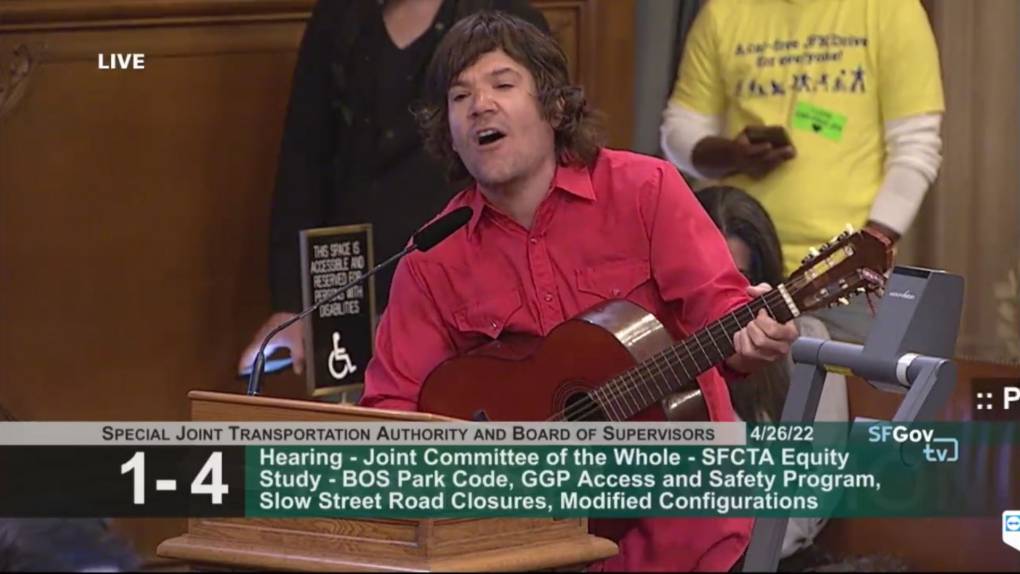
"caption": "San Francisco musician John Elliott sings his song \"Car-Free\" at the Board of Supervisors hearing on Tuesday, April 26, in support of keeping JFK Drive closed to cars and open to bicycles, roller-skaters and pedestrians.",
"description": null,
"title": "JohnElliott.CarFree",
"credit": "San Francisco Board of Supervisors/Granicus",
"status": "inherit",
"altTag": "A man in a red shirt and guitar sings a song at the podium",
"isLoading": false,
"fetchFailed": false
},
"arts_13912451": {
"type": "attachments",
"id": "arts_13912451",
"meta": {
"index": "attachments_1716263798",
"site": "arts",
"id": "13912451",
"found": true
},
"parent": 13912444,
"imgSizes": {
"twentyfourteen-full-width": {
"file": "https://ww2.kqed.org/app/uploads/sites/2/2022/04/20220415_Toro_FinalSelects-06-1038x576.jpg",
"width": 1038,
"mimeType": "image/jpeg",
"height": 576
},
"thumbnail": {
"file": "https://ww2.kqed.org/app/uploads/sites/2/2022/04/20220415_Toro_FinalSelects-06-160x110.jpg",
"width": 160,
"mimeType": "image/jpeg",
"height": 110
},
"post-thumbnail": {
"file": "https://ww2.kqed.org/app/uploads/sites/2/2022/04/20220415_Toro_FinalSelects-06-672x372.jpg",
"width": 672,
"mimeType": "image/jpeg",
"height": 372
},
"kqedFullSize": {
"file": "https://ww2.kqed.org/app/uploads/sites/2/2022/04/20220415_Toro_FinalSelects-06.jpg",
"width": 1920,
"height": 1323
},
"large": {
"file": "https://ww2.kqed.org/app/uploads/sites/2/2022/04/20220415_Toro_FinalSelects-06-1020x703.jpg",
"width": 1020,
"mimeType": "image/jpeg",
"height": 703
},
"1536x1536": {
"file": "https://ww2.kqed.org/app/uploads/sites/2/2022/04/20220415_Toro_FinalSelects-06-1536x1058.jpg",
"width": 1536,
"mimeType": "image/jpeg",
"height": 1058
},
"medium": {
"file": "https://ww2.kqed.org/app/uploads/sites/2/2022/04/20220415_Toro_FinalSelects-06-800x551.jpg",
"width": 800,
"mimeType": "image/jpeg",
"height": 551
},
"medium_large": {
"file": "https://ww2.kqed.org/app/uploads/sites/2/2022/04/20220415_Toro_FinalSelects-06-768x529.jpg",
"width": 768,
"mimeType": "image/jpeg",
"height": 529
}
},
"publishDate": 1650923765,
"modified": 1650923869,
"caption": "Ahead of the release of his new album, 'Mahal,' Toro y Moi has been cruising around the Bay Area in a Jeepney in homage to his Filipino heritage and diasporic fan base.",
"description": null,
"title": "20220415_Toro_FinalSelects-06",
"credit": "Amaya Edwards/KQED",
"status": "inherit",
"altTag": "Toro y Moi poses with young fans in a colorful bus parked outside of FOB Kitchen in Oakland.",
"isLoading": false,
"fetchFailed": false
},
"arts_13912349": {
"type": "attachments",
"id": "arts_13912349",
"meta": {
"index": "attachments_1716263798",
"site": "arts",
"id": "13912349",
"found": true
},
"parent": 13912346,
"imgSizes": {
"twentyfourteen-full-width": {
"file": "https://ww2.kqed.org/app/uploads/sites/2/2022/04/LizPhair.SternGrove-1024x576.jpg",
"width": 1024,
"mimeType": "image/jpeg",
"height": 576
},
"thumbnail": {
"file": "https://ww2.kqed.org/app/uploads/sites/2/2022/04/LizPhair.SternGrove-160x106.jpg",
"width": 160,
"mimeType": "image/jpeg",
"height": 106
},
"post-thumbnail": {
"file": "https://ww2.kqed.org/app/uploads/sites/2/2022/04/LizPhair.SternGrove-672x372.jpg",
"width": 672,
"mimeType": "image/jpeg",
"height": 372
},
"kqedFullSize": {
"file": "https://ww2.kqed.org/app/uploads/sites/2/2022/04/LizPhair.SternGrove.jpg",
"width": 1024,
"height": 681
},
"large": {
"file": "https://ww2.kqed.org/app/uploads/sites/2/2022/04/LizPhair.SternGrove-1020x678.jpg",
"width": 1020,
"mimeType": "image/jpeg",
"height": 678
},
"medium": {
"file": "https://ww2.kqed.org/app/uploads/sites/2/2022/04/LizPhair.SternGrove-800x532.jpg",
"width": 800,
"mimeType": "image/jpeg",
"height": 532
},
"medium_large": {
"file": "https://ww2.kqed.org/app/uploads/sites/2/2022/04/LizPhair.SternGrove-768x511.jpg",
"width": 768,
"mimeType": "image/jpeg",
"height": 511
}
},
"publishDate": 1650683945,
"modified": 1650686307,
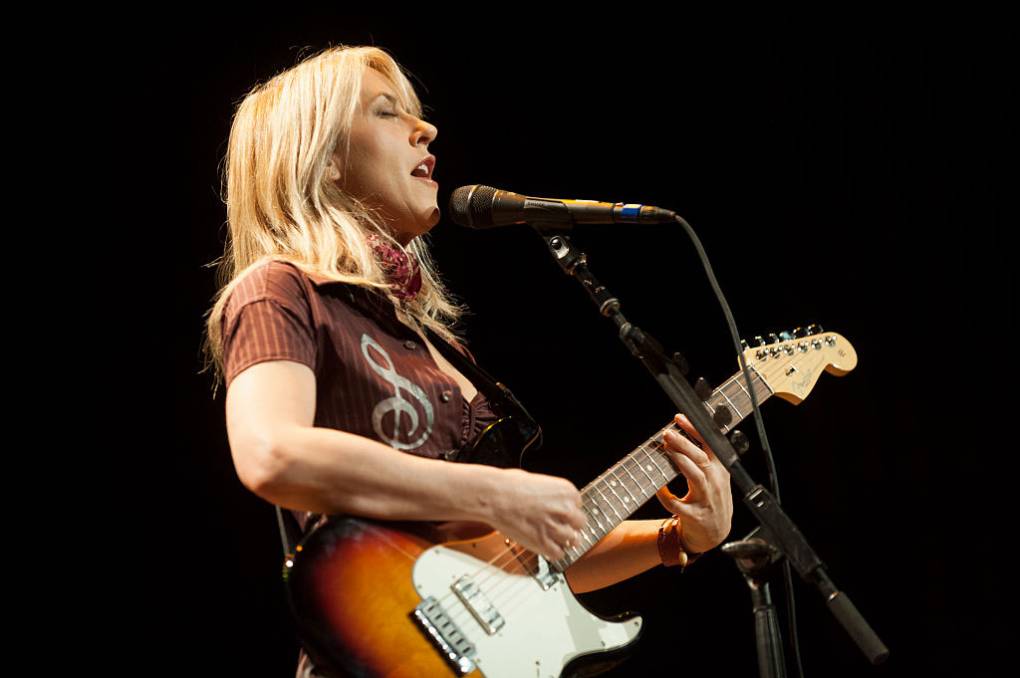
"caption": "Liz Phair, who according to a MUNI ad posted Friday on Reddit is a headliner at this year's 2022 Stern Grove Festival, performs in Portland in 2016. ",
"description": null,
"title": "LizPhair.SternGrove",
"credit": "Natalie Behring/Getty Images",
"status": "inherit",
"altTag": "Liz Phair, who according to a MUNI ad posted Friday on Reddit is a headliner at this year's 2022 Stern Grove Festival, performs in Portland in 2016.",
"isLoading": false,
"fetchFailed": false
},
"arts_13912310": {
"type": "attachments",
"id": "arts_13912310",
"meta": {
"index": "attachments_1716263798",
"site": "arts",
"id": "13912310",
"found": true
},
"parent": 13912307,
"imgSizes": {
"twentyfourteen-full-width": {
"file": "https://ww2.kqed.org/app/uploads/sites/2/2022/04/BlueNoteJazzFestival.Collage-1038x576.jpg",
"width": 1038,
"mimeType": "image/jpeg",
"height": 576
},
"thumbnail": {
"file": "https://ww2.kqed.org/app/uploads/sites/2/2022/04/BlueNoteJazzFestival.Collage-160x90.jpg",
"width": 160,
"mimeType": "image/jpeg",
"height": 90
},
"post-thumbnail": {
"file": "https://ww2.kqed.org/app/uploads/sites/2/2022/04/BlueNoteJazzFestival.Collage-672x372.jpg",
"width": 672,
"mimeType": "image/jpeg",
"height": 372
},
"kqedFullSize": {
"file": "https://ww2.kqed.org/app/uploads/sites/2/2022/04/BlueNoteJazzFestival.Collage.jpg",
"width": 1920,
"height": 1080
},
"large": {
"file": "https://ww2.kqed.org/app/uploads/sites/2/2022/04/BlueNoteJazzFestival.Collage-1020x574.jpg",
"width": 1020,
"mimeType": "image/jpeg",
"height": 574
},
"1536x1536": {
"file": "https://ww2.kqed.org/app/uploads/sites/2/2022/04/BlueNoteJazzFestival.Collage-1536x864.jpg",
"width": 1536,
"mimeType": "image/jpeg",
"height": 864
},
"medium": {
"file": "https://ww2.kqed.org/app/uploads/sites/2/2022/04/BlueNoteJazzFestival.Collage-800x450.jpg",
"width": 800,
"mimeType": "image/jpeg",
"height": 450
},
"medium_large": {
"file": "https://ww2.kqed.org/app/uploads/sites/2/2022/04/BlueNoteJazzFestival.Collage-768x432.jpg",
"width": 768,
"mimeType": "image/jpeg",
"height": 432
}
},
"publishDate": 1650615448,
"modified": 1650615614,
"caption": "Artists at the Blue Note Jazz festival in Napa include Robert Glasper, Thundercat, Flying Lotus, Erykah Badu, Maxwell and many other stars, pushing face-value ticket fees up to $385 for general admission for the two-day event at Charles Krug Winery.",
"description": null,
"title": "BlueNoteJazzFestival.Collage",
"credit": "Blue Note Jazz Festival",
"status": "inherit",
"altTag": "A collage of headliners' headshots",
"isLoading": false,
"fetchFailed": false
},
"arts_13912258": {
"type": "attachments",
"id": "arts_13912258",
"meta": {
"index": "attachments_1716263798",
"site": "arts",
"id": "13912258",
"found": true
},
"parent": 0,
"imgSizes": {
"twentyfourteen-full-width": {
"file": "https://ww2.kqed.org/app/uploads/sites/2/2022/04/MingusSmiling.color_-1038x576.jpg",
"width": 1038,
"mimeType": "image/jpeg",
"height": 576
},
"thumbnail": {
"file": "https://ww2.kqed.org/app/uploads/sites/2/2022/04/MingusSmiling.color_-160x117.jpg",
"width": 160,
"mimeType": "image/jpeg",
"height": 117
},
"post-thumbnail": {
"file": "https://ww2.kqed.org/app/uploads/sites/2/2022/04/MingusSmiling.color_-672x372.jpg",
"width": 672,
"mimeType": "image/jpeg",
"height": 372
},
"kqedFullSize": {
"file": "https://ww2.kqed.org/app/uploads/sites/2/2022/04/MingusSmiling.color_.jpg",
"width": 1920,
"height": 1399
},
"large": {
"file": "https://ww2.kqed.org/app/uploads/sites/2/2022/04/MingusSmiling.color_-1020x743.jpg",
"width": 1020,
"mimeType": "image/jpeg",
"height": 743
},
"1536x1536": {
"file": "https://ww2.kqed.org/app/uploads/sites/2/2022/04/MingusSmiling.color_-1536x1119.jpg",
"width": 1536,
"mimeType": "image/jpeg",
"height": 1119
},
"medium": {
"file": "https://ww2.kqed.org/app/uploads/sites/2/2022/04/MingusSmiling.color_-800x583.jpg",
"width": 800,
"mimeType": "image/jpeg",
"height": 583
},
"medium_large": {
"file": "https://ww2.kqed.org/app/uploads/sites/2/2022/04/MingusSmiling.color_-768x560.jpg",
"width": 768,
"mimeType": "image/jpeg",
"height": 560
}
},
"publishDate": 1650565172,
"modified": 1650566053,
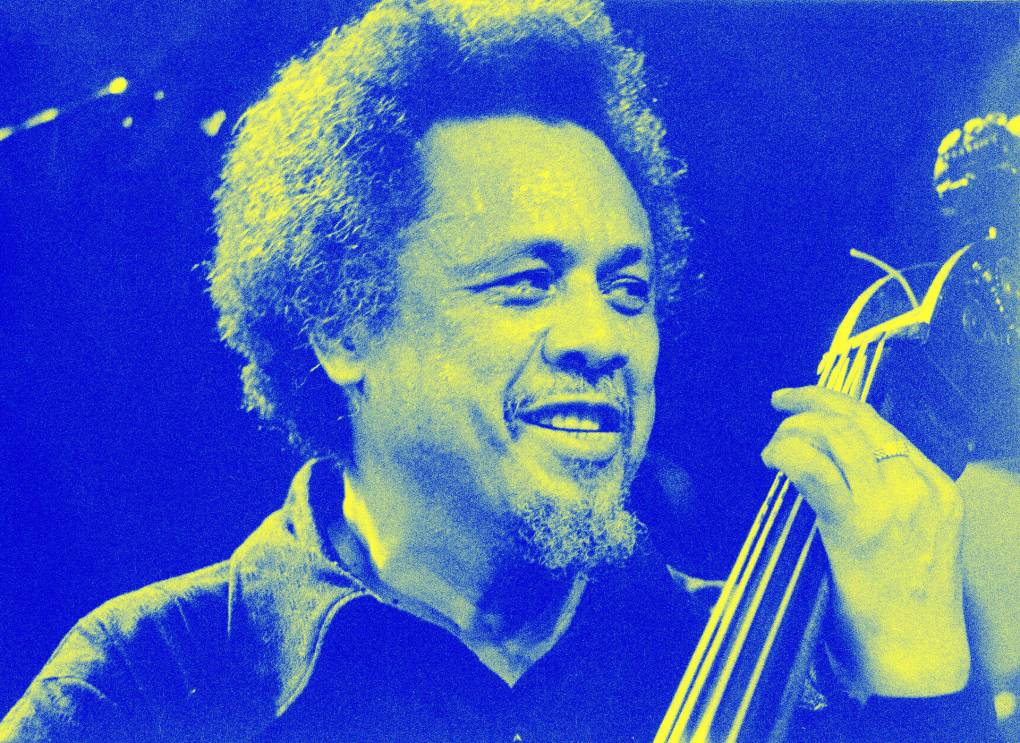
"caption": "Mingus' ties to the Bay Area—and his music's political overtones—presaged many of our activist movements of today. ",
"description": null,
"title": "MingusSmiling.color",
"credit": "Tom Copi/Michael Ochs Archives/Getty Images/Illustration by Becca Kao ",
"status": "inherit",
"altTag": "Charles Mingus playing the bass, looking to the right and smiling knowingly",
"isLoading": false,
"fetchFailed": false
},
"arts_13912134": {
"type": "attachments",
"id": "arts_13912134",
"meta": {
"index": "attachments_1716263798",
"site": "arts",
"id": "13912134",
"found": true
},
"parent": 13912128,
"imgSizes": {
"twentyfourteen-full-width": {
"file": "https://ww2.kqed.org/app/uploads/sites/2/2022/04/GettyImages-1319693181-1024x576.jpg",
"width": 1024,
"mimeType": "image/jpeg",
"height": 576
},
"thumbnail": {
"file": "https://ww2.kqed.org/app/uploads/sites/2/2022/04/GettyImages-1319693181-160x107.jpg",
"width": 160,
"mimeType": "image/jpeg",
"height": 107
},
"post-thumbnail": {
"file": "https://ww2.kqed.org/app/uploads/sites/2/2022/04/GettyImages-1319693181-672x372.jpg",
"width": 672,
"mimeType": "image/jpeg",
"height": 372
},
"kqedFullSize": {
"file": "https://ww2.kqed.org/app/uploads/sites/2/2022/04/GettyImages-1319693181.jpg",
"width": 1024,
"height": 683
},
"large": {
"file": "https://ww2.kqed.org/app/uploads/sites/2/2022/04/GettyImages-1319693181-1020x680.jpg",
"width": 1020,
"mimeType": "image/jpeg",
"height": 680
},
"medium": {
"file": "https://ww2.kqed.org/app/uploads/sites/2/2022/04/GettyImages-1319693181-800x534.jpg",
"width": 800,
"mimeType": "image/jpeg",
"height": 534
},
"medium_large": {
"file": "https://ww2.kqed.org/app/uploads/sites/2/2022/04/GettyImages-1319693181-768x512.jpg",
"width": 768,
"mimeType": "image/jpeg",
"height": 512
}
},
"publishDate": 1650387514,
"modified": 1650387552,
"caption": "SZA performs onstage for the 2021 Billboard Music Awards, broadcast on May 23, 2021 at Microsoft Theater in Los Angeles, California.",
"description": null,
"title": "2021 Billboard Music Awards - Show",
"credit": "Kevin Mazur/Getty Images for dcp",
"status": "inherit",
"altTag": null,
"isLoading": false,
"fetchFailed": false
},
"arts_13912037": {
"type": "attachments",
"id": "arts_13912037",
"meta": {
"index": "attachments_1716263798",
"site": "arts",
"id": "13912037",
"found": true
},
"parent": 13911905,
"imgSizes": {
"twentyfourteen-full-width": {
"file": "https://ww2.kqed.org/app/uploads/sites/2/2022/04/AnthonyBraxton1987-1024x576.jpg",
"width": 1024,
"mimeType": "image/jpeg",
"height": 576
},
"thumbnail": {
"file": "https://ww2.kqed.org/app/uploads/sites/2/2022/04/AnthonyBraxton1987-160x108.jpg",
"width": 160,
"mimeType": "image/jpeg",
"height": 108
},
"post-thumbnail": {
"file": "https://ww2.kqed.org/app/uploads/sites/2/2022/04/AnthonyBraxton1987-672x372.jpg",
"width": 672,
"mimeType": "image/jpeg",
"height": 372
},
"kqedFullSize": {
"file": "https://ww2.kqed.org/app/uploads/sites/2/2022/04/AnthonyBraxton1987.jpg",
"width": 1024,
"height": 690
},
"large": {
"file": "https://ww2.kqed.org/app/uploads/sites/2/2022/04/AnthonyBraxton1987-1020x687.jpg",
"width": 1020,
"mimeType": "image/jpeg",
"height": 687
},
"medium": {
"file": "https://ww2.kqed.org/app/uploads/sites/2/2022/04/AnthonyBraxton1987-800x539.jpg",
"width": 800,
"mimeType": "image/jpeg",
"height": 539
},
"medium_large": {
"file": "https://ww2.kqed.org/app/uploads/sites/2/2022/04/AnthonyBraxton1987-768x518.jpg",
"width": 768,
"mimeType": "image/jpeg",
"height": 518
}
},
"publishDate": 1650271858,
"modified": 1650271977,
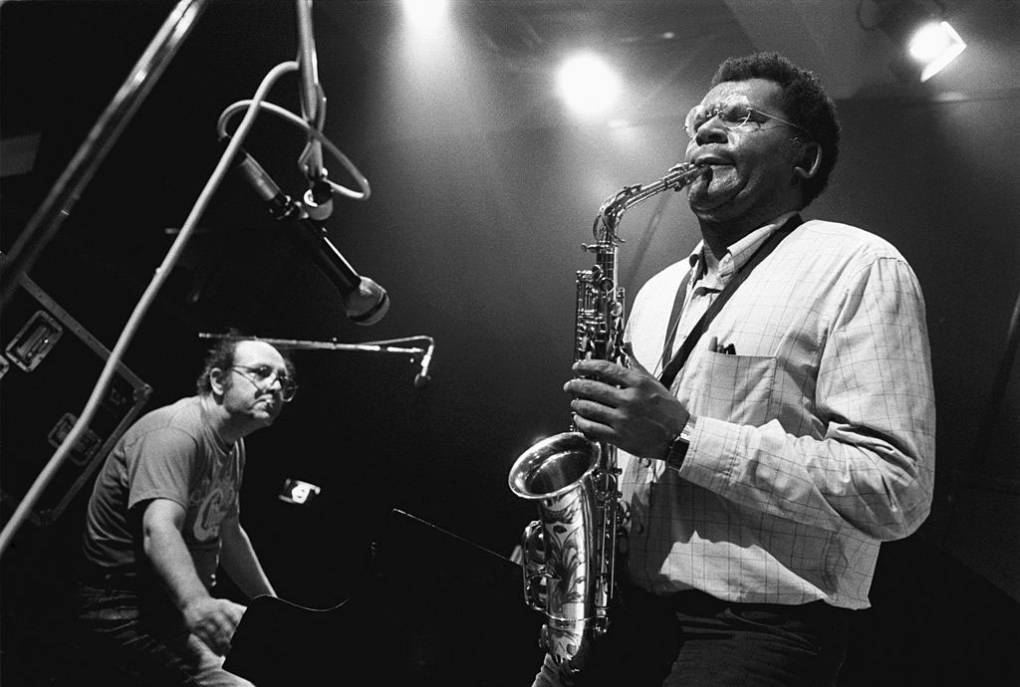
"caption": "Amidst his time teaching at Mills College, jazz musician Anthony Braxton performs with Misha Mengelberg and the ICP Orchestra in Amsterdam, Netherlands, in 1987.",
"description": null,
"title": "Anthony Braxton 1987",
"credit": "Frans Schellekens/Redferns",
"status": "inherit",
"altTag": "A middle-aged Black man plays the alto saxophone on a dimly lit stage",
"isLoading": false,
"fetchFailed": false
},
"arts_11057865": {
"type": "attachments",
"id": "arts_11057865",
"meta": {
"index": "attachments_1716263798",
"site": "arts",
"id": "11057865",
"found": true
},
"parent": 11057514,
"imgSizes": {
"twentyfourteen-full-width": {
"file": "https://ww2.kqed.org/app/uploads/sites/2/2015/11/Kendrick.Meline-1038x576.jpg",
"width": 1038,
"mimeType": "image/jpeg",
"height": 576
},
"thumbnail": {
"file": "https://ww2.kqed.org/app/uploads/sites/2/2015/11/Kendrick.Meline-400x267.jpg",
"width": 400,
"mimeType": "image/jpeg",
"height": 267
},
"fd-sm": {
"file": "https://ww2.kqed.org/app/uploads/sites/2/2015/11/Kendrick.Meline-960x640.jpg",
"width": 960,
"mimeType": "image/jpeg",
"height": 640
},
"post-thumbnail": {
"file": "https://ww2.kqed.org/app/uploads/sites/2/2015/11/Kendrick.Meline-672x372.jpg",
"width": 672,
"mimeType": "image/jpeg",
"height": 372
},
"kqedFullSize": {
"file": "https://ww2.kqed.org/app/uploads/sites/2/2015/11/Kendrick.Meline.jpg",
"width": 1920,
"height": 1280
},
"large": {
"file": "https://ww2.kqed.org/app/uploads/sites/2/2015/11/Kendrick.Meline-1180x787.jpg",
"width": 1180,
"mimeType": "image/jpeg",
"height": 787
},
"guest-author-96": {
"file": "https://ww2.kqed.org/app/uploads/sites/2/2015/11/Kendrick.Meline-96x96.jpg",
"width": 96,
"mimeType": "image/jpeg",
"height": 96
},
"medium": {
"file": "https://ww2.kqed.org/app/uploads/sites/2/2015/11/Kendrick.Meline-800x533.jpg",
"width": 800,
"mimeType": "image/jpeg",
"height": 533
},
"guest-author-64": {
"file": "https://ww2.kqed.org/app/uploads/sites/2/2015/11/Kendrick.Meline-64x64.jpg",
"width": 64,
"mimeType": "image/jpeg",
"height": 64
},
"guest-author-32": {
"file": "https://ww2.kqed.org/app/uploads/sites/2/2015/11/Kendrick.Meline-32x32.jpg",
"width": 32,
"mimeType": "image/jpeg",
"height": 32
},
"fd-lrg": {
"file": "https://ww2.kqed.org/app/uploads/sites/2/2015/11/Kendrick.Meline-1920x1280.jpg",
"width": 1920,
"mimeType": "image/jpeg",
"height": 1280
},
"fd-med": {
"file": "https://ww2.kqed.org/app/uploads/sites/2/2015/11/Kendrick.Meline-1180x787.jpg",
"width": 1180,
"mimeType": "image/jpeg",
"height": 787
},
"detail": {
"file": "https://ww2.kqed.org/app/uploads/sites/2/2015/11/Kendrick.Meline-75x75.jpg",
"width": 75,
"mimeType": "image/jpeg",
"height": 75
},
"guest-author-128": {
"file": "https://ww2.kqed.org/app/uploads/sites/2/2015/11/Kendrick.Meline-128x128.jpg",
"width": 128,
"mimeType": "image/jpeg",
"height": 128
}
},
"publishDate": 1446686363,
"modified": 1652249408,
"caption": "Kendrick Lamar.",
"description": null,
"title": "Kendrick.Meline",
"credit": "Gabe Meline/KQED",
"status": "inherit",
"altTag": "Kendrick Lamar performs at Outside Lands, Aug. 8, 2015. (Photo: Gabe Meline/KQED)",
"isLoading": false,
"fetchFailed": false
},
"arts_13912063": {
"type": "attachments",
"id": "arts_13912063",
"meta": {
"index": "attachments_1716263798",
"site": "arts",
"id": "13912063",
"found": true
},
"parent": 13912056,
"imgSizes": {
"twentyfourteen-full-width": {
"file": "https://ww2.kqed.org/app/uploads/sites/2/2022/04/Screen-Shot-2022-04-18-at-11.15.02-AM-1038x576.png",
"width": 1038,
"mimeType": "image/png",
"height": 576
},
"thumbnail": {
"file": "https://ww2.kqed.org/app/uploads/sites/2/2022/04/Screen-Shot-2022-04-18-at-11.15.02-AM-160x105.png",
"width": 160,
"mimeType": "image/png",
"height": 105
},
"post-thumbnail": {
"file": "https://ww2.kqed.org/app/uploads/sites/2/2022/04/Screen-Shot-2022-04-18-at-11.15.02-AM-672x372.png",
"width": 672,
"mimeType": "image/png",
"height": 372
},
"kqedFullSize": {
"file": "https://ww2.kqed.org/app/uploads/sites/2/2022/04/Screen-Shot-2022-04-18-at-11.15.02-AM.png",
"width": 1692,
"height": 1106
},
"large": {
"file": "https://ww2.kqed.org/app/uploads/sites/2/2022/04/Screen-Shot-2022-04-18-at-11.15.02-AM-1020x667.png",
"width": 1020,
"mimeType": "image/png",
"height": 667
},
"1536x1536": {
"file": "https://ww2.kqed.org/app/uploads/sites/2/2022/04/Screen-Shot-2022-04-18-at-11.15.02-AM-1536x1004.png",
"width": 1536,
"mimeType": "image/png",
"height": 1004
},
"medium": {
"file": "https://ww2.kqed.org/app/uploads/sites/2/2022/04/Screen-Shot-2022-04-18-at-11.15.02-AM-800x523.png",
"width": 800,
"mimeType": "image/png",
"height": 523
},
"medium_large": {
"file": "https://ww2.kqed.org/app/uploads/sites/2/2022/04/Screen-Shot-2022-04-18-at-11.15.02-AM-768x502.png",
"width": 768,
"mimeType": "image/png",
"height": 502
}
},
"publishDate": 1650305718,
"modified": 1650305749,
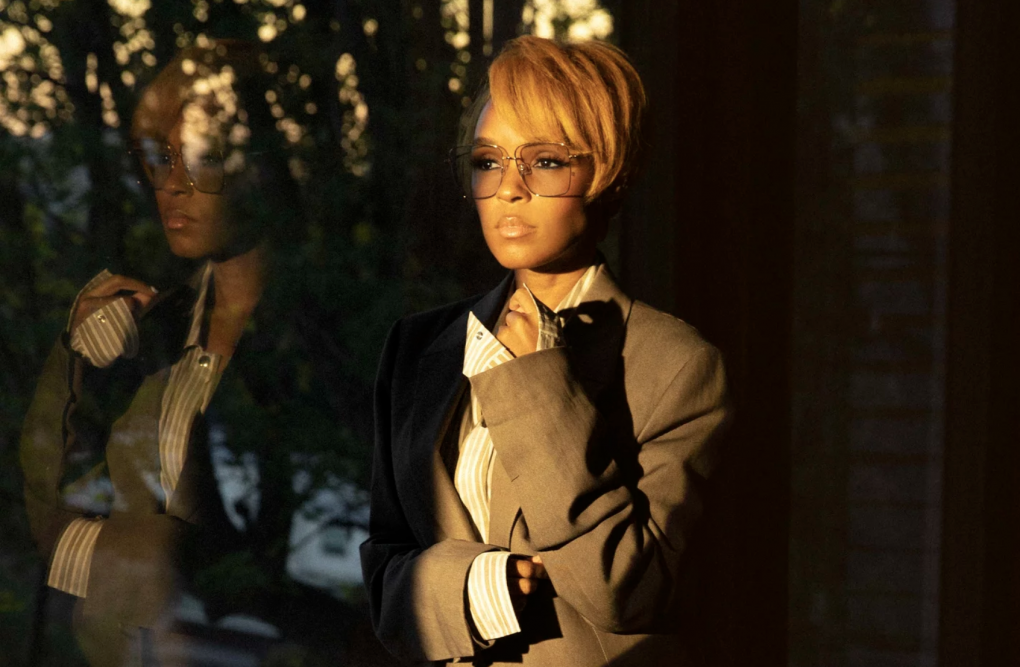
"caption": "In a new sci-fi book, Janelle Monáe expands on themes from her Grammy-nominated album, 'Dirty Computer' to tell stories about a community of individuals whose identities are being erased.",
"description": null,
"title": "In a new sci-fi book, Janelle Monáe expands on themes from her Grammy-nominated album, 'Dirty Computer' to tell stories about a community of individuals whose identities are being erased.",
"credit": "Jheyda McGarrell",
"status": "inherit",
"altTag": "Janelle Monáe stands next to a window, her figure reflected in the glass, wearing a oversized man's suit and transparent sunglasses.",
"isLoading": false,
"fetchFailed": false
},
"arts_13911959": {
"type": "attachments",
"id": "arts_13911959",
"meta": {
"index": "attachments_1716263798",
"site": "arts",
"id": "13911959",
"found": true
},
"parent": 13911949,
"imgSizes": {
"twentyfourteen-full-width": {
"file": "https://ww2.kqed.org/app/uploads/sites/2/2022/04/Screen-Shot-2022-04-14-at-2.28.41-PM-1038x576.png",
"width": 1038,
"mimeType": "image/png",
"height": 576
},
"thumbnail": {
"file": "https://ww2.kqed.org/app/uploads/sites/2/2022/04/Screen-Shot-2022-04-14-at-2.28.41-PM-160x93.png",
"width": 160,
"mimeType": "image/png",
"height": 93
},
"post-thumbnail": {
"file": "https://ww2.kqed.org/app/uploads/sites/2/2022/04/Screen-Shot-2022-04-14-at-2.28.41-PM-672x372.png",
"width": 672,
"mimeType": "image/png",
"height": 372
},
"kqedFullSize": {
"file": "https://ww2.kqed.org/app/uploads/sites/2/2022/04/Screen-Shot-2022-04-14-at-2.28.41-PM.png",
"width": 3228,
"height": 1876
},
"2048x2048": {
"file": "https://ww2.kqed.org/app/uploads/sites/2/2022/04/Screen-Shot-2022-04-14-at-2.28.41-PM-2048x1190.png",
"width": 2048,
"mimeType": "image/png",
"height": 1190
},
"large": {
"file": "https://ww2.kqed.org/app/uploads/sites/2/2022/04/Screen-Shot-2022-04-14-at-2.28.41-PM-1020x593.png",
"width": 1020,
"mimeType": "image/png",
"height": 593
},
"1536x1536": {
"file": "https://ww2.kqed.org/app/uploads/sites/2/2022/04/Screen-Shot-2022-04-14-at-2.28.41-PM-1536x893.png",
"width": 1536,
"mimeType": "image/png",
"height": 893
},
"full-width": {
"file": "https://ww2.kqed.org/app/uploads/sites/2/2022/04/Screen-Shot-2022-04-14-at-2.28.41-PM-1920x1116.png",
"width": 1920,
"mimeType": "image/png",
"height": 1116
},
"medium": {
"file": "https://ww2.kqed.org/app/uploads/sites/2/2022/04/Screen-Shot-2022-04-14-at-2.28.41-PM-800x465.png",
"width": 800,
"mimeType": "image/png",
"height": 465
},
"medium_large": {
"file": "https://ww2.kqed.org/app/uploads/sites/2/2022/04/Screen-Shot-2022-04-14-at-2.28.41-PM-768x446.png",
"width": 768,
"mimeType": "image/png",
"height": 446
}
},
"publishDate": 1649973224,
"modified": 1649973262,
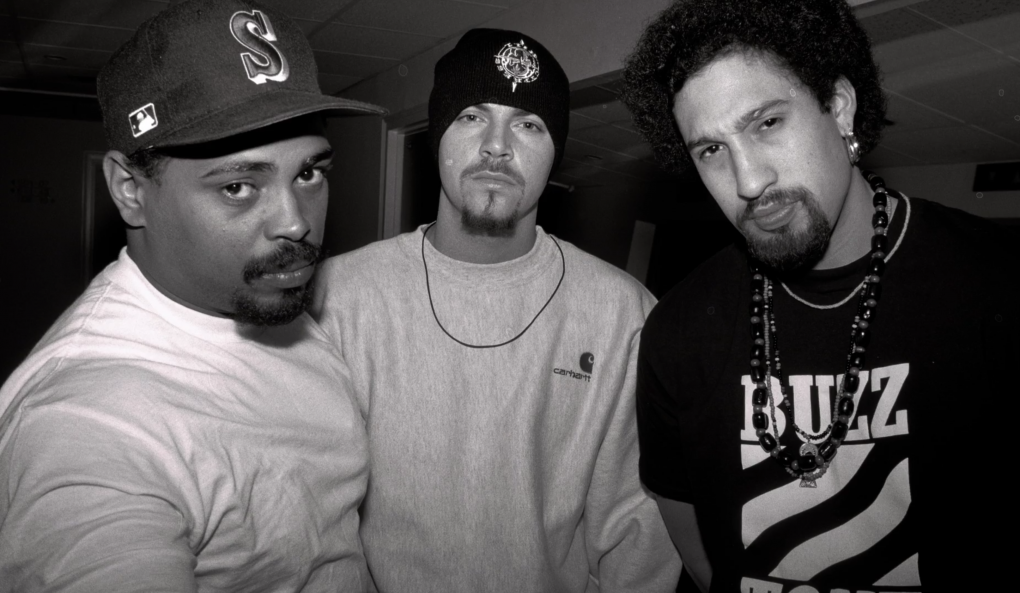
"caption": "(L-R) Sen Dog, DJ Muggs and B-Real of Cypress Hill in their '90s heyday.",
"description": null,
"title": "(L-R) Sen Dog, DJ Muggs and B-Real of Cypress Hill in their '90s heyday.",
"credit": "'Cypress Hill: Insane in the Brain'/Showtime",
"status": "inherit",
"altTag": null,
"isLoading": false,
"fetchFailed": false
},
"arts_13911890": {
"type": "attachments",
"id": "arts_13911890",
"meta": {
"index": "attachments_1716263798",
"site": "arts",
"id": "13911890",
"found": true
},
"title": "RBLPosse",
"publishDate": 1649841286,
"status": "inherit",
"parent": 13911888,
"modified": 1649841370,
"caption": "RBL Posse, shown here at the Monterey County Fairgrounds, headlines the 415 Day festivities on Friday, April 15.",
"credit": "\u003ca hef=\"https://www.instagram.com/j.castae/\">J.Castae\u003c/a>",
"altTag": "A rap group performs on an outside stage during the day",
"description": null,
"imgSizes": {
"thumbnail": {
"file": "https://cdn.kqed.org/wp-content/uploads/sites/2/2022/04/RBLPosse-e1752795505226-160x107.jpg",
"width": 160,
"height": 107,
"mimeType": "image/jpeg"
},
"medium_large": {
"file": "https://cdn.kqed.org/wp-content/uploads/sites/2/2022/04/RBLPosse-e1752795505226-768x514.jpg",
"width": 768,
"height": 514,
"mimeType": "image/jpeg"
},
"post-thumbnail": {
"file": "https://cdn.kqed.org/wp-content/uploads/sites/2/2022/04/RBLPosse-e1752795505226-672x372.jpg",
"width": 672,
"height": 372,
"mimeType": "image/jpeg"
},
"kqedFullSize": {
"file": "https://cdn.kqed.org/wp-content/uploads/sites/2/2022/04/RBLPosse-e1752795505226.jpg",
"width": 800,
"height": 535
}
},
"isLoading": false,
"fetchFailed": false
},
"arts_13911802": {
"type": "attachments",
"id": "arts_13911802",
"meta": {
"index": "attachments_1716263798",
"site": "arts",
"id": "13911802",
"found": true
},
"parent": 13911761,
"imgSizes": {
"twentyfourteen-full-width": {
"file": "https://ww2.kqed.org/app/uploads/sites/2/2022/04/Linda-Lindas-1-1038x576.png",
"width": 1038,
"mimeType": "image/png",
"height": 576
},
"thumbnail": {
"file": "https://ww2.kqed.org/app/uploads/sites/2/2022/04/Linda-Lindas-1-160x91.png",
"width": 160,
"mimeType": "image/png",
"height": 91
},
"post-thumbnail": {
"file": "https://ww2.kqed.org/app/uploads/sites/2/2022/04/Linda-Lindas-1-672x372.png",
"width": 672,
"mimeType": "image/png",
"height": 372
},
"kqedFullSize": {
"file": "https://ww2.kqed.org/app/uploads/sites/2/2022/04/Linda-Lindas-1.png",
"width": 1906,
"height": 1080
},
"large": {
"file": "https://ww2.kqed.org/app/uploads/sites/2/2022/04/Linda-Lindas-1-1020x578.png",
"width": 1020,
"mimeType": "image/png",
"height": 578
},
"1536x1536": {
"file": "https://ww2.kqed.org/app/uploads/sites/2/2022/04/Linda-Lindas-1-1536x870.png",
"width": 1536,
"mimeType": "image/png",
"height": 870
},
"medium": {
"file": "https://ww2.kqed.org/app/uploads/sites/2/2022/04/Linda-Lindas-1-800x453.png",
"width": 800,
"mimeType": "image/png",
"height": 453
},
"medium_large": {
"file": "https://ww2.kqed.org/app/uploads/sites/2/2022/04/Linda-Lindas-1-768x435.png",
"width": 768,
"mimeType": "image/png",
"height": 435
}
},
"publishDate": 1649708621,
"modified": 1649708707,
"caption": "The Linda Lindas share a laugh during their April 2022 Tiny Desk concert at the L.A. Public Library.",
"description": null,
"title": "Linda Lindas",
"credit": "NPR/YouTube",
"status": "inherit",
"altTag": "A still from a concert by a punk rock quartet of young Asian-American women inside a library.",
"isLoading": false,
"fetchFailed": false
}
},
"audioPlayerReducer": {
"postId": "stream_live",
"isPaused": true,
"isPlaying": false,
"pfsActive": false,
"pledgeModalIsOpen": true,
"playerDrawerIsOpen": false,
"liveAudioPlayStartedAt": 0,
"liveAudioPlayContext": ""
},
"authorsReducer": {
"byline_arts_13912056": {
"type": "authors",
"id": "byline_arts_13912056",
"meta": {
"override": true
},
"slug": "byline_arts_13912056",
"name": "Melissa Gray",
"isLoading": false
},
"agilbert": {
"type": "authors",
"id": "86",
"meta": {
"index": "authors_1716337520",
"id": "86",
"found": true
},
"name": "Andrew Gilbert",
"firstName": "Andrew",
"lastName": "Gilbert",
"slug": "agilbert",
"email": "jazzscribe@aol.com",
"display_author_email": false,
"staff_mastheads": [],
"title": "KQED Contributor",
"bio": "A Los Angeles native based in the Berkeley area since 1996, Andrew Gilbert covers jazz, international music and dance for KQED's \u003ci>California Report, \u003c/i>the\u003ci> Mercury News\u003c/i>, \u003ci>San Francisco Chronicle\u003c/i>, \u003ci>Berkeleyside.com\u003c/i>, and other publications. He is available for weddings and bar and bat mitzvahs. #jazzscribe",
"avatar": "https://secure.gravatar.com/avatar/d7bcafdbefdd39e9a68f88724ca616eb4e7a5a6bff9cdfb62de652a1e1751471?s=600&d=blank&r=g",
"twitter": null,
"bluesky": null,
"facebook": null,
"instagram": null,
"linkedin": null,
"sites": [
{
"site": "arts",
"roles": [
"Contributor",
"author"
]
},
{
"site": "news",
"roles": [
"author"
]
}
],
"headData": {
"title": "Andrew Gilbert | KQED",
"description": "KQED Contributor",
"ogImgSrc": "https://secure.gravatar.com/avatar/d7bcafdbefdd39e9a68f88724ca616eb4e7a5a6bff9cdfb62de652a1e1751471?s=600&d=blank&r=g",
"twImgSrc": "https://secure.gravatar.com/avatar/d7bcafdbefdd39e9a68f88724ca616eb4e7a5a6bff9cdfb62de652a1e1751471?s=600&d=blank&r=g"
},
"isLoading": false,
"link": "/author/agilbert"
},
"gmeline": {
"type": "authors",
"id": "185",
"meta": {
"index": "authors_1716337520",
"id": "185",
"found": true
},
"name": "Gabe Meline",
"firstName": "Gabe",
"lastName": "Meline",
"slug": "gmeline",
"email": "gmeline@kqed.org",
"display_author_email": true,
"staff_mastheads": [
"arts"
],
"title": "Senior Editor, KQED Arts & Culture",
"bio": "Gabe Meline entered journalism at age 15 making photocopied zines, and has since earned awards from the Edward R. Murrow Awards, the Society for Professional Journalists, the Online Journalism Awards, the Association of Alternative Newsweeklies and the California Newspaper Publishers Association. Prior to KQED, he was the editor of the \u003cem>North Bay Bohemian\u003c/em> and a touring musician. He lives with his wife and daughter in his hometown of Santa Rosa, CA.",
"avatar": "https://secure.gravatar.com/avatar/5bebe57be0d8bc2dd318934feb47299e2d2d10cba28d09d8d7afb389a2ce2bdd?s=600&d=blank&r=g",
"twitter": null,
"bluesky": null,
"facebook": null,
"instagram": null,
"linkedin": null,
"sites": [
{
"site": "",
"roles": [
"editor"
]
},
{
"site": "arts",
"roles": [
"administrator"
]
},
{
"site": "artschool",
"roles": [
"editor"
]
},
{
"site": "news",
"roles": [
"author"
]
},
{
"site": "pop",
"roles": [
"editor"
]
},
{
"site": "bayareabites",
"roles": [
"editor"
]
},
{
"site": "food",
"roles": [
"editor"
]
},
{
"site": "forum",
"roles": [
"administrator"
]
},
{
"site": "liveblog",
"roles": [
"editor"
]
},
{
"site": "hiphop",
"roles": [
"editor"
]
}
],
"headData": {
"title": "Gabe Meline | KQED",
"description": "Senior Editor, KQED Arts & Culture",
"ogImgSrc": "https://secure.gravatar.com/avatar/5bebe57be0d8bc2dd318934feb47299e2d2d10cba28d09d8d7afb389a2ce2bdd?s=600&d=blank&r=g",
"twImgSrc": "https://secure.gravatar.com/avatar/5bebe57be0d8bc2dd318934feb47299e2d2d10cba28d09d8d7afb389a2ce2bdd?s=600&d=blank&r=g"
},
"isLoading": false,
"link": "/author/gmeline"
},
"ralexandra": {
"type": "authors",
"id": "11242",
"meta": {
"index": "authors_1716337520",
"id": "11242",
"found": true
},
"name": "Rae Alexandra",
"firstName": "Rae",
"lastName": "Alexandra",
"slug": "ralexandra",
"email": "ralexandra@kqed.org",
"display_author_email": true,
"staff_mastheads": [],
"title": "Reporter/Producer",
"bio": "Rae Alexandra is a Reporter/Producer for KQED Arts & Culture, and the creator/author of the \u003ca href=\"https://www.kqed.org/arts/program/rebel-girls-from-bay-area-history\">Rebel Girls From Bay Area History\u003c/a> and \u003ca href=\"https://www.kqed.org/bizarrebayarea\">Bizarre Bay Area\u003c/a> series. Her debut book, \u003ca href=\"https://citylights.com/politics-current-events-history/unsung-heroines35-women-who-changed/\">Unsung Heroines: 35 Women Who Changed the Bay Area\u003c/a> was published by City Lights in March 2026. In 2023, Rae was awarded an SPJ Excellence in Journalism Award for Arts & Culture. Rae was born and raised in Wales and subsequently — even after two decades in Northern California — still uses phrases that regularly baffle her coworkers.",
"avatar": "https://secure.gravatar.com/avatar/edfee8176c80cc0a382b051190f5341997df378a934a5774dcb0977732dfd401?s=600&d=blank&r=g",
"twitter": null,
"bluesky": null,
"facebook": null,
"instagram": null,
"linkedin": null,
"sites": [
{
"site": "arts",
"roles": [
"subscriber"
]
},
{
"site": "news",
"roles": [
"subscriber"
]
},
{
"site": "pop",
"roles": [
"subscriber"
]
},
{
"site": "bayareabites",
"roles": [
"subscriber"
]
},
{
"site": "science",
"roles": [
"subscriber"
]
}
],
"headData": {
"title": "Rae Alexandra | KQED",
"description": "Reporter/Producer",
"ogImgSrc": "https://secure.gravatar.com/avatar/edfee8176c80cc0a382b051190f5341997df378a934a5774dcb0977732dfd401?s=600&d=blank&r=g",
"twImgSrc": "https://secure.gravatar.com/avatar/edfee8176c80cc0a382b051190f5341997df378a934a5774dcb0977732dfd401?s=600&d=blank&r=g"
},
"isLoading": false,
"link": "/author/ralexandra"
},
"nvoynovskaya": {
"type": "authors",
"id": "11387",
"meta": {
"index": "authors_1716337520",
"id": "11387",
"found": true
},
"name": "Nastia Voynovskaya",
"firstName": "Nastia",
"lastName": "Voynovskaya",
"slug": "nvoynovskaya",
"email": "nvoynovskaya@kqed.org",
"display_author_email": false,
"staff_mastheads": [
"arts"
],
"title": "Editor and reporter",
"bio": "Nastia Voynovskaya is a reporter, editor and host at KQED Arts & Culture. She's been covering the arts in the Bay Area for over a decade, with a focus on music, queer culture, labor issues and grassroots organizing. She has edited KQED story series such as Trans Bay: A History of San Francisco's Gender-Diverse Community, and co-created KQED's Bay Area hip-hop history project, That's My Word. Nastia's work has been recognized by the Society of Professional Journalists and San Francisco Press Club. She regularly appears on podcasts and radio programs, including NPR's All Songs Considered, and hosts live events where music, culture and conversation meet.",
"avatar": "https://secure.gravatar.com/avatar/5025ee460e5a85d69ca20ea6c6f2f80d7e17795c828f61ea3aecfcd924e9042e?s=600&d=blank&r=g",
"twitter": null,
"bluesky": null,
"facebook": null,
"instagram": "https://www.instagram.com/nananastia/",
"linkedin": null,
"sites": [
{
"site": "",
"roles": [
"editor"
]
},
{
"site": "arts",
"roles": [
"administrator"
]
},
{
"site": "news",
"roles": [
"editor"
]
},
{
"site": "pop",
"roles": [
"administrator"
]
},
{
"site": "bayareabites",
"roles": [
"editor"
]
},
{
"site": "podcasts",
"roles": [
"editor"
]
},
{
"site": "hiphop",
"roles": [
"editor"
]
}
],
"headData": {
"title": "Nastia Voynovskaya | KQED",
"description": "Editor and reporter",
"ogImgSrc": "https://secure.gravatar.com/avatar/5025ee460e5a85d69ca20ea6c6f2f80d7e17795c828f61ea3aecfcd924e9042e?s=600&d=blank&r=g",
"twImgSrc": "https://secure.gravatar.com/avatar/5025ee460e5a85d69ca20ea6c6f2f80d7e17795c828f61ea3aecfcd924e9042e?s=600&d=blank&r=g"
},
"isLoading": false,
"link": "/author/nvoynovskaya"
}
},
"pagesReducer": {
"arts_category_music": {
"type": "terms",
"id": "arts_69",
"meta": {
"index": "terms_1716263798",
"site": "arts",
"id": "69",
"score": 10.85186
},
"featImg": null,
"name": "Music",
"description": null,
"taxonomy": "category",
"headData": {
"twImgId": null,
"twTitle": null,
"ogTitle": null,
"ogImgId": null,
"twDescription": null,
"description": null,
"title": "Music Archives | KQED Arts",
"ogDescription": null
},
"ttid": 70,
"slug": "music",
"isLoading": false,
"title": "Music",
"pageMeta": {
"site": "arts",
"WpPageTemplate": "page-topic-editorial",
"currentPage": 95
},
"blocks": [
{
"blockName": "kqed/post-list",
"attrs": {
"layout": "cardArticle2",
"query": "posts/arts?category=music",
"seeMore": false,
"paginated": true,
"page": 95
}
},
{
"blockName": "kqed/ad"
}
]
}
},
"pfsSessionReducer": {},
"postsReducer": {
"stream_live": {
"type": "live",
"id": "stream_live",
"audioUrl": "https://streams.kqed.org/kqedradio",
"title": "Live Stream",
"excerpt": "Live Stream information currently unavailable.",
"link": "/radio",
"featImg": "",
"label": {
"name": "KQED Live",
"link": "/"
}
},
"stream_kqedNewscast": {
"type": "posts",
"id": "stream_kqedNewscast",
"audioUrl": "https://www.kqed.org/.stream/anon/radio/RDnews/newscast.mp3?_=1",
"title": "KQED Newscast",
"featImg": "",
"label": {
"name": "88.5 FM",
"link": "/"
}
},
"arts_13912499": {
"type": "posts",
"id": "arts_13912499",
"meta": {
"index": "posts_1716263798",
"site": "arts",
"id": "13912499",
"score": null,
"sort": [
1651013397000
]
},
"guestAuthors": [],
"slug": "song-jfk-drive-car-free-board-of-supervisors-sf",
"title": "The Best 1-Minute Song About Keeping JFK Drive Car-Free You'll Ever Hear",
"publishDate": 1651013397,
"format": "standard",
"headTitle": "The Best 1-Minute Song About Keeping JFK Drive Car-Free You’ll Ever Hear | KQED",
"labelTerm": {
"site": "arts"
},
"content": "\u003cp>During today’s Board of Supervisors meeting on whether or not to allow cars on John F. Kennedy Drive in Golden Gate Park, one of those wonderful, dammit-I-love-the-internet things happened: a San Francisco musician sang a song at the speaker’s podium. \u003c/p>\n\u003cp>https://twitter.com/CommunitySpace_/status/1519042375565279232\u003c/p>\n\u003cp>John Elliott premiered his brief, catchy song “on behalf of the dwindling community of musicians in San Francisco, and the 50% of San Franciscans who rent their homes and do not own a car,” finishing his triumphant coda just as the speaker’s allotted one-minute chime sounded. \u003c/p>\n\u003cp>(KQED readers may remember Elliott from his \u003ca href=\"https://www.kqed.org/arts/13906513/all-too-well-parody-jake-gyllenhaal-taylor-swift-john-elliott-san-francisco\" rel=\"noopener noreferrer\" target=\"_blank\">Taylor Swift/Jake Gyllenhaal parody, “All Too Well (Jake’s Version).”\u003c/a>)\u003c/p>\n\u003cp>JFK Drive, which became car-free during the pandemic, has been at the center of strong debate over its planned return to vehicular traffic. As least now we know how one District 1 resident feels—and his \u003ca href=\"https://twitter.com/CommunitySpace_/status/1519042375565279232\" rel=\"noopener noreferrer\" target=\"_blank\">short, simple anthem\u003c/a> for all who want to keep JFK Drive car-free.\u003c/p>\n\u003cp>[ad fullwidth]\u003c/p>\u003cp>\u003c/p>\n",
"blocks": [],
"excerpt": "Watch San Francisco musician John Elliott sing his song, “Car-Free,” at the Board of Supervisors meeting.",
"status": "publish",
"parent": 0,
"modified": 1726771216,
"stats": {
"hasAudio": false,
"hasVideo": false,
"hasChartOrMap": false,
"iframeSrcs": [],
"hasGoogleForm": false,
"hasGallery": false,
"hasHearkenModule": false,
"hasPolis": false,
"paragraphCount": 6,
"wordCount": 179
},
"headData": {
"title": "The Best 1-Minute Song About Keeping JFK Drive Car-Free You'll Ever Hear | KQED",
"description": "Watch San Francisco musician John Elliott sing his song, “Car-Free,” at the Board of Supervisors meeting.",
"ogTitle": "",
"ogDescription": "",
"ogImgId": "",
"twTitle": "",
"twDescription": "",
"twImgId": "",
"schema": {
"@context": "https://schema.org",
"@type": "Article",
"headline": "The Best 1-Minute Song About Keeping JFK Drive Car-Free You'll Ever Hear",
"datePublished": "2022-04-26T15:49:57-07:00",
"dateModified": "2024-09-19T11:40:16-07:00",
"image": "https://cdn.kqed.org/wp-content/uploads/2020/02/KQED-OG-Image@1x.png"
}
},
"sticky": false,
"WpOldSlug": "the-best-1-minute-song-about-keeping-jfk-drive-car-free-youll-ever-hear",
"templateType": "standard",
"featuredImageType": "standard",
"excludeFromSiteSearch": "Include",
"path": "/arts/13912499/song-jfk-drive-car-free-board-of-supervisors-sf",
"audioTrackLength": null,
"parsedContent": [
{
"type": "contentString",
"content": "\u003cdiv class=\"post-body\">\u003cp>\u003cp>During today’s Board of Supervisors meeting on whether or not to allow cars on John F. Kennedy Drive in Golden Gate Park, one of those wonderful, dammit-I-love-the-internet things happened: a San Francisco musician sang a song at the speaker’s podium. \u003c/p>\u003c/p>\u003c/div>",
"attributes": {
"named": {},
"numeric": []
}
},
{
"type": "component",
"content": "",
"name": "singleTwitterStatus",
"attributes": {
"named": {
"id": "1519042375565279232"
},
"numeric": []
}
},
{
"type": "contentString",
"content": "\u003cdiv class=\"post-body\">\u003cp>\n\u003cp>John Elliott premiered his brief, catchy song “on behalf of the dwindling community of musicians in San Francisco, and the 50% of San Franciscans who rent their homes and do not own a car,” finishing his triumphant coda just as the speaker’s allotted one-minute chime sounded. \u003c/p>\n\u003cp>(KQED readers may remember Elliott from his \u003ca href=\"https://www.kqed.org/arts/13906513/all-too-well-parody-jake-gyllenhaal-taylor-swift-john-elliott-san-francisco\" rel=\"noopener noreferrer\" target=\"_blank\">Taylor Swift/Jake Gyllenhaal parody, “All Too Well (Jake’s Version).”\u003c/a>)\u003c/p>\n\u003cp>JFK Drive, which became car-free during the pandemic, has been at the center of strong debate over its planned return to vehicular traffic. As least now we know how one District 1 resident feels—and his \u003ca href=\"https://twitter.com/CommunitySpace_/status/1519042375565279232\" rel=\"noopener noreferrer\" target=\"_blank\">short, simple anthem\u003c/a> for all who want to keep JFK Drive car-free.\u003c/p>\n\u003cp>\u003c/p>\u003c/div>",
"attributes": {
"named": {},
"numeric": []
}
},
{
"type": "component",
"content": "",
"name": "ad",
"attributes": {
"named": {
"label": "fullwidth"
},
"numeric": [
"fullwidth"
]
}
},
{
"type": "contentString",
"content": "\u003cdiv class=\"post-body\">\u003cp>\u003c/p>\u003cp>\u003c/p>\n\u003c/div>\u003c/p>",
"attributes": {
"named": {},
"numeric": []
}
}
],
"link": "/arts/13912499/song-jfk-drive-car-free-board-of-supervisors-sf",
"authors": [
"185"
],
"categories": [
"arts_1",
"arts_69"
],
"tags": [
"arts_10278",
"arts_2415",
"arts_2427",
"arts_1146"
],
"featImg": "arts_13912504",
"label": "arts"
},
"arts_13912444": {
"type": "posts",
"id": "arts_13912444",
"meta": {
"index": "posts_1716263798",
"site": "arts",
"id": "13912444",
"score": null,
"sort": [
1650925446000
]
},
"parent": 0,
"labelTerm": {
"site": "arts"
},
"blocks": [],
"publishDate": 1650925446,
"format": "standard",
"title": "On ‘Mahal,’ Toro y Moi Shows Love to the Bay Area and His Filipino Community",
"headTitle": "On ‘Mahal,’ Toro y Moi Shows Love to the Bay Area and His Filipino Community | KQED",
"content": "\u003cp>[dropcap]W[/dropcap]hat do you do when the internet no longer feels like a realm of play and possibility, but more like an exhausting, 24/7 fire hydrant of hype, depressing news and misinformation?\u003c/p>\n\u003cp>If you’re \u003ca href=\"https://toroymoi.com/\" target=\"_blank\" rel=\"noopener noreferrer\">Toro y Moi\u003c/a>, you log on to eBay, buy a Filipino Jeepney, load it up with your friends and cruise around the Bay Area, from North Oakland to the Golden Gate Bridge. For one, a customized, multicolored bus—brought to the islands by American soldiers during World War II and \u003ca href=\"https://www.caranddriver.com/news/a15344340/the-history-of-the-jeepney-the-philippines-mass-transit-solution/\" target=\"_blank\" rel=\"noopener noreferrer\">adapted into public transit\u003c/a>—makes eye-catching content for music videos.\u003c/p>\n\u003cp>But for Oakland singer-songwriter and producer Toro y Moi—real name Chaz Bear—the bus has also become a place to connect one-on-one with other artists, listeners and the local community at large.\u003c/p>\n\u003cp>Over the past couple of weeks, he’s been driving it to local businesses like \u003ca href=\"https://www.lowergrandradio.com/\" target=\"_blank\" rel=\"noopener noreferrer\">Lower Grand Radio\u003c/a> and \u003ca href=\"https://www.fobkitchen.com/\" target=\"_blank\" rel=\"noopener noreferrer\">FOB Kitchen\u003c/a>, meeting fans and playing songs from his new album, \u003ci>Mahal\u003c/i> (out April 29 via \u003ca href=\"https://deadoceans.com/\" target=\"_blank\" rel=\"noopener noreferrer\">Dead Oceans\u003c/a>), an oozing psych-rock project that pays homage to his Filipino roots and diasporic fanbase.\u003c/p>\n\u003cp>https://youtu.be/xI0alDWn2tM\u003c/p>\n\u003cp>[ad fullwidth]\u003c/p>\n\u003cp>“For [the Jeepney] to have this story of this American machine going to the Philippines, being taken apart, remade, brought back to the States, and then shipped to the Bay and purchased by another Filipino-American—I feel like I see myself in it in some ways, being essentially like this multicultural thing,” says Bear, sipping a decaf iced coffee on a sunny, spring morning.\u003c/p>\n\u003cp>We’re listening to birds chirp under a canopy of leaves in the front yard of \u003ca href=\"https://companyrecordlabel.com/\" target=\"_blank\" rel=\"noopener noreferrer\">Company Record Label and Art Studio\u003c/a>, his headquarters in an Oakland neighborhood filled with industrial warehouses. His powder blue Jeepney, decked out with miniature horse sculptures, horns and other ornamental tchotchkes, is parked outside.\u003c/p>\n\u003cp>“Now that I’ve literally found a vehicle to communicate my appreciation, it feels really good,” he says, chuckling at the accidental pun. “And it’s brought me closer to my Filipino community in the Bay.”\u003c/p>\n\u003cfigure id=\"attachment_13912455\" class=\"wp-caption aligncenter\" style=\"max-width: 800px\">\u003cimg loading=\"lazy\" decoding=\"async\" class=\"size-medium wp-image-13912455\" src=\"https://ww2.kqed.org/app/uploads/sites/2/2022/04/20220415_Toro_FinalSelects-31-800x560.jpg\" alt=\"\" width=\"800\" height=\"560\" srcset=\"https://cdn.kqed.org/wp-content/uploads/sites/2/2022/04/20220415_Toro_FinalSelects-31-800x560.jpg 800w, https://cdn.kqed.org/wp-content/uploads/sites/2/2022/04/20220415_Toro_FinalSelects-31-1020x713.jpg 1020w, https://cdn.kqed.org/wp-content/uploads/sites/2/2022/04/20220415_Toro_FinalSelects-31-160x112.jpg 160w, https://cdn.kqed.org/wp-content/uploads/sites/2/2022/04/20220415_Toro_FinalSelects-31-768x537.jpg 768w, https://cdn.kqed.org/wp-content/uploads/sites/2/2022/04/20220415_Toro_FinalSelects-31-1536x1074.jpg 1536w, https://cdn.kqed.org/wp-content/uploads/sites/2/2022/04/20220415_Toro_FinalSelects-31.jpg 1920w\" sizes=\"(max-width: 800px) 100vw, 800px\">\u003cfigcaption class=\"wp-caption-text\">Toro y Moi hosts a popup at FOB Kitchen in Oakland on April 15. \u003ccite>(Amaya Edwards/KQED)\u003c/cite>\u003c/figcaption>\u003c/figure>\n\u003cp>[dropcap]T[/dropcap]hose personal connections have been creative fuel for Bear lately, after two years of pandemic isolation and too much scrolling. The internet was where Bear first found his tribe. But now, he says, he needs a physical community.\u003c/p>\n\u003cp>“I made the shift to focus on local communities around 2016, when I started working on this record,” he says. “It’s mainly because it’s been a nightmare since Trump was president, and I think I just found the importance of reaching out to my POC community and subcultural community. [I’m] trying to just sort of find the language, find how to say it and how to speak it.”\u003c/p>\n\u003cfigure id=\"attachment_13912452\" class=\"wp-caption aligncenter\" style=\"max-width: 800px\">\u003cimg loading=\"lazy\" decoding=\"async\" class=\"size-medium wp-image-13912452\" src=\"https://ww2.kqed.org/app/uploads/sites/2/2022/04/20220415_Toro_FinalSelects-20-800x537.jpg\" alt=\"\" width=\"800\" height=\"537\" srcset=\"https://cdn.kqed.org/wp-content/uploads/sites/2/2022/04/20220415_Toro_FinalSelects-20-800x537.jpg 800w, https://cdn.kqed.org/wp-content/uploads/sites/2/2022/04/20220415_Toro_FinalSelects-20-1020x685.jpg 1020w, https://cdn.kqed.org/wp-content/uploads/sites/2/2022/04/20220415_Toro_FinalSelects-20-160x107.jpg 160w, https://cdn.kqed.org/wp-content/uploads/sites/2/2022/04/20220415_Toro_FinalSelects-20-768x516.jpg 768w, https://cdn.kqed.org/wp-content/uploads/sites/2/2022/04/20220415_Toro_FinalSelects-20-1536x1031.jpg 1536w, https://cdn.kqed.org/wp-content/uploads/sites/2/2022/04/20220415_Toro_FinalSelects-20.jpg 1920w\" sizes=\"(max-width: 800px) 100vw, 800px\">\u003cfigcaption class=\"wp-caption-text\">Fans showed up to hang out with Toro y Moi at FOB Kitchen, a Filipino restaurant in Oakland, on April 15. \u003ccite>(Amaya Edwards/KQED)\u003c/cite>\u003c/figcaption>\u003c/figure>\n\u003cp>Before streaming and social media giants were the cultural forces they are now, Bear got his start in the late Aughts era of taste-making music blogs. He left his native South Carolina for Berkeley, and over the years—after collaborations with influential artists like \u003ca href=\"https://www.youtube.com/watch?v=b11EobcNdhw\" target=\"_blank\" rel=\"noopener noreferrer\">Tyler, the Creator\u003c/a> and \u003ca href=\"https://www.youtube.com/watch?v=OdXNvCOAs0w\" target=\"_blank\" rel=\"noopener noreferrer\">Travis Scott\u003c/a>—he became a big name capable of commanding crowds of thousands at music festivals like Outside Lands, Afropunk and Coachella (where he just made a guest appearance April 23 during Flume’s set).\u003c/p>\n\u003cp>But although Bear could easily relocate to Los Angeles or New York for higher-profile opportunities, he’s happy to stay in Oakland, where he operates comfortably outside of the mainstream music industry. The Bay Area’s multiculturalism, alternative subcultures and activism—where artists of color can experiment and be weird—were big draws for him when he arrived here a decade ago and noticed the first two rows at his first show were packed with Filipino teens.\u003c/p>\n\u003cp>\u003ci>Mahal\u003c/i>, a title that means “love” in Tagalog, invites listeners to get lost in its jammy, \u003ci>wah\u003c/i>–pedal-laden sound that departs from the tightly produced, perfectionist approach of years past. His visuals for \u003ci>Mahal\u003c/i> reflect the change too. The cover of his 2019 album \u003ca href=\"https://www.kqed.org/arts/13848868/tory-y-moi-is-the-most-regular-famous-person-youll-ever-meet\" target=\"_blank\" rel=\"noopener noreferrer\">\u003ci>Outer Peace\u003c/i>\u003c/a> showed Bear sitting on a yoga ball, diligently working away at his laptop (its lead single, “\u003ca href=\"https://www.youtube.com/watch?v=Jm6hDWBZXc4\" target=\"_blank\" rel=\"noopener noreferrer\">Freelance\u003c/a>,” is a digital nomad anthem). But after spending the first year of the pandemic mostly interacting from behind a screen, the mood on \u003ci>Mahal\u003c/i>, whose cover shows the Jeepney parked in front of the Golden Gate Bridge, is all about getting out and cutting loose. [aside postid='arts_13905208']\u003c/p>\n\u003cp>“It’s a nice antithesis to the internet and the digital age,” Bear says. The album’s Summer of Love-meets-\u003ci>Summer of Soul\u003c/i> sound and aesthetic is on full display in his single “\u003ca href=\"https://www.youtube.com/watch?v=CvcoxunP7KU\" target=\"_blank\" rel=\"noopener noreferrer\">The Loop\u003c/a>,” a laid-back funk track where distorted, sprawling guitar solos accompany footage of Bear and friends cruising along the Pacific coast and goofing around.\u003c/p>\n\u003cp>https://youtu.be/CvcoxunP7KU\u003c/p>\n\u003cp>“\u003ca href=\"https://www.youtube.com/watch?v=qSKlCWGaaao\" target=\"_blank\" rel=\"noopener noreferrer\">Magazine\u003c/a>,” another single from \u003ci>Mahal\u003c/i> that references environmental destruction and frustration with the modern world, features a duet with \u003ca href=\"https://www.kqed.org/arts/13864118/sci-fi-album-climate-anxiety-salami-rose-joe-louis-brainfeeder\" target=\"_blank\" rel=\"noopener noreferrer\">Salami Rose Joe Louis\u003c/a>, the uncategorizable Bay Area artist (signed to Flying Lotus’ Brainfeeder label) whose idiosyncratic jazz pop tells sci-fi sagas. “My lyrics are always just going to be a little bit more on the melancholy side, just because that’s what’s interesting to me,” Bear says. “How that feeling never leaves, but every other feeling does.”\u003c/p>\n\u003cp>The breezy, happy-go-lucky “Millennium” is a collaboration with The Mattson 2, a Los Angeles jazz duo comprised of twin guitarist brothers whose music Bear has released through Company Records.\u003c/p>\n\u003cp>https://www.youtube.com/watch?v=qSKlCWGaaao\u003c/p>\n\u003cp>“We’re used to everything being so polished, and as music consumers we’re so quick to be like, ‘Oh no, that’s off’ because we’re so used to hearing Auto-Tune,” Bear says of his approach, noting that he first experimented with a grittier rock sound on 2015’s \u003ci>What For\u003c/i>. “I just try to almost challenge the listener.”\u003c/p>\n\u003cp>So was the process fun or nerve-wracking for such a meticulous producer? “It’s both. It’s definitely like, ‘OK, this might be a mistake,’ but also, I need to do this.”\u003c/p>\n\u003cp>[dropcap]B[/dropcap]ear is gearing up for a tour that kicks off in Ohio on April 29 with kindred spirits \u003ca href=\"http://www.khruangbin.com/\" target=\"_blank\" rel=\"noopener noreferrer\">Khruangbin\u003c/a>, the Texas trio whose soothing psychedelia has been on repeat for many during the stressful past two years. And \u003ci>Mahal\u003c/i> is his first release on the label Dead Oceans, where he’s in good company with Khruangbin, Japanese Breakfast, Mitski and Phoebe Bridgers.\u003c/p>\n\u003cp>“I feel like there’s been a response to the big EDM boom and the whole wave of mainstream rap and electronic [music],” he says. “I do feel like bands are making a comeback, and guitar-based music is alive and well.”\u003c/p>\n\u003cfigure id=\"attachment_13912454\" class=\"wp-caption aligncenter\" style=\"max-width: 800px\">\u003cimg loading=\"lazy\" decoding=\"async\" class=\"size-medium wp-image-13912454\" src=\"https://ww2.kqed.org/app/uploads/sites/2/2022/04/toro-y-moi-1-800x533.jpg\" alt=\"\" width=\"800\" height=\"533\" srcset=\"https://cdn.kqed.org/wp-content/uploads/sites/2/2022/04/toro-y-moi-1-800x533.jpg 800w, https://cdn.kqed.org/wp-content/uploads/sites/2/2022/04/toro-y-moi-1-1020x680.jpg 1020w, https://cdn.kqed.org/wp-content/uploads/sites/2/2022/04/toro-y-moi-1-160x107.jpg 160w, https://cdn.kqed.org/wp-content/uploads/sites/2/2022/04/toro-y-moi-1-768x512.jpg 768w, https://cdn.kqed.org/wp-content/uploads/sites/2/2022/04/toro-y-moi-1-1536x1024.jpg 1536w, https://cdn.kqed.org/wp-content/uploads/sites/2/2022/04/toro-y-moi-1.jpg 1920w\" sizes=\"(max-width: 800px) 100vw, 800px\">\u003cfigcaption class=\"wp-caption-text\">Toro y Moi shows one of his paintings at Company Studio in Oakland. \u003ccite>(Nastia Voynovskaya/KQED)\u003c/cite>\u003c/figcaption>\u003c/figure>\n\u003cp>Bear shows me around his workspace inside of Company, which he shares with a few other artists, including business partner Brendan Nakahara. His senior dog, Michael, trails us as he pulls out a few of his abstract paintings of colorful, floral designs. Much like his music, the aesthetic is streamlined yet embraces quirks and subtle imperfections.\u003c/p>\n\u003cp>It’s no secret that streaming doesn’t earn much these days. Even if you’re an artist like Bear, who boasts over three million monthly listeners on Spotify, you have to find other sources of income. He’s decided not to focus on merch, like a lot of musicians do: “We found ourselves packing T-shirts for two or three weeks and we were like, ‘Man, is this what we want to do?’” he says, adding, “It quickly reminds you of the capitalist game that we’re all a part of.”\u003c/p>\n\u003cfigure id=\"attachment_13912464\" class=\"wp-caption aligncenter\" style=\"max-width: 800px\">\u003cimg loading=\"lazy\" decoding=\"async\" class=\"size-medium wp-image-13912464\" src=\"https://ww2.kqed.org/app/uploads/sites/2/2022/04/toro-y-moi-2-800x533.jpg\" alt=\"\" width=\"800\" height=\"533\" srcset=\"https://cdn.kqed.org/wp-content/uploads/sites/2/2022/04/toro-y-moi-2-800x533.jpg 800w, https://cdn.kqed.org/wp-content/uploads/sites/2/2022/04/toro-y-moi-2-1020x680.jpg 1020w, https://cdn.kqed.org/wp-content/uploads/sites/2/2022/04/toro-y-moi-2-160x107.jpg 160w, https://cdn.kqed.org/wp-content/uploads/sites/2/2022/04/toro-y-moi-2-768x512.jpg 768w, https://cdn.kqed.org/wp-content/uploads/sites/2/2022/04/toro-y-moi-2-1536x1024.jpg 1536w, https://cdn.kqed.org/wp-content/uploads/sites/2/2022/04/toro-y-moi-2.jpg 1920w\" sizes=\"(max-width: 800px) 100vw, 800px\">\u003cfigcaption class=\"wp-caption-text\">Toro y Moi’s dog, Michael. \u003ccite>(Nastia Voynovskaya/KQED)\u003c/cite>\u003c/figcaption>\u003c/figure>\n\u003cp>Bear and Nakahara operate Company as a client-facing creative studio. They’ve worked on campaigns for big brands like Nike and Vans, but lately they’ve turned their focus to local establishments like \u003ca href=\"https://www.googleadservices.com/pagead/aclk?sa=L&ai=DChcSEwjHrcqenbD3AhV5DK0GHVTlAogYABAAGgJwdg&ae=2&ohost=www.google.com&cid=CAESauD2mLq40UmTU5dv3xTYBSKYpExvkUmD6I5IAaTdgsXjHPdK2Fw2aEZfVfGofqK-kiQtK0n59lm8-MrGN0l5wXm1QwRcrMxDsy4fjpJbOXwA7FvxCPAg0ZmPeftBh1ccNhrEtXNnE8fv6yw&sig=AOD64_1oqColadj1Hxc834nQkh4_jH2ydw&q&adurl&ved=2ahUKEwjEpcCenbD3AhWwHjQIHUyaA3UQ0Qx6BAgEEAE\" target=\"_blank\" rel=\"noopener noreferrer\">Red Bay Coffee\u003c/a>, the Black-owned Oakland roaster getting picked up by major retailers.\u003c/p>\n\u003cp>Over the last few years, Bear has thought a lot about his definition of success. And for him, it’s more about cultivating deeper relationships and using his resources to help grow the local scene rather than constantly chasing bigger-faster-more.\u003c/p>\n\u003cp>[ad floatright]\u003c/p>\n\u003cp>“I want to work with companies in the Bay Area to raise the general interest in the Bay. There is so much to offer here outside of tech,” he says. “It feels good to be here, so I’m going to try to stay.”\u003c/p>\n\n",
"stats": {
"hasVideo": true,
"hasChartOrMap": false,
"hasAudio": false,
"hasPolis": false,
"wordCount": 1557,
"hasGoogleForm": false,
"hasGallery": false,
"hasHearkenModule": false,
"iframeSrcs": [],
"paragraphCount": 26
},
"modified": 1705006934,
"excerpt": "The artist is prioritizing in-person connection over hype, and embracing a grittier psych-rock sound on his new album.",
"headData": {
"twImgId": "",
"twTitle": "",
"ogTitle": "",
"ogImgId": "",
"twDescription": "",
"description": "The artist is prioritizing in-person connection over hype, and embracing a grittier psych-rock sound on his new album.",
"title": "On ‘Mahal,’ Toro y Moi Shows Love to the Bay Area and His Filipino Community | KQED",
"ogDescription": "",
"schema": {
"@context": "https://schema.org",
"@type": "Article",
"headline": "On ‘Mahal,’ Toro y Moi Shows Love to the Bay Area and His Filipino Community",
"datePublished": "2022-04-25T15:24:06-07:00",
"dateModified": "2024-01-11T13:02:14-08:00",
"image": "https://cdn.kqed.org/wp-content/uploads/2020/02/KQED-OG-Image@1x.png"
}
},
"guestAuthors": [],
"slug": "toro-y-moi-new-album-mahal-bay-area-filipino",
"status": "publish",
"templateType": "standard",
"excludeFromSiteSearch": "Include",
"featuredImageType": "standard",
"sticky": false,
"path": "/arts/13912444/toro-y-moi-new-album-mahal-bay-area-filipino",
"audioTrackLength": null,
"parsedContent": [
{
"type": "contentString",
"content": "\u003cdiv class=\"post-body\">\u003cp>\u003cp>\u003c/p>\u003cp>\u003cspan class=\"utils-parseShortcode-shortcodes-__dropcapShortcode__dropcap\">W\u003c/span>\u003c/p>\u003cp>hat do you do when the internet no longer feels like a realm of play and possibility, but more like an exhausting, 24/7 fire hydrant of hype, depressing news and misinformation?\u003c/p>\n\u003cp>If you’re \u003ca href=\"https://toroymoi.com/\" target=\"_blank\" rel=\"noopener noreferrer\">Toro y Moi\u003c/a>, you log on to eBay, buy a Filipino Jeepney, load it up with your friends and cruise around the Bay Area, from North Oakland to the Golden Gate Bridge. For one, a customized, multicolored bus—brought to the islands by American soldiers during World War II and \u003ca href=\"https://www.caranddriver.com/news/a15344340/the-history-of-the-jeepney-the-philippines-mass-transit-solution/\" target=\"_blank\" rel=\"noopener noreferrer\">adapted into public transit\u003c/a>—makes eye-catching content for music videos.\u003c/p>\n\u003cp>But for Oakland singer-songwriter and producer Toro y Moi—real name Chaz Bear—the bus has also become a place to connect one-on-one with other artists, listeners and the local community at large.\u003c/p>\n\u003cp>Over the past couple of weeks, he’s been driving it to local businesses like \u003ca href=\"https://www.lowergrandradio.com/\" target=\"_blank\" rel=\"noopener noreferrer\">Lower Grand Radio\u003c/a> and \u003ca href=\"https://www.fobkitchen.com/\" target=\"_blank\" rel=\"noopener noreferrer\">FOB Kitchen\u003c/a>, meeting fans and playing songs from his new album, \u003ci>Mahal\u003c/i> (out April 29 via \u003ca href=\"https://deadoceans.com/\" target=\"_blank\" rel=\"noopener noreferrer\">Dead Oceans\u003c/a>), an oozing psych-rock project that pays homage to his Filipino roots and diasporic fanbase.\u003c/p>\u003c/p>\u003cp>\u003cspan class='utils-parseShortcode-shortcodes-__youtubeShortcode__embedYoutube'>\n \u003cspan class='utils-parseShortcode-shortcodes-__youtubeShortcode__embedYoutubeInside'>\n \u003ciframe\n loading='lazy'\n class='utils-parseShortcode-shortcodes-__youtubeShortcode__youtubePlayer'\n type='text/html'\n src='//www.youtube.com/embed/xI0alDWn2tM'\n title='//www.youtube.com/embed/xI0alDWn2tM'\n allowfullscreen='true'\n style='border:0;'>\u003c/iframe>\n \u003c/span>\n \u003c/span>\u003c/p>\u003cp>\u003cp>\u003c/p>\u003c/div>",
"attributes": {
"named": {},
"numeric": []
}
},
{
"type": "component",
"content": "",
"name": "ad",
"attributes": {
"named": {
"label": "fullwidth"
},
"numeric": [
"fullwidth"
]
}
},
{
"type": "contentString",
"content": "\u003cdiv class=\"post-body\">\u003cp>\u003c/p>\n\u003cp>“For [the Jeepney] to have this story of this American machine going to the Philippines, being taken apart, remade, brought back to the States, and then shipped to the Bay and purchased by another Filipino-American—I feel like I see myself in it in some ways, being essentially like this multicultural thing,” says Bear, sipping a decaf iced coffee on a sunny, spring morning.\u003c/p>\n\u003cp>We’re listening to birds chirp under a canopy of leaves in the front yard of \u003ca href=\"https://companyrecordlabel.com/\" target=\"_blank\" rel=\"noopener noreferrer\">Company Record Label and Art Studio\u003c/a>, his headquarters in an Oakland neighborhood filled with industrial warehouses. His powder blue Jeepney, decked out with miniature horse sculptures, horns and other ornamental tchotchkes, is parked outside.\u003c/p>\n\u003cp>“Now that I’ve literally found a vehicle to communicate my appreciation, it feels really good,” he says, chuckling at the accidental pun. “And it’s brought me closer to my Filipino community in the Bay.”\u003c/p>\n\u003cfigure id=\"attachment_13912455\" class=\"wp-caption aligncenter\" style=\"max-width: 800px\">\u003cimg loading=\"lazy\" decoding=\"async\" class=\"size-medium wp-image-13912455\" src=\"https://ww2.kqed.org/app/uploads/sites/2/2022/04/20220415_Toro_FinalSelects-31-800x560.jpg\" alt=\"\" width=\"800\" height=\"560\" srcset=\"https://cdn.kqed.org/wp-content/uploads/sites/2/2022/04/20220415_Toro_FinalSelects-31-800x560.jpg 800w, https://cdn.kqed.org/wp-content/uploads/sites/2/2022/04/20220415_Toro_FinalSelects-31-1020x713.jpg 1020w, https://cdn.kqed.org/wp-content/uploads/sites/2/2022/04/20220415_Toro_FinalSelects-31-160x112.jpg 160w, https://cdn.kqed.org/wp-content/uploads/sites/2/2022/04/20220415_Toro_FinalSelects-31-768x537.jpg 768w, https://cdn.kqed.org/wp-content/uploads/sites/2/2022/04/20220415_Toro_FinalSelects-31-1536x1074.jpg 1536w, https://cdn.kqed.org/wp-content/uploads/sites/2/2022/04/20220415_Toro_FinalSelects-31.jpg 1920w\" sizes=\"(max-width: 800px) 100vw, 800px\">\u003cfigcaption class=\"wp-caption-text\">Toro y Moi hosts a popup at FOB Kitchen in Oakland on April 15. \u003ccite>(Amaya Edwards/KQED)\u003c/cite>\u003c/figcaption>\u003c/figure>\n\u003cp>\u003c/p>\u003cp>\u003cspan class=\"utils-parseShortcode-shortcodes-__dropcapShortcode__dropcap\">T\u003c/span>\u003c/p>\u003cp>hose personal connections have been creative fuel for Bear lately, after two years of pandemic isolation and too much scrolling. The internet was where Bear first found his tribe. But now, he says, he needs a physical community.\u003c/p>\n\u003cp>“I made the shift to focus on local communities around 2016, when I started working on this record,” he says. “It’s mainly because it’s been a nightmare since Trump was president, and I think I just found the importance of reaching out to my POC community and subcultural community. [I’m] trying to just sort of find the language, find how to say it and how to speak it.”\u003c/p>\n\u003cfigure id=\"attachment_13912452\" class=\"wp-caption aligncenter\" style=\"max-width: 800px\">\u003cimg loading=\"lazy\" decoding=\"async\" class=\"size-medium wp-image-13912452\" src=\"https://ww2.kqed.org/app/uploads/sites/2/2022/04/20220415_Toro_FinalSelects-20-800x537.jpg\" alt=\"\" width=\"800\" height=\"537\" srcset=\"https://cdn.kqed.org/wp-content/uploads/sites/2/2022/04/20220415_Toro_FinalSelects-20-800x537.jpg 800w, https://cdn.kqed.org/wp-content/uploads/sites/2/2022/04/20220415_Toro_FinalSelects-20-1020x685.jpg 1020w, https://cdn.kqed.org/wp-content/uploads/sites/2/2022/04/20220415_Toro_FinalSelects-20-160x107.jpg 160w, https://cdn.kqed.org/wp-content/uploads/sites/2/2022/04/20220415_Toro_FinalSelects-20-768x516.jpg 768w, https://cdn.kqed.org/wp-content/uploads/sites/2/2022/04/20220415_Toro_FinalSelects-20-1536x1031.jpg 1536w, https://cdn.kqed.org/wp-content/uploads/sites/2/2022/04/20220415_Toro_FinalSelects-20.jpg 1920w\" sizes=\"(max-width: 800px) 100vw, 800px\">\u003cfigcaption class=\"wp-caption-text\">Fans showed up to hang out with Toro y Moi at FOB Kitchen, a Filipino restaurant in Oakland, on April 15. \u003ccite>(Amaya Edwards/KQED)\u003c/cite>\u003c/figcaption>\u003c/figure>\n\u003cp>Before streaming and social media giants were the cultural forces they are now, Bear got his start in the late Aughts era of taste-making music blogs. He left his native South Carolina for Berkeley, and over the years—after collaborations with influential artists like \u003ca href=\"https://www.youtube.com/watch?v=b11EobcNdhw\" target=\"_blank\" rel=\"noopener noreferrer\">Tyler, the Creator\u003c/a> and \u003ca href=\"https://www.youtube.com/watch?v=OdXNvCOAs0w\" target=\"_blank\" rel=\"noopener noreferrer\">Travis Scott\u003c/a>—he became a big name capable of commanding crowds of thousands at music festivals like Outside Lands, Afropunk and Coachella (where he just made a guest appearance April 23 during Flume’s set).\u003c/p>\n\u003cp>But although Bear could easily relocate to Los Angeles or New York for higher-profile opportunities, he’s happy to stay in Oakland, where he operates comfortably outside of the mainstream music industry. The Bay Area’s multiculturalism, alternative subcultures and activism—where artists of color can experiment and be weird—were big draws for him when he arrived here a decade ago and noticed the first two rows at his first show were packed with Filipino teens.\u003c/p>\n\u003cp>\u003ci>Mahal\u003c/i>, a title that means “love” in Tagalog, invites listeners to get lost in its jammy, \u003ci>wah\u003c/i>–pedal-laden sound that departs from the tightly produced, perfectionist approach of years past. His visuals for \u003ci>Mahal\u003c/i> reflect the change too. The cover of his 2019 album \u003ca href=\"https://www.kqed.org/arts/13848868/tory-y-moi-is-the-most-regular-famous-person-youll-ever-meet\" target=\"_blank\" rel=\"noopener noreferrer\">\u003ci>Outer Peace\u003c/i>\u003c/a> showed Bear sitting on a yoga ball, diligently working away at his laptop (its lead single, “\u003ca href=\"https://www.youtube.com/watch?v=Jm6hDWBZXc4\" target=\"_blank\" rel=\"noopener noreferrer\">Freelance\u003c/a>,” is a digital nomad anthem). But after spending the first year of the pandemic mostly interacting from behind a screen, the mood on \u003ci>Mahal\u003c/i>, whose cover shows the Jeepney parked in front of the Golden Gate Bridge, is all about getting out and cutting loose. \u003c/p>\u003c/div>",
"attributes": {
"named": {},
"numeric": []
}
},
{
"type": "component",
"content": "",
"name": "aside",
"attributes": {
"named": {
"postid": "arts_13905208",
"label": ""
},
"numeric": []
}
},
{
"type": "contentString",
"content": "\u003cdiv class=\"post-body\">\u003cp>\u003c/p>\n\u003cp>“It’s a nice antithesis to the internet and the digital age,” Bear says. The album’s Summer of Love-meets-\u003ci>Summer of Soul\u003c/i> sound and aesthetic is on full display in his single “\u003ca href=\"https://www.youtube.com/watch?v=CvcoxunP7KU\" target=\"_blank\" rel=\"noopener noreferrer\">The Loop\u003c/a>,” a laid-back funk track where distorted, sprawling guitar solos accompany footage of Bear and friends cruising along the Pacific coast and goofing around.\u003c/p>\u003c/p>\u003cp>\u003cspan class='utils-parseShortcode-shortcodes-__youtubeShortcode__embedYoutube'>\n \u003cspan class='utils-parseShortcode-shortcodes-__youtubeShortcode__embedYoutubeInside'>\n \u003ciframe\n loading='lazy'\n class='utils-parseShortcode-shortcodes-__youtubeShortcode__youtubePlayer'\n type='text/html'\n src='//www.youtube.com/embed/CvcoxunP7KU'\n title='//www.youtube.com/embed/CvcoxunP7KU'\n allowfullscreen='true'\n style='border:0;'>\u003c/iframe>\n \u003c/span>\n \u003c/span>\u003c/p>\u003cp>\u003cp>“\u003ca href=\"https://www.youtube.com/watch?v=qSKlCWGaaao\" target=\"_blank\" rel=\"noopener noreferrer\">Magazine\u003c/a>,” another single from \u003ci>Mahal\u003c/i> that references environmental destruction and frustration with the modern world, features a duet with \u003ca href=\"https://www.kqed.org/arts/13864118/sci-fi-album-climate-anxiety-salami-rose-joe-louis-brainfeeder\" target=\"_blank\" rel=\"noopener noreferrer\">Salami Rose Joe Louis\u003c/a>, the uncategorizable Bay Area artist (signed to Flying Lotus’ Brainfeeder label) whose idiosyncratic jazz pop tells sci-fi sagas. “My lyrics are always just going to be a little bit more on the melancholy side, just because that’s what’s interesting to me,” Bear says. “How that feeling never leaves, but every other feeling does.”\u003c/p>\n\u003cp>The breezy, happy-go-lucky “Millennium” is a collaboration with The Mattson 2, a Los Angeles jazz duo comprised of twin guitarist brothers whose music Bear has released through Company Records.\u003c/p>\u003c/p>\u003cp>\u003cspan class='utils-parseShortcode-shortcodes-__youtubeShortcode__embedYoutube'>\n \u003cspan class='utils-parseShortcode-shortcodes-__youtubeShortcode__embedYoutubeInside'>\n \u003ciframe\n loading='lazy'\n class='utils-parseShortcode-shortcodes-__youtubeShortcode__youtubePlayer'\n type='text/html'\n src='//www.youtube.com/embed/qSKlCWGaaao'\n title='//www.youtube.com/embed/qSKlCWGaaao'\n allowfullscreen='true'\n style='border:0;'>\u003c/iframe>\n \u003c/span>\n \u003c/span>\u003c/p>\u003cp>\u003cp>“We’re used to everything being so polished, and as music consumers we’re so quick to be like, ‘Oh no, that’s off’ because we’re so used to hearing Auto-Tune,” Bear says of his approach, noting that he first experimented with a grittier rock sound on 2015’s \u003ci>What For\u003c/i>. “I just try to almost challenge the listener.”\u003c/p>\n\u003cp>So was the process fun or nerve-wracking for such a meticulous producer? “It’s both. It’s definitely like, ‘OK, this might be a mistake,’ but also, I need to do this.”\u003c/p>\n\u003cp>\u003c/p>\u003cp>\u003cspan class=\"utils-parseShortcode-shortcodes-__dropcapShortcode__dropcap\">B\u003c/span>\u003c/p>\u003cp>ear is gearing up for a tour that kicks off in Ohio on April 29 with kindred spirits \u003ca href=\"http://www.khruangbin.com/\" target=\"_blank\" rel=\"noopener noreferrer\">Khruangbin\u003c/a>, the Texas trio whose soothing psychedelia has been on repeat for many during the stressful past two years. And \u003ci>Mahal\u003c/i> is his first release on the label Dead Oceans, where he’s in good company with Khruangbin, Japanese Breakfast, Mitski and Phoebe Bridgers.\u003c/p>\n\u003cp>“I feel like there’s been a response to the big EDM boom and the whole wave of mainstream rap and electronic [music],” he says. “I do feel like bands are making a comeback, and guitar-based music is alive and well.”\u003c/p>\n\u003cfigure id=\"attachment_13912454\" class=\"wp-caption aligncenter\" style=\"max-width: 800px\">\u003cimg loading=\"lazy\" decoding=\"async\" class=\"size-medium wp-image-13912454\" src=\"https://ww2.kqed.org/app/uploads/sites/2/2022/04/toro-y-moi-1-800x533.jpg\" alt=\"\" width=\"800\" height=\"533\" srcset=\"https://cdn.kqed.org/wp-content/uploads/sites/2/2022/04/toro-y-moi-1-800x533.jpg 800w, https://cdn.kqed.org/wp-content/uploads/sites/2/2022/04/toro-y-moi-1-1020x680.jpg 1020w, https://cdn.kqed.org/wp-content/uploads/sites/2/2022/04/toro-y-moi-1-160x107.jpg 160w, https://cdn.kqed.org/wp-content/uploads/sites/2/2022/04/toro-y-moi-1-768x512.jpg 768w, https://cdn.kqed.org/wp-content/uploads/sites/2/2022/04/toro-y-moi-1-1536x1024.jpg 1536w, https://cdn.kqed.org/wp-content/uploads/sites/2/2022/04/toro-y-moi-1.jpg 1920w\" sizes=\"(max-width: 800px) 100vw, 800px\">\u003cfigcaption class=\"wp-caption-text\">Toro y Moi shows one of his paintings at Company Studio in Oakland. \u003ccite>(Nastia Voynovskaya/KQED)\u003c/cite>\u003c/figcaption>\u003c/figure>\n\u003cp>Bear shows me around his workspace inside of Company, which he shares with a few other artists, including business partner Brendan Nakahara. His senior dog, Michael, trails us as he pulls out a few of his abstract paintings of colorful, floral designs. Much like his music, the aesthetic is streamlined yet embraces quirks and subtle imperfections.\u003c/p>\n\u003cp>It’s no secret that streaming doesn’t earn much these days. Even if you’re an artist like Bear, who boasts over three million monthly listeners on Spotify, you have to find other sources of income. He’s decided not to focus on merch, like a lot of musicians do: “We found ourselves packing T-shirts for two or three weeks and we were like, ‘Man, is this what we want to do?’” he says, adding, “It quickly reminds you of the capitalist game that we’re all a part of.”\u003c/p>\n\u003cfigure id=\"attachment_13912464\" class=\"wp-caption aligncenter\" style=\"max-width: 800px\">\u003cimg loading=\"lazy\" decoding=\"async\" class=\"size-medium wp-image-13912464\" src=\"https://ww2.kqed.org/app/uploads/sites/2/2022/04/toro-y-moi-2-800x533.jpg\" alt=\"\" width=\"800\" height=\"533\" srcset=\"https://cdn.kqed.org/wp-content/uploads/sites/2/2022/04/toro-y-moi-2-800x533.jpg 800w, https://cdn.kqed.org/wp-content/uploads/sites/2/2022/04/toro-y-moi-2-1020x680.jpg 1020w, https://cdn.kqed.org/wp-content/uploads/sites/2/2022/04/toro-y-moi-2-160x107.jpg 160w, https://cdn.kqed.org/wp-content/uploads/sites/2/2022/04/toro-y-moi-2-768x512.jpg 768w, https://cdn.kqed.org/wp-content/uploads/sites/2/2022/04/toro-y-moi-2-1536x1024.jpg 1536w, https://cdn.kqed.org/wp-content/uploads/sites/2/2022/04/toro-y-moi-2.jpg 1920w\" sizes=\"(max-width: 800px) 100vw, 800px\">\u003cfigcaption class=\"wp-caption-text\">Toro y Moi’s dog, Michael. \u003ccite>(Nastia Voynovskaya/KQED)\u003c/cite>\u003c/figcaption>\u003c/figure>\n\u003cp>Bear and Nakahara operate Company as a client-facing creative studio. They’ve worked on campaigns for big brands like Nike and Vans, but lately they’ve turned their focus to local establishments like \u003ca href=\"https://www.googleadservices.com/pagead/aclk?sa=L&ai=DChcSEwjHrcqenbD3AhV5DK0GHVTlAogYABAAGgJwdg&ae=2&ohost=www.google.com&cid=CAESauD2mLq40UmTU5dv3xTYBSKYpExvkUmD6I5IAaTdgsXjHPdK2Fw2aEZfVfGofqK-kiQtK0n59lm8-MrGN0l5wXm1QwRcrMxDsy4fjpJbOXwA7FvxCPAg0ZmPeftBh1ccNhrEtXNnE8fv6yw&sig=AOD64_1oqColadj1Hxc834nQkh4_jH2ydw&q&adurl&ved=2ahUKEwjEpcCenbD3AhWwHjQIHUyaA3UQ0Qx6BAgEEAE\" target=\"_blank\" rel=\"noopener noreferrer\">Red Bay Coffee\u003c/a>, the Black-owned Oakland roaster getting picked up by major retailers.\u003c/p>\n\u003cp>Over the last few years, Bear has thought a lot about his definition of success. And for him, it’s more about cultivating deeper relationships and using his resources to help grow the local scene rather than constantly chasing bigger-faster-more.\u003c/p>\n\u003cp>\u003c/p>\u003c/div>",
"attributes": {
"named": {},
"numeric": []
}
},
{
"type": "component",
"content": "",
"name": "ad",
"attributes": {
"named": {
"label": "floatright"
},
"numeric": [
"floatright"
]
}
},
{
"type": "contentString",
"content": "\u003cdiv class=\"post-body\">\u003cp>\u003c/p>\n\u003cp>“I want to work with companies in the Bay Area to raise the general interest in the Bay. There is so much to offer here outside of tech,” he says. “It feels good to be here, so I’m going to try to stay.”\u003c/p>\n\n\u003c/div>\u003c/p>",
"attributes": {
"named": {},
"numeric": []
}
}
],
"link": "/arts/13912444/toro-y-moi-new-album-mahal-bay-area-filipino",
"authors": [
"11387"
],
"categories": [
"arts_1",
"arts_69"
],
"tags": [
"arts_10342",
"arts_10278",
"arts_21788",
"arts_17332"
],
"featImg": "arts_13912451",
"label": "arts"
},
"arts_13912346": {
"type": "posts",
"id": "arts_13912346",
"meta": {
"index": "posts_1716263798",
"site": "arts",
"id": "13912346",
"score": null,
"sort": [
1650685079000
]
},
"parent": 0,
"labelTerm": {},
"blocks": [],
"publishDate": 1650685079,
"format": "standard",
"title": "Marketing Win? Stern Grove Lineup Announced via Public Transportation",
"headTitle": "Marketing Win? Stern Grove Lineup Announced via Public Transportation | KQED",
"content": "\u003cp>\u003cstrong>Update, May 3: \u003c/strong>Stern Grove Festival has officially announced its lineup. It’s the same slate of artists that appeared to have been accidentally revealed through a Muni ad in April.\u003c/p>\n\u003cp>\u003cstrong>Original post: \u003c/strong>\u003c/p>\n\u003cp>The 2022 Stern Grove Festival lineup was announced Friday in a small masterwork of accidental marketing genius: placing an ad on a Muni bus and letting the public do the rest.\u003c/p>\n\u003cp>The lineup features Tower of Power and Too Short (June 12), Toro y Moi and Hello Yello (June 19), Liz Phair and Madi Diaz (June 26), Cold War Kids and Geographer (July 3), Old Crow Medicine Show and Molly Tuttle (July 10), Cat Power and Spellling (July 17), LeAnn Rimes and Amythyst Kiah (July 24), San Francisco Symphony (July 31), Taj Mahal and Monophonics (Aug. 7) and the Big Picnic with Phil Lesh & Friends and Midnight North (Aug. 14), according to the Muni ad.\u003c/p>\n\u003cfigure id=\"attachment_13912348\" class=\"wp-caption aligncenter\" style=\"max-width: 740px\">\u003cimg loading=\"lazy\" decoding=\"async\" class=\"size-full wp-image-13912348\" src=\"https://ww2.kqed.org/app/uploads/sites/2/2022/04/Screen-Shot-2022-04-22-at-8.11.09-PM.png\" alt=\"A screenshot of the Reddit posting from Friday, April 22, showing an advertisement for Stern Grove's 2022 lineup with Too Short, Cat Power, Liz Phair, Phil Lesh and others.\" width=\"740\" height=\"828\" srcset=\"https://cdn.kqed.org/wp-content/uploads/sites/2/2022/04/Screen-Shot-2022-04-22-at-8.11.09-PM.png 740w, https://cdn.kqed.org/wp-content/uploads/sites/2/2022/04/Screen-Shot-2022-04-22-at-8.11.09-PM-160x179.png 160w\" sizes=\"(max-width: 740px) 100vw, 740px\">\u003cfigcaption class=\"wp-caption-text\">A screenshot of the Reddit posting from Friday, April 22, showing an advertisement for Stern Grove’s 2022 lineup with Too Short, Cat Power, Liz Phair, Phil Lesh and others. \u003ccite>(via Reddit / u/normalizevictory)\u003c/cite>\u003c/figcaption>\u003c/figure>\n\u003cp>The ad in question, \u003ca href=\"https://datebook.sfchronicle.com/music/muni-ad-leaks-stern-grove-festival-2022-lineup-with-liz-phair-and-cat-power\" target=\"_blank\" rel=\"noopener noreferrer\">first reported\u003c/a> by the \u003cem>San Francisco Chronicle\u003c/em>, notes that all performances for the festival’s 85th season will still be free. Advance reservations for entry, added in in recent years, will again be required.\u003c/p>\n\u003cp>[ad fullwidth]\u003c/p>\n\u003cp>KQED reached out to festival representatives to confirm the lineup in the Muni bus ad. The response neither confirmed nor denied the lineup, and \u003ca href=\"https://twitter.com/sterngrovefest/status/1518007943928500224\" target=\"_blank\" rel=\"noopener noreferrer\">directed us to this tweet\u003c/a>.\u003c/p>\n\u003cp>Photos of the ad surfaced \u003ca href=\"https://www.reddit.com/r/sanfrancisco/comments/u9kf1a/muni_leaking_the_stern_grove_lineup/\" target=\"_blank\" rel=\"noopener noreferrer\">on Reddit\u003c/a> and other social media on Friday, giving organizers at the Stern Grove Festival either a) extreme frustration at the leaked lineup, \u003ca href=\"https://www.sterngrove.org/\" target=\"_blank\" rel=\"noopener noreferrer\">not planned for release until May 3\u003c/a>, or b) a scramble to try and put a positive spin on the situation.\u003c/p>\n\u003cp>https://twitter.com/andyfedy/status/1517612025706258435\u003c/p>\n\u003cp>Let us help with that positive spin: In an age when festival lineup announcements are tightly controlled and embargoed, this type of covert leaked announcement basically reflects a competent understanding of marketing and communications in the social media age. Namely, how word-of-mouth online carries far more human impact than any branded content, and how clueing the public in on a “secret” is \u003ca href=\"https://twitter.com/CatZhang1/status/1514440150822137862\" target=\"_blank\" rel=\"noopener noreferrer\">worth far more social clout\u003c/a> than a formal press release spread across all media outlets.\u003c/p>\n\u003cp>For example: remarked one Reddit user, echoing others, “\u003ca href=\"https://www.reddit.com/r/sanfrancisco/comments/u9kf1a/muni_leaking_the_stern_grove_lineup/\" target=\"_blank\" rel=\"noopener noreferrer\">Dude, better lineup than Outside Lands\u003c/a>.”\u003c/p>\n\u003cp>What’s more, giving the honors of quietly announcing the lineup to Muni shows a laudable support of city services at a time when public transportation has suffered, and been further devalued, in San Francisco. Ridership on Muni and BART \u003ca href=\"https://www.bart.gov/news/articles/2020/news20200317\" target=\"_blank\" rel=\"noopener noreferrer\">fell drastically\u003c/a> during the COVID pandemic, and ridesharing services like Uber and Lyft continue their attempts to take over the city streets by supplanting traditional public transit.\u003c/p>\n\u003cp>In other words: Didn’t take the bus on Friday? You missed out on the inside scoop.\u003c/p>\n\u003cp>\u003cimg loading=\"lazy\" decoding=\"async\" class=\"aligncenter size-full wp-image-12904247\" src=\"https://ww2.kqed.org/app/uploads/sites/2/2017/03/Q.Logo_.Break_-400x39.jpg\" alt=\"\" width=\"400\" height=\"39\" srcset=\"https://cdn.kqed.org/wp-content/uploads/sites/2/2017/03/Q.Logo_.Break_-400x39.jpg 400w, https://cdn.kqed.org/wp-content/uploads/sites/2/2017/03/Q.Logo_.Break_-400x39-160x16.jpg 160w, https://cdn.kqed.org/wp-content/uploads/sites/2/2017/03/Q.Logo_.Break_-400x39-240x23.jpg 240w, https://cdn.kqed.org/wp-content/uploads/sites/2/2017/03/Q.Logo_.Break_-400x39-375x37.jpg 375w\" sizes=\"(max-width: 400px) 100vw, 400px\">\u003c/p>\n\u003cp>\u003c/p>\n\u003cp>\u003cem>The \u003ca href=\"https://www.sterngrove.org/\" target=\"_blank\" rel=\"noopener noreferrer\">Stern Grove Festival’s official website, which promises that a lineup announcement is coming on May 3, is here\u003c/a>. \u003c/em>\u003c/p>\n\n",
"stats": {
"hasVideo": false,
"hasChartOrMap": false,
"hasAudio": false,
"hasPolis": false,
"wordCount": 516,
"hasGoogleForm": false,
"hasGallery": false,
"hasHearkenModule": false,
"iframeSrcs": [],
"paragraphCount": 15
},
"modified": 1705006941,
"excerpt": "Originally leaked via bus ad, the lineup features Liz Phair, Toro y Moi, Cat Power, Tower of Power and Too Short and more.",
"headData": {
"twImgId": "",
"twTitle": "Stern Grove Lineup Announced via MUNI Ad: Phil Lesh, Liz Phair, Cat Power, Too Short, Old Crow Medicine Show, More",
"socialTitle": "Stern Grove Lineup Announced via MUNI Ad: Phil Lesh, Liz Phair, Cat Power, Too Short, Old Crow Medicine Show, More %%page%% %%sep%% KQED",
"ogTitle": "Stern Grove Lineup Announced via MUNI Ad: Phil Lesh, Liz Phair, Cat Power, Too Short, Old Crow Medicine Show, More",
"ogImgId": "",
"twDescription": "In a stroke of marketing genius, Liz Phair, Cat Power, Too Short, Phil Lesh, Tower of Power and others were announced as performers at the 2022 Stern Grove Festival via a bus advertisement.",
"description": "Originally leaked via bus ad, the lineup features Liz Phair, Toro y Moi, Cat Power, Tower of Power and Too Short and more.",
"title": "Stern Grove Lineup Announced via MUNI Ad: Phil Lesh, Liz Phair, Cat Power, Too Short, Old Crow Medicine Show, More | KQED",
"ogDescription": "In a stroke of marketing genius, Liz Phair, Cat Power, Too Short, Phil Lesh, Tower of Power and others were announced as performers at the 2022 Stern Grove Festival via a bus advertisement.",
"schema": {
"@context": "https://schema.org",
"@type": "Article",
"headline": "Marketing Win? Stern Grove Lineup Announced via Public Transportation",
"datePublished": "2022-04-22T20:37:59-07:00",
"dateModified": "2024-01-11T13:02:21-08:00",
"image": "https://cdn.kqed.org/wp-content/uploads/2020/02/KQED-OG-Image@1x.png"
}
},
"guestAuthors": [],
"slug": "stern-grove-lineup-muni-ad-liz-phair-phil-lesh-too-short-cat-power-2022",
"status": "publish",
"templateType": "standard",
"excludeFromSiteSearch": "Include",
"featuredImageType": "standard",
"sticky": false,
"source": "Reasons to Take the Bus ",
"path": "/arts/13912346/stern-grove-lineup-muni-ad-liz-phair-phil-lesh-too-short-cat-power-2022",
"audioTrackLength": null,
"parsedContent": [
{
"type": "contentString",
"content": "\u003cdiv class=\"post-body\">\u003cp>\u003cp>\u003cstrong>Update, May 3: \u003c/strong>Stern Grove Festival has officially announced its lineup. It’s the same slate of artists that appeared to have been accidentally revealed through a Muni ad in April.\u003c/p>\n\u003cp>\u003cstrong>Original post: \u003c/strong>\u003c/p>\n\u003cp>The 2022 Stern Grove Festival lineup was announced Friday in a small masterwork of accidental marketing genius: placing an ad on a Muni bus and letting the public do the rest.\u003c/p>\n\u003cp>The lineup features Tower of Power and Too Short (June 12), Toro y Moi and Hello Yello (June 19), Liz Phair and Madi Diaz (June 26), Cold War Kids and Geographer (July 3), Old Crow Medicine Show and Molly Tuttle (July 10), Cat Power and Spellling (July 17), LeAnn Rimes and Amythyst Kiah (July 24), San Francisco Symphony (July 31), Taj Mahal and Monophonics (Aug. 7) and the Big Picnic with Phil Lesh & Friends and Midnight North (Aug. 14), according to the Muni ad.\u003c/p>\n\u003cfigure id=\"attachment_13912348\" class=\"wp-caption aligncenter\" style=\"max-width: 740px\">\u003cimg loading=\"lazy\" decoding=\"async\" class=\"size-full wp-image-13912348\" src=\"https://ww2.kqed.org/app/uploads/sites/2/2022/04/Screen-Shot-2022-04-22-at-8.11.09-PM.png\" alt=\"A screenshot of the Reddit posting from Friday, April 22, showing an advertisement for Stern Grove's 2022 lineup with Too Short, Cat Power, Liz Phair, Phil Lesh and others.\" width=\"740\" height=\"828\" srcset=\"https://cdn.kqed.org/wp-content/uploads/sites/2/2022/04/Screen-Shot-2022-04-22-at-8.11.09-PM.png 740w, https://cdn.kqed.org/wp-content/uploads/sites/2/2022/04/Screen-Shot-2022-04-22-at-8.11.09-PM-160x179.png 160w\" sizes=\"(max-width: 740px) 100vw, 740px\">\u003cfigcaption class=\"wp-caption-text\">A screenshot of the Reddit posting from Friday, April 22, showing an advertisement for Stern Grove’s 2022 lineup with Too Short, Cat Power, Liz Phair, Phil Lesh and others. \u003ccite>(via Reddit / u/normalizevictory)\u003c/cite>\u003c/figcaption>\u003c/figure>\n\u003cp>The ad in question, \u003ca href=\"https://datebook.sfchronicle.com/music/muni-ad-leaks-stern-grove-festival-2022-lineup-with-liz-phair-and-cat-power\" target=\"_blank\" rel=\"noopener noreferrer\">first reported\u003c/a> by the \u003cem>San Francisco Chronicle\u003c/em>, notes that all performances for the festival’s 85th season will still be free. Advance reservations for entry, added in in recent years, will again be required.\u003c/p>\n\u003cp>\u003c/p>\u003c/div>",
"attributes": {
"named": {},
"numeric": []
}
},
{
"type": "component",
"content": "",
"name": "ad",
"attributes": {
"named": {
"label": "fullwidth"
},
"numeric": [
"fullwidth"
]
}
},
{
"type": "contentString",
"content": "\u003cdiv class=\"post-body\">\u003cp>\u003c/p>\n\u003cp>KQED reached out to festival representatives to confirm the lineup in the Muni bus ad. The response neither confirmed nor denied the lineup, and \u003ca href=\"https://twitter.com/sterngrovefest/status/1518007943928500224\" target=\"_blank\" rel=\"noopener noreferrer\">directed us to this tweet\u003c/a>.\u003c/p>\n\u003cp>Photos of the ad surfaced \u003ca href=\"https://www.reddit.com/r/sanfrancisco/comments/u9kf1a/muni_leaking_the_stern_grove_lineup/\" target=\"_blank\" rel=\"noopener noreferrer\">on Reddit\u003c/a> and other social media on Friday, giving organizers at the Stern Grove Festival either a) extreme frustration at the leaked lineup, \u003ca href=\"https://www.sterngrove.org/\" target=\"_blank\" rel=\"noopener noreferrer\">not planned for release until May 3\u003c/a>, or b) a scramble to try and put a positive spin on the situation.\u003c/p>\u003c/p>\u003c/div>",
"attributes": {
"named": {},
"numeric": []
}
},
{
"type": "component",
"content": "",
"name": "singleTwitterStatus",
"attributes": {
"named": {
"id": "1517612025706258435"
},
"numeric": []
}
},
{
"type": "contentString",
"content": "\u003cdiv class=\"post-body\">\u003cp>\n\u003cp>Let us help with that positive spin: In an age when festival lineup announcements are tightly controlled and embargoed, this type of covert leaked announcement basically reflects a competent understanding of marketing and communications in the social media age. Namely, how word-of-mouth online carries far more human impact than any branded content, and how clueing the public in on a “secret” is \u003ca href=\"https://twitter.com/CatZhang1/status/1514440150822137862\" target=\"_blank\" rel=\"noopener noreferrer\">worth far more social clout\u003c/a> than a formal press release spread across all media outlets.\u003c/p>\n\u003cp>For example: remarked one Reddit user, echoing others, “\u003ca href=\"https://www.reddit.com/r/sanfrancisco/comments/u9kf1a/muni_leaking_the_stern_grove_lineup/\" target=\"_blank\" rel=\"noopener noreferrer\">Dude, better lineup than Outside Lands\u003c/a>.”\u003c/p>\n\u003cp>What’s more, giving the honors of quietly announcing the lineup to Muni shows a laudable support of city services at a time when public transportation has suffered, and been further devalued, in San Francisco. Ridership on Muni and BART \u003ca href=\"https://www.bart.gov/news/articles/2020/news20200317\" target=\"_blank\" rel=\"noopener noreferrer\">fell drastically\u003c/a> during the COVID pandemic, and ridesharing services like Uber and Lyft continue their attempts to take over the city streets by supplanting traditional public transit.\u003c/p>\n\u003cp>In other words: Didn’t take the bus on Friday? You missed out on the inside scoop.\u003c/p>\n\u003cp>\u003cimg loading=\"lazy\" decoding=\"async\" class=\"aligncenter size-full wp-image-12904247\" src=\"https://ww2.kqed.org/app/uploads/sites/2/2017/03/Q.Logo_.Break_-400x39.jpg\" alt=\"\" width=\"400\" height=\"39\" srcset=\"https://cdn.kqed.org/wp-content/uploads/sites/2/2017/03/Q.Logo_.Break_-400x39.jpg 400w, https://cdn.kqed.org/wp-content/uploads/sites/2/2017/03/Q.Logo_.Break_-400x39-160x16.jpg 160w, https://cdn.kqed.org/wp-content/uploads/sites/2/2017/03/Q.Logo_.Break_-400x39-240x23.jpg 240w, https://cdn.kqed.org/wp-content/uploads/sites/2/2017/03/Q.Logo_.Break_-400x39-375x37.jpg 375w\" sizes=\"(max-width: 400px) 100vw, 400px\">\u003c/p>\n\u003cp>\u003c/p>\n\u003cp>\u003cem>The \u003ca href=\"https://www.sterngrove.org/\" target=\"_blank\" rel=\"noopener noreferrer\">Stern Grove Festival’s official website, which promises that a lineup announcement is coming on May 3, is here\u003c/a>. \u003c/em>\u003c/p>\n\n\u003c/div>\u003c/p>",
"attributes": {
"named": {},
"numeric": []
}
}
],
"link": "/arts/13912346/stern-grove-lineup-muni-ad-liz-phair-phil-lesh-too-short-cat-power-2022",
"authors": [
"185"
],
"categories": [
"arts_1",
"arts_2303",
"arts_69"
],
"tags": [
"arts_2767",
"arts_10342",
"arts_10278",
"arts_7718",
"arts_1694",
"arts_585",
"arts_3478",
"arts_1624",
"arts_19533"
],
"featImg": "arts_13912349",
"label": "source_arts_13912346"
},
"arts_13912307": {
"type": "posts",
"id": "arts_13912307",
"meta": {
"index": "posts_1716263798",
"site": "arts",
"id": "13912307",
"score": null,
"sort": [
1650643216000
]
},
"parent": 0,
"labelTerm": {},
"blocks": [],
"publishDate": 1650643216,
"format": "standard",
"title": "Is The $385 Blue Note Festival in Napa Worth It? Yeah, Probably—But Reluctantly.",
"headTitle": "Is The $385 Blue Note Festival in Napa Worth It? Yeah, Probably—But Reluctantly. | KQED",
"content": "\u003cp>The first-ever \u003ca href=\"https://bluenotejazzfestival.com/napa/\" target=\"_blank\" rel=\"noopener noreferrer\">Blue Note Jazz Festival in Napa\u003c/a> was announced Thursday, and two things happened: my eyes widened at the incredible lineup, and then my brain fell out at the ticket price.\u003c/p>\n\u003cp>The two-day festival on July 30 and 31 hosts so many all-stars that to list just half is like a first draft for a Jazz and Hip-Hop Hall of Fame. It’s got resident artist Robert Glasper, Maxwell, Erykah Badu, Yasiin Bey & Talib Kweli as Black Star, Thundercat, Anderson .Paak, Flying Lotus, the Wu-Tang Clan’s GZA, Christian Scott, Pharaohe Monch, Ledisi, Terrace Martin, BJ the Chicago Kid and plenty more, including \u003ca href=\"https://www.youtube.com/watch?v=cxLpHCDhsTQ\" target=\"_blank\" rel=\"noopener noreferrer\">DJ Jazzy Jeff\u003c/a>, all playing solo or in different configurations.\u003c/p>\n\u003cp>Did I mention Dave Chappelle is hosting?\u003c/p>\n\u003cp>Here’s the thing: Tickets for this festival are $385 each. In line with nationwide trends in festival ticket pricing, that’s \u003cem>three hundred and eighty-five dollars\u003c/em> for one two-day, general-admission ticket, and that’s before “convenience” fees, which have \u003ca href=\"https://www.vox.com/the-goods/2019/6/12/18662992/ticket-fees-ticketmaster-stubhub-ftc-regulation\" target=\"_blank\" rel=\"noopener noreferrer\">soared astronomically\u003c/a> in recent years.\u003c/p>\n\u003cp>[aside postID='arts_13831858']For reference, the last time I bought tickets from Ticketmaster, to see Paul McCartney, my charges included a 23% service fee, a 5% facility charge, and a 3% order processing fee. Our $189.50 tickets suddenly became $250 tickets. (Because my daughter saves ticket stubs, I also willfully opted to pay an extra $10 to send them in the mail at a time when first-class postage costs 58¢).\u003c/p>\n\u003cp>[ad fullwidth]\u003c/p>\n\u003cp>If equal percentages get charged on top of this Napa festival’s face value of $385, you’re looking at possibly paying $504.35 per ticket to the Blue Note Jazz Festival at Charles Krug Winery, to sip Cabernet Sauvignon while watching Black Star do “\u003ca href=\"https://www.youtube.com/watch?v=EuJaStSL0xM\" target=\"_blank\" rel=\"noopener noreferrer\">Redefinition\u003c/a>” among the vineyards, in the upscale, chi-chi confines of Napa Valley.\u003c/p>\n\u003cp>Is this really what we are doing, people?\u003c/p>\n\u003cp>If the answer’s yes—if you’ve been in this festival-pricing dilemma before, either with Outside Lands (\u003ca href=\"https://sfoutsidelands.com/tickets\" target=\"_blank\" rel=\"noopener noreferrer\">more expensive\u003c/a> than the Blue Note festival) or Coachella (\u003ca href=\"https://www.coachella.com/passes\" target=\"_blank\" rel=\"noopener noreferrer\">much more expensive\u003c/a> than the Blue Note festival)—then you’re probably used to “festival math.” You’ve already added up the acts you want to see, calculated roughly how much it would cost to catch each playing separately, in a club, theater or arena, added up all \u003cem>those\u003c/em> costs, and realized: hey, even at $385, that’s a lot of bang for my buck to see so many of my favorites in one weekend.\u003c/p>\n\u003cp>Add the cruel reality that \u003ca href=\"https://www.digitalmusicnews.com/2018/09/27/spotify-declining-royalty-payouts/\" target=\"_blank\" rel=\"noopener noreferrer\">artists’ album royalties have evaporated\u003c/a> in order to \u003ca href=\"https://www.nme.com/news/music/artists-criticise-spotify-ceo-daniel-eks-investment-in-ai-defence-tech-3107864\" target=\"_blank\" rel=\"noopener noreferrer\">make Spotify CEO Daniel Ek a multibillionaire who invests in defense technology\u003c/a>, or the \u003ca href=\"https://theconversation.com/denying-black-musicians-their-royalties-has-a-history-emerging-out-of-slavery-144397\" target=\"_blank\" rel=\"noopener noreferrer\">historic exploitation of Black musicians in America\u003c/a> which substantial festival guarantees can help repair, or the possibility that you’ve just gotten a huge tax return (just kidding, you probably didn’t—thanks, Paul Ryan!), or just that you haven’t taken your loved one out on a nice weekend getaway for the past two years, you start to say to yourself, “You know what? Why not? Let’s do it up.”\u003c/p>\n\u003cfigure id=\"attachment_13903425\" class=\"wp-caption aligncenter\" style=\"max-width: 800px\">\u003cimg loading=\"lazy\" decoding=\"async\" class=\"size-full wp-image-13903425\" src=\"https://ww2.kqed.org/app/uploads/sites/2/2021/09/D7A5194.jpg\" alt=\"\" width=\"800\" height=\"533\" srcset=\"https://cdn.kqed.org/wp-content/uploads/sites/2/2021/09/D7A5194.jpg 800w, https://cdn.kqed.org/wp-content/uploads/sites/2/2021/09/D7A5194-160x107.jpg 160w, https://cdn.kqed.org/wp-content/uploads/sites/2/2021/09/D7A5194-768x512.jpg 768w\" sizes=\"(max-width: 800px) 100vw, 800px\">\u003cfigcaption class=\"wp-caption-text\">Erykah Badu performs at Lights On Festival at Concord Pavilion on Saturday, Sept. 18, 2021. \u003ccite>(Estefany Gonzalez)\u003c/cite>\u003c/figcaption>\u003c/figure>\n\u003cp>Not everyone is in that position, though, and certainly not your average rap fan, and certainly not the surge of younger people getting into jazz \u003ca href=\"https://lnwy.co/read/new-golden-age-jazz/\" target=\"_blank\" rel=\"noopener noreferrer\">thanks to some of the very acts on this bill\u003c/a>. Unless they were born into privilege or have a trust fund, they definitely wouldn’t throw down for VIP tickets ($850), or VIP parking (an additional $150). Having lived in Sonoma County my whole life, and for decades \u003ca href=\"https://www.kqed.org/arts/11625922/bottlerock-finds-it-footing-on-louboutin-heels-in-wine-country\" target=\"_blank\" rel=\"noopener noreferrer\">covered the region’s wine country-branded lifestyle experiences thinly veiled as music festivals\u003c/a>, I can tell you that weekend hotel and Airbnb rates are excessively high for these weekends, and concessions at festivals up here ain’t exactly $6 ballgame hot dogs, either.\u003c/p>\n\u003cp>(It’s worthy to note that there \u003cem>is\u003c/em> a free shuttle to this festival, but from an as-yet-determined parking area with an as-yet-determined parking fee, while \u003ca href=\"https://www.valleymusictravel.com/events/coachella/shuttles/\" target=\"_blank\" rel=\"noopener noreferrer\">Coachella shuttles are $75–$84\u003c/a>. And technically, public transportation to the festival exists, sort of, in the form of the Napa Valley Wine Train, which changed ownership several years ago after \u003ca href=\"https://www.theguardian.com/us-news/2015/sep/13/napa-wine-train-laughing-while-black\" target=\"_blank\" rel=\"noopener noreferrer\">kicking 10 Black women off the train mid-excursion\u003c/a> for “laughing while Black.”)\u003c/p>\n\u003cp>[aside postID='arts_11625922']If I sound like a hater, let me remind you: I hereby place my hand on a stack of Blue Note LPs and vow under oath that this festival has an incredible, historic lineup. But I’ll also remind you that the \u003ca href=\"https://www.billboard.com/music/music-news/blue-note-entertainment-group-sony-hall-new-era-8224741/\" target=\"_blank\" rel=\"noopener noreferrer\">Blue Note Entertainment Group\u003c/a> is not associated at all with the famed jazz label \u003ca href=\"https://www.bluenote.com/\" target=\"_blank\" rel=\"noopener noreferrer\">Blue Note Records\u003c/a>, and books rock, smooth jazz, funk, fusion and folk acts at its seven Blue Note venues and other clubs and theaters around the world, aided in part by \u003ca href=\"https://www.forbes.com/sites/rebeccalerner/2017/06/15/all-that-jazz-inside-over-35-years-at-the-blue-note-jazz-club/?sh=6ab8b31e2c30\" target=\"_blank\" rel=\"noopener noreferrer\">sponsorships with corporate giants Intel, Seagram\u003c/a> and \u003ca href=\"https://www.billboard.com/music/music-news/blue-note-entertainment-group-sony-hall-new-era-8224741/\" target=\"_blank\" rel=\"noopener noreferrer\">Sony\u003c/a>.\u003c/p>\n\u003cp>And look, I accept there’s no going back to the days of events like the \u003ca href=\"https://en.wikipedia.org/wiki/Harlem_Cultural_Festival\" target=\"_blank\" rel=\"noopener noreferrer\">Harlem Cultural Festival\u003c/a>, made famous by the Oscar-wining documentary \u003cem>\u003ca href=\"https://www.kqed.org/arts/13899714/summer-of-soul-celebrates-a-1969-black-cultural-festival-eclipsed-by-woodstock\" target=\"_blank\" rel=\"noopener noreferrer\">Summer of Soul\u003c/a>\u003c/em>, where daily admission was completely free. (Unless you’re talking about an anomaly like the Hardly Strictly Bluegrass festival, which is \u003ca href=\"https://bohemian.com/banjo-banker-1/\" target=\"_blank\" rel=\"noopener noreferrer\">paid for by a finance-sector billionaire’s estate\u003c/a>). The problems inherent with today’s festival prices are not unique to the Blue Note Jazz Festival. And I firmly believe that music is a source of joy like no other, and musicians who create that joy should be paid.\u003c/p>\n\u003cp>But with festival ticket prices already out of reach for so many, especially in the communities from which jazz and hip-hop grew, and with bot-enabled instant ticket scalping an epidemic not only \u003ca href=\"https://www.theatlantic.com/technology/archive/2019/11/discord-scalpers-harry-styles-ticket-resale-verified-fan/602647/\" target=\"_blank\" rel=\"noopener noreferrer\">rampant\u003c/a> but \u003ca href=\"https://www.aei.org/carpe-diem/ticket-scalping-a-market-that-only-exists-because-musicians-under-supply-and-under-price-tickets-to-their-concerts/\" target=\"_blank\" rel=\"noopener noreferrer\">encouraged\u003c/a> and \u003ca href=\"https://www.thestar.com/news/investigations/2018/09/19/we-went-undercover-as-ticket-scalpers-and-ticketmaster-offered-to-help-us-do-business.html\" target=\"_blank\" rel=\"noopener noreferrer\">systemically enabled\u003c/a> in 2022, I have to wonder: should joy really be for sale to the highest bidder?\u003c/p>\n\u003cp>\u003cimg loading=\"lazy\" decoding=\"async\" class=\"aligncenter size-full wp-image-12904247\" src=\"https://ww2.kqed.org/app/uploads/sites/2/2017/03/Q.Logo_.Break_-400x39.jpg\" alt=\"\" width=\"400\" height=\"39\" srcset=\"https://cdn.kqed.org/wp-content/uploads/sites/2/2017/03/Q.Logo_.Break_-400x39.jpg 400w, https://cdn.kqed.org/wp-content/uploads/sites/2/2017/03/Q.Logo_.Break_-400x39-160x16.jpg 160w, https://cdn.kqed.org/wp-content/uploads/sites/2/2017/03/Q.Logo_.Break_-400x39-240x23.jpg 240w, https://cdn.kqed.org/wp-content/uploads/sites/2/2017/03/Q.Logo_.Break_-400x39-375x37.jpg 375w\" sizes=\"(max-width: 400px) 100vw, 400px\">\u003c/p>\n\u003cp>\u003c/p>\n\u003cp>\u003cem>The \u003ca href=\"https://bluenotejazzfestival.com/napa/\" target=\"_blank\" rel=\"noopener noreferrer\">Blue Note Jazz Festival\u003c/a> runs July 30 and 31 at Charles Krug Winery in Napa. Tickets go on sale April 26; \u003ca href=\"https://bluenotejazzfestival.com/napa-tickets/\" target=\"_blank\" rel=\"noopener noreferrer\">details here\u003c/a>. \u003c/em>\u003c/p>\n\n",
"stats": {
"hasVideo": false,
"hasChartOrMap": false,
"hasAudio": false,
"hasPolis": false,
"wordCount": 1043,
"hasGoogleForm": false,
"hasGallery": false,
"hasHearkenModule": false,
"iframeSrcs": [],
"paragraphCount": 18
},
"modified": 1705006946,
"excerpt": "The Blue Note Jazz Festival in Napa is stacked with greats, but continues a trend of soaring ticket prices.",
"headData": {
"twImgId": "",
"twTitle": "",
"socialTitle": "Is This $385 Jazz and Hip-Hop Festival in Napa Worth It? Yeah, Probably—But Reluctantly.%%page%% %%sep%% KQED",
"ogTitle": "",
"ogImgId": "",
"twDescription": "",
"description": "The Blue Note Jazz Festival in Napa is stacked with greats, but continues a trend of soaring ticket prices.",
"title": "Is This $385 Jazz and Hip-Hop Festival in Napa Worth It? Yeah, Probably—But Reluctantly. | KQED",
"ogDescription": "",
"schema": {
"@context": "https://schema.org",
"@type": "Article",
"headline": "Is The $385 Blue Note Festival in Napa Worth It? Yeah, Probably—But Reluctantly.",
"datePublished": "2022-04-22T09:00:16-07:00",
"dateModified": "2024-01-11T13:02:26-08:00",
"image": "https://cdn.kqed.org/wp-content/uploads/2020/02/KQED-OG-Image@1x.png"
}
},
"guestAuthors": [],
"slug": "blue-note-festival-napa-tickets-jazz-hip-hop",
"status": "publish",
"sourceUrl": "https://www.kqed.org/artscommentary",
"templateType": "standard",
"excludeFromSiteSearch": "Include",
"featuredImageType": "standard",
"sticky": false,
"source": "Commentary",
"path": "/arts/13912307/blue-note-festival-napa-tickets-jazz-hip-hop",
"audioTrackLength": null,
"parsedContent": [
{
"type": "contentString",
"content": "\u003cdiv class=\"post-body\">\u003cp>\u003cp>The first-ever \u003ca href=\"https://bluenotejazzfestival.com/napa/\" target=\"_blank\" rel=\"noopener noreferrer\">Blue Note Jazz Festival in Napa\u003c/a> was announced Thursday, and two things happened: my eyes widened at the incredible lineup, and then my brain fell out at the ticket price.\u003c/p>\n\u003cp>The two-day festival on July 30 and 31 hosts so many all-stars that to list just half is like a first draft for a Jazz and Hip-Hop Hall of Fame. It’s got resident artist Robert Glasper, Maxwell, Erykah Badu, Yasiin Bey & Talib Kweli as Black Star, Thundercat, Anderson .Paak, Flying Lotus, the Wu-Tang Clan’s GZA, Christian Scott, Pharaohe Monch, Ledisi, Terrace Martin, BJ the Chicago Kid and plenty more, including \u003ca href=\"https://www.youtube.com/watch?v=cxLpHCDhsTQ\" target=\"_blank\" rel=\"noopener noreferrer\">DJ Jazzy Jeff\u003c/a>, all playing solo or in different configurations.\u003c/p>\n\u003cp>Did I mention Dave Chappelle is hosting?\u003c/p>\n\u003cp>Here’s the thing: Tickets for this festival are $385 each. In line with nationwide trends in festival ticket pricing, that’s \u003cem>three hundred and eighty-five dollars\u003c/em> for one two-day, general-admission ticket, and that’s before “convenience” fees, which have \u003ca href=\"https://www.vox.com/the-goods/2019/6/12/18662992/ticket-fees-ticketmaster-stubhub-ftc-regulation\" target=\"_blank\" rel=\"noopener noreferrer\">soared astronomically\u003c/a> in recent years.\u003c/p>\n\u003cp>\u003c/p>\u003c/div>",
"attributes": {
"named": {},
"numeric": []
}
},
{
"type": "component",
"content": "",
"name": "aside",
"attributes": {
"named": {
"postid": "arts_13831858",
"label": ""
},
"numeric": []
}
},
{
"type": "contentString",
"content": "\u003cdiv class=\"post-body\">\u003cp>For reference, the last time I bought tickets from Ticketmaster, to see Paul McCartney, my charges included a 23% service fee, a 5% facility charge, and a 3% order processing fee. Our $189.50 tickets suddenly became $250 tickets. (Because my daughter saves ticket stubs, I also willfully opted to pay an extra $10 to send them in the mail at a time when first-class postage costs 58¢).\u003c/p>\n\u003cp>\u003c/p>\u003c/div>",
"attributes": {
"named": {},
"numeric": []
}
},
{
"type": "component",
"content": "",
"name": "ad",
"attributes": {
"named": {
"label": "fullwidth"
},
"numeric": [
"fullwidth"
]
}
},
{
"type": "contentString",
"content": "\u003cdiv class=\"post-body\">\u003cp>\u003c/p>\n\u003cp>If equal percentages get charged on top of this Napa festival’s face value of $385, you’re looking at possibly paying $504.35 per ticket to the Blue Note Jazz Festival at Charles Krug Winery, to sip Cabernet Sauvignon while watching Black Star do “\u003ca href=\"https://www.youtube.com/watch?v=EuJaStSL0xM\" target=\"_blank\" rel=\"noopener noreferrer\">Redefinition\u003c/a>” among the vineyards, in the upscale, chi-chi confines of Napa Valley.\u003c/p>\n\u003cp>Is this really what we are doing, people?\u003c/p>\n\u003cp>If the answer’s yes—if you’ve been in this festival-pricing dilemma before, either with Outside Lands (\u003ca href=\"https://sfoutsidelands.com/tickets\" target=\"_blank\" rel=\"noopener noreferrer\">more expensive\u003c/a> than the Blue Note festival) or Coachella (\u003ca href=\"https://www.coachella.com/passes\" target=\"_blank\" rel=\"noopener noreferrer\">much more expensive\u003c/a> than the Blue Note festival)—then you’re probably used to “festival math.” You’ve already added up the acts you want to see, calculated roughly how much it would cost to catch each playing separately, in a club, theater or arena, added up all \u003cem>those\u003c/em> costs, and realized: hey, even at $385, that’s a lot of bang for my buck to see so many of my favorites in one weekend.\u003c/p>\n\u003cp>Add the cruel reality that \u003ca href=\"https://www.digitalmusicnews.com/2018/09/27/spotify-declining-royalty-payouts/\" target=\"_blank\" rel=\"noopener noreferrer\">artists’ album royalties have evaporated\u003c/a> in order to \u003ca href=\"https://www.nme.com/news/music/artists-criticise-spotify-ceo-daniel-eks-investment-in-ai-defence-tech-3107864\" target=\"_blank\" rel=\"noopener noreferrer\">make Spotify CEO Daniel Ek a multibillionaire who invests in defense technology\u003c/a>, or the \u003ca href=\"https://theconversation.com/denying-black-musicians-their-royalties-has-a-history-emerging-out-of-slavery-144397\" target=\"_blank\" rel=\"noopener noreferrer\">historic exploitation of Black musicians in America\u003c/a> which substantial festival guarantees can help repair, or the possibility that you’ve just gotten a huge tax return (just kidding, you probably didn’t—thanks, Paul Ryan!), or just that you haven’t taken your loved one out on a nice weekend getaway for the past two years, you start to say to yourself, “You know what? Why not? Let’s do it up.”\u003c/p>\n\u003cfigure id=\"attachment_13903425\" class=\"wp-caption aligncenter\" style=\"max-width: 800px\">\u003cimg loading=\"lazy\" decoding=\"async\" class=\"size-full wp-image-13903425\" src=\"https://ww2.kqed.org/app/uploads/sites/2/2021/09/D7A5194.jpg\" alt=\"\" width=\"800\" height=\"533\" srcset=\"https://cdn.kqed.org/wp-content/uploads/sites/2/2021/09/D7A5194.jpg 800w, https://cdn.kqed.org/wp-content/uploads/sites/2/2021/09/D7A5194-160x107.jpg 160w, https://cdn.kqed.org/wp-content/uploads/sites/2/2021/09/D7A5194-768x512.jpg 768w\" sizes=\"(max-width: 800px) 100vw, 800px\">\u003cfigcaption class=\"wp-caption-text\">Erykah Badu performs at Lights On Festival at Concord Pavilion on Saturday, Sept. 18, 2021. \u003ccite>(Estefany Gonzalez)\u003c/cite>\u003c/figcaption>\u003c/figure>\n\u003cp>Not everyone is in that position, though, and certainly not your average rap fan, and certainly not the surge of younger people getting into jazz \u003ca href=\"https://lnwy.co/read/new-golden-age-jazz/\" target=\"_blank\" rel=\"noopener noreferrer\">thanks to some of the very acts on this bill\u003c/a>. Unless they were born into privilege or have a trust fund, they definitely wouldn’t throw down for VIP tickets ($850), or VIP parking (an additional $150). Having lived in Sonoma County my whole life, and for decades \u003ca href=\"https://www.kqed.org/arts/11625922/bottlerock-finds-it-footing-on-louboutin-heels-in-wine-country\" target=\"_blank\" rel=\"noopener noreferrer\">covered the region’s wine country-branded lifestyle experiences thinly veiled as music festivals\u003c/a>, I can tell you that weekend hotel and Airbnb rates are excessively high for these weekends, and concessions at festivals up here ain’t exactly $6 ballgame hot dogs, either.\u003c/p>\n\u003cp>(It’s worthy to note that there \u003cem>is\u003c/em> a free shuttle to this festival, but from an as-yet-determined parking area with an as-yet-determined parking fee, while \u003ca href=\"https://www.valleymusictravel.com/events/coachella/shuttles/\" target=\"_blank\" rel=\"noopener noreferrer\">Coachella shuttles are $75–$84\u003c/a>. And technically, public transportation to the festival exists, sort of, in the form of the Napa Valley Wine Train, which changed ownership several years ago after \u003ca href=\"https://www.theguardian.com/us-news/2015/sep/13/napa-wine-train-laughing-while-black\" target=\"_blank\" rel=\"noopener noreferrer\">kicking 10 Black women off the train mid-excursion\u003c/a> for “laughing while Black.”)\u003c/p>\n\u003cp>\u003c/p>\u003c/div>",
"attributes": {
"named": {},
"numeric": []
}
},
{
"type": "component",
"content": "",
"name": "aside",
"attributes": {
"named": {
"postid": "arts_11625922",
"label": ""
},
"numeric": []
}
},
{
"type": "contentString",
"content": "\u003cdiv class=\"post-body\">\u003cp>If I sound like a hater, let me remind you: I hereby place my hand on a stack of Blue Note LPs and vow under oath that this festival has an incredible, historic lineup. But I’ll also remind you that the \u003ca href=\"https://www.billboard.com/music/music-news/blue-note-entertainment-group-sony-hall-new-era-8224741/\" target=\"_blank\" rel=\"noopener noreferrer\">Blue Note Entertainment Group\u003c/a> is not associated at all with the famed jazz label \u003ca href=\"https://www.bluenote.com/\" target=\"_blank\" rel=\"noopener noreferrer\">Blue Note Records\u003c/a>, and books rock, smooth jazz, funk, fusion and folk acts at its seven Blue Note venues and other clubs and theaters around the world, aided in part by \u003ca href=\"https://www.forbes.com/sites/rebeccalerner/2017/06/15/all-that-jazz-inside-over-35-years-at-the-blue-note-jazz-club/?sh=6ab8b31e2c30\" target=\"_blank\" rel=\"noopener noreferrer\">sponsorships with corporate giants Intel, Seagram\u003c/a> and \u003ca href=\"https://www.billboard.com/music/music-news/blue-note-entertainment-group-sony-hall-new-era-8224741/\" target=\"_blank\" rel=\"noopener noreferrer\">Sony\u003c/a>.\u003c/p>\n\u003cp>And look, I accept there’s no going back to the days of events like the \u003ca href=\"https://en.wikipedia.org/wiki/Harlem_Cultural_Festival\" target=\"_blank\" rel=\"noopener noreferrer\">Harlem Cultural Festival\u003c/a>, made famous by the Oscar-wining documentary \u003cem>\u003ca href=\"https://www.kqed.org/arts/13899714/summer-of-soul-celebrates-a-1969-black-cultural-festival-eclipsed-by-woodstock\" target=\"_blank\" rel=\"noopener noreferrer\">Summer of Soul\u003c/a>\u003c/em>, where daily admission was completely free. (Unless you’re talking about an anomaly like the Hardly Strictly Bluegrass festival, which is \u003ca href=\"https://bohemian.com/banjo-banker-1/\" target=\"_blank\" rel=\"noopener noreferrer\">paid for by a finance-sector billionaire’s estate\u003c/a>). The problems inherent with today’s festival prices are not unique to the Blue Note Jazz Festival. And I firmly believe that music is a source of joy like no other, and musicians who create that joy should be paid.\u003c/p>\n\u003cp>But with festival ticket prices already out of reach for so many, especially in the communities from which jazz and hip-hop grew, and with bot-enabled instant ticket scalping an epidemic not only \u003ca href=\"https://www.theatlantic.com/technology/archive/2019/11/discord-scalpers-harry-styles-ticket-resale-verified-fan/602647/\" target=\"_blank\" rel=\"noopener noreferrer\">rampant\u003c/a> but \u003ca href=\"https://www.aei.org/carpe-diem/ticket-scalping-a-market-that-only-exists-because-musicians-under-supply-and-under-price-tickets-to-their-concerts/\" target=\"_blank\" rel=\"noopener noreferrer\">encouraged\u003c/a> and \u003ca href=\"https://www.thestar.com/news/investigations/2018/09/19/we-went-undercover-as-ticket-scalpers-and-ticketmaster-offered-to-help-us-do-business.html\" target=\"_blank\" rel=\"noopener noreferrer\">systemically enabled\u003c/a> in 2022, I have to wonder: should joy really be for sale to the highest bidder?\u003c/p>\n\u003cp>\u003cimg loading=\"lazy\" decoding=\"async\" class=\"aligncenter size-full wp-image-12904247\" src=\"https://ww2.kqed.org/app/uploads/sites/2/2017/03/Q.Logo_.Break_-400x39.jpg\" alt=\"\" width=\"400\" height=\"39\" srcset=\"https://cdn.kqed.org/wp-content/uploads/sites/2/2017/03/Q.Logo_.Break_-400x39.jpg 400w, https://cdn.kqed.org/wp-content/uploads/sites/2/2017/03/Q.Logo_.Break_-400x39-160x16.jpg 160w, https://cdn.kqed.org/wp-content/uploads/sites/2/2017/03/Q.Logo_.Break_-400x39-240x23.jpg 240w, https://cdn.kqed.org/wp-content/uploads/sites/2/2017/03/Q.Logo_.Break_-400x39-375x37.jpg 375w\" sizes=\"(max-width: 400px) 100vw, 400px\">\u003c/p>\n\u003cp>\u003c/p>\n\u003cp>\u003cem>The \u003ca href=\"https://bluenotejazzfestival.com/napa/\" target=\"_blank\" rel=\"noopener noreferrer\">Blue Note Jazz Festival\u003c/a> runs July 30 and 31 at Charles Krug Winery in Napa. Tickets go on sale April 26; \u003ca href=\"https://bluenotejazzfestival.com/napa-tickets/\" target=\"_blank\" rel=\"noopener noreferrer\">details here\u003c/a>. \u003c/em>\u003c/p>\n\n\u003c/div>\u003c/p>",
"attributes": {
"named": {},
"numeric": []
}
}
],
"link": "/arts/13912307/blue-note-festival-napa-tickets-jazz-hip-hop",
"authors": [
"185"
],
"categories": [
"arts_1",
"arts_2303",
"arts_69"
],
"tags": [
"arts_4822",
"arts_2767",
"arts_10342",
"arts_1501",
"arts_1420",
"arts_17317",
"arts_1694",
"arts_6387"
],
"featImg": "arts_13912310",
"label": "source_arts_13912307"
},
"arts_13912108": {
"type": "posts",
"id": "arts_13912108",
"meta": {
"index": "posts_1716263798",
"site": "arts",
"id": "13912108",
"score": null,
"sort": [
1650570419000
]
},
"guestAuthors": [],
"slug": "charles-mingus-100-centennial-bay-area-political-jazz",
"title": "Charles Mingus at 100: A Roiling, Political Jazz Figure Made for the 21st Century",
"publishDate": 1650570419,
"format": "standard",
"headTitle": "Charles Mingus at 100: A Roiling, Political Jazz Figure Made for the 21st Century | KQED",
"labelTerm": {
"site": "arts"
},
"content": "\u003cp>\u003cspan style=\"font-size: 4.6875em;float: left;line-height: 0.733em;padding: 0.05em 0.1em 0 0;font-family: times, serif, georgia\">I\u003c/span>n the summer of 1939, a 17-year-old bassist named Charles Mingus made a fateful trip to the Bay Area.\u003c/p>\n\u003cp>While already possessed by extraordinary ambition—a racially ambiguous jazz artist drawn to Stravinsky and Ellington, the blues, and church call-and-response worship—the protean bassist had felt misaligned for every path that presented itself. That included his 1939 gigs which brought him to Oakland and San Francisco with the Floyd Ray Orchestra, a now-forgotten Los Angeles-based dance band.\u003c/p>\n\u003cp>An encounter with North Beach artist Farwell Taylor, however, changed the course of Mingus’s life, and initiated a decades-long connection to the Bay Area. Their fast friendship introduced the teenager to a world of poets and painters, philosophers and novelists. Providing the young bassist and composer with refuge whenever money was thin and moral support when depression closed in, Taylor opened up an infinite vista into which the bassist gradually expanded. And expanded. And \u003cem>expanded\u003c/em>.\u003c/p>\n\u003cp>On April 22, 2022, Charles Mingus would have been 100 years old. A singular composer, volatile bandleader, outspoken activist and virtuosic improviser, Mingus created a body of music as profound, diverse and emotionally unbridled as any in American music. And his centennial coincides with a moment in American history, and in the Bay Area especially, uncannily primed for his prescient music and its social and political overtones.\u003c/p>\n\u003cfigure id=\"attachment_13912262\" class=\"wp-caption aligncenter\" style=\"max-width: 800px\">\u003cimg loading=\"lazy\" decoding=\"async\" src=\"https://ww2.kqed.org/app/uploads/sites/2/2022/04/Mingus.3pix-800x300.jpg\" alt=\"Mingus smiling, scowling, and musing\" width=\"800\" height=\"300\" class=\"size-medium wp-image-13912262\" srcset=\"https://cdn.kqed.org/wp-content/uploads/sites/2/2022/04/Mingus.3pix-800x300.jpg 800w, https://cdn.kqed.org/wp-content/uploads/sites/2/2022/04/Mingus.3pix-1020x382.jpg 1020w, https://cdn.kqed.org/wp-content/uploads/sites/2/2022/04/Mingus.3pix-160x60.jpg 160w, https://cdn.kqed.org/wp-content/uploads/sites/2/2022/04/Mingus.3pix-768x288.jpg 768w, https://cdn.kqed.org/wp-content/uploads/sites/2/2022/04/Mingus.3pix-1536x575.jpg 1536w, https://cdn.kqed.org/wp-content/uploads/sites/2/2022/04/Mingus.3pix.jpg 1920w\" sizes=\"(max-width: 800px) 100vw, 800px\">\u003cfigcaption class=\"wp-caption-text\">Mingus was a musician of many emotions, reflected in his evocative compositions. \u003ccite>(Courtesy Sue Mingus, Jazz Workshop Inc.; Tom Copi/Michael Ochs Archives/Getty Images; Jean-Pierre Leloir)\u003c/cite>\u003c/figcaption>\u003c/figure>\n\u003ch2>‘Mingus Dealt With All the Muses’\u003c/h2>\n\u003cp>Within jazz, Mingus intersected on stage and in the studio with artists spanning the entire 20th century, from Louis Armstrong and Charlie Parker to Randy Brecker and John Scofield. Beyond jazz, his breadth remains just as imposing. Collaborating with leading figures across numerous disciplines, including Langston Hughes and Alvin Ailey, Joni Mitchell and Dimitri Tiomkin, Jean Shepherd and John Cassavetes, “Mingus dealt with all the muses,” alto saxophonist Charles McPherson says today.\u003c/p>\n\u003cp>https://www.youtube.com/watch?v=tTwluCOgq5w&feature=share&fbclid=IwAR0CJOihWAyIzoeiV1byGGINvDubmxuWYRL_LW1ywJ1gQeIVVrFsFIth6TY\u003c/p>\n\u003cp>McPherson played and recorded intermittently with Mingus from 1960-72, and decades later, he continues to sound awed when discussing the scope of the composer’s creative realm.\u003c/p>\n\u003cp>“He wrote pieces protesting social injustice,” McPherson says. “He wrote love songs dealing with \u003cem>eros\u003c/em>, romantic love, and sometimes he wrote love songs with reverence dealing with \u003cem>agape\u003c/em>, love of God. He wrote from different angles. Sometimes it was dance, like ‘\u003ca href=\"https://www.youtube.com/watch?v=Kw1BWwiPJCY\" rel=\"noopener noreferrer\" target=\"_blank\">Ysabel’s Table Dance\u003c/a>,’ or blues and folk music and bebop. He loved Charlie Parker. He was very knowledgable about Western classical music: Stravinsky, Hindemith, Prokofiev. More than anything, he revered Duke Ellington. You stir all that up, that’s how you get a Charles Mingus.”\u003c/p>\n\u003cfigure id=\"attachment_13912235\" class=\"wp-caption aligncenter\" style=\"max-width: 800px\">\u003cimg loading=\"lazy\" decoding=\"async\" src=\"https://ww2.kqed.org/app/uploads/sites/2/2022/04/Mingus.McPherson-800x533.jpg\" alt=\"Mingus with goatee and hat and glasses, and McPherson, holding a saxophone, in a beanie\" width=\"800\" height=\"533\" class=\"size-medium wp-image-13912235\" srcset=\"https://cdn.kqed.org/wp-content/uploads/sites/2/2022/04/Mingus.McPherson-800x533.jpg 800w, https://cdn.kqed.org/wp-content/uploads/sites/2/2022/04/Mingus.McPherson-1020x680.jpg 1020w, https://cdn.kqed.org/wp-content/uploads/sites/2/2022/04/Mingus.McPherson-160x107.jpg 160w, https://cdn.kqed.org/wp-content/uploads/sites/2/2022/04/Mingus.McPherson-768x512.jpg 768w, https://cdn.kqed.org/wp-content/uploads/sites/2/2022/04/Mingus.McPherson-1536x1024.jpg 1536w, https://cdn.kqed.org/wp-content/uploads/sites/2/2022/04/Mingus.McPherson.jpg 1920w\" sizes=\"(max-width: 800px) 100vw, 800px\">\u003cfigcaption class=\"wp-caption-text\">Charles Mingus with Charles McPherson. “He wrote from different angles,” McPherson says of the jazz titan. \u003ccite>(Courtesy Sue Mingus/Jazz Workshop, Inc.)\u003c/cite>\u003c/figcaption>\u003c/figure>\n\u003ch2>A Distinct Bay Area Ingredient\u003c/h2>\n\u003cp>Mingus absorbed plenty from his Los Angeles upbringing, including several disillusioned years delivering mail, or ghostwriting Hollywood film scores for Dimitri Tiomkin. But he seemed most in tune in San Francisco’s bohemian circles.\u003c/p>\n\u003cp>Even after he moved to New York City in 1951, the Bay Area served as Mingus’ second home. He returned repeatedly to settle into its clubs for extended residencies, and to commune with Farwell Taylor. It’s no coincidence that some of his signature artistic triumphs took place here. (Certain Bay Area markers found their way into his recordings, also: cable car bells and foghorns in his version of “\u003ca href=\"https://www.youtube.com/watch?v=QUo5gD6WlyA\" rel=\"noopener noreferrer\" target=\"_blank\">A Foggy Day\u003c/a>,” or an ode to Taylor titled “\u003ca href=\"https://www.youtube.com/watch?v=Q2HnleSPNYw\" rel=\"noopener noreferrer\" target=\"_blank\">Far Wells, Mill Valley\u003c/a>.”)\u003c/p>\n\u003cp>Rather than presenting polished compositions, Mingus treated performance as an in-progress process, often billing his confederation of musicians the “Mingus Jazz Workshop.” It was a moniker picked up by the North Beach nightclub that became one of his primary San Francisco outlets, where he recorded the thrilling 1964 album \u003cem>\u003ca href=\"https://www.youtube.com/watch?v=F2DzPmJkFFw\" rel=\"noopener noreferrer\" target=\"_blank\">Right Now: Live at the Jazz Workshop\u003c/a>\u003c/em> for Berkeley label Fantasy Records. Just a few months later, he made an epochal appearance at the Monterey Jazz Festival with a big band, premiering his roiling, political opus “\u003ca href=\"https://www.youtube.com/watch?v=fECCAOpVCR4\" rel=\"noopener noreferrer\" target=\"_blank\">Meditations on Integration\u003c/a>” (as well as an extended medley of Ellingtonia), released on \u003cem>Mingus at Monterey\u003c/em>.\u003c/p>\n\u003cfigure id=\"attachment_13912250\" class=\"wp-caption aligncenter\" style=\"max-width: 800px\">\u003cimg loading=\"lazy\" decoding=\"async\" src=\"https://ww2.kqed.org/app/uploads/sites/2/2022/04/Mingus.Jordan.Paris_.60s-800x528.jpg\" alt=\"A saxophonist and bassist share the stage in deep concentration\" width=\"800\" height=\"528\" class=\"size-medium wp-image-13912250\" srcset=\"https://cdn.kqed.org/wp-content/uploads/sites/2/2022/04/Mingus.Jordan.Paris_.60s-800x528.jpg 800w, https://cdn.kqed.org/wp-content/uploads/sites/2/2022/04/Mingus.Jordan.Paris_.60s-1020x673.jpg 1020w, https://cdn.kqed.org/wp-content/uploads/sites/2/2022/04/Mingus.Jordan.Paris_.60s-160x106.jpg 160w, https://cdn.kqed.org/wp-content/uploads/sites/2/2022/04/Mingus.Jordan.Paris_.60s-768x506.jpg 768w, https://cdn.kqed.org/wp-content/uploads/sites/2/2022/04/Mingus.Jordan.Paris_.60s-1536x1013.jpg 1536w, https://cdn.kqed.org/wp-content/uploads/sites/2/2022/04/Mingus.Jordan.Paris_.60s.jpg 1920w\" sizes=\"(max-width: 800px) 100vw, 800px\">\u003cfigcaption class=\"wp-caption-text\">Clifford Jordan and Charles Mingus on stage in Paris, 1964. \u003ccite>(Charles Edridge/Getty Images)\u003c/cite>\u003c/figcaption>\u003c/figure>\n\u003ch2>Social and Political Overtones Ahead of Their Time\u003c/h2>\n\u003cp>In 2022, the scope of Mingus’ legacy is enduring and, indeed, increasing. He was a pioneering entrepreneur who was among the first jazz musicians to launch his own label, Debut Records, independently releasing a catalog eventually acquired by Fantasy in Berkeley. His DIY efforts rippled across the music business, connecting to future Bay Area independent labels like \u003ca href=\"https://www.kqed.org/arts/13910091/how-415-records-made-san-francisco-a-punk-and-new-wave-powerhouse\" rel=\"noopener noreferrer\" target=\"_blank\">415 Records\u003c/a>, \u003ca href=\"https://www.kqed.org/arts/13845645/how-san-francisco-punk-reacted-to-harvey-milk-and-george-moscones-deaths\" rel=\"noopener noreferrer\" target=\"_blank\">Alternative Tentacles\u003c/a> and \u003ca href=\"https://www.kqed.org/arts/13807461/hiero-day-2017-music-highlights-and-photo-gallery\" rel=\"noopener noreferrer\" target=\"_blank\">Hieroglyphics Imperium\u003c/a>.\u003c/p>\n\u003cp>In much the same way, Mingus’s experimental bent as an artist often intersected with his radical opposition to white supremacy and prejudice. The felicitous marriage of activism and aesthetics has also resonated deeply in the Bay Area, across the decades.\u003c/p>\n\u003cp>“He started using mixed media and prerecorded sounds in his recordings, all this stuff you start to see incredible young composers like \u003ca href=\"https://www.kqed.org/arts/13911226/samora-pinderhughes-ybca-the-healing-project\" rel=\"noopener noreferrer\" target=\"_blank\">Samora Pinderhughes\u003c/a> and \u003ca href=\"https://www.kqed.org/arts/13887363/ambrose-akinmusire-soundtracks-black-resistance-from-oakland-to-the-world\" rel=\"noopener noreferrer\" target=\"_blank\">Ambrose Akinmusire\u003c/a> doing today,” notes San Francisco bassist Marcus Shelby.\u003c/p>\n\u003cp>[ad fullwidth]\u003c/p>\n\u003cp>At a time when taking a political stance could end a Black musician’s career, Mingus explicitly connected the struggle for civil rights in America with Black resistance to oppression abroad. Sometimes he christened a tune with a title that amplified its impact, like the insistently pugnacious “Haitian Fight Song,” also recorded as “\u003ca href=\"https://www.youtube.com/watch?v=w0E1XTqUlCc\" rel=\"noopener noreferrer\" target=\"_blank\">II B.S.\u003c/a>,” which Barack Obama selected in 2016 for one his famous playlists.\u003c/p>\n\u003cp>In the liner notes to the 1957 album \u003cem>The Clown\u003c/em> that introduced “Haitian Fight Song,” Mingus wrote that “my solo in it is a deeply concentrated one. I can’t play it right unless I’m thinking about prejudice and hate and persecution, and how unfair it is. There’s sadness and cries in it, but also determination. And it usually ends with my feeling: ‘I told them! I hope somebody heard me.’”\u003c/p>\n\u003cp>Other times, a provocative title seemed to have little relationship to the music itself. His outrage at the massacre that ended the 1971 Attica Prison riot manifested on his late career masterpiece \u003cem>Changes Two\u003c/em> with “\u003ca href=\"https://www.youtube.com/watch?v=OTRf9Ef6nuA\" rel=\"noopener noreferrer\" target=\"_blank\">Free Cell Block F, ‘Tis Nazi USA\u003c/a>,” a beautiful piece that evokes a much more pleasant scenario than its title implies.\u003c/p>\n\u003cfigure id=\"attachment_13912245\" class=\"wp-caption aligncenter\" style=\"max-width: 600px\">\u003cimg loading=\"lazy\" decoding=\"async\" src=\"https://ww2.kqed.org/app/uploads/sites/2/2022/04/Mingus.JazzWorkshop.jpg\" alt=\"\" width=\"600\" height=\"699\" class=\"size-full wp-image-13912245\" srcset=\"https://cdn.kqed.org/wp-content/uploads/sites/2/2022/04/Mingus.JazzWorkshop.jpg 600w, https://cdn.kqed.org/wp-content/uploads/sites/2/2022/04/Mingus.JazzWorkshop-160x186.jpg 160w\" sizes=\"(max-width: 600px) 100vw, 600px\">\u003cfigcaption class=\"wp-caption-text\">Cover detail from ‘Right Now! Live at the Jazz Workshop,’ recorded in San Francisco in 1964. \u003ccite>(Fantasy Records)\u003c/cite>\u003c/figcaption>\u003c/figure>\n\u003ch2>Presaging the Bay Area’s Activist Movements\u003c/h2>\n\u003cp>Mingus’s gift for transforming news of the day and historical events into deeply personal and cutting edge musical expression is another legacy that has rippled through the Bay Area music scene in the work of composers and bandleaders like \u003ca href=\"https://www.kqed.org/arts/13214017/celebrating-30-years-of-challenging-music-from-asian-improv\" rel=\"noopener noreferrer\" target=\"_blank\">Jon Jang\u003c/a>, \u003ca href=\"https://www.kqed.org/arts/13214017/celebrating-30-years-of-challenging-music-from-asian-improv\" rel=\"noopener noreferrer\" target=\"_blank\">Francis Wong\u003c/a> and \u003ca href=\"https://www.kqed.org/arts/13832643/jazz-is-protest-music-in-angela-davis-anthony-brown-collaboration\" rel=\"noopener noreferrer\" target=\"_blank\">Anthony Brown\u003c/a>.\u003c/p>\n\u003cp>“He inspired me to create music about the world around me and really use music as a way to highlight issues,” says Shelby, who across his career has composed and recorded a series of suites inspired by abolitionists, civil rights leaders, and Negro League baseball. “That came straight from Mingus and Nina Simone.”\u003c/p>\n\u003cp>In an era when prison abolition had far less public purchase than at today’s organizations like Oakland’s \u003ca href=\"https://www.kqed.org/arts/13863810/critical-resistance-prison-abolition-oakland-temescal-baby-world\" rel=\"noopener noreferrer\" target=\"_blank\">Critical Resistance\u003c/a>, Mingus released “\u003ca href=\"https://www.youtube.com/watch?v=IM6vIURo5OI\" rel=\"noopener noreferrer\" target=\"_blank\">Remember Rockefeller at Attica\u003c/a>,” pointing a finger at the New York governor who ordered guards and police to retake the prison.\u003c/p>\n\u003cp>Mingus knew Black uplift as well as Black suffering; his “\u003ca href=\"https://www.youtube.com/watch?v=E7hoX7golZI\" rel=\"noopener noreferrer\" target=\"_blank\">Better Git It It Your Soul\u003c/a>” could be the de facto soundtrack to Oakland’s annual \u003ca href=\"https://www.kqed.org/arts/13909853/black-joy-parade-2022-oakland-photos\" rel=\"noopener noreferrer\" target=\"_blank\">Black Joy Parade\u003c/a>. As for groups like \u003ca href=\"https://www.kqed.org/news/11842392/how-moms-4-housing-changed-laws-and-inspired-a-movement\" rel=\"noopener noreferrer\" target=\"_blank\">Moms 4 Housing fighting the eviction crisis\u003c/a> in the Bay Area, look no further than the 1966 film \u003cem>Mingus\u003c/em>. In one scene, \u003ca href=\"https://www.openculture.com/2012/08/charles_mingus_evicted_in_1966_film.html\" rel=\"noopener noreferrer\" target=\"_blank\">to protest his impending eviction\u003c/a>, Mingus \u003ca href=\"https://www.youtube.com/watch?v=hqb_QUsnKbg\" rel=\"noopener noreferrer\" target=\"_blank\">loads and fires a rifle\u003c/a> into his apartment ceiling.\u003c/p>\n\u003cp>After chuckling, Mingus begins singing under his breath: “My country ’tis of thee / Sweet land of slavery.”\u003c/p>\n\u003cfigure id=\"attachment_13912242\" class=\"wp-caption aligncenter\" style=\"max-width: 800px\">\u003cimg loading=\"lazy\" decoding=\"async\" src=\"https://ww2.kqed.org/app/uploads/sites/2/2022/04/Mingus.Albums-800x264.jpg\" alt=\"Three album covers showing Mingus smoking, an open sea, and an abstract painting\" width=\"800\" height=\"264\" class=\"size-medium wp-image-13912242\" srcset=\"https://cdn.kqed.org/wp-content/uploads/sites/2/2022/04/Mingus.Albums-800x264.jpg 800w, https://cdn.kqed.org/wp-content/uploads/sites/2/2022/04/Mingus.Albums-1020x337.jpg 1020w, https://cdn.kqed.org/wp-content/uploads/sites/2/2022/04/Mingus.Albums-160x53.jpg 160w, https://cdn.kqed.org/wp-content/uploads/sites/2/2022/04/Mingus.Albums-768x254.jpg 768w, https://cdn.kqed.org/wp-content/uploads/sites/2/2022/04/Mingus.Albums-1536x507.jpg 1536w, https://cdn.kqed.org/wp-content/uploads/sites/2/2022/04/Mingus.Albums.jpg 1920w\" sizes=\"(max-width: 800px) 100vw, 800px\">\u003cfigcaption class=\"wp-caption-text\">Three of many essential Mingus titles: ‘The Black Saint and the Sinner Lady,’ ‘Mingus at Monterey,’ and ‘Mingus Ah Um.’ \u003ccite>(Impulse Records/Fantasy Records/Columbia Records)\u003c/cite>\u003c/figcaption>\u003c/figure>\n\u003ch2>Essential Recordings\u003c/h2>\n\u003cp>For the uninitiated, a short list of essential Mingus albums cluster within the decade between 1955-1965, and include Mingus’s first extended programmatic work on the 1956 Atlantic album \u003cem>Pithecanthropus Erectus\u003c/em>. Especially crucial is his popular breakthrough and Columbia Records bestseller \u003cem>Mingus Ah Um\u003c/em>, from 1959. \u003cem>Ah Um\u003c/em> features his oft-played tribute to Lester Young, “\u003ca href=\"https://www.youtube.com/watch?v=CWWO_VcdnHY\" rel=\"noopener noreferrer\" target=\"_blank\">Goodbye Pork Pie Hat\u003c/a>,” as well as “\u003ca href=\"https://www.youtube.com/watch?v=CutrIZzTJl0\" rel=\"noopener noreferrer\" target=\"_blank\">Fables of Faubus\u003c/a>,” his anthem mocking the Arkansas governor who called in the Arkansas National Guard to prevent the desegregation of Little Rock Central High School.\u003c/p>\n\u003cp>https://www.youtube.com/watch?v=xPWvA1EiezI\u003c/p>\n\u003cp>His elemental 1960 nonet session for Atlantic, \u003cem>Blues & Roots\u003c/em>, is a personal favorite, and, like \u003cem>Ah Um\u003c/em>, it prominently features Oakland-raised saxophonist John Handy, an essential part of Mingus’ musical world during his most celebrated period. The 1962 RCA release \u003cem>Tijuana Moods\u003c/em> is another classic, a wild, border-town dispatch unlike anything else in his discography (recorded in 1957, it was one of several Mingus masterpieces that took years to surface, delaying recognition of his genius).\u003c/p>\n\u003cp>Just last week, the historic jazz label Candid relaunched by reissuing five albums, including 1960’s \u003cem>Charles Mingus Presents Charles Mingus\u003c/em>. It’s a spectacular quartet session with Eric Dolphy that includes “\u003ca href=\"https://www.youtube.com/watch?v=K4WSwtM7nyI\" rel=\"noopener noreferrer\" target=\"_blank\">Original Faubus Fables\u003c/a>,” with the chanted lyrics about the governor that had been repressed by Columbia (“Oh, Lord, don’t let ’em shoot us … 2-4-6-8/Brainwash and teach you hate”) as well as quintessentially Mingusian contrafact “\u003ca href=\"https://www.youtube.com/watch?v=aYbpAkOKLmU\" rel=\"noopener noreferrer\" target=\"_blank\">All the Things You Could Be by Now If Sigmund Freud’s Wife Was Your Mother\u003c/a>.”\u003c/p>\n\u003cp>https://www.youtube.com/watch?v=vFpuizHSkjY\u003c/p>\n\u003cp>And for sheer immersive pleasure, \u003cem>\u003ca href=\"https://www.youtube.com/watch?v=zFA0FYQo0Gg\" rel=\"noopener noreferrer\" target=\"_blank\">The Black Saint and the Sinner Lady\u003c/a>\u003c/em>, his 1963 ballet score for Impulse Records, is another \u003cem>sui generis\u003c/em> project. Combining the ecstatic release of flamenco with the earthy heft of the blues, it’s a fantastical longform journey, seething with fire and beauty. (Mingus wrote the liner notes with his psychotherapist).\u003c/p>\n\u003cp>The list could go on and on; Mingus recorded at least a half dozen other bona fide masterpieces in this period. But he created some of his most vivid and visceral music in his final decade. \u003c/p>\n\u003cfigure id=\"attachment_13912249\" class=\"wp-caption aligncenter\" style=\"max-width: 622px\">\u003cimg loading=\"lazy\" decoding=\"async\" src=\"https://ww2.kqed.org/app/uploads/sites/2/2022/04/Mingus.WHiteHouse.jpg\" alt=\"Mingus, in a wheelchair, surrounded by\" width=\"622\" height=\"424\" class=\"size-full wp-image-13912249\" srcset=\"https://cdn.kqed.org/wp-content/uploads/sites/2/2022/04/Mingus.WHiteHouse.jpg 622w, https://cdn.kqed.org/wp-content/uploads/sites/2/2022/04/Mingus.WHiteHouse-160x109.jpg 160w\" sizes=\"(max-width: 622px) 100vw, 622px\">\u003cfigcaption class=\"wp-caption-text\">Mingus appeared the White House jazz festival of 1978, hosted by President Jimmy Carter. Traditionally unbreakable, Mingus broke into tears when the president, placing his arm around Mingus, paid his life and achievements due respect. \u003ccite>(Tom Copi/Michael Ochs Archives/Getty Images)\u003c/cite>\u003c/figcaption>\u003c/figure>\n\u003ch2>Inhabiting a Singular Vision\u003c/h2>\n\u003cp>Mingus’ band often featured rising stars and established veterans, but Mingus didn’t seem to care about a player’s name recognition. More than anything, he valued a musician’s ability to inhabit his music without relying on jazz clichés.\u003c/p>\n\u003cp>In fact, Mingus’ discography is dotted with obscure players, such as \u003ca href=\"https://www.discogs.com/artist/253067-Shafi-Hadi\" rel=\"noopener noreferrer\" target=\"_blank\">Shafi Hadi\u003c/a>, remembered only for their work with him. This is exemplified by \u003cem>\u003ca href=\"https://resonancerecords.org/product/charles-mingus-the-lost-album-from-ronnie-scotts-cd/\" target=\"_blank\" rel=\"noopener noreferrer\">The Lost Album from Ronnie Scott’s\u003c/a>\u003c/em>, due out on April 29 from Resonance Records.\u003c/p>\n\u003cp>[aside postID='arts_13850922']\u003cem>The Lost Album\u003c/em> was originally intended to be an official release for Columbia. Instead, this searing three-disc live session from a short-lived incarnation of Mingus’s sextet was recorded in the summer of 1972, just before the label infamously dropped its entire jazz roster (except for Miles Davis) in what historian Ted Gioia called \u003ca href=\"https://tedgioia.substack.com/p/the-worst-day-in-jazz-history?s=r\">the worst day in jazz history\u003c/a>.\u003c/p>\n\u003cp>Detroit-raised altoist Charles McPherson, who by 1972 was nearing the end of his intermittent 12-year association with Mingus, anchored the band, which also featured tenor saxophonist Bobby Jones (a fluent improviser who made his only significant mark with Mingus from 1970-74). Mingus’s longtime drummer Dannie Richmond had decamped to join the pop band Mark-Almond (he returned to the fold in 1973), and was replaced by Roy Brooks, a stellar Detroit musician who augmented his drums with an eerie-sounding musical saw on several tracks.\u003c/p>\n\u003cp>The obscure pianist John Foster makes a powerful impression on \u003cem>The Lost Album\u003c/em>, though the album’s standout surprise is 19-year-old Oakland trumpet phenomenon Jon Faddis, perhaps best known now to younger listeners as \u003ca href=\"https://www.gqindia.com/content/jazz-for-hip-hop-heads\" target=\"_blank\" rel=\"noopener noreferrer\">the uncle of hip-hop producer Madlib\u003c/a>.\u003c/p>\n\u003cp>https://www.youtube.com/watch?v=vAn_gyNcvN4\u003c/p>\n\u003ch2>‘He Lived, Breathed and Embodied the Music’\u003c/h2>\n\u003cp>For a taste of Mingus’ music in person, saxophonist David Slusser’s band \u003ca href=\"https://davidslusser.com/stray-horns\" rel=\"noopener noreferrer\" target=\"_blank\">The Stray Horns\u003c/a> celebrate Mingus’ centennial on Saturday, April 23, at the California Jazz Conservatory. A repertory group that’s presented Slusser’s arrangements of music by Duke Ellington, Sun Ra, and band namesake Billy Strayhorn, the piano-less septet includes heavyweight saxophonists David Boyce and Sheldon Brown. The CJC show includes a new excerpt from “Meditations on Integration,” based more on an album of Mingus \u003ca href=\"https://youtu.be/GjCR3jVjsH4?t=42\" target=\"_blank\" rel=\"noopener noreferrer\">rehearsing the band at UCLA\u003c/a> than the famous \u003cem>Mingus at Monterey\u003c/em> version recorded a few days later.\u003c/p>\n\u003cp>“That’s the biggest challenge doing a Mingus tribute,” Slusser says. “He’s one of a kind, and he’s directing everything from the bass. Whatever he does, it’s the bottom note. He controls the harmony and the band in an almost stream-of-consciousness way. It’s hard to capture for a written ensemble the way he lived and breathed and embodied the music. We’ll play the main themes and have duos explore these breakout themes in tandem, so it’s like a conversation between two soloists that reflects the process of integration. People have to occupy a musical space and have a dialogue. It’s a great challenge.”\u003c/p>\n\u003cp>As for Farwell Taylor, who at his Bay Area home introduced Mingus to the Vedanta Hindu faith, he left his mark on Mingus right up until the end: the aging composer requested that his ashes be scattered in the Ganges, a task fulfilled by his widow, Sue Mingus, after his death in 1979 at the age of 56 from Lou Gehrig’s disease.\u003c/p>\n\u003cp>In the world of Charles Mingus, nothing came easy. But in striving to express his entire outsized soul, he created music so dauntingly beautiful and nakedly human, it sounds as powerful today as when it was recorded.\u003c/p>\n\u003cp>\u003cimg loading=\"lazy\" decoding=\"async\" src=\"https://ww2.kqed.org/app/uploads/sites/2/2016/09/Q.Logo_.Break_-800x78.jpg\" alt=\"\" width=\"800\" height=\"78\" class=\"aligncenter size-medium wp-image-12127869\" srcset=\"https://cdn.kqed.org/wp-content/uploads/sites/2/2016/09/Q.Logo_.Break_.jpg 800w, https://cdn.kqed.org/wp-content/uploads/sites/2/2016/09/Q.Logo_.Break_-400x39.jpg 400w, https://cdn.kqed.org/wp-content/uploads/sites/2/2016/09/Q.Logo_.Break_-768x75.jpg 768w\" sizes=\"(max-width: 800px) 100vw, 800px\">\u003c/p>\n\u003cp>[ad floatright]\u003c/p>\n",
"blocks": [],
"excerpt": "Charles Mingus’ ties to the Bay Area—and his music's political overtones—presaged many of our activist movements today.",
"status": "publish",
"parent": 0,
"modified": 1726759537,
"stats": {
"hasAudio": false,
"hasVideo": true,
"hasChartOrMap": false,
"iframeSrcs": [],
"hasGoogleForm": false,
"hasGallery": false,
"hasHearkenModule": false,
"hasPolis": false,
"paragraphCount": 38,
"wordCount": 2483
},
"headData": {
"title": "Charles Mingus at 100: A Roiling, Political Jazz Figure Made for the 21st Century | KQED",
"description": "Charles Mingus’ ties to the Bay Area—and his music's political overtones—presaged many of our activist movements today.",
"ogTitle": "",
"ogDescription": "",
"ogImgId": "",
"twTitle": "",
"twDescription": "",
"twImgId": "",
"schema": {
"@context": "https://schema.org",
"@type": "Article",
"headline": "Charles Mingus at 100: A Roiling, Political Jazz Figure Made for the 21st Century",
"datePublished": "2022-04-21T12:46:59-07:00",
"dateModified": "2024-09-19T08:25:37-07:00",
"image": "https://cdn.kqed.org/wp-content/uploads/2020/02/KQED-OG-Image@1x.png"
}
},
"sticky": false,
"WpOldSlug": "charles-mingus-at-100-a-roiling-political-jazz-figure-made-for-the-21st-century",
"templateType": "standard",
"featuredImageType": "standard",
"excludeFromSiteSearch": "Include",
"path": "/arts/13912108/charles-mingus-100-centennial-bay-area-political-jazz",
"audioTrackLength": null,
"parsedContent": [
{
"type": "contentString",
"content": "\u003cdiv class=\"post-body\">\u003cp>\u003cp>\u003cspan style=\"font-size: 4.6875em;float: left;line-height: 0.733em;padding: 0.05em 0.1em 0 0;font-family: times, serif, georgia\">I\u003c/span>n the summer of 1939, a 17-year-old bassist named Charles Mingus made a fateful trip to the Bay Area.\u003c/p>\n\u003cp>While already possessed by extraordinary ambition—a racially ambiguous jazz artist drawn to Stravinsky and Ellington, the blues, and church call-and-response worship—the protean bassist had felt misaligned for every path that presented itself. That included his 1939 gigs which brought him to Oakland and San Francisco with the Floyd Ray Orchestra, a now-forgotten Los Angeles-based dance band.\u003c/p>\n\u003cp>An encounter with North Beach artist Farwell Taylor, however, changed the course of Mingus’s life, and initiated a decades-long connection to the Bay Area. Their fast friendship introduced the teenager to a world of poets and painters, philosophers and novelists. Providing the young bassist and composer with refuge whenever money was thin and moral support when depression closed in, Taylor opened up an infinite vista into which the bassist gradually expanded. And expanded. And \u003cem>expanded\u003c/em>.\u003c/p>\n\u003cp>On April 22, 2022, Charles Mingus would have been 100 years old. A singular composer, volatile bandleader, outspoken activist and virtuosic improviser, Mingus created a body of music as profound, diverse and emotionally unbridled as any in American music. And his centennial coincides with a moment in American history, and in the Bay Area especially, uncannily primed for his prescient music and its social and political overtones.\u003c/p>\n\u003cfigure id=\"attachment_13912262\" class=\"wp-caption aligncenter\" style=\"max-width: 800px\">\u003cimg loading=\"lazy\" decoding=\"async\" src=\"https://ww2.kqed.org/app/uploads/sites/2/2022/04/Mingus.3pix-800x300.jpg\" alt=\"Mingus smiling, scowling, and musing\" width=\"800\" height=\"300\" class=\"size-medium wp-image-13912262\" srcset=\"https://cdn.kqed.org/wp-content/uploads/sites/2/2022/04/Mingus.3pix-800x300.jpg 800w, https://cdn.kqed.org/wp-content/uploads/sites/2/2022/04/Mingus.3pix-1020x382.jpg 1020w, https://cdn.kqed.org/wp-content/uploads/sites/2/2022/04/Mingus.3pix-160x60.jpg 160w, https://cdn.kqed.org/wp-content/uploads/sites/2/2022/04/Mingus.3pix-768x288.jpg 768w, https://cdn.kqed.org/wp-content/uploads/sites/2/2022/04/Mingus.3pix-1536x575.jpg 1536w, https://cdn.kqed.org/wp-content/uploads/sites/2/2022/04/Mingus.3pix.jpg 1920w\" sizes=\"(max-width: 800px) 100vw, 800px\">\u003cfigcaption class=\"wp-caption-text\">Mingus was a musician of many emotions, reflected in his evocative compositions. \u003ccite>(Courtesy Sue Mingus, Jazz Workshop Inc.; Tom Copi/Michael Ochs Archives/Getty Images; Jean-Pierre Leloir)\u003c/cite>\u003c/figcaption>\u003c/figure>\n\u003ch2>‘Mingus Dealt With All the Muses’\u003c/h2>\n\u003cp>Within jazz, Mingus intersected on stage and in the studio with artists spanning the entire 20th century, from Louis Armstrong and Charlie Parker to Randy Brecker and John Scofield. Beyond jazz, his breadth remains just as imposing. Collaborating with leading figures across numerous disciplines, including Langston Hughes and Alvin Ailey, Joni Mitchell and Dimitri Tiomkin, Jean Shepherd and John Cassavetes, “Mingus dealt with all the muses,” alto saxophonist Charles McPherson says today.\u003c/p>\u003c/p>\u003cp>\u003cspan class='utils-parseShortcode-shortcodes-__youtubeShortcode__embedYoutube'>\n \u003cspan class='utils-parseShortcode-shortcodes-__youtubeShortcode__embedYoutubeInside'>\n \u003ciframe\n loading='lazy'\n class='utils-parseShortcode-shortcodes-__youtubeShortcode__youtubePlayer'\n type='text/html'\n src='//www.youtube.com/embed/tTwluCOgq5w'\n title='//www.youtube.com/embed/tTwluCOgq5w'\n allowfullscreen='true'\n style='border:0;'>\u003c/iframe>\n \u003c/span>\n \u003c/span>\u003c/p>\u003cp>\u003cp>McPherson played and recorded intermittently with Mingus from 1960-72, and decades later, he continues to sound awed when discussing the scope of the composer’s creative realm.\u003c/p>\n\u003cp>“He wrote pieces protesting social injustice,” McPherson says. “He wrote love songs dealing with \u003cem>eros\u003c/em>, romantic love, and sometimes he wrote love songs with reverence dealing with \u003cem>agape\u003c/em>, love of God. He wrote from different angles. Sometimes it was dance, like ‘\u003ca href=\"https://www.youtube.com/watch?v=Kw1BWwiPJCY\" rel=\"noopener noreferrer\" target=\"_blank\">Ysabel’s Table Dance\u003c/a>,’ or blues and folk music and bebop. He loved Charlie Parker. He was very knowledgable about Western classical music: Stravinsky, Hindemith, Prokofiev. More than anything, he revered Duke Ellington. You stir all that up, that’s how you get a Charles Mingus.”\u003c/p>\n\u003cfigure id=\"attachment_13912235\" class=\"wp-caption aligncenter\" style=\"max-width: 800px\">\u003cimg loading=\"lazy\" decoding=\"async\" src=\"https://ww2.kqed.org/app/uploads/sites/2/2022/04/Mingus.McPherson-800x533.jpg\" alt=\"Mingus with goatee and hat and glasses, and McPherson, holding a saxophone, in a beanie\" width=\"800\" height=\"533\" class=\"size-medium wp-image-13912235\" srcset=\"https://cdn.kqed.org/wp-content/uploads/sites/2/2022/04/Mingus.McPherson-800x533.jpg 800w, https://cdn.kqed.org/wp-content/uploads/sites/2/2022/04/Mingus.McPherson-1020x680.jpg 1020w, https://cdn.kqed.org/wp-content/uploads/sites/2/2022/04/Mingus.McPherson-160x107.jpg 160w, https://cdn.kqed.org/wp-content/uploads/sites/2/2022/04/Mingus.McPherson-768x512.jpg 768w, https://cdn.kqed.org/wp-content/uploads/sites/2/2022/04/Mingus.McPherson-1536x1024.jpg 1536w, https://cdn.kqed.org/wp-content/uploads/sites/2/2022/04/Mingus.McPherson.jpg 1920w\" sizes=\"(max-width: 800px) 100vw, 800px\">\u003cfigcaption class=\"wp-caption-text\">Charles Mingus with Charles McPherson. “He wrote from different angles,” McPherson says of the jazz titan. \u003ccite>(Courtesy Sue Mingus/Jazz Workshop, Inc.)\u003c/cite>\u003c/figcaption>\u003c/figure>\n\u003ch2>A Distinct Bay Area Ingredient\u003c/h2>\n\u003cp>Mingus absorbed plenty from his Los Angeles upbringing, including several disillusioned years delivering mail, or ghostwriting Hollywood film scores for Dimitri Tiomkin. But he seemed most in tune in San Francisco’s bohemian circles.\u003c/p>\n\u003cp>Even after he moved to New York City in 1951, the Bay Area served as Mingus’ second home. He returned repeatedly to settle into its clubs for extended residencies, and to commune with Farwell Taylor. It’s no coincidence that some of his signature artistic triumphs took place here. (Certain Bay Area markers found their way into his recordings, also: cable car bells and foghorns in his version of “\u003ca href=\"https://www.youtube.com/watch?v=QUo5gD6WlyA\" rel=\"noopener noreferrer\" target=\"_blank\">A Foggy Day\u003c/a>,” or an ode to Taylor titled “\u003ca href=\"https://www.youtube.com/watch?v=Q2HnleSPNYw\" rel=\"noopener noreferrer\" target=\"_blank\">Far Wells, Mill Valley\u003c/a>.”)\u003c/p>\n\u003cp>Rather than presenting polished compositions, Mingus treated performance as an in-progress process, often billing his confederation of musicians the “Mingus Jazz Workshop.” It was a moniker picked up by the North Beach nightclub that became one of his primary San Francisco outlets, where he recorded the thrilling 1964 album \u003cem>\u003ca href=\"https://www.youtube.com/watch?v=F2DzPmJkFFw\" rel=\"noopener noreferrer\" target=\"_blank\">Right Now: Live at the Jazz Workshop\u003c/a>\u003c/em> for Berkeley label Fantasy Records. Just a few months later, he made an epochal appearance at the Monterey Jazz Festival with a big band, premiering his roiling, political opus “\u003ca href=\"https://www.youtube.com/watch?v=fECCAOpVCR4\" rel=\"noopener noreferrer\" target=\"_blank\">Meditations on Integration\u003c/a>” (as well as an extended medley of Ellingtonia), released on \u003cem>Mingus at Monterey\u003c/em>.\u003c/p>\n\u003cfigure id=\"attachment_13912250\" class=\"wp-caption aligncenter\" style=\"max-width: 800px\">\u003cimg loading=\"lazy\" decoding=\"async\" src=\"https://ww2.kqed.org/app/uploads/sites/2/2022/04/Mingus.Jordan.Paris_.60s-800x528.jpg\" alt=\"A saxophonist and bassist share the stage in deep concentration\" width=\"800\" height=\"528\" class=\"size-medium wp-image-13912250\" srcset=\"https://cdn.kqed.org/wp-content/uploads/sites/2/2022/04/Mingus.Jordan.Paris_.60s-800x528.jpg 800w, https://cdn.kqed.org/wp-content/uploads/sites/2/2022/04/Mingus.Jordan.Paris_.60s-1020x673.jpg 1020w, https://cdn.kqed.org/wp-content/uploads/sites/2/2022/04/Mingus.Jordan.Paris_.60s-160x106.jpg 160w, https://cdn.kqed.org/wp-content/uploads/sites/2/2022/04/Mingus.Jordan.Paris_.60s-768x506.jpg 768w, https://cdn.kqed.org/wp-content/uploads/sites/2/2022/04/Mingus.Jordan.Paris_.60s-1536x1013.jpg 1536w, https://cdn.kqed.org/wp-content/uploads/sites/2/2022/04/Mingus.Jordan.Paris_.60s.jpg 1920w\" sizes=\"(max-width: 800px) 100vw, 800px\">\u003cfigcaption class=\"wp-caption-text\">Clifford Jordan and Charles Mingus on stage in Paris, 1964. \u003ccite>(Charles Edridge/Getty Images)\u003c/cite>\u003c/figcaption>\u003c/figure>\n\u003ch2>Social and Political Overtones Ahead of Their Time\u003c/h2>\n\u003cp>In 2022, the scope of Mingus’ legacy is enduring and, indeed, increasing. He was a pioneering entrepreneur who was among the first jazz musicians to launch his own label, Debut Records, independently releasing a catalog eventually acquired by Fantasy in Berkeley. His DIY efforts rippled across the music business, connecting to future Bay Area independent labels like \u003ca href=\"https://www.kqed.org/arts/13910091/how-415-records-made-san-francisco-a-punk-and-new-wave-powerhouse\" rel=\"noopener noreferrer\" target=\"_blank\">415 Records\u003c/a>, \u003ca href=\"https://www.kqed.org/arts/13845645/how-san-francisco-punk-reacted-to-harvey-milk-and-george-moscones-deaths\" rel=\"noopener noreferrer\" target=\"_blank\">Alternative Tentacles\u003c/a> and \u003ca href=\"https://www.kqed.org/arts/13807461/hiero-day-2017-music-highlights-and-photo-gallery\" rel=\"noopener noreferrer\" target=\"_blank\">Hieroglyphics Imperium\u003c/a>.\u003c/p>\n\u003cp>In much the same way, Mingus’s experimental bent as an artist often intersected with his radical opposition to white supremacy and prejudice. The felicitous marriage of activism and aesthetics has also resonated deeply in the Bay Area, across the decades.\u003c/p>\n\u003cp>“He started using mixed media and prerecorded sounds in his recordings, all this stuff you start to see incredible young composers like \u003ca href=\"https://www.kqed.org/arts/13911226/samora-pinderhughes-ybca-the-healing-project\" rel=\"noopener noreferrer\" target=\"_blank\">Samora Pinderhughes\u003c/a> and \u003ca href=\"https://www.kqed.org/arts/13887363/ambrose-akinmusire-soundtracks-black-resistance-from-oakland-to-the-world\" rel=\"noopener noreferrer\" target=\"_blank\">Ambrose Akinmusire\u003c/a> doing today,” notes San Francisco bassist Marcus Shelby.\u003c/p>\n\u003cp>\u003c/p>\u003c/div>",
"attributes": {
"named": {},
"numeric": []
}
},
{
"type": "component",
"content": "",
"name": "ad",
"attributes": {
"named": {
"label": "fullwidth"
},
"numeric": [
"fullwidth"
]
}
},
{
"type": "contentString",
"content": "\u003cdiv class=\"post-body\">\u003cp>\u003c/p>\n\u003cp>At a time when taking a political stance could end a Black musician’s career, Mingus explicitly connected the struggle for civil rights in America with Black resistance to oppression abroad. Sometimes he christened a tune with a title that amplified its impact, like the insistently pugnacious “Haitian Fight Song,” also recorded as “\u003ca href=\"https://www.youtube.com/watch?v=w0E1XTqUlCc\" rel=\"noopener noreferrer\" target=\"_blank\">II B.S.\u003c/a>,” which Barack Obama selected in 2016 for one his famous playlists.\u003c/p>\n\u003cp>In the liner notes to the 1957 album \u003cem>The Clown\u003c/em> that introduced “Haitian Fight Song,” Mingus wrote that “my solo in it is a deeply concentrated one. I can’t play it right unless I’m thinking about prejudice and hate and persecution, and how unfair it is. There’s sadness and cries in it, but also determination. And it usually ends with my feeling: ‘I told them! I hope somebody heard me.’”\u003c/p>\n\u003cp>Other times, a provocative title seemed to have little relationship to the music itself. His outrage at the massacre that ended the 1971 Attica Prison riot manifested on his late career masterpiece \u003cem>Changes Two\u003c/em> with “\u003ca href=\"https://www.youtube.com/watch?v=OTRf9Ef6nuA\" rel=\"noopener noreferrer\" target=\"_blank\">Free Cell Block F, ‘Tis Nazi USA\u003c/a>,” a beautiful piece that evokes a much more pleasant scenario than its title implies.\u003c/p>\n\u003cfigure id=\"attachment_13912245\" class=\"wp-caption aligncenter\" style=\"max-width: 600px\">\u003cimg loading=\"lazy\" decoding=\"async\" src=\"https://ww2.kqed.org/app/uploads/sites/2/2022/04/Mingus.JazzWorkshop.jpg\" alt=\"\" width=\"600\" height=\"699\" class=\"size-full wp-image-13912245\" srcset=\"https://cdn.kqed.org/wp-content/uploads/sites/2/2022/04/Mingus.JazzWorkshop.jpg 600w, https://cdn.kqed.org/wp-content/uploads/sites/2/2022/04/Mingus.JazzWorkshop-160x186.jpg 160w\" sizes=\"(max-width: 600px) 100vw, 600px\">\u003cfigcaption class=\"wp-caption-text\">Cover detail from ‘Right Now! Live at the Jazz Workshop,’ recorded in San Francisco in 1964. \u003ccite>(Fantasy Records)\u003c/cite>\u003c/figcaption>\u003c/figure>\n\u003ch2>Presaging the Bay Area’s Activist Movements\u003c/h2>\n\u003cp>Mingus’s gift for transforming news of the day and historical events into deeply personal and cutting edge musical expression is another legacy that has rippled through the Bay Area music scene in the work of composers and bandleaders like \u003ca href=\"https://www.kqed.org/arts/13214017/celebrating-30-years-of-challenging-music-from-asian-improv\" rel=\"noopener noreferrer\" target=\"_blank\">Jon Jang\u003c/a>, \u003ca href=\"https://www.kqed.org/arts/13214017/celebrating-30-years-of-challenging-music-from-asian-improv\" rel=\"noopener noreferrer\" target=\"_blank\">Francis Wong\u003c/a> and \u003ca href=\"https://www.kqed.org/arts/13832643/jazz-is-protest-music-in-angela-davis-anthony-brown-collaboration\" rel=\"noopener noreferrer\" target=\"_blank\">Anthony Brown\u003c/a>.\u003c/p>\n\u003cp>“He inspired me to create music about the world around me and really use music as a way to highlight issues,” says Shelby, who across his career has composed and recorded a series of suites inspired by abolitionists, civil rights leaders, and Negro League baseball. “That came straight from Mingus and Nina Simone.”\u003c/p>\n\u003cp>In an era when prison abolition had far less public purchase than at today’s organizations like Oakland’s \u003ca href=\"https://www.kqed.org/arts/13863810/critical-resistance-prison-abolition-oakland-temescal-baby-world\" rel=\"noopener noreferrer\" target=\"_blank\">Critical Resistance\u003c/a>, Mingus released “\u003ca href=\"https://www.youtube.com/watch?v=IM6vIURo5OI\" rel=\"noopener noreferrer\" target=\"_blank\">Remember Rockefeller at Attica\u003c/a>,” pointing a finger at the New York governor who ordered guards and police to retake the prison.\u003c/p>\n\u003cp>Mingus knew Black uplift as well as Black suffering; his “\u003ca href=\"https://www.youtube.com/watch?v=E7hoX7golZI\" rel=\"noopener noreferrer\" target=\"_blank\">Better Git It It Your Soul\u003c/a>” could be the de facto soundtrack to Oakland’s annual \u003ca href=\"https://www.kqed.org/arts/13909853/black-joy-parade-2022-oakland-photos\" rel=\"noopener noreferrer\" target=\"_blank\">Black Joy Parade\u003c/a>. As for groups like \u003ca href=\"https://www.kqed.org/news/11842392/how-moms-4-housing-changed-laws-and-inspired-a-movement\" rel=\"noopener noreferrer\" target=\"_blank\">Moms 4 Housing fighting the eviction crisis\u003c/a> in the Bay Area, look no further than the 1966 film \u003cem>Mingus\u003c/em>. In one scene, \u003ca href=\"https://www.openculture.com/2012/08/charles_mingus_evicted_in_1966_film.html\" rel=\"noopener noreferrer\" target=\"_blank\">to protest his impending eviction\u003c/a>, Mingus \u003ca href=\"https://www.youtube.com/watch?v=hqb_QUsnKbg\" rel=\"noopener noreferrer\" target=\"_blank\">loads and fires a rifle\u003c/a> into his apartment ceiling.\u003c/p>\n\u003cp>After chuckling, Mingus begins singing under his breath: “My country ’tis of thee / Sweet land of slavery.”\u003c/p>\n\u003cfigure id=\"attachment_13912242\" class=\"wp-caption aligncenter\" style=\"max-width: 800px\">\u003cimg loading=\"lazy\" decoding=\"async\" src=\"https://ww2.kqed.org/app/uploads/sites/2/2022/04/Mingus.Albums-800x264.jpg\" alt=\"Three album covers showing Mingus smoking, an open sea, and an abstract painting\" width=\"800\" height=\"264\" class=\"size-medium wp-image-13912242\" srcset=\"https://cdn.kqed.org/wp-content/uploads/sites/2/2022/04/Mingus.Albums-800x264.jpg 800w, https://cdn.kqed.org/wp-content/uploads/sites/2/2022/04/Mingus.Albums-1020x337.jpg 1020w, https://cdn.kqed.org/wp-content/uploads/sites/2/2022/04/Mingus.Albums-160x53.jpg 160w, https://cdn.kqed.org/wp-content/uploads/sites/2/2022/04/Mingus.Albums-768x254.jpg 768w, https://cdn.kqed.org/wp-content/uploads/sites/2/2022/04/Mingus.Albums-1536x507.jpg 1536w, https://cdn.kqed.org/wp-content/uploads/sites/2/2022/04/Mingus.Albums.jpg 1920w\" sizes=\"(max-width: 800px) 100vw, 800px\">\u003cfigcaption class=\"wp-caption-text\">Three of many essential Mingus titles: ‘The Black Saint and the Sinner Lady,’ ‘Mingus at Monterey,’ and ‘Mingus Ah Um.’ \u003ccite>(Impulse Records/Fantasy Records/Columbia Records)\u003c/cite>\u003c/figcaption>\u003c/figure>\n\u003ch2>Essential Recordings\u003c/h2>\n\u003cp>For the uninitiated, a short list of essential Mingus albums cluster within the decade between 1955-1965, and include Mingus’s first extended programmatic work on the 1956 Atlantic album \u003cem>Pithecanthropus Erectus\u003c/em>. Especially crucial is his popular breakthrough and Columbia Records bestseller \u003cem>Mingus Ah Um\u003c/em>, from 1959. \u003cem>Ah Um\u003c/em> features his oft-played tribute to Lester Young, “\u003ca href=\"https://www.youtube.com/watch?v=CWWO_VcdnHY\" rel=\"noopener noreferrer\" target=\"_blank\">Goodbye Pork Pie Hat\u003c/a>,” as well as “\u003ca href=\"https://www.youtube.com/watch?v=CutrIZzTJl0\" rel=\"noopener noreferrer\" target=\"_blank\">Fables of Faubus\u003c/a>,” his anthem mocking the Arkansas governor who called in the Arkansas National Guard to prevent the desegregation of Little Rock Central High School.\u003c/p>\u003c/p>\u003cp>\u003cspan class='utils-parseShortcode-shortcodes-__youtubeShortcode__embedYoutube'>\n \u003cspan class='utils-parseShortcode-shortcodes-__youtubeShortcode__embedYoutubeInside'>\n \u003ciframe\n loading='lazy'\n class='utils-parseShortcode-shortcodes-__youtubeShortcode__youtubePlayer'\n type='text/html'\n src='//www.youtube.com/embed/xPWvA1EiezI'\n title='//www.youtube.com/embed/xPWvA1EiezI'\n allowfullscreen='true'\n style='border:0;'>\u003c/iframe>\n \u003c/span>\n \u003c/span>\u003c/p>\u003cp>\u003cp>His elemental 1960 nonet session for Atlantic, \u003cem>Blues & Roots\u003c/em>, is a personal favorite, and, like \u003cem>Ah Um\u003c/em>, it prominently features Oakland-raised saxophonist John Handy, an essential part of Mingus’ musical world during his most celebrated period. The 1962 RCA release \u003cem>Tijuana Moods\u003c/em> is another classic, a wild, border-town dispatch unlike anything else in his discography (recorded in 1957, it was one of several Mingus masterpieces that took years to surface, delaying recognition of his genius).\u003c/p>\n\u003cp>Just last week, the historic jazz label Candid relaunched by reissuing five albums, including 1960’s \u003cem>Charles Mingus Presents Charles Mingus\u003c/em>. It’s a spectacular quartet session with Eric Dolphy that includes “\u003ca href=\"https://www.youtube.com/watch?v=K4WSwtM7nyI\" rel=\"noopener noreferrer\" target=\"_blank\">Original Faubus Fables\u003c/a>,” with the chanted lyrics about the governor that had been repressed by Columbia (“Oh, Lord, don’t let ’em shoot us … 2-4-6-8/Brainwash and teach you hate”) as well as quintessentially Mingusian contrafact “\u003ca href=\"https://www.youtube.com/watch?v=aYbpAkOKLmU\" rel=\"noopener noreferrer\" target=\"_blank\">All the Things You Could Be by Now If Sigmund Freud’s Wife Was Your Mother\u003c/a>.”\u003c/p>\u003c/p>\u003cp>\u003cspan class='utils-parseShortcode-shortcodes-__youtubeShortcode__embedYoutube'>\n \u003cspan class='utils-parseShortcode-shortcodes-__youtubeShortcode__embedYoutubeInside'>\n \u003ciframe\n loading='lazy'\n class='utils-parseShortcode-shortcodes-__youtubeShortcode__youtubePlayer'\n type='text/html'\n src='//www.youtube.com/embed/vFpuizHSkjY'\n title='//www.youtube.com/embed/vFpuizHSkjY'\n allowfullscreen='true'\n style='border:0;'>\u003c/iframe>\n \u003c/span>\n \u003c/span>\u003c/p>\u003cp>\u003cp>And for sheer immersive pleasure, \u003cem>\u003ca href=\"https://www.youtube.com/watch?v=zFA0FYQo0Gg\" rel=\"noopener noreferrer\" target=\"_blank\">The Black Saint and the Sinner Lady\u003c/a>\u003c/em>, his 1963 ballet score for Impulse Records, is another \u003cem>sui generis\u003c/em> project. Combining the ecstatic release of flamenco with the earthy heft of the blues, it’s a fantastical longform journey, seething with fire and beauty. (Mingus wrote the liner notes with his psychotherapist).\u003c/p>\n\u003cp>The list could go on and on; Mingus recorded at least a half dozen other bona fide masterpieces in this period. But he created some of his most vivid and visceral music in his final decade. \u003c/p>\n\u003cfigure id=\"attachment_13912249\" class=\"wp-caption aligncenter\" style=\"max-width: 622px\">\u003cimg loading=\"lazy\" decoding=\"async\" src=\"https://ww2.kqed.org/app/uploads/sites/2/2022/04/Mingus.WHiteHouse.jpg\" alt=\"Mingus, in a wheelchair, surrounded by\" width=\"622\" height=\"424\" class=\"size-full wp-image-13912249\" srcset=\"https://cdn.kqed.org/wp-content/uploads/sites/2/2022/04/Mingus.WHiteHouse.jpg 622w, https://cdn.kqed.org/wp-content/uploads/sites/2/2022/04/Mingus.WHiteHouse-160x109.jpg 160w\" sizes=\"(max-width: 622px) 100vw, 622px\">\u003cfigcaption class=\"wp-caption-text\">Mingus appeared the White House jazz festival of 1978, hosted by President Jimmy Carter. Traditionally unbreakable, Mingus broke into tears when the president, placing his arm around Mingus, paid his life and achievements due respect. \u003ccite>(Tom Copi/Michael Ochs Archives/Getty Images)\u003c/cite>\u003c/figcaption>\u003c/figure>\n\u003ch2>Inhabiting a Singular Vision\u003c/h2>\n\u003cp>Mingus’ band often featured rising stars and established veterans, but Mingus didn’t seem to care about a player’s name recognition. More than anything, he valued a musician’s ability to inhabit his music without relying on jazz clichés.\u003c/p>\n\u003cp>In fact, Mingus’ discography is dotted with obscure players, such as \u003ca href=\"https://www.discogs.com/artist/253067-Shafi-Hadi\" rel=\"noopener noreferrer\" target=\"_blank\">Shafi Hadi\u003c/a>, remembered only for their work with him. This is exemplified by \u003cem>\u003ca href=\"https://resonancerecords.org/product/charles-mingus-the-lost-album-from-ronnie-scotts-cd/\" target=\"_blank\" rel=\"noopener noreferrer\">The Lost Album from Ronnie Scott’s\u003c/a>\u003c/em>, due out on April 29 from Resonance Records.\u003c/p>\n\u003cp>\u003c/p>\u003c/div>",
"attributes": {
"named": {},
"numeric": []
}
},
{
"type": "component",
"content": "",
"name": "aside",
"attributes": {
"named": {
"postid": "arts_13850922",
"label": ""
},
"numeric": []
}
},
{
"type": "contentString",
"content": "\u003cdiv class=\"post-body\">\u003cp>\u003cem>The Lost Album\u003c/em> was originally intended to be an official release for Columbia. Instead, this searing three-disc live session from a short-lived incarnation of Mingus’s sextet was recorded in the summer of 1972, just before the label infamously dropped its entire jazz roster (except for Miles Davis) in what historian Ted Gioia called \u003ca href=\"https://tedgioia.substack.com/p/the-worst-day-in-jazz-history?s=r\">the worst day in jazz history\u003c/a>.\u003c/p>\n\u003cp>Detroit-raised altoist Charles McPherson, who by 1972 was nearing the end of his intermittent 12-year association with Mingus, anchored the band, which also featured tenor saxophonist Bobby Jones (a fluent improviser who made his only significant mark with Mingus from 1970-74). Mingus’s longtime drummer Dannie Richmond had decamped to join the pop band Mark-Almond (he returned to the fold in 1973), and was replaced by Roy Brooks, a stellar Detroit musician who augmented his drums with an eerie-sounding musical saw on several tracks.\u003c/p>\n\u003cp>The obscure pianist John Foster makes a powerful impression on \u003cem>The Lost Album\u003c/em>, though the album’s standout surprise is 19-year-old Oakland trumpet phenomenon Jon Faddis, perhaps best known now to younger listeners as \u003ca href=\"https://www.gqindia.com/content/jazz-for-hip-hop-heads\" target=\"_blank\" rel=\"noopener noreferrer\">the uncle of hip-hop producer Madlib\u003c/a>.\u003c/p>\u003c/p>\u003cp>\u003cspan class='utils-parseShortcode-shortcodes-__youtubeShortcode__embedYoutube'>\n \u003cspan class='utils-parseShortcode-shortcodes-__youtubeShortcode__embedYoutubeInside'>\n \u003ciframe\n loading='lazy'\n class='utils-parseShortcode-shortcodes-__youtubeShortcode__youtubePlayer'\n type='text/html'\n src='//www.youtube.com/embed/vAn_gyNcvN4'\n title='//www.youtube.com/embed/vAn_gyNcvN4'\n allowfullscreen='true'\n style='border:0;'>\u003c/iframe>\n \u003c/span>\n \u003c/span>\u003c/p>\u003cp>\u003ch2>‘He Lived, Breathed and Embodied the Music’\u003c/h2>\n\u003cp>For a taste of Mingus’ music in person, saxophonist David Slusser’s band \u003ca href=\"https://davidslusser.com/stray-horns\" rel=\"noopener noreferrer\" target=\"_blank\">The Stray Horns\u003c/a> celebrate Mingus’ centennial on Saturday, April 23, at the California Jazz Conservatory. A repertory group that’s presented Slusser’s arrangements of music by Duke Ellington, Sun Ra, and band namesake Billy Strayhorn, the piano-less septet includes heavyweight saxophonists David Boyce and Sheldon Brown. The CJC show includes a new excerpt from “Meditations on Integration,” based more on an album of Mingus \u003ca href=\"https://youtu.be/GjCR3jVjsH4?t=42\" target=\"_blank\" rel=\"noopener noreferrer\">rehearsing the band at UCLA\u003c/a> than the famous \u003cem>Mingus at Monterey\u003c/em> version recorded a few days later.\u003c/p>\n\u003cp>“That’s the biggest challenge doing a Mingus tribute,” Slusser says. “He’s one of a kind, and he’s directing everything from the bass. Whatever he does, it’s the bottom note. He controls the harmony and the band in an almost stream-of-consciousness way. It’s hard to capture for a written ensemble the way he lived and breathed and embodied the music. We’ll play the main themes and have duos explore these breakout themes in tandem, so it’s like a conversation between two soloists that reflects the process of integration. People have to occupy a musical space and have a dialogue. It’s a great challenge.”\u003c/p>\n\u003cp>As for Farwell Taylor, who at his Bay Area home introduced Mingus to the Vedanta Hindu faith, he left his mark on Mingus right up until the end: the aging composer requested that his ashes be scattered in the Ganges, a task fulfilled by his widow, Sue Mingus, after his death in 1979 at the age of 56 from Lou Gehrig’s disease.\u003c/p>\n\u003cp>In the world of Charles Mingus, nothing came easy. But in striving to express his entire outsized soul, he created music so dauntingly beautiful and nakedly human, it sounds as powerful today as when it was recorded.\u003c/p>\n\u003cp>\u003cimg loading=\"lazy\" decoding=\"async\" src=\"https://ww2.kqed.org/app/uploads/sites/2/2016/09/Q.Logo_.Break_-800x78.jpg\" alt=\"\" width=\"800\" height=\"78\" class=\"aligncenter size-medium wp-image-12127869\" srcset=\"https://cdn.kqed.org/wp-content/uploads/sites/2/2016/09/Q.Logo_.Break_.jpg 800w, https://cdn.kqed.org/wp-content/uploads/sites/2/2016/09/Q.Logo_.Break_-400x39.jpg 400w, https://cdn.kqed.org/wp-content/uploads/sites/2/2016/09/Q.Logo_.Break_-768x75.jpg 768w\" sizes=\"(max-width: 800px) 100vw, 800px\">\u003c/p>\n\u003cp>\u003c/p>\u003c/div>",
"attributes": {
"named": {},
"numeric": []
}
},
{
"type": "component",
"content": "",
"name": "ad",
"attributes": {
"named": {
"label": "floatright"
},
"numeric": [
"floatright"
]
}
},
{
"type": "contentString",
"content": "\u003cdiv class=\"post-body\">\u003cp>\u003c/p>\n\u003c/div>\u003c/p>",
"attributes": {
"named": {},
"numeric": []
}
}
],
"link": "/arts/13912108/charles-mingus-100-centennial-bay-area-political-jazz",
"authors": [
"86"
],
"categories": [
"arts_1",
"arts_69"
],
"tags": [
"arts_10342",
"arts_10278",
"arts_1420",
"arts_5732"
],
"featImg": "arts_13912258",
"label": "arts"
},
"arts_13912128": {
"type": "posts",
"id": "arts_13912128",
"meta": {
"index": "posts_1716263798",
"site": "arts",
"id": "13912128",
"score": null,
"sort": [
1650387614000
]
},
"parent": 0,
"labelTerm": {
"site": "arts"
},
"blocks": [],
"publishDate": 1650387614,
"format": "standard",
"title": "Green Day, SZA, Post Malone to Headline Outside Lands 2022",
"headTitle": "Green Day, SZA, Post Malone to Headline Outside Lands 2022 | KQED",
"content": "\u003cp>After a successful pandemic-era return last Halloween, \u003ca href=\"https://sfoutsidelands.com/\" target=\"_blank\" rel=\"noopener noreferrer\">Outside Lands\u003c/a> comes back to Golden Gate Park Aug. 5-7 with headliners R&B singer SZA, rapper Post Malone and Berkeley pop-punk icons Green Day.\u003c/p>\n\u003cp>The festival attracts tens of thousands music fans to San Francisco each year for a weekend of performances, culinary delights and cannabis. The rest of the lineup, announced today, also features rappers Jack Harlow, Lil Uzi Vert and Pusha T; alternative rock acts like Weezer, Phoebe Bridgers, Mitski and Washed Out; electronic musicians Disclosure and Polo & Pan; and glitchy, experimental hyperpop artists 100 Gecs and Pussy Riot. [aside postid='arts_13905536']\u003c/p>\n\u003cp>In addition to Green Day, there are several Bay Area hometown heroes on the lineup, including rapper Larry June and orchestral pop artist Spellling. The rave-like SOMA Tent, which debuted last year, also makes a return with Dirtybird Records founder Claude Von Stroke, TOKiMONSTA and more.\u003c/p>\n\u003ch2>Full lineup\u003c/h2>\n\u003cp>\u003cstrong>Green Day\u003cbr>\nPost Malone\u003cbr>\nSZA\u003cbr>\nJack Harlow\u003cbr>\nWeezer\u003cbr>\nPhoebe Bridgers\u003cbr>\nIllenium\u003cbr>\nLil Uzi Vert\u003cbr>\nKali Uchis\u003cbr>\nDisclosure\u003cbr>\nMitski\u003cbr>\nPolo & Pan\u003cbr>\nAnitta\u003cbr>\nDominic Fike\u003cbr>\nOliver Tree\u003cbr>\nMac DeMarco\u003cbr>\nPusha T\u003cbr>\nMt. Joy\u003cbr>\nKim Petras\u003cbr>\nLocal Natives\u003cbr>\nThe Marías\u003cbr>\nLarry June\u003cbr>\n100 Gecs\u003cbr>\nParcels\u003cbr>\nDayglow\u003cbr>\nPurple Disco Machine\u003cbr>\nHiatus Kaiyote\u003cbr>\nWashed Out\u003cbr>\nAshe\u003cbr>\nSurf Mesa\u003cbr>\nWet Leg\u003cbr>\nSam Fender\u003cbr>\nRole Model\u003cbr>\nBaby Tate\u003cbr>\nThe Backseat Lovers\u003cbr>\nAmber Mark\u003cbr>\nBest Coast\u003cbr>\nFranc Moody\u003cbr>\nPussy Riot\u003cbr>\nDuckwrth\u003cbr>\nEmpress Of\u003cbr>\nRostam\u003cbr>\nZoe Wees\u003cbr>\nFaye Webster\u003cbr>\nGriff\u003cbr>\nAnna Lunoe\u003cbr>\nKennyHoopla\u003cbr>\nMaxo Kream\u003cbr>\nLido Pimienta\u003cbr>\nBriston Maroney\u003cbr>\nSampa The Great\u003cbr>\nDel Water Gap\u003cbr>\nRobert Glasper\u003cbr>\nInner Wave\u003cbr>\nTyla Yaweh\u003cbr>\nGlaive\u003cbr>\nThe Beths\u003cbr>\nPetey\u003cbr>\nOdie\u003cbr>\nBenny Sings\u003cbr>\nThuy\u003cbr>\nMICHELLE\u003cbr>\nJelani Aryeh\u003cbr>\nWilderado\u003cbr>\nCory Henry\u003cbr>\nThe Emo Night Tour\u003cbr>\nPawPaw Rod\u003cbr>\nL’Rain\u003cbr>\nCassandra Jenkins\u003cbr>\nUnusual Demont\u003cbr>\nForester\u003cbr>\nThe BLSSM\u003cbr>\nSPELLLING\u003cbr>\nTre’ Amani\u003c/strong>\u003c/p>\n\u003ch2>Soma Tent\u003c/h2>\n\u003cp>\u003cstrong>Claude VonStroke\u003cbr>\nDixon\u003cbr>\nTOKiMONSTA\u003cbr>\nAbsolute.\u003cbr>\nAMÉMÉ\u003cbr>\nANNA\u003cbr>\nAvalon Emerson\u003cbr>\nBarry Can’t Swim\u003cbr>\nCassian\u003cbr>\nDJ Minx\u003cbr>\nDJ Seinfeld\u003cbr>\nEllen Allien\u003cbr>\nIndia Jordan\u003cbr>\nJ. Worra\u003cbr>\nJOPLYN\u003cbr>\nMajor League Djz\u003cbr>\nMPHD b2b Tiffany Tyson\u003cbr>\nPerel\u003c/strong>\u003c/p>\n\u003cp>[ad fullwidth]\u003c/p>\u003cp>\u003c/p>\n",
"stats": {
"hasVideo": false,
"hasChartOrMap": false,
"hasAudio": false,
"hasPolis": false,
"wordCount": 336,
"hasGoogleForm": false,
"hasGallery": false,
"hasHearkenModule": false,
"iframeSrcs": [],
"paragraphCount": 7
},
"modified": 1705006961,
"excerpt": "The festival returns Aug. 5-7 with performances by Pusha T, Phoebe Bridgers and many more. ",
"headData": {
"twImgId": "",
"twTitle": "",
"ogTitle": "",
"ogImgId": "",
"twDescription": "",
"description": "The festival returns Aug. 5-7 with performances by Pusha T, Phoebe Bridgers and many more. ",
"title": "Green Day, SZA, Post Malone to Headline Outside Lands 2022 | KQED",
"ogDescription": "",
"schema": {
"@context": "https://schema.org",
"@type": "Article",
"headline": "Green Day, SZA, Post Malone to Headline Outside Lands 2022",
"datePublished": "2022-04-19T10:00:14-07:00",
"dateModified": "2024-01-11T13:02:41-08:00",
"image": "https://cdn.kqed.org/wp-content/uploads/2020/02/KQED-OG-Image@1x.png"
}
},
"guestAuthors": [],
"slug": "green-day-sza-post-malone-headline-outside-lands-2022",
"status": "publish",
"templateType": "standard",
"excludeFromSiteSearch": "Include",
"featuredImageType": "standard",
"sticky": false,
"path": "/arts/13912128/green-day-sza-post-malone-headline-outside-lands-2022",
"audioTrackLength": null,
"parsedContent": [
{
"type": "contentString",
"content": "\u003cdiv class=\"post-body\">\u003cp>\u003cp>After a successful pandemic-era return last Halloween, \u003ca href=\"https://sfoutsidelands.com/\" target=\"_blank\" rel=\"noopener noreferrer\">Outside Lands\u003c/a> comes back to Golden Gate Park Aug. 5-7 with headliners R&B singer SZA, rapper Post Malone and Berkeley pop-punk icons Green Day.\u003c/p>\n\u003cp>The festival attracts tens of thousands music fans to San Francisco each year for a weekend of performances, culinary delights and cannabis. The rest of the lineup, announced today, also features rappers Jack Harlow, Lil Uzi Vert and Pusha T; alternative rock acts like Weezer, Phoebe Bridgers, Mitski and Washed Out; electronic musicians Disclosure and Polo & Pan; and glitchy, experimental hyperpop artists 100 Gecs and Pussy Riot. \u003c/p>\u003c/div>",
"attributes": {
"named": {},
"numeric": []
}
},
{
"type": "component",
"content": "",
"name": "aside",
"attributes": {
"named": {
"postid": "arts_13905536",
"label": ""
},
"numeric": []
}
},
{
"type": "contentString",
"content": "\u003cdiv class=\"post-body\">\u003cp>\u003c/p>\n\u003cp>In addition to Green Day, there are several Bay Area hometown heroes on the lineup, including rapper Larry June and orchestral pop artist Spellling. The rave-like SOMA Tent, which debuted last year, also makes a return with Dirtybird Records founder Claude Von Stroke, TOKiMONSTA and more.\u003c/p>\n\u003ch2>Full lineup\u003c/h2>\n\u003cp>\u003cstrong>Green Day\u003cbr>\nPost Malone\u003cbr>\nSZA\u003cbr>\nJack Harlow\u003cbr>\nWeezer\u003cbr>\nPhoebe Bridgers\u003cbr>\nIllenium\u003cbr>\nLil Uzi Vert\u003cbr>\nKali Uchis\u003cbr>\nDisclosure\u003cbr>\nMitski\u003cbr>\nPolo & Pan\u003cbr>\nAnitta\u003cbr>\nDominic Fike\u003cbr>\nOliver Tree\u003cbr>\nMac DeMarco\u003cbr>\nPusha T\u003cbr>\nMt. Joy\u003cbr>\nKim Petras\u003cbr>\nLocal Natives\u003cbr>\nThe Marías\u003cbr>\nLarry June\u003cbr>\n100 Gecs\u003cbr>\nParcels\u003cbr>\nDayglow\u003cbr>\nPurple Disco Machine\u003cbr>\nHiatus Kaiyote\u003cbr>\nWashed Out\u003cbr>\nAshe\u003cbr>\nSurf Mesa\u003cbr>\nWet Leg\u003cbr>\nSam Fender\u003cbr>\nRole Model\u003cbr>\nBaby Tate\u003cbr>\nThe Backseat Lovers\u003cbr>\nAmber Mark\u003cbr>\nBest Coast\u003cbr>\nFranc Moody\u003cbr>\nPussy Riot\u003cbr>\nDuckwrth\u003cbr>\nEmpress Of\u003cbr>\nRostam\u003cbr>\nZoe Wees\u003cbr>\nFaye Webster\u003cbr>\nGriff\u003cbr>\nAnna Lunoe\u003cbr>\nKennyHoopla\u003cbr>\nMaxo Kream\u003cbr>\nLido Pimienta\u003cbr>\nBriston Maroney\u003cbr>\nSampa The Great\u003cbr>\nDel Water Gap\u003cbr>\nRobert Glasper\u003cbr>\nInner Wave\u003cbr>\nTyla Yaweh\u003cbr>\nGlaive\u003cbr>\nThe Beths\u003cbr>\nPetey\u003cbr>\nOdie\u003cbr>\nBenny Sings\u003cbr>\nThuy\u003cbr>\nMICHELLE\u003cbr>\nJelani Aryeh\u003cbr>\nWilderado\u003cbr>\nCory Henry\u003cbr>\nThe Emo Night Tour\u003cbr>\nPawPaw Rod\u003cbr>\nL’Rain\u003cbr>\nCassandra Jenkins\u003cbr>\nUnusual Demont\u003cbr>\nForester\u003cbr>\nThe BLSSM\u003cbr>\nSPELLLING\u003cbr>\nTre’ Amani\u003c/strong>\u003c/p>\n\u003ch2>Soma Tent\u003c/h2>\n\u003cp>\u003cstrong>Claude VonStroke\u003cbr>\nDixon\u003cbr>\nTOKiMONSTA\u003cbr>\nAbsolute.\u003cbr>\nAMÉMÉ\u003cbr>\nANNA\u003cbr>\nAvalon Emerson\u003cbr>\nBarry Can’t Swim\u003cbr>\nCassian\u003cbr>\nDJ Minx\u003cbr>\nDJ Seinfeld\u003cbr>\nEllen Allien\u003cbr>\nIndia Jordan\u003cbr>\nJ. Worra\u003cbr>\nJOPLYN\u003cbr>\nMajor League Djz\u003cbr>\nMPHD b2b Tiffany Tyson\u003cbr>\nPerel\u003c/strong>\u003c/p>\n\u003cp>\u003c/p>\u003c/div>",
"attributes": {
"named": {},
"numeric": []
}
},
{
"type": "component",
"content": "",
"name": "ad",
"attributes": {
"named": {
"label": "fullwidth"
},
"numeric": [
"fullwidth"
]
}
},
{
"type": "contentString",
"content": "\u003cdiv class=\"post-body\">\u003cp>\u003c/p>\u003cp>\u003c/p>\n\u003c/div>\u003c/p>",
"attributes": {
"named": {},
"numeric": []
}
}
],
"link": "/arts/13912128/green-day-sza-post-malone-headline-outside-lands-2022",
"authors": [
"11387"
],
"categories": [
"arts_1",
"arts_69",
"arts_235"
],
"tags": [
"arts_10278",
"arts_1543",
"arts_4418",
"arts_585"
],
"featImg": "arts_13912134",
"label": "arts"
},
"arts_13911905": {
"type": "posts",
"id": "arts_13911905",
"meta": {
"index": "posts_1716263798",
"site": "arts",
"id": "13911905",
"score": null,
"sort": [
1650319219000
]
},
"guestAuthors": [],
"slug": "mills-college-music-department-experimental-avant-garde-northeastern",
"title": "With the Future Uncertain, Mills' Experimental 'Music in the Fault Zone' is Feted in Four-Day Fest",
"publishDate": 1650319219,
"format": "standard",
"headTitle": "With the Future Uncertain, Mills’ Experimental ‘Music in the Fault Zone’ is Feted in Four-Day Fest | KQED",
"labelTerm": {
"site": "arts"
},
"content": "\u003cp>The festival’s name wasn’t intended to evoke the increasingly precarious status of the Bay Area’s most celebrated outpost for new music. But it’s hard not to read a double meaning into \u003cem>\u003ca href=\"https://performingarts.mills.edu/programs/mills-music-now/fault-zone/index.php\">Music in the Fault Zone\u003c/a>: Experimental Music at Mills College (1939 to the present)\u003c/em>.\u003c/p>\n\u003cp>A program of eight concerts that runs over four days, April 21-24, \u003cem>Music in the Fault Zone\u003c/em> brings together a broad swath of the world’s most venturesome musicians, many of whom studied at Mills. Together, they’ll perform works by epochal Mills-associated composers, including Pauline Oliveros, Darius Milhaud, John Cage, Lou Harrison, Roscoe Mitchell, Robert Ashley, Anthony Braxton, Terry Riley and Henry Cowell.\u003c/p>\n\u003cp>Presented by the Mills College Music Department and the \u003ca href=\"https://www.mills.edu/academics/graduate-programs/music/center-contemporary-music/index.php\">Center for Contemporary Music\u003c/a>, the festival showcases a priceless legacy—and one that’s at risk, as seismic forces threaten to swallow a music program that’s long served as a proving ground for the future of music the world over.\u003c/p>\n\u003cfigure id=\"attachment_13912032\" class=\"wp-caption aligncenter\" style=\"max-width: 800px\">\u003cimg loading=\"lazy\" decoding=\"async\" class=\"size-medium wp-image-13912032\" src=\"https://ww2.kqed.org/app/uploads/sites/2/2022/04/MortonSubtonick-800x547.jpg\" alt=\"An elderly man at a string of laptops on stage.\" width=\"800\" height=\"547\" srcset=\"https://cdn.kqed.org/wp-content/uploads/sites/2/2022/04/MortonSubtonick-800x547.jpg 800w, https://cdn.kqed.org/wp-content/uploads/sites/2/2022/04/MortonSubtonick-1020x697.jpg 1020w, https://cdn.kqed.org/wp-content/uploads/sites/2/2022/04/MortonSubtonick-160x109.jpg 160w, https://cdn.kqed.org/wp-content/uploads/sites/2/2022/04/MortonSubtonick-768x525.jpg 768w, https://cdn.kqed.org/wp-content/uploads/sites/2/2022/04/MortonSubtonick.jpg 1024w\" sizes=\"(max-width: 800px) 100vw, 800px\">\u003cfigcaption class=\"wp-caption-text\">Morton Subotnick, perhaps best known for his late-1960s album ‘Silver Apples of the Moon,’ co-founded the San Francisco Tape Music Center at Mills College in 1961. He is shown here in New York City in 2004. \u003ccite>(Jack Vartoogian/Getty Images)\u003c/cite>\u003c/figcaption>\u003c/figure>\n\u003cp>Acquired last year by \u003ca href=\"https://www.kqed.org/news/11888178/mills-college-to-merge-with-northeastern-university-after-months-long-court-battle\">Northeastern University\u003c/a>, Mills is “merging” with the non-profit Boston school in a deal that’s slated for completion on July 1. Efforts by Mills alumni to halt the process haven’t gained legal traction, and much of their campaign has focused on the loss of yet another all-women undergraduate institution. (The loss of Mills leaves just under three dozen of them across the United States.)\u003c/p>\n\u003cp>While the graduate music program has always accepted men, women figured prominently in the Center for Contemporary Music long before they were welcomed at other music schools.\u003c/p>\n\u003cp>[ad fullwidth]\u003c/p>\n\u003cp>[aside postID='arts_12248119']“When I first moved to the Bay Area from Fresno in 1967, I spent a lot of time there because that’s where the action was,” says composer Charles Amirkhanian, who has collaborated with, commissioned and presented dozens of musicians associated with Mills as music director at KPFA from 1969-1992 and as founder of the new music organization and festival \u003ca href=\"https://www.otherminds.org/team/charles-amirkhanian/\">Other Minds\u003c/a>.\u003c/p>\n\u003cp>Pauline Oliveros, who co-founded the San Francisco Tape Music Center in 1961 with composers Ramon Sender and Morton Subotnick, became director of the pioneering electronic music laboratory (later re-named the Center for Contemporary Music) when it moved to Mills in the fall of 1966, “which inspired a bunch of woman,” Amirkhanian says.\u003c/p>\n\u003cp>“It was a way station for people like Laurie Anderson. I remember seeing a concert she gave in the Mills cafeteria for about 10 people. We were so stunned by what she did. She couldn’t get a gig anywhere else, but Mills welcomed her. It’s sad to think such a big piece of music history is evaporating.”\u003c/p>\n\u003cp>https://www.youtube.com/watch?v=Gcl6dS4_HnU\u003c/p>\n\u003cp>Northeastern has revealed few details about what the campus will look like after the merger establishes what’s to be known as Mills College at Northeastern University and the overlapping Mills Institute, which is slated to focus on “advancing women’s leadership and to empowering BIPOC and first-generation students,” according to Northeastern.\u003c/p>\n\u003cp>“Mills and Northeastern are working closely together to create new programs that leverage each institution’s unique strengths,” a representative from Northeastern told KQED, when asked about plans regarding the Center for Contemporary Music and its extensive, historically important archive, which contains scores of recordings and cutting-edge instruments dating back 60 years. “Mills’ world-renowned music program remains a high priority for both institutions, and so is the preservation of the program’s historical archives. ”\u003c/p>\n\u003cp>https://www.youtube.com/watch?v=oUfd6KI90gQ\u003c/p>\n\u003cp>Featuring two concerts per day with intimate afternoon sessions in Lisser Hall, followed by evening performances in the gorgeous Littlefield Concert Hall, \u003cem>Music in the Fault Zone \u003c/em>conveys a proper sense of what’s at stake. The festival kicks off Thursday, April 21, with a celebration of the late Oliveros, titled “Pauline Dreams,” by her partner, the playwright, poet and sound artist Ione, joined by Anne Hege, Brenda Hutchinson and Jennifer Wilsey.\u003c/p>\n\u003cfigure id=\"attachment_13912040\" class=\"wp-caption aligncenter\" style=\"max-width: 800px\">\u003cimg loading=\"lazy\" decoding=\"async\" class=\"size-medium wp-image-13912040\" src=\"https://ww2.kqed.org/app/uploads/sites/2/2022/04/Oliveros_tape.Ione_-800x345.jpg\" alt=\"A young woman with glasses sits at a tape machine; An African-American woman in her 60s or 70s smiles at the camera, wearing a black and blue patterned shirt.\" width=\"800\" height=\"345\" srcset=\"https://cdn.kqed.org/wp-content/uploads/sites/2/2022/04/Oliveros_tape.Ione_-800x345.jpg 800w, https://cdn.kqed.org/wp-content/uploads/sites/2/2022/04/Oliveros_tape.Ione_-1020x440.jpg 1020w, https://cdn.kqed.org/wp-content/uploads/sites/2/2022/04/Oliveros_tape.Ione_-160x69.jpg 160w, https://cdn.kqed.org/wp-content/uploads/sites/2/2022/04/Oliveros_tape.Ione_-768x331.jpg 768w, https://cdn.kqed.org/wp-content/uploads/sites/2/2022/04/Oliveros_tape.Ione_.jpg 1240w\" sizes=\"(max-width: 800px) 100vw, 800px\">\u003cfigcaption class=\"wp-caption-text\">Pauline Oliveros (left) was a professor at Mills College and director of what came to be called its Center for Contemporary Music; Oliveros’ partner Ione (right) will perform a tribute to Oliveros with Anne Hege, Brenda Hutchinson and Jennifer Wilsey on April 21 as part of ‘Music in the Fault Zone.’ \u003ccite>(Oliveros Courtesy the CCM Archive, Mills College; Ione courtesy the artist)\u003c/cite>\u003c/figcaption>\u003c/figure>\n\u003cp>The opening-night program also includes the ambient Americana of Saariselka, a project by Mills graduates Marielle Jakobson and Chuck Johnson; Gamelan Encinal performing works by John Cage, Lou Harrison and Daniel Schmidt; and a closing set by feminist noise reggaeton duo Las Sucias featuring Mills alumni Danishta Rivero and Alexandra Buschman. Like all \u003cem>Fault Zone \u003c/em>concerts, it will be available for viewing via livestream.\u003c/p>\n\u003cp>https://www.youtube.com/watch?v=RDlTgY5n5_c\u003c/p>\n\u003cp>Thursday’s evening concert includes Opera Parallèle’s Nicole Paiement conducting “La création du monde” and “L’homme et son désir” by French composer Darius Milhaud, who taught at Mills from 1940-71 after fleeing the Nazis (among his many students was the future jazz star Dave Brubeck).\u003c/p>\n\u003cp>The other half of Thursday’s program features works by Art Ensemble of Chicago co-founder Roscoe Mitchell, whose influence still reverberates widely in the Bay Area after his 12-year stint as a Mills professor holding the Darius Milhaud Chair of Composition. Pianist Sarah Cahill and violinist Kate Stenberg perform the world premiere of Mitchell’s “Cards in 3D Colors,” and Steed Cowart conducts “Distant Radio Transmission” for improvisers and orchestra along with “Sustain and Run” for orchestra and solo improvisers (including Mitchell himself).\u003c/p>\n\u003cfigure id=\"attachment_13885086\" class=\"wp-caption aligncenter\" style=\"max-width: 800px\">\u003cimg loading=\"lazy\" decoding=\"async\" class=\"size-medium wp-image-13885086\" src=\"https://ww2.kqed.org/app/uploads/sites/2/2020/08/Roscoe-Mitchell-by-Ken-Weiss-800x535.jpg\" alt=\"\" width=\"800\" height=\"535\" srcset=\"https://cdn.kqed.org/wp-content/uploads/sites/2/2020/08/Roscoe-Mitchell-by-Ken-Weiss-800x535.jpg 800w, https://cdn.kqed.org/wp-content/uploads/sites/2/2020/08/Roscoe-Mitchell-by-Ken-Weiss-1020x683.jpg 1020w, https://cdn.kqed.org/wp-content/uploads/sites/2/2020/08/Roscoe-Mitchell-by-Ken-Weiss-160x107.jpg 160w, https://cdn.kqed.org/wp-content/uploads/sites/2/2020/08/Roscoe-Mitchell-by-Ken-Weiss-768x514.jpg 768w, https://cdn.kqed.org/wp-content/uploads/sites/2/2020/08/Roscoe-Mitchell-by-Ken-Weiss-1536x1028.jpg 1536w, https://cdn.kqed.org/wp-content/uploads/sites/2/2020/08/Roscoe-Mitchell-by-Ken-Weiss.jpg 1920w\" sizes=\"(max-width: 800px) 100vw, 800px\">\u003cfigcaption class=\"wp-caption-text\">Longtime Mills College professor Roscoe Mitchell. \u003ccite>(Ken Weiss)\u003c/cite>\u003c/figcaption>\u003c/figure>\n\u003cp>The sheer density of musicians and composers brought together on the festival’s stage echoes the creative frisson sparked at Mills over the decades, as adventurous musicians regularly flew into each other’s orbit. For percussionist William Winant, going to work in the Mills music building was a daily sojourn into the unknown. For some four decades, the his studio door stayed open to sonic adventures with protean artists who’d then go on to compose music for him.\u003c/p>\n\u003cp>On Friday night at \u003cem>Fault Zone\u003c/em>, as part of an improvisational trio with James Fei and David Rosenboom, Winant performs the music of the legendary composer/multi-instrumentalist Anthony Braxton, who taught at Mills from 1985 to 1990. Saturday evening’s concert concludes with a duo improvisation featuring Winant and French bass virtuoso Joëlle Léandre, who served as Milhaud Professor for several years in the aughts.\u003c/p>\n\u003cp>https://www.youtube.com/watch?v=vcBhXjCb8R8\u003c/p>\n\u003cp>“That was one of the incredible things, I never knew who would be across the hall,” Winant said. “Roscoe, Braxton, Lou Harrison, Joëlle Léandre.\u003c/p>\n\u003cp>“She would hear me practicing for hour after hour, and she would be doing her thing. We got to be good friends. When she was invited to come play the festival she asked to do a duo with me, and I was very touched. She’s one of the great artists of all time, one of the best bassists I’ve ever heard.”\u003c/p>\n\u003cp>Winant performs in two different settings Saturday. The concert opens with a work by David Behrman performed by a trio with Winant, computer music pioneer John Bischoff, and harpist Zeena Parkins, the current Darius Milhaud Chair in Composition. The final concert concludes with a performance by the William Winant Percussion Ensemble playing music by John Cage, Lou Harrison, and Steed Cowart.\u003c/p>\n\u003cp>The future of music at Mills is uncertain at best. Winant worries that \u003cem>Fault Lines\u003c/em> will bring down the boom upon an astonishing legacy.\u003c/p>\n\u003cfigure id=\"attachment_13912022\" class=\"wp-caption aligncenter\" style=\"max-width: 800px\">\u003ca href=\"https://ww2.kqed.org/app/uploads/sites/2/2022/04/William-Winant.jpeg\">\u003cimg loading=\"lazy\" decoding=\"async\" class=\"size-medium wp-image-13912022\" src=\"https://ww2.kqed.org/app/uploads/sites/2/2022/04/William-Winant-800x533.jpeg\" alt=\"A white man plays a variety of drums as a seated audience looks on.\" width=\"800\" height=\"533\" srcset=\"https://cdn.kqed.org/wp-content/uploads/sites/2/2022/04/William-Winant-800x533.jpeg 800w, https://cdn.kqed.org/wp-content/uploads/sites/2/2022/04/William-Winant-160x107.jpeg 160w, https://cdn.kqed.org/wp-content/uploads/sites/2/2022/04/William-Winant-768x512.jpeg 768w, https://cdn.kqed.org/wp-content/uploads/sites/2/2022/04/William-Winant.jpeg 960w\" sizes=\"(max-width: 800px) 100vw, 800px\">\u003c/a>\u003cfigcaption class=\"wp-caption-text\">William Winant performs as part of ‘Music in the Fault Zone’ at Mills on April 24. \u003ccite>(Courtesy of the artist)\u003c/cite>\u003c/figcaption>\u003c/figure>\n\u003cp>“I have a feeling it’s the end of an era,” he said. “It would be good if Northeastern keeps the program going, but I’m not sure if they’re aware of the incredible history over the last 100 years, in terms of supporting innovative and creative music. For a small little college, it’s incredible. And it continues in the 21st century. Mills is still producing amazing students all the time.”\u003c/p>\n\u003cp>\u003cimg loading=\"lazy\" decoding=\"async\" class=\"aligncenter size-full wp-image-12904247\" src=\"https://ww2.kqed.org/app/uploads/sites/2/2017/03/Q.Logo_.Break_-400x39.jpg\" alt=\"\" width=\"400\" height=\"39\" srcset=\"https://cdn.kqed.org/wp-content/uploads/sites/2/2017/03/Q.Logo_.Break_-400x39.jpg 400w, https://cdn.kqed.org/wp-content/uploads/sites/2/2017/03/Q.Logo_.Break_-400x39-160x16.jpg 160w, https://cdn.kqed.org/wp-content/uploads/sites/2/2017/03/Q.Logo_.Break_-400x39-240x23.jpg 240w, https://cdn.kqed.org/wp-content/uploads/sites/2/2017/03/Q.Logo_.Break_-400x39-375x37.jpg 375w\" sizes=\"(max-width: 400px) 100vw, 400px\">\u003cem>‘Music In the Fault Zone’ runs April 21–24 at Mills College in Oakland. \u003ca href=\"https://performingarts.mills.edu/programs/mills-music-now/fault-zone/index.php\" target=\"_blank\" rel=\"noopener noreferrer\">Details here\u003c/a>. \u003c/em>\u003c/p>\n\u003cp>\u003cem>\u003cstrong>Correction\u003c/strong>: A previous version of this article classified Northeastern University as a for-profit college. It is a 501(c)(3), a non-profit university, and not a for-profit college. KQED regrets the error. \u003c/em>\u003c/p>\n\u003cp>\u003cem>Watch a KQED ‘Spark’ episode about Pauline Oliveros from 2004 below:\u003c/em>\u003c/p>\n\u003cp>https://www.youtube.com/watch?v=eQ2W42bOQxY\u003c/p>\n\u003cp>[ad floatright]\u003c/p>\n\u003cp> \u003c/p>\n\n",
"blocks": [],
"excerpt": "Mills College celebrates—and perhaps eulogizes—its influential avant-garde musical legacy at an April 21–24 festival.",
"status": "publish",
"parent": 0,
"modified": 1726700658,
"stats": {
"hasAudio": false,
"hasVideo": true,
"hasChartOrMap": false,
"iframeSrcs": [],
"hasGoogleForm": false,
"hasGallery": false,
"hasHearkenModule": false,
"hasPolis": false,
"paragraphCount": 26,
"wordCount": 1562
},
"headData": {
"title": "With the Future Uncertain, Mills' Experimental 'Music in the Fault Zone' is Feted in Four-Day Fest | KQED",
"description": "Mills College celebrates—and perhaps eulogizes—its influential avant-garde musical legacy at an April 21–24 festival.",
"ogTitle": "",
"ogDescription": "",
"ogImgId": "",
"twTitle": "",
"twDescription": "",
"twImgId": "",
"schema": {
"@context": "https://schema.org",
"@type": "Article",
"headline": "With the Future Uncertain, Mills' Experimental 'Music in the Fault Zone' is Feted in Four-Day Fest",
"datePublished": "2022-04-18T15:00:19-07:00",
"dateModified": "2024-09-18T16:04:18-07:00",
"image": "https://cdn.kqed.org/wp-content/uploads/2020/02/KQED-OG-Image@1x.png"
}
},
"sticky": false,
"templateType": "standard",
"featuredImageType": "standard",
"excludeFromSiteSearch": "Include",
"path": "/arts/13911905/mills-college-music-department-experimental-avant-garde-northeastern",
"audioTrackLength": null,
"parsedContent": [
{
"type": "contentString",
"content": "\u003cdiv class=\"post-body\">\u003cp>\u003cp>The festival’s name wasn’t intended to evoke the increasingly precarious status of the Bay Area’s most celebrated outpost for new music. But it’s hard not to read a double meaning into \u003cem>\u003ca href=\"https://performingarts.mills.edu/programs/mills-music-now/fault-zone/index.php\">Music in the Fault Zone\u003c/a>: Experimental Music at Mills College (1939 to the present)\u003c/em>.\u003c/p>\n\u003cp>A program of eight concerts that runs over four days, April 21-24, \u003cem>Music in the Fault Zone\u003c/em> brings together a broad swath of the world’s most venturesome musicians, many of whom studied at Mills. Together, they’ll perform works by epochal Mills-associated composers, including Pauline Oliveros, Darius Milhaud, John Cage, Lou Harrison, Roscoe Mitchell, Robert Ashley, Anthony Braxton, Terry Riley and Henry Cowell.\u003c/p>\n\u003cp>Presented by the Mills College Music Department and the \u003ca href=\"https://www.mills.edu/academics/graduate-programs/music/center-contemporary-music/index.php\">Center for Contemporary Music\u003c/a>, the festival showcases a priceless legacy—and one that’s at risk, as seismic forces threaten to swallow a music program that’s long served as a proving ground for the future of music the world over.\u003c/p>\n\u003cfigure id=\"attachment_13912032\" class=\"wp-caption aligncenter\" style=\"max-width: 800px\">\u003cimg loading=\"lazy\" decoding=\"async\" class=\"size-medium wp-image-13912032\" src=\"https://ww2.kqed.org/app/uploads/sites/2/2022/04/MortonSubtonick-800x547.jpg\" alt=\"An elderly man at a string of laptops on stage.\" width=\"800\" height=\"547\" srcset=\"https://cdn.kqed.org/wp-content/uploads/sites/2/2022/04/MortonSubtonick-800x547.jpg 800w, https://cdn.kqed.org/wp-content/uploads/sites/2/2022/04/MortonSubtonick-1020x697.jpg 1020w, https://cdn.kqed.org/wp-content/uploads/sites/2/2022/04/MortonSubtonick-160x109.jpg 160w, https://cdn.kqed.org/wp-content/uploads/sites/2/2022/04/MortonSubtonick-768x525.jpg 768w, https://cdn.kqed.org/wp-content/uploads/sites/2/2022/04/MortonSubtonick.jpg 1024w\" sizes=\"(max-width: 800px) 100vw, 800px\">\u003cfigcaption class=\"wp-caption-text\">Morton Subotnick, perhaps best known for his late-1960s album ‘Silver Apples of the Moon,’ co-founded the San Francisco Tape Music Center at Mills College in 1961. He is shown here in New York City in 2004. \u003ccite>(Jack Vartoogian/Getty Images)\u003c/cite>\u003c/figcaption>\u003c/figure>\n\u003cp>Acquired last year by \u003ca href=\"https://www.kqed.org/news/11888178/mills-college-to-merge-with-northeastern-university-after-months-long-court-battle\">Northeastern University\u003c/a>, Mills is “merging” with the non-profit Boston school in a deal that’s slated for completion on July 1. Efforts by Mills alumni to halt the process haven’t gained legal traction, and much of their campaign has focused on the loss of yet another all-women undergraduate institution. (The loss of Mills leaves just under three dozen of them across the United States.)\u003c/p>\n\u003cp>While the graduate music program has always accepted men, women figured prominently in the Center for Contemporary Music long before they were welcomed at other music schools.\u003c/p>\n\u003cp>\u003c/p>\u003c/div>",
"attributes": {
"named": {},
"numeric": []
}
},
{
"type": "component",
"content": "",
"name": "ad",
"attributes": {
"named": {
"label": "fullwidth"
},
"numeric": [
"fullwidth"
]
}
},
{
"type": "contentString",
"content": "\u003cdiv class=\"post-body\">\u003cp>\u003c/p>\n\u003cp>\u003c/p>\u003c/div>",
"attributes": {
"named": {},
"numeric": []
}
},
{
"type": "component",
"content": "",
"name": "aside",
"attributes": {
"named": {
"postid": "arts_12248119",
"label": ""
},
"numeric": []
}
},
{
"type": "contentString",
"content": "\u003cdiv class=\"post-body\">\u003cp>“When I first moved to the Bay Area from Fresno in 1967, I spent a lot of time there because that’s where the action was,” says composer Charles Amirkhanian, who has collaborated with, commissioned and presented dozens of musicians associated with Mills as music director at KPFA from 1969-1992 and as founder of the new music organization and festival \u003ca href=\"https://www.otherminds.org/team/charles-amirkhanian/\">Other Minds\u003c/a>.\u003c/p>\n\u003cp>Pauline Oliveros, who co-founded the San Francisco Tape Music Center in 1961 with composers Ramon Sender and Morton Subotnick, became director of the pioneering electronic music laboratory (later re-named the Center for Contemporary Music) when it moved to Mills in the fall of 1966, “which inspired a bunch of woman,” Amirkhanian says.\u003c/p>\n\u003cp>“It was a way station for people like Laurie Anderson. I remember seeing a concert she gave in the Mills cafeteria for about 10 people. We were so stunned by what she did. She couldn’t get a gig anywhere else, but Mills welcomed her. It’s sad to think such a big piece of music history is evaporating.”\u003c/p>\u003c/p>\u003cp>\u003cspan class='utils-parseShortcode-shortcodes-__youtubeShortcode__embedYoutube'>\n \u003cspan class='utils-parseShortcode-shortcodes-__youtubeShortcode__embedYoutubeInside'>\n \u003ciframe\n loading='lazy'\n class='utils-parseShortcode-shortcodes-__youtubeShortcode__youtubePlayer'\n type='text/html'\n src='//www.youtube.com/embed/Gcl6dS4_HnU'\n title='//www.youtube.com/embed/Gcl6dS4_HnU'\n allowfullscreen='true'\n style='border:0;'>\u003c/iframe>\n \u003c/span>\n \u003c/span>\u003c/p>\u003cp>\u003cp>Northeastern has revealed few details about what the campus will look like after the merger establishes what’s to be known as Mills College at Northeastern University and the overlapping Mills Institute, which is slated to focus on “advancing women’s leadership and to empowering BIPOC and first-generation students,” according to Northeastern.\u003c/p>\n\u003cp>“Mills and Northeastern are working closely together to create new programs that leverage each institution’s unique strengths,” a representative from Northeastern told KQED, when asked about plans regarding the Center for Contemporary Music and its extensive, historically important archive, which contains scores of recordings and cutting-edge instruments dating back 60 years. “Mills’ world-renowned music program remains a high priority for both institutions, and so is the preservation of the program’s historical archives. ”\u003c/p>\u003c/p>\u003cp>\u003cspan class='utils-parseShortcode-shortcodes-__youtubeShortcode__embedYoutube'>\n \u003cspan class='utils-parseShortcode-shortcodes-__youtubeShortcode__embedYoutubeInside'>\n \u003ciframe\n loading='lazy'\n class='utils-parseShortcode-shortcodes-__youtubeShortcode__youtubePlayer'\n type='text/html'\n src='//www.youtube.com/embed/oUfd6KI90gQ'\n title='//www.youtube.com/embed/oUfd6KI90gQ'\n allowfullscreen='true'\n style='border:0;'>\u003c/iframe>\n \u003c/span>\n \u003c/span>\u003c/p>\u003cp>\u003cp>Featuring two concerts per day with intimate afternoon sessions in Lisser Hall, followed by evening performances in the gorgeous Littlefield Concert Hall, \u003cem>Music in the Fault Zone \u003c/em>conveys a proper sense of what’s at stake. The festival kicks off Thursday, April 21, with a celebration of the late Oliveros, titled “Pauline Dreams,” by her partner, the playwright, poet and sound artist Ione, joined by Anne Hege, Brenda Hutchinson and Jennifer Wilsey.\u003c/p>\n\u003cfigure id=\"attachment_13912040\" class=\"wp-caption aligncenter\" style=\"max-width: 800px\">\u003cimg loading=\"lazy\" decoding=\"async\" class=\"size-medium wp-image-13912040\" src=\"https://ww2.kqed.org/app/uploads/sites/2/2022/04/Oliveros_tape.Ione_-800x345.jpg\" alt=\"A young woman with glasses sits at a tape machine; An African-American woman in her 60s or 70s smiles at the camera, wearing a black and blue patterned shirt.\" width=\"800\" height=\"345\" srcset=\"https://cdn.kqed.org/wp-content/uploads/sites/2/2022/04/Oliveros_tape.Ione_-800x345.jpg 800w, https://cdn.kqed.org/wp-content/uploads/sites/2/2022/04/Oliveros_tape.Ione_-1020x440.jpg 1020w, https://cdn.kqed.org/wp-content/uploads/sites/2/2022/04/Oliveros_tape.Ione_-160x69.jpg 160w, https://cdn.kqed.org/wp-content/uploads/sites/2/2022/04/Oliveros_tape.Ione_-768x331.jpg 768w, https://cdn.kqed.org/wp-content/uploads/sites/2/2022/04/Oliveros_tape.Ione_.jpg 1240w\" sizes=\"(max-width: 800px) 100vw, 800px\">\u003cfigcaption class=\"wp-caption-text\">Pauline Oliveros (left) was a professor at Mills College and director of what came to be called its Center for Contemporary Music; Oliveros’ partner Ione (right) will perform a tribute to Oliveros with Anne Hege, Brenda Hutchinson and Jennifer Wilsey on April 21 as part of ‘Music in the Fault Zone.’ \u003ccite>(Oliveros Courtesy the CCM Archive, Mills College; Ione courtesy the artist)\u003c/cite>\u003c/figcaption>\u003c/figure>\n\u003cp>The opening-night program also includes the ambient Americana of Saariselka, a project by Mills graduates Marielle Jakobson and Chuck Johnson; Gamelan Encinal performing works by John Cage, Lou Harrison and Daniel Schmidt; and a closing set by feminist noise reggaeton duo Las Sucias featuring Mills alumni Danishta Rivero and Alexandra Buschman. Like all \u003cem>Fault Zone \u003c/em>concerts, it will be available for viewing via livestream.\u003c/p>\u003c/p>\u003cp>\u003cspan class='utils-parseShortcode-shortcodes-__youtubeShortcode__embedYoutube'>\n \u003cspan class='utils-parseShortcode-shortcodes-__youtubeShortcode__embedYoutubeInside'>\n \u003ciframe\n loading='lazy'\n class='utils-parseShortcode-shortcodes-__youtubeShortcode__youtubePlayer'\n type='text/html'\n src='//www.youtube.com/embed/RDlTgY5n5_c'\n title='//www.youtube.com/embed/RDlTgY5n5_c'\n allowfullscreen='true'\n style='border:0;'>\u003c/iframe>\n \u003c/span>\n \u003c/span>\u003c/p>\u003cp>\u003cp>Thursday’s evening concert includes Opera Parallèle’s Nicole Paiement conducting “La création du monde” and “L’homme et son désir” by French composer Darius Milhaud, who taught at Mills from 1940-71 after fleeing the Nazis (among his many students was the future jazz star Dave Brubeck).\u003c/p>\n\u003cp>The other half of Thursday’s program features works by Art Ensemble of Chicago co-founder Roscoe Mitchell, whose influence still reverberates widely in the Bay Area after his 12-year stint as a Mills professor holding the Darius Milhaud Chair of Composition. Pianist Sarah Cahill and violinist Kate Stenberg perform the world premiere of Mitchell’s “Cards in 3D Colors,” and Steed Cowart conducts “Distant Radio Transmission” for improvisers and orchestra along with “Sustain and Run” for orchestra and solo improvisers (including Mitchell himself).\u003c/p>\n\u003cfigure id=\"attachment_13885086\" class=\"wp-caption aligncenter\" style=\"max-width: 800px\">\u003cimg loading=\"lazy\" decoding=\"async\" class=\"size-medium wp-image-13885086\" src=\"https://ww2.kqed.org/app/uploads/sites/2/2020/08/Roscoe-Mitchell-by-Ken-Weiss-800x535.jpg\" alt=\"\" width=\"800\" height=\"535\" srcset=\"https://cdn.kqed.org/wp-content/uploads/sites/2/2020/08/Roscoe-Mitchell-by-Ken-Weiss-800x535.jpg 800w, https://cdn.kqed.org/wp-content/uploads/sites/2/2020/08/Roscoe-Mitchell-by-Ken-Weiss-1020x683.jpg 1020w, https://cdn.kqed.org/wp-content/uploads/sites/2/2020/08/Roscoe-Mitchell-by-Ken-Weiss-160x107.jpg 160w, https://cdn.kqed.org/wp-content/uploads/sites/2/2020/08/Roscoe-Mitchell-by-Ken-Weiss-768x514.jpg 768w, https://cdn.kqed.org/wp-content/uploads/sites/2/2020/08/Roscoe-Mitchell-by-Ken-Weiss-1536x1028.jpg 1536w, https://cdn.kqed.org/wp-content/uploads/sites/2/2020/08/Roscoe-Mitchell-by-Ken-Weiss.jpg 1920w\" sizes=\"(max-width: 800px) 100vw, 800px\">\u003cfigcaption class=\"wp-caption-text\">Longtime Mills College professor Roscoe Mitchell. \u003ccite>(Ken Weiss)\u003c/cite>\u003c/figcaption>\u003c/figure>\n\u003cp>The sheer density of musicians and composers brought together on the festival’s stage echoes the creative frisson sparked at Mills over the decades, as adventurous musicians regularly flew into each other’s orbit. For percussionist William Winant, going to work in the Mills music building was a daily sojourn into the unknown. For some four decades, the his studio door stayed open to sonic adventures with protean artists who’d then go on to compose music for him.\u003c/p>\n\u003cp>On Friday night at \u003cem>Fault Zone\u003c/em>, as part of an improvisational trio with James Fei and David Rosenboom, Winant performs the music of the legendary composer/multi-instrumentalist Anthony Braxton, who taught at Mills from 1985 to 1990. Saturday evening’s concert concludes with a duo improvisation featuring Winant and French bass virtuoso Joëlle Léandre, who served as Milhaud Professor for several years in the aughts.\u003c/p>\u003c/p>\u003cp>\u003cspan class='utils-parseShortcode-shortcodes-__youtubeShortcode__embedYoutube'>\n \u003cspan class='utils-parseShortcode-shortcodes-__youtubeShortcode__embedYoutubeInside'>\n \u003ciframe\n loading='lazy'\n class='utils-parseShortcode-shortcodes-__youtubeShortcode__youtubePlayer'\n type='text/html'\n src='//www.youtube.com/embed/vcBhXjCb8R8'\n title='//www.youtube.com/embed/vcBhXjCb8R8'\n allowfullscreen='true'\n style='border:0;'>\u003c/iframe>\n \u003c/span>\n \u003c/span>\u003c/p>\u003cp>\u003cp>“That was one of the incredible things, I never knew who would be across the hall,” Winant said. “Roscoe, Braxton, Lou Harrison, Joëlle Léandre.\u003c/p>\n\u003cp>“She would hear me practicing for hour after hour, and she would be doing her thing. We got to be good friends. When she was invited to come play the festival she asked to do a duo with me, and I was very touched. She’s one of the great artists of all time, one of the best bassists I’ve ever heard.”\u003c/p>\n\u003cp>Winant performs in two different settings Saturday. The concert opens with a work by David Behrman performed by a trio with Winant, computer music pioneer John Bischoff, and harpist Zeena Parkins, the current Darius Milhaud Chair in Composition. The final concert concludes with a performance by the William Winant Percussion Ensemble playing music by John Cage, Lou Harrison, and Steed Cowart.\u003c/p>\n\u003cp>The future of music at Mills is uncertain at best. Winant worries that \u003cem>Fault Lines\u003c/em> will bring down the boom upon an astonishing legacy.\u003c/p>\n\u003cfigure id=\"attachment_13912022\" class=\"wp-caption aligncenter\" style=\"max-width: 800px\">\u003ca href=\"https://ww2.kqed.org/app/uploads/sites/2/2022/04/William-Winant.jpeg\">\u003cimg loading=\"lazy\" decoding=\"async\" class=\"size-medium wp-image-13912022\" src=\"https://ww2.kqed.org/app/uploads/sites/2/2022/04/William-Winant-800x533.jpeg\" alt=\"A white man plays a variety of drums as a seated audience looks on.\" width=\"800\" height=\"533\" srcset=\"https://cdn.kqed.org/wp-content/uploads/sites/2/2022/04/William-Winant-800x533.jpeg 800w, https://cdn.kqed.org/wp-content/uploads/sites/2/2022/04/William-Winant-160x107.jpeg 160w, https://cdn.kqed.org/wp-content/uploads/sites/2/2022/04/William-Winant-768x512.jpeg 768w, https://cdn.kqed.org/wp-content/uploads/sites/2/2022/04/William-Winant.jpeg 960w\" sizes=\"(max-width: 800px) 100vw, 800px\">\u003c/a>\u003cfigcaption class=\"wp-caption-text\">William Winant performs as part of ‘Music in the Fault Zone’ at Mills on April 24. \u003ccite>(Courtesy of the artist)\u003c/cite>\u003c/figcaption>\u003c/figure>\n\u003cp>“I have a feeling it’s the end of an era,” he said. “It would be good if Northeastern keeps the program going, but I’m not sure if they’re aware of the incredible history over the last 100 years, in terms of supporting innovative and creative music. For a small little college, it’s incredible. And it continues in the 21st century. Mills is still producing amazing students all the time.”\u003c/p>\n\u003cp>\u003cimg loading=\"lazy\" decoding=\"async\" class=\"aligncenter size-full wp-image-12904247\" src=\"https://ww2.kqed.org/app/uploads/sites/2/2017/03/Q.Logo_.Break_-400x39.jpg\" alt=\"\" width=\"400\" height=\"39\" srcset=\"https://cdn.kqed.org/wp-content/uploads/sites/2/2017/03/Q.Logo_.Break_-400x39.jpg 400w, https://cdn.kqed.org/wp-content/uploads/sites/2/2017/03/Q.Logo_.Break_-400x39-160x16.jpg 160w, https://cdn.kqed.org/wp-content/uploads/sites/2/2017/03/Q.Logo_.Break_-400x39-240x23.jpg 240w, https://cdn.kqed.org/wp-content/uploads/sites/2/2017/03/Q.Logo_.Break_-400x39-375x37.jpg 375w\" sizes=\"(max-width: 400px) 100vw, 400px\">\u003cem>‘Music In the Fault Zone’ runs April 21–24 at Mills College in Oakland. \u003ca href=\"https://performingarts.mills.edu/programs/mills-music-now/fault-zone/index.php\" target=\"_blank\" rel=\"noopener noreferrer\">Details here\u003c/a>. \u003c/em>\u003c/p>\n\u003cp>\u003cem>\u003cstrong>Correction\u003c/strong>: A previous version of this article classified Northeastern University as a for-profit college. It is a 501(c)(3), a non-profit university, and not a for-profit college. KQED regrets the error. \u003c/em>\u003c/p>\n\u003cp>\u003cem>Watch a KQED ‘Spark’ episode about Pauline Oliveros from 2004 below:\u003c/em>\u003c/p>\u003c/p>\u003cp>\u003cspan class='utils-parseShortcode-shortcodes-__youtubeShortcode__embedYoutube'>\n \u003cspan class='utils-parseShortcode-shortcodes-__youtubeShortcode__embedYoutubeInside'>\n \u003ciframe\n loading='lazy'\n class='utils-parseShortcode-shortcodes-__youtubeShortcode__youtubePlayer'\n type='text/html'\n src='//www.youtube.com/embed/eQ2W42bOQxY'\n title='//www.youtube.com/embed/eQ2W42bOQxY'\n allowfullscreen='true'\n style='border:0;'>\u003c/iframe>\n \u003c/span>\n \u003c/span>\u003c/p>\u003cp>\u003cp>\u003c/p>\u003c/div>",
"attributes": {
"named": {},
"numeric": []
}
},
{
"type": "component",
"content": "",
"name": "ad",
"attributes": {
"named": {
"label": "floatright"
},
"numeric": [
"floatright"
]
}
},
{
"type": "contentString",
"content": "\u003cdiv class=\"post-body\">\u003cp>\u003c/p>\n\u003cp> \u003c/p>\n\n\u003c/div>\u003c/p>",
"attributes": {
"named": {},
"numeric": []
}
}
],
"link": "/arts/13911905/mills-college-music-department-experimental-avant-garde-northeastern",
"authors": [
"86"
],
"categories": [
"arts_1",
"arts_69"
],
"tags": [
"arts_15393",
"arts_10342",
"arts_1501",
"arts_3607",
"arts_10278",
"arts_6583",
"arts_1420",
"arts_2299",
"arts_585"
],
"featImg": "arts_13912037",
"label": "arts"
},
"arts_13912062": {
"type": "posts",
"id": "arts_13912062",
"meta": {
"index": "posts_1716263798",
"site": "arts",
"id": "13912062",
"score": null,
"sort": [
1650306273000
]
},
"parent": 0,
"labelTerm": {
"site": "arts"
},
"blocks": [],
"publishDate": 1650306273,
"format": "standard",
"title": "Kendrick Lamar to Release New Album in May, 'Mr. Morale & the Big Steppers'",
"headTitle": "Kendrick Lamar to Release New Album in May, ‘Mr. Morale & the Big Steppers’ | KQED",
"content": "\u003cp>Kendrick Lamar will release a new album on May 13—the follow-up to ‘DAMN,’ the rapper announced today. \u003c/p>\n\u003cp>\u003cem>Mr. Morale & the Big Steppers\u003c/em> will be out next month, according to a tweet and a website announcement by Kendrick Lamar.\u003c/p>\n\u003cp>No tracklist or features were announced, nor further details, only \u003ca href=\"https://oklama.com/step\" rel=\"noopener noreferrer\" target=\"_blank\">a message\u003c/a> that read: “All factual information for this release will come directly from this source only.”\u003c/p>\n\u003cp>[aside postID='arts_10886808']The website also includes \u003ca href=\"https://oklama.com/nuthoughts\" rel=\"noopener noreferrer\" target=\"_blank\">Kendrick’s message from August 2021\u003c/a>, announcing this next album as his last for TDE, his label.\u003c/p>\n\u003cp>It reads, in part:\u003c/p>\n\u003cblockquote>\u003cp>I spend most of my days with fleeting thoughts. Writing. Listening. And collecting old Beach cruisers. The morning rides keep me on a hill of silence.\u003c/p>\n\u003cp>I go months without a phone.\u003c/p>\n\u003cp>Love, loss, and grief have disturbed my comfort zone, but the glimmers of God speak through my music and family.\u003c/p>\u003c/blockquote>\n\u003cp>Read Kendrick Lamar’s message from August 2021 \u003ca href=\"https://oklama.com/nuthoughts\" rel=\"noopener noreferrer\" target=\"_blank\">here\u003c/a>, and more coverage related to Kendrick Lamar \u003ca href=\"https://www.kqed.org/arts/tag/kendrick-lamar\" rel=\"noopener noreferrer\" target=\"_blank\">here\u003c/a>.\u003c/p>\n",
"stats": {
"hasVideo": false,
"hasChartOrMap": false,
"hasAudio": false,
"hasPolis": false,
"wordCount": 171,
"hasGoogleForm": false,
"hasGallery": false,
"hasHearkenModule": false,
"iframeSrcs": [],
"paragraphCount": 9
},
"modified": 1705006964,
"excerpt": "Kendrick Lamar's final album for TDE will be out next month.",
"headData": {
"twImgId": "",
"twTitle": "",
"ogTitle": "",
"ogImgId": "",
"twDescription": "",
"description": "Kendrick Lamar's final album for TDE will be out next month.",
"title": "Kendrick Lamar to Release New Album in May, 'Mr. Morale & the Big Steppers' | KQED",
"ogDescription": "",
"schema": {
"@context": "https://schema.org",
"@type": "Article",
"headline": "Kendrick Lamar to Release New Album in May, 'Mr. Morale & the Big Steppers'",
"datePublished": "2022-04-18T11:24:33-07:00",
"dateModified": "2024-01-11T13:02:44-08:00",
"image": "https://cdn.kqed.org/wp-content/uploads/2020/02/KQED-OG-Image@1x.png"
}
},
"guestAuthors": [],
"slug": "kendrick-lamar-new-album-release-date-may-mr-morale-the-big-steppers",
"status": "publish",
"templateType": "standard",
"excludeFromSiteSearch": "Include",
"featuredImageType": "standard",
"sticky": false,
"path": "/arts/13912062/kendrick-lamar-new-album-release-date-may-mr-morale-the-big-steppers",
"audioTrackLength": null,
"parsedContent": [
{
"type": "contentString",
"content": "\u003cdiv class=\"post-body\">\u003cp>\u003cp>Kendrick Lamar will release a new album on May 13—the follow-up to ‘DAMN,’ the rapper announced today. \u003c/p>\n\u003cp>\u003cem>Mr. Morale & the Big Steppers\u003c/em> will be out next month, according to a tweet and a website announcement by Kendrick Lamar.\u003c/p>\n\u003cp>No tracklist or features were announced, nor further details, only \u003ca href=\"https://oklama.com/step\" rel=\"noopener noreferrer\" target=\"_blank\">a message\u003c/a> that read: “All factual information for this release will come directly from this source only.”\u003c/p>\n\u003cp>\u003c/p>\u003c/div>",
"attributes": {
"named": {},
"numeric": []
}
},
{
"type": "component",
"content": "",
"name": "aside",
"attributes": {
"named": {
"postid": "arts_10886808",
"label": ""
},
"numeric": []
}
},
{
"type": "contentString",
"content": "\u003cdiv class=\"post-body\">\u003cp>The website also includes \u003ca href=\"https://oklama.com/nuthoughts\" rel=\"noopener noreferrer\" target=\"_blank\">Kendrick’s message from August 2021\u003c/a>, announcing this next album as his last for TDE, his label.\u003c/p>\n\u003cp>It reads, in part:\u003c/p>\n\u003cblockquote>\u003cp>I spend most of my days with fleeting thoughts. Writing. Listening. And collecting old Beach cruisers. The morning rides keep me on a hill of silence.\u003c/p>\n\u003cp>I go months without a phone.\u003c/p>\n\u003cp>Love, loss, and grief have disturbed my comfort zone, but the glimmers of God speak through my music and family.\u003c/p>\u003c/blockquote>\n\u003cp>Read Kendrick Lamar’s message from August 2021 \u003ca href=\"https://oklama.com/nuthoughts\" rel=\"noopener noreferrer\" target=\"_blank\">here\u003c/a>, and more coverage related to Kendrick Lamar \u003ca href=\"https://www.kqed.org/arts/tag/kendrick-lamar\" rel=\"noopener noreferrer\" target=\"_blank\">here\u003c/a>.\u003c/p>\n\u003c/div>\u003c/p>",
"attributes": {
"named": {},
"numeric": []
}
}
],
"link": "/arts/13912062/kendrick-lamar-new-album-release-date-may-mr-morale-the-big-steppers",
"authors": [
"185"
],
"categories": [
"arts_1",
"arts_69"
],
"tags": [
"arts_1774"
],
"featImg": "arts_11057865",
"label": "arts"
},
"arts_13912056": {
"type": "posts",
"id": "arts_13912056",
"meta": {
"index": "posts_1716263798",
"site": "arts",
"id": "13912056",
"score": null,
"sort": [
1650305885000
]
},
"parent": 0,
"labelTerm": {
"site": "arts",
"term": 137
},
"blocks": [],
"publishDate": 1650305885,
"format": "standard",
"title": "Janelle Monáe's 'Dirty Computer' Comes Alive in a New Collection of Stories",
"headTitle": "Janelle Monáe’s ‘Dirty Computer’ Comes Alive in a New Collection of Stories | KQED",
"content": "\u003cp>Our memories, our dreams and our emotions—these are the parts of us that exemplify our humanity. But in Janelle Monáe’s new collection of short stories, \u003cem>The Memory Librarian and Other Stories of Dirty Computer, \u003c/em>those are the things that contaminate us—they make us “dirty.”\u003c/p>\n\u003cp>[aside postid='arts_13910572']The Afrofuturistic world of \u003ca href=\"https://www.npr.org/sections/allsongs/2018/04/27/606066039/janelle-mon-e-strips-the-hardware-for-humanity\" target=\"_blank\" rel=\"noopener noreferrer\">“Dirty Computer,”\u003c/a> first explored in Monáe’s Grammy-nominated album from 2018, now fills the pages of a new book. Co-written with authors Alaya Dawn Johnson, Danny Lore, Eve L. Ewing, Yohanca Delgado and Sheree Renee Thomas, the five fictional narratives find Black and queer protagonists grappling with how to embrace their full selves in a world set on erasing their individuality.\u003c/p>\n\u003cp>\u003ca href=\"https://www.npr.org/artists/126833375/janelle-mon-e\">Janelle Monáe \u003c/a>spoke to NPR’s\u003cem> Weekend Edition\u003c/em> about the nightmare that sparked the sci-fi world of “Dirty Computer,” the oppressive revolution her characters live under, and creating art in a way that feels authentic.\u003c/p>\n\u003cp>\u003cem>The Memory Librarian \u003c/em>hits bookstore shelves on April 19.\u003c/p>\n\u003cp>\u003cem>This interview has been edited for length and clarity\u003c/em>\u003c/p>\n\u003cp>[ad fullwidth]\u003c/p>\n\u003cp>\u003cstrong>On the inspiration behind “Dirty Computer”\u003c/strong>\u003c/p>\n\u003cp>It came to me in a nightmare, actually—a nightmare that I was kidnapped. I went to the movies, I got popcorn, was [sitting down] and everybody was scattering out of the theater. I was like, “I just want to watch a movie.” One of the ushers was trying to tell me to come through a back way so that they could protect me because they’re kidnapping people. I did not listen to the usher, and I was kidnapped. All of my memories were wiped clean. I didn’t know who I was. The only thing that I remembered [was] just showing up as somebody completely different.\u003c/p>\n\u003cp>[aside postid='arts_13847819']And so, I put all of that energy into the album: Why would somebody want to erase who I am? Why would they want to erase all of these folks’ memories? And I put that into, you know, representing a community full of people whose stories are being erased, whose identities are being erased.\u003c/p>\n\u003cp>\u003cstrong>On the “New Dawn Revolution” that has taken place in the short stories\u003c/strong>\u003c/p>\n\u003cp>New Dawn is evil. They are “divide and conquer” people—start with marginalized people first, make them hate themselves, erase their memories of who they are and create them into something we want them to be so we can control and we can have power.\u003c/p>\n\u003cp>\u003cstrong>On Seshet, the titular character in the short story, “The Memory Librarian”\u003c/strong>\u003c/p>\n\u003cp>This particular story explores the sort of precarious position of a Black queer woman trying to navigate her authority and her vulnerability within an institution of power. They tell her, “You can be powerful if you just do this.” And so, it touches on how identity is exploited by politics. Seshet oversees all of Little Delta, and Little Delta is an area that is the intersection of the New Dawn order and this sort of rebellious sub-world. Seshet is sort of like this insider-outsider that represents that intersection and conflict.\u003c/p>\n\u003cp>I came up with this particular story by asking myself: What if you were the person who knew everybody’s memories and you also knew everybody’s secrets? What does that mean when you want to fall in love, when you know everybody’s secrets? How do you fall in love? How are you truthful? Can you be truthful?\u003c/p>\n\u003cp>\u003cstrong>On being your authentic self as an artist\u003c/strong>\u003c/p>\n\u003cp>I think I’m becoming more and more authentic in the way that I express that truthfulness. I’m in this space where I’m just like [in] the most “I don’t have anything to prove” space in my life that I’ve ever been in. I think having conversations with women, with artists who’ve come into the industry—there have been moments, specifically at the beginning of their careers, where we have felt like, “Okay, we got to prove that we can do this, we can do that, we can do this, etc.”\u003c/p>\n\u003cp>[aside postid='arts_13824844']Sometimes what you really want to do can take a backseat because you feel like, “I have to prove this first and then I’ll get to that.” And I’m at a space where I’m making the most fun music I’ve ever made, just for the people that I love and care about around me, for us to vibe out to. [I’m] just curating my life in a way where I can do that. You know, giving myself permission—and I think with this book, I hope that people feel the permission to show up as their authentic selves. When the world tells you that everything about you—your queerness, your Blackness, you being a woman, you wanting to be an artist on your own terms—when people try and stop that process from happening to you, you then saying, “I give myself this permission.”\u003c/p>\n\u003cp>\u003cstrong>On whether the fictional Pynk Hotel—which exists outside the constructs of binaries, monogamy and capitalism—is a reflection of Monáe’s ideal world\u003c/strong>\u003c/p>\n\u003cp>It is a world that I would like to see more of. When Danny Lore and I were working on [the short story] “Nevermind,” we wanted to get an opportunity to talk about what it means to discuss sexuality plurality, gender plurality and nonconformity. What is personal identity versus national conformity? These are all themes within the story. What does it mean to search for acceptance and love? I think with “Nevermind,” where the Pynk Hotel exists—and you saw it in my video, Pynk—[the characters] survive a battle at the Pynk Hotel. Not only a battle for the hotel’s survival against New Dawn, but a battle over what its ideals of feminism mean as it stretches to embrace all identities.\u003c/p>\n\u003cp>https://www.youtube.com/watch?v=PaYvlVR_BEc\u003c/p>\n\u003cp>\u003cstrong>On whether it’s possible to love someone with whom you fundamentally disagree\u003c/strong>\u003c/p>\n\u003cp>[ad floatright]\u003c/p>\n\u003cp>I think we’re having those conversations within our communities. We’re having those conversations about a more radical approach to community, love and forgiveness. I don’t have all of those. That’s why I love books. I love sci-fi. I love fiction. I love being able to ask myself, “Hmm, which one of these characters am I? Would I make that decision? Wow, maybe I should make that decision.” Maybe people in my community could benefit from me listening to some of these characters and implementing that into my own space.\u003c/p>\n\u003cdiv class=\"fullattribution\">\u003cem>Copyright 2022 NPR. To see more, \u003ca href=\"https://www.npr.org\" target=\"_blank\" rel=\"noopener noreferrer\">visit NPR\u003c/a>.\u003cimg decoding=\"async\" src=\"https://www.google-analytics.com/__utm.gif?utmac=UA-5828686-4&utmdt=Janelle+Mon%C3%A1e%27s+%27Dirty+Computer%27+comes+alive+in+a+new+collection+of+stories&utme=8(APIKey)9(MDAxOTAwOTE4MDEyMTkxMDAzNjczZDljZA004)\">\u003c/em>\u003c/div>\n\n",
"stats": {
"hasVideo": true,
"hasChartOrMap": false,
"hasAudio": false,
"hasPolis": false,
"wordCount": 1171,
"hasGoogleForm": false,
"hasGallery": false,
"hasHearkenModule": false,
"iframeSrcs": [],
"paragraphCount": 22
},
"modified": 1705006966,
"excerpt": "The artist builds on the Afrofuturistic world from her 2018 album in a new short story collection titled 'The Memory Librarian.'",
"headData": {
"twImgId": "",
"twTitle": "",
"ogTitle": "",
"ogImgId": "",
"twDescription": "",
"description": "The artist builds on the Afrofuturistic world from her 2018 album in a new short story collection titled 'The Memory Librarian.'",
"title": "Janelle Monáe's 'Dirty Computer' Comes Alive in a New Collection of Stories | KQED",
"ogDescription": "",
"schema": {
"@context": "https://schema.org",
"@type": "Article",
"headline": "Janelle Monáe's 'Dirty Computer' Comes Alive in a New Collection of Stories",
"datePublished": "2022-04-18T11:18:05-07:00",
"dateModified": "2024-01-11T13:02:46-08:00",
"image": "https://cdn.kqed.org/wp-content/uploads/2020/02/KQED-OG-Image@1x.png"
}
},
"guestAuthors": [],
"slug": "janelle-monaes-dirty-computer-comes-alive-in-a-new-collection-of-stories",
"status": "publish",
"nprApiLink": "http://api.npr.org/query?id=1093240596&apiKey=MDAxOTAwOTE4MDEyMTkxMDAzNjczZDljZA004",
"templateType": "standard",
"nprStoryDate": "Sun, 17 Apr 2022 08:57:58 -0400",
"excludeFromSiteSearch": "Include",
"nprLastModifiedDate": "Mon, 18 Apr 2022 06:19:15 -0400",
"featuredImageType": "standard",
"nprHtmlLink": "https://www.npr.org/2022/04/17/1093240596/janelle-monae-dirty-computer-memory-librarian?ft=nprml&f=1093240596",
"nprAudio": "https://ondemand.npr.org/anon.npr-mp3/npr/wesun/2022/04/20220417_wesun_the_memory_librarian.mp3?orgId=1&topicId=1105&d=480&p=10&story=1093240596&ft=nprml&f=1093240596",
"nprImageAgency": "Jheyda McGarrell",
"nprAudioM3u": "http://api.npr.org/m3u/11093240597-7976e8.m3u?orgId=1&topicId=1105&d=480&p=10&story=1093240596&ft=nprml&f=1093240596",
"nprStoryId": "1093240596",
"nprByline": "Melissa Gray",
"sticky": false,
"showOnAuthorArchivePages": "No",
"nprRetrievedStory": "1",
"nprPubDate": "Mon, 18 Apr 2022 06:19:00 -0400",
"path": "/arts/13912056/janelle-monaes-dirty-computer-comes-alive-in-a-new-collection-of-stories",
"audioUrl": "https://ondemand.npr.org/anon.npr-mp3/npr/wesun/2022/04/20220417_wesun_the_memory_librarian.mp3?orgId=1&topicId=1105&d=480&p=10&story=1093240596&ft=nprml&f=1093240596",
"audioTrackLength": null,
"parsedContent": [
{
"type": "contentString",
"content": "\u003cdiv class=\"post-body\">\u003cp>\u003cp>Our memories, our dreams and our emotions—these are the parts of us that exemplify our humanity. But in Janelle Monáe’s new collection of short stories, \u003cem>The Memory Librarian and Other Stories of Dirty Computer, \u003c/em>those are the things that contaminate us—they make us “dirty.”\u003c/p>\n\u003cp>\u003c/p>\u003c/div>",
"attributes": {
"named": {},
"numeric": []
}
},
{
"type": "component",
"content": "",
"name": "aside",
"attributes": {
"named": {
"postid": "arts_13910572",
"label": ""
},
"numeric": []
}
},
{
"type": "contentString",
"content": "\u003cdiv class=\"post-body\">\u003cp>The Afrofuturistic world of \u003ca href=\"https://www.npr.org/sections/allsongs/2018/04/27/606066039/janelle-mon-e-strips-the-hardware-for-humanity\" target=\"_blank\" rel=\"noopener noreferrer\">“Dirty Computer,”\u003c/a> first explored in Monáe’s Grammy-nominated album from 2018, now fills the pages of a new book. Co-written with authors Alaya Dawn Johnson, Danny Lore, Eve L. Ewing, Yohanca Delgado and Sheree Renee Thomas, the five fictional narratives find Black and queer protagonists grappling with how to embrace their full selves in a world set on erasing their individuality.\u003c/p>\n\u003cp>\u003ca href=\"https://www.npr.org/artists/126833375/janelle-mon-e\">Janelle Monáe \u003c/a>spoke to NPR’s\u003cem> Weekend Edition\u003c/em> about the nightmare that sparked the sci-fi world of “Dirty Computer,” the oppressive revolution her characters live under, and creating art in a way that feels authentic.\u003c/p>\n\u003cp>\u003cem>The Memory Librarian \u003c/em>hits bookstore shelves on April 19.\u003c/p>\n\u003cp>\u003cem>This interview has been edited for length and clarity\u003c/em>\u003c/p>\n\u003cp>\u003c/p>\u003c/div>",
"attributes": {
"named": {},
"numeric": []
}
},
{
"type": "component",
"content": "",
"name": "ad",
"attributes": {
"named": {
"label": "fullwidth"
},
"numeric": [
"fullwidth"
]
}
},
{
"type": "contentString",
"content": "\u003cdiv class=\"post-body\">\u003cp>\u003c/p>\n\u003cp>\u003cstrong>On the inspiration behind “Dirty Computer”\u003c/strong>\u003c/p>\n\u003cp>It came to me in a nightmare, actually—a nightmare that I was kidnapped. I went to the movies, I got popcorn, was [sitting down] and everybody was scattering out of the theater. I was like, “I just want to watch a movie.” One of the ushers was trying to tell me to come through a back way so that they could protect me because they’re kidnapping people. I did not listen to the usher, and I was kidnapped. All of my memories were wiped clean. I didn’t know who I was. The only thing that I remembered [was] just showing up as somebody completely different.\u003c/p>\n\u003cp>\u003c/p>\u003c/div>",
"attributes": {
"named": {},
"numeric": []
}
},
{
"type": "component",
"content": "",
"name": "aside",
"attributes": {
"named": {
"postid": "arts_13847819",
"label": ""
},
"numeric": []
}
},
{
"type": "contentString",
"content": "\u003cdiv class=\"post-body\">\u003cp>And so, I put all of that energy into the album: Why would somebody want to erase who I am? Why would they want to erase all of these folks’ memories? And I put that into, you know, representing a community full of people whose stories are being erased, whose identities are being erased.\u003c/p>\n\u003cp>\u003cstrong>On the “New Dawn Revolution” that has taken place in the short stories\u003c/strong>\u003c/p>\n\u003cp>New Dawn is evil. They are “divide and conquer” people—start with marginalized people first, make them hate themselves, erase their memories of who they are and create them into something we want them to be so we can control and we can have power.\u003c/p>\n\u003cp>\u003cstrong>On Seshet, the titular character in the short story, “The Memory Librarian”\u003c/strong>\u003c/p>\n\u003cp>This particular story explores the sort of precarious position of a Black queer woman trying to navigate her authority and her vulnerability within an institution of power. They tell her, “You can be powerful if you just do this.” And so, it touches on how identity is exploited by politics. Seshet oversees all of Little Delta, and Little Delta is an area that is the intersection of the New Dawn order and this sort of rebellious sub-world. Seshet is sort of like this insider-outsider that represents that intersection and conflict.\u003c/p>\n\u003cp>I came up with this particular story by asking myself: What if you were the person who knew everybody’s memories and you also knew everybody’s secrets? What does that mean when you want to fall in love, when you know everybody’s secrets? How do you fall in love? How are you truthful? Can you be truthful?\u003c/p>\n\u003cp>\u003cstrong>On being your authentic self as an artist\u003c/strong>\u003c/p>\n\u003cp>I think I’m becoming more and more authentic in the way that I express that truthfulness. I’m in this space where I’m just like [in] the most “I don’t have anything to prove” space in my life that I’ve ever been in. I think having conversations with women, with artists who’ve come into the industry—there have been moments, specifically at the beginning of their careers, where we have felt like, “Okay, we got to prove that we can do this, we can do that, we can do this, etc.”\u003c/p>\n\u003cp>\u003c/p>\u003c/div>",
"attributes": {
"named": {},
"numeric": []
}
},
{
"type": "component",
"content": "",
"name": "aside",
"attributes": {
"named": {
"postid": "arts_13824844",
"label": ""
},
"numeric": []
}
},
{
"type": "contentString",
"content": "\u003cdiv class=\"post-body\">\u003cp>Sometimes what you really want to do can take a backseat because you feel like, “I have to prove this first and then I’ll get to that.” And I’m at a space where I’m making the most fun music I’ve ever made, just for the people that I love and care about around me, for us to vibe out to. [I’m] just curating my life in a way where I can do that. You know, giving myself permission—and I think with this book, I hope that people feel the permission to show up as their authentic selves. When the world tells you that everything about you—your queerness, your Blackness, you being a woman, you wanting to be an artist on your own terms—when people try and stop that process from happening to you, you then saying, “I give myself this permission.”\u003c/p>\n\u003cp>\u003cstrong>On whether the fictional Pynk Hotel—which exists outside the constructs of binaries, monogamy and capitalism—is a reflection of Monáe’s ideal world\u003c/strong>\u003c/p>\n\u003cp>It is a world that I would like to see more of. When Danny Lore and I were working on [the short story] “Nevermind,” we wanted to get an opportunity to talk about what it means to discuss sexuality plurality, gender plurality and nonconformity. What is personal identity versus national conformity? These are all themes within the story. What does it mean to search for acceptance and love? I think with “Nevermind,” where the Pynk Hotel exists—and you saw it in my video, Pynk—[the characters] survive a battle at the Pynk Hotel. Not only a battle for the hotel’s survival against New Dawn, but a battle over what its ideals of feminism mean as it stretches to embrace all identities.\u003c/p>\u003c/p>\u003cp>\u003cspan class='utils-parseShortcode-shortcodes-__youtubeShortcode__embedYoutube'>\n \u003cspan class='utils-parseShortcode-shortcodes-__youtubeShortcode__embedYoutubeInside'>\n \u003ciframe\n loading='lazy'\n class='utils-parseShortcode-shortcodes-__youtubeShortcode__youtubePlayer'\n type='text/html'\n src='//www.youtube.com/embed/PaYvlVR_BEc'\n title='//www.youtube.com/embed/PaYvlVR_BEc'\n allowfullscreen='true'\n style='border:0;'>\u003c/iframe>\n \u003c/span>\n \u003c/span>\u003c/p>\u003cp>\u003cp>\u003cstrong>On whether it’s possible to love someone with whom you fundamentally disagree\u003c/strong>\u003c/p>\n\u003cp>\u003c/p>\u003c/div>",
"attributes": {
"named": {},
"numeric": []
}
},
{
"type": "component",
"content": "",
"name": "ad",
"attributes": {
"named": {
"label": "floatright"
},
"numeric": [
"floatright"
]
}
},
{
"type": "contentString",
"content": "\u003cdiv class=\"post-body\">\u003cp>\u003c/p>\n\u003cp>I think we’re having those conversations within our communities. We’re having those conversations about a more radical approach to community, love and forgiveness. I don’t have all of those. That’s why I love books. I love sci-fi. I love fiction. I love being able to ask myself, “Hmm, which one of these characters am I? Would I make that decision? Wow, maybe I should make that decision.” Maybe people in my community could benefit from me listening to some of these characters and implementing that into my own space.\u003c/p>\n\u003cdiv class=\"fullattribution\">\u003cem>Copyright 2022 NPR. To see more, \u003ca href=\"https://www.npr.org\" target=\"_blank\" rel=\"noopener noreferrer\">visit NPR\u003c/a>.\u003cimg decoding=\"async\" src=\"https://www.google-analytics.com/__utm.gif?utmac=UA-5828686-4&utmdt=Janelle+Mon%C3%A1e%27s+%27Dirty+Computer%27+comes+alive+in+a+new+collection+of+stories&utme=8(APIKey)9(MDAxOTAwOTE4MDEyMTkxMDAzNjczZDljZA004)\">\u003c/em>\u003c/div>\n\n\u003c/div>\u003c/p>",
"attributes": {
"named": {},
"numeric": []
}
}
],
"link": "/arts/13912056/janelle-monaes-dirty-computer-comes-alive-in-a-new-collection-of-stories",
"authors": [
"byline_arts_13912056"
],
"categories": [
"arts_1",
"arts_73",
"arts_69"
],
"tags": [
"arts_4001"
],
"affiliates": [
"arts_137"
],
"featImg": "arts_13912063",
"label": "arts_137"
},
"arts_13911949": {
"type": "posts",
"id": "arts_13911949",
"meta": {
"index": "posts_1716263798",
"site": "arts",
"id": "13911949",
"score": null,
"sort": [
1650027613000
]
},
"parent": 0,
"labelTerm": {
"site": "arts"
},
"blocks": [],
"publishDate": 1650027613,
"format": "standard",
"title": "New Cypress Hill Documentary 'Insane in the Brain' Chronicles a Blazing Triumph",
"headTitle": "New Cypress Hill Documentary ‘Insane in the Brain’ Chronicles a Blazing Triumph | KQED",
"content": "\u003cp>If you come to \u003cem>Cypress Hill: Insane in the Brain\u003c/em> expecting weed smoke, raucous live footage and a gritty back story—congratulations! There’s an ample amount of all three.\u003c/p>\n\u003cp>You’ll also get the usual documentary staples: archival footage, personal stories, and a smattering of glowing commentary from hip-hop insiders, including Ice-T and Chuck D. What elevates Insane in the Brain—a Showtime production \u003ca href=\"https://www.sho.com/titles/3509312/cypress-hill-insane-in-the-brain\" rel=\"noopener noreferrer\" target=\"_blank\">premiering, naturally, on 4/20\u003c/a>—is its journey through the sheer unlikelihood of Cypress Hill’s success, and the barriers they overcame to achieve it.\u003c/p>\n\u003cp>[aside postid='arts_13909610']The film is directed by Estevan Oriol—a longtime friend and tour manager to the band, as well as a talented photographer and music video director in his own right. Across 87 minutes, Oriol effectively breaks down the great number of cultural and legal barriers that could have prevented B-Real, Sen Dog and DJ Muggs from becoming global stars with record sales exceeding 20 million. And he does it from a uniquely personal perspective.\u003c/p>\n\u003cp>First, the Los Angeles group managed to get out from being under gang affiliations, and the danger that posed. (B-Real recounts getting shot in the back by rival gang members in the 1980s.) Second, they had to wheedle their way into a hip-hop scene sorely lacking in Latino representation. (Cypress Hill was the first Latino rap group to go platinum.)\u003c/p>\n\u003cp>Third, they had to stay out of jail while publicly flouting anti-marijuana laws all over the world. (Much is made here of the fact that Cypress Hill were one of the first artists to openly and enthusiastically smoke weed on stage nightly, including during a now-infamous appearance on \u003cem>SNL\u003c/em> that \u003ca href=\"https://youtu.be/U3CJ4AO5-p4?t=169\" rel=\"noopener noreferrer\" target=\"_blank\">earned them a lifetime ban\u003c/a> from the show.) Fourth, they needed to transcend genres. A major source of their success in the 1990s was winning over crowds at alternative rock festivals like Lollapalooza and the UK’s Reading Festival. (They warmly recall their time on the road with Nirvana and Hole here.)\u003c/p>\n\u003cp>[ad fullwidth]\u003c/p>\n\u003cp>https://www.youtube.com/watch?v=ezoTkEIivrY\u003c/p>\n\u003cp>\u003cem>Insane in the Brain\u003c/em> explains exactly how Cypress Hill smoothly scaled all those hurdles. And the trio’s combination of savvy, tenacity, talent and plain old-fashioned good luck is fairly remarkable to behold. One particularly delightful portion features DJ Muggs admitting he’d never heard the word “concept” until Def Jam’s Bill Stephney told him Cypress Hill needed one. Muggs went home, pondered it, then told his friends: “Y’all gotta be the Cheech and Chong of this motherfucka.” (Stoners will be thrilled to hear that the weed movie legends do show up for a bizarre interview.)\u003c/p>\n\u003cp>Certain nuggets in the documentary seem tailor-made to delight hardcore fans—particularly some early demos, recorded before B-Real had landed on the nasal delivery that gave Cypress Hill their unmistakable sound. But casual viewers will enjoy it as a story about triumphing over odds, and one that also happens to come with some hilarious anecdotes. (The night Sen Dog took too many mushrooms and got into a fight with a hat someone threw onstage is worth a viewing alone.)\u003c/p>\n\u003cp>[aside postid='arts_13906331']That’s not to say the documentary doesn’t take some liberties. The narrative that Cypress Hill were underdogs because they were from the West Coast doesn’t hold up to even casual scrutiny. And there’s an unchecked assertion by one commentator here that Cypress Hill is the biggest selling hip-hop group of all time. They’re not—the Beastie Boys are. (The story of Cypress Hill luring away the Beasties’ percussionist Eric Bobo in the ’90s is told in some depth here, so knowledge of the New York trio’s success shouldn’t be news to Oriol.)\u003c/p>\n\u003cp>Still, it’s impossible to finish watching \u003cem>Insane in the Brain\u003c/em> without a heightened respect for Cypress Hill. Not just because they took Southern California Latino culture to a worldwide audience, but because they made it look easy when it patently wasn’t.\u003c/p>\n\u003cp>\u003cem>Insane in the Brain\u003c/em> is also a reminder that when Cypress Hill was calling for the legalization of cannabis 30 years ago, it wasn’t just a schtick. They constantly advocated for the proposal at a time when—nearly three decades of reggae anthems like \u003ca href=\"https://www.youtube.com/watch?v=j6QkVTx2d88\" rel=\"noopener noreferrer\" target=\"_blank\">Peter Tosh’s “Legalize It”\u003c/a> aside—such a prospect still felt impossible. That B-Real owns a chain of dispensaries now (see: \u003ca href=\"https://drgreenthumbsf.com/\" target=\"_blank\" rel=\"noopener noreferrer\">Dr. Greenthumb’s\u003c/a> in San Francisco’s Mission District) is a major vindication.\u003c/p>\n\u003cp>The documentary closes with a juxtaposition that drives home the heart of the movie. Shortly after seeing Cypress Hill receive a star on the Hollywood Walk of Fame—the first hip-hop group to do so—the credits roll with a section dedicated to the plethora of their friends who didn’t make it. That these three misfits from South Gate did defies almost all of the odds.\u003c/p>\n\u003cp>\u003cimg loading=\"lazy\" decoding=\"async\" class=\"aligncenter size-medium wp-image-12127869\" src=\"https://ww2.kqed.org/arts/wp-content/uploads/sites/2/2016/09/Q.Logo_.Break_-800x78.jpg\" alt=\"\" width=\"800\" height=\"78\" srcset=\"https://cdn.kqed.org/wp-content/uploads/sites/2/2016/09/Q.Logo_.Break_.jpg 800w, https://cdn.kqed.org/wp-content/uploads/sites/2/2016/09/Q.Logo_.Break_-400x39.jpg 400w, https://cdn.kqed.org/wp-content/uploads/sites/2/2016/09/Q.Logo_.Break_-768x75.jpg 768w\" sizes=\"(max-width: 800px) 100vw, 800px\">\u003c/p>\n\u003cp>\u003c/p>\n\u003cp>\u003cem>‘Cypress Hill: Insane in the Brain’ premieres Wednesday, April 20, at 8pm on Showtime. \u003ca href=\"https://www.sho.com/titles/3509312/cypress-hill-insane-in-the-brain\" rel=\"noopener noreferrer\" target=\"_blank\">Details here\u003c/a>.\u003c/em>\u003c/p>\n\n",
"stats": {
"hasVideo": true,
"hasChartOrMap": false,
"hasAudio": false,
"hasPolis": false,
"wordCount": 877,
"hasGoogleForm": false,
"hasGallery": false,
"hasHearkenModule": false,
"iframeSrcs": [],
"paragraphCount": 15
},
"modified": 1705006972,
"excerpt": "Premiering on 4/20, the film shows Cypress Hill overcoming tough odds to achieve success and massive cultural impact.",
"headData": {
"twImgId": "",
"twTitle": "",
"ogTitle": "",
"ogImgId": "",
"twDescription": "",
"description": "Premiering on 4/20, the film shows Cypress Hill overcoming tough odds to achieve success and massive cultural impact.",
"title": "New Cypress Hill Documentary 'Insane in the Brain' Chronicles a Blazing Triumph | KQED",
"ogDescription": "",
"schema": {
"@context": "https://schema.org",
"@type": "Article",
"headline": "New Cypress Hill Documentary 'Insane in the Brain' Chronicles a Blazing Triumph",
"datePublished": "2022-04-15T06:00:13-07:00",
"dateModified": "2024-01-11T13:02:52-08:00",
"image": "https://cdn.kqed.org/wp-content/uploads/2020/02/KQED-OG-Image@1x.png"
}
},
"guestAuthors": [],
"slug": "cypress-hill-documentary-showtime-insane-in-the-brain-estevan-oriol",
"status": "publish",
"templateType": "standard",
"excludeFromSiteSearch": "Include",
"featuredImageType": "standard",
"sticky": false,
"path": "/arts/13911949/cypress-hill-documentary-showtime-insane-in-the-brain-estevan-oriol",
"audioTrackLength": null,
"parsedContent": [
{
"type": "contentString",
"content": "\u003cdiv class=\"post-body\">\u003cp>\u003cp>If you come to \u003cem>Cypress Hill: Insane in the Brain\u003c/em> expecting weed smoke, raucous live footage and a gritty back story—congratulations! There’s an ample amount of all three.\u003c/p>\n\u003cp>You’ll also get the usual documentary staples: archival footage, personal stories, and a smattering of glowing commentary from hip-hop insiders, including Ice-T and Chuck D. What elevates Insane in the Brain—a Showtime production \u003ca href=\"https://www.sho.com/titles/3509312/cypress-hill-insane-in-the-brain\" rel=\"noopener noreferrer\" target=\"_blank\">premiering, naturally, on 4/20\u003c/a>—is its journey through the sheer unlikelihood of Cypress Hill’s success, and the barriers they overcame to achieve it.\u003c/p>\n\u003cp>\u003c/p>\u003c/div>",
"attributes": {
"named": {},
"numeric": []
}
},
{
"type": "component",
"content": "",
"name": "aside",
"attributes": {
"named": {
"postid": "arts_13909610",
"label": ""
},
"numeric": []
}
},
{
"type": "contentString",
"content": "\u003cdiv class=\"post-body\">\u003cp>The film is directed by Estevan Oriol—a longtime friend and tour manager to the band, as well as a talented photographer and music video director in his own right. Across 87 minutes, Oriol effectively breaks down the great number of cultural and legal barriers that could have prevented B-Real, Sen Dog and DJ Muggs from becoming global stars with record sales exceeding 20 million. And he does it from a uniquely personal perspective.\u003c/p>\n\u003cp>First, the Los Angeles group managed to get out from being under gang affiliations, and the danger that posed. (B-Real recounts getting shot in the back by rival gang members in the 1980s.) Second, they had to wheedle their way into a hip-hop scene sorely lacking in Latino representation. (Cypress Hill was the first Latino rap group to go platinum.)\u003c/p>\n\u003cp>Third, they had to stay out of jail while publicly flouting anti-marijuana laws all over the world. (Much is made here of the fact that Cypress Hill were one of the first artists to openly and enthusiastically smoke weed on stage nightly, including during a now-infamous appearance on \u003cem>SNL\u003c/em> that \u003ca href=\"https://youtu.be/U3CJ4AO5-p4?t=169\" rel=\"noopener noreferrer\" target=\"_blank\">earned them a lifetime ban\u003c/a> from the show.) Fourth, they needed to transcend genres. A major source of their success in the 1990s was winning over crowds at alternative rock festivals like Lollapalooza and the UK’s Reading Festival. (They warmly recall their time on the road with Nirvana and Hole here.)\u003c/p>\n\u003cp>\u003c/p>\u003c/div>",
"attributes": {
"named": {},
"numeric": []
}
},
{
"type": "component",
"content": "",
"name": "ad",
"attributes": {
"named": {
"label": "fullwidth"
},
"numeric": [
"fullwidth"
]
}
},
{
"type": "contentString",
"content": "\u003cdiv class=\"post-body\">\u003cp>\u003c/p>\u003c/p>\u003cp>\u003cspan class='utils-parseShortcode-shortcodes-__youtubeShortcode__embedYoutube'>\n \u003cspan class='utils-parseShortcode-shortcodes-__youtubeShortcode__embedYoutubeInside'>\n \u003ciframe\n loading='lazy'\n class='utils-parseShortcode-shortcodes-__youtubeShortcode__youtubePlayer'\n type='text/html'\n src='//www.youtube.com/embed/ezoTkEIivrY'\n title='//www.youtube.com/embed/ezoTkEIivrY'\n allowfullscreen='true'\n style='border:0;'>\u003c/iframe>\n \u003c/span>\n \u003c/span>\u003c/p>\u003cp>\u003cp>\u003cem>Insane in the Brain\u003c/em> explains exactly how Cypress Hill smoothly scaled all those hurdles. And the trio’s combination of savvy, tenacity, talent and plain old-fashioned good luck is fairly remarkable to behold. One particularly delightful portion features DJ Muggs admitting he’d never heard the word “concept” until Def Jam’s Bill Stephney told him Cypress Hill needed one. Muggs went home, pondered it, then told his friends: “Y’all gotta be the Cheech and Chong of this motherfucka.” (Stoners will be thrilled to hear that the weed movie legends do show up for a bizarre interview.)\u003c/p>\n\u003cp>Certain nuggets in the documentary seem tailor-made to delight hardcore fans—particularly some early demos, recorded before B-Real had landed on the nasal delivery that gave Cypress Hill their unmistakable sound. But casual viewers will enjoy it as a story about triumphing over odds, and one that also happens to come with some hilarious anecdotes. (The night Sen Dog took too many mushrooms and got into a fight with a hat someone threw onstage is worth a viewing alone.)\u003c/p>\n\u003cp>\u003c/p>\u003c/div>",
"attributes": {
"named": {},
"numeric": []
}
},
{
"type": "component",
"content": "",
"name": "aside",
"attributes": {
"named": {
"postid": "arts_13906331",
"label": ""
},
"numeric": []
}
},
{
"type": "contentString",
"content": "\u003cdiv class=\"post-body\">\u003cp>That’s not to say the documentary doesn’t take some liberties. The narrative that Cypress Hill were underdogs because they were from the West Coast doesn’t hold up to even casual scrutiny. And there’s an unchecked assertion by one commentator here that Cypress Hill is the biggest selling hip-hop group of all time. They’re not—the Beastie Boys are. (The story of Cypress Hill luring away the Beasties’ percussionist Eric Bobo in the ’90s is told in some depth here, so knowledge of the New York trio’s success shouldn’t be news to Oriol.)\u003c/p>\n\u003cp>Still, it’s impossible to finish watching \u003cem>Insane in the Brain\u003c/em> without a heightened respect for Cypress Hill. Not just because they took Southern California Latino culture to a worldwide audience, but because they made it look easy when it patently wasn’t.\u003c/p>\n\u003cp>\u003cem>Insane in the Brain\u003c/em> is also a reminder that when Cypress Hill was calling for the legalization of cannabis 30 years ago, it wasn’t just a schtick. They constantly advocated for the proposal at a time when—nearly three decades of reggae anthems like \u003ca href=\"https://www.youtube.com/watch?v=j6QkVTx2d88\" rel=\"noopener noreferrer\" target=\"_blank\">Peter Tosh’s “Legalize It”\u003c/a> aside—such a prospect still felt impossible. That B-Real owns a chain of dispensaries now (see: \u003ca href=\"https://drgreenthumbsf.com/\" target=\"_blank\" rel=\"noopener noreferrer\">Dr. Greenthumb’s\u003c/a> in San Francisco’s Mission District) is a major vindication.\u003c/p>\n\u003cp>The documentary closes with a juxtaposition that drives home the heart of the movie. Shortly after seeing Cypress Hill receive a star on the Hollywood Walk of Fame—the first hip-hop group to do so—the credits roll with a section dedicated to the plethora of their friends who didn’t make it. That these three misfits from South Gate did defies almost all of the odds.\u003c/p>\n\u003cp>\u003cimg loading=\"lazy\" decoding=\"async\" class=\"aligncenter size-medium wp-image-12127869\" src=\"https://ww2.kqed.org/arts/wp-content/uploads/sites/2/2016/09/Q.Logo_.Break_-800x78.jpg\" alt=\"\" width=\"800\" height=\"78\" srcset=\"https://cdn.kqed.org/wp-content/uploads/sites/2/2016/09/Q.Logo_.Break_.jpg 800w, https://cdn.kqed.org/wp-content/uploads/sites/2/2016/09/Q.Logo_.Break_-400x39.jpg 400w, https://cdn.kqed.org/wp-content/uploads/sites/2/2016/09/Q.Logo_.Break_-768x75.jpg 768w\" sizes=\"(max-width: 800px) 100vw, 800px\">\u003c/p>\n\u003cp>\u003c/p>\n\u003cp>\u003cem>‘Cypress Hill: Insane in the Brain’ premieres Wednesday, April 20, at 8pm on Showtime. \u003ca href=\"https://www.sho.com/titles/3509312/cypress-hill-insane-in-the-brain\" rel=\"noopener noreferrer\" target=\"_blank\">Details here\u003c/a>.\u003c/em>\u003c/p>\n\n\u003c/div>\u003c/p>",
"attributes": {
"named": {},
"numeric": []
}
}
],
"link": "/arts/13911949/cypress-hill-documentary-showtime-insane-in-the-brain-estevan-oriol",
"authors": [
"11242"
],
"categories": [
"arts_1",
"arts_69",
"arts_75",
"arts_990"
],
"tags": [
"arts_8054",
"arts_5665",
"arts_3077",
"arts_13672",
"arts_10342",
"arts_10278",
"arts_831",
"arts_3078",
"arts_8404",
"arts_585"
],
"featImg": "arts_13911959",
"label": "arts"
},
"arts_13911888": {
"type": "posts",
"id": "arts_13911888",
"meta": {
"index": "posts_1716263798",
"site": "arts",
"id": "13911888",
"score": null,
"sort": [
1649869204000
]
},
"guestAuthors": [],
"slug": "415-day-san-francisco-rap-rbl-posse-stunnaman02-fillmore-hunters-point",
"title": "A 415 Day Lineup of San Francisco Rap Connects the Culture's History With its Future",
"publishDate": 1649869204,
"format": "standard",
"headTitle": "A 415 Day Lineup of San Francisco Rap Connects the Culture’s History With its Future | KQED",
"labelTerm": {},
"content": "\u003cp>Area codes have always been a \u003cem>thing\u003c/em> in rap. (Just ask \u003ca href=\"https://www.youtube.com/watch?v=sTUU4JqFykM\" target=\"_blank\" rel=\"noopener noreferrer\">Ludacris\u003c/a>.) But in 1991, Bay Area area code representation got a little murky. That’s the year the East Bay ceded its 415 area code to the West Bay and Marin, and adopted 510 as its dialing prefix. For certain rap artists, the effect was utter chaos: \u003ca href=\"https://www.discogs.com/artist/182866-415\" target=\"_blank\" rel=\"noopener noreferrer\">an entire Oakland rap group called 415 disbanded\u003c/a>, and \u003ca href=\"https://www.discogs.com/release/18383851-Various-East-Side-415\" target=\"_blank\" rel=\"noopener noreferrer\">whole swaths of East Bay rap songs referencing the 415\u003c/a> became obsolete.\u003c/p>\n\u003cp>These days, the 415 is a proud marker of San Francisco rap all across the city, from the Fillmore to Hunters Point. And \u003ca href=\"https://www.415day.com/\" target=\"_blank\" rel=\"noopener noreferrer\">415 Day\u003c/a>, the very definition of a call-into-work-sick Friday afternoon party, is a celebration of that culture.\u003c/p>\n\u003cp>[aside postID='arts_13895586']Featured performers include early-1990s Hunters Point legends RBL Posse (“\u003ca href=\"https://www.youtube.com/watch?v=nhRJnuCrAoM\" target=\"_blank\" rel=\"noopener noreferrer\">Don’t Give Me No Bammer Weed\u003c/a>,” “\u003ca href=\"https://www.youtube.com/watch?v=t5s8cJpsXBY\" target=\"_blank\" rel=\"noopener noreferrer\">Blue Bird\u003c/a>“) alongside Hunters Point’s new breed, \u003ca href=\"https://www.kqed.org/arts/13828036/talking-with-prezi-the-rapper-pledging-to-do-better-for-hunters-point\" target=\"_blank\" rel=\"noopener noreferrer\">Prezi\u003c/a> (“\u003ca href=\"https://www.youtube.com/watch?v=OLGtumQ1GMk\" target=\"_blank\" rel=\"noopener noreferrer\">Do Better\u003c/a>“). The day also pairs up Fillmore stalwarts Show Banga & Ronski (“\u003ca href=\"https://www.youtube.com/watch?v=g2J_xGPGHjI\" target=\"_blank\" rel=\"noopener noreferrer\">That Filthy\u003c/a>“) with a set from current Fillmore sensation Stunnaman02—whose “\u003ca href=\"https://www.youtube.com/watch?v=5svEkex2YYo\" target=\"_blank\" rel=\"noopener noreferrer\">Big Steppin’\u003c/a>” is so ubiquitous, so long-lasting, that if you haven’t heard it or \u003ca href=\"https://mobile.twitter.com/gmeline/status/1468811474214612995\" target=\"_blank\" rel=\"noopener noreferrer\">done its viral dance\u003c/a>, uh… do you even live in the Bay?\u003c/p>\n\u003cp>For your $10 ticket, also expect food trucks (area fave Señor Sisig among them) and vendors (Cookies, naturally), plus special silkscreening by artists \u003ca href=\"https://www.instagram.com/coldgame650/?hl=en\" target=\"_blank\" rel=\"noopener noreferrer\">Colin Taniguchi\u003c/a> and \u003ca href=\"https://www.instagram.com/kuyageorge/?hl=en\" target=\"_blank\" rel=\"noopener noreferrer\">Kuya George\u003c/a>. The event’s producer EMPIRE collaborates with FTC Skateboards \u003ca href=\"https://www.instagram.com/ftc_skateboarding/?hl=en\" target=\"_blank\" rel=\"noopener noreferrer\">for some planned merch\u003c/a>, and a 45rpm record from EMPIRE specially for the event will be available, with music by Andre Nickatina, RBL Posse and FO15.\u003c/p>\n\u003cp>And it don’t stop: that same night at 7pm, right up the street at KQED’s new event space, \u003ca href=\"https://www.kqed.org/event/1920\" target=\"_blank\" rel=\"noopener noreferrer\">\u003cem>Rightnowish\u003c/em> host Pendarvis Harshaw interviews Rocky Rivera\u003c/a>, the Filipina American MC, author, educator and journalist, before she delivers her own solo set with DJ Roza.\u003c/p>\n\u003cp>[ad fullwidth]\u003c/p>\n\u003cp>Where was Rocky raised, you ask? Of course: the 415.\u003c/p>\n\u003cp>\u003cimg loading=\"lazy\" decoding=\"async\" class=\"aligncenter size-full wp-image-12904247\" src=\"https://ww2.kqed.org/app/uploads/sites/2/2017/03/Q.Logo_.Break_-400x39.jpg\" alt=\"\" width=\"400\" height=\"39\" srcset=\"https://cdn.kqed.org/wp-content/uploads/sites/2/2017/03/Q.Logo_.Break_-400x39.jpg 400w, https://cdn.kqed.org/wp-content/uploads/sites/2/2017/03/Q.Logo_.Break_-400x39-160x16.jpg 160w, https://cdn.kqed.org/wp-content/uploads/sites/2/2017/03/Q.Logo_.Break_-400x39-240x23.jpg 240w, https://cdn.kqed.org/wp-content/uploads/sites/2/2017/03/Q.Logo_.Break_-400x39-375x37.jpg 375w\" sizes=\"(max-width: 400px) 100vw, 400px\">\u003c/p>\n\u003cp>\u003c/p>\n\u003cp>\u003cem>More details about 415 Day, running Friday, April 15 from 2pm-8pm at District Six in San Francisco, \u003ca href=\"https://www.415day.com/\" target=\"_blank\" rel=\"noopener noreferrer\">can be found here\u003c/a>. Details about Rocky Rivera’s appearance at the KQED Commons, starting Friday, April 15 at 7pm, \u003ca href=\"https://www.kqed.org/event/1920\" target=\"_blank\" rel=\"noopener noreferrer\">can be found here\u003c/a>. \u003c/em>\u003c/p>\n\n",
"blocks": [],
"excerpt": "Performances by RBL Posse, Stunnaman02, Show Banga & Ronski and Prezi celebrate the 415 on April 15.",
"status": "publish",
"parent": 0,
"modified": 1726759565,
"stats": {
"hasAudio": false,
"hasVideo": false,
"hasChartOrMap": false,
"iframeSrcs": [],
"hasGoogleForm": false,
"hasGallery": false,
"hasHearkenModule": false,
"hasPolis": false,
"paragraphCount": 10,
"wordCount": 388
},
"headData": {
"title": "A 415 Day Lineup of San Francisco Rap Connects the Culture's History With its Future | KQED",
"description": "Performances by RBL Posse, Stunnaman02, Show Banga & Ronski and Prezi celebrate the 415 on April 15.",
"ogTitle": "",
"ogDescription": "",
"ogImgId": "",
"twTitle": "",
"twDescription": "",
"twImgId": "",
"schema": {
"@context": "https://schema.org",
"@type": "Article",
"headline": "A 415 Day Lineup of San Francisco Rap Connects the Culture's History With its Future",
"datePublished": "2022-04-13T10:00:04-07:00",
"dateModified": "2024-09-19T08:26:05-07:00",
"image": "https://cdn.kqed.org/wp-content/uploads/2020/02/KQED-OG-Image@1x.png"
}
},
"source": "Food",
"sticky": false,
"WpOldSlug": "a-415-day-lineup-of-san-francisco-rap-connects-the-citys-history-with-its-future",
"templateType": "standard",
"featuredImageType": "standard",
"excludeFromSiteSearch": "Include",
"articleAge": "0",
"path": "/arts/13911888/415-day-san-francisco-rap-rbl-posse-stunnaman02-fillmore-hunters-point",
"audioTrackLength": null,
"parsedContent": [
{
"type": "contentString",
"content": "\u003cdiv class=\"post-body\">\u003cp>\u003cp>Area codes have always been a \u003cem>thing\u003c/em> in rap. (Just ask \u003ca href=\"https://www.youtube.com/watch?v=sTUU4JqFykM\" target=\"_blank\" rel=\"noopener noreferrer\">Ludacris\u003c/a>.) But in 1991, Bay Area area code representation got a little murky. That’s the year the East Bay ceded its 415 area code to the West Bay and Marin, and adopted 510 as its dialing prefix. For certain rap artists, the effect was utter chaos: \u003ca href=\"https://www.discogs.com/artist/182866-415\" target=\"_blank\" rel=\"noopener noreferrer\">an entire Oakland rap group called 415 disbanded\u003c/a>, and \u003ca href=\"https://www.discogs.com/release/18383851-Various-East-Side-415\" target=\"_blank\" rel=\"noopener noreferrer\">whole swaths of East Bay rap songs referencing the 415\u003c/a> became obsolete.\u003c/p>\n\u003cp>These days, the 415 is a proud marker of San Francisco rap all across the city, from the Fillmore to Hunters Point. And \u003ca href=\"https://www.415day.com/\" target=\"_blank\" rel=\"noopener noreferrer\">415 Day\u003c/a>, the very definition of a call-into-work-sick Friday afternoon party, is a celebration of that culture.\u003c/p>\n\u003cp>\u003c/p>\u003c/div>",
"attributes": {
"named": {},
"numeric": []
}
},
{
"type": "component",
"content": "",
"name": "aside",
"attributes": {
"named": {
"postid": "arts_13895586",
"label": ""
},
"numeric": []
}
},
{
"type": "contentString",
"content": "\u003cdiv class=\"post-body\">\u003cp>Featured performers include early-1990s Hunters Point legends RBL Posse (“\u003ca href=\"https://www.youtube.com/watch?v=nhRJnuCrAoM\" target=\"_blank\" rel=\"noopener noreferrer\">Don’t Give Me No Bammer Weed\u003c/a>,” “\u003ca href=\"https://www.youtube.com/watch?v=t5s8cJpsXBY\" target=\"_blank\" rel=\"noopener noreferrer\">Blue Bird\u003c/a>“) alongside Hunters Point’s new breed, \u003ca href=\"https://www.kqed.org/arts/13828036/talking-with-prezi-the-rapper-pledging-to-do-better-for-hunters-point\" target=\"_blank\" rel=\"noopener noreferrer\">Prezi\u003c/a> (“\u003ca href=\"https://www.youtube.com/watch?v=OLGtumQ1GMk\" target=\"_blank\" rel=\"noopener noreferrer\">Do Better\u003c/a>“). The day also pairs up Fillmore stalwarts Show Banga & Ronski (“\u003ca href=\"https://www.youtube.com/watch?v=g2J_xGPGHjI\" target=\"_blank\" rel=\"noopener noreferrer\">That Filthy\u003c/a>“) with a set from current Fillmore sensation Stunnaman02—whose “\u003ca href=\"https://www.youtube.com/watch?v=5svEkex2YYo\" target=\"_blank\" rel=\"noopener noreferrer\">Big Steppin’\u003c/a>” is so ubiquitous, so long-lasting, that if you haven’t heard it or \u003ca href=\"https://mobile.twitter.com/gmeline/status/1468811474214612995\" target=\"_blank\" rel=\"noopener noreferrer\">done its viral dance\u003c/a>, uh… do you even live in the Bay?\u003c/p>\n\u003cp>For your $10 ticket, also expect food trucks (area fave Señor Sisig among them) and vendors (Cookies, naturally), plus special silkscreening by artists \u003ca href=\"https://www.instagram.com/coldgame650/?hl=en\" target=\"_blank\" rel=\"noopener noreferrer\">Colin Taniguchi\u003c/a> and \u003ca href=\"https://www.instagram.com/kuyageorge/?hl=en\" target=\"_blank\" rel=\"noopener noreferrer\">Kuya George\u003c/a>. The event’s producer EMPIRE collaborates with FTC Skateboards \u003ca href=\"https://www.instagram.com/ftc_skateboarding/?hl=en\" target=\"_blank\" rel=\"noopener noreferrer\">for some planned merch\u003c/a>, and a 45rpm record from EMPIRE specially for the event will be available, with music by Andre Nickatina, RBL Posse and FO15.\u003c/p>\n\u003cp>And it don’t stop: that same night at 7pm, right up the street at KQED’s new event space, \u003ca href=\"https://www.kqed.org/event/1920\" target=\"_blank\" rel=\"noopener noreferrer\">\u003cem>Rightnowish\u003c/em> host Pendarvis Harshaw interviews Rocky Rivera\u003c/a>, the Filipina American MC, author, educator and journalist, before she delivers her own solo set with DJ Roza.\u003c/p>\n\u003cp>\u003c/p>\u003c/div>",
"attributes": {
"named": {},
"numeric": []
}
},
{
"type": "component",
"content": "",
"name": "ad",
"attributes": {
"named": {
"label": "fullwidth"
},
"numeric": [
"fullwidth"
]
}
},
{
"type": "contentString",
"content": "\u003cdiv class=\"post-body\">\u003cp>\u003c/p>\n\u003cp>Where was Rocky raised, you ask? Of course: the 415.\u003c/p>\n\u003cp>\u003cimg loading=\"lazy\" decoding=\"async\" class=\"aligncenter size-full wp-image-12904247\" src=\"https://ww2.kqed.org/app/uploads/sites/2/2017/03/Q.Logo_.Break_-400x39.jpg\" alt=\"\" width=\"400\" height=\"39\" srcset=\"https://cdn.kqed.org/wp-content/uploads/sites/2/2017/03/Q.Logo_.Break_-400x39.jpg 400w, https://cdn.kqed.org/wp-content/uploads/sites/2/2017/03/Q.Logo_.Break_-400x39-160x16.jpg 160w, https://cdn.kqed.org/wp-content/uploads/sites/2/2017/03/Q.Logo_.Break_-400x39-240x23.jpg 240w, https://cdn.kqed.org/wp-content/uploads/sites/2/2017/03/Q.Logo_.Break_-400x39-375x37.jpg 375w\" sizes=\"(max-width: 400px) 100vw, 400px\">\u003c/p>\n\u003cp>\u003c/p>\n\u003cp>\u003cem>More details about 415 Day, running Friday, April 15 from 2pm-8pm at District Six in San Francisco, \u003ca href=\"https://www.415day.com/\" target=\"_blank\" rel=\"noopener noreferrer\">can be found here\u003c/a>. Details about Rocky Rivera’s appearance at the KQED Commons, starting Friday, April 15 at 7pm, \u003ca href=\"https://www.kqed.org/event/1920\" target=\"_blank\" rel=\"noopener noreferrer\">can be found here\u003c/a>. \u003c/em>\u003c/p>\n\n\u003c/div>\u003c/p>",
"attributes": {
"named": {},
"numeric": []
}
}
],
"link": "/arts/13911888/415-day-san-francisco-rap-rbl-posse-stunnaman02-fillmore-hunters-point",
"authors": [
"185"
],
"programs": [
"arts_140"
],
"categories": [
"arts_1",
"arts_69",
"arts_70"
],
"tags": [
"arts_10278",
"arts_1806",
"arts_1297",
"arts_831",
"arts_4017",
"arts_4355",
"arts_16222",
"arts_585"
],
"featImg": "arts_13911890",
"label": "source_arts_13911888"
},
"arts_13911761": {
"type": "posts",
"id": "arts_13911761",
"meta": {
"index": "posts_1716263798",
"site": "arts",
"id": "13911761",
"score": null,
"sort": [
1649707541000
]
},
"parent": 0,
"labelTerm": {
"site": "arts"
},
"blocks": [],
"publishDate": 1649707541,
"format": "standard",
"title": "The Linda Lindas Slay at the L.A. Public Library With New Tiny Desk Set",
"headTitle": "The Linda Lindas Slay at the L.A. Public Library With New Tiny Desk Set | KQED",
"content": "\u003cp>\u003ca href=\"https://www.thelindalindas.com/\" target=\"_blank\" rel=\"noopener noreferrer\">The Linda Lindas\u003c/a> are back at the L.A. Public Library, almost a year after their last set there went viral.\u003c/p>\n\u003cp>In May 2021, the quartet of punk rock teens—sisters Mila and Lucia de la Garza, their cousin Eloise Wong and their friend Bela Salazar—performed a raucous set at the library to celebrate AAPI Heritage Month. The band’s searing anthem “Racist Sexist Boy” particularly grabbed the nation’s attention: The track was a perfectly-timed reflection of what young Asian women were dealing with in the midst of a COVID-era spike in hate crimes targeting the AAPI community.\u003c/p>\n\u003cp>[aside postid='arts_13897650']Before the 2021 library appearance, the band was best known for \u003ca href=\"https://www.kqed.org/pop/111468/for-children-at-the-bikini-kill-reunion-revolution-girl-style-now-is-finally-a-reality\" target=\"_blank\" rel=\"noopener noreferrer\">supporting Bikini Kill at some of the riot grrrl legends’ 2019 reunion shows\u003c/a>. In the months after going viral, The Linda Lindas signed to Epitaph Records and released their impressive debut album, \u003cem>Growing Up.\u003c/em> The band’s Tiny Desk set for NPR shows just how far the young Los Angeles residents have come in the last year, playing more polished hooks and harmonies with more precision. (Their humor and endearing between-song banter, however, remains just the same.)\u003c/p>\n\u003cp>You can watch the full set, which features “Growing Up,” “Talking to Myself,” “Why,” “Cuántas Veces” (featuring Mila’s drum teacher, Spencer Were) and “Racist, Sexist Boy,” below.\u003c/p>\n\u003cp>https://www.youtube.com/watch?v=USdiumz1ZFM\u003c/p>\n\u003cp>[ad fullwidth]\u003c/p>\u003cp>\u003c/p>\n",
"stats": {
"hasVideo": true,
"hasChartOrMap": false,
"hasAudio": false,
"hasPolis": false,
"wordCount": 253,
"hasGoogleForm": false,
"hasGallery": false,
"hasHearkenModule": false,
"iframeSrcs": [],
"paragraphCount": 6
},
"modified": 1705006987,
"excerpt": "The new set for NPR reflects just how far the punk quartet has come since \"Racist Sexist Boy\" went viral.",
"headData": {
"twImgId": "",
"twTitle": "",
"ogTitle": "",
"ogImgId": "",
"twDescription": "",
"description": "The new set for NPR reflects just how far the punk quartet has come since "Racist Sexist Boy" went viral.",
"title": "The Linda Lindas Slay at the L.A. Public Library With New Tiny Desk Set | KQED",
"ogDescription": "",
"schema": {
"@context": "https://schema.org",
"@type": "Article",
"headline": "The Linda Lindas Slay at the L.A. Public Library With New Tiny Desk Set",
"datePublished": "2022-04-11T13:05:41-07:00",
"dateModified": "2024-01-11T13:03:07-08:00",
"image": "https://cdn.kqed.org/wp-content/uploads/2020/02/KQED-OG-Image@1x.png"
}
},
"guestAuthors": [],
"slug": "the-linda-lindas-npr-tiny-desk-la-public-library-racist-sexist-boy",
"status": "publish",
"templateType": "standard",
"excludeFromSiteSearch": "Include",
"featuredImageType": "standard",
"sticky": false,
"path": "/arts/13911761/the-linda-lindas-npr-tiny-desk-la-public-library-racist-sexist-boy",
"audioTrackLength": null,
"parsedContent": [
{
"type": "contentString",
"content": "\u003cdiv class=\"post-body\">\u003cp>\u003cp>\u003ca href=\"https://www.thelindalindas.com/\" target=\"_blank\" rel=\"noopener noreferrer\">The Linda Lindas\u003c/a> are back at the L.A. Public Library, almost a year after their last set there went viral.\u003c/p>\n\u003cp>In May 2021, the quartet of punk rock teens—sisters Mila and Lucia de la Garza, their cousin Eloise Wong and their friend Bela Salazar—performed a raucous set at the library to celebrate AAPI Heritage Month. The band’s searing anthem “Racist Sexist Boy” particularly grabbed the nation’s attention: The track was a perfectly-timed reflection of what young Asian women were dealing with in the midst of a COVID-era spike in hate crimes targeting the AAPI community.\u003c/p>\n\u003cp>\u003c/p>\u003c/div>",
"attributes": {
"named": {},
"numeric": []
}
},
{
"type": "component",
"content": "",
"name": "aside",
"attributes": {
"named": {
"postid": "arts_13897650",
"label": ""
},
"numeric": []
}
},
{
"type": "contentString",
"content": "\u003cdiv class=\"post-body\">\u003cp>Before the 2021 library appearance, the band was best known for \u003ca href=\"https://www.kqed.org/pop/111468/for-children-at-the-bikini-kill-reunion-revolution-girl-style-now-is-finally-a-reality\" target=\"_blank\" rel=\"noopener noreferrer\">supporting Bikini Kill at some of the riot grrrl legends’ 2019 reunion shows\u003c/a>. In the months after going viral, The Linda Lindas signed to Epitaph Records and released their impressive debut album, \u003cem>Growing Up.\u003c/em> The band’s Tiny Desk set for NPR shows just how far the young Los Angeles residents have come in the last year, playing more polished hooks and harmonies with more precision. (Their humor and endearing between-song banter, however, remains just the same.)\u003c/p>\n\u003cp>You can watch the full set, which features “Growing Up,” “Talking to Myself,” “Why,” “Cuántas Veces” (featuring Mila’s drum teacher, Spencer Were) and “Racist, Sexist Boy,” below.\u003c/p>\u003c/p>\u003cp>\u003cspan class='utils-parseShortcode-shortcodes-__youtubeShortcode__embedYoutube'>\n \u003cspan class='utils-parseShortcode-shortcodes-__youtubeShortcode__embedYoutubeInside'>\n \u003ciframe\n loading='lazy'\n class='utils-parseShortcode-shortcodes-__youtubeShortcode__youtubePlayer'\n type='text/html'\n src='//www.youtube.com/embed/USdiumz1ZFM'\n title='//www.youtube.com/embed/USdiumz1ZFM'\n allowfullscreen='true'\n style='border:0;'>\u003c/iframe>\n \u003c/span>\n \u003c/span>\u003c/p>\u003cp>\u003cp>\u003c/p>\u003c/div>",
"attributes": {
"named": {},
"numeric": []
}
},
{
"type": "component",
"content": "",
"name": "ad",
"attributes": {
"named": {
"label": "fullwidth"
},
"numeric": [
"fullwidth"
]
}
},
{
"type": "contentString",
"content": "\u003cdiv class=\"post-body\">\u003cp>\u003c/p>\u003cp>\u003c/p>\n\u003c/div>\u003c/p>",
"attributes": {
"named": {},
"numeric": []
}
}
],
"link": "/arts/13911761/the-linda-lindas-npr-tiny-desk-la-public-library-racist-sexist-boy",
"authors": [
"11242"
],
"categories": [
"arts_1",
"arts_69"
],
"tags": [
"arts_7264",
"arts_4681",
"arts_1377",
"arts_8246",
"arts_6554"
],
"featImg": "arts_13911802",
"label": "arts"
}
},
"podcastsReducer": {
"isFetching": false,
"fetchFailed": false,
"hasFetched": false,
"podcasts": {}
},
"radioProgramsReducer": {
"isFetching": false,
"fetchFailed": false,
"hasFetched": false,
"radioPrograms": {}
},
"radioSearchSegmentsReducer": {},
"programsReducer": {
"all-things-considered": {
"id": "all-things-considered",
"title": "All Things Considered",
"info": "Every weekday, \u003cem>All Things Considered\u003c/em> hosts Robert Siegel, Audie Cornish, Ari Shapiro, and Kelly McEvers present the program's trademark mix of news, interviews, commentaries, reviews, and offbeat features. Michel Martin hosts on the weekends.",
"airtime": "MON-FRI 1pm-2pm, 4:30pm-6:30pm\u003cbr />SAT-SUN 5pm-6pm",
"imageSrc": "https://cdn.kqed.org/wp-content/uploads/2024/04/All-Things-Considered-Podcast-Tile-360x360-1.jpg",
"officialWebsiteLink": "https://www.npr.org/programs/all-things-considered/",
"meta": {
"site": "news",
"source": "npr"
},
"link": "/radio/program/all-things-considered"
},
"american-suburb-podcast": {
"id": "american-suburb-podcast",
"title": "American Suburb: The Podcast",
"tagline": "The flip side of gentrification, told through one town",
"info": "Gentrification is changing cities across America, forcing people from neighborhoods they have long called home. Call them the displaced. Now those priced out of the Bay Area are looking for a better life in an unlikely place. American Suburb follows this migration to one California town along the Delta, 45 miles from San Francisco. But is this once sleepy suburb ready for them?",
"imageSrc": "https://cdn.kqed.org/wp-content/uploads/2024/04/American-Suburb-Podcast-Tile-703x703-1.jpg",
"officialWebsiteLink": "/news/series/american-suburb-podcast",
"meta": {
"site": "news",
"source": "kqed",
"order": 19
},
"link": "/news/series/american-suburb-podcast/",
"subscribe": {
"npr": "https://rpb3r.app.goo.gl/RBrW",
"apple": "https://itunes.apple.com/WebObjects/MZStore.woa/wa/viewPodcast?mt=2&id=1287748328",
"tuneIn": "https://tunein.com/radio/American-Suburb-p1086805/",
"rss": "https://ww2.kqed.org/news/series/american-suburb-podcast/feed/podcast",
"google": "https://podcasts.google.com/feed/aHR0cHM6Ly9mZWVkcy5tZWdhcGhvbmUuZm0vS1FJTkMzMDExODgxNjA5"
}
},
"baycurious": {
"id": "baycurious",
"title": "Bay Curious",
"tagline": "Exploring the Bay Area, one question at a time",
"info": "KQED’s new podcast, Bay Curious, gets to the bottom of the mysteries — both profound and peculiar — that give the Bay Area its unique identity. And we’ll do it with your help! You ask the questions. You decide what Bay Curious investigates. And you join us on the journey to find the answers.",
"imageSrc": "https://cdn.kqed.org/wp-content/uploads/2024/04/Bay-Curious-Podcast-Tile-703x703-1.jpg",
"imageAlt": "KQED Bay Curious",
"officialWebsiteLink": "/news/series/baycurious",
"meta": {
"site": "news",
"source": "kqed",
"order": 3
},
"link": "/podcasts/baycurious",
"subscribe": {
"apple": "https://podcasts.apple.com/us/podcast/bay-curious/id1172473406",
"npr": "https://www.npr.org/podcasts/500557090/bay-curious",
"rss": "https://ww2.kqed.org/news/category/bay-curious-podcast/feed/podcast",
"amazon": "https://music.amazon.com/podcasts/9a90d476-aa04-455d-9a4c-0871ed6216d4/bay-curious",
"stitcher": "https://www.stitcher.com/podcast/kqed/bay-curious",
"spotify": "https://open.spotify.com/show/6O76IdmhixfijmhTZLIJ8k"
}
},
"bbc-world-service": {
"id": "bbc-world-service",
"title": "BBC World Service",
"info": "The day's top stories from BBC News compiled twice daily in the week, once at weekends.",
"airtime": "MON-FRI 9pm-10pm, TUE-FRI 1am-2am",
"imageSrc": "https://cdn.kqed.org/wp-content/uploads/2024/04/BBC-World-Service-Podcast-Tile-360x360-1.jpg",
"officialWebsiteLink": "https://www.bbc.co.uk/sounds/play/live:bbc_world_service",
"meta": {
"site": "news",
"source": "BBC World Service"
},
"link": "/radio/program/bbc-world-service",
"subscribe": {
"apple": "https://itunes.apple.com/us/podcast/global-news-podcast/id135067274?mt=2",
"tuneIn": "https://tunein.com/radio/BBC-World-Service-p455581/",
"rss": "https://podcasts.files.bbci.co.uk/p02nq0gn.rss"
}
},
"californiareport": {
"id": "californiareport",
"title": "The California Report",
"tagline": "California, day by day",
"info": "KQED’s statewide radio news program providing daily coverage of issues, trends and public policy decisions.",
"imageSrc": "https://cdn.kqed.org/wp-content/uploads/2024/04/The-California-Report-Podcast-Tile-703x703-1.jpg",
"imageAlt": "KQED The California Report",
"officialWebsiteLink": "/californiareport",
"meta": {
"site": "news",
"source": "kqed",
"order": 8
},
"link": "/californiareport",
"subscribe": {
"apple": "https://podcasts.apple.com/us/podcast/kqeds-the-california-report/id79681292",
"amazon": "https://music.amazon.com/podcasts/26099305-72af-4542-9dde-ac1807fe36d5/kqed-s-the-california-report",
"npr": "https://www.npr.org/podcasts/432285393/the-california-report",
"stitcher": "https://www.stitcher.com/podcast/kqedfm-kqeds-the-california-report-podcast-8838",
"rss": "https://ww2.kqed.org/news/tag/tcram/feed/podcast"
}
},
"californiareportmagazine": {
"id": "californiareportmagazine",
"title": "The California Report Magazine",
"tagline": "Your state, your stories",
"info": "Every week, The California Report Magazine takes you on a road trip for the ears: to visit the places and meet the people who make California unique. The in-depth storytelling podcast from the California Report.",
"airtime": "FRI 4:30pm-5pm, 6:30pm-7pm, 11pm-11:30pm",
"imageSrc": "https://cdn.kqed.org/wp-content/uploads/2024/04/The-California-Report-Magazine-Podcast-Tile-703x703-1.jpg",
"imageAlt": "KQED The California Report Magazine",
"officialWebsiteLink": "/californiareportmagazine",
"meta": {
"site": "news",
"source": "kqed",
"order": 10
},
"link": "/californiareportmagazine",
"subscribe": {
"apple": "https://podcasts.apple.com/us/podcast/the-california-report-magazine/id1314750545",
"google": "https://podcasts.google.com/feed/aHR0cHM6Ly9mZWVkcy5tZWdhcGhvbmUuZm0vS1FJTkM3NjkwNjk1OTAz",
"npr": "https://www.npr.org/podcasts/564733126/the-california-report-magazine",
"stitcher": "https://www.stitcher.com/podcast/kqed/the-california-report-magazine",
"rss": "https://ww2.kqed.org/news/tag/tcrmag/feed/podcast"
}
},
"city-arts": {
"id": "city-arts",
"title": "City Arts & Lectures",
"info": "A one-hour radio program to hear celebrated writers, artists and thinkers address contemporary ideas and values, often discussing the creative process. Please note: tapes or transcripts are not available",
"imageSrc": "https://ww2.kqed.org/radio/wp-content/uploads/sites/50/2018/05/cityartsandlecture-300x300.jpg",
"officialWebsiteLink": "https://www.cityarts.net/",
"airtime": "SUN 1pm-2pm, TUE 10pm, WED 1am",
"meta": {
"site": "news",
"source": "City Arts & Lectures"
},
"link": "https://www.cityarts.net",
"subscribe": {
"tuneIn": "https://tunein.com/radio/City-Arts-and-Lectures-p692/",
"rss": "https://www.cityarts.net/feed/"
}
},
"closealltabs": {
"id": "closealltabs",
"title": "Close All Tabs",
"tagline": "Your irreverent guide to the trends redefining our world",
"info": "Close All Tabs breaks down how digital culture shapes our world through thoughtful insights and irreverent humor.",
"imageSrc": "https://cdn.kqed.org/wp-content/uploads/2025/02/CAT_2_Tile-scaled.jpg",
"imageAlt": "KQED Close All Tabs",
"officialWebsiteLink": "/podcasts/closealltabs",
"meta": {
"site": "news",
"source": "kqed",
"order": 1
},
"link": "/podcasts/closealltabs",
"subscribe": {
"apple": "https://podcasts.apple.com/us/podcast/close-all-tabs/id214663465",
"rss": "https://feeds.megaphone.fm/KQINC6993880386",
"amazon": "https://music.amazon.com/podcasts/92d9d4ac-67a3-4eed-b10a-fb45d45b1ef2/close-all-tabs",
"spotify": "https://open.spotify.com/show/6LAJFHnGK1pYXYzv6SIol6?si=deb0cae19813417c"
}
},
"code-switch-life-kit": {
"id": "code-switch-life-kit",
"title": "Code Switch / Life Kit",
"info": "\u003cem>Code Switch\u003c/em>, which listeners will hear in the first part of the hour, has fearless and much-needed conversations about race. Hosted by journalists of color, the show tackles the subject of race head-on, exploring how it impacts every part of society — from politics and pop culture to history, sports and more.\u003cbr />\u003cbr />\u003cem>Life Kit\u003c/em>, which will be in the second part of the hour, guides you through spaces and feelings no one prepares you for — from finances to mental health, from workplace microaggressions to imposter syndrome, from relationships to parenting. The show features experts with real world experience and shares their knowledge. Because everyone needs a little help being human.\u003cbr />\u003cbr />\u003ca href=\"https://www.npr.org/podcasts/510312/codeswitch\">\u003cem>Code Switch\u003c/em> offical site and podcast\u003c/a>\u003cbr />\u003ca href=\"https://www.npr.org/lifekit\">\u003cem>Life Kit\u003c/em> offical site and podcast\u003c/a>\u003cbr />",
"airtime": "SUN 9pm-10pm",
"imageSrc": "https://cdn.kqed.org/wp-content/uploads/2024/04/Code-Switch-Life-Kit-Podcast-Tile-360x360-1.jpg",
"meta": {
"site": "radio",
"source": "npr"
},
"link": "/radio/program/code-switch-life-kit",
"subscribe": {
"apple": "https://podcasts.apple.com/podcast/1112190608?mt=2&at=11l79Y&ct=nprdirectory",
"google": "https://podcasts.google.com/feed/aHR0cHM6Ly93d3cubnByLm9yZy9yc3MvcG9kY2FzdC5waHA_aWQ9NTEwMzEy",
"spotify": "https://open.spotify.com/show/3bExJ9JQpkwNhoHvaIIuyV",
"rss": "https://feeds.npr.org/510312/podcast.xml"
}
},
"commonwealth-club": {
"id": "commonwealth-club",
"title": "Commonwealth Club of California Podcast",
"info": "The Commonwealth Club of California is the nation's oldest and largest public affairs forum. As a non-partisan forum, The Club brings to the public airwaves diverse viewpoints on important topics. The Club's weekly radio broadcast - the oldest in the U.S., dating back to 1924 - is carried across the nation on public radio stations and is now podcasting. Our website archive features audio of our recent programs, as well as selected speeches from our long and distinguished history. This podcast feed is usually updated twice a week and is always un-edited.",
"airtime": "THU 10pm, FRI 1am",
"imageSrc": "https://cdn.kqed.org/wp-content/uploads/2024/04/Commonwealth-Club-Podcast-Tile-360x360-1.jpg",
"officialWebsiteLink": "https://www.commonwealthclub.org/podcasts",
"meta": {
"site": "news",
"source": "Commonwealth Club of California"
},
"link": "/radio/program/commonwealth-club",
"subscribe": {
"apple": "https://itunes.apple.com/us/podcast/commonwealth-club-of-california-podcast/id976334034?mt=2",
"google": "https://podcasts.google.com/feed/aHR0cDovL3d3dy5jb21tb253ZWFsdGhjbHViLm9yZy9hdWRpby9wb2RjYXN0L3dlZWtseS54bWw",
"tuneIn": "https://tunein.com/radio/Commonwealth-Club-of-California-p1060/"
}
},
"forum": {
"id": "forum",
"title": "Forum",
"tagline": "The conversation starts here",
"info": "KQED’s live call-in program discussing local, state, national and international issues, as well as in-depth interviews.",
"airtime": "MON-FRI 9am-11am, 10pm-11pm",
"imageSrc": "https://cdn.kqed.org/wp-content/uploads/2024/04/Forum-Podcast-Tile-703x703-1.jpg",
"imageAlt": "KQED Forum with Mina Kim and Alexis Madrigal",
"officialWebsiteLink": "/forum",
"meta": {
"site": "news",
"source": "kqed",
"order": 9
},
"link": "/forum",
"subscribe": {
"apple": "https://podcasts.apple.com/us/podcast/kqeds-forum/id73329719",
"google": "https://podcasts.google.com/feed/aHR0cHM6Ly9mZWVkcy5tZWdhcGhvbmUuZm0vS1FJTkM5NTU3MzgxNjMz",
"npr": "https://www.npr.org/podcasts/432307980/forum",
"stitcher": "https://www.stitcher.com/podcast/kqedfm-kqeds-forum-podcast",
"rss": "https://feeds.megaphone.fm/KQINC9557381633"
}
},
"freakonomics-radio": {
"id": "freakonomics-radio",
"title": "Freakonomics Radio",
"info": "Freakonomics Radio is a one-hour award-winning podcast and public-radio project hosted by Stephen Dubner, with co-author Steve Levitt as a regular guest. It is produced in partnership with WNYC.",
"imageSrc": "https://ww2.kqed.org/news/wp-content/uploads/sites/10/2018/05/freakonomicsRadio.png",
"officialWebsiteLink": "http://freakonomics.com/",
"airtime": "SUN 1am-2am, SAT 3pm-4pm",
"meta": {
"site": "radio",
"source": "WNYC"
},
"link": "/radio/program/freakonomics-radio",
"subscribe": {
"npr": "https://rpb3r.app.goo.gl/4s8b",
"apple": "https://itunes.apple.com/us/podcast/freakonomics-radio/id354668519",
"tuneIn": "https://tunein.com/podcasts/WNYC-Podcasts/Freakonomics-Radio-p272293/",
"rss": "https://feeds.feedburner.com/freakonomicsradio"
}
},
"fresh-air": {
"id": "fresh-air",
"title": "Fresh Air",
"info": "Hosted by Terry Gross, \u003cem>Fresh Air from WHYY\u003c/em> is the Peabody Award-winning weekday magazine of contemporary arts and issues. One of public radio's most popular programs, Fresh Air features intimate conversations with today's biggest luminaries.",
"airtime": "MON-FRI 7pm-8pm",
"imageSrc": "https://cdn.kqed.org/wp-content/uploads/2024/04/Fresh-Air-Podcast-Tile-360x360-1.jpg",
"officialWebsiteLink": "https://www.npr.org/programs/fresh-air/",
"meta": {
"site": "radio",
"source": "npr"
},
"link": "/radio/program/fresh-air",
"subscribe": {
"npr": "https://rpb3r.app.goo.gl/4s8b",
"apple": "https://itunes.apple.com/WebObjects/MZStore.woa/wa/viewPodcast?s=143441&mt=2&id=214089682&at=11l79Y&ct=nprdirectory",
"tuneIn": "https://tunein.com/radio/Fresh-Air-p17/",
"rss": "https://feeds.npr.org/381444908/podcast.xml"
}
},
"here-and-now": {
"id": "here-and-now",
"title": "Here & Now",
"info": "A live production of NPR and WBUR Boston, in collaboration with stations across the country, Here & Now reflects the fluid world of news as it's happening in the middle of the day, with timely, in-depth news, interviews and conversation. Hosted by Robin Young, Jeremy Hobson and Tonya Mosley.",
"airtime": "MON-THU 11am-12pm",
"imageSrc": "https://cdn.kqed.org/wp-content/uploads/2024/04/Here-And-Now-Podcast-Tile-360x360-1.jpg",
"officialWebsiteLink": "http://www.wbur.org/hereandnow",
"meta": {
"site": "news",
"source": "npr"
},
"link": "/radio/program/here-and-now",
"subsdcribe": {
"apple": "https://itunes.apple.com/WebObjects/MZStore.woa/wa/viewPodcast?mt=2&id=426698661",
"tuneIn": "https://tunein.com/radio/Here--Now-p211/",
"rss": "https://feeds.npr.org/510051/podcast.xml"
}
},
"hidden-brain": {
"id": "hidden-brain",
"title": "Hidden Brain",
"info": "Shankar Vedantam uses science and storytelling to reveal the unconscious patterns that drive human behavior, shape our choices and direct our relationships.",
"imageSrc": "https://ww2.kqed.org/radio/wp-content/uploads/sites/50/2018/05/hiddenbrain.jpg",
"officialWebsiteLink": "https://www.npr.org/series/423302056/hidden-brain",
"airtime": "SUN 7pm-8pm",
"meta": {
"site": "news",
"source": "NPR"
},
"link": "/radio/program/hidden-brain",
"subscribe": {
"apple": "https://itunes.apple.com/us/podcast/hidden-brain/id1028908750?mt=2",
"tuneIn": "https://tunein.com/podcasts/Science-Podcasts/Hidden-Brain-p787503/",
"rss": "https://feeds.npr.org/510308/podcast.xml"
}
},
"how-i-built-this": {
"id": "how-i-built-this",
"title": "How I Built This with Guy Raz",
"info": "Guy Raz dives into the stories behind some of the world's best known companies. How I Built This weaves a narrative journey about innovators, entrepreneurs and idealists—and the movements they built.",
"imageSrc": "https://ww2.kqed.org/news/wp-content/uploads/sites/10/2018/05/howIBuiltThis.png",
"officialWebsiteLink": "https://www.npr.org/podcasts/510313/how-i-built-this",
"airtime": "SUN 7:30pm-8pm",
"meta": {
"site": "news",
"source": "npr"
},
"link": "/radio/program/how-i-built-this",
"subscribe": {
"npr": "https://rpb3r.app.goo.gl/3zxy",
"apple": "https://itunes.apple.com/us/podcast/how-i-built-this-with-guy-raz/id1150510297?mt=2",
"tuneIn": "https://tunein.com/podcasts/Arts--Culture-Podcasts/How-I-Built-This-p910896/",
"rss": "https://feeds.npr.org/510313/podcast.xml"
}
},
"hyphenacion": {
"id": "hyphenacion",
"title": "Hyphenación",
"tagline": "Where conversation and cultura meet",
"info": "What kind of no sabo word is Hyphenación? For us, it’s about living within a hyphenation. Like being a third-gen Mexican-American from the Texas border now living that Bay Area Chicano life. Like Xorje! Each week we bring together a couple of hyphenated Latinos to talk all about personal life choices: family, careers, relationships, belonging … everything is on the table. ",
"imageSrc": "https://cdn.kqed.org/wp-content/uploads/2025/03/Hyphenacion_FinalAssets_PodcastTile.png",
"imageAlt": "KQED Hyphenación",
"officialWebsiteLink": "/podcasts/hyphenacion",
"meta": {
"site": "news",
"source": "kqed",
"order": 15
},
"link": "/podcasts/hyphenacion",
"subscribe": {
"apple": "https://podcasts.apple.com/us/podcast/hyphenaci%C3%B3n/id1191591838",
"spotify": "https://open.spotify.com/show/2p3Fifq96nw9BPcmFdIq0o?si=39209f7b25774f38",
"youtube": "https://www.youtube.com/c/kqedarts",
"amazon": "https://music.amazon.com/podcasts/6c3dd23c-93fb-4aab-97ba-1725fa6315f1/hyphenaci%C3%B3n",
"rss": "https://feeds.megaphone.fm/KQINC2275451163"
}
},
"jerrybrown": {
"id": "jerrybrown",
"title": "The Political Mind of Jerry Brown",
"tagline": "Lessons from a lifetime in politics",
"info": "The Political Mind of Jerry Brown brings listeners the wisdom of the former Governor, Mayor, and presidential candidate. Scott Shafer interviewed Brown for more than 40 hours, covering the former governor's life and half-century in the political game – and Brown has some lessons he'd like to share. ",
"imageSrc": "https://cdn.kqed.org/wp-content/uploads/2024/04/The-Political-Mind-of-Jerry-Brown-Podcast-Tile-703x703-1.jpg",
"imageAlt": "KQED The Political Mind of Jerry Brown",
"officialWebsiteLink": "/podcasts/jerrybrown",
"meta": {
"site": "news",
"source": "kqed",
"order": 18
},
"link": "/podcasts/jerrybrown",
"subscribe": {
"npr": "https://www.npr.org/podcasts/790253322/the-political-mind-of-jerry-brown",
"apple": "https://itunes.apple.com/us/podcast/id1492194549",
"rss": "https://ww2.kqed.org/news/series/jerrybrown/feed/podcast/",
"tuneIn": "http://tun.in/pjGcK",
"stitcher": "https://www.stitcher.com/podcast/kqed/the-political-mind-of-jerry-brown",
"spotify": "https://open.spotify.com/show/54C1dmuyFyKMFttY6X2j6r?si=K8SgRCoISNK6ZbjpXrX5-w",
"amazon": "https://music.amazon.com/podcasts/44420f75-3b0e-4301-ab3b-16da6b09e543/the-political-mind-of-jerry-brown"
}
},
"latino-usa": {
"id": "latino-usa",
"title": "Latino USA",
"airtime": "MON 1am-2am, SUN 6pm-7pm",
"info": "Latino USA, the radio journal of news and culture, is the only national, English-language radio program produced from a Latino perspective.",
"imageSrc": "https://ww2.kqed.org/radio/wp-content/uploads/sites/50/2018/04/latinoUsa.jpg",
"officialWebsiteLink": "http://latinousa.org/",
"meta": {
"site": "news",
"source": "npr"
},
"link": "/radio/program/latino-usa",
"subscribe": {
"npr": "https://rpb3r.app.goo.gl/xtTd",
"apple": "https://itunes.apple.com/WebObjects/MZStore.woa/wa/viewPodcast?s=143441&mt=2&id=79681317&at=11l79Y&ct=nprdirectory",
"tuneIn": "https://tunein.com/radio/Latino-USA-p621/",
"rss": "https://feeds.npr.org/510016/podcast.xml"
}
},
"marketplace": {
"id": "marketplace",
"title": "Marketplace",
"info": "Our flagship program, helmed by Kai Ryssdal, examines what the day in money delivered, through stories, conversations, newsworthy numbers and more. Updated Monday through Friday at about 3:30 p.m. PT.",
"airtime": "MON-FRI 4pm-4:30pm, MON-WED 6:30pm-7pm",
"imageSrc": "https://cdn.kqed.org/wp-content/uploads/2024/04/Marketplace-Podcast-Tile-360x360-1.jpg",
"officialWebsiteLink": "https://www.marketplace.org/",
"meta": {
"site": "news",
"source": "American Public Media"
},
"link": "/radio/program/marketplace",
"subscribe": {
"apple": "https://itunes.apple.com/WebObjects/MZStore.woa/wa/viewPodcast?s=143441&mt=2&id=201853034&at=11l79Y&ct=nprdirectory",
"tuneIn": "https://tunein.com/radio/APM-Marketplace-p88/",
"rss": "https://feeds.publicradio.org/public_feeds/marketplace-pm/rss/rss"
}
},
"masters-of-scale": {
"id": "masters-of-scale",
"title": "Masters of Scale",
"info": "Masters of Scale is an original podcast in which LinkedIn co-founder and Greylock Partner Reid Hoffman sets out to describe and prove theories that explain how great entrepreneurs take their companies from zero to a gazillion in ingenious fashion.",
"airtime": "Every other Wednesday June 12 through October 16 at 8pm (repeats Thursdays at 2am)",
"imageSrc": "https://cdn.kqed.org/wp-content/uploads/2024/04/Masters-of-Scale-Podcast-Tile-360x360-1.jpg",
"officialWebsiteLink": "https://mastersofscale.com/",
"meta": {
"site": "radio",
"source": "WaitWhat"
},
"link": "/radio/program/masters-of-scale",
"subscribe": {
"apple": "http://mastersofscale.app.link/",
"rss": "https://rss.art19.com/masters-of-scale"
}
},
"mindshift": {
"id": "mindshift",
"title": "MindShift",
"tagline": "A podcast about the future of learning and how we raise our kids",
"info": "The MindShift podcast explores the innovations in education that are shaping how kids learn. Hosts Ki Sung and Katrina Schwartz introduce listeners to educators, researchers, parents and students who are developing effective ways to improve how kids learn. We cover topics like how fed-up administrators are developing surprising tactics to deal with classroom disruptions; how listening to podcasts are helping kids develop reading skills; the consequences of overparenting; and why interdisciplinary learning can engage students on all ends of the traditional achievement spectrum. This podcast is part of the MindShift education site, a division of KQED News. KQED is an NPR/PBS member station based in San Francisco. You can also visit the MindShift website for episodes and supplemental blog posts or tweet us \u003ca href=\"https://twitter.com/MindShiftKQED\">@MindShiftKQED\u003c/a> or visit us at \u003ca href=\"/mindshift\">MindShift.KQED.org\u003c/a>",
"imageSrc": "https://cdn.kqed.org/wp-content/uploads/2024/04/Mindshift-Podcast-Tile-703x703-1.jpg",
"imageAlt": "KQED MindShift: How We Will Learn",
"officialWebsiteLink": "/mindshift/",
"meta": {
"site": "news",
"source": "kqed",
"order": 12
},
"link": "/podcasts/mindshift",
"subscribe": {
"apple": "https://podcasts.apple.com/us/podcast/mindshift-podcast/id1078765985",
"google": "https://podcasts.google.com/feed/aHR0cHM6Ly9mZWVkcy5tZWdhcGhvbmUuZm0vS1FJTkM1NzY0NjAwNDI5",
"npr": "https://www.npr.org/podcasts/464615685/mind-shift-podcast",
"stitcher": "https://www.stitcher.com/podcast/kqed/stories-teachers-share",
"spotify": "https://open.spotify.com/show/0MxSpNYZKNprFLCl7eEtyx"
}
},
"morning-edition": {
"id": "morning-edition",
"title": "Morning Edition",
"info": "\u003cem>Morning Edition\u003c/em> takes listeners around the country and the world with multi-faceted stories and commentaries every weekday. Hosts Steve Inskeep, David Greene and Rachel Martin bring you the latest breaking news and features to prepare you for the day.",
"airtime": "MON-FRI 3am-9am",
"imageSrc": "https://cdn.kqed.org/wp-content/uploads/2024/04/Morning-Edition-Podcast-Tile-360x360-1.jpg",
"officialWebsiteLink": "https://www.npr.org/programs/morning-edition/",
"meta": {
"site": "news",
"source": "npr"
},
"link": "/radio/program/morning-edition"
},
"onourwatch": {
"id": "onourwatch",
"title": "On Our Watch",
"tagline": "Deeply-reported investigative journalism",
"info": "For decades, the process for how police police themselves has been inconsistent – if not opaque. In some states, like California, these proceedings were completely hidden. After a new police transparency law unsealed scores of internal affairs files, our reporters set out to examine these cases and the shadow world of police discipline. On Our Watch brings listeners into the rooms where officers are questioned and witnesses are interrogated to find out who this system is really protecting. Is it the officers, or the public they've sworn to serve?",
"imageSrc": "https://cdn.kqed.org/wp-content/uploads/2024/04/On-Our-Watch-Podcast-Tile-703x703-1.jpg",
"imageAlt": "On Our Watch from NPR and KQED",
"officialWebsiteLink": "/podcasts/onourwatch",
"meta": {
"site": "news",
"source": "kqed",
"order": 11
},
"link": "/podcasts/onourwatch",
"subscribe": {
"apple": "https://podcasts.apple.com/podcast/id1567098962",
"google": "https://podcasts.google.com/feed/aHR0cHM6Ly9mZWVkcy5ucHIub3JnLzUxMDM2MC9wb2RjYXN0LnhtbD9zYz1nb29nbGVwb2RjYXN0cw",
"npr": "https://rpb3r.app.goo.gl/onourwatch",
"spotify": "https://open.spotify.com/show/0OLWoyizopu6tY1XiuX70x",
"tuneIn": "https://tunein.com/radio/On-Our-Watch-p1436229/",
"stitcher": "https://www.stitcher.com/show/on-our-watch",
"rss": "https://feeds.npr.org/510360/podcast.xml"
}
},
"on-the-media": {
"id": "on-the-media",
"title": "On The Media",
"info": "Our weekly podcast explores how the media 'sausage' is made, casts an incisive eye on fluctuations in the marketplace of ideas, and examines threats to the freedom of information and expression in America and abroad. For one hour a week, the show tries to lift the veil from the process of \"making media,\" especially news media, because it's through that lens that we see the world and the world sees us",
"airtime": "SUN 2pm-3pm, MON 12am-1am",
"imageSrc": "https://ww2.kqed.org/radio/wp-content/uploads/sites/50/2018/04/onTheMedia.png",
"officialWebsiteLink": "https://www.wnycstudios.org/shows/otm",
"meta": {
"site": "news",
"source": "wnyc"
},
"link": "/radio/program/on-the-media",
"subscribe": {
"apple": "https://itunes.apple.com/us/podcast/on-the-media/id73330715?mt=2",
"tuneIn": "https://tunein.com/radio/On-the-Media-p69/",
"rss": "http://feeds.wnyc.org/onthemedia"
}
},
"pbs-newshour": {
"id": "pbs-newshour",
"title": "PBS NewsHour",
"info": "Analysis, background reports and updates from the PBS NewsHour putting today's news in context.",
"airtime": "MON-FRI 3pm-4pm",
"imageSrc": "https://cdn.kqed.org/wp-content/uploads/2024/04/PBS-News-Hour-Podcast-Tile-360x360-1.jpg",
"officialWebsiteLink": "https://www.pbs.org/newshour/",
"meta": {
"site": "news",
"source": "pbs"
},
"link": "/radio/program/pbs-newshour",
"subscribe": {
"apple": "https://itunes.apple.com/us/podcast/pbs-newshour-full-show/id394432287?mt=2",
"tuneIn": "https://tunein.com/radio/PBS-NewsHour---Full-Show-p425698/",
"rss": "https://www.pbs.org/newshour/feeds/rss/podcasts/show"
}
},
"perspectives": {
"id": "perspectives",
"title": "Perspectives",
"tagline": "KQED's series of daily listener commentaries since 1991",
"info": "KQED's series of daily listener commentaries since 1991.",
"imageSrc": "https://cdn.kqed.org/wp-content/uploads/2025/01/Perspectives_Tile_Final.jpg",
"imageAlt": "KQED Perspectives",
"officialWebsiteLink": "/perspectives/",
"meta": {
"site": "radio",
"source": "kqed",
"order": 14
},
"link": "/perspectives",
"subscribe": {
"apple": "https://podcasts.apple.com/us/podcast/id73801135",
"npr": "https://www.npr.org/podcasts/432309616/perspectives",
"rss": "https://ww2.kqed.org/perspectives/category/perspectives/feed/",
"google": "https://podcasts.google.com/feed/aHR0cHM6Ly93dzIua3FlZC5vcmcvcGVyc3BlY3RpdmVzL2NhdGVnb3J5L3BlcnNwZWN0aXZlcy9mZWVkLw"
}
},
"planet-money": {
"id": "planet-money",
"title": "Planet Money",
"info": "The economy explained. Imagine you could call up a friend and say, Meet me at the bar and tell me what's going on with the economy. Now imagine that's actually a fun evening.",
"airtime": "SUN 3pm-4pm",
"imageSrc": "https://ww2.kqed.org/radio/wp-content/uploads/sites/50/2018/04/planetmoney.jpg",
"officialWebsiteLink": "https://www.npr.org/sections/money/",
"meta": {
"site": "news",
"source": "npr"
},
"link": "/radio/program/planet-money",
"subscribe": {
"npr": "https://rpb3r.app.goo.gl/M4f5",
"apple": "https://itunes.apple.com/us/podcast/planet-money/id290783428?mt=2",
"tuneIn": "https://tunein.com/podcasts/Business--Economics-Podcasts/Planet-Money-p164680/",
"rss": "https://feeds.npr.org/510289/podcast.xml"
}
},
"politicalbreakdown": {
"id": "politicalbreakdown",
"title": "Political Breakdown",
"tagline": "Politics from a personal perspective",
"info": "Political Breakdown is a new series that explores the political intersection of California and the nation. Each week hosts Scott Shafer and Marisa Lagos are joined with a new special guest to unpack politics -- with personality — and offer an insider’s glimpse at how politics happens.",
"airtime": "THU 6:30pm-7pm",
"imageSrc": "https://cdn.kqed.org/wp-content/uploads/2024/04/Political-Breakdown-2024-Podcast-Tile-703x703-1.jpg",
"imageAlt": "KQED Political Breakdown",
"officialWebsiteLink": "/podcasts/politicalbreakdown",
"meta": {
"site": "radio",
"source": "kqed",
"order": 5
},
"link": "/podcasts/politicalbreakdown",
"subscribe": {
"apple": "https://podcasts.apple.com/us/podcast/political-breakdown/id1327641087",
"amazon": "https://music.amazon.com/podcasts/e0c2d153-ad36-4c8d-901d-f1da6a724824/political-breakdown",
"npr": "https://www.npr.org/podcasts/572155894/political-breakdown",
"stitcher": "https://www.stitcher.com/podcast/kqed/political-breakdown",
"spotify": "https://open.spotify.com/show/07RVyIjIdk2WDuVehvBMoN",
"rss": "https://ww2.kqed.org/news/tag/political-breakdown/feed/podcast"
}
},
"possible": {
"id": "possible",
"title": "Possible",
"info": "Possible is hosted by entrepreneur Reid Hoffman and writer Aria Finger. Together in Possible, Hoffman and Finger lead enlightening discussions about building a brighter collective future. The show features interviews with visionary guests like Trevor Noah, Sam Altman and Janette Sadik-Khan. Possible paints an optimistic portrait of the world we can create through science, policy, business, art and our shared humanity. It asks: What if everything goes right for once? How can we get there? Each episode also includes a short fiction story generated by advanced AI GPT-4, serving as a thought-provoking springboard to speculate how humanity could leverage technology for good.",
"airtime": "SUN 2pm",
"imageSrc": "https://cdn.kqed.org/wp-content/uploads/2024/04/Possible-Podcast-Tile-360x360-1.jpg",
"officialWebsiteLink": "https://www.possible.fm/",
"meta": {
"site": "news",
"source": "Possible"
},
"link": "/radio/program/possible",
"subscribe": {
"apple": "https://podcasts.apple.com/us/podcast/possible/id1677184070",
"spotify": "https://open.spotify.com/show/730YpdUSNlMyPQwNnyjp4k"
}
},
"pri-the-world": {
"id": "pri-the-world",
"title": "PRI's The World: Latest Edition",
"info": "Each weekday, host Marco Werman and his team of producers bring you the world's most interesting stories in an hour of radio that reminds us just how small our planet really is.",
"airtime": "MON-FRI 2pm-3pm",
"imageSrc": "https://cdn.kqed.org/wp-content/uploads/2024/04/The-World-Podcast-Tile-360x360-1.jpg",
"officialWebsiteLink": "https://www.pri.org/programs/the-world",
"meta": {
"site": "news",
"source": "PRI"
},
"link": "/radio/program/pri-the-world",
"subscribe": {
"apple": "https://itunes.apple.com/us/podcast/pris-the-world-latest-edition/id278196007?mt=2",
"tuneIn": "https://tunein.com/podcasts/News--Politics-Podcasts/PRIs-The-World-p24/",
"rss": "http://feeds.feedburner.com/pri/theworld"
}
},
"radiolab": {
"id": "radiolab",
"title": "Radiolab",
"info": "A two-time Peabody Award-winner, Radiolab is an investigation told through sounds and stories, and centered around one big idea. In the Radiolab world, information sounds like music and science and culture collide. Hosted by Jad Abumrad and Robert Krulwich, the show is designed for listeners who demand skepticism, but appreciate wonder. WNYC Studios is the producer of other leading podcasts including Freakonomics Radio, Death, Sex & Money, On the Media and many more.",
"airtime": "SUN 12am-1am, SAT 2pm-3pm",
"imageSrc": "https://ww2.kqed.org/radio/wp-content/uploads/sites/50/2018/04/radiolab1400.png",
"officialWebsiteLink": "https://www.wnycstudios.org/shows/radiolab/",
"meta": {
"site": "science",
"source": "WNYC"
},
"link": "/radio/program/radiolab",
"subscribe": {
"apple": "https://itunes.apple.com/us/podcast/radiolab/id152249110?mt=2",
"tuneIn": "https://tunein.com/radio/RadioLab-p68032/",
"rss": "https://feeds.wnyc.org/radiolab"
}
},
"reveal": {
"id": "reveal",
"title": "Reveal",
"info": "Created by The Center for Investigative Reporting and PRX, Reveal is public radios first one-hour weekly radio show and podcast dedicated to investigative reporting. Credible, fact based and without a partisan agenda, Reveal combines the power and artistry of driveway moment storytelling with data-rich reporting on critically important issues. The result is stories that inform and inspire, arming our listeners with information to right injustices, hold the powerful accountable and improve lives.Reveal is hosted by Al Letson and showcases the award-winning work of CIR and newsrooms large and small across the nation. In a radio and podcast market crowded with choices, Reveal focuses on important and often surprising stories that illuminate the world for our listeners.",
"airtime": "SAT 4pm-5pm",
"imageSrc": "https://ww2.kqed.org/radio/wp-content/uploads/sites/50/2018/04/reveal300px.png",
"officialWebsiteLink": "https://www.revealnews.org/episodes/",
"meta": {
"site": "news",
"source": "npr"
},
"link": "/radio/program/reveal",
"subscribe": {
"apple": "https://itunes.apple.com/us/podcast/reveal/id886009669",
"tuneIn": "https://tunein.com/radio/Reveal-p679597/",
"rss": "http://feeds.revealradio.org/revealpodcast"
}
},
"rightnowish": {
"id": "rightnowish",
"title": "Rightnowish",
"tagline": "Art is where you find it",
"info": "Rightnowish digs into life in the Bay Area right now… ish. Journalist Pendarvis Harshaw takes us to galleries painted on the sides of liquor stores in West Oakland. We'll dance in warehouses in the Bayview, make smoothies with kids in South Berkeley, and listen to classical music in a 1984 Cutlass Supreme in Richmond. Every week, Pen talks to movers and shakers about how the Bay Area shapes what they create, and how they shape the place we call home.",
"imageSrc": "https://cdn.kqed.org/wp-content/uploads/2024/04/Rightnowish-Podcast-Tile-500x500-1.jpg",
"imageAlt": "KQED Rightnowish with Pendarvis Harshaw",
"officialWebsiteLink": "/podcasts/rightnowish",
"meta": {
"site": "arts",
"source": "kqed",
"order": 16
},
"link": "/podcasts/rightnowish",
"subscribe": {
"npr": "https://www.npr.org/podcasts/721590300/rightnowish",
"rss": "https://ww2.kqed.org/arts/programs/rightnowish/feed/podcast",
"apple": "https://podcasts.apple.com/us/podcast/rightnowish/id1482187648",
"stitcher": "https://www.stitcher.com/podcast/kqed/rightnowish",
"google": "https://podcasts.google.com/feed/aHR0cHM6Ly9mZWVkcy5tZWdhcGhvbmUuZm0vS1FJTkMxMjU5MTY3NDc4",
"spotify": "https://open.spotify.com/show/7kEJuafTzTVan7B78ttz1I"
}
},
"science-friday": {
"id": "science-friday",
"title": "Science Friday",
"info": "Science Friday is a weekly science talk show, broadcast live over public radio stations nationwide. Each week, the show focuses on science topics that are in the news and tries to bring an educated, balanced discussion to bear on the scientific issues at hand. Panels of expert guests join host Ira Flatow, a veteran science journalist, to discuss science and to take questions from listeners during the call-in portion of the program.",
"airtime": "FRI 11am-1pm",
"imageSrc": "https://cdn.kqed.org/wp-content/uploads/2024/04/Science-Friday-Podcast-Tile-360x360-1.jpg",
"officialWebsiteLink": "https://www.wnycstudios.org/shows/science-friday",
"meta": {
"site": "news",
"source": "npr"
},
"link": "/radio/program/science-friday",
"subscribe": {
"apple": "https://itunes.apple.com/WebObjects/MZStore.woa/wa/viewPodcast?s=143441&mt=2&id=73329284&at=11l79Y&ct=nprdirectory",
"tuneIn": "https://tunein.com/radio/Science-Friday-p394/",
"rss": "http://feeds.wnyc.org/science-friday"
}
},
"snap-judgment": {
"id": "snap-judgment",
"title": "Snap Judgment",
"tagline": "Real stories with killer beats",
"info": "The Snap Judgment radio show and podcast mixes real stories with killer beats to produce cinematic, dramatic radio. Snap's musical brand of storytelling dares listeners to see the world through the eyes of another. This is storytelling... with a BEAT!! Snap first aired on public radio stations nationwide in July 2010. Today, Snap Judgment airs on over 450 public radio stations and is brought to the airwaves by KQED & PRX.",
"airtime": "SAT 1pm-2pm, 9pm-10pm",
"imageSrc": "https://cdn.kqed.org/wp-content/uploads/2024/05/Snap-Judgment-Podcast-Tile-703x703-1.jpg",
"imageAlt": "KQED Snap Judgment",
"officialWebsiteLink": "https://snapjudgment.org",
"meta": {
"site": "arts",
"source": "kqed",
"order": 4
},
"link": "https://snapjudgment.org",
"subscribe": {
"apple": "https://podcasts.apple.com/us/podcast/snap-judgment/id283657561",
"npr": "https://www.npr.org/podcasts/449018144/snap-judgment",
"stitcher": "https://www.pandora.com/podcast/snap-judgment/PC:241?source=stitcher-sunset",
"spotify": "https://open.spotify.com/show/3Cct7ZWmxHNAtLgBTqjC5v",
"rss": "https://snap.feed.snapjudgment.org/"
}
},
"soldout": {
"id": "soldout",
"title": "SOLD OUT: Rethinking Housing in America",
"tagline": "A new future for housing",
"info": "Sold Out: Rethinking Housing in America",
"imageSrc": "https://cdn.kqed.org/wp-content/uploads/2024/04/Sold-Out-Podcast-Tile-703x703-1.jpg",
"imageAlt": "KQED Sold Out: Rethinking Housing in America",
"officialWebsiteLink": "/podcasts/soldout",
"meta": {
"site": "news",
"source": "kqed",
"order": 13
},
"link": "/podcasts/soldout",
"subscribe": {
"npr": "https://www.npr.org/podcasts/911586047/s-o-l-d-o-u-t-a-new-future-for-housing",
"apple": "https://podcasts.apple.com/us/podcast/introducing-sold-out-rethinking-housing-in-america/id1531354937",
"rss": "https://feeds.megaphone.fm/soldout",
"spotify": "https://open.spotify.com/show/38dTBSk2ISFoPiyYNoKn1X",
"stitcher": "https://www.stitcher.com/podcast/kqed/sold-out-rethinking-housing-in-america",
"tunein": "https://tunein.com/radio/SOLD-OUT-Rethinking-Housing-in-America-p1365871/"
}
},
"spooked": {
"id": "spooked",
"title": "Spooked",
"tagline": "True-life supernatural stories",
"info": "",
"imageSrc": "https://cdn.kqed.org/wp-content/uploads/2024/10/Spooked-Podcast-Tile-703x703-1.jpg",
"imageAlt": "KQED Spooked",
"officialWebsiteLink": "https://spookedpodcast.org/",
"meta": {
"site": "news",
"source": "kqed",
"order": 7
},
"link": "https://spookedpodcast.org/",
"subscribe": {
"apple": "https://podcasts.apple.com/us/podcast/spooked/id1279361017",
"npr": "https://www.npr.org/podcasts/549547848/snap-judgment-presents-spooked",
"spotify": "https://open.spotify.com/show/76571Rfl3m7PLJQZKQIGCT",
"rss": "https://feeds.simplecast.com/TBotaapn"
}
},
"tech-nation": {
"id": "tech-nation",
"title": "Tech Nation Radio Podcast",
"info": "Tech Nation is a weekly public radio program, hosted by Dr. Moira Gunn. Founded in 1993, it has grown from a simple interview show to a multi-faceted production, featuring conversations with noted technology and science leaders, and a weekly science and technology-related commentary.",
"airtime": "FRI 10pm",
"imageSrc": "https://cdn.kqed.org/wp-content/uploads/2024/04/Tech-Nation-Radio-Podcast-Tile-360x360-1.jpg",
"officialWebsiteLink": "http://technation.podomatic.com/",
"meta": {
"site": "science",
"source": "Tech Nation Media"
},
"link": "/radio/program/tech-nation",
"subscribe": {
"rss": "https://technation.podomatic.com/rss2.xml"
}
},
"ted-radio-hour": {
"id": "ted-radio-hour",
"title": "TED Radio Hour",
"info": "The TED Radio Hour is a journey through fascinating ideas, astonishing inventions, fresh approaches to old problems, and new ways to think and create.",
"airtime": "SUN 3pm-4pm, SAT 10pm-11pm",
"imageSrc": "https://ww2.kqed.org/radio/wp-content/uploads/sites/50/2018/04/tedRadioHour.jpg",
"officialWebsiteLink": "https://www.npr.org/programs/ted-radio-hour/?showDate=2018-06-22",
"meta": {
"site": "news",
"source": "npr"
},
"link": "/radio/program/ted-radio-hour",
"subscribe": {
"npr": "https://rpb3r.app.goo.gl/8vsS",
"apple": "https://itunes.apple.com/WebObjects/MZStore.woa/wa/viewPodcast?s=143441&mt=2&id=523121474&at=11l79Y&ct=nprdirectory",
"tuneIn": "https://tunein.com/radio/TED-Radio-Hour-p418021/",
"rss": "https://feeds.npr.org/510298/podcast.xml"
}
},
"thebay": {
"id": "thebay",
"title": "The Bay",
"tagline": "Local news to keep you rooted",
"info": "Host Devin Katayama walks you through the biggest story of the day with reporters and newsmakers.",
"imageSrc": "https://cdn.kqed.org/wp-content/uploads/2024/04/The-Bay-Podcast-Tile-703x703-1.jpg",
"imageAlt": "KQED The Bay",
"officialWebsiteLink": "/podcasts/thebay",
"meta": {
"site": "radio",
"source": "kqed",
"order": 2
},
"link": "/podcasts/thebay",
"subscribe": {
"apple": "https://podcasts.apple.com/us/podcast/the-bay/id1350043452",
"amazon": "https://music.amazon.com/podcasts/d800ea4c-7a2c-42f2-b861-edaf78a5db0b/the-bay",
"npr": "https://www.npr.org/podcasts/586725995/the-bay",
"stitcher": "https://www.stitcher.com/podcast/kqed/the-bay",
"spotify": "https://open.spotify.com/show/4BIKBKIujizLHlIlBNaAqQ",
"rss": "https://feeds.megaphone.fm/KQINC8259786327"
}
},
"thelatest": {
"id": "thelatest",
"title": "The Latest",
"tagline": "Trusted local news in real time",
"info": "",
"imageSrc": "https://cdn.kqed.org/wp-content/uploads/2025/05/The-Latest-2025-Podcast-Tile-703x703-1.jpg",
"imageAlt": "KQED The Latest",
"officialWebsiteLink": "/thelatest",
"meta": {
"site": "news",
"source": "kqed",
"order": 6
},
"link": "/thelatest",
"subscribe": {
"apple": "https://podcasts.apple.com/us/podcast/the-latest-from-kqed/id1197721799",
"npr": "https://www.npr.org/podcasts/1257949365/the-latest-from-k-q-e-d",
"spotify": "https://open.spotify.com/show/5KIIXMgM9GTi5AepwOYvIZ?si=bd3053fec7244dba",
"rss": "https://feeds.megaphone.fm/KQINC9137121918"
}
},
"theleap": {
"id": "theleap",
"title": "The Leap",
"tagline": "What if you closed your eyes, and jumped?",
"info": "Stories about people making dramatic, risky changes, told by award-winning public radio reporter Judy Campbell.",
"imageSrc": "https://cdn.kqed.org/wp-content/uploads/2024/04/The-Leap-Podcast-Tile-703x703-1.jpg",
"imageAlt": "KQED The Leap",
"officialWebsiteLink": "/podcasts/theleap",
"meta": {
"site": "news",
"source": "kqed",
"order": 17
},
"link": "/podcasts/theleap",
"subscribe": {
"apple": "https://podcasts.apple.com/us/podcast/the-leap/id1046668171",
"npr": "https://www.npr.org/podcasts/447248267/the-leap",
"stitcher": "https://www.stitcher.com/podcast/kqed/the-leap",
"spotify": "https://open.spotify.com/show/3sSlVHHzU0ytLwuGs1SD1U",
"rss": "https://ww2.kqed.org/news/programs/the-leap/feed/podcast"
}
},
"the-moth-radio-hour": {
"id": "the-moth-radio-hour",
"title": "The Moth Radio Hour",
"info": "Since its launch in 1997, The Moth has presented thousands of true stories, told live and without notes, to standing-room-only crowds worldwide. Moth storytellers stand alone, under a spotlight, with only a microphone and a roomful of strangers. The storyteller and the audience embark on a high-wire act of shared experience which is both terrifying and exhilarating. Since 2008, The Moth podcast has featured many of our favorite stories told live on Moth stages around the country. For information on all of our programs and live events, visit themoth.org.",
"airtime": "SAT 8pm-9pm and SUN 11am-12pm",
"imageSrc": "https://ww2.kqed.org/radio/wp-content/uploads/sites/50/2018/04/theMoth.jpg",
"officialWebsiteLink": "https://themoth.org/",
"meta": {
"site": "arts",
"source": "prx"
},
"link": "/radio/program/the-moth-radio-hour",
"subscribe": {
"apple": "https://itunes.apple.com/us/podcast/the-moth-podcast/id275699983?mt=2",
"tuneIn": "https://tunein.com/radio/The-Moth-p273888/",
"rss": "http://feeds.themoth.org/themothpodcast"
}
},
"the-new-yorker-radio-hour": {
"id": "the-new-yorker-radio-hour",
"title": "The New Yorker Radio Hour",
"info": "The New Yorker Radio Hour is a weekly program presented by the magazine's editor, David Remnick, and produced by WNYC Studios and The New Yorker. Each episode features a diverse mix of interviews, profiles, storytelling, and an occasional burst of humor inspired by the magazine, and shaped by its writers, artists, and editors. This isn't a radio version of a magazine, but something all its own, reflecting the rich possibilities of audio storytelling and conversation. Theme music for the show was composed and performed by Merrill Garbus of tUnE-YArDs.",
"airtime": "SAT 10am-11am",
"imageSrc": "https://cdn.kqed.org/wp-content/uploads/2024/04/The-New-Yorker-Podcast-Tile-360x360-1.jpg",
"officialWebsiteLink": "https://www.wnycstudios.org/shows/tnyradiohour",
"meta": {
"site": "arts",
"source": "WNYC"
},
"link": "/radio/program/the-new-yorker-radio-hour",
"subscribe": {
"apple": "https://itunes.apple.com/us/podcast/id1050430296",
"tuneIn": "https://tunein.com/podcasts/WNYC-Podcasts/New-Yorker-Radio-Hour-p803804/",
"rss": "https://feeds.feedburner.com/newyorkerradiohour"
}
},
"the-sam-sanders-show": {
"id": "the-sam-sanders-show",
"title": "The Sam Sanders Show",
"info": "One of public radio's most dynamic voices, Sam Sanders helped launch The NPR Politics Podcast and hosted NPR's hit show It's Been A Minute. Now, the award-winning host returns with something brand new, The Sam Sanders Show. Every week, Sam Sanders and friends dig into the culture that shapes our lives: what's driving the biggest trends, how artists really think, and even the memes you can't stop scrolling past. Sam is beloved for his way of unpacking the world and bringing you up close to fresh currents and engaging conversations. The Sam Sanders Show is smart, funny and always a good time.",
"airtime": "FRI 12-1pm AND SAT 11am-12pm",
"imageSrc": "https://cdn.kqed.org/wp-content/uploads/2025/11/The-Sam-Sanders-Show-Podcast-Tile-400x400-1.jpg",
"officialWebsiteLink": "https://www.kcrw.com/shows/the-sam-sanders-show/latest",
"meta": {
"site": "arts",
"source": "KCRW"
},
"link": "https://www.kcrw.com/shows/the-sam-sanders-show/latest",
"subscribe": {
"rss": "https://feed.cdnstream1.com/zjb/feed/download/ac/28/59/ac28594c-e1d0-4231-8728-61865cdc80e8.xml"
}
},
"the-splendid-table": {
"id": "the-splendid-table",
"title": "The Splendid Table",
"info": "\u003cem>The Splendid Table\u003c/em> hosts our nation's conversations about cooking, sustainability and food culture.",
"imageSrc": "https://cdn.kqed.org/wp-content/uploads/2024/04/The-Splendid-Table-Podcast-Tile-360x360-1.jpg",
"officialWebsiteLink": "https://www.splendidtable.org/",
"airtime": "SUN 10-11 pm",
"meta": {
"site": "radio",
"source": "npr"
},
"link": "/radio/program/the-splendid-table"
},
"this-american-life": {
"id": "this-american-life",
"title": "This American Life",
"info": "This American Life is a weekly public radio show, heard by 2.2 million people on more than 500 stations. Another 2.5 million people download the weekly podcast. It is hosted by Ira Glass, produced in collaboration with Chicago Public Media, delivered to stations by PRX The Public Radio Exchange, and has won all of the major broadcasting awards.",
"airtime": "SAT 12pm-1pm, 7pm-8pm",
"imageSrc": "https://ww2.kqed.org/radio/wp-content/uploads/sites/50/2018/04/thisAmericanLife.png",
"officialWebsiteLink": "https://www.thisamericanlife.org/",
"meta": {
"site": "news",
"source": "wbez"
},
"link": "/radio/program/this-american-life",
"subscribe": {
"apple": "https://itunes.apple.com/WebObjects/MZStore.woa/wa/viewPodcast?s=143441&mt=2&id=201671138&at=11l79Y&ct=nprdirectory",
"rss": "https://www.thisamericanlife.org/podcast/rss.xml"
}
},
"tinydeskradio": {
"id": "tinydeskradio",
"title": "Tiny Desk Radio",
"info": "We're bringing the best of Tiny Desk to the airwaves, only on public radio.",
"airtime": "SUN 8pm and SAT 9pm",
"imageSrc": "https://cdn.kqed.org/wp-content/uploads/2025/04/300x300-For-Member-Station-Logo-Tiny-Desk-Radio-@2x.png",
"officialWebsiteLink": "https://www.npr.org/series/g-s1-52030/tiny-desk-radio",
"meta": {
"site": "news",
"source": "npr"
},
"link": "/radio/program/tinydeskradio",
"subscribe": {
"rss": "https://feeds.npr.org/g-s1-52030/rss.xml"
}
},
"wait-wait-dont-tell-me": {
"id": "wait-wait-dont-tell-me",
"title": "Wait Wait... Don't Tell Me!",
"info": "Peter Sagal and Bill Kurtis host the weekly NPR News quiz show alongside some of the best and brightest news and entertainment personalities.",
"airtime": "SUN 10am-11am, SAT 11am-12pm, SAT 6pm-7pm",
"imageSrc": "https://cdn.kqed.org/wp-content/uploads/2024/04/Wait-Wait-Podcast-Tile-300x300-1.jpg",
"officialWebsiteLink": "https://www.npr.org/programs/wait-wait-dont-tell-me/",
"meta": {
"site": "news",
"source": "npr"
},
"link": "/radio/program/wait-wait-dont-tell-me",
"subscribe": {
"npr": "https://rpb3r.app.goo.gl/Xogv",
"apple": "https://itunes.apple.com/WebObjects/MZStore.woa/wa/viewPodcast?s=143441&mt=2&id=121493804&at=11l79Y&ct=nprdirectory",
"tuneIn": "https://tunein.com/radio/Wait-Wait-Dont-Tell-Me-p46/",
"rss": "https://feeds.npr.org/344098539/podcast.xml"
}
},
"weekend-edition-saturday": {
"id": "weekend-edition-saturday",
"title": "Weekend Edition Saturday",
"info": "Weekend Edition Saturday wraps up the week's news and offers a mix of analysis and features on a wide range of topics, including arts, sports, entertainment, and human interest stories. The two-hour program is hosted by NPR's Peabody Award-winning Scott Simon.",
"airtime": "SAT 5am-10am",
"imageSrc": "https://cdn.kqed.org/wp-content/uploads/2024/04/Weekend-Edition-Podcast-Tile-360x360-1.jpg",
"officialWebsiteLink": "https://www.npr.org/programs/weekend-edition-saturday/",
"meta": {
"site": "news",
"source": "npr"
},
"link": "/radio/program/weekend-edition-saturday"
},
"weekend-edition-sunday": {
"id": "weekend-edition-sunday",
"title": "Weekend Edition Sunday",
"info": "Weekend Edition Sunday features interviews with newsmakers, artists, scientists, politicians, musicians, writers, theologians and historians. The program has covered news events from Nelson Mandela's 1990 release from a South African prison to the capture of Saddam Hussein.",
"airtime": "SUN 5am-10am",
"imageSrc": "https://cdn.kqed.org/wp-content/uploads/2024/04/Weekend-Edition-Podcast-Tile-360x360-1.jpg",
"officialWebsiteLink": "https://www.npr.org/programs/weekend-edition-sunday/",
"meta": {
"site": "news",
"source": "npr"
},
"link": "/radio/program/weekend-edition-sunday"
}
},
"racesReducer": {},
"racesGenElectionReducer": {},
"racesGenElection2026Reducer": {},
"racesGenElection2026PresidentialReducer": {},
"radioSchedulesReducer": {},
"listsReducer": {
"posts/arts?category=music": {
"isFetching": false,
"latestQuery": {
"from": 1128,
"size": 12
},
"vitalsOnly": false,
"totalRequested": 12,
"isLoading": false,
"isLoadingMore": true,
"total": {
"value": 4933,
"relation": "eq"
},
"items": [
"arts_13912499",
"arts_13912444",
"arts_13912346",
"arts_13912307",
"arts_13912108",
"arts_13912128",
"arts_13911905",
"arts_13912062",
"arts_13912056",
"arts_13911949",
"arts_13911888",
"arts_13911761"
],
"complete": true
}
},
"recallGuideReducer": {
"intros": {},
"policy": {},
"candidates": {}
},
"savedArticleReducer": {
"articles": [],
"status": {}
},
"newslettersReducer": {
"isFetching": false,
"fetchFailed": false,
"hasFetched": false,
"newsletters": {},
"isSubscribing": false,
"isUnsubscribing": false,
"subscribedNewsletters": {}
},
"termsReducer": {
"about": {
"name": "About",
"type": "terms",
"id": "about",
"slug": "about",
"link": "/about",
"taxonomy": "site"
},
"arts": {
"name": "Arts & Culture",
"grouping": [
"arts",
"pop",
"trulyca"
],
"description": "KQED Arts provides daily in-depth coverage of the Bay Area's music, art, film, performing arts, literature and arts news, as well as cultural commentary and criticism.",
"type": "terms",
"id": "arts",
"slug": "arts",
"link": "/arts",
"taxonomy": "site"
},
"artschool": {
"name": "Art School",
"parent": "arts",
"type": "terms",
"id": "artschool",
"slug": "artschool",
"link": "/artschool",
"taxonomy": "site"
},
"bayareabites": {
"name": "KQED food",
"grouping": [
"food",
"bayareabites",
"checkplease"
],
"parent": "food",
"type": "terms",
"id": "bayareabites",
"slug": "bayareabites",
"link": "/food",
"taxonomy": "site"
},
"bayareahiphop": {
"name": "Bay Area Hiphop",
"type": "terms",
"id": "bayareahiphop",
"slug": "bayareahiphop",
"link": "/bayareahiphop",
"taxonomy": "site"
},
"campaign21": {
"name": "Campaign 21",
"type": "terms",
"id": "campaign21",
"slug": "campaign21",
"link": "/campaign21",
"taxonomy": "site"
},
"careers": {
"name": "Careers",
"type": "terms",
"id": "careers",
"slug": "careers",
"link": "/careers",
"taxonomy": "site"
},
"checkplease": {
"name": "KQED food",
"grouping": [
"food",
"bayareabites",
"checkplease"
],
"parent": "food",
"type": "terms",
"id": "checkplease",
"slug": "checkplease",
"link": "/food",
"taxonomy": "site"
},
"education": {
"name": "Education",
"grouping": [
"education"
],
"type": "terms",
"id": "education",
"slug": "education",
"link": "/education",
"taxonomy": "site"
},
"elections": {
"name": "Elections",
"type": "terms",
"id": "elections",
"slug": "elections",
"link": "/elections",
"taxonomy": "site"
},
"events": {
"name": "Events",
"type": "terms",
"id": "events",
"slug": "events",
"link": "/events",
"taxonomy": "site"
},
"event": {
"name": "Event",
"alias": "events",
"type": "terms",
"id": "event",
"slug": "event",
"link": "/event",
"taxonomy": "site"
},
"filmschoolshorts": {
"name": "Film School Shorts",
"type": "terms",
"id": "filmschoolshorts",
"slug": "filmschoolshorts",
"link": "/filmschoolshorts",
"taxonomy": "site"
},
"food": {
"name": "KQED food",
"grouping": [
"food",
"bayareabites",
"checkplease"
],
"type": "terms",
"id": "food",
"slug": "food",
"link": "/food",
"taxonomy": "site"
},
"forum": {
"name": "Forum",
"relatedContentQuery": "posts/forum?",
"parent": "news",
"type": "terms",
"id": "forum",
"slug": "forum",
"link": "/forum",
"taxonomy": "site"
},
"futureofyou": {
"name": "Future of You",
"grouping": [
"science",
"futureofyou"
],
"parent": "science",
"type": "terms",
"id": "futureofyou",
"slug": "futureofyou",
"link": "/futureofyou",
"taxonomy": "site"
},
"jpepinheart": {
"name": "KQED food",
"relatedContentQuery": "posts/food,bayareabites,checkplease",
"parent": "food",
"type": "terms",
"id": "jpepinheart",
"slug": "jpepinheart",
"link": "/food",
"taxonomy": "site"
},
"liveblog": {
"name": "Live Blog",
"type": "terms",
"id": "liveblog",
"slug": "liveblog",
"link": "/liveblog",
"taxonomy": "site"
},
"livetv": {
"name": "Live TV",
"parent": "tv",
"type": "terms",
"id": "livetv",
"slug": "livetv",
"link": "/livetv",
"taxonomy": "site"
},
"lowdown": {
"name": "The Lowdown",
"relatedContentQuery": "posts/lowdown?",
"parent": "news",
"type": "terms",
"id": "lowdown",
"slug": "lowdown",
"link": "/lowdown",
"taxonomy": "site"
},
"mindshift": {
"name": "Mindshift",
"parent": "news",
"description": "MindShift explores the future of education by highlighting the innovative – and sometimes counterintuitive – ways educators and parents are helping all children succeed.",
"type": "terms",
"id": "mindshift",
"slug": "mindshift",
"link": "/mindshift",
"taxonomy": "site"
},
"news": {
"name": "News",
"grouping": [
"news",
"forum"
],
"type": "terms",
"id": "news",
"slug": "news",
"link": "/news",
"taxonomy": "site"
},
"newsletters": {
"name": "newsletters",
"type": "terms",
"id": "newsletters",
"slug": "newsletters",
"link": "/newsletters",
"taxonomy": "site"
},
"perspectives": {
"name": "Perspectives",
"parent": "radio",
"type": "terms",
"id": "perspectives",
"slug": "perspectives",
"link": "/perspectives",
"taxonomy": "site"
},
"podcasts": {
"name": "Podcasts",
"type": "terms",
"id": "podcasts",
"slug": "podcasts",
"link": "/podcasts",
"taxonomy": "site"
},
"pop": {
"name": "Pop",
"parent": "arts",
"type": "terms",
"id": "pop",
"slug": "pop",
"link": "/pop",
"taxonomy": "site"
},
"pressroom": {
"name": "Pressroom",
"type": "terms",
"id": "pressroom",
"slug": "pressroom",
"link": "/pressroom",
"taxonomy": "site"
},
"quest": {
"name": "Quest",
"parent": "science",
"type": "terms",
"id": "quest",
"slug": "quest",
"link": "/quest",
"taxonomy": "site"
},
"radio": {
"name": "Radio",
"grouping": [
"forum",
"perspectives"
],
"description": "Listen to KQED Public Radio – home of Forum and The California Report – on 88.5 FM in San Francisco, 89.3 FM in Sacramento, 88.3 FM in Santa Rosa and 88.1 FM in Martinez.",
"type": "terms",
"id": "radio",
"slug": "radio",
"link": "/radio",
"taxonomy": "site"
},
"root": {
"name": "KQED",
"image": "https://ww2.kqed.org/app/uploads/2020/02/KQED-OG-Image@1x.png",
"imageWidth": 1200,
"imageHeight": 630,
"headData": {
"title": "KQED | News, Radio, Podcasts, TV | Public Media for Northern California",
"description": "KQED provides public radio, television, and independent reporting on issues that matter to the Bay Area. We’re the NPR and PBS member station for Northern California."
},
"type": "terms",
"id": "root",
"slug": "root",
"link": "/root",
"taxonomy": "site"
},
"science": {
"name": "Science",
"grouping": [
"science",
"futureofyou"
],
"description": "KQED Science brings you award-winning science and environment coverage from the Bay Area and beyond.",
"type": "terms",
"id": "science",
"slug": "science",
"link": "/science",
"taxonomy": "site"
},
"stateofhealth": {
"name": "State of Health",
"parent": "science",
"type": "terms",
"id": "stateofhealth",
"slug": "stateofhealth",
"link": "/stateofhealth",
"taxonomy": "site"
},
"support": {
"name": "Support",
"type": "terms",
"id": "support",
"slug": "support",
"link": "/support",
"taxonomy": "site"
},
"thedolist": {
"name": "The Do List",
"parent": "arts",
"type": "terms",
"id": "thedolist",
"slug": "thedolist",
"link": "/thedolist",
"taxonomy": "site"
},
"trulyca": {
"name": "Truly CA",
"grouping": [
"arts",
"pop",
"trulyca"
],
"parent": "arts",
"type": "terms",
"id": "trulyca",
"slug": "trulyca",
"link": "/trulyca",
"taxonomy": "site"
},
"tv": {
"name": "TV",
"type": "terms",
"id": "tv",
"slug": "tv",
"link": "/tv",
"taxonomy": "site"
},
"voterguide": {
"name": "Voter Guide",
"parent": "elections",
"alias": "elections",
"type": "terms",
"id": "voterguide",
"slug": "voterguide",
"link": "/voterguide",
"taxonomy": "site"
},
"guiaelectoral": {
"name": "Guia Electoral",
"parent": "elections",
"alias": "elections",
"type": "terms",
"id": "guiaelectoral",
"slug": "guiaelectoral",
"link": "/guiaelectoral",
"taxonomy": "site"
},
"arts_category_music": {
"isLoading": true
},
"arts_69": {
"type": "terms",
"id": "arts_69",
"meta": {
"index": "terms_1716263798",
"site": "arts",
"id": "69",
"found": true
},
"relationships": {},
"featImg": null,
"name": "Music",
"description": null,
"taxonomy": "category",
"headData": {
"twImgId": null,
"twTitle": null,
"ogTitle": null,
"ogImgId": null,
"twDescription": null,
"description": null,
"title": "Music Archives | KQED Arts",
"ogDescription": null
},
"ttid": 70,
"slug": "music",
"isLoading": false,
"link": "/arts/category/music"
},
"source_arts_13912346": {
"type": "terms",
"id": "source_arts_13912346",
"meta": {
"override": true
},
"name": "Reasons to Take the Bus ",
"isLoading": false
},
"source_arts_13912307": {
"type": "terms",
"id": "source_arts_13912307",
"meta": {
"override": true
},
"name": "Commentary",
"link": "https://www.kqed.org/artscommentary",
"isLoading": false
},
"source_arts_13911888": {
"type": "terms",
"id": "source_arts_13911888",
"meta": {
"override": true
},
"name": "Food",
"isLoading": false
},
"arts_1": {
"type": "terms",
"id": "arts_1",
"meta": {
"index": "terms_1716263798",
"site": "arts",
"id": "1",
"found": true
},
"relationships": {},
"featImg": null,
"name": "Arts",
"description": null,
"taxonomy": "category",
"headData": {
"twImgId": null,
"twTitle": null,
"ogTitle": null,
"ogImgId": null,
"twDescription": null,
"description": null,
"title": "Arts Archives | KQED Arts",
"ogDescription": null
},
"ttid": 1,
"slug": "arts",
"isLoading": false,
"link": "/arts/category/arts"
},
"arts_10278": {
"type": "terms",
"id": "arts_10278",
"meta": {
"index": "terms_1716263798",
"site": "arts",
"id": "10278",
"found": true
},
"relationships": {},
"featImg": null,
"name": "featured-arts",
"description": null,
"taxonomy": "tag",
"headData": {
"twImgId": null,
"twTitle": null,
"ogTitle": null,
"ogImgId": null,
"twDescription": null,
"description": null,
"title": "featured-arts Archives | KQED Arts",
"ogDescription": null
},
"ttid": 10290,
"slug": "featured-arts",
"isLoading": false,
"link": "/arts/tag/featured-arts"
},
"arts_2415": {
"type": "terms",
"id": "arts_2415",
"meta": {
"index": "terms_1716263798",
"site": "arts",
"id": "2415",
"found": true
},
"relationships": {},
"featImg": null,
"name": "folk music",
"description": null,
"taxonomy": "tag",
"headData": {
"twImgId": null,
"twTitle": null,
"ogTitle": null,
"ogImgId": null,
"twDescription": null,
"description": null,
"title": "folk music Archives | KQED Arts",
"ogDescription": null
},
"ttid": 2427,
"slug": "folk-music",
"isLoading": false,
"link": "/arts/tag/folk-music"
},
"arts_2427": {
"type": "terms",
"id": "arts_2427",
"meta": {
"index": "terms_1716263798",
"site": "arts",
"id": "2427",
"found": true
},
"relationships": {},
"featImg": null,
"name": "Golden Gate Park",
"description": null,
"taxonomy": "tag",
"headData": {
"twImgId": null,
"twTitle": null,
"ogTitle": null,
"ogImgId": null,
"twDescription": null,
"description": null,
"title": "Golden Gate Park Archives | KQED Arts",
"ogDescription": null
},
"ttid": 2439,
"slug": "golden-gate-park",
"isLoading": false,
"link": "/arts/tag/golden-gate-park"
},
"arts_1146": {
"type": "terms",
"id": "arts_1146",
"meta": {
"index": "terms_1716263798",
"site": "arts",
"id": "1146",
"found": true
},
"relationships": {},
"featImg": null,
"name": "San Francisco",
"description": null,
"taxonomy": "tag",
"headData": {
"twImgId": null,
"twTitle": null,
"ogTitle": null,
"ogImgId": null,
"twDescription": null,
"description": null,
"title": "San Francisco Archives | KQED Arts",
"ogDescription": null
},
"ttid": 701,
"slug": "san-francisco",
"isLoading": false,
"link": "/arts/tag/san-francisco"
},
"arts_10342": {
"type": "terms",
"id": "arts_10342",
"meta": {
"index": "terms_1716263798",
"site": "arts",
"id": "10342",
"found": true
},
"relationships": {},
"featImg": null,
"name": "editorspick",
"description": null,
"taxonomy": "tag",
"headData": {
"twImgId": null,
"twTitle": null,
"ogTitle": null,
"ogImgId": null,
"twDescription": null,
"description": null,
"title": "editorspick Archives | KQED Arts",
"ogDescription": null
},
"ttid": 10354,
"slug": "editorspick",
"isLoading": false,
"link": "/arts/tag/editorspick"
},
"arts_21788": {
"type": "terms",
"id": "arts_21788",
"meta": {
"index": "terms_1716263798",
"site": "arts",
"id": "21788",
"found": true
},
"relationships": {},
"featImg": null,
"name": "indie rock",
"description": null,
"taxonomy": "tag",
"headData": {
"twImgId": null,
"twTitle": null,
"ogTitle": null,
"ogImgId": null,
"twDescription": null,
"description": null,
"title": "indie rock Archives | KQED Arts",
"ogDescription": null
},
"ttid": 21800,
"slug": "indie-rock",
"isLoading": false,
"link": "/arts/tag/indie-rock"
},
"arts_17332": {
"type": "terms",
"id": "arts_17332",
"meta": {
"index": "terms_1716263798",
"site": "arts",
"id": "17332",
"found": true
},
"relationships": {},
"featImg": null,
"name": "Lower Grand Radio",
"description": null,
"taxonomy": "tag",
"headData": {
"twImgId": null,
"twTitle": null,
"ogTitle": null,
"ogImgId": null,
"twDescription": null,
"description": null,
"title": "Lower Grand Radio Archives | KQED Arts",
"ogDescription": null
},
"ttid": 17344,
"slug": "lower-grand-radio",
"isLoading": false,
"link": "/arts/tag/lower-grand-radio"
},
"arts_2303": {
"type": "terms",
"id": "arts_2303",
"meta": {
"index": "terms_1716263798",
"site": "arts",
"id": "2303",
"found": true
},
"relationships": {},
"featImg": null,
"name": "Commentary",
"description": null,
"taxonomy": "category",
"headData": {
"twImgId": null,
"twTitle": null,
"ogTitle": null,
"ogImgId": null,
"twDescription": null,
"description": null,
"title": "Commentary Archives | KQED Arts",
"ogDescription": null
},
"ttid": 2315,
"slug": "commentary",
"isLoading": false,
"link": "/arts/category/commentary"
},
"arts_2767": {
"type": "terms",
"id": "arts_2767",
"meta": {
"index": "terms_1716263798",
"site": "arts",
"id": "2767",
"found": true
},
"relationships": {},
"featImg": null,
"name": "commentary",
"description": null,
"taxonomy": "tag",
"headData": {
"twImgId": null,
"twTitle": null,
"ogTitle": null,
"ogImgId": null,
"twDescription": null,
"description": null,
"title": "commentary Archives | KQED Arts",
"ogDescription": null
},
"ttid": 2779,
"slug": "commentary",
"isLoading": false,
"link": "/arts/tag/commentary"
},
"arts_7718": {
"type": "terms",
"id": "arts_7718",
"meta": {
"index": "terms_1716263798",
"site": "arts",
"id": "7718",
"found": true
},
"relationships": {},
"featImg": null,
"name": "muni",
"description": null,
"taxonomy": "tag",
"headData": {
"twImgId": null,
"twTitle": null,
"ogTitle": null,
"ogImgId": null,
"twDescription": null,
"description": null,
"title": "muni Archives | KQED Arts",
"ogDescription": null
},
"ttid": 7730,
"slug": "muni",
"isLoading": false,
"link": "/arts/tag/muni"
},
"arts_1694": {
"type": "terms",
"id": "arts_1694",
"meta": {
"index": "terms_1716263798",
"site": "arts",
"id": "1694",
"found": true
},
"relationships": {},
"featImg": null,
"name": "music festivals",
"description": null,
"taxonomy": "tag",
"headData": {
"twImgId": null,
"twTitle": null,
"ogTitle": null,
"ogImgId": null,
"twDescription": null,
"description": null,
"title": "music festivals Archives | KQED Arts",
"ogDescription": null
},
"ttid": 1706,
"slug": "music-festivals",
"isLoading": false,
"link": "/arts/tag/music-festivals"
},
"arts_585": {
"type": "terms",
"id": "arts_585",
"meta": {
"index": "terms_1716263798",
"site": "arts",
"id": "585",
"found": true
},
"relationships": {},
"featImg": null,
"name": "thedolist",
"description": null,
"taxonomy": "tag",
"headData": {
"twImgId": null,
"twTitle": null,
"ogTitle": null,
"ogImgId": null,
"twDescription": null,
"description": null,
"title": "thedolist Archives | KQED Arts",
"ogDescription": null
},
"ttid": 590,
"slug": "thedolist",
"isLoading": false,
"link": "/arts/tag/thedolist"
},
"arts_3478": {
"type": "terms",
"id": "arts_3478",
"meta": {
"index": "terms_1716263798",
"site": "arts",
"id": "3478",
"found": true
},
"relationships": {},
"featImg": null,
"name": "Too Short",
"description": null,
"taxonomy": "tag",
"headData": {
"twImgId": null,
"twTitle": null,
"ogTitle": null,
"ogImgId": null,
"twDescription": null,
"description": null,
"title": "Too Short Archives | KQED Arts",
"ogDescription": null
},
"ttid": 3490,
"slug": "too-short",
"isLoading": false,
"link": "/arts/tag/too-short"
},
"arts_1624": {
"type": "terms",
"id": "arts_1624",
"meta": {
"index": "terms_1716263798",
"site": "arts",
"id": "1624",
"found": true
},
"relationships": {},
"featImg": null,
"name": "Tower of Power",
"description": null,
"taxonomy": "tag",
"headData": {
"twImgId": null,
"twTitle": null,
"ogTitle": null,
"ogImgId": null,
"twDescription": null,
"description": null,
"title": "Tower of Power Archives | KQED Arts",
"ogDescription": null
},
"ttid": 1636,
"slug": "tower-of-power",
"isLoading": false,
"link": "/arts/tag/tower-of-power"
},
"arts_19533": {
"type": "terms",
"id": "arts_19533",
"meta": {
"index": "terms_1716263798",
"site": "arts",
"id": "19533",
"found": true
},
"relationships": {},
"featImg": null,
"name": "transit",
"description": null,
"taxonomy": "tag",
"headData": {
"twImgId": null,
"twTitle": null,
"ogTitle": null,
"ogImgId": null,
"twDescription": null,
"description": null,
"title": "transit Archives | KQED Arts",
"ogDescription": null
},
"ttid": 19545,
"slug": "transit",
"isLoading": false,
"link": "/arts/tag/transit"
},
"arts_4822": {
"type": "terms",
"id": "arts_4822",
"meta": {
"index": "terms_1716263798",
"site": "arts",
"id": "4822",
"found": true
},
"relationships": {},
"featImg": null,
"name": "anderson .paak",
"description": null,
"taxonomy": "tag",
"headData": {
"twImgId": null,
"twTitle": null,
"ogTitle": null,
"ogImgId": null,
"twDescription": null,
"description": null,
"title": "anderson .paak Archives | KQED Arts",
"ogDescription": null
},
"ttid": 4834,
"slug": "anderson-paak",
"isLoading": false,
"link": "/arts/tag/anderson-paak"
},
"arts_1501": {
"type": "terms",
"id": "arts_1501",
"meta": {
"index": "terms_1716263798",
"site": "arts",
"id": "1501",
"found": true
},
"relationships": {},
"featImg": null,
"name": "electronic music",
"description": null,
"taxonomy": "tag",
"headData": {
"twImgId": null,
"twTitle": null,
"ogTitle": null,
"ogImgId": null,
"twDescription": null,
"description": null,
"title": "electronic music Archives | KQED Arts",
"ogDescription": null
},
"ttid": 1513,
"slug": "electronic-music",
"isLoading": false,
"link": "/arts/tag/electronic-music"
},
"arts_1420": {
"type": "terms",
"id": "arts_1420",
"meta": {
"index": "terms_1716263798",
"site": "arts",
"id": "1420",
"found": true
},
"relationships": {},
"featImg": null,
"name": "jazz",
"description": null,
"taxonomy": "tag",
"headData": {
"twImgId": null,
"twTitle": null,
"ogTitle": null,
"ogImgId": null,
"twDescription": null,
"description": null,
"title": "jazz Archives | KQED Arts",
"ogDescription": null
},
"ttid": 1432,
"slug": "jazz",
"isLoading": false,
"link": "/arts/tag/jazz"
},
"arts_17317": {
"type": "terms",
"id": "arts_17317",
"meta": {
"index": "terms_1716263798",
"site": "arts",
"id": "17317",
"found": true
},
"relationships": {},
"featImg": null,
"name": "maxwell",
"description": null,
"taxonomy": "tag",
"headData": {
"twImgId": null,
"twTitle": null,
"ogTitle": null,
"ogImgId": null,
"twDescription": null,
"description": null,
"title": "maxwell Archives | KQED Arts",
"ogDescription": null
},
"ttid": 17329,
"slug": "maxwell",
"isLoading": false,
"link": "/arts/tag/maxwell"
},
"arts_6387": {
"type": "terms",
"id": "arts_6387",
"meta": {
"index": "terms_1716263798",
"site": "arts",
"id": "6387",
"found": true
},
"relationships": {},
"featImg": null,
"name": "music venues",
"description": null,
"taxonomy": "tag",
"headData": {
"twImgId": null,
"twTitle": null,
"ogTitle": null,
"ogImgId": null,
"twDescription": null,
"description": null,
"title": "music venues Archives | KQED Arts",
"ogDescription": null
},
"ttid": 6399,
"slug": "music-venues",
"isLoading": false,
"link": "/arts/tag/music-venues"
},
"arts_5732": {
"type": "terms",
"id": "arts_5732",
"meta": {
"index": "terms_1716263798",
"site": "arts",
"id": "5732",
"found": true
},
"relationships": {},
"featImg": null,
"name": "north beach",
"description": null,
"taxonomy": "tag",
"headData": {
"twImgId": null,
"twTitle": null,
"ogTitle": null,
"ogImgId": null,
"twDescription": null,
"description": null,
"title": "north beach Archives | KQED Arts",
"ogDescription": null
},
"ttid": 5744,
"slug": "north-beach",
"isLoading": false,
"link": "/arts/tag/north-beach"
},
"arts_235": {
"type": "terms",
"id": "arts_235",
"meta": {
"index": "terms_1716263798",
"site": "arts",
"id": "235",
"found": true
},
"relationships": {},
"featImg": null,
"name": "News",
"description": null,
"taxonomy": "category",
"headData": {
"twImgId": null,
"twTitle": null,
"ogTitle": null,
"ogImgId": null,
"twDescription": null,
"description": null,
"title": "News Archives | KQED Arts",
"ogDescription": null
},
"ttid": 236,
"slug": "news",
"isLoading": false,
"link": "/arts/category/news"
},
"arts_1543": {
"type": "terms",
"id": "arts_1543",
"meta": {
"index": "terms_1716263798",
"site": "arts",
"id": "1543",
"found": true
},
"relationships": {},
"featImg": null,
"name": "green day",
"description": null,
"taxonomy": "tag",
"headData": {
"twImgId": null,
"twTitle": null,
"ogTitle": null,
"ogImgId": null,
"twDescription": null,
"description": null,
"title": "green day Archives | KQED Arts",
"ogDescription": null
},
"ttid": 1555,
"slug": "green-day",
"isLoading": false,
"link": "/arts/tag/green-day"
},
"arts_4418": {
"type": "terms",
"id": "arts_4418",
"meta": {
"index": "terms_1716263798",
"site": "arts",
"id": "4418",
"found": true
},
"relationships": {},
"featImg": null,
"name": "outside lands lineup",
"description": null,
"taxonomy": "tag",
"headData": {
"twImgId": null,
"twTitle": null,
"ogTitle": null,
"ogImgId": null,
"twDescription": null,
"description": null,
"title": "outside lands lineup Archives | KQED Arts",
"ogDescription": null
},
"ttid": 4430,
"slug": "outside-lands-lineup",
"isLoading": false,
"link": "/arts/tag/outside-lands-lineup"
},
"arts_15393": {
"type": "terms",
"id": "arts_15393",
"meta": {
"index": "terms_1716263798",
"site": "arts",
"id": "15393",
"found": true
},
"relationships": {},
"featImg": null,
"name": "classical",
"description": null,
"taxonomy": "tag",
"headData": {
"twImgId": null,
"twTitle": null,
"ogTitle": null,
"ogImgId": null,
"twDescription": null,
"description": null,
"title": "classical Archives | KQED Arts",
"ogDescription": null
},
"ttid": 15405,
"slug": "classical",
"isLoading": false,
"link": "/arts/tag/classical"
},
"arts_3607": {
"type": "terms",
"id": "arts_3607",
"meta": {
"index": "terms_1716263798",
"site": "arts",
"id": "3607",
"found": true
},
"relationships": {},
"featImg": null,
"name": "experimental music",
"description": null,
"taxonomy": "tag",
"headData": {
"twImgId": null,
"twTitle": null,
"ogTitle": null,
"ogImgId": null,
"twDescription": null,
"description": null,
"title": "experimental music Archives | KQED Arts",
"ogDescription": null
},
"ttid": 3619,
"slug": "experimental-music",
"isLoading": false,
"link": "/arts/tag/experimental-music"
},
"arts_6583": {
"type": "terms",
"id": "arts_6583",
"meta": {
"index": "terms_1716263798",
"site": "arts",
"id": "6583",
"found": true
},
"relationships": {},
"featImg": null,
"name": "fred frith",
"description": null,
"taxonomy": "tag",
"headData": {
"twImgId": null,
"twTitle": null,
"ogTitle": null,
"ogImgId": null,
"twDescription": null,
"description": null,
"title": "fred frith Archives | KQED Arts",
"ogDescription": null
},
"ttid": 6595,
"slug": "fred-frith",
"isLoading": false,
"link": "/arts/tag/fred-frith"
},
"arts_2299": {
"type": "terms",
"id": "arts_2299",
"meta": {
"index": "terms_1716263798",
"site": "arts",
"id": "2299",
"found": true
},
"relationships": {},
"featImg": null,
"name": "Mills College",
"description": null,
"taxonomy": "tag",
"headData": {
"twImgId": null,
"twTitle": null,
"ogTitle": null,
"ogImgId": null,
"twDescription": null,
"description": null,
"title": "Mills College Archives | KQED Arts",
"ogDescription": null
},
"ttid": 2311,
"slug": "mills-college",
"isLoading": false,
"link": "/arts/tag/mills-college"
},
"arts_1774": {
"type": "terms",
"id": "arts_1774",
"meta": {
"index": "terms_1716263798",
"site": "arts",
"id": "1774",
"found": true
},
"relationships": {},
"featImg": null,
"name": "kendrick lamar",
"description": null,
"taxonomy": "tag",
"headData": {
"twImgId": null,
"twTitle": null,
"ogTitle": null,
"ogImgId": null,
"twDescription": null,
"description": null,
"title": "kendrick lamar Archives | KQED Arts",
"ogDescription": null
},
"ttid": 1786,
"slug": "kendrick-lamar",
"isLoading": false,
"link": "/arts/tag/kendrick-lamar"
},
"arts_73": {
"type": "terms",
"id": "arts_73",
"meta": {
"index": "terms_1716263798",
"site": "arts",
"id": "73",
"found": true
},
"relationships": {},
"featImg": null,
"name": "Books",
"description": null,
"taxonomy": "category",
"headData": {
"twImgId": null,
"twTitle": null,
"ogTitle": null,
"ogImgId": null,
"twDescription": null,
"description": null,
"title": "Books Archives | KQED Arts",
"ogDescription": null
},
"ttid": 74,
"slug": "literature",
"isLoading": false,
"link": "/arts/category/literature"
},
"arts_4001": {
"type": "terms",
"id": "arts_4001",
"meta": {
"index": "terms_1716263798",
"site": "arts",
"id": "4001",
"found": true
},
"relationships": {},
"featImg": null,
"name": "janelle monae",
"description": null,
"taxonomy": "tag",
"headData": {
"twImgId": null,
"twTitle": null,
"ogTitle": null,
"ogImgId": null,
"twDescription": null,
"description": null,
"title": "janelle monae Archives | KQED Arts",
"ogDescription": null
},
"ttid": 4013,
"slug": "janelle-monae",
"isLoading": false,
"link": "/arts/tag/janelle-monae"
},
"arts_137": {
"type": "terms",
"id": "arts_137",
"meta": {
"index": "terms_1716263798",
"site": "arts",
"id": "137",
"found": true
},
"relationships": {},
"featImg": "https://ww2.kqed.org/app/uploads/sites/2/2014/04/logo-npr-lg1.png",
"name": "NPR",
"description": null,
"taxonomy": "affiliate",
"headData": {
"twImgId": null,
"twTitle": null,
"ogTitle": null,
"ogImgId": null,
"twDescription": null,
"description": null,
"title": "NPR Archives | KQED Arts",
"ogDescription": null
},
"ttid": 138,
"slug": "npr",
"isLoading": false,
"link": "/arts/affiliate/npr"
},
"arts_75": {
"type": "terms",
"id": "arts_75",
"meta": {
"index": "terms_1716263798",
"site": "arts",
"id": "75",
"found": true
},
"relationships": {},
"featImg": null,
"name": "Pop Culture",
"description": null,
"taxonomy": "category",
"headData": {
"twImgId": null,
"twTitle": null,
"ogTitle": null,
"ogImgId": null,
"twDescription": null,
"description": null,
"title": "Pop Culture Archives | KQED Arts",
"ogDescription": null
},
"ttid": 76,
"slug": "popculture",
"isLoading": false,
"link": "/arts/category/popculture"
},
"arts_990": {
"type": "terms",
"id": "arts_990",
"meta": {
"index": "terms_1716263798",
"site": "arts",
"id": "990",
"found": true
},
"relationships": {},
"featImg": null,
"name": "TV",
"description": null,
"taxonomy": "category",
"headData": {
"twImgId": null,
"twTitle": null,
"ogTitle": null,
"ogImgId": null,
"twDescription": null,
"description": null,
"title": "TV Archives | KQED Arts",
"ogDescription": null
},
"ttid": 1008,
"slug": "tv",
"isLoading": false,
"link": "/arts/category/tv"
},
"arts_8054": {
"type": "terms",
"id": "arts_8054",
"meta": {
"index": "terms_1716263798",
"site": "arts",
"id": "8054",
"found": true
},
"relationships": {},
"featImg": null,
"name": "1990s",
"description": null,
"taxonomy": "tag",
"headData": {
"twImgId": null,
"twTitle": null,
"ogTitle": null,
"ogImgId": null,
"twDescription": null,
"description": null,
"title": "1990s Archives | KQED Arts",
"ogDescription": null
},
"ttid": 8066,
"slug": "1990s",
"isLoading": false,
"link": "/arts/tag/1990s"
},
"arts_5665": {
"type": "terms",
"id": "arts_5665",
"meta": {
"index": "terms_1716263798",
"site": "arts",
"id": "5665",
"found": true
},
"relationships": {},
"featImg": null,
"name": "beastie boys",
"description": null,
"taxonomy": "tag",
"headData": {
"twImgId": null,
"twTitle": null,
"ogTitle": null,
"ogImgId": null,
"twDescription": null,
"description": null,
"title": "beastie boys Archives | KQED Arts",
"ogDescription": null
},
"ttid": 5677,
"slug": "beastie-boys",
"isLoading": false,
"link": "/arts/tag/beastie-boys"
},
"arts_3077": {
"type": "terms",
"id": "arts_3077",
"meta": {
"index": "terms_1716263798",
"site": "arts",
"id": "3077",
"found": true
},
"relationships": {},
"featImg": null,
"name": "cannabis",
"description": null,
"taxonomy": "tag",
"headData": {
"twImgId": null,
"twTitle": null,
"ogTitle": null,
"ogImgId": null,
"twDescription": null,
"description": null,
"title": "cannabis Archives | KQED Arts",
"ogDescription": null
},
"ttid": 3089,
"slug": "cannabis",
"isLoading": false,
"link": "/arts/tag/cannabis"
},
"arts_13672": {
"type": "terms",
"id": "arts_13672",
"meta": {
"index": "terms_1716263798",
"site": "arts",
"id": "13672",
"found": true
},
"relationships": {},
"name": "Documentaries",
"slug": "documentaries",
"taxonomy": "tag",
"description": null,
"featImg": null,
"headData": {
"title": "Documentaries | KQED Arts",
"description": null,
"ogTitle": null,
"ogDescription": null,
"ogImgId": null,
"twTitle": null,
"twDescription": null,
"twImgId": null
},
"ttid": 13684,
"isLoading": false,
"link": "/arts/tag/documentaries"
},
"arts_831": {
"type": "terms",
"id": "arts_831",
"meta": {
"index": "terms_1716263798",
"site": "arts",
"id": "831",
"found": true
},
"relationships": {},
"featImg": null,
"name": "Hip Hop",
"description": null,
"taxonomy": "tag",
"headData": {
"twImgId": null,
"twTitle": null,
"socialTitle": "Fresh Off the Streets: Get Amped by the Bay's Hottest Hip-Hop Stories",
"ogTitle": null,
"ogImgId": null,
"twDescription": null,
"description": "Discover rising stars, hidden gems, and live events that'll keep your head nodding. Find your next favorite local hip hop artist right here.",
"metaRobotsNoIndex": "index",
"title": "Fresh Off the Streets: Get Amped by the Bay's Hottest Hip-Hop Stories",
"ogDescription": null
},
"ttid": 849,
"slug": "hip-hop",
"isLoading": false,
"link": "/arts/tag/hip-hop"
},
"arts_3078": {
"type": "terms",
"id": "arts_3078",
"meta": {
"index": "terms_1716263798",
"site": "arts",
"id": "3078",
"found": true
},
"relationships": {},
"featImg": null,
"name": "marijuana",
"description": null,
"taxonomy": "tag",
"headData": {
"twImgId": null,
"twTitle": null,
"ogTitle": null,
"ogImgId": null,
"twDescription": null,
"description": null,
"title": "marijuana Archives | KQED Arts",
"ogDescription": null
},
"ttid": 3090,
"slug": "marijuana",
"isLoading": false,
"link": "/arts/tag/marijuana"
},
"arts_8404": {
"type": "terms",
"id": "arts_8404",
"meta": {
"index": "terms_1716263798",
"site": "arts",
"id": "8404",
"found": true
},
"relationships": {},
"featImg": null,
"name": "Showtime",
"description": null,
"taxonomy": "tag",
"headData": {
"twImgId": null,
"twTitle": null,
"ogTitle": null,
"ogImgId": null,
"twDescription": null,
"description": null,
"title": "Showtime Archives | KQED Arts",
"ogDescription": null
},
"ttid": 8416,
"slug": "showtime",
"isLoading": false,
"link": "/arts/tag/showtime"
},
"arts_140": {
"type": "terms",
"id": "arts_140",
"meta": {
"index": "terms_1716263798",
"site": "arts",
"id": "140",
"found": true
},
"relationships": {},
"name": "The Do List",
"slug": "the-do-list",
"taxonomy": "program",
"description": null,
"featImg": "https://cdn.kqed.org/wp-content/uploads/sites/2/2015/11/The-Do-LIst-logo-2014-horizontal-015.png",
"headData": {
"title": "The Do List Archives | KQED Arts",
"description": null,
"ogTitle": null,
"ogDescription": null,
"ogImgId": null,
"twTitle": null,
"twDescription": null,
"twImgId": null
},
"ttid": 141,
"isLoading": false,
"link": "/arts/program/the-do-list"
},
"arts_70": {
"type": "terms",
"id": "arts_70",
"meta": {
"index": "terms_1716263798",
"site": "arts",
"id": "70",
"found": true
},
"relationships": {},
"featImg": null,
"name": "Visual Arts",
"description": null,
"taxonomy": "category",
"headData": {
"twImgId": null,
"twTitle": null,
"ogTitle": null,
"ogImgId": null,
"twDescription": null,
"description": null,
"title": "Visual Arts Archives | KQED Arts",
"ogDescription": null
},
"ttid": 71,
"slug": "visualarts",
"isLoading": false,
"link": "/arts/category/visualarts"
},
"arts_1806": {
"type": "terms",
"id": "arts_1806",
"meta": {
"index": "terms_1716263798",
"site": "arts",
"id": "1806",
"found": true
},
"relationships": {},
"featImg": null,
"name": "fillmore",
"description": null,
"taxonomy": "tag",
"headData": {
"twImgId": null,
"twTitle": null,
"ogTitle": null,
"ogImgId": null,
"twDescription": null,
"description": null,
"title": "fillmore Archives | KQED Arts",
"ogDescription": null
},
"ttid": 1818,
"slug": "fillmore",
"isLoading": false,
"link": "/arts/tag/fillmore"
},
"arts_1297": {
"type": "terms",
"id": "arts_1297",
"meta": {
"index": "terms_1716263798",
"site": "arts",
"id": "1297",
"found": true
},
"relationships": {},
"featImg": null,
"name": "food",
"description": null,
"taxonomy": "tag",
"headData": {
"twImgId": null,
"twTitle": null,
"ogTitle": null,
"ogImgId": null,
"twDescription": null,
"description": null,
"title": "food Archives | KQED Arts",
"ogDescription": null
},
"ttid": 1309,
"slug": "food",
"isLoading": false,
"link": "/arts/tag/food"
},
"arts_4017": {
"type": "terms",
"id": "arts_4017",
"meta": {
"index": "terms_1716263798",
"site": "arts",
"id": "4017",
"found": true
},
"relationships": {},
"featImg": null,
"name": "hunters point",
"description": null,
"taxonomy": "tag",
"headData": {
"twImgId": null,
"twTitle": null,
"ogTitle": null,
"ogImgId": null,
"twDescription": null,
"description": null,
"title": "hunters point Archives | KQED Arts",
"ogDescription": null
},
"ttid": 4029,
"slug": "hunters-point",
"isLoading": false,
"link": "/arts/tag/hunters-point"
},
"arts_4355": {
"type": "terms",
"id": "arts_4355",
"meta": {
"index": "terms_1716263798",
"site": "arts",
"id": "4355",
"found": true
},
"relationships": {},
"featImg": null,
"name": "rbl posse",
"description": null,
"taxonomy": "tag",
"headData": {
"twImgId": null,
"twTitle": null,
"ogTitle": null,
"ogImgId": null,
"twDescription": null,
"description": null,
"title": "rbl posse Archives | KQED Arts",
"ogDescription": null
},
"ttid": 4367,
"slug": "rbl-posse",
"isLoading": false,
"link": "/arts/tag/rbl-posse"
},
"arts_16222": {
"type": "terms",
"id": "arts_16222",
"meta": {
"index": "terms_1716263798",
"site": "arts",
"id": "16222",
"found": true
},
"relationships": {},
"featImg": null,
"name": "Stunnaman02",
"description": null,
"taxonomy": "tag",
"headData": {
"twImgId": null,
"twTitle": null,
"ogTitle": null,
"ogImgId": null,
"twDescription": null,
"description": null,
"title": "Stunnaman02 Archives | KQED Arts",
"ogDescription": null
},
"ttid": 16234,
"slug": "stunnaman02",
"isLoading": false,
"link": "/arts/tag/stunnaman02"
},
"arts_7264": {
"type": "terms",
"id": "arts_7264",
"meta": {
"index": "terms_1716263798",
"site": "arts",
"id": "7264",
"found": true
},
"relationships": {},
"featImg": null,
"name": "Bikini Kill",
"description": null,
"taxonomy": "tag",
"headData": {
"twImgId": null,
"twTitle": null,
"ogTitle": null,
"ogImgId": null,
"twDescription": null,
"description": null,
"title": "Bikini Kill Archives | KQED Arts",
"ogDescription": null
},
"ttid": 7276,
"slug": "bikini-kill",
"isLoading": false,
"link": "/arts/tag/bikini-kill"
},
"arts_4681": {
"type": "terms",
"id": "arts_4681",
"meta": {
"index": "terms_1716263798",
"site": "arts",
"id": "4681",
"found": true
},
"relationships": {},
"featImg": null,
"name": "los angeles",
"description": null,
"taxonomy": "tag",
"headData": {
"twImgId": null,
"twTitle": null,
"ogTitle": null,
"ogImgId": null,
"twDescription": null,
"description": null,
"title": "los angeles Archives | KQED Arts",
"ogDescription": null
},
"ttid": 4693,
"slug": "los-angeles",
"isLoading": false,
"link": "/arts/tag/los-angeles"
},
"arts_1377": {
"type": "terms",
"id": "arts_1377",
"meta": {
"index": "terms_1716263798",
"site": "arts",
"id": "1377",
"found": true
},
"relationships": {},
"featImg": null,
"name": "NPR",
"description": null,
"taxonomy": "tag",
"headData": {
"twImgId": null,
"twTitle": null,
"ogTitle": null,
"ogImgId": null,
"twDescription": null,
"description": null,
"title": "NPR Archives | KQED Arts",
"ogDescription": null
},
"ttid": 1389,
"slug": "npr",
"isLoading": false,
"link": "/arts/tag/npr"
},
"arts_8246": {
"type": "terms",
"id": "arts_8246",
"meta": {
"index": "terms_1716263798",
"site": "arts",
"id": "8246",
"found": true
},
"relationships": {},
"featImg": null,
"name": "riot grrrl",
"description": null,
"taxonomy": "tag",
"headData": {
"twImgId": null,
"twTitle": null,
"ogTitle": null,
"ogImgId": null,
"twDescription": null,
"description": null,
"title": "riot grrrl Archives | KQED Arts",
"ogDescription": null
},
"ttid": 8258,
"slug": "riot-grrrl",
"isLoading": false,
"link": "/arts/tag/riot-grrrl"
},
"arts_6554": {
"type": "terms",
"id": "arts_6554",
"meta": {
"index": "terms_1716263798",
"site": "arts",
"id": "6554",
"found": true
},
"relationships": {},
"featImg": null,
"name": "tiny desk",
"description": null,
"taxonomy": "tag",
"headData": {
"twImgId": null,
"twTitle": null,
"ogTitle": null,
"ogImgId": null,
"twDescription": null,
"description": null,
"title": "tiny desk Archives | KQED Arts",
"ogDescription": null
},
"ttid": 6566,
"slug": "tiny-desk",
"isLoading": false,
"link": "/arts/tag/tiny-desk"
}
},
"userPermissionsReducer": {
"wpLoggedIn": false
},
"eventsReducer": {},
"fssReducer": {},
"tvDailyScheduleReducer": {},
"tvWeeklyScheduleReducer": {},
"tvPrimetimeScheduleReducer": {},
"tvMonthlyScheduleReducer": {},
"userAccountReducer": {
"user": {
"email": null,
"emailStatus": "EMAIL_UNVALIDATED",
"loggedStatus": "LOGGED_OUT",
"loggingChecked": false,
"articles": [],
"firstName": null,
"lastName": null,
"phoneNumber": null,
"fetchingMembership": false,
"membershipError": false,
"memberships": [
{
"id": null,
"startDate": null,
"firstName": null,
"lastName": null,
"familyNumber": null,
"memberNumber": null,
"memberSince": null,
"expirationDate": null,
"pfsEligible": false,
"isSustaining": false,
"membershipLevel": "Prospect",
"membershipStatus": "Non Member",
"lastGiftDate": null,
"renewalDate": null,
"lastDonationAmount": null
}
]
},
"authModal": {
"isOpen": false,
"view": "LANDING_VIEW"
},
"error": null
},
"youthMediaReducer": {},
"checkPleaseReducer": {
"filterData": {
"region": {
"key": "Restaurant Region",
"filters": [
"Any Region"
]
},
"cuisine": {
"key": "Restaurant Cuisine",
"filters": [
"Any Cuisine"
]
}
},
"restaurantDataById": {},
"restaurantIdsSorted": [],
"error": null
},
"userAgentReducer": {
"userAgent": "Mozilla/5.0 AppleWebKit/537.36 (KHTML, like Gecko; compatible; ClaudeBot/1.0; +claudebot@anthropic.com)",
"isBot": true
},
"requestOutcomesReducer": {
"notFound": []
}
}