window.__IS_SSR__=true
window.__INITIAL_STATE__={
"attachmentsReducer": {
"audio_0": {
"type": "attachments",
"id": "audio_0",
"imgSizes": {
"kqedFullSize": {
"file": "https://ww2.kqed.org/news/wp-content/themes/KQED-unified/img/audio_bgs/background0.jpg"
}
}
},
"audio_1": {
"type": "attachments",
"id": "audio_1",
"imgSizes": {
"kqedFullSize": {
"file": "https://ww2.kqed.org/news/wp-content/themes/KQED-unified/img/audio_bgs/background1.jpg"
}
}
},
"audio_2": {
"type": "attachments",
"id": "audio_2",
"imgSizes": {
"kqedFullSize": {
"file": "https://ww2.kqed.org/news/wp-content/themes/KQED-unified/img/audio_bgs/background2.jpg"
}
}
},
"audio_3": {
"type": "attachments",
"id": "audio_3",
"imgSizes": {
"kqedFullSize": {
"file": "https://ww2.kqed.org/news/wp-content/themes/KQED-unified/img/audio_bgs/background3.jpg"
}
}
},
"audio_4": {
"type": "attachments",
"id": "audio_4",
"imgSizes": {
"kqedFullSize": {
"file": "https://ww2.kqed.org/news/wp-content/themes/KQED-unified/img/audio_bgs/background4.jpg"
}
}
},
"placeholder": {
"type": "attachments",
"id": "placeholder",
"imgSizes": {
"thumbnail": {
"file": "https://cdn.kqed.org/wp-content/uploads/2024/12/KQED-Default-Image-816638274-2000x1333-1-160x107.jpg",
"width": 160,
"height": 107,
"mimeType": "image/jpeg"
},
"medium": {
"file": "https://cdn.kqed.org/wp-content/uploads/2024/12/KQED-Default-Image-816638274-2000x1333-1-800x533.jpg",
"width": 800,
"height": 533,
"mimeType": "image/jpeg"
},
"medium_large": {
"file": "https://cdn.kqed.org/wp-content/uploads/2024/12/KQED-Default-Image-816638274-2000x1333-1-768x512.jpg",
"width": 768,
"height": 512,
"mimeType": "image/jpeg"
},
"large": {
"file": "https://cdn.kqed.org/wp-content/uploads/2024/12/KQED-Default-Image-816638274-2000x1333-1-1020x680.jpg",
"width": 1020,
"height": 680,
"mimeType": "image/jpeg"
},
"1536x1536": {
"file": "https://cdn.kqed.org/wp-content/uploads/2024/12/KQED-Default-Image-816638274-2000x1333-1-1536x1024.jpg",
"width": 1536,
"height": 1024,
"mimeType": "image/jpeg"
},
"fd-lrg": {
"file": "https://cdn.kqed.org/wp-content/uploads/2024/12/KQED-Default-Image-816638274-2000x1333-1-1536x1024.jpg",
"width": 1536,
"height": 1024,
"mimeType": "image/jpeg"
},
"fd-med": {
"file": "https://cdn.kqed.org/wp-content/uploads/2024/12/KQED-Default-Image-816638274-2000x1333-1-1020x680.jpg",
"width": 1020,
"height": 680,
"mimeType": "image/jpeg"
},
"fd-sm": {
"file": "https://cdn.kqed.org/wp-content/uploads/2024/12/KQED-Default-Image-816638274-2000x1333-1-800x533.jpg",
"width": 800,
"height": 533,
"mimeType": "image/jpeg"
},
"post-thumbnail": {
"file": "https://cdn.kqed.org/wp-content/uploads/2024/12/KQED-Default-Image-816638274-2000x1333-1-672x372.jpg",
"width": 672,
"height": 372,
"mimeType": "image/jpeg"
},
"twentyfourteen-full-width": {
"file": "https://cdn.kqed.org/wp-content/uploads/2024/12/KQED-Default-Image-816638274-2000x1333-1-1038x576.jpg",
"width": 1038,
"height": 576,
"mimeType": "image/jpeg"
},
"xxsmall": {
"file": "https://cdn.kqed.org/wp-content/uploads/2024/12/KQED-Default-Image-816638274-2000x1333-1-160x107.jpg",
"width": 160,
"height": 107,
"mimeType": "image/jpeg"
},
"xsmall": {
"file": "https://cdn.kqed.org/wp-content/uploads/2024/12/KQED-Default-Image-816638274-2000x1333-1-672x372.jpg",
"width": 672,
"height": 372,
"mimeType": "image/jpeg"
},
"small": {
"file": "https://cdn.kqed.org/wp-content/uploads/2024/12/KQED-Default-Image-816638274-2000x1333-1-672x372.jpg",
"width": 672,
"height": 372,
"mimeType": "image/jpeg"
},
"xlarge": {
"file": "https://cdn.kqed.org/wp-content/uploads/2024/12/KQED-Default-Image-816638274-2000x1333-1-1020x680.jpg",
"width": 1020,
"height": 680,
"mimeType": "image/jpeg"
},
"full-width": {
"file": "https://cdn.kqed.org/wp-content/uploads/2024/12/KQED-Default-Image-816638274-2000x1333-1-1920x1280.jpg",
"width": 1920,
"height": 1280,
"mimeType": "image/jpeg"
},
"guest-author-32": {
"file": "https://cdn.kqed.org/wp-content/uploads/2025/01/KQED-Default-Image-816638274-1333x1333-1-160x160.jpg",
"width": 32,
"height": 32,
"mimeType": "image/jpeg"
},
"guest-author-50": {
"file": "https://cdn.kqed.org/wp-content/uploads/2025/01/KQED-Default-Image-816638274-1333x1333-1-160x160.jpg",
"width": 50,
"height": 50,
"mimeType": "image/jpeg"
},
"guest-author-64": {
"file": "https://cdn.kqed.org/wp-content/uploads/2025/01/KQED-Default-Image-816638274-1333x1333-1-160x160.jpg",
"width": 64,
"height": 64,
"mimeType": "image/jpeg"
},
"guest-author-96": {
"file": "https://cdn.kqed.org/wp-content/uploads/2025/01/KQED-Default-Image-816638274-1333x1333-1-160x160.jpg",
"width": 96,
"height": 96,
"mimeType": "image/jpeg"
},
"guest-author-128": {
"file": "https://cdn.kqed.org/wp-content/uploads/2025/01/KQED-Default-Image-816638274-1333x1333-1-160x160.jpg",
"width": 128,
"height": 128,
"mimeType": "image/jpeg"
},
"detail": {
"file": "https://cdn.kqed.org/wp-content/uploads/2025/01/KQED-Default-Image-816638274-1333x1333-1-160x160.jpg",
"width": 160,
"height": 160,
"mimeType": "image/jpeg"
},
"kqedFullSize": {
"file": "https://cdn.kqed.org/wp-content/uploads/2024/12/KQED-Default-Image-816638274-2000x1333-1.jpg",
"width": 2000,
"height": 1333
}
}
},
"arts_13928561": {
"type": "attachments",
"id": "arts_13928561",
"meta": {
"index": "attachments_1716263798",
"site": "arts",
"id": "13928561",
"found": true
},
"parent": 13928457,
"imgSizes": {
"twentyfourteen-full-width": {
"file": "https://ww2.kqed.org/app/uploads/sites/2/2023/05/BayAreaAlbumsChatGPT_cover-1038x576.jpg",
"width": 1038,
"mimeType": "image/jpeg",
"height": 576
},
"thumbnail": {
"file": "https://ww2.kqed.org/app/uploads/sites/2/2023/05/BayAreaAlbumsChatGPT_cover-160x90.jpg",
"width": 160,
"mimeType": "image/jpeg",
"height": 90
},
"post-thumbnail": {
"file": "https://ww2.kqed.org/app/uploads/sites/2/2023/05/BayAreaAlbumsChatGPT_cover-672x372.jpg",
"width": 672,
"mimeType": "image/jpeg",
"height": 372
},
"kqedFullSize": {
"file": "https://ww2.kqed.org/app/uploads/sites/2/2023/05/BayAreaAlbumsChatGPT_cover.jpg",
"width": 1920,
"height": 1080
},
"large": {
"file": "https://ww2.kqed.org/app/uploads/sites/2/2023/05/BayAreaAlbumsChatGPT_cover-1020x574.jpg",
"width": 1020,
"mimeType": "image/jpeg",
"height": 574
},
"1536x1536": {
"file": "https://ww2.kqed.org/app/uploads/sites/2/2023/05/BayAreaAlbumsChatGPT_cover-1536x864.jpg",
"width": 1536,
"mimeType": "image/jpeg",
"height": 864
},
"medium": {
"file": "https://ww2.kqed.org/app/uploads/sites/2/2023/05/BayAreaAlbumsChatGPT_cover-800x450.jpg",
"width": 800,
"mimeType": "image/jpeg",
"height": 450
},
"medium_large": {
"file": "https://ww2.kqed.org/app/uploads/sites/2/2023/05/BayAreaAlbumsChatGPT_cover-768x432.jpg",
"width": 768,
"mimeType": "image/jpeg",
"height": 432
}
},
"publishDate": 1683059112,
"modified": 1683059751,
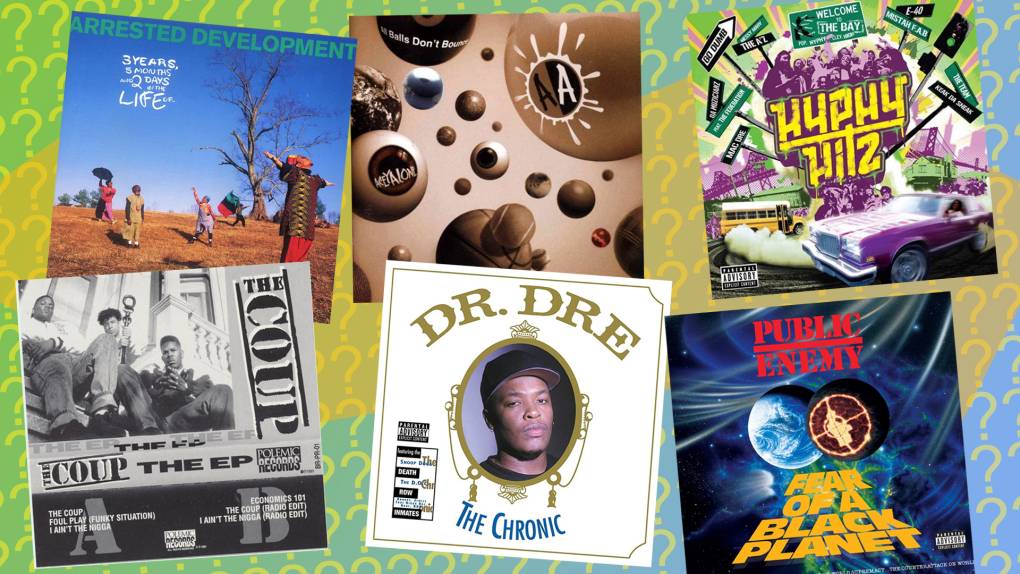
"caption": "Some of ChatGPT's responses when asked to name the best Bay Area rap albums. It would appear artificial intelligence still has a lot to learn.",
"description": null,
"title": "BayAreaAlbumsChatGPT_cover",
"credit": "Capitol Records/TVT Records/Def Jam/UMG/Interscope/Polemic Records",
"status": "inherit",
"altTag": "a collage of six albums: 3 Years, 5 Months and 2 Days in the Life Of...' by Arrested Development; 'The Chronic' by Dr. Dre, 'Fear of a Black Planet' by Arrested Development; 'Hyphy Hitz'; 'The Coup' by The Coup; and 'All Balls Don't Bounce' by Aceyalone",
"isLoading": false,
"fetchFailed": false
},
"arts_13928394": {
"type": "attachments",
"id": "arts_13928394",
"meta": {
"index": "attachments_1716263798",
"site": "arts",
"id": "13928394",
"found": true
},
"parent": 13928379,
"imgSizes": {
"twentyfourteen-full-width": {
"file": "https://ww2.kqed.org/app/uploads/sites/2/2023/04/123123-1038x576.jpg",
"width": 1038,
"mimeType": "image/jpeg",
"height": 576
},
"thumbnail": {
"file": "https://ww2.kqed.org/app/uploads/sites/2/2023/04/123123-160x106.jpg",
"width": 160,
"mimeType": "image/jpeg",
"height": 106
},
"post-thumbnail": {
"file": "https://ww2.kqed.org/app/uploads/sites/2/2023/04/123123-672x372.jpg",
"width": 672,
"mimeType": "image/jpeg",
"height": 372
},
"kqedFullSize": {
"file": "https://ww2.kqed.org/app/uploads/sites/2/2023/04/123123-scaled.jpg",
"width": 2560,
"height": 1699
},
"2048x2048": {
"file": "https://ww2.kqed.org/app/uploads/sites/2/2023/04/123123-2048x1359.jpg",
"width": 2048,
"mimeType": "image/jpeg",
"height": 1359
},
"large": {
"file": "https://ww2.kqed.org/app/uploads/sites/2/2023/04/123123-1020x677.jpg",
"width": 1020,
"mimeType": "image/jpeg",
"height": 677
},
"1536x1536": {
"file": "https://ww2.kqed.org/app/uploads/sites/2/2023/04/123123-1536x1019.jpg",
"width": 1536,
"mimeType": "image/jpeg",
"height": 1019
},
"full-width": {
"file": "https://ww2.kqed.org/app/uploads/sites/2/2023/04/123123-1920x1274.jpg",
"width": 1920,
"mimeType": "image/jpeg",
"height": 1274
},
"medium": {
"file": "https://ww2.kqed.org/app/uploads/sites/2/2023/04/123123-800x531.jpg",
"width": 800,
"mimeType": "image/jpeg",
"height": 531
},
"medium_large": {
"file": "https://ww2.kqed.org/app/uploads/sites/2/2023/04/123123-768x510.jpg",
"width": 768,
"mimeType": "image/jpeg",
"height": 510
}
},
"publishDate": 1682619626,
"modified": 1682626006,
"caption": "Lolo Zouaï performs at Bimbo's 365 club on April 11, 2023. The pop singer, who grew up in San Francisco, is currently on her first world tour. ",
"description": null,
"title": "123123",
"credit": "Danica Robinson",
"status": "inherit",
"altTag": "a young woman with blonde hair in a white fingerless gloves and a bustier dances with her arms up while smiling on stage in purple light",
"isLoading": false,
"fetchFailed": false
},
"arts_13928079": {
"type": "attachments",
"id": "arts_13928079",
"meta": {
"index": "attachments_1716263798",
"site": "arts",
"id": "13928079",
"found": true
},
"parent": 13928057,
"imgSizes": {
"twentyfourteen-full-width": {
"file": "https://ww2.kqed.org/app/uploads/sites/2/2023/04/sq-1038x576.jpg",
"width": 1038,
"mimeType": "image/jpeg",
"height": 576
},
"thumbnail": {
"file": "https://ww2.kqed.org/app/uploads/sites/2/2023/04/sq-160x160.jpg",
"width": 160,
"mimeType": "image/jpeg",
"height": 160
},
"post-thumbnail": {
"file": "https://ww2.kqed.org/app/uploads/sites/2/2023/04/sq-672x372.jpg",
"width": 672,
"mimeType": "image/jpeg",
"height": 372
},
"kqedFullSize": {
"file": "https://ww2.kqed.org/app/uploads/sites/2/2023/04/sq.jpg",
"width": 1280,
"height": 1280
},
"large": {
"file": "https://ww2.kqed.org/app/uploads/sites/2/2023/04/sq-1020x1020.jpg",
"width": 1020,
"mimeType": "image/jpeg",
"height": 1020
},
"medium": {
"file": "https://ww2.kqed.org/app/uploads/sites/2/2023/04/sq-800x800.jpg",
"width": 800,
"mimeType": "image/jpeg",
"height": 800
},
"medium_large": {
"file": "https://ww2.kqed.org/app/uploads/sites/2/2023/04/sq-768x768.jpg",
"width": 768,
"mimeType": "image/jpeg",
"height": 768
}
},
"publishDate": 1682029245,
"modified": 1682103797,
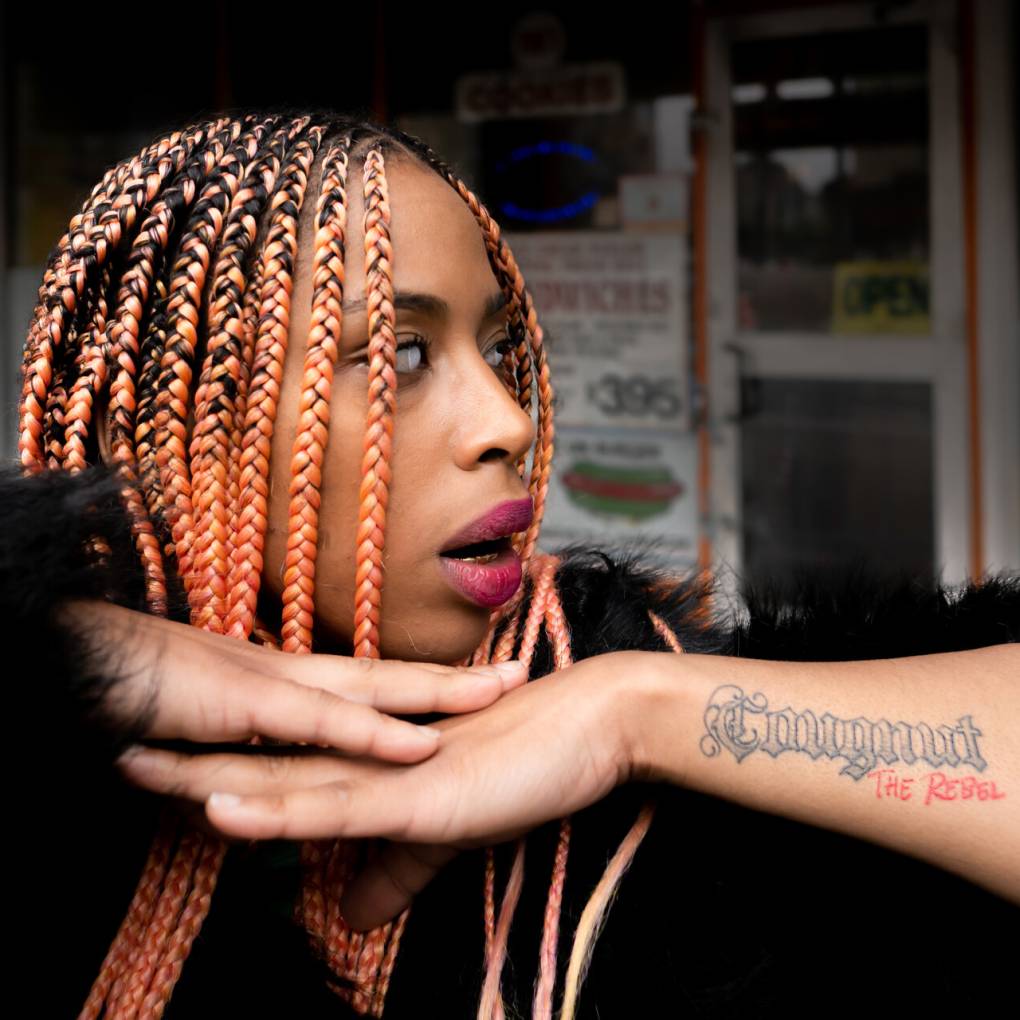
"caption": "Alien Mac Kitty has found her own lane as a rapper while honoring her father Cougnut, one of the first and most distinctive San Francisco rappers on wax.",
"description": null,
"title": "sq",
"credit": "Beth LaBerge/KQED",
"status": "inherit",
"altTag": "A young Black woman with bright extensions and an arm tattoo reading 'Cougnut - the Rebel' looks to the right with treated contacts",
"isLoading": false,
"fetchFailed": false
},
"arts_13928063": {
"type": "attachments",
"id": "arts_13928063",
"meta": {
"index": "attachments_1716263798",
"site": "arts",
"id": "13928063",
"found": true
},
"parent": 13928057,
"imgSizes": {
"twentyfourteen-full-width": {
"file": "https://ww2.kqed.org/app/uploads/sites/2/2023/04/RS64528_016_KQED_AlienMacKitty_04102023-qut-1-1038x576.jpg",
"width": 1038,
"mimeType": "image/jpeg",
"height": 576
},
"thumbnail": {
"file": "https://ww2.kqed.org/app/uploads/sites/2/2023/04/RS64528_016_KQED_AlienMacKitty_04102023-qut-1-160x107.jpg",
"width": 160,
"mimeType": "image/jpeg",
"height": 107
},
"post-thumbnail": {
"file": "https://ww2.kqed.org/app/uploads/sites/2/2023/04/RS64528_016_KQED_AlienMacKitty_04102023-qut-1-672x372.jpg",
"width": 672,
"mimeType": "image/jpeg",
"height": 372
},
"kqedFullSize": {
"file": "https://ww2.kqed.org/app/uploads/sites/2/2023/04/RS64528_016_KQED_AlienMacKitty_04102023-qut-1.jpg",
"width": 1920,
"height": 1280
},
"large": {
"file": "https://ww2.kqed.org/app/uploads/sites/2/2023/04/RS64528_016_KQED_AlienMacKitty_04102023-qut-1-1020x680.jpg",
"width": 1020,
"mimeType": "image/jpeg",
"height": 680
},
"1536x1536": {
"file": "https://ww2.kqed.org/app/uploads/sites/2/2023/04/RS64528_016_KQED_AlienMacKitty_04102023-qut-1-1536x1024.jpg",
"width": 1536,
"mimeType": "image/jpeg",
"height": 1024
},
"medium": {
"file": "https://ww2.kqed.org/app/uploads/sites/2/2023/04/RS64528_016_KQED_AlienMacKitty_04102023-qut-1-800x533.jpg",
"width": 800,
"mimeType": "image/jpeg",
"height": 533
},
"medium_large": {
"file": "https://ww2.kqed.org/app/uploads/sites/2/2023/04/RS64528_016_KQED_AlienMacKitty_04102023-qut-1-768x512.jpg",
"width": 768,
"mimeType": "image/jpeg",
"height": 512
}
},
"publishDate": 1682019656,
"modified": 1682019656,
"caption": "Alien Mac Kitty at Miyako's Ice Cream in the Fillmore neighborhood of San Francisco on April 10, 2023.",
"description": null,
"title": "RS64528_016_KQED_AlienMacKitty_04102023-qut",
"credit": null,
"status": "inherit",
"altTag": null,
"isLoading": false,
"fetchFailed": false
},
"arts_13928314": {
"type": "attachments",
"id": "arts_13928314",
"meta": {
"index": "attachments_1716263798",
"site": "arts",
"id": "13928314",
"found": true
},
"parent": 13928312,
"imgSizes": {
"twentyfourteen-full-width": {
"file": "https://ww2.kqed.org/app/uploads/sites/2/2023/04/gettyimages-74252055_custom-4120041f8ef6b12305edc03b750693ed54141c41-1-scaled-e1682533162854-1038x576.jpg",
"width": 1038,
"mimeType": "image/jpeg",
"height": 576
},
"thumbnail": {
"file": "https://ww2.kqed.org/app/uploads/sites/2/2023/04/gettyimages-74252055_custom-4120041f8ef6b12305edc03b750693ed54141c41-1-scaled-e1682533162854-160x116.jpg",
"width": 160,
"mimeType": "image/jpeg",
"height": 116
},
"post-thumbnail": {
"file": "https://ww2.kqed.org/app/uploads/sites/2/2023/04/gettyimages-74252055_custom-4120041f8ef6b12305edc03b750693ed54141c41-1-scaled-e1682533162854-672x372.jpg",
"width": 672,
"mimeType": "image/jpeg",
"height": 372
},
"kqedFullSize": {
"file": "https://ww2.kqed.org/app/uploads/sites/2/2023/04/gettyimages-74252055_custom-4120041f8ef6b12305edc03b750693ed54141c41-1-scaled-e1682533162854.jpg",
"width": 1920,
"height": 1394
},
"2048x2048": {
"file": "https://ww2.kqed.org/app/uploads/sites/2/2023/04/gettyimages-74252055_custom-4120041f8ef6b12305edc03b750693ed54141c41-1-2048x1486.jpg",
"width": 2048,
"mimeType": "image/jpeg",
"height": 1486
},
"large": {
"file": "https://ww2.kqed.org/app/uploads/sites/2/2023/04/gettyimages-74252055_custom-4120041f8ef6b12305edc03b750693ed54141c41-1-scaled-e1682533162854-1020x741.jpg",
"width": 1020,
"mimeType": "image/jpeg",
"height": 741
},
"1536x1536": {
"file": "https://ww2.kqed.org/app/uploads/sites/2/2023/04/gettyimages-74252055_custom-4120041f8ef6b12305edc03b750693ed54141c41-1-scaled-e1682533162854-1536x1115.jpg",
"width": 1536,
"mimeType": "image/jpeg",
"height": 1115
},
"full-width": {
"file": "https://ww2.kqed.org/app/uploads/sites/2/2023/04/gettyimages-74252055_custom-4120041f8ef6b12305edc03b750693ed54141c41-1-1920x1393.jpg",
"width": 1920,
"mimeType": "image/jpeg",
"height": 1393
},
"medium": {
"file": "https://ww2.kqed.org/app/uploads/sites/2/2023/04/gettyimages-74252055_custom-4120041f8ef6b12305edc03b750693ed54141c41-1-scaled-e1682533162854-800x581.jpg",
"width": 800,
"mimeType": "image/jpeg",
"height": 581
},
"medium_large": {
"file": "https://ww2.kqed.org/app/uploads/sites/2/2023/04/gettyimages-74252055_custom-4120041f8ef6b12305edc03b750693ed54141c41-1-scaled-e1682533162854-768x558.jpg",
"width": 768,
"mimeType": "image/jpeg",
"height": 558
}
},
"publishDate": 1682531543,
"modified": 1682533238,
"caption": "Harry Belafonte in a scene from the 1959 film ‘Odds Against Tomorrow.’",
"description": null,
"title": "Harry Belafonte in a scene from the 1959 film ‘Odds Against Tomorrow.’",
"credit": "Michael Ochs Archives/Getty Images",
"status": "inherit",
"altTag": "A young Black man in 1950s-era suit and tie sits behind a microphone with a xylophone.",
"isLoading": false,
"fetchFailed": false
},
"arts_13928244": {
"type": "attachments",
"id": "arts_13928244",
"meta": {
"index": "attachments_1716263798",
"site": "arts",
"id": "13928244",
"found": true
},
"parent": 13928225,
"imgSizes": {
"thumbnail": {
"file": "https://ww2.kqed.org/app/uploads/sites/2/2023/04/SternGrove.2023.MAIN_-160x90.jpg",
"width": 160,
"mimeType": "image/jpeg",
"height": 90
},
"post-thumbnail": {
"file": "https://ww2.kqed.org/app/uploads/sites/2/2023/04/SternGrove.2023.MAIN_-672x372.jpg",
"width": 672,
"mimeType": "image/jpeg",
"height": 372
},
"kqedFullSize": {
"file": "https://ww2.kqed.org/app/uploads/sites/2/2023/04/SternGrove.2023.MAIN_.jpg",
"width": 948,
"height": 533
},
"medium": {
"file": "https://ww2.kqed.org/app/uploads/sites/2/2023/04/SternGrove.2023.MAIN_-800x450.jpg",
"width": 800,
"mimeType": "image/jpeg",
"height": 450
},
"medium_large": {
"file": "https://ww2.kqed.org/app/uploads/sites/2/2023/04/SternGrove.2023.MAIN_-768x432.jpg",
"width": 768,
"mimeType": "image/jpeg",
"height": 432
}
},
"publishDate": 1682439768,
"modified": 1682439847,
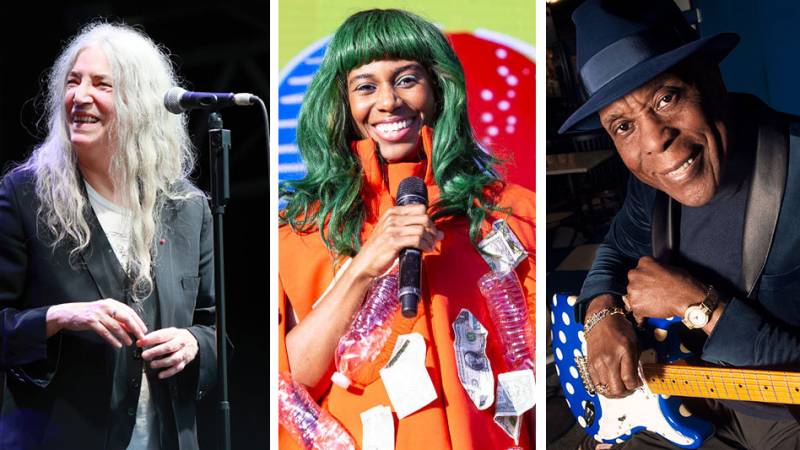
"caption": "(L–R) Patti Smith, Santigold and Buddy Guy are among this year's headlining acts at the 86th annual Stern Grove Festival in San Francisco. ",
"description": null,
"title": "SternGrove.2023.MAIN",
"credit": "WIki Commons; Estefeny Gonzales/KQED; RCA Records",
"status": "inherit",
"altTag": null,
"isLoading": false,
"fetchFailed": false
},
"arts_13928161": {
"type": "attachments",
"id": "arts_13928161",
"meta": {
"index": "attachments_1716263798",
"site": "arts",
"id": "13928161",
"found": true
},
"parent": 13927996,
"imgSizes": {
"twentyfourteen-full-width": {
"file": "https://ww2.kqed.org/app/uploads/sites/2/2023/04/iStock-1412895845-1038x576.jpg",
"width": 1038,
"mimeType": "image/jpeg",
"height": 576
},
"thumbnail": {
"file": "https://ww2.kqed.org/app/uploads/sites/2/2023/04/iStock-1412895845-160x91.jpg",
"width": 160,
"mimeType": "image/jpeg",
"height": 91
},
"post-thumbnail": {
"file": "https://ww2.kqed.org/app/uploads/sites/2/2023/04/iStock-1412895845-672x372.jpg",
"width": 672,
"mimeType": "image/jpeg",
"height": 372
},
"kqedFullSize": {
"file": "https://ww2.kqed.org/app/uploads/sites/2/2023/04/iStock-1412895845.jpg",
"width": 1356,
"height": 773
},
"large": {
"file": "https://ww2.kqed.org/app/uploads/sites/2/2023/04/iStock-1412895845-1020x581.jpg",
"width": 1020,
"mimeType": "image/jpeg",
"height": 581
},
"medium": {
"file": "https://ww2.kqed.org/app/uploads/sites/2/2023/04/iStock-1412895845-800x456.jpg",
"width": 800,
"mimeType": "image/jpeg",
"height": 456
},
"medium_large": {
"file": "https://ww2.kqed.org/app/uploads/sites/2/2023/04/iStock-1412895845-768x438.jpg",
"width": 768,
"mimeType": "image/jpeg",
"height": 438
}
},
"publishDate": 1682116256,
"modified": 1682116395,
"caption": "Have you ever hidden your Spotify listening activity or downplayed something you enjoy? Skyline High School student Olivia Hopkins investigates why aspects of our music taste can make us cringe.",
"description": null,
"title": "Happy woman relaxed listening to headphone music",
"credit": "iStock",
"status": "inherit",
"altTag": "Happy young woman character listening to music headphones on isolated background.",
"isLoading": false,
"fetchFailed": false
},
"arts_13928232": {
"type": "attachments",
"id": "arts_13928232",
"meta": {
"index": "attachments_1716263798",
"site": "arts",
"id": "13928232",
"found": true
},
"parent": 13928229,
"imgSizes": {
"twentyfourteen-full-width": {
"file": "https://ww2.kqed.org/app/uploads/sites/2/2023/04/GettyImages-542255232-1024x576.jpg",
"width": 1024,
"mimeType": "image/jpeg",
"height": 576
},
"thumbnail": {
"file": "https://ww2.kqed.org/app/uploads/sites/2/2023/04/GettyImages-542255232-160x114.jpg",
"width": 160,
"mimeType": "image/jpeg",
"height": 114
},
"post-thumbnail": {
"file": "https://ww2.kqed.org/app/uploads/sites/2/2023/04/GettyImages-542255232-672x372.jpg",
"width": 672,
"mimeType": "image/jpeg",
"height": 372
},
"kqedFullSize": {
"file": "https://ww2.kqed.org/app/uploads/sites/2/2023/04/GettyImages-542255232.jpg",
"width": 1024,
"height": 727
},
"large": {
"file": "https://ww2.kqed.org/app/uploads/sites/2/2023/04/GettyImages-542255232-1020x724.jpg",
"width": 1020,
"mimeType": "image/jpeg",
"height": 724
},
"medium": {
"file": "https://ww2.kqed.org/app/uploads/sites/2/2023/04/GettyImages-542255232-800x568.jpg",
"width": 800,
"mimeType": "image/jpeg",
"height": 568
},
"medium_large": {
"file": "https://ww2.kqed.org/app/uploads/sites/2/2023/04/GettyImages-542255232-768x545.jpg",
"width": 768,
"mimeType": "image/jpeg",
"height": 545
}
},
"publishDate": 1682434677,
"modified": 1682434746,
"caption": "American singer, actor, composer, author, and producer Harry Belafonte performing at the Olympia Hall in the 1960s. Belafonte died Tuesday at age 96. (Photo by James Andanson/Sygma via Getty Images)",
"description": null,
"title": "American Actor and Singer Harry Belafonte",
"credit": "James Andanson/Sygma via Getty Images",
"status": "inherit",
"altTag": null,
"isLoading": false,
"fetchFailed": false
},
"arts_13928178": {
"type": "attachments",
"id": "arts_13928178",
"meta": {
"index": "attachments_1716263798",
"site": "arts",
"id": "13928178",
"found": true
},
"parent": 13928177,
"imgSizes": {
"twentyfourteen-full-width": {
"file": "https://ww2.kqed.org/app/uploads/sites/2/2023/04/GettyImages-1474017535-scaled-e1682358349188-1038x576.jpg",
"width": 1038,
"mimeType": "image/jpeg",
"height": 576
},
"thumbnail": {
"file": "https://ww2.kqed.org/app/uploads/sites/2/2023/04/GettyImages-1474017535-scaled-e1682358349188-160x107.jpg",
"width": 160,
"mimeType": "image/jpeg",
"height": 107
},
"post-thumbnail": {
"file": "https://ww2.kqed.org/app/uploads/sites/2/2023/04/GettyImages-1474017535-scaled-e1682358349188-672x372.jpg",
"width": 672,
"mimeType": "image/jpeg",
"height": 372
},
"kqedFullSize": {
"file": "https://ww2.kqed.org/app/uploads/sites/2/2023/04/GettyImages-1474017535-scaled-e1682358349188.jpg",
"width": 1920,
"height": 1280
},
"2048x2048": {
"file": "https://ww2.kqed.org/app/uploads/sites/2/2023/04/GettyImages-1474017535-2048x1365.jpg",
"width": 2048,
"mimeType": "image/jpeg",
"height": 1365
},
"large": {
"file": "https://ww2.kqed.org/app/uploads/sites/2/2023/04/GettyImages-1474017535-scaled-e1682358349188-1020x680.jpg",
"width": 1020,
"mimeType": "image/jpeg",
"height": 680
},
"1536x1536": {
"file": "https://ww2.kqed.org/app/uploads/sites/2/2023/04/GettyImages-1474017535-scaled-e1682358349188-1536x1024.jpg",
"width": 1536,
"mimeType": "image/jpeg",
"height": 1024
},
"full-width": {
"file": "https://ww2.kqed.org/app/uploads/sites/2/2023/04/GettyImages-1474017535-1920x1280.jpg",
"width": 1920,
"mimeType": "image/jpeg",
"height": 1280
},
"medium": {
"file": "https://ww2.kqed.org/app/uploads/sites/2/2023/04/GettyImages-1474017535-scaled-e1682358349188-800x533.jpg",
"width": 800,
"mimeType": "image/jpeg",
"height": 533
},
"medium_large": {
"file": "https://ww2.kqed.org/app/uploads/sites/2/2023/04/GettyImages-1474017535-scaled-e1682358349188-768x512.jpg",
"width": 768,
"mimeType": "image/jpeg",
"height": 512
}
},
"publishDate": 1682358199,
"modified": 1682358428,
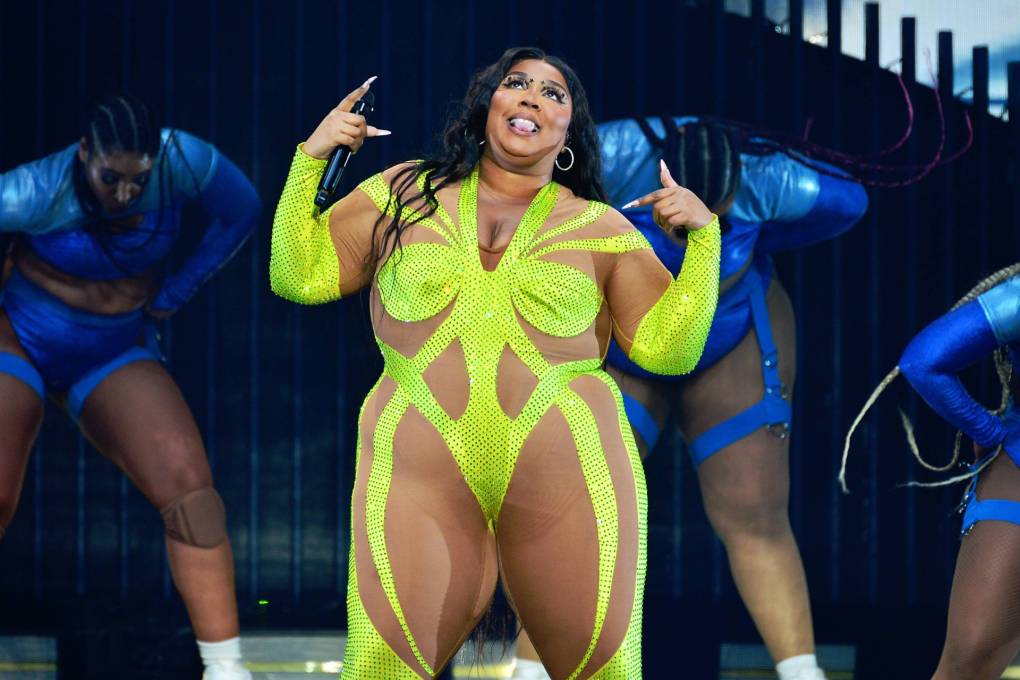
"caption": "Lizzo performs in London, March 2023.",
"description": null,
"title": "Lizzo performs in London, March 2023.",
"credit": "Jim Dyson/Getty Images",
"status": "inherit",
"altTag": "A plus-size Black woman performs onstage wearing a sheer bodysuit with neon yellow details.",
"isLoading": false,
"fetchFailed": false
},
"arts_13928007": {
"type": "attachments",
"id": "arts_13928007",
"meta": {
"index": "attachments_1716263798",
"site": "arts",
"id": "13928007",
"found": true
},
"parent": 13927810,
"imgSizes": {
"twentyfourteen-full-width": {
"file": "https://ww2.kqed.org/app/uploads/sites/2/2023/04/Brenda.Square.MAIN_-1038x576.jpg",
"width": 1038,
"mimeType": "image/jpeg",
"height": 576
},
"thumbnail": {
"file": "https://ww2.kqed.org/app/uploads/sites/2/2023/04/Brenda.Square.MAIN_-160x160.jpg",
"width": 160,
"mimeType": "image/jpeg",
"height": 160
},
"post-thumbnail": {
"file": "https://ww2.kqed.org/app/uploads/sites/2/2023/04/Brenda.Square.MAIN_-672x372.jpg",
"width": 672,
"mimeType": "image/jpeg",
"height": 372
},
"kqedFullSize": {
"file": "https://ww2.kqed.org/app/uploads/sites/2/2023/04/Brenda.Square.MAIN_.jpg",
"width": 1060,
"height": 1060
},
"large": {
"file": "https://ww2.kqed.org/app/uploads/sites/2/2023/04/Brenda.Square.MAIN_-1020x1020.jpg",
"width": 1020,
"mimeType": "image/jpeg",
"height": 1020
},
"medium": {
"file": "https://ww2.kqed.org/app/uploads/sites/2/2023/04/Brenda.Square.MAIN_-800x800.jpg",
"width": 800,
"mimeType": "image/jpeg",
"height": 800
},
"medium_large": {
"file": "https://ww2.kqed.org/app/uploads/sites/2/2023/04/Brenda.Square.MAIN_-768x768.jpg",
"width": 768,
"mimeType": "image/jpeg",
"height": 768
}
},
"publishDate": 1681919459,
"modified": 1681919479,
"caption": "Ethel Love, at age 17, as Brenda in Tupac Shakur's music video for 'Brenda's Got a Baby.' Love says the role came naturally to her 'because it was similar to my life already.'",
"description": null,
"title": "Brenda.Square.MAIN",
"credit": "YouTube/Interscope Records",
"status": "inherit",
"altTag": null,
"isLoading": false,
"fetchFailed": false
},
"arts_13927953": {
"type": "attachments",
"id": "arts_13927953",
"meta": {
"index": "attachments_1716263798",
"site": "arts",
"id": "13927953",
"found": true
},
"parent": 13927947,
"imgSizes": {
"twentyfourteen-full-width": {
"file": "https://ww2.kqed.org/app/uploads/sites/2/2023/04/IMG_0349-1-1038x576.jpg",
"width": 1038,
"mimeType": "image/jpeg",
"height": 576
},
"thumbnail": {
"file": "https://ww2.kqed.org/app/uploads/sites/2/2023/04/IMG_0349-1-160x104.jpg",
"width": 160,
"mimeType": "image/jpeg",
"height": 104
},
"post-thumbnail": {
"file": "https://ww2.kqed.org/app/uploads/sites/2/2023/04/IMG_0349-1-672x372.jpg",
"width": 672,
"mimeType": "image/jpeg",
"height": 372
},
"kqedFullSize": {
"file": "https://ww2.kqed.org/app/uploads/sites/2/2023/04/IMG_0349-1-scaled.jpg",
"width": 2560,
"height": 1667
},
"2048x2048": {
"file": "https://ww2.kqed.org/app/uploads/sites/2/2023/04/IMG_0349-1-2048x1334.jpg",
"width": 2048,
"mimeType": "image/jpeg",
"height": 1334
},
"large": {
"file": "https://ww2.kqed.org/app/uploads/sites/2/2023/04/IMG_0349-1-1020x664.jpg",
"width": 1020,
"mimeType": "image/jpeg",
"height": 664
},
"1536x1536": {
"file": "https://ww2.kqed.org/app/uploads/sites/2/2023/04/IMG_0349-1-1536x1000.jpg",
"width": 1536,
"mimeType": "image/jpeg",
"height": 1000
},
"full-width": {
"file": "https://ww2.kqed.org/app/uploads/sites/2/2023/04/IMG_0349-1-1920x1251.jpg",
"width": 1920,
"mimeType": "image/jpeg",
"height": 1251
},
"medium": {
"file": "https://ww2.kqed.org/app/uploads/sites/2/2023/04/IMG_0349-1-800x521.jpg",
"width": 800,
"mimeType": "image/jpeg",
"height": 521
},
"medium_large": {
"file": "https://ww2.kqed.org/app/uploads/sites/2/2023/04/IMG_0349-1-768x500.jpg",
"width": 768,
"mimeType": "image/jpeg",
"height": 500
}
},
"publishDate": 1681849254,
"modified": 1681853265,
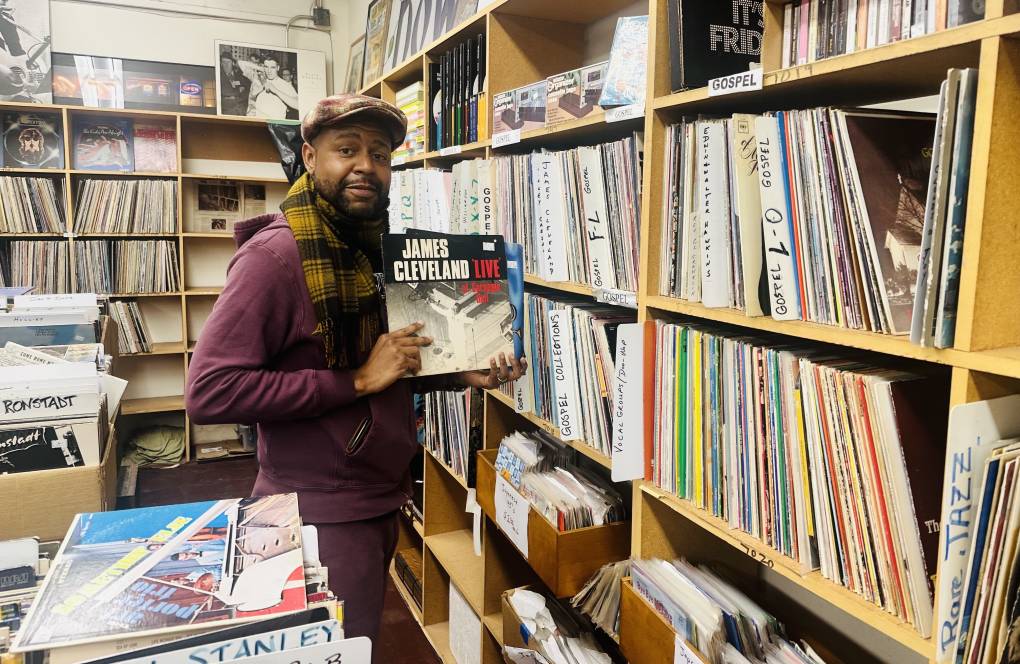
"caption": "Howard Wiley holds up a copy of James Cleveland's 'Live at Carnegie Hall' LP while shopping at Down Home Record Store in El Cerrito on April 7.",
"description": null,
"title": "IMG_0349 (1)",
"credit": "Ariana Proehl/KQED",
"status": "inherit",
"altTag": "a Black man in a purple jacket holds up a copy of a James Cleveland record while standing in a record store with shelves overflowing with vinyl",
"isLoading": false,
"fetchFailed": false
},
"arts_13927853": {
"type": "attachments",
"id": "arts_13927853",
"meta": {
"index": "attachments_1716263798",
"site": "arts",
"id": "13927853",
"found": true
},
"parent": 13927852,
"imgSizes": {
"twentyfourteen-full-width": {
"file": "https://ww2.kqed.org/app/uploads/sites/2/2023/04/gettyimages-585569782-467564fe689b1bc562f10068ac7716d658a357a1-1038x576.jpg",
"width": 1038,
"mimeType": "image/jpeg",
"height": 576
},
"thumbnail": {
"file": "https://ww2.kqed.org/app/uploads/sites/2/2023/04/gettyimages-585569782-467564fe689b1bc562f10068ac7716d658a357a1-160x120.jpg",
"width": 160,
"mimeType": "image/jpeg",
"height": 120
},
"post-thumbnail": {
"file": "https://ww2.kqed.org/app/uploads/sites/2/2023/04/gettyimages-585569782-467564fe689b1bc562f10068ac7716d658a357a1-672x372.jpg",
"width": 672,
"mimeType": "image/jpeg",
"height": 372
},
"kqedFullSize": {
"file": "https://ww2.kqed.org/app/uploads/sites/2/2023/04/gettyimages-585569782-467564fe689b1bc562f10068ac7716d658a357a1-scaled.jpg",
"width": 2560,
"height": 1919
},
"2048x2048": {
"file": "https://ww2.kqed.org/app/uploads/sites/2/2023/04/gettyimages-585569782-467564fe689b1bc562f10068ac7716d658a357a1-2048x1535.jpg",
"width": 2048,
"mimeType": "image/jpeg",
"height": 1535
},
"large": {
"file": "https://ww2.kqed.org/app/uploads/sites/2/2023/04/gettyimages-585569782-467564fe689b1bc562f10068ac7716d658a357a1-1020x765.jpg",
"width": 1020,
"mimeType": "image/jpeg",
"height": 765
},
"1536x1536": {
"file": "https://ww2.kqed.org/app/uploads/sites/2/2023/04/gettyimages-585569782-467564fe689b1bc562f10068ac7716d658a357a1-1536x1151.jpg",
"width": 1536,
"mimeType": "image/jpeg",
"height": 1151
},
"full-width": {
"file": "https://ww2.kqed.org/app/uploads/sites/2/2023/04/gettyimages-585569782-467564fe689b1bc562f10068ac7716d658a357a1-1920x1439.jpg",
"width": 1920,
"mimeType": "image/jpeg",
"height": 1439
},
"medium": {
"file": "https://ww2.kqed.org/app/uploads/sites/2/2023/04/gettyimages-585569782-467564fe689b1bc562f10068ac7716d658a357a1-800x600.jpg",
"width": 800,
"mimeType": "image/jpeg",
"height": 600
},
"medium_large": {
"file": "https://ww2.kqed.org/app/uploads/sites/2/2023/04/gettyimages-585569782-467564fe689b1bc562f10068ac7716d658a357a1-768x576.jpg",
"width": 768,
"mimeType": "image/jpeg",
"height": 576
}
},
"publishDate": 1681746982,
"modified": 1681747242,
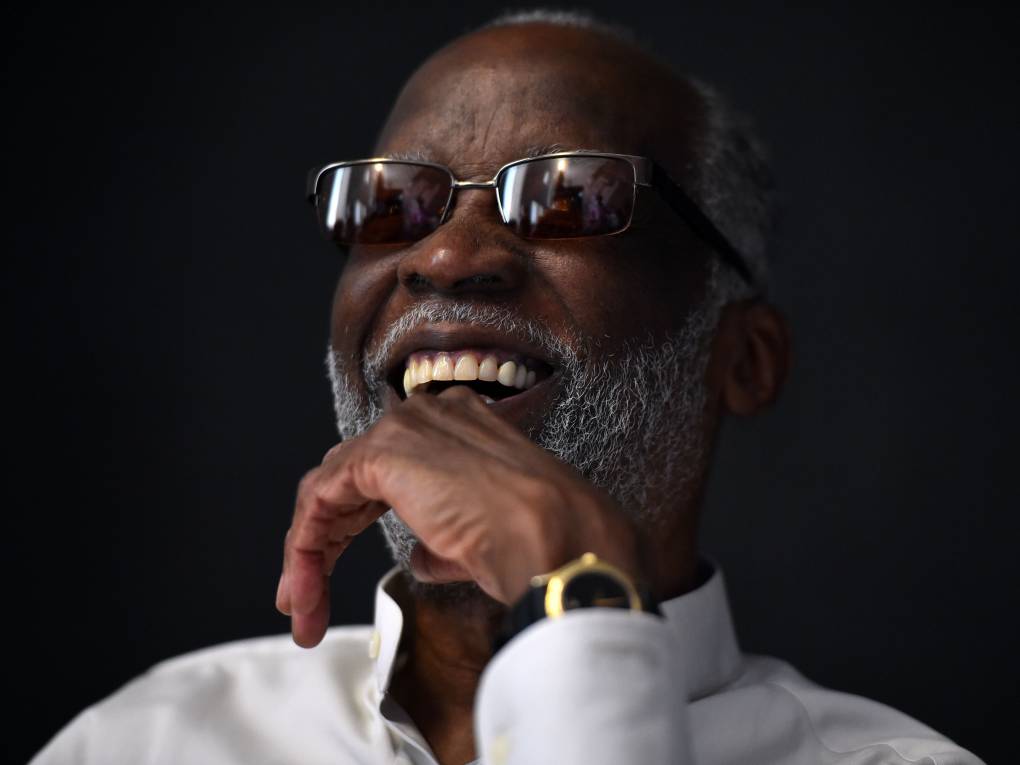
"caption": "Ahmad Jamal, pictured in 2016.",
"description": "Ahmad Jamal, pictured in 2016.",
"title": "Ahmad Jamal, pictured in 2016.",
"credit": "Rémy Gabalda/AFP via Getty Images",
"status": "inherit",
"altTag": "A man in a white shirt, sunglasses and watch smiles, his head tilting backward",
"isLoading": false,
"fetchFailed": false
},
"arts_13927740": {
"type": "attachments",
"id": "arts_13927740",
"meta": {
"index": "attachments_1716263798",
"site": "arts",
"id": "13927740",
"found": true
},
"parent": 13927738,
"imgSizes": {
"twentyfourteen-full-width": {
"file": "https://ww2.kqed.org/app/uploads/sites/2/2023/04/GettyImages-1427074349-1038x576.jpg",
"width": 1038,
"mimeType": "image/jpeg",
"height": 576
},
"thumbnail": {
"file": "https://ww2.kqed.org/app/uploads/sites/2/2023/04/GettyImages-1427074349-160x107.jpg",
"width": 160,
"mimeType": "image/jpeg",
"height": 107
},
"post-thumbnail": {
"file": "https://ww2.kqed.org/app/uploads/sites/2/2023/04/GettyImages-1427074349-672x372.jpg",
"width": 672,
"mimeType": "image/jpeg",
"height": 372
},
"kqedFullSize": {
"file": "https://ww2.kqed.org/app/uploads/sites/2/2023/04/GettyImages-1427074349-scaled.jpg",
"width": 2560,
"height": 1707
},
"2048x2048": {
"file": "https://ww2.kqed.org/app/uploads/sites/2/2023/04/GettyImages-1427074349-2048x1365.jpg",
"width": 2048,
"mimeType": "image/jpeg",
"height": 1365
},
"large": {
"file": "https://ww2.kqed.org/app/uploads/sites/2/2023/04/GettyImages-1427074349-1020x680.jpg",
"width": 1020,
"mimeType": "image/jpeg",
"height": 680
},
"1536x1536": {
"file": "https://ww2.kqed.org/app/uploads/sites/2/2023/04/GettyImages-1427074349-1536x1024.jpg",
"width": 1536,
"mimeType": "image/jpeg",
"height": 1024
},
"full-width": {
"file": "https://ww2.kqed.org/app/uploads/sites/2/2023/04/GettyImages-1427074349-1920x1280.jpg",
"width": 1920,
"mimeType": "image/jpeg",
"height": 1280
},
"medium": {
"file": "https://ww2.kqed.org/app/uploads/sites/2/2023/04/GettyImages-1427074349-800x533.jpg",
"width": 800,
"mimeType": "image/jpeg",
"height": 533
},
"medium_large": {
"file": "https://ww2.kqed.org/app/uploads/sites/2/2023/04/GettyImages-1427074349-768x512.jpg",
"width": 768,
"mimeType": "image/jpeg",
"height": 512
}
},
"publishDate": 1681408417,
"modified": 1681408572,
"caption": "Metallica’s Kirk Hammett and James Hetfield perform at the Global Citizen Festival in New York, September 2022.",
"description": null,
"title": "Metallica’s Kirk Hammett and James Hetfield perform at the Global Citizen Festival in New York, September 2022.",
"credit": "Kevin Mazur/ Getty Images for Global Citizen",
"status": "inherit",
"altTag": "Two rockers stand onstage with wide-legged stances. They are dressed in all black and leather and playing electric guitars. Both have greying hair.",
"isLoading": false,
"fetchFailed": false
}
},
"audioPlayerReducer": {
"postId": "stream_live",
"isPaused": true,
"isPlaying": false,
"pfsActive": false,
"pledgeModalIsOpen": true,
"playerDrawerIsOpen": false,
"liveAudioPlayStartedAt": 0,
"liveAudioPlayContext": ""
},
"authorsReducer": {
"byline_arts_13928312": {
"type": "authors",
"id": "byline_arts_13928312",
"meta": {
"override": true
},
"slug": "byline_arts_13928312",
"name": "Aisha Harris",
"isLoading": false
},
"byline_arts_13927996": {
"type": "authors",
"id": "byline_arts_13927996",
"meta": {
"override": true
},
"slug": "byline_arts_13927996",
"name": "Olivia Hopkins",
"isLoading": false
},
"byline_arts_13928229": {
"type": "authors",
"id": "byline_arts_13928229",
"meta": {
"override": true
},
"slug": "byline_arts_13928229",
"name": "Hillel Italie, Associated Press",
"isLoading": false
},
"byline_arts_13927852": {
"type": "authors",
"id": "byline_arts_13927852",
"meta": {
"override": true
},
"slug": "byline_arts_13927852",
"name": "Martin Johnson",
"isLoading": false
},
"byline_arts_13927738": {
"type": "authors",
"id": "byline_arts_13927738",
"meta": {
"override": true
},
"slug": "byline_arts_13927738",
"name": "Mark Kennedy",
"isLoading": false
},
"kqedarts": {
"type": "authors",
"id": "92",
"meta": {
"index": "authors_1716337520",
"id": "92",
"found": true
},
"name": "KQED Arts",
"firstName": "KQED",
"lastName": "Arts",
"slug": "kqedarts",
"email": "arts@kqed.org",
"display_author_email": false,
"staff_mastheads": [],
"title": "KQED Staff",
"bio": null,
"avatar": "https://secure.gravatar.com/avatar/321c9ebfeb7736f9e55366a6d3399ab0?s=600&d=blank&r=g",
"twitter": null,
"facebook": null,
"instagram": "https://www.instagram.com/kqed_arts/",
"linkedin": null,
"sites": [
{
"site": "arts",
"roles": [
"contributor"
]
},
{
"site": "pop",
"roles": [
"contributor"
]
},
{
"site": "science",
"roles": [
"author"
]
},
{
"site": "food",
"roles": [
"contributor"
]
}
],
"headData": {
"title": "KQED Arts | KQED",
"description": "KQED Staff",
"ogImgSrc": "https://secure.gravatar.com/avatar/321c9ebfeb7736f9e55366a6d3399ab0?s=600&d=blank&r=g",
"twImgSrc": "https://secure.gravatar.com/avatar/321c9ebfeb7736f9e55366a6d3399ab0?s=600&d=blank&r=g"
},
"isLoading": false,
"link": "/author/kqedarts"
},
"gmeline": {
"type": "authors",
"id": "185",
"meta": {
"index": "authors_1716337520",
"id": "185",
"found": true
},
"name": "Gabe Meline",
"firstName": "Gabe",
"lastName": "Meline",
"slug": "gmeline",
"email": "gmeline@kqed.org",
"display_author_email": true,
"staff_mastheads": [
"arts"
],
"title": "Senior Editor, KQED Arts & Culture",
"bio": "Gabe Meline entered journalism at age 15 making photocopied zines, and has since earned awards from the Edward R. Murrow Awards, the Society for Professional Journalists, the Online Journalism Awards, the Association of Alternative Newsweeklies and the California Newspaper Publishers Association. Prior to KQED, he was the editor of the \u003cem>North Bay Bohemian\u003c/em> and a touring musician. He lives with his wife and daughter in his hometown of Santa Rosa, CA.",
"avatar": "https://secure.gravatar.com/avatar/5bebe57be0d8bc2dd318934feb47299e2d2d10cba28d09d8d7afb389a2ce2bdd?s=600&d=blank&r=g",
"twitter": null,
"bluesky": null,
"facebook": null,
"instagram": null,
"linkedin": null,
"sites": [
{
"site": "",
"roles": [
"editor"
]
},
{
"site": "arts",
"roles": [
"administrator"
]
},
{
"site": "artschool",
"roles": [
"editor"
]
},
{
"site": "news",
"roles": [
"author"
]
},
{
"site": "pop",
"roles": [
"editor"
]
},
{
"site": "bayareabites",
"roles": [
"editor"
]
},
{
"site": "food",
"roles": [
"editor"
]
},
{
"site": "forum",
"roles": [
"administrator"
]
},
{
"site": "liveblog",
"roles": [
"editor"
]
},
{
"site": "hiphop",
"roles": [
"editor"
]
}
],
"headData": {
"title": "Gabe Meline | KQED",
"description": "Senior Editor, KQED Arts & Culture",
"ogImgSrc": "https://secure.gravatar.com/avatar/5bebe57be0d8bc2dd318934feb47299e2d2d10cba28d09d8d7afb389a2ce2bdd?s=600&d=blank&r=g",
"twImgSrc": "https://secure.gravatar.com/avatar/5bebe57be0d8bc2dd318934feb47299e2d2d10cba28d09d8d7afb389a2ce2bdd?s=600&d=blank&r=g"
},
"isLoading": false,
"link": "/author/gmeline"
},
"aproehl": {
"type": "authors",
"id": "11296",
"meta": {
"index": "authors_1716337520",
"id": "11296",
"found": true
},
"name": "Ariana Proehl",
"firstName": "Ariana",
"lastName": "Proehl",
"slug": "aproehl",
"email": "aproehl@KQED.org",
"display_author_email": true,
"staff_mastheads": [
"news"
],
"title": "Culture Reporter, KQED",
"bio": "Ariana Proehl is a Culture Reporter and Host.",
"avatar": "https://secure.gravatar.com/avatar/c96b24567eb5bb3a4f8bb295ed53e232?s=600&d=blank&r=g",
"twitter": "ArianaProehl",
"facebook": null,
"instagram": null,
"linkedin": null,
"sites": [
{
"site": "arts",
"roles": []
},
{
"site": "news",
"roles": []
},
{
"site": "education",
"roles": []
},
{
"site": "forum",
"roles": []
}
],
"headData": {
"title": "Ariana Proehl | KQED",
"description": "Culture Reporter, KQED",
"ogImgSrc": "https://secure.gravatar.com/avatar/c96b24567eb5bb3a4f8bb295ed53e232?s=600&d=blank&r=g",
"twImgSrc": "https://secure.gravatar.com/avatar/c96b24567eb5bb3a4f8bb295ed53e232?s=600&d=blank&r=g"
},
"isLoading": false,
"link": "/author/aproehl"
},
"nvoynovskaya": {
"type": "authors",
"id": "11387",
"meta": {
"index": "authors_1716337520",
"id": "11387",
"found": true
},
"name": "Nastia Voynovskaya",
"firstName": "Nastia",
"lastName": "Voynovskaya",
"slug": "nvoynovskaya",
"email": "nvoynovskaya@kqed.org",
"display_author_email": false,
"staff_mastheads": [
"arts"
],
"title": "Editor and reporter",
"bio": "Nastia Voynovskaya is a reporter, editor and host at KQED Arts & Culture. She's been covering the arts in the Bay Area for over a decade, with a focus on music, queer culture, labor issues and grassroots organizing. She has edited KQED story series such as Trans Bay: A History of San Francisco's Gender-Diverse Community, and co-created KQED's Bay Area hip-hop history project, That's My Word. Nastia's work has been recognized by the Society of Professional Journalists and San Francisco Press Club. She regularly appears on podcasts and radio programs, including NPR's All Songs Considered, and hosts live events where music, culture and conversation meet.",
"avatar": "https://secure.gravatar.com/avatar/5025ee460e5a85d69ca20ea6c6f2f80d7e17795c828f61ea3aecfcd924e9042e?s=600&d=blank&r=g",
"twitter": null,
"bluesky": null,
"facebook": null,
"instagram": "https://www.instagram.com/nananastia/",
"linkedin": null,
"sites": [
{
"site": "",
"roles": [
"editor"
]
},
{
"site": "arts",
"roles": [
"administrator"
]
},
{
"site": "news",
"roles": [
"editor"
]
},
{
"site": "pop",
"roles": [
"administrator"
]
},
{
"site": "bayareabites",
"roles": [
"editor"
]
},
{
"site": "podcasts",
"roles": [
"editor"
]
},
{
"site": "hiphop",
"roles": [
"editor"
]
}
],
"headData": {
"title": "Nastia Voynovskaya | KQED",
"description": "Editor and reporter",
"ogImgSrc": "https://secure.gravatar.com/avatar/5025ee460e5a85d69ca20ea6c6f2f80d7e17795c828f61ea3aecfcd924e9042e?s=600&d=blank&r=g",
"twImgSrc": "https://secure.gravatar.com/avatar/5025ee460e5a85d69ca20ea6c6f2f80d7e17795c828f61ea3aecfcd924e9042e?s=600&d=blank&r=g"
},
"isLoading": false,
"link": "/author/nvoynovskaya"
},
"ogpenn": {
"type": "authors",
"id": "11491",
"meta": {
"index": "authors_1716337520",
"id": "11491",
"found": true
},
"name": "Pendarvis Harshaw",
"firstName": "Pendarvis",
"lastName": "Harshaw",
"slug": "ogpenn",
"email": "ogpenn@gmail.com",
"display_author_email": false,
"staff_mastheads": [
"arts"
],
"title": "Community Engagement Reporter",
"bio": "Pendarvis Harshaw is an educator, host and writer with KQED Arts.",
"avatar": "https://secure.gravatar.com/avatar/972b77ee8e3f346ae2b00622661187fbfabd059b5693bbdc1475ea7a722fd4cd?s=600&d=blank&r=g",
"twitter": null,
"bluesky": null,
"facebook": null,
"instagram": "ogpenn",
"linkedin": null,
"sites": [
{
"site": "arts",
"roles": [
"administrator"
]
},
{
"site": "news",
"roles": [
"editor"
]
},
{
"site": "bayareabites",
"roles": [
"author"
]
},
{
"site": "hiphop",
"roles": [
"editor"
]
}
],
"headData": {
"title": "Pendarvis Harshaw | KQED",
"description": "Community Engagement Reporter",
"ogImgSrc": "https://secure.gravatar.com/avatar/972b77ee8e3f346ae2b00622661187fbfabd059b5693bbdc1475ea7a722fd4cd?s=600&d=blank&r=g",
"twImgSrc": "https://secure.gravatar.com/avatar/972b77ee8e3f346ae2b00622661187fbfabd059b5693bbdc1475ea7a722fd4cd?s=600&d=blank&r=g"
},
"isLoading": false,
"link": "/author/ogpenn"
},
"achazaro": {
"type": "authors",
"id": "11748",
"meta": {
"index": "authors_1716337520",
"id": "11748",
"found": true
},
"name": "Alan Chazaro",
"firstName": "Alan",
"lastName": "Chazaro",
"slug": "achazaro",
"email": "agchazaro@gmail.com",
"display_author_email": true,
"staff_mastheads": [],
"title": "Food Writer and Reporter",
"bio": "Alan Chazaro is the author of \u003cem>This Is Not a Frank Ocean Cover Album\u003c/em> (Black Lawrence Press, 2019), \u003cem>Piñata Theory\u003c/em> (Black Lawrence Press, 2020), and \u003cem>Notes from the Eastern Span of the Bay Bridge\u003c/em> (Ghost City Press, 2021). He is a graduate of June Jordan’s Poetry for the People program at UC Berkeley and a former Lawrence Ferlinghetti Fellow at the University of San Francisco. He writes about sports, food, art, music, education, and culture while repping the Bay on \u003ca href=\"https://twitter.com/alan_chazaro\">Twitter\u003c/a> and \u003ca href=\"https://www.instagram.com/alan_chazaro/?hl=en\">Instagram\u003c/a> at @alan_chazaro.",
"avatar": "https://secure.gravatar.com/avatar/ea8b6dd970fc5c29e7a188e7d5861df7?s=600&d=blank&r=g",
"twitter": "alan_chazaro",
"facebook": null,
"instagram": null,
"linkedin": null,
"sites": [
{
"site": "arts",
"roles": [
"contributor"
]
},
{
"site": "news",
"roles": [
"editor"
]
}
],
"headData": {
"title": "Alan Chazaro | KQED",
"description": "Food Writer and Reporter",
"ogImgSrc": "https://secure.gravatar.com/avatar/ea8b6dd970fc5c29e7a188e7d5861df7?s=600&d=blank&r=g",
"twImgSrc": "https://secure.gravatar.com/avatar/ea8b6dd970fc5c29e7a188e7d5861df7?s=600&d=blank&r=g"
},
"isLoading": false,
"link": "/author/achazaro"
},
"ncoats": {
"type": "authors",
"id": "12013",
"meta": {
"index": "authors_1716337520",
"id": "12013",
"found": true
},
"name": "Nia Coats",
"firstName": "Nia",
"lastName": "Coats",
"slug": "ncoats",
"email": "ncoats@kqed.org",
"display_author_email": false,
"staff_mastheads": [],
"title": "Intern, KQED Arts & Culture",
"bio": "Nia Coats is KQED Arts & Culture's editorial intern. As a recent Berkeley School of Journalism graduate, she has covered arts and culture in the Bay Area and nationwide since 2021. She has a great love for music and the ways it soundtracks our lives. When she isn't reporting or writing, Nia is going to concerts, watching movies and working on her magazine, \u003cem>Lucky 7\u003c/em>.",
"avatar": "https://secure.gravatar.com/avatar/5603dfcf7b25a681fd9fcc1f691ee510bd6a2fdbb37b425d337245b9e330e449?s=600&d=blank&r=g",
"twitter": null,
"bluesky": null,
"facebook": null,
"instagram": null,
"linkedin": null,
"sites": [
{
"site": "arts",
"roles": [
"contributor"
]
}
],
"headData": {
"title": "Nia Coats | KQED",
"description": "Intern, KQED Arts & Culture",
"ogImgSrc": "https://secure.gravatar.com/avatar/5603dfcf7b25a681fd9fcc1f691ee510bd6a2fdbb37b425d337245b9e330e449?s=600&d=blank&r=g",
"twImgSrc": "https://secure.gravatar.com/avatar/5603dfcf7b25a681fd9fcc1f691ee510bd6a2fdbb37b425d337245b9e330e449?s=600&d=blank&r=g"
},
"isLoading": false,
"link": "/author/ncoats"
}
},
"pagesReducer": {
"arts_category_music": {
"type": "terms",
"id": "arts_69",
"meta": {
"index": "terms_1716263798",
"site": "arts",
"id": "69",
"score": 10.851607
},
"featImg": null,
"name": "Music",
"description": null,
"taxonomy": "category",
"headData": {
"twImgId": null,
"twTitle": null,
"ogTitle": null,
"ogImgId": null,
"twDescription": null,
"description": null,
"title": "Music Archives | KQED Arts",
"ogDescription": null
},
"ttid": 70,
"slug": "music",
"isLoading": false,
"title": "Music",
"pageMeta": {
"site": "arts",
"WpPageTemplate": "page-topic-editorial",
"currentPage": 78
},
"blocks": [
{
"blockName": "kqed/post-list",
"attrs": {
"layout": "cardArticle2",
"query": "posts/arts?category=music",
"seeMore": false,
"paginated": true,
"page": 78
}
},
{
"blockName": "kqed/ad"
}
]
}
},
"pfsSessionReducer": {},
"postsReducer": {
"stream_live": {
"type": "live",
"id": "stream_live",
"audioUrl": "https://streams.kqed.org/kqedradio",
"title": "Live Stream",
"excerpt": "Live Stream information currently unavailable.",
"link": "/radio",
"featImg": "",
"label": {
"name": "KQED Live",
"link": "/"
}
},
"stream_kqedNewscast": {
"type": "posts",
"id": "stream_kqedNewscast",
"audioUrl": "https://www.kqed.org/.stream/anon/radio/RDnews/newscast.mp3?_=1",
"title": "KQED Newscast",
"featImg": "",
"label": {
"name": "88.5 FM",
"link": "/"
}
},
"arts_13928457": {
"type": "posts",
"id": "arts_13928457",
"meta": {
"index": "posts_1716263798",
"site": "arts",
"id": "13928457",
"score": null,
"sort": [
1683062340000
]
},
"guestAuthors": [],
"slug": "chatgpt-says-these-are-the-best-bay-area-rap-albums-of-all-time",
"title": "AI Says These Are the Best Bay Area Rap Albums of All Time",
"publishDate": 1683062340,
"format": "standard",
"headTitle": "AI Says These Are the Best Bay Area Rap Albums of All Time | KQED",
"labelTerm": {
"site": "arts"
},
"content": "\u003cp>The headlines are all about AI these days — most recently with \u003ca href=\"https://www.cnn.com/videos/business/2023/04/23/drake-the-weeknd-ai-song-sarlin-acostanr-contd-vpx.cnn\">an “AI Drake” song\u003c/a> and a \u003ca href=\"https://twitter.com/DanteTheDon/status/1652371178403536898\">Biggie version of Nas’ “NY State of Mind.”\u003c/a> Both have gone viral and reintroduced a running debate about the dangers and \u003ca href=\"https://www.vice.com/en/article/4a3vmn/heart-on-my-sleeve-ai-music-drake-the-weeknd-lawyer-explains\">legal implications\u003c/a> of artificial intelligence. One thing is painfully clear: it’s not going away anytime soon.\u003c/p>\n\u003cp>I grew up along Highway 101, on the northern edge of Silicon Valley — just one exit away from where Google’s Mountain View campus would eventually sprout, and only a few miles from Facebook’s headquarters in East Palo Alto. I won’t lie — my lifelong proximity to every tech trend has made me skeptical, if not resistant, to the latest technologies.[aside postid='arts_13928057']\u003c/p>\n\u003cp>So when my wife started messing around with \u003ca href=\"https://www.entrepreneur.com/business-news/what-the-controversy-surrounding-chatgpt-really-tells-us/443735\">OpenAI’s controversial ChatGPT\u003c/a> on her new phone, I surprised myself when I asked her to engage the hyper-algorithmic platform to answer what I thought was a basic question:\u003c/p>\n\u003cp>“What are the best Bay Area rap albums?”\u003c/p>\n\u003cp>Deep down, I was curious if the decades I’d spent digging through crates, listening to cassettes, burning CDs, freestyling in the back of parked cars and on corners, doing graffiti, attending hip-hop events, reading about the subject, taking college courses about the genre, discussing the craft with artists and religiously streaming the newest talents on today’s apps would compare to the almighty knowledge of ChatGPT.\u003c/p>\n\u003cp>Here’s what it spit out.\u003c/p>\n\u003ch2>Ironically, A.I. approves of funky homosapiens\u003c/h2>\n\u003cp>Before listing what it deemed the best 10 Bay Area albums, ChatGPT opened with a preamble: “The San Francisco Bay Area has been an important hub for hip hop since the early days of the genre, and has produced some of the most innovative and influential rap albums of all time.” Truer words have never been typed by a non-corporeal cloud.[aside postid='arts_13927692']Though the list in its entirety had some disastrous flubs (more on those later), I was impressed by the specificity of the suggestions. This isn’t just a beginner’s list that any bozo might posit at trivia night in a desperate attempt to appear knowledgeable. It actually offers some gems, worthy of consideration for any true Bay Area hip-hop head.\u003c/p>\n\u003cp>Here are the highlights from OpenAI’s suggestions, as they randomly populated my screen:\u003c/p>\n\u003cp>https://www.youtube.com/watch?v=fXJc2NYwHjw\u003c/p>\n\u003cp>\u003cspan style=\"color: #ffffff\">.\u003c/span>\u003cbr>\n\u003cstrong>\u003ci>‘93 Til Infinity\u003c/i> by Souls of Mischief\u003c/strong>. Classic record, no pushback here.\u003c/p>\n\u003cp>\u003cstrong>\u003ci>Deltron 3030\u003c/i> by Deltron 3030\u003c/strong>. To be fair, I’m not sure this is considered a strictly “Bay Area rap” album. It’s a collaboration between two Bay Area legends and a Canadian, and is as much a science fiction odyssey as it is rap. But sure. We’ll toss it in.\u003c/p>\n\u003cfigure id=\"attachment_13928552\" class=\"wp-caption aligncenter\" style=\"max-width: 600px\">\u003ca href=\"https://ww2.kqed.org/app/uploads/sites/2/2023/05/R-4580478-1368992589-6879.jpg\">\u003cimg loading=\"lazy\" decoding=\"async\" class=\"size-full wp-image-13928552\" src=\"https://ww2.kqed.org/app/uploads/sites/2/2023/05/R-4580478-1368992589-6879.jpg\" alt=\"a black cassette tape that reads 'The Coup, The EP' in white letters\" width=\"600\" height=\"373\" srcset=\"https://cdn.kqed.org/wp-content/uploads/sites/2/2023/05/R-4580478-1368992589-6879.jpg 600w, https://cdn.kqed.org/wp-content/uploads/sites/2/2023/05/R-4580478-1368992589-6879-160x99.jpg 160w\" sizes=\"(max-width: 600px) 100vw, 600px\">\u003c/a>\u003cfigcaption class=\"wp-caption-text\">The Coup’s 1991 EP. \u003ccite>(via Discogs)\u003c/cite>\u003c/figcaption>\u003c/figure>\n\u003cp>\u003cstrong>\u003ci>The Coup\u003c/i> by The Coup\u003c/strong>. Of all the Coup’s releases, ChatGPT picked this obscure, cassette-only 1991 EP — technically not an album — released decades before the group’s frontman and Town activist, Boots Riley, pursued an alternative career as \u003ca href=\"https://www.kqed.org/arts/13831773/boots-riley-receives-sundance-vanguard-award\">a dope filmmaker\u003c/a> who premiered his latest script, \u003ci>I’m A Virgo\u003c/i>, at \u003ca href=\"https://www.kqed.org/arts/13926757/2023-sffilm-festival-bay-area-guide\">this year’s SFFILM\u003c/a>.\u003c/p>\n\u003cp>\u003cstrong>\u003ci>Hyphy Hitz\u003c/i>\u003c/strong>. A sweep-kick compilation of Bay Area hyphy anthems featuring The Federation, Keak Da Sneak and The Team. Looks like it came from the bargain bin at Walmart.\u003c/p>\n\u003cfigure id=\"attachment_13928542\" class=\"wp-caption aligncenter\" style=\"max-width: 640px\">\u003ca href=\"https://ww2.kqed.org/app/uploads/sites/2/2023/05/ab67616d0000b2737cce383225f743beac4c5bb2.jpg\">\u003cimg loading=\"lazy\" decoding=\"async\" class=\"size-full wp-image-13928542\" src=\"https://ww2.kqed.org/app/uploads/sites/2/2023/05/ab67616d0000b2737cce383225f743beac4c5bb2.jpg\" alt=\"an album cover that reads 'The Jacka Presents the artist records The A.R. Street Album, with four young Black men in black and white t-shirts posing against a white wall\" width=\"640\" height=\"640\" srcset=\"https://cdn.kqed.org/wp-content/uploads/sites/2/2023/05/ab67616d0000b2737cce383225f743beac4c5bb2.jpg 640w, https://cdn.kqed.org/wp-content/uploads/sites/2/2023/05/ab67616d0000b2737cce383225f743beac4c5bb2-160x160.jpg 160w\" sizes=\"(max-width: 640px) 100vw, 640px\">\u003c/a>\u003cfigcaption class=\"wp-caption-text\">The cover of ‘The Jacka Presents The Artist Records – The A.R Street Album.’ Kind of a surprising choice in the context of the rest of The Jacka’s catalogue, but we’ll take it. \u003ccite>(The Artist Records/SMC Entertainment )\u003c/cite>\u003c/figcaption>\u003c/figure>\n\u003cp>\u003cstrong>\u003ci>The Jacka Presents: \u003c/i>\u003c/strong>\u003cem>\u003cstrong>The A.R. Street Album by The Jacka\u003c/strong>.\u003c/em> A 2012 label showcase that features Bay Area mainstays like Husalah and Fed-X. An odd selection, though ChatGPT did respectfully note Jacka’s passing in 2015.\u003c/p>\n\u003cp>https://www.youtube.com/watch?v=SkgiqoLpwSc\u003c/p>\n\u003cp>\u003cspan style=\"color: #ffffff\">.\u003c/span>\u003cbr>\n\u003cstrong>\u003ci>I\u003c/i>\u003ci>n A Major Way\u003c/i> by E-40\u003c/strong>. My personal favorite here, and still among the most-played CDs in my outdated stick-shift vehicle to this day. (I told you, I don’t fully trust automation.)\u003c/p>\n\u003cp>Overall: a couple miscalculations, but it represents the diversity of the region’s soundscape. You get a mandatory Hyphy compilation from the early aughts; a bit of darkly synthesized mobb music from the early ’90s; a taste of the East Bay’s weird, underground flavors; political credos from a group of revolutionaries; and the soundtrack of a street legend, murdered in his prime. That’s a solid encapsulation of what makes Bay Area rap so prolific and multifaceted.\u003c/p>\n\u003cp>So far, if you didn’t know that a non-human compiled this list, it probably wouldn’t arouse any suspicion that it was churned out by a computer. What would absolutely be a red flag, though, is the remaining four albums.\u003c/p>\n\u003ch2>A.I. inevitably misinterprets and misinforms\u003c/h2>\n\u003cp>Anyone worth their salt in hip-hop knows that regional pride is one of the most beautiful and sacred aspects of the culture. You would never catch a New York-bred rapper repping Chicago, and you wouldn’t label a Southern rapper’s music as representative of the Midwestern experience. It’s practically hip-hop law to flex your area code; to misinterpret or overlook these regional distinctions is definitely a violation of hip-hop’s territorial ethos.[aside postid='arts_13924042']\u003c/p>\n\u003cp>So to put Public Enemy (a pioneering East Coast group), Aceyalone (a distinguished L.A. lyricist recently nominated for a Grammy), Dr. Dre (is there anyone, besides Snoop, who is more representative of L.A.?), and Arrested Development (an Atlanta-bred collective) on a Bay Area rap list is alarmingly off-base.\u003c/p>\n\u003cp>To the credit of ChatGPT, it provides context for its choices, and that’s where its failures got especially interesting. It’s where the cultural layers became nuanced, and where ChatGPT — whose parent company, OpenAI, is based in San Francisco — failed to distinguish literal information from regional common sense.\u003c/p>\n\u003cp>According to the bot’s Ultron-esque index, Public Enemy’s \u003ci>Fear of a Black Planet \u003c/i>was recorded in Sausalito; Aceyalone’s \u003ci>All Balls Don’t Bounce\u003c/i> was recorded in Berkeley; Dr. Dre’s \u003ci>The Chronic \u003c/i>features “Bay Area artists like Too $hort, MC Ren and Eazy-E”; and Arrested Developments’ \u003ci>3 Years, 5 Months and 2 Days in the Life Of… \u003c/i>was recorded in San Francisco.\u003c/p>\n\u003cp>And none of that is true.\u003c/p>\n\u003cp>Public Enemy recorded \u003ci>Black Planet\u003c/i> at \u003ca href=\"https://www.spin.com/2015/04/public-enemy-fear-of-a-black-planet-chuck-d-interview-1990/\">Green Street Recording Studios in New York’s SoHo\u003c/a>. Aceyalone did his thing at \u003ca href=\"https://www.discogs.com/release/2896429-Aceyalone-All-Balls-Dont-Bounce\">Kitchen Sync Studios in Hollywood\u003c/a>. Dr. Dre and his crew of Compton (not Bay Area) rappers laid it down at Death Row Studios in Los Angeles, while Too $hort doesn’t appear anywhere on the project. And Arrested Development, the group that always reps the South? \u003ca href=\"https://lifeoftherecord.com/arrested-development/\">They recorded their debut in, you guessed it, the South\u003c/a>.\u003c/p>\n\u003cp>You’re maybe wondering how the hell ChatGPT got it \u003ci>that\u003c/i> wrong: In what parallel multiverse does Long Island become Sausalito? Why would a group that helped put ATL on the map suddenly switch coasts and record in Frisco?\u003c/p>\n\u003cp>And even if these albums had been recorded in the Bay, would they be considered foundational to the legacy of Bay Area rap, and representative of our region’s unique vibe? I’d vote no.\u003c/p>\n\u003cp>My weekend dabbles with ChatGPT — the highly-touted, highly-automated information generator that can’t yet distinguish cultural fabrics because it is, obviously, \u003ca href=\"https://theconversation.com/it-takes-a-body-to-understand-the-world-why-chatgpt-and-other-language-ais-dont-know-what-theyre-saying-201280\">lacking a sensory connection to our world\u003c/a> — once again reminded me what I’d already sensed. Tech is cool, but it will never be able to replace the grains of our fullest, most intuitive humanity.\u003c/p>\n\u003cp>Maybe that’s because ChatGPT has never danced to Mac Dre or The Whole Damn Yey at a house party in Oakland or San Jose. And let’s hope it never does.\u003c/p>\n\u003cp>\u003cimg loading=\"lazy\" decoding=\"async\" class=\"aligncenter size-medium wp-image-12127869\" src=\"https://ww2.kqed.org/app/uploads/sites/2/2016/09/Q.Logo_.Break_-800x78.jpg\" alt=\"\" width=\"800\" height=\"78\" srcset=\"https://cdn.kqed.org/wp-content/uploads/sites/2/2016/09/Q.Logo_.Break_.jpg 800w, https://cdn.kqed.org/wp-content/uploads/sites/2/2016/09/Q.Logo_.Break_-400x39.jpg 400w, https://cdn.kqed.org/wp-content/uploads/sites/2/2016/09/Q.Logo_.Break_-768x75.jpg 768w\" sizes=\"(max-width: 800px) 100vw, 800px\">\u003c/p>\n\u003cp>[ad fullwidth]\u003c/p>\n\u003cp>[ad floatright]\u003c/p>\n",
"blocks": [],
"excerpt": "What ChatGPT's hit-and-miss knowledge about Bay Area hip-hop reveals about the technology’s limits.",
"status": "publish",
"parent": 0,
"modified": 1726758722,
"stats": {
"hasAudio": false,
"hasVideo": true,
"hasChartOrMap": false,
"iframeSrcs": [],
"hasGoogleForm": false,
"hasGallery": false,
"hasHearkenModule": false,
"hasPolis": false,
"paragraphCount": 29,
"wordCount": 1377
},
"headData": {
"title": "AI Says These Are the Best Bay Area Rap Albums of All Time | KQED",
"description": "What ChatGPT's hit-and-miss knowledge about Bay Area hip-hop reveals about the technology’s limits.",
"ogTitle": "",
"ogDescription": "",
"ogImgId": "",
"twTitle": "",
"twDescription": "",
"twImgId": "",
"schema": {
"@context": "https://schema.org",
"@type": "Article",
"headline": "AI Says These Are the Best Bay Area Rap Albums of All Time",
"datePublished": "2023-05-02T14:19:00-07:00",
"dateModified": "2024-09-19T08:12:02-07:00",
"image": "https://cdn.kqed.org/wp-content/uploads/2020/02/KQED-OG-Image@1x.png"
}
},
"sticky": false,
"templateType": "standard",
"featuredImageType": "standard",
"excludeFromSiteSearch": "Include",
"articleAge": "0",
"path": "/arts/13928457/chatgpt-says-these-are-the-best-bay-area-rap-albums-of-all-time",
"audioTrackLength": null,
"parsedContent": [
{
"type": "contentString",
"content": "\u003cdiv class=\"post-body\">\u003cp>\u003cp>The headlines are all about AI these days — most recently with \u003ca href=\"https://www.cnn.com/videos/business/2023/04/23/drake-the-weeknd-ai-song-sarlin-acostanr-contd-vpx.cnn\">an “AI Drake” song\u003c/a> and a \u003ca href=\"https://twitter.com/DanteTheDon/status/1652371178403536898\">Biggie version of Nas’ “NY State of Mind.”\u003c/a> Both have gone viral and reintroduced a running debate about the dangers and \u003ca href=\"https://www.vice.com/en/article/4a3vmn/heart-on-my-sleeve-ai-music-drake-the-weeknd-lawyer-explains\">legal implications\u003c/a> of artificial intelligence. One thing is painfully clear: it’s not going away anytime soon.\u003c/p>\n\u003cp>I grew up along Highway 101, on the northern edge of Silicon Valley — just one exit away from where Google’s Mountain View campus would eventually sprout, and only a few miles from Facebook’s headquarters in East Palo Alto. I won’t lie — my lifelong proximity to every tech trend has made me skeptical, if not resistant, to the latest technologies.\u003c/p>\u003c/div>",
"attributes": {
"named": {},
"numeric": []
}
},
{
"type": "component",
"content": "",
"name": "aside",
"attributes": {
"named": {
"postid": "arts_13928057",
"label": ""
},
"numeric": []
}
},
{
"type": "contentString",
"content": "\u003cdiv class=\"post-body\">\u003cp>\u003c/p>\n\u003cp>So when my wife started messing around with \u003ca href=\"https://www.entrepreneur.com/business-news/what-the-controversy-surrounding-chatgpt-really-tells-us/443735\">OpenAI’s controversial ChatGPT\u003c/a> on her new phone, I surprised myself when I asked her to engage the hyper-algorithmic platform to answer what I thought was a basic question:\u003c/p>\n\u003cp>“What are the best Bay Area rap albums?”\u003c/p>\n\u003cp>Deep down, I was curious if the decades I’d spent digging through crates, listening to cassettes, burning CDs, freestyling in the back of parked cars and on corners, doing graffiti, attending hip-hop events, reading about the subject, taking college courses about the genre, discussing the craft with artists and religiously streaming the newest talents on today’s apps would compare to the almighty knowledge of ChatGPT.\u003c/p>\n\u003cp>Here’s what it spit out.\u003c/p>\n\u003ch2>Ironically, A.I. approves of funky homosapiens\u003c/h2>\n\u003cp>Before listing what it deemed the best 10 Bay Area albums, ChatGPT opened with a preamble: “The San Francisco Bay Area has been an important hub for hip hop since the early days of the genre, and has produced some of the most innovative and influential rap albums of all time.” Truer words have never been typed by a non-corporeal cloud.\u003c/p>\u003c/div>",
"attributes": {
"named": {},
"numeric": []
}
},
{
"type": "component",
"content": "",
"name": "aside",
"attributes": {
"named": {
"postid": "arts_13927692",
"label": ""
},
"numeric": []
}
},
{
"type": "contentString",
"content": "\u003cdiv class=\"post-body\">\u003cp>Though the list in its entirety had some disastrous flubs (more on those later), I was impressed by the specificity of the suggestions. This isn’t just a beginner’s list that any bozo might posit at trivia night in a desperate attempt to appear knowledgeable. It actually offers some gems, worthy of consideration for any true Bay Area hip-hop head.\u003c/p>\n\u003cp>Here are the highlights from OpenAI’s suggestions, as they randomly populated my screen:\u003c/p>\u003c/p>\u003cp>\u003cspan class='utils-parseShortcode-shortcodes-__youtubeShortcode__embedYoutube'>\n \u003cspan class='utils-parseShortcode-shortcodes-__youtubeShortcode__embedYoutubeInside'>\n \u003ciframe\n loading='lazy'\n class='utils-parseShortcode-shortcodes-__youtubeShortcode__youtubePlayer'\n type='text/html'\n src='//www.youtube.com/embed/fXJc2NYwHjw'\n title='//www.youtube.com/embed/fXJc2NYwHjw'\n allowfullscreen='true'\n style='border:0;'>\u003c/iframe>\n \u003c/span>\n \u003c/span>\u003c/p>\u003cp>\u003cp>\u003cspan style=\"color: #ffffff\">.\u003c/span>\u003cbr>\n\u003cstrong>\u003ci>‘93 Til Infinity\u003c/i> by Souls of Mischief\u003c/strong>. Classic record, no pushback here.\u003c/p>\n\u003cp>\u003cstrong>\u003ci>Deltron 3030\u003c/i> by Deltron 3030\u003c/strong>. To be fair, I’m not sure this is considered a strictly “Bay Area rap” album. It’s a collaboration between two Bay Area legends and a Canadian, and is as much a science fiction odyssey as it is rap. But sure. We’ll toss it in.\u003c/p>\n\u003cfigure id=\"attachment_13928552\" class=\"wp-caption aligncenter\" style=\"max-width: 600px\">\u003ca href=\"https://ww2.kqed.org/app/uploads/sites/2/2023/05/R-4580478-1368992589-6879.jpg\">\u003cimg loading=\"lazy\" decoding=\"async\" class=\"size-full wp-image-13928552\" src=\"https://ww2.kqed.org/app/uploads/sites/2/2023/05/R-4580478-1368992589-6879.jpg\" alt=\"a black cassette tape that reads 'The Coup, The EP' in white letters\" width=\"600\" height=\"373\" srcset=\"https://cdn.kqed.org/wp-content/uploads/sites/2/2023/05/R-4580478-1368992589-6879.jpg 600w, https://cdn.kqed.org/wp-content/uploads/sites/2/2023/05/R-4580478-1368992589-6879-160x99.jpg 160w\" sizes=\"(max-width: 600px) 100vw, 600px\">\u003c/a>\u003cfigcaption class=\"wp-caption-text\">The Coup’s 1991 EP. \u003ccite>(via Discogs)\u003c/cite>\u003c/figcaption>\u003c/figure>\n\u003cp>\u003cstrong>\u003ci>The Coup\u003c/i> by The Coup\u003c/strong>. Of all the Coup’s releases, ChatGPT picked this obscure, cassette-only 1991 EP — technically not an album — released decades before the group’s frontman and Town activist, Boots Riley, pursued an alternative career as \u003ca href=\"https://www.kqed.org/arts/13831773/boots-riley-receives-sundance-vanguard-award\">a dope filmmaker\u003c/a> who premiered his latest script, \u003ci>I’m A Virgo\u003c/i>, at \u003ca href=\"https://www.kqed.org/arts/13926757/2023-sffilm-festival-bay-area-guide\">this year’s SFFILM\u003c/a>.\u003c/p>\n\u003cp>\u003cstrong>\u003ci>Hyphy Hitz\u003c/i>\u003c/strong>. A sweep-kick compilation of Bay Area hyphy anthems featuring The Federation, Keak Da Sneak and The Team. Looks like it came from the bargain bin at Walmart.\u003c/p>\n\u003cfigure id=\"attachment_13928542\" class=\"wp-caption aligncenter\" style=\"max-width: 640px\">\u003ca href=\"https://ww2.kqed.org/app/uploads/sites/2/2023/05/ab67616d0000b2737cce383225f743beac4c5bb2.jpg\">\u003cimg loading=\"lazy\" decoding=\"async\" class=\"size-full wp-image-13928542\" src=\"https://ww2.kqed.org/app/uploads/sites/2/2023/05/ab67616d0000b2737cce383225f743beac4c5bb2.jpg\" alt=\"an album cover that reads 'The Jacka Presents the artist records The A.R. Street Album, with four young Black men in black and white t-shirts posing against a white wall\" width=\"640\" height=\"640\" srcset=\"https://cdn.kqed.org/wp-content/uploads/sites/2/2023/05/ab67616d0000b2737cce383225f743beac4c5bb2.jpg 640w, https://cdn.kqed.org/wp-content/uploads/sites/2/2023/05/ab67616d0000b2737cce383225f743beac4c5bb2-160x160.jpg 160w\" sizes=\"(max-width: 640px) 100vw, 640px\">\u003c/a>\u003cfigcaption class=\"wp-caption-text\">The cover of ‘The Jacka Presents The Artist Records – The A.R Street Album.’ Kind of a surprising choice in the context of the rest of The Jacka’s catalogue, but we’ll take it. \u003ccite>(The Artist Records/SMC Entertainment )\u003c/cite>\u003c/figcaption>\u003c/figure>\n\u003cp>\u003cstrong>\u003ci>The Jacka Presents: \u003c/i>\u003c/strong>\u003cem>\u003cstrong>The A.R. Street Album by The Jacka\u003c/strong>.\u003c/em> A 2012 label showcase that features Bay Area mainstays like Husalah and Fed-X. An odd selection, though ChatGPT did respectfully note Jacka’s passing in 2015.\u003c/p>\u003c/p>\u003cp>\u003cspan class='utils-parseShortcode-shortcodes-__youtubeShortcode__embedYoutube'>\n \u003cspan class='utils-parseShortcode-shortcodes-__youtubeShortcode__embedYoutubeInside'>\n \u003ciframe\n loading='lazy'\n class='utils-parseShortcode-shortcodes-__youtubeShortcode__youtubePlayer'\n type='text/html'\n src='//www.youtube.com/embed/SkgiqoLpwSc'\n title='//www.youtube.com/embed/SkgiqoLpwSc'\n allowfullscreen='true'\n style='border:0;'>\u003c/iframe>\n \u003c/span>\n \u003c/span>\u003c/p>\u003cp>\u003cp>\u003cspan style=\"color: #ffffff\">.\u003c/span>\u003cbr>\n\u003cstrong>\u003ci>I\u003c/i>\u003ci>n A Major Way\u003c/i> by E-40\u003c/strong>. My personal favorite here, and still among the most-played CDs in my outdated stick-shift vehicle to this day. (I told you, I don’t fully trust automation.)\u003c/p>\n\u003cp>Overall: a couple miscalculations, but it represents the diversity of the region’s soundscape. You get a mandatory Hyphy compilation from the early aughts; a bit of darkly synthesized mobb music from the early ’90s; a taste of the East Bay’s weird, underground flavors; political credos from a group of revolutionaries; and the soundtrack of a street legend, murdered in his prime. That’s a solid encapsulation of what makes Bay Area rap so prolific and multifaceted.\u003c/p>\n\u003cp>So far, if you didn’t know that a non-human compiled this list, it probably wouldn’t arouse any suspicion that it was churned out by a computer. What would absolutely be a red flag, though, is the remaining four albums.\u003c/p>\n\u003ch2>A.I. inevitably misinterprets and misinforms\u003c/h2>\n\u003cp>Anyone worth their salt in hip-hop knows that regional pride is one of the most beautiful and sacred aspects of the culture. You would never catch a New York-bred rapper repping Chicago, and you wouldn’t label a Southern rapper’s music as representative of the Midwestern experience. It’s practically hip-hop law to flex your area code; to misinterpret or overlook these regional distinctions is definitely a violation of hip-hop’s territorial ethos.\u003c/p>\u003c/div>",
"attributes": {
"named": {},
"numeric": []
}
},
{
"type": "component",
"content": "",
"name": "aside",
"attributes": {
"named": {
"postid": "arts_13924042",
"label": ""
},
"numeric": []
}
},
{
"type": "contentString",
"content": "\u003cdiv class=\"post-body\">\u003cp>\u003c/p>\n\u003cp>So to put Public Enemy (a pioneering East Coast group), Aceyalone (a distinguished L.A. lyricist recently nominated for a Grammy), Dr. Dre (is there anyone, besides Snoop, who is more representative of L.A.?), and Arrested Development (an Atlanta-bred collective) on a Bay Area rap list is alarmingly off-base.\u003c/p>\n\u003cp>To the credit of ChatGPT, it provides context for its choices, and that’s where its failures got especially interesting. It’s where the cultural layers became nuanced, and where ChatGPT — whose parent company, OpenAI, is based in San Francisco — failed to distinguish literal information from regional common sense.\u003c/p>\n\u003cp>According to the bot’s Ultron-esque index, Public Enemy’s \u003ci>Fear of a Black Planet \u003c/i>was recorded in Sausalito; Aceyalone’s \u003ci>All Balls Don’t Bounce\u003c/i> was recorded in Berkeley; Dr. Dre’s \u003ci>The Chronic \u003c/i>features “Bay Area artists like Too $hort, MC Ren and Eazy-E”; and Arrested Developments’ \u003ci>3 Years, 5 Months and 2 Days in the Life Of… \u003c/i>was recorded in San Francisco.\u003c/p>\n\u003cp>And none of that is true.\u003c/p>\n\u003cp>Public Enemy recorded \u003ci>Black Planet\u003c/i> at \u003ca href=\"https://www.spin.com/2015/04/public-enemy-fear-of-a-black-planet-chuck-d-interview-1990/\">Green Street Recording Studios in New York’s SoHo\u003c/a>. Aceyalone did his thing at \u003ca href=\"https://www.discogs.com/release/2896429-Aceyalone-All-Balls-Dont-Bounce\">Kitchen Sync Studios in Hollywood\u003c/a>. Dr. Dre and his crew of Compton (not Bay Area) rappers laid it down at Death Row Studios in Los Angeles, while Too $hort doesn’t appear anywhere on the project. And Arrested Development, the group that always reps the South? \u003ca href=\"https://lifeoftherecord.com/arrested-development/\">They recorded their debut in, you guessed it, the South\u003c/a>.\u003c/p>\n\u003cp>You’re maybe wondering how the hell ChatGPT got it \u003ci>that\u003c/i> wrong: In what parallel multiverse does Long Island become Sausalito? Why would a group that helped put ATL on the map suddenly switch coasts and record in Frisco?\u003c/p>\n\u003cp>And even if these albums had been recorded in the Bay, would they be considered foundational to the legacy of Bay Area rap, and representative of our region’s unique vibe? I’d vote no.\u003c/p>\n\u003cp>My weekend dabbles with ChatGPT — the highly-touted, highly-automated information generator that can’t yet distinguish cultural fabrics because it is, obviously, \u003ca href=\"https://theconversation.com/it-takes-a-body-to-understand-the-world-why-chatgpt-and-other-language-ais-dont-know-what-theyre-saying-201280\">lacking a sensory connection to our world\u003c/a> — once again reminded me what I’d already sensed. Tech is cool, but it will never be able to replace the grains of our fullest, most intuitive humanity.\u003c/p>\n\u003cp>Maybe that’s because ChatGPT has never danced to Mac Dre or The Whole Damn Yey at a house party in Oakland or San Jose. And let’s hope it never does.\u003c/p>\n\u003cp>\u003cimg loading=\"lazy\" decoding=\"async\" class=\"aligncenter size-medium wp-image-12127869\" src=\"https://ww2.kqed.org/app/uploads/sites/2/2016/09/Q.Logo_.Break_-800x78.jpg\" alt=\"\" width=\"800\" height=\"78\" srcset=\"https://cdn.kqed.org/wp-content/uploads/sites/2/2016/09/Q.Logo_.Break_.jpg 800w, https://cdn.kqed.org/wp-content/uploads/sites/2/2016/09/Q.Logo_.Break_-400x39.jpg 400w, https://cdn.kqed.org/wp-content/uploads/sites/2/2016/09/Q.Logo_.Break_-768x75.jpg 768w\" sizes=\"(max-width: 800px) 100vw, 800px\">\u003c/p>\n\u003cp>\u003c/p>\u003c/div>",
"attributes": {
"named": {},
"numeric": []
}
},
{
"type": "component",
"content": "",
"name": "ad",
"attributes": {
"named": {
"label": "fullwidth"
},
"numeric": [
"fullwidth"
]
}
},
{
"type": "contentString",
"content": "\u003cdiv class=\"post-body\">\u003cp>\u003c/p>\n\u003cp>\u003c/p>\u003c/div>",
"attributes": {
"named": {},
"numeric": []
}
},
{
"type": "component",
"content": "",
"name": "ad",
"attributes": {
"named": {
"label": "floatright"
},
"numeric": [
"floatright"
]
}
},
{
"type": "contentString",
"content": "\u003cdiv class=\"post-body\">\u003cp>\u003c/p>\n\u003c/div>\u003c/p>",
"attributes": {
"named": {},
"numeric": []
}
}
],
"link": "/arts/13928457/chatgpt-says-these-are-the-best-bay-area-rap-albums-of-all-time",
"authors": [
"11748"
],
"categories": [
"arts_1",
"arts_69"
],
"tags": [
"arts_3634",
"arts_11374",
"arts_5397",
"arts_1998",
"arts_1601",
"arts_10278",
"arts_831",
"arts_2173",
"arts_20411",
"arts_1935"
],
"featImg": "arts_13928561",
"label": "arts"
},
"arts_13928379": {
"type": "posts",
"id": "arts_13928379",
"meta": {
"index": "posts_1716263798",
"site": "arts",
"id": "13928379",
"score": null,
"sort": [
1682627171000
]
},
"guestAuthors": [],
"slug": "lolo-zouai-has-definitely-entered-the-chat",
"title": "Lolo Zouaï Has Definitely Entered the Chat",
"publishDate": 1682627171,
"format": "standard",
"headTitle": "Lolo Zouaï Has Definitely Entered the Chat | KQED",
"labelTerm": {
"site": "arts"
},
"content": "\u003cp>It’s a Tuesday night, and Bimbo’s 365 Club is sold out. Fans in furs and Y2K fashions are waving Algerian flags, here to welcome \u003ca href=\"https://playgirl.lolozouai.com/\">Lolo Zouaï\u003c/a> for her hometown show — the first stop on the U.S. leg of her international \u003cem>Playgirl\u003c/em> tour. When she hits the stage with her band, she transports us to the year 3004, and everyone sings along.\u003c/p>\n\u003cp>Zouaï (pronounced zoo-eye) is a French-Algerian, San Francisco-raised pop singer who made her debut right before the pandemic with 2019’s \u003cem>High Highs to Low Lows\u003c/em>, a moody, downtempo R&B album. From there she opened for Dua Lipa on the 2022 \u003cem>Future Nostalgia\u003c/em> tour. Now, she’s returned with a danceable new sound for her sophomore album, \u003cem>Playgirl\u003c/em>, and its accompanying 20-city tour — starting in San Francisco.\u003c/p>\n\u003cp>In the cover art for \u003cem>High Highs to Low Lows\u003c/em>, Zouaï looks blankly at the viewer with an almost finished cigarette in her mouth. On \u003cem>Playgirl\u003c/em>, she embraces her imagination, adopting a playful fembot character built for a cybernetic world.\u003c/p>\n\u003cfigure id=\"attachment_13928414\" class=\"wp-caption aligncenter\" style=\"max-width: 800px\">\u003ca href=\"https://ww2.kqed.org/app/uploads/sites/2/2023/04/123312-scaled.jpg\">\u003cimg loading=\"lazy\" decoding=\"async\" class=\"size-medium wp-image-13928414\" src=\"https://ww2.kqed.org/app/uploads/sites/2/2023/04/123312-800x1048.jpg\" alt=\"a young woman dressed in a short skirt and bustier performs on stage with her arms raised in green and red lights\" width=\"800\" height=\"1048\" srcset=\"https://cdn.kqed.org/wp-content/uploads/sites/2/2023/04/123312-800x1048.jpg 800w, https://cdn.kqed.org/wp-content/uploads/sites/2/2023/04/123312-1020x1336.jpg 1020w, https://cdn.kqed.org/wp-content/uploads/sites/2/2023/04/123312-160x210.jpg 160w, https://cdn.kqed.org/wp-content/uploads/sites/2/2023/04/123312-768x1006.jpg 768w, https://cdn.kqed.org/wp-content/uploads/sites/2/2023/04/123312-1173x1536.jpg 1173w, https://cdn.kqed.org/wp-content/uploads/sites/2/2023/04/123312-1563x2048.jpg 1563w, https://cdn.kqed.org/wp-content/uploads/sites/2/2023/04/123312-1920x2515.jpg 1920w, https://cdn.kqed.org/wp-content/uploads/sites/2/2023/04/123312-scaled.jpg 1954w\" sizes=\"auto, (max-width: 800px) 100vw, 800px\">\u003c/a>\u003cfigcaption class=\"wp-caption-text\">Lolo Zouaï sang in the choir as a high school student at Lowell — but always had hip-hop in her headphones. \u003ccite>(Danica Robinson)\u003c/cite>\u003c/figcaption>\u003c/figure>\n\u003cp>“When I made the title track [“pl4yg1rl”], I was like ‘Oh, shit!’ [And] then I created the world [of the album]. So the world kind of came after the music,” says Zouaï … it was fun to come up with concepts, and see it through with the visuals. The world is completed with the [live] show.”\u003c/p>\n\u003cp>While Zouaï grew up in San Francisco, the Lowell High graduate moved to New York at 19, around the time she started her musical career in earnest. Now 28, back in S.F. for this show, she is reminded how much she loves the city — whether visiting friends and family, going to the Sunset for boba, or chilling at Ocean Beach.\u003c/p>\n\u003cp>https://www.youtube.com/watch?v=lGJs7RwsJ-I\u003c/p>\n\u003cp> \u003c/p>\n\u003cp>Though she’s gone far from home, the singer’s history is never far behind. On \u003cem>Playgirl\u003c/em>, Zouaï takes her listeners into her Brooklyn bedroom — but her sound also embodies her unique blend of cultural influences: she was born in Paris to a French mother and Algerian father, and moved to San Francisco when she was just three months old. She says making music that reflects her different backgrounds has helped her find her voice.\u003c/p>\n\u003cp>“Before I put out my first song, I was trying to figure out what my voice was, and then I realized that my power in my music would be incorporating my cultures,” Zouaï says. “By putting in different languages and sounds that I grew up listening to, I feel like that’s where I struck my core fanbase, and they connected through that.”\u003c/p>\n\u003cp>On \u003cem>Playgirl\u003c/em>, you can hear influences like Rihanna, Britney Spears, Lady Gaga and the \u003cem>California Dream\u003c/em> era of Katy Perry. But there are other musical threads in Zouaï’s sound that might not be immediately obvious to a surface-level listener.\u003c/p>\n\u003cfigure id=\"attachment_13928401\" class=\"wp-caption aligncenter\" style=\"max-width: 800px\">\u003ca href=\"https://ww2.kqed.org/app/uploads/sites/2/2023/04/1233123-scaled.jpg\">\u003cimg loading=\"lazy\" decoding=\"async\" class=\"size-medium wp-image-13928401\" src=\"https://ww2.kqed.org/app/uploads/sites/2/2023/04/1233123-800x1010.jpg\" alt=\"A young woman with blonde hair is seen from the side ona stage holding a fan's hand\" width=\"800\" height=\"1010\" srcset=\"https://cdn.kqed.org/wp-content/uploads/sites/2/2023/04/1233123-800x1010.jpg 800w, https://cdn.kqed.org/wp-content/uploads/sites/2/2023/04/1233123-1020x1288.jpg 1020w, https://cdn.kqed.org/wp-content/uploads/sites/2/2023/04/1233123-160x202.jpg 160w, https://cdn.kqed.org/wp-content/uploads/sites/2/2023/04/1233123-768x970.jpg 768w, https://cdn.kqed.org/wp-content/uploads/sites/2/2023/04/1233123-1216x1536.jpg 1216w, https://cdn.kqed.org/wp-content/uploads/sites/2/2023/04/1233123-1622x2048.jpg 1622w, https://cdn.kqed.org/wp-content/uploads/sites/2/2023/04/1233123-1920x2425.jpg 1920w, https://cdn.kqed.org/wp-content/uploads/sites/2/2023/04/1233123-scaled.jpg 2027w\" sizes=\"auto, (max-width: 800px) 100vw, 800px\">\u003c/a>\u003cfigcaption class=\"wp-caption-text\">Lolo Zouaï has built a loyal fanbase since her 2019 debut. \u003ccite>(Danica Robinson)\u003c/cite>\u003c/figcaption>\u003c/figure>\n\u003cp>Zouaï paid homage to Bay Area hip-hop with an E-40 feature on her first album, and with \u003cem>Playgirl\u003c/em>, she wanted to bring the music of her upbringing to the forefront.\u003c/p>\n\u003cp>“I think growing up in the Bay, in high school especially, that’s just what I loved to listen to,” she said.\u003c/p>\n\u003cp>Here, Zouaï ’s single “pl4yg1rl” interpolates Too $hort’s 2003 song “Pimpandho.com” off his \u003cem>Married to the Game\u003c/em> album — a track Zouaï had in her headphones as a teenager singing in the Lowell High choir.\u003c/p>\n\u003cp>“I wanted to show more of the playful side, and put a little bit of the hyphy sound with \u003cem>Playgirl\u003c/em>,” she said regarding what listeners get with \u003cem>Playgirl\u003c/em>. “I feel like a lot of people, my fans don’t even know that music, and they’re just not even going to know it, but I just wanted to do that for myself. To shout out the Bay and that’s just what I had to do.”\u003c/p>\n\u003cp>https://www.youtube.com/watch?v=nZG5SOkvIEM\u003c/p>\n\u003cp>Many of her songs reflect her journey so far: At the show, she began singing the title track from her first album. “The song that started it all,” she said, introducing “High Highs to Low Lows” as one of the last songs of the night.\u003c/p>\n\u003cp>Back when she wrote it, she was working odd jobs during the day and following her dreams at night, seeing signs that she was on the right path.\u003c/p>\n\u003cp>Her fans, whom she calls “lo-riders,” seem to identify no matter how she might change from one record to the next.\u003c/p>\n\u003cp>“I’m always thinking about my fans,” she said. “I think the reason I have a fanbase is because I’ve always been doing my thing, and I’m not really trying to be anything other than myself.”\u003c/p>\n\u003cp>\u003cimg loading=\"lazy\" decoding=\"async\" class=\"aligncenter size-full wp-image-12127869\" src=\"https://ww2.kqed.org/app/uploads/sites/2/2016/09/Q.Logo_.Break_.jpg\" alt=\"\" width=\"800\" height=\"78\" srcset=\"https://cdn.kqed.org/wp-content/uploads/sites/2/2016/09/Q.Logo_.Break_.jpg 800w, https://cdn.kqed.org/wp-content/uploads/sites/2/2016/09/Q.Logo_.Break_-400x39.jpg 400w, https://cdn.kqed.org/wp-content/uploads/sites/2/2016/09/Q.Logo_.Break_-768x75.jpg 768w\" sizes=\"auto, (max-width: 800px) 100vw, 800px\">\u003c/p>\n\u003cp>[ad fullwidth]\u003c/p>\n\u003cp>\u003c/p>\n",
"blocks": [],
"excerpt": "The French-Algerian-San Franciscan pop singer is poised for international stardom with 'Playgirl.'",
"status": "publish",
"parent": 0,
"modified": 1785519035,
"stats": {
"hasAudio": false,
"hasVideo": true,
"hasChartOrMap": false,
"iframeSrcs": [],
"hasGoogleForm": false,
"hasGallery": false,
"hasHearkenModule": false,
"hasPolis": false,
"paragraphCount": 19,
"wordCount": 893
},
"headData": {
"title": "Lolo Zouaï Has Definitely Entered the Chat | KQED",
"description": "The French-Algerian-San Franciscan pop singer is poised for international stardom with 'Playgirl.'",
"ogTitle": "",
"ogDescription": "",
"ogImgId": "",
"twTitle": "",
"twDescription": "",
"twImgId": "",
"schema": {
"@context": "https://schema.org",
"@type": "Article",
"headline": "Lolo Zouaï Has Definitely Entered the Chat",
"datePublished": "2023-04-27T13:26:11-07:00",
"dateModified": "2026-07-31T10:30:35-07:00",
"image": "https://cdn.kqed.org/wp-content/uploads/2020/02/KQED-OG-Image@1x.png"
}
},
"primaryCategory": {
"termId": 1,
"slug": "arts",
"name": "Arts"
},
"sticky": false,
"templateType": "standard",
"featuredImageType": "standard",
"excludeFromSiteSearch": "Include",
"showOnAuthorArchivePages": "No",
"articleAge": "0",
"path": "/arts/13928379/lolo-zouai-has-definitely-entered-the-chat",
"audioTrackLength": null,
"parsedContent": [
{
"type": "contentString",
"content": "\u003cdiv class=\"post-body\">\u003cp>\u003cp>It’s a Tuesday night, and Bimbo’s 365 Club is sold out. Fans in furs and Y2K fashions are waving Algerian flags, here to welcome \u003ca href=\"https://playgirl.lolozouai.com/\">Lolo Zouaï\u003c/a> for her hometown show — the first stop on the U.S. leg of her international \u003cem>Playgirl\u003c/em> tour. When she hits the stage with her band, she transports us to the year 3004, and everyone sings along.\u003c/p>\n\u003cp>Zouaï (pronounced zoo-eye) is a French-Algerian, San Francisco-raised pop singer who made her debut right before the pandemic with 2019’s \u003cem>High Highs to Low Lows\u003c/em>, a moody, downtempo R&B album. From there she opened for Dua Lipa on the 2022 \u003cem>Future Nostalgia\u003c/em> tour. Now, she’s returned with a danceable new sound for her sophomore album, \u003cem>Playgirl\u003c/em>, and its accompanying 20-city tour — starting in San Francisco.\u003c/p>\n\u003cp>In the cover art for \u003cem>High Highs to Low Lows\u003c/em>, Zouaï looks blankly at the viewer with an almost finished cigarette in her mouth. On \u003cem>Playgirl\u003c/em>, she embraces her imagination, adopting a playful fembot character built for a cybernetic world.\u003c/p>\n\u003cfigure id=\"attachment_13928414\" class=\"wp-caption aligncenter\" style=\"max-width: 800px\">\u003ca href=\"https://ww2.kqed.org/app/uploads/sites/2/2023/04/123312-scaled.jpg\">\u003cimg loading=\"lazy\" decoding=\"async\" class=\"size-medium wp-image-13928414\" src=\"https://ww2.kqed.org/app/uploads/sites/2/2023/04/123312-800x1048.jpg\" alt=\"a young woman dressed in a short skirt and bustier performs on stage with her arms raised in green and red lights\" width=\"800\" height=\"1048\" srcset=\"https://cdn.kqed.org/wp-content/uploads/sites/2/2023/04/123312-800x1048.jpg 800w, https://cdn.kqed.org/wp-content/uploads/sites/2/2023/04/123312-1020x1336.jpg 1020w, https://cdn.kqed.org/wp-content/uploads/sites/2/2023/04/123312-160x210.jpg 160w, https://cdn.kqed.org/wp-content/uploads/sites/2/2023/04/123312-768x1006.jpg 768w, https://cdn.kqed.org/wp-content/uploads/sites/2/2023/04/123312-1173x1536.jpg 1173w, https://cdn.kqed.org/wp-content/uploads/sites/2/2023/04/123312-1563x2048.jpg 1563w, https://cdn.kqed.org/wp-content/uploads/sites/2/2023/04/123312-1920x2515.jpg 1920w, https://cdn.kqed.org/wp-content/uploads/sites/2/2023/04/123312-scaled.jpg 1954w\" sizes=\"auto, (max-width: 800px) 100vw, 800px\">\u003c/a>\u003cfigcaption class=\"wp-caption-text\">Lolo Zouaï sang in the choir as a high school student at Lowell — but always had hip-hop in her headphones. \u003ccite>(Danica Robinson)\u003c/cite>\u003c/figcaption>\u003c/figure>\n\u003cp>“When I made the title track [“pl4yg1rl”], I was like ‘Oh, shit!’ [And] then I created the world [of the album]. So the world kind of came after the music,” says Zouaï … it was fun to come up with concepts, and see it through with the visuals. The world is completed with the [live] show.”\u003c/p>\n\u003cp>While Zouaï grew up in San Francisco, the Lowell High graduate moved to New York at 19, around the time she started her musical career in earnest. Now 28, back in S.F. for this show, she is reminded how much she loves the city — whether visiting friends and family, going to the Sunset for boba, or chilling at Ocean Beach.\u003c/p>\u003c/p>\u003cp>\u003cspan class='utils-parseShortcode-shortcodes-__youtubeShortcode__embedYoutube'>\n \u003cspan class='utils-parseShortcode-shortcodes-__youtubeShortcode__embedYoutubeInside'>\n \u003ciframe\n loading='lazy'\n class='utils-parseShortcode-shortcodes-__youtubeShortcode__youtubePlayer'\n type='text/html'\n src='//www.youtube.com/embed/lGJs7RwsJ-I'\n title='//www.youtube.com/embed/lGJs7RwsJ-I'\n allowfullscreen='true'\n style='border:0;'>\u003c/iframe>\n \u003c/span>\n \u003c/span>\u003c/p>\u003cp>\u003cp> \u003c/p>\n\u003cp>Though she’s gone far from home, the singer’s history is never far behind. On \u003cem>Playgirl\u003c/em>, Zouaï takes her listeners into her Brooklyn bedroom — but her sound also embodies her unique blend of cultural influences: she was born in Paris to a French mother and Algerian father, and moved to San Francisco when she was just three months old. She says making music that reflects her different backgrounds has helped her find her voice.\u003c/p>\n\u003cp>“Before I put out my first song, I was trying to figure out what my voice was, and then I realized that my power in my music would be incorporating my cultures,” Zouaï says. “By putting in different languages and sounds that I grew up listening to, I feel like that’s where I struck my core fanbase, and they connected through that.”\u003c/p>\n\u003cp>On \u003cem>Playgirl\u003c/em>, you can hear influences like Rihanna, Britney Spears, Lady Gaga and the \u003cem>California Dream\u003c/em> era of Katy Perry. But there are other musical threads in Zouaï’s sound that might not be immediately obvious to a surface-level listener.\u003c/p>\n\u003cfigure id=\"attachment_13928401\" class=\"wp-caption aligncenter\" style=\"max-width: 800px\">\u003ca href=\"https://ww2.kqed.org/app/uploads/sites/2/2023/04/1233123-scaled.jpg\">\u003cimg loading=\"lazy\" decoding=\"async\" class=\"size-medium wp-image-13928401\" src=\"https://ww2.kqed.org/app/uploads/sites/2/2023/04/1233123-800x1010.jpg\" alt=\"A young woman with blonde hair is seen from the side ona stage holding a fan's hand\" width=\"800\" height=\"1010\" srcset=\"https://cdn.kqed.org/wp-content/uploads/sites/2/2023/04/1233123-800x1010.jpg 800w, https://cdn.kqed.org/wp-content/uploads/sites/2/2023/04/1233123-1020x1288.jpg 1020w, https://cdn.kqed.org/wp-content/uploads/sites/2/2023/04/1233123-160x202.jpg 160w, https://cdn.kqed.org/wp-content/uploads/sites/2/2023/04/1233123-768x970.jpg 768w, https://cdn.kqed.org/wp-content/uploads/sites/2/2023/04/1233123-1216x1536.jpg 1216w, https://cdn.kqed.org/wp-content/uploads/sites/2/2023/04/1233123-1622x2048.jpg 1622w, https://cdn.kqed.org/wp-content/uploads/sites/2/2023/04/1233123-1920x2425.jpg 1920w, https://cdn.kqed.org/wp-content/uploads/sites/2/2023/04/1233123-scaled.jpg 2027w\" sizes=\"auto, (max-width: 800px) 100vw, 800px\">\u003c/a>\u003cfigcaption class=\"wp-caption-text\">Lolo Zouaï has built a loyal fanbase since her 2019 debut. \u003ccite>(Danica Robinson)\u003c/cite>\u003c/figcaption>\u003c/figure>\n\u003cp>Zouaï paid homage to Bay Area hip-hop with an E-40 feature on her first album, and with \u003cem>Playgirl\u003c/em>, she wanted to bring the music of her upbringing to the forefront.\u003c/p>\n\u003cp>“I think growing up in the Bay, in high school especially, that’s just what I loved to listen to,” she said.\u003c/p>\n\u003cp>Here, Zouaï ’s single “pl4yg1rl” interpolates Too $hort’s 2003 song “Pimpandho.com” off his \u003cem>Married to the Game\u003c/em> album — a track Zouaï had in her headphones as a teenager singing in the Lowell High choir.\u003c/p>\n\u003cp>“I wanted to show more of the playful side, and put a little bit of the hyphy sound with \u003cem>Playgirl\u003c/em>,” she said regarding what listeners get with \u003cem>Playgirl\u003c/em>. “I feel like a lot of people, my fans don’t even know that music, and they’re just not even going to know it, but I just wanted to do that for myself. To shout out the Bay and that’s just what I had to do.”\u003c/p>\u003c/p>\u003cp>\u003cspan class='utils-parseShortcode-shortcodes-__youtubeShortcode__embedYoutube'>\n \u003cspan class='utils-parseShortcode-shortcodes-__youtubeShortcode__embedYoutubeInside'>\n \u003ciframe\n loading='lazy'\n class='utils-parseShortcode-shortcodes-__youtubeShortcode__youtubePlayer'\n type='text/html'\n src='//www.youtube.com/embed/nZG5SOkvIEM'\n title='//www.youtube.com/embed/nZG5SOkvIEM'\n allowfullscreen='true'\n style='border:0;'>\u003c/iframe>\n \u003c/span>\n \u003c/span>\u003c/p>\u003cp>\u003cp>Many of her songs reflect her journey so far: At the show, she began singing the title track from her first album. “The song that started it all,” she said, introducing “High Highs to Low Lows” as one of the last songs of the night.\u003c/p>\n\u003cp>Back when she wrote it, she was working odd jobs during the day and following her dreams at night, seeing signs that she was on the right path.\u003c/p>\n\u003cp>Her fans, whom she calls “lo-riders,” seem to identify no matter how she might change from one record to the next.\u003c/p>\n\u003cp>“I’m always thinking about my fans,” she said. “I think the reason I have a fanbase is because I’ve always been doing my thing, and I’m not really trying to be anything other than myself.”\u003c/p>\n\u003cp>\u003cimg loading=\"lazy\" decoding=\"async\" class=\"aligncenter size-full wp-image-12127869\" src=\"https://ww2.kqed.org/app/uploads/sites/2/2016/09/Q.Logo_.Break_.jpg\" alt=\"\" width=\"800\" height=\"78\" srcset=\"https://cdn.kqed.org/wp-content/uploads/sites/2/2016/09/Q.Logo_.Break_.jpg 800w, https://cdn.kqed.org/wp-content/uploads/sites/2/2016/09/Q.Logo_.Break_-400x39.jpg 400w, https://cdn.kqed.org/wp-content/uploads/sites/2/2016/09/Q.Logo_.Break_-768x75.jpg 768w\" sizes=\"auto, (max-width: 800px) 100vw, 800px\">\u003c/p>\n\u003cp>\u003c/p>\u003c/div>",
"attributes": {
"named": {},
"numeric": []
}
},
{
"type": "component",
"content": "",
"name": "ad",
"attributes": {
"named": {
"label": "fullwidth"
},
"numeric": [
"fullwidth"
]
}
},
{
"type": "contentString",
"content": "\u003cdiv class=\"post-body\">\u003cp>\u003c/p>\n\u003cp>\u003c/p>\n\u003c/div>\u003c/p>",
"attributes": {
"named": {},
"numeric": []
}
}
],
"link": "/arts/13928379/lolo-zouai-has-definitely-entered-the-chat",
"authors": [
"12013"
],
"categories": [
"arts_1",
"arts_69"
],
"tags": [
"arts_3747",
"arts_6012",
"arts_1401"
],
"featImg": "arts_13928394",
"label": "arts"
},
"arts_13928057": {
"type": "posts",
"id": "arts_13928057",
"meta": {
"index": "posts_1716263798",
"site": "arts",
"id": "13928057",
"score": null,
"sort": [
1682535645000
]
},
"guestAuthors": [],
"slug": "alien-mac-kitty-cougnut-daughter-san-francisco-frisco-rap-legacy",
"title": "Alien Mac Kitty, Cougnut’s Daughter, Boldly Continues a Frisco Rap Legacy",
"publishDate": 1682535645,
"format": "standard",
"headTitle": "Alien Mac Kitty, Cougnut’s Daughter, Boldly Continues a Frisco Rap Legacy | KQED",
"labelTerm": {},
"content": "\u003cp>\u003cem>\u003cstrong>Editor’s note\u003c/strong>: This story is part of \u003c/em>\u003ca href=\"https://www.kqed.org/bayareahiphop\">That’s My Word\u003c/a>\u003cem>, KQED’s year-long exploration of \u003ca href=\"https://www.kqed.org/bayareahiphop\">Bay Area hip-hop\u003c/a> history, with new content dropping all throughout 2023.\u003c/em>\u003c/p>\n\u003cp>\u003cspan style=\"font-size: 4.6875em;float: left;line-height: 0.733em;padding: 0.05em 0.1em 0 0;font-family: times, serif, georgia\">I\u003c/span>n San Francisco rap circles, Cougnut is a name spoken with reverence.\u003c/p>\n\u003cp>\u003ca href=\"https://www.kqed.org/arts/13923766/rbl-posse-a-lesson-to-be-learned-album-cover\">Black C of RBL Posse\u003c/a> called the late rapper “the top dog” in a \u003ca href=\"https://www.youtube.com/watch?v=U_aqLbhoU0E\">Thizzler interview\u003c/a>. On his \u003ca href=\"https://podcasters.spotify.com/pod/show/nativesonzpodcast/episodes/Episode-29---RIP-Cougnut-e5cm1c\">\u003cem>Native Sonz\u003c/em> podcast\u003c/a>, artist manager D.E.O. said that “he regulated shit” and brought peace to the streets. “There might not be the hip-hop scene in San Francisco if not for Cougnut,” added rapper Dregs One.\u003c/p>\n\u003cp>But to Mariah Fields, a.k.a. \u003ca href=\"https://www.instagram.com/alienmackitty/\">Alien Mac Kitty\u003c/a> (A.M.K), Cougnut was just Dad. As a young child in the ’90s, she had some indication that her charismatic, funny father, Ronald, was \u003ci>somebody\u003c/i>. But she had no idea that he was a voice for the City’s underworld, and that his gravelly raps empowered those who survived incarceration and violence. She didn’t know that Cougnut and his group I.M.P. were among the first Frisco rappers on wax in the late ’80s, and that fans across the Bay Area considered them icons.\u003c/p>\n\u003cp>“He’s my dad, so I’m not knowing the hype around it — it would just annoy me,” Alien Mac Kitty says of her childhood. “But over time I could just tell by the way people gravitated towards him that he was an important person. … It was just hard when we had our time and then people would come up like, ‘Oh my God, Cougnut.’ Like, back off, get away from my dad, get away from me.”\u003c/p>\n\u003cp>[ad fullwidth]\u003c/p>\n\u003cp>Now grown up and a rising rapper herself, Alien Mac Kitty has a different appreciation of Cougnut’s artistry, and is on a mission to carry on his legacy while making her own mark.\u003c/p>\n\u003cfigure id=\"attachment_13928058\" class=\"wp-caption aligncenter\" style=\"max-width: 800px\">\u003cimg loading=\"lazy\" decoding=\"async\" class=\"size-medium wp-image-13928058\" src=\"https://ww2.kqed.org/app/uploads/sites/2/2023/04/IMG_7931-800x776.jpg\" alt=\"\" width=\"800\" height=\"776\" srcset=\"https://cdn.kqed.org/wp-content/uploads/sites/2/2023/04/IMG_7931-800x776.jpg 800w, https://cdn.kqed.org/wp-content/uploads/sites/2/2023/04/IMG_7931-1020x989.jpg 1020w, https://cdn.kqed.org/wp-content/uploads/sites/2/2023/04/IMG_7931-160x155.jpg 160w, https://cdn.kqed.org/wp-content/uploads/sites/2/2023/04/IMG_7931-768x745.jpg 768w, https://cdn.kqed.org/wp-content/uploads/sites/2/2023/04/IMG_7931.jpg 1125w\" sizes=\"(max-width: 800px) 100vw, 800px\">\u003cfigcaption class=\"wp-caption-text\">A young Alien Mac Kitty (Mariah Fields) with her dad, Ronald, a.k.a. Cougnut, and mom, Gloria, in the Fillmore district of San Francisco in the ’90s. \u003ccite>(Courtesy of Alien Mac Kitty)\u003c/cite>\u003c/figcaption>\u003c/figure>\n\u003cp>Star power runs in the Fields family, and it’s hard to miss Alien Mac Kitty when we meet on a weekday afternoon for veggie burgers in the Haight. True to her name, her vibe is Hello Kitty meets Mac Dre: she wears psychedelic prints, silver cowboy boots and a fur coat, and waist-length, pink braids frame her neon-pink pout. Alien Mac Kitty’s music has a similarly adventurous, let-your-freak-flag-fly flavor — on a first listen, it’s a far cry from her dad’s stone-cold gangster lyrics and villainous delivery. But there are shared qualities between father and daughter, including a willingness to absolutely go for it — to commit to a captivating, edgy persona, and to explore taboos.\u003c/p>\n\u003cp>“I could only imagine if he were here, what type of mentor he would be and how he would guide me,” A.M.K says. “Gosh, he was way ahead of his time, and his style is just unmatched, and never could be duplicated.”\u003c/p>\n\u003cp>https://youtu.be/ripfyFBFBGY\u003c/p>\n\u003ch2>Healing grief through music\u003c/h2>\n\u003cp>Surprisingly, even though I.M.P.’s iconic 1995 album \u003ci>Ill Mannered Playas\u003c/i> came out during her childhood, Alien Mac Kitty didn’t listen to Cougnut’s music until she was an adult. As a kid growing up in the Fillmore, she wasn’t \u003cem>allowed\u003c/em> to listen to it — her dad’s preferred subject matter of ruthless street life was not exactly PG. After Cougnut died in a car crash in 2001, when A.M.K was just 11 years old, grief made revisiting his discography unbearable. That feeling was compounded by the loss of Alien Mac Kitty’s mother, Gloria, a visual artist, in 2009.\u003c/p>\n\u003cp>“It actually took me about 17 years to visit his gravestone,” says A.M.K. “I ran from that for so long because I was afraid. But when I finally went and visited him, it brought me closure and I saw how peaceful things were.”\u003c/p>\n\u003cp>When A.M.K finally listened to Cougnut’s music in her 20s, she was able to see her dad in a new light. She admires his vivid storytelling on I.M.P’s 1989 “\u003ca href=\"https://youtu.be/_vi2hSsHzUI\">I’m Rollin’\u003c/a>,” and gets amped to the aggression of 1995’s “\u003ca href=\"https://youtu.be/IdTDc8JO4xI\">Boots Laced Tight\u003c/a>.” “\u003ca href=\"https://youtu.be/Qz6RbMUYWPs\">Tell Me Something Good\u003c/a>” — a 1994 Cougnut single from Master P’s \u003ci>West Coast Bad Boyz\u003c/i> compilation — shows an unusually vulnerable side of the rapper, where he laments cycles of violence and mourns friends gone too soon.\u003c/p>\n\u003cp>“I have my mom’s diary writings and I have my dad’s music, so I want to try to figure him out,” she says. “I want to try to get to know him. So what’s in his mind? I listen to his music and I feel like we have a lot of similarities, and that’s all I have.”\u003c/p>\n\u003cfigure id=\"attachment_13928060\" class=\"wp-caption aligncenter\" style=\"max-width: 800px\">\u003cimg loading=\"lazy\" decoding=\"async\" class=\"size-medium wp-image-13928060\" src=\"https://ww2.kqed.org/app/uploads/sites/2/2023/04/RS64525_014_KQED_AlienMacKitty_04102023-qut-800x533.jpg\" alt=\"\" width=\"800\" height=\"533\" srcset=\"https://cdn.kqed.org/wp-content/uploads/sites/2/2023/04/RS64525_014_KQED_AlienMacKitty_04102023-qut-800x533.jpg 800w, https://cdn.kqed.org/wp-content/uploads/sites/2/2023/04/RS64525_014_KQED_AlienMacKitty_04102023-qut-1020x680.jpg 1020w, https://cdn.kqed.org/wp-content/uploads/sites/2/2023/04/RS64525_014_KQED_AlienMacKitty_04102023-qut-160x107.jpg 160w, https://cdn.kqed.org/wp-content/uploads/sites/2/2023/04/RS64525_014_KQED_AlienMacKitty_04102023-qut-768x512.jpg 768w, https://cdn.kqed.org/wp-content/uploads/sites/2/2023/04/RS64525_014_KQED_AlienMacKitty_04102023-qut-1536x1024.jpg 1536w, https://cdn.kqed.org/wp-content/uploads/sites/2/2023/04/RS64525_014_KQED_AlienMacKitty_04102023-qut.jpg 1920w\" sizes=\"(max-width: 800px) 100vw, 800px\">\u003cfigcaption class=\"wp-caption-text\">Alien Mac Kitty and her son, Cassidy, visit Miyako’s Ice Cream in the Fillmore neighborhood of San Francisco, where she grew up, on April 10, 2023. \u003ccite>(Beth LaBerge/KQED)\u003c/cite>\u003c/figcaption>\u003c/figure>\n\u003cp>For years, Alien Mac Kitty didn’t think of herself as a rapper. Her paintings were her first love — when we meet, she’s wearing a self-made button with a drawing of a cool alien girl with three eyes and pink hair. Rap is “something I’ve always wanted to do at the right time, but I just didn’t want to recreate my dad,” she says.\u003c/p>\n\u003cp>Grief rippled throughout Alien Mac Kitty’s life, and after years of focusing on healing, she now finds herself in a “grounded, elevated space,” and is ready to express herself with intention. “I did a lot of inner work and spiritual work, and just facing myself in a lot of stuff. And then Alien Mac Kitty came. Now — \u003ci>eeow\u003c/i> — I’m here from outer space.”\u003c/p>\n\u003cp>https://youtu.be/IZPLFCumml4\u003c/p>\n\u003ch2>A little help from her O.G.s\u003c/h2>\n\u003cp>Cougnut’s peers and other San Francisco hip-hop veterans have helped A.M.K find her footing. Rapper and activist \u003ca href=\"https://www.instagram.com/equipto_415/\">Equipto\u003c/a>, a Cougnut fan since his early teens, encouraged her to throw a tribute art show for her dad in 2019, her first major effort to promote and preserve his legacy.\u003c/p>\n\u003cp>“Growing up in the Mission District as a young kid, and hearing [Cougnut’s] music coming out of people’s cars everywhere, out of people’s radios everywhere, it was like an anthem,” Equipto recalls. “It was like, ‘Oh, we can make music, too. San Francisco could get recognized, too, along with the New Yorks and the LAs.’ It just brought this this whole empowerment to San Francisco kids.”\u003c/p>\n\u003cp>Supporting Alien Mac Kitty was a “no-brainer,” he says. “I seen her art and I seen her energy and I heard the music, and I knew that she was a star.”\u003c/p>\n\u003cp>Equipto also watched A.M.K grapple with differentiating herself from her father while finding ways to honor him, and encouraged her to keep going. “I think her finding that balance and be her own individual yet still carry on that legacy in such a strong [way] is incredible.”\u003c/p>\n\u003cp>https://youtu.be/bTa1xSBzn6k\u003c/p>\n\u003cp>\u003ca href=\"https://www.instagram.com/tc1.2.3/\">T.C.\u003c/a>, a veteran producer and engineer who worked with Cougnut on iconic I.M.P. tracks like “Merciless” and “I Smell Jealousy,” welcomed A.M.K into his studio.\u003c/p>\n\u003cp>“Anytime I have a question, he’ll help me,” Alien Mac Kitty says. “[T.C.] took me under his wing, and I have so much love for him.”\u003c/p>\n\u003cp>For T.C., offering guidance came naturally: “With the relationship me and her dad had, it was only right, you know?”\u003c/p>\n\u003cp>T.C. first met Cougnut in the late ’80s, when Cougnut responded to a flyer advertising a new music studio in Lakeview, his neighborhood. T.C. was a producer and engineer there, and the two instantly clicked. Their friendship was one of friendly competition, of challenging each other to improve their craft.\u003c/p>\n\u003cp>“His voice alone was intimidating. He had a very strong voice,” T.C. says.\u003c/p>\n\u003cfigure id=\"attachment_13928078\" class=\"wp-caption aligncenter\" style=\"max-width: 800px\">\u003cimg loading=\"lazy\" decoding=\"async\" class=\"size-medium wp-image-13928078\" src=\"https://ww2.kqed.org/app/uploads/sites/2/2023/04/017_AlienMacKittyElRio_04152023-800x533.jpg\" alt=\"Alien Mac Kitty swings her pink braids while rapping into a microphone.\" width=\"800\" height=\"533\" srcset=\"https://cdn.kqed.org/wp-content/uploads/sites/2/2023/04/017_AlienMacKittyElRio_04152023-800x533.jpg 800w, https://cdn.kqed.org/wp-content/uploads/sites/2/2023/04/017_AlienMacKittyElRio_04152023-1020x680.jpg 1020w, https://cdn.kqed.org/wp-content/uploads/sites/2/2023/04/017_AlienMacKittyElRio_04152023-160x107.jpg 160w, https://cdn.kqed.org/wp-content/uploads/sites/2/2023/04/017_AlienMacKittyElRio_04152023-768x512.jpg 768w, https://cdn.kqed.org/wp-content/uploads/sites/2/2023/04/017_AlienMacKittyElRio_04152023-1536x1024.jpg 1536w, https://cdn.kqed.org/wp-content/uploads/sites/2/2023/04/017_AlienMacKittyElRio_04152023.jpg 1920w\" sizes=\"(max-width: 800px) 100vw, 800px\">\u003cfigcaption class=\"wp-caption-text\">Alien Mac Kitty performs at a 415 Day event with Family Not A Group at El Rio in San Francisco on April 15, 2023.\u003c/figcaption>\u003c/figure>\n\u003cp>“He was a rapper’s rapper,” he adds. “Like, if he see other rappers coming around, he’d go up to they face — ‘Hey, check this out’ — and start rapping to ’em.”\u003c/p>\n\u003cp>T.C. sees the same boldness in Cougnut’s daughter. “She’s really passionate about her art, her freedom of speech. And I call her an artist because she does all genres.”\u003c/p>\n\u003cp>While T.C. also produced legendary San Francisco artists like RBL Posse and Andre Nickatina, he estimates that Cougnut was the first rapper out of the City to make an impact throughout the whole Bay Area.\u003c/p>\n\u003cp>“We ain’t playin’, man. I feel like the Bay Area right now is the place to be as far as this rap scene,” Cougnut said in a 1996 interview with the \u003ca href=\"https://mrdoxey.wordpress.com/2005/07/29/classic-interview-cougnut-of-imp-rip/\">\u003ci>No Joke\u003c/i> rap newsletter\u003c/a>. “We’re not LA. We’re not New York, but I feel like the Bay Area is blowin’ up so much right now to where I think everything comin’ up out this Bay Area is hittin’.”\u003c/p>\n\u003cfigure id=\"attachment_13928082\" class=\"wp-caption aligncenter\" style=\"max-width: 800px\">\u003cimg loading=\"lazy\" decoding=\"async\" class=\"size-medium wp-image-13928082\" src=\"https://ww2.kqed.org/app/uploads/sites/2/2023/04/RS64538_008_KQED_AlienMacKittyElRio_04152023-qut-800x533.jpg\" alt=\"Alien Mac Kitty raps into a mic on El Rio's patio while wearing a T-shirt with a portrait of her father, Cougnut.\" width=\"800\" height=\"533\" srcset=\"https://cdn.kqed.org/wp-content/uploads/sites/2/2023/04/RS64538_008_KQED_AlienMacKittyElRio_04152023-qut-800x533.jpg 800w, https://cdn.kqed.org/wp-content/uploads/sites/2/2023/04/RS64538_008_KQED_AlienMacKittyElRio_04152023-qut-1020x680.jpg 1020w, https://cdn.kqed.org/wp-content/uploads/sites/2/2023/04/RS64538_008_KQED_AlienMacKittyElRio_04152023-qut-160x107.jpg 160w, https://cdn.kqed.org/wp-content/uploads/sites/2/2023/04/RS64538_008_KQED_AlienMacKittyElRio_04152023-qut-768x512.jpg 768w, https://cdn.kqed.org/wp-content/uploads/sites/2/2023/04/RS64538_008_KQED_AlienMacKittyElRio_04152023-qut-1536x1024.jpg 1536w, https://cdn.kqed.org/wp-content/uploads/sites/2/2023/04/RS64538_008_KQED_AlienMacKittyElRio_04152023-qut.jpg 1920w\" sizes=\"(max-width: 800px) 100vw, 800px\">\u003cfigcaption class=\"wp-caption-text\">Alien Mac Kitty performs at a 415 Day event with Family Not A Group at El Rio in San Francisco on April 15, 2023. \u003ccite>(Beth LaBerge/KQED)\u003c/cite>\u003c/figcaption>\u003c/figure>\n\u003ch2>The future looks bright for A.M.K\u003c/h2>\n\u003cp>A.M.K has been releasing singles since 2019, and her 2022 EP \u003ca href=\"https://open.spotify.com/album/15BsRTY6WuZYJrp0FSyyvz\">\u003ci>Out Her Space\u003c/i>\u003c/a> is her most complete body of work yet — full of uptempo, rambunctious tracks for going dumb on the dance floor, with catchy call-and-response hooks. Most recently, she was featured on the \u003ci>\u003ca href=\"https://www.kqed.org/arts/13927576/frisco-daze-san-francisco-rap-album\">Frisco Daze\u003c/a>\u003c/i> rap compilation alongside 30 up-and-coming artists born and raised in San Francisco. Her fanbase is growing, and people are starting to repeat her slogan, “Fuck Charles,” which isn’t a diss to a specific person — she uses it to cast away the negative forces of the universe. [aside postid='arts_13927576']\u003c/p>\n\u003cp>When Alien Mac Kitty performs live, her energy is infectious. On a recent Saturday afternoon, at Family Not a Group’s 415 Day party at San Francisco’s El Rio, she presided over an enraptured crowd: “Get those fucking dicks up, fuckos,” she yelled over the screech of an electric guitar, clarifying that by “dicks,” she means “energy.” Definitely a brash entrance, but the audience cheered approvingly in response.\u003c/p>\n\u003cp>She wore a Starter jacket emblazoned with Cougnut’s name, and custom-painted shirt with his portrait. She invokes him often during performances “to give me that strength to execute it and rock out,” she says.\u003c/p>\n\u003cp>“I’m doing this for you,” she tells her dad, wherever he may be in the next realm, “and us, and the legacy.”\u003c/p>\n\u003cfigure id=\"attachment_13928067\" class=\"wp-caption aligncenter\" style=\"max-width: 800px\">\u003cimg loading=\"lazy\" decoding=\"async\" class=\"size-medium wp-image-13928067\" src=\"https://ww2.kqed.org/app/uploads/sites/2/2023/04/IMG_7950-800x787.jpg\" alt=\"\" width=\"800\" height=\"787\" srcset=\"https://cdn.kqed.org/wp-content/uploads/sites/2/2023/04/IMG_7950-800x787.jpg 800w, https://cdn.kqed.org/wp-content/uploads/sites/2/2023/04/IMG_7950-1020x1004.jpg 1020w, https://cdn.kqed.org/wp-content/uploads/sites/2/2023/04/IMG_7950-160x157.jpg 160w, https://cdn.kqed.org/wp-content/uploads/sites/2/2023/04/IMG_7950-768x756.jpg 768w, https://cdn.kqed.org/wp-content/uploads/sites/2/2023/04/IMG_7950.jpg 1125w\" sizes=\"(max-width: 800px) 100vw, 800px\">\u003cfigcaption class=\"wp-caption-text\">Cougnut and a young Alien Mac Kitty. \u003ccite>(Courtesy of Alien Mac Kitty)\u003c/cite>\u003c/figcaption>\u003c/figure>\n\u003cp>\u003cimg loading=\"lazy\" decoding=\"async\" class=\"aligncenter size-medium wp-image-12127869\" src=\"https://ww2.kqed.org/app/uploads/sites/2/2016/09/Q.Logo_.Break_-800x78.jpg\" alt=\"\" width=\"800\" height=\"78\" srcset=\"https://cdn.kqed.org/wp-content/uploads/sites/2/2016/09/Q.Logo_.Break_.jpg 800w, https://cdn.kqed.org/wp-content/uploads/sites/2/2016/09/Q.Logo_.Break_-400x39.jpg 400w, https://cdn.kqed.org/wp-content/uploads/sites/2/2016/09/Q.Logo_.Break_-768x75.jpg 768w\" sizes=\"(max-width: 800px) 100vw, 800px\">\u003c/p>\n\u003cp>[ad floatright]\u003c/p>\n\u003cp>\u003ci>Alien Mac Kitty performs in the Starlet Room at Harlow’s in Sacramento on June 30 for the \u003ca href=\"https://www.instagram.com/allthingsindieshowcase/\">All Things Indie showcase\u003c/a>.\u003c/i>\u003c/p>\n\n",
"blocks": [],
"excerpt": "Her late father inspired a generation of San Francisco rappers. Now, she's making her mark on her own terms.",
"status": "publish",
"parent": 0,
"modified": 1726791185,
"stats": {
"hasAudio": false,
"hasVideo": false,
"hasChartOrMap": false,
"iframeSrcs": [],
"hasGoogleForm": false,
"hasGallery": false,
"hasHearkenModule": false,
"hasPolis": false,
"paragraphCount": 35,
"wordCount": 2006
},
"headData": {
"title": "Alien Mac Kitty, Cougnut’s Daughter, Boldly Continues a Frisco Rap Legacy | KQED",
"description": "Her late father inspired a generation of San Francisco rappers. Now, she's making her mark on her own terms.",
"ogTitle": "",
"ogDescription": "",
"ogImgId": "arts_13928063",
"twTitle": "",
"twDescription": "",
"twImgId": "arts_13928063",
"schema": {
"@context": "https://schema.org",
"@type": "Article",
"headline": "Alien Mac Kitty, Cougnut’s Daughter, Boldly Continues a Frisco Rap Legacy",
"datePublished": "2023-04-26T12:00:45-07:00",
"dateModified": "2024-09-19T17:13:05-07:00",
"image": "https://cdn.kqed.org/wp-content/uploads/2020/02/KQED-OG-Image@1x.png"
}
},
"source": "That's My Word",
"sourceUrl": "http://kqed.org/bayareahiphop",
"sticky": false,
"templateType": "standard",
"featuredImageType": "standard",
"excludeFromSiteSearch": "Include",
"articleAge": "0",
"path": "/arts/13928057/alien-mac-kitty-cougnut-daughter-san-francisco-frisco-rap-legacy",
"audioTrackLength": null,
"parsedContent": [
{
"type": "contentString",
"content": "\u003cdiv class=\"post-body\">\u003cp>\u003cp>\u003cem>\u003cstrong>Editor’s note\u003c/strong>: This story is part of \u003c/em>\u003ca href=\"https://www.kqed.org/bayareahiphop\">That’s My Word\u003c/a>\u003cem>, KQED’s year-long exploration of \u003ca href=\"https://www.kqed.org/bayareahiphop\">Bay Area hip-hop\u003c/a> history, with new content dropping all throughout 2023.\u003c/em>\u003c/p>\n\u003cp>\u003cspan style=\"font-size: 4.6875em;float: left;line-height: 0.733em;padding: 0.05em 0.1em 0 0;font-family: times, serif, georgia\">I\u003c/span>n San Francisco rap circles, Cougnut is a name spoken with reverence.\u003c/p>\n\u003cp>\u003ca href=\"https://www.kqed.org/arts/13923766/rbl-posse-a-lesson-to-be-learned-album-cover\">Black C of RBL Posse\u003c/a> called the late rapper “the top dog” in a \u003ca href=\"https://www.youtube.com/watch?v=U_aqLbhoU0E\">Thizzler interview\u003c/a>. On his \u003ca href=\"https://podcasters.spotify.com/pod/show/nativesonzpodcast/episodes/Episode-29---RIP-Cougnut-e5cm1c\">\u003cem>Native Sonz\u003c/em> podcast\u003c/a>, artist manager D.E.O. said that “he regulated shit” and brought peace to the streets. “There might not be the hip-hop scene in San Francisco if not for Cougnut,” added rapper Dregs One.\u003c/p>\n\u003cp>But to Mariah Fields, a.k.a. \u003ca href=\"https://www.instagram.com/alienmackitty/\">Alien Mac Kitty\u003c/a> (A.M.K), Cougnut was just Dad. As a young child in the ’90s, she had some indication that her charismatic, funny father, Ronald, was \u003ci>somebody\u003c/i>. But she had no idea that he was a voice for the City’s underworld, and that his gravelly raps empowered those who survived incarceration and violence. She didn’t know that Cougnut and his group I.M.P. were among the first Frisco rappers on wax in the late ’80s, and that fans across the Bay Area considered them icons.\u003c/p>\n\u003cp>“He’s my dad, so I’m not knowing the hype around it — it would just annoy me,” Alien Mac Kitty says of her childhood. “But over time I could just tell by the way people gravitated towards him that he was an important person. … It was just hard when we had our time and then people would come up like, ‘Oh my God, Cougnut.’ Like, back off, get away from my dad, get away from me.”\u003c/p>\n\u003cp>\u003c/p>\u003c/div>",
"attributes": {
"named": {},
"numeric": []
}
},
{
"type": "component",
"content": "",
"name": "ad",
"attributes": {
"named": {
"label": "fullwidth"
},
"numeric": [
"fullwidth"
]
}
},
{
"type": "contentString",
"content": "\u003cdiv class=\"post-body\">\u003cp>\u003c/p>\n\u003cp>Now grown up and a rising rapper herself, Alien Mac Kitty has a different appreciation of Cougnut’s artistry, and is on a mission to carry on his legacy while making her own mark.\u003c/p>\n\u003cfigure id=\"attachment_13928058\" class=\"wp-caption aligncenter\" style=\"max-width: 800px\">\u003cimg loading=\"lazy\" decoding=\"async\" class=\"size-medium wp-image-13928058\" src=\"https://ww2.kqed.org/app/uploads/sites/2/2023/04/IMG_7931-800x776.jpg\" alt=\"\" width=\"800\" height=\"776\" srcset=\"https://cdn.kqed.org/wp-content/uploads/sites/2/2023/04/IMG_7931-800x776.jpg 800w, https://cdn.kqed.org/wp-content/uploads/sites/2/2023/04/IMG_7931-1020x989.jpg 1020w, https://cdn.kqed.org/wp-content/uploads/sites/2/2023/04/IMG_7931-160x155.jpg 160w, https://cdn.kqed.org/wp-content/uploads/sites/2/2023/04/IMG_7931-768x745.jpg 768w, https://cdn.kqed.org/wp-content/uploads/sites/2/2023/04/IMG_7931.jpg 1125w\" sizes=\"(max-width: 800px) 100vw, 800px\">\u003cfigcaption class=\"wp-caption-text\">A young Alien Mac Kitty (Mariah Fields) with her dad, Ronald, a.k.a. Cougnut, and mom, Gloria, in the Fillmore district of San Francisco in the ’90s. \u003ccite>(Courtesy of Alien Mac Kitty)\u003c/cite>\u003c/figcaption>\u003c/figure>\n\u003cp>Star power runs in the Fields family, and it’s hard to miss Alien Mac Kitty when we meet on a weekday afternoon for veggie burgers in the Haight. True to her name, her vibe is Hello Kitty meets Mac Dre: she wears psychedelic prints, silver cowboy boots and a fur coat, and waist-length, pink braids frame her neon-pink pout. Alien Mac Kitty’s music has a similarly adventurous, let-your-freak-flag-fly flavor — on a first listen, it’s a far cry from her dad’s stone-cold gangster lyrics and villainous delivery. But there are shared qualities between father and daughter, including a willingness to absolutely go for it — to commit to a captivating, edgy persona, and to explore taboos.\u003c/p>\n\u003cp>“I could only imagine if he were here, what type of mentor he would be and how he would guide me,” A.M.K says. “Gosh, he was way ahead of his time, and his style is just unmatched, and never could be duplicated.”\u003c/p>\u003c/p>\u003cp>\u003cspan class='utils-parseShortcode-shortcodes-__youtubeShortcode__embedYoutube'>\n \u003cspan class='utils-parseShortcode-shortcodes-__youtubeShortcode__embedYoutubeInside'>\n \u003ciframe\n loading='lazy'\n class='utils-parseShortcode-shortcodes-__youtubeShortcode__youtubePlayer'\n type='text/html'\n src='//www.youtube.com/embed/ripfyFBFBGY'\n title='//www.youtube.com/embed/ripfyFBFBGY'\n allowfullscreen='true'\n style='border:0;'>\u003c/iframe>\n \u003c/span>\n \u003c/span>\u003c/p>\u003cp>\u003ch2>Healing grief through music\u003c/h2>\n\u003cp>Surprisingly, even though I.M.P.’s iconic 1995 album \u003ci>Ill Mannered Playas\u003c/i> came out during her childhood, Alien Mac Kitty didn’t listen to Cougnut’s music until she was an adult. As a kid growing up in the Fillmore, she wasn’t \u003cem>allowed\u003c/em> to listen to it — her dad’s preferred subject matter of ruthless street life was not exactly PG. After Cougnut died in a car crash in 2001, when A.M.K was just 11 years old, grief made revisiting his discography unbearable. That feeling was compounded by the loss of Alien Mac Kitty’s mother, Gloria, a visual artist, in 2009.\u003c/p>\n\u003cp>“It actually took me about 17 years to visit his gravestone,” says A.M.K. “I ran from that for so long because I was afraid. But when I finally went and visited him, it brought me closure and I saw how peaceful things were.”\u003c/p>\n\u003cp>When A.M.K finally listened to Cougnut’s music in her 20s, she was able to see her dad in a new light. She admires his vivid storytelling on I.M.P’s 1989 “\u003ca href=\"https://youtu.be/_vi2hSsHzUI\">I’m Rollin’\u003c/a>,” and gets amped to the aggression of 1995’s “\u003ca href=\"https://youtu.be/IdTDc8JO4xI\">Boots Laced Tight\u003c/a>.” “\u003ca href=\"https://youtu.be/Qz6RbMUYWPs\">Tell Me Something Good\u003c/a>” — a 1994 Cougnut single from Master P’s \u003ci>West Coast Bad Boyz\u003c/i> compilation — shows an unusually vulnerable side of the rapper, where he laments cycles of violence and mourns friends gone too soon.\u003c/p>\n\u003cp>“I have my mom’s diary writings and I have my dad’s music, so I want to try to figure him out,” she says. “I want to try to get to know him. So what’s in his mind? I listen to his music and I feel like we have a lot of similarities, and that’s all I have.”\u003c/p>\n\u003cfigure id=\"attachment_13928060\" class=\"wp-caption aligncenter\" style=\"max-width: 800px\">\u003cimg loading=\"lazy\" decoding=\"async\" class=\"size-medium wp-image-13928060\" src=\"https://ww2.kqed.org/app/uploads/sites/2/2023/04/RS64525_014_KQED_AlienMacKitty_04102023-qut-800x533.jpg\" alt=\"\" width=\"800\" height=\"533\" srcset=\"https://cdn.kqed.org/wp-content/uploads/sites/2/2023/04/RS64525_014_KQED_AlienMacKitty_04102023-qut-800x533.jpg 800w, https://cdn.kqed.org/wp-content/uploads/sites/2/2023/04/RS64525_014_KQED_AlienMacKitty_04102023-qut-1020x680.jpg 1020w, https://cdn.kqed.org/wp-content/uploads/sites/2/2023/04/RS64525_014_KQED_AlienMacKitty_04102023-qut-160x107.jpg 160w, https://cdn.kqed.org/wp-content/uploads/sites/2/2023/04/RS64525_014_KQED_AlienMacKitty_04102023-qut-768x512.jpg 768w, https://cdn.kqed.org/wp-content/uploads/sites/2/2023/04/RS64525_014_KQED_AlienMacKitty_04102023-qut-1536x1024.jpg 1536w, https://cdn.kqed.org/wp-content/uploads/sites/2/2023/04/RS64525_014_KQED_AlienMacKitty_04102023-qut.jpg 1920w\" sizes=\"(max-width: 800px) 100vw, 800px\">\u003cfigcaption class=\"wp-caption-text\">Alien Mac Kitty and her son, Cassidy, visit Miyako’s Ice Cream in the Fillmore neighborhood of San Francisco, where she grew up, on April 10, 2023. \u003ccite>(Beth LaBerge/KQED)\u003c/cite>\u003c/figcaption>\u003c/figure>\n\u003cp>For years, Alien Mac Kitty didn’t think of herself as a rapper. Her paintings were her first love — when we meet, she’s wearing a self-made button with a drawing of a cool alien girl with three eyes and pink hair. Rap is “something I’ve always wanted to do at the right time, but I just didn’t want to recreate my dad,” she says.\u003c/p>\n\u003cp>Grief rippled throughout Alien Mac Kitty’s life, and after years of focusing on healing, she now finds herself in a “grounded, elevated space,” and is ready to express herself with intention. “I did a lot of inner work and spiritual work, and just facing myself in a lot of stuff. And then Alien Mac Kitty came. Now — \u003ci>eeow\u003c/i> — I’m here from outer space.”\u003c/p>\u003c/p>\u003cp>\u003cspan class='utils-parseShortcode-shortcodes-__youtubeShortcode__embedYoutube'>\n \u003cspan class='utils-parseShortcode-shortcodes-__youtubeShortcode__embedYoutubeInside'>\n \u003ciframe\n loading='lazy'\n class='utils-parseShortcode-shortcodes-__youtubeShortcode__youtubePlayer'\n type='text/html'\n src='//www.youtube.com/embed/IZPLFCumml4'\n title='//www.youtube.com/embed/IZPLFCumml4'\n allowfullscreen='true'\n style='border:0;'>\u003c/iframe>\n \u003c/span>\n \u003c/span>\u003c/p>\u003cp>\u003ch2>A little help from her O.G.s\u003c/h2>\n\u003cp>Cougnut’s peers and other San Francisco hip-hop veterans have helped A.M.K find her footing. Rapper and activist \u003ca href=\"https://www.instagram.com/equipto_415/\">Equipto\u003c/a>, a Cougnut fan since his early teens, encouraged her to throw a tribute art show for her dad in 2019, her first major effort to promote and preserve his legacy.\u003c/p>\n\u003cp>“Growing up in the Mission District as a young kid, and hearing [Cougnut’s] music coming out of people’s cars everywhere, out of people’s radios everywhere, it was like an anthem,” Equipto recalls. “It was like, ‘Oh, we can make music, too. San Francisco could get recognized, too, along with the New Yorks and the LAs.’ It just brought this this whole empowerment to San Francisco kids.”\u003c/p>\n\u003cp>Supporting Alien Mac Kitty was a “no-brainer,” he says. “I seen her art and I seen her energy and I heard the music, and I knew that she was a star.”\u003c/p>\n\u003cp>Equipto also watched A.M.K grapple with differentiating herself from her father while finding ways to honor him, and encouraged her to keep going. “I think her finding that balance and be her own individual yet still carry on that legacy in such a strong [way] is incredible.”\u003c/p>\u003c/p>\u003cp>\u003cspan class='utils-parseShortcode-shortcodes-__youtubeShortcode__embedYoutube'>\n \u003cspan class='utils-parseShortcode-shortcodes-__youtubeShortcode__embedYoutubeInside'>\n \u003ciframe\n loading='lazy'\n class='utils-parseShortcode-shortcodes-__youtubeShortcode__youtubePlayer'\n type='text/html'\n src='//www.youtube.com/embed/bTa1xSBzn6k'\n title='//www.youtube.com/embed/bTa1xSBzn6k'\n allowfullscreen='true'\n style='border:0;'>\u003c/iframe>\n \u003c/span>\n \u003c/span>\u003c/p>\u003cp>\u003cp>\u003ca href=\"https://www.instagram.com/tc1.2.3/\">T.C.\u003c/a>, a veteran producer and engineer who worked with Cougnut on iconic I.M.P. tracks like “Merciless” and “I Smell Jealousy,” welcomed A.M.K into his studio.\u003c/p>\n\u003cp>“Anytime I have a question, he’ll help me,” Alien Mac Kitty says. “[T.C.] took me under his wing, and I have so much love for him.”\u003c/p>\n\u003cp>For T.C., offering guidance came naturally: “With the relationship me and her dad had, it was only right, you know?”\u003c/p>\n\u003cp>T.C. first met Cougnut in the late ’80s, when Cougnut responded to a flyer advertising a new music studio in Lakeview, his neighborhood. T.C. was a producer and engineer there, and the two instantly clicked. Their friendship was one of friendly competition, of challenging each other to improve their craft.\u003c/p>\n\u003cp>“His voice alone was intimidating. He had a very strong voice,” T.C. says.\u003c/p>\n\u003cfigure id=\"attachment_13928078\" class=\"wp-caption aligncenter\" style=\"max-width: 800px\">\u003cimg loading=\"lazy\" decoding=\"async\" class=\"size-medium wp-image-13928078\" src=\"https://ww2.kqed.org/app/uploads/sites/2/2023/04/017_AlienMacKittyElRio_04152023-800x533.jpg\" alt=\"Alien Mac Kitty swings her pink braids while rapping into a microphone.\" width=\"800\" height=\"533\" srcset=\"https://cdn.kqed.org/wp-content/uploads/sites/2/2023/04/017_AlienMacKittyElRio_04152023-800x533.jpg 800w, https://cdn.kqed.org/wp-content/uploads/sites/2/2023/04/017_AlienMacKittyElRio_04152023-1020x680.jpg 1020w, https://cdn.kqed.org/wp-content/uploads/sites/2/2023/04/017_AlienMacKittyElRio_04152023-160x107.jpg 160w, https://cdn.kqed.org/wp-content/uploads/sites/2/2023/04/017_AlienMacKittyElRio_04152023-768x512.jpg 768w, https://cdn.kqed.org/wp-content/uploads/sites/2/2023/04/017_AlienMacKittyElRio_04152023-1536x1024.jpg 1536w, https://cdn.kqed.org/wp-content/uploads/sites/2/2023/04/017_AlienMacKittyElRio_04152023.jpg 1920w\" sizes=\"(max-width: 800px) 100vw, 800px\">\u003cfigcaption class=\"wp-caption-text\">Alien Mac Kitty performs at a 415 Day event with Family Not A Group at El Rio in San Francisco on April 15, 2023.\u003c/figcaption>\u003c/figure>\n\u003cp>“He was a rapper’s rapper,” he adds. “Like, if he see other rappers coming around, he’d go up to they face — ‘Hey, check this out’ — and start rapping to ’em.”\u003c/p>\n\u003cp>T.C. sees the same boldness in Cougnut’s daughter. “She’s really passionate about her art, her freedom of speech. And I call her an artist because she does all genres.”\u003c/p>\n\u003cp>While T.C. also produced legendary San Francisco artists like RBL Posse and Andre Nickatina, he estimates that Cougnut was the first rapper out of the City to make an impact throughout the whole Bay Area.\u003c/p>\n\u003cp>“We ain’t playin’, man. I feel like the Bay Area right now is the place to be as far as this rap scene,” Cougnut said in a 1996 interview with the \u003ca href=\"https://mrdoxey.wordpress.com/2005/07/29/classic-interview-cougnut-of-imp-rip/\">\u003ci>No Joke\u003c/i> rap newsletter\u003c/a>. “We’re not LA. We’re not New York, but I feel like the Bay Area is blowin’ up so much right now to where I think everything comin’ up out this Bay Area is hittin’.”\u003c/p>\n\u003cfigure id=\"attachment_13928082\" class=\"wp-caption aligncenter\" style=\"max-width: 800px\">\u003cimg loading=\"lazy\" decoding=\"async\" class=\"size-medium wp-image-13928082\" src=\"https://ww2.kqed.org/app/uploads/sites/2/2023/04/RS64538_008_KQED_AlienMacKittyElRio_04152023-qut-800x533.jpg\" alt=\"Alien Mac Kitty raps into a mic on El Rio's patio while wearing a T-shirt with a portrait of her father, Cougnut.\" width=\"800\" height=\"533\" srcset=\"https://cdn.kqed.org/wp-content/uploads/sites/2/2023/04/RS64538_008_KQED_AlienMacKittyElRio_04152023-qut-800x533.jpg 800w, https://cdn.kqed.org/wp-content/uploads/sites/2/2023/04/RS64538_008_KQED_AlienMacKittyElRio_04152023-qut-1020x680.jpg 1020w, https://cdn.kqed.org/wp-content/uploads/sites/2/2023/04/RS64538_008_KQED_AlienMacKittyElRio_04152023-qut-160x107.jpg 160w, https://cdn.kqed.org/wp-content/uploads/sites/2/2023/04/RS64538_008_KQED_AlienMacKittyElRio_04152023-qut-768x512.jpg 768w, https://cdn.kqed.org/wp-content/uploads/sites/2/2023/04/RS64538_008_KQED_AlienMacKittyElRio_04152023-qut-1536x1024.jpg 1536w, https://cdn.kqed.org/wp-content/uploads/sites/2/2023/04/RS64538_008_KQED_AlienMacKittyElRio_04152023-qut.jpg 1920w\" sizes=\"(max-width: 800px) 100vw, 800px\">\u003cfigcaption class=\"wp-caption-text\">Alien Mac Kitty performs at a 415 Day event with Family Not A Group at El Rio in San Francisco on April 15, 2023. \u003ccite>(Beth LaBerge/KQED)\u003c/cite>\u003c/figcaption>\u003c/figure>\n\u003ch2>The future looks bright for A.M.K\u003c/h2>\n\u003cp>A.M.K has been releasing singles since 2019, and her 2022 EP \u003ca href=\"https://open.spotify.com/album/15BsRTY6WuZYJrp0FSyyvz\">\u003ci>Out Her Space\u003c/i>\u003c/a> is her most complete body of work yet — full of uptempo, rambunctious tracks for going dumb on the dance floor, with catchy call-and-response hooks. Most recently, she was featured on the \u003ci>\u003ca href=\"https://www.kqed.org/arts/13927576/frisco-daze-san-francisco-rap-album\">Frisco Daze\u003c/a>\u003c/i> rap compilation alongside 30 up-and-coming artists born and raised in San Francisco. Her fanbase is growing, and people are starting to repeat her slogan, “Fuck Charles,” which isn’t a diss to a specific person — she uses it to cast away the negative forces of the universe. \u003c/p>\u003c/div>",
"attributes": {
"named": {},
"numeric": []
}
},
{
"type": "component",
"content": "",
"name": "aside",
"attributes": {
"named": {
"postid": "arts_13927576",
"label": ""
},
"numeric": []
}
},
{
"type": "contentString",
"content": "\u003cdiv class=\"post-body\">\u003cp>\u003c/p>\n\u003cp>When Alien Mac Kitty performs live, her energy is infectious. On a recent Saturday afternoon, at Family Not a Group’s 415 Day party at San Francisco’s El Rio, she presided over an enraptured crowd: “Get those fucking dicks up, fuckos,” she yelled over the screech of an electric guitar, clarifying that by “dicks,” she means “energy.” Definitely a brash entrance, but the audience cheered approvingly in response.\u003c/p>\n\u003cp>She wore a Starter jacket emblazoned with Cougnut’s name, and custom-painted shirt with his portrait. She invokes him often during performances “to give me that strength to execute it and rock out,” she says.\u003c/p>\n\u003cp>“I’m doing this for you,” she tells her dad, wherever he may be in the next realm, “and us, and the legacy.”\u003c/p>\n\u003cfigure id=\"attachment_13928067\" class=\"wp-caption aligncenter\" style=\"max-width: 800px\">\u003cimg loading=\"lazy\" decoding=\"async\" class=\"size-medium wp-image-13928067\" src=\"https://ww2.kqed.org/app/uploads/sites/2/2023/04/IMG_7950-800x787.jpg\" alt=\"\" width=\"800\" height=\"787\" srcset=\"https://cdn.kqed.org/wp-content/uploads/sites/2/2023/04/IMG_7950-800x787.jpg 800w, https://cdn.kqed.org/wp-content/uploads/sites/2/2023/04/IMG_7950-1020x1004.jpg 1020w, https://cdn.kqed.org/wp-content/uploads/sites/2/2023/04/IMG_7950-160x157.jpg 160w, https://cdn.kqed.org/wp-content/uploads/sites/2/2023/04/IMG_7950-768x756.jpg 768w, https://cdn.kqed.org/wp-content/uploads/sites/2/2023/04/IMG_7950.jpg 1125w\" sizes=\"(max-width: 800px) 100vw, 800px\">\u003cfigcaption class=\"wp-caption-text\">Cougnut and a young Alien Mac Kitty. \u003ccite>(Courtesy of Alien Mac Kitty)\u003c/cite>\u003c/figcaption>\u003c/figure>\n\u003cp>\u003cimg loading=\"lazy\" decoding=\"async\" class=\"aligncenter size-medium wp-image-12127869\" src=\"https://ww2.kqed.org/app/uploads/sites/2/2016/09/Q.Logo_.Break_-800x78.jpg\" alt=\"\" width=\"800\" height=\"78\" srcset=\"https://cdn.kqed.org/wp-content/uploads/sites/2/2016/09/Q.Logo_.Break_.jpg 800w, https://cdn.kqed.org/wp-content/uploads/sites/2/2016/09/Q.Logo_.Break_-400x39.jpg 400w, https://cdn.kqed.org/wp-content/uploads/sites/2/2016/09/Q.Logo_.Break_-768x75.jpg 768w\" sizes=\"(max-width: 800px) 100vw, 800px\">\u003c/p>\n\u003cp>\u003c/p>\u003c/div>",
"attributes": {
"named": {},
"numeric": []
}
},
{
"type": "component",
"content": "",
"name": "ad",
"attributes": {
"named": {
"label": "floatright"
},
"numeric": [
"floatright"
]
}
},
{
"type": "contentString",
"content": "\u003cdiv class=\"post-body\">\u003cp>\u003c/p>\n\u003cp>\u003ci>Alien Mac Kitty performs in the Starlet Room at Harlow’s in Sacramento on June 30 for the \u003ca href=\"https://www.instagram.com/allthingsindieshowcase/\">All Things Indie showcase\u003c/a>.\u003c/i>\u003c/p>\n\n\u003c/div>\u003c/p>",
"attributes": {
"named": {},
"numeric": []
}
}
],
"link": "/arts/13928057/alien-mac-kitty-cougnut-daughter-san-francisco-frisco-rap-legacy",
"authors": [
"11387"
],
"series": [
"arts_22314"
],
"categories": [
"arts_1",
"arts_69"
],
"tags": [
"arts_20326",
"arts_10342",
"arts_10278",
"arts_831",
"arts_974",
"arts_4355",
"arts_19347"
],
"featImg": "arts_13928079",
"label": "source_arts_13928057"
},
"arts_13928312": {
"type": "posts",
"id": "arts_13928312",
"meta": {
"index": "posts_1716263798",
"site": "arts",
"id": "13928312",
"score": null,
"sort": [
1682533490000
]
},
"parent": 0,
"labelTerm": {
"site": "arts",
"term": 137
},
"blocks": [],
"publishDate": 1682533490,
"format": "standard",
"title": "Three Harry Belafonte Performances You Won't Want to Miss",
"headTitle": "Three Harry Belafonte Performances You Won’t Want to Miss | KQED",
"content": "\u003cp>On Tuesday, the towering pioneer \u003ca href=\"https://www.kqed.org/arts/13928229/harry-belafonte-dies\">Harry Belafonte\u003c/a> passed away at 96. For many, Belafonte’s image as a humanitarian looms large. Notably, he was a close friend and collaborator with Martin Luther King Jr., protested against South African apartheid, and was an outspoken critic of American leadership, including George W. Bush’s decision to invade Iraq.\u003c/p>\n\u003cp>[aside postid='arts_13928229']But he also rose to fame as a popular recording artist and star of stage and screen, in a career that spanned multiple decades. During the 1950s, he was the rare Black actor to achieve leading man status in Hollywood (see: \u003ca href=\"https://www.tcm.com/tcmdb/title/70323/carmen-jones/#overview\">\u003cem>Carmen Jones\u003c/em>\u003c/a>; \u003ca href=\"https://www.youtube.com/watch?v=bOUBLJaVKNI\">\u003cem>The World, the Flesh and the Devil\u003c/em>\u003c/a>) and his album \u003cem>Calypso\u003c/em>, featuring his signature hit “\u003ca href=\"https://www.npr.org/2011/10/12/141243628/harry-belafonte-out-of-struggle-a-beautiful-voice\">Banana Boat Song\u003c/a>,” was a best-seller. He was an EGOT winner (including a non-competitive Jean Hersholt Humanitarian Oscar) and a driving force behind the creation of the 1985 all-star charity single, “\u003ca href=\"https://www.youtube.com/watch?v=s3wNuru4U0I\">We Are the World\u003c/a>.” He even created one of the most \u003ca href=\"https://www.youtube.com/watch?v=tPaKWihFs_Q\">memorable moments in Muppet history\u003c/a>.\u003c/p>\n\u003cp>Quite frankly: Belafonte’s influence touched so many corners of popular culture and political progress, and his death marks a huge loss for the arts and activist communities. The recommendations below represent a mere fraction of his immense wealth of creative contributions — but they’re among his very best.\u003c/p>\n\u003ch3>\u003cem>Odds Against Tomorrow \u003c/em>(1959)\u003c/h3>\n\u003cp>https://www.youtube.com/watch?v=vSzDfNn3kYc\u003c/p>\n\u003cp>In one of the last great film noirs of the classic era, Belafonte stars as Johnny Ingram, a gambling addict and nightclub singer in deep debt to a mobster. Desperate to wipe the slate clean (and protect his ex-wife and their daughter), Johnny teams up with a crooked ex-cop, played by Ed Begley Sr. and a racist ex-con, played by Robert Ryan. The cast is stacked and director Robert Wise is working at the top of his game, but Belafonte stands out in part because he’s playing a complex character in an era where even his peer and close friend Sidney Poitier was often stuck in one-dimensional roles. Johnny is a tense and edgy performance, simmering with resentment and urgency from a hard life.\u003c/p>\n\u003ch3>\u003cem>Buck and the Preacher \u003c/em>(1972)\u003c/h3>\n\u003cp>https://www.youtube.com/watch?v=r-24cY5PjSI\u003c/p>\n\u003cp>[ad fullwidth]\u003c/p>\n\u003cp>Not to downplay his many accomplishments, but it’s worth noting Belafonte was also very beautiful. Those matinee idol looks helped propel him to stardom, but in the revisionist western \u003cem>Buck and the Preacher —\u003c/em> Sidney Poitier’s directorial debut — he gets to let loose by playing against type as a shady vagabond named Preacher, who dons matted hair and yellowed teeth. Set shortly after the end of the Civil War, Preacher teams up with Poitier’s solemn and stately Buck to help protect formerly enslaved Black people from white mercenaries who want to force them back to work on plantations. Preacher’s a huckster brimming with bombast, and Belafonte chews up the scenery in this great performance.\u003c/p>\n\u003ch3>\u003cem>BlacKKKlansman \u003c/em>(2018)\u003c/h3>\n\u003cp>https://www.youtube.com/watch?v=1Aoukxd0GvI&t=1s\u003c/p>\n\u003cp>Belafonte’s final film appearance might also be among his most fitting. He only appears in one scene of Spike Lee’s historical drama as a fictional character recounting the real-life 1916 lynching of Jesse Washington. Belafonte, seated in a wicker chair that recalls a famous image of \u003ca href=\"https://www.archives.gov/research/african-americans/individuals/huey-newton\">Black Panther Huey P. Newton\u003c/a>, is positioned as an elder statesman. As he describes the horrors of that lynching and draws a connection to D.W. Griffith’s \u003cem>Birth of a Nation\u003c/em>, he’s essentially playing a version of himself: A stirring storyteller and political force, passing down wisdom and history to the next generation of activists.\u003c/p>\n\u003chr>\n\u003cp>\u003c/p>\n\u003cp>\u003cem>This episode was produced by Candice Lim and edited by Jessica Reedy. It was hosted by Stephen Thompson. The text was edited by Ciera Crawford. \u003c/em>\u003c/p>\n\u003cdiv class=\"fullattribution\">\u003cem>Copyright 2023 NPR. To see more, \u003ca href=\"https://www.npr.org\">visit NPR\u003c/a>.\u003cimg decoding=\"async\" src=\"https://www.google-analytics.com/__utm.gif?utmac=UA-5828686-4&utmdt=Three+Harry+Belafonte+performances+you+won%27t+want+to+miss&utme=8(APIKey)9(MDAxOTAwOTE4MDEyMTkxMDAzNjczZDljZA004)\">\u003c/em>\u003c/div>\n\n",
"stats": {
"hasVideo": true,
"hasChartOrMap": false,
"hasAudio": false,
"hasPolis": false,
"wordCount": 659,
"hasGoogleForm": false,
"hasGallery": false,
"hasHearkenModule": false,
"iframeSrcs": [],
"paragraphCount": 9
},
"modified": 1705005579,
"excerpt": "Harry Belafonte’s career spanned many decades, giving award-winning performances, where he dazzled regardless of the genre.",
"headData": {
"twImgId": "",
"twTitle": "Three Harry Belafonte Performances You Won't Want to Miss",
"socialTitle": "Harry Belafonte’s Best Performances %%page%% %%sep%% KQED",
"ogTitle": "Three Harry Belafonte Performances You Won't Want to Miss",
"ogImgId": "",
"twDescription": "",
"description": "Harry Belafonte’s career spanned many decades, giving award-winning performances, where he dazzled regardless of the genre.",
"title": "Harry Belafonte’s Best Performances | KQED",
"ogDescription": "",
"schema": {
"@context": "https://schema.org",
"@type": "Article",
"headline": "Three Harry Belafonte Performances You Won't Want to Miss",
"datePublished": "2023-04-26T11:24:50-07:00",
"dateModified": "2024-01-11T12:39:39-08:00",
"image": "https://cdn.kqed.org/wp-content/uploads/2020/02/KQED-OG-Image@1x.png"
}
},
"guestAuthors": [],
"slug": "three-harry-belafonte-performances-you-wont-want-to-miss",
"status": "publish",
"nprApiLink": "http://api.npr.org/query?id=1171895416&profileTypeId=15&apiKey=MDAxOTAwOTE4MDEyMTkxMDAzNjczZDljZA004",
"templateType": "standard",
"nprStoryDate": "Tue, 25 Apr 2023 20:24:50 -0400",
"excludeFromSiteSearch": "Include",
"nprLastModifiedDate": "Wed, 26 Apr 2023 08:39:41 -0400",
"featuredImageType": "standard",
"nprHtmlLink": "https://www.npr.org/2023/04/25/1171895416/harry-belafonte-dies?ft=nprml&f=1171895416",
"nprAudio": "https://ondemand.npr.org/anon.npr-mp3/npr/pchh/2023/04/20230425_pchh_77e6dbfa-21dd-460e-afc0-ca6a4970c376.mp3?orgId=1&topicId=1008&aggIds=93568166&d=831&p=510282&story=1171895416&t=podcast&e=1171895416&ft=nprml&f=1171895416,https://ondemand.npr.org/anon.npr-mp3/npr/pchh/2023/04/20230425_pchh_8bf20bf6-9729-441b-b87a-21aa4ed484a9_noad.mp3?orgId=1&topicId=1008&aggIds=93568166&d=831&p=510282&story=1171895416&t=podcast&e=1171895416&ft=nprml&f=1171895416",
"nprImageAgency": "Getty Images",
"nprAudioM3u": "http://api.npr.org/m3u/11172081288-606f89.m3u?orgId=1&topicId=1008&aggIds=93568166&d=831&p=510282&story=1171895416&t=podcast&e=1171895416&ft=nprml&f=1171895416,http://api.npr.org/m3u/11172092815-1b8dfa.m3u?orgId=1&topicId=1008&aggIds=93568166&d=831&p=510282&story=1171895416&t=podcast&e=1171895416&ft=nprml&f=1171895416",
"nprStoryId": "1171895416",
"nprByline": "Aisha Harris",
"sticky": false,
"nprImageCredit": "Michael Ochs Archives",
"showOnAuthorArchivePages": "No",
"articleAge": "0",
"nprRetrievedStory": "1",
"nprPubDate": "Wed, 26 Apr 2023 06:29:00 -0400",
"path": "/arts/13928312/three-harry-belafonte-performances-you-wont-want-to-miss",
"audioUrl": "https://ondemand.npr.org/anon.npr-mp3/npr/pchh/2023/04/20230425_pchh_77e6dbfa-21dd-460e-afc0-ca6a4970c376.mp3?orgId=1&topicId=1008&aggIds=93568166&d=831&p=510282&story=1171895416&t=podcast&e=1171895416&ft=nprml&f=1171895416,https://ondemand.npr.org/anon.npr-mp3/npr/pchh/2023/04/20230425_pchh_8bf20bf6-9729-441b-b87a-21aa4ed484a9_noad.mp3?orgId=1&topicId=1008&aggIds=93568166&d=831&p=510282&story=1171895416&t=podcast&e=1171895416&ft=nprml&f=1171895416",
"audioTrackLength": null,
"parsedContent": [
{
"type": "contentString",
"content": "\u003cdiv class=\"post-body\">\u003cp>\u003cp>On Tuesday, the towering pioneer \u003ca href=\"https://www.kqed.org/arts/13928229/harry-belafonte-dies\">Harry Belafonte\u003c/a> passed away at 96. For many, Belafonte’s image as a humanitarian looms large. Notably, he was a close friend and collaborator with Martin Luther King Jr., protested against South African apartheid, and was an outspoken critic of American leadership, including George W. Bush’s decision to invade Iraq.\u003c/p>\n\u003cp>\u003c/p>\u003c/div>",
"attributes": {
"named": {},
"numeric": []
}
},
{
"type": "component",
"content": "",
"name": "aside",
"attributes": {
"named": {
"postid": "arts_13928229",
"label": ""
},
"numeric": []
}
},
{
"type": "contentString",
"content": "\u003cdiv class=\"post-body\">\u003cp>But he also rose to fame as a popular recording artist and star of stage and screen, in a career that spanned multiple decades. During the 1950s, he was the rare Black actor to achieve leading man status in Hollywood (see: \u003ca href=\"https://www.tcm.com/tcmdb/title/70323/carmen-jones/#overview\">\u003cem>Carmen Jones\u003c/em>\u003c/a>; \u003ca href=\"https://www.youtube.com/watch?v=bOUBLJaVKNI\">\u003cem>The World, the Flesh and the Devil\u003c/em>\u003c/a>) and his album \u003cem>Calypso\u003c/em>, featuring his signature hit “\u003ca href=\"https://www.npr.org/2011/10/12/141243628/harry-belafonte-out-of-struggle-a-beautiful-voice\">Banana Boat Song\u003c/a>,” was a best-seller. He was an EGOT winner (including a non-competitive Jean Hersholt Humanitarian Oscar) and a driving force behind the creation of the 1985 all-star charity single, “\u003ca href=\"https://www.youtube.com/watch?v=s3wNuru4U0I\">We Are the World\u003c/a>.” He even created one of the most \u003ca href=\"https://www.youtube.com/watch?v=tPaKWihFs_Q\">memorable moments in Muppet history\u003c/a>.\u003c/p>\n\u003cp>Quite frankly: Belafonte’s influence touched so many corners of popular culture and political progress, and his death marks a huge loss for the arts and activist communities. The recommendations below represent a mere fraction of his immense wealth of creative contributions — but they’re among his very best.\u003c/p>\n\u003ch3>\u003cem>Odds Against Tomorrow \u003c/em>(1959)\u003c/h3>\u003c/p>\u003cp>\u003cspan class='utils-parseShortcode-shortcodes-__youtubeShortcode__embedYoutube'>\n \u003cspan class='utils-parseShortcode-shortcodes-__youtubeShortcode__embedYoutubeInside'>\n \u003ciframe\n loading='lazy'\n class='utils-parseShortcode-shortcodes-__youtubeShortcode__youtubePlayer'\n type='text/html'\n src='//www.youtube.com/embed/vSzDfNn3kYc'\n title='//www.youtube.com/embed/vSzDfNn3kYc'\n allowfullscreen='true'\n style='border:0;'>\u003c/iframe>\n \u003c/span>\n \u003c/span>\u003c/p>\u003cp>\u003cp>In one of the last great film noirs of the classic era, Belafonte stars as Johnny Ingram, a gambling addict and nightclub singer in deep debt to a mobster. Desperate to wipe the slate clean (and protect his ex-wife and their daughter), Johnny teams up with a crooked ex-cop, played by Ed Begley Sr. and a racist ex-con, played by Robert Ryan. The cast is stacked and director Robert Wise is working at the top of his game, but Belafonte stands out in part because he’s playing a complex character in an era where even his peer and close friend Sidney Poitier was often stuck in one-dimensional roles. Johnny is a tense and edgy performance, simmering with resentment and urgency from a hard life.\u003c/p>\n\u003ch3>\u003cem>Buck and the Preacher \u003c/em>(1972)\u003c/h3>\u003c/p>\u003cp>\u003cspan class='utils-parseShortcode-shortcodes-__youtubeShortcode__embedYoutube'>\n \u003cspan class='utils-parseShortcode-shortcodes-__youtubeShortcode__embedYoutubeInside'>\n \u003ciframe\n loading='lazy'\n class='utils-parseShortcode-shortcodes-__youtubeShortcode__youtubePlayer'\n type='text/html'\n src='//www.youtube.com/embed/r-24cY5PjSI'\n title='//www.youtube.com/embed/r-24cY5PjSI'\n allowfullscreen='true'\n style='border:0;'>\u003c/iframe>\n \u003c/span>\n \u003c/span>\u003c/p>\u003cp>\u003cp>\u003c/p>\u003c/div>",
"attributes": {
"named": {},
"numeric": []
}
},
{
"type": "component",
"content": "",
"name": "ad",
"attributes": {
"named": {
"label": "fullwidth"
},
"numeric": [
"fullwidth"
]
}
},
{
"type": "contentString",
"content": "\u003cdiv class=\"post-body\">\u003cp>\u003c/p>\n\u003cp>Not to downplay his many accomplishments, but it’s worth noting Belafonte was also very beautiful. Those matinee idol looks helped propel him to stardom, but in the revisionist western \u003cem>Buck and the Preacher —\u003c/em> Sidney Poitier’s directorial debut — he gets to let loose by playing against type as a shady vagabond named Preacher, who dons matted hair and yellowed teeth. Set shortly after the end of the Civil War, Preacher teams up with Poitier’s solemn and stately Buck to help protect formerly enslaved Black people from white mercenaries who want to force them back to work on plantations. Preacher’s a huckster brimming with bombast, and Belafonte chews up the scenery in this great performance.\u003c/p>\n\u003ch3>\u003cem>BlacKKKlansman \u003c/em>(2018)\u003c/h3>\u003c/p>\u003cp>\u003cspan class='utils-parseShortcode-shortcodes-__youtubeShortcode__embedYoutube'>\n \u003cspan class='utils-parseShortcode-shortcodes-__youtubeShortcode__embedYoutubeInside'>\n \u003ciframe\n loading='lazy'\n class='utils-parseShortcode-shortcodes-__youtubeShortcode__youtubePlayer'\n type='text/html'\n src='//www.youtube.com/embed/1Aoukxd0GvI'\n title='//www.youtube.com/embed/1Aoukxd0GvI'\n allowfullscreen='true'\n style='border:0;'>\u003c/iframe>\n \u003c/span>\n \u003c/span>\u003c/p>\u003cp>\u003cp>Belafonte’s final film appearance might also be among his most fitting. He only appears in one scene of Spike Lee’s historical drama as a fictional character recounting the real-life 1916 lynching of Jesse Washington. Belafonte, seated in a wicker chair that recalls a famous image of \u003ca href=\"https://www.archives.gov/research/african-americans/individuals/huey-newton\">Black Panther Huey P. Newton\u003c/a>, is positioned as an elder statesman. As he describes the horrors of that lynching and draws a connection to D.W. Griffith’s \u003cem>Birth of a Nation\u003c/em>, he’s essentially playing a version of himself: A stirring storyteller and political force, passing down wisdom and history to the next generation of activists.\u003c/p>\n\u003chr>\n\u003cp>\u003c/p>\n\u003cp>\u003cem>This episode was produced by Candice Lim and edited by Jessica Reedy. It was hosted by Stephen Thompson. The text was edited by Ciera Crawford. \u003c/em>\u003c/p>\n\u003cdiv class=\"fullattribution\">\u003cem>Copyright 2023 NPR. To see more, \u003ca href=\"https://www.npr.org\">visit NPR\u003c/a>.\u003cimg decoding=\"async\" src=\"https://www.google-analytics.com/__utm.gif?utmac=UA-5828686-4&utmdt=Three+Harry+Belafonte+performances+you+won%27t+want+to+miss&utme=8(APIKey)9(MDAxOTAwOTE4MDEyMTkxMDAzNjczZDljZA004)\">\u003c/em>\u003c/div>\n\n\u003c/div>\u003c/p>",
"attributes": {
"named": {},
"numeric": []
}
}
],
"link": "/arts/13928312/three-harry-belafonte-performances-you-wont-want-to-miss",
"authors": [
"byline_arts_13928312"
],
"categories": [
"arts_1",
"arts_74",
"arts_69",
"arts_75",
"arts_1564"
],
"affiliates": [
"arts_137"
],
"featImg": "arts_13928314",
"label": "arts_137"
},
"arts_13928225": {
"type": "posts",
"id": "arts_13928225",
"meta": {
"index": "posts_1716263798",
"site": "arts",
"id": "13928225",
"score": null,
"sort": [
1682442043000
]
},
"parent": 0,
"labelTerm": {
"site": "arts",
"term": 140
},
"blocks": [],
"publishDate": 1682442043,
"format": "standard",
"title": "Stern Grove Lineup: Patti Smith, Santigold, Flaming Lips, Neko Case, Buddy Guy, More",
"headTitle": "Stern Grove Lineup: Patti Smith, Santigold, Flaming Lips, Neko Case, Buddy Guy, More | KQED",
"content": "\u003cp>The \u003ca href=\"https://www.sterngrove.org/\">Stern Grove\u003c/a> lineup for 2023 has been announced, and includes legends both new and old performing free concerts in the festival’s outdoor setting. \u003c/p>\n\u003cp>Patti Smith, Santigold, Flaming Lips, Neko Case, Buddy Guy, Angélique Kidjo, the Indigo Girls, Snarky Puppy, Lyle Lovett with his Large Band, the San Francisco Symphony, and Bob Moses round out the headlining acts on Sunday afternoons throughout the summertime. Openers include Bob Mould, Isaiah Sharkey, Andrew St. James and more. \u003c/p>\n\u003cp>\u003cimg loading=\"lazy\" decoding=\"async\" src=\"https://ww2.kqed.org/app/uploads/sites/2/2023/04/230420_SternGrove_LineUp_LongBanner-800x419.jpg\" alt=\"\" width=\"800\" height=\"419\" class=\"aligncenter size-medium wp-image-13928226\" srcset=\"https://cdn.kqed.org/wp-content/uploads/sites/2/2023/04/230420_SternGrove_LineUp_LongBanner-800x419.jpg 800w, https://cdn.kqed.org/wp-content/uploads/sites/2/2023/04/230420_SternGrove_LineUp_LongBanner-1020x534.jpg 1020w, https://cdn.kqed.org/wp-content/uploads/sites/2/2023/04/230420_SternGrove_LineUp_LongBanner-160x84.jpg 160w, https://cdn.kqed.org/wp-content/uploads/sites/2/2023/04/230420_SternGrove_LineUp_LongBanner-768x402.jpg 768w, https://cdn.kqed.org/wp-content/uploads/sites/2/2023/04/230420_SternGrove_LineUp_LongBanner-1536x804.jpg 1536w, https://cdn.kqed.org/wp-content/uploads/sites/2/2023/04/230420_SternGrove_LineUp_LongBanner.jpg 1600w\" sizes=\"(max-width: 800px) 100vw, 800px\">\u003c/p>\n\u003cp>While the shows at Stern Grove are free, online reservations are required. \u003ca href=\"https://www.sterngrove.org/\">Reservations\u003c/a> may be made one month before each show.\u003c/p>\n\u003cp>This year marks a return for the festival after three years of disruptions from the Covid-19 pandemic and debilitating flooding. Still, last year’s series attracted 70,000 attendees, according to organizers, and the festival remains one of the most popular weekend activities in the summertime in San Francisco. \u003c/p>\n\u003cp>[ad fullwidth]\u003c/p>\n\u003cp>\u003ca href=\"https://www.sterngrove.org/\">Details here\u003c/a>, and full schedule below.\u003c/p>\n\u003cfigure id=\"attachment_13914703\" class=\"wp-caption aligncenter\" style=\"max-width: 800px\">\u003cimg loading=\"lazy\" decoding=\"async\" src=\"https://ww2.kqed.org/app/uploads/sites/2/2022/06/The-crowd-at-Stern-Grove-Festival-on-Sunday-June-12-2022.-Estefany-Gonzalez-03.jpg\" alt=\"\" width=\"800\" height=\"533\" class=\"size-full wp-image-13914703\" srcset=\"https://cdn.kqed.org/wp-content/uploads/sites/2/2022/06/The-crowd-at-Stern-Grove-Festival-on-Sunday-June-12-2022.-Estefany-Gonzalez-03.jpg 800w, https://cdn.kqed.org/wp-content/uploads/sites/2/2022/06/The-crowd-at-Stern-Grove-Festival-on-Sunday-June-12-2022.-Estefany-Gonzalez-03-160x107.jpg 160w, https://cdn.kqed.org/wp-content/uploads/sites/2/2022/06/The-crowd-at-Stern-Grove-Festival-on-Sunday-June-12-2022.-Estefany-Gonzalez-03-768x512.jpg 768w\" sizes=\"(max-width: 800px) 100vw, 800px\">\u003cfigcaption class=\"wp-caption-text\">The crowd at Stern Grove Festival on Sunday, June 12, 2022. \u003ccite>(Estefany Gonzalez)\u003c/cite>\u003c/figcaption>\u003c/figure>\n\u003cp>\u003c/p>\n\u003cp>\u003cem>\u003cstrong>June 18\u003c/strong>: Snarky Puppy, Isaiah Sharkey\u003cbr>\n\u003cstrong>June 25\u003c/strong>: Indigo Girls (with Full Band), Neko Case\u003cbr>\n\u003cstrong>July 2\u003c/strong>: Santigold, Ogi\u003cbr>\n\u003cstrong>July 9\u003c/strong>: Lyle Lovett and His Large Band, Andrew St. James\u003cbr>\n\u003cstrong>July 16\u003c/strong>: Angelique Kidjo, Jupiter & Okwess\u003cbr>\n\u003cstrong>July 23\u003c/strong>: SF Symphony with Special Guest Lettuce\u003cbr>\n\u003cstrong>July 30\u003c/strong>: Bob Moses, Neil Frances\u003cbr>\n\u003cstrong>Aug. 6\u003c/strong>: Buddy Guy Damn Right Farewell Tour, Eric Gales\u003cbr>\n\u003cstrong>Aug. 13\u003c/strong>: Patti Smith, Bob Mould\u003cbr>\n\u003cstrong>Aug. 20\u003c/strong>: The Big Picnic Featuring The Flaming Lips, Alan Palomo (Neon Indian DJ Set)\u003c/em>\u003c/p>\n\n",
"stats": {
"hasVideo": false,
"hasChartOrMap": false,
"hasAudio": false,
"hasPolis": false,
"wordCount": 254,
"hasGoogleForm": false,
"hasGallery": false,
"hasHearkenModule": false,
"iframeSrcs": [],
"paragraphCount": 9
},
"modified": 1705005586,
"excerpt": "The 2023 festival includes legends and new artists alike performing free outdoor concerts all summer.",
"headData": {
"twImgId": "",
"twTitle": "",
"ogTitle": "",
"ogImgId": "",
"twDescription": "",
"description": "The 2023 festival includes legends and new artists alike performing free outdoor concerts all summer.",
"title": "Stern Grove Lineup: Patti Smith, Santigold, Flaming Lips, Neko Case, Buddy Guy, More | KQED",
"ogDescription": "",
"schema": {
"@context": "https://schema.org",
"@type": "Article",
"headline": "Stern Grove Lineup: Patti Smith, Santigold, Flaming Lips, Neko Case, Buddy Guy, More",
"datePublished": "2023-04-25T10:00:43-07:00",
"dateModified": "2024-01-11T12:39:46-08:00",
"image": "https://cdn.kqed.org/wp-content/uploads/2020/02/KQED-OG-Image@1x.png"
}
},
"guestAuthors": [],
"slug": "stern-grove-lineup-2023-patti-smith-santigold-flaming-lips-neko-case-buddy-guy-more",
"status": "publish",
"templateType": "standard",
"excludeFromSiteSearch": "Include",
"featuredImageType": "standard",
"sticky": false,
"articleAge": "0",
"path": "/arts/13928225/stern-grove-lineup-2023-patti-smith-santigold-flaming-lips-neko-case-buddy-guy-more",
"audioTrackLength": null,
"parsedContent": [
{
"type": "contentString",
"content": "\u003cdiv class=\"post-body\">\u003cp>\u003cp>The \u003ca href=\"https://www.sterngrove.org/\">Stern Grove\u003c/a> lineup for 2023 has been announced, and includes legends both new and old performing free concerts in the festival’s outdoor setting. \u003c/p>\n\u003cp>Patti Smith, Santigold, Flaming Lips, Neko Case, Buddy Guy, Angélique Kidjo, the Indigo Girls, Snarky Puppy, Lyle Lovett with his Large Band, the San Francisco Symphony, and Bob Moses round out the headlining acts on Sunday afternoons throughout the summertime. Openers include Bob Mould, Isaiah Sharkey, Andrew St. James and more. \u003c/p>\n\u003cp>\u003cimg loading=\"lazy\" decoding=\"async\" src=\"https://ww2.kqed.org/app/uploads/sites/2/2023/04/230420_SternGrove_LineUp_LongBanner-800x419.jpg\" alt=\"\" width=\"800\" height=\"419\" class=\"aligncenter size-medium wp-image-13928226\" srcset=\"https://cdn.kqed.org/wp-content/uploads/sites/2/2023/04/230420_SternGrove_LineUp_LongBanner-800x419.jpg 800w, https://cdn.kqed.org/wp-content/uploads/sites/2/2023/04/230420_SternGrove_LineUp_LongBanner-1020x534.jpg 1020w, https://cdn.kqed.org/wp-content/uploads/sites/2/2023/04/230420_SternGrove_LineUp_LongBanner-160x84.jpg 160w, https://cdn.kqed.org/wp-content/uploads/sites/2/2023/04/230420_SternGrove_LineUp_LongBanner-768x402.jpg 768w, https://cdn.kqed.org/wp-content/uploads/sites/2/2023/04/230420_SternGrove_LineUp_LongBanner-1536x804.jpg 1536w, https://cdn.kqed.org/wp-content/uploads/sites/2/2023/04/230420_SternGrove_LineUp_LongBanner.jpg 1600w\" sizes=\"(max-width: 800px) 100vw, 800px\">\u003c/p>\n\u003cp>While the shows at Stern Grove are free, online reservations are required. \u003ca href=\"https://www.sterngrove.org/\">Reservations\u003c/a> may be made one month before each show.\u003c/p>\n\u003cp>This year marks a return for the festival after three years of disruptions from the Covid-19 pandemic and debilitating flooding. Still, last year’s series attracted 70,000 attendees, according to organizers, and the festival remains one of the most popular weekend activities in the summertime in San Francisco. \u003c/p>\n\u003cp>\u003c/p>\u003c/div>",
"attributes": {
"named": {},
"numeric": []
}
},
{
"type": "component",
"content": "",
"name": "ad",
"attributes": {
"named": {
"label": "fullwidth"
},
"numeric": [
"fullwidth"
]
}
},
{
"type": "contentString",
"content": "\u003cdiv class=\"post-body\">\u003cp>\u003c/p>\n\u003cp>\u003ca href=\"https://www.sterngrove.org/\">Details here\u003c/a>, and full schedule below.\u003c/p>\n\u003cfigure id=\"attachment_13914703\" class=\"wp-caption aligncenter\" style=\"max-width: 800px\">\u003cimg loading=\"lazy\" decoding=\"async\" src=\"https://ww2.kqed.org/app/uploads/sites/2/2022/06/The-crowd-at-Stern-Grove-Festival-on-Sunday-June-12-2022.-Estefany-Gonzalez-03.jpg\" alt=\"\" width=\"800\" height=\"533\" class=\"size-full wp-image-13914703\" srcset=\"https://cdn.kqed.org/wp-content/uploads/sites/2/2022/06/The-crowd-at-Stern-Grove-Festival-on-Sunday-June-12-2022.-Estefany-Gonzalez-03.jpg 800w, https://cdn.kqed.org/wp-content/uploads/sites/2/2022/06/The-crowd-at-Stern-Grove-Festival-on-Sunday-June-12-2022.-Estefany-Gonzalez-03-160x107.jpg 160w, https://cdn.kqed.org/wp-content/uploads/sites/2/2022/06/The-crowd-at-Stern-Grove-Festival-on-Sunday-June-12-2022.-Estefany-Gonzalez-03-768x512.jpg 768w\" sizes=\"(max-width: 800px) 100vw, 800px\">\u003cfigcaption class=\"wp-caption-text\">The crowd at Stern Grove Festival on Sunday, June 12, 2022. \u003ccite>(Estefany Gonzalez)\u003c/cite>\u003c/figcaption>\u003c/figure>\n\u003cp>\u003c/p>\n\u003cp>\u003cem>\u003cstrong>June 18\u003c/strong>: Snarky Puppy, Isaiah Sharkey\u003cbr>\n\u003cstrong>June 25\u003c/strong>: Indigo Girls (with Full Band), Neko Case\u003cbr>\n\u003cstrong>July 2\u003c/strong>: Santigold, Ogi\u003cbr>\n\u003cstrong>July 9\u003c/strong>: Lyle Lovett and His Large Band, Andrew St. James\u003cbr>\n\u003cstrong>July 16\u003c/strong>: Angelique Kidjo, Jupiter & Okwess\u003cbr>\n\u003cstrong>July 23\u003c/strong>: SF Symphony with Special Guest Lettuce\u003cbr>\n\u003cstrong>July 30\u003c/strong>: Bob Moses, Neil Frances\u003cbr>\n\u003cstrong>Aug. 6\u003c/strong>: Buddy Guy Damn Right Farewell Tour, Eric Gales\u003cbr>\n\u003cstrong>Aug. 13\u003c/strong>: Patti Smith, Bob Mould\u003cbr>\n\u003cstrong>Aug. 20\u003c/strong>: The Big Picnic Featuring The Flaming Lips, Alan Palomo (Neon Indian DJ Set)\u003c/em>\u003c/p>\n\n\u003c/div>\u003c/p>",
"attributes": {
"named": {},
"numeric": []
}
}
],
"link": "/arts/13928225/stern-grove-lineup-2023-patti-smith-santigold-flaming-lips-neko-case-buddy-guy-more",
"authors": [
"185"
],
"programs": [
"arts_140"
],
"categories": [
"arts_1",
"arts_69",
"arts_235"
],
"tags": [
"arts_1694",
"arts_905",
"arts_1146",
"arts_1788"
],
"featImg": "arts_13928244",
"label": "arts_140"
},
"arts_13927996": {
"type": "posts",
"id": "arts_13927996",
"meta": {
"index": "posts_1716263798",
"site": "arts",
"id": "13927996",
"score": null,
"sort": [
1682442032000
]
},
"parent": 0,
"labelTerm": {
"site": "arts"
},
"blocks": [],
"publishDate": 1682442032,
"format": "standard",
"title": "How I Stopped Fearing ‘Cringe’ and Learned to Embrace My Music Taste",
"headTitle": "How I Stopped Fearing ‘Cringe’ and Learned to Embrace My Music Taste | KQED",
"content": "\u003cp>\u003cem>\u003cstrong>Editor’s\u003c/strong>\u003c/em>\u003cstrong> \u003cem>note\u003c/em>:\u003c/strong> \u003cem>This story is part of KQED’s \u003ca href=\"https://www.kqed.org/youthtakeover\">Youth Takeover\u003c/a>. Throughout the week of April 24-28, we’re publishing content by high school students from all over the Bay Area. \u003c/em>\u003c/p>\n\u003cp>Anytime I feel the urge to listen to the \u003cem>Hamilton\u003c/em> soundtrack, a sense of shame floods over me. In recent years, I’d go as far as to shut off my shared listening activity and indulge in Spotify incognito mode. I had to listen in secret, because no way were any of my 17 followers going to see that I — a pop hating snob on the surface — find pleasure in singing along to an ultra-popular musical soundtrack. \u003cimg loading=\"lazy\" decoding=\"async\" class=\"alignright size-full wp-image-13928153\" src=\"https://ww2.kqed.org/app/uploads/sites/2/2023/04/OliviaHopkins.headshot.jpg\" alt=\"\" width=\"139\" height=\"160\">\u003c/p>\n\u003cp>Behind my strictly alternative facade hides a girl with a taste for musical theater.\u003c/p>\n\u003cp>I don’t want people to know that I enjoy something so mainstream, especially something that was popular back in middle school. It feels vulnerable to reveal this side of me to the outside world, and it saddens me to be ashamed of a part of my music taste, something so integral to who I am.\u003c/p>\n\u003cp>As I continue to face these feelings, I’ve started to think, why am I insecure about something I genuinely enjoy? Whose judgment am I afraid of, anyway? And how do other people process these feelings of embarrassment? To get some answers, I set out to speak to three distinct music lovers, and their perspectives challenged me to grow in ways I didn’t expect.\u003c/p>\n\u003cp>[ad fullwidth]\u003c/p>\n\u003cp>In the back of a classroom, I spoke with Skyline High School student Zane Boyd, a member of an underground SoundCloud community he described as “exclusive.” Zane’s sub-niche is his group, NA (Never Alone). They create experimental beats with influences from an array of genres, including drill and new Sigilkore — a hyper-online rap subgenre involving occult symbols, anime references and heavy layered effects.\u003c/p>\n\u003cp>Zane says that he and other beatmakers find a sense of community on Discord, where they support one another’s creative ventures and help each other through family and mental health struggles. They prioritize making sure nobody in the group ever feels alone, hence their name.\u003c/p>\n\u003cfigure id=\"attachment_13928158\" class=\"wp-caption aligncenter\" style=\"max-width: 626px\">\u003cimg loading=\"lazy\" decoding=\"async\" class=\"size-full wp-image-13928158\" src=\"https://ww2.kqed.org/app/uploads/sites/2/2023/04/99C28991-F93D-4B73-A0B9-B0E4499ACCA8.jpg\" alt=\"A young man sits in his room in front of a computer and speakers.\" width=\"626\" height=\"469\" srcset=\"https://cdn.kqed.org/wp-content/uploads/sites/2/2023/04/99C28991-F93D-4B73-A0B9-B0E4499ACCA8.jpg 626w, https://cdn.kqed.org/wp-content/uploads/sites/2/2023/04/99C28991-F93D-4B73-A0B9-B0E4499ACCA8-160x120.jpg 160w\" sizes=\"(max-width: 626px) 100vw, 626px\">\u003cfigcaption class=\"wp-caption-text\">Skyline High School student Zane Boyd is part of a tight-knit music community on SoundCloud and Discord. \u003ccite>(Courtesy of Zane Boyd)\u003c/cite>\u003c/figcaption>\u003c/figure>\n\u003cp>Like me, Zane often finds himself writing off mainstream music, but not necessarily because he feels embarrassed. Rather, he believes that supporting his friends’ music is more impactful.\u003c/p>\n\u003cp>“The way I see it is a lot of people support Drake — someone with millions of dollars and [who] does not acknowledge your existence,” he says. “It’s like, why support Drake when you could support your friends?”\u003c/p>\n\u003cp>Although he may not wear it on his sleeve, Zane does enjoy some popular music like Paramore and other 2000s artists. But he’s not ashamed. “I’m still proud of it because, why should you be scared to show other people who you are?” he says.\u003c/p>\n\u003cp>For him, it’s the artist’s values that are important. “It’s more about who the artist is and what they stand for than the music. … I’d be more embarrassed to say I listen to Kanye than to say I listen to Paramore… cause it’s Kanye.”\u003c/p>\n\u003cfigure id=\"attachment_13928159\" class=\"wp-caption aligncenter\" style=\"max-width: 800px\">\u003cimg loading=\"lazy\" decoding=\"async\" class=\"size-medium wp-image-13928159\" src=\"https://ww2.kqed.org/app/uploads/sites/2/2023/04/7A0B9147-D741-4CF5-A3E9-B95A5CF4118C-800x539.jpg\" alt=\"A young woman plays guitar in a dark club.\" width=\"800\" height=\"539\" srcset=\"https://cdn.kqed.org/wp-content/uploads/sites/2/2023/04/7A0B9147-D741-4CF5-A3E9-B95A5CF4118C-800x539.jpg 800w, https://cdn.kqed.org/wp-content/uploads/sites/2/2023/04/7A0B9147-D741-4CF5-A3E9-B95A5CF4118C-160x108.jpg 160w, https://cdn.kqed.org/wp-content/uploads/sites/2/2023/04/7A0B9147-D741-4CF5-A3E9-B95A5CF4118C-768x517.jpg 768w, https://cdn.kqed.org/wp-content/uploads/sites/2/2023/04/7A0B9147-D741-4CF5-A3E9-B95A5CF4118C.jpg 843w\" sizes=\"(max-width: 800px) 100vw, 800px\">\u003cfigcaption class=\"wp-caption-text\">Berkeley High School senior Georgia Fishman is the lead singer of the band I’d Rather Sleep. \u003ccite>(Courtesy of Georgia Fishman)\u003c/cite>\u003c/figcaption>\u003c/figure>\n\u003cp>Rather than fearing judgment about her music taste, Berkeley High School senior and musician Georgia Fishman says she feels pressure when it comes to her own sound. Georgia is the lead vocalist and guitarist in a band called \u003ca href=\"https://www.instagram.com/idrathersleep_510/?hl=en\">I’d Rather Sleep\u003c/a>, who make experimental alt rock. She’s involved in the local hardcore scene, nicknamed the “Bay scene,” and has performed at all-ages shows at venues like Berkley’s 924 Gilman.\u003c/p>\n\u003cp>At times, she feels judged by the diehards in the scene, but realizes she can’t appeal to everyone. “Sometimes people are very rigid with their music taste, and then it kind of makes it feel like, ‘Oh no, should we go heavier? Like, are we not accessible enough?’”\u003c/p>\n\u003cp>Some of Georgia’s own music taste might fall outside of what’s considered typical for the singer of an alt rock band, but she sees her middle school favorites — like Fall Out Boy — as an opportunity to connect with others. Some people may think “that’s cringe,” but Georgia refutes, “It’s not embarrassing, because some people just happened to agree with me.”\u003c/p>\n\u003cfigure id=\"attachment_13928160\" class=\"wp-caption aligncenter\" style=\"max-width: 800px\">\u003cimg loading=\"lazy\" decoding=\"async\" class=\"size-medium wp-image-13928160\" src=\"https://ww2.kqed.org/app/uploads/sites/2/2023/04/FullSizeRender-800x1067.jpg\" alt=\"A young man stands on stage holding his violin and wearing a Santa hat.\" width=\"800\" height=\"1067\" srcset=\"https://cdn.kqed.org/wp-content/uploads/sites/2/2023/04/FullSizeRender-800x1067.jpg 800w, https://cdn.kqed.org/wp-content/uploads/sites/2/2023/04/FullSizeRender-1020x1360.jpg 1020w, https://cdn.kqed.org/wp-content/uploads/sites/2/2023/04/FullSizeRender-160x213.jpg 160w, https://cdn.kqed.org/wp-content/uploads/sites/2/2023/04/FullSizeRender-768x1024.jpg 768w, https://cdn.kqed.org/wp-content/uploads/sites/2/2023/04/FullSizeRender-1152x1536.jpg 1152w, https://cdn.kqed.org/wp-content/uploads/sites/2/2023/04/FullSizeRender-1536x2048.jpg 1536w, https://cdn.kqed.org/wp-content/uploads/sites/2/2023/04/FullSizeRender-scaled.jpg 1920w\" sizes=\"(max-width: 800px) 100vw, 800px\">\u003cfigcaption class=\"wp-caption-text\">Roman St. Gerard plays violin in the Skyline High School orchestra. \u003ccite>(Courtesy of Roman St. Gerard)\u003c/cite>\u003c/figcaption>\u003c/figure>\n\u003cp>For Skyline High violinist Roman St. Gerard, navigating pressures around music has had more to do with his identity. Before, he was apprehensive to let people glance at his phone to see what he was listening to. But — unlike how I hid \u003cem>Hamilton\u003c/em> on Spotify — Roman decided to embrace it when he realized his Discord followers could see his \u003cem>Pitch Perfect\u003c/em> playlist.\u003c/p>\n\u003cp>“I’m Black and there’s usually in the Black community a lot of hip-hop and rock,” he says. “And while I do listen to those types of music that might be considered Black music or music that Black people usually listen to… I do find myself listening to other genres as well.”\u003c/p>\n\u003cp>“I used to think there was some sort of expectation, but I’ve just grown more comfortable with sharing the things I like with others,” he adds.\u003c/p>\n\u003cp>After hearing from different people my age who love music just as I do, I felt much less alone in my experiences with embarrassment. I realized that you can be proud of your music taste, even if it doesn’t necessarily fit in with your overall image. Maybe guilty pleasures shouldn’t be a source of shame, but rather, a way to connect with others. There’s beauty in being secure in all the things you enjoy.\u003c/p>\n\u003cp>I’ll try to remember that next time I feel like putting my Spotify in incognito mode.\u003c/p>\n\u003cp>\u003cimg loading=\"lazy\" decoding=\"async\" class=\"aligncenter size-medium wp-image-11687704\" src=\"https://ww2.kqed.org/app/uploads/sites/2/2016/06/Turntable.Break_-800x60.jpg\" alt=\"\" width=\"800\" height=\"60\" srcset=\"https://cdn.kqed.org/wp-content/uploads/sites/2/2016/06/Turntable.Break_.jpg 800w, https://cdn.kqed.org/wp-content/uploads/sites/2/2016/06/Turntable.Break_-400x30.jpg 400w, https://cdn.kqed.org/wp-content/uploads/sites/2/2016/06/Turntable.Break_-768x58.jpg 768w\" sizes=\"(max-width: 800px) 100vw, 800px\">\u003c/p>\n\u003cp>[ad floatright]\u003c/p>\n\u003cp>\u003cem>Olivia Hopkins is a senior at Skyline High School in Oakland. In her free time, she enjoys exploring the outdoors, dancing and eating good food.\u003c/em>\u003c/p>\n\n",
"stats": {
"hasVideo": false,
"hasChartOrMap": false,
"hasAudio": false,
"hasPolis": false,
"wordCount": 1103,
"hasGoogleForm": false,
"hasGallery": false,
"hasHearkenModule": false,
"iframeSrcs": [],
"paragraphCount": 23
},
"modified": 1705005588,
"excerpt": "Skyline High School student Olivia Hopkins investigates why some of us hide our Spotify listening activity.",
"headData": {
"twImgId": "",
"twTitle": "",
"ogTitle": "",
"ogImgId": "",
"twDescription": "",
"description": "Skyline High School student Olivia Hopkins investigates why some of us hide our Spotify listening activity.",
"title": "How I Stopped Fearing ‘Cringe’ and Learned to Embrace My Music Taste | KQED",
"ogDescription": "",
"schema": {
"@context": "https://schema.org",
"@type": "Article",
"headline": "How I Stopped Fearing ‘Cringe’ and Learned to Embrace My Music Taste",
"datePublished": "2023-04-25T10:00:32-07:00",
"dateModified": "2024-01-11T12:39:48-08:00",
"image": "https://cdn.kqed.org/wp-content/uploads/2020/02/KQED-OG-Image@1x.png"
}
},
"guestAuthors": [],
"slug": "how-i-stopped-fearing-cringe-and-learned-to-embrace-my-music-taste",
"status": "publish",
"templateType": "standard",
"nprByline": "Olivia Hopkins",
"excludeFromSiteSearch": "Include",
"featuredImageType": "standard",
"sticky": false,
"showOnAuthorArchivePages": "No",
"articleAge": "0",
"path": "/arts/13927996/how-i-stopped-fearing-cringe-and-learned-to-embrace-my-music-taste",
"audioTrackLength": null,
"parsedContent": [
{
"type": "contentString",
"content": "\u003cdiv class=\"post-body\">\u003cp>\u003cp>\u003cem>\u003cstrong>Editor’s\u003c/strong>\u003c/em>\u003cstrong> \u003cem>note\u003c/em>:\u003c/strong> \u003cem>This story is part of KQED’s \u003ca href=\"https://www.kqed.org/youthtakeover\">Youth Takeover\u003c/a>. Throughout the week of April 24-28, we’re publishing content by high school students from all over the Bay Area. \u003c/em>\u003c/p>\n\u003cp>Anytime I feel the urge to listen to the \u003cem>Hamilton\u003c/em> soundtrack, a sense of shame floods over me. In recent years, I’d go as far as to shut off my shared listening activity and indulge in Spotify incognito mode. I had to listen in secret, because no way were any of my 17 followers going to see that I — a pop hating snob on the surface — find pleasure in singing along to an ultra-popular musical soundtrack. \u003cimg loading=\"lazy\" decoding=\"async\" class=\"alignright size-full wp-image-13928153\" src=\"https://ww2.kqed.org/app/uploads/sites/2/2023/04/OliviaHopkins.headshot.jpg\" alt=\"\" width=\"139\" height=\"160\">\u003c/p>\n\u003cp>Behind my strictly alternative facade hides a girl with a taste for musical theater.\u003c/p>\n\u003cp>I don’t want people to know that I enjoy something so mainstream, especially something that was popular back in middle school. It feels vulnerable to reveal this side of me to the outside world, and it saddens me to be ashamed of a part of my music taste, something so integral to who I am.\u003c/p>\n\u003cp>As I continue to face these feelings, I’ve started to think, why am I insecure about something I genuinely enjoy? Whose judgment am I afraid of, anyway? And how do other people process these feelings of embarrassment? To get some answers, I set out to speak to three distinct music lovers, and their perspectives challenged me to grow in ways I didn’t expect.\u003c/p>\n\u003cp>\u003c/p>\u003c/div>",
"attributes": {
"named": {},
"numeric": []
}
},
{
"type": "component",
"content": "",
"name": "ad",
"attributes": {
"named": {
"label": "fullwidth"
},
"numeric": [
"fullwidth"
]
}
},
{
"type": "contentString",
"content": "\u003cdiv class=\"post-body\">\u003cp>\u003c/p>\n\u003cp>In the back of a classroom, I spoke with Skyline High School student Zane Boyd, a member of an underground SoundCloud community he described as “exclusive.” Zane’s sub-niche is his group, NA (Never Alone). They create experimental beats with influences from an array of genres, including drill and new Sigilkore — a hyper-online rap subgenre involving occult symbols, anime references and heavy layered effects.\u003c/p>\n\u003cp>Zane says that he and other beatmakers find a sense of community on Discord, where they support one another’s creative ventures and help each other through family and mental health struggles. They prioritize making sure nobody in the group ever feels alone, hence their name.\u003c/p>\n\u003cfigure id=\"attachment_13928158\" class=\"wp-caption aligncenter\" style=\"max-width: 626px\">\u003cimg loading=\"lazy\" decoding=\"async\" class=\"size-full wp-image-13928158\" src=\"https://ww2.kqed.org/app/uploads/sites/2/2023/04/99C28991-F93D-4B73-A0B9-B0E4499ACCA8.jpg\" alt=\"A young man sits in his room in front of a computer and speakers.\" width=\"626\" height=\"469\" srcset=\"https://cdn.kqed.org/wp-content/uploads/sites/2/2023/04/99C28991-F93D-4B73-A0B9-B0E4499ACCA8.jpg 626w, https://cdn.kqed.org/wp-content/uploads/sites/2/2023/04/99C28991-F93D-4B73-A0B9-B0E4499ACCA8-160x120.jpg 160w\" sizes=\"(max-width: 626px) 100vw, 626px\">\u003cfigcaption class=\"wp-caption-text\">Skyline High School student Zane Boyd is part of a tight-knit music community on SoundCloud and Discord. \u003ccite>(Courtesy of Zane Boyd)\u003c/cite>\u003c/figcaption>\u003c/figure>\n\u003cp>Like me, Zane often finds himself writing off mainstream music, but not necessarily because he feels embarrassed. Rather, he believes that supporting his friends’ music is more impactful.\u003c/p>\n\u003cp>“The way I see it is a lot of people support Drake — someone with millions of dollars and [who] does not acknowledge your existence,” he says. “It’s like, why support Drake when you could support your friends?”\u003c/p>\n\u003cp>Although he may not wear it on his sleeve, Zane does enjoy some popular music like Paramore and other 2000s artists. But he’s not ashamed. “I’m still proud of it because, why should you be scared to show other people who you are?” he says.\u003c/p>\n\u003cp>For him, it’s the artist’s values that are important. “It’s more about who the artist is and what they stand for than the music. … I’d be more embarrassed to say I listen to Kanye than to say I listen to Paramore… cause it’s Kanye.”\u003c/p>\n\u003cfigure id=\"attachment_13928159\" class=\"wp-caption aligncenter\" style=\"max-width: 800px\">\u003cimg loading=\"lazy\" decoding=\"async\" class=\"size-medium wp-image-13928159\" src=\"https://ww2.kqed.org/app/uploads/sites/2/2023/04/7A0B9147-D741-4CF5-A3E9-B95A5CF4118C-800x539.jpg\" alt=\"A young woman plays guitar in a dark club.\" width=\"800\" height=\"539\" srcset=\"https://cdn.kqed.org/wp-content/uploads/sites/2/2023/04/7A0B9147-D741-4CF5-A3E9-B95A5CF4118C-800x539.jpg 800w, https://cdn.kqed.org/wp-content/uploads/sites/2/2023/04/7A0B9147-D741-4CF5-A3E9-B95A5CF4118C-160x108.jpg 160w, https://cdn.kqed.org/wp-content/uploads/sites/2/2023/04/7A0B9147-D741-4CF5-A3E9-B95A5CF4118C-768x517.jpg 768w, https://cdn.kqed.org/wp-content/uploads/sites/2/2023/04/7A0B9147-D741-4CF5-A3E9-B95A5CF4118C.jpg 843w\" sizes=\"(max-width: 800px) 100vw, 800px\">\u003cfigcaption class=\"wp-caption-text\">Berkeley High School senior Georgia Fishman is the lead singer of the band I’d Rather Sleep. \u003ccite>(Courtesy of Georgia Fishman)\u003c/cite>\u003c/figcaption>\u003c/figure>\n\u003cp>Rather than fearing judgment about her music taste, Berkeley High School senior and musician Georgia Fishman says she feels pressure when it comes to her own sound. Georgia is the lead vocalist and guitarist in a band called \u003ca href=\"https://www.instagram.com/idrathersleep_510/?hl=en\">I’d Rather Sleep\u003c/a>, who make experimental alt rock. She’s involved in the local hardcore scene, nicknamed the “Bay scene,” and has performed at all-ages shows at venues like Berkley’s 924 Gilman.\u003c/p>\n\u003cp>At times, she feels judged by the diehards in the scene, but realizes she can’t appeal to everyone. “Sometimes people are very rigid with their music taste, and then it kind of makes it feel like, ‘Oh no, should we go heavier? Like, are we not accessible enough?’”\u003c/p>\n\u003cp>Some of Georgia’s own music taste might fall outside of what’s considered typical for the singer of an alt rock band, but she sees her middle school favorites — like Fall Out Boy — as an opportunity to connect with others. Some people may think “that’s cringe,” but Georgia refutes, “It’s not embarrassing, because some people just happened to agree with me.”\u003c/p>\n\u003cfigure id=\"attachment_13928160\" class=\"wp-caption aligncenter\" style=\"max-width: 800px\">\u003cimg loading=\"lazy\" decoding=\"async\" class=\"size-medium wp-image-13928160\" src=\"https://ww2.kqed.org/app/uploads/sites/2/2023/04/FullSizeRender-800x1067.jpg\" alt=\"A young man stands on stage holding his violin and wearing a Santa hat.\" width=\"800\" height=\"1067\" srcset=\"https://cdn.kqed.org/wp-content/uploads/sites/2/2023/04/FullSizeRender-800x1067.jpg 800w, https://cdn.kqed.org/wp-content/uploads/sites/2/2023/04/FullSizeRender-1020x1360.jpg 1020w, https://cdn.kqed.org/wp-content/uploads/sites/2/2023/04/FullSizeRender-160x213.jpg 160w, https://cdn.kqed.org/wp-content/uploads/sites/2/2023/04/FullSizeRender-768x1024.jpg 768w, https://cdn.kqed.org/wp-content/uploads/sites/2/2023/04/FullSizeRender-1152x1536.jpg 1152w, https://cdn.kqed.org/wp-content/uploads/sites/2/2023/04/FullSizeRender-1536x2048.jpg 1536w, https://cdn.kqed.org/wp-content/uploads/sites/2/2023/04/FullSizeRender-scaled.jpg 1920w\" sizes=\"(max-width: 800px) 100vw, 800px\">\u003cfigcaption class=\"wp-caption-text\">Roman St. Gerard plays violin in the Skyline High School orchestra. \u003ccite>(Courtesy of Roman St. Gerard)\u003c/cite>\u003c/figcaption>\u003c/figure>\n\u003cp>For Skyline High violinist Roman St. Gerard, navigating pressures around music has had more to do with his identity. Before, he was apprehensive to let people glance at his phone to see what he was listening to. But — unlike how I hid \u003cem>Hamilton\u003c/em> on Spotify — Roman decided to embrace it when he realized his Discord followers could see his \u003cem>Pitch Perfect\u003c/em> playlist.\u003c/p>\n\u003cp>“I’m Black and there’s usually in the Black community a lot of hip-hop and rock,” he says. “And while I do listen to those types of music that might be considered Black music or music that Black people usually listen to… I do find myself listening to other genres as well.”\u003c/p>\n\u003cp>“I used to think there was some sort of expectation, but I’ve just grown more comfortable with sharing the things I like with others,” he adds.\u003c/p>\n\u003cp>After hearing from different people my age who love music just as I do, I felt much less alone in my experiences with embarrassment. I realized that you can be proud of your music taste, even if it doesn’t necessarily fit in with your overall image. Maybe guilty pleasures shouldn’t be a source of shame, but rather, a way to connect with others. There’s beauty in being secure in all the things you enjoy.\u003c/p>\n\u003cp>I’ll try to remember that next time I feel like putting my Spotify in incognito mode.\u003c/p>\n\u003cp>\u003cimg loading=\"lazy\" decoding=\"async\" class=\"aligncenter size-medium wp-image-11687704\" src=\"https://ww2.kqed.org/app/uploads/sites/2/2016/06/Turntable.Break_-800x60.jpg\" alt=\"\" width=\"800\" height=\"60\" srcset=\"https://cdn.kqed.org/wp-content/uploads/sites/2/2016/06/Turntable.Break_.jpg 800w, https://cdn.kqed.org/wp-content/uploads/sites/2/2016/06/Turntable.Break_-400x30.jpg 400w, https://cdn.kqed.org/wp-content/uploads/sites/2/2016/06/Turntable.Break_-768x58.jpg 768w\" sizes=\"(max-width: 800px) 100vw, 800px\">\u003c/p>\n\u003cp>\u003c/p>\u003c/div>",
"attributes": {
"named": {},
"numeric": []
}
},
{
"type": "component",
"content": "",
"name": "ad",
"attributes": {
"named": {
"label": "floatright"
},
"numeric": [
"floatright"
]
}
},
{
"type": "contentString",
"content": "\u003cdiv class=\"post-body\">\u003cp>\u003c/p>\n\u003cp>\u003cem>Olivia Hopkins is a senior at Skyline High School in Oakland. In her free time, she enjoys exploring the outdoors, dancing and eating good food.\u003c/em>\u003c/p>\n\n\u003c/div>\u003c/p>",
"attributes": {
"named": {},
"numeric": []
}
}
],
"link": "/arts/13927996/how-i-stopped-fearing-cringe-and-learned-to-embrace-my-music-taste",
"authors": [
"byline_arts_13927996"
],
"categories": [
"arts_1",
"arts_69"
],
"tags": [
"arts_10589",
"arts_6117",
"arts_10278",
"arts_1922",
"arts_4136",
"arts_4533"
],
"featImg": "arts_13928161",
"label": "arts"
},
"arts_13928229": {
"type": "posts",
"id": "arts_13928229",
"meta": {
"index": "posts_1716263798",
"site": "arts",
"id": "13928229",
"score": null,
"sort": [
1682435054000
]
},
"parent": 0,
"labelTerm": {
"site": "arts"
},
"blocks": [],
"publishDate": 1682435054,
"format": "standard",
"title": "Harry Belafonte, Civil Rights Giant and Humanitarian Entertainer, Dies at 96",
"headTitle": "Harry Belafonte, Civil Rights Giant and Humanitarian Entertainer, Dies at 96 | KQED",
"content": "\u003cp>Harry Belafonte, the civil rights and entertainment giant who began as a groundbreaking actor and singer and became an activist, humanitarian and conscience of the world, has died. He was 96.\u003c/p>\n\u003cp>Belafonte died Tuesday of congestive heart failure at his New York home, his wife Pamela by his side, said Ken Sunshine, of public relations firm Sunshine Sachs Morgan & Lylis.\u003c/p>\n\u003cp>With his glowing, handsome face and silky-husky voice, Belafonte was one of the first Black performers to gain a wide following on film and to sell a million records as a singer; many still know him for his signature hit “\u003ca href=\"https://www.youtube.com/watch?v=H5dpBWlRANE\">Banana Boat Song (Day-O)\u003c/a>,” and its call of “Day-O! Daaaaay-O.” But he forged a greater legacy once he scaled back his performing career in the 1960s and lived out his hero Paul Robeson’s decree that artists are “gatekeepers of truth.”\u003c/p>\n\u003cp>https://www.youtube.com/watch?v=H5dpBWlRANE\u003c/p>\n\u003cp>He stands as the model and the epitome of the celebrity activist. Few kept up with Belafonte’s time and commitment and none his stature as a meeting point among Hollywood, Washington and the civil rights movement.\u003c/p>\n\u003cp>[ad fullwidth]\u003c/p>\n\u003cp>Belafonte not only participated in protest marches and benefit concerts, but helped organize and raise support for them. He worked closely with his friend and generational peer the Rev. Martin Luther King Jr., often intervening on his behalf with both politicians and fellow entertainers and helping him financially. He risked his life and livelihood and set high standards for younger Black celebrities, scolding Jay Z and Beyoncé for failing to meet their “social responsibilities,” and mentoring Usher, Common, Danny Glover and many others. In Spike Lee’s 2018 film \u003cem>BlacKkKlansman\u003c/em>, he was fittingly cast as an elder statesman schooling young activists about the country’s past.\u003c/p>\n\u003cp>Belafonte’s friend, civil rights leader Andrew Young, would note that Belafonte was the rare person to grow more radical with age. He was ever engaged and unyielding, willing to take on Southern segregationists, Northern liberals, the billionaire Koch brothers and the country’s first Black president, Barack Obama, whom Belafonte would remember asking to cut him “some slack.”\u003c/p>\n\u003cp>Belafonte responded, “What makes you think that’s not what I’ve been doing?”\u003c/p>\n\u003cfigure id=\"attachment_13928238\" class=\"wp-caption aligncenter\" style=\"max-width: 800px\">\u003cimg loading=\"lazy\" decoding=\"async\" src=\"https://ww2.kqed.org/app/uploads/sites/2/2023/04/GettyImages-621734964-800x533.jpg\" alt=\"\" width=\"800\" height=\"533\" class=\"size-medium wp-image-13928238\" srcset=\"https://cdn.kqed.org/wp-content/uploads/sites/2/2023/04/GettyImages-621734964-800x533.jpg 800w, https://cdn.kqed.org/wp-content/uploads/sites/2/2023/04/GettyImages-621734964-1020x679.jpg 1020w, https://cdn.kqed.org/wp-content/uploads/sites/2/2023/04/GettyImages-621734964-160x107.jpg 160w, https://cdn.kqed.org/wp-content/uploads/sites/2/2023/04/GettyImages-621734964-768x512.jpg 768w, https://cdn.kqed.org/wp-content/uploads/sites/2/2023/04/GettyImages-621734964.jpg 1024w\" sizes=\"(max-width: 800px) 100vw, 800px\">\u003cfigcaption class=\"wp-caption-text\">Harry Belafonte attends the 2016 Library Lions gala at New York Public Library on November 7, 2016 in New York City. \u003ccite>(Gary Gershoff/WireImage)\u003c/cite>\u003c/figcaption>\u003c/figure>\n\u003cp>Belafonte had been a major artist since the 1950s. He won a Tony Award in 1954 for his starring role in John Murray Anderson’s \u003cem>Almanac\u003c/em> and five years later became the first Black performer to win an Emmy for the TV special “Tonight with Harry Belafonte.”\u003c/p>\n\u003cp>In 1954, he co-starred with Dorothy Dandridge in the Otto Preminger-directed musical \u003cem>Carmen Jones\u003c/em>, a popular breakthrough for an all-Black cast. The 1957 movie \u003cem>Island in the Sun\u003c/em> was banned in several Southern cities, where theater owners were threatened by the Ku Klux Klan because of the film’s interracial romance between Belafonte and Joan Fontaine.\u003c/p>\n\u003cp>His \u003cem>Calypso\u003c/em>, released in 1955, became the first officially certified million-selling album by a solo performer, and started a national infatuation with Caribbean rhythms (Belafonte was nicknamed, reluctantly, the “King of Calypso″). Admirers of Belafonte included a young Bob Dylan, who debuted on record in the early ’60s by playing harmonica on Belafonte’s “\u003ca href=\"https://www.youtube.com/watch?v=sRVlYpDAOEI\">Midnight Special\u003c/a>.”\u003c/p>\n\u003cp>“Harry was the best balladeer in the land and everybody knew it,” Dylan later wrote. “He was a fantastic artist, sang about lovers and slaves — chain gang workers, saints and sinners and children. … Harry was that rare type of character that radiates greatness, and you hope that some of it rubs off on you.”\u003c/p>\n\u003cp>https://www.youtube.com/watch?v=kMXBJW1PuU8\u003c/p>\n\u003cp>Belafonte befriended King in the spring of 1956 after the young civil rights leader called and asked for a meeting. They spoke for hours, and Belafonte would remember feeling King raised him to the “higher plane of social protest.” Then at the peak of his singing career, Belafonte was soon producing a benefit concert for the bus boycott in Montgomery, Alabama that helped make King a national figure. By the early 1960s, he had decided to make civil rights his priority.\u003c/p>\n\u003cp>“I was having almost daily talks with Martin,” Belafonte wrote in his memoir \u003cem>My Song\u003c/em>, published in 2011. “I realized that the movement was more important than anything else.”\u003c/p>\n\u003cp>The Kennedys were among the first politicians to seek his opinions, which he willingly shared. John F. Kennedy, at a time when Blacks were as likely to vote for Republicans as for Democrats, was so anxious for his support that during the 1960 election he visited Belafonte at his Manhattan home. Belafonte schooled Kennedy on the importance of King, and arranged for them to speak.\u003c/p>\n\u003cp>“I was quite taken by the fact that he (Kennedy) knew so little about the Black community,” Belafonte told NBC in 2013. “He knew the headlines of the day, but he wasn’t really anywhere nuanced or detailed on the depth of Black anguish or what our struggle’s really about.”\u003c/p>\n\u003cp>Belafonte would often criticize the Kennedys for their reluctance to challenge the Southern segregationists who were then a substantial part of the Democratic Party. He argued with Attorney General Robert F. Kennedy, the president’s brother, over the government’s failure to protect the “Freedom Riders” trying to integrate bus stations. He was among the Black activists at a widely publicized meeting with the attorney general, when playwright Lorraine Hansberry and others stunned Kennedy by questioning whether the country even deserved Black allegiance.\u003c/p>\n\u003cp>“Bobby turned red at that. I had never seen him so shaken,” Belafonte later wrote.\u003c/p>\n\u003cfigure id=\"attachment_13928235\" class=\"wp-caption aligncenter\" style=\"max-width: 800px\">\u003cimg loading=\"lazy\" decoding=\"async\" src=\"https://ww2.kqed.org/app/uploads/sites/2/2023/04/GettyImages-3226639-800x652.jpg\" alt=\"Two Black men in the 1960s dressed in formal evening wear.\" width=\"800\" height=\"652\" class=\"size-medium wp-image-13928235\" srcset=\"https://cdn.kqed.org/wp-content/uploads/sites/2/2023/04/GettyImages-3226639-800x652.jpg 800w, https://cdn.kqed.org/wp-content/uploads/sites/2/2023/04/GettyImages-3226639-1020x831.jpg 1020w, https://cdn.kqed.org/wp-content/uploads/sites/2/2023/04/GettyImages-3226639-160x130.jpg 160w, https://cdn.kqed.org/wp-content/uploads/sites/2/2023/04/GettyImages-3226639-768x626.jpg 768w, https://cdn.kqed.org/wp-content/uploads/sites/2/2023/04/GettyImages-3226639.jpg 1024w\" sizes=\"(max-width: 800px) 100vw, 800px\">\u003cfigcaption class=\"wp-caption-text\">American actor and singer Harry Belafonte with American actor Sidney Poitier at the New York premiere of director George Stevens’ film, ‘The Greatest Story Ever Told,’ in which Poitier starred, New York City, circa 1965. \u003ccite>(Photo by Hulton Archive/Getty Images)\u003c/cite>\u003c/figcaption>\u003c/figure>\n\u003cp>In 1963, Belafonte was deeply involved with the March on Washington. He recruited his close friend Sidney Poitier, Paul Newman and other celebrities and persuaded the left-wing Marlon Brando to co-chair the Hollywood delegation with the more conservative Charlton Heston, a pairing designed to appeal to the broadest possible audience. In 1964, he and Poitier personally delivered tens of thousands of dollar to activists in Mississippi after three “Freedom Summer” volunteers were murdered — the two celebrities were chased by car at one point by members of the KKK. The following year, he brought in Tony Bennett, Joan Baez and other singers to perform for the marchers in Selma, Alabama.\u003c/p>\n\u003cp>When King was assassinated, in 1968, Belafonte helped pick out the suit he was buried in, sat next to his widow, Coretta, at the funeral, and continued to support his family, in part through an insurance policy he had taken out on King in his lifetime.\u003c/p>\n\u003cp>“Much of my political outlook was already in place when I encountered Dr. King,” Belafonte later wrote. “I was well on my way and utterly committed to the civil rights struggle. I came to him with expectations and he affirmed them.”\u003c/p>\n\u003cp>King’s death left Belafonte isolated from the civil rights community. He was turned off by the separatist beliefs of Stokely Carmichael and other “Black Power” activists and had little chemistry with King’s designated successor, the Rev. Ralph Abernathy. But the entertainer’s causes extended well beyond the U.S.\u003c/p>\n\u003cp>He mentored South African singer and activist Miriam Makeba and helped introduce her to American audiences, the two winning a Grammy in 1964 for the concert record \u003cem>An Evening With Belafonte/Makeba\u003c/em>. He coordinated Nelson Mandela’s first visit to the U.S. since being released from prison in 1990. A few years earlier, he initiated the all-star, million-selling “We Are the World” recording, the Grammy-winning charity song for famine relief in Africa.\u003c/p>\n\u003cp>Belafonte’s early life and career paralleled those of Poitier, who died in 2022. Both spent part of their childhoods in the Caribbean and ended up in New York. Both served in the military during World War II, acted in the American Negro Theatre and then broke into film. Poitier shared his belief in civil rights, but still dedicated much of his time to acting, a source of some tension between them. While Poitier had a sustained and historic run in the 1960s as a leading man and box office success, Belafonte grew tired of acting and turned down parts he regarded as “neutered.”\u003c/p>\n\u003cp>“Sidney radiated a truly saintly dignity and calm. Not me,” Belafonte wrote in his memoir. “I didn’t want to tone down my sexuality, either. Sidney did that in every role he took.”\u003c/p>\n\u003cfigure id=\"attachment_13928231\" class=\"wp-caption aligncenter\" style=\"max-width: 800px\">\u003cimg loading=\"lazy\" decoding=\"async\" src=\"https://ww2.kqed.org/app/uploads/sites/2/2023/04/GettyImages-883555460-800x514.jpg\" alt=\"A man in a dark jacket holds up a peace sign against overhead wires\" width=\"800\" height=\"514\" class=\"size-medium wp-image-13928231\" srcset=\"https://cdn.kqed.org/wp-content/uploads/sites/2/2023/04/GettyImages-883555460-800x514.jpg 800w, https://cdn.kqed.org/wp-content/uploads/sites/2/2023/04/GettyImages-883555460-1020x655.jpg 1020w, https://cdn.kqed.org/wp-content/uploads/sites/2/2023/04/GettyImages-883555460-160x103.jpg 160w, https://cdn.kqed.org/wp-content/uploads/sites/2/2023/04/GettyImages-883555460-768x494.jpg 768w, https://cdn.kqed.org/wp-content/uploads/sites/2/2023/04/GettyImages-883555460.jpg 1024w\" sizes=\"(max-width: 800px) 100vw, 800px\">\u003cfigcaption class=\"wp-caption-text\">Harry Belafonte joins more than 300,000 people in the hitherto biggest peace demonstration in Germany, October 1981. \u003ccite>(Klaus Roseullstein bild via Getty Images)\u003c/cite>\u003c/figcaption>\u003c/figure>\n\u003cp>Belafonte was very much a human being. He acknowledged extra-marital affairs, negligence as a parent and a frightening temper, driven by lifelong insecurity. “Woe to the musician who missed his cue, or the agent who fouled up a booking,” he confided.\u003c/p>\n\u003cp>In his memoir, he chastised Poitier for a “radical breach″ by backing out on a commitment to star as Mandela in a TV miniseries Belafonte had conceived, then agreeing to play Mandela for a rival production. He became so estranged from King’s widow and children that he was not asked to speak at her funeral. In 2013, he sued three of King’s children over control of some of the civil rights leader’s personal papers. In his memoir, he would allege that the King children were more interested in “selling trinkets and memorabilia” than in serious thought.\u003c/p>\n\u003cp>He made news years earlier when he compared Colin Powell, the first Black secretary of state, to a slave “permitted to come into the house of the master” for his service in the George W. Bush administration. He was in Washington in January 2009 as Obama was inaugurated, officiating along with Baez and others at a gala called the Inaugural Peace Ball. But Belafonte would later criticize Obama for failing to live up to his promise and lacking “fundamental empathy with the dispossessed, be they white or Black.”\u003c/p>\n\u003cp>Belafonte did occasionally serve in government, as cultural adviser for the Peace Corps during the Kennedy administration and decades later as goodwill ambassador for UNICEF. For his film and music career, he received the motion picture academy’s Jean Hersholt Humanitarian Award, a National Medal of Arts, a Grammy for lifetime achievement and numerous other honorary prizes. He found special pleasure in winning a New York Film Critics Award in 1996 for his work as a gangster in Robert Altman’s \u003cem>Kansas City\u003c/em>.\u003c/p>\n\u003cp>“I’m as proud of that film critics’ award as I am of all my gold records,” he wrote in his memoir.\u003c/p>\n\u003cp>He was married three times, most recently to photographer Pamela Frank, and had four children. Three of them — Shari, David and Gina — became actors.\u003c/p>\n\u003cp>https://www.youtube.com/watch?v=Zh1ow6zKapQ\u003c/p>\n\u003cp>Harry Belafonte was born Harold George Bellanfanti Jr. in 1927, in a community of West Indians in Harlem. His father was a seaman and cook with Dutch and Jamaican ancestry and his mother, part Scottish, worked as a domestic. Both parents were undocumented immigrants and Belafonte recalled living “an underground life, as criminals of a sort, on the run.”\u003c/p>\n\u003cp>The household was violent: Belafonte sustained brutal beatings from his father, and he was sent to live for several years with relatives in Jamaica. Belafonte was a poor reader — he was probably dyslexic, he later realized — and dropped out of high school, soon joining the Navy. While in the service, he read \u003cem>Color and Democracy\u003c/em> by the Black scholar W.E.B. Du Bois and was deeply affected, calling it the start of his political education.\u003c/p>\n\u003cp>After the war, he found a job in New York as an assistant janitor for some apartment buildings. One tenant liked him enough to give him free tickets to a play at the American Negro Theatre, a community repertory for black performers. Belafonte was so impressed that he joined as a volunteer, then as an actor. Poitier was a peer, both of them “skinny, brooding and vulnerable within our hard shells of self-protection,” Belafonte later wrote.\u003c/p>\n\u003cp>Belafonte met Brando, Walter Matthau and other future stars while taking acting classes at the New School for Social Research. Brando was an inspiration as an actor, and he and Belafonte became close, sometimes riding on Brando’s motorcycle or double dating or playing congas together at parties. Over the years, Belafonte’s political and artistic lives would lead to friendships with everyone from Frank Sinatra and Lester Young to Eleanor Roosevelt and Fidel Castro.\u003c/p>\n\u003cfigure id=\"attachment_13928230\" class=\"wp-caption aligncenter\" style=\"max-width: 800px\">\u003cimg loading=\"lazy\" decoding=\"async\" src=\"https://ww2.kqed.org/app/uploads/sites/2/2023/04/GettyImages-50409742-800x779.jpg\" alt=\"A man in a suit stands against a brick building in the 1960s\" width=\"800\" height=\"779\" class=\"size-medium wp-image-13928230\" srcset=\"https://cdn.kqed.org/wp-content/uploads/sites/2/2023/04/GettyImages-50409742-800x779.jpg 800w, https://cdn.kqed.org/wp-content/uploads/sites/2/2023/04/GettyImages-50409742-1020x993.jpg 1020w, https://cdn.kqed.org/wp-content/uploads/sites/2/2023/04/GettyImages-50409742-160x156.jpg 160w, https://cdn.kqed.org/wp-content/uploads/sites/2/2023/04/GettyImages-50409742-768x748.jpg 768w, https://cdn.kqed.org/wp-content/uploads/sites/2/2023/04/GettyImages-50409742.jpg 1024w\" sizes=\"(max-width: 800px) 100vw, 800px\">\u003cfigcaption class=\"wp-caption-text\">Singer Harry Belafonte in his film debut as Mr. Williams, School Principal, in ‘Bright Road.’ \u003ccite>(John Swope/Getty Images)\u003c/cite>\u003c/figcaption>\u003c/figure>\n\u003cp>His early stage credits included \u003cem>Days of Our Youth\u003c/em> and Sean O’Casey’s \u003cem>Juno and the Peacock\u003c/em>, a play Belafonte remembered less because of his own performance than because of a backstage visitor, Robeson, the actor, singer and activist.\u003c/p>\n\u003cp>“What I remember more than anything Robeson said, was the love he radiated, and the profound responsibility he felt, as an actor, to use his platform as a bully pulpit,″ Belafonte wrote in his memoir. His friendship with Robeson and support for left-wing causes eventually brought trouble from the government. FBI agents visited him at home and allegations of Communism nearly cost him an appearance on \u003cem>The Ed Sullivan Show\u003c/em>. Leftists suspected, and Belafonte emphatically denied, that he had named names of suspected Communists so he could perform on Sullivan’s show.\u003c/p>\n\u003cp>By the 1950s, Belafonte was also singing, finding gigs at the Blue Note, the Vanguard and other clubs — he was backed for one performance by Charlie Parker and Max Roach — and becoming immersed in folk, blues, jazz and the calypso he had heard while living in Jamaica. Starting in 1954, he released such top 10 albums as \u003cem>Mark Twain and Other Folk Favorites\u003c/em> and \u003cem>Belafonte\u003c/em>, and his popular singles included “Mathilda,” “Jamaica Farewell″ and “The Banana Boat Song,” a reworked Caribbean ballad that was a late addition to his “Calypso″ record.\u003c/p>\n\u003cp>“We found ourselves one or two songs short, so we threw in `Day-O’ as filler,″ Belafonte wrote in his memoir.\u003c/p>\n\u003cp>https://www.youtube.com/watch?v=DYYkJ0kwNss\u003c/p>\n\u003cp>He was a superstar, but one criticized, and occasionally sued, for taking traditional material and not sharing the profits. Belafonte expressed regret and also worried about being typecast as a calypso singer, declining for years to sing “Day-O″ live after he gave television performances against banana boat backdrops.\u003c/p>\n\u003cp>Belafonte was the rare young artist to think about the business side of show business. He started one of the first all-Black music publishing companies. He produced plays, movies and TV shows, including Off-Broadway’s \u003cem>To Be Young, Gifted, and Black\u003c/em>, in 1969. He was the first Black person to produce for TV.\u003c/p>\n\u003cp>Belafonte made history in 1968 by filling in for Johnny Carson on the “Tonight” show for a full week. Later that year, a simple, spontaneous gesture led to another milestone. Appearing on a taped TV special starring Petula Clark, Belafonte joined the British singer on the anti-war song “On the Path of Glory.” At one point, Clark placed a hand on Belafonte’s arm. The show’s sponsor, Chrysler, demanded the segment be reshot. Clark and Belafonte resisted, successfully, and for the first time a man and woman of different colors touched on national television.\u003c/p>\n\u003cp>In the 1970s, he returned to movie acting, co-starring with Poitier in \u003cem>Buck and the Preacher\u003c/em>, a commercial flop, and the raucous and popular comedy \u003cem>Uptown Saturday Night\u003c/em>. His other film credits include \u003cem>Bobby\u003c/em>, \u003cem>White Man’s Burden\u003c/em>, and cameos in Altman’s \u003cem>The Player\u003c/em> and \u003cem>Ready to Wear\u003c/em>. He also appeared in the Altman-directed TV series \u003cem>Tanner on Tanner\u003c/em> and was among those interviewed for \u003cem>When the Levees Broke\u003c/em>, Spike Lee’s HBO documentary about Hurricane Katrina. In 2011, HBO aired a documentary about Belafonte, \u003cem>Sing Your Song\u003c/em>.\u003c/p>\n\u003cp>Mindful to the end that he grew up in poverty, Belafonte did not think of himself as an artist who became an activist, but an activist who happened to be an artist.\u003c/p>\n\u003cp>“When you grow up, son,” Belafonte remembered his mother telling him, “never go to bed at night knowing that there was something you could have done during the day to strike a blow against injustice and you didn’t do it.”\u003c/p>\n\u003cp>[ad floatright]\u003c/p>\n\u003cp>In addition to his wife, Belafonte is survived by his children Adrienne Belafonte Biesemeyer, Shari Belafonte, Gina Belafonte and David Belafonte; two stepchildren, Sarah Frank and Lindsey Frank; and eight grandchildren.\u003c/p>\n\n",
"stats": {
"hasVideo": true,
"hasChartOrMap": false,
"hasAudio": false,
"hasPolis": false,
"wordCount": 2937,
"hasGoogleForm": false,
"hasGallery": false,
"hasHearkenModule": false,
"iframeSrcs": [],
"paragraphCount": 47
},
"modified": 1705005591,
"excerpt": "The groundbreaking actor, singer and activist dedicated his life to fighting injustice and inequality across the world.",
"headData": {
"twImgId": "",
"twTitle": "",
"ogTitle": "",
"ogImgId": "",
"twDescription": "",
"description": "The groundbreaking actor, singer and activist dedicated his life to fighting injustice and inequality across the world.",
"title": "Harry Belafonte, Civil Rights Giant and Humanitarian Entertainer, Dies at 96 | KQED",
"ogDescription": "",
"schema": {
"@context": "https://schema.org",
"@type": "Article",
"headline": "Harry Belafonte, Civil Rights Giant and Humanitarian Entertainer, Dies at 96",
"datePublished": "2023-04-25T08:04:14-07:00",
"dateModified": "2024-01-11T12:39:51-08:00",
"image": "https://cdn.kqed.org/wp-content/uploads/2020/02/KQED-OG-Image@1x.png"
}
},
"guestAuthors": [],
"slug": "harry-belafonte-dies",
"status": "publish",
"templateType": "standard",
"nprByline": "Hillel Italie, Associated Press",
"excludeFromSiteSearch": "Include",
"featuredImageType": "standard",
"sticky": false,
"showOnAuthorArchivePages": "No",
"articleAge": "0",
"path": "/arts/13928229/harry-belafonte-dies",
"audioTrackLength": null,
"parsedContent": [
{
"type": "contentString",
"content": "\u003cdiv class=\"post-body\">\u003cp>\u003cp>Harry Belafonte, the civil rights and entertainment giant who began as a groundbreaking actor and singer and became an activist, humanitarian and conscience of the world, has died. He was 96.\u003c/p>\n\u003cp>Belafonte died Tuesday of congestive heart failure at his New York home, his wife Pamela by his side, said Ken Sunshine, of public relations firm Sunshine Sachs Morgan & Lylis.\u003c/p>\n\u003cp>With his glowing, handsome face and silky-husky voice, Belafonte was one of the first Black performers to gain a wide following on film and to sell a million records as a singer; many still know him for his signature hit “\u003ca href=\"https://www.youtube.com/watch?v=H5dpBWlRANE\">Banana Boat Song (Day-O)\u003c/a>,” and its call of “Day-O! Daaaaay-O.” But he forged a greater legacy once he scaled back his performing career in the 1960s and lived out his hero Paul Robeson’s decree that artists are “gatekeepers of truth.”\u003c/p>\u003c/p>\u003cp>\u003cspan class='utils-parseShortcode-shortcodes-__youtubeShortcode__embedYoutube'>\n \u003cspan class='utils-parseShortcode-shortcodes-__youtubeShortcode__embedYoutubeInside'>\n \u003ciframe\n loading='lazy'\n class='utils-parseShortcode-shortcodes-__youtubeShortcode__youtubePlayer'\n type='text/html'\n src='//www.youtube.com/embed/H5dpBWlRANE'\n title='//www.youtube.com/embed/H5dpBWlRANE'\n allowfullscreen='true'\n style='border:0;'>\u003c/iframe>\n \u003c/span>\n \u003c/span>\u003c/p>\u003cp>\u003cp>He stands as the model and the epitome of the celebrity activist. Few kept up with Belafonte’s time and commitment and none his stature as a meeting point among Hollywood, Washington and the civil rights movement.\u003c/p>\n\u003cp>\u003c/p>\u003c/div>",
"attributes": {
"named": {},
"numeric": []
}
},
{
"type": "component",
"content": "",
"name": "ad",
"attributes": {
"named": {
"label": "fullwidth"
},
"numeric": [
"fullwidth"
]
}
},
{
"type": "contentString",
"content": "\u003cdiv class=\"post-body\">\u003cp>\u003c/p>\n\u003cp>Belafonte not only participated in protest marches and benefit concerts, but helped organize and raise support for them. He worked closely with his friend and generational peer the Rev. Martin Luther King Jr., often intervening on his behalf with both politicians and fellow entertainers and helping him financially. He risked his life and livelihood and set high standards for younger Black celebrities, scolding Jay Z and Beyoncé for failing to meet their “social responsibilities,” and mentoring Usher, Common, Danny Glover and many others. In Spike Lee’s 2018 film \u003cem>BlacKkKlansman\u003c/em>, he was fittingly cast as an elder statesman schooling young activists about the country’s past.\u003c/p>\n\u003cp>Belafonte’s friend, civil rights leader Andrew Young, would note that Belafonte was the rare person to grow more radical with age. He was ever engaged and unyielding, willing to take on Southern segregationists, Northern liberals, the billionaire Koch brothers and the country’s first Black president, Barack Obama, whom Belafonte would remember asking to cut him “some slack.”\u003c/p>\n\u003cp>Belafonte responded, “What makes you think that’s not what I’ve been doing?”\u003c/p>\n\u003cfigure id=\"attachment_13928238\" class=\"wp-caption aligncenter\" style=\"max-width: 800px\">\u003cimg loading=\"lazy\" decoding=\"async\" src=\"https://ww2.kqed.org/app/uploads/sites/2/2023/04/GettyImages-621734964-800x533.jpg\" alt=\"\" width=\"800\" height=\"533\" class=\"size-medium wp-image-13928238\" srcset=\"https://cdn.kqed.org/wp-content/uploads/sites/2/2023/04/GettyImages-621734964-800x533.jpg 800w, https://cdn.kqed.org/wp-content/uploads/sites/2/2023/04/GettyImages-621734964-1020x679.jpg 1020w, https://cdn.kqed.org/wp-content/uploads/sites/2/2023/04/GettyImages-621734964-160x107.jpg 160w, https://cdn.kqed.org/wp-content/uploads/sites/2/2023/04/GettyImages-621734964-768x512.jpg 768w, https://cdn.kqed.org/wp-content/uploads/sites/2/2023/04/GettyImages-621734964.jpg 1024w\" sizes=\"(max-width: 800px) 100vw, 800px\">\u003cfigcaption class=\"wp-caption-text\">Harry Belafonte attends the 2016 Library Lions gala at New York Public Library on November 7, 2016 in New York City. \u003ccite>(Gary Gershoff/WireImage)\u003c/cite>\u003c/figcaption>\u003c/figure>\n\u003cp>Belafonte had been a major artist since the 1950s. He won a Tony Award in 1954 for his starring role in John Murray Anderson’s \u003cem>Almanac\u003c/em> and five years later became the first Black performer to win an Emmy for the TV special “Tonight with Harry Belafonte.”\u003c/p>\n\u003cp>In 1954, he co-starred with Dorothy Dandridge in the Otto Preminger-directed musical \u003cem>Carmen Jones\u003c/em>, a popular breakthrough for an all-Black cast. The 1957 movie \u003cem>Island in the Sun\u003c/em> was banned in several Southern cities, where theater owners were threatened by the Ku Klux Klan because of the film’s interracial romance between Belafonte and Joan Fontaine.\u003c/p>\n\u003cp>His \u003cem>Calypso\u003c/em>, released in 1955, became the first officially certified million-selling album by a solo performer, and started a national infatuation with Caribbean rhythms (Belafonte was nicknamed, reluctantly, the “King of Calypso″). Admirers of Belafonte included a young Bob Dylan, who debuted on record in the early ’60s by playing harmonica on Belafonte’s “\u003ca href=\"https://www.youtube.com/watch?v=sRVlYpDAOEI\">Midnight Special\u003c/a>.”\u003c/p>\n\u003cp>“Harry was the best balladeer in the land and everybody knew it,” Dylan later wrote. “He was a fantastic artist, sang about lovers and slaves — chain gang workers, saints and sinners and children. … Harry was that rare type of character that radiates greatness, and you hope that some of it rubs off on you.”\u003c/p>\u003c/p>\u003cp>\u003cspan class='utils-parseShortcode-shortcodes-__youtubeShortcode__embedYoutube'>\n \u003cspan class='utils-parseShortcode-shortcodes-__youtubeShortcode__embedYoutubeInside'>\n \u003ciframe\n loading='lazy'\n class='utils-parseShortcode-shortcodes-__youtubeShortcode__youtubePlayer'\n type='text/html'\n src='//www.youtube.com/embed/kMXBJW1PuU8'\n title='//www.youtube.com/embed/kMXBJW1PuU8'\n allowfullscreen='true'\n style='border:0;'>\u003c/iframe>\n \u003c/span>\n \u003c/span>\u003c/p>\u003cp>\u003cp>Belafonte befriended King in the spring of 1956 after the young civil rights leader called and asked for a meeting. They spoke for hours, and Belafonte would remember feeling King raised him to the “higher plane of social protest.” Then at the peak of his singing career, Belafonte was soon producing a benefit concert for the bus boycott in Montgomery, Alabama that helped make King a national figure. By the early 1960s, he had decided to make civil rights his priority.\u003c/p>\n\u003cp>“I was having almost daily talks with Martin,” Belafonte wrote in his memoir \u003cem>My Song\u003c/em>, published in 2011. “I realized that the movement was more important than anything else.”\u003c/p>\n\u003cp>The Kennedys were among the first politicians to seek his opinions, which he willingly shared. John F. Kennedy, at a time when Blacks were as likely to vote for Republicans as for Democrats, was so anxious for his support that during the 1960 election he visited Belafonte at his Manhattan home. Belafonte schooled Kennedy on the importance of King, and arranged for them to speak.\u003c/p>\n\u003cp>“I was quite taken by the fact that he (Kennedy) knew so little about the Black community,” Belafonte told NBC in 2013. “He knew the headlines of the day, but he wasn’t really anywhere nuanced or detailed on the depth of Black anguish or what our struggle’s really about.”\u003c/p>\n\u003cp>Belafonte would often criticize the Kennedys for their reluctance to challenge the Southern segregationists who were then a substantial part of the Democratic Party. He argued with Attorney General Robert F. Kennedy, the president’s brother, over the government’s failure to protect the “Freedom Riders” trying to integrate bus stations. He was among the Black activists at a widely publicized meeting with the attorney general, when playwright Lorraine Hansberry and others stunned Kennedy by questioning whether the country even deserved Black allegiance.\u003c/p>\n\u003cp>“Bobby turned red at that. I had never seen him so shaken,” Belafonte later wrote.\u003c/p>\n\u003cfigure id=\"attachment_13928235\" class=\"wp-caption aligncenter\" style=\"max-width: 800px\">\u003cimg loading=\"lazy\" decoding=\"async\" src=\"https://ww2.kqed.org/app/uploads/sites/2/2023/04/GettyImages-3226639-800x652.jpg\" alt=\"Two Black men in the 1960s dressed in formal evening wear.\" width=\"800\" height=\"652\" class=\"size-medium wp-image-13928235\" srcset=\"https://cdn.kqed.org/wp-content/uploads/sites/2/2023/04/GettyImages-3226639-800x652.jpg 800w, https://cdn.kqed.org/wp-content/uploads/sites/2/2023/04/GettyImages-3226639-1020x831.jpg 1020w, https://cdn.kqed.org/wp-content/uploads/sites/2/2023/04/GettyImages-3226639-160x130.jpg 160w, https://cdn.kqed.org/wp-content/uploads/sites/2/2023/04/GettyImages-3226639-768x626.jpg 768w, https://cdn.kqed.org/wp-content/uploads/sites/2/2023/04/GettyImages-3226639.jpg 1024w\" sizes=\"(max-width: 800px) 100vw, 800px\">\u003cfigcaption class=\"wp-caption-text\">American actor and singer Harry Belafonte with American actor Sidney Poitier at the New York premiere of director George Stevens’ film, ‘The Greatest Story Ever Told,’ in which Poitier starred, New York City, circa 1965. \u003ccite>(Photo by Hulton Archive/Getty Images)\u003c/cite>\u003c/figcaption>\u003c/figure>\n\u003cp>In 1963, Belafonte was deeply involved with the March on Washington. He recruited his close friend Sidney Poitier, Paul Newman and other celebrities and persuaded the left-wing Marlon Brando to co-chair the Hollywood delegation with the more conservative Charlton Heston, a pairing designed to appeal to the broadest possible audience. In 1964, he and Poitier personally delivered tens of thousands of dollar to activists in Mississippi after three “Freedom Summer” volunteers were murdered — the two celebrities were chased by car at one point by members of the KKK. The following year, he brought in Tony Bennett, Joan Baez and other singers to perform for the marchers in Selma, Alabama.\u003c/p>\n\u003cp>When King was assassinated, in 1968, Belafonte helped pick out the suit he was buried in, sat next to his widow, Coretta, at the funeral, and continued to support his family, in part through an insurance policy he had taken out on King in his lifetime.\u003c/p>\n\u003cp>“Much of my political outlook was already in place when I encountered Dr. King,” Belafonte later wrote. “I was well on my way and utterly committed to the civil rights struggle. I came to him with expectations and he affirmed them.”\u003c/p>\n\u003cp>King’s death left Belafonte isolated from the civil rights community. He was turned off by the separatist beliefs of Stokely Carmichael and other “Black Power” activists and had little chemistry with King’s designated successor, the Rev. Ralph Abernathy. But the entertainer’s causes extended well beyond the U.S.\u003c/p>\n\u003cp>He mentored South African singer and activist Miriam Makeba and helped introduce her to American audiences, the two winning a Grammy in 1964 for the concert record \u003cem>An Evening With Belafonte/Makeba\u003c/em>. He coordinated Nelson Mandela’s first visit to the U.S. since being released from prison in 1990. A few years earlier, he initiated the all-star, million-selling “We Are the World” recording, the Grammy-winning charity song for famine relief in Africa.\u003c/p>\n\u003cp>Belafonte’s early life and career paralleled those of Poitier, who died in 2022. Both spent part of their childhoods in the Caribbean and ended up in New York. Both served in the military during World War II, acted in the American Negro Theatre and then broke into film. Poitier shared his belief in civil rights, but still dedicated much of his time to acting, a source of some tension between them. While Poitier had a sustained and historic run in the 1960s as a leading man and box office success, Belafonte grew tired of acting and turned down parts he regarded as “neutered.”\u003c/p>\n\u003cp>“Sidney radiated a truly saintly dignity and calm. Not me,” Belafonte wrote in his memoir. “I didn’t want to tone down my sexuality, either. Sidney did that in every role he took.”\u003c/p>\n\u003cfigure id=\"attachment_13928231\" class=\"wp-caption aligncenter\" style=\"max-width: 800px\">\u003cimg loading=\"lazy\" decoding=\"async\" src=\"https://ww2.kqed.org/app/uploads/sites/2/2023/04/GettyImages-883555460-800x514.jpg\" alt=\"A man in a dark jacket holds up a peace sign against overhead wires\" width=\"800\" height=\"514\" class=\"size-medium wp-image-13928231\" srcset=\"https://cdn.kqed.org/wp-content/uploads/sites/2/2023/04/GettyImages-883555460-800x514.jpg 800w, https://cdn.kqed.org/wp-content/uploads/sites/2/2023/04/GettyImages-883555460-1020x655.jpg 1020w, https://cdn.kqed.org/wp-content/uploads/sites/2/2023/04/GettyImages-883555460-160x103.jpg 160w, https://cdn.kqed.org/wp-content/uploads/sites/2/2023/04/GettyImages-883555460-768x494.jpg 768w, https://cdn.kqed.org/wp-content/uploads/sites/2/2023/04/GettyImages-883555460.jpg 1024w\" sizes=\"(max-width: 800px) 100vw, 800px\">\u003cfigcaption class=\"wp-caption-text\">Harry Belafonte joins more than 300,000 people in the hitherto biggest peace demonstration in Germany, October 1981. \u003ccite>(Klaus Roseullstein bild via Getty Images)\u003c/cite>\u003c/figcaption>\u003c/figure>\n\u003cp>Belafonte was very much a human being. He acknowledged extra-marital affairs, negligence as a parent and a frightening temper, driven by lifelong insecurity. “Woe to the musician who missed his cue, or the agent who fouled up a booking,” he confided.\u003c/p>\n\u003cp>In his memoir, he chastised Poitier for a “radical breach″ by backing out on a commitment to star as Mandela in a TV miniseries Belafonte had conceived, then agreeing to play Mandela for a rival production. He became so estranged from King’s widow and children that he was not asked to speak at her funeral. In 2013, he sued three of King’s children over control of some of the civil rights leader’s personal papers. In his memoir, he would allege that the King children were more interested in “selling trinkets and memorabilia” than in serious thought.\u003c/p>\n\u003cp>He made news years earlier when he compared Colin Powell, the first Black secretary of state, to a slave “permitted to come into the house of the master” for his service in the George W. Bush administration. He was in Washington in January 2009 as Obama was inaugurated, officiating along with Baez and others at a gala called the Inaugural Peace Ball. But Belafonte would later criticize Obama for failing to live up to his promise and lacking “fundamental empathy with the dispossessed, be they white or Black.”\u003c/p>\n\u003cp>Belafonte did occasionally serve in government, as cultural adviser for the Peace Corps during the Kennedy administration and decades later as goodwill ambassador for UNICEF. For his film and music career, he received the motion picture academy’s Jean Hersholt Humanitarian Award, a National Medal of Arts, a Grammy for lifetime achievement and numerous other honorary prizes. He found special pleasure in winning a New York Film Critics Award in 1996 for his work as a gangster in Robert Altman’s \u003cem>Kansas City\u003c/em>.\u003c/p>\n\u003cp>“I’m as proud of that film critics’ award as I am of all my gold records,” he wrote in his memoir.\u003c/p>\n\u003cp>He was married three times, most recently to photographer Pamela Frank, and had four children. Three of them — Shari, David and Gina — became actors.\u003c/p>\u003c/p>\u003cp>\u003cspan class='utils-parseShortcode-shortcodes-__youtubeShortcode__embedYoutube'>\n \u003cspan class='utils-parseShortcode-shortcodes-__youtubeShortcode__embedYoutubeInside'>\n \u003ciframe\n loading='lazy'\n class='utils-parseShortcode-shortcodes-__youtubeShortcode__youtubePlayer'\n type='text/html'\n src='//www.youtube.com/embed/Zh1ow6zKapQ'\n title='//www.youtube.com/embed/Zh1ow6zKapQ'\n allowfullscreen='true'\n style='border:0;'>\u003c/iframe>\n \u003c/span>\n \u003c/span>\u003c/p>\u003cp>\u003cp>Harry Belafonte was born Harold George Bellanfanti Jr. in 1927, in a community of West Indians in Harlem. His father was a seaman and cook with Dutch and Jamaican ancestry and his mother, part Scottish, worked as a domestic. Both parents were undocumented immigrants and Belafonte recalled living “an underground life, as criminals of a sort, on the run.”\u003c/p>\n\u003cp>The household was violent: Belafonte sustained brutal beatings from his father, and he was sent to live for several years with relatives in Jamaica. Belafonte was a poor reader — he was probably dyslexic, he later realized — and dropped out of high school, soon joining the Navy. While in the service, he read \u003cem>Color and Democracy\u003c/em> by the Black scholar W.E.B. Du Bois and was deeply affected, calling it the start of his political education.\u003c/p>\n\u003cp>After the war, he found a job in New York as an assistant janitor for some apartment buildings. One tenant liked him enough to give him free tickets to a play at the American Negro Theatre, a community repertory for black performers. Belafonte was so impressed that he joined as a volunteer, then as an actor. Poitier was a peer, both of them “skinny, brooding and vulnerable within our hard shells of self-protection,” Belafonte later wrote.\u003c/p>\n\u003cp>Belafonte met Brando, Walter Matthau and other future stars while taking acting classes at the New School for Social Research. Brando was an inspiration as an actor, and he and Belafonte became close, sometimes riding on Brando’s motorcycle or double dating or playing congas together at parties. Over the years, Belafonte’s political and artistic lives would lead to friendships with everyone from Frank Sinatra and Lester Young to Eleanor Roosevelt and Fidel Castro.\u003c/p>\n\u003cfigure id=\"attachment_13928230\" class=\"wp-caption aligncenter\" style=\"max-width: 800px\">\u003cimg loading=\"lazy\" decoding=\"async\" src=\"https://ww2.kqed.org/app/uploads/sites/2/2023/04/GettyImages-50409742-800x779.jpg\" alt=\"A man in a suit stands against a brick building in the 1960s\" width=\"800\" height=\"779\" class=\"size-medium wp-image-13928230\" srcset=\"https://cdn.kqed.org/wp-content/uploads/sites/2/2023/04/GettyImages-50409742-800x779.jpg 800w, https://cdn.kqed.org/wp-content/uploads/sites/2/2023/04/GettyImages-50409742-1020x993.jpg 1020w, https://cdn.kqed.org/wp-content/uploads/sites/2/2023/04/GettyImages-50409742-160x156.jpg 160w, https://cdn.kqed.org/wp-content/uploads/sites/2/2023/04/GettyImages-50409742-768x748.jpg 768w, https://cdn.kqed.org/wp-content/uploads/sites/2/2023/04/GettyImages-50409742.jpg 1024w\" sizes=\"(max-width: 800px) 100vw, 800px\">\u003cfigcaption class=\"wp-caption-text\">Singer Harry Belafonte in his film debut as Mr. Williams, School Principal, in ‘Bright Road.’ \u003ccite>(John Swope/Getty Images)\u003c/cite>\u003c/figcaption>\u003c/figure>\n\u003cp>His early stage credits included \u003cem>Days of Our Youth\u003c/em> and Sean O’Casey’s \u003cem>Juno and the Peacock\u003c/em>, a play Belafonte remembered less because of his own performance than because of a backstage visitor, Robeson, the actor, singer and activist.\u003c/p>\n\u003cp>“What I remember more than anything Robeson said, was the love he radiated, and the profound responsibility he felt, as an actor, to use his platform as a bully pulpit,″ Belafonte wrote in his memoir. His friendship with Robeson and support for left-wing causes eventually brought trouble from the government. FBI agents visited him at home and allegations of Communism nearly cost him an appearance on \u003cem>The Ed Sullivan Show\u003c/em>. Leftists suspected, and Belafonte emphatically denied, that he had named names of suspected Communists so he could perform on Sullivan’s show.\u003c/p>\n\u003cp>By the 1950s, Belafonte was also singing, finding gigs at the Blue Note, the Vanguard and other clubs — he was backed for one performance by Charlie Parker and Max Roach — and becoming immersed in folk, blues, jazz and the calypso he had heard while living in Jamaica. Starting in 1954, he released such top 10 albums as \u003cem>Mark Twain and Other Folk Favorites\u003c/em> and \u003cem>Belafonte\u003c/em>, and his popular singles included “Mathilda,” “Jamaica Farewell″ and “The Banana Boat Song,” a reworked Caribbean ballad that was a late addition to his “Calypso″ record.\u003c/p>\n\u003cp>“We found ourselves one or two songs short, so we threw in `Day-O’ as filler,″ Belafonte wrote in his memoir.\u003c/p>\u003c/p>\u003cp>\u003cspan class='utils-parseShortcode-shortcodes-__youtubeShortcode__embedYoutube'>\n \u003cspan class='utils-parseShortcode-shortcodes-__youtubeShortcode__embedYoutubeInside'>\n \u003ciframe\n loading='lazy'\n class='utils-parseShortcode-shortcodes-__youtubeShortcode__youtubePlayer'\n type='text/html'\n src='//www.youtube.com/embed/DYYkJ0kwNss'\n title='//www.youtube.com/embed/DYYkJ0kwNss'\n allowfullscreen='true'\n style='border:0;'>\u003c/iframe>\n \u003c/span>\n \u003c/span>\u003c/p>\u003cp>\u003cp>He was a superstar, but one criticized, and occasionally sued, for taking traditional material and not sharing the profits. Belafonte expressed regret and also worried about being typecast as a calypso singer, declining for years to sing “Day-O″ live after he gave television performances against banana boat backdrops.\u003c/p>\n\u003cp>Belafonte was the rare young artist to think about the business side of show business. He started one of the first all-Black music publishing companies. He produced plays, movies and TV shows, including Off-Broadway’s \u003cem>To Be Young, Gifted, and Black\u003c/em>, in 1969. He was the first Black person to produce for TV.\u003c/p>\n\u003cp>Belafonte made history in 1968 by filling in for Johnny Carson on the “Tonight” show for a full week. Later that year, a simple, spontaneous gesture led to another milestone. Appearing on a taped TV special starring Petula Clark, Belafonte joined the British singer on the anti-war song “On the Path of Glory.” At one point, Clark placed a hand on Belafonte’s arm. The show’s sponsor, Chrysler, demanded the segment be reshot. Clark and Belafonte resisted, successfully, and for the first time a man and woman of different colors touched on national television.\u003c/p>\n\u003cp>In the 1970s, he returned to movie acting, co-starring with Poitier in \u003cem>Buck and the Preacher\u003c/em>, a commercial flop, and the raucous and popular comedy \u003cem>Uptown Saturday Night\u003c/em>. His other film credits include \u003cem>Bobby\u003c/em>, \u003cem>White Man’s Burden\u003c/em>, and cameos in Altman’s \u003cem>The Player\u003c/em> and \u003cem>Ready to Wear\u003c/em>. He also appeared in the Altman-directed TV series \u003cem>Tanner on Tanner\u003c/em> and was among those interviewed for \u003cem>When the Levees Broke\u003c/em>, Spike Lee’s HBO documentary about Hurricane Katrina. In 2011, HBO aired a documentary about Belafonte, \u003cem>Sing Your Song\u003c/em>.\u003c/p>\n\u003cp>Mindful to the end that he grew up in poverty, Belafonte did not think of himself as an artist who became an activist, but an activist who happened to be an artist.\u003c/p>\n\u003cp>“When you grow up, son,” Belafonte remembered his mother telling him, “never go to bed at night knowing that there was something you could have done during the day to strike a blow against injustice and you didn’t do it.”\u003c/p>\n\u003cp>\u003c/p>\u003c/div>",
"attributes": {
"named": {},
"numeric": []
}
},
{
"type": "component",
"content": "",
"name": "ad",
"attributes": {
"named": {
"label": "floatright"
},
"numeric": [
"floatright"
]
}
},
{
"type": "contentString",
"content": "\u003cdiv class=\"post-body\">\u003cp>\u003c/p>\n\u003cp>In addition to his wife, Belafonte is survived by his children Adrienne Belafonte Biesemeyer, Shari Belafonte, Gina Belafonte and David Belafonte; two stepchildren, Sarah Frank and Lindsey Frank; and eight grandchildren.\u003c/p>\n\n\u003c/div>\u003c/p>",
"attributes": {
"named": {},
"numeric": []
}
}
],
"link": "/arts/13928229/harry-belafonte-dies",
"authors": [
"byline_arts_13928229"
],
"categories": [
"arts_1",
"arts_74",
"arts_69",
"arts_235",
"arts_1564",
"arts_967",
"arts_990"
],
"tags": [
"arts_10278"
],
"featImg": "arts_13928232",
"label": "arts"
},
"arts_13928177": {
"type": "posts",
"id": "arts_13928177",
"meta": {
"index": "posts_1716263798",
"site": "arts",
"id": "13928177",
"score": null,
"sort": [
1682359187000
]
},
"parent": 0,
"labelTerm": {
"site": "arts"
},
"blocks": [],
"publishDate": 1682359187,
"format": "standard",
"title": "Lizzo Brings Drag Queens on Stage, Protesting Tennessee Law",
"headTitle": "Lizzo Brings Drag Queens on Stage, Protesting Tennessee Law | KQED",
"content": "\u003cp>In a concert Friday night in Knoxville, Tennessee, Lizzo filled the stage with drag queens in a glittery protest against the state’s legislation designed to restrict drag performances in public.\u003c/p>\n\u003cp>While performing at Thompson-Boling Arena, the Grammy-winning “Juice” singer brought out a number of drag performers, including \u003ca href=\"https://www.instagram.com/ageofaquaria/?hl=en\">Aquaria\u003c/a>, \u003ca href=\"https://www.instagram.com/thekandymuse/?hl=en\">Kandy Muse\u003c/a>, \u003ca href=\"https://asiaoharaland.com/\">Asia O’Hara\u003c/a> and \u003ca href=\"https://www.instagram.com/vanessavanjie/?hl=en\">Vanessa Vanjie Mateo\u003c/a>. On Saturday, Lizzo posted videos on Instagram from the show, including comments to the crowd that referenced the pending law.\u003c/p>\n\u003cblockquote class=\"tiktok-embed\" style=\"max-width: 605px;min-width: 325px\" cite=\"https://www.tiktok.com/@lizzo/video/7225417041551904042\" data-video-id=\"7225417041551904042\">\n\u003csection>\u003ca title=\"@lizzo\" href=\"https://www.tiktok.com/@lizzo?refer=embed\" target=\"_blank\" rel=\"noopener\">@lizzo\u003c/a> my prom totally sucked😌 I hope I made it an unforgettable special night!!! \u003ca title=\"special2our\" href=\"https://www.tiktok.com/tag/special2our?refer=embed\" target=\"_blank\" rel=\"noopener\">#special2our\u003c/a> \u003ca title=\"♬ Birthday Girl - Lizzo\" href=\"https://www.tiktok.com/music/Birthday-Girl-7120288239969110018?refer=embed\" target=\"_blank\" rel=\"noopener\">♬ Birthday Girl – Lizzo\u003c/a>\u003c/section>\n\u003cp>[tiktok]\u003c/p>\u003c/blockquote>\n\u003cp>In February, Republican Gov. Bill Lee signed the legislation against “adult cabaret” in public or in front of minors. A federal judge temporarily blocked the law in late March, saying it was too vaguely written. Civil rights groups have criticized the law as a violation of free speech.\u003c/p>\n\u003cp>The Tennessee law is part of a wider Republican effort to restrict drag shows and other LGBTQ+ public gatherings.\u003c/p>\n\u003cp>\u003cimg loading=\"lazy\" decoding=\"async\" class=\"size-medium wp-image-13928188 aligncenter\" src=\"https://ww2.kqed.org/app/uploads/sites/2/2023/04/Screen-Shot-2023-04-24-at-11.02.06-AM-800x497.png\" alt=\"\" width=\"800\" height=\"497\" srcset=\"https://cdn.kqed.org/wp-content/uploads/sites/2/2023/04/Screen-Shot-2023-04-24-at-11.02.06-AM-800x497.png 800w, https://cdn.kqed.org/wp-content/uploads/sites/2/2023/04/Screen-Shot-2023-04-24-at-11.02.06-AM-1020x634.png 1020w, https://cdn.kqed.org/wp-content/uploads/sites/2/2023/04/Screen-Shot-2023-04-24-at-11.02.06-AM-160x99.png 160w, https://cdn.kqed.org/wp-content/uploads/sites/2/2023/04/Screen-Shot-2023-04-24-at-11.02.06-AM-768x478.png 768w, https://cdn.kqed.org/wp-content/uploads/sites/2/2023/04/Screen-Shot-2023-04-24-at-11.02.06-AM-1536x955.png 1536w, https://cdn.kqed.org/wp-content/uploads/sites/2/2023/04/Screen-Shot-2023-04-24-at-11.02.06-AM-1920x1194.png 1920w, https://cdn.kqed.org/wp-content/uploads/sites/2/2023/04/Screen-Shot-2023-04-24-at-11.02.06-AM.png 1994w\" sizes=\"(max-width: 800px) 100vw, 800px\">\u003c/p>\n\u003cp>[ad fullwidth]\u003c/p>\n\u003cp>“In light of recent and tragic events and current events, I was told by people on the internet, ‘Cancel your shows in Tennessee,’ ‘Don’t go to Tennessee,’” Lizzo said during the Friday concert. “Their reason was valid, but why would I not come to the people who need to hear this message the most?”\u003c/p>\n\u003cp>“Why would I not create a safe space in Tennessee where we can celebrate drag entertainers and celebrate our differences?” added Lizzo.\u003c/p>\n\u003cp>https://www.youtube.com/watch?v=7za9LsiQqU4\u003c/p>\n\u003cp>\u003c/p>\n\u003cp>\u003cem>Copyright 2023 Associated Press. To see more, \u003ca href=\"https://apnews.com/\" rel=\"noopener\">visit AP\u003c/a>.\u003c/em>\u003c/p>\n\n",
"stats": {
"hasVideo": true,
"hasChartOrMap": false,
"hasAudio": false,
"hasPolis": false,
"wordCount": 282,
"hasGoogleForm": false,
"hasGallery": false,
"hasHearkenModule": false,
"iframeSrcs": [],
"paragraphCount": 11
},
"modified": 1705005597,
"excerpt": "“Why would I not create a safe space in Tennessee where we can celebrate drag entertainers?” Lizzo commented.",
"headData": {
"twImgId": "",
"twTitle": "",
"ogTitle": "",
"ogImgId": "",
"twDescription": "",
"description": "“Why would I not create a safe space in Tennessee where we can celebrate drag entertainers?” Lizzo commented.",
"title": "Lizzo Brings Drag Queens on Stage, Protesting Tennessee Law | KQED",
"ogDescription": "",
"schema": {
"@context": "https://schema.org",
"@type": "Article",
"headline": "Lizzo Brings Drag Queens on Stage, Protesting Tennessee Law",
"datePublished": "2023-04-24T10:59:47-07:00",
"dateModified": "2024-01-11T12:39:57-08:00",
"image": "https://cdn.kqed.org/wp-content/uploads/2020/02/KQED-OG-Image@1x.png"
}
},
"guestAuthors": [],
"slug": "lizzo-brings-drag-queens-on-stage-protesting-tennessee-law",
"status": "publish",
"templateType": "standard",
"excludeFromSiteSearch": "Include",
"featuredImageType": "standard",
"sticky": false,
"articleAge": "0",
"path": "/arts/13928177/lizzo-brings-drag-queens-on-stage-protesting-tennessee-law",
"audioTrackLength": null,
"parsedContent": [
{
"type": "contentString",
"content": "\u003cdiv class=\"post-body\">\u003cp>\u003cp>In a concert Friday night in Knoxville, Tennessee, Lizzo filled the stage with drag queens in a glittery protest against the state’s legislation designed to restrict drag performances in public.\u003c/p>\n\u003cp>While performing at Thompson-Boling Arena, the Grammy-winning “Juice” singer brought out a number of drag performers, including \u003ca href=\"https://www.instagram.com/ageofaquaria/?hl=en\">Aquaria\u003c/a>, \u003ca href=\"https://www.instagram.com/thekandymuse/?hl=en\">Kandy Muse\u003c/a>, \u003ca href=\"https://asiaoharaland.com/\">Asia O’Hara\u003c/a> and \u003ca href=\"https://www.instagram.com/vanessavanjie/?hl=en\">Vanessa Vanjie Mateo\u003c/a>. On Saturday, Lizzo posted videos on Instagram from the show, including comments to the crowd that referenced the pending law.\u003c/p>\n\u003cblockquote class=\"tiktok-embed\" style=\"max-width: 605px;min-width: 325px\" cite=\"https://www.tiktok.com/@lizzo/video/7225417041551904042\" data-video-id=\"7225417041551904042\">\n\u003csection>\u003ca title=\"@lizzo\" href=\"https://www.tiktok.com/@lizzo?refer=embed\" target=\"_blank\" rel=\"noopener\">@lizzo\u003c/a> my prom totally sucked😌 I hope I made it an unforgettable special night!!! \u003ca title=\"special2our\" href=\"https://www.tiktok.com/tag/special2our?refer=embed\" target=\"_blank\" rel=\"noopener\">#special2our\u003c/a> \u003ca title=\"♬ Birthday Girl - Lizzo\" href=\"https://www.tiktok.com/music/Birthday-Girl-7120288239969110018?refer=embed\" target=\"_blank\" rel=\"noopener\">♬ Birthday Girl – Lizzo\u003c/a>\u003c/section>\n\u003cp>\u003c/p>\u003c/div>",
"attributes": {
"named": {},
"numeric": []
}
},
{
"type": "component",
"content": "",
"name": "tiktok",
"attributes": {
"named": {
"label": ""
},
"numeric": []
}
},
{
"type": "contentString",
"content": "\u003cdiv class=\"post-body\">\u003cp>\u003c/p>\u003c/blockquote>\n\u003cp>In February, Republican Gov. Bill Lee signed the legislation against “adult cabaret” in public or in front of minors. A federal judge temporarily blocked the law in late March, saying it was too vaguely written. Civil rights groups have criticized the law as a violation of free speech.\u003c/p>\n\u003cp>The Tennessee law is part of a wider Republican effort to restrict drag shows and other LGBTQ+ public gatherings.\u003c/p>\n\u003cp>\u003cimg loading=\"lazy\" decoding=\"async\" class=\"size-medium wp-image-13928188 aligncenter\" src=\"https://ww2.kqed.org/app/uploads/sites/2/2023/04/Screen-Shot-2023-04-24-at-11.02.06-AM-800x497.png\" alt=\"\" width=\"800\" height=\"497\" srcset=\"https://cdn.kqed.org/wp-content/uploads/sites/2/2023/04/Screen-Shot-2023-04-24-at-11.02.06-AM-800x497.png 800w, https://cdn.kqed.org/wp-content/uploads/sites/2/2023/04/Screen-Shot-2023-04-24-at-11.02.06-AM-1020x634.png 1020w, https://cdn.kqed.org/wp-content/uploads/sites/2/2023/04/Screen-Shot-2023-04-24-at-11.02.06-AM-160x99.png 160w, https://cdn.kqed.org/wp-content/uploads/sites/2/2023/04/Screen-Shot-2023-04-24-at-11.02.06-AM-768x478.png 768w, https://cdn.kqed.org/wp-content/uploads/sites/2/2023/04/Screen-Shot-2023-04-24-at-11.02.06-AM-1536x955.png 1536w, https://cdn.kqed.org/wp-content/uploads/sites/2/2023/04/Screen-Shot-2023-04-24-at-11.02.06-AM-1920x1194.png 1920w, https://cdn.kqed.org/wp-content/uploads/sites/2/2023/04/Screen-Shot-2023-04-24-at-11.02.06-AM.png 1994w\" sizes=\"(max-width: 800px) 100vw, 800px\">\u003c/p>\n\u003cp>\u003c/p>\u003c/div>",
"attributes": {
"named": {},
"numeric": []
}
},
{
"type": "component",
"content": "",
"name": "ad",
"attributes": {
"named": {
"label": "fullwidth"
},
"numeric": [
"fullwidth"
]
}
},
{
"type": "contentString",
"content": "\u003cdiv class=\"post-body\">\u003cp>\u003c/p>\n\u003cp>“In light of recent and tragic events and current events, I was told by people on the internet, ‘Cancel your shows in Tennessee,’ ‘Don’t go to Tennessee,’” Lizzo said during the Friday concert. “Their reason was valid, but why would I not come to the people who need to hear this message the most?”\u003c/p>\n\u003cp>“Why would I not create a safe space in Tennessee where we can celebrate drag entertainers and celebrate our differences?” added Lizzo.\u003c/p>\u003c/p>\u003cp>\u003cspan class='utils-parseShortcode-shortcodes-__youtubeShortcode__embedYoutube'>\n \u003cspan class='utils-parseShortcode-shortcodes-__youtubeShortcode__embedYoutubeInside'>\n \u003ciframe\n loading='lazy'\n class='utils-parseShortcode-shortcodes-__youtubeShortcode__youtubePlayer'\n type='text/html'\n src='//www.youtube.com/embed/7za9LsiQqU4'\n title='//www.youtube.com/embed/7za9LsiQqU4'\n allowfullscreen='true'\n style='border:0;'>\u003c/iframe>\n \u003c/span>\n \u003c/span>\u003c/p>\u003cp>\u003cp>\u003c/p>\n\u003cp>\u003cem>Copyright 2023 Associated Press. To see more, \u003ca href=\"https://apnews.com/\" rel=\"noopener\">visit AP\u003c/a>.\u003c/em>\u003c/p>\n\n\u003c/div>\u003c/p>",
"attributes": {
"named": {},
"numeric": []
}
}
],
"link": "/arts/13928177/lizzo-brings-drag-queens-on-stage-protesting-tennessee-law",
"authors": [
"92"
],
"categories": [
"arts_1",
"arts_69",
"arts_75"
],
"tags": [
"arts_1556",
"arts_3226",
"arts_2968",
"arts_2447"
],
"featImg": "arts_13928178",
"label": "arts"
},
"arts_13927810": {
"type": "posts",
"id": "arts_13927810",
"meta": {
"index": "posts_1716263798",
"site": "arts",
"id": "13927810",
"score": null,
"sort": [
1681930840000
]
},
"guestAuthors": [],
"slug": "brendas-got-a-baby-tupac-shakur-ethel-love",
"title": "'Brenda's Got a Baby' — Then and Now",
"publishDate": 1681930840,
"format": "aside",
"headTitle": "‘Brenda’s Got a Baby’ — Then and Now | KQED",
"labelTerm": {},
"content": "\u003cfigure id=\"attachment_13927959\" class=\"wp-caption aligncenter\" style=\"max-width: 800px\">\u003cimg loading=\"lazy\" decoding=\"async\" class=\"size-medium wp-image-13927959\" src=\"https://ww2.kqed.org/app/uploads/sites/2/2023/04/Brenda.MAIN_-1-800x601.jpg\" alt=\"A young woman in a top ponytail holds a white blanket containing a baby\" width=\"800\" height=\"601\" srcset=\"https://cdn.kqed.org/wp-content/uploads/sites/2/2023/04/Brenda.MAIN_-1-800x601.jpg 800w, https://cdn.kqed.org/wp-content/uploads/sites/2/2023/04/Brenda.MAIN_-1-1020x767.jpg 1020w, https://cdn.kqed.org/wp-content/uploads/sites/2/2023/04/Brenda.MAIN_-1-160x120.jpg 160w, https://cdn.kqed.org/wp-content/uploads/sites/2/2023/04/Brenda.MAIN_-1-768x577.jpg 768w, https://cdn.kqed.org/wp-content/uploads/sites/2/2023/04/Brenda.MAIN_-1.jpg 1410w\" sizes=\"(max-width: 800px) 100vw, 800px\">\u003cfigcaption class=\"wp-caption-text\">Ethel Love, at age 17, as Brenda in Tupac Shakur’s music video for ‘Brenda’s Got a Baby.’ Love says the role came naturally, ‘because it was similar to my life already.’ \u003ccite>(YouTube/Interscope Records)\u003c/cite>\u003c/figcaption>\u003c/figure>\n\u003cp>\u003cem>\u003cstrong>Editor’s note\u003c/strong>: This story is part of \u003c/em>\u003ca href=\"https://www.kqed.org/bayareahiphop\">That’s My Word\u003c/a>\u003cem>, KQED’s year-long exploration of \u003ca href=\"https://www.kqed.org/bayareahiphop\">Bay Area hip-hop\u003c/a> history, with new content dropping all throughout 2023.\u003c/em>\u003c/p>\n\u003cp>\u003cspan style=\"font-size: 4.6875em;float: left;line-height: 0.733em;padding: 0.05em 0.1em 0 0;font-family: times, serif, georgia\">T\u003c/span>here’s an alley in downtown Oakland that connects Webster Street and Harrison Street, between 12th Street and 13th Street. Situated on the border of downtown and Chinatown, gated on both ends and naturally lit from above, the block-long walkway has been the site of day parties, shady doings, and a runway for rats in the middle of the night.\u003c/p>\n\u003cp>I’d often walk past this alley when I lived on 13th and Webster, thinking nothing of it. That is, until one day when I was watching the 1992 music video for Tupac’s classic song, “Brenda’s Got A Baby.”\u003c/p>\n\u003cp>It suddenly hit me: \u003cem>That’s the spot where Brenda’s body was found\u003c/em>.\u003c/p>\n\u003cfigure id=\"attachment_13927967\" class=\"wp-caption aligncenter\" style=\"max-width: 720px\">\u003cimg loading=\"lazy\" decoding=\"async\" class=\"size-full wp-image-13927967\" src=\"https://ww2.kqed.org/app/uploads/sites/2/2023/04/screenshot_2023-04-17_at_10.44.49_am_720.png\" alt=\"\" width=\"720\" height=\"520\" srcset=\"https://cdn.kqed.org/wp-content/uploads/sites/2/2023/04/screenshot_2023-04-17_at_10.44.49_am_720.png 720w, https://cdn.kqed.org/wp-content/uploads/sites/2/2023/04/screenshot_2023-04-17_at_10.44.49_am_720-160x116.png 160w\" sizes=\"(max-width: 720px) 100vw, 720px\">\u003cfigcaption class=\"wp-caption-text\">A scene from Tupac Shakur’s video for ‘Brenda’s Got a Baby.’ \u003ccite>(YouTube/Interscope Records)\u003c/cite>\u003c/figcaption>\u003c/figure>\n\u003cp>In the video, an OPD cruiser idles in the alley as Brenda’s body is covered by a bloody white sheet — not far from where, earlier in the video, she’d dropped her newborn in a dumpster. As Tupac narrates the story, Brenda’s death is shown reported on the front page of the Oakland Tribune.\u003c/p>\n\u003cp>[ad fullwidth]\u003c/p>\n\u003cp>Brenda’s death may have been fictitious, but as the video notes, it was based on a true story. Tupac had been inspired by one particularly heinous account of a 12 year-old girl in New York who was molested and impregnated by a family member — a story that symbolizes the unfortunate reality too many young people face, then and now.\u003c/p>\n\u003cp>As the video begins, the character of Brenda walks down the street holding a baby wrapped in a white cloth. Her image then cross-dissolves, revealing Tupac surrounded by a crew of teenagers and young adults.\u003c/p>\n\u003cp>Money B, rapper of Digital Underground fame and friend of Tupac, is among the people in the posse. Money B says everyone in that shot, aside from him and Pac’s childhood friend Mouse Man, were artists Pac was working to develop at the time. “Pac was very strategic in all of that,” Money B says, on a group call. “He understood product placement and branding from the very beginning.”\u003c/p>\n\u003cfigure id=\"attachment_13927969\" class=\"wp-caption aligncenter\" style=\"max-width: 720px\">\u003cimg loading=\"lazy\" decoding=\"async\" class=\"size-full wp-image-13927969\" src=\"https://ww2.kqed.org/app/uploads/sites/2/2023/04/screenshot_2023-04-17_at_10.46.18_am_720.png\" alt=\"\" width=\"720\" height=\"530\" srcset=\"https://cdn.kqed.org/wp-content/uploads/sites/2/2023/04/screenshot_2023-04-17_at_10.46.18_am_720.png 720w, https://cdn.kqed.org/wp-content/uploads/sites/2/2023/04/screenshot_2023-04-17_at_10.46.18_am_720-160x118.png 160w\" sizes=\"(max-width: 720px) 100vw, 720px\">\u003cfigcaption class=\"wp-caption-text\">A scene from Tupac Shakur’s video for ‘Brenda’s Got a Baby.’ \u003ccite>(YouTube/Interscope Records)\u003c/cite>\u003c/figcaption>\u003c/figure>\n\u003cp>There’s some other Easter eggs in the video too, says Money B, including Digital Underground’s DJ Fuze portraying a cop, a street pole adorned with an Oakland logo, and a cardboard sign reading “Bush Sucks,” a shot at George H.W. Bush, the United States’ sitting president at the time.\u003c/p>\n\u003cp>In addition to appearing in the video, Money B is featured on the song through a brief back and forth with Pac:\u003c/p>\n\u003cp>“I hear Brenda’s got a baby / But Brenda’s barely got a brain / A damn shame, the girl can hardly spell her name,” says Tupac.\u003c/p>\n\u003cp>“That’s not our problem, that’s up to Brenda’s family,” says Money B.\u003c/p>\n\u003cp>To which Pac responds, “Well, let me show ya how it affects the whole community.”\u003c/p>\n\u003cp>Discussing the music video now, Money B laughs and says, “When I say that line, I’m leaning down, and I try to get up and I stumble, and I fall, and I do a smirk, like, ‘Oh shit, I scrubbed.’ But they kept it in there.”\u003c/p>\n\u003cp>[aside postID='arts_11696060']Tupac wrote the whole song, including that line for Money B, before Deon “Big D the Impossible” Evans produced the track. The day they recorded it, Money B happened to be hanging out with Chicago singer Dave Hollister (formerly of Blackstreet) and Roniece Levias (who has also worked with Too Short, E-40 and Digital Underground). When they heard the beat in Starlight studio, the two vocalists, both steeped in the church, began to sing.\u003c/p>\n\u003cp>“They were going back and forth,” Money B says of Levias and Hollister. “They caught a groove and Pac was like, ‘Go in there and do that.’ That was on the spot, spur of the moment, lightning in a bottle.” Atron Gregory, Tupac’s former manager, chimes in on the call: “That was the first time on a hip-hop record that singing was done all the way through the record. There was singing on hip-hop records, but not all the way through.”\u003c/p>\n\u003cp>Money B points out another distinguishing feature of the song: “Brenda’s Got a Baby is just one verse,” he says. “It’s not like: song, hook, song, hook. All (Tupac) wanted to do is tell a story, and everything else just happened on the spot.”\u003c/p>\n\u003cfigure id=\"attachment_13927973\" class=\"wp-caption aligncenter\" style=\"max-width: 720px\">\u003cimg loading=\"lazy\" decoding=\"async\" class=\"size-full wp-image-13927973\" src=\"https://ww2.kqed.org/app/uploads/sites/2/2023/04/screenshot_2023-04-17_at_8.20.26_am_720.png\" alt=\"\" width=\"720\" height=\"503\" srcset=\"https://cdn.kqed.org/wp-content/uploads/sites/2/2023/04/screenshot_2023-04-17_at_8.20.26_am_720.png 720w, https://cdn.kqed.org/wp-content/uploads/sites/2/2023/04/screenshot_2023-04-17_at_8.20.26_am_720-160x112.png 160w\" sizes=\"(max-width: 720px) 100vw, 720px\">\u003cfigcaption class=\"wp-caption-text\">Ethel Love, who played Brenda in Tupac Shakur’s ‘Brenda’s Got a Baby Video,’ pictured in a recent photo. \u003ccite>(Courtesy Ethel Love)\u003c/cite>\u003c/figcaption>\u003c/figure>\n\u003cp>\u003cspan style=\"font-size: 4.6875em;float: left;line-height: 0.733em;padding: 0.05em 0.1em 0 0;font-family: times, serif, georgia\">E\u003c/span>thel Love, the woman who portrayed Brenda in the music video, is watching her grandchildren when she joins the call. Bright-spirited and full of energy, she talks to us from a car in Georgia, preparing to celebrate her 49th birthday, remembering the video shoot vividly.\u003c/p>\n\u003cp>“I didn’t hear the story for the first time until after I did the video,” says Love.\u003c/p>\n\u003cp>Just 17 years old at the time, Love was tapped by her brother Deandre (a.k.a. Papa Doc), a friend of Tupac’s, to be the lead actress. Love says the video’s directors, Allen and Albert Hughes, let the song’s lyrics inform their direction, and simply told Love what they wanted her to do in each scene.\u003c/p>\n\u003cp>Love, who was raised between North and Central Richmond and grew up in the church, was involved in the arts through the East Bay Center for the Performing Arts. But she’d never done anything of this magnitude.\u003c/p>\n\u003cp>https://www.youtube.com/watch?v=NRWUs0KtB-I\u003c/p>\n\u003cp>Money B interjects, “Do you remember my momma being your momma?” His question about his real mother portraying Love’s mother in the video is met with a round of laughs. “Yes,” says Love, before explaining that arguing with her fictional mother on the set wasn’t a far stretch from her real life. “I’d just not too long ago went off on my momma … because I wanted to hang out, and my momma attacked me, and I was talking to her just like that.”\u003c/p>\n\u003cp>Love was a mother of one at the time, and says she drew from her own experience in portraying the role of Brenda. “It was easy because it was similar to my life already,” she says. Aside from Brenda becoming a prostitute, the girls’ stories had eerie parallels. “All that was so real,” she says, “because I was living that life.”\u003c/p>\n\u003cp>The weight of the moment is broken by the laughter of one of Love’s four grandchildren in the background of the call. “Brenda’s still got a lot of babies,” Love jokes.\u003c/p>\n\u003cp>\u003cimg loading=\"lazy\" decoding=\"async\" class=\"aligncenter size-full wp-image-13927968\" src=\"https://ww2.kqed.org/app/uploads/sites/2/2023/04/screenshot_2023-04-17_at_10.44.28_am_720.png\" alt=\"\" width=\"720\" height=\"430\" srcset=\"https://cdn.kqed.org/wp-content/uploads/sites/2/2023/04/screenshot_2023-04-17_at_10.44.28_am_720.png 720w, https://cdn.kqed.org/wp-content/uploads/sites/2/2023/04/screenshot_2023-04-17_at_10.44.28_am_720-160x96.png 160w\" sizes=\"(max-width: 720px) 100vw, 720px\">\u003c/p>\n\u003cp>In the early ’90s, after the video dropped, life changed for Love. “It was hard walking down the hallway at school, because everyone thought I was different now, because I was on a popular video with this popular young man,” says Love. People questioned why she didn’t tell them what she was doing; all the while Love just wanted to remain low-key.\u003c/p>\n\u003cp>“I was always secretive anyway,” says Love, anecdotally sharing that she had quietly been driving to school since the age of 13, parking around the corner and not telling anyone. But now she was on TV, and friends she grew up with were changing on her. People she didn’t know treated her equally as weird. “I couldn’t go outside like I used to for a while, especially with my daughter. It used to scare her,” says Love. “People used to come up to her and say, ‘Oh my god, you that girl from the video?!’ Screaming and trying to touch me and grab her. It was really weird.”\u003c/p>\n\u003cp>Love soon had two more daughters, and as her children matured, she shared with them the story of the music video, the song and the golden plaque she received from her role in it all. She also warned her children not to tell anyone about her role in Tupac’s video, because she didn’t want them to be treated differently in school. But as the girls grew older, they kept seeing images of their mother on social media.\u003c/p>\n\u003cfigure id=\"attachment_13927976\" class=\"wp-caption aligncenter\" style=\"max-width: 720px\">\u003cimg loading=\"lazy\" decoding=\"async\" class=\"size-full wp-image-13927976\" src=\"https://ww2.kqed.org/app/uploads/sites/2/2023/04/screenshot_2023-04-17_at_8.22.01_am_720-1.png\" alt=\"\" width=\"720\" height=\"678\" srcset=\"https://cdn.kqed.org/wp-content/uploads/sites/2/2023/04/screenshot_2023-04-17_at_8.22.01_am_720-1.png 720w, https://cdn.kqed.org/wp-content/uploads/sites/2/2023/04/screenshot_2023-04-17_at_8.22.01_am_720-1-160x151.png 160w\" sizes=\"(max-width: 720px) 100vw, 720px\">\u003cfigcaption class=\"wp-caption-text\">Ethel Love as a teenager. \u003ccite>(Courtesy Ethel Love)\u003c/cite>\u003c/figcaption>\u003c/figure>\n\u003cp>“Only reason I’m \u003ca href=\"https://www.facebook.com/ethelloveeddy/\">on Facebook\u003c/a> and \u003ca href=\"https://www.instagram.com/therealbrenda2/?hl=en\">Instagram\u003c/a> is because my kids,” says Love. She imitates her children as she says, “Mom look, you in the feed again. They’re saying you’re LisaRaye.”\u003c/p>\n\u003cp>Atron and Money B laugh, they’ve heard that rumor too. (LisaRaye appeared in a different Tupac video, “Toss It Up.”) Love sees no shade in being mixed up with another successful beautiful Black woman. But Love is not LisaRaye, nor is she “Brenda.” Instead, Love is quite clear on who she is and how, as a child, she portrayed an image that spoke to some of the largest issues facing society.\u003c/p>\n\u003cp>“I like the bathroom scene,” Love tells me, referring to the moment in the video when Brenda is physically delivering the baby. “Because that is so real to people that have kids, but don’t know how to tell their parents they’re having a child. (They) end up having a child in the bathtub or in a bathroom,” says Love. One of her own family members, she adds, experienced this firsthand.\u003c/p>\n\u003cp>One of Ethel’s grand-babies enters the screen as I ask about last year’s overturning of Roe v. Wade, reproductive rights and how hip-hop has addressed this issue—or added to the issue.\u003c/p>\n\u003cp>Love says she didn’t understand at the time, but being a grandmother now, she sees the significance of her role. Not just as a character in a popular music video from four decades ago, but as a volunteer babysitter, reproductive health advocate and firm believer in the concept of a village raising a child.\u003c/p>\n\u003cfigure id=\"attachment_13927970\" class=\"wp-caption aligncenter\" style=\"max-width: 720px\">\u003cimg loading=\"lazy\" decoding=\"async\" class=\"size-full wp-image-13927970\" src=\"https://ww2.kqed.org/app/uploads/sites/2/2023/04/screenshot_2023-04-17_at_10.41.12_am_720.png\" alt=\"\" width=\"720\" height=\"526\" srcset=\"https://cdn.kqed.org/wp-content/uploads/sites/2/2023/04/screenshot_2023-04-17_at_10.41.12_am_720.png 720w, https://cdn.kqed.org/wp-content/uploads/sites/2/2023/04/screenshot_2023-04-17_at_10.41.12_am_720-160x117.png 160w\" sizes=\"(max-width: 720px) 100vw, 720px\">\u003cfigcaption class=\"wp-caption-text\">A scene from Tupac Shakur’s video for ‘Brenda’s Got a Baby.’ \u003ccite>(YouTube/Interscope Records)\u003c/cite>\u003c/figcaption>\u003c/figure>\n\u003cp>\u003cspan style=\"font-size: 4.6875em;float: left;line-height: 0.733em;padding: 0.05em 0.1em 0 0;font-family: times, serif, georgia\">W\u003c/span>hen she looks back at the music video, and considers how far she’s come, she realizes that, in many ways, she’s still that person — the one Tupac saw when he suggested her for the role. “It’s like he marked me,” says Love. “He knew that I was going to be that person. I’ve always been that person. I had other people’s kids before I had kids. I’m a nurturer.”\u003c/p>\n\u003cp>On the note of reproductive health and healthy methods of community support, I ask Money B again about that line of his: “That’s not our problem, that’s up to Brenda’s family.”\u003c/p>\n\u003cp>[aside postID='pop_23762']Money B refers to he and Tupac’s shared Black Panther lineage. Pac’s mother, the late Afeni Shakur, was a New York Black Panther Party member and a part of the Panther 21. As a child in the Bay Area, Money B attended the Black Panther Party’s Freedom School in Oakland. With that community-oriented foundation, Money B and Tupac share the same mindset as Ethel Love: it takes a village.\u003c/p>\n\u003cp>“It’s the mentality that a lot of us have, or have had, when it comes to raising the youth,” says Money B. When done right, he says, it’s amazing the difference that we can collectively make.\u003c/p>\n\u003cp>Before the call ends, Mon, as friends call him, tells Love how happy he is to see her, and how proud he is of the woman she’s become; he brags that he’s going to tell his mother about her.\u003c/p>\n\u003cp>[ad floatright]\u003c/p>\n\u003cp>Love responds, “Give her a hug and a kiss for me.”\u003c/p>\n\n",
"blocks": [],
"excerpt": "Talking with the star of Tupac Shakur’s groundbreaking music video filmed in downtown Oakland.",
"status": "publish",
"parent": 0,
"modified": 1726791361,
"stats": {
"hasAudio": false,
"hasVideo": true,
"hasChartOrMap": false,
"iframeSrcs": [],
"hasGoogleForm": false,
"hasGallery": false,
"hasHearkenModule": false,
"hasPolis": false,
"paragraphCount": 41,
"wordCount": 2195
},
"headData": {
"title": "Talking With the Star of Tupac's Video for 'Brenda's Got a Baby' | KQED",
"description": "The story of Tupac Shakur’s groundbreaking music video filmed in downtown Oakland.",
"ogTitle": "",
"ogDescription": "",
"ogImgId": "",
"twTitle": "",
"twDescription": "",
"twImgId": "",
"socialTitle": "Talking With the Star of Tupac's Video for 'Brenda's Got a Baby' %%page%% %%sep%% KQED",
"socialDescription": "The story of Tupac Shakur’s groundbreaking music video filmed in downtown Oakland.",
"schema": {
"@context": "https://schema.org",
"@type": "Article",
"headline": "'Brenda's Got a Baby' — Then and Now",
"datePublished": "2023-04-19T12:00:40-07:00",
"dateModified": "2024-09-19T17:16:01-07:00",
"image": "https://cdn.kqed.org/wp-content/uploads/2020/02/KQED-OG-Image@1x.png"
}
},
"source": "That's My Word",
"sourceUrl": "https://www.kqed.org/bayareahiphop",
"sticky": false,
"templateType": "standard",
"featuredImageType": "standard",
"excludeFromSiteSearch": "Include",
"articleAge": "0",
"path": "/arts/13927810/brendas-got-a-baby-tupac-shakur-ethel-love",
"audioTrackLength": null,
"parsedContent": [
{
"type": "contentString",
"content": "\u003cdiv class=\"post-body\">\u003cp>\u003cfigure id=\"attachment_13927959\" class=\"wp-caption aligncenter\" style=\"max-width: 800px\">\u003cimg loading=\"lazy\" decoding=\"async\" class=\"size-medium wp-image-13927959\" src=\"https://ww2.kqed.org/app/uploads/sites/2/2023/04/Brenda.MAIN_-1-800x601.jpg\" alt=\"A young woman in a top ponytail holds a white blanket containing a baby\" width=\"800\" height=\"601\" srcset=\"https://cdn.kqed.org/wp-content/uploads/sites/2/2023/04/Brenda.MAIN_-1-800x601.jpg 800w, https://cdn.kqed.org/wp-content/uploads/sites/2/2023/04/Brenda.MAIN_-1-1020x767.jpg 1020w, https://cdn.kqed.org/wp-content/uploads/sites/2/2023/04/Brenda.MAIN_-1-160x120.jpg 160w, https://cdn.kqed.org/wp-content/uploads/sites/2/2023/04/Brenda.MAIN_-1-768x577.jpg 768w, https://cdn.kqed.org/wp-content/uploads/sites/2/2023/04/Brenda.MAIN_-1.jpg 1410w\" sizes=\"(max-width: 800px) 100vw, 800px\">\u003cfigcaption class=\"wp-caption-text\">Ethel Love, at age 17, as Brenda in Tupac Shakur’s music video for ‘Brenda’s Got a Baby.’ Love says the role came naturally, ‘because it was similar to my life already.’ \u003ccite>(YouTube/Interscope Records)\u003c/cite>\u003c/figcaption>\u003c/figure>\n\u003cp>\u003cem>\u003cstrong>Editor’s note\u003c/strong>: This story is part of \u003c/em>\u003ca href=\"https://www.kqed.org/bayareahiphop\">That’s My Word\u003c/a>\u003cem>, KQED’s year-long exploration of \u003ca href=\"https://www.kqed.org/bayareahiphop\">Bay Area hip-hop\u003c/a> history, with new content dropping all throughout 2023.\u003c/em>\u003c/p>\n\u003cp>\u003cspan style=\"font-size: 4.6875em;float: left;line-height: 0.733em;padding: 0.05em 0.1em 0 0;font-family: times, serif, georgia\">T\u003c/span>here’s an alley in downtown Oakland that connects Webster Street and Harrison Street, between 12th Street and 13th Street. Situated on the border of downtown and Chinatown, gated on both ends and naturally lit from above, the block-long walkway has been the site of day parties, shady doings, and a runway for rats in the middle of the night.\u003c/p>\n\u003cp>I’d often walk past this alley when I lived on 13th and Webster, thinking nothing of it. That is, until one day when I was watching the 1992 music video for Tupac’s classic song, “Brenda’s Got A Baby.”\u003c/p>\n\u003cp>It suddenly hit me: \u003cem>That’s the spot where Brenda’s body was found\u003c/em>.\u003c/p>\n\u003cfigure id=\"attachment_13927967\" class=\"wp-caption aligncenter\" style=\"max-width: 720px\">\u003cimg loading=\"lazy\" decoding=\"async\" class=\"size-full wp-image-13927967\" src=\"https://ww2.kqed.org/app/uploads/sites/2/2023/04/screenshot_2023-04-17_at_10.44.49_am_720.png\" alt=\"\" width=\"720\" height=\"520\" srcset=\"https://cdn.kqed.org/wp-content/uploads/sites/2/2023/04/screenshot_2023-04-17_at_10.44.49_am_720.png 720w, https://cdn.kqed.org/wp-content/uploads/sites/2/2023/04/screenshot_2023-04-17_at_10.44.49_am_720-160x116.png 160w\" sizes=\"(max-width: 720px) 100vw, 720px\">\u003cfigcaption class=\"wp-caption-text\">A scene from Tupac Shakur’s video for ‘Brenda’s Got a Baby.’ \u003ccite>(YouTube/Interscope Records)\u003c/cite>\u003c/figcaption>\u003c/figure>\n\u003cp>In the video, an OPD cruiser idles in the alley as Brenda’s body is covered by a bloody white sheet — not far from where, earlier in the video, she’d dropped her newborn in a dumpster. As Tupac narrates the story, Brenda’s death is shown reported on the front page of the Oakland Tribune.\u003c/p>\n\u003cp>\u003c/p>\u003c/div>",
"attributes": {
"named": {},
"numeric": []
}
},
{
"type": "component",
"content": "",
"name": "ad",
"attributes": {
"named": {
"label": "fullwidth"
},
"numeric": [
"fullwidth"
]
}
},
{
"type": "contentString",
"content": "\u003cdiv class=\"post-body\">\u003cp>\u003c/p>\n\u003cp>Brenda’s death may have been fictitious, but as the video notes, it was based on a true story. Tupac had been inspired by one particularly heinous account of a 12 year-old girl in New York who was molested and impregnated by a family member — a story that symbolizes the unfortunate reality too many young people face, then and now.\u003c/p>\n\u003cp>As the video begins, the character of Brenda walks down the street holding a baby wrapped in a white cloth. Her image then cross-dissolves, revealing Tupac surrounded by a crew of teenagers and young adults.\u003c/p>\n\u003cp>Money B, rapper of Digital Underground fame and friend of Tupac, is among the people in the posse. Money B says everyone in that shot, aside from him and Pac’s childhood friend Mouse Man, were artists Pac was working to develop at the time. “Pac was very strategic in all of that,” Money B says, on a group call. “He understood product placement and branding from the very beginning.”\u003c/p>\n\u003cfigure id=\"attachment_13927969\" class=\"wp-caption aligncenter\" style=\"max-width: 720px\">\u003cimg loading=\"lazy\" decoding=\"async\" class=\"size-full wp-image-13927969\" src=\"https://ww2.kqed.org/app/uploads/sites/2/2023/04/screenshot_2023-04-17_at_10.46.18_am_720.png\" alt=\"\" width=\"720\" height=\"530\" srcset=\"https://cdn.kqed.org/wp-content/uploads/sites/2/2023/04/screenshot_2023-04-17_at_10.46.18_am_720.png 720w, https://cdn.kqed.org/wp-content/uploads/sites/2/2023/04/screenshot_2023-04-17_at_10.46.18_am_720-160x118.png 160w\" sizes=\"(max-width: 720px) 100vw, 720px\">\u003cfigcaption class=\"wp-caption-text\">A scene from Tupac Shakur’s video for ‘Brenda’s Got a Baby.’ \u003ccite>(YouTube/Interscope Records)\u003c/cite>\u003c/figcaption>\u003c/figure>\n\u003cp>There’s some other Easter eggs in the video too, says Money B, including Digital Underground’s DJ Fuze portraying a cop, a street pole adorned with an Oakland logo, and a cardboard sign reading “Bush Sucks,” a shot at George H.W. Bush, the United States’ sitting president at the time.\u003c/p>\n\u003cp>In addition to appearing in the video, Money B is featured on the song through a brief back and forth with Pac:\u003c/p>\n\u003cp>“I hear Brenda’s got a baby / But Brenda’s barely got a brain / A damn shame, the girl can hardly spell her name,” says Tupac.\u003c/p>\n\u003cp>“That’s not our problem, that’s up to Brenda’s family,” says Money B.\u003c/p>\n\u003cp>To which Pac responds, “Well, let me show ya how it affects the whole community.”\u003c/p>\n\u003cp>Discussing the music video now, Money B laughs and says, “When I say that line, I’m leaning down, and I try to get up and I stumble, and I fall, and I do a smirk, like, ‘Oh shit, I scrubbed.’ But they kept it in there.”\u003c/p>\n\u003cp>\u003c/p>\u003c/div>",
"attributes": {
"named": {},
"numeric": []
}
},
{
"type": "component",
"content": "",
"name": "aside",
"attributes": {
"named": {
"postid": "arts_11696060",
"label": ""
},
"numeric": []
}
},
{
"type": "contentString",
"content": "\u003cdiv class=\"post-body\">\u003cp>Tupac wrote the whole song, including that line for Money B, before Deon “Big D the Impossible” Evans produced the track. The day they recorded it, Money B happened to be hanging out with Chicago singer Dave Hollister (formerly of Blackstreet) and Roniece Levias (who has also worked with Too Short, E-40 and Digital Underground). When they heard the beat in Starlight studio, the two vocalists, both steeped in the church, began to sing.\u003c/p>\n\u003cp>“They were going back and forth,” Money B says of Levias and Hollister. “They caught a groove and Pac was like, ‘Go in there and do that.’ That was on the spot, spur of the moment, lightning in a bottle.” Atron Gregory, Tupac’s former manager, chimes in on the call: “That was the first time on a hip-hop record that singing was done all the way through the record. There was singing on hip-hop records, but not all the way through.”\u003c/p>\n\u003cp>Money B points out another distinguishing feature of the song: “Brenda’s Got a Baby is just one verse,” he says. “It’s not like: song, hook, song, hook. All (Tupac) wanted to do is tell a story, and everything else just happened on the spot.”\u003c/p>\n\u003cfigure id=\"attachment_13927973\" class=\"wp-caption aligncenter\" style=\"max-width: 720px\">\u003cimg loading=\"lazy\" decoding=\"async\" class=\"size-full wp-image-13927973\" src=\"https://ww2.kqed.org/app/uploads/sites/2/2023/04/screenshot_2023-04-17_at_8.20.26_am_720.png\" alt=\"\" width=\"720\" height=\"503\" srcset=\"https://cdn.kqed.org/wp-content/uploads/sites/2/2023/04/screenshot_2023-04-17_at_8.20.26_am_720.png 720w, https://cdn.kqed.org/wp-content/uploads/sites/2/2023/04/screenshot_2023-04-17_at_8.20.26_am_720-160x112.png 160w\" sizes=\"(max-width: 720px) 100vw, 720px\">\u003cfigcaption class=\"wp-caption-text\">Ethel Love, who played Brenda in Tupac Shakur’s ‘Brenda’s Got a Baby Video,’ pictured in a recent photo. \u003ccite>(Courtesy Ethel Love)\u003c/cite>\u003c/figcaption>\u003c/figure>\n\u003cp>\u003cspan style=\"font-size: 4.6875em;float: left;line-height: 0.733em;padding: 0.05em 0.1em 0 0;font-family: times, serif, georgia\">E\u003c/span>thel Love, the woman who portrayed Brenda in the music video, is watching her grandchildren when she joins the call. Bright-spirited and full of energy, she talks to us from a car in Georgia, preparing to celebrate her 49th birthday, remembering the video shoot vividly.\u003c/p>\n\u003cp>“I didn’t hear the story for the first time until after I did the video,” says Love.\u003c/p>\n\u003cp>Just 17 years old at the time, Love was tapped by her brother Deandre (a.k.a. Papa Doc), a friend of Tupac’s, to be the lead actress. Love says the video’s directors, Allen and Albert Hughes, let the song’s lyrics inform their direction, and simply told Love what they wanted her to do in each scene.\u003c/p>\n\u003cp>Love, who was raised between North and Central Richmond and grew up in the church, was involved in the arts through the East Bay Center for the Performing Arts. But she’d never done anything of this magnitude.\u003c/p>\u003c/p>\u003cp>\u003cspan class='utils-parseShortcode-shortcodes-__youtubeShortcode__embedYoutube'>\n \u003cspan class='utils-parseShortcode-shortcodes-__youtubeShortcode__embedYoutubeInside'>\n \u003ciframe\n loading='lazy'\n class='utils-parseShortcode-shortcodes-__youtubeShortcode__youtubePlayer'\n type='text/html'\n src='//www.youtube.com/embed/NRWUs0KtB-I'\n title='//www.youtube.com/embed/NRWUs0KtB-I'\n allowfullscreen='true'\n style='border:0;'>\u003c/iframe>\n \u003c/span>\n \u003c/span>\u003c/p>\u003cp>\u003cp>Money B interjects, “Do you remember my momma being your momma?” His question about his real mother portraying Love’s mother in the video is met with a round of laughs. “Yes,” says Love, before explaining that arguing with her fictional mother on the set wasn’t a far stretch from her real life. “I’d just not too long ago went off on my momma … because I wanted to hang out, and my momma attacked me, and I was talking to her just like that.”\u003c/p>\n\u003cp>Love was a mother of one at the time, and says she drew from her own experience in portraying the role of Brenda. “It was easy because it was similar to my life already,” she says. Aside from Brenda becoming a prostitute, the girls’ stories had eerie parallels. “All that was so real,” she says, “because I was living that life.”\u003c/p>\n\u003cp>The weight of the moment is broken by the laughter of one of Love’s four grandchildren in the background of the call. “Brenda’s still got a lot of babies,” Love jokes.\u003c/p>\n\u003cp>\u003cimg loading=\"lazy\" decoding=\"async\" class=\"aligncenter size-full wp-image-13927968\" src=\"https://ww2.kqed.org/app/uploads/sites/2/2023/04/screenshot_2023-04-17_at_10.44.28_am_720.png\" alt=\"\" width=\"720\" height=\"430\" srcset=\"https://cdn.kqed.org/wp-content/uploads/sites/2/2023/04/screenshot_2023-04-17_at_10.44.28_am_720.png 720w, https://cdn.kqed.org/wp-content/uploads/sites/2/2023/04/screenshot_2023-04-17_at_10.44.28_am_720-160x96.png 160w\" sizes=\"(max-width: 720px) 100vw, 720px\">\u003c/p>\n\u003cp>In the early ’90s, after the video dropped, life changed for Love. “It was hard walking down the hallway at school, because everyone thought I was different now, because I was on a popular video with this popular young man,” says Love. People questioned why she didn’t tell them what she was doing; all the while Love just wanted to remain low-key.\u003c/p>\n\u003cp>“I was always secretive anyway,” says Love, anecdotally sharing that she had quietly been driving to school since the age of 13, parking around the corner and not telling anyone. But now she was on TV, and friends she grew up with were changing on her. People she didn’t know treated her equally as weird. “I couldn’t go outside like I used to for a while, especially with my daughter. It used to scare her,” says Love. “People used to come up to her and say, ‘Oh my god, you that girl from the video?!’ Screaming and trying to touch me and grab her. It was really weird.”\u003c/p>\n\u003cp>Love soon had two more daughters, and as her children matured, she shared with them the story of the music video, the song and the golden plaque she received from her role in it all. She also warned her children not to tell anyone about her role in Tupac’s video, because she didn’t want them to be treated differently in school. But as the girls grew older, they kept seeing images of their mother on social media.\u003c/p>\n\u003cfigure id=\"attachment_13927976\" class=\"wp-caption aligncenter\" style=\"max-width: 720px\">\u003cimg loading=\"lazy\" decoding=\"async\" class=\"size-full wp-image-13927976\" src=\"https://ww2.kqed.org/app/uploads/sites/2/2023/04/screenshot_2023-04-17_at_8.22.01_am_720-1.png\" alt=\"\" width=\"720\" height=\"678\" srcset=\"https://cdn.kqed.org/wp-content/uploads/sites/2/2023/04/screenshot_2023-04-17_at_8.22.01_am_720-1.png 720w, https://cdn.kqed.org/wp-content/uploads/sites/2/2023/04/screenshot_2023-04-17_at_8.22.01_am_720-1-160x151.png 160w\" sizes=\"(max-width: 720px) 100vw, 720px\">\u003cfigcaption class=\"wp-caption-text\">Ethel Love as a teenager. \u003ccite>(Courtesy Ethel Love)\u003c/cite>\u003c/figcaption>\u003c/figure>\n\u003cp>“Only reason I’m \u003ca href=\"https://www.facebook.com/ethelloveeddy/\">on Facebook\u003c/a> and \u003ca href=\"https://www.instagram.com/therealbrenda2/?hl=en\">Instagram\u003c/a> is because my kids,” says Love. She imitates her children as she says, “Mom look, you in the feed again. They’re saying you’re LisaRaye.”\u003c/p>\n\u003cp>Atron and Money B laugh, they’ve heard that rumor too. (LisaRaye appeared in a different Tupac video, “Toss It Up.”) Love sees no shade in being mixed up with another successful beautiful Black woman. But Love is not LisaRaye, nor is she “Brenda.” Instead, Love is quite clear on who she is and how, as a child, she portrayed an image that spoke to some of the largest issues facing society.\u003c/p>\n\u003cp>“I like the bathroom scene,” Love tells me, referring to the moment in the video when Brenda is physically delivering the baby. “Because that is so real to people that have kids, but don’t know how to tell their parents they’re having a child. (They) end up having a child in the bathtub or in a bathroom,” says Love. One of her own family members, she adds, experienced this firsthand.\u003c/p>\n\u003cp>One of Ethel’s grand-babies enters the screen as I ask about last year’s overturning of Roe v. Wade, reproductive rights and how hip-hop has addressed this issue—or added to the issue.\u003c/p>\n\u003cp>Love says she didn’t understand at the time, but being a grandmother now, she sees the significance of her role. Not just as a character in a popular music video from four decades ago, but as a volunteer babysitter, reproductive health advocate and firm believer in the concept of a village raising a child.\u003c/p>\n\u003cfigure id=\"attachment_13927970\" class=\"wp-caption aligncenter\" style=\"max-width: 720px\">\u003cimg loading=\"lazy\" decoding=\"async\" class=\"size-full wp-image-13927970\" src=\"https://ww2.kqed.org/app/uploads/sites/2/2023/04/screenshot_2023-04-17_at_10.41.12_am_720.png\" alt=\"\" width=\"720\" height=\"526\" srcset=\"https://cdn.kqed.org/wp-content/uploads/sites/2/2023/04/screenshot_2023-04-17_at_10.41.12_am_720.png 720w, https://cdn.kqed.org/wp-content/uploads/sites/2/2023/04/screenshot_2023-04-17_at_10.41.12_am_720-160x117.png 160w\" sizes=\"(max-width: 720px) 100vw, 720px\">\u003cfigcaption class=\"wp-caption-text\">A scene from Tupac Shakur’s video for ‘Brenda’s Got a Baby.’ \u003ccite>(YouTube/Interscope Records)\u003c/cite>\u003c/figcaption>\u003c/figure>\n\u003cp>\u003cspan style=\"font-size: 4.6875em;float: left;line-height: 0.733em;padding: 0.05em 0.1em 0 0;font-family: times, serif, georgia\">W\u003c/span>hen she looks back at the music video, and considers how far she’s come, she realizes that, in many ways, she’s still that person — the one Tupac saw when he suggested her for the role. “It’s like he marked me,” says Love. “He knew that I was going to be that person. I’ve always been that person. I had other people’s kids before I had kids. I’m a nurturer.”\u003c/p>\n\u003cp>On the note of reproductive health and healthy methods of community support, I ask Money B again about that line of his: “That’s not our problem, that’s up to Brenda’s family.”\u003c/p>\n\u003cp>\u003c/p>\u003c/div>",
"attributes": {
"named": {},
"numeric": []
}
},
{
"type": "component",
"content": "",
"name": "aside",
"attributes": {
"named": {
"postid": "pop_23762",
"label": ""
},
"numeric": []
}
},
{
"type": "contentString",
"content": "\u003cdiv class=\"post-body\">\u003cp>Money B refers to he and Tupac’s shared Black Panther lineage. Pac’s mother, the late Afeni Shakur, was a New York Black Panther Party member and a part of the Panther 21. As a child in the Bay Area, Money B attended the Black Panther Party’s Freedom School in Oakland. With that community-oriented foundation, Money B and Tupac share the same mindset as Ethel Love: it takes a village.\u003c/p>\n\u003cp>“It’s the mentality that a lot of us have, or have had, when it comes to raising the youth,” says Money B. When done right, he says, it’s amazing the difference that we can collectively make.\u003c/p>\n\u003cp>Before the call ends, Mon, as friends call him, tells Love how happy he is to see her, and how proud he is of the woman she’s become; he brags that he’s going to tell his mother about her.\u003c/p>\n\u003cp>\u003c/p>\u003c/div>",
"attributes": {
"named": {},
"numeric": []
}
},
{
"type": "component",
"content": "",
"name": "ad",
"attributes": {
"named": {
"label": "floatright"
},
"numeric": [
"floatright"
]
}
},
{
"type": "contentString",
"content": "\u003cdiv class=\"post-body\">\u003cp>\u003c/p>\n\u003cp>Love responds, “Give her a hug and a kiss for me.”\u003c/p>\n\n\u003c/div>\u003c/p>",
"attributes": {
"named": {},
"numeric": []
}
}
],
"link": "/arts/13927810/brendas-got-a-baby-tupac-shakur-ethel-love",
"authors": [
"11491"
],
"series": [
"arts_22314"
],
"categories": [
"arts_1",
"arts_7862",
"arts_69",
"arts_75"
],
"tags": [
"arts_8505",
"arts_10342",
"arts_10278",
"arts_831",
"arts_1143",
"arts_19347",
"arts_6903"
],
"featImg": "arts_13928007",
"label": "source_arts_13927810"
},
"arts_13927947": {
"type": "posts",
"id": "arts_13927947",
"meta": {
"index": "posts_1716263798",
"site": "arts",
"id": "13927947",
"score": null,
"sort": [
1681918252000
]
},
"guestAuthors": [],
"slug": "crate-digging-with-bay-area-jazz-saxophonist-howard-wiley",
"title": "Crate Digging With Bay Area Jazz Saxophonist Howard Wiley",
"publishDate": 1681918252,
"format": "standard",
"headTitle": "Crate Digging With Bay Area Jazz Saxophonist Howard Wiley | KQED",
"labelTerm": {
"site": "arts"
},
"content": "\u003cp>Howard Wiley is a record fanatic. Or, as Wiley puts it, “a bona fide jazz fanatic junkie.” He’s also an accomplished jazz musician who’s played tenor saxophone with a who’s-who of greats, including trumpeter Clark Terry, pianist Jason Moran and hip-hop icon Lauryn Hill, in addition to his \u003ca href=\"https://ybgfestival.org/event/howard-wiley-2023/\">regular gigs around the Bay\u003c/a>. He’s released several albums since 1995, including the acclaimed \u003ca href=\"https://music.apple.com/us/album/the-angola-project/267828625\">\u003ci>The Angola Project\u003c/i>\u003c/a>, and he’s got new music on the way this year (plus a soon-to-be-announced role as a resident artistic director at \u003ca href=\"https://www.sfjazz.org/\">SFJAZZ\u003c/a>, starting in 2024).\u003c/p>\n\u003cp>https://www.youtube.com/watch?v=jDYTyPEUMFc\u003c/p>\n\u003cp>I spoke to Wiley earlier this year for \u003ca href=\"https://www.kqed.org/arts/13924375/ambrose-akinmusire-jazz-trumpet-grammys-oakland-music\">a story about his pal and fellow jazz musician Ambrose Akinmusire\u003c/a>. Over the course of the conversation, I learned about Wiley’s massive record collection and his passion for crate digging. So as \u003ca href=\"https://recordstoreday.com/\">Record Store Day\u003c/a> approaches — an annual day designated to celebrate independent record stores, landing this year on April 22 — I asked Wiley to take me to some of his favorite local record shops and share his tips for finding classic records to start, or grow, one’s collection.\u003c/p>\n\u003cp>\u003cem>Interview has been edited for length and clarity.\u003c/em>\u003c/p>\n\u003cp>\u003cstrong>KQED Arts: Before we dig into the crates, tell us about your record collection.\u003c/strong>\u003c/p>\n\u003cp>[ad fullwidth]\u003c/p>\n\u003cp>\u003cstrong>Howard Wiley:\u003c/strong> I have about 10,000 records — about 7,000 collected on my own and 3,000 inherited from my mentor. Serious focus on the straight-ahead jazz. So I got all your favorite artists: all the Erroll Garner, all the Sarah Vaughan, all the Duke Ellington, all the Count Basie, all the Dexter Gordon, all the Charlie Parker, all the Miles Davis stuff. I have that and the artists who perform with them. \u003ca href=\"https://www.youtube.com/watch?v=lbpou3NLawM\">Johnny Hodges\u003c/a> played with Duke Ellington, so I got all the Johnny Hodges records. And all of the offshoots, the big bands.\u003c/p>\n\u003cp>I try to do regional stuff, [and] I like tenor [saxophone] players because I play tenor. I just love the music. I also have an incredibly large classical music collection. So all your major composers, all the major periods — not too much 20th century, though. Also got a lot of gospel. I’m working on gospel from the golden era [from the 1940s to 1950s], and, say, 1960 to 1990.\u003c/p>\n\u003cp>\u003cstrong>How do you approach digging for records? Do you have advice about what’s worth spending money on?\u003c/strong>\u003c/p>\n\u003cp>Streaming has a lot of the popular stuff. They got a lot of the hits and the top artists: Duke Ellington, Miles Davis, Charles Mingus, Thelonious Monk, John Coltrane, Charlie Parker, Dizzy Gillespie. \u003cspan style=\"font-weight: 400\">So if you see an original copy of Miles Davis’ \u003c/span>\u003ci>\u003cspan style=\"font-weight: 400\">Kind of Blue\u003c/span>\u003c/i>\u003cspan style=\"font-weight: 400\"> or of Dave Brubeck’s \u003c/span>\u003ci>\u003cspan style=\"font-weight: 400\">Time Out\u003c/span>\u003c/i>\u003cspan style=\"font-weight: 400\">…they printed millions of those. Getting a reissue on one of those throughout the years is just as good. \u003c/span>I’m looking for off-the-beaten-path type stuff. Those seminal jazz artists that we don’t tend to talk about. So, I’ll look for a \u003ca href=\"https://www.youtube.com/watch?v=VgusuGsEtRQ\">Wynton Kelly\u003c/a> album. I’m gonna look for some \u003ca href=\"https://www.youtube.com/watch?v=tAZTYX_zsQ8\">Red Garland\u003c/a> on Prestige [Records]. I’ll look for some \u003ca href=\"https://www.youtube.com/watch?v=zqJ_ho8hvLE\">Shirley Scott\u003c/a>.\u003c/p>\n\u003cfigure id=\"attachment_13927954\" class=\"wp-caption aligncenter\" style=\"max-width: 800px\">\u003ca href=\"https://ww2.kqed.org/app/uploads/sites/2/2023/04/IMG_0341-scaled.jpg\">\u003cimg loading=\"lazy\" decoding=\"async\" class=\"size-medium wp-image-13927954\" src=\"https://ww2.kqed.org/app/uploads/sites/2/2023/04/IMG_0341-800x600.jpg\" alt=\"a bin of records with a record by jazz artist J.J. Johnson called 'First Place' on top\" width=\"800\" height=\"600\" srcset=\"https://cdn.kqed.org/wp-content/uploads/sites/2/2023/04/IMG_0341-800x600.jpg 800w, https://cdn.kqed.org/wp-content/uploads/sites/2/2023/04/IMG_0341-1020x765.jpg 1020w, https://cdn.kqed.org/wp-content/uploads/sites/2/2023/04/IMG_0341-160x120.jpg 160w, https://cdn.kqed.org/wp-content/uploads/sites/2/2023/04/IMG_0341-768x576.jpg 768w, https://cdn.kqed.org/wp-content/uploads/sites/2/2023/04/IMG_0341-1536x1152.jpg 1536w, https://cdn.kqed.org/wp-content/uploads/sites/2/2023/04/IMG_0341-2048x1536.jpg 2048w, https://cdn.kqed.org/wp-content/uploads/sites/2/2023/04/IMG_0341-1920x1440.jpg 1920w\" sizes=\"(max-width: 800px) 100vw, 800px\">\u003c/a>\u003cfigcaption class=\"wp-caption-text\">The kind of record Wiley geeks out on — a Columbia Records “six-eye” original of ‘First Place’ by J.J. Johnson, seen at Noise Records in San Francisco on April 7. ‘J.J. was one of the foremost innovators of jazz trombone coming out of the bebop era,’ says Wiley. \u003ccite>(Ariana Proehl/KQED)\u003c/cite>\u003c/figcaption>\u003c/figure>\n\u003cp>\u003cstrong>How do you scope a quality record?\u003c/strong>\u003c/p>\n\u003cp>You can always tell by the thickness of the record. Once the ’80s hit, the vinyl got thinner. And just got thinner and thinner each decade.\u003c/p>\n\u003cp>You can also tell when you don’t have the big parent companies listed. If you’re looking for a good album – and it’s an old album – you won’t see any mention of parent companies. For example, if it’s a Verve album and it says Polygram on it, or Universal, you know that’s a reissue. If you see a Blue Note record and it says EMI on it, that’s a reissue. You want to look for the records where it’s just that [original] company.\u003c/p>\n\u003cp>Also, with Columbia Records — especially during their heyday in the Miles Davis \u003ci>Kind of Blue\u003c/i> period — you look at the record and you’ll see the Columbia logo, which is like an eye, and you’ll see three on each side of the hole. That means it’s an original. Then in the next phase, it was two eyes, one on each side of the hole. So if you get a copy of \u003ci>Kind of Blue\u003c/i> and it has a red label that says “Columbia Records” and no logos on either side of the hole, that means it’s a reissue that happened around the ’70s and later. I think they brought back the “six-eye” now, but those classic period albums all have six eyes. So if you see a \u003ca href=\"https://www.youtube.com/watch?v=RSzqhXJb-dA\">Patti Bown\u003c/a> record and it’s a “six-eye”? Absolutely. That’s a great find.\u003c/p>\n\u003cfigure id=\"attachment_13927955\" class=\"wp-caption aligncenter\" style=\"max-width: 800px\">\u003ca href=\"https://ww2.kqed.org/app/uploads/sites/2/2023/04/IMG_0388.jpg\">\u003cimg loading=\"lazy\" decoding=\"async\" class=\"size-medium wp-image-13927955\" src=\"https://ww2.kqed.org/app/uploads/sites/2/2023/04/IMG_0388-800x489.jpg\" alt=\"two vinyl records from Columbia, with red labels, seen out of their sleeves\" width=\"800\" height=\"489\" srcset=\"https://cdn.kqed.org/wp-content/uploads/sites/2/2023/04/IMG_0388-800x489.jpg 800w, https://cdn.kqed.org/wp-content/uploads/sites/2/2023/04/IMG_0388-1020x624.jpg 1020w, https://cdn.kqed.org/wp-content/uploads/sites/2/2023/04/IMG_0388-160x98.jpg 160w, https://cdn.kqed.org/wp-content/uploads/sites/2/2023/04/IMG_0388-768x470.jpg 768w, https://cdn.kqed.org/wp-content/uploads/sites/2/2023/04/IMG_0388-1536x939.jpg 1536w, https://cdn.kqed.org/wp-content/uploads/sites/2/2023/04/IMG_0388-1920x1174.jpg 1920w, https://cdn.kqed.org/wp-content/uploads/sites/2/2023/04/IMG_0388.jpg 2000w\" sizes=\"(max-width: 800px) 100vw, 800px\">\u003c/a>\u003cfigcaption class=\"wp-caption-text\">An example of an original Columbia “six-eye” record (left) and “two-eye” record. \u003ccite>(Ariana Proehl/KQED)\u003c/cite>\u003c/figcaption>\u003c/figure>\n\u003cp>\u003cstrong>What do you consider a reasonable price point for an average record — not a rare, “holy grail” type record?\u003c/strong>\u003c/p>\n\u003cp>You can find cool, good, original press records for $4 and $5. So you don’t have to necessarily break the bank and spend $20 and $30, like new records cost now. [At $4 or $5] you can have some incredibly good music, incredibly well recorded. And with somebody like \u003ca href=\"https://www.youtube.com/watch?v=yfIjj-wN93Y&t=59s\">James Cleveland\u003c/a>, a lot of the time it’s live. So you get \u003cem>that thang\u003c/em>, you know. And I grew up in church and I love and I miss and need \u003cem>that thang\u003c/em>. It’s nice to find that.\u003c/p>\n\u003ch2>\u003cstrong>Howard Wiley’s\u003c/strong> Recommended\u003cstrong> Record Shops\u003c/strong>\u003c/h2>\n\u003cp>If you want to trace Howard Wiley’s record-shopping steps, here are his top three stops in the Bay Area, with his “liner notes” on what he loves about them:\u003c/p>\n\u003ch2>\u003ca href=\"https://www.sanfrancisconoise.com/\">Noise\u003c/a>\u003c/h2>\n\u003cp>\u003cstrong>\u003cem>3427 Balboa St., San Francisco\u003c/em>\u003c/strong>\u003c/p>\n\u003cfigure id=\"attachment_13927956\" class=\"wp-caption aligncenter\" style=\"max-width: 800px\">\u003ca href=\"https://ww2.kqed.org/app/uploads/sites/2/2023/04/IMG_0338-scaled.jpg\">\u003cimg loading=\"lazy\" decoding=\"async\" class=\"size-medium wp-image-13927956\" src=\"https://ww2.kqed.org/app/uploads/sites/2/2023/04/IMG_0338-800x600.jpg\" alt=\"a man looks through vinyl records in a record store while an employee sits behind the desk\" width=\"800\" height=\"600\" srcset=\"https://cdn.kqed.org/wp-content/uploads/sites/2/2023/04/IMG_0338-800x600.jpg 800w, https://cdn.kqed.org/wp-content/uploads/sites/2/2023/04/IMG_0338-1020x765.jpg 1020w, https://cdn.kqed.org/wp-content/uploads/sites/2/2023/04/IMG_0338-160x120.jpg 160w, https://cdn.kqed.org/wp-content/uploads/sites/2/2023/04/IMG_0338-768x576.jpg 768w, https://cdn.kqed.org/wp-content/uploads/sites/2/2023/04/IMG_0338-1536x1152.jpg 1536w, https://cdn.kqed.org/wp-content/uploads/sites/2/2023/04/IMG_0338-2048x1536.jpg 2048w, https://cdn.kqed.org/wp-content/uploads/sites/2/2023/04/IMG_0338-1920x1440.jpg 1920w\" sizes=\"(max-width: 800px) 100vw, 800px\">\u003c/a>\u003cfigcaption class=\"wp-caption-text\">Howard Wiley shopping, while Sara Alison Johnson works, at Noise in San Francisco’s Outer Richmond neighborhood on April 7. \u003ccite>(Ariana Proehl/KQED)\u003c/cite>\u003c/figcaption>\u003c/figure>\n\u003cp>\u003cstrong>Wiley:\u003c/strong> I really love Noise. One, it’s family-owned and the owner is a saxophone player, as well. Not saying that musicians know more about records, but he just has a hunger for the music that is different. He wants to understand and he has an understanding of it. And he takes that same level of detail and study to the record store. And it’s still very organic. He runs it with his mother and his sister, and they really \u003cem>love\u003c/em> music.\u003c/p>\n\u003cp>There’s a lot of hipster used record stores and things that have been popping up, and it’s different coming from a place where somebody thinks it’s cool versus somebody who really loves music. And that’s what I get from Noise. And [the owner] Danny always has his ear to the ground for very special stuff, very special periods. And it goes across genres, too. I’m a big jazz head, big blues head, but they have all the rock and a lot of the pop stuff. It is very eclectic and very informed.\u003c/p>\n\u003ch2>\u003ca href=\"https://www.downhomemusic.com/\">Down Home Music Store\u003c/a>\u003c/h2>\n\u003cp>\u003cstrong>\u003cem>10341 San Pablo Ave, El Cerrito\u003c/em>\u003c/strong>\u003c/p>\n\u003cfigure id=\"attachment_13927957\" class=\"wp-caption aligncenter\" style=\"max-width: 800px\">\u003ca href=\"https://ww2.kqed.org/app/uploads/sites/2/2023/04/IMG_0353.jpg\">\u003cimg loading=\"lazy\" decoding=\"async\" class=\"size-medium wp-image-13927957\" src=\"https://ww2.kqed.org/app/uploads/sites/2/2023/04/IMG_0353-800x600.jpg\" alt=\"a man in a purple hoodie flips through records in a record store\" width=\"800\" height=\"600\" srcset=\"https://cdn.kqed.org/wp-content/uploads/sites/2/2023/04/IMG_0353-800x600.jpg 800w, https://cdn.kqed.org/wp-content/uploads/sites/2/2023/04/IMG_0353-1020x765.jpg 1020w, https://cdn.kqed.org/wp-content/uploads/sites/2/2023/04/IMG_0353-160x120.jpg 160w, https://cdn.kqed.org/wp-content/uploads/sites/2/2023/04/IMG_0353-768x576.jpg 768w, https://cdn.kqed.org/wp-content/uploads/sites/2/2023/04/IMG_0353-1536x1152.jpg 1536w, https://cdn.kqed.org/wp-content/uploads/sites/2/2023/04/IMG_0353-2048x1536.jpg 2048w, https://cdn.kqed.org/wp-content/uploads/sites/2/2023/04/IMG_0353-1920x1440.jpg 1920w\" sizes=\"(max-width: 800px) 100vw, 800px\">\u003c/a>\u003cfigcaption class=\"wp-caption-text\">Howard Wiley flips through records at Down Home Record Store in El Cerrito on April 7. \u003ccite>(Ariana Proehl/KQED)\u003c/cite>\u003c/figcaption>\u003c/figure>\n\u003cp>\u003cstrong>Wiley:\u003c/strong> At Down Home, I always hit the jazz section first, then I hit up the roots stuff. I try to see what the ethnomusicologists have done. I look for the \u003ca href=\"https://folkways.si.edu/arhoolie\">Arhoolie\u003c/a> things since this store was originally opened by Arhoolie Records founder Chris Strachwitz. I look for records and CDs that are from small or boutique presses — stuff that’s hard to find and that you only find in indie spots. They’ve got the Japanese 45s, and Japanese pressings are detailed to the max. Best sound quality.\u003c/p>\n\u003cp>This place has a lot of great CDs and video recordings, too. TV performances, live performances, stuff that you won’t find on YouTube – you find those gems here. I got a bunch of Thelonious Monk and Roots Americana videos here. A lot of regional stuff – how the music sounded in the Pacific Northwest in the ’30s during their first great migration. What it sounded like in Mississippi churches.\u003c/p>\n\u003ch2>Groove Yard\u003c/h2>\n\u003cp>\u003cstrong>\u003cem>5555 Claremont Ave, Oakland\u003c/em>\u003c/strong>\u003c/p>\n\u003cfigure id=\"attachment_13927960\" class=\"wp-caption aligncenter\" style=\"max-width: 800px\">\u003ca href=\"https://ww2.kqed.org/app/uploads/sites/2/2023/04/IMG_0367.jpg\">\u003cimg loading=\"lazy\" decoding=\"async\" class=\"size-medium wp-image-13927960\" src=\"https://ww2.kqed.org/app/uploads/sites/2/2023/04/IMG_0367-800x600.jpg\" alt=\"an older white man stands behind the counter in a cluttered record shop, laughing as he talks with a younger Black man in a purple hoodie and hat on the other side of the counter\" width=\"800\" height=\"600\" srcset=\"https://cdn.kqed.org/wp-content/uploads/sites/2/2023/04/IMG_0367-800x600.jpg 800w, https://cdn.kqed.org/wp-content/uploads/sites/2/2023/04/IMG_0367-1020x765.jpg 1020w, https://cdn.kqed.org/wp-content/uploads/sites/2/2023/04/IMG_0367-160x120.jpg 160w, https://cdn.kqed.org/wp-content/uploads/sites/2/2023/04/IMG_0367-768x576.jpg 768w, https://cdn.kqed.org/wp-content/uploads/sites/2/2023/04/IMG_0367-1536x1152.jpg 1536w, https://cdn.kqed.org/wp-content/uploads/sites/2/2023/04/IMG_0367-2048x1536.jpg 2048w, https://cdn.kqed.org/wp-content/uploads/sites/2/2023/04/IMG_0367-1920x1440.jpg 1920w\" sizes=\"(max-width: 800px) 100vw, 800px\">\u003c/a>\u003cfigcaption class=\"wp-caption-text\">Groove Yard owner Rick Ballard (left) and Wiley talk records at Groove Yard in Oakland on April 7. \u003ccite>(Ariana Proehl/KQED)\u003c/cite>\u003c/figcaption>\u003c/figure>\n\u003cp>\u003cstrong>Wiley:\u003c/strong> The “holy trinity” of record stores in the East Bay used to be this place called Berigan’s, a place called DBA Brown and the Groove Yard. Unfortunately, Berigan’s and DBA Brown are no longer with us, and the Groove Yard is the last of that. It’s a super, super great record shop. I would go to the Groove Yard as a teenager and just hang out and listen to all the record collectors talk about labels and producers, and brag about their collections.\u003c/p>\n\u003cp>I learned not only about the records, but about the music and the culture. That’s what I get from the Groove Yard. Plus [owner] Rick Ballard is one of these dudes who’s been in the game so long as a record store owner, as a record importer and as somebody who has a place that draws all the avid collectors. So you’ll see Rick talk about stuff you don’t ever hear anybody talk about, like \u003ca href=\"https://www.evereststereo.com/about/\">Everest Records\u003c/a>. So this place is super special — a great record store run by somebody who is cool and informative. It has a special place in my heart.\u003c/p>\n\u003cp>[ad floatright]\u003c/p>\n\u003cp>\u003cimg loading=\"lazy\" decoding=\"async\" class=\"aligncenter size-full wp-image-12127869\" src=\"https://ww2.kqed.org/app/uploads/sites/2/2016/09/Q.Logo_.Break_.jpg\" alt=\"\" width=\"800\" height=\"78\" srcset=\"https://cdn.kqed.org/wp-content/uploads/sites/2/2016/09/Q.Logo_.Break_.jpg 800w, https://cdn.kqed.org/wp-content/uploads/sites/2/2016/09/Q.Logo_.Break_-400x39.jpg 400w, https://cdn.kqed.org/wp-content/uploads/sites/2/2016/09/Q.Logo_.Break_-768x75.jpg 768w\" sizes=\"(max-width: 800px) 100vw, 800px\">\u003c/p>\n\n",
"blocks": [],
"excerpt": "The 'bona fide jazz fanatic junkie' leads a tour of three Bay Area record stores and shares his tips for collecting.",
"status": "publish",
"parent": 0,
"modified": 1726758750,
"stats": {
"hasAudio": false,
"hasVideo": true,
"hasChartOrMap": false,
"iframeSrcs": [],
"hasGoogleForm": false,
"hasGallery": false,
"hasHearkenModule": false,
"hasPolis": false,
"paragraphCount": 27,
"wordCount": 1725
},
"headData": {
"title": "Crate Digging With Bay Area Jazz Saxophonist Howard Wiley | KQED",
"description": "The 'bona fide jazz fanatic junkie' leads a tour of three Bay Area record stores and shares his tips for collecting.",
"ogTitle": "",
"ogDescription": "",
"ogImgId": "",
"twTitle": "",
"twDescription": "",
"twImgId": "",
"schema": {
"@context": "https://schema.org",
"@type": "Article",
"headline": "Crate Digging With Bay Area Jazz Saxophonist Howard Wiley",
"datePublished": "2023-04-19T08:30:52-07:00",
"dateModified": "2024-09-19T08:12:30-07:00",
"image": "https://cdn.kqed.org/wp-content/uploads/2020/02/KQED-OG-Image@1x.png"
}
},
"sticky": false,
"templateType": "standard",
"featuredImageType": "standard",
"excludeFromSiteSearch": "Include",
"articleAge": "0",
"path": "/arts/13927947/crate-digging-with-bay-area-jazz-saxophonist-howard-wiley",
"audioTrackLength": null,
"parsedContent": [
{
"type": "contentString",
"content": "\u003cdiv class=\"post-body\">\u003cp>\u003cp>Howard Wiley is a record fanatic. Or, as Wiley puts it, “a bona fide jazz fanatic junkie.” He’s also an accomplished jazz musician who’s played tenor saxophone with a who’s-who of greats, including trumpeter Clark Terry, pianist Jason Moran and hip-hop icon Lauryn Hill, in addition to his \u003ca href=\"https://ybgfestival.org/event/howard-wiley-2023/\">regular gigs around the Bay\u003c/a>. He’s released several albums since 1995, including the acclaimed \u003ca href=\"https://music.apple.com/us/album/the-angola-project/267828625\">\u003ci>The Angola Project\u003c/i>\u003c/a>, and he’s got new music on the way this year (plus a soon-to-be-announced role as a resident artistic director at \u003ca href=\"https://www.sfjazz.org/\">SFJAZZ\u003c/a>, starting in 2024).\u003c/p>\u003c/p>\u003cp>\u003cspan class='utils-parseShortcode-shortcodes-__youtubeShortcode__embedYoutube'>\n \u003cspan class='utils-parseShortcode-shortcodes-__youtubeShortcode__embedYoutubeInside'>\n \u003ciframe\n loading='lazy'\n class='utils-parseShortcode-shortcodes-__youtubeShortcode__youtubePlayer'\n type='text/html'\n src='//www.youtube.com/embed/jDYTyPEUMFc'\n title='//www.youtube.com/embed/jDYTyPEUMFc'\n allowfullscreen='true'\n style='border:0;'>\u003c/iframe>\n \u003c/span>\n \u003c/span>\u003c/p>\u003cp>\u003cp>I spoke to Wiley earlier this year for \u003ca href=\"https://www.kqed.org/arts/13924375/ambrose-akinmusire-jazz-trumpet-grammys-oakland-music\">a story about his pal and fellow jazz musician Ambrose Akinmusire\u003c/a>. Over the course of the conversation, I learned about Wiley’s massive record collection and his passion for crate digging. So as \u003ca href=\"https://recordstoreday.com/\">Record Store Day\u003c/a> approaches — an annual day designated to celebrate independent record stores, landing this year on April 22 — I asked Wiley to take me to some of his favorite local record shops and share his tips for finding classic records to start, or grow, one’s collection.\u003c/p>\n\u003cp>\u003cem>Interview has been edited for length and clarity.\u003c/em>\u003c/p>\n\u003cp>\u003cstrong>KQED Arts: Before we dig into the crates, tell us about your record collection.\u003c/strong>\u003c/p>\n\u003cp>\u003c/p>\u003c/div>",
"attributes": {
"named": {},
"numeric": []
}
},
{
"type": "component",
"content": "",
"name": "ad",
"attributes": {
"named": {
"label": "fullwidth"
},
"numeric": [
"fullwidth"
]
}
},
{
"type": "contentString",
"content": "\u003cdiv class=\"post-body\">\u003cp>\u003c/p>\n\u003cp>\u003cstrong>Howard Wiley:\u003c/strong> I have about 10,000 records — about 7,000 collected on my own and 3,000 inherited from my mentor. Serious focus on the straight-ahead jazz. So I got all your favorite artists: all the Erroll Garner, all the Sarah Vaughan, all the Duke Ellington, all the Count Basie, all the Dexter Gordon, all the Charlie Parker, all the Miles Davis stuff. I have that and the artists who perform with them. \u003ca href=\"https://www.youtube.com/watch?v=lbpou3NLawM\">Johnny Hodges\u003c/a> played with Duke Ellington, so I got all the Johnny Hodges records. And all of the offshoots, the big bands.\u003c/p>\n\u003cp>I try to do regional stuff, [and] I like tenor [saxophone] players because I play tenor. I just love the music. I also have an incredibly large classical music collection. So all your major composers, all the major periods — not too much 20th century, though. Also got a lot of gospel. I’m working on gospel from the golden era [from the 1940s to 1950s], and, say, 1960 to 1990.\u003c/p>\n\u003cp>\u003cstrong>How do you approach digging for records? Do you have advice about what’s worth spending money on?\u003c/strong>\u003c/p>\n\u003cp>Streaming has a lot of the popular stuff. They got a lot of the hits and the top artists: Duke Ellington, Miles Davis, Charles Mingus, Thelonious Monk, John Coltrane, Charlie Parker, Dizzy Gillespie. \u003cspan style=\"font-weight: 400\">So if you see an original copy of Miles Davis’ \u003c/span>\u003ci>\u003cspan style=\"font-weight: 400\">Kind of Blue\u003c/span>\u003c/i>\u003cspan style=\"font-weight: 400\"> or of Dave Brubeck’s \u003c/span>\u003ci>\u003cspan style=\"font-weight: 400\">Time Out\u003c/span>\u003c/i>\u003cspan style=\"font-weight: 400\">…they printed millions of those. Getting a reissue on one of those throughout the years is just as good. \u003c/span>I’m looking for off-the-beaten-path type stuff. Those seminal jazz artists that we don’t tend to talk about. So, I’ll look for a \u003ca href=\"https://www.youtube.com/watch?v=VgusuGsEtRQ\">Wynton Kelly\u003c/a> album. I’m gonna look for some \u003ca href=\"https://www.youtube.com/watch?v=tAZTYX_zsQ8\">Red Garland\u003c/a> on Prestige [Records]. I’ll look for some \u003ca href=\"https://www.youtube.com/watch?v=zqJ_ho8hvLE\">Shirley Scott\u003c/a>.\u003c/p>\n\u003cfigure id=\"attachment_13927954\" class=\"wp-caption aligncenter\" style=\"max-width: 800px\">\u003ca href=\"https://ww2.kqed.org/app/uploads/sites/2/2023/04/IMG_0341-scaled.jpg\">\u003cimg loading=\"lazy\" decoding=\"async\" class=\"size-medium wp-image-13927954\" src=\"https://ww2.kqed.org/app/uploads/sites/2/2023/04/IMG_0341-800x600.jpg\" alt=\"a bin of records with a record by jazz artist J.J. Johnson called 'First Place' on top\" width=\"800\" height=\"600\" srcset=\"https://cdn.kqed.org/wp-content/uploads/sites/2/2023/04/IMG_0341-800x600.jpg 800w, https://cdn.kqed.org/wp-content/uploads/sites/2/2023/04/IMG_0341-1020x765.jpg 1020w, https://cdn.kqed.org/wp-content/uploads/sites/2/2023/04/IMG_0341-160x120.jpg 160w, https://cdn.kqed.org/wp-content/uploads/sites/2/2023/04/IMG_0341-768x576.jpg 768w, https://cdn.kqed.org/wp-content/uploads/sites/2/2023/04/IMG_0341-1536x1152.jpg 1536w, https://cdn.kqed.org/wp-content/uploads/sites/2/2023/04/IMG_0341-2048x1536.jpg 2048w, https://cdn.kqed.org/wp-content/uploads/sites/2/2023/04/IMG_0341-1920x1440.jpg 1920w\" sizes=\"(max-width: 800px) 100vw, 800px\">\u003c/a>\u003cfigcaption class=\"wp-caption-text\">The kind of record Wiley geeks out on — a Columbia Records “six-eye” original of ‘First Place’ by J.J. Johnson, seen at Noise Records in San Francisco on April 7. ‘J.J. was one of the foremost innovators of jazz trombone coming out of the bebop era,’ says Wiley. \u003ccite>(Ariana Proehl/KQED)\u003c/cite>\u003c/figcaption>\u003c/figure>\n\u003cp>\u003cstrong>How do you scope a quality record?\u003c/strong>\u003c/p>\n\u003cp>You can always tell by the thickness of the record. Once the ’80s hit, the vinyl got thinner. And just got thinner and thinner each decade.\u003c/p>\n\u003cp>You can also tell when you don’t have the big parent companies listed. If you’re looking for a good album – and it’s an old album – you won’t see any mention of parent companies. For example, if it’s a Verve album and it says Polygram on it, or Universal, you know that’s a reissue. If you see a Blue Note record and it says EMI on it, that’s a reissue. You want to look for the records where it’s just that [original] company.\u003c/p>\n\u003cp>Also, with Columbia Records — especially during their heyday in the Miles Davis \u003ci>Kind of Blue\u003c/i> period — you look at the record and you’ll see the Columbia logo, which is like an eye, and you’ll see three on each side of the hole. That means it’s an original. Then in the next phase, it was two eyes, one on each side of the hole. So if you get a copy of \u003ci>Kind of Blue\u003c/i> and it has a red label that says “Columbia Records” and no logos on either side of the hole, that means it’s a reissue that happened around the ’70s and later. I think they brought back the “six-eye” now, but those classic period albums all have six eyes. So if you see a \u003ca href=\"https://www.youtube.com/watch?v=RSzqhXJb-dA\">Patti Bown\u003c/a> record and it’s a “six-eye”? Absolutely. That’s a great find.\u003c/p>\n\u003cfigure id=\"attachment_13927955\" class=\"wp-caption aligncenter\" style=\"max-width: 800px\">\u003ca href=\"https://ww2.kqed.org/app/uploads/sites/2/2023/04/IMG_0388.jpg\">\u003cimg loading=\"lazy\" decoding=\"async\" class=\"size-medium wp-image-13927955\" src=\"https://ww2.kqed.org/app/uploads/sites/2/2023/04/IMG_0388-800x489.jpg\" alt=\"two vinyl records from Columbia, with red labels, seen out of their sleeves\" width=\"800\" height=\"489\" srcset=\"https://cdn.kqed.org/wp-content/uploads/sites/2/2023/04/IMG_0388-800x489.jpg 800w, https://cdn.kqed.org/wp-content/uploads/sites/2/2023/04/IMG_0388-1020x624.jpg 1020w, https://cdn.kqed.org/wp-content/uploads/sites/2/2023/04/IMG_0388-160x98.jpg 160w, https://cdn.kqed.org/wp-content/uploads/sites/2/2023/04/IMG_0388-768x470.jpg 768w, https://cdn.kqed.org/wp-content/uploads/sites/2/2023/04/IMG_0388-1536x939.jpg 1536w, https://cdn.kqed.org/wp-content/uploads/sites/2/2023/04/IMG_0388-1920x1174.jpg 1920w, https://cdn.kqed.org/wp-content/uploads/sites/2/2023/04/IMG_0388.jpg 2000w\" sizes=\"(max-width: 800px) 100vw, 800px\">\u003c/a>\u003cfigcaption class=\"wp-caption-text\">An example of an original Columbia “six-eye” record (left) and “two-eye” record. \u003ccite>(Ariana Proehl/KQED)\u003c/cite>\u003c/figcaption>\u003c/figure>\n\u003cp>\u003cstrong>What do you consider a reasonable price point for an average record — not a rare, “holy grail” type record?\u003c/strong>\u003c/p>\n\u003cp>You can find cool, good, original press records for $4 and $5. So you don’t have to necessarily break the bank and spend $20 and $30, like new records cost now. [At $4 or $5] you can have some incredibly good music, incredibly well recorded. And with somebody like \u003ca href=\"https://www.youtube.com/watch?v=yfIjj-wN93Y&t=59s\">James Cleveland\u003c/a>, a lot of the time it’s live. So you get \u003cem>that thang\u003c/em>, you know. And I grew up in church and I love and I miss and need \u003cem>that thang\u003c/em>. It’s nice to find that.\u003c/p>\n\u003ch2>\u003cstrong>Howard Wiley’s\u003c/strong> Recommended\u003cstrong> Record Shops\u003c/strong>\u003c/h2>\n\u003cp>If you want to trace Howard Wiley’s record-shopping steps, here are his top three stops in the Bay Area, with his “liner notes” on what he loves about them:\u003c/p>\n\u003ch2>\u003ca href=\"https://www.sanfrancisconoise.com/\">Noise\u003c/a>\u003c/h2>\n\u003cp>\u003cstrong>\u003cem>3427 Balboa St., San Francisco\u003c/em>\u003c/strong>\u003c/p>\n\u003cfigure id=\"attachment_13927956\" class=\"wp-caption aligncenter\" style=\"max-width: 800px\">\u003ca href=\"https://ww2.kqed.org/app/uploads/sites/2/2023/04/IMG_0338-scaled.jpg\">\u003cimg loading=\"lazy\" decoding=\"async\" class=\"size-medium wp-image-13927956\" src=\"https://ww2.kqed.org/app/uploads/sites/2/2023/04/IMG_0338-800x600.jpg\" alt=\"a man looks through vinyl records in a record store while an employee sits behind the desk\" width=\"800\" height=\"600\" srcset=\"https://cdn.kqed.org/wp-content/uploads/sites/2/2023/04/IMG_0338-800x600.jpg 800w, https://cdn.kqed.org/wp-content/uploads/sites/2/2023/04/IMG_0338-1020x765.jpg 1020w, https://cdn.kqed.org/wp-content/uploads/sites/2/2023/04/IMG_0338-160x120.jpg 160w, https://cdn.kqed.org/wp-content/uploads/sites/2/2023/04/IMG_0338-768x576.jpg 768w, https://cdn.kqed.org/wp-content/uploads/sites/2/2023/04/IMG_0338-1536x1152.jpg 1536w, https://cdn.kqed.org/wp-content/uploads/sites/2/2023/04/IMG_0338-2048x1536.jpg 2048w, https://cdn.kqed.org/wp-content/uploads/sites/2/2023/04/IMG_0338-1920x1440.jpg 1920w\" sizes=\"(max-width: 800px) 100vw, 800px\">\u003c/a>\u003cfigcaption class=\"wp-caption-text\">Howard Wiley shopping, while Sara Alison Johnson works, at Noise in San Francisco’s Outer Richmond neighborhood on April 7. \u003ccite>(Ariana Proehl/KQED)\u003c/cite>\u003c/figcaption>\u003c/figure>\n\u003cp>\u003cstrong>Wiley:\u003c/strong> I really love Noise. One, it’s family-owned and the owner is a saxophone player, as well. Not saying that musicians know more about records, but he just has a hunger for the music that is different. He wants to understand and he has an understanding of it. And he takes that same level of detail and study to the record store. And it’s still very organic. He runs it with his mother and his sister, and they really \u003cem>love\u003c/em> music.\u003c/p>\n\u003cp>There’s a lot of hipster used record stores and things that have been popping up, and it’s different coming from a place where somebody thinks it’s cool versus somebody who really loves music. And that’s what I get from Noise. And [the owner] Danny always has his ear to the ground for very special stuff, very special periods. And it goes across genres, too. I’m a big jazz head, big blues head, but they have all the rock and a lot of the pop stuff. It is very eclectic and very informed.\u003c/p>\n\u003ch2>\u003ca href=\"https://www.downhomemusic.com/\">Down Home Music Store\u003c/a>\u003c/h2>\n\u003cp>\u003cstrong>\u003cem>10341 San Pablo Ave, El Cerrito\u003c/em>\u003c/strong>\u003c/p>\n\u003cfigure id=\"attachment_13927957\" class=\"wp-caption aligncenter\" style=\"max-width: 800px\">\u003ca href=\"https://ww2.kqed.org/app/uploads/sites/2/2023/04/IMG_0353.jpg\">\u003cimg loading=\"lazy\" decoding=\"async\" class=\"size-medium wp-image-13927957\" src=\"https://ww2.kqed.org/app/uploads/sites/2/2023/04/IMG_0353-800x600.jpg\" alt=\"a man in a purple hoodie flips through records in a record store\" width=\"800\" height=\"600\" srcset=\"https://cdn.kqed.org/wp-content/uploads/sites/2/2023/04/IMG_0353-800x600.jpg 800w, https://cdn.kqed.org/wp-content/uploads/sites/2/2023/04/IMG_0353-1020x765.jpg 1020w, https://cdn.kqed.org/wp-content/uploads/sites/2/2023/04/IMG_0353-160x120.jpg 160w, https://cdn.kqed.org/wp-content/uploads/sites/2/2023/04/IMG_0353-768x576.jpg 768w, https://cdn.kqed.org/wp-content/uploads/sites/2/2023/04/IMG_0353-1536x1152.jpg 1536w, https://cdn.kqed.org/wp-content/uploads/sites/2/2023/04/IMG_0353-2048x1536.jpg 2048w, https://cdn.kqed.org/wp-content/uploads/sites/2/2023/04/IMG_0353-1920x1440.jpg 1920w\" sizes=\"(max-width: 800px) 100vw, 800px\">\u003c/a>\u003cfigcaption class=\"wp-caption-text\">Howard Wiley flips through records at Down Home Record Store in El Cerrito on April 7. \u003ccite>(Ariana Proehl/KQED)\u003c/cite>\u003c/figcaption>\u003c/figure>\n\u003cp>\u003cstrong>Wiley:\u003c/strong> At Down Home, I always hit the jazz section first, then I hit up the roots stuff. I try to see what the ethnomusicologists have done. I look for the \u003ca href=\"https://folkways.si.edu/arhoolie\">Arhoolie\u003c/a> things since this store was originally opened by Arhoolie Records founder Chris Strachwitz. I look for records and CDs that are from small or boutique presses — stuff that’s hard to find and that you only find in indie spots. They’ve got the Japanese 45s, and Japanese pressings are detailed to the max. Best sound quality.\u003c/p>\n\u003cp>This place has a lot of great CDs and video recordings, too. TV performances, live performances, stuff that you won’t find on YouTube – you find those gems here. I got a bunch of Thelonious Monk and Roots Americana videos here. A lot of regional stuff – how the music sounded in the Pacific Northwest in the ’30s during their first great migration. What it sounded like in Mississippi churches.\u003c/p>\n\u003ch2>Groove Yard\u003c/h2>\n\u003cp>\u003cstrong>\u003cem>5555 Claremont Ave, Oakland\u003c/em>\u003c/strong>\u003c/p>\n\u003cfigure id=\"attachment_13927960\" class=\"wp-caption aligncenter\" style=\"max-width: 800px\">\u003ca href=\"https://ww2.kqed.org/app/uploads/sites/2/2023/04/IMG_0367.jpg\">\u003cimg loading=\"lazy\" decoding=\"async\" class=\"size-medium wp-image-13927960\" src=\"https://ww2.kqed.org/app/uploads/sites/2/2023/04/IMG_0367-800x600.jpg\" alt=\"an older white man stands behind the counter in a cluttered record shop, laughing as he talks with a younger Black man in a purple hoodie and hat on the other side of the counter\" width=\"800\" height=\"600\" srcset=\"https://cdn.kqed.org/wp-content/uploads/sites/2/2023/04/IMG_0367-800x600.jpg 800w, https://cdn.kqed.org/wp-content/uploads/sites/2/2023/04/IMG_0367-1020x765.jpg 1020w, https://cdn.kqed.org/wp-content/uploads/sites/2/2023/04/IMG_0367-160x120.jpg 160w, https://cdn.kqed.org/wp-content/uploads/sites/2/2023/04/IMG_0367-768x576.jpg 768w, https://cdn.kqed.org/wp-content/uploads/sites/2/2023/04/IMG_0367-1536x1152.jpg 1536w, https://cdn.kqed.org/wp-content/uploads/sites/2/2023/04/IMG_0367-2048x1536.jpg 2048w, https://cdn.kqed.org/wp-content/uploads/sites/2/2023/04/IMG_0367-1920x1440.jpg 1920w\" sizes=\"(max-width: 800px) 100vw, 800px\">\u003c/a>\u003cfigcaption class=\"wp-caption-text\">Groove Yard owner Rick Ballard (left) and Wiley talk records at Groove Yard in Oakland on April 7. \u003ccite>(Ariana Proehl/KQED)\u003c/cite>\u003c/figcaption>\u003c/figure>\n\u003cp>\u003cstrong>Wiley:\u003c/strong> The “holy trinity” of record stores in the East Bay used to be this place called Berigan’s, a place called DBA Brown and the Groove Yard. Unfortunately, Berigan’s and DBA Brown are no longer with us, and the Groove Yard is the last of that. It’s a super, super great record shop. I would go to the Groove Yard as a teenager and just hang out and listen to all the record collectors talk about labels and producers, and brag about their collections.\u003c/p>\n\u003cp>I learned not only about the records, but about the music and the culture. That’s what I get from the Groove Yard. Plus [owner] Rick Ballard is one of these dudes who’s been in the game so long as a record store owner, as a record importer and as somebody who has a place that draws all the avid collectors. So you’ll see Rick talk about stuff you don’t ever hear anybody talk about, like \u003ca href=\"https://www.evereststereo.com/about/\">Everest Records\u003c/a>. So this place is super special — a great record store run by somebody who is cool and informative. It has a special place in my heart.\u003c/p>\n\u003cp>\u003c/p>\u003c/div>",
"attributes": {
"named": {},
"numeric": []
}
},
{
"type": "component",
"content": "",
"name": "ad",
"attributes": {
"named": {
"label": "floatright"
},
"numeric": [
"floatright"
]
}
},
{
"type": "contentString",
"content": "\u003cdiv class=\"post-body\">\u003cp>\u003c/p>\n\u003cp>\u003cimg loading=\"lazy\" decoding=\"async\" class=\"aligncenter size-full wp-image-12127869\" src=\"https://ww2.kqed.org/app/uploads/sites/2/2016/09/Q.Logo_.Break_.jpg\" alt=\"\" width=\"800\" height=\"78\" srcset=\"https://cdn.kqed.org/wp-content/uploads/sites/2/2016/09/Q.Logo_.Break_.jpg 800w, https://cdn.kqed.org/wp-content/uploads/sites/2/2016/09/Q.Logo_.Break_-400x39.jpg 400w, https://cdn.kqed.org/wp-content/uploads/sites/2/2016/09/Q.Logo_.Break_-768x75.jpg 768w\" sizes=\"(max-width: 800px) 100vw, 800px\">\u003c/p>\n\n\u003c/div>\u003c/p>",
"attributes": {
"named": {},
"numeric": []
}
}
],
"link": "/arts/13927947/crate-digging-with-bay-area-jazz-saxophonist-howard-wiley",
"authors": [
"11296"
],
"categories": [
"arts_1",
"arts_69"
],
"tags": [
"arts_8355",
"arts_10278",
"arts_2415",
"arts_2683",
"arts_1420",
"arts_3741"
],
"featImg": "arts_13927953",
"label": "arts"
},
"arts_13927852": {
"type": "posts",
"id": "arts_13927852",
"meta": {
"index": "posts_1716263798",
"site": "arts",
"id": "13927852",
"score": null,
"sort": [
1681747476000
]
},
"parent": 0,
"labelTerm": {
"site": "arts",
"term": 10778
},
"blocks": [],
"publishDate": 1681747476,
"format": "standard",
"title": "Ahmad Jamal, Measured Maestro of Jazz Piano, Dies at 92",
"headTitle": "Ahmad Jamal, Measured Maestro of Jazz Piano, Dies at 92 | KQED",
"content": "\u003cp>For most jazz performers, a song is part of a performance. For Ahmad Jamal, each song \u003cem>was\u003c/em> a performance. Over the course of a remarkable eight-decade career, Jamal, who passed away Sunday at the age of 92, created stellar recordings both as an ambitious youth and a sagely veteran. \u003c/p>\n\u003cp>Jamal’s death was confirmed by his daughter, Sumayah Jamal. He died Sunday afternoon in Ashley Falls, Mass., after a battle with prostate cancer.\u003c/p>\n\u003cp>Jamal’s influence and admirers spread far and wide in jazz. For instance, Miles Davis found enormous inspiration in his work: In his 1989 autobiography, \u003cem>Miles\u003c/em>, the legendary trumpeter said that Jamal “knocked me out with his concept of space, his lightness of touch, his understatement, and the way he phrases notes and chords and passages.” Miles went on to record Jamal’s “New Rhumba” on his classic 1957 recording \u003cem>Miles Ahead\u003c/em>.\u003c/p>\n\u003cp>[aside postID='arts_13925776']His contemporary admirers are just as fervent. Pianist Ethan Iverson, a founding member of the exceptionally popular trio The Bad Plus, said, “All of his pieces are theatrical and contained. In some ways the Bad Plus was an extension of his classic trio.”\u003c/p>\n\u003cp>Pianist Vijay Iyer was just as adamant. “His sense of time is that of a dancer, or a comedian. His left hand stays focused, and his right hand is always in motion, interacting with, leaning on, and shading the pulse.\u003c/p>\n\u003cp>[ad fullwidth]\u003c/p>\n\u003cp>“He bends any song to his will, always open to the moment and always pushing the boundaries, willing to override whatever old chestnut he’s playing in search of something profoundly alive.”\u003c/p>\n\u003cp>Jamal was born Frederick Russell Jones in Pittsburgh on July 2, 1930. When he was 3 years old, his uncle challenged him to duplicate what he was playing on the piano, and the youngster actually could. He began formal studies of the piano at the age of 7 and quickly took on an advanced curriculum. He told Eugene Holley Jr. of \u003cem>Wax Poetics\u003c/em> in a 2018 interview, “I studied Art Tatum, Bach, Beethoven, Count Basie, John Kirby, and Nat Cole. I was studying Liszt. I had to know European and American classical music. My mother was rich in spirit, and she led me to another rich person: my teacher, Mary Cardwell Dawson, who started the first African-American opera company in the country.”\u003c/p>\n\u003cp>https://www.youtube.com/watch?v=ZmvwCTMO1Lg\u003c/p>\n\u003cp>Jamal grew up in a Pittsburgh community that was rich in jazz history. His neighbors included the legendary pianists Earl Hines, Errol Garner and Mary Lou Williams. As a youth, Jamal delivered newspapers to the household of Billy Strayhorn. When Jamal began his professional career at the age of 14, Art Tatum, an early titan of the keyboard, proclaimed him “a coming great.” During a tour stop in Detroit, Jamal, who was born to Baptist parents, converted to Islam and changed his name. \u003c/p>\n\u003cp>His fluency in European classical music — Jamal disdained the term jazz, preferring American classical music as a descriptor for his work — was a highlight of his style. In a 2001 \u003cem>New York Times\u003c/em> article, Ben Waltzer, a pianist and curriculum director at the University of Chicago, noted, “when we listen to his music, fragments from Ravel’s ‘Bolero’ and Falla’s ‘Ritual Fire Dance’ mingle with the blues, standard songs, melodic catch-phrases from bebop, and the ‘Marseillaise.'”\u003c/p>\n\u003cp>This may not seem remarkable today, when most jazz musicians are conservatory-trained and well versed in art music, from Louis Armstrong to Iannis Xenakis and from Laurie Anderson to John Zorn. But Jamal was a youth when there were significant barriers to African Americans entering the academy. “In Pittsburgh, we didn’t separate the two schools,” he told Waltzer.\u003c/p>\n\u003cp>Jamal’s style went well beyond a diverse range of source material; he expanded the borders and depth of improvisation. “Jazz improvisation is generally understood as a narrative melodic line composed spontaneously in relation to a song’s harmonic structure,” wrote Waltzer. “Jamal broadened this concept by using recurring riffs, vamps and ostinatos — tropes of big-band jazz that were employed as background accompaniment for featured instrumentalists — not just to frame solos, as many musicians did, but as the stuff of improvisation itself.”\u003c/p>\n\u003cp>https://www.youtube.com/watch?v=pMOVImLMq_A\u003c/p>\n\u003cp>In the early and mid-’50s, Jamal led various trios and quartets, before settling into a trio setting with bassist Israel Crosby and drummer Vernel Fournier. In 1958, they released the landmark jazz recording, \u003cem>At The Pershing: But Not For Me\u003c/em>. It is one of the most popular and influential recordings in jazz history. It stayed on the \u003cem>Billboard\u003c/em> Top 200 album chart for an astounding 108 weeks. \u003c/p>\n\u003cp>https://www.youtube.com/watch?v=WIW0bRcV6Ic\u003c/p>\n\u003cp>Iverson said of the title track, “The classic Jamal Trio with Crosby and Fournier is one of the greatest groups of all time. ‘But Not For Me’ is a perfect three minutes. Literally perfect. There’s nothing better.”\u003c/p>\n\u003cp>The trio’s version of “Poinciana” sparked the popularity of the recording, and it became a signature tune for Jamal. He told \u003cem>Wax Poetics\u003c/em>, “It was a combination of things: Israel Crosby’s lines, what I was playing, and Vernel—if you listen to his work on “Poinciana,” you’d think it was two drummers!”\u003c/p>\n\u003cp>https://www.youtube.com/watch?v=Z0e2G32f3IU\u003c/p>\n\u003cp>Jamal visited Africa in 1959. Upon his return to Chicago, he had a failed venture as a club owner, then took a hiatus from recording in the early ’60s. By the middle of the decade, he’d resumed recording and touring. His 1969 album, \u003cem>The Awakening\u003c/em>, was widely hailed for its rendering of jazz standards and originals. \u003c/p>\n\u003cp>https://www.youtube.com/watch?v=zpwxyQh2ZdA\u003c/p>\n\u003cp>His music was found in the soundtracks of movies like \u003cem>M*A*S*H\u003c/em> and \u003cem>The Bridges of Madison County\u003c/em>. In a 1985 episode of NPR’s\u003cem> Piano Jazz\u003c/em>, Jamal told host and fellow piano legend Marian McPartland that his favorite recording was “the next one.” Then he allowed that the \u003cem>Pershing\u003c/em> “was close to perfection.” He also said that he continued to focus on ballads. “They are difficult to play,” he told her, “it takes years of living to read them properly.” In 1994, he was awarded a National Endowment for the Arts Jazz Master Fellowship.\u003c/p>\n\u003cp>He continued making stellar recordings into the past decade. His 2017 release, \u003cem>Marseille\u003c/em>, was noted in the NPR Music Jazz Critics Poll. \u003c/p>\n\u003cp>https://www.youtube.com/watch?v=-j2YWdiaBa4\u003c/p>\n\u003cp>The recording featured all of the hallmarks that made Jamal a great pianist and bandleader, and the drummer Herlin Riley, like Fournier, was from New Orleans. It prompted Iyer to note that Jamal’s lineage of New Orleanian drummers — Fournier, Idris Muhammad and Riley — suggests rhythm as a ritual or cultural cornerstone. \u003c/p>\n\u003cp>Jamal’s work continued to impress other pianists. In 2014 Matthew Shipp told NPR’s Karen Michel, “His imagination is so deep. One of the joys of listening to him is to see how his fertile imagination interacts with the material he does pick and recombines it into a musical entity that we’ve never heard. I mean, he is a musical architect of the highest order.”\u003c/p>\n\u003cp>[ad floatright]\u003c/p>\n\u003cp>Waltzer added, “innovation in jazz can be subtle. Rather than reaching outward to create an overtly revolutionary sound, Mr. Jamal explored the inner workings of the small ensemble to control, shape and dramatize his music.” \u003c/p>\n\u003cdiv class=\"fullattribution\">Copyright 2023 NPR. To see more, visit https://www.npr.org.\u003cimg decoding=\"async\" src=\"https://www.google-analytics.com/__utm.gif?utmac=UA-5828686-4&utmdt=Ahmad+Jamal%2C+measured+maestro+of+the+jazz+piano%2C+dies+at+92&utme=8(APIKey)9(MDAxOTAwOTE4MDEyMTkxMDAzNjczZDljZA004)\">\u003c/div>\n\n",
"stats": {
"hasVideo": true,
"hasChartOrMap": false,
"hasAudio": false,
"hasPolis": false,
"wordCount": 1315,
"hasGoogleForm": false,
"hasGallery": false,
"hasHearkenModule": false,
"iframeSrcs": [],
"paragraphCount": 22
},
"modified": 1705005618,
"excerpt": "Jamal's influence on jazz, including individual artists like Miles Davis, was omnipresent.",
"headData": {
"twImgId": "",
"twTitle": "",
"ogTitle": "",
"ogImgId": "",
"twDescription": "",
"description": "Jamal's influence on jazz, including individual artists like Miles Davis, was omnipresent.",
"title": "Ahmad Jamal, Measured Maestro of Jazz Piano, Dies at 92 | KQED",
"ogDescription": "",
"schema": {
"@context": "https://schema.org",
"@type": "Article",
"headline": "Ahmad Jamal, Measured Maestro of Jazz Piano, Dies at 92",
"datePublished": "2023-04-17T09:04:36-07:00",
"dateModified": "2024-01-11T12:40:18-08:00",
"image": "https://cdn.kqed.org/wp-content/uploads/2020/02/KQED-OG-Image@1x.png"
}
},
"guestAuthors": [],
"slug": "ahmad-jamal-measured-maestro-of-jazz-piano-dies-at-92",
"status": "publish",
"nprApiLink": "http://api.npr.org/query?id=846207919&apiKey=MDAxOTAwOTE4MDEyMTkxMDAzNjczZDljZA004",
"templateType": "standard",
"nprStoryDate": "Sun, 16 Apr 2023 19:54:55 -0400",
"excludeFromSiteSearch": "Include",
"nprLastModifiedDate": "Sun, 16 Apr 2023 20:59:07 -0400",
"featuredImageType": "standard",
"nprHtmlLink": "https://www.npr.org/2023/04/16/846207919/ahmad-jamal-obituary?ft=nprml&f=846207919",
"nprImageAgency": "AFP via Getty Images",
"nprStoryId": "846207919",
"nprByline": "Martin Johnson",
"sticky": false,
"nprImageCredit": "Rémy Gabalda",
"showOnAuthorArchivePages": "No",
"articleAge": "0",
"nprRetrievedStory": "1",
"nprPubDate": "Sun, 16 Apr 2023 20:59:00 -0400",
"path": "/arts/13927852/ahmad-jamal-measured-maestro-of-jazz-piano-dies-at-92",
"audioTrackLength": null,
"parsedContent": [
{
"type": "contentString",
"content": "\u003cdiv class=\"post-body\">\u003cp>\u003cp>For most jazz performers, a song is part of a performance. For Ahmad Jamal, each song \u003cem>was\u003c/em> a performance. Over the course of a remarkable eight-decade career, Jamal, who passed away Sunday at the age of 92, created stellar recordings both as an ambitious youth and a sagely veteran. \u003c/p>\n\u003cp>Jamal’s death was confirmed by his daughter, Sumayah Jamal. He died Sunday afternoon in Ashley Falls, Mass., after a battle with prostate cancer.\u003c/p>\n\u003cp>Jamal’s influence and admirers spread far and wide in jazz. For instance, Miles Davis found enormous inspiration in his work: In his 1989 autobiography, \u003cem>Miles\u003c/em>, the legendary trumpeter said that Jamal “knocked me out with his concept of space, his lightness of touch, his understatement, and the way he phrases notes and chords and passages.” Miles went on to record Jamal’s “New Rhumba” on his classic 1957 recording \u003cem>Miles Ahead\u003c/em>.\u003c/p>\n\u003cp>\u003c/p>\u003c/div>",
"attributes": {
"named": {},
"numeric": []
}
},
{
"type": "component",
"content": "",
"name": "aside",
"attributes": {
"named": {
"postid": "arts_13925776",
"label": ""
},
"numeric": []
}
},
{
"type": "contentString",
"content": "\u003cdiv class=\"post-body\">\u003cp>His contemporary admirers are just as fervent. Pianist Ethan Iverson, a founding member of the exceptionally popular trio The Bad Plus, said, “All of his pieces are theatrical and contained. In some ways the Bad Plus was an extension of his classic trio.”\u003c/p>\n\u003cp>Pianist Vijay Iyer was just as adamant. “His sense of time is that of a dancer, or a comedian. His left hand stays focused, and his right hand is always in motion, interacting with, leaning on, and shading the pulse.\u003c/p>\n\u003cp>\u003c/p>\u003c/div>",
"attributes": {
"named": {},
"numeric": []
}
},
{
"type": "component",
"content": "",
"name": "ad",
"attributes": {
"named": {
"label": "fullwidth"
},
"numeric": [
"fullwidth"
]
}
},
{
"type": "contentString",
"content": "\u003cdiv class=\"post-body\">\u003cp>\u003c/p>\n\u003cp>“He bends any song to his will, always open to the moment and always pushing the boundaries, willing to override whatever old chestnut he’s playing in search of something profoundly alive.”\u003c/p>\n\u003cp>Jamal was born Frederick Russell Jones in Pittsburgh on July 2, 1930. When he was 3 years old, his uncle challenged him to duplicate what he was playing on the piano, and the youngster actually could. He began formal studies of the piano at the age of 7 and quickly took on an advanced curriculum. He told Eugene Holley Jr. of \u003cem>Wax Poetics\u003c/em> in a 2018 interview, “I studied Art Tatum, Bach, Beethoven, Count Basie, John Kirby, and Nat Cole. I was studying Liszt. I had to know European and American classical music. My mother was rich in spirit, and she led me to another rich person: my teacher, Mary Cardwell Dawson, who started the first African-American opera company in the country.”\u003c/p>\u003c/p>\u003cp>\u003cspan class='utils-parseShortcode-shortcodes-__youtubeShortcode__embedYoutube'>\n \u003cspan class='utils-parseShortcode-shortcodes-__youtubeShortcode__embedYoutubeInside'>\n \u003ciframe\n loading='lazy'\n class='utils-parseShortcode-shortcodes-__youtubeShortcode__youtubePlayer'\n type='text/html'\n src='//www.youtube.com/embed/ZmvwCTMO1Lg'\n title='//www.youtube.com/embed/ZmvwCTMO1Lg'\n allowfullscreen='true'\n style='border:0;'>\u003c/iframe>\n \u003c/span>\n \u003c/span>\u003c/p>\u003cp>\u003cp>Jamal grew up in a Pittsburgh community that was rich in jazz history. His neighbors included the legendary pianists Earl Hines, Errol Garner and Mary Lou Williams. As a youth, Jamal delivered newspapers to the household of Billy Strayhorn. When Jamal began his professional career at the age of 14, Art Tatum, an early titan of the keyboard, proclaimed him “a coming great.” During a tour stop in Detroit, Jamal, who was born to Baptist parents, converted to Islam and changed his name. \u003c/p>\n\u003cp>His fluency in European classical music — Jamal disdained the term jazz, preferring American classical music as a descriptor for his work — was a highlight of his style. In a 2001 \u003cem>New York Times\u003c/em> article, Ben Waltzer, a pianist and curriculum director at the University of Chicago, noted, “when we listen to his music, fragments from Ravel’s ‘Bolero’ and Falla’s ‘Ritual Fire Dance’ mingle with the blues, standard songs, melodic catch-phrases from bebop, and the ‘Marseillaise.'”\u003c/p>\n\u003cp>This may not seem remarkable today, when most jazz musicians are conservatory-trained and well versed in art music, from Louis Armstrong to Iannis Xenakis and from Laurie Anderson to John Zorn. But Jamal was a youth when there were significant barriers to African Americans entering the academy. “In Pittsburgh, we didn’t separate the two schools,” he told Waltzer.\u003c/p>\n\u003cp>Jamal’s style went well beyond a diverse range of source material; he expanded the borders and depth of improvisation. “Jazz improvisation is generally understood as a narrative melodic line composed spontaneously in relation to a song’s harmonic structure,” wrote Waltzer. “Jamal broadened this concept by using recurring riffs, vamps and ostinatos — tropes of big-band jazz that were employed as background accompaniment for featured instrumentalists — not just to frame solos, as many musicians did, but as the stuff of improvisation itself.”\u003c/p>\u003c/p>\u003cp>\u003cspan class='utils-parseShortcode-shortcodes-__youtubeShortcode__embedYoutube'>\n \u003cspan class='utils-parseShortcode-shortcodes-__youtubeShortcode__embedYoutubeInside'>\n \u003ciframe\n loading='lazy'\n class='utils-parseShortcode-shortcodes-__youtubeShortcode__youtubePlayer'\n type='text/html'\n src='//www.youtube.com/embed/pMOVImLMq_A'\n title='//www.youtube.com/embed/pMOVImLMq_A'\n allowfullscreen='true'\n style='border:0;'>\u003c/iframe>\n \u003c/span>\n \u003c/span>\u003c/p>\u003cp>\u003cp>In the early and mid-’50s, Jamal led various trios and quartets, before settling into a trio setting with bassist Israel Crosby and drummer Vernel Fournier. In 1958, they released the landmark jazz recording, \u003cem>At The Pershing: But Not For Me\u003c/em>. It is one of the most popular and influential recordings in jazz history. It stayed on the \u003cem>Billboard\u003c/em> Top 200 album chart for an astounding 108 weeks. \u003c/p>\u003c/p>\u003cp>\u003cspan class='utils-parseShortcode-shortcodes-__youtubeShortcode__embedYoutube'>\n \u003cspan class='utils-parseShortcode-shortcodes-__youtubeShortcode__embedYoutubeInside'>\n \u003ciframe\n loading='lazy'\n class='utils-parseShortcode-shortcodes-__youtubeShortcode__youtubePlayer'\n type='text/html'\n src='//www.youtube.com/embed/WIW0bRcV6Ic'\n title='//www.youtube.com/embed/WIW0bRcV6Ic'\n allowfullscreen='true'\n style='border:0;'>\u003c/iframe>\n \u003c/span>\n \u003c/span>\u003c/p>\u003cp>\u003cp>Iverson said of the title track, “The classic Jamal Trio with Crosby and Fournier is one of the greatest groups of all time. ‘But Not For Me’ is a perfect three minutes. Literally perfect. There’s nothing better.”\u003c/p>\n\u003cp>The trio’s version of “Poinciana” sparked the popularity of the recording, and it became a signature tune for Jamal. He told \u003cem>Wax Poetics\u003c/em>, “It was a combination of things: Israel Crosby’s lines, what I was playing, and Vernel—if you listen to his work on “Poinciana,” you’d think it was two drummers!”\u003c/p>\u003c/p>\u003cp>\u003cspan class='utils-parseShortcode-shortcodes-__youtubeShortcode__embedYoutube'>\n \u003cspan class='utils-parseShortcode-shortcodes-__youtubeShortcode__embedYoutubeInside'>\n \u003ciframe\n loading='lazy'\n class='utils-parseShortcode-shortcodes-__youtubeShortcode__youtubePlayer'\n type='text/html'\n src='//www.youtube.com/embed/Z0e2G32f3IU'\n title='//www.youtube.com/embed/Z0e2G32f3IU'\n allowfullscreen='true'\n style='border:0;'>\u003c/iframe>\n \u003c/span>\n \u003c/span>\u003c/p>\u003cp>\u003cp>Jamal visited Africa in 1959. Upon his return to Chicago, he had a failed venture as a club owner, then took a hiatus from recording in the early ’60s. By the middle of the decade, he’d resumed recording and touring. His 1969 album, \u003cem>The Awakening\u003c/em>, was widely hailed for its rendering of jazz standards and originals. \u003c/p>\u003c/p>\u003cp>\u003cspan class='utils-parseShortcode-shortcodes-__youtubeShortcode__embedYoutube'>\n \u003cspan class='utils-parseShortcode-shortcodes-__youtubeShortcode__embedYoutubeInside'>\n \u003ciframe\n loading='lazy'\n class='utils-parseShortcode-shortcodes-__youtubeShortcode__youtubePlayer'\n type='text/html'\n src='//www.youtube.com/embed/zpwxyQh2ZdA'\n title='//www.youtube.com/embed/zpwxyQh2ZdA'\n allowfullscreen='true'\n style='border:0;'>\u003c/iframe>\n \u003c/span>\n \u003c/span>\u003c/p>\u003cp>\u003cp>His music was found in the soundtracks of movies like \u003cem>M*A*S*H\u003c/em> and \u003cem>The Bridges of Madison County\u003c/em>. In a 1985 episode of NPR’s\u003cem> Piano Jazz\u003c/em>, Jamal told host and fellow piano legend Marian McPartland that his favorite recording was “the next one.” Then he allowed that the \u003cem>Pershing\u003c/em> “was close to perfection.” He also said that he continued to focus on ballads. “They are difficult to play,” he told her, “it takes years of living to read them properly.” In 1994, he was awarded a National Endowment for the Arts Jazz Master Fellowship.\u003c/p>\n\u003cp>He continued making stellar recordings into the past decade. His 2017 release, \u003cem>Marseille\u003c/em>, was noted in the NPR Music Jazz Critics Poll. \u003c/p>\u003c/p>\u003cp>\u003cspan class='utils-parseShortcode-shortcodes-__youtubeShortcode__embedYoutube'>\n \u003cspan class='utils-parseShortcode-shortcodes-__youtubeShortcode__embedYoutubeInside'>\n \u003ciframe\n loading='lazy'\n class='utils-parseShortcode-shortcodes-__youtubeShortcode__youtubePlayer'\n type='text/html'\n src='//www.youtube.com/embed/-j2YWdiaBa4'\n title='//www.youtube.com/embed/-j2YWdiaBa4'\n allowfullscreen='true'\n style='border:0;'>\u003c/iframe>\n \u003c/span>\n \u003c/span>\u003c/p>\u003cp>\u003cp>The recording featured all of the hallmarks that made Jamal a great pianist and bandleader, and the drummer Herlin Riley, like Fournier, was from New Orleans. It prompted Iyer to note that Jamal’s lineage of New Orleanian drummers — Fournier, Idris Muhammad and Riley — suggests rhythm as a ritual or cultural cornerstone. \u003c/p>\n\u003cp>Jamal’s work continued to impress other pianists. In 2014 Matthew Shipp told NPR’s Karen Michel, “His imagination is so deep. One of the joys of listening to him is to see how his fertile imagination interacts with the material he does pick and recombines it into a musical entity that we’ve never heard. I mean, he is a musical architect of the highest order.”\u003c/p>\n\u003cp>\u003c/p>\u003c/div>",
"attributes": {
"named": {},
"numeric": []
}
},
{
"type": "component",
"content": "",
"name": "ad",
"attributes": {
"named": {
"label": "floatright"
},
"numeric": [
"floatright"
]
}
},
{
"type": "contentString",
"content": "\u003cdiv class=\"post-body\">\u003cp>\u003c/p>\n\u003cp>Waltzer added, “innovation in jazz can be subtle. Rather than reaching outward to create an overtly revolutionary sound, Mr. Jamal explored the inner workings of the small ensemble to control, shape and dramatize his music.” \u003c/p>\n\u003cdiv class=\"fullattribution\">Copyright 2023 NPR. To see more, visit https://www.npr.org.\u003cimg decoding=\"async\" src=\"https://www.google-analytics.com/__utm.gif?utmac=UA-5828686-4&utmdt=Ahmad+Jamal%2C+measured+maestro+of+the+jazz+piano%2C+dies+at+92&utme=8(APIKey)9(MDAxOTAwOTE4MDEyMTkxMDAzNjczZDljZA004)\">\u003c/div>\n\n\u003c/div>\u003c/p>",
"attributes": {
"named": {},
"numeric": []
}
}
],
"link": "/arts/13927852/ahmad-jamal-measured-maestro-of-jazz-piano-dies-at-92",
"authors": [
"byline_arts_13927852"
],
"categories": [
"arts_1",
"arts_69",
"arts_1564"
],
"tags": [
"arts_1420"
],
"affiliates": [
"arts_10778"
],
"featImg": "arts_13927853",
"label": "arts_10778"
},
"arts_13927738": {
"type": "posts",
"id": "arts_13927738",
"meta": {
"index": "posts_1716263798",
"site": "arts",
"id": "13927738",
"score": null,
"sort": [
1681410622000
]
},
"guestAuthors": [],
"slug": "metallica-72-seasons-james-hetfield-lars-ulrich-share-writing-credits-new-album",
"title": "Metallica Says New Album ‘72 Seasons’ Is ‘Dark’ and ‘Taboo’ as Ever",
"publishDate": 1681410622,
"format": "standard",
"headTitle": "Metallica Says New Album ‘72 Seasons’ Is ‘Dark’ and ‘Taboo’ as Ever | KQED",
"labelTerm": {
"term": 140,
"site": "arts"
},
"content": "\u003cp>Zoom has been credited for keeping students and teachers connected, the judicial system working and fitness classes jumping. You can add a Metallica album to that list.\u003c/p>\n\u003cp>The hard rockers met weekly over their computers to stay connected during the pandemic, a standing get-together that eventually became a songwriting factory. The first step was an acoustic version of their song “Blackened.”\u003c/p>\n\u003cp>“It proved to us that, yes, we can at least do something remotely while we’re all still separated,” says guitarist Kirk Hammett. “That grew into trying to get riffs together for the new album though Zoom.”\u003c/p>\n\u003cp>Six or seven of those song sketches ended up on \u003cem>72 Seasons\u003c/em>, the band’s 12th full-length album, out Friday. It’s the sound of a band not slowing down, despite singer and rhythm guitarist James Hetfield and drummer Lars Ulrich turning 60 this year and Hammett already on the other side of that milestone. Bassist Robert Trujillo is the baby, at just 58.\u003c/p>\n\u003cfigure id=\"attachment_13927741\" class=\"wp-caption aligncenter\" style=\"max-width: 800px\">\u003cimg loading=\"lazy\" decoding=\"async\" class=\"size-medium wp-image-13927741\" src=\"https://ww2.kqed.org/app/uploads/sites/2/2023/04/GettyImages-1243490028-1-scaled-e1681409022822-800x533.jpg\" alt=\"A smiling man with long braids, dressed in all black, onstage playing a bass.\" width=\"800\" height=\"533\" srcset=\"https://cdn.kqed.org/wp-content/uploads/sites/2/2023/04/GettyImages-1243490028-1-scaled-e1681409022822-800x533.jpg 800w, https://cdn.kqed.org/wp-content/uploads/sites/2/2023/04/GettyImages-1243490028-1-scaled-e1681409022822-1020x680.jpg 1020w, https://cdn.kqed.org/wp-content/uploads/sites/2/2023/04/GettyImages-1243490028-1-scaled-e1681409022822-160x107.jpg 160w, https://cdn.kqed.org/wp-content/uploads/sites/2/2023/04/GettyImages-1243490028-1-scaled-e1681409022822-768x512.jpg 768w, https://cdn.kqed.org/wp-content/uploads/sites/2/2023/04/GettyImages-1243490028-1-scaled-e1681409022822-1536x1024.jpg 1536w, https://cdn.kqed.org/wp-content/uploads/sites/2/2023/04/GettyImages-1243490028-1-scaled-e1681409022822.jpg 1920w\" sizes=\"(max-width: 800px) 100vw, 800px\">\u003cfigcaption class=\"wp-caption-text\">Robert Trujillo at the Global Citizen Festival in New York, September 2022. \u003ccite>(ANGELA WEISS/AFP via Getty Images)\u003c/cite>\u003c/figcaption>\u003c/figure>\n\u003cp>“It ended up working really fantastic,” says Hetfield. “I know what we do. I know what we do best. I know what we’ve done before. But there’s also an artist in me that wants to keep evolving and trying to do different stuff.”\u003c/p>\n\u003cp>[ad fullwidth]\u003c/p>\n\u003cp>The album is a typical Metallica album — fast and furious with superb artistry — and lyrics that poke at the scab of pain and alienation. Yet there are some shoots of hope, as when Hetfield snarls, “Without darkness/ There’s no light.”\u003c/p>\n\u003cp>“Darkness is easy to talk about for me. So, so easy. And I wanted to offer a little more light in it,” says Hetfield, who has been frank about his battles with addiction.\u003c/p>\n\u003cp>[aside postid='arts_13891674']The title refers to the first 18 years of a person’s life and the album explores the cruelty of youth and the dangers of growing up.\u003c/p>\n\u003cp>“I wish I knew then what I know now — you can take that sentence, and apply it to the whole concept of this album,” says Hammett. “It’s a real provocative sort of concept that’s somewhat challenging and somewhat introspective.”\u003c/p>\n\u003cp>Noteworthy is “Screaming Suicide,” with a nasty inner voice taunting the singer. While far from the first time the band has tackled the issue, this time Hetfield drives into it, singing “Don’t ever speak my name/ Remember you’re to blame/ Keep me inside/ My name is suicide.”\u003c/p>\n\u003cp>“That was some delicate territory to navigate. But in the words of Mister Rogers, ‘If it’s a human experience, we should be able to talk about it,’” says Hetfield. “I’ve had those thoughts. Who hasn’t had those thoughts? If you say you haven’t, maybe you’re fooling yourself a little bit.”\u003c/p>\n\u003cfigure id=\"attachment_13927742\" class=\"wp-caption aligncenter\" style=\"max-width: 800px\">\u003cimg loading=\"lazy\" decoding=\"async\" class=\"size-medium wp-image-13927742\" src=\"https://ww2.kqed.org/app/uploads/sites/2/2023/04/Screen-Shot-2023-04-13-at-11.06.45-AM-800x797.png\" alt=\"A yellow album cover depicting the charred remains of a broken crib surrounded by broken toys and musical instruments.\" width=\"800\" height=\"797\" srcset=\"https://cdn.kqed.org/wp-content/uploads/sites/2/2023/04/Screen-Shot-2023-04-13-at-11.06.45-AM-800x797.png 800w, https://cdn.kqed.org/wp-content/uploads/sites/2/2023/04/Screen-Shot-2023-04-13-at-11.06.45-AM-1020x1016.png 1020w, https://cdn.kqed.org/wp-content/uploads/sites/2/2023/04/Screen-Shot-2023-04-13-at-11.06.45-AM-160x159.png 160w, https://cdn.kqed.org/wp-content/uploads/sites/2/2023/04/Screen-Shot-2023-04-13-at-11.06.45-AM-768x765.png 768w, https://cdn.kqed.org/wp-content/uploads/sites/2/2023/04/Screen-Shot-2023-04-13-at-11.06.45-AM.png 1052w\" sizes=\"(max-width: 800px) 100vw, 800px\">\u003cfigcaption class=\"wp-caption-text\">Metallica’s ‘72 Seasons.’ \u003ccite>(Rhino/ Blackened Recordings)\u003c/cite>\u003c/figcaption>\u003c/figure>\n\u003cp>Hammett is full of admiration for Hetfield’s lyrics and hopes the songs can help listeners get a better understanding of themselves.\u003c/p>\n\u003cp>“The topics are dark. The topics are taboo. But what he’s doing is shining light on them. He’s bringing awareness to them and saying this is a real issue that people need to deal with.”\u003c/p>\n\u003cp>\u003cem>72 Seasons\u003c/em> also sees Hetfield experimenting with vocal effects and styles, like ghostlike chanting on “You Must Burn!” and an almost languid, glam vibe on “Crown of Barbed Wire.”\u003c/p>\n\u003cp>“As far as vocals go, I really wanted to just explore some different stuff. I have a fear that all the songs kind of end up sounding the same. So I like giving them a little more character with different things,” he says.\u003c/p>\n\u003cp>[aside postid='arts_13875915']Another change is that on \u003cem>72 Seasons\u003c/em>, Hammett and Trujillo were given writing credits on more than half the album, a return to the way previous albums came together, like “Death Magnetic” and “St. Anger.”\u003c/p>\n\u003cp>“All four guys were on the floor when we were writing, which is new for us. Usually it’s just Lars and I sitting out there hashing it out. It felt really great to have the energy of all four,” says Hetfield. “There’s a lot more democracy on this album. Lars and I gave up the steering wheel a little more than usual.”\u003c/p>\n\u003cp>Hammett agrees: “It was much more collaborative. The attitude was just more open. There is less limitations on everyone’s creativity and I think that shows.” His favorite song and riff on the album were supplied by Trujillo.\u003c/p>\n\u003cp>The band has lately gotten a popular bounce from TV show \u003cem>Stranger Things\u003c/em>. In the season four finale, fan-favorite character Eddie Munson heroically rocks out to Metallica’s “Master of Puppets” in the Upside Down, a sequence Hammett calls “the Metallica music video that was never made.” The song even reached No. 40 the Billboard Hot 100.\u003c/p>\n\u003cp>“\u003cem>Stranger Things\u003c/em> definitely took ‘Master of Puppets’ to another level and it feels like fans of ours that maybe grew up with this are now in positions of power,” says Hetfield. “You know, it’s like, ‘Hey, I’m a fan of Metallica. Why can’t we put this in there?’ So I’m super-grateful.”\u003c/p>\n\u003cfigure id=\"attachment_13927739\" class=\"wp-caption aligncenter\" style=\"max-width: 800px\">\u003cimg loading=\"lazy\" decoding=\"async\" class=\"size-medium wp-image-13927739\" src=\"https://ww2.kqed.org/app/uploads/sites/2/2023/04/GettyImages-1449774458-scaled-e1681408100103-800x533.jpg\" alt=\"A white man sits at a large drum kit, his mouth open in a scream, his drumsticks raised at his sides.\" width=\"800\" height=\"533\" srcset=\"https://cdn.kqed.org/wp-content/uploads/sites/2/2023/04/GettyImages-1449774458-scaled-e1681408100103-800x533.jpg 800w, https://cdn.kqed.org/wp-content/uploads/sites/2/2023/04/GettyImages-1449774458-scaled-e1681408100103-1020x680.jpg 1020w, https://cdn.kqed.org/wp-content/uploads/sites/2/2023/04/GettyImages-1449774458-scaled-e1681408100103-160x107.jpg 160w, https://cdn.kqed.org/wp-content/uploads/sites/2/2023/04/GettyImages-1449774458-scaled-e1681408100103-768x512.jpg 768w, https://cdn.kqed.org/wp-content/uploads/sites/2/2023/04/GettyImages-1449774458-scaled-e1681408100103-1536x1024.jpg 1536w, https://cdn.kqed.org/wp-content/uploads/sites/2/2023/04/GettyImages-1449774458-scaled-e1681408100103.jpg 1920w\" sizes=\"(max-width: 800px) 100vw, 800px\">\u003cfigcaption class=\"wp-caption-text\">Lars Ulrich performing with Metallica in Los Angeles, December 2022. \u003ccite>(Jeff Kravitz/Getty Images for P+ and MTV)\u003c/cite>\u003c/figcaption>\u003c/figure>\n\u003cp>The album closes with “Inamorata,” a sprawling song that uncoils with snarling riffs as Hetfield sings, “Misery, she needs me/ Oh, but I need her more.” It clocks in at 11:10, making it one of Metallica’s longest songs.\u003c/p>\n\u003cp>“I hate long songs. I really do. I try to write shorter songs and Lars keeps making them longer. And that’s our kind of constant battle,” says Hetfield, who is a fan of Motörhead, Misfits and the Ramones.\u003c/p>\n\u003cp>[aside postid='arts_13848271']“I’m never concerned about what the number is at the end of the song as long as it does its purpose,” he adds. “We’re not out to prove anything and we’re not out to set records like, ‘Hey, this is our longest song ever. How great!’ You know, there’s no mission there whatsoever. The song wrote itself.”\u003c/p>\n\u003cp>Fans may hope to hear many of the new songs on the band’s upcoming European and North American stadium tour but not everyone will have the same experience. Metallica plans to hit cities with two concerts per stop and promise two completely different setlists.\u003c/p>\n\u003cp>“We kind of need to be challenged because we’ve been playing these songs for so long and we need to change them around to still make them interesting and fun for us,” says Hammett. Hetfield agrees: “It’s fun for us and hopefully fun for the fans. And if they want to come to both shows, that would be fantastic.”\u003c/p>\n\u003cdiv class=\"fullattribution\">\u003cem>Copyright 2023 AP. To see more, \u003ca href=\"https://apnews.com/\">visit AP\u003c/a>.\u003c/em>\u003c/div>\n\u003cp>\u003cimg loading=\"lazy\" decoding=\"async\" class=\"aligncenter size-medium wp-image-12127869\" src=\"https://ww2.kqed.org/arts/wp-content/uploads/sites/2/2016/09/Q.Logo_.Break_-800x78.jpg\" alt=\"\" width=\"800\" height=\"78\" srcset=\"https://cdn.kqed.org/wp-content/uploads/sites/2/2016/09/Q.Logo_.Break_.jpg 800w, https://cdn.kqed.org/wp-content/uploads/sites/2/2016/09/Q.Logo_.Break_-400x39.jpg 400w, https://cdn.kqed.org/wp-content/uploads/sites/2/2016/09/Q.Logo_.Break_-768x75.jpg 768w\" sizes=\"(max-width: 800px) 100vw, 800px\">\u003c/p>\n\u003cp>[ad floatright]\u003c/p>\n\u003cp>\u003cem>Metallica’s ‘72 Seasons’ is out April 14, 2023. \u003c/em>\u003c/p>\n\n",
"blocks": [],
"excerpt": "James Hetfield says: “In the words of Mister Rogers, ‘If it’s a human experience, we should be able to talk about it.’”",
"status": "publish",
"parent": 0,
"modified": 1726771117,
"stats": {
"hasAudio": false,
"hasVideo": false,
"hasChartOrMap": false,
"iframeSrcs": [],
"hasGoogleForm": false,
"hasGallery": false,
"hasHearkenModule": false,
"hasPolis": false,
"paragraphCount": 29,
"wordCount": 1278
},
"headData": {
"title": "New Metallica Album ‘72 Seasons’ is Dark and Taboo as Ever | KQED",
"description": "James Hetfield says: “In the words of Mister Rogers, ‘If it’s a human experience, we should be able to talk about it.’”",
"ogTitle": "Metallica Says New Album ‘72 Seasons’ is ‘Dark’ and ‘Taboo’ as Ever",
"ogDescription": "",
"ogImgId": "",
"twTitle": "Metallica Says New Album ‘72 Seasons’ is ‘Dark’ and ‘Taboo’ as Ever",
"twDescription": "",
"twImgId": "",
"socialTitle": "New Metallica Album ‘72 Seasons’ is Dark and Taboo as Ever %%page%% %%sep%% KQED",
"schema": {
"@context": "https://schema.org",
"@type": "Article",
"headline": "Metallica Says New Album ‘72 Seasons’ Is ‘Dark’ and ‘Taboo’ as Ever",
"datePublished": "2023-04-13T11:30:22-07:00",
"dateModified": "2024-09-19T11:38:37-07:00",
"image": "https://cdn.kqed.org/wp-content/uploads/2020/02/KQED-OG-Image@1x.png"
}
},
"sticky": false,
"nprByline": "Mark Kennedy",
"templateType": "standard",
"featuredImageType": "standard",
"excludeFromSiteSearch": "Include",
"showOnAuthorArchivePages": "No",
"articleAge": "0",
"path": "/arts/13927738/metallica-72-seasons-james-hetfield-lars-ulrich-share-writing-credits-new-album",
"audioTrackLength": null,
"parsedContent": [
{
"type": "contentString",
"content": "\u003cdiv class=\"post-body\">\u003cp>\u003cp>Zoom has been credited for keeping students and teachers connected, the judicial system working and fitness classes jumping. You can add a Metallica album to that list.\u003c/p>\n\u003cp>The hard rockers met weekly over their computers to stay connected during the pandemic, a standing get-together that eventually became a songwriting factory. The first step was an acoustic version of their song “Blackened.”\u003c/p>\n\u003cp>“It proved to us that, yes, we can at least do something remotely while we’re all still separated,” says guitarist Kirk Hammett. “That grew into trying to get riffs together for the new album though Zoom.”\u003c/p>\n\u003cp>Six or seven of those song sketches ended up on \u003cem>72 Seasons\u003c/em>, the band’s 12th full-length album, out Friday. It’s the sound of a band not slowing down, despite singer and rhythm guitarist James Hetfield and drummer Lars Ulrich turning 60 this year and Hammett already on the other side of that milestone. Bassist Robert Trujillo is the baby, at just 58.\u003c/p>\n\u003cfigure id=\"attachment_13927741\" class=\"wp-caption aligncenter\" style=\"max-width: 800px\">\u003cimg loading=\"lazy\" decoding=\"async\" class=\"size-medium wp-image-13927741\" src=\"https://ww2.kqed.org/app/uploads/sites/2/2023/04/GettyImages-1243490028-1-scaled-e1681409022822-800x533.jpg\" alt=\"A smiling man with long braids, dressed in all black, onstage playing a bass.\" width=\"800\" height=\"533\" srcset=\"https://cdn.kqed.org/wp-content/uploads/sites/2/2023/04/GettyImages-1243490028-1-scaled-e1681409022822-800x533.jpg 800w, https://cdn.kqed.org/wp-content/uploads/sites/2/2023/04/GettyImages-1243490028-1-scaled-e1681409022822-1020x680.jpg 1020w, https://cdn.kqed.org/wp-content/uploads/sites/2/2023/04/GettyImages-1243490028-1-scaled-e1681409022822-160x107.jpg 160w, https://cdn.kqed.org/wp-content/uploads/sites/2/2023/04/GettyImages-1243490028-1-scaled-e1681409022822-768x512.jpg 768w, https://cdn.kqed.org/wp-content/uploads/sites/2/2023/04/GettyImages-1243490028-1-scaled-e1681409022822-1536x1024.jpg 1536w, https://cdn.kqed.org/wp-content/uploads/sites/2/2023/04/GettyImages-1243490028-1-scaled-e1681409022822.jpg 1920w\" sizes=\"(max-width: 800px) 100vw, 800px\">\u003cfigcaption class=\"wp-caption-text\">Robert Trujillo at the Global Citizen Festival in New York, September 2022. \u003ccite>(ANGELA WEISS/AFP via Getty Images)\u003c/cite>\u003c/figcaption>\u003c/figure>\n\u003cp>“It ended up working really fantastic,” says Hetfield. “I know what we do. I know what we do best. I know what we’ve done before. But there’s also an artist in me that wants to keep evolving and trying to do different stuff.”\u003c/p>\n\u003cp>\u003c/p>\u003c/div>",
"attributes": {
"named": {},
"numeric": []
}
},
{
"type": "component",
"content": "",
"name": "ad",
"attributes": {
"named": {
"label": "fullwidth"
},
"numeric": [
"fullwidth"
]
}
},
{
"type": "contentString",
"content": "\u003cdiv class=\"post-body\">\u003cp>\u003c/p>\n\u003cp>The album is a typical Metallica album — fast and furious with superb artistry — and lyrics that poke at the scab of pain and alienation. Yet there are some shoots of hope, as when Hetfield snarls, “Without darkness/ There’s no light.”\u003c/p>\n\u003cp>“Darkness is easy to talk about for me. So, so easy. And I wanted to offer a little more light in it,” says Hetfield, who has been frank about his battles with addiction.\u003c/p>\n\u003cp>\u003c/p>\u003c/div>",
"attributes": {
"named": {},
"numeric": []
}
},
{
"type": "component",
"content": "",
"name": "aside",
"attributes": {
"named": {
"postid": "arts_13891674",
"label": ""
},
"numeric": []
}
},
{
"type": "contentString",
"content": "\u003cdiv class=\"post-body\">\u003cp>The title refers to the first 18 years of a person’s life and the album explores the cruelty of youth and the dangers of growing up.\u003c/p>\n\u003cp>“I wish I knew then what I know now — you can take that sentence, and apply it to the whole concept of this album,” says Hammett. “It’s a real provocative sort of concept that’s somewhat challenging and somewhat introspective.”\u003c/p>\n\u003cp>Noteworthy is “Screaming Suicide,” with a nasty inner voice taunting the singer. While far from the first time the band has tackled the issue, this time Hetfield drives into it, singing “Don’t ever speak my name/ Remember you’re to blame/ Keep me inside/ My name is suicide.”\u003c/p>\n\u003cp>“That was some delicate territory to navigate. But in the words of Mister Rogers, ‘If it’s a human experience, we should be able to talk about it,’” says Hetfield. “I’ve had those thoughts. Who hasn’t had those thoughts? If you say you haven’t, maybe you’re fooling yourself a little bit.”\u003c/p>\n\u003cfigure id=\"attachment_13927742\" class=\"wp-caption aligncenter\" style=\"max-width: 800px\">\u003cimg loading=\"lazy\" decoding=\"async\" class=\"size-medium wp-image-13927742\" src=\"https://ww2.kqed.org/app/uploads/sites/2/2023/04/Screen-Shot-2023-04-13-at-11.06.45-AM-800x797.png\" alt=\"A yellow album cover depicting the charred remains of a broken crib surrounded by broken toys and musical instruments.\" width=\"800\" height=\"797\" srcset=\"https://cdn.kqed.org/wp-content/uploads/sites/2/2023/04/Screen-Shot-2023-04-13-at-11.06.45-AM-800x797.png 800w, https://cdn.kqed.org/wp-content/uploads/sites/2/2023/04/Screen-Shot-2023-04-13-at-11.06.45-AM-1020x1016.png 1020w, https://cdn.kqed.org/wp-content/uploads/sites/2/2023/04/Screen-Shot-2023-04-13-at-11.06.45-AM-160x159.png 160w, https://cdn.kqed.org/wp-content/uploads/sites/2/2023/04/Screen-Shot-2023-04-13-at-11.06.45-AM-768x765.png 768w, https://cdn.kqed.org/wp-content/uploads/sites/2/2023/04/Screen-Shot-2023-04-13-at-11.06.45-AM.png 1052w\" sizes=\"(max-width: 800px) 100vw, 800px\">\u003cfigcaption class=\"wp-caption-text\">Metallica’s ‘72 Seasons.’ \u003ccite>(Rhino/ Blackened Recordings)\u003c/cite>\u003c/figcaption>\u003c/figure>\n\u003cp>Hammett is full of admiration for Hetfield’s lyrics and hopes the songs can help listeners get a better understanding of themselves.\u003c/p>\n\u003cp>“The topics are dark. The topics are taboo. But what he’s doing is shining light on them. He’s bringing awareness to them and saying this is a real issue that people need to deal with.”\u003c/p>\n\u003cp>\u003cem>72 Seasons\u003c/em> also sees Hetfield experimenting with vocal effects and styles, like ghostlike chanting on “You Must Burn!” and an almost languid, glam vibe on “Crown of Barbed Wire.”\u003c/p>\n\u003cp>“As far as vocals go, I really wanted to just explore some different stuff. I have a fear that all the songs kind of end up sounding the same. So I like giving them a little more character with different things,” he says.\u003c/p>\n\u003cp>\u003c/p>\u003c/div>",
"attributes": {
"named": {},
"numeric": []
}
},
{
"type": "component",
"content": "",
"name": "aside",
"attributes": {
"named": {
"postid": "arts_13875915",
"label": ""
},
"numeric": []
}
},
{
"type": "contentString",
"content": "\u003cdiv class=\"post-body\">\u003cp>Another change is that on \u003cem>72 Seasons\u003c/em>, Hammett and Trujillo were given writing credits on more than half the album, a return to the way previous albums came together, like “Death Magnetic” and “St. Anger.”\u003c/p>\n\u003cp>“All four guys were on the floor when we were writing, which is new for us. Usually it’s just Lars and I sitting out there hashing it out. It felt really great to have the energy of all four,” says Hetfield. “There’s a lot more democracy on this album. Lars and I gave up the steering wheel a little more than usual.”\u003c/p>\n\u003cp>Hammett agrees: “It was much more collaborative. The attitude was just more open. There is less limitations on everyone’s creativity and I think that shows.” His favorite song and riff on the album were supplied by Trujillo.\u003c/p>\n\u003cp>The band has lately gotten a popular bounce from TV show \u003cem>Stranger Things\u003c/em>. In the season four finale, fan-favorite character Eddie Munson heroically rocks out to Metallica’s “Master of Puppets” in the Upside Down, a sequence Hammett calls “the Metallica music video that was never made.” The song even reached No. 40 the Billboard Hot 100.\u003c/p>\n\u003cp>“\u003cem>Stranger Things\u003c/em> definitely took ‘Master of Puppets’ to another level and it feels like fans of ours that maybe grew up with this are now in positions of power,” says Hetfield. “You know, it’s like, ‘Hey, I’m a fan of Metallica. Why can’t we put this in there?’ So I’m super-grateful.”\u003c/p>\n\u003cfigure id=\"attachment_13927739\" class=\"wp-caption aligncenter\" style=\"max-width: 800px\">\u003cimg loading=\"lazy\" decoding=\"async\" class=\"size-medium wp-image-13927739\" src=\"https://ww2.kqed.org/app/uploads/sites/2/2023/04/GettyImages-1449774458-scaled-e1681408100103-800x533.jpg\" alt=\"A white man sits at a large drum kit, his mouth open in a scream, his drumsticks raised at his sides.\" width=\"800\" height=\"533\" srcset=\"https://cdn.kqed.org/wp-content/uploads/sites/2/2023/04/GettyImages-1449774458-scaled-e1681408100103-800x533.jpg 800w, https://cdn.kqed.org/wp-content/uploads/sites/2/2023/04/GettyImages-1449774458-scaled-e1681408100103-1020x680.jpg 1020w, https://cdn.kqed.org/wp-content/uploads/sites/2/2023/04/GettyImages-1449774458-scaled-e1681408100103-160x107.jpg 160w, https://cdn.kqed.org/wp-content/uploads/sites/2/2023/04/GettyImages-1449774458-scaled-e1681408100103-768x512.jpg 768w, https://cdn.kqed.org/wp-content/uploads/sites/2/2023/04/GettyImages-1449774458-scaled-e1681408100103-1536x1024.jpg 1536w, https://cdn.kqed.org/wp-content/uploads/sites/2/2023/04/GettyImages-1449774458-scaled-e1681408100103.jpg 1920w\" sizes=\"(max-width: 800px) 100vw, 800px\">\u003cfigcaption class=\"wp-caption-text\">Lars Ulrich performing with Metallica in Los Angeles, December 2022. \u003ccite>(Jeff Kravitz/Getty Images for P+ and MTV)\u003c/cite>\u003c/figcaption>\u003c/figure>\n\u003cp>The album closes with “Inamorata,” a sprawling song that uncoils with snarling riffs as Hetfield sings, “Misery, she needs me/ Oh, but I need her more.” It clocks in at 11:10, making it one of Metallica’s longest songs.\u003c/p>\n\u003cp>“I hate long songs. I really do. I try to write shorter songs and Lars keeps making them longer. And that’s our kind of constant battle,” says Hetfield, who is a fan of Motörhead, Misfits and the Ramones.\u003c/p>\n\u003cp>\u003c/p>\u003c/div>",
"attributes": {
"named": {},
"numeric": []
}
},
{
"type": "component",
"content": "",
"name": "aside",
"attributes": {
"named": {
"postid": "arts_13848271",
"label": ""
},
"numeric": []
}
},
{
"type": "contentString",
"content": "\u003cdiv class=\"post-body\">\u003cp>“I’m never concerned about what the number is at the end of the song as long as it does its purpose,” he adds. “We’re not out to prove anything and we’re not out to set records like, ‘Hey, this is our longest song ever. How great!’ You know, there’s no mission there whatsoever. The song wrote itself.”\u003c/p>\n\u003cp>Fans may hope to hear many of the new songs on the band’s upcoming European and North American stadium tour but not everyone will have the same experience. Metallica plans to hit cities with two concerts per stop and promise two completely different setlists.\u003c/p>\n\u003cp>“We kind of need to be challenged because we’ve been playing these songs for so long and we need to change them around to still make them interesting and fun for us,” says Hammett. Hetfield agrees: “It’s fun for us and hopefully fun for the fans. And if they want to come to both shows, that would be fantastic.”\u003c/p>\n\u003cdiv class=\"fullattribution\">\u003cem>Copyright 2023 AP. To see more, \u003ca href=\"https://apnews.com/\">visit AP\u003c/a>.\u003c/em>\u003c/div>\n\u003cp>\u003cimg loading=\"lazy\" decoding=\"async\" class=\"aligncenter size-medium wp-image-12127869\" src=\"https://ww2.kqed.org/arts/wp-content/uploads/sites/2/2016/09/Q.Logo_.Break_-800x78.jpg\" alt=\"\" width=\"800\" height=\"78\" srcset=\"https://cdn.kqed.org/wp-content/uploads/sites/2/2016/09/Q.Logo_.Break_.jpg 800w, https://cdn.kqed.org/wp-content/uploads/sites/2/2016/09/Q.Logo_.Break_-400x39.jpg 400w, https://cdn.kqed.org/wp-content/uploads/sites/2/2016/09/Q.Logo_.Break_-768x75.jpg 768w\" sizes=\"(max-width: 800px) 100vw, 800px\">\u003c/p>\n\u003cp>\u003c/p>\u003c/div>",
"attributes": {
"named": {},
"numeric": []
}
},
{
"type": "component",
"content": "",
"name": "ad",
"attributes": {
"named": {
"label": "floatright"
},
"numeric": [
"floatright"
]
}
},
{
"type": "contentString",
"content": "\u003cdiv class=\"post-body\">\u003cp>\u003c/p>\n\u003cp>\u003cem>Metallica’s ‘72 Seasons’ is out April 14, 2023. \u003c/em>\u003c/p>\n\n\u003c/div>\u003c/p>",
"attributes": {
"named": {},
"numeric": []
}
}
],
"link": "/arts/13927738/metallica-72-seasons-james-hetfield-lars-ulrich-share-writing-credits-new-album",
"authors": [
"byline_arts_13927738"
],
"programs": [
"arts_140"
],
"categories": [
"arts_1",
"arts_69"
],
"tags": [
"arts_994",
"arts_1010",
"arts_585"
],
"featImg": "arts_13927740",
"label": "arts_140"
}
},
"podcastsReducer": {
"isFetching": false,
"fetchFailed": false,
"hasFetched": false,
"podcasts": {}
},
"radioProgramsReducer": {
"isFetching": false,
"fetchFailed": false,
"hasFetched": false,
"radioPrograms": {}
},
"radioSearchSegmentsReducer": {},
"programsReducer": {
"all-things-considered": {
"id": "all-things-considered",
"title": "All Things Considered",
"info": "Every weekday, \u003cem>All Things Considered\u003c/em> hosts Robert Siegel, Audie Cornish, Ari Shapiro, and Kelly McEvers present the program's trademark mix of news, interviews, commentaries, reviews, and offbeat features. Michel Martin hosts on the weekends.",
"airtime": "MON-FRI 1pm-2pm, 4:30pm-6:30pm\u003cbr />SAT-SUN 5pm-6pm",
"imageSrc": "https://cdn.kqed.org/wp-content/uploads/2024/04/All-Things-Considered-Podcast-Tile-360x360-1.jpg",
"officialWebsiteLink": "https://www.npr.org/programs/all-things-considered/",
"meta": {
"site": "news",
"source": "npr"
},
"link": "/radio/program/all-things-considered"
},
"american-suburb-podcast": {
"id": "american-suburb-podcast",
"title": "American Suburb: The Podcast",
"tagline": "The flip side of gentrification, told through one town",
"info": "Gentrification is changing cities across America, forcing people from neighborhoods they have long called home. Call them the displaced. Now those priced out of the Bay Area are looking for a better life in an unlikely place. American Suburb follows this migration to one California town along the Delta, 45 miles from San Francisco. But is this once sleepy suburb ready for them?",
"imageSrc": "https://cdn.kqed.org/wp-content/uploads/2024/04/American-Suburb-Podcast-Tile-703x703-1.jpg",
"officialWebsiteLink": "/news/series/american-suburb-podcast",
"meta": {
"site": "news",
"source": "kqed",
"order": 19
},
"link": "/news/series/american-suburb-podcast/",
"subscribe": {
"npr": "https://rpb3r.app.goo.gl/RBrW",
"apple": "https://itunes.apple.com/WebObjects/MZStore.woa/wa/viewPodcast?mt=2&id=1287748328",
"tuneIn": "https://tunein.com/radio/American-Suburb-p1086805/",
"rss": "https://ww2.kqed.org/news/series/american-suburb-podcast/feed/podcast",
"google": "https://podcasts.google.com/feed/aHR0cHM6Ly9mZWVkcy5tZWdhcGhvbmUuZm0vS1FJTkMzMDExODgxNjA5"
}
},
"baycurious": {
"id": "baycurious",
"title": "Bay Curious",
"tagline": "Exploring the Bay Area, one question at a time",
"info": "KQED’s new podcast, Bay Curious, gets to the bottom of the mysteries — both profound and peculiar — that give the Bay Area its unique identity. And we’ll do it with your help! You ask the questions. You decide what Bay Curious investigates. And you join us on the journey to find the answers.",
"imageSrc": "https://cdn.kqed.org/wp-content/uploads/2024/04/Bay-Curious-Podcast-Tile-703x703-1.jpg",
"imageAlt": "KQED Bay Curious",
"officialWebsiteLink": "/news/series/baycurious",
"meta": {
"site": "news",
"source": "kqed",
"order": 3
},
"link": "/podcasts/baycurious",
"subscribe": {
"apple": "https://podcasts.apple.com/us/podcast/bay-curious/id1172473406",
"npr": "https://www.npr.org/podcasts/500557090/bay-curious",
"rss": "https://ww2.kqed.org/news/category/bay-curious-podcast/feed/podcast",
"amazon": "https://music.amazon.com/podcasts/9a90d476-aa04-455d-9a4c-0871ed6216d4/bay-curious",
"stitcher": "https://www.stitcher.com/podcast/kqed/bay-curious",
"spotify": "https://open.spotify.com/show/6O76IdmhixfijmhTZLIJ8k"
}
},
"bbc-world-service": {
"id": "bbc-world-service",
"title": "BBC World Service",
"info": "The day's top stories from BBC News compiled twice daily in the week, once at weekends.",
"airtime": "MON-FRI 9pm-10pm, TUE-FRI 1am-2am",
"imageSrc": "https://cdn.kqed.org/wp-content/uploads/2024/04/BBC-World-Service-Podcast-Tile-360x360-1.jpg",
"officialWebsiteLink": "https://www.bbc.co.uk/sounds/play/live:bbc_world_service",
"meta": {
"site": "news",
"source": "BBC World Service"
},
"link": "/radio/program/bbc-world-service",
"subscribe": {
"apple": "https://itunes.apple.com/us/podcast/global-news-podcast/id135067274?mt=2",
"tuneIn": "https://tunein.com/radio/BBC-World-Service-p455581/",
"rss": "https://podcasts.files.bbci.co.uk/p02nq0gn.rss"
}
},
"californiareport": {
"id": "californiareport",
"title": "The California Report",
"tagline": "California, day by day",
"info": "KQED’s statewide radio news program providing daily coverage of issues, trends and public policy decisions.",
"imageSrc": "https://cdn.kqed.org/wp-content/uploads/2024/04/The-California-Report-Podcast-Tile-703x703-1.jpg",
"imageAlt": "KQED The California Report",
"officialWebsiteLink": "/californiareport",
"meta": {
"site": "news",
"source": "kqed",
"order": 8
},
"link": "/californiareport",
"subscribe": {
"apple": "https://podcasts.apple.com/us/podcast/kqeds-the-california-report/id79681292",
"amazon": "https://music.amazon.com/podcasts/26099305-72af-4542-9dde-ac1807fe36d5/kqed-s-the-california-report",
"npr": "https://www.npr.org/podcasts/432285393/the-california-report",
"stitcher": "https://www.stitcher.com/podcast/kqedfm-kqeds-the-california-report-podcast-8838",
"rss": "https://ww2.kqed.org/news/tag/tcram/feed/podcast"
}
},
"californiareportmagazine": {
"id": "californiareportmagazine",
"title": "The California Report Magazine",
"tagline": "Your state, your stories",
"info": "Every week, The California Report Magazine takes you on a road trip for the ears: to visit the places and meet the people who make California unique. The in-depth storytelling podcast from the California Report.",
"airtime": "FRI 4:30pm-5pm, 6:30pm-7pm, 11pm-11:30pm",
"imageSrc": "https://cdn.kqed.org/wp-content/uploads/2024/04/The-California-Report-Magazine-Podcast-Tile-703x703-1.jpg",
"imageAlt": "KQED The California Report Magazine",
"officialWebsiteLink": "/californiareportmagazine",
"meta": {
"site": "news",
"source": "kqed",
"order": 10
},
"link": "/californiareportmagazine",
"subscribe": {
"apple": "https://podcasts.apple.com/us/podcast/the-california-report-magazine/id1314750545",
"google": "https://podcasts.google.com/feed/aHR0cHM6Ly9mZWVkcy5tZWdhcGhvbmUuZm0vS1FJTkM3NjkwNjk1OTAz",
"npr": "https://www.npr.org/podcasts/564733126/the-california-report-magazine",
"stitcher": "https://www.stitcher.com/podcast/kqed/the-california-report-magazine",
"rss": "https://ww2.kqed.org/news/tag/tcrmag/feed/podcast"
}
},
"city-arts": {
"id": "city-arts",
"title": "City Arts & Lectures",
"info": "A one-hour radio program to hear celebrated writers, artists and thinkers address contemporary ideas and values, often discussing the creative process. Please note: tapes or transcripts are not available",
"imageSrc": "https://ww2.kqed.org/radio/wp-content/uploads/sites/50/2018/05/cityartsandlecture-300x300.jpg",
"officialWebsiteLink": "https://www.cityarts.net/",
"airtime": "SUN 1pm-2pm, TUE 10pm, WED 1am",
"meta": {
"site": "news",
"source": "City Arts & Lectures"
},
"link": "https://www.cityarts.net",
"subscribe": {
"tuneIn": "https://tunein.com/radio/City-Arts-and-Lectures-p692/",
"rss": "https://www.cityarts.net/feed/"
}
},
"closealltabs": {
"id": "closealltabs",
"title": "Close All Tabs",
"tagline": "Your irreverent guide to the trends redefining our world",
"info": "Close All Tabs breaks down how digital culture shapes our world through thoughtful insights and irreverent humor.",
"imageSrc": "https://cdn.kqed.org/wp-content/uploads/2025/02/CAT_2_Tile-scaled.jpg",
"imageAlt": "KQED Close All Tabs",
"officialWebsiteLink": "/podcasts/closealltabs",
"meta": {
"site": "news",
"source": "kqed",
"order": 1
},
"link": "/podcasts/closealltabs",
"subscribe": {
"apple": "https://podcasts.apple.com/us/podcast/close-all-tabs/id214663465",
"rss": "https://feeds.megaphone.fm/KQINC6993880386",
"amazon": "https://music.amazon.com/podcasts/92d9d4ac-67a3-4eed-b10a-fb45d45b1ef2/close-all-tabs",
"spotify": "https://open.spotify.com/show/6LAJFHnGK1pYXYzv6SIol6?si=deb0cae19813417c"
}
},
"code-switch-life-kit": {
"id": "code-switch-life-kit",
"title": "Code Switch / Life Kit",
"info": "\u003cem>Code Switch\u003c/em>, which listeners will hear in the first part of the hour, has fearless and much-needed conversations about race. Hosted by journalists of color, the show tackles the subject of race head-on, exploring how it impacts every part of society — from politics and pop culture to history, sports and more.\u003cbr />\u003cbr />\u003cem>Life Kit\u003c/em>, which will be in the second part of the hour, guides you through spaces and feelings no one prepares you for — from finances to mental health, from workplace microaggressions to imposter syndrome, from relationships to parenting. The show features experts with real world experience and shares their knowledge. Because everyone needs a little help being human.\u003cbr />\u003cbr />\u003ca href=\"https://www.npr.org/podcasts/510312/codeswitch\">\u003cem>Code Switch\u003c/em> offical site and podcast\u003c/a>\u003cbr />\u003ca href=\"https://www.npr.org/lifekit\">\u003cem>Life Kit\u003c/em> offical site and podcast\u003c/a>\u003cbr />",
"airtime": "SUN 9pm-10pm",
"imageSrc": "https://cdn.kqed.org/wp-content/uploads/2024/04/Code-Switch-Life-Kit-Podcast-Tile-360x360-1.jpg",
"meta": {
"site": "radio",
"source": "npr"
},
"link": "/radio/program/code-switch-life-kit",
"subscribe": {
"apple": "https://podcasts.apple.com/podcast/1112190608?mt=2&at=11l79Y&ct=nprdirectory",
"google": "https://podcasts.google.com/feed/aHR0cHM6Ly93d3cubnByLm9yZy9yc3MvcG9kY2FzdC5waHA_aWQ9NTEwMzEy",
"spotify": "https://open.spotify.com/show/3bExJ9JQpkwNhoHvaIIuyV",
"rss": "https://feeds.npr.org/510312/podcast.xml"
}
},
"commonwealth-club": {
"id": "commonwealth-club",
"title": "Commonwealth Club of California Podcast",
"info": "The Commonwealth Club of California is the nation's oldest and largest public affairs forum. As a non-partisan forum, The Club brings to the public airwaves diverse viewpoints on important topics. The Club's weekly radio broadcast - the oldest in the U.S., dating back to 1924 - is carried across the nation on public radio stations and is now podcasting. Our website archive features audio of our recent programs, as well as selected speeches from our long and distinguished history. This podcast feed is usually updated twice a week and is always un-edited.",
"airtime": "THU 10pm, FRI 1am",
"imageSrc": "https://cdn.kqed.org/wp-content/uploads/2024/04/Commonwealth-Club-Podcast-Tile-360x360-1.jpg",
"officialWebsiteLink": "https://www.commonwealthclub.org/podcasts",
"meta": {
"site": "news",
"source": "Commonwealth Club of California"
},
"link": "/radio/program/commonwealth-club",
"subscribe": {
"apple": "https://itunes.apple.com/us/podcast/commonwealth-club-of-california-podcast/id976334034?mt=2",
"google": "https://podcasts.google.com/feed/aHR0cDovL3d3dy5jb21tb253ZWFsdGhjbHViLm9yZy9hdWRpby9wb2RjYXN0L3dlZWtseS54bWw",
"tuneIn": "https://tunein.com/radio/Commonwealth-Club-of-California-p1060/"
}
},
"forum": {
"id": "forum",
"title": "Forum",
"tagline": "The conversation starts here",
"info": "KQED’s live call-in program discussing local, state, national and international issues, as well as in-depth interviews.",
"airtime": "MON-FRI 9am-11am, 10pm-11pm",
"imageSrc": "https://cdn.kqed.org/wp-content/uploads/2024/04/Forum-Podcast-Tile-703x703-1.jpg",
"imageAlt": "KQED Forum with Mina Kim and Alexis Madrigal",
"officialWebsiteLink": "/forum",
"meta": {
"site": "news",
"source": "kqed",
"order": 9
},
"link": "/forum",
"subscribe": {
"apple": "https://podcasts.apple.com/us/podcast/kqeds-forum/id73329719",
"google": "https://podcasts.google.com/feed/aHR0cHM6Ly9mZWVkcy5tZWdhcGhvbmUuZm0vS1FJTkM5NTU3MzgxNjMz",
"npr": "https://www.npr.org/podcasts/432307980/forum",
"stitcher": "https://www.stitcher.com/podcast/kqedfm-kqeds-forum-podcast",
"rss": "https://feeds.megaphone.fm/KQINC9557381633"
}
},
"freakonomics-radio": {
"id": "freakonomics-radio",
"title": "Freakonomics Radio",
"info": "Freakonomics Radio is a one-hour award-winning podcast and public-radio project hosted by Stephen Dubner, with co-author Steve Levitt as a regular guest. It is produced in partnership with WNYC.",
"imageSrc": "https://ww2.kqed.org/news/wp-content/uploads/sites/10/2018/05/freakonomicsRadio.png",
"officialWebsiteLink": "http://freakonomics.com/",
"airtime": "SUN 1am-2am, SAT 3pm-4pm",
"meta": {
"site": "radio",
"source": "WNYC"
},
"link": "/radio/program/freakonomics-radio",
"subscribe": {
"npr": "https://rpb3r.app.goo.gl/4s8b",
"apple": "https://itunes.apple.com/us/podcast/freakonomics-radio/id354668519",
"tuneIn": "https://tunein.com/podcasts/WNYC-Podcasts/Freakonomics-Radio-p272293/",
"rss": "https://feeds.feedburner.com/freakonomicsradio"
}
},
"fresh-air": {
"id": "fresh-air",
"title": "Fresh Air",
"info": "Hosted by Terry Gross, \u003cem>Fresh Air from WHYY\u003c/em> is the Peabody Award-winning weekday magazine of contemporary arts and issues. One of public radio's most popular programs, Fresh Air features intimate conversations with today's biggest luminaries.",
"airtime": "MON-FRI 7pm-8pm",
"imageSrc": "https://cdn.kqed.org/wp-content/uploads/2024/04/Fresh-Air-Podcast-Tile-360x360-1.jpg",
"officialWebsiteLink": "https://www.npr.org/programs/fresh-air/",
"meta": {
"site": "radio",
"source": "npr"
},
"link": "/radio/program/fresh-air",
"subscribe": {
"npr": "https://rpb3r.app.goo.gl/4s8b",
"apple": "https://itunes.apple.com/WebObjects/MZStore.woa/wa/viewPodcast?s=143441&mt=2&id=214089682&at=11l79Y&ct=nprdirectory",
"tuneIn": "https://tunein.com/radio/Fresh-Air-p17/",
"rss": "https://feeds.npr.org/381444908/podcast.xml"
}
},
"here-and-now": {
"id": "here-and-now",
"title": "Here & Now",
"info": "A live production of NPR and WBUR Boston, in collaboration with stations across the country, Here & Now reflects the fluid world of news as it's happening in the middle of the day, with timely, in-depth news, interviews and conversation. Hosted by Robin Young, Jeremy Hobson and Tonya Mosley.",
"airtime": "MON-THU 11am-12pm",
"imageSrc": "https://cdn.kqed.org/wp-content/uploads/2024/04/Here-And-Now-Podcast-Tile-360x360-1.jpg",
"officialWebsiteLink": "http://www.wbur.org/hereandnow",
"meta": {
"site": "news",
"source": "npr"
},
"link": "/radio/program/here-and-now",
"subsdcribe": {
"apple": "https://itunes.apple.com/WebObjects/MZStore.woa/wa/viewPodcast?mt=2&id=426698661",
"tuneIn": "https://tunein.com/radio/Here--Now-p211/",
"rss": "https://feeds.npr.org/510051/podcast.xml"
}
},
"hidden-brain": {
"id": "hidden-brain",
"title": "Hidden Brain",
"info": "Shankar Vedantam uses science and storytelling to reveal the unconscious patterns that drive human behavior, shape our choices and direct our relationships.",
"imageSrc": "https://ww2.kqed.org/radio/wp-content/uploads/sites/50/2018/05/hiddenbrain.jpg",
"officialWebsiteLink": "https://www.npr.org/series/423302056/hidden-brain",
"airtime": "SUN 7pm-8pm",
"meta": {
"site": "news",
"source": "NPR"
},
"link": "/radio/program/hidden-brain",
"subscribe": {
"apple": "https://itunes.apple.com/us/podcast/hidden-brain/id1028908750?mt=2",
"tuneIn": "https://tunein.com/podcasts/Science-Podcasts/Hidden-Brain-p787503/",
"rss": "https://feeds.npr.org/510308/podcast.xml"
}
},
"how-i-built-this": {
"id": "how-i-built-this",
"title": "How I Built This with Guy Raz",
"info": "Guy Raz dives into the stories behind some of the world's best known companies. How I Built This weaves a narrative journey about innovators, entrepreneurs and idealists—and the movements they built.",
"imageSrc": "https://ww2.kqed.org/news/wp-content/uploads/sites/10/2018/05/howIBuiltThis.png",
"officialWebsiteLink": "https://www.npr.org/podcasts/510313/how-i-built-this",
"airtime": "SUN 7:30pm-8pm",
"meta": {
"site": "news",
"source": "npr"
},
"link": "/radio/program/how-i-built-this",
"subscribe": {
"npr": "https://rpb3r.app.goo.gl/3zxy",
"apple": "https://itunes.apple.com/us/podcast/how-i-built-this-with-guy-raz/id1150510297?mt=2",
"tuneIn": "https://tunein.com/podcasts/Arts--Culture-Podcasts/How-I-Built-This-p910896/",
"rss": "https://feeds.npr.org/510313/podcast.xml"
}
},
"hyphenacion": {
"id": "hyphenacion",
"title": "Hyphenación",
"tagline": "Where conversation and cultura meet",
"info": "What kind of no sabo word is Hyphenación? For us, it’s about living within a hyphenation. Like being a third-gen Mexican-American from the Texas border now living that Bay Area Chicano life. Like Xorje! Each week we bring together a couple of hyphenated Latinos to talk all about personal life choices: family, careers, relationships, belonging … everything is on the table. ",
"imageSrc": "https://cdn.kqed.org/wp-content/uploads/2025/03/Hyphenacion_FinalAssets_PodcastTile.png",
"imageAlt": "KQED Hyphenación",
"officialWebsiteLink": "/podcasts/hyphenacion",
"meta": {
"site": "news",
"source": "kqed",
"order": 15
},
"link": "/podcasts/hyphenacion",
"subscribe": {
"apple": "https://podcasts.apple.com/us/podcast/hyphenaci%C3%B3n/id1191591838",
"spotify": "https://open.spotify.com/show/2p3Fifq96nw9BPcmFdIq0o?si=39209f7b25774f38",
"youtube": "https://www.youtube.com/c/kqedarts",
"amazon": "https://music.amazon.com/podcasts/6c3dd23c-93fb-4aab-97ba-1725fa6315f1/hyphenaci%C3%B3n",
"rss": "https://feeds.megaphone.fm/KQINC2275451163"
}
},
"jerrybrown": {
"id": "jerrybrown",
"title": "The Political Mind of Jerry Brown",
"tagline": "Lessons from a lifetime in politics",
"info": "The Political Mind of Jerry Brown brings listeners the wisdom of the former Governor, Mayor, and presidential candidate. Scott Shafer interviewed Brown for more than 40 hours, covering the former governor's life and half-century in the political game – and Brown has some lessons he'd like to share. ",
"imageSrc": "https://cdn.kqed.org/wp-content/uploads/2024/04/The-Political-Mind-of-Jerry-Brown-Podcast-Tile-703x703-1.jpg",
"imageAlt": "KQED The Political Mind of Jerry Brown",
"officialWebsiteLink": "/podcasts/jerrybrown",
"meta": {
"site": "news",
"source": "kqed",
"order": 18
},
"link": "/podcasts/jerrybrown",
"subscribe": {
"npr": "https://www.npr.org/podcasts/790253322/the-political-mind-of-jerry-brown",
"apple": "https://itunes.apple.com/us/podcast/id1492194549",
"rss": "https://ww2.kqed.org/news/series/jerrybrown/feed/podcast/",
"tuneIn": "http://tun.in/pjGcK",
"stitcher": "https://www.stitcher.com/podcast/kqed/the-political-mind-of-jerry-brown",
"spotify": "https://open.spotify.com/show/54C1dmuyFyKMFttY6X2j6r?si=K8SgRCoISNK6ZbjpXrX5-w",
"amazon": "https://music.amazon.com/podcasts/44420f75-3b0e-4301-ab3b-16da6b09e543/the-political-mind-of-jerry-brown"
}
},
"latino-usa": {
"id": "latino-usa",
"title": "Latino USA",
"airtime": "MON 1am-2am, SUN 6pm-7pm",
"info": "Latino USA, the radio journal of news and culture, is the only national, English-language radio program produced from a Latino perspective.",
"imageSrc": "https://ww2.kqed.org/radio/wp-content/uploads/sites/50/2018/04/latinoUsa.jpg",
"officialWebsiteLink": "http://latinousa.org/",
"meta": {
"site": "news",
"source": "npr"
},
"link": "/radio/program/latino-usa",
"subscribe": {
"npr": "https://rpb3r.app.goo.gl/xtTd",
"apple": "https://itunes.apple.com/WebObjects/MZStore.woa/wa/viewPodcast?s=143441&mt=2&id=79681317&at=11l79Y&ct=nprdirectory",
"tuneIn": "https://tunein.com/radio/Latino-USA-p621/",
"rss": "https://feeds.npr.org/510016/podcast.xml"
}
},
"marketplace": {
"id": "marketplace",
"title": "Marketplace",
"info": "Our flagship program, helmed by Kai Ryssdal, examines what the day in money delivered, through stories, conversations, newsworthy numbers and more. Updated Monday through Friday at about 3:30 p.m. PT.",
"airtime": "MON-FRI 4pm-4:30pm, MON-WED 6:30pm-7pm",
"imageSrc": "https://cdn.kqed.org/wp-content/uploads/2024/04/Marketplace-Podcast-Tile-360x360-1.jpg",
"officialWebsiteLink": "https://www.marketplace.org/",
"meta": {
"site": "news",
"source": "American Public Media"
},
"link": "/radio/program/marketplace",
"subscribe": {
"apple": "https://itunes.apple.com/WebObjects/MZStore.woa/wa/viewPodcast?s=143441&mt=2&id=201853034&at=11l79Y&ct=nprdirectory",
"tuneIn": "https://tunein.com/radio/APM-Marketplace-p88/",
"rss": "https://feeds.publicradio.org/public_feeds/marketplace-pm/rss/rss"
}
},
"masters-of-scale": {
"id": "masters-of-scale",
"title": "Masters of Scale",
"info": "Masters of Scale is an original podcast in which LinkedIn co-founder and Greylock Partner Reid Hoffman sets out to describe and prove theories that explain how great entrepreneurs take their companies from zero to a gazillion in ingenious fashion.",
"airtime": "Every other Wednesday June 12 through October 16 at 8pm (repeats Thursdays at 2am)",
"imageSrc": "https://cdn.kqed.org/wp-content/uploads/2024/04/Masters-of-Scale-Podcast-Tile-360x360-1.jpg",
"officialWebsiteLink": "https://mastersofscale.com/",
"meta": {
"site": "radio",
"source": "WaitWhat"
},
"link": "/radio/program/masters-of-scale",
"subscribe": {
"apple": "http://mastersofscale.app.link/",
"rss": "https://rss.art19.com/masters-of-scale"
}
},
"mindshift": {
"id": "mindshift",
"title": "MindShift",
"tagline": "A podcast about the future of learning and how we raise our kids",
"info": "The MindShift podcast explores the innovations in education that are shaping how kids learn. Hosts Ki Sung and Katrina Schwartz introduce listeners to educators, researchers, parents and students who are developing effective ways to improve how kids learn. We cover topics like how fed-up administrators are developing surprising tactics to deal with classroom disruptions; how listening to podcasts are helping kids develop reading skills; the consequences of overparenting; and why interdisciplinary learning can engage students on all ends of the traditional achievement spectrum. This podcast is part of the MindShift education site, a division of KQED News. KQED is an NPR/PBS member station based in San Francisco. You can also visit the MindShift website for episodes and supplemental blog posts or tweet us \u003ca href=\"https://twitter.com/MindShiftKQED\">@MindShiftKQED\u003c/a> or visit us at \u003ca href=\"/mindshift\">MindShift.KQED.org\u003c/a>",
"imageSrc": "https://cdn.kqed.org/wp-content/uploads/2024/04/Mindshift-Podcast-Tile-703x703-1.jpg",
"imageAlt": "KQED MindShift: How We Will Learn",
"officialWebsiteLink": "/mindshift/",
"meta": {
"site": "news",
"source": "kqed",
"order": 12
},
"link": "/podcasts/mindshift",
"subscribe": {
"apple": "https://podcasts.apple.com/us/podcast/mindshift-podcast/id1078765985",
"google": "https://podcasts.google.com/feed/aHR0cHM6Ly9mZWVkcy5tZWdhcGhvbmUuZm0vS1FJTkM1NzY0NjAwNDI5",
"npr": "https://www.npr.org/podcasts/464615685/mind-shift-podcast",
"stitcher": "https://www.stitcher.com/podcast/kqed/stories-teachers-share",
"spotify": "https://open.spotify.com/show/0MxSpNYZKNprFLCl7eEtyx"
}
},
"morning-edition": {
"id": "morning-edition",
"title": "Morning Edition",
"info": "\u003cem>Morning Edition\u003c/em> takes listeners around the country and the world with multi-faceted stories and commentaries every weekday. Hosts Steve Inskeep, David Greene and Rachel Martin bring you the latest breaking news and features to prepare you for the day.",
"airtime": "MON-FRI 3am-9am",
"imageSrc": "https://cdn.kqed.org/wp-content/uploads/2024/04/Morning-Edition-Podcast-Tile-360x360-1.jpg",
"officialWebsiteLink": "https://www.npr.org/programs/morning-edition/",
"meta": {
"site": "news",
"source": "npr"
},
"link": "/radio/program/morning-edition"
},
"onourwatch": {
"id": "onourwatch",
"title": "On Our Watch",
"tagline": "Deeply-reported investigative journalism",
"info": "For decades, the process for how police police themselves has been inconsistent – if not opaque. In some states, like California, these proceedings were completely hidden. After a new police transparency law unsealed scores of internal affairs files, our reporters set out to examine these cases and the shadow world of police discipline. On Our Watch brings listeners into the rooms where officers are questioned and witnesses are interrogated to find out who this system is really protecting. Is it the officers, or the public they've sworn to serve?",
"imageSrc": "https://cdn.kqed.org/wp-content/uploads/2024/04/On-Our-Watch-Podcast-Tile-703x703-1.jpg",
"imageAlt": "On Our Watch from NPR and KQED",
"officialWebsiteLink": "/podcasts/onourwatch",
"meta": {
"site": "news",
"source": "kqed",
"order": 11
},
"link": "/podcasts/onourwatch",
"subscribe": {
"apple": "https://podcasts.apple.com/podcast/id1567098962",
"google": "https://podcasts.google.com/feed/aHR0cHM6Ly9mZWVkcy5ucHIub3JnLzUxMDM2MC9wb2RjYXN0LnhtbD9zYz1nb29nbGVwb2RjYXN0cw",
"npr": "https://rpb3r.app.goo.gl/onourwatch",
"spotify": "https://open.spotify.com/show/0OLWoyizopu6tY1XiuX70x",
"tuneIn": "https://tunein.com/radio/On-Our-Watch-p1436229/",
"stitcher": "https://www.stitcher.com/show/on-our-watch",
"rss": "https://feeds.npr.org/510360/podcast.xml"
}
},
"on-the-media": {
"id": "on-the-media",
"title": "On The Media",
"info": "Our weekly podcast explores how the media 'sausage' is made, casts an incisive eye on fluctuations in the marketplace of ideas, and examines threats to the freedom of information and expression in America and abroad. For one hour a week, the show tries to lift the veil from the process of \"making media,\" especially news media, because it's through that lens that we see the world and the world sees us",
"airtime": "SUN 2pm-3pm, MON 12am-1am",
"imageSrc": "https://ww2.kqed.org/radio/wp-content/uploads/sites/50/2018/04/onTheMedia.png",
"officialWebsiteLink": "https://www.wnycstudios.org/shows/otm",
"meta": {
"site": "news",
"source": "wnyc"
},
"link": "/radio/program/on-the-media",
"subscribe": {
"apple": "https://itunes.apple.com/us/podcast/on-the-media/id73330715?mt=2",
"tuneIn": "https://tunein.com/radio/On-the-Media-p69/",
"rss": "http://feeds.wnyc.org/onthemedia"
}
},
"pbs-newshour": {
"id": "pbs-newshour",
"title": "PBS NewsHour",
"info": "Analysis, background reports and updates from the PBS NewsHour putting today's news in context.",
"airtime": "MON-FRI 3pm-4pm",
"imageSrc": "https://cdn.kqed.org/wp-content/uploads/2024/04/PBS-News-Hour-Podcast-Tile-360x360-1.jpg",
"officialWebsiteLink": "https://www.pbs.org/newshour/",
"meta": {
"site": "news",
"source": "pbs"
},
"link": "/radio/program/pbs-newshour",
"subscribe": {
"apple": "https://itunes.apple.com/us/podcast/pbs-newshour-full-show/id394432287?mt=2",
"tuneIn": "https://tunein.com/radio/PBS-NewsHour---Full-Show-p425698/",
"rss": "https://www.pbs.org/newshour/feeds/rss/podcasts/show"
}
},
"perspectives": {
"id": "perspectives",
"title": "Perspectives",
"tagline": "KQED's series of daily listener commentaries since 1991",
"info": "KQED's series of daily listener commentaries since 1991.",
"imageSrc": "https://cdn.kqed.org/wp-content/uploads/2025/01/Perspectives_Tile_Final.jpg",
"imageAlt": "KQED Perspectives",
"officialWebsiteLink": "/perspectives/",
"meta": {
"site": "radio",
"source": "kqed",
"order": 14
},
"link": "/perspectives",
"subscribe": {
"apple": "https://podcasts.apple.com/us/podcast/id73801135",
"npr": "https://www.npr.org/podcasts/432309616/perspectives",
"rss": "https://ww2.kqed.org/perspectives/category/perspectives/feed/",
"google": "https://podcasts.google.com/feed/aHR0cHM6Ly93dzIua3FlZC5vcmcvcGVyc3BlY3RpdmVzL2NhdGVnb3J5L3BlcnNwZWN0aXZlcy9mZWVkLw"
}
},
"planet-money": {
"id": "planet-money",
"title": "Planet Money",
"info": "The economy explained. Imagine you could call up a friend and say, Meet me at the bar and tell me what's going on with the economy. Now imagine that's actually a fun evening.",
"airtime": "SUN 3pm-4pm",
"imageSrc": "https://ww2.kqed.org/radio/wp-content/uploads/sites/50/2018/04/planetmoney.jpg",
"officialWebsiteLink": "https://www.npr.org/sections/money/",
"meta": {
"site": "news",
"source": "npr"
},
"link": "/radio/program/planet-money",
"subscribe": {
"npr": "https://rpb3r.app.goo.gl/M4f5",
"apple": "https://itunes.apple.com/us/podcast/planet-money/id290783428?mt=2",
"tuneIn": "https://tunein.com/podcasts/Business--Economics-Podcasts/Planet-Money-p164680/",
"rss": "https://feeds.npr.org/510289/podcast.xml"
}
},
"politicalbreakdown": {
"id": "politicalbreakdown",
"title": "Political Breakdown",
"tagline": "Politics from a personal perspective",
"info": "Political Breakdown is a new series that explores the political intersection of California and the nation. Each week hosts Scott Shafer and Marisa Lagos are joined with a new special guest to unpack politics -- with personality — and offer an insider’s glimpse at how politics happens.",
"airtime": "THU 6:30pm-7pm",
"imageSrc": "https://cdn.kqed.org/wp-content/uploads/2024/04/Political-Breakdown-2024-Podcast-Tile-703x703-1.jpg",
"imageAlt": "KQED Political Breakdown",
"officialWebsiteLink": "/podcasts/politicalbreakdown",
"meta": {
"site": "radio",
"source": "kqed",
"order": 5
},
"link": "/podcasts/politicalbreakdown",
"subscribe": {
"apple": "https://podcasts.apple.com/us/podcast/political-breakdown/id1327641087",
"amazon": "https://music.amazon.com/podcasts/e0c2d153-ad36-4c8d-901d-f1da6a724824/political-breakdown",
"npr": "https://www.npr.org/podcasts/572155894/political-breakdown",
"stitcher": "https://www.stitcher.com/podcast/kqed/political-breakdown",
"spotify": "https://open.spotify.com/show/07RVyIjIdk2WDuVehvBMoN",
"rss": "https://ww2.kqed.org/news/tag/political-breakdown/feed/podcast"
}
},
"possible": {
"id": "possible",
"title": "Possible",
"info": "Possible is hosted by entrepreneur Reid Hoffman and writer Aria Finger. Together in Possible, Hoffman and Finger lead enlightening discussions about building a brighter collective future. The show features interviews with visionary guests like Trevor Noah, Sam Altman and Janette Sadik-Khan. Possible paints an optimistic portrait of the world we can create through science, policy, business, art and our shared humanity. It asks: What if everything goes right for once? How can we get there? Each episode also includes a short fiction story generated by advanced AI GPT-4, serving as a thought-provoking springboard to speculate how humanity could leverage technology for good.",
"airtime": "SUN 2pm",
"imageSrc": "https://cdn.kqed.org/wp-content/uploads/2024/04/Possible-Podcast-Tile-360x360-1.jpg",
"officialWebsiteLink": "https://www.possible.fm/",
"meta": {
"site": "news",
"source": "Possible"
},
"link": "/radio/program/possible",
"subscribe": {
"apple": "https://podcasts.apple.com/us/podcast/possible/id1677184070",
"spotify": "https://open.spotify.com/show/730YpdUSNlMyPQwNnyjp4k"
}
},
"pri-the-world": {
"id": "pri-the-world",
"title": "PRI's The World: Latest Edition",
"info": "Each weekday, host Marco Werman and his team of producers bring you the world's most interesting stories in an hour of radio that reminds us just how small our planet really is.",
"airtime": "MON-FRI 2pm-3pm",
"imageSrc": "https://cdn.kqed.org/wp-content/uploads/2024/04/The-World-Podcast-Tile-360x360-1.jpg",
"officialWebsiteLink": "https://www.pri.org/programs/the-world",
"meta": {
"site": "news",
"source": "PRI"
},
"link": "/radio/program/pri-the-world",
"subscribe": {
"apple": "https://itunes.apple.com/us/podcast/pris-the-world-latest-edition/id278196007?mt=2",
"tuneIn": "https://tunein.com/podcasts/News--Politics-Podcasts/PRIs-The-World-p24/",
"rss": "http://feeds.feedburner.com/pri/theworld"
}
},
"radiolab": {
"id": "radiolab",
"title": "Radiolab",
"info": "A two-time Peabody Award-winner, Radiolab is an investigation told through sounds and stories, and centered around one big idea. In the Radiolab world, information sounds like music and science and culture collide. Hosted by Jad Abumrad and Robert Krulwich, the show is designed for listeners who demand skepticism, but appreciate wonder. WNYC Studios is the producer of other leading podcasts including Freakonomics Radio, Death, Sex & Money, On the Media and many more.",
"airtime": "SUN 12am-1am, SAT 2pm-3pm",
"imageSrc": "https://ww2.kqed.org/radio/wp-content/uploads/sites/50/2018/04/radiolab1400.png",
"officialWebsiteLink": "https://www.wnycstudios.org/shows/radiolab/",
"meta": {
"site": "science",
"source": "WNYC"
},
"link": "/radio/program/radiolab",
"subscribe": {
"apple": "https://itunes.apple.com/us/podcast/radiolab/id152249110?mt=2",
"tuneIn": "https://tunein.com/radio/RadioLab-p68032/",
"rss": "https://feeds.wnyc.org/radiolab"
}
},
"reveal": {
"id": "reveal",
"title": "Reveal",
"info": "Created by The Center for Investigative Reporting and PRX, Reveal is public radios first one-hour weekly radio show and podcast dedicated to investigative reporting. Credible, fact based and without a partisan agenda, Reveal combines the power and artistry of driveway moment storytelling with data-rich reporting on critically important issues. The result is stories that inform and inspire, arming our listeners with information to right injustices, hold the powerful accountable and improve lives.Reveal is hosted by Al Letson and showcases the award-winning work of CIR and newsrooms large and small across the nation. In a radio and podcast market crowded with choices, Reveal focuses on important and often surprising stories that illuminate the world for our listeners.",
"airtime": "SAT 4pm-5pm",
"imageSrc": "https://ww2.kqed.org/radio/wp-content/uploads/sites/50/2018/04/reveal300px.png",
"officialWebsiteLink": "https://www.revealnews.org/episodes/",
"meta": {
"site": "news",
"source": "npr"
},
"link": "/radio/program/reveal",
"subscribe": {
"apple": "https://itunes.apple.com/us/podcast/reveal/id886009669",
"tuneIn": "https://tunein.com/radio/Reveal-p679597/",
"rss": "http://feeds.revealradio.org/revealpodcast"
}
},
"rightnowish": {
"id": "rightnowish",
"title": "Rightnowish",
"tagline": "Art is where you find it",
"info": "Rightnowish digs into life in the Bay Area right now… ish. Journalist Pendarvis Harshaw takes us to galleries painted on the sides of liquor stores in West Oakland. We'll dance in warehouses in the Bayview, make smoothies with kids in South Berkeley, and listen to classical music in a 1984 Cutlass Supreme in Richmond. Every week, Pen talks to movers and shakers about how the Bay Area shapes what they create, and how they shape the place we call home.",
"imageSrc": "https://cdn.kqed.org/wp-content/uploads/2024/04/Rightnowish-Podcast-Tile-500x500-1.jpg",
"imageAlt": "KQED Rightnowish with Pendarvis Harshaw",
"officialWebsiteLink": "/podcasts/rightnowish",
"meta": {
"site": "arts",
"source": "kqed",
"order": 16
},
"link": "/podcasts/rightnowish",
"subscribe": {
"npr": "https://www.npr.org/podcasts/721590300/rightnowish",
"rss": "https://ww2.kqed.org/arts/programs/rightnowish/feed/podcast",
"apple": "https://podcasts.apple.com/us/podcast/rightnowish/id1482187648",
"stitcher": "https://www.stitcher.com/podcast/kqed/rightnowish",
"google": "https://podcasts.google.com/feed/aHR0cHM6Ly9mZWVkcy5tZWdhcGhvbmUuZm0vS1FJTkMxMjU5MTY3NDc4",
"spotify": "https://open.spotify.com/show/7kEJuafTzTVan7B78ttz1I"
}
},
"science-friday": {
"id": "science-friday",
"title": "Science Friday",
"info": "Science Friday is a weekly science talk show, broadcast live over public radio stations nationwide. Each week, the show focuses on science topics that are in the news and tries to bring an educated, balanced discussion to bear on the scientific issues at hand. Panels of expert guests join host Ira Flatow, a veteran science journalist, to discuss science and to take questions from listeners during the call-in portion of the program.",
"airtime": "FRI 11am-1pm",
"imageSrc": "https://cdn.kqed.org/wp-content/uploads/2024/04/Science-Friday-Podcast-Tile-360x360-1.jpg",
"officialWebsiteLink": "https://www.wnycstudios.org/shows/science-friday",
"meta": {
"site": "news",
"source": "npr"
},
"link": "/radio/program/science-friday",
"subscribe": {
"apple": "https://itunes.apple.com/WebObjects/MZStore.woa/wa/viewPodcast?s=143441&mt=2&id=73329284&at=11l79Y&ct=nprdirectory",
"tuneIn": "https://tunein.com/radio/Science-Friday-p394/",
"rss": "http://feeds.wnyc.org/science-friday"
}
},
"snap-judgment": {
"id": "snap-judgment",
"title": "Snap Judgment",
"tagline": "Real stories with killer beats",
"info": "The Snap Judgment radio show and podcast mixes real stories with killer beats to produce cinematic, dramatic radio. Snap's musical brand of storytelling dares listeners to see the world through the eyes of another. This is storytelling... with a BEAT!! Snap first aired on public radio stations nationwide in July 2010. Today, Snap Judgment airs on over 450 public radio stations and is brought to the airwaves by KQED & PRX.",
"airtime": "SAT 1pm-2pm, 9pm-10pm",
"imageSrc": "https://cdn.kqed.org/wp-content/uploads/2024/05/Snap-Judgment-Podcast-Tile-703x703-1.jpg",
"imageAlt": "KQED Snap Judgment",
"officialWebsiteLink": "https://snapjudgment.org",
"meta": {
"site": "arts",
"source": "kqed",
"order": 4
},
"link": "https://snapjudgment.org",
"subscribe": {
"apple": "https://podcasts.apple.com/us/podcast/snap-judgment/id283657561",
"npr": "https://www.npr.org/podcasts/449018144/snap-judgment",
"stitcher": "https://www.pandora.com/podcast/snap-judgment/PC:241?source=stitcher-sunset",
"spotify": "https://open.spotify.com/show/3Cct7ZWmxHNAtLgBTqjC5v",
"rss": "https://snap.feed.snapjudgment.org/"
}
},
"soldout": {
"id": "soldout",
"title": "SOLD OUT: Rethinking Housing in America",
"tagline": "A new future for housing",
"info": "Sold Out: Rethinking Housing in America",
"imageSrc": "https://cdn.kqed.org/wp-content/uploads/2024/04/Sold-Out-Podcast-Tile-703x703-1.jpg",
"imageAlt": "KQED Sold Out: Rethinking Housing in America",
"officialWebsiteLink": "/podcasts/soldout",
"meta": {
"site": "news",
"source": "kqed",
"order": 13
},
"link": "/podcasts/soldout",
"subscribe": {
"npr": "https://www.npr.org/podcasts/911586047/s-o-l-d-o-u-t-a-new-future-for-housing",
"apple": "https://podcasts.apple.com/us/podcast/introducing-sold-out-rethinking-housing-in-america/id1531354937",
"rss": "https://feeds.megaphone.fm/soldout",
"spotify": "https://open.spotify.com/show/38dTBSk2ISFoPiyYNoKn1X",
"stitcher": "https://www.stitcher.com/podcast/kqed/sold-out-rethinking-housing-in-america",
"tunein": "https://tunein.com/radio/SOLD-OUT-Rethinking-Housing-in-America-p1365871/"
}
},
"spooked": {
"id": "spooked",
"title": "Spooked",
"tagline": "True-life supernatural stories",
"info": "",
"imageSrc": "https://cdn.kqed.org/wp-content/uploads/2024/10/Spooked-Podcast-Tile-703x703-1.jpg",
"imageAlt": "KQED Spooked",
"officialWebsiteLink": "https://spookedpodcast.org/",
"meta": {
"site": "news",
"source": "kqed",
"order": 7
},
"link": "https://spookedpodcast.org/",
"subscribe": {
"apple": "https://podcasts.apple.com/us/podcast/spooked/id1279361017",
"npr": "https://www.npr.org/podcasts/549547848/snap-judgment-presents-spooked",
"spotify": "https://open.spotify.com/show/76571Rfl3m7PLJQZKQIGCT",
"rss": "https://feeds.simplecast.com/TBotaapn"
}
},
"tech-nation": {
"id": "tech-nation",
"title": "Tech Nation Radio Podcast",
"info": "Tech Nation is a weekly public radio program, hosted by Dr. Moira Gunn. Founded in 1993, it has grown from a simple interview show to a multi-faceted production, featuring conversations with noted technology and science leaders, and a weekly science and technology-related commentary.",
"airtime": "FRI 10pm",
"imageSrc": "https://cdn.kqed.org/wp-content/uploads/2024/04/Tech-Nation-Radio-Podcast-Tile-360x360-1.jpg",
"officialWebsiteLink": "http://technation.podomatic.com/",
"meta": {
"site": "science",
"source": "Tech Nation Media"
},
"link": "/radio/program/tech-nation",
"subscribe": {
"rss": "https://technation.podomatic.com/rss2.xml"
}
},
"ted-radio-hour": {
"id": "ted-radio-hour",
"title": "TED Radio Hour",
"info": "The TED Radio Hour is a journey through fascinating ideas, astonishing inventions, fresh approaches to old problems, and new ways to think and create.",
"airtime": "SUN 3pm-4pm, SAT 10pm-11pm",
"imageSrc": "https://ww2.kqed.org/radio/wp-content/uploads/sites/50/2018/04/tedRadioHour.jpg",
"officialWebsiteLink": "https://www.npr.org/programs/ted-radio-hour/?showDate=2018-06-22",
"meta": {
"site": "news",
"source": "npr"
},
"link": "/radio/program/ted-radio-hour",
"subscribe": {
"npr": "https://rpb3r.app.goo.gl/8vsS",
"apple": "https://itunes.apple.com/WebObjects/MZStore.woa/wa/viewPodcast?s=143441&mt=2&id=523121474&at=11l79Y&ct=nprdirectory",
"tuneIn": "https://tunein.com/radio/TED-Radio-Hour-p418021/",
"rss": "https://feeds.npr.org/510298/podcast.xml"
}
},
"thebay": {
"id": "thebay",
"title": "The Bay",
"tagline": "Local news to keep you rooted",
"info": "Host Devin Katayama walks you through the biggest story of the day with reporters and newsmakers.",
"imageSrc": "https://cdn.kqed.org/wp-content/uploads/2024/04/The-Bay-Podcast-Tile-703x703-1.jpg",
"imageAlt": "KQED The Bay",
"officialWebsiteLink": "/podcasts/thebay",
"meta": {
"site": "radio",
"source": "kqed",
"order": 2
},
"link": "/podcasts/thebay",
"subscribe": {
"apple": "https://podcasts.apple.com/us/podcast/the-bay/id1350043452",
"amazon": "https://music.amazon.com/podcasts/d800ea4c-7a2c-42f2-b861-edaf78a5db0b/the-bay",
"npr": "https://www.npr.org/podcasts/586725995/the-bay",
"stitcher": "https://www.stitcher.com/podcast/kqed/the-bay",
"spotify": "https://open.spotify.com/show/4BIKBKIujizLHlIlBNaAqQ",
"rss": "https://feeds.megaphone.fm/KQINC8259786327"
}
},
"thelatest": {
"id": "thelatest",
"title": "The Latest",
"tagline": "Trusted local news in real time",
"info": "",
"imageSrc": "https://cdn.kqed.org/wp-content/uploads/2025/05/The-Latest-2025-Podcast-Tile-703x703-1.jpg",
"imageAlt": "KQED The Latest",
"officialWebsiteLink": "/thelatest",
"meta": {
"site": "news",
"source": "kqed",
"order": 6
},
"link": "/thelatest",
"subscribe": {
"apple": "https://podcasts.apple.com/us/podcast/the-latest-from-kqed/id1197721799",
"npr": "https://www.npr.org/podcasts/1257949365/the-latest-from-k-q-e-d",
"spotify": "https://open.spotify.com/show/5KIIXMgM9GTi5AepwOYvIZ?si=bd3053fec7244dba",
"rss": "https://feeds.megaphone.fm/KQINC9137121918"
}
},
"theleap": {
"id": "theleap",
"title": "The Leap",
"tagline": "What if you closed your eyes, and jumped?",
"info": "Stories about people making dramatic, risky changes, told by award-winning public radio reporter Judy Campbell.",
"imageSrc": "https://cdn.kqed.org/wp-content/uploads/2024/04/The-Leap-Podcast-Tile-703x703-1.jpg",
"imageAlt": "KQED The Leap",
"officialWebsiteLink": "/podcasts/theleap",
"meta": {
"site": "news",
"source": "kqed",
"order": 17
},
"link": "/podcasts/theleap",
"subscribe": {
"apple": "https://podcasts.apple.com/us/podcast/the-leap/id1046668171",
"npr": "https://www.npr.org/podcasts/447248267/the-leap",
"stitcher": "https://www.stitcher.com/podcast/kqed/the-leap",
"spotify": "https://open.spotify.com/show/3sSlVHHzU0ytLwuGs1SD1U",
"rss": "https://ww2.kqed.org/news/programs/the-leap/feed/podcast"
}
},
"the-moth-radio-hour": {
"id": "the-moth-radio-hour",
"title": "The Moth Radio Hour",
"info": "Since its launch in 1997, The Moth has presented thousands of true stories, told live and without notes, to standing-room-only crowds worldwide. Moth storytellers stand alone, under a spotlight, with only a microphone and a roomful of strangers. The storyteller and the audience embark on a high-wire act of shared experience which is both terrifying and exhilarating. Since 2008, The Moth podcast has featured many of our favorite stories told live on Moth stages around the country. For information on all of our programs and live events, visit themoth.org.",
"airtime": "SAT 8pm-9pm and SUN 11am-12pm",
"imageSrc": "https://ww2.kqed.org/radio/wp-content/uploads/sites/50/2018/04/theMoth.jpg",
"officialWebsiteLink": "https://themoth.org/",
"meta": {
"site": "arts",
"source": "prx"
},
"link": "/radio/program/the-moth-radio-hour",
"subscribe": {
"apple": "https://itunes.apple.com/us/podcast/the-moth-podcast/id275699983?mt=2",
"tuneIn": "https://tunein.com/radio/The-Moth-p273888/",
"rss": "http://feeds.themoth.org/themothpodcast"
}
},
"the-new-yorker-radio-hour": {
"id": "the-new-yorker-radio-hour",
"title": "The New Yorker Radio Hour",
"info": "The New Yorker Radio Hour is a weekly program presented by the magazine's editor, David Remnick, and produced by WNYC Studios and The New Yorker. Each episode features a diverse mix of interviews, profiles, storytelling, and an occasional burst of humor inspired by the magazine, and shaped by its writers, artists, and editors. This isn't a radio version of a magazine, but something all its own, reflecting the rich possibilities of audio storytelling and conversation. Theme music for the show was composed and performed by Merrill Garbus of tUnE-YArDs.",
"airtime": "SAT 10am-11am",
"imageSrc": "https://cdn.kqed.org/wp-content/uploads/2024/04/The-New-Yorker-Podcast-Tile-360x360-1.jpg",
"officialWebsiteLink": "https://www.wnycstudios.org/shows/tnyradiohour",
"meta": {
"site": "arts",
"source": "WNYC"
},
"link": "/radio/program/the-new-yorker-radio-hour",
"subscribe": {
"apple": "https://itunes.apple.com/us/podcast/id1050430296",
"tuneIn": "https://tunein.com/podcasts/WNYC-Podcasts/New-Yorker-Radio-Hour-p803804/",
"rss": "https://feeds.feedburner.com/newyorkerradiohour"
}
},
"the-sam-sanders-show": {
"id": "the-sam-sanders-show",
"title": "The Sam Sanders Show",
"info": "One of public radio's most dynamic voices, Sam Sanders helped launch The NPR Politics Podcast and hosted NPR's hit show It's Been A Minute. Now, the award-winning host returns with something brand new, The Sam Sanders Show. Every week, Sam Sanders and friends dig into the culture that shapes our lives: what's driving the biggest trends, how artists really think, and even the memes you can't stop scrolling past. Sam is beloved for his way of unpacking the world and bringing you up close to fresh currents and engaging conversations. The Sam Sanders Show is smart, funny and always a good time.",
"airtime": "FRI 12-1pm AND SAT 11am-12pm",
"imageSrc": "https://cdn.kqed.org/wp-content/uploads/2025/11/The-Sam-Sanders-Show-Podcast-Tile-400x400-1.jpg",
"officialWebsiteLink": "https://www.kcrw.com/shows/the-sam-sanders-show/latest",
"meta": {
"site": "arts",
"source": "KCRW"
},
"link": "https://www.kcrw.com/shows/the-sam-sanders-show/latest",
"subscribe": {
"rss": "https://feed.cdnstream1.com/zjb/feed/download/ac/28/59/ac28594c-e1d0-4231-8728-61865cdc80e8.xml"
}
},
"the-splendid-table": {
"id": "the-splendid-table",
"title": "The Splendid Table",
"info": "\u003cem>The Splendid Table\u003c/em> hosts our nation's conversations about cooking, sustainability and food culture.",
"imageSrc": "https://cdn.kqed.org/wp-content/uploads/2024/04/The-Splendid-Table-Podcast-Tile-360x360-1.jpg",
"officialWebsiteLink": "https://www.splendidtable.org/",
"airtime": "SUN 10-11 pm",
"meta": {
"site": "radio",
"source": "npr"
},
"link": "/radio/program/the-splendid-table"
},
"this-american-life": {
"id": "this-american-life",
"title": "This American Life",
"info": "This American Life is a weekly public radio show, heard by 2.2 million people on more than 500 stations. Another 2.5 million people download the weekly podcast. It is hosted by Ira Glass, produced in collaboration with Chicago Public Media, delivered to stations by PRX The Public Radio Exchange, and has won all of the major broadcasting awards.",
"airtime": "SAT 12pm-1pm, 7pm-8pm",
"imageSrc": "https://ww2.kqed.org/radio/wp-content/uploads/sites/50/2018/04/thisAmericanLife.png",
"officialWebsiteLink": "https://www.thisamericanlife.org/",
"meta": {
"site": "news",
"source": "wbez"
},
"link": "/radio/program/this-american-life",
"subscribe": {
"apple": "https://itunes.apple.com/WebObjects/MZStore.woa/wa/viewPodcast?s=143441&mt=2&id=201671138&at=11l79Y&ct=nprdirectory",
"rss": "https://www.thisamericanlife.org/podcast/rss.xml"
}
},
"tinydeskradio": {
"id": "tinydeskradio",
"title": "Tiny Desk Radio",
"info": "We're bringing the best of Tiny Desk to the airwaves, only on public radio.",
"airtime": "SUN 8pm and SAT 9pm",
"imageSrc": "https://cdn.kqed.org/wp-content/uploads/2025/04/300x300-For-Member-Station-Logo-Tiny-Desk-Radio-@2x.png",
"officialWebsiteLink": "https://www.npr.org/series/g-s1-52030/tiny-desk-radio",
"meta": {
"site": "news",
"source": "npr"
},
"link": "/radio/program/tinydeskradio",
"subscribe": {
"rss": "https://feeds.npr.org/g-s1-52030/rss.xml"
}
},
"wait-wait-dont-tell-me": {
"id": "wait-wait-dont-tell-me",
"title": "Wait Wait... Don't Tell Me!",
"info": "Peter Sagal and Bill Kurtis host the weekly NPR News quiz show alongside some of the best and brightest news and entertainment personalities.",
"airtime": "SUN 10am-11am, SAT 11am-12pm, SAT 6pm-7pm",
"imageSrc": "https://cdn.kqed.org/wp-content/uploads/2024/04/Wait-Wait-Podcast-Tile-300x300-1.jpg",
"officialWebsiteLink": "https://www.npr.org/programs/wait-wait-dont-tell-me/",
"meta": {
"site": "news",
"source": "npr"
},
"link": "/radio/program/wait-wait-dont-tell-me",
"subscribe": {
"npr": "https://rpb3r.app.goo.gl/Xogv",
"apple": "https://itunes.apple.com/WebObjects/MZStore.woa/wa/viewPodcast?s=143441&mt=2&id=121493804&at=11l79Y&ct=nprdirectory",
"tuneIn": "https://tunein.com/radio/Wait-Wait-Dont-Tell-Me-p46/",
"rss": "https://feeds.npr.org/344098539/podcast.xml"
}
},
"weekend-edition-saturday": {
"id": "weekend-edition-saturday",
"title": "Weekend Edition Saturday",
"info": "Weekend Edition Saturday wraps up the week's news and offers a mix of analysis and features on a wide range of topics, including arts, sports, entertainment, and human interest stories. The two-hour program is hosted by NPR's Peabody Award-winning Scott Simon.",
"airtime": "SAT 5am-10am",
"imageSrc": "https://cdn.kqed.org/wp-content/uploads/2024/04/Weekend-Edition-Podcast-Tile-360x360-1.jpg",
"officialWebsiteLink": "https://www.npr.org/programs/weekend-edition-saturday/",
"meta": {
"site": "news",
"source": "npr"
},
"link": "/radio/program/weekend-edition-saturday"
},
"weekend-edition-sunday": {
"id": "weekend-edition-sunday",
"title": "Weekend Edition Sunday",
"info": "Weekend Edition Sunday features interviews with newsmakers, artists, scientists, politicians, musicians, writers, theologians and historians. The program has covered news events from Nelson Mandela's 1990 release from a South African prison to the capture of Saddam Hussein.",
"airtime": "SUN 5am-10am",
"imageSrc": "https://cdn.kqed.org/wp-content/uploads/2024/04/Weekend-Edition-Podcast-Tile-360x360-1.jpg",
"officialWebsiteLink": "https://www.npr.org/programs/weekend-edition-sunday/",
"meta": {
"site": "news",
"source": "npr"
},
"link": "/radio/program/weekend-edition-sunday"
}
},
"racesReducer": {},
"racesGenElectionReducer": {},
"racesGenElection2026Reducer": {},
"racesGenElection2026PresidentialReducer": {},
"radioSchedulesReducer": {},
"listsReducer": {
"posts/arts?category=music": {
"isFetching": false,
"latestQuery": {
"from": 924,
"size": 12
},
"vitalsOnly": false,
"totalRequested": 12,
"isLoading": false,
"isLoadingMore": true,
"total": {
"value": 4931,
"relation": "eq"
},
"items": [
"arts_13928457",
"arts_13928379",
"arts_13928057",
"arts_13928312",
"arts_13928225",
"arts_13927996",
"arts_13928229",
"arts_13928177",
"arts_13927810",
"arts_13927947",
"arts_13927852",
"arts_13927738"
],
"complete": true
}
},
"recallGuideReducer": {
"intros": {},
"policy": {},
"candidates": {}
},
"savedArticleReducer": {
"articles": [],
"status": {}
},
"newslettersReducer": {
"isFetching": false,
"fetchFailed": false,
"hasFetched": false,
"newsletters": {},
"isSubscribing": false,
"isUnsubscribing": false,
"subscribedNewsletters": {}
},
"termsReducer": {
"about": {
"name": "About",
"type": "terms",
"id": "about",
"slug": "about",
"link": "/about",
"taxonomy": "site"
},
"arts": {
"name": "Arts & Culture",
"grouping": [
"arts",
"pop",
"trulyca"
],
"description": "KQED Arts provides daily in-depth coverage of the Bay Area's music, art, film, performing arts, literature and arts news, as well as cultural commentary and criticism.",
"type": "terms",
"id": "arts",
"slug": "arts",
"link": "/arts",
"taxonomy": "site"
},
"artschool": {
"name": "Art School",
"parent": "arts",
"type": "terms",
"id": "artschool",
"slug": "artschool",
"link": "/artschool",
"taxonomy": "site"
},
"bayareabites": {
"name": "KQED food",
"grouping": [
"food",
"bayareabites",
"checkplease"
],
"parent": "food",
"type": "terms",
"id": "bayareabites",
"slug": "bayareabites",
"link": "/food",
"taxonomy": "site"
},
"bayareahiphop": {
"name": "Bay Area Hiphop",
"type": "terms",
"id": "bayareahiphop",
"slug": "bayareahiphop",
"link": "/bayareahiphop",
"taxonomy": "site"
},
"campaign21": {
"name": "Campaign 21",
"type": "terms",
"id": "campaign21",
"slug": "campaign21",
"link": "/campaign21",
"taxonomy": "site"
},
"careers": {
"name": "Careers",
"type": "terms",
"id": "careers",
"slug": "careers",
"link": "/careers",
"taxonomy": "site"
},
"checkplease": {
"name": "KQED food",
"grouping": [
"food",
"bayareabites",
"checkplease"
],
"parent": "food",
"type": "terms",
"id": "checkplease",
"slug": "checkplease",
"link": "/food",
"taxonomy": "site"
},
"education": {
"name": "Education",
"grouping": [
"education"
],
"type": "terms",
"id": "education",
"slug": "education",
"link": "/education",
"taxonomy": "site"
},
"elections": {
"name": "Elections",
"type": "terms",
"id": "elections",
"slug": "elections",
"link": "/elections",
"taxonomy": "site"
},
"events": {
"name": "Events",
"type": "terms",
"id": "events",
"slug": "events",
"link": "/events",
"taxonomy": "site"
},
"event": {
"name": "Event",
"alias": "events",
"type": "terms",
"id": "event",
"slug": "event",
"link": "/event",
"taxonomy": "site"
},
"filmschoolshorts": {
"name": "Film School Shorts",
"type": "terms",
"id": "filmschoolshorts",
"slug": "filmschoolshorts",
"link": "/filmschoolshorts",
"taxonomy": "site"
},
"food": {
"name": "KQED food",
"grouping": [
"food",
"bayareabites",
"checkplease"
],
"type": "terms",
"id": "food",
"slug": "food",
"link": "/food",
"taxonomy": "site"
},
"forum": {
"name": "Forum",
"relatedContentQuery": "posts/forum?",
"parent": "news",
"type": "terms",
"id": "forum",
"slug": "forum",
"link": "/forum",
"taxonomy": "site"
},
"futureofyou": {
"name": "Future of You",
"grouping": [
"science",
"futureofyou"
],
"parent": "science",
"type": "terms",
"id": "futureofyou",
"slug": "futureofyou",
"link": "/futureofyou",
"taxonomy": "site"
},
"jpepinheart": {
"name": "KQED food",
"relatedContentQuery": "posts/food,bayareabites,checkplease",
"parent": "food",
"type": "terms",
"id": "jpepinheart",
"slug": "jpepinheart",
"link": "/food",
"taxonomy": "site"
},
"liveblog": {
"name": "Live Blog",
"type": "terms",
"id": "liveblog",
"slug": "liveblog",
"link": "/liveblog",
"taxonomy": "site"
},
"livetv": {
"name": "Live TV",
"parent": "tv",
"type": "terms",
"id": "livetv",
"slug": "livetv",
"link": "/livetv",
"taxonomy": "site"
},
"lowdown": {
"name": "The Lowdown",
"relatedContentQuery": "posts/lowdown?",
"parent": "news",
"type": "terms",
"id": "lowdown",
"slug": "lowdown",
"link": "/lowdown",
"taxonomy": "site"
},
"mindshift": {
"name": "Mindshift",
"parent": "news",
"description": "MindShift explores the future of education by highlighting the innovative – and sometimes counterintuitive – ways educators and parents are helping all children succeed.",
"type": "terms",
"id": "mindshift",
"slug": "mindshift",
"link": "/mindshift",
"taxonomy": "site"
},
"news": {
"name": "News",
"grouping": [
"news",
"forum"
],
"type": "terms",
"id": "news",
"slug": "news",
"link": "/news",
"taxonomy": "site"
},
"newsletters": {
"name": "newsletters",
"type": "terms",
"id": "newsletters",
"slug": "newsletters",
"link": "/newsletters",
"taxonomy": "site"
},
"perspectives": {
"name": "Perspectives",
"parent": "radio",
"type": "terms",
"id": "perspectives",
"slug": "perspectives",
"link": "/perspectives",
"taxonomy": "site"
},
"podcasts": {
"name": "Podcasts",
"type": "terms",
"id": "podcasts",
"slug": "podcasts",
"link": "/podcasts",
"taxonomy": "site"
},
"pop": {
"name": "Pop",
"parent": "arts",
"type": "terms",
"id": "pop",
"slug": "pop",
"link": "/pop",
"taxonomy": "site"
},
"pressroom": {
"name": "Pressroom",
"type": "terms",
"id": "pressroom",
"slug": "pressroom",
"link": "/pressroom",
"taxonomy": "site"
},
"quest": {
"name": "Quest",
"parent": "science",
"type": "terms",
"id": "quest",
"slug": "quest",
"link": "/quest",
"taxonomy": "site"
},
"radio": {
"name": "Radio",
"grouping": [
"forum",
"perspectives"
],
"description": "Listen to KQED Public Radio – home of Forum and The California Report – on 88.5 FM in San Francisco, 89.3 FM in Sacramento, 88.3 FM in Santa Rosa and 88.1 FM in Martinez.",
"type": "terms",
"id": "radio",
"slug": "radio",
"link": "/radio",
"taxonomy": "site"
},
"root": {
"name": "KQED",
"image": "https://ww2.kqed.org/app/uploads/2020/02/KQED-OG-Image@1x.png",
"imageWidth": 1200,
"imageHeight": 630,
"headData": {
"title": "KQED | News, Radio, Podcasts, TV | Public Media for Northern California",
"description": "KQED provides public radio, television, and independent reporting on issues that matter to the Bay Area. We’re the NPR and PBS member station for Northern California."
},
"type": "terms",
"id": "root",
"slug": "root",
"link": "/root",
"taxonomy": "site"
},
"science": {
"name": "Science",
"grouping": [
"science",
"futureofyou"
],
"description": "KQED Science brings you award-winning science and environment coverage from the Bay Area and beyond.",
"type": "terms",
"id": "science",
"slug": "science",
"link": "/science",
"taxonomy": "site"
},
"stateofhealth": {
"name": "State of Health",
"parent": "science",
"type": "terms",
"id": "stateofhealth",
"slug": "stateofhealth",
"link": "/stateofhealth",
"taxonomy": "site"
},
"support": {
"name": "Support",
"type": "terms",
"id": "support",
"slug": "support",
"link": "/support",
"taxonomy": "site"
},
"thedolist": {
"name": "The Do List",
"parent": "arts",
"type": "terms",
"id": "thedolist",
"slug": "thedolist",
"link": "/thedolist",
"taxonomy": "site"
},
"trulyca": {
"name": "Truly CA",
"grouping": [
"arts",
"pop",
"trulyca"
],
"parent": "arts",
"type": "terms",
"id": "trulyca",
"slug": "trulyca",
"link": "/trulyca",
"taxonomy": "site"
},
"tv": {
"name": "TV",
"type": "terms",
"id": "tv",
"slug": "tv",
"link": "/tv",
"taxonomy": "site"
},
"voterguide": {
"name": "Voter Guide",
"parent": "elections",
"alias": "elections",
"type": "terms",
"id": "voterguide",
"slug": "voterguide",
"link": "/voterguide",
"taxonomy": "site"
},
"guiaelectoral": {
"name": "Guia Electoral",
"parent": "elections",
"alias": "elections",
"type": "terms",
"id": "guiaelectoral",
"slug": "guiaelectoral",
"link": "/guiaelectoral",
"taxonomy": "site"
},
"arts_category_music": {
"isLoading": true
},
"arts_69": {
"type": "terms",
"id": "arts_69",
"meta": {
"index": "terms_1716263798",
"site": "arts",
"id": "69",
"found": true
},
"relationships": {},
"featImg": null,
"name": "Music",
"description": null,
"taxonomy": "category",
"headData": {
"twImgId": null,
"twTitle": null,
"ogTitle": null,
"ogImgId": null,
"twDescription": null,
"description": null,
"title": "Music Archives | KQED Arts",
"ogDescription": null
},
"ttid": 70,
"slug": "music",
"isLoading": false,
"link": "/arts/category/music"
},
"source_arts_13928057": {
"type": "terms",
"id": "source_arts_13928057",
"meta": {
"override": true
},
"name": "That's My Word",
"link": "http://kqed.org/bayareahiphop",
"isLoading": false
},
"source_arts_13927810": {
"type": "terms",
"id": "source_arts_13927810",
"meta": {
"override": true
},
"name": "That's My Word",
"link": "https://www.kqed.org/bayareahiphop",
"isLoading": false
},
"arts_1": {
"type": "terms",
"id": "arts_1",
"meta": {
"index": "terms_1716263798",
"site": "arts",
"id": "1",
"found": true
},
"relationships": {},
"featImg": null,
"name": "Arts",
"description": null,
"taxonomy": "category",
"headData": {
"twImgId": null,
"twTitle": null,
"ogTitle": null,
"ogImgId": null,
"twDescription": null,
"description": null,
"title": "Arts Archives | KQED Arts",
"ogDescription": null
},
"ttid": 1,
"slug": "arts",
"isLoading": false,
"link": "/arts/category/arts"
},
"arts_3634": {
"type": "terms",
"id": "arts_3634",
"meta": {
"index": "terms_1716263798",
"site": "arts",
"id": "3634",
"found": true
},
"relationships": {},
"featImg": null,
"name": "artificial intelligence",
"description": null,
"taxonomy": "tag",
"headData": {
"twImgId": null,
"twTitle": null,
"ogTitle": null,
"ogImgId": null,
"twDescription": null,
"description": null,
"title": "artificial intelligence Archives | KQED Arts",
"ogDescription": null
},
"ttid": 3646,
"slug": "artificial-intelligence",
"isLoading": false,
"link": "/arts/tag/artificial-intelligence"
},
"arts_11374": {
"type": "terms",
"id": "arts_11374",
"meta": {
"index": "terms_1716263798",
"site": "arts",
"id": "11374",
"found": true
},
"relationships": {},
"featImg": null,
"name": "arts-featured",
"description": null,
"taxonomy": "tag",
"headData": {
"twImgId": null,
"twTitle": null,
"ogTitle": null,
"ogImgId": null,
"twDescription": null,
"description": null,
"title": "arts-featured Archives | KQED Arts",
"ogDescription": null
},
"ttid": 11386,
"slug": "arts-featured",
"isLoading": false,
"link": "/arts/tag/arts-featured"
},
"arts_5397": {
"type": "terms",
"id": "arts_5397",
"meta": {
"index": "terms_1716263798",
"site": "arts",
"id": "5397",
"found": true
},
"relationships": {},
"featImg": null,
"name": "bay area rap",
"description": null,
"taxonomy": "tag",
"headData": {
"twImgId": null,
"twTitle": null,
"ogTitle": null,
"ogImgId": null,
"twDescription": null,
"description": null,
"title": "bay area rap Archives | KQED Arts",
"ogDescription": null
},
"ttid": 5409,
"slug": "bay-area-rap",
"isLoading": false,
"link": "/arts/tag/bay-area-rap"
},
"arts_1998": {
"type": "terms",
"id": "arts_1998",
"meta": {
"index": "terms_1716263798",
"site": "arts",
"id": "1998",
"found": true
},
"relationships": {},
"featImg": null,
"name": "Boots Riley",
"description": null,
"taxonomy": "tag",
"headData": {
"twImgId": null,
"twTitle": null,
"ogTitle": null,
"ogImgId": null,
"twDescription": null,
"description": null,
"title": "Boots Riley Archives | KQED Arts",
"ogDescription": null
},
"ttid": 2010,
"slug": "boots-riley",
"isLoading": false,
"link": "/arts/tag/boots-riley"
},
"arts_1601": {
"type": "terms",
"id": "arts_1601",
"meta": {
"index": "terms_1716263798",
"site": "arts",
"id": "1601",
"found": true
},
"relationships": {},
"featImg": null,
"name": "E-40",
"description": null,
"taxonomy": "tag",
"headData": {
"twImgId": null,
"twTitle": null,
"ogTitle": null,
"ogImgId": null,
"twDescription": null,
"description": null,
"title": "E-40 Archives | KQED Arts",
"ogDescription": null
},
"ttid": 1613,
"slug": "e-40",
"isLoading": false,
"link": "/arts/tag/e-40"
},
"arts_10278": {
"type": "terms",
"id": "arts_10278",
"meta": {
"index": "terms_1716263798",
"site": "arts",
"id": "10278",
"found": true
},
"relationships": {},
"featImg": null,
"name": "featured-arts",
"description": null,
"taxonomy": "tag",
"headData": {
"twImgId": null,
"twTitle": null,
"ogTitle": null,
"ogImgId": null,
"twDescription": null,
"description": null,
"title": "featured-arts Archives | KQED Arts",
"ogDescription": null
},
"ttid": 10290,
"slug": "featured-arts",
"isLoading": false,
"link": "/arts/tag/featured-arts"
},
"arts_831": {
"type": "terms",
"id": "arts_831",
"meta": {
"index": "terms_1716263798",
"site": "arts",
"id": "831",
"found": true
},
"relationships": {},
"featImg": null,
"name": "Hip Hop",
"description": null,
"taxonomy": "tag",
"headData": {
"twImgId": null,
"twTitle": null,
"socialTitle": "Fresh Off the Streets: Get Amped by the Bay's Hottest Hip-Hop Stories",
"ogTitle": null,
"ogImgId": null,
"twDescription": null,
"description": "Discover rising stars, hidden gems, and live events that'll keep your head nodding. Find your next favorite local hip hop artist right here.",
"metaRobotsNoIndex": "index",
"title": "Fresh Off the Streets: Get Amped by the Bay's Hottest Hip-Hop Stories",
"ogDescription": null
},
"ttid": 849,
"slug": "hip-hop",
"isLoading": false,
"link": "/arts/tag/hip-hop"
},
"arts_2173": {
"type": "terms",
"id": "arts_2173",
"meta": {
"index": "terms_1716263798",
"site": "arts",
"id": "2173",
"found": true
},
"relationships": {},
"featImg": null,
"name": "keak da sneak",
"description": null,
"taxonomy": "tag",
"headData": {
"twImgId": null,
"twTitle": null,
"ogTitle": null,
"ogImgId": null,
"twDescription": null,
"description": null,
"title": "keak da sneak Archives | KQED Arts",
"ogDescription": null
},
"ttid": 2185,
"slug": "keak-da-sneak",
"isLoading": false,
"link": "/arts/tag/keak-da-sneak"
},
"arts_20411": {
"type": "terms",
"id": "arts_20411",
"meta": {
"index": "terms_1716263798",
"site": "arts",
"id": "20411",
"found": true
},
"relationships": {},
"featImg": null,
"name": "OpenAI",
"description": null,
"taxonomy": "tag",
"headData": {
"twImgId": null,
"twTitle": null,
"ogTitle": null,
"ogImgId": null,
"twDescription": null,
"description": null,
"title": "OpenAI Archives | KQED Arts",
"ogDescription": null
},
"ttid": 20423,
"slug": "openai",
"isLoading": false,
"link": "/arts/tag/openai"
},
"arts_1935": {
"type": "terms",
"id": "arts_1935",
"meta": {
"index": "terms_1716263798",
"site": "arts",
"id": "1935",
"found": true
},
"relationships": {},
"featImg": null,
"name": "tech",
"description": null,
"taxonomy": "tag",
"headData": {
"twImgId": null,
"twTitle": null,
"ogTitle": null,
"ogImgId": null,
"twDescription": null,
"description": null,
"title": "tech Archives | KQED Arts",
"ogDescription": null
},
"ttid": 1947,
"slug": "tech",
"isLoading": false,
"link": "/arts/tag/tech"
},
"arts_3747": {
"type": "terms",
"id": "arts_3747",
"meta": {
"index": "terms_1716263798",
"site": "arts",
"id": "3747",
"found": true
},
"relationships": {},
"featImg": null,
"name": "Bimbo's",
"description": null,
"taxonomy": "tag",
"headData": {
"twImgId": null,
"twTitle": null,
"ogTitle": null,
"ogImgId": null,
"twDescription": null,
"description": null,
"title": "Bimbo's Archives | KQED Arts",
"ogDescription": null
},
"ttid": 3759,
"slug": "bimbos",
"isLoading": false,
"link": "/arts/tag/bimbos"
},
"arts_6012": {
"type": "terms",
"id": "arts_6012",
"meta": {
"index": "terms_1716263798",
"site": "arts",
"id": "6012",
"found": true
},
"relationships": {},
"featImg": null,
"name": "pop music",
"description": null,
"taxonomy": "tag",
"headData": {
"twImgId": null,
"twTitle": null,
"ogTitle": null,
"ogImgId": null,
"twDescription": null,
"description": null,
"title": "pop music Archives | KQED Arts",
"ogDescription": null
},
"ttid": 6024,
"slug": "pop-music",
"isLoading": false,
"link": "/arts/tag/pop-music"
},
"arts_1401": {
"type": "terms",
"id": "arts_1401",
"meta": {
"index": "terms_1716263798",
"site": "arts",
"id": "1401",
"found": true
},
"relationships": {},
"featImg": null,
"name": "profile",
"description": null,
"taxonomy": "tag",
"headData": {
"twImgId": null,
"twTitle": null,
"ogTitle": null,
"ogImgId": null,
"twDescription": null,
"description": null,
"title": "profile Archives | KQED Arts",
"ogDescription": null
},
"ttid": 1413,
"slug": "profile",
"isLoading": false,
"link": "/arts/tag/profile"
},
"arts_22314": {
"type": "terms",
"id": "arts_22314",
"meta": {
"index": "terms_1716263798",
"site": "arts",
"id": "22314",
"found": true
},
"relationships": {},
"name": "That’s My Word",
"slug": "thats-my-word",
"taxonomy": "series",
"description": null,
"featImg": null,
"headData": {
"title": "That’s My Word | KQED Arts",
"description": null,
"ogTitle": null,
"ogDescription": null,
"ogImgId": null,
"twTitle": null,
"twDescription": null,
"twImgId": null
},
"ttid": 22326,
"isLoading": false,
"link": "/arts/series/thats-my-word"
},
"arts_20326": {
"type": "terms",
"id": "arts_20326",
"meta": {
"index": "terms_1716263798",
"site": "arts",
"id": "20326",
"found": true
},
"relationships": {},
"featImg": null,
"name": "Alien Mac Kitty",
"description": null,
"taxonomy": "tag",
"headData": {
"twImgId": null,
"twTitle": null,
"ogTitle": null,
"ogImgId": null,
"twDescription": null,
"description": null,
"title": "Alien Mac Kitty Archives | KQED Arts",
"ogDescription": null
},
"ttid": 20338,
"slug": "alien-mac-kitty",
"isLoading": false,
"link": "/arts/tag/alien-mac-kitty"
},
"arts_10342": {
"type": "terms",
"id": "arts_10342",
"meta": {
"index": "terms_1716263798",
"site": "arts",
"id": "10342",
"found": true
},
"relationships": {},
"featImg": null,
"name": "editorspick",
"description": null,
"taxonomy": "tag",
"headData": {
"twImgId": null,
"twTitle": null,
"ogTitle": null,
"ogImgId": null,
"twDescription": null,
"description": null,
"title": "editorspick Archives | KQED Arts",
"ogDescription": null
},
"ttid": 10354,
"slug": "editorspick",
"isLoading": false,
"link": "/arts/tag/editorspick"
},
"arts_974": {
"type": "terms",
"id": "arts_974",
"meta": {
"index": "terms_1716263798",
"site": "arts",
"id": "974",
"found": true
},
"relationships": {},
"featImg": null,
"name": "rap",
"description": null,
"taxonomy": "tag",
"headData": {
"twImgId": null,
"twTitle": null,
"ogTitle": null,
"ogImgId": null,
"twDescription": null,
"description": null,
"title": "rap Archives | KQED Arts",
"ogDescription": null
},
"ttid": 992,
"slug": "rap",
"isLoading": false,
"link": "/arts/tag/rap"
},
"arts_4355": {
"type": "terms",
"id": "arts_4355",
"meta": {
"index": "terms_1716263798",
"site": "arts",
"id": "4355",
"found": true
},
"relationships": {},
"featImg": null,
"name": "rbl posse",
"description": null,
"taxonomy": "tag",
"headData": {
"twImgId": null,
"twTitle": null,
"ogTitle": null,
"ogImgId": null,
"twDescription": null,
"description": null,
"title": "rbl posse Archives | KQED Arts",
"ogDescription": null
},
"ttid": 4367,
"slug": "rbl-posse",
"isLoading": false,
"link": "/arts/tag/rbl-posse"
},
"arts_19347": {
"type": "terms",
"id": "arts_19347",
"meta": {
"index": "terms_1716263798",
"site": "arts",
"id": "19347",
"found": true
},
"relationships": {},
"featImg": null,
"name": "tmw-latest",
"description": null,
"taxonomy": "tag",
"headData": {
"twImgId": null,
"twTitle": null,
"ogTitle": null,
"ogImgId": null,
"twDescription": null,
"description": null,
"title": "tmw-latest Archives | KQED Arts",
"ogDescription": null
},
"ttid": 19359,
"slug": "tmw-latest",
"isLoading": false,
"link": "/arts/tag/tmw-latest"
},
"arts_74": {
"type": "terms",
"id": "arts_74",
"meta": {
"index": "terms_1716263798",
"site": "arts",
"id": "74",
"found": true
},
"relationships": {},
"featImg": null,
"name": "Movies",
"description": null,
"taxonomy": "category",
"headData": {
"twImgId": null,
"twTitle": null,
"ogTitle": null,
"ogImgId": null,
"twDescription": null,
"description": null,
"title": "Movies Archives | KQED Arts",
"ogDescription": null
},
"ttid": 75,
"slug": "movies",
"isLoading": false,
"link": "/arts/category/movies"
},
"arts_75": {
"type": "terms",
"id": "arts_75",
"meta": {
"index": "terms_1716263798",
"site": "arts",
"id": "75",
"found": true
},
"relationships": {},
"featImg": null,
"name": "Pop Culture",
"description": null,
"taxonomy": "category",
"headData": {
"twImgId": null,
"twTitle": null,
"ogTitle": null,
"ogImgId": null,
"twDescription": null,
"description": null,
"title": "Pop Culture Archives | KQED Arts",
"ogDescription": null
},
"ttid": 76,
"slug": "popculture",
"isLoading": false,
"link": "/arts/category/popculture"
},
"arts_1564": {
"type": "terms",
"id": "arts_1564",
"meta": {
"index": "terms_1716263798",
"site": "arts",
"id": "1564",
"found": true
},
"relationships": {},
"featImg": null,
"name": "Remembrance",
"description": null,
"taxonomy": "category",
"headData": {
"twImgId": null,
"twTitle": null,
"ogTitle": null,
"ogImgId": null,
"twDescription": null,
"description": null,
"title": "Remembrance Archives | KQED Arts",
"ogDescription": null
},
"ttid": 1576,
"slug": "remembrance",
"isLoading": false,
"link": "/arts/category/remembrance"
},
"arts_137": {
"type": "terms",
"id": "arts_137",
"meta": {
"index": "terms_1716263798",
"site": "arts",
"id": "137",
"found": true
},
"relationships": {},
"featImg": "https://ww2.kqed.org/app/uploads/sites/2/2014/04/logo-npr-lg1.png",
"name": "NPR",
"description": null,
"taxonomy": "affiliate",
"headData": {
"twImgId": null,
"twTitle": null,
"ogTitle": null,
"ogImgId": null,
"twDescription": null,
"description": null,
"title": "NPR Archives | KQED Arts",
"ogDescription": null
},
"ttid": 138,
"slug": "npr",
"isLoading": false,
"link": "/arts/affiliate/npr"
},
"arts_140": {
"type": "terms",
"id": "arts_140",
"meta": {
"index": "terms_1716263798",
"site": "arts",
"id": "140",
"found": true
},
"relationships": {},
"name": "The Do List",
"slug": "the-do-list",
"taxonomy": "program",
"description": null,
"featImg": "https://cdn.kqed.org/wp-content/uploads/sites/2/2015/11/The-Do-LIst-logo-2014-horizontal-015.png",
"headData": {
"title": "The Do List Archives | KQED Arts",
"description": null,
"ogTitle": null,
"ogDescription": null,
"ogImgId": null,
"twTitle": null,
"twDescription": null,
"twImgId": null
},
"ttid": 141,
"isLoading": false,
"link": "/arts/program/the-do-list"
},
"arts_235": {
"type": "terms",
"id": "arts_235",
"meta": {
"index": "terms_1716263798",
"site": "arts",
"id": "235",
"found": true
},
"relationships": {},
"featImg": null,
"name": "News",
"description": null,
"taxonomy": "category",
"headData": {
"twImgId": null,
"twTitle": null,
"ogTitle": null,
"ogImgId": null,
"twDescription": null,
"description": null,
"title": "News Archives | KQED Arts",
"ogDescription": null
},
"ttid": 236,
"slug": "news",
"isLoading": false,
"link": "/arts/category/news"
},
"arts_1694": {
"type": "terms",
"id": "arts_1694",
"meta": {
"index": "terms_1716263798",
"site": "arts",
"id": "1694",
"found": true
},
"relationships": {},
"featImg": null,
"name": "music festivals",
"description": null,
"taxonomy": "tag",
"headData": {
"twImgId": null,
"twTitle": null,
"ogTitle": null,
"ogImgId": null,
"twDescription": null,
"description": null,
"title": "music festivals Archives | KQED Arts",
"ogDescription": null
},
"ttid": 1706,
"slug": "music-festivals",
"isLoading": false,
"link": "/arts/tag/music-festivals"
},
"arts_905": {
"type": "terms",
"id": "arts_905",
"meta": {
"index": "terms_1716263798",
"site": "arts",
"id": "905",
"found": true
},
"relationships": {},
"featImg": null,
"name": "rock",
"description": null,
"taxonomy": "tag",
"headData": {
"twImgId": null,
"twTitle": null,
"ogTitle": null,
"ogImgId": null,
"twDescription": null,
"description": null,
"title": "rock Archives | KQED Arts",
"ogDescription": null
},
"ttid": 923,
"slug": "rock",
"isLoading": false,
"link": "/arts/tag/rock"
},
"arts_1146": {
"type": "terms",
"id": "arts_1146",
"meta": {
"index": "terms_1716263798",
"site": "arts",
"id": "1146",
"found": true
},
"relationships": {},
"featImg": null,
"name": "San Francisco",
"description": null,
"taxonomy": "tag",
"headData": {
"twImgId": null,
"twTitle": null,
"ogTitle": null,
"ogImgId": null,
"twDescription": null,
"description": null,
"title": "San Francisco Archives | KQED Arts",
"ogDescription": null
},
"ttid": 701,
"slug": "san-francisco",
"isLoading": false,
"link": "/arts/tag/san-francisco"
},
"arts_1788": {
"type": "terms",
"id": "arts_1788",
"meta": {
"index": "terms_1716263798",
"site": "arts",
"id": "1788",
"found": true
},
"relationships": {},
"featImg": null,
"name": "stern grove",
"description": null,
"taxonomy": "tag",
"headData": {
"twImgId": null,
"twTitle": null,
"ogTitle": null,
"ogImgId": null,
"twDescription": null,
"description": null,
"title": "stern grove Archives | KQED Arts",
"ogDescription": null
},
"ttid": 1800,
"slug": "stern-grove",
"isLoading": false,
"link": "/arts/tag/stern-grove"
},
"arts_10589": {
"type": "terms",
"id": "arts_10589",
"meta": {
"index": "terms_1716263798",
"site": "arts",
"id": "10589",
"found": true
},
"relationships": {},
"featImg": null,
"name": "&Music",
"description": null,
"taxonomy": "tag",
"headData": {
"twImgId": null,
"twTitle": null,
"ogTitle": null,
"ogImgId": null,
"twDescription": null,
"description": null,
"title": "&Music Archives | KQED Arts",
"ogDescription": null
},
"ttid": 10601,
"slug": "music",
"isLoading": false,
"link": "/arts/tag/music"
},
"arts_6117": {
"type": "terms",
"id": "arts_6117",
"meta": {
"index": "terms_1716263798",
"site": "arts",
"id": "6117",
"found": true
},
"relationships": {},
"featImg": null,
"name": "drake",
"description": null,
"taxonomy": "tag",
"headData": {
"twImgId": null,
"twTitle": null,
"ogTitle": null,
"ogImgId": null,
"twDescription": null,
"description": null,
"title": "drake Archives | KQED Arts",
"ogDescription": null
},
"ttid": 6129,
"slug": "drake",
"isLoading": false,
"link": "/arts/tag/drake"
},
"arts_1922": {
"type": "terms",
"id": "arts_1922",
"meta": {
"index": "terms_1716263798",
"site": "arts",
"id": "1922",
"found": true
},
"relationships": {},
"featImg": null,
"name": "hamilton",
"description": null,
"taxonomy": "tag",
"headData": {
"twImgId": null,
"twTitle": null,
"ogTitle": null,
"ogImgId": null,
"twDescription": null,
"description": null,
"title": "hamilton Archives | KQED Arts",
"ogDescription": null
},
"ttid": 1934,
"slug": "hamilton",
"isLoading": false,
"link": "/arts/tag/hamilton"
},
"arts_4136": {
"type": "terms",
"id": "arts_4136",
"meta": {
"index": "terms_1716263798",
"site": "arts",
"id": "4136",
"found": true
},
"relationships": {},
"featImg": null,
"name": "Spotify",
"description": null,
"taxonomy": "tag",
"headData": {
"twImgId": null,
"twTitle": null,
"ogTitle": null,
"ogImgId": null,
"twDescription": null,
"description": null,
"title": "Spotify Archives | KQED Arts",
"ogDescription": null
},
"ttid": 4148,
"slug": "spotify",
"isLoading": false,
"link": "/arts/tag/spotify"
},
"arts_4533": {
"type": "terms",
"id": "arts_4533",
"meta": {
"index": "terms_1716263798",
"site": "arts",
"id": "4533",
"found": true
},
"relationships": {},
"featImg": null,
"name": "Youth Takeover",
"description": null,
"taxonomy": "tag",
"headData": {
"twImgId": null,
"twTitle": null,
"ogTitle": null,
"ogImgId": null,
"twDescription": null,
"description": null,
"title": "Youth Takeover Archives | KQED Arts",
"ogDescription": null
},
"ttid": 4545,
"slug": "youth-takeover",
"isLoading": false,
"link": "/arts/tag/youth-takeover"
},
"arts_967": {
"type": "terms",
"id": "arts_967",
"meta": {
"index": "terms_1716263798",
"site": "arts",
"id": "967",
"found": true
},
"relationships": {},
"featImg": null,
"name": "Theater",
"description": null,
"taxonomy": "category",
"headData": {
"twImgId": null,
"twTitle": null,
"ogTitle": null,
"ogImgId": null,
"twDescription": null,
"description": null,
"title": "Theater Archives | KQED Arts",
"ogDescription": null
},
"ttid": 985,
"slug": "theater",
"isLoading": false,
"link": "/arts/category/theater"
},
"arts_990": {
"type": "terms",
"id": "arts_990",
"meta": {
"index": "terms_1716263798",
"site": "arts",
"id": "990",
"found": true
},
"relationships": {},
"featImg": null,
"name": "TV",
"description": null,
"taxonomy": "category",
"headData": {
"twImgId": null,
"twTitle": null,
"ogTitle": null,
"ogImgId": null,
"twDescription": null,
"description": null,
"title": "TV Archives | KQED Arts",
"ogDescription": null
},
"ttid": 1008,
"slug": "tv",
"isLoading": false,
"link": "/arts/category/tv"
},
"arts_1556": {
"type": "terms",
"id": "arts_1556",
"meta": {
"index": "terms_1716263798",
"site": "arts",
"id": "1556",
"found": true
},
"relationships": {},
"featImg": null,
"name": "drag",
"description": null,
"taxonomy": "tag",
"headData": {
"twImgId": null,
"twTitle": null,
"ogTitle": null,
"ogImgId": null,
"twDescription": null,
"description": null,
"title": "drag Archives | KQED Arts",
"ogDescription": null
},
"ttid": 1568,
"slug": "drag",
"isLoading": false,
"link": "/arts/tag/drag"
},
"arts_3226": {
"type": "terms",
"id": "arts_3226",
"meta": {
"index": "terms_1716263798",
"site": "arts",
"id": "3226",
"found": true
},
"relationships": {},
"name": "LGBTQ+",
"slug": "lgbtq",
"taxonomy": "tag",
"description": null,
"featImg": null,
"headData": {
"title": "LGBTQ+ | KQED Arts",
"description": null,
"ogTitle": null,
"ogDescription": null,
"ogImgId": null,
"twTitle": null,
"twDescription": null,
"twImgId": null
},
"ttid": 3238,
"isLoading": false,
"link": "/arts/tag/lgbtq"
},
"arts_2968": {
"type": "terms",
"id": "arts_2968",
"meta": {
"index": "terms_1716263798",
"site": "arts",
"id": "2968",
"found": true
},
"relationships": {},
"featImg": null,
"name": "Lizzo",
"description": null,
"taxonomy": "tag",
"headData": {
"twImgId": null,
"twTitle": null,
"ogTitle": null,
"ogImgId": null,
"twDescription": null,
"description": null,
"title": "Lizzo Archives | KQED Arts",
"ogDescription": null
},
"ttid": 2980,
"slug": "lizzo",
"isLoading": false,
"link": "/arts/tag/lizzo"
},
"arts_2447": {
"type": "terms",
"id": "arts_2447",
"meta": {
"index": "terms_1716263798",
"site": "arts",
"id": "2447",
"found": true
},
"relationships": {},
"featImg": null,
"name": "Tennessee.",
"description": null,
"taxonomy": "tag",
"headData": {
"twImgId": null,
"twTitle": null,
"ogTitle": null,
"ogImgId": null,
"twDescription": null,
"description": null,
"title": "Tennessee. Archives | KQED Arts",
"ogDescription": null
},
"ttid": 2459,
"slug": "tennessee",
"isLoading": false,
"link": "/arts/tag/tennessee"
},
"arts_7862": {
"type": "terms",
"id": "arts_7862",
"meta": {
"index": "terms_1716263798",
"site": "arts",
"id": "7862",
"found": true
},
"relationships": {},
"featImg": null,
"name": "History",
"description": null,
"taxonomy": "category",
"headData": {
"twImgId": null,
"twTitle": null,
"ogTitle": null,
"ogImgId": null,
"twDescription": null,
"description": null,
"title": "History Archives | KQED Arts",
"ogDescription": null
},
"ttid": 7874,
"slug": "history",
"isLoading": false,
"link": "/arts/category/history"
},
"arts_8505": {
"type": "terms",
"id": "arts_8505",
"meta": {
"index": "terms_1716263798",
"site": "arts",
"id": "8505",
"found": true
},
"relationships": {},
"featImg": null,
"name": "bay area hip-hop",
"description": null,
"taxonomy": "tag",
"headData": {
"twImgId": null,
"twTitle": null,
"ogTitle": null,
"ogImgId": null,
"twDescription": null,
"description": null,
"title": "bay area hip-hop Archives | KQED Arts",
"ogDescription": null
},
"ttid": 8517,
"slug": "bay-area-hip-hop",
"isLoading": false,
"link": "/arts/tag/bay-area-hip-hop"
},
"arts_1143": {
"type": "terms",
"id": "arts_1143",
"meta": {
"index": "terms_1716263798",
"site": "arts",
"id": "1143",
"found": true
},
"relationships": {},
"featImg": null,
"name": "Oakland",
"description": null,
"taxonomy": "tag",
"headData": {
"twImgId": null,
"twTitle": null,
"ogTitle": null,
"ogImgId": null,
"twDescription": null,
"description": null,
"title": "Oakland Archives | KQED Arts",
"ogDescription": null
},
"ttid": 692,
"slug": "oakland",
"isLoading": false,
"link": "/arts/tag/oakland"
},
"arts_6903": {
"type": "terms",
"id": "arts_6903",
"meta": {
"index": "terms_1716263798",
"site": "arts",
"id": "6903",
"found": true
},
"relationships": {},
"featImg": null,
"name": "Tupac",
"description": null,
"taxonomy": "tag",
"headData": {
"twImgId": null,
"twTitle": null,
"ogTitle": null,
"ogImgId": null,
"twDescription": null,
"description": null,
"title": "Tupac Archives | KQED Arts",
"ogDescription": null
},
"ttid": 6915,
"slug": "tupac",
"isLoading": false,
"link": "/arts/tag/tupac"
},
"arts_8355": {
"type": "terms",
"id": "arts_8355",
"meta": {
"index": "terms_1716263798",
"site": "arts",
"id": "8355",
"found": true
},
"relationships": {},
"featImg": null,
"name": "bay area jazz",
"description": null,
"taxonomy": "tag",
"headData": {
"twImgId": null,
"twTitle": null,
"ogTitle": null,
"ogImgId": null,
"twDescription": null,
"description": null,
"title": "bay area jazz Archives | KQED Arts",
"ogDescription": null
},
"ttid": 8367,
"slug": "bay-area-jazz",
"isLoading": false,
"link": "/arts/tag/bay-area-jazz"
},
"arts_2415": {
"type": "terms",
"id": "arts_2415",
"meta": {
"index": "terms_1716263798",
"site": "arts",
"id": "2415",
"found": true
},
"relationships": {},
"featImg": null,
"name": "folk music",
"description": null,
"taxonomy": "tag",
"headData": {
"twImgId": null,
"twTitle": null,
"ogTitle": null,
"ogImgId": null,
"twDescription": null,
"description": null,
"title": "folk music Archives | KQED Arts",
"ogDescription": null
},
"ttid": 2427,
"slug": "folk-music",
"isLoading": false,
"link": "/arts/tag/folk-music"
},
"arts_2683": {
"type": "terms",
"id": "arts_2683",
"meta": {
"index": "terms_1716263798",
"site": "arts",
"id": "2683",
"found": true
},
"relationships": {},
"featImg": null,
"name": "Howard Wiley",
"description": null,
"taxonomy": "tag",
"headData": {
"twImgId": null,
"twTitle": null,
"ogTitle": null,
"ogImgId": null,
"twDescription": null,
"description": null,
"title": "Howard Wiley Archives | KQED Arts",
"ogDescription": null
},
"ttid": 2695,
"slug": "howard-wiley",
"isLoading": false,
"link": "/arts/tag/howard-wiley"
},
"arts_1420": {
"type": "terms",
"id": "arts_1420",
"meta": {
"index": "terms_1716263798",
"site": "arts",
"id": "1420",
"found": true
},
"relationships": {},
"featImg": null,
"name": "jazz",
"description": null,
"taxonomy": "tag",
"headData": {
"twImgId": null,
"twTitle": null,
"ogTitle": null,
"ogImgId": null,
"twDescription": null,
"description": null,
"title": "jazz Archives | KQED Arts",
"ogDescription": null
},
"ttid": 1432,
"slug": "jazz",
"isLoading": false,
"link": "/arts/tag/jazz"
},
"arts_3741": {
"type": "terms",
"id": "arts_3741",
"meta": {
"index": "terms_1716263798",
"site": "arts",
"id": "3741",
"found": true
},
"relationships": {},
"featImg": null,
"name": "Vinyl",
"description": null,
"taxonomy": "tag",
"headData": {
"twImgId": null,
"twTitle": null,
"ogTitle": null,
"ogImgId": null,
"twDescription": null,
"description": null,
"title": "Vinyl Archives | KQED Arts",
"ogDescription": null
},
"ttid": 3753,
"slug": "vinyl",
"isLoading": false,
"link": "/arts/tag/vinyl"
},
"arts_10778": {
"type": "terms",
"id": "arts_10778",
"meta": {
"index": "terms_1716263798",
"site": "arts",
"id": "10778",
"found": true
},
"relationships": {},
"featImg": null,
"name": "NPR",
"description": null,
"taxonomy": "affiliate",
"headData": {
"twImgId": null,
"twTitle": null,
"ogTitle": null,
"ogImgId": null,
"twDescription": null,
"description": null,
"title": "NPR Archives | KQED Arts",
"ogDescription": null
},
"ttid": 10790,
"slug": "his-is-a-good-time-to-start-a-garden-heres-how",
"isLoading": false,
"link": "/arts/affiliate/his-is-a-good-time-to-start-a-garden-heres-how"
},
"arts_994": {
"type": "terms",
"id": "arts_994",
"meta": {
"index": "terms_1716263798",
"site": "arts",
"id": "994",
"found": true
},
"relationships": {},
"featImg": null,
"name": "metal",
"description": null,
"taxonomy": "tag",
"headData": {
"twImgId": null,
"twTitle": null,
"ogTitle": null,
"ogImgId": null,
"twDescription": null,
"description": null,
"title": "metal Archives | KQED Arts",
"ogDescription": null
},
"ttid": 1012,
"slug": "metal",
"isLoading": false,
"link": "/arts/tag/metal"
},
"arts_1010": {
"type": "terms",
"id": "arts_1010",
"meta": {
"index": "terms_1716263798",
"site": "arts",
"id": "1010",
"found": true
},
"relationships": {},
"featImg": null,
"name": "Metallica",
"description": null,
"taxonomy": "tag",
"headData": {
"twImgId": null,
"twTitle": null,
"ogTitle": null,
"ogImgId": null,
"twDescription": null,
"description": null,
"title": "Metallica Archives | KQED Arts",
"ogDescription": null
},
"ttid": 1027,
"slug": "metallica",
"isLoading": false,
"link": "/arts/tag/metallica"
},
"arts_585": {
"type": "terms",
"id": "arts_585",
"meta": {
"index": "terms_1716263798",
"site": "arts",
"id": "585",
"found": true
},
"relationships": {},
"featImg": null,
"name": "thedolist",
"description": null,
"taxonomy": "tag",
"headData": {
"twImgId": null,
"twTitle": null,
"ogTitle": null,
"ogImgId": null,
"twDescription": null,
"description": null,
"title": "thedolist Archives | KQED Arts",
"ogDescription": null
},
"ttid": 590,
"slug": "thedolist",
"isLoading": false,
"link": "/arts/tag/thedolist"
}
},
"userPermissionsReducer": {
"wpLoggedIn": false
},
"eventsReducer": {},
"fssReducer": {},
"tvDailyScheduleReducer": {},
"tvWeeklyScheduleReducer": {},
"tvPrimetimeScheduleReducer": {},
"tvMonthlyScheduleReducer": {},
"userAccountReducer": {
"user": {
"email": null,
"emailStatus": "EMAIL_UNVALIDATED",
"loggedStatus": "LOGGED_OUT",
"loggingChecked": false,
"articles": [],
"firstName": null,
"lastName": null,
"phoneNumber": null,
"fetchingMembership": false,
"membershipError": false,
"memberships": [
{
"id": null,
"startDate": null,
"firstName": null,
"lastName": null,
"familyNumber": null,
"memberNumber": null,
"memberSince": null,
"expirationDate": null,
"pfsEligible": false,
"isSustaining": false,
"membershipLevel": "Prospect",
"membershipStatus": "Non Member",
"lastGiftDate": null,
"renewalDate": null,
"lastDonationAmount": null
}
]
},
"authModal": {
"isOpen": false,
"view": "LANDING_VIEW"
},
"error": null
},
"youthMediaReducer": {},
"checkPleaseReducer": {
"filterData": {
"region": {
"key": "Restaurant Region",
"filters": [
"Any Region"
]
},
"cuisine": {
"key": "Restaurant Cuisine",
"filters": [
"Any Cuisine"
]
}
},
"restaurantDataById": {},
"restaurantIdsSorted": [],
"error": null
},
"userAgentReducer": {
"userAgent": "Mozilla/5.0 AppleWebKit/537.36 (KHTML, like Gecko; compatible; ClaudeBot/1.0; +claudebot@anthropic.com)",
"isBot": true
},
"requestOutcomesReducer": {
"notFound": []
}
}