window.__IS_SSR__=true
window.__INITIAL_STATE__={
"attachmentsReducer": {
"audio_0": {
"type": "attachments",
"id": "audio_0",
"imgSizes": {
"kqedFullSize": {
"file": "https://ww2.kqed.org/news/wp-content/themes/KQED-unified/img/audio_bgs/background0.jpg"
}
}
},
"audio_1": {
"type": "attachments",
"id": "audio_1",
"imgSizes": {
"kqedFullSize": {
"file": "https://ww2.kqed.org/news/wp-content/themes/KQED-unified/img/audio_bgs/background1.jpg"
}
}
},
"audio_2": {
"type": "attachments",
"id": "audio_2",
"imgSizes": {
"kqedFullSize": {
"file": "https://ww2.kqed.org/news/wp-content/themes/KQED-unified/img/audio_bgs/background2.jpg"
}
}
},
"audio_3": {
"type": "attachments",
"id": "audio_3",
"imgSizes": {
"kqedFullSize": {
"file": "https://ww2.kqed.org/news/wp-content/themes/KQED-unified/img/audio_bgs/background3.jpg"
}
}
},
"audio_4": {
"type": "attachments",
"id": "audio_4",
"imgSizes": {
"kqedFullSize": {
"file": "https://ww2.kqed.org/news/wp-content/themes/KQED-unified/img/audio_bgs/background4.jpg"
}
}
},
"placeholder": {
"type": "attachments",
"id": "placeholder",
"imgSizes": {
"thumbnail": {
"file": "https://cdn.kqed.org/wp-content/uploads/2024/12/KQED-Default-Image-816638274-2000x1333-1-160x107.jpg",
"width": 160,
"height": 107,
"mimeType": "image/jpeg"
},
"medium": {
"file": "https://cdn.kqed.org/wp-content/uploads/2024/12/KQED-Default-Image-816638274-2000x1333-1-800x533.jpg",
"width": 800,
"height": 533,
"mimeType": "image/jpeg"
},
"medium_large": {
"file": "https://cdn.kqed.org/wp-content/uploads/2024/12/KQED-Default-Image-816638274-2000x1333-1-768x512.jpg",
"width": 768,
"height": 512,
"mimeType": "image/jpeg"
},
"large": {
"file": "https://cdn.kqed.org/wp-content/uploads/2024/12/KQED-Default-Image-816638274-2000x1333-1-1020x680.jpg",
"width": 1020,
"height": 680,
"mimeType": "image/jpeg"
},
"1536x1536": {
"file": "https://cdn.kqed.org/wp-content/uploads/2024/12/KQED-Default-Image-816638274-2000x1333-1-1536x1024.jpg",
"width": 1536,
"height": 1024,
"mimeType": "image/jpeg"
},
"fd-lrg": {
"file": "https://cdn.kqed.org/wp-content/uploads/2024/12/KQED-Default-Image-816638274-2000x1333-1-1536x1024.jpg",
"width": 1536,
"height": 1024,
"mimeType": "image/jpeg"
},
"fd-med": {
"file": "https://cdn.kqed.org/wp-content/uploads/2024/12/KQED-Default-Image-816638274-2000x1333-1-1020x680.jpg",
"width": 1020,
"height": 680,
"mimeType": "image/jpeg"
},
"fd-sm": {
"file": "https://cdn.kqed.org/wp-content/uploads/2024/12/KQED-Default-Image-816638274-2000x1333-1-800x533.jpg",
"width": 800,
"height": 533,
"mimeType": "image/jpeg"
},
"post-thumbnail": {
"file": "https://cdn.kqed.org/wp-content/uploads/2024/12/KQED-Default-Image-816638274-2000x1333-1-672x372.jpg",
"width": 672,
"height": 372,
"mimeType": "image/jpeg"
},
"twentyfourteen-full-width": {
"file": "https://cdn.kqed.org/wp-content/uploads/2024/12/KQED-Default-Image-816638274-2000x1333-1-1038x576.jpg",
"width": 1038,
"height": 576,
"mimeType": "image/jpeg"
},
"xxsmall": {
"file": "https://cdn.kqed.org/wp-content/uploads/2024/12/KQED-Default-Image-816638274-2000x1333-1-160x107.jpg",
"width": 160,
"height": 107,
"mimeType": "image/jpeg"
},
"xsmall": {
"file": "https://cdn.kqed.org/wp-content/uploads/2024/12/KQED-Default-Image-816638274-2000x1333-1-672x372.jpg",
"width": 672,
"height": 372,
"mimeType": "image/jpeg"
},
"small": {
"file": "https://cdn.kqed.org/wp-content/uploads/2024/12/KQED-Default-Image-816638274-2000x1333-1-672x372.jpg",
"width": 672,
"height": 372,
"mimeType": "image/jpeg"
},
"xlarge": {
"file": "https://cdn.kqed.org/wp-content/uploads/2024/12/KQED-Default-Image-816638274-2000x1333-1-1020x680.jpg",
"width": 1020,
"height": 680,
"mimeType": "image/jpeg"
},
"full-width": {
"file": "https://cdn.kqed.org/wp-content/uploads/2024/12/KQED-Default-Image-816638274-2000x1333-1-1920x1280.jpg",
"width": 1920,
"height": 1280,
"mimeType": "image/jpeg"
},
"guest-author-32": {
"file": "https://cdn.kqed.org/wp-content/uploads/2025/01/KQED-Default-Image-816638274-1333x1333-1-160x160.jpg",
"width": 32,
"height": 32,
"mimeType": "image/jpeg"
},
"guest-author-50": {
"file": "https://cdn.kqed.org/wp-content/uploads/2025/01/KQED-Default-Image-816638274-1333x1333-1-160x160.jpg",
"width": 50,
"height": 50,
"mimeType": "image/jpeg"
},
"guest-author-64": {
"file": "https://cdn.kqed.org/wp-content/uploads/2025/01/KQED-Default-Image-816638274-1333x1333-1-160x160.jpg",
"width": 64,
"height": 64,
"mimeType": "image/jpeg"
},
"guest-author-96": {
"file": "https://cdn.kqed.org/wp-content/uploads/2025/01/KQED-Default-Image-816638274-1333x1333-1-160x160.jpg",
"width": 96,
"height": 96,
"mimeType": "image/jpeg"
},
"guest-author-128": {
"file": "https://cdn.kqed.org/wp-content/uploads/2025/01/KQED-Default-Image-816638274-1333x1333-1-160x160.jpg",
"width": 128,
"height": 128,
"mimeType": "image/jpeg"
},
"detail": {
"file": "https://cdn.kqed.org/wp-content/uploads/2025/01/KQED-Default-Image-816638274-1333x1333-1-160x160.jpg",
"width": 160,
"height": 160,
"mimeType": "image/jpeg"
},
"kqedFullSize": {
"file": "https://cdn.kqed.org/wp-content/uploads/2024/12/KQED-Default-Image-816638274-2000x1333-1.jpg",
"width": 2000,
"height": 1333
}
}
},
"arts_13919652": {
"type": "attachments",
"id": "arts_13919652",
"meta": {
"index": "attachments_1716263798",
"site": "arts",
"id": "13919652",
"found": true
},
"parent": 13919671,
"imgSizes": {
"twentyfourteen-full-width": {
"file": "https://cdn.kqed.org/wp-content/uploads/sites/2/2022/09/The-crowd-at-Portola-Music-Festival-in-San-Francisco-on-Sunday-Sept.-25-2022.-006-1038x576.jpg",
"width": 1038,
"mimeType": "image/jpeg",
"height": 576
},
"thumbnail": {
"file": "https://cdn.kqed.org/wp-content/uploads/sites/2/2022/09/The-crowd-at-Portola-Music-Festival-in-San-Francisco-on-Sunday-Sept.-25-2022.-006-160x107.jpg",
"width": 160,
"mimeType": "image/jpeg",
"height": 107
},
"post-thumbnail": {
"file": "https://cdn.kqed.org/wp-content/uploads/sites/2/2022/09/The-crowd-at-Portola-Music-Festival-in-San-Francisco-on-Sunday-Sept.-25-2022.-006-672x372.jpg",
"width": 672,
"mimeType": "image/jpeg",
"height": 372
},
"kqedFullSize": {
"file": "https://cdn.kqed.org/wp-content/uploads/sites/2/2022/09/The-crowd-at-Portola-Music-Festival-in-San-Francisco-on-Sunday-Sept.-25-2022.-006.jpg",
"width": 1920,
"height": 1280
},
"large": {
"file": "https://cdn.kqed.org/wp-content/uploads/sites/2/2022/09/The-crowd-at-Portola-Music-Festival-in-San-Francisco-on-Sunday-Sept.-25-2022.-006-1020x680.jpg",
"width": 1020,
"mimeType": "image/jpeg",
"height": 680
},
"1536x1536": {
"file": "https://cdn.kqed.org/wp-content/uploads/sites/2/2022/09/The-crowd-at-Portola-Music-Festival-in-San-Francisco-on-Sunday-Sept.-25-2022.-006-1536x1024.jpg",
"width": 1536,
"mimeType": "image/jpeg",
"height": 1024
},
"medium": {
"file": "https://cdn.kqed.org/wp-content/uploads/sites/2/2022/09/The-crowd-at-Portola-Music-Festival-in-San-Francisco-on-Sunday-Sept.-25-2022.-006-800x533.jpg",
"width": 800,
"mimeType": "image/jpeg",
"height": 533
},
"medium_large": {
"file": "https://cdn.kqed.org/wp-content/uploads/sites/2/2022/09/The-crowd-at-Portola-Music-Festival-in-San-Francisco-on-Sunday-Sept.-25-2022.-006-768x512.jpg",
"width": 768,
"mimeType": "image/jpeg",
"height": 512
}
},
"publishDate": 1664180463,
"modified": 1715643857,
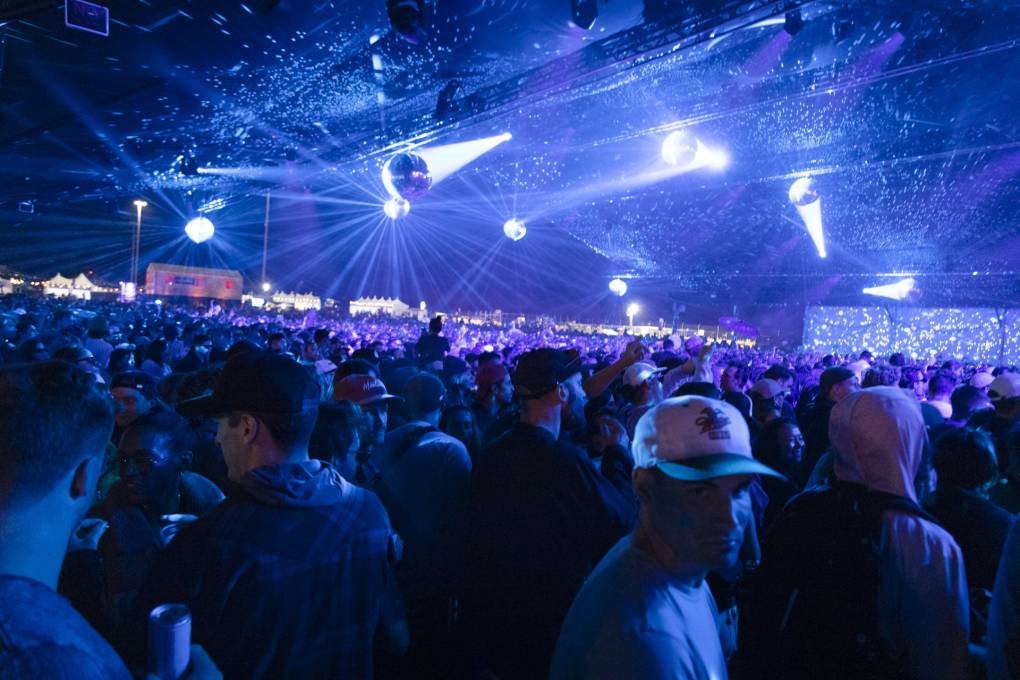
"caption": "The crowd at Portola Music Festival in San Francisco on Sunday, Sept. 25, 2022.",
"description": "The crowd at Portola Music Festival in San Francisco on Sunday, Sept. 25, 2022.",
"title": "The crowd at Portola Music Festival in San Francisco on Sunday, Sept. 25, 2022.",
"credit": "Estefany Gonzalez for KQED",
"status": "inherit",
"altTag": null,
"isLoading": false,
"fetchFailed": false
},
"arts_13929238": {
"type": "attachments",
"id": "arts_13929238",
"meta": {
"index": "attachments_1716263798",
"site": "arts",
"id": "13929238",
"found": true
},
"parent": 13929233,
"imgSizes": {
"twentyfourteen-full-width": {
"file": "https://ww2.kqed.org/app/uploads/sites/2/2023/05/Tupac.16.9-1038x576.jpg",
"width": 1038,
"mimeType": "image/jpeg",
"height": 576
},
"thumbnail": {
"file": "https://ww2.kqed.org/app/uploads/sites/2/2023/05/Tupac.16.9-160x90.jpg",
"width": 160,
"mimeType": "image/jpeg",
"height": 90
},
"post-thumbnail": {
"file": "https://ww2.kqed.org/app/uploads/sites/2/2023/05/Tupac.16.9-672x372.jpg",
"width": 672,
"mimeType": "image/jpeg",
"height": 372
},
"kqedFullSize": {
"file": "https://ww2.kqed.org/app/uploads/sites/2/2023/05/Tupac.16.9.jpg",
"width": 1654,
"height": 930
},
"large": {
"file": "https://ww2.kqed.org/app/uploads/sites/2/2023/05/Tupac.16.9-1020x574.jpg",
"width": 1020,
"mimeType": "image/jpeg",
"height": 574
},
"1536x1536": {
"file": "https://ww2.kqed.org/app/uploads/sites/2/2023/05/Tupac.16.9-1536x864.jpg",
"width": 1536,
"mimeType": "image/jpeg",
"height": 864
},
"medium": {
"file": "https://ww2.kqed.org/app/uploads/sites/2/2023/05/Tupac.16.9-800x450.jpg",
"width": 800,
"mimeType": "image/jpeg",
"height": 450
},
"medium_large": {
"file": "https://ww2.kqed.org/app/uploads/sites/2/2023/05/Tupac.16.9-768x432.jpg",
"width": 768,
"mimeType": "image/jpeg",
"height": 432
}
},
"publishDate": 1684340512,
"modified": 1684340547,
"caption": "Tupac Shakur pictured in Oakland in 1992.",
"description": null,
"title": "Tupac.16.9",
"credit": "Gary Reyes / Oakland Tribune Staff Archives (MediaNews Group/Bay Area News via Getty Images)",
"status": "inherit",
"altTag": null,
"isLoading": false,
"fetchFailed": false
},
"arts_13929202": {
"type": "attachments",
"id": "arts_13929202",
"meta": {
"index": "attachments_1716263798",
"site": "arts",
"id": "13929202",
"found": true
},
"parent": 13929183,
"imgSizes": {
"twentyfourteen-full-width": {
"file": "https://ww2.kqed.org/app/uploads/sites/2/2023/05/OFFICIAL-BAHHA-PHOTO-2.3.23-1-1-1038x576.jpg",
"width": 1038,
"mimeType": "image/jpeg",
"height": 576
},
"thumbnail": {
"file": "https://ww2.kqed.org/app/uploads/sites/2/2023/05/OFFICIAL-BAHHA-PHOTO-2.3.23-1-1-160x144.jpg",
"width": 160,
"mimeType": "image/jpeg",
"height": 144
},
"post-thumbnail": {
"file": "https://ww2.kqed.org/app/uploads/sites/2/2023/05/OFFICIAL-BAHHA-PHOTO-2.3.23-1-1-672x372.jpg",
"width": 672,
"mimeType": "image/jpeg",
"height": 372
},
"kqedFullSize": {
"file": "https://ww2.kqed.org/app/uploads/sites/2/2023/05/OFFICIAL-BAHHA-PHOTO-2.3.23-1-1.jpg",
"width": 1896,
"height": 1702
},
"large": {
"file": "https://ww2.kqed.org/app/uploads/sites/2/2023/05/OFFICIAL-BAHHA-PHOTO-2.3.23-1-1-1020x916.jpg",
"width": 1020,
"mimeType": "image/jpeg",
"height": 916
},
"1536x1536": {
"file": "https://ww2.kqed.org/app/uploads/sites/2/2023/05/OFFICIAL-BAHHA-PHOTO-2.3.23-1-1-1536x1379.jpg",
"width": 1536,
"mimeType": "image/jpeg",
"height": 1379
},
"medium": {
"file": "https://ww2.kqed.org/app/uploads/sites/2/2023/05/OFFICIAL-BAHHA-PHOTO-2.3.23-1-1-800x718.jpg",
"width": 800,
"mimeType": "image/jpeg",
"height": 718
},
"medium_large": {
"file": "https://ww2.kqed.org/app/uploads/sites/2/2023/05/OFFICIAL-BAHHA-PHOTO-2.3.23-1-1-768x689.jpg",
"width": 768,
"mimeType": "image/jpeg",
"height": 689
}
},
"publishDate": 1684263526,
"modified": 1684263830,
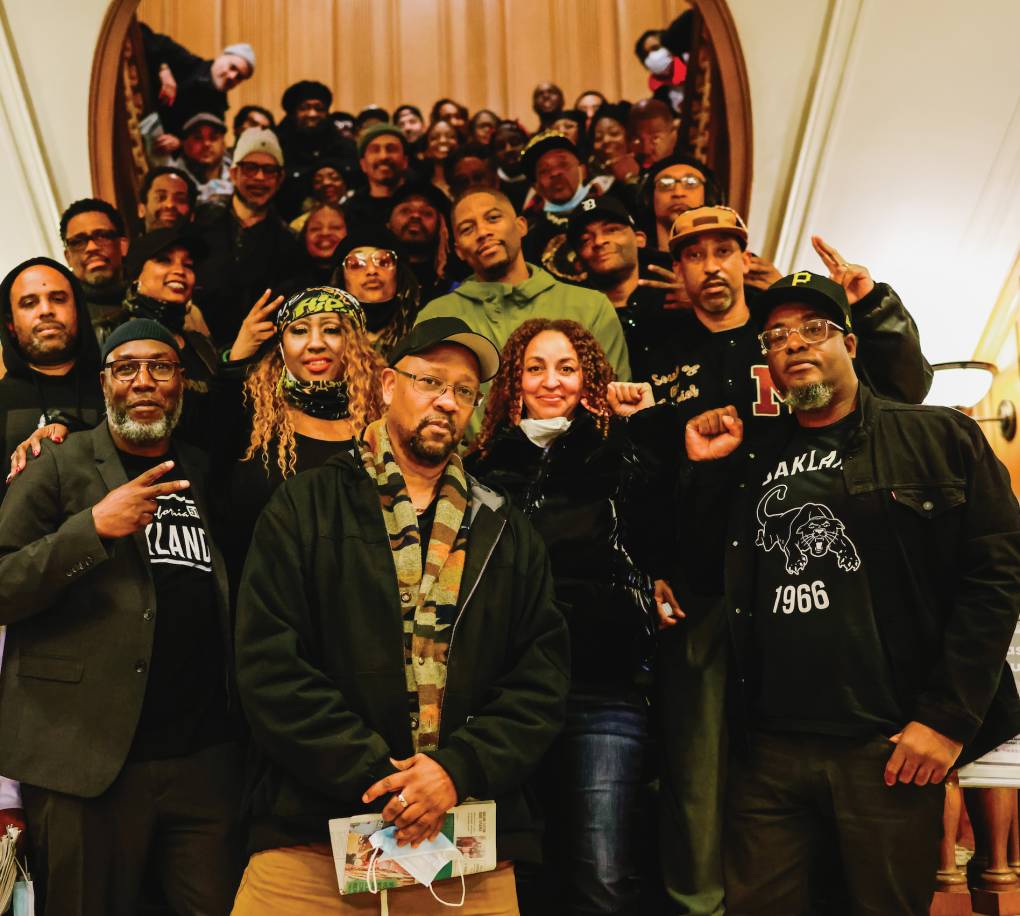
"caption": "The inaugural class of the Bay Area Hip-Hop Archives and friends at the African American Museum and Library at Oakland on Feb. 3, 2023. Front row, left to right: curator Jahi, Davey D and Refa One. Second row, left to right: Suga T, Mystic, Phesto Dee of Souls of Mischief. Third row, center: DJ D Sharp.",
"description": null,
"title": "OFFICIAL BAHHA PHOTO 2.3.23 (1)",
"credit": "Oakland Roots",
"status": "inherit",
"altTag": "A large group of hip-hop artists and cultural practitioners in their 40s and 50s stands in a stairwell of a library.",
"isLoading": false,
"fetchFailed": false
},
"arts_13918700": {
"type": "attachments",
"id": "arts_13918700",
"meta": {
"index": "attachments_1716263798",
"site": "arts",
"id": "13918700",
"found": true
},
"parent": 13918720,
"imgSizes": {
"twentyfourteen-full-width": {
"file": "https://ww2.kqed.org/app/uploads/sites/2/2022/09/Mistah-F.A.B.-at-Hiero-Day-in-Oakland-on-Monday-Sept.-6-2022.-002-Estefany-Gonzalez-1038x576.jpg",
"width": 1038,
"mimeType": "image/jpeg",
"height": 576
},
"thumbnail": {
"file": "https://ww2.kqed.org/app/uploads/sites/2/2022/09/Mistah-F.A.B.-at-Hiero-Day-in-Oakland-on-Monday-Sept.-6-2022.-002-Estefany-Gonzalez-160x107.jpg",
"width": 160,
"mimeType": "image/jpeg",
"height": 107
},
"post-thumbnail": {
"file": "https://ww2.kqed.org/app/uploads/sites/2/2022/09/Mistah-F.A.B.-at-Hiero-Day-in-Oakland-on-Monday-Sept.-6-2022.-002-Estefany-Gonzalez-672x372.jpg",
"width": 672,
"mimeType": "image/jpeg",
"height": 372
},
"kqedFullSize": {
"file": "https://ww2.kqed.org/app/uploads/sites/2/2022/09/Mistah-F.A.B.-at-Hiero-Day-in-Oakland-on-Monday-Sept.-6-2022.-002-Estefany-Gonzalez.jpg",
"width": 1920,
"height": 1280
},
"large": {
"file": "https://ww2.kqed.org/app/uploads/sites/2/2022/09/Mistah-F.A.B.-at-Hiero-Day-in-Oakland-on-Monday-Sept.-6-2022.-002-Estefany-Gonzalez-1020x680.jpg",
"width": 1020,
"mimeType": "image/jpeg",
"height": 680
},
"1536x1536": {
"file": "https://ww2.kqed.org/app/uploads/sites/2/2022/09/Mistah-F.A.B.-at-Hiero-Day-in-Oakland-on-Monday-Sept.-6-2022.-002-Estefany-Gonzalez-1536x1024.jpg",
"width": 1536,
"mimeType": "image/jpeg",
"height": 1024
},
"medium": {
"file": "https://ww2.kqed.org/app/uploads/sites/2/2022/09/Mistah-F.A.B.-at-Hiero-Day-in-Oakland-on-Monday-Sept.-6-2022.-002-Estefany-Gonzalez-800x533.jpg",
"width": 800,
"mimeType": "image/jpeg",
"height": 533
},
"medium_large": {
"file": "https://ww2.kqed.org/app/uploads/sites/2/2022/09/Mistah-F.A.B.-at-Hiero-Day-in-Oakland-on-Monday-Sept.-6-2022.-002-Estefany-Gonzalez-768x512.jpg",
"width": 768,
"mimeType": "image/jpeg",
"height": 512
}
},
"publishDate": 1662456029,
"modified": 1692039040,
"caption": "Mistah F.A.B. at Hiero Day in Oakland on Monday, Sept. 5, 2022. ",
"description": "Mistah F.A.B. at Hiero Day in Oakland on Monday, Sept. 5, 2022. ",
"title": "Mistah F.A.B. at Hiero Day in Oakland on Monday, Sept. 5, 2022.",
"credit": "Estefany Gonzalez for KQED",
"status": "inherit",
"altTag": null,
"isLoading": false,
"fetchFailed": false
},
"arts_13928967": {
"type": "attachments",
"id": "arts_13928967",
"meta": {
"index": "attachments_1716263798",
"site": "arts",
"id": "13928967",
"found": true
},
"parent": 13928948,
"imgSizes": {
"twentyfourteen-full-width": {
"file": "https://ww2.kqed.org/app/uploads/sites/2/2023/05/BR.SelfReflection-1038x576.jpg",
"width": 1038,
"mimeType": "image/jpeg",
"height": 576
},
"thumbnail": {
"file": "https://ww2.kqed.org/app/uploads/sites/2/2023/05/BR.SelfReflection-160x160.jpg",
"width": 160,
"mimeType": "image/jpeg",
"height": 160
},
"post-thumbnail": {
"file": "https://ww2.kqed.org/app/uploads/sites/2/2023/05/BR.SelfReflection-672x372.jpg",
"width": 672,
"mimeType": "image/jpeg",
"height": 372
},
"kqedFullSize": {
"file": "https://ww2.kqed.org/app/uploads/sites/2/2023/05/BR.SelfReflection.jpg",
"width": 1920,
"height": 1920
},
"large": {
"file": "https://ww2.kqed.org/app/uploads/sites/2/2023/05/BR.SelfReflection-1020x1020.jpg",
"width": 1020,
"mimeType": "image/jpeg",
"height": 1020
},
"1536x1536": {
"file": "https://ww2.kqed.org/app/uploads/sites/2/2023/05/BR.SelfReflection-1536x1536.jpg",
"width": 1536,
"mimeType": "image/jpeg",
"height": 1536
},
"medium": {
"file": "https://ww2.kqed.org/app/uploads/sites/2/2023/05/BR.SelfReflection-800x800.jpg",
"width": 800,
"mimeType": "image/jpeg",
"height": 800
},
"medium_large": {
"file": "https://ww2.kqed.org/app/uploads/sites/2/2023/05/BR.SelfReflection-768x768.jpg",
"width": 768,
"mimeType": "image/jpeg",
"height": 768
}
},
"publishDate": 1683755291,
"modified": 1683762115,
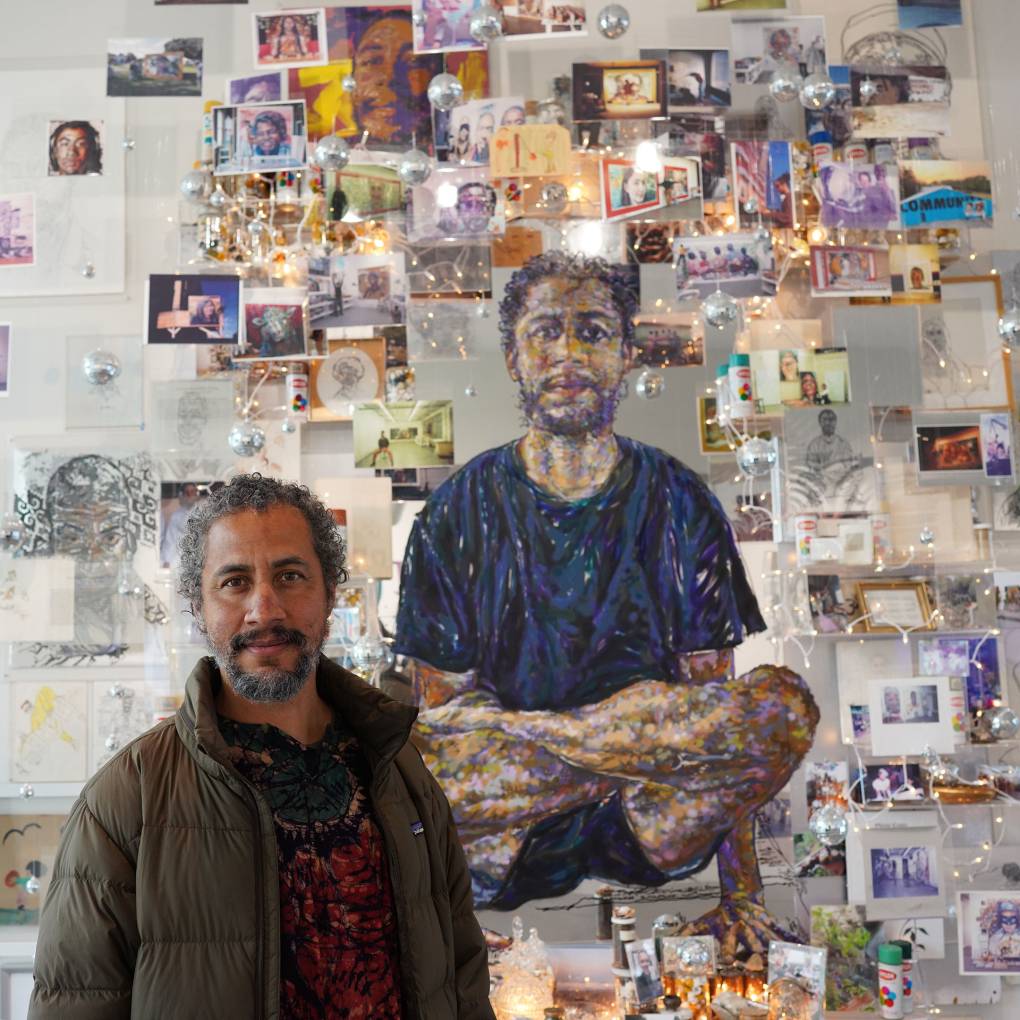
"caption": "Brett Cook stands before his piece 'Self Reflection' at YBCA, as part of the exhibition 'Reflection & Action.'",
"description": null,
"title": "BR.SelfReflection",
"credit": "Eric Arnold/KQED",
"status": "inherit",
"altTag": null,
"isLoading": false,
"fetchFailed": false
},
"arts_13928990": {
"type": "attachments",
"id": "arts_13928990",
"meta": {
"index": "attachments_1716263798",
"site": "arts",
"id": "13928990",
"found": true
},
"parent": 13928948,
"imgSizes": {
"twentyfourteen-full-width": {
"file": "https://ww2.kqed.org/app/uploads/sites/2/2023/05/BR.SelfReflection.16.9-1038x576.jpg",
"width": 1038,
"mimeType": "image/jpeg",
"height": 576
},
"thumbnail": {
"file": "https://ww2.kqed.org/app/uploads/sites/2/2023/05/BR.SelfReflection.16.9-160x90.jpg",
"width": 160,
"mimeType": "image/jpeg",
"height": 90
},
"post-thumbnail": {
"file": "https://ww2.kqed.org/app/uploads/sites/2/2023/05/BR.SelfReflection.16.9-672x372.jpg",
"width": 672,
"mimeType": "image/jpeg",
"height": 372
},
"kqedFullSize": {
"file": "https://ww2.kqed.org/app/uploads/sites/2/2023/05/BR.SelfReflection.16.9.jpg",
"width": 1664,
"height": 936
},
"large": {
"file": "https://ww2.kqed.org/app/uploads/sites/2/2023/05/BR.SelfReflection.16.9-1020x574.jpg",
"width": 1020,
"mimeType": "image/jpeg",
"height": 574
},
"1536x1536": {
"file": "https://ww2.kqed.org/app/uploads/sites/2/2023/05/BR.SelfReflection.16.9-1536x864.jpg",
"width": 1536,
"mimeType": "image/jpeg",
"height": 864
},
"medium": {
"file": "https://ww2.kqed.org/app/uploads/sites/2/2023/05/BR.SelfReflection.16.9-800x450.jpg",
"width": 800,
"mimeType": "image/jpeg",
"height": 450
},
"medium_large": {
"file": "https://ww2.kqed.org/app/uploads/sites/2/2023/05/BR.SelfReflection.16.9-768x432.jpg",
"width": 768,
"mimeType": "image/jpeg",
"height": 432
}
},
"publishDate": 1683763584,
"modified": 1683763609,
"caption": "Brett Cook at YBCA in San Francisco.",
"description": null,
"title": "BR.SelfReflection.16.9",
"credit": "Eric Arnold/KQED",
"status": "inherit",
"altTag": null,
"isLoading": false,
"fetchFailed": false
},
"arts_13928892": {
"type": "attachments",
"id": "arts_13928892",
"meta": {
"index": "attachments_1716263798",
"site": "arts",
"id": "13928892",
"found": true
},
"parent": 13928887,
"imgSizes": {
"twentyfourteen-full-width": {
"file": "https://ww2.kqed.org/app/uploads/sites/2/2023/05/LucyLiyou_-_Rewire_20230408_-_Stephan_C_Kaffa_008-1038x576.jpg",
"width": 1038,
"mimeType": "image/jpeg",
"height": 576
},
"thumbnail": {
"file": "https://ww2.kqed.org/app/uploads/sites/2/2023/05/LucyLiyou_-_Rewire_20230408_-_Stephan_C_Kaffa_008-160x107.jpg",
"width": 160,
"mimeType": "image/jpeg",
"height": 107
},
"post-thumbnail": {
"file": "https://ww2.kqed.org/app/uploads/sites/2/2023/05/LucyLiyou_-_Rewire_20230408_-_Stephan_C_Kaffa_008-672x372.jpg",
"width": 672,
"mimeType": "image/jpeg",
"height": 372
},
"kqedFullSize": {
"file": "https://ww2.kqed.org/app/uploads/sites/2/2023/05/LucyLiyou_-_Rewire_20230408_-_Stephan_C_Kaffa_008-scaled.jpg",
"width": 2560,
"height": 1707
},
"2048x2048": {
"file": "https://ww2.kqed.org/app/uploads/sites/2/2023/05/LucyLiyou_-_Rewire_20230408_-_Stephan_C_Kaffa_008-2048x1365.jpg",
"width": 2048,
"mimeType": "image/jpeg",
"height": 1365
},
"large": {
"file": "https://ww2.kqed.org/app/uploads/sites/2/2023/05/LucyLiyou_-_Rewire_20230408_-_Stephan_C_Kaffa_008-1020x680.jpg",
"width": 1020,
"mimeType": "image/jpeg",
"height": 680
},
"1536x1536": {
"file": "https://ww2.kqed.org/app/uploads/sites/2/2023/05/LucyLiyou_-_Rewire_20230408_-_Stephan_C_Kaffa_008-1536x1024.jpg",
"width": 1536,
"mimeType": "image/jpeg",
"height": 1024
},
"full-width": {
"file": "https://ww2.kqed.org/app/uploads/sites/2/2023/05/LucyLiyou_-_Rewire_20230408_-_Stephan_C_Kaffa_008-1920x1280.jpg",
"width": 1920,
"mimeType": "image/jpeg",
"height": 1280
},
"medium": {
"file": "https://ww2.kqed.org/app/uploads/sites/2/2023/05/LucyLiyou_-_Rewire_20230408_-_Stephan_C_Kaffa_008-800x533.jpg",
"width": 800,
"mimeType": "image/jpeg",
"height": 533
},
"medium_large": {
"file": "https://ww2.kqed.org/app/uploads/sites/2/2023/05/LucyLiyou_-_Rewire_20230408_-_Stephan_C_Kaffa_008-768x512.jpg",
"width": 768,
"mimeType": "image/jpeg",
"height": 512
}
},
"publishDate": 1683657374,
"modified": 1683661958,
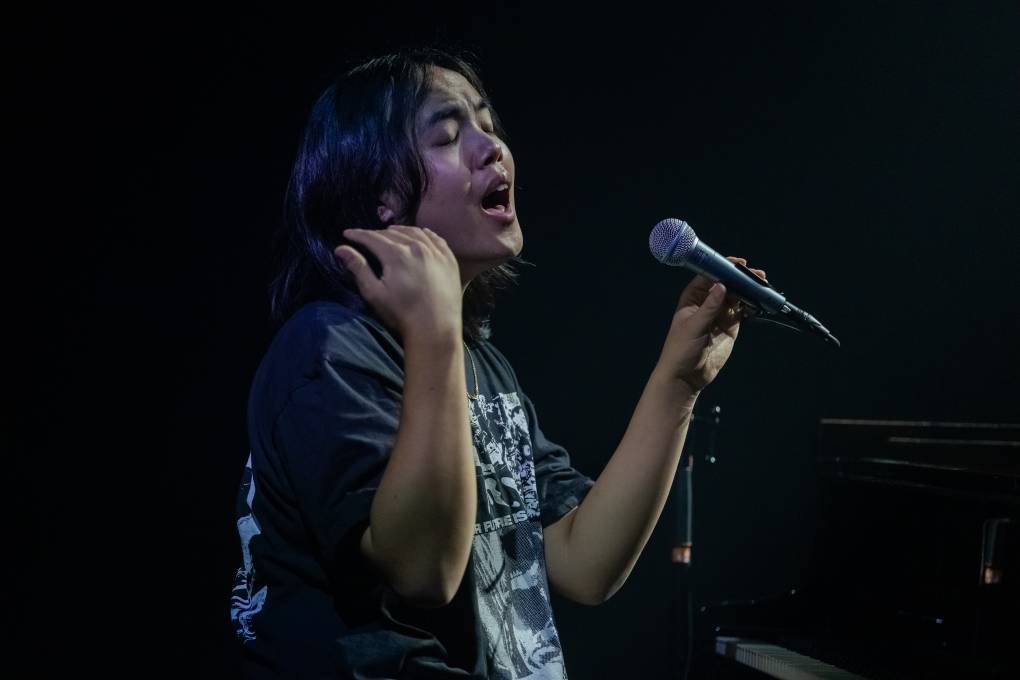
"caption": "Lucy Liyou performs at Rewire Festival in The Hague, Netherlands on April 8, 2023.",
"description": null,
"title": "Lucy Liyou",
"credit": "Stephan C. Kaffa",
"status": "inherit",
"altTag": null,
"isLoading": false,
"fetchFailed": false
},
"arts_13928742": {
"type": "attachments",
"id": "arts_13928742",
"meta": {
"index": "attachments_1716263798",
"site": "arts",
"id": "13928742",
"found": true
},
"parent": 13928739,
"imgSizes": {
"thumbnail": {
"file": "https://ww2.kqed.org/app/uploads/sites/2/2023/05/Chris.Strachwitz.crop_-160x90.jpg",
"width": 160,
"mimeType": "image/jpeg",
"height": 90
},
"post-thumbnail": {
"file": "https://ww2.kqed.org/app/uploads/sites/2/2023/05/Chris.Strachwitz.crop_-672x372.jpg",
"width": 672,
"mimeType": "image/jpeg",
"height": 372
},
"kqedFullSize": {
"file": "https://ww2.kqed.org/app/uploads/sites/2/2023/05/Chris.Strachwitz.crop_.jpg",
"width": 800,
"height": 450
},
"medium_large": {
"file": "https://ww2.kqed.org/app/uploads/sites/2/2023/05/Chris.Strachwitz.crop_-768x432.jpg",
"width": 768,
"mimeType": "image/jpeg",
"height": 432
}
},
"publishDate": 1683435286,
"modified": 1683435433,
"caption": "Chris Strachwitz at his Down Home Records store in El Cerrito, Calif. in 2014. The founder of the popular local music store and Arhoolie Records died Friday at age 91.",
"description": null,
"title": "Chris.Strachwitz.crop",
"credit": "Paul Chinn/The San Francisco Chronicle via Getty Images",
"status": "inherit",
"altTag": null,
"isLoading": false,
"fetchFailed": false
},
"arts_13928748": {
"type": "attachments",
"id": "arts_13928748",
"meta": {
"index": "attachments_1716263798",
"site": "arts",
"id": "13928748",
"found": true
},
"parent": 13928746,
"imgSizes": {
"twentyfourteen-full-width": {
"file": "https://ww2.kqed.org/app/uploads/sites/2/2023/05/C.Strachwitz-800x576.jpg",
"width": 800,
"mimeType": "image/jpeg",
"height": 576
},
"thumbnail": {
"file": "https://ww2.kqed.org/app/uploads/sites/2/2023/05/C.Strachwitz-160x116.jpg",
"width": 160,
"mimeType": "image/jpeg",
"height": 116
},
"post-thumbnail": {
"file": "https://ww2.kqed.org/app/uploads/sites/2/2023/05/C.Strachwitz-672x372.jpg",
"width": 672,
"mimeType": "image/jpeg",
"height": 372
},
"kqedFullSize": {
"file": "https://ww2.kqed.org/app/uploads/sites/2/2023/05/C.Strachwitz.jpg",
"width": 800,
"height": 579
},
"medium_large": {
"file": "https://ww2.kqed.org/app/uploads/sites/2/2023/05/C.Strachwitz-768x556.jpg",
"width": 768,
"mimeType": "image/jpeg",
"height": 556
}
},
"publishDate": 1683436266,
"modified": 1683436312,
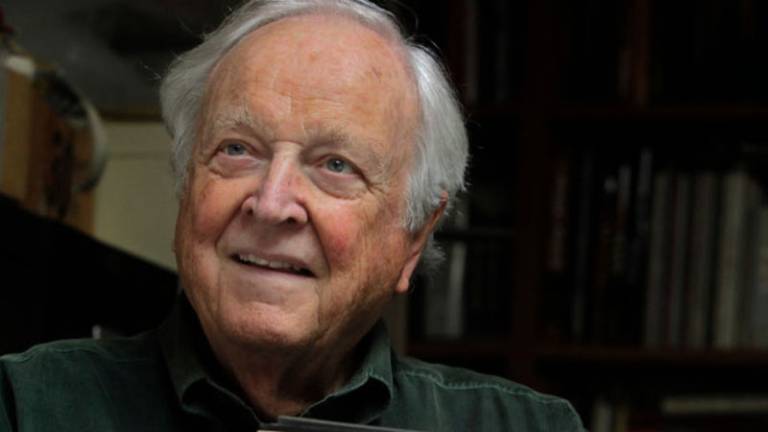
"caption": "Chris Strachwitz arrives at the 54th annual Grammy Awards in 2012. Strachwitz, a producer, musicologist and one-man preservation society whose Arhoolie Records released thousands of songs by regional performers and comprised an extraordinary American archive that became known and loved worldwide, died Friday, May 5, 2023, according to the Arhoolie Foundation. He was 91. ",
"description": null,
"title": "C.Strachwitz",
"credit": "AP Photo/Chris Pizzello, File",
"status": "inherit",
"altTag": null,
"isLoading": false,
"fetchFailed": false
},
"arts_13928728": {
"type": "attachments",
"id": "arts_13928728",
"meta": {
"index": "attachments_1716263798",
"site": "arts",
"id": "13928728",
"found": true
},
"parent": 13928699,
"imgSizes": {
"twentyfourteen-full-width": {
"file": "https://ww2.kqed.org/app/uploads/sites/2/2023/05/Chris-Potter-Branford-Marsalis-Mike-Rodriguez-David-Sanchez-1038x576.jpg",
"width": 1038,
"mimeType": "image/jpeg",
"height": 576
},
"thumbnail": {
"file": "https://ww2.kqed.org/app/uploads/sites/2/2023/05/Chris-Potter-Branford-Marsalis-Mike-Rodriguez-David-Sanchez-160x100.jpg",
"width": 160,
"mimeType": "image/jpeg",
"height": 100
},
"post-thumbnail": {
"file": "https://ww2.kqed.org/app/uploads/sites/2/2023/05/Chris-Potter-Branford-Marsalis-Mike-Rodriguez-David-Sanchez-672x372.jpg",
"width": 672,
"mimeType": "image/jpeg",
"height": 372
},
"kqedFullSize": {
"file": "https://ww2.kqed.org/app/uploads/sites/2/2023/05/Chris-Potter-Branford-Marsalis-Mike-Rodriguez-David-Sanchez.jpg",
"width": 1920,
"height": 1197
},
"large": {
"file": "https://ww2.kqed.org/app/uploads/sites/2/2023/05/Chris-Potter-Branford-Marsalis-Mike-Rodriguez-David-Sanchez-1020x636.jpg",
"width": 1020,
"mimeType": "image/jpeg",
"height": 636
},
"1536x1536": {
"file": "https://ww2.kqed.org/app/uploads/sites/2/2023/05/Chris-Potter-Branford-Marsalis-Mike-Rodriguez-David-Sanchez-1536x958.jpg",
"width": 1536,
"mimeType": "image/jpeg",
"height": 958
},
"medium": {
"file": "https://ww2.kqed.org/app/uploads/sites/2/2023/05/Chris-Potter-Branford-Marsalis-Mike-Rodriguez-David-Sanchez-800x499.jpg",
"width": 800,
"mimeType": "image/jpeg",
"height": 499
},
"medium_large": {
"file": "https://ww2.kqed.org/app/uploads/sites/2/2023/05/Chris-Potter-Branford-Marsalis-Mike-Rodriguez-David-Sanchez-768x479.jpg",
"width": 768,
"mimeType": "image/jpeg",
"height": 479
}
},
"publishDate": 1683312316,
"modified": 1683312461,
"caption": "Chris-Potter, Branford Marsalis, Mike Rodriguez and David Sanchez perform Wayne Shorter's 'Armageddon' at the SFJAZZ gala honoring founder Randall Kline, May 4, 2023.",
"description": null,
"title": "Chris-Potter,-Branford-Marsalis,-Mike-Rodriguez,-David-Sanchez",
"credit": "Drew Altizer Photography",
"status": "inherit",
"altTag": "four men play saxophones and trumpets",
"isLoading": false,
"fetchFailed": false
},
"arts_13928720": {
"type": "attachments",
"id": "arts_13928720",
"meta": {
"index": "attachments_1716263798",
"site": "arts",
"id": "13928720",
"found": true
},
"parent": 13928718,
"imgSizes": {
"twentyfourteen-full-width": {
"file": "https://ww2.kqed.org/app/uploads/sites/2/2023/05/fake-fruit-featured-1038x576.jpg",
"width": 1038,
"mimeType": "image/jpeg",
"height": 576
},
"thumbnail": {
"file": "https://ww2.kqed.org/app/uploads/sites/2/2023/05/fake-fruit-featured-160x90.jpg",
"width": 160,
"mimeType": "image/jpeg",
"height": 90
},
"post-thumbnail": {
"file": "https://ww2.kqed.org/app/uploads/sites/2/2023/05/fake-fruit-featured-672x372.jpg",
"width": 672,
"mimeType": "image/jpeg",
"height": 372
},
"kqedFullSize": {
"file": "https://ww2.kqed.org/app/uploads/sites/2/2023/05/fake-fruit-featured.jpg",
"width": 1920,
"height": 1080
},
"large": {
"file": "https://ww2.kqed.org/app/uploads/sites/2/2023/05/fake-fruit-featured-1020x574.jpg",
"width": 1020,
"mimeType": "image/jpeg",
"height": 574
},
"1536x1536": {
"file": "https://ww2.kqed.org/app/uploads/sites/2/2023/05/fake-fruit-featured-1536x864.jpg",
"width": 1536,
"mimeType": "image/jpeg",
"height": 864
},
"medium": {
"file": "https://ww2.kqed.org/app/uploads/sites/2/2023/05/fake-fruit-featured-800x450.jpg",
"width": 800,
"mimeType": "image/jpeg",
"height": 450
},
"medium_large": {
"file": "https://ww2.kqed.org/app/uploads/sites/2/2023/05/fake-fruit-featured-768x432.jpg",
"width": 768,
"mimeType": "image/jpeg",
"height": 432
}
},
"publishDate": 1683311013,
"modified": 1683311116,
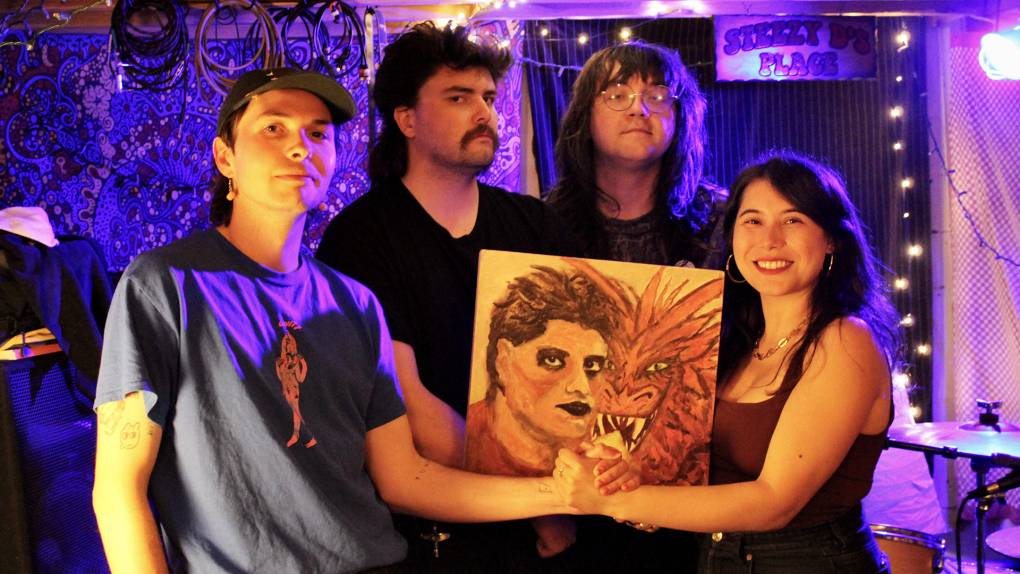
"caption": "Alex Post, Miles MacDiarmid, Bee Wright and Hannah D'Amato (left to right) are Fake Fruit. ",
"description": null,
"title": "fake fruit-featured",
"credit": "Adrian Spinelli ",
"status": "inherit",
"altTag": null,
"isLoading": false,
"fetchFailed": false
},
"arts_13928669": {
"type": "attachments",
"id": "arts_13928669",
"meta": {
"index": "attachments_1716263798",
"site": "arts",
"id": "13928669",
"found": true
},
"parent": 13928586,
"imgSizes": {
"twentyfourteen-full-width": {
"file": "https://ww2.kqed.org/app/uploads/sites/2/2023/05/box-update-1038x576.jpg",
"width": 1038,
"mimeType": "image/jpeg",
"height": 576
},
"thumbnail": {
"file": "https://ww2.kqed.org/app/uploads/sites/2/2023/05/box-update-160x98.jpg",
"width": 160,
"mimeType": "image/jpeg",
"height": 98
},
"post-thumbnail": {
"file": "https://ww2.kqed.org/app/uploads/sites/2/2023/05/box-update-672x372.jpg",
"width": 672,
"mimeType": "image/jpeg",
"height": 372
},
"kqedFullSize": {
"file": "https://ww2.kqed.org/app/uploads/sites/2/2023/05/box-update-scaled.jpg",
"width": 2560,
"height": 1562
},
"2048x2048": {
"file": "https://ww2.kqed.org/app/uploads/sites/2/2023/05/box-update-2048x1249.jpg",
"width": 2048,
"mimeType": "image/jpeg",
"height": 1249
},
"large": {
"file": "https://ww2.kqed.org/app/uploads/sites/2/2023/05/box-update-1020x622.jpg",
"width": 1020,
"mimeType": "image/jpeg",
"height": 622
},
"1536x1536": {
"file": "https://ww2.kqed.org/app/uploads/sites/2/2023/05/box-update-1536x937.jpg",
"width": 1536,
"mimeType": "image/jpeg",
"height": 937
},
"full-width": {
"file": "https://ww2.kqed.org/app/uploads/sites/2/2023/05/box-update-1920x1171.jpg",
"width": 1920,
"mimeType": "image/jpeg",
"height": 1171
},
"medium": {
"file": "https://ww2.kqed.org/app/uploads/sites/2/2023/05/box-update-800x488.jpg",
"width": 800,
"mimeType": "image/jpeg",
"height": 488
},
"medium_large": {
"file": "https://ww2.kqed.org/app/uploads/sites/2/2023/05/box-update-768x468.jpg",
"width": 768,
"mimeType": "image/jpeg",
"height": 468
}
},
"publishDate": 1683234979,
"modified": 1683235020,
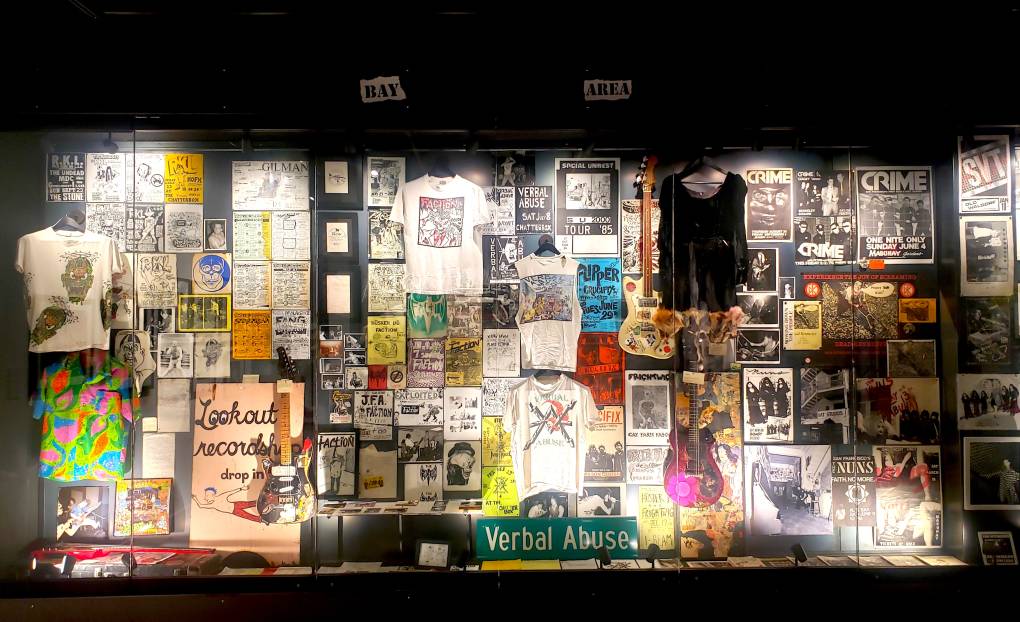
"caption": "One of the Bay Area-related displays at Las Vegas’ Punk Rock Museum. The museum opened its doors on April 1, 2023.",
"description": null,
"title": "One of the Bay Area-related displays at Las Vegas’ Punk Rock Museum. The museum opened its doors on April 1, 2023.",
"credit": "Rae Alexandra",
"status": "inherit",
"altTag": "A glass case containing a densely packed array of posters, merchandise, clothing and instruments.",
"isLoading": false,
"fetchFailed": false
},
"arts_13928636": {
"type": "attachments",
"id": "arts_13928636",
"meta": {
"index": "attachments_1716263798",
"site": "arts",
"id": "13928636",
"found": true
},
"parent": 13928550,
"imgSizes": {
"twentyfourteen-full-width": {
"file": "https://ww2.kqed.org/app/uploads/sites/2/2023/05/CassetteTapesOakland_Square-1038x576.jpg",
"width": 1038,
"mimeType": "image/jpeg",
"height": 576
},
"thumbnail": {
"file": "https://ww2.kqed.org/app/uploads/sites/2/2023/05/CassetteTapesOakland_Square-160x160.jpg",
"width": 160,
"mimeType": "image/jpeg",
"height": 160
},
"post-thumbnail": {
"file": "https://ww2.kqed.org/app/uploads/sites/2/2023/05/CassetteTapesOakland_Square-672x372.jpg",
"width": 672,
"mimeType": "image/jpeg",
"height": 372
},
"kqedFullSize": {
"file": "https://ww2.kqed.org/app/uploads/sites/2/2023/05/CassetteTapesOakland_Square.jpg",
"width": 1080,
"height": 1080
},
"large": {
"file": "https://ww2.kqed.org/app/uploads/sites/2/2023/05/CassetteTapesOakland_Square-1020x1020.jpg",
"width": 1020,
"mimeType": "image/jpeg",
"height": 1020
},
"medium": {
"file": "https://ww2.kqed.org/app/uploads/sites/2/2023/05/CassetteTapesOakland_Square-800x800.jpg",
"width": 800,
"mimeType": "image/jpeg",
"height": 800
},
"medium_large": {
"file": "https://ww2.kqed.org/app/uploads/sites/2/2023/05/CassetteTapesOakland_Square-768x768.jpg",
"width": 768,
"mimeType": "image/jpeg",
"height": 768
}
},
"publishDate": 1683155527,
"modified": 1683156115,
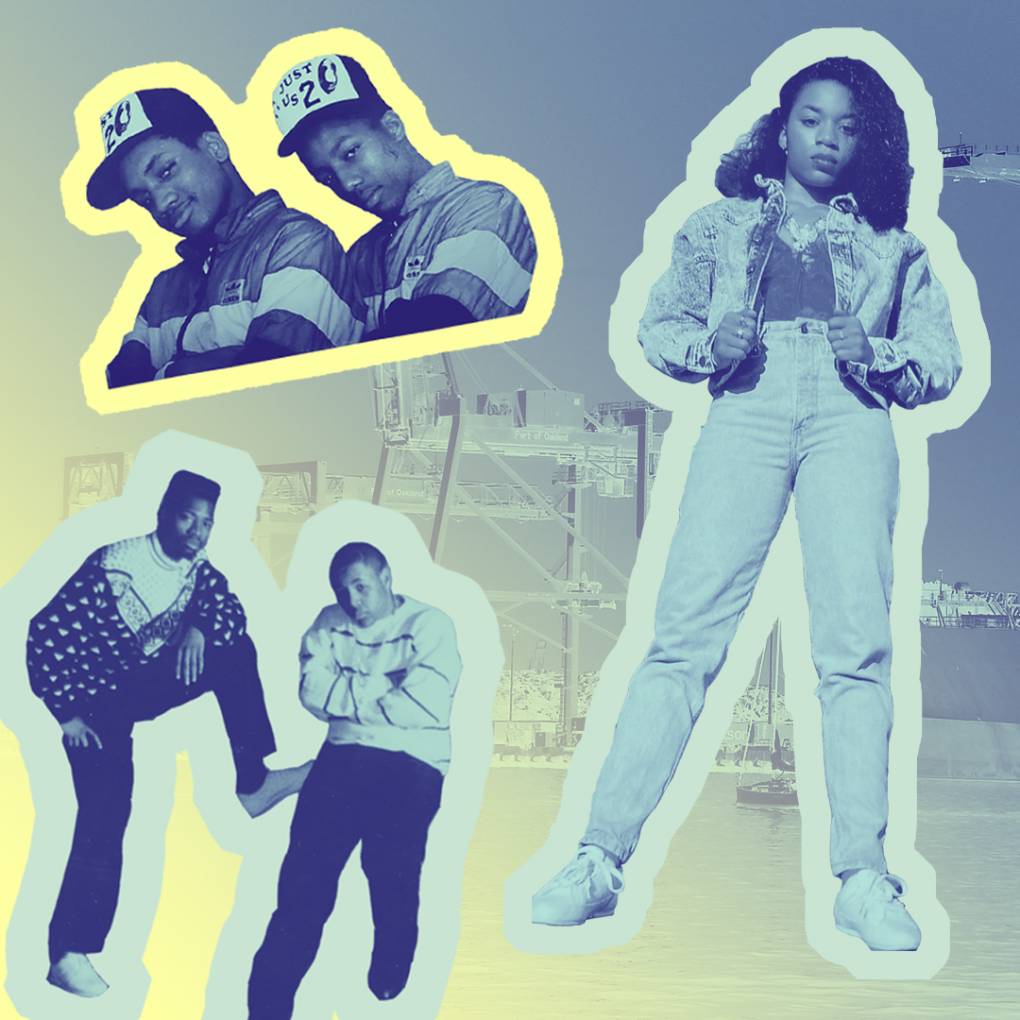
"caption": "Along with major artists like Too Short and Tupac, the streets of the Town produced dozens of independent rappers whose rare underground cassettes contain Oakland gold. (Clockwise from top left: Mr. Fresh & Master T.M.D., Cassidine, Easy-A-Ski.",
"description": null,
"title": "CassetteTapesOakland_Square",
"credit": "Collage by Sarah Hotchkiss",
"status": "inherit",
"altTag": null,
"isLoading": false,
"fetchFailed": false
},
"arts_13928637": {
"type": "attachments",
"id": "arts_13928637",
"meta": {
"index": "attachments_1716263798",
"site": "arts",
"id": "13928637",
"found": true
},
"parent": 13928550,
"imgSizes": {
"twentyfourteen-full-width": {
"file": "https://ww2.kqed.org/app/uploads/sites/2/2023/05/CassetteTapesOakland_COVER-1038x576.jpg",
"width": 1038,
"mimeType": "image/jpeg",
"height": 576
},
"thumbnail": {
"file": "https://ww2.kqed.org/app/uploads/sites/2/2023/05/CassetteTapesOakland_COVER-160x90.jpg",
"width": 160,
"mimeType": "image/jpeg",
"height": 90
},
"post-thumbnail": {
"file": "https://ww2.kqed.org/app/uploads/sites/2/2023/05/CassetteTapesOakland_COVER-672x372.jpg",
"width": 672,
"mimeType": "image/jpeg",
"height": 372
},
"kqedFullSize": {
"file": "https://ww2.kqed.org/app/uploads/sites/2/2023/05/CassetteTapesOakland_COVER.jpg",
"width": 1920,
"height": 1080
},
"large": {
"file": "https://ww2.kqed.org/app/uploads/sites/2/2023/05/CassetteTapesOakland_COVER-1020x574.jpg",
"width": 1020,
"mimeType": "image/jpeg",
"height": 574
},
"1536x1536": {
"file": "https://ww2.kqed.org/app/uploads/sites/2/2023/05/CassetteTapesOakland_COVER-1536x864.jpg",
"width": 1536,
"mimeType": "image/jpeg",
"height": 864
},
"medium": {
"file": "https://ww2.kqed.org/app/uploads/sites/2/2023/05/CassetteTapesOakland_COVER-800x450.jpg",
"width": 800,
"mimeType": "image/jpeg",
"height": 450
},
"medium_large": {
"file": "https://ww2.kqed.org/app/uploads/sites/2/2023/05/CassetteTapesOakland_COVER-768x432.jpg",
"width": 768,
"mimeType": "image/jpeg",
"height": 432
}
},
"publishDate": 1683155533,
"modified": 1683156068,
"caption": "Along with major artists like Too Short and Tupac, the streets of the Town produced dozens of independent rappers whose rare underground cassettes contain Oakland gold. (Clockwise from top left: Mr. Fresh & Master T.M.D., Cassidine, Mac Mill, M.C. Jay and DJ Villian, Easy-A-Ski.",
"description": null,
"title": "CassetteTapesOakland_COVER",
"credit": "Collage by Sarah Hotchkiss",
"status": "inherit",
"altTag": null,
"isLoading": false,
"fetchFailed": false
}
},
"audioPlayerReducer": {
"postId": "stream_live",
"isPaused": true,
"isPlaying": false,
"pfsActive": false,
"pledgeModalIsOpen": true,
"playerDrawerIsOpen": false,
"liveAudioPlayStartedAt": 0,
"liveAudioPlayContext": ""
},
"authorsReducer": {
"byline_arts_13928887": {
"type": "authors",
"id": "byline_arts_13928887",
"meta": {
"override": true
},
"slug": "byline_arts_13928887",
"name": "Daniel Bromfield",
"isLoading": false
},
"byline_arts_13928746": {
"type": "authors",
"id": "byline_arts_13928746",
"meta": {
"override": true
},
"slug": "byline_arts_13928746",
"name": "Hillel Italie, Associated Press",
"isLoading": false
},
"byline_arts_13928718": {
"type": "authors",
"id": "byline_arts_13928718",
"meta": {
"override": true
},
"slug": "byline_arts_13928718",
"name": "Adrian Spinelli ",
"isLoading": false
},
"byline_arts_13928550": {
"type": "authors",
"id": "byline_arts_13928550",
"meta": {
"override": true
},
"slug": "byline_arts_13928550",
"name": "J. Darrah",
"isLoading": false
},
"agilbert": {
"type": "authors",
"id": "86",
"meta": {
"index": "authors_1716337520",
"id": "86",
"found": true
},
"name": "Andrew Gilbert",
"firstName": "Andrew",
"lastName": "Gilbert",
"slug": "agilbert",
"email": "jazzscribe@aol.com",
"display_author_email": false,
"staff_mastheads": [],
"title": "KQED Contributor",
"bio": "A Los Angeles native based in the Berkeley area since 1996, Andrew Gilbert covers jazz, international music and dance for KQED's \u003ci>California Report, \u003c/i>the\u003ci> Mercury News\u003c/i>, \u003ci>San Francisco Chronicle\u003c/i>, \u003ci>Berkeleyside.com\u003c/i>, and other publications. He is available for weddings and bar and bat mitzvahs. #jazzscribe",
"avatar": "https://secure.gravatar.com/avatar/d7bcafdbefdd39e9a68f88724ca616eb4e7a5a6bff9cdfb62de652a1e1751471?s=600&d=blank&r=g",
"twitter": null,
"bluesky": null,
"facebook": null,
"instagram": null,
"linkedin": null,
"sites": [
{
"site": "arts",
"roles": [
"Contributor",
"author"
]
},
{
"site": "news",
"roles": [
"author"
]
}
],
"headData": {
"title": "Andrew Gilbert | KQED",
"description": "KQED Contributor",
"ogImgSrc": "https://secure.gravatar.com/avatar/d7bcafdbefdd39e9a68f88724ca616eb4e7a5a6bff9cdfb62de652a1e1751471?s=600&d=blank&r=g",
"twImgSrc": "https://secure.gravatar.com/avatar/d7bcafdbefdd39e9a68f88724ca616eb4e7a5a6bff9cdfb62de652a1e1751471?s=600&d=blank&r=g"
},
"isLoading": false,
"link": "/author/agilbert"
},
"gmeline": {
"type": "authors",
"id": "185",
"meta": {
"index": "authors_1716337520",
"id": "185",
"found": true
},
"name": "Gabe Meline",
"firstName": "Gabe",
"lastName": "Meline",
"slug": "gmeline",
"email": "gmeline@kqed.org",
"display_author_email": true,
"staff_mastheads": [
"arts"
],
"title": "Senior Editor, KQED Arts & Culture",
"bio": "Gabe Meline entered journalism at age 15 making photocopied zines, and has since earned awards from the Edward R. Murrow Awards, the Society for Professional Journalists, the Online Journalism Awards, the Association of Alternative Newsweeklies and the California Newspaper Publishers Association. Prior to KQED, he was the editor of the \u003cem>North Bay Bohemian\u003c/em> and a touring musician. He lives with his wife and daughter in his hometown of Santa Rosa, CA.",
"avatar": "https://secure.gravatar.com/avatar/5bebe57be0d8bc2dd318934feb47299e2d2d10cba28d09d8d7afb389a2ce2bdd?s=600&d=blank&r=g",
"twitter": null,
"bluesky": null,
"facebook": null,
"instagram": null,
"linkedin": null,
"sites": [
{
"site": "",
"roles": [
"editor"
]
},
{
"site": "arts",
"roles": [
"administrator"
]
},
{
"site": "artschool",
"roles": [
"editor"
]
},
{
"site": "news",
"roles": [
"author"
]
},
{
"site": "pop",
"roles": [
"editor"
]
},
{
"site": "bayareabites",
"roles": [
"editor"
]
},
{
"site": "food",
"roles": [
"editor"
]
},
{
"site": "forum",
"roles": [
"administrator"
]
},
{
"site": "liveblog",
"roles": [
"editor"
]
},
{
"site": "hiphop",
"roles": [
"editor"
]
}
],
"headData": {
"title": "Gabe Meline | KQED",
"description": "Senior Editor, KQED Arts & Culture",
"ogImgSrc": "https://secure.gravatar.com/avatar/5bebe57be0d8bc2dd318934feb47299e2d2d10cba28d09d8d7afb389a2ce2bdd?s=600&d=blank&r=g",
"twImgSrc": "https://secure.gravatar.com/avatar/5bebe57be0d8bc2dd318934feb47299e2d2d10cba28d09d8d7afb389a2ce2bdd?s=600&d=blank&r=g"
},
"isLoading": false,
"link": "/author/gmeline"
},
"ralexandra": {
"type": "authors",
"id": "11242",
"meta": {
"index": "authors_1716337520",
"id": "11242",
"found": true
},
"name": "Rae Alexandra",
"firstName": "Rae",
"lastName": "Alexandra",
"slug": "ralexandra",
"email": "ralexandra@kqed.org",
"display_author_email": true,
"staff_mastheads": [],
"title": "Reporter/Producer",
"bio": "Rae Alexandra is a Reporter/Producer for KQED Arts & Culture, and the creator/author of the \u003ca href=\"https://www.kqed.org/arts/program/rebel-girls-from-bay-area-history\">Rebel Girls From Bay Area History\u003c/a> and \u003ca href=\"https://www.kqed.org/bizarrebayarea\">Bizarre Bay Area\u003c/a> series. Her debut book, \u003ca href=\"https://citylights.com/politics-current-events-history/unsung-heroines35-women-who-changed/\">Unsung Heroines: 35 Women Who Changed the Bay Area\u003c/a> was published by City Lights in March 2026. In 2023, Rae was awarded an SPJ Excellence in Journalism Award for Arts & Culture. Rae was born and raised in Wales and subsequently — even after two decades in Northern California — still uses phrases that regularly baffle her coworkers.",
"avatar": "https://secure.gravatar.com/avatar/edfee8176c80cc0a382b051190f5341997df378a934a5774dcb0977732dfd401?s=600&d=blank&r=g",
"twitter": null,
"bluesky": null,
"facebook": null,
"instagram": null,
"linkedin": null,
"sites": [
{
"site": "arts",
"roles": [
"subscriber"
]
},
{
"site": "news",
"roles": [
"subscriber"
]
},
{
"site": "pop",
"roles": [
"subscriber"
]
},
{
"site": "bayareabites",
"roles": [
"subscriber"
]
},
{
"site": "science",
"roles": [
"subscriber"
]
}
],
"headData": {
"title": "Rae Alexandra | KQED",
"description": "Reporter/Producer",
"ogImgSrc": "https://secure.gravatar.com/avatar/edfee8176c80cc0a382b051190f5341997df378a934a5774dcb0977732dfd401?s=600&d=blank&r=g",
"twImgSrc": "https://secure.gravatar.com/avatar/edfee8176c80cc0a382b051190f5341997df378a934a5774dcb0977732dfd401?s=600&d=blank&r=g"
},
"isLoading": false,
"link": "/author/ralexandra"
},
"nvoynovskaya": {
"type": "authors",
"id": "11387",
"meta": {
"index": "authors_1716337520",
"id": "11387",
"found": true
},
"name": "Nastia Voynovskaya",
"firstName": "Nastia",
"lastName": "Voynovskaya",
"slug": "nvoynovskaya",
"email": "nvoynovskaya@kqed.org",
"display_author_email": false,
"staff_mastheads": [
"arts"
],
"title": "Editor and reporter",
"bio": "Nastia Voynovskaya is a reporter, editor and host at KQED Arts & Culture. She's been covering the arts in the Bay Area for over a decade, with a focus on music, queer culture, labor issues and grassroots organizing. She has edited KQED story series such as Trans Bay: A History of San Francisco's Gender-Diverse Community, and co-created KQED's Bay Area hip-hop history project, That's My Word. Nastia's work has been recognized by the Society of Professional Journalists and San Francisco Press Club. She regularly appears on podcasts and radio programs, including NPR's All Songs Considered, and hosts live events where music, culture and conversation meet.",
"avatar": "https://secure.gravatar.com/avatar/5025ee460e5a85d69ca20ea6c6f2f80d7e17795c828f61ea3aecfcd924e9042e?s=600&d=blank&r=g",
"twitter": null,
"bluesky": null,
"facebook": null,
"instagram": "https://www.instagram.com/nananastia/",
"linkedin": null,
"sites": [
{
"site": "",
"roles": [
"editor"
]
},
{
"site": "arts",
"roles": [
"administrator"
]
},
{
"site": "news",
"roles": [
"editor"
]
},
{
"site": "pop",
"roles": [
"administrator"
]
},
{
"site": "bayareabites",
"roles": [
"editor"
]
},
{
"site": "podcasts",
"roles": [
"editor"
]
},
{
"site": "hiphop",
"roles": [
"editor"
]
}
],
"headData": {
"title": "Nastia Voynovskaya | KQED",
"description": "Editor and reporter",
"ogImgSrc": "https://secure.gravatar.com/avatar/5025ee460e5a85d69ca20ea6c6f2f80d7e17795c828f61ea3aecfcd924e9042e?s=600&d=blank&r=g",
"twImgSrc": "https://secure.gravatar.com/avatar/5025ee460e5a85d69ca20ea6c6f2f80d7e17795c828f61ea3aecfcd924e9042e?s=600&d=blank&r=g"
},
"isLoading": false,
"link": "/author/nvoynovskaya"
},
"ksong": {
"type": "authors",
"id": "11813",
"meta": {
"index": "authors_1716337520",
"id": "11813",
"found": true
},
"name": "Kristie Song",
"firstName": "Kristie",
"lastName": "Song",
"slug": "ksong",
"email": "ksong@kqed.org",
"display_author_email": false,
"staff_mastheads": [],
"title": "Editorial Intern ",
"bio": "Kristie Song is an Arts & Culture Intern at KQED. She is currently a graduate student at UC Berkeley, where she studies audio and multimedia journalism. Previously, she covered the local community for Oakland North, produced episodes for The Science of Happiness, and served as news director for KUCI, UC Irvine’s radio station. Outside of reporting, she likes drawing comics, listening to angsty rock, and practicing the guitar.",
"avatar": "https://secure.gravatar.com/avatar/c1149e78c3c44f92d4945a8ab0711af6?s=600&d=blank&r=g",
"twitter": null,
"facebook": null,
"instagram": null,
"linkedin": null,
"sites": [
{
"site": "arts",
"roles": [
"editor"
]
}
],
"headData": {
"title": "Kristie Song | KQED",
"description": "Editorial Intern ",
"ogImgSrc": "https://secure.gravatar.com/avatar/c1149e78c3c44f92d4945a8ab0711af6?s=600&d=blank&r=g",
"twImgSrc": "https://secure.gravatar.com/avatar/c1149e78c3c44f92d4945a8ab0711af6?s=600&d=blank&r=g"
},
"isLoading": false,
"link": "/author/ksong"
},
"earnold": {
"type": "authors",
"id": "11839",
"meta": {
"index": "authors_1716337520",
"id": "11839",
"found": true
},
"name": "Eric Arnold",
"firstName": "Eric",
"lastName": "Arnold",
"slug": "earnold",
"email": "earnold@kqed.org",
"display_author_email": false,
"staff_mastheads": [],
"title": "Contributing Editor, 'That's My Word'",
"bio": "Eric Arnold has covered hip-hop locally and nationally for over 30 years. Formerly the managing editor of \u003cem>4080\u003c/em> and columnist for \u003cem>The Source\u003c/em>, he chronicled hyphy’s rise and fall, co-curated the Oakland Museum of California’s first hip-hop exhibit in 2018 and won a 2022 Northern California Emmy Award for a mini-documentary on Oakland’s Boogaloo dance culture. He is a contributing editor for \u003cem>That’s My Word\u003c/em>, KQED's series on the history of Bay Area hip-hop.",
"avatar": "https://secure.gravatar.com/avatar/ede45b04898456ad0893a2811e78b0a2?s=600&d=blank&r=g",
"twitter": null,
"facebook": null,
"instagram": null,
"linkedin": null,
"sites": [
{
"site": "arts",
"roles": [
"contributor"
]
},
{
"site": "news",
"roles": [
"contributor"
]
},
{
"site": "hiphop",
"roles": [
"contributor"
]
}
],
"headData": {
"title": "Eric Arnold | KQED",
"description": "Contributing Editor, 'That's My Word'",
"ogImgSrc": "https://secure.gravatar.com/avatar/ede45b04898456ad0893a2811e78b0a2?s=600&d=blank&r=g",
"twImgSrc": "https://secure.gravatar.com/avatar/ede45b04898456ad0893a2811e78b0a2?s=600&d=blank&r=g"
},
"isLoading": false,
"link": "/author/earnold"
}
},
"pagesReducer": {
"arts_category_music": {
"type": "terms",
"id": "arts_69",
"meta": {
"index": "terms_1716263798",
"site": "arts",
"id": "69",
"score": 10.851565
},
"featImg": null,
"name": "Music",
"description": null,
"taxonomy": "category",
"headData": {
"twImgId": null,
"twTitle": null,
"ogTitle": null,
"ogImgId": null,
"twDescription": null,
"description": null,
"title": "Music Archives | KQED Arts",
"ogDescription": null
},
"ttid": 70,
"slug": "music",
"isLoading": false,
"title": "Music",
"pageMeta": {
"site": "arts",
"WpPageTemplate": "page-topic-editorial",
"currentPage": 77
},
"blocks": [
{
"blockName": "kqed/post-list",
"attrs": {
"layout": "cardArticle2",
"query": "posts/arts?category=music",
"seeMore": false,
"paginated": true,
"page": 77
}
},
{
"blockName": "kqed/ad"
}
]
}
},
"pfsSessionReducer": {},
"postsReducer": {
"stream_live": {
"type": "live",
"id": "stream_live",
"audioUrl": "https://streams.kqed.org/kqedradio",
"title": "Live Stream",
"excerpt": "Live Stream information currently unavailable.",
"link": "/radio",
"featImg": "",
"label": {
"name": "KQED Live",
"link": "/"
}
},
"stream_kqedNewscast": {
"type": "posts",
"id": "stream_kqedNewscast",
"audioUrl": "https://www.kqed.org/.stream/anon/radio/RDnews/newscast.mp3?_=1",
"title": "KQED Newscast",
"featImg": "",
"label": {
"name": "88.5 FM",
"link": "/"
}
},
"arts_13929389": {
"type": "posts",
"id": "arts_13929389",
"meta": {
"index": "posts_1716263798",
"site": "arts",
"id": "13929389",
"score": null,
"sort": [
1684516445000
]
},
"parent": 0,
"labelTerm": {
"site": "arts",
"term": 140
},
"blocks": [],
"publishDate": 1684516445,
"format": "standard",
"title": "Portola Festival Lineup: Skrillex, Thundercat, Labrinth, Rina Sawayame, Jai Paul and More",
"headTitle": "Portola Festival Lineup: Skrillex, Thundercat, Labrinth, Rina Sawayame, Jai Paul and More | KQED",
"content": "\u003cp>When \u003ca href=\"https://twitter.com/PortolaFestival\">Portola Festival\u003c/a> debuted last year in San Francisco, \u003ca href=\"https://www.kqed.org/arts/13919671/portola-festival-san-francisco-pier-80-goldenvoice-crowd-management-safety\">concerns over crowd control and safety\u003c/a> quickly overtook talk of the electronic music event. As it heads into its second year, the two-day festival at Pier 80 on Sept. 30 and Oct. 1 returns with a packed lineup of notable DJs, groups, singers and other experimental artists toying with electronic sound. \u003c/p>\n\u003cp>[aside postID='arts_13919671']With an exciting blend of newcomers and established performers alike, Portola’s lineup includes various genres within electronic music to create dynamic environments swept up in loud, euphoric beats and dance. (I don’t think I’ll ever forget last year’s rush of swaying amongst strangers under fluorescent lights as house legend Peggy Gou mixed the night away.) \u003c/p>\n\u003cp>Portola Festival is 21 and over. Two-day general admission passes start at $339.95, and presale begins Monday, May 22, at 10 a.m. \u003ca href=\"https://portolamusicfestival.com/\">Details here\u003c/a>.\u003c/p>\n\u003cp>\u003cimg loading=\"lazy\" decoding=\"async\" src=\"https://ww2.kqed.org/app/uploads/sites/2/2023/05/portola-800x509.jpg\" alt=\"\" width=\"800\" height=\"509\" class=\"aligncenter size-medium wp-image-13929393\" srcset=\"https://cdn.kqed.org/wp-content/uploads/sites/2/2023/05/portola-800x509.jpg 800w, https://cdn.kqed.org/wp-content/uploads/sites/2/2023/05/portola-1020x649.jpg 1020w, https://cdn.kqed.org/wp-content/uploads/sites/2/2023/05/portola-160x102.jpg 160w, https://cdn.kqed.org/wp-content/uploads/sites/2/2023/05/portola-768x488.jpg 768w, https://cdn.kqed.org/wp-content/uploads/sites/2/2023/05/portola.jpg 1200w\" sizes=\"(max-width: 800px) 100vw, 800px\">\u003c/p>\n\u003cp>Full Portola Festival lineup: \u003c/p>\n\u003cp>[ad fullwidth]\u003c/p>\n\u003cp>\u003cstrong>Saturday, Sept. 30 \u003c/strong>\u003c/p>\n\u003cp>Eric Prydz\u003cbr>\nPolo & Pan\u003cbr>\nFKJ\u003cbr>\nNelly Furtado\u003cbr>\nJai Paul\u003cbr>\nUnderworld\u003cbr>\nMajor Lazer\u003cbr>\nMajor League DJZ\u003cbr>\nPurple Disco Machine\u003cbr>\nDom Dolla\u003cbr>\nHot Chip\u003cbr>\nChromeo\u003cbr>\nTokischa\u003cbr>\nFlying Lotus\u003cbr>\nSbtrkt\u003cbr>\nDJ Koze\u003cbr>\nJon Hopkins\u003cbr>\nOvermono\u003cbr>\nTotally Enormous Extinct Dinosaurs\u003cbr>\nYoung Fathers\u003cbr>\nTwo Shell\u003cbr>\nThe Dare\u003cbr>\nsalute\u003cbr>\nBarry Can’t Swim\u003cbr>\nEliza Rose\u003cbr>\nModel/Actriz\u003cbr>\nLF System\u003cbr>\nELIO\u003cbr>\nMaddy Maia\u003cbr>\nChris Lake\u003cbr>\nArmand Van Helden \u003c/p>\n\u003cp>\u003cstrong>Sunday, Oct. 1 \u003c/strong>\u003c/p>\n\u003cp>\u003c/p>\n\u003cp>Skrillex\u003cbr>\nLabrinth\u003cbr>\nThundercat\u003cbr>\nRina Sawayama\u003cbr>\nCarl Cox\u003cbr>\nCharlotte de Witte\u003cbr>\nThe Blaze\u003cbr>\nBonobo\u003cbr>\nMasego\u003cbr>\nBasement Jaxx\u003cbr>\nLittle Dragon\u003cbr>\nKenny Beats\u003cbr>\nLittle Simz\u003cbr>\nTodd Terje\u003cbr>\nRóisín Murphy\u003cbr>\n2manydjs\u003cbr>\nKavinsky\u003cbr>\nPabllo Vittar\u003cbr>\nJockstrap\u003cbr>\nCOBRAH\u003cbr>\nAvalon Emerson\u003cbr>\nJayda G\u003cbr>\nSam Gellaitry\u003cbr>\nSkin on Skin\u003cbr>\nChaos In The CBD\u003cbr>\nCharlotte Adigéry & Bolis Pupul\u003cbr>\nYeule\u003cbr>\nJyoty\u003cbr>\nYung Singh\u003cbr>\nWinston Surfshirt\u003cbr>\nAzzecca\u003cbr>\nVery Nice Person\u003c/p>\n\n",
"stats": {
"hasVideo": false,
"hasChartOrMap": false,
"hasAudio": false,
"hasPolis": false,
"wordCount": 295,
"hasGoogleForm": false,
"hasGallery": false,
"hasHearkenModule": false,
"iframeSrcs": [],
"paragraphCount": 11
},
"modified": 1705005478,
"excerpt": "With veterans like Basement Jaxx, Nelly Furtado and Bonobo alongside young newcomers, Portola Festival returns Sept. 30–Oct. 1 in San Francisco. ",
"headData": {
"twImgId": "",
"twTitle": "",
"ogTitle": "",
"ogImgId": "",
"twDescription": "",
"description": "With veterans like Basement Jaxx, Nelly Furtado and Bonobo alongside young newcomers, Portola Festival returns Sept. 30–Oct. 1 in San Francisco. ",
"title": "Portola Festival Lineup: Skrillex, Thundercat, Labrinth, Rina Sawayame, Jai Paul and More | KQED",
"ogDescription": "",
"schema": {
"@context": "https://schema.org",
"@type": "Article",
"headline": "Portola Festival Lineup: Skrillex, Thundercat, Labrinth, Rina Sawayame, Jai Paul and More",
"datePublished": "2023-05-19T10:14:05-07:00",
"dateModified": "2024-01-11T12:37:58-08:00",
"image": "https://cdn.kqed.org/wp-content/uploads/2020/02/KQED-OG-Image@1x.png"
}
},
"guestAuthors": [],
"slug": "portola-festival-lineup-skrillex-thundercat-labrinth-rina-sawayame-jai-paul-and-more",
"status": "publish",
"templateType": "standard",
"excludeFromSiteSearch": "Include",
"featuredImageType": "standard",
"sticky": false,
"articleAge": "0",
"path": "/arts/13929389/portola-festival-lineup-skrillex-thundercat-labrinth-rina-sawayame-jai-paul-and-more",
"audioTrackLength": null,
"parsedContent": [
{
"type": "contentString",
"content": "\u003cdiv class=\"post-body\">\u003cp>\u003cp>When \u003ca href=\"https://twitter.com/PortolaFestival\">Portola Festival\u003c/a> debuted last year in San Francisco, \u003ca href=\"https://www.kqed.org/arts/13919671/portola-festival-san-francisco-pier-80-goldenvoice-crowd-management-safety\">concerns over crowd control and safety\u003c/a> quickly overtook talk of the electronic music event. As it heads into its second year, the two-day festival at Pier 80 on Sept. 30 and Oct. 1 returns with a packed lineup of notable DJs, groups, singers and other experimental artists toying with electronic sound. \u003c/p>\n\u003cp>\u003c/p>\u003c/div>",
"attributes": {
"named": {},
"numeric": []
}
},
{
"type": "component",
"content": "",
"name": "aside",
"attributes": {
"named": {
"postid": "arts_13919671",
"label": ""
},
"numeric": []
}
},
{
"type": "contentString",
"content": "\u003cdiv class=\"post-body\">\u003cp>With an exciting blend of newcomers and established performers alike, Portola’s lineup includes various genres within electronic music to create dynamic environments swept up in loud, euphoric beats and dance. (I don’t think I’ll ever forget last year’s rush of swaying amongst strangers under fluorescent lights as house legend Peggy Gou mixed the night away.) \u003c/p>\n\u003cp>Portola Festival is 21 and over. Two-day general admission passes start at $339.95, and presale begins Monday, May 22, at 10 a.m. \u003ca href=\"https://portolamusicfestival.com/\">Details here\u003c/a>.\u003c/p>\n\u003cp>\u003cimg loading=\"lazy\" decoding=\"async\" src=\"https://ww2.kqed.org/app/uploads/sites/2/2023/05/portola-800x509.jpg\" alt=\"\" width=\"800\" height=\"509\" class=\"aligncenter size-medium wp-image-13929393\" srcset=\"https://cdn.kqed.org/wp-content/uploads/sites/2/2023/05/portola-800x509.jpg 800w, https://cdn.kqed.org/wp-content/uploads/sites/2/2023/05/portola-1020x649.jpg 1020w, https://cdn.kqed.org/wp-content/uploads/sites/2/2023/05/portola-160x102.jpg 160w, https://cdn.kqed.org/wp-content/uploads/sites/2/2023/05/portola-768x488.jpg 768w, https://cdn.kqed.org/wp-content/uploads/sites/2/2023/05/portola.jpg 1200w\" sizes=\"(max-width: 800px) 100vw, 800px\">\u003c/p>\n\u003cp>Full Portola Festival lineup: \u003c/p>\n\u003cp>\u003c/p>\u003c/div>",
"attributes": {
"named": {},
"numeric": []
}
},
{
"type": "component",
"content": "",
"name": "ad",
"attributes": {
"named": {
"label": "fullwidth"
},
"numeric": [
"fullwidth"
]
}
},
{
"type": "contentString",
"content": "\u003cdiv class=\"post-body\">\u003cp>\u003c/p>\n\u003cp>\u003cstrong>Saturday, Sept. 30 \u003c/strong>\u003c/p>\n\u003cp>Eric Prydz\u003cbr>\nPolo & Pan\u003cbr>\nFKJ\u003cbr>\nNelly Furtado\u003cbr>\nJai Paul\u003cbr>\nUnderworld\u003cbr>\nMajor Lazer\u003cbr>\nMajor League DJZ\u003cbr>\nPurple Disco Machine\u003cbr>\nDom Dolla\u003cbr>\nHot Chip\u003cbr>\nChromeo\u003cbr>\nTokischa\u003cbr>\nFlying Lotus\u003cbr>\nSbtrkt\u003cbr>\nDJ Koze\u003cbr>\nJon Hopkins\u003cbr>\nOvermono\u003cbr>\nTotally Enormous Extinct Dinosaurs\u003cbr>\nYoung Fathers\u003cbr>\nTwo Shell\u003cbr>\nThe Dare\u003cbr>\nsalute\u003cbr>\nBarry Can’t Swim\u003cbr>\nEliza Rose\u003cbr>\nModel/Actriz\u003cbr>\nLF System\u003cbr>\nELIO\u003cbr>\nMaddy Maia\u003cbr>\nChris Lake\u003cbr>\nArmand Van Helden \u003c/p>\n\u003cp>\u003cstrong>Sunday, Oct. 1 \u003c/strong>\u003c/p>\n\u003cp>\u003c/p>\n\u003cp>Skrillex\u003cbr>\nLabrinth\u003cbr>\nThundercat\u003cbr>\nRina Sawayama\u003cbr>\nCarl Cox\u003cbr>\nCharlotte de Witte\u003cbr>\nThe Blaze\u003cbr>\nBonobo\u003cbr>\nMasego\u003cbr>\nBasement Jaxx\u003cbr>\nLittle Dragon\u003cbr>\nKenny Beats\u003cbr>\nLittle Simz\u003cbr>\nTodd Terje\u003cbr>\nRóisín Murphy\u003cbr>\n2manydjs\u003cbr>\nKavinsky\u003cbr>\nPabllo Vittar\u003cbr>\nJockstrap\u003cbr>\nCOBRAH\u003cbr>\nAvalon Emerson\u003cbr>\nJayda G\u003cbr>\nSam Gellaitry\u003cbr>\nSkin on Skin\u003cbr>\nChaos In The CBD\u003cbr>\nCharlotte Adigéry & Bolis Pupul\u003cbr>\nYeule\u003cbr>\nJyoty\u003cbr>\nYung Singh\u003cbr>\nWinston Surfshirt\u003cbr>\nAzzecca\u003cbr>\nVery Nice Person\u003c/p>\n\n\u003c/div>\u003c/p>",
"attributes": {
"named": {},
"numeric": []
}
}
],
"link": "/arts/13929389/portola-festival-lineup-skrillex-thundercat-labrinth-rina-sawayame-jai-paul-and-more",
"authors": [
"11813"
],
"programs": [
"arts_140"
],
"categories": [
"arts_1",
"arts_69"
],
"tags": [
"arts_1501",
"arts_1694",
"arts_1146",
"arts_585"
],
"featImg": "arts_13919652",
"label": "arts_140"
},
"arts_13929233": {
"type": "posts",
"id": "arts_13929233",
"meta": {
"index": "posts_1716263798",
"site": "arts",
"id": "13929233",
"score": null,
"sort": [
1684340901000
]
},
"guestAuthors": [],
"slug": "tupac-shakur-street-oakland-tupac-shakur-way",
"title": "Tupac Shakur to Have His Own Street, ‘Tupac Shakur Way,’ in Oakland",
"publishDate": 1684340901,
"format": "aside",
"headTitle": "Tupac Shakur to Have His Own Street, ‘Tupac Shakur Way,’ in Oakland | KQED",
"labelTerm": {
"site": "arts"
},
"content": "\u003cfigure id=\"attachment_13929237\" class=\"wp-caption aligncenter\" style=\"max-width: 800px\">\u003cimg loading=\"lazy\" decoding=\"async\" class=\"size-medium wp-image-13929237\" src=\"https://ww2.kqed.org/app/uploads/sites/2/2023/05/Tupac.Square-800x800.jpg\" alt=\"\" width=\"800\" height=\"800\" srcset=\"https://cdn.kqed.org/wp-content/uploads/sites/2/2023/05/Tupac.Square-800x800.jpg 800w, https://cdn.kqed.org/wp-content/uploads/sites/2/2023/05/Tupac.Square-1020x1020.jpg 1020w, https://cdn.kqed.org/wp-content/uploads/sites/2/2023/05/Tupac.Square-160x160.jpg 160w, https://cdn.kqed.org/wp-content/uploads/sites/2/2023/05/Tupac.Square-768x768.jpg 768w, https://cdn.kqed.org/wp-content/uploads/sites/2/2023/05/Tupac.Square-1536x1536.jpg 1536w, https://cdn.kqed.org/wp-content/uploads/sites/2/2023/05/Tupac.Square.jpg 1716w\" sizes=\"(max-width: 800px) 100vw, 800px\">\u003cfigcaption class=\"wp-caption-text\">Tupac Shakur pictured in Oakland in 1992. The rap icon is set to have an Oakland street renamed in his honor. \u003ccite>(Gary Reyes / Oakland Tribune Staff Archives (MediaNews Group/Bay Area News via Getty Images))\u003c/cite>\u003c/figcaption>\u003c/figure>\n\u003cp>Tupac Shakur will soon have an Oakland street named after him, following a unanimous vote by the Oakland City Council Tuesday night to honor the rap icon, whose career began in the Bay Area.\u003c/p>\n\u003cp>[aside postID='arts_13937563']MacArthur Boulevard between Grand Avenue and Van Buren Avenue will be known as “Tupac Shakur Way,” marked by commemorative signage. In the early 1990s, Shakur \u003ca href=\"https://www.julienslive.com/lot-details/index/catalog/192/lot/82603/\">lived in the apartment complex\u003c/a> at 275 MacArthur Boulevard.\u003c/p>\n\u003cp>Eight members of the council voted in favor of the renaming. No members voted against it.\u003c/p>\n\u003cp>Shakur moved to Oakland in the early 1990s, after brief stints living in Marin City and Santa Rosa. It was while living in Oakland that the ambitious young rapper split from Digital Underground and started his solo career with the 1991 LP \u003cem>2Pacalypse Now\u003c/em>.\u003c/p>\n\u003cp>[aside postID='arts_13927810']Shakur also \u003ca href=\"https://www.kqed.org/arts/13927810/brendas-got-a-baby-tupac-shakur-ethel-love\">filmed the pivotal music video for “Brenda’s Got a Baby” in downtown Oakland\u003c/a>, and famously \u003ca href=\"https://www.kqed.org/arts/11696060/its-tupac-day-in-oakland-where-he-once-sued-the-police-for-10-million\">sued the Oakland Police Department for slamming him to the ground\u003c/a> during a jaywalking arrest at 17th and Broadway.\u003c/p>\n\u003cp>[ad fullwidth]\u003c/p>\n\u003cp>Even after he moved to Los Angeles, Tupac \u003ca href=\"https://youtu.be/yCYT3T3UBdw\">credited Oakland\u003c/a> as the place “where I got the game at. … I give all my love to Oakland. If imma claim somewhere, imma claim Oakland.”\u003c/p>\n\u003cp>The \u003ca href=\"https://ww2.kqed.org/app/uploads/sites/2/2023/05/TupacShakurWay.pdf\">council’s resolution [PDF]\u003c/a> notes that a street renaming will be considered appropriate if “the individual has positively impacted the lives of a nation or the world.”\u003c/p>\n\u003cp>[aside postID='arts_13922616']The resolution continues: “MacArthur Boulevard between Grand Avenue and Van Buren Avenue where [Shakur] once lived serves to remind us of his contributions to Oakland and our communities through the celebration of art and culture as an awakening tool towards changes in society.”\u003c/p>\n\u003cp>This is the second time in the past year that Oakland has renamed a street after a rap artist. In December 2022, \u003ca href=\"https://www.kqed.org/arts/13922616/too-short-way-street-sign-unveiled-oakland\">a portion of Foothill Boulevard in East Oakland was renamed “Too Short Way.”\u003c/a>\u003c/p>\n\u003cp>\u003c/p>\n\u003cp>Costs for the signage will be covered by the Tupac Shakur Foundation. No timeline has been set for a street renaming ceremony.\u003c/p>\n\n",
"blocks": [],
"excerpt": "'Tupac Shakur Way' will be on MacArthur Boulevard near Grand Avenue after a unanimous city council vote. ",
"status": "publish",
"parent": 0,
"modified": 1726758648,
"stats": {
"hasAudio": false,
"hasVideo": false,
"hasChartOrMap": false,
"iframeSrcs": [],
"hasGoogleForm": false,
"hasGallery": false,
"hasHearkenModule": false,
"hasPolis": false,
"paragraphCount": 12,
"wordCount": 387
},
"headData": {
"title": "Tupac Shakur to Have His Own Street, ‘Tupac Shakur Way,’ in Oakland | KQED",
"description": "'Tupac Shakur Way' will be on MacArthur Boulevard near Grand Avenue after a unanimous city council vote. ",
"ogTitle": "",
"ogDescription": "",
"ogImgId": "",
"twTitle": "",
"twDescription": "",
"twImgId": "",
"schema": {
"@context": "https://schema.org",
"@type": "Article",
"headline": "Tupac Shakur to Have His Own Street, ‘Tupac Shakur Way,’ in Oakland",
"datePublished": "2023-05-17T09:28:21-07:00",
"dateModified": "2024-09-19T08:10:48-07:00",
"image": "https://cdn.kqed.org/wp-content/uploads/2020/02/KQED-OG-Image@1x.png"
}
},
"sticky": false,
"WpOldSlug": "tupac-shakur-to-have-his-own-street-tupac-shakur-way-in-oakland",
"templateType": "standard",
"featuredImageType": "standard",
"excludeFromSiteSearch": "Include",
"articleAge": "0",
"path": "/arts/13929233/tupac-shakur-street-oakland-tupac-shakur-way",
"audioTrackLength": null,
"parsedContent": [
{
"type": "contentString",
"content": "\u003cdiv class=\"post-body\">\u003cp>\u003cfigure id=\"attachment_13929237\" class=\"wp-caption aligncenter\" style=\"max-width: 800px\">\u003cimg loading=\"lazy\" decoding=\"async\" class=\"size-medium wp-image-13929237\" src=\"https://ww2.kqed.org/app/uploads/sites/2/2023/05/Tupac.Square-800x800.jpg\" alt=\"\" width=\"800\" height=\"800\" srcset=\"https://cdn.kqed.org/wp-content/uploads/sites/2/2023/05/Tupac.Square-800x800.jpg 800w, https://cdn.kqed.org/wp-content/uploads/sites/2/2023/05/Tupac.Square-1020x1020.jpg 1020w, https://cdn.kqed.org/wp-content/uploads/sites/2/2023/05/Tupac.Square-160x160.jpg 160w, https://cdn.kqed.org/wp-content/uploads/sites/2/2023/05/Tupac.Square-768x768.jpg 768w, https://cdn.kqed.org/wp-content/uploads/sites/2/2023/05/Tupac.Square-1536x1536.jpg 1536w, https://cdn.kqed.org/wp-content/uploads/sites/2/2023/05/Tupac.Square.jpg 1716w\" sizes=\"(max-width: 800px) 100vw, 800px\">\u003cfigcaption class=\"wp-caption-text\">Tupac Shakur pictured in Oakland in 1992. The rap icon is set to have an Oakland street renamed in his honor. \u003ccite>(Gary Reyes / Oakland Tribune Staff Archives (MediaNews Group/Bay Area News via Getty Images))\u003c/cite>\u003c/figcaption>\u003c/figure>\n\u003cp>Tupac Shakur will soon have an Oakland street named after him, following a unanimous vote by the Oakland City Council Tuesday night to honor the rap icon, whose career began in the Bay Area.\u003c/p>\n\u003cp>\u003c/p>\u003c/div>",
"attributes": {
"named": {},
"numeric": []
}
},
{
"type": "component",
"content": "",
"name": "aside",
"attributes": {
"named": {
"postid": "arts_13937563",
"label": ""
},
"numeric": []
}
},
{
"type": "contentString",
"content": "\u003cdiv class=\"post-body\">\u003cp>MacArthur Boulevard between Grand Avenue and Van Buren Avenue will be known as “Tupac Shakur Way,” marked by commemorative signage. In the early 1990s, Shakur \u003ca href=\"https://www.julienslive.com/lot-details/index/catalog/192/lot/82603/\">lived in the apartment complex\u003c/a> at 275 MacArthur Boulevard.\u003c/p>\n\u003cp>Eight members of the council voted in favor of the renaming. No members voted against it.\u003c/p>\n\u003cp>Shakur moved to Oakland in the early 1990s, after brief stints living in Marin City and Santa Rosa. It was while living in Oakland that the ambitious young rapper split from Digital Underground and started his solo career with the 1991 LP \u003cem>2Pacalypse Now\u003c/em>.\u003c/p>\n\u003cp>\u003c/p>\u003c/div>",
"attributes": {
"named": {},
"numeric": []
}
},
{
"type": "component",
"content": "",
"name": "aside",
"attributes": {
"named": {
"postid": "arts_13927810",
"label": ""
},
"numeric": []
}
},
{
"type": "contentString",
"content": "\u003cdiv class=\"post-body\">\u003cp>Shakur also \u003ca href=\"https://www.kqed.org/arts/13927810/brendas-got-a-baby-tupac-shakur-ethel-love\">filmed the pivotal music video for “Brenda’s Got a Baby” in downtown Oakland\u003c/a>, and famously \u003ca href=\"https://www.kqed.org/arts/11696060/its-tupac-day-in-oakland-where-he-once-sued-the-police-for-10-million\">sued the Oakland Police Department for slamming him to the ground\u003c/a> during a jaywalking arrest at 17th and Broadway.\u003c/p>\n\u003cp>\u003c/p>\u003c/div>",
"attributes": {
"named": {},
"numeric": []
}
},
{
"type": "component",
"content": "",
"name": "ad",
"attributes": {
"named": {
"label": "fullwidth"
},
"numeric": [
"fullwidth"
]
}
},
{
"type": "contentString",
"content": "\u003cdiv class=\"post-body\">\u003cp>\u003c/p>\n\u003cp>Even after he moved to Los Angeles, Tupac \u003ca href=\"https://youtu.be/yCYT3T3UBdw\">credited Oakland\u003c/a> as the place “where I got the game at. … I give all my love to Oakland. If imma claim somewhere, imma claim Oakland.”\u003c/p>\n\u003cp>The \u003ca href=\"https://ww2.kqed.org/app/uploads/sites/2/2023/05/TupacShakurWay.pdf\">council’s resolution [PDF]\u003c/a> notes that a street renaming will be considered appropriate if “the individual has positively impacted the lives of a nation or the world.”\u003c/p>\n\u003cp>\u003c/p>\u003c/div>",
"attributes": {
"named": {},
"numeric": []
}
},
{
"type": "component",
"content": "",
"name": "aside",
"attributes": {
"named": {
"postid": "arts_13922616",
"label": ""
},
"numeric": []
}
},
{
"type": "contentString",
"content": "\u003cdiv class=\"post-body\">\u003cp>The resolution continues: “MacArthur Boulevard between Grand Avenue and Van Buren Avenue where [Shakur] once lived serves to remind us of his contributions to Oakland and our communities through the celebration of art and culture as an awakening tool towards changes in society.”\u003c/p>\n\u003cp>This is the second time in the past year that Oakland has renamed a street after a rap artist. In December 2022, \u003ca href=\"https://www.kqed.org/arts/13922616/too-short-way-street-sign-unveiled-oakland\">a portion of Foothill Boulevard in East Oakland was renamed “Too Short Way.”\u003c/a>\u003c/p>\n\u003cp>\u003c/p>\n\u003cp>Costs for the signage will be covered by the Tupac Shakur Foundation. No timeline has been set for a street renaming ceremony.\u003c/p>\n\n\u003c/div>\u003c/p>",
"attributes": {
"named": {},
"numeric": []
}
}
],
"link": "/arts/13929233/tupac-shakur-street-oakland-tupac-shakur-way",
"authors": [
"185"
],
"categories": [
"arts_1",
"arts_69",
"arts_235"
],
"tags": [
"arts_10278",
"arts_831",
"arts_1143",
"arts_6903",
"arts_4269"
],
"featImg": "arts_13929238",
"label": "arts"
},
"arts_13929183": {
"type": "posts",
"id": "arts_13929183",
"meta": {
"index": "posts_1716263798",
"site": "arts",
"id": "13929183",
"score": null,
"sort": [
1684339247000
]
},
"guestAuthors": [],
"slug": "at-the-bay-area-hip-hop-archives-leaving-a-legacy-is-an-art",
"title": "At the Bay Area Hip-Hop Archives, Leaving a Legacy is an Art",
"publishDate": 1684339247,
"format": "standard",
"headTitle": "At the Bay Area Hip-Hop Archives, Leaving a Legacy is an Art | KQED",
"labelTerm": {},
"content": "\u003cp>\u003cem>\u003cstrong>Editor’s note\u003c/strong>: This story is part of \u003c/em>\u003ca href=\"https://www.kqed.org/bayareahiphop\">That’s My Word\u003c/a>\u003cem>, KQED’s year-long exploration of \u003ca href=\"https://www.kqed.org/bayareahiphop\">Bay Area hip-hop\u003c/a> history.\u003c/em>\u003c/p>\n\u003cp>The uneven power dynamics in hip-hop — and the music industry in general — are no secret: Mostly white executives enrich themselves from Black ingenuity, invest in the salacious and the sensational, and ignore the true diversity of the culture. That’s why, on a January Zoom call with the inaugural inductee class of the \u003ca href=\"https://microphonemechanics.com/bay-area-hip-hop-archives\">Bay Area Hip-Hop Archives\u003c/a>, Jahi implored: “Don’t leave your legacy to chance.”\u003c/p>\n\u003cp>Those in the virtual room included well-known figures like \u003ca href=\"https://www.instagram.com/suga_t_/\">Suga T\u003c/a> and \u003ca href=\"https://djdsharp.co/\">DJ D Sharp\u003c/a> of the Golden State Warriors. There was also \u003ca href=\"https://thembisamshaka.com/\">Thembisa Mshaka\u003c/a>, former editor of the influential industry magazine \u003ci>Gavin Report\u003c/i>; Helen Warren, mother of the late, great turntablist Pam the Funkstress; Black Panther-descended aerosol artist \u003ca href=\"http://www.refa1.com/\">Refa One\u003c/a>; rapper-turned-elementary educator \u003ca href=\"https://mysticworldwide.com/\">Mystic\u003c/a>; and others connected to hip-hop’s revolutionary core, who’ve helped build the culture in the Bay from the ground up. [aside postid='arts_13927349']\u003c/p>\n\u003cp>For archive curator Jahi, the time is right to preserve the Bay Area’s impact on hip-hop culture, which celebrates its 50th anniversary on Aug. 11, the day of \u003ca href=\"https://www.theguardian.com/music/2011/jun/13/dj-kool-herc-block-party\">DJ Kool Herc’s fateful 1973 Bronx block party\u003c/a>. Not to mention that, in recent years, the Bay Area has seen the untimely passing of numerous hip-hop greats in their 40s and 50s. The loss of \u003ca href=\"https://www.kqed.org/arts/13818092/pam-the-funkstress-pioneering-bay-area-dj-passes-away\">Pam the Funkstress\u003c/a>, Digital Underground frontman \u003ca href=\"https://www.kqed.org/arts/13896288/remembering-shock-g-the-funky-digital-underground-frontman-who-shaped-oakland-rap\">Shock G\u003c/a>, Zion I’s \u003ca href=\"https://www.kqed.org/arts/13920198/zumbi-zion-i-improper-restraint-at-hospital\">Zumbi\u003c/a> and Blackalicious’ \u003ca href=\"https://www.kqed.org/arts/13899378/blackalicious-gift-of-gab-a-celebrated-mc-dies-at-age-50\">Gift of Gab\u003c/a> sent shockwaves of grief throughout the Bay Area. For Jahi’s generation, time is precious, and the creators of the culture feel an imperative to leave a record for posterity.\u003c/p>\n\u003cp>“When you think about ancient Egypt and other societies, their cultures took dynasties to grow and develop,” says Jahi with reverence. “And in 50 years, look what we’ve created.”\u003c/p>\n\u003cfigure id=\"attachment_13929194\" class=\"wp-caption aligncenter\" style=\"max-width: 800px\">\u003cimg loading=\"lazy\" decoding=\"async\" class=\"size-medium wp-image-13929194\" src=\"https://ww2.kqed.org/app/uploads/sites/2/2023/05/Jahi-photo-1-800x1028.jpg\" alt=\"Jahi wears a fedora and black suit while giving a speech on stage. \" width=\"800\" height=\"1028\" srcset=\"https://cdn.kqed.org/wp-content/uploads/sites/2/2023/05/Jahi-photo-1-800x1028.jpg 800w, https://cdn.kqed.org/wp-content/uploads/sites/2/2023/05/Jahi-photo-1-160x206.jpg 160w, https://cdn.kqed.org/wp-content/uploads/sites/2/2023/05/Jahi-photo-1-768x987.jpg 768w, https://cdn.kqed.org/wp-content/uploads/sites/2/2023/05/Jahi-photo-1.jpg 935w\" sizes=\"(max-width: 800px) 100vw, 800px\">\u003cfigcaption class=\"wp-caption-text\">Bay Area Hip-Hop Archives curator Jahi had a successful career as an MC before foraying into exhibitions, theater and legacy work. \u003ccite>(Courtesy of Jahi)\u003c/cite>\u003c/figcaption>\u003c/figure>\n\u003cp>Indeed, hip-hop is now a multi-billion dollar industry with influence on Wall Street, the \u003ca href=\"https://www.paris2024.org/en/sport/breaking/\">2024 Olympics\u003c/a> and beyond. But it still remains a Black, working-class, grassroots culture that empowers, heals and politically mobilizes, an aspect that was front of mind for Jahi as he planned the archive, which is housed at the \u003ca href=\"https://oaklandlibrary.org/aamlo/\">African American Museum and Library at Oakland\u003c/a> (AAMLO).\u003c/p>\n\u003cp>[ad fullwidth]\u003c/p>\n\u003cp>Since inducting the first Bay Area Hip-Hop Archives class of 15 honorees during Black History Month, Jahi has gathered 1,000 artifacts and counting from their personal collections, some of which will be on view at AAMLO’s Aug. 11 block party celebrating hip-hop’s 50th anniversary, with another viewing to come in February 2024. Concert flyers, setlists, photos, audio and video interviews are getting the “white-glove” museum treatment for future fans, artists and scholars to explore. Jahi is also hosting a \u003ca href=\"https://www.instagram.com/p/Cryc31GpDH6/?igshid=MzRlODBiNWFlZA%3D%3D\">Meet the Curator Night\u003c/a> with music and discussion at AAMLO on May 19, and is gearing up to announce the next 40 honorees on Juneteenth next month. [pullquote size='large' citation='Jahi, Bay Area Hip-Hop Archives curator']‘When you think about ancient Egypt and other societies, their cultures took dynasties to grow and develop. And in 50 years, look what we’ve created.’[/pullquote]\u003c/p>\n\u003cp>To create the archive, Jahi sought out a partnership with a Black-led institution, and he found the right collaborator in AAMLO and its Chief Curator Bamidele Agbasegbe-Demerson. Prior to the Bay Area Hip-Hop Archives’ launch, AAMLO already had close to 12,000 artifacts and documents chronicling Black life in Northern California, from the Gold Rush to the Black Panther Party. “So we’re joining their community,” Jahi says. “And when we’re done, we’ll probably have about ten or 12,000 pieces from the Bay Area Hip-Hop Archives. It’s a level up — in terms of preservation, protection and, most importantly, the opportunity for artists to tell their story in their own voices so they are not erased.”\u003c/p>\n\u003cp>Beyond artists, the Bay Area Hip-Hop Archives honors people who’ve played a crucial role in facilitating the local scene, such as promoter \u003ca href=\"https://ankhmarketing.com/\">Ankh Marketing\u003c/a>, which has produced community events and big-name concerts with Goapele and Erykah Badu alike, and \u003ca href=\"https://youtu.be/lkadOO6UuR0\">the Upper Room\u003c/a>, a substance-free gathering space for the San Francisco spoken word and alternative hip-hop scenes of the ’90s. Other inductees include MC and queer party producer \u003ca href=\"https://www.instagram.com/aimathedrmr/?hl=en\">Aima the Dreamer\u003c/a>; journalist, scholar and DJ \u003ca href=\"https://daveyd.com/\">Davey D\u003c/a> (who serves as an advisor on KQED’s \u003cem>That’s My Word\u003c/em>); dance historian and photographer \u003ca href=\"http://www.iamtracibartlow.com/\">Traci Bartlow\u003c/a>; \u003ca href=\"https://www.instagram.com/realdjkevykev/?hl=en\">DJ Kevy Kev\u003c/a>; the “Black Panther of hip-hop,” \u003ca href=\"https://www.guerrillafunk.com/paris\">Paris\u003c/a>; poet and educator \u003ca href=\"https://www.instagram.com/mrdavis510/?hl=en\">Hodari Davis\u003c/a>; and \u003ca href=\"https://www.instagram.com/phestohierosoul/?hl=en\">Phesto Dee\u003c/a> of Souls of Mischief.\u003c/p>\n\u003cp>https://youtu.be/uMqQgf__apQ\u003c/p>\n\u003cp>Jahi himself comes from the activist, alternative corner of hip-hop — what he refers to as the “socially conscious, mostly profanity-free, life-affirming lane.” He’s called Oakland home for 24 years, but he grew up DJing and freestyling in East Cleveland in the early ’80s. It was a turbulent time in American history, with the crack epidemic and rise of mass incarceration, and hip-hop offered him a sense of belonging and an artistic outlet. “All the rappers had perfect attendance, because we was always at school 30 minutes before school opened so we could battle,” says Jahi.\u003c/p>\n\u003cp>Jahi’s path into music was somewhat unconventional: He had a successful career at an educational nonprofit before embarking on a professional music career at 28 years old, in the late ’90s. Public Enemy’s Chuck D and KRS One gave him some of his first big opportunities, which led to a major-label album and a successful stint in Europe. He later founded the production company Microphone Mechanics, which has been his springboard into museum exhibitions, theater and, now, the archives.\u003c/p>\n\u003cp>Jahi has an inclusive vision of hip-hop, and isn’t about creating a dichotomy of street-versus-conscious, mainstream-versus-underground — nor is he into shaming or excluding practitioners of the art form who are different from him. Instead, he wants to celebrate the many styles and philosophies, the collective efforts, that have made the culture such a potent form of expression. “Hip-hop is a house with many rooms, and we’ve been in the sex, drugs, violence, pimp, hustler room,” he says. “It’s not the whole house.”\u003c/p>\n\u003cp>At the unveiling of the Bay Area Hip-Hop Archives in February, artists spoke of unity and pride. “We built this community,” said Mystic. “We built this when we had no models. We created magazines, we produced albums, we threw events. We created what the dream needed to be, and it was grounded in the radically loving and socially political foundation that is Oakland.” [aside postid='arts_13906176']\u003c/p>\n\u003cp>“Everybody likes to make us believe, especially as Black people, that our history is kind of happenstance. You know, Martin just kind of wrote a speech, and Malcolm just showed up,” said Davey D. “And that makes for a good story, it makes it sound like these individuals were superhuman, when in fact they put in a lot of work. They were very intentional, they were in the pocket, they thought about things. Even in hip-hop.”\u003c/p>\n\u003cp>As the mic was passed around, other inductees spoke of their hopes for the next 50 years of hip-hop culture as calls of “ashe” resounded throughout AAMLO’s high-ceilinged, marbled halls. “For the level of murder and violence that exists in our streets, what are we saying with this culture?” asked Refa One. “Is it more healing and food, or is it toxic? Because it could be either one. … It could be a weapon to liberate us, or one to put our people down. … It’s got to have that knowledge element. That fifth element is key.” [aside postid='arts_13923978']\u003c/p>\n\u003cp>For his part, Jahi has ambitious plans to invest in that fifth element. After the next group of Bay Area Hip-Hop Archives inductees are announced on Juneteenth, he’s planning on hosting Friday nights at OMCA throughout the month of August, curating talks, performances and screenings for hip-hop’s 50th anniversary.\u003c/p>\n\u003cp>DJ Kool Herc’s foundational 1973 party was a back-to-school event. So in that spirit, AAMLO’s Aug. 11 block party will be a family-friendly affair hosted by \u003ca href=\"http://www.kqed.org/bayareahiphop/timeline#home-turf-premieres-on-kron-tv\">Dominique DiPrima\u003c/a>, with school supply giveaways, music by DJs Davey D, \u003ca href=\"https://www.kqed.org/arts/13915614/black-the-bay-areas-mother-of-djs-is-getting-the-recognition-she-deserves\">Black\u003c/a> and True Justice and an appearance from 12-year-old race car driver Cam-Man Races. The second class of the Archives will be formally inducted, and select items from the collections will be on view, with more to come next year.\u003c/p>\n\u003cp>And, of course, Jahi is busy documenting items and stories for the Bay Area Hip-Hop Archives, which he anticipates will be fully up and running in person and online in two to five years. He’s moving with intention, and already coming up with a succession plan and fundraising structure to keep the archives sustainable for generations to come.\u003c/p>\n\u003cp>“So a Black child that looks like me, that comes from the hood, can know that without anything other than sheer determination, you can make something happen,” Jahi says. “That’s what this legacy work is also about.”\u003c/p>\n\u003cp>\u003cimg loading=\"lazy\" decoding=\"async\" class=\"aligncenter size-medium wp-image-11687704\" src=\"https://ww2.kqed.org/app/uploads/sites/2/2016/06/Turntable.Break_-800x60.jpg\" alt=\"\" width=\"800\" height=\"60\" srcset=\"https://cdn.kqed.org/wp-content/uploads/sites/2/2016/06/Turntable.Break_.jpg 800w, https://cdn.kqed.org/wp-content/uploads/sites/2/2016/06/Turntable.Break_-400x30.jpg 400w, https://cdn.kqed.org/wp-content/uploads/sites/2/2016/06/Turntable.Break_-768x58.jpg 768w\" sizes=\"(max-width: 800px) 100vw, 800px\">\u003c/p>\n\u003cp>\u003cstrong>\u003cem>Upcoming Events\u003c/em>\u003c/strong>\u003c/p>\n\u003cp>\u003cem>The Bay Area Hip-Hop Archives’ \u003ca href=\"https://www.instagram.com/p/Cryc31GpDH6/?igshid=MzRlODBiNWFlZA%3D%3D\">Meet the Curator night\u003c/a> takes place at the African American Museum and Library at Oakland on May 19, 5-7 p.m.\u003c/em>\u003c/p>\n\u003cp>[ad floatright]\u003c/p>\n\u003cp>\u003cem>Jahi curates \u003ca href=\"https://museumca.org/about-friday-nights-at-omca-with-off-the-grid/?utm_campaign=OMCA+friday&utm_source=g&utm_medium=g&utm_campaignid=17402932715&utm_adgroupid=143053530931&utm_adid=601813286558&utm_placement=g&utm_agency=gupta&gclid=CjwKCAjw04yjBhApEiwAJcvNoeLJe-Tq8pu1hXdxKKrMNMwIdyAT1TnduoOrcc2dy-Osklytg0t1rhoCP3QQAvD_BwE\">Friday Nights at the Oakland Museum of California\u003c/a> throughout the month of August. Diamano Coura West African Dance Company performs on Aug. 4; Aug. 11 features DJ sets by Jahi and Davey D, a meet-and-greet with race-car driver Cameron “Cam-Man” Carraway, a turfing dance class with Telice and an induction ceremony for the Bay Area Hip-Hop Archives. Destiny Muhammad plays Bay Area hip-hop on jazz harp on Aug. 18; and programming concludes Aug. 25 with an evening of aerosol art with Refa One and hands-on beatmaking activities led by Seti X of June Jordan School for Equity. KQED’s \u003ca href=\"https://www.kqed.org/if-cities-could-dance\">If Cities Could Dance\u003c/a> series will screen on Aug. 4 and 11, and our video podcast \u003ca href=\"https://www.kqed.org/whatspimpin\">What’s Pimpin’?\u003c/a> screens on Aug. 18 and 25. \u003c/em>\u003c/p>\n\n",
"blocks": [],
"excerpt": "Housed at AAMLO, the archive gears up for its next inductee class — and a summer of musical events.",
"status": "publish",
"parent": 0,
"modified": 1726791179,
"stats": {
"hasAudio": false,
"hasVideo": false,
"hasChartOrMap": false,
"iframeSrcs": [],
"hasGoogleForm": false,
"hasGallery": false,
"hasHearkenModule": false,
"hasPolis": false,
"paragraphCount": 25,
"wordCount": 1826
},
"headData": {
"title": "At the Bay Area Hip-Hop Archives, Leaving a Legacy is an Art | KQED",
"description": "Housed at AAMLO, the archive gears up for its next inductee class — and a summer of musical events.",
"ogTitle": "",
"ogDescription": "",
"ogImgId": "",
"twTitle": "",
"twDescription": "",
"twImgId": "",
"schema": {
"@context": "https://schema.org",
"@type": "Article",
"headline": "At the Bay Area Hip-Hop Archives, Leaving a Legacy is an Art",
"datePublished": "2023-05-17T09:00:47-07:00",
"dateModified": "2024-09-19T17:12:59-07:00",
"image": "https://cdn.kqed.org/wp-content/uploads/2020/02/KQED-OG-Image@1x.png"
}
},
"source": "That's My Word",
"sourceUrl": "/bayareahiphop",
"sticky": false,
"templateType": "standard",
"featuredImageType": "standard",
"excludeFromSiteSearch": "Include",
"articleAge": "0",
"path": "/arts/13929183/at-the-bay-area-hip-hop-archives-leaving-a-legacy-is-an-art",
"audioTrackLength": null,
"parsedContent": [
{
"type": "contentString",
"content": "\u003cdiv class=\"post-body\">\u003cp>\u003cp>\u003cem>\u003cstrong>Editor’s note\u003c/strong>: This story is part of \u003c/em>\u003ca href=\"https://www.kqed.org/bayareahiphop\">That’s My Word\u003c/a>\u003cem>, KQED’s year-long exploration of \u003ca href=\"https://www.kqed.org/bayareahiphop\">Bay Area hip-hop\u003c/a> history.\u003c/em>\u003c/p>\n\u003cp>The uneven power dynamics in hip-hop — and the music industry in general — are no secret: Mostly white executives enrich themselves from Black ingenuity, invest in the salacious and the sensational, and ignore the true diversity of the culture. That’s why, on a January Zoom call with the inaugural inductee class of the \u003ca href=\"https://microphonemechanics.com/bay-area-hip-hop-archives\">Bay Area Hip-Hop Archives\u003c/a>, Jahi implored: “Don’t leave your legacy to chance.”\u003c/p>\n\u003cp>Those in the virtual room included well-known figures like \u003ca href=\"https://www.instagram.com/suga_t_/\">Suga T\u003c/a> and \u003ca href=\"https://djdsharp.co/\">DJ D Sharp\u003c/a> of the Golden State Warriors. There was also \u003ca href=\"https://thembisamshaka.com/\">Thembisa Mshaka\u003c/a>, former editor of the influential industry magazine \u003ci>Gavin Report\u003c/i>; Helen Warren, mother of the late, great turntablist Pam the Funkstress; Black Panther-descended aerosol artist \u003ca href=\"http://www.refa1.com/\">Refa One\u003c/a>; rapper-turned-elementary educator \u003ca href=\"https://mysticworldwide.com/\">Mystic\u003c/a>; and others connected to hip-hop’s revolutionary core, who’ve helped build the culture in the Bay from the ground up. \u003c/p>\u003c/div>",
"attributes": {
"named": {},
"numeric": []
}
},
{
"type": "component",
"content": "",
"name": "aside",
"attributes": {
"named": {
"postid": "arts_13927349",
"label": ""
},
"numeric": []
}
},
{
"type": "contentString",
"content": "\u003cdiv class=\"post-body\">\u003cp>\u003c/p>\n\u003cp>For archive curator Jahi, the time is right to preserve the Bay Area’s impact on hip-hop culture, which celebrates its 50th anniversary on Aug. 11, the day of \u003ca href=\"https://www.theguardian.com/music/2011/jun/13/dj-kool-herc-block-party\">DJ Kool Herc’s fateful 1973 Bronx block party\u003c/a>. Not to mention that, in recent years, the Bay Area has seen the untimely passing of numerous hip-hop greats in their 40s and 50s. The loss of \u003ca href=\"https://www.kqed.org/arts/13818092/pam-the-funkstress-pioneering-bay-area-dj-passes-away\">Pam the Funkstress\u003c/a>, Digital Underground frontman \u003ca href=\"https://www.kqed.org/arts/13896288/remembering-shock-g-the-funky-digital-underground-frontman-who-shaped-oakland-rap\">Shock G\u003c/a>, Zion I’s \u003ca href=\"https://www.kqed.org/arts/13920198/zumbi-zion-i-improper-restraint-at-hospital\">Zumbi\u003c/a> and Blackalicious’ \u003ca href=\"https://www.kqed.org/arts/13899378/blackalicious-gift-of-gab-a-celebrated-mc-dies-at-age-50\">Gift of Gab\u003c/a> sent shockwaves of grief throughout the Bay Area. For Jahi’s generation, time is precious, and the creators of the culture feel an imperative to leave a record for posterity.\u003c/p>\n\u003cp>“When you think about ancient Egypt and other societies, their cultures took dynasties to grow and develop,” says Jahi with reverence. “And in 50 years, look what we’ve created.”\u003c/p>\n\u003cfigure id=\"attachment_13929194\" class=\"wp-caption aligncenter\" style=\"max-width: 800px\">\u003cimg loading=\"lazy\" decoding=\"async\" class=\"size-medium wp-image-13929194\" src=\"https://ww2.kqed.org/app/uploads/sites/2/2023/05/Jahi-photo-1-800x1028.jpg\" alt=\"Jahi wears a fedora and black suit while giving a speech on stage. \" width=\"800\" height=\"1028\" srcset=\"https://cdn.kqed.org/wp-content/uploads/sites/2/2023/05/Jahi-photo-1-800x1028.jpg 800w, https://cdn.kqed.org/wp-content/uploads/sites/2/2023/05/Jahi-photo-1-160x206.jpg 160w, https://cdn.kqed.org/wp-content/uploads/sites/2/2023/05/Jahi-photo-1-768x987.jpg 768w, https://cdn.kqed.org/wp-content/uploads/sites/2/2023/05/Jahi-photo-1.jpg 935w\" sizes=\"(max-width: 800px) 100vw, 800px\">\u003cfigcaption class=\"wp-caption-text\">Bay Area Hip-Hop Archives curator Jahi had a successful career as an MC before foraying into exhibitions, theater and legacy work. \u003ccite>(Courtesy of Jahi)\u003c/cite>\u003c/figcaption>\u003c/figure>\n\u003cp>Indeed, hip-hop is now a multi-billion dollar industry with influence on Wall Street, the \u003ca href=\"https://www.paris2024.org/en/sport/breaking/\">2024 Olympics\u003c/a> and beyond. But it still remains a Black, working-class, grassroots culture that empowers, heals and politically mobilizes, an aspect that was front of mind for Jahi as he planned the archive, which is housed at the \u003ca href=\"https://oaklandlibrary.org/aamlo/\">African American Museum and Library at Oakland\u003c/a> (AAMLO).\u003c/p>\n\u003cp>\u003c/p>\u003c/div>",
"attributes": {
"named": {},
"numeric": []
}
},
{
"type": "component",
"content": "",
"name": "ad",
"attributes": {
"named": {
"label": "fullwidth"
},
"numeric": [
"fullwidth"
]
}
},
{
"type": "contentString",
"content": "\u003cdiv class=\"post-body\">\u003cp>\u003c/p>\n\u003cp>Since inducting the first Bay Area Hip-Hop Archives class of 15 honorees during Black History Month, Jahi has gathered 1,000 artifacts and counting from their personal collections, some of which will be on view at AAMLO’s Aug. 11 block party celebrating hip-hop’s 50th anniversary, with another viewing to come in February 2024. Concert flyers, setlists, photos, audio and video interviews are getting the “white-glove” museum treatment for future fans, artists and scholars to explore. Jahi is also hosting a \u003ca href=\"https://www.instagram.com/p/Cryc31GpDH6/?igshid=MzRlODBiNWFlZA%3D%3D\">Meet the Curator Night\u003c/a> with music and discussion at AAMLO on May 19, and is gearing up to announce the next 40 honorees on Juneteenth next month. \u003c/p>\u003c/div>",
"attributes": {
"named": {},
"numeric": []
}
},
{
"type": "component",
"content": "‘When you think about ancient Egypt and other societies, their cultures took dynasties to grow and develop. And in 50 years, look what we’ve created.’",
"name": "pullquote",
"attributes": {
"named": {
"size": "large",
"citation": "Jahi, Bay Area Hip-Hop Archives curator",
"label": ""
},
"numeric": []
}
},
{
"type": "contentString",
"content": "\u003cdiv class=\"post-body\">\u003cp>\u003c/p>\n\u003cp>To create the archive, Jahi sought out a partnership with a Black-led institution, and he found the right collaborator in AAMLO and its Chief Curator Bamidele Agbasegbe-Demerson. Prior to the Bay Area Hip-Hop Archives’ launch, AAMLO already had close to 12,000 artifacts and documents chronicling Black life in Northern California, from the Gold Rush to the Black Panther Party. “So we’re joining their community,” Jahi says. “And when we’re done, we’ll probably have about ten or 12,000 pieces from the Bay Area Hip-Hop Archives. It’s a level up — in terms of preservation, protection and, most importantly, the opportunity for artists to tell their story in their own voices so they are not erased.”\u003c/p>\n\u003cp>Beyond artists, the Bay Area Hip-Hop Archives honors people who’ve played a crucial role in facilitating the local scene, such as promoter \u003ca href=\"https://ankhmarketing.com/\">Ankh Marketing\u003c/a>, which has produced community events and big-name concerts with Goapele and Erykah Badu alike, and \u003ca href=\"https://youtu.be/lkadOO6UuR0\">the Upper Room\u003c/a>, a substance-free gathering space for the San Francisco spoken word and alternative hip-hop scenes of the ’90s. Other inductees include MC and queer party producer \u003ca href=\"https://www.instagram.com/aimathedrmr/?hl=en\">Aima the Dreamer\u003c/a>; journalist, scholar and DJ \u003ca href=\"https://daveyd.com/\">Davey D\u003c/a> (who serves as an advisor on KQED’s \u003cem>That’s My Word\u003c/em>); dance historian and photographer \u003ca href=\"http://www.iamtracibartlow.com/\">Traci Bartlow\u003c/a>; \u003ca href=\"https://www.instagram.com/realdjkevykev/?hl=en\">DJ Kevy Kev\u003c/a>; the “Black Panther of hip-hop,” \u003ca href=\"https://www.guerrillafunk.com/paris\">Paris\u003c/a>; poet and educator \u003ca href=\"https://www.instagram.com/mrdavis510/?hl=en\">Hodari Davis\u003c/a>; and \u003ca href=\"https://www.instagram.com/phestohierosoul/?hl=en\">Phesto Dee\u003c/a> of Souls of Mischief.\u003c/p>\u003c/p>\u003cp>\u003cspan class='utils-parseShortcode-shortcodes-__youtubeShortcode__embedYoutube'>\n \u003cspan class='utils-parseShortcode-shortcodes-__youtubeShortcode__embedYoutubeInside'>\n \u003ciframe\n loading='lazy'\n class='utils-parseShortcode-shortcodes-__youtubeShortcode__youtubePlayer'\n type='text/html'\n src='//www.youtube.com/embed/uMqQgf__apQ'\n title='//www.youtube.com/embed/uMqQgf__apQ'\n allowfullscreen='true'\n style='border:0;'>\u003c/iframe>\n \u003c/span>\n \u003c/span>\u003c/p>\u003cp>\u003cp>Jahi himself comes from the activist, alternative corner of hip-hop — what he refers to as the “socially conscious, mostly profanity-free, life-affirming lane.” He’s called Oakland home for 24 years, but he grew up DJing and freestyling in East Cleveland in the early ’80s. It was a turbulent time in American history, with the crack epidemic and rise of mass incarceration, and hip-hop offered him a sense of belonging and an artistic outlet. “All the rappers had perfect attendance, because we was always at school 30 minutes before school opened so we could battle,” says Jahi.\u003c/p>\n\u003cp>Jahi’s path into music was somewhat unconventional: He had a successful career at an educational nonprofit before embarking on a professional music career at 28 years old, in the late ’90s. Public Enemy’s Chuck D and KRS One gave him some of his first big opportunities, which led to a major-label album and a successful stint in Europe. He later founded the production company Microphone Mechanics, which has been his springboard into museum exhibitions, theater and, now, the archives.\u003c/p>\n\u003cp>Jahi has an inclusive vision of hip-hop, and isn’t about creating a dichotomy of street-versus-conscious, mainstream-versus-underground — nor is he into shaming or excluding practitioners of the art form who are different from him. Instead, he wants to celebrate the many styles and philosophies, the collective efforts, that have made the culture such a potent form of expression. “Hip-hop is a house with many rooms, and we’ve been in the sex, drugs, violence, pimp, hustler room,” he says. “It’s not the whole house.”\u003c/p>\n\u003cp>At the unveiling of the Bay Area Hip-Hop Archives in February, artists spoke of unity and pride. “We built this community,” said Mystic. “We built this when we had no models. We created magazines, we produced albums, we threw events. We created what the dream needed to be, and it was grounded in the radically loving and socially political foundation that is Oakland.” \u003c/p>\u003c/div>",
"attributes": {
"named": {},
"numeric": []
}
},
{
"type": "component",
"content": "",
"name": "aside",
"attributes": {
"named": {
"postid": "arts_13906176",
"label": ""
},
"numeric": []
}
},
{
"type": "contentString",
"content": "\u003cdiv class=\"post-body\">\u003cp>\u003c/p>\n\u003cp>“Everybody likes to make us believe, especially as Black people, that our history is kind of happenstance. You know, Martin just kind of wrote a speech, and Malcolm just showed up,” said Davey D. “And that makes for a good story, it makes it sound like these individuals were superhuman, when in fact they put in a lot of work. They were very intentional, they were in the pocket, they thought about things. Even in hip-hop.”\u003c/p>\n\u003cp>As the mic was passed around, other inductees spoke of their hopes for the next 50 years of hip-hop culture as calls of “ashe” resounded throughout AAMLO’s high-ceilinged, marbled halls. “For the level of murder and violence that exists in our streets, what are we saying with this culture?” asked Refa One. “Is it more healing and food, or is it toxic? Because it could be either one. … It could be a weapon to liberate us, or one to put our people down. … It’s got to have that knowledge element. That fifth element is key.” \u003c/p>\u003c/div>",
"attributes": {
"named": {},
"numeric": []
}
},
{
"type": "component",
"content": "",
"name": "aside",
"attributes": {
"named": {
"postid": "arts_13923978",
"label": ""
},
"numeric": []
}
},
{
"type": "contentString",
"content": "\u003cdiv class=\"post-body\">\u003cp>\u003c/p>\n\u003cp>For his part, Jahi has ambitious plans to invest in that fifth element. After the next group of Bay Area Hip-Hop Archives inductees are announced on Juneteenth, he’s planning on hosting Friday nights at OMCA throughout the month of August, curating talks, performances and screenings for hip-hop’s 50th anniversary.\u003c/p>\n\u003cp>DJ Kool Herc’s foundational 1973 party was a back-to-school event. So in that spirit, AAMLO’s Aug. 11 block party will be a family-friendly affair hosted by \u003ca href=\"http://www.kqed.org/bayareahiphop/timeline#home-turf-premieres-on-kron-tv\">Dominique DiPrima\u003c/a>, with school supply giveaways, music by DJs Davey D, \u003ca href=\"https://www.kqed.org/arts/13915614/black-the-bay-areas-mother-of-djs-is-getting-the-recognition-she-deserves\">Black\u003c/a> and True Justice and an appearance from 12-year-old race car driver Cam-Man Races. The second class of the Archives will be formally inducted, and select items from the collections will be on view, with more to come next year.\u003c/p>\n\u003cp>And, of course, Jahi is busy documenting items and stories for the Bay Area Hip-Hop Archives, which he anticipates will be fully up and running in person and online in two to five years. He’s moving with intention, and already coming up with a succession plan and fundraising structure to keep the archives sustainable for generations to come.\u003c/p>\n\u003cp>“So a Black child that looks like me, that comes from the hood, can know that without anything other than sheer determination, you can make something happen,” Jahi says. “That’s what this legacy work is also about.”\u003c/p>\n\u003cp>\u003cimg loading=\"lazy\" decoding=\"async\" class=\"aligncenter size-medium wp-image-11687704\" src=\"https://ww2.kqed.org/app/uploads/sites/2/2016/06/Turntable.Break_-800x60.jpg\" alt=\"\" width=\"800\" height=\"60\" srcset=\"https://cdn.kqed.org/wp-content/uploads/sites/2/2016/06/Turntable.Break_.jpg 800w, https://cdn.kqed.org/wp-content/uploads/sites/2/2016/06/Turntable.Break_-400x30.jpg 400w, https://cdn.kqed.org/wp-content/uploads/sites/2/2016/06/Turntable.Break_-768x58.jpg 768w\" sizes=\"(max-width: 800px) 100vw, 800px\">\u003c/p>\n\u003cp>\u003cstrong>\u003cem>Upcoming Events\u003c/em>\u003c/strong>\u003c/p>\n\u003cp>\u003cem>The Bay Area Hip-Hop Archives’ \u003ca href=\"https://www.instagram.com/p/Cryc31GpDH6/?igshid=MzRlODBiNWFlZA%3D%3D\">Meet the Curator night\u003c/a> takes place at the African American Museum and Library at Oakland on May 19, 5-7 p.m.\u003c/em>\u003c/p>\n\u003cp>\u003c/p>\u003c/div>",
"attributes": {
"named": {},
"numeric": []
}
},
{
"type": "component",
"content": "",
"name": "ad",
"attributes": {
"named": {
"label": "floatright"
},
"numeric": [
"floatright"
]
}
},
{
"type": "contentString",
"content": "\u003cdiv class=\"post-body\">\u003cp>\u003c/p>\n\u003cp>\u003cem>Jahi curates \u003ca href=\"https://museumca.org/about-friday-nights-at-omca-with-off-the-grid/?utm_campaign=OMCA+friday&utm_source=g&utm_medium=g&utm_campaignid=17402932715&utm_adgroupid=143053530931&utm_adid=601813286558&utm_placement=g&utm_agency=gupta&gclid=CjwKCAjw04yjBhApEiwAJcvNoeLJe-Tq8pu1hXdxKKrMNMwIdyAT1TnduoOrcc2dy-Osklytg0t1rhoCP3QQAvD_BwE\">Friday Nights at the Oakland Museum of California\u003c/a> throughout the month of August. Diamano Coura West African Dance Company performs on Aug. 4; Aug. 11 features DJ sets by Jahi and Davey D, a meet-and-greet with race-car driver Cameron “Cam-Man” Carraway, a turfing dance class with Telice and an induction ceremony for the Bay Area Hip-Hop Archives. Destiny Muhammad plays Bay Area hip-hop on jazz harp on Aug. 18; and programming concludes Aug. 25 with an evening of aerosol art with Refa One and hands-on beatmaking activities led by Seti X of June Jordan School for Equity. KQED’s \u003ca href=\"https://www.kqed.org/if-cities-could-dance\">If Cities Could Dance\u003c/a> series will screen on Aug. 4 and 11, and our video podcast \u003ca href=\"https://www.kqed.org/whatspimpin\">What’s Pimpin’?\u003c/a> screens on Aug. 18 and 25. \u003c/em>\u003c/p>\n\n\u003c/div>\u003c/p>",
"attributes": {
"named": {},
"numeric": []
}
}
],
"link": "/arts/13929183/at-the-bay-area-hip-hop-archives-leaving-a-legacy-is-an-art",
"authors": [
"11387"
],
"series": [
"arts_22314"
],
"categories": [
"arts_1",
"arts_69"
],
"tags": [
"arts_8505",
"arts_7711",
"arts_10342",
"arts_10278",
"arts_903",
"arts_831",
"arts_3477",
"arts_1143",
"arts_19347"
],
"featImg": "arts_13929202",
"label": "source_arts_13929183"
},
"arts_13929161": {
"type": "posts",
"id": "arts_13929161",
"meta": {
"index": "posts_1716263798",
"site": "arts",
"id": "13929161",
"score": null,
"sort": [
1684187461000
]
},
"parent": 0,
"labelTerm": {
"site": "arts",
"term": 140
},
"blocks": [],
"publishDate": 1684187461,
"format": "standard",
"title": "Hyphy’s Mid-Aughts Glory Lives on at Two Oakland Celebrations",
"headTitle": "Hyphy’s Mid-Aughts Glory Lives on at Two Oakland Celebrations | KQED",
"content": "\u003cp>It’s been almost 20 years since The Federation dropped “\u003ca href=\"https://youtu.be/zwztQ1TWwLE\">Hyphy\u003c/a>,” the high-octane track that catalyzed an entire rap subgenre, and became the first local rap song to receive significant commercial radio play in many a moon.\u003c/p>\n\u003cp>The hyphy movement briefly united the Bay Area in the mid-aughts with its crunk-on-thizz signature sound, equally appropriate for going dumb in the club or at a sideshow. It saw the emergence of artists like \u003ca href=\"https://www.kqed.org/arts/13908484/mistah-fab-week-dope-era-academy-dezis-oakland\">Mistah F.A.B.\u003c/a>, The Team, and \u003ca href=\"https://www.kqed.org/arts/13907735/remembering-traxamillion-whose-beats-defined-the-bay-area-sound\">Traxamillion\u003c/a> (R.I.P.), as well as second acts for veterans like E-40, Too Short, Keak Da Sneak, The Jacka and San Quinn. It added considerably to the local slang lexicon with phrases like “ghost ride the whip” and “purple scrapers,” and popularized bold fashion statements such as multicolored hoodies, oversized “stunna shades,” white Ts and Nikes. During hyphy’s peak, audiences from the 707 to the 408 area codes participated in the most expressive youth cultural movement in ages, and it even got some national attention via MTV and mainstream media coverage. [aside postid='arts_13929461']\u003c/p>\n\u003cp>Two upcoming hyphy-themed Oakland events offer the opportunity for Bay Area clubbers to feel themselves all over again \u003cspan style=\"font-weight: 400\">—\u003c/span> or, for younger folks, to see what all the hype was about. On May 18, F.A.B.’s West Coast \u003ca href=\"https://thenewparish.com/event-details/13161598/mistah-f-a-b-keak-da-sneak-d-lo-the-team-the-federation-turf-talk/\">Hyphy Era Tour\u003c/a> comes to the New Parish, featuring live performances by the Dope Era entrepreneur himself, The Federation, The Team, Keak Da Sneak, Turf Talk and D-Lo.\u003c/p>\n\u003cp>On May 28, Cream of Beat presents \u003ca href=\"https://crybaby.live/event-details/13165588/cream-of-beat-presents-hyphy-2007-w-goldie-nump-rick-rock-more-/\">Hyphy 2007\u003c/a> at Crybaby, with DJs Mind Motion, Ivan, Fuze and Tito Bell playing “hyphy anthems and Bay Area classics.” Goldie of The Federation and “I Gott Grapes” rapper \u003ca href=\"https://www.kqed.org/arts/13924042/nump-hyphy-i-gott-grapes-interview\">Nump\u003c/a> will perform live, plus a rare DJ set by Rick Rock, producer of “Hyphy” and E-40’s call for regional representation, “Yay Area.”\u003c/p>\n\u003cp>There may not be any better occasions to dust off that airbrushed Mac Dre hoodie and throw on the ice-white Air Force Ones.\u003c/p>\n\u003cp>[ad fullwidth]\u003c/p>\n\u003cp>\u003cimg loading=\"lazy\" decoding=\"async\" class=\"aligncenter size-medium wp-image-11687704\" src=\"https://ww2.kqed.org/app/uploads/sites/2/2016/06/Turntable.Break_-800x60.jpg\" alt=\"\" width=\"800\" height=\"60\" srcset=\"https://cdn.kqed.org/wp-content/uploads/sites/2/2016/06/Turntable.Break_.jpg 800w, https://cdn.kqed.org/wp-content/uploads/sites/2/2016/06/Turntable.Break_-400x30.jpg 400w, https://cdn.kqed.org/wp-content/uploads/sites/2/2016/06/Turntable.Break_-768x58.jpg 768w\" sizes=\"(max-width: 800px) 100vw, 800px\">\u003c/p>\n\u003cp>\u003c/p>\n\u003cp>\u003cem>\u003ca href=\"https://thenewparish.com/event-details/13161598/mistah-f-a-b-keak-da-sneak-d-lo-the-team-the-federation-turf-talk/\">The Hyphy Era Tour\u003c/a> takes place at the New Parish on May 18, 8 p.m. \u003ca href=\"https://crybaby.live/event-details/13165588/cream-of-beat-presents-hyphy-2007-w-goldie-nump-rick-rock-more-/\">Hyphy 2007\u003c/a> takes place at Crybaby on May 28, 10 p.m.\u003c/em>\u003c/p>\n\n",
"stats": {
"hasVideo": false,
"hasChartOrMap": false,
"hasAudio": false,
"hasPolis": false,
"wordCount": 386,
"hasGoogleForm": false,
"hasGallery": false,
"hasHearkenModule": false,
"iframeSrcs": [],
"paragraphCount": 9
},
"modified": 1705005496,
"excerpt": "Mistah F.A.B. and friends go dumb at the New Parish, and Rick Rock makes a rare Crybaby appearance. ",
"headData": {
"twImgId": "",
"twTitle": "",
"ogTitle": "",
"ogImgId": "",
"twDescription": "",
"description": "Mistah F.A.B. and friends go dumb at the New Parish, and Rick Rock makes a rare Crybaby appearance. ",
"title": "Hyphy’s Mid-Aughts Glory Lives on at Two Oakland Celebrations | KQED",
"ogDescription": "",
"schema": {
"@context": "https://schema.org",
"@type": "Article",
"headline": "Hyphy’s Mid-Aughts Glory Lives on at Two Oakland Celebrations",
"datePublished": "2023-05-15T14:51:01-07:00",
"dateModified": "2024-01-11T12:38:16-08:00",
"image": "https://cdn.kqed.org/wp-content/uploads/2020/02/KQED-OG-Image@1x.png"
}
},
"guestAuthors": [],
"slug": "hyphy-mistah-fab-rick-rock-new-parish-crybaby",
"status": "publish",
"templateType": "standard",
"excludeFromSiteSearch": "Include",
"featuredImageType": "standard",
"sticky": false,
"articleAge": "0",
"path": "/arts/13929161/hyphy-mistah-fab-rick-rock-new-parish-crybaby",
"audioTrackLength": null,
"parsedContent": [
{
"type": "contentString",
"content": "\u003cdiv class=\"post-body\">\u003cp>\u003cp>It’s been almost 20 years since The Federation dropped “\u003ca href=\"https://youtu.be/zwztQ1TWwLE\">Hyphy\u003c/a>,” the high-octane track that catalyzed an entire rap subgenre, and became the first local rap song to receive significant commercial radio play in many a moon.\u003c/p>\n\u003cp>The hyphy movement briefly united the Bay Area in the mid-aughts with its crunk-on-thizz signature sound, equally appropriate for going dumb in the club or at a sideshow. It saw the emergence of artists like \u003ca href=\"https://www.kqed.org/arts/13908484/mistah-fab-week-dope-era-academy-dezis-oakland\">Mistah F.A.B.\u003c/a>, The Team, and \u003ca href=\"https://www.kqed.org/arts/13907735/remembering-traxamillion-whose-beats-defined-the-bay-area-sound\">Traxamillion\u003c/a> (R.I.P.), as well as second acts for veterans like E-40, Too Short, Keak Da Sneak, The Jacka and San Quinn. It added considerably to the local slang lexicon with phrases like “ghost ride the whip” and “purple scrapers,” and popularized bold fashion statements such as multicolored hoodies, oversized “stunna shades,” white Ts and Nikes. During hyphy’s peak, audiences from the 707 to the 408 area codes participated in the most expressive youth cultural movement in ages, and it even got some national attention via MTV and mainstream media coverage. \u003c/p>\u003c/div>",
"attributes": {
"named": {},
"numeric": []
}
},
{
"type": "component",
"content": "",
"name": "aside",
"attributes": {
"named": {
"postid": "arts_13929461",
"label": ""
},
"numeric": []
}
},
{
"type": "contentString",
"content": "\u003cdiv class=\"post-body\">\u003cp>\u003c/p>\n\u003cp>Two upcoming hyphy-themed Oakland events offer the opportunity for Bay Area clubbers to feel themselves all over again \u003cspan style=\"font-weight: 400\">—\u003c/span> or, for younger folks, to see what all the hype was about. On May 18, F.A.B.’s West Coast \u003ca href=\"https://thenewparish.com/event-details/13161598/mistah-f-a-b-keak-da-sneak-d-lo-the-team-the-federation-turf-talk/\">Hyphy Era Tour\u003c/a> comes to the New Parish, featuring live performances by the Dope Era entrepreneur himself, The Federation, The Team, Keak Da Sneak, Turf Talk and D-Lo.\u003c/p>\n\u003cp>On May 28, Cream of Beat presents \u003ca href=\"https://crybaby.live/event-details/13165588/cream-of-beat-presents-hyphy-2007-w-goldie-nump-rick-rock-more-/\">Hyphy 2007\u003c/a> at Crybaby, with DJs Mind Motion, Ivan, Fuze and Tito Bell playing “hyphy anthems and Bay Area classics.” Goldie of The Federation and “I Gott Grapes” rapper \u003ca href=\"https://www.kqed.org/arts/13924042/nump-hyphy-i-gott-grapes-interview\">Nump\u003c/a> will perform live, plus a rare DJ set by Rick Rock, producer of “Hyphy” and E-40’s call for regional representation, “Yay Area.”\u003c/p>\n\u003cp>There may not be any better occasions to dust off that airbrushed Mac Dre hoodie and throw on the ice-white Air Force Ones.\u003c/p>\n\u003cp>\u003c/p>\u003c/div>",
"attributes": {
"named": {},
"numeric": []
}
},
{
"type": "component",
"content": "",
"name": "ad",
"attributes": {
"named": {
"label": "fullwidth"
},
"numeric": [
"fullwidth"
]
}
},
{
"type": "contentString",
"content": "\u003cdiv class=\"post-body\">\u003cp>\u003c/p>\n\u003cp>\u003cimg loading=\"lazy\" decoding=\"async\" class=\"aligncenter size-medium wp-image-11687704\" src=\"https://ww2.kqed.org/app/uploads/sites/2/2016/06/Turntable.Break_-800x60.jpg\" alt=\"\" width=\"800\" height=\"60\" srcset=\"https://cdn.kqed.org/wp-content/uploads/sites/2/2016/06/Turntable.Break_.jpg 800w, https://cdn.kqed.org/wp-content/uploads/sites/2/2016/06/Turntable.Break_-400x30.jpg 400w, https://cdn.kqed.org/wp-content/uploads/sites/2/2016/06/Turntable.Break_-768x58.jpg 768w\" sizes=\"(max-width: 800px) 100vw, 800px\">\u003c/p>\n\u003cp>\u003c/p>\n\u003cp>\u003cem>\u003ca href=\"https://thenewparish.com/event-details/13161598/mistah-f-a-b-keak-da-sneak-d-lo-the-team-the-federation-turf-talk/\">The Hyphy Era Tour\u003c/a> takes place at the New Parish on May 18, 8 p.m. \u003ca href=\"https://crybaby.live/event-details/13165588/cream-of-beat-presents-hyphy-2007-w-goldie-nump-rick-rock-more-/\">Hyphy 2007\u003c/a> takes place at Crybaby on May 28, 10 p.m.\u003c/em>\u003c/p>\n\n\u003c/div>\u003c/p>",
"attributes": {
"named": {},
"numeric": []
}
}
],
"link": "/arts/13929161/hyphy-mistah-fab-rick-rock-new-parish-crybaby",
"authors": [
"11839"
],
"programs": [
"arts_140"
],
"categories": [
"arts_1",
"arts_69"
],
"tags": [
"arts_10278",
"arts_6975",
"arts_2173",
"arts_13352",
"arts_585"
],
"featImg": "arts_13918700",
"label": "arts_140"
},
"arts_13928948": {
"type": "posts",
"id": "arts_13928948",
"meta": {
"index": "posts_1716263798",
"site": "arts",
"id": "13928948",
"score": null,
"sort": [
1683820845000
]
},
"guestAuthors": [],
"slug": "brett-cook-reflects-on-30-years-of-socially-conscious-art",
"title": "Brett Cook Reflects on 30 Years of Socially Conscious Art",
"publishDate": 1683820845,
"format": "standard",
"headTitle": "Brett Cook Reflects on 30 Years of Socially Conscious Art | KQED",
"labelTerm": {},
"content": "\u003cp>One of the highlights of \u003cem>Reflection & Action\u003c/em>, Brett Cook’s career-spanning exhibit at Yerba Buena Center for the Arts (with choreographer Liz Leman) seeks to make poignant, emotionally-resonant art out of unthinkable tragedy.\u003c/p>\n\u003cp>“The Black (W)hole” is an installation of six “Young Ghosts” — people of color from Oakland, all killed before their 32nd birthdays. Cook fashioned ancestor altars for the six subjects – Alex Goodwin Jr., Sahleem Tindle, Sultan Bey, Vernon Eddins Jr., Victor McElhaney, and Yasmeen Vaughan – using oil paint, mirrored plexiglass, wood, dye-infused metal prints, artificial flowers, and string lights. The choice of a mirrored surface is especially appropriate, as viewers can gaze deeply into the portal-like portraits and see their own reflections. \u003c/p>\n\u003cp>The portraits, adorned with photographs of their subjects from various stages of their brief lives, effectively serve as bridges to the spirit world, and reminders that urban youth of today often face greater trauma than their parents once did. These six Black lives mattered. Honoring their lives is an opportunity to lift up community health by naming them and acknowledging their existence. Some of us knew these six young people. Many of us know people just like them, who were taken too soon. While grief is unavoidable in these situations, there is solace to be found in Cook’s art, which celebrates these unfortunate martyrs while issuing a subliminal call to end the violence on our streets that kills our youth. \u003c/p>\n\u003cfigure id=\"attachment_13928966\" class=\"wp-caption aligncenter\" style=\"max-width: 640px\">\u003cimg loading=\"lazy\" decoding=\"async\" src=\"https://ww2.kqed.org/app/uploads/sites/2/2023/05/BR.victor-1020x801.jpg\" alt=\"\" width=\"640\" height=\"503\" class=\"size-large wp-image-13928966\" srcset=\"https://cdn.kqed.org/wp-content/uploads/sites/2/2023/05/BR.victor-1020x801.jpg 1020w, https://cdn.kqed.org/wp-content/uploads/sites/2/2023/05/BR.victor-800x628.jpg 800w, https://cdn.kqed.org/wp-content/uploads/sites/2/2023/05/BR.victor-160x126.jpg 160w, https://cdn.kqed.org/wp-content/uploads/sites/2/2023/05/BR.victor-768x603.jpg 768w, https://cdn.kqed.org/wp-content/uploads/sites/2/2023/05/BR.victor-1536x1206.jpg 1536w, https://cdn.kqed.org/wp-content/uploads/sites/2/2023/05/BR.victor.jpg 1920w\" sizes=\"(max-width: 640px) 100vw, 640px\">\u003cfigcaption class=\"wp-caption-text\">Brett Cook’s portrait of Victor McElhaney, as part of the ‘The Black (W)hole.’ \u003ccite>(Eric Arnold)\u003c/cite>\u003c/figcaption>\u003c/figure>\n\u003cp>That the installation serves its intended function was confirmed by a recent visit to the YBCA gallery, where Lynette McElhaney, Victor’s mother and a former Oakland city councilmember, was observed communing with her son’s portrait. McElhaney’s suffering has been the most public of all the Young Ghosts’ mothers; it’s entirely ironic that the founder of Oakland’s Department of Violence Prevention was later personally impacted by violence. She will never be the same again. But on this Thursday afternoon, in a nearly-empty gallery, she appears to be having a therapeutic experience, staring into Victor’s portrait and thinking unspoken words. The installation won’t bring her son back. But it allows her to interact with his image in a deeply spiritual way. \u003c/p>\n\u003cp>Cook’s artistic practice over the past 30-something years has frequently attained these elevated levels of poignance. His journey of creative expression began with a cultural identification with hip-hop, and an attraction to graffiti. Cook went from being a tagger to a piecer, and then a muralist, portraitist and multimedia creator, mastering each step along the way. His art has been intertwined with his work in education, which has added pedagogy, often of a radical nature, to his toolkit. And though he’s exhibited in Europe, completed projects in Mexico, and been part of an avant-garde New York loft scene during the late ’90s and early 2000s, much of his formative years as an artist-educator were shaped by his time in the Bay Area of the early ’80s through mid-’90s. \u003c/p>\n\u003cp>[ad fullwidth]\u003c/p>\n\u003cp>“When I started painting on walls, there was no hip-hop section at the record store,” Cook remembers, though hip-hop was already an extension of his cultural existence. “I was a popper. I was a writer. I wrote rhymes. And because I could draw good, I started painting on walls. I was painting in San Diego before Beat Street, before Sprite commercials with beats in them. And so there wasn’t even that traditional apprenticeship program, to kind of scaffold what I thought graffiti or hip-hop was supposed to be. It was really just a cultural expression of myself.” \u003c/p>\n\u003cfigure id=\"attachment_13928965\" class=\"wp-caption aligncenter\" style=\"max-width: 800px\">\u003cimg loading=\"lazy\" decoding=\"async\" src=\"https://ww2.kqed.org/app/uploads/sites/2/2023/05/BR.Crayon-800x530.jpg\" alt=\"\" width=\"800\" height=\"530\" class=\"size-medium wp-image-13928965\" srcset=\"https://cdn.kqed.org/wp-content/uploads/sites/2/2023/05/BR.Crayon-800x530.jpg 800w, https://cdn.kqed.org/wp-content/uploads/sites/2/2023/05/BR.Crayon-1020x676.jpg 1020w, https://cdn.kqed.org/wp-content/uploads/sites/2/2023/05/BR.Crayon-160x106.jpg 160w, https://cdn.kqed.org/wp-content/uploads/sites/2/2023/05/BR.Crayon-768x509.jpg 768w, https://cdn.kqed.org/wp-content/uploads/sites/2/2023/05/BR.Crayon.jpg 1089w\" sizes=\"(max-width: 800px) 100vw, 800px\">\u003cfigcaption class=\"wp-caption-text\">‘The Crayon,’ spray enamel on masonry (non-permissional\u003cbr>work), Psycho City, Market and Franklin Streets, San Francisco, 1988. \u003ccite>(Courtesy Brett Cook)\u003c/cite>\u003c/figcaption>\u003c/figure>\n\u003ch2>Coming of age in hip-hop\u003c/h2>\n\u003cp>Cook arrived in the Bay Area as a young UC Berkeley undergrad in 1986 – a time when local hip-hop and the graffiti subculture were both in formative stages. During the late ’80s, “there were comic book stores all over Telegraph (Avenue in Berkeley), and people were tagging all around. You could tell what a writer looked like, and you’re still stealing caps from spray fixative shops, from the art stores. For me, that was the burgeoning of the golden age of graffiti here in the Bay.”\u003c/p>\n\u003cp>[aside postID='arts_13926619']Cook studied art classes as an undergrad. But he also got an education in Hip-Hop Community 101. His neighbor in the UC Berkeley dorms was Ben “Beni B” Nickleberry – a hip-hop DJ who would mix records on turntables in his dorm room, whose KALX-FM show featured some of the earliest appearances by Digital Underground, and who would go on to become a founding member of the Bay Area Hip-Hop Coalition and the force behind indie hip-hop label ABB Records. Cook also soon met Dave “Davey D” Cook (no relation), who would go from KALX DJ to KMEL on-air personality to KPFA public affairs host and San Francisco State professor. Cook the art student also played on the lacrosse team with Michael O’Connor, who would later become a nightlife impresario, known for legendary venues Mr. Fives, the Justice League, and the New Parish. He remembers zipping on a scooter with O’Connor to catch shows at Wolfgang’s nightclub.\u003c/p>\n\u003cp>“We’re all just there as part of the same cultural tokens, all these people that became pillars of hip-hop evolution,” Cook says. “That was just part of our social network, you know, we need to call it hip-hop. (But) we were just like, yeah, that’s our folks.” \u003c/p>\n\u003cfigure id=\"attachment_13928969\" class=\"wp-caption aligncenter\" style=\"max-width: 600px\">\u003cimg loading=\"lazy\" decoding=\"async\" src=\"https://ww2.kqed.org/app/uploads/sites/2/2023/05/BR.self_.jpg\" alt=\"\" width=\"600\" height=\"745\" class=\"size-full wp-image-13928969\" srcset=\"https://cdn.kqed.org/wp-content/uploads/sites/2/2023/05/BR.self_.jpg 600w, https://cdn.kqed.org/wp-content/uploads/sites/2/2023/05/BR.self_-160x199.jpg 160w\" sizes=\"(max-width: 600px) 100vw, 600px\">\u003cfigcaption class=\"wp-caption-text\">‘Self,’ spray enamel on masonry,\u003cbr>non-permissional public work, Fruitvale tracks, Oakland, 1998.\u003cbr>The text reads: ‘The wall is my canvas, the canvas is my message, the message is my theory, the theory is my life.’ \u003ccite>(Courtesy Brett Cook)\u003c/cite>\u003c/figcaption>\u003c/figure>\n\u003cp>Back then, aerosol art was regarded as “a pejorative medium,” Cook says. When he started studying painting at UC Berkeley, his art teachers “would not look at this as a legitimate medium. And I understood that as racist. It was almost part of this chip on my shoulder that I had as a young practitioner.”\u003c/p>\n\u003cp>In San Diego, Cook recalls associating hip-hop with Black and brown inner-city communities, and thinking that was what defined hip-hop. The Bay’s multiculturalism threw him for a loop, before becoming part of his milieu. Another compelling aspect was the Bay’s focus on social justice and activism, and the influence of both institutional and non-profit spaces. In addition to hip-hop culture and graffiti style being embraced locally, he says, “this is a place with a mural tradition. This is a place with a public art tradition. There were all these other kind of engines that gave it energy in a unique way.” \u003c/p>\n\u003cp>In the late ’80s, he says, the Bay stood out from other regions. “Chicago, Los Angeles and San Francisco were all mural-making centers at that time,” Cook says, but “spray paint was not really embraced the same way it was here.” While New York also had an established mural tradition, and was obviously a major center of hip-hop culture, Cook notes street artists there felt more pressured to go the commercial route. \u003c/p>\n\u003cfigure id=\"attachment_13928959\" class=\"wp-caption aligncenter\" style=\"max-width: 600px\">\u003cimg loading=\"lazy\" decoding=\"async\" src=\"https://ww2.kqed.org/app/uploads/sites/2/2023/05/BR.headshot-800x800.jpg\" alt=\"\" width=\"600\" height=\"600\" class=\"size-medium wp-image-13928959\" srcset=\"https://cdn.kqed.org/wp-content/uploads/sites/2/2023/05/BR.headshot-800x800.jpg 800w, https://cdn.kqed.org/wp-content/uploads/sites/2/2023/05/BR.headshot-160x160.jpg 160w, https://cdn.kqed.org/wp-content/uploads/sites/2/2023/05/BR.headshot-768x768.jpg 768w, https://cdn.kqed.org/wp-content/uploads/sites/2/2023/05/BR.headshot.jpg 1000w\" sizes=\"(max-width: 600px) 100vw, 600px\">\u003cfigcaption class=\"wp-caption-text\">Brett Cook. \u003ccite>(Courtesy Brett Cook)\u003c/cite>\u003c/figcaption>\u003c/figure>\n\u003cp>In the ’90s, Cook threw himself into street art, most of it non-permitted, sometimes collaborating with another artist named Aaron Wade, sometimes piecing on his own. In addition to graffiti’s continued development, all kinds of other public work flourished at the time, in what Cook refers to as “a high-water mark of public art expression.”\u003c/p>\n\u003cp>Institutional support came first from community-oriented nonprofits and cultural centers, and later spread to museums and academic institutions. Early on, he says, the Luggage Store and Mural Resource Center supported emerging artists, as did Precita Eyes, which named Cook “Best New Muralist” for his spray-paint creations in 1993. \u003c/p>\n\u003cp>[aside postID='arts_13928681']In the mid-’90s, Cook became part of the first wave of Bay Area aerosol artists to exhibit at larger, well-respected institutional spaces, along with Barry “Twist” McGee. Those years were especially vibrant: Cook worked at Southern Exposure as a curator, created murals in Mission District alleys and elsewhere around the city, and still painted at the railroad tracks. “There was a really diverse way of understanding what it meant to be an artist,” he says. “(You) didn’t have to just be a writer, didn’t have to just do portraits, didn’t have to just be in the nonprofit system. That, I think, is part of how I got to manifest in the complexity that I am now.”\u003c/p>\n\u003cfigure id=\"attachment_13928962\" class=\"wp-caption aligncenter\" style=\"max-width: 800px\">\u003cimg loading=\"lazy\" decoding=\"async\" src=\"https://ww2.kqed.org/app/uploads/sites/2/2023/05/BR.youngghosts-800x450.jpg\" alt=\"\" width=\"800\" height=\"450\" class=\"size-medium wp-image-13928962\" srcset=\"https://cdn.kqed.org/wp-content/uploads/sites/2/2023/05/BR.youngghosts-800x450.jpg 800w, https://cdn.kqed.org/wp-content/uploads/sites/2/2023/05/BR.youngghosts-1020x574.jpg 1020w, https://cdn.kqed.org/wp-content/uploads/sites/2/2023/05/BR.youngghosts-160x90.jpg 160w, https://cdn.kqed.org/wp-content/uploads/sites/2/2023/05/BR.youngghosts-768x432.jpg 768w, https://cdn.kqed.org/wp-content/uploads/sites/2/2023/05/BR.youngghosts-1536x864.jpg 1536w, https://cdn.kqed.org/wp-content/uploads/sites/2/2023/05/BR.youngghosts.jpg 1920w\" sizes=\"(max-width: 800px) 100vw, 800px\">\u003cfigcaption class=\"wp-caption-text\">A portion of Brett Cook’s ‘Reflection & Action,’ at YBCA. \u003ccite>(Eric Arnold/KQED)\u003c/cite>\u003c/figcaption>\u003c/figure>\n\u003ch2>Voices of the people\u003c/h2>\n\u003cp>Intentionally, Cook’s portraits at YBCA aren’t overly photorealistic, which would perhaps conceal the human essence of the subjects, the seeming imperfections which reveal character and intangible qualities. Instead, though his portraits utilize photos as starting points, the finished images contain vibrant color palettes imbued with dynamic energy that become windows into the souls of the people Cook paints. The Young Ghosts – all of them joyful and filled with vitality – will be remembered as they were on their best days.\u003c/p>\n\u003cp>This empathetic connection with his subjects stretches back at least three decades. One of Cook’s first major installations, Homelessness, was completed in 1993 on the exterior of YBCA while the center was under construction. By all accounts, that project – photos of which are included in the current exhibition – was a turning point for the artist. \u003c/p>\n\u003cp>He recalls applying for the project (“at the time, no one was doing construction walls”) and being accepted, along with Michael Rios and Barry McGee. In those years, SoMA “was really an extension of the Tenderloin at that time,” he says, with working-class and immigrant families alongside unhoused people, who in the public’s perception were an eyesore but not yet an epidemic. \u003c/p>\n\u003cfigure id=\"attachment_13928963\" class=\"wp-caption aligncenter\" style=\"max-width: 800px\">\u003cimg loading=\"lazy\" decoding=\"async\" src=\"https://ww2.kqed.org/app/uploads/sites/2/2023/05/BR.YBCA_93-800x533.jpg\" alt=\"\" width=\"800\" height=\"533\" class=\"size-medium wp-image-13928963\" srcset=\"https://cdn.kqed.org/wp-content/uploads/sites/2/2023/05/BR.YBCA_93-800x533.jpg 800w, https://cdn.kqed.org/wp-content/uploads/sites/2/2023/05/BR.YBCA_93-1020x680.jpg 1020w, https://cdn.kqed.org/wp-content/uploads/sites/2/2023/05/BR.YBCA_93-160x107.jpg 160w, https://cdn.kqed.org/wp-content/uploads/sites/2/2023/05/BR.YBCA_93-768x512.jpg 768w, https://cdn.kqed.org/wp-content/uploads/sites/2/2023/05/BR.YBCA_93.jpg 1086w\" sizes=\"(max-width: 800px) 100vw, 800px\">\u003cfigcaption class=\"wp-caption-text\">A portion of ‘Homelessness,’ from the YBCA construction wall site.\u003cbr>Spray enamel on wood, Third\u003cbr>and Howard Streets, San Francisco, 1992. \u003ccite>(Courtesy Brett Cook )\u003c/cite>\u003c/figcaption>\u003c/figure>\n\u003cp>Initially, for the project, Cook “was just going to do portraits with statistics about homelessness, or being unhoused — we didn’t even use that term then. And then somewhere in the process, I got this idea to actually interview the people and use their voices, their quotes. And really, that was the beginning of my 30-year practice.”\u003c/p>\n\u003cp>After graduating from college, Cook moved to New York City in the late ’90s – a vibrant time for the city, with all kinds of cultural immersion opportunities. Headquartered in a live-work loft that he used as a studio, as well as to throw memorable all-night parties, he eased into the NYC art world and was embraced by the city’s hip-hop community. He took part in the first hip-hop exhibition at the Brooklyn Museum, and later exhibited in Europe with Sanford Biggars in another hip-hop-themed exhibition.\u003c/p>\n\u003cp>While his art eschews hip-hop cliches, incorporating hip-hop’s social and cultural sensibilities lent Cook agency. “Doing a project in hip-hop in Brooklyn in 1999, it was an investigation for me to realize like, yeah, really, hip-hop is me,” Cook says. “It’s my culture. It comes from me, from being a Black American exposed to the kind of aesthetic cues and the postmodernist sensibility of what it was and really the expression of my voice at that time.”\u003c/p>\n\u003cfigure id=\"attachment_13928964\" class=\"wp-caption aligncenter\" style=\"max-width: 800px\">\u003cimg loading=\"lazy\" decoding=\"async\" src=\"https://ww2.kqed.org/app/uploads/sites/2/2023/05/BR.Poor_-800x531.jpg\" alt=\"\" width=\"800\" height=\"531\" class=\"size-medium wp-image-13928964\" srcset=\"https://cdn.kqed.org/wp-content/uploads/sites/2/2023/05/BR.Poor_-800x531.jpg 800w, https://cdn.kqed.org/wp-content/uploads/sites/2/2023/05/BR.Poor_-1020x677.jpg 1020w, https://cdn.kqed.org/wp-content/uploads/sites/2/2023/05/BR.Poor_-160x106.jpg 160w, https://cdn.kqed.org/wp-content/uploads/sites/2/2023/05/BR.Poor_-768x510.jpg 768w, https://cdn.kqed.org/wp-content/uploads/sites/2/2023/05/BR.Poor_-1536x1019.jpg 1536w, https://cdn.kqed.org/wp-content/uploads/sites/2/2023/05/BR.Poor_.jpg 1810w\" sizes=\"(max-width: 800px) 100vw, 800px\">\u003cfigcaption class=\"wp-caption-text\">A public project with photos from the 6th Street photography workshop and the Luggage Store. Spray enamel on wood, San Francisco, 1993. \u003ccite>(Courtesy Brett Cook)\u003c/cite>\u003c/figcaption>\u003c/figure>\n\u003cp>Cook’s approach may not sound like the revolutionary counternarrative that it is. “In the history of Western art,” he explains, “the model almost never has a voice. …When you see Gauguin paint those naked ladies in Polynesia, even when you see someone doing a character on a wall somewhere, it’s usually through the filter of the artist (that) you’re hearing about that person. What started for me 30 years ago, and now has kind of evolved, is recognizing that actually, this is an opportunity to magnify this person’s voice, both literally and using quotations from interviews with them.”\u003c/p>\n\u003cp>Examples of this technique inform nearly every aspect of \u003cem>Reflection & Action\u003c/em>. Some of Cook’s subjects are well-known, with a degree of familiarity, celebrity, or at least expertise in their fields. But the majority are unsung figures like Oakland muralist Melanie Cervantes, grounded in community sensibilities and/or a personal aesthetic, who will be unfamiliar to many viewers. \u003c/p>\n\u003cfigure id=\"attachment_13928968\" class=\"wp-caption aligncenter\" style=\"max-width: 800px\">\u003cimg loading=\"lazy\" decoding=\"async\" src=\"https://ww2.kqed.org/app/uploads/sites/2/2023/05/BR.Bedoya-800x450.jpg\" alt=\"\" width=\"800\" height=\"450\" class=\"size-medium wp-image-13928968\" srcset=\"https://cdn.kqed.org/wp-content/uploads/sites/2/2023/05/BR.Bedoya-800x450.jpg 800w, https://cdn.kqed.org/wp-content/uploads/sites/2/2023/05/BR.Bedoya-1020x574.jpg 1020w, https://cdn.kqed.org/wp-content/uploads/sites/2/2023/05/BR.Bedoya-160x90.jpg 160w, https://cdn.kqed.org/wp-content/uploads/sites/2/2023/05/BR.Bedoya-768x432.jpg 768w, https://cdn.kqed.org/wp-content/uploads/sites/2/2023/05/BR.Bedoya-1536x864.jpg 1536w, https://cdn.kqed.org/wp-content/uploads/sites/2/2023/05/BR.Bedoya.jpg 1920w\" sizes=\"(max-width: 800px) 100vw, 800px\">\u003cfigcaption class=\"wp-caption-text\">Brett Cook with his portrait of Oakland poet and Cultural Affairs Manager Robert Bedoya at YBCA in San Francisco. \u003ccite>(Eric Arnold)\u003c/cite>\u003c/figcaption>\u003c/figure>\n\u003cp>Encountering Cook’s portrait of Roberto Bedoya, the viewer is led to contrast the portrait with its source photo, but also to balance the visual image with quotes about belonging, equity, and culture as important societal values. Awareness of Bedoya’s long history as a progressive Chicano-Latino poet, cultural policy advocate, and current Cultural Affairs Manager for the City of Oakland aren’t prerequisites for allowing his words and likeness to resonate. \u003c/p>\n\u003cp>“When I think about the conventions of the way people are trained to come into a museum or come into a gallery, there’s not the expectation that they’re supposed to do anything other than consume these passive objects,” he says. His work, however, has been informed “by the crucible of the Bay Area, of having a social justice sensibility, for so much of my life that it wasn’t just enough to make an object.”\u003c/p>\n\u003cfigure id=\"attachment_13928958\" class=\"wp-caption aligncenter\" style=\"max-width: 800px\">\u003cimg loading=\"lazy\" decoding=\"async\" src=\"https://ww2.kqed.org/app/uploads/sites/2/2023/05/BR.LilBobby-800x435.jpg\" alt=\"\" width=\"800\" height=\"435\" class=\"size-medium wp-image-13928958\" srcset=\"https://cdn.kqed.org/wp-content/uploads/sites/2/2023/05/BR.LilBobby-800x435.jpg 800w, https://cdn.kqed.org/wp-content/uploads/sites/2/2023/05/BR.LilBobby-1020x555.jpg 1020w, https://cdn.kqed.org/wp-content/uploads/sites/2/2023/05/BR.LilBobby-160x87.jpg 160w, https://cdn.kqed.org/wp-content/uploads/sites/2/2023/05/BR.LilBobby-768x418.jpg 768w, https://cdn.kqed.org/wp-content/uploads/sites/2/2023/05/BR.LilBobby.jpg 1500w\" sizes=\"(max-width: 800px) 100vw, 800px\">\u003cfigcaption class=\"wp-caption-text\">Brett Cook’s portrait of Little Bobby Hutton, accompanied by the 10th point of the Black Panthers’ Ten-Point Program, as part of a 2012 Oakland Museum of California installation in collaboration with Life is Living/Reflections of Healing. \u003ccite>(Courtesy Brett Cook)\u003c/cite>\u003c/figcaption>\u003c/figure>\n\u003ch2>Art as a healing force\u003c/h2>\n\u003cp>Healing urban communities of deep-rooted trauma has been a recurring theme of Cook’s work long before “The Black (W)hole.” \u003cem>Reflection & Action\u003c/em> includes a series of portraits done while Cook was living in Harlem in the late ’90 and 2000s that show everyday denizens of the New York neighborhood, which first appeared as public art installations intended to foster an authentic sense of community. Cook’s “Reflections of Healing” series from the 2010s immortalized local legends like former Black Panthers Lil Bobby Hutton — depicted as an angel, with wings — and Joan Tarika Lewis. This series was displayed during the annual Life Is Living festival in West Oakland’s DeFremery Park, which Cook assisted in curating, and has appeared on the exterior wall of the Oakland Museum of California, facing traffic on Lake Merritt Boulevard. \u003c/p>\n\u003cp>Addressing trauma remains a common theme in hip-hop as well, whether expressed through R.I.P. T-shirts, mural memorials, rapped eulogies, or turf dance tributes. Urban dwellers often have to maintain positivity in less-than-ideal living and environmental conditions, address social, cultural and economic inequity in positive ways, and claim identity separate from being othered.\u003c/p>\n\u003cfigure id=\"attachment_13928957\" class=\"wp-caption aligncenter\" style=\"max-width: 800px\">\u003cimg loading=\"lazy\" decoding=\"async\" src=\"https://ww2.kqed.org/app/uploads/sites/2/2023/05/BR.Overhead.YBCA_-800x533.jpg\" alt=\"\" width=\"800\" height=\"533\" class=\"size-medium wp-image-13928957\" srcset=\"https://cdn.kqed.org/wp-content/uploads/sites/2/2023/05/BR.Overhead.YBCA_-800x533.jpg 800w, https://cdn.kqed.org/wp-content/uploads/sites/2/2023/05/BR.Overhead.YBCA_-1020x680.jpg 1020w, https://cdn.kqed.org/wp-content/uploads/sites/2/2023/05/BR.Overhead.YBCA_-160x107.jpg 160w, https://cdn.kqed.org/wp-content/uploads/sites/2/2023/05/BR.Overhead.YBCA_-768x512.jpg 768w, https://cdn.kqed.org/wp-content/uploads/sites/2/2023/05/BR.Overhead.YBCA_-1536x1024.jpg 1536w, https://cdn.kqed.org/wp-content/uploads/sites/2/2023/05/BR.Overhead.YBCA_.jpg 1920w\" sizes=\"(max-width: 800px) 100vw, 800px\">\u003cfigcaption class=\"wp-caption-text\">An installation view of ‘Reflection & Action’ at YBCA. \u003ccite>(Charlie Villyard/YBCA)\u003c/cite>\u003c/figcaption>\u003c/figure>\n\u003cp>But while hip-hop has leaned in on social, economic and environmental conditions as causes for trauma and PTSD, considerably less emphasis has been placed on finding ways to heal. Cook doesn’t necessarily have all the answers. But he believes members of urban communities who can relate to the struggle do; they may just not know it yet. This is where the “Action” in \u003cem>Reflection & Action\u003c/em> comes in. Cook’s art is not intended to elicit passive participation. It’s a call for an intentional response; to find answers by looking at static-seeming fields like policymaking with creative eyes.\u003c/p>\n\u003cp>Cook explains how, a few years ago, he was involved in a collaborative project with SF State and the Health Equity Institute, “looking at public housing in San Francisco and what art and healing existed there, with the idea to support funding and programs through the development of these public housing projects, to give people more access to those things.”\u003c/p>\n\u003cp>The experience cemented a core belief in Cook’s work, and the way art interacts with the world. “I don’t think it’s just about developers,” he says. “It’s policymakers, it’s politicians, it’s educators. Within all of these different sectors, there is the possibility to be more creative with the way that we work.”\u003c/p>\n\u003cp>\u003cimg loading=\"lazy\" decoding=\"async\" src=\"https://ww2.kqed.org/app/uploads/sites/2/2017/03/Q.Logo_.Break_-400x39.jpg\" alt=\"\" width=\"400\" height=\"39\" class=\"aligncenter size-full wp-image-12904247\" srcset=\"https://cdn.kqed.org/wp-content/uploads/sites/2/2017/03/Q.Logo_.Break_-400x39.jpg 400w, https://cdn.kqed.org/wp-content/uploads/sites/2/2017/03/Q.Logo_.Break_-400x39-160x16.jpg 160w, https://cdn.kqed.org/wp-content/uploads/sites/2/2017/03/Q.Logo_.Break_-400x39-240x23.jpg 240w, https://cdn.kqed.org/wp-content/uploads/sites/2/2017/03/Q.Logo_.Break_-400x39-375x37.jpg 375w\" sizes=\"(max-width: 400px) 100vw, 400px\">\u003c/p>\n\u003cp>[ad floatright]\u003c/p>\n\u003cp>\u003cem>‘Reflection & Action’ runs through June 11, 2023, at the Yerba Buena Center for the Arts. \u003ca href=\"https://ybca.org/event/brett-cook-liz-lerman-reflection-and-action/\">Details here\u003c/a>.\u003c/em>\u003c/p>\n\n",
"blocks": [],
"excerpt": "Rooted in hip-hop, the Bay Area multimedia artist empathetically addresses trauma and healing.",
"status": "publish",
"parent": 0,
"modified": 1726791182,
"stats": {
"hasAudio": false,
"hasVideo": false,
"hasChartOrMap": false,
"iframeSrcs": [],
"hasGoogleForm": false,
"hasGallery": false,
"hasHearkenModule": false,
"hasPolis": false,
"paragraphCount": 34,
"wordCount": 2963
},
"headData": {
"title": "Brett Cook Reflects on 30 Years of Socially Conscious Art | KQED",
"description": "Rooted in hip-hop, the Bay Area multimedia artist empathetically addresses trauma and healing.",
"ogTitle": "Brett Cook Reflects on 30 Years of Socially Conscious Art",
"ogDescription": "Rooted in hip-hop, the Bay Area multimedia artist empathetically addresses trauma and healing.",
"ogImgId": "arts_13928990",
"twTitle": "Brett Cook Reflects on 30 Years of Socially Conscious Art",
"twDescription": "Rooted in hip-hop, the Bay Area multimedia artist empathetically addresses trauma and healing.",
"twImgId": "arts_13928990",
"schema": {
"@context": "https://schema.org",
"@type": "Article",
"headline": "Brett Cook Reflects on 30 Years of Socially Conscious Art",
"datePublished": "2023-05-11T09:00:45-07:00",
"dateModified": "2024-09-19T17:13:02-07:00",
"image": "https://cdn.kqed.org/wp-content/uploads/2020/02/KQED-OG-Image@1x.png"
}
},
"source": "That's My Word",
"sourceUrl": "/bayareahiphop",
"sticky": false,
"templateType": "standard",
"featuredImageType": "standard",
"excludeFromSiteSearch": "Include",
"articleAge": "0",
"path": "/arts/13928948/brett-cook-reflects-on-30-years-of-socially-conscious-art",
"audioTrackLength": null,
"parsedContent": [
{
"type": "contentString",
"content": "\u003cdiv class=\"post-body\">\u003cp>\u003cp>One of the highlights of \u003cem>Reflection & Action\u003c/em>, Brett Cook’s career-spanning exhibit at Yerba Buena Center for the Arts (with choreographer Liz Leman) seeks to make poignant, emotionally-resonant art out of unthinkable tragedy.\u003c/p>\n\u003cp>“The Black (W)hole” is an installation of six “Young Ghosts” — people of color from Oakland, all killed before their 32nd birthdays. Cook fashioned ancestor altars for the six subjects – Alex Goodwin Jr., Sahleem Tindle, Sultan Bey, Vernon Eddins Jr., Victor McElhaney, and Yasmeen Vaughan – using oil paint, mirrored plexiglass, wood, dye-infused metal prints, artificial flowers, and string lights. The choice of a mirrored surface is especially appropriate, as viewers can gaze deeply into the portal-like portraits and see their own reflections. \u003c/p>\n\u003cp>The portraits, adorned with photographs of their subjects from various stages of their brief lives, effectively serve as bridges to the spirit world, and reminders that urban youth of today often face greater trauma than their parents once did. These six Black lives mattered. Honoring their lives is an opportunity to lift up community health by naming them and acknowledging their existence. Some of us knew these six young people. Many of us know people just like them, who were taken too soon. While grief is unavoidable in these situations, there is solace to be found in Cook’s art, which celebrates these unfortunate martyrs while issuing a subliminal call to end the violence on our streets that kills our youth. \u003c/p>\n\u003cfigure id=\"attachment_13928966\" class=\"wp-caption aligncenter\" style=\"max-width: 640px\">\u003cimg loading=\"lazy\" decoding=\"async\" src=\"https://ww2.kqed.org/app/uploads/sites/2/2023/05/BR.victor-1020x801.jpg\" alt=\"\" width=\"640\" height=\"503\" class=\"size-large wp-image-13928966\" srcset=\"https://cdn.kqed.org/wp-content/uploads/sites/2/2023/05/BR.victor-1020x801.jpg 1020w, https://cdn.kqed.org/wp-content/uploads/sites/2/2023/05/BR.victor-800x628.jpg 800w, https://cdn.kqed.org/wp-content/uploads/sites/2/2023/05/BR.victor-160x126.jpg 160w, https://cdn.kqed.org/wp-content/uploads/sites/2/2023/05/BR.victor-768x603.jpg 768w, https://cdn.kqed.org/wp-content/uploads/sites/2/2023/05/BR.victor-1536x1206.jpg 1536w, https://cdn.kqed.org/wp-content/uploads/sites/2/2023/05/BR.victor.jpg 1920w\" sizes=\"(max-width: 640px) 100vw, 640px\">\u003cfigcaption class=\"wp-caption-text\">Brett Cook’s portrait of Victor McElhaney, as part of the ‘The Black (W)hole.’ \u003ccite>(Eric Arnold)\u003c/cite>\u003c/figcaption>\u003c/figure>\n\u003cp>That the installation serves its intended function was confirmed by a recent visit to the YBCA gallery, where Lynette McElhaney, Victor’s mother and a former Oakland city councilmember, was observed communing with her son’s portrait. McElhaney’s suffering has been the most public of all the Young Ghosts’ mothers; it’s entirely ironic that the founder of Oakland’s Department of Violence Prevention was later personally impacted by violence. She will never be the same again. But on this Thursday afternoon, in a nearly-empty gallery, she appears to be having a therapeutic experience, staring into Victor’s portrait and thinking unspoken words. The installation won’t bring her son back. But it allows her to interact with his image in a deeply spiritual way. \u003c/p>\n\u003cp>Cook’s artistic practice over the past 30-something years has frequently attained these elevated levels of poignance. His journey of creative expression began with a cultural identification with hip-hop, and an attraction to graffiti. Cook went from being a tagger to a piecer, and then a muralist, portraitist and multimedia creator, mastering each step along the way. His art has been intertwined with his work in education, which has added pedagogy, often of a radical nature, to his toolkit. And though he’s exhibited in Europe, completed projects in Mexico, and been part of an avant-garde New York loft scene during the late ’90s and early 2000s, much of his formative years as an artist-educator were shaped by his time in the Bay Area of the early ’80s through mid-’90s. \u003c/p>\n\u003cp>\u003c/p>\u003c/div>",
"attributes": {
"named": {},
"numeric": []
}
},
{
"type": "component",
"content": "",
"name": "ad",
"attributes": {
"named": {
"label": "fullwidth"
},
"numeric": [
"fullwidth"
]
}
},
{
"type": "contentString",
"content": "\u003cdiv class=\"post-body\">\u003cp>\u003c/p>\n\u003cp>“When I started painting on walls, there was no hip-hop section at the record store,” Cook remembers, though hip-hop was already an extension of his cultural existence. “I was a popper. I was a writer. I wrote rhymes. And because I could draw good, I started painting on walls. I was painting in San Diego before Beat Street, before Sprite commercials with beats in them. And so there wasn’t even that traditional apprenticeship program, to kind of scaffold what I thought graffiti or hip-hop was supposed to be. It was really just a cultural expression of myself.” \u003c/p>\n\u003cfigure id=\"attachment_13928965\" class=\"wp-caption aligncenter\" style=\"max-width: 800px\">\u003cimg loading=\"lazy\" decoding=\"async\" src=\"https://ww2.kqed.org/app/uploads/sites/2/2023/05/BR.Crayon-800x530.jpg\" alt=\"\" width=\"800\" height=\"530\" class=\"size-medium wp-image-13928965\" srcset=\"https://cdn.kqed.org/wp-content/uploads/sites/2/2023/05/BR.Crayon-800x530.jpg 800w, https://cdn.kqed.org/wp-content/uploads/sites/2/2023/05/BR.Crayon-1020x676.jpg 1020w, https://cdn.kqed.org/wp-content/uploads/sites/2/2023/05/BR.Crayon-160x106.jpg 160w, https://cdn.kqed.org/wp-content/uploads/sites/2/2023/05/BR.Crayon-768x509.jpg 768w, https://cdn.kqed.org/wp-content/uploads/sites/2/2023/05/BR.Crayon.jpg 1089w\" sizes=\"(max-width: 800px) 100vw, 800px\">\u003cfigcaption class=\"wp-caption-text\">‘The Crayon,’ spray enamel on masonry (non-permissional\u003cbr>work), Psycho City, Market and Franklin Streets, San Francisco, 1988. \u003ccite>(Courtesy Brett Cook)\u003c/cite>\u003c/figcaption>\u003c/figure>\n\u003ch2>Coming of age in hip-hop\u003c/h2>\n\u003cp>Cook arrived in the Bay Area as a young UC Berkeley undergrad in 1986 – a time when local hip-hop and the graffiti subculture were both in formative stages. During the late ’80s, “there were comic book stores all over Telegraph (Avenue in Berkeley), and people were tagging all around. You could tell what a writer looked like, and you’re still stealing caps from spray fixative shops, from the art stores. For me, that was the burgeoning of the golden age of graffiti here in the Bay.”\u003c/p>\n\u003cp>\u003c/p>\u003c/div>",
"attributes": {
"named": {},
"numeric": []
}
},
{
"type": "component",
"content": "",
"name": "aside",
"attributes": {
"named": {
"postid": "arts_13926619",
"label": ""
},
"numeric": []
}
},
{
"type": "contentString",
"content": "\u003cdiv class=\"post-body\">\u003cp>Cook studied art classes as an undergrad. But he also got an education in Hip-Hop Community 101. His neighbor in the UC Berkeley dorms was Ben “Beni B” Nickleberry – a hip-hop DJ who would mix records on turntables in his dorm room, whose KALX-FM show featured some of the earliest appearances by Digital Underground, and who would go on to become a founding member of the Bay Area Hip-Hop Coalition and the force behind indie hip-hop label ABB Records. Cook also soon met Dave “Davey D” Cook (no relation), who would go from KALX DJ to KMEL on-air personality to KPFA public affairs host and San Francisco State professor. Cook the art student also played on the lacrosse team with Michael O’Connor, who would later become a nightlife impresario, known for legendary venues Mr. Fives, the Justice League, and the New Parish. He remembers zipping on a scooter with O’Connor to catch shows at Wolfgang’s nightclub.\u003c/p>\n\u003cp>“We’re all just there as part of the same cultural tokens, all these people that became pillars of hip-hop evolution,” Cook says. “That was just part of our social network, you know, we need to call it hip-hop. (But) we were just like, yeah, that’s our folks.” \u003c/p>\n\u003cfigure id=\"attachment_13928969\" class=\"wp-caption aligncenter\" style=\"max-width: 600px\">\u003cimg loading=\"lazy\" decoding=\"async\" src=\"https://ww2.kqed.org/app/uploads/sites/2/2023/05/BR.self_.jpg\" alt=\"\" width=\"600\" height=\"745\" class=\"size-full wp-image-13928969\" srcset=\"https://cdn.kqed.org/wp-content/uploads/sites/2/2023/05/BR.self_.jpg 600w, https://cdn.kqed.org/wp-content/uploads/sites/2/2023/05/BR.self_-160x199.jpg 160w\" sizes=\"(max-width: 600px) 100vw, 600px\">\u003cfigcaption class=\"wp-caption-text\">‘Self,’ spray enamel on masonry,\u003cbr>non-permissional public work, Fruitvale tracks, Oakland, 1998.\u003cbr>The text reads: ‘The wall is my canvas, the canvas is my message, the message is my theory, the theory is my life.’ \u003ccite>(Courtesy Brett Cook)\u003c/cite>\u003c/figcaption>\u003c/figure>\n\u003cp>Back then, aerosol art was regarded as “a pejorative medium,” Cook says. When he started studying painting at UC Berkeley, his art teachers “would not look at this as a legitimate medium. And I understood that as racist. It was almost part of this chip on my shoulder that I had as a young practitioner.”\u003c/p>\n\u003cp>In San Diego, Cook recalls associating hip-hop with Black and brown inner-city communities, and thinking that was what defined hip-hop. The Bay’s multiculturalism threw him for a loop, before becoming part of his milieu. Another compelling aspect was the Bay’s focus on social justice and activism, and the influence of both institutional and non-profit spaces. In addition to hip-hop culture and graffiti style being embraced locally, he says, “this is a place with a mural tradition. This is a place with a public art tradition. There were all these other kind of engines that gave it energy in a unique way.” \u003c/p>\n\u003cp>In the late ’80s, he says, the Bay stood out from other regions. “Chicago, Los Angeles and San Francisco were all mural-making centers at that time,” Cook says, but “spray paint was not really embraced the same way it was here.” While New York also had an established mural tradition, and was obviously a major center of hip-hop culture, Cook notes street artists there felt more pressured to go the commercial route. \u003c/p>\n\u003cfigure id=\"attachment_13928959\" class=\"wp-caption aligncenter\" style=\"max-width: 600px\">\u003cimg loading=\"lazy\" decoding=\"async\" src=\"https://ww2.kqed.org/app/uploads/sites/2/2023/05/BR.headshot-800x800.jpg\" alt=\"\" width=\"600\" height=\"600\" class=\"size-medium wp-image-13928959\" srcset=\"https://cdn.kqed.org/wp-content/uploads/sites/2/2023/05/BR.headshot-800x800.jpg 800w, https://cdn.kqed.org/wp-content/uploads/sites/2/2023/05/BR.headshot-160x160.jpg 160w, https://cdn.kqed.org/wp-content/uploads/sites/2/2023/05/BR.headshot-768x768.jpg 768w, https://cdn.kqed.org/wp-content/uploads/sites/2/2023/05/BR.headshot.jpg 1000w\" sizes=\"(max-width: 600px) 100vw, 600px\">\u003cfigcaption class=\"wp-caption-text\">Brett Cook. \u003ccite>(Courtesy Brett Cook)\u003c/cite>\u003c/figcaption>\u003c/figure>\n\u003cp>In the ’90s, Cook threw himself into street art, most of it non-permitted, sometimes collaborating with another artist named Aaron Wade, sometimes piecing on his own. In addition to graffiti’s continued development, all kinds of other public work flourished at the time, in what Cook refers to as “a high-water mark of public art expression.”\u003c/p>\n\u003cp>Institutional support came first from community-oriented nonprofits and cultural centers, and later spread to museums and academic institutions. Early on, he says, the Luggage Store and Mural Resource Center supported emerging artists, as did Precita Eyes, which named Cook “Best New Muralist” for his spray-paint creations in 1993. \u003c/p>\n\u003cp>\u003c/p>\u003c/div>",
"attributes": {
"named": {},
"numeric": []
}
},
{
"type": "component",
"content": "",
"name": "aside",
"attributes": {
"named": {
"postid": "arts_13928681",
"label": ""
},
"numeric": []
}
},
{
"type": "contentString",
"content": "\u003cdiv class=\"post-body\">\u003cp>In the mid-’90s, Cook became part of the first wave of Bay Area aerosol artists to exhibit at larger, well-respected institutional spaces, along with Barry “Twist” McGee. Those years were especially vibrant: Cook worked at Southern Exposure as a curator, created murals in Mission District alleys and elsewhere around the city, and still painted at the railroad tracks. “There was a really diverse way of understanding what it meant to be an artist,” he says. “(You) didn’t have to just be a writer, didn’t have to just do portraits, didn’t have to just be in the nonprofit system. That, I think, is part of how I got to manifest in the complexity that I am now.”\u003c/p>\n\u003cfigure id=\"attachment_13928962\" class=\"wp-caption aligncenter\" style=\"max-width: 800px\">\u003cimg loading=\"lazy\" decoding=\"async\" src=\"https://ww2.kqed.org/app/uploads/sites/2/2023/05/BR.youngghosts-800x450.jpg\" alt=\"\" width=\"800\" height=\"450\" class=\"size-medium wp-image-13928962\" srcset=\"https://cdn.kqed.org/wp-content/uploads/sites/2/2023/05/BR.youngghosts-800x450.jpg 800w, https://cdn.kqed.org/wp-content/uploads/sites/2/2023/05/BR.youngghosts-1020x574.jpg 1020w, https://cdn.kqed.org/wp-content/uploads/sites/2/2023/05/BR.youngghosts-160x90.jpg 160w, https://cdn.kqed.org/wp-content/uploads/sites/2/2023/05/BR.youngghosts-768x432.jpg 768w, https://cdn.kqed.org/wp-content/uploads/sites/2/2023/05/BR.youngghosts-1536x864.jpg 1536w, https://cdn.kqed.org/wp-content/uploads/sites/2/2023/05/BR.youngghosts.jpg 1920w\" sizes=\"(max-width: 800px) 100vw, 800px\">\u003cfigcaption class=\"wp-caption-text\">A portion of Brett Cook’s ‘Reflection & Action,’ at YBCA. \u003ccite>(Eric Arnold/KQED)\u003c/cite>\u003c/figcaption>\u003c/figure>\n\u003ch2>Voices of the people\u003c/h2>\n\u003cp>Intentionally, Cook’s portraits at YBCA aren’t overly photorealistic, which would perhaps conceal the human essence of the subjects, the seeming imperfections which reveal character and intangible qualities. Instead, though his portraits utilize photos as starting points, the finished images contain vibrant color palettes imbued with dynamic energy that become windows into the souls of the people Cook paints. The Young Ghosts – all of them joyful and filled with vitality – will be remembered as they were on their best days.\u003c/p>\n\u003cp>This empathetic connection with his subjects stretches back at least three decades. One of Cook’s first major installations, Homelessness, was completed in 1993 on the exterior of YBCA while the center was under construction. By all accounts, that project – photos of which are included in the current exhibition – was a turning point for the artist. \u003c/p>\n\u003cp>He recalls applying for the project (“at the time, no one was doing construction walls”) and being accepted, along with Michael Rios and Barry McGee. In those years, SoMA “was really an extension of the Tenderloin at that time,” he says, with working-class and immigrant families alongside unhoused people, who in the public’s perception were an eyesore but not yet an epidemic. \u003c/p>\n\u003cfigure id=\"attachment_13928963\" class=\"wp-caption aligncenter\" style=\"max-width: 800px\">\u003cimg loading=\"lazy\" decoding=\"async\" src=\"https://ww2.kqed.org/app/uploads/sites/2/2023/05/BR.YBCA_93-800x533.jpg\" alt=\"\" width=\"800\" height=\"533\" class=\"size-medium wp-image-13928963\" srcset=\"https://cdn.kqed.org/wp-content/uploads/sites/2/2023/05/BR.YBCA_93-800x533.jpg 800w, https://cdn.kqed.org/wp-content/uploads/sites/2/2023/05/BR.YBCA_93-1020x680.jpg 1020w, https://cdn.kqed.org/wp-content/uploads/sites/2/2023/05/BR.YBCA_93-160x107.jpg 160w, https://cdn.kqed.org/wp-content/uploads/sites/2/2023/05/BR.YBCA_93-768x512.jpg 768w, https://cdn.kqed.org/wp-content/uploads/sites/2/2023/05/BR.YBCA_93.jpg 1086w\" sizes=\"(max-width: 800px) 100vw, 800px\">\u003cfigcaption class=\"wp-caption-text\">A portion of ‘Homelessness,’ from the YBCA construction wall site.\u003cbr>Spray enamel on wood, Third\u003cbr>and Howard Streets, San Francisco, 1992. \u003ccite>(Courtesy Brett Cook )\u003c/cite>\u003c/figcaption>\u003c/figure>\n\u003cp>Initially, for the project, Cook “was just going to do portraits with statistics about homelessness, or being unhoused — we didn’t even use that term then. And then somewhere in the process, I got this idea to actually interview the people and use their voices, their quotes. And really, that was the beginning of my 30-year practice.”\u003c/p>\n\u003cp>After graduating from college, Cook moved to New York City in the late ’90s – a vibrant time for the city, with all kinds of cultural immersion opportunities. Headquartered in a live-work loft that he used as a studio, as well as to throw memorable all-night parties, he eased into the NYC art world and was embraced by the city’s hip-hop community. He took part in the first hip-hop exhibition at the Brooklyn Museum, and later exhibited in Europe with Sanford Biggars in another hip-hop-themed exhibition.\u003c/p>\n\u003cp>While his art eschews hip-hop cliches, incorporating hip-hop’s social and cultural sensibilities lent Cook agency. “Doing a project in hip-hop in Brooklyn in 1999, it was an investigation for me to realize like, yeah, really, hip-hop is me,” Cook says. “It’s my culture. It comes from me, from being a Black American exposed to the kind of aesthetic cues and the postmodernist sensibility of what it was and really the expression of my voice at that time.”\u003c/p>\n\u003cfigure id=\"attachment_13928964\" class=\"wp-caption aligncenter\" style=\"max-width: 800px\">\u003cimg loading=\"lazy\" decoding=\"async\" src=\"https://ww2.kqed.org/app/uploads/sites/2/2023/05/BR.Poor_-800x531.jpg\" alt=\"\" width=\"800\" height=\"531\" class=\"size-medium wp-image-13928964\" srcset=\"https://cdn.kqed.org/wp-content/uploads/sites/2/2023/05/BR.Poor_-800x531.jpg 800w, https://cdn.kqed.org/wp-content/uploads/sites/2/2023/05/BR.Poor_-1020x677.jpg 1020w, https://cdn.kqed.org/wp-content/uploads/sites/2/2023/05/BR.Poor_-160x106.jpg 160w, https://cdn.kqed.org/wp-content/uploads/sites/2/2023/05/BR.Poor_-768x510.jpg 768w, https://cdn.kqed.org/wp-content/uploads/sites/2/2023/05/BR.Poor_-1536x1019.jpg 1536w, https://cdn.kqed.org/wp-content/uploads/sites/2/2023/05/BR.Poor_.jpg 1810w\" sizes=\"(max-width: 800px) 100vw, 800px\">\u003cfigcaption class=\"wp-caption-text\">A public project with photos from the 6th Street photography workshop and the Luggage Store. Spray enamel on wood, San Francisco, 1993. \u003ccite>(Courtesy Brett Cook)\u003c/cite>\u003c/figcaption>\u003c/figure>\n\u003cp>Cook’s approach may not sound like the revolutionary counternarrative that it is. “In the history of Western art,” he explains, “the model almost never has a voice. …When you see Gauguin paint those naked ladies in Polynesia, even when you see someone doing a character on a wall somewhere, it’s usually through the filter of the artist (that) you’re hearing about that person. What started for me 30 years ago, and now has kind of evolved, is recognizing that actually, this is an opportunity to magnify this person’s voice, both literally and using quotations from interviews with them.”\u003c/p>\n\u003cp>Examples of this technique inform nearly every aspect of \u003cem>Reflection & Action\u003c/em>. Some of Cook’s subjects are well-known, with a degree of familiarity, celebrity, or at least expertise in their fields. But the majority are unsung figures like Oakland muralist Melanie Cervantes, grounded in community sensibilities and/or a personal aesthetic, who will be unfamiliar to many viewers. \u003c/p>\n\u003cfigure id=\"attachment_13928968\" class=\"wp-caption aligncenter\" style=\"max-width: 800px\">\u003cimg loading=\"lazy\" decoding=\"async\" src=\"https://ww2.kqed.org/app/uploads/sites/2/2023/05/BR.Bedoya-800x450.jpg\" alt=\"\" width=\"800\" height=\"450\" class=\"size-medium wp-image-13928968\" srcset=\"https://cdn.kqed.org/wp-content/uploads/sites/2/2023/05/BR.Bedoya-800x450.jpg 800w, https://cdn.kqed.org/wp-content/uploads/sites/2/2023/05/BR.Bedoya-1020x574.jpg 1020w, https://cdn.kqed.org/wp-content/uploads/sites/2/2023/05/BR.Bedoya-160x90.jpg 160w, https://cdn.kqed.org/wp-content/uploads/sites/2/2023/05/BR.Bedoya-768x432.jpg 768w, https://cdn.kqed.org/wp-content/uploads/sites/2/2023/05/BR.Bedoya-1536x864.jpg 1536w, https://cdn.kqed.org/wp-content/uploads/sites/2/2023/05/BR.Bedoya.jpg 1920w\" sizes=\"(max-width: 800px) 100vw, 800px\">\u003cfigcaption class=\"wp-caption-text\">Brett Cook with his portrait of Oakland poet and Cultural Affairs Manager Robert Bedoya at YBCA in San Francisco. \u003ccite>(Eric Arnold)\u003c/cite>\u003c/figcaption>\u003c/figure>\n\u003cp>Encountering Cook’s portrait of Roberto Bedoya, the viewer is led to contrast the portrait with its source photo, but also to balance the visual image with quotes about belonging, equity, and culture as important societal values. Awareness of Bedoya’s long history as a progressive Chicano-Latino poet, cultural policy advocate, and current Cultural Affairs Manager for the City of Oakland aren’t prerequisites for allowing his words and likeness to resonate. \u003c/p>\n\u003cp>“When I think about the conventions of the way people are trained to come into a museum or come into a gallery, there’s not the expectation that they’re supposed to do anything other than consume these passive objects,” he says. His work, however, has been informed “by the crucible of the Bay Area, of having a social justice sensibility, for so much of my life that it wasn’t just enough to make an object.”\u003c/p>\n\u003cfigure id=\"attachment_13928958\" class=\"wp-caption aligncenter\" style=\"max-width: 800px\">\u003cimg loading=\"lazy\" decoding=\"async\" src=\"https://ww2.kqed.org/app/uploads/sites/2/2023/05/BR.LilBobby-800x435.jpg\" alt=\"\" width=\"800\" height=\"435\" class=\"size-medium wp-image-13928958\" srcset=\"https://cdn.kqed.org/wp-content/uploads/sites/2/2023/05/BR.LilBobby-800x435.jpg 800w, https://cdn.kqed.org/wp-content/uploads/sites/2/2023/05/BR.LilBobby-1020x555.jpg 1020w, https://cdn.kqed.org/wp-content/uploads/sites/2/2023/05/BR.LilBobby-160x87.jpg 160w, https://cdn.kqed.org/wp-content/uploads/sites/2/2023/05/BR.LilBobby-768x418.jpg 768w, https://cdn.kqed.org/wp-content/uploads/sites/2/2023/05/BR.LilBobby.jpg 1500w\" sizes=\"(max-width: 800px) 100vw, 800px\">\u003cfigcaption class=\"wp-caption-text\">Brett Cook’s portrait of Little Bobby Hutton, accompanied by the 10th point of the Black Panthers’ Ten-Point Program, as part of a 2012 Oakland Museum of California installation in collaboration with Life is Living/Reflections of Healing. \u003ccite>(Courtesy Brett Cook)\u003c/cite>\u003c/figcaption>\u003c/figure>\n\u003ch2>Art as a healing force\u003c/h2>\n\u003cp>Healing urban communities of deep-rooted trauma has been a recurring theme of Cook’s work long before “The Black (W)hole.” \u003cem>Reflection & Action\u003c/em> includes a series of portraits done while Cook was living in Harlem in the late ’90 and 2000s that show everyday denizens of the New York neighborhood, which first appeared as public art installations intended to foster an authentic sense of community. Cook’s “Reflections of Healing” series from the 2010s immortalized local legends like former Black Panthers Lil Bobby Hutton — depicted as an angel, with wings — and Joan Tarika Lewis. This series was displayed during the annual Life Is Living festival in West Oakland’s DeFremery Park, which Cook assisted in curating, and has appeared on the exterior wall of the Oakland Museum of California, facing traffic on Lake Merritt Boulevard. \u003c/p>\n\u003cp>Addressing trauma remains a common theme in hip-hop as well, whether expressed through R.I.P. T-shirts, mural memorials, rapped eulogies, or turf dance tributes. Urban dwellers often have to maintain positivity in less-than-ideal living and environmental conditions, address social, cultural and economic inequity in positive ways, and claim identity separate from being othered.\u003c/p>\n\u003cfigure id=\"attachment_13928957\" class=\"wp-caption aligncenter\" style=\"max-width: 800px\">\u003cimg loading=\"lazy\" decoding=\"async\" src=\"https://ww2.kqed.org/app/uploads/sites/2/2023/05/BR.Overhead.YBCA_-800x533.jpg\" alt=\"\" width=\"800\" height=\"533\" class=\"size-medium wp-image-13928957\" srcset=\"https://cdn.kqed.org/wp-content/uploads/sites/2/2023/05/BR.Overhead.YBCA_-800x533.jpg 800w, https://cdn.kqed.org/wp-content/uploads/sites/2/2023/05/BR.Overhead.YBCA_-1020x680.jpg 1020w, https://cdn.kqed.org/wp-content/uploads/sites/2/2023/05/BR.Overhead.YBCA_-160x107.jpg 160w, https://cdn.kqed.org/wp-content/uploads/sites/2/2023/05/BR.Overhead.YBCA_-768x512.jpg 768w, https://cdn.kqed.org/wp-content/uploads/sites/2/2023/05/BR.Overhead.YBCA_-1536x1024.jpg 1536w, https://cdn.kqed.org/wp-content/uploads/sites/2/2023/05/BR.Overhead.YBCA_.jpg 1920w\" sizes=\"(max-width: 800px) 100vw, 800px\">\u003cfigcaption class=\"wp-caption-text\">An installation view of ‘Reflection & Action’ at YBCA. \u003ccite>(Charlie Villyard/YBCA)\u003c/cite>\u003c/figcaption>\u003c/figure>\n\u003cp>But while hip-hop has leaned in on social, economic and environmental conditions as causes for trauma and PTSD, considerably less emphasis has been placed on finding ways to heal. Cook doesn’t necessarily have all the answers. But he believes members of urban communities who can relate to the struggle do; they may just not know it yet. This is where the “Action” in \u003cem>Reflection & Action\u003c/em> comes in. Cook’s art is not intended to elicit passive participation. It’s a call for an intentional response; to find answers by looking at static-seeming fields like policymaking with creative eyes.\u003c/p>\n\u003cp>Cook explains how, a few years ago, he was involved in a collaborative project with SF State and the Health Equity Institute, “looking at public housing in San Francisco and what art and healing existed there, with the idea to support funding and programs through the development of these public housing projects, to give people more access to those things.”\u003c/p>\n\u003cp>The experience cemented a core belief in Cook’s work, and the way art interacts with the world. “I don’t think it’s just about developers,” he says. “It’s policymakers, it’s politicians, it’s educators. Within all of these different sectors, there is the possibility to be more creative with the way that we work.”\u003c/p>\n\u003cp>\u003cimg loading=\"lazy\" decoding=\"async\" src=\"https://ww2.kqed.org/app/uploads/sites/2/2017/03/Q.Logo_.Break_-400x39.jpg\" alt=\"\" width=\"400\" height=\"39\" class=\"aligncenter size-full wp-image-12904247\" srcset=\"https://cdn.kqed.org/wp-content/uploads/sites/2/2017/03/Q.Logo_.Break_-400x39.jpg 400w, https://cdn.kqed.org/wp-content/uploads/sites/2/2017/03/Q.Logo_.Break_-400x39-160x16.jpg 160w, https://cdn.kqed.org/wp-content/uploads/sites/2/2017/03/Q.Logo_.Break_-400x39-240x23.jpg 240w, https://cdn.kqed.org/wp-content/uploads/sites/2/2017/03/Q.Logo_.Break_-400x39-375x37.jpg 375w\" sizes=\"(max-width: 400px) 100vw, 400px\">\u003c/p>\n\u003cp>\u003c/p>\u003c/div>",
"attributes": {
"named": {},
"numeric": []
}
},
{
"type": "component",
"content": "",
"name": "ad",
"attributes": {
"named": {
"label": "floatright"
},
"numeric": [
"floatright"
]
}
},
{
"type": "contentString",
"content": "\u003cdiv class=\"post-body\">\u003cp>\u003c/p>\n\u003cp>\u003cem>‘Reflection & Action’ runs through June 11, 2023, at the Yerba Buena Center for the Arts. \u003ca href=\"https://ybca.org/event/brett-cook-liz-lerman-reflection-and-action/\">Details here\u003c/a>.\u003c/em>\u003c/p>\n\n\u003c/div>\u003c/p>",
"attributes": {
"named": {},
"numeric": []
}
}
],
"link": "/arts/13928948/brett-cook-reflects-on-30-years-of-socially-conscious-art",
"authors": [
"11839"
],
"series": [
"arts_22314"
],
"categories": [
"arts_1",
"arts_69",
"arts_70"
],
"tags": [
"arts_903",
"arts_831",
"arts_19347",
"arts_1040"
],
"featImg": "arts_13928967",
"label": "source_arts_13928948"
},
"arts_13928887": {
"type": "posts",
"id": "arts_13928887",
"meta": {
"index": "posts_1716263798",
"site": "arts",
"id": "13928887",
"score": null,
"sort": [
1683734405000
]
},
"parent": 0,
"labelTerm": {
"site": "arts"
},
"blocks": [],
"publishDate": 1683734405,
"format": "standard",
"title": "Rising Experimental Musician Lucy Liyou Channels Her Inner Songbird Supreme",
"headTitle": "Rising Experimental Musician Lucy Liyou Channels Her Inner Songbird Supreme | KQED",
"content": "\u003cp>One of Lucy Liyou’s formative musical experiences came upon hearing Mariah Carey for the first time as a child. At the time, the San Francisco-based experimental musician mostly listened to her dad’s classic rock and the Chopin nocturnes she practiced as a piano student. But when her cousins played her Mariah, she knew she was hearing something special.\u003c/p>\n\u003cp>“It was just like an explosion,” Liyou recalls over Zoom from Switzerland during her April European tour. “Imagine I’m listening to \u003cem>Hotel California\u003c/em> or whatever, and then suddenly you hear somebody just use the elasticity of their voice in such crazy ways. It changed so much for me.”\u003c/p>\n\u003cp>This might be surprising if you came to Liyou’s music through her 2020 debut \u003cem>Welfare\u003c/em>, sung entirely by a text-to-speech app that sounds like a malevolent robot. But for her new album \u003cem>Dog Dreams (개꿈)\u003c/em>, the 25-year-old sought a more intimate feeling, one that required getting in touch with her inner Songbird Supreme.\u003c/p>\n\u003cp>\u003c!-- iframe plugin v.4.3 wordpress.org/plugins/iframe/ -->\u003cbr>\n\u003ciframe loading=\"lazy\" style=\"border: 0; width: 100%; height: 120px;\" src=\"https://bandcamp.com/EmbeddedPlayer/album=2603181734/size=large/bgcol=ffffff/linkcol=0687f5/tracklist=false/artwork=small/transparent=true/\" width=\"100%\" height=\"500\" scrolling=\"yes\" class=\"iframe-class\" frameborder=\"0\">\u003c/iframe>\u003c/p>\n\u003cp>Scheduled to release May 12 via Chicago label \u003ca href=\"https://american-dreams.zone/\">American Dreams\u003c/a>, \u003cem>Dog Dreams\u003c/em> is Liyou’s first album to foreground her own vocals. It’s no less outré than her past work, eschewing drums almost entirely on songs that flirt with or surpass the 10-minute mark. In the record’s best moments, Liyou makes a case for herself as an avant-garde answer to elegant, inspirational divas like Mariah.\u003c/p>\n\u003cp>Sometimes she’s belting grand, theatrical exhortations of desire. The rest of the time, she’s whispering mere inches from the microphone, and her vocals are sometimes mixed so quietly they become as much of a textural element as her piano and synth.\u003c/p>\n\u003cfigure id=\"attachment_13928906\" class=\"wp-caption aligncenter\" style=\"max-width: 800px\">\u003cimg loading=\"lazy\" decoding=\"async\" class=\"size-medium wp-image-13928906\" src=\"https://ww2.kqed.org/app/uploads/sites/2/2023/05/LucyLiyou_-_Rewire_20230408_-_Stephan_C_Kaffa_001-800x533.jpg\" alt=\"\" width=\"800\" height=\"533\" srcset=\"https://cdn.kqed.org/wp-content/uploads/sites/2/2023/05/LucyLiyou_-_Rewire_20230408_-_Stephan_C_Kaffa_001-800x533.jpg 800w, https://cdn.kqed.org/wp-content/uploads/sites/2/2023/05/LucyLiyou_-_Rewire_20230408_-_Stephan_C_Kaffa_001-1020x680.jpg 1020w, https://cdn.kqed.org/wp-content/uploads/sites/2/2023/05/LucyLiyou_-_Rewire_20230408_-_Stephan_C_Kaffa_001-160x107.jpg 160w, https://cdn.kqed.org/wp-content/uploads/sites/2/2023/05/LucyLiyou_-_Rewire_20230408_-_Stephan_C_Kaffa_001-768x512.jpg 768w, https://cdn.kqed.org/wp-content/uploads/sites/2/2023/05/LucyLiyou_-_Rewire_20230408_-_Stephan_C_Kaffa_001-1536x1024.jpg 1536w, https://cdn.kqed.org/wp-content/uploads/sites/2/2023/05/LucyLiyou_-_Rewire_20230408_-_Stephan_C_Kaffa_001-2048x1365.jpg 2048w, https://cdn.kqed.org/wp-content/uploads/sites/2/2023/05/LucyLiyou_-_Rewire_20230408_-_Stephan_C_Kaffa_001-1920x1280.jpg 1920w\" sizes=\"(max-width: 800px) 100vw, 800px\">\u003cfigcaption class=\"wp-caption-text\">Lucy Liyou performs at Rewire Festival in The Hague, Netherlands on April 8, 2023. \u003ccite>(Stephan C. Kaffa)\u003c/cite>\u003c/figcaption>\u003c/figure>\n\u003cp>“I think I realized from a young age what singing could do,” she says. “I just think it took a really long time for me to realize that that was something I could do, too.”\u003c/p>\n\u003cp>Liyou identifies desire as one of the album’s primary themes — for a lover, for a friend, or more broadly “to understand what it means to truly feel at home with who I am.” Liyou, who identifies as transgender, says that these desires are “interconnected and woven together for a lot of people who are trans.”\u003c/p>\n\u003cp>At its best, \u003cem>Dog Dreams\u003c/em> creates an alternate plane of reality where those desires can become real. In contrast to the alienness of \u003cem>Welfare\u003c/em> or the slice-of-life sound collages on her 2021 follow-up, \u003cem>Practice\u003c/em>, \u003cem>Dog Dreams\u003c/em> sounds opulent, glassy, luxurious. There’s a moment where Liyou wishes for “Disney strings” and immediately receives them.\u003c/p>\n\u003cfigure id=\"attachment_13928909\" class=\"wp-caption aligncenter\" style=\"max-width: 800px\">\u003cimg loading=\"lazy\" decoding=\"async\" class=\"size-medium wp-image-13928909\" src=\"https://ww2.kqed.org/app/uploads/sites/2/2023/05/LucyLiyou_-_Rewire_20230408_-_Stephan_C_Kaffa_010-800x533.jpg\" alt=\"\" width=\"800\" height=\"533\" srcset=\"https://cdn.kqed.org/wp-content/uploads/sites/2/2023/05/LucyLiyou_-_Rewire_20230408_-_Stephan_C_Kaffa_010-800x533.jpg 800w, https://cdn.kqed.org/wp-content/uploads/sites/2/2023/05/LucyLiyou_-_Rewire_20230408_-_Stephan_C_Kaffa_010-1020x680.jpg 1020w, https://cdn.kqed.org/wp-content/uploads/sites/2/2023/05/LucyLiyou_-_Rewire_20230408_-_Stephan_C_Kaffa_010-160x107.jpg 160w, https://cdn.kqed.org/wp-content/uploads/sites/2/2023/05/LucyLiyou_-_Rewire_20230408_-_Stephan_C_Kaffa_010-768x512.jpg 768w, https://cdn.kqed.org/wp-content/uploads/sites/2/2023/05/LucyLiyou_-_Rewire_20230408_-_Stephan_C_Kaffa_010-1536x1024.jpg 1536w, https://cdn.kqed.org/wp-content/uploads/sites/2/2023/05/LucyLiyou_-_Rewire_20230408_-_Stephan_C_Kaffa_010-2048x1365.jpg 2048w, https://cdn.kqed.org/wp-content/uploads/sites/2/2023/05/LucyLiyou_-_Rewire_20230408_-_Stephan_C_Kaffa_010-1920x1280.jpg 1920w\" sizes=\"(max-width: 800px) 100vw, 800px\">\u003cfigcaption class=\"wp-caption-text\">Lucy Liyou performs at Rewire Festival in The Hague, Netherlands on April 8, 2023. \u003ccite>(Stephan C. Kaffa)\u003c/cite>\u003c/figcaption>\u003c/figure>\n\u003cp>Mariah Carey’s voice appears twice on the album, once in recognizable form and once abstracted, but the sense of aspirational glamor through which the “Fantasy” singer enchants her legions of “lambs” is present in every moment of this very experimental music. Though \u003cem>Dog Dreams\u003c/em> is Liyou’s most accessible release thanks to its quiet textures and foregrounding of vocals, it’s still a formidable package: three songs in 35 minutes, two of them over 10 minutes long, proportions more akin to a prog-rock or free jazz album than \u003cem>The Emancipation of Mimi\u003c/em>.\u003c/p>\n\u003cp>“I think there’s something really powerful about consolidating so many different ideas and emotions into a succinct three minutes,” says Liyou. “But I didn’t really think too much about it.”\u003c/p>\n\u003cp>The only part of the album where Liyou was “adamant about the length of something” was the 14-minute title track, which takes up the entire first side of the LP version and opens with a long passage composed primarily of the distorted sound of the musician’s own saliva. [aside postid='arts_13928718']\u003c/p>\n\u003cp>Liyou co-produced the album with New York-based musician Nick Zanca, formerly known for his downtempo productions as Mister Lies. Zanca initially objected to the album starting with “three minutes of silence.” Liyou, by contrast, describes this passage as “three minutes of growth.”\u003c/p>\n\u003cp>“The birth of these stories and these dreams and these ideas comes from the mouth,” she explains. “The world literally builds from the saliva in that song. So that’s really, really important to me. And it takes time. Worlds don’t build in a minute.” [ad fullwidth]\u003c/p>\n\u003cp>Zanca was one of many musicians Liyou reached out to when she was a teenage artist unaware it was even in the “realm of possibility” that other people would hear her work. Another was British electronic artist Klein, who heard a draft of \u003cem>Welfare\u003c/em> and released the final album on her Ijn Inc. label. (\u003ca href=\"https://lucyliyou.bandcamp.com/album/welfare-practice\">\u003cem>Welfare\u003c/em> was recently reissued\u003c/a> by American Dreams alongside \u003cem>Practice\u003c/em> as a single album.)\u003c/p>\n\u003cp>\u003c!-- iframe plugin v.4.3 wordpress.org/plugins/iframe/ -->\u003cbr>\n\u003ciframe loading=\"lazy\" style=\"border: 0; width: 100%; height: 120px;\" src=\"https://bandcamp.com/EmbeddedPlayer/album=1742030360/size=large/bgcol=ffffff/linkcol=0687f5/tracklist=false/artwork=small/transparent=true/\" width=\"100%\" height=\"500\" scrolling=\"yes\" class=\"iframe-class\" frameborder=\"0\">\u003c/iframe>\u003c/p>\n\u003cp>The record received acclaim from both mainstream publications like \u003ca href=\"https://pitchfork.com/reviews/albums/lucy-liyou-welfare-practice/\">Pitchfork\u003c/a> and more underground, avant-leaning blogs like \u003ca href=\"https://toneglow.substack.com/p/009-lucy-liyou\">Tone Glow\u003c/a> and \u003ca href=\"https://foxydigitalis.zone/tag/lucy-liyou/\">Foxy Digitalis\u003c/a>. Since then, Liyou has established herself as part of a rising contingent of young, American, mostly LGBTQ+ musicians making diaristic, personal, experimental electronic music; her spring European tour included a show with the acclaimed, indie-beloved Texas percussionist and sound artist Claire Rousay, plus appearances at vaunted venues like London’s Cafe OTO and The Hague’s Rewire Festival.\u003c/p>\n\u003cp>\u003cem>Welfare\u003c/em>, inspired by Korean p’ansori music, deals unflinchingly with Liyou’s relationship with her parents, with whom she’s currently living in San Francisco while waiting to move to Los Angeles to study composition at University of Southern California. Anyone with a difficult relationship with their own parents might find \u003cem>Welfare\u003c/em> keenly relatable, impossible to listen to, or both. \u003cem>Dog Dreams\u003c/em> may go down a little easier, but it’s still an intensely personal record. [aside postid='arts_13927554']\u003c/p>\n\u003cp>“You gotta make stuff thinking like nobody’s gonna hear it, and you gotta make stuff just not thinking about anyone else’s opinions or anyone else’s perspective on it,” she says. “I operate, or at least I attempt to operate, with that level of fearlessness and limitlessness.”\u003c/p>\n\u003cp>\u003cimg loading=\"lazy\" decoding=\"async\" class=\"aligncenter size-medium wp-image-11687704\" src=\"https://ww2.kqed.org/app/uploads/sites/2/2016/06/Turntable.Break_-800x60.jpg\" alt=\"\" width=\"800\" height=\"60\" srcset=\"https://cdn.kqed.org/wp-content/uploads/sites/2/2016/06/Turntable.Break_.jpg 800w, https://cdn.kqed.org/wp-content/uploads/sites/2/2016/06/Turntable.Break_-400x30.jpg 400w, https://cdn.kqed.org/wp-content/uploads/sites/2/2016/06/Turntable.Break_-768x58.jpg 768w\" sizes=\"(max-width: 800px) 100vw, 800px\">\u003c/p>\n\u003cp>\u003c/p>\n",
"stats": {
"hasVideo": false,
"hasChartOrMap": true,
"hasAudio": false,
"hasPolis": false,
"wordCount": 1081,
"hasGoogleForm": false,
"hasGallery": false,
"hasHearkenModule": false,
"iframeSrcs": [
"https://bandcamp.com/EmbeddedPlayer/album=2603181734/size=large/bgcol=ffffff/linkcol=0687f5/tracklist=false/artwork=small/transparent=true/",
"https://bandcamp.com/EmbeddedPlayer/album=1742030360/size=large/bgcol=ffffff/linkcol=0687f5/tracklist=false/artwork=small/transparent=true/"
],
"paragraphCount": 21
},
"modified": 1705005520,
"excerpt": "The San Francisco artist's opulent compositions reach for connection, and are making waves internationally. ",
"headData": {
"twImgId": "",
"twTitle": "",
"ogTitle": "",
"ogImgId": "",
"twDescription": "",
"description": "The San Francisco artist's opulent compositions reach for connection, and are making waves internationally. ",
"title": "Rising Experimental Musician Lucy Liyou Channels Her Inner Songbird Supreme | KQED",
"ogDescription": "",
"schema": {
"@context": "https://schema.org",
"@type": "Article",
"headline": "Rising Experimental Musician Lucy Liyou Channels Her Inner Songbird Supreme",
"datePublished": "2023-05-10T09:00:05-07:00",
"dateModified": "2024-01-11T12:38:40-08:00",
"image": "https://cdn.kqed.org/wp-content/uploads/2020/02/KQED-OG-Image@1x.png"
}
},
"guestAuthors": [],
"slug": "lucy-liyou-dog-dreams-american-experimental-music",
"status": "publish",
"templateType": "standard",
"nprByline": "Daniel Bromfield",
"excludeFromSiteSearch": "Include",
"featuredImageType": "standard",
"sticky": false,
"showOnAuthorArchivePages": "No",
"articleAge": "0",
"path": "/arts/13928887/lucy-liyou-dog-dreams-american-experimental-music",
"audioTrackLength": null,
"parsedContent": [
{
"type": "contentString",
"content": "\u003cdiv class=\"post-body\">\u003cp>\u003cp>One of Lucy Liyou’s formative musical experiences came upon hearing Mariah Carey for the first time as a child. At the time, the San Francisco-based experimental musician mostly listened to her dad’s classic rock and the Chopin nocturnes she practiced as a piano student. But when her cousins played her Mariah, she knew she was hearing something special.\u003c/p>\n\u003cp>“It was just like an explosion,” Liyou recalls over Zoom from Switzerland during her April European tour. “Imagine I’m listening to \u003cem>Hotel California\u003c/em> or whatever, and then suddenly you hear somebody just use the elasticity of their voice in such crazy ways. It changed so much for me.”\u003c/p>\n\u003cp>This might be surprising if you came to Liyou’s music through her 2020 debut \u003cem>Welfare\u003c/em>, sung entirely by a text-to-speech app that sounds like a malevolent robot. But for her new album \u003cem>Dog Dreams (개꿈)\u003c/em>, the 25-year-old sought a more intimate feeling, one that required getting in touch with her inner Songbird Supreme.\u003c/p>\n\u003cp>\u003c!-- iframe plugin v.4.3 wordpress.org/plugins/iframe/ -->\u003cbr>\n\u003ciframe loading=\"lazy\" style=\"border: 0; width: 100%; height: 120px;\" src=\"https://bandcamp.com/EmbeddedPlayer/album=2603181734/size=large/bgcol=ffffff/linkcol=0687f5/tracklist=false/artwork=small/transparent=true/\" width=\"100%\" height=\"500\" scrolling=\"yes\" class=\"iframe-class\" frameborder=\"0\">\u003c/iframe>\u003c/p>\n\u003cp>Scheduled to release May 12 via Chicago label \u003ca href=\"https://american-dreams.zone/\">American Dreams\u003c/a>, \u003cem>Dog Dreams\u003c/em> is Liyou’s first album to foreground her own vocals. It’s no less outré than her past work, eschewing drums almost entirely on songs that flirt with or surpass the 10-minute mark. In the record’s best moments, Liyou makes a case for herself as an avant-garde answer to elegant, inspirational divas like Mariah.\u003c/p>\n\u003cp>Sometimes she’s belting grand, theatrical exhortations of desire. The rest of the time, she’s whispering mere inches from the microphone, and her vocals are sometimes mixed so quietly they become as much of a textural element as her piano and synth.\u003c/p>\n\u003cfigure id=\"attachment_13928906\" class=\"wp-caption aligncenter\" style=\"max-width: 800px\">\u003cimg loading=\"lazy\" decoding=\"async\" class=\"size-medium wp-image-13928906\" src=\"https://ww2.kqed.org/app/uploads/sites/2/2023/05/LucyLiyou_-_Rewire_20230408_-_Stephan_C_Kaffa_001-800x533.jpg\" alt=\"\" width=\"800\" height=\"533\" srcset=\"https://cdn.kqed.org/wp-content/uploads/sites/2/2023/05/LucyLiyou_-_Rewire_20230408_-_Stephan_C_Kaffa_001-800x533.jpg 800w, https://cdn.kqed.org/wp-content/uploads/sites/2/2023/05/LucyLiyou_-_Rewire_20230408_-_Stephan_C_Kaffa_001-1020x680.jpg 1020w, https://cdn.kqed.org/wp-content/uploads/sites/2/2023/05/LucyLiyou_-_Rewire_20230408_-_Stephan_C_Kaffa_001-160x107.jpg 160w, https://cdn.kqed.org/wp-content/uploads/sites/2/2023/05/LucyLiyou_-_Rewire_20230408_-_Stephan_C_Kaffa_001-768x512.jpg 768w, https://cdn.kqed.org/wp-content/uploads/sites/2/2023/05/LucyLiyou_-_Rewire_20230408_-_Stephan_C_Kaffa_001-1536x1024.jpg 1536w, https://cdn.kqed.org/wp-content/uploads/sites/2/2023/05/LucyLiyou_-_Rewire_20230408_-_Stephan_C_Kaffa_001-2048x1365.jpg 2048w, https://cdn.kqed.org/wp-content/uploads/sites/2/2023/05/LucyLiyou_-_Rewire_20230408_-_Stephan_C_Kaffa_001-1920x1280.jpg 1920w\" sizes=\"(max-width: 800px) 100vw, 800px\">\u003cfigcaption class=\"wp-caption-text\">Lucy Liyou performs at Rewire Festival in The Hague, Netherlands on April 8, 2023. \u003ccite>(Stephan C. Kaffa)\u003c/cite>\u003c/figcaption>\u003c/figure>\n\u003cp>“I think I realized from a young age what singing could do,” she says. “I just think it took a really long time for me to realize that that was something I could do, too.”\u003c/p>\n\u003cp>Liyou identifies desire as one of the album’s primary themes — for a lover, for a friend, or more broadly “to understand what it means to truly feel at home with who I am.” Liyou, who identifies as transgender, says that these desires are “interconnected and woven together for a lot of people who are trans.”\u003c/p>\n\u003cp>At its best, \u003cem>Dog Dreams\u003c/em> creates an alternate plane of reality where those desires can become real. In contrast to the alienness of \u003cem>Welfare\u003c/em> or the slice-of-life sound collages on her 2021 follow-up, \u003cem>Practice\u003c/em>, \u003cem>Dog Dreams\u003c/em> sounds opulent, glassy, luxurious. There’s a moment where Liyou wishes for “Disney strings” and immediately receives them.\u003c/p>\n\u003cfigure id=\"attachment_13928909\" class=\"wp-caption aligncenter\" style=\"max-width: 800px\">\u003cimg loading=\"lazy\" decoding=\"async\" class=\"size-medium wp-image-13928909\" src=\"https://ww2.kqed.org/app/uploads/sites/2/2023/05/LucyLiyou_-_Rewire_20230408_-_Stephan_C_Kaffa_010-800x533.jpg\" alt=\"\" width=\"800\" height=\"533\" srcset=\"https://cdn.kqed.org/wp-content/uploads/sites/2/2023/05/LucyLiyou_-_Rewire_20230408_-_Stephan_C_Kaffa_010-800x533.jpg 800w, https://cdn.kqed.org/wp-content/uploads/sites/2/2023/05/LucyLiyou_-_Rewire_20230408_-_Stephan_C_Kaffa_010-1020x680.jpg 1020w, https://cdn.kqed.org/wp-content/uploads/sites/2/2023/05/LucyLiyou_-_Rewire_20230408_-_Stephan_C_Kaffa_010-160x107.jpg 160w, https://cdn.kqed.org/wp-content/uploads/sites/2/2023/05/LucyLiyou_-_Rewire_20230408_-_Stephan_C_Kaffa_010-768x512.jpg 768w, https://cdn.kqed.org/wp-content/uploads/sites/2/2023/05/LucyLiyou_-_Rewire_20230408_-_Stephan_C_Kaffa_010-1536x1024.jpg 1536w, https://cdn.kqed.org/wp-content/uploads/sites/2/2023/05/LucyLiyou_-_Rewire_20230408_-_Stephan_C_Kaffa_010-2048x1365.jpg 2048w, https://cdn.kqed.org/wp-content/uploads/sites/2/2023/05/LucyLiyou_-_Rewire_20230408_-_Stephan_C_Kaffa_010-1920x1280.jpg 1920w\" sizes=\"(max-width: 800px) 100vw, 800px\">\u003cfigcaption class=\"wp-caption-text\">Lucy Liyou performs at Rewire Festival in The Hague, Netherlands on April 8, 2023. \u003ccite>(Stephan C. Kaffa)\u003c/cite>\u003c/figcaption>\u003c/figure>\n\u003cp>Mariah Carey’s voice appears twice on the album, once in recognizable form and once abstracted, but the sense of aspirational glamor through which the “Fantasy” singer enchants her legions of “lambs” is present in every moment of this very experimental music. Though \u003cem>Dog Dreams\u003c/em> is Liyou’s most accessible release thanks to its quiet textures and foregrounding of vocals, it’s still a formidable package: three songs in 35 minutes, two of them over 10 minutes long, proportions more akin to a prog-rock or free jazz album than \u003cem>The Emancipation of Mimi\u003c/em>.\u003c/p>\n\u003cp>“I think there’s something really powerful about consolidating so many different ideas and emotions into a succinct three minutes,” says Liyou. “But I didn’t really think too much about it.”\u003c/p>\n\u003cp>The only part of the album where Liyou was “adamant about the length of something” was the 14-minute title track, which takes up the entire first side of the LP version and opens with a long passage composed primarily of the distorted sound of the musician’s own saliva. \u003c/p>\u003c/div>",
"attributes": {
"named": {},
"numeric": []
}
},
{
"type": "component",
"content": "",
"name": "aside",
"attributes": {
"named": {
"postid": "arts_13928718",
"label": ""
},
"numeric": []
}
},
{
"type": "contentString",
"content": "\u003cdiv class=\"post-body\">\u003cp>\u003c/p>\n\u003cp>Liyou co-produced the album with New York-based musician Nick Zanca, formerly known for his downtempo productions as Mister Lies. Zanca initially objected to the album starting with “three minutes of silence.” Liyou, by contrast, describes this passage as “three minutes of growth.”\u003c/p>\n\u003cp>“The birth of these stories and these dreams and these ideas comes from the mouth,” she explains. “The world literally builds from the saliva in that song. So that’s really, really important to me. And it takes time. Worlds don’t build in a minute.” \u003c/p>\u003c/div>",
"attributes": {
"named": {},
"numeric": []
}
},
{
"type": "component",
"content": "",
"name": "ad",
"attributes": {
"named": {
"label": "fullwidth"
},
"numeric": [
"fullwidth"
]
}
},
{
"type": "contentString",
"content": "\u003cdiv class=\"post-body\">\u003cp>\u003c/p>\n\u003cp>Zanca was one of many musicians Liyou reached out to when she was a teenage artist unaware it was even in the “realm of possibility” that other people would hear her work. Another was British electronic artist Klein, who heard a draft of \u003cem>Welfare\u003c/em> and released the final album on her Ijn Inc. label. (\u003ca href=\"https://lucyliyou.bandcamp.com/album/welfare-practice\">\u003cem>Welfare\u003c/em> was recently reissued\u003c/a> by American Dreams alongside \u003cem>Practice\u003c/em> as a single album.)\u003c/p>\n\u003cp>\u003c!-- iframe plugin v.4.3 wordpress.org/plugins/iframe/ -->\u003cbr>\n\u003ciframe loading=\"lazy\" style=\"border: 0; width: 100%; height: 120px;\" src=\"https://bandcamp.com/EmbeddedPlayer/album=1742030360/size=large/bgcol=ffffff/linkcol=0687f5/tracklist=false/artwork=small/transparent=true/\" width=\"100%\" height=\"500\" scrolling=\"yes\" class=\"iframe-class\" frameborder=\"0\">\u003c/iframe>\u003c/p>\n\u003cp>The record received acclaim from both mainstream publications like \u003ca href=\"https://pitchfork.com/reviews/albums/lucy-liyou-welfare-practice/\">Pitchfork\u003c/a> and more underground, avant-leaning blogs like \u003ca href=\"https://toneglow.substack.com/p/009-lucy-liyou\">Tone Glow\u003c/a> and \u003ca href=\"https://foxydigitalis.zone/tag/lucy-liyou/\">Foxy Digitalis\u003c/a>. Since then, Liyou has established herself as part of a rising contingent of young, American, mostly LGBTQ+ musicians making diaristic, personal, experimental electronic music; her spring European tour included a show with the acclaimed, indie-beloved Texas percussionist and sound artist Claire Rousay, plus appearances at vaunted venues like London’s Cafe OTO and The Hague’s Rewire Festival.\u003c/p>\n\u003cp>\u003cem>Welfare\u003c/em>, inspired by Korean p’ansori music, deals unflinchingly with Liyou’s relationship with her parents, with whom she’s currently living in San Francisco while waiting to move to Los Angeles to study composition at University of Southern California. Anyone with a difficult relationship with their own parents might find \u003cem>Welfare\u003c/em> keenly relatable, impossible to listen to, or both. \u003cem>Dog Dreams\u003c/em> may go down a little easier, but it’s still an intensely personal record. \u003c/p>\u003c/div>",
"attributes": {
"named": {},
"numeric": []
}
},
{
"type": "component",
"content": "",
"name": "aside",
"attributes": {
"named": {
"postid": "arts_13927554",
"label": ""
},
"numeric": []
}
},
{
"type": "contentString",
"content": "\u003cdiv class=\"post-body\">\u003cp>\u003c/p>\n\u003cp>“You gotta make stuff thinking like nobody’s gonna hear it, and you gotta make stuff just not thinking about anyone else’s opinions or anyone else’s perspective on it,” she says. “I operate, or at least I attempt to operate, with that level of fearlessness and limitlessness.”\u003c/p>\n\u003cp>\u003cimg loading=\"lazy\" decoding=\"async\" class=\"aligncenter size-medium wp-image-11687704\" src=\"https://ww2.kqed.org/app/uploads/sites/2/2016/06/Turntable.Break_-800x60.jpg\" alt=\"\" width=\"800\" height=\"60\" srcset=\"https://cdn.kqed.org/wp-content/uploads/sites/2/2016/06/Turntable.Break_.jpg 800w, https://cdn.kqed.org/wp-content/uploads/sites/2/2016/06/Turntable.Break_-400x30.jpg 400w, https://cdn.kqed.org/wp-content/uploads/sites/2/2016/06/Turntable.Break_-768x58.jpg 768w\" sizes=\"(max-width: 800px) 100vw, 800px\">\u003c/p>\n\u003cp>\u003c/p>\n\u003c/div>\u003c/p>",
"attributes": {
"named": {},
"numeric": []
}
}
],
"link": "/arts/13928887/lucy-liyou-dog-dreams-american-experimental-music",
"authors": [
"byline_arts_13928887"
],
"categories": [
"arts_1",
"arts_69"
],
"tags": [
"arts_1501",
"arts_3607",
"arts_10278",
"arts_3226"
],
"featImg": "arts_13928892",
"label": "arts"
},
"arts_13928739": {
"type": "posts",
"id": "arts_13928739",
"meta": {
"index": "posts_1716263798",
"site": "arts",
"id": "13928739",
"score": null,
"sort": [
1683439570000
]
},
"parent": 0,
"labelTerm": {
"site": "arts"
},
"blocks": [],
"publishDate": 1683439570,
"format": "aside",
"title": "Remembering Chris Strachwitz's Many Gifts to the World",
"headTitle": "Remembering Chris Strachwitz’s Many Gifts to the World | KQED",
"content": "\u003cfigure id=\"attachment_13928741\" class=\"wp-caption aligncenter\" style=\"max-width: 1024px\">\u003cimg loading=\"lazy\" decoding=\"async\" src=\"https://ww2.kqed.org/app/uploads/sites/2/2023/05/Chris.Strachwitz.full_.jpg\" alt=\"\" width=\"1024\" height=\"762\" class=\"size-full wp-image-13928741\" srcset=\"https://cdn.kqed.org/wp-content/uploads/sites/2/2023/05/Chris.Strachwitz.full_.jpg 1024w, https://cdn.kqed.org/wp-content/uploads/sites/2/2023/05/Chris.Strachwitz.full_-800x595.jpg 800w, https://cdn.kqed.org/wp-content/uploads/sites/2/2023/05/Chris.Strachwitz.full_-1020x759.jpg 1020w, https://cdn.kqed.org/wp-content/uploads/sites/2/2023/05/Chris.Strachwitz.full_-160x119.jpg 160w, https://cdn.kqed.org/wp-content/uploads/sites/2/2023/05/Chris.Strachwitz.full_-768x572.jpg 768w\" sizes=\"(max-width: 1024px) 100vw, 1024px\">\u003cfigcaption class=\"wp-caption-text\">Chris Strachwitz at his Down Home Records store in El Cerrito, Calif. in 2014. The founder of the popular local music store and Arhoolie Records died Friday at age 91. \u003ccite>(Paul Chinn/The San Francisco Chronicle via Getty Images)\u003c/cite>\u003c/figcaption>\u003c/figure>\n\u003cp>The first time that Chris Strachwitz blew my mind open was in the mid-1990s.\u003c/p>\n\u003cp>It was my first pilgrimage to \u003ca href=\"https://www.downhomemusic.com/\">Down Home Music\u003c/a>, the El Cerrito record store that serves as home base for Arhoolie Records, the label that Strachwitz founded in 1960. Intrigued by the cover art of \u003cem>\u003ca href=\"https://folkways.si.edu/pachuco-boogie/jazz-ragtime/music/album/smithsonian\">Pachuco Boogie\u003c/a>\u003c/em>, I added the CD to my stack, allowing me to discover a liminal moment when Mexican-American musicians started absorbing the jump blues and early R&B of their Black neighbors in 1940s Los Angeles. The irresistible sound sparked an epiphany about the buried cultural geography of my hometown, which had recently been torn apart by the LA riots.\u003c/p>\n\u003cp>[aside postID='arts_13928746']Strachwitz, who \u003ca href=\"https://www.kqed.org/arts/13928746/chris-strachwitz-legendary-roots-music-preservationist-dies-at-91\">died at his apartment in Marin on May 5 at the age of 91\u003c/a>, appreciated that story. A tireless ethnomusicologist, he seemed to experience life as an ongoing series of musical revelations, and he liked nothing better than sharing those transformative sounds. Running into Strachwitz, a longtime Berkeley resident, at a show or on BART was always a treat, as he was garrulous, opinionated and usually bubbling over with enthusiasm about something he’d recently heard.\u003c/p>\n\u003cp>Strachwitz spent his life documenting, preserving, producing and releasing a far-flung roster of roots music traditions, including country blues, gospel, bluegrass, jazz, zydeco, Cajun and Tex-Mex music. His massive catalog of Arhoolie albums and compilation projects introduced several generations of listeners to sounds assiduously avoided by mainstream outlets.\u003c/p>\n\u003cfigure id=\"attachment_13928753\" class=\"wp-caption aligncenter\" style=\"max-width: 800px\">\u003cimg loading=\"lazy\" decoding=\"async\" src=\"https://ww2.kqed.org/app/uploads/sites/2/2023/05/mousemusic800.jpg\" alt=\"\" width=\"800\" height=\"509\" class=\"size-full wp-image-13928753\" srcset=\"https://cdn.kqed.org/wp-content/uploads/sites/2/2023/05/mousemusic800.jpg 800w, https://cdn.kqed.org/wp-content/uploads/sites/2/2023/05/mousemusic800-160x102.jpg 160w, https://cdn.kqed.org/wp-content/uploads/sites/2/2023/05/mousemusic800-768x489.jpg 768w\" sizes=\"(max-width: 800px) 100vw, 800px\">\u003cfigcaption class=\"wp-caption-text\">Chris Strachwitz with Texas blues musician Mance Lipscomb in an undated photo. \u003ccite>(Arhoolie Foundation)\u003c/cite>\u003c/figcaption>\u003c/figure>\n\u003cp>“I didn’t care for the slick R&B,” he told me in \u003ca href=\"https://eastbayexpress.com/at-50-arhoolie-records-looks-back-and-goes-forward-1/\">an interview for Arhoolie’s 50th anniversary\u003c/a>. “I liked the raggedy stuff, the stuff where the musicians are obviously expressing themselves. I like honking bands, the beat, the powerful rhythm, and I don’t care if it’s hillbilly or gospel.”\u003c/p>\n\u003cp>[ad fullwidth]\u003c/p>\n\u003cp>Arhoolie wasn’t a commercial powerhouse, but the sounds that Strachwitz captured or uncovered influenced countless musicians, including Bonnie Raitt, Bob Dylan, Taj Mahal, Ry Cooder and the Rolling Stones (whom Strachwitz successfully pursued for royalties due to ailing bluesman Fred McDowell for “You Gotta Move,” a track on 1971’s \u003cem>Sticky Fingers\u003c/em>).\u003c/p>\n\u003cp>The influence of his work soaked into the roots of the communities he treasured, according to Maureen Gosling, who with Chris Simon directed and produced the feature documentary \u003cem>This Ain’t\u003c/em> \u003cem>No Mouse Music! The Story of Chris Strachwitz and Arhoolie Records\u003c/em>.\u003cbr>\nhttps://www.youtube.com/watch?v=eYyNAgs4T5o\u003c/p>\n\u003cp>Speaking from New Orleans, where a \u003ca href=\"https://www.wwoz.org/blog/901596\">program celebrating the legacy of Arhoolie\u003c/a> concluded just hours before his death, Gosling had been to a screening with Simon of Les Blank’s Cajun and zydeco music documentary \u003cem>\u003ca href=\"https://lesblank.com/films/jai-ete-au-bal-i-went-to-the-dance-1989-2/\">J’ai Été Au Bal / I Went to the Dance\u003c/a>\u003c/em>. Cajun folklorist Barry Ancelet said, “‘We knew about these recordings, but to see these compilations of Cajun music combined in a historical context was mind-blowing,’” Gosling said. “Michael Doucet listened to them and got excited about playing Cajun music.”\u003c/p>\n\u003cp>Gosling and Simon got to know Strachwitz when they were part of Blank’s Flower Film team, which ended up being based upstairs from Down Home Music when Blank was working on the classic 1976 documentary about Norteño music, \u003cem>\u003ca href=\"https://lesblank.com/films/chulas-fronteras-1976-2/\">Chulas Fronteras\u003c/a>\u003c/em>. Strachwitz and Blank had met each other in the 1960s at the Ash Grove folk club in Los Angeles, and Strachwitz ended up serving as an advisor, guide and resource for many of Blank’s films.\u003c/p>\n\u003cfigure id=\"attachment_13928752\" class=\"wp-caption aligncenter\" style=\"max-width: 800px\">\u003cimg loading=\"lazy\" decoding=\"async\" src=\"https://ww2.kqed.org/app/uploads/sites/2/2023/05/Arhoolie-Records-Founder-Chris-Strachwitz-photo-by-Alain-McLaughlin-1-800x600.jpg\" alt=\"\" width=\"800\" height=\"600\" class=\"size-medium wp-image-13928752\" srcset=\"https://cdn.kqed.org/wp-content/uploads/sites/2/2023/05/Arhoolie-Records-Founder-Chris-Strachwitz-photo-by-Alain-McLaughlin-1-800x600.jpg 800w, https://cdn.kqed.org/wp-content/uploads/sites/2/2023/05/Arhoolie-Records-Founder-Chris-Strachwitz-photo-by-Alain-McLaughlin-1-1020x765.jpg 1020w, https://cdn.kqed.org/wp-content/uploads/sites/2/2023/05/Arhoolie-Records-Founder-Chris-Strachwitz-photo-by-Alain-McLaughlin-1-160x120.jpg 160w, https://cdn.kqed.org/wp-content/uploads/sites/2/2023/05/Arhoolie-Records-Founder-Chris-Strachwitz-photo-by-Alain-McLaughlin-1-768x576.jpg 768w, https://cdn.kqed.org/wp-content/uploads/sites/2/2023/05/Arhoolie-Records-Founder-Chris-Strachwitz-photo-by-Alain-McLaughlin-1.jpg 1200w\" sizes=\"(max-width: 800px) 100vw, 800px\">\u003cfigcaption class=\"wp-caption-text\">Arhoolie Records founder Chris Strachwitz. \u003ccite>(Alain McLaughlin/Arhoolie Foundation)\u003c/cite>\u003c/figcaption>\u003c/figure>\n\u003cp>“He has that energy and excitement,” Simon said. “They balanced each other out. Les was reserved and wanted to observe. Chris was all excited about everything. He was more interested in the music. Les wanted to get at the person and culture, the surroundings bringing that music forth.”\u003c/p>\n\u003cp>The sheer scope of Strachwitz’s work was almost unimaginable. While Arhoolie released some 400 albums, that barely accounts for the music that Strachwitz compiled. At a time when Mexican music was largely invisible to non-Latino audiences, he started acquiring records that documented a constellation of styles, with a particular focus on accordion-driven norteño music.\u003cbr>\nhttps://www.youtube.com/watch?v=wlhDaing95Q\u003c/p>\n\u003cp>Strachwitz ended up compiling the Frontera Collection, the world’s largest private archive of Mexican and Mexican-American music. A grant from the San Jose norteño band Los Tigres del Norte’s foundation launched the digitizing process (via UCLA’s Chicano Studies Research Center), and two decades later, in 2022, the process was completed, encompassing 162,860 tracks.\u003c/p>\n\u003cp>Blues and Mexican music was part of Strachwitz’s introduction to the United States. Born into an aristocratic Prussian family, he was a teenager when his family resettled in Santa Barbara after being displaced at the end of World War II (his hometown, Gross Reichenau, is now the Polish city Bogaczów). It wasn’t long before American roots music became an abiding obsession.\u003c/p>\n\u003cp>[aside postID='forum_2010101854728']“I first heard it around 1948 on a radio station from Santa Paula that had some Mexican music, mostly mariachi, but some accordion too,” he told me in 2011. “I loved the sound of it. I thought it was just like hillbilly music, but in a different language.”\u003c/p>\n\u003cp>He followed that passion across the South to record Delta blue musicians, and into the Southwest to capture the sounds of the border.\u003c/p>\n\u003cp>\u003c/p>\n\u003cp>“He was out there when no one else was,” Gosling said. “Alan Lomax was recording for archives, all those folk ballads. But Chris wanted to capture music that people \u003cem>danced\u003c/em> to.”\u003c/p>\n\n",
"stats": {
"hasVideo": false,
"hasChartOrMap": false,
"hasAudio": false,
"hasPolis": false,
"wordCount": 1018,
"hasGoogleForm": false,
"hasGallery": false,
"hasHearkenModule": false,
"iframeSrcs": [],
"paragraphCount": 18
},
"modified": 1705005534,
"excerpt": "The sheer scope of Strachwitz's work is almost unimaginable, writes Andrew Gilbert, and was driven by a passionate, lifelong curiosity.",
"headData": {
"twImgId": "",
"twTitle": "",
"ogTitle": "",
"ogImgId": "",
"twDescription": "",
"description": "The sheer scope of Strachwitz's work is almost unimaginable, writes Andrew Gilbert, and was driven by a passionate, lifelong curiosity.",
"title": "Remembering Chris Strachwitz's Many Gifts to the World | KQED",
"ogDescription": "",
"schema": {
"@context": "https://schema.org",
"@type": "Article",
"headline": "Remembering Chris Strachwitz's Many Gifts to the World",
"datePublished": "2023-05-06T23:06:10-07:00",
"dateModified": "2024-01-11T12:38:54-08:00",
"image": "https://cdn.kqed.org/wp-content/uploads/2020/02/KQED-OG-Image@1x.png"
}
},
"guestAuthors": [],
"slug": "remembering-chris-strachwitz",
"status": "publish",
"templateType": "standard",
"excludeFromSiteSearch": "Include",
"featuredImageType": "standard",
"sticky": false,
"articleAge": "0",
"path": "/arts/13928739/remembering-chris-strachwitz",
"audioTrackLength": null,
"parsedContent": [
{
"type": "contentString",
"content": "\u003cdiv class=\"post-body\">\u003cp>\u003cfigure id=\"attachment_13928741\" class=\"wp-caption aligncenter\" style=\"max-width: 1024px\">\u003cimg loading=\"lazy\" decoding=\"async\" src=\"https://ww2.kqed.org/app/uploads/sites/2/2023/05/Chris.Strachwitz.full_.jpg\" alt=\"\" width=\"1024\" height=\"762\" class=\"size-full wp-image-13928741\" srcset=\"https://cdn.kqed.org/wp-content/uploads/sites/2/2023/05/Chris.Strachwitz.full_.jpg 1024w, https://cdn.kqed.org/wp-content/uploads/sites/2/2023/05/Chris.Strachwitz.full_-800x595.jpg 800w, https://cdn.kqed.org/wp-content/uploads/sites/2/2023/05/Chris.Strachwitz.full_-1020x759.jpg 1020w, https://cdn.kqed.org/wp-content/uploads/sites/2/2023/05/Chris.Strachwitz.full_-160x119.jpg 160w, https://cdn.kqed.org/wp-content/uploads/sites/2/2023/05/Chris.Strachwitz.full_-768x572.jpg 768w\" sizes=\"(max-width: 1024px) 100vw, 1024px\">\u003cfigcaption class=\"wp-caption-text\">Chris Strachwitz at his Down Home Records store in El Cerrito, Calif. in 2014. The founder of the popular local music store and Arhoolie Records died Friday at age 91. \u003ccite>(Paul Chinn/The San Francisco Chronicle via Getty Images)\u003c/cite>\u003c/figcaption>\u003c/figure>\n\u003cp>The first time that Chris Strachwitz blew my mind open was in the mid-1990s.\u003c/p>\n\u003cp>It was my first pilgrimage to \u003ca href=\"https://www.downhomemusic.com/\">Down Home Music\u003c/a>, the El Cerrito record store that serves as home base for Arhoolie Records, the label that Strachwitz founded in 1960. Intrigued by the cover art of \u003cem>\u003ca href=\"https://folkways.si.edu/pachuco-boogie/jazz-ragtime/music/album/smithsonian\">Pachuco Boogie\u003c/a>\u003c/em>, I added the CD to my stack, allowing me to discover a liminal moment when Mexican-American musicians started absorbing the jump blues and early R&B of their Black neighbors in 1940s Los Angeles. The irresistible sound sparked an epiphany about the buried cultural geography of my hometown, which had recently been torn apart by the LA riots.\u003c/p>\n\u003cp>\u003c/p>\u003c/div>",
"attributes": {
"named": {},
"numeric": []
}
},
{
"type": "component",
"content": "",
"name": "aside",
"attributes": {
"named": {
"postid": "arts_13928746",
"label": ""
},
"numeric": []
}
},
{
"type": "contentString",
"content": "\u003cdiv class=\"post-body\">\u003cp>Strachwitz, who \u003ca href=\"https://www.kqed.org/arts/13928746/chris-strachwitz-legendary-roots-music-preservationist-dies-at-91\">died at his apartment in Marin on May 5 at the age of 91\u003c/a>, appreciated that story. A tireless ethnomusicologist, he seemed to experience life as an ongoing series of musical revelations, and he liked nothing better than sharing those transformative sounds. Running into Strachwitz, a longtime Berkeley resident, at a show or on BART was always a treat, as he was garrulous, opinionated and usually bubbling over with enthusiasm about something he’d recently heard.\u003c/p>\n\u003cp>Strachwitz spent his life documenting, preserving, producing and releasing a far-flung roster of roots music traditions, including country blues, gospel, bluegrass, jazz, zydeco, Cajun and Tex-Mex music. His massive catalog of Arhoolie albums and compilation projects introduced several generations of listeners to sounds assiduously avoided by mainstream outlets.\u003c/p>\n\u003cfigure id=\"attachment_13928753\" class=\"wp-caption aligncenter\" style=\"max-width: 800px\">\u003cimg loading=\"lazy\" decoding=\"async\" src=\"https://ww2.kqed.org/app/uploads/sites/2/2023/05/mousemusic800.jpg\" alt=\"\" width=\"800\" height=\"509\" class=\"size-full wp-image-13928753\" srcset=\"https://cdn.kqed.org/wp-content/uploads/sites/2/2023/05/mousemusic800.jpg 800w, https://cdn.kqed.org/wp-content/uploads/sites/2/2023/05/mousemusic800-160x102.jpg 160w, https://cdn.kqed.org/wp-content/uploads/sites/2/2023/05/mousemusic800-768x489.jpg 768w\" sizes=\"(max-width: 800px) 100vw, 800px\">\u003cfigcaption class=\"wp-caption-text\">Chris Strachwitz with Texas blues musician Mance Lipscomb in an undated photo. \u003ccite>(Arhoolie Foundation)\u003c/cite>\u003c/figcaption>\u003c/figure>\n\u003cp>“I didn’t care for the slick R&B,” he told me in \u003ca href=\"https://eastbayexpress.com/at-50-arhoolie-records-looks-back-and-goes-forward-1/\">an interview for Arhoolie’s 50th anniversary\u003c/a>. “I liked the raggedy stuff, the stuff where the musicians are obviously expressing themselves. I like honking bands, the beat, the powerful rhythm, and I don’t care if it’s hillbilly or gospel.”\u003c/p>\n\u003cp>\u003c/p>\u003c/div>",
"attributes": {
"named": {},
"numeric": []
}
},
{
"type": "component",
"content": "",
"name": "ad",
"attributes": {
"named": {
"label": "fullwidth"
},
"numeric": [
"fullwidth"
]
}
},
{
"type": "contentString",
"content": "\u003cdiv class=\"post-body\">\u003cp>\u003c/p>\n\u003cp>Arhoolie wasn’t a commercial powerhouse, but the sounds that Strachwitz captured or uncovered influenced countless musicians, including Bonnie Raitt, Bob Dylan, Taj Mahal, Ry Cooder and the Rolling Stones (whom Strachwitz successfully pursued for royalties due to ailing bluesman Fred McDowell for “You Gotta Move,” a track on 1971’s \u003cem>Sticky Fingers\u003c/em>).\u003c/p>\n\u003cp>The influence of his work soaked into the roots of the communities he treasured, according to Maureen Gosling, who with Chris Simon directed and produced the feature documentary \u003cem>This Ain’t\u003c/em> \u003cem>No Mouse Music! The Story of Chris Strachwitz and Arhoolie Records\u003c/em>.\u003cbr>\u003c/p>\u003cp>\u003cspan class='utils-parseShortcode-shortcodes-__youtubeShortcode__embedYoutube'>\n \u003cspan class='utils-parseShortcode-shortcodes-__youtubeShortcode__embedYoutubeInside'>\n \u003ciframe\n loading='lazy'\n class='utils-parseShortcode-shortcodes-__youtubeShortcode__youtubePlayer'\n type='text/html'\n src='//www.youtube.com/embed/eYyNAgs4T5o'\n title='//www.youtube.com/embed/eYyNAgs4T5o'\n allowfullscreen='true'\n style='border:0;'>\u003c/iframe>\n \u003c/span>\n \u003c/span>\u003c/p>\u003cp>\u003cp>Speaking from New Orleans, where a \u003ca href=\"https://www.wwoz.org/blog/901596\">program celebrating the legacy of Arhoolie\u003c/a> concluded just hours before his death, Gosling had been to a screening with Simon of Les Blank’s Cajun and zydeco music documentary \u003cem>\u003ca href=\"https://lesblank.com/films/jai-ete-au-bal-i-went-to-the-dance-1989-2/\">J’ai Été Au Bal / I Went to the Dance\u003c/a>\u003c/em>. Cajun folklorist Barry Ancelet said, “‘We knew about these recordings, but to see these compilations of Cajun music combined in a historical context was mind-blowing,’” Gosling said. “Michael Doucet listened to them and got excited about playing Cajun music.”\u003c/p>\n\u003cp>Gosling and Simon got to know Strachwitz when they were part of Blank’s Flower Film team, which ended up being based upstairs from Down Home Music when Blank was working on the classic 1976 documentary about Norteño music, \u003cem>\u003ca href=\"https://lesblank.com/films/chulas-fronteras-1976-2/\">Chulas Fronteras\u003c/a>\u003c/em>. Strachwitz and Blank had met each other in the 1960s at the Ash Grove folk club in Los Angeles, and Strachwitz ended up serving as an advisor, guide and resource for many of Blank’s films.\u003c/p>\n\u003cfigure id=\"attachment_13928752\" class=\"wp-caption aligncenter\" style=\"max-width: 800px\">\u003cimg loading=\"lazy\" decoding=\"async\" src=\"https://ww2.kqed.org/app/uploads/sites/2/2023/05/Arhoolie-Records-Founder-Chris-Strachwitz-photo-by-Alain-McLaughlin-1-800x600.jpg\" alt=\"\" width=\"800\" height=\"600\" class=\"size-medium wp-image-13928752\" srcset=\"https://cdn.kqed.org/wp-content/uploads/sites/2/2023/05/Arhoolie-Records-Founder-Chris-Strachwitz-photo-by-Alain-McLaughlin-1-800x600.jpg 800w, https://cdn.kqed.org/wp-content/uploads/sites/2/2023/05/Arhoolie-Records-Founder-Chris-Strachwitz-photo-by-Alain-McLaughlin-1-1020x765.jpg 1020w, https://cdn.kqed.org/wp-content/uploads/sites/2/2023/05/Arhoolie-Records-Founder-Chris-Strachwitz-photo-by-Alain-McLaughlin-1-160x120.jpg 160w, https://cdn.kqed.org/wp-content/uploads/sites/2/2023/05/Arhoolie-Records-Founder-Chris-Strachwitz-photo-by-Alain-McLaughlin-1-768x576.jpg 768w, https://cdn.kqed.org/wp-content/uploads/sites/2/2023/05/Arhoolie-Records-Founder-Chris-Strachwitz-photo-by-Alain-McLaughlin-1.jpg 1200w\" sizes=\"(max-width: 800px) 100vw, 800px\">\u003cfigcaption class=\"wp-caption-text\">Arhoolie Records founder Chris Strachwitz. \u003ccite>(Alain McLaughlin/Arhoolie Foundation)\u003c/cite>\u003c/figcaption>\u003c/figure>\n\u003cp>“He has that energy and excitement,” Simon said. “They balanced each other out. Les was reserved and wanted to observe. Chris was all excited about everything. He was more interested in the music. Les wanted to get at the person and culture, the surroundings bringing that music forth.”\u003c/p>\n\u003cp>The sheer scope of Strachwitz’s work was almost unimaginable. While Arhoolie released some 400 albums, that barely accounts for the music that Strachwitz compiled. At a time when Mexican music was largely invisible to non-Latino audiences, he started acquiring records that documented a constellation of styles, with a particular focus on accordion-driven norteño music.\u003cbr>\u003c/p>\u003cp>\u003cspan class='utils-parseShortcode-shortcodes-__youtubeShortcode__embedYoutube'>\n \u003cspan class='utils-parseShortcode-shortcodes-__youtubeShortcode__embedYoutubeInside'>\n \u003ciframe\n loading='lazy'\n class='utils-parseShortcode-shortcodes-__youtubeShortcode__youtubePlayer'\n type='text/html'\n src='//www.youtube.com/embed/wlhDaing95Q'\n title='//www.youtube.com/embed/wlhDaing95Q'\n allowfullscreen='true'\n style='border:0;'>\u003c/iframe>\n \u003c/span>\n \u003c/span>\u003c/p>\u003cp>\u003cp>Strachwitz ended up compiling the Frontera Collection, the world’s largest private archive of Mexican and Mexican-American music. A grant from the San Jose norteño band Los Tigres del Norte’s foundation launched the digitizing process (via UCLA’s Chicano Studies Research Center), and two decades later, in 2022, the process was completed, encompassing 162,860 tracks.\u003c/p>\n\u003cp>Blues and Mexican music was part of Strachwitz’s introduction to the United States. Born into an aristocratic Prussian family, he was a teenager when his family resettled in Santa Barbara after being displaced at the end of World War II (his hometown, Gross Reichenau, is now the Polish city Bogaczów). It wasn’t long before American roots music became an abiding obsession.\u003c/p>\n\u003cp>\u003c/p>\u003c/div>",
"attributes": {
"named": {},
"numeric": []
}
},
{
"type": "component",
"content": "",
"name": "aside",
"attributes": {
"named": {
"postid": "forum_2010101854728",
"label": ""
},
"numeric": []
}
},
{
"type": "contentString",
"content": "\u003cdiv class=\"post-body\">\u003cp>“I first heard it around 1948 on a radio station from Santa Paula that had some Mexican music, mostly mariachi, but some accordion too,” he told me in 2011. “I loved the sound of it. I thought it was just like hillbilly music, but in a different language.”\u003c/p>\n\u003cp>He followed that passion across the South to record Delta blue musicians, and into the Southwest to capture the sounds of the border.\u003c/p>\n\u003cp>\u003c/p>\n\u003cp>“He was out there when no one else was,” Gosling said. “Alan Lomax was recording for archives, all those folk ballads. But Chris wanted to capture music that people \u003cem>danced\u003c/em> to.”\u003c/p>\n\n\u003c/div>\u003c/p>",
"attributes": {
"named": {},
"numeric": []
}
}
],
"link": "/arts/13928739/remembering-chris-strachwitz",
"authors": [
"86"
],
"categories": [
"arts_1",
"arts_2303",
"arts_69",
"arts_1564"
],
"tags": [
"arts_1808",
"arts_19355",
"arts_10278",
"arts_2415"
],
"featImg": "arts_13928742",
"label": "arts"
},
"arts_13928746": {
"type": "posts",
"id": "arts_13928746",
"meta": {
"index": "posts_1716263798",
"site": "arts",
"id": "13928746",
"score": null,
"sort": [
1683437001000
]
},
"parent": 0,
"labelTerm": {
"site": "arts"
},
"blocks": [],
"publishDate": 1683437001,
"format": "standard",
"title": "Chris Strachwitz, Legendary Roots Music Preservationist, Dies at 91",
"headTitle": "Chris Strachwitz, Legendary Roots Music Preservationist, Dies at 91 | KQED",
"content": "\u003cp>Chris Strachwitz, a producer, musicologist and one-man preservation society whose El Cerrito-based Arhoolie Records released thousands of songs by regional performers and comprised an extraordinary American archive that became known and loved worldwide, has died. He was 91.\u003c/p>\n\u003cp>Strachwitz, recipient in 2016 of a Grammy Trustee Award, passed away Friday from complications with congestive heart failure at an assisted living facility in the San Francisco Bay Area’s Marin County, the Arhoolie Foundation said Saturday.\u003c/p>\n\u003cp>Admired by Bob Dylan, Bonnie Raitt and many others, Strachwitz was an unlikely champion of the American vernacular — a native German born into privilege who fell deeply for his adopted country’s music and was among the most intrepid field recorders to emerge after Alan Lomax.\u003c/p>\n\u003cp>[aside postID='forum_2010101854728']He founded Arhoolie in 1960 and over the following decades traveled to Mississippi, Texas and Louisiana among other states on a mission that rarely relented: taping little-known artists in their home environments, be it a dance hall, a front porch, a beer joint, a backyard.\u003c/p>\n\u003cp>“My stuff isn’t produced. I just catch it as it is,” he explained in the 2014 documentary \u003cem>This Ain’t No Mouse Music\u003c/em>.\u003c/p>\n\u003cp>[ad fullwidth]\u003c/p>\n\u003cp>The name Arhoolie, suggested by fellow musicologist Mack McCormick, is allegedly a regional expression for field holler.\u003c/p>\n\u003cp>Ry Cooder would call him “El Fanatico,” the kind of true believer for whom just the rumor of a musician worth hearing would inspire him to get on a bus and ride hundreds of miles — like the time he sought out bluesman Lightnin’ Hopkins in Houston. Strachwitz amassed a vast catalog of blues, Tejano, folk, jazz, gospel and Zydeco, with Grammy winners Flaco Jimenez and Clifton Chenier among those who later attracted wider followings. An Arhoolie 50-year anniversary box set featured Maria Muldaur, Taj Mahal, Savoy Family Band and Cooder, who would cite the Arhoolie release \u003cem>Mississippi’s Big Joe Williams and His Nine-String Guitar\u003c/em> as an early inspiration.\u003c/p>\n\u003cp>“It just jumped out of the speaker on this little school record player,” Cooder told NPR in 2013, adding that he decided “once and for all” to become a musician. “I’m gonna do this, too. I’m gonna get good on guitar, and I’m gonna play it like that.”\u003c/p>\n\u003cp>[aside postID='arts_13883253']Strachwitz despised most commercial music — “mouse music,” he called it — but he did have just enough success to keep Arhoolie going. In the mid-1960s, he recorded an album in his living room for no charge by Berkeley-based folk performer Joe McDonald, who in turn granted publishing rights to Arhoolie. By 1969, McDonald was leading Country Joe McDonald and the Fish and one song from the Arhoolie sessions, the anti-war anthem “I-Feel-Like-I’m-Fixin’-to-Die Rag,” was a highlight of the Woodstock festival and soundtrack.\u003c/p>\n\u003cp>Arhoolie releases were cherished by blues fans in England, including Keith Richards of the Rolling Stones. Around the same time Strachwitz met with McDonald, he taped more than a dozen songs by bluesman “Mississippi” Fred McDowell, including McDowell’s version of an old spiritual, “You Gotta Move.” The Stones sang a few lines from it during the 1970 documentary \u003cem>Gimme Shelter\u003c/em> and recorded a cover that appeared on their acclaimed 1971 album \u003cem>Sticky Fingers\u003c/em>. Strachwitz prevailed over the resistance of the band’s lawyers and ensured that royalties were given to McDowell, who was dying of cancer.\u003c/p>\n\u003cp>“I was able to give Fred McDowell the biggest check he’d ever seen in his life,” Strachwitz later said.\u003c/p>\n\u003cp>In 1993, Arhoolie was boosted again when country star Alan Jackson had a hit with “Mercury Blues,” a song co-written and first performed by K.C. Douglas for the label.\u003c/p>\n\u003cp>Besides his Grammy, Strachwitz received a lifetime achievement award from the Blues Symposium and was inducted as a non-performing member of the Blues Hall of Fame. In 1995, Strachwitz established the Arhoolie Foundation to “document, preserve, present and disseminate authentic traditional and regional vernacular music,” with advisers including Dylan, Bonnie Raitt and Linda Ronstadt. In 2016, Strachwitz sold his majority interest in the record label to Smithsonian Folkways Recordings, part of the national museum in Washington.\u003c/p>\n\u003cp>“The ripple effect of Chris Strachwitz in the world of is immeasurable in preserving this music,” Raitt, a longtime friend, told the podcast \u003cem>The Kitchen Sisters Present\u003c/em> in 2019.\u003c/p>\n\u003cp>[aside postID='arts_10142164']The son of wealthy farm owners, he was born Count Christian Alexander Maria Strachwitz in the German region of Silesia, now part of Poland. His family, displaced at the end of World War II, moved to the United States in 1947, eventually settling in Santa Barbara, California. Strachwitz had already been exposed to swing overseas through Armed Forces Radio and became a jazz fan after seeing the movie \u003cem>New Orleans\u003c/em>, a 1947 musical featuring Louis Armstrong and Billie Holiday. He also felt a strong kinship with country and other forms of “hillbilly music.”\u003c/p>\n\u003cp>“I felt it all had this kind of earthiness to it that I didn’t hear in any other kind of music. They sang about how lonesome you are, and how you miss your girlfriend and all this other thing,” Strachwitz told NPR. “Those songs really spoke to me.”\u003c/p>\n\u003cp>By his early 20s, he was taping local radio and live performances and he perfected his craft while attending the University of California at Berkeley. He served two years in the Army, completed his studies at Berkeley through the GI Bill and, starting in the late 1950s, taught high school for a few years in Los Gatos, California.\u003c/p>\n\u003cp>Often short on money, Strachwitz sold pressings from his collection of old 78s to support his early recording efforts. Arhoolie’s first release was Mance Lipscomb’s \u003cem>Texas Sharecropper and Songster\u003c/em>, for which Strachwitz and friends personally assembled 250 copies.\u003c/p>\n\u003cp>[ad floatright]\u003c/p>\n\u003cp>“So much of pop music has all this slop added, with this mush background that I can’t even call music,” he said in a 2013 interview with the online publication waytooindie.com. “You can hardly hear the voices! They bury the voices. If somebody wants to sing, sing, goddammit! You know? In the old days, you could hear them sing.”\u003c/p>\n\n",
"stats": {
"hasVideo": false,
"hasChartOrMap": false,
"hasAudio": false,
"hasPolis": false,
"wordCount": 1089,
"hasGoogleForm": false,
"hasGallery": false,
"hasHearkenModule": false,
"iframeSrcs": [],
"paragraphCount": 21
},
"modified": 1705005535,
"excerpt": "Strachwitz's Arhoolie Records, based in El Cerrito, compiled an extraordinary archive of raw, unprocessed music.",
"headData": {
"twImgId": "",
"twTitle": "",
"ogTitle": "",
"ogImgId": "",
"twDescription": "",
"description": "Strachwitz's Arhoolie Records, based in El Cerrito, compiled an extraordinary archive of raw, unprocessed music.",
"title": "Chris Strachwitz, Legendary Roots Music Preservationist, Dies at 91 | KQED",
"ogDescription": "",
"schema": {
"@context": "https://schema.org",
"@type": "Article",
"headline": "Chris Strachwitz, Legendary Roots Music Preservationist, Dies at 91",
"datePublished": "2023-05-06T22:23:21-07:00",
"dateModified": "2024-01-11T12:38:55-08:00",
"image": "https://cdn.kqed.org/wp-content/uploads/2020/02/KQED-OG-Image@1x.png"
}
},
"guestAuthors": [],
"slug": "chris-strachwitz-legendary-roots-music-preservationist-dies-at-91",
"status": "publish",
"templateType": "standard",
"nprByline": "Hillel Italie, Associated Press",
"excludeFromSiteSearch": "Include",
"featuredImageType": "standard",
"sticky": false,
"showOnAuthorArchivePages": "No",
"articleAge": "0",
"path": "/arts/13928746/chris-strachwitz-legendary-roots-music-preservationist-dies-at-91",
"audioTrackLength": null,
"parsedContent": [
{
"type": "contentString",
"content": "\u003cdiv class=\"post-body\">\u003cp>\u003cp>Chris Strachwitz, a producer, musicologist and one-man preservation society whose El Cerrito-based Arhoolie Records released thousands of songs by regional performers and comprised an extraordinary American archive that became known and loved worldwide, has died. He was 91.\u003c/p>\n\u003cp>Strachwitz, recipient in 2016 of a Grammy Trustee Award, passed away Friday from complications with congestive heart failure at an assisted living facility in the San Francisco Bay Area’s Marin County, the Arhoolie Foundation said Saturday.\u003c/p>\n\u003cp>Admired by Bob Dylan, Bonnie Raitt and many others, Strachwitz was an unlikely champion of the American vernacular — a native German born into privilege who fell deeply for his adopted country’s music and was among the most intrepid field recorders to emerge after Alan Lomax.\u003c/p>\n\u003cp>\u003c/p>\u003c/div>",
"attributes": {
"named": {},
"numeric": []
}
},
{
"type": "component",
"content": "",
"name": "aside",
"attributes": {
"named": {
"postid": "forum_2010101854728",
"label": ""
},
"numeric": []
}
},
{
"type": "contentString",
"content": "\u003cdiv class=\"post-body\">\u003cp>He founded Arhoolie in 1960 and over the following decades traveled to Mississippi, Texas and Louisiana among other states on a mission that rarely relented: taping little-known artists in their home environments, be it a dance hall, a front porch, a beer joint, a backyard.\u003c/p>\n\u003cp>“My stuff isn’t produced. I just catch it as it is,” he explained in the 2014 documentary \u003cem>This Ain’t No Mouse Music\u003c/em>.\u003c/p>\n\u003cp>\u003c/p>\u003c/div>",
"attributes": {
"named": {},
"numeric": []
}
},
{
"type": "component",
"content": "",
"name": "ad",
"attributes": {
"named": {
"label": "fullwidth"
},
"numeric": [
"fullwidth"
]
}
},
{
"type": "contentString",
"content": "\u003cdiv class=\"post-body\">\u003cp>\u003c/p>\n\u003cp>The name Arhoolie, suggested by fellow musicologist Mack McCormick, is allegedly a regional expression for field holler.\u003c/p>\n\u003cp>Ry Cooder would call him “El Fanatico,” the kind of true believer for whom just the rumor of a musician worth hearing would inspire him to get on a bus and ride hundreds of miles — like the time he sought out bluesman Lightnin’ Hopkins in Houston. Strachwitz amassed a vast catalog of blues, Tejano, folk, jazz, gospel and Zydeco, with Grammy winners Flaco Jimenez and Clifton Chenier among those who later attracted wider followings. An Arhoolie 50-year anniversary box set featured Maria Muldaur, Taj Mahal, Savoy Family Band and Cooder, who would cite the Arhoolie release \u003cem>Mississippi’s Big Joe Williams and His Nine-String Guitar\u003c/em> as an early inspiration.\u003c/p>\n\u003cp>“It just jumped out of the speaker on this little school record player,” Cooder told NPR in 2013, adding that he decided “once and for all” to become a musician. “I’m gonna do this, too. I’m gonna get good on guitar, and I’m gonna play it like that.”\u003c/p>\n\u003cp>\u003c/p>\u003c/div>",
"attributes": {
"named": {},
"numeric": []
}
},
{
"type": "component",
"content": "",
"name": "aside",
"attributes": {
"named": {
"postid": "arts_13883253",
"label": ""
},
"numeric": []
}
},
{
"type": "contentString",
"content": "\u003cdiv class=\"post-body\">\u003cp>Strachwitz despised most commercial music — “mouse music,” he called it — but he did have just enough success to keep Arhoolie going. In the mid-1960s, he recorded an album in his living room for no charge by Berkeley-based folk performer Joe McDonald, who in turn granted publishing rights to Arhoolie. By 1969, McDonald was leading Country Joe McDonald and the Fish and one song from the Arhoolie sessions, the anti-war anthem “I-Feel-Like-I’m-Fixin’-to-Die Rag,” was a highlight of the Woodstock festival and soundtrack.\u003c/p>\n\u003cp>Arhoolie releases were cherished by blues fans in England, including Keith Richards of the Rolling Stones. Around the same time Strachwitz met with McDonald, he taped more than a dozen songs by bluesman “Mississippi” Fred McDowell, including McDowell’s version of an old spiritual, “You Gotta Move.” The Stones sang a few lines from it during the 1970 documentary \u003cem>Gimme Shelter\u003c/em> and recorded a cover that appeared on their acclaimed 1971 album \u003cem>Sticky Fingers\u003c/em>. Strachwitz prevailed over the resistance of the band’s lawyers and ensured that royalties were given to McDowell, who was dying of cancer.\u003c/p>\n\u003cp>“I was able to give Fred McDowell the biggest check he’d ever seen in his life,” Strachwitz later said.\u003c/p>\n\u003cp>In 1993, Arhoolie was boosted again when country star Alan Jackson had a hit with “Mercury Blues,” a song co-written and first performed by K.C. Douglas for the label.\u003c/p>\n\u003cp>Besides his Grammy, Strachwitz received a lifetime achievement award from the Blues Symposium and was inducted as a non-performing member of the Blues Hall of Fame. In 1995, Strachwitz established the Arhoolie Foundation to “document, preserve, present and disseminate authentic traditional and regional vernacular music,” with advisers including Dylan, Bonnie Raitt and Linda Ronstadt. In 2016, Strachwitz sold his majority interest in the record label to Smithsonian Folkways Recordings, part of the national museum in Washington.\u003c/p>\n\u003cp>“The ripple effect of Chris Strachwitz in the world of is immeasurable in preserving this music,” Raitt, a longtime friend, told the podcast \u003cem>The Kitchen Sisters Present\u003c/em> in 2019.\u003c/p>\n\u003cp>\u003c/p>\u003c/div>",
"attributes": {
"named": {},
"numeric": []
}
},
{
"type": "component",
"content": "",
"name": "aside",
"attributes": {
"named": {
"postid": "arts_10142164",
"label": ""
},
"numeric": []
}
},
{
"type": "contentString",
"content": "\u003cdiv class=\"post-body\">\u003cp>The son of wealthy farm owners, he was born Count Christian Alexander Maria Strachwitz in the German region of Silesia, now part of Poland. His family, displaced at the end of World War II, moved to the United States in 1947, eventually settling in Santa Barbara, California. Strachwitz had already been exposed to swing overseas through Armed Forces Radio and became a jazz fan after seeing the movie \u003cem>New Orleans\u003c/em>, a 1947 musical featuring Louis Armstrong and Billie Holiday. He also felt a strong kinship with country and other forms of “hillbilly music.”\u003c/p>\n\u003cp>“I felt it all had this kind of earthiness to it that I didn’t hear in any other kind of music. They sang about how lonesome you are, and how you miss your girlfriend and all this other thing,” Strachwitz told NPR. “Those songs really spoke to me.”\u003c/p>\n\u003cp>By his early 20s, he was taping local radio and live performances and he perfected his craft while attending the University of California at Berkeley. He served two years in the Army, completed his studies at Berkeley through the GI Bill and, starting in the late 1950s, taught high school for a few years in Los Gatos, California.\u003c/p>\n\u003cp>Often short on money, Strachwitz sold pressings from his collection of old 78s to support his early recording efforts. Arhoolie’s first release was Mance Lipscomb’s \u003cem>Texas Sharecropper and Songster\u003c/em>, for which Strachwitz and friends personally assembled 250 copies.\u003c/p>\n\u003cp>\u003c/p>\u003c/div>",
"attributes": {
"named": {},
"numeric": []
}
},
{
"type": "component",
"content": "",
"name": "ad",
"attributes": {
"named": {
"label": "floatright"
},
"numeric": [
"floatright"
]
}
},
{
"type": "contentString",
"content": "\u003cdiv class=\"post-body\">\u003cp>\u003c/p>\n\u003cp>“So much of pop music has all this slop added, with this mush background that I can’t even call music,” he said in a 2013 interview with the online publication waytooindie.com. “You can hardly hear the voices! They bury the voices. If somebody wants to sing, sing, goddammit! You know? In the old days, you could hear them sing.”\u003c/p>\n\n\u003c/div>\u003c/p>",
"attributes": {
"named": {},
"numeric": []
}
}
],
"link": "/arts/13928746/chris-strachwitz-legendary-roots-music-preservationist-dies-at-91",
"authors": [
"byline_arts_13928746"
],
"categories": [
"arts_1",
"arts_69",
"arts_235"
],
"tags": [
"arts_19355",
"arts_10278",
"arts_2415"
],
"featImg": "arts_13928748",
"label": "arts"
},
"arts_13928699": {
"type": "posts",
"id": "arts_13928699",
"meta": {
"index": "posts_1716263798",
"site": "arts",
"id": "13928699",
"score": null,
"sort": [
1683313176000
]
},
"parent": 0,
"labelTerm": {
"site": "arts"
},
"blocks": [],
"publishDate": 1683313176,
"format": "standard",
"title": "Review: Magic in the Air for All-Star Celebration of SFJAZZ Founder",
"headTitle": "Review: Magic in the Air for All-Star Celebration of SFJAZZ Founder | KQED",
"content": "\u003cp>You might know \u003ca href=\"https://www.kqed.org/arts/13910898/randall-kline-stepping-down-from-sfjazz\">Randall Kline\u003c/a> as the guy who gets on stage before SFJAZZ shows to shower praise on the musicians. Last night, the tables were turned: as the recipient of the SFJAZZ Lifetime Achievement Award before his \u003ca href=\"https://www.kqed.org/arts/13910898/randall-kline-stepping-down-from-sfjazz\">upcoming retirement\u003c/a>, it was Kline, founder and driving force of SFJAZZ for 40 years, who was lauded by the jazz artists.\u003c/p>\n\u003cp>This began right at the start of the all-star gala concert, when a processional of nine musicians played a traditional Santeria chant while marching down the aisles, each stopping at Kline’s third-row seat for a fist bump. And it carried through to the end, when a more formal testimonial at the podium came from pianist Gonzalo Rubalcaba, who cited Kline’s “talent, charisma, intelligence and experience” in presenting jazz in San Francisco.\u003c/p>\n\u003cp>[aside postID='arts_13910898']The highest tribute, though, came from the music itself. \u003c/p>\n\u003cp>Playing at their highest caliber, saxophonists Chris Potter and David Sánchez duetted on Joe Henderson’s “Recorda Me.” Cécile McLorin Salvant delivered a buoyant, joyful “If This Isn’t Love” at the absolute height of jazz vocal artistry. Ravi Coltrane performed his mother Alice Coltrane’s pensive “Turiya and Ramakrishna,” and never before have I heard him play with more emotion, or depth. Truly, something was in the air.\u003c/p>\n\u003cfigure id=\"attachment_13928730\" class=\"wp-caption aligncenter\" style=\"max-width: 1920px\">\u003cimg loading=\"lazy\" decoding=\"async\" src=\"https://ww2.kqed.org/app/uploads/sites/2/2023/05/Dianne-Reeves.Ravi_.Coltrane.jpg\" alt=\"\" width=\"1920\" height=\"1417\" class=\"size-full wp-image-13928730\" srcset=\"https://cdn.kqed.org/wp-content/uploads/sites/2/2023/05/Dianne-Reeves.Ravi_.Coltrane.jpg 1920w, https://cdn.kqed.org/wp-content/uploads/sites/2/2023/05/Dianne-Reeves.Ravi_.Coltrane-800x590.jpg 800w, https://cdn.kqed.org/wp-content/uploads/sites/2/2023/05/Dianne-Reeves.Ravi_.Coltrane-1020x753.jpg 1020w, https://cdn.kqed.org/wp-content/uploads/sites/2/2023/05/Dianne-Reeves.Ravi_.Coltrane-160x118.jpg 160w, https://cdn.kqed.org/wp-content/uploads/sites/2/2023/05/Dianne-Reeves.Ravi_.Coltrane-768x567.jpg 768w, https://cdn.kqed.org/wp-content/uploads/sites/2/2023/05/Dianne-Reeves.Ravi_.Coltrane-1536x1134.jpg 1536w\" sizes=\"(max-width: 1920px) 100vw, 1920px\">\u003cfigcaption class=\"wp-caption-text\">(L–R) Host Diane Reeves and saxophonist Ravi Coltrane at the SFJAZZ gala honoring founder Randall Kline, May 4, 2023. \u003ccite>(Drew Alitzer Photography)\u003c/cite>\u003c/figcaption>\u003c/figure>\n\u003cp>Lost legends hung over portions of the set. Wayne Shorter, who \u003ca href=\"https://www.kqed.org/arts/13925776/wayne-shorter-dies-at-89\">died just two months ago\u003c/a>, was remembered by Branford Marsalis, leading a probing take on Shorter’s “Armageddon.” Oakland trumpeter \u003ca href=\"https://www.kqed.org/arts/13924375/ambrose-akinmusire-jazz-trumpet-grammys-oakland-music\">Ambrose Akinmusire\u003c/a> honored \u003ca href=\"https://www.kqed.org/arts/10753290/ornette-coleman-shape-of-jazz-bay-area\">Ornette Coleman\u003c/a> with a ferocious “Una Muy Bonita,” soloing while the rhythm section fell apart in all the best ways. At the concert’s most sublime moment, pianist Rubalcaba gave a breathtaking solo performance of \u003ca href=\"https://www.kqed.org/arts/10138969/remembering-jazz-legend-charlie-haden-who-crafted-his-voice-in-bass\">Charlie Haden\u003c/a>‘s “First Song.” \u003c/p>\n\u003cp>[ad fullwidth]\u003c/p>\n\u003cp>But the mood was not all somber. When host Diane Reeves announced the winning score of the Warriors game to wild cheers, it was apparent that this was a celebration, not a sad farewell. Right before violinist Regina Carter tore the house down on Cuban bassist Israel “Cachao” López’s “Chanchullo,” a cocktail glass dropped and shattered somewhere in the seats, and rather than murmuring uncomfortably, the audience hooted and clapped like it was a Havana party in 1949.\u003c/p>\n\u003cfigure id=\"attachment_13928729\" class=\"wp-caption aligncenter\" style=\"max-width: 1920px\">\u003cimg loading=\"lazy\" decoding=\"async\" src=\"https://ww2.kqed.org/app/uploads/sites/2/2023/05/Randall.Kline_.2023.Gala_.jpg\" alt=\"\" width=\"1920\" height=\"1281\" class=\"size-full wp-image-13928729\" srcset=\"https://cdn.kqed.org/wp-content/uploads/sites/2/2023/05/Randall.Kline_.2023.Gala_.jpg 1920w, https://cdn.kqed.org/wp-content/uploads/sites/2/2023/05/Randall.Kline_.2023.Gala_-800x534.jpg 800w, https://cdn.kqed.org/wp-content/uploads/sites/2/2023/05/Randall.Kline_.2023.Gala_-1020x681.jpg 1020w, https://cdn.kqed.org/wp-content/uploads/sites/2/2023/05/Randall.Kline_.2023.Gala_-160x107.jpg 160w, https://cdn.kqed.org/wp-content/uploads/sites/2/2023/05/Randall.Kline_.2023.Gala_-768x512.jpg 768w, https://cdn.kqed.org/wp-content/uploads/sites/2/2023/05/Randall.Kline_.2023.Gala_-1536x1025.jpg 1536w\" sizes=\"(max-width: 1920px) 100vw, 1920px\">\u003cfigcaption class=\"wp-caption-text\">SFJAZZ founder Randall Kline accepts the Lifetime Achievement Award at the organization’s annual gala in San Francisco on May 4, 2023. \u003ccite>(Drew Alitzer Photography)\u003c/cite>\u003c/figcaption>\u003c/figure>\n\u003cp>Vocalist Mary Stallings opened the evening with a lively “I Love Being Here With You,” backed by an ensemble of top-notch high school students. And to close the concert, the ageless Herbie Hancock, in a trio setting, played “Maiden Voyage.” (As the man sitting next to me whispered afterward, “When you think of the thousands of times he’s played that piece, it’s incredible how he breathes new life into it.”)\u003c/p>\n\u003cp>In an emotional speech, Kline fought back tears as he accepted his award, saying he was “overwhelmed — never could I have imagined being recognized like this.” After a 20-strong, all-star encore of an up-tempo “I’ll Be Seeing You,” with vocalists Veronica Swift, McLorin Salvant, Rosanne Cash and Reeves, and with two drummers, plus four pianists sharing the 88 keys, it’s safe to say: none of us could have imagined it either.\u003c/p>\n\u003cp>\u003cimg loading=\"lazy\" decoding=\"async\" src=\"https://ww2.kqed.org/app/uploads/sites/2/2017/03/Q.Logo_.Break_-400x39.jpg\" alt=\"\" width=\"400\" height=\"39\" class=\"aligncenter size-full wp-image-12904247\" srcset=\"https://cdn.kqed.org/wp-content/uploads/sites/2/2017/03/Q.Logo_.Break_-400x39.jpg 400w, https://cdn.kqed.org/wp-content/uploads/sites/2/2017/03/Q.Logo_.Break_-400x39-160x16.jpg 160w, https://cdn.kqed.org/wp-content/uploads/sites/2/2017/03/Q.Logo_.Break_-400x39-240x23.jpg 240w, https://cdn.kqed.org/wp-content/uploads/sites/2/2017/03/Q.Logo_.Break_-400x39-375x37.jpg 375w\" sizes=\"(max-width: 400px) 100vw, 400px\">\u003c/p>\n\u003cp>\u003c/p>\n\u003cp>\u003cem>The SFJAZZ Gala will be rebroadcast online on Sunday, May 7, at 5 p.m. Pacific time at \u003ca href=\"https://www.sfjazz.org/athome/special-events/watch-gala-2023/\">SFJAZZ’s site\u003c/a>.\u003c/em>\u003c/p>\n\n",
"stats": {
"hasVideo": false,
"hasChartOrMap": false,
"hasAudio": false,
"hasPolis": false,
"wordCount": 640,
"hasGoogleForm": false,
"hasGallery": false,
"hasHearkenModule": false,
"iframeSrcs": [],
"paragraphCount": 12
},
"modified": 1705005537,
"excerpt": "Herbie Hancock, Cécile McLorin Salvant, Ravi Coltrane and others paid tribute to Randall Kline, San Francisco's jazz impresario of 40 years.",
"headData": {
"twImgId": "",
"twTitle": "",
"ogTitle": "",
"ogImgId": "",
"twDescription": "",
"description": "Herbie Hancock, Cécile McLorin Salvant, Ravi Coltrane and others paid tribute to Randall Kline, San Francisco's jazz impresario of 40 years.",
"title": "Review: Magic in the Air for All-Star Celebration of SFJAZZ Founder | KQED",
"ogDescription": "",
"schema": {
"@context": "https://schema.org",
"@type": "Article",
"headline": "Review: Magic in the Air for All-Star Celebration of SFJAZZ Founder",
"datePublished": "2023-05-05T11:59:36-07:00",
"dateModified": "2024-01-11T12:38:57-08:00",
"image": "https://cdn.kqed.org/wp-content/uploads/2020/02/KQED-OG-Image@1x.png"
}
},
"guestAuthors": [],
"slug": "review-sfjazz-gala-2023-randall-kline",
"status": "publish",
"templateType": "standard",
"excludeFromSiteSearch": "Include",
"featuredImageType": "standard",
"sticky": false,
"WpOldSlug": "review-magic-in-the-air-for-all-star-celebration-of-sfjazz-founder",
"articleAge": "0",
"path": "/arts/13928699/review-sfjazz-gala-2023-randall-kline",
"audioTrackLength": null,
"parsedContent": [
{
"type": "contentString",
"content": "\u003cdiv class=\"post-body\">\u003cp>\u003cp>You might know \u003ca href=\"https://www.kqed.org/arts/13910898/randall-kline-stepping-down-from-sfjazz\">Randall Kline\u003c/a> as the guy who gets on stage before SFJAZZ shows to shower praise on the musicians. Last night, the tables were turned: as the recipient of the SFJAZZ Lifetime Achievement Award before his \u003ca href=\"https://www.kqed.org/arts/13910898/randall-kline-stepping-down-from-sfjazz\">upcoming retirement\u003c/a>, it was Kline, founder and driving force of SFJAZZ for 40 years, who was lauded by the jazz artists.\u003c/p>\n\u003cp>This began right at the start of the all-star gala concert, when a processional of nine musicians played a traditional Santeria chant while marching down the aisles, each stopping at Kline’s third-row seat for a fist bump. And it carried through to the end, when a more formal testimonial at the podium came from pianist Gonzalo Rubalcaba, who cited Kline’s “talent, charisma, intelligence and experience” in presenting jazz in San Francisco.\u003c/p>\n\u003cp>\u003c/p>\u003c/div>",
"attributes": {
"named": {},
"numeric": []
}
},
{
"type": "component",
"content": "",
"name": "aside",
"attributes": {
"named": {
"postid": "arts_13910898",
"label": ""
},
"numeric": []
}
},
{
"type": "contentString",
"content": "\u003cdiv class=\"post-body\">\u003cp>The highest tribute, though, came from the music itself. \u003c/p>\n\u003cp>Playing at their highest caliber, saxophonists Chris Potter and David Sánchez duetted on Joe Henderson’s “Recorda Me.” Cécile McLorin Salvant delivered a buoyant, joyful “If This Isn’t Love” at the absolute height of jazz vocal artistry. Ravi Coltrane performed his mother Alice Coltrane’s pensive “Turiya and Ramakrishna,” and never before have I heard him play with more emotion, or depth. Truly, something was in the air.\u003c/p>\n\u003cfigure id=\"attachment_13928730\" class=\"wp-caption aligncenter\" style=\"max-width: 1920px\">\u003cimg loading=\"lazy\" decoding=\"async\" src=\"https://ww2.kqed.org/app/uploads/sites/2/2023/05/Dianne-Reeves.Ravi_.Coltrane.jpg\" alt=\"\" width=\"1920\" height=\"1417\" class=\"size-full wp-image-13928730\" srcset=\"https://cdn.kqed.org/wp-content/uploads/sites/2/2023/05/Dianne-Reeves.Ravi_.Coltrane.jpg 1920w, https://cdn.kqed.org/wp-content/uploads/sites/2/2023/05/Dianne-Reeves.Ravi_.Coltrane-800x590.jpg 800w, https://cdn.kqed.org/wp-content/uploads/sites/2/2023/05/Dianne-Reeves.Ravi_.Coltrane-1020x753.jpg 1020w, https://cdn.kqed.org/wp-content/uploads/sites/2/2023/05/Dianne-Reeves.Ravi_.Coltrane-160x118.jpg 160w, https://cdn.kqed.org/wp-content/uploads/sites/2/2023/05/Dianne-Reeves.Ravi_.Coltrane-768x567.jpg 768w, https://cdn.kqed.org/wp-content/uploads/sites/2/2023/05/Dianne-Reeves.Ravi_.Coltrane-1536x1134.jpg 1536w\" sizes=\"(max-width: 1920px) 100vw, 1920px\">\u003cfigcaption class=\"wp-caption-text\">(L–R) Host Diane Reeves and saxophonist Ravi Coltrane at the SFJAZZ gala honoring founder Randall Kline, May 4, 2023. \u003ccite>(Drew Alitzer Photography)\u003c/cite>\u003c/figcaption>\u003c/figure>\n\u003cp>Lost legends hung over portions of the set. Wayne Shorter, who \u003ca href=\"https://www.kqed.org/arts/13925776/wayne-shorter-dies-at-89\">died just two months ago\u003c/a>, was remembered by Branford Marsalis, leading a probing take on Shorter’s “Armageddon.” Oakland trumpeter \u003ca href=\"https://www.kqed.org/arts/13924375/ambrose-akinmusire-jazz-trumpet-grammys-oakland-music\">Ambrose Akinmusire\u003c/a> honored \u003ca href=\"https://www.kqed.org/arts/10753290/ornette-coleman-shape-of-jazz-bay-area\">Ornette Coleman\u003c/a> with a ferocious “Una Muy Bonita,” soloing while the rhythm section fell apart in all the best ways. At the concert’s most sublime moment, pianist Rubalcaba gave a breathtaking solo performance of \u003ca href=\"https://www.kqed.org/arts/10138969/remembering-jazz-legend-charlie-haden-who-crafted-his-voice-in-bass\">Charlie Haden\u003c/a>‘s “First Song.” \u003c/p>\n\u003cp>\u003c/p>\u003c/div>",
"attributes": {
"named": {},
"numeric": []
}
},
{
"type": "component",
"content": "",
"name": "ad",
"attributes": {
"named": {
"label": "fullwidth"
},
"numeric": [
"fullwidth"
]
}
},
{
"type": "contentString",
"content": "\u003cdiv class=\"post-body\">\u003cp>\u003c/p>\n\u003cp>But the mood was not all somber. When host Diane Reeves announced the winning score of the Warriors game to wild cheers, it was apparent that this was a celebration, not a sad farewell. Right before violinist Regina Carter tore the house down on Cuban bassist Israel “Cachao” López’s “Chanchullo,” a cocktail glass dropped and shattered somewhere in the seats, and rather than murmuring uncomfortably, the audience hooted and clapped like it was a Havana party in 1949.\u003c/p>\n\u003cfigure id=\"attachment_13928729\" class=\"wp-caption aligncenter\" style=\"max-width: 1920px\">\u003cimg loading=\"lazy\" decoding=\"async\" src=\"https://ww2.kqed.org/app/uploads/sites/2/2023/05/Randall.Kline_.2023.Gala_.jpg\" alt=\"\" width=\"1920\" height=\"1281\" class=\"size-full wp-image-13928729\" srcset=\"https://cdn.kqed.org/wp-content/uploads/sites/2/2023/05/Randall.Kline_.2023.Gala_.jpg 1920w, https://cdn.kqed.org/wp-content/uploads/sites/2/2023/05/Randall.Kline_.2023.Gala_-800x534.jpg 800w, https://cdn.kqed.org/wp-content/uploads/sites/2/2023/05/Randall.Kline_.2023.Gala_-1020x681.jpg 1020w, https://cdn.kqed.org/wp-content/uploads/sites/2/2023/05/Randall.Kline_.2023.Gala_-160x107.jpg 160w, https://cdn.kqed.org/wp-content/uploads/sites/2/2023/05/Randall.Kline_.2023.Gala_-768x512.jpg 768w, https://cdn.kqed.org/wp-content/uploads/sites/2/2023/05/Randall.Kline_.2023.Gala_-1536x1025.jpg 1536w\" sizes=\"(max-width: 1920px) 100vw, 1920px\">\u003cfigcaption class=\"wp-caption-text\">SFJAZZ founder Randall Kline accepts the Lifetime Achievement Award at the organization’s annual gala in San Francisco on May 4, 2023. \u003ccite>(Drew Alitzer Photography)\u003c/cite>\u003c/figcaption>\u003c/figure>\n\u003cp>Vocalist Mary Stallings opened the evening with a lively “I Love Being Here With You,” backed by an ensemble of top-notch high school students. And to close the concert, the ageless Herbie Hancock, in a trio setting, played “Maiden Voyage.” (As the man sitting next to me whispered afterward, “When you think of the thousands of times he’s played that piece, it’s incredible how he breathes new life into it.”)\u003c/p>\n\u003cp>In an emotional speech, Kline fought back tears as he accepted his award, saying he was “overwhelmed — never could I have imagined being recognized like this.” After a 20-strong, all-star encore of an up-tempo “I’ll Be Seeing You,” with vocalists Veronica Swift, McLorin Salvant, Rosanne Cash and Reeves, and with two drummers, plus four pianists sharing the 88 keys, it’s safe to say: none of us could have imagined it either.\u003c/p>\n\u003cp>\u003cimg loading=\"lazy\" decoding=\"async\" src=\"https://ww2.kqed.org/app/uploads/sites/2/2017/03/Q.Logo_.Break_-400x39.jpg\" alt=\"\" width=\"400\" height=\"39\" class=\"aligncenter size-full wp-image-12904247\" srcset=\"https://cdn.kqed.org/wp-content/uploads/sites/2/2017/03/Q.Logo_.Break_-400x39.jpg 400w, https://cdn.kqed.org/wp-content/uploads/sites/2/2017/03/Q.Logo_.Break_-400x39-160x16.jpg 160w, https://cdn.kqed.org/wp-content/uploads/sites/2/2017/03/Q.Logo_.Break_-400x39-240x23.jpg 240w, https://cdn.kqed.org/wp-content/uploads/sites/2/2017/03/Q.Logo_.Break_-400x39-375x37.jpg 375w\" sizes=\"(max-width: 400px) 100vw, 400px\">\u003c/p>\n\u003cp>\u003c/p>\n\u003cp>\u003cem>The SFJAZZ Gala will be rebroadcast online on Sunday, May 7, at 5 p.m. Pacific time at \u003ca href=\"https://www.sfjazz.org/athome/special-events/watch-gala-2023/\">SFJAZZ’s site\u003c/a>.\u003c/em>\u003c/p>\n\n\u003c/div>\u003c/p>",
"attributes": {
"named": {},
"numeric": []
}
}
],
"link": "/arts/13928699/review-sfjazz-gala-2023-randall-kline",
"authors": [
"185"
],
"categories": [
"arts_1",
"arts_69"
],
"tags": [
"arts_10278",
"arts_1420",
"arts_2048"
],
"featImg": "arts_13928728",
"label": "arts"
},
"arts_13928718": {
"type": "posts",
"id": "arts_13928718",
"meta": {
"index": "posts_1716263798",
"site": "arts",
"id": "13928718",
"score": null,
"sort": [
1683312729000
]
},
"parent": 0,
"labelTerm": {
"site": "arts",
"term": 140
},
"blocks": [],
"publishDate": 1683312729,
"format": "standard",
"title": "Fake Fruit Is the Best Emerging Band in the Bay. Is the Universe Conspiring Against Them?",
"headTitle": "Fake Fruit Is the Best Emerging Band in the Bay. Is the Universe Conspiring Against Them? | KQED",
"content": "\u003cp>Light drizzle shakes through sun-pierced gray skies at West Oakland’s Ghost Town Brewing on a Tuesday evening. The Warriors/Lakers playoff game buzzes inside and a taco truck hums as \u003ca href=\"https://fakefruitmusic.bandcamp.com/\">Fake Fruit\u003c/a> bandleader Hannah D’Amato saddles up in an outdoor booth. She and the band’s new bassist, Bee Wright, are grabbing a drink before one final practice session ahead of their West Coast tour with Deerhoof.\u003c/p>\n\u003cp>Judging by D’Amato’s serene yet sprightly disposition, you wouldn’t guess how much the singer of the Bay Area’s best emerging band has been through since arriving here in 2018. Yet her time in the Bay almost ended as soon as it began.\u003c/p>\n\u003cp>“I got to the Bay pissed off,” she says.\u003c/p>\n\u003cp>Originally from Southern California, D’Amato is a Chicana — mostly Mexican and part Sicilian — who came to the Bay Area to live with her sister in early 2018. Her plans were quickly thwarted when her sister’s partner moved in instead, leaving D’Amato looking for a place. Before that, she had a stint on the East Coast that culminated in an audition for the prestigious Berklee College of Music, where one of the all-white male panelists took it upon himself to turn down the volume on her guitar amp — a metaphor for the plight of women in the music industry if there ever was one. D’Amato still got accepted, but she wasn’t feeling it (can you blame her?) and soon made her way West. [aside postid='arts_13928586']\u003c/p>\n\u003cp>It was in Oakland that she met guitarist Alex Post (a Massachusetts transplant) and drummer Miles MacDiarmid (a Santa Rosa native) and formed Fake Fruit. Their debut self-titled album came out in 2021 on Sonny Smith’s \u003ca href=\"https://rockshead.bandcamp.com/\">Rocks In Your Head Records\u003c/a>, offering a much-needed glimmer of polished post-punk pizazz. The arresting collection of pointed, abrasive tracks floated on Post’s jangly guitars. D’Amato’s lyrics were full of sharp, biting wit — think a young Karen O singing over a Preoccupations tune. Songs about fractured relationships, scene anxiety and people flat out not holding up their end of the bargain were the outlet for the whirlwind of life events that had brought D’Amato to the Bay.\u003c/p>\n\u003cp>[ad fullwidth]\u003c/p>\n\u003cp>“I felt like I had to scream and be loud and take up this space… in my world where dudes are typically occupying it,” D’Amato says as Post and MacDiarmid join us at the table. “If I had a dollar for every time I walked into Guitar Center and they were like, ‘The mics are that way.’”\u003c/p>\n\u003cp>https://www.youtube.com/watch?v=09XNN3nfNlk\u003c/p>\n\u003cp>It’s this controlled release of daily frustrations that caught the ear of Smith, the local music scene veteran who continues to deliver with his eponymous Sonny & The Sunsets band while running his workhorse label. “I thought it was refreshing to really hear someone belt out vocals again, because at that time we were sort of hearing a lot of whispery My Bloody Valentine-type music,” Smith says via email.\u003c/p>\n\u003cp>D’Amato met Smith when she was DJing a show at SF’s Balboa Theater. Through their friendship, Smith offered to release their music, but D’Amato wanted to hold out for an indie label that had more reach. “Understandable by me,” Smith says, who then told the band that he’d leverage his industry contacts to help them try to get a deal. They were seemingly at the finish line with a notable imprint, but then the pandemic hit, and the label said they were pausing on signing new acts. “This [too] was understandable,” Smith adds. “This was when the whole world was kind of paralyzed.”\u003c/p>\n\u003cp>They were stuck. But when Smith got his first unemployment check, he decided to put out Fake Fruit’s debut. “I just said ‘fuck it,’ let’s do interesting things even if we have to be in our bedrooms.”\u003c/p>\n\u003cp>\u003c!-- iframe plugin v.4.3 wordpress.org/plugins/iframe/ -->\u003cbr>\n\u003ciframe loading=\"lazy\" style=\"border: 0; width: 100%; height: 120px;\" src=\"https://bandcamp.com/EmbeddedPlayer/album=3060143921/size=large/bgcol=ffffff/linkcol=0687f5/tracklist=false/artwork=small/transparent=true/\" width=\"100%\" height=\"500\" scrolling=\"yes\" class=\"iframe-class\" frameborder=\"0\">\u003c/iframe>\u003c/p>\n\u003cp>And it wasn’t just Smith who was struck by the sound of the band. The records started selling out. First the initial 250 vinyl pressing, then another 250, then another 500, and then another run of 1,000. “I was able to actually give an artist a decent royalty check, which was very rewarding for me personally,” Smith adds.\u003c/p>\n\u003cp>From there, Fake Fruit probably played more high-profile gigs than any other local band on the rise. They toured with recent Grammy winners Wet Leg, headlined a Noise Pop show at Rickshaw Stop, opened for Canadian jangle pop outfit Alvvays, British post-punk band Dry Cleaning and Brooklyn trio Sunflower Bean, among others. They graced the stage at Mosswood Meltdown, are booked for this August’s Outside Lands Festival, and are currently on a \u003ca href=\"https://wl.seetickets.us/event/Deerhoof/528089?afflky=GreatAmericanMusicHall\">West Coast tour swing with Deerhoof\u003c/a> that comes to San Francisco Monday, May 8, Great American Music Hall.\u003c/p>\n\u003cp>You see, there’s something about Fake Fruit that sticks with you like butter on bread. At that Rickshaw Stop show, there was a moment where D’Amato sang one of the band’s new songs while solving a Rubik’s Cube. Sure, it was a gimmick, but she charmed the crowd by owning up to it and going for it. Then came an undeniable confluence of thunderous drums, transcendent guitar, raucous sax and a newfound melodious delivery from D’Amato, filled with “oohs.” She proclaimed “you’re gonna love me!” on the hook while holding up the solved cube in triumph. It was flat out fascinating, jaw-dropping and so punk. I couldn’t get the song out of my head for months.\u003c/p>\n\u003cfigure id=\"attachment_13928721\" class=\"wp-caption aligncenter\" style=\"max-width: 800px\">\u003cimg loading=\"lazy\" decoding=\"async\" class=\"size-medium wp-image-13928721\" src=\"https://ww2.kqed.org/app/uploads/sites/2/2023/05/IMG_6943-800x600.jpeg\" alt=\"\" width=\"800\" height=\"600\" srcset=\"https://cdn.kqed.org/wp-content/uploads/sites/2/2023/05/IMG_6943-800x600.jpeg 800w, https://cdn.kqed.org/wp-content/uploads/sites/2/2023/05/IMG_6943-1020x765.jpeg 1020w, https://cdn.kqed.org/wp-content/uploads/sites/2/2023/05/IMG_6943-160x120.jpeg 160w, https://cdn.kqed.org/wp-content/uploads/sites/2/2023/05/IMG_6943-768x576.jpeg 768w, https://cdn.kqed.org/wp-content/uploads/sites/2/2023/05/IMG_6943-1536x1152.jpeg 1536w, https://cdn.kqed.org/wp-content/uploads/sites/2/2023/05/IMG_6943.jpeg 1920w\" sizes=\"(max-width: 800px) 100vw, 800px\">\u003cfigcaption class=\"wp-caption-text\">Fake Fruit rehearses at their practice space. \u003ccite>(Adrian Spinelli )\u003c/cite>\u003c/figcaption>\u003c/figure>\n\u003cp>“We’re exercising the more melodic muscles that we were shy about in the first record,” D’Amato says of a new album they’ve just about finished with producer Jack Shirley (Deafheaven, King Woman) at Oakland’s Atomic Garden Studio.\u003c/p>\n\u003cp>But whenever the new album comes out, their managers won’t hear it until we all do. That’s because at the beginning of the year, Fake Fruit’s managers cut ties with the band when they embarked on a new business venture. For a band called Fake Fruit, life sure keeps throwing a lot of lemons their way. Perhaps it’s why the new album will be called \u003cem>Mucho Mistrust\u003c/em>.\u003c/p>\n\u003cp>“We had to take a long look in the mirror and be like, ‘We don’t trust like that anymore,’” D’Amato says. “We got burned.”\u003c/p>\n\u003cfigure id=\"attachment_13928722\" class=\"wp-caption aligncenter\" style=\"max-width: 800px\">\u003cimg loading=\"lazy\" decoding=\"async\" class=\"size-medium wp-image-13928722\" src=\"https://ww2.kqed.org/app/uploads/sites/2/2023/05/IMG_1095-800x614.jpg\" alt=\"A blurry photo of a four-piece band, a young woman and three men, in the hallway of an Oakland practice space.\" width=\"800\" height=\"614\" srcset=\"https://cdn.kqed.org/wp-content/uploads/sites/2/2023/05/IMG_1095-800x614.jpg 800w, https://cdn.kqed.org/wp-content/uploads/sites/2/2023/05/IMG_1095-1020x783.jpg 1020w, https://cdn.kqed.org/wp-content/uploads/sites/2/2023/05/IMG_1095-160x123.jpg 160w, https://cdn.kqed.org/wp-content/uploads/sites/2/2023/05/IMG_1095-768x590.jpg 768w, https://cdn.kqed.org/wp-content/uploads/sites/2/2023/05/IMG_1095-1536x1179.jpg 1536w, https://cdn.kqed.org/wp-content/uploads/sites/2/2023/05/IMG_1095.jpg 1920w\" sizes=\"(max-width: 800px) 100vw, 800px\">\u003cfigcaption class=\"wp-caption-text\">Fake Fruit prepares to open for Deerhoof at Great American Music Hall on May 8. \u003ccite>(Adrian Spinelli)\u003c/cite>\u003c/figcaption>\u003c/figure>\n\u003cp>Later in the evening at the band’s lofted practice space that they share with two other groups, I finally hear them play the song from the Rickshaw Stop show again. It’s magical. D’Amato is in top form with the Rubik’s Cube in hand — even at practice. Except this time, she can’t solve it. She says it’s the first time that’s ever happened and later texts to explain that, “There was one piece that was physically rotated, making it literally impossible to solve.”\u003c/p>\n\u003cp>It’s as if that faulty Cube is where Fake Fruit finds themselves right now, trying to solve this puzzle. Even the best emerging band in the Bay Area hasn’t gotten snatched up by a notable indie label looking to vault the next breakout act, while a series of mechanisms around them continue to push against that realization. Can a Bay Area band even get signed by a significant label anymore these days? Fortunately, Fake Fruit is nowhere close to giving up — quite the opposite, in fact.\u003c/p>\n\u003cp>“It’s the best version of this brutal anticipation,” Post remarks, before D’Amato chimes in. “It’s been a couple years of holding our breaths while experiencing this growth and feeling the momentum. We just want to be touring more months on than off and quit these day jobs.”\u003c/p>\n\u003cp>\u003cimg loading=\"lazy\" decoding=\"async\" class=\"aligncenter size-medium wp-image-13849223\" src=\"https://ww2.kqed.org/app/uploads/sites/2/2019/01/Guitar.Break_-800x78.jpg\" alt=\"\" width=\"800\" height=\"78\" srcset=\"https://cdn.kqed.org/wp-content/uploads/sites/2/2019/01/Guitar.Break_.jpg 800w, https://cdn.kqed.org/wp-content/uploads/sites/2/2019/01/Guitar.Break_-160x16.jpg 160w, https://cdn.kqed.org/wp-content/uploads/sites/2/2019/01/Guitar.Break_-768x75.jpg 768w\" sizes=\"(max-width: 800px) 100vw, 800px\">\u003c/p>\n\u003cp>[ad floatright]\u003c/p>\n\u003cp>\u003cem>\u003ca href=\"https://wl.seetickets.us/event/Deerhoof/528089?afflky=GreatAmericanMusicHall\">Fake Fruit performs at Great American Music Hall\u003c/a> in San Francisco on May 8.\u003c/em>\u003c/p>\n\n",
"stats": {
"hasVideo": true,
"hasChartOrMap": true,
"hasAudio": false,
"hasPolis": false,
"wordCount": 1448,
"hasGoogleForm": false,
"hasGallery": false,
"hasHearkenModule": false,
"iframeSrcs": [
"https://bandcamp.com/EmbeddedPlayer/album=3060143921/size=large/bgcol=ffffff/linkcol=0687f5/tracklist=false/artwork=small/transparent=true/"
],
"paragraphCount": 23
},
"modified": 1705005538,
"excerpt": "Despite a series of unlucky breaks, the post-punk band's momentum only continues to grow. ",
"headData": {
"twImgId": "",
"twTitle": "",
"ogTitle": "",
"ogImgId": "",
"twDescription": "",
"description": "Despite a series of unlucky breaks, the post-punk band's momentum only continues to grow. ",
"title": "Fake Fruit Is the Best Emerging Band in the Bay. Is the Universe Conspiring Against Them? | KQED",
"ogDescription": "",
"schema": {
"@context": "https://schema.org",
"@type": "Article",
"headline": "Fake Fruit Is the Best Emerging Band in the Bay. Is the Universe Conspiring Against Them?",
"datePublished": "2023-05-05T11:52:09-07:00",
"dateModified": "2024-01-11T12:38:58-08:00",
"image": "https://cdn.kqed.org/wp-content/uploads/2020/02/KQED-OG-Image@1x.png"
}
},
"guestAuthors": [],
"slug": "fake-fruit-is-the-best-emerging-band-in-the-bay-is-the-universe-conspiring-against-them",
"status": "publish",
"templateType": "standard",
"nprByline": "Adrian Spinelli ",
"excludeFromSiteSearch": "Include",
"featuredImageType": "standard",
"sticky": false,
"showOnAuthorArchivePages": "No",
"articleAge": "0",
"path": "/arts/13928718/fake-fruit-is-the-best-emerging-band-in-the-bay-is-the-universe-conspiring-against-them",
"audioTrackLength": null,
"parsedContent": [
{
"type": "contentString",
"content": "\u003cdiv class=\"post-body\">\u003cp>\u003cp>Light drizzle shakes through sun-pierced gray skies at West Oakland’s Ghost Town Brewing on a Tuesday evening. The Warriors/Lakers playoff game buzzes inside and a taco truck hums as \u003ca href=\"https://fakefruitmusic.bandcamp.com/\">Fake Fruit\u003c/a> bandleader Hannah D’Amato saddles up in an outdoor booth. She and the band’s new bassist, Bee Wright, are grabbing a drink before one final practice session ahead of their West Coast tour with Deerhoof.\u003c/p>\n\u003cp>Judging by D’Amato’s serene yet sprightly disposition, you wouldn’t guess how much the singer of the Bay Area’s best emerging band has been through since arriving here in 2018. Yet her time in the Bay almost ended as soon as it began.\u003c/p>\n\u003cp>“I got to the Bay pissed off,” she says.\u003c/p>\n\u003cp>Originally from Southern California, D’Amato is a Chicana — mostly Mexican and part Sicilian — who came to the Bay Area to live with her sister in early 2018. Her plans were quickly thwarted when her sister’s partner moved in instead, leaving D’Amato looking for a place. Before that, she had a stint on the East Coast that culminated in an audition for the prestigious Berklee College of Music, where one of the all-white male panelists took it upon himself to turn down the volume on her guitar amp — a metaphor for the plight of women in the music industry if there ever was one. D’Amato still got accepted, but she wasn’t feeling it (can you blame her?) and soon made her way West. \u003c/p>\u003c/div>",
"attributes": {
"named": {},
"numeric": []
}
},
{
"type": "component",
"content": "",
"name": "aside",
"attributes": {
"named": {
"postid": "arts_13928586",
"label": ""
},
"numeric": []
}
},
{
"type": "contentString",
"content": "\u003cdiv class=\"post-body\">\u003cp>\u003c/p>\n\u003cp>It was in Oakland that she met guitarist Alex Post (a Massachusetts transplant) and drummer Miles MacDiarmid (a Santa Rosa native) and formed Fake Fruit. Their debut self-titled album came out in 2021 on Sonny Smith’s \u003ca href=\"https://rockshead.bandcamp.com/\">Rocks In Your Head Records\u003c/a>, offering a much-needed glimmer of polished post-punk pizazz. The arresting collection of pointed, abrasive tracks floated on Post’s jangly guitars. D’Amato’s lyrics were full of sharp, biting wit — think a young Karen O singing over a Preoccupations tune. Songs about fractured relationships, scene anxiety and people flat out not holding up their end of the bargain were the outlet for the whirlwind of life events that had brought D’Amato to the Bay.\u003c/p>\n\u003cp>\u003c/p>\u003c/div>",
"attributes": {
"named": {},
"numeric": []
}
},
{
"type": "component",
"content": "",
"name": "ad",
"attributes": {
"named": {
"label": "fullwidth"
},
"numeric": [
"fullwidth"
]
}
},
{
"type": "contentString",
"content": "\u003cdiv class=\"post-body\">\u003cp>\u003c/p>\n\u003cp>“I felt like I had to scream and be loud and take up this space… in my world where dudes are typically occupying it,” D’Amato says as Post and MacDiarmid join us at the table. “If I had a dollar for every time I walked into Guitar Center and they were like, ‘The mics are that way.’”\u003c/p>\u003c/p>\u003cp>\u003cspan class='utils-parseShortcode-shortcodes-__youtubeShortcode__embedYoutube'>\n \u003cspan class='utils-parseShortcode-shortcodes-__youtubeShortcode__embedYoutubeInside'>\n \u003ciframe\n loading='lazy'\n class='utils-parseShortcode-shortcodes-__youtubeShortcode__youtubePlayer'\n type='text/html'\n src='//www.youtube.com/embed/09XNN3nfNlk'\n title='//www.youtube.com/embed/09XNN3nfNlk'\n allowfullscreen='true'\n style='border:0;'>\u003c/iframe>\n \u003c/span>\n \u003c/span>\u003c/p>\u003cp>\u003cp>It’s this controlled release of daily frustrations that caught the ear of Smith, the local music scene veteran who continues to deliver with his eponymous Sonny & The Sunsets band while running his workhorse label. “I thought it was refreshing to really hear someone belt out vocals again, because at that time we were sort of hearing a lot of whispery My Bloody Valentine-type music,” Smith says via email.\u003c/p>\n\u003cp>D’Amato met Smith when she was DJing a show at SF’s Balboa Theater. Through their friendship, Smith offered to release their music, but D’Amato wanted to hold out for an indie label that had more reach. “Understandable by me,” Smith says, who then told the band that he’d leverage his industry contacts to help them try to get a deal. They were seemingly at the finish line with a notable imprint, but then the pandemic hit, and the label said they were pausing on signing new acts. “This [too] was understandable,” Smith adds. “This was when the whole world was kind of paralyzed.”\u003c/p>\n\u003cp>They were stuck. But when Smith got his first unemployment check, he decided to put out Fake Fruit’s debut. “I just said ‘fuck it,’ let’s do interesting things even if we have to be in our bedrooms.”\u003c/p>\n\u003cp>\u003c!-- iframe plugin v.4.3 wordpress.org/plugins/iframe/ -->\u003cbr>\n\u003ciframe loading=\"lazy\" style=\"border: 0; width: 100%; height: 120px;\" src=\"https://bandcamp.com/EmbeddedPlayer/album=3060143921/size=large/bgcol=ffffff/linkcol=0687f5/tracklist=false/artwork=small/transparent=true/\" width=\"100%\" height=\"500\" scrolling=\"yes\" class=\"iframe-class\" frameborder=\"0\">\u003c/iframe>\u003c/p>\n\u003cp>And it wasn’t just Smith who was struck by the sound of the band. The records started selling out. First the initial 250 vinyl pressing, then another 250, then another 500, and then another run of 1,000. “I was able to actually give an artist a decent royalty check, which was very rewarding for me personally,” Smith adds.\u003c/p>\n\u003cp>From there, Fake Fruit probably played more high-profile gigs than any other local band on the rise. They toured with recent Grammy winners Wet Leg, headlined a Noise Pop show at Rickshaw Stop, opened for Canadian jangle pop outfit Alvvays, British post-punk band Dry Cleaning and Brooklyn trio Sunflower Bean, among others. They graced the stage at Mosswood Meltdown, are booked for this August’s Outside Lands Festival, and are currently on a \u003ca href=\"https://wl.seetickets.us/event/Deerhoof/528089?afflky=GreatAmericanMusicHall\">West Coast tour swing with Deerhoof\u003c/a> that comes to San Francisco Monday, May 8, Great American Music Hall.\u003c/p>\n\u003cp>You see, there’s something about Fake Fruit that sticks with you like butter on bread. At that Rickshaw Stop show, there was a moment where D’Amato sang one of the band’s new songs while solving a Rubik’s Cube. Sure, it was a gimmick, but she charmed the crowd by owning up to it and going for it. Then came an undeniable confluence of thunderous drums, transcendent guitar, raucous sax and a newfound melodious delivery from D’Amato, filled with “oohs.” She proclaimed “you’re gonna love me!” on the hook while holding up the solved cube in triumph. It was flat out fascinating, jaw-dropping and so punk. I couldn’t get the song out of my head for months.\u003c/p>\n\u003cfigure id=\"attachment_13928721\" class=\"wp-caption aligncenter\" style=\"max-width: 800px\">\u003cimg loading=\"lazy\" decoding=\"async\" class=\"size-medium wp-image-13928721\" src=\"https://ww2.kqed.org/app/uploads/sites/2/2023/05/IMG_6943-800x600.jpeg\" alt=\"\" width=\"800\" height=\"600\" srcset=\"https://cdn.kqed.org/wp-content/uploads/sites/2/2023/05/IMG_6943-800x600.jpeg 800w, https://cdn.kqed.org/wp-content/uploads/sites/2/2023/05/IMG_6943-1020x765.jpeg 1020w, https://cdn.kqed.org/wp-content/uploads/sites/2/2023/05/IMG_6943-160x120.jpeg 160w, https://cdn.kqed.org/wp-content/uploads/sites/2/2023/05/IMG_6943-768x576.jpeg 768w, https://cdn.kqed.org/wp-content/uploads/sites/2/2023/05/IMG_6943-1536x1152.jpeg 1536w, https://cdn.kqed.org/wp-content/uploads/sites/2/2023/05/IMG_6943.jpeg 1920w\" sizes=\"(max-width: 800px) 100vw, 800px\">\u003cfigcaption class=\"wp-caption-text\">Fake Fruit rehearses at their practice space. \u003ccite>(Adrian Spinelli )\u003c/cite>\u003c/figcaption>\u003c/figure>\n\u003cp>“We’re exercising the more melodic muscles that we were shy about in the first record,” D’Amato says of a new album they’ve just about finished with producer Jack Shirley (Deafheaven, King Woman) at Oakland’s Atomic Garden Studio.\u003c/p>\n\u003cp>But whenever the new album comes out, their managers won’t hear it until we all do. That’s because at the beginning of the year, Fake Fruit’s managers cut ties with the band when they embarked on a new business venture. For a band called Fake Fruit, life sure keeps throwing a lot of lemons their way. Perhaps it’s why the new album will be called \u003cem>Mucho Mistrust\u003c/em>.\u003c/p>\n\u003cp>“We had to take a long look in the mirror and be like, ‘We don’t trust like that anymore,’” D’Amato says. “We got burned.”\u003c/p>\n\u003cfigure id=\"attachment_13928722\" class=\"wp-caption aligncenter\" style=\"max-width: 800px\">\u003cimg loading=\"lazy\" decoding=\"async\" class=\"size-medium wp-image-13928722\" src=\"https://ww2.kqed.org/app/uploads/sites/2/2023/05/IMG_1095-800x614.jpg\" alt=\"A blurry photo of a four-piece band, a young woman and three men, in the hallway of an Oakland practice space.\" width=\"800\" height=\"614\" srcset=\"https://cdn.kqed.org/wp-content/uploads/sites/2/2023/05/IMG_1095-800x614.jpg 800w, https://cdn.kqed.org/wp-content/uploads/sites/2/2023/05/IMG_1095-1020x783.jpg 1020w, https://cdn.kqed.org/wp-content/uploads/sites/2/2023/05/IMG_1095-160x123.jpg 160w, https://cdn.kqed.org/wp-content/uploads/sites/2/2023/05/IMG_1095-768x590.jpg 768w, https://cdn.kqed.org/wp-content/uploads/sites/2/2023/05/IMG_1095-1536x1179.jpg 1536w, https://cdn.kqed.org/wp-content/uploads/sites/2/2023/05/IMG_1095.jpg 1920w\" sizes=\"(max-width: 800px) 100vw, 800px\">\u003cfigcaption class=\"wp-caption-text\">Fake Fruit prepares to open for Deerhoof at Great American Music Hall on May 8. \u003ccite>(Adrian Spinelli)\u003c/cite>\u003c/figcaption>\u003c/figure>\n\u003cp>Later in the evening at the band’s lofted practice space that they share with two other groups, I finally hear them play the song from the Rickshaw Stop show again. It’s magical. D’Amato is in top form with the Rubik’s Cube in hand — even at practice. Except this time, she can’t solve it. She says it’s the first time that’s ever happened and later texts to explain that, “There was one piece that was physically rotated, making it literally impossible to solve.”\u003c/p>\n\u003cp>It’s as if that faulty Cube is where Fake Fruit finds themselves right now, trying to solve this puzzle. Even the best emerging band in the Bay Area hasn’t gotten snatched up by a notable indie label looking to vault the next breakout act, while a series of mechanisms around them continue to push against that realization. Can a Bay Area band even get signed by a significant label anymore these days? Fortunately, Fake Fruit is nowhere close to giving up — quite the opposite, in fact.\u003c/p>\n\u003cp>“It’s the best version of this brutal anticipation,” Post remarks, before D’Amato chimes in. “It’s been a couple years of holding our breaths while experiencing this growth and feeling the momentum. We just want to be touring more months on than off and quit these day jobs.”\u003c/p>\n\u003cp>\u003cimg loading=\"lazy\" decoding=\"async\" class=\"aligncenter size-medium wp-image-13849223\" src=\"https://ww2.kqed.org/app/uploads/sites/2/2019/01/Guitar.Break_-800x78.jpg\" alt=\"\" width=\"800\" height=\"78\" srcset=\"https://cdn.kqed.org/wp-content/uploads/sites/2/2019/01/Guitar.Break_.jpg 800w, https://cdn.kqed.org/wp-content/uploads/sites/2/2019/01/Guitar.Break_-160x16.jpg 160w, https://cdn.kqed.org/wp-content/uploads/sites/2/2019/01/Guitar.Break_-768x75.jpg 768w\" sizes=\"(max-width: 800px) 100vw, 800px\">\u003c/p>\n\u003cp>\u003c/p>\u003c/div>",
"attributes": {
"named": {},
"numeric": []
}
},
{
"type": "component",
"content": "",
"name": "ad",
"attributes": {
"named": {
"label": "floatright"
},
"numeric": [
"floatright"
]
}
},
{
"type": "contentString",
"content": "\u003cdiv class=\"post-body\">\u003cp>\u003c/p>\n\u003cp>\u003cem>\u003ca href=\"https://wl.seetickets.us/event/Deerhoof/528089?afflky=GreatAmericanMusicHall\">Fake Fruit performs at Great American Music Hall\u003c/a> in San Francisco on May 8.\u003c/em>\u003c/p>\n\n\u003c/div>\u003c/p>",
"attributes": {
"named": {},
"numeric": []
}
}
],
"link": "/arts/13928718/fake-fruit-is-the-best-emerging-band-in-the-bay-is-the-universe-conspiring-against-them",
"authors": [
"byline_arts_13928718"
],
"programs": [
"arts_140"
],
"categories": [
"arts_1",
"arts_69"
],
"tags": [
"arts_10278",
"arts_21788",
"arts_1022",
"arts_905",
"arts_585"
],
"featImg": "arts_13928720",
"label": "arts_140"
},
"arts_13928586": {
"type": "posts",
"id": "arts_13928586",
"meta": {
"index": "posts_1716263798",
"site": "arts",
"id": "13928586",
"score": null,
"sort": [
1683234691000
]
},
"guestAuthors": [],
"slug": "las-vegas-punk-rock-museum-has-a-treasure-trove-of-bay-area-treats",
"title": "Las Vegas’ Punk Rock Museum Has a Treasure Trove of Bay Area Treats",
"publishDate": 1683234691,
"format": "standard",
"headTitle": "Las Vegas’ Punk Rock Museum Has a Treasure Trove of Bay Area Treats | KQED",
"labelTerm": {
"site": "arts"
},
"content": "\u003cp>Las Vegas, Nevada. Late Saturday afternoon inside the newly opened \u003ca href=\"https://www.thepunkrockmuseum.com/\">Punk Rock Museum\u003c/a>. Eugene Hütz, frontman for \u003ca href=\"https://www.gogolbordello.com/\">Gogol Bordello\u003c/a>, is giving a tour of the building to 20 or so fans. Nearing the end of the ground floor’s maze of memorabilia rooms, Hütz makes a casual reference to GG Allin — one of the most nihilistic and controversial figures in punk’s history. Immediately, all the power in the building suddenly goes out.\u003c/p>\n\u003cp>“Oh my God,” one woman on the tour says. “Did the ghost of GG Allin just f–king do that?!”\u003c/p>\n\u003cp>[aside postid='arts_13928196']It’s not a setup. Nobody who works at the museum has any idea what’s going on. Employees grab flashlights, check fuse boxes and scurry in different directions trying to figure out what the problem is. Right on cue, NOFX frontman and museum co-founder “Fat” Mike Burkett emerges from the on-site bar, the \u003ca href=\"https://www.thepunkrockmuseum.com/the-triple-down-bar\">Triple Down\u003c/a> (named in honor of legendary Vegas punk venue the \u003ca href=\"https://www.facebook.com/DoubleDownLV/\">Doubledown Saloon\u003c/a>), and offers everyone free shots.\u003c/p>\n\u003cp>Museum visitors pile into the bar while Fat Mike holds court. He may not be beloved by the entire punk scene — thanks to a number of \u003ca href=\"https://www.theguardian.com/music/2010/mar/29/fat-mike-nofx-spiked-fans-drink-urine\">controversies over the years\u003c/a> — but today’s visitors are clearly excited to be in his proximity for the 25 minutes or so it takes to get the lights back on. Only one visitor leaves early, visibly irritated by the inability to finish her visit or buy merch at the on-site gift shop.\u003c/p>\n\u003cfigure id=\"attachment_13928645\" class=\"wp-caption aligncenter\" style=\"max-width: 800px\">\u003cimg loading=\"lazy\" decoding=\"async\" class=\"size-medium wp-image-13928645\" src=\"https://ww2.kqed.org/app/uploads/sites/2/2023/05/lookout-gd-scaled-e1683159357667-800x495.jpg\" alt='Photo 1: A pink sandwich board that says \"Lookout! Records drop in\" with a black, shabby guitar. Photo 2: A colorful Green Day poster featuring a cartoon bear wearing a hat and shirt next to a pale blue, sticker covered guitar.' width=\"800\" height=\"495\" srcset=\"https://cdn.kqed.org/wp-content/uploads/sites/2/2023/05/lookout-gd-scaled-e1683159357667-800x495.jpg 800w, https://cdn.kqed.org/wp-content/uploads/sites/2/2023/05/lookout-gd-scaled-e1683159357667-1020x631.jpg 1020w, https://cdn.kqed.org/wp-content/uploads/sites/2/2023/05/lookout-gd-scaled-e1683159357667-160x99.jpg 160w, https://cdn.kqed.org/wp-content/uploads/sites/2/2023/05/lookout-gd-scaled-e1683159357667-768x475.jpg 768w, https://cdn.kqed.org/wp-content/uploads/sites/2/2023/05/lookout-gd-scaled-e1683159357667-1536x950.jpg 1536w, https://cdn.kqed.org/wp-content/uploads/sites/2/2023/05/lookout-gd-scaled-e1683159357667.jpg 1920w\" sizes=\"(max-width: 800px) 100vw, 800px\">\u003cfigcaption class=\"wp-caption-text\">(L) Vintage Lookout! Records signage, alongside the guitar Tim Armstrong played in Operation Ivy, and (R) a vintage Green Day concert poster with one of Billie Joe Armstrong’s “Blue” guitars. \u003ccite>(Rae Alexandra)\u003c/cite>\u003c/figcaption>\u003c/figure>\n\u003cp>When the lights are on, The Punk Rock Museum is a thoughtfully curated collection of punk memorabilia organized by both time period and region. The Bay Area is represented consistently, starting with portraits of \u003ca href=\"https://rancidrancid.com/\">Rancid\u003c/a> and No Use For a Name frontman \u003ca href=\"https://en.wikipedia.org/wiki/Tony_Sly\">Tony Sly\u003c/a> in the entrance hall. Around the way sits a cabinet of historic ephemera (including posters, flyers, instruments, outfits and photos) relating to San Francisco bands like \u003ca href=\"https://en.wikipedia.org/wiki/The_Nuns\">The Nuns\u003c/a>, \u003ca href=\"https://en.wikipedia.org/wiki/Avengers_(band)\">Avengers\u003c/a>, \u003ca href=\"https://en.wikipedia.org/wiki/Flipper_(band)\">Flipper\u003c/a>, \u003ca href=\"http://frightwig.org/\">Frightwig\u003c/a> and \u003ca href=\"https://en.wikipedia.org/wiki/Crime_(band)\">Crime\u003c/a>. All of which is accompanied by original artwork by \u003ca href=\"https://www.winstonsmith.com/\">Winston Smith\u003c/a> — best known for his album artwork for \u003ca href=\"http://www.deadkennedys.com/\">Dead Kennedys\u003c/a> — and classic issues of legendary San Francisco punk fanzine, \u003ca href=\"https://www.maximumrocknroll.com/\">Maximum Rocknroll\u003c/a>. Elsewhere, a cabinet marked “Punk’s Big Break” includes homages to other local favorites like Green Day, Operation Ivy and Rancid.\u003c/p>\n\u003cp>[ad fullwidth]\u003c/p>\n\u003cp>As is to be expected at a museum co-founded by Fat Mike, there is a ton of NOFX and Fat Wreck Chords memorabilia. This includes an entire wall of photography, album artwork and old mail order flyers, along with a No Use For a Name setlist written on a longboard, plus a whole corner dedicated to Japanese Fat band \u003ca href=\"https://en.wikipedia.org/wiki/Hi-Standard\">Hi-Standard\u003c/a>. Most delightfully, a handwritten Fat Wreck record contract sits framed on a wall. There’s also a sloppily penned interview by NOFX that was sent to a fanzine before the age of the internet. Sample text: “We just like to go on tour a lot. We want to go to Europe this summer and eat good food. We are also concerned about crabs.”\u003c/p>\n\u003cp>Indeed, there is a dizzying array of punk rock collectibles in this 12,000-square-foot black box of a building — some of which are bizarre to say the least. Joe Strummer’s last bag of weed, labeled “Joe Strummer’s San Francisco Stash, 2005,” sits half-submerged in a tin foil wrapper. A handwritten letter to a fan by The Damned’s Captain Sensible is present. Pennywise’s garage practice space is here in its entirety, after bassist Fletcher Dragge emptied it, hauled its contents to Nevada, and rebuilt the entire thing in the museum.\u003c/p>\n\u003cfigure id=\"attachment_13928646\" class=\"wp-caption aligncenter\" style=\"max-width: 800px\">\u003cimg loading=\"lazy\" decoding=\"async\" class=\"size-medium wp-image-13928646\" src=\"https://ww2.kqed.org/app/uploads/sites/2/2023/05/20230503_173954-scaled-e1683161047994-800x657.jpg\" alt=\"A room with a security chain running in front of it contains musical equipment, a grimy carpet and numerous flyers and posters.\" width=\"800\" height=\"657\" srcset=\"https://cdn.kqed.org/wp-content/uploads/sites/2/2023/05/20230503_173954-scaled-e1683161047994-800x657.jpg 800w, https://cdn.kqed.org/wp-content/uploads/sites/2/2023/05/20230503_173954-scaled-e1683161047994-1020x838.jpg 1020w, https://cdn.kqed.org/wp-content/uploads/sites/2/2023/05/20230503_173954-scaled-e1683161047994-160x131.jpg 160w, https://cdn.kqed.org/wp-content/uploads/sites/2/2023/05/20230503_173954-scaled-e1683161047994-768x631.jpg 768w, https://cdn.kqed.org/wp-content/uploads/sites/2/2023/05/20230503_173954-scaled-e1683161047994-1536x1262.jpg 1536w, https://cdn.kqed.org/wp-content/uploads/sites/2/2023/05/20230503_173954-scaled-e1683161047994.jpg 1920w\" sizes=\"(max-width: 800px) 100vw, 800px\">\u003cfigcaption class=\"wp-caption-text\">Pennywise’s practice space as moved and rebuilt by bassist and museum co-founder Fletcher Dragge. \u003ccite>(Rae Alexandra)\u003c/cite>\u003c/figcaption>\u003c/figure>\n\u003cp>As the blackout during KQED’s visit reflects, the opening of The Punk Rock Museum has not been smooth sailing. Its original opening, slated for January, was delayed because the museum hadn’t come together in time. Then the scheduled March opening got pushed back after a failed fire inspection. Though the museum is open and operating now, some of its advertised attractions — a wedding chapel and on-site tattoo shop — remain closed. It’s also impossible not to notice various inconsistencies when it comes to photo credits. (Some walls simply have none at all.) An entire wall of leather jackets — presumably donated by famous musicians — remains unlabeled.\u003c/p>\n\u003cp>[aside postid='arts_13927278']There are a variety of reasons for the ongoing chaos at the museum. First and foremost, this supremely ambitious entity has been put together by a tiny team of 12 punks, almost none of whom have any experience in setting up a museum. In addition to Fat Mike and Dragge, the team includes former Less Than Jake drummer \u003ca href=\"https://en.wikipedia.org/wiki/Vinnie_Fiorello\">Vinnie Fiorello\u003c/a>, Warped Tour manager \u003ca href=\"https://www.instagram.com/brixton23/?hl=en\">Lisa Brownlee\u003c/a>, rock photographer \u003ca href=\"https://www.facebook.com/LisaJohnsonRockPhotographer/\">Lisa Johnson\u003c/a> and production manager \u003ca href=\"https://www.instagram.com/lockneck/?hl=en\">Mona Whetzel\u003c/a>.\u003c/p>\n\u003cp>The most experienced team member is San Jose-born \u003ca href=\"https://www.bryanrayturcotte.com/\">Bryan Ray Turcotte\u003c/a>, a jack of all trades who has worked in publishing, music journalism, music production and museum curation. The museum’s setup was funded by punks too, including Obey artist \u003ca href=\"https://obeygiant.com/\">Shepard Fairey\u003c/a>, Foo Fighters guitarist \u003ca href=\"https://en.wikipedia.org/wiki/Pat_Smear\">Pat Smear\u003c/a>, and skateboarding legend \u003ca href=\"https://en.wikipedia.org/wiki/Tony_Hawk\">Tony Hawk\u003c/a>. (Hawk \u003ca href=\"https://www.instagram.com/p/CrgNwWfO6rL/?hl=en\">paid the museum a visit\u003c/a> two days before KQED and apparently, bedlam ensued.)\u003c/p>\n\u003cfigure id=\"attachment_13928661\" class=\"wp-caption aligncenter\" style=\"max-width: 800px\">\u003cimg loading=\"lazy\" decoding=\"async\" class=\"size-medium wp-image-13928661\" src=\"https://ww2.kqed.org/app/uploads/sites/2/2023/05/20230429_175235-scaled-e1683230579390-800x600.jpg\" alt=\"A young man with long black, dressed in tattered black jeans, t-shirt and studded belt stands arms outstretched and smiling in a practice space. He is holding up a pink guitar.\" width=\"800\" height=\"600\" srcset=\"https://cdn.kqed.org/wp-content/uploads/sites/2/2023/05/20230429_175235-scaled-e1683230579390-800x600.jpg 800w, https://cdn.kqed.org/wp-content/uploads/sites/2/2023/05/20230429_175235-scaled-e1683230579390-1020x765.jpg 1020w, https://cdn.kqed.org/wp-content/uploads/sites/2/2023/05/20230429_175235-scaled-e1683230579390-160x120.jpg 160w, https://cdn.kqed.org/wp-content/uploads/sites/2/2023/05/20230429_175235-scaled-e1683230579390-768x576.jpg 768w, https://cdn.kqed.org/wp-content/uploads/sites/2/2023/05/20230429_175235-scaled-e1683230579390-1536x1152.jpg 1536w, https://cdn.kqed.org/wp-content/uploads/sites/2/2023/05/20230429_175235-scaled-e1683230579390.jpg 1920w\" sizes=\"(max-width: 800px) 100vw, 800px\">\u003cfigcaption class=\"wp-caption-text\">Punk Museum guide Alan holds up a donated guitar from Rancid’s Tim Armstong in the on-site ‘Jam Room.’ \u003ccite>(Rae Alexandra)\u003c/cite>\u003c/figcaption>\u003c/figure>\n\u003cp>The Punk Rock Museum reflects punk’s DIY ethos to a tee, as well as the tight communities that hold the scene together. That community has supported the museum opening with valuable donations and few questions asked. Donors have the option of loaning their property to the museum for a fixed period or handing it over, in perpetuity. When that happens, donors must sign a contract stating that they are granting the museum: “Absolute and unconditional ownership of the property described herein.” They agree to “assign to the museum full powers of management, access, display, conservation and disposition at its sole discretion.”\u003c/p>\n\u003cp>The museum’s appeal to the punk and hardcore community has been strong since even the earliest days of set-up began back in 2021. Now the doors are finally open, prominent musicians are lining up to guide fans around the property. In May alone, members of Sick of it All, Social Distortion, The Casualties, Bad Religion, Less Than Jake and The Vandals are all giving tours. (Regular tickets to the museum cost $30. Tickets with tours are $100. Fees are in addition in both cases.)\u003c/p>\n\u003cp>[ad floatright]\u003c/p>\n\u003cp>To be clear: the average lay person, or even anyone looking for critical, intellectual discussion of punk history, will not find it at the Punk Rock Museum. It wastes no time explaining why punk started or who the genre is for, and really provides little information alongside the mountains of memorabilia it has collected. No, this museum, like so many of the dingy rooms from whence punk sprang, assumes that you are there because you already know. And in many ways, that will make it a more appealing proposition for punk fans everywhere — ongoing screw-ups and all.\u003c/p>\n\n",
"blocks": [],
"excerpt": "Fat Mike's latest project doesn't have its act together just yet — but that's how you know it's run by actual punks.",
"status": "publish",
"parent": 0,
"modified": 1726758715,
"stats": {
"hasAudio": false,
"hasVideo": false,
"hasChartOrMap": false,
"iframeSrcs": [],
"hasGoogleForm": false,
"hasGallery": false,
"hasHearkenModule": false,
"hasPolis": false,
"paragraphCount": 15,
"wordCount": 1271
},
"headData": {
"title": "The Punk Museum Review: Las Vegas Attraction Appeals to Fans | KQED",
"description": "Fat Mike's latest project doesn't have its act together just yet — but that's how you know it's run by actual punks.",
"ogTitle": "Las Vegas’ Punk Rock Museum Has a Treasure Trove of Bay Area Treats",
"ogDescription": "",
"ogImgId": "",
"twTitle": "Las Vegas’ Punk Rock Museum Has a Treasure Trove of Bay Area Treats",
"twDescription": "",
"twImgId": "",
"socialTitle": "The Punk Museum Review: Las Vegas Attraction Appeals to Fans %%page%% %%sep%% KQED",
"schema": {
"@context": "https://schema.org",
"@type": "Article",
"headline": "Las Vegas’ Punk Rock Museum Has a Treasure Trove of Bay Area Treats",
"datePublished": "2023-05-04T14:11:31-07:00",
"dateModified": "2024-09-19T08:11:55-07:00",
"image": "https://cdn.kqed.org/wp-content/uploads/2020/02/KQED-OG-Image@1x.png"
}
},
"sticky": false,
"templateType": "standard",
"featuredImageType": "standard",
"excludeFromSiteSearch": "Include",
"articleAge": "0",
"path": "/arts/13928586/las-vegas-punk-rock-museum-has-a-treasure-trove-of-bay-area-treats",
"audioTrackLength": null,
"parsedContent": [
{
"type": "contentString",
"content": "\u003cdiv class=\"post-body\">\u003cp>\u003cp>Las Vegas, Nevada. Late Saturday afternoon inside the newly opened \u003ca href=\"https://www.thepunkrockmuseum.com/\">Punk Rock Museum\u003c/a>. Eugene Hütz, frontman for \u003ca href=\"https://www.gogolbordello.com/\">Gogol Bordello\u003c/a>, is giving a tour of the building to 20 or so fans. Nearing the end of the ground floor’s maze of memorabilia rooms, Hütz makes a casual reference to GG Allin — one of the most nihilistic and controversial figures in punk’s history. Immediately, all the power in the building suddenly goes out.\u003c/p>\n\u003cp>“Oh my God,” one woman on the tour says. “Did the ghost of GG Allin just f–king do that?!”\u003c/p>\n\u003cp>\u003c/p>\u003c/div>",
"attributes": {
"named": {},
"numeric": []
}
},
{
"type": "component",
"content": "",
"name": "aside",
"attributes": {
"named": {
"postid": "arts_13928196",
"label": ""
},
"numeric": []
}
},
{
"type": "contentString",
"content": "\u003cdiv class=\"post-body\">\u003cp>It’s not a setup. Nobody who works at the museum has any idea what’s going on. Employees grab flashlights, check fuse boxes and scurry in different directions trying to figure out what the problem is. Right on cue, NOFX frontman and museum co-founder “Fat” Mike Burkett emerges from the on-site bar, the \u003ca href=\"https://www.thepunkrockmuseum.com/the-triple-down-bar\">Triple Down\u003c/a> (named in honor of legendary Vegas punk venue the \u003ca href=\"https://www.facebook.com/DoubleDownLV/\">Doubledown Saloon\u003c/a>), and offers everyone free shots.\u003c/p>\n\u003cp>Museum visitors pile into the bar while Fat Mike holds court. He may not be beloved by the entire punk scene — thanks to a number of \u003ca href=\"https://www.theguardian.com/music/2010/mar/29/fat-mike-nofx-spiked-fans-drink-urine\">controversies over the years\u003c/a> — but today’s visitors are clearly excited to be in his proximity for the 25 minutes or so it takes to get the lights back on. Only one visitor leaves early, visibly irritated by the inability to finish her visit or buy merch at the on-site gift shop.\u003c/p>\n\u003cfigure id=\"attachment_13928645\" class=\"wp-caption aligncenter\" style=\"max-width: 800px\">\u003cimg loading=\"lazy\" decoding=\"async\" class=\"size-medium wp-image-13928645\" src=\"https://ww2.kqed.org/app/uploads/sites/2/2023/05/lookout-gd-scaled-e1683159357667-800x495.jpg\" alt='Photo 1: A pink sandwich board that says \"Lookout! Records drop in\" with a black, shabby guitar. Photo 2: A colorful Green Day poster featuring a cartoon bear wearing a hat and shirt next to a pale blue, sticker covered guitar.' width=\"800\" height=\"495\" srcset=\"https://cdn.kqed.org/wp-content/uploads/sites/2/2023/05/lookout-gd-scaled-e1683159357667-800x495.jpg 800w, https://cdn.kqed.org/wp-content/uploads/sites/2/2023/05/lookout-gd-scaled-e1683159357667-1020x631.jpg 1020w, https://cdn.kqed.org/wp-content/uploads/sites/2/2023/05/lookout-gd-scaled-e1683159357667-160x99.jpg 160w, https://cdn.kqed.org/wp-content/uploads/sites/2/2023/05/lookout-gd-scaled-e1683159357667-768x475.jpg 768w, https://cdn.kqed.org/wp-content/uploads/sites/2/2023/05/lookout-gd-scaled-e1683159357667-1536x950.jpg 1536w, https://cdn.kqed.org/wp-content/uploads/sites/2/2023/05/lookout-gd-scaled-e1683159357667.jpg 1920w\" sizes=\"(max-width: 800px) 100vw, 800px\">\u003cfigcaption class=\"wp-caption-text\">(L) Vintage Lookout! Records signage, alongside the guitar Tim Armstrong played in Operation Ivy, and (R) a vintage Green Day concert poster with one of Billie Joe Armstrong’s “Blue” guitars. \u003ccite>(Rae Alexandra)\u003c/cite>\u003c/figcaption>\u003c/figure>\n\u003cp>When the lights are on, The Punk Rock Museum is a thoughtfully curated collection of punk memorabilia organized by both time period and region. The Bay Area is represented consistently, starting with portraits of \u003ca href=\"https://rancidrancid.com/\">Rancid\u003c/a> and No Use For a Name frontman \u003ca href=\"https://en.wikipedia.org/wiki/Tony_Sly\">Tony Sly\u003c/a> in the entrance hall. Around the way sits a cabinet of historic ephemera (including posters, flyers, instruments, outfits and photos) relating to San Francisco bands like \u003ca href=\"https://en.wikipedia.org/wiki/The_Nuns\">The Nuns\u003c/a>, \u003ca href=\"https://en.wikipedia.org/wiki/Avengers_(band)\">Avengers\u003c/a>, \u003ca href=\"https://en.wikipedia.org/wiki/Flipper_(band)\">Flipper\u003c/a>, \u003ca href=\"http://frightwig.org/\">Frightwig\u003c/a> and \u003ca href=\"https://en.wikipedia.org/wiki/Crime_(band)\">Crime\u003c/a>. All of which is accompanied by original artwork by \u003ca href=\"https://www.winstonsmith.com/\">Winston Smith\u003c/a> — best known for his album artwork for \u003ca href=\"http://www.deadkennedys.com/\">Dead Kennedys\u003c/a> — and classic issues of legendary San Francisco punk fanzine, \u003ca href=\"https://www.maximumrocknroll.com/\">Maximum Rocknroll\u003c/a>. Elsewhere, a cabinet marked “Punk’s Big Break” includes homages to other local favorites like Green Day, Operation Ivy and Rancid.\u003c/p>\n\u003cp>\u003c/p>\u003c/div>",
"attributes": {
"named": {},
"numeric": []
}
},
{
"type": "component",
"content": "",
"name": "ad",
"attributes": {
"named": {
"label": "fullwidth"
},
"numeric": [
"fullwidth"
]
}
},
{
"type": "contentString",
"content": "\u003cdiv class=\"post-body\">\u003cp>\u003c/p>\n\u003cp>As is to be expected at a museum co-founded by Fat Mike, there is a ton of NOFX and Fat Wreck Chords memorabilia. This includes an entire wall of photography, album artwork and old mail order flyers, along with a No Use For a Name setlist written on a longboard, plus a whole corner dedicated to Japanese Fat band \u003ca href=\"https://en.wikipedia.org/wiki/Hi-Standard\">Hi-Standard\u003c/a>. Most delightfully, a handwritten Fat Wreck record contract sits framed on a wall. There’s also a sloppily penned interview by NOFX that was sent to a fanzine before the age of the internet. Sample text: “We just like to go on tour a lot. We want to go to Europe this summer and eat good food. We are also concerned about crabs.”\u003c/p>\n\u003cp>Indeed, there is a dizzying array of punk rock collectibles in this 12,000-square-foot black box of a building — some of which are bizarre to say the least. Joe Strummer’s last bag of weed, labeled “Joe Strummer’s San Francisco Stash, 2005,” sits half-submerged in a tin foil wrapper. A handwritten letter to a fan by The Damned’s Captain Sensible is present. Pennywise’s garage practice space is here in its entirety, after bassist Fletcher Dragge emptied it, hauled its contents to Nevada, and rebuilt the entire thing in the museum.\u003c/p>\n\u003cfigure id=\"attachment_13928646\" class=\"wp-caption aligncenter\" style=\"max-width: 800px\">\u003cimg loading=\"lazy\" decoding=\"async\" class=\"size-medium wp-image-13928646\" src=\"https://ww2.kqed.org/app/uploads/sites/2/2023/05/20230503_173954-scaled-e1683161047994-800x657.jpg\" alt=\"A room with a security chain running in front of it contains musical equipment, a grimy carpet and numerous flyers and posters.\" width=\"800\" height=\"657\" srcset=\"https://cdn.kqed.org/wp-content/uploads/sites/2/2023/05/20230503_173954-scaled-e1683161047994-800x657.jpg 800w, https://cdn.kqed.org/wp-content/uploads/sites/2/2023/05/20230503_173954-scaled-e1683161047994-1020x838.jpg 1020w, https://cdn.kqed.org/wp-content/uploads/sites/2/2023/05/20230503_173954-scaled-e1683161047994-160x131.jpg 160w, https://cdn.kqed.org/wp-content/uploads/sites/2/2023/05/20230503_173954-scaled-e1683161047994-768x631.jpg 768w, https://cdn.kqed.org/wp-content/uploads/sites/2/2023/05/20230503_173954-scaled-e1683161047994-1536x1262.jpg 1536w, https://cdn.kqed.org/wp-content/uploads/sites/2/2023/05/20230503_173954-scaled-e1683161047994.jpg 1920w\" sizes=\"(max-width: 800px) 100vw, 800px\">\u003cfigcaption class=\"wp-caption-text\">Pennywise’s practice space as moved and rebuilt by bassist and museum co-founder Fletcher Dragge. \u003ccite>(Rae Alexandra)\u003c/cite>\u003c/figcaption>\u003c/figure>\n\u003cp>As the blackout during KQED’s visit reflects, the opening of The Punk Rock Museum has not been smooth sailing. Its original opening, slated for January, was delayed because the museum hadn’t come together in time. Then the scheduled March opening got pushed back after a failed fire inspection. Though the museum is open and operating now, some of its advertised attractions — a wedding chapel and on-site tattoo shop — remain closed. It’s also impossible not to notice various inconsistencies when it comes to photo credits. (Some walls simply have none at all.) An entire wall of leather jackets — presumably donated by famous musicians — remains unlabeled.\u003c/p>\n\u003cp>\u003c/p>\u003c/div>",
"attributes": {
"named": {},
"numeric": []
}
},
{
"type": "component",
"content": "",
"name": "aside",
"attributes": {
"named": {
"postid": "arts_13927278",
"label": ""
},
"numeric": []
}
},
{
"type": "contentString",
"content": "\u003cdiv class=\"post-body\">\u003cp>There are a variety of reasons for the ongoing chaos at the museum. First and foremost, this supremely ambitious entity has been put together by a tiny team of 12 punks, almost none of whom have any experience in setting up a museum. In addition to Fat Mike and Dragge, the team includes former Less Than Jake drummer \u003ca href=\"https://en.wikipedia.org/wiki/Vinnie_Fiorello\">Vinnie Fiorello\u003c/a>, Warped Tour manager \u003ca href=\"https://www.instagram.com/brixton23/?hl=en\">Lisa Brownlee\u003c/a>, rock photographer \u003ca href=\"https://www.facebook.com/LisaJohnsonRockPhotographer/\">Lisa Johnson\u003c/a> and production manager \u003ca href=\"https://www.instagram.com/lockneck/?hl=en\">Mona Whetzel\u003c/a>.\u003c/p>\n\u003cp>The most experienced team member is San Jose-born \u003ca href=\"https://www.bryanrayturcotte.com/\">Bryan Ray Turcotte\u003c/a>, a jack of all trades who has worked in publishing, music journalism, music production and museum curation. The museum’s setup was funded by punks too, including Obey artist \u003ca href=\"https://obeygiant.com/\">Shepard Fairey\u003c/a>, Foo Fighters guitarist \u003ca href=\"https://en.wikipedia.org/wiki/Pat_Smear\">Pat Smear\u003c/a>, and skateboarding legend \u003ca href=\"https://en.wikipedia.org/wiki/Tony_Hawk\">Tony Hawk\u003c/a>. (Hawk \u003ca href=\"https://www.instagram.com/p/CrgNwWfO6rL/?hl=en\">paid the museum a visit\u003c/a> two days before KQED and apparently, bedlam ensued.)\u003c/p>\n\u003cfigure id=\"attachment_13928661\" class=\"wp-caption aligncenter\" style=\"max-width: 800px\">\u003cimg loading=\"lazy\" decoding=\"async\" class=\"size-medium wp-image-13928661\" src=\"https://ww2.kqed.org/app/uploads/sites/2/2023/05/20230429_175235-scaled-e1683230579390-800x600.jpg\" alt=\"A young man with long black, dressed in tattered black jeans, t-shirt and studded belt stands arms outstretched and smiling in a practice space. He is holding up a pink guitar.\" width=\"800\" height=\"600\" srcset=\"https://cdn.kqed.org/wp-content/uploads/sites/2/2023/05/20230429_175235-scaled-e1683230579390-800x600.jpg 800w, https://cdn.kqed.org/wp-content/uploads/sites/2/2023/05/20230429_175235-scaled-e1683230579390-1020x765.jpg 1020w, https://cdn.kqed.org/wp-content/uploads/sites/2/2023/05/20230429_175235-scaled-e1683230579390-160x120.jpg 160w, https://cdn.kqed.org/wp-content/uploads/sites/2/2023/05/20230429_175235-scaled-e1683230579390-768x576.jpg 768w, https://cdn.kqed.org/wp-content/uploads/sites/2/2023/05/20230429_175235-scaled-e1683230579390-1536x1152.jpg 1536w, https://cdn.kqed.org/wp-content/uploads/sites/2/2023/05/20230429_175235-scaled-e1683230579390.jpg 1920w\" sizes=\"(max-width: 800px) 100vw, 800px\">\u003cfigcaption class=\"wp-caption-text\">Punk Museum guide Alan holds up a donated guitar from Rancid’s Tim Armstong in the on-site ‘Jam Room.’ \u003ccite>(Rae Alexandra)\u003c/cite>\u003c/figcaption>\u003c/figure>\n\u003cp>The Punk Rock Museum reflects punk’s DIY ethos to a tee, as well as the tight communities that hold the scene together. That community has supported the museum opening with valuable donations and few questions asked. Donors have the option of loaning their property to the museum for a fixed period or handing it over, in perpetuity. When that happens, donors must sign a contract stating that they are granting the museum: “Absolute and unconditional ownership of the property described herein.” They agree to “assign to the museum full powers of management, access, display, conservation and disposition at its sole discretion.”\u003c/p>\n\u003cp>The museum’s appeal to the punk and hardcore community has been strong since even the earliest days of set-up began back in 2021. Now the doors are finally open, prominent musicians are lining up to guide fans around the property. In May alone, members of Sick of it All, Social Distortion, The Casualties, Bad Religion, Less Than Jake and The Vandals are all giving tours. (Regular tickets to the museum cost $30. Tickets with tours are $100. Fees are in addition in both cases.)\u003c/p>\n\u003cp>\u003c/p>\u003c/div>",
"attributes": {
"named": {},
"numeric": []
}
},
{
"type": "component",
"content": "",
"name": "ad",
"attributes": {
"named": {
"label": "floatright"
},
"numeric": [
"floatright"
]
}
},
{
"type": "contentString",
"content": "\u003cdiv class=\"post-body\">\u003cp>\u003c/p>\n\u003cp>To be clear: the average lay person, or even anyone looking for critical, intellectual discussion of punk history, will not find it at the Punk Rock Museum. It wastes no time explaining why punk started or who the genre is for, and really provides little information alongside the mountains of memorabilia it has collected. No, this museum, like so many of the dingy rooms from whence punk sprang, assumes that you are there because you already know. And in many ways, that will make it a more appealing proposition for punk fans everywhere — ongoing screw-ups and all.\u003c/p>\n\n\u003c/div>\u003c/p>",
"attributes": {
"named": {},
"numeric": []
}
}
],
"link": "/arts/13928586/las-vegas-punk-rock-museum-has-a-treasure-trove-of-bay-area-treats",
"authors": [
"11242"
],
"categories": [
"arts_1",
"arts_69"
],
"tags": [
"arts_10278",
"arts_913"
],
"featImg": "arts_13928669",
"label": "arts"
},
"arts_13928550": {
"type": "posts",
"id": "arts_13928550",
"meta": {
"index": "posts_1716263798",
"site": "arts",
"id": "13928550",
"score": null,
"sort": [
1683157005000
]
},
"guestAuthors": [],
"slug": "20-best-rare-oakland-rap-tapes",
"title": "20 Oakland Rap Tapes You've (Probably) Never Heard Before",
"publishDate": 1683157005,
"format": "aside",
"headTitle": "20 Oakland Rap Tapes You’ve (Probably) Never Heard Before | KQED",
"labelTerm": {},
"content": "\u003cfigure id=\"attachment_13928637\" class=\"wp-caption aligncenter\" style=\"max-width: 1920px\">\u003cimg loading=\"lazy\" decoding=\"async\" src=\"https://ww2.kqed.org/app/uploads/sites/2/2023/05/CassetteTapesOakland_COVER.jpg\" alt=\"\" width=\"1920\" height=\"1080\" class=\"size-full wp-image-13928637\" srcset=\"https://cdn.kqed.org/wp-content/uploads/sites/2/2023/05/CassetteTapesOakland_COVER.jpg 1920w, https://cdn.kqed.org/wp-content/uploads/sites/2/2023/05/CassetteTapesOakland_COVER-800x450.jpg 800w, https://cdn.kqed.org/wp-content/uploads/sites/2/2023/05/CassetteTapesOakland_COVER-1020x574.jpg 1020w, https://cdn.kqed.org/wp-content/uploads/sites/2/2023/05/CassetteTapesOakland_COVER-160x90.jpg 160w, https://cdn.kqed.org/wp-content/uploads/sites/2/2023/05/CassetteTapesOakland_COVER-768x432.jpg 768w, https://cdn.kqed.org/wp-content/uploads/sites/2/2023/05/CassetteTapesOakland_COVER-1536x864.jpg 1536w\" sizes=\"(max-width: 1920px) 100vw, 1920px\">\u003cfigcaption class=\"wp-caption-text\">Along with major artists like Too Short and Tupac, the streets of the Town produced dozens of independent rappers whose rare underground cassettes contain Oakland gold. (Clockwise from top left: Mr. Fresh & Master T.M.D., Cassidine, Mac Mill, M.C. Jay and DJ Villian, Easy-A-Ski. \u003ccite>(Collage by Sarah Hotchkiss)\u003c/cite>\u003c/figcaption>\u003c/figure>\n\u003cp>\u003cem>\u003cstrong>Editor’s note\u003c/strong>: This story is part of \u003c/em>\u003ca href=\"https://www.kqed.org/bayareahiphop\">That’s My Word\u003c/a>\u003cem>, KQED’s year-long exploration of \u003ca href=\"https://www.kqed.org/bayareahiphop\">Bay Area hip-hop\u003c/a> history.\u003c/em>\u003c/p>\n\u003cp>\u003cem>An obsessive collector of underground Bay Area rap cassettes, J. Darrah has chronicled \u003ca href=\"https://12manrambotapes.blogspot.com/\">over 500 Northern California hip-hop tapes from 1985–2000\u003c/a> on his blog, \u003ca href=\"https://12manrambotapes.blogspot.com/\">12ManRambo\u003c/a>. Here, he shares 20 standout tracks from mostly unknown Oakland rap artists who recorded some straight-up heat for posterity.\u003c/em>\u003c/p>\n\u003cp>\u003cspan style=\"font-size: 4.6875em;float: left;line-height: 0.733em;padding: 0.05em 0.1em 0 0;font-family: times, serif, georgia\">I\u003c/span>t’s an exhilarating and strange feeling to randomly find a tape like \u003ca href=\"https://12manrambotapes.blogspot.com/2012/08/step-g-dream-oakland-strip-oakland-91.html\">MC Sirgeo’s “Oakland Strip”\u003c/a> and, after being mesmerized by the “self-done” cover art, you pop the tape into the deck and think “Damn, this guy’s got sort of a funny voice… but so did MC Pooh and even Too Short, right?”\u003c/p>\n\u003cp>[aside postID='arts_13927349']The beat is a slumper, and the dude is rapping about “taking Coolidge up to Macarthur” (an intersection I lived near for 10 years) in his drop-top Mustang. Then you start finding other tapes from the same era and city, and they just happen to have MC Sirgeo listed prominently in the shout-outs inside the J-card. You start to wonder why you’ve never heard of this guy before.\u003c/p>\n\u003cp>Or when you find a tape from the early ’90s at the Oakland Coliseum flea market by a rapper named \u003ca href=\"https://12manrambotapes.blogspot.com/2012/08/the-govenor-feat-2pac-richie-rich.html\">The Govenor\u003c/a> and see that he’s got 2pac & Richie Rich featured on there, and you pop \u003cem>that\u003c/em> tape in the deck and it’s absolutely incredible. The Govenor not only keeps up with the two heavyweights, he even seems to have been actual friends with them for a while. (Would you believe that the “feature” fee was \u003cem>zero\u003c/em> dollars?).\u003c/p>\n\u003cp>These are just two of the many revelations I’ve had digging around the East Bay and beyond for the past 20 years, finding different releases, most on cassette, from Bay Area artists that seem to have been almost completely overlooked. You won’t find these songs on streaming, but they all link together in small ways to form a clearer picture of Oakland rap history.\u003c/p>\n\u003cp>Here are 20 tracks from Oakland rappers from the mid ’80s to early ’90s that you’ve likely never heard — but that definitely have historical significance, and influenced the formative years of Bay Area rap.\u003c/p>\n\u003cp>https://youtu.be/qC7ecFVkGIE\u003c/p>\n\u003ch2>1. Mr. Fresh & Master T.M.D., ‘What Fer’ (1986)\u003c/h2>\n\u003cp>A fun little jam from way back in ’86 featuring a very young Master T.M.D. (Total Mind Devastator), whose later group \u003ca href=\"https://www.youtube.com/watch?v=1_dnat21y5w\">Capital Tax\u003c/a> went on to be signed to MCA. Was this really the “slang of Oakland” at the time, or did they simply make this track “just to be buggin’,” as they state at the end?\u003c/p>\n\u003cp>https://youtu.be/vfMxP1fUzVE\u003c/p>\n\u003ch2>2. MC Sirgeo, ‘Oakland Strip’ (1989)\u003c/h2>\n\u003cp>An underground classic from MC Sirgeo before he formed his group \u003ca href=\"https://www.discogs.com/artist/963392-Step-G\">Step G\u003c/a>. Lingo is spit and spots are name-dropped as Sirgeo gives a virtual tour of East Oakland via his drop-top ‘Stang: “The light turned green and I was back on the scene / Right by Eastmont and Mickey D’s / Parked right by the 43 bus stop / Ya see they all love me ‘cuz I’m rollin’ a drop.”\u003c/p>\n\u003cp>https://youtu.be/Ds_psH1TrJo\u003c/p>\n\u003ch2>3. East Side Oakland, ‘Eastmont Mall’ (1990)\u003c/h2>\n\u003cp>MC Tray-C and Gino Blacknell (the son of legendary Bay soul/funk artist \u003ca href=\"https://studylib.net/doc/8069642/in-1961-the-earliest-incarnation-of-the-band-was-at-hoove...\">Eugene Blacknell\u003c/a>, and whose \u003ca href=\"https://www.discogs.com/artist/370548-Gino-Blacknell?type=Credits&subtype=Production&filter_anv=0\">production credits\u003c/a> comprise a who’s-who of formative East Oakland rap) come with a dreamy ode to the town square of the East Side, the \u003ca href=\"http://www.kqed.org/bayareahiphop/timeline#the-eastmont-malls-grand-opening\">Eastmont Mall\u003c/a>.\u003c/p>\n\u003cp>https://youtu.be/3q8mwbBRvoc\u003c/p>\n\u003ch2>4. Underground Rebellion, ‘Gin & Juice’ (1991)\u003c/h2>\n\u003cp>Preceding Snoop’s classic hit of the same name by a few years, MC Jullie D and pioneering West Oakland MC and producer \u003ca href=\"https://www.discogs.com/artist/359766-Krushadelic?type=Credits&filter_anv=0\">Krushadelic\u003c/a> (RIP) take a few too many gulps “down the throat chamber” over a clever Jimmy Spicer “Money (Dollar Bill Y’all)” / Vaughan Mason & Crew “Bounce, Rock, Skate, Roll” blend, all the while hittin’ the dank and gettin’ “major high!”\u003c/p>\n\u003cp>https://www.youtube.com/watch?v=-6_Ln7LhzwQ&ab_channel=deathsounds\u003c/p>\n\u003ch2>5. Cassidine, ‘Yeah Bitch I’m Cassidine’ (1988)\u003c/h2>\n\u003cp>Seen as by some as the original Foxy Brown or Lil Kim of Rap, Cassidine definitely aimed to prove that she could get as nasty as her labelmate Too Short. Call her or her other labelmate \u003ca href=\"https://www.youtube.com/watch?v=9yB2vcs16VY&ab_channel=rapreal\">Kimmie Fresh\u003c/a> gimmicky Dean Hodges-funded products of his infamous \u003ca href=\"https://www.discogs.com/label/27733-75-Girls-Records-And-Tapes\">75 Girls\u003c/a> label if you want, but these girls could \u003cem>rap\u003c/em> — and in an ideal world, they would have been the start of a much bigger movement of Oakland female rappers.\u003c/p>\n\u003cp>https://www.youtube.com/watch?v=YEOpHvj2rLI\u003c/p>\n\u003ch2>6. Conscious Daughters, ‘Princess of Poetry (Original Demo Version)’ (1991)\u003c/h2>\n\u003cp>Though the explosion of female rappers didn’t quite materialize, the \u003ca href=\"https://www.kqed.org/arts/13925177/the-conscious-daughters-raps-sucka-free-thelma-and-louise-rewrote-the-rules\">Conscious Daughters\u003c/a> took the Bay by storm. We all know CMG and Special One’s classic \u003cem>\u003ca href=\"https://www.youtube.com/watch?v=Pa3iq2CsW-g\">Ear to the Street\u003c/a>\u003c/em> LP, but prior to their full-length debut came their demo tape from ’91, which includes the original version of “Princess of Poetry.” Witness how they simply rip the mic to shreds despite the rather generic, skeletal production, which under the guidance of SF’s mighty “Black Panther of Hip-Hop,” Paris, would be vastly improved upon two years later.\u003c/p>\n\u003cp>https://www.youtube.com/watch?v=UiBQEHtLts0\u003c/p>\n\u003ch2>7. Mac Mill, ‘Lifetime Mission’ (1990)\u003c/h2>\n\u003cp>Before Mac Mall, there was \u003ca href=\"https://www.youtube.com/watch?v=5u3eiG9BtdE&list=PLHaMBojaobux8fAV_B3Iq-KsXOKbK2V0e&index=3\">Mac Mill\u003c/a>, a North Oakland veteran on the mic who had been making tapes since the mid-’80s, similar to those of Too Short and \u003ca href=\"https://www.youtube.com/watch?v=4I-LUdwVn_8&t=1s\">Freddy B\u003c/a> with 10-minute raps over Sugar Hill and Def Jam 12″ instrumentals. The fact that he never delivered a full-length is a damn shame. His 1990 \u003cem>Run of the Mill\u003c/em> EP release, however, contained three solid tracks that showcased his talents. “Lifetime Mission” is a long, way-out storytelling rhyme with his “funky def rhymes and Arabian words” that finds him mackin’ on a tender while visiting his cousins in Zanzibar and beyond.\u003c/p>\n\u003cp>https://www.youtube.com/watch?v=sqZIfdbutt8\u003c/p>\n\u003ch2>8. Em-Cee Quik and DJ K-OS, ‘Just Rollin’ (1988)\u003c/h2>\n\u003cp>Em-Cee Quik a.k.a. Sir Quickdraw a.k.a. A Brotha Named Quick a.k.a. Naru is somewhat of a silent factor in the East Bay rap scene. With his 1987 Macola-distributed “\u003ca href=\"https://www.youtube.com/watch?v=NRuv7r_6A24\">Rapaholic\u003c/a>” 12″, he got an early start busting solid rhymes on wax. A year later, he and DJ Dav-id K-os came hard and ballsy as hell with B-side “Just Rollin,” which is not about rollin’ in his Cougar or Mustang…but on his \u003cem>bike\u003c/em>! Quick went on to release his dope album \u003cem>\u003ca href=\"https://www.youtube.com/watch?v=BEgpsTIPnmU\">Never in Your Wildest Dreams\u003c/a>\u003c/em> in ’94 on the APG-related Basement Flavor label, with production from \u003ca href=\"https://www.discogs.com/artist/198047-Bas-1\">Bas-1\u003c/a> and \u003ca href=\"https://www.discogs.com/artist/379417-Turntable-T?type=Credits&filter_anv=0\">Turntable T\u003c/a>.\u003c/p>\n\u003cp>https://www.youtube.com/watch?v=iVc2d4ufBVM\u003c/p>\n\u003ch2>9. MC Jay & DJ Villian, ‘City Of A Gangster’ (1990)\u003c/h2>\n\u003cp>MC Jay a.k.a. Jay Soul was a super-talented rapper and producer from East Oakland who put down an impressive but virtually unheard catalog on his \u003ca href=\"https://www.discogs.com/label/467354-Cali-Jam-Music\">Cali-Jam Music\u003c/a> label in the early ’90s. After releasing his own killer cassette-only release \u003cem>\u003ca href=\"https://12manrambotapes.blogspot.com/2013/04/mc-jay-dj-villian-once-again-oakland-91.html\">Once Again\u003c/a>\u003c/em> along with DJ Villian, as well as his ventures with \u003ca href=\"https://12manrambotapes.blogspot.com/2013/04/lavish-style-hustlers-klan-ridin-high.html\">Lavish Style Hustlers Klan\u003c/a> and \u003ca href=\"https://12manrambotapes.blogspot.com/2012/08/twon-dead-end-oakland-93.html\">Twon\u003c/a>, he seemed to simply disappear. “City of a Gangster” is a classic slow and heavy-rolling track warning of the dangers of the crime-ridden streets of Oakland in the late ’80s/early ’90s.\u003c/p>\n\u003cp>https://www.youtube.com/watch?v=tsJYRTCpl1Q\u003c/p>\n\u003ch2>10. Freddy B, ‘Dopefene Beat (I Want Some Helium)’ (1992)\u003c/h2>\n\u003cp>A lethal, bugged-out display of imaginative storytelling from Too Short’s old partner in crime Freddy B. (“Oh yeah, it takes me back to back in the days / When me and my boy Short Dog were just chillin’ / Oh yeah, we used to do somethin’ like this…”) Far outdated for ’92 (sadly, Freddy B was behind bars for much of the ’80s while Short made major moves), this song hints at the more far-out tracks the duo might have made selling “special request” tapes to local dealers and pimps around Sobrante Park and beyond.\u003c/p>\n\u003cp>https://www.youtube.com/watch?v=ogNoOCIVPrI\u003c/p>\n\u003ch2>11. Morocco Moe, ‘Task’ (1988)\u003c/h2>\n\u003cp>A classic overlooked cut by \u003ca href=\"https://12manrambotapes.blogspot.com/2013/04/morocco-moe-did-it-my-damn-self-oakland.html\">Morocco Moe\u003c/a> (RIP), this comes off as an updated, more hardcore version of Toddy Tee’s “\u003ca href=\"https://www.youtube.com/watch?v=wUxH5APAEmA&ab_channel=The4-TrackIsKing\">Batteram\u003c/a>” complete with a slick Kraftwerk “Man Machine” sample. Over omnipresent local producer Raul “EFX” Recinos’ beat, Moe warns of the feds that come knocking on your door when you least expect it.\u003c/p>\n\u003cp>https://www.youtube.com/watch?v=oxP_y-ACG_A\u003c/p>\n\u003ch2>12. Spice 1, ‘East Bay Gangsta (Original Version)’ (1991)\u003c/h2>\n\u003cp>OK, yeah — we don’t care he was originally from Hayward! This \u003ca href=\"https://12manrambotapes.blogspot.com/2013/04/spice-1-etc-187-proof-dope-like-pound.html\">mysterious tape\u003c/a>, likely put out by \u003ca href=\"https://www.discogs.com/artist/1272883-Pizo\">DJ Pizo\u003c/a>, introduced the world to \u003ca href=\"https://www.discogs.com/artist/137528-The-Coup\">The Coup\u003c/a>. On the heels of Too Short’s \u003ca href=\"https://www.discogs.com/release/734047-The-Dangerous-Crew-Dangerous-Crew\">first Dangerous Crew compilation\u003c/a>, it also reintroduced a more full-fledged hardcore Spice 1 just before signing to Jive Records. With classic punchline- and murder-laced rhymes over a brilliantly dense sample merging of the O’Jays “Got To Give The People” and 9th Creation’s “Bubble Gum,” Spice shows why he became one of the top Bay Area rappers of all time, especially with lines as mundane as “Rollin’ thicker than a milkshake / I like to eat crab but I prefer steak” that \u003cem>still\u003c/em> sound fly as all hell.\u003c/p>\n\u003cp>https://www.youtube.com/watch?v=YsuZZxRrxt0\u003c/p>\n\u003ch2>13. Commanda C & DJ MF, ‘Check ‘Em’ (1992)\u003c/h2>\n\u003cp>A random demo tape found at \u003ca href=\"https://www.daveyd.com/whoisdaveyd.html\">Davey “I Got Everyone’s Demo Tape” D\u003c/a>‘s crib about 10 years ago, only to find out afterward that \u003ca href=\"https://www.youtube.com/watch?v=L_71XuDWzeE&t=42s&ab_channel=JimRichards\">Commanda C was wreckin’ Sproul Plaza as far back as ’84\u003c/a>. With a thick East Bay “\u003ca href=\"https://youtu.be/7xKkSpna9bA?t=100\">country accent, hillbillies-and-all-that\u003c/a>” delivery and Hiero-esque wordplay (“Here’s the album / Now tell me how come / You haven’t bought it yet / Man, how dumb”), this guy definitely gets my vote for Influential Rapper That Almost Nobody Ever Heard Of.\u003c/p>\n\u003cp>https://www.youtube.com/watch?v=4f7warzCk78\u003c/p>\n\u003ch2>14. FM Blue feat. Dangerous Dame, ‘Oakland Styles’ (1993)\u003c/h2>\n\u003cp>A loose \u003ca href=\"https://www.discogs.com/artist/197231-The-Dangerous-Crew\">Dangerous Crew\u003c/a> member with flows for days, this track finds FM Blue and the legendary \u003ca href=\"http://www.kqed.org/bayareahiphop/timeline#dangerous-dames-town-tribute-oaktown\">Dangerous Dame\u003c/a> (RIP) trading verses over a classic Ant Banks beat. Likely the very first release on \u003ca href=\"https://www.discogs.com/label/662358-CELLBLOCK-Productions\">Cell Block Records\u003c/a>, which also released Dangerous Crew members Rappin’ Ron & Ant Diddley Dog’s almost equally slept-on album \u003cem>\u003ca href=\"https://12manrambotapes.blogspot.com/2018/07/rappin-ron-ant-diddly-dog-bad-n-fluenz.html\">Bad N-Fluenz\u003c/a>\u003c/em>, it’s still a bit of a mystery why this wasn’t released on any other format than cassette in ’93.\u003c/p>\n\u003cp>https://www.youtube.com/watch?v=vpoFnXAC-8U\u003c/p>\n\u003ch2>15. Easy A-Ski, ‘High Stepping’ (1990)\u003c/h2>\n\u003cp>Before he shortened his name and got with a young up-and-coming New Orleans transplant by the name of \u003ca href=\"http://www.kqed.org/bayareahiphop/timeline#master-p-establishes-no-limit-records-in-richmond\">Master P\u003c/a> who signed him to No Limit Records, EA-Ski was gettin’ busy over James Brown loops with his DJ, CMT. A solid debut here, but his production sound would soon change drastically post-\u003cem>Chronic\u003c/em> (EA-Ski became a frequent Dr. Dre collaborator through the mid- to late-’90s) and help pave the way for the glorious sound of \u003ca href=\"https://www.youtube.com/watch?v=AQnnIlk7ojU\">mobb music\u003c/a>.\u003c/p>\n\u003cp>https://www.youtube.com/watch?v=VC6bf3ib3Hc\u003c/p>\n\u003ch2>16. APG, ‘Action Packed Gangstas’ (1989)\u003c/h2>\n\u003cp>The \u003ca href=\"https://www.youtube.com/watch?v=WXBkiwQ_ZGo\">APG Crew\u003c/a> was a legendary 12-or-more-man crew outta North Oakland (853 Apgar St., to be exact), including the main dudes putting the whole Voltron-like ensemble together, the Blackwell brothers. Marlon (a.k.a. \u003ca href=\"https://www.discogs.com/artist/680232-MC-Mello-Mar\">MC Mello Mar\u003c/a>) and \u003ca href=\"https://www.discogs.com/artist/233085-Allen-Blackwell\">Allen Blackwell\u003c/a> (RIP), who ran Metro Records, linked with the very fine talents of DJ Red, \u003ca href=\"https://www.discogs.com/artist/224834-J-Cutt?type=Credits&subtype=Production&filter_anv=0\">J-Cutt\u003c/a> and MC Money Ray, who is featured here on the lead-off track from the album. It’s a perfect early blend of East Coast-style production and undeniably Oakland vocal delivery. Long live APG!\u003c/p>\n\u003cp>https://www.youtube.com/watch?v=jRTZ5iwtI24\u003c/p>\n\u003ch2>17. Delinquents, ‘Bitches Ain’t Shit’ (1992)\u003c/h2>\n\u003cp>Incredibly dope duo G-Stak and Big V a.k.a. V-Dal of East Oakland started their own label \u003ca href=\"https://www.discogs.com/label/44068-Dank-Or-Die-Records\">Dank Or Die\u003c/a> in ’92 and were even briefly signed to Priority Records in ’97. This track, off their solid debut \u003cem>Insane\u003c/em>, utilizes a cool Middle Eastern sample alongside The Controllers “Stay.”\u003c/p>\n\u003ch2>18. The Govenor feat. Richie Rich & 2pac, ‘Gaffled Like That’ (1992)\u003c/h2>\n\u003cp>https://www.youtube.com/watch?v=JBN2n_KnxRc\u003c/p>\n\u003cp>An absolutely classic “\u003ca href=\"https://www.youtube.com/watch?v=oTfkAicXmEo&ab_channel=IceCubeVEVO\">Jackin’ For Beats\u003c/a>“-style jam featuring some top-notch ’92 verses from major factors 2pac and Richie Rich over A-1 production from 415’s \u003ca href=\"https://www.discogs.com/artist/173778-DJ-Daryl?type=Credits&subtype=Production&filter_anv=0\">DJ Daryl\u003c/a>, who went on to be a bonafide super-producer shortly after this. Their sense of fun in the studio and camaraderie really shows; 2pac fires off an amazing verse, but nothing can beat the 415 veteran Rich’s tale of outsmarting the po-po’s while simultaneously ducking the jackers in the Fillmore, on his way to “get a fat feast on” at his cousin’s Thanksgiving party.\u003c/p>\n\u003cp>https://www.youtube.com/watch?v=7jY7Q-vGZ34\u003c/p>\n\u003ch2>19. The Ansārs, ‘Not A Dance Tune’ (1991)\u003c/h2>\n\u003cp>Led by a very young \u003ca href=\"https://www.discogs.com/artist/190818-Askari-X\">Askari X\u003c/a> and featuring veteran MC Tray-C of \u003ca href=\"https://www.discogs.com/release/7963606-East-Side-Oakland-Tyme-4-Unutha-Blackout-\">East Side Oakland\u003c/a>, this serious group was aligned philosophically with the Nation Of Islam and the Uhuru Movement. They only dropped one EP release in ’91 on the \u003ca href=\"https://www.discogs.com/label/43966-Righteous-Records\">Righteous Records\u003c/a> label before Askari was incarcerated for suspected bank robbery the very next year (the same year in which his classic solo debut \u003cem>\u003ca href=\"https://www.youtube.com/watch?v=9SatYcmmSWA\">Ward Of The State\u003c/a>\u003c/em> was released). NYC’s Dead Prez cite Askari as a major influence, and even commissioned him to produce a track off their 2003 mixtape \u003cem>Get Free or Die Tryin’\u003c/em>.\u003c/p>\n\u003cp>https://www.youtube.com/watch?v=bW7904AQhNE\u003c/p>\n\u003ch2>20. TKO, ‘415-510’ (1993)\u003c/h2>\n\u003cp>Mac Ted (RIP) and Kette of the “twomps” make up the duo TKO (Ted & Kette from Oakland) and put out a true gem of a tape, \u003cem>\u003ca href=\"https://12manrambotapes.blogspot.com/2012/08/tko-lets-get-ready-to-rumble-oakland-93.html\">Let’s Get Ready To Rumble\u003c/a>\u003c/em>, in ’93. Ted had already been featured on the Triple R Productions \u003cem>\u003ca href=\"https://12manrambotapes.blogspot.com/2013/08/triple-r-productions-extra-extra.html\">Extra! Extra!\u003c/a>\u003c/em> mini-compilation from ’89, in addition to kicking a dope guest verse on overlooked Oakland rapper \u003ca href=\"https://www.discogs.com/release/12721272-Chocolate-Milk-Big-Payback\">Chocolate Milk\u003c/a>‘s debut full-length. Here, he gets so honed in on the details of the day’s activities in his hood he even mentions the hat his homeboy is sporting (“Reg has got a hat that reads ‘All The Way To Heaven'”) and name-drops \u003ca href=\"https://www.loc8nearme.com/california/oakland/eng-market-tonys-liquor/3757328/\">Tony’s Liquor Store\u003c/a>, which is still around on 23rd and East 20th.\u003c/p>\n\u003cp>But mainly, in this song (essentially a glorious ode to Richie Rich’s “\u003ca href=\"https://www.youtube.com/watch?v=K9GIhOBH9fU&ab_channel=TunedInMusicChannel\">415\u003c/a>“), he’s frustrated about the area code change in the East Bay that occurred in late ’92 (“Me, I kinda took the shit personal / I think the shit shoulda been vice-verso / They changed the 415 to the 510… / Now what the fuck they do that fo’?”).\u003c/p>\n\u003cp>[ad fullwidth]\u003c/p>\n\u003cp>This track has to be my favorite of all the lesser-known Oakland raps, and it truly marks the end of an era in East Bay rap. Years ago, I was blown away when I mentioned this track to my boy Clint at my local liquor store \u003ca href=\"https://2starmarket.com/\">Two Star Market\u003c/a> and he immediately started reciting the hook. I mentioned Mac Ted and he said “Yep, from the 20’s — that’s where I grew up!”\u003c/p>\n\u003cp>Stuff like that makes me very happy to be a life-long rap fan – especially after moving to Oaktown and discovering what a treasure this city really is. Dangerous Dame (RIP) once said “New York is the place where the rappers dwell / But I don’t even care cuz I’m hard as hell / Yes Oakland’s comin’ up and it’s gonna be known / As the itty-bitty-city of the microphone.” But as I’ve found more and more tapes like these, I can say: Oakland deserves to be known as “The city where you got your whole style, swagger and slang from!”\u003c/p>\n\u003cp>\u003cimg loading=\"lazy\" decoding=\"async\" src=\"https://ww2.kqed.org/app/uploads/sites/2/2016/06/Turntable.Break_.jpg\" alt=\"\" width=\"800\" height=\"60\" class=\"aligncenter size-full wp-image-11687704\" srcset=\"https://cdn.kqed.org/wp-content/uploads/sites/2/2016/06/Turntable.Break_.jpg 800w, https://cdn.kqed.org/wp-content/uploads/sites/2/2016/06/Turntable.Break_-400x30.jpg 400w, https://cdn.kqed.org/wp-content/uploads/sites/2/2016/06/Turntable.Break_-768x58.jpg 768w\" sizes=\"(max-width: 800px) 100vw, 800px\">\u003c/p>\n\u003cp>\u003c/p>\n\u003cp>[ad alignright]\u003c/p>\n\u003cp>[ad floatright]\u003c/p>\n",
"blocks": [],
"excerpt": "Listen to rare songs from a massive archive of over 500 underground rap tapes.",
"status": "publish",
"parent": 0,
"modified": 1726791184,
"stats": {
"hasAudio": false,
"hasVideo": true,
"hasChartOrMap": false,
"iframeSrcs": [],
"hasGoogleForm": false,
"hasGallery": false,
"hasHearkenModule": false,
"hasPolis": false,
"paragraphCount": 35,
"wordCount": 2924
},
"headData": {
"title": "20 Oakland Rap Tapes You've (Probably) Never Heard Before | KQED",
"description": "Listen to rare songs from a massive archive of over 500 underground rap tapes.",
"ogTitle": "20 Oakland Rap Tapes You've (Probably) Never Heard Before",
"ogDescription": "Listen to rare songs from a massive archive of over 500 underground rap tapes.",
"ogImgId": "arts_13928637",
"twTitle": "20 Oakland Rap Tapes You've (Probably) Never Heard Before",
"twDescription": "Listen to rare songs from a massive archive of over 500 underground rap tapes.",
"twImgId": "arts_13928637",
"schema": {
"@context": "https://schema.org",
"@type": "Article",
"headline": "20 Oakland Rap Tapes You've (Probably) Never Heard Before",
"datePublished": "2023-05-03T16:36:45-07:00",
"dateModified": "2024-09-19T17:13:04-07:00",
"image": "https://cdn.kqed.org/wp-content/uploads/2020/02/KQED-OG-Image@1x.png"
}
},
"source": "That's My Word",
"sourceUrl": "/bayareahiphop",
"sticky": false,
"nprByline": "J. Darrah",
"templateType": "standard",
"featuredImageType": "standard",
"excludeFromSiteSearch": "Include",
"showOnAuthorArchivePages": "No",
"articleAge": "0",
"path": "/arts/13928550/20-best-rare-oakland-rap-tapes",
"audioTrackLength": null,
"parsedContent": [
{
"type": "contentString",
"content": "\u003cdiv class=\"post-body\">\u003cp>\u003cfigure id=\"attachment_13928637\" class=\"wp-caption aligncenter\" style=\"max-width: 1920px\">\u003cimg loading=\"lazy\" decoding=\"async\" src=\"https://ww2.kqed.org/app/uploads/sites/2/2023/05/CassetteTapesOakland_COVER.jpg\" alt=\"\" width=\"1920\" height=\"1080\" class=\"size-full wp-image-13928637\" srcset=\"https://cdn.kqed.org/wp-content/uploads/sites/2/2023/05/CassetteTapesOakland_COVER.jpg 1920w, https://cdn.kqed.org/wp-content/uploads/sites/2/2023/05/CassetteTapesOakland_COVER-800x450.jpg 800w, https://cdn.kqed.org/wp-content/uploads/sites/2/2023/05/CassetteTapesOakland_COVER-1020x574.jpg 1020w, https://cdn.kqed.org/wp-content/uploads/sites/2/2023/05/CassetteTapesOakland_COVER-160x90.jpg 160w, https://cdn.kqed.org/wp-content/uploads/sites/2/2023/05/CassetteTapesOakland_COVER-768x432.jpg 768w, https://cdn.kqed.org/wp-content/uploads/sites/2/2023/05/CassetteTapesOakland_COVER-1536x864.jpg 1536w\" sizes=\"(max-width: 1920px) 100vw, 1920px\">\u003cfigcaption class=\"wp-caption-text\">Along with major artists like Too Short and Tupac, the streets of the Town produced dozens of independent rappers whose rare underground cassettes contain Oakland gold. (Clockwise from top left: Mr. Fresh & Master T.M.D., Cassidine, Mac Mill, M.C. Jay and DJ Villian, Easy-A-Ski. \u003ccite>(Collage by Sarah Hotchkiss)\u003c/cite>\u003c/figcaption>\u003c/figure>\n\u003cp>\u003cem>\u003cstrong>Editor’s note\u003c/strong>: This story is part of \u003c/em>\u003ca href=\"https://www.kqed.org/bayareahiphop\">That’s My Word\u003c/a>\u003cem>, KQED’s year-long exploration of \u003ca href=\"https://www.kqed.org/bayareahiphop\">Bay Area hip-hop\u003c/a> history.\u003c/em>\u003c/p>\n\u003cp>\u003cem>An obsessive collector of underground Bay Area rap cassettes, J. Darrah has chronicled \u003ca href=\"https://12manrambotapes.blogspot.com/\">over 500 Northern California hip-hop tapes from 1985–2000\u003c/a> on his blog, \u003ca href=\"https://12manrambotapes.blogspot.com/\">12ManRambo\u003c/a>. Here, he shares 20 standout tracks from mostly unknown Oakland rap artists who recorded some straight-up heat for posterity.\u003c/em>\u003c/p>\n\u003cp>\u003cspan style=\"font-size: 4.6875em;float: left;line-height: 0.733em;padding: 0.05em 0.1em 0 0;font-family: times, serif, georgia\">I\u003c/span>t’s an exhilarating and strange feeling to randomly find a tape like \u003ca href=\"https://12manrambotapes.blogspot.com/2012/08/step-g-dream-oakland-strip-oakland-91.html\">MC Sirgeo’s “Oakland Strip”\u003c/a> and, after being mesmerized by the “self-done” cover art, you pop the tape into the deck and think “Damn, this guy’s got sort of a funny voice… but so did MC Pooh and even Too Short, right?”\u003c/p>\n\u003cp>\u003c/p>\u003c/div>",
"attributes": {
"named": {},
"numeric": []
}
},
{
"type": "component",
"content": "",
"name": "aside",
"attributes": {
"named": {
"postid": "arts_13927349",
"label": ""
},
"numeric": []
}
},
{
"type": "contentString",
"content": "\u003cdiv class=\"post-body\">\u003cp>The beat is a slumper, and the dude is rapping about “taking Coolidge up to Macarthur” (an intersection I lived near for 10 years) in his drop-top Mustang. Then you start finding other tapes from the same era and city, and they just happen to have MC Sirgeo listed prominently in the shout-outs inside the J-card. You start to wonder why you’ve never heard of this guy before.\u003c/p>\n\u003cp>Or when you find a tape from the early ’90s at the Oakland Coliseum flea market by a rapper named \u003ca href=\"https://12manrambotapes.blogspot.com/2012/08/the-govenor-feat-2pac-richie-rich.html\">The Govenor\u003c/a> and see that he’s got 2pac & Richie Rich featured on there, and you pop \u003cem>that\u003c/em> tape in the deck and it’s absolutely incredible. The Govenor not only keeps up with the two heavyweights, he even seems to have been actual friends with them for a while. (Would you believe that the “feature” fee was \u003cem>zero\u003c/em> dollars?).\u003c/p>\n\u003cp>These are just two of the many revelations I’ve had digging around the East Bay and beyond for the past 20 years, finding different releases, most on cassette, from Bay Area artists that seem to have been almost completely overlooked. You won’t find these songs on streaming, but they all link together in small ways to form a clearer picture of Oakland rap history.\u003c/p>\n\u003cp>Here are 20 tracks from Oakland rappers from the mid ’80s to early ’90s that you’ve likely never heard — but that definitely have historical significance, and influenced the formative years of Bay Area rap.\u003c/p>\u003c/p>\u003cp>\u003cspan class='utils-parseShortcode-shortcodes-__youtubeShortcode__embedYoutube'>\n \u003cspan class='utils-parseShortcode-shortcodes-__youtubeShortcode__embedYoutubeInside'>\n \u003ciframe\n loading='lazy'\n class='utils-parseShortcode-shortcodes-__youtubeShortcode__youtubePlayer'\n type='text/html'\n src='//www.youtube.com/embed/qC7ecFVkGIE'\n title='//www.youtube.com/embed/qC7ecFVkGIE'\n allowfullscreen='true'\n style='border:0;'>\u003c/iframe>\n \u003c/span>\n \u003c/span>\u003c/p>\u003cp>\u003ch2>1. Mr. Fresh & Master T.M.D., ‘What Fer’ (1986)\u003c/h2>\n\u003cp>A fun little jam from way back in ’86 featuring a very young Master T.M.D. (Total Mind Devastator), whose later group \u003ca href=\"https://www.youtube.com/watch?v=1_dnat21y5w\">Capital Tax\u003c/a> went on to be signed to MCA. Was this really the “slang of Oakland” at the time, or did they simply make this track “just to be buggin’,” as they state at the end?\u003c/p>\u003c/p>\u003cp>\u003cspan class='utils-parseShortcode-shortcodes-__youtubeShortcode__embedYoutube'>\n \u003cspan class='utils-parseShortcode-shortcodes-__youtubeShortcode__embedYoutubeInside'>\n \u003ciframe\n loading='lazy'\n class='utils-parseShortcode-shortcodes-__youtubeShortcode__youtubePlayer'\n type='text/html'\n src='//www.youtube.com/embed/vfMxP1fUzVE'\n title='//www.youtube.com/embed/vfMxP1fUzVE'\n allowfullscreen='true'\n style='border:0;'>\u003c/iframe>\n \u003c/span>\n \u003c/span>\u003c/p>\u003cp>\u003ch2>2. MC Sirgeo, ‘Oakland Strip’ (1989)\u003c/h2>\n\u003cp>An underground classic from MC Sirgeo before he formed his group \u003ca href=\"https://www.discogs.com/artist/963392-Step-G\">Step G\u003c/a>. Lingo is spit and spots are name-dropped as Sirgeo gives a virtual tour of East Oakland via his drop-top ‘Stang: “The light turned green and I was back on the scene / Right by Eastmont and Mickey D’s / Parked right by the 43 bus stop / Ya see they all love me ‘cuz I’m rollin’ a drop.”\u003c/p>\u003c/p>\u003cp>\u003cspan class='utils-parseShortcode-shortcodes-__youtubeShortcode__embedYoutube'>\n \u003cspan class='utils-parseShortcode-shortcodes-__youtubeShortcode__embedYoutubeInside'>\n \u003ciframe\n loading='lazy'\n class='utils-parseShortcode-shortcodes-__youtubeShortcode__youtubePlayer'\n type='text/html'\n src='//www.youtube.com/embed/Ds_psH1TrJo'\n title='//www.youtube.com/embed/Ds_psH1TrJo'\n allowfullscreen='true'\n style='border:0;'>\u003c/iframe>\n \u003c/span>\n \u003c/span>\u003c/p>\u003cp>\u003ch2>3. East Side Oakland, ‘Eastmont Mall’ (1990)\u003c/h2>\n\u003cp>MC Tray-C and Gino Blacknell (the son of legendary Bay soul/funk artist \u003ca href=\"https://studylib.net/doc/8069642/in-1961-the-earliest-incarnation-of-the-band-was-at-hoove...\">Eugene Blacknell\u003c/a>, and whose \u003ca href=\"https://www.discogs.com/artist/370548-Gino-Blacknell?type=Credits&subtype=Production&filter_anv=0\">production credits\u003c/a> comprise a who’s-who of formative East Oakland rap) come with a dreamy ode to the town square of the East Side, the \u003ca href=\"http://www.kqed.org/bayareahiphop/timeline#the-eastmont-malls-grand-opening\">Eastmont Mall\u003c/a>.\u003c/p>\u003c/p>\u003cp>\u003cspan class='utils-parseShortcode-shortcodes-__youtubeShortcode__embedYoutube'>\n \u003cspan class='utils-parseShortcode-shortcodes-__youtubeShortcode__embedYoutubeInside'>\n \u003ciframe\n loading='lazy'\n class='utils-parseShortcode-shortcodes-__youtubeShortcode__youtubePlayer'\n type='text/html'\n src='//www.youtube.com/embed/3q8mwbBRvoc'\n title='//www.youtube.com/embed/3q8mwbBRvoc'\n allowfullscreen='true'\n style='border:0;'>\u003c/iframe>\n \u003c/span>\n \u003c/span>\u003c/p>\u003cp>\u003ch2>4. Underground Rebellion, ‘Gin & Juice’ (1991)\u003c/h2>\n\u003cp>Preceding Snoop’s classic hit of the same name by a few years, MC Jullie D and pioneering West Oakland MC and producer \u003ca href=\"https://www.discogs.com/artist/359766-Krushadelic?type=Credits&filter_anv=0\">Krushadelic\u003c/a> (RIP) take a few too many gulps “down the throat chamber” over a clever Jimmy Spicer “Money (Dollar Bill Y’all)” / Vaughan Mason & Crew “Bounce, Rock, Skate, Roll” blend, all the while hittin’ the dank and gettin’ “major high!”\u003c/p>\u003c/p>\u003cp>\u003cspan class='utils-parseShortcode-shortcodes-__youtubeShortcode__embedYoutube'>\n \u003cspan class='utils-parseShortcode-shortcodes-__youtubeShortcode__embedYoutubeInside'>\n \u003ciframe\n loading='lazy'\n class='utils-parseShortcode-shortcodes-__youtubeShortcode__youtubePlayer'\n type='text/html'\n src='//www.youtube.com/embed/-6_Ln7LhzwQ'\n title='//www.youtube.com/embed/-6_Ln7LhzwQ'\n allowfullscreen='true'\n style='border:0;'>\u003c/iframe>\n \u003c/span>\n \u003c/span>\u003c/p>\u003cp>\u003ch2>5. Cassidine, ‘Yeah Bitch I’m Cassidine’ (1988)\u003c/h2>\n\u003cp>Seen as by some as the original Foxy Brown or Lil Kim of Rap, Cassidine definitely aimed to prove that she could get as nasty as her labelmate Too Short. Call her or her other labelmate \u003ca href=\"https://www.youtube.com/watch?v=9yB2vcs16VY&ab_channel=rapreal\">Kimmie Fresh\u003c/a> gimmicky Dean Hodges-funded products of his infamous \u003ca href=\"https://www.discogs.com/label/27733-75-Girls-Records-And-Tapes\">75 Girls\u003c/a> label if you want, but these girls could \u003cem>rap\u003c/em> — and in an ideal world, they would have been the start of a much bigger movement of Oakland female rappers.\u003c/p>\u003c/p>\u003cp>\u003cspan class='utils-parseShortcode-shortcodes-__youtubeShortcode__embedYoutube'>\n \u003cspan class='utils-parseShortcode-shortcodes-__youtubeShortcode__embedYoutubeInside'>\n \u003ciframe\n loading='lazy'\n class='utils-parseShortcode-shortcodes-__youtubeShortcode__youtubePlayer'\n type='text/html'\n src='//www.youtube.com/embed/YEOpHvj2rLI'\n title='//www.youtube.com/embed/YEOpHvj2rLI'\n allowfullscreen='true'\n style='border:0;'>\u003c/iframe>\n \u003c/span>\n \u003c/span>\u003c/p>\u003cp>\u003ch2>6. Conscious Daughters, ‘Princess of Poetry (Original Demo Version)’ (1991)\u003c/h2>\n\u003cp>Though the explosion of female rappers didn’t quite materialize, the \u003ca href=\"https://www.kqed.org/arts/13925177/the-conscious-daughters-raps-sucka-free-thelma-and-louise-rewrote-the-rules\">Conscious Daughters\u003c/a> took the Bay by storm. We all know CMG and Special One’s classic \u003cem>\u003ca href=\"https://www.youtube.com/watch?v=Pa3iq2CsW-g\">Ear to the Street\u003c/a>\u003c/em> LP, but prior to their full-length debut came their demo tape from ’91, which includes the original version of “Princess of Poetry.” Witness how they simply rip the mic to shreds despite the rather generic, skeletal production, which under the guidance of SF’s mighty “Black Panther of Hip-Hop,” Paris, would be vastly improved upon two years later.\u003c/p>\u003c/p>\u003cp>\u003cspan class='utils-parseShortcode-shortcodes-__youtubeShortcode__embedYoutube'>\n \u003cspan class='utils-parseShortcode-shortcodes-__youtubeShortcode__embedYoutubeInside'>\n \u003ciframe\n loading='lazy'\n class='utils-parseShortcode-shortcodes-__youtubeShortcode__youtubePlayer'\n type='text/html'\n src='//www.youtube.com/embed/UiBQEHtLts0'\n title='//www.youtube.com/embed/UiBQEHtLts0'\n allowfullscreen='true'\n style='border:0;'>\u003c/iframe>\n \u003c/span>\n \u003c/span>\u003c/p>\u003cp>\u003ch2>7. Mac Mill, ‘Lifetime Mission’ (1990)\u003c/h2>\n\u003cp>Before Mac Mall, there was \u003ca href=\"https://www.youtube.com/watch?v=5u3eiG9BtdE&list=PLHaMBojaobux8fAV_B3Iq-KsXOKbK2V0e&index=3\">Mac Mill\u003c/a>, a North Oakland veteran on the mic who had been making tapes since the mid-’80s, similar to those of Too Short and \u003ca href=\"https://www.youtube.com/watch?v=4I-LUdwVn_8&t=1s\">Freddy B\u003c/a> with 10-minute raps over Sugar Hill and Def Jam 12″ instrumentals. The fact that he never delivered a full-length is a damn shame. His 1990 \u003cem>Run of the Mill\u003c/em> EP release, however, contained three solid tracks that showcased his talents. “Lifetime Mission” is a long, way-out storytelling rhyme with his “funky def rhymes and Arabian words” that finds him mackin’ on a tender while visiting his cousins in Zanzibar and beyond.\u003c/p>\u003c/p>\u003cp>\u003cspan class='utils-parseShortcode-shortcodes-__youtubeShortcode__embedYoutube'>\n \u003cspan class='utils-parseShortcode-shortcodes-__youtubeShortcode__embedYoutubeInside'>\n \u003ciframe\n loading='lazy'\n class='utils-parseShortcode-shortcodes-__youtubeShortcode__youtubePlayer'\n type='text/html'\n src='//www.youtube.com/embed/sqZIfdbutt8'\n title='//www.youtube.com/embed/sqZIfdbutt8'\n allowfullscreen='true'\n style='border:0;'>\u003c/iframe>\n \u003c/span>\n \u003c/span>\u003c/p>\u003cp>\u003ch2>8. Em-Cee Quik and DJ K-OS, ‘Just Rollin’ (1988)\u003c/h2>\n\u003cp>Em-Cee Quik a.k.a. Sir Quickdraw a.k.a. A Brotha Named Quick a.k.a. Naru is somewhat of a silent factor in the East Bay rap scene. With his 1987 Macola-distributed “\u003ca href=\"https://www.youtube.com/watch?v=NRuv7r_6A24\">Rapaholic\u003c/a>” 12″, he got an early start busting solid rhymes on wax. A year later, he and DJ Dav-id K-os came hard and ballsy as hell with B-side “Just Rollin,” which is not about rollin’ in his Cougar or Mustang…but on his \u003cem>bike\u003c/em>! Quick went on to release his dope album \u003cem>\u003ca href=\"https://www.youtube.com/watch?v=BEgpsTIPnmU\">Never in Your Wildest Dreams\u003c/a>\u003c/em> in ’94 on the APG-related Basement Flavor label, with production from \u003ca href=\"https://www.discogs.com/artist/198047-Bas-1\">Bas-1\u003c/a> and \u003ca href=\"https://www.discogs.com/artist/379417-Turntable-T?type=Credits&filter_anv=0\">Turntable T\u003c/a>.\u003c/p>\u003c/p>\u003cp>\u003cspan class='utils-parseShortcode-shortcodes-__youtubeShortcode__embedYoutube'>\n \u003cspan class='utils-parseShortcode-shortcodes-__youtubeShortcode__embedYoutubeInside'>\n \u003ciframe\n loading='lazy'\n class='utils-parseShortcode-shortcodes-__youtubeShortcode__youtubePlayer'\n type='text/html'\n src='//www.youtube.com/embed/iVc2d4ufBVM'\n title='//www.youtube.com/embed/iVc2d4ufBVM'\n allowfullscreen='true'\n style='border:0;'>\u003c/iframe>\n \u003c/span>\n \u003c/span>\u003c/p>\u003cp>\u003ch2>9. MC Jay & DJ Villian, ‘City Of A Gangster’ (1990)\u003c/h2>\n\u003cp>MC Jay a.k.a. Jay Soul was a super-talented rapper and producer from East Oakland who put down an impressive but virtually unheard catalog on his \u003ca href=\"https://www.discogs.com/label/467354-Cali-Jam-Music\">Cali-Jam Music\u003c/a> label in the early ’90s. After releasing his own killer cassette-only release \u003cem>\u003ca href=\"https://12manrambotapes.blogspot.com/2013/04/mc-jay-dj-villian-once-again-oakland-91.html\">Once Again\u003c/a>\u003c/em> along with DJ Villian, as well as his ventures with \u003ca href=\"https://12manrambotapes.blogspot.com/2013/04/lavish-style-hustlers-klan-ridin-high.html\">Lavish Style Hustlers Klan\u003c/a> and \u003ca href=\"https://12manrambotapes.blogspot.com/2012/08/twon-dead-end-oakland-93.html\">Twon\u003c/a>, he seemed to simply disappear. “City of a Gangster” is a classic slow and heavy-rolling track warning of the dangers of the crime-ridden streets of Oakland in the late ’80s/early ’90s.\u003c/p>\u003c/p>\u003cp>\u003cspan class='utils-parseShortcode-shortcodes-__youtubeShortcode__embedYoutube'>\n \u003cspan class='utils-parseShortcode-shortcodes-__youtubeShortcode__embedYoutubeInside'>\n \u003ciframe\n loading='lazy'\n class='utils-parseShortcode-shortcodes-__youtubeShortcode__youtubePlayer'\n type='text/html'\n src='//www.youtube.com/embed/tsJYRTCpl1Q'\n title='//www.youtube.com/embed/tsJYRTCpl1Q'\n allowfullscreen='true'\n style='border:0;'>\u003c/iframe>\n \u003c/span>\n \u003c/span>\u003c/p>\u003cp>\u003ch2>10. Freddy B, ‘Dopefene Beat (I Want Some Helium)’ (1992)\u003c/h2>\n\u003cp>A lethal, bugged-out display of imaginative storytelling from Too Short’s old partner in crime Freddy B. (“Oh yeah, it takes me back to back in the days / When me and my boy Short Dog were just chillin’ / Oh yeah, we used to do somethin’ like this…”) Far outdated for ’92 (sadly, Freddy B was behind bars for much of the ’80s while Short made major moves), this song hints at the more far-out tracks the duo might have made selling “special request” tapes to local dealers and pimps around Sobrante Park and beyond.\u003c/p>\u003c/p>\u003cp>\u003cspan class='utils-parseShortcode-shortcodes-__youtubeShortcode__embedYoutube'>\n \u003cspan class='utils-parseShortcode-shortcodes-__youtubeShortcode__embedYoutubeInside'>\n \u003ciframe\n loading='lazy'\n class='utils-parseShortcode-shortcodes-__youtubeShortcode__youtubePlayer'\n type='text/html'\n src='//www.youtube.com/embed/ogNoOCIVPrI'\n title='//www.youtube.com/embed/ogNoOCIVPrI'\n allowfullscreen='true'\n style='border:0;'>\u003c/iframe>\n \u003c/span>\n \u003c/span>\u003c/p>\u003cp>\u003ch2>11. Morocco Moe, ‘Task’ (1988)\u003c/h2>\n\u003cp>A classic overlooked cut by \u003ca href=\"https://12manrambotapes.blogspot.com/2013/04/morocco-moe-did-it-my-damn-self-oakland.html\">Morocco Moe\u003c/a> (RIP), this comes off as an updated, more hardcore version of Toddy Tee’s “\u003ca href=\"https://www.youtube.com/watch?v=wUxH5APAEmA&ab_channel=The4-TrackIsKing\">Batteram\u003c/a>” complete with a slick Kraftwerk “Man Machine” sample. Over omnipresent local producer Raul “EFX” Recinos’ beat, Moe warns of the feds that come knocking on your door when you least expect it.\u003c/p>\u003c/p>\u003cp>\u003cspan class='utils-parseShortcode-shortcodes-__youtubeShortcode__embedYoutube'>\n \u003cspan class='utils-parseShortcode-shortcodes-__youtubeShortcode__embedYoutubeInside'>\n \u003ciframe\n loading='lazy'\n class='utils-parseShortcode-shortcodes-__youtubeShortcode__youtubePlayer'\n type='text/html'\n src='//www.youtube.com/embed/oxP_y-ACG_A'\n title='//www.youtube.com/embed/oxP_y-ACG_A'\n allowfullscreen='true'\n style='border:0;'>\u003c/iframe>\n \u003c/span>\n \u003c/span>\u003c/p>\u003cp>\u003ch2>12. Spice 1, ‘East Bay Gangsta (Original Version)’ (1991)\u003c/h2>\n\u003cp>OK, yeah — we don’t care he was originally from Hayward! This \u003ca href=\"https://12manrambotapes.blogspot.com/2013/04/spice-1-etc-187-proof-dope-like-pound.html\">mysterious tape\u003c/a>, likely put out by \u003ca href=\"https://www.discogs.com/artist/1272883-Pizo\">DJ Pizo\u003c/a>, introduced the world to \u003ca href=\"https://www.discogs.com/artist/137528-The-Coup\">The Coup\u003c/a>. On the heels of Too Short’s \u003ca href=\"https://www.discogs.com/release/734047-The-Dangerous-Crew-Dangerous-Crew\">first Dangerous Crew compilation\u003c/a>, it also reintroduced a more full-fledged hardcore Spice 1 just before signing to Jive Records. With classic punchline- and murder-laced rhymes over a brilliantly dense sample merging of the O’Jays “Got To Give The People” and 9th Creation’s “Bubble Gum,” Spice shows why he became one of the top Bay Area rappers of all time, especially with lines as mundane as “Rollin’ thicker than a milkshake / I like to eat crab but I prefer steak” that \u003cem>still\u003c/em> sound fly as all hell.\u003c/p>\u003c/p>\u003cp>\u003cspan class='utils-parseShortcode-shortcodes-__youtubeShortcode__embedYoutube'>\n \u003cspan class='utils-parseShortcode-shortcodes-__youtubeShortcode__embedYoutubeInside'>\n \u003ciframe\n loading='lazy'\n class='utils-parseShortcode-shortcodes-__youtubeShortcode__youtubePlayer'\n type='text/html'\n src='//www.youtube.com/embed/YsuZZxRrxt0'\n title='//www.youtube.com/embed/YsuZZxRrxt0'\n allowfullscreen='true'\n style='border:0;'>\u003c/iframe>\n \u003c/span>\n \u003c/span>\u003c/p>\u003cp>\u003ch2>13. Commanda C & DJ MF, ‘Check ‘Em’ (1992)\u003c/h2>\n\u003cp>A random demo tape found at \u003ca href=\"https://www.daveyd.com/whoisdaveyd.html\">Davey “I Got Everyone’s Demo Tape” D\u003c/a>‘s crib about 10 years ago, only to find out afterward that \u003ca href=\"https://www.youtube.com/watch?v=L_71XuDWzeE&t=42s&ab_channel=JimRichards\">Commanda C was wreckin’ Sproul Plaza as far back as ’84\u003c/a>. With a thick East Bay “\u003ca href=\"https://youtu.be/7xKkSpna9bA?t=100\">country accent, hillbillies-and-all-that\u003c/a>” delivery and Hiero-esque wordplay (“Here’s the album / Now tell me how come / You haven’t bought it yet / Man, how dumb”), this guy definitely gets my vote for Influential Rapper That Almost Nobody Ever Heard Of.\u003c/p>\u003c/p>\u003cp>\u003cspan class='utils-parseShortcode-shortcodes-__youtubeShortcode__embedYoutube'>\n \u003cspan class='utils-parseShortcode-shortcodes-__youtubeShortcode__embedYoutubeInside'>\n \u003ciframe\n loading='lazy'\n class='utils-parseShortcode-shortcodes-__youtubeShortcode__youtubePlayer'\n type='text/html'\n src='//www.youtube.com/embed/4f7warzCk78'\n title='//www.youtube.com/embed/4f7warzCk78'\n allowfullscreen='true'\n style='border:0;'>\u003c/iframe>\n \u003c/span>\n \u003c/span>\u003c/p>\u003cp>\u003ch2>14. FM Blue feat. Dangerous Dame, ‘Oakland Styles’ (1993)\u003c/h2>\n\u003cp>A loose \u003ca href=\"https://www.discogs.com/artist/197231-The-Dangerous-Crew\">Dangerous Crew\u003c/a> member with flows for days, this track finds FM Blue and the legendary \u003ca href=\"http://www.kqed.org/bayareahiphop/timeline#dangerous-dames-town-tribute-oaktown\">Dangerous Dame\u003c/a> (RIP) trading verses over a classic Ant Banks beat. Likely the very first release on \u003ca href=\"https://www.discogs.com/label/662358-CELLBLOCK-Productions\">Cell Block Records\u003c/a>, which also released Dangerous Crew members Rappin’ Ron & Ant Diddley Dog’s almost equally slept-on album \u003cem>\u003ca href=\"https://12manrambotapes.blogspot.com/2018/07/rappin-ron-ant-diddly-dog-bad-n-fluenz.html\">Bad N-Fluenz\u003c/a>\u003c/em>, it’s still a bit of a mystery why this wasn’t released on any other format than cassette in ’93.\u003c/p>\u003c/p>\u003cp>\u003cspan class='utils-parseShortcode-shortcodes-__youtubeShortcode__embedYoutube'>\n \u003cspan class='utils-parseShortcode-shortcodes-__youtubeShortcode__embedYoutubeInside'>\n \u003ciframe\n loading='lazy'\n class='utils-parseShortcode-shortcodes-__youtubeShortcode__youtubePlayer'\n type='text/html'\n src='//www.youtube.com/embed/vpoFnXAC-8U'\n title='//www.youtube.com/embed/vpoFnXAC-8U'\n allowfullscreen='true'\n style='border:0;'>\u003c/iframe>\n \u003c/span>\n \u003c/span>\u003c/p>\u003cp>\u003ch2>15. Easy A-Ski, ‘High Stepping’ (1990)\u003c/h2>\n\u003cp>Before he shortened his name and got with a young up-and-coming New Orleans transplant by the name of \u003ca href=\"http://www.kqed.org/bayareahiphop/timeline#master-p-establishes-no-limit-records-in-richmond\">Master P\u003c/a> who signed him to No Limit Records, EA-Ski was gettin’ busy over James Brown loops with his DJ, CMT. A solid debut here, but his production sound would soon change drastically post-\u003cem>Chronic\u003c/em> (EA-Ski became a frequent Dr. Dre collaborator through the mid- to late-’90s) and help pave the way for the glorious sound of \u003ca href=\"https://www.youtube.com/watch?v=AQnnIlk7ojU\">mobb music\u003c/a>.\u003c/p>\u003c/p>\u003cp>\u003cspan class='utils-parseShortcode-shortcodes-__youtubeShortcode__embedYoutube'>\n \u003cspan class='utils-parseShortcode-shortcodes-__youtubeShortcode__embedYoutubeInside'>\n \u003ciframe\n loading='lazy'\n class='utils-parseShortcode-shortcodes-__youtubeShortcode__youtubePlayer'\n type='text/html'\n src='//www.youtube.com/embed/VC6bf3ib3Hc'\n title='//www.youtube.com/embed/VC6bf3ib3Hc'\n allowfullscreen='true'\n style='border:0;'>\u003c/iframe>\n \u003c/span>\n \u003c/span>\u003c/p>\u003cp>\u003ch2>16. APG, ‘Action Packed Gangstas’ (1989)\u003c/h2>\n\u003cp>The \u003ca href=\"https://www.youtube.com/watch?v=WXBkiwQ_ZGo\">APG Crew\u003c/a> was a legendary 12-or-more-man crew outta North Oakland (853 Apgar St., to be exact), including the main dudes putting the whole Voltron-like ensemble together, the Blackwell brothers. Marlon (a.k.a. \u003ca href=\"https://www.discogs.com/artist/680232-MC-Mello-Mar\">MC Mello Mar\u003c/a>) and \u003ca href=\"https://www.discogs.com/artist/233085-Allen-Blackwell\">Allen Blackwell\u003c/a> (RIP), who ran Metro Records, linked with the very fine talents of DJ Red, \u003ca href=\"https://www.discogs.com/artist/224834-J-Cutt?type=Credits&subtype=Production&filter_anv=0\">J-Cutt\u003c/a> and MC Money Ray, who is featured here on the lead-off track from the album. It’s a perfect early blend of East Coast-style production and undeniably Oakland vocal delivery. Long live APG!\u003c/p>\u003c/p>\u003cp>\u003cspan class='utils-parseShortcode-shortcodes-__youtubeShortcode__embedYoutube'>\n \u003cspan class='utils-parseShortcode-shortcodes-__youtubeShortcode__embedYoutubeInside'>\n \u003ciframe\n loading='lazy'\n class='utils-parseShortcode-shortcodes-__youtubeShortcode__youtubePlayer'\n type='text/html'\n src='//www.youtube.com/embed/jRTZ5iwtI24'\n title='//www.youtube.com/embed/jRTZ5iwtI24'\n allowfullscreen='true'\n style='border:0;'>\u003c/iframe>\n \u003c/span>\n \u003c/span>\u003c/p>\u003cp>\u003ch2>17. Delinquents, ‘Bitches Ain’t Shit’ (1992)\u003c/h2>\n\u003cp>Incredibly dope duo G-Stak and Big V a.k.a. V-Dal of East Oakland started their own label \u003ca href=\"https://www.discogs.com/label/44068-Dank-Or-Die-Records\">Dank Or Die\u003c/a> in ’92 and were even briefly signed to Priority Records in ’97. This track, off their solid debut \u003cem>Insane\u003c/em>, utilizes a cool Middle Eastern sample alongside The Controllers “Stay.”\u003c/p>\n\u003ch2>18. The Govenor feat. Richie Rich & 2pac, ‘Gaffled Like That’ (1992)\u003c/h2>\u003c/p>\u003cp>\u003cspan class='utils-parseShortcode-shortcodes-__youtubeShortcode__embedYoutube'>\n \u003cspan class='utils-parseShortcode-shortcodes-__youtubeShortcode__embedYoutubeInside'>\n \u003ciframe\n loading='lazy'\n class='utils-parseShortcode-shortcodes-__youtubeShortcode__youtubePlayer'\n type='text/html'\n src='//www.youtube.com/embed/JBN2n_KnxRc'\n title='//www.youtube.com/embed/JBN2n_KnxRc'\n allowfullscreen='true'\n style='border:0;'>\u003c/iframe>\n \u003c/span>\n \u003c/span>\u003c/p>\u003cp>\u003cp>An absolutely classic “\u003ca href=\"https://www.youtube.com/watch?v=oTfkAicXmEo&ab_channel=IceCubeVEVO\">Jackin’ For Beats\u003c/a>“-style jam featuring some top-notch ’92 verses from major factors 2pac and Richie Rich over A-1 production from 415’s \u003ca href=\"https://www.discogs.com/artist/173778-DJ-Daryl?type=Credits&subtype=Production&filter_anv=0\">DJ Daryl\u003c/a>, who went on to be a bonafide super-producer shortly after this. Their sense of fun in the studio and camaraderie really shows; 2pac fires off an amazing verse, but nothing can beat the 415 veteran Rich’s tale of outsmarting the po-po’s while simultaneously ducking the jackers in the Fillmore, on his way to “get a fat feast on” at his cousin’s Thanksgiving party.\u003c/p>\u003c/p>\u003cp>\u003cspan class='utils-parseShortcode-shortcodes-__youtubeShortcode__embedYoutube'>\n \u003cspan class='utils-parseShortcode-shortcodes-__youtubeShortcode__embedYoutubeInside'>\n \u003ciframe\n loading='lazy'\n class='utils-parseShortcode-shortcodes-__youtubeShortcode__youtubePlayer'\n type='text/html'\n src='//www.youtube.com/embed/7jY7Q-vGZ34'\n title='//www.youtube.com/embed/7jY7Q-vGZ34'\n allowfullscreen='true'\n style='border:0;'>\u003c/iframe>\n \u003c/span>\n \u003c/span>\u003c/p>\u003cp>\u003ch2>19. The Ansārs, ‘Not A Dance Tune’ (1991)\u003c/h2>\n\u003cp>Led by a very young \u003ca href=\"https://www.discogs.com/artist/190818-Askari-X\">Askari X\u003c/a> and featuring veteran MC Tray-C of \u003ca href=\"https://www.discogs.com/release/7963606-East-Side-Oakland-Tyme-4-Unutha-Blackout-\">East Side Oakland\u003c/a>, this serious group was aligned philosophically with the Nation Of Islam and the Uhuru Movement. They only dropped one EP release in ’91 on the \u003ca href=\"https://www.discogs.com/label/43966-Righteous-Records\">Righteous Records\u003c/a> label before Askari was incarcerated for suspected bank robbery the very next year (the same year in which his classic solo debut \u003cem>\u003ca href=\"https://www.youtube.com/watch?v=9SatYcmmSWA\">Ward Of The State\u003c/a>\u003c/em> was released). NYC’s Dead Prez cite Askari as a major influence, and even commissioned him to produce a track off their 2003 mixtape \u003cem>Get Free or Die Tryin’\u003c/em>.\u003c/p>\u003c/p>\u003cp>\u003cspan class='utils-parseShortcode-shortcodes-__youtubeShortcode__embedYoutube'>\n \u003cspan class='utils-parseShortcode-shortcodes-__youtubeShortcode__embedYoutubeInside'>\n \u003ciframe\n loading='lazy'\n class='utils-parseShortcode-shortcodes-__youtubeShortcode__youtubePlayer'\n type='text/html'\n src='//www.youtube.com/embed/bW7904AQhNE'\n title='//www.youtube.com/embed/bW7904AQhNE'\n allowfullscreen='true'\n style='border:0;'>\u003c/iframe>\n \u003c/span>\n \u003c/span>\u003c/p>\u003cp>\u003ch2>20. TKO, ‘415-510’ (1993)\u003c/h2>\n\u003cp>Mac Ted (RIP) and Kette of the “twomps” make up the duo TKO (Ted & Kette from Oakland) and put out a true gem of a tape, \u003cem>\u003ca href=\"https://12manrambotapes.blogspot.com/2012/08/tko-lets-get-ready-to-rumble-oakland-93.html\">Let’s Get Ready To Rumble\u003c/a>\u003c/em>, in ’93. Ted had already been featured on the Triple R Productions \u003cem>\u003ca href=\"https://12manrambotapes.blogspot.com/2013/08/triple-r-productions-extra-extra.html\">Extra! Extra!\u003c/a>\u003c/em> mini-compilation from ’89, in addition to kicking a dope guest verse on overlooked Oakland rapper \u003ca href=\"https://www.discogs.com/release/12721272-Chocolate-Milk-Big-Payback\">Chocolate Milk\u003c/a>‘s debut full-length. Here, he gets so honed in on the details of the day’s activities in his hood he even mentions the hat his homeboy is sporting (“Reg has got a hat that reads ‘All The Way To Heaven'”) and name-drops \u003ca href=\"https://www.loc8nearme.com/california/oakland/eng-market-tonys-liquor/3757328/\">Tony’s Liquor Store\u003c/a>, which is still around on 23rd and East 20th.\u003c/p>\n\u003cp>But mainly, in this song (essentially a glorious ode to Richie Rich’s “\u003ca href=\"https://www.youtube.com/watch?v=K9GIhOBH9fU&ab_channel=TunedInMusicChannel\">415\u003c/a>“), he’s frustrated about the area code change in the East Bay that occurred in late ’92 (“Me, I kinda took the shit personal / I think the shit shoulda been vice-verso / They changed the 415 to the 510… / Now what the fuck they do that fo’?”).\u003c/p>\n\u003cp>\u003c/p>\u003c/div>",
"attributes": {
"named": {},
"numeric": []
}
},
{
"type": "component",
"content": "",
"name": "ad",
"attributes": {
"named": {
"label": "fullwidth"
},
"numeric": [
"fullwidth"
]
}
},
{
"type": "contentString",
"content": "\u003cdiv class=\"post-body\">\u003cp>\u003c/p>\n\u003cp>This track has to be my favorite of all the lesser-known Oakland raps, and it truly marks the end of an era in East Bay rap. Years ago, I was blown away when I mentioned this track to my boy Clint at my local liquor store \u003ca href=\"https://2starmarket.com/\">Two Star Market\u003c/a> and he immediately started reciting the hook. I mentioned Mac Ted and he said “Yep, from the 20’s — that’s where I grew up!”\u003c/p>\n\u003cp>Stuff like that makes me very happy to be a life-long rap fan – especially after moving to Oaktown and discovering what a treasure this city really is. Dangerous Dame (RIP) once said “New York is the place where the rappers dwell / But I don’t even care cuz I’m hard as hell / Yes Oakland’s comin’ up and it’s gonna be known / As the itty-bitty-city of the microphone.” But as I’ve found more and more tapes like these, I can say: Oakland deserves to be known as “The city where you got your whole style, swagger and slang from!”\u003c/p>\n\u003cp>\u003cimg loading=\"lazy\" decoding=\"async\" src=\"https://ww2.kqed.org/app/uploads/sites/2/2016/06/Turntable.Break_.jpg\" alt=\"\" width=\"800\" height=\"60\" class=\"aligncenter size-full wp-image-11687704\" srcset=\"https://cdn.kqed.org/wp-content/uploads/sites/2/2016/06/Turntable.Break_.jpg 800w, https://cdn.kqed.org/wp-content/uploads/sites/2/2016/06/Turntable.Break_-400x30.jpg 400w, https://cdn.kqed.org/wp-content/uploads/sites/2/2016/06/Turntable.Break_-768x58.jpg 768w\" sizes=\"(max-width: 800px) 100vw, 800px\">\u003c/p>\n\u003cp>\u003c/p>\n\u003cp>\u003c/p>\u003c/div>",
"attributes": {
"named": {},
"numeric": []
}
},
{
"type": "component",
"content": "",
"name": "ad",
"attributes": {
"named": {
"label": "alignright"
},
"numeric": [
"alignright"
]
}
},
{
"type": "contentString",
"content": "\u003cdiv class=\"post-body\">\u003cp>\u003c/p>\n\u003cp>\u003c/p>\u003c/div>",
"attributes": {
"named": {},
"numeric": []
}
},
{
"type": "component",
"content": "",
"name": "ad",
"attributes": {
"named": {
"label": "floatright"
},
"numeric": [
"floatright"
]
}
},
{
"type": "contentString",
"content": "\u003cdiv class=\"post-body\">\u003cp>\u003c/p>\n\u003c/div>\u003c/p>",
"attributes": {
"named": {},
"numeric": []
}
}
],
"link": "/arts/13928550/20-best-rare-oakland-rap-tapes",
"authors": [
"byline_arts_13928550"
],
"series": [
"arts_22314"
],
"categories": [
"arts_1",
"arts_69"
],
"tags": [
"arts_8505",
"arts_20453",
"arts_10342",
"arts_10278",
"arts_831",
"arts_1143",
"arts_974",
"arts_19347"
],
"featImg": "arts_13928636",
"label": "source_arts_13928550"
}
},
"podcastsReducer": {
"isFetching": false,
"fetchFailed": false,
"hasFetched": false,
"podcasts": {}
},
"radioProgramsReducer": {
"isFetching": false,
"fetchFailed": false,
"hasFetched": false,
"radioPrograms": {}
},
"radioSearchSegmentsReducer": {},
"programsReducer": {
"all-things-considered": {
"id": "all-things-considered",
"title": "All Things Considered",
"info": "Every weekday, \u003cem>All Things Considered\u003c/em> hosts Robert Siegel, Audie Cornish, Ari Shapiro, and Kelly McEvers present the program's trademark mix of news, interviews, commentaries, reviews, and offbeat features. Michel Martin hosts on the weekends.",
"airtime": "MON-FRI 1pm-2pm, 4:30pm-6:30pm\u003cbr />SAT-SUN 5pm-6pm",
"imageSrc": "https://cdn.kqed.org/wp-content/uploads/2024/04/All-Things-Considered-Podcast-Tile-360x360-1.jpg",
"officialWebsiteLink": "https://www.npr.org/programs/all-things-considered/",
"meta": {
"site": "news",
"source": "npr"
},
"link": "/radio/program/all-things-considered"
},
"american-suburb-podcast": {
"id": "american-suburb-podcast",
"title": "American Suburb: The Podcast",
"tagline": "The flip side of gentrification, told through one town",
"info": "Gentrification is changing cities across America, forcing people from neighborhoods they have long called home. Call them the displaced. Now those priced out of the Bay Area are looking for a better life in an unlikely place. American Suburb follows this migration to one California town along the Delta, 45 miles from San Francisco. But is this once sleepy suburb ready for them?",
"imageSrc": "https://cdn.kqed.org/wp-content/uploads/2024/04/American-Suburb-Podcast-Tile-703x703-1.jpg",
"officialWebsiteLink": "/news/series/american-suburb-podcast",
"meta": {
"site": "news",
"source": "kqed",
"order": 19
},
"link": "/news/series/american-suburb-podcast/",
"subscribe": {
"npr": "https://rpb3r.app.goo.gl/RBrW",
"apple": "https://itunes.apple.com/WebObjects/MZStore.woa/wa/viewPodcast?mt=2&id=1287748328",
"tuneIn": "https://tunein.com/radio/American-Suburb-p1086805/",
"rss": "https://ww2.kqed.org/news/series/american-suburb-podcast/feed/podcast",
"google": "https://podcasts.google.com/feed/aHR0cHM6Ly9mZWVkcy5tZWdhcGhvbmUuZm0vS1FJTkMzMDExODgxNjA5"
}
},
"baycurious": {
"id": "baycurious",
"title": "Bay Curious",
"tagline": "Exploring the Bay Area, one question at a time",
"info": "KQED’s new podcast, Bay Curious, gets to the bottom of the mysteries — both profound and peculiar — that give the Bay Area its unique identity. And we’ll do it with your help! You ask the questions. You decide what Bay Curious investigates. And you join us on the journey to find the answers.",
"imageSrc": "https://cdn.kqed.org/wp-content/uploads/2024/04/Bay-Curious-Podcast-Tile-703x703-1.jpg",
"imageAlt": "KQED Bay Curious",
"officialWebsiteLink": "/news/series/baycurious",
"meta": {
"site": "news",
"source": "kqed",
"order": 3
},
"link": "/podcasts/baycurious",
"subscribe": {
"apple": "https://podcasts.apple.com/us/podcast/bay-curious/id1172473406",
"npr": "https://www.npr.org/podcasts/500557090/bay-curious",
"rss": "https://ww2.kqed.org/news/category/bay-curious-podcast/feed/podcast",
"amazon": "https://music.amazon.com/podcasts/9a90d476-aa04-455d-9a4c-0871ed6216d4/bay-curious",
"stitcher": "https://www.stitcher.com/podcast/kqed/bay-curious",
"spotify": "https://open.spotify.com/show/6O76IdmhixfijmhTZLIJ8k"
}
},
"bbc-world-service": {
"id": "bbc-world-service",
"title": "BBC World Service",
"info": "The day's top stories from BBC News compiled twice daily in the week, once at weekends.",
"airtime": "MON-FRI 9pm-10pm, TUE-FRI 1am-2am",
"imageSrc": "https://cdn.kqed.org/wp-content/uploads/2024/04/BBC-World-Service-Podcast-Tile-360x360-1.jpg",
"officialWebsiteLink": "https://www.bbc.co.uk/sounds/play/live:bbc_world_service",
"meta": {
"site": "news",
"source": "BBC World Service"
},
"link": "/radio/program/bbc-world-service",
"subscribe": {
"apple": "https://itunes.apple.com/us/podcast/global-news-podcast/id135067274?mt=2",
"tuneIn": "https://tunein.com/radio/BBC-World-Service-p455581/",
"rss": "https://podcasts.files.bbci.co.uk/p02nq0gn.rss"
}
},
"californiareport": {
"id": "californiareport",
"title": "The California Report",
"tagline": "California, day by day",
"info": "KQED’s statewide radio news program providing daily coverage of issues, trends and public policy decisions.",
"imageSrc": "https://cdn.kqed.org/wp-content/uploads/2024/04/The-California-Report-Podcast-Tile-703x703-1.jpg",
"imageAlt": "KQED The California Report",
"officialWebsiteLink": "/californiareport",
"meta": {
"site": "news",
"source": "kqed",
"order": 8
},
"link": "/californiareport",
"subscribe": {
"apple": "https://podcasts.apple.com/us/podcast/kqeds-the-california-report/id79681292",
"amazon": "https://music.amazon.com/podcasts/26099305-72af-4542-9dde-ac1807fe36d5/kqed-s-the-california-report",
"npr": "https://www.npr.org/podcasts/432285393/the-california-report",
"stitcher": "https://www.stitcher.com/podcast/kqedfm-kqeds-the-california-report-podcast-8838",
"rss": "https://ww2.kqed.org/news/tag/tcram/feed/podcast"
}
},
"californiareportmagazine": {
"id": "californiareportmagazine",
"title": "The California Report Magazine",
"tagline": "Your state, your stories",
"info": "Every week, The California Report Magazine takes you on a road trip for the ears: to visit the places and meet the people who make California unique. The in-depth storytelling podcast from the California Report.",
"airtime": "FRI 4:30pm-5pm, 6:30pm-7pm, 11pm-11:30pm",
"imageSrc": "https://cdn.kqed.org/wp-content/uploads/2024/04/The-California-Report-Magazine-Podcast-Tile-703x703-1.jpg",
"imageAlt": "KQED The California Report Magazine",
"officialWebsiteLink": "/californiareportmagazine",
"meta": {
"site": "news",
"source": "kqed",
"order": 10
},
"link": "/californiareportmagazine",
"subscribe": {
"apple": "https://podcasts.apple.com/us/podcast/the-california-report-magazine/id1314750545",
"google": "https://podcasts.google.com/feed/aHR0cHM6Ly9mZWVkcy5tZWdhcGhvbmUuZm0vS1FJTkM3NjkwNjk1OTAz",
"npr": "https://www.npr.org/podcasts/564733126/the-california-report-magazine",
"stitcher": "https://www.stitcher.com/podcast/kqed/the-california-report-magazine",
"rss": "https://ww2.kqed.org/news/tag/tcrmag/feed/podcast"
}
},
"city-arts": {
"id": "city-arts",
"title": "City Arts & Lectures",
"info": "A one-hour radio program to hear celebrated writers, artists and thinkers address contemporary ideas and values, often discussing the creative process. Please note: tapes or transcripts are not available",
"imageSrc": "https://ww2.kqed.org/radio/wp-content/uploads/sites/50/2018/05/cityartsandlecture-300x300.jpg",
"officialWebsiteLink": "https://www.cityarts.net/",
"airtime": "SUN 1pm-2pm, TUE 10pm, WED 1am",
"meta": {
"site": "news",
"source": "City Arts & Lectures"
},
"link": "https://www.cityarts.net",
"subscribe": {
"tuneIn": "https://tunein.com/radio/City-Arts-and-Lectures-p692/",
"rss": "https://www.cityarts.net/feed/"
}
},
"closealltabs": {
"id": "closealltabs",
"title": "Close All Tabs",
"tagline": "Your irreverent guide to the trends redefining our world",
"info": "Close All Tabs breaks down how digital culture shapes our world through thoughtful insights and irreverent humor.",
"imageSrc": "https://cdn.kqed.org/wp-content/uploads/2025/02/CAT_2_Tile-scaled.jpg",
"imageAlt": "KQED Close All Tabs",
"officialWebsiteLink": "/podcasts/closealltabs",
"meta": {
"site": "news",
"source": "kqed",
"order": 1
},
"link": "/podcasts/closealltabs",
"subscribe": {
"apple": "https://podcasts.apple.com/us/podcast/close-all-tabs/id214663465",
"rss": "https://feeds.megaphone.fm/KQINC6993880386",
"amazon": "https://music.amazon.com/podcasts/92d9d4ac-67a3-4eed-b10a-fb45d45b1ef2/close-all-tabs",
"spotify": "https://open.spotify.com/show/6LAJFHnGK1pYXYzv6SIol6?si=deb0cae19813417c"
}
},
"code-switch-life-kit": {
"id": "code-switch-life-kit",
"title": "Code Switch / Life Kit",
"info": "\u003cem>Code Switch\u003c/em>, which listeners will hear in the first part of the hour, has fearless and much-needed conversations about race. Hosted by journalists of color, the show tackles the subject of race head-on, exploring how it impacts every part of society — from politics and pop culture to history, sports and more.\u003cbr />\u003cbr />\u003cem>Life Kit\u003c/em>, which will be in the second part of the hour, guides you through spaces and feelings no one prepares you for — from finances to mental health, from workplace microaggressions to imposter syndrome, from relationships to parenting. The show features experts with real world experience and shares their knowledge. Because everyone needs a little help being human.\u003cbr />\u003cbr />\u003ca href=\"https://www.npr.org/podcasts/510312/codeswitch\">\u003cem>Code Switch\u003c/em> offical site and podcast\u003c/a>\u003cbr />\u003ca href=\"https://www.npr.org/lifekit\">\u003cem>Life Kit\u003c/em> offical site and podcast\u003c/a>\u003cbr />",
"airtime": "SUN 9pm-10pm",
"imageSrc": "https://cdn.kqed.org/wp-content/uploads/2024/04/Code-Switch-Life-Kit-Podcast-Tile-360x360-1.jpg",
"meta": {
"site": "radio",
"source": "npr"
},
"link": "/radio/program/code-switch-life-kit",
"subscribe": {
"apple": "https://podcasts.apple.com/podcast/1112190608?mt=2&at=11l79Y&ct=nprdirectory",
"google": "https://podcasts.google.com/feed/aHR0cHM6Ly93d3cubnByLm9yZy9yc3MvcG9kY2FzdC5waHA_aWQ9NTEwMzEy",
"spotify": "https://open.spotify.com/show/3bExJ9JQpkwNhoHvaIIuyV",
"rss": "https://feeds.npr.org/510312/podcast.xml"
}
},
"commonwealth-club": {
"id": "commonwealth-club",
"title": "Commonwealth Club of California Podcast",
"info": "The Commonwealth Club of California is the nation's oldest and largest public affairs forum. As a non-partisan forum, The Club brings to the public airwaves diverse viewpoints on important topics. The Club's weekly radio broadcast - the oldest in the U.S., dating back to 1924 - is carried across the nation on public radio stations and is now podcasting. Our website archive features audio of our recent programs, as well as selected speeches from our long and distinguished history. This podcast feed is usually updated twice a week and is always un-edited.",
"airtime": "THU 10pm, FRI 1am",
"imageSrc": "https://cdn.kqed.org/wp-content/uploads/2024/04/Commonwealth-Club-Podcast-Tile-360x360-1.jpg",
"officialWebsiteLink": "https://www.commonwealthclub.org/podcasts",
"meta": {
"site": "news",
"source": "Commonwealth Club of California"
},
"link": "/radio/program/commonwealth-club",
"subscribe": {
"apple": "https://itunes.apple.com/us/podcast/commonwealth-club-of-california-podcast/id976334034?mt=2",
"google": "https://podcasts.google.com/feed/aHR0cDovL3d3dy5jb21tb253ZWFsdGhjbHViLm9yZy9hdWRpby9wb2RjYXN0L3dlZWtseS54bWw",
"tuneIn": "https://tunein.com/radio/Commonwealth-Club-of-California-p1060/"
}
},
"forum": {
"id": "forum",
"title": "Forum",
"tagline": "The conversation starts here",
"info": "KQED’s live call-in program discussing local, state, national and international issues, as well as in-depth interviews.",
"airtime": "MON-FRI 9am-11am, 10pm-11pm",
"imageSrc": "https://cdn.kqed.org/wp-content/uploads/2024/04/Forum-Podcast-Tile-703x703-1.jpg",
"imageAlt": "KQED Forum with Mina Kim and Alexis Madrigal",
"officialWebsiteLink": "/forum",
"meta": {
"site": "news",
"source": "kqed",
"order": 9
},
"link": "/forum",
"subscribe": {
"apple": "https://podcasts.apple.com/us/podcast/kqeds-forum/id73329719",
"google": "https://podcasts.google.com/feed/aHR0cHM6Ly9mZWVkcy5tZWdhcGhvbmUuZm0vS1FJTkM5NTU3MzgxNjMz",
"npr": "https://www.npr.org/podcasts/432307980/forum",
"stitcher": "https://www.stitcher.com/podcast/kqedfm-kqeds-forum-podcast",
"rss": "https://feeds.megaphone.fm/KQINC9557381633"
}
},
"freakonomics-radio": {
"id": "freakonomics-radio",
"title": "Freakonomics Radio",
"info": "Freakonomics Radio is a one-hour award-winning podcast and public-radio project hosted by Stephen Dubner, with co-author Steve Levitt as a regular guest. It is produced in partnership with WNYC.",
"imageSrc": "https://ww2.kqed.org/news/wp-content/uploads/sites/10/2018/05/freakonomicsRadio.png",
"officialWebsiteLink": "http://freakonomics.com/",
"airtime": "SUN 1am-2am, SAT 3pm-4pm",
"meta": {
"site": "radio",
"source": "WNYC"
},
"link": "/radio/program/freakonomics-radio",
"subscribe": {
"npr": "https://rpb3r.app.goo.gl/4s8b",
"apple": "https://itunes.apple.com/us/podcast/freakonomics-radio/id354668519",
"tuneIn": "https://tunein.com/podcasts/WNYC-Podcasts/Freakonomics-Radio-p272293/",
"rss": "https://feeds.feedburner.com/freakonomicsradio"
}
},
"fresh-air": {
"id": "fresh-air",
"title": "Fresh Air",
"info": "Hosted by Terry Gross, \u003cem>Fresh Air from WHYY\u003c/em> is the Peabody Award-winning weekday magazine of contemporary arts and issues. One of public radio's most popular programs, Fresh Air features intimate conversations with today's biggest luminaries.",
"airtime": "MON-FRI 7pm-8pm",
"imageSrc": "https://cdn.kqed.org/wp-content/uploads/2024/04/Fresh-Air-Podcast-Tile-360x360-1.jpg",
"officialWebsiteLink": "https://www.npr.org/programs/fresh-air/",
"meta": {
"site": "radio",
"source": "npr"
},
"link": "/radio/program/fresh-air",
"subscribe": {
"npr": "https://rpb3r.app.goo.gl/4s8b",
"apple": "https://itunes.apple.com/WebObjects/MZStore.woa/wa/viewPodcast?s=143441&mt=2&id=214089682&at=11l79Y&ct=nprdirectory",
"tuneIn": "https://tunein.com/radio/Fresh-Air-p17/",
"rss": "https://feeds.npr.org/381444908/podcast.xml"
}
},
"here-and-now": {
"id": "here-and-now",
"title": "Here & Now",
"info": "A live production of NPR and WBUR Boston, in collaboration with stations across the country, Here & Now reflects the fluid world of news as it's happening in the middle of the day, with timely, in-depth news, interviews and conversation. Hosted by Robin Young, Jeremy Hobson and Tonya Mosley.",
"airtime": "MON-THU 11am-12pm",
"imageSrc": "https://cdn.kqed.org/wp-content/uploads/2024/04/Here-And-Now-Podcast-Tile-360x360-1.jpg",
"officialWebsiteLink": "http://www.wbur.org/hereandnow",
"meta": {
"site": "news",
"source": "npr"
},
"link": "/radio/program/here-and-now",
"subsdcribe": {
"apple": "https://itunes.apple.com/WebObjects/MZStore.woa/wa/viewPodcast?mt=2&id=426698661",
"tuneIn": "https://tunein.com/radio/Here--Now-p211/",
"rss": "https://feeds.npr.org/510051/podcast.xml"
}
},
"hidden-brain": {
"id": "hidden-brain",
"title": "Hidden Brain",
"info": "Shankar Vedantam uses science and storytelling to reveal the unconscious patterns that drive human behavior, shape our choices and direct our relationships.",
"imageSrc": "https://ww2.kqed.org/radio/wp-content/uploads/sites/50/2018/05/hiddenbrain.jpg",
"officialWebsiteLink": "https://www.npr.org/series/423302056/hidden-brain",
"airtime": "SUN 7pm-8pm",
"meta": {
"site": "news",
"source": "NPR"
},
"link": "/radio/program/hidden-brain",
"subscribe": {
"apple": "https://itunes.apple.com/us/podcast/hidden-brain/id1028908750?mt=2",
"tuneIn": "https://tunein.com/podcasts/Science-Podcasts/Hidden-Brain-p787503/",
"rss": "https://feeds.npr.org/510308/podcast.xml"
}
},
"how-i-built-this": {
"id": "how-i-built-this",
"title": "How I Built This with Guy Raz",
"info": "Guy Raz dives into the stories behind some of the world's best known companies. How I Built This weaves a narrative journey about innovators, entrepreneurs and idealists—and the movements they built.",
"imageSrc": "https://ww2.kqed.org/news/wp-content/uploads/sites/10/2018/05/howIBuiltThis.png",
"officialWebsiteLink": "https://www.npr.org/podcasts/510313/how-i-built-this",
"airtime": "SUN 7:30pm-8pm",
"meta": {
"site": "news",
"source": "npr"
},
"link": "/radio/program/how-i-built-this",
"subscribe": {
"npr": "https://rpb3r.app.goo.gl/3zxy",
"apple": "https://itunes.apple.com/us/podcast/how-i-built-this-with-guy-raz/id1150510297?mt=2",
"tuneIn": "https://tunein.com/podcasts/Arts--Culture-Podcasts/How-I-Built-This-p910896/",
"rss": "https://feeds.npr.org/510313/podcast.xml"
}
},
"hyphenacion": {
"id": "hyphenacion",
"title": "Hyphenación",
"tagline": "Where conversation and cultura meet",
"info": "What kind of no sabo word is Hyphenación? For us, it’s about living within a hyphenation. Like being a third-gen Mexican-American from the Texas border now living that Bay Area Chicano life. Like Xorje! Each week we bring together a couple of hyphenated Latinos to talk all about personal life choices: family, careers, relationships, belonging … everything is on the table. ",
"imageSrc": "https://cdn.kqed.org/wp-content/uploads/2025/03/Hyphenacion_FinalAssets_PodcastTile.png",
"imageAlt": "KQED Hyphenación",
"officialWebsiteLink": "/podcasts/hyphenacion",
"meta": {
"site": "news",
"source": "kqed",
"order": 15
},
"link": "/podcasts/hyphenacion",
"subscribe": {
"apple": "https://podcasts.apple.com/us/podcast/hyphenaci%C3%B3n/id1191591838",
"spotify": "https://open.spotify.com/show/2p3Fifq96nw9BPcmFdIq0o?si=39209f7b25774f38",
"youtube": "https://www.youtube.com/c/kqedarts",
"amazon": "https://music.amazon.com/podcasts/6c3dd23c-93fb-4aab-97ba-1725fa6315f1/hyphenaci%C3%B3n",
"rss": "https://feeds.megaphone.fm/KQINC2275451163"
}
},
"jerrybrown": {
"id": "jerrybrown",
"title": "The Political Mind of Jerry Brown",
"tagline": "Lessons from a lifetime in politics",
"info": "The Political Mind of Jerry Brown brings listeners the wisdom of the former Governor, Mayor, and presidential candidate. Scott Shafer interviewed Brown for more than 40 hours, covering the former governor's life and half-century in the political game – and Brown has some lessons he'd like to share. ",
"imageSrc": "https://cdn.kqed.org/wp-content/uploads/2024/04/The-Political-Mind-of-Jerry-Brown-Podcast-Tile-703x703-1.jpg",
"imageAlt": "KQED The Political Mind of Jerry Brown",
"officialWebsiteLink": "/podcasts/jerrybrown",
"meta": {
"site": "news",
"source": "kqed",
"order": 18
},
"link": "/podcasts/jerrybrown",
"subscribe": {
"npr": "https://www.npr.org/podcasts/790253322/the-political-mind-of-jerry-brown",
"apple": "https://itunes.apple.com/us/podcast/id1492194549",
"rss": "https://ww2.kqed.org/news/series/jerrybrown/feed/podcast/",
"tuneIn": "http://tun.in/pjGcK",
"stitcher": "https://www.stitcher.com/podcast/kqed/the-political-mind-of-jerry-brown",
"spotify": "https://open.spotify.com/show/54C1dmuyFyKMFttY6X2j6r?si=K8SgRCoISNK6ZbjpXrX5-w",
"amazon": "https://music.amazon.com/podcasts/44420f75-3b0e-4301-ab3b-16da6b09e543/the-political-mind-of-jerry-brown"
}
},
"latino-usa": {
"id": "latino-usa",
"title": "Latino USA",
"airtime": "MON 1am-2am, SUN 6pm-7pm",
"info": "Latino USA, the radio journal of news and culture, is the only national, English-language radio program produced from a Latino perspective.",
"imageSrc": "https://ww2.kqed.org/radio/wp-content/uploads/sites/50/2018/04/latinoUsa.jpg",
"officialWebsiteLink": "http://latinousa.org/",
"meta": {
"site": "news",
"source": "npr"
},
"link": "/radio/program/latino-usa",
"subscribe": {
"npr": "https://rpb3r.app.goo.gl/xtTd",
"apple": "https://itunes.apple.com/WebObjects/MZStore.woa/wa/viewPodcast?s=143441&mt=2&id=79681317&at=11l79Y&ct=nprdirectory",
"tuneIn": "https://tunein.com/radio/Latino-USA-p621/",
"rss": "https://feeds.npr.org/510016/podcast.xml"
}
},
"marketplace": {
"id": "marketplace",
"title": "Marketplace",
"info": "Our flagship program, helmed by Kai Ryssdal, examines what the day in money delivered, through stories, conversations, newsworthy numbers and more. Updated Monday through Friday at about 3:30 p.m. PT.",
"airtime": "MON-FRI 4pm-4:30pm, MON-WED 6:30pm-7pm",
"imageSrc": "https://cdn.kqed.org/wp-content/uploads/2024/04/Marketplace-Podcast-Tile-360x360-1.jpg",
"officialWebsiteLink": "https://www.marketplace.org/",
"meta": {
"site": "news",
"source": "American Public Media"
},
"link": "/radio/program/marketplace",
"subscribe": {
"apple": "https://itunes.apple.com/WebObjects/MZStore.woa/wa/viewPodcast?s=143441&mt=2&id=201853034&at=11l79Y&ct=nprdirectory",
"tuneIn": "https://tunein.com/radio/APM-Marketplace-p88/",
"rss": "https://feeds.publicradio.org/public_feeds/marketplace-pm/rss/rss"
}
},
"masters-of-scale": {
"id": "masters-of-scale",
"title": "Masters of Scale",
"info": "Masters of Scale is an original podcast in which LinkedIn co-founder and Greylock Partner Reid Hoffman sets out to describe and prove theories that explain how great entrepreneurs take their companies from zero to a gazillion in ingenious fashion.",
"airtime": "Every other Wednesday June 12 through October 16 at 8pm (repeats Thursdays at 2am)",
"imageSrc": "https://cdn.kqed.org/wp-content/uploads/2024/04/Masters-of-Scale-Podcast-Tile-360x360-1.jpg",
"officialWebsiteLink": "https://mastersofscale.com/",
"meta": {
"site": "radio",
"source": "WaitWhat"
},
"link": "/radio/program/masters-of-scale",
"subscribe": {
"apple": "http://mastersofscale.app.link/",
"rss": "https://rss.art19.com/masters-of-scale"
}
},
"mindshift": {
"id": "mindshift",
"title": "MindShift",
"tagline": "A podcast about the future of learning and how we raise our kids",
"info": "The MindShift podcast explores the innovations in education that are shaping how kids learn. Hosts Ki Sung and Katrina Schwartz introduce listeners to educators, researchers, parents and students who are developing effective ways to improve how kids learn. We cover topics like how fed-up administrators are developing surprising tactics to deal with classroom disruptions; how listening to podcasts are helping kids develop reading skills; the consequences of overparenting; and why interdisciplinary learning can engage students on all ends of the traditional achievement spectrum. This podcast is part of the MindShift education site, a division of KQED News. KQED is an NPR/PBS member station based in San Francisco. You can also visit the MindShift website for episodes and supplemental blog posts or tweet us \u003ca href=\"https://twitter.com/MindShiftKQED\">@MindShiftKQED\u003c/a> or visit us at \u003ca href=\"/mindshift\">MindShift.KQED.org\u003c/a>",
"imageSrc": "https://cdn.kqed.org/wp-content/uploads/2024/04/Mindshift-Podcast-Tile-703x703-1.jpg",
"imageAlt": "KQED MindShift: How We Will Learn",
"officialWebsiteLink": "/mindshift/",
"meta": {
"site": "news",
"source": "kqed",
"order": 12
},
"link": "/podcasts/mindshift",
"subscribe": {
"apple": "https://podcasts.apple.com/us/podcast/mindshift-podcast/id1078765985",
"google": "https://podcasts.google.com/feed/aHR0cHM6Ly9mZWVkcy5tZWdhcGhvbmUuZm0vS1FJTkM1NzY0NjAwNDI5",
"npr": "https://www.npr.org/podcasts/464615685/mind-shift-podcast",
"stitcher": "https://www.stitcher.com/podcast/kqed/stories-teachers-share",
"spotify": "https://open.spotify.com/show/0MxSpNYZKNprFLCl7eEtyx"
}
},
"morning-edition": {
"id": "morning-edition",
"title": "Morning Edition",
"info": "\u003cem>Morning Edition\u003c/em> takes listeners around the country and the world with multi-faceted stories and commentaries every weekday. Hosts Steve Inskeep, David Greene and Rachel Martin bring you the latest breaking news and features to prepare you for the day.",
"airtime": "MON-FRI 3am-9am",
"imageSrc": "https://cdn.kqed.org/wp-content/uploads/2024/04/Morning-Edition-Podcast-Tile-360x360-1.jpg",
"officialWebsiteLink": "https://www.npr.org/programs/morning-edition/",
"meta": {
"site": "news",
"source": "npr"
},
"link": "/radio/program/morning-edition"
},
"onourwatch": {
"id": "onourwatch",
"title": "On Our Watch",
"tagline": "Deeply-reported investigative journalism",
"info": "For decades, the process for how police police themselves has been inconsistent – if not opaque. In some states, like California, these proceedings were completely hidden. After a new police transparency law unsealed scores of internal affairs files, our reporters set out to examine these cases and the shadow world of police discipline. On Our Watch brings listeners into the rooms where officers are questioned and witnesses are interrogated to find out who this system is really protecting. Is it the officers, or the public they've sworn to serve?",
"imageSrc": "https://cdn.kqed.org/wp-content/uploads/2024/04/On-Our-Watch-Podcast-Tile-703x703-1.jpg",
"imageAlt": "On Our Watch from NPR and KQED",
"officialWebsiteLink": "/podcasts/onourwatch",
"meta": {
"site": "news",
"source": "kqed",
"order": 11
},
"link": "/podcasts/onourwatch",
"subscribe": {
"apple": "https://podcasts.apple.com/podcast/id1567098962",
"google": "https://podcasts.google.com/feed/aHR0cHM6Ly9mZWVkcy5ucHIub3JnLzUxMDM2MC9wb2RjYXN0LnhtbD9zYz1nb29nbGVwb2RjYXN0cw",
"npr": "https://rpb3r.app.goo.gl/onourwatch",
"spotify": "https://open.spotify.com/show/0OLWoyizopu6tY1XiuX70x",
"tuneIn": "https://tunein.com/radio/On-Our-Watch-p1436229/",
"stitcher": "https://www.stitcher.com/show/on-our-watch",
"rss": "https://feeds.npr.org/510360/podcast.xml"
}
},
"on-the-media": {
"id": "on-the-media",
"title": "On The Media",
"info": "Our weekly podcast explores how the media 'sausage' is made, casts an incisive eye on fluctuations in the marketplace of ideas, and examines threats to the freedom of information and expression in America and abroad. For one hour a week, the show tries to lift the veil from the process of \"making media,\" especially news media, because it's through that lens that we see the world and the world sees us",
"airtime": "SUN 2pm-3pm, MON 12am-1am",
"imageSrc": "https://ww2.kqed.org/radio/wp-content/uploads/sites/50/2018/04/onTheMedia.png",
"officialWebsiteLink": "https://www.wnycstudios.org/shows/otm",
"meta": {
"site": "news",
"source": "wnyc"
},
"link": "/radio/program/on-the-media",
"subscribe": {
"apple": "https://itunes.apple.com/us/podcast/on-the-media/id73330715?mt=2",
"tuneIn": "https://tunein.com/radio/On-the-Media-p69/",
"rss": "http://feeds.wnyc.org/onthemedia"
}
},
"pbs-newshour": {
"id": "pbs-newshour",
"title": "PBS NewsHour",
"info": "Analysis, background reports and updates from the PBS NewsHour putting today's news in context.",
"airtime": "MON-FRI 3pm-4pm",
"imageSrc": "https://cdn.kqed.org/wp-content/uploads/2024/04/PBS-News-Hour-Podcast-Tile-360x360-1.jpg",
"officialWebsiteLink": "https://www.pbs.org/newshour/",
"meta": {
"site": "news",
"source": "pbs"
},
"link": "/radio/program/pbs-newshour",
"subscribe": {
"apple": "https://itunes.apple.com/us/podcast/pbs-newshour-full-show/id394432287?mt=2",
"tuneIn": "https://tunein.com/radio/PBS-NewsHour---Full-Show-p425698/",
"rss": "https://www.pbs.org/newshour/feeds/rss/podcasts/show"
}
},
"perspectives": {
"id": "perspectives",
"title": "Perspectives",
"tagline": "KQED's series of daily listener commentaries since 1991",
"info": "KQED's series of daily listener commentaries since 1991.",
"imageSrc": "https://cdn.kqed.org/wp-content/uploads/2025/01/Perspectives_Tile_Final.jpg",
"imageAlt": "KQED Perspectives",
"officialWebsiteLink": "/perspectives/",
"meta": {
"site": "radio",
"source": "kqed",
"order": 14
},
"link": "/perspectives",
"subscribe": {
"apple": "https://podcasts.apple.com/us/podcast/id73801135",
"npr": "https://www.npr.org/podcasts/432309616/perspectives",
"rss": "https://ww2.kqed.org/perspectives/category/perspectives/feed/",
"google": "https://podcasts.google.com/feed/aHR0cHM6Ly93dzIua3FlZC5vcmcvcGVyc3BlY3RpdmVzL2NhdGVnb3J5L3BlcnNwZWN0aXZlcy9mZWVkLw"
}
},
"planet-money": {
"id": "planet-money",
"title": "Planet Money",
"info": "The economy explained. Imagine you could call up a friend and say, Meet me at the bar and tell me what's going on with the economy. Now imagine that's actually a fun evening.",
"airtime": "SUN 3pm-4pm",
"imageSrc": "https://ww2.kqed.org/radio/wp-content/uploads/sites/50/2018/04/planetmoney.jpg",
"officialWebsiteLink": "https://www.npr.org/sections/money/",
"meta": {
"site": "news",
"source": "npr"
},
"link": "/radio/program/planet-money",
"subscribe": {
"npr": "https://rpb3r.app.goo.gl/M4f5",
"apple": "https://itunes.apple.com/us/podcast/planet-money/id290783428?mt=2",
"tuneIn": "https://tunein.com/podcasts/Business--Economics-Podcasts/Planet-Money-p164680/",
"rss": "https://feeds.npr.org/510289/podcast.xml"
}
},
"politicalbreakdown": {
"id": "politicalbreakdown",
"title": "Political Breakdown",
"tagline": "Politics from a personal perspective",
"info": "Political Breakdown is a new series that explores the political intersection of California and the nation. Each week hosts Scott Shafer and Marisa Lagos are joined with a new special guest to unpack politics -- with personality — and offer an insider’s glimpse at how politics happens.",
"airtime": "THU 6:30pm-7pm",
"imageSrc": "https://cdn.kqed.org/wp-content/uploads/2024/04/Political-Breakdown-2024-Podcast-Tile-703x703-1.jpg",
"imageAlt": "KQED Political Breakdown",
"officialWebsiteLink": "/podcasts/politicalbreakdown",
"meta": {
"site": "radio",
"source": "kqed",
"order": 5
},
"link": "/podcasts/politicalbreakdown",
"subscribe": {
"apple": "https://podcasts.apple.com/us/podcast/political-breakdown/id1327641087",
"amazon": "https://music.amazon.com/podcasts/e0c2d153-ad36-4c8d-901d-f1da6a724824/political-breakdown",
"npr": "https://www.npr.org/podcasts/572155894/political-breakdown",
"stitcher": "https://www.stitcher.com/podcast/kqed/political-breakdown",
"spotify": "https://open.spotify.com/show/07RVyIjIdk2WDuVehvBMoN",
"rss": "https://ww2.kqed.org/news/tag/political-breakdown/feed/podcast"
}
},
"possible": {
"id": "possible",
"title": "Possible",
"info": "Possible is hosted by entrepreneur Reid Hoffman and writer Aria Finger. Together in Possible, Hoffman and Finger lead enlightening discussions about building a brighter collective future. The show features interviews with visionary guests like Trevor Noah, Sam Altman and Janette Sadik-Khan. Possible paints an optimistic portrait of the world we can create through science, policy, business, art and our shared humanity. It asks: What if everything goes right for once? How can we get there? Each episode also includes a short fiction story generated by advanced AI GPT-4, serving as a thought-provoking springboard to speculate how humanity could leverage technology for good.",
"airtime": "SUN 2pm",
"imageSrc": "https://cdn.kqed.org/wp-content/uploads/2024/04/Possible-Podcast-Tile-360x360-1.jpg",
"officialWebsiteLink": "https://www.possible.fm/",
"meta": {
"site": "news",
"source": "Possible"
},
"link": "/radio/program/possible",
"subscribe": {
"apple": "https://podcasts.apple.com/us/podcast/possible/id1677184070",
"spotify": "https://open.spotify.com/show/730YpdUSNlMyPQwNnyjp4k"
}
},
"pri-the-world": {
"id": "pri-the-world",
"title": "PRI's The World: Latest Edition",
"info": "Each weekday, host Marco Werman and his team of producers bring you the world's most interesting stories in an hour of radio that reminds us just how small our planet really is.",
"airtime": "MON-FRI 2pm-3pm",
"imageSrc": "https://cdn.kqed.org/wp-content/uploads/2024/04/The-World-Podcast-Tile-360x360-1.jpg",
"officialWebsiteLink": "https://www.pri.org/programs/the-world",
"meta": {
"site": "news",
"source": "PRI"
},
"link": "/radio/program/pri-the-world",
"subscribe": {
"apple": "https://itunes.apple.com/us/podcast/pris-the-world-latest-edition/id278196007?mt=2",
"tuneIn": "https://tunein.com/podcasts/News--Politics-Podcasts/PRIs-The-World-p24/",
"rss": "http://feeds.feedburner.com/pri/theworld"
}
},
"radiolab": {
"id": "radiolab",
"title": "Radiolab",
"info": "A two-time Peabody Award-winner, Radiolab is an investigation told through sounds and stories, and centered around one big idea. In the Radiolab world, information sounds like music and science and culture collide. Hosted by Jad Abumrad and Robert Krulwich, the show is designed for listeners who demand skepticism, but appreciate wonder. WNYC Studios is the producer of other leading podcasts including Freakonomics Radio, Death, Sex & Money, On the Media and many more.",
"airtime": "SUN 12am-1am, SAT 2pm-3pm",
"imageSrc": "https://ww2.kqed.org/radio/wp-content/uploads/sites/50/2018/04/radiolab1400.png",
"officialWebsiteLink": "https://www.wnycstudios.org/shows/radiolab/",
"meta": {
"site": "science",
"source": "WNYC"
},
"link": "/radio/program/radiolab",
"subscribe": {
"apple": "https://itunes.apple.com/us/podcast/radiolab/id152249110?mt=2",
"tuneIn": "https://tunein.com/radio/RadioLab-p68032/",
"rss": "https://feeds.wnyc.org/radiolab"
}
},
"reveal": {
"id": "reveal",
"title": "Reveal",
"info": "Created by The Center for Investigative Reporting and PRX, Reveal is public radios first one-hour weekly radio show and podcast dedicated to investigative reporting. Credible, fact based and without a partisan agenda, Reveal combines the power and artistry of driveway moment storytelling with data-rich reporting on critically important issues. The result is stories that inform and inspire, arming our listeners with information to right injustices, hold the powerful accountable and improve lives.Reveal is hosted by Al Letson and showcases the award-winning work of CIR and newsrooms large and small across the nation. In a radio and podcast market crowded with choices, Reveal focuses on important and often surprising stories that illuminate the world for our listeners.",
"airtime": "SAT 4pm-5pm",
"imageSrc": "https://ww2.kqed.org/radio/wp-content/uploads/sites/50/2018/04/reveal300px.png",
"officialWebsiteLink": "https://www.revealnews.org/episodes/",
"meta": {
"site": "news",
"source": "npr"
},
"link": "/radio/program/reveal",
"subscribe": {
"apple": "https://itunes.apple.com/us/podcast/reveal/id886009669",
"tuneIn": "https://tunein.com/radio/Reveal-p679597/",
"rss": "http://feeds.revealradio.org/revealpodcast"
}
},
"rightnowish": {
"id": "rightnowish",
"title": "Rightnowish",
"tagline": "Art is where you find it",
"info": "Rightnowish digs into life in the Bay Area right now… ish. Journalist Pendarvis Harshaw takes us to galleries painted on the sides of liquor stores in West Oakland. We'll dance in warehouses in the Bayview, make smoothies with kids in South Berkeley, and listen to classical music in a 1984 Cutlass Supreme in Richmond. Every week, Pen talks to movers and shakers about how the Bay Area shapes what they create, and how they shape the place we call home.",
"imageSrc": "https://cdn.kqed.org/wp-content/uploads/2024/04/Rightnowish-Podcast-Tile-500x500-1.jpg",
"imageAlt": "KQED Rightnowish with Pendarvis Harshaw",
"officialWebsiteLink": "/podcasts/rightnowish",
"meta": {
"site": "arts",
"source": "kqed",
"order": 16
},
"link": "/podcasts/rightnowish",
"subscribe": {
"npr": "https://www.npr.org/podcasts/721590300/rightnowish",
"rss": "https://ww2.kqed.org/arts/programs/rightnowish/feed/podcast",
"apple": "https://podcasts.apple.com/us/podcast/rightnowish/id1482187648",
"stitcher": "https://www.stitcher.com/podcast/kqed/rightnowish",
"google": "https://podcasts.google.com/feed/aHR0cHM6Ly9mZWVkcy5tZWdhcGhvbmUuZm0vS1FJTkMxMjU5MTY3NDc4",
"spotify": "https://open.spotify.com/show/7kEJuafTzTVan7B78ttz1I"
}
},
"science-friday": {
"id": "science-friday",
"title": "Science Friday",
"info": "Science Friday is a weekly science talk show, broadcast live over public radio stations nationwide. Each week, the show focuses on science topics that are in the news and tries to bring an educated, balanced discussion to bear on the scientific issues at hand. Panels of expert guests join host Ira Flatow, a veteran science journalist, to discuss science and to take questions from listeners during the call-in portion of the program.",
"airtime": "FRI 11am-1pm",
"imageSrc": "https://cdn.kqed.org/wp-content/uploads/2024/04/Science-Friday-Podcast-Tile-360x360-1.jpg",
"officialWebsiteLink": "https://www.wnycstudios.org/shows/science-friday",
"meta": {
"site": "news",
"source": "npr"
},
"link": "/radio/program/science-friday",
"subscribe": {
"apple": "https://itunes.apple.com/WebObjects/MZStore.woa/wa/viewPodcast?s=143441&mt=2&id=73329284&at=11l79Y&ct=nprdirectory",
"tuneIn": "https://tunein.com/radio/Science-Friday-p394/",
"rss": "http://feeds.wnyc.org/science-friday"
}
},
"snap-judgment": {
"id": "snap-judgment",
"title": "Snap Judgment",
"tagline": "Real stories with killer beats",
"info": "The Snap Judgment radio show and podcast mixes real stories with killer beats to produce cinematic, dramatic radio. Snap's musical brand of storytelling dares listeners to see the world through the eyes of another. This is storytelling... with a BEAT!! Snap first aired on public radio stations nationwide in July 2010. Today, Snap Judgment airs on over 450 public radio stations and is brought to the airwaves by KQED & PRX.",
"airtime": "SAT 1pm-2pm, 9pm-10pm",
"imageSrc": "https://cdn.kqed.org/wp-content/uploads/2024/05/Snap-Judgment-Podcast-Tile-703x703-1.jpg",
"imageAlt": "KQED Snap Judgment",
"officialWebsiteLink": "https://snapjudgment.org",
"meta": {
"site": "arts",
"source": "kqed",
"order": 4
},
"link": "https://snapjudgment.org",
"subscribe": {
"apple": "https://podcasts.apple.com/us/podcast/snap-judgment/id283657561",
"npr": "https://www.npr.org/podcasts/449018144/snap-judgment",
"stitcher": "https://www.pandora.com/podcast/snap-judgment/PC:241?source=stitcher-sunset",
"spotify": "https://open.spotify.com/show/3Cct7ZWmxHNAtLgBTqjC5v",
"rss": "https://snap.feed.snapjudgment.org/"
}
},
"soldout": {
"id": "soldout",
"title": "SOLD OUT: Rethinking Housing in America",
"tagline": "A new future for housing",
"info": "Sold Out: Rethinking Housing in America",
"imageSrc": "https://cdn.kqed.org/wp-content/uploads/2024/04/Sold-Out-Podcast-Tile-703x703-1.jpg",
"imageAlt": "KQED Sold Out: Rethinking Housing in America",
"officialWebsiteLink": "/podcasts/soldout",
"meta": {
"site": "news",
"source": "kqed",
"order": 13
},
"link": "/podcasts/soldout",
"subscribe": {
"npr": "https://www.npr.org/podcasts/911586047/s-o-l-d-o-u-t-a-new-future-for-housing",
"apple": "https://podcasts.apple.com/us/podcast/introducing-sold-out-rethinking-housing-in-america/id1531354937",
"rss": "https://feeds.megaphone.fm/soldout",
"spotify": "https://open.spotify.com/show/38dTBSk2ISFoPiyYNoKn1X",
"stitcher": "https://www.stitcher.com/podcast/kqed/sold-out-rethinking-housing-in-america",
"tunein": "https://tunein.com/radio/SOLD-OUT-Rethinking-Housing-in-America-p1365871/"
}
},
"spooked": {
"id": "spooked",
"title": "Spooked",
"tagline": "True-life supernatural stories",
"info": "",
"imageSrc": "https://cdn.kqed.org/wp-content/uploads/2024/10/Spooked-Podcast-Tile-703x703-1.jpg",
"imageAlt": "KQED Spooked",
"officialWebsiteLink": "https://spookedpodcast.org/",
"meta": {
"site": "news",
"source": "kqed",
"order": 7
},
"link": "https://spookedpodcast.org/",
"subscribe": {
"apple": "https://podcasts.apple.com/us/podcast/spooked/id1279361017",
"npr": "https://www.npr.org/podcasts/549547848/snap-judgment-presents-spooked",
"spotify": "https://open.spotify.com/show/76571Rfl3m7PLJQZKQIGCT",
"rss": "https://feeds.simplecast.com/TBotaapn"
}
},
"tech-nation": {
"id": "tech-nation",
"title": "Tech Nation Radio Podcast",
"info": "Tech Nation is a weekly public radio program, hosted by Dr. Moira Gunn. Founded in 1993, it has grown from a simple interview show to a multi-faceted production, featuring conversations with noted technology and science leaders, and a weekly science and technology-related commentary.",
"airtime": "FRI 10pm",
"imageSrc": "https://cdn.kqed.org/wp-content/uploads/2024/04/Tech-Nation-Radio-Podcast-Tile-360x360-1.jpg",
"officialWebsiteLink": "http://technation.podomatic.com/",
"meta": {
"site": "science",
"source": "Tech Nation Media"
},
"link": "/radio/program/tech-nation",
"subscribe": {
"rss": "https://technation.podomatic.com/rss2.xml"
}
},
"ted-radio-hour": {
"id": "ted-radio-hour",
"title": "TED Radio Hour",
"info": "The TED Radio Hour is a journey through fascinating ideas, astonishing inventions, fresh approaches to old problems, and new ways to think and create.",
"airtime": "SUN 3pm-4pm, SAT 10pm-11pm",
"imageSrc": "https://ww2.kqed.org/radio/wp-content/uploads/sites/50/2018/04/tedRadioHour.jpg",
"officialWebsiteLink": "https://www.npr.org/programs/ted-radio-hour/?showDate=2018-06-22",
"meta": {
"site": "news",
"source": "npr"
},
"link": "/radio/program/ted-radio-hour",
"subscribe": {
"npr": "https://rpb3r.app.goo.gl/8vsS",
"apple": "https://itunes.apple.com/WebObjects/MZStore.woa/wa/viewPodcast?s=143441&mt=2&id=523121474&at=11l79Y&ct=nprdirectory",
"tuneIn": "https://tunein.com/radio/TED-Radio-Hour-p418021/",
"rss": "https://feeds.npr.org/510298/podcast.xml"
}
},
"thebay": {
"id": "thebay",
"title": "The Bay",
"tagline": "Local news to keep you rooted",
"info": "Host Devin Katayama walks you through the biggest story of the day with reporters and newsmakers.",
"imageSrc": "https://cdn.kqed.org/wp-content/uploads/2024/04/The-Bay-Podcast-Tile-703x703-1.jpg",
"imageAlt": "KQED The Bay",
"officialWebsiteLink": "/podcasts/thebay",
"meta": {
"site": "radio",
"source": "kqed",
"order": 2
},
"link": "/podcasts/thebay",
"subscribe": {
"apple": "https://podcasts.apple.com/us/podcast/the-bay/id1350043452",
"amazon": "https://music.amazon.com/podcasts/d800ea4c-7a2c-42f2-b861-edaf78a5db0b/the-bay",
"npr": "https://www.npr.org/podcasts/586725995/the-bay",
"stitcher": "https://www.stitcher.com/podcast/kqed/the-bay",
"spotify": "https://open.spotify.com/show/4BIKBKIujizLHlIlBNaAqQ",
"rss": "https://feeds.megaphone.fm/KQINC8259786327"
}
},
"thelatest": {
"id": "thelatest",
"title": "The Latest",
"tagline": "Trusted local news in real time",
"info": "",
"imageSrc": "https://cdn.kqed.org/wp-content/uploads/2025/05/The-Latest-2025-Podcast-Tile-703x703-1.jpg",
"imageAlt": "KQED The Latest",
"officialWebsiteLink": "/thelatest",
"meta": {
"site": "news",
"source": "kqed",
"order": 6
},
"link": "/thelatest",
"subscribe": {
"apple": "https://podcasts.apple.com/us/podcast/the-latest-from-kqed/id1197721799",
"npr": "https://www.npr.org/podcasts/1257949365/the-latest-from-k-q-e-d",
"spotify": "https://open.spotify.com/show/5KIIXMgM9GTi5AepwOYvIZ?si=bd3053fec7244dba",
"rss": "https://feeds.megaphone.fm/KQINC9137121918"
}
},
"theleap": {
"id": "theleap",
"title": "The Leap",
"tagline": "What if you closed your eyes, and jumped?",
"info": "Stories about people making dramatic, risky changes, told by award-winning public radio reporter Judy Campbell.",
"imageSrc": "https://cdn.kqed.org/wp-content/uploads/2024/04/The-Leap-Podcast-Tile-703x703-1.jpg",
"imageAlt": "KQED The Leap",
"officialWebsiteLink": "/podcasts/theleap",
"meta": {
"site": "news",
"source": "kqed",
"order": 17
},
"link": "/podcasts/theleap",
"subscribe": {
"apple": "https://podcasts.apple.com/us/podcast/the-leap/id1046668171",
"npr": "https://www.npr.org/podcasts/447248267/the-leap",
"stitcher": "https://www.stitcher.com/podcast/kqed/the-leap",
"spotify": "https://open.spotify.com/show/3sSlVHHzU0ytLwuGs1SD1U",
"rss": "https://ww2.kqed.org/news/programs/the-leap/feed/podcast"
}
},
"the-moth-radio-hour": {
"id": "the-moth-radio-hour",
"title": "The Moth Radio Hour",
"info": "Since its launch in 1997, The Moth has presented thousands of true stories, told live and without notes, to standing-room-only crowds worldwide. Moth storytellers stand alone, under a spotlight, with only a microphone and a roomful of strangers. The storyteller and the audience embark on a high-wire act of shared experience which is both terrifying and exhilarating. Since 2008, The Moth podcast has featured many of our favorite stories told live on Moth stages around the country. For information on all of our programs and live events, visit themoth.org.",
"airtime": "SAT 8pm-9pm and SUN 11am-12pm",
"imageSrc": "https://ww2.kqed.org/radio/wp-content/uploads/sites/50/2018/04/theMoth.jpg",
"officialWebsiteLink": "https://themoth.org/",
"meta": {
"site": "arts",
"source": "prx"
},
"link": "/radio/program/the-moth-radio-hour",
"subscribe": {
"apple": "https://itunes.apple.com/us/podcast/the-moth-podcast/id275699983?mt=2",
"tuneIn": "https://tunein.com/radio/The-Moth-p273888/",
"rss": "http://feeds.themoth.org/themothpodcast"
}
},
"the-new-yorker-radio-hour": {
"id": "the-new-yorker-radio-hour",
"title": "The New Yorker Radio Hour",
"info": "The New Yorker Radio Hour is a weekly program presented by the magazine's editor, David Remnick, and produced by WNYC Studios and The New Yorker. Each episode features a diverse mix of interviews, profiles, storytelling, and an occasional burst of humor inspired by the magazine, and shaped by its writers, artists, and editors. This isn't a radio version of a magazine, but something all its own, reflecting the rich possibilities of audio storytelling and conversation. Theme music for the show was composed and performed by Merrill Garbus of tUnE-YArDs.",
"airtime": "SAT 10am-11am",
"imageSrc": "https://cdn.kqed.org/wp-content/uploads/2024/04/The-New-Yorker-Podcast-Tile-360x360-1.jpg",
"officialWebsiteLink": "https://www.wnycstudios.org/shows/tnyradiohour",
"meta": {
"site": "arts",
"source": "WNYC"
},
"link": "/radio/program/the-new-yorker-radio-hour",
"subscribe": {
"apple": "https://itunes.apple.com/us/podcast/id1050430296",
"tuneIn": "https://tunein.com/podcasts/WNYC-Podcasts/New-Yorker-Radio-Hour-p803804/",
"rss": "https://feeds.feedburner.com/newyorkerradiohour"
}
},
"the-sam-sanders-show": {
"id": "the-sam-sanders-show",
"title": "The Sam Sanders Show",
"info": "One of public radio's most dynamic voices, Sam Sanders helped launch The NPR Politics Podcast and hosted NPR's hit show It's Been A Minute. Now, the award-winning host returns with something brand new, The Sam Sanders Show. Every week, Sam Sanders and friends dig into the culture that shapes our lives: what's driving the biggest trends, how artists really think, and even the memes you can't stop scrolling past. Sam is beloved for his way of unpacking the world and bringing you up close to fresh currents and engaging conversations. The Sam Sanders Show is smart, funny and always a good time.",
"airtime": "FRI 12-1pm AND SAT 11am-12pm",
"imageSrc": "https://cdn.kqed.org/wp-content/uploads/2025/11/The-Sam-Sanders-Show-Podcast-Tile-400x400-1.jpg",
"officialWebsiteLink": "https://www.kcrw.com/shows/the-sam-sanders-show/latest",
"meta": {
"site": "arts",
"source": "KCRW"
},
"link": "https://www.kcrw.com/shows/the-sam-sanders-show/latest",
"subscribe": {
"rss": "https://feed.cdnstream1.com/zjb/feed/download/ac/28/59/ac28594c-e1d0-4231-8728-61865cdc80e8.xml"
}
},
"the-splendid-table": {
"id": "the-splendid-table",
"title": "The Splendid Table",
"info": "\u003cem>The Splendid Table\u003c/em> hosts our nation's conversations about cooking, sustainability and food culture.",
"imageSrc": "https://cdn.kqed.org/wp-content/uploads/2024/04/The-Splendid-Table-Podcast-Tile-360x360-1.jpg",
"officialWebsiteLink": "https://www.splendidtable.org/",
"airtime": "SUN 10-11 pm",
"meta": {
"site": "radio",
"source": "npr"
},
"link": "/radio/program/the-splendid-table"
},
"this-american-life": {
"id": "this-american-life",
"title": "This American Life",
"info": "This American Life is a weekly public radio show, heard by 2.2 million people on more than 500 stations. Another 2.5 million people download the weekly podcast. It is hosted by Ira Glass, produced in collaboration with Chicago Public Media, delivered to stations by PRX The Public Radio Exchange, and has won all of the major broadcasting awards.",
"airtime": "SAT 12pm-1pm, 7pm-8pm",
"imageSrc": "https://ww2.kqed.org/radio/wp-content/uploads/sites/50/2018/04/thisAmericanLife.png",
"officialWebsiteLink": "https://www.thisamericanlife.org/",
"meta": {
"site": "news",
"source": "wbez"
},
"link": "/radio/program/this-american-life",
"subscribe": {
"apple": "https://itunes.apple.com/WebObjects/MZStore.woa/wa/viewPodcast?s=143441&mt=2&id=201671138&at=11l79Y&ct=nprdirectory",
"rss": "https://www.thisamericanlife.org/podcast/rss.xml"
}
},
"tinydeskradio": {
"id": "tinydeskradio",
"title": "Tiny Desk Radio",
"info": "We're bringing the best of Tiny Desk to the airwaves, only on public radio.",
"airtime": "SUN 8pm and SAT 9pm",
"imageSrc": "https://cdn.kqed.org/wp-content/uploads/2025/04/300x300-For-Member-Station-Logo-Tiny-Desk-Radio-@2x.png",
"officialWebsiteLink": "https://www.npr.org/series/g-s1-52030/tiny-desk-radio",
"meta": {
"site": "news",
"source": "npr"
},
"link": "/radio/program/tinydeskradio",
"subscribe": {
"rss": "https://feeds.npr.org/g-s1-52030/rss.xml"
}
},
"wait-wait-dont-tell-me": {
"id": "wait-wait-dont-tell-me",
"title": "Wait Wait... Don't Tell Me!",
"info": "Peter Sagal and Bill Kurtis host the weekly NPR News quiz show alongside some of the best and brightest news and entertainment personalities.",
"airtime": "SUN 10am-11am, SAT 11am-12pm, SAT 6pm-7pm",
"imageSrc": "https://cdn.kqed.org/wp-content/uploads/2024/04/Wait-Wait-Podcast-Tile-300x300-1.jpg",
"officialWebsiteLink": "https://www.npr.org/programs/wait-wait-dont-tell-me/",
"meta": {
"site": "news",
"source": "npr"
},
"link": "/radio/program/wait-wait-dont-tell-me",
"subscribe": {
"npr": "https://rpb3r.app.goo.gl/Xogv",
"apple": "https://itunes.apple.com/WebObjects/MZStore.woa/wa/viewPodcast?s=143441&mt=2&id=121493804&at=11l79Y&ct=nprdirectory",
"tuneIn": "https://tunein.com/radio/Wait-Wait-Dont-Tell-Me-p46/",
"rss": "https://feeds.npr.org/344098539/podcast.xml"
}
},
"weekend-edition-saturday": {
"id": "weekend-edition-saturday",
"title": "Weekend Edition Saturday",
"info": "Weekend Edition Saturday wraps up the week's news and offers a mix of analysis and features on a wide range of topics, including arts, sports, entertainment, and human interest stories. The two-hour program is hosted by NPR's Peabody Award-winning Scott Simon.",
"airtime": "SAT 5am-10am",
"imageSrc": "https://cdn.kqed.org/wp-content/uploads/2024/04/Weekend-Edition-Podcast-Tile-360x360-1.jpg",
"officialWebsiteLink": "https://www.npr.org/programs/weekend-edition-saturday/",
"meta": {
"site": "news",
"source": "npr"
},
"link": "/radio/program/weekend-edition-saturday"
},
"weekend-edition-sunday": {
"id": "weekend-edition-sunday",
"title": "Weekend Edition Sunday",
"info": "Weekend Edition Sunday features interviews with newsmakers, artists, scientists, politicians, musicians, writers, theologians and historians. The program has covered news events from Nelson Mandela's 1990 release from a South African prison to the capture of Saddam Hussein.",
"airtime": "SUN 5am-10am",
"imageSrc": "https://cdn.kqed.org/wp-content/uploads/2024/04/Weekend-Edition-Podcast-Tile-360x360-1.jpg",
"officialWebsiteLink": "https://www.npr.org/programs/weekend-edition-sunday/",
"meta": {
"site": "news",
"source": "npr"
},
"link": "/radio/program/weekend-edition-sunday"
}
},
"racesReducer": {},
"racesGenElectionReducer": {},
"racesGenElection2026Reducer": {},
"racesGenElection2026PresidentialReducer": {},
"radioSchedulesReducer": {},
"listsReducer": {
"posts/arts?category=music": {
"isFetching": false,
"latestQuery": {
"from": 912,
"size": 12
},
"vitalsOnly": false,
"totalRequested": 12,
"isLoading": false,
"isLoadingMore": true,
"total": {
"value": 4931,
"relation": "eq"
},
"items": [
"arts_13929389",
"arts_13929233",
"arts_13929183",
"arts_13929161",
"arts_13928948",
"arts_13928887",
"arts_13928739",
"arts_13928746",
"arts_13928699",
"arts_13928718",
"arts_13928586",
"arts_13928550"
],
"complete": true
}
},
"recallGuideReducer": {
"intros": {},
"policy": {},
"candidates": {}
},
"savedArticleReducer": {
"articles": [],
"status": {}
},
"newslettersReducer": {
"isFetching": false,
"fetchFailed": false,
"hasFetched": false,
"newsletters": {},
"isSubscribing": false,
"isUnsubscribing": false,
"subscribedNewsletters": {}
},
"termsReducer": {
"about": {
"name": "About",
"type": "terms",
"id": "about",
"slug": "about",
"link": "/about",
"taxonomy": "site"
},
"arts": {
"name": "Arts & Culture",
"grouping": [
"arts",
"pop",
"trulyca"
],
"description": "KQED Arts provides daily in-depth coverage of the Bay Area's music, art, film, performing arts, literature and arts news, as well as cultural commentary and criticism.",
"type": "terms",
"id": "arts",
"slug": "arts",
"link": "/arts",
"taxonomy": "site"
},
"artschool": {
"name": "Art School",
"parent": "arts",
"type": "terms",
"id": "artschool",
"slug": "artschool",
"link": "/artschool",
"taxonomy": "site"
},
"bayareabites": {
"name": "KQED food",
"grouping": [
"food",
"bayareabites",
"checkplease"
],
"parent": "food",
"type": "terms",
"id": "bayareabites",
"slug": "bayareabites",
"link": "/food",
"taxonomy": "site"
},
"bayareahiphop": {
"name": "Bay Area Hiphop",
"type": "terms",
"id": "bayareahiphop",
"slug": "bayareahiphop",
"link": "/bayareahiphop",
"taxonomy": "site"
},
"campaign21": {
"name": "Campaign 21",
"type": "terms",
"id": "campaign21",
"slug": "campaign21",
"link": "/campaign21",
"taxonomy": "site"
},
"careers": {
"name": "Careers",
"type": "terms",
"id": "careers",
"slug": "careers",
"link": "/careers",
"taxonomy": "site"
},
"checkplease": {
"name": "KQED food",
"grouping": [
"food",
"bayareabites",
"checkplease"
],
"parent": "food",
"type": "terms",
"id": "checkplease",
"slug": "checkplease",
"link": "/food",
"taxonomy": "site"
},
"education": {
"name": "Education",
"grouping": [
"education"
],
"type": "terms",
"id": "education",
"slug": "education",
"link": "/education",
"taxonomy": "site"
},
"elections": {
"name": "Elections",
"type": "terms",
"id": "elections",
"slug": "elections",
"link": "/elections",
"taxonomy": "site"
},
"events": {
"name": "Events",
"type": "terms",
"id": "events",
"slug": "events",
"link": "/events",
"taxonomy": "site"
},
"event": {
"name": "Event",
"alias": "events",
"type": "terms",
"id": "event",
"slug": "event",
"link": "/event",
"taxonomy": "site"
},
"filmschoolshorts": {
"name": "Film School Shorts",
"type": "terms",
"id": "filmschoolshorts",
"slug": "filmschoolshorts",
"link": "/filmschoolshorts",
"taxonomy": "site"
},
"food": {
"name": "KQED food",
"grouping": [
"food",
"bayareabites",
"checkplease"
],
"type": "terms",
"id": "food",
"slug": "food",
"link": "/food",
"taxonomy": "site"
},
"forum": {
"name": "Forum",
"relatedContentQuery": "posts/forum?",
"parent": "news",
"type": "terms",
"id": "forum",
"slug": "forum",
"link": "/forum",
"taxonomy": "site"
},
"futureofyou": {
"name": "Future of You",
"grouping": [
"science",
"futureofyou"
],
"parent": "science",
"type": "terms",
"id": "futureofyou",
"slug": "futureofyou",
"link": "/futureofyou",
"taxonomy": "site"
},
"jpepinheart": {
"name": "KQED food",
"relatedContentQuery": "posts/food,bayareabites,checkplease",
"parent": "food",
"type": "terms",
"id": "jpepinheart",
"slug": "jpepinheart",
"link": "/food",
"taxonomy": "site"
},
"liveblog": {
"name": "Live Blog",
"type": "terms",
"id": "liveblog",
"slug": "liveblog",
"link": "/liveblog",
"taxonomy": "site"
},
"livetv": {
"name": "Live TV",
"parent": "tv",
"type": "terms",
"id": "livetv",
"slug": "livetv",
"link": "/livetv",
"taxonomy": "site"
},
"lowdown": {
"name": "The Lowdown",
"relatedContentQuery": "posts/lowdown?",
"parent": "news",
"type": "terms",
"id": "lowdown",
"slug": "lowdown",
"link": "/lowdown",
"taxonomy": "site"
},
"mindshift": {
"name": "Mindshift",
"parent": "news",
"description": "MindShift explores the future of education by highlighting the innovative – and sometimes counterintuitive – ways educators and parents are helping all children succeed.",
"type": "terms",
"id": "mindshift",
"slug": "mindshift",
"link": "/mindshift",
"taxonomy": "site"
},
"news": {
"name": "News",
"grouping": [
"news",
"forum"
],
"type": "terms",
"id": "news",
"slug": "news",
"link": "/news",
"taxonomy": "site"
},
"newsletters": {
"name": "newsletters",
"type": "terms",
"id": "newsletters",
"slug": "newsletters",
"link": "/newsletters",
"taxonomy": "site"
},
"perspectives": {
"name": "Perspectives",
"parent": "radio",
"type": "terms",
"id": "perspectives",
"slug": "perspectives",
"link": "/perspectives",
"taxonomy": "site"
},
"podcasts": {
"name": "Podcasts",
"type": "terms",
"id": "podcasts",
"slug": "podcasts",
"link": "/podcasts",
"taxonomy": "site"
},
"pop": {
"name": "Pop",
"parent": "arts",
"type": "terms",
"id": "pop",
"slug": "pop",
"link": "/pop",
"taxonomy": "site"
},
"pressroom": {
"name": "Pressroom",
"type": "terms",
"id": "pressroom",
"slug": "pressroom",
"link": "/pressroom",
"taxonomy": "site"
},
"quest": {
"name": "Quest",
"parent": "science",
"type": "terms",
"id": "quest",
"slug": "quest",
"link": "/quest",
"taxonomy": "site"
},
"radio": {
"name": "Radio",
"grouping": [
"forum",
"perspectives"
],
"description": "Listen to KQED Public Radio – home of Forum and The California Report – on 88.5 FM in San Francisco, 89.3 FM in Sacramento, 88.3 FM in Santa Rosa and 88.1 FM in Martinez.",
"type": "terms",
"id": "radio",
"slug": "radio",
"link": "/radio",
"taxonomy": "site"
},
"root": {
"name": "KQED",
"image": "https://ww2.kqed.org/app/uploads/2020/02/KQED-OG-Image@1x.png",
"imageWidth": 1200,
"imageHeight": 630,
"headData": {
"title": "KQED | News, Radio, Podcasts, TV | Public Media for Northern California",
"description": "KQED provides public radio, television, and independent reporting on issues that matter to the Bay Area. We’re the NPR and PBS member station for Northern California."
},
"type": "terms",
"id": "root",
"slug": "root",
"link": "/root",
"taxonomy": "site"
},
"science": {
"name": "Science",
"grouping": [
"science",
"futureofyou"
],
"description": "KQED Science brings you award-winning science and environment coverage from the Bay Area and beyond.",
"type": "terms",
"id": "science",
"slug": "science",
"link": "/science",
"taxonomy": "site"
},
"stateofhealth": {
"name": "State of Health",
"parent": "science",
"type": "terms",
"id": "stateofhealth",
"slug": "stateofhealth",
"link": "/stateofhealth",
"taxonomy": "site"
},
"support": {
"name": "Support",
"type": "terms",
"id": "support",
"slug": "support",
"link": "/support",
"taxonomy": "site"
},
"thedolist": {
"name": "The Do List",
"parent": "arts",
"type": "terms",
"id": "thedolist",
"slug": "thedolist",
"link": "/thedolist",
"taxonomy": "site"
},
"trulyca": {
"name": "Truly CA",
"grouping": [
"arts",
"pop",
"trulyca"
],
"parent": "arts",
"type": "terms",
"id": "trulyca",
"slug": "trulyca",
"link": "/trulyca",
"taxonomy": "site"
},
"tv": {
"name": "TV",
"type": "terms",
"id": "tv",
"slug": "tv",
"link": "/tv",
"taxonomy": "site"
},
"voterguide": {
"name": "Voter Guide",
"parent": "elections",
"alias": "elections",
"type": "terms",
"id": "voterguide",
"slug": "voterguide",
"link": "/voterguide",
"taxonomy": "site"
},
"guiaelectoral": {
"name": "Guia Electoral",
"parent": "elections",
"alias": "elections",
"type": "terms",
"id": "guiaelectoral",
"slug": "guiaelectoral",
"link": "/guiaelectoral",
"taxonomy": "site"
},
"arts_category_music": {
"isLoading": true
},
"arts_69": {
"type": "terms",
"id": "arts_69",
"meta": {
"index": "terms_1716263798",
"site": "arts",
"id": "69",
"found": true
},
"relationships": {},
"featImg": null,
"name": "Music",
"description": null,
"taxonomy": "category",
"headData": {
"twImgId": null,
"twTitle": null,
"ogTitle": null,
"ogImgId": null,
"twDescription": null,
"description": null,
"title": "Music Archives | KQED Arts",
"ogDescription": null
},
"ttid": 70,
"slug": "music",
"isLoading": false,
"link": "/arts/category/music"
},
"source_arts_13929183": {
"type": "terms",
"id": "source_arts_13929183",
"meta": {
"override": true
},
"name": "That's My Word",
"link": "/bayareahiphop",
"isLoading": false
},
"source_arts_13928948": {
"type": "terms",
"id": "source_arts_13928948",
"meta": {
"override": true
},
"name": "That's My Word",
"link": "/bayareahiphop",
"isLoading": false
},
"source_arts_13928550": {
"type": "terms",
"id": "source_arts_13928550",
"meta": {
"override": true
},
"name": "That's My Word",
"link": "/bayareahiphop",
"isLoading": false
},
"arts_140": {
"type": "terms",
"id": "arts_140",
"meta": {
"index": "terms_1716263798",
"site": "arts",
"id": "140",
"found": true
},
"relationships": {},
"name": "The Do List",
"slug": "the-do-list",
"taxonomy": "program",
"description": null,
"featImg": "https://cdn.kqed.org/wp-content/uploads/sites/2/2015/11/The-Do-LIst-logo-2014-horizontal-015.png",
"headData": {
"title": "The Do List Archives | KQED Arts",
"description": null,
"ogTitle": null,
"ogDescription": null,
"ogImgId": null,
"twTitle": null,
"twDescription": null,
"twImgId": null
},
"ttid": 141,
"isLoading": false,
"link": "/arts/program/the-do-list"
},
"arts_1": {
"type": "terms",
"id": "arts_1",
"meta": {
"index": "terms_1716263798",
"site": "arts",
"id": "1",
"found": true
},
"relationships": {},
"featImg": null,
"name": "Arts",
"description": null,
"taxonomy": "category",
"headData": {
"twImgId": null,
"twTitle": null,
"ogTitle": null,
"ogImgId": null,
"twDescription": null,
"description": null,
"title": "Arts Archives | KQED Arts",
"ogDescription": null
},
"ttid": 1,
"slug": "arts",
"isLoading": false,
"link": "/arts/category/arts"
},
"arts_1501": {
"type": "terms",
"id": "arts_1501",
"meta": {
"index": "terms_1716263798",
"site": "arts",
"id": "1501",
"found": true
},
"relationships": {},
"featImg": null,
"name": "electronic music",
"description": null,
"taxonomy": "tag",
"headData": {
"twImgId": null,
"twTitle": null,
"ogTitle": null,
"ogImgId": null,
"twDescription": null,
"description": null,
"title": "electronic music Archives | KQED Arts",
"ogDescription": null
},
"ttid": 1513,
"slug": "electronic-music",
"isLoading": false,
"link": "/arts/tag/electronic-music"
},
"arts_1694": {
"type": "terms",
"id": "arts_1694",
"meta": {
"index": "terms_1716263798",
"site": "arts",
"id": "1694",
"found": true
},
"relationships": {},
"featImg": null,
"name": "music festivals",
"description": null,
"taxonomy": "tag",
"headData": {
"twImgId": null,
"twTitle": null,
"ogTitle": null,
"ogImgId": null,
"twDescription": null,
"description": null,
"title": "music festivals Archives | KQED Arts",
"ogDescription": null
},
"ttid": 1706,
"slug": "music-festivals",
"isLoading": false,
"link": "/arts/tag/music-festivals"
},
"arts_1146": {
"type": "terms",
"id": "arts_1146",
"meta": {
"index": "terms_1716263798",
"site": "arts",
"id": "1146",
"found": true
},
"relationships": {},
"featImg": null,
"name": "San Francisco",
"description": null,
"taxonomy": "tag",
"headData": {
"twImgId": null,
"twTitle": null,
"ogTitle": null,
"ogImgId": null,
"twDescription": null,
"description": null,
"title": "San Francisco Archives | KQED Arts",
"ogDescription": null
},
"ttid": 701,
"slug": "san-francisco",
"isLoading": false,
"link": "/arts/tag/san-francisco"
},
"arts_585": {
"type": "terms",
"id": "arts_585",
"meta": {
"index": "terms_1716263798",
"site": "arts",
"id": "585",
"found": true
},
"relationships": {},
"featImg": null,
"name": "thedolist",
"description": null,
"taxonomy": "tag",
"headData": {
"twImgId": null,
"twTitle": null,
"ogTitle": null,
"ogImgId": null,
"twDescription": null,
"description": null,
"title": "thedolist Archives | KQED Arts",
"ogDescription": null
},
"ttid": 590,
"slug": "thedolist",
"isLoading": false,
"link": "/arts/tag/thedolist"
},
"arts_235": {
"type": "terms",
"id": "arts_235",
"meta": {
"index": "terms_1716263798",
"site": "arts",
"id": "235",
"found": true
},
"relationships": {},
"featImg": null,
"name": "News",
"description": null,
"taxonomy": "category",
"headData": {
"twImgId": null,
"twTitle": null,
"ogTitle": null,
"ogImgId": null,
"twDescription": null,
"description": null,
"title": "News Archives | KQED Arts",
"ogDescription": null
},
"ttid": 236,
"slug": "news",
"isLoading": false,
"link": "/arts/category/news"
},
"arts_10278": {
"type": "terms",
"id": "arts_10278",
"meta": {
"index": "terms_1716263798",
"site": "arts",
"id": "10278",
"found": true
},
"relationships": {},
"featImg": null,
"name": "featured-arts",
"description": null,
"taxonomy": "tag",
"headData": {
"twImgId": null,
"twTitle": null,
"ogTitle": null,
"ogImgId": null,
"twDescription": null,
"description": null,
"title": "featured-arts Archives | KQED Arts",
"ogDescription": null
},
"ttid": 10290,
"slug": "featured-arts",
"isLoading": false,
"link": "/arts/tag/featured-arts"
},
"arts_831": {
"type": "terms",
"id": "arts_831",
"meta": {
"index": "terms_1716263798",
"site": "arts",
"id": "831",
"found": true
},
"relationships": {},
"featImg": null,
"name": "Hip Hop",
"description": null,
"taxonomy": "tag",
"headData": {
"twImgId": null,
"twTitle": null,
"socialTitle": "Fresh Off the Streets: Get Amped by the Bay's Hottest Hip-Hop Stories",
"ogTitle": null,
"ogImgId": null,
"twDescription": null,
"description": "Discover rising stars, hidden gems, and live events that'll keep your head nodding. Find your next favorite local hip hop artist right here.",
"metaRobotsNoIndex": "index",
"title": "Fresh Off the Streets: Get Amped by the Bay's Hottest Hip-Hop Stories",
"ogDescription": null
},
"ttid": 849,
"slug": "hip-hop",
"isLoading": false,
"link": "/arts/tag/hip-hop"
},
"arts_1143": {
"type": "terms",
"id": "arts_1143",
"meta": {
"index": "terms_1716263798",
"site": "arts",
"id": "1143",
"found": true
},
"relationships": {},
"featImg": null,
"name": "Oakland",
"description": null,
"taxonomy": "tag",
"headData": {
"twImgId": null,
"twTitle": null,
"ogTitle": null,
"ogImgId": null,
"twDescription": null,
"description": null,
"title": "Oakland Archives | KQED Arts",
"ogDescription": null
},
"ttid": 692,
"slug": "oakland",
"isLoading": false,
"link": "/arts/tag/oakland"
},
"arts_6903": {
"type": "terms",
"id": "arts_6903",
"meta": {
"index": "terms_1716263798",
"site": "arts",
"id": "6903",
"found": true
},
"relationships": {},
"featImg": null,
"name": "Tupac",
"description": null,
"taxonomy": "tag",
"headData": {
"twImgId": null,
"twTitle": null,
"ogTitle": null,
"ogImgId": null,
"twDescription": null,
"description": null,
"title": "Tupac Archives | KQED Arts",
"ogDescription": null
},
"ttid": 6915,
"slug": "tupac",
"isLoading": false,
"link": "/arts/tag/tupac"
},
"arts_4269": {
"type": "terms",
"id": "arts_4269",
"meta": {
"index": "terms_1716263798",
"site": "arts",
"id": "4269",
"found": true
},
"relationships": {},
"featImg": null,
"name": "tupac shakur",
"description": null,
"taxonomy": "tag",
"headData": {
"twImgId": null,
"twTitle": null,
"ogTitle": null,
"ogImgId": null,
"twDescription": null,
"description": null,
"title": "tupac shakur Archives | KQED Arts",
"ogDescription": null
},
"ttid": 4281,
"slug": "tupac-shakur",
"isLoading": false,
"link": "/arts/tag/tupac-shakur"
},
"arts_22314": {
"type": "terms",
"id": "arts_22314",
"meta": {
"index": "terms_1716263798",
"site": "arts",
"id": "22314",
"found": true
},
"relationships": {},
"name": "That’s My Word",
"slug": "thats-my-word",
"taxonomy": "series",
"description": null,
"featImg": null,
"headData": {
"title": "That’s My Word | KQED Arts",
"description": null,
"ogTitle": null,
"ogDescription": null,
"ogImgId": null,
"twTitle": null,
"twDescription": null,
"twImgId": null
},
"ttid": 22326,
"isLoading": false,
"link": "/arts/series/thats-my-word"
},
"arts_8505": {
"type": "terms",
"id": "arts_8505",
"meta": {
"index": "terms_1716263798",
"site": "arts",
"id": "8505",
"found": true
},
"relationships": {},
"featImg": null,
"name": "bay area hip-hop",
"description": null,
"taxonomy": "tag",
"headData": {
"twImgId": null,
"twTitle": null,
"ogTitle": null,
"ogImgId": null,
"twDescription": null,
"description": null,
"title": "bay area hip-hop Archives | KQED Arts",
"ogDescription": null
},
"ttid": 8517,
"slug": "bay-area-hip-hop",
"isLoading": false,
"link": "/arts/tag/bay-area-hip-hop"
},
"arts_7711": {
"type": "terms",
"id": "arts_7711",
"meta": {
"index": "terms_1716263798",
"site": "arts",
"id": "7711",
"found": true
},
"relationships": {},
"featImg": null,
"name": "Davey D",
"description": null,
"taxonomy": "tag",
"headData": {
"twImgId": null,
"twTitle": null,
"ogTitle": null,
"ogImgId": null,
"twDescription": null,
"description": null,
"title": "Davey D Archives | KQED Arts",
"ogDescription": null
},
"ttid": 7723,
"slug": "davey-d",
"isLoading": false,
"link": "/arts/tag/davey-d"
},
"arts_10342": {
"type": "terms",
"id": "arts_10342",
"meta": {
"index": "terms_1716263798",
"site": "arts",
"id": "10342",
"found": true
},
"relationships": {},
"featImg": null,
"name": "editorspick",
"description": null,
"taxonomy": "tag",
"headData": {
"twImgId": null,
"twTitle": null,
"ogTitle": null,
"ogImgId": null,
"twDescription": null,
"description": null,
"title": "editorspick Archives | KQED Arts",
"ogDescription": null
},
"ttid": 10354,
"slug": "editorspick",
"isLoading": false,
"link": "/arts/tag/editorspick"
},
"arts_903": {
"type": "terms",
"id": "arts_903",
"meta": {
"index": "terms_1716263798",
"site": "arts",
"id": "903",
"found": true
},
"relationships": {},
"featImg": null,
"name": "graffiti",
"description": null,
"taxonomy": "tag",
"headData": {
"twImgId": null,
"twTitle": null,
"ogTitle": null,
"ogImgId": null,
"twDescription": null,
"description": null,
"title": "graffiti Archives | KQED Arts",
"ogDescription": null
},
"ttid": 921,
"slug": "graffiti",
"isLoading": false,
"link": "/arts/tag/graffiti"
},
"arts_3477": {
"type": "terms",
"id": "arts_3477",
"meta": {
"index": "terms_1716263798",
"site": "arts",
"id": "3477",
"found": true
},
"relationships": {},
"featImg": null,
"name": "Mystic",
"description": null,
"taxonomy": "tag",
"headData": {
"twImgId": null,
"twTitle": null,
"ogTitle": null,
"ogImgId": null,
"twDescription": null,
"description": null,
"title": "Mystic Archives | KQED Arts",
"ogDescription": null
},
"ttid": 3489,
"slug": "mystic",
"isLoading": false,
"link": "/arts/tag/mystic"
},
"arts_19347": {
"type": "terms",
"id": "arts_19347",
"meta": {
"index": "terms_1716263798",
"site": "arts",
"id": "19347",
"found": true
},
"relationships": {},
"featImg": null,
"name": "tmw-latest",
"description": null,
"taxonomy": "tag",
"headData": {
"twImgId": null,
"twTitle": null,
"ogTitle": null,
"ogImgId": null,
"twDescription": null,
"description": null,
"title": "tmw-latest Archives | KQED Arts",
"ogDescription": null
},
"ttid": 19359,
"slug": "tmw-latest",
"isLoading": false,
"link": "/arts/tag/tmw-latest"
},
"arts_6975": {
"type": "terms",
"id": "arts_6975",
"meta": {
"index": "terms_1716263798",
"site": "arts",
"id": "6975",
"found": true
},
"relationships": {},
"featImg": null,
"name": "Hyphy",
"description": null,
"taxonomy": "tag",
"headData": {
"twImgId": null,
"twTitle": null,
"ogTitle": null,
"ogImgId": null,
"twDescription": null,
"description": null,
"title": "Hyphy Archives | KQED Arts",
"ogDescription": null
},
"ttid": 6987,
"slug": "hyphy",
"isLoading": false,
"link": "/arts/tag/hyphy"
},
"arts_2173": {
"type": "terms",
"id": "arts_2173",
"meta": {
"index": "terms_1716263798",
"site": "arts",
"id": "2173",
"found": true
},
"relationships": {},
"featImg": null,
"name": "keak da sneak",
"description": null,
"taxonomy": "tag",
"headData": {
"twImgId": null,
"twTitle": null,
"ogTitle": null,
"ogImgId": null,
"twDescription": null,
"description": null,
"title": "keak da sneak Archives | KQED Arts",
"ogDescription": null
},
"ttid": 2185,
"slug": "keak-da-sneak",
"isLoading": false,
"link": "/arts/tag/keak-da-sneak"
},
"arts_13352": {
"type": "terms",
"id": "arts_13352",
"meta": {
"index": "terms_1716263798",
"site": "arts",
"id": "13352",
"found": true
},
"relationships": {},
"featImg": null,
"name": "Mistah F.A.B.",
"description": null,
"taxonomy": "tag",
"headData": {
"twImgId": null,
"twTitle": null,
"ogTitle": null,
"ogImgId": null,
"twDescription": null,
"description": null,
"title": "Mistah F.A.B. Archives | KQED Arts",
"ogDescription": null
},
"ttid": 13364,
"slug": "mistah-f-a-b",
"isLoading": false,
"link": "/arts/tag/mistah-f-a-b"
},
"arts_70": {
"type": "terms",
"id": "arts_70",
"meta": {
"index": "terms_1716263798",
"site": "arts",
"id": "70",
"found": true
},
"relationships": {},
"featImg": null,
"name": "Visual Arts",
"description": null,
"taxonomy": "category",
"headData": {
"twImgId": null,
"twTitle": null,
"ogTitle": null,
"ogImgId": null,
"twDescription": null,
"description": null,
"title": "Visual Arts Archives | KQED Arts",
"ogDescription": null
},
"ttid": 71,
"slug": "visualarts",
"isLoading": false,
"link": "/arts/category/visualarts"
},
"arts_1040": {
"type": "terms",
"id": "arts_1040",
"meta": {
"index": "terms_1716263798",
"site": "arts",
"id": "1040",
"found": true
},
"relationships": {},
"featImg": null,
"name": "YBCA",
"description": null,
"taxonomy": "tag",
"headData": {
"twImgId": null,
"twTitle": null,
"ogTitle": null,
"ogImgId": null,
"twDescription": null,
"description": null,
"title": "YBCA Archives | KQED Arts",
"ogDescription": null
},
"ttid": 1057,
"slug": "ybca",
"isLoading": false,
"link": "/arts/tag/ybca"
},
"arts_3607": {
"type": "terms",
"id": "arts_3607",
"meta": {
"index": "terms_1716263798",
"site": "arts",
"id": "3607",
"found": true
},
"relationships": {},
"featImg": null,
"name": "experimental music",
"description": null,
"taxonomy": "tag",
"headData": {
"twImgId": null,
"twTitle": null,
"ogTitle": null,
"ogImgId": null,
"twDescription": null,
"description": null,
"title": "experimental music Archives | KQED Arts",
"ogDescription": null
},
"ttid": 3619,
"slug": "experimental-music",
"isLoading": false,
"link": "/arts/tag/experimental-music"
},
"arts_3226": {
"type": "terms",
"id": "arts_3226",
"meta": {
"index": "terms_1716263798",
"site": "arts",
"id": "3226",
"found": true
},
"relationships": {},
"name": "LGBTQ+",
"slug": "lgbtq",
"taxonomy": "tag",
"description": null,
"featImg": null,
"headData": {
"title": "LGBTQ+ | KQED Arts",
"description": null,
"ogTitle": null,
"ogDescription": null,
"ogImgId": null,
"twTitle": null,
"twDescription": null,
"twImgId": null
},
"ttid": 3238,
"isLoading": false,
"link": "/arts/tag/lgbtq"
},
"arts_2303": {
"type": "terms",
"id": "arts_2303",
"meta": {
"index": "terms_1716263798",
"site": "arts",
"id": "2303",
"found": true
},
"relationships": {},
"featImg": null,
"name": "Commentary",
"description": null,
"taxonomy": "category",
"headData": {
"twImgId": null,
"twTitle": null,
"ogTitle": null,
"ogImgId": null,
"twDescription": null,
"description": null,
"title": "Commentary Archives | KQED Arts",
"ogDescription": null
},
"ttid": 2315,
"slug": "commentary",
"isLoading": false,
"link": "/arts/category/commentary"
},
"arts_1564": {
"type": "terms",
"id": "arts_1564",
"meta": {
"index": "terms_1716263798",
"site": "arts",
"id": "1564",
"found": true
},
"relationships": {},
"featImg": null,
"name": "Remembrance",
"description": null,
"taxonomy": "category",
"headData": {
"twImgId": null,
"twTitle": null,
"ogTitle": null,
"ogImgId": null,
"twDescription": null,
"description": null,
"title": "Remembrance Archives | KQED Arts",
"ogDescription": null
},
"ttid": 1576,
"slug": "remembrance",
"isLoading": false,
"link": "/arts/category/remembrance"
},
"arts_1808": {
"type": "terms",
"id": "arts_1808",
"meta": {
"index": "terms_1716263798",
"site": "arts",
"id": "1808",
"found": true
},
"relationships": {},
"featImg": null,
"name": "blues music",
"description": null,
"taxonomy": "tag",
"headData": {
"twImgId": null,
"twTitle": null,
"ogTitle": null,
"ogImgId": null,
"twDescription": null,
"description": null,
"title": "blues music Archives | KQED Arts",
"ogDescription": null
},
"ttid": 1820,
"slug": "blues-music",
"isLoading": false,
"link": "/arts/tag/blues-music"
},
"arts_19355": {
"type": "terms",
"id": "arts_19355",
"meta": {
"index": "terms_1716263798",
"site": "arts",
"id": "19355",
"found": true
},
"relationships": {},
"featImg": null,
"name": "El Cerrito",
"description": null,
"taxonomy": "tag",
"headData": {
"twImgId": null,
"twTitle": null,
"ogTitle": null,
"ogImgId": null,
"twDescription": null,
"description": null,
"title": "El Cerrito Archives | KQED Arts",
"ogDescription": null
},
"ttid": 19367,
"slug": "el-cerrito",
"isLoading": false,
"link": "/arts/tag/el-cerrito"
},
"arts_2415": {
"type": "terms",
"id": "arts_2415",
"meta": {
"index": "terms_1716263798",
"site": "arts",
"id": "2415",
"found": true
},
"relationships": {},
"featImg": null,
"name": "folk music",
"description": null,
"taxonomy": "tag",
"headData": {
"twImgId": null,
"twTitle": null,
"ogTitle": null,
"ogImgId": null,
"twDescription": null,
"description": null,
"title": "folk music Archives | KQED Arts",
"ogDescription": null
},
"ttid": 2427,
"slug": "folk-music",
"isLoading": false,
"link": "/arts/tag/folk-music"
},
"arts_1420": {
"type": "terms",
"id": "arts_1420",
"meta": {
"index": "terms_1716263798",
"site": "arts",
"id": "1420",
"found": true
},
"relationships": {},
"featImg": null,
"name": "jazz",
"description": null,
"taxonomy": "tag",
"headData": {
"twImgId": null,
"twTitle": null,
"ogTitle": null,
"ogImgId": null,
"twDescription": null,
"description": null,
"title": "jazz Archives | KQED Arts",
"ogDescription": null
},
"ttid": 1432,
"slug": "jazz",
"isLoading": false,
"link": "/arts/tag/jazz"
},
"arts_2048": {
"type": "terms",
"id": "arts_2048",
"meta": {
"index": "terms_1716263798",
"site": "arts",
"id": "2048",
"found": true
},
"relationships": {},
"featImg": null,
"name": "SFJAZZ",
"description": null,
"taxonomy": "tag",
"headData": {
"twImgId": null,
"twTitle": null,
"ogTitle": null,
"ogImgId": null,
"twDescription": null,
"description": null,
"title": "SFJAZZ Archives | KQED Arts",
"ogDescription": null
},
"ttid": 2060,
"slug": "sfjazz",
"isLoading": false,
"link": "/arts/tag/sfjazz"
},
"arts_21788": {
"type": "terms",
"id": "arts_21788",
"meta": {
"index": "terms_1716263798",
"site": "arts",
"id": "21788",
"found": true
},
"relationships": {},
"featImg": null,
"name": "indie rock",
"description": null,
"taxonomy": "tag",
"headData": {
"twImgId": null,
"twTitle": null,
"ogTitle": null,
"ogImgId": null,
"twDescription": null,
"description": null,
"title": "indie rock Archives | KQED Arts",
"ogDescription": null
},
"ttid": 21800,
"slug": "indie-rock",
"isLoading": false,
"link": "/arts/tag/indie-rock"
},
"arts_1022": {
"type": "terms",
"id": "arts_1022",
"meta": {
"index": "terms_1716263798",
"site": "arts",
"id": "1022",
"found": true
},
"relationships": {},
"featImg": null,
"name": "noise pop",
"description": null,
"taxonomy": "tag",
"headData": {
"twImgId": null,
"twTitle": null,
"ogTitle": null,
"ogImgId": null,
"twDescription": null,
"description": null,
"title": "noise pop Archives | KQED Arts",
"ogDescription": null
},
"ttid": 1039,
"slug": "noise-pop",
"isLoading": false,
"link": "/arts/tag/noise-pop"
},
"arts_905": {
"type": "terms",
"id": "arts_905",
"meta": {
"index": "terms_1716263798",
"site": "arts",
"id": "905",
"found": true
},
"relationships": {},
"featImg": null,
"name": "rock",
"description": null,
"taxonomy": "tag",
"headData": {
"twImgId": null,
"twTitle": null,
"ogTitle": null,
"ogImgId": null,
"twDescription": null,
"description": null,
"title": "rock Archives | KQED Arts",
"ogDescription": null
},
"ttid": 923,
"slug": "rock",
"isLoading": false,
"link": "/arts/tag/rock"
},
"arts_913": {
"type": "terms",
"id": "arts_913",
"meta": {
"index": "terms_1716263798",
"site": "arts",
"id": "913",
"found": true
},
"relationships": {},
"featImg": null,
"name": "punk",
"description": null,
"taxonomy": "tag",
"headData": {
"twImgId": null,
"twTitle": null,
"ogTitle": null,
"ogImgId": null,
"twDescription": null,
"description": null,
"title": "punk Archives | KQED Arts",
"ogDescription": null
},
"ttid": 931,
"slug": "punk",
"isLoading": false,
"link": "/arts/tag/punk"
},
"arts_20453": {
"type": "terms",
"id": "arts_20453",
"meta": {
"index": "terms_1716263798",
"site": "arts",
"id": "20453",
"found": true
},
"relationships": {},
"featImg": null,
"name": "conscious daughters",
"description": null,
"taxonomy": "tag",
"headData": {
"twImgId": null,
"twTitle": null,
"ogTitle": null,
"ogImgId": null,
"twDescription": null,
"description": null,
"title": "conscious daughters Archives | KQED Arts",
"ogDescription": null
},
"ttid": 20465,
"slug": "conscious-daughters",
"isLoading": false,
"link": "/arts/tag/conscious-daughters"
},
"arts_974": {
"type": "terms",
"id": "arts_974",
"meta": {
"index": "terms_1716263798",
"site": "arts",
"id": "974",
"found": true
},
"relationships": {},
"featImg": null,
"name": "rap",
"description": null,
"taxonomy": "tag",
"headData": {
"twImgId": null,
"twTitle": null,
"ogTitle": null,
"ogImgId": null,
"twDescription": null,
"description": null,
"title": "rap Archives | KQED Arts",
"ogDescription": null
},
"ttid": 992,
"slug": "rap",
"isLoading": false,
"link": "/arts/tag/rap"
}
},
"userPermissionsReducer": {
"wpLoggedIn": false
},
"eventsReducer": {},
"fssReducer": {},
"tvDailyScheduleReducer": {},
"tvWeeklyScheduleReducer": {},
"tvPrimetimeScheduleReducer": {},
"tvMonthlyScheduleReducer": {},
"userAccountReducer": {
"user": {
"email": null,
"emailStatus": "EMAIL_UNVALIDATED",
"loggedStatus": "LOGGED_OUT",
"loggingChecked": false,
"articles": [],
"firstName": null,
"lastName": null,
"phoneNumber": null,
"fetchingMembership": false,
"membershipError": false,
"memberships": [
{
"id": null,
"startDate": null,
"firstName": null,
"lastName": null,
"familyNumber": null,
"memberNumber": null,
"memberSince": null,
"expirationDate": null,
"pfsEligible": false,
"isSustaining": false,
"membershipLevel": "Prospect",
"membershipStatus": "Non Member",
"lastGiftDate": null,
"renewalDate": null,
"lastDonationAmount": null
}
]
},
"authModal": {
"isOpen": false,
"view": "LANDING_VIEW"
},
"error": null
},
"youthMediaReducer": {},
"checkPleaseReducer": {
"filterData": {
"region": {
"key": "Restaurant Region",
"filters": [
"Any Region"
]
},
"cuisine": {
"key": "Restaurant Cuisine",
"filters": [
"Any Cuisine"
]
}
},
"restaurantDataById": {},
"restaurantIdsSorted": [],
"error": null
},
"userAgentReducer": {
"userAgent": "Mozilla/5.0 AppleWebKit/537.36 (KHTML, like Gecko; compatible; ClaudeBot/1.0; +claudebot@anthropic.com)",
"isBot": true
},
"requestOutcomesReducer": {
"notFound": []
}
}