window.__IS_SSR__=true
window.__INITIAL_STATE__={
"attachmentsReducer": {
"audio_0": {
"type": "attachments",
"id": "audio_0",
"imgSizes": {
"kqedFullSize": {
"file": "https://ww2.kqed.org/news/wp-content/themes/KQED-unified/img/audio_bgs/background0.jpg"
}
}
},
"audio_1": {
"type": "attachments",
"id": "audio_1",
"imgSizes": {
"kqedFullSize": {
"file": "https://ww2.kqed.org/news/wp-content/themes/KQED-unified/img/audio_bgs/background1.jpg"
}
}
},
"audio_2": {
"type": "attachments",
"id": "audio_2",
"imgSizes": {
"kqedFullSize": {
"file": "https://ww2.kqed.org/news/wp-content/themes/KQED-unified/img/audio_bgs/background2.jpg"
}
}
},
"audio_3": {
"type": "attachments",
"id": "audio_3",
"imgSizes": {
"kqedFullSize": {
"file": "https://ww2.kqed.org/news/wp-content/themes/KQED-unified/img/audio_bgs/background3.jpg"
}
}
},
"audio_4": {
"type": "attachments",
"id": "audio_4",
"imgSizes": {
"kqedFullSize": {
"file": "https://ww2.kqed.org/news/wp-content/themes/KQED-unified/img/audio_bgs/background4.jpg"
}
}
},
"placeholder": {
"type": "attachments",
"id": "placeholder",
"imgSizes": {
"thumbnail": {
"file": "https://cdn.kqed.org/wp-content/uploads/2024/12/KQED-Default-Image-816638274-2000x1333-1-160x107.jpg",
"width": 160,
"height": 107,
"mimeType": "image/jpeg"
},
"medium": {
"file": "https://cdn.kqed.org/wp-content/uploads/2024/12/KQED-Default-Image-816638274-2000x1333-1-800x533.jpg",
"width": 800,
"height": 533,
"mimeType": "image/jpeg"
},
"medium_large": {
"file": "https://cdn.kqed.org/wp-content/uploads/2024/12/KQED-Default-Image-816638274-2000x1333-1-768x512.jpg",
"width": 768,
"height": 512,
"mimeType": "image/jpeg"
},
"large": {
"file": "https://cdn.kqed.org/wp-content/uploads/2024/12/KQED-Default-Image-816638274-2000x1333-1-1020x680.jpg",
"width": 1020,
"height": 680,
"mimeType": "image/jpeg"
},
"1536x1536": {
"file": "https://cdn.kqed.org/wp-content/uploads/2024/12/KQED-Default-Image-816638274-2000x1333-1-1536x1024.jpg",
"width": 1536,
"height": 1024,
"mimeType": "image/jpeg"
},
"fd-lrg": {
"file": "https://cdn.kqed.org/wp-content/uploads/2024/12/KQED-Default-Image-816638274-2000x1333-1-1536x1024.jpg",
"width": 1536,
"height": 1024,
"mimeType": "image/jpeg"
},
"fd-med": {
"file": "https://cdn.kqed.org/wp-content/uploads/2024/12/KQED-Default-Image-816638274-2000x1333-1-1020x680.jpg",
"width": 1020,
"height": 680,
"mimeType": "image/jpeg"
},
"fd-sm": {
"file": "https://cdn.kqed.org/wp-content/uploads/2024/12/KQED-Default-Image-816638274-2000x1333-1-800x533.jpg",
"width": 800,
"height": 533,
"mimeType": "image/jpeg"
},
"post-thumbnail": {
"file": "https://cdn.kqed.org/wp-content/uploads/2024/12/KQED-Default-Image-816638274-2000x1333-1-672x372.jpg",
"width": 672,
"height": 372,
"mimeType": "image/jpeg"
},
"twentyfourteen-full-width": {
"file": "https://cdn.kqed.org/wp-content/uploads/2024/12/KQED-Default-Image-816638274-2000x1333-1-1038x576.jpg",
"width": 1038,
"height": 576,
"mimeType": "image/jpeg"
},
"xxsmall": {
"file": "https://cdn.kqed.org/wp-content/uploads/2024/12/KQED-Default-Image-816638274-2000x1333-1-160x107.jpg",
"width": 160,
"height": 107,
"mimeType": "image/jpeg"
},
"xsmall": {
"file": "https://cdn.kqed.org/wp-content/uploads/2024/12/KQED-Default-Image-816638274-2000x1333-1-672x372.jpg",
"width": 672,
"height": 372,
"mimeType": "image/jpeg"
},
"small": {
"file": "https://cdn.kqed.org/wp-content/uploads/2024/12/KQED-Default-Image-816638274-2000x1333-1-672x372.jpg",
"width": 672,
"height": 372,
"mimeType": "image/jpeg"
},
"xlarge": {
"file": "https://cdn.kqed.org/wp-content/uploads/2024/12/KQED-Default-Image-816638274-2000x1333-1-1020x680.jpg",
"width": 1020,
"height": 680,
"mimeType": "image/jpeg"
},
"full-width": {
"file": "https://cdn.kqed.org/wp-content/uploads/2024/12/KQED-Default-Image-816638274-2000x1333-1-1920x1280.jpg",
"width": 1920,
"height": 1280,
"mimeType": "image/jpeg"
},
"guest-author-32": {
"file": "https://cdn.kqed.org/wp-content/uploads/2025/01/KQED-Default-Image-816638274-1333x1333-1-160x160.jpg",
"width": 32,
"height": 32,
"mimeType": "image/jpeg"
},
"guest-author-50": {
"file": "https://cdn.kqed.org/wp-content/uploads/2025/01/KQED-Default-Image-816638274-1333x1333-1-160x160.jpg",
"width": 50,
"height": 50,
"mimeType": "image/jpeg"
},
"guest-author-64": {
"file": "https://cdn.kqed.org/wp-content/uploads/2025/01/KQED-Default-Image-816638274-1333x1333-1-160x160.jpg",
"width": 64,
"height": 64,
"mimeType": "image/jpeg"
},
"guest-author-96": {
"file": "https://cdn.kqed.org/wp-content/uploads/2025/01/KQED-Default-Image-816638274-1333x1333-1-160x160.jpg",
"width": 96,
"height": 96,
"mimeType": "image/jpeg"
},
"guest-author-128": {
"file": "https://cdn.kqed.org/wp-content/uploads/2025/01/KQED-Default-Image-816638274-1333x1333-1-160x160.jpg",
"width": 128,
"height": 128,
"mimeType": "image/jpeg"
},
"detail": {
"file": "https://cdn.kqed.org/wp-content/uploads/2025/01/KQED-Default-Image-816638274-1333x1333-1-160x160.jpg",
"width": 160,
"height": 160,
"mimeType": "image/jpeg"
},
"kqedFullSize": {
"file": "https://cdn.kqed.org/wp-content/uploads/2024/12/KQED-Default-Image-816638274-2000x1333-1.jpg",
"width": 2000,
"height": 1333
}
}
},
"arts_13886750": {
"type": "attachments",
"id": "arts_13886750",
"meta": {
"index": "attachments_1716263798",
"site": "arts",
"id": "13886750",
"found": true
},
"parent": 13886749,
"imgSizes": {
"twentyfourteen-full-width": {
"file": "https://ww2.kqed.org/app/uploads/sites/2/2020/09/doug-carn-cover-art-copy-58b6e4b50bff4d57afe0a0bdd5dcde37c25e7857-987x576.jpg",
"width": 987,
"mimeType": "image/jpeg",
"height": 576
},
"thumbnail": {
"file": "https://ww2.kqed.org/app/uploads/sites/2/2020/09/doug-carn-cover-art-copy-58b6e4b50bff4d57afe0a0bdd5dcde37c25e7857-160x120.jpg",
"width": 160,
"mimeType": "image/jpeg",
"height": 120
},
"post-thumbnail": {
"file": "https://ww2.kqed.org/app/uploads/sites/2/2020/09/doug-carn-cover-art-copy-58b6e4b50bff4d57afe0a0bdd5dcde37c25e7857-672x372.jpg",
"width": 672,
"mimeType": "image/jpeg",
"height": 372
},
"kqedFullSize": {
"file": "https://ww2.kqed.org/app/uploads/sites/2/2020/09/doug-carn-cover-art-copy-58b6e4b50bff4d57afe0a0bdd5dcde37c25e7857.jpg",
"width": 987,
"height": 740
},
"medium": {
"file": "https://ww2.kqed.org/app/uploads/sites/2/2020/09/doug-carn-cover-art-copy-58b6e4b50bff4d57afe0a0bdd5dcde37c25e7857-800x600.jpg",
"width": 800,
"mimeType": "image/jpeg",
"height": 600
},
"medium_large": {
"file": "https://ww2.kqed.org/app/uploads/sites/2/2020/09/doug-carn-cover-art-copy-58b6e4b50bff4d57afe0a0bdd5dcde37c25e7857-768x576.jpg",
"width": 768,
"mimeType": "image/jpeg",
"height": 576
}
},
"publishDate": 1600887705,
"modified": 1600888965,
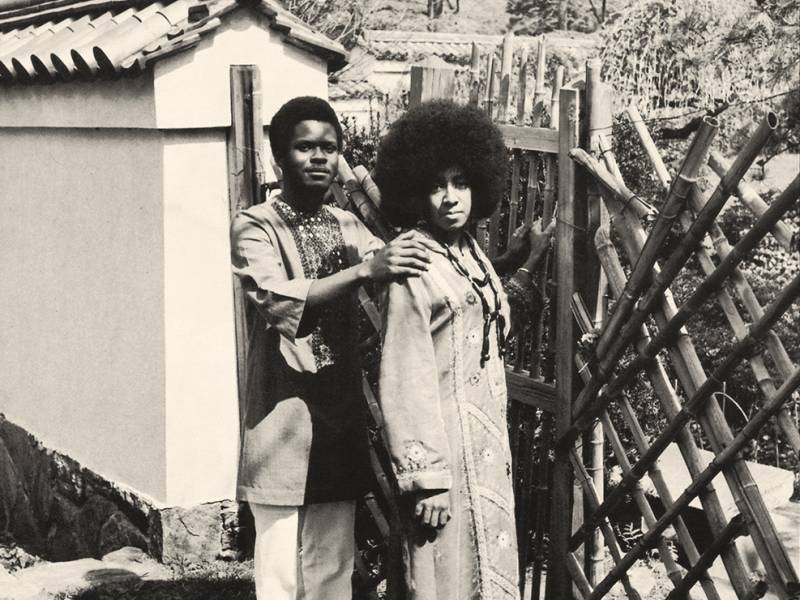
"caption": "Doug Carn, left, with his wife, Jean Carn, in a detail from the cover of their album 'Spirit of the New Land,' released on Black Jazz Records in 1972.",
"description": "Doug Carn, left, with his wife, Jean Carn, in a detail from the cover of their album 'Spirit of the New Land,' released on Black Jazz Records in 1972.",
"title": "Doug Carn, left, with his wife, Jean Carn, in a detail from the cover of their album 'Spirit of the New Land,' released on Black Jazz Records in 1972.",
"credit": "Courtesy of Real Gone Music",
"status": "inherit",
"isLoading": false,
"fetchFailed": false
},
"arts_13886595": {
"type": "attachments",
"id": "arts_13886595",
"meta": {
"index": "attachments_1716263798",
"site": "arts",
"id": "13886595",
"found": true
},
"parent": 0,
"imgSizes": {
"twentyfourteen-full-width": {
"file": "https://ww2.kqed.org/app/uploads/sites/2/2020/09/Monkeys.Circle.Tshirt_COVER-1038x576.jpg",
"width": 1038,
"mimeType": "image/jpeg",
"height": 576
},
"thumbnail": {
"file": "https://ww2.kqed.org/app/uploads/sites/2/2020/09/Monkeys.Circle.Tshirt_COVER-160x90.jpg",
"width": 160,
"mimeType": "image/jpeg",
"height": 90
},
"post-thumbnail": {
"file": "https://ww2.kqed.org/app/uploads/sites/2/2020/09/Monkeys.Circle.Tshirt_COVER-672x372.jpg",
"width": 672,
"mimeType": "image/jpeg",
"height": 372
},
"kqedFullSize": {
"file": "https://ww2.kqed.org/app/uploads/sites/2/2020/09/Monkeys.Circle.Tshirt_COVER-scaled-e1600716221793.jpg",
"width": 1920,
"height": 1080
},
"2048x2048": {
"file": "https://ww2.kqed.org/app/uploads/sites/2/2020/09/Monkeys.Circle.Tshirt_COVER-2048x1152.jpg",
"width": 2048,
"mimeType": "image/jpeg",
"height": 1152
},
"large": {
"file": "https://ww2.kqed.org/app/uploads/sites/2/2020/09/Monkeys.Circle.Tshirt_COVER-1020x574.jpg",
"width": 1020,
"mimeType": "image/jpeg",
"height": 574
},
"1536x1536": {
"file": "https://ww2.kqed.org/app/uploads/sites/2/2020/09/Monkeys.Circle.Tshirt_COVER-1536x864.jpg",
"width": 1536,
"mimeType": "image/jpeg",
"height": 864
},
"full-width": {
"file": "https://ww2.kqed.org/app/uploads/sites/2/2020/09/Monkeys.Circle.Tshirt_COVER-1920x1080.jpg",
"width": 1920,
"mimeType": "image/jpeg",
"height": 1080
},
"medium": {
"file": "https://ww2.kqed.org/app/uploads/sites/2/2020/09/Monkeys.Circle.Tshirt_COVER-800x450.jpg",
"width": 800,
"mimeType": "image/jpeg",
"height": 450
},
"medium_large": {
"file": "https://ww2.kqed.org/app/uploads/sites/2/2020/09/Monkeys.Circle.Tshirt_COVER-768x432.jpg",
"width": 768,
"mimeType": "image/jpeg",
"height": 432
}
},
"publishDate": 1600709031,
"modified": 1600819887,
"caption": "For years, rumors have circulated in La Honda that Ken Kesey helped to release a group of LSD test monkeys into the mountains there. It turns out, at least some of the elements of the tall tale are true.",
"description": "For years, rumors have circulated in La Honda that Ken Kesey helped to release a group of LSD test monkeys into the mountains there. It turns out, at least some of the elements of the tall tale are true.",
"title": "For years, rumors have circulated in La Honda that Ken Kesey helped to release a group of LSD test monkeys into the mountains there. It turns out, at least some of the elements of the tall tale are true.",
"credit": "All illustrations by Tom Beland / Ken Kesey image by Graham Barclay/BWP Media/Getty Images",
"status": "inherit",
"isLoading": false,
"fetchFailed": false
},
"arts_13886426": {
"type": "attachments",
"id": "arts_13886426",
"meta": {
"index": "attachments_1716263798",
"site": "arts",
"id": "13886426",
"found": true
},
"parent": 13886425,
"imgSizes": {
"twentyfourteen-full-width": {
"file": "https://ww2.kqed.org/app/uploads/sites/2/2020/09/maxresdefault-1038x576.jpg",
"width": 1038,
"mimeType": "image/jpeg",
"height": 576
},
"thumbnail": {
"file": "https://ww2.kqed.org/app/uploads/sites/2/2020/09/maxresdefault-160x90.jpg",
"width": 160,
"mimeType": "image/jpeg",
"height": 90
},
"post-thumbnail": {
"file": "https://ww2.kqed.org/app/uploads/sites/2/2020/09/maxresdefault-672x372.jpg",
"width": 672,
"mimeType": "image/jpeg",
"height": 372
},
"kqedFullSize": {
"file": "https://ww2.kqed.org/app/uploads/sites/2/2020/09/maxresdefault.jpg",
"width": 1280,
"height": 720
},
"large": {
"file": "https://ww2.kqed.org/app/uploads/sites/2/2020/09/maxresdefault-1020x574.jpg",
"width": 1020,
"mimeType": "image/jpeg",
"height": 574
},
"medium": {
"file": "https://ww2.kqed.org/app/uploads/sites/2/2020/09/maxresdefault-800x450.jpg",
"width": 800,
"mimeType": "image/jpeg",
"height": 450
},
"medium_large": {
"file": "https://ww2.kqed.org/app/uploads/sites/2/2020/09/maxresdefault-768x432.jpg",
"width": 768,
"mimeType": "image/jpeg",
"height": 432
}
},
"publishDate": 1600285377,
"modified": 1600931597,
"caption": "A moment from 'Metropolitan Cats, 1983—A History of Cats at The Met.'",
"description": "A moment from 'Metropolitan Cats, 1983—A History of Cats at The Met.'",
"title": "A moment from 'Metropolitan Cats, 1983—A History of Cats at The Met.'",
"credit": "metmuseum.org",
"status": "inherit",
"isLoading": false,
"fetchFailed": false
},
"arts_13885796": {
"type": "attachments",
"id": "arts_13885796",
"meta": {
"index": "attachments_1716263798",
"site": "arts",
"id": "13885796",
"found": true
},
"parent": 13885763,
"imgSizes": {
"twentyfourteen-full-width": {
"file": "https://ww2.kqed.org/app/uploads/sites/2/2020/09/GettyImages-154327022-1038x576.jpg",
"width": 1038,
"mimeType": "image/jpeg",
"height": 576
},
"thumbnail": {
"file": "https://ww2.kqed.org/app/uploads/sites/2/2020/09/GettyImages-154327022-160x104.jpg",
"width": 160,
"mimeType": "image/jpeg",
"height": 104
},
"post-thumbnail": {
"file": "https://ww2.kqed.org/app/uploads/sites/2/2020/09/GettyImages-154327022-672x372.jpg",
"width": 672,
"mimeType": "image/jpeg",
"height": 372
},
"kqedFullSize": {
"file": "https://ww2.kqed.org/app/uploads/sites/2/2020/09/GettyImages-154327022.jpg",
"width": 2025,
"height": 1312
},
"large": {
"file": "https://ww2.kqed.org/app/uploads/sites/2/2020/09/GettyImages-154327022-1020x661.jpg",
"width": 1020,
"mimeType": "image/jpeg",
"height": 661
},
"1536x1536": {
"file": "https://ww2.kqed.org/app/uploads/sites/2/2020/09/GettyImages-154327022-1536x995.jpg",
"width": 1536,
"mimeType": "image/jpeg",
"height": 995
},
"full-width": {
"file": "https://ww2.kqed.org/app/uploads/sites/2/2020/09/GettyImages-154327022-1920x1244.jpg",
"width": 1920,
"mimeType": "image/jpeg",
"height": 1244
},
"medium": {
"file": "https://ww2.kqed.org/app/uploads/sites/2/2020/09/GettyImages-154327022-800x518.jpg",
"width": 800,
"mimeType": "image/jpeg",
"height": 518
},
"medium_large": {
"file": "https://ww2.kqed.org/app/uploads/sites/2/2020/09/GettyImages-154327022-768x498.jpg",
"width": 768,
"mimeType": "image/jpeg",
"height": 498
}
},
"publishDate": 1599169391,
"modified": 1599169635,
"caption": "The crew of the doomed US space shuttle Challenger in November 1985. Front row from left are astronauts Mike Smith, Dick Scobee and Ron McNair. Back row from left: Ellison Onizuka, school teacher Christa McAuliffe, Greg Jarvis and Judith Resnik. ",
"description": "The crew of the doomed US space shuttle Challenger in November 1985. Front row from left are astronauts Mike Smith, Dick Scobee and Ron McNair. Back row from left: Ellison Onizuka, school teacher Christa McAuliffe, Greg Jarvis and Judith Resnik. ",
"title": "The crew of the doomed US space shuttle Challenger in November 1985. Front row from left are astronauts Mike Smith, Dick Scobee and Ron McNair. Back row from left: Ellison Onizuka, school teacher Christa McAuliffe, Greg Jarvis and Judith Resnik.",
"credit": "NASA/AFP via Getty Images",
"status": "inherit",
"isLoading": false,
"fetchFailed": false
},
"arts_13884995": {
"type": "attachments",
"id": "arts_13884995",
"meta": {
"index": "attachments_1716263798",
"site": "arts",
"id": "13884995",
"found": true
},
"parent": 13884082,
"imgSizes": {
"twentyfourteen-full-width": {
"file": "https://ww2.kqed.org/app/uploads/sites/2/2020/08/clara_elizabeth_chan_lee-1038x576.jpg",
"width": 1038,
"mimeType": "image/jpeg",
"height": 576
},
"thumbnail": {
"file": "https://ww2.kqed.org/app/uploads/sites/2/2020/08/clara_elizabeth_chan_lee-160x90.jpg",
"width": 160,
"mimeType": "image/jpeg",
"height": 90
},
"post-thumbnail": {
"file": "https://ww2.kqed.org/app/uploads/sites/2/2020/08/clara_elizabeth_chan_lee-672x372.jpg",
"width": 672,
"mimeType": "image/jpeg",
"height": 372
},
"kqedFullSize": {
"file": "https://ww2.kqed.org/app/uploads/sites/2/2020/08/clara_elizabeth_chan_lee.jpg",
"width": 1920,
"height": 1080
},
"large": {
"file": "https://ww2.kqed.org/app/uploads/sites/2/2020/08/clara_elizabeth_chan_lee-1020x574.jpg",
"width": 1020,
"mimeType": "image/jpeg",
"height": 574
},
"1536x1536": {
"file": "https://ww2.kqed.org/app/uploads/sites/2/2020/08/clara_elizabeth_chan_lee-1536x864.jpg",
"width": 1536,
"mimeType": "image/jpeg",
"height": 864
},
"medium": {
"file": "https://ww2.kqed.org/app/uploads/sites/2/2020/08/clara_elizabeth_chan_lee-800x450.jpg",
"width": 800,
"mimeType": "image/jpeg",
"height": 450
},
"medium_large": {
"file": "https://ww2.kqed.org/app/uploads/sites/2/2020/08/clara_elizabeth_chan_lee-768x432.jpg",
"width": 768,
"mimeType": "image/jpeg",
"height": 432
}
},
"publishDate": 1597789915,
"modified": 1636504150,
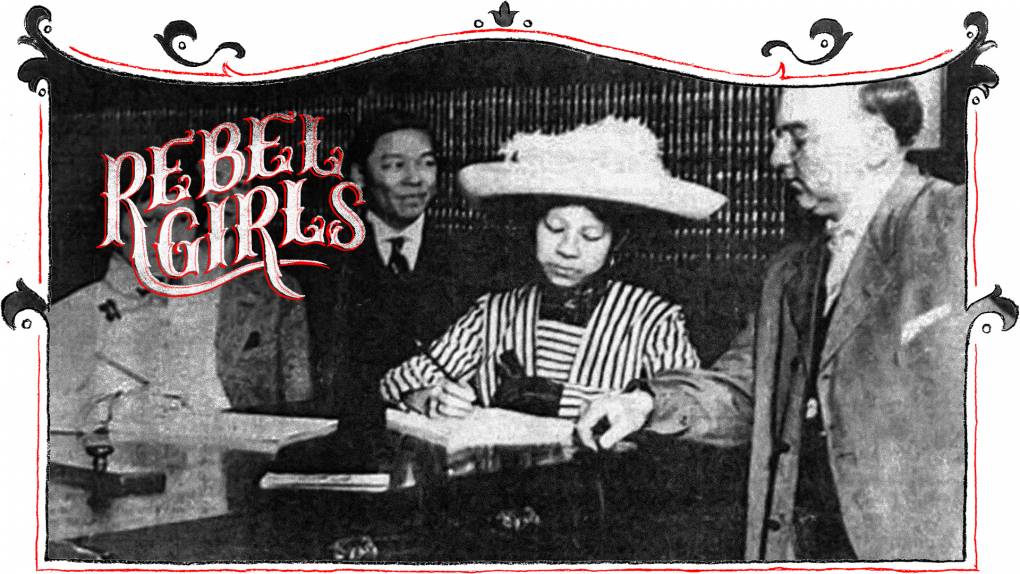
"caption": "Clara Elizabeth Chan Lee, registering to vote at the Alameda County Courthouse in 1911.",
"description": "Clara Elizabeth Chan Lee, registering to vote at the Alameda County Courthouse in 1911.",
"title": "Clara Elizabeth Chan Lee, registering to vote at the Alameda County Courthouse in 1911.",
"credit": null,
"status": "inherit",
"altTag": "A Chinese-American woman wearing a black and white striped dress and broad-brimmed white hat signs a book, watched over by a white man in a suit with his hair slicked back. A besuited man of Chinese descent stands behind her, smiling.",
"isLoading": false,
"fetchFailed": false
},
"arts_13884912": {
"type": "attachments",
"id": "arts_13884912",
"meta": {
"index": "attachments_1716263798",
"site": "arts",
"id": "13884912",
"found": true
},
"parent": 13883630,
"imgSizes": {
"twentyfourteen-full-width": {
"file": "https://ww2.kqed.org/app/uploads/sites/2/2020/08/myra_virginia_simmons_final-1038x576.jpg",
"width": 1038,
"mimeType": "image/jpeg",
"height": 576
},
"thumbnail": {
"file": "https://ww2.kqed.org/app/uploads/sites/2/2020/08/myra_virginia_simmons_final-160x90.jpg",
"width": 160,
"mimeType": "image/jpeg",
"height": 90
},
"post-thumbnail": {
"file": "https://ww2.kqed.org/app/uploads/sites/2/2020/08/myra_virginia_simmons_final-672x372.jpg",
"width": 672,
"mimeType": "image/jpeg",
"height": 372
},
"kqedFullSize": {
"file": "https://ww2.kqed.org/app/uploads/sites/2/2020/08/myra_virginia_simmons_final.jpg",
"width": 1920,
"height": 1080
},
"large": {
"file": "https://ww2.kqed.org/app/uploads/sites/2/2020/08/myra_virginia_simmons_final-1020x574.jpg",
"width": 1020,
"mimeType": "image/jpeg",
"height": 574
},
"1536x1536": {
"file": "https://ww2.kqed.org/app/uploads/sites/2/2020/08/myra_virginia_simmons_final-1536x864.jpg",
"width": 1536,
"mimeType": "image/jpeg",
"height": 864
},
"medium": {
"file": "https://ww2.kqed.org/app/uploads/sites/2/2020/08/myra_virginia_simmons_final-800x450.jpg",
"width": 800,
"mimeType": "image/jpeg",
"height": 450
},
"medium_large": {
"file": "https://ww2.kqed.org/app/uploads/sites/2/2020/08/myra_virginia_simmons_final-768x432.jpg",
"width": 768,
"mimeType": "image/jpeg",
"height": 432
}
},
"publishDate": 1597696771,
"modified": 1636504309,
"caption": "A gathering of the California State Federation of Colored Women’s Clubs in Oakland, which took place July 27-29, 1915. Myra Virginia Simmons would undoubtedly have been in attendance.",
"description": "A gathering of the California State Federation of Colored Women’s Clubs in Oakland, which took place July 27-29, 1915. Myra Virginia Simmons would undoubtedly have been in attendance.",
"title": "A gathering of the California State Federation of Colored Women’s Clubs in Oakland, which took place July 27-29, 1915. Myra Virginia Simmons would undoubtedly have been in attendance.",
"credit": null,
"status": "inherit",
"altTag": "Scores of smartly dressed Black women line up across seven steps. Many of them smile proudly.",
"isLoading": false,
"fetchFailed": false
},
"arts_13886808": {
"type": "attachments",
"id": "arts_13886808",
"meta": {
"index": "attachments_1716263798",
"site": "arts",
"id": "13886808",
"found": true
},
"parent": 13884403,
"imgSizes": {
"twentyfourteen-full-width": {
"file": "https://ww2.kqed.org/app/uploads/sites/2/2020/08/stefano-pollio-ZC0EbdLC8G0-unsplash-1038x576.jpg",
"width": 1038,
"mimeType": "image/jpeg",
"height": 576
},
"thumbnail": {
"file": "https://ww2.kqed.org/app/uploads/sites/2/2020/08/stefano-pollio-ZC0EbdLC8G0-unsplash-160x120.jpg",
"width": 160,
"mimeType": "image/jpeg",
"height": 120
},
"post-thumbnail": {
"file": "https://ww2.kqed.org/app/uploads/sites/2/2020/08/stefano-pollio-ZC0EbdLC8G0-unsplash-672x372.jpg",
"width": 672,
"mimeType": "image/jpeg",
"height": 372
},
"kqedFullSize": {
"file": "https://ww2.kqed.org/app/uploads/sites/2/2020/08/stefano-pollio-ZC0EbdLC8G0-unsplash-scaled.jpg",
"width": 2560,
"height": 1920
},
"2048x2048": {
"file": "https://ww2.kqed.org/app/uploads/sites/2/2020/08/stefano-pollio-ZC0EbdLC8G0-unsplash-2048x1536.jpg",
"width": 2048,
"mimeType": "image/jpeg",
"height": 1536
},
"large": {
"file": "https://ww2.kqed.org/app/uploads/sites/2/2020/08/stefano-pollio-ZC0EbdLC8G0-unsplash-1020x765.jpg",
"width": 1020,
"mimeType": "image/jpeg",
"height": 765
},
"1536x1536": {
"file": "https://ww2.kqed.org/app/uploads/sites/2/2020/08/stefano-pollio-ZC0EbdLC8G0-unsplash-1536x1152.jpg",
"width": 1536,
"mimeType": "image/jpeg",
"height": 1152
},
"full-width": {
"file": "https://ww2.kqed.org/app/uploads/sites/2/2020/08/stefano-pollio-ZC0EbdLC8G0-unsplash-1920x1440.jpg",
"width": 1920,
"mimeType": "image/jpeg",
"height": 1440
},
"medium": {
"file": "https://ww2.kqed.org/app/uploads/sites/2/2020/08/stefano-pollio-ZC0EbdLC8G0-unsplash-800x600.jpg",
"width": 800,
"mimeType": "image/jpeg",
"height": 600
},
"medium_large": {
"file": "https://ww2.kqed.org/app/uploads/sites/2/2020/08/stefano-pollio-ZC0EbdLC8G0-unsplash-768x576.jpg",
"width": 768,
"mimeType": "image/jpeg",
"height": 576
}
},
"publishDate": 1600932322,
"modified": 1600932362,
"caption": null,
"description": null,
"title": "stefano-pollio-ZC0EbdLC8G0-unsplash",
"credit": "Stefano Pollio/ Unsplash",
"status": "inherit",
"isLoading": false,
"fetchFailed": false
},
"arts_13884521": {
"type": "attachments",
"id": "arts_13884521",
"meta": {
"index": "attachments_1716263798",
"site": "arts",
"id": "13884521",
"found": true
},
"parent": 13884520,
"imgSizes": {
"twentyfourteen-full-width": {
"file": "https://ww2.kqed.org/app/uploads/sites/2/2020/08/gettyimages-3168501_custom-0fe36c61bc6798f68e08f55fb2e9a91d720947ba-1038x576.jpg",
"width": 1038,
"mimeType": "image/jpeg",
"height": 576
},
"thumbnail": {
"file": "https://ww2.kqed.org/app/uploads/sites/2/2020/08/gettyimages-3168501_custom-0fe36c61bc6798f68e08f55fb2e9a91d720947ba-160x73.jpg",
"width": 160,
"mimeType": "image/jpeg",
"height": 73
},
"post-thumbnail": {
"file": "https://ww2.kqed.org/app/uploads/sites/2/2020/08/gettyimages-3168501_custom-0fe36c61bc6798f68e08f55fb2e9a91d720947ba-672x372.jpg",
"width": 672,
"mimeType": "image/jpeg",
"height": 372
},
"kqedFullSize": {
"file": "https://ww2.kqed.org/app/uploads/sites/2/2020/08/gettyimages-3168501_custom-0fe36c61bc6798f68e08f55fb2e9a91d720947ba-scaled-e1596754616907.jpg",
"width": 1920,
"height": 875
},
"2048x2048": {
"file": "https://ww2.kqed.org/app/uploads/sites/2/2020/08/gettyimages-3168501_custom-0fe36c61bc6798f68e08f55fb2e9a91d720947ba-2048x933.jpg",
"width": 2048,
"mimeType": "image/jpeg",
"height": 933
},
"large": {
"file": "https://ww2.kqed.org/app/uploads/sites/2/2020/08/gettyimages-3168501_custom-0fe36c61bc6798f68e08f55fb2e9a91d720947ba-1020x465.jpg",
"width": 1020,
"mimeType": "image/jpeg",
"height": 465
},
"1536x1536": {
"file": "https://ww2.kqed.org/app/uploads/sites/2/2020/08/gettyimages-3168501_custom-0fe36c61bc6798f68e08f55fb2e9a91d720947ba-1536x700.jpg",
"width": 1536,
"mimeType": "image/jpeg",
"height": 700
},
"full-width": {
"file": "https://ww2.kqed.org/app/uploads/sites/2/2020/08/gettyimages-3168501_custom-0fe36c61bc6798f68e08f55fb2e9a91d720947ba-1920x875.jpg",
"width": 1920,
"mimeType": "image/jpeg",
"height": 875
},
"medium": {
"file": "https://ww2.kqed.org/app/uploads/sites/2/2020/08/gettyimages-3168501_custom-0fe36c61bc6798f68e08f55fb2e9a91d720947ba-800x365.jpg",
"width": 800,
"mimeType": "image/jpeg",
"height": 365
},
"medium_large": {
"file": "https://ww2.kqed.org/app/uploads/sites/2/2020/08/gettyimages-3168501_custom-0fe36c61bc6798f68e08f55fb2e9a91d720947ba-768x350.jpg",
"width": 768,
"mimeType": "image/jpeg",
"height": 350
}
},
"publishDate": 1596752542,
"modified": 1596754681,
"caption": "14th March 1963: Filming on the set of 'Dr Strangelove or: How I Learned to Stop Worrying and Love the Bomb' directed by Stanley Kubrick. From right to left : Peter Sellers as US President Merkin Muffley, Peter Bull as Ambassador de Sadesky and George C Scott as General 'Buck' Turgidson. ",
"description": "14th March 1963: Filming on the set of 'Dr Strangelove or: How I Learned to Stop Worrying and Love the Bomb' directed by Stanley Kubrick. From right to left : Peter Sellers as US President Merkin Muffley, Peter Bull as Ambassador de Sadesky and George C Scott as General 'Buck' Turgidson. ",
"title": "14th March 1963: Filming on the set of 'Dr Strangelove or: How I Learned to Stop Worrying and Love the Bomb' directed by Stanley Kubrick. From right to left : Peter Sellers as US President Merkin Muffley, Peter Bull as Ambassador de Sadesky and George C Scott as General 'Buck' Turgidson.",
"credit": "Express/Express/Getty Images",
"status": "inherit",
"isLoading": false,
"fetchFailed": false
},
"arts_13883696": {
"type": "attachments",
"id": "arts_13883696",
"meta": {
"index": "attachments_1716263798",
"site": "arts",
"id": "13883696",
"found": true
},
"parent": 13882943,
"imgSizes": {
"twentyfourteen-full-width": {
"file": "https://ww2.kqed.org/app/uploads/sites/2/2020/07/elsie_allen_final-1038x576.jpg",
"width": 1038,
"mimeType": "image/jpeg",
"height": 576
},
"thumbnail": {
"file": "https://ww2.kqed.org/app/uploads/sites/2/2020/07/elsie_allen_final-160x90.jpg",
"width": 160,
"mimeType": "image/jpeg",
"height": 90
},
"post-thumbnail": {
"file": "https://ww2.kqed.org/app/uploads/sites/2/2020/07/elsie_allen_final-672x372.jpg",
"width": 672,
"mimeType": "image/jpeg",
"height": 372
},
"kqedFullSize": {
"file": "https://ww2.kqed.org/app/uploads/sites/2/2020/07/elsie_allen_final.jpg",
"width": 1920,
"height": 1080
},
"large": {
"file": "https://ww2.kqed.org/app/uploads/sites/2/2020/07/elsie_allen_final-1020x574.jpg",
"width": 1020,
"mimeType": "image/jpeg",
"height": 574
},
"1536x1536": {
"file": "https://ww2.kqed.org/app/uploads/sites/2/2020/07/elsie_allen_final-1536x864.jpg",
"width": 1536,
"mimeType": "image/jpeg",
"height": 864
},
"medium": {
"file": "https://ww2.kqed.org/app/uploads/sites/2/2020/07/elsie_allen_final-800x450.jpg",
"width": 800,
"mimeType": "image/jpeg",
"height": 450
},
"medium_large": {
"file": "https://ww2.kqed.org/app/uploads/sites/2/2020/07/elsie_allen_final-768x432.jpg",
"width": 768,
"mimeType": "image/jpeg",
"height": 432
}
},
"publishDate": 1595371156,
"modified": 1636504520,
"caption": null,
"description": null,
"title": "elsie_allen_final",
"credit": null,
"status": "inherit",
"altTag": "An Indigenous woman wearing a colorful 1970s dress and spectacles sits at a table weaving, deep in concentration, surrounded by baskets.",
"isLoading": false,
"fetchFailed": false
},
"arts_13883127": {
"type": "attachments",
"id": "arts_13883127",
"meta": {
"index": "attachments_1716263798",
"site": "arts",
"id": "13883127",
"found": true
},
"parent": 13883118,
"imgSizes": {
"twentyfourteen-full-width": {
"file": "https://ww2.kqed.org/app/uploads/sites/2/2020/07/Crocker-Mansion-L-Colton-Mansion-R-1881-CA-State-Library-1-1038x576.png",
"width": 1038,
"mimeType": "image/png",
"height": 576
},
"thumbnail": {
"file": "https://ww2.kqed.org/app/uploads/sites/2/2020/07/Crocker-Mansion-L-Colton-Mansion-R-1881-CA-State-Library-1-160x100.png",
"width": 160,
"mimeType": "image/png",
"height": 100
},
"post-thumbnail": {
"file": "https://ww2.kqed.org/app/uploads/sites/2/2020/07/Crocker-Mansion-L-Colton-Mansion-R-1881-CA-State-Library-1-672x372.png",
"width": 672,
"mimeType": "image/png",
"height": 372
},
"kqedFullSize": {
"file": "https://ww2.kqed.org/app/uploads/sites/2/2020/07/Crocker-Mansion-L-Colton-Mansion-R-1881-CA-State-Library-1.png",
"width": 1448,
"height": 902
},
"large": {
"file": "https://ww2.kqed.org/app/uploads/sites/2/2020/07/Crocker-Mansion-L-Colton-Mansion-R-1881-CA-State-Library-1-1020x635.png",
"width": 1020,
"mimeType": "image/png",
"height": 635
},
"medium": {
"file": "https://ww2.kqed.org/app/uploads/sites/2/2020/07/Crocker-Mansion-L-Colton-Mansion-R-1881-CA-State-Library-1-800x498.png",
"width": 800,
"mimeType": "image/png",
"height": 498
},
"medium_large": {
"file": "https://ww2.kqed.org/app/uploads/sites/2/2020/07/Crocker-Mansion-L-Colton-Mansion-R-1881-CA-State-Library-1-768x478.png",
"width": 768,
"mimeType": "image/png",
"height": 478
}
},
"publishDate": 1594242588,
"modified": 1594242721,
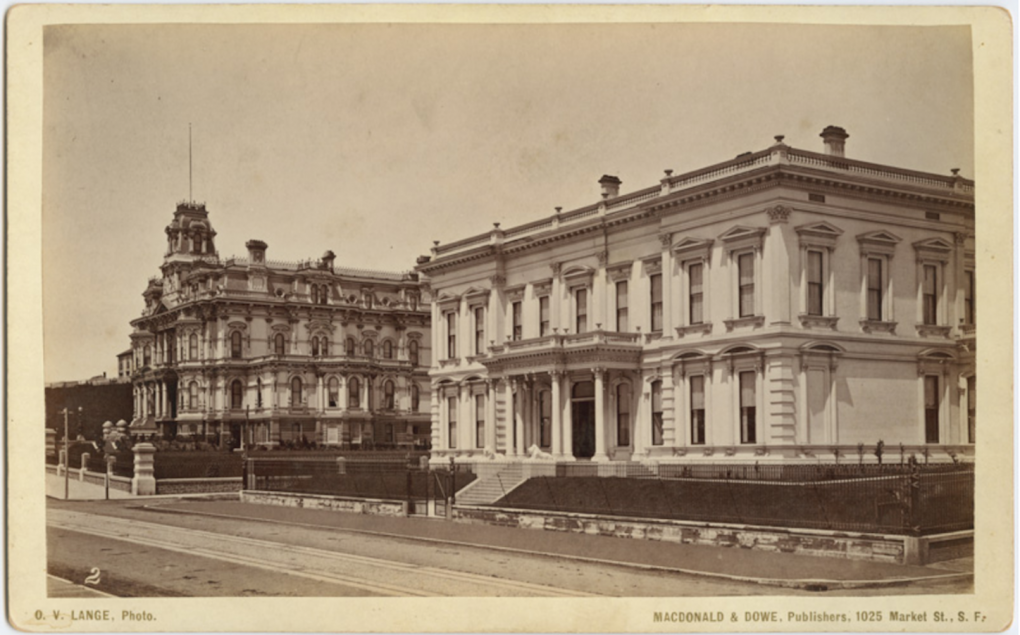
"caption": "The Crocker Mansion (left) and the Colton Mansion (right), in 1881.",
"description": "The Crocker Mansion (left) and the Colton Mansion (right), in 1881.",
"title": "The Crocker Mansion (left) and the Colton Mansion (right), in 1881.",
"credit": "California State Library, California History Room. Original photograph by O.V. Lange.",
"status": "inherit",
"isLoading": false,
"fetchFailed": false
},
"arts_13882985": {
"type": "attachments",
"id": "arts_13882985",
"meta": {
"index": "attachments_1716263798",
"site": "arts",
"id": "13882985",
"found": true
},
"parent": 13882983,
"imgSizes": {
"twentyfourteen-full-width": {
"file": "https://ww2.kqed.org/app/uploads/sites/2/2020/07/SFMT_BrianRivera_LizzieCalogero_AndreAmarotico_MichaelGeneSullivan_KeikoShimosatoCarreiro-_credit_MikeMelnyk-1038x576.jpg",
"width": 1038,
"mimeType": "image/jpeg",
"height": 576
},
"thumbnail": {
"file": "https://ww2.kqed.org/app/uploads/sites/2/2020/07/SFMT_BrianRivera_LizzieCalogero_AndreAmarotico_MichaelGeneSullivan_KeikoShimosatoCarreiro-_credit_MikeMelnyk-160x107.jpg",
"width": 160,
"mimeType": "image/jpeg",
"height": 107
},
"post-thumbnail": {
"file": "https://ww2.kqed.org/app/uploads/sites/2/2020/07/SFMT_BrianRivera_LizzieCalogero_AndreAmarotico_MichaelGeneSullivan_KeikoShimosatoCarreiro-_credit_MikeMelnyk-672x372.jpg",
"width": 672,
"mimeType": "image/jpeg",
"height": 372
},
"kqedFullSize": {
"file": "https://ww2.kqed.org/app/uploads/sites/2/2020/07/SFMT_BrianRivera_LizzieCalogero_AndreAmarotico_MichaelGeneSullivan_KeikoShimosatoCarreiro-_credit_MikeMelnyk.jpg",
"width": 2000,
"height": 1335
},
"large": {
"file": "https://ww2.kqed.org/app/uploads/sites/2/2020/07/SFMT_BrianRivera_LizzieCalogero_AndreAmarotico_MichaelGeneSullivan_KeikoShimosatoCarreiro-_credit_MikeMelnyk-1020x681.jpg",
"width": 1020,
"mimeType": "image/jpeg",
"height": 681
},
"1536x1536": {
"file": "https://ww2.kqed.org/app/uploads/sites/2/2020/07/SFMT_BrianRivera_LizzieCalogero_AndreAmarotico_MichaelGeneSullivan_KeikoShimosatoCarreiro-_credit_MikeMelnyk-1536x1025.jpg",
"width": 1536,
"mimeType": "image/jpeg",
"height": 1025
},
"full-width": {
"file": "https://ww2.kqed.org/app/uploads/sites/2/2020/07/SFMT_BrianRivera_LizzieCalogero_AndreAmarotico_MichaelGeneSullivan_KeikoShimosatoCarreiro-_credit_MikeMelnyk-1920x1282.jpg",
"width": 1920,
"mimeType": "image/jpeg",
"height": 1282
},
"medium": {
"file": "https://ww2.kqed.org/app/uploads/sites/2/2020/07/SFMT_BrianRivera_LizzieCalogero_AndreAmarotico_MichaelGeneSullivan_KeikoShimosatoCarreiro-_credit_MikeMelnyk-800x534.jpg",
"width": 800,
"mimeType": "image/jpeg",
"height": 534
},
"medium_large": {
"file": "https://ww2.kqed.org/app/uploads/sites/2/2020/07/SFMT_BrianRivera_LizzieCalogero_AndreAmarotico_MichaelGeneSullivan_KeikoShimosatoCarreiro-_credit_MikeMelnyk-768x513.jpg",
"width": 768,
"mimeType": "image/jpeg",
"height": 513
}
},
"publishDate": 1594068454,
"modified": 1594068590,
"caption": "Brian Rivera, Lizzie Calogero, Andre Amorotico, Michael Gene Sullivan, and Keiko Shimosato Carreiro spar in San Francisco Mime Troupe's 2019 production, Treasure Island.",
"description": "Brian Rivera, Lizzie Calogero, Andre Amorotico, Michael Gene Sullivan, and Keiko Shimosato Carreiro spar in San Francisco Mime Troupe's 2019 production, Treasure Island.",
"title": "SFMT_BrianRivera_LizzieCalogero_AndreAmarotico_MichaelGeneSullivan_KeikoShimosatoCarreiro _credit_MikeMelnyk",
"credit": "Mike Melnyk",
"status": "inherit",
"isLoading": false,
"fetchFailed": false
},
"arts_13882830": {
"type": "attachments",
"id": "arts_13882830",
"meta": {
"index": "attachments_1716263798",
"site": "arts",
"id": "13882830",
"found": true
},
"parent": 13882779,
"imgSizes": {
"twentyfourteen-full-width": {
"file": "https://ww2.kqed.org/app/uploads/sites/2/2020/07/dead-presidents-1038x576.jpg",
"width": 1038,
"mimeType": "image/jpeg",
"height": 576
},
"thumbnail": {
"file": "https://ww2.kqed.org/app/uploads/sites/2/2020/07/dead-presidents-160x99.jpg",
"width": 160,
"mimeType": "image/jpeg",
"height": 99
},
"post-thumbnail": {
"file": "https://ww2.kqed.org/app/uploads/sites/2/2020/07/dead-presidents-672x372.jpg",
"width": 672,
"mimeType": "image/jpeg",
"height": 372
},
"kqedFullSize": {
"file": "https://ww2.kqed.org/app/uploads/sites/2/2020/07/dead-presidents.jpg",
"width": 2364,
"height": 1463
},
"2048x2048": {
"file": "https://ww2.kqed.org/app/uploads/sites/2/2020/07/dead-presidents-2048x1267.jpg",
"width": 2048,
"mimeType": "image/jpeg",
"height": 1267
},
"large": {
"file": "https://ww2.kqed.org/app/uploads/sites/2/2020/07/dead-presidents-1020x631.jpg",
"width": 1020,
"mimeType": "image/jpeg",
"height": 631
},
"1536x1536": {
"file": "https://ww2.kqed.org/app/uploads/sites/2/2020/07/dead-presidents-1536x951.jpg",
"width": 1536,
"mimeType": "image/jpeg",
"height": 951
},
"full-width": {
"file": "https://ww2.kqed.org/app/uploads/sites/2/2020/07/dead-presidents-1920x1188.jpg",
"width": 1920,
"mimeType": "image/jpeg",
"height": 1188
},
"medium": {
"file": "https://ww2.kqed.org/app/uploads/sites/2/2020/07/dead-presidents-800x495.jpg",
"width": 800,
"mimeType": "image/jpeg",
"height": 495
},
"medium_large": {
"file": "https://ww2.kqed.org/app/uploads/sites/2/2020/07/dead-presidents-768x475.jpg",
"width": 768,
"mimeType": "image/jpeg",
"height": 475
}
},
"publishDate": 1593676697,
"modified": 1593721677,
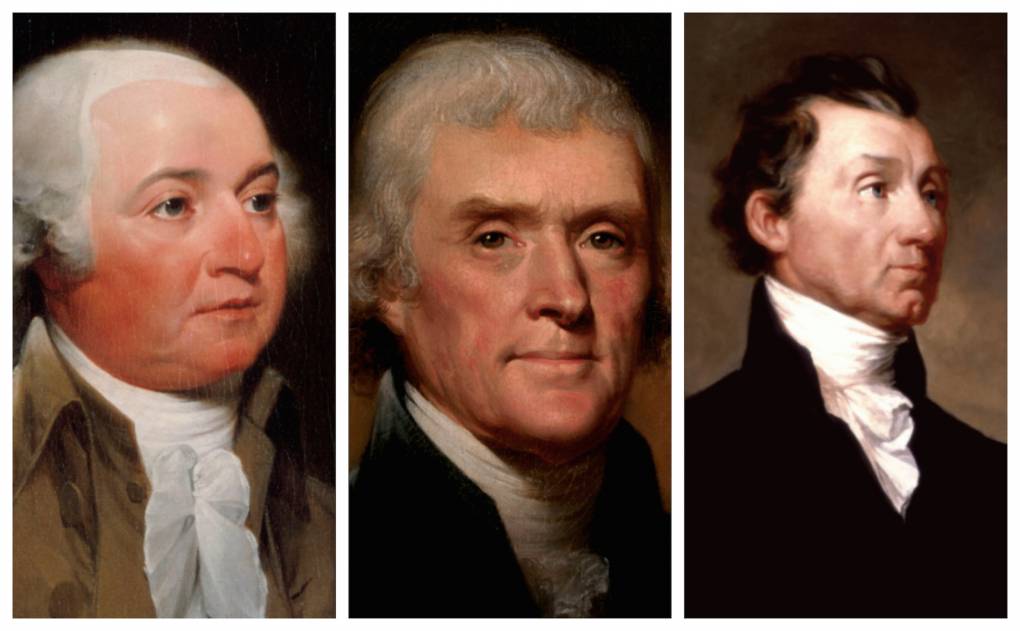
"caption": "(L-R): John Adams, Thomas Jefferson and James Monroe, who all died on Independence Day.",
"description": "(L-R): John Adams, Thomas Jefferson and James Monroe, who all died on Independence Day.",
"title": "(L-R): John Adams, Thomas Jefferson and James Monroe, who all died on Independence Day.",
"credit": null,
"status": "inherit",
"isLoading": false,
"fetchFailed": false
}
},
"audioPlayerReducer": {
"postId": "stream_live",
"isPaused": true,
"isPlaying": false,
"pfsActive": false,
"pledgeModalIsOpen": true,
"playerDrawerIsOpen": false,
"liveAudioPlayStartedAt": 0,
"liveAudioPlayContext": ""
},
"authorsReducer": {
"byline_arts_13886749": {
"type": "authors",
"id": "byline_arts_13886749",
"meta": {
"override": true
},
"slug": "byline_arts_13886749",
"name": "Martin Johnson",
"isLoading": false
},
"byline_arts_13884520": {
"type": "authors",
"id": "byline_arts_13884520",
"meta": {
"override": true
},
"slug": "byline_arts_13884520",
"name": "Bob Mondello",
"isLoading": false
},
"ralexandra": {
"type": "authors",
"id": "11242",
"meta": {
"index": "authors_1716337520",
"id": "11242",
"found": true
},
"name": "Rae Alexandra",
"firstName": "Rae",
"lastName": "Alexandra",
"slug": "ralexandra",
"email": "ralexandra@kqed.org",
"display_author_email": true,
"staff_mastheads": [],
"title": "Reporter/Producer",
"bio": "Rae Alexandra is a Reporter/Producer for KQED Arts & Culture, and the creator/author of the \u003ca href=\"https://www.kqed.org/arts/program/rebel-girls-from-bay-area-history\">Rebel Girls From Bay Area History\u003c/a> and \u003ca href=\"https://www.kqed.org/bizarrebayarea\">Bizarre Bay Area\u003c/a> series. Her debut book, \u003ca href=\"https://citylights.com/politics-current-events-history/unsung-heroines35-women-who-changed/\">Unsung Heroines: 35 Women Who Changed the Bay Area\u003c/a> was published by City Lights in March 2026. In 2023, Rae was awarded an SPJ Excellence in Journalism Award for Arts & Culture. Rae was born and raised in Wales and subsequently — even after two decades in Northern California — still uses phrases that regularly baffle her coworkers.",
"avatar": "https://secure.gravatar.com/avatar/edfee8176c80cc0a382b051190f5341997df378a934a5774dcb0977732dfd401?s=600&d=blank&r=g",
"twitter": null,
"bluesky": null,
"facebook": null,
"instagram": null,
"linkedin": null,
"sites": [
{
"site": "arts",
"roles": [
"subscriber"
]
},
{
"site": "news",
"roles": [
"subscriber"
]
},
{
"site": "pop",
"roles": [
"subscriber"
]
},
{
"site": "bayareabites",
"roles": [
"subscriber"
]
},
{
"site": "science",
"roles": [
"subscriber"
]
}
],
"headData": {
"title": "Rae Alexandra | KQED",
"description": "Reporter/Producer",
"ogImgSrc": "https://secure.gravatar.com/avatar/edfee8176c80cc0a382b051190f5341997df378a934a5774dcb0977732dfd401?s=600&d=blank&r=g",
"twImgSrc": "https://secure.gravatar.com/avatar/edfee8176c80cc0a382b051190f5341997df378a934a5774dcb0977732dfd401?s=600&d=blank&r=g"
},
"isLoading": false,
"link": "/author/ralexandra"
},
"ngluckstern": {
"type": "authors",
"id": "11497",
"meta": {
"index": "authors_1716337520",
"id": "11497",
"found": true
},
"name": "Nicole Gluckstern",
"firstName": "Nicole",
"lastName": "Gluckstern",
"slug": "ngluckstern",
"email": "gluckstern.nicole@gmail.com",
"display_author_email": false,
"staff_mastheads": [],
"title": "KQED Contributor",
"bio": null,
"avatar": "https://secure.gravatar.com/avatar/2c3d593194017bfe811a998ad03140909de330b22abebf4889e1a564ce5b3495?s=600&d=blank&r=g",
"twitter": null,
"bluesky": null,
"facebook": null,
"instagram": null,
"linkedin": null,
"sites": [
{
"site": "arts",
"roles": [
"contributor"
]
}
],
"headData": {
"title": "Nicole Gluckstern | KQED",
"description": "KQED Contributor",
"ogImgSrc": "https://secure.gravatar.com/avatar/2c3d593194017bfe811a998ad03140909de330b22abebf4889e1a564ce5b3495?s=600&d=blank&r=g",
"twImgSrc": "https://secure.gravatar.com/avatar/2c3d593194017bfe811a998ad03140909de330b22abebf4889e1a564ce5b3495?s=600&d=blank&r=g"
},
"isLoading": false,
"link": "/author/ngluckstern"
}
},
"pagesReducer": {
"arts_category_history": {
"type": "terms",
"id": "arts_7862",
"meta": {
"index": "terms_1716263798",
"site": "arts",
"id": "7862",
"score": 12.208591
},
"featImg": null,
"name": "History",
"description": null,
"taxonomy": "category",
"headData": {
"twImgId": null,
"twTitle": null,
"ogTitle": null,
"ogImgId": null,
"twDescription": null,
"description": null,
"title": "History Archives | KQED Arts",
"ogDescription": null
},
"ttid": 7874,
"slug": "history",
"isLoading": false,
"title": "History",
"pageMeta": {
"site": "arts",
"WpPageTemplate": "page-topic-editorial",
"currentPage": 27
},
"blocks": [
{
"blockName": "kqed/post-list",
"attrs": {
"layout": "cardArticle2",
"query": "posts/arts?category=history",
"seeMore": false,
"paginated": true,
"page": 27
}
},
{
"blockName": "kqed/ad"
}
]
}
},
"pfsSessionReducer": {},
"postsReducer": {
"stream_live": {
"type": "live",
"id": "stream_live",
"audioUrl": "https://streams.kqed.org/kqedradio",
"title": "Live Stream",
"excerpt": "Live Stream information currently unavailable.",
"link": "/radio",
"featImg": "",
"label": {
"name": "KQED Live",
"link": "/"
}
},
"stream_kqedNewscast": {
"type": "posts",
"id": "stream_kqedNewscast",
"audioUrl": "https://www.kqed.org/.stream/anon/radio/RDnews/newscast.mp3?_=1",
"title": "KQED Newscast",
"featImg": "",
"label": {
"name": "88.5 FM",
"link": "/"
}
},
"arts_13886749": {
"type": "posts",
"id": "arts_13886749",
"meta": {
"index": "posts_1716263798",
"site": "arts",
"id": "13886749",
"score": null,
"sort": [
1600889289000
]
},
"parent": 0,
"labelTerm": {
"site": "arts",
"term": 137
},
"blocks": [],
"publishDate": 1600889289,
"format": "standard",
"title": "Rediscovering the Social and Spiritual Legacy of Oakland's Black Jazz Records",
"headTitle": "Rediscovering the Social and Spiritual Legacy of Oakland’s Black Jazz Records | KQED",
"content": "\u003cp>The dawn of the ’70s were heady times for keyboardist Doug Carn and drummer Michael Carvin. Both men had recently relocated to Los Angeles from points south; Carn came from Florida, Carvin from Houston. Carn was getting gigs with well-known bands like Nat Adderly and Earth, Wind And Fire, while Carvin was getting work in television bands as a sideman. Most central to the pair, though, was the demo the two had recorded along with Carn’s wife, vocalist Jean Carn, that they thought marked the future of jazz. Inspired by three legendary African-Americans—Dr. Martin Luther King, John Coltrane and Muhammad Ali—Carn had written lyrics for music composed by Coltrane, McCoy Tyner and Wayne Shorter, which were then sung by Jean, who imbued the songs with an energetic vibrance. “I felt we were creating a new set of standards,” Doug Carn tells NPR Music.\u003c/p>\n\u003cp>Carn took the demo to some of the prominent jazz labels of the time, like Blue Note, Impulse! and Columbia, but, to his honest surprise, found no takers. Even in retrospect, it is a head-scratcher; the music’s spiritual overtones both echoed Coltrane, just a few years removed from his death and already a towering figure, and the work of one of Coltrane’s proteges, Pharoah Sanders, who notched a hit in 1969 with the song “The Creator Has a Master Plan,” from his 1969 recording \u003cem>Karma—\u003c/em>a cornerstone of the spiritual jazz that Carn was creating. Plus, the sound of Carn’s ensemble had a pan-African feel in the rhythms, which echoed a trend in several jazz styles.\u003c/p>\n\u003cp>https://www.youtube.com/watch?time_continue=2&v=QZ6lB7FKxi8\u003c/p>\n\u003cp>Still without a home for their recordings, Carn and Carvin then heard of a new label, Black Jazz Records, which was being run in Oakland by Gene Russell, a pianist who had scored a minor hit with the piano trio album \u003cem>Up And Away\u003c/em>, which featured covers of contemporary pop tunes. Russell was planning to make his new label focus on artistic self-determination, rather than conformity to the marketplace.\u003c/p>\n\u003cfigure id=\"attachment_13886751\" class=\"wp-caption alignright\" style=\"max-width: 200px\">\u003cimg loading=\"lazy\" decoding=\"async\" class=\"size-full wp-image-13886751\" src=\"https://ww2.kqed.org/app/uploads/sites/2/2020/09/gene-russell-cover-art_sq-acc8a702634847bfd8f3da52fc75dd50c3c0efb0.jpe\" alt=\"The cover photograph for Gene Russell's album 'New Direction,' the first release on Black Jazz.\" width=\"200\" height=\"200\" srcset=\"https://cdn.kqed.org/wp-content/uploads/sites/2/2020/09/gene-russell-cover-art_sq-acc8a702634847bfd8f3da52fc75dd50c3c0efb0.jpe 200w, https://cdn.kqed.org/wp-content/uploads/sites/2/2020/09/gene-russell-cover-art_sq-acc8a702634847bfd8f3da52fc75dd50c3c0efb0-160x160.jpe 160w\" sizes=\"(max-width: 200px) 100vw, 200px\">\u003cfigcaption class=\"wp-caption-text\">The cover photograph for Gene Russell’s album ‘New Direction,’ the first release on Black Jazz. \u003ccite>(Courtesy of Real Gone Music)\u003c/cite>\u003c/figcaption>\u003c/figure>\n\u003cp>The cover art told the story of his transition: Russell’s Decca recording had featured its title in a bright, psychedelic color scheme, overlaid on a photo of Russell in the engine of an airplane, holding balloons. It’s presentation was whimsical; almost a rebuttal of the tumult in the streets. The first release on Black Jazz, his own album, aptly titled \u003cem>New Direction,\u003c/em> featured a black-and-white photo with a black frame and white typeface. The logo featured a soul-brother handshake, and the photo of Russell was of him in a black hat and blue jeans, assertively looking at the camera, clearly an independent urban spirit. In style it was an endorsement of post Civil Rights life for African Americans; there was less need to please the dominant society.\u003c/p>\n\u003cp>[ad fullwidth]\u003c/p>\n\u003cp>Carn and Carvin were all-too-right about their hunch. Russell heard the demo and, rather than send them into the studio to record fuller versions of the music, simply released it as \u003cem>Infant Eyes\u003c/em>, one of the first recordings on his new imprint.\u003c/p>\n\u003cp>https://www.youtube.com/watch?v=38OXtiRZ2ig\u003c/p>\n\u003cp>Jazz has always been a celebration of Black self-determination, but the jazz recording industry often failed to reflect that priority. Russell and his co-founder, Dick Schory, were among several artists and businessmen eager to challenge the paradigm. They weren’t alone—the late ’60s and early ’70s witnessed a flowering of independent spirit in the jazz community. Collectives sprung up around the country—the Association of the Advancement of Creative Musicians in Chicago (AACM), the Black Artists Group in St. Louis, the Union of God’s Musicians and Artists Ascension in Los Angeles all among them—to present and nurture the creation of a new music.\u003c/p>\n\u003cp>Artist-run labels followed in the same spirit. Sun Ra had created El Saturn Records to release his own work. Betty Carter created Bet-Car for hers. Trumpeter Charles Tolliver and pianist Stanley Cowell formed Strata East as a home for their work and that of their peers. DJ and impresario Jimmy Gray and saxophonist James Branch launched Black Fire Records to document the burgeoning African-American music scene in Washington, D.C. All of these labels captured a moment when Black people—musicians and fans alike—were resisting the definitions that had been imposed on them by white society and creating different sounds of blackness. Black Jazz Records was one of the biggest and most ambitious among them.\u003c/p>\n\u003cfigure id=\"attachment_13886752\" class=\"wp-caption alignright\" style=\"max-width: 200px\">\u003cimg loading=\"lazy\" decoding=\"async\" class=\"size-full wp-image-13886752\" src=\"https://ww2.kqed.org/app/uploads/sites/2/2020/09/black-jazz-logo_sq-22dcf70d1f3b9c3f43526605a528c841b0b0a744.jpg\" alt=\"The Black Jazz logo featured a soul-brother handshake.\" width=\"200\" height=\"200\" srcset=\"https://cdn.kqed.org/wp-content/uploads/sites/2/2020/09/black-jazz-logo_sq-22dcf70d1f3b9c3f43526605a528c841b0b0a744.jpg 200w, https://cdn.kqed.org/wp-content/uploads/sites/2/2020/09/black-jazz-logo_sq-22dcf70d1f3b9c3f43526605a528c841b0b0a744-160x160.jpg 160w\" sizes=\"(max-width: 200px) 100vw, 200px\">\u003cfigcaption class=\"wp-caption-text\">The Black Jazz logo. \u003ccite>(Courtesy of Real Gone Music)\u003c/cite>\u003c/figcaption>\u003c/figure>\n\u003cp>Black Jazz was founded in Oakland, also home to the Black Panther Party, an enduring icon of the African-American struggle for self-determination. Russell and Schory ran it from that city until 1975, after having released 20 albums, and in the ensuing 45 years the music has gone in and out of print, admired by jazz-influenced hip-hop artists and DJs and crate diggers everywhere. In late summer, Real Gone Music, an imprint dedicated to reviving lost catalogues of albums, \u003ca href=\"https://urldefense.com/v3/__https://shop.realgonemusic.com/collections/vinyl/black-jazz__;!!Iwwt!B9lSnzFCndHopsQyvms2e3BM_TUqcAIvNfn5QwrPPrNGfz07b8dhSp4UljbqGw%24\" target=\"_blank\" rel=\"noopener noreferrer\">launched an eighteen-month program\u003c/a> which will put the entirety of the Black Jazz Records portfolio back in print. The breadth of the work is exceptional; even from an era where musical boundaries blurred, the Black Records sound is unusually diverse. There is classic piano-trio music from Russell, innovative larger-group work by bands like The Awakening and stunning vocal albums by newcomers like Kellee Patterson. Aaron Cohen, author of \u003ca href=\"https://press.uchicago.edu/ucp/books/book/chicago/M/bo18705279.html\" target=\"_blank\" rel=\"noopener noreferrer\">\u003cem>Move On Up: Chicago Soul Music and Black Cultural Power\u003c/em>\u003c/a>, wrote of the era: “… it seems like there was a conscious effort to find artists who engaged with the manifold and diverse expressions of African-American music at the time, whether it was more popular leaning or more experimental. Indeed, Black Jazz showed that those impulses need not be mutually exclusive.”\u003c/p>\n\u003cp>The range of recordings in the first batch of Black Jazz Records reissues show this clearly. Carn’s \u003cem>Spirit of the New Land\u003c/em> has the distinctive style hallmarks of the Black Jazz catalog (\u003cem>Infant Eyes\u003c/em> will release in spring 2021). An illustrious ensemble that included Tolliver on flugelhorn, Alphonse Mouzon (who later gained renown with Larry Coryell and Weather Report) on drums and Earl McIntyre, whose credits range from Stevie Wonder to Cecil Taylor, on tuba, all playing Carn originals as well as Miles Davis’s “Blue in Green” and Lee Morgan’s “Search for the New Land,” each with lyrics added by the keyboardist. He said it reflected that it was “a crucial time on Black struggle in America.”\u003c/p>\n\u003cp>https://www.youtube.com/watch?v=Q1iYOsc0dv4&list=PLwZ1XNI9r5B6IDrYVEwz85GQoMLMJu097\u003c/p>\n\u003cp>The other recordings in the first set of reissues are a dynamic session led by pianist Walter Bishop, with trumpeter Woody Shaw, saxophonist Harold Vick and bassist Reggie Johnson, and a superb recording by the Chicago-based group The Awakening, a band which featured several musicians associated with the AACM there. That latter album begins and ends with recitations of poetry, and in-between features exceptional hard bop-inspired virtuosity. In late September, the label will release \u003cem>Maiden Voyage\u003c/em>, the debut recording from Kellee Patterson, who was the first Black woman to compete in the Miss America Pageant.\u003c/p>\n\u003cp>By 1975, Russell was looking to branch out beyond jazz. He closed Black Jazz Records and launched a new imprint, Aquarican, but managed to release only one album through it (\u003cem>Chyenne’s Coming\u003c/em> by Chyenne Flower, a jazz-rock group somewhat reminiscent of Tower of Power) before his death in 1981. Although Russell’s artists continued to thrive—most notably Jean Carn who, as Jean Carne, had a stellar career as an R&B singer—the music of Russell’s Black Jazz Records label has remained obscure, principally known only to aficionados like the DJ and producer Gilles Peterson.Gordon Anderson of Real Gone Music, a nine-year-old company that specializes in reviving vintage catalogs, took an interest in remedying that obscurity. He says that he was motivated in part by the prices Black Jazz Records were fetching from collectors, “here’s a label with only 20 records that [were all] very sought after.”\u003c/p>\n\u003cp>https://www.youtube.com/watch?v=QjysP0PTthY\u003c/p>\n\u003cp>But, as the release dates for the first Black Jazz reissues approached, ownership disputes broke out, with several parties claiming rights to the music and Russell’s heirs wanting their share, too. As of this writing, there is no legal clarity around the matter; all of the parties are searching for documents to substantiate their contentions. Meanwhile, many of the musicians involved acknowledge that, while Russell presented the label as his, there was doubt that he had funded it himself.\u003c/p>\n\u003cp>The pending reissues triggered another strong reaction overseas, where concerts were held in advance of the 50th anniversary of the label. Last autumn, there were sold-out shows in Paris and Berlin (a London booking was postponed due to the pandemic). “It was amazing,” said Carvin. “Almost 50 years after the release of these records, places were sold out, standing-room-only-type crowds, to hear the music we were making back then.” He was also pleased to see that the crowds weren’t older people indulging nostalgia, but younger folks discovering the style, too.\u003c/p>\n\u003cp>In some ways, it’s not surprising. The Afro-Diasporic sound of Black Jazz can be found in numerous artists on today’s scene: Kamasi Washington, Nubya Garcia, Shabaka Hutchings and many more echo both the musical diversity and spiritual aspects of the Black Jazz aesthetic. Cohen agrees with the resonance, noting that artists like Angel Bat Dawid likely heard the music of\u003cem> The Awakening\u003c/em>, and that the underlying philosophy from that era has spread far and wide.\u003c/p>\n\u003cp>[ad floatright]\u003c/p>\n\u003cp>“The jazz, R&B and spoken word hybrids from decades ago have clear connections to jazz, R&B and hip hop/spoken word today. The times that Black Jazz records have been sampled have also been a part of its legacy (I counted at least a dozen on whosampled.com),” Cohen writes in an email. Also, he notes the self-reliance aspect being crucial to music in the diminished state of the recording industry today, and he concluded, “issues of social consciousness that undoubtedly fueled the rise of such companies as Black Jazz have reverberated today through the Black Lives Matter movement.”\u003c/p>\n\u003cdiv class=\"fullattribution\">\u003cem>Copyright 2020 NPR. To see more, visit \u003ca href=\"https://www.npr.org\" target=\"_blank\" rel=\"noopener noreferrer\">NPR\u003c/a>.\u003cimg decoding=\"async\" src=\"https://www.google-analytics.com/__utm.gif?utmac=UA-5828686-4&utmdt=Rediscovering+The+Enormous+Social+And+Spiritual+Legacy+Of+Black+Jazz+Records&utme=8(APIKey)9(MDAxOTAwOTE4MDEyMTkxMDAzNjczZDljZA004)\">\u003c/em>\u003c/div>\n\n",
"stats": {
"hasVideo": true,
"hasChartOrMap": false,
"hasAudio": false,
"hasPolis": false,
"wordCount": 1821,
"hasGoogleForm": false,
"hasGallery": false,
"hasHearkenModule": false,
"iframeSrcs": [],
"paragraphCount": 17
},
"modified": 1705020092,
"excerpt": "As jazz experienced an awakening in the '60s and '70s, a record label from Oakland was at the forefront of capturing it.",
"headData": {
"twImgId": "",
"twTitle": "",
"ogTitle": "",
"ogImgId": "",
"twDescription": "",
"description": "As jazz experienced an awakening in the '60s and '70s, a record label from Oakland was at the forefront of capturing it.",
"title": "Rediscovering the Social and Spiritual Legacy of Oakland's Black Jazz Records | KQED",
"ogDescription": "",
"schema": {
"@context": "https://schema.org",
"@type": "Article",
"headline": "Rediscovering the Social and Spiritual Legacy of Oakland's Black Jazz Records",
"datePublished": "2020-09-23T12:28:09-07:00",
"dateModified": "2024-01-11T16:41:32-08:00",
"image": "https://cdn.kqed.org/wp-content/uploads/2020/02/KQED-OG-Image@1x.png"
}
},
"guestAuthors": [],
"slug": "rediscovering-the-social-and-spiritual-legacy-of-oaklands-black-jazz-records",
"status": "publish",
"nprApiLink": "http://api.npr.org/query?id=915323876&apiKey=MDAxOTAwOTE4MDEyMTkxMDAzNjczZDljZA004",
"templateType": "standard",
"nprByline": "Martin Johnson",
"nprStoryDate": "Tue, 22 Sep 2020 07:01:21 -0400",
"nprLastModifiedDate": "Wed, 23 Sep 2020 11:19:55 -0400",
"featuredImageType": "standard",
"sticky": false,
"nprHtmlLink": "https://www.npr.org/2020/09/22/915323876/rediscovering-the-enormous-social-and-spiritual-legacy-of-black-jazz-records?ft=nprml&f=915323876",
"nprImageAgency": "Courtesy of Real Gone Music",
"nprStoryId": "915323876",
"nprRetrievedStory": "1",
"nprPubDate": "Wed, 23 Sep 2020 11:19:00 -0400",
"path": "/arts/13886749/rediscovering-the-social-and-spiritual-legacy-of-oaklands-black-jazz-records",
"audioTrackLength": null,
"parsedContent": [
{
"type": "contentString",
"content": "\u003cdiv class=\"post-body\">\u003cp>\u003cp>The dawn of the ’70s were heady times for keyboardist Doug Carn and drummer Michael Carvin. Both men had recently relocated to Los Angeles from points south; Carn came from Florida, Carvin from Houston. Carn was getting gigs with well-known bands like Nat Adderly and Earth, Wind And Fire, while Carvin was getting work in television bands as a sideman. Most central to the pair, though, was the demo the two had recorded along with Carn’s wife, vocalist Jean Carn, that they thought marked the future of jazz. Inspired by three legendary African-Americans—Dr. Martin Luther King, John Coltrane and Muhammad Ali—Carn had written lyrics for music composed by Coltrane, McCoy Tyner and Wayne Shorter, which were then sung by Jean, who imbued the songs with an energetic vibrance. “I felt we were creating a new set of standards,” Doug Carn tells NPR Music.\u003c/p>\n\u003cp>Carn took the demo to some of the prominent jazz labels of the time, like Blue Note, Impulse! and Columbia, but, to his honest surprise, found no takers. Even in retrospect, it is a head-scratcher; the music’s spiritual overtones both echoed Coltrane, just a few years removed from his death and already a towering figure, and the work of one of Coltrane’s proteges, Pharoah Sanders, who notched a hit in 1969 with the song “The Creator Has a Master Plan,” from his 1969 recording \u003cem>Karma—\u003c/em>a cornerstone of the spiritual jazz that Carn was creating. Plus, the sound of Carn’s ensemble had a pan-African feel in the rhythms, which echoed a trend in several jazz styles.\u003c/p>\u003c/p>\u003cp>\u003cspan class='utils-parseShortcode-shortcodes-__youtubeShortcode__embedYoutube'>\n \u003cspan class='utils-parseShortcode-shortcodes-__youtubeShortcode__embedYoutubeInside'>\n \u003ciframe\n loading='lazy'\n class='utils-parseShortcode-shortcodes-__youtubeShortcode__youtubePlayer'\n type='text/html'\n src='//www.youtube.com/embed/QZ6lB7FKxi8'\n title='//www.youtube.com/embed/QZ6lB7FKxi8'\n allowfullscreen='true'\n style='border:0;'>\u003c/iframe>\n \u003c/span>\n \u003c/span>\u003c/p>\u003cp>\u003cp>Still without a home for their recordings, Carn and Carvin then heard of a new label, Black Jazz Records, which was being run in Oakland by Gene Russell, a pianist who had scored a minor hit with the piano trio album \u003cem>Up And Away\u003c/em>, which featured covers of contemporary pop tunes. Russell was planning to make his new label focus on artistic self-determination, rather than conformity to the marketplace.\u003c/p>\n\u003cfigure id=\"attachment_13886751\" class=\"wp-caption alignright\" style=\"max-width: 200px\">\u003cimg loading=\"lazy\" decoding=\"async\" class=\"size-full wp-image-13886751\" src=\"https://ww2.kqed.org/app/uploads/sites/2/2020/09/gene-russell-cover-art_sq-acc8a702634847bfd8f3da52fc75dd50c3c0efb0.jpe\" alt=\"The cover photograph for Gene Russell's album 'New Direction,' the first release on Black Jazz.\" width=\"200\" height=\"200\" srcset=\"https://cdn.kqed.org/wp-content/uploads/sites/2/2020/09/gene-russell-cover-art_sq-acc8a702634847bfd8f3da52fc75dd50c3c0efb0.jpe 200w, https://cdn.kqed.org/wp-content/uploads/sites/2/2020/09/gene-russell-cover-art_sq-acc8a702634847bfd8f3da52fc75dd50c3c0efb0-160x160.jpe 160w\" sizes=\"(max-width: 200px) 100vw, 200px\">\u003cfigcaption class=\"wp-caption-text\">The cover photograph for Gene Russell’s album ‘New Direction,’ the first release on Black Jazz. \u003ccite>(Courtesy of Real Gone Music)\u003c/cite>\u003c/figcaption>\u003c/figure>\n\u003cp>The cover art told the story of his transition: Russell’s Decca recording had featured its title in a bright, psychedelic color scheme, overlaid on a photo of Russell in the engine of an airplane, holding balloons. It’s presentation was whimsical; almost a rebuttal of the tumult in the streets. The first release on Black Jazz, his own album, aptly titled \u003cem>New Direction,\u003c/em> featured a black-and-white photo with a black frame and white typeface. The logo featured a soul-brother handshake, and the photo of Russell was of him in a black hat and blue jeans, assertively looking at the camera, clearly an independent urban spirit. In style it was an endorsement of post Civil Rights life for African Americans; there was less need to please the dominant society.\u003c/p>\n\u003cp>\u003c/p>\u003c/div>",
"attributes": {
"named": {},
"numeric": []
}
},
{
"type": "component",
"content": "",
"name": "ad",
"attributes": {
"named": {
"label": "fullwidth"
},
"numeric": [
"fullwidth"
]
}
},
{
"type": "contentString",
"content": "\u003cdiv class=\"post-body\">\u003cp>\u003c/p>\n\u003cp>Carn and Carvin were all-too-right about their hunch. Russell heard the demo and, rather than send them into the studio to record fuller versions of the music, simply released it as \u003cem>Infant Eyes\u003c/em>, one of the first recordings on his new imprint.\u003c/p>\u003c/p>\u003cp>\u003cspan class='utils-parseShortcode-shortcodes-__youtubeShortcode__embedYoutube'>\n \u003cspan class='utils-parseShortcode-shortcodes-__youtubeShortcode__embedYoutubeInside'>\n \u003ciframe\n loading='lazy'\n class='utils-parseShortcode-shortcodes-__youtubeShortcode__youtubePlayer'\n type='text/html'\n src='//www.youtube.com/embed/38OXtiRZ2ig'\n title='//www.youtube.com/embed/38OXtiRZ2ig'\n allowfullscreen='true'\n style='border:0;'>\u003c/iframe>\n \u003c/span>\n \u003c/span>\u003c/p>\u003cp>\u003cp>Jazz has always been a celebration of Black self-determination, but the jazz recording industry often failed to reflect that priority. Russell and his co-founder, Dick Schory, were among several artists and businessmen eager to challenge the paradigm. They weren’t alone—the late ’60s and early ’70s witnessed a flowering of independent spirit in the jazz community. Collectives sprung up around the country—the Association of the Advancement of Creative Musicians in Chicago (AACM), the Black Artists Group in St. Louis, the Union of God’s Musicians and Artists Ascension in Los Angeles all among them—to present and nurture the creation of a new music.\u003c/p>\n\u003cp>Artist-run labels followed in the same spirit. Sun Ra had created El Saturn Records to release his own work. Betty Carter created Bet-Car for hers. Trumpeter Charles Tolliver and pianist Stanley Cowell formed Strata East as a home for their work and that of their peers. DJ and impresario Jimmy Gray and saxophonist James Branch launched Black Fire Records to document the burgeoning African-American music scene in Washington, D.C. All of these labels captured a moment when Black people—musicians and fans alike—were resisting the definitions that had been imposed on them by white society and creating different sounds of blackness. Black Jazz Records was one of the biggest and most ambitious among them.\u003c/p>\n\u003cfigure id=\"attachment_13886752\" class=\"wp-caption alignright\" style=\"max-width: 200px\">\u003cimg loading=\"lazy\" decoding=\"async\" class=\"size-full wp-image-13886752\" src=\"https://ww2.kqed.org/app/uploads/sites/2/2020/09/black-jazz-logo_sq-22dcf70d1f3b9c3f43526605a528c841b0b0a744.jpg\" alt=\"The Black Jazz logo featured a soul-brother handshake.\" width=\"200\" height=\"200\" srcset=\"https://cdn.kqed.org/wp-content/uploads/sites/2/2020/09/black-jazz-logo_sq-22dcf70d1f3b9c3f43526605a528c841b0b0a744.jpg 200w, https://cdn.kqed.org/wp-content/uploads/sites/2/2020/09/black-jazz-logo_sq-22dcf70d1f3b9c3f43526605a528c841b0b0a744-160x160.jpg 160w\" sizes=\"(max-width: 200px) 100vw, 200px\">\u003cfigcaption class=\"wp-caption-text\">The Black Jazz logo. \u003ccite>(Courtesy of Real Gone Music)\u003c/cite>\u003c/figcaption>\u003c/figure>\n\u003cp>Black Jazz was founded in Oakland, also home to the Black Panther Party, an enduring icon of the African-American struggle for self-determination. Russell and Schory ran it from that city until 1975, after having released 20 albums, and in the ensuing 45 years the music has gone in and out of print, admired by jazz-influenced hip-hop artists and DJs and crate diggers everywhere. In late summer, Real Gone Music, an imprint dedicated to reviving lost catalogues of albums, \u003ca href=\"https://urldefense.com/v3/__https://shop.realgonemusic.com/collections/vinyl/black-jazz__;!!Iwwt!B9lSnzFCndHopsQyvms2e3BM_TUqcAIvNfn5QwrPPrNGfz07b8dhSp4UljbqGw%24\" target=\"_blank\" rel=\"noopener noreferrer\">launched an eighteen-month program\u003c/a> which will put the entirety of the Black Jazz Records portfolio back in print. The breadth of the work is exceptional; even from an era where musical boundaries blurred, the Black Records sound is unusually diverse. There is classic piano-trio music from Russell, innovative larger-group work by bands like The Awakening and stunning vocal albums by newcomers like Kellee Patterson. Aaron Cohen, author of \u003ca href=\"https://press.uchicago.edu/ucp/books/book/chicago/M/bo18705279.html\" target=\"_blank\" rel=\"noopener noreferrer\">\u003cem>Move On Up: Chicago Soul Music and Black Cultural Power\u003c/em>\u003c/a>, wrote of the era: “… it seems like there was a conscious effort to find artists who engaged with the manifold and diverse expressions of African-American music at the time, whether it was more popular leaning or more experimental. Indeed, Black Jazz showed that those impulses need not be mutually exclusive.”\u003c/p>\n\u003cp>The range of recordings in the first batch of Black Jazz Records reissues show this clearly. Carn’s \u003cem>Spirit of the New Land\u003c/em> has the distinctive style hallmarks of the Black Jazz catalog (\u003cem>Infant Eyes\u003c/em> will release in spring 2021). An illustrious ensemble that included Tolliver on flugelhorn, Alphonse Mouzon (who later gained renown with Larry Coryell and Weather Report) on drums and Earl McIntyre, whose credits range from Stevie Wonder to Cecil Taylor, on tuba, all playing Carn originals as well as Miles Davis’s “Blue in Green” and Lee Morgan’s “Search for the New Land,” each with lyrics added by the keyboardist. He said it reflected that it was “a crucial time on Black struggle in America.”\u003c/p>\u003c/p>\u003cp>\u003cspan class='utils-parseShortcode-shortcodes-__youtubeShortcode__embedYoutube'>\n \u003cspan class='utils-parseShortcode-shortcodes-__youtubeShortcode__embedYoutubeInside'>\n \u003ciframe\n loading='lazy'\n class='utils-parseShortcode-shortcodes-__youtubeShortcode__youtubePlayer'\n type='text/html'\n src='//www.youtube.com/embed/Q1iYOsc0dv4'\n title='//www.youtube.com/embed/Q1iYOsc0dv4'\n allowfullscreen='true'\n style='border:0;'>\u003c/iframe>\n \u003c/span>\n \u003c/span>\u003c/p>\u003cp>\u003cp>The other recordings in the first set of reissues are a dynamic session led by pianist Walter Bishop, with trumpeter Woody Shaw, saxophonist Harold Vick and bassist Reggie Johnson, and a superb recording by the Chicago-based group The Awakening, a band which featured several musicians associated with the AACM there. That latter album begins and ends with recitations of poetry, and in-between features exceptional hard bop-inspired virtuosity. In late September, the label will release \u003cem>Maiden Voyage\u003c/em>, the debut recording from Kellee Patterson, who was the first Black woman to compete in the Miss America Pageant.\u003c/p>\n\u003cp>By 1975, Russell was looking to branch out beyond jazz. He closed Black Jazz Records and launched a new imprint, Aquarican, but managed to release only one album through it (\u003cem>Chyenne’s Coming\u003c/em> by Chyenne Flower, a jazz-rock group somewhat reminiscent of Tower of Power) before his death in 1981. Although Russell’s artists continued to thrive—most notably Jean Carn who, as Jean Carne, had a stellar career as an R&B singer—the music of Russell’s Black Jazz Records label has remained obscure, principally known only to aficionados like the DJ and producer Gilles Peterson.Gordon Anderson of Real Gone Music, a nine-year-old company that specializes in reviving vintage catalogs, took an interest in remedying that obscurity. He says that he was motivated in part by the prices Black Jazz Records were fetching from collectors, “here’s a label with only 20 records that [were all] very sought after.”\u003c/p>\u003c/p>\u003cp>\u003cspan class='utils-parseShortcode-shortcodes-__youtubeShortcode__embedYoutube'>\n \u003cspan class='utils-parseShortcode-shortcodes-__youtubeShortcode__embedYoutubeInside'>\n \u003ciframe\n loading='lazy'\n class='utils-parseShortcode-shortcodes-__youtubeShortcode__youtubePlayer'\n type='text/html'\n src='//www.youtube.com/embed/QjysP0PTthY'\n title='//www.youtube.com/embed/QjysP0PTthY'\n allowfullscreen='true'\n style='border:0;'>\u003c/iframe>\n \u003c/span>\n \u003c/span>\u003c/p>\u003cp>\u003cp>But, as the release dates for the first Black Jazz reissues approached, ownership disputes broke out, with several parties claiming rights to the music and Russell’s heirs wanting their share, too. As of this writing, there is no legal clarity around the matter; all of the parties are searching for documents to substantiate their contentions. Meanwhile, many of the musicians involved acknowledge that, while Russell presented the label as his, there was doubt that he had funded it himself.\u003c/p>\n\u003cp>The pending reissues triggered another strong reaction overseas, where concerts were held in advance of the 50th anniversary of the label. Last autumn, there were sold-out shows in Paris and Berlin (a London booking was postponed due to the pandemic). “It was amazing,” said Carvin. “Almost 50 years after the release of these records, places were sold out, standing-room-only-type crowds, to hear the music we were making back then.” He was also pleased to see that the crowds weren’t older people indulging nostalgia, but younger folks discovering the style, too.\u003c/p>\n\u003cp>In some ways, it’s not surprising. The Afro-Diasporic sound of Black Jazz can be found in numerous artists on today’s scene: Kamasi Washington, Nubya Garcia, Shabaka Hutchings and many more echo both the musical diversity and spiritual aspects of the Black Jazz aesthetic. Cohen agrees with the resonance, noting that artists like Angel Bat Dawid likely heard the music of\u003cem> The Awakening\u003c/em>, and that the underlying philosophy from that era has spread far and wide.\u003c/p>\n\u003cp>\u003c/p>\u003c/div>",
"attributes": {
"named": {},
"numeric": []
}
},
{
"type": "component",
"content": "",
"name": "ad",
"attributes": {
"named": {
"label": "floatright"
},
"numeric": [
"floatright"
]
}
},
{
"type": "contentString",
"content": "\u003cdiv class=\"post-body\">\u003cp>\u003c/p>\n\u003cp>“The jazz, R&B and spoken word hybrids from decades ago have clear connections to jazz, R&B and hip hop/spoken word today. The times that Black Jazz records have been sampled have also been a part of its legacy (I counted at least a dozen on whosampled.com),” Cohen writes in an email. Also, he notes the self-reliance aspect being crucial to music in the diminished state of the recording industry today, and he concluded, “issues of social consciousness that undoubtedly fueled the rise of such companies as Black Jazz have reverberated today through the Black Lives Matter movement.”\u003c/p>\n\u003cdiv class=\"fullattribution\">\u003cem>Copyright 2020 NPR. To see more, visit \u003ca href=\"https://www.npr.org\" target=\"_blank\" rel=\"noopener noreferrer\">NPR\u003c/a>.\u003cimg decoding=\"async\" src=\"https://www.google-analytics.com/__utm.gif?utmac=UA-5828686-4&utmdt=Rediscovering+The+Enormous+Social+And+Spiritual+Legacy+Of+Black+Jazz+Records&utme=8(APIKey)9(MDAxOTAwOTE4MDEyMTkxMDAzNjczZDljZA004)\">\u003c/em>\u003c/div>\n\n\u003c/div>\u003c/p>",
"attributes": {
"named": {},
"numeric": []
}
}
],
"link": "/arts/13886749/rediscovering-the-social-and-spiritual-legacy-of-oaklands-black-jazz-records",
"authors": [
"byline_arts_13886749"
],
"categories": [
"arts_1",
"arts_7862",
"arts_69",
"arts_75"
],
"tags": [
"arts_1420",
"arts_1143"
],
"affiliates": [
"arts_137"
],
"featImg": "arts_13886750",
"label": "arts_137"
},
"arts_13886018": {
"type": "posts",
"id": "arts_13886018",
"meta": {
"index": "posts_1716263798",
"site": "arts",
"id": "13886018",
"score": null,
"sort": [
1600808110000
]
},
"parent": 0,
"labelTerm": {
"site": "arts"
},
"blocks": [],
"publishDate": 1600808110,
"format": "standard",
"title": "A Wild Monkey Chase: Do Ken Kesey’s LSD-Dosed Apes Still Roam La Honda?",
"headTitle": "A Wild Monkey Chase: Do Ken Kesey’s LSD-Dosed Apes Still Roam La Honda? | KQED",
"content": "\u003cp>[dropcap]L[/dropcap]ast month, I found myself in La Honda for the very first time. This cozy corner of the Santa Cruz mountains is best known for providing safe havens over the years for the likes of Steve Jobs, Neil Young and Ken Kesey. I was there visiting friends who’d recently purchased a house nestled—as is the entire town—in a vast sea of towering redwoods.\u003c/p>\n\u003cp>\u003cimg loading=\"lazy\" decoding=\"async\" class=\"alignright size-full wp-image-13882786\" src=\"https://ww2.kqed.org/app/uploads/sites/2/2020/07/Rae-Alexandra-KQED_180_final.jpg\" alt=\"\" width=\"180\" height=\"198\" srcset=\"https://cdn.kqed.org/wp-content/uploads/sites/2/2020/07/Rae-Alexandra-KQED_180_final.jpg 180w, https://cdn.kqed.org/wp-content/uploads/sites/2/2020/07/Rae-Alexandra-KQED_180_final-160x176.jpg 160w\" sizes=\"(max-width: 180px) 100vw, 180px\">As I stood on my friend’s deck, drinking tea and admiring the view, a strange noise interrupted the chorus of birdsong.\u003c/p>\n\u003cp>“Ooh-ah-ah-ah-ah!”\u003c/p>\n\u003cp>“What the hell kind of bird is that?” I laughed. “It sounded exactly like a monkey!”\u003c/p>\n\u003cp>“Well, it \u003cem>might\u003c/em> be a bird,” my friend replied. “\u003cem>Or\u003c/em> … it might be the offspring of one of Ken Kesey’s LSD test monkeys.”\u003c/p>\n\u003cp>There is a story here, of course. And it’s a very good one. But before I go any further, I need to explain a few things about La Honda. La Honda is no ordinary countryside community. Hunter S. Thompson once referred to it as “the world capital of madness.” Of his time hanging out there he said, “There were no rules, fear was unknown, and sleep was out of the question.” [aside postid='news_139463']\u003c/p>\n\u003cp>In 1962, after the success of \u003cem>One Flew Over the Cuckoo’s Nest\u003c/em>, Ken Kesey moved to La Honda in pursuit of both privacy and freedom. He lived there for over a decade before renting his house out to various tenants and selling the home in \u003ca href=\"https://www.sfgate.com/news/article/Pranksters-Home-Base-On-the-Block-Kesey-2838522.php\" target=\"_blank\" rel=\"noopener noreferrer\">1997\u003c/a>.\u003c/p>\n\u003cp>Kesey was infamous in the ’60s for regularly throwing LSD-laced ragers there. Frequent guests included the Grateful Dead, Kesey’s band of Merry Pranksters, and an abundance of writers including Thompson, Allen Ginsberg, Tom Wolfe and Frank Reynolds. In 1965, Ginsberg wrote the poem, \u003ca href=\"https://www.youtube.com/watch?v=8sDai0VQcQA\" target=\"_blank\" rel=\"noopener noreferrer\">\u003cem>First Party at Ken Kesey’s With Hell’s Angels\u003c/em>\u003c/a> about a night at Kesey’s La Honda home. Wolfe later wrote about hanging out there in \u003cem>The Electric Kool-Aid Acid Test\u003c/em>.\u003c/p>\n\u003cp>Today, a sense of paranoia imbues the very bricks and mortar of the town. I cannot find one person from La Honda who will do an interview about La Honda without the cloak of anonymity. “It’s like a village,” one man who grew up there told me. “It’s really tight, isolated, everyone knows each other—but it’s got a lot of fringy, eccentric people in it and they don’t necessarily want outsiders knowing their business.”\u003c/p>\n\u003cp>[dropcap]M[/dropcap]y friend with the new house wasn’t clear on some of the details of what exactly happened with Ken Kesey and the LSD monkeys, so he directed me to a friend of his, who we’ll call Clyde. (This, of course, is not his real name.) Clyde grew up in Half Moon Bay but spent most of his youth in La Honda, hanging out with “the offspring of the Merry Pranksters.” Clyde says that, in the 1980s, sightings of the monkeys were so common, kids in La Honda had a nickname for them: “The Shaved.”\u003c/p>\n\u003cp>\u003cimg loading=\"lazy\" decoding=\"async\" class=\"size-full wp-image-13886622 alignright\" src=\"https://ww2.kqed.org/app/uploads/sites/2/2020/09/Screen-Shot-2020-09-21-at-3.47.24-PM.png\" alt=\"\" width=\"401\" height=\"316\" srcset=\"https://cdn.kqed.org/wp-content/uploads/sites/2/2020/09/Screen-Shot-2020-09-21-at-3.47.24-PM.png 401w, https://cdn.kqed.org/wp-content/uploads/sites/2/2020/09/Screen-Shot-2020-09-21-at-3.47.24-PM-160x126.png 160w\" sizes=\"(max-width: 401px) 100vw, 401px\">“Kids I knew talked about The Shaved,” Clyde explains. “Some had seen one. At first they thought it was a little kid—a lost kid or something. Because it was a little bit taller than knee-high and it was bald. Or at least kind of patchy—a little mangy, right? And so at first they would talk about this lost kid. But then other people said, ‘No, that’s a monkey.’ Because other people had seen this patchy, mangy dog-monkey too.”\u003c/p>\n\u003cp>Clyde’s version of how The Shaved came to roam the hills of La Honda is rooted in what he refers to as “lore” and “legend.” But he is convinced most of the rumors are true because of how many sources he’s heard them from. “I got the puzzle pieces at different points in my life,” he says, “from different people who weren’t connected.”\u003c/p>\n\u003cp>Clyde says that in the 1960s, Stanford University was receiving money from the government to conduct research into the effects of hallucinogens. This element of the story is \u003ca href=\"https://en.wikipedia.org/wiki/Project_MKUltra\" target=\"_blank\" rel=\"noopener noreferrer\">almost certainly true\u003c/a>. In fact, Ken Kesey’s first introduction to LSD happened in 1959, while studying at Stanford. He was given the drug after volunteering as a research subject at the university. Kesey’s experience of being drugged and studied at Menlo Park Veterans Hospital famously provided him with the inspiration for \u003cem>One Flew Over the Cuckoo’s Nest\u003c/em>.\u003c/p>\n\u003cp>Clyde says that the research involved testing drugs on monkeys too, and that one of the “three or four professors” conducting the Stanford research was a man named Bill Marquis. Marquis remains legendary in La Honda, and is referred to exclusively by locals as either “Monkey” or “Monkey Bill.” One man in a 2006 LSD \u003ca href=\"https://www.youtube.com/watch?v=47vt5Z5wxoI\" target=\"_blank\" rel=\"noopener noreferrer\">documentary\u003c/a> by Aron Ranen notes that Monkey Bill “never [gave the monkeys] one thing that he didn’t try first.”\u003c/p>\n\u003cp>[ad fullwidth]\u003c/p>\n\u003cp>I can find no online record of a Bill Marquis ever working at Stanford, but a 2001 article in the \u003ca href=\"https://www.hmbreview.com/the-kesey-legacy/article_02107cab-7afa-5600-8388-a3de74f43813.html\" target=\"_blank\" rel=\"noopener noreferrer\">\u003cem>Half Moon Bay Review\u003c/em>\u003c/a> states that he did. It also quotes Monkey Bill as saying: “Kesey is kind of why I came to La Honda [in 1968]. That group had a similar attitude to me on the benefits of LSD. I decided to go and see where Ken Kesey and the Pranksters did their work.” With this in mind, especially given the size and insularity of La Honda, a friendship between Monkey Bill and Kesey lives within the realm of possibility.\u003c/p>\n\u003cp>One woman who lived with Monkey Bill later in his life says he performed the tests on monkeys “in the early ’60s at Stanford.” In Clyde’s version, Monkey Bill had “25 to 35 primates” in the backyard of his home on Redwood Terrace that decade. If you ask the bartender of Apple Jack’s (an inn just down the hill from Ken Kesey’s old house), the monkeys were kept in Pescadero in a building that now houses the local coffee shop. Though the locations differ, no one disputes that Monkey Bill housed and regularly fed LSD to primates.\u003c/p>\n\u003cp>Clyde says those tests came to an end when the government shut down the research, and gave orders to euthanize the animals. But by that time, he says, “the amount of LSD everyone was taking was starting to take its toll on egos and psyches.” And so one night, Clyde says, “in a fit of compassion,” while Ken Kesey, the Merry Pranksters and Monkey Bill were “really high on LSD,” they released the primates into the wild.\u003c/p>\n\u003cp>\u003cimg loading=\"lazy\" decoding=\"async\" class=\"size-medium wp-image-13886621 aligncenter\" src=\"https://ww2.kqed.org/app/uploads/sites/2/2020/09/Monkeys.LaHonda.Shaved-800x545.jpg\" alt=\"\" width=\"800\" height=\"545\" srcset=\"https://cdn.kqed.org/wp-content/uploads/sites/2/2020/09/Monkeys.LaHonda.Shaved-800x545.jpg 800w, https://cdn.kqed.org/wp-content/uploads/sites/2/2020/09/Monkeys.LaHonda.Shaved-1020x695.jpg 1020w, https://cdn.kqed.org/wp-content/uploads/sites/2/2020/09/Monkeys.LaHonda.Shaved-160x109.jpg 160w, https://cdn.kqed.org/wp-content/uploads/sites/2/2020/09/Monkeys.LaHonda.Shaved-768x523.jpg 768w, https://cdn.kqed.org/wp-content/uploads/sites/2/2020/09/Monkeys.LaHonda.Shaved-1536x1046.jpg 1536w, https://cdn.kqed.org/wp-content/uploads/sites/2/2020/09/Monkeys.LaHonda.Shaved.jpg 1920w\" sizes=\"(max-width: 800px) 100vw, 800px\">\u003c/p>\n\u003cp>In the months that followed, sightings of The Shaved were, according to Clyde, rampant. “They were finding monkeys snooping around in people’s houses,” he says. “They were finding them in their driveways, they were finding them dead. And these monkeys are living off people’s garbage. I heard they were friendly to humans. Some people would feed the monkeys and leave food out for them. And I was given the impression that Ken Kesey kept one of these monkeys.”\u003c/p>\n\u003cp>(This wouldn’t be terribly out of character. Kesey was a well-documented animal lover, keeping dogs throughout his life, as well as a pet parrot in the ’60s. In the ’90s, he kept kangaroo rats. Sadly, I can find no photographic evidence of Kesey with monkeys of any description.)\u003c/p>\n\u003cp>I ask Clyde if he knows whether Monkey Bill is still around. “I don’t think so,” Clyde shrugs. “By the ’80s, he was this crazy old hermit who never came outside. He was crazy. Like, babbling crazy.” The Apple Jack’s bartender backs this up. “Monkey Bill used to live about four miles up the road from here,” she told me. “He’s gone now. He went a little …” She taps the side of her head as she says this.\u003c/p>\n\u003cp>The woman in the 2006 documentary said Monkey Bill had gotten better later in life. “He went crazy for a little bit and then he had to stop his work,” she said. Still, in the same video, Monkey Bill was well enough to speak on camera. Unfortunately, the information he offered up through a straggly beard, between drags on a cigarette, ultimately creates more questions than it answers.\u003c/p>\n\u003cp>“I had contracts with the DEA in case they found a drug on the street that they couldn’t identify,” Monkey Bill says in the video. “They’d run it through the behavioral tests that I’d set up.” [aside postID='arts_13858117']\u003c/p>\n\u003cp>Monkey Bill confirms that he kept the monkeys in his backyard—but that it happened between 1974 and ’76. “Eventually I brought the monkeys out here. We had a huge facility for them,” he says. “I had, I think, six monkeys and we were giving them various psychedelic drugs at that time, that the government was synthesizing and sending to me. [The monkeys] would get very still on the psychedelic drugs. Higher doses, their eyes would dart back and forth.”\u003c/p>\n\u003cp>In the clip, Monkey Bill doesn’t confirm where earlier tests took place, nor does he mention Stanford University. Crucially, he doesn’t admit to freeing them either—but who would? Though Monkey Bill’s dates don’t line up with Ken Kesey’s LSD party heyday, estimations still put Ken Kesey in La Honda at that time. Now that both Monkey Bill and Ken Kesey are no longer with us, it’s almost impossible to verify what fates the LSD test monkeys met.\u003c/p>\n\u003cp>On my visit to Apple Jack’s, I asked one local biker if he had heard the rumors. “I never heard anything about monkeys,” he said, “but I’ve only been here three years. To be honest, I would \u003cem>not\u003c/em> be surprised if they turned out to be true.” So I told him the thing that started this story in the first place; the thing I keep going back to as I try and make sense of decades of La Honda secrets.\u003c/p>\n\u003cp>\u003cem>I definitely heard a monkey.\u003c/em>\u003c/p>\n\u003cp>\u003cimg loading=\"lazy\" decoding=\"async\" class=\"aligncenter size-medium wp-image-12127869\" src=\"https://ww2.kqed.org/arts/wp-content/uploads/sites/2/2016/09/Q.Logo_.Break_-800x78.jpg\" alt=\"\" width=\"800\" height=\"78\" srcset=\"https://cdn.kqed.org/wp-content/uploads/sites/2/2016/09/Q.Logo_.Break_.jpg 800w, https://cdn.kqed.org/wp-content/uploads/sites/2/2016/09/Q.Logo_.Break_-400x39.jpg 400w, https://cdn.kqed.org/wp-content/uploads/sites/2/2016/09/Q.Logo_.Break_-768x75.jpg 768w\" sizes=\"(max-width: 800px) 100vw, 800px\">\u003c/p>\n\u003cp>\u003cem>The original text of this story stated that both Allen Ginsberg and Hunter S. Thompson had lived in La Honda. Details were amended after Lee Quarnstrom, one of the Merry Pranksters, contacted KQED Arts to clarify that, while both writers were frequent visitors, neither of them were ever residents of La Honda. \u003c/em>\u003c/p>\n\u003cp>[ad floatright]\u003c/p>\n",
"stats": {
"hasVideo": false,
"hasChartOrMap": false,
"hasAudio": false,
"hasPolis": false,
"wordCount": 1874,
"hasGoogleForm": false,
"hasGallery": false,
"hasHearkenModule": false,
"iframeSrcs": [],
"paragraphCount": 31
},
"modified": 1705020100,
"excerpt": "Are there freed lab monkeys living in the Santa Cruz mountains? If you ask around La Honda, the answer is a very paranoid \"yes.\"",
"headData": {
"twImgId": "",
"twTitle": "",
"ogTitle": "",
"ogImgId": "",
"twDescription": "",
"description": "Are there freed lab monkeys living in the Santa Cruz mountains? If you ask around La Honda, the answer is a very paranoid "yes."",
"title": "A Wild Monkey Chase: Do Ken Kesey’s LSD-Dosed Apes Still Roam La Honda? | KQED",
"ogDescription": "",
"schema": {
"@context": "https://schema.org",
"@type": "Article",
"headline": "A Wild Monkey Chase: Do Ken Kesey’s LSD-Dosed Apes Still Roam La Honda?",
"datePublished": "2020-09-22T13:55:10-07:00",
"dateModified": "2024-01-11T16:41:40-08:00",
"image": "https://cdn.kqed.org/wp-content/uploads/2020/02/KQED-OG-Image@1x.png"
}
},
"guestAuthors": [],
"slug": "a-wild-monkey-chase-do-ken-keseys-lsd-dosed-apes-still-roam-la-honda",
"status": "publish",
"templateType": "standard",
"featuredImageType": "standard",
"sticky": false,
"path": "/arts/13886018/a-wild-monkey-chase-do-ken-keseys-lsd-dosed-apes-still-roam-la-honda",
"audioTrackLength": null,
"parsedContent": [
{
"type": "contentString",
"content": "\u003cdiv class=\"post-body\">\u003cp>\u003cp>\u003c/p>\u003cp>\u003cspan class=\"utils-parseShortcode-shortcodes-__dropcapShortcode__dropcap\">L\u003c/span>\u003c/p>\u003cp>ast month, I found myself in La Honda for the very first time. This cozy corner of the Santa Cruz mountains is best known for providing safe havens over the years for the likes of Steve Jobs, Neil Young and Ken Kesey. I was there visiting friends who’d recently purchased a house nestled—as is the entire town—in a vast sea of towering redwoods.\u003c/p>\n\u003cp>\u003cimg loading=\"lazy\" decoding=\"async\" class=\"alignright size-full wp-image-13882786\" src=\"https://ww2.kqed.org/app/uploads/sites/2/2020/07/Rae-Alexandra-KQED_180_final.jpg\" alt=\"\" width=\"180\" height=\"198\" srcset=\"https://cdn.kqed.org/wp-content/uploads/sites/2/2020/07/Rae-Alexandra-KQED_180_final.jpg 180w, https://cdn.kqed.org/wp-content/uploads/sites/2/2020/07/Rae-Alexandra-KQED_180_final-160x176.jpg 160w\" sizes=\"(max-width: 180px) 100vw, 180px\">As I stood on my friend’s deck, drinking tea and admiring the view, a strange noise interrupted the chorus of birdsong.\u003c/p>\n\u003cp>“Ooh-ah-ah-ah-ah!”\u003c/p>\n\u003cp>“What the hell kind of bird is that?” I laughed. “It sounded exactly like a monkey!”\u003c/p>\n\u003cp>“Well, it \u003cem>might\u003c/em> be a bird,” my friend replied. “\u003cem>Or\u003c/em> … it might be the offspring of one of Ken Kesey’s LSD test monkeys.”\u003c/p>\n\u003cp>There is a story here, of course. And it’s a very good one. But before I go any further, I need to explain a few things about La Honda. La Honda is no ordinary countryside community. Hunter S. Thompson once referred to it as “the world capital of madness.” Of his time hanging out there he said, “There were no rules, fear was unknown, and sleep was out of the question.” \u003c/p>\u003c/div>",
"attributes": {
"named": {},
"numeric": []
}
},
{
"type": "component",
"content": "",
"name": "aside",
"attributes": {
"named": {
"postid": "news_139463",
"label": ""
},
"numeric": []
}
},
{
"type": "contentString",
"content": "\u003cdiv class=\"post-body\">\u003cp>\u003c/p>\n\u003cp>In 1962, after the success of \u003cem>One Flew Over the Cuckoo’s Nest\u003c/em>, Ken Kesey moved to La Honda in pursuit of both privacy and freedom. He lived there for over a decade before renting his house out to various tenants and selling the home in \u003ca href=\"https://www.sfgate.com/news/article/Pranksters-Home-Base-On-the-Block-Kesey-2838522.php\" target=\"_blank\" rel=\"noopener noreferrer\">1997\u003c/a>.\u003c/p>\n\u003cp>Kesey was infamous in the ’60s for regularly throwing LSD-laced ragers there. Frequent guests included the Grateful Dead, Kesey’s band of Merry Pranksters, and an abundance of writers including Thompson, Allen Ginsberg, Tom Wolfe and Frank Reynolds. In 1965, Ginsberg wrote the poem, \u003ca href=\"https://www.youtube.com/watch?v=8sDai0VQcQA\" target=\"_blank\" rel=\"noopener noreferrer\">\u003cem>First Party at Ken Kesey’s With Hell’s Angels\u003c/em>\u003c/a> about a night at Kesey’s La Honda home. Wolfe later wrote about hanging out there in \u003cem>The Electric Kool-Aid Acid Test\u003c/em>.\u003c/p>\n\u003cp>Today, a sense of paranoia imbues the very bricks and mortar of the town. I cannot find one person from La Honda who will do an interview about La Honda without the cloak of anonymity. “It’s like a village,” one man who grew up there told me. “It’s really tight, isolated, everyone knows each other—but it’s got a lot of fringy, eccentric people in it and they don’t necessarily want outsiders knowing their business.”\u003c/p>\n\u003cp>\u003c/p>\u003cp>\u003cspan class=\"utils-parseShortcode-shortcodes-__dropcapShortcode__dropcap\">M\u003c/span>\u003c/p>\u003cp>y friend with the new house wasn’t clear on some of the details of what exactly happened with Ken Kesey and the LSD monkeys, so he directed me to a friend of his, who we’ll call Clyde. (This, of course, is not his real name.) Clyde grew up in Half Moon Bay but spent most of his youth in La Honda, hanging out with “the offspring of the Merry Pranksters.” Clyde says that, in the 1980s, sightings of the monkeys were so common, kids in La Honda had a nickname for them: “The Shaved.”\u003c/p>\n\u003cp>\u003cimg loading=\"lazy\" decoding=\"async\" class=\"size-full wp-image-13886622 alignright\" src=\"https://ww2.kqed.org/app/uploads/sites/2/2020/09/Screen-Shot-2020-09-21-at-3.47.24-PM.png\" alt=\"\" width=\"401\" height=\"316\" srcset=\"https://cdn.kqed.org/wp-content/uploads/sites/2/2020/09/Screen-Shot-2020-09-21-at-3.47.24-PM.png 401w, https://cdn.kqed.org/wp-content/uploads/sites/2/2020/09/Screen-Shot-2020-09-21-at-3.47.24-PM-160x126.png 160w\" sizes=\"(max-width: 401px) 100vw, 401px\">“Kids I knew talked about The Shaved,” Clyde explains. “Some had seen one. At first they thought it was a little kid—a lost kid or something. Because it was a little bit taller than knee-high and it was bald. Or at least kind of patchy—a little mangy, right? And so at first they would talk about this lost kid. But then other people said, ‘No, that’s a monkey.’ Because other people had seen this patchy, mangy dog-monkey too.”\u003c/p>\n\u003cp>Clyde’s version of how The Shaved came to roam the hills of La Honda is rooted in what he refers to as “lore” and “legend.” But he is convinced most of the rumors are true because of how many sources he’s heard them from. “I got the puzzle pieces at different points in my life,” he says, “from different people who weren’t connected.”\u003c/p>\n\u003cp>Clyde says that in the 1960s, Stanford University was receiving money from the government to conduct research into the effects of hallucinogens. This element of the story is \u003ca href=\"https://en.wikipedia.org/wiki/Project_MKUltra\" target=\"_blank\" rel=\"noopener noreferrer\">almost certainly true\u003c/a>. In fact, Ken Kesey’s first introduction to LSD happened in 1959, while studying at Stanford. He was given the drug after volunteering as a research subject at the university. Kesey’s experience of being drugged and studied at Menlo Park Veterans Hospital famously provided him with the inspiration for \u003cem>One Flew Over the Cuckoo’s Nest\u003c/em>.\u003c/p>\n\u003cp>Clyde says that the research involved testing drugs on monkeys too, and that one of the “three or four professors” conducting the Stanford research was a man named Bill Marquis. Marquis remains legendary in La Honda, and is referred to exclusively by locals as either “Monkey” or “Monkey Bill.” One man in a 2006 LSD \u003ca href=\"https://www.youtube.com/watch?v=47vt5Z5wxoI\" target=\"_blank\" rel=\"noopener noreferrer\">documentary\u003c/a> by Aron Ranen notes that Monkey Bill “never [gave the monkeys] one thing that he didn’t try first.”\u003c/p>\n\u003cp>\u003c/p>\u003c/div>",
"attributes": {
"named": {},
"numeric": []
}
},
{
"type": "component",
"content": "",
"name": "ad",
"attributes": {
"named": {
"label": "fullwidth"
},
"numeric": [
"fullwidth"
]
}
},
{
"type": "contentString",
"content": "\u003cdiv class=\"post-body\">\u003cp>\u003c/p>\n\u003cp>I can find no online record of a Bill Marquis ever working at Stanford, but a 2001 article in the \u003ca href=\"https://www.hmbreview.com/the-kesey-legacy/article_02107cab-7afa-5600-8388-a3de74f43813.html\" target=\"_blank\" rel=\"noopener noreferrer\">\u003cem>Half Moon Bay Review\u003c/em>\u003c/a> states that he did. It also quotes Monkey Bill as saying: “Kesey is kind of why I came to La Honda [in 1968]. That group had a similar attitude to me on the benefits of LSD. I decided to go and see where Ken Kesey and the Pranksters did their work.” With this in mind, especially given the size and insularity of La Honda, a friendship between Monkey Bill and Kesey lives within the realm of possibility.\u003c/p>\n\u003cp>One woman who lived with Monkey Bill later in his life says he performed the tests on monkeys “in the early ’60s at Stanford.” In Clyde’s version, Monkey Bill had “25 to 35 primates” in the backyard of his home on Redwood Terrace that decade. If you ask the bartender of Apple Jack’s (an inn just down the hill from Ken Kesey’s old house), the monkeys were kept in Pescadero in a building that now houses the local coffee shop. Though the locations differ, no one disputes that Monkey Bill housed and regularly fed LSD to primates.\u003c/p>\n\u003cp>Clyde says those tests came to an end when the government shut down the research, and gave orders to euthanize the animals. But by that time, he says, “the amount of LSD everyone was taking was starting to take its toll on egos and psyches.” And so one night, Clyde says, “in a fit of compassion,” while Ken Kesey, the Merry Pranksters and Monkey Bill were “really high on LSD,” they released the primates into the wild.\u003c/p>\n\u003cp>\u003cimg loading=\"lazy\" decoding=\"async\" class=\"size-medium wp-image-13886621 aligncenter\" src=\"https://ww2.kqed.org/app/uploads/sites/2/2020/09/Monkeys.LaHonda.Shaved-800x545.jpg\" alt=\"\" width=\"800\" height=\"545\" srcset=\"https://cdn.kqed.org/wp-content/uploads/sites/2/2020/09/Monkeys.LaHonda.Shaved-800x545.jpg 800w, https://cdn.kqed.org/wp-content/uploads/sites/2/2020/09/Monkeys.LaHonda.Shaved-1020x695.jpg 1020w, https://cdn.kqed.org/wp-content/uploads/sites/2/2020/09/Monkeys.LaHonda.Shaved-160x109.jpg 160w, https://cdn.kqed.org/wp-content/uploads/sites/2/2020/09/Monkeys.LaHonda.Shaved-768x523.jpg 768w, https://cdn.kqed.org/wp-content/uploads/sites/2/2020/09/Monkeys.LaHonda.Shaved-1536x1046.jpg 1536w, https://cdn.kqed.org/wp-content/uploads/sites/2/2020/09/Monkeys.LaHonda.Shaved.jpg 1920w\" sizes=\"(max-width: 800px) 100vw, 800px\">\u003c/p>\n\u003cp>In the months that followed, sightings of The Shaved were, according to Clyde, rampant. “They were finding monkeys snooping around in people’s houses,” he says. “They were finding them in their driveways, they were finding them dead. And these monkeys are living off people’s garbage. I heard they were friendly to humans. Some people would feed the monkeys and leave food out for them. And I was given the impression that Ken Kesey kept one of these monkeys.”\u003c/p>\n\u003cp>(This wouldn’t be terribly out of character. Kesey was a well-documented animal lover, keeping dogs throughout his life, as well as a pet parrot in the ’60s. In the ’90s, he kept kangaroo rats. Sadly, I can find no photographic evidence of Kesey with monkeys of any description.)\u003c/p>\n\u003cp>I ask Clyde if he knows whether Monkey Bill is still around. “I don’t think so,” Clyde shrugs. “By the ’80s, he was this crazy old hermit who never came outside. He was crazy. Like, babbling crazy.” The Apple Jack’s bartender backs this up. “Monkey Bill used to live about four miles up the road from here,” she told me. “He’s gone now. He went a little …” She taps the side of her head as she says this.\u003c/p>\n\u003cp>The woman in the 2006 documentary said Monkey Bill had gotten better later in life. “He went crazy for a little bit and then he had to stop his work,” she said. Still, in the same video, Monkey Bill was well enough to speak on camera. Unfortunately, the information he offered up through a straggly beard, between drags on a cigarette, ultimately creates more questions than it answers.\u003c/p>\n\u003cp>“I had contracts with the DEA in case they found a drug on the street that they couldn’t identify,” Monkey Bill says in the video. “They’d run it through the behavioral tests that I’d set up.” \u003c/p>\u003c/div>",
"attributes": {
"named": {},
"numeric": []
}
},
{
"type": "component",
"content": "",
"name": "aside",
"attributes": {
"named": {
"postid": "arts_13858117",
"label": ""
},
"numeric": []
}
},
{
"type": "contentString",
"content": "\u003cdiv class=\"post-body\">\u003cp>\u003c/p>\n\u003cp>Monkey Bill confirms that he kept the monkeys in his backyard—but that it happened between 1974 and ’76. “Eventually I brought the monkeys out here. We had a huge facility for them,” he says. “I had, I think, six monkeys and we were giving them various psychedelic drugs at that time, that the government was synthesizing and sending to me. [The monkeys] would get very still on the psychedelic drugs. Higher doses, their eyes would dart back and forth.”\u003c/p>\n\u003cp>In the clip, Monkey Bill doesn’t confirm where earlier tests took place, nor does he mention Stanford University. Crucially, he doesn’t admit to freeing them either—but who would? Though Monkey Bill’s dates don’t line up with Ken Kesey’s LSD party heyday, estimations still put Ken Kesey in La Honda at that time. Now that both Monkey Bill and Ken Kesey are no longer with us, it’s almost impossible to verify what fates the LSD test monkeys met.\u003c/p>\n\u003cp>On my visit to Apple Jack’s, I asked one local biker if he had heard the rumors. “I never heard anything about monkeys,” he said, “but I’ve only been here three years. To be honest, I would \u003cem>not\u003c/em> be surprised if they turned out to be true.” So I told him the thing that started this story in the first place; the thing I keep going back to as I try and make sense of decades of La Honda secrets.\u003c/p>\n\u003cp>\u003cem>I definitely heard a monkey.\u003c/em>\u003c/p>\n\u003cp>\u003cimg loading=\"lazy\" decoding=\"async\" class=\"aligncenter size-medium wp-image-12127869\" src=\"https://ww2.kqed.org/arts/wp-content/uploads/sites/2/2016/09/Q.Logo_.Break_-800x78.jpg\" alt=\"\" width=\"800\" height=\"78\" srcset=\"https://cdn.kqed.org/wp-content/uploads/sites/2/2016/09/Q.Logo_.Break_.jpg 800w, https://cdn.kqed.org/wp-content/uploads/sites/2/2016/09/Q.Logo_.Break_-400x39.jpg 400w, https://cdn.kqed.org/wp-content/uploads/sites/2/2016/09/Q.Logo_.Break_-768x75.jpg 768w\" sizes=\"(max-width: 800px) 100vw, 800px\">\u003c/p>\n\u003cp>\u003cem>The original text of this story stated that both Allen Ginsberg and Hunter S. Thompson had lived in La Honda. Details were amended after Lee Quarnstrom, one of the Merry Pranksters, contacted KQED Arts to clarify that, while both writers were frequent visitors, neither of them were ever residents of La Honda. \u003c/em>\u003c/p>\n\u003cp>\u003c/p>\u003c/div>",
"attributes": {
"named": {},
"numeric": []
}
},
{
"type": "component",
"content": "",
"name": "ad",
"attributes": {
"named": {
"label": "floatright"
},
"numeric": [
"floatright"
]
}
},
{
"type": "contentString",
"content": "\u003cdiv class=\"post-body\">\u003cp>\u003c/p>\n\u003c/div>\u003c/p>",
"attributes": {
"named": {},
"numeric": []
}
}
],
"link": "/arts/13886018/a-wild-monkey-chase-do-ken-keseys-lsd-dosed-apes-still-roam-la-honda",
"authors": [
"11242"
],
"categories": [
"arts_1",
"arts_73",
"arts_7862",
"arts_75"
],
"tags": [
"arts_14353",
"arts_10342",
"arts_10278"
],
"featImg": "arts_13886595",
"label": "arts"
},
"arts_13886425": {
"type": "posts",
"id": "arts_13886425",
"meta": {
"index": "posts_1716263798",
"site": "arts",
"id": "13886425",
"score": null,
"sort": [
1600379448000
]
},
"parent": 0,
"labelTerm": {
"site": "arts",
"term": 140
},
"blocks": [],
"publishDate": 1600379448,
"format": "standard",
"title": "Watch: A Very Weird Short Film About the History of Cats in Art at The Met",
"headTitle": "Watch: A Very Weird Short Film About the History of Cats in Art at The Met | KQED",
"content": "\u003cp>Has working from home brought you and your cat closer this year? Has binge-watching \u003cem>Tiger King\u003c/em> given you a newfound reverence for all things feline? Have (the \u003ca href=\"https://www.kqed.org/arts/13886240/the-de-young-museum-will-reopen-to-the-public-on-sept-25\" target=\"_blank\" rel=\"noopener noreferrer\">soon-to-be-over\u003c/a>!) museum closures left you desperate for more art in your eyeballs?\u003c/p>\n\u003cp>If you answered “yes” to any of the above, and need viewing material both soothing and strange, I’ve got just the thing. It’s called \u003cem>Metropolitan Cats, 1983—A History of Cats at The Met\u003c/em> and it’s currently online, via the New York Metropolitan Museum’s \u003cem>\u003ca href=\"https://www.metmuseum.org/150/from-the-vaults?v=the-hunt-of-the-unicorn-1974-from-the-vaults\" target=\"_blank\" rel=\"noopener noreferrer\">From The Vaults\u003c/a>\u003c/em> series. [aside postid='pop_104602']\u003c/p>\n\u003cp>Back in 1983, the staff of The Met got together to discuss the history of cats in art. Documentary filmmaker \u003ca href=\"https://en.wikipedia.org/wiki/Robin_Lehman\" target=\"_blank\" rel=\"noopener noreferrer\">Robert Lehman\u003c/a> (son of the banker Robert Lehman, who donated \u003ca href=\"https://www.metmuseum.org/about-the-met/curatorial-departments/the-robert-lehman-collection\" target=\"_blank\" rel=\"noopener noreferrer\">thousands of artworks\u003c/a> to The Met) condensed it down into a 24-minute video that manages to be both informative and consistently bizarre.\u003c/p>\n\u003cp>The staff display an odd mix of reverence and fear towards cats, both real and depicted. Several of them talk of the cat as a rare creature that can symbolize domesticity and wildness simultaneously. Some speak of sacrificing their own comfort for that of their pet cats. And some sound like they’re in a dominance-and-submission discussion group that’s gone awry.\u003c/p>\n\u003cp>“I find it very easy to worship a cat,” says one woman. Another earnestly states: “The one thing I’ve found with cats—which is why I’ve not been involved with them—is they do not bend to human will.” At one point, someone else admits that “I’ve tried spanking a cat.”\u003c/p>\n\u003cp>[ad fullwidth]\u003c/p>\n\u003cp>That weird tone also slips into some of the artwork analysis. One cat is deemed symbolic of a “courtesan, the geisha.” Another, depicted walking with kittens, is compared to “the happy hooker with her wages of sin.” And there’s hyperbole everywhere; at one point someone says of a cat portrait, “It’s a small print, but when it’s blown up, it’s like the large Andy Warhol portraits of Mao.” [aside postid='pop_104802']\u003c/p>\n\u003cp>Needless to say, watching this, if you’re not learning you’re laughing. Art featured includes works by Renoir, Francisco Goya, Currier & Ives, Oide Tōkō, Théophile Steinlen and more. And remember everyone, as one staff member notes here: “All cats are beautiful—even ugly cats are beautiful.”\u003c/p>\n\u003cp>You can watch \u003cem>Metropolitan Cats, 1983—A History of Cats at The Met \u003c/em>in full, below.\u003c/p>\n\u003cp>\u003c/p>\n\u003cp>https://www.youtube.com/watch?v=CwK5ukue0Pw\u003c/p>\n\n",
"stats": {
"hasVideo": true,
"hasChartOrMap": false,
"hasAudio": false,
"hasPolis": false,
"wordCount": 458,
"hasGoogleForm": false,
"hasGallery": false,
"hasHearkenModule": false,
"iframeSrcs": [],
"paragraphCount": 10
},
"modified": 1705020117,
"excerpt": "In 1983, the staff of New York's Metropolitan Museum analyzed cat art. The resulting 24-minute film is as soothing as it is strange.",
"headData": {
"twImgId": "",
"twTitle": "",
"ogTitle": "",
"ogImgId": "",
"twDescription": "",
"description": "In 1983, the staff of New York's Metropolitan Museum analyzed cat art. The resulting 24-minute film is as soothing as it is strange.",
"title": "Watch: A Very Weird Short Film About the History of Cats in Art at The Met | KQED",
"ogDescription": "",
"schema": {
"@context": "https://schema.org",
"@type": "Article",
"headline": "Watch: A Very Weird Short Film About the History of Cats in Art at The Met",
"datePublished": "2020-09-17T14:50:48-07:00",
"dateModified": "2024-01-11T16:41:57-08:00",
"image": "https://cdn.kqed.org/wp-content/uploads/2020/02/KQED-OG-Image@1x.png"
}
},
"guestAuthors": [],
"slug": "watch-a-very-weird-short-film-about-the-history-of-cats-in-art-at-the-met",
"status": "publish",
"templateType": "standard",
"featuredImageType": "standard",
"sticky": false,
"path": "/arts/13886425/watch-a-very-weird-short-film-about-the-history-of-cats-in-art-at-the-met",
"audioTrackLength": null,
"parsedContent": [
{
"type": "contentString",
"content": "\u003cdiv class=\"post-body\">\u003cp>\u003cp>Has working from home brought you and your cat closer this year? Has binge-watching \u003cem>Tiger King\u003c/em> given you a newfound reverence for all things feline? Have (the \u003ca href=\"https://www.kqed.org/arts/13886240/the-de-young-museum-will-reopen-to-the-public-on-sept-25\" target=\"_blank\" rel=\"noopener noreferrer\">soon-to-be-over\u003c/a>!) museum closures left you desperate for more art in your eyeballs?\u003c/p>\n\u003cp>If you answered “yes” to any of the above, and need viewing material both soothing and strange, I’ve got just the thing. It’s called \u003cem>Metropolitan Cats, 1983—A History of Cats at The Met\u003c/em> and it’s currently online, via the New York Metropolitan Museum’s \u003cem>\u003ca href=\"https://www.metmuseum.org/150/from-the-vaults?v=the-hunt-of-the-unicorn-1974-from-the-vaults\" target=\"_blank\" rel=\"noopener noreferrer\">From The Vaults\u003c/a>\u003c/em> series. \u003c/p>\u003c/div>",
"attributes": {
"named": {},
"numeric": []
}
},
{
"type": "component",
"content": "",
"name": "aside",
"attributes": {
"named": {
"postid": "pop_104602",
"label": ""
},
"numeric": []
}
},
{
"type": "contentString",
"content": "\u003cdiv class=\"post-body\">\u003cp>\u003c/p>\n\u003cp>Back in 1983, the staff of The Met got together to discuss the history of cats in art. Documentary filmmaker \u003ca href=\"https://en.wikipedia.org/wiki/Robin_Lehman\" target=\"_blank\" rel=\"noopener noreferrer\">Robert Lehman\u003c/a> (son of the banker Robert Lehman, who donated \u003ca href=\"https://www.metmuseum.org/about-the-met/curatorial-departments/the-robert-lehman-collection\" target=\"_blank\" rel=\"noopener noreferrer\">thousands of artworks\u003c/a> to The Met) condensed it down into a 24-minute video that manages to be both informative and consistently bizarre.\u003c/p>\n\u003cp>The staff display an odd mix of reverence and fear towards cats, both real and depicted. Several of them talk of the cat as a rare creature that can symbolize domesticity and wildness simultaneously. Some speak of sacrificing their own comfort for that of their pet cats. And some sound like they’re in a dominance-and-submission discussion group that’s gone awry.\u003c/p>\n\u003cp>“I find it very easy to worship a cat,” says one woman. Another earnestly states: “The one thing I’ve found with cats—which is why I’ve not been involved with them—is they do not bend to human will.” At one point, someone else admits that “I’ve tried spanking a cat.”\u003c/p>\n\u003cp>\u003c/p>\u003c/div>",
"attributes": {
"named": {},
"numeric": []
}
},
{
"type": "component",
"content": "",
"name": "ad",
"attributes": {
"named": {
"label": "fullwidth"
},
"numeric": [
"fullwidth"
]
}
},
{
"type": "contentString",
"content": "\u003cdiv class=\"post-body\">\u003cp>\u003c/p>\n\u003cp>That weird tone also slips into some of the artwork analysis. One cat is deemed symbolic of a “courtesan, the geisha.” Another, depicted walking with kittens, is compared to “the happy hooker with her wages of sin.” And there’s hyperbole everywhere; at one point someone says of a cat portrait, “It’s a small print, but when it’s blown up, it’s like the large Andy Warhol portraits of Mao.” \u003c/p>\u003c/div>",
"attributes": {
"named": {},
"numeric": []
}
},
{
"type": "component",
"content": "",
"name": "aside",
"attributes": {
"named": {
"postid": "pop_104802",
"label": ""
},
"numeric": []
}
},
{
"type": "contentString",
"content": "\u003cdiv class=\"post-body\">\u003cp>\u003c/p>\n\u003cp>Needless to say, watching this, if you’re not learning you’re laughing. Art featured includes works by Renoir, Francisco Goya, Currier & Ives, Oide Tōkō, Théophile Steinlen and more. And remember everyone, as one staff member notes here: “All cats are beautiful—even ugly cats are beautiful.”\u003c/p>\n\u003cp>You can watch \u003cem>Metropolitan Cats, 1983—A History of Cats at The Met \u003c/em>in full, below.\u003c/p>\n\u003cp>\u003c/p>\u003c/p>\u003cp>\u003cspan class='utils-parseShortcode-shortcodes-__youtubeShortcode__embedYoutube'>\n \u003cspan class='utils-parseShortcode-shortcodes-__youtubeShortcode__embedYoutubeInside'>\n \u003ciframe\n loading='lazy'\n class='utils-parseShortcode-shortcodes-__youtubeShortcode__youtubePlayer'\n type='text/html'\n src='//www.youtube.com/embed/CwK5ukue0Pw'\n title='//www.youtube.com/embed/CwK5ukue0Pw'\n allowfullscreen='true'\n style='border:0;'>\u003c/iframe>\n \u003c/span>\n \u003c/span>\u003c/p>\u003cp>\n\u003c/div>\u003c/p>",
"attributes": {
"named": {},
"numeric": []
}
}
],
"link": "/arts/13886425/watch-a-very-weird-short-film-about-the-history-of-cats-in-art-at-the-met",
"authors": [
"11242"
],
"programs": [
"arts_140"
],
"categories": [
"arts_1",
"arts_7862",
"arts_990"
],
"tags": [
"arts_9340",
"arts_11323",
"arts_977",
"arts_2640",
"arts_585"
],
"featImg": "arts_13886426",
"label": "arts_140"
},
"arts_13885763": {
"type": "posts",
"id": "arts_13885763",
"meta": {
"index": "posts_1716263798",
"site": "arts",
"id": "13885763",
"score": null,
"sort": [
1600189248000
]
},
"parent": 0,
"labelTerm": {
"site": "arts"
},
"blocks": [],
"publishDate": 1600189248,
"format": "standard",
"title": "Your Memories of the 1986 Space Shuttle Challenger Disaster",
"headTitle": "Your Memories of the 1986 Space Shuttle Challenger Disaster | KQED",
"content": "\u003cp>On the morning of Jan. 28, 1986, households and classrooms across America excitedly awaited the launch of the Space Shuttle Challenger. The much-hyped mission was particularly notable for its team of unusually relatable astronauts—in particular, schoolteacher Christa McAuliffe. When the shuttle exploded 73 seconds after takeoff, it prompted an outpouring of grief that few who lived through it will ever forget.\u003c/p>\n\u003cp>For many, the accident was a wound to America during a time of historically high levels of patriotic confidence. In an address to the nation after the accident, President Ronald Reagan imbued his tribute with the nobility and higher calling that the nation had already come to associate with the astronauts. “We will never forget them,” he said. “Nor the last time we saw them this morning, as they prepared for the journey, and waved goodbye, and slipped the surly bonds of Earth to touch the face of God.”\u003c/p>\n\u003cp>The tragedy was found later to be caused by the failure of O-ring seals in the right solid rocket booster. After the accident, the shuttle program was suspended for almost three years.\u003c/p>\n\u003cp>For new generations living in a post 9/11 world, it can sometimes be difficult to comprehend the sheer emotional impact that the Challenger disaster had—not just on America, but internationally as well. Last September, Netflix and executive producer J.J. Abrams delved into the disaster and its impact with a four-part documentary series, \u003cem>Challenger: The Final Flight\u003c/em>.\u003c/p>\n\u003cp>https://www.youtube.com/watch?v=ILAeVAgqFV4\u003c/p>\n\u003cp>[ad fullwidth]\u003c/p>\n\u003cp>Before the show premiered, KQED Arts gathered first-person perspectives from 10 people whose childhoods were impacted by the tragedy.\u003c/p>\n\u003cp>\u003cstrong>Ned Raggett was aged 14 and in San Diego:\u003c/strong>\u003c/p>\n\u003cp>“I had finished my English midterm early and I was in the library. [A teacher] came in with a grave look on her face and said something about what had happened and I did not believe it. After that, the day is a blur lost in time—but it was a grim one. The whole run-up from Christa McAuliffe getting the spot on the shuttle to the rolling aftermath is a fraught experience that still lingers heavily in the memory.”\u003c/p>\n\u003cp>\u003cstrong>Alexis Arenas was aged 9 and in Baltimore: \u003c/strong>\u003c/p>\n\u003cp>“Christa McAuliffe was like a rock star. A teacher in space! They had built her up to hero status. My younger sister and I were home due to a snowstorm and we were so excited to see the Challenger launch. Our mother quickly shut off the TV. The pall that struck us, and the nation, is something we didn’t see again until 9/11. But there was comfort in being so united in grief. My two sons now attend an elementary school named after [one of the Challenger astronauts] Dr. Ronald McNair. The whole school has a space theme. It’s wonderful to see his memory is not lost to the annals of time.” [aside postid='pop_110446']\u003c/p>\n\u003cp>\u003cstrong>Paul Cox was 12 and in Huntsville, Alabama:\u003c/strong>\u003c/p>\n\u003cp>“I was home with a pretty significant case of chicken pox. I remember my mom coming into my room crying. The next few months were really tense, because my dad was one of the thousands of aerospace engineers who worked on the shuttle. Specifically, he worked on the solid rocket boosters. When it was officially blamed on a bad O-ring there was much relief, because that was the domain of an entirely different company than the one he worked for. But I’ve never really talked with him about that time as an adult. I imagine he was sick with guilt for weeks and weeks.”\u003c/p>\n\u003cp>\u003cstrong>Erika Skinner was 8 and in Ellicottville, New York:\u003c/strong>\u003c/p>\n\u003cp>“My class watched it live. Our teacher quietly turned off the TV and we didn’t discuss it. It was bewildering. I want to say we eventually talked about it. Maybe the following day? But in the immediate aftermath I think all the adults were so shocked and unprepared that they just went through the motions for the rest of the day. Everyone just went numb. I remember thinking that because no one was making a big deal out of it that maybe I imagined what I saw. That maybe I misunderstood it and that’s just what it looks like when a shuttle is launched and everyone is fine.”\u003c/p>\n\u003cp>\u003cstrong>Emily Chaney was 9 and in Denver:\u003c/strong>\u003c/p>\n\u003cp>“I remember the quiet that took over the room. The TV being switched off. One of those ones on wheels. I remember teachers crying.”\u003c/p>\n\u003cp>\u003cstrong>Chaki Sklar was aged 6 and in Van Nuys:\u003c/strong>\u003c/p>\n\u003cp>“When the teacher started crying it was like a domino effect where the rest of us started crying too. I remember we were just hugging each other weeping and weeping and weeping.”\u003c/p>\n\u003cp>\u003cstrong>Kyra Rehn was aged 7 and in rural Illinois:\u003c/strong>\u003c/p>\n\u003cp>“I had pretended to be sick so I could skip school and watch while my parents were at work. I had made every one of my extra-credit art projects about the crew in the months leading up to it. I even made a board with the astronauts’ faces collaged. I was eating a snack and watching on a gargantuan wooden console TV. Neither ever felt the same again. I wanted to go to space at that age. My dad, an engineer, had always explained the risks of innovation to me and that helped me process it. But it affected me deeply and still does.”\u003c/p>\n\u003cp>\u003cstrong>Diane Aguilar was aged 7 and in Pacifica:\u003c/strong>\u003c/p>\n\u003cp>“When the principal walked into the room, it looked like she had just seen a loved one dying. My class was so excited about the prospect of this shuttle mission and when we found out there were no survivors, it was like the wind was taken out of our sails. I also remember seeing the news footage of it on KGO later on when I was at home with my parents. We all watched that evening as Reagan delivered his eulogy to the nation.”\u003c/p>\n\u003cp>\u003cstrong>Sharon Penny was 10 and in Australia:\u003c/strong>\u003c/p>\n\u003cp>“I learned about it via a \u003ca href=\"https://www.nbc.com/punky-brewster/video/accidents-happen/3648405\" target=\"_blank\" rel=\"noopener noreferrer\">\u003cem>Punky Brewster\u003c/em> episode\u003c/a> that aired a few weeks after. The way they dealt with the tragedy for kids was really incredible and I think probably helped a lot of children process the disaster. They talked about it in a way that felt very respectful and I remember crying a lot. I still think about that episode, because I don’t think my parents really had the capacity to provide hope or reassurance in the face of something so bleak.” [aside postid='arts_13879768']\u003c/p>\n\u003cp>[ad floatright]\u003c/p>\n\u003cp>\u003cstrong>Ian Campbell was 11 and in Newfoundland, Canada:\u003c/strong>\u003cbr>\n“My family visited the Kennedy Space Center in Cape Canaveral during the summer of 1986, just months after the Challenger disaster. I was a pretty imaginative little guy, fascinated with space travel and \u003cem>Star Wars\u003c/em>, and the vague promises of future technology. But I immediately picked up on the subdued, half-mast vibe. If memory serves, the place was only half-open—there were no tours available. You could wander the gift shop and look at a handful of exhibits in the front lobby. I remember one was a framed collection of hand-drawn cards from schoolkids across the US. The cards all seemed to communicate the same idea. ‘We’re sorry. But don’t give up on the dream.'”\u003c/p>\n\n",
"stats": {
"hasVideo": true,
"hasChartOrMap": false,
"hasAudio": false,
"hasPolis": false,
"wordCount": 1264,
"hasGoogleForm": false,
"hasGallery": false,
"hasHearkenModule": false,
"iframeSrcs": [],
"paragraphCount": 26
},
"modified": 1705020137,
"excerpt": "Jan. 28th, 2021 is the 35th anniversary of the shuttle disaster. Here, ten people whose childhoods were impacted by it look back.",
"headData": {
"twImgId": "",
"twTitle": "",
"ogTitle": "",
"ogImgId": "",
"twDescription": "",
"description": "Jan. 28th, 2021 is the 35th anniversary of the shuttle disaster. Here, ten people whose childhoods were impacted by it look back.",
"title": "Your Memories of the 1986 Space Shuttle Challenger Disaster | KQED",
"ogDescription": "",
"schema": {
"@context": "https://schema.org",
"@type": "Article",
"headline": "Your Memories of the 1986 Space Shuttle Challenger Disaster",
"datePublished": "2020-09-15T10:00:48-07:00",
"dateModified": "2024-01-11T16:42:17-08:00",
"image": "https://cdn.kqed.org/wp-content/uploads/2020/02/KQED-OG-Image@1x.png"
}
},
"guestAuthors": [],
"slug": "your-memories-of-the-1986-space-shuttle-challenger-disaster",
"status": "publish",
"templateType": "standard",
"excludeFromSiteSearch": "Include",
"featuredImageType": "standard",
"sticky": false,
"path": "/arts/13885763/your-memories-of-the-1986-space-shuttle-challenger-disaster",
"audioTrackLength": null,
"parsedContent": [
{
"type": "contentString",
"content": "\u003cdiv class=\"post-body\">\u003cp>\u003cp>On the morning of Jan. 28, 1986, households and classrooms across America excitedly awaited the launch of the Space Shuttle Challenger. The much-hyped mission was particularly notable for its team of unusually relatable astronauts—in particular, schoolteacher Christa McAuliffe. When the shuttle exploded 73 seconds after takeoff, it prompted an outpouring of grief that few who lived through it will ever forget.\u003c/p>\n\u003cp>For many, the accident was a wound to America during a time of historically high levels of patriotic confidence. In an address to the nation after the accident, President Ronald Reagan imbued his tribute with the nobility and higher calling that the nation had already come to associate with the astronauts. “We will never forget them,” he said. “Nor the last time we saw them this morning, as they prepared for the journey, and waved goodbye, and slipped the surly bonds of Earth to touch the face of God.”\u003c/p>\n\u003cp>The tragedy was found later to be caused by the failure of O-ring seals in the right solid rocket booster. After the accident, the shuttle program was suspended for almost three years.\u003c/p>\n\u003cp>For new generations living in a post 9/11 world, it can sometimes be difficult to comprehend the sheer emotional impact that the Challenger disaster had—not just on America, but internationally as well. Last September, Netflix and executive producer J.J. Abrams delved into the disaster and its impact with a four-part documentary series, \u003cem>Challenger: The Final Flight\u003c/em>.\u003c/p>\u003c/p>\u003cp>\u003cspan class='utils-parseShortcode-shortcodes-__youtubeShortcode__embedYoutube'>\n \u003cspan class='utils-parseShortcode-shortcodes-__youtubeShortcode__embedYoutubeInside'>\n \u003ciframe\n loading='lazy'\n class='utils-parseShortcode-shortcodes-__youtubeShortcode__youtubePlayer'\n type='text/html'\n src='//www.youtube.com/embed/ILAeVAgqFV4'\n title='//www.youtube.com/embed/ILAeVAgqFV4'\n allowfullscreen='true'\n style='border:0;'>\u003c/iframe>\n \u003c/span>\n \u003c/span>\u003c/p>\u003cp>\u003cp>\u003c/p>\u003c/div>",
"attributes": {
"named": {},
"numeric": []
}
},
{
"type": "component",
"content": "",
"name": "ad",
"attributes": {
"named": {
"label": "fullwidth"
},
"numeric": [
"fullwidth"
]
}
},
{
"type": "contentString",
"content": "\u003cdiv class=\"post-body\">\u003cp>\u003c/p>\n\u003cp>Before the show premiered, KQED Arts gathered first-person perspectives from 10 people whose childhoods were impacted by the tragedy.\u003c/p>\n\u003cp>\u003cstrong>Ned Raggett was aged 14 and in San Diego:\u003c/strong>\u003c/p>\n\u003cp>“I had finished my English midterm early and I was in the library. [A teacher] came in with a grave look on her face and said something about what had happened and I did not believe it. After that, the day is a blur lost in time—but it was a grim one. The whole run-up from Christa McAuliffe getting the spot on the shuttle to the rolling aftermath is a fraught experience that still lingers heavily in the memory.”\u003c/p>\n\u003cp>\u003cstrong>Alexis Arenas was aged 9 and in Baltimore: \u003c/strong>\u003c/p>\n\u003cp>“Christa McAuliffe was like a rock star. A teacher in space! They had built her up to hero status. My younger sister and I were home due to a snowstorm and we were so excited to see the Challenger launch. Our mother quickly shut off the TV. The pall that struck us, and the nation, is something we didn’t see again until 9/11. But there was comfort in being so united in grief. My two sons now attend an elementary school named after [one of the Challenger astronauts] Dr. Ronald McNair. The whole school has a space theme. It’s wonderful to see his memory is not lost to the annals of time.” \u003c/p>\u003c/div>",
"attributes": {
"named": {},
"numeric": []
}
},
{
"type": "component",
"content": "",
"name": "aside",
"attributes": {
"named": {
"postid": "pop_110446",
"label": ""
},
"numeric": []
}
},
{
"type": "contentString",
"content": "\u003cdiv class=\"post-body\">\u003cp>\u003c/p>\n\u003cp>\u003cstrong>Paul Cox was 12 and in Huntsville, Alabama:\u003c/strong>\u003c/p>\n\u003cp>“I was home with a pretty significant case of chicken pox. I remember my mom coming into my room crying. The next few months were really tense, because my dad was one of the thousands of aerospace engineers who worked on the shuttle. Specifically, he worked on the solid rocket boosters. When it was officially blamed on a bad O-ring there was much relief, because that was the domain of an entirely different company than the one he worked for. But I’ve never really talked with him about that time as an adult. I imagine he was sick with guilt for weeks and weeks.”\u003c/p>\n\u003cp>\u003cstrong>Erika Skinner was 8 and in Ellicottville, New York:\u003c/strong>\u003c/p>\n\u003cp>“My class watched it live. Our teacher quietly turned off the TV and we didn’t discuss it. It was bewildering. I want to say we eventually talked about it. Maybe the following day? But in the immediate aftermath I think all the adults were so shocked and unprepared that they just went through the motions for the rest of the day. Everyone just went numb. I remember thinking that because no one was making a big deal out of it that maybe I imagined what I saw. That maybe I misunderstood it and that’s just what it looks like when a shuttle is launched and everyone is fine.”\u003c/p>\n\u003cp>\u003cstrong>Emily Chaney was 9 and in Denver:\u003c/strong>\u003c/p>\n\u003cp>“I remember the quiet that took over the room. The TV being switched off. One of those ones on wheels. I remember teachers crying.”\u003c/p>\n\u003cp>\u003cstrong>Chaki Sklar was aged 6 and in Van Nuys:\u003c/strong>\u003c/p>\n\u003cp>“When the teacher started crying it was like a domino effect where the rest of us started crying too. I remember we were just hugging each other weeping and weeping and weeping.”\u003c/p>\n\u003cp>\u003cstrong>Kyra Rehn was aged 7 and in rural Illinois:\u003c/strong>\u003c/p>\n\u003cp>“I had pretended to be sick so I could skip school and watch while my parents were at work. I had made every one of my extra-credit art projects about the crew in the months leading up to it. I even made a board with the astronauts’ faces collaged. I was eating a snack and watching on a gargantuan wooden console TV. Neither ever felt the same again. I wanted to go to space at that age. My dad, an engineer, had always explained the risks of innovation to me and that helped me process it. But it affected me deeply and still does.”\u003c/p>\n\u003cp>\u003cstrong>Diane Aguilar was aged 7 and in Pacifica:\u003c/strong>\u003c/p>\n\u003cp>“When the principal walked into the room, it looked like she had just seen a loved one dying. My class was so excited about the prospect of this shuttle mission and when we found out there were no survivors, it was like the wind was taken out of our sails. I also remember seeing the news footage of it on KGO later on when I was at home with my parents. We all watched that evening as Reagan delivered his eulogy to the nation.”\u003c/p>\n\u003cp>\u003cstrong>Sharon Penny was 10 and in Australia:\u003c/strong>\u003c/p>\n\u003cp>“I learned about it via a \u003ca href=\"https://www.nbc.com/punky-brewster/video/accidents-happen/3648405\" target=\"_blank\" rel=\"noopener noreferrer\">\u003cem>Punky Brewster\u003c/em> episode\u003c/a> that aired a few weeks after. The way they dealt with the tragedy for kids was really incredible and I think probably helped a lot of children process the disaster. They talked about it in a way that felt very respectful and I remember crying a lot. I still think about that episode, because I don’t think my parents really had the capacity to provide hope or reassurance in the face of something so bleak.” \u003c/p>\u003c/div>",
"attributes": {
"named": {},
"numeric": []
}
},
{
"type": "component",
"content": "",
"name": "aside",
"attributes": {
"named": {
"postid": "arts_13879768",
"label": ""
},
"numeric": []
}
},
{
"type": "contentString",
"content": "\u003cdiv class=\"post-body\">\u003cp>\u003c/p>\n\u003cp>\u003c/p>\u003c/div>",
"attributes": {
"named": {},
"numeric": []
}
},
{
"type": "component",
"content": "",
"name": "ad",
"attributes": {
"named": {
"label": "floatright"
},
"numeric": [
"floatright"
]
}
},
{
"type": "contentString",
"content": "\u003cdiv class=\"post-body\">\u003cp>\u003c/p>\n\u003cp>\u003cstrong>Ian Campbell was 11 and in Newfoundland, Canada:\u003c/strong>\u003cbr>\n“My family visited the Kennedy Space Center in Cape Canaveral during the summer of 1986, just months after the Challenger disaster. I was a pretty imaginative little guy, fascinated with space travel and \u003cem>Star Wars\u003c/em>, and the vague promises of future technology. But I immediately picked up on the subdued, half-mast vibe. If memory serves, the place was only half-open—there were no tours available. You could wander the gift shop and look at a handful of exhibits in the front lobby. I remember one was a framed collection of hand-drawn cards from schoolkids across the US. The cards all seemed to communicate the same idea. ‘We’re sorry. But don’t give up on the dream.'”\u003c/p>\n\n\u003c/div>\u003c/p>",
"attributes": {
"named": {},
"numeric": []
}
}
],
"link": "/arts/13885763/your-memories-of-the-1986-space-shuttle-challenger-disaster",
"authors": [
"11242"
],
"categories": [
"arts_1",
"arts_7862",
"arts_990"
],
"tags": [
"arts_10278",
"arts_6228",
"arts_3324"
],
"featImg": "arts_13885796",
"label": "arts"
},
"arts_13884082": {
"type": "posts",
"id": "arts_13884082",
"meta": {
"index": "posts_1716263798",
"site": "arts",
"id": "13884082",
"score": null,
"sort": [
1598470522000
]
},
"guestAuthors": [],
"slug": "the-first-chinese-american-woman-to-vote-in-the-us-fought-for-immigrants",
"title": "The First Chinese-American Woman to Vote in the US Fought For Immigrants",
"publishDate": 1598470522,
"format": "standard",
"headTitle": "The First Chinese-American Woman to Vote in the US Fought For Immigrants | KQED",
"labelTerm": {},
"content": "\u003cp>[dropcap]O[/dropcap]n Nov. 8, 1911, Clara Elizabeth Chan Lee put on her finest hat, went to the southeast corner of Lake Merritt, and entered the imposing facade of the Alameda County Courthouse. By her side was her husband Charles, her friend Emma Tom Leung, and Leung’s husband. Women had won voting rights in California just one month earlier, and now Lee and Leung were about to make history. They were the first Chinese-American women to register to vote in the United States.\u003c/p>\n\u003cp>After the registration papers were signed under the watchful eye of Assistant County Clerk W. B. Reith, Lee took little time to celebrate. Her work on behalf of Chinese-American women was only just beginning, and her community still had many metaphorical mountains to climb. Still, this was a historic first step—one that seemed impossible just a few years earlier. [aside postid='arts_13880286']\u003c/p>\n\u003cp>At the dawn of the 20th century, women of Asian descent living in the Bay Area faced barriers of both sexism and racism. The former was exacerbated by Chinatown’s ongoing issues with sex trafficking and slavery, which served to impose demeaning stereotypes on Asian women. And the latter was effectively endorsed by the highest echelons of the American government: 1875’s \u003ca href=\"https://en.wikipedia.org/wiki/Page_Act_of_1875\" target=\"_blank\" rel=\"noopener noreferrer\">Page Act\u003c/a> excluded Chinese women from immigrating to the United States; and 1882’s \u003ca href=\"https://en.wikipedia.org/wiki/Chinese_Exclusion_Act\" target=\"_blank\" rel=\"noopener noreferrer\">Chinese Exclusion Act\u003c/a> blocked Chinese laborers from entering the country.\u003c/p>\n\u003cp>Lee’s efforts to raise the stature of Chinese women continued the work of others who came before her. One particularly significant event occurred in 1903, when a teacher named Mai Zhouyi spoke at Chinatown’s Presbyterian Church. Lee was still a teenager at the time.\u003c/p>\n\u003cp>Zhouyi articulated the experience of many Chinese citizens attempting to immigrate to the United States when she told a congregation of 1,500 men and women—both Asian and white—of the horrors she endured at San Francisco’s wharf. Having traveled from Canton to reunite with her restaurateur husband in New York, Zhouyi was unable to leave the docks for over 40 days. Despite her husband’s stature as a businessman, the local authorities insisted he be classified as a laborer, thereby blocking her entrance.\u003c/p>\n\u003cp>[ad fullwidth]\u003c/p>\n\u003cp>Zhouyi was held in an unsanitary two-story shack while her attorneys fought her case in federal court. She was released only after she became too sick to stay in detention. Before leaving for Canada to apply for an American teacher’s visa, and hopefully gain entry to the U.S., she told the Chinatown congregation:\u003c/p>\n\u003cblockquote>\u003cp>I saw five Chinese ships arrive one after another … Only we Chinese were not allowed to see or talk to our loved ones … Even the cargo was picked up from the docks and delivered to its destination … How can it be that they look upon us as animals? As less than cargo? Do they think we Chinese are not made of flesh and blood? That we don’t have souls?\u003c/p>\u003c/blockquote>\n\u003cp>Zhouyi went on to suggest that only through education and better treatment for girls and women would the Chinese raise their stature in American eyes.\u003c/p>\n\u003cblockquote>\u003cp>Sisters, don’t say that educating women serves no purpose for home and country … If the women of today will make the effort to learn … then, when the time comes, they will be able to educate their children, from whose ranks talented people will surely come … There is a saying, ‘Wisdom is the root cause of a country’s prosperity.’\u003c/p>\u003c/blockquote>\n\u003cp>[dropcap]T[/dropcap]hese were values that Clara Lee came to embrace wholeheartedly. Less than two years after becoming the first Asian-American woman to register to vote, Lee started Lü-Mei-Zhongguo Nüjie Zilihui—the Chinese Women’s Jeleab (Self-Reliance) Association. The organization saw education as key to acquiring freedom, independence and respect. Its incorporation papers, filed at the \u003ca href=\"https://en.wikipedia.org/wiki/California_State_Capitol\" target=\"_blank\" rel=\"noopener noreferrer\">State Capitol\u003c/a>, declared the group’s purpose as: “social intercourse, benevolent work, educational advantages, and mutual assistance and benefit.”\u003c/p>\n\u003cp>The association distinguished itself by being staunchly independent, even avoiding any religious affiliation—deeply unusual for clubs of the era. Instead, it modeled itself after the Chinese Native Sons of the Golden State. (While the Native Sons organization prohibited female membership until 1973, it did make its Oakland headquarters available for the Jeleab Association to hold meetings.) Additionally, Lee’s group was not shy about using newspapers to spread its message.[aside postid='arts_13883630']\u003c/p>\n\u003cp>On Sept. 22, 1913, the Jeleab Association published a manifesto of sorts in the \u003cem>Sai Gai Yat Po\u003c/em> (\u003cem>Chinese World\u003c/em>) newspaper. “How can men … presume to be superior to women, trampling them underfoot, humiliating them, and making them serve men’s every whim?” it queried. “Before one can be self-reliant, one must have education … If we women are to become independent, we must form a large group so that we can cull and share ideas and benefit from each other … Our goal is to cultivate self-reliance in each of us and furthermore, to promote and propagate this concept in China, so as to strip away the black curtain that has blocked women’s view of the sky for thousands of years.”\u003c/p>\n\u003cp>Education remained a core focus of the group for the entirety of its existence. It offered women classes in literacy (taught by a Baptist minister’s wife named Mrs. T. L. Lee) as well as lessons in American sewing patterns.\u003c/p>\n\u003cp>On Feb. 8, 1914, after membership had swelled to over 200 women, both immigrants and American-born, the \u003cem>San Francisco Examiner\u003c/em> declared the Jeleab Association “The Most Unique Club in America.” The article gave prominent space to Lee as the association’s founding president.\u003c/p>\n\u003cfigure id=\"attachment_13884918\" class=\"wp-caption alignnone\" style=\"max-width: 800px\">\u003cimg loading=\"lazy\" decoding=\"async\" class=\"size-medium wp-image-13884918\" src=\"https://ww2.kqed.org/app/uploads/sites/2/2020/08/Examiner-800x512.png\" alt=\"The Chinese Women’s Jeleab Association, as featured in the San Francisco Examiner on Feb. 8, 1914. Clara Lee is pictured in the top left. The headline reads: ‘The Most Unique Club in America, A Club of Chinese Women!’\" width=\"800\" height=\"512\" srcset=\"https://cdn.kqed.org/wp-content/uploads/sites/2/2020/08/Examiner-800x512.png 800w, https://cdn.kqed.org/wp-content/uploads/sites/2/2020/08/Examiner-160x102.png 160w, https://cdn.kqed.org/wp-content/uploads/sites/2/2020/08/Examiner-768x492.png 768w, https://cdn.kqed.org/wp-content/uploads/sites/2/2020/08/Examiner.png 859w\" sizes=\"auto, (max-width: 800px) 100vw, 800px\">\u003cfigcaption class=\"wp-caption-text\">The Chinese Women’s Jeleab Association, as featured in the San Francisco Examiner on Feb. 8, 1914. Clara Lee is pictured in the top left. The headline reads: ‘The Most Unique Club in America, A Club of Chinese Women!’ \u003ccite>(San Francisco Examiner)\u003c/cite>\u003c/figcaption>\u003c/figure>\n\u003cp>Despite its successes, the Chinese Women’s Jeleab Association lasted only a few years; Lee later noted that geographical challenges became an impediment to getting women together for meetings. Its decision to disband did nothing, however, to discourage the women’s ongoing fight for education and independence. Most simply joined other clubs in its place.\u003c/p>\n\u003cp>Lee herself joined the Chinese YWCA, established in 1916, as well as the \u003ca href=\"https://www.newspapers.com/clip/9944840/fidelis-coterie/\" target=\"_blank\" rel=\"noopener noreferrer\">Fidelis Coterie\u003c/a>, a philanthropic Chinese women’s club. She also became a member of the \u003ca href=\"https://iibayarea.org/\" target=\"_blank\" rel=\"noopener noreferrer\">International Institute\u003c/a>, which continues to help “immigrants, refugees, and their families join and contribute to the community” today.\u003c/p>\n\u003cp>Lee would spend the rest of her life assisting others, performing volunteer work to benefit both women and the Bay Area’s Chinese community. And that was a lot of years of dedication—Clara Lee died in 1993, at the age of 107. Her spirit endures in the generations of women who have continued her legacy: self-reliance over servitude.\u003c/p>\n\u003cp>\u003cimg loading=\"lazy\" decoding=\"async\" class=\"aligncenter size-medium wp-image-12127869\" src=\"https://ww2.kqed.org/arts/wp-content/uploads/sites/2/2016/09/Q.Logo_.Break_-800x78.jpg\" alt=\"\" width=\"800\" height=\"78\" srcset=\"https://cdn.kqed.org/wp-content/uploads/sites/2/2016/09/Q.Logo_.Break_.jpg 800w, https://cdn.kqed.org/wp-content/uploads/sites/2/2016/09/Q.Logo_.Break_-400x39.jpg 400w, https://cdn.kqed.org/wp-content/uploads/sites/2/2016/09/Q.Logo_.Break_-768x75.jpg 768w\" sizes=\"auto, (max-width: 800px) 100vw, 800px\">\u003c/p>\n\u003cp>\u003cem>For stories on other Rebel Girls from Bay Area History, click \u003ca href=\"https://www.kqed.org/rebelgirls\" target=\"_blank\" rel=\"noopener noreferrer\">here\u003c/a>. \u003c/em>\u003c/p>\n\u003cp>[ad floatright]\u003c/p>\n\u003cp>\u003cem>A book celebrating women from the Rebel Girls series, \u003ca href=\"https://citylights.com/politics-current-events-history/unsung-heroines35-women-who-changed/\">‘Unsung Heroines: 35 Women Who Changed the Bay Area,’\u003c/a> is available now from City Lights.\u003c/em>\u003c/p>\n\n",
"blocks": [],
"excerpt": "Clara Elizabeth Chan Lee started the Chinese Women’s Self-Reliance Association, fighting for women's access to education.",
"status": "publish",
"parent": 0,
"modified": 1769720637,
"stats": {
"hasAudio": false,
"hasVideo": false,
"hasChartOrMap": false,
"iframeSrcs": [],
"hasGoogleForm": false,
"hasGallery": false,
"hasHearkenModule": false,
"hasPolis": false,
"paragraphCount": 22,
"wordCount": 1246
},
"headData": {
"title": "The First Chinese-American Woman to Vote in the US Fought For Immigrants | KQED",
"description": "Clara Elizabeth Chan Lee started the Chinese Women’s Self-Reliance Association, fighting for women's access to education.",
"ogTitle": "",
"ogDescription": "",
"ogImgId": "",
"twTitle": "",
"twDescription": "",
"twImgId": "",
"schema": {
"@context": "https://schema.org",
"@type": "Article",
"headline": "The First Chinese-American Woman to Vote in the US Fought For Immigrants",
"datePublished": "2020-08-26T12:35:22-07:00",
"dateModified": "2026-01-29T13:03:57-08:00",
"image": "https://cdn.kqed.org/wp-content/uploads/2020/02/KQED-OG-Image@1x.png"
}
},
"primaryCategory": {
"termId": 7862,
"slug": "history",
"name": "History"
},
"source": "Rebel Girls",
"sourceUrl": "https://www.kqed.org/rebelgirls",
"audioUrl": "https://traffic.omny.fm/d/clips/0af137ef-751e-4b19-a055-aaef00d2d578/ffca7e9f-6831-4[…]f-aaef00f5a073/c6c6e3a9-fb15-441b-8b12-ac8b00059332/audio.mp3",
"sticky": false,
"templateType": "standard",
"featuredImageType": "standard",
"excludeFromSiteSearch": "Include",
"articleAge": "0",
"path": "/arts/13884082/the-first-chinese-american-woman-to-vote-in-the-us-fought-for-immigrants",
"audioTrackLength": null,
"parsedContent": [
{
"type": "contentString",
"content": "\u003cdiv class=\"post-body\">\u003cp>\u003cp>\u003c/p>\u003cp>\u003cspan class=\"utils-parseShortcode-shortcodes-__dropcapShortcode__dropcap\">O\u003c/span>\u003c/p>\u003cp>n Nov. 8, 1911, Clara Elizabeth Chan Lee put on her finest hat, went to the southeast corner of Lake Merritt, and entered the imposing facade of the Alameda County Courthouse. By her side was her husband Charles, her friend Emma Tom Leung, and Leung’s husband. Women had won voting rights in California just one month earlier, and now Lee and Leung were about to make history. They were the first Chinese-American women to register to vote in the United States.\u003c/p>\n\u003cp>After the registration papers were signed under the watchful eye of Assistant County Clerk W. B. Reith, Lee took little time to celebrate. Her work on behalf of Chinese-American women was only just beginning, and her community still had many metaphorical mountains to climb. Still, this was a historic first step—one that seemed impossible just a few years earlier. \u003c/p>\u003c/div>",
"attributes": {
"named": {},
"numeric": []
}
},
{
"type": "component",
"content": "",
"name": "aside",
"attributes": {
"named": {
"postid": "arts_13880286",
"label": ""
},
"numeric": []
}
},
{
"type": "contentString",
"content": "\u003cdiv class=\"post-body\">\u003cp>\u003c/p>\n\u003cp>At the dawn of the 20th century, women of Asian descent living in the Bay Area faced barriers of both sexism and racism. The former was exacerbated by Chinatown’s ongoing issues with sex trafficking and slavery, which served to impose demeaning stereotypes on Asian women. And the latter was effectively endorsed by the highest echelons of the American government: 1875’s \u003ca href=\"https://en.wikipedia.org/wiki/Page_Act_of_1875\" target=\"_blank\" rel=\"noopener noreferrer\">Page Act\u003c/a> excluded Chinese women from immigrating to the United States; and 1882’s \u003ca href=\"https://en.wikipedia.org/wiki/Chinese_Exclusion_Act\" target=\"_blank\" rel=\"noopener noreferrer\">Chinese Exclusion Act\u003c/a> blocked Chinese laborers from entering the country.\u003c/p>\n\u003cp>Lee’s efforts to raise the stature of Chinese women continued the work of others who came before her. One particularly significant event occurred in 1903, when a teacher named Mai Zhouyi spoke at Chinatown’s Presbyterian Church. Lee was still a teenager at the time.\u003c/p>\n\u003cp>Zhouyi articulated the experience of many Chinese citizens attempting to immigrate to the United States when she told a congregation of 1,500 men and women—both Asian and white—of the horrors she endured at San Francisco’s wharf. Having traveled from Canton to reunite with her restaurateur husband in New York, Zhouyi was unable to leave the docks for over 40 days. Despite her husband’s stature as a businessman, the local authorities insisted he be classified as a laborer, thereby blocking her entrance.\u003c/p>\n\u003cp>\u003c/p>\u003c/div>",
"attributes": {
"named": {},
"numeric": []
}
},
{
"type": "component",
"content": "",
"name": "ad",
"attributes": {
"named": {
"label": "fullwidth"
},
"numeric": [
"fullwidth"
]
}
},
{
"type": "contentString",
"content": "\u003cdiv class=\"post-body\">\u003cp>\u003c/p>\n\u003cp>Zhouyi was held in an unsanitary two-story shack while her attorneys fought her case in federal court. She was released only after she became too sick to stay in detention. Before leaving for Canada to apply for an American teacher’s visa, and hopefully gain entry to the U.S., she told the Chinatown congregation:\u003c/p>\n\u003cblockquote>\u003cp>I saw five Chinese ships arrive one after another … Only we Chinese were not allowed to see or talk to our loved ones … Even the cargo was picked up from the docks and delivered to its destination … How can it be that they look upon us as animals? As less than cargo? Do they think we Chinese are not made of flesh and blood? That we don’t have souls?\u003c/p>\u003c/blockquote>\n\u003cp>Zhouyi went on to suggest that only through education and better treatment for girls and women would the Chinese raise their stature in American eyes.\u003c/p>\n\u003cblockquote>\u003cp>Sisters, don’t say that educating women serves no purpose for home and country … If the women of today will make the effort to learn … then, when the time comes, they will be able to educate their children, from whose ranks talented people will surely come … There is a saying, ‘Wisdom is the root cause of a country’s prosperity.’\u003c/p>\u003c/blockquote>\n\u003cp>\u003c/p>\u003cp>\u003cspan class=\"utils-parseShortcode-shortcodes-__dropcapShortcode__dropcap\">T\u003c/span>\u003c/p>\u003cp>hese were values that Clara Lee came to embrace wholeheartedly. Less than two years after becoming the first Asian-American woman to register to vote, Lee started Lü-Mei-Zhongguo Nüjie Zilihui—the Chinese Women’s Jeleab (Self-Reliance) Association. The organization saw education as key to acquiring freedom, independence and respect. Its incorporation papers, filed at the \u003ca href=\"https://en.wikipedia.org/wiki/California_State_Capitol\" target=\"_blank\" rel=\"noopener noreferrer\">State Capitol\u003c/a>, declared the group’s purpose as: “social intercourse, benevolent work, educational advantages, and mutual assistance and benefit.”\u003c/p>\n\u003cp>The association distinguished itself by being staunchly independent, even avoiding any religious affiliation—deeply unusual for clubs of the era. Instead, it modeled itself after the Chinese Native Sons of the Golden State. (While the Native Sons organization prohibited female membership until 1973, it did make its Oakland headquarters available for the Jeleab Association to hold meetings.) Additionally, Lee’s group was not shy about using newspapers to spread its message.\u003c/p>\u003c/div>",
"attributes": {
"named": {},
"numeric": []
}
},
{
"type": "component",
"content": "",
"name": "aside",
"attributes": {
"named": {
"postid": "arts_13883630",
"label": ""
},
"numeric": []
}
},
{
"type": "contentString",
"content": "\u003cdiv class=\"post-body\">\u003cp>\u003c/p>\n\u003cp>On Sept. 22, 1913, the Jeleab Association published a manifesto of sorts in the \u003cem>Sai Gai Yat Po\u003c/em> (\u003cem>Chinese World\u003c/em>) newspaper. “How can men … presume to be superior to women, trampling them underfoot, humiliating them, and making them serve men’s every whim?” it queried. “Before one can be self-reliant, one must have education … If we women are to become independent, we must form a large group so that we can cull and share ideas and benefit from each other … Our goal is to cultivate self-reliance in each of us and furthermore, to promote and propagate this concept in China, so as to strip away the black curtain that has blocked women’s view of the sky for thousands of years.”\u003c/p>\n\u003cp>Education remained a core focus of the group for the entirety of its existence. It offered women classes in literacy (taught by a Baptist minister’s wife named Mrs. T. L. Lee) as well as lessons in American sewing patterns.\u003c/p>\n\u003cp>On Feb. 8, 1914, after membership had swelled to over 200 women, both immigrants and American-born, the \u003cem>San Francisco Examiner\u003c/em> declared the Jeleab Association “The Most Unique Club in America.” The article gave prominent space to Lee as the association’s founding president.\u003c/p>\n\u003cfigure id=\"attachment_13884918\" class=\"wp-caption alignnone\" style=\"max-width: 800px\">\u003cimg loading=\"lazy\" decoding=\"async\" class=\"size-medium wp-image-13884918\" src=\"https://ww2.kqed.org/app/uploads/sites/2/2020/08/Examiner-800x512.png\" alt=\"The Chinese Women’s Jeleab Association, as featured in the San Francisco Examiner on Feb. 8, 1914. Clara Lee is pictured in the top left. The headline reads: ‘The Most Unique Club in America, A Club of Chinese Women!’\" width=\"800\" height=\"512\" srcset=\"https://cdn.kqed.org/wp-content/uploads/sites/2/2020/08/Examiner-800x512.png 800w, https://cdn.kqed.org/wp-content/uploads/sites/2/2020/08/Examiner-160x102.png 160w, https://cdn.kqed.org/wp-content/uploads/sites/2/2020/08/Examiner-768x492.png 768w, https://cdn.kqed.org/wp-content/uploads/sites/2/2020/08/Examiner.png 859w\" sizes=\"auto, (max-width: 800px) 100vw, 800px\">\u003cfigcaption class=\"wp-caption-text\">The Chinese Women’s Jeleab Association, as featured in the San Francisco Examiner on Feb. 8, 1914. Clara Lee is pictured in the top left. The headline reads: ‘The Most Unique Club in America, A Club of Chinese Women!’ \u003ccite>(San Francisco Examiner)\u003c/cite>\u003c/figcaption>\u003c/figure>\n\u003cp>Despite its successes, the Chinese Women’s Jeleab Association lasted only a few years; Lee later noted that geographical challenges became an impediment to getting women together for meetings. Its decision to disband did nothing, however, to discourage the women’s ongoing fight for education and independence. Most simply joined other clubs in its place.\u003c/p>\n\u003cp>Lee herself joined the Chinese YWCA, established in 1916, as well as the \u003ca href=\"https://www.newspapers.com/clip/9944840/fidelis-coterie/\" target=\"_blank\" rel=\"noopener noreferrer\">Fidelis Coterie\u003c/a>, a philanthropic Chinese women’s club. She also became a member of the \u003ca href=\"https://iibayarea.org/\" target=\"_blank\" rel=\"noopener noreferrer\">International Institute\u003c/a>, which continues to help “immigrants, refugees, and their families join and contribute to the community” today.\u003c/p>\n\u003cp>Lee would spend the rest of her life assisting others, performing volunteer work to benefit both women and the Bay Area’s Chinese community. And that was a lot of years of dedication—Clara Lee died in 1993, at the age of 107. Her spirit endures in the generations of women who have continued her legacy: self-reliance over servitude.\u003c/p>\n\u003cp>\u003cimg loading=\"lazy\" decoding=\"async\" class=\"aligncenter size-medium wp-image-12127869\" src=\"https://ww2.kqed.org/arts/wp-content/uploads/sites/2/2016/09/Q.Logo_.Break_-800x78.jpg\" alt=\"\" width=\"800\" height=\"78\" srcset=\"https://cdn.kqed.org/wp-content/uploads/sites/2/2016/09/Q.Logo_.Break_.jpg 800w, https://cdn.kqed.org/wp-content/uploads/sites/2/2016/09/Q.Logo_.Break_-400x39.jpg 400w, https://cdn.kqed.org/wp-content/uploads/sites/2/2016/09/Q.Logo_.Break_-768x75.jpg 768w\" sizes=\"auto, (max-width: 800px) 100vw, 800px\">\u003c/p>\n\u003cp>\u003cem>For stories on other Rebel Girls from Bay Area History, click \u003ca href=\"https://www.kqed.org/rebelgirls\" target=\"_blank\" rel=\"noopener noreferrer\">here\u003c/a>. \u003c/em>\u003c/p>\n\u003cp>\u003c/p>\u003c/div>",
"attributes": {
"named": {},
"numeric": []
}
},
{
"type": "component",
"content": "",
"name": "ad",
"attributes": {
"named": {
"label": "floatright"
},
"numeric": [
"floatright"
]
}
},
{
"type": "contentString",
"content": "\u003cdiv class=\"post-body\">\u003cp>\u003c/p>\n\u003cp>\u003cem>A book celebrating women from the Rebel Girls series, \u003ca href=\"https://citylights.com/politics-current-events-history/unsung-heroines35-women-who-changed/\">‘Unsung Heroines: 35 Women Who Changed the Bay Area,’\u003c/a> is available now from City Lights.\u003c/em>\u003c/p>\n\n\u003c/div>\u003c/p>",
"attributes": {
"named": {},
"numeric": []
}
}
],
"link": "/arts/13884082/the-first-chinese-american-woman-to-vote-in-the-us-fought-for-immigrants",
"authors": [
"11242"
],
"series": [
"arts_22303"
],
"categories": [
"arts_1",
"arts_7862",
"arts_235"
],
"tags": [
"arts_10278",
"arts_1962",
"arts_746",
"arts_5826",
"arts_21841",
"arts_11735"
],
"featImg": "arts_13884995",
"label": "source_arts_13884082"
},
"arts_13883630": {
"type": "posts",
"id": "arts_13883630",
"meta": {
"index": "posts_1716263798",
"site": "arts",
"id": "13883630",
"score": null,
"sort": [
1597759086000
]
},
"guestAuthors": [],
"slug": "the-suffrage-and-civil-rights-organizer-who-guided-women-to-the-polls",
"title": "The Black Suffragist and Civil Rights Organizer Who Guided Women to the Polls",
"publishDate": 1597759086,
"format": "standard",
"headTitle": "The Black Suffragist and Civil Rights Organizer Who Guided Women to the Polls | KQED",
"labelTerm": {},
"content": "\u003cp>[dropcap]T[/dropcap]he schism was glaring. In 1915, San Francisco’s Panama-Pacific International Exposition heralded itself as a showcase of modernity and progress. But for the duration of its nearly yearlong run, the world’s fair sold tickets to games and presentations so blatantly racist they sparked a Black-led demonstration that reverberated across the Bay area.\u003c/p>\n\u003cp>In the amusement section of the fair—known as the Joy Zone—booths like \u003ca href=\"http://davegilson.com/african-dip.html\" target=\"_blank\" rel=\"noopener noreferrer\">The African Dip\u003c/a>, \u003ca href=\"http://davegilson.com/african-dip.html\" target=\"_blank\" rel=\"noopener noreferrer\">Soa Kum\u003c/a> and \u003ca href=\"https://link.springer.com/article/10.1007/s12138-019-00531-5\" target=\"_blank\" rel=\"noopener noreferrer\">Dixieland\u003c/a> used enormous racist effigies on their exteriors to attract visitors. The Dixieland booth even peddled old lies about “the antebellum days in the South,” when “the slaves were about the happiest and carefree beings on earth.” Nearby, in the Palace of Food Products, at the Sperry Flour Booth, Black women sold pancakes while dressed in full “mammy” attire.\u003c/p>\n\u003cp>[aside postid='arts_13881675']After four months of witnessing these displays, Black communities from around the Bay Area converged on San Francisco’s Ferry Building and formed a parade. The turnout was enormous; the \u003cem>Oakland Sunshine\u003c/em> reported, “Everybody shut up shop and [got] themselves across the channel.” A jubilant demonstration of flower-covered floats, choirs, flag-waving schoolchildren, streetcars full of Black women’s clubs and everyday workers moved down Market Street and, at Van Ness, entered the Joy Zone. The parade then proudly marched across the entire fair.\u003c/p>\n\u003cp>This was Alameda County Day: an event intricately organized not just to dispel the stereotypes on show at the fair, but to illustrate Black people’s contributions to the city, county and state. Leaving race out of the event’s title was a very specific decision—organizers had scrapped plans for a “Negro Day” just months earlier. Participants had no interest in being tokenized. This wasn’t merely about skin tone; it was a demand to be seen and treated as fellow, equal citizens.\u003c/p>\n\u003cp>At the time, the \u003cem>San Francisco Chronicle\u003c/em> called the event “a revelation.” Journalist \u003ca href=\"https://www.kqed.org/pop/102326/rebel-girls-from-bay-area-history-delilah-l-beasley-pioneering-journalist\" target=\"_blank\" rel=\"noopener noreferrer\">Delilah L. Beasley\u003c/a> wrote in the \u003cem>Oakland Sunshine\u003c/em>: “The mere fact that colored children marched through the streets of San Francisco, carrying the Stars and Stripes, showed a decided advance and change of feeling toward the colored race in these parts.”\u003c/p>\n\u003cp>[ad fullwidth]\u003c/p>\n\u003cp>The chairman of the committee that organized Alameda County Day wasn’t a man at all. She was a Black woman by the name of Myra Virginia Simmons. Her day jobs might have been decidedly low-key—the 35-year-old Oakland resident sold newspapers and worked as a domestic cook. But, to women and people of color around the Bay Area, she was a formidable campaigner and community leader.\u003c/p>\n\u003cfigure id=\"attachment_13884866\" class=\"wp-caption alignnone\" style=\"max-width: 522px\">\u003cimg loading=\"lazy\" decoding=\"async\" class=\"size-full wp-image-13884866\" src=\"https://ww2.kqed.org/app/uploads/sites/2/2020/08/Screen-Shot-2020-08-14-at-2.54.49-PM.png\" alt=\"A postcard commemorating the Panama–Pacific International Exposition. Its nickname, Jewel City, was the invention of a young girl named Virginia Stephens who had won a competition held by PPIE officials, to name the fair. Only when she participated in Alameda County Day did they find out she was Black.\" width=\"522\" height=\"338\" srcset=\"https://cdn.kqed.org/wp-content/uploads/sites/2/2020/08/Screen-Shot-2020-08-14-at-2.54.49-PM.png 522w, https://cdn.kqed.org/wp-content/uploads/sites/2/2020/08/Screen-Shot-2020-08-14-at-2.54.49-PM-160x104.png 160w\" sizes=\"auto, (max-width: 522px) 100vw, 522px\">\u003cfigcaption class=\"wp-caption-text\">A postcard commemorating the Panama–Pacific International Exposition. Its nickname, Jewel City, was the invention of a young girl named Virginia Stephens who had won a competition held by PPIE officials, to name the fair. Only when she participated in Alameda County Day did they find out she was Black.\u003c/figcaption>\u003c/figure>\n\u003cp>[dropcap]S[/dropcap]immons had already served in an impressive number of capacities by the time Alameda County Day occurred on June 10, 1915. She was chair of the Women’s Civic and Progressive League in Oakland; president of the Colored American Equal Suffrage League; a sometimes speaker before the Woman’s Christian Temperance Union; a leader of the Alameda County Colored Americans; and president of the Civic Center Auxiliary, a Black women’s club.\u003c/p>\n\u003cp>[aside postid='pop_102326']Prior to Alameda County Day, the Civic Center Auxiliary had also taken the lead in a large protest against the conditions in San Quentin for inmates of color. Later it led protests alongside the NAACP against the glorification of the KKK and vilification of Black men in the 1916 movie \u003cem>The Birth of a Nation\u003c/em>. But the majority of Simmons’ activist energy was spent on gaining voting rights for women.\u003c/p>\n\u003cp>After California women narrowly earned the right to vote in 1911—by a margin of just \u003ca href=\"https://www.sos.ca.gov/elections/celebrating-womens-suffrage/california-women-suffrage-centennial/\" target=\"_blank\" rel=\"noopener noreferrer\">3,587 votes\u003c/a>—Simmons only worked harder. A Nov. 23, 1911 edition of the \u003cem>San Francisco Call\u003c/em> newspaper reported that she was actively educating women about their voting rights and encouraging them to be politically active. She even went on to serve as a \u003ca href=\"https://elenorrooseveltdemocrats.org/?page_id=299\" target=\"_blank\" rel=\"noopener noreferrer\">precinct captain\u003c/a> during the first California election open to women.\u003c/p>\n\u003cp>The national battle for women’s suffrage, however, was still to be won, and women’s clubs were of vital importance, both socially and politically, in achieving this. Black women’s clubs, like Simmons’ Civic Center Auxiliary, and Oakland’s Fannie Jackson Coppin Club (named after the first Black woman to become a school principal) were focused on both civil and voting rights. Other women’s clubs, like San Francisco’s Votes For Women (led by the Pacific coast’s first female lawyer, \u003ca href=\"https://www.kqed.org/arts/13863165/the-wests-first-lady-lawyer-opened-doors-for-women-in-law\" target=\"_blank\" rel=\"noopener noreferrer\">Clara Shortridge Foltz\u003c/a>) were more singular in their focus. San Jose’s interracial Suffrage Amendment League was one of several examples of women working together across racial boundaries.\u003c/p>\n\u003cp>The passage of the 19th Amendment in 1920 was made possible by the dogged work of these women’s organizational and outreach efforts. Simmons herself was such an active campaigner that her name regularly showed up in newspapers around the Bay, as she led high-profile planning meetings with her peers. (On just one page of the March 29, 1915 issue of the \u003cem>Oakland Sunshine\u003c/em>, she is mentioned in \u003ca href=\"https://texashistory.unt.edu/ark:/67531/metapth523614/m1/3/?q=Myra%20Virginia%20Simmons\" target=\"_blank\" rel=\"noopener noreferrer\">three separate stories\u003c/a>.)\u003c/p>\n\u003cp>[aside postid='arts_13892514']Many thousands of women fought for suffrage in the first decades of the 20th century, but Simmons went above and beyond; she was a natural born leader for whom no civic challenge was too great. She spent much of her later life in San Francisco, and lived to see the passage of 1964’s Civil Rights Act.\u003c/p>\n\u003cp>Myra Virginia Simmons died one year later at the age of 84. As is so often the case with suffragists of the period, photos of her remain elusive. Yet it seems highly likely she would have been present for the Oakland gathering of the California Federation of Colored Women’s Clubs in July 1915, as pictured at the top of this article. Though we cannot know which woman she is in the photo, in many ways she is all of them: determined, proud and poised to make a change.\u003c/p>\n\u003cp>\u003cimg loading=\"lazy\" decoding=\"async\" class=\"aligncenter size-medium wp-image-12127869\" src=\"https://ww2.kqed.org/arts/wp-content/uploads/sites/2/2016/09/Q.Logo_.Break_-800x78.jpg\" alt=\"\" width=\"800\" height=\"78\" srcset=\"https://cdn.kqed.org/wp-content/uploads/sites/2/2016/09/Q.Logo_.Break_.jpg 800w, https://cdn.kqed.org/wp-content/uploads/sites/2/2016/09/Q.Logo_.Break_-400x39.jpg 400w, https://cdn.kqed.org/wp-content/uploads/sites/2/2016/09/Q.Logo_.Break_-768x75.jpg 768w\" sizes=\"auto, (max-width: 800px) 100vw, 800px\">\u003c/p>\n\u003cp>\u003cem>For stories on other Rebel Girls from Bay Area History, click \u003ca href=\"https://www.kqed.org/rebelgirls\" target=\"_blank\" rel=\"noopener noreferrer\">here\u003c/a>. \u003c/em>\u003c/p>\n\u003cp>[ad floatright]\u003c/p>\n\u003cp>\u003cem>A book celebrating women from the Rebel Girls series, \u003ca href=\"https://citylights.com/politics-current-events-history/unsung-heroines35-women-who-changed/\">‘Unsung Heroines: 35 Women Who Changed the Bay Area,’\u003c/a> is available now from City Lights.\u003c/em>\u003c/p>\n\n",
"blocks": [],
"excerpt": "Myra Virginia Simmons' tireless organizing helped gain California women—and eventually all American women—the right to vote.",
"status": "publish",
"parent": 0,
"modified": 1769720670,
"stats": {
"hasAudio": false,
"hasVideo": false,
"hasChartOrMap": false,
"iframeSrcs": [],
"hasGoogleForm": false,
"hasGallery": false,
"hasHearkenModule": false,
"hasPolis": false,
"paragraphCount": 18,
"wordCount": 1123
},
"headData": {
"title": "The Black Suffragist and Civil Rights Organizer Who Guided Women to the Polls | KQED",
"description": "Myra Virginia Simmons' tireless organizing helped gain California women—and eventually all American women—the right to vote.",
"ogTitle": "",
"ogDescription": "",
"ogImgId": "",
"twTitle": "",
"twDescription": "",
"twImgId": "",
"schema": {
"@context": "https://schema.org",
"@type": "Article",
"headline": "The Black Suffragist and Civil Rights Organizer Who Guided Women to the Polls",
"datePublished": "2020-08-18T06:58:06-07:00",
"dateModified": "2026-01-29T13:04:30-08:00",
"image": "https://cdn.kqed.org/wp-content/uploads/2020/02/KQED-OG-Image@1x.png"
}
},
"primaryCategory": {
"termId": 7862,
"slug": "history",
"name": "History"
},
"source": "Rebel Girls",
"sourceUrl": "https://www.kqed.org/rebelgirls",
"audioUrl": "https://traffic.omny.fm/d/clips/0af137ef-751e-4b19-a055-aaef00d2d578/ffca7e9f-6831-41c5-bcaf-aaef00f5a073/8e8de253-d41a-4d4e-8090-ac6f01468d47/audio.mp3",
"sticky": false,
"templateType": "standard",
"featuredImageType": "standard",
"excludeFromSiteSearch": "Include",
"articleAge": "0",
"path": "/arts/13883630/the-suffrage-and-civil-rights-organizer-who-guided-women-to-the-polls",
"audioTrackLength": null,
"parsedContent": [
{
"type": "contentString",
"content": "\u003cdiv class=\"post-body\">\u003cp>\u003cp>\u003c/p>\u003cp>\u003cspan class=\"utils-parseShortcode-shortcodes-__dropcapShortcode__dropcap\">T\u003c/span>\u003c/p>\u003cp>he schism was glaring. In 1915, San Francisco’s Panama-Pacific International Exposition heralded itself as a showcase of modernity and progress. But for the duration of its nearly yearlong run, the world’s fair sold tickets to games and presentations so blatantly racist they sparked a Black-led demonstration that reverberated across the Bay area.\u003c/p>\n\u003cp>In the amusement section of the fair—known as the Joy Zone—booths like \u003ca href=\"http://davegilson.com/african-dip.html\" target=\"_blank\" rel=\"noopener noreferrer\">The African Dip\u003c/a>, \u003ca href=\"http://davegilson.com/african-dip.html\" target=\"_blank\" rel=\"noopener noreferrer\">Soa Kum\u003c/a> and \u003ca href=\"https://link.springer.com/article/10.1007/s12138-019-00531-5\" target=\"_blank\" rel=\"noopener noreferrer\">Dixieland\u003c/a> used enormous racist effigies on their exteriors to attract visitors. The Dixieland booth even peddled old lies about “the antebellum days in the South,” when “the slaves were about the happiest and carefree beings on earth.” Nearby, in the Palace of Food Products, at the Sperry Flour Booth, Black women sold pancakes while dressed in full “mammy” attire.\u003c/p>\n\u003cp>\u003c/p>\u003c/div>",
"attributes": {
"named": {},
"numeric": []
}
},
{
"type": "component",
"content": "",
"name": "aside",
"attributes": {
"named": {
"postid": "arts_13881675",
"label": ""
},
"numeric": []
}
},
{
"type": "contentString",
"content": "\u003cdiv class=\"post-body\">\u003cp>After four months of witnessing these displays, Black communities from around the Bay Area converged on San Francisco’s Ferry Building and formed a parade. The turnout was enormous; the \u003cem>Oakland Sunshine\u003c/em> reported, “Everybody shut up shop and [got] themselves across the channel.” A jubilant demonstration of flower-covered floats, choirs, flag-waving schoolchildren, streetcars full of Black women’s clubs and everyday workers moved down Market Street and, at Van Ness, entered the Joy Zone. The parade then proudly marched across the entire fair.\u003c/p>\n\u003cp>This was Alameda County Day: an event intricately organized not just to dispel the stereotypes on show at the fair, but to illustrate Black people’s contributions to the city, county and state. Leaving race out of the event’s title was a very specific decision—organizers had scrapped plans for a “Negro Day” just months earlier. Participants had no interest in being tokenized. This wasn’t merely about skin tone; it was a demand to be seen and treated as fellow, equal citizens.\u003c/p>\n\u003cp>At the time, the \u003cem>San Francisco Chronicle\u003c/em> called the event “a revelation.” Journalist \u003ca href=\"https://www.kqed.org/pop/102326/rebel-girls-from-bay-area-history-delilah-l-beasley-pioneering-journalist\" target=\"_blank\" rel=\"noopener noreferrer\">Delilah L. Beasley\u003c/a> wrote in the \u003cem>Oakland Sunshine\u003c/em>: “The mere fact that colored children marched through the streets of San Francisco, carrying the Stars and Stripes, showed a decided advance and change of feeling toward the colored race in these parts.”\u003c/p>\n\u003cp>\u003c/p>\u003c/div>",
"attributes": {
"named": {},
"numeric": []
}
},
{
"type": "component",
"content": "",
"name": "ad",
"attributes": {
"named": {
"label": "fullwidth"
},
"numeric": [
"fullwidth"
]
}
},
{
"type": "contentString",
"content": "\u003cdiv class=\"post-body\">\u003cp>\u003c/p>\n\u003cp>The chairman of the committee that organized Alameda County Day wasn’t a man at all. She was a Black woman by the name of Myra Virginia Simmons. Her day jobs might have been decidedly low-key—the 35-year-old Oakland resident sold newspapers and worked as a domestic cook. But, to women and people of color around the Bay Area, she was a formidable campaigner and community leader.\u003c/p>\n\u003cfigure id=\"attachment_13884866\" class=\"wp-caption alignnone\" style=\"max-width: 522px\">\u003cimg loading=\"lazy\" decoding=\"async\" class=\"size-full wp-image-13884866\" src=\"https://ww2.kqed.org/app/uploads/sites/2/2020/08/Screen-Shot-2020-08-14-at-2.54.49-PM.png\" alt=\"A postcard commemorating the Panama–Pacific International Exposition. Its nickname, Jewel City, was the invention of a young girl named Virginia Stephens who had won a competition held by PPIE officials, to name the fair. Only when she participated in Alameda County Day did they find out she was Black.\" width=\"522\" height=\"338\" srcset=\"https://cdn.kqed.org/wp-content/uploads/sites/2/2020/08/Screen-Shot-2020-08-14-at-2.54.49-PM.png 522w, https://cdn.kqed.org/wp-content/uploads/sites/2/2020/08/Screen-Shot-2020-08-14-at-2.54.49-PM-160x104.png 160w\" sizes=\"auto, (max-width: 522px) 100vw, 522px\">\u003cfigcaption class=\"wp-caption-text\">A postcard commemorating the Panama–Pacific International Exposition. Its nickname, Jewel City, was the invention of a young girl named Virginia Stephens who had won a competition held by PPIE officials, to name the fair. Only when she participated in Alameda County Day did they find out she was Black.\u003c/figcaption>\u003c/figure>\n\u003cp>\u003c/p>\u003cp>\u003cspan class=\"utils-parseShortcode-shortcodes-__dropcapShortcode__dropcap\">S\u003c/span>\u003c/p>\u003cp>immons had already served in an impressive number of capacities by the time Alameda County Day occurred on June 10, 1915. She was chair of the Women’s Civic and Progressive League in Oakland; president of the Colored American Equal Suffrage League; a sometimes speaker before the Woman’s Christian Temperance Union; a leader of the Alameda County Colored Americans; and president of the Civic Center Auxiliary, a Black women’s club.\u003c/p>\n\u003cp>\u003c/p>\u003c/div>",
"attributes": {
"named": {},
"numeric": []
}
},
{
"type": "component",
"content": "",
"name": "aside",
"attributes": {
"named": {
"postid": "pop_102326",
"label": ""
},
"numeric": []
}
},
{
"type": "contentString",
"content": "\u003cdiv class=\"post-body\">\u003cp>Prior to Alameda County Day, the Civic Center Auxiliary had also taken the lead in a large protest against the conditions in San Quentin for inmates of color. Later it led protests alongside the NAACP against the glorification of the KKK and vilification of Black men in the 1916 movie \u003cem>The Birth of a Nation\u003c/em>. But the majority of Simmons’ activist energy was spent on gaining voting rights for women.\u003c/p>\n\u003cp>After California women narrowly earned the right to vote in 1911—by a margin of just \u003ca href=\"https://www.sos.ca.gov/elections/celebrating-womens-suffrage/california-women-suffrage-centennial/\" target=\"_blank\" rel=\"noopener noreferrer\">3,587 votes\u003c/a>—Simmons only worked harder. A Nov. 23, 1911 edition of the \u003cem>San Francisco Call\u003c/em> newspaper reported that she was actively educating women about their voting rights and encouraging them to be politically active. She even went on to serve as a \u003ca href=\"https://elenorrooseveltdemocrats.org/?page_id=299\" target=\"_blank\" rel=\"noopener noreferrer\">precinct captain\u003c/a> during the first California election open to women.\u003c/p>\n\u003cp>The national battle for women’s suffrage, however, was still to be won, and women’s clubs were of vital importance, both socially and politically, in achieving this. Black women’s clubs, like Simmons’ Civic Center Auxiliary, and Oakland’s Fannie Jackson Coppin Club (named after the first Black woman to become a school principal) were focused on both civil and voting rights. Other women’s clubs, like San Francisco’s Votes For Women (led by the Pacific coast’s first female lawyer, \u003ca href=\"https://www.kqed.org/arts/13863165/the-wests-first-lady-lawyer-opened-doors-for-women-in-law\" target=\"_blank\" rel=\"noopener noreferrer\">Clara Shortridge Foltz\u003c/a>) were more singular in their focus. San Jose’s interracial Suffrage Amendment League was one of several examples of women working together across racial boundaries.\u003c/p>\n\u003cp>The passage of the 19th Amendment in 1920 was made possible by the dogged work of these women’s organizational and outreach efforts. Simmons herself was such an active campaigner that her name regularly showed up in newspapers around the Bay, as she led high-profile planning meetings with her peers. (On just one page of the March 29, 1915 issue of the \u003cem>Oakland Sunshine\u003c/em>, she is mentioned in \u003ca href=\"https://texashistory.unt.edu/ark:/67531/metapth523614/m1/3/?q=Myra%20Virginia%20Simmons\" target=\"_blank\" rel=\"noopener noreferrer\">three separate stories\u003c/a>.)\u003c/p>\n\u003cp>\u003c/p>\u003c/div>",
"attributes": {
"named": {},
"numeric": []
}
},
{
"type": "component",
"content": "",
"name": "aside",
"attributes": {
"named": {
"postid": "arts_13892514",
"label": ""
},
"numeric": []
}
},
{
"type": "contentString",
"content": "\u003cdiv class=\"post-body\">\u003cp>Many thousands of women fought for suffrage in the first decades of the 20th century, but Simmons went above and beyond; she was a natural born leader for whom no civic challenge was too great. She spent much of her later life in San Francisco, and lived to see the passage of 1964’s Civil Rights Act.\u003c/p>\n\u003cp>Myra Virginia Simmons died one year later at the age of 84. As is so often the case with suffragists of the period, photos of her remain elusive. Yet it seems highly likely she would have been present for the Oakland gathering of the California Federation of Colored Women’s Clubs in July 1915, as pictured at the top of this article. Though we cannot know which woman she is in the photo, in many ways she is all of them: determined, proud and poised to make a change.\u003c/p>\n\u003cp>\u003cimg loading=\"lazy\" decoding=\"async\" class=\"aligncenter size-medium wp-image-12127869\" src=\"https://ww2.kqed.org/arts/wp-content/uploads/sites/2/2016/09/Q.Logo_.Break_-800x78.jpg\" alt=\"\" width=\"800\" height=\"78\" srcset=\"https://cdn.kqed.org/wp-content/uploads/sites/2/2016/09/Q.Logo_.Break_.jpg 800w, https://cdn.kqed.org/wp-content/uploads/sites/2/2016/09/Q.Logo_.Break_-400x39.jpg 400w, https://cdn.kqed.org/wp-content/uploads/sites/2/2016/09/Q.Logo_.Break_-768x75.jpg 768w\" sizes=\"auto, (max-width: 800px) 100vw, 800px\">\u003c/p>\n\u003cp>\u003cem>For stories on other Rebel Girls from Bay Area History, click \u003ca href=\"https://www.kqed.org/rebelgirls\" target=\"_blank\" rel=\"noopener noreferrer\">here\u003c/a>. \u003c/em>\u003c/p>\n\u003cp>\u003c/p>\u003c/div>",
"attributes": {
"named": {},
"numeric": []
}
},
{
"type": "component",
"content": "",
"name": "ad",
"attributes": {
"named": {
"label": "floatright"
},
"numeric": [
"floatright"
]
}
},
{
"type": "contentString",
"content": "\u003cdiv class=\"post-body\">\u003cp>\u003c/p>\n\u003cp>\u003cem>A book celebrating women from the Rebel Girls series, \u003ca href=\"https://citylights.com/politics-current-events-history/unsung-heroines35-women-who-changed/\">‘Unsung Heroines: 35 Women Who Changed the Bay Area,’\u003c/a> is available now from City Lights.\u003c/em>\u003c/p>\n\n\u003c/div>\u003c/p>",
"attributes": {
"named": {},
"numeric": []
}
}
],
"link": "/arts/13883630/the-suffrage-and-civil-rights-organizer-who-guided-women-to-the-polls",
"authors": [
"11242"
],
"series": [
"arts_22303"
],
"categories": [
"arts_1",
"arts_7862",
"arts_235"
],
"tags": [
"arts_1962",
"arts_746",
"arts_1143",
"arts_5826",
"arts_21841",
"arts_11735"
],
"featImg": "arts_13884912",
"label": "source_arts_13883630"
},
"arts_13884403": {
"type": "posts",
"id": "arts_13884403",
"meta": {
"index": "posts_1716263798",
"site": "arts",
"id": "13884403",
"score": null,
"sort": [
1597071629000
]
},
"parent": 0,
"labelTerm": {
"site": "arts"
},
"blocks": [],
"publishDate": 1597071629,
"format": "standard",
"title": "For One Week in 1871, San Francisco Went Loopy Over ‘Haunted’ Windows",
"headTitle": "For One Week in 1871, San Francisco Went Loopy Over ‘Haunted’ Windows | KQED",
"content": "\u003cp>On Dec. 9, 1871, the \u003cem>San Francisco Chronicle\u003c/em> ran a story about a “specter” that had appeared in the upstairs window of a house on Mason Street. The ghostly face had been scaring neighbors for five days at that point, and as word spread, hundreds of people from all over the city flocked to see it, gridlocking an entire stretch of North Beach.[aside postid='arts_13883118']\u003c/p>\n\u003cp>It was children who first noticed the face in the window at 2119 Mason Street. When they pointed it out to the occupant, a Swedish widow named Mrs. Jorgenson, she investigated the room and found nothing out of place. The \u003cem>Chronicle\u003c/em> later noted: “The room in which the specter-bearing window stands is small and contains a picture and a looking-glass among the rest of the articles of furniture. Therefore, there is no object which might produce on the window the reflection of a human face.”\u003c/p>\n\u003cp>As gossip spread throughout North Beach that her dead husband had come home to haunt her, Mrs. Jorgenson was forced to repeatedly point out that the man in the window didn’t even look like him. Which may have been a bit of a shame for her, given that in its front page follow-up report on Dec. 10, the\u003cem> Chronicle\u003c/em> described the window ghost as “rather handsome.”\u003c/p>\n\u003cp>The paper provided both an artist’s rendering of the apparition and a detailed description. “The image is of life-size,” it reported, “with mustache and goatee; well-defined hair parted in the middle, and waving off the forehead.” The paper also said: “The eyes are quite distinct and, from a circular rim beneath each, seem to be spectacled. The head is pensively cast on the left shoulder,” with an expression that appeared “thoughtful and rather sad.”\u003c/p>\n\u003cfigure id=\"attachment_13884416\" class=\"wp-caption aligncenter\" style=\"max-width: 800px\">\u003cimg loading=\"lazy\" decoding=\"async\" class=\"size-medium wp-image-13884416\" src=\"https://ww2.kqed.org/app/uploads/sites/2/2020/08/20200805_143941-800x1207.jpg\" alt=\"The artist's rendering of the window apparition, as seen in the San Francisco Chronicle on Saturday, Dec. 10 1871.\" width=\"800\" height=\"1207\" srcset=\"https://cdn.kqed.org/wp-content/uploads/sites/2/2020/08/20200805_143941-800x1207.jpg 800w, https://cdn.kqed.org/wp-content/uploads/sites/2/2020/08/20200805_143941-1020x1539.jpg 1020w, https://cdn.kqed.org/wp-content/uploads/sites/2/2020/08/20200805_143941-160x241.jpg 160w, https://cdn.kqed.org/wp-content/uploads/sites/2/2020/08/20200805_143941-768x1159.jpg 768w, https://cdn.kqed.org/wp-content/uploads/sites/2/2020/08/20200805_143941-1018x1536.jpg 1018w, https://cdn.kqed.org/wp-content/uploads/sites/2/2020/08/20200805_143941-1358x2048.jpg 1358w, https://cdn.kqed.org/wp-content/uploads/sites/2/2020/08/20200805_143941-scaled.jpg 1697w\" sizes=\"(max-width: 800px) 100vw, 800px\">\u003cfigcaption class=\"wp-caption-text\">The artist’s rendering of the window apparition, as seen in the San Francisco Chronicle on Saturday, Dec. 10 1871.\u003c/figcaption>\u003c/figure>\n\u003cp>The same day the\u003cem> Chronicle’\u003c/em>s first report came out, the window was purchased for $250 by Robert B. Woodward, the owner of \u003ca href=\"https://en.wikipedia.org/wiki/Woodward%27s_Gardens\" target=\"_blank\" rel=\"noopener noreferrer\">Woodward’s Gardens\u003c/a>. “The Gardens,” as it was commonly referred to at the time, was a popular amusement park that was open between 1866 and 1891. It occupied the block bounded by Mission, Duboce, Valencia and 14th Streets, and it squeezed a lot into that space—including a museum, art gallery, zoo, aquarium, botanical gardens and—as of 1871—a haunted window section.\u003c/p>\n\u003cp>[ad fullwidth]\u003c/p>\n\u003cp>Woodward got the glass in the nick of time—the Superintendent of the North Beach and Mission Railroad arrived later that day in the hopes of also buying it.[aside postid='arts_13881990']\u003c/p>\n\u003cp>While Woodward was busy removing Mrs. Jorgenson’s window on Mason, half a block away at 708 Lombard Street, another window was causing a furor. And the ghost face in this one, the\u003cem> Chronicle\u003c/em> was careful to detail, wasn’t nearly as dashing as the first. “The apparition is of an elderly gentleman with very grotesque features,” it reported. “He presents a profile view, and is looking contemplatively upward. The pane of glass is rather small, and the old gentleman’s head seems to be squeezed in.”\u003c/p>\n\u003cfigure id=\"attachment_13884419\" class=\"wp-caption aligncenter\" style=\"max-width: 800px\">\u003cimg loading=\"lazy\" decoding=\"async\" class=\"size-medium wp-image-13884419\" src=\"https://ww2.kqed.org/app/uploads/sites/2/2020/08/20200805_145531-800x863.jpg\" alt=\"Ghost window number two, as presented in the San Francisco Chronicle on Saturday, Dec. 10, 1871.\" width=\"800\" height=\"863\" srcset=\"https://cdn.kqed.org/wp-content/uploads/sites/2/2020/08/20200805_145531-800x863.jpg 800w, https://cdn.kqed.org/wp-content/uploads/sites/2/2020/08/20200805_145531-1020x1100.jpg 1020w, https://cdn.kqed.org/wp-content/uploads/sites/2/2020/08/20200805_145531-160x173.jpg 160w, https://cdn.kqed.org/wp-content/uploads/sites/2/2020/08/20200805_145531-768x828.jpg 768w, https://cdn.kqed.org/wp-content/uploads/sites/2/2020/08/20200805_145531-1424x1536.jpg 1424w, https://cdn.kqed.org/wp-content/uploads/sites/2/2020/08/20200805_145531.jpg 1626w\" sizes=\"(max-width: 800px) 100vw, 800px\">\u003cfigcaption class=\"wp-caption-text\">Ghost window number two, as presented in the San Francisco Chronicle on Saturday, Dec. 10, 1871.\u003c/figcaption>\u003c/figure>\n\u003cp>When the homeowner John J. Hucks, noticed the commotion gathering in front of his house, he rushed outside and told them, in no uncertain terms, to scram. “Mr. Hucks was terribly wrothy,” \u003cem>The Chronicle\u003c/em> noted. “He asked us of who and what we were and on hearing our business, broke out violently, declaring that he ‘wanted no such damned thing as that put in the \u003cem>Chronicle’ \u003c/em>about his house.”\u003c/p>\n\u003cp>Hucks’ mood probably lifted after Robert B. Woodward arrived later that afternoon and handed over $250 for the window.\u003c/p>\n\u003cp>By then, attention had shifted to yet another house on Mason Street. Spotted in the window of number 2109 was a—wait for it!—spectral butterfly. Based on his text, this appears to have been the breaking point for the\u003cem> Chronicle\u003c/em> reporter. “What the object of any spirit may be in assuming the shape of a butterfly, we can’t see,” he wrote, “unless it is to make a poor reporter overhaul numerous huge volumes of entomology, for the purpose of finding out the particular caterpillar he comes from.”[aside postid='pop_103040']\u003c/p>\n\u003cp>Shortly after the butterfly image “faded away and gradually disappeared,” the reporter and his sketch artist were informed by a frantic man running up the street “with one boot off” of a fourth ghost window—this one at Mason and Green. “But we had our fill of specters,” the newspaper reported. “It was getting rather monotonous, this ghost business. So we determined not to interview this fourth abomination.”\u003c/p>\n\u003cp>At the article’s conclusion, it was suggested that the “ghosts” were, in all likelihood, merely “iridescent formations” resulting from a combination of “dust and moisture.” By that stage, it didn’t much matter. Robert B. Woodward was already proudly displaying the “Ghost Sensation!” attraction at his amusement park and the city was filled with enough believers to go and visit it.\u003c/p>\n\u003cp>\u003c/p>\n\u003cp>In 1893, 14 years after his death, Woodward’s collection of 75,000 curios and \u003cem>objet d’art\u003c/em> were auctioned off. Adolph Sutro snapped up a lot of items that would later be displayed at the Sutro Baths—but it’s unclear exactly where the windows ended up. If not for the \u003cem>Chronicle\u003c/em>’s willingness to report on such a strange episode, the ghostly windows—and the wacky behavior they inspired—would likely have been lost to the ravages of time. Now they may just live on forever, as all good window ghosts should.\u003c/p>\n\n",
"stats": {
"hasVideo": false,
"hasChartOrMap": false,
"hasAudio": false,
"hasPolis": false,
"wordCount": 1019,
"hasGoogleForm": false,
"hasGallery": false,
"hasHearkenModule": false,
"iframeSrcs": [],
"paragraphCount": 15
},
"modified": 1705020310,
"excerpt": "The creepy North Beach ghost windows caused such hysteria, they ended up on the front page of 'The San Francisco Chronicle.'",
"headData": {
"twImgId": "",
"twTitle": "",
"ogTitle": "",
"ogImgId": "",
"twDescription": "",
"description": "The creepy North Beach ghost windows caused such hysteria, they ended up on the front page of 'The San Francisco Chronicle.'",
"title": "For One Week in 1871, San Francisco Went Loopy Over ‘Haunted’ Windows | KQED",
"ogDescription": "",
"schema": {
"@context": "https://schema.org",
"@type": "Article",
"headline": "For One Week in 1871, San Francisco Went Loopy Over ‘Haunted’ Windows",
"datePublished": "2020-08-10T08:00:29-07:00",
"dateModified": "2024-01-11T16:45:10-08:00",
"image": "https://cdn.kqed.org/wp-content/uploads/2020/02/KQED-OG-Image@1x.png"
}
},
"guestAuthors": [],
"slug": "for-one-week-in-1871-san-francisco-went-loopy-over-haunted-windows",
"status": "publish",
"templateType": "standard",
"featuredImageType": "standard",
"sticky": false,
"path": "/arts/13884403/for-one-week-in-1871-san-francisco-went-loopy-over-haunted-windows",
"audioTrackLength": null,
"parsedContent": [
{
"type": "contentString",
"content": "\u003cdiv class=\"post-body\">\u003cp>\u003cp>On Dec. 9, 1871, the \u003cem>San Francisco Chronicle\u003c/em> ran a story about a “specter” that had appeared in the upstairs window of a house on Mason Street. The ghostly face had been scaring neighbors for five days at that point, and as word spread, hundreds of people from all over the city flocked to see it, gridlocking an entire stretch of North Beach.\u003c/p>\u003c/div>",
"attributes": {
"named": {},
"numeric": []
}
},
{
"type": "component",
"content": "",
"name": "aside",
"attributes": {
"named": {
"postid": "arts_13883118",
"label": ""
},
"numeric": []
}
},
{
"type": "contentString",
"content": "\u003cdiv class=\"post-body\">\u003cp>\u003c/p>\n\u003cp>It was children who first noticed the face in the window at 2119 Mason Street. When they pointed it out to the occupant, a Swedish widow named Mrs. Jorgenson, she investigated the room and found nothing out of place. The \u003cem>Chronicle\u003c/em> later noted: “The room in which the specter-bearing window stands is small and contains a picture and a looking-glass among the rest of the articles of furniture. Therefore, there is no object which might produce on the window the reflection of a human face.”\u003c/p>\n\u003cp>As gossip spread throughout North Beach that her dead husband had come home to haunt her, Mrs. Jorgenson was forced to repeatedly point out that the man in the window didn’t even look like him. Which may have been a bit of a shame for her, given that in its front page follow-up report on Dec. 10, the\u003cem> Chronicle\u003c/em> described the window ghost as “rather handsome.”\u003c/p>\n\u003cp>The paper provided both an artist’s rendering of the apparition and a detailed description. “The image is of life-size,” it reported, “with mustache and goatee; well-defined hair parted in the middle, and waving off the forehead.” The paper also said: “The eyes are quite distinct and, from a circular rim beneath each, seem to be spectacled. The head is pensively cast on the left shoulder,” with an expression that appeared “thoughtful and rather sad.”\u003c/p>\n\u003cfigure id=\"attachment_13884416\" class=\"wp-caption aligncenter\" style=\"max-width: 800px\">\u003cimg loading=\"lazy\" decoding=\"async\" class=\"size-medium wp-image-13884416\" src=\"https://ww2.kqed.org/app/uploads/sites/2/2020/08/20200805_143941-800x1207.jpg\" alt=\"The artist's rendering of the window apparition, as seen in the San Francisco Chronicle on Saturday, Dec. 10 1871.\" width=\"800\" height=\"1207\" srcset=\"https://cdn.kqed.org/wp-content/uploads/sites/2/2020/08/20200805_143941-800x1207.jpg 800w, https://cdn.kqed.org/wp-content/uploads/sites/2/2020/08/20200805_143941-1020x1539.jpg 1020w, https://cdn.kqed.org/wp-content/uploads/sites/2/2020/08/20200805_143941-160x241.jpg 160w, https://cdn.kqed.org/wp-content/uploads/sites/2/2020/08/20200805_143941-768x1159.jpg 768w, https://cdn.kqed.org/wp-content/uploads/sites/2/2020/08/20200805_143941-1018x1536.jpg 1018w, https://cdn.kqed.org/wp-content/uploads/sites/2/2020/08/20200805_143941-1358x2048.jpg 1358w, https://cdn.kqed.org/wp-content/uploads/sites/2/2020/08/20200805_143941-scaled.jpg 1697w\" sizes=\"(max-width: 800px) 100vw, 800px\">\u003cfigcaption class=\"wp-caption-text\">The artist’s rendering of the window apparition, as seen in the San Francisco Chronicle on Saturday, Dec. 10 1871.\u003c/figcaption>\u003c/figure>\n\u003cp>The same day the\u003cem> Chronicle’\u003c/em>s first report came out, the window was purchased for $250 by Robert B. Woodward, the owner of \u003ca href=\"https://en.wikipedia.org/wiki/Woodward%27s_Gardens\" target=\"_blank\" rel=\"noopener noreferrer\">Woodward’s Gardens\u003c/a>. “The Gardens,” as it was commonly referred to at the time, was a popular amusement park that was open between 1866 and 1891. It occupied the block bounded by Mission, Duboce, Valencia and 14th Streets, and it squeezed a lot into that space—including a museum, art gallery, zoo, aquarium, botanical gardens and—as of 1871—a haunted window section.\u003c/p>\n\u003cp>\u003c/p>\u003c/div>",
"attributes": {
"named": {},
"numeric": []
}
},
{
"type": "component",
"content": "",
"name": "ad",
"attributes": {
"named": {
"label": "fullwidth"
},
"numeric": [
"fullwidth"
]
}
},
{
"type": "contentString",
"content": "\u003cdiv class=\"post-body\">\u003cp>\u003c/p>\n\u003cp>Woodward got the glass in the nick of time—the Superintendent of the North Beach and Mission Railroad arrived later that day in the hopes of also buying it.\u003c/p>\u003c/div>",
"attributes": {
"named": {},
"numeric": []
}
},
{
"type": "component",
"content": "",
"name": "aside",
"attributes": {
"named": {
"postid": "arts_13881990",
"label": ""
},
"numeric": []
}
},
{
"type": "contentString",
"content": "\u003cdiv class=\"post-body\">\u003cp>\u003c/p>\n\u003cp>While Woodward was busy removing Mrs. Jorgenson’s window on Mason, half a block away at 708 Lombard Street, another window was causing a furor. And the ghost face in this one, the\u003cem> Chronicle\u003c/em> was careful to detail, wasn’t nearly as dashing as the first. “The apparition is of an elderly gentleman with very grotesque features,” it reported. “He presents a profile view, and is looking contemplatively upward. The pane of glass is rather small, and the old gentleman’s head seems to be squeezed in.”\u003c/p>\n\u003cfigure id=\"attachment_13884419\" class=\"wp-caption aligncenter\" style=\"max-width: 800px\">\u003cimg loading=\"lazy\" decoding=\"async\" class=\"size-medium wp-image-13884419\" src=\"https://ww2.kqed.org/app/uploads/sites/2/2020/08/20200805_145531-800x863.jpg\" alt=\"Ghost window number two, as presented in the San Francisco Chronicle on Saturday, Dec. 10, 1871.\" width=\"800\" height=\"863\" srcset=\"https://cdn.kqed.org/wp-content/uploads/sites/2/2020/08/20200805_145531-800x863.jpg 800w, https://cdn.kqed.org/wp-content/uploads/sites/2/2020/08/20200805_145531-1020x1100.jpg 1020w, https://cdn.kqed.org/wp-content/uploads/sites/2/2020/08/20200805_145531-160x173.jpg 160w, https://cdn.kqed.org/wp-content/uploads/sites/2/2020/08/20200805_145531-768x828.jpg 768w, https://cdn.kqed.org/wp-content/uploads/sites/2/2020/08/20200805_145531-1424x1536.jpg 1424w, https://cdn.kqed.org/wp-content/uploads/sites/2/2020/08/20200805_145531.jpg 1626w\" sizes=\"(max-width: 800px) 100vw, 800px\">\u003cfigcaption class=\"wp-caption-text\">Ghost window number two, as presented in the San Francisco Chronicle on Saturday, Dec. 10, 1871.\u003c/figcaption>\u003c/figure>\n\u003cp>When the homeowner John J. Hucks, noticed the commotion gathering in front of his house, he rushed outside and told them, in no uncertain terms, to scram. “Mr. Hucks was terribly wrothy,” \u003cem>The Chronicle\u003c/em> noted. “He asked us of who and what we were and on hearing our business, broke out violently, declaring that he ‘wanted no such damned thing as that put in the \u003cem>Chronicle’ \u003c/em>about his house.”\u003c/p>\n\u003cp>Hucks’ mood probably lifted after Robert B. Woodward arrived later that afternoon and handed over $250 for the window.\u003c/p>\n\u003cp>By then, attention had shifted to yet another house on Mason Street. Spotted in the window of number 2109 was a—wait for it!—spectral butterfly. Based on his text, this appears to have been the breaking point for the\u003cem> Chronicle\u003c/em> reporter. “What the object of any spirit may be in assuming the shape of a butterfly, we can’t see,” he wrote, “unless it is to make a poor reporter overhaul numerous huge volumes of entomology, for the purpose of finding out the particular caterpillar he comes from.”\u003c/p>\u003c/div>",
"attributes": {
"named": {},
"numeric": []
}
},
{
"type": "component",
"content": "",
"name": "aside",
"attributes": {
"named": {
"postid": "pop_103040",
"label": ""
},
"numeric": []
}
},
{
"type": "contentString",
"content": "\u003cdiv class=\"post-body\">\u003cp>\u003c/p>\n\u003cp>Shortly after the butterfly image “faded away and gradually disappeared,” the reporter and his sketch artist were informed by a frantic man running up the street “with one boot off” of a fourth ghost window—this one at Mason and Green. “But we had our fill of specters,” the newspaper reported. “It was getting rather monotonous, this ghost business. So we determined not to interview this fourth abomination.”\u003c/p>\n\u003cp>At the article’s conclusion, it was suggested that the “ghosts” were, in all likelihood, merely “iridescent formations” resulting from a combination of “dust and moisture.” By that stage, it didn’t much matter. Robert B. Woodward was already proudly displaying the “Ghost Sensation!” attraction at his amusement park and the city was filled with enough believers to go and visit it.\u003c/p>\n\u003cp>\u003c/p>\n\u003cp>In 1893, 14 years after his death, Woodward’s collection of 75,000 curios and \u003cem>objet d’art\u003c/em> were auctioned off. Adolph Sutro snapped up a lot of items that would later be displayed at the Sutro Baths—but it’s unclear exactly where the windows ended up. If not for the \u003cem>Chronicle\u003c/em>’s willingness to report on such a strange episode, the ghostly windows—and the wacky behavior they inspired—would likely have been lost to the ravages of time. Now they may just live on forever, as all good window ghosts should.\u003c/p>\n\n\u003c/div>\u003c/p>",
"attributes": {
"named": {},
"numeric": []
}
}
],
"link": "/arts/13884403/for-one-week-in-1871-san-francisco-went-loopy-over-haunted-windows",
"authors": [
"11242"
],
"categories": [
"arts_1",
"arts_7862"
],
"tags": [
"arts_14353",
"arts_10278",
"arts_12528"
],
"featImg": "arts_13886808",
"label": "arts"
},
"arts_13884520": {
"type": "posts",
"id": "arts_13884520",
"meta": {
"index": "posts_1716263798",
"site": "arts",
"id": "13884520",
"score": null,
"sort": [
1596754876000
]
},
"parent": 0,
"labelTerm": {
"site": "arts",
"term": 137
},
"blocks": [],
"publishDate": 1596754876,
"format": "standard",
"title": "'And the World Went Crazy': How Hollywood Changed After Hiroshima",
"headTitle": "‘And the World Went Crazy’: How Hollywood Changed After Hiroshima | KQED",
"content": "\u003cp>\u003cem>On the Beach, \u003c/em>the 1959 film version of Nevil Shute’s cataclysmic bestseller, kicks into gear with a newscast designed to transport 1950s movie audiences from the nuclear age into a post-nuclear age:\u003c/p>\n\u003cp>“Scientists disagree as to when radiation will reach Australia,” intones the newscaster. “The atomic war has ended. But the prime minister reports no proof of survival of human life anywhere except here.”\u003c/p>\n\u003cp>The film then tags along as the world’s last submarine crew, captained by Gregory Peck, searches the globe for signs of humanity. The ship’s Geiger counter readings are dire even in mid-Pacific.\u003c/p>\n\u003cp>Then, in a scene met by hushed silence from ’50s audiences, the sub surfaces in the San Francisco Bay to discover an unbombed but irradiated ghost town. Nothing moving, no sign of life. It was the first portrait most movie patrons had seen of what the world might look like without them.\u003c/p>\n\u003cp>https://www.youtube.com/watch?time_continue=4482&v=HusewgIe_1k\u003c/p>\n\u003cp>[ad fullwidth]\u003c/p>\n\u003cp>Shortly after leaving the port, the sub’s crew asks its resident egghead, played by Fred Astaire, how he thinks the war started, and with a faraway look in his eye, he articulates the basic scenario for scores of nuclear thrillers to come:\u003c/p>\n\u003cp>“Somewhere some poor bloke probably looked at a radar screen and thought he saw something, knew that if he hesitated one-thousandth of a second, his own country would be wiped off the map. So he pushed the button and the world went …” Astaire looks helpless as he says the next word, “crazy.”\u003c/p>\n\u003cp>For 1959 audiences, \u003cem>On the Beach\u003c/em> took place in the not-too-distant future: 1964, to be precise. And that year in real life turned out to be a watershed for Cold War nuclear thrillers.\u003c/p>\n\u003cp>An intensifying arms race and the Cuban missile crisis had primed audiences for alarmism, and Tinseltown provided a double whammy: war mongering generals taking over the U.S. nuclear arsenal in \u003cem>Seven Days in May\u003c/em>, and just weeks later, \u003cem>Fail Safe\u003c/em>, which fleshed out Astaire’s accident scenario with frantic calls from Henry Fonda’s White House to a soon-to-be vaporized Kremlin.\u003c/p>\n\u003cp>Also released in 1964 was an acidly comic counterweight to these serious films—the one true classic the genre has produced—Stanley Kubrick’s \u003cem>Dr. Strangelove or: How I learned to Stop Worrying and Love the Bomb.\u003c/em> Kubrick combined the crazed-general scenario and the mistake scenario, had Peter Sellers play multiple roles so he could embody all sides of the argument, and came up with a satire that could say the unspeakable by disguising it as a joke.\u003c/p>\n\u003cp>By the time Slim Pickens rode his A-bomb to that last roundup in the sky, the audience had laughed at the existential absurdity of a weapon that only lets you win by also killing yourself.\u003c/p>\n\u003cp>The nuclear thriller had reached maturity.\u003c/p>\n\u003cp>Compared with a film like \u003cem>Dr. Strangelove\u003c/em>, the earlier, first films of the nuclear genre look decidedly silly. In 1954, the U.S. government produced a chirpy little civil-defense tutorial called \u003cem>Atomic Attack\u003c/em> in which a family’s quiet suburban life is rudely interrupted when New York City, some 50 miles away, gets vaporized. Featuring a very young Walter Matthau, the film pictures post-nuclear survival as downright inconvenient.\u003c/p>\n\u003cp>https://www.youtube.com/watch?v=e5JiIjSjo_c\u003c/p>\n\u003cp>Hollywood, meanwhile, had become fascinated by reports that radiation could cause cells to mutate, a notion it took to illogical conclusions in unforgettably cheesy special effects flicks. Huge lizards, spiders and ants began emerging from the deserts near New Mexico’s White Sands nuclear test site, as scientists—who were the real villains, having gotten us into this mess—very slowly put two and two together.[aside postid='arts_13879052']\u003c/p>\n\u003cp>Audiences have always gravitated to these escapist films rather than to serious fare like \u003cem>Fail Safe\u003c/em>, which may be why nuclear proliferation in the real world couldn’t hope to match Hollywood’s version.\u003c/p>\n\u003cp>By the 1970s, it wasn’t just governments that had atomic weapons in movies. Practically everyone Agent 007 met seemed to have enough enriched plutonium to blow up at least a small corner of the globe. Meanwhile, \u003cem>Mad Max\u003c/em> was playing demolition derby in dusty post-nuclear landscapes, and \u003cem>WarGames\u003c/em> had teen hacker Matthew Broderick matching wits with the Pentagon’s doomsday computer.\u003c/p>\n\u003cp>Apart from the \u003cem>Terminator \u003c/em>movies, the whole notion of nuclear annihilation seemed to have receded on the big screen. In the thriller \u003cem>True Lies\u003c/em>, when a mushroom cloud rose above the Florida Keys, it was being used the way fireworks usually are, to underscore a kiss between Arnold Schwarzenegger and Jamie Lee Curtis.\u003c/p>\n\u003cp>https://www.youtube.com/watch?v=3CfQDpoQQD8&\u003c/p>\n\u003cp>Big bangs are what big blockbusters are all about, of course, which has mostly left the real-world implications of nuclear weapons to television.[aside postid='arts_13867080']\u003c/p>\n\u003cp>\u003cem>Threads\u003c/em>, produced by the BBC, served as a wake-up call to British audiences. It depicted a U.S. vs. Soviet Union nuclear battle in which America’s NATO allies amounted to collateral damage.\u003c/p>\n\u003cp>And while the effects were enough to traumatize audiences in Britain, they couldn’t hold a candle to the ones in ABC TV’s $7 million shocker, \u003cem>The Day After\u003c/em>.\u003c/p>\n\u003cp>At a time of heightened East/West tensions, the two-hour show (the last hour presented without commercial interruption) was designed to show the aftermath of an all-out nuclear war. And did it ever.\u003c/p>\n\u003cp>https://www.youtube.com/watch?time_continue=3468&v=Iyy9n8r16hs\u003c/p>\n\u003cp>I remember the shock of seeing the blast in that telecast, and then the horror, a moment later, of a second blast—a second mushroom cloud rising behind the characters—then a third. It was a possibility no duck-and-cover drill in my youth had ever mentioned.\u003c/p>\n\u003cp>By film’s end, nearly all the characters are dead or dying—an outcome witnessed by 100 million Americans on Sunday, Nov. 20, 1983, at the time the largest audience ever to watch a television film.\u003c/p>\n\u003cp>And the day after \u003cem>The Day After\u003c/em>, there was a new national dialogue about nuclear weapons—one that affected public policy. President Ronald Reagan wrote in his diary of being “greatly depressed” by the film. After signing a nuclear-non-proliferation treaty a few years later, he sent a telegram to the director saying: “Don’t think your movie didn’t have any part of this, because it did.”\u003c/p>\n\u003cp>None of this kept Hollywood from going its own, more escapist way. Going Reagan one better in \u003cem>Superman IV, The Quest for Peace\u003c/em>, Christopher Reeve’s Man of Steel addressed a special session of the U.N. saying that he’s going to do what governments have been unwilling or unable to do: “Rid our planet of all nuclear weapons.”\u003c/p>\n\u003cp>https://www.youtube.com/watch?v=zWQIwJsqXrI\u003c/p>\n\u003cp>He then grabbed thousands of intercontinental ballistic missiles in midair (the unwilling governments having helpfully launched them) and put them in a big skynet (literally a net in the sky, not the \u003cem>Terminator\u003c/em> Skynet) after which he hurled them at the sun.\u003c/p>\n\u003cp>This was, presumably, good for the planet, less good for blockbustering. After all, if you get rid of the world’s atomic weapons, how’s Will Smith going to neutralize the alien invaders in \u003cem>Independence Day\u003c/em>? And in \u003cem>Armageddon\u003c/em>, the good guys needed weapons of mass destruction for the destruction-of-a-cosmic-mass (an asteroid on a collision course with Earth).\u003c/p>\n\u003cp>Not to mention that superhero flicks would have to look elsewhere for big finishes—no \u003cem>Dark Knight Rising\u003c/em> with A-bomb in tow, to spirit it to sea and save Gotham. No Iron Man slamming a sky-portal shut with a nuke in \u003cem>The Avengers\u003c/em>. No \u003cem>Wolverine\u003c/em> (working, as always, on a more intimate scale) saving a single Japanese soldier at Nagasaki from the blast only he knew was on the way.\u003c/p>\n\u003cp>https://www.youtube.com/watch?v=YERtfFpLIsU\u003c/p>\n\u003cp>All of those plots are admittedly pretty silly and, again, not responsive to our own era’s heightened world tensions.\u003c/p>\n\u003cp>Still, if Hollywood isn’t making new nuclear films, some harrowing old ones have recently surfaced—declassified just as they were turning to dust. They’re footage shot by military researchers of nuclear tests conducted between 1945 and 1962.\u003c/p>\n\u003cp>More than 100 are \u003ca href=\"https://www.youtube.com/playlist?list=PLvGO_dWo8VfcmG166wKRy5z-GlJ_OQND5\" target=\"_blank\" rel=\"noopener noreferrer\">available for viewing on YouTube\u003c/a> from the Lawrence Livermore National Laboratory, which is analyzing them with computers and discovering that the readings made by scientists decades ago—readings on which computer simulations of current weaponry are based—are off by as much as 30 percent.\u003c/p>\n\u003cp>[ad floatright]\u003c/p>\n\u003cp>Still, their mushroom clouds are breathtaking, the power they document unfathomable. And when you realize the point of digitizing them is to help modernize nuclear stockpiles, their power as cinema is … well, I’m not sure there’s a word for that.\u003c/p>\n\u003cdiv class=\"fullattribution\">\u003cem>Copyright 2020 NPR. To see more, visit \u003ca href=\"https://www.npr.org\" target=\"_blank\" rel=\"noopener noreferrer\">NPR\u003c/a>.\u003cimg decoding=\"async\" src=\"https://www.google-analytics.com/__utm.gif?utmac=UA-5828686-4&utmdt=%27And+The+World+Went+Crazy%27%3A+How+Hollywood+Changed+After+Hiroshima&utme=8(APIKey)9(MDAxOTAwOTE4MDEyMTkxMDAzNjczZDljZA004)\">\u003c/em>\u003c/div>\n\n",
"stats": {
"hasVideo": true,
"hasChartOrMap": false,
"hasAudio": false,
"hasPolis": false,
"wordCount": 1541,
"hasGoogleForm": false,
"hasGallery": false,
"hasHearkenModule": false,
"iframeSrcs": [],
"paragraphCount": 33
},
"modified": 1705020319,
"excerpt": "From 1959 to the present day, nuclear weapons have given Hollywood a host of dramatic plot possibilities.",
"headData": {
"twImgId": "",
"twTitle": "",
"ogTitle": "",
"ogImgId": "",
"twDescription": "",
"description": "From 1959 to the present day, nuclear weapons have given Hollywood a host of dramatic plot possibilities.",
"title": "'And the World Went Crazy': How Hollywood Changed After Hiroshima | KQED",
"ogDescription": "",
"schema": {
"@context": "https://schema.org",
"@type": "Article",
"headline": "'And the World Went Crazy': How Hollywood Changed After Hiroshima",
"datePublished": "2020-08-06T16:01:16-07:00",
"dateModified": "2024-01-11T16:45:19-08:00",
"image": "https://cdn.kqed.org/wp-content/uploads/2020/02/KQED-OG-Image@1x.png"
}
},
"guestAuthors": [],
"slug": "and-the-world-went-crazy-how-hollywood-changed-after-hiroshima",
"status": "publish",
"nprApiLink": "http://api.npr.org/query?id=899630304&apiKey=MDAxOTAwOTE4MDEyMTkxMDAzNjczZDljZA004",
"templateType": "standard",
"nprStoryDate": "Thu, 06 Aug 2020 15:26:00 -0400",
"nprLastModifiedDate": "Thu, 06 Aug 2020 17:32:44 -0400",
"featuredImageType": "standard",
"nprHtmlLink": "https://www.npr.org/2020/08/06/899630304/and-the-world-went-crazy-how-hollywood-changed-after-hiroshima?ft=nprml&f=899630304",
"nprAudio": "https://ondemand.npr.org/anon.npr-mp3/npr/atc/2020/08/20200806_atc_and_the_world_went_crazy_how_hollywood_changed_after_hiroshima.mp3?orgId=1&topicId=1045&d=480&p=2&story=899630304&ft=nprml&f=899630304",
"nprImageAgency": "Getty Images",
"nprAudioM3u": "http://api.npr.org/m3u/1899882053-d68c32.m3u?orgId=1&topicId=1045&d=480&p=2&story=899630304&ft=nprml&f=899630304",
"nprStoryId": "899630304",
"nprByline": "Bob Mondello",
"sticky": false,
"nprImageCredit": "Express",
"nprRetrievedStory": "1",
"nprPubDate": "Thu, 06 Aug 2020 17:24:00 -0400",
"path": "/arts/13884520/and-the-world-went-crazy-how-hollywood-changed-after-hiroshima",
"audioUrl": "https://ondemand.npr.org/anon.npr-mp3/npr/atc/2020/08/20200806_atc_and_the_world_went_crazy_how_hollywood_changed_after_hiroshima.mp3?orgId=1&topicId=1045&d=480&p=2&story=899630304&ft=nprml&f=899630304",
"audioTrackLength": null,
"parsedContent": [
{
"type": "contentString",
"content": "\u003cdiv class=\"post-body\">\u003cp>\u003cp>\u003cem>On the Beach, \u003c/em>the 1959 film version of Nevil Shute’s cataclysmic bestseller, kicks into gear with a newscast designed to transport 1950s movie audiences from the nuclear age into a post-nuclear age:\u003c/p>\n\u003cp>“Scientists disagree as to when radiation will reach Australia,” intones the newscaster. “The atomic war has ended. But the prime minister reports no proof of survival of human life anywhere except here.”\u003c/p>\n\u003cp>The film then tags along as the world’s last submarine crew, captained by Gregory Peck, searches the globe for signs of humanity. The ship’s Geiger counter readings are dire even in mid-Pacific.\u003c/p>\n\u003cp>Then, in a scene met by hushed silence from ’50s audiences, the sub surfaces in the San Francisco Bay to discover an unbombed but irradiated ghost town. Nothing moving, no sign of life. It was the first portrait most movie patrons had seen of what the world might look like without them.\u003c/p>\u003c/p>\u003cp>\u003cspan class='utils-parseShortcode-shortcodes-__youtubeShortcode__embedYoutube'>\n \u003cspan class='utils-parseShortcode-shortcodes-__youtubeShortcode__embedYoutubeInside'>\n \u003ciframe\n loading='lazy'\n class='utils-parseShortcode-shortcodes-__youtubeShortcode__youtubePlayer'\n type='text/html'\n src='//www.youtube.com/embed/HusewgIe_1k'\n title='//www.youtube.com/embed/HusewgIe_1k'\n allowfullscreen='true'\n style='border:0;'>\u003c/iframe>\n \u003c/span>\n \u003c/span>\u003c/p>\u003cp>\u003cp>\u003c/p>\u003c/div>",
"attributes": {
"named": {},
"numeric": []
}
},
{
"type": "component",
"content": "",
"name": "ad",
"attributes": {
"named": {
"label": "fullwidth"
},
"numeric": [
"fullwidth"
]
}
},
{
"type": "contentString",
"content": "\u003cdiv class=\"post-body\">\u003cp>\u003c/p>\n\u003cp>Shortly after leaving the port, the sub’s crew asks its resident egghead, played by Fred Astaire, how he thinks the war started, and with a faraway look in his eye, he articulates the basic scenario for scores of nuclear thrillers to come:\u003c/p>\n\u003cp>“Somewhere some poor bloke probably looked at a radar screen and thought he saw something, knew that if he hesitated one-thousandth of a second, his own country would be wiped off the map. So he pushed the button and the world went …” Astaire looks helpless as he says the next word, “crazy.”\u003c/p>\n\u003cp>For 1959 audiences, \u003cem>On the Beach\u003c/em> took place in the not-too-distant future: 1964, to be precise. And that year in real life turned out to be a watershed for Cold War nuclear thrillers.\u003c/p>\n\u003cp>An intensifying arms race and the Cuban missile crisis had primed audiences for alarmism, and Tinseltown provided a double whammy: war mongering generals taking over the U.S. nuclear arsenal in \u003cem>Seven Days in May\u003c/em>, and just weeks later, \u003cem>Fail Safe\u003c/em>, which fleshed out Astaire’s accident scenario with frantic calls from Henry Fonda’s White House to a soon-to-be vaporized Kremlin.\u003c/p>\n\u003cp>Also released in 1964 was an acidly comic counterweight to these serious films—the one true classic the genre has produced—Stanley Kubrick’s \u003cem>Dr. Strangelove or: How I learned to Stop Worrying and Love the Bomb.\u003c/em> Kubrick combined the crazed-general scenario and the mistake scenario, had Peter Sellers play multiple roles so he could embody all sides of the argument, and came up with a satire that could say the unspeakable by disguising it as a joke.\u003c/p>\n\u003cp>By the time Slim Pickens rode his A-bomb to that last roundup in the sky, the audience had laughed at the existential absurdity of a weapon that only lets you win by also killing yourself.\u003c/p>\n\u003cp>The nuclear thriller had reached maturity.\u003c/p>\n\u003cp>Compared with a film like \u003cem>Dr. Strangelove\u003c/em>, the earlier, first films of the nuclear genre look decidedly silly. In 1954, the U.S. government produced a chirpy little civil-defense tutorial called \u003cem>Atomic Attack\u003c/em> in which a family’s quiet suburban life is rudely interrupted when New York City, some 50 miles away, gets vaporized. Featuring a very young Walter Matthau, the film pictures post-nuclear survival as downright inconvenient.\u003c/p>\u003c/p>\u003cp>\u003cspan class='utils-parseShortcode-shortcodes-__youtubeShortcode__embedYoutube'>\n \u003cspan class='utils-parseShortcode-shortcodes-__youtubeShortcode__embedYoutubeInside'>\n \u003ciframe\n loading='lazy'\n class='utils-parseShortcode-shortcodes-__youtubeShortcode__youtubePlayer'\n type='text/html'\n src='//www.youtube.com/embed/e5JiIjSjo_c'\n title='//www.youtube.com/embed/e5JiIjSjo_c'\n allowfullscreen='true'\n style='border:0;'>\u003c/iframe>\n \u003c/span>\n \u003c/span>\u003c/p>\u003cp>\u003cp>Hollywood, meanwhile, had become fascinated by reports that radiation could cause cells to mutate, a notion it took to illogical conclusions in unforgettably cheesy special effects flicks. Huge lizards, spiders and ants began emerging from the deserts near New Mexico’s White Sands nuclear test site, as scientists—who were the real villains, having gotten us into this mess—very slowly put two and two together.\u003c/p>\u003c/div>",
"attributes": {
"named": {},
"numeric": []
}
},
{
"type": "component",
"content": "",
"name": "aside",
"attributes": {
"named": {
"postid": "arts_13879052",
"label": ""
},
"numeric": []
}
},
{
"type": "contentString",
"content": "\u003cdiv class=\"post-body\">\u003cp>\u003c/p>\n\u003cp>Audiences have always gravitated to these escapist films rather than to serious fare like \u003cem>Fail Safe\u003c/em>, which may be why nuclear proliferation in the real world couldn’t hope to match Hollywood’s version.\u003c/p>\n\u003cp>By the 1970s, it wasn’t just governments that had atomic weapons in movies. Practically everyone Agent 007 met seemed to have enough enriched plutonium to blow up at least a small corner of the globe. Meanwhile, \u003cem>Mad Max\u003c/em> was playing demolition derby in dusty post-nuclear landscapes, and \u003cem>WarGames\u003c/em> had teen hacker Matthew Broderick matching wits with the Pentagon’s doomsday computer.\u003c/p>\n\u003cp>Apart from the \u003cem>Terminator \u003c/em>movies, the whole notion of nuclear annihilation seemed to have receded on the big screen. In the thriller \u003cem>True Lies\u003c/em>, when a mushroom cloud rose above the Florida Keys, it was being used the way fireworks usually are, to underscore a kiss between Arnold Schwarzenegger and Jamie Lee Curtis.\u003c/p>\u003c/p>\u003cp>\u003cspan class='utils-parseShortcode-shortcodes-__youtubeShortcode__embedYoutube'>\n \u003cspan class='utils-parseShortcode-shortcodes-__youtubeShortcode__embedYoutubeInside'>\n \u003ciframe\n loading='lazy'\n class='utils-parseShortcode-shortcodes-__youtubeShortcode__youtubePlayer'\n type='text/html'\n src='//www.youtube.com/embed/3CfQDpoQQD8'\n title='//www.youtube.com/embed/3CfQDpoQQD8'\n allowfullscreen='true'\n style='border:0;'>\u003c/iframe>\n \u003c/span>\n \u003c/span>\u003c/p>\u003cp>\u003cp>Big bangs are what big blockbusters are all about, of course, which has mostly left the real-world implications of nuclear weapons to television.\u003c/p>\u003c/div>",
"attributes": {
"named": {},
"numeric": []
}
},
{
"type": "component",
"content": "",
"name": "aside",
"attributes": {
"named": {
"postid": "arts_13867080",
"label": ""
},
"numeric": []
}
},
{
"type": "contentString",
"content": "\u003cdiv class=\"post-body\">\u003cp>\u003c/p>\n\u003cp>\u003cem>Threads\u003c/em>, produced by the BBC, served as a wake-up call to British audiences. It depicted a U.S. vs. Soviet Union nuclear battle in which America’s NATO allies amounted to collateral damage.\u003c/p>\n\u003cp>And while the effects were enough to traumatize audiences in Britain, they couldn’t hold a candle to the ones in ABC TV’s $7 million shocker, \u003cem>The Day After\u003c/em>.\u003c/p>\n\u003cp>At a time of heightened East/West tensions, the two-hour show (the last hour presented without commercial interruption) was designed to show the aftermath of an all-out nuclear war. And did it ever.\u003c/p>\u003c/p>\u003cp>\u003cspan class='utils-parseShortcode-shortcodes-__youtubeShortcode__embedYoutube'>\n \u003cspan class='utils-parseShortcode-shortcodes-__youtubeShortcode__embedYoutubeInside'>\n \u003ciframe\n loading='lazy'\n class='utils-parseShortcode-shortcodes-__youtubeShortcode__youtubePlayer'\n type='text/html'\n src='//www.youtube.com/embed/Iyy9n8r16hs'\n title='//www.youtube.com/embed/Iyy9n8r16hs'\n allowfullscreen='true'\n style='border:0;'>\u003c/iframe>\n \u003c/span>\n \u003c/span>\u003c/p>\u003cp>\u003cp>I remember the shock of seeing the blast in that telecast, and then the horror, a moment later, of a second blast—a second mushroom cloud rising behind the characters—then a third. It was a possibility no duck-and-cover drill in my youth had ever mentioned.\u003c/p>\n\u003cp>By film’s end, nearly all the characters are dead or dying—an outcome witnessed by 100 million Americans on Sunday, Nov. 20, 1983, at the time the largest audience ever to watch a television film.\u003c/p>\n\u003cp>And the day after \u003cem>The Day After\u003c/em>, there was a new national dialogue about nuclear weapons—one that affected public policy. President Ronald Reagan wrote in his diary of being “greatly depressed” by the film. After signing a nuclear-non-proliferation treaty a few years later, he sent a telegram to the director saying: “Don’t think your movie didn’t have any part of this, because it did.”\u003c/p>\n\u003cp>None of this kept Hollywood from going its own, more escapist way. Going Reagan one better in \u003cem>Superman IV, The Quest for Peace\u003c/em>, Christopher Reeve’s Man of Steel addressed a special session of the U.N. saying that he’s going to do what governments have been unwilling or unable to do: “Rid our planet of all nuclear weapons.”\u003c/p>\u003c/p>\u003cp>\u003cspan class='utils-parseShortcode-shortcodes-__youtubeShortcode__embedYoutube'>\n \u003cspan class='utils-parseShortcode-shortcodes-__youtubeShortcode__embedYoutubeInside'>\n \u003ciframe\n loading='lazy'\n class='utils-parseShortcode-shortcodes-__youtubeShortcode__youtubePlayer'\n type='text/html'\n src='//www.youtube.com/embed/zWQIwJsqXrI'\n title='//www.youtube.com/embed/zWQIwJsqXrI'\n allowfullscreen='true'\n style='border:0;'>\u003c/iframe>\n \u003c/span>\n \u003c/span>\u003c/p>\u003cp>\u003cp>He then grabbed thousands of intercontinental ballistic missiles in midair (the unwilling governments having helpfully launched them) and put them in a big skynet (literally a net in the sky, not the \u003cem>Terminator\u003c/em> Skynet) after which he hurled them at the sun.\u003c/p>\n\u003cp>This was, presumably, good for the planet, less good for blockbustering. After all, if you get rid of the world’s atomic weapons, how’s Will Smith going to neutralize the alien invaders in \u003cem>Independence Day\u003c/em>? And in \u003cem>Armageddon\u003c/em>, the good guys needed weapons of mass destruction for the destruction-of-a-cosmic-mass (an asteroid on a collision course with Earth).\u003c/p>\n\u003cp>Not to mention that superhero flicks would have to look elsewhere for big finishes—no \u003cem>Dark Knight Rising\u003c/em> with A-bomb in tow, to spirit it to sea and save Gotham. No Iron Man slamming a sky-portal shut with a nuke in \u003cem>The Avengers\u003c/em>. No \u003cem>Wolverine\u003c/em> (working, as always, on a more intimate scale) saving a single Japanese soldier at Nagasaki from the blast only he knew was on the way.\u003c/p>\u003c/p>\u003cp>\u003cspan class='utils-parseShortcode-shortcodes-__youtubeShortcode__embedYoutube'>\n \u003cspan class='utils-parseShortcode-shortcodes-__youtubeShortcode__embedYoutubeInside'>\n \u003ciframe\n loading='lazy'\n class='utils-parseShortcode-shortcodes-__youtubeShortcode__youtubePlayer'\n type='text/html'\n src='//www.youtube.com/embed/YERtfFpLIsU'\n title='//www.youtube.com/embed/YERtfFpLIsU'\n allowfullscreen='true'\n style='border:0;'>\u003c/iframe>\n \u003c/span>\n \u003c/span>\u003c/p>\u003cp>\u003cp>All of those plots are admittedly pretty silly and, again, not responsive to our own era’s heightened world tensions.\u003c/p>\n\u003cp>Still, if Hollywood isn’t making new nuclear films, some harrowing old ones have recently surfaced—declassified just as they were turning to dust. They’re footage shot by military researchers of nuclear tests conducted between 1945 and 1962.\u003c/p>\n\u003cp>More than 100 are \u003ca href=\"https://www.youtube.com/playlist?list=PLvGO_dWo8VfcmG166wKRy5z-GlJ_OQND5\" target=\"_blank\" rel=\"noopener noreferrer\">available for viewing on YouTube\u003c/a> from the Lawrence Livermore National Laboratory, which is analyzing them with computers and discovering that the readings made by scientists decades ago—readings on which computer simulations of current weaponry are based—are off by as much as 30 percent.\u003c/p>\n\u003cp>\u003c/p>\u003c/div>",
"attributes": {
"named": {},
"numeric": []
}
},
{
"type": "component",
"content": "",
"name": "ad",
"attributes": {
"named": {
"label": "floatright"
},
"numeric": [
"floatright"
]
}
},
{
"type": "contentString",
"content": "\u003cdiv class=\"post-body\">\u003cp>\u003c/p>\n\u003cp>Still, their mushroom clouds are breathtaking, the power they document unfathomable. And when you realize the point of digitizing them is to help modernize nuclear stockpiles, their power as cinema is … well, I’m not sure there’s a word for that.\u003c/p>\n\u003cdiv class=\"fullattribution\">\u003cem>Copyright 2020 NPR. To see more, visit \u003ca href=\"https://www.npr.org\" target=\"_blank\" rel=\"noopener noreferrer\">NPR\u003c/a>.\u003cimg decoding=\"async\" src=\"https://www.google-analytics.com/__utm.gif?utmac=UA-5828686-4&utmdt=%27And+The+World+Went+Crazy%27%3A+How+Hollywood+Changed+After+Hiroshima&utme=8(APIKey)9(MDAxOTAwOTE4MDEyMTkxMDAzNjczZDljZA004)\">\u003c/em>\u003c/div>\n\n\u003c/div>\u003c/p>",
"attributes": {
"named": {},
"numeric": []
}
}
],
"link": "/arts/13884520/and-the-world-went-crazy-how-hollywood-changed-after-hiroshima",
"authors": [
"byline_arts_13884520"
],
"categories": [
"arts_1",
"arts_7862",
"arts_74",
"arts_75"
],
"tags": [
"arts_8393"
],
"affiliates": [
"arts_137"
],
"featImg": "arts_13884521",
"label": "arts_137"
},
"arts_13882943": {
"type": "posts",
"id": "arts_13882943",
"meta": {
"index": "posts_1716263798",
"site": "arts",
"id": "13882943",
"score": null,
"sort": [
1595444512000
]
},
"guestAuthors": [],
"slug": "the-pomo-woman-who-fought-to-preserve-native-american-heritage",
"title": "The Pomo Woman Who Fought to Preserve Native American Heritage",
"publishDate": 1595444512,
"format": "standard",
"headTitle": "The Pomo Woman Who Fought to Preserve Native American Heritage | KQED",
"labelTerm": {},
"content": "\u003cp>When Annie Burke died in 1962, she left her daughter with an important but daunting request.\u003c/p>\n\u003cp>Annie and her daughter Elsie Allen were Pomo—a Native people whose traditions dictated that women’s intricately hand-crafted baskets were always buried with them or other relatives. Burke asked her daughter to instead keep her baskets, pass them down, and use them to educate future generations of both Pomo people \u003cem>and\u003c/em> the outsiders who looked down on them.\u003c/p>\n\u003cp>Not only did Elsie Allen fulfill her mother’s dying wish, she also built a platform to fight for Native American civil rights, equal education opportunities, and greater visibility in the world.\u003c/p>\n\u003cp>Elsie Allen was born on Sept. 22, 1899 in Cloverdale, north of Santa Rosa, to farm laborers George and Annie Comanche. Though the first few years of her life were fairly idyllic, Allen encountered hardship early. Her father died when she was eight. By the time she turned 10, she was working in the fields alongside her mother. At the age of 11, she was forced by the government to attend an English-speaking boarding school 80 miles north of her Hopland home, despite having only ever spoken Pomo. She, like many Native children forced into the “\u003ca href=\"https://www.npr.org/templates/story/story.php?storyId=16516865\" target=\"_blank\" rel=\"noopener noreferrer\">Indian Boarding Schools\u003c/a>” of the time, struggled there and later counted it as one of the worst times of her life.\u003c/p>\n\u003cfigure id=\"attachment_13883687\" class=\"wp-caption alignnone\" style=\"max-width: 466px\">\u003cimg loading=\"lazy\" decoding=\"async\" class=\"size-full wp-image-13883687\" src=\"https://ww2.kqed.org/app/uploads/sites/2/2020/07/105_053_websize_bw.jpg\" alt=\"Elsie Allen cutting willow at Warm Springs Dam site, Sonoma County, 1980. \" width=\"466\" height=\"586\" srcset=\"https://cdn.kqed.org/wp-content/uploads/sites/2/2020/07/105_053_websize_bw.jpg 466w, https://cdn.kqed.org/wp-content/uploads/sites/2/2020/07/105_053_websize_bw-160x201.jpg 160w\" sizes=\"auto, (max-width: 466px) 100vw, 466px\">\u003cfigcaption class=\"wp-caption-text\">Elsie Allen cutting willow at Warm Springs Dam site, Sonoma County, 1980. \u003ccite>(Scott M. Patterson)\u003c/cite>\u003c/figcaption>\u003c/figure>\n\u003cp>Once a new school opened in Hopland, Allen was able to return home, learn English and receive a formal education. But she never stopped working, throughout her teens as a farm laborer and, once she was 18, as a domestic servant in San Francisco. She enjoyed neither the tight household restrictions nor the discrimination to which she was subjected, and within a year, went to work as a custodian at St. Joseph’s Hospital in San Francisco instead.\u003c/p>\n\u003cp>[ad fullwidth]\u003c/p>\n\u003cp>In 1919, Allen met her husband Arthur, and eventually had four children—two girls (Genevieve and Dorothy) and two boys (Leonard and George). She busied herself with raising a family and returned to farm work while she did so. But Allen always found time for activism on behalf of her people. [aside postid='pop_102633']\u003c/p>\n\u003cp>She was a member of both the Pomo and Hintil Women’s Clubs—organizations that fought segregation and performed charitable outreach. This included providing scholarships for deserving members of the community, for which Allen raised money through the making and selling of baskets.\u003c/p>\n\u003cp>By the time her mother asked her to begin saving the baskets of her family, it wasn’t hard for Allen to get on board with the idea. Despite members of her community pleading with her to stick with tradition, she had long been frustrated by her labors of love ending up in the ground.\u003c/p>\n\u003cp>“In the first few years of my married life,” \u003ca href=\"https://www.notablebiographies.com/supp/Supplement-A-Bu-and-Obituaries/Allen-Elsie.html\" target=\"_blank\" rel=\"noopener noreferrer\">Allen said\u003c/a> later, “I made a basket that was buried with my grandmother. My next basket was buried with my great uncle. A third basket was passed all around to relatives… [and was finally] buried with my brother-in-law. I didn’t have a good feeling about making baskets after that.”\u003c/p>\n\u003cp>Pomo baskets, whether they be decorative or functional, are extraordinary feats of engineering. Some can take years to construct. First, the materials—willow, redbud bark, various roots, sedges, feathers—must be gathered. (No easy task when many of these plants were labeled as weeds and subsequently destroyed when white settlers arrived.) Then those materials must be cured and prepped. Finally there’s the weaving—so intricate and precise, it can easily be mistaken for machine work.\u003c/p>\n\u003cfigure id=\"attachment_13883636\" class=\"wp-caption alignnone\" style=\"max-width: 800px\">\u003cimg loading=\"lazy\" decoding=\"async\" class=\"size-medium wp-image-13883636\" src=\"https://ww2.kqed.org/app/uploads/sites/2/2020/07/Elsie-Allen-Santa-Rosa-Junior-College-800x444.jpg\" alt='Intricate items from the Elsie Allen Pomo Basket Collection. The collection \"reflects a multigenerational family effort—mother to daughter to granddaughter\" and contains work by 26 Pomo weavers, including 30 pieces by Elsie Allen and her immediate family. ' width=\"800\" height=\"444\" srcset=\"https://cdn.kqed.org/wp-content/uploads/sites/2/2020/07/Elsie-Allen-Santa-Rosa-Junior-College-800x444.jpg 800w, https://cdn.kqed.org/wp-content/uploads/sites/2/2020/07/Elsie-Allen-Santa-Rosa-Junior-College-1020x567.jpg 1020w, https://cdn.kqed.org/wp-content/uploads/sites/2/2020/07/Elsie-Allen-Santa-Rosa-Junior-College-160x89.jpg 160w, https://cdn.kqed.org/wp-content/uploads/sites/2/2020/07/Elsie-Allen-Santa-Rosa-Junior-College-768x427.jpg 768w, https://cdn.kqed.org/wp-content/uploads/sites/2/2020/07/Elsie-Allen-Santa-Rosa-Junior-College-1536x853.jpg 1536w, https://cdn.kqed.org/wp-content/uploads/sites/2/2020/07/Elsie-Allen-Santa-Rosa-Junior-College-2048x1138.jpg 2048w, https://cdn.kqed.org/wp-content/uploads/sites/2/2020/07/Elsie-Allen-Santa-Rosa-Junior-College-672x372.jpg 672w, https://cdn.kqed.org/wp-content/uploads/sites/2/2020/07/Elsie-Allen-Santa-Rosa-Junior-College-1038x576.jpg 1038w, https://cdn.kqed.org/wp-content/uploads/sites/2/2020/07/Elsie-Allen-Santa-Rosa-Junior-College-1920x1066.jpg 1920w\" sizes=\"auto, (max-width: 800px) 100vw, 800px\">\u003cfigcaption class=\"wp-caption-text\">Intricate items from the Elsie Allen Pomo Basket Collection. The collection “reflects a multigenerational family effort—mother to daughter to granddaughter” and contains work by 26 Pomo weavers, including 30 pieces by Elsie Allen and her immediate family. \u003ccite>(Courtesy of the Jesse Peter Multicultural Museum, Santa Rosa Junior College.)\u003c/cite>\u003c/figcaption>\u003c/figure>\n\u003cp>Seeking to educate outsiders about Pomo traditions, Allen’s mother, Annie, had displayed baskets at fairs around Northern California. After Annie’s death, Allen went further and began teaching the craft at the \u003ca href=\"http://www.mendocinoartcenter.org/\" target=\"_blank\" rel=\"noopener noreferrer\">Mendocino Art Center\u003c/a>, to whomever wanted to learn—whether they were Pomo or not. Simultaneously, at home, she passed her skills onto her daughters and grand-niece, \u003ca href=\"https://en.wikipedia.org/wiki/Susan_Billy\" target=\"_blank\" rel=\"noopener noreferrer\">Susan Billy\u003c/a>, who has since curated collections all over the country. Then, in 1972, Allen immortalized all of her techniques into a book—\u003cem>\u003ca href=\"https://www.biblio.com/book/pomo-basketmaking-supreme-art-weaver-elsie/d/1242068654?aid=frg&utm_source=google&utm_medium=product&utm_campaign=feed-details&gclid=EAIaIQobChMIuY7lqaff6gIV0z2tBh3GJgzJEAQYBCABEgIdjPD_BwE\" target=\"_blank\" rel=\"noopener noreferrer\">Pomo Basketmaking: A Supreme Art For The Weaver\u003c/a>—\u003c/em>so that anyone in the world might learn these skills.\u003c/p>\n\u003cp>As Allen made a name for herself, she never wasted her platform. From 1979 to 1981, she worked on the Native American Advisory Council, which helped gather a recorded history of the Makahmo and Mahilakawna Pomo. In addition, the council organized the relocation and preservation of endangered plants before the Warm Springs Dam commenced construction and Lake Sonoma was created. By the end of her life, Allen had been recognized in her community as a female chief, a cultural scholar and a Pomo Sage. [aside postid='arts_13863165']\u003c/p>\n\u003cp>Elsie Allen died on Dec. 31, 1990, at the age of 91. Up to the end, she worked tirelessly for both the betterment of her own community and for the standing of Native peoples across America. In the process, she successfully preserved traditions that were, before her, in great danger of being lost.\u003c/p>\n\u003cp>It doesn’t feel like an accident, then, that her lessons about basket weaving sometimes feel more like lessons on living well. “Basket weaving needs dedication and interest and increasing skill and knowledge,” \u003ca href=\"https://library.sonoma.edu/research/guides/regional/notablepeople/allen\" target=\"_blank\" rel=\"noopener noreferrer\">she once said\u003c/a>. “It needs feeling and love and honor for the great weavers of the past who showed us the way. If you can rouse in yourself this interest, feeling and dedication, you also can create matchless beauty.”\u003c/p>\n\u003cp>\u003cimg loading=\"lazy\" decoding=\"async\" class=\"aligncenter size-medium wp-image-12127869\" src=\"https://ww2.kqed.org/arts/wp-content/uploads/sites/2/2016/09/Q.Logo_.Break_-800x78.jpg\" alt=\"\" width=\"800\" height=\"78\" srcset=\"https://cdn.kqed.org/wp-content/uploads/sites/2/2016/09/Q.Logo_.Break_.jpg 800w, https://cdn.kqed.org/wp-content/uploads/sites/2/2016/09/Q.Logo_.Break_-400x39.jpg 400w, https://cdn.kqed.org/wp-content/uploads/sites/2/2016/09/Q.Logo_.Break_-768x75.jpg 768w\" sizes=\"auto, (max-width: 800px) 100vw, 800px\">\u003c/p>\n\u003cp>\u003cem>For stories on other Rebel Girls from Bay Area History, click \u003ca href=\"https://www.kqed.org/rebelgirls\" target=\"_blank\" rel=\"noopener noreferrer\">here\u003c/a>. \u003c/em>\u003c/p>\n\u003cp>\u003cem>Special thanks to the \u003ca href=\"https://museum.santarosa.edu/\" target=\"_blank\" rel=\"noopener noreferrer\">Jesse Peter Multicultural Museum\u003c/a>, Santa Rosa Junior College, for images of Elsie Allen, as well as pieces from the \u003ca href=\"https://museum.santarosa.edu/elsie-allen-pomo-basket-collection\" target=\"_blank\" rel=\"noopener noreferrer\">Elsie Allen Pomo Basket Collection\u003c/a>.\u003c/em>\u003c/p>\n\u003cp>[ad floatright]\u003c/p>\n\u003cp>\u003cem>A book celebrating women from the Rebel Girls series, \u003ca href=\"https://citylights.com/politics-current-events-history/unsung-heroines35-women-who-changed/\">‘Unsung Heroines: 35 Women Who Changed the Bay Area,’\u003c/a> is available now from City Lights.\u003c/em>\u003c/p>\n\n",
"blocks": [],
"excerpt": "Elsie Allen fought for Native American civil rights and equal education—all while teaching the world how to basket-weave. ",
"status": "publish",
"parent": 0,
"modified": 1769720701,
"stats": {
"hasAudio": false,
"hasVideo": false,
"hasChartOrMap": false,
"iframeSrcs": [],
"hasGoogleForm": false,
"hasGallery": false,
"hasHearkenModule": false,
"hasPolis": false,
"paragraphCount": 20,
"wordCount": 1075
},
"headData": {
"title": "The Pomo Woman Who Fought to Preserve Native American Heritage | KQED",
"description": "Elsie Allen fought for Native American civil rights and equal education—all while teaching the world how to basket-weave. ",
"ogTitle": "",
"ogDescription": "",
"ogImgId": "",
"twTitle": "",
"twDescription": "",
"twImgId": "",
"schema": {
"@context": "https://schema.org",
"@type": "Article",
"headline": "The Pomo Woman Who Fought to Preserve Native American Heritage",
"datePublished": "2020-07-22T12:01:52-07:00",
"dateModified": "2026-01-29T13:05:01-08:00",
"image": "https://cdn.kqed.org/wp-content/uploads/2020/02/KQED-OG-Image@1x.png"
}
},
"primaryCategory": {
"termId": 7862,
"slug": "history",
"name": "History"
},
"source": "Rebel Girls",
"sourceUrl": "https://www.kqed.org/rebelgirls",
"audioUrl": "https://traffic.omny.fm/d/clips/0af137ef-751e-4b19-a055-aaef00d2d578/ffca7e9f-6831-41c5-bcaf-aaef00f5a073/a0612c55-dd24-4e8b-8dff-ac52018490a6/audio.mp3",
"sticky": false,
"templateType": "standard",
"featuredImageType": "standard",
"excludeFromSiteSearch": "Include",
"articleAge": "0",
"path": "/arts/13882943/the-pomo-woman-who-fought-to-preserve-native-american-heritage",
"audioTrackLength": null,
"parsedContent": [
{
"type": "contentString",
"content": "\u003cdiv class=\"post-body\">\u003cp>\u003cp>When Annie Burke died in 1962, she left her daughter with an important but daunting request.\u003c/p>\n\u003cp>Annie and her daughter Elsie Allen were Pomo—a Native people whose traditions dictated that women’s intricately hand-crafted baskets were always buried with them or other relatives. Burke asked her daughter to instead keep her baskets, pass them down, and use them to educate future generations of both Pomo people \u003cem>and\u003c/em> the outsiders who looked down on them.\u003c/p>\n\u003cp>Not only did Elsie Allen fulfill her mother’s dying wish, she also built a platform to fight for Native American civil rights, equal education opportunities, and greater visibility in the world.\u003c/p>\n\u003cp>Elsie Allen was born on Sept. 22, 1899 in Cloverdale, north of Santa Rosa, to farm laborers George and Annie Comanche. Though the first few years of her life were fairly idyllic, Allen encountered hardship early. Her father died when she was eight. By the time she turned 10, she was working in the fields alongside her mother. At the age of 11, she was forced by the government to attend an English-speaking boarding school 80 miles north of her Hopland home, despite having only ever spoken Pomo. She, like many Native children forced into the “\u003ca href=\"https://www.npr.org/templates/story/story.php?storyId=16516865\" target=\"_blank\" rel=\"noopener noreferrer\">Indian Boarding Schools\u003c/a>” of the time, struggled there and later counted it as one of the worst times of her life.\u003c/p>\n\u003cfigure id=\"attachment_13883687\" class=\"wp-caption alignnone\" style=\"max-width: 466px\">\u003cimg loading=\"lazy\" decoding=\"async\" class=\"size-full wp-image-13883687\" src=\"https://ww2.kqed.org/app/uploads/sites/2/2020/07/105_053_websize_bw.jpg\" alt=\"Elsie Allen cutting willow at Warm Springs Dam site, Sonoma County, 1980. \" width=\"466\" height=\"586\" srcset=\"https://cdn.kqed.org/wp-content/uploads/sites/2/2020/07/105_053_websize_bw.jpg 466w, https://cdn.kqed.org/wp-content/uploads/sites/2/2020/07/105_053_websize_bw-160x201.jpg 160w\" sizes=\"auto, (max-width: 466px) 100vw, 466px\">\u003cfigcaption class=\"wp-caption-text\">Elsie Allen cutting willow at Warm Springs Dam site, Sonoma County, 1980. \u003ccite>(Scott M. Patterson)\u003c/cite>\u003c/figcaption>\u003c/figure>\n\u003cp>Once a new school opened in Hopland, Allen was able to return home, learn English and receive a formal education. But she never stopped working, throughout her teens as a farm laborer and, once she was 18, as a domestic servant in San Francisco. She enjoyed neither the tight household restrictions nor the discrimination to which she was subjected, and within a year, went to work as a custodian at St. Joseph’s Hospital in San Francisco instead.\u003c/p>\n\u003cp>\u003c/p>\u003c/div>",
"attributes": {
"named": {},
"numeric": []
}
},
{
"type": "component",
"content": "",
"name": "ad",
"attributes": {
"named": {
"label": "fullwidth"
},
"numeric": [
"fullwidth"
]
}
},
{
"type": "contentString",
"content": "\u003cdiv class=\"post-body\">\u003cp>\u003c/p>\n\u003cp>In 1919, Allen met her husband Arthur, and eventually had four children—two girls (Genevieve and Dorothy) and two boys (Leonard and George). She busied herself with raising a family and returned to farm work while she did so. But Allen always found time for activism on behalf of her people. \u003c/p>\u003c/div>",
"attributes": {
"named": {},
"numeric": []
}
},
{
"type": "component",
"content": "",
"name": "aside",
"attributes": {
"named": {
"postid": "pop_102633",
"label": ""
},
"numeric": []
}
},
{
"type": "contentString",
"content": "\u003cdiv class=\"post-body\">\u003cp>\u003c/p>\n\u003cp>She was a member of both the Pomo and Hintil Women’s Clubs—organizations that fought segregation and performed charitable outreach. This included providing scholarships for deserving members of the community, for which Allen raised money through the making and selling of baskets.\u003c/p>\n\u003cp>By the time her mother asked her to begin saving the baskets of her family, it wasn’t hard for Allen to get on board with the idea. Despite members of her community pleading with her to stick with tradition, she had long been frustrated by her labors of love ending up in the ground.\u003c/p>\n\u003cp>“In the first few years of my married life,” \u003ca href=\"https://www.notablebiographies.com/supp/Supplement-A-Bu-and-Obituaries/Allen-Elsie.html\" target=\"_blank\" rel=\"noopener noreferrer\">Allen said\u003c/a> later, “I made a basket that was buried with my grandmother. My next basket was buried with my great uncle. A third basket was passed all around to relatives… [and was finally] buried with my brother-in-law. I didn’t have a good feeling about making baskets after that.”\u003c/p>\n\u003cp>Pomo baskets, whether they be decorative or functional, are extraordinary feats of engineering. Some can take years to construct. First, the materials—willow, redbud bark, various roots, sedges, feathers—must be gathered. (No easy task when many of these plants were labeled as weeds and subsequently destroyed when white settlers arrived.) Then those materials must be cured and prepped. Finally there’s the weaving—so intricate and precise, it can easily be mistaken for machine work.\u003c/p>\n\u003cfigure id=\"attachment_13883636\" class=\"wp-caption alignnone\" style=\"max-width: 800px\">\u003cimg loading=\"lazy\" decoding=\"async\" class=\"size-medium wp-image-13883636\" src=\"https://ww2.kqed.org/app/uploads/sites/2/2020/07/Elsie-Allen-Santa-Rosa-Junior-College-800x444.jpg\" alt='Intricate items from the Elsie Allen Pomo Basket Collection. The collection \"reflects a multigenerational family effort—mother to daughter to granddaughter\" and contains work by 26 Pomo weavers, including 30 pieces by Elsie Allen and her immediate family. ' width=\"800\" height=\"444\" srcset=\"https://cdn.kqed.org/wp-content/uploads/sites/2/2020/07/Elsie-Allen-Santa-Rosa-Junior-College-800x444.jpg 800w, https://cdn.kqed.org/wp-content/uploads/sites/2/2020/07/Elsie-Allen-Santa-Rosa-Junior-College-1020x567.jpg 1020w, https://cdn.kqed.org/wp-content/uploads/sites/2/2020/07/Elsie-Allen-Santa-Rosa-Junior-College-160x89.jpg 160w, https://cdn.kqed.org/wp-content/uploads/sites/2/2020/07/Elsie-Allen-Santa-Rosa-Junior-College-768x427.jpg 768w, https://cdn.kqed.org/wp-content/uploads/sites/2/2020/07/Elsie-Allen-Santa-Rosa-Junior-College-1536x853.jpg 1536w, https://cdn.kqed.org/wp-content/uploads/sites/2/2020/07/Elsie-Allen-Santa-Rosa-Junior-College-2048x1138.jpg 2048w, https://cdn.kqed.org/wp-content/uploads/sites/2/2020/07/Elsie-Allen-Santa-Rosa-Junior-College-672x372.jpg 672w, https://cdn.kqed.org/wp-content/uploads/sites/2/2020/07/Elsie-Allen-Santa-Rosa-Junior-College-1038x576.jpg 1038w, https://cdn.kqed.org/wp-content/uploads/sites/2/2020/07/Elsie-Allen-Santa-Rosa-Junior-College-1920x1066.jpg 1920w\" sizes=\"auto, (max-width: 800px) 100vw, 800px\">\u003cfigcaption class=\"wp-caption-text\">Intricate items from the Elsie Allen Pomo Basket Collection. The collection “reflects a multigenerational family effort—mother to daughter to granddaughter” and contains work by 26 Pomo weavers, including 30 pieces by Elsie Allen and her immediate family. \u003ccite>(Courtesy of the Jesse Peter Multicultural Museum, Santa Rosa Junior College.)\u003c/cite>\u003c/figcaption>\u003c/figure>\n\u003cp>Seeking to educate outsiders about Pomo traditions, Allen’s mother, Annie, had displayed baskets at fairs around Northern California. After Annie’s death, Allen went further and began teaching the craft at the \u003ca href=\"http://www.mendocinoartcenter.org/\" target=\"_blank\" rel=\"noopener noreferrer\">Mendocino Art Center\u003c/a>, to whomever wanted to learn—whether they were Pomo or not. Simultaneously, at home, she passed her skills onto her daughters and grand-niece, \u003ca href=\"https://en.wikipedia.org/wiki/Susan_Billy\" target=\"_blank\" rel=\"noopener noreferrer\">Susan Billy\u003c/a>, who has since curated collections all over the country. Then, in 1972, Allen immortalized all of her techniques into a book—\u003cem>\u003ca href=\"https://www.biblio.com/book/pomo-basketmaking-supreme-art-weaver-elsie/d/1242068654?aid=frg&utm_source=google&utm_medium=product&utm_campaign=feed-details&gclid=EAIaIQobChMIuY7lqaff6gIV0z2tBh3GJgzJEAQYBCABEgIdjPD_BwE\" target=\"_blank\" rel=\"noopener noreferrer\">Pomo Basketmaking: A Supreme Art For The Weaver\u003c/a>—\u003c/em>so that anyone in the world might learn these skills.\u003c/p>\n\u003cp>As Allen made a name for herself, she never wasted her platform. From 1979 to 1981, she worked on the Native American Advisory Council, which helped gather a recorded history of the Makahmo and Mahilakawna Pomo. In addition, the council organized the relocation and preservation of endangered plants before the Warm Springs Dam commenced construction and Lake Sonoma was created. By the end of her life, Allen had been recognized in her community as a female chief, a cultural scholar and a Pomo Sage. \u003c/p>\u003c/div>",
"attributes": {
"named": {},
"numeric": []
}
},
{
"type": "component",
"content": "",
"name": "aside",
"attributes": {
"named": {
"postid": "arts_13863165",
"label": ""
},
"numeric": []
}
},
{
"type": "contentString",
"content": "\u003cdiv class=\"post-body\">\u003cp>\u003c/p>\n\u003cp>Elsie Allen died on Dec. 31, 1990, at the age of 91. Up to the end, she worked tirelessly for both the betterment of her own community and for the standing of Native peoples across America. In the process, she successfully preserved traditions that were, before her, in great danger of being lost.\u003c/p>\n\u003cp>It doesn’t feel like an accident, then, that her lessons about basket weaving sometimes feel more like lessons on living well. “Basket weaving needs dedication and interest and increasing skill and knowledge,” \u003ca href=\"https://library.sonoma.edu/research/guides/regional/notablepeople/allen\" target=\"_blank\" rel=\"noopener noreferrer\">she once said\u003c/a>. “It needs feeling and love and honor for the great weavers of the past who showed us the way. If you can rouse in yourself this interest, feeling and dedication, you also can create matchless beauty.”\u003c/p>\n\u003cp>\u003cimg loading=\"lazy\" decoding=\"async\" class=\"aligncenter size-medium wp-image-12127869\" src=\"https://ww2.kqed.org/arts/wp-content/uploads/sites/2/2016/09/Q.Logo_.Break_-800x78.jpg\" alt=\"\" width=\"800\" height=\"78\" srcset=\"https://cdn.kqed.org/wp-content/uploads/sites/2/2016/09/Q.Logo_.Break_.jpg 800w, https://cdn.kqed.org/wp-content/uploads/sites/2/2016/09/Q.Logo_.Break_-400x39.jpg 400w, https://cdn.kqed.org/wp-content/uploads/sites/2/2016/09/Q.Logo_.Break_-768x75.jpg 768w\" sizes=\"auto, (max-width: 800px) 100vw, 800px\">\u003c/p>\n\u003cp>\u003cem>For stories on other Rebel Girls from Bay Area History, click \u003ca href=\"https://www.kqed.org/rebelgirls\" target=\"_blank\" rel=\"noopener noreferrer\">here\u003c/a>. \u003c/em>\u003c/p>\n\u003cp>\u003cem>Special thanks to the \u003ca href=\"https://museum.santarosa.edu/\" target=\"_blank\" rel=\"noopener noreferrer\">Jesse Peter Multicultural Museum\u003c/a>, Santa Rosa Junior College, for images of Elsie Allen, as well as pieces from the \u003ca href=\"https://museum.santarosa.edu/elsie-allen-pomo-basket-collection\" target=\"_blank\" rel=\"noopener noreferrer\">Elsie Allen Pomo Basket Collection\u003c/a>.\u003c/em>\u003c/p>\n\u003cp>\u003c/p>\u003c/div>",
"attributes": {
"named": {},
"numeric": []
}
},
{
"type": "component",
"content": "",
"name": "ad",
"attributes": {
"named": {
"label": "floatright"
},
"numeric": [
"floatright"
]
}
},
{
"type": "contentString",
"content": "\u003cdiv class=\"post-body\">\u003cp>\u003c/p>\n\u003cp>\u003cem>A book celebrating women from the Rebel Girls series, \u003ca href=\"https://citylights.com/politics-current-events-history/unsung-heroines35-women-who-changed/\">‘Unsung Heroines: 35 Women Who Changed the Bay Area,’\u003c/a> is available now from City Lights.\u003c/em>\u003c/p>\n\n\u003c/div>\u003c/p>",
"attributes": {
"named": {},
"numeric": []
}
}
],
"link": "/arts/13882943/the-pomo-woman-who-fought-to-preserve-native-american-heritage",
"authors": [
"11242"
],
"series": [
"arts_22303"
],
"categories": [
"arts_1",
"arts_7862"
],
"tags": [
"arts_10278",
"arts_2640",
"arts_3178",
"arts_21841"
],
"featImg": "arts_13883696",
"label": "source_arts_13882943"
},
"arts_13883118": {
"type": "posts",
"id": "arts_13883118",
"meta": {
"index": "posts_1716263798",
"site": "arts",
"id": "13883118",
"score": null,
"sort": [
1594652449000
]
},
"guestAuthors": [],
"slug": "a-grim-history-of-nob-hills-mansions-and-the-horror-novels-they-inspired",
"title": "A Grim History of Nob Hill's Mansions—And the Horror Novels They Inspired",
"publishDate": 1594652449,
"format": "standard",
"headTitle": "A Grim History of Nob Hill’s Mansions—And the Horror Novels They Inspired | KQED",
"labelTerm": {
"site": "arts"
},
"content": "\u003cp>On Oct. 5, 1891, the San Francisco \u003cem>Morning Call\u003c/em> newspaper featured an \u003ca href=\"https://cdnc.ucr.edu/?a=d&d=SFC18911005.2.65&e=-------en--20--1--txt-txIN--------1\" target=\"_blank\" rel=\"noopener noreferrer\">in-depth report\u003c/a> about “the shadow of misfortune” that was, at that time, hanging over Nob Hill’s most prestigious homes. The article focused on the abandoned mansions of the prominent Stanford, Crocker, Colton, Hopkins and Flood families. “Lifeless and forlorn,” the newspaper stated, “they tell no story but of pride ungratified and happiness that could not be purchased. So the shadows seem to rest on Nob Hill.”\u003c/p>\n\u003cp>The trail of misery was undeniable.\u003c/p>\n\u003cp>Leland and Jane Stanford abandoned their 50-room mansion on the corner of Powell and California Streets after their son died at 15 years old. In 1883, after the senator and his wife held Leland Jr.’s funeral in the 41,000 square-foot house, they moved to Menlo Park, leaving the mansion as a sort of shrine to their son. One particularly macabre feature was left visible for passersby. “In [Leland Jr.’s] old room, looking out over the bay,” \u003cem>The Morning Call\u003c/em> observed, “all the belongings of his boyhood cluster undisturbed. His picture hangs before a window, the blinds of which are never drawn. To this room, a mother comes to weep. It is the shrine of her grief.”\u003c/p>\n\u003cfigure id=\"attachment_13904177\" class=\"wp-caption aligncenter\" style=\"max-width: 800px\">\u003cimg loading=\"lazy\" decoding=\"async\" class=\"size-medium wp-image-13904177\" src=\"https://ww2.kqed.org/app/uploads/sites/2/2020/07/20211004_134556-800x588.jpg\" alt=\"\" width=\"800\" height=\"588\" srcset=\"https://cdn.kqed.org/wp-content/uploads/sites/2/2020/07/20211004_134556-800x588.jpg 800w, https://cdn.kqed.org/wp-content/uploads/sites/2/2020/07/20211004_134556-1020x749.jpg 1020w, https://cdn.kqed.org/wp-content/uploads/sites/2/2020/07/20211004_134556-160x118.jpg 160w, https://cdn.kqed.org/wp-content/uploads/sites/2/2020/07/20211004_134556-768x564.jpg 768w, https://cdn.kqed.org/wp-content/uploads/sites/2/2020/07/20211004_134556-1536x1128.jpg 1536w, https://cdn.kqed.org/wp-content/uploads/sites/2/2020/07/20211004_134556-2048x1504.jpg 2048w, https://cdn.kqed.org/wp-content/uploads/sites/2/2020/07/20211004_134556-1920x1410.jpg 1920w\" sizes=\"(max-width: 800px) 100vw, 800px\">\u003cfigcaption class=\"wp-caption-text\">The Stanford mansion in 1883. Behind it, at the top of the hill, is the Hopkins mansion. \u003ccite>(The Bancroft Library)\u003c/cite>\u003c/figcaption>\u003c/figure>\n\u003cp>Many of the Stanfords’ neighbors were struck with similar misfortunes.\u003c/p>\n\u003cp>Charles Crocker, a co-founder of the Central Pacific Railroad, as well as the bank that later became Wells Fargo, had built his 25,000 square-foot home at the peak of Nob Hill (then called California Hill). His intention was to acquire and demolish the 13 houses already on the land and build on the vacant plot. He succeeded in buying 12. When the owner of the final home—an undertaker named Nicholas Yung—requested $12,000 to move, Crocker refused to pay and, instead, walled off Yung’s home behind a monstrous, 40-foot-tall “spite fence.”\u003c/p>\n\u003cfigure id=\"attachment_13883180\" class=\"wp-caption alignnone\" style=\"max-width: 640px\">\u003cimg loading=\"lazy\" decoding=\"async\" class=\"size-full wp-image-13883180\" src=\"https://ww2.kqed.org/app/uploads/sites/2/2020/07/Muybridge_SF_pan_1878_portion_showing_spite_fence.jpg\" alt=\"Portion of a panoramic photograph, taken in April 1878 by Eadweard Muybridge, showing the spite fence constructed by Charles Crocker around Nicolas Yung's home.\" width=\"640\" height=\"559\" srcset=\"https://cdn.kqed.org/wp-content/uploads/sites/2/2020/07/Muybridge_SF_pan_1878_portion_showing_spite_fence.jpg 640w, https://cdn.kqed.org/wp-content/uploads/sites/2/2020/07/Muybridge_SF_pan_1878_portion_showing_spite_fence-160x140.jpg 160w\" sizes=\"(max-width: 640px) 100vw, 640px\">\u003cfigcaption class=\"wp-caption-text\">Portion of a panoramic photograph, taken in April 1878 by Eadweard Muybridge, showing the spite fence constructed by Charles Crocker around Nicolas Yung’s home.\u003c/figcaption>\u003c/figure>\n\u003cp>Crocker died in 1888, leaving two of his sons squabbling over ownership of the house while also continuing their father’s feud with Yung. It’s remarkable that the eldest Crocker, Fred, had the energy for such pettiness, having lost his 29-year-old wife in childbirth the year before his father died. (Fred never married again and their daughter, Mary, only made it to 24.)\u003c/p>\n\u003cp>[ad fullwidth]\u003c/p>\n\u003cp>Next door to the Crocker mansion (and the spite fence) was the Italian-style villa of General David Colton, an attorney and another co-founder of the Central Pacific Railroad. The $75,000 L-shaped, two-story home was completed in 1872. Six years later, Colton was thrown from a horse and subsequently crushed by the animal. Surgery was attempted, but a deadly infection resulted and he died at the age of 47, leaving significant debts.\u003c/p>\n\u003cp>[aside postid='arts_13937270']Colton’s death triggered a series of unfortunate events. Believing that her husband’s Pacific Railroad colleagues had swindled her out of money, Ellen Colton took action that resulted in \u003ca href=\"http://pcad.lib.washington.edu/building/16605/\" target=\"_blank\" rel=\"noopener noreferrer\">multiple lawsuits\u003c/a>, two years in court and a mountain of \u003ca href=\"https://cdnc.ucr.edu/?a=d&d=DAC18840712.2.4&e=-------en--20--1--txt-txIN--------1\" target=\"_blank\" rel=\"noopener noreferrer\">gossip in the local press\u003c/a>. The \u003cem>Morning Call\u003c/em> reported that the lawsuits resulted in “much of the [Colton] estate” being “frittered away.”\u003c/p>\n\u003cp>The paper was also careful to note the bad luck that had befallen one of the Coltons’ two daughters, Carrie. It reported that her first husband died after a year and a half of their marriage, and her second, Henry McClane Martin—“a love match without doubt”—died of a sudden illness that once again left her “heart-broken.” The newspaper said the family mansion was left, “vacant and gruesome with memories.”\u003c/p>\n\u003cp>Eventually, one of the people Ellen had fought in court, Collis P. Huntington, bought the Colton home for $250,000. But because his family was based in New York, the mansion remained largely empty.\u003c/p>\n\u003cfigure id=\"attachment_13883191\" class=\"wp-caption alignnone\" style=\"max-width: 800px\">\u003cimg loading=\"lazy\" decoding=\"async\" class=\"size-medium wp-image-13883191\" src=\"https://ww2.kqed.org/app/uploads/sites/2/2020/07/nob-hill-houses-800x800.jpg\" alt=\"The Crocker, Stanford and Colton mansions, as illustrated in an 1891 edition of San Francisco's 'Morning Call' newspaper.\" width=\"800\" height=\"800\" srcset=\"https://cdn.kqed.org/wp-content/uploads/sites/2/2020/07/nob-hill-houses-800x800.jpg 800w, https://cdn.kqed.org/wp-content/uploads/sites/2/2020/07/nob-hill-houses-1020x1020.jpg 1020w, https://cdn.kqed.org/wp-content/uploads/sites/2/2020/07/nob-hill-houses-160x160.jpg 160w, https://cdn.kqed.org/wp-content/uploads/sites/2/2020/07/nob-hill-houses-768x768.jpg 768w, https://cdn.kqed.org/wp-content/uploads/sites/2/2020/07/nob-hill-houses-1536x1536.jpg 1536w, https://cdn.kqed.org/wp-content/uploads/sites/2/2020/07/nob-hill-houses-2048x2048.jpg 2048w, https://cdn.kqed.org/wp-content/uploads/sites/2/2020/07/nob-hill-houses-1920x1920.jpg 1920w\" sizes=\"(max-width: 800px) 100vw, 800px\">\u003cfigcaption class=\"wp-caption-text\">The Crocker, Stanford and Colton mansions, as illustrated in an 1891 edition of San Francisco’s ‘Morning Call’ newspaper.\u003c/figcaption>\u003c/figure>\n\u003cp>Another neighbor on California Street was Richard Tobin, a lawyer, co-founder of The Hibernia Savings and Loan Society and one of the original owners of the \u003cem>San Francisco Chronicle\u003c/em>. He became successful after emigrating from Ireland in 1849 with his father and brother, but his 5,400 square-foot mansion at Taylor Street was more modest than his neighbors’ abodes. (It did, however, still include a 75-foot-tall observatory tower and a private chapel, complete with stained glass windows.)\u003c/p>\n\u003cp>[aside postid='arts_13879301']The Tobin clan evidently experienced some trouble with their neighbors. The \u003ca href=\"https://www.maritimeheritage.org/vips/tobin.htm\" target=\"_blank\" rel=\"noopener noreferrer\">\u003cem>Daily Alta\u003c/em> reported\u003c/a> on May 21, 1877 that “On Thursday morning, Charles A. Crocker [he of the spite fence] and William Tobin engaged in a row in a Market Street saloon, during which Tobin was stabbed in the abdomen. Yesterday Crocker was examined before Judge Lawler, and Tobin asserted that they were both drunk, and that the stabbing was done accidentally. The charge was consequently dismissed.”\u003c/p>\n\u003cp>(It is unclear from records whether William was Richard’s brother or father.)\u003c/p>\n\u003cp>Richard Tobin died in 1887, but his wife remained in their Nob Hill home. That was until August 27, 1895, when house-painters using gasoline lamps to burn off old paint caused a massive fire. The \u003ca href=\"https://www.maritimeheritage.org/vips/tobin.htm\" target=\"_blank\" rel=\"noopener noreferrer\">\u003cem>San Francisco Call\u003c/em> reported\u003c/a> that “between $10,000 and $15,000 [of] damages” were caused, in part because “the heavy steam engines” of the fire trucks had trouble mounting the hill. The paper also reported that the house was insured for only $5,000.\u003c/p>\n\u003cp>The grand twist in all of this is that the architectural firm responsible for all four of these homes was one and the same: Bugbee & Sons. And the head of that company, Samuel C. Bugbee, just happens to be the great-great grandfather of Shirley Jackson. Jackson, of course, was an author who built her career writing about strange and cursed old houses in books like 1959’s \u003cem>The Haunting of Hill House\u003c/em> and 1962’s \u003cem>We Have Always Lived in the\u003c/em> \u003cem>Castle\u003c/em>. In 1958’s \u003cem>The Sundial\u003c/em>, a cantankerous family lives in a mansion at the top of the hill, surrounded by an imposing wall. (It’s impossible not to think of the Crockers.)\u003c/p>\n\u003cp>[aside postid='arts_13881990']Though enormously successful with their architecture firm—they also built Mills Hall at Mills College (1871), Wade Opera House (1876) and the Golden Gate Park Conservatory—the Bugbees had a habit of dying suddenly. Samuel died Sept. 1, 1877 on a ferry between San Francisco and Oakland. His son Charles dropped dead in the street a few years later. His other son, Sumner Bugbee, died unexpectedly during a train journey from New York to California. And later, Charles’ brother, John Stephenson Bugbee (the only non-architect in the family) died of a stroke in the middle of making a speech to the 1896 Alaska Republican convention.\u003c/p>\n\u003cp>Today, none of the Bugbee mansions of Nob Hill are still standing. Those that survived until 1906 all burned in the fires following the earthquake. Landmarks do remain in their places though. The Huntington family, who purchased the Colton mansion, donated the land to the city after the house burned down. \u003ca href=\"https://www.sfparksalliance.org/our-parks/parks/huntington-park\" target=\"_blank\" rel=\"noopener noreferrer\">Huntington Park\u003c/a> now stands where it once did. And across the street, standing on the site of the old Crocker mansion, is Grace Cathedral.\u003c/p>\n\u003cp>[ad floatright]\u003c/p>\n\u003cp>At the time of writing \u003cem>The Haunting of Hill House\u003c/em>, Shirley Jackson had requested photos of the mansions her ancestors built for inspiration. Her mother sent her a batch of newspaper clippings. One contained a picture of the Crocker House and a note. “Glad [it] didn’t survive the earthquake.”\u003c/p>\n\n",
"blocks": [],
"excerpt": "Before the 1906 earthquake destroyed them, misfortune befell the owners—and architects—of the most lavish mansions in San Francisco.",
"status": "publish",
"parent": 0,
"modified": 1726771295,
"stats": {
"hasAudio": false,
"hasVideo": false,
"hasChartOrMap": false,
"iframeSrcs": [],
"hasGoogleForm": false,
"hasGallery": false,
"hasHearkenModule": false,
"hasPolis": false,
"paragraphCount": 20,
"wordCount": 1360
},
"headData": {
"title": "A Grim History of Nob Hill's Mansions—And the Horror Novels They Inspired | KQED",
"description": "Before the 1906 earthquake destroyed them, misfortune befell the owners—and architects—of the most lavish mansions in San Francisco.",
"ogTitle": "",
"ogDescription": "",
"ogImgId": "",
"twTitle": "",
"twDescription": "",
"twImgId": "",
"schema": {
"@context": "https://schema.org",
"@type": "Article",
"headline": "A Grim History of Nob Hill's Mansions—And the Horror Novels They Inspired",
"datePublished": "2020-07-13T08:00:49-07:00",
"dateModified": "2024-09-19T11:41:35-07:00",
"image": "https://cdn.kqed.org/wp-content/uploads/2020/02/KQED-OG-Image@1x.png"
}
},
"sticky": false,
"templateType": "standard",
"featuredImageType": "standard",
"excludeFromSiteSearch": "Include",
"articleAge": "0",
"path": "/arts/13883118/a-grim-history-of-nob-hills-mansions-and-the-horror-novels-they-inspired",
"audioTrackLength": null,
"parsedContent": [
{
"type": "contentString",
"content": "\u003cdiv class=\"post-body\">\u003cp>\u003cp>On Oct. 5, 1891, the San Francisco \u003cem>Morning Call\u003c/em> newspaper featured an \u003ca href=\"https://cdnc.ucr.edu/?a=d&d=SFC18911005.2.65&e=-------en--20--1--txt-txIN--------1\" target=\"_blank\" rel=\"noopener noreferrer\">in-depth report\u003c/a> about “the shadow of misfortune” that was, at that time, hanging over Nob Hill’s most prestigious homes. The article focused on the abandoned mansions of the prominent Stanford, Crocker, Colton, Hopkins and Flood families. “Lifeless and forlorn,” the newspaper stated, “they tell no story but of pride ungratified and happiness that could not be purchased. So the shadows seem to rest on Nob Hill.”\u003c/p>\n\u003cp>The trail of misery was undeniable.\u003c/p>\n\u003cp>Leland and Jane Stanford abandoned their 50-room mansion on the corner of Powell and California Streets after their son died at 15 years old. In 1883, after the senator and his wife held Leland Jr.’s funeral in the 41,000 square-foot house, they moved to Menlo Park, leaving the mansion as a sort of shrine to their son. One particularly macabre feature was left visible for passersby. “In [Leland Jr.’s] old room, looking out over the bay,” \u003cem>The Morning Call\u003c/em> observed, “all the belongings of his boyhood cluster undisturbed. His picture hangs before a window, the blinds of which are never drawn. To this room, a mother comes to weep. It is the shrine of her grief.”\u003c/p>\n\u003cfigure id=\"attachment_13904177\" class=\"wp-caption aligncenter\" style=\"max-width: 800px\">\u003cimg loading=\"lazy\" decoding=\"async\" class=\"size-medium wp-image-13904177\" src=\"https://ww2.kqed.org/app/uploads/sites/2/2020/07/20211004_134556-800x588.jpg\" alt=\"\" width=\"800\" height=\"588\" srcset=\"https://cdn.kqed.org/wp-content/uploads/sites/2/2020/07/20211004_134556-800x588.jpg 800w, https://cdn.kqed.org/wp-content/uploads/sites/2/2020/07/20211004_134556-1020x749.jpg 1020w, https://cdn.kqed.org/wp-content/uploads/sites/2/2020/07/20211004_134556-160x118.jpg 160w, https://cdn.kqed.org/wp-content/uploads/sites/2/2020/07/20211004_134556-768x564.jpg 768w, https://cdn.kqed.org/wp-content/uploads/sites/2/2020/07/20211004_134556-1536x1128.jpg 1536w, https://cdn.kqed.org/wp-content/uploads/sites/2/2020/07/20211004_134556-2048x1504.jpg 2048w, https://cdn.kqed.org/wp-content/uploads/sites/2/2020/07/20211004_134556-1920x1410.jpg 1920w\" sizes=\"(max-width: 800px) 100vw, 800px\">\u003cfigcaption class=\"wp-caption-text\">The Stanford mansion in 1883. Behind it, at the top of the hill, is the Hopkins mansion. \u003ccite>(The Bancroft Library)\u003c/cite>\u003c/figcaption>\u003c/figure>\n\u003cp>Many of the Stanfords’ neighbors were struck with similar misfortunes.\u003c/p>\n\u003cp>Charles Crocker, a co-founder of the Central Pacific Railroad, as well as the bank that later became Wells Fargo, had built his 25,000 square-foot home at the peak of Nob Hill (then called California Hill). His intention was to acquire and demolish the 13 houses already on the land and build on the vacant plot. He succeeded in buying 12. When the owner of the final home—an undertaker named Nicholas Yung—requested $12,000 to move, Crocker refused to pay and, instead, walled off Yung’s home behind a monstrous, 40-foot-tall “spite fence.”\u003c/p>\n\u003cfigure id=\"attachment_13883180\" class=\"wp-caption alignnone\" style=\"max-width: 640px\">\u003cimg loading=\"lazy\" decoding=\"async\" class=\"size-full wp-image-13883180\" src=\"https://ww2.kqed.org/app/uploads/sites/2/2020/07/Muybridge_SF_pan_1878_portion_showing_spite_fence.jpg\" alt=\"Portion of a panoramic photograph, taken in April 1878 by Eadweard Muybridge, showing the spite fence constructed by Charles Crocker around Nicolas Yung's home.\" width=\"640\" height=\"559\" srcset=\"https://cdn.kqed.org/wp-content/uploads/sites/2/2020/07/Muybridge_SF_pan_1878_portion_showing_spite_fence.jpg 640w, https://cdn.kqed.org/wp-content/uploads/sites/2/2020/07/Muybridge_SF_pan_1878_portion_showing_spite_fence-160x140.jpg 160w\" sizes=\"(max-width: 640px) 100vw, 640px\">\u003cfigcaption class=\"wp-caption-text\">Portion of a panoramic photograph, taken in April 1878 by Eadweard Muybridge, showing the spite fence constructed by Charles Crocker around Nicolas Yung’s home.\u003c/figcaption>\u003c/figure>\n\u003cp>Crocker died in 1888, leaving two of his sons squabbling over ownership of the house while also continuing their father’s feud with Yung. It’s remarkable that the eldest Crocker, Fred, had the energy for such pettiness, having lost his 29-year-old wife in childbirth the year before his father died. (Fred never married again and their daughter, Mary, only made it to 24.)\u003c/p>\n\u003cp>\u003c/p>\u003c/div>",
"attributes": {
"named": {},
"numeric": []
}
},
{
"type": "component",
"content": "",
"name": "ad",
"attributes": {
"named": {
"label": "fullwidth"
},
"numeric": [
"fullwidth"
]
}
},
{
"type": "contentString",
"content": "\u003cdiv class=\"post-body\">\u003cp>\u003c/p>\n\u003cp>Next door to the Crocker mansion (and the spite fence) was the Italian-style villa of General David Colton, an attorney and another co-founder of the Central Pacific Railroad. The $75,000 L-shaped, two-story home was completed in 1872. Six years later, Colton was thrown from a horse and subsequently crushed by the animal. Surgery was attempted, but a deadly infection resulted and he died at the age of 47, leaving significant debts.\u003c/p>\n\u003cp>\u003c/p>\u003c/div>",
"attributes": {
"named": {},
"numeric": []
}
},
{
"type": "component",
"content": "",
"name": "aside",
"attributes": {
"named": {
"postid": "arts_13937270",
"label": ""
},
"numeric": []
}
},
{
"type": "contentString",
"content": "\u003cdiv class=\"post-body\">\u003cp>Colton’s death triggered a series of unfortunate events. Believing that her husband’s Pacific Railroad colleagues had swindled her out of money, Ellen Colton took action that resulted in \u003ca href=\"http://pcad.lib.washington.edu/building/16605/\" target=\"_blank\" rel=\"noopener noreferrer\">multiple lawsuits\u003c/a>, two years in court and a mountain of \u003ca href=\"https://cdnc.ucr.edu/?a=d&d=DAC18840712.2.4&e=-------en--20--1--txt-txIN--------1\" target=\"_blank\" rel=\"noopener noreferrer\">gossip in the local press\u003c/a>. The \u003cem>Morning Call\u003c/em> reported that the lawsuits resulted in “much of the [Colton] estate” being “frittered away.”\u003c/p>\n\u003cp>The paper was also careful to note the bad luck that had befallen one of the Coltons’ two daughters, Carrie. It reported that her first husband died after a year and a half of their marriage, and her second, Henry McClane Martin—“a love match without doubt”—died of a sudden illness that once again left her “heart-broken.” The newspaper said the family mansion was left, “vacant and gruesome with memories.”\u003c/p>\n\u003cp>Eventually, one of the people Ellen had fought in court, Collis P. Huntington, bought the Colton home for $250,000. But because his family was based in New York, the mansion remained largely empty.\u003c/p>\n\u003cfigure id=\"attachment_13883191\" class=\"wp-caption alignnone\" style=\"max-width: 800px\">\u003cimg loading=\"lazy\" decoding=\"async\" class=\"size-medium wp-image-13883191\" src=\"https://ww2.kqed.org/app/uploads/sites/2/2020/07/nob-hill-houses-800x800.jpg\" alt=\"The Crocker, Stanford and Colton mansions, as illustrated in an 1891 edition of San Francisco's 'Morning Call' newspaper.\" width=\"800\" height=\"800\" srcset=\"https://cdn.kqed.org/wp-content/uploads/sites/2/2020/07/nob-hill-houses-800x800.jpg 800w, https://cdn.kqed.org/wp-content/uploads/sites/2/2020/07/nob-hill-houses-1020x1020.jpg 1020w, https://cdn.kqed.org/wp-content/uploads/sites/2/2020/07/nob-hill-houses-160x160.jpg 160w, https://cdn.kqed.org/wp-content/uploads/sites/2/2020/07/nob-hill-houses-768x768.jpg 768w, https://cdn.kqed.org/wp-content/uploads/sites/2/2020/07/nob-hill-houses-1536x1536.jpg 1536w, https://cdn.kqed.org/wp-content/uploads/sites/2/2020/07/nob-hill-houses-2048x2048.jpg 2048w, https://cdn.kqed.org/wp-content/uploads/sites/2/2020/07/nob-hill-houses-1920x1920.jpg 1920w\" sizes=\"(max-width: 800px) 100vw, 800px\">\u003cfigcaption class=\"wp-caption-text\">The Crocker, Stanford and Colton mansions, as illustrated in an 1891 edition of San Francisco’s ‘Morning Call’ newspaper.\u003c/figcaption>\u003c/figure>\n\u003cp>Another neighbor on California Street was Richard Tobin, a lawyer, co-founder of The Hibernia Savings and Loan Society and one of the original owners of the \u003cem>San Francisco Chronicle\u003c/em>. He became successful after emigrating from Ireland in 1849 with his father and brother, but his 5,400 square-foot mansion at Taylor Street was more modest than his neighbors’ abodes. (It did, however, still include a 75-foot-tall observatory tower and a private chapel, complete with stained glass windows.)\u003c/p>\n\u003cp>\u003c/p>\u003c/div>",
"attributes": {
"named": {},
"numeric": []
}
},
{
"type": "component",
"content": "",
"name": "aside",
"attributes": {
"named": {
"postid": "arts_13879301",
"label": ""
},
"numeric": []
}
},
{
"type": "contentString",
"content": "\u003cdiv class=\"post-body\">\u003cp>The Tobin clan evidently experienced some trouble with their neighbors. The \u003ca href=\"https://www.maritimeheritage.org/vips/tobin.htm\" target=\"_blank\" rel=\"noopener noreferrer\">\u003cem>Daily Alta\u003c/em> reported\u003c/a> on May 21, 1877 that “On Thursday morning, Charles A. Crocker [he of the spite fence] and William Tobin engaged in a row in a Market Street saloon, during which Tobin was stabbed in the abdomen. Yesterday Crocker was examined before Judge Lawler, and Tobin asserted that they were both drunk, and that the stabbing was done accidentally. The charge was consequently dismissed.”\u003c/p>\n\u003cp>(It is unclear from records whether William was Richard’s brother or father.)\u003c/p>\n\u003cp>Richard Tobin died in 1887, but his wife remained in their Nob Hill home. That was until August 27, 1895, when house-painters using gasoline lamps to burn off old paint caused a massive fire. The \u003ca href=\"https://www.maritimeheritage.org/vips/tobin.htm\" target=\"_blank\" rel=\"noopener noreferrer\">\u003cem>San Francisco Call\u003c/em> reported\u003c/a> that “between $10,000 and $15,000 [of] damages” were caused, in part because “the heavy steam engines” of the fire trucks had trouble mounting the hill. The paper also reported that the house was insured for only $5,000.\u003c/p>\n\u003cp>The grand twist in all of this is that the architectural firm responsible for all four of these homes was one and the same: Bugbee & Sons. And the head of that company, Samuel C. Bugbee, just happens to be the great-great grandfather of Shirley Jackson. Jackson, of course, was an author who built her career writing about strange and cursed old houses in books like 1959’s \u003cem>The Haunting of Hill House\u003c/em> and 1962’s \u003cem>We Have Always Lived in the\u003c/em> \u003cem>Castle\u003c/em>. In 1958’s \u003cem>The Sundial\u003c/em>, a cantankerous family lives in a mansion at the top of the hill, surrounded by an imposing wall. (It’s impossible not to think of the Crockers.)\u003c/p>\n\u003cp>\u003c/p>\u003c/div>",
"attributes": {
"named": {},
"numeric": []
}
},
{
"type": "component",
"content": "",
"name": "aside",
"attributes": {
"named": {
"postid": "arts_13881990",
"label": ""
},
"numeric": []
}
},
{
"type": "contentString",
"content": "\u003cdiv class=\"post-body\">\u003cp>Though enormously successful with their architecture firm—they also built Mills Hall at Mills College (1871), Wade Opera House (1876) and the Golden Gate Park Conservatory—the Bugbees had a habit of dying suddenly. Samuel died Sept. 1, 1877 on a ferry between San Francisco and Oakland. His son Charles dropped dead in the street a few years later. His other son, Sumner Bugbee, died unexpectedly during a train journey from New York to California. And later, Charles’ brother, John Stephenson Bugbee (the only non-architect in the family) died of a stroke in the middle of making a speech to the 1896 Alaska Republican convention.\u003c/p>\n\u003cp>Today, none of the Bugbee mansions of Nob Hill are still standing. Those that survived until 1906 all burned in the fires following the earthquake. Landmarks do remain in their places though. The Huntington family, who purchased the Colton mansion, donated the land to the city after the house burned down. \u003ca href=\"https://www.sfparksalliance.org/our-parks/parks/huntington-park\" target=\"_blank\" rel=\"noopener noreferrer\">Huntington Park\u003c/a> now stands where it once did. And across the street, standing on the site of the old Crocker mansion, is Grace Cathedral.\u003c/p>\n\u003cp>\u003c/p>\u003c/div>",
"attributes": {
"named": {},
"numeric": []
}
},
{
"type": "component",
"content": "",
"name": "ad",
"attributes": {
"named": {
"label": "floatright"
},
"numeric": [
"floatright"
]
}
},
{
"type": "contentString",
"content": "\u003cdiv class=\"post-body\">\u003cp>\u003c/p>\n\u003cp>At the time of writing \u003cem>The Haunting of Hill House\u003c/em>, Shirley Jackson had requested photos of the mansions her ancestors built for inspiration. Her mother sent her a batch of newspaper clippings. One contained a picture of the Crocker House and a note. “Glad [it] didn’t survive the earthquake.”\u003c/p>\n\n\u003c/div>\u003c/p>",
"attributes": {
"named": {},
"numeric": []
}
}
],
"link": "/arts/13883118/a-grim-history-of-nob-hills-mansions-and-the-horror-novels-they-inspired",
"authors": [
"11242"
],
"categories": [
"arts_1",
"arts_7862"
],
"tags": [
"arts_4178",
"arts_6660",
"arts_14353",
"arts_928",
"arts_10278",
"arts_11608",
"arts_2309"
],
"featImg": "arts_13883127",
"label": "arts"
},
"arts_13882983": {
"type": "posts",
"id": "arts_13882983",
"meta": {
"index": "posts_1716263798",
"site": "arts",
"id": "13882983",
"score": null,
"sort": [
1594220441000
]
},
"guestAuthors": [],
"slug": "by-the-people-for-the-people-san-francisco-mime-troupes-new-radio-drama",
"title": "By the People, For the People: San Francisco Mime Troupe's New Radio Drama",
"publishDate": 1594220441,
"format": "standard",
"headTitle": "By the People, For the People: San Francisco Mime Troupe’s New Radio Drama | KQED",
"labelTerm": {
"site": "arts"
},
"content": "\u003cp>For hundreds of Bay Area dwellers, July 4 is a day usually best spent in Dolores Park for the traditional opening performance of the “never ever silent” San Francisco Mime Troupe’s summer tour.\u003c/p>\n\u003cp>A tradition gleefully leaned into by the irreverent political theater company, the annual Mime Troupe show generally speaks to a specific topical issue across a wide thematic range, including for-profit schools, factory occupations, police violence and \u003ca href=\"https://www.kqed.org/arts/13860900/san-francisco-mime-troupe-celebrates-60-years-with-treasure-island\">land speculation and development\u003c/a>. Currently part of San Francisco’s LaborFest—which runs for the entire month of July—this worker-owned collective proudly wears its politics on its quirkily costumed sleeve.\u003c/p>\n\u003cp>This year, due to COVID-19 concerns, instead of gathering in the park, the Mime Troupe has changed their open-air musical theater approach to that of a more stay-at-home friendly format: a serialized radio drama. And though picnicking in my living room while listening in on the Fourth of July wasn’t quite the same as being surrounded by fellow Mime Troupe fans at the park, the knowledge that other folks were also tuning in online at the same time did give me a sense of solidarity.\u003c/p>\n\u003cfigure id=\"attachment_13882990\" class=\"wp-caption aligncenter\" style=\"max-width: 600px\">\u003cimg loading=\"lazy\" decoding=\"async\" src=\"https://ww2.kqed.org/app/uploads/sites/2/2020/07/SFMimeTroupe_MichaelGeneSullivan_credit_LisaKeating-800x800.jpg\" alt=\"Michael Gene Sullivan penned and stars in 'Jade for Hire! The Mystery of the Missing Worker.'\" width=\"600\" height=\"600\" class=\"size-medium wp-image-13882990\" srcset=\"https://cdn.kqed.org/wp-content/uploads/sites/2/2020/07/SFMimeTroupe_MichaelGeneSullivan_credit_LisaKeating-800x800.jpg 800w, https://cdn.kqed.org/wp-content/uploads/sites/2/2020/07/SFMimeTroupe_MichaelGeneSullivan_credit_LisaKeating-160x160.jpg 160w, https://cdn.kqed.org/wp-content/uploads/sites/2/2020/07/SFMimeTroupe_MichaelGeneSullivan_credit_LisaKeating-768x768.jpg 768w, https://cdn.kqed.org/wp-content/uploads/sites/2/2020/07/SFMimeTroupe_MichaelGeneSullivan_credit_LisaKeating.jpg 1000w\" sizes=\"(max-width: 600px) 100vw, 600px\">\u003cfigcaption class=\"wp-caption-text\">Michael Gene Sullivan penned and stars in ‘Jade for Hire! The Mystery of the Missing Worker.’ \u003ccite>(Lisa Keating)\u003c/cite>\u003c/figcaption>\u003c/figure>\n\u003cp>A brief half-hour long, the first episode of the Mime Troupe’s nine-week series is modeled after the hard-boiled detective noir. Written by and starring Michael Gene Sullivan, \u003cem>Jade, For Hire! The Mystery of the Missing Worker\u003c/em> sends the titular Jade on a search for a vanished tech worker, Derrick. Punctuated by droll, dystopian advertisements for surveillance systems and rest homes (written by Marie Cartier), \u003cem>Jade for Hire!\u003c/em> travels through a working-class milieu of bars, cabs, employment agencies, independent coffee shops, and whispers of unionization.\u003c/p>\n\u003cp>Voiced by Mime Troupe regulars, including the redoubtable Velina Brown as a crisp, no-nonsense case manager, Andre Amorotico as a nervous techie snitch, and former trouper Amos Glick as the interstitial announcer, \u003cem>The Mystery of the Missing Worker\u003c/em> culminates neatly with a twist that sets Jade up for future adventuring. As a spoof of serials past, it’s solid, quick-witted, and sets the bar high for subsequent episodes, which will satirize other radio-drama templates—namely adventure, horror, and science fiction.\u003c/p>\n\u003cfigure id=\"attachment_13882988\" class=\"wp-caption aligncenter\" style=\"max-width: 800px\">\u003cimg loading=\"lazy\" decoding=\"async\" class=\"size-medium wp-image-13882988\" src=\"https://ww2.kqed.org/app/uploads/sites/2/2020/07/SFMT_MarieCartier_selfie-800x600.jpg\" alt=\"\" width=\"800\" height=\"600\" srcset=\"https://cdn.kqed.org/wp-content/uploads/sites/2/2020/07/SFMT_MarieCartier_selfie-800x600.jpg 800w, https://cdn.kqed.org/wp-content/uploads/sites/2/2020/07/SFMT_MarieCartier_selfie-1020x765.jpg 1020w, https://cdn.kqed.org/wp-content/uploads/sites/2/2020/07/SFMT_MarieCartier_selfie-160x120.jpg 160w, https://cdn.kqed.org/wp-content/uploads/sites/2/2020/07/SFMT_MarieCartier_selfie-768x576.jpg 768w, https://cdn.kqed.org/wp-content/uploads/sites/2/2020/07/SFMT_MarieCartier_selfie.jpg 1280w\" sizes=\"(max-width: 800px) 100vw, 800px\">\u003cfigcaption class=\"wp-caption-text\">San Francisco Mime Troupe collective member Marie Cartier recording her vocals. \u003ccite>(Courtesy of San Francisco Mime Troupe)\u003c/cite>\u003c/figcaption>\u003c/figure>\n\u003cp>Interspersing their jocular dialogue with didactic thought-bubbles such as “if the people can’t make it with the current system, it’s not the people that have to change, it’s the system,” the Mime Troupe’s commitment to proselytizing to the workers makes their shows a perfect fit for LaborFest, now in its 27th year. Originally founded to run from July 5, the \u003ca href=\"http://beyondchron.org/bloody-thursday-1934-strike-shook-san-francisco-rocked-pacific-coast/\" rel=\"noopener noreferrer\" target=\"_blank\">anniversary\u003c/a> of “Bloody Thursday,” but now encompassing all of July, LaborFest has offered an eclectic lineup of panels, films, poetry readings, concerts and more interrogating the role of organized labor in the modern state since 1994.\u003c/p>\n\u003cp>[ad fullwidth]\u003c/p>\n\u003cp>This year’s array of educational discussion topics includes AB5, the so-called “gig worker” bill, public health, and the current status of the International Longshore and Warehouse Union—established after the 1934 West Coast Waterfront Strike, LaborFest’s \u003cem>raison d’etre\u003c/em>. For those more interested in artistic representation of labor politics and working-class struggle, LaborFest’s programming also includes plenty of presentations from poets, playwrights, and even visual artists—albeit mostly from virtual spaces.\u003c/p>\n\u003cp>One exception to the virtual programming: Shaping San Francisco’s in-person Labor History bicycle tour, which occurred on July 5. As keeping socially distanced on bicycles is easier than with most other congregate gatherings, this weekend’s sun-blessed tour was both an exploration of the past and a welcome nod to future possibility. Led by Chris Carlsson, instigator of crowdsourced history archive FoundSF, the Labor History tour is one of \u003ca href=\"http://www.shapingsf.org/tours.html\">Shaping San Francisco’s signature rides\u003c/a>. Wending its way through the Mission District to the waterfront, stopping at locations of labor monuments and moments, the four-hour tour gave participants a crash course in the role of unions and working-class rebellion in the building of San Francisco.\u003c/p>\n\u003cfigure id=\"attachment_13882986\" class=\"wp-caption aligncenter\" style=\"max-width: 800px\">\u003cimg loading=\"lazy\" decoding=\"async\" class=\"wp-image-13882986 size-medium\" src=\"https://ww2.kqed.org/app/uploads/sites/2/2020/07/chris-carlsson-labor-bike-tour-labor-temple-5-july-2020_credit_LisaRuthElliott-800x600.jpg\" alt=\"\" width=\"800\" height=\"600\" srcset=\"https://cdn.kqed.org/wp-content/uploads/sites/2/2020/07/chris-carlsson-labor-bike-tour-labor-temple-5-july-2020_credit_LisaRuthElliott-800x600.jpg 800w, https://cdn.kqed.org/wp-content/uploads/sites/2/2020/07/chris-carlsson-labor-bike-tour-labor-temple-5-july-2020_credit_LisaRuthElliott-160x120.jpg 160w, https://cdn.kqed.org/wp-content/uploads/sites/2/2020/07/chris-carlsson-labor-bike-tour-labor-temple-5-july-2020_credit_LisaRuthElliott-768x576.jpg 768w, https://cdn.kqed.org/wp-content/uploads/sites/2/2020/07/chris-carlsson-labor-bike-tour-labor-temple-5-july-2020_credit_LisaRuthElliott.jpg 1000w\" sizes=\"(max-width: 800px) 100vw, 800px\">\u003cfigcaption class=\"wp-caption-text\">A socially-distanced labor history bicycle tour with Shaping San Francisco. \u003ccite>(LisaRuth Elliott)\u003c/cite>\u003c/figcaption>\u003c/figure>\n\u003cp>Straddling a line between “sightseeing” and “lecture series,” Shaping San Francisco’s primers of radical history are always informative, not least of all because they frequently attract other history buffs who contribute their own observations and findings to the conversation.\u003c/p>\n\u003cp>Broadly speaking, LaborFest’s multi-faceted examination of the Bay Area’s leftist legacies and leanings is a boon to the activity-starved. But more importantly, it offers a timely inquiry into class consciousness and worker solidarity during a moment where those concerns have risen to the forefront of national discourse.\u003c/p>\n\u003cp>\u003cimg loading=\"lazy\" decoding=\"async\" src=\"https://ww2.kqed.org/app/uploads/sites/2/2016/09/Q.Logo_.Break_-800x78.jpg\" alt=\"\" width=\"800\" height=\"78\" class=\"aligncenter size-medium wp-image-12127869\" srcset=\"https://cdn.kqed.org/wp-content/uploads/sites/2/2016/09/Q.Logo_.Break_.jpg 800w, https://cdn.kqed.org/wp-content/uploads/sites/2/2016/09/Q.Logo_.Break_-400x39.jpg 400w, https://cdn.kqed.org/wp-content/uploads/sites/2/2016/09/Q.Logo_.Break_-768x75.jpg 768w\" sizes=\"(max-width: 800px) 100vw, 800px\">\u003c/p>\n\u003cp>\u003c/p>\n\u003cp>\u003cem>LaborFest runs through July 31, 2020; \u003ca href=\"https://laborfest.net/\">details here\u003c/a>. Listen to San Francisco Mime Troupe radio shows (through Oct 24, 2020) \u003ca href=\"http://www.sfmt.org\">here\u003c/a>. Shaping San Francisco’s most popular walking tour—Beers, Dunes, and Trains—gets underway July 18, and their newest iteration, a boat cruise on the Bay, takes place July 24; \u003ca href=\"http://www.shapingsf.org/\" rel=\"noopener noreferrer\" target=\"_blank\">details here\u003c/a>.\u003c/em>\u003c/p>\n\n",
"blocks": [],
"excerpt": "The Mime Troupe's outdoor theatrics are transformed into a radio serial as part of this year's LaborFest.",
"status": "publish",
"parent": 0,
"modified": 1726771302,
"stats": {
"hasAudio": false,
"hasVideo": false,
"hasChartOrMap": false,
"iframeSrcs": [],
"hasGoogleForm": false,
"hasGallery": false,
"hasHearkenModule": false,
"hasPolis": false,
"paragraphCount": 14,
"wordCount": 897
},
"headData": {
"title": "By the People, For the People: San Francisco Mime Troupe's New Radio Drama | KQED",
"description": "The Mime Troupe's outdoor theatrics are transformed into a radio serial as part of this year's LaborFest.",
"ogTitle": "",
"ogDescription": "",
"ogImgId": "",
"twTitle": "",
"twDescription": "",
"twImgId": "",
"schema": {
"@context": "https://schema.org",
"@type": "Article",
"headline": "By the People, For the People: San Francisco Mime Troupe's New Radio Drama",
"datePublished": "2020-07-08T08:00:41-07:00",
"dateModified": "2024-09-19T11:41:42-07:00",
"image": "https://cdn.kqed.org/wp-content/uploads/2020/02/KQED-OG-Image@1x.png"
}
},
"sticky": false,
"templateType": "standard",
"featuredImageType": "standard",
"path": "/arts/13882983/by-the-people-for-the-people-san-francisco-mime-troupes-new-radio-drama",
"audioTrackLength": null,
"parsedContent": [
{
"type": "contentString",
"content": "\u003cdiv class=\"post-body\">\u003cp>\u003cp>For hundreds of Bay Area dwellers, July 4 is a day usually best spent in Dolores Park for the traditional opening performance of the “never ever silent” San Francisco Mime Troupe’s summer tour.\u003c/p>\n\u003cp>A tradition gleefully leaned into by the irreverent political theater company, the annual Mime Troupe show generally speaks to a specific topical issue across a wide thematic range, including for-profit schools, factory occupations, police violence and \u003ca href=\"https://www.kqed.org/arts/13860900/san-francisco-mime-troupe-celebrates-60-years-with-treasure-island\">land speculation and development\u003c/a>. Currently part of San Francisco’s LaborFest—which runs for the entire month of July—this worker-owned collective proudly wears its politics on its quirkily costumed sleeve.\u003c/p>\n\u003cp>This year, due to COVID-19 concerns, instead of gathering in the park, the Mime Troupe has changed their open-air musical theater approach to that of a more stay-at-home friendly format: a serialized radio drama. And though picnicking in my living room while listening in on the Fourth of July wasn’t quite the same as being surrounded by fellow Mime Troupe fans at the park, the knowledge that other folks were also tuning in online at the same time did give me a sense of solidarity.\u003c/p>\n\u003cfigure id=\"attachment_13882990\" class=\"wp-caption aligncenter\" style=\"max-width: 600px\">\u003cimg loading=\"lazy\" decoding=\"async\" src=\"https://ww2.kqed.org/app/uploads/sites/2/2020/07/SFMimeTroupe_MichaelGeneSullivan_credit_LisaKeating-800x800.jpg\" alt=\"Michael Gene Sullivan penned and stars in 'Jade for Hire! The Mystery of the Missing Worker.'\" width=\"600\" height=\"600\" class=\"size-medium wp-image-13882990\" srcset=\"https://cdn.kqed.org/wp-content/uploads/sites/2/2020/07/SFMimeTroupe_MichaelGeneSullivan_credit_LisaKeating-800x800.jpg 800w, https://cdn.kqed.org/wp-content/uploads/sites/2/2020/07/SFMimeTroupe_MichaelGeneSullivan_credit_LisaKeating-160x160.jpg 160w, https://cdn.kqed.org/wp-content/uploads/sites/2/2020/07/SFMimeTroupe_MichaelGeneSullivan_credit_LisaKeating-768x768.jpg 768w, https://cdn.kqed.org/wp-content/uploads/sites/2/2020/07/SFMimeTroupe_MichaelGeneSullivan_credit_LisaKeating.jpg 1000w\" sizes=\"(max-width: 600px) 100vw, 600px\">\u003cfigcaption class=\"wp-caption-text\">Michael Gene Sullivan penned and stars in ‘Jade for Hire! The Mystery of the Missing Worker.’ \u003ccite>(Lisa Keating)\u003c/cite>\u003c/figcaption>\u003c/figure>\n\u003cp>A brief half-hour long, the first episode of the Mime Troupe’s nine-week series is modeled after the hard-boiled detective noir. Written by and starring Michael Gene Sullivan, \u003cem>Jade, For Hire! The Mystery of the Missing Worker\u003c/em> sends the titular Jade on a search for a vanished tech worker, Derrick. Punctuated by droll, dystopian advertisements for surveillance systems and rest homes (written by Marie Cartier), \u003cem>Jade for Hire!\u003c/em> travels through a working-class milieu of bars, cabs, employment agencies, independent coffee shops, and whispers of unionization.\u003c/p>\n\u003cp>Voiced by Mime Troupe regulars, including the redoubtable Velina Brown as a crisp, no-nonsense case manager, Andre Amorotico as a nervous techie snitch, and former trouper Amos Glick as the interstitial announcer, \u003cem>The Mystery of the Missing Worker\u003c/em> culminates neatly with a twist that sets Jade up for future adventuring. As a spoof of serials past, it’s solid, quick-witted, and sets the bar high for subsequent episodes, which will satirize other radio-drama templates—namely adventure, horror, and science fiction.\u003c/p>\n\u003cfigure id=\"attachment_13882988\" class=\"wp-caption aligncenter\" style=\"max-width: 800px\">\u003cimg loading=\"lazy\" decoding=\"async\" class=\"size-medium wp-image-13882988\" src=\"https://ww2.kqed.org/app/uploads/sites/2/2020/07/SFMT_MarieCartier_selfie-800x600.jpg\" alt=\"\" width=\"800\" height=\"600\" srcset=\"https://cdn.kqed.org/wp-content/uploads/sites/2/2020/07/SFMT_MarieCartier_selfie-800x600.jpg 800w, https://cdn.kqed.org/wp-content/uploads/sites/2/2020/07/SFMT_MarieCartier_selfie-1020x765.jpg 1020w, https://cdn.kqed.org/wp-content/uploads/sites/2/2020/07/SFMT_MarieCartier_selfie-160x120.jpg 160w, https://cdn.kqed.org/wp-content/uploads/sites/2/2020/07/SFMT_MarieCartier_selfie-768x576.jpg 768w, https://cdn.kqed.org/wp-content/uploads/sites/2/2020/07/SFMT_MarieCartier_selfie.jpg 1280w\" sizes=\"(max-width: 800px) 100vw, 800px\">\u003cfigcaption class=\"wp-caption-text\">San Francisco Mime Troupe collective member Marie Cartier recording her vocals. \u003ccite>(Courtesy of San Francisco Mime Troupe)\u003c/cite>\u003c/figcaption>\u003c/figure>\n\u003cp>Interspersing their jocular dialogue with didactic thought-bubbles such as “if the people can’t make it with the current system, it’s not the people that have to change, it’s the system,” the Mime Troupe’s commitment to proselytizing to the workers makes their shows a perfect fit for LaborFest, now in its 27th year. Originally founded to run from July 5, the \u003ca href=\"http://beyondchron.org/bloody-thursday-1934-strike-shook-san-francisco-rocked-pacific-coast/\" rel=\"noopener noreferrer\" target=\"_blank\">anniversary\u003c/a> of “Bloody Thursday,” but now encompassing all of July, LaborFest has offered an eclectic lineup of panels, films, poetry readings, concerts and more interrogating the role of organized labor in the modern state since 1994.\u003c/p>\n\u003cp>\u003c/p>\u003c/div>",
"attributes": {
"named": {},
"numeric": []
}
},
{
"type": "component",
"content": "",
"name": "ad",
"attributes": {
"named": {
"label": "fullwidth"
},
"numeric": [
"fullwidth"
]
}
},
{
"type": "contentString",
"content": "\u003cdiv class=\"post-body\">\u003cp>\u003c/p>\n\u003cp>This year’s array of educational discussion topics includes AB5, the so-called “gig worker” bill, public health, and the current status of the International Longshore and Warehouse Union—established after the 1934 West Coast Waterfront Strike, LaborFest’s \u003cem>raison d’etre\u003c/em>. For those more interested in artistic representation of labor politics and working-class struggle, LaborFest’s programming also includes plenty of presentations from poets, playwrights, and even visual artists—albeit mostly from virtual spaces.\u003c/p>\n\u003cp>One exception to the virtual programming: Shaping San Francisco’s in-person Labor History bicycle tour, which occurred on July 5. As keeping socially distanced on bicycles is easier than with most other congregate gatherings, this weekend’s sun-blessed tour was both an exploration of the past and a welcome nod to future possibility. Led by Chris Carlsson, instigator of crowdsourced history archive FoundSF, the Labor History tour is one of \u003ca href=\"http://www.shapingsf.org/tours.html\">Shaping San Francisco’s signature rides\u003c/a>. Wending its way through the Mission District to the waterfront, stopping at locations of labor monuments and moments, the four-hour tour gave participants a crash course in the role of unions and working-class rebellion in the building of San Francisco.\u003c/p>\n\u003cfigure id=\"attachment_13882986\" class=\"wp-caption aligncenter\" style=\"max-width: 800px\">\u003cimg loading=\"lazy\" decoding=\"async\" class=\"wp-image-13882986 size-medium\" src=\"https://ww2.kqed.org/app/uploads/sites/2/2020/07/chris-carlsson-labor-bike-tour-labor-temple-5-july-2020_credit_LisaRuthElliott-800x600.jpg\" alt=\"\" width=\"800\" height=\"600\" srcset=\"https://cdn.kqed.org/wp-content/uploads/sites/2/2020/07/chris-carlsson-labor-bike-tour-labor-temple-5-july-2020_credit_LisaRuthElliott-800x600.jpg 800w, https://cdn.kqed.org/wp-content/uploads/sites/2/2020/07/chris-carlsson-labor-bike-tour-labor-temple-5-july-2020_credit_LisaRuthElliott-160x120.jpg 160w, https://cdn.kqed.org/wp-content/uploads/sites/2/2020/07/chris-carlsson-labor-bike-tour-labor-temple-5-july-2020_credit_LisaRuthElliott-768x576.jpg 768w, https://cdn.kqed.org/wp-content/uploads/sites/2/2020/07/chris-carlsson-labor-bike-tour-labor-temple-5-july-2020_credit_LisaRuthElliott.jpg 1000w\" sizes=\"(max-width: 800px) 100vw, 800px\">\u003cfigcaption class=\"wp-caption-text\">A socially-distanced labor history bicycle tour with Shaping San Francisco. \u003ccite>(LisaRuth Elliott)\u003c/cite>\u003c/figcaption>\u003c/figure>\n\u003cp>Straddling a line between “sightseeing” and “lecture series,” Shaping San Francisco’s primers of radical history are always informative, not least of all because they frequently attract other history buffs who contribute their own observations and findings to the conversation.\u003c/p>\n\u003cp>Broadly speaking, LaborFest’s multi-faceted examination of the Bay Area’s leftist legacies and leanings is a boon to the activity-starved. But more importantly, it offers a timely inquiry into class consciousness and worker solidarity during a moment where those concerns have risen to the forefront of national discourse.\u003c/p>\n\u003cp>\u003cimg loading=\"lazy\" decoding=\"async\" src=\"https://ww2.kqed.org/app/uploads/sites/2/2016/09/Q.Logo_.Break_-800x78.jpg\" alt=\"\" width=\"800\" height=\"78\" class=\"aligncenter size-medium wp-image-12127869\" srcset=\"https://cdn.kqed.org/wp-content/uploads/sites/2/2016/09/Q.Logo_.Break_.jpg 800w, https://cdn.kqed.org/wp-content/uploads/sites/2/2016/09/Q.Logo_.Break_-400x39.jpg 400w, https://cdn.kqed.org/wp-content/uploads/sites/2/2016/09/Q.Logo_.Break_-768x75.jpg 768w\" sizes=\"(max-width: 800px) 100vw, 800px\">\u003c/p>\n\u003cp>\u003c/p>\n\u003cp>\u003cem>LaborFest runs through July 31, 2020; \u003ca href=\"https://laborfest.net/\">details here\u003c/a>. Listen to San Francisco Mime Troupe radio shows (through Oct 24, 2020) \u003ca href=\"http://www.sfmt.org\">here\u003c/a>. Shaping San Francisco’s most popular walking tour—Beers, Dunes, and Trains—gets underway July 18, and their newest iteration, a boat cruise on the Bay, takes place July 24; \u003ca href=\"http://www.shapingsf.org/\" rel=\"noopener noreferrer\" target=\"_blank\">details here\u003c/a>.\u003c/em>\u003c/p>\n\n\u003c/div>\u003c/p>",
"attributes": {
"named": {},
"numeric": []
}
}
],
"link": "/arts/13882983/by-the-people-for-the-people-san-francisco-mime-troupes-new-radio-drama",
"authors": [
"11497"
],
"categories": [
"arts_1",
"arts_7862",
"arts_967"
],
"tags": [
"arts_10278",
"arts_2639"
],
"featImg": "arts_13882985",
"label": "arts"
},
"arts_13882779": {
"type": "posts",
"id": "arts_13882779",
"meta": {
"index": "posts_1716263798",
"site": "arts",
"id": "13882779",
"score": null,
"sort": [
1593733341000
]
},
"parent": 0,
"labelTerm": {
"site": "arts"
},
"blocks": [],
"publishDate": 1593733341,
"format": "standard",
"title": "The 3 Presidents Who Died on the Fourth of July (And Other Strange Fatalities)",
"headTitle": "The 3 Presidents Who Died on the Fourth of July (And Other Strange Fatalities) | KQED",
"content": "\u003cp>Independence Day: America’s birthday, the most terrifying 24 hours of the year for dogs, and the day that American presidents are most likely to kick the bucket.\u003c/p>\n\u003cp>That’s right. The Fourth of July has the strange distinction of being the day that three presidents died. Two of them—John Adams and Thomas Jefferson—passed just five hours apart in 1826. The third, James Monroe, died exactly five years later. The fact that the men were all founding fathers, and served as the second, third and fifth U.S. presidents makes the coincidence even more odd. (The fourth president, James Madison, died on June 28, 1836. Imagine if he’d held on for six days!)\u003c/p>\n\u003cp>[aside postid='pop_22432']While Harry S. Truman and Gerald Ford both died on December 26 (in 1972 and 2006, respectively), and Millard Fillmore and William Howard Taft both died on March 8 (the former in 1874; the latter in 1930), the close cluster of July 4 deaths is definitely stranger. Especially given the historic importance of the day.\u003c/p>\n\u003cp>The first to go, Thomas Jefferson, was 83 at the time of his death and had been bedridden for a month with a variety of physical ailments. He caught a fever on July 3 and succumbed the next day, at 12:50pm at home in Monticello, Virginia. Meanwhile, 569 miles away in Quincy, Massachusetts, 90-year-old John Adams was also on his death bed. He died soon after his friend, entirely unaware of Jefferson’s passing. Adams’ oblivious last words were reportedly: “Thomas Jefferson still survives.” It was the 50th anniversary of the signing of the Declaration of Independence.\u003c/p>\n\u003cp>President John Quincy Adams, struck by his father and Thomas Jefferson dying not just on the same day, but on such a historic occasion, called the timing “visible and palpable remarks of divine favor.” Senator \u003ca href=\"https://www.history.com/news/july-4-two-presidents-died-same-day-coincidence\" target=\"_blank\" rel=\"noopener noreferrer\">Daniel Webster agreed\u003c/a>, remarking in a eulogy a month after Adams’ and Jefferson’s deaths that they were “proofs that our country and its benefactors are objects of His [God’s] care.”\u003c/p>\n\u003cp>[ad fullwidth]\u003c/p>\n\u003cp>Precisely five years after Jefferson and Adams passed away, James Monroe died of tuberculosis, aged 73, at his daughter’s home in New York City. Four days later, the \u003ca href=\"https://enewspaper.latimes.com/infinity/article_popover_share.aspx?guid=77802cc8-f7b9-49a1-8be5-17ca0bb47178\" target=\"_blank\" rel=\"noopener noreferrer\">\u003cem>Boston Traveler\u003c/em> noted\u003c/a>: “Again our national anniversary has been marked by one of those events, which it may be scarcely permitted to ascribe the chance.”\u003c/p>\n\u003cp>[aside postid='pop_20516']Though the timing of the three deaths remains surprising even today, creepy coincidences are something of a tradition when it comes to American presidents. One such example is that of Theodore Roosevelt’s \u003ca href=\"https://twitter.com/HistoryInPics/status/698937389348163585\" target=\"_blank\" rel=\"noopener noreferrer\">wife and mother\u003c/a> dying on the same day in 1884—on Valentine’s Day, no less.\u003c/p>\n\u003cp>The \u003ca href=\"https://www.youtube.com/watch?v=FO-WJrCH-mg\" target=\"_blank\" rel=\"noopener noreferrer\">most infamous\u003c/a> set of eerie parallels, however, can be drawn between the lives of Abraham Lincoln and John F. Kennedy. They include the following:\u003c/p>\n\u003cul>\n\u003cli>Both were elected to Congress in ’46 (granted, in different centuries).\u003c/li>\n\u003cli>Both became President in ’60.\u003c/li>\n\u003cli>Both lost sons while living in the White House. (Lincoln’s 11-year-old son William died of typhoid; Kennedy lost 2-day-old Patrick to infant respiratory distress syndrome.)\u003c/li>\n\u003cli>Both are remembered primarily for their work to advance civil rights.\u003c/li>\n\u003cli>Both were shot in the head on a Friday, while their wives were present.\u003c/li>\n\u003cli>Both were succeeded by Presidents named Johnson (Andrew and Lyndon B. respectively) who were born in ’08.\u003c/li>\n\u003cli>Both of their assassins were known by three names—John Wilkes Booth and Lee Harvey Oswald—comprised of 15 letters total.\u003c/li>\n\u003cli>Both murders involved theaters. (Booth shot Lincoln at Ford’s Theatre, Washington, D.C.; Lee Harvey Oswald was arrested at the Texas Theatre in Dallas directly following Kennedy’s murder.)\u003c/li>\n\u003c/ul>\n\u003cp>\u003c/p>\n\u003cp>Happy Independence Day, everyone! (And happy birthday to both Malia Obama and Calvin Coolidge—the only president to ever be \u003cem>born\u003c/em> on the Fourth of July.)\u003c/p>\n\n",
"stats": {
"hasVideo": false,
"hasChartOrMap": false,
"hasAudio": false,
"hasPolis": false,
"wordCount": 670,
"hasGoogleForm": false,
"hasGallery": false,
"hasHearkenModule": false,
"iframeSrcs": [],
"paragraphCount": 11
},
"modified": 1705020483,
"excerpt": "Thomas Jefferson, John Adams and James Monroe all died on July 4—and the first two went within five hours of each other. ",
"headData": {
"twImgId": "",
"twTitle": "",
"ogTitle": "",
"ogImgId": "",
"twDescription": "",
"description": "Thomas Jefferson, John Adams and James Monroe all died on July 4—and the first two went within five hours of each other. ",
"title": "The 3 Presidents Who Died on the Fourth of July (And Other Strange Fatalities) | KQED",
"ogDescription": "",
"schema": {
"@context": "https://schema.org",
"@type": "Article",
"headline": "The 3 Presidents Who Died on the Fourth of July (And Other Strange Fatalities)",
"datePublished": "2020-07-02T16:42:21-07:00",
"dateModified": "2024-01-11T16:48:03-08:00",
"image": "https://cdn.kqed.org/wp-content/uploads/2020/02/KQED-OG-Image@1x.png"
}
},
"guestAuthors": [],
"slug": "the-3-presidents-who-died-on-the-fourth-of-july-and-other-strange-fatalities",
"status": "publish",
"templateType": "standard",
"excludeFromSiteSearch": "Include",
"featuredImageType": "standard",
"sticky": false,
"articleAge": "0",
"path": "/arts/13882779/the-3-presidents-who-died-on-the-fourth-of-july-and-other-strange-fatalities",
"audioTrackLength": null,
"parsedContent": [
{
"type": "contentString",
"content": "\u003cdiv class=\"post-body\">\u003cp>\u003cp>Independence Day: America’s birthday, the most terrifying 24 hours of the year for dogs, and the day that American presidents are most likely to kick the bucket.\u003c/p>\n\u003cp>That’s right. The Fourth of July has the strange distinction of being the day that three presidents died. Two of them—John Adams and Thomas Jefferson—passed just five hours apart in 1826. The third, James Monroe, died exactly five years later. The fact that the men were all founding fathers, and served as the second, third and fifth U.S. presidents makes the coincidence even more odd. (The fourth president, James Madison, died on June 28, 1836. Imagine if he’d held on for six days!)\u003c/p>\n\u003cp>\u003c/p>\u003c/div>",
"attributes": {
"named": {},
"numeric": []
}
},
{
"type": "component",
"content": "",
"name": "aside",
"attributes": {
"named": {
"postid": "pop_22432",
"label": ""
},
"numeric": []
}
},
{
"type": "contentString",
"content": "\u003cdiv class=\"post-body\">\u003cp>While Harry S. Truman and Gerald Ford both died on December 26 (in 1972 and 2006, respectively), and Millard Fillmore and William Howard Taft both died on March 8 (the former in 1874; the latter in 1930), the close cluster of July 4 deaths is definitely stranger. Especially given the historic importance of the day.\u003c/p>\n\u003cp>The first to go, Thomas Jefferson, was 83 at the time of his death and had been bedridden for a month with a variety of physical ailments. He caught a fever on July 3 and succumbed the next day, at 12:50pm at home in Monticello, Virginia. Meanwhile, 569 miles away in Quincy, Massachusetts, 90-year-old John Adams was also on his death bed. He died soon after his friend, entirely unaware of Jefferson’s passing. Adams’ oblivious last words were reportedly: “Thomas Jefferson still survives.” It was the 50th anniversary of the signing of the Declaration of Independence.\u003c/p>\n\u003cp>President John Quincy Adams, struck by his father and Thomas Jefferson dying not just on the same day, but on such a historic occasion, called the timing “visible and palpable remarks of divine favor.” Senator \u003ca href=\"https://www.history.com/news/july-4-two-presidents-died-same-day-coincidence\" target=\"_blank\" rel=\"noopener noreferrer\">Daniel Webster agreed\u003c/a>, remarking in a eulogy a month after Adams’ and Jefferson’s deaths that they were “proofs that our country and its benefactors are objects of His [God’s] care.”\u003c/p>\n\u003cp>\u003c/p>\u003c/div>",
"attributes": {
"named": {},
"numeric": []
}
},
{
"type": "component",
"content": "",
"name": "ad",
"attributes": {
"named": {
"label": "fullwidth"
},
"numeric": [
"fullwidth"
]
}
},
{
"type": "contentString",
"content": "\u003cdiv class=\"post-body\">\u003cp>\u003c/p>\n\u003cp>Precisely five years after Jefferson and Adams passed away, James Monroe died of tuberculosis, aged 73, at his daughter’s home in New York City. Four days later, the \u003ca href=\"https://enewspaper.latimes.com/infinity/article_popover_share.aspx?guid=77802cc8-f7b9-49a1-8be5-17ca0bb47178\" target=\"_blank\" rel=\"noopener noreferrer\">\u003cem>Boston Traveler\u003c/em> noted\u003c/a>: “Again our national anniversary has been marked by one of those events, which it may be scarcely permitted to ascribe the chance.”\u003c/p>\n\u003cp>\u003c/p>\u003c/div>",
"attributes": {
"named": {},
"numeric": []
}
},
{
"type": "component",
"content": "",
"name": "aside",
"attributes": {
"named": {
"postid": "pop_20516",
"label": ""
},
"numeric": []
}
},
{
"type": "contentString",
"content": "\u003cdiv class=\"post-body\">\u003cp>Though the timing of the three deaths remains surprising even today, creepy coincidences are something of a tradition when it comes to American presidents. One such example is that of Theodore Roosevelt’s \u003ca href=\"https://twitter.com/HistoryInPics/status/698937389348163585\" target=\"_blank\" rel=\"noopener noreferrer\">wife and mother\u003c/a> dying on the same day in 1884—on Valentine’s Day, no less.\u003c/p>\n\u003cp>The \u003ca href=\"https://www.youtube.com/watch?v=FO-WJrCH-mg\" target=\"_blank\" rel=\"noopener noreferrer\">most infamous\u003c/a> set of eerie parallels, however, can be drawn between the lives of Abraham Lincoln and John F. Kennedy. They include the following:\u003c/p>\n\u003cul>\n\u003cli>Both were elected to Congress in ’46 (granted, in different centuries).\u003c/li>\n\u003cli>Both became President in ’60.\u003c/li>\n\u003cli>Both lost sons while living in the White House. (Lincoln’s 11-year-old son William died of typhoid; Kennedy lost 2-day-old Patrick to infant respiratory distress syndrome.)\u003c/li>\n\u003cli>Both are remembered primarily for their work to advance civil rights.\u003c/li>\n\u003cli>Both were shot in the head on a Friday, while their wives were present.\u003c/li>\n\u003cli>Both were succeeded by Presidents named Johnson (Andrew and Lyndon B. respectively) who were born in ’08.\u003c/li>\n\u003cli>Both of their assassins were known by three names—John Wilkes Booth and Lee Harvey Oswald—comprised of 15 letters total.\u003c/li>\n\u003cli>Both murders involved theaters. (Booth shot Lincoln at Ford’s Theatre, Washington, D.C.; Lee Harvey Oswald was arrested at the Texas Theatre in Dallas directly following Kennedy’s murder.)\u003c/li>\n\u003c/ul>\n\u003cp>\u003c/p>\n\u003cp>Happy Independence Day, everyone! (And happy birthday to both Malia Obama and Calvin Coolidge—the only president to ever be \u003cem>born\u003c/em> on the Fourth of July.)\u003c/p>\n\n\u003c/div>\u003c/p>",
"attributes": {
"named": {},
"numeric": []
}
}
],
"link": "/arts/13882779/the-3-presidents-who-died-on-the-fourth-of-july-and-other-strange-fatalities",
"authors": [
"11242"
],
"categories": [
"arts_1",
"arts_7862"
],
"tags": [
"arts_10278",
"arts_2640",
"arts_1677",
"arts_9858",
"arts_5826"
],
"featImg": "arts_13882830",
"label": "arts"
}
},
"podcastsReducer": {
"isFetching": false,
"fetchFailed": false,
"hasFetched": false,
"podcasts": {}
},
"radioProgramsReducer": {
"isFetching": false,
"fetchFailed": false,
"hasFetched": false,
"radioPrograms": {}
},
"radioSearchSegmentsReducer": {},
"programsReducer": {
"all-things-considered": {
"id": "all-things-considered",
"title": "All Things Considered",
"info": "Every weekday, \u003cem>All Things Considered\u003c/em> hosts Robert Siegel, Audie Cornish, Ari Shapiro, and Kelly McEvers present the program's trademark mix of news, interviews, commentaries, reviews, and offbeat features. Michel Martin hosts on the weekends.",
"airtime": "MON-FRI 1pm-2pm, 4:30pm-6:30pm\u003cbr />SAT-SUN 5pm-6pm",
"imageSrc": "https://cdn.kqed.org/wp-content/uploads/2024/04/All-Things-Considered-Podcast-Tile-360x360-1.jpg",
"officialWebsiteLink": "https://www.npr.org/programs/all-things-considered/",
"meta": {
"site": "news",
"source": "npr"
},
"link": "/radio/program/all-things-considered"
},
"american-suburb-podcast": {
"id": "american-suburb-podcast",
"title": "American Suburb: The Podcast",
"tagline": "The flip side of gentrification, told through one town",
"info": "Gentrification is changing cities across America, forcing people from neighborhoods they have long called home. Call them the displaced. Now those priced out of the Bay Area are looking for a better life in an unlikely place. American Suburb follows this migration to one California town along the Delta, 45 miles from San Francisco. But is this once sleepy suburb ready for them?",
"imageSrc": "https://cdn.kqed.org/wp-content/uploads/2024/04/American-Suburb-Podcast-Tile-703x703-1.jpg",
"officialWebsiteLink": "/news/series/american-suburb-podcast",
"meta": {
"site": "news",
"source": "kqed",
"order": 19
},
"link": "/news/series/american-suburb-podcast/",
"subscribe": {
"npr": "https://rpb3r.app.goo.gl/RBrW",
"apple": "https://itunes.apple.com/WebObjects/MZStore.woa/wa/viewPodcast?mt=2&id=1287748328",
"tuneIn": "https://tunein.com/radio/American-Suburb-p1086805/",
"rss": "https://ww2.kqed.org/news/series/american-suburb-podcast/feed/podcast",
"google": "https://podcasts.google.com/feed/aHR0cHM6Ly9mZWVkcy5tZWdhcGhvbmUuZm0vS1FJTkMzMDExODgxNjA5"
}
},
"baycurious": {
"id": "baycurious",
"title": "Bay Curious",
"tagline": "Exploring the Bay Area, one question at a time",
"info": "KQED’s new podcast, Bay Curious, gets to the bottom of the mysteries — both profound and peculiar — that give the Bay Area its unique identity. And we’ll do it with your help! You ask the questions. You decide what Bay Curious investigates. And you join us on the journey to find the answers.",
"imageSrc": "https://cdn.kqed.org/wp-content/uploads/2024/04/Bay-Curious-Podcast-Tile-703x703-1.jpg",
"imageAlt": "KQED Bay Curious",
"officialWebsiteLink": "/news/series/baycurious",
"meta": {
"site": "news",
"source": "kqed",
"order": 3
},
"link": "/podcasts/baycurious",
"subscribe": {
"apple": "https://podcasts.apple.com/us/podcast/bay-curious/id1172473406",
"npr": "https://www.npr.org/podcasts/500557090/bay-curious",
"rss": "https://ww2.kqed.org/news/category/bay-curious-podcast/feed/podcast",
"amazon": "https://music.amazon.com/podcasts/9a90d476-aa04-455d-9a4c-0871ed6216d4/bay-curious",
"stitcher": "https://www.stitcher.com/podcast/kqed/bay-curious",
"spotify": "https://open.spotify.com/show/6O76IdmhixfijmhTZLIJ8k"
}
},
"bbc-world-service": {
"id": "bbc-world-service",
"title": "BBC World Service",
"info": "The day's top stories from BBC News compiled twice daily in the week, once at weekends.",
"airtime": "MON-FRI 9pm-10pm, TUE-FRI 1am-2am",
"imageSrc": "https://cdn.kqed.org/wp-content/uploads/2024/04/BBC-World-Service-Podcast-Tile-360x360-1.jpg",
"officialWebsiteLink": "https://www.bbc.co.uk/sounds/play/live:bbc_world_service",
"meta": {
"site": "news",
"source": "BBC World Service"
},
"link": "/radio/program/bbc-world-service",
"subscribe": {
"apple": "https://itunes.apple.com/us/podcast/global-news-podcast/id135067274?mt=2",
"tuneIn": "https://tunein.com/radio/BBC-World-Service-p455581/",
"rss": "https://podcasts.files.bbci.co.uk/p02nq0gn.rss"
}
},
"californiareport": {
"id": "californiareport",
"title": "The California Report",
"tagline": "California, day by day",
"info": "KQED’s statewide radio news program providing daily coverage of issues, trends and public policy decisions.",
"imageSrc": "https://cdn.kqed.org/wp-content/uploads/2024/04/The-California-Report-Podcast-Tile-703x703-1.jpg",
"imageAlt": "KQED The California Report",
"officialWebsiteLink": "/californiareport",
"meta": {
"site": "news",
"source": "kqed",
"order": 8
},
"link": "/californiareport",
"subscribe": {
"apple": "https://podcasts.apple.com/us/podcast/kqeds-the-california-report/id79681292",
"amazon": "https://music.amazon.com/podcasts/26099305-72af-4542-9dde-ac1807fe36d5/kqed-s-the-california-report",
"npr": "https://www.npr.org/podcasts/432285393/the-california-report",
"stitcher": "https://www.stitcher.com/podcast/kqedfm-kqeds-the-california-report-podcast-8838",
"rss": "https://ww2.kqed.org/news/tag/tcram/feed/podcast"
}
},
"californiareportmagazine": {
"id": "californiareportmagazine",
"title": "The California Report Magazine",
"tagline": "Your state, your stories",
"info": "Every week, The California Report Magazine takes you on a road trip for the ears: to visit the places and meet the people who make California unique. The in-depth storytelling podcast from the California Report.",
"airtime": "FRI 4:30pm-5pm, 6:30pm-7pm, 11pm-11:30pm",
"imageSrc": "https://cdn.kqed.org/wp-content/uploads/2024/04/The-California-Report-Magazine-Podcast-Tile-703x703-1.jpg",
"imageAlt": "KQED The California Report Magazine",
"officialWebsiteLink": "/californiareportmagazine",
"meta": {
"site": "news",
"source": "kqed",
"order": 10
},
"link": "/californiareportmagazine",
"subscribe": {
"apple": "https://podcasts.apple.com/us/podcast/the-california-report-magazine/id1314750545",
"google": "https://podcasts.google.com/feed/aHR0cHM6Ly9mZWVkcy5tZWdhcGhvbmUuZm0vS1FJTkM3NjkwNjk1OTAz",
"npr": "https://www.npr.org/podcasts/564733126/the-california-report-magazine",
"stitcher": "https://www.stitcher.com/podcast/kqed/the-california-report-magazine",
"rss": "https://ww2.kqed.org/news/tag/tcrmag/feed/podcast"
}
},
"city-arts": {
"id": "city-arts",
"title": "City Arts & Lectures",
"info": "A one-hour radio program to hear celebrated writers, artists and thinkers address contemporary ideas and values, often discussing the creative process. Please note: tapes or transcripts are not available",
"imageSrc": "https://ww2.kqed.org/radio/wp-content/uploads/sites/50/2018/05/cityartsandlecture-300x300.jpg",
"officialWebsiteLink": "https://www.cityarts.net/",
"airtime": "SUN 1pm-2pm, TUE 10pm, WED 1am",
"meta": {
"site": "news",
"source": "City Arts & Lectures"
},
"link": "https://www.cityarts.net",
"subscribe": {
"tuneIn": "https://tunein.com/radio/City-Arts-and-Lectures-p692/",
"rss": "https://www.cityarts.net/feed/"
}
},
"closealltabs": {
"id": "closealltabs",
"title": "Close All Tabs",
"tagline": "Your irreverent guide to the trends redefining our world",
"info": "Close All Tabs breaks down how digital culture shapes our world through thoughtful insights and irreverent humor.",
"imageSrc": "https://cdn.kqed.org/wp-content/uploads/2025/02/CAT_2_Tile-scaled.jpg",
"imageAlt": "KQED Close All Tabs",
"officialWebsiteLink": "/podcasts/closealltabs",
"meta": {
"site": "news",
"source": "kqed",
"order": 1
},
"link": "/podcasts/closealltabs",
"subscribe": {
"apple": "https://podcasts.apple.com/us/podcast/close-all-tabs/id214663465",
"rss": "https://feeds.megaphone.fm/KQINC6993880386",
"amazon": "https://music.amazon.com/podcasts/92d9d4ac-67a3-4eed-b10a-fb45d45b1ef2/close-all-tabs",
"spotify": "https://open.spotify.com/show/6LAJFHnGK1pYXYzv6SIol6?si=deb0cae19813417c"
}
},
"code-switch-life-kit": {
"id": "code-switch-life-kit",
"title": "Code Switch / Life Kit",
"info": "\u003cem>Code Switch\u003c/em>, which listeners will hear in the first part of the hour, has fearless and much-needed conversations about race. Hosted by journalists of color, the show tackles the subject of race head-on, exploring how it impacts every part of society — from politics and pop culture to history, sports and more.\u003cbr />\u003cbr />\u003cem>Life Kit\u003c/em>, which will be in the second part of the hour, guides you through spaces and feelings no one prepares you for — from finances to mental health, from workplace microaggressions to imposter syndrome, from relationships to parenting. The show features experts with real world experience and shares their knowledge. Because everyone needs a little help being human.\u003cbr />\u003cbr />\u003ca href=\"https://www.npr.org/podcasts/510312/codeswitch\">\u003cem>Code Switch\u003c/em> offical site and podcast\u003c/a>\u003cbr />\u003ca href=\"https://www.npr.org/lifekit\">\u003cem>Life Kit\u003c/em> offical site and podcast\u003c/a>\u003cbr />",
"airtime": "SUN 9pm-10pm",
"imageSrc": "https://cdn.kqed.org/wp-content/uploads/2024/04/Code-Switch-Life-Kit-Podcast-Tile-360x360-1.jpg",
"meta": {
"site": "radio",
"source": "npr"
},
"link": "/radio/program/code-switch-life-kit",
"subscribe": {
"apple": "https://podcasts.apple.com/podcast/1112190608?mt=2&at=11l79Y&ct=nprdirectory",
"google": "https://podcasts.google.com/feed/aHR0cHM6Ly93d3cubnByLm9yZy9yc3MvcG9kY2FzdC5waHA_aWQ9NTEwMzEy",
"spotify": "https://open.spotify.com/show/3bExJ9JQpkwNhoHvaIIuyV",
"rss": "https://feeds.npr.org/510312/podcast.xml"
}
},
"commonwealth-club": {
"id": "commonwealth-club",
"title": "Commonwealth Club of California Podcast",
"info": "The Commonwealth Club of California is the nation's oldest and largest public affairs forum. As a non-partisan forum, The Club brings to the public airwaves diverse viewpoints on important topics. The Club's weekly radio broadcast - the oldest in the U.S., dating back to 1924 - is carried across the nation on public radio stations and is now podcasting. Our website archive features audio of our recent programs, as well as selected speeches from our long and distinguished history. This podcast feed is usually updated twice a week and is always un-edited.",
"airtime": "THU 10pm, FRI 1am",
"imageSrc": "https://cdn.kqed.org/wp-content/uploads/2024/04/Commonwealth-Club-Podcast-Tile-360x360-1.jpg",
"officialWebsiteLink": "https://www.commonwealthclub.org/podcasts",
"meta": {
"site": "news",
"source": "Commonwealth Club of California"
},
"link": "/radio/program/commonwealth-club",
"subscribe": {
"apple": "https://itunes.apple.com/us/podcast/commonwealth-club-of-california-podcast/id976334034?mt=2",
"google": "https://podcasts.google.com/feed/aHR0cDovL3d3dy5jb21tb253ZWFsdGhjbHViLm9yZy9hdWRpby9wb2RjYXN0L3dlZWtseS54bWw",
"tuneIn": "https://tunein.com/radio/Commonwealth-Club-of-California-p1060/"
}
},
"forum": {
"id": "forum",
"title": "Forum",
"tagline": "The conversation starts here",
"info": "KQED’s live call-in program discussing local, state, national and international issues, as well as in-depth interviews.",
"airtime": "MON-FRI 9am-11am, 10pm-11pm",
"imageSrc": "https://cdn.kqed.org/wp-content/uploads/2024/04/Forum-Podcast-Tile-703x703-1.jpg",
"imageAlt": "KQED Forum with Mina Kim and Alexis Madrigal",
"officialWebsiteLink": "/forum",
"meta": {
"site": "news",
"source": "kqed",
"order": 9
},
"link": "/forum",
"subscribe": {
"apple": "https://podcasts.apple.com/us/podcast/kqeds-forum/id73329719",
"google": "https://podcasts.google.com/feed/aHR0cHM6Ly9mZWVkcy5tZWdhcGhvbmUuZm0vS1FJTkM5NTU3MzgxNjMz",
"npr": "https://www.npr.org/podcasts/432307980/forum",
"stitcher": "https://www.stitcher.com/podcast/kqedfm-kqeds-forum-podcast",
"rss": "https://feeds.megaphone.fm/KQINC9557381633"
}
},
"freakonomics-radio": {
"id": "freakonomics-radio",
"title": "Freakonomics Radio",
"info": "Freakonomics Radio is a one-hour award-winning podcast and public-radio project hosted by Stephen Dubner, with co-author Steve Levitt as a regular guest. It is produced in partnership with WNYC.",
"imageSrc": "https://ww2.kqed.org/news/wp-content/uploads/sites/10/2018/05/freakonomicsRadio.png",
"officialWebsiteLink": "http://freakonomics.com/",
"airtime": "SUN 1am-2am, SAT 3pm-4pm",
"meta": {
"site": "radio",
"source": "WNYC"
},
"link": "/radio/program/freakonomics-radio",
"subscribe": {
"npr": "https://rpb3r.app.goo.gl/4s8b",
"apple": "https://itunes.apple.com/us/podcast/freakonomics-radio/id354668519",
"tuneIn": "https://tunein.com/podcasts/WNYC-Podcasts/Freakonomics-Radio-p272293/",
"rss": "https://feeds.feedburner.com/freakonomicsradio"
}
},
"fresh-air": {
"id": "fresh-air",
"title": "Fresh Air",
"info": "Hosted by Terry Gross, \u003cem>Fresh Air from WHYY\u003c/em> is the Peabody Award-winning weekday magazine of contemporary arts and issues. One of public radio's most popular programs, Fresh Air features intimate conversations with today's biggest luminaries.",
"airtime": "MON-FRI 7pm-8pm",
"imageSrc": "https://cdn.kqed.org/wp-content/uploads/2024/04/Fresh-Air-Podcast-Tile-360x360-1.jpg",
"officialWebsiteLink": "https://www.npr.org/programs/fresh-air/",
"meta": {
"site": "radio",
"source": "npr"
},
"link": "/radio/program/fresh-air",
"subscribe": {
"npr": "https://rpb3r.app.goo.gl/4s8b",
"apple": "https://itunes.apple.com/WebObjects/MZStore.woa/wa/viewPodcast?s=143441&mt=2&id=214089682&at=11l79Y&ct=nprdirectory",
"tuneIn": "https://tunein.com/radio/Fresh-Air-p17/",
"rss": "https://feeds.npr.org/381444908/podcast.xml"
}
},
"here-and-now": {
"id": "here-and-now",
"title": "Here & Now",
"info": "A live production of NPR and WBUR Boston, in collaboration with stations across the country, Here & Now reflects the fluid world of news as it's happening in the middle of the day, with timely, in-depth news, interviews and conversation. Hosted by Robin Young, Jeremy Hobson and Tonya Mosley.",
"airtime": "MON-THU 11am-12pm",
"imageSrc": "https://cdn.kqed.org/wp-content/uploads/2024/04/Here-And-Now-Podcast-Tile-360x360-1.jpg",
"officialWebsiteLink": "http://www.wbur.org/hereandnow",
"meta": {
"site": "news",
"source": "npr"
},
"link": "/radio/program/here-and-now",
"subsdcribe": {
"apple": "https://itunes.apple.com/WebObjects/MZStore.woa/wa/viewPodcast?mt=2&id=426698661",
"tuneIn": "https://tunein.com/radio/Here--Now-p211/",
"rss": "https://feeds.npr.org/510051/podcast.xml"
}
},
"hidden-brain": {
"id": "hidden-brain",
"title": "Hidden Brain",
"info": "Shankar Vedantam uses science and storytelling to reveal the unconscious patterns that drive human behavior, shape our choices and direct our relationships.",
"imageSrc": "https://ww2.kqed.org/radio/wp-content/uploads/sites/50/2018/05/hiddenbrain.jpg",
"officialWebsiteLink": "https://www.npr.org/series/423302056/hidden-brain",
"airtime": "SUN 7pm-8pm",
"meta": {
"site": "news",
"source": "NPR"
},
"link": "/radio/program/hidden-brain",
"subscribe": {
"apple": "https://itunes.apple.com/us/podcast/hidden-brain/id1028908750?mt=2",
"tuneIn": "https://tunein.com/podcasts/Science-Podcasts/Hidden-Brain-p787503/",
"rss": "https://feeds.npr.org/510308/podcast.xml"
}
},
"how-i-built-this": {
"id": "how-i-built-this",
"title": "How I Built This with Guy Raz",
"info": "Guy Raz dives into the stories behind some of the world's best known companies. How I Built This weaves a narrative journey about innovators, entrepreneurs and idealists—and the movements they built.",
"imageSrc": "https://ww2.kqed.org/news/wp-content/uploads/sites/10/2018/05/howIBuiltThis.png",
"officialWebsiteLink": "https://www.npr.org/podcasts/510313/how-i-built-this",
"airtime": "SUN 7:30pm-8pm",
"meta": {
"site": "news",
"source": "npr"
},
"link": "/radio/program/how-i-built-this",
"subscribe": {
"npr": "https://rpb3r.app.goo.gl/3zxy",
"apple": "https://itunes.apple.com/us/podcast/how-i-built-this-with-guy-raz/id1150510297?mt=2",
"tuneIn": "https://tunein.com/podcasts/Arts--Culture-Podcasts/How-I-Built-This-p910896/",
"rss": "https://feeds.npr.org/510313/podcast.xml"
}
},
"hyphenacion": {
"id": "hyphenacion",
"title": "Hyphenación",
"tagline": "Where conversation and cultura meet",
"info": "What kind of no sabo word is Hyphenación? For us, it’s about living within a hyphenation. Like being a third-gen Mexican-American from the Texas border now living that Bay Area Chicano life. Like Xorje! Each week we bring together a couple of hyphenated Latinos to talk all about personal life choices: family, careers, relationships, belonging … everything is on the table. ",
"imageSrc": "https://cdn.kqed.org/wp-content/uploads/2025/03/Hyphenacion_FinalAssets_PodcastTile.png",
"imageAlt": "KQED Hyphenación",
"officialWebsiteLink": "/podcasts/hyphenacion",
"meta": {
"site": "news",
"source": "kqed",
"order": 15
},
"link": "/podcasts/hyphenacion",
"subscribe": {
"apple": "https://podcasts.apple.com/us/podcast/hyphenaci%C3%B3n/id1191591838",
"spotify": "https://open.spotify.com/show/2p3Fifq96nw9BPcmFdIq0o?si=39209f7b25774f38",
"youtube": "https://www.youtube.com/c/kqedarts",
"amazon": "https://music.amazon.com/podcasts/6c3dd23c-93fb-4aab-97ba-1725fa6315f1/hyphenaci%C3%B3n",
"rss": "https://feeds.megaphone.fm/KQINC2275451163"
}
},
"jerrybrown": {
"id": "jerrybrown",
"title": "The Political Mind of Jerry Brown",
"tagline": "Lessons from a lifetime in politics",
"info": "The Political Mind of Jerry Brown brings listeners the wisdom of the former Governor, Mayor, and presidential candidate. Scott Shafer interviewed Brown for more than 40 hours, covering the former governor's life and half-century in the political game – and Brown has some lessons he'd like to share. ",
"imageSrc": "https://cdn.kqed.org/wp-content/uploads/2024/04/The-Political-Mind-of-Jerry-Brown-Podcast-Tile-703x703-1.jpg",
"imageAlt": "KQED The Political Mind of Jerry Brown",
"officialWebsiteLink": "/podcasts/jerrybrown",
"meta": {
"site": "news",
"source": "kqed",
"order": 18
},
"link": "/podcasts/jerrybrown",
"subscribe": {
"npr": "https://www.npr.org/podcasts/790253322/the-political-mind-of-jerry-brown",
"apple": "https://itunes.apple.com/us/podcast/id1492194549",
"rss": "https://ww2.kqed.org/news/series/jerrybrown/feed/podcast/",
"tuneIn": "http://tun.in/pjGcK",
"stitcher": "https://www.stitcher.com/podcast/kqed/the-political-mind-of-jerry-brown",
"spotify": "https://open.spotify.com/show/54C1dmuyFyKMFttY6X2j6r?si=K8SgRCoISNK6ZbjpXrX5-w",
"amazon": "https://music.amazon.com/podcasts/44420f75-3b0e-4301-ab3b-16da6b09e543/the-political-mind-of-jerry-brown"
}
},
"latino-usa": {
"id": "latino-usa",
"title": "Latino USA",
"airtime": "MON 1am-2am, SUN 6pm-7pm",
"info": "Latino USA, the radio journal of news and culture, is the only national, English-language radio program produced from a Latino perspective.",
"imageSrc": "https://ww2.kqed.org/radio/wp-content/uploads/sites/50/2018/04/latinoUsa.jpg",
"officialWebsiteLink": "http://latinousa.org/",
"meta": {
"site": "news",
"source": "npr"
},
"link": "/radio/program/latino-usa",
"subscribe": {
"npr": "https://rpb3r.app.goo.gl/xtTd",
"apple": "https://itunes.apple.com/WebObjects/MZStore.woa/wa/viewPodcast?s=143441&mt=2&id=79681317&at=11l79Y&ct=nprdirectory",
"tuneIn": "https://tunein.com/radio/Latino-USA-p621/",
"rss": "https://feeds.npr.org/510016/podcast.xml"
}
},
"marketplace": {
"id": "marketplace",
"title": "Marketplace",
"info": "Our flagship program, helmed by Kai Ryssdal, examines what the day in money delivered, through stories, conversations, newsworthy numbers and more. Updated Monday through Friday at about 3:30 p.m. PT.",
"airtime": "MON-FRI 4pm-4:30pm, MON-WED 6:30pm-7pm",
"imageSrc": "https://cdn.kqed.org/wp-content/uploads/2024/04/Marketplace-Podcast-Tile-360x360-1.jpg",
"officialWebsiteLink": "https://www.marketplace.org/",
"meta": {
"site": "news",
"source": "American Public Media"
},
"link": "/radio/program/marketplace",
"subscribe": {
"apple": "https://itunes.apple.com/WebObjects/MZStore.woa/wa/viewPodcast?s=143441&mt=2&id=201853034&at=11l79Y&ct=nprdirectory",
"tuneIn": "https://tunein.com/radio/APM-Marketplace-p88/",
"rss": "https://feeds.publicradio.org/public_feeds/marketplace-pm/rss/rss"
}
},
"masters-of-scale": {
"id": "masters-of-scale",
"title": "Masters of Scale",
"info": "Masters of Scale is an original podcast in which LinkedIn co-founder and Greylock Partner Reid Hoffman sets out to describe and prove theories that explain how great entrepreneurs take their companies from zero to a gazillion in ingenious fashion.",
"airtime": "Every other Wednesday June 12 through October 16 at 8pm (repeats Thursdays at 2am)",
"imageSrc": "https://cdn.kqed.org/wp-content/uploads/2024/04/Masters-of-Scale-Podcast-Tile-360x360-1.jpg",
"officialWebsiteLink": "https://mastersofscale.com/",
"meta": {
"site": "radio",
"source": "WaitWhat"
},
"link": "/radio/program/masters-of-scale",
"subscribe": {
"apple": "http://mastersofscale.app.link/",
"rss": "https://rss.art19.com/masters-of-scale"
}
},
"mindshift": {
"id": "mindshift",
"title": "MindShift",
"tagline": "A podcast about the future of learning and how we raise our kids",
"info": "The MindShift podcast explores the innovations in education that are shaping how kids learn. Hosts Ki Sung and Katrina Schwartz introduce listeners to educators, researchers, parents and students who are developing effective ways to improve how kids learn. We cover topics like how fed-up administrators are developing surprising tactics to deal with classroom disruptions; how listening to podcasts are helping kids develop reading skills; the consequences of overparenting; and why interdisciplinary learning can engage students on all ends of the traditional achievement spectrum. This podcast is part of the MindShift education site, a division of KQED News. KQED is an NPR/PBS member station based in San Francisco. You can also visit the MindShift website for episodes and supplemental blog posts or tweet us \u003ca href=\"https://twitter.com/MindShiftKQED\">@MindShiftKQED\u003c/a> or visit us at \u003ca href=\"/mindshift\">MindShift.KQED.org\u003c/a>",
"imageSrc": "https://cdn.kqed.org/wp-content/uploads/2024/04/Mindshift-Podcast-Tile-703x703-1.jpg",
"imageAlt": "KQED MindShift: How We Will Learn",
"officialWebsiteLink": "/mindshift/",
"meta": {
"site": "news",
"source": "kqed",
"order": 12
},
"link": "/podcasts/mindshift",
"subscribe": {
"apple": "https://podcasts.apple.com/us/podcast/mindshift-podcast/id1078765985",
"google": "https://podcasts.google.com/feed/aHR0cHM6Ly9mZWVkcy5tZWdhcGhvbmUuZm0vS1FJTkM1NzY0NjAwNDI5",
"npr": "https://www.npr.org/podcasts/464615685/mind-shift-podcast",
"stitcher": "https://www.stitcher.com/podcast/kqed/stories-teachers-share",
"spotify": "https://open.spotify.com/show/0MxSpNYZKNprFLCl7eEtyx"
}
},
"morning-edition": {
"id": "morning-edition",
"title": "Morning Edition",
"info": "\u003cem>Morning Edition\u003c/em> takes listeners around the country and the world with multi-faceted stories and commentaries every weekday. Hosts Steve Inskeep, David Greene and Rachel Martin bring you the latest breaking news and features to prepare you for the day.",
"airtime": "MON-FRI 3am-9am",
"imageSrc": "https://cdn.kqed.org/wp-content/uploads/2024/04/Morning-Edition-Podcast-Tile-360x360-1.jpg",
"officialWebsiteLink": "https://www.npr.org/programs/morning-edition/",
"meta": {
"site": "news",
"source": "npr"
},
"link": "/radio/program/morning-edition"
},
"onourwatch": {
"id": "onourwatch",
"title": "On Our Watch",
"tagline": "Deeply-reported investigative journalism",
"info": "For decades, the process for how police police themselves has been inconsistent – if not opaque. In some states, like California, these proceedings were completely hidden. After a new police transparency law unsealed scores of internal affairs files, our reporters set out to examine these cases and the shadow world of police discipline. On Our Watch brings listeners into the rooms where officers are questioned and witnesses are interrogated to find out who this system is really protecting. Is it the officers, or the public they've sworn to serve?",
"imageSrc": "https://cdn.kqed.org/wp-content/uploads/2024/04/On-Our-Watch-Podcast-Tile-703x703-1.jpg",
"imageAlt": "On Our Watch from NPR and KQED",
"officialWebsiteLink": "/podcasts/onourwatch",
"meta": {
"site": "news",
"source": "kqed",
"order": 11
},
"link": "/podcasts/onourwatch",
"subscribe": {
"apple": "https://podcasts.apple.com/podcast/id1567098962",
"google": "https://podcasts.google.com/feed/aHR0cHM6Ly9mZWVkcy5ucHIub3JnLzUxMDM2MC9wb2RjYXN0LnhtbD9zYz1nb29nbGVwb2RjYXN0cw",
"npr": "https://rpb3r.app.goo.gl/onourwatch",
"spotify": "https://open.spotify.com/show/0OLWoyizopu6tY1XiuX70x",
"tuneIn": "https://tunein.com/radio/On-Our-Watch-p1436229/",
"stitcher": "https://www.stitcher.com/show/on-our-watch",
"rss": "https://feeds.npr.org/510360/podcast.xml"
}
},
"on-the-media": {
"id": "on-the-media",
"title": "On The Media",
"info": "Our weekly podcast explores how the media 'sausage' is made, casts an incisive eye on fluctuations in the marketplace of ideas, and examines threats to the freedom of information and expression in America and abroad. For one hour a week, the show tries to lift the veil from the process of \"making media,\" especially news media, because it's through that lens that we see the world and the world sees us",
"airtime": "SUN 2pm-3pm, MON 12am-1am",
"imageSrc": "https://ww2.kqed.org/radio/wp-content/uploads/sites/50/2018/04/onTheMedia.png",
"officialWebsiteLink": "https://www.wnycstudios.org/shows/otm",
"meta": {
"site": "news",
"source": "wnyc"
},
"link": "/radio/program/on-the-media",
"subscribe": {
"apple": "https://itunes.apple.com/us/podcast/on-the-media/id73330715?mt=2",
"tuneIn": "https://tunein.com/radio/On-the-Media-p69/",
"rss": "http://feeds.wnyc.org/onthemedia"
}
},
"pbs-newshour": {
"id": "pbs-newshour",
"title": "PBS NewsHour",
"info": "Analysis, background reports and updates from the PBS NewsHour putting today's news in context.",
"airtime": "MON-FRI 3pm-4pm",
"imageSrc": "https://cdn.kqed.org/wp-content/uploads/2024/04/PBS-News-Hour-Podcast-Tile-360x360-1.jpg",
"officialWebsiteLink": "https://www.pbs.org/newshour/",
"meta": {
"site": "news",
"source": "pbs"
},
"link": "/radio/program/pbs-newshour",
"subscribe": {
"apple": "https://itunes.apple.com/us/podcast/pbs-newshour-full-show/id394432287?mt=2",
"tuneIn": "https://tunein.com/radio/PBS-NewsHour---Full-Show-p425698/",
"rss": "https://www.pbs.org/newshour/feeds/rss/podcasts/show"
}
},
"perspectives": {
"id": "perspectives",
"title": "Perspectives",
"tagline": "KQED's series of daily listener commentaries since 1991",
"info": "KQED's series of daily listener commentaries since 1991.",
"imageSrc": "https://cdn.kqed.org/wp-content/uploads/2025/01/Perspectives_Tile_Final.jpg",
"imageAlt": "KQED Perspectives",
"officialWebsiteLink": "/perspectives/",
"meta": {
"site": "radio",
"source": "kqed",
"order": 14
},
"link": "/perspectives",
"subscribe": {
"apple": "https://podcasts.apple.com/us/podcast/id73801135",
"npr": "https://www.npr.org/podcasts/432309616/perspectives",
"rss": "https://ww2.kqed.org/perspectives/category/perspectives/feed/",
"google": "https://podcasts.google.com/feed/aHR0cHM6Ly93dzIua3FlZC5vcmcvcGVyc3BlY3RpdmVzL2NhdGVnb3J5L3BlcnNwZWN0aXZlcy9mZWVkLw"
}
},
"planet-money": {
"id": "planet-money",
"title": "Planet Money",
"info": "The economy explained. Imagine you could call up a friend and say, Meet me at the bar and tell me what's going on with the economy. Now imagine that's actually a fun evening.",
"airtime": "SUN 3pm-4pm",
"imageSrc": "https://ww2.kqed.org/radio/wp-content/uploads/sites/50/2018/04/planetmoney.jpg",
"officialWebsiteLink": "https://www.npr.org/sections/money/",
"meta": {
"site": "news",
"source": "npr"
},
"link": "/radio/program/planet-money",
"subscribe": {
"npr": "https://rpb3r.app.goo.gl/M4f5",
"apple": "https://itunes.apple.com/us/podcast/planet-money/id290783428?mt=2",
"tuneIn": "https://tunein.com/podcasts/Business--Economics-Podcasts/Planet-Money-p164680/",
"rss": "https://feeds.npr.org/510289/podcast.xml"
}
},
"politicalbreakdown": {
"id": "politicalbreakdown",
"title": "Political Breakdown",
"tagline": "Politics from a personal perspective",
"info": "Political Breakdown is a new series that explores the political intersection of California and the nation. Each week hosts Scott Shafer and Marisa Lagos are joined with a new special guest to unpack politics -- with personality — and offer an insider’s glimpse at how politics happens.",
"airtime": "THU 6:30pm-7pm",
"imageSrc": "https://cdn.kqed.org/wp-content/uploads/2024/04/Political-Breakdown-2024-Podcast-Tile-703x703-1.jpg",
"imageAlt": "KQED Political Breakdown",
"officialWebsiteLink": "/podcasts/politicalbreakdown",
"meta": {
"site": "radio",
"source": "kqed",
"order": 5
},
"link": "/podcasts/politicalbreakdown",
"subscribe": {
"apple": "https://podcasts.apple.com/us/podcast/political-breakdown/id1327641087",
"amazon": "https://music.amazon.com/podcasts/e0c2d153-ad36-4c8d-901d-f1da6a724824/political-breakdown",
"npr": "https://www.npr.org/podcasts/572155894/political-breakdown",
"stitcher": "https://www.stitcher.com/podcast/kqed/political-breakdown",
"spotify": "https://open.spotify.com/show/07RVyIjIdk2WDuVehvBMoN",
"rss": "https://ww2.kqed.org/news/tag/political-breakdown/feed/podcast"
}
},
"possible": {
"id": "possible",
"title": "Possible",
"info": "Possible is hosted by entrepreneur Reid Hoffman and writer Aria Finger. Together in Possible, Hoffman and Finger lead enlightening discussions about building a brighter collective future. The show features interviews with visionary guests like Trevor Noah, Sam Altman and Janette Sadik-Khan. Possible paints an optimistic portrait of the world we can create through science, policy, business, art and our shared humanity. It asks: What if everything goes right for once? How can we get there? Each episode also includes a short fiction story generated by advanced AI GPT-4, serving as a thought-provoking springboard to speculate how humanity could leverage technology for good.",
"airtime": "SUN 2pm",
"imageSrc": "https://cdn.kqed.org/wp-content/uploads/2024/04/Possible-Podcast-Tile-360x360-1.jpg",
"officialWebsiteLink": "https://www.possible.fm/",
"meta": {
"site": "news",
"source": "Possible"
},
"link": "/radio/program/possible",
"subscribe": {
"apple": "https://podcasts.apple.com/us/podcast/possible/id1677184070",
"spotify": "https://open.spotify.com/show/730YpdUSNlMyPQwNnyjp4k"
}
},
"pri-the-world": {
"id": "pri-the-world",
"title": "PRI's The World: Latest Edition",
"info": "Each weekday, host Marco Werman and his team of producers bring you the world's most interesting stories in an hour of radio that reminds us just how small our planet really is.",
"airtime": "MON-FRI 2pm-3pm",
"imageSrc": "https://cdn.kqed.org/wp-content/uploads/2024/04/The-World-Podcast-Tile-360x360-1.jpg",
"officialWebsiteLink": "https://www.pri.org/programs/the-world",
"meta": {
"site": "news",
"source": "PRI"
},
"link": "/radio/program/pri-the-world",
"subscribe": {
"apple": "https://itunes.apple.com/us/podcast/pris-the-world-latest-edition/id278196007?mt=2",
"tuneIn": "https://tunein.com/podcasts/News--Politics-Podcasts/PRIs-The-World-p24/",
"rss": "http://feeds.feedburner.com/pri/theworld"
}
},
"radiolab": {
"id": "radiolab",
"title": "Radiolab",
"info": "A two-time Peabody Award-winner, Radiolab is an investigation told through sounds and stories, and centered around one big idea. In the Radiolab world, information sounds like music and science and culture collide. Hosted by Jad Abumrad and Robert Krulwich, the show is designed for listeners who demand skepticism, but appreciate wonder. WNYC Studios is the producer of other leading podcasts including Freakonomics Radio, Death, Sex & Money, On the Media and many more.",
"airtime": "SUN 12am-1am, SAT 2pm-3pm",
"imageSrc": "https://ww2.kqed.org/radio/wp-content/uploads/sites/50/2018/04/radiolab1400.png",
"officialWebsiteLink": "https://www.wnycstudios.org/shows/radiolab/",
"meta": {
"site": "science",
"source": "WNYC"
},
"link": "/radio/program/radiolab",
"subscribe": {
"apple": "https://itunes.apple.com/us/podcast/radiolab/id152249110?mt=2",
"tuneIn": "https://tunein.com/radio/RadioLab-p68032/",
"rss": "https://feeds.wnyc.org/radiolab"
}
},
"reveal": {
"id": "reveal",
"title": "Reveal",
"info": "Created by The Center for Investigative Reporting and PRX, Reveal is public radios first one-hour weekly radio show and podcast dedicated to investigative reporting. Credible, fact based and without a partisan agenda, Reveal combines the power and artistry of driveway moment storytelling with data-rich reporting on critically important issues. The result is stories that inform and inspire, arming our listeners with information to right injustices, hold the powerful accountable and improve lives.Reveal is hosted by Al Letson and showcases the award-winning work of CIR and newsrooms large and small across the nation. In a radio and podcast market crowded with choices, Reveal focuses on important and often surprising stories that illuminate the world for our listeners.",
"airtime": "SAT 4pm-5pm",
"imageSrc": "https://ww2.kqed.org/radio/wp-content/uploads/sites/50/2018/04/reveal300px.png",
"officialWebsiteLink": "https://www.revealnews.org/episodes/",
"meta": {
"site": "news",
"source": "npr"
},
"link": "/radio/program/reveal",
"subscribe": {
"apple": "https://itunes.apple.com/us/podcast/reveal/id886009669",
"tuneIn": "https://tunein.com/radio/Reveal-p679597/",
"rss": "http://feeds.revealradio.org/revealpodcast"
}
},
"rightnowish": {
"id": "rightnowish",
"title": "Rightnowish",
"tagline": "Art is where you find it",
"info": "Rightnowish digs into life in the Bay Area right now… ish. Journalist Pendarvis Harshaw takes us to galleries painted on the sides of liquor stores in West Oakland. We'll dance in warehouses in the Bayview, make smoothies with kids in South Berkeley, and listen to classical music in a 1984 Cutlass Supreme in Richmond. Every week, Pen talks to movers and shakers about how the Bay Area shapes what they create, and how they shape the place we call home.",
"imageSrc": "https://cdn.kqed.org/wp-content/uploads/2024/04/Rightnowish-Podcast-Tile-500x500-1.jpg",
"imageAlt": "KQED Rightnowish with Pendarvis Harshaw",
"officialWebsiteLink": "/podcasts/rightnowish",
"meta": {
"site": "arts",
"source": "kqed",
"order": 16
},
"link": "/podcasts/rightnowish",
"subscribe": {
"npr": "https://www.npr.org/podcasts/721590300/rightnowish",
"rss": "https://ww2.kqed.org/arts/programs/rightnowish/feed/podcast",
"apple": "https://podcasts.apple.com/us/podcast/rightnowish/id1482187648",
"stitcher": "https://www.stitcher.com/podcast/kqed/rightnowish",
"google": "https://podcasts.google.com/feed/aHR0cHM6Ly9mZWVkcy5tZWdhcGhvbmUuZm0vS1FJTkMxMjU5MTY3NDc4",
"spotify": "https://open.spotify.com/show/7kEJuafTzTVan7B78ttz1I"
}
},
"science-friday": {
"id": "science-friday",
"title": "Science Friday",
"info": "Science Friday is a weekly science talk show, broadcast live over public radio stations nationwide. Each week, the show focuses on science topics that are in the news and tries to bring an educated, balanced discussion to bear on the scientific issues at hand. Panels of expert guests join host Ira Flatow, a veteran science journalist, to discuss science and to take questions from listeners during the call-in portion of the program.",
"airtime": "FRI 11am-1pm",
"imageSrc": "https://cdn.kqed.org/wp-content/uploads/2024/04/Science-Friday-Podcast-Tile-360x360-1.jpg",
"officialWebsiteLink": "https://www.wnycstudios.org/shows/science-friday",
"meta": {
"site": "news",
"source": "npr"
},
"link": "/radio/program/science-friday",
"subscribe": {
"apple": "https://itunes.apple.com/WebObjects/MZStore.woa/wa/viewPodcast?s=143441&mt=2&id=73329284&at=11l79Y&ct=nprdirectory",
"tuneIn": "https://tunein.com/radio/Science-Friday-p394/",
"rss": "http://feeds.wnyc.org/science-friday"
}
},
"snap-judgment": {
"id": "snap-judgment",
"title": "Snap Judgment",
"tagline": "Real stories with killer beats",
"info": "The Snap Judgment radio show and podcast mixes real stories with killer beats to produce cinematic, dramatic radio. Snap's musical brand of storytelling dares listeners to see the world through the eyes of another. This is storytelling... with a BEAT!! Snap first aired on public radio stations nationwide in July 2010. Today, Snap Judgment airs on over 450 public radio stations and is brought to the airwaves by KQED & PRX.",
"airtime": "SAT 1pm-2pm, 9pm-10pm",
"imageSrc": "https://cdn.kqed.org/wp-content/uploads/2024/05/Snap-Judgment-Podcast-Tile-703x703-1.jpg",
"imageAlt": "KQED Snap Judgment",
"officialWebsiteLink": "https://snapjudgment.org",
"meta": {
"site": "arts",
"source": "kqed",
"order": 4
},
"link": "https://snapjudgment.org",
"subscribe": {
"apple": "https://podcasts.apple.com/us/podcast/snap-judgment/id283657561",
"npr": "https://www.npr.org/podcasts/449018144/snap-judgment",
"stitcher": "https://www.pandora.com/podcast/snap-judgment/PC:241?source=stitcher-sunset",
"spotify": "https://open.spotify.com/show/3Cct7ZWmxHNAtLgBTqjC5v",
"rss": "https://snap.feed.snapjudgment.org/"
}
},
"soldout": {
"id": "soldout",
"title": "SOLD OUT: Rethinking Housing in America",
"tagline": "A new future for housing",
"info": "Sold Out: Rethinking Housing in America",
"imageSrc": "https://cdn.kqed.org/wp-content/uploads/2024/04/Sold-Out-Podcast-Tile-703x703-1.jpg",
"imageAlt": "KQED Sold Out: Rethinking Housing in America",
"officialWebsiteLink": "/podcasts/soldout",
"meta": {
"site": "news",
"source": "kqed",
"order": 13
},
"link": "/podcasts/soldout",
"subscribe": {
"npr": "https://www.npr.org/podcasts/911586047/s-o-l-d-o-u-t-a-new-future-for-housing",
"apple": "https://podcasts.apple.com/us/podcast/introducing-sold-out-rethinking-housing-in-america/id1531354937",
"rss": "https://feeds.megaphone.fm/soldout",
"spotify": "https://open.spotify.com/show/38dTBSk2ISFoPiyYNoKn1X",
"stitcher": "https://www.stitcher.com/podcast/kqed/sold-out-rethinking-housing-in-america",
"tunein": "https://tunein.com/radio/SOLD-OUT-Rethinking-Housing-in-America-p1365871/"
}
},
"spooked": {
"id": "spooked",
"title": "Spooked",
"tagline": "True-life supernatural stories",
"info": "",
"imageSrc": "https://cdn.kqed.org/wp-content/uploads/2024/10/Spooked-Podcast-Tile-703x703-1.jpg",
"imageAlt": "KQED Spooked",
"officialWebsiteLink": "https://spookedpodcast.org/",
"meta": {
"site": "news",
"source": "kqed",
"order": 7
},
"link": "https://spookedpodcast.org/",
"subscribe": {
"apple": "https://podcasts.apple.com/us/podcast/spooked/id1279361017",
"npr": "https://www.npr.org/podcasts/549547848/snap-judgment-presents-spooked",
"spotify": "https://open.spotify.com/show/76571Rfl3m7PLJQZKQIGCT",
"rss": "https://feeds.simplecast.com/TBotaapn"
}
},
"tech-nation": {
"id": "tech-nation",
"title": "Tech Nation Radio Podcast",
"info": "Tech Nation is a weekly public radio program, hosted by Dr. Moira Gunn. Founded in 1993, it has grown from a simple interview show to a multi-faceted production, featuring conversations with noted technology and science leaders, and a weekly science and technology-related commentary.",
"airtime": "FRI 10pm",
"imageSrc": "https://cdn.kqed.org/wp-content/uploads/2024/04/Tech-Nation-Radio-Podcast-Tile-360x360-1.jpg",
"officialWebsiteLink": "http://technation.podomatic.com/",
"meta": {
"site": "science",
"source": "Tech Nation Media"
},
"link": "/radio/program/tech-nation",
"subscribe": {
"rss": "https://technation.podomatic.com/rss2.xml"
}
},
"ted-radio-hour": {
"id": "ted-radio-hour",
"title": "TED Radio Hour",
"info": "The TED Radio Hour is a journey through fascinating ideas, astonishing inventions, fresh approaches to old problems, and new ways to think and create.",
"airtime": "SUN 3pm-4pm, SAT 10pm-11pm",
"imageSrc": "https://ww2.kqed.org/radio/wp-content/uploads/sites/50/2018/04/tedRadioHour.jpg",
"officialWebsiteLink": "https://www.npr.org/programs/ted-radio-hour/?showDate=2018-06-22",
"meta": {
"site": "news",
"source": "npr"
},
"link": "/radio/program/ted-radio-hour",
"subscribe": {
"npr": "https://rpb3r.app.goo.gl/8vsS",
"apple": "https://itunes.apple.com/WebObjects/MZStore.woa/wa/viewPodcast?s=143441&mt=2&id=523121474&at=11l79Y&ct=nprdirectory",
"tuneIn": "https://tunein.com/radio/TED-Radio-Hour-p418021/",
"rss": "https://feeds.npr.org/510298/podcast.xml"
}
},
"thebay": {
"id": "thebay",
"title": "The Bay",
"tagline": "Local news to keep you rooted",
"info": "Host Devin Katayama walks you through the biggest story of the day with reporters and newsmakers.",
"imageSrc": "https://cdn.kqed.org/wp-content/uploads/2024/04/The-Bay-Podcast-Tile-703x703-1.jpg",
"imageAlt": "KQED The Bay",
"officialWebsiteLink": "/podcasts/thebay",
"meta": {
"site": "radio",
"source": "kqed",
"order": 2
},
"link": "/podcasts/thebay",
"subscribe": {
"apple": "https://podcasts.apple.com/us/podcast/the-bay/id1350043452",
"amazon": "https://music.amazon.com/podcasts/d800ea4c-7a2c-42f2-b861-edaf78a5db0b/the-bay",
"npr": "https://www.npr.org/podcasts/586725995/the-bay",
"stitcher": "https://www.stitcher.com/podcast/kqed/the-bay",
"spotify": "https://open.spotify.com/show/4BIKBKIujizLHlIlBNaAqQ",
"rss": "https://feeds.megaphone.fm/KQINC8259786327"
}
},
"thelatest": {
"id": "thelatest",
"title": "The Latest",
"tagline": "Trusted local news in real time",
"info": "",
"imageSrc": "https://cdn.kqed.org/wp-content/uploads/2025/05/The-Latest-2025-Podcast-Tile-703x703-1.jpg",
"imageAlt": "KQED The Latest",
"officialWebsiteLink": "/thelatest",
"meta": {
"site": "news",
"source": "kqed",
"order": 6
},
"link": "/thelatest",
"subscribe": {
"apple": "https://podcasts.apple.com/us/podcast/the-latest-from-kqed/id1197721799",
"npr": "https://www.npr.org/podcasts/1257949365/the-latest-from-k-q-e-d",
"spotify": "https://open.spotify.com/show/5KIIXMgM9GTi5AepwOYvIZ?si=bd3053fec7244dba",
"rss": "https://feeds.megaphone.fm/KQINC9137121918"
}
},
"theleap": {
"id": "theleap",
"title": "The Leap",
"tagline": "What if you closed your eyes, and jumped?",
"info": "Stories about people making dramatic, risky changes, told by award-winning public radio reporter Judy Campbell.",
"imageSrc": "https://cdn.kqed.org/wp-content/uploads/2024/04/The-Leap-Podcast-Tile-703x703-1.jpg",
"imageAlt": "KQED The Leap",
"officialWebsiteLink": "/podcasts/theleap",
"meta": {
"site": "news",
"source": "kqed",
"order": 17
},
"link": "/podcasts/theleap",
"subscribe": {
"apple": "https://podcasts.apple.com/us/podcast/the-leap/id1046668171",
"npr": "https://www.npr.org/podcasts/447248267/the-leap",
"stitcher": "https://www.stitcher.com/podcast/kqed/the-leap",
"spotify": "https://open.spotify.com/show/3sSlVHHzU0ytLwuGs1SD1U",
"rss": "https://ww2.kqed.org/news/programs/the-leap/feed/podcast"
}
},
"the-moth-radio-hour": {
"id": "the-moth-radio-hour",
"title": "The Moth Radio Hour",
"info": "Since its launch in 1997, The Moth has presented thousands of true stories, told live and without notes, to standing-room-only crowds worldwide. Moth storytellers stand alone, under a spotlight, with only a microphone and a roomful of strangers. The storyteller and the audience embark on a high-wire act of shared experience which is both terrifying and exhilarating. Since 2008, The Moth podcast has featured many of our favorite stories told live on Moth stages around the country. For information on all of our programs and live events, visit themoth.org.",
"airtime": "SAT 8pm-9pm and SUN 11am-12pm",
"imageSrc": "https://ww2.kqed.org/radio/wp-content/uploads/sites/50/2018/04/theMoth.jpg",
"officialWebsiteLink": "https://themoth.org/",
"meta": {
"site": "arts",
"source": "prx"
},
"link": "/radio/program/the-moth-radio-hour",
"subscribe": {
"apple": "https://itunes.apple.com/us/podcast/the-moth-podcast/id275699983?mt=2",
"tuneIn": "https://tunein.com/radio/The-Moth-p273888/",
"rss": "http://feeds.themoth.org/themothpodcast"
}
},
"the-new-yorker-radio-hour": {
"id": "the-new-yorker-radio-hour",
"title": "The New Yorker Radio Hour",
"info": "The New Yorker Radio Hour is a weekly program presented by the magazine's editor, David Remnick, and produced by WNYC Studios and The New Yorker. Each episode features a diverse mix of interviews, profiles, storytelling, and an occasional burst of humor inspired by the magazine, and shaped by its writers, artists, and editors. This isn't a radio version of a magazine, but something all its own, reflecting the rich possibilities of audio storytelling and conversation. Theme music for the show was composed and performed by Merrill Garbus of tUnE-YArDs.",
"airtime": "SAT 10am-11am",
"imageSrc": "https://cdn.kqed.org/wp-content/uploads/2024/04/The-New-Yorker-Podcast-Tile-360x360-1.jpg",
"officialWebsiteLink": "https://www.wnycstudios.org/shows/tnyradiohour",
"meta": {
"site": "arts",
"source": "WNYC"
},
"link": "/radio/program/the-new-yorker-radio-hour",
"subscribe": {
"apple": "https://itunes.apple.com/us/podcast/id1050430296",
"tuneIn": "https://tunein.com/podcasts/WNYC-Podcasts/New-Yorker-Radio-Hour-p803804/",
"rss": "https://feeds.feedburner.com/newyorkerradiohour"
}
},
"the-sam-sanders-show": {
"id": "the-sam-sanders-show",
"title": "The Sam Sanders Show",
"info": "One of public radio's most dynamic voices, Sam Sanders helped launch The NPR Politics Podcast and hosted NPR's hit show It's Been A Minute. Now, the award-winning host returns with something brand new, The Sam Sanders Show. Every week, Sam Sanders and friends dig into the culture that shapes our lives: what's driving the biggest trends, how artists really think, and even the memes you can't stop scrolling past. Sam is beloved for his way of unpacking the world and bringing you up close to fresh currents and engaging conversations. The Sam Sanders Show is smart, funny and always a good time.",
"airtime": "FRI 12-1pm AND SAT 11am-12pm",
"imageSrc": "https://cdn.kqed.org/wp-content/uploads/2025/11/The-Sam-Sanders-Show-Podcast-Tile-400x400-1.jpg",
"officialWebsiteLink": "https://www.kcrw.com/shows/the-sam-sanders-show/latest",
"meta": {
"site": "arts",
"source": "KCRW"
},
"link": "https://www.kcrw.com/shows/the-sam-sanders-show/latest",
"subscribe": {
"rss": "https://feed.cdnstream1.com/zjb/feed/download/ac/28/59/ac28594c-e1d0-4231-8728-61865cdc80e8.xml"
}
},
"the-splendid-table": {
"id": "the-splendid-table",
"title": "The Splendid Table",
"info": "\u003cem>The Splendid Table\u003c/em> hosts our nation's conversations about cooking, sustainability and food culture.",
"imageSrc": "https://cdn.kqed.org/wp-content/uploads/2024/04/The-Splendid-Table-Podcast-Tile-360x360-1.jpg",
"officialWebsiteLink": "https://www.splendidtable.org/",
"airtime": "SUN 10-11 pm",
"meta": {
"site": "radio",
"source": "npr"
},
"link": "/radio/program/the-splendid-table"
},
"this-american-life": {
"id": "this-american-life",
"title": "This American Life",
"info": "This American Life is a weekly public radio show, heard by 2.2 million people on more than 500 stations. Another 2.5 million people download the weekly podcast. It is hosted by Ira Glass, produced in collaboration with Chicago Public Media, delivered to stations by PRX The Public Radio Exchange, and has won all of the major broadcasting awards.",
"airtime": "SAT 12pm-1pm, 7pm-8pm",
"imageSrc": "https://ww2.kqed.org/radio/wp-content/uploads/sites/50/2018/04/thisAmericanLife.png",
"officialWebsiteLink": "https://www.thisamericanlife.org/",
"meta": {
"site": "news",
"source": "wbez"
},
"link": "/radio/program/this-american-life",
"subscribe": {
"apple": "https://itunes.apple.com/WebObjects/MZStore.woa/wa/viewPodcast?s=143441&mt=2&id=201671138&at=11l79Y&ct=nprdirectory",
"rss": "https://www.thisamericanlife.org/podcast/rss.xml"
}
},
"tinydeskradio": {
"id": "tinydeskradio",
"title": "Tiny Desk Radio",
"info": "We're bringing the best of Tiny Desk to the airwaves, only on public radio.",
"airtime": "SUN 8pm and SAT 9pm",
"imageSrc": "https://cdn.kqed.org/wp-content/uploads/2025/04/300x300-For-Member-Station-Logo-Tiny-Desk-Radio-@2x.png",
"officialWebsiteLink": "https://www.npr.org/series/g-s1-52030/tiny-desk-radio",
"meta": {
"site": "news",
"source": "npr"
},
"link": "/radio/program/tinydeskradio",
"subscribe": {
"rss": "https://feeds.npr.org/g-s1-52030/rss.xml"
}
},
"wait-wait-dont-tell-me": {
"id": "wait-wait-dont-tell-me",
"title": "Wait Wait... Don't Tell Me!",
"info": "Peter Sagal and Bill Kurtis host the weekly NPR News quiz show alongside some of the best and brightest news and entertainment personalities.",
"airtime": "SUN 10am-11am, SAT 11am-12pm, SAT 6pm-7pm",
"imageSrc": "https://cdn.kqed.org/wp-content/uploads/2024/04/Wait-Wait-Podcast-Tile-300x300-1.jpg",
"officialWebsiteLink": "https://www.npr.org/programs/wait-wait-dont-tell-me/",
"meta": {
"site": "news",
"source": "npr"
},
"link": "/radio/program/wait-wait-dont-tell-me",
"subscribe": {
"npr": "https://rpb3r.app.goo.gl/Xogv",
"apple": "https://itunes.apple.com/WebObjects/MZStore.woa/wa/viewPodcast?s=143441&mt=2&id=121493804&at=11l79Y&ct=nprdirectory",
"tuneIn": "https://tunein.com/radio/Wait-Wait-Dont-Tell-Me-p46/",
"rss": "https://feeds.npr.org/344098539/podcast.xml"
}
},
"weekend-edition-saturday": {
"id": "weekend-edition-saturday",
"title": "Weekend Edition Saturday",
"info": "Weekend Edition Saturday wraps up the week's news and offers a mix of analysis and features on a wide range of topics, including arts, sports, entertainment, and human interest stories. The two-hour program is hosted by NPR's Peabody Award-winning Scott Simon.",
"airtime": "SAT 5am-10am",
"imageSrc": "https://cdn.kqed.org/wp-content/uploads/2024/04/Weekend-Edition-Podcast-Tile-360x360-1.jpg",
"officialWebsiteLink": "https://www.npr.org/programs/weekend-edition-saturday/",
"meta": {
"site": "news",
"source": "npr"
},
"link": "/radio/program/weekend-edition-saturday"
},
"weekend-edition-sunday": {
"id": "weekend-edition-sunday",
"title": "Weekend Edition Sunday",
"info": "Weekend Edition Sunday features interviews with newsmakers, artists, scientists, politicians, musicians, writers, theologians and historians. The program has covered news events from Nelson Mandela's 1990 release from a South African prison to the capture of Saddam Hussein.",
"airtime": "SUN 5am-10am",
"imageSrc": "https://cdn.kqed.org/wp-content/uploads/2024/04/Weekend-Edition-Podcast-Tile-360x360-1.jpg",
"officialWebsiteLink": "https://www.npr.org/programs/weekend-edition-sunday/",
"meta": {
"site": "news",
"source": "npr"
},
"link": "/radio/program/weekend-edition-sunday"
}
},
"racesReducer": {},
"racesGenElectionReducer": {},
"racesGenElection2026Reducer": {},
"radioSchedulesReducer": {},
"listsReducer": {
"posts/arts?category=history": {
"isFetching": false,
"latestQuery": {
"from": 312,
"size": 12
},
"vitalsOnly": false,
"totalRequested": 12,
"isLoading": false,
"isLoadingMore": true,
"total": {
"value": 397,
"relation": "eq"
},
"items": [
"arts_13886749",
"arts_13886018",
"arts_13886425",
"arts_13885763",
"arts_13884082",
"arts_13883630",
"arts_13884403",
"arts_13884520",
"arts_13882943",
"arts_13883118",
"arts_13882983",
"arts_13882779"
],
"complete": true
}
},
"recallGuideReducer": {
"intros": {},
"policy": {},
"candidates": {}
},
"savedArticleReducer": {
"articles": [],
"status": {}
},
"newslettersReducer": {
"isFetching": false,
"fetchFailed": false,
"hasFetched": false,
"newsletters": {},
"isSubscribing": false,
"isUnsubscribing": false,
"subscribedNewsletters": {}
},
"termsReducer": {
"about": {
"name": "About",
"type": "terms",
"id": "about",
"slug": "about",
"link": "/about",
"taxonomy": "site"
},
"arts": {
"name": "Arts & Culture",
"grouping": [
"arts",
"pop",
"trulyca"
],
"description": "KQED Arts provides daily in-depth coverage of the Bay Area's music, art, film, performing arts, literature and arts news, as well as cultural commentary and criticism.",
"type": "terms",
"id": "arts",
"slug": "arts",
"link": "/arts",
"taxonomy": "site"
},
"artschool": {
"name": "Art School",
"parent": "arts",
"type": "terms",
"id": "artschool",
"slug": "artschool",
"link": "/artschool",
"taxonomy": "site"
},
"bayareabites": {
"name": "KQED food",
"grouping": [
"food",
"bayareabites",
"checkplease"
],
"parent": "food",
"type": "terms",
"id": "bayareabites",
"slug": "bayareabites",
"link": "/food",
"taxonomy": "site"
},
"bayareahiphop": {
"name": "Bay Area Hiphop",
"type": "terms",
"id": "bayareahiphop",
"slug": "bayareahiphop",
"link": "/bayareahiphop",
"taxonomy": "site"
},
"campaign21": {
"name": "Campaign 21",
"type": "terms",
"id": "campaign21",
"slug": "campaign21",
"link": "/campaign21",
"taxonomy": "site"
},
"careers": {
"name": "Careers",
"type": "terms",
"id": "careers",
"slug": "careers",
"link": "/careers",
"taxonomy": "site"
},
"checkplease": {
"name": "KQED food",
"grouping": [
"food",
"bayareabites",
"checkplease"
],
"parent": "food",
"type": "terms",
"id": "checkplease",
"slug": "checkplease",
"link": "/food",
"taxonomy": "site"
},
"education": {
"name": "Education",
"grouping": [
"education"
],
"type": "terms",
"id": "education",
"slug": "education",
"link": "/education",
"taxonomy": "site"
},
"elections": {
"name": "Elections",
"type": "terms",
"id": "elections",
"slug": "elections",
"link": "/elections",
"taxonomy": "site"
},
"events": {
"name": "Events",
"type": "terms",
"id": "events",
"slug": "events",
"link": "/events",
"taxonomy": "site"
},
"event": {
"name": "Event",
"alias": "events",
"type": "terms",
"id": "event",
"slug": "event",
"link": "/event",
"taxonomy": "site"
},
"filmschoolshorts": {
"name": "Film School Shorts",
"type": "terms",
"id": "filmschoolshorts",
"slug": "filmschoolshorts",
"link": "/filmschoolshorts",
"taxonomy": "site"
},
"food": {
"name": "KQED food",
"grouping": [
"food",
"bayareabites",
"checkplease"
],
"type": "terms",
"id": "food",
"slug": "food",
"link": "/food",
"taxonomy": "site"
},
"forum": {
"name": "Forum",
"relatedContentQuery": "posts/forum?",
"parent": "news",
"type": "terms",
"id": "forum",
"slug": "forum",
"link": "/forum",
"taxonomy": "site"
},
"futureofyou": {
"name": "Future of You",
"grouping": [
"science",
"futureofyou"
],
"parent": "science",
"type": "terms",
"id": "futureofyou",
"slug": "futureofyou",
"link": "/futureofyou",
"taxonomy": "site"
},
"jpepinheart": {
"name": "KQED food",
"relatedContentQuery": "posts/food,bayareabites,checkplease",
"parent": "food",
"type": "terms",
"id": "jpepinheart",
"slug": "jpepinheart",
"link": "/food",
"taxonomy": "site"
},
"liveblog": {
"name": "Live Blog",
"type": "terms",
"id": "liveblog",
"slug": "liveblog",
"link": "/liveblog",
"taxonomy": "site"
},
"livetv": {
"name": "Live TV",
"parent": "tv",
"type": "terms",
"id": "livetv",
"slug": "livetv",
"link": "/livetv",
"taxonomy": "site"
},
"lowdown": {
"name": "The Lowdown",
"relatedContentQuery": "posts/lowdown?",
"parent": "news",
"type": "terms",
"id": "lowdown",
"slug": "lowdown",
"link": "/lowdown",
"taxonomy": "site"
},
"mindshift": {
"name": "Mindshift",
"parent": "news",
"description": "MindShift explores the future of education by highlighting the innovative – and sometimes counterintuitive – ways educators and parents are helping all children succeed.",
"type": "terms",
"id": "mindshift",
"slug": "mindshift",
"link": "/mindshift",
"taxonomy": "site"
},
"news": {
"name": "News",
"grouping": [
"news",
"forum"
],
"type": "terms",
"id": "news",
"slug": "news",
"link": "/news",
"taxonomy": "site"
},
"newsletters": {
"name": "newsletters",
"type": "terms",
"id": "newsletters",
"slug": "newsletters",
"link": "/newsletters",
"taxonomy": "site"
},
"perspectives": {
"name": "Perspectives",
"parent": "radio",
"type": "terms",
"id": "perspectives",
"slug": "perspectives",
"link": "/perspectives",
"taxonomy": "site"
},
"podcasts": {
"name": "Podcasts",
"type": "terms",
"id": "podcasts",
"slug": "podcasts",
"link": "/podcasts",
"taxonomy": "site"
},
"pop": {
"name": "Pop",
"parent": "arts",
"type": "terms",
"id": "pop",
"slug": "pop",
"link": "/pop",
"taxonomy": "site"
},
"pressroom": {
"name": "Pressroom",
"type": "terms",
"id": "pressroom",
"slug": "pressroom",
"link": "/pressroom",
"taxonomy": "site"
},
"quest": {
"name": "Quest",
"parent": "science",
"type": "terms",
"id": "quest",
"slug": "quest",
"link": "/quest",
"taxonomy": "site"
},
"radio": {
"name": "Radio",
"grouping": [
"forum",
"perspectives"
],
"description": "Listen to KQED Public Radio – home of Forum and The California Report – on 88.5 FM in San Francisco, 89.3 FM in Sacramento, 88.3 FM in Santa Rosa and 88.1 FM in Martinez.",
"type": "terms",
"id": "radio",
"slug": "radio",
"link": "/radio",
"taxonomy": "site"
},
"root": {
"name": "KQED",
"image": "https://ww2.kqed.org/app/uploads/2020/02/KQED-OG-Image@1x.png",
"imageWidth": 1200,
"imageHeight": 630,
"headData": {
"title": "KQED | News, Radio, Podcasts, TV | Public Media for Northern California",
"description": "KQED provides public radio, television, and independent reporting on issues that matter to the Bay Area. We’re the NPR and PBS member station for Northern California."
},
"type": "terms",
"id": "root",
"slug": "root",
"link": "/root",
"taxonomy": "site"
},
"science": {
"name": "Science",
"grouping": [
"science",
"futureofyou"
],
"description": "KQED Science brings you award-winning science and environment coverage from the Bay Area and beyond.",
"type": "terms",
"id": "science",
"slug": "science",
"link": "/science",
"taxonomy": "site"
},
"stateofhealth": {
"name": "State of Health",
"parent": "science",
"type": "terms",
"id": "stateofhealth",
"slug": "stateofhealth",
"link": "/stateofhealth",
"taxonomy": "site"
},
"support": {
"name": "Support",
"type": "terms",
"id": "support",
"slug": "support",
"link": "/support",
"taxonomy": "site"
},
"thedolist": {
"name": "The Do List",
"parent": "arts",
"type": "terms",
"id": "thedolist",
"slug": "thedolist",
"link": "/thedolist",
"taxonomy": "site"
},
"trulyca": {
"name": "Truly CA",
"grouping": [
"arts",
"pop",
"trulyca"
],
"parent": "arts",
"type": "terms",
"id": "trulyca",
"slug": "trulyca",
"link": "/trulyca",
"taxonomy": "site"
},
"tv": {
"name": "TV",
"type": "terms",
"id": "tv",
"slug": "tv",
"link": "/tv",
"taxonomy": "site"
},
"voterguide": {
"name": "Voter Guide",
"parent": "elections",
"alias": "elections",
"type": "terms",
"id": "voterguide",
"slug": "voterguide",
"link": "/voterguide",
"taxonomy": "site"
},
"guiaelectoral": {
"name": "Guia Electoral",
"parent": "elections",
"alias": "elections",
"type": "terms",
"id": "guiaelectoral",
"slug": "guiaelectoral",
"link": "/guiaelectoral",
"taxonomy": "site"
},
"arts_category_history": {
"isLoading": true
},
"arts_7862": {
"type": "terms",
"id": "arts_7862",
"meta": {
"index": "terms_1716263798",
"site": "arts",
"id": "7862",
"found": true
},
"relationships": {},
"featImg": null,
"name": "History",
"description": null,
"taxonomy": "category",
"headData": {
"twImgId": null,
"twTitle": null,
"ogTitle": null,
"ogImgId": null,
"twDescription": null,
"description": null,
"title": "History Archives | KQED Arts",
"ogDescription": null
},
"ttid": 7874,
"slug": "history",
"isLoading": false,
"link": "/arts/category/history"
},
"source_arts_13884082": {
"type": "terms",
"id": "source_arts_13884082",
"meta": {
"override": true
},
"name": "Rebel Girls",
"link": "https://www.kqed.org/rebelgirls",
"isLoading": false
},
"source_arts_13883630": {
"type": "terms",
"id": "source_arts_13883630",
"meta": {
"override": true
},
"name": "Rebel Girls",
"link": "https://www.kqed.org/rebelgirls",
"isLoading": false
},
"source_arts_13882943": {
"type": "terms",
"id": "source_arts_13882943",
"meta": {
"override": true
},
"name": "Rebel Girls",
"link": "https://www.kqed.org/rebelgirls",
"isLoading": false
},
"arts_1": {
"type": "terms",
"id": "arts_1",
"meta": {
"index": "terms_1716263798",
"site": "arts",
"id": "1",
"found": true
},
"relationships": {},
"featImg": null,
"name": "Arts",
"description": null,
"taxonomy": "category",
"headData": {
"twImgId": null,
"twTitle": null,
"ogTitle": null,
"ogImgId": null,
"twDescription": null,
"description": null,
"title": "Arts Archives | KQED Arts",
"ogDescription": null
},
"ttid": 1,
"slug": "arts",
"isLoading": false,
"link": "/arts/category/arts"
},
"arts_69": {
"type": "terms",
"id": "arts_69",
"meta": {
"index": "terms_1716263798",
"site": "arts",
"id": "69",
"found": true
},
"relationships": {},
"featImg": null,
"name": "Music",
"description": null,
"taxonomy": "category",
"headData": {
"twImgId": null,
"twTitle": null,
"ogTitle": null,
"ogImgId": null,
"twDescription": null,
"description": null,
"title": "Music Archives | KQED Arts",
"ogDescription": null
},
"ttid": 70,
"slug": "music",
"isLoading": false,
"link": "/arts/category/music"
},
"arts_75": {
"type": "terms",
"id": "arts_75",
"meta": {
"index": "terms_1716263798",
"site": "arts",
"id": "75",
"found": true
},
"relationships": {},
"featImg": null,
"name": "Pop Culture",
"description": null,
"taxonomy": "category",
"headData": {
"twImgId": null,
"twTitle": null,
"ogTitle": null,
"ogImgId": null,
"twDescription": null,
"description": null,
"title": "Pop Culture Archives | KQED Arts",
"ogDescription": null
},
"ttid": 76,
"slug": "popculture",
"isLoading": false,
"link": "/arts/category/popculture"
},
"arts_1420": {
"type": "terms",
"id": "arts_1420",
"meta": {
"index": "terms_1716263798",
"site": "arts",
"id": "1420",
"found": true
},
"relationships": {},
"featImg": null,
"name": "jazz",
"description": null,
"taxonomy": "tag",
"headData": {
"twImgId": null,
"twTitle": null,
"ogTitle": null,
"ogImgId": null,
"twDescription": null,
"description": null,
"title": "jazz Archives | KQED Arts",
"ogDescription": null
},
"ttid": 1432,
"slug": "jazz",
"isLoading": false,
"link": "/arts/tag/jazz"
},
"arts_1143": {
"type": "terms",
"id": "arts_1143",
"meta": {
"index": "terms_1716263798",
"site": "arts",
"id": "1143",
"found": true
},
"relationships": {},
"featImg": null,
"name": "Oakland",
"description": null,
"taxonomy": "tag",
"headData": {
"twImgId": null,
"twTitle": null,
"ogTitle": null,
"ogImgId": null,
"twDescription": null,
"description": null,
"title": "Oakland Archives | KQED Arts",
"ogDescription": null
},
"ttid": 692,
"slug": "oakland",
"isLoading": false,
"link": "/arts/tag/oakland"
},
"arts_137": {
"type": "terms",
"id": "arts_137",
"meta": {
"index": "terms_1716263798",
"site": "arts",
"id": "137",
"found": true
},
"relationships": {},
"featImg": "https://ww2.kqed.org/app/uploads/sites/2/2014/04/logo-npr-lg1.png",
"name": "NPR",
"description": null,
"taxonomy": "affiliate",
"headData": {
"twImgId": null,
"twTitle": null,
"ogTitle": null,
"ogImgId": null,
"twDescription": null,
"description": null,
"title": "NPR Archives | KQED Arts",
"ogDescription": null
},
"ttid": 138,
"slug": "npr",
"isLoading": false,
"link": "/arts/affiliate/npr"
},
"arts_73": {
"type": "terms",
"id": "arts_73",
"meta": {
"index": "terms_1716263798",
"site": "arts",
"id": "73",
"found": true
},
"relationships": {},
"featImg": null,
"name": "Books",
"description": null,
"taxonomy": "category",
"headData": {
"twImgId": null,
"twTitle": null,
"ogTitle": null,
"ogImgId": null,
"twDescription": null,
"description": null,
"title": "Books Archives | KQED Arts",
"ogDescription": null
},
"ttid": 74,
"slug": "literature",
"isLoading": false,
"link": "/arts/category/literature"
},
"arts_14353": {
"type": "terms",
"id": "arts_14353",
"meta": {
"index": "terms_1716263798",
"site": "arts",
"id": "14353",
"found": true
},
"relationships": {},
"featImg": null,
"name": "bizarrebayarea",
"description": null,
"taxonomy": "tag",
"headData": {
"twImgId": null,
"twTitle": null,
"ogTitle": null,
"ogImgId": null,
"twDescription": null,
"description": null,
"title": "bizarrebayarea Archives | KQED Arts",
"ogDescription": null
},
"ttid": 14365,
"slug": "bizarrebayarea",
"isLoading": false,
"link": "/arts/tag/bizarrebayarea"
},
"arts_10342": {
"type": "terms",
"id": "arts_10342",
"meta": {
"index": "terms_1716263798",
"site": "arts",
"id": "10342",
"found": true
},
"relationships": {},
"featImg": null,
"name": "editorspick",
"description": null,
"taxonomy": "tag",
"headData": {
"twImgId": null,
"twTitle": null,
"ogTitle": null,
"ogImgId": null,
"twDescription": null,
"description": null,
"title": "editorspick Archives | KQED Arts",
"ogDescription": null
},
"ttid": 10354,
"slug": "editorspick",
"isLoading": false,
"link": "/arts/tag/editorspick"
},
"arts_10278": {
"type": "terms",
"id": "arts_10278",
"meta": {
"index": "terms_1716263798",
"site": "arts",
"id": "10278",
"found": true
},
"relationships": {},
"featImg": null,
"name": "featured-arts",
"description": null,
"taxonomy": "tag",
"headData": {
"twImgId": null,
"twTitle": null,
"ogTitle": null,
"ogImgId": null,
"twDescription": null,
"description": null,
"title": "featured-arts Archives | KQED Arts",
"ogDescription": null
},
"ttid": 10290,
"slug": "featured-arts",
"isLoading": false,
"link": "/arts/tag/featured-arts"
},
"arts_140": {
"type": "terms",
"id": "arts_140",
"meta": {
"index": "terms_1716263798",
"site": "arts",
"id": "140",
"found": true
},
"relationships": {},
"name": "The Do List",
"slug": "the-do-list",
"taxonomy": "program",
"description": null,
"featImg": "https://cdn.kqed.org/wp-content/uploads/sites/2/2015/11/The-Do-LIst-logo-2014-horizontal-015.png",
"headData": {
"title": "The Do List Archives | KQED Arts",
"description": null,
"ogTitle": null,
"ogDescription": null,
"ogImgId": null,
"twTitle": null,
"twDescription": null,
"twImgId": null
},
"ttid": 141,
"isLoading": false,
"link": "/arts/program/the-do-list"
},
"arts_990": {
"type": "terms",
"id": "arts_990",
"meta": {
"index": "terms_1716263798",
"site": "arts",
"id": "990",
"found": true
},
"relationships": {},
"featImg": null,
"name": "TV",
"description": null,
"taxonomy": "category",
"headData": {
"twImgId": null,
"twTitle": null,
"ogTitle": null,
"ogImgId": null,
"twDescription": null,
"description": null,
"title": "TV Archives | KQED Arts",
"ogDescription": null
},
"ttid": 1008,
"slug": "tv",
"isLoading": false,
"link": "/arts/category/tv"
},
"arts_9340": {
"type": "terms",
"id": "arts_9340",
"meta": {
"index": "terms_1716263798",
"site": "arts",
"id": "9340",
"found": true
},
"relationships": {},
"featImg": null,
"name": "cats",
"description": null,
"taxonomy": "tag",
"headData": {
"twImgId": null,
"twTitle": null,
"ogTitle": null,
"ogImgId": null,
"twDescription": null,
"description": null,
"title": "cats Archives | KQED Arts",
"ogDescription": null
},
"ttid": 9352,
"slug": "cats",
"isLoading": false,
"link": "/arts/tag/cats"
},
"arts_11323": {
"type": "terms",
"id": "arts_11323",
"meta": {
"index": "terms_1716263798",
"site": "arts",
"id": "11323",
"found": true
},
"relationships": {},
"featImg": null,
"name": "celebrities",
"description": null,
"taxonomy": "tag",
"headData": {
"twImgId": null,
"twTitle": null,
"ogTitle": null,
"ogImgId": null,
"twDescription": null,
"description": null,
"title": "celebrities Archives | KQED Arts",
"ogDescription": null
},
"ttid": 11335,
"slug": "celebrities",
"isLoading": false,
"link": "/arts/tag/celebrities"
},
"arts_977": {
"type": "terms",
"id": "arts_977",
"meta": {
"index": "terms_1716263798",
"site": "arts",
"id": "977",
"found": true
},
"relationships": {},
"name": "Film",
"slug": "film",
"taxonomy": "tag",
"description": null,
"featImg": null,
"headData": {
"title": "Film Archives | KQED Arts",
"description": null,
"ogTitle": null,
"ogDescription": null,
"ogImgId": null,
"twTitle": null,
"twDescription": null,
"twImgId": null
},
"ttid": 995,
"isLoading": false,
"link": "/arts/tag/film"
},
"arts_2640": {
"type": "terms",
"id": "arts_2640",
"meta": {
"index": "terms_1716263798",
"site": "arts",
"id": "2640",
"found": true
},
"relationships": {},
"featImg": null,
"name": "history",
"description": null,
"taxonomy": "tag",
"headData": {
"twImgId": null,
"twTitle": null,
"ogTitle": null,
"ogImgId": null,
"twDescription": null,
"description": null,
"title": "history Archives | KQED Arts",
"ogDescription": null
},
"ttid": 2652,
"slug": "history",
"isLoading": false,
"link": "/arts/tag/history"
},
"arts_585": {
"type": "terms",
"id": "arts_585",
"meta": {
"index": "terms_1716263798",
"site": "arts",
"id": "585",
"found": true
},
"relationships": {},
"featImg": null,
"name": "thedolist",
"description": null,
"taxonomy": "tag",
"headData": {
"twImgId": null,
"twTitle": null,
"ogTitle": null,
"ogImgId": null,
"twDescription": null,
"description": null,
"title": "thedolist Archives | KQED Arts",
"ogDescription": null
},
"ttid": 590,
"slug": "thedolist",
"isLoading": false,
"link": "/arts/tag/thedolist"
},
"arts_6228": {
"type": "terms",
"id": "arts_6228",
"meta": {
"index": "terms_1716263798",
"site": "arts",
"id": "6228",
"found": true
},
"relationships": {},
"featImg": null,
"name": "nasa",
"description": null,
"taxonomy": "tag",
"headData": {
"twImgId": null,
"twTitle": null,
"ogTitle": null,
"ogImgId": null,
"twDescription": null,
"description": null,
"title": "nasa Archives | KQED Arts",
"ogDescription": null
},
"ttid": 6240,
"slug": "nasa",
"isLoading": false,
"link": "/arts/tag/nasa"
},
"arts_3324": {
"type": "terms",
"id": "arts_3324",
"meta": {
"index": "terms_1716263798",
"site": "arts",
"id": "3324",
"found": true
},
"relationships": {},
"featImg": null,
"name": "Netflix",
"description": null,
"taxonomy": "tag",
"headData": {
"twImgId": null,
"twTitle": null,
"ogTitle": null,
"ogImgId": null,
"twDescription": null,
"description": null,
"title": "Netflix Archives | KQED Arts",
"ogDescription": null
},
"ttid": 3336,
"slug": "netflix",
"isLoading": false,
"link": "/arts/tag/netflix"
},
"arts_22303": {
"type": "terms",
"id": "arts_22303",
"meta": {
"index": "terms_1716263798",
"site": "arts",
"id": "22303",
"found": true
},
"relationships": {},
"name": "Rebel Girls from Bay Area History",
"slug": "rebelgirls",
"taxonomy": "series",
"description": null,
"featImg": null,
"headData": {
"title": "Rebel Girls from Bay Area History | KQED Arts",
"description": null,
"ogTitle": null,
"ogDescription": null,
"ogImgId": null,
"twTitle": null,
"twDescription": null,
"twImgId": null
},
"ttid": 22315,
"isLoading": false,
"link": "/arts/series/rebelgirls"
},
"arts_235": {
"type": "terms",
"id": "arts_235",
"meta": {
"index": "terms_1716263798",
"site": "arts",
"id": "235",
"found": true
},
"relationships": {},
"featImg": null,
"name": "News",
"description": null,
"taxonomy": "category",
"headData": {
"twImgId": null,
"twTitle": null,
"ogTitle": null,
"ogImgId": null,
"twDescription": null,
"description": null,
"title": "News Archives | KQED Arts",
"ogDescription": null
},
"ttid": 236,
"slug": "news",
"isLoading": false,
"link": "/arts/category/news"
},
"arts_1962": {
"type": "terms",
"id": "arts_1962",
"meta": {
"index": "terms_1716263798",
"site": "arts",
"id": "1962",
"found": true
},
"relationships": {},
"featImg": null,
"name": "feminism",
"description": null,
"taxonomy": "tag",
"headData": {
"twImgId": null,
"twTitle": null,
"ogTitle": null,
"ogImgId": null,
"twDescription": null,
"description": null,
"title": "feminism Archives | KQED Arts",
"ogDescription": null
},
"ttid": 1974,
"slug": "feminism",
"isLoading": false,
"link": "/arts/tag/feminism"
},
"arts_746": {
"type": "terms",
"id": "arts_746",
"meta": {
"index": "terms_1716263798",
"site": "arts",
"id": "746",
"found": true
},
"relationships": {},
"featImg": null,
"name": "news",
"description": null,
"taxonomy": "tag",
"headData": {
"twImgId": null,
"twTitle": null,
"ogTitle": null,
"ogImgId": null,
"twDescription": null,
"description": null,
"title": "news Archives | KQED Arts",
"ogDescription": null
},
"ttid": 764,
"slug": "news-2",
"isLoading": false,
"link": "/arts/tag/news-2"
},
"arts_5826": {
"type": "terms",
"id": "arts_5826",
"meta": {
"index": "terms_1716263798",
"site": "arts",
"id": "5826",
"found": true
},
"relationships": {},
"featImg": null,
"name": "politics",
"description": null,
"taxonomy": "tag",
"headData": {
"twImgId": null,
"twTitle": null,
"ogTitle": null,
"ogImgId": null,
"twDescription": null,
"description": null,
"title": "politics Archives | KQED Arts",
"ogDescription": null
},
"ttid": 5838,
"slug": "politics",
"isLoading": false,
"link": "/arts/tag/politics"
},
"arts_21841": {
"type": "terms",
"id": "arts_21841",
"meta": {
"index": "terms_1716263798",
"site": "arts",
"id": "21841",
"found": true
},
"relationships": {},
"featImg": null,
"name": "rebelgirls",
"description": null,
"taxonomy": "tag",
"headData": {
"twImgId": null,
"twTitle": null,
"ogTitle": null,
"ogImgId": null,
"twDescription": null,
"description": null,
"title": "rebelgirls Archives | KQED Arts",
"ogDescription": null
},
"ttid": 21853,
"slug": "rebelgirls",
"isLoading": false,
"link": "/arts/tag/rebelgirls"
},
"arts_11735": {
"type": "terms",
"id": "arts_11735",
"meta": {
"index": "terms_1716263798",
"site": "arts",
"id": "11735",
"found": true
},
"relationships": {},
"featImg": null,
"name": "women's suffrage",
"description": null,
"taxonomy": "tag",
"headData": {
"twImgId": null,
"twTitle": null,
"ogTitle": null,
"ogImgId": null,
"twDescription": null,
"description": null,
"title": "women's suffrage Archives | KQED Arts",
"ogDescription": null
},
"ttid": 11747,
"slug": "womens-suffrage",
"isLoading": false,
"link": "/arts/tag/womens-suffrage"
},
"arts_12528": {
"type": "terms",
"id": "arts_12528",
"meta": {
"index": "terms_1716263798",
"site": "arts",
"id": "12528",
"found": true
},
"relationships": {},
"featImg": null,
"name": "haunted",
"description": null,
"taxonomy": "tag",
"headData": {
"twImgId": null,
"twTitle": null,
"ogTitle": null,
"ogImgId": null,
"twDescription": null,
"description": null,
"title": "haunted Archives | KQED Arts",
"ogDescription": null
},
"ttid": 12540,
"slug": "haunted",
"isLoading": false,
"link": "/arts/tag/haunted"
},
"arts_74": {
"type": "terms",
"id": "arts_74",
"meta": {
"index": "terms_1716263798",
"site": "arts",
"id": "74",
"found": true
},
"relationships": {},
"featImg": null,
"name": "Movies",
"description": null,
"taxonomy": "category",
"headData": {
"twImgId": null,
"twTitle": null,
"ogTitle": null,
"ogImgId": null,
"twDescription": null,
"description": null,
"title": "Movies Archives | KQED Arts",
"ogDescription": null
},
"ttid": 75,
"slug": "movies",
"isLoading": false,
"link": "/arts/category/movies"
},
"arts_8393": {
"type": "terms",
"id": "arts_8393",
"meta": {
"index": "terms_1716263798",
"site": "arts",
"id": "8393",
"found": true
},
"relationships": {},
"featImg": null,
"name": "hollywood",
"description": null,
"taxonomy": "tag",
"headData": {
"twImgId": null,
"twTitle": null,
"ogTitle": null,
"ogImgId": null,
"twDescription": null,
"description": null,
"title": "hollywood Archives | KQED Arts",
"ogDescription": null
},
"ttid": 8405,
"slug": "hollywood",
"isLoading": false,
"link": "/arts/tag/hollywood"
},
"arts_3178": {
"type": "terms",
"id": "arts_3178",
"meta": {
"index": "terms_1716263798",
"site": "arts",
"id": "3178",
"found": true
},
"relationships": {},
"featImg": null,
"name": "native american",
"description": null,
"taxonomy": "tag",
"headData": {
"twImgId": null,
"twTitle": null,
"ogTitle": null,
"ogImgId": null,
"twDescription": null,
"description": null,
"title": "native american Archives | KQED Arts",
"ogDescription": null
},
"ttid": 3190,
"slug": "native-american",
"isLoading": false,
"link": "/arts/tag/native-american"
},
"arts_4178": {
"type": "terms",
"id": "arts_4178",
"meta": {
"index": "terms_1716263798",
"site": "arts",
"id": "4178",
"found": true
},
"relationships": {},
"featImg": null,
"name": "architecture",
"description": null,
"taxonomy": "tag",
"headData": {
"twImgId": null,
"twTitle": null,
"ogTitle": null,
"ogImgId": null,
"twDescription": null,
"description": null,
"title": "architecture Archives | KQED Arts",
"ogDescription": null
},
"ttid": 4190,
"slug": "architecture",
"isLoading": false,
"link": "/arts/tag/architecture"
},
"arts_6660": {
"type": "terms",
"id": "arts_6660",
"meta": {
"index": "terms_1716263798",
"site": "arts",
"id": "6660",
"found": true
},
"relationships": {},
"featImg": null,
"name": "bay area history",
"description": null,
"taxonomy": "tag",
"headData": {
"twImgId": null,
"twTitle": null,
"ogTitle": null,
"ogImgId": null,
"twDescription": null,
"description": null,
"title": "bay area history Archives | KQED Arts",
"ogDescription": null
},
"ttid": 6672,
"slug": "bay-area-history",
"isLoading": false,
"link": "/arts/tag/bay-area-history"
},
"arts_928": {
"type": "terms",
"id": "arts_928",
"meta": {
"index": "terms_1716263798",
"site": "arts",
"id": "928",
"found": true
},
"relationships": {},
"featImg": null,
"name": "books",
"description": null,
"taxonomy": "tag",
"headData": {
"twImgId": null,
"twTitle": null,
"ogTitle": null,
"ogImgId": null,
"twDescription": null,
"description": null,
"title": "books Archives | KQED Arts",
"ogDescription": null
},
"ttid": 946,
"slug": "books",
"isLoading": false,
"link": "/arts/tag/books"
},
"arts_11608": {
"type": "terms",
"id": "arts_11608",
"meta": {
"index": "terms_1716263798",
"site": "arts",
"id": "11608",
"found": true
},
"relationships": {},
"featImg": null,
"name": "Haunted of Hill House",
"description": null,
"taxonomy": "tag",
"headData": {
"twImgId": null,
"twTitle": null,
"ogTitle": null,
"ogImgId": null,
"twDescription": null,
"description": null,
"title": "Haunted of Hill House Archives | KQED Arts",
"ogDescription": null
},
"ttid": 11620,
"slug": "haunted-of-hill-house",
"isLoading": false,
"link": "/arts/tag/haunted-of-hill-house"
},
"arts_2309": {
"type": "terms",
"id": "arts_2309",
"meta": {
"index": "terms_1716263798",
"site": "arts",
"id": "2309",
"found": true
},
"relationships": {},
"featImg": null,
"name": "Stanford",
"description": null,
"taxonomy": "tag",
"headData": {
"twImgId": null,
"twTitle": null,
"ogTitle": null,
"ogImgId": null,
"twDescription": null,
"description": null,
"title": "Stanford Archives | KQED Arts",
"ogDescription": null
},
"ttid": 2321,
"slug": "stanford",
"isLoading": false,
"link": "/arts/tag/stanford"
},
"arts_967": {
"type": "terms",
"id": "arts_967",
"meta": {
"index": "terms_1716263798",
"site": "arts",
"id": "967",
"found": true
},
"relationships": {},
"featImg": null,
"name": "Theater",
"description": null,
"taxonomy": "category",
"headData": {
"twImgId": null,
"twTitle": null,
"ogTitle": null,
"ogImgId": null,
"twDescription": null,
"description": null,
"title": "Theater Archives | KQED Arts",
"ogDescription": null
},
"ttid": 985,
"slug": "theater",
"isLoading": false,
"link": "/arts/category/theater"
},
"arts_2639": {
"type": "terms",
"id": "arts_2639",
"meta": {
"index": "terms_1716263798",
"site": "arts",
"id": "2639",
"found": true
},
"relationships": {},
"featImg": null,
"name": "labor",
"description": null,
"taxonomy": "tag",
"headData": {
"twImgId": null,
"twTitle": null,
"ogTitle": null,
"ogImgId": null,
"twDescription": null,
"description": null,
"title": "labor Archives | KQED Arts",
"ogDescription": null
},
"ttid": 2651,
"slug": "labor",
"isLoading": false,
"link": "/arts/tag/labor"
},
"arts_1677": {
"type": "terms",
"id": "arts_1677",
"meta": {
"index": "terms_1716263798",
"site": "arts",
"id": "1677",
"found": true
},
"relationships": {},
"featImg": null,
"name": "john adams",
"description": null,
"taxonomy": "tag",
"headData": {
"twImgId": null,
"twTitle": null,
"ogTitle": null,
"ogImgId": null,
"twDescription": null,
"description": null,
"title": "john adams Archives | KQED Arts",
"ogDescription": null
},
"ttid": 1689,
"slug": "john-adams",
"isLoading": false,
"link": "/arts/tag/john-adams"
},
"arts_9858": {
"type": "terms",
"id": "arts_9858",
"meta": {
"index": "terms_1716263798",
"site": "arts",
"id": "9858",
"found": true
},
"relationships": {},
"featImg": null,
"name": "numerology",
"description": null,
"taxonomy": "tag",
"headData": {
"twImgId": null,
"twTitle": null,
"ogTitle": null,
"ogImgId": null,
"twDescription": null,
"description": null,
"title": "numerology Archives | KQED Arts",
"ogDescription": null
},
"ttid": 9870,
"slug": "numerology",
"isLoading": false,
"link": "/arts/tag/numerology"
}
},
"userPermissionsReducer": {
"wpLoggedIn": false
},
"eventsReducer": {},
"fssReducer": {},
"tvDailyScheduleReducer": {},
"tvWeeklyScheduleReducer": {},
"tvPrimetimeScheduleReducer": {},
"tvMonthlyScheduleReducer": {},
"userAccountReducer": {
"user": {
"email": null,
"emailStatus": "EMAIL_UNVALIDATED",
"loggedStatus": "LOGGED_OUT",
"loggingChecked": false,
"articles": [],
"firstName": null,
"lastName": null,
"phoneNumber": null,
"fetchingMembership": false,
"membershipError": false,
"memberships": [
{
"id": null,
"startDate": null,
"firstName": null,
"lastName": null,
"familyNumber": null,
"memberNumber": null,
"memberSince": null,
"expirationDate": null,
"pfsEligible": false,
"isSustaining": false,
"membershipLevel": "Prospect",
"membershipStatus": "Non Member",
"lastGiftDate": null,
"renewalDate": null,
"lastDonationAmount": null
}
]
},
"authModal": {
"isOpen": false,
"view": "LANDING_VIEW"
},
"error": null
},
"youthMediaReducer": {},
"checkPleaseReducer": {
"filterData": {
"region": {
"key": "Restaurant Region",
"filters": [
"Any Region"
]
},
"cuisine": {
"key": "Restaurant Cuisine",
"filters": [
"Any Cuisine"
]
}
},
"restaurantDataById": {},
"restaurantIdsSorted": [],
"error": null
},
"userAgentReducer": {
"userAgent": "Mozilla/5.0 AppleWebKit/537.36 (KHTML, like Gecko; compatible; ClaudeBot/1.0; +claudebot@anthropic.com)",
"isBot": true
},
"requestOutcomesReducer": {
"notFound": []
}
}