window.__IS_SSR__=true
window.__INITIAL_STATE__={
"attachmentsReducer": {
"audio_0": {
"type": "attachments",
"id": "audio_0",
"imgSizes": {
"kqedFullSize": {
"file": "https://ww2.kqed.org/news/wp-content/themes/KQED-unified/img/audio_bgs/background0.jpg"
}
}
},
"audio_1": {
"type": "attachments",
"id": "audio_1",
"imgSizes": {
"kqedFullSize": {
"file": "https://ww2.kqed.org/news/wp-content/themes/KQED-unified/img/audio_bgs/background1.jpg"
}
}
},
"audio_2": {
"type": "attachments",
"id": "audio_2",
"imgSizes": {
"kqedFullSize": {
"file": "https://ww2.kqed.org/news/wp-content/themes/KQED-unified/img/audio_bgs/background2.jpg"
}
}
},
"audio_3": {
"type": "attachments",
"id": "audio_3",
"imgSizes": {
"kqedFullSize": {
"file": "https://ww2.kqed.org/news/wp-content/themes/KQED-unified/img/audio_bgs/background3.jpg"
}
}
},
"audio_4": {
"type": "attachments",
"id": "audio_4",
"imgSizes": {
"kqedFullSize": {
"file": "https://ww2.kqed.org/news/wp-content/themes/KQED-unified/img/audio_bgs/background4.jpg"
}
}
},
"placeholder": {
"type": "attachments",
"id": "placeholder",
"imgSizes": {
"thumbnail": {
"file": "https://cdn.kqed.org/wp-content/uploads/2024/12/KQED-Default-Image-816638274-2000x1333-1-160x107.jpg",
"width": 160,
"height": 107,
"mimeType": "image/jpeg"
},
"medium": {
"file": "https://cdn.kqed.org/wp-content/uploads/2024/12/KQED-Default-Image-816638274-2000x1333-1-800x533.jpg",
"width": 800,
"height": 533,
"mimeType": "image/jpeg"
},
"medium_large": {
"file": "https://cdn.kqed.org/wp-content/uploads/2024/12/KQED-Default-Image-816638274-2000x1333-1-768x512.jpg",
"width": 768,
"height": 512,
"mimeType": "image/jpeg"
},
"large": {
"file": "https://cdn.kqed.org/wp-content/uploads/2024/12/KQED-Default-Image-816638274-2000x1333-1-1020x680.jpg",
"width": 1020,
"height": 680,
"mimeType": "image/jpeg"
},
"1536x1536": {
"file": "https://cdn.kqed.org/wp-content/uploads/2024/12/KQED-Default-Image-816638274-2000x1333-1-1536x1024.jpg",
"width": 1536,
"height": 1024,
"mimeType": "image/jpeg"
},
"fd-lrg": {
"file": "https://cdn.kqed.org/wp-content/uploads/2024/12/KQED-Default-Image-816638274-2000x1333-1-1536x1024.jpg",
"width": 1536,
"height": 1024,
"mimeType": "image/jpeg"
},
"fd-med": {
"file": "https://cdn.kqed.org/wp-content/uploads/2024/12/KQED-Default-Image-816638274-2000x1333-1-1020x680.jpg",
"width": 1020,
"height": 680,
"mimeType": "image/jpeg"
},
"fd-sm": {
"file": "https://cdn.kqed.org/wp-content/uploads/2024/12/KQED-Default-Image-816638274-2000x1333-1-800x533.jpg",
"width": 800,
"height": 533,
"mimeType": "image/jpeg"
},
"post-thumbnail": {
"file": "https://cdn.kqed.org/wp-content/uploads/2024/12/KQED-Default-Image-816638274-2000x1333-1-672x372.jpg",
"width": 672,
"height": 372,
"mimeType": "image/jpeg"
},
"twentyfourteen-full-width": {
"file": "https://cdn.kqed.org/wp-content/uploads/2024/12/KQED-Default-Image-816638274-2000x1333-1-1038x576.jpg",
"width": 1038,
"height": 576,
"mimeType": "image/jpeg"
},
"xxsmall": {
"file": "https://cdn.kqed.org/wp-content/uploads/2024/12/KQED-Default-Image-816638274-2000x1333-1-160x107.jpg",
"width": 160,
"height": 107,
"mimeType": "image/jpeg"
},
"xsmall": {
"file": "https://cdn.kqed.org/wp-content/uploads/2024/12/KQED-Default-Image-816638274-2000x1333-1-672x372.jpg",
"width": 672,
"height": 372,
"mimeType": "image/jpeg"
},
"small": {
"file": "https://cdn.kqed.org/wp-content/uploads/2024/12/KQED-Default-Image-816638274-2000x1333-1-672x372.jpg",
"width": 672,
"height": 372,
"mimeType": "image/jpeg"
},
"xlarge": {
"file": "https://cdn.kqed.org/wp-content/uploads/2024/12/KQED-Default-Image-816638274-2000x1333-1-1020x680.jpg",
"width": 1020,
"height": 680,
"mimeType": "image/jpeg"
},
"full-width": {
"file": "https://cdn.kqed.org/wp-content/uploads/2024/12/KQED-Default-Image-816638274-2000x1333-1-1920x1280.jpg",
"width": 1920,
"height": 1280,
"mimeType": "image/jpeg"
},
"guest-author-32": {
"file": "https://cdn.kqed.org/wp-content/uploads/2025/01/KQED-Default-Image-816638274-1333x1333-1-160x160.jpg",
"width": 32,
"height": 32,
"mimeType": "image/jpeg"
},
"guest-author-50": {
"file": "https://cdn.kqed.org/wp-content/uploads/2025/01/KQED-Default-Image-816638274-1333x1333-1-160x160.jpg",
"width": 50,
"height": 50,
"mimeType": "image/jpeg"
},
"guest-author-64": {
"file": "https://cdn.kqed.org/wp-content/uploads/2025/01/KQED-Default-Image-816638274-1333x1333-1-160x160.jpg",
"width": 64,
"height": 64,
"mimeType": "image/jpeg"
},
"guest-author-96": {
"file": "https://cdn.kqed.org/wp-content/uploads/2025/01/KQED-Default-Image-816638274-1333x1333-1-160x160.jpg",
"width": 96,
"height": 96,
"mimeType": "image/jpeg"
},
"guest-author-128": {
"file": "https://cdn.kqed.org/wp-content/uploads/2025/01/KQED-Default-Image-816638274-1333x1333-1-160x160.jpg",
"width": 128,
"height": 128,
"mimeType": "image/jpeg"
},
"detail": {
"file": "https://cdn.kqed.org/wp-content/uploads/2025/01/KQED-Default-Image-816638274-1333x1333-1-160x160.jpg",
"width": 160,
"height": 160,
"mimeType": "image/jpeg"
},
"kqedFullSize": {
"file": "https://cdn.kqed.org/wp-content/uploads/2024/12/KQED-Default-Image-816638274-2000x1333-1.jpg",
"width": 2000,
"height": 1333
}
}
},
"arts_13924956": {
"type": "attachments",
"id": "arts_13924956",
"meta": {
"index": "attachments_1716263798",
"site": "arts",
"id": "13924956",
"found": true
},
"parent": 13924943,
"imgSizes": {
"twentyfourteen-full-width": {
"file": "https://ww2.kqed.org/app/uploads/sites/2/2023/02/GettyImages-50852884-1038x576.jpg",
"width": 1038,
"mimeType": "image/jpeg",
"height": 576
},
"thumbnail": {
"file": "https://ww2.kqed.org/app/uploads/sites/2/2023/02/GettyImages-50852884-160x106.jpg",
"width": 160,
"mimeType": "image/jpeg",
"height": 106
},
"post-thumbnail": {
"file": "https://ww2.kqed.org/app/uploads/sites/2/2023/02/GettyImages-50852884-672x372.jpg",
"width": 672,
"mimeType": "image/jpeg",
"height": 372
},
"kqedFullSize": {
"file": "https://ww2.kqed.org/app/uploads/sites/2/2023/02/GettyImages-50852884-scaled.jpg",
"width": 2560,
"height": 1696
},
"2048x2048": {
"file": "https://ww2.kqed.org/app/uploads/sites/2/2023/02/GettyImages-50852884-2048x1356.jpg",
"width": 2048,
"mimeType": "image/jpeg",
"height": 1356
},
"large": {
"file": "https://ww2.kqed.org/app/uploads/sites/2/2023/02/GettyImages-50852884-1020x676.jpg",
"width": 1020,
"mimeType": "image/jpeg",
"height": 676
},
"1536x1536": {
"file": "https://ww2.kqed.org/app/uploads/sites/2/2023/02/GettyImages-50852884-1536x1017.jpg",
"width": 1536,
"mimeType": "image/jpeg",
"height": 1017
},
"full-width": {
"file": "https://ww2.kqed.org/app/uploads/sites/2/2023/02/GettyImages-50852884-1920x1272.jpg",
"width": 1920,
"mimeType": "image/jpeg",
"height": 1272
},
"medium": {
"file": "https://ww2.kqed.org/app/uploads/sites/2/2023/02/GettyImages-50852884-800x530.jpg",
"width": 800,
"mimeType": "image/jpeg",
"height": 530
},
"medium_large": {
"file": "https://ww2.kqed.org/app/uploads/sites/2/2023/02/GettyImages-50852884-768x509.jpg",
"width": 768,
"mimeType": "image/jpeg",
"height": 509
}
},
"publishDate": 1675992080,
"modified": 1675992602,
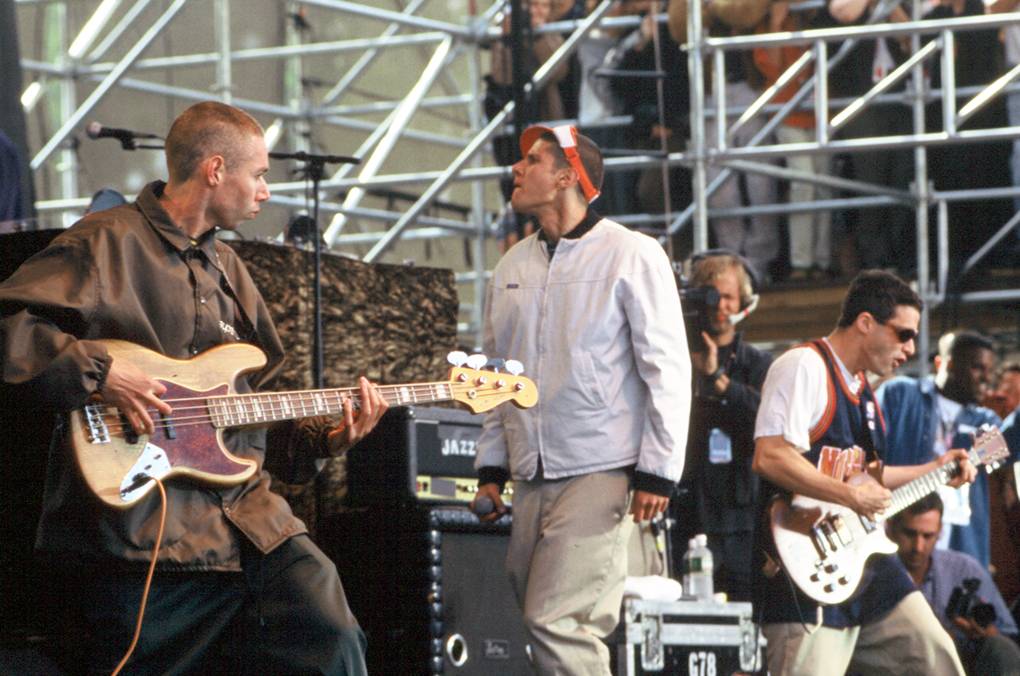
"caption": "Beastie Boys onstage at the Tibetan Freedom Concert, Golden Gate Park, June 1996.",
"description": null,
"title": "Beastie Boys onstage at the Tibetan Freedom Concert, Golden Gate Park, June 1996.",
"credit": "Tim Mosenfelder/Getty Images",
"status": "inherit",
"altTag": "Scaffolding at the back of the stage is on view behind three men, one playing bass, one playing a guitar and one standing in between them clutching a microphone.",
"isLoading": false,
"fetchFailed": false
},
"arts_13925149": {
"type": "attachments",
"id": "arts_13925149",
"meta": {
"index": "attachments_1716263798",
"site": "arts",
"id": "13925149",
"found": true
},
"parent": 13925147,
"imgSizes": {
"twentyfourteen-full-width": {
"file": "https://ww2.kqed.org/app/uploads/sites/2/2023/02/Screen-Shot-2023-02-14-at-1.29.59-PM-1038x576.png",
"width": 1038,
"mimeType": "image/png",
"height": 576
},
"thumbnail": {
"file": "https://ww2.kqed.org/app/uploads/sites/2/2023/02/Screen-Shot-2023-02-14-at-1.29.59-PM-160x100.png",
"width": 160,
"mimeType": "image/png",
"height": 100
},
"post-thumbnail": {
"file": "https://ww2.kqed.org/app/uploads/sites/2/2023/02/Screen-Shot-2023-02-14-at-1.29.59-PM-672x372.png",
"width": 672,
"mimeType": "image/png",
"height": 372
},
"kqedFullSize": {
"file": "https://ww2.kqed.org/app/uploads/sites/2/2023/02/Screen-Shot-2023-02-14-at-1.29.59-PM.png",
"width": 1874,
"height": 1174
},
"large": {
"file": "https://ww2.kqed.org/app/uploads/sites/2/2023/02/Screen-Shot-2023-02-14-at-1.29.59-PM-1020x639.png",
"width": 1020,
"mimeType": "image/png",
"height": 639
},
"1536x1536": {
"file": "https://ww2.kqed.org/app/uploads/sites/2/2023/02/Screen-Shot-2023-02-14-at-1.29.59-PM-1536x962.png",
"width": 1536,
"mimeType": "image/png",
"height": 962
},
"medium": {
"file": "https://ww2.kqed.org/app/uploads/sites/2/2023/02/Screen-Shot-2023-02-14-at-1.29.59-PM-800x501.png",
"width": 800,
"mimeType": "image/png",
"height": 501
},
"medium_large": {
"file": "https://ww2.kqed.org/app/uploads/sites/2/2023/02/Screen-Shot-2023-02-14-at-1.29.59-PM-768x481.png",
"width": 768,
"mimeType": "image/png",
"height": 481
}
},
"publishDate": 1676410245,
"modified": 1676410432,
"caption": "Caril Ann Fugate, before she was incarcerated at age 14 and convicted of first-degree murder. ",
"description": null,
"title": "Caril Ann Fugate, before she was incarcerated at age 14 and convicted of first-degree murder.",
"credit": "Showtime",
"status": "inherit",
"altTag": "A young woman with red hair pulled back into pigtails smiles sweetly in a photo booth with an orange scarf tied around her neck. She is wearing fashionable 1950s spectacles.",
"isLoading": false,
"fetchFailed": false
},
"arts_13925090": {
"type": "attachments",
"id": "arts_13925090",
"meta": {
"index": "attachments_1716263798",
"site": "arts",
"id": "13925090",
"found": true
},
"parent": 13925086,
"imgSizes": {
"twentyfourteen-full-width": {
"file": "https://ww2.kqed.org/app/uploads/sites/2/2023/02/031_KQEDArts_SanFranciscoArtInstitute_02012023-1038x576.jpg",
"width": 1038,
"mimeType": "image/jpeg",
"height": 576
},
"thumbnail": {
"file": "https://ww2.kqed.org/app/uploads/sites/2/2023/02/031_KQEDArts_SanFranciscoArtInstitute_02012023-160x107.jpg",
"width": 160,
"mimeType": "image/jpeg",
"height": 107
},
"post-thumbnail": {
"file": "https://ww2.kqed.org/app/uploads/sites/2/2023/02/031_KQEDArts_SanFranciscoArtInstitute_02012023-672x372.jpg",
"width": 672,
"mimeType": "image/jpeg",
"height": 372
},
"kqedFullSize": {
"file": "https://ww2.kqed.org/app/uploads/sites/2/2023/02/031_KQEDArts_SanFranciscoArtInstitute_02012023.jpg",
"width": 1920,
"height": 1280
},
"large": {
"file": "https://ww2.kqed.org/app/uploads/sites/2/2023/02/031_KQEDArts_SanFranciscoArtInstitute_02012023-1020x680.jpg",
"width": 1020,
"mimeType": "image/jpeg",
"height": 680
},
"1536x1536": {
"file": "https://ww2.kqed.org/app/uploads/sites/2/2023/02/031_KQEDArts_SanFranciscoArtInstitute_02012023-1536x1024.jpg",
"width": 1536,
"mimeType": "image/jpeg",
"height": 1024
},
"medium": {
"file": "https://ww2.kqed.org/app/uploads/sites/2/2023/02/031_KQEDArts_SanFranciscoArtInstitute_02012023-800x533.jpg",
"width": 800,
"mimeType": "image/jpeg",
"height": 533
},
"medium_large": {
"file": "https://ww2.kqed.org/app/uploads/sites/2/2023/02/031_KQEDArts_SanFranciscoArtInstitute_02012023-768x512.jpg",
"width": 768,
"mimeType": "image/jpeg",
"height": 512
}
},
"publishDate": 1676340732,
"modified": 1676392667,
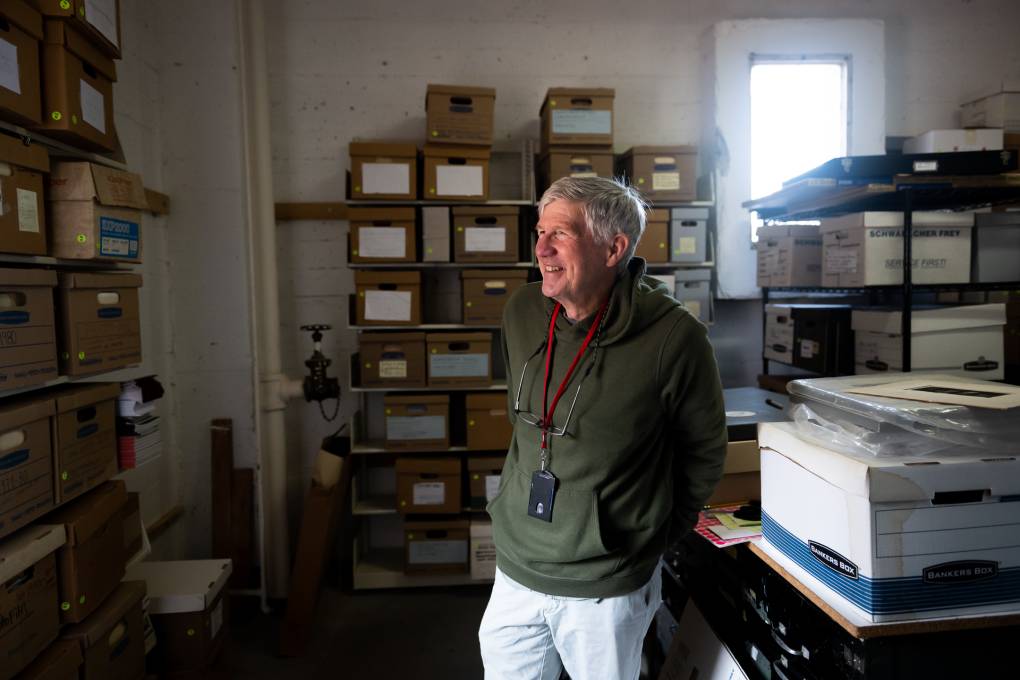
"caption": "Archivist Jeff Gunderson among the boxes containing a fraction of the San Francisco Art Institute’s 152-year-old history on Feb. 1, 2023.",
"description": null,
"title": "031_KQEDArts_SanFranciscoArtInstitute_02012023",
"credit": "Beth LaBerge",
"status": "inherit",
"altTag": "Older white man looks to left and smiles in room filled with bankers boxes",
"isLoading": false,
"fetchFailed": false
},
"arts_13925063": {
"type": "attachments",
"id": "arts_13925063",
"meta": {
"index": "attachments_1716263798",
"site": "arts",
"id": "13925063",
"found": true
},
"parent": 13925062,
"imgSizes": {
"twentyfourteen-full-width": {
"file": "https://ww2.kqed.org/app/uploads/sites/2/2023/02/GettyImages-526796034-1038x576.jpg",
"width": 1038,
"mimeType": "image/jpeg",
"height": 576
},
"thumbnail": {
"file": "https://ww2.kqed.org/app/uploads/sites/2/2023/02/GettyImages-526796034-160x100.jpg",
"width": 160,
"mimeType": "image/jpeg",
"height": 100
},
"post-thumbnail": {
"file": "https://ww2.kqed.org/app/uploads/sites/2/2023/02/GettyImages-526796034-672x372.jpg",
"width": 672,
"mimeType": "image/jpeg",
"height": 372
},
"kqedFullSize": {
"file": "https://ww2.kqed.org/app/uploads/sites/2/2023/02/GettyImages-526796034-scaled.jpg",
"width": 2560,
"height": 1606
},
"2048x2048": {
"file": "https://ww2.kqed.org/app/uploads/sites/2/2023/02/GettyImages-526796034-2048x1285.jpg",
"width": 2048,
"mimeType": "image/jpeg",
"height": 1285
},
"large": {
"file": "https://ww2.kqed.org/app/uploads/sites/2/2023/02/GettyImages-526796034-1020x640.jpg",
"width": 1020,
"mimeType": "image/jpeg",
"height": 640
},
"1536x1536": {
"file": "https://ww2.kqed.org/app/uploads/sites/2/2023/02/GettyImages-526796034-1536x964.jpg",
"width": 1536,
"mimeType": "image/jpeg",
"height": 964
},
"full-width": {
"file": "https://ww2.kqed.org/app/uploads/sites/2/2023/02/GettyImages-526796034-1920x1205.jpg",
"width": 1920,
"mimeType": "image/jpeg",
"height": 1205
},
"medium": {
"file": "https://ww2.kqed.org/app/uploads/sites/2/2023/02/GettyImages-526796034-800x502.jpg",
"width": 800,
"mimeType": "image/jpeg",
"height": 502
},
"medium_large": {
"file": "https://ww2.kqed.org/app/uploads/sites/2/2023/02/GettyImages-526796034-768x482.jpg",
"width": 768,
"mimeType": "image/jpeg",
"height": 482
}
},
"publishDate": 1676331804,
"modified": 1676331951,
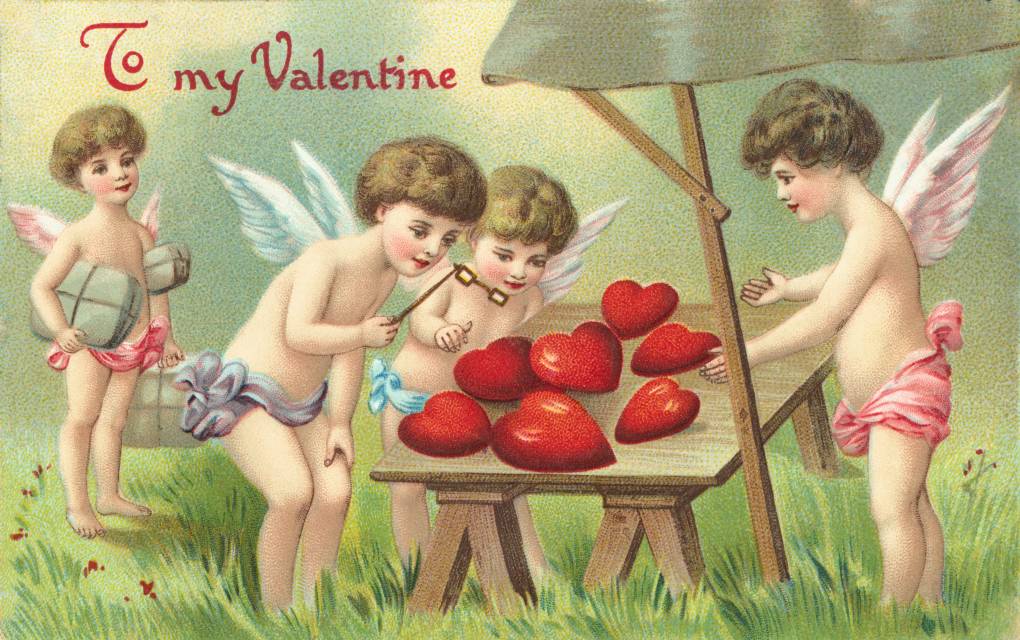
"caption": "A classic Valentine’s card.",
"description": null,
"title": "A classic Valentine’s card.",
"credit": "Swim Ink 2, LLC/CORBIS/Corbis via Getty Images",
"status": "inherit",
"altTag": "A Victorian-era greeting card featuring four cherubs gathering around and examining a table of hearts.",
"isLoading": false,
"fetchFailed": false
},
"arts_13924955": {
"type": "attachments",
"id": "arts_13924955",
"meta": {
"index": "attachments_1716263798",
"site": "arts",
"id": "13924955",
"found": true
},
"parent": 13924949,
"imgSizes": {
"twentyfourteen-full-width": {
"file": "https://ww2.kqed.org/app/uploads/sites/2/2023/02/IMG_5087-1-1038x576.jpeg",
"width": 1038,
"mimeType": "image/jpeg",
"height": 576
},
"thumbnail": {
"file": "https://ww2.kqed.org/app/uploads/sites/2/2023/02/IMG_5087-1-160x140.jpeg",
"width": 160,
"mimeType": "image/jpeg",
"height": 140
},
"post-thumbnail": {
"file": "https://ww2.kqed.org/app/uploads/sites/2/2023/02/IMG_5087-1-672x372.jpeg",
"width": 672,
"mimeType": "image/jpeg",
"height": 372
},
"kqedFullSize": {
"file": "https://ww2.kqed.org/app/uploads/sites/2/2023/02/IMG_5087-1-scaled.jpeg",
"width": 2560,
"height": 2248
},
"2048x2048": {
"file": "https://ww2.kqed.org/app/uploads/sites/2/2023/02/IMG_5087-1-2048x1798.jpeg",
"width": 2048,
"mimeType": "image/jpeg",
"height": 1798
},
"large": {
"file": "https://ww2.kqed.org/app/uploads/sites/2/2023/02/IMG_5087-1-1020x895.jpeg",
"width": 1020,
"mimeType": "image/jpeg",
"height": 895
},
"1536x1536": {
"file": "https://ww2.kqed.org/app/uploads/sites/2/2023/02/IMG_5087-1-1536x1349.jpeg",
"width": 1536,
"mimeType": "image/jpeg",
"height": 1349
},
"full-width": {
"file": "https://ww2.kqed.org/app/uploads/sites/2/2023/02/IMG_5087-1-1920x1686.jpeg",
"width": 1920,
"mimeType": "image/jpeg",
"height": 1686
},
"medium": {
"file": "https://ww2.kqed.org/app/uploads/sites/2/2023/02/IMG_5087-1-800x702.jpeg",
"width": 800,
"mimeType": "image/jpeg",
"height": 702
},
"medium_large": {
"file": "https://ww2.kqed.org/app/uploads/sites/2/2023/02/IMG_5087-1-768x674.jpeg",
"width": 768,
"mimeType": "image/jpeg",
"height": 674
}
},
"publishDate": 1675991702,
"modified": 1675991759,
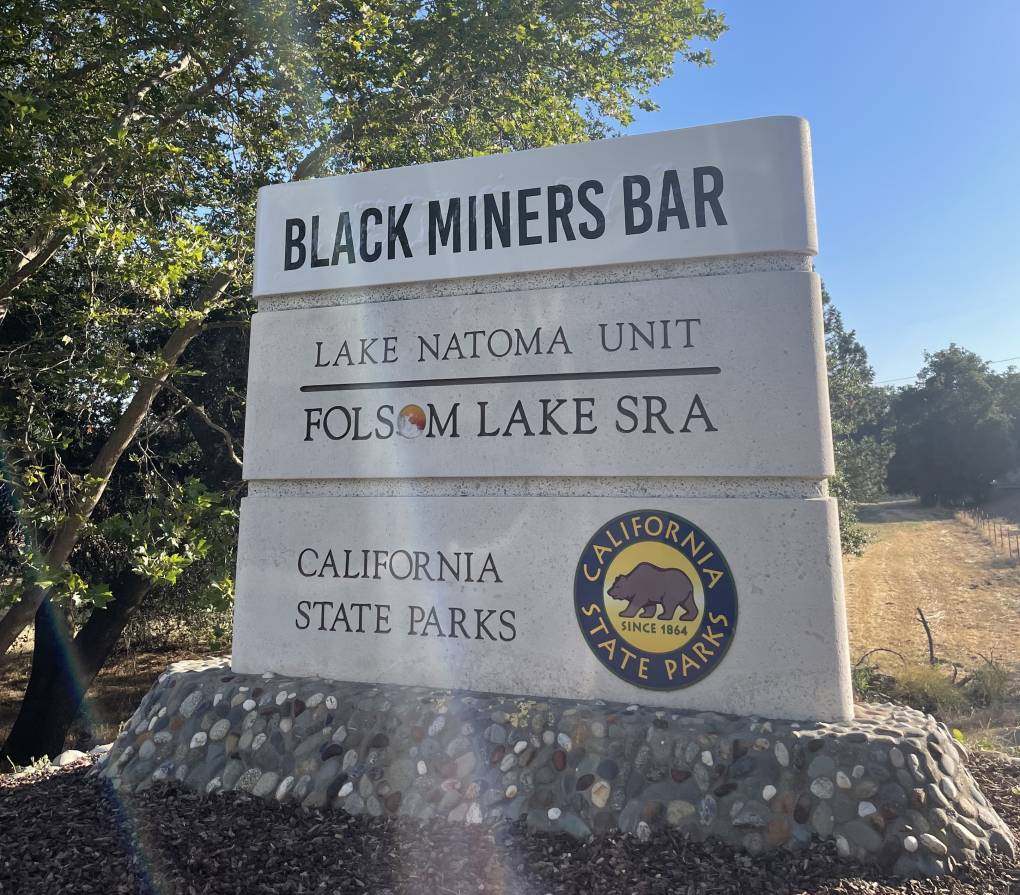
"caption": "The Black Miners Bar sign, freshly painted in summer of 2022.",
"description": "The Black Miners Bar sign, freshly painted in summer of 2022.",
"title": "The Black Miners Bar sign, freshly painted in summer of 2022.",
"credit": "Dorean Raye",
"status": "inherit",
"altTag": "The Black Miners Bar sign, freshly painted in summer of 2022.",
"isLoading": false,
"fetchFailed": false
},
"arts_13924128": {
"type": "attachments",
"id": "arts_13924128",
"meta": {
"index": "attachments_1716263798",
"site": "arts",
"id": "13924128",
"found": true
},
"parent": 13924126,
"imgSizes": {
"twentyfourteen-full-width": {
"file": "https://ww2.kqed.org/app/uploads/sites/2/2023/01/HipHopPreschool.SQ_-1038x576.jpg",
"width": 1038,
"mimeType": "image/jpeg",
"height": 576
},
"thumbnail": {
"file": "https://ww2.kqed.org/app/uploads/sites/2/2023/01/HipHopPreschool.SQ_-160x160.jpg",
"width": 160,
"mimeType": "image/jpeg",
"height": 160
},
"post-thumbnail": {
"file": "https://ww2.kqed.org/app/uploads/sites/2/2023/01/HipHopPreschool.SQ_-672x372.jpg",
"width": 672,
"mimeType": "image/jpeg",
"height": 372
},
"kqedFullSize": {
"file": "https://ww2.kqed.org/app/uploads/sites/2/2023/01/HipHopPreschool.SQ_.jpg",
"width": 1920,
"height": 1920
},
"large": {
"file": "https://ww2.kqed.org/app/uploads/sites/2/2023/01/HipHopPreschool.SQ_-1020x1020.jpg",
"width": 1020,
"mimeType": "image/jpeg",
"height": 1020
},
"1536x1536": {
"file": "https://ww2.kqed.org/app/uploads/sites/2/2023/01/HipHopPreschool.SQ_-1536x1536.jpg",
"width": 1536,
"mimeType": "image/jpeg",
"height": 1536
},
"medium": {
"file": "https://ww2.kqed.org/app/uploads/sites/2/2023/01/HipHopPreschool.SQ_-800x800.jpg",
"width": 800,
"mimeType": "image/jpeg",
"height": 800
},
"medium_large": {
"file": "https://ww2.kqed.org/app/uploads/sites/2/2023/01/HipHopPreschool.SQ_-768x768.jpg",
"width": 768,
"mimeType": "image/jpeg",
"height": 768
}
},
"publishDate": 1674596688,
"modified": 1674596688,
"caption": null,
"description": null,
"title": "HipHopPreschool.SQ",
"credit": null,
"status": "inherit",
"altTag": null,
"isLoading": false,
"fetchFailed": false
},
"arts_13923951": {
"type": "attachments",
"id": "arts_13923951",
"meta": {
"index": "attachments_1716263798",
"site": "arts",
"id": "13923951",
"found": true
},
"parent": 13923938,
"imgSizes": {
"twentyfourteen-full-width": {
"file": "https://ww2.kqed.org/app/uploads/sites/2/2023/01/e-40.SQUARE-1038x576.jpg",
"width": 1038,
"mimeType": "image/jpeg",
"height": 576
},
"thumbnail": {
"file": "https://ww2.kqed.org/app/uploads/sites/2/2023/01/e-40.SQUARE-160x160.jpg",
"width": 160,
"mimeType": "image/jpeg",
"height": 160
},
"post-thumbnail": {
"file": "https://ww2.kqed.org/app/uploads/sites/2/2023/01/e-40.SQUARE-672x372.jpg",
"width": 672,
"mimeType": "image/jpeg",
"height": 372
},
"kqedFullSize": {
"file": "https://ww2.kqed.org/app/uploads/sites/2/2023/01/e-40.SQUARE.jpg",
"width": 1888,
"height": 1888
},
"large": {
"file": "https://ww2.kqed.org/app/uploads/sites/2/2023/01/e-40.SQUARE-1020x1020.jpg",
"width": 1020,
"mimeType": "image/jpeg",
"height": 1020
},
"1536x1536": {
"file": "https://ww2.kqed.org/app/uploads/sites/2/2023/01/e-40.SQUARE-1536x1536.jpg",
"width": 1536,
"mimeType": "image/jpeg",
"height": 1536
},
"medium": {
"file": "https://ww2.kqed.org/app/uploads/sites/2/2023/01/e-40.SQUARE-800x800.jpg",
"width": 800,
"mimeType": "image/jpeg",
"height": 800
},
"medium_large": {
"file": "https://ww2.kqed.org/app/uploads/sites/2/2023/01/e-40.SQUARE-768x768.jpg",
"width": 768,
"mimeType": "image/jpeg",
"height": 768
}
},
"publishDate": 1674275798,
"modified": 1674275842,
"caption": null,
"description": null,
"title": "e-40.SQUARE",
"credit": "Shomari Smith",
"status": "inherit",
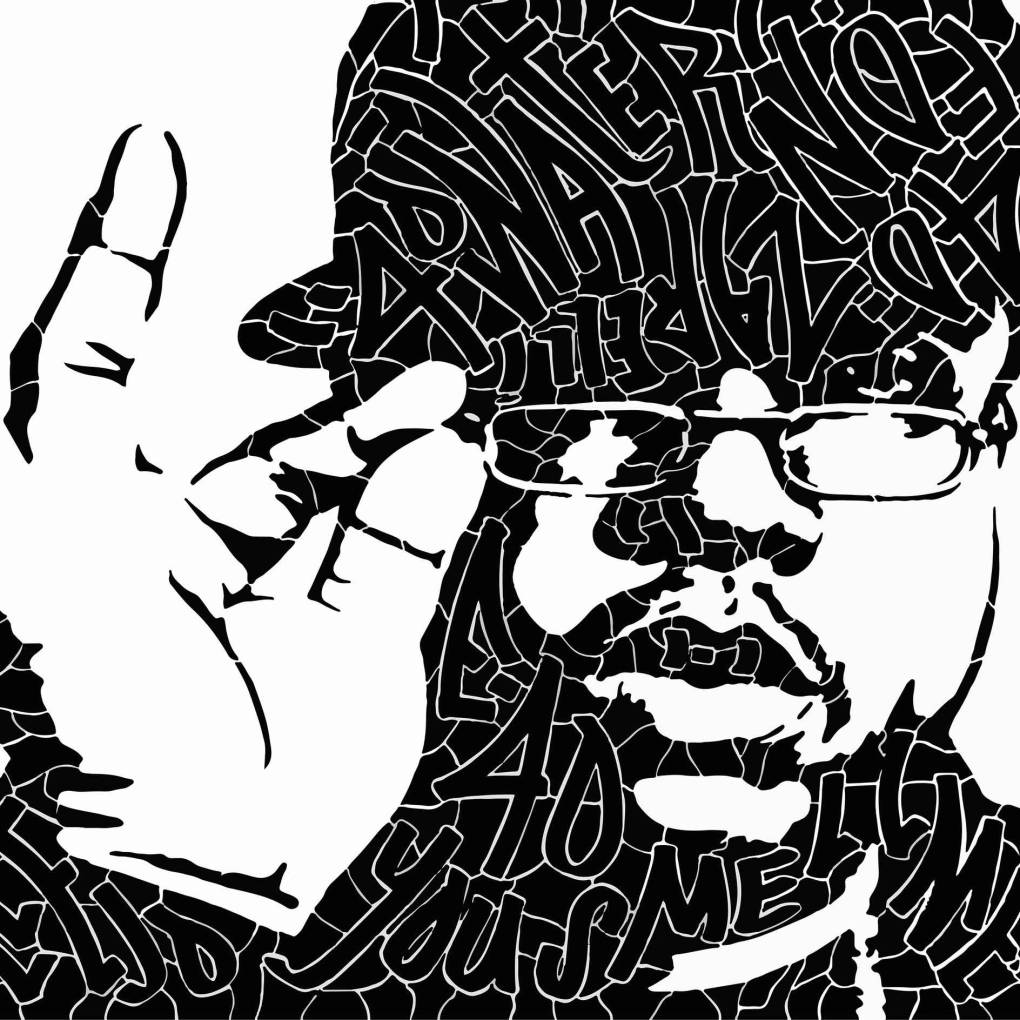
"altTag": "an illustration of e-40 from my ghetto report card",
"isLoading": false,
"fetchFailed": false
},
"arts_13923952": {
"type": "attachments",
"id": "arts_13923952",
"meta": {
"index": "attachments_1716263798",
"site": "arts",
"id": "13923952",
"found": true
},
"parent": 13923938,
"imgSizes": {
"twentyfourteen-full-width": {
"file": "https://ww2.kqed.org/app/uploads/sites/2/2023/01/e-40.web_-1038x576.jpg",
"width": 1038,
"mimeType": "image/jpeg",
"height": 576
},
"thumbnail": {
"file": "https://ww2.kqed.org/app/uploads/sites/2/2023/01/e-40.web_-160x121.jpg",
"width": 160,
"mimeType": "image/jpeg",
"height": 121
},
"post-thumbnail": {
"file": "https://ww2.kqed.org/app/uploads/sites/2/2023/01/e-40.web_-672x372.jpg",
"width": 672,
"mimeType": "image/jpeg",
"height": 372
},
"kqedFullSize": {
"file": "https://ww2.kqed.org/app/uploads/sites/2/2023/01/e-40.web_.jpg",
"width": 1920,
"height": 1450
},
"large": {
"file": "https://ww2.kqed.org/app/uploads/sites/2/2023/01/e-40.web_-1020x770.jpg",
"width": 1020,
"mimeType": "image/jpeg",
"height": 770
},
"1536x1536": {
"file": "https://ww2.kqed.org/app/uploads/sites/2/2023/01/e-40.web_-1536x1160.jpg",
"width": 1536,
"mimeType": "image/jpeg",
"height": 1160
},
"medium": {
"file": "https://ww2.kqed.org/app/uploads/sites/2/2023/01/e-40.web_-800x604.jpg",
"width": 800,
"mimeType": "image/jpeg",
"height": 604
},
"medium_large": {
"file": "https://ww2.kqed.org/app/uploads/sites/2/2023/01/e-40.web_-768x580.jpg",
"width": 768,
"mimeType": "image/jpeg",
"height": 580
}
},
"publishDate": 1674275874,
"modified": 1675229005,
"caption": "'That's My Word' drops new stories each week throughout 2023.",
"description": null,
"title": "e-40.web",
"credit": "Illustration by Shomari Smith",
"status": "inherit",
"altTag": "An illustration of the rapper e-40, holding his glasses, based on the cover to the album 'my ghetto report card'",
"isLoading": false,
"fetchFailed": false
},
"arts_13924401": {
"type": "attachments",
"id": "arts_13924401",
"meta": {
"index": "attachments_1716263798",
"site": "arts",
"id": "13924401",
"found": true
},
"parent": 13924170,
"imgSizes": {
"twentyfourteen-full-width": {
"file": "https://ww2.kqed.org/app/uploads/sites/2/2023/01/Saafir.Casual.H2H.SQ_-1038x576.jpg",
"width": 1038,
"mimeType": "image/jpeg",
"height": 576
},
"thumbnail": {
"file": "https://ww2.kqed.org/app/uploads/sites/2/2023/01/Saafir.Casual.H2H.SQ_-160x160.jpg",
"width": 160,
"mimeType": "image/jpeg",
"height": 160
},
"post-thumbnail": {
"file": "https://ww2.kqed.org/app/uploads/sites/2/2023/01/Saafir.Casual.H2H.SQ_-672x372.jpg",
"width": 672,
"mimeType": "image/jpeg",
"height": 372
},
"kqedFullSize": {
"file": "https://ww2.kqed.org/app/uploads/sites/2/2023/01/Saafir.Casual.H2H.SQ_.jpg",
"width": 1060,
"height": 1060
},
"large": {
"file": "https://ww2.kqed.org/app/uploads/sites/2/2023/01/Saafir.Casual.H2H.SQ_-1020x1020.jpg",
"width": 1020,
"mimeType": "image/jpeg",
"height": 1020
},
"medium": {
"file": "https://ww2.kqed.org/app/uploads/sites/2/2023/01/Saafir.Casual.H2H.SQ_-800x800.jpg",
"width": 800,
"mimeType": "image/jpeg",
"height": 800
},
"medium_large": {
"file": "https://ww2.kqed.org/app/uploads/sites/2/2023/01/Saafir.Casual.H2H.SQ_-768x768.jpg",
"width": 768,
"mimeType": "image/jpeg",
"height": 768
}
},
"publishDate": 1675020472,
"modified": 1675020548,
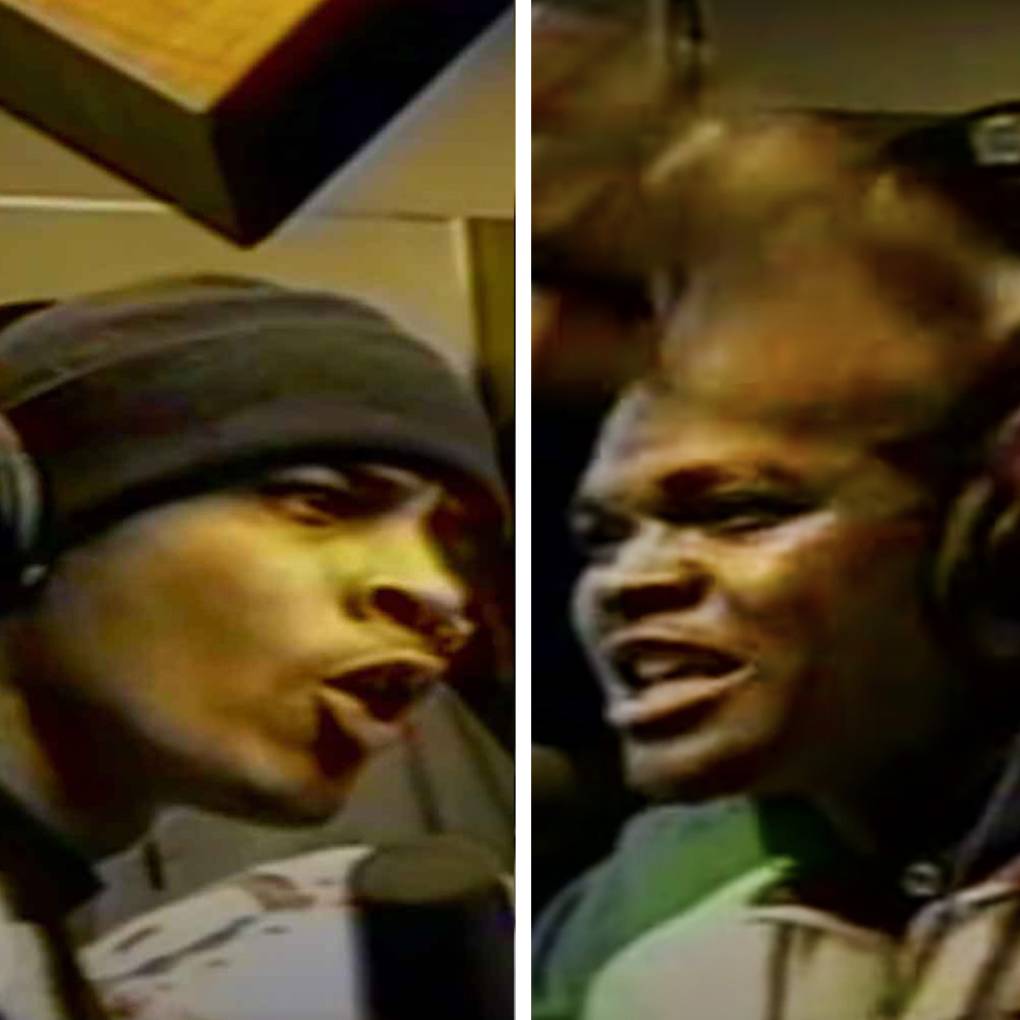
"caption": "Saafir and Casual (L–R) battled it out at KMEL studios in San Francisco, Nov. 18, 1994.",
"description": null,
"title": "Saafir.Casual.H2H.SQ",
"credit": "Alex Asher Daniel/Courtesy Skyfre Productions",
"status": "inherit",
"altTag": "A diptych of a man in a black beanie on the left and a man in a colorful jacket on the right, facing each other and both rapping into microphones",
"isLoading": false,
"fetchFailed": false
},
"arts_13924399": {
"type": "attachments",
"id": "arts_13924399",
"meta": {
"index": "attachments_1716263798",
"site": "arts",
"id": "13924399",
"found": true
},
"parent": 13924170,
"imgSizes": {
"twentyfourteen-full-width": {
"file": "https://ww2.kqed.org/app/uploads/sites/2/2023/01/Saafir.Casual.courtesy.ShomariSmith.2-1038x576.jpg",
"width": 1038,
"mimeType": "image/jpeg",
"height": 576
},
"thumbnail": {
"file": "https://ww2.kqed.org/app/uploads/sites/2/2023/01/Saafir.Casual.courtesy.ShomariSmith.2-160x90.jpg",
"width": 160,
"mimeType": "image/jpeg",
"height": 90
},
"post-thumbnail": {
"file": "https://ww2.kqed.org/app/uploads/sites/2/2023/01/Saafir.Casual.courtesy.ShomariSmith.2-672x372.jpg",
"width": 672,
"mimeType": "image/jpeg",
"height": 372
},
"kqedFullSize": {
"file": "https://ww2.kqed.org/app/uploads/sites/2/2023/01/Saafir.Casual.courtesy.ShomariSmith.2.jpg",
"width": 1884,
"height": 1060
},
"large": {
"file": "https://ww2.kqed.org/app/uploads/sites/2/2023/01/Saafir.Casual.courtesy.ShomariSmith.2-1020x574.jpg",
"width": 1020,
"mimeType": "image/jpeg",
"height": 574
},
"1536x1536": {
"file": "https://ww2.kqed.org/app/uploads/sites/2/2023/01/Saafir.Casual.courtesy.ShomariSmith.2-1536x864.jpg",
"width": 1536,
"mimeType": "image/jpeg",
"height": 864
},
"medium": {
"file": "https://ww2.kqed.org/app/uploads/sites/2/2023/01/Saafir.Casual.courtesy.ShomariSmith.2-800x450.jpg",
"width": 800,
"mimeType": "image/jpeg",
"height": 450
},
"medium_large": {
"file": "https://ww2.kqed.org/app/uploads/sites/2/2023/01/Saafir.Casual.courtesy.ShomariSmith.2-768x432.jpg",
"width": 768,
"mimeType": "image/jpeg",
"height": 432
}
},
"publishDate": 1675018969,
"modified": 1675019220,
"caption": "Saafir and Casual (L–R) battled it out at KMEL studios in San Francisco, Nov. 18, 1994.",
"description": null,
"title": "Saafir.Casual.courtesy.ShomariSmith.2",
"credit": "Alex Asher Daniel/Courtesy Skyfre Productions",
"status": "inherit",
"altTag": "A diptych of a man in a black beanie on the left and a man in a colorful jacket on the right, facing each other and both rapping into microphones",
"isLoading": false,
"fetchFailed": false
},
"arts_13924581": {
"type": "attachments",
"id": "arts_13924581",
"meta": {
"index": "attachments_1716263798",
"site": "arts",
"id": "13924581",
"found": true
},
"parent": 13924580,
"imgSizes": {
"twentyfourteen-full-width": {
"file": "https://ww2.kqed.org/app/uploads/sites/2/2023/02/gettyimages-1238990204_custom-18471302d64628df2a5d92ba049accdbca026684-scaled-e1675277687644-1038x576.jpg",
"width": 1038,
"mimeType": "image/jpeg",
"height": 576
},
"thumbnail": {
"file": "https://ww2.kqed.org/app/uploads/sites/2/2023/02/gettyimages-1238990204_custom-18471302d64628df2a5d92ba049accdbca026684-scaled-e1675277687644-160x107.jpg",
"width": 160,
"mimeType": "image/jpeg",
"height": 107
},
"post-thumbnail": {
"file": "https://ww2.kqed.org/app/uploads/sites/2/2023/02/gettyimages-1238990204_custom-18471302d64628df2a5d92ba049accdbca026684-scaled-e1675277687644-672x372.jpg",
"width": 672,
"mimeType": "image/jpeg",
"height": 372
},
"kqedFullSize": {
"file": "https://ww2.kqed.org/app/uploads/sites/2/2023/02/gettyimages-1238990204_custom-18471302d64628df2a5d92ba049accdbca026684-scaled-e1675277687644.jpg",
"width": 1920,
"height": 1279
},
"2048x2048": {
"file": "https://ww2.kqed.org/app/uploads/sites/2/2023/02/gettyimages-1238990204_custom-18471302d64628df2a5d92ba049accdbca026684-2048x1364.jpg",
"width": 2048,
"mimeType": "image/jpeg",
"height": 1364
},
"large": {
"file": "https://ww2.kqed.org/app/uploads/sites/2/2023/02/gettyimages-1238990204_custom-18471302d64628df2a5d92ba049accdbca026684-scaled-e1675277687644-1020x679.jpg",
"width": 1020,
"mimeType": "image/jpeg",
"height": 679
},
"1536x1536": {
"file": "https://ww2.kqed.org/app/uploads/sites/2/2023/02/gettyimages-1238990204_custom-18471302d64628df2a5d92ba049accdbca026684-scaled-e1675277687644-1536x1023.jpg",
"width": 1536,
"mimeType": "image/jpeg",
"height": 1023
},
"full-width": {
"file": "https://ww2.kqed.org/app/uploads/sites/2/2023/02/gettyimages-1238990204_custom-18471302d64628df2a5d92ba049accdbca026684-1920x1279.jpg",
"width": 1920,
"mimeType": "image/jpeg",
"height": 1279
},
"medium": {
"file": "https://ww2.kqed.org/app/uploads/sites/2/2023/02/gettyimages-1238990204_custom-18471302d64628df2a5d92ba049accdbca026684-scaled-e1675277687644-800x533.jpg",
"width": 800,
"mimeType": "image/jpeg",
"height": 533
},
"medium_large": {
"file": "https://ww2.kqed.org/app/uploads/sites/2/2023/02/gettyimages-1238990204_custom-18471302d64628df2a5d92ba049accdbca026684-scaled-e1675277687644-768x512.jpg",
"width": 768,
"mimeType": "image/jpeg",
"height": 512
}
},
"publishDate": 1675277034,
"modified": 1675277839,
"caption": "Vice President Kamala Harris (C) marches across the Edmund Pettus Bridge to commemorate the 57th anniversary of ‘Bloody Sunday’ in Selma, Alabama on March 6, 2022.",
"description": null,
"title": "Vice President Kamala Harris (C) marches across the Edmund Pettus Bridge to commemorate the 57th anniversary of ‘Bloody Sunday’ in Selma, Alabama on March 6, 2022.",
"credit": "Elijah Nouvelage / AFP",
"status": "inherit",
"altTag": "A march of hundreds of people walks across a white bridge painted with the words ‘Edmund Pettus Bridge.’",
"isLoading": false,
"fetchFailed": false
},
"arts_13924229": {
"type": "attachments",
"id": "arts_13924229",
"meta": {
"index": "attachments_1716263798",
"site": "arts",
"id": "13924229",
"found": true
},
"parent": 13924208,
"imgSizes": {
"twentyfourteen-full-width": {
"file": "https://ww2.kqed.org/app/uploads/sites/2/2023/01/GettyImages-104418996-1038x576.jpg",
"width": 1038,
"mimeType": "image/jpeg",
"height": 576
},
"thumbnail": {
"file": "https://ww2.kqed.org/app/uploads/sites/2/2023/01/GettyImages-104418996-160x118.jpg",
"width": 160,
"mimeType": "image/jpeg",
"height": 118
},
"post-thumbnail": {
"file": "https://ww2.kqed.org/app/uploads/sites/2/2023/01/GettyImages-104418996-672x372.jpg",
"width": 672,
"mimeType": "image/jpeg",
"height": 372
},
"kqedFullSize": {
"file": "https://ww2.kqed.org/app/uploads/sites/2/2023/01/GettyImages-104418996-scaled.jpg",
"width": 2560,
"height": 1882
},
"2048x2048": {
"file": "https://ww2.kqed.org/app/uploads/sites/2/2023/01/GettyImages-104418996-2048x1506.jpg",
"width": 2048,
"mimeType": "image/jpeg",
"height": 1506
},
"large": {
"file": "https://ww2.kqed.org/app/uploads/sites/2/2023/01/GettyImages-104418996-1020x750.jpg",
"width": 1020,
"mimeType": "image/jpeg",
"height": 750
},
"1536x1536": {
"file": "https://ww2.kqed.org/app/uploads/sites/2/2023/01/GettyImages-104418996-1536x1129.jpg",
"width": 1536,
"mimeType": "image/jpeg",
"height": 1129
},
"full-width": {
"file": "https://ww2.kqed.org/app/uploads/sites/2/2023/01/GettyImages-104418996-1920x1412.jpg",
"width": 1920,
"mimeType": "image/jpeg",
"height": 1412
},
"medium": {
"file": "https://ww2.kqed.org/app/uploads/sites/2/2023/01/GettyImages-104418996-800x588.jpg",
"width": 800,
"mimeType": "image/jpeg",
"height": 588
},
"medium_large": {
"file": "https://ww2.kqed.org/app/uploads/sites/2/2023/01/GettyImages-104418996-768x565.jpg",
"width": 768,
"mimeType": "image/jpeg",
"height": 565
}
},
"publishDate": 1674698635,
"modified": 1674698931,
"caption": "Elephant murdering ghoul-man Thomas Edison poses with his phonograph, an early form of record player that played tin and wax cylinders. West Orange, New Jersey, 1906.",
"description": null,
"title": "Elephant murdering ghoul-man Thomas Edison poses with his phonograph, an early form of record player that played tin and wax cylinders. West Orange, New Jersey, 1906.",
"credit": "Keystone-France/Gamma-Keystone via Getty Images",
"status": "inherit",
"altTag": null,
"isLoading": false,
"fetchFailed": false
},
"arts_13924269": {
"type": "attachments",
"id": "arts_13924269",
"meta": {
"index": "attachments_1716263798",
"site": "arts",
"id": "13924269",
"found": true
},
"parent": 13924268,
"imgSizes": {
"twentyfourteen-full-width": {
"file": "https://ww2.kqed.org/app/uploads/sites/2/2023/01/sappho_custom-d87dc3437d6f8d63ae09260eeb5ba8ceb7ba60aa-789x576.jpg",
"width": 789,
"mimeType": "image/jpeg",
"height": 576
},
"thumbnail": {
"file": "https://ww2.kqed.org/app/uploads/sites/2/2023/01/sappho_custom-d87dc3437d6f8d63ae09260eeb5ba8ceb7ba60aa-160x241.jpg",
"width": 160,
"mimeType": "image/jpeg",
"height": 241
},
"post-thumbnail": {
"file": "https://ww2.kqed.org/app/uploads/sites/2/2023/01/sappho_custom-d87dc3437d6f8d63ae09260eeb5ba8ceb7ba60aa-672x372.jpg",
"width": 672,
"mimeType": "image/jpeg",
"height": 372
},
"kqedFullSize": {
"file": "https://ww2.kqed.org/app/uploads/sites/2/2023/01/sappho_custom-d87dc3437d6f8d63ae09260eeb5ba8ceb7ba60aa.jpg",
"width": 789,
"height": 1190
},
"medium_large": {
"file": "https://ww2.kqed.org/app/uploads/sites/2/2023/01/sappho_custom-d87dc3437d6f8d63ae09260eeb5ba8ceb7ba60aa-768x1158.jpg",
"width": 768,
"mimeType": "image/jpeg",
"height": 1158
}
},
"publishDate": 1674760811,
"modified": 1674762353,
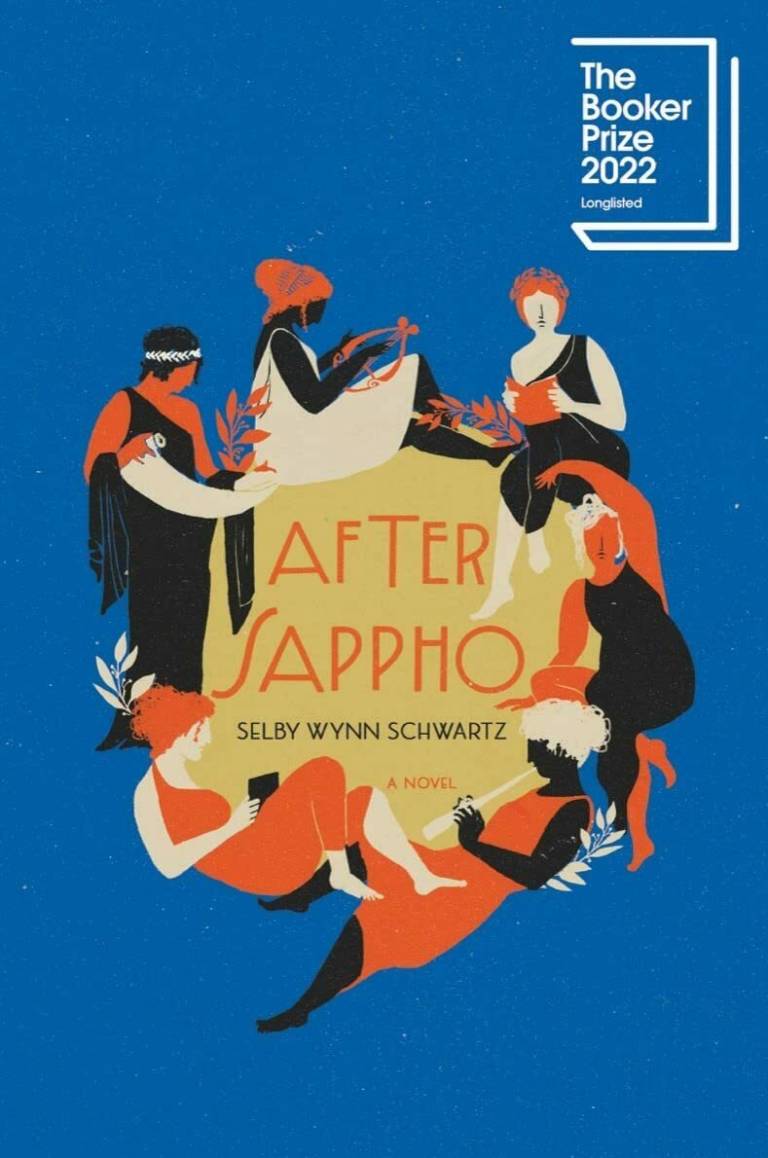
"caption": "'After Sappho' by Selby Wynn Schwartz.",
"description": null,
"title": "'After Sappho' by Selby Wynn Schwartz.",
"credit": null,
"status": "inherit",
"altTag": "A blue book cover features simplified illustrated renditions of five women wearing 1920s-style clothing.",
"isLoading": false,
"fetchFailed": false
},
"arts_13923734": {
"type": "attachments",
"id": "arts_13923734",
"meta": {
"index": "attachments_1716263798",
"site": "arts",
"id": "13923734",
"found": true
},
"parent": 13923560,
"imgSizes": {
"twentyfourteen-full-width": {
"file": "https://ww2.kqed.org/app/uploads/sites/2/2023/01/Inez-Brown-Burns-1038x576.jpg",
"width": 1038,
"mimeType": "image/jpeg",
"height": 576
},
"thumbnail": {
"file": "https://ww2.kqed.org/app/uploads/sites/2/2023/01/Inez-Brown-Burns-160x90.jpg",
"width": 160,
"mimeType": "image/jpeg",
"height": 90
},
"post-thumbnail": {
"file": "https://ww2.kqed.org/app/uploads/sites/2/2023/01/Inez-Brown-Burns-672x372.jpg",
"width": 672,
"mimeType": "image/jpeg",
"height": 372
},
"kqedFullSize": {
"file": "https://ww2.kqed.org/app/uploads/sites/2/2023/01/Inez-Brown-Burns.jpg",
"width": 1920,
"height": 1080
},
"large": {
"file": "https://ww2.kqed.org/app/uploads/sites/2/2023/01/Inez-Brown-Burns-1020x574.jpg",
"width": 1020,
"mimeType": "image/jpeg",
"height": 574
},
"1536x1536": {
"file": "https://ww2.kqed.org/app/uploads/sites/2/2023/01/Inez-Brown-Burns-1536x864.jpg",
"width": 1536,
"mimeType": "image/jpeg",
"height": 864
},
"medium": {
"file": "https://ww2.kqed.org/app/uploads/sites/2/2023/01/Inez-Brown-Burns-800x450.jpg",
"width": 800,
"mimeType": "image/jpeg",
"height": 450
},
"medium_large": {
"file": "https://ww2.kqed.org/app/uploads/sites/2/2023/01/Inez-Brown-Burns-768x432.jpg",
"width": 768,
"mimeType": "image/jpeg",
"height": 432
}
},
"publishDate": 1673656607,
"modified": 1673656656,
"caption": null,
"description": null,
"title": "Inez-Brown-Burns",
"credit": null,
"status": "inherit",
"altTag": "A sepia toned image of a young woman in 1914 with wavy brunette bob and long eyelashes. She is wearing pearls.",
"isLoading": false,
"fetchFailed": false
}
},
"audioPlayerReducer": {
"postId": "stream_live",
"isPaused": true,
"isPlaying": false,
"pfsActive": false,
"pledgeModalIsOpen": true,
"playerDrawerIsOpen": false,
"liveAudioPlayStartedAt": 0,
"liveAudioPlayContext": ""
},
"authorsReducer": {
"byline_arts_13925062": {
"type": "authors",
"id": "byline_arts_13925062",
"meta": {
"override": true
},
"slug": "byline_arts_13925062",
"name": "Katherine Roth",
"isLoading": false
},
"byline_arts_13924580": {
"type": "authors",
"id": "byline_arts_13924580",
"meta": {
"override": true
},
"slug": "byline_arts_13924580",
"name": "Scott Neuman",
"isLoading": false
},
"byline_arts_13924268": {
"type": "authors",
"id": "byline_arts_13924268",
"meta": {
"override": true
},
"slug": "byline_arts_13924268",
"name": "Rhoda Feng",
"isLoading": false
},
"shotchkiss": {
"type": "authors",
"id": "61",
"meta": {
"index": "authors_1716337520",
"id": "61",
"found": true
},
"name": "Sarah Hotchkiss",
"firstName": "Sarah",
"lastName": "Hotchkiss",
"slug": "shotchkiss",
"email": "shotchkiss@kqed.org",
"display_author_email": true,
"staff_mastheads": [
"arts"
],
"title": "Senior Editor",
"bio": "Sarah Hotchkiss is a San Francisco \u003ca href=\"http://www.sarahhotchkiss.com\">artist\u003c/a> and arts writer. In 2019, she received the Dorothea & Leo Rabkin Foundation grant for visual art journalism and in 2020 she received a Society of Professional Journalists, Northern California award for excellence in arts and culture reporting.",
"avatar": "https://secure.gravatar.com/avatar/bc662df144b3d27fd8b1b6f1c2a420d34e91e53154d411bb7ad353cc8b6cea8d?s=600&d=blank&r=g",
"twitter": null,
"bluesky": null,
"facebook": null,
"instagram": null,
"linkedin": null,
"sites": [
{
"site": "",
"roles": [
"editor"
]
},
{
"site": "arts",
"roles": [
"Contributor",
"administrator"
]
},
{
"site": "artschool",
"roles": [
"administrator"
]
},
{
"site": "news",
"roles": [
"editor"
]
},
{
"site": "pop",
"roles": [
"administrator"
]
},
{
"site": "bayareabites",
"roles": [
"editor"
]
},
{
"site": "spark",
"roles": [
"editor"
]
},
{
"site": "checkplease",
"roles": [
"editor"
]
}
],
"headData": {
"title": "Sarah Hotchkiss | KQED",
"description": "Senior Editor",
"ogImgSrc": "https://secure.gravatar.com/avatar/bc662df144b3d27fd8b1b6f1c2a420d34e91e53154d411bb7ad353cc8b6cea8d?s=600&d=blank&r=g",
"twImgSrc": "https://secure.gravatar.com/avatar/bc662df144b3d27fd8b1b6f1c2a420d34e91e53154d411bb7ad353cc8b6cea8d?s=600&d=blank&r=g"
},
"isLoading": false,
"link": "/author/shotchkiss"
},
"gmeline": {
"type": "authors",
"id": "185",
"meta": {
"index": "authors_1716337520",
"id": "185",
"found": true
},
"name": "Gabe Meline",
"firstName": "Gabe",
"lastName": "Meline",
"slug": "gmeline",
"email": "gmeline@kqed.org",
"display_author_email": true,
"staff_mastheads": [
"arts"
],
"title": "Senior Editor, KQED Arts & Culture",
"bio": "Gabe Meline entered journalism at age 15 making photocopied zines, and has since earned awards from the Edward R. Murrow Awards, the Society for Professional Journalists, the Online Journalism Awards, the Association of Alternative Newsweeklies and the California Newspaper Publishers Association. Prior to KQED, he was the editor of the \u003cem>North Bay Bohemian\u003c/em> and a touring musician. He lives with his wife and daughter in his hometown of Santa Rosa, CA.",
"avatar": "https://secure.gravatar.com/avatar/5bebe57be0d8bc2dd318934feb47299e2d2d10cba28d09d8d7afb389a2ce2bdd?s=600&d=blank&r=g",
"twitter": null,
"bluesky": null,
"facebook": null,
"instagram": null,
"linkedin": null,
"sites": [
{
"site": "",
"roles": [
"editor"
]
},
{
"site": "arts",
"roles": [
"administrator"
]
},
{
"site": "artschool",
"roles": [
"editor"
]
},
{
"site": "news",
"roles": [
"author"
]
},
{
"site": "pop",
"roles": [
"editor"
]
},
{
"site": "bayareabites",
"roles": [
"editor"
]
},
{
"site": "food",
"roles": [
"editor"
]
},
{
"site": "forum",
"roles": [
"administrator"
]
},
{
"site": "liveblog",
"roles": [
"editor"
]
},
{
"site": "hiphop",
"roles": [
"editor"
]
}
],
"headData": {
"title": "Gabe Meline | KQED",
"description": "Senior Editor, KQED Arts & Culture",
"ogImgSrc": "https://secure.gravatar.com/avatar/5bebe57be0d8bc2dd318934feb47299e2d2d10cba28d09d8d7afb389a2ce2bdd?s=600&d=blank&r=g",
"twImgSrc": "https://secure.gravatar.com/avatar/5bebe57be0d8bc2dd318934feb47299e2d2d10cba28d09d8d7afb389a2ce2bdd?s=600&d=blank&r=g"
},
"isLoading": false,
"link": "/author/gmeline"
},
"ralexandra": {
"type": "authors",
"id": "11242",
"meta": {
"index": "authors_1716337520",
"id": "11242",
"found": true
},
"name": "Rae Alexandra",
"firstName": "Rae",
"lastName": "Alexandra",
"slug": "ralexandra",
"email": "ralexandra@kqed.org",
"display_author_email": true,
"staff_mastheads": [],
"title": "Reporter/Producer",
"bio": "Rae Alexandra is a Reporter/Producer for KQED Arts & Culture, and the creator/author of the \u003ca href=\"https://www.kqed.org/arts/program/rebel-girls-from-bay-area-history\">Rebel Girls From Bay Area History\u003c/a> and \u003ca href=\"https://www.kqed.org/bizarrebayarea\">Bizarre Bay Area\u003c/a> series. Her debut book, \u003ca href=\"https://citylights.com/politics-current-events-history/unsung-heroines35-women-who-changed/\">Unsung Heroines: 35 Women Who Changed the Bay Area\u003c/a> was published by City Lights in March 2026. In 2023, Rae was awarded an SPJ Excellence in Journalism Award for Arts & Culture. Rae was born and raised in Wales and subsequently — even after two decades in Northern California — still uses phrases that regularly baffle her coworkers.",
"avatar": "https://secure.gravatar.com/avatar/edfee8176c80cc0a382b051190f5341997df378a934a5774dcb0977732dfd401?s=600&d=blank&r=g",
"twitter": null,
"bluesky": null,
"facebook": null,
"instagram": null,
"linkedin": null,
"sites": [
{
"site": "arts",
"roles": [
"subscriber"
]
},
{
"site": "news",
"roles": [
"subscriber"
]
},
{
"site": "pop",
"roles": [
"subscriber"
]
},
{
"site": "bayareabites",
"roles": [
"subscriber"
]
},
{
"site": "science",
"roles": [
"subscriber"
]
}
],
"headData": {
"title": "Rae Alexandra | KQED",
"description": "Reporter/Producer",
"ogImgSrc": "https://secure.gravatar.com/avatar/edfee8176c80cc0a382b051190f5341997df378a934a5774dcb0977732dfd401?s=600&d=blank&r=g",
"twImgSrc": "https://secure.gravatar.com/avatar/edfee8176c80cc0a382b051190f5341997df378a934a5774dcb0977732dfd401?s=600&d=blank&r=g"
},
"isLoading": false,
"link": "/author/ralexandra"
},
"nvoynovskaya": {
"type": "authors",
"id": "11387",
"meta": {
"index": "authors_1716337520",
"id": "11387",
"found": true
},
"name": "Nastia Voynovskaya",
"firstName": "Nastia",
"lastName": "Voynovskaya",
"slug": "nvoynovskaya",
"email": "nvoynovskaya@kqed.org",
"display_author_email": false,
"staff_mastheads": [
"arts"
],
"title": "Editor and reporter",
"bio": "Nastia Voynovskaya is a reporter, editor and host at KQED Arts & Culture. She's been covering the arts in the Bay Area for over a decade, with a focus on music, queer culture, labor issues and grassroots organizing. She has edited KQED story series such as Trans Bay: A History of San Francisco's Gender-Diverse Community, and co-created KQED's Bay Area hip-hop history project, That's My Word. Nastia's work has been recognized by the Society of Professional Journalists and San Francisco Press Club. She regularly appears on podcasts and radio programs, including NPR's All Songs Considered, and hosts live events where music, culture and conversation meet.",
"avatar": "https://secure.gravatar.com/avatar/5025ee460e5a85d69ca20ea6c6f2f80d7e17795c828f61ea3aecfcd924e9042e?s=600&d=blank&r=g",
"twitter": null,
"bluesky": null,
"facebook": null,
"instagram": "https://www.instagram.com/nananastia/",
"linkedin": null,
"sites": [
{
"site": "",
"roles": [
"editor"
]
},
{
"site": "arts",
"roles": [
"administrator"
]
},
{
"site": "news",
"roles": [
"editor"
]
},
{
"site": "pop",
"roles": [
"administrator"
]
},
{
"site": "bayareabites",
"roles": [
"editor"
]
},
{
"site": "podcasts",
"roles": [
"editor"
]
},
{
"site": "hiphop",
"roles": [
"editor"
]
}
],
"headData": {
"title": "Nastia Voynovskaya | KQED",
"description": "Editor and reporter",
"ogImgSrc": "https://secure.gravatar.com/avatar/5025ee460e5a85d69ca20ea6c6f2f80d7e17795c828f61ea3aecfcd924e9042e?s=600&d=blank&r=g",
"twImgSrc": "https://secure.gravatar.com/avatar/5025ee460e5a85d69ca20ea6c6f2f80d7e17795c828f61ea3aecfcd924e9042e?s=600&d=blank&r=g"
},
"isLoading": false,
"link": "/author/nvoynovskaya"
},
"ogpenn": {
"type": "authors",
"id": "11491",
"meta": {
"index": "authors_1716337520",
"id": "11491",
"found": true
},
"name": "Pendarvis Harshaw",
"firstName": "Pendarvis",
"lastName": "Harshaw",
"slug": "ogpenn",
"email": "ogpenn@gmail.com",
"display_author_email": false,
"staff_mastheads": [
"arts"
],
"title": "Community Engagement Reporter",
"bio": "Pendarvis Harshaw is an educator, host and writer with KQED Arts.",
"avatar": "https://secure.gravatar.com/avatar/972b77ee8e3f346ae2b00622661187fbfabd059b5693bbdc1475ea7a722fd4cd?s=600&d=blank&r=g",
"twitter": null,
"bluesky": null,
"facebook": null,
"instagram": "ogpenn",
"linkedin": null,
"sites": [
{
"site": "arts",
"roles": [
"administrator"
]
},
{
"site": "news",
"roles": [
"editor"
]
},
{
"site": "bayareabites",
"roles": [
"author"
]
},
{
"site": "hiphop",
"roles": [
"editor"
]
}
],
"headData": {
"title": "Pendarvis Harshaw | KQED",
"description": "Community Engagement Reporter",
"ogImgSrc": "https://secure.gravatar.com/avatar/972b77ee8e3f346ae2b00622661187fbfabd059b5693bbdc1475ea7a722fd4cd?s=600&d=blank&r=g",
"twImgSrc": "https://secure.gravatar.com/avatar/972b77ee8e3f346ae2b00622661187fbfabd059b5693bbdc1475ea7a722fd4cd?s=600&d=blank&r=g"
},
"isLoading": false,
"link": "/author/ogpenn"
},
"mmedina": {
"type": "authors",
"id": "11528",
"meta": {
"index": "authors_1716337520",
"id": "11528",
"found": true
},
"name": "Marisol Medina-Cadena",
"firstName": "Marisol",
"lastName": "Medina-Cadena",
"slug": "mmedina",
"email": "mmedina@KQED.org",
"display_author_email": true,
"staff_mastheads": [],
"title": "Producer, Rightnowish Podcast",
"bio": "Marisol Medina-Cadena is a radio reporter and podcast producer. Before working at KQED, she produced for PBS member station, KCET, in Los Angeles. In 2017, Marisol won an Emmy Award for her work on the televised documentary, \u003cem>City Rising\u003c/em>, examining California's affordable housing crisis and the historical roots of gentrification.",
"avatar": "https://secure.gravatar.com/avatar/6c3db46a1cabb5e1fe9a365b5f4e681e?s=600&d=blank&r=g",
"twitter": "marisolreports",
"facebook": null,
"instagram": null,
"linkedin": null,
"sites": [
{
"site": "arts",
"roles": []
},
{
"site": "news",
"roles": [
"edit_others_posts"
]
}
],
"headData": {
"title": "Marisol Medina-Cadena | KQED",
"description": "Producer, Rightnowish Podcast",
"ogImgSrc": "https://secure.gravatar.com/avatar/6c3db46a1cabb5e1fe9a365b5f4e681e?s=600&d=blank&r=g",
"twImgSrc": "https://secure.gravatar.com/avatar/6c3db46a1cabb5e1fe9a365b5f4e681e?s=600&d=blank&r=g"
},
"isLoading": false,
"link": "/author/mmedina"
},
"earnold": {
"type": "authors",
"id": "11839",
"meta": {
"index": "authors_1716337520",
"id": "11839",
"found": true
},
"name": "Eric Arnold",
"firstName": "Eric",
"lastName": "Arnold",
"slug": "earnold",
"email": "earnold@kqed.org",
"display_author_email": false,
"staff_mastheads": [],
"title": "Contributing Editor, 'That's My Word'",
"bio": "Eric Arnold has covered hip-hop locally and nationally for over 30 years. Formerly the managing editor of \u003cem>4080\u003c/em> and columnist for \u003cem>The Source\u003c/em>, he chronicled hyphy’s rise and fall, co-curated the Oakland Museum of California’s first hip-hop exhibit in 2018 and won a 2022 Northern California Emmy Award for a mini-documentary on Oakland’s Boogaloo dance culture. He is a contributing editor for \u003cem>That’s My Word\u003c/em>, KQED's series on the history of Bay Area hip-hop.",
"avatar": "https://secure.gravatar.com/avatar/ede45b04898456ad0893a2811e78b0a2?s=600&d=blank&r=g",
"twitter": null,
"facebook": null,
"instagram": null,
"linkedin": null,
"sites": [
{
"site": "arts",
"roles": [
"contributor"
]
},
{
"site": "news",
"roles": [
"contributor"
]
},
{
"site": "hiphop",
"roles": [
"contributor"
]
}
],
"headData": {
"title": "Eric Arnold | KQED",
"description": "Contributing Editor, 'That's My Word'",
"ogImgSrc": "https://secure.gravatar.com/avatar/ede45b04898456ad0893a2811e78b0a2?s=600&d=blank&r=g",
"twImgSrc": "https://secure.gravatar.com/avatar/ede45b04898456ad0893a2811e78b0a2?s=600&d=blank&r=g"
},
"isLoading": false,
"link": "/author/earnold"
}
},
"pagesReducer": {
"arts_category_history": {
"type": "terms",
"id": "arts_7862",
"meta": {
"index": "terms_1716263798",
"site": "arts",
"id": "7862",
"score": 12.208591
},
"featImg": null,
"name": "History",
"description": null,
"taxonomy": "category",
"headData": {
"twImgId": null,
"twTitle": null,
"ogTitle": null,
"ogImgId": null,
"twDescription": null,
"description": null,
"title": "History Archives | KQED Arts",
"ogDescription": null
},
"ttid": 7874,
"slug": "history",
"isLoading": false,
"title": "History",
"pageMeta": {
"site": "arts",
"WpPageTemplate": "page-topic-editorial",
"currentPage": 18
},
"blocks": [
{
"blockName": "kqed/post-list",
"attrs": {
"layout": "cardArticle2",
"query": "posts/arts?category=history",
"seeMore": false,
"paginated": true,
"page": 18
}
},
{
"blockName": "kqed/ad"
}
]
}
},
"pfsSessionReducer": {},
"postsReducer": {
"stream_live": {
"type": "live",
"id": "stream_live",
"audioUrl": "https://streams.kqed.org/kqedradio",
"title": "Live Stream",
"excerpt": "Live Stream information currently unavailable.",
"link": "/radio",
"featImg": "",
"label": {
"name": "KQED Live",
"link": "/"
}
},
"stream_kqedNewscast": {
"type": "posts",
"id": "stream_kqedNewscast",
"audioUrl": "https://www.kqed.org/.stream/anon/radio/RDnews/newscast.mp3?_=1",
"title": "KQED Newscast",
"featImg": "",
"label": {
"name": "88.5 FM",
"link": "/"
}
},
"arts_13924943": {
"type": "posts",
"id": "arts_13924943",
"meta": {
"index": "posts_1716263798",
"site": "arts",
"id": "13924943",
"score": null,
"sort": [
1676995258000
]
},
"guestAuthors": [],
"slug": "beastie-boys-free-tibet-concert-film-noise-pop",
"title": "Relive the Beastie Boys’ Legendary Tibetan Freedom Concert in SF",
"publishDate": 1676995258,
"format": "standard",
"headTitle": "Relive the Beastie Boys’ Legendary Tibetan Freedom Concert in SF | KQED",
"labelTerm": {
"term": 140,
"site": "arts"
},
"content": "\u003cp>\u003cstrong>Update, Feb. 26, 2023: Noise Pop’s scheduled screening of\u003cem> Free Tibet\u003c/em> at The Cut Outdoor Cinema has been postponed until June 15, 2023, due to poor weather conditions.\u003c/strong>\u003c/p>\n\u003cp>Back in 1996, Beastie Boys’ Adam “MCA” Yauch was going through a spiritual awakening. He had recently converted to Buddhism after years of studying the religion and Tibetan culture. Yauch had attended lessons by the Dalai Lama and spent time with the monk \u003ca href=\"https://www.nytimes.com/2018/12/07/obituaries/palden-gyatso-dead.html\">Palden Gyatso\u003c/a>, who had survived torture and imprisonment in Chinese camps for 33 years.\u003c/p>\n\u003cp>As Yauch embraced Tibetan ideologies, he felt compelled to do something to help the people of the region who had been living under Chinese occupation since 1949.\u003c/p>\n\u003cp>[aside postid='arts_13921900']“There’s really only a couple of years left that Tibetan culture is gonna survive unless something starts changing,” Yauch told \u003cem>Inside Edition\u003c/em> at the time. “At the rate that their culture is being destroyed, there’s very little time left. I think we all have a responsibility because it’s part of our world. To ignore it is to contribute to it.”\u003c/p>\n\u003cp>What Yauch came up with to assist the Tibetan people was the biggest benefit concert since 1985’s transatlantic Live Aid event. The two-day Tibetan Freedom concert in Golden Gate Park’s Polo Field ended up attracting more than 100,000 fans and raising $800,000.\u003c/p>\n\u003cp>[ad fullwidth]\u003c/p>\n\u003cp>It’s no surprise that the lineup featured a lot of the biggest alternative acts of the day. On Saturday, June 15, 1996, Beastie Boys, the Smashing Pumpkins, Foo Fighters, A Tribe Called Quest, Pavement, Cibo Matto, Biz Markie, Richie Havens and John Lee Hooker all performed. The following day, Red Hot Chili Peppers, Rage Against the Machine, Sonic Youth, Beck, Björk, Yoko Ono, De La Soul, Fugees, Buddy Guy and Skatalites hit the stage.\u003c/p>\n\u003cfigure id=\"attachment_13924959\" class=\"wp-caption aligncenter\" style=\"max-width: 800px\">\u003cimg loading=\"lazy\" decoding=\"async\" class=\"size-medium wp-image-13924959\" src=\"https://ww2.kqed.org/app/uploads/sites/2/2023/02/GettyImages-540554464-scaled-e1675993053690-800x540.jpg\" alt=\"A fresh-faced woman with dirty blond hair sits calmly next to a man with a shaved head wearing a buttoned up shirt. She is wearing a puffy white winter coat.\" width=\"800\" height=\"540\" srcset=\"https://cdn.kqed.org/wp-content/uploads/sites/2/2023/02/GettyImages-540554464-scaled-e1675993053690-800x540.jpg 800w, https://cdn.kqed.org/wp-content/uploads/sites/2/2023/02/GettyImages-540554464-scaled-e1675993053690-1020x689.jpg 1020w, https://cdn.kqed.org/wp-content/uploads/sites/2/2023/02/GettyImages-540554464-scaled-e1675993053690-160x108.jpg 160w, https://cdn.kqed.org/wp-content/uploads/sites/2/2023/02/GettyImages-540554464-scaled-e1675993053690-768x519.jpg 768w, https://cdn.kqed.org/wp-content/uploads/sites/2/2023/02/GettyImages-540554464-scaled-e1675993053690-1536x1038.jpg 1536w, https://cdn.kqed.org/wp-content/uploads/sites/2/2023/02/GettyImages-540554464-scaled-e1675993053690.jpg 1920w\" sizes=\"(max-width: 800px) 100vw, 800px\">\u003cfigcaption class=\"wp-caption-text\">Björk and Adam ’MCA‘ Yauch hang out backstage at the Tibetan Freedom Concert, San Francisco, June 1996. \u003ccite>(Tim Mosenfelder/CORBIS/Corbis via Getty Images)\u003c/cite>\u003c/figcaption>\u003c/figure>\n\u003cp>The shows were a huge deal at the time, and two years later resulted in a concert documentary directed by Sarah Pirozek titled \u003cem>Free Tibet\u003c/em>. The movie is a mashup of live sets, crowd footage and interviews, plus historical context about the occupation of Tibet. It’s far from a perfect film — at the time, \u003ca href=\"https://archive.nytimes.com/www.nytimes.com/library/film/091198tibet-film-review.html\">one \u003cem>New York Times\u003c/em> review\u003c/a> despaired at the “well-meaning musicians who … display a woeful lack of eloquence and coherence when given the opportunity on film to rally support.”\u003c/p>\n\u003cp>But the film does preserve footage from a significant day in San Francisco music history. It is peak-’90s viewing — the music, the fashion, the pre-cellphone mosh pits, the slackerdom. (“I care, you know,” one kid says, “but short attention span.”) Though several sets from the weekend are available to watch now on YouTube — \u003ca href=\"https://www.youtube.com/watch?v=fefr8RLwxeU&t=854s\">Rage Against the Machine\u003c/a>, \u003ca href=\"https://www.youtube.com/watch?v=0kPweqWXyDw&t=806s\">Björk\u003c/a>, \u003ca href=\"https://www.youtube.com/watch?v=kXf9F_UpCbE\">Smashing Pumpkins\u003c/a>, \u003ca href=\"https://www.youtube.com/watch?v=-ffrdwAz_z8\">Pavement\u003c/a> — the quality of those is decidedly grainy.\u003c/p>\n\u003cp>[aside postid='arts_13925249']The \u003cem>Free Tibet\u003c/em> documentary has been lost to time in a lot of ways — there is no trailer online, and it’s not available to stream anywhere. Unless you’re willing to invest in a DVD or VHS purchase, it’s likely you’ll never see it. That is, unless you head to The Cut Outdoor Cinema on Feb. 26.\u003c/p>\n\u003cp>\u003cem>Free Tibet\u003c/em> is screening as part of this year’s \u003ca href=\"https://www.kqed.org/arts/13925249/noise-pop-2023-guide-5-must-see-bay-area-artists\" target=\"_blank\" rel=\"noopener\">Noise Pop\u003c/a> festival, and marks the movie’s 25th anniversary. The screening will also feature a Q&A with Deyden Tethong of the \u003ca href=\"https://en.wikipedia.org/wiki/Milarepa_Fund\">Milarepa Fund\u003c/a> — the nonprofit co-founded by Yauch to raise funds and awareness for the Tibetan cause — and Stacy Horne, the Noise Pop producer who helped plan the original Tibetan Freedom concerts with Yauch.\u003c/p>\n\u003cp>Sure, the movie doesn’t know if it wants to be a concert film or a rallying cry. But in many ways, that reflects the Tibetan Freedom concert itself — and much of the 1990s musical landscape.\u003c/p>\n\u003cp>\u003cimg loading=\"lazy\" decoding=\"async\" class=\"aligncenter size-medium wp-image-12127869\" src=\"https://ww2.kqed.org/arts/wp-content/uploads/sites/2/2016/09/Q.Logo_.Break_-800x78.jpg\" alt=\"\" width=\"800\" height=\"78\" srcset=\"https://cdn.kqed.org/wp-content/uploads/sites/2/2016/09/Q.Logo_.Break_.jpg 800w, https://cdn.kqed.org/wp-content/uploads/sites/2/2016/09/Q.Logo_.Break_-400x39.jpg 400w, https://cdn.kqed.org/wp-content/uploads/sites/2/2016/09/Q.Logo_.Break_-768x75.jpg 768w\" sizes=\"(max-width: 800px) 100vw, 800px\">\u003c/p>\n\u003cp>\u003c/p>\n\u003cp>\u003ca href=\"https://thecutoutdoorcinema.com/events/free-tibet-1998\" rel=\"noopener\">Free Tibet\u003c/a>\u003cem> is showing at The Cut Outdoor Cinema (250 Main St., San Francisco) on Thursday, June. 15 at 7:30 p.m. \u003ca href=\"https://thecutoutdoorcinema.com/events/free-tibet-1998\">Details here\u003c/a>.\u003c/em>\u003c/p>\n\n",
"blocks": [],
"excerpt": "The ’Free Tibet’ concert film — featuring Björk, De La Soul and more — is screening this week for its 25th anniversary.",
"status": "publish",
"parent": 0,
"modified": 1726771141,
"stats": {
"hasAudio": false,
"hasVideo": false,
"hasChartOrMap": false,
"iframeSrcs": [],
"hasGoogleForm": false,
"hasGallery": false,
"hasHearkenModule": false,
"hasPolis": false,
"paragraphCount": 15,
"wordCount": 724
},
"headData": {
"title": "Noise Pop: Watch ‘Free Tibet’ at The Cut Outdoor Cinema | KQED",
"description": "The ’Free Tibet’ concert film — featuring Björk, De La Soul and more — is screening this week for its 25th anniversary.",
"ogTitle": "25 Years On, Relive the Beastie Boys’ Legendary Tibetan Freedom Concert",
"ogDescription": "",
"ogImgId": "",
"twTitle": "25 Years On, Relive the Beastie Boys’ Legendary Tibetan Freedom Concert",
"twDescription": "",
"twImgId": "",
"socialTitle": "Noise Pop: Watch ‘Free Tibet’ at The Cut Outdoor Cinema%%page%% %%sep%% KQED",
"schema": {
"@context": "https://schema.org",
"@type": "Article",
"headline": "Relive the Beastie Boys’ Legendary Tibetan Freedom Concert in SF",
"datePublished": "2023-02-21T08:00:58-08:00",
"dateModified": "2024-09-19T11:39:01-07:00",
"image": "https://cdn.kqed.org/wp-content/uploads/2020/02/KQED-OG-Image@1x.png"
}
},
"sticky": false,
"templateType": "standard",
"featuredImageType": "standard",
"excludeFromSiteSearch": "Include",
"articleAge": "0",
"path": "/arts/13924943/beastie-boys-free-tibet-concert-film-noise-pop",
"audioTrackLength": null,
"parsedContent": [
{
"type": "contentString",
"content": "\u003cdiv class=\"post-body\">\u003cp>\u003cp>\u003cstrong>Update, Feb. 26, 2023: Noise Pop’s scheduled screening of\u003cem> Free Tibet\u003c/em> at The Cut Outdoor Cinema has been postponed until June 15, 2023, due to poor weather conditions.\u003c/strong>\u003c/p>\n\u003cp>Back in 1996, Beastie Boys’ Adam “MCA” Yauch was going through a spiritual awakening. He had recently converted to Buddhism after years of studying the religion and Tibetan culture. Yauch had attended lessons by the Dalai Lama and spent time with the monk \u003ca href=\"https://www.nytimes.com/2018/12/07/obituaries/palden-gyatso-dead.html\">Palden Gyatso\u003c/a>, who had survived torture and imprisonment in Chinese camps for 33 years.\u003c/p>\n\u003cp>As Yauch embraced Tibetan ideologies, he felt compelled to do something to help the people of the region who had been living under Chinese occupation since 1949.\u003c/p>\n\u003cp>\u003c/p>\u003c/div>",
"attributes": {
"named": {},
"numeric": []
}
},
{
"type": "component",
"content": "",
"name": "aside",
"attributes": {
"named": {
"postid": "arts_13921900",
"label": ""
},
"numeric": []
}
},
{
"type": "contentString",
"content": "\u003cdiv class=\"post-body\">\u003cp>“There’s really only a couple of years left that Tibetan culture is gonna survive unless something starts changing,” Yauch told \u003cem>Inside Edition\u003c/em> at the time. “At the rate that their culture is being destroyed, there’s very little time left. I think we all have a responsibility because it’s part of our world. To ignore it is to contribute to it.”\u003c/p>\n\u003cp>What Yauch came up with to assist the Tibetan people was the biggest benefit concert since 1985’s transatlantic Live Aid event. The two-day Tibetan Freedom concert in Golden Gate Park’s Polo Field ended up attracting more than 100,000 fans and raising $800,000.\u003c/p>\n\u003cp>\u003c/p>\u003c/div>",
"attributes": {
"named": {},
"numeric": []
}
},
{
"type": "component",
"content": "",
"name": "ad",
"attributes": {
"named": {
"label": "fullwidth"
},
"numeric": [
"fullwidth"
]
}
},
{
"type": "contentString",
"content": "\u003cdiv class=\"post-body\">\u003cp>\u003c/p>\n\u003cp>It’s no surprise that the lineup featured a lot of the biggest alternative acts of the day. On Saturday, June 15, 1996, Beastie Boys, the Smashing Pumpkins, Foo Fighters, A Tribe Called Quest, Pavement, Cibo Matto, Biz Markie, Richie Havens and John Lee Hooker all performed. The following day, Red Hot Chili Peppers, Rage Against the Machine, Sonic Youth, Beck, Björk, Yoko Ono, De La Soul, Fugees, Buddy Guy and Skatalites hit the stage.\u003c/p>\n\u003cfigure id=\"attachment_13924959\" class=\"wp-caption aligncenter\" style=\"max-width: 800px\">\u003cimg loading=\"lazy\" decoding=\"async\" class=\"size-medium wp-image-13924959\" src=\"https://ww2.kqed.org/app/uploads/sites/2/2023/02/GettyImages-540554464-scaled-e1675993053690-800x540.jpg\" alt=\"A fresh-faced woman with dirty blond hair sits calmly next to a man with a shaved head wearing a buttoned up shirt. She is wearing a puffy white winter coat.\" width=\"800\" height=\"540\" srcset=\"https://cdn.kqed.org/wp-content/uploads/sites/2/2023/02/GettyImages-540554464-scaled-e1675993053690-800x540.jpg 800w, https://cdn.kqed.org/wp-content/uploads/sites/2/2023/02/GettyImages-540554464-scaled-e1675993053690-1020x689.jpg 1020w, https://cdn.kqed.org/wp-content/uploads/sites/2/2023/02/GettyImages-540554464-scaled-e1675993053690-160x108.jpg 160w, https://cdn.kqed.org/wp-content/uploads/sites/2/2023/02/GettyImages-540554464-scaled-e1675993053690-768x519.jpg 768w, https://cdn.kqed.org/wp-content/uploads/sites/2/2023/02/GettyImages-540554464-scaled-e1675993053690-1536x1038.jpg 1536w, https://cdn.kqed.org/wp-content/uploads/sites/2/2023/02/GettyImages-540554464-scaled-e1675993053690.jpg 1920w\" sizes=\"(max-width: 800px) 100vw, 800px\">\u003cfigcaption class=\"wp-caption-text\">Björk and Adam ’MCA‘ Yauch hang out backstage at the Tibetan Freedom Concert, San Francisco, June 1996. \u003ccite>(Tim Mosenfelder/CORBIS/Corbis via Getty Images)\u003c/cite>\u003c/figcaption>\u003c/figure>\n\u003cp>The shows were a huge deal at the time, and two years later resulted in a concert documentary directed by Sarah Pirozek titled \u003cem>Free Tibet\u003c/em>. The movie is a mashup of live sets, crowd footage and interviews, plus historical context about the occupation of Tibet. It’s far from a perfect film — at the time, \u003ca href=\"https://archive.nytimes.com/www.nytimes.com/library/film/091198tibet-film-review.html\">one \u003cem>New York Times\u003c/em> review\u003c/a> despaired at the “well-meaning musicians who … display a woeful lack of eloquence and coherence when given the opportunity on film to rally support.”\u003c/p>\n\u003cp>But the film does preserve footage from a significant day in San Francisco music history. It is peak-’90s viewing — the music, the fashion, the pre-cellphone mosh pits, the slackerdom. (“I care, you know,” one kid says, “but short attention span.”) Though several sets from the weekend are available to watch now on YouTube — \u003ca href=\"https://www.youtube.com/watch?v=fefr8RLwxeU&t=854s\">Rage Against the Machine\u003c/a>, \u003ca href=\"https://www.youtube.com/watch?v=0kPweqWXyDw&t=806s\">Björk\u003c/a>, \u003ca href=\"https://www.youtube.com/watch?v=kXf9F_UpCbE\">Smashing Pumpkins\u003c/a>, \u003ca href=\"https://www.youtube.com/watch?v=-ffrdwAz_z8\">Pavement\u003c/a> — the quality of those is decidedly grainy.\u003c/p>\n\u003cp>\u003c/p>\u003c/div>",
"attributes": {
"named": {},
"numeric": []
}
},
{
"type": "component",
"content": "",
"name": "aside",
"attributes": {
"named": {
"postid": "arts_13925249",
"label": ""
},
"numeric": []
}
},
{
"type": "contentString",
"content": "\u003cdiv class=\"post-body\">\u003cp>The \u003cem>Free Tibet\u003c/em> documentary has been lost to time in a lot of ways — there is no trailer online, and it’s not available to stream anywhere. Unless you’re willing to invest in a DVD or VHS purchase, it’s likely you’ll never see it. That is, unless you head to The Cut Outdoor Cinema on Feb. 26.\u003c/p>\n\u003cp>\u003cem>Free Tibet\u003c/em> is screening as part of this year’s \u003ca href=\"https://www.kqed.org/arts/13925249/noise-pop-2023-guide-5-must-see-bay-area-artists\" target=\"_blank\" rel=\"noopener\">Noise Pop\u003c/a> festival, and marks the movie’s 25th anniversary. The screening will also feature a Q&A with Deyden Tethong of the \u003ca href=\"https://en.wikipedia.org/wiki/Milarepa_Fund\">Milarepa Fund\u003c/a> — the nonprofit co-founded by Yauch to raise funds and awareness for the Tibetan cause — and Stacy Horne, the Noise Pop producer who helped plan the original Tibetan Freedom concerts with Yauch.\u003c/p>\n\u003cp>Sure, the movie doesn’t know if it wants to be a concert film or a rallying cry. But in many ways, that reflects the Tibetan Freedom concert itself — and much of the 1990s musical landscape.\u003c/p>\n\u003cp>\u003cimg loading=\"lazy\" decoding=\"async\" class=\"aligncenter size-medium wp-image-12127869\" src=\"https://ww2.kqed.org/arts/wp-content/uploads/sites/2/2016/09/Q.Logo_.Break_-800x78.jpg\" alt=\"\" width=\"800\" height=\"78\" srcset=\"https://cdn.kqed.org/wp-content/uploads/sites/2/2016/09/Q.Logo_.Break_.jpg 800w, https://cdn.kqed.org/wp-content/uploads/sites/2/2016/09/Q.Logo_.Break_-400x39.jpg 400w, https://cdn.kqed.org/wp-content/uploads/sites/2/2016/09/Q.Logo_.Break_-768x75.jpg 768w\" sizes=\"(max-width: 800px) 100vw, 800px\">\u003c/p>\n\u003cp>\u003c/p>\n\u003cp>\u003ca href=\"https://thecutoutdoorcinema.com/events/free-tibet-1998\" rel=\"noopener\">Free Tibet\u003c/a>\u003cem> is showing at The Cut Outdoor Cinema (250 Main St., San Francisco) on Thursday, June. 15 at 7:30 p.m. \u003ca href=\"https://thecutoutdoorcinema.com/events/free-tibet-1998\">Details here\u003c/a>.\u003c/em>\u003c/p>\n\n\u003c/div>\u003c/p>",
"attributes": {
"named": {},
"numeric": []
}
}
],
"link": "/arts/13924943/beastie-boys-free-tibet-concert-film-noise-pop",
"authors": [
"11242"
],
"programs": [
"arts_140"
],
"categories": [
"arts_1",
"arts_7862",
"arts_74",
"arts_69",
"arts_75"
],
"tags": [
"arts_5665",
"arts_10278",
"arts_2427",
"arts_585"
],
"featImg": "arts_13924956",
"label": "arts_140"
},
"arts_13925147": {
"type": "posts",
"id": "arts_13925147",
"meta": {
"index": "posts_1716263798",
"site": "arts",
"id": "13925147",
"score": null,
"sort": [
1676485995000
]
},
"parent": 0,
"labelTerm": {
"site": "arts",
"term": 140
},
"blocks": [],
"publishDate": 1676485995,
"format": "standard",
"title": "‘The 12th Victim’ Dissects the Heart of an American Tragedy",
"headTitle": "‘The 12th Victim’ Dissects the Heart of an American Tragedy | KQED",
"content": "\u003cp>It’s a case that has inspired American pop culture since it happened 65 years ago. Charles Starkweather and Caril Ann Fugate were a teenaged Bonnie and Clyde for the 1950s. In ’58, they murdered her family, holed up in her house for almost a week, hit the roads of Nebraska and went on a merciless killing spree. Starkweather was an 18-year-old ne’er-do-well. Fugate was a 14-year-old Lolita in love with her quintessential all-American bad boy. The couple’s story inspired movies like 1963’s \u003cem>The Sadist\u003c/em>, 1993’s \u003cem>Natural Born Killers\u003c/em> and 1973’s \u003cem>Badlands\u003c/em>, as well as the Bruce Springsteen song of the same name.\u003c/p>\n\u003cp>[aside postid='arts_13924520']Unfortunately for almost everyone involved, much of this popular narrative is false. The reality, as thoroughly dissected in Showtime’s new documentary series, \u003cem>The 12th Victim\u003c/em>, paints a far more complex picture — one that thoroughly exonerates Fugate for her role in the killings. By the end of four gripping episodes, what becomes clear is that this was not a story of youthful rebellion and lust run amok. It was a kidnapping, a major miscarriage of justice and one of the most egregious incidents of victim blaming in our nation’s history.\u003c/p>\n\u003cp>Starkweather was a remorseless spree killer who murdered 11 people in cold blood, alright. But Fugate wasn’t willingly along for the ride; she was a terrified hostage. After she finally escaped from Starkweather, the newly orphaned Fugate’s fortitude and survival was rewarded with a first degree murder conviction. She was the youngest person in American history ever charged with the crime.\u003c/p>\n\u003cp>https://www.youtube.com/watch?v=2Qy0ucSZuo0\u003c/p>\n\u003cp>One of the many pertinent points hammered home by \u003cem>The 12th Victim\u003c/em> is that Fugate’s version of events never wavered, no matter how many years passed. She told the same story under hypnosis and, at one point in the 1980s, she was found to be truthful by a televised lie detector test.\u003c/p>\n\u003cp>[ad fullwidth]\u003c/p>\n\u003cp>Fugate’s version of events goes like this: After attempting to break up with Starkweather because she thought he was “crazy,” Fugate arrived home from school one day to find him in her house and armed. Starkweather told Fugate that if she didn’t do exactly as he instructed that he would have her family killed, including her beloved sister Betty-Jean, who was just two years old at the time. Starkweather told Fugate that her family were being held by associates of his and that she must go with him if she wanted them to live. She had no idea that Starkweather had already slaughtered her parents and baby sister and hidden their bodies.\u003c/p>\n\u003cp>[aside postid='pop_109009']After they hit the road, Starkweather killed almost everyone he and Fugate crossed paths with. By the time the pair were finally cornered by police officers, Fugate was in a deeply traumatized state. While Starkweather took on the cops, Fugate ran from their vehicle \u003ci>towards\u003c/i> the police, screaming for help and begging them to arrest Starkweather.\u003c/p>\n\u003cp>Once in custody, one of the first things Fugate asked for was her parents. She spent hours repeatedly begging to see her mother. Eventually an officer blurted out, “My God, girl, don’t you know they’re all dead?” Fugate became so distressed she had to be forcibly sedated.\u003c/p>\n\u003cp>In contrast, Starkweather proudly admitted to his crimes and, initially at least, stated that Fugate was indeed his hostage. As weeks dragged on, and as police found a variety of grossly inappropriate ways to pit Starkweather against Fugate, the murderer’s story began changing. By the time he was on death row and given an entire essay in \u003cem>Parade\u003c/em> magazine — one of the most popular publications of the time — Starkweather was claiming that his crimes were actually all Fugate’s idea.\u003c/p>\n\u003cp>“All the time the spree was taking place, I was scared,” Starkweather wrote in \u003cem>Parade\u003c/em>. “I was going to give up. Carol then threatened out loud that she wasn’t going to give up … With a shotgun laying across her lap with the barrel pointing directly at me, and with her fast talking, she convinced me that we didn’t have anything to gain by giving up.”\u003c/p>\n\u003cp>Despite being patently preposterous, the public ate it up. This version of events lined up with then-popular conservative ideas about the dangers of teen rebellion. And the public desire for answers that made sense were most quickly satiated by the scapegoating of Fugate. Plus, Starkweather’s version was infinitely more titillating for the press to have fun with.\u003c/p>\n\u003cp>After Starkweather was permitted to testify against Fugate at her trial, he famously stated: “If I fry in the electric chair, she should be sitting in my lap.”\u003c/p>\n\u003cp>\u003cem>The 12th Victim\u003c/em>’s primary focus is consistently the real Caril Ann Fugate — who she was before, during and after the crimes. Particularly heartbreaking to watch are her tireless attempts to prove her innocence — and to consistently demonstrate her good character — throughout the rest of her life.\u003c/p>\n\u003cp>[aside postid='arts_13913533']What elevates \u003cem>The 12th Victim\u003c/em> further is the way the series touches on how pop culture can impact justice. Popular pulp fiction of the 1950s indelibly influenced how receptive the public was to Starkweather and the authorities’ portrayal of Fugate. But that sensational false narrative has been getting fed back to us on a cultural loop ever since, keeping the issues (and misogyny) that plagued Fugate’s case ever-present in similar ways. In America, the show successfully argues, we’d always rather hear a story driven by sexualized violence than we would about a young woman surviving an impossible set of circumstances.\u003c/p>\n\u003cp>\u003cem>The 12th Victim\u003c/em>, at least, offers Caril Ann Fugate a final shot at redemption.\u003c/p>\n\u003cp>\u003cimg loading=\"lazy\" decoding=\"async\" class=\"aligncenter size-medium wp-image-12127869\" src=\"https://ww2.kqed.org/arts/wp-content/uploads/sites/2/2016/09/Q.Logo_.Break_-800x78.jpg\" alt=\"\" width=\"800\" height=\"78\" srcset=\"https://cdn.kqed.org/wp-content/uploads/sites/2/2016/09/Q.Logo_.Break_.jpg 800w, https://cdn.kqed.org/wp-content/uploads/sites/2/2016/09/Q.Logo_.Break_-400x39.jpg 400w, https://cdn.kqed.org/wp-content/uploads/sites/2/2016/09/Q.Logo_.Break_-768x75.jpg 768w\" sizes=\"(max-width: 800px) 100vw, 800px\">\u003c/p>\n\u003cp>\u003c/p>\n\u003cp>\u003cem>‘The 12th Victim’ premieres on Showtime on Feb. 17, 2023. \u003ca href=\"https://www.sho.com/the-12th-victim\">Details here\u003c/a>.\u003c/em>\u003c/p>\n\n",
"stats": {
"hasVideo": true,
"hasChartOrMap": false,
"hasAudio": false,
"hasPolis": false,
"wordCount": 1016,
"hasGoogleForm": false,
"hasGallery": false,
"hasHearkenModule": false,
"iframeSrcs": [],
"paragraphCount": 18
},
"modified": 1705005838,
"excerpt": "Showtime’s new four-part true crime series documents one of the worst cases of victim blaming in American history.",
"headData": {
"twImgId": "",
"twTitle": "‘The 12th Victim’ Dissects the Heart of an American Tragedy",
"socialTitle": "‘The 12th Victim’ Review: Teens, Tragedy and Misogyny Writ Large %%page%% %%sep%% KQED",
"ogTitle": "‘The 12th Victim’ Dissects the Heart of an American Tragedy",
"ogImgId": "",
"twDescription": "",
"description": "Showtime’s new four-part true crime series documents one of the worst cases of victim blaming in American history.",
"title": "‘The 12th Victim’ Review: Teens, Tragedy and Misogyny Writ Large | KQED",
"ogDescription": "",
"schema": {
"@context": "https://schema.org",
"@type": "Article",
"headline": "‘The 12th Victim’ Dissects the Heart of an American Tragedy",
"datePublished": "2023-02-15T10:33:15-08:00",
"dateModified": "2024-01-11T12:43:58-08:00",
"image": "https://cdn.kqed.org/wp-content/uploads/2020/02/KQED-OG-Image@1x.png"
}
},
"guestAuthors": [],
"slug": "the-12th-victim-showtime-american-tragedy-crime",
"status": "publish",
"templateType": "standard",
"excludeFromSiteSearch": "Include",
"featuredImageType": "standard",
"sticky": false,
"articleAge": "0",
"path": "/arts/13925147/the-12th-victim-showtime-american-tragedy-crime",
"audioTrackLength": null,
"parsedContent": [
{
"type": "contentString",
"content": "\u003cdiv class=\"post-body\">\u003cp>\u003cp>It’s a case that has inspired American pop culture since it happened 65 years ago. Charles Starkweather and Caril Ann Fugate were a teenaged Bonnie and Clyde for the 1950s. In ’58, they murdered her family, holed up in her house for almost a week, hit the roads of Nebraska and went on a merciless killing spree. Starkweather was an 18-year-old ne’er-do-well. Fugate was a 14-year-old Lolita in love with her quintessential all-American bad boy. The couple’s story inspired movies like 1963’s \u003cem>The Sadist\u003c/em>, 1993’s \u003cem>Natural Born Killers\u003c/em> and 1973’s \u003cem>Badlands\u003c/em>, as well as the Bruce Springsteen song of the same name.\u003c/p>\n\u003cp>\u003c/p>\u003c/div>",
"attributes": {
"named": {},
"numeric": []
}
},
{
"type": "component",
"content": "",
"name": "aside",
"attributes": {
"named": {
"postid": "arts_13924520",
"label": ""
},
"numeric": []
}
},
{
"type": "contentString",
"content": "\u003cdiv class=\"post-body\">\u003cp>Unfortunately for almost everyone involved, much of this popular narrative is false. The reality, as thoroughly dissected in Showtime’s new documentary series, \u003cem>The 12th Victim\u003c/em>, paints a far more complex picture — one that thoroughly exonerates Fugate for her role in the killings. By the end of four gripping episodes, what becomes clear is that this was not a story of youthful rebellion and lust run amok. It was a kidnapping, a major miscarriage of justice and one of the most egregious incidents of victim blaming in our nation’s history.\u003c/p>\n\u003cp>Starkweather was a remorseless spree killer who murdered 11 people in cold blood, alright. But Fugate wasn’t willingly along for the ride; she was a terrified hostage. After she finally escaped from Starkweather, the newly orphaned Fugate’s fortitude and survival was rewarded with a first degree murder conviction. She was the youngest person in American history ever charged with the crime.\u003c/p>\u003c/p>\u003cp>\u003cspan class='utils-parseShortcode-shortcodes-__youtubeShortcode__embedYoutube'>\n \u003cspan class='utils-parseShortcode-shortcodes-__youtubeShortcode__embedYoutubeInside'>\n \u003ciframe\n loading='lazy'\n class='utils-parseShortcode-shortcodes-__youtubeShortcode__youtubePlayer'\n type='text/html'\n src='//www.youtube.com/embed/2Qy0ucSZuo0'\n title='//www.youtube.com/embed/2Qy0ucSZuo0'\n allowfullscreen='true'\n style='border:0;'>\u003c/iframe>\n \u003c/span>\n \u003c/span>\u003c/p>\u003cp>\u003cp>One of the many pertinent points hammered home by \u003cem>The 12th Victim\u003c/em> is that Fugate’s version of events never wavered, no matter how many years passed. She told the same story under hypnosis and, at one point in the 1980s, she was found to be truthful by a televised lie detector test.\u003c/p>\n\u003cp>\u003c/p>\u003c/div>",
"attributes": {
"named": {},
"numeric": []
}
},
{
"type": "component",
"content": "",
"name": "ad",
"attributes": {
"named": {
"label": "fullwidth"
},
"numeric": [
"fullwidth"
]
}
},
{
"type": "contentString",
"content": "\u003cdiv class=\"post-body\">\u003cp>\u003c/p>\n\u003cp>Fugate’s version of events goes like this: After attempting to break up with Starkweather because she thought he was “crazy,” Fugate arrived home from school one day to find him in her house and armed. Starkweather told Fugate that if she didn’t do exactly as he instructed that he would have her family killed, including her beloved sister Betty-Jean, who was just two years old at the time. Starkweather told Fugate that her family were being held by associates of his and that she must go with him if she wanted them to live. She had no idea that Starkweather had already slaughtered her parents and baby sister and hidden their bodies.\u003c/p>\n\u003cp>\u003c/p>\u003c/div>",
"attributes": {
"named": {},
"numeric": []
}
},
{
"type": "component",
"content": "",
"name": "aside",
"attributes": {
"named": {
"postid": "pop_109009",
"label": ""
},
"numeric": []
}
},
{
"type": "contentString",
"content": "\u003cdiv class=\"post-body\">\u003cp>After they hit the road, Starkweather killed almost everyone he and Fugate crossed paths with. By the time the pair were finally cornered by police officers, Fugate was in a deeply traumatized state. While Starkweather took on the cops, Fugate ran from their vehicle \u003ci>towards\u003c/i> the police, screaming for help and begging them to arrest Starkweather.\u003c/p>\n\u003cp>Once in custody, one of the first things Fugate asked for was her parents. She spent hours repeatedly begging to see her mother. Eventually an officer blurted out, “My God, girl, don’t you know they’re all dead?” Fugate became so distressed she had to be forcibly sedated.\u003c/p>\n\u003cp>In contrast, Starkweather proudly admitted to his crimes and, initially at least, stated that Fugate was indeed his hostage. As weeks dragged on, and as police found a variety of grossly inappropriate ways to pit Starkweather against Fugate, the murderer’s story began changing. By the time he was on death row and given an entire essay in \u003cem>Parade\u003c/em> magazine — one of the most popular publications of the time — Starkweather was claiming that his crimes were actually all Fugate’s idea.\u003c/p>\n\u003cp>“All the time the spree was taking place, I was scared,” Starkweather wrote in \u003cem>Parade\u003c/em>. “I was going to give up. Carol then threatened out loud that she wasn’t going to give up … With a shotgun laying across her lap with the barrel pointing directly at me, and with her fast talking, she convinced me that we didn’t have anything to gain by giving up.”\u003c/p>\n\u003cp>Despite being patently preposterous, the public ate it up. This version of events lined up with then-popular conservative ideas about the dangers of teen rebellion. And the public desire for answers that made sense were most quickly satiated by the scapegoating of Fugate. Plus, Starkweather’s version was infinitely more titillating for the press to have fun with.\u003c/p>\n\u003cp>After Starkweather was permitted to testify against Fugate at her trial, he famously stated: “If I fry in the electric chair, she should be sitting in my lap.”\u003c/p>\n\u003cp>\u003cem>The 12th Victim\u003c/em>’s primary focus is consistently the real Caril Ann Fugate — who she was before, during and after the crimes. Particularly heartbreaking to watch are her tireless attempts to prove her innocence — and to consistently demonstrate her good character — throughout the rest of her life.\u003c/p>\n\u003cp>\u003c/p>\u003c/div>",
"attributes": {
"named": {},
"numeric": []
}
},
{
"type": "component",
"content": "",
"name": "aside",
"attributes": {
"named": {
"postid": "arts_13913533",
"label": ""
},
"numeric": []
}
},
{
"type": "contentString",
"content": "\u003cdiv class=\"post-body\">\u003cp>What elevates \u003cem>The 12th Victim\u003c/em> further is the way the series touches on how pop culture can impact justice. Popular pulp fiction of the 1950s indelibly influenced how receptive the public was to Starkweather and the authorities’ portrayal of Fugate. But that sensational false narrative has been getting fed back to us on a cultural loop ever since, keeping the issues (and misogyny) that plagued Fugate’s case ever-present in similar ways. In America, the show successfully argues, we’d always rather hear a story driven by sexualized violence than we would about a young woman surviving an impossible set of circumstances.\u003c/p>\n\u003cp>\u003cem>The 12th Victim\u003c/em>, at least, offers Caril Ann Fugate a final shot at redemption.\u003c/p>\n\u003cp>\u003cimg loading=\"lazy\" decoding=\"async\" class=\"aligncenter size-medium wp-image-12127869\" src=\"https://ww2.kqed.org/arts/wp-content/uploads/sites/2/2016/09/Q.Logo_.Break_-800x78.jpg\" alt=\"\" width=\"800\" height=\"78\" srcset=\"https://cdn.kqed.org/wp-content/uploads/sites/2/2016/09/Q.Logo_.Break_.jpg 800w, https://cdn.kqed.org/wp-content/uploads/sites/2/2016/09/Q.Logo_.Break_-400x39.jpg 400w, https://cdn.kqed.org/wp-content/uploads/sites/2/2016/09/Q.Logo_.Break_-768x75.jpg 768w\" sizes=\"(max-width: 800px) 100vw, 800px\">\u003c/p>\n\u003cp>\u003c/p>\n\u003cp>\u003cem>‘The 12th Victim’ premieres on Showtime on Feb. 17, 2023. \u003ca href=\"https://www.sho.com/the-12th-victim\">Details here\u003c/a>.\u003c/em>\u003c/p>\n\n\u003c/div>\u003c/p>",
"attributes": {
"named": {},
"numeric": []
}
}
],
"link": "/arts/13925147/the-12th-victim-showtime-american-tragedy-crime",
"authors": [
"11242"
],
"programs": [
"arts_140"
],
"categories": [
"arts_1",
"arts_7862",
"arts_75",
"arts_990"
],
"tags": [
"arts_10772",
"arts_13672",
"arts_6013",
"arts_585",
"arts_8366"
],
"featImg": "arts_13925149",
"label": "arts_140"
},
"arts_13925086": {
"type": "posts",
"id": "arts_13925086",
"meta": {
"index": "posts_1716263798",
"site": "arts",
"id": "13925086",
"score": null,
"sort": [
1676480402000
]
},
"guestAuthors": [],
"slug": "new-sfai-legacy-foundation-archive-art-school-closed",
"title": "In a San Francisco Bell Tower, SFAI’s Archive Prepares for a Big Move",
"publishDate": 1676480402,
"format": "standard",
"headTitle": "In a San Francisco Bell Tower, SFAI’s Archive Prepares for a Big Move | KQED",
"labelTerm": {
"site": "arts"
},
"content": "\u003cp>[dropcap]I[/dropcap]t’s been very quiet on the San Francisco Art Institute campus since the school \u003ca href=\"https://www.kqed.org/arts/13916517/sfai-closed-students-for-action-usf-aquisition\">closed its doors behind its last graduating class\u003c/a> on July 15, 2022. Except for a security guard, archivists Jeff Gunderson and Becky Alexander are the only regular visitors to 800 Chestnut St. Even the fountain’s turtles have been relocated to the Sonoma County Reptile Rescue.\u003c/p>\n\u003cp>[aside postID='arts_13916517']But that stillness belies the major work taking place behind the scenes, in Zoom meetings and over email, to create a brand new and financially separate nonprofit institution known as the \u003ca href=\"https://www.sfailegacyarchive.org/\">SFAI Legacy Foundation + Archive\u003c/a>. While the school wobbles at the edge of seemingly inevitable bankruptcy proceedings, the newly formed legacy foundation aims to shepherd SFAI’s tangible history into a safe, stable and publicly accessible future. \u003c/p>\n\u003cp>“The scenario that led SFAI to not be in the business of providing education … became the opportunity for us to do something which I think would be profoundly important even if they were still providing education,” says Charles DeSantis, legacy foundation president and board chair. He is joined by Gale Elston, a New York-based lawyer with a background in artists’ rights, and Katie Hood Morgan, the former \u003ca href=\"https://www.kqed.org/arts/13841205/curatorial-crisis-bay-area-art-institutions\">curator of exhibitions and public programs at SFAI\u003c/a>, now an independent curator.\u003c/p>\n\u003cp>DeSantis, the chief benefits officer and associate vice president for benefits and wellness at Georgetown University, also attended SFAI for what he calls his “self-appointed post-baccalaureate program” in the early 2000s, connecting deeply with the faculty, campus and student body. Elston has worked with SFAI-connected artists and used to live a few blocks from the school. \u003c/p>\n\u003cfigure id=\"attachment_13925091\" class=\"wp-caption aligncenter\" style=\"max-width: 1920px\">\u003cimg loading=\"lazy\" decoding=\"async\" src=\"https://ww2.kqed.org/app/uploads/sites/2/2023/02/005_KQEDArts_SanFranciscoArtInstitute_02012023.jpg\" alt=\"Empty Italianate courtyard with trees, fountain and shadows\" width=\"1920\" height=\"1280\" class=\"size-full wp-image-13925091\" srcset=\"https://cdn.kqed.org/wp-content/uploads/sites/2/2023/02/005_KQEDArts_SanFranciscoArtInstitute_02012023.jpg 1920w, https://cdn.kqed.org/wp-content/uploads/sites/2/2023/02/005_KQEDArts_SanFranciscoArtInstitute_02012023-800x533.jpg 800w, https://cdn.kqed.org/wp-content/uploads/sites/2/2023/02/005_KQEDArts_SanFranciscoArtInstitute_02012023-1020x680.jpg 1020w, https://cdn.kqed.org/wp-content/uploads/sites/2/2023/02/005_KQEDArts_SanFranciscoArtInstitute_02012023-160x107.jpg 160w, https://cdn.kqed.org/wp-content/uploads/sites/2/2023/02/005_KQEDArts_SanFranciscoArtInstitute_02012023-768x512.jpg 768w, https://cdn.kqed.org/wp-content/uploads/sites/2/2023/02/005_KQEDArts_SanFranciscoArtInstitute_02012023-1536x1024.jpg 1536w\" sizes=\"(max-width: 1920px) 100vw, 1920px\">\u003cfigcaption class=\"wp-caption-text\">Piles of scattered leaves cover the brick ground of the courtyard of the San Francisco Art Institute in on Feb. 1, 2023. \u003ccite>(Beth LaBerge)\u003c/cite>\u003c/figcaption>\u003c/figure>\n\u003cp>Despite their connections, all three founding board members are new to leadership positions at the school. This was purposeful. After the tumult of the past three years, the legacy foundation needed to be completely separate from SFAI’s administration, board and even the \u003ca href=\"https://www.kqed.org/arts/13892120/the-san-francisco-art-institute-that-could-have-been\">Reimagine Committee\u003c/a>, a group of alumni, staff and faculty who met for six months in 2020 and early 2021 to propose a radically different SFAI.\u003c/p>\n\u003cp>[ad fullwidth]\u003c/p>\n\u003cp>In the listening tours that current SFAI board chair Lonnie Graham and vice chair John Marx undertook following the departure of embattled board chair Pam Rorke Levy, Marx says the issue of the archive kept coming up.\u003c/p>\n\u003cp>“This came from the community,” he says. “Every time we’d have a meeting, it’s like, ‘Well, if you go bankrupt, how are we going to protect the archive? How are we going to protect the spirit of the school?’”\u003c/p>\n\u003cfigure id=\"attachment_13925092\" class=\"wp-caption aligncenter\" style=\"max-width: 1200px\">\u003cimg loading=\"lazy\" decoding=\"async\" src=\"https://ww2.kqed.org/app/uploads/sites/2/2023/02/1973-1974-SFAI-College-Catalog-with-Basketball_1200.jpg\" alt=\"Booklet cover with text over black and white photograph of students playing basketball on brutalist campus\" width=\"1200\" height=\"1837\" class=\"size-full wp-image-13925092\" srcset=\"https://cdn.kqed.org/wp-content/uploads/sites/2/2023/02/1973-1974-SFAI-College-Catalog-with-Basketball_1200.jpg 1200w, https://cdn.kqed.org/wp-content/uploads/sites/2/2023/02/1973-1974-SFAI-College-Catalog-with-Basketball_1200-800x1225.jpg 800w, https://cdn.kqed.org/wp-content/uploads/sites/2/2023/02/1973-1974-SFAI-College-Catalog-with-Basketball_1200-1020x1561.jpg 1020w, https://cdn.kqed.org/wp-content/uploads/sites/2/2023/02/1973-1974-SFAI-College-Catalog-with-Basketball_1200-160x245.jpg 160w, https://cdn.kqed.org/wp-content/uploads/sites/2/2023/02/1973-1974-SFAI-College-Catalog-with-Basketball_1200-768x1176.jpg 768w, https://cdn.kqed.org/wp-content/uploads/sites/2/2023/02/1973-1974-SFAI-College-Catalog-with-Basketball_1200-1003x1536.jpg 1003w\" sizes=\"(max-width: 1200px) 100vw, 1200px\">\u003cfigcaption class=\"wp-caption-text\">The 1973–1974 catalog advertising courses at SFAI. \u003ccite>(Courtesy the SFAI Legacy Archive + Foundation)\u003c/cite>\u003c/figcaption>\u003c/figure>\n\u003ch2>What the archive is\u003c/h2>\n\u003cp>The archive is expansive. Currently housed in the Anne Bremer Memorial Library and within three chilly, musty rooms in the school’s bell-less bell tower, it contains 550 linear feet of archival records from the school’s 152-year history. These include manuscripts, account books, minutes of meetings, photographs, blueprints, broadsides, ephemera, and audio and video recordings. Organization ranges from donations labeled “not yet looked through” to hyper-specific collections in acid-free boxes. \u003c/p>\n\u003cp>A sampling: a 1978 advertisement for SFAI’s summer session, featuring a “Non-Sculpture” class with Paul Kos; 1878 board minutes approving Eadweard Muybridge’s use of rooms for “the exhibition of his photographs of trotting horses”; a collection of student newspapers and periodicals, including \u003ci>The Philistine\u003c/i> (1992–1996); documents relating to the Montalvo estate in Saratoga, which SFAI once owned (!); and a well-organized section on parties thrown between 1904 and 1976. There’s even an ever-popular ghost file, which includes documentation of several visits from ghost hunters seeking out the spirit who supposedly haunts SFAI’s tower. \u003c/p>\n\u003cp>As archivist Gunderson says, “No one ever threw anything away here, you know? And the last time it really burned up was in 1906. So there’s a lot of stuff.”\u003c/p>\n\u003cfigure id=\"attachment_13925094\" class=\"wp-caption aligncenter\" style=\"max-width: 1920px\">\u003cimg loading=\"lazy\" decoding=\"async\" src=\"https://ww2.kqed.org/app/uploads/sites/2/2023/02/025_KQEDArts_SanFranciscoArtInstitute_02012023.jpg\" alt=\"Shadows fall across pages of handwritten text in elegant cursive\" width=\"1920\" height=\"1280\" class=\"size-full wp-image-13925094\" srcset=\"https://cdn.kqed.org/wp-content/uploads/sites/2/2023/02/025_KQEDArts_SanFranciscoArtInstitute_02012023.jpg 1920w, https://cdn.kqed.org/wp-content/uploads/sites/2/2023/02/025_KQEDArts_SanFranciscoArtInstitute_02012023-800x533.jpg 800w, https://cdn.kqed.org/wp-content/uploads/sites/2/2023/02/025_KQEDArts_SanFranciscoArtInstitute_02012023-1020x680.jpg 1020w, https://cdn.kqed.org/wp-content/uploads/sites/2/2023/02/025_KQEDArts_SanFranciscoArtInstitute_02012023-160x107.jpg 160w, https://cdn.kqed.org/wp-content/uploads/sites/2/2023/02/025_KQEDArts_SanFranciscoArtInstitute_02012023-768x512.jpg 768w, https://cdn.kqed.org/wp-content/uploads/sites/2/2023/02/025_KQEDArts_SanFranciscoArtInstitute_02012023-1536x1024.jpg 1536w\" sizes=\"(max-width: 1920px) 100vw, 1920px\">\u003cfigcaption class=\"wp-caption-text\">A board of directors meeting log from 1878 sits open to a page that mentions Eadweard Muybridge, known for his photographic studies of motion of humans and animals, at the San Francisco Art Institute on Feb. 1, 2023. \u003ccite>(Beth LaBerge)\u003c/cite>\u003c/figcaption>\u003c/figure>\n\u003cp>In November 2022, SFAI’s archive officially transferred to the newly formed legacy foundation, and with it the right to administer a 2022 National Endowment for the Humanities grant. This $234,820 award will pay for Gunderson and Alexander’s labor and materials as they arrange, describe and rehouse the materials. For while the archive has always been open to researchers, the grant application points out, informing dozens of books, articles, exhibitions, films, lectures and courses, “it has never been as accessible or discoverable as its historical value demands.”\u003c/p>\n\u003cp>[aside postID='arts_13889433']Caring for the archive in this way is also a matter of equity. Instead of just the “greatest hits,” this project will allow lesser-known stories and new voices to emerge in the school’s history. “We’ll be looking at everything at least a little bit and have a chance to see what has been buried in there, which is very cool,” Alexander explains. Eventually, all the descriptions and finding aids will be available via the \u003ca href=\"https://oac.cdlib.org/\">Online Archive of California\u003c/a>. “It’ll be just a lot more easy to find what you might not even have known you were looking for,” she adds.\u003c/p>\n\u003cp>In the immediate, the legacy foundation’s goal is to raise enough funds — DeSantis says “at least $100,000” — to rent space to house the archives, and where Gunderson and Alexander can start their work. If they can raise $250,000, DeSantis says, all the better. That would guarantee a bit of stability. The legacy foundation is looking for a minimum of 650 square feet in San Francisco, though the long-term goal is to house the archive somewhere larger, where the public could visit and programming could take place.\u003c/p>\n\u003cp>In true SFAI fashion, the deadline for when the archive must leave campus is uncertain, as is the very future of 800 Chestnut St. \u003c/p>\n\u003cfigure id=\"attachment_13925095\" class=\"wp-caption aligncenter\" style=\"max-width: 1920px\">\u003cimg loading=\"lazy\" decoding=\"async\" src=\"https://ww2.kqed.org/app/uploads/sites/2/2023/02/052_KQEDArts_SanFranciscoArtInstitute_02012023.jpg\" alt=\"Looking down on dimly lit space with empty work tables\" width=\"1920\" height=\"1280\" class=\"size-full wp-image-13925095\" srcset=\"https://cdn.kqed.org/wp-content/uploads/sites/2/2023/02/052_KQEDArts_SanFranciscoArtInstitute_02012023.jpg 1920w, https://cdn.kqed.org/wp-content/uploads/sites/2/2023/02/052_KQEDArts_SanFranciscoArtInstitute_02012023-800x533.jpg 800w, https://cdn.kqed.org/wp-content/uploads/sites/2/2023/02/052_KQEDArts_SanFranciscoArtInstitute_02012023-1020x680.jpg 1020w, https://cdn.kqed.org/wp-content/uploads/sites/2/2023/02/052_KQEDArts_SanFranciscoArtInstitute_02012023-160x107.jpg 160w, https://cdn.kqed.org/wp-content/uploads/sites/2/2023/02/052_KQEDArts_SanFranciscoArtInstitute_02012023-768x512.jpg 768w, https://cdn.kqed.org/wp-content/uploads/sites/2/2023/02/052_KQEDArts_SanFranciscoArtInstitute_02012023-1536x1024.jpg 1536w\" sizes=\"(max-width: 1920px) 100vw, 1920px\">\u003cfigcaption class=\"wp-caption-text\">The ceramics studio sits empty at the San Francisco Art Institute on Feb. 1, 2023. \u003ccite>(Beth LaBerge)\u003c/cite>\u003c/figcaption>\u003c/figure>\n\u003ch2>What the archive is not\u003c/h2>\n\u003cp>There are many things the archive is not: the Diego Rivera mural, the circulating books in the library, the studio equipment and the campus itself. The archive is not an educational institution. In fact, so long as SFAI, “the school,” exists in some form, the legacy foundation cannot offer instruction. Improbably, half a year after the proposed merger with USF fell through, SFAI “the school” endures, paying rent to the UC Regents. \u003c/p>\n\u003cp>Will SFAI have to declare bankruptcy? Marx says that is “the interesting question with no easy answer.” SFAI and the UC Regents, who now own 800 Chestnut St., are in negotiations with developers about a possible sale. Reasonable uses of the property could include education, housing or a hotel.\u003c/p>\n\u003cp>“But ultimately,” Marx explains, “the long-term success of SFAI and the ability to reemerge as a school of fine arts is dependent on being able to sell the mural.” Marx says that buyer would have to guarantee Rivera’s \u003ci>The Making of a Fresco Showing the Building of a City\u003c/i> remains publicly accessible, in situ. \u003c/p>\n\u003cfigure id=\"attachment_13925093\" class=\"wp-caption aligncenter\" style=\"max-width: 1920px\">\u003cimg loading=\"lazy\" decoding=\"async\" src=\"https://ww2.kqed.org/app/uploads/sites/2/2023/02/003_KQEDArts_SanFranciscoArtInstitute_02012023.jpg\" alt=\"Giant colorful mural lit by only skylight in otherwise empty room\" width=\"1920\" height=\"1280\" class=\"size-full wp-image-13925093\" srcset=\"https://cdn.kqed.org/wp-content/uploads/sites/2/2023/02/003_KQEDArts_SanFranciscoArtInstitute_02012023.jpg 1920w, https://cdn.kqed.org/wp-content/uploads/sites/2/2023/02/003_KQEDArts_SanFranciscoArtInstitute_02012023-800x533.jpg 800w, https://cdn.kqed.org/wp-content/uploads/sites/2/2023/02/003_KQEDArts_SanFranciscoArtInstitute_02012023-1020x680.jpg 1020w, https://cdn.kqed.org/wp-content/uploads/sites/2/2023/02/003_KQEDArts_SanFranciscoArtInstitute_02012023-160x107.jpg 160w, https://cdn.kqed.org/wp-content/uploads/sites/2/2023/02/003_KQEDArts_SanFranciscoArtInstitute_02012023-768x512.jpg 768w, https://cdn.kqed.org/wp-content/uploads/sites/2/2023/02/003_KQEDArts_SanFranciscoArtInstitute_02012023-1536x1024.jpg 1536w\" sizes=\"(max-width: 1920px) 100vw, 1920px\">\u003cfigcaption class=\"wp-caption-text\">The walls in the Diego Rivera Gallery sit empty except for Diego Rivera’s mural, ‘The Making of a Fresco Showing the Building of a City,’ from 1931, at the San Francisco Art Institute on Feb. 1, 2023. \u003ccite>(Beth LaBerge)\u003c/cite>\u003c/figcaption>\u003c/figure>\n\u003cp>Complicating this potential sale is the fact that SFAI no longer owns the gallery the mural exists within — the UC Regents do. In one dream scenario, a museum could buy the Rivera and establish a satellite gallery with an easement of sorts; SFAI might reemerge with a smaller footprint, perhaps just as a graduate program. \u003c/p>\n\u003cp>“We are definitely aggressively pursuing every opportunity that we still have relative to restarting the school,” Marx says. Even so, if the school loses all its assets and emerges with something like $5 million, that’s not enough to move forward. In that scenario, SFAI “the school” would pay the faculty and staff additional severance and close for good.[pullquote size='medium' align='right' citation='Becky Alexander, Archivist']‘We don’t want to be the ghosts.’[/pullquote] \u003c/p>\n\u003cp>“The goal is to restart it, not to just have it linger on in some sort of near-death experience,” Marx explains.\u003c/p>\n\u003ch2>The archive leaves SFAI\u003c/h2>\n\u003cp>For nearly 100 years, the archive has been part of the campus architecture. It lines the staircase of the bell tower, taking up nearly every available nook and cranny. Removing the material from the school will be “wrenching,” Alexander says. But at the same time, maybe it’s for the best. “We don’t want to be the ghosts,” she adds.\u003c/p>\n\u003cp>On a recent visit to SFAI, Gunderson toured me around the archive and through the empty school. Leaves had blown down hallways and into studios. A succulent grew out of a once heavily trafficked concrete step. There was a bit of a stench in the sculpture pit, where the drains used to get flushed out on a regular basis. \u003c/p>\n\u003cfigure id=\"attachment_13925099\" class=\"wp-caption aligncenter\" style=\"max-width: 1920px\">\u003cimg loading=\"lazy\" decoding=\"async\" src=\"https://ww2.kqed.org/app/uploads/sites/2/2023/02/058_KQEDArts_SanFranciscoArtInstitute_02012023.jpg\" alt=\"Cast plaster statue of Tweety bird sit inside ajar locker\" width=\"1920\" height=\"1280\" class=\"size-full wp-image-13925099\" srcset=\"https://cdn.kqed.org/wp-content/uploads/sites/2/2023/02/058_KQEDArts_SanFranciscoArtInstitute_02012023.jpg 1920w, https://cdn.kqed.org/wp-content/uploads/sites/2/2023/02/058_KQEDArts_SanFranciscoArtInstitute_02012023-800x533.jpg 800w, https://cdn.kqed.org/wp-content/uploads/sites/2/2023/02/058_KQEDArts_SanFranciscoArtInstitute_02012023-1020x680.jpg 1020w, https://cdn.kqed.org/wp-content/uploads/sites/2/2023/02/058_KQEDArts_SanFranciscoArtInstitute_02012023-160x107.jpg 160w, https://cdn.kqed.org/wp-content/uploads/sites/2/2023/02/058_KQEDArts_SanFranciscoArtInstitute_02012023-768x512.jpg 768w, https://cdn.kqed.org/wp-content/uploads/sites/2/2023/02/058_KQEDArts_SanFranciscoArtInstitute_02012023-1536x1024.jpg 1536w\" sizes=\"(max-width: 1920px) 100vw, 1920px\">\u003cfigcaption class=\"wp-caption-text\">A sculpture sits in an open locker at the San Francisco Art Institute on Feb. 1, 2023. \u003ccite>(Beth LaBerge)\u003c/cite>\u003c/figcaption>\u003c/figure>\n\u003cp>All the creative energy that used to fill those spaces is now dispersed among the SFAI’s former staff, faculty, students and fans. The school’s \u003ca href=\"https://www.sfartistsalumni.org/\">alumni group\u003c/a>, in particular, has worked hard to keep those connections alive. That’s where the SFAI Legacy Archive + Foundation can act as a destination, and what makes its board hopeful for success.\u003c/p>\n\u003cp>[ad floatright]\u003c/p>\n\u003cp>“There’s so much desire to help and chip in and really contribute to something positive related to the school,” Morgan says of their bet on the next 152 years. “I think people have been looking for that, hoping for that, like a ray of light of some kind.”\u003c/p>\n\n",
"blocks": [],
"excerpt": "As the art school teeters on the brink of bankruptcy, a new nonprofit will care for SFAI’s 152-year-old history.",
"status": "publish",
"parent": 0,
"modified": 1726771143,
"stats": {
"hasAudio": false,
"hasVideo": false,
"hasChartOrMap": false,
"iframeSrcs": [],
"hasGoogleForm": false,
"hasGallery": false,
"hasHearkenModule": false,
"hasPolis": false,
"paragraphCount": 26,
"wordCount": 1757
},
"headData": {
"title": "SFAI’s Archive Will Split From School to Protect Its Legacy | KQED",
"description": "As the art school teeters on the brink of bankruptcy, a new nonprofit will care for SFAI’s 152-year-old history.",
"ogTitle": "In a San Francisco Bell Tower, SFAI’s Archive Prepares for a Big Move",
"ogDescription": "",
"ogImgId": "",
"twTitle": "In a San Francisco Bell Tower, SFAI’s Archive Prepares for a Big Move",
"twDescription": "",
"twImgId": "",
"socialTitle": "SFAI’s Archive Will Split From School to Protect Its Legacy %%page%% %%sep%% KQED",
"schema": {
"@context": "https://schema.org",
"@type": "Article",
"headline": "In a San Francisco Bell Tower, SFAI’s Archive Prepares for a Big Move",
"datePublished": "2023-02-15T09:00:02-08:00",
"dateModified": "2024-09-19T11:39:03-07:00",
"image": "https://cdn.kqed.org/wp-content/uploads/2020/02/KQED-OG-Image@1x.png"
}
},
"sticky": false,
"templateType": "standard",
"featuredImageType": "standard",
"excludeFromSiteSearch": "Include",
"articleAge": "0",
"path": "/arts/13925086/new-sfai-legacy-foundation-archive-art-school-closed",
"audioTrackLength": null,
"parsedContent": [
{
"type": "contentString",
"content": "\u003cdiv class=\"post-body\">\u003cp>\u003cp>\u003c/p>\u003cp>\u003cspan class=\"utils-parseShortcode-shortcodes-__dropcapShortcode__dropcap\">I\u003c/span>\u003c/p>\u003cp>t’s been very quiet on the San Francisco Art Institute campus since the school \u003ca href=\"https://www.kqed.org/arts/13916517/sfai-closed-students-for-action-usf-aquisition\">closed its doors behind its last graduating class\u003c/a> on July 15, 2022. Except for a security guard, archivists Jeff Gunderson and Becky Alexander are the only regular visitors to 800 Chestnut St. Even the fountain’s turtles have been relocated to the Sonoma County Reptile Rescue.\u003c/p>\n\u003cp>\u003c/p>\u003c/div>",
"attributes": {
"named": {},
"numeric": []
}
},
{
"type": "component",
"content": "",
"name": "aside",
"attributes": {
"named": {
"postid": "arts_13916517",
"label": ""
},
"numeric": []
}
},
{
"type": "contentString",
"content": "\u003cdiv class=\"post-body\">\u003cp>But that stillness belies the major work taking place behind the scenes, in Zoom meetings and over email, to create a brand new and financially separate nonprofit institution known as the \u003ca href=\"https://www.sfailegacyarchive.org/\">SFAI Legacy Foundation + Archive\u003c/a>. While the school wobbles at the edge of seemingly inevitable bankruptcy proceedings, the newly formed legacy foundation aims to shepherd SFAI’s tangible history into a safe, stable and publicly accessible future. \u003c/p>\n\u003cp>“The scenario that led SFAI to not be in the business of providing education … became the opportunity for us to do something which I think would be profoundly important even if they were still providing education,” says Charles DeSantis, legacy foundation president and board chair. He is joined by Gale Elston, a New York-based lawyer with a background in artists’ rights, and Katie Hood Morgan, the former \u003ca href=\"https://www.kqed.org/arts/13841205/curatorial-crisis-bay-area-art-institutions\">curator of exhibitions and public programs at SFAI\u003c/a>, now an independent curator.\u003c/p>\n\u003cp>DeSantis, the chief benefits officer and associate vice president for benefits and wellness at Georgetown University, also attended SFAI for what he calls his “self-appointed post-baccalaureate program” in the early 2000s, connecting deeply with the faculty, campus and student body. Elston has worked with SFAI-connected artists and used to live a few blocks from the school. \u003c/p>\n\u003cfigure id=\"attachment_13925091\" class=\"wp-caption aligncenter\" style=\"max-width: 1920px\">\u003cimg loading=\"lazy\" decoding=\"async\" src=\"https://ww2.kqed.org/app/uploads/sites/2/2023/02/005_KQEDArts_SanFranciscoArtInstitute_02012023.jpg\" alt=\"Empty Italianate courtyard with trees, fountain and shadows\" width=\"1920\" height=\"1280\" class=\"size-full wp-image-13925091\" srcset=\"https://cdn.kqed.org/wp-content/uploads/sites/2/2023/02/005_KQEDArts_SanFranciscoArtInstitute_02012023.jpg 1920w, https://cdn.kqed.org/wp-content/uploads/sites/2/2023/02/005_KQEDArts_SanFranciscoArtInstitute_02012023-800x533.jpg 800w, https://cdn.kqed.org/wp-content/uploads/sites/2/2023/02/005_KQEDArts_SanFranciscoArtInstitute_02012023-1020x680.jpg 1020w, https://cdn.kqed.org/wp-content/uploads/sites/2/2023/02/005_KQEDArts_SanFranciscoArtInstitute_02012023-160x107.jpg 160w, https://cdn.kqed.org/wp-content/uploads/sites/2/2023/02/005_KQEDArts_SanFranciscoArtInstitute_02012023-768x512.jpg 768w, https://cdn.kqed.org/wp-content/uploads/sites/2/2023/02/005_KQEDArts_SanFranciscoArtInstitute_02012023-1536x1024.jpg 1536w\" sizes=\"(max-width: 1920px) 100vw, 1920px\">\u003cfigcaption class=\"wp-caption-text\">Piles of scattered leaves cover the brick ground of the courtyard of the San Francisco Art Institute in on Feb. 1, 2023. \u003ccite>(Beth LaBerge)\u003c/cite>\u003c/figcaption>\u003c/figure>\n\u003cp>Despite their connections, all three founding board members are new to leadership positions at the school. This was purposeful. After the tumult of the past three years, the legacy foundation needed to be completely separate from SFAI’s administration, board and even the \u003ca href=\"https://www.kqed.org/arts/13892120/the-san-francisco-art-institute-that-could-have-been\">Reimagine Committee\u003c/a>, a group of alumni, staff and faculty who met for six months in 2020 and early 2021 to propose a radically different SFAI.\u003c/p>\n\u003cp>\u003c/p>\u003c/div>",
"attributes": {
"named": {},
"numeric": []
}
},
{
"type": "component",
"content": "",
"name": "ad",
"attributes": {
"named": {
"label": "fullwidth"
},
"numeric": [
"fullwidth"
]
}
},
{
"type": "contentString",
"content": "\u003cdiv class=\"post-body\">\u003cp>\u003c/p>\n\u003cp>In the listening tours that current SFAI board chair Lonnie Graham and vice chair John Marx undertook following the departure of embattled board chair Pam Rorke Levy, Marx says the issue of the archive kept coming up.\u003c/p>\n\u003cp>“This came from the community,” he says. “Every time we’d have a meeting, it’s like, ‘Well, if you go bankrupt, how are we going to protect the archive? How are we going to protect the spirit of the school?’”\u003c/p>\n\u003cfigure id=\"attachment_13925092\" class=\"wp-caption aligncenter\" style=\"max-width: 1200px\">\u003cimg loading=\"lazy\" decoding=\"async\" src=\"https://ww2.kqed.org/app/uploads/sites/2/2023/02/1973-1974-SFAI-College-Catalog-with-Basketball_1200.jpg\" alt=\"Booklet cover with text over black and white photograph of students playing basketball on brutalist campus\" width=\"1200\" height=\"1837\" class=\"size-full wp-image-13925092\" srcset=\"https://cdn.kqed.org/wp-content/uploads/sites/2/2023/02/1973-1974-SFAI-College-Catalog-with-Basketball_1200.jpg 1200w, https://cdn.kqed.org/wp-content/uploads/sites/2/2023/02/1973-1974-SFAI-College-Catalog-with-Basketball_1200-800x1225.jpg 800w, https://cdn.kqed.org/wp-content/uploads/sites/2/2023/02/1973-1974-SFAI-College-Catalog-with-Basketball_1200-1020x1561.jpg 1020w, https://cdn.kqed.org/wp-content/uploads/sites/2/2023/02/1973-1974-SFAI-College-Catalog-with-Basketball_1200-160x245.jpg 160w, https://cdn.kqed.org/wp-content/uploads/sites/2/2023/02/1973-1974-SFAI-College-Catalog-with-Basketball_1200-768x1176.jpg 768w, https://cdn.kqed.org/wp-content/uploads/sites/2/2023/02/1973-1974-SFAI-College-Catalog-with-Basketball_1200-1003x1536.jpg 1003w\" sizes=\"(max-width: 1200px) 100vw, 1200px\">\u003cfigcaption class=\"wp-caption-text\">The 1973–1974 catalog advertising courses at SFAI. \u003ccite>(Courtesy the SFAI Legacy Archive + Foundation)\u003c/cite>\u003c/figcaption>\u003c/figure>\n\u003ch2>What the archive is\u003c/h2>\n\u003cp>The archive is expansive. Currently housed in the Anne Bremer Memorial Library and within three chilly, musty rooms in the school’s bell-less bell tower, it contains 550 linear feet of archival records from the school’s 152-year history. These include manuscripts, account books, minutes of meetings, photographs, blueprints, broadsides, ephemera, and audio and video recordings. Organization ranges from donations labeled “not yet looked through” to hyper-specific collections in acid-free boxes. \u003c/p>\n\u003cp>A sampling: a 1978 advertisement for SFAI’s summer session, featuring a “Non-Sculpture” class with Paul Kos; 1878 board minutes approving Eadweard Muybridge’s use of rooms for “the exhibition of his photographs of trotting horses”; a collection of student newspapers and periodicals, including \u003ci>The Philistine\u003c/i> (1992–1996); documents relating to the Montalvo estate in Saratoga, which SFAI once owned (!); and a well-organized section on parties thrown between 1904 and 1976. There’s even an ever-popular ghost file, which includes documentation of several visits from ghost hunters seeking out the spirit who supposedly haunts SFAI’s tower. \u003c/p>\n\u003cp>As archivist Gunderson says, “No one ever threw anything away here, you know? And the last time it really burned up was in 1906. So there’s a lot of stuff.”\u003c/p>\n\u003cfigure id=\"attachment_13925094\" class=\"wp-caption aligncenter\" style=\"max-width: 1920px\">\u003cimg loading=\"lazy\" decoding=\"async\" src=\"https://ww2.kqed.org/app/uploads/sites/2/2023/02/025_KQEDArts_SanFranciscoArtInstitute_02012023.jpg\" alt=\"Shadows fall across pages of handwritten text in elegant cursive\" width=\"1920\" height=\"1280\" class=\"size-full wp-image-13925094\" srcset=\"https://cdn.kqed.org/wp-content/uploads/sites/2/2023/02/025_KQEDArts_SanFranciscoArtInstitute_02012023.jpg 1920w, https://cdn.kqed.org/wp-content/uploads/sites/2/2023/02/025_KQEDArts_SanFranciscoArtInstitute_02012023-800x533.jpg 800w, https://cdn.kqed.org/wp-content/uploads/sites/2/2023/02/025_KQEDArts_SanFranciscoArtInstitute_02012023-1020x680.jpg 1020w, https://cdn.kqed.org/wp-content/uploads/sites/2/2023/02/025_KQEDArts_SanFranciscoArtInstitute_02012023-160x107.jpg 160w, https://cdn.kqed.org/wp-content/uploads/sites/2/2023/02/025_KQEDArts_SanFranciscoArtInstitute_02012023-768x512.jpg 768w, https://cdn.kqed.org/wp-content/uploads/sites/2/2023/02/025_KQEDArts_SanFranciscoArtInstitute_02012023-1536x1024.jpg 1536w\" sizes=\"(max-width: 1920px) 100vw, 1920px\">\u003cfigcaption class=\"wp-caption-text\">A board of directors meeting log from 1878 sits open to a page that mentions Eadweard Muybridge, known for his photographic studies of motion of humans and animals, at the San Francisco Art Institute on Feb. 1, 2023. \u003ccite>(Beth LaBerge)\u003c/cite>\u003c/figcaption>\u003c/figure>\n\u003cp>In November 2022, SFAI’s archive officially transferred to the newly formed legacy foundation, and with it the right to administer a 2022 National Endowment for the Humanities grant. This $234,820 award will pay for Gunderson and Alexander’s labor and materials as they arrange, describe and rehouse the materials. For while the archive has always been open to researchers, the grant application points out, informing dozens of books, articles, exhibitions, films, lectures and courses, “it has never been as accessible or discoverable as its historical value demands.”\u003c/p>\n\u003cp>\u003c/p>\u003c/div>",
"attributes": {
"named": {},
"numeric": []
}
},
{
"type": "component",
"content": "",
"name": "aside",
"attributes": {
"named": {
"postid": "arts_13889433",
"label": ""
},
"numeric": []
}
},
{
"type": "contentString",
"content": "\u003cdiv class=\"post-body\">\u003cp>Caring for the archive in this way is also a matter of equity. Instead of just the “greatest hits,” this project will allow lesser-known stories and new voices to emerge in the school’s history. “We’ll be looking at everything at least a little bit and have a chance to see what has been buried in there, which is very cool,” Alexander explains. Eventually, all the descriptions and finding aids will be available via the \u003ca href=\"https://oac.cdlib.org/\">Online Archive of California\u003c/a>. “It’ll be just a lot more easy to find what you might not even have known you were looking for,” she adds.\u003c/p>\n\u003cp>In the immediate, the legacy foundation’s goal is to raise enough funds — DeSantis says “at least $100,000” — to rent space to house the archives, and where Gunderson and Alexander can start their work. If they can raise $250,000, DeSantis says, all the better. That would guarantee a bit of stability. The legacy foundation is looking for a minimum of 650 square feet in San Francisco, though the long-term goal is to house the archive somewhere larger, where the public could visit and programming could take place.\u003c/p>\n\u003cp>In true SFAI fashion, the deadline for when the archive must leave campus is uncertain, as is the very future of 800 Chestnut St. \u003c/p>\n\u003cfigure id=\"attachment_13925095\" class=\"wp-caption aligncenter\" style=\"max-width: 1920px\">\u003cimg loading=\"lazy\" decoding=\"async\" src=\"https://ww2.kqed.org/app/uploads/sites/2/2023/02/052_KQEDArts_SanFranciscoArtInstitute_02012023.jpg\" alt=\"Looking down on dimly lit space with empty work tables\" width=\"1920\" height=\"1280\" class=\"size-full wp-image-13925095\" srcset=\"https://cdn.kqed.org/wp-content/uploads/sites/2/2023/02/052_KQEDArts_SanFranciscoArtInstitute_02012023.jpg 1920w, https://cdn.kqed.org/wp-content/uploads/sites/2/2023/02/052_KQEDArts_SanFranciscoArtInstitute_02012023-800x533.jpg 800w, https://cdn.kqed.org/wp-content/uploads/sites/2/2023/02/052_KQEDArts_SanFranciscoArtInstitute_02012023-1020x680.jpg 1020w, https://cdn.kqed.org/wp-content/uploads/sites/2/2023/02/052_KQEDArts_SanFranciscoArtInstitute_02012023-160x107.jpg 160w, https://cdn.kqed.org/wp-content/uploads/sites/2/2023/02/052_KQEDArts_SanFranciscoArtInstitute_02012023-768x512.jpg 768w, https://cdn.kqed.org/wp-content/uploads/sites/2/2023/02/052_KQEDArts_SanFranciscoArtInstitute_02012023-1536x1024.jpg 1536w\" sizes=\"(max-width: 1920px) 100vw, 1920px\">\u003cfigcaption class=\"wp-caption-text\">The ceramics studio sits empty at the San Francisco Art Institute on Feb. 1, 2023. \u003ccite>(Beth LaBerge)\u003c/cite>\u003c/figcaption>\u003c/figure>\n\u003ch2>What the archive is not\u003c/h2>\n\u003cp>There are many things the archive is not: the Diego Rivera mural, the circulating books in the library, the studio equipment and the campus itself. The archive is not an educational institution. In fact, so long as SFAI, “the school,” exists in some form, the legacy foundation cannot offer instruction. Improbably, half a year after the proposed merger with USF fell through, SFAI “the school” endures, paying rent to the UC Regents. \u003c/p>\n\u003cp>Will SFAI have to declare bankruptcy? Marx says that is “the interesting question with no easy answer.” SFAI and the UC Regents, who now own 800 Chestnut St., are in negotiations with developers about a possible sale. Reasonable uses of the property could include education, housing or a hotel.\u003c/p>\n\u003cp>“But ultimately,” Marx explains, “the long-term success of SFAI and the ability to reemerge as a school of fine arts is dependent on being able to sell the mural.” Marx says that buyer would have to guarantee Rivera’s \u003ci>The Making of a Fresco Showing the Building of a City\u003c/i> remains publicly accessible, in situ. \u003c/p>\n\u003cfigure id=\"attachment_13925093\" class=\"wp-caption aligncenter\" style=\"max-width: 1920px\">\u003cimg loading=\"lazy\" decoding=\"async\" src=\"https://ww2.kqed.org/app/uploads/sites/2/2023/02/003_KQEDArts_SanFranciscoArtInstitute_02012023.jpg\" alt=\"Giant colorful mural lit by only skylight in otherwise empty room\" width=\"1920\" height=\"1280\" class=\"size-full wp-image-13925093\" srcset=\"https://cdn.kqed.org/wp-content/uploads/sites/2/2023/02/003_KQEDArts_SanFranciscoArtInstitute_02012023.jpg 1920w, https://cdn.kqed.org/wp-content/uploads/sites/2/2023/02/003_KQEDArts_SanFranciscoArtInstitute_02012023-800x533.jpg 800w, https://cdn.kqed.org/wp-content/uploads/sites/2/2023/02/003_KQEDArts_SanFranciscoArtInstitute_02012023-1020x680.jpg 1020w, https://cdn.kqed.org/wp-content/uploads/sites/2/2023/02/003_KQEDArts_SanFranciscoArtInstitute_02012023-160x107.jpg 160w, https://cdn.kqed.org/wp-content/uploads/sites/2/2023/02/003_KQEDArts_SanFranciscoArtInstitute_02012023-768x512.jpg 768w, https://cdn.kqed.org/wp-content/uploads/sites/2/2023/02/003_KQEDArts_SanFranciscoArtInstitute_02012023-1536x1024.jpg 1536w\" sizes=\"(max-width: 1920px) 100vw, 1920px\">\u003cfigcaption class=\"wp-caption-text\">The walls in the Diego Rivera Gallery sit empty except for Diego Rivera’s mural, ‘The Making of a Fresco Showing the Building of a City,’ from 1931, at the San Francisco Art Institute on Feb. 1, 2023. \u003ccite>(Beth LaBerge)\u003c/cite>\u003c/figcaption>\u003c/figure>\n\u003cp>Complicating this potential sale is the fact that SFAI no longer owns the gallery the mural exists within — the UC Regents do. In one dream scenario, a museum could buy the Rivera and establish a satellite gallery with an easement of sorts; SFAI might reemerge with a smaller footprint, perhaps just as a graduate program. \u003c/p>\n\u003cp>“We are definitely aggressively pursuing every opportunity that we still have relative to restarting the school,” Marx says. Even so, if the school loses all its assets and emerges with something like $5 million, that’s not enough to move forward. In that scenario, SFAI “the school” would pay the faculty and staff additional severance and close for good.\u003c/p>\u003c/div>",
"attributes": {
"named": {},
"numeric": []
}
},
{
"type": "component",
"content": "‘We don’t want to be the ghosts.’",
"name": "pullquote",
"attributes": {
"named": {
"size": "medium",
"align": "right",
"citation": "Becky Alexander, Archivist",
"label": ""
},
"numeric": []
}
},
{
"type": "contentString",
"content": "\u003cdiv class=\"post-body\">\u003cp> \u003c/p>\n\u003cp>“The goal is to restart it, not to just have it linger on in some sort of near-death experience,” Marx explains.\u003c/p>\n\u003ch2>The archive leaves SFAI\u003c/h2>\n\u003cp>For nearly 100 years, the archive has been part of the campus architecture. It lines the staircase of the bell tower, taking up nearly every available nook and cranny. Removing the material from the school will be “wrenching,” Alexander says. But at the same time, maybe it’s for the best. “We don’t want to be the ghosts,” she adds.\u003c/p>\n\u003cp>On a recent visit to SFAI, Gunderson toured me around the archive and through the empty school. Leaves had blown down hallways and into studios. A succulent grew out of a once heavily trafficked concrete step. There was a bit of a stench in the sculpture pit, where the drains used to get flushed out on a regular basis. \u003c/p>\n\u003cfigure id=\"attachment_13925099\" class=\"wp-caption aligncenter\" style=\"max-width: 1920px\">\u003cimg loading=\"lazy\" decoding=\"async\" src=\"https://ww2.kqed.org/app/uploads/sites/2/2023/02/058_KQEDArts_SanFranciscoArtInstitute_02012023.jpg\" alt=\"Cast plaster statue of Tweety bird sit inside ajar locker\" width=\"1920\" height=\"1280\" class=\"size-full wp-image-13925099\" srcset=\"https://cdn.kqed.org/wp-content/uploads/sites/2/2023/02/058_KQEDArts_SanFranciscoArtInstitute_02012023.jpg 1920w, https://cdn.kqed.org/wp-content/uploads/sites/2/2023/02/058_KQEDArts_SanFranciscoArtInstitute_02012023-800x533.jpg 800w, https://cdn.kqed.org/wp-content/uploads/sites/2/2023/02/058_KQEDArts_SanFranciscoArtInstitute_02012023-1020x680.jpg 1020w, https://cdn.kqed.org/wp-content/uploads/sites/2/2023/02/058_KQEDArts_SanFranciscoArtInstitute_02012023-160x107.jpg 160w, https://cdn.kqed.org/wp-content/uploads/sites/2/2023/02/058_KQEDArts_SanFranciscoArtInstitute_02012023-768x512.jpg 768w, https://cdn.kqed.org/wp-content/uploads/sites/2/2023/02/058_KQEDArts_SanFranciscoArtInstitute_02012023-1536x1024.jpg 1536w\" sizes=\"(max-width: 1920px) 100vw, 1920px\">\u003cfigcaption class=\"wp-caption-text\">A sculpture sits in an open locker at the San Francisco Art Institute on Feb. 1, 2023. \u003ccite>(Beth LaBerge)\u003c/cite>\u003c/figcaption>\u003c/figure>\n\u003cp>All the creative energy that used to fill those spaces is now dispersed among the SFAI’s former staff, faculty, students and fans. The school’s \u003ca href=\"https://www.sfartistsalumni.org/\">alumni group\u003c/a>, in particular, has worked hard to keep those connections alive. That’s where the SFAI Legacy Archive + Foundation can act as a destination, and what makes its board hopeful for success.\u003c/p>\n\u003cp>\u003c/p>\u003c/div>",
"attributes": {
"named": {},
"numeric": []
}
},
{
"type": "component",
"content": "",
"name": "ad",
"attributes": {
"named": {
"label": "floatright"
},
"numeric": [
"floatright"
]
}
},
{
"type": "contentString",
"content": "\u003cdiv class=\"post-body\">\u003cp>\u003c/p>\n\u003cp>“There’s so much desire to help and chip in and really contribute to something positive related to the school,” Morgan says of their bet on the next 152 years. “I think people have been looking for that, hoping for that, like a ray of light of some kind.”\u003c/p>\n\n\u003c/div>\u003c/p>",
"attributes": {
"named": {},
"numeric": []
}
}
],
"link": "/arts/13925086/new-sfai-legacy-foundation-archive-art-school-closed",
"authors": [
"61"
],
"categories": [
"arts_1",
"arts_7862",
"arts_70"
],
"tags": [
"arts_10342",
"arts_10278",
"arts_10431",
"arts_3992"
],
"featImg": "arts_13925090",
"label": "arts"
},
"arts_13925062": {
"type": "posts",
"id": "arts_13925062",
"meta": {
"index": "posts_1716263798",
"site": "arts",
"id": "13925062",
"score": null,
"sort": [
1676388153000
]
},
"guestAuthors": [],
"slug": "earnest-or-playful-your-valentines-card-has-a-history",
"title": "Earnest or Playful, Your Valentine’s Card Has a History",
"publishDate": 1676388153,
"format": "standard",
"headTitle": "Earnest or Playful, Your Valentine’s Card Has a History | KQED",
"labelTerm": {
"site": "arts"
},
"content": "\u003cp>It was Valentine’s Day 1917 in the Minnesota farming village of Lewiston, and Fred Roth — a fourth grader — seems to have come up with just the way to express his love for his sweetheart, Louise Wirt. He gave her a card.\u003c/p>\n\u003cp>The folding, pop-up Valentine’s Day card, on stock so heavy it remains in good shape 106 years later, reads: “Forget me not!/I ask of thee/Reserve one spot/In your heart for me.”\u003c/p>\n\u003cp>And so she did. Years later they married, and Louise displayed the cherished card, tucked into the fretwork of a bedroom dresser, for decades to come. She pointed it out to her daughter, and later to a granddaughter, me, and it remained near her bedside until her death at 91, a token of lasting love.\u003c/p>\n\u003cfigure id=\"attachment_13925066\" class=\"wp-caption aligncenter\" style=\"max-width: 800px\">\u003cimg loading=\"lazy\" decoding=\"async\" class=\"size-medium wp-image-13925066\" src=\"https://ww2.kqed.org/app/uploads/sites/2/2023/02/GettyImages-1365723987-800x604.jpg\" alt=\"An image of pink roses and foliage surrounded by ornate paper cutouts, with a heart underneath and the illustration of an open book reading ‘Forget Me Not.’\" width=\"800\" height=\"604\" srcset=\"https://cdn.kqed.org/wp-content/uploads/sites/2/2023/02/GettyImages-1365723987-800x604.jpg 800w, https://cdn.kqed.org/wp-content/uploads/sites/2/2023/02/GettyImages-1365723987-1020x770.jpg 1020w, https://cdn.kqed.org/wp-content/uploads/sites/2/2023/02/GettyImages-1365723987-160x121.jpg 160w, https://cdn.kqed.org/wp-content/uploads/sites/2/2023/02/GettyImages-1365723987-768x580.jpg 768w, https://cdn.kqed.org/wp-content/uploads/sites/2/2023/02/GettyImages-1365723987.jpg 1024w\" sizes=\"(max-width: 800px) 100vw, 800px\">\u003cfigcaption class=\"wp-caption-text\">A ‘Forget Me Not’ Valentine, circa 1860/69. Artist Thomas Wood. \u003ccite>(Heritage Art/Heritage Images via Getty Images)\u003c/cite>\u003c/figcaption>\u003c/figure>\n\u003cp>Although the message was in English, the card is printed with the word “Germany” and is seemingly imported, as were many cards of that era. Small companies in the U.S. also were part of a flourishing commercial card business.\u003c/p>\n\u003cp>Hallmark, which began offering Valentine’s Day cards in 1913, estimates that today, 145 million Valentine’s Day cards are exchanged annually, not including the kids’ valentines popular for classroom exchanges.\u003c/p>\n\u003cp>[ad fullwidth]\u003c/p>\n\u003cp>Fertility-related customs and rituals have been celebrated in mid-February since pagan times, says Emelie Gevalt, curator of folk art and curatorial chair for collections at the American Folk Art Museum in New York City.\u003c/p>\n\u003cp>[aside postid='pop_109425']Tokens of affection varied: In the 1600s, the practice was to give pairs of gloves in mid-February, she says.\u003c/p>\n\u003cp>“By the 18th century, we start to see something that really begins to resemble modern Valentine’s cards,” she says. “In the 19th century, this evolved further to the point where popular ladies’ magazines like \u003cem>Harper’s Weekly\u003c/em> published instructions for readers on how to craft them.”\u003c/p>\n\u003cfigure id=\"attachment_13925064\" class=\"wp-caption aligncenter\" style=\"max-width: 800px\">\u003cimg loading=\"lazy\" decoding=\"async\" class=\"size-medium wp-image-13925064\" src=\"https://ww2.kqed.org/app/uploads/sites/2/2023/02/GettyImages-1365723962-800x580.jpg\" alt=\"A delicate collaged card featuring layers of paper with ornate cutouts. In the center is a verse titled Affection.\" width=\"800\" height=\"580\" srcset=\"https://cdn.kqed.org/wp-content/uploads/sites/2/2023/02/GettyImages-1365723962-800x580.jpg 800w, https://cdn.kqed.org/wp-content/uploads/sites/2/2023/02/GettyImages-1365723962-1020x739.jpg 1020w, https://cdn.kqed.org/wp-content/uploads/sites/2/2023/02/GettyImages-1365723962-160x116.jpg 160w, https://cdn.kqed.org/wp-content/uploads/sites/2/2023/02/GettyImages-1365723962-768x557.jpg 768w, https://cdn.kqed.org/wp-content/uploads/sites/2/2023/02/GettyImages-1365723962.jpg 1024w\" sizes=\"(max-width: 800px) 100vw, 800px\">\u003cfigcaption class=\"wp-caption-text\">A Valentine circa 1855/60. Artist Thomas Wood. \u003ccite>(Heritage Art/Heritage Images via Getty Images)\u003c/cite>\u003c/figcaption>\u003c/figure>\n\u003cp>There have long been both earnest, heartfelt Valentines like Grandpa Fred’s, and ones in a more teasing, playful vein.\u003c/p>\n\u003cp>The museum’s collection includes a number of lovingly crafted tokens of affection from various periods. “You see the heart motif quite a lot,” Gevalt says.\u003c/p>\n\u003cp>[aside postid='pop_109337']Although not specifically linked to Valentine’s Day, an exhibit at the museum opening March 17, “Material Witness: Folk and Self-Taught Artists at Work,” features two examples of “fraktur,” exuberantly decorated watercolors made by German immigrants in Pennsylvania. One is called “Inverted Heart,” and another depicts a labyrinth.\u003c/p>\n\u003cp>“They were really dazzling objects, including motifs of flowers or hearts. The playfulness and cleverness of these objects is one of the most interesting aspects they have in common,” Gevalt says.\u003c/p>\n\u003cfigure id=\"attachment_13925068\" class=\"wp-caption aligncenter\" style=\"max-width: 800px\">\u003cimg loading=\"lazy\" decoding=\"async\" class=\"size-medium wp-image-13925068\" src=\"https://ww2.kqed.org/app/uploads/sites/2/2023/02/GettyImages-524478238-800x498.jpg\" alt=\"A greeting card featuring an illustrated cherub sitting in a golden carriage being pulled by white birds across a blue sky.\" width=\"800\" height=\"498\" srcset=\"https://cdn.kqed.org/wp-content/uploads/sites/2/2023/02/GettyImages-524478238-800x498.jpg 800w, https://cdn.kqed.org/wp-content/uploads/sites/2/2023/02/GettyImages-524478238-1020x636.jpg 1020w, https://cdn.kqed.org/wp-content/uploads/sites/2/2023/02/GettyImages-524478238-160x100.jpg 160w, https://cdn.kqed.org/wp-content/uploads/sites/2/2023/02/GettyImages-524478238-768x479.jpg 768w, https://cdn.kqed.org/wp-content/uploads/sites/2/2023/02/GettyImages-524478238.jpg 1024w\" sizes=\"(max-width: 800px) 100vw, 800px\">\u003cfigcaption class=\"wp-caption-text\">‘To My Sweetheart,‘ a Victorian Valentine. \u003ccite>(K.J. Historical/CORBIS/Corbis via Getty Images)\u003c/cite>\u003c/figcaption>\u003c/figure>\n\u003cp>In the mid-19th century, some people shared “Vinegar Valentines,” a sort of anti-Valentine that featured playfully insulting verses, not unlike a modern-day roast.\u003c/p>\n\u003cp>[aside postid='pop_109395']Sometimes, cards involved writing in a circle or upside down, like a puzzle. Some had a decorative folded border or verses on the folds; cutwork resembling lace; or watercolor decorations of pierced hearts, lovebirds and flowers. Lover’s knots and labyrinths were also common elements.\u003c/p>\n\u003cp>“They remind me of games, like plucking the petals of a flower saying ‘she loves me, she loves me not,’” Gevalt says.\u003c/p>\n\u003cp>The boom in commercial Valentine’s Day cards in the mid-1800s was a reflection of changing courtship patterns, says Elizabeth White Nelson, associate professor of history at University of Nevada, Las Vegas.\u003c/p>\n\u003cp>“The idea of companionate marriage and love became a part of the calculus of marriage, and Valentine’s Day cards became a part of courtship,” she says.\u003c/p>\n\u003cfigure id=\"attachment_13925069\" class=\"wp-caption aligncenter\" style=\"max-width: 800px\">\u003cimg loading=\"lazy\" decoding=\"async\" class=\"size-medium wp-image-13925069\" src=\"https://ww2.kqed.org/app/uploads/sites/2/2023/02/GettyImages-137665155-800x534.jpg\" alt=\"A cardboard cherub sits in a cardboard model of a biplane. \" width=\"800\" height=\"534\" srcset=\"https://cdn.kqed.org/wp-content/uploads/sites/2/2023/02/GettyImages-137665155-800x534.jpg 800w, https://cdn.kqed.org/wp-content/uploads/sites/2/2023/02/GettyImages-137665155-1020x680.jpg 1020w, https://cdn.kqed.org/wp-content/uploads/sites/2/2023/02/GettyImages-137665155-160x107.jpg 160w, https://cdn.kqed.org/wp-content/uploads/sites/2/2023/02/GettyImages-137665155-768x512.jpg 768w, https://cdn.kqed.org/wp-content/uploads/sites/2/2023/02/GettyImages-137665155.jpg 1024w\" sizes=\"(max-width: 800px) 100vw, 800px\">\u003cfigcaption class=\"wp-caption-text\">An antique 3-D Valentine owned by John Dodge, who owns 1,400 antique Valentines. \u003ccite>(Tom Landers/The Boston Globe via Getty Images)\u003c/cite>\u003c/figcaption>\u003c/figure>\n\u003cp>These days, the cards continue to evolve.\u003c/p>\n\u003cp>“Over the last few years, trends have been less about romantic love but more about letting someone know they matter,” says Jen Walker, vice president of trends and creative studios at Hallmark Cards, Inc.\u003c/p>\n\u003cp>There are “more inclusive visuals, and a larger representation of relationships — love, chosen family, friendships, parents and children, self-care,” she says.\u003c/p>\n\u003cp>[aside postid='pop_20463']A bit of mystery surrounds my Grandma Louise’s precious Valentine. It would have been out of character for Fred to buy a commercial card as opposed to, say, presenting her with a bouquet of pussy willows he had picked.\u003c/p>\n\u003cp>“That period would have been the beginning of an organized practice of exchanging Valentines in school,” says Nelson. In some classrooms, everyone was required, or at least encouraged, to give a Valentine.\u003c/p>\n\u003cp>“The giving and receiving of Valentines was always partly about performing love, for an audience,” says Nelson, “and once that Valentine’s Day card got saved, it would have become a talisman of all that love is supposed to be.”\u003c/p>\n\u003cp>\u003c/p>\n\u003cp>\u003cem>Copyright 2023 AP. To see more, visit \u003ca href=\"https://apnews.com/\" target=\"_blank\" rel=\"noopener\">the AP\u003c/a>.\u003c/em>\u003c/p>\n\n",
"blocks": [],
"excerpt": "Hallmark began offering Valentine’s Day cards in 1913, but their history dates back much further than that.",
"status": "publish",
"parent": 0,
"modified": 1726758933,
"stats": {
"hasAudio": false,
"hasVideo": false,
"hasChartOrMap": false,
"iframeSrcs": [],
"hasGoogleForm": false,
"hasGallery": false,
"hasHearkenModule": false,
"hasPolis": false,
"paragraphCount": 26,
"wordCount": 914
},
"headData": {
"title": "Valentine’s Day Cards: A Brief History | KQED",
"description": "Hallmark began offering Valentine’s Day cards in 1913, but their history dates back much further than that.",
"ogTitle": "Earnest or Playful, Your Valentine’s Card Has a History",
"ogDescription": "",
"ogImgId": "",
"twTitle": "Earnest or Playful, Your Valentine’s Card Has a History",
"twDescription": "",
"twImgId": "",
"socialTitle": "Valentine’s Day Cards: A Brief History %%page%% %%sep%% KQED",
"schema": {
"@context": "https://schema.org",
"@type": "Article",
"headline": "Earnest or Playful, Your Valentine’s Card Has a History",
"datePublished": "2023-02-14T07:22:33-08:00",
"dateModified": "2024-09-19T08:15:33-07:00",
"image": "https://cdn.kqed.org/wp-content/uploads/2020/02/KQED-OG-Image@1x.png"
}
},
"sticky": false,
"nprByline": "Katherine Roth",
"templateType": "standard",
"featuredImageType": "standard",
"excludeFromSiteSearch": "Include",
"showOnAuthorArchivePages": "No",
"articleAge": "0",
"path": "/arts/13925062/earnest-or-playful-your-valentines-card-has-a-history",
"audioTrackLength": null,
"parsedContent": [
{
"type": "contentString",
"content": "\u003cdiv class=\"post-body\">\u003cp>\u003cp>It was Valentine’s Day 1917 in the Minnesota farming village of Lewiston, and Fred Roth — a fourth grader — seems to have come up with just the way to express his love for his sweetheart, Louise Wirt. He gave her a card.\u003c/p>\n\u003cp>The folding, pop-up Valentine’s Day card, on stock so heavy it remains in good shape 106 years later, reads: “Forget me not!/I ask of thee/Reserve one spot/In your heart for me.”\u003c/p>\n\u003cp>And so she did. Years later they married, and Louise displayed the cherished card, tucked into the fretwork of a bedroom dresser, for decades to come. She pointed it out to her daughter, and later to a granddaughter, me, and it remained near her bedside until her death at 91, a token of lasting love.\u003c/p>\n\u003cfigure id=\"attachment_13925066\" class=\"wp-caption aligncenter\" style=\"max-width: 800px\">\u003cimg loading=\"lazy\" decoding=\"async\" class=\"size-medium wp-image-13925066\" src=\"https://ww2.kqed.org/app/uploads/sites/2/2023/02/GettyImages-1365723987-800x604.jpg\" alt=\"An image of pink roses and foliage surrounded by ornate paper cutouts, with a heart underneath and the illustration of an open book reading ‘Forget Me Not.’\" width=\"800\" height=\"604\" srcset=\"https://cdn.kqed.org/wp-content/uploads/sites/2/2023/02/GettyImages-1365723987-800x604.jpg 800w, https://cdn.kqed.org/wp-content/uploads/sites/2/2023/02/GettyImages-1365723987-1020x770.jpg 1020w, https://cdn.kqed.org/wp-content/uploads/sites/2/2023/02/GettyImages-1365723987-160x121.jpg 160w, https://cdn.kqed.org/wp-content/uploads/sites/2/2023/02/GettyImages-1365723987-768x580.jpg 768w, https://cdn.kqed.org/wp-content/uploads/sites/2/2023/02/GettyImages-1365723987.jpg 1024w\" sizes=\"(max-width: 800px) 100vw, 800px\">\u003cfigcaption class=\"wp-caption-text\">A ‘Forget Me Not’ Valentine, circa 1860/69. Artist Thomas Wood. \u003ccite>(Heritage Art/Heritage Images via Getty Images)\u003c/cite>\u003c/figcaption>\u003c/figure>\n\u003cp>Although the message was in English, the card is printed with the word “Germany” and is seemingly imported, as were many cards of that era. Small companies in the U.S. also were part of a flourishing commercial card business.\u003c/p>\n\u003cp>Hallmark, which began offering Valentine’s Day cards in 1913, estimates that today, 145 million Valentine’s Day cards are exchanged annually, not including the kids’ valentines popular for classroom exchanges.\u003c/p>\n\u003cp>\u003c/p>\u003c/div>",
"attributes": {
"named": {},
"numeric": []
}
},
{
"type": "component",
"content": "",
"name": "ad",
"attributes": {
"named": {
"label": "fullwidth"
},
"numeric": [
"fullwidth"
]
}
},
{
"type": "contentString",
"content": "\u003cdiv class=\"post-body\">\u003cp>\u003c/p>\n\u003cp>Fertility-related customs and rituals have been celebrated in mid-February since pagan times, says Emelie Gevalt, curator of folk art and curatorial chair for collections at the American Folk Art Museum in New York City.\u003c/p>\n\u003cp>\u003c/p>\u003c/div>",
"attributes": {
"named": {},
"numeric": []
}
},
{
"type": "component",
"content": "",
"name": "aside",
"attributes": {
"named": {
"postid": "pop_109425",
"label": ""
},
"numeric": []
}
},
{
"type": "contentString",
"content": "\u003cdiv class=\"post-body\">\u003cp>Tokens of affection varied: In the 1600s, the practice was to give pairs of gloves in mid-February, she says.\u003c/p>\n\u003cp>“By the 18th century, we start to see something that really begins to resemble modern Valentine’s cards,” she says. “In the 19th century, this evolved further to the point where popular ladies’ magazines like \u003cem>Harper’s Weekly\u003c/em> published instructions for readers on how to craft them.”\u003c/p>\n\u003cfigure id=\"attachment_13925064\" class=\"wp-caption aligncenter\" style=\"max-width: 800px\">\u003cimg loading=\"lazy\" decoding=\"async\" class=\"size-medium wp-image-13925064\" src=\"https://ww2.kqed.org/app/uploads/sites/2/2023/02/GettyImages-1365723962-800x580.jpg\" alt=\"A delicate collaged card featuring layers of paper with ornate cutouts. In the center is a verse titled Affection.\" width=\"800\" height=\"580\" srcset=\"https://cdn.kqed.org/wp-content/uploads/sites/2/2023/02/GettyImages-1365723962-800x580.jpg 800w, https://cdn.kqed.org/wp-content/uploads/sites/2/2023/02/GettyImages-1365723962-1020x739.jpg 1020w, https://cdn.kqed.org/wp-content/uploads/sites/2/2023/02/GettyImages-1365723962-160x116.jpg 160w, https://cdn.kqed.org/wp-content/uploads/sites/2/2023/02/GettyImages-1365723962-768x557.jpg 768w, https://cdn.kqed.org/wp-content/uploads/sites/2/2023/02/GettyImages-1365723962.jpg 1024w\" sizes=\"(max-width: 800px) 100vw, 800px\">\u003cfigcaption class=\"wp-caption-text\">A Valentine circa 1855/60. Artist Thomas Wood. \u003ccite>(Heritage Art/Heritage Images via Getty Images)\u003c/cite>\u003c/figcaption>\u003c/figure>\n\u003cp>There have long been both earnest, heartfelt Valentines like Grandpa Fred’s, and ones in a more teasing, playful vein.\u003c/p>\n\u003cp>The museum’s collection includes a number of lovingly crafted tokens of affection from various periods. “You see the heart motif quite a lot,” Gevalt says.\u003c/p>\n\u003cp>\u003c/p>\u003c/div>",
"attributes": {
"named": {},
"numeric": []
}
},
{
"type": "component",
"content": "",
"name": "aside",
"attributes": {
"named": {
"postid": "pop_109337",
"label": ""
},
"numeric": []
}
},
{
"type": "contentString",
"content": "\u003cdiv class=\"post-body\">\u003cp>Although not specifically linked to Valentine’s Day, an exhibit at the museum opening March 17, “Material Witness: Folk and Self-Taught Artists at Work,” features two examples of “fraktur,” exuberantly decorated watercolors made by German immigrants in Pennsylvania. One is called “Inverted Heart,” and another depicts a labyrinth.\u003c/p>\n\u003cp>“They were really dazzling objects, including motifs of flowers or hearts. The playfulness and cleverness of these objects is one of the most interesting aspects they have in common,” Gevalt says.\u003c/p>\n\u003cfigure id=\"attachment_13925068\" class=\"wp-caption aligncenter\" style=\"max-width: 800px\">\u003cimg loading=\"lazy\" decoding=\"async\" class=\"size-medium wp-image-13925068\" src=\"https://ww2.kqed.org/app/uploads/sites/2/2023/02/GettyImages-524478238-800x498.jpg\" alt=\"A greeting card featuring an illustrated cherub sitting in a golden carriage being pulled by white birds across a blue sky.\" width=\"800\" height=\"498\" srcset=\"https://cdn.kqed.org/wp-content/uploads/sites/2/2023/02/GettyImages-524478238-800x498.jpg 800w, https://cdn.kqed.org/wp-content/uploads/sites/2/2023/02/GettyImages-524478238-1020x636.jpg 1020w, https://cdn.kqed.org/wp-content/uploads/sites/2/2023/02/GettyImages-524478238-160x100.jpg 160w, https://cdn.kqed.org/wp-content/uploads/sites/2/2023/02/GettyImages-524478238-768x479.jpg 768w, https://cdn.kqed.org/wp-content/uploads/sites/2/2023/02/GettyImages-524478238.jpg 1024w\" sizes=\"(max-width: 800px) 100vw, 800px\">\u003cfigcaption class=\"wp-caption-text\">‘To My Sweetheart,‘ a Victorian Valentine. \u003ccite>(K.J. Historical/CORBIS/Corbis via Getty Images)\u003c/cite>\u003c/figcaption>\u003c/figure>\n\u003cp>In the mid-19th century, some people shared “Vinegar Valentines,” a sort of anti-Valentine that featured playfully insulting verses, not unlike a modern-day roast.\u003c/p>\n\u003cp>\u003c/p>\u003c/div>",
"attributes": {
"named": {},
"numeric": []
}
},
{
"type": "component",
"content": "",
"name": "aside",
"attributes": {
"named": {
"postid": "pop_109395",
"label": ""
},
"numeric": []
}
},
{
"type": "contentString",
"content": "\u003cdiv class=\"post-body\">\u003cp>Sometimes, cards involved writing in a circle or upside down, like a puzzle. Some had a decorative folded border or verses on the folds; cutwork resembling lace; or watercolor decorations of pierced hearts, lovebirds and flowers. Lover’s knots and labyrinths were also common elements.\u003c/p>\n\u003cp>“They remind me of games, like plucking the petals of a flower saying ‘she loves me, she loves me not,’” Gevalt says.\u003c/p>\n\u003cp>The boom in commercial Valentine’s Day cards in the mid-1800s was a reflection of changing courtship patterns, says Elizabeth White Nelson, associate professor of history at University of Nevada, Las Vegas.\u003c/p>\n\u003cp>“The idea of companionate marriage and love became a part of the calculus of marriage, and Valentine’s Day cards became a part of courtship,” she says.\u003c/p>\n\u003cfigure id=\"attachment_13925069\" class=\"wp-caption aligncenter\" style=\"max-width: 800px\">\u003cimg loading=\"lazy\" decoding=\"async\" class=\"size-medium wp-image-13925069\" src=\"https://ww2.kqed.org/app/uploads/sites/2/2023/02/GettyImages-137665155-800x534.jpg\" alt=\"A cardboard cherub sits in a cardboard model of a biplane. \" width=\"800\" height=\"534\" srcset=\"https://cdn.kqed.org/wp-content/uploads/sites/2/2023/02/GettyImages-137665155-800x534.jpg 800w, https://cdn.kqed.org/wp-content/uploads/sites/2/2023/02/GettyImages-137665155-1020x680.jpg 1020w, https://cdn.kqed.org/wp-content/uploads/sites/2/2023/02/GettyImages-137665155-160x107.jpg 160w, https://cdn.kqed.org/wp-content/uploads/sites/2/2023/02/GettyImages-137665155-768x512.jpg 768w, https://cdn.kqed.org/wp-content/uploads/sites/2/2023/02/GettyImages-137665155.jpg 1024w\" sizes=\"(max-width: 800px) 100vw, 800px\">\u003cfigcaption class=\"wp-caption-text\">An antique 3-D Valentine owned by John Dodge, who owns 1,400 antique Valentines. \u003ccite>(Tom Landers/The Boston Globe via Getty Images)\u003c/cite>\u003c/figcaption>\u003c/figure>\n\u003cp>These days, the cards continue to evolve.\u003c/p>\n\u003cp>“Over the last few years, trends have been less about romantic love but more about letting someone know they matter,” says Jen Walker, vice president of trends and creative studios at Hallmark Cards, Inc.\u003c/p>\n\u003cp>There are “more inclusive visuals, and a larger representation of relationships — love, chosen family, friendships, parents and children, self-care,” she says.\u003c/p>\n\u003cp>\u003c/p>\u003c/div>",
"attributes": {
"named": {},
"numeric": []
}
},
{
"type": "component",
"content": "",
"name": "aside",
"attributes": {
"named": {
"postid": "pop_20463",
"label": ""
},
"numeric": []
}
},
{
"type": "contentString",
"content": "\u003cdiv class=\"post-body\">\u003cp>A bit of mystery surrounds my Grandma Louise’s precious Valentine. It would have been out of character for Fred to buy a commercial card as opposed to, say, presenting her with a bouquet of pussy willows he had picked.\u003c/p>\n\u003cp>“That period would have been the beginning of an organized practice of exchanging Valentines in school,” says Nelson. In some classrooms, everyone was required, or at least encouraged, to give a Valentine.\u003c/p>\n\u003cp>“The giving and receiving of Valentines was always partly about performing love, for an audience,” says Nelson, “and once that Valentine’s Day card got saved, it would have become a talisman of all that love is supposed to be.”\u003c/p>\n\u003cp>\u003c/p>\n\u003cp>\u003cem>Copyright 2023 AP. To see more, visit \u003ca href=\"https://apnews.com/\" target=\"_blank\" rel=\"noopener\">the AP\u003c/a>.\u003c/em>\u003c/p>\n\n\u003c/div>\u003c/p>",
"attributes": {
"named": {},
"numeric": []
}
}
],
"link": "/arts/13925062/earnest-or-playful-your-valentines-card-has-a-history",
"authors": [
"byline_arts_13925062"
],
"categories": [
"arts_1",
"arts_7862"
],
"tags": [
"arts_3923"
],
"featImg": "arts_13925063",
"label": "arts"
},
"arts_13924949": {
"type": "posts",
"id": "arts_13924949",
"meta": {
"index": "posts_1716263798",
"site": "arts",
"id": "13924949",
"score": null,
"sort": [
1676026813000
]
},
"parent": 0,
"labelTerm": {
"site": "arts",
"term": 8720
},
"blocks": [],
"publishDate": 1676026813,
"format": "audio",
"title": "From the Soil: Unfolding the Story of Black Miners Bar",
"headTitle": "From the Soil: Unfolding the Story of Black Miners Bar | KQED",
"content": "\u003cp>\u003cspan style=\"font-weight: 400\">Just a few miles northeast of the California state capital, in the city of Folsom, a public recreation area has been recently renamed \u003c/span>\u003ca href=\"https://www.parks.ca.gov/?page_id=27866\">\u003cspan style=\"font-weight: 400\">Black Miners Bar \u003c/span>\u003c/a>\u003cspan style=\"font-weight: 400\">after decades of being called Negro Bar.\u003c/span>\u003c/p>\n\u003cp>The tree-laden piece of land sits adjacent to the American River, between Folsom Lake and Lake Natoma. Nowadays, it’s a place where people gather for boating and swimming during the summer months, while woodland creatures like birds, squirrels and snakes make it their home year-round.\u003c/p>\n\u003cfigure id=\"attachment_13924950\" class=\"wp-caption aligncenter\" style=\"max-width: 800px\">\u003cimg loading=\"lazy\" decoding=\"async\" class=\"size-medium wp-image-13924950\" src=\"https://ww2.kqed.org/app/uploads/sites/2/2023/02/Screenshot-2023-02-09-at-4.46.30-PM-800x892.png\" alt=\"Michael Harris, historian and chair of Friends of Negro Bar, sits at a park bench at the site of a forthcoming community center for the park. \" width=\"800\" height=\"892\" srcset=\"https://cdn.kqed.org/wp-content/uploads/sites/2/2023/02/Screenshot-2023-02-09-at-4.46.30-PM-800x892.png 800w, https://cdn.kqed.org/wp-content/uploads/sites/2/2023/02/Screenshot-2023-02-09-at-4.46.30-PM-160x178.png 160w, https://cdn.kqed.org/wp-content/uploads/sites/2/2023/02/Screenshot-2023-02-09-at-4.46.30-PM-768x857.png 768w, https://cdn.kqed.org/wp-content/uploads/sites/2/2023/02/Screenshot-2023-02-09-at-4.46.30-PM.png 952w\" sizes=\"(max-width: 800px) 100vw, 800px\">\u003cfigcaption class=\"wp-caption-text\">Michael Harris, historian and chair of Friends of Negro Bar, sits at a park bench at the site of a forthcoming community center for the park. \u003ccite>(Pendarvis Harshaw)\u003c/cite>\u003c/figcaption>\u003c/figure>\n\u003cp>Historically, the site is known as a place where African American miners were relegated to panning during California’s Gold Rush of the mid-1800s, but it wasn’t \u003cem>just\u003c/em> miners who settled there.\u003c/p>\n\u003cp>There were also people who worked in industries that supported the miners, and those stories are still being explored.\u003c/p>\n\u003cp>After some debate about the origins and connotation of the park’s name, in the summer of 2022 California State Parks unanimously voted to change the name of Negro Bar to Black Miners Bar temporarily, while the department conducts more research into the true history of the area.\u003c/p>\n\u003cfigure id=\"attachment_13924953\" class=\"wp-caption aligncenter\" style=\"max-width: 800px\">\u003cimg loading=\"lazy\" decoding=\"async\" class=\"size-medium wp-image-13924953\" src=\"https://ww2.kqed.org/app/uploads/sites/2/2023/02/download-copy-800x800.jpg\" alt=\"Susan D. Anderson, History Curator and Program Manager at the California African American Museum.\" width=\"800\" height=\"800\" srcset=\"https://cdn.kqed.org/wp-content/uploads/sites/2/2023/02/download-copy-800x800.jpg 800w, https://cdn.kqed.org/wp-content/uploads/sites/2/2023/02/download-copy-1020x1020.jpg 1020w, https://cdn.kqed.org/wp-content/uploads/sites/2/2023/02/download-copy-160x160.jpg 160w, https://cdn.kqed.org/wp-content/uploads/sites/2/2023/02/download-copy-768x768.jpg 768w, https://cdn.kqed.org/wp-content/uploads/sites/2/2023/02/download-copy.jpg 1229w\" sizes=\"(max-width: 800px) 100vw, 800px\">\u003cfigcaption class=\"wp-caption-text\">Susan D. Anderson, History Curator and Program Manager at the California African American Museum. \u003ccite>(Via Susan D. Anderson)\u003c/cite>\u003c/figcaption>\u003c/figure>\n\u003cp>\u003cspan style=\"font-weight: 400\">For more on what actually transpired on this piece of land we talk to\u003c/span>\u003ca href=\"https://caamuseum.org/content/9-about/2-press/caam_2020hires_pressrelease.pdf\">\u003cspan style=\"font-weight: 400\"> Susan D. Anderson\u003c/span>\u003c/a>\u003cspan style=\"font-weight: 400\">, History Curator and Program Manager at the California African American Museum, and one of the lead researchers on the project. We also talk to Michael Harris, a historian and chair of the \u003c/span>\u003ca href=\"https://www.facebook.com/people/Friends-of-Negro-Bar-State-Historic-Park/100064839878968/?paipv=0&eav=Afb5Rwklt-QO2INsp5C4bESuCCnMzTvmVZ2568YQDbPh1pUmlu6cDVRk6kFhWHBU54w&_rdr\">\u003cspan style=\"font-weight: 400\">Friends of Negro Bar\u003c/span>\u003c/a>\u003cspan style=\"font-weight: 400\"> community group.\u003c/span>\u003c/p>\n\u003cp>As we simultaneously celebrate Black History Month and kick-off our series on land and life in Northern California, there’s no better way to start than by exploring the real story of one of the first places African Americans called home in California.\u003c/p>\n\u003cp>\u003c!-- iframe plugin v.4.3 wordpress.org/plugins/iframe/ -->\u003cbr>\n\u003ciframe loading=\"lazy\" frameborder=\"0\" height=\"200\" scrolling=\"no\" src=\"https://playlist.megaphone.fm/?e=KQINC1152334202&light=true\" width=\"100%\" class=\"iframe-class\">\u003c/iframe>\u003c/p>\n\u003cp>\u003ca href=\"http://bit.ly/3IfLxMY\">Read the transcript\u003c/a>\u003c/p>\n\u003cp>\u003cstrong>Below are lightly edited excerpts of my conversations with Susan D. Anderson and Michael Harris. \u003c/strong>\u003c/p>\n\u003cp>\u003cb>PENDARVIS HARSHAW: \u003c/b>\u003cspan style=\"font-weight: 400\">According to the U.S. census from 1850, there were 500 to 600 residents at the site where Black Miners Bar is now. \u003c/span>\u003c/p>\n\u003cp>\u003cspan style=\"font-weight: 400\">So how was it that Black folks arrived on the West Coast in the first place?\u003c/span>\u003c/p>\n\u003cp>\u003cb>SUSAN D. ANDERSON: \u003c/b>\u003cspan style=\"font-weight: 400\"> People of African descent have been coming to California since people have been coming to California. People of conquest in Spain, they brought African descended Spaniards with them who were navigators, soldiers, sailors, priests, enslaved people. \u003c/span>\u003c/p>\n\u003cp>\u003cb>HARSHAW: \u003c/b>\u003cspan style=\"font-weight: 400\">And once the U.S. seized California, the migration of Black people happened for other reasons. \u003c/span>\u003c/p>\n\u003cp>\u003cb>ANDERSON: \u003c/b>\u003cspan style=\"font-weight: 400\"> The country was in a crisis, in a crisis over slavery. And the year that California came into the United States, African-Americans who were freed, who lived in places like Pennsylvania or New York or Massachusetts, they would be kidnaped on the streets by the lawful exercise of the Fugitive Slave Law. And so people became very interested in what were the possibilities in the West. Will we be able to escape this kind of danger for ourselves? So African-Americans were very interested in California as a possible beacon of freedom.\u003c/span>\u003c/p>\n\u003cp>\u003cb>HARSHAW:\u003c/b>\u003cspan style=\"font-weight: 400\"> Though California was a refuge, Black folks still faced racial discrimination, which is what led many black miners and their families to congregate in their own area. \u003c/span>\u003c/p>\n\u003cp>\u003cb>HARSHAW: \u003c/b>\u003cspan style=\"font-weight: 400\">For Michael, he really wants people to understand that this settlement is more than just Black folks searching for gold, it’s about Black folks searching for liberation. \u003c/span>\u003c/p>\n\u003cp>\u003cb>MICHAEL HARRIS:\u003c/b>\u003cspan style=\"font-weight: 400\">The people that were coming out West were yearning to be free. They were looking for freedom and a place to, like, raise their families and a place to be human beings and that was afforded to them in this area. \u003c/span>\u003c/p>\n\u003cp>\u003cb>HARSHAW: \u003c/b>\u003cspan style=\"font-weight: 400\">Which factors into why Michael thinks “Black Miners Bar” as the name isn’t fit to describe this settlement that included more than just miners. For him he’s okay with it remaining “Negro Bar”.\u003c/span>\u003c/p>\n\u003cp>\u003cb>HARRIS:\u003c/b>\u003cspan style=\"font-weight: 400\"> Some people, they want to use 2022 nomenclature and ideas and values to talk about an 1848 story. There was no one running around talking ‘I’m Black and I’m proud.’ So to call it Black Miners Bar, you know, completely erases and like disparages that there were people of African descent here trying to figure out how to be free and set up towns, not just one. I mean, towns all up and down the American River.\u003c/span>\u003ci>\u003cspan style=\"font-weight: 400\"> \u003c/span>\u003c/i>\u003c/p>\n\u003cp>\u003cb>HARSHAW:\u003c/b>\u003cspan style=\"font-weight: 400\">Those towns were not too far away from the Black Miners Bar area. There were black settlements in Sacramento, Marysville, and El Dorado county. In creating towns for themselves in these California cities, Black folks also established their own institutions. \u003c/span>\u003c/p>\n\u003cp>\u003cimg loading=\"lazy\" decoding=\"async\" class=\"aligncenter size-full wp-image-12127869\" src=\"https://ww2.kqed.org/app/uploads/sites/2/2016/09/Q.Logo_.Break_.jpg\" alt=\"\" width=\"800\" height=\"78\" srcset=\"https://cdn.kqed.org/wp-content/uploads/sites/2/2016/09/Q.Logo_.Break_.jpg 800w, https://cdn.kqed.org/wp-content/uploads/sites/2/2016/09/Q.Logo_.Break_-400x39.jpg 400w, https://cdn.kqed.org/wp-content/uploads/sites/2/2016/09/Q.Logo_.Break_-768x75.jpg 768w\" sizes=\"(max-width: 800px) 100vw, 800px\">\u003c/p>\n\u003cp>\u003cstrong>\u003cem>Rightnowish is an arts and culture podcast produced at KQED. Listen to it wherever you get your podcasts or click the play button at the top of this page and subscribe to the show on \u003ca href=\"https://www.npr.org/podcasts/721590300/rightnowish\">NPR One\u003c/a>, \u003ca href=\"https://open.spotify.com/show/7kEJuafTzTVan7B78ttz1I\">Spotify\u003c/a>, \u003ca href=\"https://podcasts.apple.com/us/podcast/rightnowish/id1482187648\">Apple Podcasts\u003c/a>, \u003ca href=\"https://tunein.com/podcasts/Arts--Culture-Podcasts/Rightnowish-p1258245/\">TuneIn\u003c/a>, \u003ca href=\"https://www.stitcher.com/podcast/kqed/rightnowish\">Stitcher\u003c/a> or wherever you get your podcasts. \u003c/em>\u003c/strong>\u003c/p>\n\u003cp>[ad fullwidth]=\u003c/p>\n\u003cp>\u003c/p>\n",
"stats": {
"hasVideo": false,
"hasChartOrMap": false,
"hasAudio": true,
"hasPolis": false,
"wordCount": 876,
"hasGoogleForm": false,
"hasGallery": false,
"hasHearkenModule": false,
"iframeSrcs": [],
"paragraphCount": 25
},
"modified": 1705005861,
"excerpt": "Susan D. Anderson and Michael Harris discuss the Black Miners Bar area in Folsom, California.",
"headData": {
"twImgId": "",
"twTitle": "",
"ogTitle": "",
"ogImgId": "",
"twDescription": "",
"description": "Susan D. Anderson and Michael Harris discuss the Black Miners Bar area in Folsom, California.",
"title": "From the Soil: Unfolding the Story of Black Miners Bar | KQED",
"ogDescription": "",
"schema": {
"@context": "https://schema.org",
"@type": "Article",
"headline": "From the Soil: Unfolding the Story of Black Miners Bar",
"datePublished": "2023-02-10T03:00:13-08:00",
"dateModified": "2024-01-11T12:44:21-08:00",
"image": "https://cdn.kqed.org/wp-content/uploads/2020/02/KQED-OG-Image@1x.png"
}
},
"guestAuthors": [],
"slug": "from-the-soil-unfolding-the-story-of-black-miners-bar",
"status": "publish",
"audioUrl": "https://www.podtrac.com/pts/redirect.mp3/chrt.fm/track/A511B8/traffic.megaphone.fm/KQINC1152334202.mp3?updated=1675986211",
"excludeFromSiteSearch": "Include",
"sticky": false,
"subhead": "What's the real story of this land?",
"articleAge": "0",
"path": "/arts/13924949/from-the-soil-unfolding-the-story-of-black-miners-bar",
"audioTrackLength": null,
"parsedContent": [
{
"type": "contentString",
"content": "\u003cdiv class=\"post-body\">\u003cp>\u003cp>\u003cspan style=\"font-weight: 400\">Just a few miles northeast of the California state capital, in the city of Folsom, a public recreation area has been recently renamed \u003c/span>\u003ca href=\"https://www.parks.ca.gov/?page_id=27866\">\u003cspan style=\"font-weight: 400\">Black Miners Bar \u003c/span>\u003c/a>\u003cspan style=\"font-weight: 400\">after decades of being called Negro Bar.\u003c/span>\u003c/p>\n\u003cp>The tree-laden piece of land sits adjacent to the American River, between Folsom Lake and Lake Natoma. Nowadays, it’s a place where people gather for boating and swimming during the summer months, while woodland creatures like birds, squirrels and snakes make it their home year-round.\u003c/p>\n\u003cfigure id=\"attachment_13924950\" class=\"wp-caption aligncenter\" style=\"max-width: 800px\">\u003cimg loading=\"lazy\" decoding=\"async\" class=\"size-medium wp-image-13924950\" src=\"https://ww2.kqed.org/app/uploads/sites/2/2023/02/Screenshot-2023-02-09-at-4.46.30-PM-800x892.png\" alt=\"Michael Harris, historian and chair of Friends of Negro Bar, sits at a park bench at the site of a forthcoming community center for the park. \" width=\"800\" height=\"892\" srcset=\"https://cdn.kqed.org/wp-content/uploads/sites/2/2023/02/Screenshot-2023-02-09-at-4.46.30-PM-800x892.png 800w, https://cdn.kqed.org/wp-content/uploads/sites/2/2023/02/Screenshot-2023-02-09-at-4.46.30-PM-160x178.png 160w, https://cdn.kqed.org/wp-content/uploads/sites/2/2023/02/Screenshot-2023-02-09-at-4.46.30-PM-768x857.png 768w, https://cdn.kqed.org/wp-content/uploads/sites/2/2023/02/Screenshot-2023-02-09-at-4.46.30-PM.png 952w\" sizes=\"(max-width: 800px) 100vw, 800px\">\u003cfigcaption class=\"wp-caption-text\">Michael Harris, historian and chair of Friends of Negro Bar, sits at a park bench at the site of a forthcoming community center for the park. \u003ccite>(Pendarvis Harshaw)\u003c/cite>\u003c/figcaption>\u003c/figure>\n\u003cp>Historically, the site is known as a place where African American miners were relegated to panning during California’s Gold Rush of the mid-1800s, but it wasn’t \u003cem>just\u003c/em> miners who settled there.\u003c/p>\n\u003cp>There were also people who worked in industries that supported the miners, and those stories are still being explored.\u003c/p>\n\u003cp>After some debate about the origins and connotation of the park’s name, in the summer of 2022 California State Parks unanimously voted to change the name of Negro Bar to Black Miners Bar temporarily, while the department conducts more research into the true history of the area.\u003c/p>\n\u003cfigure id=\"attachment_13924953\" class=\"wp-caption aligncenter\" style=\"max-width: 800px\">\u003cimg loading=\"lazy\" decoding=\"async\" class=\"size-medium wp-image-13924953\" src=\"https://ww2.kqed.org/app/uploads/sites/2/2023/02/download-copy-800x800.jpg\" alt=\"Susan D. Anderson, History Curator and Program Manager at the California African American Museum.\" width=\"800\" height=\"800\" srcset=\"https://cdn.kqed.org/wp-content/uploads/sites/2/2023/02/download-copy-800x800.jpg 800w, https://cdn.kqed.org/wp-content/uploads/sites/2/2023/02/download-copy-1020x1020.jpg 1020w, https://cdn.kqed.org/wp-content/uploads/sites/2/2023/02/download-copy-160x160.jpg 160w, https://cdn.kqed.org/wp-content/uploads/sites/2/2023/02/download-copy-768x768.jpg 768w, https://cdn.kqed.org/wp-content/uploads/sites/2/2023/02/download-copy.jpg 1229w\" sizes=\"(max-width: 800px) 100vw, 800px\">\u003cfigcaption class=\"wp-caption-text\">Susan D. Anderson, History Curator and Program Manager at the California African American Museum. \u003ccite>(Via Susan D. Anderson)\u003c/cite>\u003c/figcaption>\u003c/figure>\n\u003cp>\u003cspan style=\"font-weight: 400\">For more on what actually transpired on this piece of land we talk to\u003c/span>\u003ca href=\"https://caamuseum.org/content/9-about/2-press/caam_2020hires_pressrelease.pdf\">\u003cspan style=\"font-weight: 400\"> Susan D. Anderson\u003c/span>\u003c/a>\u003cspan style=\"font-weight: 400\">, History Curator and Program Manager at the California African American Museum, and one of the lead researchers on the project. We also talk to Michael Harris, a historian and chair of the \u003c/span>\u003ca href=\"https://www.facebook.com/people/Friends-of-Negro-Bar-State-Historic-Park/100064839878968/?paipv=0&eav=Afb5Rwklt-QO2INsp5C4bESuCCnMzTvmVZ2568YQDbPh1pUmlu6cDVRk6kFhWHBU54w&_rdr\">\u003cspan style=\"font-weight: 400\">Friends of Negro Bar\u003c/span>\u003c/a>\u003cspan style=\"font-weight: 400\"> community group.\u003c/span>\u003c/p>\n\u003cp>As we simultaneously celebrate Black History Month and kick-off our series on land and life in Northern California, there’s no better way to start than by exploring the real story of one of the first places African Americans called home in California.\u003c/p>\n\u003cp>\u003c!-- iframe plugin v.4.3 wordpress.org/plugins/iframe/ -->\u003cbr>\n\u003ciframe loading=\"lazy\" frameborder=\"0\" height=\"200\" scrolling=\"no\" src=\"https://playlist.megaphone.fm/?e=KQINC1152334202&light=true\" width=\"100%\" class=\"iframe-class\">\u003c/iframe>\u003c/p>\n\u003cp>\u003ca href=\"http://bit.ly/3IfLxMY\">Read the transcript\u003c/a>\u003c/p>\n\u003cp>\u003cstrong>Below are lightly edited excerpts of my conversations with Susan D. Anderson and Michael Harris. \u003c/strong>\u003c/p>\n\u003cp>\u003cb>PENDARVIS HARSHAW: \u003c/b>\u003cspan style=\"font-weight: 400\">According to the U.S. census from 1850, there were 500 to 600 residents at the site where Black Miners Bar is now. \u003c/span>\u003c/p>\n\u003cp>\u003cspan style=\"font-weight: 400\">So how was it that Black folks arrived on the West Coast in the first place?\u003c/span>\u003c/p>\n\u003cp>\u003cb>SUSAN D. ANDERSON: \u003c/b>\u003cspan style=\"font-weight: 400\"> People of African descent have been coming to California since people have been coming to California. People of conquest in Spain, they brought African descended Spaniards with them who were navigators, soldiers, sailors, priests, enslaved people. \u003c/span>\u003c/p>\n\u003cp>\u003cb>HARSHAW: \u003c/b>\u003cspan style=\"font-weight: 400\">And once the U.S. seized California, the migration of Black people happened for other reasons. \u003c/span>\u003c/p>\n\u003cp>\u003cb>ANDERSON: \u003c/b>\u003cspan style=\"font-weight: 400\"> The country was in a crisis, in a crisis over slavery. And the year that California came into the United States, African-Americans who were freed, who lived in places like Pennsylvania or New York or Massachusetts, they would be kidnaped on the streets by the lawful exercise of the Fugitive Slave Law. And so people became very interested in what were the possibilities in the West. Will we be able to escape this kind of danger for ourselves? So African-Americans were very interested in California as a possible beacon of freedom.\u003c/span>\u003c/p>\n\u003cp>\u003cb>HARSHAW:\u003c/b>\u003cspan style=\"font-weight: 400\"> Though California was a refuge, Black folks still faced racial discrimination, which is what led many black miners and their families to congregate in their own area. \u003c/span>\u003c/p>\n\u003cp>\u003cb>HARSHAW: \u003c/b>\u003cspan style=\"font-weight: 400\">For Michael, he really wants people to understand that this settlement is more than just Black folks searching for gold, it’s about Black folks searching for liberation. \u003c/span>\u003c/p>\n\u003cp>\u003cb>MICHAEL HARRIS:\u003c/b>\u003cspan style=\"font-weight: 400\">The people that were coming out West were yearning to be free. They were looking for freedom and a place to, like, raise their families and a place to be human beings and that was afforded to them in this area. \u003c/span>\u003c/p>\n\u003cp>\u003cb>HARSHAW: \u003c/b>\u003cspan style=\"font-weight: 400\">Which factors into why Michael thinks “Black Miners Bar” as the name isn’t fit to describe this settlement that included more than just miners. For him he’s okay with it remaining “Negro Bar”.\u003c/span>\u003c/p>\n\u003cp>\u003cb>HARRIS:\u003c/b>\u003cspan style=\"font-weight: 400\"> Some people, they want to use 2022 nomenclature and ideas and values to talk about an 1848 story. There was no one running around talking ‘I’m Black and I’m proud.’ So to call it Black Miners Bar, you know, completely erases and like disparages that there were people of African descent here trying to figure out how to be free and set up towns, not just one. I mean, towns all up and down the American River.\u003c/span>\u003ci>\u003cspan style=\"font-weight: 400\"> \u003c/span>\u003c/i>\u003c/p>\n\u003cp>\u003cb>HARSHAW:\u003c/b>\u003cspan style=\"font-weight: 400\">Those towns were not too far away from the Black Miners Bar area. There were black settlements in Sacramento, Marysville, and El Dorado county. In creating towns for themselves in these California cities, Black folks also established their own institutions. \u003c/span>\u003c/p>\n\u003cp>\u003cimg loading=\"lazy\" decoding=\"async\" class=\"aligncenter size-full wp-image-12127869\" src=\"https://ww2.kqed.org/app/uploads/sites/2/2016/09/Q.Logo_.Break_.jpg\" alt=\"\" width=\"800\" height=\"78\" srcset=\"https://cdn.kqed.org/wp-content/uploads/sites/2/2016/09/Q.Logo_.Break_.jpg 800w, https://cdn.kqed.org/wp-content/uploads/sites/2/2016/09/Q.Logo_.Break_-400x39.jpg 400w, https://cdn.kqed.org/wp-content/uploads/sites/2/2016/09/Q.Logo_.Break_-768x75.jpg 768w\" sizes=\"(max-width: 800px) 100vw, 800px\">\u003c/p>\n\u003cp>\u003cstrong>\u003cem>Rightnowish is an arts and culture podcast produced at KQED. Listen to it wherever you get your podcasts or click the play button at the top of this page and subscribe to the show on \u003ca href=\"https://www.npr.org/podcasts/721590300/rightnowish\">NPR One\u003c/a>, \u003ca href=\"https://open.spotify.com/show/7kEJuafTzTVan7B78ttz1I\">Spotify\u003c/a>, \u003ca href=\"https://podcasts.apple.com/us/podcast/rightnowish/id1482187648\">Apple Podcasts\u003c/a>, \u003ca href=\"https://tunein.com/podcasts/Arts--Culture-Podcasts/Rightnowish-p1258245/\">TuneIn\u003c/a>, \u003ca href=\"https://www.stitcher.com/podcast/kqed/rightnowish\">Stitcher\u003c/a> or wherever you get your podcasts. \u003c/em>\u003c/strong>\u003c/p>\n\u003cp>\u003c/p>\u003c/div>",
"attributes": {
"named": {},
"numeric": []
}
},
{
"type": "component",
"content": "",
"name": "ad",
"attributes": {
"named": {
"label": "fullwidth"
},
"numeric": [
"fullwidth"
]
}
},
{
"type": "contentString",
"content": "\u003cdiv class=\"post-body\">\u003cp>=\u003c/p>\n\u003cp>\u003c/p>\n\u003c/div>\u003c/p>",
"attributes": {
"named": {},
"numeric": []
}
}
],
"link": "/arts/13924949/from-the-soil-unfolding-the-story-of-black-miners-bar",
"authors": [
"11491",
"11528"
],
"programs": [
"arts_8720"
],
"categories": [
"arts_1",
"arts_7862",
"arts_21759"
],
"tags": [
"arts_19899",
"arts_4097",
"arts_1398",
"arts_2272",
"arts_5779"
],
"featImg": "arts_13924955",
"label": "arts_8720"
},
"arts_13924126": {
"type": "posts",
"id": "arts_13924126",
"meta": {
"index": "posts_1716263798",
"site": "arts",
"id": "13924126",
"score": null,
"sort": [
1675282142000
]
},
"guestAuthors": [],
"slug": "the-bay-area-was-hip-hop-before-there-was-hip-hop",
"title": "The Bay Area Was Hip-Hop Before There Was Hip-Hop",
"publishDate": 1675282142,
"format": "aside",
"headTitle": "The Bay Area Was Hip-Hop Before There Was Hip-Hop | KQED",
"labelTerm": {},
"content": "\u003cfigure id=\"attachment_13924127\" class=\"wp-caption aligncenter\" style=\"max-width: 800px\">\u003cimg loading=\"lazy\" decoding=\"async\" class=\"size-medium wp-image-13924127\" src=\"https://ww2.kqed.org/app/uploads/sites/2/2023/01/HipHopPreschool.16.9-800x450.jpg\" alt=\"\" width=\"800\" height=\"450\" srcset=\"https://cdn.kqed.org/wp-content/uploads/sites/2/2023/01/HipHopPreschool.16.9-800x450.jpg 800w, https://cdn.kqed.org/wp-content/uploads/sites/2/2023/01/HipHopPreschool.16.9-1020x574.jpg 1020w, https://cdn.kqed.org/wp-content/uploads/sites/2/2023/01/HipHopPreschool.16.9-160x90.jpg 160w, https://cdn.kqed.org/wp-content/uploads/sites/2/2023/01/HipHopPreschool.16.9-768x432.jpg 768w, https://cdn.kqed.org/wp-content/uploads/sites/2/2023/01/HipHopPreschool.16.9-1536x864.jpg 1536w, https://cdn.kqed.org/wp-content/uploads/sites/2/2023/01/HipHopPreschool.16.9.jpg 1920w\" sizes=\"auto, (max-width: 800px) 100vw, 800px\">\u003cfigcaption class=\"wp-caption-text\">Clockwise from upper left: Women of the Black Panther Party (BAMPFA/Pirkle Jones Foundation); the Black Resurgents (artist photo); Ntozake Shange (John Kisch Archive/Getty Images); Sun Ra in ‘Space is the Place’ (Harte Recordings); Sly Stone (CBS Records).\u003c/figcaption>\u003c/figure>\n\u003cp>\u003cb>\u003ci>Editor’s note:\u003c/i>\u003c/b>\u003ci>\u003cspan style=\"font-weight: 400\"> This story is part of\u003c/span>\u003c/i>\u003ca href=\"http://kqed.org/bayareahiphop\"> \u003cspan style=\"font-weight: 400\">That’s My Word\u003c/span>\u003c/a>\u003ci>\u003cspan style=\"font-weight: 400\">, KQED’s year-long exploration of \u003ca href=\"https://www.kqed.org/bayareahiphop\">Bay Area hip-hop\u003c/a> history, with new content dropping all throughout 2023.\u003c/span>\u003c/i>\u003c/p>\n\u003cp>\u003cem>“People in the house, this is just for you/ A little rap to make you boogaloo”\u003c/em>\u003cbr>\n—The Sugarhill Gang, 1979\u003c/p>\n\u003cp>Grandmaster Caz, the Bronx pioneer who ghostwrote the Sugarhill Gang’s groundbreaking 1979 single “\u003ca href=\"https://www.youtube.com/watch?v=rKTUAESacQM\">Rapper’s Delight\u003c/a>,” once said, “Hip-hop didn’t invent anything. Hop-hop reinvented everything.”\u003c/p>\n\u003cp>That statement rings truer than ever as we approach the 50th anniversary of Kool Herc’s first party in the Bronx, where the globally influential music and culture were born. And it especially rings true here in the Bay Area.\u003c/p>\n\u003cp>Hip-hop wasn’t fully formed in 1973. In fact, it didn’t have an official name until 1982, the year the \u003ci>Village Voice\u003c/i> published a \u003ca href=\"https://digital.library.cornell.edu/catalog/ss:16057641\">profile of Zulu Nation founder Afrika Bambaataa\u003c/a>. Before Bambaataa joined the Black Spades street gang as a teenager, he hung out at the local Black Panther Information Center, and “his political leanings were encouraged by the appearance of songs like ‘Say It Loud, I’m Black and I’m Proud’ by James Brown and ‘Stand!’ by Sly and the Family Stone,” Steven Hager wrote.\u003c/p>\n\u003cp>[ad fullwidth]\u003c/p>\n\u003cp>In other words, two of the three cultural influences cited in one of the earliest known print references to hip-hop are from the Bay Area. Oh word? Say that then.\u003c/p>\n\u003cp>No one would dispute that hip-hop emerged from the Bronx, or that James Brown was one of its godfathers. But the impact the Bay Area had on hip-hop’s early sound, aesthetic and ideology is less widely recognized. A thorough exploration of the Bay’s cultural and political movements of the 1960s and ’70s strongly suggests the Bay was hip-hop before there was hip-hop.\u003c/p>\n\u003cfigure id=\"attachment_13924550\" class=\"wp-caption aligncenter\" style=\"max-width: 800px\">\u003cimg loading=\"lazy\" decoding=\"async\" class=\"size-medium wp-image-13924550\" src=\"https://ww2.kqed.org/app/uploads/sites/2/2023/01/HueyNewton.SlyStone.ShomariSmith-800x426.jpg\" alt=\"illustrations of huey newton and sly stone\" width=\"800\" height=\"426\" srcset=\"https://cdn.kqed.org/wp-content/uploads/sites/2/2023/01/HueyNewton.SlyStone.ShomariSmith-800x426.jpg 800w, https://cdn.kqed.org/wp-content/uploads/sites/2/2023/01/HueyNewton.SlyStone.ShomariSmith-1020x543.jpg 1020w, https://cdn.kqed.org/wp-content/uploads/sites/2/2023/01/HueyNewton.SlyStone.ShomariSmith-160x85.jpg 160w, https://cdn.kqed.org/wp-content/uploads/sites/2/2023/01/HueyNewton.SlyStone.ShomariSmith-768x409.jpg 768w, https://cdn.kqed.org/wp-content/uploads/sites/2/2023/01/HueyNewton.SlyStone.ShomariSmith-1536x818.jpg 1536w, https://cdn.kqed.org/wp-content/uploads/sites/2/2023/01/HueyNewton.SlyStone.ShomariSmith.jpg 1920w\" sizes=\"auto, (max-width: 800px) 100vw, 800px\">\u003cfigcaption class=\"wp-caption-text\">In the Bay Area, both Huey Newton and Sly Stone (L–R) helped sow the seeds of what would later be referred to as hip-hop. \u003ccite>(Illustrations by Shomari Smith)\u003c/cite>\u003c/figcaption>\u003c/figure>\n\u003cp>Consider this: Before he became a funk superstar, Sly Stone was a fast-talking radio personality whose \u003ca href=\"https://soundcloud.com/djstef415/sly-stone-on-ksol-1967\">on-air patter\u003c/a>, laden with hep phrases, took the form of rapping before rap music. When it came to dance, the Bay Area had boogaloo, robotting and strutting, whose innovative moves preceded b-boying by almost 10 years. (There’s even evidence of breakdancing crews at local talent shows prior to nationwide releases of \u003cem>Breakin’\u003c/em> and \u003cem>Beat Street\u003c/em>.)\u003c/p>\n\u003cp>The \u003ca href=\"https://en.wikipedia.org/wiki/Wall_of_Respect\">community mural movement\u003c/a>, which parallels the \u003ca href=\"https://blogs.cuit.columbia.edu/ijt2106/moment-of-departure/the-emergence-of-modern-graffiti/\">modern graffiti movement\u003c/a>, took root in the Bay before wildstyle frescoes appeared on New York subway trains. The Bay Area’s \u003ca href=\"https://legionsofboom.com/\">Filipino American mobile DJ scene\u003c/a> dates back to garage parties in the 1970s in South San Francisco and Daly City.\u003c/p>\n\u003cp>Consider also that the iconography of hip-hop was shaped by Bay Area activists, as well as street-level archetypes of badmen and tricksters whose legend became \u003ca href=\"https://www.youtube.com/watch?v=CsXK4_D6ByA\">urban folklore\u003c/a>. A key reason the Bay Area became an early adopter of hip-hop was because its culture not only anticipated its arrival, but contributed to its essence during its developmental stages.\u003c/p>\n\u003cfigure id=\"attachment_13924289\" class=\"wp-caption aligncenter\" style=\"max-width: 615px\">\u003cimg loading=\"lazy\" decoding=\"async\" class=\"size-full wp-image-13924289\" src=\"https://ww2.kqed.org/app/uploads/sites/2/2023/01/BPP2.png\" alt=\"\" width=\"615\" height=\"829\" srcset=\"https://cdn.kqed.org/wp-content/uploads/sites/2/2023/01/BPP2.png 615w, https://cdn.kqed.org/wp-content/uploads/sites/2/2023/01/BPP2-160x216.png 160w\" sizes=\"auto, (max-width: 615px) 100vw, 615px\">\u003cfigcaption class=\"wp-caption-text\">A 1971 flyer for a Black Panther Party rally calling for Bobby Seale, Ericka Huggins, Angela Davis and Ruchell Magee to be freed from prison. \u003ccite>(Courtesy of Black Panther Party Alumni Legacy Network)\u003c/cite>\u003c/figcaption>\u003c/figure>\n\u003ch2>The Black Panthers lay hip-hop’s ideological foundation\u003c/h2>\n\u003cp>Hip-hop began as an underground artform created by inner city youth with few resources, who were dynamic in how they expressed their style and identity. Much of its ideology and political viewpoints were shaped by the Black Panthers, who were founded in Oakland in 1966 and grew to 38 national chapters within two years.\u003c/p>\n\u003cp>The Black Panthers had a distinct influence on people like dancer Will “Mr. Penguin” Randolph, an early practitioner of boogaloo and co-founder of the dance crew the \u003ca href=\"https://www.blackresurgents.com/\">Black Resurgents.\u003c/a> Randolph, who grew up in East Oakland, remembers how the Panthers used culture to engage young people and push their revolutionary message.\u003c/p>\n\u003cp>“They had all these rallies with Elaine Brown and different people, and the Black Resurgents were the unofficial official dance group,” Randolph says. “And they would use us to draw the adults in to talk about the city’s plight politically. It was just phenomenal.” [aside postid='arts_13923938']\u003c/p>\n\u003cp>\u003ca href=\"https://www.kqed.org/arts/13851531/a-brief-history-of-the-lumpen-the-black-panthers-revolutionary-funk-band\" target=\"_blank\" rel=\"noopener\">The Lumpen\u003c/a>, a Black Panther-affiliated touring funk band, spread the party’s message around the country. It’s no coincidence that groups like the Chi-Lites, the O’Jays and the Isley Brothers began to reference Panther talking points on songs like “\u003ca href=\"https://youtu.be/qEwMaeN2x-c\" target=\"_blank\" rel=\"noopener\">Give More Power to the People\u003c/a>,” “\u003ca href=\"https://youtu.be/uebYua_vdPc\" target=\"_blank\" rel=\"noopener\">Give the People What They Want\u003c/a>” and “\u003ca href=\"https://youtu.be/8QZvoOqUkqw\" target=\"_blank\" rel=\"noopener\">Fight the Power\u003c/a>.”\u003c/p>\n\u003cp>“You have to consider that the Black Panther ideology was steeped in, as are most cultural ideas, in the music of the day,” Randolph says. “The grittiness of the blue collar town of Oakland, and the rise of the ideology of the Black Panther Party, and the rise of the funk music of the town all came together.”\u003c/p>\n\u003cp>In the hip-hop era, children of Black Panthers like Tupac Shakur and Digital Underground’s Money B — known as “Panther cubs” — would be the ones to carry the Panthers’ vision for Black liberation forward. There’s no “\u003ca href=\"https://youtu.be/zfuF2jOeUx8\" target=\"_blank\" rel=\"noopener\">Rebel of the Underground\u003c/a>,” an early agitprop Tupac song, without the Black Panthers. No “Break the Grip of Shame,” the classic 1990 single by San Francisco rapper Paris, either.\u003c/p>\n\u003cp>https://youtu.be/HJ96GPtnH70\u003c/p>\n\u003cp>Hip-hop activism’s cornerstone issues, police reform and the prison-industrial complex, contain obvious through-lines back to the Black Panthers. In 1966, the Panthers’ manifesto, the Ten-Point Program, stated, “We Want An Immediate End to Police Brutality and the Murder of Black People,” followed by a call for “all Black People (to) be released from the many jails and prisons.”\u003c/p>\n\u003cp>N.W.A’s “Fuck Tha Police” seemed outrageous in 1989, but became prescient three years later, when LAPD officers were caught on video beating Rodney King. Political rappers like Public Enemy and KRS-One often harbored strong anti-police views, which were shared by such less-likely sources as New York’s L.L. Cool J and Houston’s UGK, on down to Vallejo’s The Mac.\u003c/p>\n\u003cp>Before the NYPD killing of Amadou Diallo inspired the Hip Hop for Respect project in 2000, the 1995 death of Aaron Williams in SFPD custody led to hip-hop activist organization Third Eye Movement protesting the SF Police Commission, and later resisting California’s Juvenile Crime initiative, Prop. 21. In 2009, Mistah F.A.B., Boots Riley and other local hip-hop artists took part in \u003ca href=\"https://www.kqed.org/arts/13847704/after-oscar-grant-oakland-artists-inspired-a-new-generation-of-activists\" target=\"_blank\" rel=\"noopener\">protests against Oscar Grant’s killing\u003c/a> by BART police.\u003c/p>\n\u003cp>More recently, the 2016 \u003ca href=\"https://www.kqed.org/arts/11537324/equiptos-hunger-strike-the-importance-of-art-in-social-change\" target=\"_blank\" rel=\"noopener\">Frisco Five\u003c/a> hunger strike, spearheaded by rapper Equipto, resulted in SFPD reform. In 2020, \u003ca href=\"https://www.kqed.org/arts/13881529/photos-black-lives-matter-murals-call-for-justice-on-oaklands-walls\" target=\"_blank\" rel=\"noopener\">graffiti artists and muralists took to the Oakland streets\u003c/a> in response to George Floyd’s murder.\u003c/p>\n\u003cp>Over the past decade, activists have rallied around the Black Lives Matter movement, and it’s no coincidence that the phrase was first coined by Black Lives Matter cofounder Alicia Garza, in Oakland, the home of the Panthers.\u003c/p>\n\u003cfigure id=\"attachment_12159957\" class=\"wp-caption aligncenter\" style=\"max-width: 398px\">\u003cimg loading=\"lazy\" decoding=\"async\" class=\"size-medium wp-image-12159957\" src=\"https://ww2.kqed.org/app/uploads/sites/2/2016/10/H95.18.802-398x600.jpg\" alt=\"Lonnie Wilson, untitled (Black Panthers at Alameda County Courthouse), July 14, 1968. Gelatin silver photograph, 14 x 9.5 in. The Oakland Tribune Collection, the Oakland Museum of California, Gift of ANG Newspapers\" width=\"398\" height=\"600\" srcset=\"https://cdn.kqed.org/wp-content/uploads/sites/2/2016/10/H95.18.802-398x600.jpg 398w, https://cdn.kqed.org/wp-content/uploads/sites/2/2016/10/H95.18.802-400x602.jpg 400w, https://cdn.kqed.org/wp-content/uploads/sites/2/2016/10/H95.18.802-768x1156.jpg 768w, https://cdn.kqed.org/wp-content/uploads/sites/2/2016/10/H95.18.802-784x1180.jpg 784w, https://cdn.kqed.org/wp-content/uploads/sites/2/2016/10/H95.18.802-1180x1777.jpg 1180w, https://cdn.kqed.org/wp-content/uploads/sites/2/2016/10/H95.18.802-960x1446.jpg 960w, https://cdn.kqed.org/wp-content/uploads/sites/2/2016/10/H95.18.802.jpg 1793w\" sizes=\"auto, (max-width: 398px) 100vw, 398px\">\u003cfigcaption class=\"wp-caption-text\">Lonnie Wilson, untitled (Black Panthers at Alameda County Courthouse), July 14, 1968. Gelatin silver photograph, 14 x 9.5 in. The Oakland Tribune Collection, the Oakland Museum of California, Gift of ANG Newspapers. \u003ccite>(Courtesy of the Oakland Museum of California)\u003c/cite>\u003c/figcaption>\u003c/figure>\n\u003ch2>Before conscious rap, funk brought the message\u003c/h2>\n\u003cp>In the Bay Area, funk music was inextricably linked to the revolutionary movements of the 1960s. Beyond the Black Panthers were the Brown Berets, the Third World Liberation Front and the anti-Vietnam War movement, all animating young people to fight against an oppressive social order. One artist that emerged from this climate and eventually became one of hip-hop’s major influences was Sly Stone. A Vallejo-raised champion of multiculturalism and progressive social values, Sly transformed Black music during the ’60s and ’70s.\u003c/p>\n\u003cp>\u003c!-- iframe plugin v.4.3 wordpress.org/plugins/iframe/ -->\u003cbr>\n\u003ciframe style=\"border-radius:12px\" src=\"https://open.spotify.com/embed/playlist/6QO0SJgNdiPaDRpwHMPySi?utm_source=generator\" width=\"100%\" height=\"352\" frameborder=\"0\" allowfullscreen allow=\"autoplay; clipboard-write; encrypted-media; fullscreen; picture-in-picture\" loading=\"lazy\" scrolling=\"yes\" class=\"iframe-class\">\u003c/iframe>\u003c/p>\n\u003cp>Sly’s records often contained social commentary that mixed the personal with the political. “Stand!” is an anthem of self-determination positing that freedom is attainable “at least in your mind if you want to be”; Sly released similarly-themed songs like “\u003ca href=\"https://youtu.be/l8sz_7TPWE0\" target=\"_blank\" rel=\"noopener\">You Can Make It If You Try\u003c/a>,” “\u003ca href=\"https://youtu.be/HMQQcniF2Bg\" target=\"_blank\" rel=\"noopener\">Underdog\u003c/a>” and “\u003ca href=\"https://youtu.be/Ruq2HJGs31g\" target=\"_blank\" rel=\"noopener\">Skin I’m In\u003c/a>.”\u003c/p>\n\u003cp>In addition to his contributions to hip-hop’s lexicon — Sly and the Family Stone’s album \u003ci>Fresh\u003c/i> predates hip-hop’s popularizing of the term by at least a decade — there’s the music itself, which has become part of hip-hop’s genetic code. According to online sample databases, Sly and The Family Stone’s music has been sampled an astounding 967 times — up there with James Brown and the Meters.\u003c/p>\n\u003cp>Greg Errico’s drums on “\u003ca href=\"https://youtu.be/42YGprrAOj0\" target=\"_blank\" rel=\"noopener\">Sing A Simple Song\u003c/a>” alone have resurfaced in gangsta, alternative and even international rap songs, including Digital Underground’s “\u003ca href=\"https://youtu.be/PBsjggc5jHM\" target=\"_blank\" rel=\"noopener\">The Humpty Dance\u003c/a>,” Tupac’s “\u003ca href=\"https://youtu.be/skg0w8DpEe4\" target=\"_blank\" rel=\"noopener\">Temptations\u003c/a>,” Public Enemy’s “\u003ca href=\"https://youtu.be/mmo3HFa2vjg\" target=\"_blank\" rel=\"noopener\">Fight the Power\u003c/a>,” KRS-One’s “\u003ca href=\"https://youtu.be/9ZrAYxWPN6c\" target=\"_blank\" rel=\"noopener\">Sound of Da Police\u003c/a>,” A Tribe Called Quest’s “\u003ca href=\"https://youtu.be/cxN4nKk2cfk\" target=\"_blank\" rel=\"noopener\">Jazz\u003c/a>” and countless others.\u003c/p>\n\u003cp>Family Stone bassist and Oakland native Larry Graham’s slap-bass technique, prominently displayed on 1968’s “\u003ca href=\"https://youtu.be/N5BP2KlPD4U\" target=\"_blank\" rel=\"noopener\">Thank You (Falettinme Be Mice Elf Again)\u003c/a>,” became a defining characteristic of funk, later used by musicians like Bootsy Collins as well as Chic’s Bernard Edwards, whose “Good Times” bassline would later drive “Rapper’s Delight.” [pullquote size='large']No one would dispute that hip-hop emerged from the Bronx, or that James Brown was one of its godfathers. But the impact the Bay Area had on hip-hop’s early sound, aesthetic and ideology is less widely recognized.[/pullquote]\u003c/p>\n\u003cp>Sly also created a template for the artist-producer and independent label entrepreneur. He produced other artists for his short-lived Stone Flower label, often playing every musical instrument. His production of Little Sister’s “Somebody’s Watching You” became the first Top 40 hit to use electronic drums — a staple of nearly all hip-hop production.\u003c/p>\n\u003cp>“I feel like particularly with Sly, [he’s] part of the whole kind of mashup of the streets and the church,” says Lateef Daumont, a Panther cub best known as hip-hop artist Lateef the Truthspeaker of the Quannum collective. “They just had all of the things that would be blueprints for hip-hop later on — even business-wise, in a lot of ways.”\u003c/p>\n\u003cp>“Sly was the integrationist,” says author and educator Cecil Brown, a Berkeley resident during the ’70s who taught at Merritt College’s former campus on Grove Street (now Martin Luther King Jr. Way) in Oakland. “Also, Sly had an element of militancy in him, too, that was \u003cem>not\u003c/em> flower power, you know? It was like, ‘We got something that is going to make us feel better, and that belongs to us.’”\u003c/p>\n\u003cfigure id=\"attachment_13898274\" class=\"wp-caption aligncenter\" style=\"max-width: 800px\">\u003cimg loading=\"lazy\" decoding=\"async\" class=\"size-medium wp-image-13898274\" src=\"https://ww2.kqed.org/app/uploads/sites/2/2021/06/0SUMMER_OF_SOUL_-_Sly_Stone._Courtesy_of_Mass_Distraction_Media_1-800x450.jpg\" alt=\"\" width=\"800\" height=\"450\" srcset=\"https://cdn.kqed.org/wp-content/uploads/sites/2/2021/06/0SUMMER_OF_SOUL_-_Sly_Stone._Courtesy_of_Mass_Distraction_Media_1-800x450.jpg 800w, https://cdn.kqed.org/wp-content/uploads/sites/2/2021/06/0SUMMER_OF_SOUL_-_Sly_Stone._Courtesy_of_Mass_Distraction_Media_1-1020x574.jpg 1020w, https://cdn.kqed.org/wp-content/uploads/sites/2/2021/06/0SUMMER_OF_SOUL_-_Sly_Stone._Courtesy_of_Mass_Distraction_Media_1-160x90.jpg 160w, https://cdn.kqed.org/wp-content/uploads/sites/2/2021/06/0SUMMER_OF_SOUL_-_Sly_Stone._Courtesy_of_Mass_Distraction_Media_1-768x432.jpg 768w, https://cdn.kqed.org/wp-content/uploads/sites/2/2021/06/0SUMMER_OF_SOUL_-_Sly_Stone._Courtesy_of_Mass_Distraction_Media_1-1536x864.jpg 1536w, https://cdn.kqed.org/wp-content/uploads/sites/2/2021/06/0SUMMER_OF_SOUL_-_Sly_Stone._Courtesy_of_Mass_Distraction_Media_1-2048x1152.jpg 2048w, https://cdn.kqed.org/wp-content/uploads/sites/2/2021/06/0SUMMER_OF_SOUL_-_Sly_Stone._Courtesy_of_Mass_Distraction_Media_1-1920x1080.jpg 1920w\" sizes=\"auto, (max-width: 800px) 100vw, 800px\">\u003cfigcaption class=\"wp-caption-text\">Sly Stone in a still from Questlove’s new film ‘Summer of Soul.’ \u003ccite>(Courtesy of Mass Distraction Media)\u003c/cite>\u003c/figcaption>\u003c/figure>\n\u003cp>Remarkably, Stone was able to cross over to the pop charts while maintaining an unapologetically Black identity. In a \u003ca href=\"https://www.youtube.com/watch?v=zDOyaGvOyPk\">1974 clip from \u003ci>The Mike Douglas Show\u003c/i>\u003c/a>, Sly is asked if his young, white middle-class fans know what he’s singing about. “Yeah, they know,” he says. Hip-hop exemplifies the same paradigm: It appeals to white youth precisely because it offers entry into a different cultural space, with its own reference points and vernacular.\u003c/p>\n\u003cp>Just as The Coup’s Boots Riley performed his song “\u003ca href=\"https://youtu.be/_2bkG0wwdXc\" target=\"_blank\" rel=\"noopener\">Underdogs\u003c/a>” during the Occupy Oakland demonstrations of 2011, Sly occasionally performed at Black Panther rallies while living in Oakland. His ear-to-the-street perspective, containing equal parts optimism and cynicism, is evidenced by the No. 1 album \u003ci>There’s A Riot Goin’ On\u003c/i>, released in 1971. As cultural critic Okla Jones wrote on the occasion of the album’s 50th anniversary, “America was a nation in transition, feeling the effects of the previous decade. The shadow of Dr. King’s assassination loomed over the Black community, and the Vietnam War divided an entire country. What Sly and the Family Stone’s fifth album did was give a voice to a new generation yearning to be heard.”\u003c/p>\n\u003cp>This dynamic — young people speaking their minds and determining their own identities through cultural expression — not only defined the early ’70s but connected the funk era to the rap era. Once you depart from the New York-centric breakbeat aesthetic, funk becomes \u003cem>the\u003c/em> defining element of hip-hop’s sound, particularly in the Southern United States and parts of the Midwest, and especially in the Bay Area.\u003c/p>\n\u003cfigure id=\"attachment_13851562\" class=\"wp-caption aligncenter\" style=\"max-width: 800px\">\u003cimg loading=\"lazy\" decoding=\"async\" class=\"size-medium wp-image-13851562\" src=\"https://ww2.kqed.org/app/uploads/sites/2/2019/02/lumpen_stage-800x523.jpg\" alt=\"The Lumpen performed between 1970 and 1972; afterwards, Black Panther Party leadership assigned its members to other roles within the organization.\" width=\"800\" height=\"523\" srcset=\"https://cdn.kqed.org/wp-content/uploads/sites/2/2019/02/lumpen_stage.jpg 800w, https://cdn.kqed.org/wp-content/uploads/sites/2/2019/02/lumpen_stage-160x105.jpg 160w, https://cdn.kqed.org/wp-content/uploads/sites/2/2019/02/lumpen_stage-768x502.jpg 768w\" sizes=\"auto, (max-width: 800px) 100vw, 800px\">\u003cfigcaption class=\"wp-caption-text\">The Black Panther funk band The Lumpen performed between 1970 and 1972; afterwards, party leadership assigned its members to other roles within the organization. \u003ccite>(Courtesy of itsabouttime.com)\u003c/cite>\u003c/figcaption>\u003c/figure>\n\u003ch2>Before breaking, the Bay had boogaloo\u003c/h2>\n\u003cp>The dance style known as Oakland boogaloo began in the 1960s with R&B and soul as its soundtrack, but the emergence of funk raised the bar for creative expression. “The thumping of the bass and the snapping of the snare drum and the thumping of the bass drum, you started to see people doing this free-form movement, with a hit and with body contortions,” says Will Randolph, whose group the Black Resurgents once performed during a 1977 Parliament concert at the Oakland Coliseum Arena, where they emerged from the iconic mothership in front of more than 10,000 fans.\u003c/p>\n\u003cp>“When you talk about hip-hop dance, primarily people think of breaking and popping,” Randolph says. “When you talk about street dance on a nationwide level prior to hip-hop dance coming out of primarily New York, you have this whole West Coast sea of dance and street dance. The Bay Area in particular is really the debut for hip-hop.”\u003c/p>\n\u003cp>https://youtu.be/IUdS6kxw2aI\u003c/p>\n\u003cp>From the mid-1960s to the early ’70s, years before hip-hop had a name, Oakland groups like the Black Resurgents, One Plus One, the Black Messengers and Pirate and the Easy Walkers perfected moves that would become part of the hip-hop dance vernacular.\u003c/p>\n\u003cp>“What I’m saying is that boogaloo, robotting, and strutting dance styles predate hip-hop as a culture, as a name, and even hip-hop dance as an artform,” says Randolph. (In 1990’s “\u003ca href=\"https://www.youtube.com/watch?v=QDApdzFa3OI\">U Make Me Want Some\u003c/a>,” Mac Dre’s mentor and namesake The Mac even raps: “You can do the boogaloo / Like they used to do in 1972.”)\u003c/p>\n\u003cp>As boogaloo branched off into Richmond robotting and San Francisco strutting in the mid-1970s to become the predominant form of urban youth culture in the Bay Area, dancers adopted the sartorial flamboyance associated with pimps, incorporating top hats, canes and pointy-toed shoes into their aesthetic. White gloves created a mesmerizing effect under blacklight during performances in dark halls.\u003c/p>\n\u003cp>Fueled by talent show competitions, which brought local fame and popularity, the artform continued to develop into the early ’80s. Synchronized group routines, costumes, and stage props all became part of the mix. Most routines developed for competitions were performed just once. Some groups practiced in secret so no one could steal their moves. (The Black Resurgents were an exception; they were known to practice in front of an open window, often drawing crowds from their neighborhood.)\u003c/p>\n\u003cp>Coded signals between dancers would indicate they were participants in the same culture and ready to battle at a moment’s notice, such as popping one’s collar — which later became a signature hallmark of Bay Area hip-hop expression. Being known as a boogaloo, strutter or robotter also conferred social status, and could give practitioners a ghetto pass through hostile territory or nullify threats of violence altogether.\u003c/p>\n\u003cp>As boogaloo spread in the latter half of the ’70s to San Jose, Sacramento, Fresno and Los Angeles, a move originally known as “The Oakland Hit” became the “pop,” and blended with the locking style indigenous to Southern California. Pop-locking was born.\u003c/p>\n\u003cfigure id=\"attachment_13924302\" class=\"wp-caption aligncenter\" style=\"max-width: 800px\">\u003cimg loading=\"lazy\" decoding=\"async\" class=\"size-medium wp-image-13924302\" src=\"https://ww2.kqed.org/app/uploads/sites/2/2023/01/n5cCK1s8-800x609.jpg\" alt=\"\" width=\"800\" height=\"609\" srcset=\"https://cdn.kqed.org/wp-content/uploads/sites/2/2023/01/n5cCK1s8-800x609.jpg 800w, https://cdn.kqed.org/wp-content/uploads/sites/2/2023/01/n5cCK1s8-160x122.jpg 160w, https://cdn.kqed.org/wp-content/uploads/sites/2/2023/01/n5cCK1s8-768x584.jpg 768w, https://cdn.kqed.org/wp-content/uploads/sites/2/2023/01/n5cCK1s8.jpg 924w\" sizes=\"auto, (max-width: 800px) 100vw, 800px\">\u003cfigcaption class=\"wp-caption-text\">The Black Resurgents on ‘The Jay Payton Show,’ July 18, 1976. \u003ccite>(Courtesy AAMLO)\u003c/cite>\u003c/figcaption>\u003c/figure>\n\u003cp>But the Bay Area’s contributions didn’t make the history books. In 1979, the Electric Boogaloos \u003ca href=\"https://www.youtube.com/watch?v=rkejPbx9zSI\">appeared on \u003ci>Soul Train\u003c/i>\u003c/a> and were erroneously announced as the originators of boogaloo by host Don Cornelius. Boogaloo also spread to New York through Bay Area dancers like Jerry Rentie, who served active military duty there, but wasn’t recognized as a distinct style by New York rappers like Run-DMC, who said “let the poppers pop and the breakers break” on 1984’s “Rock Box.”\u003c/p>\n\u003cp>The Northern California origins of popping became further obscured when breakdancing arrived on the West Coast in the early ’80s, and boogaloo, strutting, robotting, popping and breaking were all subsumed into the amalgamation of hip-hop dance. In “\u003ca href=\"https://youtu.be/HshF2AOx4VM\" target=\"_blank\" rel=\"noopener\">West Coast Pop Lock\u003c/a>,” a 1982 hit for Ronnie Hudson that most know as the hook of Tupac’s “California Love,” Hudson shouts out Los Angeles, Watts and Compton — with no mention of Oakland at all.\u003c/p>\n\u003ch2>Pimp culture becomes pop culture\u003c/h2>\n\u003cp>Another key influence on hip-hop was Richard Pryor, who moved to Berkeley in 1969 and soaked up the city’s counterculture vibe. Pryor performed locally at venues like Laney College, and, similar to Tupac, key parts of his development came from the Bay Area before he moved to L.A. and became a superstar.\u003c/p>\n\u003cp>Pryor has been sampled in rap more than 400 times, which speaks to his street-level Black cultural perspective that placed more emphasis on barbershops, juke joints and strip clubs than churches and schools. And it was Pryor’s involvement in a 1973 movie, filmed in Oakland, that would cement his relationship to Bay Area hip-hop.\u003c/p>\n\u003cfigure id=\"attachment_13924297\" class=\"wp-caption aligncenter\" style=\"max-width: 800px\">\u003cimg loading=\"lazy\" decoding=\"async\" class=\"size-medium wp-image-13924297\" src=\"https://ww2.kqed.org/app/uploads/sites/2/2023/01/GettyImages-1137109661-800x1217.jpg\" alt=\"\" width=\"800\" height=\"1217\" srcset=\"https://cdn.kqed.org/wp-content/uploads/sites/2/2023/01/GettyImages-1137109661-800x1217.jpg 800w, https://cdn.kqed.org/wp-content/uploads/sites/2/2023/01/GettyImages-1137109661-1020x1551.jpg 1020w, https://cdn.kqed.org/wp-content/uploads/sites/2/2023/01/GettyImages-1137109661-160x243.jpg 160w, https://cdn.kqed.org/wp-content/uploads/sites/2/2023/01/GettyImages-1137109661-768x1168.jpg 768w, https://cdn.kqed.org/wp-content/uploads/sites/2/2023/01/GettyImages-1137109661-1010x1536.jpg 1010w, https://cdn.kqed.org/wp-content/uploads/sites/2/2023/01/GettyImages-1137109661-1347x2048.jpg 1347w, https://cdn.kqed.org/wp-content/uploads/sites/2/2023/01/GettyImages-1137109661-1920x2920.jpg 1920w, https://cdn.kqed.org/wp-content/uploads/sites/2/2023/01/GettyImages-1137109661-scaled.jpg 1683w\" sizes=\"auto, (max-width: 800px) 100vw, 800px\">\u003cfigcaption class=\"wp-caption-text\">The Mack, US poster, top from left: Max Julien, Richard Pryor, from a 1977 re-release of the film. \u003ccite>(Photo by LMPC via Getty Images)\u003c/cite>\u003c/figcaption>\u003c/figure>\n\u003cp>\u003ci>The Mack\u003c/i> is ostensibly a cautionary tale about the rise and fall of a pimp named Goldie (Max Julien), yet it glorified the illegal sex trade and the flamboyant pimp lifestyle. The movie’s lead was based directly on the notorious Oakland pimp and drug dealer Frank Ward, and infamously featured several real-life pimps and sex workers, in exchange for cameo roles for Ward and his brothers.\u003c/p>\n\u003cp>In \u003cem>The Mack\u003c/em>, Pryor played Slim, Goldie’s partner. Another character, Fat Man, coincidentally had the same initials as infamous Oakland drug kingpin Felix Mitchell. With Goldie’s brother Olinga as a Panther-esque Black nationalist, the film’s subtext hints at the real-life tension between the Black Panthers and Oakland’s gangster underworld. It’s a dynamic that foreshadowed the divisions between conscious and gangsta rap, and predated the way Tupac and many Bay Area rappers mixed elements of both.\u003c/p>\n\u003cp>When Melvin Van Peebles’ directorial debut \u003ci>Sweet Sweetback’s Baadasssss Song\u003c/i> was released in 1971, Panther leaders used their widely circulated newspaper to encourage Party members to see the film, which also featured the all-Black East Bay Dragons motorcycle club. “No distributors were supporting it,” says the Lumpen’s Dr. Saturu Ned, who worked in the Party’s newspaper office before he became a musician. “Because of the Black Panther Party, millions of people went to see the movie.”\u003c/p>\n\u003cp>\u003ci>Sweet Sweetback\u003c/i> birthed the so-called blaxploitation films of this era, championing a gritty view of street life with an undercurrent of anti-authoritarianism. The genre became a key reference point for hip-hop, along with the Panthers’ messages of Black power and resistance. [aside postid='arts_13923766']\u003c/p>\n\u003ch2>Hip-hop’s inspiration from the criminal underworld\u003c/h2>\n\u003cp>Without a doubt, one of hip-hop’s overarching themes has been the criminal underworld and the archetype of the pimp/player/hustler as hero and ghetto superstar. This, too, has significant ties to the Bay Area, and especially Oakland, which counts among its rap classics MC Pooh’s \u003ci>Life of a Criminal\u003c/i> and Too Short’s \u003ci>Born to Mack\u003c/i>.\u003c/p>\n\u003cp>In the Bay Area, a systemic devastation of Black neighborhoods created a formula for poverty. Blue-collar industrial jobs left after World War II, and the “urban renewal” of the ’60s and ’70s demolished homes and businesses in San Francisco as well as Oakland. For some, the underground economy became an appealing means of upward mobility.\u003c/p>\n\u003cp>Felix Mitchell operated out of the San Antonio Villa, a.k.a. 6-9 Ville, in East Oakland, which became the headquarters for the “69 Mob,” a criminal organization that established a nationwide heroin distribution network and employed young children as lookouts. The housing project’s notoriety extended well beyond Mitchell’s death in 1986: in 1992, the rapper Seagram released the single “The Ville,” which references “the M.O.B.” — an acronym for My Other Brother, the “official” name of Mitchell’s gang.\u003c/p>\n\u003cp>In the ’70s, the Black Panthers operated a school and community center just a few blocks from 6-9 Ville. This led to conflict over control of the neighborhood. Ned recalls that intakes at the community center for heroin overdoses were common, while the Black Resurgents’ Randolph, who lived nearby on Sunnyside and 82nd Avenue, remembers gun battles sometimes erupting between the two factions.\u003c/p>\n\u003cp>In the post-Felix Mitchell crack cocaine era, rapping about pimping, drug dealing, drive-by shootings and sideshows all became part of Oakland’s hip-hop lexicon — see Dru Down and the Luniz’ “Ice Cream Man,” Richie Rich’s “Sideshow” and “Half Thang,” or Dru Down’s “Pimp of the Year,” which stayed on the Billboard charts for 24 weeks and would often evoke boisterous sing-alongs when played in local clubs.\u003c/p>\n\u003cp>https://youtu.be/qnVtwzaw6lM\u003c/p>\n\u003cp>Mitchell himself had reportedly popularized drive-by shootings, becoming one of the inspirations for the Nino Brown character in the 1991 movie \u003ci>New Jack City\u003c/i>, which featured a hip-hop soundtrack.. And Mitchell’s rival, Milton “Mickey Mo” Moore, financed the first rap record to come out of the Bay Area: Motorcycle Mike’s “Super Rat.”\u003c/p>\n\u003cp>So while Philadelphia’s Schooly-D and L.A.’s Ice-T are often credited as the first gangsta rap artists, the genre has been heavily influenced by Bay Area criminal icons like Moore, Ward, Mitchell and San Francisco’s Fillmore Slim. Just like the Panthers predated conscious rap and progressive politics, the Bay basically been gangsta for years.\u003c/p>\n\u003ch2>Afrofuturism is at the heart of hip-hop’s imagination\u003c/h2>\n\u003cp>Not all hip-hop artists follow a street playbook. Nearly as influential as \u003ci>The Mack\u003c/i> was Sun Ra’s 1974 cult classic \u003ci>Space is the Place\u003c/i>, filmed at locations in Oakland, including the current Merritt College campus. Its origins date back to a 1971 \u003ca href=\"https://www.openculture.com/2014/07/full-lecture-and-reading-list-from-sun-ras-1971-uc-berkeley-course.html\">lecture course\u003c/a> given by Sun Ra at UC Berkeley, titled “The Black Man in the Cosmos.” The film’s convoluted plot depicts Ra as a time-traveling jazz musician who engages in a game of tarot with an “overseer” to decide the fate of the Black race. Ra eventually wins the contest thanks to his use of sound vibrations during a free jazz concert, boards a spaceship joined by young African Americans he’s recruited from Oakland, and travels to a better world.\u003c/p>\n\u003cp>Afrofuturistic themes in \u003ci>Space is the Place\u003c/i> not only preceded Parliament’s \u003ci>Clones of Dr. Funkenstein\u003c/i> and \u003ci>Mothership Connection\u003c/i> albums, but established a cultural precedent for those themes to be revisited by hip-hop, first in the electro-funk era, and subsequently through abstract, esoteric, spiritually and conceptually minded rappers and producers. In the Bay Area, Hieroglyphics’ Del the Funky Homosapien would imagine dystopian futures worthy of anime treatments; Blackalicious’ work would contain themes of technology as a means of liberation; and Zion I’s lyrics would reach towards spiritual enlightenment.\u003c/p>\n\u003cfigure id=\"attachment_13924298\" class=\"wp-caption aligncenter\" style=\"max-width: 800px\">\u003cimg loading=\"lazy\" decoding=\"async\" class=\"size-medium wp-image-13924298\" src=\"https://ww2.kqed.org/app/uploads/sites/2/2023/01/GettyImages-486166770-800x516.jpg\" alt=\"\" width=\"800\" height=\"516\" srcset=\"https://cdn.kqed.org/wp-content/uploads/sites/2/2023/01/GettyImages-486166770-800x516.jpg 800w, https://cdn.kqed.org/wp-content/uploads/sites/2/2023/01/GettyImages-486166770-1020x657.jpg 1020w, https://cdn.kqed.org/wp-content/uploads/sites/2/2023/01/GettyImages-486166770-160x103.jpg 160w, https://cdn.kqed.org/wp-content/uploads/sites/2/2023/01/GettyImages-486166770-768x495.jpg 768w, https://cdn.kqed.org/wp-content/uploads/sites/2/2023/01/GettyImages-486166770.jpg 1024w\" sizes=\"auto, (max-width: 800px) 100vw, 800px\">\u003cfigcaption class=\"wp-caption-text\">Sun Ra and his Sun Ra Archestra perform with a steel sculpture on September 23, 1978, at Hill Auditorium in Ann Arbor, Michigan. \u003ccite>(Leni Sinclair/Getty Images)\u003c/cite>\u003c/figcaption>\u003c/figure>\n\u003cp>Sun Ra was part of the Black Arts Movement (BAM) of the 1960s, which began in Harlem but was grounded in the Bay Area. Influential author, writer and BAM co-founder Amiri Bakara moved from New York in 1962 to teach at San Francisco State University; in 1964, he worked with a young graphic designer named Emory Douglas on set design for a play in San Francisco. Three years later, Douglas met Bobby Seale and Huey Newton at the Black Door, a Black-operated theater known for presenting avant-garde productions, and became the Black Panther’s minister of culture.\u003c/p>\n\u003cp>Douglas’ revolutionary illustrations were featured in the Panther newspaper, and went on to influence politically-minded graffiti artists and muralists worldwide, including in San Francisco’s famed Clarion Alley. The Coup’s logo, depicting a mother carrying a child in a sling while holding a rifle, is a \u003ca href=\"http://american-studies-uea.blogspot.com/2021/05/the-art-of-emory-douglas-and-asali.html\">direct descendant of Douglas’ work\u003c/a>. And during the late ’80s, a flourishing of political graffiti around the anti-apartheid movement crested into bold statements against police brutality and Christopher Columbus by Bay Area aerosol legends Mike Dream, Spie and the TDK collective in the early ’90s.\u003c/p>\n\u003cp>Baraka later became a founding board member of Oakland’s Eastside Arts Alliance, whose annual Malcolm X Jazz Arts Festival in San Antonio Park has featured hip-hop freestyle rhyme and dance cyphers, live painting in honor of Mike Dream, tributes to boogaloo, and performances by The Coup and the Last Poets’ Umar Bin Hassan. Meanwhile, Baraka’s daughter Dominique DiPrima would become the KRON-TV host of the popular Bay Area hip-hop show \u003cem>Home Turf\u003c/em>. [aside postid='arts_13906176']\u003c/p>\n\u003ch2>Spoken word, feminism\u003c/h2>\n\u003cp>From the Black Arts Movement lineage comes a local emphasis on spoken word poetry and alternative theater. This legacy of artistic expression ultimately connects pioneering poet/playwright Ntozake Shange to the hip-hop inspired Oakland poet Chinaka Hodge, and to the field of hip-hop theater explored by Marc Bamuthi Joseph in the Bay.\u003c/p>\n\u003cp>In her 1976 choreopoem \u003cem>for colored girls who’ve considered suicide/when the rainbow is enuf\u003c/em>, first performed at a lesbian bar on Solano Avenue in Albany, Shange foreshadowed women in hip-hop’s existential struggle with sexuality, self-affirmation and self-love while dealing with misogyny, toxic relationships and Black female identity. In “No More Love Poems pt 1,” Shange’s Lady in Orange describes “being left screaming in a street full of lunatics whispering slut, \u003cem>beeitch\u003c/em>…” — pronouncing the word with the same drawn-out intonation as Too Short would a decade later.\u003c/p>\n\u003cfigure id=\"attachment_13924299\" class=\"wp-caption aligncenter\" style=\"max-width: 801px\">\u003cimg loading=\"lazy\" decoding=\"async\" class=\"size-full wp-image-13924299\" src=\"https://ww2.kqed.org/app/uploads/sites/2/2023/01/801px-Ntozake_Shange_Reid_Lecture_Women_Issues_Luncheon_Womens_Center_November_1978_Crisco_edit.jpg\" alt=\"\" width=\"801\" height=\"1023\" srcset=\"https://cdn.kqed.org/wp-content/uploads/sites/2/2023/01/801px-Ntozake_Shange_Reid_Lecture_Women_Issues_Luncheon_Womens_Center_November_1978_Crisco_edit.jpg 801w, https://cdn.kqed.org/wp-content/uploads/sites/2/2023/01/801px-Ntozake_Shange_Reid_Lecture_Women_Issues_Luncheon_Womens_Center_November_1978_Crisco_edit-160x204.jpg 160w, https://cdn.kqed.org/wp-content/uploads/sites/2/2023/01/801px-Ntozake_Shange_Reid_Lecture_Women_Issues_Luncheon_Womens_Center_November_1978_Crisco_edit-768x981.jpg 768w\" sizes=\"auto, (max-width: 801px) 100vw, 801px\">\u003cfigcaption class=\"wp-caption-text\">Ntozake Shange in 1978. \u003ccite>(Barnard College/Wikimedia Commons)\u003c/cite>\u003c/figcaption>\u003c/figure>\n\u003cp>These same themes are present to some degree in the music of Bay Area women in funk — a list that includes Little Sister, Sugar Pie DeSanto, the Brides of Funkenstein, and Betty Davis (who recorded her first two albums in San Francisco with Bay Area musicians). The Pointer Sisters, the Oakland group whose career began with the self-affirming hit “\u003ca href=\"https://youtu.be/F2U1OUxXSMM\" target=\"_blank\" rel=\"noopener\">Yes We Can Can\u003c/a>,” would later be referenced by Ice Cube, the Treacherous Three and Salt-n-Pepa.\u003c/p>\n\u003cp>As SF State professor and cultural anthropologist Dawn-Elissa Fischer points out, the tradition extends even further back. “Some of the ideas that Angela Davis and Patricia Collins write about in terms of the impact of blues women — when we talk about the Panthers, we want to remember, while there are obvious ties, there’s this longer tradition of posting, boasting and rapping in the work of blues women in the Bay Area and elsewhere.” The same ideas and themes of the blues era, she says, were magnified and amplified during the funk era, and again in the hip-hop era.\u003c/p>\n\u003cp>Fischer, a contributor to \u003cem>The Smithsonian Anthology of Hip-Hop and Rap\u003c/em> and an advisor on KQED’s \u003ci>That’s My Word\u003c/i>, regularly studies funk music as well as contemporary rap in her work, connecting dots between generational movements. She maintains the funky divas of the 1970s provided not only an artistic blueprint for rappers like the Conscious Daughters to talk about gender, sexuality and reproductive rights, but an aesthetic influence as well. Local emcee Coco Peila, she says, is an example of both, along with Mystic, Suga-T and Ryan Nicole.\u003c/p>\n\u003cp>In looking critically at the intersection of funk, boogaloo, and the Black Panthers, Fischer says, “There was a lot of labor, gender and sexuality components of all of these movements, and specifically various forms of Black power. And \u003ca href=\"https://www.kqed.org/news/11858928/west-oakland-mural-honors-women-of-black-panther-party\" target=\"_blank\" rel=\"noopener\">Black women are a critical part of this paradigm\u003c/a>.”\u003c/p>\n\u003cp>The legacy of these movements is not only part of hip-hop history and American history, but Bay Area history specifically. What made these movements so significant and generational in their influence was their intersectional longevity. Funk, boogaloo, and social movements all spoke to each other throughout their existence. That dialogue has become a longer discussion with the advent of hip-hop, which, as it’s evolved, has carried along with it the aesthetics of past movements \u003cspan style=\"font-weight: 400\">—\u003c/span> be they Afros and boots, Black Power salutes, or tick-tocking robot moves over bass grooves.\u003c/p>\n\u003cp>[ad floatright]\u003c/p>\n\u003cp>\u003cimg loading=\"lazy\" decoding=\"async\" class=\"aligncenter size-medium wp-image-11687704\" src=\"https://ww2.kqed.org/app/uploads/sites/2/2016/06/Turntable.Break_-800x60.jpg\" alt=\"\" width=\"800\" height=\"60\" srcset=\"https://cdn.kqed.org/wp-content/uploads/sites/2/2016/06/Turntable.Break_.jpg 800w, https://cdn.kqed.org/wp-content/uploads/sites/2/2016/06/Turntable.Break_-400x30.jpg 400w, https://cdn.kqed.org/wp-content/uploads/sites/2/2016/06/Turntable.Break_-768x58.jpg 768w\" sizes=\"auto, (max-width: 800px) 100vw, 800px\">\u003c/p>\n\n",
"blocks": [],
"excerpt": "In the ’60s and ’70s, the Black Panthers, boogaloo dancers and Sly Stone anticipated the arrival of hip-hop.",
"status": "publish",
"parent": 0,
"modified": 1759872897,
"stats": {
"hasAudio": false,
"hasVideo": false,
"hasChartOrMap": false,
"iframeSrcs": [],
"hasGoogleForm": false,
"hasGallery": false,
"hasHearkenModule": false,
"hasPolis": false,
"paragraphCount": 71,
"wordCount": 5145
},
"headData": {
"title": "The Bay Area Was Hip-Hop Before There Was Hip-Hop | KQED",
"description": "In the ’60s and ’70s, the Black Panthers, boogaloo dancers and Sly Stone anticipated the arrival of hip-hop.",
"ogTitle": "",
"ogDescription": "",
"ogImgId": "",
"twTitle": "",
"twDescription": "",
"twImgId": "",
"schema": {
"@context": "https://schema.org",
"@type": "Article",
"headline": "The Bay Area Was Hip-Hop Before There Was Hip-Hop",
"datePublished": "2023-02-01T12:09:02-08:00",
"dateModified": "2025-10-07T14:34:57-07:00",
"image": "https://cdn.kqed.org/wp-content/uploads/2020/02/KQED-OG-Image@1x.png"
}
},
"primaryCategory": {
"termId": 1,
"slug": "arts",
"name": "Arts"
},
"source": "That's My Word",
"sourceUrl": "http://kqed.org/bayareahiphop",
"sticky": false,
"templateType": "standard",
"featuredImageType": "standard",
"excludeFromSiteSearch": "Include",
"articleAge": "0",
"path": "/arts/13924126/the-bay-area-was-hip-hop-before-there-was-hip-hop",
"audioTrackLength": null,
"parsedContent": [
{
"type": "contentString",
"content": "\u003cdiv class=\"post-body\">\u003cp>\u003cfigure id=\"attachment_13924127\" class=\"wp-caption aligncenter\" style=\"max-width: 800px\">\u003cimg loading=\"lazy\" decoding=\"async\" class=\"size-medium wp-image-13924127\" src=\"https://ww2.kqed.org/app/uploads/sites/2/2023/01/HipHopPreschool.16.9-800x450.jpg\" alt=\"\" width=\"800\" height=\"450\" srcset=\"https://cdn.kqed.org/wp-content/uploads/sites/2/2023/01/HipHopPreschool.16.9-800x450.jpg 800w, https://cdn.kqed.org/wp-content/uploads/sites/2/2023/01/HipHopPreschool.16.9-1020x574.jpg 1020w, https://cdn.kqed.org/wp-content/uploads/sites/2/2023/01/HipHopPreschool.16.9-160x90.jpg 160w, https://cdn.kqed.org/wp-content/uploads/sites/2/2023/01/HipHopPreschool.16.9-768x432.jpg 768w, https://cdn.kqed.org/wp-content/uploads/sites/2/2023/01/HipHopPreschool.16.9-1536x864.jpg 1536w, https://cdn.kqed.org/wp-content/uploads/sites/2/2023/01/HipHopPreschool.16.9.jpg 1920w\" sizes=\"auto, (max-width: 800px) 100vw, 800px\">\u003cfigcaption class=\"wp-caption-text\">Clockwise from upper left: Women of the Black Panther Party (BAMPFA/Pirkle Jones Foundation); the Black Resurgents (artist photo); Ntozake Shange (John Kisch Archive/Getty Images); Sun Ra in ‘Space is the Place’ (Harte Recordings); Sly Stone (CBS Records).\u003c/figcaption>\u003c/figure>\n\u003cp>\u003cb>\u003ci>Editor’s note:\u003c/i>\u003c/b>\u003ci>\u003cspan style=\"font-weight: 400\"> This story is part of\u003c/span>\u003c/i>\u003ca href=\"http://kqed.org/bayareahiphop\"> \u003cspan style=\"font-weight: 400\">That’s My Word\u003c/span>\u003c/a>\u003ci>\u003cspan style=\"font-weight: 400\">, KQED’s year-long exploration of \u003ca href=\"https://www.kqed.org/bayareahiphop\">Bay Area hip-hop\u003c/a> history, with new content dropping all throughout 2023.\u003c/span>\u003c/i>\u003c/p>\n\u003cp>\u003cem>“People in the house, this is just for you/ A little rap to make you boogaloo”\u003c/em>\u003cbr>\n—The Sugarhill Gang, 1979\u003c/p>\n\u003cp>Grandmaster Caz, the Bronx pioneer who ghostwrote the Sugarhill Gang’s groundbreaking 1979 single “\u003ca href=\"https://www.youtube.com/watch?v=rKTUAESacQM\">Rapper’s Delight\u003c/a>,” once said, “Hip-hop didn’t invent anything. Hop-hop reinvented everything.”\u003c/p>\n\u003cp>That statement rings truer than ever as we approach the 50th anniversary of Kool Herc’s first party in the Bronx, where the globally influential music and culture were born. And it especially rings true here in the Bay Area.\u003c/p>\n\u003cp>Hip-hop wasn’t fully formed in 1973. In fact, it didn’t have an official name until 1982, the year the \u003ci>Village Voice\u003c/i> published a \u003ca href=\"https://digital.library.cornell.edu/catalog/ss:16057641\">profile of Zulu Nation founder Afrika Bambaataa\u003c/a>. Before Bambaataa joined the Black Spades street gang as a teenager, he hung out at the local Black Panther Information Center, and “his political leanings were encouraged by the appearance of songs like ‘Say It Loud, I’m Black and I’m Proud’ by James Brown and ‘Stand!’ by Sly and the Family Stone,” Steven Hager wrote.\u003c/p>\n\u003cp>\u003c/p>\u003c/div>",
"attributes": {
"named": {},
"numeric": []
}
},
{
"type": "component",
"content": "",
"name": "ad",
"attributes": {
"named": {
"label": "fullwidth"
},
"numeric": [
"fullwidth"
]
}
},
{
"type": "contentString",
"content": "\u003cdiv class=\"post-body\">\u003cp>\u003c/p>\n\u003cp>In other words, two of the three cultural influences cited in one of the earliest known print references to hip-hop are from the Bay Area. Oh word? Say that then.\u003c/p>\n\u003cp>No one would dispute that hip-hop emerged from the Bronx, or that James Brown was one of its godfathers. But the impact the Bay Area had on hip-hop’s early sound, aesthetic and ideology is less widely recognized. A thorough exploration of the Bay’s cultural and political movements of the 1960s and ’70s strongly suggests the Bay was hip-hop before there was hip-hop.\u003c/p>\n\u003cfigure id=\"attachment_13924550\" class=\"wp-caption aligncenter\" style=\"max-width: 800px\">\u003cimg loading=\"lazy\" decoding=\"async\" class=\"size-medium wp-image-13924550\" src=\"https://ww2.kqed.org/app/uploads/sites/2/2023/01/HueyNewton.SlyStone.ShomariSmith-800x426.jpg\" alt=\"illustrations of huey newton and sly stone\" width=\"800\" height=\"426\" srcset=\"https://cdn.kqed.org/wp-content/uploads/sites/2/2023/01/HueyNewton.SlyStone.ShomariSmith-800x426.jpg 800w, https://cdn.kqed.org/wp-content/uploads/sites/2/2023/01/HueyNewton.SlyStone.ShomariSmith-1020x543.jpg 1020w, https://cdn.kqed.org/wp-content/uploads/sites/2/2023/01/HueyNewton.SlyStone.ShomariSmith-160x85.jpg 160w, https://cdn.kqed.org/wp-content/uploads/sites/2/2023/01/HueyNewton.SlyStone.ShomariSmith-768x409.jpg 768w, https://cdn.kqed.org/wp-content/uploads/sites/2/2023/01/HueyNewton.SlyStone.ShomariSmith-1536x818.jpg 1536w, https://cdn.kqed.org/wp-content/uploads/sites/2/2023/01/HueyNewton.SlyStone.ShomariSmith.jpg 1920w\" sizes=\"auto, (max-width: 800px) 100vw, 800px\">\u003cfigcaption class=\"wp-caption-text\">In the Bay Area, both Huey Newton and Sly Stone (L–R) helped sow the seeds of what would later be referred to as hip-hop. \u003ccite>(Illustrations by Shomari Smith)\u003c/cite>\u003c/figcaption>\u003c/figure>\n\u003cp>Consider this: Before he became a funk superstar, Sly Stone was a fast-talking radio personality whose \u003ca href=\"https://soundcloud.com/djstef415/sly-stone-on-ksol-1967\">on-air patter\u003c/a>, laden with hep phrases, took the form of rapping before rap music. When it came to dance, the Bay Area had boogaloo, robotting and strutting, whose innovative moves preceded b-boying by almost 10 years. (There’s even evidence of breakdancing crews at local talent shows prior to nationwide releases of \u003cem>Breakin’\u003c/em> and \u003cem>Beat Street\u003c/em>.)\u003c/p>\n\u003cp>The \u003ca href=\"https://en.wikipedia.org/wiki/Wall_of_Respect\">community mural movement\u003c/a>, which parallels the \u003ca href=\"https://blogs.cuit.columbia.edu/ijt2106/moment-of-departure/the-emergence-of-modern-graffiti/\">modern graffiti movement\u003c/a>, took root in the Bay before wildstyle frescoes appeared on New York subway trains. The Bay Area’s \u003ca href=\"https://legionsofboom.com/\">Filipino American mobile DJ scene\u003c/a> dates back to garage parties in the 1970s in South San Francisco and Daly City.\u003c/p>\n\u003cp>Consider also that the iconography of hip-hop was shaped by Bay Area activists, as well as street-level archetypes of badmen and tricksters whose legend became \u003ca href=\"https://www.youtube.com/watch?v=CsXK4_D6ByA\">urban folklore\u003c/a>. A key reason the Bay Area became an early adopter of hip-hop was because its culture not only anticipated its arrival, but contributed to its essence during its developmental stages.\u003c/p>\n\u003cfigure id=\"attachment_13924289\" class=\"wp-caption aligncenter\" style=\"max-width: 615px\">\u003cimg loading=\"lazy\" decoding=\"async\" class=\"size-full wp-image-13924289\" src=\"https://ww2.kqed.org/app/uploads/sites/2/2023/01/BPP2.png\" alt=\"\" width=\"615\" height=\"829\" srcset=\"https://cdn.kqed.org/wp-content/uploads/sites/2/2023/01/BPP2.png 615w, https://cdn.kqed.org/wp-content/uploads/sites/2/2023/01/BPP2-160x216.png 160w\" sizes=\"auto, (max-width: 615px) 100vw, 615px\">\u003cfigcaption class=\"wp-caption-text\">A 1971 flyer for a Black Panther Party rally calling for Bobby Seale, Ericka Huggins, Angela Davis and Ruchell Magee to be freed from prison. \u003ccite>(Courtesy of Black Panther Party Alumni Legacy Network)\u003c/cite>\u003c/figcaption>\u003c/figure>\n\u003ch2>The Black Panthers lay hip-hop’s ideological foundation\u003c/h2>\n\u003cp>Hip-hop began as an underground artform created by inner city youth with few resources, who were dynamic in how they expressed their style and identity. Much of its ideology and political viewpoints were shaped by the Black Panthers, who were founded in Oakland in 1966 and grew to 38 national chapters within two years.\u003c/p>\n\u003cp>The Black Panthers had a distinct influence on people like dancer Will “Mr. Penguin” Randolph, an early practitioner of boogaloo and co-founder of the dance crew the \u003ca href=\"https://www.blackresurgents.com/\">Black Resurgents.\u003c/a> Randolph, who grew up in East Oakland, remembers how the Panthers used culture to engage young people and push their revolutionary message.\u003c/p>\n\u003cp>“They had all these rallies with Elaine Brown and different people, and the Black Resurgents were the unofficial official dance group,” Randolph says. “And they would use us to draw the adults in to talk about the city’s plight politically. It was just phenomenal.” \u003c/p>\u003c/div>",
"attributes": {
"named": {},
"numeric": []
}
},
{
"type": "component",
"content": "",
"name": "aside",
"attributes": {
"named": {
"postid": "arts_13923938",
"label": ""
},
"numeric": []
}
},
{
"type": "contentString",
"content": "\u003cdiv class=\"post-body\">\u003cp>\u003c/p>\n\u003cp>\u003ca href=\"https://www.kqed.org/arts/13851531/a-brief-history-of-the-lumpen-the-black-panthers-revolutionary-funk-band\" target=\"_blank\" rel=\"noopener\">The Lumpen\u003c/a>, a Black Panther-affiliated touring funk band, spread the party’s message around the country. It’s no coincidence that groups like the Chi-Lites, the O’Jays and the Isley Brothers began to reference Panther talking points on songs like “\u003ca href=\"https://youtu.be/qEwMaeN2x-c\" target=\"_blank\" rel=\"noopener\">Give More Power to the People\u003c/a>,” “\u003ca href=\"https://youtu.be/uebYua_vdPc\" target=\"_blank\" rel=\"noopener\">Give the People What They Want\u003c/a>” and “\u003ca href=\"https://youtu.be/8QZvoOqUkqw\" target=\"_blank\" rel=\"noopener\">Fight the Power\u003c/a>.”\u003c/p>\n\u003cp>“You have to consider that the Black Panther ideology was steeped in, as are most cultural ideas, in the music of the day,” Randolph says. “The grittiness of the blue collar town of Oakland, and the rise of the ideology of the Black Panther Party, and the rise of the funk music of the town all came together.”\u003c/p>\n\u003cp>In the hip-hop era, children of Black Panthers like Tupac Shakur and Digital Underground’s Money B — known as “Panther cubs” — would be the ones to carry the Panthers’ vision for Black liberation forward. There’s no “\u003ca href=\"https://youtu.be/zfuF2jOeUx8\" target=\"_blank\" rel=\"noopener\">Rebel of the Underground\u003c/a>,” an early agitprop Tupac song, without the Black Panthers. No “Break the Grip of Shame,” the classic 1990 single by San Francisco rapper Paris, either.\u003c/p>\u003c/p>\u003cp>\u003cspan class='utils-parseShortcode-shortcodes-__youtubeShortcode__embedYoutube'>\n \u003cspan class='utils-parseShortcode-shortcodes-__youtubeShortcode__embedYoutubeInside'>\n \u003ciframe\n loading='lazy'\n class='utils-parseShortcode-shortcodes-__youtubeShortcode__youtubePlayer'\n type='text/html'\n src='//www.youtube.com/embed/HJ96GPtnH70'\n title='//www.youtube.com/embed/HJ96GPtnH70'\n allowfullscreen='true'\n style='border:0;'>\u003c/iframe>\n \u003c/span>\n \u003c/span>\u003c/p>\u003cp>\u003cp>Hip-hop activism’s cornerstone issues, police reform and the prison-industrial complex, contain obvious through-lines back to the Black Panthers. In 1966, the Panthers’ manifesto, the Ten-Point Program, stated, “We Want An Immediate End to Police Brutality and the Murder of Black People,” followed by a call for “all Black People (to) be released from the many jails and prisons.”\u003c/p>\n\u003cp>N.W.A’s “Fuck Tha Police” seemed outrageous in 1989, but became prescient three years later, when LAPD officers were caught on video beating Rodney King. Political rappers like Public Enemy and KRS-One often harbored strong anti-police views, which were shared by such less-likely sources as New York’s L.L. Cool J and Houston’s UGK, on down to Vallejo’s The Mac.\u003c/p>\n\u003cp>Before the NYPD killing of Amadou Diallo inspired the Hip Hop for Respect project in 2000, the 1995 death of Aaron Williams in SFPD custody led to hip-hop activist organization Third Eye Movement protesting the SF Police Commission, and later resisting California’s Juvenile Crime initiative, Prop. 21. In 2009, Mistah F.A.B., Boots Riley and other local hip-hop artists took part in \u003ca href=\"https://www.kqed.org/arts/13847704/after-oscar-grant-oakland-artists-inspired-a-new-generation-of-activists\" target=\"_blank\" rel=\"noopener\">protests against Oscar Grant’s killing\u003c/a> by BART police.\u003c/p>\n\u003cp>More recently, the 2016 \u003ca href=\"https://www.kqed.org/arts/11537324/equiptos-hunger-strike-the-importance-of-art-in-social-change\" target=\"_blank\" rel=\"noopener\">Frisco Five\u003c/a> hunger strike, spearheaded by rapper Equipto, resulted in SFPD reform. In 2020, \u003ca href=\"https://www.kqed.org/arts/13881529/photos-black-lives-matter-murals-call-for-justice-on-oaklands-walls\" target=\"_blank\" rel=\"noopener\">graffiti artists and muralists took to the Oakland streets\u003c/a> in response to George Floyd’s murder.\u003c/p>\n\u003cp>Over the past decade, activists have rallied around the Black Lives Matter movement, and it’s no coincidence that the phrase was first coined by Black Lives Matter cofounder Alicia Garza, in Oakland, the home of the Panthers.\u003c/p>\n\u003cfigure id=\"attachment_12159957\" class=\"wp-caption aligncenter\" style=\"max-width: 398px\">\u003cimg loading=\"lazy\" decoding=\"async\" class=\"size-medium wp-image-12159957\" src=\"https://ww2.kqed.org/app/uploads/sites/2/2016/10/H95.18.802-398x600.jpg\" alt=\"Lonnie Wilson, untitled (Black Panthers at Alameda County Courthouse), July 14, 1968. Gelatin silver photograph, 14 x 9.5 in. The Oakland Tribune Collection, the Oakland Museum of California, Gift of ANG Newspapers\" width=\"398\" height=\"600\" srcset=\"https://cdn.kqed.org/wp-content/uploads/sites/2/2016/10/H95.18.802-398x600.jpg 398w, https://cdn.kqed.org/wp-content/uploads/sites/2/2016/10/H95.18.802-400x602.jpg 400w, https://cdn.kqed.org/wp-content/uploads/sites/2/2016/10/H95.18.802-768x1156.jpg 768w, https://cdn.kqed.org/wp-content/uploads/sites/2/2016/10/H95.18.802-784x1180.jpg 784w, https://cdn.kqed.org/wp-content/uploads/sites/2/2016/10/H95.18.802-1180x1777.jpg 1180w, https://cdn.kqed.org/wp-content/uploads/sites/2/2016/10/H95.18.802-960x1446.jpg 960w, https://cdn.kqed.org/wp-content/uploads/sites/2/2016/10/H95.18.802.jpg 1793w\" sizes=\"auto, (max-width: 398px) 100vw, 398px\">\u003cfigcaption class=\"wp-caption-text\">Lonnie Wilson, untitled (Black Panthers at Alameda County Courthouse), July 14, 1968. Gelatin silver photograph, 14 x 9.5 in. The Oakland Tribune Collection, the Oakland Museum of California, Gift of ANG Newspapers. \u003ccite>(Courtesy of the Oakland Museum of California)\u003c/cite>\u003c/figcaption>\u003c/figure>\n\u003ch2>Before conscious rap, funk brought the message\u003c/h2>\n\u003cp>In the Bay Area, funk music was inextricably linked to the revolutionary movements of the 1960s. Beyond the Black Panthers were the Brown Berets, the Third World Liberation Front and the anti-Vietnam War movement, all animating young people to fight against an oppressive social order. One artist that emerged from this climate and eventually became one of hip-hop’s major influences was Sly Stone. A Vallejo-raised champion of multiculturalism and progressive social values, Sly transformed Black music during the ’60s and ’70s.\u003c/p>\n\u003cp>\u003c!-- iframe plugin v.4.3 wordpress.org/plugins/iframe/ -->\u003cbr>\n\u003ciframe style=\"border-radius:12px\" src=\"https://open.spotify.com/embed/playlist/6QO0SJgNdiPaDRpwHMPySi?utm_source=generator\" width=\"100%\" height=\"352\" frameborder=\"0\" allowfullscreen allow=\"autoplay; clipboard-write; encrypted-media; fullscreen; picture-in-picture\" loading=\"lazy\" scrolling=\"yes\" class=\"iframe-class\">\u003c/iframe>\u003c/p>\n\u003cp>Sly’s records often contained social commentary that mixed the personal with the political. “Stand!” is an anthem of self-determination positing that freedom is attainable “at least in your mind if you want to be”; Sly released similarly-themed songs like “\u003ca href=\"https://youtu.be/l8sz_7TPWE0\" target=\"_blank\" rel=\"noopener\">You Can Make It If You Try\u003c/a>,” “\u003ca href=\"https://youtu.be/HMQQcniF2Bg\" target=\"_blank\" rel=\"noopener\">Underdog\u003c/a>” and “\u003ca href=\"https://youtu.be/Ruq2HJGs31g\" target=\"_blank\" rel=\"noopener\">Skin I’m In\u003c/a>.”\u003c/p>\n\u003cp>In addition to his contributions to hip-hop’s lexicon — Sly and the Family Stone’s album \u003ci>Fresh\u003c/i> predates hip-hop’s popularizing of the term by at least a decade — there’s the music itself, which has become part of hip-hop’s genetic code. According to online sample databases, Sly and The Family Stone’s music has been sampled an astounding 967 times — up there with James Brown and the Meters.\u003c/p>\n\u003cp>Greg Errico’s drums on “\u003ca href=\"https://youtu.be/42YGprrAOj0\" target=\"_blank\" rel=\"noopener\">Sing A Simple Song\u003c/a>” alone have resurfaced in gangsta, alternative and even international rap songs, including Digital Underground’s “\u003ca href=\"https://youtu.be/PBsjggc5jHM\" target=\"_blank\" rel=\"noopener\">The Humpty Dance\u003c/a>,” Tupac’s “\u003ca href=\"https://youtu.be/skg0w8DpEe4\" target=\"_blank\" rel=\"noopener\">Temptations\u003c/a>,” Public Enemy’s “\u003ca href=\"https://youtu.be/mmo3HFa2vjg\" target=\"_blank\" rel=\"noopener\">Fight the Power\u003c/a>,” KRS-One’s “\u003ca href=\"https://youtu.be/9ZrAYxWPN6c\" target=\"_blank\" rel=\"noopener\">Sound of Da Police\u003c/a>,” A Tribe Called Quest’s “\u003ca href=\"https://youtu.be/cxN4nKk2cfk\" target=\"_blank\" rel=\"noopener\">Jazz\u003c/a>” and countless others.\u003c/p>\n\u003cp>Family Stone bassist and Oakland native Larry Graham’s slap-bass technique, prominently displayed on 1968’s “\u003ca href=\"https://youtu.be/N5BP2KlPD4U\" target=\"_blank\" rel=\"noopener\">Thank You (Falettinme Be Mice Elf Again)\u003c/a>,” became a defining characteristic of funk, later used by musicians like Bootsy Collins as well as Chic’s Bernard Edwards, whose “Good Times” bassline would later drive “Rapper’s Delight.” \u003c/p>\u003c/div>",
"attributes": {
"named": {},
"numeric": []
}
},
{
"type": "component",
"content": "No one would dispute that hip-hop emerged from the Bronx, or that James Brown was one of its godfathers. But the impact the Bay Area had on hip-hop’s early sound, aesthetic and ideology is less widely recognized.",
"name": "pullquote",
"attributes": {
"named": {
"size": "large",
"label": ""
},
"numeric": []
}
},
{
"type": "contentString",
"content": "\u003cdiv class=\"post-body\">\u003cp>\u003c/p>\n\u003cp>Sly also created a template for the artist-producer and independent label entrepreneur. He produced other artists for his short-lived Stone Flower label, often playing every musical instrument. His production of Little Sister’s “Somebody’s Watching You” became the first Top 40 hit to use electronic drums — a staple of nearly all hip-hop production.\u003c/p>\n\u003cp>“I feel like particularly with Sly, [he’s] part of the whole kind of mashup of the streets and the church,” says Lateef Daumont, a Panther cub best known as hip-hop artist Lateef the Truthspeaker of the Quannum collective. “They just had all of the things that would be blueprints for hip-hop later on — even business-wise, in a lot of ways.”\u003c/p>\n\u003cp>“Sly was the integrationist,” says author and educator Cecil Brown, a Berkeley resident during the ’70s who taught at Merritt College’s former campus on Grove Street (now Martin Luther King Jr. Way) in Oakland. “Also, Sly had an element of militancy in him, too, that was \u003cem>not\u003c/em> flower power, you know? It was like, ‘We got something that is going to make us feel better, and that belongs to us.’”\u003c/p>\n\u003cfigure id=\"attachment_13898274\" class=\"wp-caption aligncenter\" style=\"max-width: 800px\">\u003cimg loading=\"lazy\" decoding=\"async\" class=\"size-medium wp-image-13898274\" src=\"https://ww2.kqed.org/app/uploads/sites/2/2021/06/0SUMMER_OF_SOUL_-_Sly_Stone._Courtesy_of_Mass_Distraction_Media_1-800x450.jpg\" alt=\"\" width=\"800\" height=\"450\" srcset=\"https://cdn.kqed.org/wp-content/uploads/sites/2/2021/06/0SUMMER_OF_SOUL_-_Sly_Stone._Courtesy_of_Mass_Distraction_Media_1-800x450.jpg 800w, https://cdn.kqed.org/wp-content/uploads/sites/2/2021/06/0SUMMER_OF_SOUL_-_Sly_Stone._Courtesy_of_Mass_Distraction_Media_1-1020x574.jpg 1020w, https://cdn.kqed.org/wp-content/uploads/sites/2/2021/06/0SUMMER_OF_SOUL_-_Sly_Stone._Courtesy_of_Mass_Distraction_Media_1-160x90.jpg 160w, https://cdn.kqed.org/wp-content/uploads/sites/2/2021/06/0SUMMER_OF_SOUL_-_Sly_Stone._Courtesy_of_Mass_Distraction_Media_1-768x432.jpg 768w, https://cdn.kqed.org/wp-content/uploads/sites/2/2021/06/0SUMMER_OF_SOUL_-_Sly_Stone._Courtesy_of_Mass_Distraction_Media_1-1536x864.jpg 1536w, https://cdn.kqed.org/wp-content/uploads/sites/2/2021/06/0SUMMER_OF_SOUL_-_Sly_Stone._Courtesy_of_Mass_Distraction_Media_1-2048x1152.jpg 2048w, https://cdn.kqed.org/wp-content/uploads/sites/2/2021/06/0SUMMER_OF_SOUL_-_Sly_Stone._Courtesy_of_Mass_Distraction_Media_1-1920x1080.jpg 1920w\" sizes=\"auto, (max-width: 800px) 100vw, 800px\">\u003cfigcaption class=\"wp-caption-text\">Sly Stone in a still from Questlove’s new film ‘Summer of Soul.’ \u003ccite>(Courtesy of Mass Distraction Media)\u003c/cite>\u003c/figcaption>\u003c/figure>\n\u003cp>Remarkably, Stone was able to cross over to the pop charts while maintaining an unapologetically Black identity. In a \u003ca href=\"https://www.youtube.com/watch?v=zDOyaGvOyPk\">1974 clip from \u003ci>The Mike Douglas Show\u003c/i>\u003c/a>, Sly is asked if his young, white middle-class fans know what he’s singing about. “Yeah, they know,” he says. Hip-hop exemplifies the same paradigm: It appeals to white youth precisely because it offers entry into a different cultural space, with its own reference points and vernacular.\u003c/p>\n\u003cp>Just as The Coup’s Boots Riley performed his song “\u003ca href=\"https://youtu.be/_2bkG0wwdXc\" target=\"_blank\" rel=\"noopener\">Underdogs\u003c/a>” during the Occupy Oakland demonstrations of 2011, Sly occasionally performed at Black Panther rallies while living in Oakland. His ear-to-the-street perspective, containing equal parts optimism and cynicism, is evidenced by the No. 1 album \u003ci>There’s A Riot Goin’ On\u003c/i>, released in 1971. As cultural critic Okla Jones wrote on the occasion of the album’s 50th anniversary, “America was a nation in transition, feeling the effects of the previous decade. The shadow of Dr. King’s assassination loomed over the Black community, and the Vietnam War divided an entire country. What Sly and the Family Stone’s fifth album did was give a voice to a new generation yearning to be heard.”\u003c/p>\n\u003cp>This dynamic — young people speaking their minds and determining their own identities through cultural expression — not only defined the early ’70s but connected the funk era to the rap era. Once you depart from the New York-centric breakbeat aesthetic, funk becomes \u003cem>the\u003c/em> defining element of hip-hop’s sound, particularly in the Southern United States and parts of the Midwest, and especially in the Bay Area.\u003c/p>\n\u003cfigure id=\"attachment_13851562\" class=\"wp-caption aligncenter\" style=\"max-width: 800px\">\u003cimg loading=\"lazy\" decoding=\"async\" class=\"size-medium wp-image-13851562\" src=\"https://ww2.kqed.org/app/uploads/sites/2/2019/02/lumpen_stage-800x523.jpg\" alt=\"The Lumpen performed between 1970 and 1972; afterwards, Black Panther Party leadership assigned its members to other roles within the organization.\" width=\"800\" height=\"523\" srcset=\"https://cdn.kqed.org/wp-content/uploads/sites/2/2019/02/lumpen_stage.jpg 800w, https://cdn.kqed.org/wp-content/uploads/sites/2/2019/02/lumpen_stage-160x105.jpg 160w, https://cdn.kqed.org/wp-content/uploads/sites/2/2019/02/lumpen_stage-768x502.jpg 768w\" sizes=\"auto, (max-width: 800px) 100vw, 800px\">\u003cfigcaption class=\"wp-caption-text\">The Black Panther funk band The Lumpen performed between 1970 and 1972; afterwards, party leadership assigned its members to other roles within the organization. \u003ccite>(Courtesy of itsabouttime.com)\u003c/cite>\u003c/figcaption>\u003c/figure>\n\u003ch2>Before breaking, the Bay had boogaloo\u003c/h2>\n\u003cp>The dance style known as Oakland boogaloo began in the 1960s with R&B and soul as its soundtrack, but the emergence of funk raised the bar for creative expression. “The thumping of the bass and the snapping of the snare drum and the thumping of the bass drum, you started to see people doing this free-form movement, with a hit and with body contortions,” says Will Randolph, whose group the Black Resurgents once performed during a 1977 Parliament concert at the Oakland Coliseum Arena, where they emerged from the iconic mothership in front of more than 10,000 fans.\u003c/p>\n\u003cp>“When you talk about hip-hop dance, primarily people think of breaking and popping,” Randolph says. “When you talk about street dance on a nationwide level prior to hip-hop dance coming out of primarily New York, you have this whole West Coast sea of dance and street dance. The Bay Area in particular is really the debut for hip-hop.”\u003c/p>\u003c/p>\u003cp>\u003cspan class='utils-parseShortcode-shortcodes-__youtubeShortcode__embedYoutube'>\n \u003cspan class='utils-parseShortcode-shortcodes-__youtubeShortcode__embedYoutubeInside'>\n \u003ciframe\n loading='lazy'\n class='utils-parseShortcode-shortcodes-__youtubeShortcode__youtubePlayer'\n type='text/html'\n src='//www.youtube.com/embed/IUdS6kxw2aI'\n title='//www.youtube.com/embed/IUdS6kxw2aI'\n allowfullscreen='true'\n style='border:0;'>\u003c/iframe>\n \u003c/span>\n \u003c/span>\u003c/p>\u003cp>\u003cp>From the mid-1960s to the early ’70s, years before hip-hop had a name, Oakland groups like the Black Resurgents, One Plus One, the Black Messengers and Pirate and the Easy Walkers perfected moves that would become part of the hip-hop dance vernacular.\u003c/p>\n\u003cp>“What I’m saying is that boogaloo, robotting, and strutting dance styles predate hip-hop as a culture, as a name, and even hip-hop dance as an artform,” says Randolph. (In 1990’s “\u003ca href=\"https://www.youtube.com/watch?v=QDApdzFa3OI\">U Make Me Want Some\u003c/a>,” Mac Dre’s mentor and namesake The Mac even raps: “You can do the boogaloo / Like they used to do in 1972.”)\u003c/p>\n\u003cp>As boogaloo branched off into Richmond robotting and San Francisco strutting in the mid-1970s to become the predominant form of urban youth culture in the Bay Area, dancers adopted the sartorial flamboyance associated with pimps, incorporating top hats, canes and pointy-toed shoes into their aesthetic. White gloves created a mesmerizing effect under blacklight during performances in dark halls.\u003c/p>\n\u003cp>Fueled by talent show competitions, which brought local fame and popularity, the artform continued to develop into the early ’80s. Synchronized group routines, costumes, and stage props all became part of the mix. Most routines developed for competitions were performed just once. Some groups practiced in secret so no one could steal their moves. (The Black Resurgents were an exception; they were known to practice in front of an open window, often drawing crowds from their neighborhood.)\u003c/p>\n\u003cp>Coded signals between dancers would indicate they were participants in the same culture and ready to battle at a moment’s notice, such as popping one’s collar — which later became a signature hallmark of Bay Area hip-hop expression. Being known as a boogaloo, strutter or robotter also conferred social status, and could give practitioners a ghetto pass through hostile territory or nullify threats of violence altogether.\u003c/p>\n\u003cp>As boogaloo spread in the latter half of the ’70s to San Jose, Sacramento, Fresno and Los Angeles, a move originally known as “The Oakland Hit” became the “pop,” and blended with the locking style indigenous to Southern California. Pop-locking was born.\u003c/p>\n\u003cfigure id=\"attachment_13924302\" class=\"wp-caption aligncenter\" style=\"max-width: 800px\">\u003cimg loading=\"lazy\" decoding=\"async\" class=\"size-medium wp-image-13924302\" src=\"https://ww2.kqed.org/app/uploads/sites/2/2023/01/n5cCK1s8-800x609.jpg\" alt=\"\" width=\"800\" height=\"609\" srcset=\"https://cdn.kqed.org/wp-content/uploads/sites/2/2023/01/n5cCK1s8-800x609.jpg 800w, https://cdn.kqed.org/wp-content/uploads/sites/2/2023/01/n5cCK1s8-160x122.jpg 160w, https://cdn.kqed.org/wp-content/uploads/sites/2/2023/01/n5cCK1s8-768x584.jpg 768w, https://cdn.kqed.org/wp-content/uploads/sites/2/2023/01/n5cCK1s8.jpg 924w\" sizes=\"auto, (max-width: 800px) 100vw, 800px\">\u003cfigcaption class=\"wp-caption-text\">The Black Resurgents on ‘The Jay Payton Show,’ July 18, 1976. \u003ccite>(Courtesy AAMLO)\u003c/cite>\u003c/figcaption>\u003c/figure>\n\u003cp>But the Bay Area’s contributions didn’t make the history books. In 1979, the Electric Boogaloos \u003ca href=\"https://www.youtube.com/watch?v=rkejPbx9zSI\">appeared on \u003ci>Soul Train\u003c/i>\u003c/a> and were erroneously announced as the originators of boogaloo by host Don Cornelius. Boogaloo also spread to New York through Bay Area dancers like Jerry Rentie, who served active military duty there, but wasn’t recognized as a distinct style by New York rappers like Run-DMC, who said “let the poppers pop and the breakers break” on 1984’s “Rock Box.”\u003c/p>\n\u003cp>The Northern California origins of popping became further obscured when breakdancing arrived on the West Coast in the early ’80s, and boogaloo, strutting, robotting, popping and breaking were all subsumed into the amalgamation of hip-hop dance. In “\u003ca href=\"https://youtu.be/HshF2AOx4VM\" target=\"_blank\" rel=\"noopener\">West Coast Pop Lock\u003c/a>,” a 1982 hit for Ronnie Hudson that most know as the hook of Tupac’s “California Love,” Hudson shouts out Los Angeles, Watts and Compton — with no mention of Oakland at all.\u003c/p>\n\u003ch2>Pimp culture becomes pop culture\u003c/h2>\n\u003cp>Another key influence on hip-hop was Richard Pryor, who moved to Berkeley in 1969 and soaked up the city’s counterculture vibe. Pryor performed locally at venues like Laney College, and, similar to Tupac, key parts of his development came from the Bay Area before he moved to L.A. and became a superstar.\u003c/p>\n\u003cp>Pryor has been sampled in rap more than 400 times, which speaks to his street-level Black cultural perspective that placed more emphasis on barbershops, juke joints and strip clubs than churches and schools. And it was Pryor’s involvement in a 1973 movie, filmed in Oakland, that would cement his relationship to Bay Area hip-hop.\u003c/p>\n\u003cfigure id=\"attachment_13924297\" class=\"wp-caption aligncenter\" style=\"max-width: 800px\">\u003cimg loading=\"lazy\" decoding=\"async\" class=\"size-medium wp-image-13924297\" src=\"https://ww2.kqed.org/app/uploads/sites/2/2023/01/GettyImages-1137109661-800x1217.jpg\" alt=\"\" width=\"800\" height=\"1217\" srcset=\"https://cdn.kqed.org/wp-content/uploads/sites/2/2023/01/GettyImages-1137109661-800x1217.jpg 800w, https://cdn.kqed.org/wp-content/uploads/sites/2/2023/01/GettyImages-1137109661-1020x1551.jpg 1020w, https://cdn.kqed.org/wp-content/uploads/sites/2/2023/01/GettyImages-1137109661-160x243.jpg 160w, https://cdn.kqed.org/wp-content/uploads/sites/2/2023/01/GettyImages-1137109661-768x1168.jpg 768w, https://cdn.kqed.org/wp-content/uploads/sites/2/2023/01/GettyImages-1137109661-1010x1536.jpg 1010w, https://cdn.kqed.org/wp-content/uploads/sites/2/2023/01/GettyImages-1137109661-1347x2048.jpg 1347w, https://cdn.kqed.org/wp-content/uploads/sites/2/2023/01/GettyImages-1137109661-1920x2920.jpg 1920w, https://cdn.kqed.org/wp-content/uploads/sites/2/2023/01/GettyImages-1137109661-scaled.jpg 1683w\" sizes=\"auto, (max-width: 800px) 100vw, 800px\">\u003cfigcaption class=\"wp-caption-text\">The Mack, US poster, top from left: Max Julien, Richard Pryor, from a 1977 re-release of the film. \u003ccite>(Photo by LMPC via Getty Images)\u003c/cite>\u003c/figcaption>\u003c/figure>\n\u003cp>\u003ci>The Mack\u003c/i> is ostensibly a cautionary tale about the rise and fall of a pimp named Goldie (Max Julien), yet it glorified the illegal sex trade and the flamboyant pimp lifestyle. The movie’s lead was based directly on the notorious Oakland pimp and drug dealer Frank Ward, and infamously featured several real-life pimps and sex workers, in exchange for cameo roles for Ward and his brothers.\u003c/p>\n\u003cp>In \u003cem>The Mack\u003c/em>, Pryor played Slim, Goldie’s partner. Another character, Fat Man, coincidentally had the same initials as infamous Oakland drug kingpin Felix Mitchell. With Goldie’s brother Olinga as a Panther-esque Black nationalist, the film’s subtext hints at the real-life tension between the Black Panthers and Oakland’s gangster underworld. It’s a dynamic that foreshadowed the divisions between conscious and gangsta rap, and predated the way Tupac and many Bay Area rappers mixed elements of both.\u003c/p>\n\u003cp>When Melvin Van Peebles’ directorial debut \u003ci>Sweet Sweetback’s Baadasssss Song\u003c/i> was released in 1971, Panther leaders used their widely circulated newspaper to encourage Party members to see the film, which also featured the all-Black East Bay Dragons motorcycle club. “No distributors were supporting it,” says the Lumpen’s Dr. Saturu Ned, who worked in the Party’s newspaper office before he became a musician. “Because of the Black Panther Party, millions of people went to see the movie.”\u003c/p>\n\u003cp>\u003ci>Sweet Sweetback\u003c/i> birthed the so-called blaxploitation films of this era, championing a gritty view of street life with an undercurrent of anti-authoritarianism. The genre became a key reference point for hip-hop, along with the Panthers’ messages of Black power and resistance. \u003c/p>\u003c/div>",
"attributes": {
"named": {},
"numeric": []
}
},
{
"type": "component",
"content": "",
"name": "aside",
"attributes": {
"named": {
"postid": "arts_13923766",
"label": ""
},
"numeric": []
}
},
{
"type": "contentString",
"content": "\u003cdiv class=\"post-body\">\u003cp>\u003c/p>\n\u003ch2>Hip-hop’s inspiration from the criminal underworld\u003c/h2>\n\u003cp>Without a doubt, one of hip-hop’s overarching themes has been the criminal underworld and the archetype of the pimp/player/hustler as hero and ghetto superstar. This, too, has significant ties to the Bay Area, and especially Oakland, which counts among its rap classics MC Pooh’s \u003ci>Life of a Criminal\u003c/i> and Too Short’s \u003ci>Born to Mack\u003c/i>.\u003c/p>\n\u003cp>In the Bay Area, a systemic devastation of Black neighborhoods created a formula for poverty. Blue-collar industrial jobs left after World War II, and the “urban renewal” of the ’60s and ’70s demolished homes and businesses in San Francisco as well as Oakland. For some, the underground economy became an appealing means of upward mobility.\u003c/p>\n\u003cp>Felix Mitchell operated out of the San Antonio Villa, a.k.a. 6-9 Ville, in East Oakland, which became the headquarters for the “69 Mob,” a criminal organization that established a nationwide heroin distribution network and employed young children as lookouts. The housing project’s notoriety extended well beyond Mitchell’s death in 1986: in 1992, the rapper Seagram released the single “The Ville,” which references “the M.O.B.” — an acronym for My Other Brother, the “official” name of Mitchell’s gang.\u003c/p>\n\u003cp>In the ’70s, the Black Panthers operated a school and community center just a few blocks from 6-9 Ville. This led to conflict over control of the neighborhood. Ned recalls that intakes at the community center for heroin overdoses were common, while the Black Resurgents’ Randolph, who lived nearby on Sunnyside and 82nd Avenue, remembers gun battles sometimes erupting between the two factions.\u003c/p>\n\u003cp>In the post-Felix Mitchell crack cocaine era, rapping about pimping, drug dealing, drive-by shootings and sideshows all became part of Oakland’s hip-hop lexicon — see Dru Down and the Luniz’ “Ice Cream Man,” Richie Rich’s “Sideshow” and “Half Thang,” or Dru Down’s “Pimp of the Year,” which stayed on the Billboard charts for 24 weeks and would often evoke boisterous sing-alongs when played in local clubs.\u003c/p>\u003c/p>\u003cp>\u003cspan class='utils-parseShortcode-shortcodes-__youtubeShortcode__embedYoutube'>\n \u003cspan class='utils-parseShortcode-shortcodes-__youtubeShortcode__embedYoutubeInside'>\n \u003ciframe\n loading='lazy'\n class='utils-parseShortcode-shortcodes-__youtubeShortcode__youtubePlayer'\n type='text/html'\n src='//www.youtube.com/embed/qnVtwzaw6lM'\n title='//www.youtube.com/embed/qnVtwzaw6lM'\n allowfullscreen='true'\n style='border:0;'>\u003c/iframe>\n \u003c/span>\n \u003c/span>\u003c/p>\u003cp>\u003cp>Mitchell himself had reportedly popularized drive-by shootings, becoming one of the inspirations for the Nino Brown character in the 1991 movie \u003ci>New Jack City\u003c/i>, which featured a hip-hop soundtrack.. And Mitchell’s rival, Milton “Mickey Mo” Moore, financed the first rap record to come out of the Bay Area: Motorcycle Mike’s “Super Rat.”\u003c/p>\n\u003cp>So while Philadelphia’s Schooly-D and L.A.’s Ice-T are often credited as the first gangsta rap artists, the genre has been heavily influenced by Bay Area criminal icons like Moore, Ward, Mitchell and San Francisco’s Fillmore Slim. Just like the Panthers predated conscious rap and progressive politics, the Bay basically been gangsta for years.\u003c/p>\n\u003ch2>Afrofuturism is at the heart of hip-hop’s imagination\u003c/h2>\n\u003cp>Not all hip-hop artists follow a street playbook. Nearly as influential as \u003ci>The Mack\u003c/i> was Sun Ra’s 1974 cult classic \u003ci>Space is the Place\u003c/i>, filmed at locations in Oakland, including the current Merritt College campus. Its origins date back to a 1971 \u003ca href=\"https://www.openculture.com/2014/07/full-lecture-and-reading-list-from-sun-ras-1971-uc-berkeley-course.html\">lecture course\u003c/a> given by Sun Ra at UC Berkeley, titled “The Black Man in the Cosmos.” The film’s convoluted plot depicts Ra as a time-traveling jazz musician who engages in a game of tarot with an “overseer” to decide the fate of the Black race. Ra eventually wins the contest thanks to his use of sound vibrations during a free jazz concert, boards a spaceship joined by young African Americans he’s recruited from Oakland, and travels to a better world.\u003c/p>\n\u003cp>Afrofuturistic themes in \u003ci>Space is the Place\u003c/i> not only preceded Parliament’s \u003ci>Clones of Dr. Funkenstein\u003c/i> and \u003ci>Mothership Connection\u003c/i> albums, but established a cultural precedent for those themes to be revisited by hip-hop, first in the electro-funk era, and subsequently through abstract, esoteric, spiritually and conceptually minded rappers and producers. In the Bay Area, Hieroglyphics’ Del the Funky Homosapien would imagine dystopian futures worthy of anime treatments; Blackalicious’ work would contain themes of technology as a means of liberation; and Zion I’s lyrics would reach towards spiritual enlightenment.\u003c/p>\n\u003cfigure id=\"attachment_13924298\" class=\"wp-caption aligncenter\" style=\"max-width: 800px\">\u003cimg loading=\"lazy\" decoding=\"async\" class=\"size-medium wp-image-13924298\" src=\"https://ww2.kqed.org/app/uploads/sites/2/2023/01/GettyImages-486166770-800x516.jpg\" alt=\"\" width=\"800\" height=\"516\" srcset=\"https://cdn.kqed.org/wp-content/uploads/sites/2/2023/01/GettyImages-486166770-800x516.jpg 800w, https://cdn.kqed.org/wp-content/uploads/sites/2/2023/01/GettyImages-486166770-1020x657.jpg 1020w, https://cdn.kqed.org/wp-content/uploads/sites/2/2023/01/GettyImages-486166770-160x103.jpg 160w, https://cdn.kqed.org/wp-content/uploads/sites/2/2023/01/GettyImages-486166770-768x495.jpg 768w, https://cdn.kqed.org/wp-content/uploads/sites/2/2023/01/GettyImages-486166770.jpg 1024w\" sizes=\"auto, (max-width: 800px) 100vw, 800px\">\u003cfigcaption class=\"wp-caption-text\">Sun Ra and his Sun Ra Archestra perform with a steel sculpture on September 23, 1978, at Hill Auditorium in Ann Arbor, Michigan. \u003ccite>(Leni Sinclair/Getty Images)\u003c/cite>\u003c/figcaption>\u003c/figure>\n\u003cp>Sun Ra was part of the Black Arts Movement (BAM) of the 1960s, which began in Harlem but was grounded in the Bay Area. Influential author, writer and BAM co-founder Amiri Bakara moved from New York in 1962 to teach at San Francisco State University; in 1964, he worked with a young graphic designer named Emory Douglas on set design for a play in San Francisco. Three years later, Douglas met Bobby Seale and Huey Newton at the Black Door, a Black-operated theater known for presenting avant-garde productions, and became the Black Panther’s minister of culture.\u003c/p>\n\u003cp>Douglas’ revolutionary illustrations were featured in the Panther newspaper, and went on to influence politically-minded graffiti artists and muralists worldwide, including in San Francisco’s famed Clarion Alley. The Coup’s logo, depicting a mother carrying a child in a sling while holding a rifle, is a \u003ca href=\"http://american-studies-uea.blogspot.com/2021/05/the-art-of-emory-douglas-and-asali.html\">direct descendant of Douglas’ work\u003c/a>. And during the late ’80s, a flourishing of political graffiti around the anti-apartheid movement crested into bold statements against police brutality and Christopher Columbus by Bay Area aerosol legends Mike Dream, Spie and the TDK collective in the early ’90s.\u003c/p>\n\u003cp>Baraka later became a founding board member of Oakland’s Eastside Arts Alliance, whose annual Malcolm X Jazz Arts Festival in San Antonio Park has featured hip-hop freestyle rhyme and dance cyphers, live painting in honor of Mike Dream, tributes to boogaloo, and performances by The Coup and the Last Poets’ Umar Bin Hassan. Meanwhile, Baraka’s daughter Dominique DiPrima would become the KRON-TV host of the popular Bay Area hip-hop show \u003cem>Home Turf\u003c/em>. \u003c/p>\u003c/div>",
"attributes": {
"named": {},
"numeric": []
}
},
{
"type": "component",
"content": "",
"name": "aside",
"attributes": {
"named": {
"postid": "arts_13906176",
"label": ""
},
"numeric": []
}
},
{
"type": "contentString",
"content": "\u003cdiv class=\"post-body\">\u003cp>\u003c/p>\n\u003ch2>Spoken word, feminism\u003c/h2>\n\u003cp>From the Black Arts Movement lineage comes a local emphasis on spoken word poetry and alternative theater. This legacy of artistic expression ultimately connects pioneering poet/playwright Ntozake Shange to the hip-hop inspired Oakland poet Chinaka Hodge, and to the field of hip-hop theater explored by Marc Bamuthi Joseph in the Bay.\u003c/p>\n\u003cp>In her 1976 choreopoem \u003cem>for colored girls who’ve considered suicide/when the rainbow is enuf\u003c/em>, first performed at a lesbian bar on Solano Avenue in Albany, Shange foreshadowed women in hip-hop’s existential struggle with sexuality, self-affirmation and self-love while dealing with misogyny, toxic relationships and Black female identity. In “No More Love Poems pt 1,” Shange’s Lady in Orange describes “being left screaming in a street full of lunatics whispering slut, \u003cem>beeitch\u003c/em>…” — pronouncing the word with the same drawn-out intonation as Too Short would a decade later.\u003c/p>\n\u003cfigure id=\"attachment_13924299\" class=\"wp-caption aligncenter\" style=\"max-width: 801px\">\u003cimg loading=\"lazy\" decoding=\"async\" class=\"size-full wp-image-13924299\" src=\"https://ww2.kqed.org/app/uploads/sites/2/2023/01/801px-Ntozake_Shange_Reid_Lecture_Women_Issues_Luncheon_Womens_Center_November_1978_Crisco_edit.jpg\" alt=\"\" width=\"801\" height=\"1023\" srcset=\"https://cdn.kqed.org/wp-content/uploads/sites/2/2023/01/801px-Ntozake_Shange_Reid_Lecture_Women_Issues_Luncheon_Womens_Center_November_1978_Crisco_edit.jpg 801w, https://cdn.kqed.org/wp-content/uploads/sites/2/2023/01/801px-Ntozake_Shange_Reid_Lecture_Women_Issues_Luncheon_Womens_Center_November_1978_Crisco_edit-160x204.jpg 160w, https://cdn.kqed.org/wp-content/uploads/sites/2/2023/01/801px-Ntozake_Shange_Reid_Lecture_Women_Issues_Luncheon_Womens_Center_November_1978_Crisco_edit-768x981.jpg 768w\" sizes=\"auto, (max-width: 801px) 100vw, 801px\">\u003cfigcaption class=\"wp-caption-text\">Ntozake Shange in 1978. \u003ccite>(Barnard College/Wikimedia Commons)\u003c/cite>\u003c/figcaption>\u003c/figure>\n\u003cp>These same themes are present to some degree in the music of Bay Area women in funk — a list that includes Little Sister, Sugar Pie DeSanto, the Brides of Funkenstein, and Betty Davis (who recorded her first two albums in San Francisco with Bay Area musicians). The Pointer Sisters, the Oakland group whose career began with the self-affirming hit “\u003ca href=\"https://youtu.be/F2U1OUxXSMM\" target=\"_blank\" rel=\"noopener\">Yes We Can Can\u003c/a>,” would later be referenced by Ice Cube, the Treacherous Three and Salt-n-Pepa.\u003c/p>\n\u003cp>As SF State professor and cultural anthropologist Dawn-Elissa Fischer points out, the tradition extends even further back. “Some of the ideas that Angela Davis and Patricia Collins write about in terms of the impact of blues women — when we talk about the Panthers, we want to remember, while there are obvious ties, there’s this longer tradition of posting, boasting and rapping in the work of blues women in the Bay Area and elsewhere.” The same ideas and themes of the blues era, she says, were magnified and amplified during the funk era, and again in the hip-hop era.\u003c/p>\n\u003cp>Fischer, a contributor to \u003cem>The Smithsonian Anthology of Hip-Hop and Rap\u003c/em> and an advisor on KQED’s \u003ci>That’s My Word\u003c/i>, regularly studies funk music as well as contemporary rap in her work, connecting dots between generational movements. She maintains the funky divas of the 1970s provided not only an artistic blueprint for rappers like the Conscious Daughters to talk about gender, sexuality and reproductive rights, but an aesthetic influence as well. Local emcee Coco Peila, she says, is an example of both, along with Mystic, Suga-T and Ryan Nicole.\u003c/p>\n\u003cp>In looking critically at the intersection of funk, boogaloo, and the Black Panthers, Fischer says, “There was a lot of labor, gender and sexuality components of all of these movements, and specifically various forms of Black power. And \u003ca href=\"https://www.kqed.org/news/11858928/west-oakland-mural-honors-women-of-black-panther-party\" target=\"_blank\" rel=\"noopener\">Black women are a critical part of this paradigm\u003c/a>.”\u003c/p>\n\u003cp>The legacy of these movements is not only part of hip-hop history and American history, but Bay Area history specifically. What made these movements so significant and generational in their influence was their intersectional longevity. Funk, boogaloo, and social movements all spoke to each other throughout their existence. That dialogue has become a longer discussion with the advent of hip-hop, which, as it’s evolved, has carried along with it the aesthetics of past movements \u003cspan style=\"font-weight: 400\">—\u003c/span> be they Afros and boots, Black Power salutes, or tick-tocking robot moves over bass grooves.\u003c/p>\n\u003cp>\u003c/p>\u003c/div>",
"attributes": {
"named": {},
"numeric": []
}
},
{
"type": "component",
"content": "",
"name": "ad",
"attributes": {
"named": {
"label": "floatright"
},
"numeric": [
"floatright"
]
}
},
{
"type": "contentString",
"content": "\u003cdiv class=\"post-body\">\u003cp>\u003c/p>\n\u003cp>\u003cimg loading=\"lazy\" decoding=\"async\" class=\"aligncenter size-medium wp-image-11687704\" src=\"https://ww2.kqed.org/app/uploads/sites/2/2016/06/Turntable.Break_-800x60.jpg\" alt=\"\" width=\"800\" height=\"60\" srcset=\"https://cdn.kqed.org/wp-content/uploads/sites/2/2016/06/Turntable.Break_.jpg 800w, https://cdn.kqed.org/wp-content/uploads/sites/2/2016/06/Turntable.Break_-400x30.jpg 400w, https://cdn.kqed.org/wp-content/uploads/sites/2/2016/06/Turntable.Break_-768x58.jpg 768w\" sizes=\"auto, (max-width: 800px) 100vw, 800px\">\u003c/p>\n\n\u003c/div>\u003c/p>",
"attributes": {
"named": {},
"numeric": []
}
}
],
"link": "/arts/13924126/the-bay-area-was-hip-hop-before-there-was-hip-hop",
"authors": [
"11839"
],
"series": [
"arts_22314"
],
"categories": [
"arts_1",
"arts_966",
"arts_76",
"arts_7862",
"arts_74",
"arts_69",
"arts_75",
"arts_967",
"arts_990",
"arts_70"
],
"tags": [
"arts_1346",
"arts_879",
"arts_14230",
"arts_10278",
"arts_10422",
"arts_831",
"arts_1420",
"arts_19579",
"arts_4730",
"arts_19347",
"arts_4269"
],
"featImg": "arts_13924128",
"label": "source_arts_13924126"
},
"arts_13923938": {
"type": "posts",
"id": "arts_13923938",
"meta": {
"index": "posts_1716263798",
"site": "arts",
"id": "13923938",
"score": null,
"sort": [
1675282024000
]
},
"guestAuthors": [],
"slug": "thats-my-word-intro",
"title": "Why We’re Spending a Year Covering Bay Area Hip-Hop History",
"publishDate": 1675282024,
"format": "aside",
"headTitle": "Why We’re Spending a Year Covering Bay Area Hip-Hop History | KQED",
"labelTerm": {},
"content": "\u003cfigure id=\"attachment_13923952\" class=\"wp-caption aligncenter\" style=\"max-width: 800px\">\u003cimg loading=\"lazy\" decoding=\"async\" class=\"size-medium wp-image-13923952\" src=\"https://ww2.kqed.org/app/uploads/sites/2/2023/01/e-40.web_-800x604.jpg\" alt=\"An illustration of the rapper e-40, holding his glasses, based on the cover to the album 'my ghetto report card'\" width=\"800\" height=\"604\" srcset=\"https://cdn.kqed.org/wp-content/uploads/sites/2/2023/01/e-40.web_-800x604.jpg 800w, https://cdn.kqed.org/wp-content/uploads/sites/2/2023/01/e-40.web_-1020x770.jpg 1020w, https://cdn.kqed.org/wp-content/uploads/sites/2/2023/01/e-40.web_-160x121.jpg 160w, https://cdn.kqed.org/wp-content/uploads/sites/2/2023/01/e-40.web_-768x580.jpg 768w, https://cdn.kqed.org/wp-content/uploads/sites/2/2023/01/e-40.web_-1536x1160.jpg 1536w, https://cdn.kqed.org/wp-content/uploads/sites/2/2023/01/e-40.web_.jpg 1920w\" sizes=\"(max-width: 800px) 100vw, 800px\">\u003cfigcaption class=\"wp-caption-text\">‘That’s My Word’ drops new stories each week throughout 2023. \u003ccite>(Illustration by Shomari Smith)\u003c/cite>\u003c/figcaption>\u003c/figure>\n\u003cp>There is nothing in the world like Bay Area hip-hop.\u003c/p>\n\u003cp>Our hip-hop is multicultural, flamboyant, political, diverse, high-energy. It’s staunchly independent and doesn’t ask for approval. It’s the product of pimps and hustlers just as much as activists and intellectuals. In the Bay — \u003cem>rewind that Mac Dre song\u003c/em> — we dance a little different. [aside postID='arts_13924126']\u003c/p>\n\u003cp>It’s no secret that hip-hop in the Bay has been overlooked. But something else has happened. The rest of the country, befuddled but fascinated, has hijacked our production, slang and dance styles as their own. Our DJs have inspired the world; our graffiti artists too. Spend a little time in hip-hop, and you’ll quickly notice just how much the Bay has influenced without recognition.\u003c/p>\n\u003cp>As the year 2023 marks what’s widely accepted as the 50th anniversary of the birth of hip-hop, it’s time to give the Bay its shine. That’s why we’re spending the whole year telling the story of this culture, piece by piece.\u003c/p>\n\u003cfigure id=\"attachment_13924235\" class=\"wp-caption aligncenter\" style=\"max-width: 800px\">\u003cimg loading=\"lazy\" decoding=\"async\" src=\"https://ww2.kqed.org/app/uploads/sites/2/2023/01/NoahHaytin.FourPortraits.2-800x295.jpg\" alt=\"\" width=\"800\" height=\"295\" class=\"size-medium wp-image-13924235\" srcset=\"https://cdn.kqed.org/wp-content/uploads/sites/2/2023/01/NoahHaytin.FourPortraits.2-800x295.jpg 800w, https://cdn.kqed.org/wp-content/uploads/sites/2/2023/01/NoahHaytin.FourPortraits.2-1020x376.jpg 1020w, https://cdn.kqed.org/wp-content/uploads/sites/2/2023/01/NoahHaytin.FourPortraits.2-160x59.jpg 160w, https://cdn.kqed.org/wp-content/uploads/sites/2/2023/01/NoahHaytin.FourPortraits.2-768x283.jpg 768w, https://cdn.kqed.org/wp-content/uploads/sites/2/2023/01/NoahHaytin.FourPortraits.2-1536x566.jpg 1536w, https://cdn.kqed.org/wp-content/uploads/sites/2/2023/01/NoahHaytin.FourPortraits.2.jpg 1920w\" sizes=\"(max-width: 800px) 100vw, 800px\">\u003cfigcaption class=\"wp-caption-text\">Sly Stone, E_40, Mistah F.A.B. and Kamaiyah. \u003ccite>(Illustration by Noah Haytin/NOH8TIN )\u003c/cite>\u003c/figcaption>\u003c/figure>\n\u003cp>We’ll give you inside stories of hit records and deep cuts. We’ll break down how our innovative social, political and cultural movements contributed to hip-hop’s DNA. We’ll also go well beyond the music, and show how artists like Boots Riley and Tupac Shakur forced direct action for police accountability; how trailblazing women like Pam the Funkstress and the Conscious Daughters pushed hip-hop forward; and how Too Short, E-40, JT the Bigga Figga, Hieroglyphics and other entrepreneurs created the blueprint for independent artists.\u003c/p>\n\u003cp>Through regular feature stories, interviews, playlists, photo galleries, podcast episodes and live events throughout 2023, we’re here to backcue the record and make sure the Bay gets its due. [aside postid='arts_13923978']\u003c/p>\n\u003cp>We’ve also embarked on an ambitious endeavor, one that’s collaborative by design: a searchable, filterable \u003ca href=\"http://kqed.org/bayareahiphop/timeline\">timeline of important moments in Bay Area hip-hop history\u003c/a>. It’s already over 200 entries long, and we’ll be adding to it as the year goes on for future generations to explore.\u003c/p>\n\u003cp>No single person can tell the entire story of Bay Area hip-hop. It’s too huge, too variegated. That’s why we’re working with contributors — journalists, visual artists, rappers, academics, turntablists — to capture as much of this history before it dissipates. We’re also working with an advisory panel consisting of \u003ca href=\"https://jeffchang.net/\" target=\"_blank\" rel=\"noopener\">Jeff Chang\u003c/a>, \u003ca href=\"https://www.daveyd.com/\" target=\"_blank\" rel=\"noopener\">Davey D Cook\u003c/a> and \u003ca href=\"https://anthropology.sfsu.edu/people/dawn-elissa-fischer\" target=\"_blank\" rel=\"noopener\">Dawn-Elissa Fischer\u003c/a>, all three of whom live and breathe hip-hop history. [aside postid='arts_13924042']\u003c/p>\n\u003cp>But importantly, we want to hear from you. Tap in and talk to us \u003ca href=\"http://www.kqed.org/bayareahiphop/about\">here\u003c/a>. Fact-check us when needed. Tell us what you’ve seen and where you’ve been. The permanent record needs you.\u003c/p>\n\u003cp>If you’re alive in 2023, you’ve been affected by hip-hop. For decades, it’s transformed not just music but art, politics, education and culture. So this series isn’t just for the old heads — it’s for young fans wanting to connect to the lineage; for those eager to learn about the Bay Area’s social, political and cultural history; for any of the millions across the globe whose life soundtrack spans the music of Mac Dre, The Jacka, Blackalicious, Keak Da Sneak, Kamaiyah, Digital Underground, DJ Shadow, MC Hammer, The Coup, Mystic, I.M.P., Saafir, Mistah F.A.B., the Invisibl Skratch Piklz and… you know what? If we listed everyone, we’d be here ’til infinity. [aside postid='arts_13924170']\u003c/p>\n\u003cp>Hip-hop history is so much more than New York, L.A. and Atlanta. For the foreseeable future here in the Bay, it’s all eyez on us.\u003c/p>\n\u003cp>\u003cem>— Gabe Meline, Eric Arnold, Nastia Voynovskaya and Pendarvis Harshaw \u003c/em>\u003cbr>\n[ad fullwidth]\u003c/p>\n\u003cp>\u003c/p>\n",
"blocks": [],
"excerpt": "Welcome to ‘That’s My Word,’ a series on the influential, underrecognized history of Bay Area hip-hop.\r\n",
"status": "publish",
"parent": 0,
"modified": 1726790283,
"stats": {
"hasAudio": false,
"hasVideo": false,
"hasChartOrMap": false,
"iframeSrcs": [],
"hasGoogleForm": false,
"hasGallery": false,
"hasHearkenModule": false,
"hasPolis": false,
"paragraphCount": 13,
"wordCount": 696
},
"headData": {
"title": "Why We’re Spending a Year Covering Bay Area Hip-Hop History | KQED",
"description": "Welcome to ‘That’s My Word,’ a series on the influential, underrecognized history of Bay Area hip-hop.",
"ogTitle": "Why We’re Spending a Year Covering Bay Area Hip-Hop History",
"ogDescription": "Welcome to ‘That’s My Word,’ a series on the influential, underrecognized history of Bay Area hip-hop.",
"ogImgId": "arts_13923952",
"twTitle": "Why We’re Spending a Year Covering Bay Area Hip-Hop History",
"twDescription": "Welcome to ‘That’s My Word,’ a series on the influential, underrecognized history of Bay Area hip-hop.",
"twImgId": "arts_13923952",
"socialDescription": "Welcome to ‘That’s My Word,’ a series on the influential, underrecognized history of Bay Area hip-hop.",
"schema": {
"@context": "https://schema.org",
"@type": "Article",
"headline": "Why We’re Spending a Year Covering Bay Area Hip-Hop History",
"datePublished": "2023-02-01T12:07:04-08:00",
"dateModified": "2024-09-19T16:58:03-07:00",
"image": "https://cdn.kqed.org/wp-content/uploads/2020/02/KQED-OG-Image@1x.png"
}
},
"source": "That's My Word",
"sourceUrl": "/bayareahiphop",
"sticky": false,
"templateType": "standard",
"featuredImageType": "standard",
"excludeFromSiteSearch": "Include",
"articleAge": "0",
"path": "/arts/13923938/thats-my-word-intro",
"audioTrackLength": null,
"parsedContent": [
{
"type": "contentString",
"content": "\u003cdiv class=\"post-body\">\u003cp>\u003cfigure id=\"attachment_13923952\" class=\"wp-caption aligncenter\" style=\"max-width: 800px\">\u003cimg loading=\"lazy\" decoding=\"async\" class=\"size-medium wp-image-13923952\" src=\"https://ww2.kqed.org/app/uploads/sites/2/2023/01/e-40.web_-800x604.jpg\" alt=\"An illustration of the rapper e-40, holding his glasses, based on the cover to the album 'my ghetto report card'\" width=\"800\" height=\"604\" srcset=\"https://cdn.kqed.org/wp-content/uploads/sites/2/2023/01/e-40.web_-800x604.jpg 800w, https://cdn.kqed.org/wp-content/uploads/sites/2/2023/01/e-40.web_-1020x770.jpg 1020w, https://cdn.kqed.org/wp-content/uploads/sites/2/2023/01/e-40.web_-160x121.jpg 160w, https://cdn.kqed.org/wp-content/uploads/sites/2/2023/01/e-40.web_-768x580.jpg 768w, https://cdn.kqed.org/wp-content/uploads/sites/2/2023/01/e-40.web_-1536x1160.jpg 1536w, https://cdn.kqed.org/wp-content/uploads/sites/2/2023/01/e-40.web_.jpg 1920w\" sizes=\"(max-width: 800px) 100vw, 800px\">\u003cfigcaption class=\"wp-caption-text\">‘That’s My Word’ drops new stories each week throughout 2023. \u003ccite>(Illustration by Shomari Smith)\u003c/cite>\u003c/figcaption>\u003c/figure>\n\u003cp>There is nothing in the world like Bay Area hip-hop.\u003c/p>\n\u003cp>Our hip-hop is multicultural, flamboyant, political, diverse, high-energy. It’s staunchly independent and doesn’t ask for approval. It’s the product of pimps and hustlers just as much as activists and intellectuals. In the Bay — \u003cem>rewind that Mac Dre song\u003c/em> — we dance a little different. \u003c/p>\u003c/div>",
"attributes": {
"named": {},
"numeric": []
}
},
{
"type": "component",
"content": "",
"name": "aside",
"attributes": {
"named": {
"postid": "arts_13924126",
"label": ""
},
"numeric": []
}
},
{
"type": "contentString",
"content": "\u003cdiv class=\"post-body\">\u003cp>\u003c/p>\n\u003cp>It’s no secret that hip-hop in the Bay has been overlooked. But something else has happened. The rest of the country, befuddled but fascinated, has hijacked our production, slang and dance styles as their own. Our DJs have inspired the world; our graffiti artists too. Spend a little time in hip-hop, and you’ll quickly notice just how much the Bay has influenced without recognition.\u003c/p>\n\u003cp>As the year 2023 marks what’s widely accepted as the 50th anniversary of the birth of hip-hop, it’s time to give the Bay its shine. That’s why we’re spending the whole year telling the story of this culture, piece by piece.\u003c/p>\n\u003cfigure id=\"attachment_13924235\" class=\"wp-caption aligncenter\" style=\"max-width: 800px\">\u003cimg loading=\"lazy\" decoding=\"async\" src=\"https://ww2.kqed.org/app/uploads/sites/2/2023/01/NoahHaytin.FourPortraits.2-800x295.jpg\" alt=\"\" width=\"800\" height=\"295\" class=\"size-medium wp-image-13924235\" srcset=\"https://cdn.kqed.org/wp-content/uploads/sites/2/2023/01/NoahHaytin.FourPortraits.2-800x295.jpg 800w, https://cdn.kqed.org/wp-content/uploads/sites/2/2023/01/NoahHaytin.FourPortraits.2-1020x376.jpg 1020w, https://cdn.kqed.org/wp-content/uploads/sites/2/2023/01/NoahHaytin.FourPortraits.2-160x59.jpg 160w, https://cdn.kqed.org/wp-content/uploads/sites/2/2023/01/NoahHaytin.FourPortraits.2-768x283.jpg 768w, https://cdn.kqed.org/wp-content/uploads/sites/2/2023/01/NoahHaytin.FourPortraits.2-1536x566.jpg 1536w, https://cdn.kqed.org/wp-content/uploads/sites/2/2023/01/NoahHaytin.FourPortraits.2.jpg 1920w\" sizes=\"(max-width: 800px) 100vw, 800px\">\u003cfigcaption class=\"wp-caption-text\">Sly Stone, E_40, Mistah F.A.B. and Kamaiyah. \u003ccite>(Illustration by Noah Haytin/NOH8TIN )\u003c/cite>\u003c/figcaption>\u003c/figure>\n\u003cp>We’ll give you inside stories of hit records and deep cuts. We’ll break down how our innovative social, political and cultural movements contributed to hip-hop’s DNA. We’ll also go well beyond the music, and show how artists like Boots Riley and Tupac Shakur forced direct action for police accountability; how trailblazing women like Pam the Funkstress and the Conscious Daughters pushed hip-hop forward; and how Too Short, E-40, JT the Bigga Figga, Hieroglyphics and other entrepreneurs created the blueprint for independent artists.\u003c/p>\n\u003cp>Through regular feature stories, interviews, playlists, photo galleries, podcast episodes and live events throughout 2023, we’re here to backcue the record and make sure the Bay gets its due. \u003c/p>\u003c/div>",
"attributes": {
"named": {},
"numeric": []
}
},
{
"type": "component",
"content": "",
"name": "aside",
"attributes": {
"named": {
"postid": "arts_13923978",
"label": ""
},
"numeric": []
}
},
{
"type": "contentString",
"content": "\u003cdiv class=\"post-body\">\u003cp>\u003c/p>\n\u003cp>We’ve also embarked on an ambitious endeavor, one that’s collaborative by design: a searchable, filterable \u003ca href=\"http://kqed.org/bayareahiphop/timeline\">timeline of important moments in Bay Area hip-hop history\u003c/a>. It’s already over 200 entries long, and we’ll be adding to it as the year goes on for future generations to explore.\u003c/p>\n\u003cp>No single person can tell the entire story of Bay Area hip-hop. It’s too huge, too variegated. That’s why we’re working with contributors — journalists, visual artists, rappers, academics, turntablists — to capture as much of this history before it dissipates. We’re also working with an advisory panel consisting of \u003ca href=\"https://jeffchang.net/\" target=\"_blank\" rel=\"noopener\">Jeff Chang\u003c/a>, \u003ca href=\"https://www.daveyd.com/\" target=\"_blank\" rel=\"noopener\">Davey D Cook\u003c/a> and \u003ca href=\"https://anthropology.sfsu.edu/people/dawn-elissa-fischer\" target=\"_blank\" rel=\"noopener\">Dawn-Elissa Fischer\u003c/a>, all three of whom live and breathe hip-hop history. \u003c/p>\u003c/div>",
"attributes": {
"named": {},
"numeric": []
}
},
{
"type": "component",
"content": "",
"name": "aside",
"attributes": {
"named": {
"postid": "arts_13924042",
"label": ""
},
"numeric": []
}
},
{
"type": "contentString",
"content": "\u003cdiv class=\"post-body\">\u003cp>\u003c/p>\n\u003cp>But importantly, we want to hear from you. Tap in and talk to us \u003ca href=\"http://www.kqed.org/bayareahiphop/about\">here\u003c/a>. Fact-check us when needed. Tell us what you’ve seen and where you’ve been. The permanent record needs you.\u003c/p>\n\u003cp>If you’re alive in 2023, you’ve been affected by hip-hop. For decades, it’s transformed not just music but art, politics, education and culture. So this series isn’t just for the old heads — it’s for young fans wanting to connect to the lineage; for those eager to learn about the Bay Area’s social, political and cultural history; for any of the millions across the globe whose life soundtrack spans the music of Mac Dre, The Jacka, Blackalicious, Keak Da Sneak, Kamaiyah, Digital Underground, DJ Shadow, MC Hammer, The Coup, Mystic, I.M.P., Saafir, Mistah F.A.B., the Invisibl Skratch Piklz and… you know what? If we listed everyone, we’d be here ’til infinity. \u003c/p>\u003c/div>",
"attributes": {
"named": {},
"numeric": []
}
},
{
"type": "component",
"content": "",
"name": "aside",
"attributes": {
"named": {
"postid": "arts_13924170",
"label": ""
},
"numeric": []
}
},
{
"type": "contentString",
"content": "\u003cdiv class=\"post-body\">\u003cp>\u003c/p>\n\u003cp>Hip-hop history is so much more than New York, L.A. and Atlanta. For the foreseeable future here in the Bay, it’s all eyez on us.\u003c/p>\n\u003cp>\u003cem>— Gabe Meline, Eric Arnold, Nastia Voynovskaya and Pendarvis Harshaw \u003c/em>\u003cbr>\n\u003c/p>\u003c/div>",
"attributes": {
"named": {},
"numeric": []
}
},
{
"type": "component",
"content": "",
"name": "ad",
"attributes": {
"named": {
"label": "fullwidth"
},
"numeric": [
"fullwidth"
]
}
},
{
"type": "contentString",
"content": "\u003cdiv class=\"post-body\">\u003cp>\u003c/p>\n\u003cp>\u003c/p>\n\u003c/div>\u003c/p>",
"attributes": {
"named": {},
"numeric": []
}
}
],
"link": "/arts/13923938/thats-my-word-intro",
"authors": [
"185",
"11491",
"11387",
"11839"
],
"series": [
"arts_22314"
],
"categories": [
"arts_1",
"arts_966",
"arts_76",
"arts_7862",
"arts_69",
"arts_75",
"arts_70"
],
"tags": [
"arts_8505",
"arts_10342",
"arts_831",
"arts_19346"
],
"featImg": "arts_13923951",
"label": "source_arts_13923938"
},
"arts_13924170": {
"type": "posts",
"id": "arts_13924170",
"meta": {
"index": "posts_1716263798",
"site": "arts",
"id": "13924170",
"score": null,
"sort": [
1675281640000
]
},
"guestAuthors": [],
"slug": "hieroglyphics-hobo-junction-battle-documentary",
"title": "The Bay Area Rap Battle Heard 'Round the World",
"publishDate": 1675281640,
"format": "video",
"headTitle": "The Bay Area Rap Battle Heard ‘Round the World | KQED",
"labelTerm": {},
"content": "\u003cp>\u003cem>This story is part of \u003c/em>\u003ca href=\"http://kqed.org/bayareahiphop\">That’s My Word\u003c/a>\u003cem>, KQED’s year-long exploration of Bay Area hip-hop history, with new content dropping all throughout 2023.\u003c/em>\u003c/p>\n\u003cp>\u003cspan style=\"font-size: 4.6875em;float: left;line-height: 0.733em;padding: 0.05em 0.1em 0 0;font-family: times, serif, georgia\">B\u003c/span>efore \u003cem>8 Mile\u003c/em>, before Scribble Jam and WorldStar, and before MTV and BET developed freestyle shows, there was the Hiero-Hobo battle.\u003c/p>\n\u003cp>Pitting Saafir and his Hobo Junction crew against Casual and his Hieroglyphics crew, the 1994 rap battle held in KMEL’s San Francisco studios, broadcast live on the air, lasted more than 40 minutes. But its aftereffects lasted for decades.\u003c/p>\n\u003cp>“It was like an out-of-body experience, just watching it,” said KMEL host Sway. “It was the most amazing, beautiful conflict you could ever witness.”\u003c/p>\n\u003cp>Above, watch Shomari Smith’s 2021 short documentary \u003cem>The Battle\u003c/em>, which includes rare footage of the battle itself, and read below for some of the director’s reflections on this landmark meeting of Bay Area greats.\u003c/p>\n\u003cp>[ad fullwidth]\u003c/p>\n\u003cp>\u003cimg loading=\"lazy\" decoding=\"async\" class=\"aligncenter size-medium wp-image-13120075\" src=\"https://ww2.kqed.org/app/uploads/sites/2/2017/04/Microphone.Break_-800x97.jpg\" alt=\"\" width=\"400\" height=\"48\" srcset=\"https://cdn.kqed.org/wp-content/uploads/sites/2/2017/04/Microphone.Break_.jpg 800w, https://cdn.kqed.org/wp-content/uploads/sites/2/2017/04/Microphone.Break_-160x19.jpg 160w, https://cdn.kqed.org/wp-content/uploads/sites/2/2017/04/Microphone.Break_-768x93.jpg 768w, https://cdn.kqed.org/wp-content/uploads/sites/2/2017/04/Microphone.Break_-240x29.jpg 240w, https://cdn.kqed.org/wp-content/uploads/sites/2/2017/04/Microphone.Break_-375x45.jpg 375w, https://cdn.kqed.org/wp-content/uploads/sites/2/2017/04/Microphone.Break_-520x63.jpg 520w\" sizes=\"(max-width: 400px) 100vw, 400px\">\u003c/p>\n\u003cp>\u003cstrong>GABE MELINE: In the realm of Bay Area hip-hop history, in your own words, how important was this battle?\u003c/strong>\u003c/p>\n\u003cp>\u003cstrong>SHOMARI SMITH\u003c/strong>: This battle was one of \u003cem>the\u003c/em> most important, for sure, for West Coast MCs, especially during that time. There was a different style from New York that kind of spawned out of the West Coast, and it was great to see West Coast MCs just battling it out live on the radio. You don’t see that very often — I can’t think of another live battle that happened on the air, at all. It’s usually at a show, or on record. So yeah, it was unique, and very, very important.\u003c/p>\n\u003cp>[aside postid='arts_13923938']\u003cstrong>Freestyle battles weren’t as big a thing in the Bay as they were in New York, or Philly, or Cincinnati. Why do you think that is? \u003c/strong>\u003c/p>\n\u003cp>It’s interesting, because there \u003cem>was\u003c/em> a culture for it here. It was just smaller. You had to seek it out. A lot of it happened on street corners; you wouldn’t find it formally happening. And I believe it just had a lot to do with what was popularized here — Too Short, sort of spawning the culture, he had a totally different style. It wasn’t a battle-rap style. There was this subculture of MCs who liked to battle and meet up, but it was just a smaller community on the West Coast.\u003c/p>\n\u003cfigure id=\"attachment_13924171\" class=\"wp-caption aligncenter\" style=\"max-width: 800px\">\u003cimg loading=\"lazy\" decoding=\"async\" class=\"size-medium wp-image-13924171\" src=\"https://ww2.kqed.org/app/uploads/sites/2/2023/01/Saafir.Battle.72dpi-800x450.jpg\" alt=\"A man in a beanie and headphones raps assertively into a microphone in a radio station studio\" width=\"800\" height=\"450\" srcset=\"https://cdn.kqed.org/wp-content/uploads/sites/2/2023/01/Saafir.Battle.72dpi-800x450.jpg 800w, https://cdn.kqed.org/wp-content/uploads/sites/2/2023/01/Saafir.Battle.72dpi-1020x574.jpg 1020w, https://cdn.kqed.org/wp-content/uploads/sites/2/2023/01/Saafir.Battle.72dpi-160x90.jpg 160w, https://cdn.kqed.org/wp-content/uploads/sites/2/2023/01/Saafir.Battle.72dpi-768x432.jpg 768w, https://cdn.kqed.org/wp-content/uploads/sites/2/2023/01/Saafir.Battle.72dpi-1536x864.jpg 1536w, https://cdn.kqed.org/wp-content/uploads/sites/2/2023/01/Saafir.Battle.72dpi.jpg 1920w\" sizes=\"(max-width: 800px) 100vw, 800px\">\u003cfigcaption class=\"wp-caption-text\">Saafir takes aim at Casual during the Hieroglyphics / Hobo Junction rap battle at KMEL Studios, Nov. 18, 1994. \u003ccite>(Alex Asher Daniel / Courtesy Skyfre Productions)\u003c/cite>\u003c/figcaption>\u003c/figure>\n\u003cp>\u003cstrong>What ripple effects would you say the Hiero-Hobo battle had, for its participants but also in the culture at large?\u003c/strong>\u003c/p>\n\u003cp>The battle really spawned out of a personal dispute. And I think the biggest thing is that no one was physically hurt. So many times, you’ll see two rappers have a problem with each other, and then there’s a fight. Neither of these two guys ever got hurt over this battle, and there was a resolve on the mic.\u003c/p>\n\u003cp>But then also, as the tapes traveled, and now with \u003cem>The Battle\u003c/em> being available online, you hear this energy and spontaneity. It spread this understanding that, yes, there are rappers’ rappers here in the Bay Area that very early on were following in the tradition of some of the original elements of hip-hop. It really brought attention to the Bay Area in a way that we hadn’t seen before.\u003c/p>\n\u003cp>[aside postID='arts_13918720']\u003cstrong>When you first set out to do this documentary… were you worried at all about reigniting old disputes?\u003c/strong>\u003c/p>\n\u003cp>No. Making the \u003ca href=\"https://youtu.be/QVKJWlxpPy4\">Souls of Mischief documentary\u003c/a>, because they were a part of the battle, it was something that came up over and over again. At a certain point, I started making the battle a part of my line of questioning. And the last piece of it came when I ran into Saafir in Los Angeles, and I hadn’t seen him in a very, very long time, and he said so many nice things about the Souls. Right then and there, I knew this was something I could do.\u003c/p>\n\u003cp>Twenty years had passed. They had moved on. It seemed like they looked back on it finally like, “Oh, we were young guys, and I can’t believe we did that.” It was that energy.\u003c/p>\n\u003cp>\u003cstrong>One thing that really comes across is that, despite the passage of time, everybody remembers the events in that cramped studio really, really vividly.\u003c/strong>\u003c/p>\n\u003cp>It’s really incredible! Even 20 years later, the way they tell the story, like with the energy around it. A friend of mine, Alex Asher Daniel, who’s close with Hiero, also was in the room that night, and he brought a video camera to the battle. And Alex has had the tape this entire time, been watching it since the ’90s, but there’s no other tape that’s ever really surfaced of it. Everyone else who videotaped that night, I’m not sure what they did with their footage, or if it got lost, or it’s so far removed now, but nothing else has ever really surfaced.\u003c/p>\n\u003cp>I think the greatest element of the film is to actually see the footage of these guys in the studio facing off. It’s a special moment in hip-hop, and I think it deserved to be documented. We have to tell our own stories in our own way, and that’s why the way it’s told, the way I formed it, was very intentional. I didn’t have an angle in it, which was something Saafir really thanked me for, because he knows that I’m close with Hiero.\u003c/p>\n\u003cfigure id=\"attachment_13924404\" class=\"wp-caption aligncenter\" style=\"max-width: 800px\">\u003cimg loading=\"lazy\" decoding=\"async\" class=\"size-medium wp-image-13924404\" src=\"https://ww2.kqed.org/app/uploads/sites/2/2023/01/Casual.Battle.KMEL_-800x450.jpg\" alt=\"A man in a colorful jacket, rapping into a microphone, surrounded by supporters\" width=\"800\" height=\"450\" srcset=\"https://cdn.kqed.org/wp-content/uploads/sites/2/2023/01/Casual.Battle.KMEL_-800x450.jpg 800w, https://cdn.kqed.org/wp-content/uploads/sites/2/2023/01/Casual.Battle.KMEL_-1020x574.jpg 1020w, https://cdn.kqed.org/wp-content/uploads/sites/2/2023/01/Casual.Battle.KMEL_-160x90.jpg 160w, https://cdn.kqed.org/wp-content/uploads/sites/2/2023/01/Casual.Battle.KMEL_-768x432.jpg 768w, https://cdn.kqed.org/wp-content/uploads/sites/2/2023/01/Casual.Battle.KMEL_-1536x864.jpg 1536w, https://cdn.kqed.org/wp-content/uploads/sites/2/2023/01/Casual.Battle.KMEL_.jpg 1920w\" sizes=\"(max-width: 800px) 100vw, 800px\">\u003cfigcaption class=\"wp-caption-text\">Casual battles it out against Saafir at KMEL studios in San Francisco, Nov. 18, 1994. \u003ccite>(Alex Asher Daniel/Courtesy Skyfre Productions)\u003c/cite>\u003c/figcaption>\u003c/figure>\n\u003cp>\u003cstrong>So here’s the million-dollar question: Who do \u003cem>you\u003c/em> think won the battle?\u003c/strong>\u003c/p>\n\u003cp>Well, this is where my allegiance comes in. It’s Hiero, for sure. My whole thing was, if you’re only saying what is coming from your head at that moment, I think that’s pretty remarkable. Casual did not prepare at all, and that’s pretty incredible, to go live on the air with no rhymes written. I don’t know if there’s an MC that does that anymore. So yeah, my allegiance will always be with the Hiero crew, for sure. [aside postid='arts_13924167']\u003c/p>\n\u003cp>\u003cstrong>Is there anything else you want to add about the battle?\u003c/strong>\u003c/p>\n\u003cp>Like I was saying before, things spawned from the battle. Crews got involved. But no one died. This was a hip-hop conflict that was resolved in the right way, in the spirit of the culture. I really like to emphasize that because it seems like, more and more, people have trouble solving problems that don’t end up fatal. These guys have been able to go on and live their life, and finally talk about it later.\u003c/p>\n\u003cp>At the 20th anniversary of \u003cem>Fear Itself\u003c/em>, Casual had a show, and Saafir came. Casual brought him on stage. I was there for that moment, I put that in the film, and I think that’s the very essence of it. It’s like, “We were young, and we had some fun, and here we are now, 20 years later.” It’s pretty amazing for that to be the case, because so often it just isn’t.\u003c/p>\n\u003cp>[ad floatright]\u003c/p>\n\u003cp>\u003cimg loading=\"lazy\" decoding=\"async\" class=\"aligncenter size-medium wp-image-11687704\" src=\"https://ww2.kqed.org/app/uploads/sites/2/2016/06/Turntable.Break_-800x60.jpg\" alt=\"\" width=\"800\" height=\"60\" srcset=\"https://cdn.kqed.org/wp-content/uploads/sites/2/2016/06/Turntable.Break_.jpg 800w, https://cdn.kqed.org/wp-content/uploads/sites/2/2016/06/Turntable.Break_-400x30.jpg 400w, https://cdn.kqed.org/wp-content/uploads/sites/2/2016/06/Turntable.Break_-768x58.jpg 768w\" sizes=\"(max-width: 800px) 100vw, 800px\">\u003c/p>\n\n",
"blocks": [],
"excerpt": "Watch 'The Battle,' a short documentary about the 1994 Hieroglyphics / Hobo Junction freestyle battle.",
"status": "publish",
"parent": 0,
"modified": 1726791233,
"stats": {
"hasAudio": false,
"hasVideo": false,
"hasChartOrMap": false,
"iframeSrcs": [],
"hasGoogleForm": false,
"hasGallery": false,
"hasHearkenModule": false,
"hasPolis": false,
"paragraphCount": 27,
"wordCount": 1284
},
"headData": {
"title": "Watch: The Bay Area Rap Battle Heard 'Round the World | KQED",
"description": "Watch 'The Battle,' a short documentary about the 1994 Hieroglyphics / Hobo Junction freestyle battle.",
"ogTitle": "The Bay Area Rap Battle Heard 'Round the World",
"ogDescription": "Watch 'The Battle,' a short documentary about the 1994 Hieroglyphics / Hobo Junction freestyle battle.",
"ogImgId": "arts_13924399",
"twTitle": "The Bay Area Rap Battle Heard 'Round the World",
"twDescription": "Watch 'The Battle,' a short documentary about the 1994 Hieroglyphics / Hobo Junction freestyle battle.",
"twImgId": "arts_13924399",
"socialTitle": "Watch: The Bay Area Rap Battle Heard 'Round the World %%page%% %%sep%% KQED",
"schema": {
"@context": "https://schema.org",
"@type": "Article",
"headline": "The Bay Area Rap Battle Heard 'Round the World",
"datePublished": "2023-02-01T12:00:40-08:00",
"dateModified": "2024-09-19T17:13:53-07:00",
"image": "https://cdn.kqed.org/wp-content/uploads/2020/02/KQED-OG-Image@1x.png"
}
},
"videoEmbed": "https://www.youtube.com/watch?v=QC7OtfYxDaQ",
"source": "That's My Word",
"sourceUrl": "http://kqed.org/bayareahiphop",
"sticky": false,
"templateType": "standard",
"featuredImageType": "standard",
"excludeFromSiteSearch": "Include",
"articleAge": "0",
"path": "/arts/13924170/hieroglyphics-hobo-junction-battle-documentary",
"audioTrackLength": null,
"parsedContent": [
{
"type": "contentString",
"content": "\u003cdiv class=\"post-body\">\u003cp>\u003cp>\u003cem>This story is part of \u003c/em>\u003ca href=\"http://kqed.org/bayareahiphop\">That’s My Word\u003c/a>\u003cem>, KQED’s year-long exploration of Bay Area hip-hop history, with new content dropping all throughout 2023.\u003c/em>\u003c/p>\n\u003cp>\u003cspan style=\"font-size: 4.6875em;float: left;line-height: 0.733em;padding: 0.05em 0.1em 0 0;font-family: times, serif, georgia\">B\u003c/span>efore \u003cem>8 Mile\u003c/em>, before Scribble Jam and WorldStar, and before MTV and BET developed freestyle shows, there was the Hiero-Hobo battle.\u003c/p>\n\u003cp>Pitting Saafir and his Hobo Junction crew against Casual and his Hieroglyphics crew, the 1994 rap battle held in KMEL’s San Francisco studios, broadcast live on the air, lasted more than 40 minutes. But its aftereffects lasted for decades.\u003c/p>\n\u003cp>“It was like an out-of-body experience, just watching it,” said KMEL host Sway. “It was the most amazing, beautiful conflict you could ever witness.”\u003c/p>\n\u003cp>Above, watch Shomari Smith’s 2021 short documentary \u003cem>The Battle\u003c/em>, which includes rare footage of the battle itself, and read below for some of the director’s reflections on this landmark meeting of Bay Area greats.\u003c/p>\n\u003cp>\u003c/p>\u003c/div>",
"attributes": {
"named": {},
"numeric": []
}
},
{
"type": "component",
"content": "",
"name": "ad",
"attributes": {
"named": {
"label": "fullwidth"
},
"numeric": [
"fullwidth"
]
}
},
{
"type": "contentString",
"content": "\u003cdiv class=\"post-body\">\u003cp>\u003c/p>\n\u003cp>\u003cimg loading=\"lazy\" decoding=\"async\" class=\"aligncenter size-medium wp-image-13120075\" src=\"https://ww2.kqed.org/app/uploads/sites/2/2017/04/Microphone.Break_-800x97.jpg\" alt=\"\" width=\"400\" height=\"48\" srcset=\"https://cdn.kqed.org/wp-content/uploads/sites/2/2017/04/Microphone.Break_.jpg 800w, https://cdn.kqed.org/wp-content/uploads/sites/2/2017/04/Microphone.Break_-160x19.jpg 160w, https://cdn.kqed.org/wp-content/uploads/sites/2/2017/04/Microphone.Break_-768x93.jpg 768w, https://cdn.kqed.org/wp-content/uploads/sites/2/2017/04/Microphone.Break_-240x29.jpg 240w, https://cdn.kqed.org/wp-content/uploads/sites/2/2017/04/Microphone.Break_-375x45.jpg 375w, https://cdn.kqed.org/wp-content/uploads/sites/2/2017/04/Microphone.Break_-520x63.jpg 520w\" sizes=\"(max-width: 400px) 100vw, 400px\">\u003c/p>\n\u003cp>\u003cstrong>GABE MELINE: In the realm of Bay Area hip-hop history, in your own words, how important was this battle?\u003c/strong>\u003c/p>\n\u003cp>\u003cstrong>SHOMARI SMITH\u003c/strong>: This battle was one of \u003cem>the\u003c/em> most important, for sure, for West Coast MCs, especially during that time. There was a different style from New York that kind of spawned out of the West Coast, and it was great to see West Coast MCs just battling it out live on the radio. You don’t see that very often — I can’t think of another live battle that happened on the air, at all. It’s usually at a show, or on record. So yeah, it was unique, and very, very important.\u003c/p>\n\u003cp>\u003c/p>\u003c/div>",
"attributes": {
"named": {},
"numeric": []
}
},
{
"type": "component",
"content": "",
"name": "aside",
"attributes": {
"named": {
"postid": "arts_13923938",
"label": ""
},
"numeric": []
}
},
{
"type": "contentString",
"content": "\u003cdiv class=\"post-body\">\u003cp>\u003cstrong>Freestyle battles weren’t as big a thing in the Bay as they were in New York, or Philly, or Cincinnati. Why do you think that is? \u003c/strong>\u003c/p>\n\u003cp>It’s interesting, because there \u003cem>was\u003c/em> a culture for it here. It was just smaller. You had to seek it out. A lot of it happened on street corners; you wouldn’t find it formally happening. And I believe it just had a lot to do with what was popularized here — Too Short, sort of spawning the culture, he had a totally different style. It wasn’t a battle-rap style. There was this subculture of MCs who liked to battle and meet up, but it was just a smaller community on the West Coast.\u003c/p>\n\u003cfigure id=\"attachment_13924171\" class=\"wp-caption aligncenter\" style=\"max-width: 800px\">\u003cimg loading=\"lazy\" decoding=\"async\" class=\"size-medium wp-image-13924171\" src=\"https://ww2.kqed.org/app/uploads/sites/2/2023/01/Saafir.Battle.72dpi-800x450.jpg\" alt=\"A man in a beanie and headphones raps assertively into a microphone in a radio station studio\" width=\"800\" height=\"450\" srcset=\"https://cdn.kqed.org/wp-content/uploads/sites/2/2023/01/Saafir.Battle.72dpi-800x450.jpg 800w, https://cdn.kqed.org/wp-content/uploads/sites/2/2023/01/Saafir.Battle.72dpi-1020x574.jpg 1020w, https://cdn.kqed.org/wp-content/uploads/sites/2/2023/01/Saafir.Battle.72dpi-160x90.jpg 160w, https://cdn.kqed.org/wp-content/uploads/sites/2/2023/01/Saafir.Battle.72dpi-768x432.jpg 768w, https://cdn.kqed.org/wp-content/uploads/sites/2/2023/01/Saafir.Battle.72dpi-1536x864.jpg 1536w, https://cdn.kqed.org/wp-content/uploads/sites/2/2023/01/Saafir.Battle.72dpi.jpg 1920w\" sizes=\"(max-width: 800px) 100vw, 800px\">\u003cfigcaption class=\"wp-caption-text\">Saafir takes aim at Casual during the Hieroglyphics / Hobo Junction rap battle at KMEL Studios, Nov. 18, 1994. \u003ccite>(Alex Asher Daniel / Courtesy Skyfre Productions)\u003c/cite>\u003c/figcaption>\u003c/figure>\n\u003cp>\u003cstrong>What ripple effects would you say the Hiero-Hobo battle had, for its participants but also in the culture at large?\u003c/strong>\u003c/p>\n\u003cp>The battle really spawned out of a personal dispute. And I think the biggest thing is that no one was physically hurt. So many times, you’ll see two rappers have a problem with each other, and then there’s a fight. Neither of these two guys ever got hurt over this battle, and there was a resolve on the mic.\u003c/p>\n\u003cp>But then also, as the tapes traveled, and now with \u003cem>The Battle\u003c/em> being available online, you hear this energy and spontaneity. It spread this understanding that, yes, there are rappers’ rappers here in the Bay Area that very early on were following in the tradition of some of the original elements of hip-hop. It really brought attention to the Bay Area in a way that we hadn’t seen before.\u003c/p>\n\u003cp>\u003c/p>\u003c/div>",
"attributes": {
"named": {},
"numeric": []
}
},
{
"type": "component",
"content": "",
"name": "aside",
"attributes": {
"named": {
"postid": "arts_13918720",
"label": ""
},
"numeric": []
}
},
{
"type": "contentString",
"content": "\u003cdiv class=\"post-body\">\u003cp>\u003cstrong>When you first set out to do this documentary… were you worried at all about reigniting old disputes?\u003c/strong>\u003c/p>\n\u003cp>No. Making the \u003ca href=\"https://youtu.be/QVKJWlxpPy4\">Souls of Mischief documentary\u003c/a>, because they were a part of the battle, it was something that came up over and over again. At a certain point, I started making the battle a part of my line of questioning. And the last piece of it came when I ran into Saafir in Los Angeles, and I hadn’t seen him in a very, very long time, and he said so many nice things about the Souls. Right then and there, I knew this was something I could do.\u003c/p>\n\u003cp>Twenty years had passed. They had moved on. It seemed like they looked back on it finally like, “Oh, we were young guys, and I can’t believe we did that.” It was that energy.\u003c/p>\n\u003cp>\u003cstrong>One thing that really comes across is that, despite the passage of time, everybody remembers the events in that cramped studio really, really vividly.\u003c/strong>\u003c/p>\n\u003cp>It’s really incredible! Even 20 years later, the way they tell the story, like with the energy around it. A friend of mine, Alex Asher Daniel, who’s close with Hiero, also was in the room that night, and he brought a video camera to the battle. And Alex has had the tape this entire time, been watching it since the ’90s, but there’s no other tape that’s ever really surfaced of it. Everyone else who videotaped that night, I’m not sure what they did with their footage, or if it got lost, or it’s so far removed now, but nothing else has ever really surfaced.\u003c/p>\n\u003cp>I think the greatest element of the film is to actually see the footage of these guys in the studio facing off. It’s a special moment in hip-hop, and I think it deserved to be documented. We have to tell our own stories in our own way, and that’s why the way it’s told, the way I formed it, was very intentional. I didn’t have an angle in it, which was something Saafir really thanked me for, because he knows that I’m close with Hiero.\u003c/p>\n\u003cfigure id=\"attachment_13924404\" class=\"wp-caption aligncenter\" style=\"max-width: 800px\">\u003cimg loading=\"lazy\" decoding=\"async\" class=\"size-medium wp-image-13924404\" src=\"https://ww2.kqed.org/app/uploads/sites/2/2023/01/Casual.Battle.KMEL_-800x450.jpg\" alt=\"A man in a colorful jacket, rapping into a microphone, surrounded by supporters\" width=\"800\" height=\"450\" srcset=\"https://cdn.kqed.org/wp-content/uploads/sites/2/2023/01/Casual.Battle.KMEL_-800x450.jpg 800w, https://cdn.kqed.org/wp-content/uploads/sites/2/2023/01/Casual.Battle.KMEL_-1020x574.jpg 1020w, https://cdn.kqed.org/wp-content/uploads/sites/2/2023/01/Casual.Battle.KMEL_-160x90.jpg 160w, https://cdn.kqed.org/wp-content/uploads/sites/2/2023/01/Casual.Battle.KMEL_-768x432.jpg 768w, https://cdn.kqed.org/wp-content/uploads/sites/2/2023/01/Casual.Battle.KMEL_-1536x864.jpg 1536w, https://cdn.kqed.org/wp-content/uploads/sites/2/2023/01/Casual.Battle.KMEL_.jpg 1920w\" sizes=\"(max-width: 800px) 100vw, 800px\">\u003cfigcaption class=\"wp-caption-text\">Casual battles it out against Saafir at KMEL studios in San Francisco, Nov. 18, 1994. \u003ccite>(Alex Asher Daniel/Courtesy Skyfre Productions)\u003c/cite>\u003c/figcaption>\u003c/figure>\n\u003cp>\u003cstrong>So here’s the million-dollar question: Who do \u003cem>you\u003c/em> think won the battle?\u003c/strong>\u003c/p>\n\u003cp>Well, this is where my allegiance comes in. It’s Hiero, for sure. My whole thing was, if you’re only saying what is coming from your head at that moment, I think that’s pretty remarkable. Casual did not prepare at all, and that’s pretty incredible, to go live on the air with no rhymes written. I don’t know if there’s an MC that does that anymore. So yeah, my allegiance will always be with the Hiero crew, for sure. \u003c/p>\u003c/div>",
"attributes": {
"named": {},
"numeric": []
}
},
{
"type": "component",
"content": "",
"name": "aside",
"attributes": {
"named": {
"postid": "arts_13924167",
"label": ""
},
"numeric": []
}
},
{
"type": "contentString",
"content": "\u003cdiv class=\"post-body\">\u003cp>\u003c/p>\n\u003cp>\u003cstrong>Is there anything else you want to add about the battle?\u003c/strong>\u003c/p>\n\u003cp>Like I was saying before, things spawned from the battle. Crews got involved. But no one died. This was a hip-hop conflict that was resolved in the right way, in the spirit of the culture. I really like to emphasize that because it seems like, more and more, people have trouble solving problems that don’t end up fatal. These guys have been able to go on and live their life, and finally talk about it later.\u003c/p>\n\u003cp>At the 20th anniversary of \u003cem>Fear Itself\u003c/em>, Casual had a show, and Saafir came. Casual brought him on stage. I was there for that moment, I put that in the film, and I think that’s the very essence of it. It’s like, “We were young, and we had some fun, and here we are now, 20 years later.” It’s pretty amazing for that to be the case, because so often it just isn’t.\u003c/p>\n\u003cp>\u003c/p>\u003c/div>",
"attributes": {
"named": {},
"numeric": []
}
},
{
"type": "component",
"content": "",
"name": "ad",
"attributes": {
"named": {
"label": "floatright"
},
"numeric": [
"floatright"
]
}
},
{
"type": "contentString",
"content": "\u003cdiv class=\"post-body\">\u003cp>\u003c/p>\n\u003cp>\u003cimg loading=\"lazy\" decoding=\"async\" class=\"aligncenter size-medium wp-image-11687704\" src=\"https://ww2.kqed.org/app/uploads/sites/2/2016/06/Turntable.Break_-800x60.jpg\" alt=\"\" width=\"800\" height=\"60\" srcset=\"https://cdn.kqed.org/wp-content/uploads/sites/2/2016/06/Turntable.Break_.jpg 800w, https://cdn.kqed.org/wp-content/uploads/sites/2/2016/06/Turntable.Break_-400x30.jpg 400w, https://cdn.kqed.org/wp-content/uploads/sites/2/2016/06/Turntable.Break_-768x58.jpg 768w\" sizes=\"(max-width: 800px) 100vw, 800px\">\u003c/p>\n\n\u003c/div>\u003c/p>",
"attributes": {
"named": {},
"numeric": []
}
}
],
"link": "/arts/13924170/hieroglyphics-hobo-junction-battle-documentary",
"authors": [
"185"
],
"series": [
"arts_22314"
],
"categories": [
"arts_1",
"arts_7862",
"arts_74",
"arts_69"
],
"tags": [
"arts_2284",
"arts_831",
"arts_974",
"arts_19347"
],
"featImg": "arts_13924401",
"label": "source_arts_13924170"
},
"arts_13924580": {
"type": "posts",
"id": "arts_13924580",
"meta": {
"index": "posts_1716263798",
"site": "arts",
"id": "13924580",
"score": null,
"sort": [
1675278521000
]
},
"guestAuthors": [],
"slug": "its-black-history-month-here-are-3-things-to-know-about-the-annual-celebration",
"title": "It’s Black History Month. Here Are 3 Things to Know About the Annual Celebration",
"publishDate": 1675278521,
"format": "standard",
"headTitle": "It’s Black History Month. Here Are 3 Things to Know About the Annual Celebration | KQED",
"labelTerm": {
"term": 137,
"site": "arts"
},
"content": "\u003cp>February marks Black History Month, a tradition that got its start in the Jim Crow era and was officially recognized in 1976 as part of the nation’s bicentennial celebrations. It aims to honor the contributions that African Americans have made and to recognize their sacrifices.\u003c/p>\n\u003cp>Here are three things to know about Black History Month:\u003c/p>\n\u003ch3>It was Negro History Week before it was Black History Month\u003c/h3>\n\u003cp>In 1926, \u003ca href=\"https://naacp.org/find-resources/history-explained/civil-rights-leaders/carter-g-woodson\">Carter G. Woodson\u003c/a>, the scholar often referred to as the “father of Black history,” established Negro History Week to focus attention on Black contributions to civilization. According to the NAACP, Woodson — at the time only the second Black American after W.E.B. Du Bois to earn a doctorate from Harvard University — “fervently believed that Black people should be proud of their heritage and [that] all Americans should understand the largely overlooked achievements of Black Americans.”\u003c/p>\n\u003cp>Woodson, the son of former enslaved people, famously \u003ca href=\"https://www.williamjames.edu/news/Why-We-Celebrate-Black-History-Month.html\">said\u003c/a>: “If a race has no history, if it has no worthwhile tradition, it becomes a negligible factor in the thought of the world, and it stands in danger of being exterminated.”\u003c/p>\n\u003cp>Woodson chose a week in February because of Abraham Lincoln, whose birthday was Feb. 12, and Frederick Douglass, who was born enslaved and did not know his actual birth date, but chose to celebrate it on Feb. 14.\u003c/p>\n\u003cp>[ad fullwidth]\u003c/p>\n\u003cp>“Those two people were central to helping to afford Black people the experience of freedom that they have now,” says W. Marvin Dulaney, president of the Association for the Study of African American Life and History (\u003ca href=\"https://asalh.org/\">ASALH\u003c/a>), which Woodson founded in 1915 and today is the official promoter of Black History Month.\u003c/p>\n\u003cp>In the decades after the Civil War and through \u003ca href=\"https://www.npr.org/sections/codeswitch/2019/07/27/744130358/red-summer-in-chicago-100-years-after-the-race-riots\">the racial violence that erupted across the country in the years following World War I\u003c/a>, there was a concerted effort to repress the teaching of Black history.\u003c/p>\n\u003cp>[aside postid='arts_13908784']“In the South, they tried to suppress Black history or African American history in the public schools,” Dulaney says, “particularly about things like Reconstruction and slavery, literally distorting the curriculum.”\u003c/p>\n\u003cp>At the university level, Black studies programs were almost nonexistent, he says. “California was the first state to actually mandate Black history in 1951 for the public schools.”\u003c/p>\n\u003cp>Largely as a result of the civil rights and Black consciousness movements of the 1960s, “you saw an uptick in Black history courses,” says LaGarrett King, an associate professor of social studies education at the University at Buffalo.\u003c/p>\n\u003cp>Across the country, public schools “created all these courses and mandates for Black history,” unofficially creating a Black History Month, King says.\u003c/p>\n\u003cfigure id=\"attachment_13924582\" class=\"wp-caption aligncenter\" style=\"max-width: 800px\">\u003cimg loading=\"lazy\" decoding=\"async\" class=\"size-medium wp-image-13924582\" src=\"https://ww2.kqed.org/app/uploads/sites/2/2023/02/gettyimages-176910681_custom-73d60c53d3e0848609a14c4255b4b7db7f9a4dc8-scaled-e1675277909214-800x527.jpg\" alt=\"\" width=\"800\" height=\"527\" srcset=\"https://cdn.kqed.org/wp-content/uploads/sites/2/2023/02/gettyimages-176910681_custom-73d60c53d3e0848609a14c4255b4b7db7f9a4dc8-scaled-e1675277909214-800x527.jpg 800w, https://cdn.kqed.org/wp-content/uploads/sites/2/2023/02/gettyimages-176910681_custom-73d60c53d3e0848609a14c4255b4b7db7f9a4dc8-scaled-e1675277909214-1020x672.jpg 1020w, https://cdn.kqed.org/wp-content/uploads/sites/2/2023/02/gettyimages-176910681_custom-73d60c53d3e0848609a14c4255b4b7db7f9a4dc8-scaled-e1675277909214-160x105.jpg 160w, https://cdn.kqed.org/wp-content/uploads/sites/2/2023/02/gettyimages-176910681_custom-73d60c53d3e0848609a14c4255b4b7db7f9a4dc8-scaled-e1675277909214-768x506.jpg 768w, https://cdn.kqed.org/wp-content/uploads/sites/2/2023/02/gettyimages-176910681_custom-73d60c53d3e0848609a14c4255b4b7db7f9a4dc8-scaled-e1675277909214-1536x1012.jpg 1536w, https://cdn.kqed.org/wp-content/uploads/sites/2/2023/02/gettyimages-176910681_custom-73d60c53d3e0848609a14c4255b4b7db7f9a4dc8-scaled-e1675277909214.jpg 1920w\" sizes=\"(max-width: 800px) 100vw, 800px\">\u003cfigcaption class=\"wp-caption-text\">Civil rights leader Martin Luther King (C) waves to supporters on the Mall in Washington DC (Washington Monument in background) during 1963’s ‘March on Washington.’ \u003ccite>(AFP via Getty Images)\u003c/cite>\u003c/figcaption>\u003c/figure>\n\u003cp>The Black press also helped push the idea, says Marcus Hunter, a sociology professor at the University of California, Los Angeles.\u003c/p>\n\u003cp>“\u003cem>The Chicago Defender\u003c/em>, the \u003cem>Philadelphia Tribune\u003c/em>, the \u003cem>Baltimore Afro-American\u003c/em> … they all started to say that this is something we’re celebrating,” Hunter says.\u003c/p>\n\u003cp>[aside postid='arts_13909125']By 1976, it became official, with President Gerald R. Ford \u003ca href=\"https://www.fordlibrarymuseum.gov/library/speeches/760074.htm\">declaring\u003c/a> February as Black History Month and calling on the public to “seize the opportunity to honor the too-often neglected accomplishments of Black Americans in every area of endeavor throughout our history.”\u003c/p>\n\u003cp>Today, Black History Month is also celebrated in \u003ca href=\"https://www.canada.ca/en/canadian-heritage/campaigns/black-history-month/about.html\">Canada\u003c/a> every February and the \u003ca href=\"https://www.creativesupport.co.uk/the-history-of-black-history-month/\">United Kingdom\u003c/a> in October.\u003c/p>\n\u003ch3>There’s a new theme every year\u003c/h3>\n\u003cp>Each year, the ASALH chooses a different theme for Black History Month. This year, the theme is “Black Resistance.”\u003c/p>\n\u003cp>“African Americans have resisted historic and ongoing oppression, in all forms, especially the racial terrorism of lynching, racial pogroms, and police killings since our arrival upon these shores,” the ASALH says of \u003ca href=\"https://asalh.org/black-history-themes/\">this year’s theme\u003c/a>. “These efforts have been to advocate for a dignified self-determined life in a just democratic society in the United States and beyond the United States political jurisdiction.”\u003c/p>\n\u003cp>Dulaney says this year’s theme was chosen, in part, because of the current politically charged environment around race.\u003c/p>\n\u003cp>[aside postid='arts_13892105']He calls efforts in states like \u003ca href=\"https://www.npr.org/2023/01/22/1150259944/florida-rejects-ap-class-african-american-studies\">Florida\u003c/a>, which recently rejected a new Advanced Placement course covering African American studies, and\u003ca href=\"https://apnews.com/article/education-alabama-race-and-ethnicity-5ed4c96f5ed24ece30eac7fc5360ecbd#:~:text=(AP)%20%E2%80%94%20The%20Alabama%20State,about%20race%20in%20the%20classroom.\"> Alabama\u003c/a>, where the State Board of Education has voted to limit how educators can talk about race in the classroom, “a strong retrenchment” against coming to terms with Black history. In light of that, the theme seemed appropriate this year, Dulaney says.\u003c/p>\n\u003cp>King acknowledges that some people might interpret this year’s theme as politically provocative, but it shouldn’t be seen that way. Rather, it’s an effort to reframe the conversation about Black history around a theme of empowerment, he says.\u003c/p>\n\u003cp>“With resistance there is an implied understanding of oppression, and it seems to be a segment of the population who do not want to admit those historical facts,” he says. “Yet, resistance helps us understand the power that Black people have in terms of their historical realities, which counters the concept of victimhood that many say drives Black History education.”\u003c/p>\n\u003ch3>Recent controversies over how race is taught echo a time when Black history was often ignored\u003c/h3>\n\u003cp>For Dulaney, the culture wars playing out across the country over how students learn about race feel like a case of history repeating itself.\u003c/p>\n\u003cp>For many, recent events — the police killings of \u003ca href=\"https://www.npr.org/2021/03/13/973983947/a-year-after-breonna-taylors-killing-family-says-theres-no-accountability\">Breonna Taylor\u003c/a> and George Floyd, for example, and the ongoing controversy surrounding critical race theory, an academic framework stating that people who are white have benefited from ingrained racism in American institutions — look like a recurring pattern, he says.\u003c/p>\n\u003cp>“I grew up in Ohio and we didn’t learn about a single African or African American man or woman who had ever done anything in history,” the 72-year-old Dulaney says.\u003c/p>\n\u003cp>[aside postid='arts_13892820']“Starting in the ‘60s, through the ‘70s, we were very successful in integrating African American history of culture into the curriculum,” he says.\u003c/p>\n\u003cp>However, “now here we are back, having to push that agenda again … [against those] trying to suppress the teaching of African American history and culture.”\u003c/p>\n\u003cp>King thinks the current controversy surrounding critical race theory will die down. “My personal feelings are that they’ll find another politically manufactured outrage and move on to the next thing,” he says.\u003c/p>\n\u003cp>UCLA’s Hunter thinks that debate is indicative of where the country is right now. What it really says is “there’s a lot of work to still be done.”\u003c/p>\n\u003cp>However, Black History Month has been and can continue to be a force for better understanding.\u003c/p>\n\u003cp>[ad floatright]\u003c/p>\n\u003cp>“It offers a certain amount of optimism about what is possible if people actually focus on the educational importance of it,” he says.\u003c/p>\n\u003cdiv class=\"fullattribution\">\u003cem>Copyright 2023 NPR. To see more, \u003ca href=\"https://www.npr.org\" target=\"_blank\" rel=\"noopener\">visit NPR\u003c/a>.\u003cimg decoding=\"async\" src=\"https://www.google-analytics.com/__utm.gif?utmac=UA-5828686-4&utmdt=It%27s+Black+History+Month.+Here+are+3+things+to+know+about+the+annual+celebration&utme=8(APIKey)9(MDAxOTAwOTE4MDEyMTkxMDAzNjczZDljZA004)\">\u003c/em>\u003c/div>\n\n",
"blocks": [],
"excerpt": "The annual celebration started out in 1926 as Negro History Week and expanded to Black History Month in the 1970s.",
"status": "publish",
"parent": 0,
"modified": 1726759041,
"stats": {
"hasAudio": false,
"hasVideo": false,
"hasChartOrMap": false,
"iframeSrcs": [],
"hasGoogleForm": false,
"hasGallery": false,
"hasHearkenModule": false,
"hasPolis": false,
"paragraphCount": 32,
"wordCount": 1199
},
"headData": {
"title": "It’s Black History Month. Here Are 3 Things to Know About the Annual Celebration | KQED",
"description": "The annual celebration started out in 1926 as Negro History Week and expanded to Black History Month in the 1970s.",
"ogTitle": "",
"ogDescription": "",
"ogImgId": "",
"twTitle": "",
"twDescription": "",
"twImgId": "",
"schema": {
"@context": "https://schema.org",
"@type": "Article",
"headline": "It’s Black History Month. Here Are 3 Things to Know About the Annual Celebration",
"datePublished": "2023-02-01T11:08:41-08:00",
"dateModified": "2024-09-19T08:17:21-07:00",
"image": "https://cdn.kqed.org/wp-content/uploads/2020/02/KQED-OG-Image@1x.png"
}
},
"sticky": false,
"nprImageCredit": "Elijah Nouvelage",
"nprByline": "Scott Neuman",
"nprImageAgency": "AFP via Getty Images",
"nprStoryId": "1150977600",
"nprApiLink": "http://api.npr.org/query?id=1150977600&apiKey=MDAxOTAwOTE4MDEyMTkxMDAzNjczZDljZA004",
"nprHtmlLink": "https://www.npr.org/2023/02/01/1150977600/black-history-month-2023-theme-3-things-to-know?ft=nprml&f=1150977600",
"nprRetrievedStory": "1",
"nprPubDate": "Wed, 01 Feb 2023 05:26:00 -0500",
"nprStoryDate": "Wed, 01 Feb 2023 05:26:58 -0500",
"nprLastModifiedDate": "Wed, 01 Feb 2023 05:26:58 -0500",
"templateType": "standard",
"featuredImageType": "standard",
"excludeFromSiteSearch": "Include",
"showOnAuthorArchivePages": "No",
"articleAge": "0",
"path": "/arts/13924580/its-black-history-month-here-are-3-things-to-know-about-the-annual-celebration",
"audioTrackLength": null,
"parsedContent": [
{
"type": "contentString",
"content": "\u003cdiv class=\"post-body\">\u003cp>\u003cp>February marks Black History Month, a tradition that got its start in the Jim Crow era and was officially recognized in 1976 as part of the nation’s bicentennial celebrations. It aims to honor the contributions that African Americans have made and to recognize their sacrifices.\u003c/p>\n\u003cp>Here are three things to know about Black History Month:\u003c/p>\n\u003ch3>It was Negro History Week before it was Black History Month\u003c/h3>\n\u003cp>In 1926, \u003ca href=\"https://naacp.org/find-resources/history-explained/civil-rights-leaders/carter-g-woodson\">Carter G. Woodson\u003c/a>, the scholar often referred to as the “father of Black history,” established Negro History Week to focus attention on Black contributions to civilization. According to the NAACP, Woodson — at the time only the second Black American after W.E.B. Du Bois to earn a doctorate from Harvard University — “fervently believed that Black people should be proud of their heritage and [that] all Americans should understand the largely overlooked achievements of Black Americans.”\u003c/p>\n\u003cp>Woodson, the son of former enslaved people, famously \u003ca href=\"https://www.williamjames.edu/news/Why-We-Celebrate-Black-History-Month.html\">said\u003c/a>: “If a race has no history, if it has no worthwhile tradition, it becomes a negligible factor in the thought of the world, and it stands in danger of being exterminated.”\u003c/p>\n\u003cp>Woodson chose a week in February because of Abraham Lincoln, whose birthday was Feb. 12, and Frederick Douglass, who was born enslaved and did not know his actual birth date, but chose to celebrate it on Feb. 14.\u003c/p>\n\u003cp>\u003c/p>\u003c/div>",
"attributes": {
"named": {},
"numeric": []
}
},
{
"type": "component",
"content": "",
"name": "ad",
"attributes": {
"named": {
"label": "fullwidth"
},
"numeric": [
"fullwidth"
]
}
},
{
"type": "contentString",
"content": "\u003cdiv class=\"post-body\">\u003cp>\u003c/p>\n\u003cp>“Those two people were central to helping to afford Black people the experience of freedom that they have now,” says W. Marvin Dulaney, president of the Association for the Study of African American Life and History (\u003ca href=\"https://asalh.org/\">ASALH\u003c/a>), which Woodson founded in 1915 and today is the official promoter of Black History Month.\u003c/p>\n\u003cp>In the decades after the Civil War and through \u003ca href=\"https://www.npr.org/sections/codeswitch/2019/07/27/744130358/red-summer-in-chicago-100-years-after-the-race-riots\">the racial violence that erupted across the country in the years following World War I\u003c/a>, there was a concerted effort to repress the teaching of Black history.\u003c/p>\n\u003cp>\u003c/p>\u003c/div>",
"attributes": {
"named": {},
"numeric": []
}
},
{
"type": "component",
"content": "",
"name": "aside",
"attributes": {
"named": {
"postid": "arts_13908784",
"label": ""
},
"numeric": []
}
},
{
"type": "contentString",
"content": "\u003cdiv class=\"post-body\">\u003cp>“In the South, they tried to suppress Black history or African American history in the public schools,” Dulaney says, “particularly about things like Reconstruction and slavery, literally distorting the curriculum.”\u003c/p>\n\u003cp>At the university level, Black studies programs were almost nonexistent, he says. “California was the first state to actually mandate Black history in 1951 for the public schools.”\u003c/p>\n\u003cp>Largely as a result of the civil rights and Black consciousness movements of the 1960s, “you saw an uptick in Black history courses,” says LaGarrett King, an associate professor of social studies education at the University at Buffalo.\u003c/p>\n\u003cp>Across the country, public schools “created all these courses and mandates for Black history,” unofficially creating a Black History Month, King says.\u003c/p>\n\u003cfigure id=\"attachment_13924582\" class=\"wp-caption aligncenter\" style=\"max-width: 800px\">\u003cimg loading=\"lazy\" decoding=\"async\" class=\"size-medium wp-image-13924582\" src=\"https://ww2.kqed.org/app/uploads/sites/2/2023/02/gettyimages-176910681_custom-73d60c53d3e0848609a14c4255b4b7db7f9a4dc8-scaled-e1675277909214-800x527.jpg\" alt=\"\" width=\"800\" height=\"527\" srcset=\"https://cdn.kqed.org/wp-content/uploads/sites/2/2023/02/gettyimages-176910681_custom-73d60c53d3e0848609a14c4255b4b7db7f9a4dc8-scaled-e1675277909214-800x527.jpg 800w, https://cdn.kqed.org/wp-content/uploads/sites/2/2023/02/gettyimages-176910681_custom-73d60c53d3e0848609a14c4255b4b7db7f9a4dc8-scaled-e1675277909214-1020x672.jpg 1020w, https://cdn.kqed.org/wp-content/uploads/sites/2/2023/02/gettyimages-176910681_custom-73d60c53d3e0848609a14c4255b4b7db7f9a4dc8-scaled-e1675277909214-160x105.jpg 160w, https://cdn.kqed.org/wp-content/uploads/sites/2/2023/02/gettyimages-176910681_custom-73d60c53d3e0848609a14c4255b4b7db7f9a4dc8-scaled-e1675277909214-768x506.jpg 768w, https://cdn.kqed.org/wp-content/uploads/sites/2/2023/02/gettyimages-176910681_custom-73d60c53d3e0848609a14c4255b4b7db7f9a4dc8-scaled-e1675277909214-1536x1012.jpg 1536w, https://cdn.kqed.org/wp-content/uploads/sites/2/2023/02/gettyimages-176910681_custom-73d60c53d3e0848609a14c4255b4b7db7f9a4dc8-scaled-e1675277909214.jpg 1920w\" sizes=\"(max-width: 800px) 100vw, 800px\">\u003cfigcaption class=\"wp-caption-text\">Civil rights leader Martin Luther King (C) waves to supporters on the Mall in Washington DC (Washington Monument in background) during 1963’s ‘March on Washington.’ \u003ccite>(AFP via Getty Images)\u003c/cite>\u003c/figcaption>\u003c/figure>\n\u003cp>The Black press also helped push the idea, says Marcus Hunter, a sociology professor at the University of California, Los Angeles.\u003c/p>\n\u003cp>“\u003cem>The Chicago Defender\u003c/em>, the \u003cem>Philadelphia Tribune\u003c/em>, the \u003cem>Baltimore Afro-American\u003c/em> … they all started to say that this is something we’re celebrating,” Hunter says.\u003c/p>\n\u003cp>\u003c/p>\u003c/div>",
"attributes": {
"named": {},
"numeric": []
}
},
{
"type": "component",
"content": "",
"name": "aside",
"attributes": {
"named": {
"postid": "arts_13909125",
"label": ""
},
"numeric": []
}
},
{
"type": "contentString",
"content": "\u003cdiv class=\"post-body\">\u003cp>By 1976, it became official, with President Gerald R. Ford \u003ca href=\"https://www.fordlibrarymuseum.gov/library/speeches/760074.htm\">declaring\u003c/a> February as Black History Month and calling on the public to “seize the opportunity to honor the too-often neglected accomplishments of Black Americans in every area of endeavor throughout our history.”\u003c/p>\n\u003cp>Today, Black History Month is also celebrated in \u003ca href=\"https://www.canada.ca/en/canadian-heritage/campaigns/black-history-month/about.html\">Canada\u003c/a> every February and the \u003ca href=\"https://www.creativesupport.co.uk/the-history-of-black-history-month/\">United Kingdom\u003c/a> in October.\u003c/p>\n\u003ch3>There’s a new theme every year\u003c/h3>\n\u003cp>Each year, the ASALH chooses a different theme for Black History Month. This year, the theme is “Black Resistance.”\u003c/p>\n\u003cp>“African Americans have resisted historic and ongoing oppression, in all forms, especially the racial terrorism of lynching, racial pogroms, and police killings since our arrival upon these shores,” the ASALH says of \u003ca href=\"https://asalh.org/black-history-themes/\">this year’s theme\u003c/a>. “These efforts have been to advocate for a dignified self-determined life in a just democratic society in the United States and beyond the United States political jurisdiction.”\u003c/p>\n\u003cp>Dulaney says this year’s theme was chosen, in part, because of the current politically charged environment around race.\u003c/p>\n\u003cp>\u003c/p>\u003c/div>",
"attributes": {
"named": {},
"numeric": []
}
},
{
"type": "component",
"content": "",
"name": "aside",
"attributes": {
"named": {
"postid": "arts_13892105",
"label": ""
},
"numeric": []
}
},
{
"type": "contentString",
"content": "\u003cdiv class=\"post-body\">\u003cp>He calls efforts in states like \u003ca href=\"https://www.npr.org/2023/01/22/1150259944/florida-rejects-ap-class-african-american-studies\">Florida\u003c/a>, which recently rejected a new Advanced Placement course covering African American studies, and\u003ca href=\"https://apnews.com/article/education-alabama-race-and-ethnicity-5ed4c96f5ed24ece30eac7fc5360ecbd#:~:text=(AP)%20%E2%80%94%20The%20Alabama%20State,about%20race%20in%20the%20classroom.\"> Alabama\u003c/a>, where the State Board of Education has voted to limit how educators can talk about race in the classroom, “a strong retrenchment” against coming to terms with Black history. In light of that, the theme seemed appropriate this year, Dulaney says.\u003c/p>\n\u003cp>King acknowledges that some people might interpret this year’s theme as politically provocative, but it shouldn’t be seen that way. Rather, it’s an effort to reframe the conversation about Black history around a theme of empowerment, he says.\u003c/p>\n\u003cp>“With resistance there is an implied understanding of oppression, and it seems to be a segment of the population who do not want to admit those historical facts,” he says. “Yet, resistance helps us understand the power that Black people have in terms of their historical realities, which counters the concept of victimhood that many say drives Black History education.”\u003c/p>\n\u003ch3>Recent controversies over how race is taught echo a time when Black history was often ignored\u003c/h3>\n\u003cp>For Dulaney, the culture wars playing out across the country over how students learn about race feel like a case of history repeating itself.\u003c/p>\n\u003cp>For many, recent events — the police killings of \u003ca href=\"https://www.npr.org/2021/03/13/973983947/a-year-after-breonna-taylors-killing-family-says-theres-no-accountability\">Breonna Taylor\u003c/a> and George Floyd, for example, and the ongoing controversy surrounding critical race theory, an academic framework stating that people who are white have benefited from ingrained racism in American institutions — look like a recurring pattern, he says.\u003c/p>\n\u003cp>“I grew up in Ohio and we didn’t learn about a single African or African American man or woman who had ever done anything in history,” the 72-year-old Dulaney says.\u003c/p>\n\u003cp>\u003c/p>\u003c/div>",
"attributes": {
"named": {},
"numeric": []
}
},
{
"type": "component",
"content": "",
"name": "aside",
"attributes": {
"named": {
"postid": "arts_13892820",
"label": ""
},
"numeric": []
}
},
{
"type": "contentString",
"content": "\u003cdiv class=\"post-body\">\u003cp>“Starting in the ‘60s, through the ‘70s, we were very successful in integrating African American history of culture into the curriculum,” he says.\u003c/p>\n\u003cp>However, “now here we are back, having to push that agenda again … [against those] trying to suppress the teaching of African American history and culture.”\u003c/p>\n\u003cp>King thinks the current controversy surrounding critical race theory will die down. “My personal feelings are that they’ll find another politically manufactured outrage and move on to the next thing,” he says.\u003c/p>\n\u003cp>UCLA’s Hunter thinks that debate is indicative of where the country is right now. What it really says is “there’s a lot of work to still be done.”\u003c/p>\n\u003cp>However, Black History Month has been and can continue to be a force for better understanding.\u003c/p>\n\u003cp>\u003c/p>\u003c/div>",
"attributes": {
"named": {},
"numeric": []
}
},
{
"type": "component",
"content": "",
"name": "ad",
"attributes": {
"named": {
"label": "floatright"
},
"numeric": [
"floatright"
]
}
},
{
"type": "contentString",
"content": "\u003cdiv class=\"post-body\">\u003cp>\u003c/p>\n\u003cp>“It offers a certain amount of optimism about what is possible if people actually focus on the educational importance of it,” he says.\u003c/p>\n\u003cdiv class=\"fullattribution\">\u003cem>Copyright 2023 NPR. To see more, \u003ca href=\"https://www.npr.org\" target=\"_blank\" rel=\"noopener\">visit NPR\u003c/a>.\u003cimg decoding=\"async\" src=\"https://www.google-analytics.com/__utm.gif?utmac=UA-5828686-4&utmdt=It%27s+Black+History+Month.+Here+are+3+things+to+know+about+the+annual+celebration&utme=8(APIKey)9(MDAxOTAwOTE4MDEyMTkxMDAzNjczZDljZA004)\">\u003c/em>\u003c/div>\n\n\u003c/div>\u003c/p>",
"attributes": {
"named": {},
"numeric": []
}
}
],
"link": "/arts/13924580/its-black-history-month-here-are-3-things-to-know-about-the-annual-celebration",
"authors": [
"byline_arts_13924580"
],
"categories": [
"arts_1",
"arts_7862"
],
"tags": [
"arts_4096",
"arts_11162",
"arts_11163",
"arts_3652"
],
"affiliates": [
"arts_137"
],
"featImg": "arts_13924581",
"label": "arts_137"
},
"arts_13924208": {
"type": "posts",
"id": "arts_13924208",
"meta": {
"index": "posts_1716263798",
"site": "arts",
"id": "13924208",
"score": null,
"sort": [
1675101835000
]
},
"parent": 0,
"labelTerm": {
"site": "arts"
},
"blocks": [],
"publishDate": 1675101835,
"format": "standard",
"title": "5 Astonishing Things We Found in UC Santa Barbara’s Old-Timey Audio Archive",
"headTitle": "5 Astonishing Things We Found in UC Santa Barbara’s Old-Timey Audio Archive | KQED",
"content": "\u003cp>In the days of yore, before digital recording, cassettes, vinyl and even 8-tracks existed, there lived audio cylinders — also known as tin foil phonographs. These circular tin, foil and wax objects were all the rage between the 1880s and 1920s, having been \u003ca href=\"https://www.loc.gov/collections/edison-company-motion-pictures-and-sound-recordings/articles-and-essays/history-of-edison-sound-recordings/history-of-the-cylinder-phonograph/#:~:text=The%20patent%20on%20the%20phonograph,written%20on%20April%2018%2C%201877.\" target=\"_blank\" rel=\"noopener\">invented by Thomas Edison\u003c/a> so that humans could listen to music and make their own recordings. They captured songs, comedy acts, readings of all descriptions, messages between families and — that perennial favorite — out-of-tune children singing at home.\u003c/p>\n\u003cp>You name it, people a century ago phonographed it, leaving behind a compelling (and infinitely weird) snapshot of life and culture at the turn of the 19th century. Which is why UC Santa Barbara has taken the time to archive 10,000 surviving tin foil phonographs in the \u003ca href=\"https://cylinders.library.ucsb.edu/index.php\" target=\"_blank\" rel=\"noopener\">Cylinder Audio Archive\u003c/a>. That archive is now all online, organized by theme, and incredibly easy to search using key words. (Certainly a lot easier than trying to locate and play the original cylinders.)\u003c/p>\n\u003cfigure id=\"attachment_13924233\" class=\"wp-caption aligncenter\" style=\"max-width: 800px\">\u003cimg loading=\"lazy\" decoding=\"async\" class=\"size-medium wp-image-13924233\" src=\"https://ww2.kqed.org/app/uploads/sites/2/2023/01/GettyImages-90727823-800x642.jpg\" alt=\"\" width=\"800\" height=\"642\" srcset=\"https://cdn.kqed.org/wp-content/uploads/sites/2/2023/01/GettyImages-90727823-800x642.jpg 800w, https://cdn.kqed.org/wp-content/uploads/sites/2/2023/01/GettyImages-90727823-1020x819.jpg 1020w, https://cdn.kqed.org/wp-content/uploads/sites/2/2023/01/GettyImages-90727823-160x128.jpg 160w, https://cdn.kqed.org/wp-content/uploads/sites/2/2023/01/GettyImages-90727823-768x617.jpg 768w, https://cdn.kqed.org/wp-content/uploads/sites/2/2023/01/GettyImages-90727823-1536x1234.jpg 1536w, https://cdn.kqed.org/wp-content/uploads/sites/2/2023/01/GettyImages-90727823-2048x1645.jpg 2048w, https://cdn.kqed.org/wp-content/uploads/sites/2/2023/01/GettyImages-90727823-1920x1542.jpg 1920w\" sizes=\"(max-width: 800px) 100vw, 800px\">\u003cfigcaption class=\"wp-caption-text\">One Edison Blue and one Edison Purple Amberol cylindrical phonograph records, from 1912 and 1914. \u003ccite>(SSPL/Getty Images)\u003c/cite>\u003c/figcaption>\u003c/figure>\n\u003cp>Here are five of the most astonishing things I stumbled across while exploring the archive.\u003c/p>\n\u003ch2>Frisco, Frisco and More Frisco\u003c/h2>\n\u003cp>Are you one of the (\u003ca href=\"https://www.kqed.org/news/11339599/why-do-some-hate-the-nickname-frisco\" target=\"_blank\" rel=\"noopener\">incorrect\u003c/a>) people who thinks “Frisco” is only used by tourists? Are you perhaps one of those Herb Caen fans who agrees with his 1953 assertion that “Frisco is a nickname that reminds the city uncomfortably of the early, brawling, boisterous days of the Barbary Coast”? Hey, maybe you’re just too damn fancy to truncate place names.\u003c/p>\n\u003cp>[aside postid='arts_13919589']Either way, if you are not currently on the “Frisco” train, just know that UCSB’s archive is awash with reasons to love the term. There’s a glorious duet of “\u003ca href=\"https://cylinders.library.ucsb.edu/detail.php?query_type=mms_id&query=990025090450203776&r=7&of=18\" target=\"_blank\" rel=\"noopener\">Hello Frisco!\u003c/a>” by Harvey Hindermyer and Helen Clark from 1915. (The song was written to celebrate the first direct phone call between New York and San Francisco.) There are a number of \u003ca href=\"https://cylinders.library.ucsb.edu/detail.php?query_type=mms_id&query=990026662280203776&r=1&of=18\" target=\"_blank\" rel=\"noopener\">jaunty little numbers\u003c/a> recorded by the \u003ca href=\"https://syncopatedtimes.com/frisco-jass-band/\" target=\"_blank\" rel=\"noopener\">Frisco Jazz Band\u003c/a> in 1917 and ’18. (The band was based in New York, but its members were all from California.)\u003c/p>\n\u003cp>[ad fullwidth]\u003c/p>\n\u003cp>Searching for the term also brought me to a delightful xylophonist named \u003ca href=\"https://cylinders.library.ucsb.edu/detail.php?query_type=mms_id&query=990025263690203776&r=11&of=18\" target=\"_blank\" rel=\"noopener\">Lou “Frisco” Chiha\u003c/a>, who, according to several newspaper articles from the time, publicized his Edison cylinder recordings by playing along with them on stages across the country. When he stopped playing and the music continued, it blew the minds of audiences everywhere.\u003c/p>\n\u003ch2>All of the racism\u003c/h2>\n\u003cp>There was another “Frisco” I found in the archive — 1913’s “\u003ca href=\"https://cylinders.library.ucsb.edu/search.php?query_type=keyword&query=frisco+dan&nq=1\" target=\"_blank\" rel=\"noopener\">Frisco Dan\u003c/a>” by Billy Murray, about a sailor who has a girl in every port all over the world. The reason I didn’t put it in the positive Frisco section is because it sounds \u003cem>exactly\u003c/em> like an \u003cem>SNL\u003c/em> parody making fun of how racist people were in the 1910s. (To give you some specifics so you can avoid listening to it, there is a fake accent used here not dissimilar to the one Mickey Rooney does all the way through \u003cem>Breakfast at Tiffany’s\u003c/em>. Ugh.)\u003c/p>\n\u003cp>[aside postid='arts_13890853']It’s one thing to know America’s racist history in theory; it’s quite another to face it down via specific moments from pop culture history. And, dear God, there is a lot to face down in UCSB’s Cylinder Audio Archive.\u003c/p>\n\u003cp>\u003ca href=\"https://cylinders.library.ucsb.edu/detail.php?query_type=mms_id&query=990036399730203776&r=5&of=7\" target=\"_blank\" rel=\"noopener\">Golden and Hughes\u003c/a>, who used to perform in blackface, are here. As are \u003ca href=\"https://cylinders.library.ucsb.edu/detail.php?query_type=mms_id&query=990041107070203776&r=4&of=212\" target=\"_blank\" rel=\"noopener\">songs romanticizing the Old South\u003c/a>. Then there’s \u003ca href=\"https://en.wikipedia.org/wiki/Ada_Jones\" target=\"_blank\" rel=\"noopener\">Ada Jones\u003c/a>, a white woman who had no qualms about \u003ca href=\"https://cylinders.library.ucsb.edu/detail.php?query_type=mms_id&query=990025429880203776&r=7&of=7\" target=\"_blank\" rel=\"noopener\">using the N-word in ballads\u003c/a>, or doing skits in which \u003ca href=\"https://cylinders.library.ucsb.edu/detail.php?query_type=mms_id&query=990025615920203776&r=2&of=23\" target=\"_blank\" rel=\"noopener\">she impersonated Jewish people\u003c/a>. There’s a track called “\u003ca href=\"https://cylinders.library.ucsb.edu/detail.php?query_type=mms_id&query=990025386080203776&r=14&of=293\" target=\"_blank\" rel=\"noopener\">Arrah Wanna\u003c/a>” about an Irishman marrying an Indigenous woman that is exactly as awful as it sounds. (There are a lot of \u003ca href=\"https://cylinders.library.ucsb.edu/detail.php?query_type=mms_id&query=990036280780203776&r=10&of=222\" target=\"_blank\" rel=\"noopener\">Irish impersonators\u003c/a> in this archive, by the way.) One of the most bizarre relics here is a song by Edward Meeker, titled “\u003ca href=\"https://cylinders.library.ucsb.edu/detail.php?query_type=mms_id&query=990030498980203776&r=12&of=293\" target=\"_blank\" rel=\"noopener\">The Argentines, the Portuguese and the Greeks\u003c/a>.” It features a baffling degree of extremely specific xenophobia that I had, until now, been entirely unaware of.\u003c/p>\n\u003cp>Needless to say, if you stay in the archive for longer than five minutes, you \u003cem>will\u003c/em> hear something very offensive.\u003c/p>\n\u003cfigure id=\"attachment_13924228\" class=\"wp-caption aligncenter\" style=\"max-width: 800px\">\u003cimg loading=\"lazy\" decoding=\"async\" class=\"size-medium wp-image-13924228\" src=\"https://ww2.kqed.org/app/uploads/sites/2/2023/01/GettyImages-120817326-800x1155.jpg\" alt=\"A woman holding an Edison Gold Moulded cylinder record that can be played on the phonograph that stands on a table in front of her.\" width=\"800\" height=\"1155\" srcset=\"https://cdn.kqed.org/wp-content/uploads/sites/2/2023/01/GettyImages-120817326-800x1155.jpg 800w, https://cdn.kqed.org/wp-content/uploads/sites/2/2023/01/GettyImages-120817326-1020x1472.jpg 1020w, https://cdn.kqed.org/wp-content/uploads/sites/2/2023/01/GettyImages-120817326-160x231.jpg 160w, https://cdn.kqed.org/wp-content/uploads/sites/2/2023/01/GettyImages-120817326-768x1109.jpg 768w, https://cdn.kqed.org/wp-content/uploads/sites/2/2023/01/GettyImages-120817326-1064x1536.jpg 1064w, https://cdn.kqed.org/wp-content/uploads/sites/2/2023/01/GettyImages-120817326-1419x2048.jpg 1419w, https://cdn.kqed.org/wp-content/uploads/sites/2/2023/01/GettyImages-120817326-1920x2772.jpg 1920w, https://cdn.kqed.org/wp-content/uploads/sites/2/2023/01/GettyImages-120817326-scaled.jpg 1773w\" sizes=\"(max-width: 800px) 100vw, 800px\">\u003cfigcaption class=\"wp-caption-text\">A 1904 magazine ad showing an Edison phonograph with a horn and hand crank. \u003ccite>(Stock Montage/Getty Images)\u003c/cite>\u003c/figcaption>\u003c/figure>\n\u003ch2>Unintentional Terror\u003c/h2>\n\u003cp>You know \u003ca href=\"https://www.youtube.com/watch?v=R7jZorZeWro\" target=\"_blank\" rel=\"noopener\">that one Death Cab For Cutie song\u003c/a> about watching movies from the 1950s and obsessing about the fact that everyone on the screen is dead now? These archives are a bit like that, only much, much more frightening because the majority of these recordings sound like something that would suddenly start playing from the attic in a \u003cem>Paranormal Activity\u003c/em> movie.\u003c/p>\n\u003cp>Crackles, echos, speeds that are just a little bit off-kilter, voices yelling in the distance, the sound of children who are definitely dead… There is something incredibly eerie about all of it. Once upon a time, the scariest recording here was probably an actor named \u003ca href=\"https://cylinders.library.ucsb.edu/detail.php?query_type=mms_id&query=990047160590203776&r=6&of=7\" target=\"_blank\" rel=\"noopener\">Edward Brigham doing the ghost scene from \u003cem>Hamlet\u003c/em>\u003c/a>. Now? Honestly? Literally every clip here could be used in a horror movie. Take this\u003ca href=\"https://cylinders.library.ucsb.edu/detail.php?query_type=mms_id&query=990041108090203776&r=4&of=24\" target=\"_blank\" rel=\"noopener\"> recording of a man and two children talking imperceptibly about a “sociable\u003c/a>” as just one of many examples. Chilling.\u003c/p>\n\u003ch2>Historical business\u003c/h2>\n\u003cp>[aside postid='arts_13884403']The archive is peppered with interesting glimpses of how national events worked their way into entertainment in the Victorian era. “\u003ca href=\"https://cylinders.library.ucsb.edu/detail.php?query_type=mms_id&query=990025232980203776&r=1&of=299\" target=\"_blank\" rel=\"noopener\">Keep the Home Fires Burning\u003c/a>” is a ballad for women missing their menfolk away fighting World War I. “\u003ca href=\"https://cylinders.library.ucsb.edu/detail.php?query_type=mms_id&query=990025593380203776&r=4&of=55\" target=\"_blank\" rel=\"noopener\">Bunker Hill,\u003c/a>” recorded by Harlan and Stanley in 1905, is a patriotic look back on the Revolutionary War — a conflict that had happened in their own lifetimes. And references to presidents show up in some of the \u003ca href=\"https://cylinders.library.ucsb.edu/search.php?nq=1&query=Humorous+songs&query_type=keyword\" target=\"_blank\" rel=\"noopener\">comic songs\u003c/a>.\u003c/p>\n\u003cp>\u003ca href=\"https://cylinders.library.ucsb.edu/detail.php?query_type=mms_id&query=990025382950203776&r=3&of=8\" target=\"_blank\" rel=\"noopener\">Presidents Theodore Roosevelt\u003c/a> and \u003ca href=\"https://cylinders.library.ucsb.edu/detail.php?query_type=mms_id&query=990047154350203776&r=6&of=11\" target=\"_blank\" rel=\"noopener\">William H. Taft\u003c/a> also utilized the new technology to make speeches and pass on information about new laws. (Some of what they commit to audio here is so incredibly dull, you have to wonder if anyone ever listened to it on purpose.) You can find the \u003ca href=\"https://cylinders.library.ucsb.edu/detail.php?query_type=mms_id&query=990041106240203776&r=5&of=212\" target=\"_blank\" rel=\"noopener\">Gettysburg Address\u003c/a> in the archive as well, though not Lincoln’s original version, obviously.\u003c/p>\n\u003ch2>Some very predictable sexism\u003c/h2>\n\u003cp>The sexism on display in the archive isn’t as consistently shocking as the racism, but I was entirely taken aback after stumbling across a couple of \u003ca href=\"https://cylinders.library.ucsb.edu/search.php?query_type=keyword&query=gash&nq=1\" target=\"_blank\" rel=\"noopener\">bawdy limericks about female anatomy\u003c/a>. (I now imagine my grandparents’ and great-grandparents’ younger lives quite differently, thanks to this one recording.)\u003c/p>\n\u003cp>Other sexist content includes songs about \u003ca href=\"https://cylinders.library.ucsb.edu/detail.php?query_type=mms_id&query=990025660200203776&r=19&of=293\" target=\"_blank\" rel=\"noopener\">women with unattractive bodies\u003c/a>, ugly \u003ca href=\"https://cylinders.library.ucsb.edu/detail.php?query_type=mms_id&query=990025431380203776&r=10&of=293\" target=\"_blank\" rel=\"noopener\">women still being marriage material as long as they can cook\u003c/a> and songs about how much nicer men would be \u003ca href=\"https://cylinders.library.ucsb.edu/detail.php?query_type=mms_id&query=990025384450203776&r=2&of=293\" target=\"_blank\" rel=\"noopener\">if Eve had never met Adam\u003c/a>. (Suffragettes are Eve’s fault as well, apparently. Super hot take.)\u003c/p>\n\u003cp>Women couldn’t even vote while all of this was being recorded, and less than 20% of the workforce was female, so it’s not terribly surprising that this generation was judged almost entirely on physical attractiveness.\u003c/p>\n\u003cfigure id=\"attachment_13924337\" class=\"wp-caption aligncenter\" style=\"max-width: 800px\">\u003cimg loading=\"lazy\" decoding=\"async\" class=\"size-medium wp-image-13924337\" src=\"https://ww2.kqed.org/app/uploads/sites/2/2023/01/GettyImages-143231579-scaled-e1674780076232-800x638.jpg\" alt=\"An artist's rendition of a besuited man playing a cornet into a phonograph horn.\" width=\"800\" height=\"638\" srcset=\"https://cdn.kqed.org/wp-content/uploads/sites/2/2023/01/GettyImages-143231579-scaled-e1674780076232-800x638.jpg 800w, https://cdn.kqed.org/wp-content/uploads/sites/2/2023/01/GettyImages-143231579-scaled-e1674780076232-1020x813.jpg 1020w, https://cdn.kqed.org/wp-content/uploads/sites/2/2023/01/GettyImages-143231579-scaled-e1674780076232-160x128.jpg 160w, https://cdn.kqed.org/wp-content/uploads/sites/2/2023/01/GettyImages-143231579-scaled-e1674780076232-768x612.jpg 768w, https://cdn.kqed.org/wp-content/uploads/sites/2/2023/01/GettyImages-143231579-scaled-e1674780076232-1536x1224.jpg 1536w, https://cdn.kqed.org/wp-content/uploads/sites/2/2023/01/GettyImages-143231579-scaled-e1674780076232.jpg 1920w\" sizes=\"(max-width: 800px) 100vw, 800px\">\u003cfigcaption class=\"wp-caption-text\">How people used to record onto cylinders, according to a wood engraving from 1889. \u003ccite>(Stock Montage/Getty Images)\u003c/cite>\u003c/figcaption>\u003c/figure>\n\u003cp>[ad floatright]\u003c/p>\n\u003cp>So, what have we learned? Wandering around these archives without a plan will give you an extraordinary glimpse into the past — the quaint stuff, the weird stuff and the downright awful stuff we’d rather forget happened. That’s exactly why UCSB’s Cylinder Audio Archive is so important. These recordings stand as a great reminder of how far we’ve come, and just how much progress is still possible.\u003c/p>\n\n",
"stats": {
"hasVideo": false,
"hasChartOrMap": false,
"hasAudio": false,
"hasPolis": false,
"wordCount": 1299,
"hasGoogleForm": false,
"hasGallery": false,
"hasHearkenModule": false,
"iframeSrcs": [],
"paragraphCount": 20
},
"modified": 1705005922,
"excerpt": "UCSB has digitized 10,000 phonograph recordings from the turn of the 19th century. And a lot of them are shocking.",
"headData": {
"twImgId": "",
"twTitle": "5 Astonishing Things We Found in UC Santa Barbara’s Old-Timey Audio Archive",
"socialTitle": "UC Santa Barbara’s Phonograph Archive is a Peek Into the Past %%page%% %%sep%% KQED",
"ogTitle": "5 Astonishing Things We Found in UC Santa Barbara’s Old-Timey Audio Archive",
"ogImgId": "",
"twDescription": "",
"description": "UCSB has digitized 10,000 phonograph recordings from the turn of the 19th century. And a lot of them are shocking.",
"title": "UC Santa Barbara’s Phonograph Archive is a Peek Into the Past | KQED",
"ogDescription": "",
"schema": {
"@context": "https://schema.org",
"@type": "Article",
"headline": "5 Astonishing Things We Found in UC Santa Barbara’s Old-Timey Audio Archive",
"datePublished": "2023-01-30T10:03:55-08:00",
"dateModified": "2024-01-11T12:45:22-08:00",
"image": "https://cdn.kqed.org/wp-content/uploads/2020/02/KQED-OG-Image@1x.png"
}
},
"guestAuthors": [],
"slug": "uc-santa-barbara-edison-phonograph-audio-cylinder-archive-vaudeville-racism",
"status": "publish",
"templateType": "standard",
"audioUrl": "https://traffic.omny.fm/d/clips/0af137ef-751e-4b19-a055-aaef00d2d578/ffca7e9f-6831-4[…]f-aaef00f5a073/9c3868ac-b1dd-4d64-af50-afab018a335e/audio.mp3",
"excludeFromSiteSearch": "Include",
"featuredImageType": "standard",
"sticky": false,
"articleAge": "0",
"path": "/arts/13924208/uc-santa-barbara-edison-phonograph-audio-cylinder-archive-vaudeville-racism",
"audioTrackLength": null,
"parsedContent": [
{
"type": "contentString",
"content": "\u003cdiv class=\"post-body\">\u003cp>\u003cp>In the days of yore, before digital recording, cassettes, vinyl and even 8-tracks existed, there lived audio cylinders — also known as tin foil phonographs. These circular tin, foil and wax objects were all the rage between the 1880s and 1920s, having been \u003ca href=\"https://www.loc.gov/collections/edison-company-motion-pictures-and-sound-recordings/articles-and-essays/history-of-edison-sound-recordings/history-of-the-cylinder-phonograph/#:~:text=The%20patent%20on%20the%20phonograph,written%20on%20April%2018%2C%201877.\" target=\"_blank\" rel=\"noopener\">invented by Thomas Edison\u003c/a> so that humans could listen to music and make their own recordings. They captured songs, comedy acts, readings of all descriptions, messages between families and — that perennial favorite — out-of-tune children singing at home.\u003c/p>\n\u003cp>You name it, people a century ago phonographed it, leaving behind a compelling (and infinitely weird) snapshot of life and culture at the turn of the 19th century. Which is why UC Santa Barbara has taken the time to archive 10,000 surviving tin foil phonographs in the \u003ca href=\"https://cylinders.library.ucsb.edu/index.php\" target=\"_blank\" rel=\"noopener\">Cylinder Audio Archive\u003c/a>. That archive is now all online, organized by theme, and incredibly easy to search using key words. (Certainly a lot easier than trying to locate and play the original cylinders.)\u003c/p>\n\u003cfigure id=\"attachment_13924233\" class=\"wp-caption aligncenter\" style=\"max-width: 800px\">\u003cimg loading=\"lazy\" decoding=\"async\" class=\"size-medium wp-image-13924233\" src=\"https://ww2.kqed.org/app/uploads/sites/2/2023/01/GettyImages-90727823-800x642.jpg\" alt=\"\" width=\"800\" height=\"642\" srcset=\"https://cdn.kqed.org/wp-content/uploads/sites/2/2023/01/GettyImages-90727823-800x642.jpg 800w, https://cdn.kqed.org/wp-content/uploads/sites/2/2023/01/GettyImages-90727823-1020x819.jpg 1020w, https://cdn.kqed.org/wp-content/uploads/sites/2/2023/01/GettyImages-90727823-160x128.jpg 160w, https://cdn.kqed.org/wp-content/uploads/sites/2/2023/01/GettyImages-90727823-768x617.jpg 768w, https://cdn.kqed.org/wp-content/uploads/sites/2/2023/01/GettyImages-90727823-1536x1234.jpg 1536w, https://cdn.kqed.org/wp-content/uploads/sites/2/2023/01/GettyImages-90727823-2048x1645.jpg 2048w, https://cdn.kqed.org/wp-content/uploads/sites/2/2023/01/GettyImages-90727823-1920x1542.jpg 1920w\" sizes=\"(max-width: 800px) 100vw, 800px\">\u003cfigcaption class=\"wp-caption-text\">One Edison Blue and one Edison Purple Amberol cylindrical phonograph records, from 1912 and 1914. \u003ccite>(SSPL/Getty Images)\u003c/cite>\u003c/figcaption>\u003c/figure>\n\u003cp>Here are five of the most astonishing things I stumbled across while exploring the archive.\u003c/p>\n\u003ch2>Frisco, Frisco and More Frisco\u003c/h2>\n\u003cp>Are you one of the (\u003ca href=\"https://www.kqed.org/news/11339599/why-do-some-hate-the-nickname-frisco\" target=\"_blank\" rel=\"noopener\">incorrect\u003c/a>) people who thinks “Frisco” is only used by tourists? Are you perhaps one of those Herb Caen fans who agrees with his 1953 assertion that “Frisco is a nickname that reminds the city uncomfortably of the early, brawling, boisterous days of the Barbary Coast”? Hey, maybe you’re just too damn fancy to truncate place names.\u003c/p>\n\u003cp>\u003c/p>\u003c/div>",
"attributes": {
"named": {},
"numeric": []
}
},
{
"type": "component",
"content": "",
"name": "aside",
"attributes": {
"named": {
"postid": "arts_13919589",
"label": ""
},
"numeric": []
}
},
{
"type": "contentString",
"content": "\u003cdiv class=\"post-body\">\u003cp>Either way, if you are not currently on the “Frisco” train, just know that UCSB’s archive is awash with reasons to love the term. There’s a glorious duet of “\u003ca href=\"https://cylinders.library.ucsb.edu/detail.php?query_type=mms_id&query=990025090450203776&r=7&of=18\" target=\"_blank\" rel=\"noopener\">Hello Frisco!\u003c/a>” by Harvey Hindermyer and Helen Clark from 1915. (The song was written to celebrate the first direct phone call between New York and San Francisco.) There are a number of \u003ca href=\"https://cylinders.library.ucsb.edu/detail.php?query_type=mms_id&query=990026662280203776&r=1&of=18\" target=\"_blank\" rel=\"noopener\">jaunty little numbers\u003c/a> recorded by the \u003ca href=\"https://syncopatedtimes.com/frisco-jass-band/\" target=\"_blank\" rel=\"noopener\">Frisco Jazz Band\u003c/a> in 1917 and ’18. (The band was based in New York, but its members were all from California.)\u003c/p>\n\u003cp>\u003c/p>\u003c/div>",
"attributes": {
"named": {},
"numeric": []
}
},
{
"type": "component",
"content": "",
"name": "ad",
"attributes": {
"named": {
"label": "fullwidth"
},
"numeric": [
"fullwidth"
]
}
},
{
"type": "contentString",
"content": "\u003cdiv class=\"post-body\">\u003cp>\u003c/p>\n\u003cp>Searching for the term also brought me to a delightful xylophonist named \u003ca href=\"https://cylinders.library.ucsb.edu/detail.php?query_type=mms_id&query=990025263690203776&r=11&of=18\" target=\"_blank\" rel=\"noopener\">Lou “Frisco” Chiha\u003c/a>, who, according to several newspaper articles from the time, publicized his Edison cylinder recordings by playing along with them on stages across the country. When he stopped playing and the music continued, it blew the minds of audiences everywhere.\u003c/p>\n\u003ch2>All of the racism\u003c/h2>\n\u003cp>There was another “Frisco” I found in the archive — 1913’s “\u003ca href=\"https://cylinders.library.ucsb.edu/search.php?query_type=keyword&query=frisco+dan&nq=1\" target=\"_blank\" rel=\"noopener\">Frisco Dan\u003c/a>” by Billy Murray, about a sailor who has a girl in every port all over the world. The reason I didn’t put it in the positive Frisco section is because it sounds \u003cem>exactly\u003c/em> like an \u003cem>SNL\u003c/em> parody making fun of how racist people were in the 1910s. (To give you some specifics so you can avoid listening to it, there is a fake accent used here not dissimilar to the one Mickey Rooney does all the way through \u003cem>Breakfast at Tiffany’s\u003c/em>. Ugh.)\u003c/p>\n\u003cp>\u003c/p>\u003c/div>",
"attributes": {
"named": {},
"numeric": []
}
},
{
"type": "component",
"content": "",
"name": "aside",
"attributes": {
"named": {
"postid": "arts_13890853",
"label": ""
},
"numeric": []
}
},
{
"type": "contentString",
"content": "\u003cdiv class=\"post-body\">\u003cp>It’s one thing to know America’s racist history in theory; it’s quite another to face it down via specific moments from pop culture history. And, dear God, there is a lot to face down in UCSB’s Cylinder Audio Archive.\u003c/p>\n\u003cp>\u003ca href=\"https://cylinders.library.ucsb.edu/detail.php?query_type=mms_id&query=990036399730203776&r=5&of=7\" target=\"_blank\" rel=\"noopener\">Golden and Hughes\u003c/a>, who used to perform in blackface, are here. As are \u003ca href=\"https://cylinders.library.ucsb.edu/detail.php?query_type=mms_id&query=990041107070203776&r=4&of=212\" target=\"_blank\" rel=\"noopener\">songs romanticizing the Old South\u003c/a>. Then there’s \u003ca href=\"https://en.wikipedia.org/wiki/Ada_Jones\" target=\"_blank\" rel=\"noopener\">Ada Jones\u003c/a>, a white woman who had no qualms about \u003ca href=\"https://cylinders.library.ucsb.edu/detail.php?query_type=mms_id&query=990025429880203776&r=7&of=7\" target=\"_blank\" rel=\"noopener\">using the N-word in ballads\u003c/a>, or doing skits in which \u003ca href=\"https://cylinders.library.ucsb.edu/detail.php?query_type=mms_id&query=990025615920203776&r=2&of=23\" target=\"_blank\" rel=\"noopener\">she impersonated Jewish people\u003c/a>. There’s a track called “\u003ca href=\"https://cylinders.library.ucsb.edu/detail.php?query_type=mms_id&query=990025386080203776&r=14&of=293\" target=\"_blank\" rel=\"noopener\">Arrah Wanna\u003c/a>” about an Irishman marrying an Indigenous woman that is exactly as awful as it sounds. (There are a lot of \u003ca href=\"https://cylinders.library.ucsb.edu/detail.php?query_type=mms_id&query=990036280780203776&r=10&of=222\" target=\"_blank\" rel=\"noopener\">Irish impersonators\u003c/a> in this archive, by the way.) One of the most bizarre relics here is a song by Edward Meeker, titled “\u003ca href=\"https://cylinders.library.ucsb.edu/detail.php?query_type=mms_id&query=990030498980203776&r=12&of=293\" target=\"_blank\" rel=\"noopener\">The Argentines, the Portuguese and the Greeks\u003c/a>.” It features a baffling degree of extremely specific xenophobia that I had, until now, been entirely unaware of.\u003c/p>\n\u003cp>Needless to say, if you stay in the archive for longer than five minutes, you \u003cem>will\u003c/em> hear something very offensive.\u003c/p>\n\u003cfigure id=\"attachment_13924228\" class=\"wp-caption aligncenter\" style=\"max-width: 800px\">\u003cimg loading=\"lazy\" decoding=\"async\" class=\"size-medium wp-image-13924228\" src=\"https://ww2.kqed.org/app/uploads/sites/2/2023/01/GettyImages-120817326-800x1155.jpg\" alt=\"A woman holding an Edison Gold Moulded cylinder record that can be played on the phonograph that stands on a table in front of her.\" width=\"800\" height=\"1155\" srcset=\"https://cdn.kqed.org/wp-content/uploads/sites/2/2023/01/GettyImages-120817326-800x1155.jpg 800w, https://cdn.kqed.org/wp-content/uploads/sites/2/2023/01/GettyImages-120817326-1020x1472.jpg 1020w, https://cdn.kqed.org/wp-content/uploads/sites/2/2023/01/GettyImages-120817326-160x231.jpg 160w, https://cdn.kqed.org/wp-content/uploads/sites/2/2023/01/GettyImages-120817326-768x1109.jpg 768w, https://cdn.kqed.org/wp-content/uploads/sites/2/2023/01/GettyImages-120817326-1064x1536.jpg 1064w, https://cdn.kqed.org/wp-content/uploads/sites/2/2023/01/GettyImages-120817326-1419x2048.jpg 1419w, https://cdn.kqed.org/wp-content/uploads/sites/2/2023/01/GettyImages-120817326-1920x2772.jpg 1920w, https://cdn.kqed.org/wp-content/uploads/sites/2/2023/01/GettyImages-120817326-scaled.jpg 1773w\" sizes=\"(max-width: 800px) 100vw, 800px\">\u003cfigcaption class=\"wp-caption-text\">A 1904 magazine ad showing an Edison phonograph with a horn and hand crank. \u003ccite>(Stock Montage/Getty Images)\u003c/cite>\u003c/figcaption>\u003c/figure>\n\u003ch2>Unintentional Terror\u003c/h2>\n\u003cp>You know \u003ca href=\"https://www.youtube.com/watch?v=R7jZorZeWro\" target=\"_blank\" rel=\"noopener\">that one Death Cab For Cutie song\u003c/a> about watching movies from the 1950s and obsessing about the fact that everyone on the screen is dead now? These archives are a bit like that, only much, much more frightening because the majority of these recordings sound like something that would suddenly start playing from the attic in a \u003cem>Paranormal Activity\u003c/em> movie.\u003c/p>\n\u003cp>Crackles, echos, speeds that are just a little bit off-kilter, voices yelling in the distance, the sound of children who are definitely dead… There is something incredibly eerie about all of it. Once upon a time, the scariest recording here was probably an actor named \u003ca href=\"https://cylinders.library.ucsb.edu/detail.php?query_type=mms_id&query=990047160590203776&r=6&of=7\" target=\"_blank\" rel=\"noopener\">Edward Brigham doing the ghost scene from \u003cem>Hamlet\u003c/em>\u003c/a>. Now? Honestly? Literally every clip here could be used in a horror movie. Take this\u003ca href=\"https://cylinders.library.ucsb.edu/detail.php?query_type=mms_id&query=990041108090203776&r=4&of=24\" target=\"_blank\" rel=\"noopener\"> recording of a man and two children talking imperceptibly about a “sociable\u003c/a>” as just one of many examples. Chilling.\u003c/p>\n\u003ch2>Historical business\u003c/h2>\n\u003cp>\u003c/p>\u003c/div>",
"attributes": {
"named": {},
"numeric": []
}
},
{
"type": "component",
"content": "",
"name": "aside",
"attributes": {
"named": {
"postid": "arts_13884403",
"label": ""
},
"numeric": []
}
},
{
"type": "contentString",
"content": "\u003cdiv class=\"post-body\">\u003cp>The archive is peppered with interesting glimpses of how national events worked their way into entertainment in the Victorian era. “\u003ca href=\"https://cylinders.library.ucsb.edu/detail.php?query_type=mms_id&query=990025232980203776&r=1&of=299\" target=\"_blank\" rel=\"noopener\">Keep the Home Fires Burning\u003c/a>” is a ballad for women missing their menfolk away fighting World War I. “\u003ca href=\"https://cylinders.library.ucsb.edu/detail.php?query_type=mms_id&query=990025593380203776&r=4&of=55\" target=\"_blank\" rel=\"noopener\">Bunker Hill,\u003c/a>” recorded by Harlan and Stanley in 1905, is a patriotic look back on the Revolutionary War — a conflict that had happened in their own lifetimes. And references to presidents show up in some of the \u003ca href=\"https://cylinders.library.ucsb.edu/search.php?nq=1&query=Humorous+songs&query_type=keyword\" target=\"_blank\" rel=\"noopener\">comic songs\u003c/a>.\u003c/p>\n\u003cp>\u003ca href=\"https://cylinders.library.ucsb.edu/detail.php?query_type=mms_id&query=990025382950203776&r=3&of=8\" target=\"_blank\" rel=\"noopener\">Presidents Theodore Roosevelt\u003c/a> and \u003ca href=\"https://cylinders.library.ucsb.edu/detail.php?query_type=mms_id&query=990047154350203776&r=6&of=11\" target=\"_blank\" rel=\"noopener\">William H. Taft\u003c/a> also utilized the new technology to make speeches and pass on information about new laws. (Some of what they commit to audio here is so incredibly dull, you have to wonder if anyone ever listened to it on purpose.) You can find the \u003ca href=\"https://cylinders.library.ucsb.edu/detail.php?query_type=mms_id&query=990041106240203776&r=5&of=212\" target=\"_blank\" rel=\"noopener\">Gettysburg Address\u003c/a> in the archive as well, though not Lincoln’s original version, obviously.\u003c/p>\n\u003ch2>Some very predictable sexism\u003c/h2>\n\u003cp>The sexism on display in the archive isn’t as consistently shocking as the racism, but I was entirely taken aback after stumbling across a couple of \u003ca href=\"https://cylinders.library.ucsb.edu/search.php?query_type=keyword&query=gash&nq=1\" target=\"_blank\" rel=\"noopener\">bawdy limericks about female anatomy\u003c/a>. (I now imagine my grandparents’ and great-grandparents’ younger lives quite differently, thanks to this one recording.)\u003c/p>\n\u003cp>Other sexist content includes songs about \u003ca href=\"https://cylinders.library.ucsb.edu/detail.php?query_type=mms_id&query=990025660200203776&r=19&of=293\" target=\"_blank\" rel=\"noopener\">women with unattractive bodies\u003c/a>, ugly \u003ca href=\"https://cylinders.library.ucsb.edu/detail.php?query_type=mms_id&query=990025431380203776&r=10&of=293\" target=\"_blank\" rel=\"noopener\">women still being marriage material as long as they can cook\u003c/a> and songs about how much nicer men would be \u003ca href=\"https://cylinders.library.ucsb.edu/detail.php?query_type=mms_id&query=990025384450203776&r=2&of=293\" target=\"_blank\" rel=\"noopener\">if Eve had never met Adam\u003c/a>. (Suffragettes are Eve’s fault as well, apparently. Super hot take.)\u003c/p>\n\u003cp>Women couldn’t even vote while all of this was being recorded, and less than 20% of the workforce was female, so it’s not terribly surprising that this generation was judged almost entirely on physical attractiveness.\u003c/p>\n\u003cfigure id=\"attachment_13924337\" class=\"wp-caption aligncenter\" style=\"max-width: 800px\">\u003cimg loading=\"lazy\" decoding=\"async\" class=\"size-medium wp-image-13924337\" src=\"https://ww2.kqed.org/app/uploads/sites/2/2023/01/GettyImages-143231579-scaled-e1674780076232-800x638.jpg\" alt=\"An artist's rendition of a besuited man playing a cornet into a phonograph horn.\" width=\"800\" height=\"638\" srcset=\"https://cdn.kqed.org/wp-content/uploads/sites/2/2023/01/GettyImages-143231579-scaled-e1674780076232-800x638.jpg 800w, https://cdn.kqed.org/wp-content/uploads/sites/2/2023/01/GettyImages-143231579-scaled-e1674780076232-1020x813.jpg 1020w, https://cdn.kqed.org/wp-content/uploads/sites/2/2023/01/GettyImages-143231579-scaled-e1674780076232-160x128.jpg 160w, https://cdn.kqed.org/wp-content/uploads/sites/2/2023/01/GettyImages-143231579-scaled-e1674780076232-768x612.jpg 768w, https://cdn.kqed.org/wp-content/uploads/sites/2/2023/01/GettyImages-143231579-scaled-e1674780076232-1536x1224.jpg 1536w, https://cdn.kqed.org/wp-content/uploads/sites/2/2023/01/GettyImages-143231579-scaled-e1674780076232.jpg 1920w\" sizes=\"(max-width: 800px) 100vw, 800px\">\u003cfigcaption class=\"wp-caption-text\">How people used to record onto cylinders, according to a wood engraving from 1889. \u003ccite>(Stock Montage/Getty Images)\u003c/cite>\u003c/figcaption>\u003c/figure>\n\u003cp>\u003c/p>\u003c/div>",
"attributes": {
"named": {},
"numeric": []
}
},
{
"type": "component",
"content": "",
"name": "ad",
"attributes": {
"named": {
"label": "floatright"
},
"numeric": [
"floatright"
]
}
},
{
"type": "contentString",
"content": "\u003cdiv class=\"post-body\">\u003cp>\u003c/p>\n\u003cp>So, what have we learned? Wandering around these archives without a plan will give you an extraordinary glimpse into the past — the quaint stuff, the weird stuff and the downright awful stuff we’d rather forget happened. That’s exactly why UCSB’s Cylinder Audio Archive is so important. These recordings stand as a great reminder of how far we’ve come, and just how much progress is still possible.\u003c/p>\n\n\u003c/div>\u003c/p>",
"attributes": {
"named": {},
"numeric": []
}
}
],
"link": "/arts/13924208/uc-santa-barbara-edison-phonograph-audio-cylinder-archive-vaudeville-racism",
"authors": [
"11242"
],
"categories": [
"arts_1",
"arts_7862",
"arts_69"
],
"tags": [
"arts_6660",
"arts_10278"
],
"featImg": "arts_13924229",
"label": "arts"
},
"arts_13924268": {
"type": "posts",
"id": "arts_13924268",
"meta": {
"index": "posts_1716263798",
"site": "arts",
"id": "13924268",
"score": null,
"sort": [
1674765027000
]
},
"guestAuthors": [],
"slug": "after-sappho-brings-women-in-history-to-life-to-claim-their-stories",
"title": "‘After Sappho’ Brings Women in History to Life to Claim Their Stories",
"publishDate": 1674765027,
"format": "standard",
"headTitle": "‘After Sappho’ Brings Women in History to Life to Claim Their Stories | KQED",
"labelTerm": {
"term": 137,
"site": "arts"
},
"content": "\u003cp>Writing on the literary representation of women in \u003cem>A Room of One’s Own\u003c/em>, Virginia Woolf mused that “What one must do to bring her to life was to think poetically and prosaically at one and the same moment, thus keeping in touch with fact […] but not losing sight of fiction either — that she is a vessel in which all sorts of spirits and forces are coursing and flashing perpetually.”\u003c/p>\n\u003cp>[aside postid='arts_13923268']\u003cem>After Sappho\u003c/em>, a brilliant debut work from Selby Wynn Schwartz, takes Woolf at her instructive word. Longlisted for the 2022 Booker Prize, the book is partly a love letter to Woolf and the female poet Sappho, partly a work of literary criticism and partly a work of speculative biography. It’s innovatively narrated from a perspective that might be called the first person choral, levitating among multiple consciousnesses of women writers, painters and actors who channeled the spirit of Sappho in the late 19th and early 20th centuries. Like Woolf’s lushly polyphonic novel \u003cem>The Waves\u003c/em>, which she called “my first work in my own style!,” \u003cem>After Sappho\u003c/em> eschews plot in favor of riverine vignettes — in this case, of and about historical personages both well-known (Colette, Gertrude Stein, Sarah Bernhardt, and Radclyffe Hall make frequent appearances) and more obscure, like the American writer Natalie Barney, the painter Romaine Brooks, and the actress Eleonora Duse.\u003c/p>\n\u003cp>\u003cem>After Sappho \u003c/em>is billed as a novel, but can’t really be said to lodge in any one category. It skates much closer to a work of “critical fabulation,” the scholar Saidiya Hartman’s term for a method of storytelling that crosses genres and responds to omissions in the historical record by imaginative reconstruction. As Hartman (who is acknowledged in a lengthy bibliographic coda) elaborates in \u003cem>Wayward Lives, Beautiful Experiments\u003c/em>, critical fabulation is a type of “close narration, a style which places the voice of narrator and character in inseparable relation, so that the vision, language, and rhythms of the wayward shape and arrange the text.” What Hartman accomplished for a cast of Black women living in Harlem and Philadelphia a century ago, Schwartz does for her Sapphic figures, who often traversed paths in real life and found a way to make of their lives “beautiful experiments” in the face of forces ready to snuff them out.\u003c/p>\n\u003cp>[aside postid='arts_13923036']The Italian writer Lina Poletti provides an anchoring presence and is also the book’s dedicatee. We follow her along a stone-skipping path from her lonely childhood, when she was called Cordula (which she thinks sounds like “a heap of rope”) to her various romances with other women, to her writing of a manifesto as the Fascists prepared to march on Rome in 1921. In passages often recalling the sensuous prose of Ali Smith, \u003cem>After Sappho\u003c/em> tracks not just outer movement, but psychological ambulation, picking up on the subtlest shifts in mood with the delicacy of a weathervane. There are many more dramatis personae, but to speak of any of them in isolation is to miss the point of this puckishly allusive book, to do violence to how it asks to be read. The development of these women as writers, thinkers and artists, it is clear, can only be understood in terms of their relations with one another; as Schwartz writes, Lina “had many lives, all of her own and ours tangled in among them.”\u003c/p>\n\u003cp>Most of the figures are white Europeans, but we occasionally hear from more marginalized women, like a Black chorine who makes a living by singing minstrel songs and works her way up to becoming the “empress of her own nightclub.” Should more of these figures have been included? I vacillated over this question until the very last page, but ultimately felt that what would seem an oversight in a more traditional work of scholarship here seems a more forgivable lapse. The open-ended fragments never pretend to comprehensiveness, after all, and even exercise a degree of self-reflexivity about their own state of incompletion. As the ill-fated prophet Cassandra says in one section, there are “lines missing from the fragments” — lines that are lives.\u003c/p>\n\u003cp>[ad fullwidth]\u003c/p>\n\u003cp>Schwartz, who holds a doctorate in comparative literature from U.C. Berkeley, could have easily written a series of monographs on each of the women populating her pages, but she has instead created a ravishing mosaic of creative subjectivity and self-fashioning. Rather than being embalmed in the past tense, the characters move about in the “present continuous,” which imparts a thrilling, vertiginous sense of being everything everywhere all at once. The book is exquisitely alive to the way that biographies written against the regulative grain can, as Schwartz writes, “bring forth moments of becoming that lasted for centuries; there would be more than one life unfurling in every life.” That activity of becoming is palpable on nearly every page. In one section, actresses are likened to “verbs as yet unconjugated; they contained in themselves the heady potential for any deed, any command, any future.” It’s not just actresses who possess this quality, though; in Schwartz’s skillful hands, all the characters vibrate with a sense of blood-surging-through-the-veins immediacy.\u003c/p>\n\u003cp>[aside postid='pop_102326']The book ends in 1928, the year when English women gained the right to vote and when Woolf has just published \u003cem>Orlando\u003c/em>, a novel that cheekily called itself a “biography.” Yet it was also, as Schwartz notes, “a whole fantasy,” “a talk on fiction and the future,” “a series of portraits, a manifesto, an alcove in the history of literature, an alchemical experiment, an autobiography, and a long piece from life now.” It’s a luminous summary of a book that started as a “heroically private joke” to Woolf’s lover Vita Sackville-West, but also much more: a statement of Schwartz’s own artistic intent, here splendidly and indelibly fulfilled.\u003c/p>\n\u003cp>[ad floatright]\u003c/p>\n\u003cp>\u003cem>Rhoda Feng is a freelance writer from New York whose criticism has appeared in ‘4Columns,’ ‘The Baffler,’ ‘The White Review,’ ‘The New Republic,’ ‘Public Books,’ ‘Village Voice,’ and others.\u003c/em>\u003c/p>\n\u003cdiv class=\"fullattribution\">\u003cem>Copyright 2023 NPR. To see more, \u003ca href=\"https://www.npr.org\" target=\"_blank\" rel=\"noopener\">visit NPR\u003c/a>.\u003cimg decoding=\"async\" src=\"https://www.google-analytics.com/__utm.gif?utmac=UA-5828686-4&utmdt=%27After+Sappho%27+brings+women+in+history+to+life+to+claim+their+stories&utme=8(APIKey)9(MDAxOTAwOTE4MDEyMTkxMDAzNjczZDljZA004)\">\u003c/em>\u003c/div>\n\n",
"blocks": [],
"excerpt": "A new genre-defying book by U.C. Berkeley graduate and Stanford professor, Selby Wynn Schwartz, is winning praise.",
"status": "publish",
"parent": 0,
"modified": 1726771151,
"stats": {
"hasAudio": false,
"hasVideo": false,
"hasChartOrMap": false,
"iframeSrcs": [],
"hasGoogleForm": false,
"hasGallery": false,
"hasHearkenModule": false,
"hasPolis": false,
"paragraphCount": 10,
"wordCount": 1079
},
"headData": {
"title": "‘After Sappho’ Brings Women in History to Life to Claim Their Stories | KQED",
"description": "A new genre-defying book by U.C. Berkeley graduate and Stanford professor, Selby Wynn Schwartz, is winning praise.",
"ogTitle": "",
"ogDescription": "",
"ogImgId": "",
"twTitle": "",
"twDescription": "",
"twImgId": "",
"schema": {
"@context": "https://schema.org",
"@type": "Article",
"headline": "‘After Sappho’ Brings Women in History to Life to Claim Their Stories",
"datePublished": "2023-01-26T12:30:27-08:00",
"dateModified": "2024-09-19T11:39:11-07:00",
"image": "https://cdn.kqed.org/wp-content/uploads/2020/02/KQED-OG-Image@1x.png"
}
},
"sticky": false,
"nprByline": "Rhoda Feng",
"nprImageAgency": "Liveright",
"nprStoryId": "1150245480",
"nprApiLink": "http://api.npr.org/query?id=1150245480&apiKey=MDAxOTAwOTE4MDEyMTkxMDAzNjczZDljZA004",
"nprHtmlLink": "https://www.npr.org/2023/01/26/1150245480/selby-wynn-schwartz-after-sappho?ft=nprml&f=1150245480",
"nprRetrievedStory": "1",
"nprPubDate": "Thu, 26 Jan 2023 07:09:00 -0500",
"nprStoryDate": "Thu, 26 Jan 2023 07:09:10 -0500",
"nprLastModifiedDate": "Thu, 26 Jan 2023 07:09:10 -0500",
"templateType": "standard",
"featuredImageType": "standard",
"excludeFromSiteSearch": "Include",
"showOnAuthorArchivePages": "No",
"articleAge": "0",
"path": "/arts/13924268/after-sappho-brings-women-in-history-to-life-to-claim-their-stories",
"audioTrackLength": null,
"parsedContent": [
{
"type": "contentString",
"content": "\u003cdiv class=\"post-body\">\u003cp>\u003cp>Writing on the literary representation of women in \u003cem>A Room of One’s Own\u003c/em>, Virginia Woolf mused that “What one must do to bring her to life was to think poetically and prosaically at one and the same moment, thus keeping in touch with fact […] but not losing sight of fiction either — that she is a vessel in which all sorts of spirits and forces are coursing and flashing perpetually.”\u003c/p>\n\u003cp>\u003c/p>\u003c/div>",
"attributes": {
"named": {},
"numeric": []
}
},
{
"type": "component",
"content": "",
"name": "aside",
"attributes": {
"named": {
"postid": "arts_13923268",
"label": ""
},
"numeric": []
}
},
{
"type": "contentString",
"content": "\u003cdiv class=\"post-body\">\u003cp>\u003cem>After Sappho\u003c/em>, a brilliant debut work from Selby Wynn Schwartz, takes Woolf at her instructive word. Longlisted for the 2022 Booker Prize, the book is partly a love letter to Woolf and the female poet Sappho, partly a work of literary criticism and partly a work of speculative biography. It’s innovatively narrated from a perspective that might be called the first person choral, levitating among multiple consciousnesses of women writers, painters and actors who channeled the spirit of Sappho in the late 19th and early 20th centuries. Like Woolf’s lushly polyphonic novel \u003cem>The Waves\u003c/em>, which she called “my first work in my own style!,” \u003cem>After Sappho\u003c/em> eschews plot in favor of riverine vignettes — in this case, of and about historical personages both well-known (Colette, Gertrude Stein, Sarah Bernhardt, and Radclyffe Hall make frequent appearances) and more obscure, like the American writer Natalie Barney, the painter Romaine Brooks, and the actress Eleonora Duse.\u003c/p>\n\u003cp>\u003cem>After Sappho \u003c/em>is billed as a novel, but can’t really be said to lodge in any one category. It skates much closer to a work of “critical fabulation,” the scholar Saidiya Hartman’s term for a method of storytelling that crosses genres and responds to omissions in the historical record by imaginative reconstruction. As Hartman (who is acknowledged in a lengthy bibliographic coda) elaborates in \u003cem>Wayward Lives, Beautiful Experiments\u003c/em>, critical fabulation is a type of “close narration, a style which places the voice of narrator and character in inseparable relation, so that the vision, language, and rhythms of the wayward shape and arrange the text.” What Hartman accomplished for a cast of Black women living in Harlem and Philadelphia a century ago, Schwartz does for her Sapphic figures, who often traversed paths in real life and found a way to make of their lives “beautiful experiments” in the face of forces ready to snuff them out.\u003c/p>\n\u003cp>\u003c/p>\u003c/div>",
"attributes": {
"named": {},
"numeric": []
}
},
{
"type": "component",
"content": "",
"name": "aside",
"attributes": {
"named": {
"postid": "arts_13923036",
"label": ""
},
"numeric": []
}
},
{
"type": "contentString",
"content": "\u003cdiv class=\"post-body\">\u003cp>The Italian writer Lina Poletti provides an anchoring presence and is also the book’s dedicatee. We follow her along a stone-skipping path from her lonely childhood, when she was called Cordula (which she thinks sounds like “a heap of rope”) to her various romances with other women, to her writing of a manifesto as the Fascists prepared to march on Rome in 1921. In passages often recalling the sensuous prose of Ali Smith, \u003cem>After Sappho\u003c/em> tracks not just outer movement, but psychological ambulation, picking up on the subtlest shifts in mood with the delicacy of a weathervane. There are many more dramatis personae, but to speak of any of them in isolation is to miss the point of this puckishly allusive book, to do violence to how it asks to be read. The development of these women as writers, thinkers and artists, it is clear, can only be understood in terms of their relations with one another; as Schwartz writes, Lina “had many lives, all of her own and ours tangled in among them.”\u003c/p>\n\u003cp>Most of the figures are white Europeans, but we occasionally hear from more marginalized women, like a Black chorine who makes a living by singing minstrel songs and works her way up to becoming the “empress of her own nightclub.” Should more of these figures have been included? I vacillated over this question until the very last page, but ultimately felt that what would seem an oversight in a more traditional work of scholarship here seems a more forgivable lapse. The open-ended fragments never pretend to comprehensiveness, after all, and even exercise a degree of self-reflexivity about their own state of incompletion. As the ill-fated prophet Cassandra says in one section, there are “lines missing from the fragments” — lines that are lives.\u003c/p>\n\u003cp>\u003c/p>\u003c/div>",
"attributes": {
"named": {},
"numeric": []
}
},
{
"type": "component",
"content": "",
"name": "ad",
"attributes": {
"named": {
"label": "fullwidth"
},
"numeric": [
"fullwidth"
]
}
},
{
"type": "contentString",
"content": "\u003cdiv class=\"post-body\">\u003cp>\u003c/p>\n\u003cp>Schwartz, who holds a doctorate in comparative literature from U.C. Berkeley, could have easily written a series of monographs on each of the women populating her pages, but she has instead created a ravishing mosaic of creative subjectivity and self-fashioning. Rather than being embalmed in the past tense, the characters move about in the “present continuous,” which imparts a thrilling, vertiginous sense of being everything everywhere all at once. The book is exquisitely alive to the way that biographies written against the regulative grain can, as Schwartz writes, “bring forth moments of becoming that lasted for centuries; there would be more than one life unfurling in every life.” That activity of becoming is palpable on nearly every page. In one section, actresses are likened to “verbs as yet unconjugated; they contained in themselves the heady potential for any deed, any command, any future.” It’s not just actresses who possess this quality, though; in Schwartz’s skillful hands, all the characters vibrate with a sense of blood-surging-through-the-veins immediacy.\u003c/p>\n\u003cp>\u003c/p>\u003c/div>",
"attributes": {
"named": {},
"numeric": []
}
},
{
"type": "component",
"content": "",
"name": "aside",
"attributes": {
"named": {
"postid": "pop_102326",
"label": ""
},
"numeric": []
}
},
{
"type": "contentString",
"content": "\u003cdiv class=\"post-body\">\u003cp>The book ends in 1928, the year when English women gained the right to vote and when Woolf has just published \u003cem>Orlando\u003c/em>, a novel that cheekily called itself a “biography.” Yet it was also, as Schwartz notes, “a whole fantasy,” “a talk on fiction and the future,” “a series of portraits, a manifesto, an alcove in the history of literature, an alchemical experiment, an autobiography, and a long piece from life now.” It’s a luminous summary of a book that started as a “heroically private joke” to Woolf’s lover Vita Sackville-West, but also much more: a statement of Schwartz’s own artistic intent, here splendidly and indelibly fulfilled.\u003c/p>\n\u003cp>\u003c/p>\u003c/div>",
"attributes": {
"named": {},
"numeric": []
}
},
{
"type": "component",
"content": "",
"name": "ad",
"attributes": {
"named": {
"label": "floatright"
},
"numeric": [
"floatright"
]
}
},
{
"type": "contentString",
"content": "\u003cdiv class=\"post-body\">\u003cp>\u003c/p>\n\u003cp>\u003cem>Rhoda Feng is a freelance writer from New York whose criticism has appeared in ‘4Columns,’ ‘The Baffler,’ ‘The White Review,’ ‘The New Republic,’ ‘Public Books,’ ‘Village Voice,’ and others.\u003c/em>\u003c/p>\n\u003cdiv class=\"fullattribution\">\u003cem>Copyright 2023 NPR. To see more, \u003ca href=\"https://www.npr.org\" target=\"_blank\" rel=\"noopener\">visit NPR\u003c/a>.\u003cimg decoding=\"async\" src=\"https://www.google-analytics.com/__utm.gif?utmac=UA-5828686-4&utmdt=%27After+Sappho%27+brings+women+in+history+to+life+to+claim+their+stories&utme=8(APIKey)9(MDAxOTAwOTE4MDEyMTkxMDAzNjczZDljZA004)\">\u003c/em>\u003c/div>\n\n\u003c/div>\u003c/p>",
"attributes": {
"named": {},
"numeric": []
}
}
],
"link": "/arts/13924268/after-sappho-brings-women-in-history-to-life-to-claim-their-stories",
"authors": [
"byline_arts_13924268"
],
"categories": [
"arts_1",
"arts_73",
"arts_7862"
],
"affiliates": [
"arts_137"
],
"featImg": "arts_13924269",
"label": "arts_137"
},
"arts_13923560": {
"type": "posts",
"id": "arts_13923560",
"meta": {
"index": "posts_1716263798",
"site": "arts",
"id": "13923560",
"score": null,
"sort": [
1674230634000
]
},
"guestAuthors": [],
"slug": "inez-burns-san-francisco-abortionist-jailed-scandal-fillmore-st",
"title": "The Unrepentant Abortionist Who Defiantly Fought San Francisco Authorities",
"publishDate": 1674230634,
"format": "standard",
"headTitle": "The Unrepentant Abortionist Who Defiantly Fought San Francisco Authorities | KQED",
"labelTerm": {},
"content": "\u003cp>[dropcap]Y[/dropcap]ou don’t notice it unless you’re actively looking: The two-story grey-blue building on Fillmore with tasteful gold trim, just steps away from Haight Street. Today, it’s just another well appointed, two-apartment home. But a century ago, it was the most in-demand abortion clinic in San Francisco: a clean and sterile place run by a defiant woman who was unapologetic about her profession, and unafraid of the authorities who came after her.\u003c/p>\n\u003cp>Her name was Inez Burns. And for almost three decades, she helped tens of thousands of women take charge of their own bodies and their own futures.\u003c/p>\n\u003cp>Inez knew a little something about seizing control of her own destiny. She was born in September 1886 inside a rear tenement apartment in SoMa — then San Francisco’s gangland. Her father was an alcoholic cigar salesman who died at 39. Her mother was a cold, neglectful woman who fought with her fists and took Inez out of school after sixth grade so the child could work alongside her four siblings.\u003c/p>\n\u003cp>[aside postid='arts_13908327']Inez’s formative years made her tough, but never brittle. The natural beauty dedicated her spare time to self-improvement with an eye on clawing her way out of poverty. Inez taught herself to read well, hiding books away from her mother who considered them a waste of time. Inez learned how to walk and talk like a lady. And when she secured herself a job at the Palace Hotel at age 17, she learned to flirt like a lady as well. Inez worked as a manicurist at the hotel’s barber shop, polishing the nails of the most well-to-do men in San Francisco. She was so charming and such a good listener, her customers were prone to lavishing her with extra cash and expensive gifts.\u003c/p>\n\u003cp>One of Inez’s most adoring customers was a doctor named Eugene West who began an affair with her when she was 18. A year later, he offered Inez a job at his clinic, paying her twice what she made at the barbershop. West also covered her rent at Elmer House, a women’s rooming establishment at 324 Bush St. Within three months of starting at West’s clinic, Inez became a medical assistant and began aiding her lover in performing illegal abortions. Inez was a quick study and soon noticed that West sometimes performed sloppy work and didn’t always show his patients the care that Inez felt they were due.\u003c/p>\n\u003cp>[ad fullwidth]\u003c/p>\n\u003cp>After she got pregnant by another suitor named G.W. Merritt, Inez left West’s clinic, stealing a set of medical instruments as she went. Soon after, tragedy struck with the 1906 earthquake — an event that left Inez with only the dress on her back, the hat on her head and the surgical instruments she had taken from West. It wasn’t long before she needed to put them to use.\u003c/p>\n\u003cp>While residing alongside 40,000 other earthquake refugees in Golden Gate Park, Inez encountered seven women who were all desperate for help. One was unmarried, and six were unsure how they’d feed another mouth under the dire circumstances. Inez successfully performed abortions on each of them in the park, carefully sterilizing her instruments before and after each procedure. Though Inez offered her services for free, all women insisted on compensating her in some way.\u003c/p>\n\u003cp>After five weeks of residing in the park, Merritt persuaded Inez to move to Pittsburgh with him to start a new life there. Inez agreed but languished on the East Coast, working for a pittance in a pickle factory. Despite Merritt’s relationship with a younger woman there, Inez bore him two children, George and Bobby. When Bobby was two, Inez managed to save enough money to escape back to San Francisco, forced by Merritt to leave George behind. The boy would return to Inez’s care only when he turned 18.\u003c/p>\n\u003cp>Back in San Francisco, Inez quickly embraced her inner spirit of independence and went to work performing abortions at clinics around the city, all owned by men. Within months she had enough money to start her own facility — one that she operated out of a series of homes in the city, including two in the Excelsior. Unlike many of the other abortion centers in the city at the time, Inez never advertised her services. She didn’t need to. Word quickly spread around the city about Inez’s impeccably clean clinic — one in which women felt safe, cared for and out of the clutches of exploitative male practitioners.\u003c/p>\n\u003cfigure id=\"attachment_13923672\" class=\"wp-caption aligncenter\" style=\"max-width: 800px\">\u003cimg loading=\"lazy\" decoding=\"async\" class=\"size-medium wp-image-13923672\" src=\"https://ww2.kqed.org/app/uploads/sites/2/2023/01/20230112_143737-scaled-e1673569766549-800x1067.jpg\" alt=\"A two-floor home with garage underneath.\" width=\"800\" height=\"1067\" srcset=\"https://cdn.kqed.org/wp-content/uploads/sites/2/2023/01/20230112_143737-scaled-e1673569766549-800x1067.jpg 800w, https://cdn.kqed.org/wp-content/uploads/sites/2/2023/01/20230112_143737-scaled-e1673569766549-1020x1360.jpg 1020w, https://cdn.kqed.org/wp-content/uploads/sites/2/2023/01/20230112_143737-scaled-e1673569766549-160x213.jpg 160w, https://cdn.kqed.org/wp-content/uploads/sites/2/2023/01/20230112_143737-scaled-e1673569766549-768x1024.jpg 768w, https://cdn.kqed.org/wp-content/uploads/sites/2/2023/01/20230112_143737-scaled-e1673569766549-1152x1536.jpg 1152w, https://cdn.kqed.org/wp-content/uploads/sites/2/2023/01/20230112_143737-scaled-e1673569766549-1536x2048.jpg 1536w, https://cdn.kqed.org/wp-content/uploads/sites/2/2023/01/20230112_143737-scaled-e1673569766549.jpg 1920w\" sizes=\"auto, (max-width: 800px) 100vw, 800px\">\u003cfigcaption class=\"wp-caption-text\">The Fillmore Street building where Inez Burns once operated her abortion clinic.\u003c/figcaption>\u003c/figure>\n\u003cp>[dropcap]I[/dropcap]t was in 1921 that Inez moved her clinic to 327 Fillmore Street, an eight-bedroom home with three bathrooms. She painstakingly designed the waiting room there to resemble a high-end tea room, with polished floors, Tiffany lamps and sumptuous rugs. Smoking was not permitted and talking was discouraged unless between nurses and patients. Inez installed an outdoor concrete incinerator for medical waste and a secret staircase that led to a back alley.\u003c/p>\n\u003cp>[aside postid='arts_13912974']Assisting her at the clinic was a discreet team of nurses and a utility man named Joe Hoff — a former bellboy Inez had befriended at the Palace Hotel. Hoff also assisted Inez in scaring off mobsters who sporadically attempted to extort her. Inez’s business was widely considered to be the worst-kept secret in San Francisco, but making weekly payoffs to SFPD officers and politicians kept her doors open. Inez also kept a list of trustworthy physicians on call who could assist her with procedures that resulted in complications.\u003c/p>\n\u003cp>Inez’s services came at a price. Officially, abortions performed by her within the first eight weeks of pregnancy cost $50 (about $880 in today’s money). After that, services went up to $80 (about $1400 now). Despite this, many patients found Inez willing to perform procedures for whatever amount of money they had on hand. For truly dire cases, she charged nothing at all. In one case, she handed a patient with six children an envelope of money and advised her to leave her husband.\u003c/p>\n\u003cp>Still, Inez was making more money than she knew what to do with. With most procedures taking just 15-20 minutes, she quickly amassed a fortune. She built a home at 274 Guerrero St. — an address that delighted Inez because 274 happened to be the California penal code that outlawed abortion. Inez also purchased properties around the city (including one on Waller Street that doubled as a recovery center) and in La Honda and San Mateo County. She used five different aliases to do so.\u003c/p>\n\u003cfigure id=\"attachment_13923671\" class=\"wp-caption aligncenter\" style=\"max-width: 800px\">\u003cimg loading=\"lazy\" decoding=\"async\" class=\"size-medium wp-image-13923671\" src=\"https://ww2.kqed.org/app/uploads/sites/2/2023/01/Inez-Home-Guerrero-800x722.jpg\" alt=\"A two-story rectangular home with four identical windows on the top floors and a five curved windows protruding from the building on the lower level. Large neat hedges grow in front of the home.\" width=\"800\" height=\"722\" srcset=\"https://cdn.kqed.org/wp-content/uploads/sites/2/2023/01/Inez-Home-Guerrero-800x722.jpg 800w, https://cdn.kqed.org/wp-content/uploads/sites/2/2023/01/Inez-Home-Guerrero-1020x921.jpg 1020w, https://cdn.kqed.org/wp-content/uploads/sites/2/2023/01/Inez-Home-Guerrero-160x144.jpg 160w, https://cdn.kqed.org/wp-content/uploads/sites/2/2023/01/Inez-Home-Guerrero-768x693.jpg 768w, https://cdn.kqed.org/wp-content/uploads/sites/2/2023/01/Inez-Home-Guerrero-1536x1387.jpg 1536w, https://cdn.kqed.org/wp-content/uploads/sites/2/2023/01/Inez-Home-Guerrero-1920x1733.jpg 1920w, https://cdn.kqed.org/wp-content/uploads/sites/2/2023/01/Inez-Home-Guerrero.jpg 1964w\" sizes=\"auto, (max-width: 800px) 100vw, 800px\">\u003cfigcaption class=\"wp-caption-text\">The Guerrero Street home that Inez Burns kept until 1973. \u003ccite>(Rae Alexandra)\u003c/cite>\u003c/figcaption>\u003c/figure>\n\u003cp>Inez enjoyed living lavishly, with a lively social life and fierce shopping habit. She bought a limo and hired a driver, doted on her two Pomeranians and kept regular appointments with astrologers. She underwent three plastic surgery operations: One to remove two ribs, another to remove the bones in her pinky toes and finally a facelift in her later years. Still, Inez had so much cash, she took to sewing money into drapes, burying it in lockboxes and hiding it in secret panels around her properties.\u003c/p>\n\u003cp>As Inez’s business grew, so did complications in her love life. She married William Brown in 1915, after having a son (also named William) with him. After Brown died in 1921, Inez married Charlie Granelli, with whom she had a daughter, Alice. In 1927, while Granelli was out of the country on business, Inez fell in love with an assemblyman named Joe Burns. By then, because Inez was already an infamous figure in the city, the love triangle made for salacious headlines. Inez was granted a divorce from Granelli in May 1928 and went on to marry Burns in 1932. The couple stayed together for the rest of their lives, though the relationship was frequently an open one in which fiery disagreements were not uncommon.\u003c/p>\n\u003cp>[dropcap]I[/dropcap]nez’s legal troubles started in 1936, when her financial situation finally came under scrutiny by the authorities. Still, she proved to be a slippery woman to pin down. She had so many informants scattered around the city, she got tipped off and was able to clear her properties before every raid. On one occasion, Inez was so indignant when police arrived that she kicked an inspector in the shins. Efforts to hold her legally accountable after one successful 1938 raid were thwarted by the fact that former patients steadfastly refused to assist investigators.\u003c/p>\n\u003cp>In October 1939, Inez was finally indicted for tax evasion by a grand jury, for the years 1935 and 1936. She pleaded guilty and was fined $10,000, plus an undisclosed additional sum to settle the case. At the time, Judge Harold Louderback noted: “Never in my history on the federal bench has so little information been given the court. For some reason, there seems to be a great reluctance to tell what Mrs. Burns’ business was.” (Her business cards described her only as a “Designer.”)\u003c/p>\n\u003cp>[aside postid='arts_13828983']It was after the war that Inez’s old methods of keeping authorities at bay started to become ineffective. The SFPD had undergone major personnel changes to eradicate widespread corruption. And in 1944, a new district attorney arrived and went to war with the seedier aspects of San Francisco life. Edmund “Pat” Brown (future governor of California and father to Governor Jerry Brown) prosecuted bookies and madams in the Tenderloin. He took licenses away from the rowdiest bars, and he set his sights on Inez to make an example out of her.\u003c/p>\n\u003cp>Brown joined forces with Police Inspector Frank Ahern to go after Inez. Ahern proved impossible to pay off, though Inez tried heartily to do so. Despite Brown and Ahern amassing enormous files of evidence against Inez, a 1945 grand jury refused to indict her. Her luck ran out at the end of that year, however, when a judge announced that Inez and her faithful staff would be tried for felony conspiracy to commit abortion and practicing medicine without a license. It was the beginning of the end.\u003c/p>\n\u003cp>Brown and Ahern had hundreds of thousands of dollars they had confiscated from Inez’s home and clinic. They had notebooks containing the names of thousands of patients and what each of them had paid. They had case history charts and receipts for medical supplies. They even found two women willing to speak about services they’d received from Inez. Part-time clinic employees Madeline Rand, Virginia Westrup and Kathryn Bartram agreed to testify against Inez and other employees in exchange for having the charges against them dropped.\u003c/p>\n\u003cfigure id=\"attachment_13923668\" class=\"wp-caption aligncenter\" style=\"max-width: 800px\">\u003cimg loading=\"lazy\" decoding=\"async\" class=\"size-medium wp-image-13923668\" src=\"https://ww2.kqed.org/app/uploads/sites/2/2023/01/GettyImages-1201272584-800x1024.jpg\" alt=\"A woman with neat brown hair and a balding man bend down to assist a woman who has fainted and is on the floor.\" width=\"800\" height=\"1024\">\u003cfigcaption class=\"wp-caption-text\">Madeline Rand (left), prosecution witness at the Inez Burns trial in San Francisco, and Inspector Edward Penaat assist Kathryn Bartram, surprise prosecution witness who collapsed during a recess in the trial. Bartram allegedly witnessed abortions at 327 Fillmore Street when she was employed there as an anesthetist from 1934-1936. \u003ccite>(Bettmann Archive/Getty Images)\u003c/cite>\u003c/figcaption>\u003c/figure>\n\u003cp>Despite the mountain of evidence, it took three trials for Brown to get a conviction against Inez and her employees. During the first trial, nine male and five female jurors found themselves deadlocked after days of deliberation. The second trial ended similarly with eight women and four men failing to agree on a verdict. Brown wasn’t about to back down, and in September 1946, a third trial resulted in guilty verdicts for Inez and four of her employees. Bail was successfully secured for the appeals portion of the trial, but after the court of appeals denied Inez and her cohorts a new trial and California’s Supreme Court refused to hear the case, Inez and her friends were sent to prison. Each served 29 months and were released in November 1950.\u003c/p>\n\u003cp>[dropcap]I[/dropcap]nez’s legal woes were far from over. In 1951, she was fined $10,000 and sentenced to a year and a day in a federal prison camp for income tax evasion (for the year 1944). Inez was released after nine months but was caught performing abortions shortly afterwards and sent straight back to prison. She was aged 66 at the time and served another 25 months. During that sentence, she was forced to testify before a San Francisco grand jury. Authorities were trying to convict figures suspected of receiving bribes from Inez. During her testimony, Inez gave nothing up, denying ever paying anyone off and seemingly relishing being back in the spotlight. After her time on the stand, she told waiting reporters, “My, I’ve had a wonderful time!”\u003c/p>\n\u003cp>[aside postid='arts_13902628']Inez was released from her final prison sentence in January of 1956. When more tax evasion charges emerged two months later, she had nothing left to offer the government. All of her properties, except for her Guerrero Street home, had already been seized by the IRS. Her son Bobby and his wife had frittered away half a million dollars Inez had left with them for safekeeping. She was broke. By that time also, Inez was so ravaged by arthritis, she could no longer perform abortions, though many women continued to seek out her services.\u003c/p>\n\u003cp>Throughout all of her legal troubles, Burns remained dedicated to his wife. The two remained in their Guerrero Street house until 1973 — the same year that Roe v. Wade finally gave all American women the right to choose. At that time, both in their eighties, Inez and Burns moved to a convalescent home in Moss Beach. Inez died three years later at the age of 87.\u003c/p>\n\u003cp>Inez’s commitment to the safekeeping of women’s bodily autonomy was perhaps best summed up by Burns. “Inez is an artist,” her husband told reporters during one of her trials. “That’s her trade and she won’t quit it. She’s doing a service to the public. Saving people from shame and disgrace.”\u003c/p>\n\u003cp>\u003cimg loading=\"lazy\" decoding=\"async\" class=\"aligncenter size-medium wp-image-12127869\" src=\"https://ww2.kqed.org/arts/wp-content/uploads/sites/2/2016/09/Q.Logo_.Break_-800x78.jpg\" alt=\"\" width=\"800\" height=\"78\" srcset=\"https://cdn.kqed.org/wp-content/uploads/sites/2/2016/09/Q.Logo_.Break_.jpg 800w, https://cdn.kqed.org/wp-content/uploads/sites/2/2016/09/Q.Logo_.Break_-400x39.jpg 400w, https://cdn.kqed.org/wp-content/uploads/sites/2/2016/09/Q.Logo_.Break_-768x75.jpg 768w\" sizes=\"auto, (max-width: 800px) 100vw, 800px\">\u003c/p>\n\u003cp>\u003cem>To learn about other Rebel Girls from Bay Area History, visit the \u003ca href=\"https://www.kqed.org/rebelgirls\" target=\"_blank\" rel=\"noopener noreferrer\">Rebel Girls homepage\u003c/a>.\u003c/em>\u003c/p>\n\u003cp>[ad floatright]\u003c/p>\n\u003cp>\u003cem>A book celebrating women from the Rebel Girls series, \u003ca href=\"https://citylights.com/politics-current-events-history/unsung-heroines35-women-who-changed/\">‘Unsung Heroines: 35 Women Who Changed the Bay Area,’\u003c/a> is available now from City Lights.\u003c/em>\u003c/p>\n\n",
"blocks": [],
"excerpt": "For 25 years, Inez Burns was the city's most prolific abortionist. When authorities came after her, she carried on regardless.",
"status": "publish",
"parent": 0,
"modified": 1769719836,
"stats": {
"hasAudio": false,
"hasVideo": false,
"hasChartOrMap": false,
"iframeSrcs": [],
"hasGoogleForm": false,
"hasGallery": false,
"hasHearkenModule": false,
"hasPolis": false,
"paragraphCount": 30,
"wordCount": 2435
},
"headData": {
"title": "Inez Burns: SF's Most Revered — and Controversial — Abortionist | KQED",
"description": "For 25 years, Inez Burns was the city's most prolific abortionist. When authorities came after her, she carried on regardless.",
"ogTitle": "The Unrepentant Abortionist Who Defiantly Fought San Francisco Authorities",
"ogDescription": "",
"ogImgId": "",
"twTitle": "The Unrepentant Abortionist Who Defiantly Fought San Francisco Authorities",
"twDescription": "",
"twImgId": "",
"socialTitle": "Inez Burns: SF's Most Revered — and Controversial — Abortionist %%page%% %%sep%% KQED",
"schema": {
"@context": "https://schema.org",
"@type": "Article",
"headline": "The Unrepentant Abortionist Who Defiantly Fought San Francisco Authorities",
"datePublished": "2023-01-20T08:03:54-08:00",
"dateModified": "2026-01-29T12:50:36-08:00",
"image": "https://cdn.kqed.org/wp-content/uploads/2020/02/KQED-OG-Image@1x.png"
}
},
"primaryCategory": {
"termId": 7862,
"slug": "history",
"name": "History"
},
"source": "Rebel Girls",
"sourceUrl": "https://www.kqed.org/rebelgirls",
"audioUrl": "https://traffic.omny.fm/d/clips/0af137ef-751e-4b19-a055-aaef00d2d578/ffca7e9f-6831-4[…]f-aaef00f5a073/89edc5c7-7f3b-4aef-b7b6-afd301586ea3/audio.mp3",
"sticky": false,
"WpOldSlug": "the-unrepentant-abortionist-who-defiantly-fought-san-francisco-authorities",
"templateType": "standard",
"featuredImageType": "standard",
"excludeFromSiteSearch": "Include",
"articleAge": "0",
"path": "/arts/13923560/inez-burns-san-francisco-abortionist-jailed-scandal-fillmore-st",
"audioTrackLength": null,
"parsedContent": [
{
"type": "contentString",
"content": "\u003cdiv class=\"post-body\">\u003cp>\u003cp>\u003c/p>\u003cp>\u003cspan class=\"utils-parseShortcode-shortcodes-__dropcapShortcode__dropcap\">Y\u003c/span>\u003c/p>\u003cp>ou don’t notice it unless you’re actively looking: The two-story grey-blue building on Fillmore with tasteful gold trim, just steps away from Haight Street. Today, it’s just another well appointed, two-apartment home. But a century ago, it was the most in-demand abortion clinic in San Francisco: a clean and sterile place run by a defiant woman who was unapologetic about her profession, and unafraid of the authorities who came after her.\u003c/p>\n\u003cp>Her name was Inez Burns. And for almost three decades, she helped tens of thousands of women take charge of their own bodies and their own futures.\u003c/p>\n\u003cp>Inez knew a little something about seizing control of her own destiny. She was born in September 1886 inside a rear tenement apartment in SoMa — then San Francisco’s gangland. Her father was an alcoholic cigar salesman who died at 39. Her mother was a cold, neglectful woman who fought with her fists and took Inez out of school after sixth grade so the child could work alongside her four siblings.\u003c/p>\n\u003cp>\u003c/p>\u003c/div>",
"attributes": {
"named": {},
"numeric": []
}
},
{
"type": "component",
"content": "",
"name": "aside",
"attributes": {
"named": {
"postid": "arts_13908327",
"label": ""
},
"numeric": []
}
},
{
"type": "contentString",
"content": "\u003cdiv class=\"post-body\">\u003cp>Inez’s formative years made her tough, but never brittle. The natural beauty dedicated her spare time to self-improvement with an eye on clawing her way out of poverty. Inez taught herself to read well, hiding books away from her mother who considered them a waste of time. Inez learned how to walk and talk like a lady. And when she secured herself a job at the Palace Hotel at age 17, she learned to flirt like a lady as well. Inez worked as a manicurist at the hotel’s barber shop, polishing the nails of the most well-to-do men in San Francisco. She was so charming and such a good listener, her customers were prone to lavishing her with extra cash and expensive gifts.\u003c/p>\n\u003cp>One of Inez’s most adoring customers was a doctor named Eugene West who began an affair with her when she was 18. A year later, he offered Inez a job at his clinic, paying her twice what she made at the barbershop. West also covered her rent at Elmer House, a women’s rooming establishment at 324 Bush St. Within three months of starting at West’s clinic, Inez became a medical assistant and began aiding her lover in performing illegal abortions. Inez was a quick study and soon noticed that West sometimes performed sloppy work and didn’t always show his patients the care that Inez felt they were due.\u003c/p>\n\u003cp>\u003c/p>\u003c/div>",
"attributes": {
"named": {},
"numeric": []
}
},
{
"type": "component",
"content": "",
"name": "ad",
"attributes": {
"named": {
"label": "fullwidth"
},
"numeric": [
"fullwidth"
]
}
},
{
"type": "contentString",
"content": "\u003cdiv class=\"post-body\">\u003cp>\u003c/p>\n\u003cp>After she got pregnant by another suitor named G.W. Merritt, Inez left West’s clinic, stealing a set of medical instruments as she went. Soon after, tragedy struck with the 1906 earthquake — an event that left Inez with only the dress on her back, the hat on her head and the surgical instruments she had taken from West. It wasn’t long before she needed to put them to use.\u003c/p>\n\u003cp>While residing alongside 40,000 other earthquake refugees in Golden Gate Park, Inez encountered seven women who were all desperate for help. One was unmarried, and six were unsure how they’d feed another mouth under the dire circumstances. Inez successfully performed abortions on each of them in the park, carefully sterilizing her instruments before and after each procedure. Though Inez offered her services for free, all women insisted on compensating her in some way.\u003c/p>\n\u003cp>After five weeks of residing in the park, Merritt persuaded Inez to move to Pittsburgh with him to start a new life there. Inez agreed but languished on the East Coast, working for a pittance in a pickle factory. Despite Merritt’s relationship with a younger woman there, Inez bore him two children, George and Bobby. When Bobby was two, Inez managed to save enough money to escape back to San Francisco, forced by Merritt to leave George behind. The boy would return to Inez’s care only when he turned 18.\u003c/p>\n\u003cp>Back in San Francisco, Inez quickly embraced her inner spirit of independence and went to work performing abortions at clinics around the city, all owned by men. Within months she had enough money to start her own facility — one that she operated out of a series of homes in the city, including two in the Excelsior. Unlike many of the other abortion centers in the city at the time, Inez never advertised her services. She didn’t need to. Word quickly spread around the city about Inez’s impeccably clean clinic — one in which women felt safe, cared for and out of the clutches of exploitative male practitioners.\u003c/p>\n\u003cfigure id=\"attachment_13923672\" class=\"wp-caption aligncenter\" style=\"max-width: 800px\">\u003cimg loading=\"lazy\" decoding=\"async\" class=\"size-medium wp-image-13923672\" src=\"https://ww2.kqed.org/app/uploads/sites/2/2023/01/20230112_143737-scaled-e1673569766549-800x1067.jpg\" alt=\"A two-floor home with garage underneath.\" width=\"800\" height=\"1067\" srcset=\"https://cdn.kqed.org/wp-content/uploads/sites/2/2023/01/20230112_143737-scaled-e1673569766549-800x1067.jpg 800w, https://cdn.kqed.org/wp-content/uploads/sites/2/2023/01/20230112_143737-scaled-e1673569766549-1020x1360.jpg 1020w, https://cdn.kqed.org/wp-content/uploads/sites/2/2023/01/20230112_143737-scaled-e1673569766549-160x213.jpg 160w, https://cdn.kqed.org/wp-content/uploads/sites/2/2023/01/20230112_143737-scaled-e1673569766549-768x1024.jpg 768w, https://cdn.kqed.org/wp-content/uploads/sites/2/2023/01/20230112_143737-scaled-e1673569766549-1152x1536.jpg 1152w, https://cdn.kqed.org/wp-content/uploads/sites/2/2023/01/20230112_143737-scaled-e1673569766549-1536x2048.jpg 1536w, https://cdn.kqed.org/wp-content/uploads/sites/2/2023/01/20230112_143737-scaled-e1673569766549.jpg 1920w\" sizes=\"auto, (max-width: 800px) 100vw, 800px\">\u003cfigcaption class=\"wp-caption-text\">The Fillmore Street building where Inez Burns once operated her abortion clinic.\u003c/figcaption>\u003c/figure>\n\u003cp>\u003c/p>\u003cp>\u003cspan class=\"utils-parseShortcode-shortcodes-__dropcapShortcode__dropcap\">I\u003c/span>\u003c/p>\u003cp>t was in 1921 that Inez moved her clinic to 327 Fillmore Street, an eight-bedroom home with three bathrooms. She painstakingly designed the waiting room there to resemble a high-end tea room, with polished floors, Tiffany lamps and sumptuous rugs. Smoking was not permitted and talking was discouraged unless between nurses and patients. Inez installed an outdoor concrete incinerator for medical waste and a secret staircase that led to a back alley.\u003c/p>\n\u003cp>\u003c/p>\u003c/div>",
"attributes": {
"named": {},
"numeric": []
}
},
{
"type": "component",
"content": "",
"name": "aside",
"attributes": {
"named": {
"postid": "arts_13912974",
"label": ""
},
"numeric": []
}
},
{
"type": "contentString",
"content": "\u003cdiv class=\"post-body\">\u003cp>Assisting her at the clinic was a discreet team of nurses and a utility man named Joe Hoff — a former bellboy Inez had befriended at the Palace Hotel. Hoff also assisted Inez in scaring off mobsters who sporadically attempted to extort her. Inez’s business was widely considered to be the worst-kept secret in San Francisco, but making weekly payoffs to SFPD officers and politicians kept her doors open. Inez also kept a list of trustworthy physicians on call who could assist her with procedures that resulted in complications.\u003c/p>\n\u003cp>Inez’s services came at a price. Officially, abortions performed by her within the first eight weeks of pregnancy cost $50 (about $880 in today’s money). After that, services went up to $80 (about $1400 now). Despite this, many patients found Inez willing to perform procedures for whatever amount of money they had on hand. For truly dire cases, she charged nothing at all. In one case, she handed a patient with six children an envelope of money and advised her to leave her husband.\u003c/p>\n\u003cp>Still, Inez was making more money than she knew what to do with. With most procedures taking just 15-20 minutes, she quickly amassed a fortune. She built a home at 274 Guerrero St. — an address that delighted Inez because 274 happened to be the California penal code that outlawed abortion. Inez also purchased properties around the city (including one on Waller Street that doubled as a recovery center) and in La Honda and San Mateo County. She used five different aliases to do so.\u003c/p>\n\u003cfigure id=\"attachment_13923671\" class=\"wp-caption aligncenter\" style=\"max-width: 800px\">\u003cimg loading=\"lazy\" decoding=\"async\" class=\"size-medium wp-image-13923671\" src=\"https://ww2.kqed.org/app/uploads/sites/2/2023/01/Inez-Home-Guerrero-800x722.jpg\" alt=\"A two-story rectangular home with four identical windows on the top floors and a five curved windows protruding from the building on the lower level. Large neat hedges grow in front of the home.\" width=\"800\" height=\"722\" srcset=\"https://cdn.kqed.org/wp-content/uploads/sites/2/2023/01/Inez-Home-Guerrero-800x722.jpg 800w, https://cdn.kqed.org/wp-content/uploads/sites/2/2023/01/Inez-Home-Guerrero-1020x921.jpg 1020w, https://cdn.kqed.org/wp-content/uploads/sites/2/2023/01/Inez-Home-Guerrero-160x144.jpg 160w, https://cdn.kqed.org/wp-content/uploads/sites/2/2023/01/Inez-Home-Guerrero-768x693.jpg 768w, https://cdn.kqed.org/wp-content/uploads/sites/2/2023/01/Inez-Home-Guerrero-1536x1387.jpg 1536w, https://cdn.kqed.org/wp-content/uploads/sites/2/2023/01/Inez-Home-Guerrero-1920x1733.jpg 1920w, https://cdn.kqed.org/wp-content/uploads/sites/2/2023/01/Inez-Home-Guerrero.jpg 1964w\" sizes=\"auto, (max-width: 800px) 100vw, 800px\">\u003cfigcaption class=\"wp-caption-text\">The Guerrero Street home that Inez Burns kept until 1973. \u003ccite>(Rae Alexandra)\u003c/cite>\u003c/figcaption>\u003c/figure>\n\u003cp>Inez enjoyed living lavishly, with a lively social life and fierce shopping habit. She bought a limo and hired a driver, doted on her two Pomeranians and kept regular appointments with astrologers. She underwent three plastic surgery operations: One to remove two ribs, another to remove the bones in her pinky toes and finally a facelift in her later years. Still, Inez had so much cash, she took to sewing money into drapes, burying it in lockboxes and hiding it in secret panels around her properties.\u003c/p>\n\u003cp>As Inez’s business grew, so did complications in her love life. She married William Brown in 1915, after having a son (also named William) with him. After Brown died in 1921, Inez married Charlie Granelli, with whom she had a daughter, Alice. In 1927, while Granelli was out of the country on business, Inez fell in love with an assemblyman named Joe Burns. By then, because Inez was already an infamous figure in the city, the love triangle made for salacious headlines. Inez was granted a divorce from Granelli in May 1928 and went on to marry Burns in 1932. The couple stayed together for the rest of their lives, though the relationship was frequently an open one in which fiery disagreements were not uncommon.\u003c/p>\n\u003cp>\u003c/p>\u003cp>\u003cspan class=\"utils-parseShortcode-shortcodes-__dropcapShortcode__dropcap\">I\u003c/span>\u003c/p>\u003cp>nez’s legal troubles started in 1936, when her financial situation finally came under scrutiny by the authorities. Still, she proved to be a slippery woman to pin down. She had so many informants scattered around the city, she got tipped off and was able to clear her properties before every raid. On one occasion, Inez was so indignant when police arrived that she kicked an inspector in the shins. Efforts to hold her legally accountable after one successful 1938 raid were thwarted by the fact that former patients steadfastly refused to assist investigators.\u003c/p>\n\u003cp>In October 1939, Inez was finally indicted for tax evasion by a grand jury, for the years 1935 and 1936. She pleaded guilty and was fined $10,000, plus an undisclosed additional sum to settle the case. At the time, Judge Harold Louderback noted: “Never in my history on the federal bench has so little information been given the court. For some reason, there seems to be a great reluctance to tell what Mrs. Burns’ business was.” (Her business cards described her only as a “Designer.”)\u003c/p>\n\u003cp>\u003c/p>\u003c/div>",
"attributes": {
"named": {},
"numeric": []
}
},
{
"type": "component",
"content": "",
"name": "aside",
"attributes": {
"named": {
"postid": "arts_13828983",
"label": ""
},
"numeric": []
}
},
{
"type": "contentString",
"content": "\u003cdiv class=\"post-body\">\u003cp>It was after the war that Inez’s old methods of keeping authorities at bay started to become ineffective. The SFPD had undergone major personnel changes to eradicate widespread corruption. And in 1944, a new district attorney arrived and went to war with the seedier aspects of San Francisco life. Edmund “Pat” Brown (future governor of California and father to Governor Jerry Brown) prosecuted bookies and madams in the Tenderloin. He took licenses away from the rowdiest bars, and he set his sights on Inez to make an example out of her.\u003c/p>\n\u003cp>Brown joined forces with Police Inspector Frank Ahern to go after Inez. Ahern proved impossible to pay off, though Inez tried heartily to do so. Despite Brown and Ahern amassing enormous files of evidence against Inez, a 1945 grand jury refused to indict her. Her luck ran out at the end of that year, however, when a judge announced that Inez and her faithful staff would be tried for felony conspiracy to commit abortion and practicing medicine without a license. It was the beginning of the end.\u003c/p>\n\u003cp>Brown and Ahern had hundreds of thousands of dollars they had confiscated from Inez’s home and clinic. They had notebooks containing the names of thousands of patients and what each of them had paid. They had case history charts and receipts for medical supplies. They even found two women willing to speak about services they’d received from Inez. Part-time clinic employees Madeline Rand, Virginia Westrup and Kathryn Bartram agreed to testify against Inez and other employees in exchange for having the charges against them dropped.\u003c/p>\n\u003cfigure id=\"attachment_13923668\" class=\"wp-caption aligncenter\" style=\"max-width: 800px\">\u003cimg loading=\"lazy\" decoding=\"async\" class=\"size-medium wp-image-13923668\" src=\"https://ww2.kqed.org/app/uploads/sites/2/2023/01/GettyImages-1201272584-800x1024.jpg\" alt=\"A woman with neat brown hair and a balding man bend down to assist a woman who has fainted and is on the floor.\" width=\"800\" height=\"1024\">\u003cfigcaption class=\"wp-caption-text\">Madeline Rand (left), prosecution witness at the Inez Burns trial in San Francisco, and Inspector Edward Penaat assist Kathryn Bartram, surprise prosecution witness who collapsed during a recess in the trial. Bartram allegedly witnessed abortions at 327 Fillmore Street when she was employed there as an anesthetist from 1934-1936. \u003ccite>(Bettmann Archive/Getty Images)\u003c/cite>\u003c/figcaption>\u003c/figure>\n\u003cp>Despite the mountain of evidence, it took three trials for Brown to get a conviction against Inez and her employees. During the first trial, nine male and five female jurors found themselves deadlocked after days of deliberation. The second trial ended similarly with eight women and four men failing to agree on a verdict. Brown wasn’t about to back down, and in September 1946, a third trial resulted in guilty verdicts for Inez and four of her employees. Bail was successfully secured for the appeals portion of the trial, but after the court of appeals denied Inez and her cohorts a new trial and California’s Supreme Court refused to hear the case, Inez and her friends were sent to prison. Each served 29 months and were released in November 1950.\u003c/p>\n\u003cp>\u003c/p>\u003cp>\u003cspan class=\"utils-parseShortcode-shortcodes-__dropcapShortcode__dropcap\">I\u003c/span>\u003c/p>\u003cp>nez’s legal woes were far from over. In 1951, she was fined $10,000 and sentenced to a year and a day in a federal prison camp for income tax evasion (for the year 1944). Inez was released after nine months but was caught performing abortions shortly afterwards and sent straight back to prison. She was aged 66 at the time and served another 25 months. During that sentence, she was forced to testify before a San Francisco grand jury. Authorities were trying to convict figures suspected of receiving bribes from Inez. During her testimony, Inez gave nothing up, denying ever paying anyone off and seemingly relishing being back in the spotlight. After her time on the stand, she told waiting reporters, “My, I’ve had a wonderful time!”\u003c/p>\n\u003cp>\u003c/p>\u003c/div>",
"attributes": {
"named": {},
"numeric": []
}
},
{
"type": "component",
"content": "",
"name": "aside",
"attributes": {
"named": {
"postid": "arts_13902628",
"label": ""
},
"numeric": []
}
},
{
"type": "contentString",
"content": "\u003cdiv class=\"post-body\">\u003cp>Inez was released from her final prison sentence in January of 1956. When more tax evasion charges emerged two months later, she had nothing left to offer the government. All of her properties, except for her Guerrero Street home, had already been seized by the IRS. Her son Bobby and his wife had frittered away half a million dollars Inez had left with them for safekeeping. She was broke. By that time also, Inez was so ravaged by arthritis, she could no longer perform abortions, though many women continued to seek out her services.\u003c/p>\n\u003cp>Throughout all of her legal troubles, Burns remained dedicated to his wife. The two remained in their Guerrero Street house until 1973 — the same year that Roe v. Wade finally gave all American women the right to choose. At that time, both in their eighties, Inez and Burns moved to a convalescent home in Moss Beach. Inez died three years later at the age of 87.\u003c/p>\n\u003cp>Inez’s commitment to the safekeeping of women’s bodily autonomy was perhaps best summed up by Burns. “Inez is an artist,” her husband told reporters during one of her trials. “That’s her trade and she won’t quit it. She’s doing a service to the public. Saving people from shame and disgrace.”\u003c/p>\n\u003cp>\u003cimg loading=\"lazy\" decoding=\"async\" class=\"aligncenter size-medium wp-image-12127869\" src=\"https://ww2.kqed.org/arts/wp-content/uploads/sites/2/2016/09/Q.Logo_.Break_-800x78.jpg\" alt=\"\" width=\"800\" height=\"78\" srcset=\"https://cdn.kqed.org/wp-content/uploads/sites/2/2016/09/Q.Logo_.Break_.jpg 800w, https://cdn.kqed.org/wp-content/uploads/sites/2/2016/09/Q.Logo_.Break_-400x39.jpg 400w, https://cdn.kqed.org/wp-content/uploads/sites/2/2016/09/Q.Logo_.Break_-768x75.jpg 768w\" sizes=\"auto, (max-width: 800px) 100vw, 800px\">\u003c/p>\n\u003cp>\u003cem>To learn about other Rebel Girls from Bay Area History, visit the \u003ca href=\"https://www.kqed.org/rebelgirls\" target=\"_blank\" rel=\"noopener noreferrer\">Rebel Girls homepage\u003c/a>.\u003c/em>\u003c/p>\n\u003cp>\u003c/p>\u003c/div>",
"attributes": {
"named": {},
"numeric": []
}
},
{
"type": "component",
"content": "",
"name": "ad",
"attributes": {
"named": {
"label": "floatright"
},
"numeric": [
"floatright"
]
}
},
{
"type": "contentString",
"content": "\u003cdiv class=\"post-body\">\u003cp>\u003c/p>\n\u003cp>\u003cem>A book celebrating women from the Rebel Girls series, \u003ca href=\"https://citylights.com/politics-current-events-history/unsung-heroines35-women-who-changed/\">‘Unsung Heroines: 35 Women Who Changed the Bay Area,’\u003c/a> is available now from City Lights.\u003c/em>\u003c/p>\n\n\u003c/div>\u003c/p>",
"attributes": {
"named": {},
"numeric": []
}
}
],
"link": "/arts/13923560/inez-burns-san-francisco-abortionist-jailed-scandal-fillmore-st",
"authors": [
"11242"
],
"series": [
"arts_22303"
],
"categories": [
"arts_1",
"arts_7862"
],
"tags": [
"arts_9324",
"arts_10278",
"arts_21841",
"arts_1674",
"arts_1146",
"arts_9325"
],
"featImg": "arts_13923734",
"label": "source_arts_13923560"
}
},
"podcastsReducer": {
"isFetching": false,
"fetchFailed": false,
"hasFetched": false,
"podcasts": {}
},
"radioProgramsReducer": {
"isFetching": false,
"fetchFailed": false,
"hasFetched": false,
"radioPrograms": {}
},
"radioSearchSegmentsReducer": {},
"programsReducer": {
"all-things-considered": {
"id": "all-things-considered",
"title": "All Things Considered",
"info": "Every weekday, \u003cem>All Things Considered\u003c/em> hosts Robert Siegel, Audie Cornish, Ari Shapiro, and Kelly McEvers present the program's trademark mix of news, interviews, commentaries, reviews, and offbeat features. Michel Martin hosts on the weekends.",
"airtime": "MON-FRI 1pm-2pm, 4:30pm-6:30pm\u003cbr />SAT-SUN 5pm-6pm",
"imageSrc": "https://cdn.kqed.org/wp-content/uploads/2024/04/All-Things-Considered-Podcast-Tile-360x360-1.jpg",
"officialWebsiteLink": "https://www.npr.org/programs/all-things-considered/",
"meta": {
"site": "news",
"source": "npr"
},
"link": "/radio/program/all-things-considered"
},
"american-suburb-podcast": {
"id": "american-suburb-podcast",
"title": "American Suburb: The Podcast",
"tagline": "The flip side of gentrification, told through one town",
"info": "Gentrification is changing cities across America, forcing people from neighborhoods they have long called home. Call them the displaced. Now those priced out of the Bay Area are looking for a better life in an unlikely place. American Suburb follows this migration to one California town along the Delta, 45 miles from San Francisco. But is this once sleepy suburb ready for them?",
"imageSrc": "https://cdn.kqed.org/wp-content/uploads/2024/04/American-Suburb-Podcast-Tile-703x703-1.jpg",
"officialWebsiteLink": "/news/series/american-suburb-podcast",
"meta": {
"site": "news",
"source": "kqed",
"order": 19
},
"link": "/news/series/american-suburb-podcast/",
"subscribe": {
"npr": "https://rpb3r.app.goo.gl/RBrW",
"apple": "https://itunes.apple.com/WebObjects/MZStore.woa/wa/viewPodcast?mt=2&id=1287748328",
"tuneIn": "https://tunein.com/radio/American-Suburb-p1086805/",
"rss": "https://ww2.kqed.org/news/series/american-suburb-podcast/feed/podcast",
"google": "https://podcasts.google.com/feed/aHR0cHM6Ly9mZWVkcy5tZWdhcGhvbmUuZm0vS1FJTkMzMDExODgxNjA5"
}
},
"baycurious": {
"id": "baycurious",
"title": "Bay Curious",
"tagline": "Exploring the Bay Area, one question at a time",
"info": "KQED’s new podcast, Bay Curious, gets to the bottom of the mysteries — both profound and peculiar — that give the Bay Area its unique identity. And we’ll do it with your help! You ask the questions. You decide what Bay Curious investigates. And you join us on the journey to find the answers.",
"imageSrc": "https://cdn.kqed.org/wp-content/uploads/2024/04/Bay-Curious-Podcast-Tile-703x703-1.jpg",
"imageAlt": "KQED Bay Curious",
"officialWebsiteLink": "/news/series/baycurious",
"meta": {
"site": "news",
"source": "kqed",
"order": 3
},
"link": "/podcasts/baycurious",
"subscribe": {
"apple": "https://podcasts.apple.com/us/podcast/bay-curious/id1172473406",
"npr": "https://www.npr.org/podcasts/500557090/bay-curious",
"rss": "https://ww2.kqed.org/news/category/bay-curious-podcast/feed/podcast",
"amazon": "https://music.amazon.com/podcasts/9a90d476-aa04-455d-9a4c-0871ed6216d4/bay-curious",
"stitcher": "https://www.stitcher.com/podcast/kqed/bay-curious",
"spotify": "https://open.spotify.com/show/6O76IdmhixfijmhTZLIJ8k"
}
},
"bbc-world-service": {
"id": "bbc-world-service",
"title": "BBC World Service",
"info": "The day's top stories from BBC News compiled twice daily in the week, once at weekends.",
"airtime": "MON-FRI 9pm-10pm, TUE-FRI 1am-2am",
"imageSrc": "https://cdn.kqed.org/wp-content/uploads/2024/04/BBC-World-Service-Podcast-Tile-360x360-1.jpg",
"officialWebsiteLink": "https://www.bbc.co.uk/sounds/play/live:bbc_world_service",
"meta": {
"site": "news",
"source": "BBC World Service"
},
"link": "/radio/program/bbc-world-service",
"subscribe": {
"apple": "https://itunes.apple.com/us/podcast/global-news-podcast/id135067274?mt=2",
"tuneIn": "https://tunein.com/radio/BBC-World-Service-p455581/",
"rss": "https://podcasts.files.bbci.co.uk/p02nq0gn.rss"
}
},
"californiareport": {
"id": "californiareport",
"title": "The California Report",
"tagline": "California, day by day",
"info": "KQED’s statewide radio news program providing daily coverage of issues, trends and public policy decisions.",
"imageSrc": "https://cdn.kqed.org/wp-content/uploads/2024/04/The-California-Report-Podcast-Tile-703x703-1.jpg",
"imageAlt": "KQED The California Report",
"officialWebsiteLink": "/californiareport",
"meta": {
"site": "news",
"source": "kqed",
"order": 8
},
"link": "/californiareport",
"subscribe": {
"apple": "https://podcasts.apple.com/us/podcast/kqeds-the-california-report/id79681292",
"amazon": "https://music.amazon.com/podcasts/26099305-72af-4542-9dde-ac1807fe36d5/kqed-s-the-california-report",
"npr": "https://www.npr.org/podcasts/432285393/the-california-report",
"stitcher": "https://www.stitcher.com/podcast/kqedfm-kqeds-the-california-report-podcast-8838",
"rss": "https://ww2.kqed.org/news/tag/tcram/feed/podcast"
}
},
"californiareportmagazine": {
"id": "californiareportmagazine",
"title": "The California Report Magazine",
"tagline": "Your state, your stories",
"info": "Every week, The California Report Magazine takes you on a road trip for the ears: to visit the places and meet the people who make California unique. The in-depth storytelling podcast from the California Report.",
"airtime": "FRI 4:30pm-5pm, 6:30pm-7pm, 11pm-11:30pm",
"imageSrc": "https://cdn.kqed.org/wp-content/uploads/2024/04/The-California-Report-Magazine-Podcast-Tile-703x703-1.jpg",
"imageAlt": "KQED The California Report Magazine",
"officialWebsiteLink": "/californiareportmagazine",
"meta": {
"site": "news",
"source": "kqed",
"order": 10
},
"link": "/californiareportmagazine",
"subscribe": {
"apple": "https://podcasts.apple.com/us/podcast/the-california-report-magazine/id1314750545",
"google": "https://podcasts.google.com/feed/aHR0cHM6Ly9mZWVkcy5tZWdhcGhvbmUuZm0vS1FJTkM3NjkwNjk1OTAz",
"npr": "https://www.npr.org/podcasts/564733126/the-california-report-magazine",
"stitcher": "https://www.stitcher.com/podcast/kqed/the-california-report-magazine",
"rss": "https://ww2.kqed.org/news/tag/tcrmag/feed/podcast"
}
},
"city-arts": {
"id": "city-arts",
"title": "City Arts & Lectures",
"info": "A one-hour radio program to hear celebrated writers, artists and thinkers address contemporary ideas and values, often discussing the creative process. Please note: tapes or transcripts are not available",
"imageSrc": "https://ww2.kqed.org/radio/wp-content/uploads/sites/50/2018/05/cityartsandlecture-300x300.jpg",
"officialWebsiteLink": "https://www.cityarts.net/",
"airtime": "SUN 1pm-2pm, TUE 10pm, WED 1am",
"meta": {
"site": "news",
"source": "City Arts & Lectures"
},
"link": "https://www.cityarts.net",
"subscribe": {
"tuneIn": "https://tunein.com/radio/City-Arts-and-Lectures-p692/",
"rss": "https://www.cityarts.net/feed/"
}
},
"closealltabs": {
"id": "closealltabs",
"title": "Close All Tabs",
"tagline": "Your irreverent guide to the trends redefining our world",
"info": "Close All Tabs breaks down how digital culture shapes our world through thoughtful insights and irreverent humor.",
"imageSrc": "https://cdn.kqed.org/wp-content/uploads/2025/02/CAT_2_Tile-scaled.jpg",
"imageAlt": "KQED Close All Tabs",
"officialWebsiteLink": "/podcasts/closealltabs",
"meta": {
"site": "news",
"source": "kqed",
"order": 1
},
"link": "/podcasts/closealltabs",
"subscribe": {
"apple": "https://podcasts.apple.com/us/podcast/close-all-tabs/id214663465",
"rss": "https://feeds.megaphone.fm/KQINC6993880386",
"amazon": "https://music.amazon.com/podcasts/92d9d4ac-67a3-4eed-b10a-fb45d45b1ef2/close-all-tabs",
"spotify": "https://open.spotify.com/show/6LAJFHnGK1pYXYzv6SIol6?si=deb0cae19813417c"
}
},
"code-switch-life-kit": {
"id": "code-switch-life-kit",
"title": "Code Switch / Life Kit",
"info": "\u003cem>Code Switch\u003c/em>, which listeners will hear in the first part of the hour, has fearless and much-needed conversations about race. Hosted by journalists of color, the show tackles the subject of race head-on, exploring how it impacts every part of society — from politics and pop culture to history, sports and more.\u003cbr />\u003cbr />\u003cem>Life Kit\u003c/em>, which will be in the second part of the hour, guides you through spaces and feelings no one prepares you for — from finances to mental health, from workplace microaggressions to imposter syndrome, from relationships to parenting. The show features experts with real world experience and shares their knowledge. Because everyone needs a little help being human.\u003cbr />\u003cbr />\u003ca href=\"https://www.npr.org/podcasts/510312/codeswitch\">\u003cem>Code Switch\u003c/em> offical site and podcast\u003c/a>\u003cbr />\u003ca href=\"https://www.npr.org/lifekit\">\u003cem>Life Kit\u003c/em> offical site and podcast\u003c/a>\u003cbr />",
"airtime": "SUN 9pm-10pm",
"imageSrc": "https://cdn.kqed.org/wp-content/uploads/2024/04/Code-Switch-Life-Kit-Podcast-Tile-360x360-1.jpg",
"meta": {
"site": "radio",
"source": "npr"
},
"link": "/radio/program/code-switch-life-kit",
"subscribe": {
"apple": "https://podcasts.apple.com/podcast/1112190608?mt=2&at=11l79Y&ct=nprdirectory",
"google": "https://podcasts.google.com/feed/aHR0cHM6Ly93d3cubnByLm9yZy9yc3MvcG9kY2FzdC5waHA_aWQ9NTEwMzEy",
"spotify": "https://open.spotify.com/show/3bExJ9JQpkwNhoHvaIIuyV",
"rss": "https://feeds.npr.org/510312/podcast.xml"
}
},
"commonwealth-club": {
"id": "commonwealth-club",
"title": "Commonwealth Club of California Podcast",
"info": "The Commonwealth Club of California is the nation's oldest and largest public affairs forum. As a non-partisan forum, The Club brings to the public airwaves diverse viewpoints on important topics. The Club's weekly radio broadcast - the oldest in the U.S., dating back to 1924 - is carried across the nation on public radio stations and is now podcasting. Our website archive features audio of our recent programs, as well as selected speeches from our long and distinguished history. This podcast feed is usually updated twice a week and is always un-edited.",
"airtime": "THU 10pm, FRI 1am",
"imageSrc": "https://cdn.kqed.org/wp-content/uploads/2024/04/Commonwealth-Club-Podcast-Tile-360x360-1.jpg",
"officialWebsiteLink": "https://www.commonwealthclub.org/podcasts",
"meta": {
"site": "news",
"source": "Commonwealth Club of California"
},
"link": "/radio/program/commonwealth-club",
"subscribe": {
"apple": "https://itunes.apple.com/us/podcast/commonwealth-club-of-california-podcast/id976334034?mt=2",
"google": "https://podcasts.google.com/feed/aHR0cDovL3d3dy5jb21tb253ZWFsdGhjbHViLm9yZy9hdWRpby9wb2RjYXN0L3dlZWtseS54bWw",
"tuneIn": "https://tunein.com/radio/Commonwealth-Club-of-California-p1060/"
}
},
"forum": {
"id": "forum",
"title": "Forum",
"tagline": "The conversation starts here",
"info": "KQED’s live call-in program discussing local, state, national and international issues, as well as in-depth interviews.",
"airtime": "MON-FRI 9am-11am, 10pm-11pm",
"imageSrc": "https://cdn.kqed.org/wp-content/uploads/2024/04/Forum-Podcast-Tile-703x703-1.jpg",
"imageAlt": "KQED Forum with Mina Kim and Alexis Madrigal",
"officialWebsiteLink": "/forum",
"meta": {
"site": "news",
"source": "kqed",
"order": 9
},
"link": "/forum",
"subscribe": {
"apple": "https://podcasts.apple.com/us/podcast/kqeds-forum/id73329719",
"google": "https://podcasts.google.com/feed/aHR0cHM6Ly9mZWVkcy5tZWdhcGhvbmUuZm0vS1FJTkM5NTU3MzgxNjMz",
"npr": "https://www.npr.org/podcasts/432307980/forum",
"stitcher": "https://www.stitcher.com/podcast/kqedfm-kqeds-forum-podcast",
"rss": "https://feeds.megaphone.fm/KQINC9557381633"
}
},
"freakonomics-radio": {
"id": "freakonomics-radio",
"title": "Freakonomics Radio",
"info": "Freakonomics Radio is a one-hour award-winning podcast and public-radio project hosted by Stephen Dubner, with co-author Steve Levitt as a regular guest. It is produced in partnership with WNYC.",
"imageSrc": "https://ww2.kqed.org/news/wp-content/uploads/sites/10/2018/05/freakonomicsRadio.png",
"officialWebsiteLink": "http://freakonomics.com/",
"airtime": "SUN 1am-2am, SAT 3pm-4pm",
"meta": {
"site": "radio",
"source": "WNYC"
},
"link": "/radio/program/freakonomics-radio",
"subscribe": {
"npr": "https://rpb3r.app.goo.gl/4s8b",
"apple": "https://itunes.apple.com/us/podcast/freakonomics-radio/id354668519",
"tuneIn": "https://tunein.com/podcasts/WNYC-Podcasts/Freakonomics-Radio-p272293/",
"rss": "https://feeds.feedburner.com/freakonomicsradio"
}
},
"fresh-air": {
"id": "fresh-air",
"title": "Fresh Air",
"info": "Hosted by Terry Gross, \u003cem>Fresh Air from WHYY\u003c/em> is the Peabody Award-winning weekday magazine of contemporary arts and issues. One of public radio's most popular programs, Fresh Air features intimate conversations with today's biggest luminaries.",
"airtime": "MON-FRI 7pm-8pm",
"imageSrc": "https://cdn.kqed.org/wp-content/uploads/2024/04/Fresh-Air-Podcast-Tile-360x360-1.jpg",
"officialWebsiteLink": "https://www.npr.org/programs/fresh-air/",
"meta": {
"site": "radio",
"source": "npr"
},
"link": "/radio/program/fresh-air",
"subscribe": {
"npr": "https://rpb3r.app.goo.gl/4s8b",
"apple": "https://itunes.apple.com/WebObjects/MZStore.woa/wa/viewPodcast?s=143441&mt=2&id=214089682&at=11l79Y&ct=nprdirectory",
"tuneIn": "https://tunein.com/radio/Fresh-Air-p17/",
"rss": "https://feeds.npr.org/381444908/podcast.xml"
}
},
"here-and-now": {
"id": "here-and-now",
"title": "Here & Now",
"info": "A live production of NPR and WBUR Boston, in collaboration with stations across the country, Here & Now reflects the fluid world of news as it's happening in the middle of the day, with timely, in-depth news, interviews and conversation. Hosted by Robin Young, Jeremy Hobson and Tonya Mosley.",
"airtime": "MON-THU 11am-12pm",
"imageSrc": "https://cdn.kqed.org/wp-content/uploads/2024/04/Here-And-Now-Podcast-Tile-360x360-1.jpg",
"officialWebsiteLink": "http://www.wbur.org/hereandnow",
"meta": {
"site": "news",
"source": "npr"
},
"link": "/radio/program/here-and-now",
"subsdcribe": {
"apple": "https://itunes.apple.com/WebObjects/MZStore.woa/wa/viewPodcast?mt=2&id=426698661",
"tuneIn": "https://tunein.com/radio/Here--Now-p211/",
"rss": "https://feeds.npr.org/510051/podcast.xml"
}
},
"hidden-brain": {
"id": "hidden-brain",
"title": "Hidden Brain",
"info": "Shankar Vedantam uses science and storytelling to reveal the unconscious patterns that drive human behavior, shape our choices and direct our relationships.",
"imageSrc": "https://ww2.kqed.org/radio/wp-content/uploads/sites/50/2018/05/hiddenbrain.jpg",
"officialWebsiteLink": "https://www.npr.org/series/423302056/hidden-brain",
"airtime": "SUN 7pm-8pm",
"meta": {
"site": "news",
"source": "NPR"
},
"link": "/radio/program/hidden-brain",
"subscribe": {
"apple": "https://itunes.apple.com/us/podcast/hidden-brain/id1028908750?mt=2",
"tuneIn": "https://tunein.com/podcasts/Science-Podcasts/Hidden-Brain-p787503/",
"rss": "https://feeds.npr.org/510308/podcast.xml"
}
},
"how-i-built-this": {
"id": "how-i-built-this",
"title": "How I Built This with Guy Raz",
"info": "Guy Raz dives into the stories behind some of the world's best known companies. How I Built This weaves a narrative journey about innovators, entrepreneurs and idealists—and the movements they built.",
"imageSrc": "https://ww2.kqed.org/news/wp-content/uploads/sites/10/2018/05/howIBuiltThis.png",
"officialWebsiteLink": "https://www.npr.org/podcasts/510313/how-i-built-this",
"airtime": "SUN 7:30pm-8pm",
"meta": {
"site": "news",
"source": "npr"
},
"link": "/radio/program/how-i-built-this",
"subscribe": {
"npr": "https://rpb3r.app.goo.gl/3zxy",
"apple": "https://itunes.apple.com/us/podcast/how-i-built-this-with-guy-raz/id1150510297?mt=2",
"tuneIn": "https://tunein.com/podcasts/Arts--Culture-Podcasts/How-I-Built-This-p910896/",
"rss": "https://feeds.npr.org/510313/podcast.xml"
}
},
"hyphenacion": {
"id": "hyphenacion",
"title": "Hyphenación",
"tagline": "Where conversation and cultura meet",
"info": "What kind of no sabo word is Hyphenación? For us, it’s about living within a hyphenation. Like being a third-gen Mexican-American from the Texas border now living that Bay Area Chicano life. Like Xorje! Each week we bring together a couple of hyphenated Latinos to talk all about personal life choices: family, careers, relationships, belonging … everything is on the table. ",
"imageSrc": "https://cdn.kqed.org/wp-content/uploads/2025/03/Hyphenacion_FinalAssets_PodcastTile.png",
"imageAlt": "KQED Hyphenación",
"officialWebsiteLink": "/podcasts/hyphenacion",
"meta": {
"site": "news",
"source": "kqed",
"order": 15
},
"link": "/podcasts/hyphenacion",
"subscribe": {
"apple": "https://podcasts.apple.com/us/podcast/hyphenaci%C3%B3n/id1191591838",
"spotify": "https://open.spotify.com/show/2p3Fifq96nw9BPcmFdIq0o?si=39209f7b25774f38",
"youtube": "https://www.youtube.com/c/kqedarts",
"amazon": "https://music.amazon.com/podcasts/6c3dd23c-93fb-4aab-97ba-1725fa6315f1/hyphenaci%C3%B3n",
"rss": "https://feeds.megaphone.fm/KQINC2275451163"
}
},
"jerrybrown": {
"id": "jerrybrown",
"title": "The Political Mind of Jerry Brown",
"tagline": "Lessons from a lifetime in politics",
"info": "The Political Mind of Jerry Brown brings listeners the wisdom of the former Governor, Mayor, and presidential candidate. Scott Shafer interviewed Brown for more than 40 hours, covering the former governor's life and half-century in the political game – and Brown has some lessons he'd like to share. ",
"imageSrc": "https://cdn.kqed.org/wp-content/uploads/2024/04/The-Political-Mind-of-Jerry-Brown-Podcast-Tile-703x703-1.jpg",
"imageAlt": "KQED The Political Mind of Jerry Brown",
"officialWebsiteLink": "/podcasts/jerrybrown",
"meta": {
"site": "news",
"source": "kqed",
"order": 18
},
"link": "/podcasts/jerrybrown",
"subscribe": {
"npr": "https://www.npr.org/podcasts/790253322/the-political-mind-of-jerry-brown",
"apple": "https://itunes.apple.com/us/podcast/id1492194549",
"rss": "https://ww2.kqed.org/news/series/jerrybrown/feed/podcast/",
"tuneIn": "http://tun.in/pjGcK",
"stitcher": "https://www.stitcher.com/podcast/kqed/the-political-mind-of-jerry-brown",
"spotify": "https://open.spotify.com/show/54C1dmuyFyKMFttY6X2j6r?si=K8SgRCoISNK6ZbjpXrX5-w",
"amazon": "https://music.amazon.com/podcasts/44420f75-3b0e-4301-ab3b-16da6b09e543/the-political-mind-of-jerry-brown"
}
},
"latino-usa": {
"id": "latino-usa",
"title": "Latino USA",
"airtime": "MON 1am-2am, SUN 6pm-7pm",
"info": "Latino USA, the radio journal of news and culture, is the only national, English-language radio program produced from a Latino perspective.",
"imageSrc": "https://ww2.kqed.org/radio/wp-content/uploads/sites/50/2018/04/latinoUsa.jpg",
"officialWebsiteLink": "http://latinousa.org/",
"meta": {
"site": "news",
"source": "npr"
},
"link": "/radio/program/latino-usa",
"subscribe": {
"npr": "https://rpb3r.app.goo.gl/xtTd",
"apple": "https://itunes.apple.com/WebObjects/MZStore.woa/wa/viewPodcast?s=143441&mt=2&id=79681317&at=11l79Y&ct=nprdirectory",
"tuneIn": "https://tunein.com/radio/Latino-USA-p621/",
"rss": "https://feeds.npr.org/510016/podcast.xml"
}
},
"marketplace": {
"id": "marketplace",
"title": "Marketplace",
"info": "Our flagship program, helmed by Kai Ryssdal, examines what the day in money delivered, through stories, conversations, newsworthy numbers and more. Updated Monday through Friday at about 3:30 p.m. PT.",
"airtime": "MON-FRI 4pm-4:30pm, MON-WED 6:30pm-7pm",
"imageSrc": "https://cdn.kqed.org/wp-content/uploads/2024/04/Marketplace-Podcast-Tile-360x360-1.jpg",
"officialWebsiteLink": "https://www.marketplace.org/",
"meta": {
"site": "news",
"source": "American Public Media"
},
"link": "/radio/program/marketplace",
"subscribe": {
"apple": "https://itunes.apple.com/WebObjects/MZStore.woa/wa/viewPodcast?s=143441&mt=2&id=201853034&at=11l79Y&ct=nprdirectory",
"tuneIn": "https://tunein.com/radio/APM-Marketplace-p88/",
"rss": "https://feeds.publicradio.org/public_feeds/marketplace-pm/rss/rss"
}
},
"masters-of-scale": {
"id": "masters-of-scale",
"title": "Masters of Scale",
"info": "Masters of Scale is an original podcast in which LinkedIn co-founder and Greylock Partner Reid Hoffman sets out to describe and prove theories that explain how great entrepreneurs take their companies from zero to a gazillion in ingenious fashion.",
"airtime": "Every other Wednesday June 12 through October 16 at 8pm (repeats Thursdays at 2am)",
"imageSrc": "https://cdn.kqed.org/wp-content/uploads/2024/04/Masters-of-Scale-Podcast-Tile-360x360-1.jpg",
"officialWebsiteLink": "https://mastersofscale.com/",
"meta": {
"site": "radio",
"source": "WaitWhat"
},
"link": "/radio/program/masters-of-scale",
"subscribe": {
"apple": "http://mastersofscale.app.link/",
"rss": "https://rss.art19.com/masters-of-scale"
}
},
"mindshift": {
"id": "mindshift",
"title": "MindShift",
"tagline": "A podcast about the future of learning and how we raise our kids",
"info": "The MindShift podcast explores the innovations in education that are shaping how kids learn. Hosts Ki Sung and Katrina Schwartz introduce listeners to educators, researchers, parents and students who are developing effective ways to improve how kids learn. We cover topics like how fed-up administrators are developing surprising tactics to deal with classroom disruptions; how listening to podcasts are helping kids develop reading skills; the consequences of overparenting; and why interdisciplinary learning can engage students on all ends of the traditional achievement spectrum. This podcast is part of the MindShift education site, a division of KQED News. KQED is an NPR/PBS member station based in San Francisco. You can also visit the MindShift website for episodes and supplemental blog posts or tweet us \u003ca href=\"https://twitter.com/MindShiftKQED\">@MindShiftKQED\u003c/a> or visit us at \u003ca href=\"/mindshift\">MindShift.KQED.org\u003c/a>",
"imageSrc": "https://cdn.kqed.org/wp-content/uploads/2024/04/Mindshift-Podcast-Tile-703x703-1.jpg",
"imageAlt": "KQED MindShift: How We Will Learn",
"officialWebsiteLink": "/mindshift/",
"meta": {
"site": "news",
"source": "kqed",
"order": 12
},
"link": "/podcasts/mindshift",
"subscribe": {
"apple": "https://podcasts.apple.com/us/podcast/mindshift-podcast/id1078765985",
"google": "https://podcasts.google.com/feed/aHR0cHM6Ly9mZWVkcy5tZWdhcGhvbmUuZm0vS1FJTkM1NzY0NjAwNDI5",
"npr": "https://www.npr.org/podcasts/464615685/mind-shift-podcast",
"stitcher": "https://www.stitcher.com/podcast/kqed/stories-teachers-share",
"spotify": "https://open.spotify.com/show/0MxSpNYZKNprFLCl7eEtyx"
}
},
"morning-edition": {
"id": "morning-edition",
"title": "Morning Edition",
"info": "\u003cem>Morning Edition\u003c/em> takes listeners around the country and the world with multi-faceted stories and commentaries every weekday. Hosts Steve Inskeep, David Greene and Rachel Martin bring you the latest breaking news and features to prepare you for the day.",
"airtime": "MON-FRI 3am-9am",
"imageSrc": "https://cdn.kqed.org/wp-content/uploads/2024/04/Morning-Edition-Podcast-Tile-360x360-1.jpg",
"officialWebsiteLink": "https://www.npr.org/programs/morning-edition/",
"meta": {
"site": "news",
"source": "npr"
},
"link": "/radio/program/morning-edition"
},
"onourwatch": {
"id": "onourwatch",
"title": "On Our Watch",
"tagline": "Deeply-reported investigative journalism",
"info": "For decades, the process for how police police themselves has been inconsistent – if not opaque. In some states, like California, these proceedings were completely hidden. After a new police transparency law unsealed scores of internal affairs files, our reporters set out to examine these cases and the shadow world of police discipline. On Our Watch brings listeners into the rooms where officers are questioned and witnesses are interrogated to find out who this system is really protecting. Is it the officers, or the public they've sworn to serve?",
"imageSrc": "https://cdn.kqed.org/wp-content/uploads/2024/04/On-Our-Watch-Podcast-Tile-703x703-1.jpg",
"imageAlt": "On Our Watch from NPR and KQED",
"officialWebsiteLink": "/podcasts/onourwatch",
"meta": {
"site": "news",
"source": "kqed",
"order": 11
},
"link": "/podcasts/onourwatch",
"subscribe": {
"apple": "https://podcasts.apple.com/podcast/id1567098962",
"google": "https://podcasts.google.com/feed/aHR0cHM6Ly9mZWVkcy5ucHIub3JnLzUxMDM2MC9wb2RjYXN0LnhtbD9zYz1nb29nbGVwb2RjYXN0cw",
"npr": "https://rpb3r.app.goo.gl/onourwatch",
"spotify": "https://open.spotify.com/show/0OLWoyizopu6tY1XiuX70x",
"tuneIn": "https://tunein.com/radio/On-Our-Watch-p1436229/",
"stitcher": "https://www.stitcher.com/show/on-our-watch",
"rss": "https://feeds.npr.org/510360/podcast.xml"
}
},
"on-the-media": {
"id": "on-the-media",
"title": "On The Media",
"info": "Our weekly podcast explores how the media 'sausage' is made, casts an incisive eye on fluctuations in the marketplace of ideas, and examines threats to the freedom of information and expression in America and abroad. For one hour a week, the show tries to lift the veil from the process of \"making media,\" especially news media, because it's through that lens that we see the world and the world sees us",
"airtime": "SUN 2pm-3pm, MON 12am-1am",
"imageSrc": "https://ww2.kqed.org/radio/wp-content/uploads/sites/50/2018/04/onTheMedia.png",
"officialWebsiteLink": "https://www.wnycstudios.org/shows/otm",
"meta": {
"site": "news",
"source": "wnyc"
},
"link": "/radio/program/on-the-media",
"subscribe": {
"apple": "https://itunes.apple.com/us/podcast/on-the-media/id73330715?mt=2",
"tuneIn": "https://tunein.com/radio/On-the-Media-p69/",
"rss": "http://feeds.wnyc.org/onthemedia"
}
},
"pbs-newshour": {
"id": "pbs-newshour",
"title": "PBS NewsHour",
"info": "Analysis, background reports and updates from the PBS NewsHour putting today's news in context.",
"airtime": "MON-FRI 3pm-4pm",
"imageSrc": "https://cdn.kqed.org/wp-content/uploads/2024/04/PBS-News-Hour-Podcast-Tile-360x360-1.jpg",
"officialWebsiteLink": "https://www.pbs.org/newshour/",
"meta": {
"site": "news",
"source": "pbs"
},
"link": "/radio/program/pbs-newshour",
"subscribe": {
"apple": "https://itunes.apple.com/us/podcast/pbs-newshour-full-show/id394432287?mt=2",
"tuneIn": "https://tunein.com/radio/PBS-NewsHour---Full-Show-p425698/",
"rss": "https://www.pbs.org/newshour/feeds/rss/podcasts/show"
}
},
"perspectives": {
"id": "perspectives",
"title": "Perspectives",
"tagline": "KQED's series of daily listener commentaries since 1991",
"info": "KQED's series of daily listener commentaries since 1991.",
"imageSrc": "https://cdn.kqed.org/wp-content/uploads/2025/01/Perspectives_Tile_Final.jpg",
"imageAlt": "KQED Perspectives",
"officialWebsiteLink": "/perspectives/",
"meta": {
"site": "radio",
"source": "kqed",
"order": 14
},
"link": "/perspectives",
"subscribe": {
"apple": "https://podcasts.apple.com/us/podcast/id73801135",
"npr": "https://www.npr.org/podcasts/432309616/perspectives",
"rss": "https://ww2.kqed.org/perspectives/category/perspectives/feed/",
"google": "https://podcasts.google.com/feed/aHR0cHM6Ly93dzIua3FlZC5vcmcvcGVyc3BlY3RpdmVzL2NhdGVnb3J5L3BlcnNwZWN0aXZlcy9mZWVkLw"
}
},
"planet-money": {
"id": "planet-money",
"title": "Planet Money",
"info": "The economy explained. Imagine you could call up a friend and say, Meet me at the bar and tell me what's going on with the economy. Now imagine that's actually a fun evening.",
"airtime": "SUN 3pm-4pm",
"imageSrc": "https://ww2.kqed.org/radio/wp-content/uploads/sites/50/2018/04/planetmoney.jpg",
"officialWebsiteLink": "https://www.npr.org/sections/money/",
"meta": {
"site": "news",
"source": "npr"
},
"link": "/radio/program/planet-money",
"subscribe": {
"npr": "https://rpb3r.app.goo.gl/M4f5",
"apple": "https://itunes.apple.com/us/podcast/planet-money/id290783428?mt=2",
"tuneIn": "https://tunein.com/podcasts/Business--Economics-Podcasts/Planet-Money-p164680/",
"rss": "https://feeds.npr.org/510289/podcast.xml"
}
},
"politicalbreakdown": {
"id": "politicalbreakdown",
"title": "Political Breakdown",
"tagline": "Politics from a personal perspective",
"info": "Political Breakdown is a new series that explores the political intersection of California and the nation. Each week hosts Scott Shafer and Marisa Lagos are joined with a new special guest to unpack politics -- with personality — and offer an insider’s glimpse at how politics happens.",
"airtime": "THU 6:30pm-7pm",
"imageSrc": "https://cdn.kqed.org/wp-content/uploads/2024/04/Political-Breakdown-2024-Podcast-Tile-703x703-1.jpg",
"imageAlt": "KQED Political Breakdown",
"officialWebsiteLink": "/podcasts/politicalbreakdown",
"meta": {
"site": "radio",
"source": "kqed",
"order": 5
},
"link": "/podcasts/politicalbreakdown",
"subscribe": {
"apple": "https://podcasts.apple.com/us/podcast/political-breakdown/id1327641087",
"amazon": "https://music.amazon.com/podcasts/e0c2d153-ad36-4c8d-901d-f1da6a724824/political-breakdown",
"npr": "https://www.npr.org/podcasts/572155894/political-breakdown",
"stitcher": "https://www.stitcher.com/podcast/kqed/political-breakdown",
"spotify": "https://open.spotify.com/show/07RVyIjIdk2WDuVehvBMoN",
"rss": "https://ww2.kqed.org/news/tag/political-breakdown/feed/podcast"
}
},
"possible": {
"id": "possible",
"title": "Possible",
"info": "Possible is hosted by entrepreneur Reid Hoffman and writer Aria Finger. Together in Possible, Hoffman and Finger lead enlightening discussions about building a brighter collective future. The show features interviews with visionary guests like Trevor Noah, Sam Altman and Janette Sadik-Khan. Possible paints an optimistic portrait of the world we can create through science, policy, business, art and our shared humanity. It asks: What if everything goes right for once? How can we get there? Each episode also includes a short fiction story generated by advanced AI GPT-4, serving as a thought-provoking springboard to speculate how humanity could leverage technology for good.",
"airtime": "SUN 2pm",
"imageSrc": "https://cdn.kqed.org/wp-content/uploads/2024/04/Possible-Podcast-Tile-360x360-1.jpg",
"officialWebsiteLink": "https://www.possible.fm/",
"meta": {
"site": "news",
"source": "Possible"
},
"link": "/radio/program/possible",
"subscribe": {
"apple": "https://podcasts.apple.com/us/podcast/possible/id1677184070",
"spotify": "https://open.spotify.com/show/730YpdUSNlMyPQwNnyjp4k"
}
},
"pri-the-world": {
"id": "pri-the-world",
"title": "PRI's The World: Latest Edition",
"info": "Each weekday, host Marco Werman and his team of producers bring you the world's most interesting stories in an hour of radio that reminds us just how small our planet really is.",
"airtime": "MON-FRI 2pm-3pm",
"imageSrc": "https://cdn.kqed.org/wp-content/uploads/2024/04/The-World-Podcast-Tile-360x360-1.jpg",
"officialWebsiteLink": "https://www.pri.org/programs/the-world",
"meta": {
"site": "news",
"source": "PRI"
},
"link": "/radio/program/pri-the-world",
"subscribe": {
"apple": "https://itunes.apple.com/us/podcast/pris-the-world-latest-edition/id278196007?mt=2",
"tuneIn": "https://tunein.com/podcasts/News--Politics-Podcasts/PRIs-The-World-p24/",
"rss": "http://feeds.feedburner.com/pri/theworld"
}
},
"radiolab": {
"id": "radiolab",
"title": "Radiolab",
"info": "A two-time Peabody Award-winner, Radiolab is an investigation told through sounds and stories, and centered around one big idea. In the Radiolab world, information sounds like music and science and culture collide. Hosted by Jad Abumrad and Robert Krulwich, the show is designed for listeners who demand skepticism, but appreciate wonder. WNYC Studios is the producer of other leading podcasts including Freakonomics Radio, Death, Sex & Money, On the Media and many more.",
"airtime": "SUN 12am-1am, SAT 2pm-3pm",
"imageSrc": "https://ww2.kqed.org/radio/wp-content/uploads/sites/50/2018/04/radiolab1400.png",
"officialWebsiteLink": "https://www.wnycstudios.org/shows/radiolab/",
"meta": {
"site": "science",
"source": "WNYC"
},
"link": "/radio/program/radiolab",
"subscribe": {
"apple": "https://itunes.apple.com/us/podcast/radiolab/id152249110?mt=2",
"tuneIn": "https://tunein.com/radio/RadioLab-p68032/",
"rss": "https://feeds.wnyc.org/radiolab"
}
},
"reveal": {
"id": "reveal",
"title": "Reveal",
"info": "Created by The Center for Investigative Reporting and PRX, Reveal is public radios first one-hour weekly radio show and podcast dedicated to investigative reporting. Credible, fact based and without a partisan agenda, Reveal combines the power and artistry of driveway moment storytelling with data-rich reporting on critically important issues. The result is stories that inform and inspire, arming our listeners with information to right injustices, hold the powerful accountable and improve lives.Reveal is hosted by Al Letson and showcases the award-winning work of CIR and newsrooms large and small across the nation. In a radio and podcast market crowded with choices, Reveal focuses on important and often surprising stories that illuminate the world for our listeners.",
"airtime": "SAT 4pm-5pm",
"imageSrc": "https://ww2.kqed.org/radio/wp-content/uploads/sites/50/2018/04/reveal300px.png",
"officialWebsiteLink": "https://www.revealnews.org/episodes/",
"meta": {
"site": "news",
"source": "npr"
},
"link": "/radio/program/reveal",
"subscribe": {
"apple": "https://itunes.apple.com/us/podcast/reveal/id886009669",
"tuneIn": "https://tunein.com/radio/Reveal-p679597/",
"rss": "http://feeds.revealradio.org/revealpodcast"
}
},
"rightnowish": {
"id": "rightnowish",
"title": "Rightnowish",
"tagline": "Art is where you find it",
"info": "Rightnowish digs into life in the Bay Area right now… ish. Journalist Pendarvis Harshaw takes us to galleries painted on the sides of liquor stores in West Oakland. We'll dance in warehouses in the Bayview, make smoothies with kids in South Berkeley, and listen to classical music in a 1984 Cutlass Supreme in Richmond. Every week, Pen talks to movers and shakers about how the Bay Area shapes what they create, and how they shape the place we call home.",
"imageSrc": "https://cdn.kqed.org/wp-content/uploads/2024/04/Rightnowish-Podcast-Tile-500x500-1.jpg",
"imageAlt": "KQED Rightnowish with Pendarvis Harshaw",
"officialWebsiteLink": "/podcasts/rightnowish",
"meta": {
"site": "arts",
"source": "kqed",
"order": 16
},
"link": "/podcasts/rightnowish",
"subscribe": {
"npr": "https://www.npr.org/podcasts/721590300/rightnowish",
"rss": "https://ww2.kqed.org/arts/programs/rightnowish/feed/podcast",
"apple": "https://podcasts.apple.com/us/podcast/rightnowish/id1482187648",
"stitcher": "https://www.stitcher.com/podcast/kqed/rightnowish",
"google": "https://podcasts.google.com/feed/aHR0cHM6Ly9mZWVkcy5tZWdhcGhvbmUuZm0vS1FJTkMxMjU5MTY3NDc4",
"spotify": "https://open.spotify.com/show/7kEJuafTzTVan7B78ttz1I"
}
},
"science-friday": {
"id": "science-friday",
"title": "Science Friday",
"info": "Science Friday is a weekly science talk show, broadcast live over public radio stations nationwide. Each week, the show focuses on science topics that are in the news and tries to bring an educated, balanced discussion to bear on the scientific issues at hand. Panels of expert guests join host Ira Flatow, a veteran science journalist, to discuss science and to take questions from listeners during the call-in portion of the program.",
"airtime": "FRI 11am-1pm",
"imageSrc": "https://cdn.kqed.org/wp-content/uploads/2024/04/Science-Friday-Podcast-Tile-360x360-1.jpg",
"officialWebsiteLink": "https://www.wnycstudios.org/shows/science-friday",
"meta": {
"site": "news",
"source": "npr"
},
"link": "/radio/program/science-friday",
"subscribe": {
"apple": "https://itunes.apple.com/WebObjects/MZStore.woa/wa/viewPodcast?s=143441&mt=2&id=73329284&at=11l79Y&ct=nprdirectory",
"tuneIn": "https://tunein.com/radio/Science-Friday-p394/",
"rss": "http://feeds.wnyc.org/science-friday"
}
},
"snap-judgment": {
"id": "snap-judgment",
"title": "Snap Judgment",
"tagline": "Real stories with killer beats",
"info": "The Snap Judgment radio show and podcast mixes real stories with killer beats to produce cinematic, dramatic radio. Snap's musical brand of storytelling dares listeners to see the world through the eyes of another. This is storytelling... with a BEAT!! Snap first aired on public radio stations nationwide in July 2010. Today, Snap Judgment airs on over 450 public radio stations and is brought to the airwaves by KQED & PRX.",
"airtime": "SAT 1pm-2pm, 9pm-10pm",
"imageSrc": "https://cdn.kqed.org/wp-content/uploads/2024/05/Snap-Judgment-Podcast-Tile-703x703-1.jpg",
"imageAlt": "KQED Snap Judgment",
"officialWebsiteLink": "https://snapjudgment.org",
"meta": {
"site": "arts",
"source": "kqed",
"order": 4
},
"link": "https://snapjudgment.org",
"subscribe": {
"apple": "https://podcasts.apple.com/us/podcast/snap-judgment/id283657561",
"npr": "https://www.npr.org/podcasts/449018144/snap-judgment",
"stitcher": "https://www.pandora.com/podcast/snap-judgment/PC:241?source=stitcher-sunset",
"spotify": "https://open.spotify.com/show/3Cct7ZWmxHNAtLgBTqjC5v",
"rss": "https://snap.feed.snapjudgment.org/"
}
},
"soldout": {
"id": "soldout",
"title": "SOLD OUT: Rethinking Housing in America",
"tagline": "A new future for housing",
"info": "Sold Out: Rethinking Housing in America",
"imageSrc": "https://cdn.kqed.org/wp-content/uploads/2024/04/Sold-Out-Podcast-Tile-703x703-1.jpg",
"imageAlt": "KQED Sold Out: Rethinking Housing in America",
"officialWebsiteLink": "/podcasts/soldout",
"meta": {
"site": "news",
"source": "kqed",
"order": 13
},
"link": "/podcasts/soldout",
"subscribe": {
"npr": "https://www.npr.org/podcasts/911586047/s-o-l-d-o-u-t-a-new-future-for-housing",
"apple": "https://podcasts.apple.com/us/podcast/introducing-sold-out-rethinking-housing-in-america/id1531354937",
"rss": "https://feeds.megaphone.fm/soldout",
"spotify": "https://open.spotify.com/show/38dTBSk2ISFoPiyYNoKn1X",
"stitcher": "https://www.stitcher.com/podcast/kqed/sold-out-rethinking-housing-in-america",
"tunein": "https://tunein.com/radio/SOLD-OUT-Rethinking-Housing-in-America-p1365871/"
}
},
"spooked": {
"id": "spooked",
"title": "Spooked",
"tagline": "True-life supernatural stories",
"info": "",
"imageSrc": "https://cdn.kqed.org/wp-content/uploads/2024/10/Spooked-Podcast-Tile-703x703-1.jpg",
"imageAlt": "KQED Spooked",
"officialWebsiteLink": "https://spookedpodcast.org/",
"meta": {
"site": "news",
"source": "kqed",
"order": 7
},
"link": "https://spookedpodcast.org/",
"subscribe": {
"apple": "https://podcasts.apple.com/us/podcast/spooked/id1279361017",
"npr": "https://www.npr.org/podcasts/549547848/snap-judgment-presents-spooked",
"spotify": "https://open.spotify.com/show/76571Rfl3m7PLJQZKQIGCT",
"rss": "https://feeds.simplecast.com/TBotaapn"
}
},
"tech-nation": {
"id": "tech-nation",
"title": "Tech Nation Radio Podcast",
"info": "Tech Nation is a weekly public radio program, hosted by Dr. Moira Gunn. Founded in 1993, it has grown from a simple interview show to a multi-faceted production, featuring conversations with noted technology and science leaders, and a weekly science and technology-related commentary.",
"airtime": "FRI 10pm",
"imageSrc": "https://cdn.kqed.org/wp-content/uploads/2024/04/Tech-Nation-Radio-Podcast-Tile-360x360-1.jpg",
"officialWebsiteLink": "http://technation.podomatic.com/",
"meta": {
"site": "science",
"source": "Tech Nation Media"
},
"link": "/radio/program/tech-nation",
"subscribe": {
"rss": "https://technation.podomatic.com/rss2.xml"
}
},
"ted-radio-hour": {
"id": "ted-radio-hour",
"title": "TED Radio Hour",
"info": "The TED Radio Hour is a journey through fascinating ideas, astonishing inventions, fresh approaches to old problems, and new ways to think and create.",
"airtime": "SUN 3pm-4pm, SAT 10pm-11pm",
"imageSrc": "https://ww2.kqed.org/radio/wp-content/uploads/sites/50/2018/04/tedRadioHour.jpg",
"officialWebsiteLink": "https://www.npr.org/programs/ted-radio-hour/?showDate=2018-06-22",
"meta": {
"site": "news",
"source": "npr"
},
"link": "/radio/program/ted-radio-hour",
"subscribe": {
"npr": "https://rpb3r.app.goo.gl/8vsS",
"apple": "https://itunes.apple.com/WebObjects/MZStore.woa/wa/viewPodcast?s=143441&mt=2&id=523121474&at=11l79Y&ct=nprdirectory",
"tuneIn": "https://tunein.com/radio/TED-Radio-Hour-p418021/",
"rss": "https://feeds.npr.org/510298/podcast.xml"
}
},
"thebay": {
"id": "thebay",
"title": "The Bay",
"tagline": "Local news to keep you rooted",
"info": "Host Devin Katayama walks you through the biggest story of the day with reporters and newsmakers.",
"imageSrc": "https://cdn.kqed.org/wp-content/uploads/2024/04/The-Bay-Podcast-Tile-703x703-1.jpg",
"imageAlt": "KQED The Bay",
"officialWebsiteLink": "/podcasts/thebay",
"meta": {
"site": "radio",
"source": "kqed",
"order": 2
},
"link": "/podcasts/thebay",
"subscribe": {
"apple": "https://podcasts.apple.com/us/podcast/the-bay/id1350043452",
"amazon": "https://music.amazon.com/podcasts/d800ea4c-7a2c-42f2-b861-edaf78a5db0b/the-bay",
"npr": "https://www.npr.org/podcasts/586725995/the-bay",
"stitcher": "https://www.stitcher.com/podcast/kqed/the-bay",
"spotify": "https://open.spotify.com/show/4BIKBKIujizLHlIlBNaAqQ",
"rss": "https://feeds.megaphone.fm/KQINC8259786327"
}
},
"thelatest": {
"id": "thelatest",
"title": "The Latest",
"tagline": "Trusted local news in real time",
"info": "",
"imageSrc": "https://cdn.kqed.org/wp-content/uploads/2025/05/The-Latest-2025-Podcast-Tile-703x703-1.jpg",
"imageAlt": "KQED The Latest",
"officialWebsiteLink": "/thelatest",
"meta": {
"site": "news",
"source": "kqed",
"order": 6
},
"link": "/thelatest",
"subscribe": {
"apple": "https://podcasts.apple.com/us/podcast/the-latest-from-kqed/id1197721799",
"npr": "https://www.npr.org/podcasts/1257949365/the-latest-from-k-q-e-d",
"spotify": "https://open.spotify.com/show/5KIIXMgM9GTi5AepwOYvIZ?si=bd3053fec7244dba",
"rss": "https://feeds.megaphone.fm/KQINC9137121918"
}
},
"theleap": {
"id": "theleap",
"title": "The Leap",
"tagline": "What if you closed your eyes, and jumped?",
"info": "Stories about people making dramatic, risky changes, told by award-winning public radio reporter Judy Campbell.",
"imageSrc": "https://cdn.kqed.org/wp-content/uploads/2024/04/The-Leap-Podcast-Tile-703x703-1.jpg",
"imageAlt": "KQED The Leap",
"officialWebsiteLink": "/podcasts/theleap",
"meta": {
"site": "news",
"source": "kqed",
"order": 17
},
"link": "/podcasts/theleap",
"subscribe": {
"apple": "https://podcasts.apple.com/us/podcast/the-leap/id1046668171",
"npr": "https://www.npr.org/podcasts/447248267/the-leap",
"stitcher": "https://www.stitcher.com/podcast/kqed/the-leap",
"spotify": "https://open.spotify.com/show/3sSlVHHzU0ytLwuGs1SD1U",
"rss": "https://ww2.kqed.org/news/programs/the-leap/feed/podcast"
}
},
"the-moth-radio-hour": {
"id": "the-moth-radio-hour",
"title": "The Moth Radio Hour",
"info": "Since its launch in 1997, The Moth has presented thousands of true stories, told live and without notes, to standing-room-only crowds worldwide. Moth storytellers stand alone, under a spotlight, with only a microphone and a roomful of strangers. The storyteller and the audience embark on a high-wire act of shared experience which is both terrifying and exhilarating. Since 2008, The Moth podcast has featured many of our favorite stories told live on Moth stages around the country. For information on all of our programs and live events, visit themoth.org.",
"airtime": "SAT 8pm-9pm and SUN 11am-12pm",
"imageSrc": "https://ww2.kqed.org/radio/wp-content/uploads/sites/50/2018/04/theMoth.jpg",
"officialWebsiteLink": "https://themoth.org/",
"meta": {
"site": "arts",
"source": "prx"
},
"link": "/radio/program/the-moth-radio-hour",
"subscribe": {
"apple": "https://itunes.apple.com/us/podcast/the-moth-podcast/id275699983?mt=2",
"tuneIn": "https://tunein.com/radio/The-Moth-p273888/",
"rss": "http://feeds.themoth.org/themothpodcast"
}
},
"the-new-yorker-radio-hour": {
"id": "the-new-yorker-radio-hour",
"title": "The New Yorker Radio Hour",
"info": "The New Yorker Radio Hour is a weekly program presented by the magazine's editor, David Remnick, and produced by WNYC Studios and The New Yorker. Each episode features a diverse mix of interviews, profiles, storytelling, and an occasional burst of humor inspired by the magazine, and shaped by its writers, artists, and editors. This isn't a radio version of a magazine, but something all its own, reflecting the rich possibilities of audio storytelling and conversation. Theme music for the show was composed and performed by Merrill Garbus of tUnE-YArDs.",
"airtime": "SAT 10am-11am",
"imageSrc": "https://cdn.kqed.org/wp-content/uploads/2024/04/The-New-Yorker-Podcast-Tile-360x360-1.jpg",
"officialWebsiteLink": "https://www.wnycstudios.org/shows/tnyradiohour",
"meta": {
"site": "arts",
"source": "WNYC"
},
"link": "/radio/program/the-new-yorker-radio-hour",
"subscribe": {
"apple": "https://itunes.apple.com/us/podcast/id1050430296",
"tuneIn": "https://tunein.com/podcasts/WNYC-Podcasts/New-Yorker-Radio-Hour-p803804/",
"rss": "https://feeds.feedburner.com/newyorkerradiohour"
}
},
"the-sam-sanders-show": {
"id": "the-sam-sanders-show",
"title": "The Sam Sanders Show",
"info": "One of public radio's most dynamic voices, Sam Sanders helped launch The NPR Politics Podcast and hosted NPR's hit show It's Been A Minute. Now, the award-winning host returns with something brand new, The Sam Sanders Show. Every week, Sam Sanders and friends dig into the culture that shapes our lives: what's driving the biggest trends, how artists really think, and even the memes you can't stop scrolling past. Sam is beloved for his way of unpacking the world and bringing you up close to fresh currents and engaging conversations. The Sam Sanders Show is smart, funny and always a good time.",
"airtime": "FRI 12-1pm AND SAT 11am-12pm",
"imageSrc": "https://cdn.kqed.org/wp-content/uploads/2025/11/The-Sam-Sanders-Show-Podcast-Tile-400x400-1.jpg",
"officialWebsiteLink": "https://www.kcrw.com/shows/the-sam-sanders-show/latest",
"meta": {
"site": "arts",
"source": "KCRW"
},
"link": "https://www.kcrw.com/shows/the-sam-sanders-show/latest",
"subscribe": {
"rss": "https://feed.cdnstream1.com/zjb/feed/download/ac/28/59/ac28594c-e1d0-4231-8728-61865cdc80e8.xml"
}
},
"the-splendid-table": {
"id": "the-splendid-table",
"title": "The Splendid Table",
"info": "\u003cem>The Splendid Table\u003c/em> hosts our nation's conversations about cooking, sustainability and food culture.",
"imageSrc": "https://cdn.kqed.org/wp-content/uploads/2024/04/The-Splendid-Table-Podcast-Tile-360x360-1.jpg",
"officialWebsiteLink": "https://www.splendidtable.org/",
"airtime": "SUN 10-11 pm",
"meta": {
"site": "radio",
"source": "npr"
},
"link": "/radio/program/the-splendid-table"
},
"this-american-life": {
"id": "this-american-life",
"title": "This American Life",
"info": "This American Life is a weekly public radio show, heard by 2.2 million people on more than 500 stations. Another 2.5 million people download the weekly podcast. It is hosted by Ira Glass, produced in collaboration with Chicago Public Media, delivered to stations by PRX The Public Radio Exchange, and has won all of the major broadcasting awards.",
"airtime": "SAT 12pm-1pm, 7pm-8pm",
"imageSrc": "https://ww2.kqed.org/radio/wp-content/uploads/sites/50/2018/04/thisAmericanLife.png",
"officialWebsiteLink": "https://www.thisamericanlife.org/",
"meta": {
"site": "news",
"source": "wbez"
},
"link": "/radio/program/this-american-life",
"subscribe": {
"apple": "https://itunes.apple.com/WebObjects/MZStore.woa/wa/viewPodcast?s=143441&mt=2&id=201671138&at=11l79Y&ct=nprdirectory",
"rss": "https://www.thisamericanlife.org/podcast/rss.xml"
}
},
"tinydeskradio": {
"id": "tinydeskradio",
"title": "Tiny Desk Radio",
"info": "We're bringing the best of Tiny Desk to the airwaves, only on public radio.",
"airtime": "SUN 8pm and SAT 9pm",
"imageSrc": "https://cdn.kqed.org/wp-content/uploads/2025/04/300x300-For-Member-Station-Logo-Tiny-Desk-Radio-@2x.png",
"officialWebsiteLink": "https://www.npr.org/series/g-s1-52030/tiny-desk-radio",
"meta": {
"site": "news",
"source": "npr"
},
"link": "/radio/program/tinydeskradio",
"subscribe": {
"rss": "https://feeds.npr.org/g-s1-52030/rss.xml"
}
},
"wait-wait-dont-tell-me": {
"id": "wait-wait-dont-tell-me",
"title": "Wait Wait... Don't Tell Me!",
"info": "Peter Sagal and Bill Kurtis host the weekly NPR News quiz show alongside some of the best and brightest news and entertainment personalities.",
"airtime": "SUN 10am-11am, SAT 11am-12pm, SAT 6pm-7pm",
"imageSrc": "https://cdn.kqed.org/wp-content/uploads/2024/04/Wait-Wait-Podcast-Tile-300x300-1.jpg",
"officialWebsiteLink": "https://www.npr.org/programs/wait-wait-dont-tell-me/",
"meta": {
"site": "news",
"source": "npr"
},
"link": "/radio/program/wait-wait-dont-tell-me",
"subscribe": {
"npr": "https://rpb3r.app.goo.gl/Xogv",
"apple": "https://itunes.apple.com/WebObjects/MZStore.woa/wa/viewPodcast?s=143441&mt=2&id=121493804&at=11l79Y&ct=nprdirectory",
"tuneIn": "https://tunein.com/radio/Wait-Wait-Dont-Tell-Me-p46/",
"rss": "https://feeds.npr.org/344098539/podcast.xml"
}
},
"weekend-edition-saturday": {
"id": "weekend-edition-saturday",
"title": "Weekend Edition Saturday",
"info": "Weekend Edition Saturday wraps up the week's news and offers a mix of analysis and features on a wide range of topics, including arts, sports, entertainment, and human interest stories. The two-hour program is hosted by NPR's Peabody Award-winning Scott Simon.",
"airtime": "SAT 5am-10am",
"imageSrc": "https://cdn.kqed.org/wp-content/uploads/2024/04/Weekend-Edition-Podcast-Tile-360x360-1.jpg",
"officialWebsiteLink": "https://www.npr.org/programs/weekend-edition-saturday/",
"meta": {
"site": "news",
"source": "npr"
},
"link": "/radio/program/weekend-edition-saturday"
},
"weekend-edition-sunday": {
"id": "weekend-edition-sunday",
"title": "Weekend Edition Sunday",
"info": "Weekend Edition Sunday features interviews with newsmakers, artists, scientists, politicians, musicians, writers, theologians and historians. The program has covered news events from Nelson Mandela's 1990 release from a South African prison to the capture of Saddam Hussein.",
"airtime": "SUN 5am-10am",
"imageSrc": "https://cdn.kqed.org/wp-content/uploads/2024/04/Weekend-Edition-Podcast-Tile-360x360-1.jpg",
"officialWebsiteLink": "https://www.npr.org/programs/weekend-edition-sunday/",
"meta": {
"site": "news",
"source": "npr"
},
"link": "/radio/program/weekend-edition-sunday"
}
},
"racesReducer": {},
"racesGenElectionReducer": {},
"racesGenElection2026Reducer": {},
"radioSchedulesReducer": {},
"listsReducer": {
"posts/arts?category=history": {
"isFetching": false,
"latestQuery": {
"from": 204,
"size": 12
},
"vitalsOnly": false,
"totalRequested": 12,
"isLoading": false,
"isLoadingMore": true,
"total": {
"value": 397,
"relation": "eq"
},
"items": [
"arts_13924943",
"arts_13925147",
"arts_13925086",
"arts_13925062",
"arts_13924949",
"arts_13924126",
"arts_13923938",
"arts_13924170",
"arts_13924580",
"arts_13924208",
"arts_13924268",
"arts_13923560"
],
"complete": true
}
},
"recallGuideReducer": {
"intros": {},
"policy": {},
"candidates": {}
},
"savedArticleReducer": {
"articles": [],
"status": {}
},
"newslettersReducer": {
"isFetching": false,
"fetchFailed": false,
"hasFetched": false,
"newsletters": {},
"isSubscribing": false,
"isUnsubscribing": false,
"subscribedNewsletters": {}
},
"termsReducer": {
"about": {
"name": "About",
"type": "terms",
"id": "about",
"slug": "about",
"link": "/about",
"taxonomy": "site"
},
"arts": {
"name": "Arts & Culture",
"grouping": [
"arts",
"pop",
"trulyca"
],
"description": "KQED Arts provides daily in-depth coverage of the Bay Area's music, art, film, performing arts, literature and arts news, as well as cultural commentary and criticism.",
"type": "terms",
"id": "arts",
"slug": "arts",
"link": "/arts",
"taxonomy": "site"
},
"artschool": {
"name": "Art School",
"parent": "arts",
"type": "terms",
"id": "artschool",
"slug": "artschool",
"link": "/artschool",
"taxonomy": "site"
},
"bayareabites": {
"name": "KQED food",
"grouping": [
"food",
"bayareabites",
"checkplease"
],
"parent": "food",
"type": "terms",
"id": "bayareabites",
"slug": "bayareabites",
"link": "/food",
"taxonomy": "site"
},
"bayareahiphop": {
"name": "Bay Area Hiphop",
"type": "terms",
"id": "bayareahiphop",
"slug": "bayareahiphop",
"link": "/bayareahiphop",
"taxonomy": "site"
},
"campaign21": {
"name": "Campaign 21",
"type": "terms",
"id": "campaign21",
"slug": "campaign21",
"link": "/campaign21",
"taxonomy": "site"
},
"careers": {
"name": "Careers",
"type": "terms",
"id": "careers",
"slug": "careers",
"link": "/careers",
"taxonomy": "site"
},
"checkplease": {
"name": "KQED food",
"grouping": [
"food",
"bayareabites",
"checkplease"
],
"parent": "food",
"type": "terms",
"id": "checkplease",
"slug": "checkplease",
"link": "/food",
"taxonomy": "site"
},
"education": {
"name": "Education",
"grouping": [
"education"
],
"type": "terms",
"id": "education",
"slug": "education",
"link": "/education",
"taxonomy": "site"
},
"elections": {
"name": "Elections",
"type": "terms",
"id": "elections",
"slug": "elections",
"link": "/elections",
"taxonomy": "site"
},
"events": {
"name": "Events",
"type": "terms",
"id": "events",
"slug": "events",
"link": "/events",
"taxonomy": "site"
},
"event": {
"name": "Event",
"alias": "events",
"type": "terms",
"id": "event",
"slug": "event",
"link": "/event",
"taxonomy": "site"
},
"filmschoolshorts": {
"name": "Film School Shorts",
"type": "terms",
"id": "filmschoolshorts",
"slug": "filmschoolshorts",
"link": "/filmschoolshorts",
"taxonomy": "site"
},
"food": {
"name": "KQED food",
"grouping": [
"food",
"bayareabites",
"checkplease"
],
"type": "terms",
"id": "food",
"slug": "food",
"link": "/food",
"taxonomy": "site"
},
"forum": {
"name": "Forum",
"relatedContentQuery": "posts/forum?",
"parent": "news",
"type": "terms",
"id": "forum",
"slug": "forum",
"link": "/forum",
"taxonomy": "site"
},
"futureofyou": {
"name": "Future of You",
"grouping": [
"science",
"futureofyou"
],
"parent": "science",
"type": "terms",
"id": "futureofyou",
"slug": "futureofyou",
"link": "/futureofyou",
"taxonomy": "site"
},
"jpepinheart": {
"name": "KQED food",
"relatedContentQuery": "posts/food,bayareabites,checkplease",
"parent": "food",
"type": "terms",
"id": "jpepinheart",
"slug": "jpepinheart",
"link": "/food",
"taxonomy": "site"
},
"liveblog": {
"name": "Live Blog",
"type": "terms",
"id": "liveblog",
"slug": "liveblog",
"link": "/liveblog",
"taxonomy": "site"
},
"livetv": {
"name": "Live TV",
"parent": "tv",
"type": "terms",
"id": "livetv",
"slug": "livetv",
"link": "/livetv",
"taxonomy": "site"
},
"lowdown": {
"name": "The Lowdown",
"relatedContentQuery": "posts/lowdown?",
"parent": "news",
"type": "terms",
"id": "lowdown",
"slug": "lowdown",
"link": "/lowdown",
"taxonomy": "site"
},
"mindshift": {
"name": "Mindshift",
"parent": "news",
"description": "MindShift explores the future of education by highlighting the innovative – and sometimes counterintuitive – ways educators and parents are helping all children succeed.",
"type": "terms",
"id": "mindshift",
"slug": "mindshift",
"link": "/mindshift",
"taxonomy": "site"
},
"news": {
"name": "News",
"grouping": [
"news",
"forum"
],
"type": "terms",
"id": "news",
"slug": "news",
"link": "/news",
"taxonomy": "site"
},
"newsletters": {
"name": "newsletters",
"type": "terms",
"id": "newsletters",
"slug": "newsletters",
"link": "/newsletters",
"taxonomy": "site"
},
"perspectives": {
"name": "Perspectives",
"parent": "radio",
"type": "terms",
"id": "perspectives",
"slug": "perspectives",
"link": "/perspectives",
"taxonomy": "site"
},
"podcasts": {
"name": "Podcasts",
"type": "terms",
"id": "podcasts",
"slug": "podcasts",
"link": "/podcasts",
"taxonomy": "site"
},
"pop": {
"name": "Pop",
"parent": "arts",
"type": "terms",
"id": "pop",
"slug": "pop",
"link": "/pop",
"taxonomy": "site"
},
"pressroom": {
"name": "Pressroom",
"type": "terms",
"id": "pressroom",
"slug": "pressroom",
"link": "/pressroom",
"taxonomy": "site"
},
"quest": {
"name": "Quest",
"parent": "science",
"type": "terms",
"id": "quest",
"slug": "quest",
"link": "/quest",
"taxonomy": "site"
},
"radio": {
"name": "Radio",
"grouping": [
"forum",
"perspectives"
],
"description": "Listen to KQED Public Radio – home of Forum and The California Report – on 88.5 FM in San Francisco, 89.3 FM in Sacramento, 88.3 FM in Santa Rosa and 88.1 FM in Martinez.",
"type": "terms",
"id": "radio",
"slug": "radio",
"link": "/radio",
"taxonomy": "site"
},
"root": {
"name": "KQED",
"image": "https://ww2.kqed.org/app/uploads/2020/02/KQED-OG-Image@1x.png",
"imageWidth": 1200,
"imageHeight": 630,
"headData": {
"title": "KQED | News, Radio, Podcasts, TV | Public Media for Northern California",
"description": "KQED provides public radio, television, and independent reporting on issues that matter to the Bay Area. We’re the NPR and PBS member station for Northern California."
},
"type": "terms",
"id": "root",
"slug": "root",
"link": "/root",
"taxonomy": "site"
},
"science": {
"name": "Science",
"grouping": [
"science",
"futureofyou"
],
"description": "KQED Science brings you award-winning science and environment coverage from the Bay Area and beyond.",
"type": "terms",
"id": "science",
"slug": "science",
"link": "/science",
"taxonomy": "site"
},
"stateofhealth": {
"name": "State of Health",
"parent": "science",
"type": "terms",
"id": "stateofhealth",
"slug": "stateofhealth",
"link": "/stateofhealth",
"taxonomy": "site"
},
"support": {
"name": "Support",
"type": "terms",
"id": "support",
"slug": "support",
"link": "/support",
"taxonomy": "site"
},
"thedolist": {
"name": "The Do List",
"parent": "arts",
"type": "terms",
"id": "thedolist",
"slug": "thedolist",
"link": "/thedolist",
"taxonomy": "site"
},
"trulyca": {
"name": "Truly CA",
"grouping": [
"arts",
"pop",
"trulyca"
],
"parent": "arts",
"type": "terms",
"id": "trulyca",
"slug": "trulyca",
"link": "/trulyca",
"taxonomy": "site"
},
"tv": {
"name": "TV",
"type": "terms",
"id": "tv",
"slug": "tv",
"link": "/tv",
"taxonomy": "site"
},
"voterguide": {
"name": "Voter Guide",
"parent": "elections",
"alias": "elections",
"type": "terms",
"id": "voterguide",
"slug": "voterguide",
"link": "/voterguide",
"taxonomy": "site"
},
"guiaelectoral": {
"name": "Guia Electoral",
"parent": "elections",
"alias": "elections",
"type": "terms",
"id": "guiaelectoral",
"slug": "guiaelectoral",
"link": "/guiaelectoral",
"taxonomy": "site"
},
"arts_category_history": {
"isLoading": true
},
"arts_7862": {
"type": "terms",
"id": "arts_7862",
"meta": {
"index": "terms_1716263798",
"site": "arts",
"id": "7862",
"found": true
},
"relationships": {},
"featImg": null,
"name": "History",
"description": null,
"taxonomy": "category",
"headData": {
"twImgId": null,
"twTitle": null,
"ogTitle": null,
"ogImgId": null,
"twDescription": null,
"description": null,
"title": "History Archives | KQED Arts",
"ogDescription": null
},
"ttid": 7874,
"slug": "history",
"isLoading": false,
"link": "/arts/category/history"
},
"source_arts_13924126": {
"type": "terms",
"id": "source_arts_13924126",
"meta": {
"override": true
},
"name": "That's My Word",
"link": "http://kqed.org/bayareahiphop",
"isLoading": false
},
"source_arts_13923938": {
"type": "terms",
"id": "source_arts_13923938",
"meta": {
"override": true
},
"name": "That's My Word",
"link": "/bayareahiphop",
"isLoading": false
},
"source_arts_13924170": {
"type": "terms",
"id": "source_arts_13924170",
"meta": {
"override": true
},
"name": "That's My Word",
"link": "http://kqed.org/bayareahiphop",
"isLoading": false
},
"source_arts_13923560": {
"type": "terms",
"id": "source_arts_13923560",
"meta": {
"override": true
},
"name": "Rebel Girls",
"link": "https://www.kqed.org/rebelgirls",
"isLoading": false
},
"arts_140": {
"type": "terms",
"id": "arts_140",
"meta": {
"index": "terms_1716263798",
"site": "arts",
"id": "140",
"found": true
},
"relationships": {},
"name": "The Do List",
"slug": "the-do-list",
"taxonomy": "program",
"description": null,
"featImg": "https://cdn.kqed.org/wp-content/uploads/sites/2/2015/11/The-Do-LIst-logo-2014-horizontal-015.png",
"headData": {
"title": "The Do List Archives | KQED Arts",
"description": null,
"ogTitle": null,
"ogDescription": null,
"ogImgId": null,
"twTitle": null,
"twDescription": null,
"twImgId": null
},
"ttid": 141,
"isLoading": false,
"link": "/arts/program/the-do-list"
},
"arts_1": {
"type": "terms",
"id": "arts_1",
"meta": {
"index": "terms_1716263798",
"site": "arts",
"id": "1",
"found": true
},
"relationships": {},
"featImg": null,
"name": "Arts",
"description": null,
"taxonomy": "category",
"headData": {
"twImgId": null,
"twTitle": null,
"ogTitle": null,
"ogImgId": null,
"twDescription": null,
"description": null,
"title": "Arts Archives | KQED Arts",
"ogDescription": null
},
"ttid": 1,
"slug": "arts",
"isLoading": false,
"link": "/arts/category/arts"
},
"arts_74": {
"type": "terms",
"id": "arts_74",
"meta": {
"index": "terms_1716263798",
"site": "arts",
"id": "74",
"found": true
},
"relationships": {},
"featImg": null,
"name": "Movies",
"description": null,
"taxonomy": "category",
"headData": {
"twImgId": null,
"twTitle": null,
"ogTitle": null,
"ogImgId": null,
"twDescription": null,
"description": null,
"title": "Movies Archives | KQED Arts",
"ogDescription": null
},
"ttid": 75,
"slug": "movies",
"isLoading": false,
"link": "/arts/category/movies"
},
"arts_69": {
"type": "terms",
"id": "arts_69",
"meta": {
"index": "terms_1716263798",
"site": "arts",
"id": "69",
"found": true
},
"relationships": {},
"featImg": null,
"name": "Music",
"description": null,
"taxonomy": "category",
"headData": {
"twImgId": null,
"twTitle": null,
"ogTitle": null,
"ogImgId": null,
"twDescription": null,
"description": null,
"title": "Music Archives | KQED Arts",
"ogDescription": null
},
"ttid": 70,
"slug": "music",
"isLoading": false,
"link": "/arts/category/music"
},
"arts_75": {
"type": "terms",
"id": "arts_75",
"meta": {
"index": "terms_1716263798",
"site": "arts",
"id": "75",
"found": true
},
"relationships": {},
"featImg": null,
"name": "Pop Culture",
"description": null,
"taxonomy": "category",
"headData": {
"twImgId": null,
"twTitle": null,
"ogTitle": null,
"ogImgId": null,
"twDescription": null,
"description": null,
"title": "Pop Culture Archives | KQED Arts",
"ogDescription": null
},
"ttid": 76,
"slug": "popculture",
"isLoading": false,
"link": "/arts/category/popculture"
},
"arts_5665": {
"type": "terms",
"id": "arts_5665",
"meta": {
"index": "terms_1716263798",
"site": "arts",
"id": "5665",
"found": true
},
"relationships": {},
"featImg": null,
"name": "beastie boys",
"description": null,
"taxonomy": "tag",
"headData": {
"twImgId": null,
"twTitle": null,
"ogTitle": null,
"ogImgId": null,
"twDescription": null,
"description": null,
"title": "beastie boys Archives | KQED Arts",
"ogDescription": null
},
"ttid": 5677,
"slug": "beastie-boys",
"isLoading": false,
"link": "/arts/tag/beastie-boys"
},
"arts_10278": {
"type": "terms",
"id": "arts_10278",
"meta": {
"index": "terms_1716263798",
"site": "arts",
"id": "10278",
"found": true
},
"relationships": {},
"featImg": null,
"name": "featured-arts",
"description": null,
"taxonomy": "tag",
"headData": {
"twImgId": null,
"twTitle": null,
"ogTitle": null,
"ogImgId": null,
"twDescription": null,
"description": null,
"title": "featured-arts Archives | KQED Arts",
"ogDescription": null
},
"ttid": 10290,
"slug": "featured-arts",
"isLoading": false,
"link": "/arts/tag/featured-arts"
},
"arts_2427": {
"type": "terms",
"id": "arts_2427",
"meta": {
"index": "terms_1716263798",
"site": "arts",
"id": "2427",
"found": true
},
"relationships": {},
"featImg": null,
"name": "Golden Gate Park",
"description": null,
"taxonomy": "tag",
"headData": {
"twImgId": null,
"twTitle": null,
"ogTitle": null,
"ogImgId": null,
"twDescription": null,
"description": null,
"title": "Golden Gate Park Archives | KQED Arts",
"ogDescription": null
},
"ttid": 2439,
"slug": "golden-gate-park",
"isLoading": false,
"link": "/arts/tag/golden-gate-park"
},
"arts_585": {
"type": "terms",
"id": "arts_585",
"meta": {
"index": "terms_1716263798",
"site": "arts",
"id": "585",
"found": true
},
"relationships": {},
"featImg": null,
"name": "thedolist",
"description": null,
"taxonomy": "tag",
"headData": {
"twImgId": null,
"twTitle": null,
"ogTitle": null,
"ogImgId": null,
"twDescription": null,
"description": null,
"title": "thedolist Archives | KQED Arts",
"ogDescription": null
},
"ttid": 590,
"slug": "thedolist",
"isLoading": false,
"link": "/arts/tag/thedolist"
},
"arts_990": {
"type": "terms",
"id": "arts_990",
"meta": {
"index": "terms_1716263798",
"site": "arts",
"id": "990",
"found": true
},
"relationships": {},
"featImg": null,
"name": "TV",
"description": null,
"taxonomy": "category",
"headData": {
"twImgId": null,
"twTitle": null,
"ogTitle": null,
"ogImgId": null,
"twDescription": null,
"description": null,
"title": "TV Archives | KQED Arts",
"ogDescription": null
},
"ttid": 1008,
"slug": "tv",
"isLoading": false,
"link": "/arts/category/tv"
},
"arts_10772": {
"type": "terms",
"id": "arts_10772",
"meta": {
"index": "terms_1716263798",
"site": "arts",
"id": "10772",
"found": true
},
"relationships": {},
"name": "1950s",
"slug": "1950s",
"taxonomy": "tag",
"description": null,
"featImg": null,
"headData": {
"title": "1950s | KQED Arts",
"description": null,
"ogTitle": null,
"ogDescription": null,
"ogImgId": null,
"twTitle": null,
"twDescription": null,
"twImgId": null
},
"ttid": 10784,
"isLoading": false,
"link": "/arts/tag/1950s"
},
"arts_13672": {
"type": "terms",
"id": "arts_13672",
"meta": {
"index": "terms_1716263798",
"site": "arts",
"id": "13672",
"found": true
},
"relationships": {},
"name": "Documentaries",
"slug": "documentaries",
"taxonomy": "tag",
"description": null,
"featImg": null,
"headData": {
"title": "Documentaries | KQED Arts",
"description": null,
"ogTitle": null,
"ogDescription": null,
"ogImgId": null,
"twTitle": null,
"twDescription": null,
"twImgId": null
},
"ttid": 13684,
"isLoading": false,
"link": "/arts/tag/documentaries"
},
"arts_6013": {
"type": "terms",
"id": "arts_6013",
"meta": {
"index": "terms_1716263798",
"site": "arts",
"id": "6013",
"found": true
},
"relationships": {},
"featImg": null,
"name": "misogyny",
"description": null,
"taxonomy": "tag",
"headData": {
"twImgId": null,
"twTitle": null,
"ogTitle": null,
"ogImgId": null,
"twDescription": null,
"description": null,
"title": "misogyny Archives | KQED Arts",
"ogDescription": null
},
"ttid": 6025,
"slug": "misogyny",
"isLoading": false,
"link": "/arts/tag/misogyny"
},
"arts_8366": {
"type": "terms",
"id": "arts_8366",
"meta": {
"index": "terms_1716263798",
"site": "arts",
"id": "8366",
"found": true
},
"relationships": {},
"featImg": null,
"name": "true crime",
"description": null,
"taxonomy": "tag",
"headData": {
"twImgId": null,
"twTitle": null,
"ogTitle": null,
"ogImgId": null,
"twDescription": null,
"description": null,
"title": "true crime Archives | KQED Arts",
"ogDescription": null
},
"ttid": 8378,
"slug": "true-crime",
"isLoading": false,
"link": "/arts/tag/true-crime"
},
"arts_70": {
"type": "terms",
"id": "arts_70",
"meta": {
"index": "terms_1716263798",
"site": "arts",
"id": "70",
"found": true
},
"relationships": {},
"featImg": null,
"name": "Visual Arts",
"description": null,
"taxonomy": "category",
"headData": {
"twImgId": null,
"twTitle": null,
"ogTitle": null,
"ogImgId": null,
"twDescription": null,
"description": null,
"title": "Visual Arts Archives | KQED Arts",
"ogDescription": null
},
"ttid": 71,
"slug": "visualarts",
"isLoading": false,
"link": "/arts/category/visualarts"
},
"arts_10342": {
"type": "terms",
"id": "arts_10342",
"meta": {
"index": "terms_1716263798",
"site": "arts",
"id": "10342",
"found": true
},
"relationships": {},
"featImg": null,
"name": "editorspick",
"description": null,
"taxonomy": "tag",
"headData": {
"twImgId": null,
"twTitle": null,
"ogTitle": null,
"ogImgId": null,
"twDescription": null,
"description": null,
"title": "editorspick Archives | KQED Arts",
"ogDescription": null
},
"ttid": 10354,
"slug": "editorspick",
"isLoading": false,
"link": "/arts/tag/editorspick"
},
"arts_10431": {
"type": "terms",
"id": "arts_10431",
"meta": {
"index": "terms_1716263798",
"site": "arts",
"id": "10431",
"found": true
},
"relationships": {},
"featImg": null,
"name": "san francisco art institute",
"description": null,
"taxonomy": "tag",
"headData": {
"twImgId": null,
"twTitle": null,
"ogTitle": null,
"ogImgId": null,
"twDescription": null,
"description": null,
"title": "san francisco art institute Archives | KQED Arts",
"ogDescription": null
},
"ttid": 10443,
"slug": "san-francisco-art-institute",
"isLoading": false,
"link": "/arts/tag/san-francisco-art-institute"
},
"arts_3992": {
"type": "terms",
"id": "arts_3992",
"meta": {
"index": "terms_1716263798",
"site": "arts",
"id": "3992",
"found": true
},
"relationships": {},
"featImg": null,
"name": "SFAI",
"description": null,
"taxonomy": "tag",
"headData": {
"twImgId": null,
"twTitle": null,
"ogTitle": null,
"ogImgId": null,
"twDescription": null,
"description": null,
"title": "SFAI Archives | KQED Arts",
"ogDescription": null
},
"ttid": 4004,
"slug": "sfai",
"isLoading": false,
"link": "/arts/tag/sfai"
},
"arts_3923": {
"type": "terms",
"id": "arts_3923",
"meta": {
"index": "terms_1716263798",
"site": "arts",
"id": "3923",
"found": true
},
"relationships": {},
"featImg": null,
"name": "valentines day",
"description": null,
"taxonomy": "tag",
"headData": {
"twImgId": null,
"twTitle": null,
"ogTitle": null,
"ogImgId": null,
"twDescription": null,
"description": null,
"title": "valentines day Archives | KQED Arts",
"ogDescription": null
},
"ttid": 3935,
"slug": "valentines-day",
"isLoading": false,
"link": "/arts/tag/valentines-day"
},
"arts_8720": {
"type": "terms",
"id": "arts_8720",
"meta": {
"index": "terms_1716263798",
"site": "arts",
"id": "8720",
"found": true
},
"relationships": {},
"featImg": null,
"name": "Rightnowish",
"description": null,
"taxonomy": "program",
"headData": {
"twImgId": null,
"twTitle": null,
"ogTitle": null,
"ogImgId": null,
"twDescription": null,
"description": null,
"title": "Rightnowish Archives | KQED Arts",
"ogDescription": null
},
"ttid": 8732,
"slug": "rightnowish",
"isLoading": false,
"link": "/arts/program/rightnowish"
},
"arts_21759": {
"type": "terms",
"id": "arts_21759",
"meta": {
"index": "terms_1716263798",
"site": "arts",
"id": "21759",
"found": true
},
"relationships": {},
"featImg": null,
"name": "Podcast",
"description": null,
"taxonomy": "category",
"headData": {
"twImgId": null,
"twTitle": null,
"ogTitle": null,
"ogImgId": null,
"twDescription": null,
"description": null,
"title": "Podcast Archives | KQED Arts",
"ogDescription": null
},
"ttid": 21771,
"slug": "podcast",
"isLoading": false,
"link": "/arts/category/podcast"
},
"arts_19899": {
"type": "terms",
"id": "arts_19899",
"meta": {
"index": "terms_1716263798",
"site": "arts",
"id": "19899",
"found": true
},
"relationships": {},
"featImg": null,
"name": "#fromthesoil",
"description": null,
"taxonomy": "tag",
"headData": {
"twImgId": null,
"twTitle": null,
"ogTitle": null,
"ogImgId": null,
"twDescription": null,
"description": null,
"title": "#fromthesoil Archives | KQED Arts",
"ogDescription": null
},
"ttid": 19911,
"slug": "fromthesoil",
"isLoading": false,
"link": "/arts/tag/fromthesoil"
},
"arts_4097": {
"type": "terms",
"id": "arts_4097",
"meta": {
"index": "terms_1716263798",
"site": "arts",
"id": "4097",
"found": true
},
"relationships": {},
"featImg": null,
"name": "black history",
"description": null,
"taxonomy": "tag",
"headData": {
"twImgId": null,
"twTitle": null,
"ogTitle": null,
"ogImgId": null,
"twDescription": null,
"description": null,
"title": "black history Archives | KQED Arts",
"ogDescription": null
},
"ttid": 4109,
"slug": "black-history",
"isLoading": false,
"link": "/arts/tag/black-history"
},
"arts_1398": {
"type": "terms",
"id": "arts_1398",
"meta": {
"index": "terms_1716263798",
"site": "arts",
"id": "1398",
"found": true
},
"relationships": {},
"featImg": null,
"name": "California",
"description": null,
"taxonomy": "tag",
"headData": {
"twImgId": null,
"twTitle": null,
"ogTitle": null,
"ogImgId": null,
"twDescription": null,
"description": null,
"title": "California Archives | KQED Arts",
"ogDescription": null
},
"ttid": 1410,
"slug": "california",
"isLoading": false,
"link": "/arts/tag/california"
},
"arts_2272": {
"type": "terms",
"id": "arts_2272",
"meta": {
"index": "terms_1716263798",
"site": "arts",
"id": "2272",
"found": true
},
"relationships": {},
"featImg": null,
"name": "gold rush",
"description": null,
"taxonomy": "tag",
"headData": {
"twImgId": null,
"twTitle": null,
"ogTitle": null,
"ogImgId": null,
"twDescription": null,
"description": null,
"title": "gold rush Archives | KQED Arts",
"ogDescription": null
},
"ttid": 2284,
"slug": "gold-rush",
"isLoading": false,
"link": "/arts/tag/gold-rush"
},
"arts_5779": {
"type": "terms",
"id": "arts_5779",
"meta": {
"index": "terms_1716263798",
"site": "arts",
"id": "5779",
"found": true
},
"relationships": {},
"featImg": null,
"name": "sacramento",
"description": null,
"taxonomy": "tag",
"headData": {
"twImgId": null,
"twTitle": null,
"ogTitle": null,
"ogImgId": null,
"twDescription": null,
"description": null,
"title": "sacramento Archives | KQED Arts",
"ogDescription": null
},
"ttid": 5791,
"slug": "sacramento",
"isLoading": false,
"link": "/arts/tag/sacramento"
},
"arts_22314": {
"type": "terms",
"id": "arts_22314",
"meta": {
"index": "terms_1716263798",
"site": "arts",
"id": "22314",
"found": true
},
"relationships": {},
"name": "That’s My Word",
"slug": "thats-my-word",
"taxonomy": "series",
"description": null,
"featImg": null,
"headData": {
"title": "That’s My Word | KQED Arts",
"description": null,
"ogTitle": null,
"ogDescription": null,
"ogImgId": null,
"twTitle": null,
"twDescription": null,
"twImgId": null
},
"ttid": 22326,
"isLoading": false,
"link": "/arts/series/thats-my-word"
},
"arts_966": {
"type": "terms",
"id": "arts_966",
"meta": {
"index": "terms_1716263798",
"site": "arts",
"id": "966",
"found": true
},
"relationships": {},
"featImg": null,
"name": "Dance",
"description": null,
"taxonomy": "category",
"headData": {
"twImgId": null,
"twTitle": null,
"ogTitle": null,
"ogImgId": null,
"twDescription": null,
"description": null,
"title": "Dance Archives | KQED Arts",
"ogDescription": null
},
"ttid": 984,
"slug": "dance",
"isLoading": false,
"link": "/arts/category/dance"
},
"arts_76": {
"type": "terms",
"id": "arts_76",
"meta": {
"index": "terms_1716263798",
"site": "arts",
"id": "76",
"found": true
},
"relationships": {},
"featImg": null,
"name": "Fashion/Design",
"description": null,
"taxonomy": "category",
"headData": {
"twImgId": null,
"twTitle": null,
"ogTitle": null,
"ogImgId": null,
"twDescription": null,
"description": null,
"title": "Fashion/Design Archives | KQED Arts",
"ogDescription": null
},
"ttid": 77,
"slug": "design",
"isLoading": false,
"link": "/arts/category/design"
},
"arts_967": {
"type": "terms",
"id": "arts_967",
"meta": {
"index": "terms_1716263798",
"site": "arts",
"id": "967",
"found": true
},
"relationships": {},
"featImg": null,
"name": "Theater",
"description": null,
"taxonomy": "category",
"headData": {
"twImgId": null,
"twTitle": null,
"ogTitle": null,
"ogImgId": null,
"twDescription": null,
"description": null,
"title": "Theater Archives | KQED Arts",
"ogDescription": null
},
"ttid": 985,
"slug": "theater",
"isLoading": false,
"link": "/arts/category/theater"
},
"arts_1346": {
"type": "terms",
"id": "arts_1346",
"meta": {
"index": "terms_1716263798",
"site": "arts",
"id": "1346",
"found": true
},
"relationships": {},
"featImg": null,
"name": "Black Panthers",
"description": null,
"taxonomy": "tag",
"headData": {
"twImgId": null,
"twTitle": null,
"ogTitle": null,
"ogImgId": null,
"twDescription": null,
"description": null,
"title": "Black Panthers Archives | KQED Arts",
"ogDescription": null
},
"ttid": 1358,
"slug": "black-panthers",
"isLoading": false,
"link": "/arts/tag/black-panthers"
},
"arts_879": {
"type": "terms",
"id": "arts_879",
"meta": {
"index": "terms_1716263798",
"site": "arts",
"id": "879",
"found": true
},
"relationships": {},
"featImg": null,
"name": "dance",
"description": "Covering dance events in the Bay Area and more.",
"taxonomy": "tag",
"headData": {
"twImgId": null,
"twTitle": null,
"ogTitle": null,
"ogImgId": null,
"twDescription": null,
"description": "Covering dance events in the Bay Area and more.",
"title": "dance Archives | KQED Arts",
"ogDescription": null
},
"ttid": 897,
"slug": "dance",
"isLoading": false,
"link": "/arts/tag/dance"
},
"arts_14230": {
"type": "terms",
"id": "arts_14230",
"meta": {
"index": "terms_1716263798",
"site": "arts",
"id": "14230",
"found": true
},
"relationships": {},
"featImg": null,
"name": "digital underground",
"description": null,
"taxonomy": "tag",
"headData": {
"twImgId": null,
"twTitle": null,
"ogTitle": null,
"ogImgId": null,
"twDescription": null,
"description": null,
"title": "digital underground Archives | KQED Arts",
"ogDescription": null
},
"ttid": 14242,
"slug": "digital-underground",
"isLoading": false,
"link": "/arts/tag/digital-underground"
},
"arts_10422": {
"type": "terms",
"id": "arts_10422",
"meta": {
"index": "terms_1716263798",
"site": "arts",
"id": "10422",
"found": true
},
"relationships": {},
"featImg": null,
"name": "featured-news",
"description": null,
"taxonomy": "tag",
"headData": {
"twImgId": null,
"twTitle": null,
"ogTitle": null,
"ogImgId": null,
"twDescription": null,
"description": null,
"title": "featured-news Archives | KQED Arts",
"ogDescription": null
},
"ttid": 10434,
"slug": "featured-news",
"isLoading": false,
"link": "/arts/tag/featured-news"
},
"arts_831": {
"type": "terms",
"id": "arts_831",
"meta": {
"index": "terms_1716263798",
"site": "arts",
"id": "831",
"found": true
},
"relationships": {},
"featImg": null,
"name": "Hip Hop",
"description": null,
"taxonomy": "tag",
"headData": {
"twImgId": null,
"twTitle": null,
"socialTitle": "Fresh Off the Streets: Get Amped by the Bay's Hottest Hip-Hop Stories",
"ogTitle": null,
"ogImgId": null,
"twDescription": null,
"description": "Discover rising stars, hidden gems, and live events that'll keep your head nodding. Find your next favorite local hip hop artist right here.",
"metaRobotsNoIndex": "index",
"title": "Fresh Off the Streets: Get Amped by the Bay's Hottest Hip-Hop Stories",
"ogDescription": null
},
"ttid": 849,
"slug": "hip-hop",
"isLoading": false,
"link": "/arts/tag/hip-hop"
},
"arts_1420": {
"type": "terms",
"id": "arts_1420",
"meta": {
"index": "terms_1716263798",
"site": "arts",
"id": "1420",
"found": true
},
"relationships": {},
"featImg": null,
"name": "jazz",
"description": null,
"taxonomy": "tag",
"headData": {
"twImgId": null,
"twTitle": null,
"ogTitle": null,
"ogImgId": null,
"twDescription": null,
"description": null,
"title": "jazz Archives | KQED Arts",
"ogDescription": null
},
"ttid": 1432,
"slug": "jazz",
"isLoading": false,
"link": "/arts/tag/jazz"
},
"arts_19579": {
"type": "terms",
"id": "arts_19579",
"meta": {
"index": "terms_1716263798",
"site": "arts",
"id": "19579",
"found": true
},
"relationships": {},
"featImg": null,
"name": "pimp culture",
"description": null,
"taxonomy": "tag",
"headData": {
"twImgId": null,
"twTitle": null,
"ogTitle": null,
"ogImgId": null,
"twDescription": null,
"description": null,
"title": "pimp culture Archives | KQED Arts",
"ogDescription": null
},
"ttid": 19591,
"slug": "pimp-culture",
"isLoading": false,
"link": "/arts/tag/pimp-culture"
},
"arts_4730": {
"type": "terms",
"id": "arts_4730",
"meta": {
"index": "terms_1716263798",
"site": "arts",
"id": "4730",
"found": true
},
"relationships": {},
"featImg": null,
"name": "police",
"description": null,
"taxonomy": "tag",
"headData": {
"twImgId": null,
"twTitle": null,
"ogTitle": null,
"ogImgId": null,
"twDescription": null,
"description": null,
"title": "police Archives | KQED Arts",
"ogDescription": null
},
"ttid": 4742,
"slug": "police",
"isLoading": false,
"link": "/arts/tag/police"
},
"arts_19347": {
"type": "terms",
"id": "arts_19347",
"meta": {
"index": "terms_1716263798",
"site": "arts",
"id": "19347",
"found": true
},
"relationships": {},
"featImg": null,
"name": "tmw-latest",
"description": null,
"taxonomy": "tag",
"headData": {
"twImgId": null,
"twTitle": null,
"ogTitle": null,
"ogImgId": null,
"twDescription": null,
"description": null,
"title": "tmw-latest Archives | KQED Arts",
"ogDescription": null
},
"ttid": 19359,
"slug": "tmw-latest",
"isLoading": false,
"link": "/arts/tag/tmw-latest"
},
"arts_4269": {
"type": "terms",
"id": "arts_4269",
"meta": {
"index": "terms_1716263798",
"site": "arts",
"id": "4269",
"found": true
},
"relationships": {},
"featImg": null,
"name": "tupac shakur",
"description": null,
"taxonomy": "tag",
"headData": {
"twImgId": null,
"twTitle": null,
"ogTitle": null,
"ogImgId": null,
"twDescription": null,
"description": null,
"title": "tupac shakur Archives | KQED Arts",
"ogDescription": null
},
"ttid": 4281,
"slug": "tupac-shakur",
"isLoading": false,
"link": "/arts/tag/tupac-shakur"
},
"arts_8505": {
"type": "terms",
"id": "arts_8505",
"meta": {
"index": "terms_1716263798",
"site": "arts",
"id": "8505",
"found": true
},
"relationships": {},
"featImg": null,
"name": "bay area hip-hop",
"description": null,
"taxonomy": "tag",
"headData": {
"twImgId": null,
"twTitle": null,
"ogTitle": null,
"ogImgId": null,
"twDescription": null,
"description": null,
"title": "bay area hip-hop Archives | KQED Arts",
"ogDescription": null
},
"ttid": 8517,
"slug": "bay-area-hip-hop",
"isLoading": false,
"link": "/arts/tag/bay-area-hip-hop"
},
"arts_19346": {
"type": "terms",
"id": "arts_19346",
"meta": {
"index": "terms_1716263798",
"site": "arts",
"id": "19346",
"found": true
},
"relationships": {},
"featImg": null,
"name": "tmw-featured",
"description": null,
"taxonomy": "tag",
"headData": {
"twImgId": null,
"twTitle": null,
"ogTitle": null,
"ogImgId": null,
"twDescription": null,
"description": null,
"title": "tmw-featured Archives | KQED Arts",
"ogDescription": null
},
"ttid": 19358,
"slug": "tmw-featured",
"isLoading": false,
"link": "/arts/tag/tmw-featured"
},
"arts_2284": {
"type": "terms",
"id": "arts_2284",
"meta": {
"index": "terms_1716263798",
"site": "arts",
"id": "2284",
"found": true
},
"relationships": {},
"featImg": null,
"name": "Hieroglyphics",
"description": null,
"taxonomy": "tag",
"headData": {
"twImgId": null,
"twTitle": null,
"ogTitle": null,
"ogImgId": null,
"twDescription": null,
"description": null,
"title": "Hieroglyphics Archives | KQED Arts",
"ogDescription": null
},
"ttid": 2296,
"slug": "hieroglyphics",
"isLoading": false,
"link": "/arts/tag/hieroglyphics"
},
"arts_974": {
"type": "terms",
"id": "arts_974",
"meta": {
"index": "terms_1716263798",
"site": "arts",
"id": "974",
"found": true
},
"relationships": {},
"featImg": null,
"name": "rap",
"description": null,
"taxonomy": "tag",
"headData": {
"twImgId": null,
"twTitle": null,
"ogTitle": null,
"ogImgId": null,
"twDescription": null,
"description": null,
"title": "rap Archives | KQED Arts",
"ogDescription": null
},
"ttid": 992,
"slug": "rap",
"isLoading": false,
"link": "/arts/tag/rap"
},
"arts_4096": {
"type": "terms",
"id": "arts_4096",
"meta": {
"index": "terms_1716263798",
"site": "arts",
"id": "4096",
"found": true
},
"relationships": {},
"featImg": null,
"name": "black history month",
"description": null,
"taxonomy": "tag",
"headData": {
"twImgId": null,
"twTitle": null,
"ogTitle": null,
"ogImgId": null,
"twDescription": null,
"description": null,
"title": "black history month Archives | KQED Arts",
"ogDescription": null
},
"ttid": 4108,
"slug": "black-history-month",
"isLoading": false,
"link": "/arts/tag/black-history-month"
},
"arts_11162": {
"type": "terms",
"id": "arts_11162",
"meta": {
"index": "terms_1716263798",
"site": "arts",
"id": "11162",
"found": true
},
"relationships": {},
"featImg": null,
"name": "breonna taylor",
"description": null,
"taxonomy": "tag",
"headData": {
"twImgId": null,
"twTitle": null,
"ogTitle": null,
"ogImgId": null,
"twDescription": null,
"description": null,
"title": "breonna taylor Archives | KQED Arts",
"ogDescription": null
},
"ttid": 11174,
"slug": "breonna-taylor",
"isLoading": false,
"link": "/arts/tag/breonna-taylor"
},
"arts_11163": {
"type": "terms",
"id": "arts_11163",
"meta": {
"index": "terms_1716263798",
"site": "arts",
"id": "11163",
"found": true
},
"relationships": {},
"featImg": null,
"name": "george floyd",
"description": null,
"taxonomy": "tag",
"headData": {
"twImgId": null,
"twTitle": null,
"ogTitle": null,
"ogImgId": null,
"twDescription": null,
"description": null,
"title": "george floyd Archives | KQED Arts",
"ogDescription": null
},
"ttid": 11175,
"slug": "george-floyd",
"isLoading": false,
"link": "/arts/tag/george-floyd"
},
"arts_3652": {
"type": "terms",
"id": "arts_3652",
"meta": {
"index": "terms_1716263798",
"site": "arts",
"id": "3652",
"found": true
},
"relationships": {},
"featImg": null,
"name": "racism",
"description": null,
"taxonomy": "tag",
"headData": {
"twImgId": null,
"twTitle": null,
"ogTitle": null,
"ogImgId": null,
"twDescription": null,
"description": null,
"title": "racism Archives | KQED Arts",
"ogDescription": null
},
"ttid": 3664,
"slug": "racism",
"isLoading": false,
"link": "/arts/tag/racism"
},
"arts_137": {
"type": "terms",
"id": "arts_137",
"meta": {
"index": "terms_1716263798",
"site": "arts",
"id": "137",
"found": true
},
"relationships": {},
"featImg": "https://ww2.kqed.org/app/uploads/sites/2/2014/04/logo-npr-lg1.png",
"name": "NPR",
"description": null,
"taxonomy": "affiliate",
"headData": {
"twImgId": null,
"twTitle": null,
"ogTitle": null,
"ogImgId": null,
"twDescription": null,
"description": null,
"title": "NPR Archives | KQED Arts",
"ogDescription": null
},
"ttid": 138,
"slug": "npr",
"isLoading": false,
"link": "/arts/affiliate/npr"
},
"arts_6660": {
"type": "terms",
"id": "arts_6660",
"meta": {
"index": "terms_1716263798",
"site": "arts",
"id": "6660",
"found": true
},
"relationships": {},
"featImg": null,
"name": "bay area history",
"description": null,
"taxonomy": "tag",
"headData": {
"twImgId": null,
"twTitle": null,
"ogTitle": null,
"ogImgId": null,
"twDescription": null,
"description": null,
"title": "bay area history Archives | KQED Arts",
"ogDescription": null
},
"ttid": 6672,
"slug": "bay-area-history",
"isLoading": false,
"link": "/arts/tag/bay-area-history"
},
"arts_73": {
"type": "terms",
"id": "arts_73",
"meta": {
"index": "terms_1716263798",
"site": "arts",
"id": "73",
"found": true
},
"relationships": {},
"featImg": null,
"name": "Books",
"description": null,
"taxonomy": "category",
"headData": {
"twImgId": null,
"twTitle": null,
"ogTitle": null,
"ogImgId": null,
"twDescription": null,
"description": null,
"title": "Books Archives | KQED Arts",
"ogDescription": null
},
"ttid": 74,
"slug": "literature",
"isLoading": false,
"link": "/arts/category/literature"
},
"arts_22303": {
"type": "terms",
"id": "arts_22303",
"meta": {
"index": "terms_1716263798",
"site": "arts",
"id": "22303",
"found": true
},
"relationships": {},
"name": "Rebel Girls from Bay Area History",
"slug": "rebelgirls",
"taxonomy": "series",
"description": null,
"featImg": null,
"headData": {
"title": "Rebel Girls from Bay Area History | KQED Arts",
"description": null,
"ogTitle": null,
"ogDescription": null,
"ogImgId": null,
"twTitle": null,
"twDescription": null,
"twImgId": null
},
"ttid": 22315,
"isLoading": false,
"link": "/arts/series/rebelgirls"
},
"arts_9324": {
"type": "terms",
"id": "arts_9324",
"meta": {
"index": "terms_1716263798",
"site": "arts",
"id": "9324",
"found": true
},
"relationships": {},
"featImg": null,
"name": "abortion",
"description": null,
"taxonomy": "tag",
"headData": {
"twImgId": null,
"twTitle": null,
"ogTitle": null,
"ogImgId": null,
"twDescription": null,
"description": null,
"title": "abortion Archives | KQED Arts",
"ogDescription": null
},
"ttid": 9336,
"slug": "abortion",
"isLoading": false,
"link": "/arts/tag/abortion"
},
"arts_21841": {
"type": "terms",
"id": "arts_21841",
"meta": {
"index": "terms_1716263798",
"site": "arts",
"id": "21841",
"found": true
},
"relationships": {},
"featImg": null,
"name": "rebelgirls",
"description": null,
"taxonomy": "tag",
"headData": {
"twImgId": null,
"twTitle": null,
"ogTitle": null,
"ogImgId": null,
"twDescription": null,
"description": null,
"title": "rebelgirls Archives | KQED Arts",
"ogDescription": null
},
"ttid": 21853,
"slug": "rebelgirls",
"isLoading": false,
"link": "/arts/tag/rebelgirls"
},
"arts_1674": {
"type": "terms",
"id": "arts_1674",
"meta": {
"index": "terms_1716263798",
"site": "arts",
"id": "1674",
"found": true
},
"relationships": {},
"featImg": null,
"name": "roe v. wade",
"description": null,
"taxonomy": "tag",
"headData": {
"twImgId": null,
"twTitle": null,
"ogTitle": null,
"ogImgId": null,
"twDescription": null,
"description": null,
"title": "roe v. wade Archives | KQED Arts",
"ogDescription": null
},
"ttid": 1686,
"slug": "roe-v-wade",
"isLoading": false,
"link": "/arts/tag/roe-v-wade"
},
"arts_1146": {
"type": "terms",
"id": "arts_1146",
"meta": {
"index": "terms_1716263798",
"site": "arts",
"id": "1146",
"found": true
},
"relationships": {},
"featImg": null,
"name": "San Francisco",
"description": null,
"taxonomy": "tag",
"headData": {
"twImgId": null,
"twTitle": null,
"ogTitle": null,
"ogImgId": null,
"twDescription": null,
"description": null,
"title": "San Francisco Archives | KQED Arts",
"ogDescription": null
},
"ttid": 701,
"slug": "san-francisco",
"isLoading": false,
"link": "/arts/tag/san-francisco"
},
"arts_9325": {
"type": "terms",
"id": "arts_9325",
"meta": {
"index": "terms_1716263798",
"site": "arts",
"id": "9325",
"found": true
},
"relationships": {},
"featImg": null,
"name": "women's health",
"description": null,
"taxonomy": "tag",
"headData": {
"twImgId": null,
"twTitle": null,
"ogTitle": null,
"ogImgId": null,
"twDescription": null,
"description": null,
"title": "women's health Archives | KQED Arts",
"ogDescription": null
},
"ttid": 9337,
"slug": "womens-health",
"isLoading": false,
"link": "/arts/tag/womens-health"
}
},
"userPermissionsReducer": {
"wpLoggedIn": false
},
"eventsReducer": {},
"fssReducer": {},
"tvDailyScheduleReducer": {},
"tvWeeklyScheduleReducer": {},
"tvPrimetimeScheduleReducer": {},
"tvMonthlyScheduleReducer": {},
"userAccountReducer": {
"user": {
"email": null,
"emailStatus": "EMAIL_UNVALIDATED",
"loggedStatus": "LOGGED_OUT",
"loggingChecked": false,
"articles": [],
"firstName": null,
"lastName": null,
"phoneNumber": null,
"fetchingMembership": false,
"membershipError": false,
"memberships": [
{
"id": null,
"startDate": null,
"firstName": null,
"lastName": null,
"familyNumber": null,
"memberNumber": null,
"memberSince": null,
"expirationDate": null,
"pfsEligible": false,
"isSustaining": false,
"membershipLevel": "Prospect",
"membershipStatus": "Non Member",
"lastGiftDate": null,
"renewalDate": null,
"lastDonationAmount": null
}
]
},
"authModal": {
"isOpen": false,
"view": "LANDING_VIEW"
},
"error": null
},
"youthMediaReducer": {},
"checkPleaseReducer": {
"filterData": {
"region": {
"key": "Restaurant Region",
"filters": [
"Any Region"
]
},
"cuisine": {
"key": "Restaurant Cuisine",
"filters": [
"Any Cuisine"
]
}
},
"restaurantDataById": {},
"restaurantIdsSorted": [],
"error": null
},
"userAgentReducer": {
"userAgent": "Mozilla/5.0 AppleWebKit/537.36 (KHTML, like Gecko; compatible; ClaudeBot/1.0; +claudebot@anthropic.com)",
"isBot": true
},
"requestOutcomesReducer": {
"notFound": []
}
}