window.__IS_SSR__=true
window.__INITIAL_STATE__={
"attachmentsReducer": {
"audio_0": {
"type": "attachments",
"id": "audio_0",
"imgSizes": {
"kqedFullSize": {
"file": "https://ww2.kqed.org/news/wp-content/themes/KQED-unified/img/audio_bgs/background0.jpg"
}
}
},
"audio_1": {
"type": "attachments",
"id": "audio_1",
"imgSizes": {
"kqedFullSize": {
"file": "https://ww2.kqed.org/news/wp-content/themes/KQED-unified/img/audio_bgs/background1.jpg"
}
}
},
"audio_2": {
"type": "attachments",
"id": "audio_2",
"imgSizes": {
"kqedFullSize": {
"file": "https://ww2.kqed.org/news/wp-content/themes/KQED-unified/img/audio_bgs/background2.jpg"
}
}
},
"audio_3": {
"type": "attachments",
"id": "audio_3",
"imgSizes": {
"kqedFullSize": {
"file": "https://ww2.kqed.org/news/wp-content/themes/KQED-unified/img/audio_bgs/background3.jpg"
}
}
},
"audio_4": {
"type": "attachments",
"id": "audio_4",
"imgSizes": {
"kqedFullSize": {
"file": "https://ww2.kqed.org/news/wp-content/themes/KQED-unified/img/audio_bgs/background4.jpg"
}
}
},
"placeholder": {
"type": "attachments",
"id": "placeholder",
"imgSizes": {
"thumbnail": {
"file": "https://cdn.kqed.org/wp-content/uploads/2024/12/KQED-Default-Image-816638274-2000x1333-1-160x107.jpg",
"width": 160,
"height": 107,
"mimeType": "image/jpeg"
},
"medium": {
"file": "https://cdn.kqed.org/wp-content/uploads/2024/12/KQED-Default-Image-816638274-2000x1333-1-800x533.jpg",
"width": 800,
"height": 533,
"mimeType": "image/jpeg"
},
"medium_large": {
"file": "https://cdn.kqed.org/wp-content/uploads/2024/12/KQED-Default-Image-816638274-2000x1333-1-768x512.jpg",
"width": 768,
"height": 512,
"mimeType": "image/jpeg"
},
"large": {
"file": "https://cdn.kqed.org/wp-content/uploads/2024/12/KQED-Default-Image-816638274-2000x1333-1-1020x680.jpg",
"width": 1020,
"height": 680,
"mimeType": "image/jpeg"
},
"1536x1536": {
"file": "https://cdn.kqed.org/wp-content/uploads/2024/12/KQED-Default-Image-816638274-2000x1333-1-1536x1024.jpg",
"width": 1536,
"height": 1024,
"mimeType": "image/jpeg"
},
"fd-lrg": {
"file": "https://cdn.kqed.org/wp-content/uploads/2024/12/KQED-Default-Image-816638274-2000x1333-1-1536x1024.jpg",
"width": 1536,
"height": 1024,
"mimeType": "image/jpeg"
},
"fd-med": {
"file": "https://cdn.kqed.org/wp-content/uploads/2024/12/KQED-Default-Image-816638274-2000x1333-1-1020x680.jpg",
"width": 1020,
"height": 680,
"mimeType": "image/jpeg"
},
"fd-sm": {
"file": "https://cdn.kqed.org/wp-content/uploads/2024/12/KQED-Default-Image-816638274-2000x1333-1-800x533.jpg",
"width": 800,
"height": 533,
"mimeType": "image/jpeg"
},
"post-thumbnail": {
"file": "https://cdn.kqed.org/wp-content/uploads/2024/12/KQED-Default-Image-816638274-2000x1333-1-672x372.jpg",
"width": 672,
"height": 372,
"mimeType": "image/jpeg"
},
"twentyfourteen-full-width": {
"file": "https://cdn.kqed.org/wp-content/uploads/2024/12/KQED-Default-Image-816638274-2000x1333-1-1038x576.jpg",
"width": 1038,
"height": 576,
"mimeType": "image/jpeg"
},
"xxsmall": {
"file": "https://cdn.kqed.org/wp-content/uploads/2024/12/KQED-Default-Image-816638274-2000x1333-1-160x107.jpg",
"width": 160,
"height": 107,
"mimeType": "image/jpeg"
},
"xsmall": {
"file": "https://cdn.kqed.org/wp-content/uploads/2024/12/KQED-Default-Image-816638274-2000x1333-1-672x372.jpg",
"width": 672,
"height": 372,
"mimeType": "image/jpeg"
},
"small": {
"file": "https://cdn.kqed.org/wp-content/uploads/2024/12/KQED-Default-Image-816638274-2000x1333-1-672x372.jpg",
"width": 672,
"height": 372,
"mimeType": "image/jpeg"
},
"xlarge": {
"file": "https://cdn.kqed.org/wp-content/uploads/2024/12/KQED-Default-Image-816638274-2000x1333-1-1020x680.jpg",
"width": 1020,
"height": 680,
"mimeType": "image/jpeg"
},
"full-width": {
"file": "https://cdn.kqed.org/wp-content/uploads/2024/12/KQED-Default-Image-816638274-2000x1333-1-1920x1280.jpg",
"width": 1920,
"height": 1280,
"mimeType": "image/jpeg"
},
"guest-author-32": {
"file": "https://cdn.kqed.org/wp-content/uploads/2025/01/KQED-Default-Image-816638274-1333x1333-1-160x160.jpg",
"width": 32,
"height": 32,
"mimeType": "image/jpeg"
},
"guest-author-50": {
"file": "https://cdn.kqed.org/wp-content/uploads/2025/01/KQED-Default-Image-816638274-1333x1333-1-160x160.jpg",
"width": 50,
"height": 50,
"mimeType": "image/jpeg"
},
"guest-author-64": {
"file": "https://cdn.kqed.org/wp-content/uploads/2025/01/KQED-Default-Image-816638274-1333x1333-1-160x160.jpg",
"width": 64,
"height": 64,
"mimeType": "image/jpeg"
},
"guest-author-96": {
"file": "https://cdn.kqed.org/wp-content/uploads/2025/01/KQED-Default-Image-816638274-1333x1333-1-160x160.jpg",
"width": 96,
"height": 96,
"mimeType": "image/jpeg"
},
"guest-author-128": {
"file": "https://cdn.kqed.org/wp-content/uploads/2025/01/KQED-Default-Image-816638274-1333x1333-1-160x160.jpg",
"width": 128,
"height": 128,
"mimeType": "image/jpeg"
},
"detail": {
"file": "https://cdn.kqed.org/wp-content/uploads/2025/01/KQED-Default-Image-816638274-1333x1333-1-160x160.jpg",
"width": 160,
"height": 160,
"mimeType": "image/jpeg"
},
"kqedFullSize": {
"file": "https://cdn.kqed.org/wp-content/uploads/2024/12/KQED-Default-Image-816638274-2000x1333-1.jpg",
"width": 2000,
"height": 1333
}
}
},
"arts_13927866": {
"type": "attachments",
"id": "arts_13927866",
"meta": {
"index": "attachments_1716263798",
"site": "arts",
"id": "13927866",
"found": true
},
"parent": 13927861,
"imgSizes": {
"twentyfourteen-full-width": {
"file": "https://ww2.kqed.org/app/uploads/sites/2/2023/04/Screen-Shot-2023-04-17-at-10.45.00-AM-1038x576.png",
"width": 1038,
"mimeType": "image/png",
"height": 576
},
"thumbnail": {
"file": "https://ww2.kqed.org/app/uploads/sites/2/2023/04/Screen-Shot-2023-04-17-at-10.45.00-AM-160x102.png",
"width": 160,
"mimeType": "image/png",
"height": 102
},
"post-thumbnail": {
"file": "https://ww2.kqed.org/app/uploads/sites/2/2023/04/Screen-Shot-2023-04-17-at-10.45.00-AM-672x372.png",
"width": 672,
"mimeType": "image/png",
"height": 372
},
"kqedFullSize": {
"file": "https://ww2.kqed.org/app/uploads/sites/2/2023/04/Screen-Shot-2023-04-17-at-10.45.00-AM.png",
"width": 1666,
"height": 1066
},
"large": {
"file": "https://ww2.kqed.org/app/uploads/sites/2/2023/04/Screen-Shot-2023-04-17-at-10.45.00-AM-1020x653.png",
"width": 1020,
"mimeType": "image/png",
"height": 653
},
"1536x1536": {
"file": "https://ww2.kqed.org/app/uploads/sites/2/2023/04/Screen-Shot-2023-04-17-at-10.45.00-AM-1536x983.png",
"width": 1536,
"mimeType": "image/png",
"height": 983
},
"medium": {
"file": "https://ww2.kqed.org/app/uploads/sites/2/2023/04/Screen-Shot-2023-04-17-at-10.45.00-AM-800x512.png",
"width": 800,
"mimeType": "image/png",
"height": 512
},
"medium_large": {
"file": "https://ww2.kqed.org/app/uploads/sites/2/2023/04/Screen-Shot-2023-04-17-at-10.45.00-AM-768x491.png",
"width": 768,
"mimeType": "image/png",
"height": 491
}
},
"publishDate": 1681753543,
"modified": 1681753543,
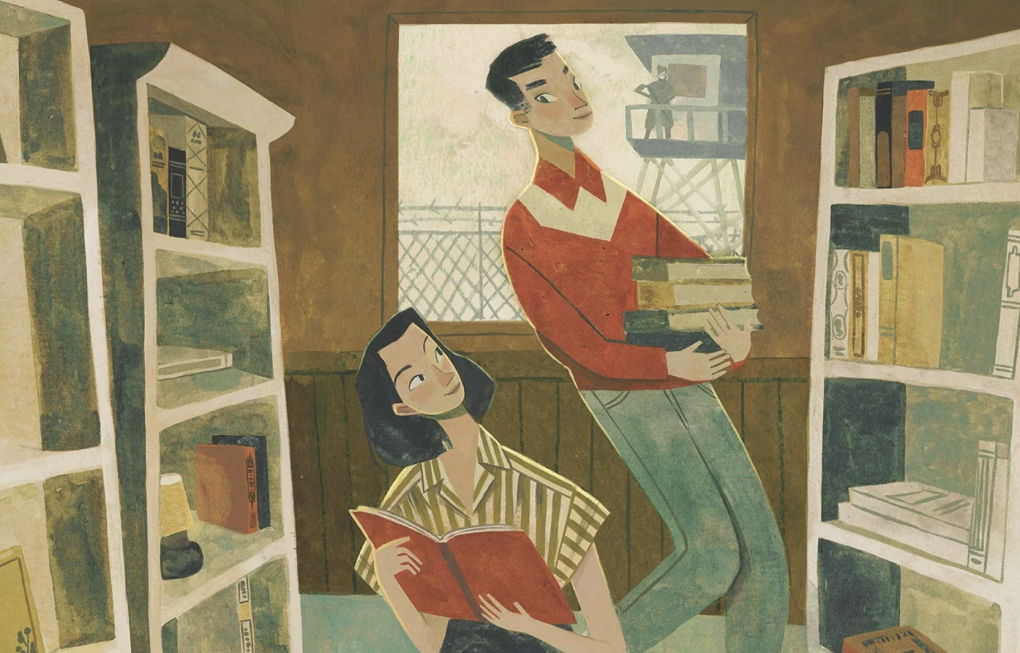
"caption": null,
"description": null,
"title": "Screen Shot 2023-04-17 at 10.45.00 AM",
"credit": null,
"status": "inherit",
"altTag": null,
"isLoading": false,
"fetchFailed": false
},
"arts_13927685": {
"type": "attachments",
"id": "arts_13927685",
"meta": {
"index": "attachments_1716263798",
"site": "arts",
"id": "13927685",
"found": true
},
"parent": 0,
"imgSizes": {
"thumbnail": {
"file": "https://ww2.kqed.org/app/uploads/sites/2/2023/04/DelGif2-v1-BB-160x174.gif",
"width": 160,
"mimeType": "image/gif",
"height": 174
},
"post-thumbnail": {
"file": "https://ww2.kqed.org/app/uploads/sites/2/2023/04/DelGif2-v1-BB-500x372.gif",
"width": 500,
"mimeType": "image/gif",
"height": 372
},
"kqedFullSize": {
"file": "https://ww2.kqed.org/app/uploads/sites/2/2023/04/DelGif2-v1-BB.gif",
"width": 500,
"height": 544
}
},
"publishDate": 1681313890,
"modified": 1681317761,
"caption": null,
"description": null,
"title": "DelGif2-v1-BB",
"credit": "Beth LaBerge/KQED; Animation by Bryan Bindloss",
"status": "inherit",
"altTag": "a record cover cycles in and out of the background where its original cover photo was shot, showing a pagoda and victorian houses",
"isLoading": false,
"fetchFailed": false
},
"arts_13927697": {
"type": "attachments",
"id": "arts_13927697",
"meta": {
"index": "attachments_1716263798",
"site": "arts",
"id": "13927697",
"found": true
},
"parent": 13927692,
"imgSizes": {
"twentyfourteen-full-width": {
"file": "https://ww2.kqed.org/app/uploads/sites/2/2023/04/Del.16x9.cover_.pagoda-1038x576.jpg",
"width": 1038,
"mimeType": "image/jpeg",
"height": 576
},
"thumbnail": {
"file": "https://ww2.kqed.org/app/uploads/sites/2/2023/04/Del.16x9.cover_.pagoda-160x90.jpg",
"width": 160,
"mimeType": "image/jpeg",
"height": 90
},
"post-thumbnail": {
"file": "https://ww2.kqed.org/app/uploads/sites/2/2023/04/Del.16x9.cover_.pagoda-672x372.jpg",
"width": 672,
"mimeType": "image/jpeg",
"height": 372
},
"kqedFullSize": {
"file": "https://ww2.kqed.org/app/uploads/sites/2/2023/04/Del.16x9.cover_.pagoda.jpg",
"width": 1920,
"height": 1080
},
"large": {
"file": "https://ww2.kqed.org/app/uploads/sites/2/2023/04/Del.16x9.cover_.pagoda-1020x574.jpg",
"width": 1020,
"mimeType": "image/jpeg",
"height": 574
},
"1536x1536": {
"file": "https://ww2.kqed.org/app/uploads/sites/2/2023/04/Del.16x9.cover_.pagoda-1536x864.jpg",
"width": 1536,
"mimeType": "image/jpeg",
"height": 864
},
"medium": {
"file": "https://ww2.kqed.org/app/uploads/sites/2/2023/04/Del.16x9.cover_.pagoda-800x450.jpg",
"width": 800,
"mimeType": "image/jpeg",
"height": 450
},
"medium_large": {
"file": "https://ww2.kqed.org/app/uploads/sites/2/2023/04/Del.16x9.cover_.pagoda-768x432.jpg",
"width": 768,
"mimeType": "image/jpeg",
"height": 432
}
},
"publishDate": 1681317515,
"modified": 1681317541,
"caption": null,
"description": null,
"title": "Del.16x9.cover.pagoda",
"credit": "Beth LaBerge/KQED",
"status": "inherit",
"altTag": null,
"isLoading": false,
"fetchFailed": false
},
"arts_13927364": {
"type": "attachments",
"id": "arts_13927364",
"meta": {
"index": "attachments_1716263798",
"site": "arts",
"id": "13927364",
"found": true
},
"parent": 13927349,
"imgSizes": {
"twentyfourteen-full-width": {
"file": "https://ww2.kqed.org/app/uploads/sites/2/2023/04/photo-forward_____separate_logos__2_-1038x576.png",
"width": 1038,
"mimeType": "image/png",
"height": 576
},
"thumbnail": {
"file": "https://ww2.kqed.org/app/uploads/sites/2/2023/04/photo-forward_____separate_logos__2_-160x160.png",
"width": 160,
"mimeType": "image/png",
"height": 160
},
"post-thumbnail": {
"file": "https://ww2.kqed.org/app/uploads/sites/2/2023/04/photo-forward_____separate_logos__2_-672x372.png",
"width": 672,
"mimeType": "image/png",
"height": 372
},
"kqedFullSize": {
"file": "https://ww2.kqed.org/app/uploads/sites/2/2023/04/photo-forward_____separate_logos__2_.png",
"width": 1080,
"height": 1080
},
"large": {
"file": "https://ww2.kqed.org/app/uploads/sites/2/2023/04/photo-forward_____separate_logos__2_-1020x1020.png",
"width": 1020,
"mimeType": "image/png",
"height": 1020
},
"medium": {
"file": "https://ww2.kqed.org/app/uploads/sites/2/2023/04/photo-forward_____separate_logos__2_-800x800.png",
"width": 800,
"mimeType": "image/png",
"height": 800
},
"medium_large": {
"file": "https://ww2.kqed.org/app/uploads/sites/2/2023/04/photo-forward_____separate_logos__2_-768x768.png",
"width": 768,
"mimeType": "image/png",
"height": 768
}
},
"publishDate": 1680663395,
"modified": 1680663902,
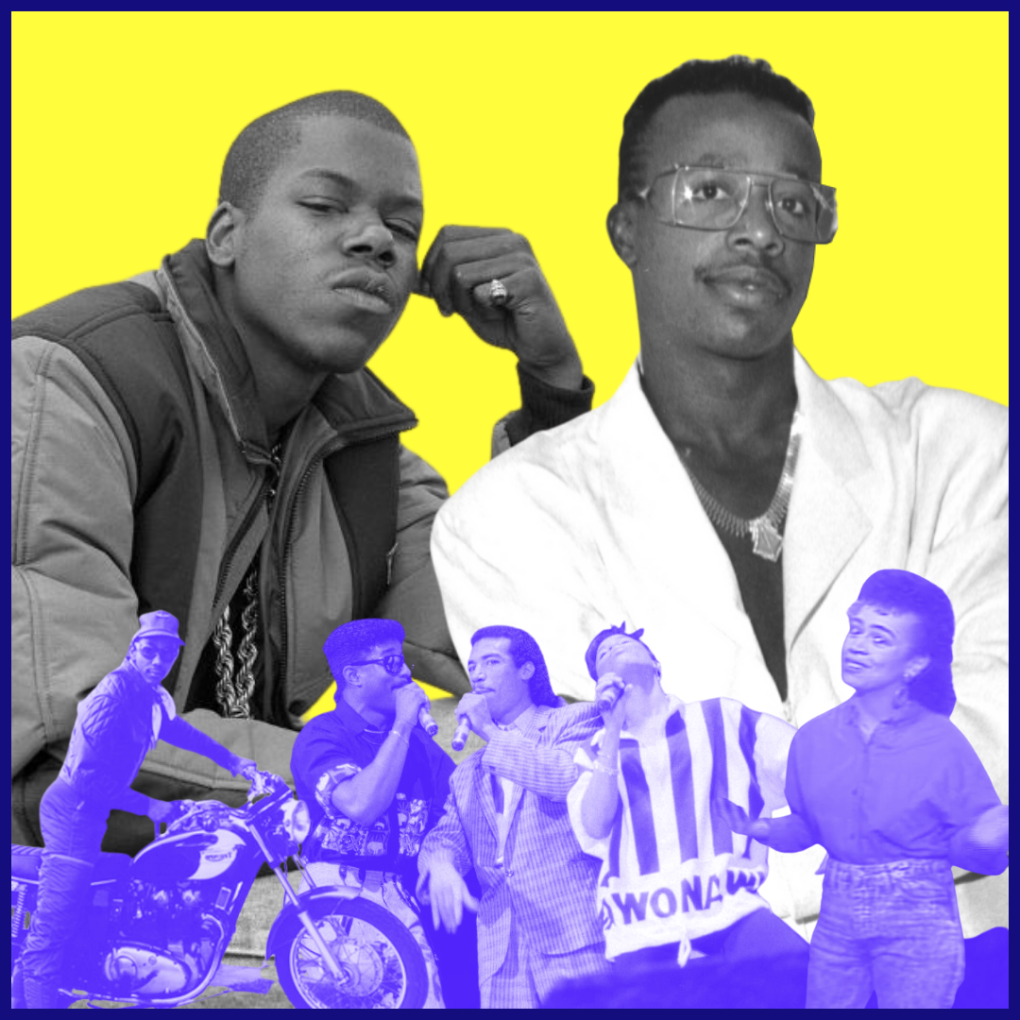
"caption": "In the 1980s, Bay Area hip-hop hadn't yet coalesced into an identifiable regional sound. After years of street dance, DJing and graffiti sharing equal space in hip-hop, however, rapping took over, and the Bay Area's bass-heavy trademark would arrive at the end of the decade. (Clockwise from top left: Too Short, MC Hammer, Dominique DiPrima, Club Nouveau, and Motorcycle Mike.)",
"description": null,
"title": "photo-forward_____separate_logos__2_",
"credit": "Steve Ringman/San Francisco Chronicle via Getty Images; Al Pereira/Michael Ochs Archives/Getty Images; SFSU Television Archives; Raymond Boyd/Getty Images; Hodisk Records",
"status": "inherit",
"altTag": null,
"isLoading": false,
"fetchFailed": false
},
"arts_13927363": {
"type": "attachments",
"id": "arts_13927363",
"meta": {
"index": "attachments_1716263798",
"site": "arts",
"id": "13927363",
"found": true
},
"parent": 13927349,
"imgSizes": {
"twentyfourteen-full-width": {
"file": "https://ww2.kqed.org/app/uploads/sites/2/2023/04/that_s_my_word_____featured_image__3_-1038x576.png",
"width": 1038,
"mimeType": "image/png",
"height": 576
},
"thumbnail": {
"file": "https://ww2.kqed.org/app/uploads/sites/2/2023/04/that_s_my_word_____featured_image__3_-160x90.png",
"width": 160,
"mimeType": "image/png",
"height": 90
},
"post-thumbnail": {
"file": "https://ww2.kqed.org/app/uploads/sites/2/2023/04/that_s_my_word_____featured_image__3_-672x372.png",
"width": 672,
"mimeType": "image/png",
"height": 372
},
"kqedFullSize": {
"file": "https://ww2.kqed.org/app/uploads/sites/2/2023/04/that_s_my_word_____featured_image__3_.png",
"width": 1920,
"height": 1080
},
"large": {
"file": "https://ww2.kqed.org/app/uploads/sites/2/2023/04/that_s_my_word_____featured_image__3_-1020x574.png",
"width": 1020,
"mimeType": "image/png",
"height": 574
},
"1536x1536": {
"file": "https://ww2.kqed.org/app/uploads/sites/2/2023/04/that_s_my_word_____featured_image__3_-1536x864.png",
"width": 1536,
"mimeType": "image/png",
"height": 864
},
"medium": {
"file": "https://ww2.kqed.org/app/uploads/sites/2/2023/04/that_s_my_word_____featured_image__3_-800x450.png",
"width": 800,
"mimeType": "image/png",
"height": 450
},
"medium_large": {
"file": "https://ww2.kqed.org/app/uploads/sites/2/2023/04/that_s_my_word_____featured_image__3_-768x432.png",
"width": 768,
"mimeType": "image/png",
"height": 432
}
},
"publishDate": 1680663386,
"modified": 1680663880,
"caption": "In the 1980s, Bay Area hip-hop hadn't yet coalesced into an identifiable regional sound. After years of street dance, DJing and graffiti sharing equal space in hip-hop, however, rapping took over, and the Bay Area's bass-heavy trademark would arrive at the end of the decade. (Clockwise from top left: Too Short, MC Hammer, Dominique DiPrima, Club Nouveau, and Motorcycle Mike.)",
"description": null,
"title": "that_s_my_word_____featured_image__3_",
"credit": "Steve Ringman/San Francisco Chronicle via Getty Images; Al Pereira/Michael Ochs Archives/Getty Images; SFSU Television Archives; Raymond Boyd/Getty Images; Hodisk Records",
"status": "inherit",
"altTag": null,
"isLoading": false,
"fetchFailed": false
},
"arts_13927306": {
"type": "attachments",
"id": "arts_13927306",
"meta": {
"index": "attachments_1716263798",
"site": "arts",
"id": "13927306",
"found": true
},
"parent": 13926548,
"imgSizes": {
"twentyfourteen-full-width": {
"file": "https://ww2.kqed.org/app/uploads/sites/2/2023/04/April-2023-1038x576.png",
"width": 1038,
"mimeType": "image/png",
"height": 576
},
"thumbnail": {
"file": "https://ww2.kqed.org/app/uploads/sites/2/2023/04/April-2023-160x90.png",
"width": 160,
"mimeType": "image/png",
"height": 90
},
"post-thumbnail": {
"file": "https://ww2.kqed.org/app/uploads/sites/2/2023/04/April-2023-672x372.png",
"width": 672,
"mimeType": "image/png",
"height": 372
},
"kqedFullSize": {
"file": "https://ww2.kqed.org/app/uploads/sites/2/2023/04/April-2023.png",
"width": 1920,
"height": 1080
},
"large": {
"file": "https://ww2.kqed.org/app/uploads/sites/2/2023/04/April-2023-1020x574.png",
"width": 1020,
"mimeType": "image/png",
"height": 574
},
"1536x1536": {
"file": "https://ww2.kqed.org/app/uploads/sites/2/2023/04/April-2023-1536x864.png",
"width": 1536,
"mimeType": "image/png",
"height": 864
},
"medium": {
"file": "https://ww2.kqed.org/app/uploads/sites/2/2023/04/April-2023-800x450.png",
"width": 800,
"mimeType": "image/png",
"height": 450
},
"medium_large": {
"file": "https://ww2.kqed.org/app/uploads/sites/2/2023/04/April-2023-768x432.png",
"width": 768,
"mimeType": "image/png",
"height": 432
}
},
"publishDate": 1680633428,
"modified": 1680633428,
"caption": null,
"description": null,
"title": "April 2023",
"credit": null,
"status": "inherit",
"altTag": null,
"isLoading": false,
"fetchFailed": false
},
"arts_13927169": {
"type": "attachments",
"id": "arts_13927169",
"meta": {
"index": "attachments_1716263798",
"site": "arts",
"id": "13927169",
"found": true
},
"parent": 13927137,
"imgSizes": {
"twentyfourteen-full-width": {
"file": "https://ww2.kqed.org/app/uploads/sites/2/2023/03/opensfhistory_wnp26.2055-1000x576.jpg",
"width": 1000,
"mimeType": "image/jpeg",
"height": 576
},
"thumbnail": {
"file": "https://ww2.kqed.org/app/uploads/sites/2/2023/03/opensfhistory_wnp26.2055-160x103.jpg",
"width": 160,
"mimeType": "image/jpeg",
"height": 103
},
"post-thumbnail": {
"file": "https://ww2.kqed.org/app/uploads/sites/2/2023/03/opensfhistory_wnp26.2055-672x372.jpg",
"width": 672,
"mimeType": "image/jpeg",
"height": 372
},
"kqedFullSize": {
"file": "https://ww2.kqed.org/app/uploads/sites/2/2023/03/opensfhistory_wnp26.2055.jpg",
"width": 1000,
"height": 644
},
"medium": {
"file": "https://ww2.kqed.org/app/uploads/sites/2/2023/03/opensfhistory_wnp26.2055-800x515.jpg",
"width": 800,
"mimeType": "image/jpeg",
"height": 515
},
"medium_large": {
"file": "https://ww2.kqed.org/app/uploads/sites/2/2023/03/opensfhistory_wnp26.2055-768x495.jpg",
"width": 768,
"mimeType": "image/jpeg",
"height": 495
}
},
"publishDate": 1680210829,
"modified": 1680222205,
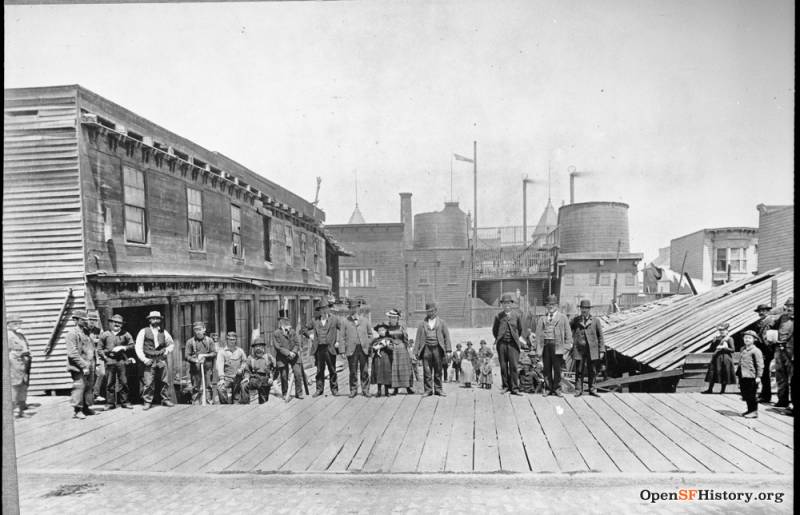
"caption": "Patrons gather outside the Cobweb Palace, a legendary old tavern that stood for 40 years on Francisco Street between Powell and Mason. ",
"description": null,
"title": "Patrons gather outside the Cobweb Palace, a legendary old tavern that stood for 40 years on Francisco Street between Powell and Mason.",
"credit": "OpenSFHistory / wnp26.2055",
"status": "inherit",
"altTag": "A line of men and women dressed in Victorian clothing stand outside a ramshackle wooden building.",
"isLoading": false,
"fetchFailed": false
},
"arts_13926073": {
"type": "attachments",
"id": "arts_13926073",
"meta": {
"index": "attachments_1716263798",
"site": "arts",
"id": "13926073",
"found": true
},
"parent": 13926069,
"imgSizes": {
"twentyfourteen-full-width": {
"file": "https://ww2.kqed.org/app/uploads/sites/2/2023/03/Screen-Shot-2023-03-09-at-2.54.47-PM-1038x576.png",
"width": 1038,
"mimeType": "image/png",
"height": 576
},
"thumbnail": {
"file": "https://ww2.kqed.org/app/uploads/sites/2/2023/03/Screen-Shot-2023-03-09-at-2.54.47-PM-160x94.png",
"width": 160,
"mimeType": "image/png",
"height": 94
},
"post-thumbnail": {
"file": "https://ww2.kqed.org/app/uploads/sites/2/2023/03/Screen-Shot-2023-03-09-at-2.54.47-PM-672x372.png",
"width": 672,
"mimeType": "image/png",
"height": 372
},
"kqedFullSize": {
"file": "https://ww2.kqed.org/app/uploads/sites/2/2023/03/Screen-Shot-2023-03-09-at-2.54.47-PM.png",
"width": 2018,
"height": 1188
},
"large": {
"file": "https://ww2.kqed.org/app/uploads/sites/2/2023/03/Screen-Shot-2023-03-09-at-2.54.47-PM-1020x600.png",
"width": 1020,
"mimeType": "image/png",
"height": 600
},
"1536x1536": {
"file": "https://ww2.kqed.org/app/uploads/sites/2/2023/03/Screen-Shot-2023-03-09-at-2.54.47-PM-1536x904.png",
"width": 1536,
"mimeType": "image/png",
"height": 904
},
"full-width": {
"file": "https://ww2.kqed.org/app/uploads/sites/2/2023/03/Screen-Shot-2023-03-09-at-2.54.47-PM-1920x1130.png",
"width": 1920,
"mimeType": "image/png",
"height": 1130
},
"medium": {
"file": "https://ww2.kqed.org/app/uploads/sites/2/2023/03/Screen-Shot-2023-03-09-at-2.54.47-PM-800x471.png",
"width": 800,
"mimeType": "image/png",
"height": 471
},
"medium_large": {
"file": "https://ww2.kqed.org/app/uploads/sites/2/2023/03/Screen-Shot-2023-03-09-at-2.54.47-PM-768x452.png",
"width": 768,
"mimeType": "image/png",
"height": 452
}
},
"publishDate": 1678404566,
"modified": 1678404637,
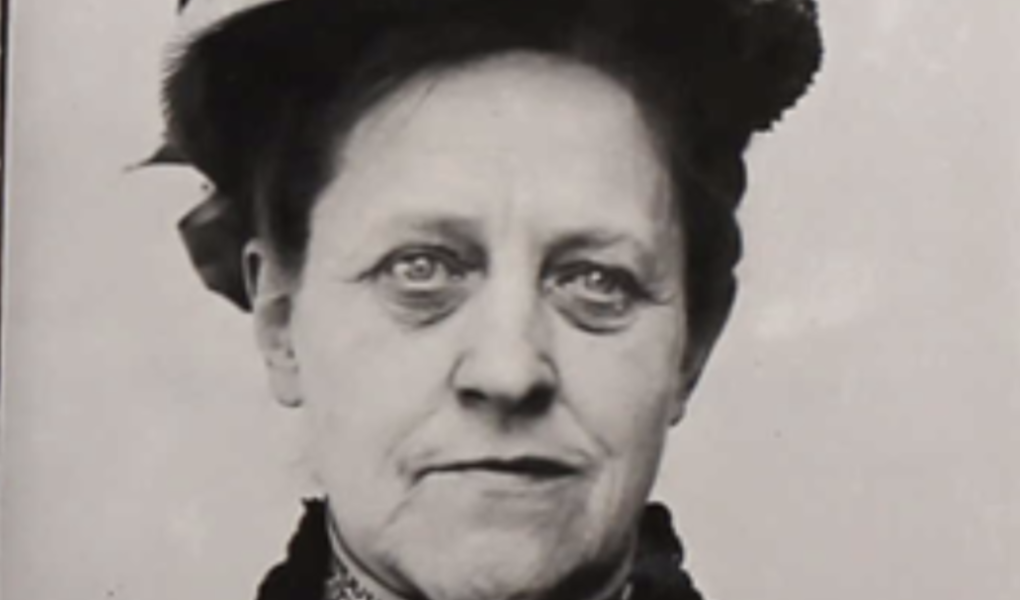
"caption": "Isabella J. Martin, a truly crappy criminal.",
"description": null,
"title": "Isabella J. Martin, a truly crappy criminal.",
"credit": null,
"status": "inherit",
"altTag": "A white woman with ruddy features stands, wearing a hat, facing the camera.",
"isLoading": false,
"fetchFailed": false
},
"arts_13926506": {
"type": "attachments",
"id": "arts_13926506",
"meta": {
"index": "attachments_1716263798",
"site": "arts",
"id": "13926506",
"found": true
},
"parent": 13926503,
"imgSizes": {
"thumbnail": {
"file": "https://ww2.kqed.org/app/uploads/sites/2/2023/03/From-left-to-right-Frank-Magtoto-David-Bustamante-Bert-Ancheta-Carlos-Bato-Badia-Rome-Bustamante-Michael-Gopaul-David-DZandos-cropped-160x90.jpg",
"width": 160,
"mimeType": "image/jpeg",
"height": 90
},
"post-thumbnail": {
"file": "https://ww2.kqed.org/app/uploads/sites/2/2023/03/From-left-to-right-Frank-Magtoto-David-Bustamante-Bert-Ancheta-Carlos-Bato-Badia-Rome-Bustamante-Michael-Gopaul-David-DZandos-cropped-672x372.jpg",
"width": 672,
"mimeType": "image/jpeg",
"height": 372
},
"kqedFullSize": {
"file": "https://ww2.kqed.org/app/uploads/sites/2/2023/03/From-left-to-right-Frank-Magtoto-David-Bustamante-Bert-Ancheta-Carlos-Bato-Badia-Rome-Bustamante-Michael-Gopaul-David-DZandos-cropped.jpg",
"width": 813,
"height": 457
},
"medium": {
"file": "https://ww2.kqed.org/app/uploads/sites/2/2023/03/From-left-to-right-Frank-Magtoto-David-Bustamante-Bert-Ancheta-Carlos-Bato-Badia-Rome-Bustamante-Michael-Gopaul-David-DZandos-cropped-800x450.jpg",
"width": 800,
"mimeType": "image/jpeg",
"height": 450
},
"medium_large": {
"file": "https://ww2.kqed.org/app/uploads/sites/2/2023/03/From-left-to-right-Frank-Magtoto-David-Bustamante-Bert-Ancheta-Carlos-Bato-Badia-Rome-Bustamante-Michael-Gopaul-David-DZandos-cropped-768x432.jpg",
"width": 768,
"mimeType": "image/jpeg",
"height": 432
}
},
"publishDate": 1679331425,
"modified": 1679332436,
"caption": "From left to right: Frank Magtoto, David Bustamante, Bert Ancheta, Carlos Bato Badia, Romeo Bustamante, Michael Gopaul and David DZandos.",
"description": null,
"title": "From left to right Frank Magtoto, David Bustamante, Bert Ancheta, Carlos Bato Badia, Rome Bustamante, Michael Gopaul, David DZandos-cropped",
"credit": "Guerssen Records",
"status": "inherit",
"altTag": null,
"isLoading": false,
"fetchFailed": false
},
"arts_13926392": {
"type": "attachments",
"id": "arts_13926392",
"meta": {
"index": "attachments_1716263798",
"site": "arts",
"id": "13926392",
"found": true
},
"parent": 13926347,
"imgSizes": {
"twentyfourteen-full-width": {
"file": "https://ww2.kqed.org/app/uploads/sites/2/2023/03/penelope-houston-feat-scaled-e1678999961982-1038x576.jpg",
"width": 1038,
"mimeType": "image/jpeg",
"height": 576
},
"thumbnail": {
"file": "https://ww2.kqed.org/app/uploads/sites/2/2023/03/penelope-houston-feat-scaled-e1678999961982-160x99.jpg",
"width": 160,
"mimeType": "image/jpeg",
"height": 99
},
"post-thumbnail": {
"file": "https://ww2.kqed.org/app/uploads/sites/2/2023/03/penelope-houston-feat-scaled-e1678999961982-672x372.jpg",
"width": 672,
"mimeType": "image/jpeg",
"height": 372
},
"kqedFullSize": {
"file": "https://ww2.kqed.org/app/uploads/sites/2/2023/03/penelope-houston-feat-scaled-e1678999961982.jpg",
"width": 1920,
"height": 1188
},
"2048x2048": {
"file": "https://ww2.kqed.org/app/uploads/sites/2/2023/03/penelope-houston-feat-2048x1267.jpg",
"width": 2048,
"mimeType": "image/jpeg",
"height": 1267
},
"large": {
"file": "https://ww2.kqed.org/app/uploads/sites/2/2023/03/penelope-houston-feat-scaled-e1678999961982-1020x631.jpg",
"width": 1020,
"mimeType": "image/jpeg",
"height": 631
},
"1536x1536": {
"file": "https://ww2.kqed.org/app/uploads/sites/2/2023/03/penelope-houston-feat-scaled-e1678999961982-1536x950.jpg",
"width": 1536,
"mimeType": "image/jpeg",
"height": 950
},
"full-width": {
"file": "https://ww2.kqed.org/app/uploads/sites/2/2023/03/penelope-houston-feat-1920x1188.jpg",
"width": 1920,
"mimeType": "image/jpeg",
"height": 1188
},
"medium": {
"file": "https://ww2.kqed.org/app/uploads/sites/2/2023/03/penelope-houston-feat-scaled-e1678999961982-800x495.jpg",
"width": 800,
"mimeType": "image/jpeg",
"height": 495
},
"medium_large": {
"file": "https://ww2.kqed.org/app/uploads/sites/2/2023/03/penelope-houston-feat-scaled-e1678999961982-768x475.jpg",
"width": 768,
"mimeType": "image/jpeg",
"height": 475
}
},
"publishDate": 1678999476,
"modified": 1679009549,
"caption": "Oil paintings by Penelope Houston of a 55-year-old man named Henry Friedrichs, as seen in his 1931 mugshots.",
"description": null,
"title": "Oil paintings of a 55-year-old man named Henry Friedrichs, as he was seen in his 1931 mugshots.",
"credit": "Courtesy of the artist",
"status": "inherit",
"altTag": "Two oil paintings of a man's mugshots with a large mustache and a face marked with cuts and bruises",
"isLoading": false,
"fetchFailed": false
},
"arts_13923309": {
"type": "attachments",
"id": "arts_13923309",
"meta": {
"index": "attachments_1716263798",
"site": "arts",
"id": "13923309",
"found": true
},
"parent": 13923159,
"imgSizes": {
"twentyfourteen-full-width": {
"file": "https://ww2.kqed.org/app/uploads/sites/2/2023/01/The-Birds-1038x576.png",
"width": 1038,
"mimeType": "image/png",
"height": 576
},
"thumbnail": {
"file": "https://ww2.kqed.org/app/uploads/sites/2/2023/01/The-Birds-160x110.png",
"width": 160,
"mimeType": "image/png",
"height": 110
},
"post-thumbnail": {
"file": "https://ww2.kqed.org/app/uploads/sites/2/2023/01/The-Birds-672x372.png",
"width": 672,
"mimeType": "image/png",
"height": 372
},
"kqedFullSize": {
"file": "https://ww2.kqed.org/app/uploads/sites/2/2023/01/The-Birds.png",
"width": 2106,
"height": 1448
},
"2048x2048": {
"file": "https://ww2.kqed.org/app/uploads/sites/2/2023/01/The-Birds-2048x1408.png",
"width": 2048,
"mimeType": "image/png",
"height": 1408
},
"large": {
"file": "https://ww2.kqed.org/app/uploads/sites/2/2023/01/The-Birds-1020x701.png",
"width": 1020,
"mimeType": "image/png",
"height": 701
},
"1536x1536": {
"file": "https://ww2.kqed.org/app/uploads/sites/2/2023/01/The-Birds-1536x1056.png",
"width": 1536,
"mimeType": "image/png",
"height": 1056
},
"full-width": {
"file": "https://ww2.kqed.org/app/uploads/sites/2/2023/01/The-Birds-1920x1320.png",
"width": 1920,
"mimeType": "image/png",
"height": 1320
},
"medium": {
"file": "https://ww2.kqed.org/app/uploads/sites/2/2023/01/The-Birds-800x550.png",
"width": 800,
"mimeType": "image/png",
"height": 550
},
"medium_large": {
"file": "https://ww2.kqed.org/app/uploads/sites/2/2023/01/The-Birds-768x528.png",
"width": 768,
"mimeType": "image/png",
"height": 528
}
},
"publishDate": 1672883247,
"modified": 1672883561,
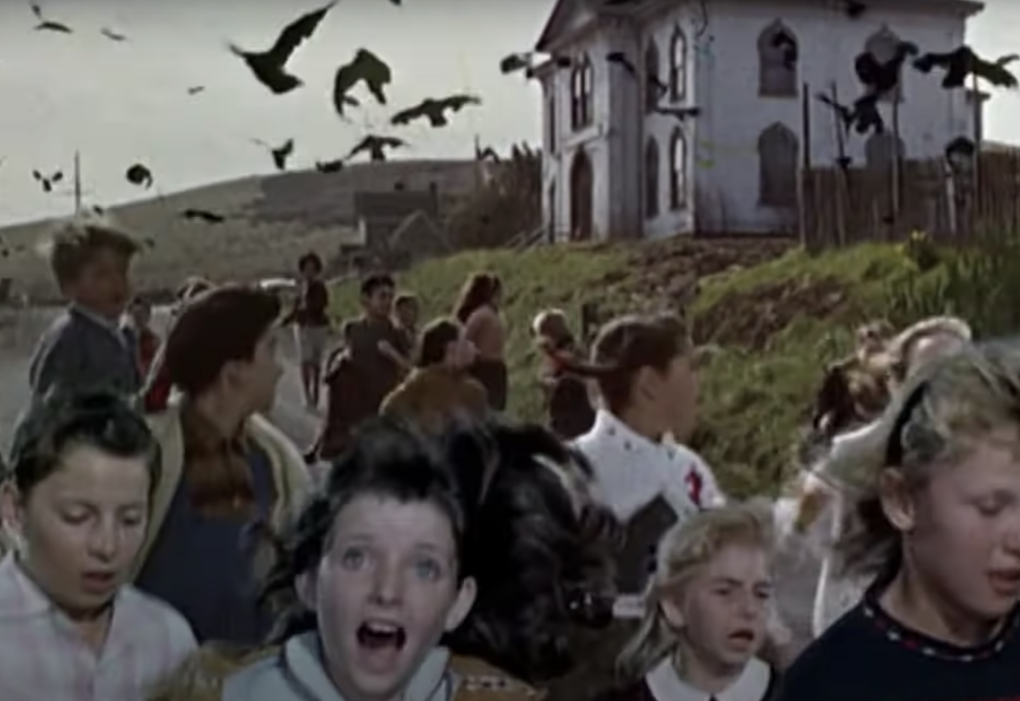
"caption": "Small children attacked mercilessly by crows in ‘The Birds,’ directly after singing ‘Risselty Rosselty.’ Coincidence?",
"description": null,
"title": "Small children attacked mercilessly by crows in ‘The Birds,’ directly after singing ‘Risselty Rosselty.’ Coincidence?",
"credit": null,
"status": "inherit",
"altTag": "A crowd of screaming children run under a sky darkened by swooping crows. A school house stands in the distance.",
"isLoading": false,
"fetchFailed": false
},
"arts_13926028": {
"type": "attachments",
"id": "arts_13926028",
"meta": {
"index": "attachments_1716263798",
"site": "arts",
"id": "13926028",
"found": true
},
"parent": 13926026,
"imgSizes": {
"twentyfourteen-full-width": {
"file": "https://ww2.kqed.org/app/uploads/sites/2/2023/03/DSC05054-1038x576.jpg",
"width": 1038,
"mimeType": "image/jpeg",
"height": 576
},
"thumbnail": {
"file": "https://ww2.kqed.org/app/uploads/sites/2/2023/03/DSC05054-160x107.jpg",
"width": 160,
"mimeType": "image/jpeg",
"height": 107
},
"post-thumbnail": {
"file": "https://ww2.kqed.org/app/uploads/sites/2/2023/03/DSC05054-672x372.jpg",
"width": 672,
"mimeType": "image/jpeg",
"height": 372
},
"kqedFullSize": {
"file": "https://ww2.kqed.org/app/uploads/sites/2/2023/03/DSC05054-scaled.jpg",
"width": 2560,
"height": 1707
},
"2048x2048": {
"file": "https://ww2.kqed.org/app/uploads/sites/2/2023/03/DSC05054-2048x1365.jpg",
"width": 2048,
"mimeType": "image/jpeg",
"height": 1365
},
"large": {
"file": "https://ww2.kqed.org/app/uploads/sites/2/2023/03/DSC05054-1020x680.jpg",
"width": 1020,
"mimeType": "image/jpeg",
"height": 680
},
"1536x1536": {
"file": "https://ww2.kqed.org/app/uploads/sites/2/2023/03/DSC05054-1536x1024.jpg",
"width": 1536,
"mimeType": "image/jpeg",
"height": 1024
},
"full-width": {
"file": "https://ww2.kqed.org/app/uploads/sites/2/2023/03/DSC05054-1920x1280.jpg",
"width": 1920,
"mimeType": "image/jpeg",
"height": 1280
},
"medium": {
"file": "https://ww2.kqed.org/app/uploads/sites/2/2023/03/DSC05054-800x533.jpg",
"width": 800,
"mimeType": "image/jpeg",
"height": 533
},
"medium_large": {
"file": "https://ww2.kqed.org/app/uploads/sites/2/2023/03/DSC05054-768x512.jpg",
"width": 768,
"mimeType": "image/jpeg",
"height": 512
}
},
"publishDate": 1678387180,
"modified": 1678396359,
"caption": "Tribal Chairman Valentin Lopez looks at Juristac, sacred land for the Amah Mutsun Tribal Band,",
"description": "standing near the fence that separates the road from the historic sacred site known as Juristac in Santa Clara County.",
"title": "standing near the fence that separates the road from the historic sacred site known as Juristac in Santa Clara County.",
"credit": "Pendarvis Harshaw",
"status": "inherit",
"altTag": "Valentin Lopez, tribal chair leader of the Amah Mutsun tribal ban, standing near the fence that separates the road from the historic sacred site known as Juristac in Santa Clara County.",
"isLoading": false,
"fetchFailed": false
},
"arts_13925854": {
"type": "attachments",
"id": "arts_13925854",
"meta": {
"index": "attachments_1716263798",
"site": "arts",
"id": "13925854",
"found": true
},
"parent": 13925848,
"imgSizes": {
"twentyfourteen-full-width": {
"file": "https://ww2.kqed.org/app/uploads/sites/2/2023/03/opensfhistory_wnp70.1269-1000x576.jpg",
"width": 1000,
"mimeType": "image/jpeg",
"height": 576
},
"thumbnail": {
"file": "https://ww2.kqed.org/app/uploads/sites/2/2023/03/opensfhistory_wnp70.1269-160x101.jpg",
"width": 160,
"mimeType": "image/jpeg",
"height": 101
},
"post-thumbnail": {
"file": "https://ww2.kqed.org/app/uploads/sites/2/2023/03/opensfhistory_wnp70.1269-672x372.jpg",
"width": 672,
"mimeType": "image/jpeg",
"height": 372
},
"kqedFullSize": {
"file": "https://ww2.kqed.org/app/uploads/sites/2/2023/03/opensfhistory_wnp70.1269.jpg",
"width": 1000,
"height": 634
},
"medium": {
"file": "https://ww2.kqed.org/app/uploads/sites/2/2023/03/opensfhistory_wnp70.1269-800x507.jpg",
"width": 800,
"mimeType": "image/jpeg",
"height": 507
},
"medium_large": {
"file": "https://ww2.kqed.org/app/uploads/sites/2/2023/03/opensfhistory_wnp70.1269-768x487.jpg",
"width": 768,
"mimeType": "image/jpeg",
"height": 487
}
},
"publishDate": 1678082793,
"modified": 1678299448,
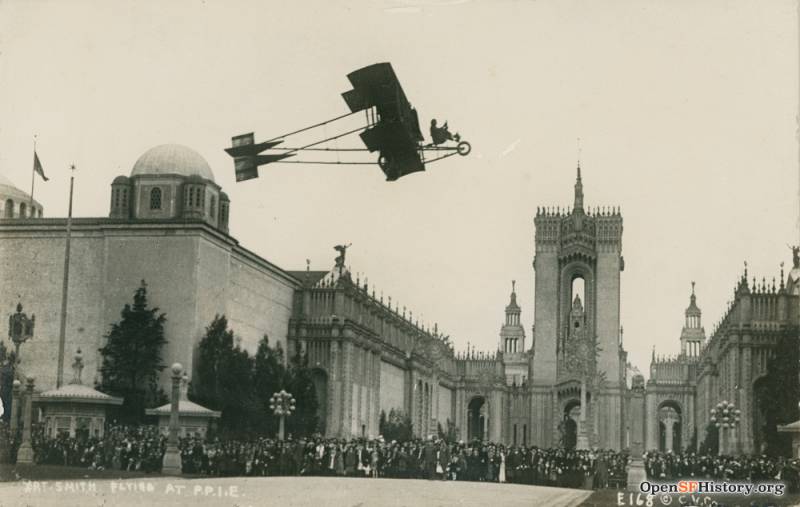
"caption": "Art Smith flying his airplane past Mulgardt's Tower at the Panama-Pacific International Exposition, before awed crowds.",
"description": null,
"title": "Art Smith flying his airplane past Mulgardt's Tower at the Panama-Pacific International Exposition, before awed crowds.",
"credit": "OpenSFHistory / wnp70.1269",
"status": "inherit",
"altTag": "A small wooden airplane resembling a bicycle with wings flies over the heads of gathered crowds. In the background, a palatial building looms.",
"isLoading": false,
"fetchFailed": false
},
"arts_13925410": {
"type": "attachments",
"id": "arts_13925410",
"meta": {
"index": "attachments_1716263798",
"site": "arts",
"id": "13925410",
"found": true
},
"parent": 13925408,
"imgSizes": {
"twentyfourteen-full-width": {
"file": "https://ww2.kqed.org/app/uploads/sites/2/2023/02/Janis-Joplin-by-Herb-Greene_1920-1038x576.jpg",
"width": 1038,
"mimeType": "image/jpeg",
"height": 576
},
"thumbnail": {
"file": "https://ww2.kqed.org/app/uploads/sites/2/2023/02/Janis-Joplin-by-Herb-Greene_1920-160x111.jpg",
"width": 160,
"mimeType": "image/jpeg",
"height": 111
},
"post-thumbnail": {
"file": "https://ww2.kqed.org/app/uploads/sites/2/2023/02/Janis-Joplin-by-Herb-Greene_1920-672x372.jpg",
"width": 672,
"mimeType": "image/jpeg",
"height": 372
},
"kqedFullSize": {
"file": "https://ww2.kqed.org/app/uploads/sites/2/2023/02/Janis-Joplin-by-Herb-Greene_1920.jpg",
"width": 1657,
"height": 1147
},
"large": {
"file": "https://ww2.kqed.org/app/uploads/sites/2/2023/02/Janis-Joplin-by-Herb-Greene_1920-1020x706.jpg",
"width": 1020,
"mimeType": "image/jpeg",
"height": 706
},
"1536x1536": {
"file": "https://ww2.kqed.org/app/uploads/sites/2/2023/02/Janis-Joplin-by-Herb-Greene_1920-1536x1063.jpg",
"width": 1536,
"mimeType": "image/jpeg",
"height": 1063
},
"medium": {
"file": "https://ww2.kqed.org/app/uploads/sites/2/2023/02/Janis-Joplin-by-Herb-Greene_1920-800x554.jpg",
"width": 800,
"mimeType": "image/jpeg",
"height": 554
},
"medium_large": {
"file": "https://ww2.kqed.org/app/uploads/sites/2/2023/02/Janis-Joplin-by-Herb-Greene_1920-768x532.jpg",
"width": 768,
"mimeType": "image/jpeg",
"height": 532
}
},
"publishDate": 1677114572,
"modified": 1677115377,
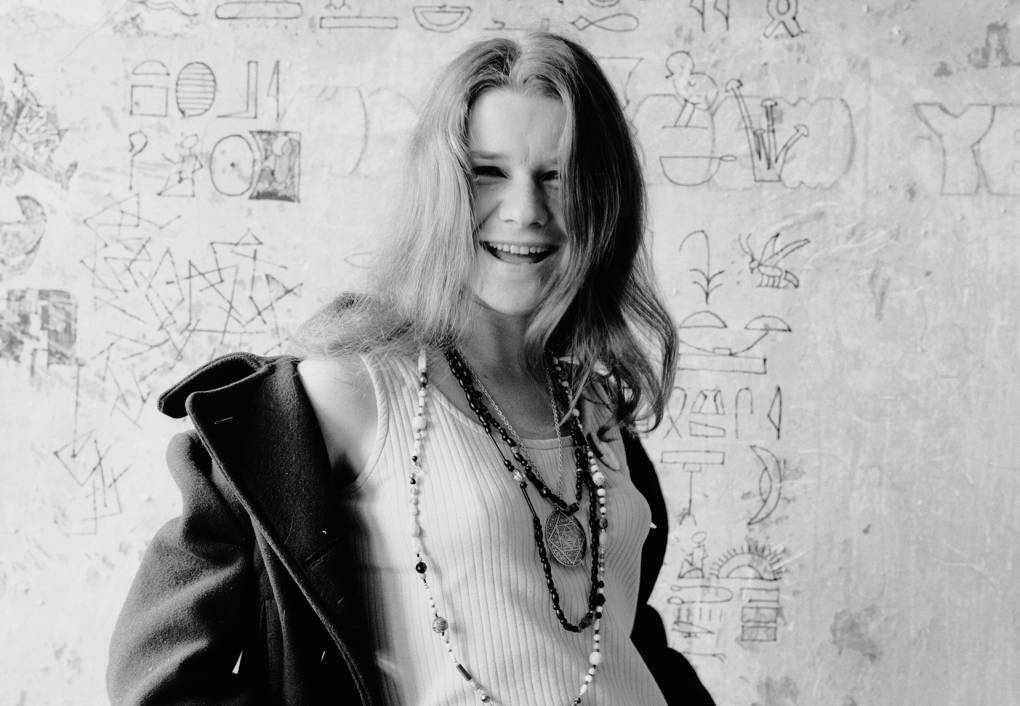
"caption": "Janis Joplin, as photographed by Herb Greene at his 66 Baker St. apartment in the Haight.",
"description": null,
"title": "Janis Joplin, as photographed by Herb Greene at his 66 Baker St. apartment in the Haight.",
"credit": "Herb Greene/ Courtesy of the Haight Street Art Center",
"status": "inherit",
"altTag": "A laughing woman with long brown hair stands before a white wall that's covered in scribbles and messages. She is wearing a simple tank, beaded necklaces and a winter coat that's falling from her shoulders.",
"isLoading": false,
"fetchFailed": false
}
},
"audioPlayerReducer": {
"postId": "stream_live",
"isPaused": true,
"isPlaying": false,
"pfsActive": false,
"pledgeModalIsOpen": true,
"playerDrawerIsOpen": false,
"liveAudioPlayStartedAt": 0,
"liveAudioPlayContext": ""
},
"authorsReducer": {
"byline_arts_13927861": {
"type": "authors",
"id": "byline_arts_13927861",
"meta": {
"override": true
},
"slug": "byline_arts_13927861",
"name": "Emma Bowman",
"isLoading": false
},
"byline_arts_13927692": {
"type": "authors",
"id": "byline_arts_13927692",
"meta": {
"override": true
},
"slug": "byline_arts_13927692",
"name": "Del the Funky Homosapien",
"isLoading": false
},
"ralexandra": {
"type": "authors",
"id": "11242",
"meta": {
"index": "authors_1716337520",
"id": "11242",
"found": true
},
"name": "Rae Alexandra",
"firstName": "Rae",
"lastName": "Alexandra",
"slug": "ralexandra",
"email": "ralexandra@kqed.org",
"display_author_email": true,
"staff_mastheads": [],
"title": "Reporter/Producer",
"bio": "Rae Alexandra is a Reporter/Producer for KQED Arts & Culture, and the creator/author of the \u003ca href=\"https://www.kqed.org/arts/program/rebel-girls-from-bay-area-history\">Rebel Girls From Bay Area History\u003c/a> and \u003ca href=\"https://www.kqed.org/bizarrebayarea\">Bizarre Bay Area\u003c/a> series. Her debut book, \u003ca href=\"https://citylights.com/politics-current-events-history/unsung-heroines35-women-who-changed/\">Unsung Heroines: 35 Women Who Changed the Bay Area\u003c/a> was published by City Lights in March 2026. In 2023, Rae was awarded an SPJ Excellence in Journalism Award for Arts & Culture. Rae was born and raised in Wales and subsequently — even after two decades in Northern California — still uses phrases that regularly baffle her coworkers.",
"avatar": "https://secure.gravatar.com/avatar/edfee8176c80cc0a382b051190f5341997df378a934a5774dcb0977732dfd401?s=600&d=blank&r=g",
"twitter": null,
"bluesky": null,
"facebook": null,
"instagram": null,
"linkedin": null,
"sites": [
{
"site": "arts",
"roles": [
"subscriber"
]
},
{
"site": "news",
"roles": [
"subscriber"
]
},
{
"site": "pop",
"roles": [
"subscriber"
]
},
{
"site": "bayareabites",
"roles": [
"subscriber"
]
},
{
"site": "science",
"roles": [
"subscriber"
]
}
],
"headData": {
"title": "Rae Alexandra | KQED",
"description": "Reporter/Producer",
"ogImgSrc": "https://secure.gravatar.com/avatar/edfee8176c80cc0a382b051190f5341997df378a934a5774dcb0977732dfd401?s=600&d=blank&r=g",
"twImgSrc": "https://secure.gravatar.com/avatar/edfee8176c80cc0a382b051190f5341997df378a934a5774dcb0977732dfd401?s=600&d=blank&r=g"
},
"isLoading": false,
"link": "/author/ralexandra"
},
"ogpenn": {
"type": "authors",
"id": "11491",
"meta": {
"index": "authors_1716337520",
"id": "11491",
"found": true
},
"name": "Pendarvis Harshaw",
"firstName": "Pendarvis",
"lastName": "Harshaw",
"slug": "ogpenn",
"email": "ogpenn@gmail.com",
"display_author_email": false,
"staff_mastheads": [
"arts"
],
"title": "Community Engagement Reporter",
"bio": "Pendarvis Harshaw is an educator, host and writer with KQED Arts.",
"avatar": "https://secure.gravatar.com/avatar/972b77ee8e3f346ae2b00622661187fbfabd059b5693bbdc1475ea7a722fd4cd?s=600&d=blank&r=g",
"twitter": null,
"bluesky": null,
"facebook": null,
"instagram": "ogpenn",
"linkedin": null,
"sites": [
{
"site": "arts",
"roles": [
"administrator"
]
},
{
"site": "news",
"roles": [
"editor"
]
},
{
"site": "bayareabites",
"roles": [
"author"
]
},
{
"site": "hiphop",
"roles": [
"editor"
]
}
],
"headData": {
"title": "Pendarvis Harshaw | KQED",
"description": "Community Engagement Reporter",
"ogImgSrc": "https://secure.gravatar.com/avatar/972b77ee8e3f346ae2b00622661187fbfabd059b5693bbdc1475ea7a722fd4cd?s=600&d=blank&r=g",
"twImgSrc": "https://secure.gravatar.com/avatar/972b77ee8e3f346ae2b00622661187fbfabd059b5693bbdc1475ea7a722fd4cd?s=600&d=blank&r=g"
},
"isLoading": false,
"link": "/author/ogpenn"
},
"mmedina": {
"type": "authors",
"id": "11528",
"meta": {
"index": "authors_1716337520",
"id": "11528",
"found": true
},
"name": "Marisol Medina-Cadena",
"firstName": "Marisol",
"lastName": "Medina-Cadena",
"slug": "mmedina",
"email": "mmedina@KQED.org",
"display_author_email": true,
"staff_mastheads": [],
"title": "Producer, Rightnowish Podcast",
"bio": "Marisol Medina-Cadena is a radio reporter and podcast producer. Before working at KQED, she produced for PBS member station, KCET, in Los Angeles. In 2017, Marisol won an Emmy Award for her work on the televised documentary, \u003cem>City Rising\u003c/em>, examining California's affordable housing crisis and the historical roots of gentrification.",
"avatar": "https://secure.gravatar.com/avatar/6c3db46a1cabb5e1fe9a365b5f4e681e?s=600&d=blank&r=g",
"twitter": "marisolreports",
"facebook": null,
"instagram": null,
"linkedin": null,
"sites": [
{
"site": "arts",
"roles": []
},
{
"site": "news",
"roles": [
"edit_others_posts"
]
}
],
"headData": {
"title": "Marisol Medina-Cadena | KQED",
"description": "Producer, Rightnowish Podcast",
"ogImgSrc": "https://secure.gravatar.com/avatar/6c3db46a1cabb5e1fe9a365b5f4e681e?s=600&d=blank&r=g",
"twImgSrc": "https://secure.gravatar.com/avatar/6c3db46a1cabb5e1fe9a365b5f4e681e?s=600&d=blank&r=g"
},
"isLoading": false,
"link": "/author/mmedina"
},
"athapliyal": {
"type": "authors",
"id": "11766",
"meta": {
"index": "authors_1716337520",
"id": "11766",
"found": true
},
"name": "Adesh Thapliyal",
"firstName": "Adesh",
"lastName": "Thapliyal",
"slug": "athapliyal",
"email": "athapliyal@kqed.org",
"display_author_email": false,
"staff_mastheads": [],
"title": "KQED Contributor",
"bio": "Adesh Thapliyal is KQED Arts' Editorial Intern. Previously, he wrote for the experimental newsletter \u003cem>Tone Glow\u003c/em> and the pop music blog \u003cem>The Singles Jukebox\u003c/em>.",
"avatar": "https://secure.gravatar.com/avatar/25c945182616a5283c4f746e7017bca3?s=600&d=blank&r=g",
"twitter": null,
"facebook": null,
"instagram": null,
"linkedin": null,
"sites": [
{
"site": "arts",
"roles": [
"author"
]
}
],
"headData": {
"title": "Adesh Thapliyal | KQED",
"description": "KQED Contributor",
"ogImgSrc": "https://secure.gravatar.com/avatar/25c945182616a5283c4f746e7017bca3?s=600&d=blank&r=g",
"twImgSrc": "https://secure.gravatar.com/avatar/25c945182616a5283c4f746e7017bca3?s=600&d=blank&r=g"
},
"isLoading": false,
"link": "/author/athapliyal"
},
"mreeves": {
"type": "authors",
"id": "11855",
"meta": {
"index": "authors_1716337520",
"id": "11855",
"found": true
},
"name": "Mosi Reeves",
"firstName": "Mosi",
"lastName": "Reeves",
"slug": "mreeves",
"email": "infamous30@gmail.com",
"display_author_email": false,
"staff_mastheads": [],
"title": "KQED Contributor",
"bio": "Mosi Reeves is a journalist and cultural critic based in Oakland, California. In addition to KQED, his work has appeared in \u003cem>Rolling Stone\u003c/em>, \u003cem>The Wire\u003c/em>, Pitchfork, \u003cem>Billboard\u003c/em>, and Grammy.com.",
"avatar": "https://secure.gravatar.com/avatar/6f376003ca1cf7a873edc107f5f331f1?s=600&d=blank&r=g",
"twitter": null,
"facebook": null,
"instagram": null,
"linkedin": null,
"sites": [
{
"site": "arts",
"roles": [
"contributor"
]
},
{
"site": "pop",
"roles": [
"contributor"
]
}
],
"headData": {
"title": "Mosi Reeves | KQED",
"description": "KQED Contributor",
"ogImgSrc": "https://secure.gravatar.com/avatar/6f376003ca1cf7a873edc107f5f331f1?s=600&d=blank&r=g",
"twImgSrc": "https://secure.gravatar.com/avatar/6f376003ca1cf7a873edc107f5f331f1?s=600&d=blank&r=g"
},
"isLoading": false,
"link": "/author/mreeves"
}
},
"pagesReducer": {
"arts_category_history": {
"type": "terms",
"id": "arts_7862",
"meta": {
"index": "terms_1716263798",
"site": "arts",
"id": "7862",
"score": 12.208591
},
"featImg": null,
"name": "History",
"description": null,
"taxonomy": "category",
"headData": {
"twImgId": null,
"twTitle": null,
"ogTitle": null,
"ogImgId": null,
"twDescription": null,
"description": null,
"title": "History Archives | KQED Arts",
"ogDescription": null
},
"ttid": 7874,
"slug": "history",
"isLoading": false,
"title": "History",
"pageMeta": {
"site": "arts",
"WpPageTemplate": "page-topic-editorial",
"currentPage": 17
},
"blocks": [
{
"blockName": "kqed/post-list",
"attrs": {
"layout": "cardArticle2",
"query": "posts/arts?category=history",
"seeMore": false,
"paginated": true,
"page": 17
}
},
{
"blockName": "kqed/ad"
}
]
}
},
"pfsSessionReducer": {},
"postsReducer": {
"stream_live": {
"type": "live",
"id": "stream_live",
"audioUrl": "https://streams.kqed.org/kqedradio",
"title": "Live Stream",
"excerpt": "Live Stream information currently unavailable.",
"link": "/radio",
"featImg": "",
"label": {
"name": "KQED Live",
"link": "/"
}
},
"stream_kqedNewscast": {
"type": "posts",
"id": "stream_kqedNewscast",
"audioUrl": "https://www.kqed.org/.stream/anon/radio/RDnews/newscast.mp3?_=1",
"title": "KQED Newscast",
"featImg": "",
"label": {
"name": "88.5 FM",
"link": "/"
}
},
"arts_13927861": {
"type": "posts",
"id": "arts_13927861",
"meta": {
"index": "posts_1716263798",
"site": "arts",
"id": "13927861",
"score": null,
"sort": [
1681754728000
]
},
"parent": 0,
"labelTerm": {
"site": "arts",
"term": 137
},
"blocks": [],
"publishDate": 1681754728,
"format": "aside",
"title": "Scholastic Wanted to License Her Children’s Book — if She Cut a Part About ‘Racism’",
"headTitle": "Scholastic Wanted to License Her Children’s Book — if She Cut a Part About ‘Racism’ | KQED",
"content": "\u003cfigure id=\"attachment_13927862\" class=\"wp-caption aligncenter\" style=\"max-width: 800px\">\u003cimg loading=\"lazy\" decoding=\"async\" class=\"size-medium wp-image-13927862\" src=\"https://ww2.kqed.org/app/uploads/sites/2/2023/04/litl_custom-90e0e303bdd9319c3cc4a2288c813f52af1159c8-e1681753318427-800x715.jpg\" alt=\"An illustration shows a young man carrying a pile of books and a young woman sitting on the floor reading one. They are between two rows of bookcases. Through the window behind them, barbed wire and a guard tower is visible.\" width=\"800\" height=\"715\" srcset=\"https://cdn.kqed.org/wp-content/uploads/sites/2/2023/04/litl_custom-90e0e303bdd9319c3cc4a2288c813f52af1159c8-e1681753318427-800x715.jpg 800w, https://cdn.kqed.org/wp-content/uploads/sites/2/2023/04/litl_custom-90e0e303bdd9319c3cc4a2288c813f52af1159c8-e1681753318427-1020x911.jpg 1020w, https://cdn.kqed.org/wp-content/uploads/sites/2/2023/04/litl_custom-90e0e303bdd9319c3cc4a2288c813f52af1159c8-e1681753318427-160x143.jpg 160w, https://cdn.kqed.org/wp-content/uploads/sites/2/2023/04/litl_custom-90e0e303bdd9319c3cc4a2288c813f52af1159c8-e1681753318427-768x686.jpg 768w, https://cdn.kqed.org/wp-content/uploads/sites/2/2023/04/litl_custom-90e0e303bdd9319c3cc4a2288c813f52af1159c8-e1681753318427-1536x1372.jpg 1536w, https://cdn.kqed.org/wp-content/uploads/sites/2/2023/04/litl_custom-90e0e303bdd9319c3cc4a2288c813f52af1159c8-e1681753318427.jpg 1920w\" sizes=\"(max-width: 800px) 100vw, 800px\">\u003cfigcaption class=\"wp-caption-text\">‘Love in the Library’, a children’s book written by Maggie Tokuda-Hall and illustrated by Yas Imamura, is a love story about finding hope in a dire setting: an internment camp where the U.S. detained Japanese Americans during World War II. \u003ccite>(Candlewick Press)\u003c/cite>\u003c/figcaption>\u003c/figure>\n\u003cp>Maggie Tokuda-Hall was thrilled when she first saw the offer from the publishing giant.\u003c/p>\n\u003cp>Scholastic wanted to license her 2022 children’s book \u003cem>Love in the Library\u003c/em>. The deal would draw a wider audience to\u003ca href=\"https://www.prettyokmaggie.com/press-kit-love-in-the-library\"> her book\u003c/a> — a love story set in a World War II incarceration camp for Japanese Americans and inspired by her grandparents, about the improbable joy found “in a place built to make people feel like they weren’t human.”\u003c/p>\n\u003cp>Then she read Scholastic’s suggested revisions to her book, included in the same email as the offer news. Her excitement at the opportunity was almost immediately tempered.\u003c/p>\n\u003cp>[aside postid='arts_13927219']The publisher\u003cstrong>‘\u003c/strong>s only suggested edit was to the author’s note: Scholastic had crossed out a key section that references “the deeply American tradition of racism” to describe the tale’s real-life historical backdrop — a time when the U.S. government forcibly relocated more than 120,000 Japanese Americans to dozens of internment sites from 1942-1945.\u003c/p>\n\u003cp>Scholastic gave its reasons for the suggested change in an email to the author and her original publisher, Candlewick Press, citing a “politically sensitive” moment for its market and a worry that the section “goes beyond what some teachers are willing to cover with the kids in their elementary classrooms.”\u003c/p>\n\u003cp>[ad fullwidth]\u003c/p>\n\u003cp>“This could lead to teachers declining to use the book, which would be a shame,” Scholastic’s email said.\u003c/p>\n\u003cp>The deal with Scholastic was contingent on not only nixing that section, according to the author, but removing the word “racism” from the author’s note entirely.\u003c/p>\n\u003cfigure id=\"attachment_13927867\" class=\"wp-caption aligncenter\" style=\"max-width: 800px\">\u003cimg loading=\"lazy\" decoding=\"async\" class=\"size-medium wp-image-13927867\" src=\"https://ww2.kqed.org/app/uploads/sites/2/2023/04/Screen-Shot-2023-04-17-at-10.47.01-AM-800x355.png\" alt=\"A double page spread titled Author's Note, with sections of text highlighted in red.\" width=\"800\" height=\"355\" srcset=\"https://cdn.kqed.org/wp-content/uploads/sites/2/2023/04/Screen-Shot-2023-04-17-at-10.47.01-AM-800x355.png 800w, https://cdn.kqed.org/wp-content/uploads/sites/2/2023/04/Screen-Shot-2023-04-17-at-10.47.01-AM-1020x453.png 1020w, https://cdn.kqed.org/wp-content/uploads/sites/2/2023/04/Screen-Shot-2023-04-17-at-10.47.01-AM-160x71.png 160w, https://cdn.kqed.org/wp-content/uploads/sites/2/2023/04/Screen-Shot-2023-04-17-at-10.47.01-AM-768x341.png 768w, https://cdn.kqed.org/wp-content/uploads/sites/2/2023/04/Screen-Shot-2023-04-17-at-10.47.01-AM-1536x682.png 1536w, https://cdn.kqed.org/wp-content/uploads/sites/2/2023/04/Screen-Shot-2023-04-17-at-10.47.01-AM.png 1694w\" sizes=\"(max-width: 800px) 100vw, 800px\">\u003cfigcaption class=\"wp-caption-text\">Scholastic made the suggested revisions above to Tokuda-Hall’s book in an attachment it sent to her original publisher. “They wanted to take this book and repackage it so that it was just a simple love story,” the author wrote on her blog. \u003ccite>(Prettyokmaggie.com)\u003c/cite>\u003c/figcaption>\u003c/figure>\n\u003cp>Infuriated by what she called a “horrific demand for censorship,” Tokuda-Hall gave Scholastic a hard no.\u003c/p>\n\u003cp>The author called the offer deeply offensive in an email to Candlewick Press, which passed along Scholastic’s proposal, a response she \u003ca href=\"https://www.prettyokmaggie.com/blog/2023/4/11/scholastic-and-a-faustian-bargain\">posted publicly to her website\u003c/a> on Tuesday.\u003c/p>\n\u003cp>“I’m typically a very compromising person,” the Oakland, Calif.-based author, who is Asian American, told NPR. “But when you omit the word racism from a story about the mass incarceration of a single group of people based on their race, there’s no compromise to be had with that if you can’t agree on basic facts.”\u003c/p>\n\u003cp>Without its proper context, she said, the story “runs the risk of just being like a lovely little love story. And that’s not what it is. To pretend otherwise would do a disservice not just to [my grandparents], but also to the 120,000 other people who were incarcerated at the time.”\u003c/p>\n\u003ch3>Scholastic issues an apology\u003c/h3>\n\u003cp>Two days after the author first spoke out about the offer, Scholastic said it had apologized to Tokuda-Hall for its editing approach, in a statement sent to NPR on Thursday night.\u003c/p>\n\u003cp>[aside postid='arts_13926336']“In our initial outreach we suggested edits to Ms. Tokuda-Hall’s author’s note,” the company’s CEO Peter Warwick wrote in a statement. “This approach was wrong and not in keeping with Scholastic’s values. We don’t want to diminish or in any way minimize the racism that tragically persists against Asian-Americans.”\u003c/p>\n\u003cp>Scholastic said that during the process it had failed to consult its “mentors” for the Rising Voices collection — authors and educators from Asian American, Native Hawaiian and Pacific Islander communities — and has since reached out to them to hear their concerns. “We must never do this again,” Warwick wrote.\u003c/p>\n\u003cp>Scholastic, which had planned to feature \u003cem>Love in the Library\u003c/em> as part of its “Rising Voices Library” collection highlighting voices, said it hopes to restart the conversation with Tokuda-Hall with the aim of sharing the book with the author’s note unchanged.\u003c/p>\n\u003cp>It’s not yet clear whether Tokuda-Hall will consider their revised offer.\u003c/p>\n\u003cp>“That conversation is not concluded and so I do not have any comment yet,” she told NPR in an email.\u003c/p>\n\u003cfigure id=\"attachment_13927868\" class=\"wp-caption aligncenter\" style=\"max-width: 800px\">\u003cimg loading=\"lazy\" decoding=\"async\" class=\"size-medium wp-image-13927868\" src=\"https://ww2.kqed.org/app/uploads/sites/2/2023/04/Screen-Shot-2023-04-17-at-10.50.04-AM-800x1003.png\" alt=\"A young Asian-American woman wearing a spotted dress and denim jacket smiles warmly. She had long black hair.\" width=\"800\" height=\"1003\" srcset=\"https://cdn.kqed.org/wp-content/uploads/sites/2/2023/04/Screen-Shot-2023-04-17-at-10.50.04-AM-800x1003.png 800w, https://cdn.kqed.org/wp-content/uploads/sites/2/2023/04/Screen-Shot-2023-04-17-at-10.50.04-AM-160x201.png 160w, https://cdn.kqed.org/wp-content/uploads/sites/2/2023/04/Screen-Shot-2023-04-17-at-10.50.04-AM-768x963.png 768w, https://cdn.kqed.org/wp-content/uploads/sites/2/2023/04/Screen-Shot-2023-04-17-at-10.50.04-AM.png 1000w\" sizes=\"(max-width: 800px) 100vw, 800px\">\u003cfigcaption class=\"wp-caption-text\">Maggie Tokuda-Hall is based in Oakland. \u003ccite>(Red Scott)\u003c/cite>\u003c/figcaption>\u003c/figure>\n\u003ch3>The author says publishers are silencing marginalized voices\u003c/h3>\n\u003cp>To Tokuda-Hall, her experience with Scholastic is another instance in which publishers are yielding to conservative advocacy groups in the face of recent\u003ca href=\"https://www.npr.org/2023/03/23/1164284891/book-bans-school-libraries-florida\"> battles over book bans and author censorship\u003c/a>.\u003c/p>\n\u003cp>In one case, a Florida textbook publisher removed all explicit references to race from its lesson materials about civil rights icon Rosa Parks in order to win approval from Florida’s Department of Education, \u003ca href=\"https://www.nytimes.com/2023/03/16/us/florida-textbooks-african-american-history.html\">\u003cem>The New York Times\u003c/em> reported last month.\u003c/a>\u003c/p>\n\u003cp>Publishers, she wrote on her website before the Scholastic apology, “want to sell our suffering, smoothed down and made palatable to the white readers they prioritize. … Our voices are the first sacrifice at the altar of marketability.”\u003c/p>\n\u003cp>[aside postid='arts_13926136']It’s impossible to put a price on what Tokuda-Hall may sacrifice from rejecting the deal with Scholastic, a trusted, powerhouse publisher in the children’s market that affords authors exposure. She feared that speaking publicly about the offer could harm her reputation and career.\u003c/p>\n\u003cp>“Children’s book authors — we’re fighting over nickels. It’s not exactly gangbusters, this industry,” she said. “So, when you’re presented with any opportunity to get your story, and particularly a story that you deeply believe in, in front of more eyes, it’s a huge opportunity.”\u003c/p>\n\u003cp>But she thinks kids and their families have the most to lose from situations like this.\u003c/p>\n\u003cp>“I think they’re losing the opportunity to talk about the truth, to learn the truth, to discuss it,” she said. “No substantive change for the better can be made without reconciliation with the truth.”\u003c/p>\n\u003cp>Since going public with her experience, the author says, she’s heard from other marginalized writers and people in the publishing industry — largely people of color and queer people, she says — who have also had to make difficult choices about their work and how its presented.\u003c/p>\n\u003cp>“My DMs have been absolutely full,” she said. “People sharing pretty horrific stories that they’re just too afraid to share in public.”\u003c/p>\n\u003cp>Some authors and others in the publishing world responded publicly in support of Tokuda-Hall.\u003c/p>\n\u003cp>“By refusing to let this story be situated in context of government oppression and enslavement of other marginalized groups, past and present, It makes it safe for them to say ‘historically, mistakes were made, but look at how successful Japanese American communities are now,’ ” \u003ca href=\"https://twitter.com/dongwon/status/1646274879770046465?s=20\">literary agent DongWon Song\u003c/a> tweeted. “This is white supremacy. This is how it operates.”\u003c/p>\n\u003cp>Author Martha Brockenbrough has collected close to 400 signatures \u003ca href=\"https://twitter.com/mbrockenbrough/status/1646630393024770048?s=20\">on a letter to Scholastic\u003c/a> calling on the publisher to feature \u003cem>Love in the Library\u003c/em> without edits.\u003c/p>\n\u003cp>[ad floatright]\u003c/p>\n\u003cp>Before she received Scholastic’s apology, Tokuda-Hall said that, whether or not the publisher apologizes, her “greatest fear is that this is a momentary flurry of outrage, but nothing changes. And other creators are asked to make horrible choices like this going forward in the dark.”\u003c/p>\n\u003cdiv class=\"fullattribution\">\u003cem>Copyright 2023 NPR. To see more, \u003ca href=\"https://www.npr.org\">visit NPR\u003c/a>.\u003cimg decoding=\"async\" src=\"https://www.google-analytics.com/__utm.gif?utmac=UA-5828686-4&utmdt=Scholastic+wanted+to+license+her+children%27s+book+%E2%80%94+if+she+cut+a+part+about+%27racism%27&utme=8(APIKey)9(MDAxOTAwOTE4MDEyMTkxMDAzNjczZDljZA004)\">\u003c/em>\u003c/div>\n\n",
"stats": {
"hasVideo": false,
"hasChartOrMap": false,
"hasAudio": false,
"hasPolis": false,
"wordCount": 1333,
"hasGoogleForm": false,
"hasGallery": false,
"hasHearkenModule": false,
"iframeSrcs": [],
"paragraphCount": 32
},
"modified": 1705005617,
"excerpt": "Oakland author Maggie Tokuda-Hall was thrilled when the publisher offered her a deal for her story — then she read the edits.",
"headData": {
"twImgId": "",
"twTitle": "Scholastic Wanted to License Her Children’s Book — if She Cut a Part About ‘Racism’",
"socialTitle": "Oakland Author Asked to Remove Racism Reference by Scholastic %%page%% %%sep%% KQED",
"ogTitle": "Scholastic Wanted to License Her Children’s Book — if She Cut a Part About ‘Racism’",
"ogImgId": "",
"twDescription": "",
"description": "Oakland author Maggie Tokuda-Hall was thrilled when the publisher offered her a deal for her story — then she read the edits.",
"title": "Oakland Author Asked to Remove Racism Reference by Scholastic | KQED",
"ogDescription": "",
"schema": {
"@context": "https://schema.org",
"@type": "Article",
"headline": "Scholastic Wanted to License Her Children’s Book — if She Cut a Part About ‘Racism’",
"datePublished": "2023-04-17T11:05:28-07:00",
"dateModified": "2024-01-11T12:40:17-08:00",
"image": "https://cdn.kqed.org/wp-content/uploads/2020/02/KQED-OG-Image@1x.png"
}
},
"guestAuthors": [],
"slug": "scholastic-wanted-to-license-her-childrens-book-if-she-cut-a-part-about-racism",
"status": "publish",
"nprApiLink": "http://api.npr.org/query?id=1169848627&apiKey=MDAxOTAwOTE4MDEyMTkxMDAzNjczZDljZA004",
"templateType": "standard",
"nprStoryDate": "Sat, 15 Apr 2023 07:51:24 -0400",
"excludeFromSiteSearch": "Include",
"nprLastModifiedDate": "Sat, 15 Apr 2023 07:51:24 -0400",
"featuredImageType": "standard",
"nprHtmlLink": "https://www.npr.org/2023/04/15/1169848627/scholastic-childrens-book-racism?ft=nprml&f=1169848627",
"nprImageAgency": "Candlewick Press",
"nprStoryId": "1169848627",
"nprByline": "Emma Bowman",
"sticky": false,
"showOnAuthorArchivePages": "No",
"articleAge": "0",
"nprRetrievedStory": "1",
"nprPubDate": "Sat, 15 Apr 2023 07:51:00 -0400",
"path": "/arts/13927861/scholastic-wanted-to-license-her-childrens-book-if-she-cut-a-part-about-racism",
"audioTrackLength": null,
"parsedContent": [
{
"type": "contentString",
"content": "\u003cdiv class=\"post-body\">\u003cp>\u003cfigure id=\"attachment_13927862\" class=\"wp-caption aligncenter\" style=\"max-width: 800px\">\u003cimg loading=\"lazy\" decoding=\"async\" class=\"size-medium wp-image-13927862\" src=\"https://ww2.kqed.org/app/uploads/sites/2/2023/04/litl_custom-90e0e303bdd9319c3cc4a2288c813f52af1159c8-e1681753318427-800x715.jpg\" alt=\"An illustration shows a young man carrying a pile of books and a young woman sitting on the floor reading one. They are between two rows of bookcases. Through the window behind them, barbed wire and a guard tower is visible.\" width=\"800\" height=\"715\" srcset=\"https://cdn.kqed.org/wp-content/uploads/sites/2/2023/04/litl_custom-90e0e303bdd9319c3cc4a2288c813f52af1159c8-e1681753318427-800x715.jpg 800w, https://cdn.kqed.org/wp-content/uploads/sites/2/2023/04/litl_custom-90e0e303bdd9319c3cc4a2288c813f52af1159c8-e1681753318427-1020x911.jpg 1020w, https://cdn.kqed.org/wp-content/uploads/sites/2/2023/04/litl_custom-90e0e303bdd9319c3cc4a2288c813f52af1159c8-e1681753318427-160x143.jpg 160w, https://cdn.kqed.org/wp-content/uploads/sites/2/2023/04/litl_custom-90e0e303bdd9319c3cc4a2288c813f52af1159c8-e1681753318427-768x686.jpg 768w, https://cdn.kqed.org/wp-content/uploads/sites/2/2023/04/litl_custom-90e0e303bdd9319c3cc4a2288c813f52af1159c8-e1681753318427-1536x1372.jpg 1536w, https://cdn.kqed.org/wp-content/uploads/sites/2/2023/04/litl_custom-90e0e303bdd9319c3cc4a2288c813f52af1159c8-e1681753318427.jpg 1920w\" sizes=\"(max-width: 800px) 100vw, 800px\">\u003cfigcaption class=\"wp-caption-text\">‘Love in the Library’, a children’s book written by Maggie Tokuda-Hall and illustrated by Yas Imamura, is a love story about finding hope in a dire setting: an internment camp where the U.S. detained Japanese Americans during World War II. \u003ccite>(Candlewick Press)\u003c/cite>\u003c/figcaption>\u003c/figure>\n\u003cp>Maggie Tokuda-Hall was thrilled when she first saw the offer from the publishing giant.\u003c/p>\n\u003cp>Scholastic wanted to license her 2022 children’s book \u003cem>Love in the Library\u003c/em>. The deal would draw a wider audience to\u003ca href=\"https://www.prettyokmaggie.com/press-kit-love-in-the-library\"> her book\u003c/a> — a love story set in a World War II incarceration camp for Japanese Americans and inspired by her grandparents, about the improbable joy found “in a place built to make people feel like they weren’t human.”\u003c/p>\n\u003cp>Then she read Scholastic’s suggested revisions to her book, included in the same email as the offer news. Her excitement at the opportunity was almost immediately tempered.\u003c/p>\n\u003cp>\u003c/p>\u003c/div>",
"attributes": {
"named": {},
"numeric": []
}
},
{
"type": "component",
"content": "",
"name": "aside",
"attributes": {
"named": {
"postid": "arts_13927219",
"label": ""
},
"numeric": []
}
},
{
"type": "contentString",
"content": "\u003cdiv class=\"post-body\">\u003cp>The publisher\u003cstrong>‘\u003c/strong>s only suggested edit was to the author’s note: Scholastic had crossed out a key section that references “the deeply American tradition of racism” to describe the tale’s real-life historical backdrop — a time when the U.S. government forcibly relocated more than 120,000 Japanese Americans to dozens of internment sites from 1942-1945.\u003c/p>\n\u003cp>Scholastic gave its reasons for the suggested change in an email to the author and her original publisher, Candlewick Press, citing a “politically sensitive” moment for its market and a worry that the section “goes beyond what some teachers are willing to cover with the kids in their elementary classrooms.”\u003c/p>\n\u003cp>\u003c/p>\u003c/div>",
"attributes": {
"named": {},
"numeric": []
}
},
{
"type": "component",
"content": "",
"name": "ad",
"attributes": {
"named": {
"label": "fullwidth"
},
"numeric": [
"fullwidth"
]
}
},
{
"type": "contentString",
"content": "\u003cdiv class=\"post-body\">\u003cp>\u003c/p>\n\u003cp>“This could lead to teachers declining to use the book, which would be a shame,” Scholastic’s email said.\u003c/p>\n\u003cp>The deal with Scholastic was contingent on not only nixing that section, according to the author, but removing the word “racism” from the author’s note entirely.\u003c/p>\n\u003cfigure id=\"attachment_13927867\" class=\"wp-caption aligncenter\" style=\"max-width: 800px\">\u003cimg loading=\"lazy\" decoding=\"async\" class=\"size-medium wp-image-13927867\" src=\"https://ww2.kqed.org/app/uploads/sites/2/2023/04/Screen-Shot-2023-04-17-at-10.47.01-AM-800x355.png\" alt=\"A double page spread titled Author's Note, with sections of text highlighted in red.\" width=\"800\" height=\"355\" srcset=\"https://cdn.kqed.org/wp-content/uploads/sites/2/2023/04/Screen-Shot-2023-04-17-at-10.47.01-AM-800x355.png 800w, https://cdn.kqed.org/wp-content/uploads/sites/2/2023/04/Screen-Shot-2023-04-17-at-10.47.01-AM-1020x453.png 1020w, https://cdn.kqed.org/wp-content/uploads/sites/2/2023/04/Screen-Shot-2023-04-17-at-10.47.01-AM-160x71.png 160w, https://cdn.kqed.org/wp-content/uploads/sites/2/2023/04/Screen-Shot-2023-04-17-at-10.47.01-AM-768x341.png 768w, https://cdn.kqed.org/wp-content/uploads/sites/2/2023/04/Screen-Shot-2023-04-17-at-10.47.01-AM-1536x682.png 1536w, https://cdn.kqed.org/wp-content/uploads/sites/2/2023/04/Screen-Shot-2023-04-17-at-10.47.01-AM.png 1694w\" sizes=\"(max-width: 800px) 100vw, 800px\">\u003cfigcaption class=\"wp-caption-text\">Scholastic made the suggested revisions above to Tokuda-Hall’s book in an attachment it sent to her original publisher. “They wanted to take this book and repackage it so that it was just a simple love story,” the author wrote on her blog. \u003ccite>(Prettyokmaggie.com)\u003c/cite>\u003c/figcaption>\u003c/figure>\n\u003cp>Infuriated by what she called a “horrific demand for censorship,” Tokuda-Hall gave Scholastic a hard no.\u003c/p>\n\u003cp>The author called the offer deeply offensive in an email to Candlewick Press, which passed along Scholastic’s proposal, a response she \u003ca href=\"https://www.prettyokmaggie.com/blog/2023/4/11/scholastic-and-a-faustian-bargain\">posted publicly to her website\u003c/a> on Tuesday.\u003c/p>\n\u003cp>“I’m typically a very compromising person,” the Oakland, Calif.-based author, who is Asian American, told NPR. “But when you omit the word racism from a story about the mass incarceration of a single group of people based on their race, there’s no compromise to be had with that if you can’t agree on basic facts.”\u003c/p>\n\u003cp>Without its proper context, she said, the story “runs the risk of just being like a lovely little love story. And that’s not what it is. To pretend otherwise would do a disservice not just to [my grandparents], but also to the 120,000 other people who were incarcerated at the time.”\u003c/p>\n\u003ch3>Scholastic issues an apology\u003c/h3>\n\u003cp>Two days after the author first spoke out about the offer, Scholastic said it had apologized to Tokuda-Hall for its editing approach, in a statement sent to NPR on Thursday night.\u003c/p>\n\u003cp>\u003c/p>\u003c/div>",
"attributes": {
"named": {},
"numeric": []
}
},
{
"type": "component",
"content": "",
"name": "aside",
"attributes": {
"named": {
"postid": "arts_13926336",
"label": ""
},
"numeric": []
}
},
{
"type": "contentString",
"content": "\u003cdiv class=\"post-body\">\u003cp>“In our initial outreach we suggested edits to Ms. Tokuda-Hall’s author’s note,” the company’s CEO Peter Warwick wrote in a statement. “This approach was wrong and not in keeping with Scholastic’s values. We don’t want to diminish or in any way minimize the racism that tragically persists against Asian-Americans.”\u003c/p>\n\u003cp>Scholastic said that during the process it had failed to consult its “mentors” for the Rising Voices collection — authors and educators from Asian American, Native Hawaiian and Pacific Islander communities — and has since reached out to them to hear their concerns. “We must never do this again,” Warwick wrote.\u003c/p>\n\u003cp>Scholastic, which had planned to feature \u003cem>Love in the Library\u003c/em> as part of its “Rising Voices Library” collection highlighting voices, said it hopes to restart the conversation with Tokuda-Hall with the aim of sharing the book with the author’s note unchanged.\u003c/p>\n\u003cp>It’s not yet clear whether Tokuda-Hall will consider their revised offer.\u003c/p>\n\u003cp>“That conversation is not concluded and so I do not have any comment yet,” she told NPR in an email.\u003c/p>\n\u003cfigure id=\"attachment_13927868\" class=\"wp-caption aligncenter\" style=\"max-width: 800px\">\u003cimg loading=\"lazy\" decoding=\"async\" class=\"size-medium wp-image-13927868\" src=\"https://ww2.kqed.org/app/uploads/sites/2/2023/04/Screen-Shot-2023-04-17-at-10.50.04-AM-800x1003.png\" alt=\"A young Asian-American woman wearing a spotted dress and denim jacket smiles warmly. She had long black hair.\" width=\"800\" height=\"1003\" srcset=\"https://cdn.kqed.org/wp-content/uploads/sites/2/2023/04/Screen-Shot-2023-04-17-at-10.50.04-AM-800x1003.png 800w, https://cdn.kqed.org/wp-content/uploads/sites/2/2023/04/Screen-Shot-2023-04-17-at-10.50.04-AM-160x201.png 160w, https://cdn.kqed.org/wp-content/uploads/sites/2/2023/04/Screen-Shot-2023-04-17-at-10.50.04-AM-768x963.png 768w, https://cdn.kqed.org/wp-content/uploads/sites/2/2023/04/Screen-Shot-2023-04-17-at-10.50.04-AM.png 1000w\" sizes=\"(max-width: 800px) 100vw, 800px\">\u003cfigcaption class=\"wp-caption-text\">Maggie Tokuda-Hall is based in Oakland. \u003ccite>(Red Scott)\u003c/cite>\u003c/figcaption>\u003c/figure>\n\u003ch3>The author says publishers are silencing marginalized voices\u003c/h3>\n\u003cp>To Tokuda-Hall, her experience with Scholastic is another instance in which publishers are yielding to conservative advocacy groups in the face of recent\u003ca href=\"https://www.npr.org/2023/03/23/1164284891/book-bans-school-libraries-florida\"> battles over book bans and author censorship\u003c/a>.\u003c/p>\n\u003cp>In one case, a Florida textbook publisher removed all explicit references to race from its lesson materials about civil rights icon Rosa Parks in order to win approval from Florida’s Department of Education, \u003ca href=\"https://www.nytimes.com/2023/03/16/us/florida-textbooks-african-american-history.html\">\u003cem>The New York Times\u003c/em> reported last month.\u003c/a>\u003c/p>\n\u003cp>Publishers, she wrote on her website before the Scholastic apology, “want to sell our suffering, smoothed down and made palatable to the white readers they prioritize. … Our voices are the first sacrifice at the altar of marketability.”\u003c/p>\n\u003cp>\u003c/p>\u003c/div>",
"attributes": {
"named": {},
"numeric": []
}
},
{
"type": "component",
"content": "",
"name": "aside",
"attributes": {
"named": {
"postid": "arts_13926136",
"label": ""
},
"numeric": []
}
},
{
"type": "contentString",
"content": "\u003cdiv class=\"post-body\">\u003cp>It’s impossible to put a price on what Tokuda-Hall may sacrifice from rejecting the deal with Scholastic, a trusted, powerhouse publisher in the children’s market that affords authors exposure. She feared that speaking publicly about the offer could harm her reputation and career.\u003c/p>\n\u003cp>“Children’s book authors — we’re fighting over nickels. It’s not exactly gangbusters, this industry,” she said. “So, when you’re presented with any opportunity to get your story, and particularly a story that you deeply believe in, in front of more eyes, it’s a huge opportunity.”\u003c/p>\n\u003cp>But she thinks kids and their families have the most to lose from situations like this.\u003c/p>\n\u003cp>“I think they’re losing the opportunity to talk about the truth, to learn the truth, to discuss it,” she said. “No substantive change for the better can be made without reconciliation with the truth.”\u003c/p>\n\u003cp>Since going public with her experience, the author says, she’s heard from other marginalized writers and people in the publishing industry — largely people of color and queer people, she says — who have also had to make difficult choices about their work and how its presented.\u003c/p>\n\u003cp>“My DMs have been absolutely full,” she said. “People sharing pretty horrific stories that they’re just too afraid to share in public.”\u003c/p>\n\u003cp>Some authors and others in the publishing world responded publicly in support of Tokuda-Hall.\u003c/p>\n\u003cp>“By refusing to let this story be situated in context of government oppression and enslavement of other marginalized groups, past and present, It makes it safe for them to say ‘historically, mistakes were made, but look at how successful Japanese American communities are now,’ ” \u003ca href=\"https://twitter.com/dongwon/status/1646274879770046465?s=20\">literary agent DongWon Song\u003c/a> tweeted. “This is white supremacy. This is how it operates.”\u003c/p>\n\u003cp>Author Martha Brockenbrough has collected close to 400 signatures \u003ca href=\"https://twitter.com/mbrockenbrough/status/1646630393024770048?s=20\">on a letter to Scholastic\u003c/a> calling on the publisher to feature \u003cem>Love in the Library\u003c/em> without edits.\u003c/p>\n\u003cp>\u003c/p>\u003c/div>",
"attributes": {
"named": {},
"numeric": []
}
},
{
"type": "component",
"content": "",
"name": "ad",
"attributes": {
"named": {
"label": "floatright"
},
"numeric": [
"floatright"
]
}
},
{
"type": "contentString",
"content": "\u003cdiv class=\"post-body\">\u003cp>\u003c/p>\n\u003cp>Before she received Scholastic’s apology, Tokuda-Hall said that, whether or not the publisher apologizes, her “greatest fear is that this is a momentary flurry of outrage, but nothing changes. And other creators are asked to make horrible choices like this going forward in the dark.”\u003c/p>\n\u003cdiv class=\"fullattribution\">\u003cem>Copyright 2023 NPR. To see more, \u003ca href=\"https://www.npr.org\">visit NPR\u003c/a>.\u003cimg decoding=\"async\" src=\"https://www.google-analytics.com/__utm.gif?utmac=UA-5828686-4&utmdt=Scholastic+wanted+to+license+her+children%27s+book+%E2%80%94+if+she+cut+a+part+about+%27racism%27&utme=8(APIKey)9(MDAxOTAwOTE4MDEyMTkxMDAzNjczZDljZA004)\">\u003c/em>\u003c/div>\n\n\u003c/div>\u003c/p>",
"attributes": {
"named": {},
"numeric": []
}
}
],
"link": "/arts/13927861/scholastic-wanted-to-license-her-childrens-book-if-she-cut-a-part-about-racism",
"authors": [
"byline_arts_13927861"
],
"categories": [
"arts_1",
"arts_73",
"arts_7862"
],
"tags": [
"arts_11007",
"arts_928",
"arts_4922",
"arts_3038"
],
"affiliates": [
"arts_137"
],
"featImg": "arts_13927866",
"label": "arts_137"
},
"arts_13927692": {
"type": "posts",
"id": "arts_13927692",
"meta": {
"index": "posts_1716263798",
"site": "arts",
"id": "13927692",
"score": null,
"sort": [
1681326623000
]
},
"guestAuthors": [],
"slug": "del-funky-homosapien-no-need-for-alarm-30-years-anniversary",
"title": "Looking Back on My Album ‘No Need for Alarm,’ 30 Years Later",
"publishDate": 1681326623,
"format": "aside",
"headTitle": "Looking Back on My Album ‘No Need for Alarm,’ 30 Years Later | KQED",
"labelTerm": {},
"content": "\u003cfigure id=\"attachment_13927684\" class=\"wp-caption aligncenter\" style=\"max-width: 792px\">\u003cimg loading=\"lazy\" decoding=\"async\" class=\"size-full wp-image-13927684\" src=\"https://ww2.kqed.org/app/uploads/sites/2/2023/04/DEL.GIF.Horiz_.USE_.gif\" alt=\"a record cover cycles in and out of the background where its original cover photo was shot, showing a pagoda and victorian houses\" width=\"792\" height=\"565\">\u003cfigcaption class=\"wp-caption-text\">Released Nov. 23, 1993, Del the Funky Homosapien’s ‘No Need for Alarm’ is shown at the original location of its cover photo, in Chinese Garden Park at Alice and 7th Streets in Oakland. \u003ccite>(Photos by Beth LaBerge/KQED; animation by Bryan Bindloss/KQED)\u003c/cite>\u003c/figcaption>\u003c/figure>\n\u003cp>\u003cem>\u003cstrong>Editor’s note\u003c/strong>: This story is part of \u003ca href=\"https://www.kqed.org/bayareahiphop\">That’s My Word\u003c/a>, KQED’s year-long exploration of \u003ca href=\"https://www.kqed.org/bayareahiphop\">Bay Area hip-hop\u003c/a> history, with new content dropping all throughout 2023.\u003c/em>\u003c/p>\n\u003cp>\u003cem>Del the Funky Homosapien’s sophomore album \u003c/em>No Need For Alarm\u003cem> is a Bay Area classic that proved his uncompromising skill and helped establish the Hieroglyphics collective nationally as a creative force. Here, from an interview condensed for length and clarity, Del, a.k.a. Teren Delvon Jones, recalls the circumstances of the album’s recording, artwork and reception.\u003c/em>\u003c/p>\n\u003cp>\u003cem>\u003cstrong>As told to\u003c/strong>: Gabe Meline\u003c/em>\u003c/p>\n\u003cp>\u003cspan style=\"font-size: 4.6875em;float: left;line-height: 0.733em;padding: 0.05em 0.1em 0 0;font-family: times, serif, georgia\">W\u003c/span>hen I was making \u003cem>No Need for Alarm\u003c/em>, I was in a dark space. I had a lot of issues growing up. I don’t think I was aware of it then, but looking back, I was in an angsty space. I was dealing with issues of abuse, being different from everybody, pretty much being a loner except for people that was into the culture I was, which was not that many. I appreciated the camaraderie that I had, too, don’t get me wrong. But yeah, I had an attitude.\u003c/p>\n\u003cp>I had come out with my first album, \u003cem>I Wish My Brother George Was Here\u003c/em>, which I made with Ice Cube — he’s my cousin. And the response from a lot of heads was not at all what I expected. It wasn’t celebratory. It was more like, “OK, you’re selling out. Why’re you rappin’ over P-Funk shit?” So, that caused me to be, like, “All right, I’m just going all in this time, just to show motherfuckers what I really be on.”\u003c/p>\n\u003cp>And I think that hurt Cube — I think he was like, “OK, well, damn, you didn’t like the first album?” I’m like, “Nah, nah, I like it, but, you know…” It was just that, from my little social network, I wasn’t getting the love that I thought I was going to get. It was the opposite. Because motherfuckers already done heard all my demos and shit. They knew how wild I could get.\u003c/p>\n\u003cfigure id=\"attachment_13927683\" class=\"wp-caption aligncenter\" style=\"max-width: 800px\">\u003cimg loading=\"lazy\" decoding=\"async\" class=\"size-medium wp-image-13927683\" src=\"https://ww2.kqed.org/app/uploads/sites/2/2023/04/Del.ApolloTheater.1992-800x532.jpg\" alt=\"A man in a baseball cap, sunglasses, nose ring and sweatshirt holds a microphone out to the crowd\" width=\"800\" height=\"532\" srcset=\"https://cdn.kqed.org/wp-content/uploads/sites/2/2023/04/Del.ApolloTheater.1992-800x532.jpg 800w, https://cdn.kqed.org/wp-content/uploads/sites/2/2023/04/Del.ApolloTheater.1992-1020x678.jpg 1020w, https://cdn.kqed.org/wp-content/uploads/sites/2/2023/04/Del.ApolloTheater.1992-160x106.jpg 160w, https://cdn.kqed.org/wp-content/uploads/sites/2/2023/04/Del.ApolloTheater.1992-768x511.jpg 768w, https://cdn.kqed.org/wp-content/uploads/sites/2/2023/04/Del.ApolloTheater.1992.jpg 1024w\" sizes=\"(max-width: 800px) 100vw, 800px\">\u003cfigcaption class=\"wp-caption-text\">Del the Funky Homosapien onstage at the Apollo Theater in Harlem on Feb. 22, 1992, the year before ‘No Need for Alarm.’ \u003ccite>(Al Pereira/Michael Ochs Archives/Getty Images)\u003c/cite>\u003c/figcaption>\u003c/figure>\n\u003cp>So that’s what I did for \u003cem>No Need for Alarm\u003c/em>. I’m a battle rapper by nature. That’s what I really do. It was limited on the first album. And that was probably a wise decision, because a lot of people can’t understand that shit.\u003c/p>\n\u003cp>I was in transition. I was couch-surfing for a minute, living with different people, roommating. In ’93, I ended up living in New York mixing the album, doing whatever I needed to do for the album, so I had a little flat in New York that I was staying out of.\u003c/p>\n\u003cp>[aside postID='arts_13923766']Before mixing in New York, though, we recorded at Hyde Street Studios in San Francisco, with Matt Kelly. Matt Kelly is one of my mentors. He really showed me how to mix, he showed me how to be able to listen to the mix, how to work the equipment in the studio. When I had questions, he would answer my questions and really fuck with me. He took me under his wing and showed me a lot.\u003c/p>\n\u003cp>Some people write in the studio. We were more self-reliant — we had songs done before we even hit the studio. Nine times out of 10 when we hit the studio, we’re there to record the shit and get it done.\u003c/p>\n\u003cp>Our time outside the studio, though, that would be when we were smoking and drinking, making beats, selecting shit. Motherfuckers might bring records over, I’d be like, “Ooh, what’s this?” Be like, “Ooh, okay. We’ll use that real quick.” I might be at Opio’s house with A-Plus, Tajai might be there, we might be listening to records. His stepfather had a great collection of records, so we’d just be in his office, listening to records, getting ideas, maybe watching anime or something, playing video games.\u003c/p>\n\u003cfigure id=\"attachment_13927690\" class=\"wp-caption aligncenter\" style=\"max-width: 600px\">\u003cimg loading=\"lazy\" decoding=\"async\" class=\"size-full wp-image-13927690\" src=\"https://ww2.kqed.org/app/uploads/sites/2/2023/04/Del.BackCover.600.72dpi.jpg\" alt=\"a young man in a superman t-shirt smokes in a park\" width=\"600\" height=\"840\" srcset=\"https://cdn.kqed.org/wp-content/uploads/sites/2/2023/04/Del.BackCover.600.72dpi.jpg 600w, https://cdn.kqed.org/wp-content/uploads/sites/2/2023/04/Del.BackCover.600.72dpi-160x224.jpg 160w\" sizes=\"(max-width: 600px) 100vw, 600px\">\u003cfigcaption class=\"wp-caption-text\">Del: ‘One of my favorite songs from around that time, ‘Pistol Whippers,’ it didn’t even make the album. I was proud of the production on that one. I just thought that beat was hella crazy.’ \u003ccite>(Carl Posey / Elektra Records)\u003c/cite>\u003c/figcaption>\u003c/figure>\n\u003cp>The album came out and Elektra Records loved it. I don’t know if Cube loved it, but Elektra was fully supportive. And Dante Ross was my dog over there — he’s part of the culture, so he felt it. I was with Sophia Chang too, she was A&R over at Jive Records, and got Souls of Mischief and Casual on the label there. She ended up leaving, but I still was good friends with her. So when I was in New York, I would never be at my little flat. A lot of the time I’d either be at Dante’s crib, or Sophia’s crib, or over at Kurious Jorge’s crib.\u003c/p>\n\u003cp>I appreciated their friendship and the encouragement, because like I said, I was in a dark place. I don’t even think I really believed in my shit like that, but Sophia and Dante really backed it, especially Sophia. I appreciated her taste because she fucked with Wu-Tang, she knew what was up. So it was big for her to be like, “Nah, this really is tight. Go forward.” Even when Cube was like, “Whatever, man, if you wanna do what you wanna to do, go ahead.”\u003c/p>\n\u003cp>https://www.youtube.com/watch?v=spcKBTfjW1M\u003c/p>\n\u003cp>I will say this, there’s some things I said about women on that album that I’m not too proud of. I was a kid, but no excuses. I said some shit about white people on there that I’m not too proud of. I don’t really feel like that. Like I said, I have my issues — and, I’m Black, growing up in that era, so it was different. I think people that heard it understood where I was coming from, too, because I wasn’t trying to be malicious, necessarily. I was just letting it spill out, whatever the fuck it was.\u003c/p>\n\u003cp>Oakland had crack going on and the high murder rate, which affected me, but I didn’t wanna rap about that shit. For me, hip-hop was like how it was for motherfuckers in the Bronx, like Ultramagnetic MCs. I done talked to Kool Keith, and he was like, “You might come home and see a hand in the mailbox, or your next-door neighbor might have a gorilla in this house.” Just wild shit. Because if you’ve got dope money, you might be trying to floss, maybe you might get a tiger.\u003c/p>\n\u003cp>But Ultramag, they’re trying to escape that shit. They’re like, “Man, why I wanna rap about gangster shit? I don’t wanna rap about that shit.” So, that’s how I was. It did affect me, but hip-hop gave me a vehicle to escape it.\u003c/p>\n\u003cfigure id=\"attachment_13927688\" class=\"wp-caption aligncenter\" style=\"max-width: 800px\">\u003cimg loading=\"lazy\" decoding=\"async\" class=\"size-medium wp-image-13927688\" src=\"https://ww2.kqed.org/app/uploads/sites/2/2023/04/Del.Square.NoLP_.72dpi-800x800.jpg\" alt=\"a red pagoda in a park, with victorian houses in the background\" width=\"800\" height=\"800\" srcset=\"https://cdn.kqed.org/wp-content/uploads/sites/2/2023/04/Del.Square.NoLP_.72dpi-800x800.jpg 800w, https://cdn.kqed.org/wp-content/uploads/sites/2/2023/04/Del.Square.NoLP_.72dpi-1020x1020.jpg 1020w, https://cdn.kqed.org/wp-content/uploads/sites/2/2023/04/Del.Square.NoLP_.72dpi-160x160.jpg 160w, https://cdn.kqed.org/wp-content/uploads/sites/2/2023/04/Del.Square.NoLP_.72dpi-768x768.jpg 768w, https://cdn.kqed.org/wp-content/uploads/sites/2/2023/04/Del.Square.NoLP_.72dpi-1536x1536.jpg 1536w, https://cdn.kqed.org/wp-content/uploads/sites/2/2023/04/Del.Square.NoLP_.72dpi.jpg 1920w\" sizes=\"(max-width: 800px) 100vw, 800px\">\u003cfigcaption class=\"wp-caption-text\">The pagoda at Chinese Garden Park in Oakland, where the ‘No Need for Alarm’ cover photo was shot. Photographer Carl Posey recalls of the location: “The idea was to take people out of their typical element, and try something different.” \u003ccite>(Beth LaBerge/KQED)\u003c/cite>\u003c/figcaption>\u003c/figure>\n\u003cp>The album cover was shot by Carl Posey. The pagoda, you know, I love all kind of different cultures, and that just spoke to me, the structure and how it looked. Maybe since I was into anime and shit, martial arts, that might’ve had a slight thing to do with it too. But I just like Chinatown too, you feel me?\u003c/p>\n\u003cp>[aside postID='arts_13924167']We shot at the pagoda, then I picked this other spot that’s an underpass over by Lake Merritt, by the college. These are places that I liked to go to at night, because I was like, a street kid. I might not have had a place to go sometimes, so I’d just be out at night, tripping or whatever, in some of the places that I like to be at.\u003c/p>\n\u003cp>We did a comic book design for the cover. That was my idea. I was into Marvel and DC, but I was also heavy into underground comics. Vaughn Bodē, Mark Bodē, \u003cem>Teenage Mutant Ninja Turtles\u003c/em>, all that shit was starting to come out and really bust the bubble. I did the lettering too. I’m a visual artist first and foremost, so I already had an artistic vision. Elektra was just gracious enough to let me go with it.\u003c/p>\n\u003cfigure id=\"attachment_13927691\" class=\"wp-caption aligncenter\" style=\"max-width: 800px\">\u003cimg loading=\"lazy\" decoding=\"async\" class=\"size-full wp-image-13927691\" src=\"https://ww2.kqed.org/app/uploads/sites/2/2023/04/Del.PressPhoto.93.800.72dpi.jpg\" alt=\"a man in a bucket hat sitting in a concrete culvert holds his hands out toward the camera\" width=\"800\" height=\"800\" srcset=\"https://cdn.kqed.org/wp-content/uploads/sites/2/2023/04/Del.PressPhoto.93.800.72dpi.jpg 800w, https://cdn.kqed.org/wp-content/uploads/sites/2/2023/04/Del.PressPhoto.93.800.72dpi-160x160.jpg 160w, https://cdn.kqed.org/wp-content/uploads/sites/2/2023/04/Del.PressPhoto.93.800.72dpi-768x768.jpg 768w\" sizes=\"(max-width: 800px) 100vw, 800px\">\u003cfigcaption class=\"wp-caption-text\">Del the Funky Homosapien in Oakland, in 1993, in a publicity photo for ‘No Need for Alarm.’ ‘I think, looking back, Cube feels like, ‘Okay, you really did your thing. You didn’t try to ride my coattails. You did your thing and you became successful for that.’ I think he respects that now.’ \u003ccite>(Carl Posey / Elektra Records)\u003c/cite>\u003c/figcaption>\u003c/figure>\n\u003cp>Man, I wish I still had that boombox I’m holding on the cover. I’d be playing all the classics on it. I was a huge Gang Starr fan. Ultramag, Erick Sermon, Jungle Brothers, De La, KMD, Brand Nubian. I also might be fucking with some dub, too, some King Tubby or Scratch Perry. I’d listen to dancehall too, and a bit of punk rock, like Black Flag.\u003c/p>\n\u003cp>I was 20 when I recorded \u003cem>No Need for Alarm\u003c/em>. I’m 50 now. I don’t feel 50, because I don’t drive. I skate everywhere. In certain ways I feel my age because of some of the injuries I’ve had, like when I was with the Gorillaz, I had a real bad injury, fell off the stage, damn near killed myself. But I don’t feel like I look hella old, either.\u003c/p>\n\u003cp>[ad fullwidth]\u003c/p>\n\u003cp>Hip-hop is 50 now, too, and it’s gotten to the point where it’s so far removed from where it was. The essence of it is so far removed from where kids is at now. I’m not saying that don’t nobody care about it, because a lot of kids do care about it, and they try to research the shit and figure it out. It speaks to them. But it’s been commercialized to the point where it’s been milked down by corporate society, motherfuckers feasting on shit, just wearing it into the ground. That’s the sad situation of it.\u003c/p>\n\u003cp>I’m not trying to sound hella dark or nothing, because I do got a lot of hope in the shit. There’s been new movements within hip-hop that took it somewhere else, that maybe a lot of old heads might not really fuck with. But I feel, overall, just the corporate rule, always, that’s what it is — “We trying to make money off this.” Ain’t really no concern about the culture or people.\u003c/p>\n\u003cp>As for \u003cem>No Need for Alarm\u003c/em>, I’m just glad people still fuck with it, 30 years later. One love to all the supporters and all the fans. I love you all.\u003c/p>\n\u003cp>\u003cimg loading=\"lazy\" decoding=\"async\" class=\"aligncenter size-medium wp-image-11687704\" src=\"https://ww2.kqed.org/app/uploads/sites/2/2016/06/Turntable.Break_-800x60.jpg\" alt=\"\" width=\"800\" height=\"60\" srcset=\"https://cdn.kqed.org/wp-content/uploads/sites/2/2016/06/Turntable.Break_.jpg 800w, https://cdn.kqed.org/wp-content/uploads/sites/2/2016/06/Turntable.Break_-400x30.jpg 400w, https://cdn.kqed.org/wp-content/uploads/sites/2/2016/06/Turntable.Break_-768x58.jpg 768w\" sizes=\"(max-width: 800px) 100vw, 800px\">\u003c/p>\n\u003cp>[ad floatright]\u003c/p>\n",
"blocks": [],
"excerpt": "Del the Funky Homosapien tells all about recording, being 'in a dark space,' and rapping as an escape.",
"status": "publish",
"parent": 0,
"modified": 1726791190,
"stats": {
"hasAudio": false,
"hasVideo": true,
"hasChartOrMap": false,
"iframeSrcs": [],
"hasGoogleForm": false,
"hasGallery": false,
"hasHearkenModule": false,
"hasPolis": false,
"paragraphCount": 27,
"wordCount": 2037
},
"headData": {
"title": "Del the Funky Homosapien Looks Back on 'No Need for Alarm,' 30 Years Later | KQED",
"description": "Del the Funky Homosapien tells all about recording 'No Need for Alarm,' being 'in a dark space,' and rapping as an escape.",
"ogTitle": "How I Recorded ‘No Need for Alarm’ While Couchsurfing 30 Years Ago",
"ogDescription": "Del the Funky Homosapien tells all about recording, being 'in a dark space,' and rapping as an escape.",
"ogImgId": "arts_13927697",
"twTitle": "How I Recorded ‘No Need for Alarm’ While Couchsurfing 30 Years Ago",
"twDescription": "Del the Funky Homosapien tells all about recording, being 'in a dark space,' and rapping as an escape.",
"twImgId": "arts_13927697",
"socialTitle": "Del the Funky Homosapien Looks Back on 'No Need for Alarm,' 30 Years Later %%page%% %%sep%% KQED",
"socialDescription": "Del the Funky Homosapien tells all about recording 'No Need for Alarm,' being 'in a dark space,' and rapping as an escape.",
"schema": {
"@context": "https://schema.org",
"@type": "Article",
"headline": "Looking Back on My Album ‘No Need for Alarm,’ 30 Years Later",
"datePublished": "2023-04-12T12:10:23-07:00",
"dateModified": "2024-09-19T17:13:10-07:00",
"image": "https://cdn.kqed.org/wp-content/uploads/2020/02/KQED-OG-Image@1x.png"
}
},
"source": "That's My Word",
"sourceUrl": "https://www.kqed.org/bayareahiphop",
"sticky": false,
"nprByline": "Del the Funky Homosapien",
"templateType": "standard",
"featuredImageType": "standard",
"excludeFromSiteSearch": "Include",
"showOnAuthorArchivePages": "Yes",
"articleAge": "0",
"path": "/arts/13927692/del-funky-homosapien-no-need-for-alarm-30-years-anniversary",
"audioTrackLength": null,
"parsedContent": [
{
"type": "contentString",
"content": "\u003cdiv class=\"post-body\">\u003cp>\u003cfigure id=\"attachment_13927684\" class=\"wp-caption aligncenter\" style=\"max-width: 792px\">\u003cimg loading=\"lazy\" decoding=\"async\" class=\"size-full wp-image-13927684\" src=\"https://ww2.kqed.org/app/uploads/sites/2/2023/04/DEL.GIF.Horiz_.USE_.gif\" alt=\"a record cover cycles in and out of the background where its original cover photo was shot, showing a pagoda and victorian houses\" width=\"792\" height=\"565\">\u003cfigcaption class=\"wp-caption-text\">Released Nov. 23, 1993, Del the Funky Homosapien’s ‘No Need for Alarm’ is shown at the original location of its cover photo, in Chinese Garden Park at Alice and 7th Streets in Oakland. \u003ccite>(Photos by Beth LaBerge/KQED; animation by Bryan Bindloss/KQED)\u003c/cite>\u003c/figcaption>\u003c/figure>\n\u003cp>\u003cem>\u003cstrong>Editor’s note\u003c/strong>: This story is part of \u003ca href=\"https://www.kqed.org/bayareahiphop\">That’s My Word\u003c/a>, KQED’s year-long exploration of \u003ca href=\"https://www.kqed.org/bayareahiphop\">Bay Area hip-hop\u003c/a> history, with new content dropping all throughout 2023.\u003c/em>\u003c/p>\n\u003cp>\u003cem>Del the Funky Homosapien’s sophomore album \u003c/em>No Need For Alarm\u003cem> is a Bay Area classic that proved his uncompromising skill and helped establish the Hieroglyphics collective nationally as a creative force. Here, from an interview condensed for length and clarity, Del, a.k.a. Teren Delvon Jones, recalls the circumstances of the album’s recording, artwork and reception.\u003c/em>\u003c/p>\n\u003cp>\u003cem>\u003cstrong>As told to\u003c/strong>: Gabe Meline\u003c/em>\u003c/p>\n\u003cp>\u003cspan style=\"font-size: 4.6875em;float: left;line-height: 0.733em;padding: 0.05em 0.1em 0 0;font-family: times, serif, georgia\">W\u003c/span>hen I was making \u003cem>No Need for Alarm\u003c/em>, I was in a dark space. I had a lot of issues growing up. I don’t think I was aware of it then, but looking back, I was in an angsty space. I was dealing with issues of abuse, being different from everybody, pretty much being a loner except for people that was into the culture I was, which was not that many. I appreciated the camaraderie that I had, too, don’t get me wrong. But yeah, I had an attitude.\u003c/p>\n\u003cp>I had come out with my first album, \u003cem>I Wish My Brother George Was Here\u003c/em>, which I made with Ice Cube — he’s my cousin. And the response from a lot of heads was not at all what I expected. It wasn’t celebratory. It was more like, “OK, you’re selling out. Why’re you rappin’ over P-Funk shit?” So, that caused me to be, like, “All right, I’m just going all in this time, just to show motherfuckers what I really be on.”\u003c/p>\n\u003cp>And I think that hurt Cube — I think he was like, “OK, well, damn, you didn’t like the first album?” I’m like, “Nah, nah, I like it, but, you know…” It was just that, from my little social network, I wasn’t getting the love that I thought I was going to get. It was the opposite. Because motherfuckers already done heard all my demos and shit. They knew how wild I could get.\u003c/p>\n\u003cfigure id=\"attachment_13927683\" class=\"wp-caption aligncenter\" style=\"max-width: 800px\">\u003cimg loading=\"lazy\" decoding=\"async\" class=\"size-medium wp-image-13927683\" src=\"https://ww2.kqed.org/app/uploads/sites/2/2023/04/Del.ApolloTheater.1992-800x532.jpg\" alt=\"A man in a baseball cap, sunglasses, nose ring and sweatshirt holds a microphone out to the crowd\" width=\"800\" height=\"532\" srcset=\"https://cdn.kqed.org/wp-content/uploads/sites/2/2023/04/Del.ApolloTheater.1992-800x532.jpg 800w, https://cdn.kqed.org/wp-content/uploads/sites/2/2023/04/Del.ApolloTheater.1992-1020x678.jpg 1020w, https://cdn.kqed.org/wp-content/uploads/sites/2/2023/04/Del.ApolloTheater.1992-160x106.jpg 160w, https://cdn.kqed.org/wp-content/uploads/sites/2/2023/04/Del.ApolloTheater.1992-768x511.jpg 768w, https://cdn.kqed.org/wp-content/uploads/sites/2/2023/04/Del.ApolloTheater.1992.jpg 1024w\" sizes=\"(max-width: 800px) 100vw, 800px\">\u003cfigcaption class=\"wp-caption-text\">Del the Funky Homosapien onstage at the Apollo Theater in Harlem on Feb. 22, 1992, the year before ‘No Need for Alarm.’ \u003ccite>(Al Pereira/Michael Ochs Archives/Getty Images)\u003c/cite>\u003c/figcaption>\u003c/figure>\n\u003cp>So that’s what I did for \u003cem>No Need for Alarm\u003c/em>. I’m a battle rapper by nature. That’s what I really do. It was limited on the first album. And that was probably a wise decision, because a lot of people can’t understand that shit.\u003c/p>\n\u003cp>I was in transition. I was couch-surfing for a minute, living with different people, roommating. In ’93, I ended up living in New York mixing the album, doing whatever I needed to do for the album, so I had a little flat in New York that I was staying out of.\u003c/p>\n\u003cp>\u003c/p>\u003c/div>",
"attributes": {
"named": {},
"numeric": []
}
},
{
"type": "component",
"content": "",
"name": "aside",
"attributes": {
"named": {
"postid": "arts_13923766",
"label": ""
},
"numeric": []
}
},
{
"type": "contentString",
"content": "\u003cdiv class=\"post-body\">\u003cp>Before mixing in New York, though, we recorded at Hyde Street Studios in San Francisco, with Matt Kelly. Matt Kelly is one of my mentors. He really showed me how to mix, he showed me how to be able to listen to the mix, how to work the equipment in the studio. When I had questions, he would answer my questions and really fuck with me. He took me under his wing and showed me a lot.\u003c/p>\n\u003cp>Some people write in the studio. We were more self-reliant — we had songs done before we even hit the studio. Nine times out of 10 when we hit the studio, we’re there to record the shit and get it done.\u003c/p>\n\u003cp>Our time outside the studio, though, that would be when we were smoking and drinking, making beats, selecting shit. Motherfuckers might bring records over, I’d be like, “Ooh, what’s this?” Be like, “Ooh, okay. We’ll use that real quick.” I might be at Opio’s house with A-Plus, Tajai might be there, we might be listening to records. His stepfather had a great collection of records, so we’d just be in his office, listening to records, getting ideas, maybe watching anime or something, playing video games.\u003c/p>\n\u003cfigure id=\"attachment_13927690\" class=\"wp-caption aligncenter\" style=\"max-width: 600px\">\u003cimg loading=\"lazy\" decoding=\"async\" class=\"size-full wp-image-13927690\" src=\"https://ww2.kqed.org/app/uploads/sites/2/2023/04/Del.BackCover.600.72dpi.jpg\" alt=\"a young man in a superman t-shirt smokes in a park\" width=\"600\" height=\"840\" srcset=\"https://cdn.kqed.org/wp-content/uploads/sites/2/2023/04/Del.BackCover.600.72dpi.jpg 600w, https://cdn.kqed.org/wp-content/uploads/sites/2/2023/04/Del.BackCover.600.72dpi-160x224.jpg 160w\" sizes=\"(max-width: 600px) 100vw, 600px\">\u003cfigcaption class=\"wp-caption-text\">Del: ‘One of my favorite songs from around that time, ‘Pistol Whippers,’ it didn’t even make the album. I was proud of the production on that one. I just thought that beat was hella crazy.’ \u003ccite>(Carl Posey / Elektra Records)\u003c/cite>\u003c/figcaption>\u003c/figure>\n\u003cp>The album came out and Elektra Records loved it. I don’t know if Cube loved it, but Elektra was fully supportive. And Dante Ross was my dog over there — he’s part of the culture, so he felt it. I was with Sophia Chang too, she was A&R over at Jive Records, and got Souls of Mischief and Casual on the label there. She ended up leaving, but I still was good friends with her. So when I was in New York, I would never be at my little flat. A lot of the time I’d either be at Dante’s crib, or Sophia’s crib, or over at Kurious Jorge’s crib.\u003c/p>\n\u003cp>I appreciated their friendship and the encouragement, because like I said, I was in a dark place. I don’t even think I really believed in my shit like that, but Sophia and Dante really backed it, especially Sophia. I appreciated her taste because she fucked with Wu-Tang, she knew what was up. So it was big for her to be like, “Nah, this really is tight. Go forward.” Even when Cube was like, “Whatever, man, if you wanna do what you wanna to do, go ahead.”\u003c/p>\u003c/p>\u003cp>\u003cspan class='utils-parseShortcode-shortcodes-__youtubeShortcode__embedYoutube'>\n \u003cspan class='utils-parseShortcode-shortcodes-__youtubeShortcode__embedYoutubeInside'>\n \u003ciframe\n loading='lazy'\n class='utils-parseShortcode-shortcodes-__youtubeShortcode__youtubePlayer'\n type='text/html'\n src='//www.youtube.com/embed/spcKBTfjW1M'\n title='//www.youtube.com/embed/spcKBTfjW1M'\n allowfullscreen='true'\n style='border:0;'>\u003c/iframe>\n \u003c/span>\n \u003c/span>\u003c/p>\u003cp>\u003cp>I will say this, there’s some things I said about women on that album that I’m not too proud of. I was a kid, but no excuses. I said some shit about white people on there that I’m not too proud of. I don’t really feel like that. Like I said, I have my issues — and, I’m Black, growing up in that era, so it was different. I think people that heard it understood where I was coming from, too, because I wasn’t trying to be malicious, necessarily. I was just letting it spill out, whatever the fuck it was.\u003c/p>\n\u003cp>Oakland had crack going on and the high murder rate, which affected me, but I didn’t wanna rap about that shit. For me, hip-hop was like how it was for motherfuckers in the Bronx, like Ultramagnetic MCs. I done talked to Kool Keith, and he was like, “You might come home and see a hand in the mailbox, or your next-door neighbor might have a gorilla in this house.” Just wild shit. Because if you’ve got dope money, you might be trying to floss, maybe you might get a tiger.\u003c/p>\n\u003cp>But Ultramag, they’re trying to escape that shit. They’re like, “Man, why I wanna rap about gangster shit? I don’t wanna rap about that shit.” So, that’s how I was. It did affect me, but hip-hop gave me a vehicle to escape it.\u003c/p>\n\u003cfigure id=\"attachment_13927688\" class=\"wp-caption aligncenter\" style=\"max-width: 800px\">\u003cimg loading=\"lazy\" decoding=\"async\" class=\"size-medium wp-image-13927688\" src=\"https://ww2.kqed.org/app/uploads/sites/2/2023/04/Del.Square.NoLP_.72dpi-800x800.jpg\" alt=\"a red pagoda in a park, with victorian houses in the background\" width=\"800\" height=\"800\" srcset=\"https://cdn.kqed.org/wp-content/uploads/sites/2/2023/04/Del.Square.NoLP_.72dpi-800x800.jpg 800w, https://cdn.kqed.org/wp-content/uploads/sites/2/2023/04/Del.Square.NoLP_.72dpi-1020x1020.jpg 1020w, https://cdn.kqed.org/wp-content/uploads/sites/2/2023/04/Del.Square.NoLP_.72dpi-160x160.jpg 160w, https://cdn.kqed.org/wp-content/uploads/sites/2/2023/04/Del.Square.NoLP_.72dpi-768x768.jpg 768w, https://cdn.kqed.org/wp-content/uploads/sites/2/2023/04/Del.Square.NoLP_.72dpi-1536x1536.jpg 1536w, https://cdn.kqed.org/wp-content/uploads/sites/2/2023/04/Del.Square.NoLP_.72dpi.jpg 1920w\" sizes=\"(max-width: 800px) 100vw, 800px\">\u003cfigcaption class=\"wp-caption-text\">The pagoda at Chinese Garden Park in Oakland, where the ‘No Need for Alarm’ cover photo was shot. Photographer Carl Posey recalls of the location: “The idea was to take people out of their typical element, and try something different.” \u003ccite>(Beth LaBerge/KQED)\u003c/cite>\u003c/figcaption>\u003c/figure>\n\u003cp>The album cover was shot by Carl Posey. The pagoda, you know, I love all kind of different cultures, and that just spoke to me, the structure and how it looked. Maybe since I was into anime and shit, martial arts, that might’ve had a slight thing to do with it too. But I just like Chinatown too, you feel me?\u003c/p>\n\u003cp>\u003c/p>\u003c/div>",
"attributes": {
"named": {},
"numeric": []
}
},
{
"type": "component",
"content": "",
"name": "aside",
"attributes": {
"named": {
"postid": "arts_13924167",
"label": ""
},
"numeric": []
}
},
{
"type": "contentString",
"content": "\u003cdiv class=\"post-body\">\u003cp>We shot at the pagoda, then I picked this other spot that’s an underpass over by Lake Merritt, by the college. These are places that I liked to go to at night, because I was like, a street kid. I might not have had a place to go sometimes, so I’d just be out at night, tripping or whatever, in some of the places that I like to be at.\u003c/p>\n\u003cp>We did a comic book design for the cover. That was my idea. I was into Marvel and DC, but I was also heavy into underground comics. Vaughn Bodē, Mark Bodē, \u003cem>Teenage Mutant Ninja Turtles\u003c/em>, all that shit was starting to come out and really bust the bubble. I did the lettering too. I’m a visual artist first and foremost, so I already had an artistic vision. Elektra was just gracious enough to let me go with it.\u003c/p>\n\u003cfigure id=\"attachment_13927691\" class=\"wp-caption aligncenter\" style=\"max-width: 800px\">\u003cimg loading=\"lazy\" decoding=\"async\" class=\"size-full wp-image-13927691\" src=\"https://ww2.kqed.org/app/uploads/sites/2/2023/04/Del.PressPhoto.93.800.72dpi.jpg\" alt=\"a man in a bucket hat sitting in a concrete culvert holds his hands out toward the camera\" width=\"800\" height=\"800\" srcset=\"https://cdn.kqed.org/wp-content/uploads/sites/2/2023/04/Del.PressPhoto.93.800.72dpi.jpg 800w, https://cdn.kqed.org/wp-content/uploads/sites/2/2023/04/Del.PressPhoto.93.800.72dpi-160x160.jpg 160w, https://cdn.kqed.org/wp-content/uploads/sites/2/2023/04/Del.PressPhoto.93.800.72dpi-768x768.jpg 768w\" sizes=\"(max-width: 800px) 100vw, 800px\">\u003cfigcaption class=\"wp-caption-text\">Del the Funky Homosapien in Oakland, in 1993, in a publicity photo for ‘No Need for Alarm.’ ‘I think, looking back, Cube feels like, ‘Okay, you really did your thing. You didn’t try to ride my coattails. You did your thing and you became successful for that.’ I think he respects that now.’ \u003ccite>(Carl Posey / Elektra Records)\u003c/cite>\u003c/figcaption>\u003c/figure>\n\u003cp>Man, I wish I still had that boombox I’m holding on the cover. I’d be playing all the classics on it. I was a huge Gang Starr fan. Ultramag, Erick Sermon, Jungle Brothers, De La, KMD, Brand Nubian. I also might be fucking with some dub, too, some King Tubby or Scratch Perry. I’d listen to dancehall too, and a bit of punk rock, like Black Flag.\u003c/p>\n\u003cp>I was 20 when I recorded \u003cem>No Need for Alarm\u003c/em>. I’m 50 now. I don’t feel 50, because I don’t drive. I skate everywhere. In certain ways I feel my age because of some of the injuries I’ve had, like when I was with the Gorillaz, I had a real bad injury, fell off the stage, damn near killed myself. But I don’t feel like I look hella old, either.\u003c/p>\n\u003cp>\u003c/p>\u003c/div>",
"attributes": {
"named": {},
"numeric": []
}
},
{
"type": "component",
"content": "",
"name": "ad",
"attributes": {
"named": {
"label": "fullwidth"
},
"numeric": [
"fullwidth"
]
}
},
{
"type": "contentString",
"content": "\u003cdiv class=\"post-body\">\u003cp>\u003c/p>\n\u003cp>Hip-hop is 50 now, too, and it’s gotten to the point where it’s so far removed from where it was. The essence of it is so far removed from where kids is at now. I’m not saying that don’t nobody care about it, because a lot of kids do care about it, and they try to research the shit and figure it out. It speaks to them. But it’s been commercialized to the point where it’s been milked down by corporate society, motherfuckers feasting on shit, just wearing it into the ground. That’s the sad situation of it.\u003c/p>\n\u003cp>I’m not trying to sound hella dark or nothing, because I do got a lot of hope in the shit. There’s been new movements within hip-hop that took it somewhere else, that maybe a lot of old heads might not really fuck with. But I feel, overall, just the corporate rule, always, that’s what it is — “We trying to make money off this.” Ain’t really no concern about the culture or people.\u003c/p>\n\u003cp>As for \u003cem>No Need for Alarm\u003c/em>, I’m just glad people still fuck with it, 30 years later. One love to all the supporters and all the fans. I love you all.\u003c/p>\n\u003cp>\u003cimg loading=\"lazy\" decoding=\"async\" class=\"aligncenter size-medium wp-image-11687704\" src=\"https://ww2.kqed.org/app/uploads/sites/2/2016/06/Turntable.Break_-800x60.jpg\" alt=\"\" width=\"800\" height=\"60\" srcset=\"https://cdn.kqed.org/wp-content/uploads/sites/2/2016/06/Turntable.Break_.jpg 800w, https://cdn.kqed.org/wp-content/uploads/sites/2/2016/06/Turntable.Break_-400x30.jpg 400w, https://cdn.kqed.org/wp-content/uploads/sites/2/2016/06/Turntable.Break_-768x58.jpg 768w\" sizes=\"(max-width: 800px) 100vw, 800px\">\u003c/p>\n\u003cp>\u003c/p>\u003c/div>",
"attributes": {
"named": {},
"numeric": []
}
},
{
"type": "component",
"content": "",
"name": "ad",
"attributes": {
"named": {
"label": "floatright"
},
"numeric": [
"floatright"
]
}
},
{
"type": "contentString",
"content": "\u003cdiv class=\"post-body\">\u003cp>\u003c/p>\n\u003c/div>\u003c/p>",
"attributes": {
"named": {},
"numeric": []
}
}
],
"link": "/arts/13927692/del-funky-homosapien-no-need-for-alarm-30-years-anniversary",
"authors": [
"byline_arts_13927692"
],
"series": [
"arts_22314"
],
"categories": [
"arts_1",
"arts_7862",
"arts_69",
"arts_75",
"arts_70"
],
"tags": [
"arts_8505",
"arts_10342",
"arts_10278",
"arts_2284",
"arts_831",
"arts_1143",
"arts_19347"
],
"featImg": "arts_13927685",
"label": "source_arts_13927692"
},
"arts_13927349": {
"type": "posts",
"id": "arts_13927349",
"meta": {
"index": "posts_1716263798",
"site": "arts",
"id": "13927349",
"score": null,
"sort": [
1680722857000
]
},
"guestAuthors": [],
"slug": "bay-area-hip-hop-1980s",
"title": "How Bay Area Hip-Hop Found Its Sound in the 1980s",
"publishDate": 1680722857,
"format": "aside",
"headTitle": "How Bay Area Hip-Hop Found Its Sound in the 1980s | KQED",
"labelTerm": {},
"content": "\u003cfigure id=\"attachment_13927363\" class=\"wp-caption aligncenter\" style=\"max-width: 800px\">\u003cimg loading=\"lazy\" decoding=\"async\" src=\"https://ww2.kqed.org/app/uploads/sites/2/2023/04/that_s_my_word_____featured_image__3_-800x450.png\" alt=\"\" width=\"800\" height=\"450\" class=\"size-medium wp-image-13927363\" srcset=\"https://cdn.kqed.org/wp-content/uploads/sites/2/2023/04/that_s_my_word_____featured_image__3_-800x450.png 800w, https://cdn.kqed.org/wp-content/uploads/sites/2/2023/04/that_s_my_word_____featured_image__3_-1020x574.png 1020w, https://cdn.kqed.org/wp-content/uploads/sites/2/2023/04/that_s_my_word_____featured_image__3_-160x90.png 160w, https://cdn.kqed.org/wp-content/uploads/sites/2/2023/04/that_s_my_word_____featured_image__3_-768x432.png 768w, https://cdn.kqed.org/wp-content/uploads/sites/2/2023/04/that_s_my_word_____featured_image__3_-1536x864.png 1536w, https://cdn.kqed.org/wp-content/uploads/sites/2/2023/04/that_s_my_word_____featured_image__3_.png 1920w\" sizes=\"auto, (max-width: 800px) 100vw, 800px\">\u003cfigcaption class=\"wp-caption-text\">In the mid-1980s, after years of street dance, DJing and graffiti sharing equal space, rapping took center stage. The Bay Area’s bass-heavy sound would arrive at the end of the decade. (Clockwise from top left: Too Short, MC Hammer, Dominique DiPrima, Club Nouveau, and Motorcycle Mike.) \u003ccite>(Steve Ringman/San Francisco Chronicle via Getty Images; Al Pereira/Michael Ochs Archives/Getty Images; SFSU Television Archives; Raymond Boyd/Getty Images; Hodisk Records)\u003c/cite>\u003c/figcaption>\u003c/figure>\n\u003cp>\u003cem>\u003cstrong>Editor’s note\u003c/strong>: This story is part of \u003c/em>\u003ca href=\"https://www.kqed.org/bayareahiphop\">That’s My Word\u003c/a>\u003cem>, KQED’s year-long exploration of \u003ca href=\"https://www.kqed.org/bayareahiphop\">Bay Area hip-hop\u003c/a> history, with new content dropping all throughout 2023.\u003c/em>\u003c/p>\n\u003cp>\u003cspan style=\"font-size: 4.6875em;float: left;line-height: 0.733em;padding: 0.05em 0.1em 0 0;font-family: times, serif, georgia\">I\u003c/span>t’s a wintry January evening when Bas-1 brings me to Del the Funky Homosapien’s house in the East Bay. For much of the afternoon, Bas — the \u003ca href=\"https://eastbayexpress.com/old-school-fool-1/\">Oakland native\u003c/a> who’s worked with Digital Underground and released \u003ca href=\"https://www.youtube.com/results?search_query=bas-1+full+album+mentally+astute\">his own solo records\u003c/a> — has schooled me on the origins of the Bay Area hip-hop sound.\u003c/p>\n\u003cp>Bas lists numerous rappers from the ’80s, and not just Todd “Too Short” Shaw, the East Oakland rapper who famously hustled homemade cassette tapes. I’ve never heard most of the names Bas mentions: MC Chocolate Milk, Windell Baby Doll, Davy Def, Buddy Bean, Reggie Reg Rock Ski.ter, M.C. Tracy, Rock Master Fresh, Nic Nack, Kimmie Fresh, and the Acorn Crew with Grandmaster Fresh (a rapper later known as “DJ Daryl” Anderson, famed for producing tracks like 415’s “\u003ca href=\"https://www.youtube.com/watch?v=yuZ6CAwZmys\">Side Show\u003c/a>” and 2Pac’s “\u003ca href=\"https://www.youtube.com/watch?v=fAJfDP3b5_U\">Keep Ya Head Up\u003c/a>”).\u003c/p>\n\u003cp>[aside postID='arts_13924126']Many of these early Bay Area rappers never put out a commercially available record. Instead, their work is mostly confined to locally distributed cassette tapes — collectors call them “gray tapes” — that are now nearly impossible to find. They publicly broadcasted these tapes throughout neighborhoods, utilizing boomboxes and car stereos as well as stereos at house parties. “None of them sound like Too Short,” says Bas. “Some of these people didn’t put out recordings, but they were known.”\u003c/p>\n\u003cp>Throughout the 1980s, Bay Area hip-hop was an artistic movement struggling for a distinct identity. The first half of the decade was defined by street dance and aerosol art as much as rap and DJing. But as local youth began to absorb the sounds emanating from national hotspots like New York, they created a distinctive style all their own — one that would make a global impact in the years to come.\u003c/p>\n\u003cp>[ad fullwidth]\u003c/p>\n\u003cp>At Del’s house, Bas queues up an extraordinary live video clip of \u003ca href=\"https://www.youtube.com/watch?v=5u3eiG9BtdE\">Mac Mill, Emperor E, and DJ Anthony “K-os” Bryant\u003c/a> performing at \u003ca href=\"https://www.kqed.org/news/11690787/when-oakland-was-a-chocolate-city-a-brief-history-of-festival-at-the-lake\">Festival at the Lake\u003c/a>, a now-defunct annual event held at Lake Merritt, in 1988. (Alex “Naru” Reece, who organized the showcase where Mac Mill performed, clarified in a follow-up conversation that it didn’t happen during Festival at the Lake. He also says the showcase was filmed in 1986 for a 1988 video compilation.)\u003c/p>\n\u003cp>Mac Mill and Emperor E go back and forth, trading sound effects and dense Oakland slang as K-os cuts and scratches copies of Long Island band Original Concept’s deathless bass classic, “\u003ca href=\"https://www.youtube.com/watch?v=ai4VC0NUxl4\">Knowledge Me\u003c/a>.” Bas praises Mac Mill’s unusual “Arabian” style, which the latter deployed nearly a decade later with the 1995 single “\u003ca href=\"https://www.youtube.com/watch?v=5_f0TB3Igro\">Arabian Hump\u003c/a>.”\u003c/p>\n\u003cp>https://www.youtube.com/watch?v=5u3eiG9BtdE\u003c/p>\n\u003cp>Then, Bas-1 calls Chris “CJ Flash” Jourdan, an OG who worked with Timex Social Club, the Berkeley teen band whose 1986 electro-funk classic, “\u003ca href=\"https://www.youtube.com/watch?v=jVce2IeYcTg\">Rumors\u003c/a>,” represented the first national breakthrough for Bay Area hip-hop culture. As Bas broadcasts CJ Flash’s voice from his phone through Del’s stereo equipment, CJ Flash spends the next hour or so describing a fledging scene where poppers and boogaloo dancers, not rappers or DJs, were the prime attractions. \u003c/p>\n\u003cp>These ensembles drew from a street-dance tradition that \u003ca href=\"https://www.kqed.org/arts/13891300/reclaiming-the-legacy-of-oaklands-boogaloo-dance-culture\">dates back decades\u003c/a>. Their kinetic performances ignited crowds at high schools, house parties, and public spaces like Justin Herman Plaza and Union Square in San Francisco and UC Berkeley’s Sproul Plaza. Battles even took place on the street, with crews traveling to different neighborhoods around the region to seek out rivals. “You could meet with people on their turf and get down, and hopefully not get thumped in the process,” says CJ Flash. Many Bay Area hip-hop pioneers got their start in dance crews, including Club Nouveau’s Jay King (who pop-locked with The Unknowns), DJ King Tech (who was known as Wizard, and danced with Master City Breakers), and Flash himself (who \u003ca href=\"https://www.youtube.com/watch?v=ub1TtnI4dh8\">performed with UFO\u003c/a>).\u003c/p>\n\u003cp>https://www.youtube.com/watch?v=ub1TtnI4dh8\u003c/p>\n\u003cp>By contrast, rapping was a relatively new and undeveloped skill, the lowest element on the hip-hop totem pole. “Anybody could rap. Anybody could say a bunch of basic rhyme words with no style and flavor,” says Bas, noting as an aside that “most folks couldn’t understand the lyrics anyway.”\u003c/p>\n\u003cp>How is a discussion about street dancers connected to an exploration of the Bay Area hip-hop sound? It’s important to understand the conditions under which the genre emerged locally.\u003c/p>\n\u003ch2>Turntables, Casios and Homemade Tapes\u003c/h2>\n\u003cp>As KQED’s Eric Arnold explains in “\u003ca href=\"https://www.kqed.org/arts/13924126/the-bay-area-was-hip-hop-before-there-was-hip-hop\">The Bay Area Was Hip-Hop Before There Was Hip-Hop\u003c/a>,” foundational elements such as spoken word, funk, and rhythm & blues existed locally well before New Jersey trio Sugarhill Gang arrived with “\u003ca href=\"https://www.youtube.com/watch?v=rKTUAESacQM\">Rapper’s Delight\u003c/a>” in the fall of 1979.\u003c/p>\n\u003cp>[aside postID='arts_13923978']At the same time, the Bay Area was not the Bronx, where breakbeat culture catalyzed and fermented. Bronx DJs, MCs and B-boys like Kool Herc, Grandmaster Flash, Afrika Bambaataa, Grandmaster Caz, the Rock Steady Crew and many others gained renown among mid-’70s New York youth long before “Rapper’s Delight.” By contrast, as CJ Flash explains, it took much of the 1980s for Bay Area youth to develop the cadences and rhythms we now associate with modern rap.\u003c/p>\n\u003cp>Back then, enterprising musicians couldn’t purchase studio software and distribute their own music on an internet platform like Soundcloud. Recording equipment was expensive. An unsigned artist needed the financial and business expertise to manufacture vinyl and cassettes with artwork, much less convince record stores like Leopold’s Records in Berkeley to carry them. (Recordable CD-Rs weren’t widely used until the 1990s.)\u003c/p>\n\u003cp>This helps explain why so many rappers utilized turntables and Casio keyboards, and then recorded their songs using the microphone input on relatively cheap stereo equipment. Captured on recordable cassettes like Maxell and TDK, some of these “gray tapes” simply had stickers with handwritten titles. More often, they weren’t labeled at all.\u003c/p>\n\u003cfigure id=\"attachment_13927410\" class=\"wp-caption aligncenter\" style=\"max-width: 800px\">\u003cimg loading=\"lazy\" decoding=\"async\" src=\"https://ww2.kqed.org/app/uploads/sites/2/2023/04/Naru.BoxofTapes.CloseUp-800x600.jpg\" alt=\"\" width=\"800\" height=\"600\" class=\"size-medium wp-image-13927410\" srcset=\"https://cdn.kqed.org/wp-content/uploads/sites/2/2023/04/Naru.BoxofTapes.CloseUp-800x600.jpg 800w, https://cdn.kqed.org/wp-content/uploads/sites/2/2023/04/Naru.BoxofTapes.CloseUp-1020x765.jpg 1020w, https://cdn.kqed.org/wp-content/uploads/sites/2/2023/04/Naru.BoxofTapes.CloseUp-160x120.jpg 160w, https://cdn.kqed.org/wp-content/uploads/sites/2/2023/04/Naru.BoxofTapes.CloseUp-768x576.jpg 768w, https://cdn.kqed.org/wp-content/uploads/sites/2/2023/04/Naru.BoxofTapes.CloseUp-1536x1152.jpg 1536w, https://cdn.kqed.org/wp-content/uploads/sites/2/2023/04/Naru.BoxofTapes.CloseUp.jpg 1920w\" sizes=\"auto, (max-width: 800px) 100vw, 800px\">\u003cfigcaption class=\"wp-caption-text\">A box of handmade Bay Area rap tapes, part of Naru’s home archives. \u003ccite>(Mosi Reeves)\u003c/cite>\u003c/figcaption>\u003c/figure>\n\u003cp>In those days, Too Short was an outlier, a Fremont High School student who canvassed East Oakland spots like Arroyo Park, \u003ca href=\"https://medium.com/@bayareahiphoparchive/in-conversation-with-56fae687e9c\">selling copies of “Game Raps”\u003c/a> at a few dollars a pop. Since Short was originally from Los Angeles, he relied on rap partner Tony “Freddy B” Adams to show him around the Town. The duo \u003ca href=\"http://www.kqed.org/bayareahiphop/timeline#too-short-and-freddy-b-start-making-handmade-tapes\">made customized tapes for local drug dealers and players\u003c/a> in the city’s nightlife — now known as “special request” tapes — shouting out the customers’ names in their raps.\u003c/p>\n\u003cp>“Short was a hustler,” says CJ Flash. “He had a style of telling stories that was so outlandish and so funny that word got around.” Short and Freddy B developed the trademark “Biiiiitch!” catchphrase, and Short has often said that he and Freddy B intended to get famous together. Unfortunately, Freddy B was in prison when Short released his landmark “\u003ca href=\"https://www.youtube.com/watch?v=YwVJTvOO4yY\">Freaky Tales\u003c/a>” tape in 1987. (Adams is \u003ca href=\"https://www.dailyrepublic.com/all-dr-news/solano-news/local-features/from-too-hort-colleague-to-christian-missionary/\">now a minister\u003c/a> at Mount Calvary Baptist Church in Fairfield.)\u003c/p>\n\u003cfigure id=\"attachment_13927341\" class=\"wp-caption aligncenter\" style=\"max-width: 676px\">\u003cimg loading=\"lazy\" decoding=\"async\" src=\"https://ww2.kqed.org/app/uploads/sites/2/2023/04/TooShort.SFExaminer.1984.jpg\" alt=\"\" width=\"676\" height=\"455\" class=\"size-full wp-image-13927341\" srcset=\"https://cdn.kqed.org/wp-content/uploads/sites/2/2023/04/TooShort.SFExaminer.1984.jpg 676w, https://cdn.kqed.org/wp-content/uploads/sites/2/2023/04/TooShort.SFExaminer.1984-160x108.jpg 160w\" sizes=\"auto, (max-width: 676px) 100vw, 676px\">\u003cfigcaption class=\"wp-caption-text\">Too Short in 1984, at the age of 18. \u003ccite>(Katy Raddatz/San Francisco Examiner/Bancroft Library)\u003c/cite>\u003c/figcaption>\u003c/figure>\n\u003cp>Others like Sir Quick Draw, Mac Mill, and Chief Naked Head (later known as Premo; he passed away in January of 2023) simply gave away their tapes or let friends copy or “dub” the originals. As Richmond rapper \u003ca href=\"https://www.kqed.org/arts/13925761/magic-mike-richmond-calvin-t-rap-hip-hop\">Magic Mike explained in a recent interview with Dregs One\u003c/a>, dubs of his tracks circulated as widely as Germany. “It was more or less trying to make a name for yourself…you had to make a tape,” adds CJ Flash.\u003c/p>\n\u003cp>Most importantly, Bay Area hip-hop in the ’80s was a primordial soup of youngsters figuring out what the local sound would be. The answers wouldn’t arrive until near the end of the decade. “The Bay Area was behind,” says CJ Flash, comparing it to more advanced regions like Los Angeles, South Florida, and New York. “We never thought about radio.”\u003c/p>\n\u003ch2>‘A Pivotal Moment’\u003c/h2>\n\u003cp>Alex “Naru Kwina” Hence remembers the first time he heard the Sugarhill Gang’s “Rapper’s Delight” as a 14-year-old preparing to attend Oakland High School. “When the song went off, everybody ran outside, like, ‘Did you hear that song?!” he laughs, calling it one of the best moments of his life. “It was a pivotal moment, bro. We literally started rapping the song and trying to remember it.” \u003c/p>\n\u003cp>Naru called himself Sir Quick Draw, an alias inspired by Hanna-Barbera cartoon \u003cem>Quick Draw McGraw\u003c/em> as well as the fact that, as a runner, “I was hella fast.” He took inspiration from Kurtis Blow, the Harlem rapper who scored major hits like 1980’s “\u003ca href=\"https://www.youtube.com/watch?v=qzl-2g5HhaI\">The Breaks\u003c/a>.” And Naru almost immediately began recording his voice on tape. His first original song was “The Caveman Rap,” which was inspired by Brooklyn rapper Jimmy Spicer’s 1980 single “\u003ca href=\"https://www.youtube.com/watch?v=nkGLco0tGqc\">Adventures of Super Rhyme\u003c/a>.” Naru can still recite those verses from memory: \u003cem>Now people come and take a trip in time with me / Back to that sweet year one million B.C.\u003c/em>\u003c/p>\n\u003cp>“I still got that old-school flavor, man,” he admits. “Hip-hop was more fun for me back then.”\u003c/p>\n\u003cfigure id=\"attachment_13927368\" class=\"wp-caption aligncenter\" style=\"max-width: 600px\">\u003cimg loading=\"lazy\" decoding=\"async\" src=\"https://ww2.kqed.org/app/uploads/sites/2/2023/04/Naru.Boxes_.1.jpg\" alt=\"\" width=\"600\" height=\"840\" class=\"size-full wp-image-13927368\" srcset=\"https://cdn.kqed.org/wp-content/uploads/sites/2/2023/04/Naru.Boxes_.1.jpg 600w, https://cdn.kqed.org/wp-content/uploads/sites/2/2023/04/Naru.Boxes_.1-160x224.jpg 160w\" sizes=\"auto, (max-width: 600px) 100vw, 600px\">\u003cfigcaption class=\"wp-caption-text\">Naru Kwina, who recorded under the names Sir Quick Draw and Em Cee Quick, poses with his home archives. \u003ccite>(Mosi Reeves)\u003c/cite>\u003c/figcaption>\u003c/figure>\n\u003cp>But rap in the Bay Area didn’t take off right away. “Most people would rap other people’s songs. They’d just repeat what they heard on the radio,” says Naru. Aspiring MCs honed their craft by congregating at Eastmont Mall, “trying to impress the girls, and getting our names on our derby jackets.” And when Tom Tom Club’s 1981 hit “\u003ca href=\"https://www.youtube.com/watch?v=ECiMhe4E0pI\">Genius of Love\u003c/a>” dropped? “Everybody rapped over that joint, man. Too many people.”\u003c/p>\n\u003cp>It’s worth remembering that hip-hop was a phenomenon developed essentially by Black and Brown children. Rapping, pop-locking, spray-painting aerosol art on neighborhood walls, even DJing: These were youthful forms of play and creative expression.\u003c/p>\n\u003cp>Bas, who grew up in North Oakland, remembers \u003ca href=\"http://www.kqed.org/bayareahiphop/timeline#at-fishermans-wharf-a-street-dance-destination-emerges\">popping and “roboting” at Pier 39 on Fisherman’s Wharf\u003c/a> in the late ’70s as a child. “You have people like Ben [James] from Live Incorporated doing pantomime and roboting,” he says, noting one of the better-known dance crews. Dancers competed for attention and tips that they could spend on Snickers bars and arcade games. “Battle-wise, you had to have skill and talent to a certain caliber in order to truly be out on the Wharf or on Market [and Powell] in front of the cable cars,” he says.\u003c/p>\n\u003cfigure id=\"attachment_13927321\" class=\"wp-caption aligncenter\" style=\"max-width: 800px\">\u003cimg loading=\"lazy\" decoding=\"async\" src=\"https://ww2.kqed.org/app/uploads/sites/2/2023/04/GettyImages-1298788791-800x547.jpg\" alt=\"\" width=\"800\" height=\"547\" class=\"size-medium wp-image-13927321\" srcset=\"https://cdn.kqed.org/wp-content/uploads/sites/2/2023/04/GettyImages-1298788791-800x547.jpg 800w, https://cdn.kqed.org/wp-content/uploads/sites/2/2023/04/GettyImages-1298788791-1020x697.jpg 1020w, https://cdn.kqed.org/wp-content/uploads/sites/2/2023/04/GettyImages-1298788791-160x109.jpg 160w, https://cdn.kqed.org/wp-content/uploads/sites/2/2023/04/GettyImages-1298788791-768x525.jpg 768w, https://cdn.kqed.org/wp-content/uploads/sites/2/2023/04/GettyImages-1298788791.jpg 1024w\" sizes=\"auto, (max-width: 800px) 100vw, 800px\">\u003cfigcaption class=\"wp-caption-text\">A street dance crew called The Vita Family perform at Pier 39 in 1986. \u003ccite>(Liz Hafalia/San Francisco Chronicle via Getty Images)\u003c/cite>\u003c/figcaption>\u003c/figure>\n\u003cp>Local newspaper stories focused on the emergence of hip-hop as a youth obsession. Enterprising teachers incorporated it into their lesson plans. On high-school campuses, fledgling DJs like Joseph Thomas “G.I. Joe” Simms Jr. at El Cerrito High School and groups like the Devastating Four proliferated. At house parties, mobile DJ crews spun the latest electro, boogie-funk, and rap hits.\u003c/p>\n\u003cp>Gatherings at schools, churches, and community centers typically reserved a few minutes for fledgling local rap and dance crews to perform. This was also the era of \u003ca href=\"http://www.kqed.org/bayareahiphop/timeline#nancy-reagan-visits-oakland-and-coins-the-phrase-just-say-no\">the Reagan Administration’s “Just Say No” campaign\u003c/a>, and kids were often asked to help spread an anti-drug message through raps. “Inspired by rapping groups such as Sugar Hill, Run DMC, Jeckyl and Hyde and Mell (sic) and the Furious Five, teen-agers create their own raps mostly for fun and to bring attention to themselves,” read a June 29, 1985, story in the \u003cem>San Francisco Examiner\u003c/em>. \u003c/p>\n\u003cp>[aside postID='arts_13925415']In the first half of the decade, street dance remained a focal point. \u003ca href=\"https://www.npr.org/2022/12/04/1140504217/double-dutch-fantastic-four-holiday-classic\">Double Dutch jump-rope competitions\u003c/a> sponsored by McDonald’s drew thousands to Lincoln Square Center in Oakland. The San Francisco Street Breakers held a fundraising benefit, “Super Break Sunday,” at San Francisco’s Palace of Fine Arts in 1985. \u003c/p>\n\u003cp>Ironically, street dance “got played out” after the success of Hollywood movies like \u003cem>Beat Street\u003c/em> and \u003cem>Breakin’\u003c/em>, and rap music moved to the center of hip-hop culture. Quickening the process were concerts by Black music stars like the \u003ca href=\"http://www.kqed.org/bayareahiphop/timeline#the-fresh-fest-comes-to-oakland\">Fresh Festival\u003c/a>, the first national hip-hop tour, with headliners Run-DMC at the Oakland Coliseum. Local radio tentatively began to experiment with rap, notably KMEL-FM and its mix DJs such as Michael Erickson and \u003ca href=\"https://www.kqed.org/arts/13828163/watch-cameron-paul-give-a-masterclass-in-early-djing\">the late Cameron Paul\u003c/a>.\u003c/p>\n\u003cfigure id=\"attachment_13927323\" class=\"wp-caption aligncenter\" style=\"max-width: 640px\">\u003cimg loading=\"lazy\" decoding=\"async\" src=\"https://ww2.kqed.org/app/uploads/sites/2/2023/04/FreshFest.Flyer_-1020x1517.jpg\" alt=\"\" width=\"640\" height=\"952\" class=\"size-large wp-image-13927323\" srcset=\"https://cdn.kqed.org/wp-content/uploads/sites/2/2023/04/FreshFest.Flyer_-1020x1517.jpg 1020w, https://cdn.kqed.org/wp-content/uploads/sites/2/2023/04/FreshFest.Flyer_-800x1190.jpg 800w, https://cdn.kqed.org/wp-content/uploads/sites/2/2023/04/FreshFest.Flyer_-160x238.jpg 160w, https://cdn.kqed.org/wp-content/uploads/sites/2/2023/04/FreshFest.Flyer_-768x1142.jpg 768w, https://cdn.kqed.org/wp-content/uploads/sites/2/2023/04/FreshFest.Flyer_-1033x1536.jpg 1033w, https://cdn.kqed.org/wp-content/uploads/sites/2/2023/04/FreshFest.Flyer_.jpg 1345w\" sizes=\"auto, (max-width: 640px) 100vw, 640px\">\u003cfigcaption class=\"wp-caption-text\">A flyer for the Fresh Festival, which arrived in Oakland in 1984.\u003c/figcaption>\u003c/figure>\n\u003cp>“By 1985, there was this incredible scene in the South Bay,” says Adisa “The Bishop” Banjoko. As a teen DJ in San Bruno “who looked like Urkel,” he remembers traveling far and wide to buy records, from Creative Music Emporium in San Francisco to T’s Wauzi in Oakland. Meanwhile, nightclubs like Mothers and Studio 47 brought a fusion of hip-hop, freestyle and techno. “San Jose had underage hip-hop teenage clubs, and no other city had those,” he says. (Banjoko later became a rapper, a journalist, and now promotes jiu-jitsu, meditation and chess with his company \u003ca href=\"https://www.instagram.com/real64blocks/?hl=en\">64 Blocks\u003c/a>.)\u003c/p>\n\u003cp>Back in Oakland, Naru continued making tapes. “I come from a musical family. My cousin’s the Maestro” — a.k.a. producer Keenan Foster, who has worked with Too Short, Dru Down, and Askari X — “and a lot of my family sings. I got a drum machine, a little Yamaha keyboard. I would play my bass lines. We had double-cassette decks.” He collaborated with Taj “Turntable T” Tilghman, “who was dope on the turntables.” Turntable T eventually bought a Roland TR-808 drum machine, the instrument du jour for def beat MCs. “When that 808 came, that was it. Everyone loved that deck. \u003cem>Boom!\u003c/em>”\u003c/p>\n\u003cp>“Gray tapes” that circulated weren’t the EP and album-length releases we’re familiar with today. Some tapes only had one song per side; or maybe just one song on one side, period. Artists were judged not only by their ability to rap engagingly for several minutes, but also to chop up a familiar beat like Whodini’s “\u003ca href=\"https://www.youtube.com/watch?v=o5r0i2ZAbCc\">Friends\u003c/a>,” transforming it into something fresh and original; or even make rudimentary 808 beats. For example, Too Short drew attention for “rapping the longest,” as Bas explains, leading to songs that lasted eight or nine minutes.\u003c/p>\n\u003cfigure id=\"attachment_13927334\" class=\"wp-caption aligncenter\" style=\"max-width: 800px\">\u003cimg loading=\"lazy\" decoding=\"async\" src=\"https://ww2.kqed.org/app/uploads/sites/2/2023/04/Adisa.portrait-800x682.jpg\" alt=\"\" width=\"800\" height=\"682\" class=\"size-medium wp-image-13927334\" srcset=\"https://cdn.kqed.org/wp-content/uploads/sites/2/2023/04/Adisa.portrait-800x682.jpg 800w, https://cdn.kqed.org/wp-content/uploads/sites/2/2023/04/Adisa.portrait-1020x870.jpg 1020w, https://cdn.kqed.org/wp-content/uploads/sites/2/2023/04/Adisa.portrait-160x136.jpg 160w, https://cdn.kqed.org/wp-content/uploads/sites/2/2023/04/Adisa.portrait-768x655.jpg 768w, https://cdn.kqed.org/wp-content/uploads/sites/2/2023/04/Adisa.portrait.jpg 1200w\" sizes=\"auto, (max-width: 800px) 100vw, 800px\">\u003cfigcaption class=\"wp-caption-text\">Adisa Banjoko in the 1980s. \u003ccite>(Courtesy Adisa Banjoko)\u003c/cite>\u003c/figcaption>\u003c/figure>\n\u003cp>“Those tapes were everywhere. Everyone was trying to see what was possible,” says Banjoko. In 1987, he began making raps under the name MC Most Ill. His first song was “Rhyme Junkie.” “The truth was, some of it was really cool but a lot of it actually also sucked, because [the art form] was brand new. … The quality control was not there.”\u003c/p>\n\u003cp>On August 18, 1984, the \u003cem>San Francisco Examiner\u003c/em> published an article called “Rapping with Too-Short,” the first story on the 18-year-old prodigy. Pacific News Service journalist Anthony Adams called Short’s songs “preacher-like yarns over pre-recorded music,” and noted that one of them was about automaker John DeLorean, whose conviction for cocaine trafficking made national news. Short claimed he and his partner Freddy B sold over 2,000 tapes. \u003c/p>\n\u003cp>The \u003cem>Chronicle-Examiner\u003c/em> also frequently interviewed \u003ca href=\"https://www.dominiquediprima.com/\">Dominique “Lady D” DiPrima\u003c/a>, a New York transplant and San Francisco State University student who rapped, sung, and organized events. DiPrima possessed a rich family pedigree — her father was the jazz writer Amiri Baraka, her mother the beat poet Diane DiPrima. In late 1984, \u003ca href=\"http://www.kqed.org/bayareahiphop/timeline#home-turf-premieres-on-kron-tv\">KRON-TV recruited her to host \u003cem>Home Turf\u003c/em>\u003c/a>, a Saturday-afternoon program that became appointment viewing for local teens.\u003c/p>\n\u003cp>“Everyone had a crush on Dominique,” says Naru, giggling.\u003c/p>\n\u003cfigure id=\"attachment_13927320\" class=\"wp-caption aligncenter\" style=\"max-width: 800px\">\u003cimg loading=\"lazy\" decoding=\"async\" src=\"https://ww2.kqed.org/app/uploads/sites/2/2023/04/DominiqueDiprima.HomeTurf.SFSU_-800x541.png\" alt=\"\" width=\"800\" height=\"541\" class=\"size-medium wp-image-13927320\" srcset=\"https://cdn.kqed.org/wp-content/uploads/sites/2/2023/04/DominiqueDiprima.HomeTurf.SFSU_-800x541.png 800w, https://cdn.kqed.org/wp-content/uploads/sites/2/2023/04/DominiqueDiprima.HomeTurf.SFSU_-1020x690.png 1020w, https://cdn.kqed.org/wp-content/uploads/sites/2/2023/04/DominiqueDiprima.HomeTurf.SFSU_-160x108.png 160w, https://cdn.kqed.org/wp-content/uploads/sites/2/2023/04/DominiqueDiprima.HomeTurf.SFSU_-768x520.png 768w, https://cdn.kqed.org/wp-content/uploads/sites/2/2023/04/DominiqueDiprima.HomeTurf.SFSU_-1536x1039.png 1536w, https://cdn.kqed.org/wp-content/uploads/sites/2/2023/04/DominiqueDiprima.HomeTurf.SFSU_.png 1540w\" sizes=\"auto, (max-width: 800px) 100vw, 800px\">\u003cfigcaption class=\"wp-caption-text\">Dominique DiPrima, pictured here hosting a 1987 episode of ‘Home Turf’ on KRON-4. \u003ccite>(SFSU Television Archive)\u003c/cite>\u003c/figcaption>\u003c/figure>\n\u003ch2>The First Bay Area Rap Record Opens the Floodgates\u003c/h2>\n\u003cp>One of the under-acknowledged aspects of early hip-hop is the way elder Black musicians shepherded young artists into the recording industry.\u003c/p>\n\u003cp>The late Sylvia Robinson, who was inducted into the Rock & Roll Hall of Fame in 2022, initially emerged in the mid-’50s as one-half of Mickey & Sylvia, who scored a national hit with “\u003ca href=\"https://www.youtube.com/watch?v=5SwMB9v1pQ4\">Love Is Strange\u003c/a>.” As a ’70s solo artist and producer, Robinson made slinky, Eartha Kitt-like erotic disco capers such as “\u003ca href=\"https://www.youtube.com/watch?v=NA2X1040_gY\">Pillow Talk\u003c/a>” and “\u003ca href=\"https://www.youtube.com/watch?v=EPScEJ66_m4\">Sweet Stuff\u003c/a>.” After discovering hip-hop when she heard DJ Lovebug Starski at a party, Robinson formed Sugar Hill Records, and turned three rapping teens she found in New Jersey into its first act, the Sugarhill Gang.\u003c/p>\n\u003cp>This process of soul veterans working with young people resulted in independent 12” singles that mirrored — if not yet accurately capturing — the nascent rap sound at a time when big companies virtually ignored it. With his Mercury Records contract, Kurtis Blow was the only act with a major album deal. A handful of other pioneers like DJ Hollywood scored one-off 12” deals.\u003c/p>\n\u003cp>A similar process played out in the Bay Area.\u003c/p>\n\u003cp>https://www.youtube.com/watch?v=2R_h9BCuvBE\u003c/p>\n\u003cp>The first Bay Area rap record is widely considered to be Phil “Motorcycle Mike” Lewis and the Rat Trap Band’s “\u003ca href=\"https://www.youtube.com/watch?v=p4Odk2Vu70s\">Super Rat\u003c/a>,” a 1981 boogie-funk single notoriously released by East Oakland heroin kingpin Milton “Mickey Mo” Moore’s Hodisk Records. The name “Hodisk” was a cheeky reference to his onetime side business as a pimp. (Moore has since reformed and is now a pastor in West Oakland.) In fact, Mickey Mo boasts in his 1996 autobiography \u003cem>\u003ca href=\"https://www.youtube.com/watch?v=9qy6RNV6f5w\">The Man: The Life Story of a Drug Kingpin\u003c/a>\u003c/em>, “Hodisk Records became the first record company on the West Coast to release a rap record.” (The first L.A. rap record, Disco Daddy and Captain Rapp’s “The Gigolo Rapp,” was also released in 1981.)\u003c/p>\n\u003cp>Mickey Mo has another claim to rap lore: In 1980, he \u003ca href=\"http://www.kqed.org/bayareahiphop/timeline#the-first-rap-performance-on-a-major-stage\">helped finance an Oakland Coliseum concert\u003c/a> headlined by L.A. funk band War, with the Sugarhill Gang as a supporting act. Journalist Lee Hildebrand’s pre-concert interview with the Gang in the \u003cem>Oakland Tribune\u003c/em> was the first mention of rap music in the local press. A second funk-rap novelty, Steve Walker’s “\u003ca href=\"https://www.youtube.com/watch?v=vB9jCLUWwBY\">Tally Ho!\u003c/a>,” also appeared in 1981. In 1983, San Francisco’s Debo & Brian released the electro-funk EP \u003cem>\u003ca href=\"https://www.youtube.com/watch?v=vgv_AfTbEng\">This Is It\u003c/a>\u003c/em>. The momentum had started.\u003c/p>\n\u003cp>“I had made this vow that I would never ever do anything having to do with rap,” laughs Claytoven Richardson. During his long career, the Berkeley-born, Oakland-raised Richardson worked with Aretha Franklin, Kenny G, Whitney Houston, Elton John, and Celine Dion. But in the early ’80s, he was best known as a singer, producer, and arranger with hot dancefloor jazz-funk bands like Bill Summers & Summers’ Heat. His anti-rap stance reflected the music industry at large in the 1980s. “Nobody had the foresight to see that it would morph and change and do the things that it’s done,” he says.\u003c/p>\n\u003cfigure id=\"attachment_13927369\" class=\"wp-caption aligncenter\" style=\"max-width: 625px\">\u003cimg loading=\"lazy\" decoding=\"async\" src=\"https://ww2.kqed.org/app/uploads/sites/2/2023/04/ClaytovenRichardson.jpg\" alt=\"\" width=\"625\" height=\"352\" class=\"size-full wp-image-13927369\" srcset=\"https://cdn.kqed.org/wp-content/uploads/sites/2/2023/04/ClaytovenRichardson.jpg 625w, https://cdn.kqed.org/wp-content/uploads/sites/2/2023/04/ClaytovenRichardson-160x90.jpg 160w\" sizes=\"auto, (max-width: 625px) 100vw, 625px\">\u003cfigcaption class=\"wp-caption-text\">Claytoven Richardson pictured in March 2023 in Los Angeles, California. \u003ccite>(Steven Simione/Getty Images)\u003c/cite>\u003c/figcaption>\u003c/figure>\n\u003cp>Still, Richardson couldn’t avoid the increasingly popular genre when he scored a production deal at Fantasy Records, the onetime Berkeley jazz label also known for innovative acts like Sylvester and Cybotron, as well as one-off singles generated by a “throw it against the wall and see if it sticks” philosophy. \u003c/p>\n\u003cp>One of the records Richardson produced in that anything-goes environment was Mighty Mouth’s satirical complaint, “\u003ca href=\"https://www.youtube.com/watch?v=VU1hAFnrtU8\">I’m All Rapped Out\u003c/a>.” (He wasn’t the only one annoyed over rap; perhaps out of wishful thinking, a 1985 \u003cem>San Francisco Chronicle\u003c/em> article referred to the “fast-fading hip-hop scene.”) A vocalist named Lawrence Pittman didn’t show up for the session, so Richardson performed the lyrics himself. However, Pittman showed up to rap on Mighty Mouth’s second single, “\u003ca href=\"https://www.youtube.com/watch?v=IqfQcLbemE4\">The Roaches\u003c/a>,” which parodied Whodini’s electro hit, “Freaks Come Out at Night.”\u003c/p>\n\u003cp>Other scattered local raps appeared between 1985 and 1986. Former boogaloo dancer Jay King, just home from a stint in the Air Force and splitting time between Sacramento and Vallejo, formed a group called Frost and released “\u003ca href=\"https://www.youtube.com/watch?v=hObIekxeoSg\">Battle Beat\u003c/a>.” His friends Denzil Foster & Thomas McElroy produced it, as well as another electro-rap track, Sorcerey’s “\u003ca href=\"https://www.youtube.com/watch?v=6ap6uw-kX8o\">Woo Baby\u003c/a>.” Pittsburg rapper James “Red Beat” Briggs issued “\u003ca href=\"https://www.youtube.com/watch?v=a7dUlMEZUSc\">Freak City\u003c/a>,” which was later remixed by N.W.A. co-founder Arabian Prince. And there was Rodney “Disco Alamo” Brown, from Richmond, whose 12” “\u003ca href=\"https://www.youtube.com/watch?v=6K-pXg1DY98\">The Task Force\u003c/a>” is \u003ca href=\"http://www.kqed.org/bayareahiphop/timeline#richmonds-task-force-memorialized-on-wax\">an early example\u003c/a> of Bay Area rap chronicling street life.\u003c/p>\n\u003cfigure id=\"attachment_13927313\" class=\"wp-caption aligncenter\" style=\"max-width: 800px\">\u003cimg loading=\"lazy\" decoding=\"async\" src=\"https://ww2.kqed.org/app/uploads/sites/2/2023/04/GettyImages-1206295164-800x484.jpg\" alt=\"\" width=\"800\" height=\"484\" class=\"size-medium wp-image-13927313\" srcset=\"https://cdn.kqed.org/wp-content/uploads/sites/2/2023/04/GettyImages-1206295164-800x484.jpg 800w, https://cdn.kqed.org/wp-content/uploads/sites/2/2023/04/GettyImages-1206295164-1020x618.jpg 1020w, https://cdn.kqed.org/wp-content/uploads/sites/2/2023/04/GettyImages-1206295164-160x97.jpg 160w, https://cdn.kqed.org/wp-content/uploads/sites/2/2023/04/GettyImages-1206295164-768x465.jpg 768w, https://cdn.kqed.org/wp-content/uploads/sites/2/2023/04/GettyImages-1206295164.jpg 1024w\" sizes=\"auto, (max-width: 800px) 100vw, 800px\">\u003cfigcaption class=\"wp-caption-text\">Too Short, pictured at his manager’s house in Oakland on September 21, 1987. \u003ccite>(Steve Ringman/San Francisco Chronicle via Getty Images)\u003c/cite>\u003c/figcaption>\u003c/figure>\n\u003cp>Most importantly, Too Short’s rising buzz led to a deal with deep East Oakland entrepreneur Dean Hodges’ 75 Girls label. Released in 1985, the resulting \u003cem>Don’t Stop Rappin’\u003c/em> was the first official album by a local rapper. While fans of a certain age still treasure protean electro-funk tracks like “\u003ca href=\"https://www.youtube.com/watch?v=L2ywke376NQ\">Girl\u003c/a>” — which E-40 referenced on his 1998 hit, “Earl, That’s Yo Life” — the album couldn’t compare to his raunchy and wickedly hilarious “special request” tapes.\u003c/p>\n\u003cp>It was during this period that Naru finally got his chance in the studio. Since 1984, UC Berkeley station \u003ca href=\"http://www.kqed.org/bayareahiphop/timeline#college-radio-makes-its-mark\">KALX-FM\u003c/a> served as home to “Music for the People,” a Sunday-morning community affairs and music show hosted by the late Charles “Natty Prep” Douglass, as well as DJs like Billy “Jam” Kiernan (who also broadcast on San Francisco State University station KUSF-FM), David “Davey D” Cook, and funkster Rickey “The Uhuru Maggot” Vincent. When Naru won \u003ca href=\"https://wfmu.org/playlists/shows/107287\">a 1986 rap contest hosted by Billy Jam on KALX\u003c/a>, he earned a deal with Bay Wave Records, a local imprint distributed by Hollywood-based Macola Records. Richardson was hired to produce the session.\u003c/p>\n\u003cp>https://www.youtube.com/watch?v=dLlNn1Zh1ww\u003c/p>\n\u003cp>“[Quick Draw] was a great rapper. He had a lot of great lyrics and ideas,” says Richardson. On “\u003ca href=\"https://www.youtube.com/watch?v=dLlNn1Zh1ww\">Rapaholic\u003c/a>,” Richardson and session engineer Michael Denten (who later worked with Spice 1 and E-40) accompanied Quick Draw’s dexterous and energetic raps with sharp-angled percussive edits and sound effects reminiscent of The Art of Noise and Mantronix.\u003c/p>\n\u003cp>“Respect to Claytoven,” says Naru, who not only continues to make music but also owns a company, \u003ca href=\"http://hiplearning.org/\">Hip Learning\u003c/a>, that promotes childhood education with rap. He wasn’t entirely satisfied with the “Rapaholic” experience: “They made the record sound hella more polished. It was [supposed to be] a little more underground than that.” However, he adds, “[Claytoven] taught us a lot in the studio about the mics they use and how to mix. It was a good experience.”\u003c/p>\n\u003cfigure id=\"attachment_13927411\" class=\"wp-caption aligncenter\" style=\"max-width: 600px\">\u003cimg loading=\"lazy\" decoding=\"async\" src=\"https://ww2.kqed.org/app/uploads/sites/2/2023/04/SirQuickdrawFlyer.72dpi.jpg\" alt=\"\" width=\"600\" height=\"889\" class=\"size-full wp-image-13927411\" srcset=\"https://cdn.kqed.org/wp-content/uploads/sites/2/2023/04/SirQuickdrawFlyer.72dpi.jpg 600w, https://cdn.kqed.org/wp-content/uploads/sites/2/2023/04/SirQuickdrawFlyer.72dpi-160x237.jpg 160w\" sizes=\"auto, (max-width: 600px) 100vw, 600px\">\u003cfigcaption class=\"wp-caption-text\">A photocopied flyer advertising Sir Quick Draw’s single ‘Rapaholic.’ \u003ccite>(Mosi Reeves)\u003c/cite>\u003c/figcaption>\u003c/figure>\n\u003ch2>A Radio Breakthrough — And a Kid Named Hammer\u003c/h2>\n\u003cp>As the trajectory of Bay Area hip-hop waxed and waned, three catalyzing moments brought the scene into focus.\u003c/p>\n\u003cp>The first was an R&B track. Timex Social Club’s “Rumors” captured the pulse of Bay Area youth culture, from Marcus Thompson and Alex Hill’s skittering electro-funk bass and drums to singer Michael Marshall’s distinctly regional accent and coy recitation of schoolyard gossip (“Did you hear the one about Michael? Some say he must be gay…”) Produced by Jay King and Denzil Foster and released on King’s Jay Records in February 1986, it mushroomed into a top ten \u003cem>Billboard\u003c/em> pop hit and dominated radio all year.\u003c/p>\n\u003cp>https://www.youtube.com/watch?v=jVce2IeYcTg\u003c/p>\n\u003cp>But by the summer, Timex Social Club was falling apart and trading accusations with King over money and credit. The group’s only album \u003cem>Vicious Rumors\u003c/em> — by that point it was just Michael Marshall — featured drum programming from CJ Flash and a shout-out to KALX’s Natty Prep, who helped break “Rumors” on his “Music and Life” show. Marshall retreated from the spotlight before \u003ca href=\"http://www.kqed.org/bayareahiphop/timeline#i-got-5-on-it-remix-a-meeting-of-greats-recorded-in-alameda\">re-emerging as the hook man\u003c/a> on the Luniz’ 1995 smash “\u003ca href=\"https://www.youtube.com/watch?v=ERtkpnXLrL4\">I Got 5 on It\u003c/a>.”\u003c/p>\n\u003cp>After breaking with Timex Social Club, King formed a group called Jet Set and signed a deal with Warner Bros. Records. The group changed their name to Club Nouveau before debuting with the single “\u003ca href=\"https://www.youtube.com/watch?v=lKWhkjXV5uM\">Jealousy\u003c/a>.” A follow-up, the Bill Withers cover “\u003ca href=\"https://www.youtube.com/watch?v=kbyjaUJWWmk\">Lean on Me\u003c/a>,” went to number-one on the \u003cem>Billboard\u003c/em> Hot 100, while Club Nouveau’s debut album \u003cem>Life, Love & Pain\u003c/em> went platinum.\u003c/p>\n\u003cfigure id=\"attachment_13927310\" class=\"wp-caption aligncenter\" style=\"max-width: 800px\">\u003cimg loading=\"lazy\" decoding=\"async\" src=\"https://ww2.kqed.org/app/uploads/sites/2/2023/04/GettyImages-1346275851-800x489.jpg\" alt=\"\" width=\"800\" height=\"489\" class=\"size-medium wp-image-13927310\" srcset=\"https://cdn.kqed.org/wp-content/uploads/sites/2/2023/04/GettyImages-1346275851-800x489.jpg 800w, https://cdn.kqed.org/wp-content/uploads/sites/2/2023/04/GettyImages-1346275851-1020x624.jpg 1020w, https://cdn.kqed.org/wp-content/uploads/sites/2/2023/04/GettyImages-1346275851-160x98.jpg 160w, https://cdn.kqed.org/wp-content/uploads/sites/2/2023/04/GettyImages-1346275851-768x470.jpg 768w, https://cdn.kqed.org/wp-content/uploads/sites/2/2023/04/GettyImages-1346275851.jpg 1024w\" sizes=\"auto, (max-width: 800px) 100vw, 800px\">\u003cfigcaption class=\"wp-caption-text\">Singers Samuelle Prater, Jay King and Valerie Watson of Club Nouveau performs at the U.I.C. Pavilion in Chicago, Illinois in August 1987. \u003ccite>(Raymond Boyd/Getty Images)\u003c/cite>\u003c/figcaption>\u003c/figure>\n\u003cp>King’s growing stardom rippled across the Bay and reached Felton Pilate, the Vallejo keyboardist, singer, and producer best known as a driving force in Bay Area funk stars Con Funk Shun. The two had already worked together on King’s onetime rap group Frost; Pilate engineered that record. Pilate soon added one of King’s projects, Sacramento R&B/rap group New Choice, to a growing slate of projects he produced and engineered at his Felstar Studios.\u003c/p>\n\u003cp>Felstar Studios was the culmination of work he had begun while not touring and rehearsing with Con Funk Shun. At his home studio on Sandpiper Drive in Vallejo, Pilate helped assemble records for fledgling local artists. “I never thought of myself as just a studio,” he says, where he simply records his clients. “I have a little experience here. I’ve got several gold albums. Here, let me pass on some of this knowledge.” When asked if he considered himself a mentor, he demurs, even though that’s arguably what he was. \u003c/p>\n\u003cp>When Pilate opened Felstar Studios on Sonoma Boulevard, his trusted associate was James Earley, a young engineer whom he credits for adding a more contemporary sensibility to the Studios’ output. Among the locals who came to them were M.V.P., a family trio consisting of Earl Stevens, Danell Stevens, and Brandt Jones. Their 1988 12”, \u003cem>\u003ca href=\"https://www.youtube.com/watch?v=sfLuAL6DueI\">The Kings Men\u003c/a>\u003c/em>, also included Tanina Stevens and Angela Pressley, who called themselves Sugar ‘N’ Spice. The members of M.V.P. updated their stage names to E-40, D-Shot and B-Legit, added Tanina as Suga T, and \u003ca href=\"http://www.kqed.org/bayareahiphop/timeline#the-clicks-down-dirty-ushers-in-mobb-music-era\">evolved into The Click\u003c/a>, arguably becoming the most famous rap group to emerge from Vallejo.\u003c/p>\n\u003cfigure id=\"attachment_13927370\" class=\"wp-caption aligncenter\" style=\"max-width: 700px\">\u003cimg loading=\"lazy\" decoding=\"async\" src=\"https://ww2.kqed.org/app/uploads/sites/2/2023/04/MVP.e-40.jpg\" alt=\"\" width=\"700\" height=\"700\" class=\"size-full wp-image-13927370\" srcset=\"https://cdn.kqed.org/wp-content/uploads/sites/2/2023/04/MVP.e-40.jpg 700w, https://cdn.kqed.org/wp-content/uploads/sites/2/2023/04/MVP.e-40-160x160.jpg 160w\" sizes=\"auto, (max-width: 700px) 100vw, 700px\">\u003cfigcaption class=\"wp-caption-text\">M.V.P., a 1988 Vallejo rap group featuring Busy D, E-40 and Legit (L–R). The three would later add E-40’s sister Suga T and become known as The Click. \u003ccite>(Gerry Ericksen / Rushforce Records)\u003c/cite>\u003c/figcaption>\u003c/figure>\n\u003cp>In 1986, Pilate and Earley both had solo deals at Berkeley’s Fantasy Records. It was there that Pilate met a former Oakland A’s batboy named Stanley “Holyghost Boy” Burrell through Fantasy Records producer Fred L. Pittman. “Fred would often hire me to do keyboard arrangements for him,” says Pilate. When Pittman asked him to play keys for Holyghost Boy, Pilate responded, “Hey Fred, why don’t you let me take the reins on this?”\u003c/p>\n\u003cp>As a classically trained jazz and classical musician, Pilate didn’t think much of rap, even though Con Funk Shun not only included a rap verse on a 1982 single, “\u003ca href=\"https://www.youtube.com/watch?v=GQ9GHVTI-EE\">Ain’t Nobody Baby\u003c/a>”; but also made “\u003ca href=\"https://www.youtube.com/watch?v=kmmzvN7raB0\">Electric Lady\u003c/a>,” a 1985 hit produced by Larry Smith of Whodini fame that landed in the top five of \u003cem>Billboard\u003c/em>’s Black Singles chart. “Musically, I wasn’t a fan, but as a producer, I said, ‘I can do this,’” he says. “Like everyone else, Con Funk Shun wanted to be relevant, and rap was all over the radio.”\u003c/p>\n\u003cp>The tracks Burrell brought to Pilate consisted of him rapping over sparse Yamaha RX5 drum-machine parts. Pilate responded by going into “study mode.” He listened to the rap stuff that was getting airplay like Doug E. Fresh & the Get Fresh Crew. As a result, the skittering percussion on Burrell’s “\u003ca href=\"https://www.youtube.com/watch?v=akVWFiptGNY\">Let’s Get It Started\u003c/a>” is reminiscent of the go-go-inspired arrangements on Doug E. Fresh hits like “\u003ca href=\"https://www.youtube.com/watch?v=6sGw9GSCiYU\">The Show\u003c/a>” and “\u003ca href=\"https://www.youtube.com/watch?v=-UtqnKIF7kE\">All the Way to Heaven\u003c/a>.”\u003c/p>\n\u003cfigure id=\"attachment_13927325\" class=\"wp-caption aligncenter\" style=\"max-width: 800px\">\u003cimg loading=\"lazy\" decoding=\"async\" src=\"https://ww2.kqed.org/app/uploads/sites/2/2023/04/Hammer.VIdeoShoot.NewParish.Getty_-800x565.jpg\" alt=\"\" width=\"800\" height=\"565\" class=\"size-medium wp-image-13927325\" srcset=\"https://cdn.kqed.org/wp-content/uploads/sites/2/2023/04/Hammer.VIdeoShoot.NewParish.Getty_-800x565.jpg 800w, https://cdn.kqed.org/wp-content/uploads/sites/2/2023/04/Hammer.VIdeoShoot.NewParish.Getty_-1020x720.jpg 1020w, https://cdn.kqed.org/wp-content/uploads/sites/2/2023/04/Hammer.VIdeoShoot.NewParish.Getty_-160x113.jpg 160w, https://cdn.kqed.org/wp-content/uploads/sites/2/2023/04/Hammer.VIdeoShoot.NewParish.Getty_-768x542.jpg 768w, https://cdn.kqed.org/wp-content/uploads/sites/2/2023/04/Hammer.VIdeoShoot.NewParish.Getty_.jpg 1024w\" sizes=\"auto, (max-width: 800px) 100vw, 800px\">\u003cfigcaption class=\"wp-caption-text\">MC Hammer films the music video for ‘Let’s Get It Started’ at Sweet Jimmie’s nightclub in downtown Oakland, March 19, 1988. \u003ccite>(Deanne Fitzmaurice/San Francisco Chronicle via Getty Images)\u003c/cite>\u003c/figcaption>\u003c/figure>\n\u003cp>“My thing was to make it more music-driven than beat-driven,” says Pilate. In many cases, he simply “listened to what [Burrell] was talking about and wrote a straight R&B song underneath it.” He also gives credit to Earley, who helped refine the drum programming and brought “that younger ear” to the project. They incorporated stock horn stabs from a battery of Juno, Roland, and Yamaha drum machines. Meanwhile, Kent “The Lone Mixer” Wilson and Bryant “D.J. Redeemed” Marable added rhythmic scratches by cutting up Curtis Mayfield and Beastie Boys records.\u003c/p>\n\u003cp>After the demos were finished, Fantasy Records dropped Pilate, Earley and Burrell from their deals. “They weren’t really sure how to market any of us,” says Pilate. Then, he chuckles, “The next time I ran into the Holyghost Boy, he had changed his name to MC Hammer.” After forming Bustin’ Records in Fremont with financial help from Oakland A’s ballplayers like Mike Davis and Dwayne Murphy, Hammer turned the Pilate demos into three 12”s — “Ring ’Em,” “The Thrill Is Gone” and “Let’s Get It Started” — and the 1987 album \u003cem>Feel My Power\u003c/em>. “I was like, man, those were rough mixes! You were supposed to come back and let me fix that!” Pilate laughs.\u003c/p>\n\u003cp>Everyone involved in Bay Area hip-hop has vivid memories of MC Hammer blowing up. Near-mythical stories of his local takeover abound, like attending local concerts surrounded by a massive crew; or tearing up the dance floor at The Silks, a popular nightclub in Emeryville.\u003c/p>\n\u003cfigure id=\"attachment_13927324\" class=\"wp-caption aligncenter\" style=\"max-width: 800px\">\u003cimg loading=\"lazy\" decoding=\"async\" src=\"https://ww2.kqed.org/app/uploads/sites/2/2023/04/Hammer.Pilate-800x727.jpg\" alt=\"\" width=\"800\" height=\"727\" class=\"size-medium wp-image-13927324\" srcset=\"https://cdn.kqed.org/wp-content/uploads/sites/2/2023/04/Hammer.Pilate-800x727.jpg 800w, https://cdn.kqed.org/wp-content/uploads/sites/2/2023/04/Hammer.Pilate-1020x926.jpg 1020w, https://cdn.kqed.org/wp-content/uploads/sites/2/2023/04/Hammer.Pilate-160x145.jpg 160w, https://cdn.kqed.org/wp-content/uploads/sites/2/2023/04/Hammer.Pilate-768x698.jpg 768w, https://cdn.kqed.org/wp-content/uploads/sites/2/2023/04/Hammer.Pilate.jpg 1058w\" sizes=\"auto, (max-width: 800px) 100vw, 800px\">\u003cfigcaption class=\"wp-caption-text\">MC Hammer and Fenton Pilate in modern times. Pilate engineered and co-produced MC Hammer’s first recordings. \u003ccite>(Courtesy Felton Pilate)\u003c/cite>\u003c/figcaption>\u003c/figure>\n\u003cp>Today, it’s worth revisiting \u003cem>Feel My Power\u003c/em> and 1988’s \u003cem>Let’s Get It Started\u003c/em>. Released after Hammer signed with Capitol Records, \u003cem>Let’s Get It Started\u003c/em> found Hammer and Pilate remixing those original demos while adding vital new tracks like “\u003ca href=\"https://www.youtube.com/watch?v=9sZVcXzSE3M\">Pump It Up\u003c/a>.” The results are bombastic and vibrant dance-floor jams as ecstatic as anything by Kid ‘n’ Play and Salt-n-Pepa. Hammer’s subsequent leap into pop superstardom with 1990’s \u003cem>Please Hammer Don’t Hurt ‘Em\u003c/em> and the ubiquity of “U Can’t Touch This” obscure just how great those early tracks are.\u003c/p>\n\u003ch2>Eight Woofers in the Trunk\u003c/h2>\n\u003cp>MC Hammer’s major-label arrival in 1988 capped a year of Bay Area hip-hop on the cusp of national exposure. \u003c/p>\n\u003cp>After Too Short issued \u003cem>Born to Mack\u003c/em> in the fall of 1987 on his Dangerous Music label, Jive Records picked it up. (Dangerous Music also issued \u003cem>Dangerous Crew\u003c/em>, a compilation of vital Bay Area acts like Spice-1, Rappin’ 4-Tay, and the female duo Danger Zone.) Digital Underground’s playful and psychedelic “\u003ca href=\"https://www.youtube.com/watch?v=5zQ1frcgSbI\">Underwater Rimes\u003c/a> / \u003ca href=\"https://www.youtube.com/watch?v=VpBNB20wVo0\">Your Life’s a Cartoon\u003c/a>” led to a deal with Tommy Boy. Local talent waited in the wings, including rapper/producer Paris (A.T.C.’s “\u003ca href=\"https://www.youtube.com/watch?v=yHpiPWfOBk4\">Cisco Jam\u003c/a>”), Sway & King Tech (\u003cem>\u003ca href=\"https://www.youtube.com/watch?v=FBJujmVXiwE\">Flynamic Force\u003c/a>\u003c/em> EP), Dangerous Dame (“\u003ca href=\"https://www.youtube.com/watch?v=t9Frj4j09GE\">The Power That’s Packed\u003c/a>”), and MC Twist and the Def Squad (“\u003ca href=\"https://www.youtube.com/watch?v=4lZz7qhjfjw\">Just Rock\u003c/a>”). And the late Cameron Paul, known for his “Beats & Pieces” breakbeats, remixed Queens trio Salt-n-Pepa’s 1987 track “\u003ca href=\"https://www.youtube.com/watch?v=SPkdk1oMmtE\">Push It\u003c/a>” into a global phenomenon.\u003c/p>\n\u003cfigure id=\"attachment_13828164\" class=\"wp-caption aligncenter\" style=\"max-width: 800px\">\u003cimg loading=\"lazy\" decoding=\"async\" src=\"https://ww2.kqed.org/app/uploads/sites/2/2018/03/CameronPaul-800x496.jpg\" alt=\"Cameron Paul reveals his mixing secrets.\" width=\"800\" height=\"496\" class=\"size-medium wp-image-13828164\" srcset=\"https://cdn.kqed.org/wp-content/uploads/sites/2/2018/03/CameronPaul.jpg 800w, https://cdn.kqed.org/wp-content/uploads/sites/2/2018/03/CameronPaul-160x99.jpg 160w, https://cdn.kqed.org/wp-content/uploads/sites/2/2018/03/CameronPaul-768x476.jpg 768w, https://cdn.kqed.org/wp-content/uploads/sites/2/2018/03/CameronPaul-240x149.jpg 240w, https://cdn.kqed.org/wp-content/uploads/sites/2/2018/03/CameronPaul-375x233.jpg 375w, https://cdn.kqed.org/wp-content/uploads/sites/2/2018/03/CameronPaul-520x322.jpg 520w\" sizes=\"auto, (max-width: 800px) 100vw, 800px\">\u003cfigcaption class=\"wp-caption-text\">Cameron Paul, who provided the spine of New Orleans bounce music with ‘Brown Beats’ and recorded a smash-hit remix of Salt ‘n’ Pepa’s ‘Push It,’ was also a prominent club and radio megamix DJ in San Francisco. \u003ccite>(YouTube)\u003c/cite>\u003c/figcaption>\u003c/figure>\n\u003cp>Incidentally, the first local group to score a major label deal wasn’t Hammer, but Surf MCs, a Berkeley group that Profile Records promoted as a Beastie Boys-like rap/rock crossover. Their 1987 album \u003cem>\u003ca href=\"https://www.youtube.com/watch?v=ojCAqdBA7uA\">Surf or Die\u003c/a>\u003c/em> proved a flop.\u003c/p>\n\u003cp>Yet the third moment that catalyzed Bay Area hip-hop wasn’t a singular record like Timex Social Club’s “Rumors,” or an artist like Hammer and Short. It was the sound of walloping, all-enveloping bass.\u003c/p>\n\u003cp>Made for surgically enhanced car and jeep stereos, the bass colossus is as much a feature of hip-hop in the mid-’80s as the pounding Roland TR-808 machine, from Rick Rubin’s production on LL Cool J’s “Rock the Bells” and T La Rock’s “It’s Yours” to Rodney O and DJ Joe Cooley’s “Everlasting Bass” and Dr. Dre’s work on Eazy-E’s “The Boyz-N-The Hood.” It also mirrors the crack-cocaine epidemic that began to blight and distort communities across the country. As street life turned treacherous, the specter of the hustler, and whether to become one, cast a growing shadow.\u003c/p>\n\u003cp>[aside postID='arts_13925761']“Then the new style came, the bass got deeper / You gave up the mike and bought you a beeper / Do you want to rap or sell coke? / Brothers like you ain’t never broke,” Too Short memorably rapped on his 1989 hit, “\u003ca href=\"https://www.youtube.com/watch?v=CvfUUOO0xoM\">Life Is…Too Short\u003c/a>.”\u003c/p>\n\u003cp>Banjoko recalls how the presence of gangs transformed local shows. “You would see a bunch of people dressed up together [in the same gear], and you might assume they were a rap or dance crew. They were young drug lords,” he says. “You could get trampled, beat up or robbed by any of them. I remember 69 Ville being massively deep at the Fresh Fest and the [Run-DMC] Raising Hell tour. They were terrifying, straight up. You were going to tuck your chain, you were going to take your Kangol off, or they were going to take it.”\u003c/p>\n\u003cfigure id=\"attachment_13927326\" class=\"wp-caption aligncenter\" style=\"max-width: 600px\">\u003cimg loading=\"lazy\" decoding=\"async\" src=\"https://ww2.kqed.org/app/uploads/sites/2/2023/04/HughEMC.jpg\" alt=\"\" width=\"600\" height=\"409\" class=\"size-full wp-image-13927326\" srcset=\"https://cdn.kqed.org/wp-content/uploads/sites/2/2023/04/HughEMC.jpg 600w, https://cdn.kqed.org/wp-content/uploads/sites/2/2023/04/HughEMC-160x109.jpg 160w\" sizes=\"auto, (max-width: 600px) 100vw, 600px\">\u003cfigcaption class=\"wp-caption-text\">Hugh EMC, the San Francisco rapper whose 1988 single ‘It’s the Game’ unflinchingly chronicled street life. \u003ccite>(Soul Sonic Records)\u003c/cite>\u003c/figcaption>\u003c/figure>\n\u003cp>Rap imagery became more honest and explicit. Some like Richmond rapper Magic Mike, San Francisco’s Hugh EMC (“\u003ca href=\"https://www.youtube.com/watch?v=b_p7L0eJfKI\">It’s the Game\u003c/a>”), and Oakland’s Hollywood (“\u003ca href=\"https://www.discogs.com/release/641778-Hollywood-Stay-Heart-And-Soul-Raps-Just-A-Battlefield\">Gangster Rap\u003c/a>”) seemed to embrace the hustler ethos, while cautiously adding verses about the consequences of that lifestyle. Then there was Oakland rapper Morocco Moe, whose “\u003ca href=\"https://www.youtube.com/watch?v=ogNoOCIVPrI\">Task\u003c/a>” criticized how law enforcement brutalized communities in the War on Drugs: “Their intentions are good/But their actions are wrong.”\u003c/p>\n\u003cp>“Every Black neighborhood was infested” with crack, says Vallejo producer Khayree Shaheed. “There was an influx of money coming into young Black men, but there was also a lot of death occurring.” The epidemic also marked his entry into the world of rap.\u003c/p>\n\u003cp>As a descendant of the Bay Area’s vaunted funk tradition, Khayree spent the ’70s and early ’80s playing bass guitar for bands like Grand Larceny, Body Mind & Spirit and Touch of Class (with keyboardist Rosie Gaines, who later joined Prince & the New Power Generation). His travels took him across the U.S. and even to Japan, where Touch of Class lived and performed for several months. (Though his bands made demos, there are no official recordings to date.) When asked about the first time he heard rap, Khayree cites “jazzoetry” ensembles like The Last Poets, not the Sugarhill Gang. And as a youth growing up on Lofas Place in Vallejo, he spent plenty of time following Con Funk Shun, hoping to apprentice with the biggest band in the city.\u003c/p>\n\u003cfigure id=\"attachment_13927412\" class=\"wp-caption aligncenter\" style=\"max-width: 800px\">\u003cimg loading=\"lazy\" decoding=\"async\" src=\"https://ww2.kqed.org/app/uploads/sites/2/2023/04/Khayree.1979.DockoftheBay.72dpi-800x510.jpg\" alt=\"\" width=\"800\" height=\"510\" class=\"size-medium wp-image-13927412\" srcset=\"https://cdn.kqed.org/wp-content/uploads/sites/2/2023/04/Khayree.1979.DockoftheBay.72dpi-800x510.jpg 800w, https://cdn.kqed.org/wp-content/uploads/sites/2/2023/04/Khayree.1979.DockoftheBay.72dpi-1020x651.jpg 1020w, https://cdn.kqed.org/wp-content/uploads/sites/2/2023/04/Khayree.1979.DockoftheBay.72dpi-160x102.jpg 160w, https://cdn.kqed.org/wp-content/uploads/sites/2/2023/04/Khayree.1979.DockoftheBay.72dpi-768x490.jpg 768w, https://cdn.kqed.org/wp-content/uploads/sites/2/2023/04/Khayree.1979.DockoftheBay.72dpi-1536x980.jpg 1536w, https://cdn.kqed.org/wp-content/uploads/sites/2/2023/04/Khayree.1979.DockoftheBay.72dpi.jpg 1920w\" sizes=\"auto, (max-width: 800px) 100vw, 800px\">\u003cfigcaption class=\"wp-caption-text\">Vallejo musician Khayree Shaheed, playing bass onstage in 1979. \u003ccite>(Courtesy Khayree Shaheed)\u003c/cite>\u003c/figcaption>\u003c/figure>\n\u003cp>Khayree was in his mid-20s when Rod “I.C.E.” Andrews and Dan “Luvva D” Morrison a.k.a. the Luvva Twins brought Khayree a demo they had made on a Casio keyboard, “Hubba Head.” The song title was slang for a crack addict, and the duo described the “hubba head’s” descent into addiction with charismatic punch. They arranged the music and rapped most of the lyrics, while Khayree dropped a short verse and added guitar.\u003c/p>\n\u003cp>Khayree had already spent time at Pilate’s home studio, honing his writing and production skills. (“I always enjoyed working with him,” says Pilate.) Now, he brought “Hubba Head” to Pilate, and the two prepared it for release. Setting up his own label, Big Bank Records, Khayree distributed two hundred copies of the 12” to DJs and influencers. “The record was super popular in the streets,” says Khayree.\u003c/p>\n\u003cp>https://www.youtube.com/watch?v=pArkWvlAebg\u003c/p>\n\u003cp>After “Hubba Head,” Khayree began working with Jay King, a fellow graduate of Vallejo High School. The opportunity to write and produce New Choice’s 1987 single “\u003ca href=\"https://www.youtube.com/watch?v=Q-VLZQ4X1yA\">Cold Stupid\u003c/a>” and most of the quintet’s 1988 debut, \u003cem>At Last\u003c/em>, gave him important experience on a major project and financial stability. By fusing bass, funky R&B and hip-hop breakbeats, New Choice reflected a parallel R&B movement that both influenced and was inspired by the hip-hop scene. Similar Bay Area acts included Oakland’s Tony! Toni! Toné!, who parlayed backing sessions for Sheila E. and Tramaine Hawkins into a major-label deal.\u003c/p>\n\u003cp>Flush from his experience with New Choice, Khayree was ready to start his own company. “I’m listening to EPMD’s \u003cem>Strictly Business\u003c/em>,” he says, inspiring the name of his second label, Strictly Business Records. He knew that Mike “The Mac” Robinson, who also grew up on Lofas Place, was a rapper. Robinson hailed from a musical family: his uncle Steve “Silver” Scales was a well-traveled Vallejo funk percussionist who played with Talking Heads, Tom Tom Club, and the B-52s. (Though it would be a delicious coincidence, Scales didn’t perform on “Genius of Love.”) Khayree encouraged Robinson to take music more seriously. Meanwhile, Robinson’s mother drew the memorable Strictly Business logo: an open briefcase, ready for business.\u003c/p>\n\u003cp>In 1988, Khayree released The Mac’s three-song EP, “\u003ca href=\"https://www.discogs.com/release/805531-The-Mac-Im-Ah-Big-Mac\">I’m Ah Big Mac\u003c/a>.” Heard now, what immediately stands out is the unique \u003cem>tone\u003c/em> of the bass. “We used synthesizers that had dumb-fat bass lines,” explains Khayree in reference to himself and Too Short as well as future Bay Area colleagues like Ant Banks. By comparison, he says, other regional scenes relied on a “natural” bass guitar or samples from records. “You feel it through your whole body. … You can get it with a bass guitar, depending on how you EQ the bass and what you run your guitar through. But you’re \u003cem>never\u003c/em> going to touch the subs and the depth of a Minimoog, of the Oberheim Ovx, or the Roland Juno 106.” The EP’s highlight is its B-side “The Game Is Thick,” which centers on a sample of Prince’s “D.M.S.R.” \u003c/p>\n\u003cfigure id=\"attachment_13927371\" class=\"wp-caption aligncenter\" style=\"max-width: 800px\">\u003cimg loading=\"lazy\" decoding=\"async\" src=\"https://ww2.kqed.org/app/uploads/sites/2/2023/04/TheMac.GameisThick-800x498.jpg\" alt=\"\" width=\"800\" height=\"498\" class=\"size-medium wp-image-13927371\" srcset=\"https://cdn.kqed.org/wp-content/uploads/sites/2/2023/04/TheMac.GameisThick-800x498.jpg 800w, https://cdn.kqed.org/wp-content/uploads/sites/2/2023/04/TheMac.GameisThick-1020x635.jpg 1020w, https://cdn.kqed.org/wp-content/uploads/sites/2/2023/04/TheMac.GameisThick-160x100.jpg 160w, https://cdn.kqed.org/wp-content/uploads/sites/2/2023/04/TheMac.GameisThick-768x478.jpg 768w, https://cdn.kqed.org/wp-content/uploads/sites/2/2023/04/TheMac.GameisThick.jpg 1537w\" sizes=\"auto, (max-width: 800px) 100vw, 800px\">\u003cfigcaption class=\"wp-caption-text\">Khayree and The Mac (L–R), pictured on the cover of The Mac’s ‘The Game is Thick.’ \u003ccite>(Phil Bray / Strictly Business Records)\u003c/cite>\u003c/figcaption>\u003c/figure>\n\u003cp>In 1989, Khayree remixed and re-released “\u003ca href=\"https://www.youtube.com/watch?v=tCxGl7Ok1YI\">The Game Is Thick\u003c/a>” as a standalone 12” with a memorable cover photo: Khayree looking super-clean in a grey suit, clasping a briefcase, with The Mac in a red-and-black bomber jacket. Khayree calls the style “pimping.” “We didn’t mean pimping so much as getting prostitutes to work,” he explains. “It’s an attitude, and it’s a musical style.” The “game” is a metaphor for life in the Black community. Street slang illustrated complex situations, whether it was dealing with the repercussions of a raging crack epidemic, or simply navigating the tensions of everyday living. Meanwhile, The Mac’s “cool, silky, pimpish” flow and Khayree’s synthesized bass production proved a clear predecessor to the ’90s mob-music sound that took over Bay Area rap.\u003c/p>\n\u003cp>[aside postID='arts_13924167']Upon release, “The Game Is Thick” didn’t make a major impact, and most copies went to local DJ pools. “We promoted records out of the trunk,” says Khayree. “We went from Bobby G’s Soul Disco in San Francisco to [Rico Casanova’s record pool] The Pros in Oakland.” Still, “The Game Is Thick” remix received a mention in Davey “D” Cook’s April 7, 1989 “Beats & Breaks” column for \u003cem>BAM\u003c/em> Magazine. “Let me tell you, it’s hyped to the max,” Davey D wrote.\u003c/p>\n\u003cp>With Khayree’s encouragement, the Mac taught himself how to produce music with synth keyboards. He also introduced Khayree to another Vallejo artist, Andre “Mac Dre” Hicks, who became Strictly Business’ second act. By the time The Mac was shot and killed on July 23, 1991 in what Khayree calls “a case of mistaken identity,” the two had recorded dozens of tracks and released a third and final 12” protesting police violence, 1990’s “Enuff of Tis Sh-t!” One of The Mac’s beats posthumously appeared on Mac Dre’s 1993 track, “\u003ca href=\"https://www.youtube.com/watch?v=slA_s7tSjMU\">The M.A.C. & Mac D.R.E.\u003c/a>”\u003c/p>\n\u003cfigure id=\"attachment_13927413\" class=\"wp-caption aligncenter\" style=\"max-width: 800px\">\u003cimg loading=\"lazy\" decoding=\"async\" src=\"https://ww2.kqed.org/app/uploads/sites/2/2023/04/Khayree.KoolMoeDee.72dpi-800x523.jpg\" alt=\"\" width=\"800\" height=\"523\" class=\"size-medium wp-image-13927413\" srcset=\"https://cdn.kqed.org/wp-content/uploads/sites/2/2023/04/Khayree.KoolMoeDee.72dpi-800x523.jpg 800w, https://cdn.kqed.org/wp-content/uploads/sites/2/2023/04/Khayree.KoolMoeDee.72dpi-1020x666.jpg 1020w, https://cdn.kqed.org/wp-content/uploads/sites/2/2023/04/Khayree.KoolMoeDee.72dpi-160x105.jpg 160w, https://cdn.kqed.org/wp-content/uploads/sites/2/2023/04/Khayree.KoolMoeDee.72dpi-768x502.jpg 768w, https://cdn.kqed.org/wp-content/uploads/sites/2/2023/04/Khayree.KoolMoeDee.72dpi-1536x1003.jpg 1536w, https://cdn.kqed.org/wp-content/uploads/sites/2/2023/04/Khayree.KoolMoeDee.72dpi.jpg 1920w\" sizes=\"auto, (max-width: 800px) 100vw, 800px\">\u003cfigcaption class=\"wp-caption-text\">Khayree with Kool Moe Dee at the 1988 BRE Conference in Los Angeles. \u003ccite>(Courtesy Khayree Shaheed)\u003c/cite>\u003c/figcaption>\u003c/figure>\n\u003cp>“Mike had a big, big loving heart,” remembers Khayree, sounding wistful. He emphasizes how The Mac left behind a daughter, “Mac” Reina Robinson, and a pregnant girlfriend who gave birth to his son, Mike. At one point, Khayree plays a voicemail of The Mac passionately singing a funky, swinging hook, as if to counteract the stereotype that rappers aren’t musicians. He talks about how The Mac’s way of playing simple, evocative keyboard notes for maximum effect echoes in the work of his famed protégé, Mac Dre. “I miss him,” he says.\u003c/p>\n\u003cp>[ad floatright]\u003c/p>\n\u003cp>Bay Area rap broke wide at the end of the decade, leading to a 1989 story in the \u003cem>New York Times\u003c/em>, “\u003ca href=\"https://www.nytimes.com/1989/09/10/arts/rap-by-the-bay-oakland-emerges-as-a-force-in-pop.html\">Rap by the Bay: Oakland Emerges as a Force in Pop\u003c/a>.” Not every local pioneer who laid the groundwork would enjoy the fruits of that success. But their stories are essential to understanding how local hip-hop came of age, and everything that came after.\u003c/p>\n\n",
"blocks": [],
"excerpt": "Casio keyboards, homemade tapes and the boundless creativity of Bay Area youth flourished in the 1980s hip-hop scene.",
"status": "publish",
"parent": 0,
"modified": 1754411768,
"stats": {
"hasAudio": false,
"hasVideo": true,
"hasChartOrMap": false,
"iframeSrcs": [],
"hasGoogleForm": false,
"hasGallery": false,
"hasHearkenModule": false,
"hasPolis": false,
"paragraphCount": 86,
"wordCount": 7705
},
"headData": {
"title": "Bay Area Hip-Hop in the 1980s: A Look Back | KQED",
"description": "Casio keyboards, homemade tapes and the boundless creativity of Bay Area youth flourished in the 1980s hip-hop scene.",
"ogTitle": "How Bay Area Hip-Hop Found Its Sound in the 1980s",
"ogDescription": "Casio keyboards, homemade tapes and the boundless creativity of Bay Area youth flourished in the 1980s hip-hop scene.",
"ogImgId": "arts_13927363",
"twTitle": "How Bay Area Hip-Hop Found Its Sound in the 1980s",
"twDescription": "Casio keyboards, homemade tapes and the boundless creativity of Bay Area youth flourished in the 1980s hip-hop scene.",
"twImgId": "arts_13927363",
"socialTitle": "Bay Area Hip-Hop in the 1980s: A Look Back %%page%% %%sep%% KQED",
"socialDescription": "Casio keyboards, homemade tapes and the boundless creativity of Bay Area youth flourished in the 1980s hip-hop scene.",
"schema": {
"@context": "https://schema.org",
"@type": "Article",
"headline": "How Bay Area Hip-Hop Found Its Sound in the 1980s",
"datePublished": "2023-04-05T12:27:37-07:00",
"dateModified": "2025-08-05T09:36:08-07:00",
"image": "https://cdn.kqed.org/wp-content/uploads/2020/02/KQED-OG-Image@1x.png"
}
},
"primaryCategory": {
"termId": 1,
"slug": "arts",
"name": "Arts"
},
"source": "That's My Word",
"sourceUrl": "https://www.kqed.org/bayareahiphop",
"sticky": false,
"templateType": "standard",
"featuredImageType": "standard",
"excludeFromSiteSearch": "Include",
"articleAge": "0",
"path": "/arts/13927349/bay-area-hip-hop-1980s",
"audioTrackLength": null,
"parsedContent": [
{
"type": "contentString",
"content": "\u003cdiv class=\"post-body\">\u003cp>\u003cfigure id=\"attachment_13927363\" class=\"wp-caption aligncenter\" style=\"max-width: 800px\">\u003cimg loading=\"lazy\" decoding=\"async\" src=\"https://ww2.kqed.org/app/uploads/sites/2/2023/04/that_s_my_word_____featured_image__3_-800x450.png\" alt=\"\" width=\"800\" height=\"450\" class=\"size-medium wp-image-13927363\" srcset=\"https://cdn.kqed.org/wp-content/uploads/sites/2/2023/04/that_s_my_word_____featured_image__3_-800x450.png 800w, https://cdn.kqed.org/wp-content/uploads/sites/2/2023/04/that_s_my_word_____featured_image__3_-1020x574.png 1020w, https://cdn.kqed.org/wp-content/uploads/sites/2/2023/04/that_s_my_word_____featured_image__3_-160x90.png 160w, https://cdn.kqed.org/wp-content/uploads/sites/2/2023/04/that_s_my_word_____featured_image__3_-768x432.png 768w, https://cdn.kqed.org/wp-content/uploads/sites/2/2023/04/that_s_my_word_____featured_image__3_-1536x864.png 1536w, https://cdn.kqed.org/wp-content/uploads/sites/2/2023/04/that_s_my_word_____featured_image__3_.png 1920w\" sizes=\"auto, (max-width: 800px) 100vw, 800px\">\u003cfigcaption class=\"wp-caption-text\">In the mid-1980s, after years of street dance, DJing and graffiti sharing equal space, rapping took center stage. The Bay Area’s bass-heavy sound would arrive at the end of the decade. (Clockwise from top left: Too Short, MC Hammer, Dominique DiPrima, Club Nouveau, and Motorcycle Mike.) \u003ccite>(Steve Ringman/San Francisco Chronicle via Getty Images; Al Pereira/Michael Ochs Archives/Getty Images; SFSU Television Archives; Raymond Boyd/Getty Images; Hodisk Records)\u003c/cite>\u003c/figcaption>\u003c/figure>\n\u003cp>\u003cem>\u003cstrong>Editor’s note\u003c/strong>: This story is part of \u003c/em>\u003ca href=\"https://www.kqed.org/bayareahiphop\">That’s My Word\u003c/a>\u003cem>, KQED’s year-long exploration of \u003ca href=\"https://www.kqed.org/bayareahiphop\">Bay Area hip-hop\u003c/a> history, with new content dropping all throughout 2023.\u003c/em>\u003c/p>\n\u003cp>\u003cspan style=\"font-size: 4.6875em;float: left;line-height: 0.733em;padding: 0.05em 0.1em 0 0;font-family: times, serif, georgia\">I\u003c/span>t’s a wintry January evening when Bas-1 brings me to Del the Funky Homosapien’s house in the East Bay. For much of the afternoon, Bas — the \u003ca href=\"https://eastbayexpress.com/old-school-fool-1/\">Oakland native\u003c/a> who’s worked with Digital Underground and released \u003ca href=\"https://www.youtube.com/results?search_query=bas-1+full+album+mentally+astute\">his own solo records\u003c/a> — has schooled me on the origins of the Bay Area hip-hop sound.\u003c/p>\n\u003cp>Bas lists numerous rappers from the ’80s, and not just Todd “Too Short” Shaw, the East Oakland rapper who famously hustled homemade cassette tapes. I’ve never heard most of the names Bas mentions: MC Chocolate Milk, Windell Baby Doll, Davy Def, Buddy Bean, Reggie Reg Rock Ski.ter, M.C. Tracy, Rock Master Fresh, Nic Nack, Kimmie Fresh, and the Acorn Crew with Grandmaster Fresh (a rapper later known as “DJ Daryl” Anderson, famed for producing tracks like 415’s “\u003ca href=\"https://www.youtube.com/watch?v=yuZ6CAwZmys\">Side Show\u003c/a>” and 2Pac’s “\u003ca href=\"https://www.youtube.com/watch?v=fAJfDP3b5_U\">Keep Ya Head Up\u003c/a>”).\u003c/p>\n\u003cp>\u003c/p>\u003c/div>",
"attributes": {
"named": {},
"numeric": []
}
},
{
"type": "component",
"content": "",
"name": "aside",
"attributes": {
"named": {
"postid": "arts_13924126",
"label": ""
},
"numeric": []
}
},
{
"type": "contentString",
"content": "\u003cdiv class=\"post-body\">\u003cp>Many of these early Bay Area rappers never put out a commercially available record. Instead, their work is mostly confined to locally distributed cassette tapes — collectors call them “gray tapes” — that are now nearly impossible to find. They publicly broadcasted these tapes throughout neighborhoods, utilizing boomboxes and car stereos as well as stereos at house parties. “None of them sound like Too Short,” says Bas. “Some of these people didn’t put out recordings, but they were known.”\u003c/p>\n\u003cp>Throughout the 1980s, Bay Area hip-hop was an artistic movement struggling for a distinct identity. The first half of the decade was defined by street dance and aerosol art as much as rap and DJing. But as local youth began to absorb the sounds emanating from national hotspots like New York, they created a distinctive style all their own — one that would make a global impact in the years to come.\u003c/p>\n\u003cp>\u003c/p>\u003c/div>",
"attributes": {
"named": {},
"numeric": []
}
},
{
"type": "component",
"content": "",
"name": "ad",
"attributes": {
"named": {
"label": "fullwidth"
},
"numeric": [
"fullwidth"
]
}
},
{
"type": "contentString",
"content": "\u003cdiv class=\"post-body\">\u003cp>\u003c/p>\n\u003cp>At Del’s house, Bas queues up an extraordinary live video clip of \u003ca href=\"https://www.youtube.com/watch?v=5u3eiG9BtdE\">Mac Mill, Emperor E, and DJ Anthony “K-os” Bryant\u003c/a> performing at \u003ca href=\"https://www.kqed.org/news/11690787/when-oakland-was-a-chocolate-city-a-brief-history-of-festival-at-the-lake\">Festival at the Lake\u003c/a>, a now-defunct annual event held at Lake Merritt, in 1988. (Alex “Naru” Reece, who organized the showcase where Mac Mill performed, clarified in a follow-up conversation that it didn’t happen during Festival at the Lake. He also says the showcase was filmed in 1986 for a 1988 video compilation.)\u003c/p>\n\u003cp>Mac Mill and Emperor E go back and forth, trading sound effects and dense Oakland slang as K-os cuts and scratches copies of Long Island band Original Concept’s deathless bass classic, “\u003ca href=\"https://www.youtube.com/watch?v=ai4VC0NUxl4\">Knowledge Me\u003c/a>.” Bas praises Mac Mill’s unusual “Arabian” style, which the latter deployed nearly a decade later with the 1995 single “\u003ca href=\"https://www.youtube.com/watch?v=5_f0TB3Igro\">Arabian Hump\u003c/a>.”\u003c/p>\u003c/p>\u003cp>\u003cspan class='utils-parseShortcode-shortcodes-__youtubeShortcode__embedYoutube'>\n \u003cspan class='utils-parseShortcode-shortcodes-__youtubeShortcode__embedYoutubeInside'>\n \u003ciframe\n loading='lazy'\n class='utils-parseShortcode-shortcodes-__youtubeShortcode__youtubePlayer'\n type='text/html'\n src='//www.youtube.com/embed/5u3eiG9BtdE'\n title='//www.youtube.com/embed/5u3eiG9BtdE'\n allowfullscreen='true'\n style='border:0;'>\u003c/iframe>\n \u003c/span>\n \u003c/span>\u003c/p>\u003cp>\u003cp>Then, Bas-1 calls Chris “CJ Flash” Jourdan, an OG who worked with Timex Social Club, the Berkeley teen band whose 1986 electro-funk classic, “\u003ca href=\"https://www.youtube.com/watch?v=jVce2IeYcTg\">Rumors\u003c/a>,” represented the first national breakthrough for Bay Area hip-hop culture. As Bas broadcasts CJ Flash’s voice from his phone through Del’s stereo equipment, CJ Flash spends the next hour or so describing a fledging scene where poppers and boogaloo dancers, not rappers or DJs, were the prime attractions. \u003c/p>\n\u003cp>These ensembles drew from a street-dance tradition that \u003ca href=\"https://www.kqed.org/arts/13891300/reclaiming-the-legacy-of-oaklands-boogaloo-dance-culture\">dates back decades\u003c/a>. Their kinetic performances ignited crowds at high schools, house parties, and public spaces like Justin Herman Plaza and Union Square in San Francisco and UC Berkeley’s Sproul Plaza. Battles even took place on the street, with crews traveling to different neighborhoods around the region to seek out rivals. “You could meet with people on their turf and get down, and hopefully not get thumped in the process,” says CJ Flash. Many Bay Area hip-hop pioneers got their start in dance crews, including Club Nouveau’s Jay King (who pop-locked with The Unknowns), DJ King Tech (who was known as Wizard, and danced with Master City Breakers), and Flash himself (who \u003ca href=\"https://www.youtube.com/watch?v=ub1TtnI4dh8\">performed with UFO\u003c/a>).\u003c/p>\u003c/p>\u003cp>\u003cspan class='utils-parseShortcode-shortcodes-__youtubeShortcode__embedYoutube'>\n \u003cspan class='utils-parseShortcode-shortcodes-__youtubeShortcode__embedYoutubeInside'>\n \u003ciframe\n loading='lazy'\n class='utils-parseShortcode-shortcodes-__youtubeShortcode__youtubePlayer'\n type='text/html'\n src='//www.youtube.com/embed/ub1TtnI4dh8'\n title='//www.youtube.com/embed/ub1TtnI4dh8'\n allowfullscreen='true'\n style='border:0;'>\u003c/iframe>\n \u003c/span>\n \u003c/span>\u003c/p>\u003cp>\u003cp>By contrast, rapping was a relatively new and undeveloped skill, the lowest element on the hip-hop totem pole. “Anybody could rap. Anybody could say a bunch of basic rhyme words with no style and flavor,” says Bas, noting as an aside that “most folks couldn’t understand the lyrics anyway.”\u003c/p>\n\u003cp>How is a discussion about street dancers connected to an exploration of the Bay Area hip-hop sound? It’s important to understand the conditions under which the genre emerged locally.\u003c/p>\n\u003ch2>Turntables, Casios and Homemade Tapes\u003c/h2>\n\u003cp>As KQED’s Eric Arnold explains in “\u003ca href=\"https://www.kqed.org/arts/13924126/the-bay-area-was-hip-hop-before-there-was-hip-hop\">The Bay Area Was Hip-Hop Before There Was Hip-Hop\u003c/a>,” foundational elements such as spoken word, funk, and rhythm & blues existed locally well before New Jersey trio Sugarhill Gang arrived with “\u003ca href=\"https://www.youtube.com/watch?v=rKTUAESacQM\">Rapper’s Delight\u003c/a>” in the fall of 1979.\u003c/p>\n\u003cp>\u003c/p>\u003c/div>",
"attributes": {
"named": {},
"numeric": []
}
},
{
"type": "component",
"content": "",
"name": "aside",
"attributes": {
"named": {
"postid": "arts_13923978",
"label": ""
},
"numeric": []
}
},
{
"type": "contentString",
"content": "\u003cdiv class=\"post-body\">\u003cp>At the same time, the Bay Area was not the Bronx, where breakbeat culture catalyzed and fermented. Bronx DJs, MCs and B-boys like Kool Herc, Grandmaster Flash, Afrika Bambaataa, Grandmaster Caz, the Rock Steady Crew and many others gained renown among mid-’70s New York youth long before “Rapper’s Delight.” By contrast, as CJ Flash explains, it took much of the 1980s for Bay Area youth to develop the cadences and rhythms we now associate with modern rap.\u003c/p>\n\u003cp>Back then, enterprising musicians couldn’t purchase studio software and distribute their own music on an internet platform like Soundcloud. Recording equipment was expensive. An unsigned artist needed the financial and business expertise to manufacture vinyl and cassettes with artwork, much less convince record stores like Leopold’s Records in Berkeley to carry them. (Recordable CD-Rs weren’t widely used until the 1990s.)\u003c/p>\n\u003cp>This helps explain why so many rappers utilized turntables and Casio keyboards, and then recorded their songs using the microphone input on relatively cheap stereo equipment. Captured on recordable cassettes like Maxell and TDK, some of these “gray tapes” simply had stickers with handwritten titles. More often, they weren’t labeled at all.\u003c/p>\n\u003cfigure id=\"attachment_13927410\" class=\"wp-caption aligncenter\" style=\"max-width: 800px\">\u003cimg loading=\"lazy\" decoding=\"async\" src=\"https://ww2.kqed.org/app/uploads/sites/2/2023/04/Naru.BoxofTapes.CloseUp-800x600.jpg\" alt=\"\" width=\"800\" height=\"600\" class=\"size-medium wp-image-13927410\" srcset=\"https://cdn.kqed.org/wp-content/uploads/sites/2/2023/04/Naru.BoxofTapes.CloseUp-800x600.jpg 800w, https://cdn.kqed.org/wp-content/uploads/sites/2/2023/04/Naru.BoxofTapes.CloseUp-1020x765.jpg 1020w, https://cdn.kqed.org/wp-content/uploads/sites/2/2023/04/Naru.BoxofTapes.CloseUp-160x120.jpg 160w, https://cdn.kqed.org/wp-content/uploads/sites/2/2023/04/Naru.BoxofTapes.CloseUp-768x576.jpg 768w, https://cdn.kqed.org/wp-content/uploads/sites/2/2023/04/Naru.BoxofTapes.CloseUp-1536x1152.jpg 1536w, https://cdn.kqed.org/wp-content/uploads/sites/2/2023/04/Naru.BoxofTapes.CloseUp.jpg 1920w\" sizes=\"auto, (max-width: 800px) 100vw, 800px\">\u003cfigcaption class=\"wp-caption-text\">A box of handmade Bay Area rap tapes, part of Naru’s home archives. \u003ccite>(Mosi Reeves)\u003c/cite>\u003c/figcaption>\u003c/figure>\n\u003cp>In those days, Too Short was an outlier, a Fremont High School student who canvassed East Oakland spots like Arroyo Park, \u003ca href=\"https://medium.com/@bayareahiphoparchive/in-conversation-with-56fae687e9c\">selling copies of “Game Raps”\u003c/a> at a few dollars a pop. Since Short was originally from Los Angeles, he relied on rap partner Tony “Freddy B” Adams to show him around the Town. The duo \u003ca href=\"http://www.kqed.org/bayareahiphop/timeline#too-short-and-freddy-b-start-making-handmade-tapes\">made customized tapes for local drug dealers and players\u003c/a> in the city’s nightlife — now known as “special request” tapes — shouting out the customers’ names in their raps.\u003c/p>\n\u003cp>“Short was a hustler,” says CJ Flash. “He had a style of telling stories that was so outlandish and so funny that word got around.” Short and Freddy B developed the trademark “Biiiiitch!” catchphrase, and Short has often said that he and Freddy B intended to get famous together. Unfortunately, Freddy B was in prison when Short released his landmark “\u003ca href=\"https://www.youtube.com/watch?v=YwVJTvOO4yY\">Freaky Tales\u003c/a>” tape in 1987. (Adams is \u003ca href=\"https://www.dailyrepublic.com/all-dr-news/solano-news/local-features/from-too-hort-colleague-to-christian-missionary/\">now a minister\u003c/a> at Mount Calvary Baptist Church in Fairfield.)\u003c/p>\n\u003cfigure id=\"attachment_13927341\" class=\"wp-caption aligncenter\" style=\"max-width: 676px\">\u003cimg loading=\"lazy\" decoding=\"async\" src=\"https://ww2.kqed.org/app/uploads/sites/2/2023/04/TooShort.SFExaminer.1984.jpg\" alt=\"\" width=\"676\" height=\"455\" class=\"size-full wp-image-13927341\" srcset=\"https://cdn.kqed.org/wp-content/uploads/sites/2/2023/04/TooShort.SFExaminer.1984.jpg 676w, https://cdn.kqed.org/wp-content/uploads/sites/2/2023/04/TooShort.SFExaminer.1984-160x108.jpg 160w\" sizes=\"auto, (max-width: 676px) 100vw, 676px\">\u003cfigcaption class=\"wp-caption-text\">Too Short in 1984, at the age of 18. \u003ccite>(Katy Raddatz/San Francisco Examiner/Bancroft Library)\u003c/cite>\u003c/figcaption>\u003c/figure>\n\u003cp>Others like Sir Quick Draw, Mac Mill, and Chief Naked Head (later known as Premo; he passed away in January of 2023) simply gave away their tapes or let friends copy or “dub” the originals. As Richmond rapper \u003ca href=\"https://www.kqed.org/arts/13925761/magic-mike-richmond-calvin-t-rap-hip-hop\">Magic Mike explained in a recent interview with Dregs One\u003c/a>, dubs of his tracks circulated as widely as Germany. “It was more or less trying to make a name for yourself…you had to make a tape,” adds CJ Flash.\u003c/p>\n\u003cp>Most importantly, Bay Area hip-hop in the ’80s was a primordial soup of youngsters figuring out what the local sound would be. The answers wouldn’t arrive until near the end of the decade. “The Bay Area was behind,” says CJ Flash, comparing it to more advanced regions like Los Angeles, South Florida, and New York. “We never thought about radio.”\u003c/p>\n\u003ch2>‘A Pivotal Moment’\u003c/h2>\n\u003cp>Alex “Naru Kwina” Hence remembers the first time he heard the Sugarhill Gang’s “Rapper’s Delight” as a 14-year-old preparing to attend Oakland High School. “When the song went off, everybody ran outside, like, ‘Did you hear that song?!” he laughs, calling it one of the best moments of his life. “It was a pivotal moment, bro. We literally started rapping the song and trying to remember it.” \u003c/p>\n\u003cp>Naru called himself Sir Quick Draw, an alias inspired by Hanna-Barbera cartoon \u003cem>Quick Draw McGraw\u003c/em> as well as the fact that, as a runner, “I was hella fast.” He took inspiration from Kurtis Blow, the Harlem rapper who scored major hits like 1980’s “\u003ca href=\"https://www.youtube.com/watch?v=qzl-2g5HhaI\">The Breaks\u003c/a>.” And Naru almost immediately began recording his voice on tape. His first original song was “The Caveman Rap,” which was inspired by Brooklyn rapper Jimmy Spicer’s 1980 single “\u003ca href=\"https://www.youtube.com/watch?v=nkGLco0tGqc\">Adventures of Super Rhyme\u003c/a>.” Naru can still recite those verses from memory: \u003cem>Now people come and take a trip in time with me / Back to that sweet year one million B.C.\u003c/em>\u003c/p>\n\u003cp>“I still got that old-school flavor, man,” he admits. “Hip-hop was more fun for me back then.”\u003c/p>\n\u003cfigure id=\"attachment_13927368\" class=\"wp-caption aligncenter\" style=\"max-width: 600px\">\u003cimg loading=\"lazy\" decoding=\"async\" src=\"https://ww2.kqed.org/app/uploads/sites/2/2023/04/Naru.Boxes_.1.jpg\" alt=\"\" width=\"600\" height=\"840\" class=\"size-full wp-image-13927368\" srcset=\"https://cdn.kqed.org/wp-content/uploads/sites/2/2023/04/Naru.Boxes_.1.jpg 600w, https://cdn.kqed.org/wp-content/uploads/sites/2/2023/04/Naru.Boxes_.1-160x224.jpg 160w\" sizes=\"auto, (max-width: 600px) 100vw, 600px\">\u003cfigcaption class=\"wp-caption-text\">Naru Kwina, who recorded under the names Sir Quick Draw and Em Cee Quick, poses with his home archives. \u003ccite>(Mosi Reeves)\u003c/cite>\u003c/figcaption>\u003c/figure>\n\u003cp>But rap in the Bay Area didn’t take off right away. “Most people would rap other people’s songs. They’d just repeat what they heard on the radio,” says Naru. Aspiring MCs honed their craft by congregating at Eastmont Mall, “trying to impress the girls, and getting our names on our derby jackets.” And when Tom Tom Club’s 1981 hit “\u003ca href=\"https://www.youtube.com/watch?v=ECiMhe4E0pI\">Genius of Love\u003c/a>” dropped? “Everybody rapped over that joint, man. Too many people.”\u003c/p>\n\u003cp>It’s worth remembering that hip-hop was a phenomenon developed essentially by Black and Brown children. Rapping, pop-locking, spray-painting aerosol art on neighborhood walls, even DJing: These were youthful forms of play and creative expression.\u003c/p>\n\u003cp>Bas, who grew up in North Oakland, remembers \u003ca href=\"http://www.kqed.org/bayareahiphop/timeline#at-fishermans-wharf-a-street-dance-destination-emerges\">popping and “roboting” at Pier 39 on Fisherman’s Wharf\u003c/a> in the late ’70s as a child. “You have people like Ben [James] from Live Incorporated doing pantomime and roboting,” he says, noting one of the better-known dance crews. Dancers competed for attention and tips that they could spend on Snickers bars and arcade games. “Battle-wise, you had to have skill and talent to a certain caliber in order to truly be out on the Wharf or on Market [and Powell] in front of the cable cars,” he says.\u003c/p>\n\u003cfigure id=\"attachment_13927321\" class=\"wp-caption aligncenter\" style=\"max-width: 800px\">\u003cimg loading=\"lazy\" decoding=\"async\" src=\"https://ww2.kqed.org/app/uploads/sites/2/2023/04/GettyImages-1298788791-800x547.jpg\" alt=\"\" width=\"800\" height=\"547\" class=\"size-medium wp-image-13927321\" srcset=\"https://cdn.kqed.org/wp-content/uploads/sites/2/2023/04/GettyImages-1298788791-800x547.jpg 800w, https://cdn.kqed.org/wp-content/uploads/sites/2/2023/04/GettyImages-1298788791-1020x697.jpg 1020w, https://cdn.kqed.org/wp-content/uploads/sites/2/2023/04/GettyImages-1298788791-160x109.jpg 160w, https://cdn.kqed.org/wp-content/uploads/sites/2/2023/04/GettyImages-1298788791-768x525.jpg 768w, https://cdn.kqed.org/wp-content/uploads/sites/2/2023/04/GettyImages-1298788791.jpg 1024w\" sizes=\"auto, (max-width: 800px) 100vw, 800px\">\u003cfigcaption class=\"wp-caption-text\">A street dance crew called The Vita Family perform at Pier 39 in 1986. \u003ccite>(Liz Hafalia/San Francisco Chronicle via Getty Images)\u003c/cite>\u003c/figcaption>\u003c/figure>\n\u003cp>Local newspaper stories focused on the emergence of hip-hop as a youth obsession. Enterprising teachers incorporated it into their lesson plans. On high-school campuses, fledgling DJs like Joseph Thomas “G.I. Joe” Simms Jr. at El Cerrito High School and groups like the Devastating Four proliferated. At house parties, mobile DJ crews spun the latest electro, boogie-funk, and rap hits.\u003c/p>\n\u003cp>Gatherings at schools, churches, and community centers typically reserved a few minutes for fledgling local rap and dance crews to perform. This was also the era of \u003ca href=\"http://www.kqed.org/bayareahiphop/timeline#nancy-reagan-visits-oakland-and-coins-the-phrase-just-say-no\">the Reagan Administration’s “Just Say No” campaign\u003c/a>, and kids were often asked to help spread an anti-drug message through raps. “Inspired by rapping groups such as Sugar Hill, Run DMC, Jeckyl and Hyde and Mell (sic) and the Furious Five, teen-agers create their own raps mostly for fun and to bring attention to themselves,” read a June 29, 1985, story in the \u003cem>San Francisco Examiner\u003c/em>. \u003c/p>\n\u003cp>\u003c/p>\u003c/div>",
"attributes": {
"named": {},
"numeric": []
}
},
{
"type": "component",
"content": "",
"name": "aside",
"attributes": {
"named": {
"postid": "arts_13925415",
"label": ""
},
"numeric": []
}
},
{
"type": "contentString",
"content": "\u003cdiv class=\"post-body\">\u003cp>In the first half of the decade, street dance remained a focal point. \u003ca href=\"https://www.npr.org/2022/12/04/1140504217/double-dutch-fantastic-four-holiday-classic\">Double Dutch jump-rope competitions\u003c/a> sponsored by McDonald’s drew thousands to Lincoln Square Center in Oakland. The San Francisco Street Breakers held a fundraising benefit, “Super Break Sunday,” at San Francisco’s Palace of Fine Arts in 1985. \u003c/p>\n\u003cp>Ironically, street dance “got played out” after the success of Hollywood movies like \u003cem>Beat Street\u003c/em> and \u003cem>Breakin’\u003c/em>, and rap music moved to the center of hip-hop culture. Quickening the process were concerts by Black music stars like the \u003ca href=\"http://www.kqed.org/bayareahiphop/timeline#the-fresh-fest-comes-to-oakland\">Fresh Festival\u003c/a>, the first national hip-hop tour, with headliners Run-DMC at the Oakland Coliseum. Local radio tentatively began to experiment with rap, notably KMEL-FM and its mix DJs such as Michael Erickson and \u003ca href=\"https://www.kqed.org/arts/13828163/watch-cameron-paul-give-a-masterclass-in-early-djing\">the late Cameron Paul\u003c/a>.\u003c/p>\n\u003cfigure id=\"attachment_13927323\" class=\"wp-caption aligncenter\" style=\"max-width: 640px\">\u003cimg loading=\"lazy\" decoding=\"async\" src=\"https://ww2.kqed.org/app/uploads/sites/2/2023/04/FreshFest.Flyer_-1020x1517.jpg\" alt=\"\" width=\"640\" height=\"952\" class=\"size-large wp-image-13927323\" srcset=\"https://cdn.kqed.org/wp-content/uploads/sites/2/2023/04/FreshFest.Flyer_-1020x1517.jpg 1020w, https://cdn.kqed.org/wp-content/uploads/sites/2/2023/04/FreshFest.Flyer_-800x1190.jpg 800w, https://cdn.kqed.org/wp-content/uploads/sites/2/2023/04/FreshFest.Flyer_-160x238.jpg 160w, https://cdn.kqed.org/wp-content/uploads/sites/2/2023/04/FreshFest.Flyer_-768x1142.jpg 768w, https://cdn.kqed.org/wp-content/uploads/sites/2/2023/04/FreshFest.Flyer_-1033x1536.jpg 1033w, https://cdn.kqed.org/wp-content/uploads/sites/2/2023/04/FreshFest.Flyer_.jpg 1345w\" sizes=\"auto, (max-width: 640px) 100vw, 640px\">\u003cfigcaption class=\"wp-caption-text\">A flyer for the Fresh Festival, which arrived in Oakland in 1984.\u003c/figcaption>\u003c/figure>\n\u003cp>“By 1985, there was this incredible scene in the South Bay,” says Adisa “The Bishop” Banjoko. As a teen DJ in San Bruno “who looked like Urkel,” he remembers traveling far and wide to buy records, from Creative Music Emporium in San Francisco to T’s Wauzi in Oakland. Meanwhile, nightclubs like Mothers and Studio 47 brought a fusion of hip-hop, freestyle and techno. “San Jose had underage hip-hop teenage clubs, and no other city had those,” he says. (Banjoko later became a rapper, a journalist, and now promotes jiu-jitsu, meditation and chess with his company \u003ca href=\"https://www.instagram.com/real64blocks/?hl=en\">64 Blocks\u003c/a>.)\u003c/p>\n\u003cp>Back in Oakland, Naru continued making tapes. “I come from a musical family. My cousin’s the Maestro” — a.k.a. producer Keenan Foster, who has worked with Too Short, Dru Down, and Askari X — “and a lot of my family sings. I got a drum machine, a little Yamaha keyboard. I would play my bass lines. We had double-cassette decks.” He collaborated with Taj “Turntable T” Tilghman, “who was dope on the turntables.” Turntable T eventually bought a Roland TR-808 drum machine, the instrument du jour for def beat MCs. “When that 808 came, that was it. Everyone loved that deck. \u003cem>Boom!\u003c/em>”\u003c/p>\n\u003cp>“Gray tapes” that circulated weren’t the EP and album-length releases we’re familiar with today. Some tapes only had one song per side; or maybe just one song on one side, period. Artists were judged not only by their ability to rap engagingly for several minutes, but also to chop up a familiar beat like Whodini’s “\u003ca href=\"https://www.youtube.com/watch?v=o5r0i2ZAbCc\">Friends\u003c/a>,” transforming it into something fresh and original; or even make rudimentary 808 beats. For example, Too Short drew attention for “rapping the longest,” as Bas explains, leading to songs that lasted eight or nine minutes.\u003c/p>\n\u003cfigure id=\"attachment_13927334\" class=\"wp-caption aligncenter\" style=\"max-width: 800px\">\u003cimg loading=\"lazy\" decoding=\"async\" src=\"https://ww2.kqed.org/app/uploads/sites/2/2023/04/Adisa.portrait-800x682.jpg\" alt=\"\" width=\"800\" height=\"682\" class=\"size-medium wp-image-13927334\" srcset=\"https://cdn.kqed.org/wp-content/uploads/sites/2/2023/04/Adisa.portrait-800x682.jpg 800w, https://cdn.kqed.org/wp-content/uploads/sites/2/2023/04/Adisa.portrait-1020x870.jpg 1020w, https://cdn.kqed.org/wp-content/uploads/sites/2/2023/04/Adisa.portrait-160x136.jpg 160w, https://cdn.kqed.org/wp-content/uploads/sites/2/2023/04/Adisa.portrait-768x655.jpg 768w, https://cdn.kqed.org/wp-content/uploads/sites/2/2023/04/Adisa.portrait.jpg 1200w\" sizes=\"auto, (max-width: 800px) 100vw, 800px\">\u003cfigcaption class=\"wp-caption-text\">Adisa Banjoko in the 1980s. \u003ccite>(Courtesy Adisa Banjoko)\u003c/cite>\u003c/figcaption>\u003c/figure>\n\u003cp>“Those tapes were everywhere. Everyone was trying to see what was possible,” says Banjoko. In 1987, he began making raps under the name MC Most Ill. His first song was “Rhyme Junkie.” “The truth was, some of it was really cool but a lot of it actually also sucked, because [the art form] was brand new. … The quality control was not there.”\u003c/p>\n\u003cp>On August 18, 1984, the \u003cem>San Francisco Examiner\u003c/em> published an article called “Rapping with Too-Short,” the first story on the 18-year-old prodigy. Pacific News Service journalist Anthony Adams called Short’s songs “preacher-like yarns over pre-recorded music,” and noted that one of them was about automaker John DeLorean, whose conviction for cocaine trafficking made national news. Short claimed he and his partner Freddy B sold over 2,000 tapes. \u003c/p>\n\u003cp>The \u003cem>Chronicle-Examiner\u003c/em> also frequently interviewed \u003ca href=\"https://www.dominiquediprima.com/\">Dominique “Lady D” DiPrima\u003c/a>, a New York transplant and San Francisco State University student who rapped, sung, and organized events. DiPrima possessed a rich family pedigree — her father was the jazz writer Amiri Baraka, her mother the beat poet Diane DiPrima. In late 1984, \u003ca href=\"http://www.kqed.org/bayareahiphop/timeline#home-turf-premieres-on-kron-tv\">KRON-TV recruited her to host \u003cem>Home Turf\u003c/em>\u003c/a>, a Saturday-afternoon program that became appointment viewing for local teens.\u003c/p>\n\u003cp>“Everyone had a crush on Dominique,” says Naru, giggling.\u003c/p>\n\u003cfigure id=\"attachment_13927320\" class=\"wp-caption aligncenter\" style=\"max-width: 800px\">\u003cimg loading=\"lazy\" decoding=\"async\" src=\"https://ww2.kqed.org/app/uploads/sites/2/2023/04/DominiqueDiprima.HomeTurf.SFSU_-800x541.png\" alt=\"\" width=\"800\" height=\"541\" class=\"size-medium wp-image-13927320\" srcset=\"https://cdn.kqed.org/wp-content/uploads/sites/2/2023/04/DominiqueDiprima.HomeTurf.SFSU_-800x541.png 800w, https://cdn.kqed.org/wp-content/uploads/sites/2/2023/04/DominiqueDiprima.HomeTurf.SFSU_-1020x690.png 1020w, https://cdn.kqed.org/wp-content/uploads/sites/2/2023/04/DominiqueDiprima.HomeTurf.SFSU_-160x108.png 160w, https://cdn.kqed.org/wp-content/uploads/sites/2/2023/04/DominiqueDiprima.HomeTurf.SFSU_-768x520.png 768w, https://cdn.kqed.org/wp-content/uploads/sites/2/2023/04/DominiqueDiprima.HomeTurf.SFSU_-1536x1039.png 1536w, https://cdn.kqed.org/wp-content/uploads/sites/2/2023/04/DominiqueDiprima.HomeTurf.SFSU_.png 1540w\" sizes=\"auto, (max-width: 800px) 100vw, 800px\">\u003cfigcaption class=\"wp-caption-text\">Dominique DiPrima, pictured here hosting a 1987 episode of ‘Home Turf’ on KRON-4. \u003ccite>(SFSU Television Archive)\u003c/cite>\u003c/figcaption>\u003c/figure>\n\u003ch2>The First Bay Area Rap Record Opens the Floodgates\u003c/h2>\n\u003cp>One of the under-acknowledged aspects of early hip-hop is the way elder Black musicians shepherded young artists into the recording industry.\u003c/p>\n\u003cp>The late Sylvia Robinson, who was inducted into the Rock & Roll Hall of Fame in 2022, initially emerged in the mid-’50s as one-half of Mickey & Sylvia, who scored a national hit with “\u003ca href=\"https://www.youtube.com/watch?v=5SwMB9v1pQ4\">Love Is Strange\u003c/a>.” As a ’70s solo artist and producer, Robinson made slinky, Eartha Kitt-like erotic disco capers such as “\u003ca href=\"https://www.youtube.com/watch?v=NA2X1040_gY\">Pillow Talk\u003c/a>” and “\u003ca href=\"https://www.youtube.com/watch?v=EPScEJ66_m4\">Sweet Stuff\u003c/a>.” After discovering hip-hop when she heard DJ Lovebug Starski at a party, Robinson formed Sugar Hill Records, and turned three rapping teens she found in New Jersey into its first act, the Sugarhill Gang.\u003c/p>\n\u003cp>This process of soul veterans working with young people resulted in independent 12” singles that mirrored — if not yet accurately capturing — the nascent rap sound at a time when big companies virtually ignored it. With his Mercury Records contract, Kurtis Blow was the only act with a major album deal. A handful of other pioneers like DJ Hollywood scored one-off 12” deals.\u003c/p>\n\u003cp>A similar process played out in the Bay Area.\u003c/p>\u003c/p>\u003cp>\u003cspan class='utils-parseShortcode-shortcodes-__youtubeShortcode__embedYoutube'>\n \u003cspan class='utils-parseShortcode-shortcodes-__youtubeShortcode__embedYoutubeInside'>\n \u003ciframe\n loading='lazy'\n class='utils-parseShortcode-shortcodes-__youtubeShortcode__youtubePlayer'\n type='text/html'\n src='//www.youtube.com/embed/2R_h9BCuvBE'\n title='//www.youtube.com/embed/2R_h9BCuvBE'\n allowfullscreen='true'\n style='border:0;'>\u003c/iframe>\n \u003c/span>\n \u003c/span>\u003c/p>\u003cp>\u003cp>The first Bay Area rap record is widely considered to be Phil “Motorcycle Mike” Lewis and the Rat Trap Band’s “\u003ca href=\"https://www.youtube.com/watch?v=p4Odk2Vu70s\">Super Rat\u003c/a>,” a 1981 boogie-funk single notoriously released by East Oakland heroin kingpin Milton “Mickey Mo” Moore’s Hodisk Records. The name “Hodisk” was a cheeky reference to his onetime side business as a pimp. (Moore has since reformed and is now a pastor in West Oakland.) In fact, Mickey Mo boasts in his 1996 autobiography \u003cem>\u003ca href=\"https://www.youtube.com/watch?v=9qy6RNV6f5w\">The Man: The Life Story of a Drug Kingpin\u003c/a>\u003c/em>, “Hodisk Records became the first record company on the West Coast to release a rap record.” (The first L.A. rap record, Disco Daddy and Captain Rapp’s “The Gigolo Rapp,” was also released in 1981.)\u003c/p>\n\u003cp>Mickey Mo has another claim to rap lore: In 1980, he \u003ca href=\"http://www.kqed.org/bayareahiphop/timeline#the-first-rap-performance-on-a-major-stage\">helped finance an Oakland Coliseum concert\u003c/a> headlined by L.A. funk band War, with the Sugarhill Gang as a supporting act. Journalist Lee Hildebrand’s pre-concert interview with the Gang in the \u003cem>Oakland Tribune\u003c/em> was the first mention of rap music in the local press. A second funk-rap novelty, Steve Walker’s “\u003ca href=\"https://www.youtube.com/watch?v=vB9jCLUWwBY\">Tally Ho!\u003c/a>,” also appeared in 1981. In 1983, San Francisco’s Debo & Brian released the electro-funk EP \u003cem>\u003ca href=\"https://www.youtube.com/watch?v=vgv_AfTbEng\">This Is It\u003c/a>\u003c/em>. The momentum had started.\u003c/p>\n\u003cp>“I had made this vow that I would never ever do anything having to do with rap,” laughs Claytoven Richardson. During his long career, the Berkeley-born, Oakland-raised Richardson worked with Aretha Franklin, Kenny G, Whitney Houston, Elton John, and Celine Dion. But in the early ’80s, he was best known as a singer, producer, and arranger with hot dancefloor jazz-funk bands like Bill Summers & Summers’ Heat. His anti-rap stance reflected the music industry at large in the 1980s. “Nobody had the foresight to see that it would morph and change and do the things that it’s done,” he says.\u003c/p>\n\u003cfigure id=\"attachment_13927369\" class=\"wp-caption aligncenter\" style=\"max-width: 625px\">\u003cimg loading=\"lazy\" decoding=\"async\" src=\"https://ww2.kqed.org/app/uploads/sites/2/2023/04/ClaytovenRichardson.jpg\" alt=\"\" width=\"625\" height=\"352\" class=\"size-full wp-image-13927369\" srcset=\"https://cdn.kqed.org/wp-content/uploads/sites/2/2023/04/ClaytovenRichardson.jpg 625w, https://cdn.kqed.org/wp-content/uploads/sites/2/2023/04/ClaytovenRichardson-160x90.jpg 160w\" sizes=\"auto, (max-width: 625px) 100vw, 625px\">\u003cfigcaption class=\"wp-caption-text\">Claytoven Richardson pictured in March 2023 in Los Angeles, California. \u003ccite>(Steven Simione/Getty Images)\u003c/cite>\u003c/figcaption>\u003c/figure>\n\u003cp>Still, Richardson couldn’t avoid the increasingly popular genre when he scored a production deal at Fantasy Records, the onetime Berkeley jazz label also known for innovative acts like Sylvester and Cybotron, as well as one-off singles generated by a “throw it against the wall and see if it sticks” philosophy. \u003c/p>\n\u003cp>One of the records Richardson produced in that anything-goes environment was Mighty Mouth’s satirical complaint, “\u003ca href=\"https://www.youtube.com/watch?v=VU1hAFnrtU8\">I’m All Rapped Out\u003c/a>.” (He wasn’t the only one annoyed over rap; perhaps out of wishful thinking, a 1985 \u003cem>San Francisco Chronicle\u003c/em> article referred to the “fast-fading hip-hop scene.”) A vocalist named Lawrence Pittman didn’t show up for the session, so Richardson performed the lyrics himself. However, Pittman showed up to rap on Mighty Mouth’s second single, “\u003ca href=\"https://www.youtube.com/watch?v=IqfQcLbemE4\">The Roaches\u003c/a>,” which parodied Whodini’s electro hit, “Freaks Come Out at Night.”\u003c/p>\n\u003cp>Other scattered local raps appeared between 1985 and 1986. Former boogaloo dancer Jay King, just home from a stint in the Air Force and splitting time between Sacramento and Vallejo, formed a group called Frost and released “\u003ca href=\"https://www.youtube.com/watch?v=hObIekxeoSg\">Battle Beat\u003c/a>.” His friends Denzil Foster & Thomas McElroy produced it, as well as another electro-rap track, Sorcerey’s “\u003ca href=\"https://www.youtube.com/watch?v=6ap6uw-kX8o\">Woo Baby\u003c/a>.” Pittsburg rapper James “Red Beat” Briggs issued “\u003ca href=\"https://www.youtube.com/watch?v=a7dUlMEZUSc\">Freak City\u003c/a>,” which was later remixed by N.W.A. co-founder Arabian Prince. And there was Rodney “Disco Alamo” Brown, from Richmond, whose 12” “\u003ca href=\"https://www.youtube.com/watch?v=6K-pXg1DY98\">The Task Force\u003c/a>” is \u003ca href=\"http://www.kqed.org/bayareahiphop/timeline#richmonds-task-force-memorialized-on-wax\">an early example\u003c/a> of Bay Area rap chronicling street life.\u003c/p>\n\u003cfigure id=\"attachment_13927313\" class=\"wp-caption aligncenter\" style=\"max-width: 800px\">\u003cimg loading=\"lazy\" decoding=\"async\" src=\"https://ww2.kqed.org/app/uploads/sites/2/2023/04/GettyImages-1206295164-800x484.jpg\" alt=\"\" width=\"800\" height=\"484\" class=\"size-medium wp-image-13927313\" srcset=\"https://cdn.kqed.org/wp-content/uploads/sites/2/2023/04/GettyImages-1206295164-800x484.jpg 800w, https://cdn.kqed.org/wp-content/uploads/sites/2/2023/04/GettyImages-1206295164-1020x618.jpg 1020w, https://cdn.kqed.org/wp-content/uploads/sites/2/2023/04/GettyImages-1206295164-160x97.jpg 160w, https://cdn.kqed.org/wp-content/uploads/sites/2/2023/04/GettyImages-1206295164-768x465.jpg 768w, https://cdn.kqed.org/wp-content/uploads/sites/2/2023/04/GettyImages-1206295164.jpg 1024w\" sizes=\"auto, (max-width: 800px) 100vw, 800px\">\u003cfigcaption class=\"wp-caption-text\">Too Short, pictured at his manager’s house in Oakland on September 21, 1987. \u003ccite>(Steve Ringman/San Francisco Chronicle via Getty Images)\u003c/cite>\u003c/figcaption>\u003c/figure>\n\u003cp>Most importantly, Too Short’s rising buzz led to a deal with deep East Oakland entrepreneur Dean Hodges’ 75 Girls label. Released in 1985, the resulting \u003cem>Don’t Stop Rappin’\u003c/em> was the first official album by a local rapper. While fans of a certain age still treasure protean electro-funk tracks like “\u003ca href=\"https://www.youtube.com/watch?v=L2ywke376NQ\">Girl\u003c/a>” — which E-40 referenced on his 1998 hit, “Earl, That’s Yo Life” — the album couldn’t compare to his raunchy and wickedly hilarious “special request” tapes.\u003c/p>\n\u003cp>It was during this period that Naru finally got his chance in the studio. Since 1984, UC Berkeley station \u003ca href=\"http://www.kqed.org/bayareahiphop/timeline#college-radio-makes-its-mark\">KALX-FM\u003c/a> served as home to “Music for the People,” a Sunday-morning community affairs and music show hosted by the late Charles “Natty Prep” Douglass, as well as DJs like Billy “Jam” Kiernan (who also broadcast on San Francisco State University station KUSF-FM), David “Davey D” Cook, and funkster Rickey “The Uhuru Maggot” Vincent. When Naru won \u003ca href=\"https://wfmu.org/playlists/shows/107287\">a 1986 rap contest hosted by Billy Jam on KALX\u003c/a>, he earned a deal with Bay Wave Records, a local imprint distributed by Hollywood-based Macola Records. Richardson was hired to produce the session.\u003c/p>\u003c/p>\u003cp>\u003cspan class='utils-parseShortcode-shortcodes-__youtubeShortcode__embedYoutube'>\n \u003cspan class='utils-parseShortcode-shortcodes-__youtubeShortcode__embedYoutubeInside'>\n \u003ciframe\n loading='lazy'\n class='utils-parseShortcode-shortcodes-__youtubeShortcode__youtubePlayer'\n type='text/html'\n src='//www.youtube.com/embed/dLlNn1Zh1ww'\n title='//www.youtube.com/embed/dLlNn1Zh1ww'\n allowfullscreen='true'\n style='border:0;'>\u003c/iframe>\n \u003c/span>\n \u003c/span>\u003c/p>\u003cp>\u003cp>“[Quick Draw] was a great rapper. He had a lot of great lyrics and ideas,” says Richardson. On “\u003ca href=\"https://www.youtube.com/watch?v=dLlNn1Zh1ww\">Rapaholic\u003c/a>,” Richardson and session engineer Michael Denten (who later worked with Spice 1 and E-40) accompanied Quick Draw’s dexterous and energetic raps with sharp-angled percussive edits and sound effects reminiscent of The Art of Noise and Mantronix.\u003c/p>\n\u003cp>“Respect to Claytoven,” says Naru, who not only continues to make music but also owns a company, \u003ca href=\"http://hiplearning.org/\">Hip Learning\u003c/a>, that promotes childhood education with rap. He wasn’t entirely satisfied with the “Rapaholic” experience: “They made the record sound hella more polished. It was [supposed to be] a little more underground than that.” However, he adds, “[Claytoven] taught us a lot in the studio about the mics they use and how to mix. It was a good experience.”\u003c/p>\n\u003cfigure id=\"attachment_13927411\" class=\"wp-caption aligncenter\" style=\"max-width: 600px\">\u003cimg loading=\"lazy\" decoding=\"async\" src=\"https://ww2.kqed.org/app/uploads/sites/2/2023/04/SirQuickdrawFlyer.72dpi.jpg\" alt=\"\" width=\"600\" height=\"889\" class=\"size-full wp-image-13927411\" srcset=\"https://cdn.kqed.org/wp-content/uploads/sites/2/2023/04/SirQuickdrawFlyer.72dpi.jpg 600w, https://cdn.kqed.org/wp-content/uploads/sites/2/2023/04/SirQuickdrawFlyer.72dpi-160x237.jpg 160w\" sizes=\"auto, (max-width: 600px) 100vw, 600px\">\u003cfigcaption class=\"wp-caption-text\">A photocopied flyer advertising Sir Quick Draw’s single ‘Rapaholic.’ \u003ccite>(Mosi Reeves)\u003c/cite>\u003c/figcaption>\u003c/figure>\n\u003ch2>A Radio Breakthrough — And a Kid Named Hammer\u003c/h2>\n\u003cp>As the trajectory of Bay Area hip-hop waxed and waned, three catalyzing moments brought the scene into focus.\u003c/p>\n\u003cp>The first was an R&B track. Timex Social Club’s “Rumors” captured the pulse of Bay Area youth culture, from Marcus Thompson and Alex Hill’s skittering electro-funk bass and drums to singer Michael Marshall’s distinctly regional accent and coy recitation of schoolyard gossip (“Did you hear the one about Michael? Some say he must be gay…”) Produced by Jay King and Denzil Foster and released on King’s Jay Records in February 1986, it mushroomed into a top ten \u003cem>Billboard\u003c/em> pop hit and dominated radio all year.\u003c/p>\u003c/p>\u003cp>\u003cspan class='utils-parseShortcode-shortcodes-__youtubeShortcode__embedYoutube'>\n \u003cspan class='utils-parseShortcode-shortcodes-__youtubeShortcode__embedYoutubeInside'>\n \u003ciframe\n loading='lazy'\n class='utils-parseShortcode-shortcodes-__youtubeShortcode__youtubePlayer'\n type='text/html'\n src='//www.youtube.com/embed/jVce2IeYcTg'\n title='//www.youtube.com/embed/jVce2IeYcTg'\n allowfullscreen='true'\n style='border:0;'>\u003c/iframe>\n \u003c/span>\n \u003c/span>\u003c/p>\u003cp>\u003cp>But by the summer, Timex Social Club was falling apart and trading accusations with King over money and credit. The group’s only album \u003cem>Vicious Rumors\u003c/em> — by that point it was just Michael Marshall — featured drum programming from CJ Flash and a shout-out to KALX’s Natty Prep, who helped break “Rumors” on his “Music and Life” show. Marshall retreated from the spotlight before \u003ca href=\"http://www.kqed.org/bayareahiphop/timeline#i-got-5-on-it-remix-a-meeting-of-greats-recorded-in-alameda\">re-emerging as the hook man\u003c/a> on the Luniz’ 1995 smash “\u003ca href=\"https://www.youtube.com/watch?v=ERtkpnXLrL4\">I Got 5 on It\u003c/a>.”\u003c/p>\n\u003cp>After breaking with Timex Social Club, King formed a group called Jet Set and signed a deal with Warner Bros. Records. The group changed their name to Club Nouveau before debuting with the single “\u003ca href=\"https://www.youtube.com/watch?v=lKWhkjXV5uM\">Jealousy\u003c/a>.” A follow-up, the Bill Withers cover “\u003ca href=\"https://www.youtube.com/watch?v=kbyjaUJWWmk\">Lean on Me\u003c/a>,” went to number-one on the \u003cem>Billboard\u003c/em> Hot 100, while Club Nouveau’s debut album \u003cem>Life, Love & Pain\u003c/em> went platinum.\u003c/p>\n\u003cfigure id=\"attachment_13927310\" class=\"wp-caption aligncenter\" style=\"max-width: 800px\">\u003cimg loading=\"lazy\" decoding=\"async\" src=\"https://ww2.kqed.org/app/uploads/sites/2/2023/04/GettyImages-1346275851-800x489.jpg\" alt=\"\" width=\"800\" height=\"489\" class=\"size-medium wp-image-13927310\" srcset=\"https://cdn.kqed.org/wp-content/uploads/sites/2/2023/04/GettyImages-1346275851-800x489.jpg 800w, https://cdn.kqed.org/wp-content/uploads/sites/2/2023/04/GettyImages-1346275851-1020x624.jpg 1020w, https://cdn.kqed.org/wp-content/uploads/sites/2/2023/04/GettyImages-1346275851-160x98.jpg 160w, https://cdn.kqed.org/wp-content/uploads/sites/2/2023/04/GettyImages-1346275851-768x470.jpg 768w, https://cdn.kqed.org/wp-content/uploads/sites/2/2023/04/GettyImages-1346275851.jpg 1024w\" sizes=\"auto, (max-width: 800px) 100vw, 800px\">\u003cfigcaption class=\"wp-caption-text\">Singers Samuelle Prater, Jay King and Valerie Watson of Club Nouveau performs at the U.I.C. Pavilion in Chicago, Illinois in August 1987. \u003ccite>(Raymond Boyd/Getty Images)\u003c/cite>\u003c/figcaption>\u003c/figure>\n\u003cp>King’s growing stardom rippled across the Bay and reached Felton Pilate, the Vallejo keyboardist, singer, and producer best known as a driving force in Bay Area funk stars Con Funk Shun. The two had already worked together on King’s onetime rap group Frost; Pilate engineered that record. Pilate soon added one of King’s projects, Sacramento R&B/rap group New Choice, to a growing slate of projects he produced and engineered at his Felstar Studios.\u003c/p>\n\u003cp>Felstar Studios was the culmination of work he had begun while not touring and rehearsing with Con Funk Shun. At his home studio on Sandpiper Drive in Vallejo, Pilate helped assemble records for fledgling local artists. “I never thought of myself as just a studio,” he says, where he simply records his clients. “I have a little experience here. I’ve got several gold albums. Here, let me pass on some of this knowledge.” When asked if he considered himself a mentor, he demurs, even though that’s arguably what he was. \u003c/p>\n\u003cp>When Pilate opened Felstar Studios on Sonoma Boulevard, his trusted associate was James Earley, a young engineer whom he credits for adding a more contemporary sensibility to the Studios’ output. Among the locals who came to them were M.V.P., a family trio consisting of Earl Stevens, Danell Stevens, and Brandt Jones. Their 1988 12”, \u003cem>\u003ca href=\"https://www.youtube.com/watch?v=sfLuAL6DueI\">The Kings Men\u003c/a>\u003c/em>, also included Tanina Stevens and Angela Pressley, who called themselves Sugar ‘N’ Spice. The members of M.V.P. updated their stage names to E-40, D-Shot and B-Legit, added Tanina as Suga T, and \u003ca href=\"http://www.kqed.org/bayareahiphop/timeline#the-clicks-down-dirty-ushers-in-mobb-music-era\">evolved into The Click\u003c/a>, arguably becoming the most famous rap group to emerge from Vallejo.\u003c/p>\n\u003cfigure id=\"attachment_13927370\" class=\"wp-caption aligncenter\" style=\"max-width: 700px\">\u003cimg loading=\"lazy\" decoding=\"async\" src=\"https://ww2.kqed.org/app/uploads/sites/2/2023/04/MVP.e-40.jpg\" alt=\"\" width=\"700\" height=\"700\" class=\"size-full wp-image-13927370\" srcset=\"https://cdn.kqed.org/wp-content/uploads/sites/2/2023/04/MVP.e-40.jpg 700w, https://cdn.kqed.org/wp-content/uploads/sites/2/2023/04/MVP.e-40-160x160.jpg 160w\" sizes=\"auto, (max-width: 700px) 100vw, 700px\">\u003cfigcaption class=\"wp-caption-text\">M.V.P., a 1988 Vallejo rap group featuring Busy D, E-40 and Legit (L–R). The three would later add E-40’s sister Suga T and become known as The Click. \u003ccite>(Gerry Ericksen / Rushforce Records)\u003c/cite>\u003c/figcaption>\u003c/figure>\n\u003cp>In 1986, Pilate and Earley both had solo deals at Berkeley’s Fantasy Records. It was there that Pilate met a former Oakland A’s batboy named Stanley “Holyghost Boy” Burrell through Fantasy Records producer Fred L. Pittman. “Fred would often hire me to do keyboard arrangements for him,” says Pilate. When Pittman asked him to play keys for Holyghost Boy, Pilate responded, “Hey Fred, why don’t you let me take the reins on this?”\u003c/p>\n\u003cp>As a classically trained jazz and classical musician, Pilate didn’t think much of rap, even though Con Funk Shun not only included a rap verse on a 1982 single, “\u003ca href=\"https://www.youtube.com/watch?v=GQ9GHVTI-EE\">Ain’t Nobody Baby\u003c/a>”; but also made “\u003ca href=\"https://www.youtube.com/watch?v=kmmzvN7raB0\">Electric Lady\u003c/a>,” a 1985 hit produced by Larry Smith of Whodini fame that landed in the top five of \u003cem>Billboard\u003c/em>’s Black Singles chart. “Musically, I wasn’t a fan, but as a producer, I said, ‘I can do this,’” he says. “Like everyone else, Con Funk Shun wanted to be relevant, and rap was all over the radio.”\u003c/p>\n\u003cp>The tracks Burrell brought to Pilate consisted of him rapping over sparse Yamaha RX5 drum-machine parts. Pilate responded by going into “study mode.” He listened to the rap stuff that was getting airplay like Doug E. Fresh & the Get Fresh Crew. As a result, the skittering percussion on Burrell’s “\u003ca href=\"https://www.youtube.com/watch?v=akVWFiptGNY\">Let’s Get It Started\u003c/a>” is reminiscent of the go-go-inspired arrangements on Doug E. Fresh hits like “\u003ca href=\"https://www.youtube.com/watch?v=6sGw9GSCiYU\">The Show\u003c/a>” and “\u003ca href=\"https://www.youtube.com/watch?v=-UtqnKIF7kE\">All the Way to Heaven\u003c/a>.”\u003c/p>\n\u003cfigure id=\"attachment_13927325\" class=\"wp-caption aligncenter\" style=\"max-width: 800px\">\u003cimg loading=\"lazy\" decoding=\"async\" src=\"https://ww2.kqed.org/app/uploads/sites/2/2023/04/Hammer.VIdeoShoot.NewParish.Getty_-800x565.jpg\" alt=\"\" width=\"800\" height=\"565\" class=\"size-medium wp-image-13927325\" srcset=\"https://cdn.kqed.org/wp-content/uploads/sites/2/2023/04/Hammer.VIdeoShoot.NewParish.Getty_-800x565.jpg 800w, https://cdn.kqed.org/wp-content/uploads/sites/2/2023/04/Hammer.VIdeoShoot.NewParish.Getty_-1020x720.jpg 1020w, https://cdn.kqed.org/wp-content/uploads/sites/2/2023/04/Hammer.VIdeoShoot.NewParish.Getty_-160x113.jpg 160w, https://cdn.kqed.org/wp-content/uploads/sites/2/2023/04/Hammer.VIdeoShoot.NewParish.Getty_-768x542.jpg 768w, https://cdn.kqed.org/wp-content/uploads/sites/2/2023/04/Hammer.VIdeoShoot.NewParish.Getty_.jpg 1024w\" sizes=\"auto, (max-width: 800px) 100vw, 800px\">\u003cfigcaption class=\"wp-caption-text\">MC Hammer films the music video for ‘Let’s Get It Started’ at Sweet Jimmie’s nightclub in downtown Oakland, March 19, 1988. \u003ccite>(Deanne Fitzmaurice/San Francisco Chronicle via Getty Images)\u003c/cite>\u003c/figcaption>\u003c/figure>\n\u003cp>“My thing was to make it more music-driven than beat-driven,” says Pilate. In many cases, he simply “listened to what [Burrell] was talking about and wrote a straight R&B song underneath it.” He also gives credit to Earley, who helped refine the drum programming and brought “that younger ear” to the project. They incorporated stock horn stabs from a battery of Juno, Roland, and Yamaha drum machines. Meanwhile, Kent “The Lone Mixer” Wilson and Bryant “D.J. Redeemed” Marable added rhythmic scratches by cutting up Curtis Mayfield and Beastie Boys records.\u003c/p>\n\u003cp>After the demos were finished, Fantasy Records dropped Pilate, Earley and Burrell from their deals. “They weren’t really sure how to market any of us,” says Pilate. Then, he chuckles, “The next time I ran into the Holyghost Boy, he had changed his name to MC Hammer.” After forming Bustin’ Records in Fremont with financial help from Oakland A’s ballplayers like Mike Davis and Dwayne Murphy, Hammer turned the Pilate demos into three 12”s — “Ring ’Em,” “The Thrill Is Gone” and “Let’s Get It Started” — and the 1987 album \u003cem>Feel My Power\u003c/em>. “I was like, man, those were rough mixes! You were supposed to come back and let me fix that!” Pilate laughs.\u003c/p>\n\u003cp>Everyone involved in Bay Area hip-hop has vivid memories of MC Hammer blowing up. Near-mythical stories of his local takeover abound, like attending local concerts surrounded by a massive crew; or tearing up the dance floor at The Silks, a popular nightclub in Emeryville.\u003c/p>\n\u003cfigure id=\"attachment_13927324\" class=\"wp-caption aligncenter\" style=\"max-width: 800px\">\u003cimg loading=\"lazy\" decoding=\"async\" src=\"https://ww2.kqed.org/app/uploads/sites/2/2023/04/Hammer.Pilate-800x727.jpg\" alt=\"\" width=\"800\" height=\"727\" class=\"size-medium wp-image-13927324\" srcset=\"https://cdn.kqed.org/wp-content/uploads/sites/2/2023/04/Hammer.Pilate-800x727.jpg 800w, https://cdn.kqed.org/wp-content/uploads/sites/2/2023/04/Hammer.Pilate-1020x926.jpg 1020w, https://cdn.kqed.org/wp-content/uploads/sites/2/2023/04/Hammer.Pilate-160x145.jpg 160w, https://cdn.kqed.org/wp-content/uploads/sites/2/2023/04/Hammer.Pilate-768x698.jpg 768w, https://cdn.kqed.org/wp-content/uploads/sites/2/2023/04/Hammer.Pilate.jpg 1058w\" sizes=\"auto, (max-width: 800px) 100vw, 800px\">\u003cfigcaption class=\"wp-caption-text\">MC Hammer and Fenton Pilate in modern times. Pilate engineered and co-produced MC Hammer’s first recordings. \u003ccite>(Courtesy Felton Pilate)\u003c/cite>\u003c/figcaption>\u003c/figure>\n\u003cp>Today, it’s worth revisiting \u003cem>Feel My Power\u003c/em> and 1988’s \u003cem>Let’s Get It Started\u003c/em>. Released after Hammer signed with Capitol Records, \u003cem>Let’s Get It Started\u003c/em> found Hammer and Pilate remixing those original demos while adding vital new tracks like “\u003ca href=\"https://www.youtube.com/watch?v=9sZVcXzSE3M\">Pump It Up\u003c/a>.” The results are bombastic and vibrant dance-floor jams as ecstatic as anything by Kid ‘n’ Play and Salt-n-Pepa. Hammer’s subsequent leap into pop superstardom with 1990’s \u003cem>Please Hammer Don’t Hurt ‘Em\u003c/em> and the ubiquity of “U Can’t Touch This” obscure just how great those early tracks are.\u003c/p>\n\u003ch2>Eight Woofers in the Trunk\u003c/h2>\n\u003cp>MC Hammer’s major-label arrival in 1988 capped a year of Bay Area hip-hop on the cusp of national exposure. \u003c/p>\n\u003cp>After Too Short issued \u003cem>Born to Mack\u003c/em> in the fall of 1987 on his Dangerous Music label, Jive Records picked it up. (Dangerous Music also issued \u003cem>Dangerous Crew\u003c/em>, a compilation of vital Bay Area acts like Spice-1, Rappin’ 4-Tay, and the female duo Danger Zone.) Digital Underground’s playful and psychedelic “\u003ca href=\"https://www.youtube.com/watch?v=5zQ1frcgSbI\">Underwater Rimes\u003c/a> / \u003ca href=\"https://www.youtube.com/watch?v=VpBNB20wVo0\">Your Life’s a Cartoon\u003c/a>” led to a deal with Tommy Boy. Local talent waited in the wings, including rapper/producer Paris (A.T.C.’s “\u003ca href=\"https://www.youtube.com/watch?v=yHpiPWfOBk4\">Cisco Jam\u003c/a>”), Sway & King Tech (\u003cem>\u003ca href=\"https://www.youtube.com/watch?v=FBJujmVXiwE\">Flynamic Force\u003c/a>\u003c/em> EP), Dangerous Dame (“\u003ca href=\"https://www.youtube.com/watch?v=t9Frj4j09GE\">The Power That’s Packed\u003c/a>”), and MC Twist and the Def Squad (“\u003ca href=\"https://www.youtube.com/watch?v=4lZz7qhjfjw\">Just Rock\u003c/a>”). And the late Cameron Paul, known for his “Beats & Pieces” breakbeats, remixed Queens trio Salt-n-Pepa’s 1987 track “\u003ca href=\"https://www.youtube.com/watch?v=SPkdk1oMmtE\">Push It\u003c/a>” into a global phenomenon.\u003c/p>\n\u003cfigure id=\"attachment_13828164\" class=\"wp-caption aligncenter\" style=\"max-width: 800px\">\u003cimg loading=\"lazy\" decoding=\"async\" src=\"https://ww2.kqed.org/app/uploads/sites/2/2018/03/CameronPaul-800x496.jpg\" alt=\"Cameron Paul reveals his mixing secrets.\" width=\"800\" height=\"496\" class=\"size-medium wp-image-13828164\" srcset=\"https://cdn.kqed.org/wp-content/uploads/sites/2/2018/03/CameronPaul.jpg 800w, https://cdn.kqed.org/wp-content/uploads/sites/2/2018/03/CameronPaul-160x99.jpg 160w, https://cdn.kqed.org/wp-content/uploads/sites/2/2018/03/CameronPaul-768x476.jpg 768w, https://cdn.kqed.org/wp-content/uploads/sites/2/2018/03/CameronPaul-240x149.jpg 240w, https://cdn.kqed.org/wp-content/uploads/sites/2/2018/03/CameronPaul-375x233.jpg 375w, https://cdn.kqed.org/wp-content/uploads/sites/2/2018/03/CameronPaul-520x322.jpg 520w\" sizes=\"auto, (max-width: 800px) 100vw, 800px\">\u003cfigcaption class=\"wp-caption-text\">Cameron Paul, who provided the spine of New Orleans bounce music with ‘Brown Beats’ and recorded a smash-hit remix of Salt ‘n’ Pepa’s ‘Push It,’ was also a prominent club and radio megamix DJ in San Francisco. \u003ccite>(YouTube)\u003c/cite>\u003c/figcaption>\u003c/figure>\n\u003cp>Incidentally, the first local group to score a major label deal wasn’t Hammer, but Surf MCs, a Berkeley group that Profile Records promoted as a Beastie Boys-like rap/rock crossover. Their 1987 album \u003cem>\u003ca href=\"https://www.youtube.com/watch?v=ojCAqdBA7uA\">Surf or Die\u003c/a>\u003c/em> proved a flop.\u003c/p>\n\u003cp>Yet the third moment that catalyzed Bay Area hip-hop wasn’t a singular record like Timex Social Club’s “Rumors,” or an artist like Hammer and Short. It was the sound of walloping, all-enveloping bass.\u003c/p>\n\u003cp>Made for surgically enhanced car and jeep stereos, the bass colossus is as much a feature of hip-hop in the mid-’80s as the pounding Roland TR-808 machine, from Rick Rubin’s production on LL Cool J’s “Rock the Bells” and T La Rock’s “It’s Yours” to Rodney O and DJ Joe Cooley’s “Everlasting Bass” and Dr. Dre’s work on Eazy-E’s “The Boyz-N-The Hood.” It also mirrors the crack-cocaine epidemic that began to blight and distort communities across the country. As street life turned treacherous, the specter of the hustler, and whether to become one, cast a growing shadow.\u003c/p>\n\u003cp>\u003c/p>\u003c/div>",
"attributes": {
"named": {},
"numeric": []
}
},
{
"type": "component",
"content": "",
"name": "aside",
"attributes": {
"named": {
"postid": "arts_13925761",
"label": ""
},
"numeric": []
}
},
{
"type": "contentString",
"content": "\u003cdiv class=\"post-body\">\u003cp>“Then the new style came, the bass got deeper / You gave up the mike and bought you a beeper / Do you want to rap or sell coke? / Brothers like you ain’t never broke,” Too Short memorably rapped on his 1989 hit, “\u003ca href=\"https://www.youtube.com/watch?v=CvfUUOO0xoM\">Life Is…Too Short\u003c/a>.”\u003c/p>\n\u003cp>Banjoko recalls how the presence of gangs transformed local shows. “You would see a bunch of people dressed up together [in the same gear], and you might assume they were a rap or dance crew. They were young drug lords,” he says. “You could get trampled, beat up or robbed by any of them. I remember 69 Ville being massively deep at the Fresh Fest and the [Run-DMC] Raising Hell tour. They were terrifying, straight up. You were going to tuck your chain, you were going to take your Kangol off, or they were going to take it.”\u003c/p>\n\u003cfigure id=\"attachment_13927326\" class=\"wp-caption aligncenter\" style=\"max-width: 600px\">\u003cimg loading=\"lazy\" decoding=\"async\" src=\"https://ww2.kqed.org/app/uploads/sites/2/2023/04/HughEMC.jpg\" alt=\"\" width=\"600\" height=\"409\" class=\"size-full wp-image-13927326\" srcset=\"https://cdn.kqed.org/wp-content/uploads/sites/2/2023/04/HughEMC.jpg 600w, https://cdn.kqed.org/wp-content/uploads/sites/2/2023/04/HughEMC-160x109.jpg 160w\" sizes=\"auto, (max-width: 600px) 100vw, 600px\">\u003cfigcaption class=\"wp-caption-text\">Hugh EMC, the San Francisco rapper whose 1988 single ‘It’s the Game’ unflinchingly chronicled street life. \u003ccite>(Soul Sonic Records)\u003c/cite>\u003c/figcaption>\u003c/figure>\n\u003cp>Rap imagery became more honest and explicit. Some like Richmond rapper Magic Mike, San Francisco’s Hugh EMC (“\u003ca href=\"https://www.youtube.com/watch?v=b_p7L0eJfKI\">It’s the Game\u003c/a>”), and Oakland’s Hollywood (“\u003ca href=\"https://www.discogs.com/release/641778-Hollywood-Stay-Heart-And-Soul-Raps-Just-A-Battlefield\">Gangster Rap\u003c/a>”) seemed to embrace the hustler ethos, while cautiously adding verses about the consequences of that lifestyle. Then there was Oakland rapper Morocco Moe, whose “\u003ca href=\"https://www.youtube.com/watch?v=ogNoOCIVPrI\">Task\u003c/a>” criticized how law enforcement brutalized communities in the War on Drugs: “Their intentions are good/But their actions are wrong.”\u003c/p>\n\u003cp>“Every Black neighborhood was infested” with crack, says Vallejo producer Khayree Shaheed. “There was an influx of money coming into young Black men, but there was also a lot of death occurring.” The epidemic also marked his entry into the world of rap.\u003c/p>\n\u003cp>As a descendant of the Bay Area’s vaunted funk tradition, Khayree spent the ’70s and early ’80s playing bass guitar for bands like Grand Larceny, Body Mind & Spirit and Touch of Class (with keyboardist Rosie Gaines, who later joined Prince & the New Power Generation). His travels took him across the U.S. and even to Japan, where Touch of Class lived and performed for several months. (Though his bands made demos, there are no official recordings to date.) When asked about the first time he heard rap, Khayree cites “jazzoetry” ensembles like The Last Poets, not the Sugarhill Gang. And as a youth growing up on Lofas Place in Vallejo, he spent plenty of time following Con Funk Shun, hoping to apprentice with the biggest band in the city.\u003c/p>\n\u003cfigure id=\"attachment_13927412\" class=\"wp-caption aligncenter\" style=\"max-width: 800px\">\u003cimg loading=\"lazy\" decoding=\"async\" src=\"https://ww2.kqed.org/app/uploads/sites/2/2023/04/Khayree.1979.DockoftheBay.72dpi-800x510.jpg\" alt=\"\" width=\"800\" height=\"510\" class=\"size-medium wp-image-13927412\" srcset=\"https://cdn.kqed.org/wp-content/uploads/sites/2/2023/04/Khayree.1979.DockoftheBay.72dpi-800x510.jpg 800w, https://cdn.kqed.org/wp-content/uploads/sites/2/2023/04/Khayree.1979.DockoftheBay.72dpi-1020x651.jpg 1020w, https://cdn.kqed.org/wp-content/uploads/sites/2/2023/04/Khayree.1979.DockoftheBay.72dpi-160x102.jpg 160w, https://cdn.kqed.org/wp-content/uploads/sites/2/2023/04/Khayree.1979.DockoftheBay.72dpi-768x490.jpg 768w, https://cdn.kqed.org/wp-content/uploads/sites/2/2023/04/Khayree.1979.DockoftheBay.72dpi-1536x980.jpg 1536w, https://cdn.kqed.org/wp-content/uploads/sites/2/2023/04/Khayree.1979.DockoftheBay.72dpi.jpg 1920w\" sizes=\"auto, (max-width: 800px) 100vw, 800px\">\u003cfigcaption class=\"wp-caption-text\">Vallejo musician Khayree Shaheed, playing bass onstage in 1979. \u003ccite>(Courtesy Khayree Shaheed)\u003c/cite>\u003c/figcaption>\u003c/figure>\n\u003cp>Khayree was in his mid-20s when Rod “I.C.E.” Andrews and Dan “Luvva D” Morrison a.k.a. the Luvva Twins brought Khayree a demo they had made on a Casio keyboard, “Hubba Head.” The song title was slang for a crack addict, and the duo described the “hubba head’s” descent into addiction with charismatic punch. They arranged the music and rapped most of the lyrics, while Khayree dropped a short verse and added guitar.\u003c/p>\n\u003cp>Khayree had already spent time at Pilate’s home studio, honing his writing and production skills. (“I always enjoyed working with him,” says Pilate.) Now, he brought “Hubba Head” to Pilate, and the two prepared it for release. Setting up his own label, Big Bank Records, Khayree distributed two hundred copies of the 12” to DJs and influencers. “The record was super popular in the streets,” says Khayree.\u003c/p>\u003c/p>\u003cp>\u003cspan class='utils-parseShortcode-shortcodes-__youtubeShortcode__embedYoutube'>\n \u003cspan class='utils-parseShortcode-shortcodes-__youtubeShortcode__embedYoutubeInside'>\n \u003ciframe\n loading='lazy'\n class='utils-parseShortcode-shortcodes-__youtubeShortcode__youtubePlayer'\n type='text/html'\n src='//www.youtube.com/embed/pArkWvlAebg'\n title='//www.youtube.com/embed/pArkWvlAebg'\n allowfullscreen='true'\n style='border:0;'>\u003c/iframe>\n \u003c/span>\n \u003c/span>\u003c/p>\u003cp>\u003cp>After “Hubba Head,” Khayree began working with Jay King, a fellow graduate of Vallejo High School. The opportunity to write and produce New Choice’s 1987 single “\u003ca href=\"https://www.youtube.com/watch?v=Q-VLZQ4X1yA\">Cold Stupid\u003c/a>” and most of the quintet’s 1988 debut, \u003cem>At Last\u003c/em>, gave him important experience on a major project and financial stability. By fusing bass, funky R&B and hip-hop breakbeats, New Choice reflected a parallel R&B movement that both influenced and was inspired by the hip-hop scene. Similar Bay Area acts included Oakland’s Tony! Toni! Toné!, who parlayed backing sessions for Sheila E. and Tramaine Hawkins into a major-label deal.\u003c/p>\n\u003cp>Flush from his experience with New Choice, Khayree was ready to start his own company. “I’m listening to EPMD’s \u003cem>Strictly Business\u003c/em>,” he says, inspiring the name of his second label, Strictly Business Records. He knew that Mike “The Mac” Robinson, who also grew up on Lofas Place, was a rapper. Robinson hailed from a musical family: his uncle Steve “Silver” Scales was a well-traveled Vallejo funk percussionist who played with Talking Heads, Tom Tom Club, and the B-52s. (Though it would be a delicious coincidence, Scales didn’t perform on “Genius of Love.”) Khayree encouraged Robinson to take music more seriously. Meanwhile, Robinson’s mother drew the memorable Strictly Business logo: an open briefcase, ready for business.\u003c/p>\n\u003cp>In 1988, Khayree released The Mac’s three-song EP, “\u003ca href=\"https://www.discogs.com/release/805531-The-Mac-Im-Ah-Big-Mac\">I’m Ah Big Mac\u003c/a>.” Heard now, what immediately stands out is the unique \u003cem>tone\u003c/em> of the bass. “We used synthesizers that had dumb-fat bass lines,” explains Khayree in reference to himself and Too Short as well as future Bay Area colleagues like Ant Banks. By comparison, he says, other regional scenes relied on a “natural” bass guitar or samples from records. “You feel it through your whole body. … You can get it with a bass guitar, depending on how you EQ the bass and what you run your guitar through. But you’re \u003cem>never\u003c/em> going to touch the subs and the depth of a Minimoog, of the Oberheim Ovx, or the Roland Juno 106.” The EP’s highlight is its B-side “The Game Is Thick,” which centers on a sample of Prince’s “D.M.S.R.” \u003c/p>\n\u003cfigure id=\"attachment_13927371\" class=\"wp-caption aligncenter\" style=\"max-width: 800px\">\u003cimg loading=\"lazy\" decoding=\"async\" src=\"https://ww2.kqed.org/app/uploads/sites/2/2023/04/TheMac.GameisThick-800x498.jpg\" alt=\"\" width=\"800\" height=\"498\" class=\"size-medium wp-image-13927371\" srcset=\"https://cdn.kqed.org/wp-content/uploads/sites/2/2023/04/TheMac.GameisThick-800x498.jpg 800w, https://cdn.kqed.org/wp-content/uploads/sites/2/2023/04/TheMac.GameisThick-1020x635.jpg 1020w, https://cdn.kqed.org/wp-content/uploads/sites/2/2023/04/TheMac.GameisThick-160x100.jpg 160w, https://cdn.kqed.org/wp-content/uploads/sites/2/2023/04/TheMac.GameisThick-768x478.jpg 768w, https://cdn.kqed.org/wp-content/uploads/sites/2/2023/04/TheMac.GameisThick.jpg 1537w\" sizes=\"auto, (max-width: 800px) 100vw, 800px\">\u003cfigcaption class=\"wp-caption-text\">Khayree and The Mac (L–R), pictured on the cover of The Mac’s ‘The Game is Thick.’ \u003ccite>(Phil Bray / Strictly Business Records)\u003c/cite>\u003c/figcaption>\u003c/figure>\n\u003cp>In 1989, Khayree remixed and re-released “\u003ca href=\"https://www.youtube.com/watch?v=tCxGl7Ok1YI\">The Game Is Thick\u003c/a>” as a standalone 12” with a memorable cover photo: Khayree looking super-clean in a grey suit, clasping a briefcase, with The Mac in a red-and-black bomber jacket. Khayree calls the style “pimping.” “We didn’t mean pimping so much as getting prostitutes to work,” he explains. “It’s an attitude, and it’s a musical style.” The “game” is a metaphor for life in the Black community. Street slang illustrated complex situations, whether it was dealing with the repercussions of a raging crack epidemic, or simply navigating the tensions of everyday living. Meanwhile, The Mac’s “cool, silky, pimpish” flow and Khayree’s synthesized bass production proved a clear predecessor to the ’90s mob-music sound that took over Bay Area rap.\u003c/p>\n\u003cp>\u003c/p>\u003c/div>",
"attributes": {
"named": {},
"numeric": []
}
},
{
"type": "component",
"content": "",
"name": "aside",
"attributes": {
"named": {
"postid": "arts_13924167",
"label": ""
},
"numeric": []
}
},
{
"type": "contentString",
"content": "\u003cdiv class=\"post-body\">\u003cp>Upon release, “The Game Is Thick” didn’t make a major impact, and most copies went to local DJ pools. “We promoted records out of the trunk,” says Khayree. “We went from Bobby G’s Soul Disco in San Francisco to [Rico Casanova’s record pool] The Pros in Oakland.” Still, “The Game Is Thick” remix received a mention in Davey “D” Cook’s April 7, 1989 “Beats & Breaks” column for \u003cem>BAM\u003c/em> Magazine. “Let me tell you, it’s hyped to the max,” Davey D wrote.\u003c/p>\n\u003cp>With Khayree’s encouragement, the Mac taught himself how to produce music with synth keyboards. He also introduced Khayree to another Vallejo artist, Andre “Mac Dre” Hicks, who became Strictly Business’ second act. By the time The Mac was shot and killed on July 23, 1991 in what Khayree calls “a case of mistaken identity,” the two had recorded dozens of tracks and released a third and final 12” protesting police violence, 1990’s “Enuff of Tis Sh-t!” One of The Mac’s beats posthumously appeared on Mac Dre’s 1993 track, “\u003ca href=\"https://www.youtube.com/watch?v=slA_s7tSjMU\">The M.A.C. & Mac D.R.E.\u003c/a>”\u003c/p>\n\u003cfigure id=\"attachment_13927413\" class=\"wp-caption aligncenter\" style=\"max-width: 800px\">\u003cimg loading=\"lazy\" decoding=\"async\" src=\"https://ww2.kqed.org/app/uploads/sites/2/2023/04/Khayree.KoolMoeDee.72dpi-800x523.jpg\" alt=\"\" width=\"800\" height=\"523\" class=\"size-medium wp-image-13927413\" srcset=\"https://cdn.kqed.org/wp-content/uploads/sites/2/2023/04/Khayree.KoolMoeDee.72dpi-800x523.jpg 800w, https://cdn.kqed.org/wp-content/uploads/sites/2/2023/04/Khayree.KoolMoeDee.72dpi-1020x666.jpg 1020w, https://cdn.kqed.org/wp-content/uploads/sites/2/2023/04/Khayree.KoolMoeDee.72dpi-160x105.jpg 160w, https://cdn.kqed.org/wp-content/uploads/sites/2/2023/04/Khayree.KoolMoeDee.72dpi-768x502.jpg 768w, https://cdn.kqed.org/wp-content/uploads/sites/2/2023/04/Khayree.KoolMoeDee.72dpi-1536x1003.jpg 1536w, https://cdn.kqed.org/wp-content/uploads/sites/2/2023/04/Khayree.KoolMoeDee.72dpi.jpg 1920w\" sizes=\"auto, (max-width: 800px) 100vw, 800px\">\u003cfigcaption class=\"wp-caption-text\">Khayree with Kool Moe Dee at the 1988 BRE Conference in Los Angeles. \u003ccite>(Courtesy Khayree Shaheed)\u003c/cite>\u003c/figcaption>\u003c/figure>\n\u003cp>“Mike had a big, big loving heart,” remembers Khayree, sounding wistful. He emphasizes how The Mac left behind a daughter, “Mac” Reina Robinson, and a pregnant girlfriend who gave birth to his son, Mike. At one point, Khayree plays a voicemail of The Mac passionately singing a funky, swinging hook, as if to counteract the stereotype that rappers aren’t musicians. He talks about how The Mac’s way of playing simple, evocative keyboard notes for maximum effect echoes in the work of his famed protégé, Mac Dre. “I miss him,” he says.\u003c/p>\n\u003cp>\u003c/p>\u003c/div>",
"attributes": {
"named": {},
"numeric": []
}
},
{
"type": "component",
"content": "",
"name": "ad",
"attributes": {
"named": {
"label": "floatright"
},
"numeric": [
"floatright"
]
}
},
{
"type": "contentString",
"content": "\u003cdiv class=\"post-body\">\u003cp>\u003c/p>\n\u003cp>Bay Area rap broke wide at the end of the decade, leading to a 1989 story in the \u003cem>New York Times\u003c/em>, “\u003ca href=\"https://www.nytimes.com/1989/09/10/arts/rap-by-the-bay-oakland-emerges-as-a-force-in-pop.html\">Rap by the Bay: Oakland Emerges as a Force in Pop\u003c/a>.” Not every local pioneer who laid the groundwork would enjoy the fruits of that success. But their stories are essential to understanding how local hip-hop came of age, and everything that came after.\u003c/p>\n\n\u003c/div>\u003c/p>",
"attributes": {
"named": {},
"numeric": []
}
}
],
"link": "/arts/13927349/bay-area-hip-hop-1980s",
"authors": [
"11855"
],
"series": [
"arts_22314"
],
"categories": [
"arts_1",
"arts_966",
"arts_7862",
"arts_69",
"arts_75",
"arts_990",
"arts_70"
],
"tags": [
"arts_5397",
"arts_10278",
"arts_831",
"arts_1143",
"arts_19346",
"arts_3478",
"arts_3800"
],
"featImg": "arts_13927364",
"label": "source_arts_13927349"
},
"arts_13926548": {
"type": "posts",
"id": "arts_13926548",
"meta": {
"index": "posts_1716263798",
"site": "arts",
"id": "13926548",
"score": null,
"sort": [
1680298052000
]
},
"guestAuthors": [],
"slug": "mary-ann-pollar-presents-rainbow-sign-berkeley-nina-simone-bob-dylan",
"title": "The Concert Promoter Who Founded Berkeley’s Legendary Rainbow Sign",
"publishDate": 1680298052,
"format": "standard",
"headTitle": "The Concert Promoter Who Founded Berkeley’s Legendary Rainbow Sign | KQED",
"labelTerm": {},
"content": "\u003cp>[dropcap]O[/dropcap]ne afternoon in 1972, Nina Simone was getting ready to appear at Rainbow Sign, a Black cultural center that had recently opened in Berkeley. Situated at 2640 Grove St (today’s Martin Luther King Jr. Way), the venue had been set up by local concert promoter Mary Ann Pollar the year prior. After Simone and Pollar had finished eating lunch, they were on the way out of the building when they encountered two young girls in the hall, approximately 10 and 12 years old. They immediately caught Simone’s eye.\u003c/p>\n\u003cp>[aside postid='news_11901099']“Aren’t you supposed to be in school now?” Simone asked.\u003c/p>\n\u003cp>“Oh, I don’t have to go to school,” the older child said. “I’m going to be a singer like you.”\u003c/p>\n\u003cp>Simone immediately went into mentor mode. “Out of the next 100 people who walk in here, perhaps 90 can sing as well as I do,” Simone told the girl. “Do you really want to know how to become a singer?”\u003c/p>\n\u003cp>Simone took both girls aside and talked to them for 45 minutes about the importance of education, commitment and working hard towards their goals. Simone made clear that raw talent alone was not enough to make it in the world. It was a stunning — and probably life-changing — interaction for the girls, who had shown up just hoping to catch a glimpse of their hero. A couple of years later, Mary Ann Pollar relayed the story to local journalist Sandra Greenlow.\u003c/p>\n\u003cp>[ad fullwidth]\u003c/p>\n\u003cp>“In one way,” she said, “we probably scared those children half to death. In another though, [Simone] gave them a priceless lesson.”\u003c/p>\n\u003cp>https://twitter.com/NinaSimoneMusic/status/1509542736495529991\u003c/p>\n\u003cp>For the six years it was open, Rainbow Sign was a hotspot for the kind of exchanges that Simone and those Berkeley children had that day. It was a venue that entertained audiences with some of the greatest Black artists of the time — Curtis Mayfield, Marvin Gaye, Pharoah Sanders, Oscar Brown Jr. and Simone amongst them. Writers like Maya Angelou, James Baldwin, Alex Haley, Alice Walker and Joyce Carol Thomas gave readings there. Historians like Samella Lewis and Mrs. W. E. B. DuBois gave talks. Legendary dancer Josephine Baker even appeared in the 200-seat hall.\u003c/p>\n\u003cp>[aside postid='arts_13874853']At the time, Mary Ann tried to explain what made her intimate venue so appealing to such major artists. “It’s an energy,” she said. “It floats in the air. In other places people overhear the performers. In this room, they listen. I don’t know what explains it, but here it’s more than just someone standing on a stage.”\u003c/p>\n\u003cp>Rainbow Sign was much more than a music hall too. It hosted weddings, tea parties, art shows and children’s events. It was the venue at which Shirley Chisholm announced her presidential run. It was a restaurant that served up Mary Ann’s spectacular cooking — smothered steak, fried chicken and dessert pies were all raved-about favorites. The banquet hall hosted the League of Women voters, the NAACP and the Urban League. Rainbow Sign was a place where employees recently released from San Quentin could rub shoulders with Berkeley’s first Black mayor, Warren Widener. Rainbow Sign also served as a movie theater, a venue for film and writing workshops and a floor for dance classes.\u003c/p>\n\u003cp>Mary Ann’s daughter Odette Pollar tells KQED Arts today: “I remember the feeling of Rainbow Sign. It was like walking into somebody’s home. It was very friendly and warm and welcoming. It was a big place but it was always bustling — always something going on. It was fun. Everybody was very accessible.”\u003c/p>\n\u003cfigure id=\"attachment_13927307\" class=\"wp-caption aligncenter\" style=\"max-width: 800px\">\u003cimg loading=\"lazy\" decoding=\"async\" class=\"size-medium wp-image-13927307\" src=\"https://ww2.kqed.org/app/uploads/sites/2/2023/04/Screen-Shot-2023-04-03-at-5.14.18-PM_Edit2-800x972.png\" alt=\"A Black woman with very short hair smiles broadly, looking off in the distance. She is wearing a 1970s-era blouse with lots of ruffles.\" width=\"800\" height=\"972\" srcset=\"https://cdn.kqed.org/wp-content/uploads/sites/2/2023/04/Screen-Shot-2023-04-03-at-5.14.18-PM_Edit2-800x972.png 800w, https://cdn.kqed.org/wp-content/uploads/sites/2/2023/04/Screen-Shot-2023-04-03-at-5.14.18-PM_Edit2-1020x1239.png 1020w, https://cdn.kqed.org/wp-content/uploads/sites/2/2023/04/Screen-Shot-2023-04-03-at-5.14.18-PM_Edit2-160x194.png 160w, https://cdn.kqed.org/wp-content/uploads/sites/2/2023/04/Screen-Shot-2023-04-03-at-5.14.18-PM_Edit2-768x933.png 768w, https://cdn.kqed.org/wp-content/uploads/sites/2/2023/04/Screen-Shot-2023-04-03-at-5.14.18-PM_Edit2-1265x1536.png 1265w, https://cdn.kqed.org/wp-content/uploads/sites/2/2023/04/Screen-Shot-2023-04-03-at-5.14.18-PM_Edit2.png 1320w\" sizes=\"auto, (max-width: 800px) 100vw, 800px\">\u003cfigcaption class=\"wp-caption-text\">Mary Ann Pollar. \u003ccite>(Courtesy of Odette Pollar)\u003c/cite>\u003c/figcaption>\u003c/figure>\n\u003cp>[dropcap]W[/dropcap]hen people remember Mary Ann now, it is most frequently through the lens of what she did with Rainbow Sign, which, sadly, closed in 1977 because of financial woes. But Mary Ann was a pillar of the Bay Area community from the time she moved here in 1951.\u003c/p>\n\u003cp>Mary Ann was interested in workers’ rights from a young age. After graduating from Chicago’s Roosevelt University with a degree in labor education, she shared her unionizing knowhow while working with the \u003ca href=\"https://nul.org/\">National Urban League\u003c/a> — a nonprofit that, to this day, works towards economic empowerment, education and civil rights for underserved communities. In the late ’60s, she volunteered with the \u003ca href=\"https://www.un.org/en/observances/un-day\">United Nations Day\u003c/a> Committee, even helping to organize a U.N. birthday party in Oakland in 1968.\u003c/p>\n\u003cp>[aside postid='arts_13887962']“I am a U.N. fan,” she noted at the time. “The whole idea of everybody putting in his two cents’ worth has a lot of meaning for me.”\u003c/p>\n\u003cp>After Rainbow Sign’s closure, Mary Ann went back to this kind of work while employed by AC Transit. For the two decades she worked there, she took part in multiple campaigns to benefit her fellow workers. She encouraged employees to buy savings bonds — a safe and reliable means to invest — and she organized a local union.\u003c/p>\n\u003cp>It was music, however, that first turned Mary Ann into a public figure. In the 1950s, after booking a show for their friend \u003ca href=\"https://www.newyorker.com/culture/culture-desk/how-odetta-revolutionized-folk-music\">Odetta\u003c/a> — a beloved folk and blues musician — Mary Ann and her husband Henry decided to become concert promoters. Under the moniker “Mary Ann Pollar Presents,” the pair booked the likes of Simon and Garfunkel, Taj Mahal, Joan Baez, Frank Zappa, Nancy Wilson, Buffy St. Marie, Nana Mouskouri, Judy Collins, Pete Seeger, Arlo Guthrie, Peter Paul and Mary and, of course, Nina Simone. They were also responsible for booking Bob Dylan’s very first Bay Area concert in 1964.\u003c/p>\n\u003cfigure id=\"attachment_13926549\" class=\"wp-caption aligncenter\" style=\"max-width: 800px\">\u003cimg loading=\"lazy\" decoding=\"async\" class=\"size-medium wp-image-13926549\" src=\"https://ww2.kqed.org/app/uploads/sites/2/2023/03/Mary-Ann-Pollar-Presents-Ad-Oct-1969-800x610.png\" alt=\"\" width=\"800\" height=\"610\" srcset=\"https://cdn.kqed.org/wp-content/uploads/sites/2/2023/03/Mary-Ann-Pollar-Presents-Ad-Oct-1969-800x610.png 800w, https://cdn.kqed.org/wp-content/uploads/sites/2/2023/03/Mary-Ann-Pollar-Presents-Ad-Oct-1969-1020x778.png 1020w, https://cdn.kqed.org/wp-content/uploads/sites/2/2023/03/Mary-Ann-Pollar-Presents-Ad-Oct-1969-160x122.png 160w, https://cdn.kqed.org/wp-content/uploads/sites/2/2023/03/Mary-Ann-Pollar-Presents-Ad-Oct-1969-768x586.png 768w, https://cdn.kqed.org/wp-content/uploads/sites/2/2023/03/Mary-Ann-Pollar-Presents-Ad-Oct-1969.png 1080w\" sizes=\"auto, (max-width: 800px) 100vw, 800px\">\u003cfigcaption class=\"wp-caption-text\">An October 1969 newspaper ad for upcoming Mary Ann Pollar Presents concerts by Nina Simone, Pete Seeger and Arlo Guthrie. \u003ccite>(San Francisco Examiner)\u003c/cite>\u003c/figcaption>\u003c/figure>\n\u003cp>As concert promoters, the Pollars were involved in every single aspect of getting live music to the Bay. It was their job to find appropriate stages when there were very few dedicated live music venues. In the evenings, the couple and a pre-teen Odette would sit around their dining table stuffing envelopes with upcoming concert listings and sending them out to their mailing list. (“I loved it!” Odette says, reminiscing.)\u003c/p>\n\u003cp>The couple handled advertising, ticket printing and distribution, running the box office and even picking up and driving around the artists. After concerts were over, both musicians and audience members would usually resume the party in the Pollars’ living room on Shattuck Avenue. On at least one occasion, singer-songwriter \u003ca href=\"https://www.bobneuwirth.com/\">Bob Neuwith\u003c/a> acted as the designated door guy for the Berkeley home.\u003c/p>\n\u003cp>Because of the dedicated way the couple ran their business, and because they exercised good judgment in their booking, artists grew to trust the name Pollar, and Mary Ann became known well beyond Bay Area music scene.\u003c/p>\n\u003cp>“A lot of people came because they trusted my mom,” Odette says now. “So if there was a new performer and people got a flyer from my mom, people would go, ‘Let’s go. Let’s try it.’ That was very common. In the ’50s and ’60s, this was a small community. Not that many people knew folk music. Everyone was just starting out. Bob Dylan was just starting out!”\u003c/p>\n\u003cp>Though she is often remembered for her love of folk music, Odette mentions that her mom had very eclectic musical tastes — something Mary Ann had been careful to note in her own life.\u003c/p>\n\u003cp>“I’ve never been able to understand why I like folk music so much,” she once said. “I come from a family of Baptist preachers down in Texas on the border of Mexico, so of course I love gospel music. I dig flamenco too. I never had any musical background. I am a listener — really a listener.”\u003c/p>\n\u003cp>[dropcap]T[/dropcap]oday, looking back, Odette speculates that her mother’s childhood may have been the reason Mary Ann carried herself with such confidence and fortitude. Mary Ann grew up in \u003ca href=\"https://missiontexas.us/\">Mission, Texas\u003c/a> — a town so close to the border she grew up speaking fluent Spanish. Mary Ann’s mother, conscious that her daughter would get a better formal education elsewhere, sent Mary Ann to Chicago at the age of 12 to live with relatives. Getting thrown into big city living without her mom by her side proved to be an education for Mary Ann in more ways than one. Mary Ann and her parents would never live in the same place again. Odette’s maternal grandparents died before she could ever meet them.\u003c/p>\n\u003cp>[aside postid='arts_13916612']Mary Ann’s dedication to the Bay Area was not wasted. Even after her death in 1999, her good example and the effects the spaces she created had on others, continue to endure.\u003c/p>\n\u003cp>“Whenever we showed up at the Rainbow Sign, we were greeted with big smiles and warm hugs,” Kamala Harris wrote in her 2019 autobiography, \u003cem>The Truths We Hold\u003c/em>. “Kids like me who spent time at Rainbow Sign were exposed to dozens of extraordinary men and women who showed us what we could become.”\u003c/p>\n\u003cp>“They were risk-takers but not crazy,” Odette says of her parents now. “My dad would say ‘Go to college, get a degree, have fun, do anything you want, but also make sure you have a practical skill to fall back on.’ What I got from my mom,” Odette continues, “is the idea that you could create something from nothing.”\u003c/p>\n\u003cp>Mary Ann Pollar did that over and over and over again.\u003c/p>\n\u003cp>\u003cimg loading=\"lazy\" decoding=\"async\" class=\"aligncenter size-medium wp-image-12127869\" src=\"https://ww2.kqed.org/arts/wp-content/uploads/sites/2/2016/09/Q.Logo_.Break_-800x78.jpg\" alt=\"\" width=\"800\" height=\"78\" srcset=\"https://cdn.kqed.org/wp-content/uploads/sites/2/2016/09/Q.Logo_.Break_.jpg 800w, https://cdn.kqed.org/wp-content/uploads/sites/2/2016/09/Q.Logo_.Break_-400x39.jpg 400w, https://cdn.kqed.org/wp-content/uploads/sites/2/2016/09/Q.Logo_.Break_-768x75.jpg 768w\" sizes=\"auto, (max-width: 800px) 100vw, 800px\">\u003c/p>\n\u003cp>\u003cem>To learn about other Rebel Girls from Bay Area History, visit the \u003ca href=\"https://www.kqed.org/rebelgirls\" target=\"_blank\" rel=\"noopener noreferrer\">Rebel Girls homepage\u003c/a>.\u003c/em>\u003c/p>\n\u003cp>[ad floatright]\u003c/p>\n\u003cp>\u003cem>A book celebrating women from the Rebel Girls series, \u003ca href=\"https://citylights.com/politics-current-events-history/unsung-heroines35-women-who-changed/\">‘Unsung Heroines: 35 Women Who Changed the Bay Area,’\u003c/a> is available now from City Lights.\u003c/em>\u003c/p>\n\n",
"blocks": [],
"excerpt": "Mary Ann Pollar’s passion was music, but her heart was all about building community.",
"status": "publish",
"parent": 0,
"modified": 1769719796,
"stats": {
"hasAudio": false,
"hasVideo": false,
"hasChartOrMap": false,
"iframeSrcs": [],
"hasGoogleForm": false,
"hasGallery": false,
"hasHearkenModule": false,
"hasPolis": false,
"paragraphCount": 31,
"wordCount": 1711
},
"headData": {
"title": "Mary Ann Pollar: The Life and Times of the Rainbow Sign Founder | KQED",
"description": "Mary Ann Pollar’s passion was music, but her heart was all about building community.",
"ogTitle": "The Concert Promoter Who Founded Berkeley’s Legendary Rainbow Sign",
"ogDescription": "",
"ogImgId": "",
"twTitle": "The Concert Promoter Who Founded Berkeley’s Legendary Rainbow Sign",
"twDescription": "",
"twImgId": "",
"socialTitle": "Mary Ann Pollar: The Life and Times of the Rainbow Sign Founder %%page%% %%sep%% KQED",
"schema": {
"@context": "https://schema.org",
"@type": "Article",
"headline": "The Concert Promoter Who Founded Berkeley’s Legendary Rainbow Sign",
"datePublished": "2023-03-31T14:27:32-07:00",
"dateModified": "2026-01-29T12:49:56-08:00",
"image": "https://cdn.kqed.org/wp-content/uploads/2020/02/KQED-OG-Image@1x.png"
}
},
"primaryCategory": {
"termId": 1,
"slug": "arts",
"name": "Arts"
},
"source": "Rebel Girls",
"sourceUrl": "https://www.kqed.org/rebelgirls",
"audioUrl": "https://traffic.omny.fm/d/clips/0af137ef-751e-4b19-a055-aaef00d2d578/ffca7e9f-6831-4[…]f-aaef00f5a073/ba113172-3433-4b29-b684-afee0169b66e/audio.mp3",
"sticky": false,
"templateType": "standard",
"featuredImageType": "standard",
"excludeFromSiteSearch": "Include",
"articleAge": "0",
"path": "/arts/13926548/mary-ann-pollar-presents-rainbow-sign-berkeley-nina-simone-bob-dylan",
"audioTrackLength": null,
"parsedContent": [
{
"type": "contentString",
"content": "\u003cdiv class=\"post-body\">\u003cp>\u003cp>\u003c/p>\u003cp>\u003cspan class=\"utils-parseShortcode-shortcodes-__dropcapShortcode__dropcap\">O\u003c/span>\u003c/p>\u003cp>ne afternoon in 1972, Nina Simone was getting ready to appear at Rainbow Sign, a Black cultural center that had recently opened in Berkeley. Situated at 2640 Grove St (today’s Martin Luther King Jr. Way), the venue had been set up by local concert promoter Mary Ann Pollar the year prior. After Simone and Pollar had finished eating lunch, they were on the way out of the building when they encountered two young girls in the hall, approximately 10 and 12 years old. They immediately caught Simone’s eye.\u003c/p>\n\u003cp>\u003c/p>\u003c/div>",
"attributes": {
"named": {},
"numeric": []
}
},
{
"type": "component",
"content": "",
"name": "aside",
"attributes": {
"named": {
"postid": "news_11901099",
"label": ""
},
"numeric": []
}
},
{
"type": "contentString",
"content": "\u003cdiv class=\"post-body\">\u003cp>“Aren’t you supposed to be in school now?” Simone asked.\u003c/p>\n\u003cp>“Oh, I don’t have to go to school,” the older child said. “I’m going to be a singer like you.”\u003c/p>\n\u003cp>Simone immediately went into mentor mode. “Out of the next 100 people who walk in here, perhaps 90 can sing as well as I do,” Simone told the girl. “Do you really want to know how to become a singer?”\u003c/p>\n\u003cp>Simone took both girls aside and talked to them for 45 minutes about the importance of education, commitment and working hard towards their goals. Simone made clear that raw talent alone was not enough to make it in the world. It was a stunning — and probably life-changing — interaction for the girls, who had shown up just hoping to catch a glimpse of their hero. A couple of years later, Mary Ann Pollar relayed the story to local journalist Sandra Greenlow.\u003c/p>\n\u003cp>\u003c/p>\u003c/div>",
"attributes": {
"named": {},
"numeric": []
}
},
{
"type": "component",
"content": "",
"name": "ad",
"attributes": {
"named": {
"label": "fullwidth"
},
"numeric": [
"fullwidth"
]
}
},
{
"type": "contentString",
"content": "\u003cdiv class=\"post-body\">\u003cp>\u003c/p>\n\u003cp>“In one way,” she said, “we probably scared those children half to death. In another though, [Simone] gave them a priceless lesson.”\u003c/p>\u003c/p>\u003c/div>",
"attributes": {
"named": {},
"numeric": []
}
},
{
"type": "component",
"content": "",
"name": "singleTwitterStatus",
"attributes": {
"named": {
"id": "1509542736495529991"
},
"numeric": []
}
},
{
"type": "contentString",
"content": "\u003cdiv class=\"post-body\">\u003cp>\n\u003cp>For the six years it was open, Rainbow Sign was a hotspot for the kind of exchanges that Simone and those Berkeley children had that day. It was a venue that entertained audiences with some of the greatest Black artists of the time — Curtis Mayfield, Marvin Gaye, Pharoah Sanders, Oscar Brown Jr. and Simone amongst them. Writers like Maya Angelou, James Baldwin, Alex Haley, Alice Walker and Joyce Carol Thomas gave readings there. Historians like Samella Lewis and Mrs. W. E. B. DuBois gave talks. Legendary dancer Josephine Baker even appeared in the 200-seat hall.\u003c/p>\n\u003cp>\u003c/p>\u003c/div>",
"attributes": {
"named": {},
"numeric": []
}
},
{
"type": "component",
"content": "",
"name": "aside",
"attributes": {
"named": {
"postid": "arts_13874853",
"label": ""
},
"numeric": []
}
},
{
"type": "contentString",
"content": "\u003cdiv class=\"post-body\">\u003cp>At the time, Mary Ann tried to explain what made her intimate venue so appealing to such major artists. “It’s an energy,” she said. “It floats in the air. In other places people overhear the performers. In this room, they listen. I don’t know what explains it, but here it’s more than just someone standing on a stage.”\u003c/p>\n\u003cp>Rainbow Sign was much more than a music hall too. It hosted weddings, tea parties, art shows and children’s events. It was the venue at which Shirley Chisholm announced her presidential run. It was a restaurant that served up Mary Ann’s spectacular cooking — smothered steak, fried chicken and dessert pies were all raved-about favorites. The banquet hall hosted the League of Women voters, the NAACP and the Urban League. Rainbow Sign was a place where employees recently released from San Quentin could rub shoulders with Berkeley’s first Black mayor, Warren Widener. Rainbow Sign also served as a movie theater, a venue for film and writing workshops and a floor for dance classes.\u003c/p>\n\u003cp>Mary Ann’s daughter Odette Pollar tells KQED Arts today: “I remember the feeling of Rainbow Sign. It was like walking into somebody’s home. It was very friendly and warm and welcoming. It was a big place but it was always bustling — always something going on. It was fun. Everybody was very accessible.”\u003c/p>\n\u003cfigure id=\"attachment_13927307\" class=\"wp-caption aligncenter\" style=\"max-width: 800px\">\u003cimg loading=\"lazy\" decoding=\"async\" class=\"size-medium wp-image-13927307\" src=\"https://ww2.kqed.org/app/uploads/sites/2/2023/04/Screen-Shot-2023-04-03-at-5.14.18-PM_Edit2-800x972.png\" alt=\"A Black woman with very short hair smiles broadly, looking off in the distance. She is wearing a 1970s-era blouse with lots of ruffles.\" width=\"800\" height=\"972\" srcset=\"https://cdn.kqed.org/wp-content/uploads/sites/2/2023/04/Screen-Shot-2023-04-03-at-5.14.18-PM_Edit2-800x972.png 800w, https://cdn.kqed.org/wp-content/uploads/sites/2/2023/04/Screen-Shot-2023-04-03-at-5.14.18-PM_Edit2-1020x1239.png 1020w, https://cdn.kqed.org/wp-content/uploads/sites/2/2023/04/Screen-Shot-2023-04-03-at-5.14.18-PM_Edit2-160x194.png 160w, https://cdn.kqed.org/wp-content/uploads/sites/2/2023/04/Screen-Shot-2023-04-03-at-5.14.18-PM_Edit2-768x933.png 768w, https://cdn.kqed.org/wp-content/uploads/sites/2/2023/04/Screen-Shot-2023-04-03-at-5.14.18-PM_Edit2-1265x1536.png 1265w, https://cdn.kqed.org/wp-content/uploads/sites/2/2023/04/Screen-Shot-2023-04-03-at-5.14.18-PM_Edit2.png 1320w\" sizes=\"auto, (max-width: 800px) 100vw, 800px\">\u003cfigcaption class=\"wp-caption-text\">Mary Ann Pollar. \u003ccite>(Courtesy of Odette Pollar)\u003c/cite>\u003c/figcaption>\u003c/figure>\n\u003cp>\u003c/p>\u003cp>\u003cspan class=\"utils-parseShortcode-shortcodes-__dropcapShortcode__dropcap\">W\u003c/span>\u003c/p>\u003cp>hen people remember Mary Ann now, it is most frequently through the lens of what she did with Rainbow Sign, which, sadly, closed in 1977 because of financial woes. But Mary Ann was a pillar of the Bay Area community from the time she moved here in 1951.\u003c/p>\n\u003cp>Mary Ann was interested in workers’ rights from a young age. After graduating from Chicago’s Roosevelt University with a degree in labor education, she shared her unionizing knowhow while working with the \u003ca href=\"https://nul.org/\">National Urban League\u003c/a> — a nonprofit that, to this day, works towards economic empowerment, education and civil rights for underserved communities. In the late ’60s, she volunteered with the \u003ca href=\"https://www.un.org/en/observances/un-day\">United Nations Day\u003c/a> Committee, even helping to organize a U.N. birthday party in Oakland in 1968.\u003c/p>\n\u003cp>\u003c/p>\u003c/div>",
"attributes": {
"named": {},
"numeric": []
}
},
{
"type": "component",
"content": "",
"name": "aside",
"attributes": {
"named": {
"postid": "arts_13887962",
"label": ""
},
"numeric": []
}
},
{
"type": "contentString",
"content": "\u003cdiv class=\"post-body\">\u003cp>“I am a U.N. fan,” she noted at the time. “The whole idea of everybody putting in his two cents’ worth has a lot of meaning for me.”\u003c/p>\n\u003cp>After Rainbow Sign’s closure, Mary Ann went back to this kind of work while employed by AC Transit. For the two decades she worked there, she took part in multiple campaigns to benefit her fellow workers. She encouraged employees to buy savings bonds — a safe and reliable means to invest — and she organized a local union.\u003c/p>\n\u003cp>It was music, however, that first turned Mary Ann into a public figure. In the 1950s, after booking a show for their friend \u003ca href=\"https://www.newyorker.com/culture/culture-desk/how-odetta-revolutionized-folk-music\">Odetta\u003c/a> — a beloved folk and blues musician — Mary Ann and her husband Henry decided to become concert promoters. Under the moniker “Mary Ann Pollar Presents,” the pair booked the likes of Simon and Garfunkel, Taj Mahal, Joan Baez, Frank Zappa, Nancy Wilson, Buffy St. Marie, Nana Mouskouri, Judy Collins, Pete Seeger, Arlo Guthrie, Peter Paul and Mary and, of course, Nina Simone. They were also responsible for booking Bob Dylan’s very first Bay Area concert in 1964.\u003c/p>\n\u003cfigure id=\"attachment_13926549\" class=\"wp-caption aligncenter\" style=\"max-width: 800px\">\u003cimg loading=\"lazy\" decoding=\"async\" class=\"size-medium wp-image-13926549\" src=\"https://ww2.kqed.org/app/uploads/sites/2/2023/03/Mary-Ann-Pollar-Presents-Ad-Oct-1969-800x610.png\" alt=\"\" width=\"800\" height=\"610\" srcset=\"https://cdn.kqed.org/wp-content/uploads/sites/2/2023/03/Mary-Ann-Pollar-Presents-Ad-Oct-1969-800x610.png 800w, https://cdn.kqed.org/wp-content/uploads/sites/2/2023/03/Mary-Ann-Pollar-Presents-Ad-Oct-1969-1020x778.png 1020w, https://cdn.kqed.org/wp-content/uploads/sites/2/2023/03/Mary-Ann-Pollar-Presents-Ad-Oct-1969-160x122.png 160w, https://cdn.kqed.org/wp-content/uploads/sites/2/2023/03/Mary-Ann-Pollar-Presents-Ad-Oct-1969-768x586.png 768w, https://cdn.kqed.org/wp-content/uploads/sites/2/2023/03/Mary-Ann-Pollar-Presents-Ad-Oct-1969.png 1080w\" sizes=\"auto, (max-width: 800px) 100vw, 800px\">\u003cfigcaption class=\"wp-caption-text\">An October 1969 newspaper ad for upcoming Mary Ann Pollar Presents concerts by Nina Simone, Pete Seeger and Arlo Guthrie. \u003ccite>(San Francisco Examiner)\u003c/cite>\u003c/figcaption>\u003c/figure>\n\u003cp>As concert promoters, the Pollars were involved in every single aspect of getting live music to the Bay. It was their job to find appropriate stages when there were very few dedicated live music venues. In the evenings, the couple and a pre-teen Odette would sit around their dining table stuffing envelopes with upcoming concert listings and sending them out to their mailing list. (“I loved it!” Odette says, reminiscing.)\u003c/p>\n\u003cp>The couple handled advertising, ticket printing and distribution, running the box office and even picking up and driving around the artists. After concerts were over, both musicians and audience members would usually resume the party in the Pollars’ living room on Shattuck Avenue. On at least one occasion, singer-songwriter \u003ca href=\"https://www.bobneuwirth.com/\">Bob Neuwith\u003c/a> acted as the designated door guy for the Berkeley home.\u003c/p>\n\u003cp>Because of the dedicated way the couple ran their business, and because they exercised good judgment in their booking, artists grew to trust the name Pollar, and Mary Ann became known well beyond Bay Area music scene.\u003c/p>\n\u003cp>“A lot of people came because they trusted my mom,” Odette says now. “So if there was a new performer and people got a flyer from my mom, people would go, ‘Let’s go. Let’s try it.’ That was very common. In the ’50s and ’60s, this was a small community. Not that many people knew folk music. Everyone was just starting out. Bob Dylan was just starting out!”\u003c/p>\n\u003cp>Though she is often remembered for her love of folk music, Odette mentions that her mom had very eclectic musical tastes — something Mary Ann had been careful to note in her own life.\u003c/p>\n\u003cp>“I’ve never been able to understand why I like folk music so much,” she once said. “I come from a family of Baptist preachers down in Texas on the border of Mexico, so of course I love gospel music. I dig flamenco too. I never had any musical background. I am a listener — really a listener.”\u003c/p>\n\u003cp>\u003c/p>\u003cp>\u003cspan class=\"utils-parseShortcode-shortcodes-__dropcapShortcode__dropcap\">T\u003c/span>\u003c/p>\u003cp>oday, looking back, Odette speculates that her mother’s childhood may have been the reason Mary Ann carried herself with such confidence and fortitude. Mary Ann grew up in \u003ca href=\"https://missiontexas.us/\">Mission, Texas\u003c/a> — a town so close to the border she grew up speaking fluent Spanish. Mary Ann’s mother, conscious that her daughter would get a better formal education elsewhere, sent Mary Ann to Chicago at the age of 12 to live with relatives. Getting thrown into big city living without her mom by her side proved to be an education for Mary Ann in more ways than one. Mary Ann and her parents would never live in the same place again. Odette’s maternal grandparents died before she could ever meet them.\u003c/p>\n\u003cp>\u003c/p>\u003c/div>",
"attributes": {
"named": {},
"numeric": []
}
},
{
"type": "component",
"content": "",
"name": "aside",
"attributes": {
"named": {
"postid": "arts_13916612",
"label": ""
},
"numeric": []
}
},
{
"type": "contentString",
"content": "\u003cdiv class=\"post-body\">\u003cp>Mary Ann’s dedication to the Bay Area was not wasted. Even after her death in 1999, her good example and the effects the spaces she created had on others, continue to endure.\u003c/p>\n\u003cp>“Whenever we showed up at the Rainbow Sign, we were greeted with big smiles and warm hugs,” Kamala Harris wrote in her 2019 autobiography, \u003cem>The Truths We Hold\u003c/em>. “Kids like me who spent time at Rainbow Sign were exposed to dozens of extraordinary men and women who showed us what we could become.”\u003c/p>\n\u003cp>“They were risk-takers but not crazy,” Odette says of her parents now. “My dad would say ‘Go to college, get a degree, have fun, do anything you want, but also make sure you have a practical skill to fall back on.’ What I got from my mom,” Odette continues, “is the idea that you could create something from nothing.”\u003c/p>\n\u003cp>Mary Ann Pollar did that over and over and over again.\u003c/p>\n\u003cp>\u003cimg loading=\"lazy\" decoding=\"async\" class=\"aligncenter size-medium wp-image-12127869\" src=\"https://ww2.kqed.org/arts/wp-content/uploads/sites/2/2016/09/Q.Logo_.Break_-800x78.jpg\" alt=\"\" width=\"800\" height=\"78\" srcset=\"https://cdn.kqed.org/wp-content/uploads/sites/2/2016/09/Q.Logo_.Break_.jpg 800w, https://cdn.kqed.org/wp-content/uploads/sites/2/2016/09/Q.Logo_.Break_-400x39.jpg 400w, https://cdn.kqed.org/wp-content/uploads/sites/2/2016/09/Q.Logo_.Break_-768x75.jpg 768w\" sizes=\"auto, (max-width: 800px) 100vw, 800px\">\u003c/p>\n\u003cp>\u003cem>To learn about other Rebel Girls from Bay Area History, visit the \u003ca href=\"https://www.kqed.org/rebelgirls\" target=\"_blank\" rel=\"noopener noreferrer\">Rebel Girls homepage\u003c/a>.\u003c/em>\u003c/p>\n\u003cp>\u003c/p>\u003c/div>",
"attributes": {
"named": {},
"numeric": []
}
},
{
"type": "component",
"content": "",
"name": "ad",
"attributes": {
"named": {
"label": "floatright"
},
"numeric": [
"floatright"
]
}
},
{
"type": "contentString",
"content": "\u003cdiv class=\"post-body\">\u003cp>\u003c/p>\n\u003cp>\u003cem>A book celebrating women from the Rebel Girls series, \u003ca href=\"https://citylights.com/politics-current-events-history/unsung-heroines35-women-who-changed/\">‘Unsung Heroines: 35 Women Who Changed the Bay Area,’\u003c/a> is available now from City Lights.\u003c/em>\u003c/p>\n\n\u003c/div>\u003c/p>",
"attributes": {
"named": {},
"numeric": []
}
}
],
"link": "/arts/13926548/mary-ann-pollar-presents-rainbow-sign-berkeley-nina-simone-bob-dylan",
"authors": [
"11242"
],
"series": [
"arts_22303"
],
"categories": [
"arts_1",
"arts_7862"
],
"tags": [
"arts_888",
"arts_1270",
"arts_638",
"arts_8167",
"arts_10278",
"arts_2415",
"arts_2154",
"arts_21841"
],
"featImg": "arts_13927306",
"label": "source_arts_13926548"
},
"arts_13927137": {
"type": "posts",
"id": "arts_13927137",
"meta": {
"index": "posts_1716263798",
"site": "arts",
"id": "13927137",
"score": null,
"sort": [
1680285757000
]
},
"guestAuthors": [],
"slug": "san-francisco-bars-monas-440-cobweb-palace-chinese-pagoda-elite-varieties",
"title": "5 Supremely Entertaining San Francisco Bars From History We Wish Still Existed",
"publishDate": 1680285757,
"format": "standard",
"headTitle": "5 Supremely Entertaining San Francisco Bars From History We Wish Still Existed | KQED",
"labelTerm": {
"site": "arts"
},
"content": "\u003cp>San Francisco is blessed with a \u003ca href=\"https://youtube.com/shorts/JpdIhxNOz60\">whole bunch of bars\u003c/a> that have been hanging around for almost as long as the city itself. There’s the \u003ca href=\"https://www.oldshipsaloonsf.com/\">Old Ship Saloon\u003c/a>, named for the fact that it was originally housed inside a ship that ran aground in 1851. There’s \u003ca href=\"https://www.elixirsf.com/\">Elixir\u003c/a> in the Mission, first established in 1858. And let’s not forget North Beach’s \u003ca href=\"https://www.yelp.com/biz/the-saloon-san-francisco\">Saloon\u003c/a>, which has been there since 1861.\u003c/p>\n\u003cp>But not all of the great ones survived. Here are five rip-roarin’ bars that, had they stuck around, would be regularly making all of our lives better.\u003c/p>\n\u003ch2>The Cobweb Palace\u003c/h2>\n\u003cfigure id=\"attachment_13927138\" class=\"wp-caption aligncenter\" style=\"max-width: 800px\">\u003cimg loading=\"lazy\" decoding=\"async\" class=\"size-medium wp-image-13927138\" src=\"https://ww2.kqed.org/app/uploads/sites/2/2023/03/opensfhistory_wnp33.00557-800x615.jpg\" alt=\"An old gold rush era tavern with cluttered walls, a bar at the back of the room and a ceiling thoroughly covered in thick cobwebs.\" width=\"800\" height=\"615\" srcset=\"https://cdn.kqed.org/wp-content/uploads/sites/2/2023/03/opensfhistory_wnp33.00557-800x615.jpg 800w, https://cdn.kqed.org/wp-content/uploads/sites/2/2023/03/opensfhistory_wnp33.00557-160x123.jpg 160w, https://cdn.kqed.org/wp-content/uploads/sites/2/2023/03/opensfhistory_wnp33.00557-768x591.jpg 768w, https://cdn.kqed.org/wp-content/uploads/sites/2/2023/03/opensfhistory_wnp33.00557.jpg 1000w\" sizes=\"(max-width: 800px) 100vw, 800px\">\u003cfigcaption class=\"wp-caption-text\">The Cobweb Palace was a haven for spiders, parrots, monkeys and, for some reason, weapons from around the world. Proprietor Abe Warner can be seen behind the bar here. Two of his beloved parrots swing on a perch in the center. \u003ccite>(OpenSFHistory / wnp33.00557)\u003c/cite>\u003c/figcaption>\u003c/figure>\n\u003cp>Abe Warner was a bona fide weirdo, but, in classic San Francisco fashion, the whole city loved him for it. Warner opened his ramshackle bar in 1856 on Francisco Street between Powell and Mason Streets, not far from where \u003ca href=\"http://www.sweetiesartbar.com/\">Sweetie’s Art Bar\u003c/a> stands today.\u003c/p>\n\u003cp>[aside postid='arts_13911589']The Cobweb Palace was full of taxidermy and weapons from around the world, including bone spears, harpoons, lances, Maori knives, axes, darts, bows, snares and jackknives. What Warner was best known for, however, was his love of small creatures. Monkeys and parrots roamed free at the bar, and the venue was named for the spider paradise that Warner allowed to form on his ceiling.\u003c/p>\n\u003cp>The Cobweb Palace stayed open for almost 40 years, and during that time Warner steadfastly refused to clean his ceiling out of respect for his arachnid friends. In a description published after Warner’s 1896 death at age 88, it was said that:\u003c/p>\n\u003cblockquote>\u003cp>Enormous strings of silky webs, which had become dark and heavy with the dust of years, hung from the ceiling and festooned the strange curios and pictures that adorned the wall. Some of these cobwebs were more than a yard in length and had not been disturbed for a quarter of a century or more. Old Warner seemed to regard the webs with as much pride as a collector bestows on rare and beautiful antiques. Every precaution was taken to keep them intact and a person could always get the proprietor into a good natured chat by remarking their size and evident age. The shelves of the saloon were laden with cobwebbed bottles counting all sorts of spirits and liquors.\u003c/p>\u003c/blockquote>\n\u003cp>Take that, health and sanitation rules!\u003c/p>\n\u003ch2>Mona’s 440 Club\u003c/h2>\n\u003cfigure id=\"attachment_13927167\" class=\"wp-caption aligncenter\" style=\"max-width: 466px\">\u003cimg loading=\"lazy\" decoding=\"async\" class=\"size-full wp-image-13927167\" src=\"https://ww2.kqed.org/app/uploads/sites/2/2023/03/GettyImages-1395607689.jpg\" alt=\"A large Black woman wearing a white tuxedo, top hat and gloves, as she holds a cane.\" width=\"466\" height=\"594\" srcset=\"https://cdn.kqed.org/wp-content/uploads/sites/2/2023/03/GettyImages-1395607689.jpg 466w, https://cdn.kqed.org/wp-content/uploads/sites/2/2023/03/GettyImages-1395607689-160x204.jpg 160w\" sizes=\"(max-width: 466px) 100vw, 466px\">\u003cfigcaption class=\"wp-caption-text\">Blues singer and pianist Gladys Bentley was the star performer at Mona’s 440 Club — a bar that embraced lesbians and crossdressing in the 1930s. \u003ccite>(Soibelman Syndicate Collection/Visual Studies Workshop/Getty Images)\u003c/cite>\u003c/figcaption>\u003c/figure>\n\u003cp>When married couple Mona and Jimmie Sargeant first opened Mona’s, they envisioned a free-spirited hangout for local writers and artists. To their (probable) surprise, the people they actually attracted were predominantly — wouldn’t you know it? — genderfluid lesbians.\u003c/p>\n\u003cp>[ad fullwidth]\u003c/p>\n\u003cp>The Sargeants embraced their best customers with gusto, employing drag king waitstaff and a variety of entertainers who were out, out, out. The bar openly advertised itself as a place “where girls can be boys.” Some ads told potential patrons to: “Join the carefree spirit and gayness.”\u003c/p>\n\u003cp>[aside postid='arts_13924268']Major entertainers like \u003ca href=\"https://en.wikipedia.org/wiki/Moms_Mabley\">Moms Mabley\u003c/a>, \u003ca href=\"https://en.wikipedia.org/wiki/Beverly_Shaw\">Beverly Shaw\u003c/a> and \u003ca href=\"https://en.wikipedia.org/wiki/Midge_Williams\">Midge Williams\u003c/a> made appearances at Mona’s, but a typical show was more likely to feature the likes of \u003ca href=\"https://www.digitaltransgenderarchive.net/files/g732d917n\">Miss Jimmy Reynard\u003c/a>, Rose O’Neill (aka the “female Fred Astaire”) and \u003ca href=\"https://www.digitaltransgenderarchive.net/files/r494vk370\">Butch Minton\u003c/a> “singing gay songs.” One frequent headliner was pianist and blues singer \u003ca href=\"https://en.wikipedia.org/wiki/Gladys_Bentley\">Gladys Bentley,\u003c/a> who was known for performing while wearing striking top hat and tails.\u003c/p>\n\u003cp>Sadly, after the Sargeants sold the club at 440 Broadway in the 1950s, the new owner, \u003ca href=\"https://www.queermusicheritage.com/jul2011ad.html\">Ann Dee\u003c/a>, shifted away from Mona’s sapphic central theme into much straighter territory — Johnny Mathis became one of its most popular performers. (Try not to boo.)\u003c/p>\n\u003ch2>Techau Tavern\u003c/h2>\n\u003cfigure id=\"attachment_13927139\" class=\"wp-caption aligncenter\" style=\"max-width: 800px\">\u003cimg loading=\"lazy\" decoding=\"async\" class=\"size-medium wp-image-13927139\" src=\"https://ww2.kqed.org/app/uploads/sites/2/2023/03/opensfhistory_wnp33.03290-800x600.jpg\" alt=\"A busy Victorian-era street lined with hotels and taverns. People in clothing of the era cross the street behind a classic San Francisco trolley.\" width=\"800\" height=\"600\" srcset=\"https://cdn.kqed.org/wp-content/uploads/sites/2/2023/03/opensfhistory_wnp33.03290-800x600.jpg 800w, https://cdn.kqed.org/wp-content/uploads/sites/2/2023/03/opensfhistory_wnp33.03290-160x120.jpg 160w, https://cdn.kqed.org/wp-content/uploads/sites/2/2023/03/opensfhistory_wnp33.03290-768x576.jpg 768w, https://cdn.kqed.org/wp-content/uploads/sites/2/2023/03/opensfhistory_wnp33.03290.jpg 1000w\" sizes=\"(max-width: 800px) 100vw, 800px\">\u003cfigcaption class=\"wp-caption-text\">The Techau Tavern, near Ellis Street. \u003ccite>(OpenSFHistory / wnp33.03290)\u003c/cite>\u003c/figcaption>\u003c/figure>\n\u003cp>Techau Tavern was a big, fancy joint that had three different locations in downtown San Francisco in its lifetime. It was established in 1900 on Mason Street near Powell, then destroyed by the 1906 earthquake. It moved to 1321 Sutter near Van Ness for three years and finally wound up at 247 Powell. And, boy oh boy, was it luxurious. The entrance hall was marble, the dining room seated 600 people, the oval dance floor was solid mahogany and the walls were decorated with intricate murals and friezes. Crystal mirrors and chandeliers completed the ambiance.\u003c/p>\n\u003cp>[aside postid='arts_13925848']The reason Techau was truly awesome, though, was that it just loved giving its customers prizes (bribes?) for going there. The dance floor was decorated with numbers, and if you landed on the right one at the end of a song, you won something. The venue had a display window full of merchandise from men’s clothing store, the \u003ca href=\"https://pcad.lib.washington.edu/building/18362/\">Roos Brothers\u003c/a>. As such, the male clientele of the tavern often won all sorts of swag from there.\u003c/p>\n\u003cp>The best competition Techau ever held took place in 1919. The tavern decided to give away a car — specifically, a \u003ca href=\"https://en.wikipedia.org/wiki/Flanders_Automobile_Company\">Flanders electric automobile\u003c/a> — to one lucky lady. Every day, every woman who showed up at the bar between 3:30 and 5:30 p.m., and from 9:30 p.m. to closing, was given a coupon. The first number drawn won the car and nine other numbers gave chosen coupon holders yet more prizes.\u003c/p>\n\u003cp>You’re lucky to even get free bar snacks these days, for crying out loud.\u003c/p>\n\u003ch2>The Chinese Pagoda\u003c/h2>\n\u003cfigure id=\"attachment_13927147\" class=\"wp-caption aligncenter\" style=\"max-width: 800px\">\u003cimg loading=\"lazy\" decoding=\"async\" class=\"size-medium wp-image-13927147\" src=\"https://ww2.kqed.org/app/uploads/sites/2/2023/03/opensfhistory_wnp25.3957-800x539.jpg\" alt=\"A block in San Francisco's Chinatown with many bars.\" width=\"800\" height=\"539\" srcset=\"https://cdn.kqed.org/wp-content/uploads/sites/2/2023/03/opensfhistory_wnp25.3957-800x539.jpg 800w, https://cdn.kqed.org/wp-content/uploads/sites/2/2023/03/opensfhistory_wnp25.3957-160x108.jpg 160w, https://cdn.kqed.org/wp-content/uploads/sites/2/2023/03/opensfhistory_wnp25.3957-768x518.jpg 768w, https://cdn.kqed.org/wp-content/uploads/sites/2/2023/03/opensfhistory_wnp25.3957.jpg 1000w\" sizes=\"(max-width: 800px) 100vw, 800px\">\u003cfigcaption class=\"wp-caption-text\">The Chinese Pagoda, visible on the right, in the center of the block. June 1964. \u003ccite>(OpenSFHistory / wnp25.3957)\u003c/cite>\u003c/figcaption>\u003c/figure>\n\u003cp>Look. We all love Li Po Lounge. Li Po Lounge is fantastic. But Chinatown would be an even more magical place if the Chinese Pagoda had survived too. The old bar at 830 Grant Avenue was one of the first to open up after the end of prohibition and predates Li Po by a couple of years.\u003c/p>\n\u003cp>[aside postid='arts_13914487']Though the Chinese Pagoda promised a “real oriental atmosphere” in its ads, it was actually a place where Eastern aesthetics met Western entertainment. Their waitstaff was made up of Asian Americans singing the songs of the day. One cocktail waitress, \u003ca href=\"https://www.kqed.org/arts/13914487/the-chinatown-nightclub-dancer-who-helped-squash-asian-stereotypes\">Mary Mammon\u003c/a> — a singer and dancer better known for her performances at Forbidden City (America’s first Chinese nightclub) — did a rendition of Ella Fitzgerald classic “\u003ca href=\"https://www.youtube.com/watch?v=fJcdNr-WIvA\" target=\"_blank\" rel=\"noopener noreferrer\">A-Tisket, A-Tasket\u003c/a>” that brought the house down every night.\u003c/p>\n\u003cp>Before the Chinese Pagoda, most white Americans had never seen Asian folks performing anything other than traditional Chinese opera. As such, the Pagoda was a game-changer.\u003c/p>\n\u003cp>Today, no trace remains that a bar was ever at 830 Grant. If you want to see it, its facade makes a blink-and-you’ll-miss-it appearance in the 1960 film \u003ca href=\"https://www.imdb.com/title/tt0054197/?ref_=fn_al_tt_1\" target=\"_blank\" rel=\"noopener noreferrer\">\u003cem>Portrait in Black\u003c/em>\u003c/a>. It’ll make you wish it were still around today.\u003c/p>\n\u003ch2>Elite Varieties\u003c/h2>\n\u003cfigure id=\"attachment_13925405\" class=\"wp-caption aligncenter\" style=\"max-width: 800px\">\u003cimg loading=\"lazy\" decoding=\"async\" class=\"size-medium wp-image-13925405\" src=\"https://ww2.kqed.org/app/uploads/sites/2/2023/02/opensfhistory_wnp24.187a-800x797.jpg\" alt=\"A sepia-toned image of a Chinese market with awning from the 19th century.\" width=\"800\" height=\"797\" srcset=\"https://cdn.kqed.org/wp-content/uploads/sites/2/2023/02/opensfhistory_wnp24.187a-800x797.jpg 800w, https://cdn.kqed.org/wp-content/uploads/sites/2/2023/02/opensfhistory_wnp24.187a-160x159.jpg 160w, https://cdn.kqed.org/wp-content/uploads/sites/2/2023/02/opensfhistory_wnp24.187a-768x765.jpg 768w, https://cdn.kqed.org/wp-content/uploads/sites/2/2023/02/opensfhistory_wnp24.187a.jpg 1000w\" sizes=\"(max-width: 800px) 100vw, 800px\">\u003cfigcaption class=\"wp-caption-text\">The Northeast corner of Dupont Street (now Grant Avenue) and Clay in the 1880s. Dupont was awash with notorious dive bars at the time — but none was more infamous than Elite Varieties. \u003ccite>(OpenSFHistory / wnp24.187a)\u003c/cite>\u003c/figcaption>\u003c/figure>\n\u003cp>Sure, you took your life in your hands hanging out at Elite Varieties, but man, there was never a dull moment. Described as a dive by anyone who ever smelled the joint, Elite was one of the roughest bars in the whole city. Situated on the Northwest corner of Dupont (now Grant Avenue) and Geary Boulevard, the activities of everyone hanging around Elite often made headlines.\u003c/p>\n\u003cp>The venue, which hosted “theatrical presentations” was described thusly by the \u003cem>San Francisco Examiner\u003c/em>:\u003c/p>\n\u003cblockquote>\u003cp>Ten or twelve boxes curtained off and furnished with lockable doors are ranged along the side of the auditorium and in these boxes waitresses entice fast young clerks and verdant countrymen to spent their cash for drinks, which are supplied from two bars — one in front and one in the rear of the boxes.\u003c/p>\u003c/blockquote>\n\u003cp>On Feb. 12, 1884, police arrested a 17-year-old named Nellie Hart who had been living in one of those boxes for three weeks. The \u003cem>Examiner\u003c/em> reported that Hart was found, “Her hair banged and her face made hideous with paints and powders.” Her mother had reportedly ratted her out.\u003c/p>\n\u003cp>The following week, a cop in the bar broke his own club over the head of a sailor he was arresting for fighting.\u003c/p>\n\u003cp>A week after that, a man named Warren Chapman was convicted of shooting a guy named John Moore inside Elite Varieties in an argument over a woman who had been seeing them both.\u003c/p>\n\u003cp>[aside postid='arts_13926069']A few weeks after that, when one of the bar’s patrons was arrested for murder, one of the actresses that worked at Elite filed a complaint with the police that — I’m not making this up — he’d stolen her opium pipe after the two had smoked from it together.\u003c/p>\n\u003cp>Elite Varieties was completely bananas.\u003c/p>\n\u003cp>As the years passed, things at the bar only got crazier. In 1887, a couple of ne’er-do-wells named Henry McLaughlin and Michael Hurley decided it would be an excellent idea to go grab a drink there, knowing full well that Hurley had been 86’d. (You have to wonder how one gets banned from such a place.) When the bartender recognized Hurley and ordered him outside, a brief scuffle erupted and a door guy was forced to intervene. Hurley, naturally, responded to this by shooting at the bouncer. (McLaughlin and Hurley were later convicted of the crime.)\u003c/p>\n\u003cp>[ad floatright]\u003c/p>\n\u003cp>In 1889, Elite’s proprietor George H. Rice was murdered inside his business by his own bouncer — shot four times, in fact. It’s unclear how long the bar stayed open after that, but it was surely wildly entertaining — and not a little dangerous — for as long as it lasted.\u003c/p>\n\n",
"blocks": [],
"excerpt": "A look back at a 19th-century, cobweb-infested shack, a 1930s lesbian wonderland and other party spots of yore.",
"status": "publish",
"parent": 0,
"modified": 1726771123,
"stats": {
"hasAudio": false,
"hasVideo": false,
"hasChartOrMap": false,
"iframeSrcs": [],
"hasGoogleForm": false,
"hasGallery": false,
"hasHearkenModule": false,
"hasPolis": false,
"paragraphCount": 31,
"wordCount": 1718
},
"headData": {
"title": "San Francisco History: 5 Long-Lost Taverns, Inns and Dives | KQED",
"description": "A look back at a 19th-century, cobweb-infested shack, a 1930s lesbian wonderland and other party spots of yore.",
"ogTitle": "5 Wild San Francisco Bars From History We Wish Still Existed",
"ogDescription": "",
"ogImgId": "",
"twTitle": "5 Wild San Francisco Bars From History We Wish Still Existed",
"twDescription": "",
"twImgId": "",
"socialTitle": "San Francisco History: 5 Long-Lost Taverns, Inns and Dives %%page%% %%sep%% KQED",
"schema": {
"@context": "https://schema.org",
"@type": "Article",
"headline": "5 Supremely Entertaining San Francisco Bars From History We Wish Still Existed",
"datePublished": "2023-03-31T11:02:37-07:00",
"dateModified": "2024-09-19T11:38:43-07:00",
"image": "https://cdn.kqed.org/wp-content/uploads/2020/02/KQED-OG-Image@1x.png"
}
},
"audioUrl": "https://traffic.omny.fm/d/clips/0af137ef-751e-4b19-a055-aaef00d2d578/ffca7e9f-6831-4[…]f-aaef00f5a073/e68fcbd9-5a8c-4cb7-a85c-afe3017bf2d2/audio.mp3",
"sticky": false,
"templateType": "standard",
"featuredImageType": "standard",
"excludeFromSiteSearch": "Include",
"articleAge": "0",
"path": "/arts/13927137/san-francisco-bars-monas-440-cobweb-palace-chinese-pagoda-elite-varieties",
"audioTrackLength": null,
"parsedContent": [
{
"type": "contentString",
"content": "\u003cdiv class=\"post-body\">\u003cp>\u003cp>San Francisco is blessed with a \u003ca href=\"https://youtube.com/shorts/JpdIhxNOz60\">whole bunch of bars\u003c/a> that have been hanging around for almost as long as the city itself. There’s the \u003ca href=\"https://www.oldshipsaloonsf.com/\">Old Ship Saloon\u003c/a>, named for the fact that it was originally housed inside a ship that ran aground in 1851. There’s \u003ca href=\"https://www.elixirsf.com/\">Elixir\u003c/a> in the Mission, first established in 1858. And let’s not forget North Beach’s \u003ca href=\"https://www.yelp.com/biz/the-saloon-san-francisco\">Saloon\u003c/a>, which has been there since 1861.\u003c/p>\n\u003cp>But not all of the great ones survived. Here are five rip-roarin’ bars that, had they stuck around, would be regularly making all of our lives better.\u003c/p>\n\u003ch2>The Cobweb Palace\u003c/h2>\n\u003cfigure id=\"attachment_13927138\" class=\"wp-caption aligncenter\" style=\"max-width: 800px\">\u003cimg loading=\"lazy\" decoding=\"async\" class=\"size-medium wp-image-13927138\" src=\"https://ww2.kqed.org/app/uploads/sites/2/2023/03/opensfhistory_wnp33.00557-800x615.jpg\" alt=\"An old gold rush era tavern with cluttered walls, a bar at the back of the room and a ceiling thoroughly covered in thick cobwebs.\" width=\"800\" height=\"615\" srcset=\"https://cdn.kqed.org/wp-content/uploads/sites/2/2023/03/opensfhistory_wnp33.00557-800x615.jpg 800w, https://cdn.kqed.org/wp-content/uploads/sites/2/2023/03/opensfhistory_wnp33.00557-160x123.jpg 160w, https://cdn.kqed.org/wp-content/uploads/sites/2/2023/03/opensfhistory_wnp33.00557-768x591.jpg 768w, https://cdn.kqed.org/wp-content/uploads/sites/2/2023/03/opensfhistory_wnp33.00557.jpg 1000w\" sizes=\"(max-width: 800px) 100vw, 800px\">\u003cfigcaption class=\"wp-caption-text\">The Cobweb Palace was a haven for spiders, parrots, monkeys and, for some reason, weapons from around the world. Proprietor Abe Warner can be seen behind the bar here. Two of his beloved parrots swing on a perch in the center. \u003ccite>(OpenSFHistory / wnp33.00557)\u003c/cite>\u003c/figcaption>\u003c/figure>\n\u003cp>Abe Warner was a bona fide weirdo, but, in classic San Francisco fashion, the whole city loved him for it. Warner opened his ramshackle bar in 1856 on Francisco Street between Powell and Mason Streets, not far from where \u003ca href=\"http://www.sweetiesartbar.com/\">Sweetie’s Art Bar\u003c/a> stands today.\u003c/p>\n\u003cp>\u003c/p>\u003c/div>",
"attributes": {
"named": {},
"numeric": []
}
},
{
"type": "component",
"content": "",
"name": "aside",
"attributes": {
"named": {
"postid": "arts_13911589",
"label": ""
},
"numeric": []
}
},
{
"type": "contentString",
"content": "\u003cdiv class=\"post-body\">\u003cp>The Cobweb Palace was full of taxidermy and weapons from around the world, including bone spears, harpoons, lances, Maori knives, axes, darts, bows, snares and jackknives. What Warner was best known for, however, was his love of small creatures. Monkeys and parrots roamed free at the bar, and the venue was named for the spider paradise that Warner allowed to form on his ceiling.\u003c/p>\n\u003cp>The Cobweb Palace stayed open for almost 40 years, and during that time Warner steadfastly refused to clean his ceiling out of respect for his arachnid friends. In a description published after Warner’s 1896 death at age 88, it was said that:\u003c/p>\n\u003cblockquote>\u003cp>Enormous strings of silky webs, which had become dark and heavy with the dust of years, hung from the ceiling and festooned the strange curios and pictures that adorned the wall. Some of these cobwebs were more than a yard in length and had not been disturbed for a quarter of a century or more. Old Warner seemed to regard the webs with as much pride as a collector bestows on rare and beautiful antiques. Every precaution was taken to keep them intact and a person could always get the proprietor into a good natured chat by remarking their size and evident age. The shelves of the saloon were laden with cobwebbed bottles counting all sorts of spirits and liquors.\u003c/p>\u003c/blockquote>\n\u003cp>Take that, health and sanitation rules!\u003c/p>\n\u003ch2>Mona’s 440 Club\u003c/h2>\n\u003cfigure id=\"attachment_13927167\" class=\"wp-caption aligncenter\" style=\"max-width: 466px\">\u003cimg loading=\"lazy\" decoding=\"async\" class=\"size-full wp-image-13927167\" src=\"https://ww2.kqed.org/app/uploads/sites/2/2023/03/GettyImages-1395607689.jpg\" alt=\"A large Black woman wearing a white tuxedo, top hat and gloves, as she holds a cane.\" width=\"466\" height=\"594\" srcset=\"https://cdn.kqed.org/wp-content/uploads/sites/2/2023/03/GettyImages-1395607689.jpg 466w, https://cdn.kqed.org/wp-content/uploads/sites/2/2023/03/GettyImages-1395607689-160x204.jpg 160w\" sizes=\"(max-width: 466px) 100vw, 466px\">\u003cfigcaption class=\"wp-caption-text\">Blues singer and pianist Gladys Bentley was the star performer at Mona’s 440 Club — a bar that embraced lesbians and crossdressing in the 1930s. \u003ccite>(Soibelman Syndicate Collection/Visual Studies Workshop/Getty Images)\u003c/cite>\u003c/figcaption>\u003c/figure>\n\u003cp>When married couple Mona and Jimmie Sargeant first opened Mona’s, they envisioned a free-spirited hangout for local writers and artists. To their (probable) surprise, the people they actually attracted were predominantly — wouldn’t you know it? — genderfluid lesbians.\u003c/p>\n\u003cp>\u003c/p>\u003c/div>",
"attributes": {
"named": {},
"numeric": []
}
},
{
"type": "component",
"content": "",
"name": "ad",
"attributes": {
"named": {
"label": "fullwidth"
},
"numeric": [
"fullwidth"
]
}
},
{
"type": "contentString",
"content": "\u003cdiv class=\"post-body\">\u003cp>\u003c/p>\n\u003cp>The Sargeants embraced their best customers with gusto, employing drag king waitstaff and a variety of entertainers who were out, out, out. The bar openly advertised itself as a place “where girls can be boys.” Some ads told potential patrons to: “Join the carefree spirit and gayness.”\u003c/p>\n\u003cp>\u003c/p>\u003c/div>",
"attributes": {
"named": {},
"numeric": []
}
},
{
"type": "component",
"content": "",
"name": "aside",
"attributes": {
"named": {
"postid": "arts_13924268",
"label": ""
},
"numeric": []
}
},
{
"type": "contentString",
"content": "\u003cdiv class=\"post-body\">\u003cp>Major entertainers like \u003ca href=\"https://en.wikipedia.org/wiki/Moms_Mabley\">Moms Mabley\u003c/a>, \u003ca href=\"https://en.wikipedia.org/wiki/Beverly_Shaw\">Beverly Shaw\u003c/a> and \u003ca href=\"https://en.wikipedia.org/wiki/Midge_Williams\">Midge Williams\u003c/a> made appearances at Mona’s, but a typical show was more likely to feature the likes of \u003ca href=\"https://www.digitaltransgenderarchive.net/files/g732d917n\">Miss Jimmy Reynard\u003c/a>, Rose O’Neill (aka the “female Fred Astaire”) and \u003ca href=\"https://www.digitaltransgenderarchive.net/files/r494vk370\">Butch Minton\u003c/a> “singing gay songs.” One frequent headliner was pianist and blues singer \u003ca href=\"https://en.wikipedia.org/wiki/Gladys_Bentley\">Gladys Bentley,\u003c/a> who was known for performing while wearing striking top hat and tails.\u003c/p>\n\u003cp>Sadly, after the Sargeants sold the club at 440 Broadway in the 1950s, the new owner, \u003ca href=\"https://www.queermusicheritage.com/jul2011ad.html\">Ann Dee\u003c/a>, shifted away from Mona’s sapphic central theme into much straighter territory — Johnny Mathis became one of its most popular performers. (Try not to boo.)\u003c/p>\n\u003ch2>Techau Tavern\u003c/h2>\n\u003cfigure id=\"attachment_13927139\" class=\"wp-caption aligncenter\" style=\"max-width: 800px\">\u003cimg loading=\"lazy\" decoding=\"async\" class=\"size-medium wp-image-13927139\" src=\"https://ww2.kqed.org/app/uploads/sites/2/2023/03/opensfhistory_wnp33.03290-800x600.jpg\" alt=\"A busy Victorian-era street lined with hotels and taverns. People in clothing of the era cross the street behind a classic San Francisco trolley.\" width=\"800\" height=\"600\" srcset=\"https://cdn.kqed.org/wp-content/uploads/sites/2/2023/03/opensfhistory_wnp33.03290-800x600.jpg 800w, https://cdn.kqed.org/wp-content/uploads/sites/2/2023/03/opensfhistory_wnp33.03290-160x120.jpg 160w, https://cdn.kqed.org/wp-content/uploads/sites/2/2023/03/opensfhistory_wnp33.03290-768x576.jpg 768w, https://cdn.kqed.org/wp-content/uploads/sites/2/2023/03/opensfhistory_wnp33.03290.jpg 1000w\" sizes=\"(max-width: 800px) 100vw, 800px\">\u003cfigcaption class=\"wp-caption-text\">The Techau Tavern, near Ellis Street. \u003ccite>(OpenSFHistory / wnp33.03290)\u003c/cite>\u003c/figcaption>\u003c/figure>\n\u003cp>Techau Tavern was a big, fancy joint that had three different locations in downtown San Francisco in its lifetime. It was established in 1900 on Mason Street near Powell, then destroyed by the 1906 earthquake. It moved to 1321 Sutter near Van Ness for three years and finally wound up at 247 Powell. And, boy oh boy, was it luxurious. The entrance hall was marble, the dining room seated 600 people, the oval dance floor was solid mahogany and the walls were decorated with intricate murals and friezes. Crystal mirrors and chandeliers completed the ambiance.\u003c/p>\n\u003cp>\u003c/p>\u003c/div>",
"attributes": {
"named": {},
"numeric": []
}
},
{
"type": "component",
"content": "",
"name": "aside",
"attributes": {
"named": {
"postid": "arts_13925848",
"label": ""
},
"numeric": []
}
},
{
"type": "contentString",
"content": "\u003cdiv class=\"post-body\">\u003cp>The reason Techau was truly awesome, though, was that it just loved giving its customers prizes (bribes?) for going there. The dance floor was decorated with numbers, and if you landed on the right one at the end of a song, you won something. The venue had a display window full of merchandise from men’s clothing store, the \u003ca href=\"https://pcad.lib.washington.edu/building/18362/\">Roos Brothers\u003c/a>. As such, the male clientele of the tavern often won all sorts of swag from there.\u003c/p>\n\u003cp>The best competition Techau ever held took place in 1919. The tavern decided to give away a car — specifically, a \u003ca href=\"https://en.wikipedia.org/wiki/Flanders_Automobile_Company\">Flanders electric automobile\u003c/a> — to one lucky lady. Every day, every woman who showed up at the bar between 3:30 and 5:30 p.m., and from 9:30 p.m. to closing, was given a coupon. The first number drawn won the car and nine other numbers gave chosen coupon holders yet more prizes.\u003c/p>\n\u003cp>You’re lucky to even get free bar snacks these days, for crying out loud.\u003c/p>\n\u003ch2>The Chinese Pagoda\u003c/h2>\n\u003cfigure id=\"attachment_13927147\" class=\"wp-caption aligncenter\" style=\"max-width: 800px\">\u003cimg loading=\"lazy\" decoding=\"async\" class=\"size-medium wp-image-13927147\" src=\"https://ww2.kqed.org/app/uploads/sites/2/2023/03/opensfhistory_wnp25.3957-800x539.jpg\" alt=\"A block in San Francisco's Chinatown with many bars.\" width=\"800\" height=\"539\" srcset=\"https://cdn.kqed.org/wp-content/uploads/sites/2/2023/03/opensfhistory_wnp25.3957-800x539.jpg 800w, https://cdn.kqed.org/wp-content/uploads/sites/2/2023/03/opensfhistory_wnp25.3957-160x108.jpg 160w, https://cdn.kqed.org/wp-content/uploads/sites/2/2023/03/opensfhistory_wnp25.3957-768x518.jpg 768w, https://cdn.kqed.org/wp-content/uploads/sites/2/2023/03/opensfhistory_wnp25.3957.jpg 1000w\" sizes=\"(max-width: 800px) 100vw, 800px\">\u003cfigcaption class=\"wp-caption-text\">The Chinese Pagoda, visible on the right, in the center of the block. June 1964. \u003ccite>(OpenSFHistory / wnp25.3957)\u003c/cite>\u003c/figcaption>\u003c/figure>\n\u003cp>Look. We all love Li Po Lounge. Li Po Lounge is fantastic. But Chinatown would be an even more magical place if the Chinese Pagoda had survived too. The old bar at 830 Grant Avenue was one of the first to open up after the end of prohibition and predates Li Po by a couple of years.\u003c/p>\n\u003cp>\u003c/p>\u003c/div>",
"attributes": {
"named": {},
"numeric": []
}
},
{
"type": "component",
"content": "",
"name": "aside",
"attributes": {
"named": {
"postid": "arts_13914487",
"label": ""
},
"numeric": []
}
},
{
"type": "contentString",
"content": "\u003cdiv class=\"post-body\">\u003cp>Though the Chinese Pagoda promised a “real oriental atmosphere” in its ads, it was actually a place where Eastern aesthetics met Western entertainment. Their waitstaff was made up of Asian Americans singing the songs of the day. One cocktail waitress, \u003ca href=\"https://www.kqed.org/arts/13914487/the-chinatown-nightclub-dancer-who-helped-squash-asian-stereotypes\">Mary Mammon\u003c/a> — a singer and dancer better known for her performances at Forbidden City (America’s first Chinese nightclub) — did a rendition of Ella Fitzgerald classic “\u003ca href=\"https://www.youtube.com/watch?v=fJcdNr-WIvA\" target=\"_blank\" rel=\"noopener noreferrer\">A-Tisket, A-Tasket\u003c/a>” that brought the house down every night.\u003c/p>\n\u003cp>Before the Chinese Pagoda, most white Americans had never seen Asian folks performing anything other than traditional Chinese opera. As such, the Pagoda was a game-changer.\u003c/p>\n\u003cp>Today, no trace remains that a bar was ever at 830 Grant. If you want to see it, its facade makes a blink-and-you’ll-miss-it appearance in the 1960 film \u003ca href=\"https://www.imdb.com/title/tt0054197/?ref_=fn_al_tt_1\" target=\"_blank\" rel=\"noopener noreferrer\">\u003cem>Portrait in Black\u003c/em>\u003c/a>. It’ll make you wish it were still around today.\u003c/p>\n\u003ch2>Elite Varieties\u003c/h2>\n\u003cfigure id=\"attachment_13925405\" class=\"wp-caption aligncenter\" style=\"max-width: 800px\">\u003cimg loading=\"lazy\" decoding=\"async\" class=\"size-medium wp-image-13925405\" src=\"https://ww2.kqed.org/app/uploads/sites/2/2023/02/opensfhistory_wnp24.187a-800x797.jpg\" alt=\"A sepia-toned image of a Chinese market with awning from the 19th century.\" width=\"800\" height=\"797\" srcset=\"https://cdn.kqed.org/wp-content/uploads/sites/2/2023/02/opensfhistory_wnp24.187a-800x797.jpg 800w, https://cdn.kqed.org/wp-content/uploads/sites/2/2023/02/opensfhistory_wnp24.187a-160x159.jpg 160w, https://cdn.kqed.org/wp-content/uploads/sites/2/2023/02/opensfhistory_wnp24.187a-768x765.jpg 768w, https://cdn.kqed.org/wp-content/uploads/sites/2/2023/02/opensfhistory_wnp24.187a.jpg 1000w\" sizes=\"(max-width: 800px) 100vw, 800px\">\u003cfigcaption class=\"wp-caption-text\">The Northeast corner of Dupont Street (now Grant Avenue) and Clay in the 1880s. Dupont was awash with notorious dive bars at the time — but none was more infamous than Elite Varieties. \u003ccite>(OpenSFHistory / wnp24.187a)\u003c/cite>\u003c/figcaption>\u003c/figure>\n\u003cp>Sure, you took your life in your hands hanging out at Elite Varieties, but man, there was never a dull moment. Described as a dive by anyone who ever smelled the joint, Elite was one of the roughest bars in the whole city. Situated on the Northwest corner of Dupont (now Grant Avenue) and Geary Boulevard, the activities of everyone hanging around Elite often made headlines.\u003c/p>\n\u003cp>The venue, which hosted “theatrical presentations” was described thusly by the \u003cem>San Francisco Examiner\u003c/em>:\u003c/p>\n\u003cblockquote>\u003cp>Ten or twelve boxes curtained off and furnished with lockable doors are ranged along the side of the auditorium and in these boxes waitresses entice fast young clerks and verdant countrymen to spent their cash for drinks, which are supplied from two bars — one in front and one in the rear of the boxes.\u003c/p>\u003c/blockquote>\n\u003cp>On Feb. 12, 1884, police arrested a 17-year-old named Nellie Hart who had been living in one of those boxes for three weeks. The \u003cem>Examiner\u003c/em> reported that Hart was found, “Her hair banged and her face made hideous with paints and powders.” Her mother had reportedly ratted her out.\u003c/p>\n\u003cp>The following week, a cop in the bar broke his own club over the head of a sailor he was arresting for fighting.\u003c/p>\n\u003cp>A week after that, a man named Warren Chapman was convicted of shooting a guy named John Moore inside Elite Varieties in an argument over a woman who had been seeing them both.\u003c/p>\n\u003cp>\u003c/p>\u003c/div>",
"attributes": {
"named": {},
"numeric": []
}
},
{
"type": "component",
"content": "",
"name": "aside",
"attributes": {
"named": {
"postid": "arts_13926069",
"label": ""
},
"numeric": []
}
},
{
"type": "contentString",
"content": "\u003cdiv class=\"post-body\">\u003cp>A few weeks after that, when one of the bar’s patrons was arrested for murder, one of the actresses that worked at Elite filed a complaint with the police that — I’m not making this up — he’d stolen her opium pipe after the two had smoked from it together.\u003c/p>\n\u003cp>Elite Varieties was completely bananas.\u003c/p>\n\u003cp>As the years passed, things at the bar only got crazier. In 1887, a couple of ne’er-do-wells named Henry McLaughlin and Michael Hurley decided it would be an excellent idea to go grab a drink there, knowing full well that Hurley had been 86’d. (You have to wonder how one gets banned from such a place.) When the bartender recognized Hurley and ordered him outside, a brief scuffle erupted and a door guy was forced to intervene. Hurley, naturally, responded to this by shooting at the bouncer. (McLaughlin and Hurley were later convicted of the crime.)\u003c/p>\n\u003cp>\u003c/p>\u003c/div>",
"attributes": {
"named": {},
"numeric": []
}
},
{
"type": "component",
"content": "",
"name": "ad",
"attributes": {
"named": {
"label": "floatright"
},
"numeric": [
"floatright"
]
}
},
{
"type": "contentString",
"content": "\u003cdiv class=\"post-body\">\u003cp>\u003c/p>\n\u003cp>In 1889, Elite’s proprietor George H. Rice was murdered inside his business by his own bouncer — shot four times, in fact. It’s unclear how long the bar stayed open after that, but it was surely wildly entertaining — and not a little dangerous — for as long as it lasted.\u003c/p>\n\n\u003c/div>\u003c/p>",
"attributes": {
"named": {},
"numeric": []
}
}
],
"link": "/arts/13927137/san-francisco-bars-monas-440-cobweb-palace-chinese-pagoda-elite-varieties",
"authors": [
"11242"
],
"categories": [
"arts_1",
"arts_7862"
],
"tags": [
"arts_6660",
"arts_14353",
"arts_10342",
"arts_10278",
"arts_21529",
"arts_20172"
],
"featImg": "arts_13927169",
"label": "arts"
},
"arts_13926069": {
"type": "posts",
"id": "arts_13926069",
"meta": {
"index": "posts_1716263798",
"site": "arts",
"id": "13926069",
"score": null,
"sort": [
1680098412000
]
},
"guestAuthors": [],
"slug": "meet-isabella-j-martin-the-crappiest-criminal-in-bay-area-history",
"title": "Meet Isabella J. Martin, the Crappiest Criminal in Bay Area History",
"publishDate": 1680098412,
"format": "aside",
"headTitle": "Meet Isabella J. Martin, the Crappiest Criminal in Bay Area History | KQED",
"labelTerm": {
"site": "arts"
},
"content": "\u003cfigure id=\"attachment_13925406\" class=\"wp-caption aligncenter\" style=\"max-width: 800px\">\u003cimg loading=\"lazy\" decoding=\"async\" class=\"size-medium wp-image-13925406\" src=\"https://ww2.kqed.org/app/uploads/sites/2/2023/02/Screen-Shot-2023-02-22-at-4.11.31-PM-800x1048.png\" alt=\"A sour-faced white woman in high collared Victorian clothing and feathered hat stands with a numbered card attached to her chest.\" width=\"800\" height=\"1048\" srcset=\"https://cdn.kqed.org/wp-content/uploads/sites/2/2023/02/Screen-Shot-2023-02-22-at-4.11.31-PM-800x1048.png 800w, https://cdn.kqed.org/wp-content/uploads/sites/2/2023/02/Screen-Shot-2023-02-22-at-4.11.31-PM-160x210.png 160w, https://cdn.kqed.org/wp-content/uploads/sites/2/2023/02/Screen-Shot-2023-02-22-at-4.11.31-PM-768x1006.png 768w, https://cdn.kqed.org/wp-content/uploads/sites/2/2023/02/Screen-Shot-2023-02-22-at-4.11.31-PM.png 812w\" sizes=\"(max-width: 800px) 100vw, 800px\">\u003cfigcaption class=\"wp-caption-text\">Isabella J. Martin after her 1908 arrest.\u003c/figcaption>\u003c/figure>\n\u003cp>She was deceitful, she was depraved, and she might have been truly dangerous if she’d ever stopped being so dim.\u003c/p>\n\u003cp>This was Isabella J. Martin, a woman whose attempted crimes spanned locations from San Francisco and Oakland all the way up to Weaverville, a small Gold Rush town 200 miles north of Sacramento. In her lifetime, Isabella committed a lot of offenses. They just rarely gave her the result she’d been hoping for.\u003c/p>\n\u003cp>[aside postid='arts_13925848']A New Yorker by birth, Isabella became California’s problem in 1882, when she turned 21 and moved west to Weaverville. Four years later, Isabella married a wealthy mine owner named John Martin who was 30 years her senior. A year into their marriage, Isabella came home from a trip to New York with a baby son and claimed he was John’s. She even named the child after him. A year after that, John Sr. was dead in mysterious circumstances and his brother Henry suspected Isabella had poisoned him. No one ever proved the murder either way, but the accusation thoroughly infuriated Isabella. So much so that when Henry, a San Francisco resident with his own family, died in 1893, Isabella came up with a preposterous scheme to try and get her hands on some of his cash.\u003c/p>\n\u003cp>In 1894, Isabella sued Henry’s family, presenting them with a forged will that said Henry wanted to leave her and John Jr. a third of his estate. She did this despite Henry’s family already being in possession of his actual will — one that he had written alongside his wife. Isabella repeatedly insinuated that John Jr. was really Henry’s son, the result of an illicit affair. She made this claim despite the fact that Henry had openly despised, badmouthed and actively avoided Isabella when he was alive.\u003c/p>\n\u003cp>At this point, Isabella was no doubt spurred on by the fact that she had used a child to extort money out of someone before. In 1885, she’d managed to convince a former lover named Andrew Crawford that she’d given birth to his baby. He sent her $1,000 to disappear. It would appear to be the first and last time one of Isabella’s crimes went according to plan.\u003c/p>\n\u003cfigure id=\"attachment_13927045\" class=\"wp-caption aligncenter\" style=\"max-width: 568px\">\u003cimg loading=\"lazy\" decoding=\"async\" class=\"size-full wp-image-13927045\" src=\"https://ww2.kqed.org/app/uploads/sites/2/2023/03/Screen-Shot-2023-03-28-at-12.12.39-PM.png\" alt=\"A black and white courtroom sketch from the turn of the century depicting a stern looking woman, wearing dark suit and hat.\" width=\"568\" height=\"647\" srcset=\"https://cdn.kqed.org/wp-content/uploads/sites/2/2023/03/Screen-Shot-2023-03-28-at-12.12.39-PM.png 568w, https://cdn.kqed.org/wp-content/uploads/sites/2/2023/03/Screen-Shot-2023-03-28-at-12.12.39-PM-160x182.png 160w\" sizes=\"(max-width: 568px) 100vw, 568px\">\u003cfigcaption class=\"wp-caption-text\">Isabella J. Martin, as sketched in court. She reportedly wore a different outfit every day of her high profile trial against Henry Martin’s family.\u003c/figcaption>\u003c/figure>\n\u003cp>Isabella’s court case against Henry’s family dragged on for three months — and the public couldn’t have been happier about it. Hundreds of spectators packed the court daily and San Francisco newspapers had a field day reporting on every tiny detail. Isabella’s self-confidence remained steadfast throughout the trial, despite her reputation getting torn to shreds in both the courtroom and the press on a daily basis. She was prone to violent outbursts that disrupted testimony. She also insisted on bringing her three-year-old son to the court every day — at one point even suggesting that the judge might like to take care of John Jr.\u003c/p>\n\u003cp>[ad fullwidth]\u003c/p>\n\u003cp>“My goodness, no!” Judge Coffey exclaimed, according to a \u003cem>San Francisco Call\u003c/em> report at the time. “I’m too busy! I’ve got work to do! Take the child anywhere. Put him on the desk, put him on the roof, but don’t bring him to me.”\u003c/p>\n\u003cp>By the end of the case, Isabella was a laughingstock. Having learned absolutely nothing from any of it, in 1895 Isabella decided to go after Arthur Rodgers, the attorney who had exposed her lies in court. Isabella sued him for defamation of character because of Rodgers’ suggestion at the trial that John Jr. was, in fact, secretly adopted and was neither the biological son of John Sr. \u003cem>or\u003c/em> Henry.\u003c/p>\n\u003cp>[aside postid='arts_13924208']Isabella filed a second suit on behalf of John Jr. alleging that Rodgers had “defamed the child by attempting to bastardize him.” All told, she asked for $1 million in compensation — that’s almost $36 million in today’s money. While all of this was going on, Isabella was also sending Rodgers’ wife vaguely threatening letters. (“Arthur Rodgers can never, while life lasts, undertake or attempt anything that will not be closely followed by myself,” Isabella wrote in one.)\u003c/p>\n\u003cp>Needless to say, Isabella didn’t win a penny. Moreover, the suits against Rodgers took on a whole new level of absurdity in 1907 when Isabella began claiming that John Jr. was, in fact, the biological son of the \u003ca href=\"https://en.wikipedia.org/wiki/Clara_Ward,_Princesse_de_Caraman-Chimay\">Princess de Chimay\u003c/a>— a Detroit socialite named Clara Ward who’d married into Belgian royalty. Isabella of course, thought this assertion might entitle her to some of Ward’s money. It did not.\u003c/p>\n\u003cp>At that point, Martin could’ve cut her losses and given up on her life of failed schemes. But she wasn’t done. In 1901, she forced her son to burn down two Oakland cottages she owned so she could collect the insurance money. When the Westchester Fire Insurance company refused to pay out, rightfully suspecting arson, Isabella — the genius! — sued them. That case was dismissed four years later by a judge named Frank B. Ogden who also suspected Isabella of foul play.\u003c/p>\n\u003cp>It is at this point that Isabella left the neighborhood of money-hungry scam artist and flew headlong into unhinged maniac territory.\u003c/p>\n\u003cp>Two years after Judge Ogden threw her case out, Isabella hatched a plot to kill him and perhaps his family. One night, Isabella invited over a male admirer so she would have an alibi. She then gave John Jr. “an oil-skin coat and overalls” to wear, handed him a bomb she had made, and demanded he leave the device at Judge Ogden’s Alice Street home in Oakland. John Jr. lived in fear of his abusive mother, so did as he was told.\u003c/p>\n\u003cp>Not wishing to have blood on his hands, however, John Jr. did not put the bomb at the front of the house, as his mother had instructed. Seeing Ogden’s family gathered in the parlor there, John Jr. instead took the device around to the back of the house and left it on their veranda. When the bomb detonated, the veranda was destroyed and a portion of Judge Ogden’s house badly damaged, but nobody got hurt.\u003c/p>\n\u003cp>Isabella’s house of cards really started collapsing after John Jr. (now 16) was arrested after attempting to burn down a Weaverville barn on her behalf. He later told police that the man living in the barn had once failed to give Isabella “permission to stop in the New York Hotel on the ground that there was no room,” and that she still felt slighted by the incident.\u003c/p>\n\u003cp>[aside postid='arts_13863165']Once John Jr. was in police custody, he sang like a bird, relieved to finally be away from his domineering mother. He revealed that Isabella was in the process of building a bomb for another judge, George Samuels, because Samuels had once given Isabella what she considered bad legal advice. John Jr. even took the cops to his mom’s dynamite stashes to prove it.\u003c/p>\n\u003cp>John Jr. also revealed details about the time that he and his mom had poisoned a barrel of sugar with lead powder at Hansen’s, an Oakland grocery store. “She had no grievance against Hansen,” John Jr. later testified, “but she wanted to get every person in town; she wanted to poison every man, woman and child in this city.”\u003c/p>\n\u003cp>The lead-in-the-sugar incident wasn’t the first time Isabella had sought to murder an entire community either. At one point, she had also put a combination of acetate and arsenic into what she thought was Weaverville’s water supply. In classic Isabella style, she put the poison in the wrong water spring. No humans were harmed.\u003c/p>\n\u003cp>On another occasion, Isabella had forced John Jr. to throw phosphorus onto the home and property of some neighbors she was having a spat with.\u003c/p>\n\u003cp>In December 1908, a jury took just a few hours to convict Isabella of the bomb plot to kill Judge Ogden. Her defense during the trial was simply to blame her son for everything. Isabella testified against John Jr. at great length, emphasizing:\u003c/p>\n\u003cblockquote>\u003cp>He has been insane from his earlier youth. My life has been terrible watching him. I have seen him pin my canary to a fence and dance and clap his hands until the canary died… He has always played with fire… All his habits of life are those of a degenerate… He was born that way. I do not know to whom in heredity this reprehensible conduct is to be charged, but I do know it is not to me.\u003c/p>\u003c/blockquote>\n\u003cp>The jury believed none of it. Isabella was sentenced to life in prison, the latter half of which was served in a Napa mental institution — though, as far as records indicate, she never received a formal diagnosis. John Jr. went on to lead a good, law-abiding life once out of the clutches of his mother. Isabella wound up being one of the most ambitious but somehow least successful criminals in California history.\u003c/p>\n\u003cp>[ad floatright]\u003c/p>\n\u003cp>Isabella J. Martin spent her whole life wanting to watch the whole world burn. Fortunately, she never quite figured out how to light the match.\u003c/p>\n\n",
"blocks": [],
"excerpt": "Isabella J. Martin tried extortion, arson, poisoning and bomb plots — and she sucked at all of it.",
"status": "publish",
"parent": 0,
"modified": 1726771125,
"stats": {
"hasAudio": false,
"hasVideo": false,
"hasChartOrMap": false,
"iframeSrcs": [],
"hasGoogleForm": false,
"hasGallery": false,
"hasHearkenModule": false,
"hasPolis": false,
"paragraphCount": 25,
"wordCount": 1623
},
"headData": {
"title": "Bay Area True Crime: Isabella J. Martin Wished Death on Oakland | KQED",
"description": "Isabella J. Martin tried extortion, arson, poisoning and bomb plots — and she sucked at all of it.",
"ogTitle": "Introducing Isabella J. Martin: the Crappiest Criminal in Bay Area History",
"ogDescription": "",
"ogImgId": "",
"twTitle": "Introducing Isabella J. Martin: the Crappiest Criminal in Bay Area History",
"twDescription": "",
"twImgId": "",
"socialTitle": "Bay Area True Crime: Isabella J. Martin Wished Death on Oakland %%page%% %%sep%% KQED",
"schema": {
"@context": "https://schema.org",
"@type": "Article",
"headline": "Meet Isabella J. Martin, the Crappiest Criminal in Bay Area History",
"datePublished": "2023-03-29T07:00:12-07:00",
"dateModified": "2024-09-19T11:38:45-07:00",
"image": "https://cdn.kqed.org/wp-content/uploads/2020/02/KQED-OG-Image@1x.png"
}
},
"audioUrl": "https://traffic.omny.fm/d/clips/0af137ef-751e-4b19-a055-aaef00d2d578/ffca7e9f-6831-4[…]f-aaef00f5a073/b99544af-03bb-4bfa-83f0-afe9013fed12/audio.mp3",
"sticky": false,
"templateType": "standard",
"featuredImageType": "standard",
"excludeFromSiteSearch": "Include",
"articleAge": "0",
"path": "/arts/13926069/meet-isabella-j-martin-the-crappiest-criminal-in-bay-area-history",
"audioTrackLength": null,
"parsedContent": [
{
"type": "contentString",
"content": "\u003cdiv class=\"post-body\">\u003cp>\u003cfigure id=\"attachment_13925406\" class=\"wp-caption aligncenter\" style=\"max-width: 800px\">\u003cimg loading=\"lazy\" decoding=\"async\" class=\"size-medium wp-image-13925406\" src=\"https://ww2.kqed.org/app/uploads/sites/2/2023/02/Screen-Shot-2023-02-22-at-4.11.31-PM-800x1048.png\" alt=\"A sour-faced white woman in high collared Victorian clothing and feathered hat stands with a numbered card attached to her chest.\" width=\"800\" height=\"1048\" srcset=\"https://cdn.kqed.org/wp-content/uploads/sites/2/2023/02/Screen-Shot-2023-02-22-at-4.11.31-PM-800x1048.png 800w, https://cdn.kqed.org/wp-content/uploads/sites/2/2023/02/Screen-Shot-2023-02-22-at-4.11.31-PM-160x210.png 160w, https://cdn.kqed.org/wp-content/uploads/sites/2/2023/02/Screen-Shot-2023-02-22-at-4.11.31-PM-768x1006.png 768w, https://cdn.kqed.org/wp-content/uploads/sites/2/2023/02/Screen-Shot-2023-02-22-at-4.11.31-PM.png 812w\" sizes=\"(max-width: 800px) 100vw, 800px\">\u003cfigcaption class=\"wp-caption-text\">Isabella J. Martin after her 1908 arrest.\u003c/figcaption>\u003c/figure>\n\u003cp>She was deceitful, she was depraved, and she might have been truly dangerous if she’d ever stopped being so dim.\u003c/p>\n\u003cp>This was Isabella J. Martin, a woman whose attempted crimes spanned locations from San Francisco and Oakland all the way up to Weaverville, a small Gold Rush town 200 miles north of Sacramento. In her lifetime, Isabella committed a lot of offenses. They just rarely gave her the result she’d been hoping for.\u003c/p>\n\u003cp>\u003c/p>\u003c/div>",
"attributes": {
"named": {},
"numeric": []
}
},
{
"type": "component",
"content": "",
"name": "aside",
"attributes": {
"named": {
"postid": "arts_13925848",
"label": ""
},
"numeric": []
}
},
{
"type": "contentString",
"content": "\u003cdiv class=\"post-body\">\u003cp>A New Yorker by birth, Isabella became California’s problem in 1882, when she turned 21 and moved west to Weaverville. Four years later, Isabella married a wealthy mine owner named John Martin who was 30 years her senior. A year into their marriage, Isabella came home from a trip to New York with a baby son and claimed he was John’s. She even named the child after him. A year after that, John Sr. was dead in mysterious circumstances and his brother Henry suspected Isabella had poisoned him. No one ever proved the murder either way, but the accusation thoroughly infuriated Isabella. So much so that when Henry, a San Francisco resident with his own family, died in 1893, Isabella came up with a preposterous scheme to try and get her hands on some of his cash.\u003c/p>\n\u003cp>In 1894, Isabella sued Henry’s family, presenting them with a forged will that said Henry wanted to leave her and John Jr. a third of his estate. She did this despite Henry’s family already being in possession of his actual will — one that he had written alongside his wife. Isabella repeatedly insinuated that John Jr. was really Henry’s son, the result of an illicit affair. She made this claim despite the fact that Henry had openly despised, badmouthed and actively avoided Isabella when he was alive.\u003c/p>\n\u003cp>At this point, Isabella was no doubt spurred on by the fact that she had used a child to extort money out of someone before. In 1885, she’d managed to convince a former lover named Andrew Crawford that she’d given birth to his baby. He sent her $1,000 to disappear. It would appear to be the first and last time one of Isabella’s crimes went according to plan.\u003c/p>\n\u003cfigure id=\"attachment_13927045\" class=\"wp-caption aligncenter\" style=\"max-width: 568px\">\u003cimg loading=\"lazy\" decoding=\"async\" class=\"size-full wp-image-13927045\" src=\"https://ww2.kqed.org/app/uploads/sites/2/2023/03/Screen-Shot-2023-03-28-at-12.12.39-PM.png\" alt=\"A black and white courtroom sketch from the turn of the century depicting a stern looking woman, wearing dark suit and hat.\" width=\"568\" height=\"647\" srcset=\"https://cdn.kqed.org/wp-content/uploads/sites/2/2023/03/Screen-Shot-2023-03-28-at-12.12.39-PM.png 568w, https://cdn.kqed.org/wp-content/uploads/sites/2/2023/03/Screen-Shot-2023-03-28-at-12.12.39-PM-160x182.png 160w\" sizes=\"(max-width: 568px) 100vw, 568px\">\u003cfigcaption class=\"wp-caption-text\">Isabella J. Martin, as sketched in court. She reportedly wore a different outfit every day of her high profile trial against Henry Martin’s family.\u003c/figcaption>\u003c/figure>\n\u003cp>Isabella’s court case against Henry’s family dragged on for three months — and the public couldn’t have been happier about it. Hundreds of spectators packed the court daily and San Francisco newspapers had a field day reporting on every tiny detail. Isabella’s self-confidence remained steadfast throughout the trial, despite her reputation getting torn to shreds in both the courtroom and the press on a daily basis. She was prone to violent outbursts that disrupted testimony. She also insisted on bringing her three-year-old son to the court every day — at one point even suggesting that the judge might like to take care of John Jr.\u003c/p>\n\u003cp>\u003c/p>\u003c/div>",
"attributes": {
"named": {},
"numeric": []
}
},
{
"type": "component",
"content": "",
"name": "ad",
"attributes": {
"named": {
"label": "fullwidth"
},
"numeric": [
"fullwidth"
]
}
},
{
"type": "contentString",
"content": "\u003cdiv class=\"post-body\">\u003cp>\u003c/p>\n\u003cp>“My goodness, no!” Judge Coffey exclaimed, according to a \u003cem>San Francisco Call\u003c/em> report at the time. “I’m too busy! I’ve got work to do! Take the child anywhere. Put him on the desk, put him on the roof, but don’t bring him to me.”\u003c/p>\n\u003cp>By the end of the case, Isabella was a laughingstock. Having learned absolutely nothing from any of it, in 1895 Isabella decided to go after Arthur Rodgers, the attorney who had exposed her lies in court. Isabella sued him for defamation of character because of Rodgers’ suggestion at the trial that John Jr. was, in fact, secretly adopted and was neither the biological son of John Sr. \u003cem>or\u003c/em> Henry.\u003c/p>\n\u003cp>\u003c/p>\u003c/div>",
"attributes": {
"named": {},
"numeric": []
}
},
{
"type": "component",
"content": "",
"name": "aside",
"attributes": {
"named": {
"postid": "arts_13924208",
"label": ""
},
"numeric": []
}
},
{
"type": "contentString",
"content": "\u003cdiv class=\"post-body\">\u003cp>Isabella filed a second suit on behalf of John Jr. alleging that Rodgers had “defamed the child by attempting to bastardize him.” All told, she asked for $1 million in compensation — that’s almost $36 million in today’s money. While all of this was going on, Isabella was also sending Rodgers’ wife vaguely threatening letters. (“Arthur Rodgers can never, while life lasts, undertake or attempt anything that will not be closely followed by myself,” Isabella wrote in one.)\u003c/p>\n\u003cp>Needless to say, Isabella didn’t win a penny. Moreover, the suits against Rodgers took on a whole new level of absurdity in 1907 when Isabella began claiming that John Jr. was, in fact, the biological son of the \u003ca href=\"https://en.wikipedia.org/wiki/Clara_Ward,_Princesse_de_Caraman-Chimay\">Princess de Chimay\u003c/a>— a Detroit socialite named Clara Ward who’d married into Belgian royalty. Isabella of course, thought this assertion might entitle her to some of Ward’s money. It did not.\u003c/p>\n\u003cp>At that point, Martin could’ve cut her losses and given up on her life of failed schemes. But she wasn’t done. In 1901, she forced her son to burn down two Oakland cottages she owned so she could collect the insurance money. When the Westchester Fire Insurance company refused to pay out, rightfully suspecting arson, Isabella — the genius! — sued them. That case was dismissed four years later by a judge named Frank B. Ogden who also suspected Isabella of foul play.\u003c/p>\n\u003cp>It is at this point that Isabella left the neighborhood of money-hungry scam artist and flew headlong into unhinged maniac territory.\u003c/p>\n\u003cp>Two years after Judge Ogden threw her case out, Isabella hatched a plot to kill him and perhaps his family. One night, Isabella invited over a male admirer so she would have an alibi. She then gave John Jr. “an oil-skin coat and overalls” to wear, handed him a bomb she had made, and demanded he leave the device at Judge Ogden’s Alice Street home in Oakland. John Jr. lived in fear of his abusive mother, so did as he was told.\u003c/p>\n\u003cp>Not wishing to have blood on his hands, however, John Jr. did not put the bomb at the front of the house, as his mother had instructed. Seeing Ogden’s family gathered in the parlor there, John Jr. instead took the device around to the back of the house and left it on their veranda. When the bomb detonated, the veranda was destroyed and a portion of Judge Ogden’s house badly damaged, but nobody got hurt.\u003c/p>\n\u003cp>Isabella’s house of cards really started collapsing after John Jr. (now 16) was arrested after attempting to burn down a Weaverville barn on her behalf. He later told police that the man living in the barn had once failed to give Isabella “permission to stop in the New York Hotel on the ground that there was no room,” and that she still felt slighted by the incident.\u003c/p>\n\u003cp>\u003c/p>\u003c/div>",
"attributes": {
"named": {},
"numeric": []
}
},
{
"type": "component",
"content": "",
"name": "aside",
"attributes": {
"named": {
"postid": "arts_13863165",
"label": ""
},
"numeric": []
}
},
{
"type": "contentString",
"content": "\u003cdiv class=\"post-body\">\u003cp>Once John Jr. was in police custody, he sang like a bird, relieved to finally be away from his domineering mother. He revealed that Isabella was in the process of building a bomb for another judge, George Samuels, because Samuels had once given Isabella what she considered bad legal advice. John Jr. even took the cops to his mom’s dynamite stashes to prove it.\u003c/p>\n\u003cp>John Jr. also revealed details about the time that he and his mom had poisoned a barrel of sugar with lead powder at Hansen’s, an Oakland grocery store. “She had no grievance against Hansen,” John Jr. later testified, “but she wanted to get every person in town; she wanted to poison every man, woman and child in this city.”\u003c/p>\n\u003cp>The lead-in-the-sugar incident wasn’t the first time Isabella had sought to murder an entire community either. At one point, she had also put a combination of acetate and arsenic into what she thought was Weaverville’s water supply. In classic Isabella style, she put the poison in the wrong water spring. No humans were harmed.\u003c/p>\n\u003cp>On another occasion, Isabella had forced John Jr. to throw phosphorus onto the home and property of some neighbors she was having a spat with.\u003c/p>\n\u003cp>In December 1908, a jury took just a few hours to convict Isabella of the bomb plot to kill Judge Ogden. Her defense during the trial was simply to blame her son for everything. Isabella testified against John Jr. at great length, emphasizing:\u003c/p>\n\u003cblockquote>\u003cp>He has been insane from his earlier youth. My life has been terrible watching him. I have seen him pin my canary to a fence and dance and clap his hands until the canary died… He has always played with fire… All his habits of life are those of a degenerate… He was born that way. I do not know to whom in heredity this reprehensible conduct is to be charged, but I do know it is not to me.\u003c/p>\u003c/blockquote>\n\u003cp>The jury believed none of it. Isabella was sentenced to life in prison, the latter half of which was served in a Napa mental institution — though, as far as records indicate, she never received a formal diagnosis. John Jr. went on to lead a good, law-abiding life once out of the clutches of his mother. Isabella wound up being one of the most ambitious but somehow least successful criminals in California history.\u003c/p>\n\u003cp>\u003c/p>\u003c/div>",
"attributes": {
"named": {},
"numeric": []
}
},
{
"type": "component",
"content": "",
"name": "ad",
"attributes": {
"named": {
"label": "floatright"
},
"numeric": [
"floatright"
]
}
},
{
"type": "contentString",
"content": "\u003cdiv class=\"post-body\">\u003cp>\u003c/p>\n\u003cp>Isabella J. Martin spent her whole life wanting to watch the whole world burn. Fortunately, she never quite figured out how to light the match.\u003c/p>\n\n\u003c/div>\u003c/p>",
"attributes": {
"named": {},
"numeric": []
}
}
],
"link": "/arts/13926069/meet-isabella-j-martin-the-crappiest-criminal-in-bay-area-history",
"authors": [
"11242"
],
"categories": [
"arts_1",
"arts_7862"
],
"tags": [
"arts_6660",
"arts_14353",
"arts_10278",
"arts_1143",
"arts_1146",
"arts_8366"
],
"featImg": "arts_13926073",
"label": "arts"
},
"arts_13926503": {
"type": "posts",
"id": "arts_13926503",
"meta": {
"index": "posts_1716263798",
"site": "arts",
"id": "13926503",
"score": null,
"sort": [
1679338588000
]
},
"parent": 0,
"labelTerm": {
"site": "arts"
},
"blocks": [],
"publishDate": 1679338588,
"format": "aside",
"title": "How Filipinos in the Mission Recorded the First Asian American Rock Album",
"headTitle": "How Filipinos in the Mission Recorded the First Asian American Rock Album | KQED",
"content": "\u003cfigure id=\"attachment_13926505\" class=\"wp-caption aligncenter\" style=\"max-width: 800px\">\u003cimg loading=\"lazy\" decoding=\"async\" class=\"size-medium wp-image-13926505\" src=\"https://ww2.kqed.org/app/uploads/sites/2/2023/03/From-left-to-right-Frank-Magtoto-David-Bustamante-Bert-Ancheta-Carlos-Bato-Badia-Rome-Bustamante-Michael-Gopaul-David-DZandos-1-800x630.jpg\" alt=\"\" width=\"800\" height=\"630\" srcset=\"https://cdn.kqed.org/wp-content/uploads/sites/2/2023/03/From-left-to-right-Frank-Magtoto-David-Bustamante-Bert-Ancheta-Carlos-Bato-Badia-Rome-Bustamante-Michael-Gopaul-David-DZandos-1-800x630.jpg 800w, https://cdn.kqed.org/wp-content/uploads/sites/2/2023/03/From-left-to-right-Frank-Magtoto-David-Bustamante-Bert-Ancheta-Carlos-Bato-Badia-Rome-Bustamante-Michael-Gopaul-David-DZandos-1-160x126.jpg 160w, https://cdn.kqed.org/wp-content/uploads/sites/2/2023/03/From-left-to-right-Frank-Magtoto-David-Bustamante-Bert-Ancheta-Carlos-Bato-Badia-Rome-Bustamante-Michael-Gopaul-David-DZandos-1-768x605.jpg 768w, https://cdn.kqed.org/wp-content/uploads/sites/2/2023/03/From-left-to-right-Frank-Magtoto-David-Bustamante-Bert-Ancheta-Carlos-Bato-Badia-Rome-Bustamante-Michael-Gopaul-David-DZandos-1.jpg 813w\" sizes=\"(max-width: 800px) 100vw, 800px\">\u003cfigcaption class=\"wp-caption-text\">From left to right: Frank Magtoto, David Bustamante, Bert Ancheta, Carlos Bato Badia, Romeo Bustamante, Michael Gopaul and David ‘D’ Zandos. \u003ccite>(Guerssen Records)\u003c/cite>\u003c/figcaption>\u003c/figure>\n\u003cp>Dakila begins their debut album with a call to arms for the young Filipinos, Latinos, and Black kids they rubbed shoulders with as teenagers living in the Mission. “We are all brothers and sisters / Let’s work together,” they sing in Tagalog over a Latin rock groove.\u003c/p>\n\u003cp>“We were right in the middle of this wave of activism. I was hoping our band would encourage Filipinos to go out there and be counted,” says Dakila’s drummer Frank Magtoto, recalling his youth in the ’70s.\u003c/p>\n\u003cp>For a band now considered obscure, Dakila can claim some incredible achievements. After Fanny, they were the second Filipino band signed to a major label, and the first to put their Filipino identity front and center. They were the first American band to record a track in Tagalog. In their time, they were popular, playing shows for Bill Graham alongside the biggest names of their generation.\u003c/p>\n\u003cp>“Santana and Malo, the Pointer Sisters and Sly, and us. We practiced alongside them, we covered their songs, and we sometimes performed with them,” guitar player David Bustamante reminisces.\u003c/p>\n\u003cp>Along with vocalist Romeo Bustamante and conguero Carlos Badia, Frank and David were part of a crowded scene in the Mission, the Black and Brown counterpart to the San Francisco sound up in Haight-Ashbury.\u003c/p>\n\u003cp>[ad fullwidth]\u003c/p>\n\u003cp>“We had all these other bands around us. We felt like we had to come up with a brand of our own, in music or in identity. We’re not Latinos, we’re actually Filipinos from the Mission,” recalls David, “and, on our first record, I think we wanted to expand on that.”\u003c/p>\n\u003cp>\u003c!-- iframe plugin v.4.3 wordpress.org/plugins/iframe/ -->\u003cbr>\n\u003ciframe loading=\"lazy\" style=\"border: 0; width: 100%; height: 120px;\" src=\"https://bandcamp.com/EmbeddedPlayer/album=868204738/size=large/bgcol=ffffff/linkcol=0687f5/tracklist=false/artwork=small/transparent=true/\" width=\"100%\" height=\"500\" scrolling=\"yes\" class=\"iframe-class\" frameborder=\"0\">\u003c/iframe>\u003c/p>\n\u003cp>Dakila is now getting the attention they have always deserved. Their debut album was reissued in Europe last year, just in time for the 50th anniversary of its release. They are the subject of a \u003ca href=\"https://www.facebook.com/dakilamovie/\">documentary\u003c/a> coming out this year called \u003ca href=\"https://www.dakilamovie.com/\">\u003cem>Searchin’ For My Soul: The Dakila Story\u003c/em>\u003c/a>, directed by local filmmaker Paul Abueg-Igaz. And David, the youngest surviving member of the band, is preparing to take Dakila to concerts across the Bay for the first time since the pandemic started, hoping to capitalize on their newfound popularity.\u003c/p>\n\u003cp>In recent interviews, what he and Frank told me was simply incredible. The story of Dakila connects with the major social struggles shaking the Bay at the time, including the birth of the Asian American protest movement and the United Farm Workers’ fight for labor rights. This political consciousness animated their work — and led to what was likely the first truly Asian American rock album in music history.\u003c/p>\n\u003ch2>The first politically Asian American album\u003c/h2>\n\u003cp>The story of Asian immigrants and their descendants in American music is as long as the history of Asian immigration itself. Every moment in American music history had their representative: Jazz had Japanese American pianist Toshiko Akiyoshi, for example, and early rock ’n’ roll had Filipino four-piece The Rocky Fellers. They certainly broke barriers for Asians in American pop culture, but these forerunners generally lacked an explicitly political, pan-continental self-image; after all, they existed before the term “Asian American” was even coined. That broader political identity only came into being in 1968, when graduate students \u003ca href=\"https://time.com/5837805/asian-american-history/\">Yuji Ichioka and Emma Gee coined the term\u003c/a> to unify activists at UC Berkeley.\u003c/p>\n\u003cp>Yellow Pearl’s folk album \u003cem>A Grain of Sand\u003c/em>, released independently in 1973, is usually cited as the first consciously Asian American album by music critics, thanks to its radical lyrics and pan-Asian philosophy. But perhaps this judgment reflects a pattern, all too common in Asian American studies, of overlooking the achievements of Filipinos. In fact, Dakila’s self-titled came out a year earlier than Yellow Pearl’s work, in 1972, and clearly expresses an Asian American consciousness, down to the decision to sing proudly in Tagalog.\u003c/p>\n\u003cp>Dakila wanted their music to represent Asian Americans, and they made several radical choices to support that movement. On their debut album’s promotional tour, they played for Asian American student groups in campuses across the West Coast. They also performed benefit concerts to fundraise for Cesar Chavez as part of the oft-forgotten Filipino contingent of the United Farm Workers movement.\u003c/p>\n\u003cfigure id=\"attachment_13926507\" class=\"wp-caption aligncenter\" style=\"max-width: 800px\">\u003cimg loading=\"lazy\" decoding=\"async\" class=\"size-medium wp-image-13926507\" src=\"https://ww2.kqed.org/app/uploads/sites/2/2023/03/WINTERLAND-SF-1972-800x643.jpg\" alt=\"An overhead shot of Dakila performing in front of a large club crowd. \" width=\"800\" height=\"643\" srcset=\"https://cdn.kqed.org/wp-content/uploads/sites/2/2023/03/WINTERLAND-SF-1972-800x643.jpg 800w, https://cdn.kqed.org/wp-content/uploads/sites/2/2023/03/WINTERLAND-SF-1972-160x129.jpg 160w, https://cdn.kqed.org/wp-content/uploads/sites/2/2023/03/WINTERLAND-SF-1972-768x618.jpg 768w, https://cdn.kqed.org/wp-content/uploads/sites/2/2023/03/WINTERLAND-SF-1972.jpg 960w\" sizes=\"(max-width: 800px) 100vw, 800px\">\u003cfigcaption class=\"wp-caption-text\">Dakila perform at the Winterland Ballroom in San Francisco in 1972. \u003ccite>(Guerssen Records)\u003c/cite>\u003c/figcaption>\u003c/figure>\n\u003cp>The first track on their album nods to their involvement in local activism; it includes the slogan “Makibaka,” Tagalog for “struggle,” in its lyrics.\u003c/p>\n\u003cp>“Makibaka was a protest chant that was happening here in the U.S.,” says Frank, who had never spoken about Dakila in the press prior to our interview. “Filipinos were using that when they were protesting our colleges, our government.”\u003c/p>\n\u003cp>Dakila’s background probably contributed to their prescient activist turn. The band’s history is intimately connected with the issues that animated the ’70s generation of Filipino American activists: the American occupation of the Philippines, the Vietnam War and the search for a uniquely Fil-Am identity.\u003c/p>\n\u003ch2>Dakila’s rise to fame\u003c/h2>\n\u003cp>Every Filipino member of Dakila has family ties to the military bases that dot the Bay, the legacy of a government program that granted citizenship to those who served in the Army or Navy during the American occupation of the Philippines. For the Bustamante brothers, Romeo and David, as well as their cousin Frank, the rhythms of military life defined their childhood. Their dads’ army band music was the soundtrack of those years, but once they caught the Beatlemania bug as teenagers, they ditched it for the electric sound of rock’n’roll.\u003c/p>\n\u003cp>David and Romeo got their start rocking out for the school crowds of Vallejo, while Frank did the same over in the Mission, where they respectively grew up. But they didn’t get together and try to make it big until many years later, after Romeo got back from his Vietnam War conscription in Germany with an itch to make a change in his life.\u003c/p>\n\u003cp>David, who was younger than Romeo by almost a decade, was still a senior in high school when his older brother informed him of his plans. “Romeo wanted to form a band because when Santana came out in ’69, he fell in love with that music,” says David. “He had moved to the Mission and his tastes had changed — before that we were playing R&B and funk for school crowds. So he told me that when I got out of high school, I should go play with him in San Francisco.”\u003c/p>\n\u003cp>Romeo assembled a talented, multiracial group of musicians for his band, including the Ancheta cousins, two Filipino guitarists who went on to found the first Asian American hard rock band \u003ca href=\"https://goldendragonband.bandcamp.com/album/golden-dragon\">Golden Dragon\u003c/a>, and Michael Gopaul, Romeo’s brother-in-law who was also a timbales player.\u003c/p>\n\u003cp>“One of our original members was Raul Rekow,” David says, referring to Santana’s longtime conga drummer. “He actually got his start with us before he joined Santana.” In the final lineup, though, Rekow was replaced by another conguero, Carlos Badia.\u003c/p>\n\u003cp>They quickly attained prominence in the Mission’s Latin rock scene, then the focus of intense major label interest after the success of bands like Santana and Malo.\u003c/p>\n\u003cp>“Three record companies approached us and wanted to give us a record deal,” recalls David. “We were in a bidding war with our friends in Malo, but they ended up signed to Warner Brothers while we went with Epic.”\u003c/p>\n\u003cfigure id=\"attachment_13926508\" class=\"wp-caption aligncenter\" style=\"max-width: 800px\">\u003cimg loading=\"lazy\" decoding=\"async\" class=\"size-medium wp-image-13926508\" src=\"https://ww2.kqed.org/app/uploads/sites/2/2023/03/20615_462202417150574_1324443240_n-800x530.jpg\" alt=\"A photo of Dakila rocking out on an outdoor festival stage. \" width=\"800\" height=\"530\" srcset=\"https://cdn.kqed.org/wp-content/uploads/sites/2/2023/03/20615_462202417150574_1324443240_n-800x530.jpg 800w, https://cdn.kqed.org/wp-content/uploads/sites/2/2023/03/20615_462202417150574_1324443240_n-160x106.jpg 160w, https://cdn.kqed.org/wp-content/uploads/sites/2/2023/03/20615_462202417150574_1324443240_n-768x509.jpg 768w, https://cdn.kqed.org/wp-content/uploads/sites/2/2023/03/20615_462202417150574_1324443240_n.jpg 960w\" sizes=\"(max-width: 800px) 100vw, 800px\">\u003cfigcaption class=\"wp-caption-text\">Dakila live in the ’70s. \u003ccite>(Guerssen Records)\u003c/cite>\u003c/figcaption>\u003c/figure>\n\u003cp>At the time, the band performed under the name Soul Sacrifice — but Romeo felt like they should change their name to something that stood out, something perhaps in Tagalog, their first language. Romeo’s dad was the one who proposed the winning name Dakila, Tagalog for “great.” It put the band’s Filipino heritage front and center, and had another appeal as well.\u003c/p>\n\u003cp>“It kind of sounded like \u003cspan style=\"font-weight: 400\">‘\u003c/span>tequila,’” says Frank, laughing. “And that wasn’t a bad thing for a band to be associated with.”\u003c/p>\n\u003ch2>Dakila tries for the big leagues\u003c/h2>\n\u003cp>Dakila was up to this point a live band, and this was their first time in a record studio. “We practiced every day so we don’t waste any studio time,” says David. “We played like ten original songs for them, which the producers cut and spliced into six tracks on the album.”\u003c/p>\n\u003cp>David is still disgruntled by the producers’ edits, which the band had no say in. “They were like, you’re done recording, you guys come back in the week. Meanwhile, they sped things up and played things backwards and did studio tricks. When we finally heard it, we thought it didn’t sound like us.”\u003c/p>\n\u003cp>The meddling didn’t end with their production. For unknown reasons, Epic decided to release Dakila’s first single, the patchouli-tinged instrumental “El Dùbi,” with a comedic spoken word A-side called “\u003ca href=\"https://www.youtube.com/watch?v=ag1Lg1eTrdI\">Language Lessons\u003c/a>,” created without the band’s involvement.\u003c/p>\n\u003cp>“I didn’t know why [Epic] had to do this language thing,” says Frank with irritation. The spoken word piece posed as an instruction manual for DJs struggling to pronounce Dakila’s Tagalog song titles, but this was just an elaborate set-up for racist jokes about Filipino people (“small but wiry”) and the Tagalog language.\u003c/p>\n\u003cfigure id=\"attachment_13926522\" class=\"wp-caption aligncenter\" style=\"max-width: 800px\">\u003cimg loading=\"lazy\" decoding=\"async\" class=\"size-medium wp-image-13926522\" src=\"https://ww2.kqed.org/app/uploads/sites/2/2023/03/dakila-album-cover-800x800.jpg\" alt=\"The members of Dakila pose around a wicker chair, surrounded by trees. \" width=\"800\" height=\"800\" srcset=\"https://cdn.kqed.org/wp-content/uploads/sites/2/2023/03/dakila-album-cover-800x800.jpg 800w, https://cdn.kqed.org/wp-content/uploads/sites/2/2023/03/dakila-album-cover-1020x1020.jpg 1020w, https://cdn.kqed.org/wp-content/uploads/sites/2/2023/03/dakila-album-cover-160x160.jpg 160w, https://cdn.kqed.org/wp-content/uploads/sites/2/2023/03/dakila-album-cover-768x768.jpg 768w, https://cdn.kqed.org/wp-content/uploads/sites/2/2023/03/dakila-album-cover.jpg 1200w\" sizes=\"(max-width: 800px) 100vw, 800px\">\u003cfigcaption class=\"wp-caption-text\">The cover of Dakila’s self-titled debut album, shot by Herb Greene in Golden Gate Park.\u003c/figcaption>\u003c/figure>\n\u003cp>Nevertheless, there was one thing about the release the band did have control over: the album cover. Shot by \u003ca href=\"https://www.herbgreenefoto.com/\">Herb Greene\u003c/a> in Golden Gate Park, it features the band members arrayed around a large, round wicker chair, an \u003ca href=\"https://www.youtube.com/watch?v=_V10kWLh71U\">omnipresent feature of album covers in the ’70s\u003c/a>.\u003c/p>\n\u003cp>“We borrowed that chair from \u003ca href=\"https://en.wikipedia.org/wiki/Mabuhay_Gardens\">Mabuhay [Gardens]\u003c/a> – it was a Filipino restaurant before it became a punk venue, you know,” says Frank. “A lot of people didn’t know this when it was trendy in the ’70s, but it was a Filipino chair, with Filipino origins.”\u003c/p>\n\u003cp>The “peacock” chair, as it is sometimes called, was first built by Filipino prisoners forced into manufacturing goods for American export during the country’s occupation by the United States. The band’s reclamation of that chair was also a reclamation of that history. In their image and in their music, Filipinos were now speaking back to their former colonizers. [aside postid='arts_13924042,arts_13905208,news_11943512']\u003c/p>\n\u003cp>Epic Records, though, didn’t know how to promote a proudly Filipino American band. After making a last ditch effort to boost sales by touring the band through Asian American hotspots in California and Hawaii, Epic quietly dropped the band and scrapped their in-progress second album.\u003c/p>\n\u003cp>“In the band, there was a lot of dissatisfaction with the way things were going,” says Frank. “Not just about the label, but also the band. Members were getting restless, saying we’re not making it because of you, because of this.”\u003c/p>\n\u003cp>“I decided to leave,” says David. “I thought, if this wasn’t going to work out, I’d rather go back to school and get a degree in something that will get me money.”\u003c/p>\n\u003cp>David wasn’t alone in thinking this way: The rest of Dakila called it quits a year after they left Epic.\u003c/p>\n\u003ch2>The band breaks up, but they aren’t forgotten\u003c/h2>\n\u003cp>Carlos Badia and Michael Gopaul left the music industry and disappeared from their bandmates’ lives after Dakila broke up, while the Ancheta cousins moved on to their other band, Golden Dragon. Frank worked his way up from a floor job at a company warehouse to becoming a programmer for that company, all without a degree, while David went to school for nursing and got a job at John Muir Health, in Concord.\u003c/p>\n\u003cp>While they got on with their lives, the band had no idea that their music was still out there, circulating in bootlegged copies in Europe, Asia and South America.\u003c/p>\n\u003cp>“A while ago, some people started telling me that my old band had been up on YouTube for a couple years now,” says David. “I was like, \u003cspan style=\"font-weight: 400\">‘\u003c/span>I don’t know.’ I wasn’t on the internet back then. I guess there are some underground people, a younger generation, who like our music. I started looking it up, and wow, people were selling us on eBay. Cassettes. CDs. Eight tracks!”\u003c/p>\n\u003cfigure id=\"attachment_13926509\" class=\"wp-caption alignright\" style=\"max-width: 776px\">\u003cimg loading=\"lazy\" decoding=\"async\" class=\"size-full wp-image-13926509\" src=\"https://ww2.kqed.org/app/uploads/sites/2/2023/03/David-Bustamante-in-Dakila-SF-Winterland-with-Malo-and-Buddy-Miles-Band.-1973..jpg\" alt=\"David Bustamante plays a guitar solo with great concentration.\" width=\"776\" height=\"960\" srcset=\"https://cdn.kqed.org/wp-content/uploads/sites/2/2023/03/David-Bustamante-in-Dakila-SF-Winterland-with-Malo-and-Buddy-Miles-Band.-1973..jpg 776w, https://cdn.kqed.org/wp-content/uploads/sites/2/2023/03/David-Bustamante-in-Dakila-SF-Winterland-with-Malo-and-Buddy-Miles-Band.-1973.-160x198.jpg 160w, https://cdn.kqed.org/wp-content/uploads/sites/2/2023/03/David-Bustamante-in-Dakila-SF-Winterland-with-Malo-and-Buddy-Miles-Band.-1973.-768x950.jpg 768w\" sizes=\"(max-width: 776px) 100vw, 776px\">\u003cfigcaption class=\"wp-caption-text\">David Bustamante at a 1973 Dakila Concert at Winterland in San Francisco, where the band performed with Malo and Buddy Miles. \u003ccite>(Guerssen Records)\u003c/cite>\u003c/figcaption>\u003c/figure>\n\u003cp>David, now retired from his job, dedicates his time to preserving the legacy of Dakila. He tried to iron out the ownership rights from Epic Records, copyrighted Dakila’s logo and, most importantly, got the band back together.\u003c/p>\n\u003cp>“David started calling all the band members who were still around for a concert called Voices of Latin Rock,” says Frank. “The promoter of the event wanted to get all the groups that used to play in the ’70s, and he knew Dakila from way back when.”\u003c/p>\n\u003cp>What was supposed to be a one-off reunion turned into multiple event appearances throughout the Bay. The reunion began with David, Romeo, Frank and a new crop of Filipino musicians playing Dakila’s back catalog, but eventually Romeo and Frank decided to retire. Now, David, a full-time musician again, is the only one keeping Dakila alive, performing both their released music and tracks off their scrapped album that never saw the light of day.\u003c/p>\n\u003cp>Last year, for their album’s 50th anniversary, the newly reunited band partnered with Spain’s \u003ca href=\"https://guerssen.com/\">Guerssen Records\u003c/a> to put out the only official reissue of \u003cem>Dakila\u003c/em>. And David finally got his revenge on the producers: “I asked them to digitally slow the tempo down on some tracks to reflect how we wanted it,” David says. “It’s not perfect, but it’s better in my ears.”\u003c/p>\n\u003cp>As for the rest of the living members, they’re all appearing in the forthcoming documentary on the band, \u003cem>Searchin’ For My Soul\u003c/em>, which takes its title from the final track on their album.\u003c/p>\n\u003cp>“Michael wrote that one,” muses David. “It’s really about searching for your identity, you know? A lot of our music is about speaking up and showing who you are. We were one of a kind; you weren’t seeing people like us on the main stage, or on movies, or TV. Now it’s common. We have a lot of Filipino artists, like H.E.R. What we were trying to say back then is becoming reality today.”\u003c/p>\n\u003cp>\u003cimg loading=\"lazy\" decoding=\"async\" class=\"aligncenter size-medium wp-image-12127869\" src=\"https://ww2.kqed.org/app/uploads/sites/2/2016/09/Q.Logo_.Break_-800x78.jpg\" alt=\"\" width=\"800\" height=\"78\" srcset=\"https://cdn.kqed.org/wp-content/uploads/sites/2/2016/09/Q.Logo_.Break_.jpg 800w, https://cdn.kqed.org/wp-content/uploads/sites/2/2016/09/Q.Logo_.Break_-400x39.jpg 400w, https://cdn.kqed.org/wp-content/uploads/sites/2/2016/09/Q.Logo_.Break_-768x75.jpg 768w\" sizes=\"(max-width: 800px) 100vw, 800px\">\u003c/p>\n\u003cp>[ad floatright]\u003c/p>\n\u003cp>\u003cem>For Dakila concert announcements and updates on their upcoming documentary, follow \u003ca href=\"https://www.instagram.com/dakilaband/\">David Bustamante \u003c/a>and the \u003c/em>\u003ca href=\"https://www.instagram.com/dakilamovie/\">Searchin’ for My Soul\u003c/a>\u003cem> film on Instagram. \u003c/em>\u003c/p>\n\n",
"stats": {
"hasVideo": false,
"hasChartOrMap": true,
"hasAudio": false,
"hasPolis": false,
"wordCount": 2604,
"hasGoogleForm": false,
"hasGallery": false,
"hasHearkenModule": false,
"iframeSrcs": [
"https://bandcamp.com/EmbeddedPlayer/album=868204738/size=large/bgcol=ffffff/linkcol=0687f5/tracklist=false/artwork=small/transparent=true/"
],
"paragraphCount": 48
},
"modified": 1705005722,
"excerpt": "A new generation is discovering Dakila, who found fame in the early '70s while proudly singing in Tagalog.",
"headData": {
"twImgId": "",
"twTitle": "",
"ogTitle": "",
"ogImgId": "",
"twDescription": "",
"description": "A new generation is discovering Dakila, who found fame in the early '70s while proudly singing in Tagalog.",
"title": "How Filipinos in the Mission Recorded the First Asian American Rock Album | KQED",
"ogDescription": "",
"schema": {
"@context": "https://schema.org",
"@type": "Article",
"headline": "How Filipinos in the Mission Recorded the First Asian American Rock Album",
"datePublished": "2023-03-20T11:56:28-07:00",
"dateModified": "2024-01-11T12:42:02-08:00",
"image": "https://cdn.kqed.org/wp-content/uploads/2020/02/KQED-OG-Image@1x.png"
}
},
"guestAuthors": [],
"slug": "dakila-guerssen-records-asian-american-filipino-rock-history-san-francisco",
"status": "publish",
"templateType": "standard",
"excludeFromSiteSearch": "Include",
"featuredImageType": "standard",
"sticky": false,
"articleAge": "0",
"path": "/arts/13926503/dakila-guerssen-records-asian-american-filipino-rock-history-san-francisco",
"audioTrackLength": null,
"parsedContent": [
{
"type": "contentString",
"content": "\u003cdiv class=\"post-body\">\u003cp>\u003cfigure id=\"attachment_13926505\" class=\"wp-caption aligncenter\" style=\"max-width: 800px\">\u003cimg loading=\"lazy\" decoding=\"async\" class=\"size-medium wp-image-13926505\" src=\"https://ww2.kqed.org/app/uploads/sites/2/2023/03/From-left-to-right-Frank-Magtoto-David-Bustamante-Bert-Ancheta-Carlos-Bato-Badia-Rome-Bustamante-Michael-Gopaul-David-DZandos-1-800x630.jpg\" alt=\"\" width=\"800\" height=\"630\" srcset=\"https://cdn.kqed.org/wp-content/uploads/sites/2/2023/03/From-left-to-right-Frank-Magtoto-David-Bustamante-Bert-Ancheta-Carlos-Bato-Badia-Rome-Bustamante-Michael-Gopaul-David-DZandos-1-800x630.jpg 800w, https://cdn.kqed.org/wp-content/uploads/sites/2/2023/03/From-left-to-right-Frank-Magtoto-David-Bustamante-Bert-Ancheta-Carlos-Bato-Badia-Rome-Bustamante-Michael-Gopaul-David-DZandos-1-160x126.jpg 160w, https://cdn.kqed.org/wp-content/uploads/sites/2/2023/03/From-left-to-right-Frank-Magtoto-David-Bustamante-Bert-Ancheta-Carlos-Bato-Badia-Rome-Bustamante-Michael-Gopaul-David-DZandos-1-768x605.jpg 768w, https://cdn.kqed.org/wp-content/uploads/sites/2/2023/03/From-left-to-right-Frank-Magtoto-David-Bustamante-Bert-Ancheta-Carlos-Bato-Badia-Rome-Bustamante-Michael-Gopaul-David-DZandos-1.jpg 813w\" sizes=\"(max-width: 800px) 100vw, 800px\">\u003cfigcaption class=\"wp-caption-text\">From left to right: Frank Magtoto, David Bustamante, Bert Ancheta, Carlos Bato Badia, Romeo Bustamante, Michael Gopaul and David ‘D’ Zandos. \u003ccite>(Guerssen Records)\u003c/cite>\u003c/figcaption>\u003c/figure>\n\u003cp>Dakila begins their debut album with a call to arms for the young Filipinos, Latinos, and Black kids they rubbed shoulders with as teenagers living in the Mission. “We are all brothers and sisters / Let’s work together,” they sing in Tagalog over a Latin rock groove.\u003c/p>\n\u003cp>“We were right in the middle of this wave of activism. I was hoping our band would encourage Filipinos to go out there and be counted,” says Dakila’s drummer Frank Magtoto, recalling his youth in the ’70s.\u003c/p>\n\u003cp>For a band now considered obscure, Dakila can claim some incredible achievements. After Fanny, they were the second Filipino band signed to a major label, and the first to put their Filipino identity front and center. They were the first American band to record a track in Tagalog. In their time, they were popular, playing shows for Bill Graham alongside the biggest names of their generation.\u003c/p>\n\u003cp>“Santana and Malo, the Pointer Sisters and Sly, and us. We practiced alongside them, we covered their songs, and we sometimes performed with them,” guitar player David Bustamante reminisces.\u003c/p>\n\u003cp>Along with vocalist Romeo Bustamante and conguero Carlos Badia, Frank and David were part of a crowded scene in the Mission, the Black and Brown counterpart to the San Francisco sound up in Haight-Ashbury.\u003c/p>\n\u003cp>\u003c/p>\u003c/div>",
"attributes": {
"named": {},
"numeric": []
}
},
{
"type": "component",
"content": "",
"name": "ad",
"attributes": {
"named": {
"label": "fullwidth"
},
"numeric": [
"fullwidth"
]
}
},
{
"type": "contentString",
"content": "\u003cdiv class=\"post-body\">\u003cp>\u003c/p>\n\u003cp>“We had all these other bands around us. We felt like we had to come up with a brand of our own, in music or in identity. We’re not Latinos, we’re actually Filipinos from the Mission,” recalls David, “and, on our first record, I think we wanted to expand on that.”\u003c/p>\n\u003cp>\u003c!-- iframe plugin v.4.3 wordpress.org/plugins/iframe/ -->\u003cbr>\n\u003ciframe loading=\"lazy\" style=\"border: 0; width: 100%; height: 120px;\" src=\"https://bandcamp.com/EmbeddedPlayer/album=868204738/size=large/bgcol=ffffff/linkcol=0687f5/tracklist=false/artwork=small/transparent=true/\" width=\"100%\" height=\"500\" scrolling=\"yes\" class=\"iframe-class\" frameborder=\"0\">\u003c/iframe>\u003c/p>\n\u003cp>Dakila is now getting the attention they have always deserved. Their debut album was reissued in Europe last year, just in time for the 50th anniversary of its release. They are the subject of a \u003ca href=\"https://www.facebook.com/dakilamovie/\">documentary\u003c/a> coming out this year called \u003ca href=\"https://www.dakilamovie.com/\">\u003cem>Searchin’ For My Soul: The Dakila Story\u003c/em>\u003c/a>, directed by local filmmaker Paul Abueg-Igaz. And David, the youngest surviving member of the band, is preparing to take Dakila to concerts across the Bay for the first time since the pandemic started, hoping to capitalize on their newfound popularity.\u003c/p>\n\u003cp>In recent interviews, what he and Frank told me was simply incredible. The story of Dakila connects with the major social struggles shaking the Bay at the time, including the birth of the Asian American protest movement and the United Farm Workers’ fight for labor rights. This political consciousness animated their work — and led to what was likely the first truly Asian American rock album in music history.\u003c/p>\n\u003ch2>The first politically Asian American album\u003c/h2>\n\u003cp>The story of Asian immigrants and their descendants in American music is as long as the history of Asian immigration itself. Every moment in American music history had their representative: Jazz had Japanese American pianist Toshiko Akiyoshi, for example, and early rock ’n’ roll had Filipino four-piece The Rocky Fellers. They certainly broke barriers for Asians in American pop culture, but these forerunners generally lacked an explicitly political, pan-continental self-image; after all, they existed before the term “Asian American” was even coined. That broader political identity only came into being in 1968, when graduate students \u003ca href=\"https://time.com/5837805/asian-american-history/\">Yuji Ichioka and Emma Gee coined the term\u003c/a> to unify activists at UC Berkeley.\u003c/p>\n\u003cp>Yellow Pearl’s folk album \u003cem>A Grain of Sand\u003c/em>, released independently in 1973, is usually cited as the first consciously Asian American album by music critics, thanks to its radical lyrics and pan-Asian philosophy. But perhaps this judgment reflects a pattern, all too common in Asian American studies, of overlooking the achievements of Filipinos. In fact, Dakila’s self-titled came out a year earlier than Yellow Pearl’s work, in 1972, and clearly expresses an Asian American consciousness, down to the decision to sing proudly in Tagalog.\u003c/p>\n\u003cp>Dakila wanted their music to represent Asian Americans, and they made several radical choices to support that movement. On their debut album’s promotional tour, they played for Asian American student groups in campuses across the West Coast. They also performed benefit concerts to fundraise for Cesar Chavez as part of the oft-forgotten Filipino contingent of the United Farm Workers movement.\u003c/p>\n\u003cfigure id=\"attachment_13926507\" class=\"wp-caption aligncenter\" style=\"max-width: 800px\">\u003cimg loading=\"lazy\" decoding=\"async\" class=\"size-medium wp-image-13926507\" src=\"https://ww2.kqed.org/app/uploads/sites/2/2023/03/WINTERLAND-SF-1972-800x643.jpg\" alt=\"An overhead shot of Dakila performing in front of a large club crowd. \" width=\"800\" height=\"643\" srcset=\"https://cdn.kqed.org/wp-content/uploads/sites/2/2023/03/WINTERLAND-SF-1972-800x643.jpg 800w, https://cdn.kqed.org/wp-content/uploads/sites/2/2023/03/WINTERLAND-SF-1972-160x129.jpg 160w, https://cdn.kqed.org/wp-content/uploads/sites/2/2023/03/WINTERLAND-SF-1972-768x618.jpg 768w, https://cdn.kqed.org/wp-content/uploads/sites/2/2023/03/WINTERLAND-SF-1972.jpg 960w\" sizes=\"(max-width: 800px) 100vw, 800px\">\u003cfigcaption class=\"wp-caption-text\">Dakila perform at the Winterland Ballroom in San Francisco in 1972. \u003ccite>(Guerssen Records)\u003c/cite>\u003c/figcaption>\u003c/figure>\n\u003cp>The first track on their album nods to their involvement in local activism; it includes the slogan “Makibaka,” Tagalog for “struggle,” in its lyrics.\u003c/p>\n\u003cp>“Makibaka was a protest chant that was happening here in the U.S.,” says Frank, who had never spoken about Dakila in the press prior to our interview. “Filipinos were using that when they were protesting our colleges, our government.”\u003c/p>\n\u003cp>Dakila’s background probably contributed to their prescient activist turn. The band’s history is intimately connected with the issues that animated the ’70s generation of Filipino American activists: the American occupation of the Philippines, the Vietnam War and the search for a uniquely Fil-Am identity.\u003c/p>\n\u003ch2>Dakila’s rise to fame\u003c/h2>\n\u003cp>Every Filipino member of Dakila has family ties to the military bases that dot the Bay, the legacy of a government program that granted citizenship to those who served in the Army or Navy during the American occupation of the Philippines. For the Bustamante brothers, Romeo and David, as well as their cousin Frank, the rhythms of military life defined their childhood. Their dads’ army band music was the soundtrack of those years, but once they caught the Beatlemania bug as teenagers, they ditched it for the electric sound of rock’n’roll.\u003c/p>\n\u003cp>David and Romeo got their start rocking out for the school crowds of Vallejo, while Frank did the same over in the Mission, where they respectively grew up. But they didn’t get together and try to make it big until many years later, after Romeo got back from his Vietnam War conscription in Germany with an itch to make a change in his life.\u003c/p>\n\u003cp>David, who was younger than Romeo by almost a decade, was still a senior in high school when his older brother informed him of his plans. “Romeo wanted to form a band because when Santana came out in ’69, he fell in love with that music,” says David. “He had moved to the Mission and his tastes had changed — before that we were playing R&B and funk for school crowds. So he told me that when I got out of high school, I should go play with him in San Francisco.”\u003c/p>\n\u003cp>Romeo assembled a talented, multiracial group of musicians for his band, including the Ancheta cousins, two Filipino guitarists who went on to found the first Asian American hard rock band \u003ca href=\"https://goldendragonband.bandcamp.com/album/golden-dragon\">Golden Dragon\u003c/a>, and Michael Gopaul, Romeo’s brother-in-law who was also a timbales player.\u003c/p>\n\u003cp>“One of our original members was Raul Rekow,” David says, referring to Santana’s longtime conga drummer. “He actually got his start with us before he joined Santana.” In the final lineup, though, Rekow was replaced by another conguero, Carlos Badia.\u003c/p>\n\u003cp>They quickly attained prominence in the Mission’s Latin rock scene, then the focus of intense major label interest after the success of bands like Santana and Malo.\u003c/p>\n\u003cp>“Three record companies approached us and wanted to give us a record deal,” recalls David. “We were in a bidding war with our friends in Malo, but they ended up signed to Warner Brothers while we went with Epic.”\u003c/p>\n\u003cfigure id=\"attachment_13926508\" class=\"wp-caption aligncenter\" style=\"max-width: 800px\">\u003cimg loading=\"lazy\" decoding=\"async\" class=\"size-medium wp-image-13926508\" src=\"https://ww2.kqed.org/app/uploads/sites/2/2023/03/20615_462202417150574_1324443240_n-800x530.jpg\" alt=\"A photo of Dakila rocking out on an outdoor festival stage. \" width=\"800\" height=\"530\" srcset=\"https://cdn.kqed.org/wp-content/uploads/sites/2/2023/03/20615_462202417150574_1324443240_n-800x530.jpg 800w, https://cdn.kqed.org/wp-content/uploads/sites/2/2023/03/20615_462202417150574_1324443240_n-160x106.jpg 160w, https://cdn.kqed.org/wp-content/uploads/sites/2/2023/03/20615_462202417150574_1324443240_n-768x509.jpg 768w, https://cdn.kqed.org/wp-content/uploads/sites/2/2023/03/20615_462202417150574_1324443240_n.jpg 960w\" sizes=\"(max-width: 800px) 100vw, 800px\">\u003cfigcaption class=\"wp-caption-text\">Dakila live in the ’70s. \u003ccite>(Guerssen Records)\u003c/cite>\u003c/figcaption>\u003c/figure>\n\u003cp>At the time, the band performed under the name Soul Sacrifice — but Romeo felt like they should change their name to something that stood out, something perhaps in Tagalog, their first language. Romeo’s dad was the one who proposed the winning name Dakila, Tagalog for “great.” It put the band’s Filipino heritage front and center, and had another appeal as well.\u003c/p>\n\u003cp>“It kind of sounded like \u003cspan style=\"font-weight: 400\">‘\u003c/span>tequila,’” says Frank, laughing. “And that wasn’t a bad thing for a band to be associated with.”\u003c/p>\n\u003ch2>Dakila tries for the big leagues\u003c/h2>\n\u003cp>Dakila was up to this point a live band, and this was their first time in a record studio. “We practiced every day so we don’t waste any studio time,” says David. “We played like ten original songs for them, which the producers cut and spliced into six tracks on the album.”\u003c/p>\n\u003cp>David is still disgruntled by the producers’ edits, which the band had no say in. “They were like, you’re done recording, you guys come back in the week. Meanwhile, they sped things up and played things backwards and did studio tricks. When we finally heard it, we thought it didn’t sound like us.”\u003c/p>\n\u003cp>The meddling didn’t end with their production. For unknown reasons, Epic decided to release Dakila’s first single, the patchouli-tinged instrumental “El Dùbi,” with a comedic spoken word A-side called “\u003ca href=\"https://www.youtube.com/watch?v=ag1Lg1eTrdI\">Language Lessons\u003c/a>,” created without the band’s involvement.\u003c/p>\n\u003cp>“I didn’t know why [Epic] had to do this language thing,” says Frank with irritation. The spoken word piece posed as an instruction manual for DJs struggling to pronounce Dakila’s Tagalog song titles, but this was just an elaborate set-up for racist jokes about Filipino people (“small but wiry”) and the Tagalog language.\u003c/p>\n\u003cfigure id=\"attachment_13926522\" class=\"wp-caption aligncenter\" style=\"max-width: 800px\">\u003cimg loading=\"lazy\" decoding=\"async\" class=\"size-medium wp-image-13926522\" src=\"https://ww2.kqed.org/app/uploads/sites/2/2023/03/dakila-album-cover-800x800.jpg\" alt=\"The members of Dakila pose around a wicker chair, surrounded by trees. \" width=\"800\" height=\"800\" srcset=\"https://cdn.kqed.org/wp-content/uploads/sites/2/2023/03/dakila-album-cover-800x800.jpg 800w, https://cdn.kqed.org/wp-content/uploads/sites/2/2023/03/dakila-album-cover-1020x1020.jpg 1020w, https://cdn.kqed.org/wp-content/uploads/sites/2/2023/03/dakila-album-cover-160x160.jpg 160w, https://cdn.kqed.org/wp-content/uploads/sites/2/2023/03/dakila-album-cover-768x768.jpg 768w, https://cdn.kqed.org/wp-content/uploads/sites/2/2023/03/dakila-album-cover.jpg 1200w\" sizes=\"(max-width: 800px) 100vw, 800px\">\u003cfigcaption class=\"wp-caption-text\">The cover of Dakila’s self-titled debut album, shot by Herb Greene in Golden Gate Park.\u003c/figcaption>\u003c/figure>\n\u003cp>Nevertheless, there was one thing about the release the band did have control over: the album cover. Shot by \u003ca href=\"https://www.herbgreenefoto.com/\">Herb Greene\u003c/a> in Golden Gate Park, it features the band members arrayed around a large, round wicker chair, an \u003ca href=\"https://www.youtube.com/watch?v=_V10kWLh71U\">omnipresent feature of album covers in the ’70s\u003c/a>.\u003c/p>\n\u003cp>“We borrowed that chair from \u003ca href=\"https://en.wikipedia.org/wiki/Mabuhay_Gardens\">Mabuhay [Gardens]\u003c/a> – it was a Filipino restaurant before it became a punk venue, you know,” says Frank. “A lot of people didn’t know this when it was trendy in the ’70s, but it was a Filipino chair, with Filipino origins.”\u003c/p>\n\u003cp>The “peacock” chair, as it is sometimes called, was first built by Filipino prisoners forced into manufacturing goods for American export during the country’s occupation by the United States. The band’s reclamation of that chair was also a reclamation of that history. In their image and in their music, Filipinos were now speaking back to their former colonizers. \u003c/p>\u003c/div>",
"attributes": {
"named": {},
"numeric": []
}
},
{
"type": "component",
"content": "",
"name": "aside",
"attributes": {
"named": {
"postid": "arts_13924042,arts_13905208,news_11943512",
"label": ""
},
"numeric": []
}
},
{
"type": "contentString",
"content": "\u003cdiv class=\"post-body\">\u003cp>\u003c/p>\n\u003cp>Epic Records, though, didn’t know how to promote a proudly Filipino American band. After making a last ditch effort to boost sales by touring the band through Asian American hotspots in California and Hawaii, Epic quietly dropped the band and scrapped their in-progress second album.\u003c/p>\n\u003cp>“In the band, there was a lot of dissatisfaction with the way things were going,” says Frank. “Not just about the label, but also the band. Members were getting restless, saying we’re not making it because of you, because of this.”\u003c/p>\n\u003cp>“I decided to leave,” says David. “I thought, if this wasn’t going to work out, I’d rather go back to school and get a degree in something that will get me money.”\u003c/p>\n\u003cp>David wasn’t alone in thinking this way: The rest of Dakila called it quits a year after they left Epic.\u003c/p>\n\u003ch2>The band breaks up, but they aren’t forgotten\u003c/h2>\n\u003cp>Carlos Badia and Michael Gopaul left the music industry and disappeared from their bandmates’ lives after Dakila broke up, while the Ancheta cousins moved on to their other band, Golden Dragon. Frank worked his way up from a floor job at a company warehouse to becoming a programmer for that company, all without a degree, while David went to school for nursing and got a job at John Muir Health, in Concord.\u003c/p>\n\u003cp>While they got on with their lives, the band had no idea that their music was still out there, circulating in bootlegged copies in Europe, Asia and South America.\u003c/p>\n\u003cp>“A while ago, some people started telling me that my old band had been up on YouTube for a couple years now,” says David. “I was like, \u003cspan style=\"font-weight: 400\">‘\u003c/span>I don’t know.’ I wasn’t on the internet back then. I guess there are some underground people, a younger generation, who like our music. I started looking it up, and wow, people were selling us on eBay. Cassettes. CDs. Eight tracks!”\u003c/p>\n\u003cfigure id=\"attachment_13926509\" class=\"wp-caption alignright\" style=\"max-width: 776px\">\u003cimg loading=\"lazy\" decoding=\"async\" class=\"size-full wp-image-13926509\" src=\"https://ww2.kqed.org/app/uploads/sites/2/2023/03/David-Bustamante-in-Dakila-SF-Winterland-with-Malo-and-Buddy-Miles-Band.-1973..jpg\" alt=\"David Bustamante plays a guitar solo with great concentration.\" width=\"776\" height=\"960\" srcset=\"https://cdn.kqed.org/wp-content/uploads/sites/2/2023/03/David-Bustamante-in-Dakila-SF-Winterland-with-Malo-and-Buddy-Miles-Band.-1973..jpg 776w, https://cdn.kqed.org/wp-content/uploads/sites/2/2023/03/David-Bustamante-in-Dakila-SF-Winterland-with-Malo-and-Buddy-Miles-Band.-1973.-160x198.jpg 160w, https://cdn.kqed.org/wp-content/uploads/sites/2/2023/03/David-Bustamante-in-Dakila-SF-Winterland-with-Malo-and-Buddy-Miles-Band.-1973.-768x950.jpg 768w\" sizes=\"(max-width: 776px) 100vw, 776px\">\u003cfigcaption class=\"wp-caption-text\">David Bustamante at a 1973 Dakila Concert at Winterland in San Francisco, where the band performed with Malo and Buddy Miles. \u003ccite>(Guerssen Records)\u003c/cite>\u003c/figcaption>\u003c/figure>\n\u003cp>David, now retired from his job, dedicates his time to preserving the legacy of Dakila. He tried to iron out the ownership rights from Epic Records, copyrighted Dakila’s logo and, most importantly, got the band back together.\u003c/p>\n\u003cp>“David started calling all the band members who were still around for a concert called Voices of Latin Rock,” says Frank. “The promoter of the event wanted to get all the groups that used to play in the ’70s, and he knew Dakila from way back when.”\u003c/p>\n\u003cp>What was supposed to be a one-off reunion turned into multiple event appearances throughout the Bay. The reunion began with David, Romeo, Frank and a new crop of Filipino musicians playing Dakila’s back catalog, but eventually Romeo and Frank decided to retire. Now, David, a full-time musician again, is the only one keeping Dakila alive, performing both their released music and tracks off their scrapped album that never saw the light of day.\u003c/p>\n\u003cp>Last year, for their album’s 50th anniversary, the newly reunited band partnered with Spain’s \u003ca href=\"https://guerssen.com/\">Guerssen Records\u003c/a> to put out the only official reissue of \u003cem>Dakila\u003c/em>. And David finally got his revenge on the producers: “I asked them to digitally slow the tempo down on some tracks to reflect how we wanted it,” David says. “It’s not perfect, but it’s better in my ears.”\u003c/p>\n\u003cp>As for the rest of the living members, they’re all appearing in the forthcoming documentary on the band, \u003cem>Searchin’ For My Soul\u003c/em>, which takes its title from the final track on their album.\u003c/p>\n\u003cp>“Michael wrote that one,” muses David. “It’s really about searching for your identity, you know? A lot of our music is about speaking up and showing who you are. We were one of a kind; you weren’t seeing people like us on the main stage, or on movies, or TV. Now it’s common. We have a lot of Filipino artists, like H.E.R. What we were trying to say back then is becoming reality today.”\u003c/p>\n\u003cp>\u003cimg loading=\"lazy\" decoding=\"async\" class=\"aligncenter size-medium wp-image-12127869\" src=\"https://ww2.kqed.org/app/uploads/sites/2/2016/09/Q.Logo_.Break_-800x78.jpg\" alt=\"\" width=\"800\" height=\"78\" srcset=\"https://cdn.kqed.org/wp-content/uploads/sites/2/2016/09/Q.Logo_.Break_.jpg 800w, https://cdn.kqed.org/wp-content/uploads/sites/2/2016/09/Q.Logo_.Break_-400x39.jpg 400w, https://cdn.kqed.org/wp-content/uploads/sites/2/2016/09/Q.Logo_.Break_-768x75.jpg 768w\" sizes=\"(max-width: 800px) 100vw, 800px\">\u003c/p>\n\u003cp>\u003c/p>\u003c/div>",
"attributes": {
"named": {},
"numeric": []
}
},
{
"type": "component",
"content": "",
"name": "ad",
"attributes": {
"named": {
"label": "floatright"
},
"numeric": [
"floatright"
]
}
},
{
"type": "contentString",
"content": "\u003cdiv class=\"post-body\">\u003cp>\u003c/p>\n\u003cp>\u003cem>For Dakila concert announcements and updates on their upcoming documentary, follow \u003ca href=\"https://www.instagram.com/dakilaband/\">David Bustamante \u003c/a>and the \u003c/em>\u003ca href=\"https://www.instagram.com/dakilamovie/\">Searchin’ for My Soul\u003c/a>\u003cem> film on Instagram. \u003c/em>\u003c/p>\n\n\u003c/div>\u003c/p>",
"attributes": {
"named": {},
"numeric": []
}
}
],
"link": "/arts/13926503/dakila-guerssen-records-asian-american-filipino-rock-history-san-francisco",
"authors": [
"11766"
],
"categories": [
"arts_1",
"arts_7862",
"arts_69"
],
"tags": [
"arts_4672",
"arts_6660",
"arts_10342",
"arts_10278",
"arts_2855",
"arts_2519",
"arts_905"
],
"featImg": "arts_13926506",
"label": "arts"
},
"arts_13926347": {
"type": "posts",
"id": "arts_13926347",
"meta": {
"index": "posts_1716263798",
"site": "arts",
"id": "13926347",
"score": null,
"sort": [
1679015780000
]
},
"guestAuthors": [],
"slug": "identities-penelope-houston-xandra-ibarra-mugshots-sfpl",
"title": "Two SFPL Shows Look for Humanity in City Mugshots and Official IDs",
"publishDate": 1679015780,
"format": "standard",
"headTitle": "Two SFPL Shows Look for Humanity in City Mugshots and Official IDs | KQED",
"labelTerm": {
"term": 140,
"site": "arts"
},
"content": "\u003cp>On the sixth floor of San Francisco’s main public library, there are two large antique cabinets currently serving as holding cells. Inside them are century-old mugshots from the city’s past. The cabinets are split by gender, like jails — six men in one, six women in the other. The subjects’ faces are depicted face-forward and in profile, as the cops would have directed. But these are no ordinary mugshots.\u003c/p>\n\u003cp>Their faces are alive with expression and color, painted out of their respective black-and-white corners from history and back into vibrant existence.\u003c/p>\n\u003cp>These oil paintings are the work of \u003ca href=\"http://penelopehouston.com/\">Penelope Houston\u003c/a>, one-time vocalist for the legendary San Francisco punk band \u003ca href=\"https://www.youtube.com/watch?v=zUmBCPbCNdg\">The Avengers\u003c/a> and current-day artist and \u003ca href=\"https://www.youtube.com/watch?v=oh2CRYn2qSQ\">solo singer-songwriter\u003c/a>.\u003c/p>\n\u003cfigure id=\"attachment_13926416\" class=\"wp-caption aligncenter\" style=\"max-width: 1440px\">\u003cimg loading=\"lazy\" decoding=\"async\" class=\"size-full wp-image-13926416\" src=\"https://ww2.kqed.org/app/uploads/sites/2/2023/03/William700_comp.jpg\" alt=\"Two paintings of mugshots of The bottom row shows a Black man with chiseled features looking defiant\" width=\"1440\" height=\"700\" srcset=\"https://cdn.kqed.org/wp-content/uploads/sites/2/2023/03/William700_comp.jpg 1440w, https://cdn.kqed.org/wp-content/uploads/sites/2/2023/03/William700_comp-800x389.jpg 800w, https://cdn.kqed.org/wp-content/uploads/sites/2/2023/03/William700_comp-1020x496.jpg 1020w, https://cdn.kqed.org/wp-content/uploads/sites/2/2023/03/William700_comp-160x78.jpg 160w, https://cdn.kqed.org/wp-content/uploads/sites/2/2023/03/William700_comp-768x373.jpg 768w\" sizes=\"(max-width: 1440px) 100vw, 1440px\">\u003cfigcaption class=\"wp-caption-text\">Penelope Houston’s painting of William Williams, arrested in 1919. \u003ccite>(Courtesy of the artist)\u003c/cite>\u003c/figcaption>\u003c/figure>\n\u003cp>Houston’s paintings of alleged criminals from San Francisco history bring humanity back to the individuals who were photographed in the middle of what was probably a thoroughly dehumanizing experience. Houston effectively relays their expressions, which vacillate between resigned indifference and barely contained contempt. One man arrested on charges related to homosexuality, William Williams, holds his head high and unrepentant. He was photographed in 1919.\u003c/p>\n\u003cp>Houston’s series, titled \u003cem>The Accused\u003c/em>, is on display as part of \u003cem>\u003ca href=\"https://sfpl.org/exhibits/2023/03/11/artists-archive\">Artists in the Archive\u003c/a>\u003c/em>, a two-person show with \u003ca href=\"https://www.xandraibarra.com/about/\">Xandra Ibarra\u003c/a>, whose work transforms SFPD mugshots into large-scale photo collages. Ibarra’s images, the result of a \u003ca href=\"https://www.sfartscommission.org/content/artist-residence-program\">San Francisco Arts Commission residency\u003c/a> at the SFPL, invite the viewer to focus particularly on the eyes of the accused. In one piece, \u003cem>Keeping a Disorderly House of Prostitution\u003c/em>, a plump white woman with rail-thin eyebrows wears a hardened expression — but her eyes look close to tears.\u003c/p>\n\u003cfigure id=\"attachment_13926423\" class=\"wp-caption aligncenter\" style=\"max-width: 2000px\">\u003cimg loading=\"lazy\" decoding=\"async\" class=\"size-full wp-image-13926423\" src=\"https://ww2.kqed.org/app/uploads/sites/2/2023/03/Xandra-Ibarra-Keeping-a-Disorderly-House-of-Prostitution.jpg\" alt=\"Mugshot of woman on cream paper with information on her arrest\" width=\"2000\" height=\"800\" srcset=\"https://cdn.kqed.org/wp-content/uploads/sites/2/2023/03/Xandra-Ibarra-Keeping-a-Disorderly-House-of-Prostitution.jpg 2000w, https://cdn.kqed.org/wp-content/uploads/sites/2/2023/03/Xandra-Ibarra-Keeping-a-Disorderly-House-of-Prostitution-800x320.jpg 800w, https://cdn.kqed.org/wp-content/uploads/sites/2/2023/03/Xandra-Ibarra-Keeping-a-Disorderly-House-of-Prostitution-1020x408.jpg 1020w, https://cdn.kqed.org/wp-content/uploads/sites/2/2023/03/Xandra-Ibarra-Keeping-a-Disorderly-House-of-Prostitution-160x64.jpg 160w, https://cdn.kqed.org/wp-content/uploads/sites/2/2023/03/Xandra-Ibarra-Keeping-a-Disorderly-House-of-Prostitution-768x307.jpg 768w, https://cdn.kqed.org/wp-content/uploads/sites/2/2023/03/Xandra-Ibarra-Keeping-a-Disorderly-House-of-Prostitution-1536x614.jpg 1536w, https://cdn.kqed.org/wp-content/uploads/sites/2/2023/03/Xandra-Ibarra-Keeping-a-Disorderly-House-of-Prostitution-1920x768.jpg 1920w\" sizes=\"(max-width: 2000px) 100vw, 2000px\">\u003cfigcaption class=\"wp-caption-text\">Xandra Ibarra, ‘Keeping a Disorderly House of Prostitution.’ \u003ccite>(Courtesy of SFPL)\u003c/cite>\u003c/figcaption>\u003c/figure>\n\u003cp>Accompanying Houston and Ibarra’s work is a video screen showing page after page of mugshots taken between December 1918 and June 1919, as well as a seven-month period of 1938. The scans are from the SFPD Records held at the San Francisco History Center, also \u003ca href=\"https://digitalsf.org/islandora/object/islandora%3A204847?solr_nav%5Bid%5D=6cdfe4bd235a376eb26e&solr_nav%5Bpage%5D=0&solr_nav%5Boffset%5D=1#page/4/mode/2up\">available online\u003c/a>. The men featured are accused of a variety of sex crimes, including pimping. The women are all accused of sex work. The faces of the more mature women speak volumes about the toughness of their alleged profession.\u003c/p>\n\u003cp>[ad fullwidth]\u003c/p>\n\u003cp>In tandem with the \u003cem>Artists in the Archive\u003c/em> show is \u003cem>\u003ca href=\"https://sfpl.org/exhibits/2023/03/11/san-francisco-identities\">San Francisco IDentities\u003c/a>\u003c/em>, also on display on the library’s sixth floor. This exhibit is a mishmash of identification documents from the History Center’s collections that are mostly interesting in their own right but don’t always make a lot of sense together.\u003c/p>\n\u003cp>There are joyous little nuggets from the city’s past, like ticket books for 1915’s Panama-Pacific International Exposition, complete with the photo IDs of official vendors. There are fascinating mugshot books and headshots of enlisted men serving in World War II. There is even, shamefully, the paperwork of German citizens residing in California who were forced to register as “Alien Enemies” in 1917.\u003c/p>\n\u003cfigure id=\"attachment_13926427\" class=\"wp-caption aligncenter\" style=\"max-width: 1500px\">\u003cimg loading=\"lazy\" decoding=\"async\" class=\"size-full wp-image-13926427\" src=\"https://ww2.kqed.org/app/uploads/sites/2/2023/03/sfid-title-collage-220316.jpg\" alt=\"Various forms of identification overlaid\" width=\"1500\" height=\"973\" srcset=\"https://cdn.kqed.org/wp-content/uploads/sites/2/2023/03/sfid-title-collage-220316.jpg 1500w, https://cdn.kqed.org/wp-content/uploads/sites/2/2023/03/sfid-title-collage-220316-800x519.jpg 800w, https://cdn.kqed.org/wp-content/uploads/sites/2/2023/03/sfid-title-collage-220316-1020x662.jpg 1020w, https://cdn.kqed.org/wp-content/uploads/sites/2/2023/03/sfid-title-collage-220316-160x104.jpg 160w, https://cdn.kqed.org/wp-content/uploads/sites/2/2023/03/sfid-title-collage-220316-768x498.jpg 768w\" sizes=\"(max-width: 1500px) 100vw, 1500px\">\u003cfigcaption class=\"wp-caption-text\">Materials included in the ‘San Francisco IDentities’ exhibition. \u003ccite>(Courtesy of SFPL)\u003c/cite>\u003c/figcaption>\u003c/figure>\n\u003cp>There are less compelling artifacts on display too. Random drivers’ licenses, school photos, festival laminate passes that are less than 20 years old, and a head-scratching collection of passports. (Even as a fan of \u003ca href=\"https://en.wikipedia.org/wiki/Gay_American_Indians\">Gay American Indians\u003c/a> founder \u003ca href=\"https://www.kqed.org/arts/13889944/the-indigenous-activist-who-demanded-inclusion-for-all-lgbtq-people\">Barbara May Cameron\u003c/a>, I remain perplexed about how to receive seeing a copy of her passport.)\u003c/p>\n\u003cp>Had \u003cem>San Francisco IDentities\u003c/em> stuck solely to issues relating to criminal justice — as \u003cem>Artists in the Archive\u003c/em> does — a more cohesive pairing would have resulted. Still, there is much to enjoy in these companion exhibits and a mountain of food for thought. In particular, years from now, how would you best like to be remembered? For anyone who has ever been accused of a crime, you might not have much say in the matter.\u003c/p>\n\u003cp>\u003cimg loading=\"lazy\" decoding=\"async\" class=\"aligncenter size-medium wp-image-12127869\" src=\"https://ww2.kqed.org/arts/wp-content/uploads/sites/2/2016/09/Q.Logo_.Break_-800x78.jpg\" alt=\"\" width=\"800\" height=\"78\" srcset=\"https://cdn.kqed.org/wp-content/uploads/sites/2/2016/09/Q.Logo_.Break_.jpg 800w, https://cdn.kqed.org/wp-content/uploads/sites/2/2016/09/Q.Logo_.Break_-400x39.jpg 400w, https://cdn.kqed.org/wp-content/uploads/sites/2/2016/09/Q.Logo_.Break_-768x75.jpg 768w\" sizes=\"(max-width: 800px) 100vw, 800px\">\u003c/p>\n\u003cp>\u003c/p>\n\u003cp>\u003cem>‘Artists in the Archive’ and ‘San Francisco IDentities’ are on display outside the San Francisco History Center, on the sixth floor of the San Francisco Public Library (100 Larkin St.), through June 8, 2023. \u003ca href=\"https://sfpl.org/exhibits/2023/03/11/artists-archive\">Details here\u003c/a>. Houston and Ibarra will be discussing their work there on Saturday, March 18 at 1 p.m.\u003c/em>\u003c/p>\n\n",
"blocks": [],
"excerpt": "Artists’ interpretations of SFPD records outshine the companion show ‘San Francisco IDentities.’",
"status": "publish",
"parent": 0,
"modified": 1726771131,
"stats": {
"hasAudio": false,
"hasVideo": false,
"hasChartOrMap": false,
"iframeSrcs": [],
"hasGoogleForm": false,
"hasGallery": false,
"hasHearkenModule": false,
"hasPolis": false,
"paragraphCount": 14,
"wordCount": 734
},
"headData": {
"title": "Review: ‘Artists in the Archive’ & ‘San Francisco IDentities’ at SFPL | KQED",
"description": "Artists’ interpretations of SFPD records outshine the companion show ‘San Francisco IDentities.’",
"ogTitle": "Two SFPL Shows Look for Humanity in City Mugshots and Official IDs",
"ogDescription": "",
"ogImgId": "",
"twTitle": "Two SFPL Shows Look for Humanity in City Mugshots and Official IDs",
"twDescription": "",
"twImgId": "",
"socialTitle": "Review: ‘Artists in the Archive’ & ‘San Francisco IDentities’ at SFPL %%page%% %%sep%% KQED",
"schema": {
"@context": "https://schema.org",
"@type": "Article",
"headline": "Two SFPL Shows Look for Humanity in City Mugshots and Official IDs",
"datePublished": "2023-03-16T18:16:20-07:00",
"dateModified": "2024-09-19T11:38:51-07:00",
"image": "https://cdn.kqed.org/wp-content/uploads/2020/02/KQED-OG-Image@1x.png"
}
},
"sticky": false,
"templateType": "standard",
"featuredImageType": "standard",
"excludeFromSiteSearch": "Include",
"articleAge": "0",
"path": "/arts/13926347/identities-penelope-houston-xandra-ibarra-mugshots-sfpl",
"audioTrackLength": null,
"parsedContent": [
{
"type": "contentString",
"content": "\u003cdiv class=\"post-body\">\u003cp>\u003cp>On the sixth floor of San Francisco’s main public library, there are two large antique cabinets currently serving as holding cells. Inside them are century-old mugshots from the city’s past. The cabinets are split by gender, like jails — six men in one, six women in the other. The subjects’ faces are depicted face-forward and in profile, as the cops would have directed. But these are no ordinary mugshots.\u003c/p>\n\u003cp>Their faces are alive with expression and color, painted out of their respective black-and-white corners from history and back into vibrant existence.\u003c/p>\n\u003cp>These oil paintings are the work of \u003ca href=\"http://penelopehouston.com/\">Penelope Houston\u003c/a>, one-time vocalist for the legendary San Francisco punk band \u003ca href=\"https://www.youtube.com/watch?v=zUmBCPbCNdg\">The Avengers\u003c/a> and current-day artist and \u003ca href=\"https://www.youtube.com/watch?v=oh2CRYn2qSQ\">solo singer-songwriter\u003c/a>.\u003c/p>\n\u003cfigure id=\"attachment_13926416\" class=\"wp-caption aligncenter\" style=\"max-width: 1440px\">\u003cimg loading=\"lazy\" decoding=\"async\" class=\"size-full wp-image-13926416\" src=\"https://ww2.kqed.org/app/uploads/sites/2/2023/03/William700_comp.jpg\" alt=\"Two paintings of mugshots of The bottom row shows a Black man with chiseled features looking defiant\" width=\"1440\" height=\"700\" srcset=\"https://cdn.kqed.org/wp-content/uploads/sites/2/2023/03/William700_comp.jpg 1440w, https://cdn.kqed.org/wp-content/uploads/sites/2/2023/03/William700_comp-800x389.jpg 800w, https://cdn.kqed.org/wp-content/uploads/sites/2/2023/03/William700_comp-1020x496.jpg 1020w, https://cdn.kqed.org/wp-content/uploads/sites/2/2023/03/William700_comp-160x78.jpg 160w, https://cdn.kqed.org/wp-content/uploads/sites/2/2023/03/William700_comp-768x373.jpg 768w\" sizes=\"(max-width: 1440px) 100vw, 1440px\">\u003cfigcaption class=\"wp-caption-text\">Penelope Houston’s painting of William Williams, arrested in 1919. \u003ccite>(Courtesy of the artist)\u003c/cite>\u003c/figcaption>\u003c/figure>\n\u003cp>Houston’s paintings of alleged criminals from San Francisco history bring humanity back to the individuals who were photographed in the middle of what was probably a thoroughly dehumanizing experience. Houston effectively relays their expressions, which vacillate between resigned indifference and barely contained contempt. One man arrested on charges related to homosexuality, William Williams, holds his head high and unrepentant. He was photographed in 1919.\u003c/p>\n\u003cp>Houston’s series, titled \u003cem>The Accused\u003c/em>, is on display as part of \u003cem>\u003ca href=\"https://sfpl.org/exhibits/2023/03/11/artists-archive\">Artists in the Archive\u003c/a>\u003c/em>, a two-person show with \u003ca href=\"https://www.xandraibarra.com/about/\">Xandra Ibarra\u003c/a>, whose work transforms SFPD mugshots into large-scale photo collages. Ibarra’s images, the result of a \u003ca href=\"https://www.sfartscommission.org/content/artist-residence-program\">San Francisco Arts Commission residency\u003c/a> at the SFPL, invite the viewer to focus particularly on the eyes of the accused. In one piece, \u003cem>Keeping a Disorderly House of Prostitution\u003c/em>, a plump white woman with rail-thin eyebrows wears a hardened expression — but her eyes look close to tears.\u003c/p>\n\u003cfigure id=\"attachment_13926423\" class=\"wp-caption aligncenter\" style=\"max-width: 2000px\">\u003cimg loading=\"lazy\" decoding=\"async\" class=\"size-full wp-image-13926423\" src=\"https://ww2.kqed.org/app/uploads/sites/2/2023/03/Xandra-Ibarra-Keeping-a-Disorderly-House-of-Prostitution.jpg\" alt=\"Mugshot of woman on cream paper with information on her arrest\" width=\"2000\" height=\"800\" srcset=\"https://cdn.kqed.org/wp-content/uploads/sites/2/2023/03/Xandra-Ibarra-Keeping-a-Disorderly-House-of-Prostitution.jpg 2000w, https://cdn.kqed.org/wp-content/uploads/sites/2/2023/03/Xandra-Ibarra-Keeping-a-Disorderly-House-of-Prostitution-800x320.jpg 800w, https://cdn.kqed.org/wp-content/uploads/sites/2/2023/03/Xandra-Ibarra-Keeping-a-Disorderly-House-of-Prostitution-1020x408.jpg 1020w, https://cdn.kqed.org/wp-content/uploads/sites/2/2023/03/Xandra-Ibarra-Keeping-a-Disorderly-House-of-Prostitution-160x64.jpg 160w, https://cdn.kqed.org/wp-content/uploads/sites/2/2023/03/Xandra-Ibarra-Keeping-a-Disorderly-House-of-Prostitution-768x307.jpg 768w, https://cdn.kqed.org/wp-content/uploads/sites/2/2023/03/Xandra-Ibarra-Keeping-a-Disorderly-House-of-Prostitution-1536x614.jpg 1536w, https://cdn.kqed.org/wp-content/uploads/sites/2/2023/03/Xandra-Ibarra-Keeping-a-Disorderly-House-of-Prostitution-1920x768.jpg 1920w\" sizes=\"(max-width: 2000px) 100vw, 2000px\">\u003cfigcaption class=\"wp-caption-text\">Xandra Ibarra, ‘Keeping a Disorderly House of Prostitution.’ \u003ccite>(Courtesy of SFPL)\u003c/cite>\u003c/figcaption>\u003c/figure>\n\u003cp>Accompanying Houston and Ibarra’s work is a video screen showing page after page of mugshots taken between December 1918 and June 1919, as well as a seven-month period of 1938. The scans are from the SFPD Records held at the San Francisco History Center, also \u003ca href=\"https://digitalsf.org/islandora/object/islandora%3A204847?solr_nav%5Bid%5D=6cdfe4bd235a376eb26e&solr_nav%5Bpage%5D=0&solr_nav%5Boffset%5D=1#page/4/mode/2up\">available online\u003c/a>. The men featured are accused of a variety of sex crimes, including pimping. The women are all accused of sex work. The faces of the more mature women speak volumes about the toughness of their alleged profession.\u003c/p>\n\u003cp>\u003c/p>\u003c/div>",
"attributes": {
"named": {},
"numeric": []
}
},
{
"type": "component",
"content": "",
"name": "ad",
"attributes": {
"named": {
"label": "fullwidth"
},
"numeric": [
"fullwidth"
]
}
},
{
"type": "contentString",
"content": "\u003cdiv class=\"post-body\">\u003cp>\u003c/p>\n\u003cp>In tandem with the \u003cem>Artists in the Archive\u003c/em> show is \u003cem>\u003ca href=\"https://sfpl.org/exhibits/2023/03/11/san-francisco-identities\">San Francisco IDentities\u003c/a>\u003c/em>, also on display on the library’s sixth floor. This exhibit is a mishmash of identification documents from the History Center’s collections that are mostly interesting in their own right but don’t always make a lot of sense together.\u003c/p>\n\u003cp>There are joyous little nuggets from the city’s past, like ticket books for 1915’s Panama-Pacific International Exposition, complete with the photo IDs of official vendors. There are fascinating mugshot books and headshots of enlisted men serving in World War II. There is even, shamefully, the paperwork of German citizens residing in California who were forced to register as “Alien Enemies” in 1917.\u003c/p>\n\u003cfigure id=\"attachment_13926427\" class=\"wp-caption aligncenter\" style=\"max-width: 1500px\">\u003cimg loading=\"lazy\" decoding=\"async\" class=\"size-full wp-image-13926427\" src=\"https://ww2.kqed.org/app/uploads/sites/2/2023/03/sfid-title-collage-220316.jpg\" alt=\"Various forms of identification overlaid\" width=\"1500\" height=\"973\" srcset=\"https://cdn.kqed.org/wp-content/uploads/sites/2/2023/03/sfid-title-collage-220316.jpg 1500w, https://cdn.kqed.org/wp-content/uploads/sites/2/2023/03/sfid-title-collage-220316-800x519.jpg 800w, https://cdn.kqed.org/wp-content/uploads/sites/2/2023/03/sfid-title-collage-220316-1020x662.jpg 1020w, https://cdn.kqed.org/wp-content/uploads/sites/2/2023/03/sfid-title-collage-220316-160x104.jpg 160w, https://cdn.kqed.org/wp-content/uploads/sites/2/2023/03/sfid-title-collage-220316-768x498.jpg 768w\" sizes=\"(max-width: 1500px) 100vw, 1500px\">\u003cfigcaption class=\"wp-caption-text\">Materials included in the ‘San Francisco IDentities’ exhibition. \u003ccite>(Courtesy of SFPL)\u003c/cite>\u003c/figcaption>\u003c/figure>\n\u003cp>There are less compelling artifacts on display too. Random drivers’ licenses, school photos, festival laminate passes that are less than 20 years old, and a head-scratching collection of passports. (Even as a fan of \u003ca href=\"https://en.wikipedia.org/wiki/Gay_American_Indians\">Gay American Indians\u003c/a> founder \u003ca href=\"https://www.kqed.org/arts/13889944/the-indigenous-activist-who-demanded-inclusion-for-all-lgbtq-people\">Barbara May Cameron\u003c/a>, I remain perplexed about how to receive seeing a copy of her passport.)\u003c/p>\n\u003cp>Had \u003cem>San Francisco IDentities\u003c/em> stuck solely to issues relating to criminal justice — as \u003cem>Artists in the Archive\u003c/em> does — a more cohesive pairing would have resulted. Still, there is much to enjoy in these companion exhibits and a mountain of food for thought. In particular, years from now, how would you best like to be remembered? For anyone who has ever been accused of a crime, you might not have much say in the matter.\u003c/p>\n\u003cp>\u003cimg loading=\"lazy\" decoding=\"async\" class=\"aligncenter size-medium wp-image-12127869\" src=\"https://ww2.kqed.org/arts/wp-content/uploads/sites/2/2016/09/Q.Logo_.Break_-800x78.jpg\" alt=\"\" width=\"800\" height=\"78\" srcset=\"https://cdn.kqed.org/wp-content/uploads/sites/2/2016/09/Q.Logo_.Break_.jpg 800w, https://cdn.kqed.org/wp-content/uploads/sites/2/2016/09/Q.Logo_.Break_-400x39.jpg 400w, https://cdn.kqed.org/wp-content/uploads/sites/2/2016/09/Q.Logo_.Break_-768x75.jpg 768w\" sizes=\"(max-width: 800px) 100vw, 800px\">\u003c/p>\n\u003cp>\u003c/p>\n\u003cp>\u003cem>‘Artists in the Archive’ and ‘San Francisco IDentities’ are on display outside the San Francisco History Center, on the sixth floor of the San Francisco Public Library (100 Larkin St.), through June 8, 2023. \u003ca href=\"https://sfpl.org/exhibits/2023/03/11/artists-archive\">Details here\u003c/a>. Houston and Ibarra will be discussing their work there on Saturday, March 18 at 1 p.m.\u003c/em>\u003c/p>\n\n\u003c/div>\u003c/p>",
"attributes": {
"named": {},
"numeric": []
}
}
],
"link": "/arts/13926347/identities-penelope-houston-xandra-ibarra-mugshots-sfpl",
"authors": [
"11242"
],
"programs": [
"arts_140"
],
"categories": [
"arts_1",
"arts_7862",
"arts_70"
],
"tags": [
"arts_10278",
"arts_2640",
"arts_822",
"arts_7221",
"arts_585",
"arts_901"
],
"featImg": "arts_13926392",
"label": "arts_140"
},
"arts_13923159": {
"type": "posts",
"id": "arts_13923159",
"meta": {
"index": "posts_1716263798",
"site": "arts",
"id": "13923159",
"score": null,
"sort": [
1678463130000
]
},
"parent": 0,
"labelTerm": {
"site": "arts"
},
"blocks": [],
"publishDate": 1678463130,
"format": "standard",
"title": "‘The Birds’ Is Turning 60 — What’s That Creepy-Ass Song the Kids Were Singing Anyway?",
"headTitle": "‘The Birds’ Is Turning 60 — What’s That Creepy-Ass Song the Kids Were Singing Anyway? | KQED",
"content": "\u003cp>\u003cem>The Birds\u003c/em> turns 60 on March 28, and the film remains just as unnerving now as it was when it came out in 1963. Based on a \u003ca href=\"https://en.wikipedia.org/wiki/The_Birds_(story)\" target=\"_blank\" rel=\"noopener noreferrer\">1952 Daphne du Maurier story\u003c/a> and \u003ca href=\"https://www.kqed.org/arts/13904911/bay-area-horror-movies\" target=\"_blank\" rel=\"noopener noreferrer\">inspired by a real-life incident\u003c/a> in which \u003ca href=\"https://www.mercurynews.com/2015/12/07/this-hitchcock-movie-was-inspired-by-crab-toxin-frenzy-in-capitola/\" target=\"_blank\" rel=\"noopener noreferrer\">residents of Capitola were attacked\u003c/a> by unhinged seabirds, the Hitchcock classic remains a Bay Area favorite.\u003c/p>\n\u003cp>In case you’re one of the three people here who hasn’t yet seen it, the story goes a little something like this: After San Francisco gal-about-town Melanie Daniels (played by Tippi Hedren) goes to Bodega Bay (for what can only be described as a thirsty prank), the small community is subjected to increasingly violent attacks by a variety of birds. Chimneys are invaded! Windows are smashed! Eyes are pecked out! Teachers are murdered! As the attacks increase in severity, Melanie is transformed from a confident practical joker into a shell of herself.\u003c/p>\n\u003cp>[aside postid='arts_13904911']At Melanie’s side is the Brenner family. There’s her love interest, Mitch (Rod Taylor), Mitch’s mom Lydia (Jessica Tandy) and his little sister Cathy (Veronica Cartwright). Try to ignore the fact that the math in this family makes no sense at all. Lydia is in her fifties, Mitch is in his thirties, but Cathy is \u003cem>just\u003c/em> turning 11? (Talk about a 1950s miracle baby!)\u003c/p>\n\u003cp>At one point, after the first avian-inflicted deaths start to occur, Melanie goes to collect Cathy from school. What follows is probably the most iconic scene in the whole movie. As Melanie waits on a bench outside, smoking a cigarette, crows eerily gather on a climbing frame behind her. All the while, the children inside can be heard singing a folksy refrain, heightening the sense of impending doom.\u003c/p>\n\u003cp>https://www.youtube.com/watch?v=19r7ctge2lI\u003c/p>\n\u003cp>[ad fullwidth]\u003c/p>\n\u003cp>Given that \u003cem>The Birds\u003c/em> has no musical score and is soundtracked almost entirely by the sound of screeching birds, the children’s song carries a particular sense of foreboding. Their repetitive little ditty has creeped me out since I was a child myself, and it continues to do so. In part, because it sounds like a song that is intrinsically designed to drive you mad if you listen to it for long enough.\u003c/p>\n\u003cp>So where the hell did this thing come from?\u003c/p>\n\u003cp>It’s called “Risselty Rosselty” and the version that we hear in \u003cem>The Birds\u003c/em> goes a little something like this:\u003c/p>\n\u003cblockquote>\u003cp>I married my wife in the month of June,\u003cbr>\nRisselty rosselty, now, now, now,\u003cbr>\nI brought her home by the light of the moon,\u003cbr>\nRisselty rosselty, hey Johnny Dosselty,\u003cbr>\nNickety nackety, rustical quality,\u003cbr>\nWillickey wallackey now, now, now.\u003c/p>\u003c/blockquote>\n\u003cp>In subsequent verses, while the more nonsensical lines remain roughly the same, the first and third lines often change to push the song’s narrative along.\u003c/p>\n\u003cp>In the second verse, we find out that the wife “combed her hair but once a year,” and that “with every stroke, she shed a tear.” In the fifth we hear that she “swept up the floor but once a year,” and “said that brooms were much too dear.” In the seventh, the wife churns “butter in her dad’s old boot,” and “for a catch, she used her foot.” In the seventh, things get even grosser: “The butter, it came out a grisly grey,” and “the cheese, it took legs and ran away.” In the ninth, her husband finally tries to put his foot down and fails. “I asked my wife to wash the floor,” this verse goes, “she gave me my hat and she showed me the door.”\u003c/p>\n\u003cp>The version of “Risselty Rosselty” that we hear in \u003cem>The Birds\u003c/em> is actually a sanitized rendition of a 19th century Scottish folk song called “Wee Cooper O’Fife,” in which a wife is failing to perform her household duties.\u003c/p>\n\u003cp>Sample verse:\u003c/p>\n\u003cblockquote>\u003cp>She wadna wash, nor she wadna wring,\u003cbr>\nNickety, Nackety, noo, noo, noo,\u003cbr>\nFor the spoiling o’ her gowden ring,\u003cbr>\nHey Willy Wallacky, hoo John Dougal,\u003cbr>\nA lane, quo’Rushity, roue, roue, roue.\u003c/p>\u003c/blockquote>\n\u003cp>In this original, wee Cooper (the husband), frustrated by his wife’s vanity and laziness, takes to physically abusing her to teach her a lesson.\u003c/p>\n\u003cp>Yeah.\u003c/p>\n\u003cp>At one point he lays “sheep’s skin” on her back before beating her.\u003c/p>\n\u003cblockquote>\u003cp>The Cooper has gane to his woo’ pack,\u003cbr>\nNickety, Nackety, noo, noo, noo,\u003cbr>\nAnd he’s laid a sheep’s skin on his wife’s back,\u003cbr>\nHey Willy Wallacky, hoo John Dougal,\u003cbr>\nA lane, quo’Rushity, roue, roue, roue.\u003c/p>\n\u003cp>It’s I’ll no thrash ye for your gentle kin,\u003cbr>\nNickety, Nackety, noo, noo, noo,\u003cbr>\nBut I will thrash my ain sheep’s skin,\u003cbr>\nHey Willy Wallacky, hoo John Dougal,\u003cbr>\nA lane, quo’Rushity, roue, roue, roue.\u003c/p>\u003c/blockquote>\n\u003cp>(No wonder \u003cem>The Birds\u003c/em> didn’t go with the original.)\u003c/p>\n\u003cp>“Wee Cooper O’ Fife,” it turns out, originally arrived in the United States sometime at the turn of the 19th century, and was later recorded by a variety of American folk artists including \u003ca href=\"https://www.youtube.com/watch?v=QFb_xMF5GTI\" target=\"_blank\" rel=\"noopener noreferrer\">Burl Ives\u003c/a> and \u003ca href=\"https://www.youtube.com/watch?v=dagbxOZ9D5Q\" target=\"_blank\" rel=\"noopener noreferrer\">Glenn Yarbrough\u003c/a>. The version we hear in \u003cem>The Birds\u003c/em>, however, is more closely based on a rendition by Pete Seeger from 1957 that erased all of that uncomfortable domestic violence stuff.\u003c/p>\n\u003cp>https://www.youtube.com/watch?v=mzguForOrjI\u003c/p>\n\u003cp>(Seeger’s sister \u003ca href=\"https://www.youtube.com/watch?v=nzB_EjRA5j0\" target=\"_blank\" rel=\"noopener noreferrer\">Peggy also recorded a version\u003c/a>.)\u003c/p>\n\u003cp>[aside postid='arts_13921101']“Risselty-Rosselty” wound up in \u003cem>The Birds\u003c/em> almost by happenstance. Legend has it that Alfred Hitchcock asked the movie’s scriptwriter \u003ca href=\"https://en.wikipedia.org/wiki/Evan_Hunter\" target=\"_blank\" rel=\"noopener noreferrer\">Evan Hunter\u003c/a> to come up with an appropriate song to soundtrack Melanie’s anxiety as she waits for Cathy outside the schoolhouse. For inspiration, Hunter asked his three sons about songs they were singing at school and “Risselty-Rosselty” happened to be one of them. Hunter picked up the lyrics from a teacher at his sons’ school in Westchester, New York, and updated them to better fit the movie, and the times.\u003c/p>\n\u003cp>The scene of course culminates in \u003ca href=\"https://www.youtube.com/watch?v=hplpQt424Ls\" target=\"_blank\" rel=\"noopener noreferrer\">scores of children getting attacked by the crows\u003c/a>, as they run screaming from their school. Gloriously, the original schoolhouse still stands in Bodega Bay, albeit with a fence around it and a request from its residents not to approach the front door.\u003c/p>\n\u003cp>[ad floatright]\u003c/p>\n\u003cp>Should you wish to pay it a visit, you know what the soundtrack should be.\u003c/p>\n\n",
"stats": {
"hasVideo": true,
"hasChartOrMap": false,
"hasAudio": false,
"hasPolis": false,
"wordCount": 1103,
"hasGoogleForm": false,
"hasGallery": false,
"hasHearkenModule": false,
"iframeSrcs": [],
"paragraphCount": 26
},
"modified": 1705005760,
"excerpt": "‘Risselty Rosselty’ is the only song in an otherwise scoreless movie. So where did it come from?",
"headData": {
"twImgId": "",
"twTitle": "",
"ogTitle": "",
"ogImgId": "",
"twDescription": "",
"description": "‘Risselty Rosselty’ is the only song in an otherwise scoreless movie. So where did it come from?",
"title": "‘The Birds’ Is Turning 60 — What’s That Creepy-Ass Song the Kids Were Singing Anyway? | KQED",
"ogDescription": "",
"schema": {
"@context": "https://schema.org",
"@type": "Article",
"headline": "‘The Birds’ Is Turning 60 — What’s That Creepy-Ass Song the Kids Were Singing Anyway?",
"datePublished": "2023-03-10T07:45:30-08:00",
"dateModified": "2024-01-11T12:42:40-08:00",
"image": "https://cdn.kqed.org/wp-content/uploads/2020/02/KQED-OG-Image@1x.png"
}
},
"guestAuthors": [],
"slug": "the-birds-is-turning-60-whats-that-creepy-ass-song-the-kids-were-singing-anyway",
"status": "publish",
"templateType": "standard",
"excludeFromSiteSearch": "Include",
"featuredImageType": "standard",
"sticky": false,
"articleAge": "0",
"path": "/arts/13923159/the-birds-is-turning-60-whats-that-creepy-ass-song-the-kids-were-singing-anyway",
"audioTrackLength": null,
"parsedContent": [
{
"type": "contentString",
"content": "\u003cdiv class=\"post-body\">\u003cp>\u003cp>\u003cem>The Birds\u003c/em> turns 60 on March 28, and the film remains just as unnerving now as it was when it came out in 1963. Based on a \u003ca href=\"https://en.wikipedia.org/wiki/The_Birds_(story)\" target=\"_blank\" rel=\"noopener noreferrer\">1952 Daphne du Maurier story\u003c/a> and \u003ca href=\"https://www.kqed.org/arts/13904911/bay-area-horror-movies\" target=\"_blank\" rel=\"noopener noreferrer\">inspired by a real-life incident\u003c/a> in which \u003ca href=\"https://www.mercurynews.com/2015/12/07/this-hitchcock-movie-was-inspired-by-crab-toxin-frenzy-in-capitola/\" target=\"_blank\" rel=\"noopener noreferrer\">residents of Capitola were attacked\u003c/a> by unhinged seabirds, the Hitchcock classic remains a Bay Area favorite.\u003c/p>\n\u003cp>In case you’re one of the three people here who hasn’t yet seen it, the story goes a little something like this: After San Francisco gal-about-town Melanie Daniels (played by Tippi Hedren) goes to Bodega Bay (for what can only be described as a thirsty prank), the small community is subjected to increasingly violent attacks by a variety of birds. Chimneys are invaded! Windows are smashed! Eyes are pecked out! Teachers are murdered! As the attacks increase in severity, Melanie is transformed from a confident practical joker into a shell of herself.\u003c/p>\n\u003cp>\u003c/p>\u003c/div>",
"attributes": {
"named": {},
"numeric": []
}
},
{
"type": "component",
"content": "",
"name": "aside",
"attributes": {
"named": {
"postid": "arts_13904911",
"label": ""
},
"numeric": []
}
},
{
"type": "contentString",
"content": "\u003cdiv class=\"post-body\">\u003cp>At Melanie’s side is the Brenner family. There’s her love interest, Mitch (Rod Taylor), Mitch’s mom Lydia (Jessica Tandy) and his little sister Cathy (Veronica Cartwright). Try to ignore the fact that the math in this family makes no sense at all. Lydia is in her fifties, Mitch is in his thirties, but Cathy is \u003cem>just\u003c/em> turning 11? (Talk about a 1950s miracle baby!)\u003c/p>\n\u003cp>At one point, after the first avian-inflicted deaths start to occur, Melanie goes to collect Cathy from school. What follows is probably the most iconic scene in the whole movie. As Melanie waits on a bench outside, smoking a cigarette, crows eerily gather on a climbing frame behind her. All the while, the children inside can be heard singing a folksy refrain, heightening the sense of impending doom.\u003c/p>\u003c/p>\u003cp>\u003cspan class='utils-parseShortcode-shortcodes-__youtubeShortcode__embedYoutube'>\n \u003cspan class='utils-parseShortcode-shortcodes-__youtubeShortcode__embedYoutubeInside'>\n \u003ciframe\n loading='lazy'\n class='utils-parseShortcode-shortcodes-__youtubeShortcode__youtubePlayer'\n type='text/html'\n src='//www.youtube.com/embed/19r7ctge2lI'\n title='//www.youtube.com/embed/19r7ctge2lI'\n allowfullscreen='true'\n style='border:0;'>\u003c/iframe>\n \u003c/span>\n \u003c/span>\u003c/p>\u003cp>\u003cp>\u003c/p>\u003c/div>",
"attributes": {
"named": {},
"numeric": []
}
},
{
"type": "component",
"content": "",
"name": "ad",
"attributes": {
"named": {
"label": "fullwidth"
},
"numeric": [
"fullwidth"
]
}
},
{
"type": "contentString",
"content": "\u003cdiv class=\"post-body\">\u003cp>\u003c/p>\n\u003cp>Given that \u003cem>The Birds\u003c/em> has no musical score and is soundtracked almost entirely by the sound of screeching birds, the children’s song carries a particular sense of foreboding. Their repetitive little ditty has creeped me out since I was a child myself, and it continues to do so. In part, because it sounds like a song that is intrinsically designed to drive you mad if you listen to it for long enough.\u003c/p>\n\u003cp>So where the hell did this thing come from?\u003c/p>\n\u003cp>It’s called “Risselty Rosselty” and the version that we hear in \u003cem>The Birds\u003c/em> goes a little something like this:\u003c/p>\n\u003cblockquote>\u003cp>I married my wife in the month of June,\u003cbr>\nRisselty rosselty, now, now, now,\u003cbr>\nI brought her home by the light of the moon,\u003cbr>\nRisselty rosselty, hey Johnny Dosselty,\u003cbr>\nNickety nackety, rustical quality,\u003cbr>\nWillickey wallackey now, now, now.\u003c/p>\u003c/blockquote>\n\u003cp>In subsequent verses, while the more nonsensical lines remain roughly the same, the first and third lines often change to push the song’s narrative along.\u003c/p>\n\u003cp>In the second verse, we find out that the wife “combed her hair but once a year,” and that “with every stroke, she shed a tear.” In the fifth we hear that she “swept up the floor but once a year,” and “said that brooms were much too dear.” In the seventh, the wife churns “butter in her dad’s old boot,” and “for a catch, she used her foot.” In the seventh, things get even grosser: “The butter, it came out a grisly grey,” and “the cheese, it took legs and ran away.” In the ninth, her husband finally tries to put his foot down and fails. “I asked my wife to wash the floor,” this verse goes, “she gave me my hat and she showed me the door.”\u003c/p>\n\u003cp>The version of “Risselty Rosselty” that we hear in \u003cem>The Birds\u003c/em> is actually a sanitized rendition of a 19th century Scottish folk song called “Wee Cooper O’Fife,” in which a wife is failing to perform her household duties.\u003c/p>\n\u003cp>Sample verse:\u003c/p>\n\u003cblockquote>\u003cp>She wadna wash, nor she wadna wring,\u003cbr>\nNickety, Nackety, noo, noo, noo,\u003cbr>\nFor the spoiling o’ her gowden ring,\u003cbr>\nHey Willy Wallacky, hoo John Dougal,\u003cbr>\nA lane, quo’Rushity, roue, roue, roue.\u003c/p>\u003c/blockquote>\n\u003cp>In this original, wee Cooper (the husband), frustrated by his wife’s vanity and laziness, takes to physically abusing her to teach her a lesson.\u003c/p>\n\u003cp>Yeah.\u003c/p>\n\u003cp>At one point he lays “sheep’s skin” on her back before beating her.\u003c/p>\n\u003cblockquote>\u003cp>The Cooper has gane to his woo’ pack,\u003cbr>\nNickety, Nackety, noo, noo, noo,\u003cbr>\nAnd he’s laid a sheep’s skin on his wife’s back,\u003cbr>\nHey Willy Wallacky, hoo John Dougal,\u003cbr>\nA lane, quo’Rushity, roue, roue, roue.\u003c/p>\n\u003cp>It’s I’ll no thrash ye for your gentle kin,\u003cbr>\nNickety, Nackety, noo, noo, noo,\u003cbr>\nBut I will thrash my ain sheep’s skin,\u003cbr>\nHey Willy Wallacky, hoo John Dougal,\u003cbr>\nA lane, quo’Rushity, roue, roue, roue.\u003c/p>\u003c/blockquote>\n\u003cp>(No wonder \u003cem>The Birds\u003c/em> didn’t go with the original.)\u003c/p>\n\u003cp>“Wee Cooper O’ Fife,” it turns out, originally arrived in the United States sometime at the turn of the 19th century, and was later recorded by a variety of American folk artists including \u003ca href=\"https://www.youtube.com/watch?v=QFb_xMF5GTI\" target=\"_blank\" rel=\"noopener noreferrer\">Burl Ives\u003c/a> and \u003ca href=\"https://www.youtube.com/watch?v=dagbxOZ9D5Q\" target=\"_blank\" rel=\"noopener noreferrer\">Glenn Yarbrough\u003c/a>. The version we hear in \u003cem>The Birds\u003c/em>, however, is more closely based on a rendition by Pete Seeger from 1957 that erased all of that uncomfortable domestic violence stuff.\u003c/p>\u003c/p>\u003cp>\u003cspan class='utils-parseShortcode-shortcodes-__youtubeShortcode__embedYoutube'>\n \u003cspan class='utils-parseShortcode-shortcodes-__youtubeShortcode__embedYoutubeInside'>\n \u003ciframe\n loading='lazy'\n class='utils-parseShortcode-shortcodes-__youtubeShortcode__youtubePlayer'\n type='text/html'\n src='//www.youtube.com/embed/mzguForOrjI'\n title='//www.youtube.com/embed/mzguForOrjI'\n allowfullscreen='true'\n style='border:0;'>\u003c/iframe>\n \u003c/span>\n \u003c/span>\u003c/p>\u003cp>\u003cp>(Seeger’s sister \u003ca href=\"https://www.youtube.com/watch?v=nzB_EjRA5j0\" target=\"_blank\" rel=\"noopener noreferrer\">Peggy also recorded a version\u003c/a>.)\u003c/p>\n\u003cp>\u003c/p>\u003c/div>",
"attributes": {
"named": {},
"numeric": []
}
},
{
"type": "component",
"content": "",
"name": "aside",
"attributes": {
"named": {
"postid": "arts_13921101",
"label": ""
},
"numeric": []
}
},
{
"type": "contentString",
"content": "\u003cdiv class=\"post-body\">\u003cp>“Risselty-Rosselty” wound up in \u003cem>The Birds\u003c/em> almost by happenstance. Legend has it that Alfred Hitchcock asked the movie’s scriptwriter \u003ca href=\"https://en.wikipedia.org/wiki/Evan_Hunter\" target=\"_blank\" rel=\"noopener noreferrer\">Evan Hunter\u003c/a> to come up with an appropriate song to soundtrack Melanie’s anxiety as she waits for Cathy outside the schoolhouse. For inspiration, Hunter asked his three sons about songs they were singing at school and “Risselty-Rosselty” happened to be one of them. Hunter picked up the lyrics from a teacher at his sons’ school in Westchester, New York, and updated them to better fit the movie, and the times.\u003c/p>\n\u003cp>The scene of course culminates in \u003ca href=\"https://www.youtube.com/watch?v=hplpQt424Ls\" target=\"_blank\" rel=\"noopener noreferrer\">scores of children getting attacked by the crows\u003c/a>, as they run screaming from their school. Gloriously, the original schoolhouse still stands in Bodega Bay, albeit with a fence around it and a request from its residents not to approach the front door.\u003c/p>\n\u003cp>\u003c/p>\u003c/div>",
"attributes": {
"named": {},
"numeric": []
}
},
{
"type": "component",
"content": "",
"name": "ad",
"attributes": {
"named": {
"label": "floatright"
},
"numeric": [
"floatright"
]
}
},
{
"type": "contentString",
"content": "\u003cdiv class=\"post-body\">\u003cp>\u003c/p>\n\u003cp>Should you wish to pay it a visit, you know what the soundtrack should be.\u003c/p>\n\n\u003c/div>\u003c/p>",
"attributes": {
"named": {},
"numeric": []
}
}
],
"link": "/arts/13923159/the-birds-is-turning-60-whats-that-creepy-ass-song-the-kids-were-singing-anyway",
"authors": [
"11242"
],
"categories": [
"arts_1",
"arts_7862",
"arts_74",
"arts_69"
],
"tags": [
"arts_3669",
"arts_11374",
"arts_10278",
"arts_977",
"arts_2415",
"arts_5087",
"arts_5292"
],
"featImg": "arts_13923309",
"label": "arts"
},
"arts_13926026": {
"type": "posts",
"id": "arts_13926026",
"meta": {
"index": "posts_1716263798",
"site": "arts",
"id": "13926026",
"score": null,
"sort": [
1678446043000
]
},
"guestAuthors": [],
"slug": "from-the-soil-juristac",
"title": "From The Soil: Protecting Sacred Land In The South Bay",
"publishDate": 1678446043,
"format": "audio",
"headTitle": "From The Soil: Protecting Sacred Land In The South Bay | KQED",
"labelTerm": {
"term": 8720,
"site": "arts"
},
"content": "\u003cp>At the southern edge of the South Bay in Santa Clara County, where the foothills of the Santa Cruz Mountains meet the town of Gilroy, there is a grassy pasture. Here, a small stream runs through acres of land while cattle graze and birds fly above.\u003c/p>\n\u003cp>This piece of land is a proposed mining site—but it’s also traditional ceremonial ground for the \u003ca href=\"https://amahmutsun.org/\" target=\"_blank\" rel=\"noopener\">Amah Mutsun Tribal Band\u003c/a>.\u003c/p>\n\u003cp>For over 200 years, the Amah Mutsun have been unable to access one of their most sacred sites, known as \u003ca href=\"https://www.protectjuristac.org/about/\">Juristac.\u003c/a>\u003c/p>\n\u003cp>\u003cspan style=\"font-weight: 400\">“Juristac translates to the place of the Big Head. \u003c/span>\u003cspan style=\"font-weight: 400\">Our most important ceremonies were Big Head ceremonies. And so this location is where our ancestors, for thousands and thousands of years, held Big Head dances and ceremony,” says Valentin Lopez, chairman of the Amah Mutsun Tribal Band.\u003c/span>\u003c/p>\n\u003cp>For the last seven years the tribal band has organized support from the local community, religious leaders, conservation groups and nearby city councils to stand in support against the development of the Sargent Quarry project, a proposal to use the land for mining purposes.\u003c/p>\n\u003cfigure id=\"attachment_13926062\" class=\"wp-caption alignnone\" style=\"max-width: 800px\">\u003cimg loading=\"lazy\" decoding=\"async\" class=\"wp-image-13926062 size-medium\" src=\"https://ww2.kqed.org/app/uploads/sites/2/2023/03/DSC05038-800x533.jpg\" alt=\"A view of Juristac's grassy fields with a stream running through it and cows grazing amongst rolling hills in the distance.\" width=\"800\" height=\"533\" srcset=\"https://cdn.kqed.org/wp-content/uploads/sites/2/2023/03/DSC05038-800x533.jpg 800w, https://cdn.kqed.org/wp-content/uploads/sites/2/2023/03/DSC05038-1020x680.jpg 1020w, https://cdn.kqed.org/wp-content/uploads/sites/2/2023/03/DSC05038-160x107.jpg 160w, https://cdn.kqed.org/wp-content/uploads/sites/2/2023/03/DSC05038-768x512.jpg 768w, https://cdn.kqed.org/wp-content/uploads/sites/2/2023/03/DSC05038-1536x1024.jpg 1536w, https://cdn.kqed.org/wp-content/uploads/sites/2/2023/03/DSC05038-2048x1365.jpg 2048w, https://cdn.kqed.org/wp-content/uploads/sites/2/2023/03/DSC05038-1920x1280.jpg 1920w\" sizes=\"(max-width: 800px) 100vw, 800px\">\u003cfigcaption class=\"wp-caption-text\">Juristac’s grasslands, oak woodland, freshwater ponds and streams offer vital habitat for an array of species. \u003ccite>(Pendarvis Harshaw)\u003c/cite>\u003c/figcaption>\u003c/figure>\n\u003cp>The Santa Clara Board of Supervisors is currently reviewing the proposed mining project’s \u003ca href=\"https://plandev.sccgov.org/policies-programs/smara/sargent\">environmental impact report\u003c/a>.\u003c/p>\n\u003cp>This week we hear from Valentin Lopez , the tribal chairman of the Amah Mutsun, speak about the historical and spiritual significance of Juristac, and the movement to protect the land for the Amah Mutsun.\u003c/p>\n\u003cp>\u003c!-- iframe plugin v.4.3 wordpress.org/plugins/iframe/ -->\u003cbr>\n\u003ciframe loading=\"lazy\" frameborder=\"0\" height=\"200\" scrolling=\"no\" src=\"https://playlist.megaphone.fm/?e=KQINC1911012959\" width=\"100%\" class=\"iframe-class\">\u003c/iframe>\u003c/p>\n\u003cp>\u003ca href=\"http://bit.ly/3J6DGQJ\">Read the episode transcript.\u003c/a>\u003c/p>\n\u003cp>\u003cem>Below are lightly edited excerpts of our conversation with Valentin Lopez. \u003c/em>\u003c/p>\n\u003cp>\u003cstrong>\u003cem>Marisol: The proposed plans for this mining project include making three open-pit quarries that would extend 250 feet deep in order to remove sand and gravel from this site, for the next 30 years. On a personal level, what did it feel like when you first heard about this private firm wanting to develop a mine? \u003c/em>\u003c/strong>\u003c/p>\n\u003cp>Valentin\u003cspan style=\"font-weight: 400\">: When we see this mining permit come in, we say that this is just the continuation of that brutality, that erasure, that destruction of the Amah Mutsun. \u003c/span>\u003cspan style=\"font-weight: 400\">When you look at our history in those periods of colonization, there were actually three periods of very brutal, brutal colonization in which the populations of our tribe was reduced by 96% to 98%.\u003c/span>\u003c/p>\n\u003cp>\u003cspan style=\"font-weight: 400\">The Spanish mission period, the Mexican period, and then the American California period. You know, all three of those periods wanted to destroy our spirituality. They wanted to destroy our culture. They wanted to destroy our Indigenous knowledge. They wanted to destroy our environments. F\u003c/span>\u003cspan style=\"font-weight: 400\">or example, just to the east of here, there were four natural lakes. We had seven villages at those four lakes and we had large populations at those lakes. But, they drained those lakes for agriculture. \u003c/span>\u003c/p>\n\u003cp>\u003cem>\u003cstrong>Marisol: What is like the ideal scenario to happen here? How do you want this land to be used? \u003c/strong>\u003c/em>\u003c/p>\n\u003cp>\u003cspan style=\"font-weight: 400\">Valentin: Well, the most important thing is to stop the mining permit from being approved. And then after that, finding a way for the conservation organizations to somehow come into possession of the lands so that we can ensure that it’s never again threatened by any development. \u003c/span>\u003c/p>\n\u003cp>\u003cspan style=\"font-weight: 400\">But then beyond that, we would like our tribe to have rights to return to these lands for ceremony, for managing and stewarding the land so that we can bring back our food plants and our medicine plants. But a\u003c/span>\u003cspan style=\"font-weight: 400\">lso education of the public to let them know about the true history of Amah Mutsun and the true history of Native American tribes in California.\u003c/span>\u003c/p>\n\u003cp>\u003cem>\u003cstrong>Marisol: How do you keep motivated to fight this long fight? \u003c/strong>\u003c/em>\u003c/p>\n\u003cp>\u003cspan style=\"font-weight: 400\">Valentin: I see the way that the one, two or three generations before me and what they had to deal with and the conditions they had to live in. \u003c/span>And I see the impact of the historic trauma that resulted from that history has impacted our members.\u003c/p>\n\u003cp>\u003cspan style=\"font-weight: 400\">For us to accept the laws of the county that allow them to destroy our most sacred site with the mining permit, we can’t accept that. \u003c/span>To allow them to have laws that they continue to keep us landless, to keep us in poverty, we can’t accept that.\u003c/p>\n\u003cfigure id=\"attachment_13926029\" class=\"wp-caption aligncenter\" style=\"max-width: 800px\">\u003cimg loading=\"lazy\" decoding=\"async\" class=\"wp-image-13926029 size-medium\" src=\"https://ww2.kqed.org/app/uploads/sites/2/2023/03/DSC05045-800x533.jpg\" alt=\"Amah Mutsun tribal chair leader Valentin Lopez looks at a green pasture where cattle graze on either side of a small stream; this is a sacred site for the tribe known as Juristac. \" width=\"800\" height=\"533\" srcset=\"https://cdn.kqed.org/wp-content/uploads/sites/2/2023/03/DSC05045-800x533.jpg 800w, https://cdn.kqed.org/wp-content/uploads/sites/2/2023/03/DSC05045-1020x680.jpg 1020w, https://cdn.kqed.org/wp-content/uploads/sites/2/2023/03/DSC05045-160x107.jpg 160w, https://cdn.kqed.org/wp-content/uploads/sites/2/2023/03/DSC05045-768x512.jpg 768w, https://cdn.kqed.org/wp-content/uploads/sites/2/2023/03/DSC05045-1536x1024.jpg 1536w, https://cdn.kqed.org/wp-content/uploads/sites/2/2023/03/DSC05045-2048x1365.jpg 2048w, https://cdn.kqed.org/wp-content/uploads/sites/2/2023/03/DSC05045-1920x1280.jpg 1920w\" sizes=\"(max-width: 800px) 100vw, 800px\">\u003cfigcaption class=\"wp-caption-text\">Amah Mutsun tribal chair leader Valentin Lopez looks at a green pasture where cattle graze on either side of a small stream; this is a sacred site known as Juristac. \u003ccite>(Pendarvis Harshaw)\u003c/cite>\u003c/figcaption>\u003c/figure>\n\u003cp> \u003c/p>\n\u003cp> \u003c/p>\n\u003cp>\u003cimg loading=\"lazy\" decoding=\"async\" class=\"aligncenter size-full wp-image-12127869\" src=\"https://ww2.kqed.org/app/uploads/sites/2/2016/09/Q.Logo_.Break_.jpg\" alt=\"\" width=\"800\" height=\"78\" srcset=\"https://cdn.kqed.org/wp-content/uploads/sites/2/2016/09/Q.Logo_.Break_.jpg 800w, https://cdn.kqed.org/wp-content/uploads/sites/2/2016/09/Q.Logo_.Break_-400x39.jpg 400w, https://cdn.kqed.org/wp-content/uploads/sites/2/2016/09/Q.Logo_.Break_-768x75.jpg 768w\" sizes=\"(max-width: 800px) 100vw, 800px\">\u003c/p>\n\u003cp>\u003cstrong>\u003cem>Rightnowish is an arts and culture podcast produced at KQED. Listen to it wherever you get your podcasts or click the play button at the top of this page and subscribe to the show on \u003ca href=\"https://www.npr.org/podcasts/721590300/rightnowish\">NPR One\u003c/a>, \u003ca href=\"https://open.spotify.com/show/7kEJuafTzTVan7B78ttz1I\">Spotify\u003c/a>, \u003ca href=\"https://podcasts.apple.com/us/podcast/rightnowish/id1482187648\">Apple Podcasts\u003c/a>, \u003ca href=\"https://tunein.com/podcasts/Arts--Culture-Podcasts/Rightnowish-p1258245/\">TuneIn\u003c/a>, \u003ca href=\"https://www.stitcher.com/podcast/kqed/rightnowish\">Stitcher\u003c/a> or wherever you get your podcasts. \u003c/em>\u003c/strong>\u003c/p>\n\u003cp>[ad fullwidth]=\u003c/p>\n\u003cp>\u003c/p>\n",
"blocks": [],
"excerpt": "The Amah Mutsun Tribal Band is organizing to protect their sacred ceremonial grounds known as Juristac.",
"status": "publish",
"parent": 0,
"modified": 1726771134,
"stats": {
"hasAudio": true,
"hasVideo": false,
"hasChartOrMap": false,
"iframeSrcs": [],
"hasGoogleForm": false,
"hasGallery": false,
"hasHearkenModule": false,
"hasPolis": false,
"paragraphCount": 23,
"wordCount": 810
},
"headData": {
"title": "From The Soil: Protecting Sacred Land In The South Bay | KQED",
"description": "The Amah Mutsun Tribal Band is organizing to protect their sacred ceremonial grounds known as Juristac.",
"ogTitle": "",
"ogDescription": "",
"ogImgId": "",
"twTitle": "",
"twDescription": "",
"twImgId": "",
"schema": {
"@context": "https://schema.org",
"@type": "Article",
"headline": "From The Soil: Protecting Sacred Land In The South Bay",
"datePublished": "2023-03-10T03:00:43-08:00",
"dateModified": "2024-09-19T11:38:54-07:00",
"image": "https://cdn.kqed.org/wp-content/uploads/2020/02/KQED-OG-Image@1x.png"
}
},
"audioUrl": "https://www.podtrac.com/pts/redirect.mp3/chrt.fm/track/A511B8/traffic.megaphone.fm/KQINC1911012959.mp3?updated=1678408117",
"sticky": false,
"subhead": "The Amah Mutsun Tribal Band is fighting to regain access to its sacred land.",
"excludeFromSiteSearch": "Include",
"articleAge": "0",
"path": "/arts/13926026/from-the-soil-juristac",
"audioTrackLength": null,
"parsedContent": [
{
"type": "contentString",
"content": "\u003cdiv class=\"post-body\">\u003cp>\u003cp>At the southern edge of the South Bay in Santa Clara County, where the foothills of the Santa Cruz Mountains meet the town of Gilroy, there is a grassy pasture. Here, a small stream runs through acres of land while cattle graze and birds fly above.\u003c/p>\n\u003cp>This piece of land is a proposed mining site—but it’s also traditional ceremonial ground for the \u003ca href=\"https://amahmutsun.org/\" target=\"_blank\" rel=\"noopener\">Amah Mutsun Tribal Band\u003c/a>.\u003c/p>\n\u003cp>For over 200 years, the Amah Mutsun have been unable to access one of their most sacred sites, known as \u003ca href=\"https://www.protectjuristac.org/about/\">Juristac.\u003c/a>\u003c/p>\n\u003cp>\u003cspan style=\"font-weight: 400\">“Juristac translates to the place of the Big Head. \u003c/span>\u003cspan style=\"font-weight: 400\">Our most important ceremonies were Big Head ceremonies. And so this location is where our ancestors, for thousands and thousands of years, held Big Head dances and ceremony,” says Valentin Lopez, chairman of the Amah Mutsun Tribal Band.\u003c/span>\u003c/p>\n\u003cp>For the last seven years the tribal band has organized support from the local community, religious leaders, conservation groups and nearby city councils to stand in support against the development of the Sargent Quarry project, a proposal to use the land for mining purposes.\u003c/p>\n\u003cfigure id=\"attachment_13926062\" class=\"wp-caption alignnone\" style=\"max-width: 800px\">\u003cimg loading=\"lazy\" decoding=\"async\" class=\"wp-image-13926062 size-medium\" src=\"https://ww2.kqed.org/app/uploads/sites/2/2023/03/DSC05038-800x533.jpg\" alt=\"A view of Juristac's grassy fields with a stream running through it and cows grazing amongst rolling hills in the distance.\" width=\"800\" height=\"533\" srcset=\"https://cdn.kqed.org/wp-content/uploads/sites/2/2023/03/DSC05038-800x533.jpg 800w, https://cdn.kqed.org/wp-content/uploads/sites/2/2023/03/DSC05038-1020x680.jpg 1020w, https://cdn.kqed.org/wp-content/uploads/sites/2/2023/03/DSC05038-160x107.jpg 160w, https://cdn.kqed.org/wp-content/uploads/sites/2/2023/03/DSC05038-768x512.jpg 768w, https://cdn.kqed.org/wp-content/uploads/sites/2/2023/03/DSC05038-1536x1024.jpg 1536w, https://cdn.kqed.org/wp-content/uploads/sites/2/2023/03/DSC05038-2048x1365.jpg 2048w, https://cdn.kqed.org/wp-content/uploads/sites/2/2023/03/DSC05038-1920x1280.jpg 1920w\" sizes=\"(max-width: 800px) 100vw, 800px\">\u003cfigcaption class=\"wp-caption-text\">Juristac’s grasslands, oak woodland, freshwater ponds and streams offer vital habitat for an array of species. \u003ccite>(Pendarvis Harshaw)\u003c/cite>\u003c/figcaption>\u003c/figure>\n\u003cp>The Santa Clara Board of Supervisors is currently reviewing the proposed mining project’s \u003ca href=\"https://plandev.sccgov.org/policies-programs/smara/sargent\">environmental impact report\u003c/a>.\u003c/p>\n\u003cp>This week we hear from Valentin Lopez , the tribal chairman of the Amah Mutsun, speak about the historical and spiritual significance of Juristac, and the movement to protect the land for the Amah Mutsun.\u003c/p>\n\u003cp>\u003c!-- iframe plugin v.4.3 wordpress.org/plugins/iframe/ -->\u003cbr>\n\u003ciframe loading=\"lazy\" frameborder=\"0\" height=\"200\" scrolling=\"no\" src=\"https://playlist.megaphone.fm/?e=KQINC1911012959\" width=\"100%\" class=\"iframe-class\">\u003c/iframe>\u003c/p>\n\u003cp>\u003ca href=\"http://bit.ly/3J6DGQJ\">Read the episode transcript.\u003c/a>\u003c/p>\n\u003cp>\u003cem>Below are lightly edited excerpts of our conversation with Valentin Lopez. \u003c/em>\u003c/p>\n\u003cp>\u003cstrong>\u003cem>Marisol: The proposed plans for this mining project include making three open-pit quarries that would extend 250 feet deep in order to remove sand and gravel from this site, for the next 30 years. On a personal level, what did it feel like when you first heard about this private firm wanting to develop a mine? \u003c/em>\u003c/strong>\u003c/p>\n\u003cp>Valentin\u003cspan style=\"font-weight: 400\">: When we see this mining permit come in, we say that this is just the continuation of that brutality, that erasure, that destruction of the Amah Mutsun. \u003c/span>\u003cspan style=\"font-weight: 400\">When you look at our history in those periods of colonization, there were actually three periods of very brutal, brutal colonization in which the populations of our tribe was reduced by 96% to 98%.\u003c/span>\u003c/p>\n\u003cp>\u003cspan style=\"font-weight: 400\">The Spanish mission period, the Mexican period, and then the American California period. You know, all three of those periods wanted to destroy our spirituality. They wanted to destroy our culture. They wanted to destroy our Indigenous knowledge. They wanted to destroy our environments. F\u003c/span>\u003cspan style=\"font-weight: 400\">or example, just to the east of here, there were four natural lakes. We had seven villages at those four lakes and we had large populations at those lakes. But, they drained those lakes for agriculture. \u003c/span>\u003c/p>\n\u003cp>\u003cem>\u003cstrong>Marisol: What is like the ideal scenario to happen here? How do you want this land to be used? \u003c/strong>\u003c/em>\u003c/p>\n\u003cp>\u003cspan style=\"font-weight: 400\">Valentin: Well, the most important thing is to stop the mining permit from being approved. And then after that, finding a way for the conservation organizations to somehow come into possession of the lands so that we can ensure that it’s never again threatened by any development. \u003c/span>\u003c/p>\n\u003cp>\u003cspan style=\"font-weight: 400\">But then beyond that, we would like our tribe to have rights to return to these lands for ceremony, for managing and stewarding the land so that we can bring back our food plants and our medicine plants. But a\u003c/span>\u003cspan style=\"font-weight: 400\">lso education of the public to let them know about the true history of Amah Mutsun and the true history of Native American tribes in California.\u003c/span>\u003c/p>\n\u003cp>\u003cem>\u003cstrong>Marisol: How do you keep motivated to fight this long fight? \u003c/strong>\u003c/em>\u003c/p>\n\u003cp>\u003cspan style=\"font-weight: 400\">Valentin: I see the way that the one, two or three generations before me and what they had to deal with and the conditions they had to live in. \u003c/span>And I see the impact of the historic trauma that resulted from that history has impacted our members.\u003c/p>\n\u003cp>\u003cspan style=\"font-weight: 400\">For us to accept the laws of the county that allow them to destroy our most sacred site with the mining permit, we can’t accept that. \u003c/span>To allow them to have laws that they continue to keep us landless, to keep us in poverty, we can’t accept that.\u003c/p>\n\u003cfigure id=\"attachment_13926029\" class=\"wp-caption aligncenter\" style=\"max-width: 800px\">\u003cimg loading=\"lazy\" decoding=\"async\" class=\"wp-image-13926029 size-medium\" src=\"https://ww2.kqed.org/app/uploads/sites/2/2023/03/DSC05045-800x533.jpg\" alt=\"Amah Mutsun tribal chair leader Valentin Lopez looks at a green pasture where cattle graze on either side of a small stream; this is a sacred site for the tribe known as Juristac. \" width=\"800\" height=\"533\" srcset=\"https://cdn.kqed.org/wp-content/uploads/sites/2/2023/03/DSC05045-800x533.jpg 800w, https://cdn.kqed.org/wp-content/uploads/sites/2/2023/03/DSC05045-1020x680.jpg 1020w, https://cdn.kqed.org/wp-content/uploads/sites/2/2023/03/DSC05045-160x107.jpg 160w, https://cdn.kqed.org/wp-content/uploads/sites/2/2023/03/DSC05045-768x512.jpg 768w, https://cdn.kqed.org/wp-content/uploads/sites/2/2023/03/DSC05045-1536x1024.jpg 1536w, https://cdn.kqed.org/wp-content/uploads/sites/2/2023/03/DSC05045-2048x1365.jpg 2048w, https://cdn.kqed.org/wp-content/uploads/sites/2/2023/03/DSC05045-1920x1280.jpg 1920w\" sizes=\"(max-width: 800px) 100vw, 800px\">\u003cfigcaption class=\"wp-caption-text\">Amah Mutsun tribal chair leader Valentin Lopez looks at a green pasture where cattle graze on either side of a small stream; this is a sacred site known as Juristac. \u003ccite>(Pendarvis Harshaw)\u003c/cite>\u003c/figcaption>\u003c/figure>\n\u003cp> \u003c/p>\n\u003cp> \u003c/p>\n\u003cp>\u003cimg loading=\"lazy\" decoding=\"async\" class=\"aligncenter size-full wp-image-12127869\" src=\"https://ww2.kqed.org/app/uploads/sites/2/2016/09/Q.Logo_.Break_.jpg\" alt=\"\" width=\"800\" height=\"78\" srcset=\"https://cdn.kqed.org/wp-content/uploads/sites/2/2016/09/Q.Logo_.Break_.jpg 800w, https://cdn.kqed.org/wp-content/uploads/sites/2/2016/09/Q.Logo_.Break_-400x39.jpg 400w, https://cdn.kqed.org/wp-content/uploads/sites/2/2016/09/Q.Logo_.Break_-768x75.jpg 768w\" sizes=\"(max-width: 800px) 100vw, 800px\">\u003c/p>\n\u003cp>\u003cstrong>\u003cem>Rightnowish is an arts and culture podcast produced at KQED. Listen to it wherever you get your podcasts or click the play button at the top of this page and subscribe to the show on \u003ca href=\"https://www.npr.org/podcasts/721590300/rightnowish\">NPR One\u003c/a>, \u003ca href=\"https://open.spotify.com/show/7kEJuafTzTVan7B78ttz1I\">Spotify\u003c/a>, \u003ca href=\"https://podcasts.apple.com/us/podcast/rightnowish/id1482187648\">Apple Podcasts\u003c/a>, \u003ca href=\"https://tunein.com/podcasts/Arts--Culture-Podcasts/Rightnowish-p1258245/\">TuneIn\u003c/a>, \u003ca href=\"https://www.stitcher.com/podcast/kqed/rightnowish\">Stitcher\u003c/a> or wherever you get your podcasts. \u003c/em>\u003c/strong>\u003c/p>\n\u003cp>\u003c/p>\u003c/div>",
"attributes": {
"named": {},
"numeric": []
}
},
{
"type": "component",
"content": "",
"name": "ad",
"attributes": {
"named": {
"label": "fullwidth"
},
"numeric": [
"fullwidth"
]
}
},
{
"type": "contentString",
"content": "\u003cdiv class=\"post-body\">\u003cp>=\u003c/p>\n\u003cp>\u003c/p>\n\u003c/div>\u003c/p>",
"attributes": {
"named": {},
"numeric": []
}
}
],
"link": "/arts/13926026/from-the-soil-juristac",
"authors": [
"11491",
"11528"
],
"programs": [
"arts_8720"
],
"categories": [
"arts_1",
"arts_7862",
"arts_21759"
],
"tags": [
"arts_19899",
"arts_8019",
"arts_7005",
"arts_3178",
"arts_6764",
"arts_2475"
],
"featImg": "arts_13926028",
"label": "arts_8720"
},
"arts_13925848": {
"type": "posts",
"id": "arts_13925848",
"meta": {
"index": "posts_1716263798",
"site": "arts",
"id": "13925848",
"score": null,
"sort": [
1678376124000
]
},
"guestAuthors": [],
"slug": "lincoln-beachey-stunt-pilot-crash-panama-pacific-exposition-1915-san-francisco-bay",
"title": "The Tragedy of SF Stunt Pilot Lincoln Beachey — and the Daredevils Who Followed Him",
"publishDate": 1678376124,
"format": "standard",
"headTitle": "The Tragedy of SF Stunt Pilot Lincoln Beachey — and the Daredevils Who Followed Him | KQED",
"labelTerm": {
"site": "arts"
},
"content": "\u003cp>On March 14, 1915, less than a month into San Francisco’s Panama-Pacific International Exposition, a 28-year-old stunt pilot named \u003ca href=\"https://en.wikipedia.org/wiki/Lincoln_Beachey\">Lincoln Beachey\u003c/a> crashed his plane into the Bay. The most daring flyer in America had been killed in front of a stunned audience of approximately 50,000 people.\u003c/p>\n\u003cp>Doubts had been publicly raised for years about Beachey’s ability to stay safe while performing his hair-raising stunts. In 1912, the \u003cem>Oakland Tribune\u003c/em> described Beachey’s flying style as “curvetting with death.” Wright Brothers manager Roy Knabenshue appeared in the press expressing concern about whether or not Beachey’s planes could withstand the loop-the-loop and diving maneuvers he so loved. Despite it all, Beachey remained steadfastly confident in his own airborne abilities.\u003c/p>\n\u003cp>“I never will be killed flying,” he once declared. “Only the careless or overly daring die in falls. I am too careful. Why, I am safer in my aeroplane than walking a busy street.”\u003c/p>\n\u003cp>[aside postid='arts_13924208']It was a remarkable statement to make, given just how many of Beachey’s young, daring pilot friends had died. In 1912, less than a decade after the Wright Brothers first invented the airplane, \u003ca href=\"https://en.wikipedia.org/wiki/Rutherford_Page\">Rutherford Page\u003c/a> died during a race against Beachey. That same year, \u003ca href=\"https://en.wikipedia.org/wiki/Philip_Orin_Parmelee\">Phil Parmelee\u003c/a> died while trying to emulate one of Beachey’s stunts. (The move involved making a hands-free figure eight, using only strategic shifts with body weight to change the direction of the plane. Parmelee lost control in turbulence and died.)\u003c/p>\n\u003cp>Beachey’s friend \u003ca href=\"https://www.earlyaviators.com/ekearney.htm\">Horace Kearney\u003c/a> (and a journalist named Chester Lawrence) died over the Pacific somewhere between San Francisco and Los Angeles. Their bodies were never recovered. Other friends of Beachey’s who died in small plane crashes included Andrew Drew, \u003ca href=\"https://spokanehistorical.org/items/show/531\">Cromwell Dixon\u003c/a>, \u003ca href=\"https://en.wikipedia.org/wiki/Calbraith_Perry_Rodgers\">Cal Rodgers\u003c/a>, \u003ca href=\"https://www.earlyaviators.com/efrisbi3.htm\">John Frisbie\u003c/a>, \u003ca href=\"https://en.wikipedia.org/wiki/Ralph_Johnstone\">Ralph Johnston\u003c/a> and \u003ca href=\"https://en.wikipedia.org/wiki/Archibald_Hoxsey\">Archibald Hoxey\u003c/a>. A photo of all of the pilots together, taken before misfortune began befalling the group, was later referred to as “the death reel” by newspapers.\u003c/p>\n\u003cp>[ad fullwidth]\u003c/p>\n\u003cp>Briefly shaken by the deaths and concerned about machine failures, Beachey quit flying for six months in 1913. It was said that he felt responsible for many of his friends’ deaths as they tried to emulate his stunts. But even this degree of tragedy couldn’t keep Beachey grounded for long.\u003c/p>\n\u003cfigure id=\"attachment_13925926\" class=\"wp-caption aligncenter\" style=\"max-width: 800px\">\u003cimg loading=\"lazy\" decoding=\"async\" class=\"size-medium wp-image-13925926\" src=\"https://ww2.kqed.org/app/uploads/sites/2/2023/03/lincoln-beachey-800x600.jpg\" alt=\"A man wearing a white hood, goggles on his forehead and long leather gloves stands in front of a plane propeller.\" width=\"800\" height=\"600\" srcset=\"https://cdn.kqed.org/wp-content/uploads/sites/2/2023/03/lincoln-beachey-800x600.jpg 800w, https://cdn.kqed.org/wp-content/uploads/sites/2/2023/03/lincoln-beachey-1020x765.jpg 1020w, https://cdn.kqed.org/wp-content/uploads/sites/2/2023/03/lincoln-beachey-160x120.jpg 160w, https://cdn.kqed.org/wp-content/uploads/sites/2/2023/03/lincoln-beachey-768x576.jpg 768w, https://cdn.kqed.org/wp-content/uploads/sites/2/2023/03/lincoln-beachey-1536x1152.jpg 1536w, https://cdn.kqed.org/wp-content/uploads/sites/2/2023/03/lincoln-beachey-2048x1536.jpg 2048w, https://cdn.kqed.org/wp-content/uploads/sites/2/2023/03/lincoln-beachey-1920x1440.jpg 1920w\" sizes=\"(max-width: 800px) 100vw, 800px\">\u003cfigcaption class=\"wp-caption-text\">Lincoln Beachey prepares for flight at the start of 1915’s Panama-Pacific International Exposition. At his side in the top left image is his wife, May ‘Minnie’ Wyatt. They are standing in front of the monoplane that would ultimately fail him. \u003ccite>(Archive.org/ Periscope Film)\u003c/cite>\u003c/figcaption>\u003c/figure>\n\u003ch2>A flair for the dramatic\u003c/h2>\n\u003cp>Choosing Beachey as the resident stunt pilot for the Panama-Pacific International Exposition (PPIE) was a no-brainer. Beachey was a San Francisco local, having been born in the city in 1887 and raised on Mission St. He just so happened to also be the most popular and skilled pilot of the day. Two days a week, the fearless stuntman would perform multiple shows for gathered crowds at the exposition. His popularity was such that spectators also gathered to watch him from hillsides outside of the grounds.\u003c/p>\n\u003cp>[aside postid='pop_102094']Before the PPIE, Beachey was the first pilot to fly over Niagara Falls. Elsewhere, he had broken altitude records and almost frozen in the process. Best of all, Beachey’s flair for the dramatic livened up every race he was in. (During one competition against a train, he ran his plane’s wheels along the top of the locomotive’s carriages.)\u003c/p>\n\u003cp>By 1915, Beachey’s signature move, The Dip of Death — invented four years earlier when his plane failed at an “air meet” in Los Angeles — was famous all over the country. During the maneuver, Beachey guided his aircraft into a perpendicular drop, plummeting rapidly towards the ground, only to course-correct at the very last minute. It was during a demonstration of this stunt that Beachey finally met his end.\u003c/p>\n\u003cp>On March 14, during his second PPIE show of the day, while at an altitude of 3,000 feet, Beachey shut down his brand-new monoplane’s power and began plummeting towards the water in a straight line. He made it only a few hundred feet before the wings of his light aircraft “crumpled like an umbrella in a heavy wind” and somersaulted into the Bay, not far from Fort Mason. Beachey had been accustomed to performing the trick in sturdier biplanes and did not realize his monoplane wouldn’t withstand the pressures of the elements.\u003c/p>\n\u003cfigure id=\"attachment_13925851\" class=\"wp-caption aligncenter\" style=\"max-width: 800px\">\u003cimg loading=\"lazy\" decoding=\"async\" class=\"size-medium wp-image-13925851\" src=\"https://ww2.kqed.org/app/uploads/sites/2/2023/03/Screen-Shot-2023-03-05-at-9.46.15-PM-800x524.png\" alt=\"A man wearing a suit sits in a very basic airplane from the early twentieth century.\" width=\"800\" height=\"524\" srcset=\"https://cdn.kqed.org/wp-content/uploads/sites/2/2023/03/Screen-Shot-2023-03-05-at-9.46.15-PM-800x524.png 800w, https://cdn.kqed.org/wp-content/uploads/sites/2/2023/03/Screen-Shot-2023-03-05-at-9.46.15-PM-1020x668.png 1020w, https://cdn.kqed.org/wp-content/uploads/sites/2/2023/03/Screen-Shot-2023-03-05-at-9.46.15-PM-160x105.png 160w, https://cdn.kqed.org/wp-content/uploads/sites/2/2023/03/Screen-Shot-2023-03-05-at-9.46.15-PM-768x503.png 768w, https://cdn.kqed.org/wp-content/uploads/sites/2/2023/03/Screen-Shot-2023-03-05-at-9.46.15-PM-1536x1005.png 1536w, https://cdn.kqed.org/wp-content/uploads/sites/2/2023/03/Screen-Shot-2023-03-05-at-9.46.15-PM.png 1904w\" sizes=\"(max-width: 800px) 100vw, 800px\">\u003cfigcaption class=\"wp-caption-text\">Lincoln Beachey about to take flight in one of America’s earliest airplanes. \u003ccite>(Public domain)\u003c/cite>\u003c/figcaption>\u003c/figure>\n\u003cp>Beachey was unable to release himself from his seatbelt before the plane hit the water and he ended up fatally trapped. His body was located 40 feet beneath the surface, caked in mud and still strapped in. Beachey had drowned, his only injury from the impact being a broken leg. (The engine of the monoplane was recovered intact, and subsequently used by groundbreaking female pilot \u003ca href=\"https://simpleflying.com/katherine-stinson-life-and-times/\">Katherine Stinson\u003c/a> during her 1916 flights over Japan and China.)\u003c/p>\n\u003cp>The day after Beachey’s death, the \u003cem>San Francisco Examiner\u003c/em> published a poem by George McManus in the pilot’s honor. It read, in part:\u003c/p>\n\u003cblockquote>\u003cp>Ah, Lincoln, boy, your flight is done,\u003cbr>\nNo more you’ll chart the blue.\u003cbr>\nYou’ve played with death, and death has won,\u003cbr>\nAs death must always do.\u003c/p>\n\u003cp>You died while on the wing, old chap,\u003cbr>\nAnd though we cannot know,\u003cbr>\nWe feel that after all mayhap\u003cbr>\nYou would have wished it so.\u003c/p>\u003c/blockquote>\n\u003ch2>‘The Wizard of the Air’\u003c/h2>\n\u003cp>At the time of Beachey’s death, there were still eight and a half months of the PPIE left. Organizers paused air shows for just three weeks before bringing in a replacement pilot to recommence air stunts. The unanimous choice was 25-year-old Art Smith, nicknamed “The Wizard of the Air” for his skills in the sky — and he did not disappoint. He was, after all, the only aviator of the time who performed night flights.\u003c/p>\n\u003cfigure id=\"attachment_13925852\" class=\"wp-caption aligncenter\" style=\"max-width: 800px\">\u003cimg loading=\"lazy\" decoding=\"async\" class=\"size-medium wp-image-13925852\" src=\"https://ww2.kqed.org/app/uploads/sites/2/2023/03/opensfhistory_wnp71.10139-800x460.jpg\" alt=\"A man in a suit and flat cap pulled backwards sits at the wheel of an early model biplane.\" width=\"800\" height=\"460\" srcset=\"https://cdn.kqed.org/wp-content/uploads/sites/2/2023/03/opensfhistory_wnp71.10139-800x460.jpg 800w, https://cdn.kqed.org/wp-content/uploads/sites/2/2023/03/opensfhistory_wnp71.10139-160x92.jpg 160w, https://cdn.kqed.org/wp-content/uploads/sites/2/2023/03/opensfhistory_wnp71.10139-768x442.jpg 768w, https://cdn.kqed.org/wp-content/uploads/sites/2/2023/03/opensfhistory_wnp71.10139.jpg 1000w\" sizes=\"(max-width: 800px) 100vw, 800px\">\u003cfigcaption class=\"wp-caption-text\">Art Smith posing with his airplane on the Esplanade — today’s Marina Green — at 1915’s Panama-Pacific International Exposition. \u003ccite>(OpenSFHistory / wnp71.10139)\u003c/cite>\u003c/figcaption>\u003c/figure>\n\u003cp>It was at the PPIE that Smith would make the very first illuminated night flight in aviation history. With lights and fireworks attached to his craft, Smith performed his loops and dives before rapt audiences. On July 29, 1915, Oklahoma’s \u003cem>Davis News\u003c/em> reported of the spectacle: “The presentation has been termed wonderfully beautiful. It is spectacular, thrilling and is the most popular feature with the thousands who visit the Panama-Pacific Exposition.”\u003c/p>\n\u003cp>[aside postid='arts_13912657']Still, Smith found himself dealing with his own set of near-misses in San Francisco. On June 22, while looping-the-loop at 2,500 feet, Smith’s engine stopped suddenly while he was in an upside-down position. He somehow managed to right himself and glide safely down to the ground, avoiding injury entirely.\u003c/p>\n\u003cp>On the final night of the exposition, Dec. 14, 1915, Smith performed his most stunning spectacle yet. As huge fireworks exploded all around him, Smith dipped in and out of the booming display in his small plane. All the while, huge Roman candles streamed gold sparks from his aircraft’s tail, giving him the appearance of a comet.\u003c/p>\n\u003cfigure id=\"attachment_13925853\" class=\"wp-caption aligncenter\" style=\"max-width: 800px\">\u003cimg loading=\"lazy\" decoding=\"async\" class=\"size-medium wp-image-13925853\" src=\"https://ww2.kqed.org/app/uploads/sites/2/2023/03/opensfhistory_wnp70.0646-800x490.jpg\" alt=\"Glowing trails spin down the night sky over a brightly lit landscape of glowing white buildings.\" width=\"800\" height=\"490\" srcset=\"https://cdn.kqed.org/wp-content/uploads/sites/2/2023/03/opensfhistory_wnp70.0646-800x490.jpg 800w, https://cdn.kqed.org/wp-content/uploads/sites/2/2023/03/opensfhistory_wnp70.0646-160x98.jpg 160w, https://cdn.kqed.org/wp-content/uploads/sites/2/2023/03/opensfhistory_wnp70.0646-768x470.jpg 768w, https://cdn.kqed.org/wp-content/uploads/sites/2/2023/03/opensfhistory_wnp70.0646.jpg 1000w\" sizes=\"(max-width: 800px) 100vw, 800px\">\u003cfigcaption class=\"wp-caption-text\">Art Smith and his trail across the sky at the Panama-Pacific International Exposition. \u003ccite>(OpenSFHistory / wnp70.0646)\u003c/cite>\u003c/figcaption>\u003c/figure>\n\u003cp>After the PPIE was all over, despite being more famous than ever, Smith wanted to fight in World War I. He was denied entry into the U.S. Army because of his many flight-related injuries and short stature (he was just 5 feet 3 inches tall). Instead, Smith served as a test pilot and flight instructor until the war ended in 1918.\u003c/p>\n\u003cp>[aside postid='arts_13915169']That same year, the post office started its very first airmail routes and Smith signed up for a job. Ironically, it might have been his most dangerous position yet. Airmail pilots flew in unreliable planes, in all weather, from cockpits that left them exposed to the elements. Pilots had to navigate using landmarks, and engines frequently stopped dead. In the first nine years of service, 34 airmail pilots were killed on the job. Unfortunately, Art Smith was one of them.\u003c/p>\n\u003cp>On Feb. 12, 1926, Smith’s plane was found two miles off-course, engulfed in flames, having crashed into a tree just outside Montpelier, Ohio. He had been traveling east from Chicago, flying overnight. His death drew national attention to the conditions the postal service’s pilots were laboring under, but he was widely celebrated too.\u003c/p>\n\u003cp>The day after his death, one newspaper noted:\u003c/p>\n\u003cblockquote>\u003cp>Art Smith was a brave aviator. He was something more too; he was the perfect type of these strange, restless young men who are never satisfied with the safe, the certain, the comfortable, who must forever be skirting the borders of the unattainable frontier and laughing in the eyes of death.\u003c/p>\u003c/blockquote>\n\u003cp>[ad floatright]\u003c/p>\n\u003cp>The same could be said for Lincoln Beachey and all of the other young stunt pilots of their day. On the 108th anniversary of Beachey’s death, we owe each of them a debt of gratitude. It was their willingness to risk — and sacrifice — their own lives that pushed early advances in aviation forward. They would be astounded by the aircrafts of today — almost as astounded as their own audiences were.\u003c/p>\n\n",
"blocks": [],
"excerpt": "Beachey died in front of 50,000 spectators at the 1915 Panama–Pacific International Exposition. His peers fared little better.",
"status": "publish",
"parent": 0,
"modified": 1726771136,
"stats": {
"hasAudio": false,
"hasVideo": false,
"hasChartOrMap": false,
"iframeSrcs": [],
"hasGoogleForm": false,
"hasGallery": false,
"hasHearkenModule": false,
"hasPolis": false,
"paragraphCount": 26,
"wordCount": 1621
},
"headData": {
"title": "Lincoln Beachey's Deadly Crash at 1915's SF Expo, Remembered | KQED",
"description": "Beachey died in front of 50,000 spectators at the 1915 Panama–Pacific International Exposition. His peers fared little better.",
"ogTitle": "The Tragedy of SF Stunt Pilot Lincoln Beachey — and the Daredevils Who Followed Him",
"ogDescription": "",
"ogImgId": "",
"twTitle": "The Tragedy of SF Stunt Pilot Lincoln Beachey — and the Daredevils Who Followed Him",
"twDescription": "",
"twImgId": "",
"socialTitle": "Lincoln Beachey's Deadly Crash at 1915's SF Expo, Remembered %%page%% %%sep%% KQED",
"schema": {
"@context": "https://schema.org",
"@type": "Article",
"headline": "The Tragedy of SF Stunt Pilot Lincoln Beachey — and the Daredevils Who Followed Him",
"datePublished": "2023-03-09T07:35:24-08:00",
"dateModified": "2024-09-19T11:38:56-07:00",
"image": "https://cdn.kqed.org/wp-content/uploads/2020/02/KQED-OG-Image@1x.png"
}
},
"sticky": false,
"templateType": "standard",
"featuredImageType": "standard",
"excludeFromSiteSearch": "Include",
"articleAge": "0",
"path": "/arts/13925848/lincoln-beachey-stunt-pilot-crash-panama-pacific-exposition-1915-san-francisco-bay",
"audioTrackLength": null,
"parsedContent": [
{
"type": "contentString",
"content": "\u003cdiv class=\"post-body\">\u003cp>\u003cp>On March 14, 1915, less than a month into San Francisco’s Panama-Pacific International Exposition, a 28-year-old stunt pilot named \u003ca href=\"https://en.wikipedia.org/wiki/Lincoln_Beachey\">Lincoln Beachey\u003c/a> crashed his plane into the Bay. The most daring flyer in America had been killed in front of a stunned audience of approximately 50,000 people.\u003c/p>\n\u003cp>Doubts had been publicly raised for years about Beachey’s ability to stay safe while performing his hair-raising stunts. In 1912, the \u003cem>Oakland Tribune\u003c/em> described Beachey’s flying style as “curvetting with death.” Wright Brothers manager Roy Knabenshue appeared in the press expressing concern about whether or not Beachey’s planes could withstand the loop-the-loop and diving maneuvers he so loved. Despite it all, Beachey remained steadfastly confident in his own airborne abilities.\u003c/p>\n\u003cp>“I never will be killed flying,” he once declared. “Only the careless or overly daring die in falls. I am too careful. Why, I am safer in my aeroplane than walking a busy street.”\u003c/p>\n\u003cp>\u003c/p>\u003c/div>",
"attributes": {
"named": {},
"numeric": []
}
},
{
"type": "component",
"content": "",
"name": "aside",
"attributes": {
"named": {
"postid": "arts_13924208",
"label": ""
},
"numeric": []
}
},
{
"type": "contentString",
"content": "\u003cdiv class=\"post-body\">\u003cp>It was a remarkable statement to make, given just how many of Beachey’s young, daring pilot friends had died. In 1912, less than a decade after the Wright Brothers first invented the airplane, \u003ca href=\"https://en.wikipedia.org/wiki/Rutherford_Page\">Rutherford Page\u003c/a> died during a race against Beachey. That same year, \u003ca href=\"https://en.wikipedia.org/wiki/Philip_Orin_Parmelee\">Phil Parmelee\u003c/a> died while trying to emulate one of Beachey’s stunts. (The move involved making a hands-free figure eight, using only strategic shifts with body weight to change the direction of the plane. Parmelee lost control in turbulence and died.)\u003c/p>\n\u003cp>Beachey’s friend \u003ca href=\"https://www.earlyaviators.com/ekearney.htm\">Horace Kearney\u003c/a> (and a journalist named Chester Lawrence) died over the Pacific somewhere between San Francisco and Los Angeles. Their bodies were never recovered. Other friends of Beachey’s who died in small plane crashes included Andrew Drew, \u003ca href=\"https://spokanehistorical.org/items/show/531\">Cromwell Dixon\u003c/a>, \u003ca href=\"https://en.wikipedia.org/wiki/Calbraith_Perry_Rodgers\">Cal Rodgers\u003c/a>, \u003ca href=\"https://www.earlyaviators.com/efrisbi3.htm\">John Frisbie\u003c/a>, \u003ca href=\"https://en.wikipedia.org/wiki/Ralph_Johnstone\">Ralph Johnston\u003c/a> and \u003ca href=\"https://en.wikipedia.org/wiki/Archibald_Hoxsey\">Archibald Hoxey\u003c/a>. A photo of all of the pilots together, taken before misfortune began befalling the group, was later referred to as “the death reel” by newspapers.\u003c/p>\n\u003cp>\u003c/p>\u003c/div>",
"attributes": {
"named": {},
"numeric": []
}
},
{
"type": "component",
"content": "",
"name": "ad",
"attributes": {
"named": {
"label": "fullwidth"
},
"numeric": [
"fullwidth"
]
}
},
{
"type": "contentString",
"content": "\u003cdiv class=\"post-body\">\u003cp>\u003c/p>\n\u003cp>Briefly shaken by the deaths and concerned about machine failures, Beachey quit flying for six months in 1913. It was said that he felt responsible for many of his friends’ deaths as they tried to emulate his stunts. But even this degree of tragedy couldn’t keep Beachey grounded for long.\u003c/p>\n\u003cfigure id=\"attachment_13925926\" class=\"wp-caption aligncenter\" style=\"max-width: 800px\">\u003cimg loading=\"lazy\" decoding=\"async\" class=\"size-medium wp-image-13925926\" src=\"https://ww2.kqed.org/app/uploads/sites/2/2023/03/lincoln-beachey-800x600.jpg\" alt=\"A man wearing a white hood, goggles on his forehead and long leather gloves stands in front of a plane propeller.\" width=\"800\" height=\"600\" srcset=\"https://cdn.kqed.org/wp-content/uploads/sites/2/2023/03/lincoln-beachey-800x600.jpg 800w, https://cdn.kqed.org/wp-content/uploads/sites/2/2023/03/lincoln-beachey-1020x765.jpg 1020w, https://cdn.kqed.org/wp-content/uploads/sites/2/2023/03/lincoln-beachey-160x120.jpg 160w, https://cdn.kqed.org/wp-content/uploads/sites/2/2023/03/lincoln-beachey-768x576.jpg 768w, https://cdn.kqed.org/wp-content/uploads/sites/2/2023/03/lincoln-beachey-1536x1152.jpg 1536w, https://cdn.kqed.org/wp-content/uploads/sites/2/2023/03/lincoln-beachey-2048x1536.jpg 2048w, https://cdn.kqed.org/wp-content/uploads/sites/2/2023/03/lincoln-beachey-1920x1440.jpg 1920w\" sizes=\"(max-width: 800px) 100vw, 800px\">\u003cfigcaption class=\"wp-caption-text\">Lincoln Beachey prepares for flight at the start of 1915’s Panama-Pacific International Exposition. At his side in the top left image is his wife, May ‘Minnie’ Wyatt. They are standing in front of the monoplane that would ultimately fail him. \u003ccite>(Archive.org/ Periscope Film)\u003c/cite>\u003c/figcaption>\u003c/figure>\n\u003ch2>A flair for the dramatic\u003c/h2>\n\u003cp>Choosing Beachey as the resident stunt pilot for the Panama-Pacific International Exposition (PPIE) was a no-brainer. Beachey was a San Francisco local, having been born in the city in 1887 and raised on Mission St. He just so happened to also be the most popular and skilled pilot of the day. Two days a week, the fearless stuntman would perform multiple shows for gathered crowds at the exposition. His popularity was such that spectators also gathered to watch him from hillsides outside of the grounds.\u003c/p>\n\u003cp>\u003c/p>\u003c/div>",
"attributes": {
"named": {},
"numeric": []
}
},
{
"type": "component",
"content": "",
"name": "aside",
"attributes": {
"named": {
"postid": "pop_102094",
"label": ""
},
"numeric": []
}
},
{
"type": "contentString",
"content": "\u003cdiv class=\"post-body\">\u003cp>Before the PPIE, Beachey was the first pilot to fly over Niagara Falls. Elsewhere, he had broken altitude records and almost frozen in the process. Best of all, Beachey’s flair for the dramatic livened up every race he was in. (During one competition against a train, he ran his plane’s wheels along the top of the locomotive’s carriages.)\u003c/p>\n\u003cp>By 1915, Beachey’s signature move, The Dip of Death — invented four years earlier when his plane failed at an “air meet” in Los Angeles — was famous all over the country. During the maneuver, Beachey guided his aircraft into a perpendicular drop, plummeting rapidly towards the ground, only to course-correct at the very last minute. It was during a demonstration of this stunt that Beachey finally met his end.\u003c/p>\n\u003cp>On March 14, during his second PPIE show of the day, while at an altitude of 3,000 feet, Beachey shut down his brand-new monoplane’s power and began plummeting towards the water in a straight line. He made it only a few hundred feet before the wings of his light aircraft “crumpled like an umbrella in a heavy wind” and somersaulted into the Bay, not far from Fort Mason. Beachey had been accustomed to performing the trick in sturdier biplanes and did not realize his monoplane wouldn’t withstand the pressures of the elements.\u003c/p>\n\u003cfigure id=\"attachment_13925851\" class=\"wp-caption aligncenter\" style=\"max-width: 800px\">\u003cimg loading=\"lazy\" decoding=\"async\" class=\"size-medium wp-image-13925851\" src=\"https://ww2.kqed.org/app/uploads/sites/2/2023/03/Screen-Shot-2023-03-05-at-9.46.15-PM-800x524.png\" alt=\"A man wearing a suit sits in a very basic airplane from the early twentieth century.\" width=\"800\" height=\"524\" srcset=\"https://cdn.kqed.org/wp-content/uploads/sites/2/2023/03/Screen-Shot-2023-03-05-at-9.46.15-PM-800x524.png 800w, https://cdn.kqed.org/wp-content/uploads/sites/2/2023/03/Screen-Shot-2023-03-05-at-9.46.15-PM-1020x668.png 1020w, https://cdn.kqed.org/wp-content/uploads/sites/2/2023/03/Screen-Shot-2023-03-05-at-9.46.15-PM-160x105.png 160w, https://cdn.kqed.org/wp-content/uploads/sites/2/2023/03/Screen-Shot-2023-03-05-at-9.46.15-PM-768x503.png 768w, https://cdn.kqed.org/wp-content/uploads/sites/2/2023/03/Screen-Shot-2023-03-05-at-9.46.15-PM-1536x1005.png 1536w, https://cdn.kqed.org/wp-content/uploads/sites/2/2023/03/Screen-Shot-2023-03-05-at-9.46.15-PM.png 1904w\" sizes=\"(max-width: 800px) 100vw, 800px\">\u003cfigcaption class=\"wp-caption-text\">Lincoln Beachey about to take flight in one of America’s earliest airplanes. \u003ccite>(Public domain)\u003c/cite>\u003c/figcaption>\u003c/figure>\n\u003cp>Beachey was unable to release himself from his seatbelt before the plane hit the water and he ended up fatally trapped. His body was located 40 feet beneath the surface, caked in mud and still strapped in. Beachey had drowned, his only injury from the impact being a broken leg. (The engine of the monoplane was recovered intact, and subsequently used by groundbreaking female pilot \u003ca href=\"https://simpleflying.com/katherine-stinson-life-and-times/\">Katherine Stinson\u003c/a> during her 1916 flights over Japan and China.)\u003c/p>\n\u003cp>The day after Beachey’s death, the \u003cem>San Francisco Examiner\u003c/em> published a poem by George McManus in the pilot’s honor. It read, in part:\u003c/p>\n\u003cblockquote>\u003cp>Ah, Lincoln, boy, your flight is done,\u003cbr>\nNo more you’ll chart the blue.\u003cbr>\nYou’ve played with death, and death has won,\u003cbr>\nAs death must always do.\u003c/p>\n\u003cp>You died while on the wing, old chap,\u003cbr>\nAnd though we cannot know,\u003cbr>\nWe feel that after all mayhap\u003cbr>\nYou would have wished it so.\u003c/p>\u003c/blockquote>\n\u003ch2>‘The Wizard of the Air’\u003c/h2>\n\u003cp>At the time of Beachey’s death, there were still eight and a half months of the PPIE left. Organizers paused air shows for just three weeks before bringing in a replacement pilot to recommence air stunts. The unanimous choice was 25-year-old Art Smith, nicknamed “The Wizard of the Air” for his skills in the sky — and he did not disappoint. He was, after all, the only aviator of the time who performed night flights.\u003c/p>\n\u003cfigure id=\"attachment_13925852\" class=\"wp-caption aligncenter\" style=\"max-width: 800px\">\u003cimg loading=\"lazy\" decoding=\"async\" class=\"size-medium wp-image-13925852\" src=\"https://ww2.kqed.org/app/uploads/sites/2/2023/03/opensfhistory_wnp71.10139-800x460.jpg\" alt=\"A man in a suit and flat cap pulled backwards sits at the wheel of an early model biplane.\" width=\"800\" height=\"460\" srcset=\"https://cdn.kqed.org/wp-content/uploads/sites/2/2023/03/opensfhistory_wnp71.10139-800x460.jpg 800w, https://cdn.kqed.org/wp-content/uploads/sites/2/2023/03/opensfhistory_wnp71.10139-160x92.jpg 160w, https://cdn.kqed.org/wp-content/uploads/sites/2/2023/03/opensfhistory_wnp71.10139-768x442.jpg 768w, https://cdn.kqed.org/wp-content/uploads/sites/2/2023/03/opensfhistory_wnp71.10139.jpg 1000w\" sizes=\"(max-width: 800px) 100vw, 800px\">\u003cfigcaption class=\"wp-caption-text\">Art Smith posing with his airplane on the Esplanade — today’s Marina Green — at 1915’s Panama-Pacific International Exposition. \u003ccite>(OpenSFHistory / wnp71.10139)\u003c/cite>\u003c/figcaption>\u003c/figure>\n\u003cp>It was at the PPIE that Smith would make the very first illuminated night flight in aviation history. With lights and fireworks attached to his craft, Smith performed his loops and dives before rapt audiences. On July 29, 1915, Oklahoma’s \u003cem>Davis News\u003c/em> reported of the spectacle: “The presentation has been termed wonderfully beautiful. It is spectacular, thrilling and is the most popular feature with the thousands who visit the Panama-Pacific Exposition.”\u003c/p>\n\u003cp>\u003c/p>\u003c/div>",
"attributes": {
"named": {},
"numeric": []
}
},
{
"type": "component",
"content": "",
"name": "aside",
"attributes": {
"named": {
"postid": "arts_13912657",
"label": ""
},
"numeric": []
}
},
{
"type": "contentString",
"content": "\u003cdiv class=\"post-body\">\u003cp>Still, Smith found himself dealing with his own set of near-misses in San Francisco. On June 22, while looping-the-loop at 2,500 feet, Smith’s engine stopped suddenly while he was in an upside-down position. He somehow managed to right himself and glide safely down to the ground, avoiding injury entirely.\u003c/p>\n\u003cp>On the final night of the exposition, Dec. 14, 1915, Smith performed his most stunning spectacle yet. As huge fireworks exploded all around him, Smith dipped in and out of the booming display in his small plane. All the while, huge Roman candles streamed gold sparks from his aircraft’s tail, giving him the appearance of a comet.\u003c/p>\n\u003cfigure id=\"attachment_13925853\" class=\"wp-caption aligncenter\" style=\"max-width: 800px\">\u003cimg loading=\"lazy\" decoding=\"async\" class=\"size-medium wp-image-13925853\" src=\"https://ww2.kqed.org/app/uploads/sites/2/2023/03/opensfhistory_wnp70.0646-800x490.jpg\" alt=\"Glowing trails spin down the night sky over a brightly lit landscape of glowing white buildings.\" width=\"800\" height=\"490\" srcset=\"https://cdn.kqed.org/wp-content/uploads/sites/2/2023/03/opensfhistory_wnp70.0646-800x490.jpg 800w, https://cdn.kqed.org/wp-content/uploads/sites/2/2023/03/opensfhistory_wnp70.0646-160x98.jpg 160w, https://cdn.kqed.org/wp-content/uploads/sites/2/2023/03/opensfhistory_wnp70.0646-768x470.jpg 768w, https://cdn.kqed.org/wp-content/uploads/sites/2/2023/03/opensfhistory_wnp70.0646.jpg 1000w\" sizes=\"(max-width: 800px) 100vw, 800px\">\u003cfigcaption class=\"wp-caption-text\">Art Smith and his trail across the sky at the Panama-Pacific International Exposition. \u003ccite>(OpenSFHistory / wnp70.0646)\u003c/cite>\u003c/figcaption>\u003c/figure>\n\u003cp>After the PPIE was all over, despite being more famous than ever, Smith wanted to fight in World War I. He was denied entry into the U.S. Army because of his many flight-related injuries and short stature (he was just 5 feet 3 inches tall). Instead, Smith served as a test pilot and flight instructor until the war ended in 1918.\u003c/p>\n\u003cp>\u003c/p>\u003c/div>",
"attributes": {
"named": {},
"numeric": []
}
},
{
"type": "component",
"content": "",
"name": "aside",
"attributes": {
"named": {
"postid": "arts_13915169",
"label": ""
},
"numeric": []
}
},
{
"type": "contentString",
"content": "\u003cdiv class=\"post-body\">\u003cp>That same year, the post office started its very first airmail routes and Smith signed up for a job. Ironically, it might have been his most dangerous position yet. Airmail pilots flew in unreliable planes, in all weather, from cockpits that left them exposed to the elements. Pilots had to navigate using landmarks, and engines frequently stopped dead. In the first nine years of service, 34 airmail pilots were killed on the job. Unfortunately, Art Smith was one of them.\u003c/p>\n\u003cp>On Feb. 12, 1926, Smith’s plane was found two miles off-course, engulfed in flames, having crashed into a tree just outside Montpelier, Ohio. He had been traveling east from Chicago, flying overnight. His death drew national attention to the conditions the postal service’s pilots were laboring under, but he was widely celebrated too.\u003c/p>\n\u003cp>The day after his death, one newspaper noted:\u003c/p>\n\u003cblockquote>\u003cp>Art Smith was a brave aviator. He was something more too; he was the perfect type of these strange, restless young men who are never satisfied with the safe, the certain, the comfortable, who must forever be skirting the borders of the unattainable frontier and laughing in the eyes of death.\u003c/p>\u003c/blockquote>\n\u003cp>\u003c/p>\u003c/div>",
"attributes": {
"named": {},
"numeric": []
}
},
{
"type": "component",
"content": "",
"name": "ad",
"attributes": {
"named": {
"label": "floatright"
},
"numeric": [
"floatright"
]
}
},
{
"type": "contentString",
"content": "\u003cdiv class=\"post-body\">\u003cp>\u003c/p>\n\u003cp>The same could be said for Lincoln Beachey and all of the other young stunt pilots of their day. On the 108th anniversary of Beachey’s death, we owe each of them a debt of gratitude. It was their willingness to risk — and sacrifice — their own lives that pushed early advances in aviation forward. They would be astounded by the aircrafts of today — almost as astounded as their own audiences were.\u003c/p>\n\n\u003c/div>\u003c/p>",
"attributes": {
"named": {},
"numeric": []
}
}
],
"link": "/arts/13925848/lincoln-beachey-stunt-pilot-crash-panama-pacific-exposition-1915-san-francisco-bay",
"authors": [
"11242"
],
"categories": [
"arts_1",
"arts_7862"
],
"tags": [
"arts_6660",
"arts_10278"
],
"featImg": "arts_13925854",
"label": "arts"
},
"arts_13925408": {
"type": "posts",
"id": "arts_13925408",
"meta": {
"index": "posts_1716263798",
"site": "arts",
"id": "13925408",
"score": null,
"sort": [
1677531052000
]
},
"guestAuthors": [],
"slug": "herb-greene-haight-ashbury-experience-photography-review",
"title": "Herb Greene’s Photography Offers Much More Than Music Icons",
"publishDate": 1677531052,
"format": "standard",
"headTitle": "Herb Greene’s Photography Offers Much More Than Music Icons | KQED",
"labelTerm": {
"term": 140,
"site": "arts"
},
"content": "\u003cp>I couldn’t give a tiny rat’s ass about the Grateful Dead. There. I said it. Ordinarily, I’d shy away from announcing such a thing publicly, at the risk of awakening an army of pitchfork-wielding Deadheads. (Not the most measured of fanbases.) However, it would be wrong not to mention it before I start talking about a new exhibit of photography by Herb Greene given that Herb Greene is primarily remembered for his Grateful Dead portraits.\u003c/p>\n\u003cp>If you are indeed a Deadhead, or someone who is still reveling in a musical moment that existed over half a century ago, you don’t need me to explain the selling points of \u003cem>The Haight-Ashbury Experience and the Pursuit of Happiness: The Photography of Herb Greene\u003c/em>. You will go for the perfectly lovely photographs of the Grateful Dead, their former outfit The Warlocks and Janis Joplin. You might also go for the expertly composed portraits of Jefferson Airplane, Led Zeppelin, The Jeff Beck Group and The Charlatans.\u003c/p>\n\u003cfigure id=\"attachment_13925411\" class=\"wp-caption aligncenter\" style=\"max-width: 800px\">\u003cimg loading=\"lazy\" decoding=\"async\" class=\"size-medium wp-image-13925411\" src=\"https://ww2.kqed.org/app/uploads/sites/2/2023/02/Grace-Slick-by-Herb-Greene_1920-1-800x800.jpg\" alt=\"A pretty young woman kneels on a green and purple couch, twisting her head up towards the camera.\" width=\"800\" height=\"800\" srcset=\"https://cdn.kqed.org/wp-content/uploads/sites/2/2023/02/Grace-Slick-by-Herb-Greene_1920-1-800x800.jpg 800w, https://cdn.kqed.org/wp-content/uploads/sites/2/2023/02/Grace-Slick-by-Herb-Greene_1920-1-1020x1020.jpg 1020w, https://cdn.kqed.org/wp-content/uploads/sites/2/2023/02/Grace-Slick-by-Herb-Greene_1920-1-160x160.jpg 160w, https://cdn.kqed.org/wp-content/uploads/sites/2/2023/02/Grace-Slick-by-Herb-Greene_1920-1-768x768.jpg 768w, https://cdn.kqed.org/wp-content/uploads/sites/2/2023/02/Grace-Slick-by-Herb-Greene_1920-1-1536x1536.jpg 1536w, https://cdn.kqed.org/wp-content/uploads/sites/2/2023/02/Grace-Slick-by-Herb-Greene_1920-1.jpg 1920w\" sizes=\"(max-width: 800px) 100vw, 800px\">\u003cfigcaption class=\"wp-caption-text\">Grace Slick in her Jefferson Airplane heyday. \u003ccite>(Herb Greene/ Courtesy of the Haight Street Art Center)\u003c/cite>\u003c/figcaption>\u003c/figure>\n\u003cp>If you are under the age of 60 or wondering why on God’s green earth San Francisco needs \u003ca href=\"https://www.kqed.org/arts/13039627/de-young-summer-of-love-50th-anniversary\">yet another exhibition glorifying the Summer of Love\u003c/a>, I have some news that might pleasantly surprise you.\u003c/p>\n\u003cp>[aside postid='arts_13039627']First and foremost, in addition to his rock photography, Greene also made a habit of immortalizing the street life in the Haight when it was just another San Francisco neighborhood. He photographed the small businesses, local children, families and elderly residents already there when the hippie invasion first began.\u003c/p>\n\u003cp>These images present the neighborhood before it was a tie-dye-soaked tourist attraction and, crucially, capture the exact moment the first wave of disaffected youth arrived and changed the area forever. Though there is an entire wall of this kind of street photography at \u003cem>The Photography of Herb Greene\u003c/em>, I found myself wishing they inhabited the whole space.\u003c/p>\n\u003cfigure id=\"attachment_13925638\" class=\"wp-caption aligncenter\" style=\"max-width: 800px\">\u003cimg loading=\"lazy\" decoding=\"async\" class=\"size-medium wp-image-13925638\" src=\"https://ww2.kqed.org/app/uploads/sites/2/2023/02/H1_Ohio_to_SF-Haight07-1-800x808.jpeg\" alt=\"A flute-playing hippie and a bohemian friend, both male, walk along a tree lined street. Behind them a man in a suit and hat walks under a sign that reads 'Sher Real Estate INCOME TAX.’\" width=\"800\" height=\"808\" srcset=\"https://cdn.kqed.org/wp-content/uploads/sites/2/2023/02/H1_Ohio_to_SF-Haight07-1-800x808.jpeg 800w, https://cdn.kqed.org/wp-content/uploads/sites/2/2023/02/H1_Ohio_to_SF-Haight07-1-160x162.jpeg 160w, https://cdn.kqed.org/wp-content/uploads/sites/2/2023/02/H1_Ohio_to_SF-Haight07-1-768x775.jpeg 768w, https://cdn.kqed.org/wp-content/uploads/sites/2/2023/02/H1_Ohio_to_SF-Haight07-1.jpeg 960w\" sizes=\"(max-width: 800px) 100vw, 800px\">\u003cfigcaption class=\"wp-caption-text\">Income tax with a side of street flautist. Haight Street in the ’60s. \u003ccite>(Herb Greene/ Courtesy of Haight Street Art Center)\u003c/cite>\u003c/figcaption>\u003c/figure>\n\u003cp>This exhibit also deserves kudos for painting a picture of the bohemian community of kids who were hanging around the Haight at the time. Yes, there are the requisite shots here of naked young people dancing and children clutching flowers at The Human Be-In. But Greene’s photographs also introduce us to the hitchhikers, street musicians and young optimists who migrated to San Francisco in the late 1960s and reveled in the new freedoms it offered. I am indefatigable when it comes to looking at subculture-immersed young people, no matter what era they’re from, and Greene’s photos more than do the Summer of Love kids justice.\u003c/p>\n\u003cfigure id=\"attachment_13925639\" class=\"wp-caption aligncenter\" style=\"max-width: 800px\">\u003cimg loading=\"lazy\" decoding=\"async\" class=\"size-medium wp-image-13925639\" src=\"https://ww2.kqed.org/app/uploads/sites/2/2023/02/82548-4-800x822.jpeg\" alt=\"Three teenagers, two females wearing embroidered shawls and long dresses and one young man wearing slacks and a jacket stand on a street corner huddled together. The word ASHBURY is carved into the sidewalk.\" width=\"800\" height=\"822\" srcset=\"https://cdn.kqed.org/wp-content/uploads/sites/2/2023/02/82548-4-800x822.jpeg 800w, https://cdn.kqed.org/wp-content/uploads/sites/2/2023/02/82548-4-160x164.jpeg 160w, https://cdn.kqed.org/wp-content/uploads/sites/2/2023/02/82548-4-768x789.jpeg 768w, https://cdn.kqed.org/wp-content/uploads/sites/2/2023/02/82548-4.jpeg 961w\" sizes=\"(max-width: 800px) 100vw, 800px\">\u003cfigcaption class=\"wp-caption-text\">Three teens hanging in the Haight, 1960s. \u003ccite>(Herb Greene/ Courtesy of Haight Street Art Center)\u003c/cite>\u003c/figcaption>\u003c/figure>\n\u003cp>One of Greene’s favorite places to photograph these young people was in front of the distinctive hieroglyph-covered wall in his studio, where he also shot famous musicians. \u003cem>The Photography of Herb Greene\u003c/em> condenses many of these portraits down onto a single collage board of images. The format hammers home that the hieroglyph wall itself was a great leveler. Famous or not, Greene treated all of his subjects the same in front of it — they became individual characters, each as important as the last.\u003c/p>\n\u003cp>[ad fullwidth]\u003c/p>\n\u003cp>[aside postID='arts_13920973']Viewed as a collection now, it also reflects the monoculture of that scene. Though Greene himself was Chicano, every single person featured in the wall collage appears to be white.\u003c/p>\n\u003cp>That lack of diversity runs through much of Greene’s 1960s photography, a reflection of the Bay Area rock ’n’ roll scene of the time. (A portrait of Taj Mahal and his dog offers a particularly beautiful exception.) As such, Greene’s 1970s-era portraits of Sly and the Family Stone and the Pointer Sisters reflect how the mainstream music world began to open up once the Summer of Love ended. These images, shot in color, inject some vibrancy into \u003cem>The Photography of Herb Greene\u003c/em>. The original photo that Sly Stone used for the cover of 1975’s \u003ca href=\"https://www.discogs.com/release/1071382-Sly-Stone-High-On-You\" target=\"_blank\" rel=\"noopener\">\u003cem>High on You\u003c/em>\u003c/a> is a genuine joy to behold in real life.\u003c/p>\n\u003cfigure id=\"attachment_13925643\" class=\"wp-caption aligncenter\" style=\"max-width: 496px\">\u003cimg loading=\"lazy\" decoding=\"async\" class=\"size-full wp-image-13925643\" src=\"https://ww2.kqed.org/app/uploads/sites/2/2023/02/Taj-Majal.jpg\" alt=\"A Black man with cornrows sits in a wooden chair wearing a tie-dye shirt and slacks. He is leaning forward as if in conversation. At his side is a shaggy white dog.\" width=\"496\" height=\"492\" srcset=\"https://cdn.kqed.org/wp-content/uploads/sites/2/2023/02/Taj-Majal.jpg 496w, https://cdn.kqed.org/wp-content/uploads/sites/2/2023/02/Taj-Majal-160x159.jpg 160w\" sizes=\"(max-width: 496px) 100vw, 496px\">\u003cfigcaption class=\"wp-caption-text\">Taj Majal and his dog. \u003ccite>(Herb Greene/ Courtesy of Haight Street Art Center)\u003c/cite>\u003c/figcaption>\u003c/figure>\n\u003cp>Greene also documented the artists (including Rick Griffin, Stanley Mouse, Victor Moscoso and Alton Kelley), writers (like Neal Cassady), concert promoters (Bill Graham and Chet Helms) and roadies who helped turn what was going on in the Haight into a national moment. Their inclusion here offers a glimpse behind the scenes — and an essential reminder that the bands didn’t do it all on their own.\u003c/p>\n\u003cp>\u003cem>The Photography of Herb Greene\u003c/em>, then, is about much more than the musicians still eulogized on Haight Street today. It’s about the larger community that made the scene what it was. It’s about how music changes and evolves over time. And it’s about a neighborhood of regular people who inadvertently got caught up in a movement. \u003ci>That’s\u003c/i> worth giving a rat’s ass about, even if you don’t care for the Grateful Dead.\u003c/p>\n\u003cp>\u003cimg loading=\"lazy\" decoding=\"async\" class=\"aligncenter size-medium wp-image-12127869\" src=\"https://ww2.kqed.org/arts/wp-content/uploads/sites/2/2016/09/Q.Logo_.Break_-800x78.jpg\" alt=\"\" width=\"800\" height=\"78\" srcset=\"https://cdn.kqed.org/wp-content/uploads/sites/2/2016/09/Q.Logo_.Break_.jpg 800w, https://cdn.kqed.org/wp-content/uploads/sites/2/2016/09/Q.Logo_.Break_-400x39.jpg 400w, https://cdn.kqed.org/wp-content/uploads/sites/2/2016/09/Q.Logo_.Break_-768x75.jpg 768w\" sizes=\"(max-width: 800px) 100vw, 800px\">\u003c/p>\n\u003cp>\u003c/p>\n\u003cp>\u003cem>‘The Haight-Ashbury Experience and the Pursuit of Happiness: The Photography of Herb Greene’ is on view at the Haight Street Art Center (215 Haight St.) through May 29, 2023. \u003ca href=\"https://haightstreetart.org/pages/the-haight-ashbury-experience-and-the-pursuit-of-happiness-the-photography-of-herb-greene\">Exhibition details here\u003c/a>.\u003c/em>\u003c/p>\n\n",
"blocks": [],
"excerpt": "A new Haight Street Art Center exhibit captures the neighborhood as it transitioned into the stuff of legend. ",
"status": "publish",
"parent": 0,
"modified": 1726771139,
"stats": {
"hasAudio": false,
"hasVideo": false,
"hasChartOrMap": false,
"iframeSrcs": [],
"hasGoogleForm": false,
"hasGallery": false,
"hasHearkenModule": false,
"hasPolis": false,
"paragraphCount": 15,
"wordCount": 923
},
"headData": {
"title": "Herb Greene’s Haight-Ashbury Photographs: More Than Musicians | KQED",
"description": "A new Haight Street Art Center exhibit captures the neighborhood as it transitioned into the stuff of legend. ",
"ogTitle": "Herb Greene’s Photography Offers Much More Than Music Legends",
"ogDescription": "",
"ogImgId": "",
"twTitle": "Herb Greene’s Photography Offers Much More Than Music Legends",
"twDescription": "",
"twImgId": "",
"socialTitle": "Herb Greene’s Haight-Ashbury Photographs: More Than Musicians %%page%% %%sep%% KQED",
"schema": {
"@context": "https://schema.org",
"@type": "Article",
"headline": "Herb Greene’s Photography Offers Much More Than Music Icons",
"datePublished": "2023-02-27T12:50:52-08:00",
"dateModified": "2024-09-19T11:38:59-07:00",
"image": "https://cdn.kqed.org/wp-content/uploads/2020/02/KQED-OG-Image@1x.png"
}
},
"sticky": false,
"templateType": "standard",
"featuredImageType": "standard",
"excludeFromSiteSearch": "Include",
"articleAge": "0",
"path": "/arts/13925408/herb-greene-haight-ashbury-experience-photography-review",
"audioTrackLength": null,
"parsedContent": [
{
"type": "contentString",
"content": "\u003cdiv class=\"post-body\">\u003cp>\u003cp>I couldn’t give a tiny rat’s ass about the Grateful Dead. There. I said it. Ordinarily, I’d shy away from announcing such a thing publicly, at the risk of awakening an army of pitchfork-wielding Deadheads. (Not the most measured of fanbases.) However, it would be wrong not to mention it before I start talking about a new exhibit of photography by Herb Greene given that Herb Greene is primarily remembered for his Grateful Dead portraits.\u003c/p>\n\u003cp>If you are indeed a Deadhead, or someone who is still reveling in a musical moment that existed over half a century ago, you don’t need me to explain the selling points of \u003cem>The Haight-Ashbury Experience and the Pursuit of Happiness: The Photography of Herb Greene\u003c/em>. You will go for the perfectly lovely photographs of the Grateful Dead, their former outfit The Warlocks and Janis Joplin. You might also go for the expertly composed portraits of Jefferson Airplane, Led Zeppelin, The Jeff Beck Group and The Charlatans.\u003c/p>\n\u003cfigure id=\"attachment_13925411\" class=\"wp-caption aligncenter\" style=\"max-width: 800px\">\u003cimg loading=\"lazy\" decoding=\"async\" class=\"size-medium wp-image-13925411\" src=\"https://ww2.kqed.org/app/uploads/sites/2/2023/02/Grace-Slick-by-Herb-Greene_1920-1-800x800.jpg\" alt=\"A pretty young woman kneels on a green and purple couch, twisting her head up towards the camera.\" width=\"800\" height=\"800\" srcset=\"https://cdn.kqed.org/wp-content/uploads/sites/2/2023/02/Grace-Slick-by-Herb-Greene_1920-1-800x800.jpg 800w, https://cdn.kqed.org/wp-content/uploads/sites/2/2023/02/Grace-Slick-by-Herb-Greene_1920-1-1020x1020.jpg 1020w, https://cdn.kqed.org/wp-content/uploads/sites/2/2023/02/Grace-Slick-by-Herb-Greene_1920-1-160x160.jpg 160w, https://cdn.kqed.org/wp-content/uploads/sites/2/2023/02/Grace-Slick-by-Herb-Greene_1920-1-768x768.jpg 768w, https://cdn.kqed.org/wp-content/uploads/sites/2/2023/02/Grace-Slick-by-Herb-Greene_1920-1-1536x1536.jpg 1536w, https://cdn.kqed.org/wp-content/uploads/sites/2/2023/02/Grace-Slick-by-Herb-Greene_1920-1.jpg 1920w\" sizes=\"(max-width: 800px) 100vw, 800px\">\u003cfigcaption class=\"wp-caption-text\">Grace Slick in her Jefferson Airplane heyday. \u003ccite>(Herb Greene/ Courtesy of the Haight Street Art Center)\u003c/cite>\u003c/figcaption>\u003c/figure>\n\u003cp>If you are under the age of 60 or wondering why on God’s green earth San Francisco needs \u003ca href=\"https://www.kqed.org/arts/13039627/de-young-summer-of-love-50th-anniversary\">yet another exhibition glorifying the Summer of Love\u003c/a>, I have some news that might pleasantly surprise you.\u003c/p>\n\u003cp>\u003c/p>\u003c/div>",
"attributes": {
"named": {},
"numeric": []
}
},
{
"type": "component",
"content": "",
"name": "aside",
"attributes": {
"named": {
"postid": "arts_13039627",
"label": ""
},
"numeric": []
}
},
{
"type": "contentString",
"content": "\u003cdiv class=\"post-body\">\u003cp>First and foremost, in addition to his rock photography, Greene also made a habit of immortalizing the street life in the Haight when it was just another San Francisco neighborhood. He photographed the small businesses, local children, families and elderly residents already there when the hippie invasion first began.\u003c/p>\n\u003cp>These images present the neighborhood before it was a tie-dye-soaked tourist attraction and, crucially, capture the exact moment the first wave of disaffected youth arrived and changed the area forever. Though there is an entire wall of this kind of street photography at \u003cem>The Photography of Herb Greene\u003c/em>, I found myself wishing they inhabited the whole space.\u003c/p>\n\u003cfigure id=\"attachment_13925638\" class=\"wp-caption aligncenter\" style=\"max-width: 800px\">\u003cimg loading=\"lazy\" decoding=\"async\" class=\"size-medium wp-image-13925638\" src=\"https://ww2.kqed.org/app/uploads/sites/2/2023/02/H1_Ohio_to_SF-Haight07-1-800x808.jpeg\" alt=\"A flute-playing hippie and a bohemian friend, both male, walk along a tree lined street. Behind them a man in a suit and hat walks under a sign that reads 'Sher Real Estate INCOME TAX.’\" width=\"800\" height=\"808\" srcset=\"https://cdn.kqed.org/wp-content/uploads/sites/2/2023/02/H1_Ohio_to_SF-Haight07-1-800x808.jpeg 800w, https://cdn.kqed.org/wp-content/uploads/sites/2/2023/02/H1_Ohio_to_SF-Haight07-1-160x162.jpeg 160w, https://cdn.kqed.org/wp-content/uploads/sites/2/2023/02/H1_Ohio_to_SF-Haight07-1-768x775.jpeg 768w, https://cdn.kqed.org/wp-content/uploads/sites/2/2023/02/H1_Ohio_to_SF-Haight07-1.jpeg 960w\" sizes=\"(max-width: 800px) 100vw, 800px\">\u003cfigcaption class=\"wp-caption-text\">Income tax with a side of street flautist. Haight Street in the ’60s. \u003ccite>(Herb Greene/ Courtesy of Haight Street Art Center)\u003c/cite>\u003c/figcaption>\u003c/figure>\n\u003cp>This exhibit also deserves kudos for painting a picture of the bohemian community of kids who were hanging around the Haight at the time. Yes, there are the requisite shots here of naked young people dancing and children clutching flowers at The Human Be-In. But Greene’s photographs also introduce us to the hitchhikers, street musicians and young optimists who migrated to San Francisco in the late 1960s and reveled in the new freedoms it offered. I am indefatigable when it comes to looking at subculture-immersed young people, no matter what era they’re from, and Greene’s photos more than do the Summer of Love kids justice.\u003c/p>\n\u003cfigure id=\"attachment_13925639\" class=\"wp-caption aligncenter\" style=\"max-width: 800px\">\u003cimg loading=\"lazy\" decoding=\"async\" class=\"size-medium wp-image-13925639\" src=\"https://ww2.kqed.org/app/uploads/sites/2/2023/02/82548-4-800x822.jpeg\" alt=\"Three teenagers, two females wearing embroidered shawls and long dresses and one young man wearing slacks and a jacket stand on a street corner huddled together. The word ASHBURY is carved into the sidewalk.\" width=\"800\" height=\"822\" srcset=\"https://cdn.kqed.org/wp-content/uploads/sites/2/2023/02/82548-4-800x822.jpeg 800w, https://cdn.kqed.org/wp-content/uploads/sites/2/2023/02/82548-4-160x164.jpeg 160w, https://cdn.kqed.org/wp-content/uploads/sites/2/2023/02/82548-4-768x789.jpeg 768w, https://cdn.kqed.org/wp-content/uploads/sites/2/2023/02/82548-4.jpeg 961w\" sizes=\"(max-width: 800px) 100vw, 800px\">\u003cfigcaption class=\"wp-caption-text\">Three teens hanging in the Haight, 1960s. \u003ccite>(Herb Greene/ Courtesy of Haight Street Art Center)\u003c/cite>\u003c/figcaption>\u003c/figure>\n\u003cp>One of Greene’s favorite places to photograph these young people was in front of the distinctive hieroglyph-covered wall in his studio, where he also shot famous musicians. \u003cem>The Photography of Herb Greene\u003c/em> condenses many of these portraits down onto a single collage board of images. The format hammers home that the hieroglyph wall itself was a great leveler. Famous or not, Greene treated all of his subjects the same in front of it — they became individual characters, each as important as the last.\u003c/p>\n\u003cp>\u003c/p>\u003c/div>",
"attributes": {
"named": {},
"numeric": []
}
},
{
"type": "component",
"content": "",
"name": "ad",
"attributes": {
"named": {
"label": "fullwidth"
},
"numeric": [
"fullwidth"
]
}
},
{
"type": "contentString",
"content": "\u003cdiv class=\"post-body\">\u003cp>\u003c/p>\n\u003cp>\u003c/p>\u003c/div>",
"attributes": {
"named": {},
"numeric": []
}
},
{
"type": "component",
"content": "",
"name": "aside",
"attributes": {
"named": {
"postid": "arts_13920973",
"label": ""
},
"numeric": []
}
},
{
"type": "contentString",
"content": "\u003cdiv class=\"post-body\">\u003cp>Viewed as a collection now, it also reflects the monoculture of that scene. Though Greene himself was Chicano, every single person featured in the wall collage appears to be white.\u003c/p>\n\u003cp>That lack of diversity runs through much of Greene’s 1960s photography, a reflection of the Bay Area rock ’n’ roll scene of the time. (A portrait of Taj Mahal and his dog offers a particularly beautiful exception.) As such, Greene’s 1970s-era portraits of Sly and the Family Stone and the Pointer Sisters reflect how the mainstream music world began to open up once the Summer of Love ended. These images, shot in color, inject some vibrancy into \u003cem>The Photography of Herb Greene\u003c/em>. The original photo that Sly Stone used for the cover of 1975’s \u003ca href=\"https://www.discogs.com/release/1071382-Sly-Stone-High-On-You\" target=\"_blank\" rel=\"noopener\">\u003cem>High on You\u003c/em>\u003c/a> is a genuine joy to behold in real life.\u003c/p>\n\u003cfigure id=\"attachment_13925643\" class=\"wp-caption aligncenter\" style=\"max-width: 496px\">\u003cimg loading=\"lazy\" decoding=\"async\" class=\"size-full wp-image-13925643\" src=\"https://ww2.kqed.org/app/uploads/sites/2/2023/02/Taj-Majal.jpg\" alt=\"A Black man with cornrows sits in a wooden chair wearing a tie-dye shirt and slacks. He is leaning forward as if in conversation. At his side is a shaggy white dog.\" width=\"496\" height=\"492\" srcset=\"https://cdn.kqed.org/wp-content/uploads/sites/2/2023/02/Taj-Majal.jpg 496w, https://cdn.kqed.org/wp-content/uploads/sites/2/2023/02/Taj-Majal-160x159.jpg 160w\" sizes=\"(max-width: 496px) 100vw, 496px\">\u003cfigcaption class=\"wp-caption-text\">Taj Majal and his dog. \u003ccite>(Herb Greene/ Courtesy of Haight Street Art Center)\u003c/cite>\u003c/figcaption>\u003c/figure>\n\u003cp>Greene also documented the artists (including Rick Griffin, Stanley Mouse, Victor Moscoso and Alton Kelley), writers (like Neal Cassady), concert promoters (Bill Graham and Chet Helms) and roadies who helped turn what was going on in the Haight into a national moment. Their inclusion here offers a glimpse behind the scenes — and an essential reminder that the bands didn’t do it all on their own.\u003c/p>\n\u003cp>\u003cem>The Photography of Herb Greene\u003c/em>, then, is about much more than the musicians still eulogized on Haight Street today. It’s about the larger community that made the scene what it was. It’s about how music changes and evolves over time. And it’s about a neighborhood of regular people who inadvertently got caught up in a movement. \u003ci>That’s\u003c/i> worth giving a rat’s ass about, even if you don’t care for the Grateful Dead.\u003c/p>\n\u003cp>\u003cimg loading=\"lazy\" decoding=\"async\" class=\"aligncenter size-medium wp-image-12127869\" src=\"https://ww2.kqed.org/arts/wp-content/uploads/sites/2/2016/09/Q.Logo_.Break_-800x78.jpg\" alt=\"\" width=\"800\" height=\"78\" srcset=\"https://cdn.kqed.org/wp-content/uploads/sites/2/2016/09/Q.Logo_.Break_.jpg 800w, https://cdn.kqed.org/wp-content/uploads/sites/2/2016/09/Q.Logo_.Break_-400x39.jpg 400w, https://cdn.kqed.org/wp-content/uploads/sites/2/2016/09/Q.Logo_.Break_-768x75.jpg 768w\" sizes=\"(max-width: 800px) 100vw, 800px\">\u003c/p>\n\u003cp>\u003c/p>\n\u003cp>\u003cem>‘The Haight-Ashbury Experience and the Pursuit of Happiness: The Photography of Herb Greene’ is on view at the Haight Street Art Center (215 Haight St.) through May 29, 2023. \u003ca href=\"https://haightstreetart.org/pages/the-haight-ashbury-experience-and-the-pursuit-of-happiness-the-photography-of-herb-greene\">Exhibition details here\u003c/a>.\u003c/em>\u003c/p>\n\n\u003c/div>\u003c/p>",
"attributes": {
"named": {},
"numeric": []
}
}
],
"link": "/arts/13925408/herb-greene-haight-ashbury-experience-photography-review",
"authors": [
"11242"
],
"programs": [
"arts_140"
],
"categories": [
"arts_1",
"arts_7862"
],
"tags": [
"arts_5426",
"arts_10278",
"arts_3649",
"arts_1845",
"arts_1846",
"arts_6387",
"arts_822",
"arts_905",
"arts_1761",
"arts_585"
],
"featImg": "arts_13925410",
"label": "arts_140"
}
},
"podcastsReducer": {
"isFetching": false,
"fetchFailed": false,
"hasFetched": false,
"podcasts": {}
},
"radioProgramsReducer": {
"isFetching": false,
"fetchFailed": false,
"hasFetched": false,
"radioPrograms": {}
},
"radioSearchSegmentsReducer": {},
"programsReducer": {
"all-things-considered": {
"id": "all-things-considered",
"title": "All Things Considered",
"info": "Every weekday, \u003cem>All Things Considered\u003c/em> hosts Robert Siegel, Audie Cornish, Ari Shapiro, and Kelly McEvers present the program's trademark mix of news, interviews, commentaries, reviews, and offbeat features. Michel Martin hosts on the weekends.",
"airtime": "MON-FRI 1pm-2pm, 4:30pm-6:30pm\u003cbr />SAT-SUN 5pm-6pm",
"imageSrc": "https://cdn.kqed.org/wp-content/uploads/2024/04/All-Things-Considered-Podcast-Tile-360x360-1.jpg",
"officialWebsiteLink": "https://www.npr.org/programs/all-things-considered/",
"meta": {
"site": "news",
"source": "npr"
},
"link": "/radio/program/all-things-considered"
},
"american-suburb-podcast": {
"id": "american-suburb-podcast",
"title": "American Suburb: The Podcast",
"tagline": "The flip side of gentrification, told through one town",
"info": "Gentrification is changing cities across America, forcing people from neighborhoods they have long called home. Call them the displaced. Now those priced out of the Bay Area are looking for a better life in an unlikely place. American Suburb follows this migration to one California town along the Delta, 45 miles from San Francisco. But is this once sleepy suburb ready for them?",
"imageSrc": "https://cdn.kqed.org/wp-content/uploads/2024/04/American-Suburb-Podcast-Tile-703x703-1.jpg",
"officialWebsiteLink": "/news/series/american-suburb-podcast",
"meta": {
"site": "news",
"source": "kqed",
"order": 19
},
"link": "/news/series/american-suburb-podcast/",
"subscribe": {
"npr": "https://rpb3r.app.goo.gl/RBrW",
"apple": "https://itunes.apple.com/WebObjects/MZStore.woa/wa/viewPodcast?mt=2&id=1287748328",
"tuneIn": "https://tunein.com/radio/American-Suburb-p1086805/",
"rss": "https://ww2.kqed.org/news/series/american-suburb-podcast/feed/podcast",
"google": "https://podcasts.google.com/feed/aHR0cHM6Ly9mZWVkcy5tZWdhcGhvbmUuZm0vS1FJTkMzMDExODgxNjA5"
}
},
"baycurious": {
"id": "baycurious",
"title": "Bay Curious",
"tagline": "Exploring the Bay Area, one question at a time",
"info": "KQED’s new podcast, Bay Curious, gets to the bottom of the mysteries — both profound and peculiar — that give the Bay Area its unique identity. And we’ll do it with your help! You ask the questions. You decide what Bay Curious investigates. And you join us on the journey to find the answers.",
"imageSrc": "https://cdn.kqed.org/wp-content/uploads/2024/04/Bay-Curious-Podcast-Tile-703x703-1.jpg",
"imageAlt": "KQED Bay Curious",
"officialWebsiteLink": "/news/series/baycurious",
"meta": {
"site": "news",
"source": "kqed",
"order": 3
},
"link": "/podcasts/baycurious",
"subscribe": {
"apple": "https://podcasts.apple.com/us/podcast/bay-curious/id1172473406",
"npr": "https://www.npr.org/podcasts/500557090/bay-curious",
"rss": "https://ww2.kqed.org/news/category/bay-curious-podcast/feed/podcast",
"amazon": "https://music.amazon.com/podcasts/9a90d476-aa04-455d-9a4c-0871ed6216d4/bay-curious",
"stitcher": "https://www.stitcher.com/podcast/kqed/bay-curious",
"spotify": "https://open.spotify.com/show/6O76IdmhixfijmhTZLIJ8k"
}
},
"bbc-world-service": {
"id": "bbc-world-service",
"title": "BBC World Service",
"info": "The day's top stories from BBC News compiled twice daily in the week, once at weekends.",
"airtime": "MON-FRI 9pm-10pm, TUE-FRI 1am-2am",
"imageSrc": "https://cdn.kqed.org/wp-content/uploads/2024/04/BBC-World-Service-Podcast-Tile-360x360-1.jpg",
"officialWebsiteLink": "https://www.bbc.co.uk/sounds/play/live:bbc_world_service",
"meta": {
"site": "news",
"source": "BBC World Service"
},
"link": "/radio/program/bbc-world-service",
"subscribe": {
"apple": "https://itunes.apple.com/us/podcast/global-news-podcast/id135067274?mt=2",
"tuneIn": "https://tunein.com/radio/BBC-World-Service-p455581/",
"rss": "https://podcasts.files.bbci.co.uk/p02nq0gn.rss"
}
},
"californiareport": {
"id": "californiareport",
"title": "The California Report",
"tagline": "California, day by day",
"info": "KQED’s statewide radio news program providing daily coverage of issues, trends and public policy decisions.",
"imageSrc": "https://cdn.kqed.org/wp-content/uploads/2024/04/The-California-Report-Podcast-Tile-703x703-1.jpg",
"imageAlt": "KQED The California Report",
"officialWebsiteLink": "/californiareport",
"meta": {
"site": "news",
"source": "kqed",
"order": 8
},
"link": "/californiareport",
"subscribe": {
"apple": "https://podcasts.apple.com/us/podcast/kqeds-the-california-report/id79681292",
"amazon": "https://music.amazon.com/podcasts/26099305-72af-4542-9dde-ac1807fe36d5/kqed-s-the-california-report",
"npr": "https://www.npr.org/podcasts/432285393/the-california-report",
"stitcher": "https://www.stitcher.com/podcast/kqedfm-kqeds-the-california-report-podcast-8838",
"rss": "https://ww2.kqed.org/news/tag/tcram/feed/podcast"
}
},
"californiareportmagazine": {
"id": "californiareportmagazine",
"title": "The California Report Magazine",
"tagline": "Your state, your stories",
"info": "Every week, The California Report Magazine takes you on a road trip for the ears: to visit the places and meet the people who make California unique. The in-depth storytelling podcast from the California Report.",
"airtime": "FRI 4:30pm-5pm, 6:30pm-7pm, 11pm-11:30pm",
"imageSrc": "https://cdn.kqed.org/wp-content/uploads/2024/04/The-California-Report-Magazine-Podcast-Tile-703x703-1.jpg",
"imageAlt": "KQED The California Report Magazine",
"officialWebsiteLink": "/californiareportmagazine",
"meta": {
"site": "news",
"source": "kqed",
"order": 10
},
"link": "/californiareportmagazine",
"subscribe": {
"apple": "https://podcasts.apple.com/us/podcast/the-california-report-magazine/id1314750545",
"google": "https://podcasts.google.com/feed/aHR0cHM6Ly9mZWVkcy5tZWdhcGhvbmUuZm0vS1FJTkM3NjkwNjk1OTAz",
"npr": "https://www.npr.org/podcasts/564733126/the-california-report-magazine",
"stitcher": "https://www.stitcher.com/podcast/kqed/the-california-report-magazine",
"rss": "https://ww2.kqed.org/news/tag/tcrmag/feed/podcast"
}
},
"city-arts": {
"id": "city-arts",
"title": "City Arts & Lectures",
"info": "A one-hour radio program to hear celebrated writers, artists and thinkers address contemporary ideas and values, often discussing the creative process. Please note: tapes or transcripts are not available",
"imageSrc": "https://ww2.kqed.org/radio/wp-content/uploads/sites/50/2018/05/cityartsandlecture-300x300.jpg",
"officialWebsiteLink": "https://www.cityarts.net/",
"airtime": "SUN 1pm-2pm, TUE 10pm, WED 1am",
"meta": {
"site": "news",
"source": "City Arts & Lectures"
},
"link": "https://www.cityarts.net",
"subscribe": {
"tuneIn": "https://tunein.com/radio/City-Arts-and-Lectures-p692/",
"rss": "https://www.cityarts.net/feed/"
}
},
"closealltabs": {
"id": "closealltabs",
"title": "Close All Tabs",
"tagline": "Your irreverent guide to the trends redefining our world",
"info": "Close All Tabs breaks down how digital culture shapes our world through thoughtful insights and irreverent humor.",
"imageSrc": "https://cdn.kqed.org/wp-content/uploads/2025/02/CAT_2_Tile-scaled.jpg",
"imageAlt": "KQED Close All Tabs",
"officialWebsiteLink": "/podcasts/closealltabs",
"meta": {
"site": "news",
"source": "kqed",
"order": 1
},
"link": "/podcasts/closealltabs",
"subscribe": {
"apple": "https://podcasts.apple.com/us/podcast/close-all-tabs/id214663465",
"rss": "https://feeds.megaphone.fm/KQINC6993880386",
"amazon": "https://music.amazon.com/podcasts/92d9d4ac-67a3-4eed-b10a-fb45d45b1ef2/close-all-tabs",
"spotify": "https://open.spotify.com/show/6LAJFHnGK1pYXYzv6SIol6?si=deb0cae19813417c"
}
},
"code-switch-life-kit": {
"id": "code-switch-life-kit",
"title": "Code Switch / Life Kit",
"info": "\u003cem>Code Switch\u003c/em>, which listeners will hear in the first part of the hour, has fearless and much-needed conversations about race. Hosted by journalists of color, the show tackles the subject of race head-on, exploring how it impacts every part of society — from politics and pop culture to history, sports and more.\u003cbr />\u003cbr />\u003cem>Life Kit\u003c/em>, which will be in the second part of the hour, guides you through spaces and feelings no one prepares you for — from finances to mental health, from workplace microaggressions to imposter syndrome, from relationships to parenting. The show features experts with real world experience and shares their knowledge. Because everyone needs a little help being human.\u003cbr />\u003cbr />\u003ca href=\"https://www.npr.org/podcasts/510312/codeswitch\">\u003cem>Code Switch\u003c/em> offical site and podcast\u003c/a>\u003cbr />\u003ca href=\"https://www.npr.org/lifekit\">\u003cem>Life Kit\u003c/em> offical site and podcast\u003c/a>\u003cbr />",
"airtime": "SUN 9pm-10pm",
"imageSrc": "https://cdn.kqed.org/wp-content/uploads/2024/04/Code-Switch-Life-Kit-Podcast-Tile-360x360-1.jpg",
"meta": {
"site": "radio",
"source": "npr"
},
"link": "/radio/program/code-switch-life-kit",
"subscribe": {
"apple": "https://podcasts.apple.com/podcast/1112190608?mt=2&at=11l79Y&ct=nprdirectory",
"google": "https://podcasts.google.com/feed/aHR0cHM6Ly93d3cubnByLm9yZy9yc3MvcG9kY2FzdC5waHA_aWQ9NTEwMzEy",
"spotify": "https://open.spotify.com/show/3bExJ9JQpkwNhoHvaIIuyV",
"rss": "https://feeds.npr.org/510312/podcast.xml"
}
},
"commonwealth-club": {
"id": "commonwealth-club",
"title": "Commonwealth Club of California Podcast",
"info": "The Commonwealth Club of California is the nation's oldest and largest public affairs forum. As a non-partisan forum, The Club brings to the public airwaves diverse viewpoints on important topics. The Club's weekly radio broadcast - the oldest in the U.S., dating back to 1924 - is carried across the nation on public radio stations and is now podcasting. Our website archive features audio of our recent programs, as well as selected speeches from our long and distinguished history. This podcast feed is usually updated twice a week and is always un-edited.",
"airtime": "THU 10pm, FRI 1am",
"imageSrc": "https://cdn.kqed.org/wp-content/uploads/2024/04/Commonwealth-Club-Podcast-Tile-360x360-1.jpg",
"officialWebsiteLink": "https://www.commonwealthclub.org/podcasts",
"meta": {
"site": "news",
"source": "Commonwealth Club of California"
},
"link": "/radio/program/commonwealth-club",
"subscribe": {
"apple": "https://itunes.apple.com/us/podcast/commonwealth-club-of-california-podcast/id976334034?mt=2",
"google": "https://podcasts.google.com/feed/aHR0cDovL3d3dy5jb21tb253ZWFsdGhjbHViLm9yZy9hdWRpby9wb2RjYXN0L3dlZWtseS54bWw",
"tuneIn": "https://tunein.com/radio/Commonwealth-Club-of-California-p1060/"
}
},
"forum": {
"id": "forum",
"title": "Forum",
"tagline": "The conversation starts here",
"info": "KQED’s live call-in program discussing local, state, national and international issues, as well as in-depth interviews.",
"airtime": "MON-FRI 9am-11am, 10pm-11pm",
"imageSrc": "https://cdn.kqed.org/wp-content/uploads/2024/04/Forum-Podcast-Tile-703x703-1.jpg",
"imageAlt": "KQED Forum with Mina Kim and Alexis Madrigal",
"officialWebsiteLink": "/forum",
"meta": {
"site": "news",
"source": "kqed",
"order": 9
},
"link": "/forum",
"subscribe": {
"apple": "https://podcasts.apple.com/us/podcast/kqeds-forum/id73329719",
"google": "https://podcasts.google.com/feed/aHR0cHM6Ly9mZWVkcy5tZWdhcGhvbmUuZm0vS1FJTkM5NTU3MzgxNjMz",
"npr": "https://www.npr.org/podcasts/432307980/forum",
"stitcher": "https://www.stitcher.com/podcast/kqedfm-kqeds-forum-podcast",
"rss": "https://feeds.megaphone.fm/KQINC9557381633"
}
},
"freakonomics-radio": {
"id": "freakonomics-radio",
"title": "Freakonomics Radio",
"info": "Freakonomics Radio is a one-hour award-winning podcast and public-radio project hosted by Stephen Dubner, with co-author Steve Levitt as a regular guest. It is produced in partnership with WNYC.",
"imageSrc": "https://ww2.kqed.org/news/wp-content/uploads/sites/10/2018/05/freakonomicsRadio.png",
"officialWebsiteLink": "http://freakonomics.com/",
"airtime": "SUN 1am-2am, SAT 3pm-4pm",
"meta": {
"site": "radio",
"source": "WNYC"
},
"link": "/radio/program/freakonomics-radio",
"subscribe": {
"npr": "https://rpb3r.app.goo.gl/4s8b",
"apple": "https://itunes.apple.com/us/podcast/freakonomics-radio/id354668519",
"tuneIn": "https://tunein.com/podcasts/WNYC-Podcasts/Freakonomics-Radio-p272293/",
"rss": "https://feeds.feedburner.com/freakonomicsradio"
}
},
"fresh-air": {
"id": "fresh-air",
"title": "Fresh Air",
"info": "Hosted by Terry Gross, \u003cem>Fresh Air from WHYY\u003c/em> is the Peabody Award-winning weekday magazine of contemporary arts and issues. One of public radio's most popular programs, Fresh Air features intimate conversations with today's biggest luminaries.",
"airtime": "MON-FRI 7pm-8pm",
"imageSrc": "https://cdn.kqed.org/wp-content/uploads/2024/04/Fresh-Air-Podcast-Tile-360x360-1.jpg",
"officialWebsiteLink": "https://www.npr.org/programs/fresh-air/",
"meta": {
"site": "radio",
"source": "npr"
},
"link": "/radio/program/fresh-air",
"subscribe": {
"npr": "https://rpb3r.app.goo.gl/4s8b",
"apple": "https://itunes.apple.com/WebObjects/MZStore.woa/wa/viewPodcast?s=143441&mt=2&id=214089682&at=11l79Y&ct=nprdirectory",
"tuneIn": "https://tunein.com/radio/Fresh-Air-p17/",
"rss": "https://feeds.npr.org/381444908/podcast.xml"
}
},
"here-and-now": {
"id": "here-and-now",
"title": "Here & Now",
"info": "A live production of NPR and WBUR Boston, in collaboration with stations across the country, Here & Now reflects the fluid world of news as it's happening in the middle of the day, with timely, in-depth news, interviews and conversation. Hosted by Robin Young, Jeremy Hobson and Tonya Mosley.",
"airtime": "MON-THU 11am-12pm",
"imageSrc": "https://cdn.kqed.org/wp-content/uploads/2024/04/Here-And-Now-Podcast-Tile-360x360-1.jpg",
"officialWebsiteLink": "http://www.wbur.org/hereandnow",
"meta": {
"site": "news",
"source": "npr"
},
"link": "/radio/program/here-and-now",
"subsdcribe": {
"apple": "https://itunes.apple.com/WebObjects/MZStore.woa/wa/viewPodcast?mt=2&id=426698661",
"tuneIn": "https://tunein.com/radio/Here--Now-p211/",
"rss": "https://feeds.npr.org/510051/podcast.xml"
}
},
"hidden-brain": {
"id": "hidden-brain",
"title": "Hidden Brain",
"info": "Shankar Vedantam uses science and storytelling to reveal the unconscious patterns that drive human behavior, shape our choices and direct our relationships.",
"imageSrc": "https://ww2.kqed.org/radio/wp-content/uploads/sites/50/2018/05/hiddenbrain.jpg",
"officialWebsiteLink": "https://www.npr.org/series/423302056/hidden-brain",
"airtime": "SUN 7pm-8pm",
"meta": {
"site": "news",
"source": "NPR"
},
"link": "/radio/program/hidden-brain",
"subscribe": {
"apple": "https://itunes.apple.com/us/podcast/hidden-brain/id1028908750?mt=2",
"tuneIn": "https://tunein.com/podcasts/Science-Podcasts/Hidden-Brain-p787503/",
"rss": "https://feeds.npr.org/510308/podcast.xml"
}
},
"how-i-built-this": {
"id": "how-i-built-this",
"title": "How I Built This with Guy Raz",
"info": "Guy Raz dives into the stories behind some of the world's best known companies. How I Built This weaves a narrative journey about innovators, entrepreneurs and idealists—and the movements they built.",
"imageSrc": "https://ww2.kqed.org/news/wp-content/uploads/sites/10/2018/05/howIBuiltThis.png",
"officialWebsiteLink": "https://www.npr.org/podcasts/510313/how-i-built-this",
"airtime": "SUN 7:30pm-8pm",
"meta": {
"site": "news",
"source": "npr"
},
"link": "/radio/program/how-i-built-this",
"subscribe": {
"npr": "https://rpb3r.app.goo.gl/3zxy",
"apple": "https://itunes.apple.com/us/podcast/how-i-built-this-with-guy-raz/id1150510297?mt=2",
"tuneIn": "https://tunein.com/podcasts/Arts--Culture-Podcasts/How-I-Built-This-p910896/",
"rss": "https://feeds.npr.org/510313/podcast.xml"
}
},
"hyphenacion": {
"id": "hyphenacion",
"title": "Hyphenación",
"tagline": "Where conversation and cultura meet",
"info": "What kind of no sabo word is Hyphenación? For us, it’s about living within a hyphenation. Like being a third-gen Mexican-American from the Texas border now living that Bay Area Chicano life. Like Xorje! Each week we bring together a couple of hyphenated Latinos to talk all about personal life choices: family, careers, relationships, belonging … everything is on the table. ",
"imageSrc": "https://cdn.kqed.org/wp-content/uploads/2025/03/Hyphenacion_FinalAssets_PodcastTile.png",
"imageAlt": "KQED Hyphenación",
"officialWebsiteLink": "/podcasts/hyphenacion",
"meta": {
"site": "news",
"source": "kqed",
"order": 15
},
"link": "/podcasts/hyphenacion",
"subscribe": {
"apple": "https://podcasts.apple.com/us/podcast/hyphenaci%C3%B3n/id1191591838",
"spotify": "https://open.spotify.com/show/2p3Fifq96nw9BPcmFdIq0o?si=39209f7b25774f38",
"youtube": "https://www.youtube.com/c/kqedarts",
"amazon": "https://music.amazon.com/podcasts/6c3dd23c-93fb-4aab-97ba-1725fa6315f1/hyphenaci%C3%B3n",
"rss": "https://feeds.megaphone.fm/KQINC2275451163"
}
},
"jerrybrown": {
"id": "jerrybrown",
"title": "The Political Mind of Jerry Brown",
"tagline": "Lessons from a lifetime in politics",
"info": "The Political Mind of Jerry Brown brings listeners the wisdom of the former Governor, Mayor, and presidential candidate. Scott Shafer interviewed Brown for more than 40 hours, covering the former governor's life and half-century in the political game – and Brown has some lessons he'd like to share. ",
"imageSrc": "https://cdn.kqed.org/wp-content/uploads/2024/04/The-Political-Mind-of-Jerry-Brown-Podcast-Tile-703x703-1.jpg",
"imageAlt": "KQED The Political Mind of Jerry Brown",
"officialWebsiteLink": "/podcasts/jerrybrown",
"meta": {
"site": "news",
"source": "kqed",
"order": 18
},
"link": "/podcasts/jerrybrown",
"subscribe": {
"npr": "https://www.npr.org/podcasts/790253322/the-political-mind-of-jerry-brown",
"apple": "https://itunes.apple.com/us/podcast/id1492194549",
"rss": "https://ww2.kqed.org/news/series/jerrybrown/feed/podcast/",
"tuneIn": "http://tun.in/pjGcK",
"stitcher": "https://www.stitcher.com/podcast/kqed/the-political-mind-of-jerry-brown",
"spotify": "https://open.spotify.com/show/54C1dmuyFyKMFttY6X2j6r?si=K8SgRCoISNK6ZbjpXrX5-w",
"amazon": "https://music.amazon.com/podcasts/44420f75-3b0e-4301-ab3b-16da6b09e543/the-political-mind-of-jerry-brown"
}
},
"latino-usa": {
"id": "latino-usa",
"title": "Latino USA",
"airtime": "MON 1am-2am, SUN 6pm-7pm",
"info": "Latino USA, the radio journal of news and culture, is the only national, English-language radio program produced from a Latino perspective.",
"imageSrc": "https://ww2.kqed.org/radio/wp-content/uploads/sites/50/2018/04/latinoUsa.jpg",
"officialWebsiteLink": "http://latinousa.org/",
"meta": {
"site": "news",
"source": "npr"
},
"link": "/radio/program/latino-usa",
"subscribe": {
"npr": "https://rpb3r.app.goo.gl/xtTd",
"apple": "https://itunes.apple.com/WebObjects/MZStore.woa/wa/viewPodcast?s=143441&mt=2&id=79681317&at=11l79Y&ct=nprdirectory",
"tuneIn": "https://tunein.com/radio/Latino-USA-p621/",
"rss": "https://feeds.npr.org/510016/podcast.xml"
}
},
"marketplace": {
"id": "marketplace",
"title": "Marketplace",
"info": "Our flagship program, helmed by Kai Ryssdal, examines what the day in money delivered, through stories, conversations, newsworthy numbers and more. Updated Monday through Friday at about 3:30 p.m. PT.",
"airtime": "MON-FRI 4pm-4:30pm, MON-WED 6:30pm-7pm",
"imageSrc": "https://cdn.kqed.org/wp-content/uploads/2024/04/Marketplace-Podcast-Tile-360x360-1.jpg",
"officialWebsiteLink": "https://www.marketplace.org/",
"meta": {
"site": "news",
"source": "American Public Media"
},
"link": "/radio/program/marketplace",
"subscribe": {
"apple": "https://itunes.apple.com/WebObjects/MZStore.woa/wa/viewPodcast?s=143441&mt=2&id=201853034&at=11l79Y&ct=nprdirectory",
"tuneIn": "https://tunein.com/radio/APM-Marketplace-p88/",
"rss": "https://feeds.publicradio.org/public_feeds/marketplace-pm/rss/rss"
}
},
"masters-of-scale": {
"id": "masters-of-scale",
"title": "Masters of Scale",
"info": "Masters of Scale is an original podcast in which LinkedIn co-founder and Greylock Partner Reid Hoffman sets out to describe and prove theories that explain how great entrepreneurs take their companies from zero to a gazillion in ingenious fashion.",
"airtime": "Every other Wednesday June 12 through October 16 at 8pm (repeats Thursdays at 2am)",
"imageSrc": "https://cdn.kqed.org/wp-content/uploads/2024/04/Masters-of-Scale-Podcast-Tile-360x360-1.jpg",
"officialWebsiteLink": "https://mastersofscale.com/",
"meta": {
"site": "radio",
"source": "WaitWhat"
},
"link": "/radio/program/masters-of-scale",
"subscribe": {
"apple": "http://mastersofscale.app.link/",
"rss": "https://rss.art19.com/masters-of-scale"
}
},
"mindshift": {
"id": "mindshift",
"title": "MindShift",
"tagline": "A podcast about the future of learning and how we raise our kids",
"info": "The MindShift podcast explores the innovations in education that are shaping how kids learn. Hosts Ki Sung and Katrina Schwartz introduce listeners to educators, researchers, parents and students who are developing effective ways to improve how kids learn. We cover topics like how fed-up administrators are developing surprising tactics to deal with classroom disruptions; how listening to podcasts are helping kids develop reading skills; the consequences of overparenting; and why interdisciplinary learning can engage students on all ends of the traditional achievement spectrum. This podcast is part of the MindShift education site, a division of KQED News. KQED is an NPR/PBS member station based in San Francisco. You can also visit the MindShift website for episodes and supplemental blog posts or tweet us \u003ca href=\"https://twitter.com/MindShiftKQED\">@MindShiftKQED\u003c/a> or visit us at \u003ca href=\"/mindshift\">MindShift.KQED.org\u003c/a>",
"imageSrc": "https://cdn.kqed.org/wp-content/uploads/2024/04/Mindshift-Podcast-Tile-703x703-1.jpg",
"imageAlt": "KQED MindShift: How We Will Learn",
"officialWebsiteLink": "/mindshift/",
"meta": {
"site": "news",
"source": "kqed",
"order": 12
},
"link": "/podcasts/mindshift",
"subscribe": {
"apple": "https://podcasts.apple.com/us/podcast/mindshift-podcast/id1078765985",
"google": "https://podcasts.google.com/feed/aHR0cHM6Ly9mZWVkcy5tZWdhcGhvbmUuZm0vS1FJTkM1NzY0NjAwNDI5",
"npr": "https://www.npr.org/podcasts/464615685/mind-shift-podcast",
"stitcher": "https://www.stitcher.com/podcast/kqed/stories-teachers-share",
"spotify": "https://open.spotify.com/show/0MxSpNYZKNprFLCl7eEtyx"
}
},
"morning-edition": {
"id": "morning-edition",
"title": "Morning Edition",
"info": "\u003cem>Morning Edition\u003c/em> takes listeners around the country and the world with multi-faceted stories and commentaries every weekday. Hosts Steve Inskeep, David Greene and Rachel Martin bring you the latest breaking news and features to prepare you for the day.",
"airtime": "MON-FRI 3am-9am",
"imageSrc": "https://cdn.kqed.org/wp-content/uploads/2024/04/Morning-Edition-Podcast-Tile-360x360-1.jpg",
"officialWebsiteLink": "https://www.npr.org/programs/morning-edition/",
"meta": {
"site": "news",
"source": "npr"
},
"link": "/radio/program/morning-edition"
},
"onourwatch": {
"id": "onourwatch",
"title": "On Our Watch",
"tagline": "Deeply-reported investigative journalism",
"info": "For decades, the process for how police police themselves has been inconsistent – if not opaque. In some states, like California, these proceedings were completely hidden. After a new police transparency law unsealed scores of internal affairs files, our reporters set out to examine these cases and the shadow world of police discipline. On Our Watch brings listeners into the rooms where officers are questioned and witnesses are interrogated to find out who this system is really protecting. Is it the officers, or the public they've sworn to serve?",
"imageSrc": "https://cdn.kqed.org/wp-content/uploads/2024/04/On-Our-Watch-Podcast-Tile-703x703-1.jpg",
"imageAlt": "On Our Watch from NPR and KQED",
"officialWebsiteLink": "/podcasts/onourwatch",
"meta": {
"site": "news",
"source": "kqed",
"order": 11
},
"link": "/podcasts/onourwatch",
"subscribe": {
"apple": "https://podcasts.apple.com/podcast/id1567098962",
"google": "https://podcasts.google.com/feed/aHR0cHM6Ly9mZWVkcy5ucHIub3JnLzUxMDM2MC9wb2RjYXN0LnhtbD9zYz1nb29nbGVwb2RjYXN0cw",
"npr": "https://rpb3r.app.goo.gl/onourwatch",
"spotify": "https://open.spotify.com/show/0OLWoyizopu6tY1XiuX70x",
"tuneIn": "https://tunein.com/radio/On-Our-Watch-p1436229/",
"stitcher": "https://www.stitcher.com/show/on-our-watch",
"rss": "https://feeds.npr.org/510360/podcast.xml"
}
},
"on-the-media": {
"id": "on-the-media",
"title": "On The Media",
"info": "Our weekly podcast explores how the media 'sausage' is made, casts an incisive eye on fluctuations in the marketplace of ideas, and examines threats to the freedom of information and expression in America and abroad. For one hour a week, the show tries to lift the veil from the process of \"making media,\" especially news media, because it's through that lens that we see the world and the world sees us",
"airtime": "SUN 2pm-3pm, MON 12am-1am",
"imageSrc": "https://ww2.kqed.org/radio/wp-content/uploads/sites/50/2018/04/onTheMedia.png",
"officialWebsiteLink": "https://www.wnycstudios.org/shows/otm",
"meta": {
"site": "news",
"source": "wnyc"
},
"link": "/radio/program/on-the-media",
"subscribe": {
"apple": "https://itunes.apple.com/us/podcast/on-the-media/id73330715?mt=2",
"tuneIn": "https://tunein.com/radio/On-the-Media-p69/",
"rss": "http://feeds.wnyc.org/onthemedia"
}
},
"pbs-newshour": {
"id": "pbs-newshour",
"title": "PBS NewsHour",
"info": "Analysis, background reports and updates from the PBS NewsHour putting today's news in context.",
"airtime": "MON-FRI 3pm-4pm",
"imageSrc": "https://cdn.kqed.org/wp-content/uploads/2024/04/PBS-News-Hour-Podcast-Tile-360x360-1.jpg",
"officialWebsiteLink": "https://www.pbs.org/newshour/",
"meta": {
"site": "news",
"source": "pbs"
},
"link": "/radio/program/pbs-newshour",
"subscribe": {
"apple": "https://itunes.apple.com/us/podcast/pbs-newshour-full-show/id394432287?mt=2",
"tuneIn": "https://tunein.com/radio/PBS-NewsHour---Full-Show-p425698/",
"rss": "https://www.pbs.org/newshour/feeds/rss/podcasts/show"
}
},
"perspectives": {
"id": "perspectives",
"title": "Perspectives",
"tagline": "KQED's series of daily listener commentaries since 1991",
"info": "KQED's series of daily listener commentaries since 1991.",
"imageSrc": "https://cdn.kqed.org/wp-content/uploads/2025/01/Perspectives_Tile_Final.jpg",
"imageAlt": "KQED Perspectives",
"officialWebsiteLink": "/perspectives/",
"meta": {
"site": "radio",
"source": "kqed",
"order": 14
},
"link": "/perspectives",
"subscribe": {
"apple": "https://podcasts.apple.com/us/podcast/id73801135",
"npr": "https://www.npr.org/podcasts/432309616/perspectives",
"rss": "https://ww2.kqed.org/perspectives/category/perspectives/feed/",
"google": "https://podcasts.google.com/feed/aHR0cHM6Ly93dzIua3FlZC5vcmcvcGVyc3BlY3RpdmVzL2NhdGVnb3J5L3BlcnNwZWN0aXZlcy9mZWVkLw"
}
},
"planet-money": {
"id": "planet-money",
"title": "Planet Money",
"info": "The economy explained. Imagine you could call up a friend and say, Meet me at the bar and tell me what's going on with the economy. Now imagine that's actually a fun evening.",
"airtime": "SUN 3pm-4pm",
"imageSrc": "https://ww2.kqed.org/radio/wp-content/uploads/sites/50/2018/04/planetmoney.jpg",
"officialWebsiteLink": "https://www.npr.org/sections/money/",
"meta": {
"site": "news",
"source": "npr"
},
"link": "/radio/program/planet-money",
"subscribe": {
"npr": "https://rpb3r.app.goo.gl/M4f5",
"apple": "https://itunes.apple.com/us/podcast/planet-money/id290783428?mt=2",
"tuneIn": "https://tunein.com/podcasts/Business--Economics-Podcasts/Planet-Money-p164680/",
"rss": "https://feeds.npr.org/510289/podcast.xml"
}
},
"politicalbreakdown": {
"id": "politicalbreakdown",
"title": "Political Breakdown",
"tagline": "Politics from a personal perspective",
"info": "Political Breakdown is a new series that explores the political intersection of California and the nation. Each week hosts Scott Shafer and Marisa Lagos are joined with a new special guest to unpack politics -- with personality — and offer an insider’s glimpse at how politics happens.",
"airtime": "THU 6:30pm-7pm",
"imageSrc": "https://cdn.kqed.org/wp-content/uploads/2024/04/Political-Breakdown-2024-Podcast-Tile-703x703-1.jpg",
"imageAlt": "KQED Political Breakdown",
"officialWebsiteLink": "/podcasts/politicalbreakdown",
"meta": {
"site": "radio",
"source": "kqed",
"order": 5
},
"link": "/podcasts/politicalbreakdown",
"subscribe": {
"apple": "https://podcasts.apple.com/us/podcast/political-breakdown/id1327641087",
"amazon": "https://music.amazon.com/podcasts/e0c2d153-ad36-4c8d-901d-f1da6a724824/political-breakdown",
"npr": "https://www.npr.org/podcasts/572155894/political-breakdown",
"stitcher": "https://www.stitcher.com/podcast/kqed/political-breakdown",
"spotify": "https://open.spotify.com/show/07RVyIjIdk2WDuVehvBMoN",
"rss": "https://ww2.kqed.org/news/tag/political-breakdown/feed/podcast"
}
},
"possible": {
"id": "possible",
"title": "Possible",
"info": "Possible is hosted by entrepreneur Reid Hoffman and writer Aria Finger. Together in Possible, Hoffman and Finger lead enlightening discussions about building a brighter collective future. The show features interviews with visionary guests like Trevor Noah, Sam Altman and Janette Sadik-Khan. Possible paints an optimistic portrait of the world we can create through science, policy, business, art and our shared humanity. It asks: What if everything goes right for once? How can we get there? Each episode also includes a short fiction story generated by advanced AI GPT-4, serving as a thought-provoking springboard to speculate how humanity could leverage technology for good.",
"airtime": "SUN 2pm",
"imageSrc": "https://cdn.kqed.org/wp-content/uploads/2024/04/Possible-Podcast-Tile-360x360-1.jpg",
"officialWebsiteLink": "https://www.possible.fm/",
"meta": {
"site": "news",
"source": "Possible"
},
"link": "/radio/program/possible",
"subscribe": {
"apple": "https://podcasts.apple.com/us/podcast/possible/id1677184070",
"spotify": "https://open.spotify.com/show/730YpdUSNlMyPQwNnyjp4k"
}
},
"pri-the-world": {
"id": "pri-the-world",
"title": "PRI's The World: Latest Edition",
"info": "Each weekday, host Marco Werman and his team of producers bring you the world's most interesting stories in an hour of radio that reminds us just how small our planet really is.",
"airtime": "MON-FRI 2pm-3pm",
"imageSrc": "https://cdn.kqed.org/wp-content/uploads/2024/04/The-World-Podcast-Tile-360x360-1.jpg",
"officialWebsiteLink": "https://www.pri.org/programs/the-world",
"meta": {
"site": "news",
"source": "PRI"
},
"link": "/radio/program/pri-the-world",
"subscribe": {
"apple": "https://itunes.apple.com/us/podcast/pris-the-world-latest-edition/id278196007?mt=2",
"tuneIn": "https://tunein.com/podcasts/News--Politics-Podcasts/PRIs-The-World-p24/",
"rss": "http://feeds.feedburner.com/pri/theworld"
}
},
"radiolab": {
"id": "radiolab",
"title": "Radiolab",
"info": "A two-time Peabody Award-winner, Radiolab is an investigation told through sounds and stories, and centered around one big idea. In the Radiolab world, information sounds like music and science and culture collide. Hosted by Jad Abumrad and Robert Krulwich, the show is designed for listeners who demand skepticism, but appreciate wonder. WNYC Studios is the producer of other leading podcasts including Freakonomics Radio, Death, Sex & Money, On the Media and many more.",
"airtime": "SUN 12am-1am, SAT 2pm-3pm",
"imageSrc": "https://ww2.kqed.org/radio/wp-content/uploads/sites/50/2018/04/radiolab1400.png",
"officialWebsiteLink": "https://www.wnycstudios.org/shows/radiolab/",
"meta": {
"site": "science",
"source": "WNYC"
},
"link": "/radio/program/radiolab",
"subscribe": {
"apple": "https://itunes.apple.com/us/podcast/radiolab/id152249110?mt=2",
"tuneIn": "https://tunein.com/radio/RadioLab-p68032/",
"rss": "https://feeds.wnyc.org/radiolab"
}
},
"reveal": {
"id": "reveal",
"title": "Reveal",
"info": "Created by The Center for Investigative Reporting and PRX, Reveal is public radios first one-hour weekly radio show and podcast dedicated to investigative reporting. Credible, fact based and without a partisan agenda, Reveal combines the power and artistry of driveway moment storytelling with data-rich reporting on critically important issues. The result is stories that inform and inspire, arming our listeners with information to right injustices, hold the powerful accountable and improve lives.Reveal is hosted by Al Letson and showcases the award-winning work of CIR and newsrooms large and small across the nation. In a radio and podcast market crowded with choices, Reveal focuses on important and often surprising stories that illuminate the world for our listeners.",
"airtime": "SAT 4pm-5pm",
"imageSrc": "https://ww2.kqed.org/radio/wp-content/uploads/sites/50/2018/04/reveal300px.png",
"officialWebsiteLink": "https://www.revealnews.org/episodes/",
"meta": {
"site": "news",
"source": "npr"
},
"link": "/radio/program/reveal",
"subscribe": {
"apple": "https://itunes.apple.com/us/podcast/reveal/id886009669",
"tuneIn": "https://tunein.com/radio/Reveal-p679597/",
"rss": "http://feeds.revealradio.org/revealpodcast"
}
},
"rightnowish": {
"id": "rightnowish",
"title": "Rightnowish",
"tagline": "Art is where you find it",
"info": "Rightnowish digs into life in the Bay Area right now… ish. Journalist Pendarvis Harshaw takes us to galleries painted on the sides of liquor stores in West Oakland. We'll dance in warehouses in the Bayview, make smoothies with kids in South Berkeley, and listen to classical music in a 1984 Cutlass Supreme in Richmond. Every week, Pen talks to movers and shakers about how the Bay Area shapes what they create, and how they shape the place we call home.",
"imageSrc": "https://cdn.kqed.org/wp-content/uploads/2024/04/Rightnowish-Podcast-Tile-500x500-1.jpg",
"imageAlt": "KQED Rightnowish with Pendarvis Harshaw",
"officialWebsiteLink": "/podcasts/rightnowish",
"meta": {
"site": "arts",
"source": "kqed",
"order": 16
},
"link": "/podcasts/rightnowish",
"subscribe": {
"npr": "https://www.npr.org/podcasts/721590300/rightnowish",
"rss": "https://ww2.kqed.org/arts/programs/rightnowish/feed/podcast",
"apple": "https://podcasts.apple.com/us/podcast/rightnowish/id1482187648",
"stitcher": "https://www.stitcher.com/podcast/kqed/rightnowish",
"google": "https://podcasts.google.com/feed/aHR0cHM6Ly9mZWVkcy5tZWdhcGhvbmUuZm0vS1FJTkMxMjU5MTY3NDc4",
"spotify": "https://open.spotify.com/show/7kEJuafTzTVan7B78ttz1I"
}
},
"science-friday": {
"id": "science-friday",
"title": "Science Friday",
"info": "Science Friday is a weekly science talk show, broadcast live over public radio stations nationwide. Each week, the show focuses on science topics that are in the news and tries to bring an educated, balanced discussion to bear on the scientific issues at hand. Panels of expert guests join host Ira Flatow, a veteran science journalist, to discuss science and to take questions from listeners during the call-in portion of the program.",
"airtime": "FRI 11am-1pm",
"imageSrc": "https://cdn.kqed.org/wp-content/uploads/2024/04/Science-Friday-Podcast-Tile-360x360-1.jpg",
"officialWebsiteLink": "https://www.wnycstudios.org/shows/science-friday",
"meta": {
"site": "news",
"source": "npr"
},
"link": "/radio/program/science-friday",
"subscribe": {
"apple": "https://itunes.apple.com/WebObjects/MZStore.woa/wa/viewPodcast?s=143441&mt=2&id=73329284&at=11l79Y&ct=nprdirectory",
"tuneIn": "https://tunein.com/radio/Science-Friday-p394/",
"rss": "http://feeds.wnyc.org/science-friday"
}
},
"snap-judgment": {
"id": "snap-judgment",
"title": "Snap Judgment",
"tagline": "Real stories with killer beats",
"info": "The Snap Judgment radio show and podcast mixes real stories with killer beats to produce cinematic, dramatic radio. Snap's musical brand of storytelling dares listeners to see the world through the eyes of another. This is storytelling... with a BEAT!! Snap first aired on public radio stations nationwide in July 2010. Today, Snap Judgment airs on over 450 public radio stations and is brought to the airwaves by KQED & PRX.",
"airtime": "SAT 1pm-2pm, 9pm-10pm",
"imageSrc": "https://cdn.kqed.org/wp-content/uploads/2024/05/Snap-Judgment-Podcast-Tile-703x703-1.jpg",
"imageAlt": "KQED Snap Judgment",
"officialWebsiteLink": "https://snapjudgment.org",
"meta": {
"site": "arts",
"source": "kqed",
"order": 4
},
"link": "https://snapjudgment.org",
"subscribe": {
"apple": "https://podcasts.apple.com/us/podcast/snap-judgment/id283657561",
"npr": "https://www.npr.org/podcasts/449018144/snap-judgment",
"stitcher": "https://www.pandora.com/podcast/snap-judgment/PC:241?source=stitcher-sunset",
"spotify": "https://open.spotify.com/show/3Cct7ZWmxHNAtLgBTqjC5v",
"rss": "https://snap.feed.snapjudgment.org/"
}
},
"soldout": {
"id": "soldout",
"title": "SOLD OUT: Rethinking Housing in America",
"tagline": "A new future for housing",
"info": "Sold Out: Rethinking Housing in America",
"imageSrc": "https://cdn.kqed.org/wp-content/uploads/2024/04/Sold-Out-Podcast-Tile-703x703-1.jpg",
"imageAlt": "KQED Sold Out: Rethinking Housing in America",
"officialWebsiteLink": "/podcasts/soldout",
"meta": {
"site": "news",
"source": "kqed",
"order": 13
},
"link": "/podcasts/soldout",
"subscribe": {
"npr": "https://www.npr.org/podcasts/911586047/s-o-l-d-o-u-t-a-new-future-for-housing",
"apple": "https://podcasts.apple.com/us/podcast/introducing-sold-out-rethinking-housing-in-america/id1531354937",
"rss": "https://feeds.megaphone.fm/soldout",
"spotify": "https://open.spotify.com/show/38dTBSk2ISFoPiyYNoKn1X",
"stitcher": "https://www.stitcher.com/podcast/kqed/sold-out-rethinking-housing-in-america",
"tunein": "https://tunein.com/radio/SOLD-OUT-Rethinking-Housing-in-America-p1365871/"
}
},
"spooked": {
"id": "spooked",
"title": "Spooked",
"tagline": "True-life supernatural stories",
"info": "",
"imageSrc": "https://cdn.kqed.org/wp-content/uploads/2024/10/Spooked-Podcast-Tile-703x703-1.jpg",
"imageAlt": "KQED Spooked",
"officialWebsiteLink": "https://spookedpodcast.org/",
"meta": {
"site": "news",
"source": "kqed",
"order": 7
},
"link": "https://spookedpodcast.org/",
"subscribe": {
"apple": "https://podcasts.apple.com/us/podcast/spooked/id1279361017",
"npr": "https://www.npr.org/podcasts/549547848/snap-judgment-presents-spooked",
"spotify": "https://open.spotify.com/show/76571Rfl3m7PLJQZKQIGCT",
"rss": "https://feeds.simplecast.com/TBotaapn"
}
},
"tech-nation": {
"id": "tech-nation",
"title": "Tech Nation Radio Podcast",
"info": "Tech Nation is a weekly public radio program, hosted by Dr. Moira Gunn. Founded in 1993, it has grown from a simple interview show to a multi-faceted production, featuring conversations with noted technology and science leaders, and a weekly science and technology-related commentary.",
"airtime": "FRI 10pm",
"imageSrc": "https://cdn.kqed.org/wp-content/uploads/2024/04/Tech-Nation-Radio-Podcast-Tile-360x360-1.jpg",
"officialWebsiteLink": "http://technation.podomatic.com/",
"meta": {
"site": "science",
"source": "Tech Nation Media"
},
"link": "/radio/program/tech-nation",
"subscribe": {
"rss": "https://technation.podomatic.com/rss2.xml"
}
},
"ted-radio-hour": {
"id": "ted-radio-hour",
"title": "TED Radio Hour",
"info": "The TED Radio Hour is a journey through fascinating ideas, astonishing inventions, fresh approaches to old problems, and new ways to think and create.",
"airtime": "SUN 3pm-4pm, SAT 10pm-11pm",
"imageSrc": "https://ww2.kqed.org/radio/wp-content/uploads/sites/50/2018/04/tedRadioHour.jpg",
"officialWebsiteLink": "https://www.npr.org/programs/ted-radio-hour/?showDate=2018-06-22",
"meta": {
"site": "news",
"source": "npr"
},
"link": "/radio/program/ted-radio-hour",
"subscribe": {
"npr": "https://rpb3r.app.goo.gl/8vsS",
"apple": "https://itunes.apple.com/WebObjects/MZStore.woa/wa/viewPodcast?s=143441&mt=2&id=523121474&at=11l79Y&ct=nprdirectory",
"tuneIn": "https://tunein.com/radio/TED-Radio-Hour-p418021/",
"rss": "https://feeds.npr.org/510298/podcast.xml"
}
},
"thebay": {
"id": "thebay",
"title": "The Bay",
"tagline": "Local news to keep you rooted",
"info": "Host Devin Katayama walks you through the biggest story of the day with reporters and newsmakers.",
"imageSrc": "https://cdn.kqed.org/wp-content/uploads/2024/04/The-Bay-Podcast-Tile-703x703-1.jpg",
"imageAlt": "KQED The Bay",
"officialWebsiteLink": "/podcasts/thebay",
"meta": {
"site": "radio",
"source": "kqed",
"order": 2
},
"link": "/podcasts/thebay",
"subscribe": {
"apple": "https://podcasts.apple.com/us/podcast/the-bay/id1350043452",
"amazon": "https://music.amazon.com/podcasts/d800ea4c-7a2c-42f2-b861-edaf78a5db0b/the-bay",
"npr": "https://www.npr.org/podcasts/586725995/the-bay",
"stitcher": "https://www.stitcher.com/podcast/kqed/the-bay",
"spotify": "https://open.spotify.com/show/4BIKBKIujizLHlIlBNaAqQ",
"rss": "https://feeds.megaphone.fm/KQINC8259786327"
}
},
"thelatest": {
"id": "thelatest",
"title": "The Latest",
"tagline": "Trusted local news in real time",
"info": "",
"imageSrc": "https://cdn.kqed.org/wp-content/uploads/2025/05/The-Latest-2025-Podcast-Tile-703x703-1.jpg",
"imageAlt": "KQED The Latest",
"officialWebsiteLink": "/thelatest",
"meta": {
"site": "news",
"source": "kqed",
"order": 6
},
"link": "/thelatest",
"subscribe": {
"apple": "https://podcasts.apple.com/us/podcast/the-latest-from-kqed/id1197721799",
"npr": "https://www.npr.org/podcasts/1257949365/the-latest-from-k-q-e-d",
"spotify": "https://open.spotify.com/show/5KIIXMgM9GTi5AepwOYvIZ?si=bd3053fec7244dba",
"rss": "https://feeds.megaphone.fm/KQINC9137121918"
}
},
"theleap": {
"id": "theleap",
"title": "The Leap",
"tagline": "What if you closed your eyes, and jumped?",
"info": "Stories about people making dramatic, risky changes, told by award-winning public radio reporter Judy Campbell.",
"imageSrc": "https://cdn.kqed.org/wp-content/uploads/2024/04/The-Leap-Podcast-Tile-703x703-1.jpg",
"imageAlt": "KQED The Leap",
"officialWebsiteLink": "/podcasts/theleap",
"meta": {
"site": "news",
"source": "kqed",
"order": 17
},
"link": "/podcasts/theleap",
"subscribe": {
"apple": "https://podcasts.apple.com/us/podcast/the-leap/id1046668171",
"npr": "https://www.npr.org/podcasts/447248267/the-leap",
"stitcher": "https://www.stitcher.com/podcast/kqed/the-leap",
"spotify": "https://open.spotify.com/show/3sSlVHHzU0ytLwuGs1SD1U",
"rss": "https://ww2.kqed.org/news/programs/the-leap/feed/podcast"
}
},
"the-moth-radio-hour": {
"id": "the-moth-radio-hour",
"title": "The Moth Radio Hour",
"info": "Since its launch in 1997, The Moth has presented thousands of true stories, told live and without notes, to standing-room-only crowds worldwide. Moth storytellers stand alone, under a spotlight, with only a microphone and a roomful of strangers. The storyteller and the audience embark on a high-wire act of shared experience which is both terrifying and exhilarating. Since 2008, The Moth podcast has featured many of our favorite stories told live on Moth stages around the country. For information on all of our programs and live events, visit themoth.org.",
"airtime": "SAT 8pm-9pm and SUN 11am-12pm",
"imageSrc": "https://ww2.kqed.org/radio/wp-content/uploads/sites/50/2018/04/theMoth.jpg",
"officialWebsiteLink": "https://themoth.org/",
"meta": {
"site": "arts",
"source": "prx"
},
"link": "/radio/program/the-moth-radio-hour",
"subscribe": {
"apple": "https://itunes.apple.com/us/podcast/the-moth-podcast/id275699983?mt=2",
"tuneIn": "https://tunein.com/radio/The-Moth-p273888/",
"rss": "http://feeds.themoth.org/themothpodcast"
}
},
"the-new-yorker-radio-hour": {
"id": "the-new-yorker-radio-hour",
"title": "The New Yorker Radio Hour",
"info": "The New Yorker Radio Hour is a weekly program presented by the magazine's editor, David Remnick, and produced by WNYC Studios and The New Yorker. Each episode features a diverse mix of interviews, profiles, storytelling, and an occasional burst of humor inspired by the magazine, and shaped by its writers, artists, and editors. This isn't a radio version of a magazine, but something all its own, reflecting the rich possibilities of audio storytelling and conversation. Theme music for the show was composed and performed by Merrill Garbus of tUnE-YArDs.",
"airtime": "SAT 10am-11am",
"imageSrc": "https://cdn.kqed.org/wp-content/uploads/2024/04/The-New-Yorker-Podcast-Tile-360x360-1.jpg",
"officialWebsiteLink": "https://www.wnycstudios.org/shows/tnyradiohour",
"meta": {
"site": "arts",
"source": "WNYC"
},
"link": "/radio/program/the-new-yorker-radio-hour",
"subscribe": {
"apple": "https://itunes.apple.com/us/podcast/id1050430296",
"tuneIn": "https://tunein.com/podcasts/WNYC-Podcasts/New-Yorker-Radio-Hour-p803804/",
"rss": "https://feeds.feedburner.com/newyorkerradiohour"
}
},
"the-sam-sanders-show": {
"id": "the-sam-sanders-show",
"title": "The Sam Sanders Show",
"info": "One of public radio's most dynamic voices, Sam Sanders helped launch The NPR Politics Podcast and hosted NPR's hit show It's Been A Minute. Now, the award-winning host returns with something brand new, The Sam Sanders Show. Every week, Sam Sanders and friends dig into the culture that shapes our lives: what's driving the biggest trends, how artists really think, and even the memes you can't stop scrolling past. Sam is beloved for his way of unpacking the world and bringing you up close to fresh currents and engaging conversations. The Sam Sanders Show is smart, funny and always a good time.",
"airtime": "FRI 12-1pm AND SAT 11am-12pm",
"imageSrc": "https://cdn.kqed.org/wp-content/uploads/2025/11/The-Sam-Sanders-Show-Podcast-Tile-400x400-1.jpg",
"officialWebsiteLink": "https://www.kcrw.com/shows/the-sam-sanders-show/latest",
"meta": {
"site": "arts",
"source": "KCRW"
},
"link": "https://www.kcrw.com/shows/the-sam-sanders-show/latest",
"subscribe": {
"rss": "https://feed.cdnstream1.com/zjb/feed/download/ac/28/59/ac28594c-e1d0-4231-8728-61865cdc80e8.xml"
}
},
"the-splendid-table": {
"id": "the-splendid-table",
"title": "The Splendid Table",
"info": "\u003cem>The Splendid Table\u003c/em> hosts our nation's conversations about cooking, sustainability and food culture.",
"imageSrc": "https://cdn.kqed.org/wp-content/uploads/2024/04/The-Splendid-Table-Podcast-Tile-360x360-1.jpg",
"officialWebsiteLink": "https://www.splendidtable.org/",
"airtime": "SUN 10-11 pm",
"meta": {
"site": "radio",
"source": "npr"
},
"link": "/radio/program/the-splendid-table"
},
"this-american-life": {
"id": "this-american-life",
"title": "This American Life",
"info": "This American Life is a weekly public radio show, heard by 2.2 million people on more than 500 stations. Another 2.5 million people download the weekly podcast. It is hosted by Ira Glass, produced in collaboration with Chicago Public Media, delivered to stations by PRX The Public Radio Exchange, and has won all of the major broadcasting awards.",
"airtime": "SAT 12pm-1pm, 7pm-8pm",
"imageSrc": "https://ww2.kqed.org/radio/wp-content/uploads/sites/50/2018/04/thisAmericanLife.png",
"officialWebsiteLink": "https://www.thisamericanlife.org/",
"meta": {
"site": "news",
"source": "wbez"
},
"link": "/radio/program/this-american-life",
"subscribe": {
"apple": "https://itunes.apple.com/WebObjects/MZStore.woa/wa/viewPodcast?s=143441&mt=2&id=201671138&at=11l79Y&ct=nprdirectory",
"rss": "https://www.thisamericanlife.org/podcast/rss.xml"
}
},
"tinydeskradio": {
"id": "tinydeskradio",
"title": "Tiny Desk Radio",
"info": "We're bringing the best of Tiny Desk to the airwaves, only on public radio.",
"airtime": "SUN 8pm and SAT 9pm",
"imageSrc": "https://cdn.kqed.org/wp-content/uploads/2025/04/300x300-For-Member-Station-Logo-Tiny-Desk-Radio-@2x.png",
"officialWebsiteLink": "https://www.npr.org/series/g-s1-52030/tiny-desk-radio",
"meta": {
"site": "news",
"source": "npr"
},
"link": "/radio/program/tinydeskradio",
"subscribe": {
"rss": "https://feeds.npr.org/g-s1-52030/rss.xml"
}
},
"wait-wait-dont-tell-me": {
"id": "wait-wait-dont-tell-me",
"title": "Wait Wait... Don't Tell Me!",
"info": "Peter Sagal and Bill Kurtis host the weekly NPR News quiz show alongside some of the best and brightest news and entertainment personalities.",
"airtime": "SUN 10am-11am, SAT 11am-12pm, SAT 6pm-7pm",
"imageSrc": "https://cdn.kqed.org/wp-content/uploads/2024/04/Wait-Wait-Podcast-Tile-300x300-1.jpg",
"officialWebsiteLink": "https://www.npr.org/programs/wait-wait-dont-tell-me/",
"meta": {
"site": "news",
"source": "npr"
},
"link": "/radio/program/wait-wait-dont-tell-me",
"subscribe": {
"npr": "https://rpb3r.app.goo.gl/Xogv",
"apple": "https://itunes.apple.com/WebObjects/MZStore.woa/wa/viewPodcast?s=143441&mt=2&id=121493804&at=11l79Y&ct=nprdirectory",
"tuneIn": "https://tunein.com/radio/Wait-Wait-Dont-Tell-Me-p46/",
"rss": "https://feeds.npr.org/344098539/podcast.xml"
}
},
"weekend-edition-saturday": {
"id": "weekend-edition-saturday",
"title": "Weekend Edition Saturday",
"info": "Weekend Edition Saturday wraps up the week's news and offers a mix of analysis and features on a wide range of topics, including arts, sports, entertainment, and human interest stories. The two-hour program is hosted by NPR's Peabody Award-winning Scott Simon.",
"airtime": "SAT 5am-10am",
"imageSrc": "https://cdn.kqed.org/wp-content/uploads/2024/04/Weekend-Edition-Podcast-Tile-360x360-1.jpg",
"officialWebsiteLink": "https://www.npr.org/programs/weekend-edition-saturday/",
"meta": {
"site": "news",
"source": "npr"
},
"link": "/radio/program/weekend-edition-saturday"
},
"weekend-edition-sunday": {
"id": "weekend-edition-sunday",
"title": "Weekend Edition Sunday",
"info": "Weekend Edition Sunday features interviews with newsmakers, artists, scientists, politicians, musicians, writers, theologians and historians. The program has covered news events from Nelson Mandela's 1990 release from a South African prison to the capture of Saddam Hussein.",
"airtime": "SUN 5am-10am",
"imageSrc": "https://cdn.kqed.org/wp-content/uploads/2024/04/Weekend-Edition-Podcast-Tile-360x360-1.jpg",
"officialWebsiteLink": "https://www.npr.org/programs/weekend-edition-sunday/",
"meta": {
"site": "news",
"source": "npr"
},
"link": "/radio/program/weekend-edition-sunday"
}
},
"racesReducer": {},
"racesGenElectionReducer": {},
"racesGenElection2026Reducer": {},
"radioSchedulesReducer": {},
"listsReducer": {
"posts/arts?category=history": {
"isFetching": false,
"latestQuery": {
"from": 192,
"size": 12
},
"vitalsOnly": false,
"totalRequested": 12,
"isLoading": false,
"isLoadingMore": true,
"total": {
"value": 397,
"relation": "eq"
},
"items": [
"arts_13927861",
"arts_13927692",
"arts_13927349",
"arts_13926548",
"arts_13927137",
"arts_13926069",
"arts_13926503",
"arts_13926347",
"arts_13923159",
"arts_13926026",
"arts_13925848",
"arts_13925408"
],
"complete": true
}
},
"recallGuideReducer": {
"intros": {},
"policy": {},
"candidates": {}
},
"savedArticleReducer": {
"articles": [],
"status": {}
},
"newslettersReducer": {
"isFetching": false,
"fetchFailed": false,
"hasFetched": false,
"newsletters": {},
"isSubscribing": false,
"isUnsubscribing": false,
"subscribedNewsletters": {}
},
"termsReducer": {
"about": {
"name": "About",
"type": "terms",
"id": "about",
"slug": "about",
"link": "/about",
"taxonomy": "site"
},
"arts": {
"name": "Arts & Culture",
"grouping": [
"arts",
"pop",
"trulyca"
],
"description": "KQED Arts provides daily in-depth coverage of the Bay Area's music, art, film, performing arts, literature and arts news, as well as cultural commentary and criticism.",
"type": "terms",
"id": "arts",
"slug": "arts",
"link": "/arts",
"taxonomy": "site"
},
"artschool": {
"name": "Art School",
"parent": "arts",
"type": "terms",
"id": "artschool",
"slug": "artschool",
"link": "/artschool",
"taxonomy": "site"
},
"bayareabites": {
"name": "KQED food",
"grouping": [
"food",
"bayareabites",
"checkplease"
],
"parent": "food",
"type": "terms",
"id": "bayareabites",
"slug": "bayareabites",
"link": "/food",
"taxonomy": "site"
},
"bayareahiphop": {
"name": "Bay Area Hiphop",
"type": "terms",
"id": "bayareahiphop",
"slug": "bayareahiphop",
"link": "/bayareahiphop",
"taxonomy": "site"
},
"campaign21": {
"name": "Campaign 21",
"type": "terms",
"id": "campaign21",
"slug": "campaign21",
"link": "/campaign21",
"taxonomy": "site"
},
"careers": {
"name": "Careers",
"type": "terms",
"id": "careers",
"slug": "careers",
"link": "/careers",
"taxonomy": "site"
},
"checkplease": {
"name": "KQED food",
"grouping": [
"food",
"bayareabites",
"checkplease"
],
"parent": "food",
"type": "terms",
"id": "checkplease",
"slug": "checkplease",
"link": "/food",
"taxonomy": "site"
},
"education": {
"name": "Education",
"grouping": [
"education"
],
"type": "terms",
"id": "education",
"slug": "education",
"link": "/education",
"taxonomy": "site"
},
"elections": {
"name": "Elections",
"type": "terms",
"id": "elections",
"slug": "elections",
"link": "/elections",
"taxonomy": "site"
},
"events": {
"name": "Events",
"type": "terms",
"id": "events",
"slug": "events",
"link": "/events",
"taxonomy": "site"
},
"event": {
"name": "Event",
"alias": "events",
"type": "terms",
"id": "event",
"slug": "event",
"link": "/event",
"taxonomy": "site"
},
"filmschoolshorts": {
"name": "Film School Shorts",
"type": "terms",
"id": "filmschoolshorts",
"slug": "filmschoolshorts",
"link": "/filmschoolshorts",
"taxonomy": "site"
},
"food": {
"name": "KQED food",
"grouping": [
"food",
"bayareabites",
"checkplease"
],
"type": "terms",
"id": "food",
"slug": "food",
"link": "/food",
"taxonomy": "site"
},
"forum": {
"name": "Forum",
"relatedContentQuery": "posts/forum?",
"parent": "news",
"type": "terms",
"id": "forum",
"slug": "forum",
"link": "/forum",
"taxonomy": "site"
},
"futureofyou": {
"name": "Future of You",
"grouping": [
"science",
"futureofyou"
],
"parent": "science",
"type": "terms",
"id": "futureofyou",
"slug": "futureofyou",
"link": "/futureofyou",
"taxonomy": "site"
},
"jpepinheart": {
"name": "KQED food",
"relatedContentQuery": "posts/food,bayareabites,checkplease",
"parent": "food",
"type": "terms",
"id": "jpepinheart",
"slug": "jpepinheart",
"link": "/food",
"taxonomy": "site"
},
"liveblog": {
"name": "Live Blog",
"type": "terms",
"id": "liveblog",
"slug": "liveblog",
"link": "/liveblog",
"taxonomy": "site"
},
"livetv": {
"name": "Live TV",
"parent": "tv",
"type": "terms",
"id": "livetv",
"slug": "livetv",
"link": "/livetv",
"taxonomy": "site"
},
"lowdown": {
"name": "The Lowdown",
"relatedContentQuery": "posts/lowdown?",
"parent": "news",
"type": "terms",
"id": "lowdown",
"slug": "lowdown",
"link": "/lowdown",
"taxonomy": "site"
},
"mindshift": {
"name": "Mindshift",
"parent": "news",
"description": "MindShift explores the future of education by highlighting the innovative – and sometimes counterintuitive – ways educators and parents are helping all children succeed.",
"type": "terms",
"id": "mindshift",
"slug": "mindshift",
"link": "/mindshift",
"taxonomy": "site"
},
"news": {
"name": "News",
"grouping": [
"news",
"forum"
],
"type": "terms",
"id": "news",
"slug": "news",
"link": "/news",
"taxonomy": "site"
},
"newsletters": {
"name": "newsletters",
"type": "terms",
"id": "newsletters",
"slug": "newsletters",
"link": "/newsletters",
"taxonomy": "site"
},
"perspectives": {
"name": "Perspectives",
"parent": "radio",
"type": "terms",
"id": "perspectives",
"slug": "perspectives",
"link": "/perspectives",
"taxonomy": "site"
},
"podcasts": {
"name": "Podcasts",
"type": "terms",
"id": "podcasts",
"slug": "podcasts",
"link": "/podcasts",
"taxonomy": "site"
},
"pop": {
"name": "Pop",
"parent": "arts",
"type": "terms",
"id": "pop",
"slug": "pop",
"link": "/pop",
"taxonomy": "site"
},
"pressroom": {
"name": "Pressroom",
"type": "terms",
"id": "pressroom",
"slug": "pressroom",
"link": "/pressroom",
"taxonomy": "site"
},
"quest": {
"name": "Quest",
"parent": "science",
"type": "terms",
"id": "quest",
"slug": "quest",
"link": "/quest",
"taxonomy": "site"
},
"radio": {
"name": "Radio",
"grouping": [
"forum",
"perspectives"
],
"description": "Listen to KQED Public Radio – home of Forum and The California Report – on 88.5 FM in San Francisco, 89.3 FM in Sacramento, 88.3 FM in Santa Rosa and 88.1 FM in Martinez.",
"type": "terms",
"id": "radio",
"slug": "radio",
"link": "/radio",
"taxonomy": "site"
},
"root": {
"name": "KQED",
"image": "https://ww2.kqed.org/app/uploads/2020/02/KQED-OG-Image@1x.png",
"imageWidth": 1200,
"imageHeight": 630,
"headData": {
"title": "KQED | News, Radio, Podcasts, TV | Public Media for Northern California",
"description": "KQED provides public radio, television, and independent reporting on issues that matter to the Bay Area. We’re the NPR and PBS member station for Northern California."
},
"type": "terms",
"id": "root",
"slug": "root",
"link": "/root",
"taxonomy": "site"
},
"science": {
"name": "Science",
"grouping": [
"science",
"futureofyou"
],
"description": "KQED Science brings you award-winning science and environment coverage from the Bay Area and beyond.",
"type": "terms",
"id": "science",
"slug": "science",
"link": "/science",
"taxonomy": "site"
},
"stateofhealth": {
"name": "State of Health",
"parent": "science",
"type": "terms",
"id": "stateofhealth",
"slug": "stateofhealth",
"link": "/stateofhealth",
"taxonomy": "site"
},
"support": {
"name": "Support",
"type": "terms",
"id": "support",
"slug": "support",
"link": "/support",
"taxonomy": "site"
},
"thedolist": {
"name": "The Do List",
"parent": "arts",
"type": "terms",
"id": "thedolist",
"slug": "thedolist",
"link": "/thedolist",
"taxonomy": "site"
},
"trulyca": {
"name": "Truly CA",
"grouping": [
"arts",
"pop",
"trulyca"
],
"parent": "arts",
"type": "terms",
"id": "trulyca",
"slug": "trulyca",
"link": "/trulyca",
"taxonomy": "site"
},
"tv": {
"name": "TV",
"type": "terms",
"id": "tv",
"slug": "tv",
"link": "/tv",
"taxonomy": "site"
},
"voterguide": {
"name": "Voter Guide",
"parent": "elections",
"alias": "elections",
"type": "terms",
"id": "voterguide",
"slug": "voterguide",
"link": "/voterguide",
"taxonomy": "site"
},
"guiaelectoral": {
"name": "Guia Electoral",
"parent": "elections",
"alias": "elections",
"type": "terms",
"id": "guiaelectoral",
"slug": "guiaelectoral",
"link": "/guiaelectoral",
"taxonomy": "site"
},
"arts_category_history": {
"isLoading": true
},
"arts_7862": {
"type": "terms",
"id": "arts_7862",
"meta": {
"index": "terms_1716263798",
"site": "arts",
"id": "7862",
"found": true
},
"relationships": {},
"featImg": null,
"name": "History",
"description": null,
"taxonomy": "category",
"headData": {
"twImgId": null,
"twTitle": null,
"ogTitle": null,
"ogImgId": null,
"twDescription": null,
"description": null,
"title": "History Archives | KQED Arts",
"ogDescription": null
},
"ttid": 7874,
"slug": "history",
"isLoading": false,
"link": "/arts/category/history"
},
"source_arts_13927692": {
"type": "terms",
"id": "source_arts_13927692",
"meta": {
"override": true
},
"name": "That's My Word",
"link": "https://www.kqed.org/bayareahiphop",
"isLoading": false
},
"source_arts_13927349": {
"type": "terms",
"id": "source_arts_13927349",
"meta": {
"override": true
},
"name": "That's My Word",
"link": "https://www.kqed.org/bayareahiphop",
"isLoading": false
},
"source_arts_13926548": {
"type": "terms",
"id": "source_arts_13926548",
"meta": {
"override": true
},
"name": "Rebel Girls",
"link": "https://www.kqed.org/rebelgirls",
"isLoading": false
},
"arts_1": {
"type": "terms",
"id": "arts_1",
"meta": {
"index": "terms_1716263798",
"site": "arts",
"id": "1",
"found": true
},
"relationships": {},
"featImg": null,
"name": "Arts",
"description": null,
"taxonomy": "category",
"headData": {
"twImgId": null,
"twTitle": null,
"ogTitle": null,
"ogImgId": null,
"twDescription": null,
"description": null,
"title": "Arts Archives | KQED Arts",
"ogDescription": null
},
"ttid": 1,
"slug": "arts",
"isLoading": false,
"link": "/arts/category/arts"
},
"arts_73": {
"type": "terms",
"id": "arts_73",
"meta": {
"index": "terms_1716263798",
"site": "arts",
"id": "73",
"found": true
},
"relationships": {},
"featImg": null,
"name": "Books",
"description": null,
"taxonomy": "category",
"headData": {
"twImgId": null,
"twTitle": null,
"ogTitle": null,
"ogImgId": null,
"twDescription": null,
"description": null,
"title": "Books Archives | KQED Arts",
"ogDescription": null
},
"ttid": 74,
"slug": "literature",
"isLoading": false,
"link": "/arts/category/literature"
},
"arts_11007": {
"type": "terms",
"id": "arts_11007",
"meta": {
"index": "terms_1716263798",
"site": "arts",
"id": "11007",
"found": true
},
"relationships": {},
"featImg": null,
"name": "AAPI",
"description": null,
"taxonomy": "tag",
"headData": {
"twImgId": null,
"twTitle": null,
"ogTitle": null,
"ogImgId": null,
"twDescription": null,
"description": null,
"title": "AAPI Archives | KQED Arts",
"ogDescription": null
},
"ttid": 11019,
"slug": "aapi",
"isLoading": false,
"link": "/arts/tag/aapi"
},
"arts_928": {
"type": "terms",
"id": "arts_928",
"meta": {
"index": "terms_1716263798",
"site": "arts",
"id": "928",
"found": true
},
"relationships": {},
"featImg": null,
"name": "books",
"description": null,
"taxonomy": "tag",
"headData": {
"twImgId": null,
"twTitle": null,
"ogTitle": null,
"ogImgId": null,
"twDescription": null,
"description": null,
"title": "books Archives | KQED Arts",
"ogDescription": null
},
"ttid": 946,
"slug": "books",
"isLoading": false,
"link": "/arts/tag/books"
},
"arts_4922": {
"type": "terms",
"id": "arts_4922",
"meta": {
"index": "terms_1716263798",
"site": "arts",
"id": "4922",
"found": true
},
"relationships": {},
"featImg": null,
"name": "japanese internment",
"description": null,
"taxonomy": "tag",
"headData": {
"twImgId": null,
"twTitle": null,
"ogTitle": null,
"ogImgId": null,
"twDescription": null,
"description": null,
"title": "japanese internment Archives | KQED Arts",
"ogDescription": null
},
"ttid": 4934,
"slug": "japanese-internment",
"isLoading": false,
"link": "/arts/tag/japanese-internment"
},
"arts_3038": {
"type": "terms",
"id": "arts_3038",
"meta": {
"index": "terms_1716263798",
"site": "arts",
"id": "3038",
"found": true
},
"relationships": {},
"featImg": null,
"name": "World War II",
"description": null,
"taxonomy": "tag",
"headData": {
"twImgId": null,
"twTitle": null,
"ogTitle": null,
"ogImgId": null,
"twDescription": null,
"description": null,
"title": "World War II Archives | KQED Arts",
"ogDescription": null
},
"ttid": 3050,
"slug": "world-war-ii",
"isLoading": false,
"link": "/arts/tag/world-war-ii"
},
"arts_137": {
"type": "terms",
"id": "arts_137",
"meta": {
"index": "terms_1716263798",
"site": "arts",
"id": "137",
"found": true
},
"relationships": {},
"featImg": "https://ww2.kqed.org/app/uploads/sites/2/2014/04/logo-npr-lg1.png",
"name": "NPR",
"description": null,
"taxonomy": "affiliate",
"headData": {
"twImgId": null,
"twTitle": null,
"ogTitle": null,
"ogImgId": null,
"twDescription": null,
"description": null,
"title": "NPR Archives | KQED Arts",
"ogDescription": null
},
"ttid": 138,
"slug": "npr",
"isLoading": false,
"link": "/arts/affiliate/npr"
},
"arts_22314": {
"type": "terms",
"id": "arts_22314",
"meta": {
"index": "terms_1716263798",
"site": "arts",
"id": "22314",
"found": true
},
"relationships": {},
"name": "That’s My Word",
"slug": "thats-my-word",
"taxonomy": "series",
"description": null,
"featImg": null,
"headData": {
"title": "That’s My Word | KQED Arts",
"description": null,
"ogTitle": null,
"ogDescription": null,
"ogImgId": null,
"twTitle": null,
"twDescription": null,
"twImgId": null
},
"ttid": 22326,
"isLoading": false,
"link": "/arts/series/thats-my-word"
},
"arts_69": {
"type": "terms",
"id": "arts_69",
"meta": {
"index": "terms_1716263798",
"site": "arts",
"id": "69",
"found": true
},
"relationships": {},
"featImg": null,
"name": "Music",
"description": null,
"taxonomy": "category",
"headData": {
"twImgId": null,
"twTitle": null,
"ogTitle": null,
"ogImgId": null,
"twDescription": null,
"description": null,
"title": "Music Archives | KQED Arts",
"ogDescription": null
},
"ttid": 70,
"slug": "music",
"isLoading": false,
"link": "/arts/category/music"
},
"arts_75": {
"type": "terms",
"id": "arts_75",
"meta": {
"index": "terms_1716263798",
"site": "arts",
"id": "75",
"found": true
},
"relationships": {},
"featImg": null,
"name": "Pop Culture",
"description": null,
"taxonomy": "category",
"headData": {
"twImgId": null,
"twTitle": null,
"ogTitle": null,
"ogImgId": null,
"twDescription": null,
"description": null,
"title": "Pop Culture Archives | KQED Arts",
"ogDescription": null
},
"ttid": 76,
"slug": "popculture",
"isLoading": false,
"link": "/arts/category/popculture"
},
"arts_70": {
"type": "terms",
"id": "arts_70",
"meta": {
"index": "terms_1716263798",
"site": "arts",
"id": "70",
"found": true
},
"relationships": {},
"featImg": null,
"name": "Visual Arts",
"description": null,
"taxonomy": "category",
"headData": {
"twImgId": null,
"twTitle": null,
"ogTitle": null,
"ogImgId": null,
"twDescription": null,
"description": null,
"title": "Visual Arts Archives | KQED Arts",
"ogDescription": null
},
"ttid": 71,
"slug": "visualarts",
"isLoading": false,
"link": "/arts/category/visualarts"
},
"arts_8505": {
"type": "terms",
"id": "arts_8505",
"meta": {
"index": "terms_1716263798",
"site": "arts",
"id": "8505",
"found": true
},
"relationships": {},
"featImg": null,
"name": "bay area hip-hop",
"description": null,
"taxonomy": "tag",
"headData": {
"twImgId": null,
"twTitle": null,
"ogTitle": null,
"ogImgId": null,
"twDescription": null,
"description": null,
"title": "bay area hip-hop Archives | KQED Arts",
"ogDescription": null
},
"ttid": 8517,
"slug": "bay-area-hip-hop",
"isLoading": false,
"link": "/arts/tag/bay-area-hip-hop"
},
"arts_10342": {
"type": "terms",
"id": "arts_10342",
"meta": {
"index": "terms_1716263798",
"site": "arts",
"id": "10342",
"found": true
},
"relationships": {},
"featImg": null,
"name": "editorspick",
"description": null,
"taxonomy": "tag",
"headData": {
"twImgId": null,
"twTitle": null,
"ogTitle": null,
"ogImgId": null,
"twDescription": null,
"description": null,
"title": "editorspick Archives | KQED Arts",
"ogDescription": null
},
"ttid": 10354,
"slug": "editorspick",
"isLoading": false,
"link": "/arts/tag/editorspick"
},
"arts_10278": {
"type": "terms",
"id": "arts_10278",
"meta": {
"index": "terms_1716263798",
"site": "arts",
"id": "10278",
"found": true
},
"relationships": {},
"featImg": null,
"name": "featured-arts",
"description": null,
"taxonomy": "tag",
"headData": {
"twImgId": null,
"twTitle": null,
"ogTitle": null,
"ogImgId": null,
"twDescription": null,
"description": null,
"title": "featured-arts Archives | KQED Arts",
"ogDescription": null
},
"ttid": 10290,
"slug": "featured-arts",
"isLoading": false,
"link": "/arts/tag/featured-arts"
},
"arts_2284": {
"type": "terms",
"id": "arts_2284",
"meta": {
"index": "terms_1716263798",
"site": "arts",
"id": "2284",
"found": true
},
"relationships": {},
"featImg": null,
"name": "Hieroglyphics",
"description": null,
"taxonomy": "tag",
"headData": {
"twImgId": null,
"twTitle": null,
"ogTitle": null,
"ogImgId": null,
"twDescription": null,
"description": null,
"title": "Hieroglyphics Archives | KQED Arts",
"ogDescription": null
},
"ttid": 2296,
"slug": "hieroglyphics",
"isLoading": false,
"link": "/arts/tag/hieroglyphics"
},
"arts_831": {
"type": "terms",
"id": "arts_831",
"meta": {
"index": "terms_1716263798",
"site": "arts",
"id": "831",
"found": true
},
"relationships": {},
"featImg": null,
"name": "Hip Hop",
"description": null,
"taxonomy": "tag",
"headData": {
"twImgId": null,
"twTitle": null,
"socialTitle": "Fresh Off the Streets: Get Amped by the Bay's Hottest Hip-Hop Stories",
"ogTitle": null,
"ogImgId": null,
"twDescription": null,
"description": "Discover rising stars, hidden gems, and live events that'll keep your head nodding. Find your next favorite local hip hop artist right here.",
"metaRobotsNoIndex": "index",
"title": "Fresh Off the Streets: Get Amped by the Bay's Hottest Hip-Hop Stories",
"ogDescription": null
},
"ttid": 849,
"slug": "hip-hop",
"isLoading": false,
"link": "/arts/tag/hip-hop"
},
"arts_1143": {
"type": "terms",
"id": "arts_1143",
"meta": {
"index": "terms_1716263798",
"site": "arts",
"id": "1143",
"found": true
},
"relationships": {},
"featImg": null,
"name": "Oakland",
"description": null,
"taxonomy": "tag",
"headData": {
"twImgId": null,
"twTitle": null,
"ogTitle": null,
"ogImgId": null,
"twDescription": null,
"description": null,
"title": "Oakland Archives | KQED Arts",
"ogDescription": null
},
"ttid": 692,
"slug": "oakland",
"isLoading": false,
"link": "/arts/tag/oakland"
},
"arts_19347": {
"type": "terms",
"id": "arts_19347",
"meta": {
"index": "terms_1716263798",
"site": "arts",
"id": "19347",
"found": true
},
"relationships": {},
"featImg": null,
"name": "tmw-latest",
"description": null,
"taxonomy": "tag",
"headData": {
"twImgId": null,
"twTitle": null,
"ogTitle": null,
"ogImgId": null,
"twDescription": null,
"description": null,
"title": "tmw-latest Archives | KQED Arts",
"ogDescription": null
},
"ttid": 19359,
"slug": "tmw-latest",
"isLoading": false,
"link": "/arts/tag/tmw-latest"
},
"arts_966": {
"type": "terms",
"id": "arts_966",
"meta": {
"index": "terms_1716263798",
"site": "arts",
"id": "966",
"found": true
},
"relationships": {},
"featImg": null,
"name": "Dance",
"description": null,
"taxonomy": "category",
"headData": {
"twImgId": null,
"twTitle": null,
"ogTitle": null,
"ogImgId": null,
"twDescription": null,
"description": null,
"title": "Dance Archives | KQED Arts",
"ogDescription": null
},
"ttid": 984,
"slug": "dance",
"isLoading": false,
"link": "/arts/category/dance"
},
"arts_990": {
"type": "terms",
"id": "arts_990",
"meta": {
"index": "terms_1716263798",
"site": "arts",
"id": "990",
"found": true
},
"relationships": {},
"featImg": null,
"name": "TV",
"description": null,
"taxonomy": "category",
"headData": {
"twImgId": null,
"twTitle": null,
"ogTitle": null,
"ogImgId": null,
"twDescription": null,
"description": null,
"title": "TV Archives | KQED Arts",
"ogDescription": null
},
"ttid": 1008,
"slug": "tv",
"isLoading": false,
"link": "/arts/category/tv"
},
"arts_5397": {
"type": "terms",
"id": "arts_5397",
"meta": {
"index": "terms_1716263798",
"site": "arts",
"id": "5397",
"found": true
},
"relationships": {},
"featImg": null,
"name": "bay area rap",
"description": null,
"taxonomy": "tag",
"headData": {
"twImgId": null,
"twTitle": null,
"ogTitle": null,
"ogImgId": null,
"twDescription": null,
"description": null,
"title": "bay area rap Archives | KQED Arts",
"ogDescription": null
},
"ttid": 5409,
"slug": "bay-area-rap",
"isLoading": false,
"link": "/arts/tag/bay-area-rap"
},
"arts_19346": {
"type": "terms",
"id": "arts_19346",
"meta": {
"index": "terms_1716263798",
"site": "arts",
"id": "19346",
"found": true
},
"relationships": {},
"featImg": null,
"name": "tmw-featured",
"description": null,
"taxonomy": "tag",
"headData": {
"twImgId": null,
"twTitle": null,
"ogTitle": null,
"ogImgId": null,
"twDescription": null,
"description": null,
"title": "tmw-featured Archives | KQED Arts",
"ogDescription": null
},
"ttid": 19358,
"slug": "tmw-featured",
"isLoading": false,
"link": "/arts/tag/tmw-featured"
},
"arts_3478": {
"type": "terms",
"id": "arts_3478",
"meta": {
"index": "terms_1716263798",
"site": "arts",
"id": "3478",
"found": true
},
"relationships": {},
"featImg": null,
"name": "Too Short",
"description": null,
"taxonomy": "tag",
"headData": {
"twImgId": null,
"twTitle": null,
"ogTitle": null,
"ogImgId": null,
"twDescription": null,
"description": null,
"title": "Too Short Archives | KQED Arts",
"ogDescription": null
},
"ttid": 3490,
"slug": "too-short",
"isLoading": false,
"link": "/arts/tag/too-short"
},
"arts_3800": {
"type": "terms",
"id": "arts_3800",
"meta": {
"index": "terms_1716263798",
"site": "arts",
"id": "3800",
"found": true
},
"relationships": {},
"featImg": null,
"name": "vallejo",
"description": null,
"taxonomy": "tag",
"headData": {
"twImgId": null,
"twTitle": null,
"ogTitle": null,
"ogImgId": null,
"twDescription": null,
"description": null,
"title": "vallejo Archives | KQED Arts",
"ogDescription": null
},
"ttid": 3812,
"slug": "vallejo",
"isLoading": false,
"link": "/arts/tag/vallejo"
},
"arts_22303": {
"type": "terms",
"id": "arts_22303",
"meta": {
"index": "terms_1716263798",
"site": "arts",
"id": "22303",
"found": true
},
"relationships": {},
"name": "Rebel Girls from Bay Area History",
"slug": "rebelgirls",
"taxonomy": "series",
"description": null,
"featImg": null,
"headData": {
"title": "Rebel Girls from Bay Area History | KQED Arts",
"description": null,
"ogTitle": null,
"ogDescription": null,
"ogImgId": null,
"twTitle": null,
"twDescription": null,
"twImgId": null
},
"ttid": 22315,
"isLoading": false,
"link": "/arts/series/rebelgirls"
},
"arts_888": {
"type": "terms",
"id": "arts_888",
"meta": {
"index": "terms_1716263798",
"site": "arts",
"id": "888",
"found": true
},
"relationships": {},
"featImg": null,
"name": "African American",
"description": null,
"taxonomy": "tag",
"headData": {
"twImgId": null,
"twTitle": null,
"ogTitle": null,
"ogImgId": null,
"twDescription": null,
"description": null,
"title": "African American Archives | KQED Arts",
"ogDescription": null
},
"ttid": 906,
"slug": "african-american",
"isLoading": false,
"link": "/arts/tag/african-american"
},
"arts_1270": {
"type": "terms",
"id": "arts_1270",
"meta": {
"index": "terms_1716263798",
"site": "arts",
"id": "1270",
"found": true
},
"relationships": {},
"featImg": null,
"name": "Berkeley",
"description": null,
"taxonomy": "tag",
"headData": {
"twImgId": null,
"twTitle": null,
"ogTitle": null,
"ogImgId": null,
"twDescription": null,
"description": null,
"title": "Berkeley Archives | KQED Arts",
"ogDescription": null
},
"ttid": 1282,
"slug": "berkeley",
"isLoading": false,
"link": "/arts/tag/berkeley"
},
"arts_638": {
"type": "terms",
"id": "arts_638",
"meta": {
"index": "terms_1716263798",
"site": "arts",
"id": "638",
"found": true
},
"relationships": {},
"featImg": null,
"name": "blues",
"description": null,
"taxonomy": "tag",
"headData": {
"twImgId": null,
"twTitle": null,
"ogTitle": null,
"ogImgId": null,
"twDescription": null,
"description": null,
"title": "blues Archives | KQED Arts",
"ogDescription": null
},
"ttid": 647,
"slug": "blues",
"isLoading": false,
"link": "/arts/tag/blues"
},
"arts_8167": {
"type": "terms",
"id": "arts_8167",
"meta": {
"index": "terms_1716263798",
"site": "arts",
"id": "8167",
"found": true
},
"relationships": {},
"featImg": null,
"name": "community",
"description": null,
"taxonomy": "tag",
"headData": {
"twImgId": null,
"twTitle": null,
"ogTitle": null,
"ogImgId": null,
"twDescription": null,
"description": null,
"title": "community Archives | KQED Arts",
"ogDescription": null
},
"ttid": 8179,
"slug": "community",
"isLoading": false,
"link": "/arts/tag/community"
},
"arts_2415": {
"type": "terms",
"id": "arts_2415",
"meta": {
"index": "terms_1716263798",
"site": "arts",
"id": "2415",
"found": true
},
"relationships": {},
"featImg": null,
"name": "folk music",
"description": null,
"taxonomy": "tag",
"headData": {
"twImgId": null,
"twTitle": null,
"ogTitle": null,
"ogImgId": null,
"twDescription": null,
"description": null,
"title": "folk music Archives | KQED Arts",
"ogDescription": null
},
"ttid": 2427,
"slug": "folk-music",
"isLoading": false,
"link": "/arts/tag/folk-music"
},
"arts_2154": {
"type": "terms",
"id": "arts_2154",
"meta": {
"index": "terms_1716263798",
"site": "arts",
"id": "2154",
"found": true
},
"relationships": {},
"featImg": null,
"name": "Nina Simone",
"description": null,
"taxonomy": "tag",
"headData": {
"twImgId": null,
"twTitle": null,
"ogTitle": null,
"ogImgId": null,
"twDescription": null,
"description": null,
"title": "Nina Simone Archives | KQED Arts",
"ogDescription": null
},
"ttid": 2166,
"slug": "nina-simone",
"isLoading": false,
"link": "/arts/tag/nina-simone"
},
"arts_21841": {
"type": "terms",
"id": "arts_21841",
"meta": {
"index": "terms_1716263798",
"site": "arts",
"id": "21841",
"found": true
},
"relationships": {},
"featImg": null,
"name": "rebelgirls",
"description": null,
"taxonomy": "tag",
"headData": {
"twImgId": null,
"twTitle": null,
"ogTitle": null,
"ogImgId": null,
"twDescription": null,
"description": null,
"title": "rebelgirls Archives | KQED Arts",
"ogDescription": null
},
"ttid": 21853,
"slug": "rebelgirls",
"isLoading": false,
"link": "/arts/tag/rebelgirls"
},
"arts_6660": {
"type": "terms",
"id": "arts_6660",
"meta": {
"index": "terms_1716263798",
"site": "arts",
"id": "6660",
"found": true
},
"relationships": {},
"featImg": null,
"name": "bay area history",
"description": null,
"taxonomy": "tag",
"headData": {
"twImgId": null,
"twTitle": null,
"ogTitle": null,
"ogImgId": null,
"twDescription": null,
"description": null,
"title": "bay area history Archives | KQED Arts",
"ogDescription": null
},
"ttid": 6672,
"slug": "bay-area-history",
"isLoading": false,
"link": "/arts/tag/bay-area-history"
},
"arts_14353": {
"type": "terms",
"id": "arts_14353",
"meta": {
"index": "terms_1716263798",
"site": "arts",
"id": "14353",
"found": true
},
"relationships": {},
"featImg": null,
"name": "bizarrebayarea",
"description": null,
"taxonomy": "tag",
"headData": {
"twImgId": null,
"twTitle": null,
"ogTitle": null,
"ogImgId": null,
"twDescription": null,
"description": null,
"title": "bizarrebayarea Archives | KQED Arts",
"ogDescription": null
},
"ttid": 14365,
"slug": "bizarrebayarea",
"isLoading": false,
"link": "/arts/tag/bizarrebayarea"
},
"arts_21529": {
"type": "terms",
"id": "arts_21529",
"meta": {
"index": "terms_1716263798",
"site": "arts",
"id": "21529",
"found": true
},
"relationships": {},
"featImg": null,
"name": "historic bay area bars",
"description": null,
"taxonomy": "tag",
"headData": {
"twImgId": null,
"twTitle": null,
"ogTitle": null,
"ogImgId": null,
"twDescription": null,
"description": null,
"title": "historic bay area bars Archives | KQED Arts",
"ogDescription": null
},
"ttid": 21541,
"slug": "historic-bay-area-bars",
"isLoading": false,
"link": "/arts/tag/historic-bay-area-bars"
},
"arts_20172": {
"type": "terms",
"id": "arts_20172",
"meta": {
"index": "terms_1716263798",
"site": "arts",
"id": "20172",
"found": true
},
"relationships": {},
"featImg": null,
"name": "saloon",
"description": null,
"taxonomy": "tag",
"headData": {
"twImgId": null,
"twTitle": null,
"ogTitle": null,
"ogImgId": null,
"twDescription": null,
"description": null,
"title": "saloon Archives | KQED Arts",
"ogDescription": null
},
"ttid": 20184,
"slug": "saloon",
"isLoading": false,
"link": "/arts/tag/saloon"
},
"arts_1146": {
"type": "terms",
"id": "arts_1146",
"meta": {
"index": "terms_1716263798",
"site": "arts",
"id": "1146",
"found": true
},
"relationships": {},
"featImg": null,
"name": "San Francisco",
"description": null,
"taxonomy": "tag",
"headData": {
"twImgId": null,
"twTitle": null,
"ogTitle": null,
"ogImgId": null,
"twDescription": null,
"description": null,
"title": "San Francisco Archives | KQED Arts",
"ogDescription": null
},
"ttid": 701,
"slug": "san-francisco",
"isLoading": false,
"link": "/arts/tag/san-francisco"
},
"arts_8366": {
"type": "terms",
"id": "arts_8366",
"meta": {
"index": "terms_1716263798",
"site": "arts",
"id": "8366",
"found": true
},
"relationships": {},
"featImg": null,
"name": "true crime",
"description": null,
"taxonomy": "tag",
"headData": {
"twImgId": null,
"twTitle": null,
"ogTitle": null,
"ogImgId": null,
"twDescription": null,
"description": null,
"title": "true crime Archives | KQED Arts",
"ogDescription": null
},
"ttid": 8378,
"slug": "true-crime",
"isLoading": false,
"link": "/arts/tag/true-crime"
},
"arts_4672": {
"type": "terms",
"id": "arts_4672",
"meta": {
"index": "terms_1716263798",
"site": "arts",
"id": "4672",
"found": true
},
"relationships": {},
"featImg": null,
"name": "Asian American",
"description": null,
"taxonomy": "tag",
"headData": {
"twImgId": null,
"twTitle": null,
"ogTitle": null,
"ogImgId": null,
"twDescription": null,
"description": null,
"title": "Asian American Archives | KQED Arts",
"ogDescription": null
},
"ttid": 4684,
"slug": "asian-american",
"isLoading": false,
"link": "/arts/tag/asian-american"
},
"arts_2855": {
"type": "terms",
"id": "arts_2855",
"meta": {
"index": "terms_1716263798",
"site": "arts",
"id": "2855",
"found": true
},
"relationships": {},
"featImg": null,
"name": "Filipino",
"description": null,
"taxonomy": "tag",
"headData": {
"twImgId": null,
"twTitle": null,
"ogTitle": null,
"ogImgId": null,
"twDescription": null,
"description": null,
"title": "Filipino Archives | KQED Arts",
"ogDescription": null
},
"ttid": 2867,
"slug": "filipino",
"isLoading": false,
"link": "/arts/tag/filipino"
},
"arts_2519": {
"type": "terms",
"id": "arts_2519",
"meta": {
"index": "terms_1716263798",
"site": "arts",
"id": "2519",
"found": true
},
"relationships": {},
"featImg": null,
"name": "Latin music",
"description": null,
"taxonomy": "tag",
"headData": {
"twImgId": null,
"twTitle": null,
"ogTitle": null,
"ogImgId": null,
"twDescription": null,
"description": null,
"title": "Latin music Archives | KQED Arts",
"ogDescription": null
},
"ttid": 2531,
"slug": "latin-music",
"isLoading": false,
"link": "/arts/tag/latin-music"
},
"arts_905": {
"type": "terms",
"id": "arts_905",
"meta": {
"index": "terms_1716263798",
"site": "arts",
"id": "905",
"found": true
},
"relationships": {},
"featImg": null,
"name": "rock",
"description": null,
"taxonomy": "tag",
"headData": {
"twImgId": null,
"twTitle": null,
"ogTitle": null,
"ogImgId": null,
"twDescription": null,
"description": null,
"title": "rock Archives | KQED Arts",
"ogDescription": null
},
"ttid": 923,
"slug": "rock",
"isLoading": false,
"link": "/arts/tag/rock"
},
"arts_140": {
"type": "terms",
"id": "arts_140",
"meta": {
"index": "terms_1716263798",
"site": "arts",
"id": "140",
"found": true
},
"relationships": {},
"name": "The Do List",
"slug": "the-do-list",
"taxonomy": "program",
"description": null,
"featImg": "https://cdn.kqed.org/wp-content/uploads/sites/2/2015/11/The-Do-LIst-logo-2014-horizontal-015.png",
"headData": {
"title": "The Do List Archives | KQED Arts",
"description": null,
"ogTitle": null,
"ogDescription": null,
"ogImgId": null,
"twTitle": null,
"twDescription": null,
"twImgId": null
},
"ttid": 141,
"isLoading": false,
"link": "/arts/program/the-do-list"
},
"arts_2640": {
"type": "terms",
"id": "arts_2640",
"meta": {
"index": "terms_1716263798",
"site": "arts",
"id": "2640",
"found": true
},
"relationships": {},
"featImg": null,
"name": "history",
"description": null,
"taxonomy": "tag",
"headData": {
"twImgId": null,
"twTitle": null,
"ogTitle": null,
"ogImgId": null,
"twDescription": null,
"description": null,
"title": "history Archives | KQED Arts",
"ogDescription": null
},
"ttid": 2652,
"slug": "history",
"isLoading": false,
"link": "/arts/tag/history"
},
"arts_822": {
"type": "terms",
"id": "arts_822",
"meta": {
"index": "terms_1716263798",
"site": "arts",
"id": "822",
"found": true
},
"relationships": {},
"featImg": null,
"name": "photography",
"description": null,
"taxonomy": "tag",
"headData": {
"twImgId": null,
"twTitle": null,
"ogTitle": null,
"ogImgId": null,
"twDescription": null,
"description": null,
"title": "photography Archives | KQED Arts",
"ogDescription": null
},
"ttid": 840,
"slug": "photography",
"isLoading": false,
"link": "/arts/tag/photography"
},
"arts_7221": {
"type": "terms",
"id": "arts_7221",
"meta": {
"index": "terms_1716263798",
"site": "arts",
"id": "7221",
"found": true
},
"relationships": {},
"featImg": null,
"name": "sfpl",
"description": null,
"taxonomy": "tag",
"headData": {
"twImgId": null,
"twTitle": null,
"ogTitle": null,
"ogImgId": null,
"twDescription": null,
"description": null,
"title": "sfpl Archives | KQED Arts",
"ogDescription": null
},
"ttid": 7233,
"slug": "sfpl",
"isLoading": false,
"link": "/arts/tag/sfpl"
},
"arts_585": {
"type": "terms",
"id": "arts_585",
"meta": {
"index": "terms_1716263798",
"site": "arts",
"id": "585",
"found": true
},
"relationships": {},
"featImg": null,
"name": "thedolist",
"description": null,
"taxonomy": "tag",
"headData": {
"twImgId": null,
"twTitle": null,
"ogTitle": null,
"ogImgId": null,
"twDescription": null,
"description": null,
"title": "thedolist Archives | KQED Arts",
"ogDescription": null
},
"ttid": 590,
"slug": "thedolist",
"isLoading": false,
"link": "/arts/tag/thedolist"
},
"arts_901": {
"type": "terms",
"id": "arts_901",
"meta": {
"index": "terms_1716263798",
"site": "arts",
"id": "901",
"found": true
},
"relationships": {},
"featImg": null,
"name": "visual art",
"description": null,
"taxonomy": "tag",
"headData": {
"twImgId": null,
"twTitle": null,
"ogTitle": null,
"ogImgId": null,
"twDescription": null,
"description": null,
"title": "visual art Archives | KQED Arts",
"ogDescription": null
},
"ttid": 919,
"slug": "visual-art",
"isLoading": false,
"link": "/arts/tag/visual-art"
},
"arts_74": {
"type": "terms",
"id": "arts_74",
"meta": {
"index": "terms_1716263798",
"site": "arts",
"id": "74",
"found": true
},
"relationships": {},
"featImg": null,
"name": "Movies",
"description": null,
"taxonomy": "category",
"headData": {
"twImgId": null,
"twTitle": null,
"ogTitle": null,
"ogImgId": null,
"twDescription": null,
"description": null,
"title": "Movies Archives | KQED Arts",
"ogDescription": null
},
"ttid": 75,
"slug": "movies",
"isLoading": false,
"link": "/arts/category/movies"
},
"arts_3669": {
"type": "terms",
"id": "arts_3669",
"meta": {
"index": "terms_1716263798",
"site": "arts",
"id": "3669",
"found": true
},
"relationships": {},
"featImg": null,
"name": "alfred hitchcock",
"description": null,
"taxonomy": "tag",
"headData": {
"twImgId": null,
"twTitle": null,
"ogTitle": null,
"ogImgId": null,
"twDescription": null,
"description": null,
"title": "alfred hitchcock Archives | KQED Arts",
"ogDescription": null
},
"ttid": 3681,
"slug": "alfred-hitchcock",
"isLoading": false,
"link": "/arts/tag/alfred-hitchcock"
},
"arts_11374": {
"type": "terms",
"id": "arts_11374",
"meta": {
"index": "terms_1716263798",
"site": "arts",
"id": "11374",
"found": true
},
"relationships": {},
"featImg": null,
"name": "arts-featured",
"description": null,
"taxonomy": "tag",
"headData": {
"twImgId": null,
"twTitle": null,
"ogTitle": null,
"ogImgId": null,
"twDescription": null,
"description": null,
"title": "arts-featured Archives | KQED Arts",
"ogDescription": null
},
"ttid": 11386,
"slug": "arts-featured",
"isLoading": false,
"link": "/arts/tag/arts-featured"
},
"arts_977": {
"type": "terms",
"id": "arts_977",
"meta": {
"index": "terms_1716263798",
"site": "arts",
"id": "977",
"found": true
},
"relationships": {},
"name": "Film",
"slug": "film",
"taxonomy": "tag",
"description": null,
"featImg": null,
"headData": {
"title": "Film Archives | KQED Arts",
"description": null,
"ogTitle": null,
"ogDescription": null,
"ogImgId": null,
"twTitle": null,
"twDescription": null,
"twImgId": null
},
"ttid": 995,
"isLoading": false,
"link": "/arts/tag/film"
},
"arts_5087": {
"type": "terms",
"id": "arts_5087",
"meta": {
"index": "terms_1716263798",
"site": "arts",
"id": "5087",
"found": true
},
"relationships": {},
"featImg": null,
"name": "horror",
"description": null,
"taxonomy": "tag",
"headData": {
"twImgId": null,
"twTitle": null,
"ogTitle": null,
"ogImgId": null,
"twDescription": null,
"description": null,
"title": "horror Archives | KQED Arts",
"ogDescription": null
},
"ttid": 5099,
"slug": "horror",
"isLoading": false,
"link": "/arts/tag/horror"
},
"arts_5292": {
"type": "terms",
"id": "arts_5292",
"meta": {
"index": "terms_1716263798",
"site": "arts",
"id": "5292",
"found": true
},
"relationships": {},
"featImg": null,
"name": "uk",
"description": null,
"taxonomy": "tag",
"headData": {
"twImgId": null,
"twTitle": null,
"ogTitle": null,
"ogImgId": null,
"twDescription": null,
"description": null,
"title": "uk Archives | KQED Arts",
"ogDescription": null
},
"ttid": 5304,
"slug": "uk",
"isLoading": false,
"link": "/arts/tag/uk"
},
"arts_8720": {
"type": "terms",
"id": "arts_8720",
"meta": {
"index": "terms_1716263798",
"site": "arts",
"id": "8720",
"found": true
},
"relationships": {},
"featImg": null,
"name": "Rightnowish",
"description": null,
"taxonomy": "program",
"headData": {
"twImgId": null,
"twTitle": null,
"ogTitle": null,
"ogImgId": null,
"twDescription": null,
"description": null,
"title": "Rightnowish Archives | KQED Arts",
"ogDescription": null
},
"ttid": 8732,
"slug": "rightnowish",
"isLoading": false,
"link": "/arts/program/rightnowish"
},
"arts_21759": {
"type": "terms",
"id": "arts_21759",
"meta": {
"index": "terms_1716263798",
"site": "arts",
"id": "21759",
"found": true
},
"relationships": {},
"featImg": null,
"name": "Podcast",
"description": null,
"taxonomy": "category",
"headData": {
"twImgId": null,
"twTitle": null,
"ogTitle": null,
"ogImgId": null,
"twDescription": null,
"description": null,
"title": "Podcast Archives | KQED Arts",
"ogDescription": null
},
"ttid": 21771,
"slug": "podcast",
"isLoading": false,
"link": "/arts/category/podcast"
},
"arts_19899": {
"type": "terms",
"id": "arts_19899",
"meta": {
"index": "terms_1716263798",
"site": "arts",
"id": "19899",
"found": true
},
"relationships": {},
"featImg": null,
"name": "#fromthesoil",
"description": null,
"taxonomy": "tag",
"headData": {
"twImgId": null,
"twTitle": null,
"ogTitle": null,
"ogImgId": null,
"twDescription": null,
"description": null,
"title": "#fromthesoil Archives | KQED Arts",
"ogDescription": null
},
"ttid": 19911,
"slug": "fromthesoil",
"isLoading": false,
"link": "/arts/tag/fromthesoil"
},
"arts_8019": {
"type": "terms",
"id": "arts_8019",
"meta": {
"index": "terms_1716263798",
"site": "arts",
"id": "8019",
"found": true
},
"relationships": {},
"featImg": null,
"name": "Gilroy",
"description": null,
"taxonomy": "tag",
"headData": {
"twImgId": null,
"twTitle": null,
"ogTitle": null,
"ogImgId": null,
"twDescription": null,
"description": null,
"title": "Gilroy Archives | KQED Arts",
"ogDescription": null
},
"ttid": 8031,
"slug": "gilroy",
"isLoading": false,
"link": "/arts/tag/gilroy"
},
"arts_7005": {
"type": "terms",
"id": "arts_7005",
"meta": {
"index": "terms_1716263798",
"site": "arts",
"id": "7005",
"found": true
},
"relationships": {},
"featImg": null,
"name": "Indigenous",
"description": null,
"taxonomy": "tag",
"headData": {
"twImgId": null,
"twTitle": null,
"ogTitle": null,
"ogImgId": null,
"twDescription": null,
"description": null,
"title": "Indigenous Archives | KQED Arts",
"ogDescription": null
},
"ttid": 7017,
"slug": "indigenous",
"isLoading": false,
"link": "/arts/tag/indigenous"
},
"arts_3178": {
"type": "terms",
"id": "arts_3178",
"meta": {
"index": "terms_1716263798",
"site": "arts",
"id": "3178",
"found": true
},
"relationships": {},
"featImg": null,
"name": "native american",
"description": null,
"taxonomy": "tag",
"headData": {
"twImgId": null,
"twTitle": null,
"ogTitle": null,
"ogImgId": null,
"twDescription": null,
"description": null,
"title": "native american Archives | KQED Arts",
"ogDescription": null
},
"ttid": 3190,
"slug": "native-american",
"isLoading": false,
"link": "/arts/tag/native-american"
},
"arts_6764": {
"type": "terms",
"id": "arts_6764",
"meta": {
"index": "terms_1716263798",
"site": "arts",
"id": "6764",
"found": true
},
"relationships": {},
"featImg": "https://ww2.kqed.org/app/uploads/sites/2/2019/02/Rightnowish-Link-for-Social.jpg",
"name": "Rightnowish",
"description": "Art is where you find it. Each week, follow lifelong Oaklander, Pendarvis Harshaw, on a brief but memorable trip through the Bay Area’s creative hubs. ",
"taxonomy": "tag",
"headData": {
"twImgId": null,
"twTitle": null,
"ogTitle": null,
"ogImgId": null,
"twDescription": null,
"description": "Art is where you find it. Each week, follow lifelong Oaklander, Pendarvis Harshaw, on a brief but memorable trip through the Bay Area’s creative hubs.",
"title": "Rightnowish Archives | KQED Arts",
"ogDescription": null
},
"ttid": 6776,
"slug": "rightnowish",
"isLoading": false,
"link": "/arts/tag/rightnowish"
},
"arts_2475": {
"type": "terms",
"id": "arts_2475",
"meta": {
"index": "terms_1716263798",
"site": "arts",
"id": "2475",
"found": true
},
"relationships": {},
"featImg": null,
"name": "South Bay",
"description": null,
"taxonomy": "tag",
"headData": {
"twImgId": null,
"twTitle": null,
"ogTitle": null,
"ogImgId": null,
"twDescription": null,
"description": null,
"title": "South Bay Archives | KQED Arts",
"ogDescription": null
},
"ttid": 2487,
"slug": "south-bay",
"isLoading": false,
"link": "/arts/tag/south-bay"
},
"arts_5426": {
"type": "terms",
"id": "arts_5426",
"meta": {
"index": "terms_1716263798",
"site": "arts",
"id": "5426",
"found": true
},
"relationships": {},
"name": "1960s",
"slug": "1960s",
"taxonomy": "tag",
"description": null,
"featImg": null,
"headData": {
"title": "1960s | KQED Arts",
"description": null,
"ogTitle": null,
"ogDescription": null,
"ogImgId": null,
"twTitle": null,
"twDescription": null,
"twImgId": null
},
"ttid": 5438,
"isLoading": false,
"link": "/arts/tag/1960s"
},
"arts_3649": {
"type": "terms",
"id": "arts_3649",
"meta": {
"index": "terms_1716263798",
"site": "arts",
"id": "3649",
"found": true
},
"relationships": {},
"featImg": null,
"name": "galleries",
"description": null,
"taxonomy": "tag",
"headData": {
"twImgId": null,
"twTitle": null,
"ogTitle": null,
"ogImgId": null,
"twDescription": null,
"description": null,
"title": "galleries Archives | KQED Arts",
"ogDescription": null
},
"ttid": 3661,
"slug": "galleries",
"isLoading": false,
"link": "/arts/tag/galleries"
},
"arts_1845": {
"type": "terms",
"id": "arts_1845",
"meta": {
"index": "terms_1716263798",
"site": "arts",
"id": "1845",
"found": true
},
"relationships": {},
"featImg": null,
"name": "Grateful Dead",
"description": null,
"taxonomy": "tag",
"headData": {
"twImgId": null,
"twTitle": null,
"ogTitle": null,
"ogImgId": null,
"twDescription": null,
"description": null,
"title": "Grateful Dead Archives | KQED Arts",
"ogDescription": null
},
"ttid": 1857,
"slug": "grateful-dead",
"isLoading": false,
"link": "/arts/tag/grateful-dead"
},
"arts_1846": {
"type": "terms",
"id": "arts_1846",
"meta": {
"index": "terms_1716263798",
"site": "arts",
"id": "1846",
"found": true
},
"relationships": {},
"featImg": null,
"name": "Janis Joplin",
"description": null,
"taxonomy": "tag",
"headData": {
"twImgId": null,
"twTitle": null,
"ogTitle": null,
"ogImgId": null,
"twDescription": null,
"description": null,
"title": "Janis Joplin Archives | KQED Arts",
"ogDescription": null
},
"ttid": 1858,
"slug": "janis-joplin",
"isLoading": false,
"link": "/arts/tag/janis-joplin"
},
"arts_6387": {
"type": "terms",
"id": "arts_6387",
"meta": {
"index": "terms_1716263798",
"site": "arts",
"id": "6387",
"found": true
},
"relationships": {},
"featImg": null,
"name": "music venues",
"description": null,
"taxonomy": "tag",
"headData": {
"twImgId": null,
"twTitle": null,
"ogTitle": null,
"ogImgId": null,
"twDescription": null,
"description": null,
"title": "music venues Archives | KQED Arts",
"ogDescription": null
},
"ttid": 6399,
"slug": "music-venues",
"isLoading": false,
"link": "/arts/tag/music-venues"
},
"arts_1761": {
"type": "terms",
"id": "arts_1761",
"meta": {
"index": "terms_1716263798",
"site": "arts",
"id": "1761",
"found": true
},
"relationships": {},
"featImg": null,
"name": "summer of love",
"description": null,
"taxonomy": "tag",
"headData": {
"twImgId": null,
"twTitle": null,
"ogTitle": null,
"ogImgId": null,
"twDescription": null,
"description": null,
"title": "summer of love Archives | KQED Arts",
"ogDescription": null
},
"ttid": 1773,
"slug": "summer-of-love",
"isLoading": false,
"link": "/arts/tag/summer-of-love"
}
},
"userPermissionsReducer": {
"wpLoggedIn": false
},
"eventsReducer": {},
"fssReducer": {},
"tvDailyScheduleReducer": {},
"tvWeeklyScheduleReducer": {},
"tvPrimetimeScheduleReducer": {},
"tvMonthlyScheduleReducer": {},
"userAccountReducer": {
"user": {
"email": null,
"emailStatus": "EMAIL_UNVALIDATED",
"loggedStatus": "LOGGED_OUT",
"loggingChecked": false,
"articles": [],
"firstName": null,
"lastName": null,
"phoneNumber": null,
"fetchingMembership": false,
"membershipError": false,
"memberships": [
{
"id": null,
"startDate": null,
"firstName": null,
"lastName": null,
"familyNumber": null,
"memberNumber": null,
"memberSince": null,
"expirationDate": null,
"pfsEligible": false,
"isSustaining": false,
"membershipLevel": "Prospect",
"membershipStatus": "Non Member",
"lastGiftDate": null,
"renewalDate": null,
"lastDonationAmount": null
}
]
},
"authModal": {
"isOpen": false,
"view": "LANDING_VIEW"
},
"error": null
},
"youthMediaReducer": {},
"checkPleaseReducer": {
"filterData": {
"region": {
"key": "Restaurant Region",
"filters": [
"Any Region"
]
},
"cuisine": {
"key": "Restaurant Cuisine",
"filters": [
"Any Cuisine"
]
}
},
"restaurantDataById": {},
"restaurantIdsSorted": [],
"error": null
},
"userAgentReducer": {
"userAgent": "Mozilla/5.0 AppleWebKit/537.36 (KHTML, like Gecko; compatible; ClaudeBot/1.0; +claudebot@anthropic.com)",
"isBot": true
},
"requestOutcomesReducer": {
"notFound": []
}
}