window.__IS_SSR__=true
window.__INITIAL_STATE__={
"attachmentsReducer": {
"audio_0": {
"type": "attachments",
"id": "audio_0",
"imgSizes": {
"kqedFullSize": {
"file": "https://ww2.kqed.org/news/wp-content/themes/KQED-unified/img/audio_bgs/background0.jpg"
}
}
},
"audio_1": {
"type": "attachments",
"id": "audio_1",
"imgSizes": {
"kqedFullSize": {
"file": "https://ww2.kqed.org/news/wp-content/themes/KQED-unified/img/audio_bgs/background1.jpg"
}
}
},
"audio_2": {
"type": "attachments",
"id": "audio_2",
"imgSizes": {
"kqedFullSize": {
"file": "https://ww2.kqed.org/news/wp-content/themes/KQED-unified/img/audio_bgs/background2.jpg"
}
}
},
"audio_3": {
"type": "attachments",
"id": "audio_3",
"imgSizes": {
"kqedFullSize": {
"file": "https://ww2.kqed.org/news/wp-content/themes/KQED-unified/img/audio_bgs/background3.jpg"
}
}
},
"audio_4": {
"type": "attachments",
"id": "audio_4",
"imgSizes": {
"kqedFullSize": {
"file": "https://ww2.kqed.org/news/wp-content/themes/KQED-unified/img/audio_bgs/background4.jpg"
}
}
},
"placeholder": {
"type": "attachments",
"id": "placeholder",
"imgSizes": {
"thumbnail": {
"file": "https://cdn.kqed.org/wp-content/uploads/2024/12/KQED-Default-Image-816638274-2000x1333-1-160x107.jpg",
"width": 160,
"height": 107,
"mimeType": "image/jpeg"
},
"medium": {
"file": "https://cdn.kqed.org/wp-content/uploads/2024/12/KQED-Default-Image-816638274-2000x1333-1-800x533.jpg",
"width": 800,
"height": 533,
"mimeType": "image/jpeg"
},
"medium_large": {
"file": "https://cdn.kqed.org/wp-content/uploads/2024/12/KQED-Default-Image-816638274-2000x1333-1-768x512.jpg",
"width": 768,
"height": 512,
"mimeType": "image/jpeg"
},
"large": {
"file": "https://cdn.kqed.org/wp-content/uploads/2024/12/KQED-Default-Image-816638274-2000x1333-1-1020x680.jpg",
"width": 1020,
"height": 680,
"mimeType": "image/jpeg"
},
"1536x1536": {
"file": "https://cdn.kqed.org/wp-content/uploads/2024/12/KQED-Default-Image-816638274-2000x1333-1-1536x1024.jpg",
"width": 1536,
"height": 1024,
"mimeType": "image/jpeg"
},
"fd-lrg": {
"file": "https://cdn.kqed.org/wp-content/uploads/2024/12/KQED-Default-Image-816638274-2000x1333-1-1536x1024.jpg",
"width": 1536,
"height": 1024,
"mimeType": "image/jpeg"
},
"fd-med": {
"file": "https://cdn.kqed.org/wp-content/uploads/2024/12/KQED-Default-Image-816638274-2000x1333-1-1020x680.jpg",
"width": 1020,
"height": 680,
"mimeType": "image/jpeg"
},
"fd-sm": {
"file": "https://cdn.kqed.org/wp-content/uploads/2024/12/KQED-Default-Image-816638274-2000x1333-1-800x533.jpg",
"width": 800,
"height": 533,
"mimeType": "image/jpeg"
},
"post-thumbnail": {
"file": "https://cdn.kqed.org/wp-content/uploads/2024/12/KQED-Default-Image-816638274-2000x1333-1-672x372.jpg",
"width": 672,
"height": 372,
"mimeType": "image/jpeg"
},
"twentyfourteen-full-width": {
"file": "https://cdn.kqed.org/wp-content/uploads/2024/12/KQED-Default-Image-816638274-2000x1333-1-1038x576.jpg",
"width": 1038,
"height": 576,
"mimeType": "image/jpeg"
},
"xxsmall": {
"file": "https://cdn.kqed.org/wp-content/uploads/2024/12/KQED-Default-Image-816638274-2000x1333-1-160x107.jpg",
"width": 160,
"height": 107,
"mimeType": "image/jpeg"
},
"xsmall": {
"file": "https://cdn.kqed.org/wp-content/uploads/2024/12/KQED-Default-Image-816638274-2000x1333-1-672x372.jpg",
"width": 672,
"height": 372,
"mimeType": "image/jpeg"
},
"small": {
"file": "https://cdn.kqed.org/wp-content/uploads/2024/12/KQED-Default-Image-816638274-2000x1333-1-672x372.jpg",
"width": 672,
"height": 372,
"mimeType": "image/jpeg"
},
"xlarge": {
"file": "https://cdn.kqed.org/wp-content/uploads/2024/12/KQED-Default-Image-816638274-2000x1333-1-1020x680.jpg",
"width": 1020,
"height": 680,
"mimeType": "image/jpeg"
},
"full-width": {
"file": "https://cdn.kqed.org/wp-content/uploads/2024/12/KQED-Default-Image-816638274-2000x1333-1-1920x1280.jpg",
"width": 1920,
"height": 1280,
"mimeType": "image/jpeg"
},
"guest-author-32": {
"file": "https://cdn.kqed.org/wp-content/uploads/2025/01/KQED-Default-Image-816638274-1333x1333-1-160x160.jpg",
"width": 32,
"height": 32,
"mimeType": "image/jpeg"
},
"guest-author-50": {
"file": "https://cdn.kqed.org/wp-content/uploads/2025/01/KQED-Default-Image-816638274-1333x1333-1-160x160.jpg",
"width": 50,
"height": 50,
"mimeType": "image/jpeg"
},
"guest-author-64": {
"file": "https://cdn.kqed.org/wp-content/uploads/2025/01/KQED-Default-Image-816638274-1333x1333-1-160x160.jpg",
"width": 64,
"height": 64,
"mimeType": "image/jpeg"
},
"guest-author-96": {
"file": "https://cdn.kqed.org/wp-content/uploads/2025/01/KQED-Default-Image-816638274-1333x1333-1-160x160.jpg",
"width": 96,
"height": 96,
"mimeType": "image/jpeg"
},
"guest-author-128": {
"file": "https://cdn.kqed.org/wp-content/uploads/2025/01/KQED-Default-Image-816638274-1333x1333-1-160x160.jpg",
"width": 128,
"height": 128,
"mimeType": "image/jpeg"
},
"detail": {
"file": "https://cdn.kqed.org/wp-content/uploads/2025/01/KQED-Default-Image-816638274-1333x1333-1-160x160.jpg",
"width": 160,
"height": 160,
"mimeType": "image/jpeg"
},
"kqedFullSize": {
"file": "https://cdn.kqed.org/wp-content/uploads/2024/12/KQED-Default-Image-816638274-2000x1333-1.jpg",
"width": 2000,
"height": 1333
}
}
},
"news_11899498": {
"type": "attachments",
"id": "news_11899498",
"meta": {
"index": "attachments_1716263798",
"site": "news",
"id": "11899498",
"found": true
},
"parent": 11899490,
"imgSizes": {
"twentyfourteen-full-width": {
"file": "https://ww2.kqed.org/app/uploads/sites/10/2021/12/RS52945_IMG_4596-qut-1038x576.jpg",
"width": 1038,
"mimeType": "image/jpeg",
"height": 576
},
"thumbnail": {
"file": "https://ww2.kqed.org/app/uploads/sites/10/2021/12/RS52945_IMG_4596-qut-160x120.jpg",
"width": 160,
"mimeType": "image/jpeg",
"height": 120
},
"post-thumbnail": {
"file": "https://ww2.kqed.org/app/uploads/sites/10/2021/12/RS52945_IMG_4596-qut-672x372.jpg",
"width": 672,
"mimeType": "image/jpeg",
"height": 372
},
"kqedFullSize": {
"file": "https://ww2.kqed.org/app/uploads/sites/10/2021/12/RS52945_IMG_4596-qut.jpg",
"width": 1920,
"height": 1440
},
"large": {
"file": "https://ww2.kqed.org/app/uploads/sites/10/2021/12/RS52945_IMG_4596-qut-1020x765.jpg",
"width": 1020,
"mimeType": "image/jpeg",
"height": 765
},
"1536x1536": {
"file": "https://ww2.kqed.org/app/uploads/sites/10/2021/12/RS52945_IMG_4596-qut-1536x1152.jpg",
"width": 1536,
"mimeType": "image/jpeg",
"height": 1152
},
"medium": {
"file": "https://ww2.kqed.org/app/uploads/sites/10/2021/12/RS52945_IMG_4596-qut-800x600.jpg",
"width": 800,
"mimeType": "image/jpeg",
"height": 600
}
},
"publishDate": 1639701546,
"modified": 1639789514,
"caption": "A small group of protesters gather in front of ICE's offices in downtown San Francisco on Dec. 15, 2021, calling on the agency to terminate its immigrant-detention contract with Yuba County Jail.",
"description": "A small group of people gather by ICE's offices in San Francisco on Dec 15, 2021. They called on the agency to terminate its detention contract with Yuba County Jail.",
"title": "RS52945_IMG_4596-qut",
"credit": "Farida Jhabvala Romero/KQED",
"status": "inherit",
"altTag": "Two women hold a banner on a street corner that says 'Not One More Detention, Not One More Deportation.'",
"isLoading": false,
"fetchFailed": false
},
"news_11892062": {
"type": "attachments",
"id": "news_11892062",
"meta": {
"index": "attachments_1716263798",
"site": "news",
"id": "11892062",
"found": true
},
"parent": 11892048,
"imgSizes": {
"twentyfourteen-full-width": {
"file": "https://ww2.kqed.org/app/uploads/sites/10/2021/10/GettyImages-1231562101-1038x576.jpg",
"width": 1038,
"mimeType": "image/jpeg",
"height": 576
},
"thumbnail": {
"file": "https://ww2.kqed.org/app/uploads/sites/10/2021/10/GettyImages-1231562101-160x107.jpg",
"width": 160,
"mimeType": "image/jpeg",
"height": 107
},
"post-thumbnail": {
"file": "https://ww2.kqed.org/app/uploads/sites/10/2021/10/GettyImages-1231562101-672x372.jpg",
"width": 672,
"mimeType": "image/jpeg",
"height": 372
},
"kqedFullSize": {
"file": "https://ww2.kqed.org/app/uploads/sites/10/2021/10/GettyImages-1231562101-scaled.jpg",
"width": 2560,
"height": 1707
},
"2048x2048": {
"file": "https://ww2.kqed.org/app/uploads/sites/10/2021/10/GettyImages-1231562101-2048x1365.jpg",
"width": 2048,
"mimeType": "image/jpeg",
"height": 1365
},
"large": {
"file": "https://ww2.kqed.org/app/uploads/sites/10/2021/10/GettyImages-1231562101-1020x680.jpg",
"width": 1020,
"mimeType": "image/jpeg",
"height": 680
},
"1536x1536": {
"file": "https://ww2.kqed.org/app/uploads/sites/10/2021/10/GettyImages-1231562101-1536x1024.jpg",
"width": 1536,
"mimeType": "image/jpeg",
"height": 1024
},
"full-width": {
"file": "https://ww2.kqed.org/app/uploads/sites/10/2021/10/GettyImages-1231562101-1920x1280.jpg",
"width": 1920,
"mimeType": "image/jpeg",
"height": 1280
},
"medium": {
"file": "https://ww2.kqed.org/app/uploads/sites/10/2021/10/GettyImages-1231562101-800x533.jpg",
"width": 800,
"mimeType": "image/jpeg",
"height": 533
}
},
"publishDate": 1634086897,
"modified": 1634148139,
"caption": "Activists gather for a 'Reunite Our Families Now' rally in Los Angeles on March 6, 2021, to protest continued deportations under President Joe Biden.",
"description": "Activists gather for a \"Reunite Our Families Now\" rally in Los Angeles, California on March 6, 2021, to protest continued deportations under President Joe Biden.",
"title": "US-IMMIGRATION-RALLY",
"credit": "Frederic J. Brown/AFP via Getty Images",
"status": "inherit",
"altTag": "Two protesters hold signs. One says, \"ICE Out: K-Town contra las redadas,\" or K-Town against mass deportations; the other says \"Stop Biden's Deportations.\"",
"isLoading": false,
"fetchFailed": false
},
"news_11878241": {
"type": "attachments",
"id": "news_11878241",
"meta": {
"index": "attachments_1716263798",
"site": "news",
"id": "11878241",
"found": true
},
"parent": 11878192,
"imgSizes": {
"twentyfourteen-full-width": {
"file": "https://ww2.kqed.org/app/uploads/sites/10/2021/06/GettyImages-1232609803-1024x576.jpg",
"width": 1024,
"mimeType": "image/jpeg",
"height": 576
},
"thumbnail": {
"file": "https://ww2.kqed.org/app/uploads/sites/10/2021/06/GettyImages-1232609803-160x107.jpg",
"width": 160,
"mimeType": "image/jpeg",
"height": 107
},
"post-thumbnail": {
"file": "https://ww2.kqed.org/app/uploads/sites/10/2021/06/GettyImages-1232609803-672x372.jpg",
"width": 672,
"mimeType": "image/jpeg",
"height": 372
},
"kqedFullSize": {
"file": "https://ww2.kqed.org/app/uploads/sites/10/2021/06/GettyImages-1232609803.jpg",
"width": 1024,
"height": 683
},
"large": {
"file": "https://ww2.kqed.org/app/uploads/sites/10/2021/06/GettyImages-1232609803-1020x680.jpg",
"width": 1020,
"mimeType": "image/jpeg",
"height": 680
},
"medium": {
"file": "https://ww2.kqed.org/app/uploads/sites/10/2021/06/GettyImages-1232609803-800x534.jpg",
"width": 800,
"mimeType": "image/jpeg",
"height": 534
}
},
"publishDate": 1623872044,
"modified": 1623883880,
"caption": "Activists from migrant advocate groups Cosecha (Harvest) and TPS Alliance march near the White House on April 30, 2021, to demand President Biden push the Senate to approve legislation giving a path to citizenship to recipients of Temporary Protected Status and Deferred Action for Childhood Arrivals.",
"description": null,
"title": "US-POLITICS-IMMIGRATION-PROTEST",
"credit": "Nicholas Kamm/AFP via Getty Images",
"status": "inherit",
"altTag": null,
"isLoading": false,
"fetchFailed": false
},
"news_11869381": {
"type": "attachments",
"id": "news_11869381",
"meta": {
"index": "attachments_1716263798",
"site": "news",
"id": "11869381",
"found": true
},
"title": "ICE-Holds-Immigrants-At-Adelanto-Detention-Facility",
"publishDate": 1618373261,
"status": "inherit",
"parent": 11869046,
"modified": 1618422196,
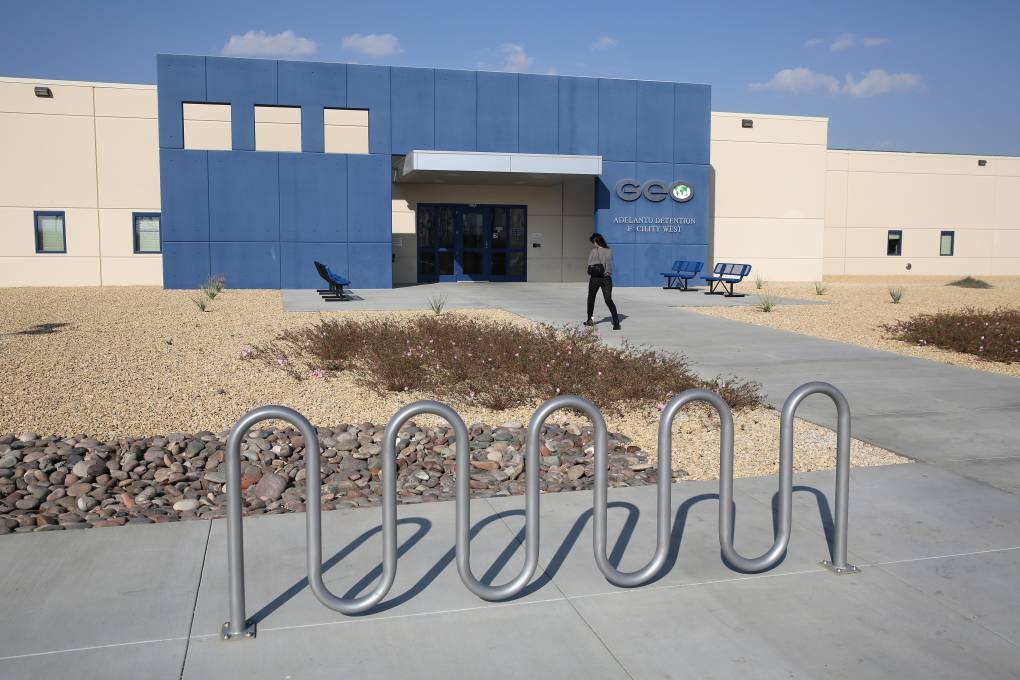
"caption": "The Adelanto Detention Facility is the largest U.S. Immigration and Customs Enforcement detention center in California. The facility is managed by the private GEO Group. Organizers signal that distrust of for-profit prison operators like GEO Group and Core Civic among detained migrants could complicate the process to vaccinate this population.",
"credit": "John Moore/Getty Images",
"altTag": null,
"description": "A family member walks into the Adelanto Detention Facility on November 15, 2013 in Adelanto, California. The facility is the largest Immigration and Customs Enforcement (ICE) detention center in California.",
"imgSizes": {
"medium": {
"file": "https://cdn.kqed.org/wp-content/uploads/sites/10/2021/04/GettyImages-450371267-1-800x533.jpg",
"width": 800,
"height": 533,
"mimeType": "image/jpeg"
},
"large": {
"file": "https://cdn.kqed.org/wp-content/uploads/sites/10/2021/04/GettyImages-450371267-1-1020x680.jpg",
"width": 1020,
"height": 680,
"mimeType": "image/jpeg"
},
"thumbnail": {
"file": "https://cdn.kqed.org/wp-content/uploads/sites/10/2021/04/GettyImages-450371267-1-160x107.jpg",
"width": 160,
"height": 107,
"mimeType": "image/jpeg"
},
"1536x1536": {
"file": "https://cdn.kqed.org/wp-content/uploads/sites/10/2021/04/GettyImages-450371267-1-1536x1024.jpg",
"width": 1536,
"height": 1024,
"mimeType": "image/jpeg"
},
"2048x2048": {
"file": "https://cdn.kqed.org/wp-content/uploads/sites/10/2021/04/GettyImages-450371267-1-2048x1365.jpg",
"width": 2048,
"height": 1365,
"mimeType": "image/jpeg"
},
"post-thumbnail": {
"file": "https://cdn.kqed.org/wp-content/uploads/sites/10/2021/04/GettyImages-450371267-1-672x372.jpg",
"width": 672,
"height": 372,
"mimeType": "image/jpeg"
},
"twentyfourteen-full-width": {
"file": "https://cdn.kqed.org/wp-content/uploads/sites/10/2021/04/GettyImages-450371267-1-1038x576.jpg",
"width": 1038,
"height": 576,
"mimeType": "image/jpeg"
},
"full-width": {
"file": "https://cdn.kqed.org/wp-content/uploads/sites/10/2021/04/GettyImages-450371267-1-1920x1280.jpg",
"width": 1920,
"height": 1280,
"mimeType": "image/jpeg"
},
"kqedFullSize": {
"file": "https://cdn.kqed.org/wp-content/uploads/sites/10/2021/04/GettyImages-450371267-1-scaled-e1778784968650.jpg",
"width": 2000,
"height": 1334
}
},
"isLoading": false,
"fetchFailed": false
},
"news_11861171": {
"type": "attachments",
"id": "news_11861171",
"meta": {
"index": "attachments_1716263798",
"site": "news",
"id": "11861171",
"found": true
},
"parent": 11861170,
"imgSizes": {
"apple_news_ca_landscape_5_5": {
"file": "https://ww2.kqed.org/app/uploads/sites/10/2021/02/ap20085537395007_custom-ecee50ce392cd8fa5d32a2063cb73d5bd1c02722-1044x783.jpg",
"width": 1044,
"mimeType": "image/jpeg",
"height": 783
},
"apple_news_ca_square_4_0": {
"file": "https://ww2.kqed.org/app/uploads/sites/10/2021/02/ap20085537395007_custom-ecee50ce392cd8fa5d32a2063cb73d5bd1c02722-470x470.jpg",
"width": 470,
"mimeType": "image/jpeg",
"height": 470
},
"twentyfourteen-full-width": {
"file": "https://ww2.kqed.org/app/uploads/sites/10/2021/02/ap20085537395007_custom-ecee50ce392cd8fa5d32a2063cb73d5bd1c02722-1038x576.jpg",
"width": 1038,
"mimeType": "image/jpeg",
"height": 576
},
"thumbnail": {
"file": "https://ww2.kqed.org/app/uploads/sites/10/2021/02/ap20085537395007_custom-ecee50ce392cd8fa5d32a2063cb73d5bd1c02722-160x107.jpg",
"width": 160,
"mimeType": "image/jpeg",
"height": 107
},
"post-thumbnail": {
"file": "https://ww2.kqed.org/app/uploads/sites/10/2021/02/ap20085537395007_custom-ecee50ce392cd8fa5d32a2063cb73d5bd1c02722-672x372.jpg",
"width": 672,
"mimeType": "image/jpeg",
"height": 372
},
"kqedFullSize": {
"file": "https://ww2.kqed.org/app/uploads/sites/10/2021/02/ap20085537395007_custom-ecee50ce392cd8fa5d32a2063cb73d5bd1c02722-scaled-e1613765453619.jpg",
"width": 1920,
"height": 1279
},
"2048x2048": {
"file": "https://ww2.kqed.org/app/uploads/sites/10/2021/02/ap20085537395007_custom-ecee50ce392cd8fa5d32a2063cb73d5bd1c02722-2048x1364.jpg",
"width": 2048,
"mimeType": "image/jpeg",
"height": 1364
},
"apple_news_ca_landscape_4_7": {
"file": "https://ww2.kqed.org/app/uploads/sites/10/2021/02/ap20085537395007_custom-ecee50ce392cd8fa5d32a2063cb73d5bd1c02722-632x474.jpg",
"width": 632,
"mimeType": "image/jpeg",
"height": 474
},
"large": {
"file": "https://ww2.kqed.org/app/uploads/sites/10/2021/02/ap20085537395007_custom-ecee50ce392cd8fa5d32a2063cb73d5bd1c02722-1020x679.jpg",
"width": 1020,
"mimeType": "image/jpeg",
"height": 679
},
"apple_news_ca_landscape_4_0": {
"file": "https://ww2.kqed.org/app/uploads/sites/10/2021/02/ap20085537395007_custom-ecee50ce392cd8fa5d32a2063cb73d5bd1c02722-536x402.jpg",
"width": 536,
"mimeType": "image/jpeg",
"height": 402
},
"apple_news_ca_portrait_12_9": {
"file": "https://ww2.kqed.org/app/uploads/sites/10/2021/02/ap20085537395007_custom-ecee50ce392cd8fa5d32a2063cb73d5bd1c02722-1122x1496.jpg",
"width": 1122,
"mimeType": "image/jpeg",
"height": 1496
},
"medium": {
"file": "https://ww2.kqed.org/app/uploads/sites/10/2021/02/ap20085537395007_custom-ecee50ce392cd8fa5d32a2063cb73d5bd1c02722-800x533.jpg",
"width": 800,
"mimeType": "image/jpeg",
"height": 533
},
"apple_news_ca_portrait_4_0": {
"file": "https://ww2.kqed.org/app/uploads/sites/10/2021/02/ap20085537395007_custom-ecee50ce392cd8fa5d32a2063cb73d5bd1c02722-354x472.jpg",
"width": 354,
"mimeType": "image/jpeg",
"height": 472
},
"apple_news_ca_portrait_9_7": {
"file": "https://ww2.kqed.org/app/uploads/sites/10/2021/02/ap20085537395007_custom-ecee50ce392cd8fa5d32a2063cb73d5bd1c02722-840x1120.jpg",
"width": 840,
"mimeType": "image/jpeg",
"height": 1120
},
"apple_news_ca_landscape_12_9": {
"file": "https://ww2.kqed.org/app/uploads/sites/10/2021/02/ap20085537395007_custom-ecee50ce392cd8fa5d32a2063cb73d5bd1c02722-1832x1374.jpg",
"width": 1832,
"mimeType": "image/jpeg",
"height": 1374
},
"apple_news_ca_square_9_7": {
"file": "https://ww2.kqed.org/app/uploads/sites/10/2021/02/ap20085537395007_custom-ecee50ce392cd8fa5d32a2063cb73d5bd1c02722-1104x1104.jpg",
"width": 1104,
"mimeType": "image/jpeg",
"height": 1104
},
"1536x1536": {
"file": "https://ww2.kqed.org/app/uploads/sites/10/2021/02/ap20085537395007_custom-ecee50ce392cd8fa5d32a2063cb73d5bd1c02722-1536x1023.jpg",
"width": 1536,
"mimeType": "image/jpeg",
"height": 1023
},
"apple_news_ca_portrait_4_7": {
"file": "https://ww2.kqed.org/app/uploads/sites/10/2021/02/ap20085537395007_custom-ecee50ce392cd8fa5d32a2063cb73d5bd1c02722-414x552.jpg",
"width": 414,
"mimeType": "image/jpeg",
"height": 552
},
"apple_news_ca_square_12_9": {
"file": "https://ww2.kqed.org/app/uploads/sites/10/2021/02/ap20085537395007_custom-ecee50ce392cd8fa5d32a2063cb73d5bd1c02722-1472x1472.jpg",
"width": 1472,
"mimeType": "image/jpeg",
"height": 1472
},
"apple_news_ca_portrait_5_5": {
"file": "https://ww2.kqed.org/app/uploads/sites/10/2021/02/ap20085537395007_custom-ecee50ce392cd8fa5d32a2063cb73d5bd1c02722-687x916.jpg",
"width": 687,
"mimeType": "image/jpeg",
"height": 916
},
"full-width": {
"file": "https://ww2.kqed.org/app/uploads/sites/10/2021/02/ap20085537395007_custom-ecee50ce392cd8fa5d32a2063cb73d5bd1c02722-1920x1279.jpg",
"width": 1920,
"mimeType": "image/jpeg",
"height": 1279
},
"apple_news_ca_square_4_7": {
"file": "https://ww2.kqed.org/app/uploads/sites/10/2021/02/ap20085537395007_custom-ecee50ce392cd8fa5d32a2063cb73d5bd1c02722-550x550.jpg",
"width": 550,
"mimeType": "image/jpeg",
"height": 550
},
"apple_news_ca_landscape_9_7": {
"file": "https://ww2.kqed.org/app/uploads/sites/10/2021/02/ap20085537395007_custom-ecee50ce392cd8fa5d32a2063cb73d5bd1c02722-1376x1032.jpg",
"width": 1376,
"mimeType": "image/jpeg",
"height": 1032
},
"apple_news_ca_square_5_5": {
"file": "https://ww2.kqed.org/app/uploads/sites/10/2021/02/ap20085537395007_custom-ecee50ce392cd8fa5d32a2063cb73d5bd1c02722-912x912.jpg",
"width": 912,
"mimeType": "image/jpeg",
"height": 912
}
},
"publishDate": 1613761514,
"modified": 1613766809,
"caption": "A U.S. Immigration and Customs Enforcement officer looks on during an operation in Escondido, California, in 2019. The Biden administration on Thursday announced new guidelines that are expected to sharply limit arrests and deportations carried out by ICE.",
"description": "A U.S. Immigration and Customs Enforcement officer looks on during an operation in Escondido, Calif., in 2019. The Biden administration on Thursday announced new guidelines that are expected to sharply limit arrests and deportations carried out by ICE.",
"title": "A U.S. Immigration and Customs Enforcement officer looks on during an operation in Escondido, Calif., in 2019. The Biden administration today announced new guidelines that are expected to sharply limit arrests and deportations carried out by ICE.",
"credit": "Gregory Bull/AP",
"status": "inherit",
"altTag": null,
"isLoading": false,
"fetchFailed": false
},
"news_11857116": {
"type": "attachments",
"id": "news_11857116",
"meta": {
"index": "attachments_1716263798",
"site": "news",
"id": "11857116",
"found": true
},
"parent": 11856995,
"imgSizes": {
"apple_news_ca_landscape_5_5": {
"file": "https://ww2.kqed.org/app/uploads/sites/10/2021/01/Herrera-1044x783.jpg",
"width": 1044,
"mimeType": "image/jpeg",
"height": 783
},
"apple_news_ca_square_4_0": {
"file": "https://ww2.kqed.org/app/uploads/sites/10/2021/01/Herrera-470x470.jpg",
"width": 470,
"mimeType": "image/jpeg",
"height": 470
},
"twentyfourteen-full-width": {
"file": "https://ww2.kqed.org/app/uploads/sites/10/2021/01/Herrera-1038x576.jpg",
"width": 1038,
"mimeType": "image/jpeg",
"height": 576
},
"thumbnail": {
"file": "https://ww2.kqed.org/app/uploads/sites/10/2021/01/Herrera-160x121.jpg",
"width": 160,
"mimeType": "image/jpeg",
"height": 121
},
"post-thumbnail": {
"file": "https://ww2.kqed.org/app/uploads/sites/10/2021/01/Herrera-672x372.jpg",
"width": 672,
"mimeType": "image/jpeg",
"height": 372
},
"kqedFullSize": {
"file": "https://ww2.kqed.org/app/uploads/sites/10/2021/01/Herrera.jpg",
"width": 1920,
"height": 1451
},
"apple_news_ca_landscape_4_7": {
"file": "https://ww2.kqed.org/app/uploads/sites/10/2021/01/Herrera-632x474.jpg",
"width": 632,
"mimeType": "image/jpeg",
"height": 474
},
"large": {
"file": "https://ww2.kqed.org/app/uploads/sites/10/2021/01/Herrera-1020x771.jpg",
"width": 1020,
"mimeType": "image/jpeg",
"height": 771
},
"apple_news_ca_landscape_4_0": {
"file": "https://ww2.kqed.org/app/uploads/sites/10/2021/01/Herrera-536x402.jpg",
"width": 536,
"mimeType": "image/jpeg",
"height": 402
},
"apple_news_ca_portrait_12_9": {
"file": "https://ww2.kqed.org/app/uploads/sites/10/2021/01/Herrera-1122x1451.jpg",
"width": 1122,
"mimeType": "image/jpeg",
"height": 1451
},
"medium": {
"file": "https://ww2.kqed.org/app/uploads/sites/10/2021/01/Herrera-800x605.jpg",
"width": 800,
"mimeType": "image/jpeg",
"height": 605
},
"apple_news_ca_portrait_4_0": {
"file": "https://ww2.kqed.org/app/uploads/sites/10/2021/01/Herrera-354x472.jpg",
"width": 354,
"mimeType": "image/jpeg",
"height": 472
},
"apple_news_ca_portrait_9_7": {
"file": "https://ww2.kqed.org/app/uploads/sites/10/2021/01/Herrera-840x1120.jpg",
"width": 840,
"mimeType": "image/jpeg",
"height": 1120
},
"apple_news_ca_landscape_12_9": {
"file": "https://ww2.kqed.org/app/uploads/sites/10/2021/01/Herrera-1832x1374.jpg",
"width": 1832,
"mimeType": "image/jpeg",
"height": 1374
},
"apple_news_ca_square_9_7": {
"file": "https://ww2.kqed.org/app/uploads/sites/10/2021/01/Herrera-1104x1104.jpg",
"width": 1104,
"mimeType": "image/jpeg",
"height": 1104
},
"1536x1536": {
"file": "https://ww2.kqed.org/app/uploads/sites/10/2021/01/Herrera-1536x1161.jpg",
"width": 1536,
"mimeType": "image/jpeg",
"height": 1161
},
"apple_news_ca_portrait_4_7": {
"file": "https://ww2.kqed.org/app/uploads/sites/10/2021/01/Herrera-414x552.jpg",
"width": 414,
"mimeType": "image/jpeg",
"height": 552
},
"apple_news_ca_square_12_9": {
"file": "https://ww2.kqed.org/app/uploads/sites/10/2021/01/Herrera-1472x1451.jpg",
"width": 1472,
"mimeType": "image/jpeg",
"height": 1451
},
"apple_news_ca_portrait_5_5": {
"file": "https://ww2.kqed.org/app/uploads/sites/10/2021/01/Herrera-687x916.jpg",
"width": 687,
"mimeType": "image/jpeg",
"height": 916
},
"apple_news_ca_square_4_7": {
"file": "https://ww2.kqed.org/app/uploads/sites/10/2021/01/Herrera-550x550.jpg",
"width": 550,
"mimeType": "image/jpeg",
"height": 550
},
"apple_news_ca_landscape_9_7": {
"file": "https://ww2.kqed.org/app/uploads/sites/10/2021/01/Herrera-1376x1032.jpg",
"width": 1376,
"mimeType": "image/jpeg",
"height": 1032
},
"apple_news_ca_square_5_5": {
"file": "https://ww2.kqed.org/app/uploads/sites/10/2021/01/Herrera-912x912.jpg",
"width": 912,
"mimeType": "image/jpeg",
"height": 912
}
},
"publishDate": 1611693380,
"modified": 1611700711,
"caption": "Juan Jose Erazo Herrera, photographed while in ICE custody shortly before he turned 19, in March 2019.",
"description": "Juan Jose Erazo Herrera, photographed while in ICE custody shortly before he turned 19, in March, 2019.",
"title": "Herrera",
"credit": "Courtesy of Juan Jose Erazo Herrera",
"status": "inherit",
"altTag": "Juan Jose Erazo Herrera speaks to a visitor on a ICE detention center phone",
"isLoading": false,
"fetchFailed": false
},
"news_11852767": {
"type": "attachments",
"id": "news_11852767",
"meta": {
"index": "attachments_1716263798",
"site": "news",
"id": "11852767",
"found": true
},
"parent": 11852574,
"imgSizes": {
"apple_news_ca_landscape_5_5": {
"file": "https://ww2.kqed.org/app/uploads/sites/10/2020/12/RS26115_S-wing-hallway-01-11-17-qut-1044x783.jpg",
"width": 1044,
"mimeType": "image/jpeg",
"height": 783
},
"apple_news_ca_square_4_0": {
"file": "https://ww2.kqed.org/app/uploads/sites/10/2020/12/RS26115_S-wing-hallway-01-11-17-qut-470x470.jpg",
"width": 470,
"mimeType": "image/jpeg",
"height": 470
},
"twentyfourteen-full-width": {
"file": "https://ww2.kqed.org/app/uploads/sites/10/2020/12/RS26115_S-wing-hallway-01-11-17-qut-1038x576.jpg",
"width": 1038,
"mimeType": "image/jpeg",
"height": 576
},
"thumbnail": {
"file": "https://ww2.kqed.org/app/uploads/sites/10/2020/12/RS26115_S-wing-hallway-01-11-17-qut-160x90.jpg",
"width": 160,
"mimeType": "image/jpeg",
"height": 90
},
"post-thumbnail": {
"file": "https://ww2.kqed.org/app/uploads/sites/10/2020/12/RS26115_S-wing-hallway-01-11-17-qut-672x372.jpg",
"width": 672,
"mimeType": "image/jpeg",
"height": 372
},
"kqedFullSize": {
"file": "https://ww2.kqed.org/app/uploads/sites/10/2020/12/RS26115_S-wing-hallway-01-11-17-qut.jpg",
"width": 1920,
"height": 1080
},
"apple_news_ca_landscape_4_7": {
"file": "https://ww2.kqed.org/app/uploads/sites/10/2020/12/RS26115_S-wing-hallway-01-11-17-qut-632x474.jpg",
"width": 632,
"mimeType": "image/jpeg",
"height": 474
},
"large": {
"file": "https://ww2.kqed.org/app/uploads/sites/10/2020/12/RS26115_S-wing-hallway-01-11-17-qut-1020x574.jpg",
"width": 1020,
"mimeType": "image/jpeg",
"height": 574
},
"apple_news_ca_landscape_4_0": {
"file": "https://ww2.kqed.org/app/uploads/sites/10/2020/12/RS26115_S-wing-hallway-01-11-17-qut-536x402.jpg",
"width": 536,
"mimeType": "image/jpeg",
"height": 402
},
"apple_news_ca_portrait_12_9": {
"file": "https://ww2.kqed.org/app/uploads/sites/10/2020/12/RS26115_S-wing-hallway-01-11-17-qut-1122x1080.jpg",
"width": 1122,
"mimeType": "image/jpeg",
"height": 1080
},
"medium": {
"file": "https://ww2.kqed.org/app/uploads/sites/10/2020/12/RS26115_S-wing-hallway-01-11-17-qut-800x450.jpg",
"width": 800,
"mimeType": "image/jpeg",
"height": 450
},
"apple_news_ca_portrait_4_0": {
"file": "https://ww2.kqed.org/app/uploads/sites/10/2020/12/RS26115_S-wing-hallway-01-11-17-qut-354x472.jpg",
"width": 354,
"mimeType": "image/jpeg",
"height": 472
},
"apple_news_ca_portrait_9_7": {
"file": "https://ww2.kqed.org/app/uploads/sites/10/2020/12/RS26115_S-wing-hallway-01-11-17-qut-840x1080.jpg",
"width": 840,
"mimeType": "image/jpeg",
"height": 1080
},
"apple_news_ca_landscape_12_9": {
"file": "https://ww2.kqed.org/app/uploads/sites/10/2020/12/RS26115_S-wing-hallway-01-11-17-qut-1832x1080.jpg",
"width": 1832,
"mimeType": "image/jpeg",
"height": 1080
},
"apple_news_ca_square_9_7": {
"file": "https://ww2.kqed.org/app/uploads/sites/10/2020/12/RS26115_S-wing-hallway-01-11-17-qut-1104x1080.jpg",
"width": 1104,
"mimeType": "image/jpeg",
"height": 1080
},
"1536x1536": {
"file": "https://ww2.kqed.org/app/uploads/sites/10/2020/12/RS26115_S-wing-hallway-01-11-17-qut-1536x864.jpg",
"width": 1536,
"mimeType": "image/jpeg",
"height": 864
},
"apple_news_ca_portrait_4_7": {
"file": "https://ww2.kqed.org/app/uploads/sites/10/2020/12/RS26115_S-wing-hallway-01-11-17-qut-414x552.jpg",
"width": 414,
"mimeType": "image/jpeg",
"height": 552
},
"apple_news_ca_square_12_9": {
"file": "https://ww2.kqed.org/app/uploads/sites/10/2020/12/RS26115_S-wing-hallway-01-11-17-qut-1472x1080.jpg",
"width": 1472,
"mimeType": "image/jpeg",
"height": 1080
},
"apple_news_ca_portrait_5_5": {
"file": "https://ww2.kqed.org/app/uploads/sites/10/2020/12/RS26115_S-wing-hallway-01-11-17-qut-687x916.jpg",
"width": 687,
"mimeType": "image/jpeg",
"height": 916
},
"apple_news_ca_square_4_7": {
"file": "https://ww2.kqed.org/app/uploads/sites/10/2020/12/RS26115_S-wing-hallway-01-11-17-qut-550x550.jpg",
"width": 550,
"mimeType": "image/jpeg",
"height": 550
},
"apple_news_ca_landscape_9_7": {
"file": "https://ww2.kqed.org/app/uploads/sites/10/2020/12/RS26115_S-wing-hallway-01-11-17-qut-1376x1032.jpg",
"width": 1376,
"mimeType": "image/jpeg",
"height": 1032
},
"apple_news_ca_square_5_5": {
"file": "https://ww2.kqed.org/app/uploads/sites/10/2020/12/RS26115_S-wing-hallway-01-11-17-qut-912x912.jpg",
"width": 912,
"mimeType": "image/jpeg",
"height": 912
}
},
"publishDate": 1608774516,
"modified": 1608774622,
"caption": "A hallway in the S-Wing of the Yuba County Jail, taken in 2017. Immigrant advocates have raised the alarm about a COVID-19 outbreak in the facility.",
"description": null,
"title": "RS26115_S-wing-hallway-01-11-17-qut",
"credit": "Courtesy Rosen Bien Galvan & Grunfeld LLP",
"status": "inherit",
"altTag": "\"\"",
"isLoading": false,
"fetchFailed": false
},
"news_11823573": {
"type": "attachments",
"id": "news_11823573",
"meta": {
"index": "attachments_1716263798",
"site": "news",
"id": "11823573",
"found": true
},
"parent": 11823564,
"imgSizes": {
"apple_news_ca_square_4_0": {
"file": "https://ww2.kqed.org/app/uploads/sites/10/2020/06/RS43592_EricaBrooks-027-qut-470x470.jpg",
"width": 470,
"mimeType": "image/jpeg",
"height": 470
},
"twentyfourteen-full-width": {
"file": "https://ww2.kqed.org/app/uploads/sites/10/2020/06/RS43592_EricaBrooks-027-qut-1024x576.jpg",
"width": 1024,
"mimeType": "image/jpeg",
"height": 576
},
"thumbnail": {
"file": "https://ww2.kqed.org/app/uploads/sites/10/2020/06/RS43592_EricaBrooks-027-qut-160x107.jpg",
"width": 160,
"mimeType": "image/jpeg",
"height": 107
},
"post-thumbnail": {
"file": "https://ww2.kqed.org/app/uploads/sites/10/2020/06/RS43592_EricaBrooks-027-qut-672x372.jpg",
"width": 672,
"mimeType": "image/jpeg",
"height": 372
},
"kqedFullSize": {
"file": "https://ww2.kqed.org/app/uploads/sites/10/2020/06/RS43592_EricaBrooks-027-qut.jpg",
"width": 1024,
"height": 683
},
"apple_news_ca_landscape_4_7": {
"file": "https://ww2.kqed.org/app/uploads/sites/10/2020/06/RS43592_EricaBrooks-027-qut-632x474.jpg",
"width": 632,
"mimeType": "image/jpeg",
"height": 474
},
"large": {
"file": "https://ww2.kqed.org/app/uploads/sites/10/2020/06/RS43592_EricaBrooks-027-qut-1020x680.jpg",
"width": 1020,
"mimeType": "image/jpeg",
"height": 680
},
"apple_news_ca_landscape_4_0": {
"file": "https://ww2.kqed.org/app/uploads/sites/10/2020/06/RS43592_EricaBrooks-027-qut-536x402.jpg",
"width": 536,
"mimeType": "image/jpeg",
"height": 402
},
"medium": {
"file": "https://ww2.kqed.org/app/uploads/sites/10/2020/06/RS43592_EricaBrooks-027-qut-800x534.jpg",
"width": 800,
"mimeType": "image/jpeg",
"height": 534
},
"apple_news_ca_portrait_4_0": {
"file": "https://ww2.kqed.org/app/uploads/sites/10/2020/06/RS43592_EricaBrooks-027-qut-354x472.jpg",
"width": 354,
"mimeType": "image/jpeg",
"height": 472
},
"apple_news_ca_portrait_9_7": {
"file": "https://ww2.kqed.org/app/uploads/sites/10/2020/06/RS43592_EricaBrooks-027-qut-840x683.jpg",
"width": 840,
"mimeType": "image/jpeg",
"height": 683
},
"apple_news_ca_portrait_4_7": {
"file": "https://ww2.kqed.org/app/uploads/sites/10/2020/06/RS43592_EricaBrooks-027-qut-414x552.jpg",
"width": 414,
"mimeType": "image/jpeg",
"height": 552
},
"apple_news_ca_portrait_5_5": {
"file": "https://ww2.kqed.org/app/uploads/sites/10/2020/06/RS43592_EricaBrooks-027-qut-687x683.jpg",
"width": 687,
"mimeType": "image/jpeg",
"height": 683
},
"apple_news_ca_square_4_7": {
"file": "https://ww2.kqed.org/app/uploads/sites/10/2020/06/RS43592_EricaBrooks-027-qut-550x550.jpg",
"width": 550,
"mimeType": "image/jpeg",
"height": 550
},
"apple_news_ca_square_5_5": {
"file": "https://ww2.kqed.org/app/uploads/sites/10/2020/06/RS43592_EricaBrooks-027-qut-912x683.jpg",
"width": 912,
"mimeType": "image/jpeg",
"height": 683
}
},
"publishDate": 1591663411,
"modified": 1591663469,
"caption": "Erica Brooks poses for a family portrait with her husband and son at the beach in La Jolla in 2018.\n",
"description": "Erica Brooks poses for a family portrait with her husband and son at the beach in La Jolla in 2018.\n",
"title": "RS43592_EricaBrooks-027-qut",
"credit": "Courtesy of Erica Brooks",
"status": "inherit",
"isLoading": false,
"fetchFailed": false
},
"news_11814235": {
"type": "attachments",
"id": "news_11814235",
"meta": {
"index": "attachments_1716263798",
"site": "news",
"id": "11814235",
"found": true
},
"parent": 11814193,
"imgSizes": {
"apple_news_ca_landscape_5_5": {
"file": "https://ww2.kqed.org/app/uploads/sites/10/2020/04/RS42909_f0ba30608dfbf955c373ef01c6c27d22d2530583-1-qut-1044x783.jpg",
"width": 1044,
"mimeType": "image/jpeg",
"height": 783
},
"apple_news_ca_square_4_0": {
"file": "https://ww2.kqed.org/app/uploads/sites/10/2020/04/RS42909_f0ba30608dfbf955c373ef01c6c27d22d2530583-1-qut-470x470.jpg",
"width": 470,
"mimeType": "image/jpeg",
"height": 470
},
"twentyfourteen-full-width": {
"file": "https://ww2.kqed.org/app/uploads/sites/10/2020/04/RS42909_f0ba30608dfbf955c373ef01c6c27d22d2530583-1-qut-1038x576.jpg",
"width": 1038,
"mimeType": "image/jpeg",
"height": 576
},
"thumbnail": {
"file": "https://ww2.kqed.org/app/uploads/sites/10/2020/04/RS42909_f0ba30608dfbf955c373ef01c6c27d22d2530583-1-qut-160x109.jpg",
"width": 160,
"mimeType": "image/jpeg",
"height": 109
},
"post-thumbnail": {
"file": "https://ww2.kqed.org/app/uploads/sites/10/2020/04/RS42909_f0ba30608dfbf955c373ef01c6c27d22d2530583-1-qut-672x372.jpg",
"width": 672,
"mimeType": "image/jpeg",
"height": 372
},
"kqedFullSize": {
"file": "https://ww2.kqed.org/app/uploads/sites/10/2020/04/RS42909_f0ba30608dfbf955c373ef01c6c27d22d2530583-1-qut.jpg",
"width": 1531,
"height": 1045
},
"apple_news_ca_landscape_4_7": {
"file": "https://ww2.kqed.org/app/uploads/sites/10/2020/04/RS42909_f0ba30608dfbf955c373ef01c6c27d22d2530583-1-qut-632x474.jpg",
"width": 632,
"mimeType": "image/jpeg",
"height": 474
},
"large": {
"file": "https://ww2.kqed.org/app/uploads/sites/10/2020/04/RS42909_f0ba30608dfbf955c373ef01c6c27d22d2530583-1-qut-1020x696.jpg",
"width": 1020,
"mimeType": "image/jpeg",
"height": 696
},
"apple_news_ca_landscape_4_0": {
"file": "https://ww2.kqed.org/app/uploads/sites/10/2020/04/RS42909_f0ba30608dfbf955c373ef01c6c27d22d2530583-1-qut-536x402.jpg",
"width": 536,
"mimeType": "image/jpeg",
"height": 402
},
"apple_news_ca_portrait_12_9": {
"file": "https://ww2.kqed.org/app/uploads/sites/10/2020/04/RS42909_f0ba30608dfbf955c373ef01c6c27d22d2530583-1-qut-1122x1045.jpg",
"width": 1122,
"mimeType": "image/jpeg",
"height": 1045
},
"medium": {
"file": "https://ww2.kqed.org/app/uploads/sites/10/2020/04/RS42909_f0ba30608dfbf955c373ef01c6c27d22d2530583-1-qut-800x546.jpg",
"width": 800,
"mimeType": "image/jpeg",
"height": 546
},
"apple_news_ca_portrait_4_0": {
"file": "https://ww2.kqed.org/app/uploads/sites/10/2020/04/RS42909_f0ba30608dfbf955c373ef01c6c27d22d2530583-1-qut-354x472.jpg",
"width": 354,
"mimeType": "image/jpeg",
"height": 472
},
"apple_news_ca_portrait_9_7": {
"file": "https://ww2.kqed.org/app/uploads/sites/10/2020/04/RS42909_f0ba30608dfbf955c373ef01c6c27d22d2530583-1-qut-840x1045.jpg",
"width": 840,
"mimeType": "image/jpeg",
"height": 1045
},
"apple_news_ca_square_9_7": {
"file": "https://ww2.kqed.org/app/uploads/sites/10/2020/04/RS42909_f0ba30608dfbf955c373ef01c6c27d22d2530583-1-qut-1104x1045.jpg",
"width": 1104,
"mimeType": "image/jpeg",
"height": 1045
},
"apple_news_ca_portrait_4_7": {
"file": "https://ww2.kqed.org/app/uploads/sites/10/2020/04/RS42909_f0ba30608dfbf955c373ef01c6c27d22d2530583-1-qut-414x552.jpg",
"width": 414,
"mimeType": "image/jpeg",
"height": 552
},
"apple_news_ca_square_12_9": {
"file": "https://ww2.kqed.org/app/uploads/sites/10/2020/04/RS42909_f0ba30608dfbf955c373ef01c6c27d22d2530583-1-qut-1472x1045.jpg",
"width": 1472,
"mimeType": "image/jpeg",
"height": 1045
},
"apple_news_ca_portrait_5_5": {
"file": "https://ww2.kqed.org/app/uploads/sites/10/2020/04/RS42909_f0ba30608dfbf955c373ef01c6c27d22d2530583-1-qut-687x916.jpg",
"width": 687,
"mimeType": "image/jpeg",
"height": 916
},
"apple_news_ca_square_4_7": {
"file": "https://ww2.kqed.org/app/uploads/sites/10/2020/04/RS42909_f0ba30608dfbf955c373ef01c6c27d22d2530583-1-qut-550x550.jpg",
"width": 550,
"mimeType": "image/jpeg",
"height": 550
},
"apple_news_ca_landscape_9_7": {
"file": "https://ww2.kqed.org/app/uploads/sites/10/2020/04/RS42909_f0ba30608dfbf955c373ef01c6c27d22d2530583-1-qut-1376x1032.jpg",
"width": 1376,
"mimeType": "image/jpeg",
"height": 1032
},
"apple_news_ca_square_5_5": {
"file": "https://ww2.kqed.org/app/uploads/sites/10/2020/04/RS42909_f0ba30608dfbf955c373ef01c6c27d22d2530583-1-qut-912x912.jpg",
"width": 912,
"mimeType": "image/jpeg",
"height": 912
}
},
"publishDate": 1587763197,
"modified": 1588112717,
"caption": "Lexis Hernandez Avilez is back with her family. But returning home in the midst of a pandemic is complicated, and being home has brought up feelings of isolation and claustrophobia that she felt before she found friends at the Texas facility.",
"description": "Lexis Avilez is back with her family. But returning home in the midst of a pandemic is complicated, and being home has brought up feelings of isolation and claustrophobia that she felt before she found friends at the Texas facility.",
"title": "RS42909_f0ba30608dfbf955c373ef01c6c27d22d2530583-1-qut",
"credit": "Courtesy of the San Francisco Public Defender's Office",
"status": "inherit",
"isLoading": false,
"fetchFailed": false
},
"news_11813299": {
"type": "attachments",
"id": "news_11813299",
"meta": {
"index": "attachments_1716263798",
"site": "news",
"id": "11813299",
"found": true
},
"parent": 11813298,
"imgSizes": {
"apple_news_ca_landscape_5_5": {
"file": "https://ww2.kqed.org/app/uploads/sites/10/2020/04/ice-a35f7f18c47b018c38c0ce8720eabe95a1c6f3fa-1044x783.jpg",
"width": 1044,
"mimeType": "image/jpeg",
"height": 783
},
"apple_news_ca_square_4_0": {
"file": "https://ww2.kqed.org/app/uploads/sites/10/2020/04/ice-a35f7f18c47b018c38c0ce8720eabe95a1c6f3fa-470x470.jpg",
"width": 470,
"mimeType": "image/jpeg",
"height": 470
},
"twentyfourteen-full-width": {
"file": "https://ww2.kqed.org/app/uploads/sites/10/2020/04/ice-a35f7f18c47b018c38c0ce8720eabe95a1c6f3fa-1038x576.jpg",
"width": 1038,
"mimeType": "image/jpeg",
"height": 576
},
"thumbnail": {
"file": "https://ww2.kqed.org/app/uploads/sites/10/2020/04/ice-a35f7f18c47b018c38c0ce8720eabe95a1c6f3fa-160x120.jpg",
"width": 160,
"mimeType": "image/jpeg",
"height": 120
},
"post-thumbnail": {
"file": "https://ww2.kqed.org/app/uploads/sites/10/2020/04/ice-a35f7f18c47b018c38c0ce8720eabe95a1c6f3fa-672x372.jpg",
"width": 672,
"mimeType": "image/jpeg",
"height": 372
},
"kqedFullSize": {
"file": "https://ww2.kqed.org/app/uploads/sites/10/2020/04/ice-a35f7f18c47b018c38c0ce8720eabe95a1c6f3fa-e1587485974698.jpg",
"width": 1920,
"height": 1438
},
"apple_news_ca_landscape_4_7": {
"file": "https://ww2.kqed.org/app/uploads/sites/10/2020/04/ice-a35f7f18c47b018c38c0ce8720eabe95a1c6f3fa-632x474.jpg",
"width": 632,
"mimeType": "image/jpeg",
"height": 474
},
"large": {
"file": "https://ww2.kqed.org/app/uploads/sites/10/2020/04/ice-a35f7f18c47b018c38c0ce8720eabe95a1c6f3fa-1020x764.jpg",
"width": 1020,
"mimeType": "image/jpeg",
"height": 764
},
"apple_news_ca_landscape_4_0": {
"file": "https://ww2.kqed.org/app/uploads/sites/10/2020/04/ice-a35f7f18c47b018c38c0ce8720eabe95a1c6f3fa-536x402.jpg",
"width": 536,
"mimeType": "image/jpeg",
"height": 402
},
"apple_news_ca_portrait_12_9": {
"file": "https://ww2.kqed.org/app/uploads/sites/10/2020/04/ice-a35f7f18c47b018c38c0ce8720eabe95a1c6f3fa-1122x1496.jpg",
"width": 1122,
"mimeType": "image/jpeg",
"height": 1496
},
"medium": {
"file": "https://ww2.kqed.org/app/uploads/sites/10/2020/04/ice-a35f7f18c47b018c38c0ce8720eabe95a1c6f3fa-800x599.jpg",
"width": 800,
"mimeType": "image/jpeg",
"height": 599
},
"apple_news_ca_portrait_4_0": {
"file": "https://ww2.kqed.org/app/uploads/sites/10/2020/04/ice-a35f7f18c47b018c38c0ce8720eabe95a1c6f3fa-354x472.jpg",
"width": 354,
"mimeType": "image/jpeg",
"height": 472
},
"apple_news_ca_portrait_9_7": {
"file": "https://ww2.kqed.org/app/uploads/sites/10/2020/04/ice-a35f7f18c47b018c38c0ce8720eabe95a1c6f3fa-840x1120.jpg",
"width": 840,
"mimeType": "image/jpeg",
"height": 1120
},
"apple_news_ca_landscape_12_9": {
"file": "https://ww2.kqed.org/app/uploads/sites/10/2020/04/ice-a35f7f18c47b018c38c0ce8720eabe95a1c6f3fa-1832x1374.jpg",
"width": 1832,
"mimeType": "image/jpeg",
"height": 1374
},
"apple_news_ca_square_9_7": {
"file": "https://ww2.kqed.org/app/uploads/sites/10/2020/04/ice-a35f7f18c47b018c38c0ce8720eabe95a1c6f3fa-1104x1104.jpg",
"width": 1104,
"mimeType": "image/jpeg",
"height": 1104
},
"apple_news_ca_portrait_4_7": {
"file": "https://ww2.kqed.org/app/uploads/sites/10/2020/04/ice-a35f7f18c47b018c38c0ce8720eabe95a1c6f3fa-414x552.jpg",
"width": 414,
"mimeType": "image/jpeg",
"height": 552
},
"apple_news_ca_square_12_9": {
"file": "https://ww2.kqed.org/app/uploads/sites/10/2020/04/ice-a35f7f18c47b018c38c0ce8720eabe95a1c6f3fa-1472x1472.jpg",
"width": 1472,
"mimeType": "image/jpeg",
"height": 1472
},
"apple_news_ca_portrait_5_5": {
"file": "https://ww2.kqed.org/app/uploads/sites/10/2020/04/ice-a35f7f18c47b018c38c0ce8720eabe95a1c6f3fa-687x916.jpg",
"width": 687,
"mimeType": "image/jpeg",
"height": 916
},
"full-width": {
"file": "https://ww2.kqed.org/app/uploads/sites/10/2020/04/ice-a35f7f18c47b018c38c0ce8720eabe95a1c6f3fa-1920x1438.jpg",
"width": 1920,
"mimeType": "image/jpeg",
"height": 1438
},
"apple_news_ca_square_4_7": {
"file": "https://ww2.kqed.org/app/uploads/sites/10/2020/04/ice-a35f7f18c47b018c38c0ce8720eabe95a1c6f3fa-550x550.jpg",
"width": 550,
"mimeType": "image/jpeg",
"height": 550
},
"apple_news_ca_landscape_9_7": {
"file": "https://ww2.kqed.org/app/uploads/sites/10/2020/04/ice-a35f7f18c47b018c38c0ce8720eabe95a1c6f3fa-1376x1032.jpg",
"width": 1376,
"mimeType": "image/jpeg",
"height": 1032
},
"apple_news_ca_square_5_5": {
"file": "https://ww2.kqed.org/app/uploads/sites/10/2020/04/ice-a35f7f18c47b018c38c0ce8720eabe95a1c6f3fa-912x912.jpg",
"width": 912,
"mimeType": "image/jpeg",
"height": 912
}
},
"publishDate": 1587485918,
"modified": 1587486005,
"caption": "A masked cyclist passes a motorist protesting in a vehicle at a U.S. Immigration and Customs Enforcement field office last month in San Francisco.",
"description": "A masked cyclist passes a motorist protesting in a vehicle at a U.S. Immigration and Customs Enforcement field office last month in San Francisco.",
"title": "A masked cyclist passes a motorist protesting in a vehicle at a U.S. Immigration and Customs Enforcement field office last month in San Francisco.",
"credit": "Ben Margot/AP",
"status": "inherit",
"isLoading": false,
"fetchFailed": false
},
"news_11811709": {
"type": "attachments",
"id": "news_11811709",
"meta": {
"index": "attachments_1716263798",
"site": "news",
"id": "11811709",
"found": true
},
"parent": 11811668,
"imgSizes": {
"apple_news_ca_square_4_0": {
"file": "https://ww2.kqed.org/app/uploads/sites/10/2020/04/GettyImages-1209315221-470x470.jpg",
"width": 470,
"mimeType": "image/jpeg",
"height": 470
},
"twentyfourteen-full-width": {
"file": "https://ww2.kqed.org/app/uploads/sites/10/2020/04/GettyImages-1209315221-1024x576.jpg",
"width": 1024,
"mimeType": "image/jpeg",
"height": 576
},
"thumbnail": {
"file": "https://ww2.kqed.org/app/uploads/sites/10/2020/04/GettyImages-1209315221-160x107.jpg",
"width": 160,
"mimeType": "image/jpeg",
"height": 107
},
"post-thumbnail": {
"file": "https://ww2.kqed.org/app/uploads/sites/10/2020/04/GettyImages-1209315221-672x372.jpg",
"width": 672,
"mimeType": "image/jpeg",
"height": 372
},
"kqedFullSize": {
"file": "https://ww2.kqed.org/app/uploads/sites/10/2020/04/GettyImages-1209315221.jpg",
"width": 1024,
"height": 683
},
"apple_news_ca_landscape_4_7": {
"file": "https://ww2.kqed.org/app/uploads/sites/10/2020/04/GettyImages-1209315221-632x474.jpg",
"width": 632,
"mimeType": "image/jpeg",
"height": 474
},
"large": {
"file": "https://ww2.kqed.org/app/uploads/sites/10/2020/04/GettyImages-1209315221-1020x680.jpg",
"width": 1020,
"mimeType": "image/jpeg",
"height": 680
},
"apple_news_ca_landscape_4_0": {
"file": "https://ww2.kqed.org/app/uploads/sites/10/2020/04/GettyImages-1209315221-536x402.jpg",
"width": 536,
"mimeType": "image/jpeg",
"height": 402
},
"medium": {
"file": "https://ww2.kqed.org/app/uploads/sites/10/2020/04/GettyImages-1209315221-800x534.jpg",
"width": 800,
"mimeType": "image/jpeg",
"height": 534
},
"apple_news_ca_portrait_4_0": {
"file": "https://ww2.kqed.org/app/uploads/sites/10/2020/04/GettyImages-1209315221-354x472.jpg",
"width": 354,
"mimeType": "image/jpeg",
"height": 472
},
"apple_news_ca_portrait_9_7": {
"file": "https://ww2.kqed.org/app/uploads/sites/10/2020/04/GettyImages-1209315221-840x683.jpg",
"width": 840,
"mimeType": "image/jpeg",
"height": 683
},
"apple_news_ca_portrait_4_7": {
"file": "https://ww2.kqed.org/app/uploads/sites/10/2020/04/GettyImages-1209315221-414x552.jpg",
"width": 414,
"mimeType": "image/jpeg",
"height": 552
},
"apple_news_ca_portrait_5_5": {
"file": "https://ww2.kqed.org/app/uploads/sites/10/2020/04/GettyImages-1209315221-687x683.jpg",
"width": 687,
"mimeType": "image/jpeg",
"height": 683
},
"apple_news_ca_square_4_7": {
"file": "https://ww2.kqed.org/app/uploads/sites/10/2020/04/GettyImages-1209315221-550x550.jpg",
"width": 550,
"mimeType": "image/jpeg",
"height": 550
},
"apple_news_ca_square_5_5": {
"file": "https://ww2.kqed.org/app/uploads/sites/10/2020/04/GettyImages-1209315221-912x683.jpg",
"width": 912,
"mimeType": "image/jpeg",
"height": 683
}
},
"publishDate": 1586472639,
"modified": 1586472910,
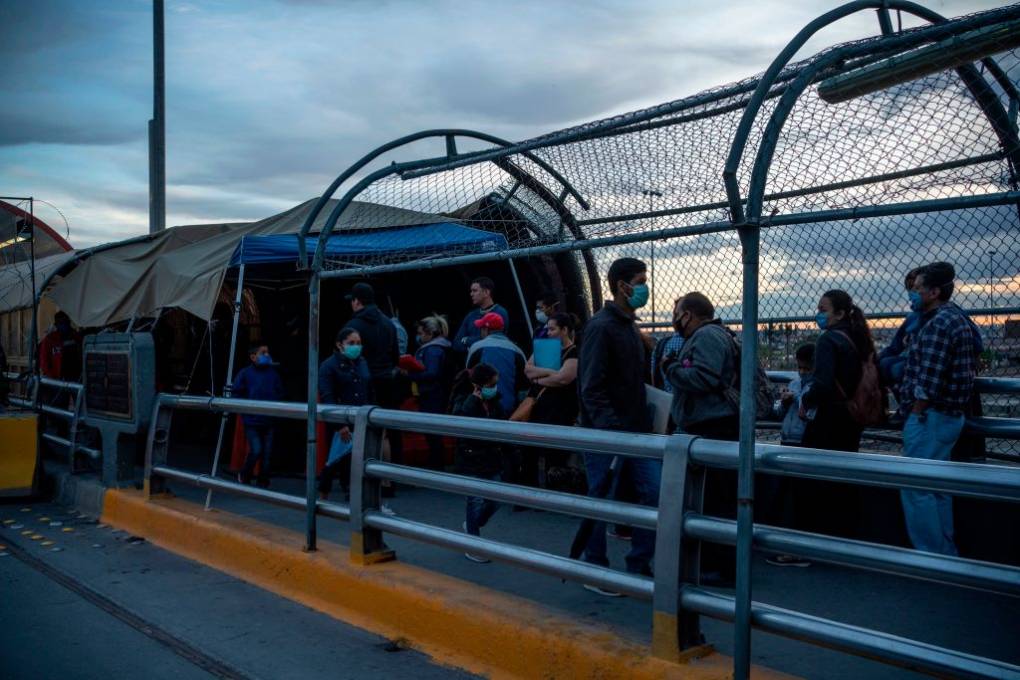
"caption": "Migrants wait to change their court dates at the U.S. border at the Paso del Norte International Bridge in Ciudad Juarez, Mexico on on April 6, 2020.",
"description": null,
"title": "MEXICO-US-HEALTH-VIRUS",
"credit": "Paul Ratje/Agence France-Presse / AFP",
"status": "inherit",
"isLoading": false,
"fetchFailed": false
},
"news_11809312": {
"type": "attachments",
"id": "news_11809312",
"meta": {
"index": "attachments_1716263798",
"site": "news",
"id": "11809312",
"found": true
},
"parent": 11809289,
"imgSizes": {
"apple_news_ca_landscape_5_5": {
"file": "https://ww2.kqed.org/app/uploads/sites/10/2020/03/deathsentence_032720_final-1044x783.png",
"width": 1044,
"mimeType": "image/png",
"height": 783
},
"apple_news_ca_square_4_0": {
"file": "https://ww2.kqed.org/app/uploads/sites/10/2020/03/deathsentence_032720_final-470x470.png",
"width": 470,
"mimeType": "image/png",
"height": 470
},
"twentyfourteen-full-width": {
"file": "https://ww2.kqed.org/app/uploads/sites/10/2020/03/deathsentence_032720_final-1038x576.png",
"width": 1038,
"mimeType": "image/png",
"height": 576
},
"thumbnail": {
"file": "https://ww2.kqed.org/app/uploads/sites/10/2020/03/deathsentence_032720_final-160x110.png",
"width": 160,
"mimeType": "image/png",
"height": 110
},
"post-thumbnail": {
"file": "https://ww2.kqed.org/app/uploads/sites/10/2020/03/deathsentence_032720_final-672x372.png",
"width": 672,
"mimeType": "image/png",
"height": 372
},
"kqedFullSize": {
"file": "https://ww2.kqed.org/app/uploads/sites/10/2020/03/deathsentence_032720_final.png",
"width": 1920,
"height": 1315
},
"apple_news_ca_landscape_4_7": {
"file": "https://ww2.kqed.org/app/uploads/sites/10/2020/03/deathsentence_032720_final-632x474.png",
"width": 632,
"mimeType": "image/png",
"height": 474
},
"large": {
"file": "https://ww2.kqed.org/app/uploads/sites/10/2020/03/deathsentence_032720_final-1020x699.png",
"width": 1020,
"mimeType": "image/png",
"height": 699
},
"apple_news_ca_landscape_4_0": {
"file": "https://ww2.kqed.org/app/uploads/sites/10/2020/03/deathsentence_032720_final-536x402.png",
"width": 536,
"mimeType": "image/png",
"height": 402
},
"apple_news_ca_portrait_12_9": {
"file": "https://ww2.kqed.org/app/uploads/sites/10/2020/03/deathsentence_032720_final-1122x1315.png",
"width": 1122,
"mimeType": "image/png",
"height": 1315
},
"medium": {
"file": "https://ww2.kqed.org/app/uploads/sites/10/2020/03/deathsentence_032720_final-800x548.png",
"width": 800,
"mimeType": "image/png",
"height": 548
},
"apple_news_ca_portrait_4_0": {
"file": "https://ww2.kqed.org/app/uploads/sites/10/2020/03/deathsentence_032720_final-354x472.png",
"width": 354,
"mimeType": "image/png",
"height": 472
},
"apple_news_ca_portrait_9_7": {
"file": "https://ww2.kqed.org/app/uploads/sites/10/2020/03/deathsentence_032720_final-840x1120.png",
"width": 840,
"mimeType": "image/png",
"height": 1120
},
"apple_news_ca_landscape_12_9": {
"file": "https://ww2.kqed.org/app/uploads/sites/10/2020/03/deathsentence_032720_final-1832x1315.png",
"width": 1832,
"mimeType": "image/png",
"height": 1315
},
"apple_news_ca_square_9_7": {
"file": "https://ww2.kqed.org/app/uploads/sites/10/2020/03/deathsentence_032720_final-1104x1104.png",
"width": 1104,
"mimeType": "image/png",
"height": 1104
},
"apple_news_ca_portrait_4_7": {
"file": "https://ww2.kqed.org/app/uploads/sites/10/2020/03/deathsentence_032720_final-414x552.png",
"width": 414,
"mimeType": "image/png",
"height": 552
},
"apple_news_ca_square_12_9": {
"file": "https://ww2.kqed.org/app/uploads/sites/10/2020/03/deathsentence_032720_final-1472x1315.png",
"width": 1472,
"mimeType": "image/png",
"height": 1315
},
"apple_news_ca_portrait_5_5": {
"file": "https://ww2.kqed.org/app/uploads/sites/10/2020/03/deathsentence_032720_final-687x916.png",
"width": 687,
"mimeType": "image/png",
"height": 916
},
"full-width": {
"file": "https://ww2.kqed.org/app/uploads/sites/10/2020/03/deathsentence_032720_final-1920x1315.png",
"width": 1920,
"mimeType": "image/png",
"height": 1315
},
"apple_news_ca_square_4_7": {
"file": "https://ww2.kqed.org/app/uploads/sites/10/2020/03/deathsentence_032720_final-550x550.png",
"width": 550,
"mimeType": "image/png",
"height": 550
},
"apple_news_ca_landscape_9_7": {
"file": "https://ww2.kqed.org/app/uploads/sites/10/2020/03/deathsentence_032720_final-1376x1032.png",
"width": 1376,
"mimeType": "image/png",
"height": 1032
},
"apple_news_ca_square_5_5": {
"file": "https://ww2.kqed.org/app/uploads/sites/10/2020/03/deathsentence_032720_final-912x912.png",
"width": 912,
"mimeType": "image/png",
"height": 912
}
},
"publishDate": 1585350576,
"modified": 1585350686,
"caption": null,
"description": null,
"title": "deathsentence_032720_final",
"credit": null,
"status": "inherit",
"isLoading": false,
"fetchFailed": false
}
},
"audioPlayerReducer": {
"postId": "stream_live",
"isPaused": true,
"isPlaying": false,
"pfsActive": false,
"pledgeModalIsOpen": true,
"playerDrawerIsOpen": false,
"liveAudioPlayStartedAt": 0,
"liveAudioPlayContext": ""
},
"authorsReducer": {
"byline_news_11892048": {
"type": "authors",
"id": "byline_news_11892048",
"meta": {
"override": true
},
"slug": "byline_news_11892048",
"name": "\u003ca href=\"https://www.npr.org/people/14562108/bill-chappell\">Bill Chappell\u003c/a>",
"isLoading": false
},
"byline_news_11861170": {
"type": "authors",
"id": "byline_news_11861170",
"meta": {
"override": true
},
"slug": "byline_news_11861170",
"name": "\u003ca href=\"https://www.npr.org/people/159989569/joel-rose\">Joel Rose\u003c/a>",
"isLoading": false
},
"byline_news_11813298": {
"type": "authors",
"id": "byline_news_11813298",
"meta": {
"override": true
},
"slug": "byline_news_11813298",
"name": "Hannah Hagemann",
"isLoading": false
},
"byline_news_11811668": {
"type": "authors",
"id": "byline_news_11811668",
"meta": {
"override": true
},
"slug": "byline_news_11811668",
"name": "Maria Verza and Ben Fox\u003cbr>Associated Press",
"isLoading": false
},
"tychehendricks": {
"type": "authors",
"id": "259",
"meta": {
"index": "authors_1716337520",
"id": "259",
"found": true
},
"name": "Tyche Hendricks",
"firstName": "Tyche",
"lastName": "Hendricks",
"slug": "tychehendricks",
"email": "thendricks@kqed.org",
"display_author_email": true,
"staff_mastheads": [
"news"
],
"title": "KQED Senior Editor, Immigration",
"bio": "\u003cspan style=\"font-weight: 400;\">Tyche Hendricks is KQED’s senior editor for immigration, leading coverage of the policy and politics that affect California’s immigrant communities. Her work for KQED’s radio and online audiences is also carried on NPR and other national outlets. She has been recognized with awards from the Radio and Television News Directors Association, the Society for Professional Journalists; the Education Writers Association; the Best of the West and the National Federation of Community Broadcasters. Before joining KQED in 2010, Tyche spent more than a dozen years as a newspaper reporter, notably at the \u003c/span>\u003ci>\u003cspan style=\"font-weight: 400;\">San Francisco Chronicle\u003c/span>\u003c/i>\u003cspan style=\"font-weight: 400;\">. At different times she has covered criminal justice, government and politics and urban planning. Tyche has taught in the MFA Creative Writing program at the University of San Francisco and at UC Berkeley’s Graduate School of Journalism, where she was co-director of a national immigration symposium for professional journalists. She is the author of \u003c/span>\u003ci>\u003cspan style=\"font-weight: 400;\">The Wind Doesn't Need a Passport: Stories from the U.S.-Mexico Borderlands\u003c/span>\u003c/i>\u003cspan style=\"font-weight: 400;\"> (University of California Press). \u003c/span>",
"avatar": "https://secure.gravatar.com/avatar/b8ee458e2731c2d43df86882ce17267e?s=600&d=blank&r=g",
"twitter": "tychehendricks",
"facebook": null,
"instagram": null,
"linkedin": null,
"sites": [
{
"site": "news",
"roles": [
"editor"
]
},
{
"site": "stateofhealth",
"roles": [
"editor"
]
}
],
"headData": {
"title": "Tyche Hendricks | KQED",
"description": "KQED Senior Editor, Immigration",
"ogImgSrc": "https://secure.gravatar.com/avatar/b8ee458e2731c2d43df86882ce17267e?s=600&d=blank&r=g",
"twImgSrc": "https://secure.gravatar.com/avatar/b8ee458e2731c2d43df86882ce17267e?s=600&d=blank&r=g"
},
"isLoading": false,
"link": "/author/tychehendricks"
},
"markfiore": {
"type": "authors",
"id": "3236",
"meta": {
"index": "authors_1716337520",
"id": "3236",
"found": true
},
"name": "Mark Fiore",
"firstName": "Mark",
"lastName": "Fiore",
"slug": "markfiore",
"email": "mark@markfiore.com",
"display_author_email": false,
"staff_mastheads": [
"news"
],
"title": "KQED News Cartoonist",
"bio": "\u003ca href=\"http://www.MarkFiore.com\">MarkFiore.com\u003c/a> | \u003ca href=\"https://twitter.com/markfiore\">Follow on Twitter\u003c/a> | \u003ca href=\"https://www.facebook.com/pages/Mark-Fiore-Animated-Political-Cartoons/94451707396?ref=bookmarks\">Facebook\u003c/a> | \u003ca href=\"mailto:mark@markfiore.com\">email\u003c/a>\r\n\r\nPulitzer Prize-winner, Mark Fiore, who the Wall Street Journal has called “the undisputed guru of the form,” creates animated political cartoons in San Francisco, where his work has been featured regularly on the San Francisco Chronicle’s web site, SFGate.com. His work has appeared on Newsweek.com, Slate.com, CBSNews.com, MotherJones.com, DailyKos.com and NPR’s web site. Fiore’s political animation has appeared on CNN, Frontline, Bill Moyers Journal, Salon.com and cable and broadcast outlets across the globe.\r\n\r\nBeginning his professional life by drawing traditional political cartoons for newspapers, Fiore’s work appeared in publications ranging from the Washington Post to the Los Angeles Times. In the late 1990s, he began to experiment with animating political cartoons and, after a short stint at the San Jose Mercury News as their staff cartoonist, Fiore devoted all his energies to animation.\r\nGrowing up in California, Fiore also spent a good portion of his life in the backwoods of Idaho. It was this combination that shaped him politically. Mark majored in political science at Colorado College, where, in a perfect send-off for a cartoonist, he received his diploma in 1991 as commencement speaker Dick Cheney smiled approvingly.\r\nMark Fiore was awarded the Pulitzer Prize for political cartooning in 2010, a Robert F. Kennedy Journalism Award in 2004 and has twice received an Online Journalism Award for commentary from the Online News Association (2002, 2008). Fiore has received two awards for his work in new media from the National Cartoonists Society (2001, 2002), and in 2006 received The James Madison Freedom of Information Award from The Society of Professional Journalists.",
"avatar": "https://secure.gravatar.com/avatar/fc4e2a612b15b67bad0c6f0e1db4ca9b?s=600&d=blank&r=g",
"twitter": "MarkFiore",
"facebook": null,
"instagram": "https://www.instagram.com/markfiore/?hl=en",
"linkedin": null,
"sites": [
{
"site": "arts",
"roles": [
"contributor"
]
},
{
"site": "news",
"roles": [
"editor"
]
},
{
"site": "futureofyou",
"roles": [
"editor"
]
},
{
"site": "science",
"roles": [
"editor"
]
}
],
"headData": {
"title": "Mark Fiore | KQED",
"description": "KQED News Cartoonist",
"ogImgSrc": "https://secure.gravatar.com/avatar/fc4e2a612b15b67bad0c6f0e1db4ca9b?s=600&d=blank&r=g",
"twImgSrc": "https://secure.gravatar.com/avatar/fc4e2a612b15b67bad0c6f0e1db4ca9b?s=600&d=blank&r=g"
},
"isLoading": false,
"link": "/author/markfiore"
},
"fjhabvala": {
"type": "authors",
"id": "8659",
"meta": {
"index": "authors_1716337520",
"id": "8659",
"found": true
},
"name": "Farida Jhabvala Romero",
"firstName": "Farida",
"lastName": "Jhabvala Romero",
"slug": "fjhabvala",
"email": "fjhabvala@kqed.org",
"display_author_email": true,
"staff_mastheads": [
"news"
],
"title": "KQED Contributor",
"bio": "Farida Jhabvala Romero is a Labor Correspondent for KQED. She previously covered immigration. Farida was \u003ca href=\"https://www.ccnma.org/2022-most-influential-latina-journalists\">named\u003c/a> one of the 10 Most Influential Latina Journalists in California in 2022 by the California Chicano News Media Association. Her work has won awards from the Society of Professional Journalists (Northern California), as well as a national and regional Edward M. Murrow Award for the collaborative reporting projects “Dangerous Air” and “Graying California.” Before joining KQED, Farida worked as a producer at Radio Bilingüe, a national public radio network. Farida earned her master’s degree in journalism from Stanford University.",
"avatar": "https://secure.gravatar.com/avatar/f9f022d4e2609741874222a1e9d41f48fea74011aa7c615eef91d9a50c944ebe?s=600&d=blank&r=g",
"twitter": "FaridaJhabvala",
"bluesky": null,
"facebook": null,
"instagram": null,
"linkedin": "https://www.linkedin.com/in/faridajhabvala/",
"sites": [
{
"site": "news",
"roles": [
"editor"
]
},
{
"site": "stateofhealth",
"roles": [
"author"
]
},
{
"site": "liveblog",
"roles": [
"author"
]
}
],
"headData": {
"title": "Farida Jhabvala Romero | KQED",
"description": "KQED Contributor",
"ogImgSrc": "https://secure.gravatar.com/avatar/f9f022d4e2609741874222a1e9d41f48fea74011aa7c615eef91d9a50c944ebe?s=600&d=blank&r=g",
"twImgSrc": "https://secure.gravatar.com/avatar/f9f022d4e2609741874222a1e9d41f48fea74011aa7c615eef91d9a50c944ebe?s=600&d=blank&r=g"
},
"isLoading": false,
"link": "/author/fjhabvala"
},
"mwiley": {
"type": "authors",
"id": "11526",
"meta": {
"index": "authors_1716337520",
"id": "11526",
"found": true
},
"name": "Michelle Wiley",
"firstName": "Michelle",
"lastName": "Wiley",
"slug": "mwiley",
"email": "mwiley@KQED.org",
"display_author_email": true,
"staff_mastheads": [],
"title": null,
"bio": "Michelle Wiley was the senior editor of weekends.",
"avatar": "https://secure.gravatar.com/avatar/3b897d82a09e8587e8e73fa69fbcc635?s=600&d=blank&r=g",
"twitter": "michelleewiley",
"facebook": null,
"instagram": null,
"linkedin": null,
"sites": [
{
"site": "",
"roles": [
"editor"
]
},
{
"site": "arts",
"roles": [
"editor"
]
},
{
"site": "news",
"roles": [
"subscriber"
]
},
{
"site": "lowdown",
"roles": [
"editor"
]
},
{
"site": "science",
"roles": [
"editor"
]
},
{
"site": "podcasts",
"roles": [
"editor"
]
}
],
"headData": {
"title": "Michelle Wiley | KQED",
"description": null,
"ogImgSrc": "https://secure.gravatar.com/avatar/3b897d82a09e8587e8e73fa69fbcc635?s=600&d=blank&r=g",
"twImgSrc": "https://secure.gravatar.com/avatar/3b897d82a09e8587e8e73fa69fbcc635?s=600&d=blank&r=g"
},
"isLoading": false,
"link": "/author/mwiley"
}
},
"pagesReducer": {
"news_tag_u-s-immigration-and-customs-enforcement": {
"type": "terms",
"id": "news_20529",
"meta": {
"index": "terms_1716263798",
"site": "news",
"id": "20529",
"score": 10.404648
},
"featImg": null,
"name": "U.S. Immigration and Customs Enforcement",
"description": null,
"taxonomy": "tag",
"headData": {
"twImgId": null,
"twTitle": null,
"ogTitle": null,
"ogImgId": null,
"twDescription": null,
"description": null,
"title": "U.S. Immigration and Customs Enforcement Archives | KQED News",
"ogDescription": null
},
"ttid": 20546,
"slug": "u-s-immigration-and-customs-enforcement",
"isLoading": false,
"title": "U.S. Immigration and Customs Enforcement",
"pageMeta": {
"site": "news",
"WpPageTemplate": "page-topic-editorial",
"currentPage": 17
},
"blocks": [
{
"blockName": "kqed/post-list",
"attrs": {
"layout": "cardArticle2",
"query": "posts/news?tag=u-s-immigration-and-customs-enforcement",
"seeMore": false,
"paginated": true,
"page": 17
}
},
{
"blockName": "kqed/ad"
}
]
}
},
"pfsSessionReducer": {},
"postsReducer": {
"stream_live": {
"type": "live",
"id": "stream_live",
"audioUrl": "https://streams.kqed.org/kqedradio",
"title": "Live Stream",
"excerpt": "Live Stream information currently unavailable.",
"link": "/radio",
"featImg": "",
"label": {
"name": "KQED Live",
"link": "/"
}
},
"stream_kqedNewscast": {
"type": "posts",
"id": "stream_kqedNewscast",
"audioUrl": "https://www.kqed.org/.stream/anon/radio/RDnews/newscast.mp3?_=1",
"title": "KQED Newscast",
"featImg": "",
"label": {
"name": "88.5 FM",
"link": "/"
}
},
"news_11899490": {
"type": "posts",
"id": "news_11899490",
"meta": {
"index": "posts_1716263798",
"site": "news",
"id": "11899490",
"score": null,
"sort": [
1639786385000
]
},
"parent": 0,
"labelTerm": {
"site": "news"
},
"blocks": [],
"publishDate": 1639786385,
"format": "standard",
"disqusTitle": "Protesters Demand ICE Stop Using Yuba Jail to Detain Immigrants",
"title": "Protesters Demand ICE Stop Using Yuba Jail to Detain Immigrants",
"headTitle": "KQED News",
"content": "\u003cp>Chanting, “Shut it down! Shut it down!,” more than a dozen protesters gathered this week in downtown San Francisco to demand the Biden administration permanently stop detaining immigrants at a county jail north of Sacramento that they say has a long history of dangerous confinement conditions.\u003c/p>\n\u003cp>Yuba County Jail in Marysville is the only remaining public facility in California that gets paid by U.S. Immigration and Customs Enforcement to lock up immigrants fighting deportation.\u003c/p>\n\u003cp>“Detention is always bad, but especially at Yuba County Jail, because of its history of mental health neglect, of medical neglect, of, unfortunately, tragic deaths,” said Laura Duarte Bateman, communications manager with the California Collaborative for Immigrant Justice, which organized Wednesday’s protest outside ICE’s San Francisco offices.[pullquote align=\"right\" size=\"medium\" citation=\"Ricardo Vasquez Cruz, a Salvadoran immigrant who was detained at Yuba County Jail\"]'What I experienced, I don't want another human being to live through that.'[/pullquote]“We’ve seen that, for more than 40 years, they’ve had these really horrible conditions,” she added.\u003c/p>\n\u003cp>The jail has been under the supervision of a federal court since 1979. A consent decree that was negotiated beforehand between the county and attorneys representing people incarcerated in the jail required the facility to improve conditions, including by providing timely medical care and access to exercise and recreation.\u003c/p>\n\u003cp>In 2019, four decades after it went into effect, the consent decree was amended to reflect current issues with the jail. But a recent monitoring report by the original attorneys concluded \u003ca href=\"https://rbgg.com/yuba-county-jail-monitoring-report-again-finds-county-not-in-compliance-with-amended-consent-decree/\">the jail is still not in full compliance\u003c/a>.\u003c/p>\n\u003cp>[ad fullwidth]\u003c/p>\n\u003cp>The report found a number of violations, including a failure to follow intake protocols at the jail, which may have contributed to one person’s death, and the ongoing practice of placing people with serious mental illness in segregated housing units on a long-term basis.\u003c/p>\n\u003cfigure id=\"attachment_11899496\" class=\"wp-caption aligncenter\" style=\"max-width: 1920px\">\u003ca href=\"https://ww2.kqed.org/app/uploads/sites/10/2021/12/RS52944_IMG_4617-qut.jpg\">\u003cimg class=\"wp-image-11899496 size-full\" src=\"https://ww2.kqed.org/app/uploads/sites/10/2021/12/RS52944_IMG_4617-qut.jpg\" alt=\"A woman speaks into a microphone, in front of two other women holding a banner that says '¡Somos 11!'\" width=\"1920\" height=\"1440\" srcset=\"https://ww2.kqed.org/app/uploads/sites/10/2021/12/RS52944_IMG_4617-qut.jpg 1920w, https://ww2.kqed.org/app/uploads/sites/10/2021/12/RS52944_IMG_4617-qut-800x600.jpg 800w, https://ww2.kqed.org/app/uploads/sites/10/2021/12/RS52944_IMG_4617-qut-1020x765.jpg 1020w, https://ww2.kqed.org/app/uploads/sites/10/2021/12/RS52944_IMG_4617-qut-160x120.jpg 160w, https://ww2.kqed.org/app/uploads/sites/10/2021/12/RS52944_IMG_4617-qut-1536x1152.jpg 1536w\" sizes=\"(max-width: 1920px) 100vw, 1920px\">\u003c/a>\u003cfigcaption class=\"wp-caption-text\">Laura Duarte Bateman speaks to protesters in front of ICE's offices in San Francisco on Dec. 15, 2021. On her right is Miguel Araujo, 73, who was held by ICE at the Yuba County Jail in 2018 and continues to fight deportation. \u003ccite>(Farida Jhabvala Romero/KQED)\u003c/cite>\u003c/figcaption>\u003c/figure>\n\u003cp>In April 2020, the jail held 144 immigrants as part of its arrangement with ICE. But all the \u003ca href=\"https://www.kqed.org/news/11835611/ice-detainees-at-yuba-jail-press-for-covid-19-protections\">detainees were released during the pandemic\u003c/a>, partly as a result of another federal judge’s orders aimed at preventing a COVID-19 outbreak at the facility.\u003c/p>\n\u003cp>Yet, ICE is still on the hook to pay Yuba County at least $23,720 a day as part of their agreement, even though no detainees are currently being held there, according to the Yuba County Sheriff’s Department.\u003c/p>\n\u003cp>That expenditure was criticized as an “obvious waste of resources” by two dozen Democratic members of Congress from California who in October \u003ca href=\"https://lofgren.house.gov/sites/lofgren.house.gov/files/CA%20ICE%20Detention%20Letter.pdf\">expressed their grievances in a letter\u003c/a> to U.S. Department of Homeland Security Secretary Alejandro Mayorkas, whose agency oversees ICE. The lawmakers urged Mayorkas to take immediate steps to end ICE’s contracts with both the jail and two privately run detention centers in the state.\u003c/p>\n\u003cp>[aside label=\"related coverage\" tag=\"immigration\"]“Those detained at Yuba have experienced a lack of medical care, broken hygiene facilities, unsanitary conditions including mold and insects, spoiled food, and excessive use of solitary confinement, leading to repeat protests and hunger strikes, when formal complaints were mishandled,” the letter, signed by Rep. Zoe Lofgren, D-San José, and other lawmakers, said.\u003c/p>\n\u003cp>Mayorkas has not yet replied, said a staffer for Lofgren, who chairs the House Judiciary Subcommittee on Immigration and Citizenship.\u003c/p>\n\u003cp>ICE has not sent any new individuals to the Yuba jail since July 2020, said Kelly Wells, an immigration attorney with the San Francisco Public Defender’s Office who represented detainees in a \u003ca href=\"https://www.aclunc.org/our-work/legal-docket/zepeda-rivas-v-jennings-immigration-detention\">lawsuit\u003c/a> that forced ICE officials to release dozens of people during the pandemic.\u003c/p>\n\u003cp>“ICE is able to conduct its operations without using this facility,” said Wells, whose clients include a \u003ca href=\"https://www.kqed.org/news/11856995/they-didnt-listen-to-us-ice-detainee-who-waged-hunger-strikes-for-covid-19-protections-gets-virus\">young asylum-seeker who waged hunger strikes\u003c/a> at the jail. “So why would you go back to using a facility that can’t comply with people’s constitutional rights in normal times, much less with the heightened level of care they need when there’s a pandemic?”\u003c/p>\n\u003cp>An ICE spokesperson declined to comment on why no individuals are currently held at the jail or whether the agency plans to detain people at the facility anytime soon, as advocates fear.\u003c/p>\n\u003cp>Duarte Bateman, of the California Collaborative for Immigrant Justice, and local immigration attorneys say they believe ICE is planning to restart intakes at Yuba because the agency has requested that an immigration court in San Francisco — whose jurisdiction includes the Yuba facility — reserve time in judges’ schedules to consider new cases of people who would be detained at the jail.\u003c/p>\n\u003cp>But Yuba County Jail is not expecting any ICE detainees this week, said Leslie Carbah, a spokesperson with the Yuba County Sheriff’s Office.\u003c/p>\n\u003cp>“The simple answer is they haven’t needed the housing here,” she said. “However, we are able to accept detainees for housing when ICE has detainees in need of housing.”\u003c/p>\n\u003cp>Carbah defended conditions at the facility and maintained that while some deficiencies have been noted during inspections by state and federal authorities, they have been quickly rectified.\u003c/p>\n\u003cfigure id=\"attachment_11899497\" class=\"wp-caption aligncenter\" style=\"max-width: 1920px\">\u003cimg class=\"wp-image-11899497 size-full\" src=\"https://ww2.kqed.org/app/uploads/sites/10/2021/12/RS52946_IMG_4652-qut.jpg\" alt=\"A man wearing a jacket and a scarf on a street in San Francisco, with a small group of protesters behind him.\" width=\"1920\" height=\"1440\" srcset=\"https://ww2.kqed.org/app/uploads/sites/10/2021/12/RS52946_IMG_4652-qut.jpg 1920w, https://ww2.kqed.org/app/uploads/sites/10/2021/12/RS52946_IMG_4652-qut-800x600.jpg 800w, https://ww2.kqed.org/app/uploads/sites/10/2021/12/RS52946_IMG_4652-qut-1020x765.jpg 1020w, https://ww2.kqed.org/app/uploads/sites/10/2021/12/RS52946_IMG_4652-qut-160x120.jpg 160w, https://ww2.kqed.org/app/uploads/sites/10/2021/12/RS52946_IMG_4652-qut-1536x1152.jpg 1536w\" sizes=\"(max-width: 1920px) 100vw, 1920px\">\u003cfigcaption class=\"wp-caption-text\">Salvadoran immigrant Ricardo Vasquez Cruz at a protest near ICE's offices in San Francisco on Dec. 15, 2021. Vasquez Cruz, 46, was detained by ICE at Yuba County Jail for more than three years, he said, and released on Oct. 27, 2021. \u003ccite>(Farida Jhabvala Romero/KQED)\u003c/cite>\u003c/figcaption>\u003c/figure>\n\u003cp>“We have 24/7 medical and mental health care available for those in our custody, and the men and women who work in the Yuba County Jail provide a high level of service,” she said.\u003c/p>\n\u003cp>Nearly 22,000 people were detained in ICE facilities across the country as of Dec. 5, down from more than 27,000 reported in June, according to researchers at Syracuse University. The data shows that \u003ca href=\"https://trac.syr.edu/immigration/quickfacts/\">75% of those detained have no criminal record\u003c/a>, while many others have only minor violations, such as traffic infractions.\u003c/p>\n\u003cp>ICE says it must lock up people fighting deportation to ensure they appear for their court hearings. Detention resources are “focused on those who represent a danger to persons or property, for whom detention is mandatory by law, or who may be a flight risk,” said Alethea Smock, the ICE spokesperson.\u003c/p>\n\u003cp>ICE ensures that detainees in its custody “reside in safe, secure and humane environments and under appropriate conditions of confinement,” she added, quoting the agency’s \u003ca href=\"https://www.ice.gov/detain/detention-management\">website\u003c/a>.\u003c/p>\n\u003cp>In theory, civil immigration detention should not be punitive, since the people held by ICE are not serving criminal sentences.\u003c/p>\n\u003cp>But Ricardo Vasquez Cruz, a Salvadoran immigrant who in October became the \u003ca href=\"https://sfpublicdefender.org/news/2021/10/breaking-last-person-in-ice-custody-at-the-yuba-county-jail-released-after-pressure-from-advocates-attorneys-and-members-of-congress/\">last detainee\u003c/a> released from the Yuba jail, said his experience there felt like a punishment — with poor medical care available to treat his diabetes and meals that made his stomach hurt.\u003c/p>\n\u003cp>The father of a 19-year-old U.S. citizen, Vasquez Cruz said he was often locked up in a cell for more than 20 hours a day, and struggled to get soap and other basic necessities.\u003c/p>\n\u003cp>[ad floatright]\u003c/p>\n\u003cp>“What I experienced, I don’t want another human being to live through that,” Vasquez Cruz, 46, told KQED in Spanish, after joining Wednesday’s protest. “Thank God I was able to bear it, but I don’t know if other people can.”[pullquote]\u003c/p>\n\n",
"disqusIdentifier": "11899490 https://ww2.kqed.org/news/?p=11899490",
"disqusUrl": "https://ww2.kqed.org/news/2021/12/17/protestors-demand-ice-stop-using-yuba-jail-to-detain-undocumented-migrants/",
"stats": {
"hasVideo": false,
"hasChartOrMap": false,
"hasAudio": false,
"hasPolis": false,
"wordCount": 1284,
"hasGoogleForm": false,
"hasGallery": false,
"hasHearkenModule": false,
"iframeSrcs": [],
"paragraphCount": 28
},
"modified": 1639791534,
"excerpt": "Yuba County Jail in Marysville is the only remaining public facility in California that receives funds from U.S. Immigration and Customs Enforcement to detain immigrants.",
"headData": {
"twImgId": "",
"twTitle": "",
"ogTitle": "",
"ogImgId": "",
"twDescription": "",
"description": "Yuba County Jail in Marysville is the only remaining public facility in California that receives funds from U.S. Immigration and Customs Enforcement to detain immigrants.",
"title": "Protesters Demand ICE Stop Using Yuba Jail to Detain Immigrants | KQED",
"ogDescription": "",
"schema": {
"@context": "https://schema.org",
"@type": "NewsArticle",
"headline": "Protesters Demand ICE Stop Using Yuba Jail to Detain Immigrants",
"datePublished": "2021-12-17T16:13:05-08:00",
"dateModified": "2021-12-17T17:38:54-08:00",
"image": "https://cdn.kqed.org/wp-content/uploads/2020/02/KQED-OG-Image@1x.png",
"isAccessibleForFree": "True",
"publisher": {
"@type": "NewsMediaOrganization",
"@id": "https://www.kqed.org/#organization",
"name": "KQED",
"logo": "https://cdn.kqed.org/wp-content/uploads/2020/02/KQED-OG-Image@1x.png",
"url": "https://www.kqed.org",
"sameAs": [
"https://www.facebook.com/KQED",
"https://twitter.com/KQED",
"https://www.instagram.com/kqed/",
"https://www.tiktok.com/@kqedofficial",
"https://www.linkedin.com/company/kqed",
"https://www.youtube.com/channel/UCeC0IOo7i1P_61zVUWbJ4nw"
]
}
}
},
"guestAuthors": [],
"slug": "protestors-demand-ice-stop-using-yuba-jail-to-detain-undocumented-migrants",
"status": "publish",
"audioUrl": "https://traffic.omny.fm/d/clips/0af137ef-751e-4b19-a055-aaef00d2d578/ffca7e9f-6831-4[…]f-aaef00f5a073/937e2a71-6a12-4096-9dbd-ae000117ca2e/audio.mp3",
"excludeFromSiteSearch": "Include",
"path": "/news/11899490/protestors-demand-ice-stop-using-yuba-jail-to-detain-undocumented-migrants",
"audioTrackLength": null,
"parsedContent": [
{
"type": "contentString",
"content": "\u003cdiv class=\"post-body\">\u003cp>\u003cp>Chanting, “Shut it down! Shut it down!,” more than a dozen protesters gathered this week in downtown San Francisco to demand the Biden administration permanently stop detaining immigrants at a county jail north of Sacramento that they say has a long history of dangerous confinement conditions.\u003c/p>\n\u003cp>Yuba County Jail in Marysville is the only remaining public facility in California that gets paid by U.S. Immigration and Customs Enforcement to lock up immigrants fighting deportation.\u003c/p>\n\u003cp>“Detention is always bad, but especially at Yuba County Jail, because of its history of mental health neglect, of medical neglect, of, unfortunately, tragic deaths,” said Laura Duarte Bateman, communications manager with the California Collaborative for Immigrant Justice, which organized Wednesday’s protest outside ICE’s San Francisco offices.\u003c/p>\u003c/div>",
"attributes": {
"named": {},
"numeric": []
}
},
{
"type": "component",
"content": "'What I experienced, I don't want another human being to live through that.'",
"name": "pullquote",
"attributes": {
"named": {
"align": "right",
"size": "medium",
"citation": "Ricardo Vasquez Cruz, a Salvadoran immigrant who was detained at Yuba County Jail",
"label": ""
},
"numeric": []
}
},
{
"type": "contentString",
"content": "\u003cdiv class=\"post-body\">\u003cp>“We’ve seen that, for more than 40 years, they’ve had these really horrible conditions,” she added.\u003c/p>\n\u003cp>The jail has been under the supervision of a federal court since 1979. A consent decree that was negotiated beforehand between the county and attorneys representing people incarcerated in the jail required the facility to improve conditions, including by providing timely medical care and access to exercise and recreation.\u003c/p>\n\u003cp>In 2019, four decades after it went into effect, the consent decree was amended to reflect current issues with the jail. But a recent monitoring report by the original attorneys concluded \u003ca href=\"https://rbgg.com/yuba-county-jail-monitoring-report-again-finds-county-not-in-compliance-with-amended-consent-decree/\">the jail is still not in full compliance\u003c/a>.\u003c/p>\n\u003cp>\u003c/p>\u003c/div>",
"attributes": {
"named": {},
"numeric": []
}
},
{
"type": "component",
"content": "",
"name": "ad",
"attributes": {
"named": {
"label": "fullwidth"
},
"numeric": [
"fullwidth"
]
}
},
{
"type": "contentString",
"content": "\u003cdiv class=\"post-body\">\u003cp>\u003c/p>\n\u003cp>The report found a number of violations, including a failure to follow intake protocols at the jail, which may have contributed to one person’s death, and the ongoing practice of placing people with serious mental illness in segregated housing units on a long-term basis.\u003c/p>\n\u003cfigure id=\"attachment_11899496\" class=\"wp-caption aligncenter\" style=\"max-width: 1920px\">\u003ca href=\"https://ww2.kqed.org/app/uploads/sites/10/2021/12/RS52944_IMG_4617-qut.jpg\">\u003cimg class=\"wp-image-11899496 size-full\" src=\"https://ww2.kqed.org/app/uploads/sites/10/2021/12/RS52944_IMG_4617-qut.jpg\" alt=\"A woman speaks into a microphone, in front of two other women holding a banner that says '¡Somos 11!'\" width=\"1920\" height=\"1440\" srcset=\"https://ww2.kqed.org/app/uploads/sites/10/2021/12/RS52944_IMG_4617-qut.jpg 1920w, https://ww2.kqed.org/app/uploads/sites/10/2021/12/RS52944_IMG_4617-qut-800x600.jpg 800w, https://ww2.kqed.org/app/uploads/sites/10/2021/12/RS52944_IMG_4617-qut-1020x765.jpg 1020w, https://ww2.kqed.org/app/uploads/sites/10/2021/12/RS52944_IMG_4617-qut-160x120.jpg 160w, https://ww2.kqed.org/app/uploads/sites/10/2021/12/RS52944_IMG_4617-qut-1536x1152.jpg 1536w\" sizes=\"(max-width: 1920px) 100vw, 1920px\">\u003c/a>\u003cfigcaption class=\"wp-caption-text\">Laura Duarte Bateman speaks to protesters in front of ICE's offices in San Francisco on Dec. 15, 2021. On her right is Miguel Araujo, 73, who was held by ICE at the Yuba County Jail in 2018 and continues to fight deportation. \u003ccite>(Farida Jhabvala Romero/KQED)\u003c/cite>\u003c/figcaption>\u003c/figure>\n\u003cp>In April 2020, the jail held 144 immigrants as part of its arrangement with ICE. But all the \u003ca href=\"https://www.kqed.org/news/11835611/ice-detainees-at-yuba-jail-press-for-covid-19-protections\">detainees were released during the pandemic\u003c/a>, partly as a result of another federal judge’s orders aimed at preventing a COVID-19 outbreak at the facility.\u003c/p>\n\u003cp>Yet, ICE is still on the hook to pay Yuba County at least $23,720 a day as part of their agreement, even though no detainees are currently being held there, according to the Yuba County Sheriff’s Department.\u003c/p>\n\u003cp>That expenditure was criticized as an “obvious waste of resources” by two dozen Democratic members of Congress from California who in October \u003ca href=\"https://lofgren.house.gov/sites/lofgren.house.gov/files/CA%20ICE%20Detention%20Letter.pdf\">expressed their grievances in a letter\u003c/a> to U.S. Department of Homeland Security Secretary Alejandro Mayorkas, whose agency oversees ICE. The lawmakers urged Mayorkas to take immediate steps to end ICE’s contracts with both the jail and two privately run detention centers in the state.\u003c/p>\n\u003cp>\u003c/p>\u003c/div>",
"attributes": {
"named": {},
"numeric": []
}
},
{
"type": "component",
"content": "",
"name": "aside",
"attributes": {
"named": {
"label": "related coverage ",
"tag": "immigration"
},
"numeric": []
}
},
{
"type": "contentString",
"content": "\u003cdiv class=\"post-body\">\u003cp>“Those detained at Yuba have experienced a lack of medical care, broken hygiene facilities, unsanitary conditions including mold and insects, spoiled food, and excessive use of solitary confinement, leading to repeat protests and hunger strikes, when formal complaints were mishandled,” the letter, signed by Rep. Zoe Lofgren, D-San José, and other lawmakers, said.\u003c/p>\n\u003cp>Mayorkas has not yet replied, said a staffer for Lofgren, who chairs the House Judiciary Subcommittee on Immigration and Citizenship.\u003c/p>\n\u003cp>ICE has not sent any new individuals to the Yuba jail since July 2020, said Kelly Wells, an immigration attorney with the San Francisco Public Defender’s Office who represented detainees in a \u003ca href=\"https://www.aclunc.org/our-work/legal-docket/zepeda-rivas-v-jennings-immigration-detention\">lawsuit\u003c/a> that forced ICE officials to release dozens of people during the pandemic.\u003c/p>\n\u003cp>“ICE is able to conduct its operations without using this facility,” said Wells, whose clients include a \u003ca href=\"https://www.kqed.org/news/11856995/they-didnt-listen-to-us-ice-detainee-who-waged-hunger-strikes-for-covid-19-protections-gets-virus\">young asylum-seeker who waged hunger strikes\u003c/a> at the jail. “So why would you go back to using a facility that can’t comply with people’s constitutional rights in normal times, much less with the heightened level of care they need when there’s a pandemic?”\u003c/p>\n\u003cp>An ICE spokesperson declined to comment on why no individuals are currently held at the jail or whether the agency plans to detain people at the facility anytime soon, as advocates fear.\u003c/p>\n\u003cp>Duarte Bateman, of the California Collaborative for Immigrant Justice, and local immigration attorneys say they believe ICE is planning to restart intakes at Yuba because the agency has requested that an immigration court in San Francisco — whose jurisdiction includes the Yuba facility — reserve time in judges’ schedules to consider new cases of people who would be detained at the jail.\u003c/p>\n\u003cp>But Yuba County Jail is not expecting any ICE detainees this week, said Leslie Carbah, a spokesperson with the Yuba County Sheriff’s Office.\u003c/p>\n\u003cp>“The simple answer is they haven’t needed the housing here,” she said. “However, we are able to accept detainees for housing when ICE has detainees in need of housing.”\u003c/p>\n\u003cp>Carbah defended conditions at the facility and maintained that while some deficiencies have been noted during inspections by state and federal authorities, they have been quickly rectified.\u003c/p>\n\u003cfigure id=\"attachment_11899497\" class=\"wp-caption aligncenter\" style=\"max-width: 1920px\">\u003cimg class=\"wp-image-11899497 size-full\" src=\"https://ww2.kqed.org/app/uploads/sites/10/2021/12/RS52946_IMG_4652-qut.jpg\" alt=\"A man wearing a jacket and a scarf on a street in San Francisco, with a small group of protesters behind him.\" width=\"1920\" height=\"1440\" srcset=\"https://ww2.kqed.org/app/uploads/sites/10/2021/12/RS52946_IMG_4652-qut.jpg 1920w, https://ww2.kqed.org/app/uploads/sites/10/2021/12/RS52946_IMG_4652-qut-800x600.jpg 800w, https://ww2.kqed.org/app/uploads/sites/10/2021/12/RS52946_IMG_4652-qut-1020x765.jpg 1020w, https://ww2.kqed.org/app/uploads/sites/10/2021/12/RS52946_IMG_4652-qut-160x120.jpg 160w, https://ww2.kqed.org/app/uploads/sites/10/2021/12/RS52946_IMG_4652-qut-1536x1152.jpg 1536w\" sizes=\"(max-width: 1920px) 100vw, 1920px\">\u003cfigcaption class=\"wp-caption-text\">Salvadoran immigrant Ricardo Vasquez Cruz at a protest near ICE's offices in San Francisco on Dec. 15, 2021. Vasquez Cruz, 46, was detained by ICE at Yuba County Jail for more than three years, he said, and released on Oct. 27, 2021. \u003ccite>(Farida Jhabvala Romero/KQED)\u003c/cite>\u003c/figcaption>\u003c/figure>\n\u003cp>“We have 24/7 medical and mental health care available for those in our custody, and the men and women who work in the Yuba County Jail provide a high level of service,” she said.\u003c/p>\n\u003cp>Nearly 22,000 people were detained in ICE facilities across the country as of Dec. 5, down from more than 27,000 reported in June, according to researchers at Syracuse University. The data shows that \u003ca href=\"https://trac.syr.edu/immigration/quickfacts/\">75% of those detained have no criminal record\u003c/a>, while many others have only minor violations, such as traffic infractions.\u003c/p>\n\u003cp>ICE says it must lock up people fighting deportation to ensure they appear for their court hearings. Detention resources are “focused on those who represent a danger to persons or property, for whom detention is mandatory by law, or who may be a flight risk,” said Alethea Smock, the ICE spokesperson.\u003c/p>\n\u003cp>ICE ensures that detainees in its custody “reside in safe, secure and humane environments and under appropriate conditions of confinement,” she added, quoting the agency’s \u003ca href=\"https://www.ice.gov/detain/detention-management\">website\u003c/a>.\u003c/p>\n\u003cp>In theory, civil immigration detention should not be punitive, since the people held by ICE are not serving criminal sentences.\u003c/p>\n\u003cp>But Ricardo Vasquez Cruz, a Salvadoran immigrant who in October became the \u003ca href=\"https://sfpublicdefender.org/news/2021/10/breaking-last-person-in-ice-custody-at-the-yuba-county-jail-released-after-pressure-from-advocates-attorneys-and-members-of-congress/\">last detainee\u003c/a> released from the Yuba jail, said his experience there felt like a punishment — with poor medical care available to treat his diabetes and meals that made his stomach hurt.\u003c/p>\n\u003cp>The father of a 19-year-old U.S. citizen, Vasquez Cruz said he was often locked up in a cell for more than 20 hours a day, and struggled to get soap and other basic necessities.\u003c/p>\n\u003cp>\u003c/p>\u003c/div>",
"attributes": {
"named": {},
"numeric": []
}
},
{
"type": "component",
"content": "",
"name": "ad",
"attributes": {
"named": {
"label": "floatright"
},
"numeric": [
"floatright"
]
}
},
{
"type": "contentString",
"content": "\u003cdiv class=\"post-body\">\u003cp>\u003c/p>\n\u003cp>“What I experienced, I don’t want another human being to live through that,” Vasquez Cruz, 46, told KQED in Spanish, after joining Wednesday’s protest. “Thank God I was able to bear it, but I don’t know if other people can.”\u003c/p>\u003c/div>",
"attributes": {
"named": {},
"numeric": []
}
},
{
"type": "component",
"content": "",
"name": "pullquote",
"attributes": {
"named": {
"label": ""
},
"numeric": []
}
},
{
"type": "contentString",
"content": "\u003cdiv class=\"post-body\">\u003cp>\u003c/p>\n\n\u003c/div>\u003c/p>",
"attributes": {
"named": {},
"numeric": []
}
}
],
"link": "/news/11899490/protestors-demand-ice-stop-using-yuba-jail-to-detain-undocumented-migrants",
"authors": [
"8659"
],
"categories": [
"news_1169",
"news_8"
],
"tags": [
"news_21027",
"news_6884",
"news_20202",
"news_20529",
"news_25025"
],
"featImg": "news_11899498",
"label": "news"
},
"news_11892048": {
"type": "posts",
"id": "news_11892048",
"meta": {
"index": "posts_1716263798",
"site": "news",
"id": "11892048",
"score": null,
"sort": [
1634087443000
]
},
"guestAuthors": [],
"slug": "biden-administration-orders-ice-to-stop-mass-raids-on-immigrants-workplaces",
"title": "Biden Administration Orders ICE to Stop Mass Raids on Immigrants' Workplaces",
"publishDate": 1634087443,
"format": "standard",
"headTitle": "Biden Administration Orders ICE to Stop Mass Raids on Immigrants’ Workplaces | KQED",
"labelTerm": {
"term": 253,
"site": "news"
},
"content": "\u003cp>Immigration and Customs Enforcement agents will no longer conduct mass raids on workplaces where undocumented immigrants are employed, according to a new order by Homeland Security Secretary Alejandro Mayorkas.\u003c/p>\n\u003cp>[pullquote align=\"right\" size=\"medium\" citation=\"Alejandro Mayorkas, homeland security secretary\"]‘We will not tolerate unscrupulous employers who exploit unauthorized workers.’[/pullquote]The real problem, Mayorkas said in a memorandum released Tuesday, are “exploitative employers,” not unauthorized workers.\u003c/p>\n\u003cp>Trump-era raids became tools for suppression, DHS says\u003c/p>\n\u003cp>“Under the previous administration, these resource-intensive operations resulted in the simultaneous arrest of hundreds of workers,” DHS said about the change. While the raids attracted attention and made headlines, the agency says they “were used as a tool by exploitative employers to suppress and retaliate against workers’ assertion of labor laws.”\u003cbr>\n[ad fullwidth]\u003cbr>\nThe announcement is part of a shift in strategy under the Biden administration that puts a new emphasis on going after businesses and employers that violate labor laws. In addition to halting mass raids, it supports the idea of exercising prosecutorial discretion to spare workers from charges if they witness or are the victims of abuse or exploitation in the workplace.\u003c/p>\n\u003cp>“We will not tolerate unscrupulous employers who exploit unauthorized workers, conduct illegal activities, or impose unsafe working conditions,” Mayorkas said in a news release about the shift.\u003c/p>\n\u003cp>“By adopting policies that focus on the most unscrupulous employers,” he said, “we will protect workers as well as legitimate American businesses.”\u003c/p>\n\u003cp>Immigration advocacy groups welcomed the policy shift, although groups such as the National Partnership for New Americans also renewed their call for permanent reform, including legal protections for millions of undocumented immigrants brought to the U.S. as children and those with temporary protected status.\u003c/p>\n\u003cp>[aside label ='More Coverage' tag='immigration']“We also ask Congress to act courageously and swiftly to include funds in the reconciliation package to provide a pathway to citizenship for Dreamers, TPS holders, farm workers and essential workers,” said Nicole Melaku, the group’s executive director, in an email to NPR.\u003c/p>\n\u003cp>During the Trump administration, ICE carried out several massive workplace raids that the then-president touted as a centerpiece of his crackdown on undocumented immigration. One operation in 2018 resulted in the arrest of 146 employees at a meat processing company in northeast Ohio.\u003c/p>\n\u003cp>That raid was followed by an operation in August 2019 in which ICE agents arrested approximately 680 people at food processing plants in Mississippi.\u003c/p>\n\u003cp>Around that same period, \u003ca href=\"https://www.kqed.org/news/11760782/attorneys-at-least-22-immigrants-arrested-in-bay-area-this-week-as-thousands-fear-ice-raids\">immigration attorneys shared with KQED\u003c/a> that at least 22 people were arrested by immigration authorities in the Bay Area within the span of a week.\u003c/p>\n\u003cp>In 2017, \u003ca href=\"https://www.kqed.org/news/11805331/california-is-a-sanctuary-state-but-some-police-arent-following-the-law-attorneys-say\">California became a so-called “sanctuary state”\u003c/a> after it passed SB 54, which limits local law enforcement’s ability to cooperate with federal immigration authorities to cases of serious convicted criminals and to inquire about an individual’s immigration status.\u003c/p>\n\u003cp>\u003cem>This post includes reporting from KQED’s Farida Jhabvala Romero.\u003c/em>\u003c/p>\n\u003cp>[ad fullwidth]\u003c/p>\n\u003cp>\u003c/p>\n",
"blocks": [],
"excerpt": "ICE agents will no longer conduct mass raids on workplaces where undocumented immigrants are employed, according to federal officials who added that they will focus on investigating \"exploitative employers.\"",
"status": "publish",
"parent": 0,
"modified": 1740182295,
"stats": {
"hasAudio": false,
"hasVideo": false,
"hasChartOrMap": false,
"iframeSrcs": [],
"hasGoogleForm": false,
"hasGallery": false,
"hasHearkenModule": false,
"hasPolis": false,
"paragraphCount": 15,
"wordCount": 510
},
"headData": {
"title": "Biden Administration Orders ICE to Stop Mass Raids on Immigrants' Workplaces | KQED",
"description": "ICE agents will no longer conduct mass raids on workplaces where undocumented immigrants are employed, according to federal officials who added that they will focus on investigating "exploitative employers."",
"ogTitle": "",
"ogDescription": "",
"ogImgId": "",
"twTitle": "",
"twDescription": "",
"twImgId": "",
"schema": {
"@context": "https://schema.org",
"@type": "NewsArticle",
"headline": "Biden Administration Orders ICE to Stop Mass Raids on Immigrants' Workplaces",
"datePublished": "2021-10-12T18:10:43-07:00",
"dateModified": "2025-02-21T15:58:15-08:00",
"image": "https://cdn.kqed.org/wp-content/uploads/2020/02/KQED-OG-Image@1x.png",
"isAccessibleForFree": "True",
"publisher": {
"@type": "NewsMediaOrganization",
"@id": "https://www.kqed.org/#organization",
"name": "KQED",
"logo": "https://cdn.kqed.org/wp-content/uploads/2020/02/KQED-OG-Image@1x.png",
"url": "https://www.kqed.org",
"sameAs": [
"https://www.facebook.com/KQED",
"https://twitter.com/KQED",
"https://www.instagram.com/kqed/",
"https://www.tiktok.com/@kqedofficial",
"https://www.linkedin.com/company/kqed",
"https://www.youtube.com/channel/UCeC0IOo7i1P_61zVUWbJ4nw"
]
}
}
},
"sticky": false,
"nprByline": "\u003ca href=\"https://www.npr.org/people/14562108/bill-chappell\">Bill Chappell\u003c/a>",
"path": "/news/11892048/biden-administration-orders-ice-to-stop-mass-raids-on-immigrants-workplaces",
"audioTrackLength": null,
"parsedContent": [
{
"type": "contentString",
"content": "\u003cdiv class=\"post-body\">\u003cp>\u003cp>Immigration and Customs Enforcement agents will no longer conduct mass raids on workplaces where undocumented immigrants are employed, according to a new order by Homeland Security Secretary Alejandro Mayorkas.\u003c/p>\n\u003cp>\u003c/p>\u003c/div>",
"attributes": {
"named": {},
"numeric": []
}
},
{
"type": "component",
"content": "‘We will not tolerate unscrupulous employers who exploit unauthorized workers.’",
"name": "pullquote",
"attributes": {
"named": {
"align": "right",
"size": "medium",
"citation": "Alejandro Mayorkas, homeland security secretary",
"label": ""
},
"numeric": []
}
},
{
"type": "contentString",
"content": "\u003cdiv class=\"post-body\">\u003cp>The real problem, Mayorkas said in a memorandum released Tuesday, are “exploitative employers,” not unauthorized workers.\u003c/p>\n\u003cp>Trump-era raids became tools for suppression, DHS says\u003c/p>\n\u003cp>“Under the previous administration, these resource-intensive operations resulted in the simultaneous arrest of hundreds of workers,” DHS said about the change. While the raids attracted attention and made headlines, the agency says they “were used as a tool by exploitative employers to suppress and retaliate against workers’ assertion of labor laws.”\u003cbr>\n\u003c/p>\u003c/div>",
"attributes": {
"named": {},
"numeric": []
}
},
{
"type": "component",
"content": "",
"name": "ad",
"attributes": {
"named": {
"label": "fullwidth"
},
"numeric": [
"fullwidth"
]
}
},
{
"type": "contentString",
"content": "\u003cdiv class=\"post-body\">\u003cp>\u003cbr>\nThe announcement is part of a shift in strategy under the Biden administration that puts a new emphasis on going after businesses and employers that violate labor laws. In addition to halting mass raids, it supports the idea of exercising prosecutorial discretion to spare workers from charges if they witness or are the victims of abuse or exploitation in the workplace.\u003c/p>\n\u003cp>“We will not tolerate unscrupulous employers who exploit unauthorized workers, conduct illegal activities, or impose unsafe working conditions,” Mayorkas said in a news release about the shift.\u003c/p>\n\u003cp>“By adopting policies that focus on the most unscrupulous employers,” he said, “we will protect workers as well as legitimate American businesses.”\u003c/p>\n\u003cp>Immigration advocacy groups welcomed the policy shift, although groups such as the National Partnership for New Americans also renewed their call for permanent reform, including legal protections for millions of undocumented immigrants brought to the U.S. as children and those with temporary protected status.\u003c/p>\n\u003cp>\u003c/p>\u003c/div>",
"attributes": {
"named": {},
"numeric": []
}
},
{
"type": "component",
"content": "",
"name": "aside",
"attributes": {
"named": {
"label": "More Coverage ",
"tag": "immigration"
},
"numeric": []
}
},
{
"type": "contentString",
"content": "\u003cdiv class=\"post-body\">\u003cp>“We also ask Congress to act courageously and swiftly to include funds in the reconciliation package to provide a pathway to citizenship for Dreamers, TPS holders, farm workers and essential workers,” said Nicole Melaku, the group’s executive director, in an email to NPR.\u003c/p>\n\u003cp>During the Trump administration, ICE carried out several massive workplace raids that the then-president touted as a centerpiece of his crackdown on undocumented immigration. One operation in 2018 resulted in the arrest of 146 employees at a meat processing company in northeast Ohio.\u003c/p>\n\u003cp>That raid was followed by an operation in August 2019 in which ICE agents arrested approximately 680 people at food processing plants in Mississippi.\u003c/p>\n\u003cp>Around that same period, \u003ca href=\"https://www.kqed.org/news/11760782/attorneys-at-least-22-immigrants-arrested-in-bay-area-this-week-as-thousands-fear-ice-raids\">immigration attorneys shared with KQED\u003c/a> that at least 22 people were arrested by immigration authorities in the Bay Area within the span of a week.\u003c/p>\n\u003cp>In 2017, \u003ca href=\"https://www.kqed.org/news/11805331/california-is-a-sanctuary-state-but-some-police-arent-following-the-law-attorneys-say\">California became a so-called “sanctuary state”\u003c/a> after it passed SB 54, which limits local law enforcement’s ability to cooperate with federal immigration authorities to cases of serious convicted criminals and to inquire about an individual’s immigration status.\u003c/p>\n\u003cp>\u003cem>This post includes reporting from KQED’s Farida Jhabvala Romero.\u003c/em>\u003c/p>\n\u003cp>\u003c/p>\u003c/div>",
"attributes": {
"named": {},
"numeric": []
}
},
{
"type": "component",
"content": "",
"name": "ad",
"attributes": {
"named": {
"label": "fullwidth"
},
"numeric": [
"fullwidth"
]
}
},
{
"type": "contentString",
"content": "\u003cdiv class=\"post-body\">\u003cp>\u003c/p>\n\u003cp>\u003c/p>\n\u003c/div>\u003c/p>",
"attributes": {
"named": {},
"numeric": []
}
}
],
"link": "/news/11892048/biden-administration-orders-ice-to-stop-mass-raids-on-immigrants-workplaces",
"authors": [
"byline_news_11892048"
],
"categories": [
"news_1169",
"news_8"
],
"tags": [
"news_29052",
"news_18123",
"news_21143",
"news_21027",
"news_20202",
"news_19904",
"news_20529"
],
"affiliates": [
"news_253"
],
"featImg": "news_11892062",
"label": "news_253"
},
"news_11878192": {
"type": "posts",
"id": "news_11878192",
"meta": {
"index": "posts_1716263798",
"site": "news",
"id": "11878192",
"score": null,
"sort": [
1623876596000
]
},
"parent": 0,
"labelTerm": {
"site": "news",
"term": 72
},
"blocks": [],
"publishDate": 1623876596,
"format": "standard",
"disqusTitle": "Senate Democrats Rally for 'Dreamers' Bill, Facing Stiff GOP Opposition",
"title": "Senate Democrats Rally for 'Dreamers' Bill, Facing Stiff GOP Opposition",
"headTitle": "The California Report | KQED News",
"content": "\u003cp>A bill that would offer a pathway to citizenship to millions of so-called Dreamers and other immigrants with temporary protections was widely opposed by Republican senators during a hearing at the U.S. Capitol Tuesday, many of whom staunchly advocated instead for stronger border security.\u003c/p>\n\u003cp>The hearing, held on the ninth anniversary of the Deferred Action for Childhood Arrivals program (DACA), which has protected nearly \u003ca href=\"https://www.uscis.gov/sites/default/files/document/data/DACA_performancedata_fy2021_qtr1.pdf\">830,000\u003c/a> immigrants brought to the U.S. as children from being deported, highlighted the steep hurdles this legislation — and other efforts to offer legal status to undocumented immigrants — faces in a sharply divided Senate.\u003c/p>\n\u003cp>[pullquote align=\"right\" size=\"medium\" citation=\"California Sen. Alex Padilla\"]'These immigrants have put their own health and their family's health on the line to keep America running.'[/pullquote]Under the \u003ca href=\"https://www.congress.gov/bill/117th-congress/house-bill/6\">American Dream and Promise Act\u003c/a>, which the U.S. House passed in March, 2.7 million Dreamers and nearly 400,000 people eligible for Temporary Protected Status (TPS) and other humanitarian protections could apply for permanent residency, \u003ca href=\"https://www.migrationpolicy.org/content/american-dream-and-promise-act-2021-eligibility\">according to a study\u003c/a> by the Migration Policy Institute (MPI). About 24% of them live in California.\u003c/p>\n\u003cp>“No state has more at stake in passing a solution for these individuals than California,” said Sen. Alex Padilla, D-California, chair of the Senate Immigration Subcommittee, who co-led Tuesday's Judiciary Committee hearing.\u003c/p>\n\u003cp>Padilla and other Democrats at the hearing strove to highlight the economic and social contributions of the immigrants who would benefit from the proposed legislation.\u003c/p>\n\u003cp>[ad fullwidth]\u003c/p>\n\u003cp>An estimated 40,000 health care workers with DACA or TPS status risked their lives during the COVID-19 pandemic but don't have the certainty of permanent residency in the U.S. and could still be deported, Padilla said.\u003c/p>\n\u003cp>“These immigrants have put their own health and their family's health on the line to keep America running,” he added.\u003c/p>\n\u003cp>Two immigrants who have cared for COVID-19 patients testified at the hearing: Rony Ponthieux, a TPS holder who works as a nurse in Miami and is the father of a U.S.-born son in the Army; and Manuel Bernal Mejia, a DACA recipient who is an emergency room physician in Chicago.\u003c/p>\n\u003cp>“I'm honored to serve my community during this pandemic and to help save lives when our country has collectively experienced great loss, even as I face my own uncertain future,” said Bernal Mejia, who grew up in Tennessee. “And while it is true that most Dreamers are not doctors, we all contribute to this country in our own special way. America is our home.”\u003c/p>\n\u003cp>The Judiciary Committee has not yet scheduled a vote on the American Dream and Promise Act yet, an aide to Padilla said.\u003c/p>\n\u003cp>Congress created \u003ca href=\"https://www.uscis.gov/humanitarian/temporary-protected-status\">TPS\u003c/a> in 1990 to provide relief to immigrants in the U.S. who could not return safely to their home countries because of natural disasters, armed conflict or other conditions.\u003c/p>\n\u003cp>DACA recipients must apply to renew their permits to live and work in the U.S. every two years, while TPS permits typically last \u003ca href=\"https://www.uscis.gov/humanitarian/temporary-protected-status\">six to 18 months\u003c/a>, before the Department of Homeland Security decides whether to extend them. Immigrants from El Salvador and Nicaragua have been eligible for TPS more than 15 years.\u003c/p>\n\u003cp>The Trump administration took multiple steps to terminate \u003ca href=\"https://www.kqed.org/news/11823165/weight-back-on-my-shoulders-young-daca-doctor-awaits-supreme-court-ruling\">DACA\u003c/a>, as well as \u003ca href=\"https://www.kqed.org/news/11714388/california-teen-leads-suit-to-keep-hundreds-of-thousands-of-immigrants-in-u-s\">TPS for most holders\u003c/a>, but was halted by the courts. A case challenging DACA's legality is still pending in a Texas district court, injecting more uncertainty into the future of current recipients.\u003c/p>\n\u003cp>Over the last 20 years, several versions of the DREAM Act failed to get the 60 votes needed to pass in the Senate. Meanwhile, public support for immigrants brought to the U.S. illegally as children has grown, with about \u003ca href=\"https://www.pewresearch.org/fact-tank/2020/06/17/americans-broadly-support-legal-status-for-immigrants-brought-to-the-u-s-illegally-as-children/\">three-quarters\u003c/a> of Americans in favor of granting permanent legal status to Dreamers, according to the Pew Research Center.\u003c/p>\n\u003cp>At Tuesday's three-hour hearing, some Republican senators expressed sympathy, especially for DACA holders, but seemed unwilling to move forward on a deal without beefing up border security measures and narrowing the scope of who would be eligible for legalization.\u003c/p>\n\u003cp>[aside label=\"related coverage\" tag=\"immigration\"]“If we want to provide legal status for Dreamers, we must secure our border so that we don't find ourselves in the same situation again 20 or 30 years from now,” said Sen. Chuck Grassley, R-Iowa, the ranking member of the Judiciary Committee.\u003c/p>\n\u003cp>Several GOP lawmakers also criticized the bill as a broad “amnesty,” that they believed would incentivize illegal immigration at a time when unlawful border crossing efforts have spiked.\u003c/p>\n\u003cp>In May, U.S. Customs and Border Protection encountered more than \u003ca href=\"https://www.cbp.gov/newsroom/stats/southwest-land-border-encounters\">180,000\u003c/a> immigrants along the southern border, 56% more than in January when President Biden took office. Republican senators linked that increase to the Biden administration's decisions to halt Trump-era restrictive policies such as the \u003ca href=\"https://www.dhs.gov/sites/default/files/publications/21_0601_termination_of_mpp_program.pdf\">Migrant Protection Protocols\u003c/a> and construction of the border wall.\u003c/p>\n\u003cp>But immigration experts say extreme violence and poverty in Central America are the main factors pushing migrants to flee north, not U.S. immigration policies. During the Trump administration, they note, CBP arrests at the southern border nearly tripled, from 304,000 in 2017 to 851,000 in 2019, according to agency \u003ca href=\"https://www.cbp.gov/sites/default/files/assets/documents/2020-Jan/U.S.%20Border%20Patrol%20Fiscal%20Year%20Southwest%20Border%20Sector%20Apprehensions%20%28FY%201960%20-%20FY%202019%29_0.pdf\">data\u003c/a>.\u003c/p>\n\u003cp>Senate Judiciary Committee Chair Dick Durbin, D-Illinois, added that immigration authorities under Biden have expelled 74% of undocumented migrants arrested at the southern border.\u003c/p>\n\u003cp>“So the Biden administration is up against large numbers, but they are clearly not welcoming and opening the door to everyone,” he said.\u003c/p>\n\u003cp>Durbin, who introduced the first DREAM Act in the Senate two decades ago, said he would continue bipartisan discussions on legislation to offer Dreamers and TPS holders U.S. citizenship, as well as come up with a border security bill.\u003c/p>\n\u003cp>“I think we can find justice for people who are eligible under TPS and the DREAM Act without suggesting that the door is open and anyone can come to this country without any kind of scrutiny whatsoever,” he said. “And I can assure you that the battle will continue.”\u003c/p>\n\u003cp>\u003c/p>\n\u003cp>Another bill that aims to offer legal status to undocumented farmworkers, the \u003ca href=\"https://www.kqed.org/news/11866519/nearly-half-a-million-california-farmworkers-could-gain-legal-status-under-new-bill\">Farm Workforce Modernization Act\u003c/a>, was also passed by the House in March but is still awaiting a hearing in the Senate.\u003c/p>\n\n",
"disqusIdentifier": "11878192 https://ww2.kqed.org/news/?p=11878192",
"disqusUrl": "https://ww2.kqed.org/news/2021/06/16/senate-democrats-rally-for-dreamers-bill-facing-stiff-gop-opposition/",
"stats": {
"hasVideo": false,
"hasChartOrMap": false,
"hasAudio": false,
"hasPolis": false,
"wordCount": 1061,
"hasGoogleForm": false,
"hasGallery": false,
"hasHearkenModule": false,
"iframeSrcs": [],
"paragraphCount": 26
},
"modified": 1623883982,
"excerpt": "'No state has more at stake in passing a solution for these individuals than California,' said California Sen. Alex Padilla, who co-led the Judiciary Committee hearing Tuesday on a bill that would offer a path to citizenship to more than 3 million immigrants.",
"headData": {
"twImgId": "",
"twTitle": "",
"ogTitle": "",
"ogImgId": "",
"twDescription": "",
"description": "'No state has more at stake in passing a solution for these individuals than California,' said California Sen. Alex Padilla, who co-led the Judiciary Committee hearing Tuesday on a bill that would offer a path to citizenship to more than 3 million immigrants.",
"title": "Senate Democrats Rally for 'Dreamers' Bill, Facing Stiff GOP Opposition | KQED",
"ogDescription": "",
"schema": {
"@context": "https://schema.org",
"@type": "NewsArticle",
"headline": "Senate Democrats Rally for 'Dreamers' Bill, Facing Stiff GOP Opposition",
"datePublished": "2021-06-16T13:49:56-07:00",
"dateModified": "2021-06-16T15:53:02-07:00",
"image": "https://cdn.kqed.org/wp-content/uploads/2020/02/KQED-OG-Image@1x.png",
"isAccessibleForFree": "True",
"publisher": {
"@type": "NewsMediaOrganization",
"@id": "https://www.kqed.org/#organization",
"name": "KQED",
"logo": "https://cdn.kqed.org/wp-content/uploads/2020/02/KQED-OG-Image@1x.png",
"url": "https://www.kqed.org",
"sameAs": [
"https://www.facebook.com/KQED",
"https://twitter.com/KQED",
"https://www.instagram.com/kqed/",
"https://www.tiktok.com/@kqedofficial",
"https://www.linkedin.com/company/kqed",
"https://www.youtube.com/channel/UCeC0IOo7i1P_61zVUWbJ4nw"
]
}
}
},
"guestAuthors": [],
"slug": "senate-democrats-rally-for-dreamers-bill-facing-stiff-gop-opposition",
"status": "publish",
"audioUrl": "https://traffic.omny.fm/d/clips/0af137ef-751e-4b19-a055-aaef00d2d578/ffca7e9f-6831-4[…]f-aaef00f5a073/95402523-ecdf-4f23-a9fa-ad49011390a2/audio.mp3",
"path": "/news/11878192/senate-democrats-rally-for-dreamers-bill-facing-stiff-gop-opposition",
"audioTrackLength": null,
"parsedContent": [
{
"type": "contentString",
"content": "\u003cdiv class=\"post-body\">\u003cp>\u003cp>A bill that would offer a pathway to citizenship to millions of so-called Dreamers and other immigrants with temporary protections was widely opposed by Republican senators during a hearing at the U.S. Capitol Tuesday, many of whom staunchly advocated instead for stronger border security.\u003c/p>\n\u003cp>The hearing, held on the ninth anniversary of the Deferred Action for Childhood Arrivals program (DACA), which has protected nearly \u003ca href=\"https://www.uscis.gov/sites/default/files/document/data/DACA_performancedata_fy2021_qtr1.pdf\">830,000\u003c/a> immigrants brought to the U.S. as children from being deported, highlighted the steep hurdles this legislation — and other efforts to offer legal status to undocumented immigrants — faces in a sharply divided Senate.\u003c/p>\n\u003cp>\u003c/p>\u003c/div>",
"attributes": {
"named": {},
"numeric": []
}
},
{
"type": "component",
"content": "'These immigrants have put their own health and their family's health on the line to keep America running.'",
"name": "pullquote",
"attributes": {
"named": {
"align": "right",
"size": "medium",
"citation": "California Sen. Alex Padilla",
"label": ""
},
"numeric": []
}
},
{
"type": "contentString",
"content": "\u003cdiv class=\"post-body\">\u003cp>Under the \u003ca href=\"https://www.congress.gov/bill/117th-congress/house-bill/6\">American Dream and Promise Act\u003c/a>, which the U.S. House passed in March, 2.7 million Dreamers and nearly 400,000 people eligible for Temporary Protected Status (TPS) and other humanitarian protections could apply for permanent residency, \u003ca href=\"https://www.migrationpolicy.org/content/american-dream-and-promise-act-2021-eligibility\">according to a study\u003c/a> by the Migration Policy Institute (MPI). About 24% of them live in California.\u003c/p>\n\u003cp>“No state has more at stake in passing a solution for these individuals than California,” said Sen. Alex Padilla, D-California, chair of the Senate Immigration Subcommittee, who co-led Tuesday's Judiciary Committee hearing.\u003c/p>\n\u003cp>Padilla and other Democrats at the hearing strove to highlight the economic and social contributions of the immigrants who would benefit from the proposed legislation.\u003c/p>\n\u003cp>\u003c/p>\u003c/div>",
"attributes": {
"named": {},
"numeric": []
}
},
{
"type": "component",
"content": "",
"name": "ad",
"attributes": {
"named": {
"label": "fullwidth"
},
"numeric": [
"fullwidth"
]
}
},
{
"type": "contentString",
"content": "\u003cdiv class=\"post-body\">\u003cp>\u003c/p>\n\u003cp>An estimated 40,000 health care workers with DACA or TPS status risked their lives during the COVID-19 pandemic but don't have the certainty of permanent residency in the U.S. and could still be deported, Padilla said.\u003c/p>\n\u003cp>“These immigrants have put their own health and their family's health on the line to keep America running,” he added.\u003c/p>\n\u003cp>Two immigrants who have cared for COVID-19 patients testified at the hearing: Rony Ponthieux, a TPS holder who works as a nurse in Miami and is the father of a U.S.-born son in the Army; and Manuel Bernal Mejia, a DACA recipient who is an emergency room physician in Chicago.\u003c/p>\n\u003cp>“I'm honored to serve my community during this pandemic and to help save lives when our country has collectively experienced great loss, even as I face my own uncertain future,” said Bernal Mejia, who grew up in Tennessee. “And while it is true that most Dreamers are not doctors, we all contribute to this country in our own special way. America is our home.”\u003c/p>\n\u003cp>The Judiciary Committee has not yet scheduled a vote on the American Dream and Promise Act yet, an aide to Padilla said.\u003c/p>\n\u003cp>Congress created \u003ca href=\"https://www.uscis.gov/humanitarian/temporary-protected-status\">TPS\u003c/a> in 1990 to provide relief to immigrants in the U.S. who could not return safely to their home countries because of natural disasters, armed conflict or other conditions.\u003c/p>\n\u003cp>DACA recipients must apply to renew their permits to live and work in the U.S. every two years, while TPS permits typically last \u003ca href=\"https://www.uscis.gov/humanitarian/temporary-protected-status\">six to 18 months\u003c/a>, before the Department of Homeland Security decides whether to extend them. Immigrants from El Salvador and Nicaragua have been eligible for TPS more than 15 years.\u003c/p>\n\u003cp>The Trump administration took multiple steps to terminate \u003ca href=\"https://www.kqed.org/news/11823165/weight-back-on-my-shoulders-young-daca-doctor-awaits-supreme-court-ruling\">DACA\u003c/a>, as well as \u003ca href=\"https://www.kqed.org/news/11714388/california-teen-leads-suit-to-keep-hundreds-of-thousands-of-immigrants-in-u-s\">TPS for most holders\u003c/a>, but was halted by the courts. A case challenging DACA's legality is still pending in a Texas district court, injecting more uncertainty into the future of current recipients.\u003c/p>\n\u003cp>Over the last 20 years, several versions of the DREAM Act failed to get the 60 votes needed to pass in the Senate. Meanwhile, public support for immigrants brought to the U.S. illegally as children has grown, with about \u003ca href=\"https://www.pewresearch.org/fact-tank/2020/06/17/americans-broadly-support-legal-status-for-immigrants-brought-to-the-u-s-illegally-as-children/\">three-quarters\u003c/a> of Americans in favor of granting permanent legal status to Dreamers, according to the Pew Research Center.\u003c/p>\n\u003cp>At Tuesday's three-hour hearing, some Republican senators expressed sympathy, especially for DACA holders, but seemed unwilling to move forward on a deal without beefing up border security measures and narrowing the scope of who would be eligible for legalization.\u003c/p>\n\u003cp>\u003c/p>\u003c/div>",
"attributes": {
"named": {},
"numeric": []
}
},
{
"type": "component",
"content": "",
"name": "aside",
"attributes": {
"named": {
"label": "related coverage ",
"tag": "immigration"
},
"numeric": []
}
},
{
"type": "contentString",
"content": "\u003cdiv class=\"post-body\">\u003cp>“If we want to provide legal status for Dreamers, we must secure our border so that we don't find ourselves in the same situation again 20 or 30 years from now,” said Sen. Chuck Grassley, R-Iowa, the ranking member of the Judiciary Committee.\u003c/p>\n\u003cp>Several GOP lawmakers also criticized the bill as a broad “amnesty,” that they believed would incentivize illegal immigration at a time when unlawful border crossing efforts have spiked.\u003c/p>\n\u003cp>In May, U.S. Customs and Border Protection encountered more than \u003ca href=\"https://www.cbp.gov/newsroom/stats/southwest-land-border-encounters\">180,000\u003c/a> immigrants along the southern border, 56% more than in January when President Biden took office. Republican senators linked that increase to the Biden administration's decisions to halt Trump-era restrictive policies such as the \u003ca href=\"https://www.dhs.gov/sites/default/files/publications/21_0601_termination_of_mpp_program.pdf\">Migrant Protection Protocols\u003c/a> and construction of the border wall.\u003c/p>\n\u003cp>But immigration experts say extreme violence and poverty in Central America are the main factors pushing migrants to flee north, not U.S. immigration policies. During the Trump administration, they note, CBP arrests at the southern border nearly tripled, from 304,000 in 2017 to 851,000 in 2019, according to agency \u003ca href=\"https://www.cbp.gov/sites/default/files/assets/documents/2020-Jan/U.S.%20Border%20Patrol%20Fiscal%20Year%20Southwest%20Border%20Sector%20Apprehensions%20%28FY%201960%20-%20FY%202019%29_0.pdf\">data\u003c/a>.\u003c/p>\n\u003cp>Senate Judiciary Committee Chair Dick Durbin, D-Illinois, added that immigration authorities under Biden have expelled 74% of undocumented migrants arrested at the southern border.\u003c/p>\n\u003cp>“So the Biden administration is up against large numbers, but they are clearly not welcoming and opening the door to everyone,” he said.\u003c/p>\n\u003cp>Durbin, who introduced the first DREAM Act in the Senate two decades ago, said he would continue bipartisan discussions on legislation to offer Dreamers and TPS holders U.S. citizenship, as well as come up with a border security bill.\u003c/p>\n\u003cp>“I think we can find justice for people who are eligible under TPS and the DREAM Act without suggesting that the door is open and anyone can come to this country without any kind of scrutiny whatsoever,” he said. “And I can assure you that the battle will continue.”\u003c/p>\n\u003cp>\u003c/p>\n\u003cp>Another bill that aims to offer legal status to undocumented farmworkers, the \u003ca href=\"https://www.kqed.org/news/11866519/nearly-half-a-million-california-farmworkers-could-gain-legal-status-under-new-bill\">Farm Workforce Modernization Act\u003c/a>, was also passed by the House in March but is still awaiting a hearing in the Senate.\u003c/p>\n\n\u003c/div>\u003c/p>",
"attributes": {
"named": {},
"numeric": []
}
}
],
"link": "/news/11878192/senate-democrats-rally-for-dreamers-bill-facing-stiff-gop-opposition",
"authors": [
"8659"
],
"programs": [
"news_72"
],
"categories": [
"news_1169",
"news_8"
],
"tags": [
"news_19112",
"news_18538",
"news_20226",
"news_278",
"news_20415",
"news_20202",
"news_21246",
"news_24242",
"news_20529"
],
"featImg": "news_11878241",
"label": "news_72"
},
"news_11869046": {
"type": "posts",
"id": "news_11869046",
"meta": {
"index": "posts_1716263798",
"site": "news",
"id": "11869046",
"score": null,
"sort": [
1618405258000
]
},
"parent": 0,
"labelTerm": {
"site": "news"
},
"blocks": [],
"publishDate": 1618405258,
"format": "standard",
"disqusTitle": "Advocates Work to Combat Vaccine Distrust in ICE Detention Facilities",
"title": "Advocates Work to Combat Vaccine Distrust in ICE Detention Facilities",
"headTitle": "KQED News",
"content": "\u003cp>Immigrant advocates are pushing state officials to increase outreach at facilities where U.S. Immigration and Customs Enforcement detainees are being held, to combat distrust over the COVID-19 vaccine.\u003c/p>\n\u003cp>\"Immigrants inside were saying, 'Hey, they're offering us a vaccine, but we have no information. We have no idea what it's about, if there are any side effects,' \" said Edwin Carmona-Cruz, director of community engagement at the California Collaborative for Immigrant Justice, a coalition of pro-bono legal service providers that offer support to immigrants in detention facilities.\u003c/p>\n\u003cp>While federal, state and local officials have engaged in a public outreach campaign for months to ensure that residents are aware of the facts about the vaccine, advocates say similar efforts have not been made within detention facilities.\u003c/p>\n\u003cp>[pullquote align=\"right\" size=\"medium\" citation=\"Joaquin Arambula, state Assemblymember, D-Fresno\"]'Individuals in detention harbor serious fears and mistrust towards detention operators, and as a result may not feel safe accepting vaccines from these operators.'[/pullquote]And even when information is provided by ICE — or the subcontractors that run their facilities — there is often widespread distrust. There have been \u003ca href=\"https://news.usc.edu/180906/covid-19-suicide-and-substandard-medical-care-driving-high-rate-of-death-among-ice-detainees/\">numerous reports\u003c/a> of the substandard health care provided at ICE facilities, and advocates say detainees may be skeptical of what immigration officials are telling them.\u003c/p>\n\u003cp>\"Individuals in detention harbor serious fears and mistrust toward detention operators, and as a result may not feel safe accepting vaccines from these operators,\" said state Assemblymember Joaquin Arambula, D-Fresno, at a press conference on Monday.\u003c/p>\n\u003cp>\"Given these serious challenges around trust towards detention operators, it is clear that the public health officials and the community can play a vital role with respect to how vaccinations and information are presented and shared with individuals inside these facilities.\"\u003c/p>\n\u003cp>Arambula has introduced \u003ca href=\"https://leginfo.legislature.ca.gov/faces/billNavClient.xhtml?bill_id=202120220AB263\">Assembly Bill 263\u003c/a>, which would \"require a private detention facility operator to comply with, and adhere to, all local and state public health orders and occupational safety and health regulations.\"\u003c/p>\n\u003cp>\"There is no trust — and there's mistrust — in both ICE and for-profit prison operators like GEO Group and Core Civic,\" Carmona-Cruz said. \"How are they going to believe that the information that they're giving to them is true when ... the medical care and medical negligence that happens in these facilities runs rampant.\"\u003c/p>\n\u003cp>[aside postID=\"news_11856995\" hero=\"https://ww2.kqed.org/app/uploads/sites/10/2021/01/Herrera-1020x771.jpg\"]After hearing these concerns from detainees, Carmona-Cruz and others took on another approach. For three weeks, they've operated a hotline — staffed by health care professionals — that people in ICE detention could call to get any of their questions answered.\u003c/p>\n\u003cp>So far, the program has only been in place at a few facilities: the Yuba County Jail, Golden State Annex and the Mesa Verde ICE Processing Facility. But advocates say it's the state's responsibility to expand these efforts.\u003c/p>\n\u003cp>Dr. Daniel Turner-Lloveras, a physician at Harbor-UCLA Medical Center, is one of the health care providers who's been staffing these calls. He says a systematic approach is needed to address \"medical mistrust\" in detention facilities, since any infection hot spots will \"contribute to the spread of COVID-19.\"\u003c/p>\n\u003cp>\"We must try our best to counteract this misinformation by educating our patients in a way that they're going to understand, in a cultural and linguistically appropriate, patient-centered fashion,\" Turner-Lloveras said.\u003c/p>\n\u003cp>In a statement, a spokesperson for CoreCivic — which runs the Otay Mesa Detention Center in San Diego — said it has \"rigorously followed the guidance of local, state and federal health authorities, as well as our government partners.\"\u003c/p>\n\u003cp>The Management & Training Corporation, which operates the Imperial Regional Detention Facility in Calexico, said it is providing the vaccine to \"all detainees who have expressed their desire to be vaccinated,\" and is providing informational sessions and documents about the vaccine in English, Spanish and other languages.\u003c/p>\n\u003cp>[pullquote align=\"right\" size=\"medium\" citation=\"Jackie Gonzalez, policy director of Immigrant Defense Advocates\"]'Report after report came out that the federal government and the state government essentially played a game of hot potato.'[/pullquote]In a statement, ICE said it is \"firmly committed to the health and welfare of all those in its custody.\"\u003c/p>\n\u003cp>People in immigration detention facilities became eligible for the vaccine back in March. Advocates said there were \u003ca href=\"https://www.kqed.org/news/11857822/advocates-fear-immigrant-detainees-could-be-left-out-of-vaccination-plans\">months of back and forth\u003c/a> over who was responsible for providing the vaccine — the state or the federal government.\u003c/p>\n\u003cp>\"Report after report came out that the federal government and the state government essentially played a game of hot potato,\" said Jackie Gonzalez, policy director of Immigrant Defense Advocates.\u003c/p>\n\u003cp>This caused widespread concerns among advocates that detainees would be left out.\u003c/p>\n\u003cp>[aside tag=\"mesa-verde\" label=\"more coverage\"]Eventually, on March 11, \u003ca href=\"https://www.kqed.org/news/11864820/ice-detainees-in-california-now-eligible-for-covid-19-vaccine\">state officials opted to include the immigrant detention centers\u003c/a> in their March 15 rollout of the vaccine — since they are considered to be in high-risk congregate care facilities. This meant that the state would provide vaccine doses for detainees to county health departments, who would in turn provide them to detention centers to administer to the people held there.\u003c/p>\n\u003cp>Overall, Carmona-Cruz said, California should recognize that vaccinating people in detention will ultimately help the state achieve its goals.\u003c/p>\n\u003cp>\"Immigrants in detention are also our neighbors, our friends, our family members, [they're] residents of the state. And they're also contributing to the success of how the state does. So we definitely need to consider and characterize it that way,\" he said.\u003c/p>\n\u003cp>As of April 12, 777 people in ICE detention in California have contracted the coronavirus since the pandemic started.\u003cbr>\n[ad fullwidth]\u003c/p>\n\u003cp>\u003c/p>\n",
"disqusIdentifier": "11869046 https://ww2.kqed.org/news/?p=11869046",
"disqusUrl": "https://ww2.kqed.org/news/2021/04/14/advocates-work-to-combat-vaccine-distrust-in-ice-detention-facilities/",
"stats": {
"hasVideo": false,
"hasChartOrMap": false,
"hasAudio": false,
"hasPolis": false,
"wordCount": 951,
"hasGoogleForm": false,
"hasGallery": false,
"hasHearkenModule": false,
"iframeSrcs": [],
"paragraphCount": 23
},
"modified": 1618422200,
"excerpt": "California currently provides COVID-19 vaccines to immigrants detained in ICE detention centers. Advocates argue that authorities are not doing enough to provide adequate information about the vaccine to this vulnerable group.",
"headData": {
"twImgId": "",
"twTitle": "",
"ogTitle": "",
"ogImgId": "",
"twDescription": "",
"description": "California currently provides COVID-19 vaccines to immigrants detained in ICE detention centers. Advocates argue that authorities are not doing enough to provide adequate information about the vaccine to this vulnerable group.",
"title": "Advocates Work to Combat Vaccine Distrust in ICE Detention Facilities | KQED",
"ogDescription": "",
"schema": {
"@context": "https://schema.org",
"@type": "NewsArticle",
"headline": "Advocates Work to Combat Vaccine Distrust in ICE Detention Facilities",
"datePublished": "2021-04-14T06:00:58-07:00",
"dateModified": "2021-04-14T10:43:20-07:00",
"image": "https://cdn.kqed.org/wp-content/uploads/2020/02/KQED-OG-Image@1x.png",
"isAccessibleForFree": "True",
"publisher": {
"@type": "NewsMediaOrganization",
"@id": "https://www.kqed.org/#organization",
"name": "KQED",
"logo": "https://cdn.kqed.org/wp-content/uploads/2020/02/KQED-OG-Image@1x.png",
"url": "https://www.kqed.org",
"sameAs": [
"https://www.facebook.com/KQED",
"https://twitter.com/KQED",
"https://www.instagram.com/kqed/",
"https://www.tiktok.com/@kqedofficial",
"https://www.linkedin.com/company/kqed",
"https://www.youtube.com/channel/UCeC0IOo7i1P_61zVUWbJ4nw"
]
}
}
},
"guestAuthors": [],
"slug": "advocates-work-to-combat-vaccine-distrust-in-ice-detention-facilities",
"status": "publish",
"path": "/news/11869046/advocates-work-to-combat-vaccine-distrust-in-ice-detention-facilities",
"audioTrackLength": null,
"parsedContent": [
{
"type": "contentString",
"content": "\u003cdiv class=\"post-body\">\u003cp>\u003cp>Immigrant advocates are pushing state officials to increase outreach at facilities where U.S. Immigration and Customs Enforcement detainees are being held, to combat distrust over the COVID-19 vaccine.\u003c/p>\n\u003cp>\"Immigrants inside were saying, 'Hey, they're offering us a vaccine, but we have no information. We have no idea what it's about, if there are any side effects,' \" said Edwin Carmona-Cruz, director of community engagement at the California Collaborative for Immigrant Justice, a coalition of pro-bono legal service providers that offer support to immigrants in detention facilities.\u003c/p>\n\u003cp>While federal, state and local officials have engaged in a public outreach campaign for months to ensure that residents are aware of the facts about the vaccine, advocates say similar efforts have not been made within detention facilities.\u003c/p>\n\u003cp>\u003c/p>\u003c/div>",
"attributes": {
"named": {},
"numeric": []
}
},
{
"type": "component",
"content": "'Individuals in detention harbor serious fears and mistrust towards detention operators, and as a result may not feel safe accepting vaccines from these operators.'",
"name": "pullquote",
"attributes": {
"named": {
"align": "right",
"size": "medium",
"citation": "Joaquin Arambula, state Assemblymember, D-Fresno",
"label": ""
},
"numeric": []
}
},
{
"type": "contentString",
"content": "\u003cdiv class=\"post-body\">\u003cp>And even when information is provided by ICE — or the subcontractors that run their facilities — there is often widespread distrust. There have been \u003ca href=\"https://news.usc.edu/180906/covid-19-suicide-and-substandard-medical-care-driving-high-rate-of-death-among-ice-detainees/\">numerous reports\u003c/a> of the substandard health care provided at ICE facilities, and advocates say detainees may be skeptical of what immigration officials are telling them.\u003c/p>\n\u003cp>\"Individuals in detention harbor serious fears and mistrust toward detention operators, and as a result may not feel safe accepting vaccines from these operators,\" said state Assemblymember Joaquin Arambula, D-Fresno, at a press conference on Monday.\u003c/p>\n\u003cp>\"Given these serious challenges around trust towards detention operators, it is clear that the public health officials and the community can play a vital role with respect to how vaccinations and information are presented and shared with individuals inside these facilities.\"\u003c/p>\n\u003cp>Arambula has introduced \u003ca href=\"https://leginfo.legislature.ca.gov/faces/billNavClient.xhtml?bill_id=202120220AB263\">Assembly Bill 263\u003c/a>, which would \"require a private detention facility operator to comply with, and adhere to, all local and state public health orders and occupational safety and health regulations.\"\u003c/p>\n\u003cp>\"There is no trust — and there's mistrust — in both ICE and for-profit prison operators like GEO Group and Core Civic,\" Carmona-Cruz said. \"How are they going to believe that the information that they're giving to them is true when ... the medical care and medical negligence that happens in these facilities runs rampant.\"\u003c/p>\n\u003cp>\u003c/p>\u003c/div>",
"attributes": {
"named": {},
"numeric": []
}
},
{
"type": "component",
"content": "",
"name": "aside",
"attributes": {
"named": {
"postid": "news_11856995",
"hero": "https://ww2.kqed.org/app/uploads/sites/10/2021/01/Herrera-1020x771.jpg",
"label": ""
},
"numeric": []
}
},
{
"type": "contentString",
"content": "\u003cdiv class=\"post-body\">\u003cp>After hearing these concerns from detainees, Carmona-Cruz and others took on another approach. For three weeks, they've operated a hotline — staffed by health care professionals — that people in ICE detention could call to get any of their questions answered.\u003c/p>\n\u003cp>So far, the program has only been in place at a few facilities: the Yuba County Jail, Golden State Annex and the Mesa Verde ICE Processing Facility. But advocates say it's the state's responsibility to expand these efforts.\u003c/p>\n\u003cp>Dr. Daniel Turner-Lloveras, a physician at Harbor-UCLA Medical Center, is one of the health care providers who's been staffing these calls. He says a systematic approach is needed to address \"medical mistrust\" in detention facilities, since any infection hot spots will \"contribute to the spread of COVID-19.\"\u003c/p>\n\u003cp>\"We must try our best to counteract this misinformation by educating our patients in a way that they're going to understand, in a cultural and linguistically appropriate, patient-centered fashion,\" Turner-Lloveras said.\u003c/p>\n\u003cp>In a statement, a spokesperson for CoreCivic — which runs the Otay Mesa Detention Center in San Diego — said it has \"rigorously followed the guidance of local, state and federal health authorities, as well as our government partners.\"\u003c/p>\n\u003cp>The Management & Training Corporation, which operates the Imperial Regional Detention Facility in Calexico, said it is providing the vaccine to \"all detainees who have expressed their desire to be vaccinated,\" and is providing informational sessions and documents about the vaccine in English, Spanish and other languages.\u003c/p>\n\u003cp>\u003c/p>\u003c/div>",
"attributes": {
"named": {},
"numeric": []
}
},
{
"type": "component",
"content": "'Report after report came out that the federal government and the state government essentially played a game of hot potato.'",
"name": "pullquote",
"attributes": {
"named": {
"align": "right",
"size": "medium",
"citation": "Jackie Gonzalez, policy director of Immigrant Defense Advocates",
"label": ""
},
"numeric": []
}
},
{
"type": "contentString",
"content": "\u003cdiv class=\"post-body\">\u003cp>In a statement, ICE said it is \"firmly committed to the health and welfare of all those in its custody.\"\u003c/p>\n\u003cp>People in immigration detention facilities became eligible for the vaccine back in March. Advocates said there were \u003ca href=\"https://www.kqed.org/news/11857822/advocates-fear-immigrant-detainees-could-be-left-out-of-vaccination-plans\">months of back and forth\u003c/a> over who was responsible for providing the vaccine — the state or the federal government.\u003c/p>\n\u003cp>\"Report after report came out that the federal government and the state government essentially played a game of hot potato,\" said Jackie Gonzalez, policy director of Immigrant Defense Advocates.\u003c/p>\n\u003cp>This caused widespread concerns among advocates that detainees would be left out.\u003c/p>\n\u003cp>\u003c/p>\u003c/div>",
"attributes": {
"named": {},
"numeric": []
}
},
{
"type": "component",
"content": "",
"name": "aside",
"attributes": {
"named": {
"tag": "mesa-verde",
"label": "more coverage "
},
"numeric": []
}
},
{
"type": "contentString",
"content": "\u003cdiv class=\"post-body\">\u003cp>Eventually, on March 11, \u003ca href=\"https://www.kqed.org/news/11864820/ice-detainees-in-california-now-eligible-for-covid-19-vaccine\">state officials opted to include the immigrant detention centers\u003c/a> in their March 15 rollout of the vaccine — since they are considered to be in high-risk congregate care facilities. This meant that the state would provide vaccine doses for detainees to county health departments, who would in turn provide them to detention centers to administer to the people held there.\u003c/p>\n\u003cp>Overall, Carmona-Cruz said, California should recognize that vaccinating people in detention will ultimately help the state achieve its goals.\u003c/p>\n\u003cp>\"Immigrants in detention are also our neighbors, our friends, our family members, [they're] residents of the state. And they're also contributing to the success of how the state does. So we definitely need to consider and characterize it that way,\" he said.\u003c/p>\n\u003cp>As of April 12, 777 people in ICE detention in California have contracted the coronavirus since the pandemic started.\u003cbr>\n\u003c/p>\u003c/div>",
"attributes": {
"named": {},
"numeric": []
}
},
{
"type": "component",
"content": "",
"name": "ad",
"attributes": {
"named": {
"label": "fullwidth"
},
"numeric": [
"fullwidth"
]
}
},
{
"type": "contentString",
"content": "\u003cdiv class=\"post-body\">\u003cp>\u003c/p>\n\u003cp>\u003c/p>\n\u003c/div>\u003c/p>",
"attributes": {
"named": {},
"numeric": []
}
}
],
"link": "/news/11869046/advocates-work-to-combat-vaccine-distrust-in-ice-detention-facilities",
"authors": [
"11526"
],
"categories": [
"news_457",
"news_1169",
"news_8"
],
"tags": [
"news_27240",
"news_21027",
"news_6884",
"news_17708",
"news_20202",
"news_27797",
"news_20529"
],
"featImg": "news_11869381",
"label": "news"
},
"news_11861170": {
"type": "posts",
"id": "news_11861170",
"meta": {
"index": "posts_1716263798",
"site": "news",
"id": "11861170",
"score": null,
"sort": [
1613766161000
]
},
"parent": 0,
"labelTerm": {},
"blocks": [],
"publishDate": 1613766161,
"format": "standard",
"disqusTitle": "Biden Tries to Rein in ICE: New Rules Limit Who Immigration Agents Target for Arrest",
"title": "Biden Tries to Rein in ICE: New Rules Limit Who Immigration Agents Target for Arrest",
"headTitle": "KQED News",
"content": "\u003cp>After four years of former President Donald Trump's immigration crackdown, the Biden administration on Thursday announced new guidelines that are expected to sharply limit arrests and deportations carried out by Immigration and Customs Enforcement. \u003c/p>\n\u003cp>Under the guidance, ICE agents and officers have been told to prioritize threats to national security and public safety when deciding whom to arrest, detain and deport.\u003c/p>\n\u003cp>ICE officials said the guidance is intended to help the agency allocate its limited resources to cases the public cares about most.\u003c/p>\n\u003cp>\"Like every law enforcement agency at the local, state, and federal level, we must prioritize our efforts to achieve the greatest security and safety impact,\" ICE acting Director Tae Johnson said in a statement. \u003c/p>\n\u003cp>The guidance to ICE agents is part of a broader effort by President Biden to roll back the previous administration's hard-line immigration policies. Also on Thursday, \u003ca href=\"https://www.npr.org/2021/02/18/968989967/democrats-unveil-sweeping-immigration-bill\">congressional Democrats unveiled an immigration bill\u003c/a> – \u003ca href=\"https://www.npr.org/sections/inauguration-day-live-updates/2021/01/20/958626092/on-immigration-biden-goes-big-in-opening-bid-to-congress\">a plan that President Biden had proposed on his first day in office\u003c/a>.\u003c/p>\n\u003cp>The bill includes a path to citizenship for the estimated 11 million undocumented immigrants living in the United States and a fast-track process for young \"Dreamer\" immigrants brought to the country illegally as children. The bill faces steep hurdles in a divided Congress. \u003c/p>\n\u003cp>Changes at ICE also face pushback – from outside the agency and within. Immigration hawks complain that the new guidance will prevent ICE agents and officers from doing their jobs – in essence, abolishing ICE without actually abolishing it. \u003c/p>\n\u003cp>\"The men and women of ICE, they took an oath to enforce immigration laws,\" said Thomas Homan, who served as acting ICE director under former President Trump. \"It's unfortunate they can't do the job. ... And it's unfortunate that many criminals are going to be walking the streets of America because this administration simply thinks they're not important enough to take off the streets.\"\u003c/p>\n\u003cp>ICE is charged with enforcing the nation's immigration laws – including arresting and deporting people living in the country illegally. In many ways, its agents became the public face of Trump's immigration crackdown, spreading fear and confusion in immigrant communities. \u003c/p>\n\u003cp>The new guidance also was greeted with criticism from some immigrant advocates. \u003c/p>\n\u003cp>[ad fullwidth]\u003c/p>\n\u003cp>Naureen Shah, senior advocacy and policy counsel for the American Civil Liberties Union, said in a statement that the Biden administration isn't going far enough to \"fully break from the harmful deportation policies of both the Trump and Obama presidencies.\"\u003c/p>\n\u003cp>Shah said the guidance would lead to \"continued disproportionate deportations of Black and Brown immigrants, including Muslims\" and that it contradicts the Biden administration's pledge to make sure that people seeking asylum are treated with dignity. \u003c/p>\n\u003cp>The new guidance directs ICE agents and officers to focus on non-citizens who recently crossed the border illegally, or who are deemed to be threats to national security or public safety. \u003c/p>\n\u003cp>The guidance defines a public safety threat as someone who has been convicted of an aggravated felony, such as murder and rape, or of actively participating in a criminal street gang. \u003c/p>\n\u003cp>Field officers have been instructed to seek preapproval from supervisors before making arrests of non-citizens convicted of other crimes, such as minor drug offenses, immigration offenses and driving under the influence. \u003c/p>\n\u003cp>In practice, that means ICE arrests would be limited largely to immigrants who have been convicted of felony offenses and are already detained in federal or state prisons. \u003c/p>\n\u003cp>It's not unusual for enforcement priorities at ICE to change from administration to administration – nor is it unusual for the changes to be controversial.\u003c/p>\n\u003cp>[aside label='Related Coverage' tag='ice']The Obama administration instructed ICE to prioritize criminals for removal. Obama then faced criticism from immigrant advocates who decried the dramatic rise in deportations under his watch, as well as immigration hard-liners who said he shouldn't have set any priorities that tied agents' hands. \u003c/p>\n\u003cp>The Biden administration guidelines are more restrictive – and facing the same range of criticism. \u003c/p>\n\u003cp>\"Obama-era policies ... set a dangerous precedent for the non-enforcement of the immigration laws of the United States in the name of prioritizing scarce ICE resources,\" said Andrew Arthur, a former immigration judge who is now at the Center for Immigration Studies, a nonprofit in Washington that advocates for lower levels of immigration. \u003c/p>\n\u003cp>The Biden administration's plan is \"much, much worse,\" Arthur \u003ca href=\"https://cis.org/Arthur/Biden-Limits-Immigration-Enforcement-Are-Much-Worse-Even-Obamas\">wrote in a blog post\u003c/a>.\u003c/p>\n\u003cp>Homan, the former acting director of ICE, predicted that the new guidance would hurt morale at the agency.\u003c/p>\n\u003cp>While the union representing ICE agents has been silent on the new Biden guidance, the National ICE Council twice endorsed Trump for president and agents talked openly about feeling empowered during his administration.\u003c/p>\n\u003cp>Shortly before the Trump administration ended, the union signed an unusual labor agreement with ICE. According to a whistleblower complaint, the deal would have given the union extraordinary power to \"indefinitely delay\" changes to immigration enforcement policies that it doesn't like. \u003c/p>\n\u003cp>The Biden administration said this week it is moving to scrap the deal. \u003c/p>\n\u003cdiv class=\"fullattribution\">Copyright 2021 NPR. To see more, visit \u003ca href=\"https://www.npr.org\">NPR.org\u003c/a>.\u003cimg src=\"https://www.google-analytics.com/__utm.gif?utmac=UA-5828686-4&utmdt=Biden+Tries+To+Rein+In+ICE%3A+New+Rules+Limit+Who+Immigration+Agents+Target+for+Arrest+&utme=8(APIKey)9(MDAxOTAwOTE4MDEyMTkxMDAzNjczZDljZA004)\">\u003c/div>\n\u003cp>\u003c/p>\n",
"disqusIdentifier": "11861170 https://ww2.kqed.org/news/?p=11861170",
"disqusUrl": "https://ww2.kqed.org/news/2021/02/19/biden-tries-to-rein-in-ice-new-rules-limit-who-immigration-agents-target-for-arrest/",
"stats": {
"hasVideo": false,
"hasChartOrMap": false,
"hasAudio": false,
"hasPolis": false,
"wordCount": 850,
"hasGoogleForm": false,
"hasGallery": false,
"hasHearkenModule": false,
"iframeSrcs": [],
"paragraphCount": 27
},
"modified": 1613769323,
"excerpt": "After four years of stepped-up enforcement, the Biden administration announced new guidelines that sharply limit who can be arrested and deported by Immigration and Customs Enforcement agents.",
"headData": {
"twImgId": "",
"twTitle": "",
"ogTitle": "",
"ogImgId": "",
"twDescription": "",
"description": "After four years of stepped-up enforcement, the Biden administration announced new guidelines that sharply limit who can be arrested and deported by Immigration and Customs Enforcement agents.",
"title": "Biden Tries to Rein in ICE: New Rules Limit Who Immigration Agents Target for Arrest | KQED",
"ogDescription": "",
"schema": {
"@context": "https://schema.org",
"@type": "NewsArticle",
"headline": "Biden Tries to Rein in ICE: New Rules Limit Who Immigration Agents Target for Arrest",
"datePublished": "2021-02-19T12:22:41-08:00",
"dateModified": "2021-02-19T13:15:23-08:00",
"image": "https://cdn.kqed.org/wp-content/uploads/2020/02/KQED-OG-Image@1x.png",
"isAccessibleForFree": "True",
"publisher": {
"@type": "NewsMediaOrganization",
"@id": "https://www.kqed.org/#organization",
"name": "KQED",
"logo": "https://cdn.kqed.org/wp-content/uploads/2020/02/KQED-OG-Image@1x.png",
"url": "https://www.kqed.org",
"sameAs": [
"https://www.facebook.com/KQED",
"https://twitter.com/KQED",
"https://www.instagram.com/kqed/",
"https://www.tiktok.com/@kqedofficial",
"https://www.linkedin.com/company/kqed",
"https://www.youtube.com/channel/UCeC0IOo7i1P_61zVUWbJ4nw"
]
}
}
},
"guestAuthors": [],
"slug": "biden-tries-to-rein-in-ice-new-rules-limit-who-immigration-agents-target-for-arrest",
"status": "publish",
"sourceUrl": "https://www.npr.org/",
"nprApiLink": "http://api.npr.org/query?id=969083367&apiKey=MDAxOTAwOTE4MDEyMTkxMDAzNjczZDljZA004",
"nprByline": "\u003ca href=\"https://www.npr.org/people/159989569/joel-rose\">Joel Rose\u003c/a>",
"nprStoryDate": "Thu, 18 Feb 2021 14:20:27 -0500",
"nprLastModifiedDate": "Thu, 18 Feb 2021 18:10:50 -0500",
"nprHtmlLink": "https://www.npr.org/2021/02/18/969083367/biden-tells-ice-to-chill-new-rules-limit-who-immigration-agents-target-for-arres?ft=nprml&f=969083367",
"nprImageAgency": "AP",
"nprImageCredit": "Gregory Bull",
"source": "NPR",
"nprStoryId": "969083367",
"nprRetrievedStory": "1",
"nprPubDate": "Thu, 18 Feb 2021 18:10:00 -0500",
"path": "/news/11861170/biden-tries-to-rein-in-ice-new-rules-limit-who-immigration-agents-target-for-arrest",
"audioTrackLength": null,
"parsedContent": [
{
"type": "contentString",
"content": "\u003cdiv class=\"post-body\">\u003cp>\u003cp>After four years of former President Donald Trump's immigration crackdown, the Biden administration on Thursday announced new guidelines that are expected to sharply limit arrests and deportations carried out by Immigration and Customs Enforcement. \u003c/p>\n\u003cp>Under the guidance, ICE agents and officers have been told to prioritize threats to national security and public safety when deciding whom to arrest, detain and deport.\u003c/p>\n\u003cp>ICE officials said the guidance is intended to help the agency allocate its limited resources to cases the public cares about most.\u003c/p>\n\u003cp>\"Like every law enforcement agency at the local, state, and federal level, we must prioritize our efforts to achieve the greatest security and safety impact,\" ICE acting Director Tae Johnson said in a statement. \u003c/p>\n\u003cp>The guidance to ICE agents is part of a broader effort by President Biden to roll back the previous administration's hard-line immigration policies. Also on Thursday, \u003ca href=\"https://www.npr.org/2021/02/18/968989967/democrats-unveil-sweeping-immigration-bill\">congressional Democrats unveiled an immigration bill\u003c/a> – \u003ca href=\"https://www.npr.org/sections/inauguration-day-live-updates/2021/01/20/958626092/on-immigration-biden-goes-big-in-opening-bid-to-congress\">a plan that President Biden had proposed on his first day in office\u003c/a>.\u003c/p>\n\u003cp>The bill includes a path to citizenship for the estimated 11 million undocumented immigrants living in the United States and a fast-track process for young \"Dreamer\" immigrants brought to the country illegally as children. The bill faces steep hurdles in a divided Congress. \u003c/p>\n\u003cp>Changes at ICE also face pushback – from outside the agency and within. Immigration hawks complain that the new guidance will prevent ICE agents and officers from doing their jobs – in essence, abolishing ICE without actually abolishing it. \u003c/p>\n\u003cp>\"The men and women of ICE, they took an oath to enforce immigration laws,\" said Thomas Homan, who served as acting ICE director under former President Trump. \"It's unfortunate they can't do the job. ... And it's unfortunate that many criminals are going to be walking the streets of America because this administration simply thinks they're not important enough to take off the streets.\"\u003c/p>\n\u003cp>ICE is charged with enforcing the nation's immigration laws – including arresting and deporting people living in the country illegally. In many ways, its agents became the public face of Trump's immigration crackdown, spreading fear and confusion in immigrant communities. \u003c/p>\n\u003cp>The new guidance also was greeted with criticism from some immigrant advocates. \u003c/p>\n\u003cp>\u003c/p>\u003c/div>",
"attributes": {
"named": {},
"numeric": []
}
},
{
"type": "component",
"content": "",
"name": "ad",
"attributes": {
"named": {
"label": "fullwidth"
},
"numeric": [
"fullwidth"
]
}
},
{
"type": "contentString",
"content": "\u003cdiv class=\"post-body\">\u003cp>\u003c/p>\n\u003cp>Naureen Shah, senior advocacy and policy counsel for the American Civil Liberties Union, said in a statement that the Biden administration isn't going far enough to \"fully break from the harmful deportation policies of both the Trump and Obama presidencies.\"\u003c/p>\n\u003cp>Shah said the guidance would lead to \"continued disproportionate deportations of Black and Brown immigrants, including Muslims\" and that it contradicts the Biden administration's pledge to make sure that people seeking asylum are treated with dignity. \u003c/p>\n\u003cp>The new guidance directs ICE agents and officers to focus on non-citizens who recently crossed the border illegally, or who are deemed to be threats to national security or public safety. \u003c/p>\n\u003cp>The guidance defines a public safety threat as someone who has been convicted of an aggravated felony, such as murder and rape, or of actively participating in a criminal street gang. \u003c/p>\n\u003cp>Field officers have been instructed to seek preapproval from supervisors before making arrests of non-citizens convicted of other crimes, such as minor drug offenses, immigration offenses and driving under the influence. \u003c/p>\n\u003cp>In practice, that means ICE arrests would be limited largely to immigrants who have been convicted of felony offenses and are already detained in federal or state prisons. \u003c/p>\n\u003cp>It's not unusual for enforcement priorities at ICE to change from administration to administration – nor is it unusual for the changes to be controversial.\u003c/p>\n\u003cp>\u003c/p>\u003c/div>",
"attributes": {
"named": {},
"numeric": []
}
},
{
"type": "component",
"content": "",
"name": "aside",
"attributes": {
"named": {
"label": "Related Coverage ",
"tag": "ice"
},
"numeric": []
}
},
{
"type": "contentString",
"content": "\u003cdiv class=\"post-body\">\u003cp>The Obama administration instructed ICE to prioritize criminals for removal. Obama then faced criticism from immigrant advocates who decried the dramatic rise in deportations under his watch, as well as immigration hard-liners who said he shouldn't have set any priorities that tied agents' hands. \u003c/p>\n\u003cp>The Biden administration guidelines are more restrictive – and facing the same range of criticism. \u003c/p>\n\u003cp>\"Obama-era policies ... set a dangerous precedent for the non-enforcement of the immigration laws of the United States in the name of prioritizing scarce ICE resources,\" said Andrew Arthur, a former immigration judge who is now at the Center for Immigration Studies, a nonprofit in Washington that advocates for lower levels of immigration. \u003c/p>\n\u003cp>The Biden administration's plan is \"much, much worse,\" Arthur \u003ca href=\"https://cis.org/Arthur/Biden-Limits-Immigration-Enforcement-Are-Much-Worse-Even-Obamas\">wrote in a blog post\u003c/a>.\u003c/p>\n\u003cp>Homan, the former acting director of ICE, predicted that the new guidance would hurt morale at the agency.\u003c/p>\n\u003cp>While the union representing ICE agents has been silent on the new Biden guidance, the National ICE Council twice endorsed Trump for president and agents talked openly about feeling empowered during his administration.\u003c/p>\n\u003cp>Shortly before the Trump administration ended, the union signed an unusual labor agreement with ICE. According to a whistleblower complaint, the deal would have given the union extraordinary power to \"indefinitely delay\" changes to immigration enforcement policies that it doesn't like. \u003c/p>\n\u003cp>The Biden administration said this week it is moving to scrap the deal. \u003c/p>\n\u003cdiv class=\"fullattribution\">Copyright 2021 NPR. To see more, visit \u003ca href=\"https://www.npr.org\">NPR.org\u003c/a>.\u003cimg src=\"https://www.google-analytics.com/__utm.gif?utmac=UA-5828686-4&utmdt=Biden+Tries+To+Rein+In+ICE%3A+New+Rules+Limit+Who+Immigration+Agents+Target+for+Arrest+&utme=8(APIKey)9(MDAxOTAwOTE4MDEyMTkxMDAzNjczZDljZA004)\">\u003c/div>\n\u003cp>\u003c/p>\n\u003c/div>\u003c/p>",
"attributes": {
"named": {},
"numeric": []
}
}
],
"link": "/news/11861170/biden-tries-to-rein-in-ice-new-rules-limit-who-immigration-agents-target-for-arrest",
"authors": [
"byline_news_11861170"
],
"categories": [
"news_1169",
"news_8",
"news_13"
],
"tags": [
"news_18538",
"news_21027",
"news_717",
"news_17968",
"news_20529",
"news_244"
],
"featImg": "news_11861171",
"label": "source_news_11861170"
},
"news_11856995": {
"type": "posts",
"id": "news_11856995",
"meta": {
"index": "posts_1716263798",
"site": "news",
"id": "11856995",
"score": null,
"sort": [
1611697730000
]
},
"parent": 0,
"labelTerm": {
"site": "news",
"term": 72
},
"blocks": [],
"publishDate": 1611697730,
"format": "audio",
"disqusTitle": "'They Didn't Listen to Us': ICE Detainee Who Waged Hunger Strikes for COVID-19 Protections Gets Virus",
"title": "'They Didn't Listen to Us': ICE Detainee Who Waged Hunger Strikes for COVID-19 Protections Gets Virus",
"headTitle": "The California Report | KQED News",
"content": "\u003cp>\u003ca href=\"https://www.kqed.org/news/11858607/no-nos-escucharon-se-contagia-de-covid-19-el-inmigrante-detenido-por-ice-que-realizo-una-huelga-de-hambre-en-favor-de-mas-protecciones-contra-la-pandemia\">\u003cem>Leer en español\u003c/em>\u003c/a>\u003c/p>\n\u003cp>At the beginning of January, Juan Jose Erazo Herrera found himself coughing up blood and having difficulty breathing. The 20-year-old asylum seeker, held by immigration authorities at a jail north of Sacramento, tested positive for COVID-19 on Jan. 7, a few days after his symptoms began.\u003c/p>\n\u003cp>The diagnosis felt particularly stinging to Erazo Herrera. He had repeatedly called on officials with U.S. Immigration and Customs Enforcement and the Yuba County Jail to do more to prevent a coronavirus outbreak at the facility, including \u003ca href=\"https://www.kqed.org/news/11835611/ice-detainees-at-yuba-jail-press-for-covid-19-protections\">waging hunger strikes\u003c/a> last year to protest what he believed were unsafe conditions.\u003c/p>\n\u003cp>[pullquote size=\"medium\" align=\"right\" citation=\"Juan Jose Erazo Herrera, ICE detainee at Yuba County Jail\"]'It’s not our fault we get sick when we can’t protect ourselves.'[/pullquote]“They didn’t listen to us,” Erazo Herrera said in Spanish. “And it’s really unfair. It’s not our fault we get sick when we can’t protect ourselves.”\u003c/p>\n\u003cp>The coronavirus has spread rapidly at the Yuba County Jail, infecting about half of all the people currently locked up there. More than 120 county inmates and nine ICE detainees at the facility have tested positive for COVID-19 since last month.\u003c/p>\n\u003cp>Guards isolated Erazo Herrera in a small, concrete cell with no windows for 12 days, he said. When he was first placed there, he said the conditions were squalid, with a filthy toilet, moldy walls and a bed covered in dust and other people’s hair.\u003c/p>\n\u003cp>“I’m not going to lie, when I first saw the cell, I started crying,” said Erazo Herrera, who is originally from El Salvador. “I tried to protest. It made me so sad to see how dirty it was.”\u003c/p>\n\u003cp>[ad fullwidth]\u003c/p>\n\u003cp>Guards told him the unit was the only one available for quarantine, he said. He asked for cleaning products and wiped it down himself despite having a severe headache and shortness of breath.\u003c/p>\n\u003cp>During the pandemic, a federal judge in San Francisco has been monitoring conditions at the jail, located in Marysville, and on Dec. 23 he ordered ICE take steps to protect detainees, including testing them at least weekly for the coronavirus, and ensuring cells are cleaned and disinfected.\u003c/p>\n\u003cp>U.S. District Judge Vince Chhabria intervened after immigrants held at Yuba County Jail and another facility in Bakersfield \u003ca href=\"https://www.kqed.org/news/11832472/people-are-terrified-sf-judge-orders-covid-19-testing-at-ice-facility\">sued to force ICE to release detainees\u003c/a> in an effort to reduce the detained population and allow for social distancing.\u003c/p>\n\u003cp>But the cleaning requirement at Yuba County Jail isn’t being met, said Kelly Wells, an attorney with the San Francisco Public Defender’s immigration unit, who represents Erazo Herrera.\u003c/p>\n\u003cp>“We've heard consistently from every single detainee who has been moved since the order that they have arrived to filthy cells that clearly hadn't even been cleaned, much less disinfected,” she said.\u003c/p>\n\u003cfigure id=\"attachment_11857142\" class=\"wp-caption aligncenter\" style=\"max-width: 800px\">\u003cimg class=\"size-full wp-image-11857142\" src=\"https://ww2.kqed.org/app/uploads/sites/10/2021/01/Yuba-County-Jail-Cells.jpg\" alt=\"Exterior doors of isolation cells at Yuba County Jail\" width=\"800\" height=\"577\" srcset=\"https://ww2.kqed.org/app/uploads/sites/10/2021/01/Yuba-County-Jail-Cells.jpg 800w, https://ww2.kqed.org/app/uploads/sites/10/2021/01/Yuba-County-Jail-Cells-160x115.jpg 160w\" sizes=\"(max-width: 800px) 100vw, 800px\">\u003cfigcaption class=\"wp-caption-text\">ICE detainees and other people incarcerated at Yuba County Jail can be placed in isolation in windowless 'safety cells' for days at a time. \u003ccite>(Courtesy Rosen Bien Galvan & Grunfeld LLP)\u003c/cite>\u003c/figcaption>\u003c/figure>\n\u003cp>A spokeswoman with the Yuba County Sheriff’s Office, which oversees the jail, referred questions to ICE. The immigration agency also declined to comment about the conditions of Erazo Herrera’s medical segregation.\u003c/p>\n\u003cp>“U.S. Immigration and Customs Enforcement cannot comment due to pending litigation,” said ICE spokesman Jonathan Moor in a statement. “However, a lack of comment should not be construed as an agreement with or stipulation to any allegations.”\u003c/p>\n\u003cp>Nearly 9,000 people have tested positive for COVID-19 while in ICE detention, according to agency \u003ca href=\"https://www.ice.gov/coronavirus#detStat\">figures\u003c/a>.\u003c/p>\n\u003cp>ICE detention centers must ensure that medical isolation is “operationally distinct” from any punitive form of housing, according to the agency’s \u003ca href=\"https://www.ice.gov/doclib/coronavirus/eroCOVID19responseReqsCleanFacilities.pdf\">pandemic response requirements\u003c/a>. For instance, facilities must provide detainees with access to TV, recreation and books to the fullest extent possible.\u003c/p>\n\u003cp>But immigrants held at various detention centers, including private prisons and county jails, have reported that ICE is \u003ca href=\"https://www.kqed.org/news/11841120/ice-misusing-solitary-confinement-for-covid-19-quarantine-detainees-say\">misusing solitary confinement\u003c/a> for COVID-19 quarantine. Erazo Herrera said the 12-day quarantine he experienced felt like a punishment, and his mental health deteriorated.\u003c/p>\n\u003cp>[aside label='Related Coverage' tag='immigration']He was kept in the cell alone, 22 hours per day, he said. For days, there was nothing for him to do to pass the time. The jail eventually allowed him to have books friends outside the jail sent him, he said.\u003c/p>\n\u003cp>“That cell is not for a human being, it’s like for keeping a dangerous animal locked up. There’s no TV, there’s nothing,” said Erazo Herrera. “You start feeling so depressed that you think about killing yourself. You wonder what you’ve done to deserve to be treated this way.”\u003c/p>\n\u003cp>He was released from medical segregation last week and said he no longer feels severe COVID-19 symptoms.\u003c/p>\n\u003cp>Since April, the ICE detainee population at Yuba County Jail has decreased from 144 to 16 people. Judge Chhabria ordered the agency to release more than 50 immigrants from the facility. Others were transferred, deported or released by ICE, which can free individuals after assessing their public safety and flight risk.\u003c/p>\n\u003cp>Attorney Wells said conditions are so miserable that some immigrants held at Yuba County Jail have given up and agreed to be deported after just one month in detention. But Erazo Herrera has endured three years at the jail as he waits for his asylum case to be decided.\u003c/p>\n\u003cp>“Juan Jose has not agreed to deportation because he really is in a dire situation,” said Wells. “In addition to the abuse that he suffered by his mother, he was also repeatedly beaten by gang members and threatened with death.”\u003c/p>\n\u003cp>Erazo Herrera fled El Salvador and crossed the U.S. border without a parent when he was 16. Officials with the Office of Refugee Resettlement, the agency responsible for caring for unaccompanied migrant minors, took him into custody and subsequently released him to an older brother in New York, said Wells.\u003c/p>\n\u003cp>But Erazo Herrera was involved in a robbery, for which he served time at a juvenile facility. When he turned 18, ICE detained him and sent him to the Yuba jail.\u003c/p>\n\u003cfigure id=\"attachment_11857138\" class=\"wp-caption aligncenter\" style=\"max-width: 1200px\">\u003cimg class=\"size-full wp-image-11857138\" src=\"https://ww2.kqed.org/app/uploads/sites/10/2021/01/Herrera-Snow.jpg\" alt=\"\" width=\"1200\" height=\"821\" srcset=\"https://ww2.kqed.org/app/uploads/sites/10/2021/01/Herrera-Snow.jpg 1200w, https://ww2.kqed.org/app/uploads/sites/10/2021/01/Herrera-Snow-800x547.jpg 800w, https://ww2.kqed.org/app/uploads/sites/10/2021/01/Herrera-Snow-1020x698.jpg 1020w, https://ww2.kqed.org/app/uploads/sites/10/2021/01/Herrera-Snow-160x109.jpg 160w\" sizes=\"(max-width: 1200px) 100vw, 1200px\">\u003cfigcaption class=\"wp-caption-text\">Juan Jose Erazo Herrera plays in the snow in New York, where he lived with his brother before his involvement in a robbery led him to be detained by ICE. \u003ccite>(Courtesy of Juan Jose Erazo Herrera)\u003c/cite>\u003c/figcaption>\u003c/figure>\n\u003cp>The crime wass a mistake Erazo Herrera said he frequently regrets.\u003c/p>\n\u003cp>“I’ve paid for it. I haven’t been free since I was 16,” he said. “I just want an opportunity to show that I am different, that I’ve learned a lot while locked up here. I’m not the same kid I was then.”\u003c/p>\n\u003cp>Recently, a judge in Yuba County Superior Court granted Erazo Herrera special immigrant juvenile status, reserved for undocumented immigrants under age 21 who were abused by a parent, and for whom returning to their home country is not in their best interest.\u003c/p>\n\u003cp>The classification is not enough for ICE to release him from detention, said Wells, but it opens the door for him to apply for a green card. Still, that may take years.\u003c/p>\n\u003cp>Erazo Herrera hopes that when he can eventually leave the detention center, he’ll have a chance go to school, work, and one day start an organization that supports young undocumented migrants.\u003c/p>\n\u003cp>“I’d like to help other kids who’ve gone through similar circumstances as me,” he said.\u003c/p>\n\u003cp>[ad floatright]\u003c/p>\n",
"disqusIdentifier": "11856995 https://ww2.kqed.org/news/?p=11856995",
"disqusUrl": "https://ww2.kqed.org/news/2021/01/26/they-didnt-listen-to-us-ice-detainee-who-waged-hunger-strikes-for-covid-19-protections-gets-virus/",
"stats": {
"hasVideo": false,
"hasChartOrMap": false,
"hasAudio": false,
"hasPolis": false,
"wordCount": 1296,
"hasGoogleForm": false,
"hasGallery": false,
"hasHearkenModule": false,
"iframeSrcs": [],
"paragraphCount": 33
},
"modified": 1612546238,
"excerpt": "The 20-year-old asylum seeker called on officials to do more to prevent an outbreak at Yuba County Jail. Then, after getting COVID-19 himself, he said he was isolated in a filthy cell.",
"headData": {
"twImgId": "",
"twTitle": "",
"ogTitle": "",
"ogImgId": "",
"twDescription": "",
"description": "The 20-year-old asylum seeker called on officials to do more to prevent an outbreak at Yuba County Jail. Then, after getting COVID-19 himself, he said he was isolated in a filthy cell.",
"title": "'They Didn't Listen to Us': ICE Detainee Who Waged Hunger Strikes for COVID-19 Protections Gets Virus | KQED",
"ogDescription": "",
"schema": {
"@context": "https://schema.org",
"@type": "NewsArticle",
"headline": "'They Didn't Listen to Us': ICE Detainee Who Waged Hunger Strikes for COVID-19 Protections Gets Virus",
"datePublished": "2021-01-26T13:48:50-08:00",
"dateModified": "2021-02-05T09:30:38-08:00",
"image": "https://cdn.kqed.org/wp-content/uploads/2020/02/KQED-OG-Image@1x.png",
"isAccessibleForFree": "True",
"publisher": {
"@type": "NewsMediaOrganization",
"@id": "https://www.kqed.org/#organization",
"name": "KQED",
"logo": "https://cdn.kqed.org/wp-content/uploads/2020/02/KQED-OG-Image@1x.png",
"url": "https://www.kqed.org",
"sameAs": [
"https://www.facebook.com/KQED",
"https://twitter.com/KQED",
"https://www.instagram.com/kqed/",
"https://www.tiktok.com/@kqedofficial",
"https://www.linkedin.com/company/kqed",
"https://www.youtube.com/channel/UCeC0IOo7i1P_61zVUWbJ4nw"
]
}
}
},
"guestAuthors": [],
"slug": "they-didnt-listen-to-us-ice-detainee-who-waged-hunger-strikes-for-covid-19-protections-gets-virus",
"status": "publish",
"audioUrl": "https://www.kqed.org/.stream/anon/radio/tcrmag/2021/01/RomeroYubaImmigrantCovidMAG.mp3",
"path": "/news/11856995/they-didnt-listen-to-us-ice-detainee-who-waged-hunger-strikes-for-covid-19-protections-gets-virus",
"audioDuration": 380000,
"audioTrackLength": null,
"parsedContent": [
{
"type": "contentString",
"content": "\u003cdiv class=\"post-body\">\u003cp>\u003cp>\u003ca href=\"https://www.kqed.org/news/11858607/no-nos-escucharon-se-contagia-de-covid-19-el-inmigrante-detenido-por-ice-que-realizo-una-huelga-de-hambre-en-favor-de-mas-protecciones-contra-la-pandemia\">\u003cem>Leer en español\u003c/em>\u003c/a>\u003c/p>\n\u003cp>At the beginning of January, Juan Jose Erazo Herrera found himself coughing up blood and having difficulty breathing. The 20-year-old asylum seeker, held by immigration authorities at a jail north of Sacramento, tested positive for COVID-19 on Jan. 7, a few days after his symptoms began.\u003c/p>\n\u003cp>The diagnosis felt particularly stinging to Erazo Herrera. He had repeatedly called on officials with U.S. Immigration and Customs Enforcement and the Yuba County Jail to do more to prevent a coronavirus outbreak at the facility, including \u003ca href=\"https://www.kqed.org/news/11835611/ice-detainees-at-yuba-jail-press-for-covid-19-protections\">waging hunger strikes\u003c/a> last year to protest what he believed were unsafe conditions.\u003c/p>\n\u003cp>\u003c/p>\u003c/div>",
"attributes": {
"named": {},
"numeric": []
}
},
{
"type": "component",
"content": "'It’s not our fault we get sick when we can’t protect ourselves.'",
"name": "pullquote",
"attributes": {
"named": {
"size": "medium",
"align": "right",
"citation": "Juan Jose Erazo Herrera, ICE detainee at Yuba County Jail",
"label": ""
},
"numeric": []
}
},
{
"type": "contentString",
"content": "\u003cdiv class=\"post-body\">\u003cp>“They didn’t listen to us,” Erazo Herrera said in Spanish. “And it’s really unfair. It’s not our fault we get sick when we can’t protect ourselves.”\u003c/p>\n\u003cp>The coronavirus has spread rapidly at the Yuba County Jail, infecting about half of all the people currently locked up there. More than 120 county inmates and nine ICE detainees at the facility have tested positive for COVID-19 since last month.\u003c/p>\n\u003cp>Guards isolated Erazo Herrera in a small, concrete cell with no windows for 12 days, he said. When he was first placed there, he said the conditions were squalid, with a filthy toilet, moldy walls and a bed covered in dust and other people’s hair.\u003c/p>\n\u003cp>“I’m not going to lie, when I first saw the cell, I started crying,” said Erazo Herrera, who is originally from El Salvador. “I tried to protest. It made me so sad to see how dirty it was.”\u003c/p>\n\u003cp>\u003c/p>\u003c/div>",
"attributes": {
"named": {},
"numeric": []
}
},
{
"type": "component",
"content": "",
"name": "ad",
"attributes": {
"named": {
"label": "fullwidth"
},
"numeric": [
"fullwidth"
]
}
},
{
"type": "contentString",
"content": "\u003cdiv class=\"post-body\">\u003cp>\u003c/p>\n\u003cp>Guards told him the unit was the only one available for quarantine, he said. He asked for cleaning products and wiped it down himself despite having a severe headache and shortness of breath.\u003c/p>\n\u003cp>During the pandemic, a federal judge in San Francisco has been monitoring conditions at the jail, located in Marysville, and on Dec. 23 he ordered ICE take steps to protect detainees, including testing them at least weekly for the coronavirus, and ensuring cells are cleaned and disinfected.\u003c/p>\n\u003cp>U.S. District Judge Vince Chhabria intervened after immigrants held at Yuba County Jail and another facility in Bakersfield \u003ca href=\"https://www.kqed.org/news/11832472/people-are-terrified-sf-judge-orders-covid-19-testing-at-ice-facility\">sued to force ICE to release detainees\u003c/a> in an effort to reduce the detained population and allow for social distancing.\u003c/p>\n\u003cp>But the cleaning requirement at Yuba County Jail isn’t being met, said Kelly Wells, an attorney with the San Francisco Public Defender’s immigration unit, who represents Erazo Herrera.\u003c/p>\n\u003cp>“We've heard consistently from every single detainee who has been moved since the order that they have arrived to filthy cells that clearly hadn't even been cleaned, much less disinfected,” she said.\u003c/p>\n\u003cfigure id=\"attachment_11857142\" class=\"wp-caption aligncenter\" style=\"max-width: 800px\">\u003cimg class=\"size-full wp-image-11857142\" src=\"https://ww2.kqed.org/app/uploads/sites/10/2021/01/Yuba-County-Jail-Cells.jpg\" alt=\"Exterior doors of isolation cells at Yuba County Jail\" width=\"800\" height=\"577\" srcset=\"https://ww2.kqed.org/app/uploads/sites/10/2021/01/Yuba-County-Jail-Cells.jpg 800w, https://ww2.kqed.org/app/uploads/sites/10/2021/01/Yuba-County-Jail-Cells-160x115.jpg 160w\" sizes=\"(max-width: 800px) 100vw, 800px\">\u003cfigcaption class=\"wp-caption-text\">ICE detainees and other people incarcerated at Yuba County Jail can be placed in isolation in windowless 'safety cells' for days at a time. \u003ccite>(Courtesy Rosen Bien Galvan & Grunfeld LLP)\u003c/cite>\u003c/figcaption>\u003c/figure>\n\u003cp>A spokeswoman with the Yuba County Sheriff’s Office, which oversees the jail, referred questions to ICE. The immigration agency also declined to comment about the conditions of Erazo Herrera’s medical segregation.\u003c/p>\n\u003cp>“U.S. Immigration and Customs Enforcement cannot comment due to pending litigation,” said ICE spokesman Jonathan Moor in a statement. “However, a lack of comment should not be construed as an agreement with or stipulation to any allegations.”\u003c/p>\n\u003cp>Nearly 9,000 people have tested positive for COVID-19 while in ICE detention, according to agency \u003ca href=\"https://www.ice.gov/coronavirus#detStat\">figures\u003c/a>.\u003c/p>\n\u003cp>ICE detention centers must ensure that medical isolation is “operationally distinct” from any punitive form of housing, according to the agency’s \u003ca href=\"https://www.ice.gov/doclib/coronavirus/eroCOVID19responseReqsCleanFacilities.pdf\">pandemic response requirements\u003c/a>. For instance, facilities must provide detainees with access to TV, recreation and books to the fullest extent possible.\u003c/p>\n\u003cp>But immigrants held at various detention centers, including private prisons and county jails, have reported that ICE is \u003ca href=\"https://www.kqed.org/news/11841120/ice-misusing-solitary-confinement-for-covid-19-quarantine-detainees-say\">misusing solitary confinement\u003c/a> for COVID-19 quarantine. Erazo Herrera said the 12-day quarantine he experienced felt like a punishment, and his mental health deteriorated.\u003c/p>\n\u003cp>\u003c/p>\u003c/div>",
"attributes": {
"named": {},
"numeric": []
}
},
{
"type": "component",
"content": "",
"name": "aside",
"attributes": {
"named": {
"label": "Related Coverage ",
"tag": "immigration"
},
"numeric": []
}
},
{
"type": "contentString",
"content": "\u003cdiv class=\"post-body\">\u003cp>He was kept in the cell alone, 22 hours per day, he said. For days, there was nothing for him to do to pass the time. The jail eventually allowed him to have books friends outside the jail sent him, he said.\u003c/p>\n\u003cp>“That cell is not for a human being, it’s like for keeping a dangerous animal locked up. There’s no TV, there’s nothing,” said Erazo Herrera. “You start feeling so depressed that you think about killing yourself. You wonder what you’ve done to deserve to be treated this way.”\u003c/p>\n\u003cp>He was released from medical segregation last week and said he no longer feels severe COVID-19 symptoms.\u003c/p>\n\u003cp>Since April, the ICE detainee population at Yuba County Jail has decreased from 144 to 16 people. Judge Chhabria ordered the agency to release more than 50 immigrants from the facility. Others were transferred, deported or released by ICE, which can free individuals after assessing their public safety and flight risk.\u003c/p>\n\u003cp>Attorney Wells said conditions are so miserable that some immigrants held at Yuba County Jail have given up and agreed to be deported after just one month in detention. But Erazo Herrera has endured three years at the jail as he waits for his asylum case to be decided.\u003c/p>\n\u003cp>“Juan Jose has not agreed to deportation because he really is in a dire situation,” said Wells. “In addition to the abuse that he suffered by his mother, he was also repeatedly beaten by gang members and threatened with death.”\u003c/p>\n\u003cp>Erazo Herrera fled El Salvador and crossed the U.S. border without a parent when he was 16. Officials with the Office of Refugee Resettlement, the agency responsible for caring for unaccompanied migrant minors, took him into custody and subsequently released him to an older brother in New York, said Wells.\u003c/p>\n\u003cp>But Erazo Herrera was involved in a robbery, for which he served time at a juvenile facility. When he turned 18, ICE detained him and sent him to the Yuba jail.\u003c/p>\n\u003cfigure id=\"attachment_11857138\" class=\"wp-caption aligncenter\" style=\"max-width: 1200px\">\u003cimg class=\"size-full wp-image-11857138\" src=\"https://ww2.kqed.org/app/uploads/sites/10/2021/01/Herrera-Snow.jpg\" alt=\"\" width=\"1200\" height=\"821\" srcset=\"https://ww2.kqed.org/app/uploads/sites/10/2021/01/Herrera-Snow.jpg 1200w, https://ww2.kqed.org/app/uploads/sites/10/2021/01/Herrera-Snow-800x547.jpg 800w, https://ww2.kqed.org/app/uploads/sites/10/2021/01/Herrera-Snow-1020x698.jpg 1020w, https://ww2.kqed.org/app/uploads/sites/10/2021/01/Herrera-Snow-160x109.jpg 160w\" sizes=\"(max-width: 1200px) 100vw, 1200px\">\u003cfigcaption class=\"wp-caption-text\">Juan Jose Erazo Herrera plays in the snow in New York, where he lived with his brother before his involvement in a robbery led him to be detained by ICE. \u003ccite>(Courtesy of Juan Jose Erazo Herrera)\u003c/cite>\u003c/figcaption>\u003c/figure>\n\u003cp>The crime wass a mistake Erazo Herrera said he frequently regrets.\u003c/p>\n\u003cp>“I’ve paid for it. I haven’t been free since I was 16,” he said. “I just want an opportunity to show that I am different, that I’ve learned a lot while locked up here. I’m not the same kid I was then.”\u003c/p>\n\u003cp>Recently, a judge in Yuba County Superior Court granted Erazo Herrera special immigrant juvenile status, reserved for undocumented immigrants under age 21 who were abused by a parent, and for whom returning to their home country is not in their best interest.\u003c/p>\n\u003cp>The classification is not enough for ICE to release him from detention, said Wells, but it opens the door for him to apply for a green card. Still, that may take years.\u003c/p>\n\u003cp>Erazo Herrera hopes that when he can eventually leave the detention center, he’ll have a chance go to school, work, and one day start an organization that supports young undocumented migrants.\u003c/p>\n\u003cp>“I’d like to help other kids who’ve gone through similar circumstances as me,” he said.\u003c/p>\n\u003cp>\u003c/p>\u003c/div>",
"attributes": {
"named": {},
"numeric": []
}
},
{
"type": "component",
"content": "",
"name": "ad",
"attributes": {
"named": {
"label": "floatright"
},
"numeric": [
"floatright"
]
}
},
{
"type": "contentString",
"content": "\u003cdiv class=\"post-body\">\u003cp>\u003c/p>\n\u003c/div>\u003c/p>",
"attributes": {
"named": {},
"numeric": []
}
}
],
"link": "/news/11856995/they-didnt-listen-to-us-ice-detainee-who-waged-hunger-strikes-for-covid-19-protections-gets-virus",
"authors": [
"8659"
],
"programs": [
"news_72"
],
"categories": [
"news_457",
"news_1169",
"news_8"
],
"tags": [
"news_18538",
"news_27350",
"news_27504",
"news_27240",
"news_21027",
"news_20202",
"news_20529",
"news_25025"
],
"featImg": "news_11857116",
"label": "news_72"
},
"news_11852574": {
"type": "posts",
"id": "news_11852574",
"meta": {
"index": "posts_1716263798",
"site": "news",
"id": "11852574",
"score": null,
"sort": [
1608777139000
]
},
"parent": 0,
"labelTerm": {
"site": "news"
},
"blocks": [],
"publishDate": 1608777139,
"format": "standard",
"disqusTitle": "Immigrant Advocates Sound Alarm Over Escalating COVID-19 Outbreak in Yuba County Jail",
"title": "Immigrant Advocates Sound Alarm Over Escalating COVID-19 Outbreak in Yuba County Jail",
"headTitle": "KQED News",
"content": "\u003cp>Immigrant advocates say a growing outbreak of COVID-19 at the Yuba County Jail is putting the people held there at risk, including some who are medically vulnerable.\u003c/p>\n\u003cp>On Dec. 16,\u003ca href=\"https://sheriff.co.yuba.ca.us/Documents/Jail/20201216%20COVID19%20Cases%20at%20Yuba%20County%20Jail.pdf\"> Yuba County Jail officials\u003c/a> closed the facility to visits after they identified seven confirmed cases. Since then, according to attorneys, the number of people infected has increased to 78, which is more than 30% of the total jail population.\u003c/p>\n\u003cp>While the majority of people housed at the Yuba County Jail are in county custody, U.S. Immigration and Customs Enforcement detainees are held there as well. In April, the San Francisco Public Defender's office filed a class-action lawsuit on behalf of ICE detainees at the Yuba jail and the Mesa Verde detention facility in Bakersfield, citing dangerous conditions.\u003c/p>\n\u003cp>[aside tag=\"immigration\" label=\"more coverage\"]\u003c/p>\n\u003cp>Katie Kavanagh, a senior attorney for the San Francisco-based California Collaborative for Immigrant Justice, says she spoke with two detainees who have tested positive for COVID-19. Kavanagh says they described \"disgusting conditions,\" including \"trash, gum, fingernails and excrement,\" and reported using a bathroom shared by those with and without COVID-19 that is \"not cleaned between uses.\"\u003c/p>\n\u003cp>Over the summer, ICE detainees inside the facility \u003ca href=\"https://www.kqed.org/news/11835611/ice-detainees-at-yuba-jail-press-for-covid-19-protections\">went on a hunger strike\u003c/a> for five days to draw attention to the situation.\u003c/p>\n\u003cp>U.S. District Judge Vince Chhabria, who's presiding over the case, ruled that lawyers could apply for the release of ICE detainees on a case-by-case basis. He also ordered in June that ICE and the jail take precautions such as keeping detainees out of the older, more crowded side of the jail and isolating COVID-19 symptomatic people.\u003c/p>\n\u003cp>But immigrant advocates say those protections have begun to erode.\u003c/p>\n\u003cp>\"We saw detainees starting to be moved back into the old side of the jail, and later on [housed] two to a cell,\" said Kelly Engel Wells, a San Francisco deputy public defender. \"We received reports of symptomatic individuals who were not being isolated and tested as the protocol required. And that just set up the perfect storm for the first positive case that happened about two weeks ago.\"\u003c/p>\n\u003cp>[pullquote size='medium' align='right' citation='Kelly Engel Wells, SF deputy public defender']'We received reports of symptomatic individuals who were not being isolated and tested as the protocol required. And that just set up the perfect storm for the first positive case that happened about two weeks ago.'[/pullquote]\u003c/p>\n\u003cp>Kavanagh estimates the jail currently houses around 20 ICE detainees out of the total 235 people held there.\u003c/p>\n\u003cp>One is her client Ruperto Robles, 59, who's been detained in the facility since November 2019. Originally from Mexico, he has lived in the United States with a green card for 30 years, Kavanagh said, but was transferred to ICE for deportation after some contact with law enforcement. Robles contracted COVID-19 at Yuba, and is \u003ca href=\"https://www.cdc.gov/coronavirus/2019-ncov/need-extra-precautions/people-with-medical-conditions.html\">considered medically vulnerable\u003c/a> due to a history of diabetes, hypertension, hyperlipidemia and obesity.\u003c/p>\n\u003cp>\"He was considered so high risk in terms of COVID that he has been held in isolation for most of the pandemic, which has been really harmful to his mental health,\" Kavanagh said. \"And despite claiming that they were isolating him to protect him, he was moved within the jail to four different locations within the past two weeks, including into locations where people were later testing positive for COVID and removed out.\"\u003c/p>\n\u003cfigure id=\"attachment_11852766\" class=\"wp-caption aligncenter\" style=\"max-width: 1920px\">\u003cimg class=\"wp-image-11852766 size-full\" src=\"https://ww2.kqed.org/app/uploads/sites/10/2020/12/IMG_0038-e1608774224969.jpg\" alt='\"\"' width=\"1920\" height=\"1377\" srcset=\"https://ww2.kqed.org/app/uploads/sites/10/2020/12/IMG_0038-e1608774224969.jpg 1920w, https://ww2.kqed.org/app/uploads/sites/10/2020/12/IMG_0038-e1608774224969-800x574.jpg 800w, https://ww2.kqed.org/app/uploads/sites/10/2020/12/IMG_0038-e1608774224969-1020x732.jpg 1020w, https://ww2.kqed.org/app/uploads/sites/10/2020/12/IMG_0038-e1608774224969-160x115.jpg 160w, https://ww2.kqed.org/app/uploads/sites/10/2020/12/IMG_0038-e1608774224969-1536x1102.jpg 1536w\" sizes=\"(max-width: 1920px) 100vw, 1920px\">\u003cfigcaption class=\"wp-caption-text\">Ruperto Robles, pictured here in an old family photo. Robles is asking to be released from ICE custody while he recovers from COVID-19. \u003ccite>(Courtesy of Katie Kavanagh)\u003c/cite>\u003c/figcaption>\u003c/figure>\n\u003cp>Speaking through an interpreter, Robles told KQED he had been feeling healthy until he was transferred around the facility.\u003c/p>\n\u003cp>Kavanagh also said she and Robles received conflicting information about whether or not he had COVID-19, something that only came to light as part of the class-action lawsuit.\u003c/p>\n\u003cp>\"Two days ago, at night, they told class counsel that Ruperto was positive for COVID. In the morning, they said, 'Never mind, he's not positive.' And then two hours later, on the status conference, they said, 'oops, never mind. He is positive,'\" she said. \"So what we're seeing is just a very high level of incompetence and disregard for human life.\"\u003c/p>\n\u003cp>Kavanagh has filed a request for Robles to be released to a hotel room where he can recover from the virus and isolate while his case is decided by the Ninth Circuit Court of Appeals. An immigrant rights group, NorCal Resist, has committed to pay for the hotel room and provide Robles with post-release support.\u003c/p>\n\u003cp>Robles said he would feel safer in a hotel room, and his health would more likely improve if he was removed from the jail outbreak. [ad fullwidth]\u003c/p>\n\u003cp>As part of the lawsuit, the San Francisco Public Defender's Office filed a new motion for a temporary restraining order Wednesday, asking that Chhabria mandate additional safety protocols inside the facility, including providing weekly testing, individually isolating all symptomatic individuals and releasing people from custody, especially those who are medically vulnerable.\u003c/p>\n\u003cp>\"We're now 10 months in and we have the first positive case — which actually is quite lucky that this has taken this long — and yet it still seems to have caught Yuba County officials by surprise. They seem to have had absolutely no plan,\" Wells said. \"That's one of the most frustrating things, is that all of this could really have been avoided if basic precautions had been in place.\"\u003c/p>\n\u003cp>Yuba County Jail officials did not respond to a request for comment.\u003c/p>\n\u003cp>A spokesman for ICE said he could not comment on the outbreak at Yuba due to pending litigation.\u003c/p>\n\u003cp>Read the full filing here.\u003c/p>\n\u003cp>\u003c!-- iframe plugin v.4.3 wordpress.org/plugins/iframe/ -->\u003cbr>\n\u003ciframe src=\"https://embed.documentcloud.org/documents/20437241-911-motion-for-tro/?embed=1&title=1\" title=\"911 Motion for TRO (Hosted by DocumentCloud)\" width=\"700\" height=\"905\" style=\"border: 1px solid #aaa;\" sandbox=\"allow-scripts allow-same-origin allow-popups allow-forms\" scrolling=\"yes\" class=\"iframe-class\" frameborder=\"0\">\u003c/iframe>\u003c/p>\n\u003cp>\u003c/p>\n",
"disqusIdentifier": "11852574 https://ww2.kqed.org/news/?p=11852574",
"disqusUrl": "https://ww2.kqed.org/news/2020/12/23/immigrant-advocates-sound-alarm-over-escalating-covid-19-outbreak-in-yuba-county-jail/",
"stats": {
"hasVideo": false,
"hasChartOrMap": true,
"hasAudio": false,
"hasPolis": false,
"wordCount": 961,
"hasGoogleForm": false,
"hasGallery": false,
"hasHearkenModule": false,
"iframeSrcs": [
"https://embed.documentcloud.org/documents/20437241-911-motion-for-tro/"
],
"paragraphCount": 25
},
"modified": 1608781213,
"excerpt": "On Dec. 16, Yuba County Jail officials closed the facility to visitation after they identified seven confirmed cases. Since then, according to attorneys, the number of people infected has increased to 78.",
"headData": {
"twImgId": "",
"twTitle": "",
"ogTitle": "",
"ogImgId": "",
"twDescription": "",
"description": "On Dec. 16, Yuba County Jail officials closed the facility to visitation after they identified seven confirmed cases. Since then, according to attorneys, the number of people infected has increased to 78.",
"title": "Immigrant Advocates Sound Alarm Over Escalating COVID-19 Outbreak in Yuba County Jail | KQED",
"ogDescription": "",
"schema": {
"@context": "https://schema.org",
"@type": "NewsArticle",
"headline": "Immigrant Advocates Sound Alarm Over Escalating COVID-19 Outbreak in Yuba County Jail",
"datePublished": "2020-12-23T18:32:19-08:00",
"dateModified": "2020-12-23T19:40:13-08:00",
"image": "https://cdn.kqed.org/wp-content/uploads/2020/02/KQED-OG-Image@1x.png",
"isAccessibleForFree": "True",
"publisher": {
"@type": "NewsMediaOrganization",
"@id": "https://www.kqed.org/#organization",
"name": "KQED",
"logo": "https://cdn.kqed.org/wp-content/uploads/2020/02/KQED-OG-Image@1x.png",
"url": "https://www.kqed.org",
"sameAs": [
"https://www.facebook.com/KQED",
"https://twitter.com/KQED",
"https://www.instagram.com/kqed/",
"https://www.tiktok.com/@kqedofficial",
"https://www.linkedin.com/company/kqed",
"https://www.youtube.com/channel/UCeC0IOo7i1P_61zVUWbJ4nw"
]
}
}
},
"guestAuthors": [],
"slug": "immigrant-advocates-sound-alarm-over-escalating-covid-19-outbreak-in-yuba-county-jail",
"status": "publish",
"path": "/news/11852574/immigrant-advocates-sound-alarm-over-escalating-covid-19-outbreak-in-yuba-county-jail",
"audioTrackLength": null,
"parsedContent": [
{
"type": "contentString",
"content": "\u003cdiv class=\"post-body\">\u003cp>\u003cp>Immigrant advocates say a growing outbreak of COVID-19 at the Yuba County Jail is putting the people held there at risk, including some who are medically vulnerable.\u003c/p>\n\u003cp>On Dec. 16,\u003ca href=\"https://sheriff.co.yuba.ca.us/Documents/Jail/20201216%20COVID19%20Cases%20at%20Yuba%20County%20Jail.pdf\"> Yuba County Jail officials\u003c/a> closed the facility to visits after they identified seven confirmed cases. Since then, according to attorneys, the number of people infected has increased to 78, which is more than 30% of the total jail population.\u003c/p>\n\u003cp>While the majority of people housed at the Yuba County Jail are in county custody, U.S. Immigration and Customs Enforcement detainees are held there as well. In April, the San Francisco Public Defender's office filed a class-action lawsuit on behalf of ICE detainees at the Yuba jail and the Mesa Verde detention facility in Bakersfield, citing dangerous conditions.\u003c/p>\n\u003cp>\u003c/p>\u003c/div>",
"attributes": {
"named": {},
"numeric": []
}
},
{
"type": "component",
"content": "",
"name": "aside",
"attributes": {
"named": {
"tag": "immigration",
"label": "more coverage "
},
"numeric": []
}
},
{
"type": "contentString",
"content": "\u003cdiv class=\"post-body\">\u003cp>\u003c/p>\n\u003cp>Katie Kavanagh, a senior attorney for the San Francisco-based California Collaborative for Immigrant Justice, says she spoke with two detainees who have tested positive for COVID-19. Kavanagh says they described \"disgusting conditions,\" including \"trash, gum, fingernails and excrement,\" and reported using a bathroom shared by those with and without COVID-19 that is \"not cleaned between uses.\"\u003c/p>\n\u003cp>Over the summer, ICE detainees inside the facility \u003ca href=\"https://www.kqed.org/news/11835611/ice-detainees-at-yuba-jail-press-for-covid-19-protections\">went on a hunger strike\u003c/a> for five days to draw attention to the situation.\u003c/p>\n\u003cp>U.S. District Judge Vince Chhabria, who's presiding over the case, ruled that lawyers could apply for the release of ICE detainees on a case-by-case basis. He also ordered in June that ICE and the jail take precautions such as keeping detainees out of the older, more crowded side of the jail and isolating COVID-19 symptomatic people.\u003c/p>\n\u003cp>But immigrant advocates say those protections have begun to erode.\u003c/p>\n\u003cp>\"We saw detainees starting to be moved back into the old side of the jail, and later on [housed] two to a cell,\" said Kelly Engel Wells, a San Francisco deputy public defender. \"We received reports of symptomatic individuals who were not being isolated and tested as the protocol required. And that just set up the perfect storm for the first positive case that happened about two weeks ago.\"\u003c/p>\n\u003cp>\u003c/p>\u003c/div>",
"attributes": {
"named": {},
"numeric": []
}
},
{
"type": "component",
"content": "'We received reports of symptomatic individuals who were not being isolated and tested as the protocol required. And that just set up the perfect storm for the first positive case that happened about two weeks ago.'",
"name": "pullquote",
"attributes": {
"named": {
"size": "medium",
"align": "right",
"citation": "Kelly Engel Wells, SF deputy public defender",
"label": ""
},
"numeric": []
}
},
{
"type": "contentString",
"content": "\u003cdiv class=\"post-body\">\u003cp>\u003c/p>\n\u003cp>Kavanagh estimates the jail currently houses around 20 ICE detainees out of the total 235 people held there.\u003c/p>\n\u003cp>One is her client Ruperto Robles, 59, who's been detained in the facility since November 2019. Originally from Mexico, he has lived in the United States with a green card for 30 years, Kavanagh said, but was transferred to ICE for deportation after some contact with law enforcement. Robles contracted COVID-19 at Yuba, and is \u003ca href=\"https://www.cdc.gov/coronavirus/2019-ncov/need-extra-precautions/people-with-medical-conditions.html\">considered medically vulnerable\u003c/a> due to a history of diabetes, hypertension, hyperlipidemia and obesity.\u003c/p>\n\u003cp>\"He was considered so high risk in terms of COVID that he has been held in isolation for most of the pandemic, which has been really harmful to his mental health,\" Kavanagh said. \"And despite claiming that they were isolating him to protect him, he was moved within the jail to four different locations within the past two weeks, including into locations where people were later testing positive for COVID and removed out.\"\u003c/p>\n\u003cfigure id=\"attachment_11852766\" class=\"wp-caption aligncenter\" style=\"max-width: 1920px\">\u003cimg class=\"wp-image-11852766 size-full\" src=\"https://ww2.kqed.org/app/uploads/sites/10/2020/12/IMG_0038-e1608774224969.jpg\" alt='\"\"' width=\"1920\" height=\"1377\" srcset=\"https://ww2.kqed.org/app/uploads/sites/10/2020/12/IMG_0038-e1608774224969.jpg 1920w, https://ww2.kqed.org/app/uploads/sites/10/2020/12/IMG_0038-e1608774224969-800x574.jpg 800w, https://ww2.kqed.org/app/uploads/sites/10/2020/12/IMG_0038-e1608774224969-1020x732.jpg 1020w, https://ww2.kqed.org/app/uploads/sites/10/2020/12/IMG_0038-e1608774224969-160x115.jpg 160w, https://ww2.kqed.org/app/uploads/sites/10/2020/12/IMG_0038-e1608774224969-1536x1102.jpg 1536w\" sizes=\"(max-width: 1920px) 100vw, 1920px\">\u003cfigcaption class=\"wp-caption-text\">Ruperto Robles, pictured here in an old family photo. Robles is asking to be released from ICE custody while he recovers from COVID-19. \u003ccite>(Courtesy of Katie Kavanagh)\u003c/cite>\u003c/figcaption>\u003c/figure>\n\u003cp>Speaking through an interpreter, Robles told KQED he had been feeling healthy until he was transferred around the facility.\u003c/p>\n\u003cp>Kavanagh also said she and Robles received conflicting information about whether or not he had COVID-19, something that only came to light as part of the class-action lawsuit.\u003c/p>\n\u003cp>\"Two days ago, at night, they told class counsel that Ruperto was positive for COVID. In the morning, they said, 'Never mind, he's not positive.' And then two hours later, on the status conference, they said, 'oops, never mind. He is positive,'\" she said. \"So what we're seeing is just a very high level of incompetence and disregard for human life.\"\u003c/p>\n\u003cp>Kavanagh has filed a request for Robles to be released to a hotel room where he can recover from the virus and isolate while his case is decided by the Ninth Circuit Court of Appeals. An immigrant rights group, NorCal Resist, has committed to pay for the hotel room and provide Robles with post-release support.\u003c/p>\n\u003cp>Robles said he would feel safer in a hotel room, and his health would more likely improve if he was removed from the jail outbreak. \u003c/p>\u003c/div>",
"attributes": {
"named": {},
"numeric": []
}
},
{
"type": "component",
"content": "",
"name": "ad",
"attributes": {
"named": {
"label": "fullwidth"
},
"numeric": [
"fullwidth"
]
}
},
{
"type": "contentString",
"content": "\u003cdiv class=\"post-body\">\u003cp>\u003c/p>\n\u003cp>As part of the lawsuit, the San Francisco Public Defender's Office filed a new motion for a temporary restraining order Wednesday, asking that Chhabria mandate additional safety protocols inside the facility, including providing weekly testing, individually isolating all symptomatic individuals and releasing people from custody, especially those who are medically vulnerable.\u003c/p>\n\u003cp>\"We're now 10 months in and we have the first positive case — which actually is quite lucky that this has taken this long — and yet it still seems to have caught Yuba County officials by surprise. They seem to have had absolutely no plan,\" Wells said. \"That's one of the most frustrating things, is that all of this could really have been avoided if basic precautions had been in place.\"\u003c/p>\n\u003cp>Yuba County Jail officials did not respond to a request for comment.\u003c/p>\n\u003cp>A spokesman for ICE said he could not comment on the outbreak at Yuba due to pending litigation.\u003c/p>\n\u003cp>Read the full filing here.\u003c/p>\n\u003cp>\u003c!-- iframe plugin v.4.3 wordpress.org/plugins/iframe/ -->\u003cbr>\n\u003ciframe src=\"https://embed.documentcloud.org/documents/20437241-911-motion-for-tro/?embed=1&title=1\" title=\"911 Motion for TRO (Hosted by DocumentCloud)\" width=\"700\" height=\"905\" style=\"border: 1px solid #aaa;\" sandbox=\"allow-scripts allow-same-origin allow-popups allow-forms\" scrolling=\"yes\" class=\"iframe-class\" frameborder=\"0\">\u003c/iframe>\u003c/p>\n\u003cp>\u003c/p>\n\u003c/div>\u003c/p>",
"attributes": {
"named": {},
"numeric": []
}
}
],
"link": "/news/11852574/immigrant-advocates-sound-alarm-over-escalating-covid-19-outbreak-in-yuba-county-jail",
"authors": [
"11526"
],
"categories": [
"news_457",
"news_1169",
"news_8"
],
"tags": [
"news_27350",
"news_27504",
"news_21027",
"news_20202",
"news_20529",
"news_25025"
],
"featImg": "news_11852767",
"label": "news"
},
"news_11823564": {
"type": "posts",
"id": "news_11823564",
"meta": {
"index": "posts_1716263798",
"site": "news",
"id": "11823564",
"score": null,
"sort": [
1591707604000
]
},
"guestAuthors": [],
"slug": "as-covid-19-surges-through-prisons-guards-and-inmates-sue",
"title": "As COVID-19 Surges Through Prisons, Guards and Inmates Sue",
"publishDate": 1591707604,
"format": "audio",
"headTitle": "As COVID-19 Surges Through Prisons, Guards and Inmates Sue | KQED",
"labelTerm": {
"site": "news"
},
"content": "\u003cp>When she started working at the Otay Mesa Detention Center in San Diego two years ago, Erica Brooks was the master scheduler, so she got to know all the detention officers.\u003c/p>\n\u003cp>This March, Brooks said she was working as a detention officer when she started hearing that her co-workers were getting sick with the coronavirus. But for weeks, she said, there was no official word from her bosses at the facility, which holds immigrants awaiting deportation hearings and federal defendants awaiting trial.\u003c/p>\n\u003cp>Her employer, CoreCivic, one of the nation’s largest private prison companies, handed out a flyer from the Centers for Disease Control and Prevention (CDC) that encouraged handwashing, she said, but the company wasn’t taking obvious steps to protect inmates and staff.\u003c/p>\n\u003cp>“There’s things that you can do to prevent it,” Brooks said. “But those things weren’t being done.”\u003c/p>\n\u003cp>As late as the end of March, when the state was under shelter-in-place orders to limit the spread of the coronavirus, meals were still served in the “chow hall” with hundreds of people from different housing units congregating together, Brooks said. Radios, keys and handcuffs all passed between officers throughout the day, and they weren’t getting sanitized, she said, and staff members were not screened for symptoms when they arrived for their shifts. In addition, there was no social distancing at the daily staff briefings.\u003c/p>\n\u003cp>[ad fullwidth]\u003c/p>\n\u003cp>“There’d be sometimes 30 to 50 people in a small room, talking,” she said. “That wasn’t safe to me, sitting in that room with whomever, asymptomatic or someone sick.”\u003c/p>\n\u003cp>Brooks was anxious. By the end of March, she had stopped going to work.\u003c/p>\n\u003cp>That was before the number of infections at the detention center climbed to more than 250 — the \u003ca href=\"https://www.ice.gov/coronavirus#tab2\">largest outbreak\u003c/a> at a U.S. Immigration and Customs Enforcement (ICE) facility anywhere in the country. And on May 7, ICE officials confirmed that a 57-year-old man detained at Otay Mesa had \u003ca href=\"https://www.kqed.org/news/11816707/man-dies-of-covid-19-in-san-diego-ice-detention-center-lawyers-say\">died of COVID-19\u003c/a>.\u003c/p>\n\u003cp>On May 29, Brooks sued her employer CoreCivic. At least two other officers from Otay Mesa have done the same.\u003c/p>\n\u003cp>[pullquote size=\"medium\" align=\"right\" citation=\"Erica Brooks, former detention officer, Otay Mesa Detention Center\"]‘My coworker, she worked in receiving, she got sick with COVID. She went home. Her husband got sick with COVID. They both went to the ICU. And her husband did not make it.’[/pullquote]\u003c/p>\n\u003cp>Ryan Gustin, a spokesman for CoreCivic, said the company wouldn’t comment on pending litigation. But he said in a statement, “The Otay Mesa Detention Center has taken affirmative and proactive measures to combat the spread of coronavirus, and followed the most current guidance from medical and industry experts on best practices and recommendations for safe operations. Our practices have evolved and changed as the CDC guidance and recommendations have evolved over time.”\u003c/p>\n\u003cp>Gustin said that meals are now served in individual housing units, staff are now screened when arriving for work and detainees with COVID-19 are housed in “cohorts.” He also said protective masks have been provided to all staff and detainees.\u003c/p>\n\u003cp>That didn’t happen until after \u003ca href=\"https://www.kqed.org/news/11812701/senators-want-to-know-if-ice-detainees-were-pepper-sprayed-after-requesting-masks\">detainees protested on April 10\u003c/a>, demanding masks.\u003c/p>\n\u003cp>The lawsuits filed by Brooks and her co-workers come at a time of growing scrutiny of the pandemic’s severe impacts on essential front line workers, and also on incarcerated people — both groups disproportionately comprise people of color, including Erica Brooks, who is African American.\u003c/p>\n\u003ch3>Lethal Outbreaks in Prisons\u003c/h3>\n\u003cp>Massive — and lethal — outbreaks of the coronavirus have been surging through not only the Otay Mesa facility, but a number of state and federal prisons in California.\u003c/p>\n\u003cp>As of Monday, \u003ca href=\"https://www.cdcr.ca.gov/covid19/population-status-tracking/\">3,018 state prison inmates had tested positive\u003c/a> for COVID-19, along with 408 employees of the California Department of Corrections and Rehabilitation. The biggest outbreaks have been at Chuckawalla Valley State Prison, Avenal State Prison, the California Institution for Men and the California Institution for Women. And 12 inmates have died, all at the California Institution for Men in San Bernardino County, as well as one CDCR staff member.\u003c/p>\n\u003cp>[pullquote size=\"medium\" align=\"right\" citation=\"Lance Wilson, Terminal Island Federal Correctional Institution inmate“]‘People are sick all around me. They are giving us a death sentence. The likelihood of becoming infected is enormous.’[/pullquote]\u003c/p>\n\u003cp>A pair of \u003ca href=\"https://www.bop.gov/coronavirus/index.jsp\">federal prisons\u003c/a> at Lompoc, in Santa Barbara County, have confirmed cases in 42 staff members, as well as 1,069 inmates — four of whom have died, as of Monday. And the Terminal Island Federal Correctional Institution, in Los Angeles, had a total of 17 employees and 690 inmates with COVID-19 — including nine inmates who have died.\u003c/p>\n\u003cp>At a hearing last week before the U.S. Senate Judiciary Committee, public health expert Dr. Scott Allen \u003ca href=\"https://www.washingtonpost.com/opinions/2020/03/17/we-must-release-prisoners-lessen-spread-coronavirus/\">warned\u003c/a> that prisons and detention centers are “densely populated and poorly designed to prevent the inevitable rapid and widespread dissemination” of COVID-19.\u003c/p>\n\u003cp>“This virus does not care who you are or what uniform you wear,” Allen, a retired professor of medicine from UC Riverside who serves as a health expert for the Department of Homeland Security, said in written testimony to the judiciary committee. “It can easily move in and out of facilities undetected in the absence of aggressive testing-based surveillance and containment.”\u003c/p>\n\u003ch3>‘They Are Left to Die’\u003c/h3>\n\u003cp>One of the inmates sick with the virus at Terminal Island federal prison is Lance Wilson, 35, an African American man from Modesto with hypertension and asthma. Terminal Island houses more than 1,000 low-security inmates with chronic and complex medical conditions in a facility that was designed for 800.\u003c/p>\n\u003cp>In a series of letters Wilson wrote after the prison cut off email and telephone access in April, reportedly to prevent the spread of the virus, he told his brother Jacque Wilson that his bunk was only two feet away from his cellmate — and that the growing number of ill inmates were not being separated from healthy ones.\u003c/p>\n\u003cfigure id=\"attachment_11823572\" class=\"wp-caption alignnone\" style=\"max-width: 800px\">\u003cimg loading=\"lazy\" decoding=\"async\" class=\"size-medium wp-image-11823572\" src=\"https://ww2.kqed.org/app/uploads/sites/10/2020/06/RS43591_IMG_4529-qut-800x568.jpg\" alt=\"Lance Wilson with his daughter at her birthday party in 2014.\" width=\"800\" height=\"568\" srcset=\"https://cdn.kqed.org/wp-content/uploads/sites/10/2020/06/RS43591_IMG_4529-qut-800x568.jpg 800w, https://cdn.kqed.org/wp-content/uploads/sites/10/2020/06/RS43591_IMG_4529-qut-160x114.jpg 160w, https://cdn.kqed.org/wp-content/uploads/sites/10/2020/06/RS43591_IMG_4529-qut-1020x725.jpg 1020w, https://cdn.kqed.org/wp-content/uploads/sites/10/2020/06/RS43591_IMG_4529-qut.jpg 1026w\" sizes=\"auto, (max-width: 800px) 100vw, 800px\">\u003cfigcaption class=\"wp-caption-text\">Lance Wilson with his daughter at her birthday party in 2014. \u003ccite>(Courtesy of the Wilson family)\u003c/cite>\u003c/figcaption>\u003c/figure>\n\u003cp>On April 29, Lance wrote, “People are sick all around me. They are giving us a death sentence. The likelihood of becoming infected is enormous.” Three days later, he tested positive for COVID-19.\u003c/p>\n\u003cp>Jacque is an attorney in the San Francisco Public Defender’s office and said Lance is serving a sentence for playing a role in a prescription drug theft ring. His brother’s story reflects the experience of many incarcerated people during the pandemic.\u003c/p>\n\u003cp>Jacque said his brother has had chills, headaches and shortness of breath but has not been seen by a doctor and hasn’t had his temperature taken since May 8.\u003c/p>\n\u003cp>“My heart just bleeds for those individuals who are locked up,” said Jacque. “There’s no ifs, ands or buts about it: They are left to die.”\u003c/p>\n\u003cp>Jacque said he has helped his brother file a petition for compassionate release. On May 16, the ACLU filed a \u003ca href=\"https://www.aclusocal.org/sites/default/files/aclu_socal_wilson_20200516_complaint.pdf\">class-action lawsuit\u003c/a>, with Lance Wilson as a lead plaintiff, that calls on the Federal Bureau of Prisons to release inmates and ensure safe social distancing and sanitary measures at Terminal Island.\u003c/p>\n\u003cp>“The lawsuit seeks to have Lance released to home confinement,” said Jacque. “The Constitution requires that prison officials provide a safe environment for those people that are in custody. Where Lance is at now is not a safe environment. It’s not a safe environment for anyone.”\u003c/p>\n\u003cp>A spokesman for the Bureau of Prisons declined to comment because of the pending lawsuit.\u003c/p>\n\u003cp>The suit is one of numerous legal actions filed around California and across the country seeking to protect incarcerated people from the coronavirus. A number of lawsuits filed against ICE have led to the release of dozens of detainees, especially medically vulnerable people, at Otay Mesa and other facilities in California.\u003c/p>\n\u003cp>ICE has also been reducing the number of people it is holding in detention during the pandemic. The number of detainees has dropped to 25,000 nationally — less than half what it was a year ago when the Trump Administration held a record 52,000 immigrants in custody.\u003c/p>\n\u003cp>Though ICE has only tested 20% of the people in its custody for COVID-19, more than half of those tests have come back positive.\u003c/p>\n\u003cp>A group of detainees at ICE’s Mesa Verde Detention Center in Bakersfield, say the agency is not doing enough to protect them and last Thursday announced a hunger strike in protest.\u003c/p>\n\u003ch3>‘How Am I Supposed to Protect Myself?’\u003c/h3>\n\u003cp>As the number of cases at the Otay Mesa Detention Center grew this spring, detention officer Brooks said she scrambled to figure out how to protect herself, her husband and her 3-year-old son. When she came home from work, she would strip off her uniform in the garage and scrub down in the shower before saying hello to her little boy.\u003c/p>\n\u003cp>Brooks is just 30 years old, but because she’s overweight she fears she’s at a higher risk of complications from COVID-19. And, she said, she’s keenly aware that her family is African American. Statistically, African Americans are \u003ca href=\"https://www.apmresearchlab.org/covid/deaths-by-race\">more than twice as likely to die\u003c/a> from the coronavirus as people of other races. And Brooks didn’t want to become a statistic.\u003c/p>\n\u003cp>“My coworker, she worked in receiving, she got sick with COVID. She went home. Her husband got sick with COVID. They both went to the ICU. And her husband did not make it,” said Brooks. “I don’t want to be her.”\u003c/p>\n\u003cp>Brooks said she was never issued a mask by her employer, and she and other officers were told they shouldn’t wear them because masks would intimidate the detainees. But Brooks said detainees told her they feared guards could be bringing the virus into the facility and wanted them to wear masks.\u003c/p>\n\u003cp>When a nurse at the facility gave her a mask, Brooks said she started wearing it on the job. Then a supervisor approached her during an overnight shift, in the wee hours of the morning on March 28.\u003c/p>\n\u003cp>“Basically he said, I want to let you know that it’s a violation of a direct order to wear your mask,” said Brooks. “So we got into a conversation and I asked him, ‘Well, how am I supposed to protect myself?’ And when I told him that, he looked at me and he said, ‘Look at your I.D. card. It’s a number, not a name. Everybody’s disposable.’”\u003c/p>\n\u003cp>That was the last straw for Brooks. She took a month off from work before realizing she couldn’t go back. She said it has been tough financially — she’s getting unemployment benefits, but she had to cash out her retirement account to cover the bills. Still, she has no regrets.\u003c/p>\n\u003cp>[aside tag=\"otay-mesa\" label=\"related coverage\"]\u003c/p>\n\u003cp>As of Monday, 29 of her CoreCivic coworkers have been infected, along with 11 ICE staff members at Otay Mesa. In addition, 162 ICE detainees and 71 federal inmates there have tested positive for COVID-19.\u003c/p>\n\u003cp>In her lawsuit, Brooks and her attorneys write that CoreCivic failed to train detention officers “on how to handle infectious diseases, yet they are on the front lines of interacting with potentially infected persons.” They are asking the court to award punitive damages to push CoreCivic to better protect staff in the future.\u003c/p>\n\u003cp>“As an officer, I gave everything that I had to the detainees, who are human. You know, we’re all human,” she said. “When you give your all to something and you continuously try to put your best foot forward … and then you get told, ‘You’re number, not a name’ … I just was devastated.”\u003c/p>\n\u003cp>[ad floatright]\u003c/p>\n\u003cp>Brooks’s husband, an electrical engineer, has been going to work at job sites, but she thinks his company is taking the right safety precautions. For herself, she said she’s relieved to be done with a job where she felt helpless and unsafe. She said she’s spending a lot of time with her son now and looking for a different career path.\u003c/p>\n\n",
"blocks": [],
"excerpt": "A San Diego detention officer said the private prison company where she worked barred her from wearing a mask.",
"status": "publish",
"parent": 0,
"modified": 1738715810,
"stats": {
"hasAudio": false,
"hasVideo": false,
"hasChartOrMap": false,
"iframeSrcs": [],
"hasGoogleForm": false,
"hasGallery": false,
"hasHearkenModule": false,
"hasPolis": false,
"paragraphCount": 47,
"wordCount": 2121
},
"headData": {
"title": "As COVID-19 Surges Through Prisons, Guards and Inmates Sue | KQED",
"description": "A San Diego detention officer said the private prison company where she worked barred her from wearing a mask.",
"ogTitle": "",
"ogDescription": "",
"ogImgId": "",
"twTitle": "",
"twDescription": "",
"twImgId": "",
"schema": {
"@context": "https://schema.org",
"@type": "NewsArticle",
"headline": "As COVID-19 Surges Through Prisons, Guards and Inmates Sue",
"datePublished": "2020-06-09T06:00:04-07:00",
"dateModified": "2025-02-04T16:36:50-08:00",
"image": "https://cdn.kqed.org/wp-content/uploads/2020/02/KQED-OG-Image@1x.png",
"isAccessibleForFree": "True",
"publisher": {
"@type": "NewsMediaOrganization",
"@id": "https://www.kqed.org/#organization",
"name": "KQED",
"logo": "https://cdn.kqed.org/wp-content/uploads/2020/02/KQED-OG-Image@1x.png",
"url": "https://www.kqed.org",
"sameAs": [
"https://www.facebook.com/KQED",
"https://twitter.com/KQED",
"https://www.instagram.com/kqed/",
"https://www.tiktok.com/@kqedofficial",
"https://www.linkedin.com/company/kqed",
"https://www.youtube.com/channel/UCeC0IOo7i1P_61zVUWbJ4nw"
]
}
}
},
"audioUrl": "https://traffic.omny.fm/d/clips/0af137ef-751e-4b19-a055-aaef00d2d578/ffca7e9f-6831-41c5-bcaf-aaef00f5a073/9d6c4e57-92ce-43d6-93e8-abca0122828a/audio.mp3",
"sticky": false,
"path": "/news/11823564/as-covid-19-surges-through-prisons-guards-and-inmates-sue",
"audioTrackLength": null,
"parsedContent": [
{
"type": "contentString",
"content": "\u003cdiv class=\"post-body\">\u003cp>\u003cp>When she started working at the Otay Mesa Detention Center in San Diego two years ago, Erica Brooks was the master scheduler, so she got to know all the detention officers.\u003c/p>\n\u003cp>This March, Brooks said she was working as a detention officer when she started hearing that her co-workers were getting sick with the coronavirus. But for weeks, she said, there was no official word from her bosses at the facility, which holds immigrants awaiting deportation hearings and federal defendants awaiting trial.\u003c/p>\n\u003cp>Her employer, CoreCivic, one of the nation’s largest private prison companies, handed out a flyer from the Centers for Disease Control and Prevention (CDC) that encouraged handwashing, she said, but the company wasn’t taking obvious steps to protect inmates and staff.\u003c/p>\n\u003cp>“There’s things that you can do to prevent it,” Brooks said. “But those things weren’t being done.”\u003c/p>\n\u003cp>As late as the end of March, when the state was under shelter-in-place orders to limit the spread of the coronavirus, meals were still served in the “chow hall” with hundreds of people from different housing units congregating together, Brooks said. Radios, keys and handcuffs all passed between officers throughout the day, and they weren’t getting sanitized, she said, and staff members were not screened for symptoms when they arrived for their shifts. In addition, there was no social distancing at the daily staff briefings.\u003c/p>\n\u003cp>\u003c/p>\u003c/div>",
"attributes": {
"named": {},
"numeric": []
}
},
{
"type": "component",
"content": "",
"name": "ad",
"attributes": {
"named": {
"label": "fullwidth"
},
"numeric": [
"fullwidth"
]
}
},
{
"type": "contentString",
"content": "\u003cdiv class=\"post-body\">\u003cp>\u003c/p>\n\u003cp>“There’d be sometimes 30 to 50 people in a small room, talking,” she said. “That wasn’t safe to me, sitting in that room with whomever, asymptomatic or someone sick.”\u003c/p>\n\u003cp>Brooks was anxious. By the end of March, she had stopped going to work.\u003c/p>\n\u003cp>That was before the number of infections at the detention center climbed to more than 250 — the \u003ca href=\"https://www.ice.gov/coronavirus#tab2\">largest outbreak\u003c/a> at a U.S. Immigration and Customs Enforcement (ICE) facility anywhere in the country. And on May 7, ICE officials confirmed that a 57-year-old man detained at Otay Mesa had \u003ca href=\"https://www.kqed.org/news/11816707/man-dies-of-covid-19-in-san-diego-ice-detention-center-lawyers-say\">died of COVID-19\u003c/a>.\u003c/p>\n\u003cp>On May 29, Brooks sued her employer CoreCivic. At least two other officers from Otay Mesa have done the same.\u003c/p>\n\u003cp>\u003c/p>\u003c/div>",
"attributes": {
"named": {},
"numeric": []
}
},
{
"type": "component",
"content": "‘My coworker, she worked in receiving, she got sick with COVID. She went home. Her husband got sick with COVID. They both went to the ICU. And her husband did not make it.’",
"name": "pullquote",
"attributes": {
"named": {
"size": "medium",
"align": "right",
"citation": "Erica Brooks, former detention officer, Otay Mesa Detention Center",
"label": ""
},
"numeric": []
}
},
{
"type": "contentString",
"content": "\u003cdiv class=\"post-body\">\u003cp>\u003c/p>\n\u003cp>Ryan Gustin, a spokesman for CoreCivic, said the company wouldn’t comment on pending litigation. But he said in a statement, “The Otay Mesa Detention Center has taken affirmative and proactive measures to combat the spread of coronavirus, and followed the most current guidance from medical and industry experts on best practices and recommendations for safe operations. Our practices have evolved and changed as the CDC guidance and recommendations have evolved over time.”\u003c/p>\n\u003cp>Gustin said that meals are now served in individual housing units, staff are now screened when arriving for work and detainees with COVID-19 are housed in “cohorts.” He also said protective masks have been provided to all staff and detainees.\u003c/p>\n\u003cp>That didn’t happen until after \u003ca href=\"https://www.kqed.org/news/11812701/senators-want-to-know-if-ice-detainees-were-pepper-sprayed-after-requesting-masks\">detainees protested on April 10\u003c/a>, demanding masks.\u003c/p>\n\u003cp>The lawsuits filed by Brooks and her co-workers come at a time of growing scrutiny of the pandemic’s severe impacts on essential front line workers, and also on incarcerated people — both groups disproportionately comprise people of color, including Erica Brooks, who is African American.\u003c/p>\n\u003ch3>Lethal Outbreaks in Prisons\u003c/h3>\n\u003cp>Massive — and lethal — outbreaks of the coronavirus have been surging through not only the Otay Mesa facility, but a number of state and federal prisons in California.\u003c/p>\n\u003cp>As of Monday, \u003ca href=\"https://www.cdcr.ca.gov/covid19/population-status-tracking/\">3,018 state prison inmates had tested positive\u003c/a> for COVID-19, along with 408 employees of the California Department of Corrections and Rehabilitation. The biggest outbreaks have been at Chuckawalla Valley State Prison, Avenal State Prison, the California Institution for Men and the California Institution for Women. And 12 inmates have died, all at the California Institution for Men in San Bernardino County, as well as one CDCR staff member.\u003c/p>\n\u003cp>\u003c/p>\u003c/div>",
"attributes": {
"named": {},
"numeric": []
}
},
{
"type": "component",
"content": "‘People are sick all around me. They are giving us a death sentence. The likelihood of becoming infected is enormous.’",
"name": "pullquote",
"attributes": {
"named": {
"size": "medium",
"align": "right",
"label": "citation=\"Lance Wilson, Terminal Island Federal Correctional Institution inmate“"
},
"numeric": [
"citation=\"Lance",
"Wilson,",
"Terminal",
"Island",
"Federal",
"Correctional",
"Institution",
"inmate“"
]
}
},
{
"type": "contentString",
"content": "\u003cdiv class=\"post-body\">\u003cp>\u003c/p>\n\u003cp>A pair of \u003ca href=\"https://www.bop.gov/coronavirus/index.jsp\">federal prisons\u003c/a> at Lompoc, in Santa Barbara County, have confirmed cases in 42 staff members, as well as 1,069 inmates — four of whom have died, as of Monday. And the Terminal Island Federal Correctional Institution, in Los Angeles, had a total of 17 employees and 690 inmates with COVID-19 — including nine inmates who have died.\u003c/p>\n\u003cp>At a hearing last week before the U.S. Senate Judiciary Committee, public health expert Dr. Scott Allen \u003ca href=\"https://www.washingtonpost.com/opinions/2020/03/17/we-must-release-prisoners-lessen-spread-coronavirus/\">warned\u003c/a> that prisons and detention centers are “densely populated and poorly designed to prevent the inevitable rapid and widespread dissemination” of COVID-19.\u003c/p>\n\u003cp>“This virus does not care who you are or what uniform you wear,” Allen, a retired professor of medicine from UC Riverside who serves as a health expert for the Department of Homeland Security, said in written testimony to the judiciary committee. “It can easily move in and out of facilities undetected in the absence of aggressive testing-based surveillance and containment.”\u003c/p>\n\u003ch3>‘They Are Left to Die’\u003c/h3>\n\u003cp>One of the inmates sick with the virus at Terminal Island federal prison is Lance Wilson, 35, an African American man from Modesto with hypertension and asthma. Terminal Island houses more than 1,000 low-security inmates with chronic and complex medical conditions in a facility that was designed for 800.\u003c/p>\n\u003cp>In a series of letters Wilson wrote after the prison cut off email and telephone access in April, reportedly to prevent the spread of the virus, he told his brother Jacque Wilson that his bunk was only two feet away from his cellmate — and that the growing number of ill inmates were not being separated from healthy ones.\u003c/p>\n\u003cfigure id=\"attachment_11823572\" class=\"wp-caption alignnone\" style=\"max-width: 800px\">\u003cimg loading=\"lazy\" decoding=\"async\" class=\"size-medium wp-image-11823572\" src=\"https://ww2.kqed.org/app/uploads/sites/10/2020/06/RS43591_IMG_4529-qut-800x568.jpg\" alt=\"Lance Wilson with his daughter at her birthday party in 2014.\" width=\"800\" height=\"568\" srcset=\"https://cdn.kqed.org/wp-content/uploads/sites/10/2020/06/RS43591_IMG_4529-qut-800x568.jpg 800w, https://cdn.kqed.org/wp-content/uploads/sites/10/2020/06/RS43591_IMG_4529-qut-160x114.jpg 160w, https://cdn.kqed.org/wp-content/uploads/sites/10/2020/06/RS43591_IMG_4529-qut-1020x725.jpg 1020w, https://cdn.kqed.org/wp-content/uploads/sites/10/2020/06/RS43591_IMG_4529-qut.jpg 1026w\" sizes=\"auto, (max-width: 800px) 100vw, 800px\">\u003cfigcaption class=\"wp-caption-text\">Lance Wilson with his daughter at her birthday party in 2014. \u003ccite>(Courtesy of the Wilson family)\u003c/cite>\u003c/figcaption>\u003c/figure>\n\u003cp>On April 29, Lance wrote, “People are sick all around me. They are giving us a death sentence. The likelihood of becoming infected is enormous.” Three days later, he tested positive for COVID-19.\u003c/p>\n\u003cp>Jacque is an attorney in the San Francisco Public Defender’s office and said Lance is serving a sentence for playing a role in a prescription drug theft ring. His brother’s story reflects the experience of many incarcerated people during the pandemic.\u003c/p>\n\u003cp>Jacque said his brother has had chills, headaches and shortness of breath but has not been seen by a doctor and hasn’t had his temperature taken since May 8.\u003c/p>\n\u003cp>“My heart just bleeds for those individuals who are locked up,” said Jacque. “There’s no ifs, ands or buts about it: They are left to die.”\u003c/p>\n\u003cp>Jacque said he has helped his brother file a petition for compassionate release. On May 16, the ACLU filed a \u003ca href=\"https://www.aclusocal.org/sites/default/files/aclu_socal_wilson_20200516_complaint.pdf\">class-action lawsuit\u003c/a>, with Lance Wilson as a lead plaintiff, that calls on the Federal Bureau of Prisons to release inmates and ensure safe social distancing and sanitary measures at Terminal Island.\u003c/p>\n\u003cp>“The lawsuit seeks to have Lance released to home confinement,” said Jacque. “The Constitution requires that prison officials provide a safe environment for those people that are in custody. Where Lance is at now is not a safe environment. It’s not a safe environment for anyone.”\u003c/p>\n\u003cp>A spokesman for the Bureau of Prisons declined to comment because of the pending lawsuit.\u003c/p>\n\u003cp>The suit is one of numerous legal actions filed around California and across the country seeking to protect incarcerated people from the coronavirus. A number of lawsuits filed against ICE have led to the release of dozens of detainees, especially medically vulnerable people, at Otay Mesa and other facilities in California.\u003c/p>\n\u003cp>ICE has also been reducing the number of people it is holding in detention during the pandemic. The number of detainees has dropped to 25,000 nationally — less than half what it was a year ago when the Trump Administration held a record 52,000 immigrants in custody.\u003c/p>\n\u003cp>Though ICE has only tested 20% of the people in its custody for COVID-19, more than half of those tests have come back positive.\u003c/p>\n\u003cp>A group of detainees at ICE’s Mesa Verde Detention Center in Bakersfield, say the agency is not doing enough to protect them and last Thursday announced a hunger strike in protest.\u003c/p>\n\u003ch3>‘How Am I Supposed to Protect Myself?’\u003c/h3>\n\u003cp>As the number of cases at the Otay Mesa Detention Center grew this spring, detention officer Brooks said she scrambled to figure out how to protect herself, her husband and her 3-year-old son. When she came home from work, she would strip off her uniform in the garage and scrub down in the shower before saying hello to her little boy.\u003c/p>\n\u003cp>Brooks is just 30 years old, but because she’s overweight she fears she’s at a higher risk of complications from COVID-19. And, she said, she’s keenly aware that her family is African American. Statistically, African Americans are \u003ca href=\"https://www.apmresearchlab.org/covid/deaths-by-race\">more than twice as likely to die\u003c/a> from the coronavirus as people of other races. And Brooks didn’t want to become a statistic.\u003c/p>\n\u003cp>“My coworker, she worked in receiving, she got sick with COVID. She went home. Her husband got sick with COVID. They both went to the ICU. And her husband did not make it,” said Brooks. “I don’t want to be her.”\u003c/p>\n\u003cp>Brooks said she was never issued a mask by her employer, and she and other officers were told they shouldn’t wear them because masks would intimidate the detainees. But Brooks said detainees told her they feared guards could be bringing the virus into the facility and wanted them to wear masks.\u003c/p>\n\u003cp>When a nurse at the facility gave her a mask, Brooks said she started wearing it on the job. Then a supervisor approached her during an overnight shift, in the wee hours of the morning on March 28.\u003c/p>\n\u003cp>“Basically he said, I want to let you know that it’s a violation of a direct order to wear your mask,” said Brooks. “So we got into a conversation and I asked him, ‘Well, how am I supposed to protect myself?’ And when I told him that, he looked at me and he said, ‘Look at your I.D. card. It’s a number, not a name. Everybody’s disposable.’”\u003c/p>\n\u003cp>That was the last straw for Brooks. She took a month off from work before realizing she couldn’t go back. She said it has been tough financially — she’s getting unemployment benefits, but she had to cash out her retirement account to cover the bills. Still, she has no regrets.\u003c/p>\n\u003cp>\u003c/p>\u003c/div>",
"attributes": {
"named": {},
"numeric": []
}
},
{
"type": "component",
"content": "",
"name": "aside",
"attributes": {
"named": {
"tag": "otay-mesa",
"label": "related coverage "
},
"numeric": []
}
},
{
"type": "contentString",
"content": "\u003cdiv class=\"post-body\">\u003cp>\u003c/p>\n\u003cp>As of Monday, 29 of her CoreCivic coworkers have been infected, along with 11 ICE staff members at Otay Mesa. In addition, 162 ICE detainees and 71 federal inmates there have tested positive for COVID-19.\u003c/p>\n\u003cp>In her lawsuit, Brooks and her attorneys write that CoreCivic failed to train detention officers “on how to handle infectious diseases, yet they are on the front lines of interacting with potentially infected persons.” They are asking the court to award punitive damages to push CoreCivic to better protect staff in the future.\u003c/p>\n\u003cp>“As an officer, I gave everything that I had to the detainees, who are human. You know, we’re all human,” she said. “When you give your all to something and you continuously try to put your best foot forward … and then you get told, ‘You’re number, not a name’ … I just was devastated.”\u003c/p>\n\u003cp>\u003c/p>\u003c/div>",
"attributes": {
"named": {},
"numeric": []
}
},
{
"type": "component",
"content": "",
"name": "ad",
"attributes": {
"named": {
"label": "floatright"
},
"numeric": [
"floatright"
]
}
},
{
"type": "contentString",
"content": "\u003cdiv class=\"post-body\">\u003cp>\u003c/p>\n\u003cp>Brooks’s husband, an electrical engineer, has been going to work at job sites, but she thinks his company is taking the right safety precautions. For herself, she said she’s relieved to be done with a job where she felt helpless and unsafe. She said she’s spending a lot of time with her son now and looking for a different career path.\u003c/p>\n\n\u003c/div>\u003c/p>",
"attributes": {
"named": {},
"numeric": []
}
}
],
"link": "/news/11823564/as-covid-19-surges-through-prisons-guards-and-inmates-sue",
"authors": [
"259"
],
"categories": [
"news_457",
"news_1169",
"news_8"
],
"tags": [
"news_27350",
"news_27504",
"news_27626",
"news_21027",
"news_6884",
"news_20202",
"news_23797",
"news_20529"
],
"featImg": "news_11823573",
"label": "news"
},
"news_11814193": {
"type": "posts",
"id": "news_11814193",
"meta": {
"index": "posts_1716263798",
"site": "news",
"id": "11814193",
"score": null,
"sort": [
1588112776000
]
},
"guestAuthors": [],
"slug": "released-from-ice-detention-into-a-pandemic-for-one-woman-returning-home-is-complex",
"title": "Released From ICE Detention Into a Pandemic: For One Woman, Returning Home Is Complex",
"publishDate": 1588112776,
"format": "standard",
"headTitle": "Released From ICE Detention Into a Pandemic: For One Woman, Returning Home Is Complex | KQED",
"labelTerm": {
"site": "news"
},
"content": "\u003cp>When Lexis Hernandez Avilez returned to her family home in Monterey County last Friday after being released from immigration detention, she said she felt nervous and was shaking.\u003c/p>\n\u003cp>“Honestly, I feel alone,” Avilez said. “I feel a little strange still, here. And right now, when I came in … I started kind of feeling the same way I was in the cell, being isolated.”\u003c/p>\n\u003cp>After nearly 17 months locked up in U.S. Immigration and Customs Enforcement detention centers, Avilez is now adjusting to a strange kind of freedom — with Californians ordered to shelter at home because of the coronavirus pandemic. [aside tag=\"immigration\" label=\"related coverage\"]\u003c/p>\n\u003cp>Avilez has lived most of her 41 years in California, after being brought to the U.S. from Mexico as a baby. But in 2018, Avilez was turned over to ICE after serving time for a felony assault.\u003c/p>\n\u003cp>Avilez was assigned male at birth but struggled with gender identity for years. While in ICE custody at the Yuba County Jail in Marysville, California, and fighting deportation in immigration court, Avilez began to identify as female, and a jail doctor ordered treatment for gender dysphoria.\u003c/p>\n\u003cp>In December 2019, without the knowledge of her lawyer, ICE \u003ca href=\"https://www.kqed.org/news/11793952/sf-public-defenders-office-takes-on-ice-over-transfer-of-client-to-texas\">transferred Avilez\u003c/a> to a detention facility in Texas — which officials said was the only place the agency could provide her the hormone therapy she needed.\u003c/p>\n\u003cp>Then, on April 8, U.S. District Judge Charles Breyer ruled that Avilez was entitled to a bond hearing. An immigration judge found Avilez was not a flight risk and granted her release on a bond of $10,000, which was paid by the California-based nonprofit \u003ca href=\"https://www.freedomforimmigrants.org/\">Freedom for Immigrants\u003c/a>.\u003c/p>\n\u003cp>ICE released Avilez on April 24 and flew her back to California. [ad fullwidth]\u003c/p>\n\u003cp>Avilez said she’s happy to be free. But, ironically, she has found it hard to be away from the Prairieland Detention Center, south of Dallas, where ICE houses some transgender detainees. Avilez spent just over three months there and received the hormone treatment she sought. She said it was one of the few places she felt accepted.\u003c/p>\n\u003cp>“They didn’t see me no different, and that’s why I was happy and I got real close with them,” she said of the other immigrants in detention.\u003c/p>\n\u003cp>Now, Avilez is back with her family. But returning home in the midst of a pandemic is complicated, and being home has brought up feelings of isolation and claustrophobia that she felt before she found friends at the Texas facility.\u003c/p>\n\u003cp>Other people who’ve been \u003ca href=\"https://www.kqed.org/news/11813278/for-formerly-incarcerated-students-shelter-in-place-can-feel-like-prison-again\">previously incarcerated\u003c/a> have also reported that the shelter-in-place order has triggered some memories of isolation from inside. [pullquote size='medium' align='right' citation='Lexis Hernandez Avilez']‘… I want to be able to wear my makeup. I don’t have to be scared no more.’[/pullquote]\u003c/p>\n\u003cp>For Avilez, the difficult adjustment is not just the result of the time she spent in prison and detention, but that she’s back in her aunt’s house — trying to live her life authentically in close quarters with some family members who haven’t seen her since she transitioned to female.\u003c/p>\n\u003cp>“My aunt still calls me m’ijo. It’s kind of hard for her, and I understand that. I’ll have to sit down and talk with her about that later,” Avilez said. “But, I want to be able to wear my makeup. I don’t have to be scared no more.”\u003c/p>\n\u003cp>Avilez lost an initial bid for asylum, but she has appealed. While she awaits her next immigration court hearing, she said she’s eager to get her life started again. She wants to get a cellphone, so that she can call the friends she made in detention.\u003c/p>\n\u003cp>She also wants to get her job back. Avilez said she used to work in the medical field as a service technician, helping people who use wheelchairs and providing assistance to the elderly across Monterey County.\u003c/p>\n\u003cp>“I’m happy I’m free. [Though] I don’t feel completely free because I’m wearing an ankle monitor … I can’t go out,” she said.\u003c/p>\n\u003cp>Since Avilez left ICE custody, she has not had access to hormone treatment. But attorney Hector Vega of the San Francisco Public Defender’s Office, who represents Avilez in her immigration case, said social workers in his office have found a clinic in Monterey County that can provide her the medication, free of charge.\u003c/p>\n\u003cp>In her first act of independence since being released from detention, Avilez bought a pink T-shirt with a single parentheses in the middle and colons dotting either side, creating the image of both a sad and happy face.\u003c/p>\n\u003cp>“Is it a happy face?” Avilez asked. “You decide if it’s happy or not.”\u003c/p>\n\u003cp>\u003c/p>\n",
"blocks": [],
"excerpt": "After nearly 17 months locked up in ICE detention centers, Lexis Avilez is now adjusting to a strange kind of freedom — with Californians ordered to shelter at home because of the coronavirus pandemic.",
"status": "publish",
"parent": 0,
"modified": 1721121561,
"stats": {
"hasAudio": false,
"hasVideo": false,
"hasChartOrMap": false,
"iframeSrcs": [],
"hasGoogleForm": false,
"hasGallery": false,
"hasHearkenModule": false,
"hasPolis": false,
"paragraphCount": 21,
"wordCount": 834
},
"headData": {
"title": "Released From ICE Detention Into a Pandemic: For One Woman, Returning Home Is Complex | KQED",
"description": "After nearly 17 months locked up in ICE detention centers, Lexis Avilez is now adjusting to a strange kind of freedom — with Californians ordered to shelter at home because of the coronavirus pandemic.",
"ogTitle": "",
"ogDescription": "",
"ogImgId": "",
"twTitle": "",
"twDescription": "",
"twImgId": "",
"schema": {
"@context": "https://schema.org",
"@type": "NewsArticle",
"headline": "Released From ICE Detention Into a Pandemic: For One Woman, Returning Home Is Complex",
"datePublished": "2020-04-28T15:26:16-07:00",
"dateModified": "2024-07-16T02:19:21-07:00",
"image": "https://cdn.kqed.org/wp-content/uploads/2020/02/KQED-OG-Image@1x.png",
"isAccessibleForFree": "True",
"publisher": {
"@type": "NewsMediaOrganization",
"@id": "https://www.kqed.org/#organization",
"name": "KQED",
"logo": "https://cdn.kqed.org/wp-content/uploads/2020/02/KQED-OG-Image@1x.png",
"url": "https://www.kqed.org",
"sameAs": [
"https://www.facebook.com/KQED",
"https://twitter.com/KQED",
"https://www.instagram.com/kqed/",
"https://www.tiktok.com/@kqedofficial",
"https://www.linkedin.com/company/kqed",
"https://www.youtube.com/channel/UCeC0IOo7i1P_61zVUWbJ4nw"
]
}
}
},
"sticky": false,
"path": "/news/11814193/released-from-ice-detention-into-a-pandemic-for-one-woman-returning-home-is-complex",
"audioTrackLength": null,
"parsedContent": [
{
"type": "contentString",
"content": "\u003cdiv class=\"post-body\">\u003cp>\u003cp>When Lexis Hernandez Avilez returned to her family home in Monterey County last Friday after being released from immigration detention, she said she felt nervous and was shaking.\u003c/p>\n\u003cp>“Honestly, I feel alone,” Avilez said. “I feel a little strange still, here. And right now, when I came in … I started kind of feeling the same way I was in the cell, being isolated.”\u003c/p>\n\u003cp>After nearly 17 months locked up in U.S. Immigration and Customs Enforcement detention centers, Avilez is now adjusting to a strange kind of freedom — with Californians ordered to shelter at home because of the coronavirus pandemic. \u003c/p>\u003c/div>",
"attributes": {
"named": {},
"numeric": []
}
},
{
"type": "component",
"content": "",
"name": "aside",
"attributes": {
"named": {
"tag": "immigration",
"label": "related coverage "
},
"numeric": []
}
},
{
"type": "contentString",
"content": "\u003cdiv class=\"post-body\">\u003cp>\u003c/p>\n\u003cp>Avilez has lived most of her 41 years in California, after being brought to the U.S. from Mexico as a baby. But in 2018, Avilez was turned over to ICE after serving time for a felony assault.\u003c/p>\n\u003cp>Avilez was assigned male at birth but struggled with gender identity for years. While in ICE custody at the Yuba County Jail in Marysville, California, and fighting deportation in immigration court, Avilez began to identify as female, and a jail doctor ordered treatment for gender dysphoria.\u003c/p>\n\u003cp>In December 2019, without the knowledge of her lawyer, ICE \u003ca href=\"https://www.kqed.org/news/11793952/sf-public-defenders-office-takes-on-ice-over-transfer-of-client-to-texas\">transferred Avilez\u003c/a> to a detention facility in Texas — which officials said was the only place the agency could provide her the hormone therapy she needed.\u003c/p>\n\u003cp>Then, on April 8, U.S. District Judge Charles Breyer ruled that Avilez was entitled to a bond hearing. An immigration judge found Avilez was not a flight risk and granted her release on a bond of $10,000, which was paid by the California-based nonprofit \u003ca href=\"https://www.freedomforimmigrants.org/\">Freedom for Immigrants\u003c/a>.\u003c/p>\n\u003cp>ICE released Avilez on April 24 and flew her back to California. \u003c/p>\u003c/div>",
"attributes": {
"named": {},
"numeric": []
}
},
{
"type": "component",
"content": "",
"name": "ad",
"attributes": {
"named": {
"label": "fullwidth"
},
"numeric": [
"fullwidth"
]
}
},
{
"type": "contentString",
"content": "\u003cdiv class=\"post-body\">\u003cp>\u003c/p>\n\u003cp>Avilez said she’s happy to be free. But, ironically, she has found it hard to be away from the Prairieland Detention Center, south of Dallas, where ICE houses some transgender detainees. Avilez spent just over three months there and received the hormone treatment she sought. She said it was one of the few places she felt accepted.\u003c/p>\n\u003cp>“They didn’t see me no different, and that’s why I was happy and I got real close with them,” she said of the other immigrants in detention.\u003c/p>\n\u003cp>Now, Avilez is back with her family. But returning home in the midst of a pandemic is complicated, and being home has brought up feelings of isolation and claustrophobia that she felt before she found friends at the Texas facility.\u003c/p>\n\u003cp>Other people who’ve been \u003ca href=\"https://www.kqed.org/news/11813278/for-formerly-incarcerated-students-shelter-in-place-can-feel-like-prison-again\">previously incarcerated\u003c/a> have also reported that the shelter-in-place order has triggered some memories of isolation from inside. \u003c/p>\u003c/div>",
"attributes": {
"named": {},
"numeric": []
}
},
{
"type": "component",
"content": "‘… I want to be able to wear my makeup. I don’t have to be scared no more.’",
"name": "pullquote",
"attributes": {
"named": {
"size": "medium",
"align": "right",
"citation": "Lexis Hernandez Avilez",
"label": ""
},
"numeric": []
}
},
{
"type": "contentString",
"content": "\u003cdiv class=\"post-body\">\u003cp>\u003c/p>\n\u003cp>For Avilez, the difficult adjustment is not just the result of the time she spent in prison and detention, but that she’s back in her aunt’s house — trying to live her life authentically in close quarters with some family members who haven’t seen her since she transitioned to female.\u003c/p>\n\u003cp>“My aunt still calls me m’ijo. It’s kind of hard for her, and I understand that. I’ll have to sit down and talk with her about that later,” Avilez said. “But, I want to be able to wear my makeup. I don’t have to be scared no more.”\u003c/p>\n\u003cp>Avilez lost an initial bid for asylum, but she has appealed. While she awaits her next immigration court hearing, she said she’s eager to get her life started again. She wants to get a cellphone, so that she can call the friends she made in detention.\u003c/p>\n\u003cp>She also wants to get her job back. Avilez said she used to work in the medical field as a service technician, helping people who use wheelchairs and providing assistance to the elderly across Monterey County.\u003c/p>\n\u003cp>“I’m happy I’m free. [Though] I don’t feel completely free because I’m wearing an ankle monitor … I can’t go out,” she said.\u003c/p>\n\u003cp>Since Avilez left ICE custody, she has not had access to hormone treatment. But attorney Hector Vega of the San Francisco Public Defender’s Office, who represents Avilez in her immigration case, said social workers in his office have found a clinic in Monterey County that can provide her the medication, free of charge.\u003c/p>\n\u003cp>In her first act of independence since being released from detention, Avilez bought a pink T-shirt with a single parentheses in the middle and colons dotting either side, creating the image of both a sad and happy face.\u003c/p>\n\u003cp>“Is it a happy face?” Avilez asked. “You decide if it’s happy or not.”\u003c/p>\n\u003cp>\u003c/p>\n\u003c/div>\u003c/p>",
"attributes": {
"named": {},
"numeric": []
}
}
],
"link": "/news/11814193/released-from-ice-detention-into-a-pandemic-for-one-woman-returning-home-is-complex",
"authors": [
"11526"
],
"categories": [
"news_1169",
"news_6188",
"news_8"
],
"tags": [
"news_18123",
"news_21027",
"news_20202",
"news_959",
"news_25891",
"news_20529"
],
"featImg": "news_11814235",
"label": "news"
},
"news_11813298": {
"type": "posts",
"id": "news_11813298",
"meta": {
"index": "posts_1716263798",
"site": "news",
"id": "11813298",
"score": null,
"sort": [
1587486337000
]
},
"parent": 0,
"labelTerm": {},
"blocks": [],
"publishDate": 1587486337,
"format": "audio",
"disqusTitle": "Federal Judge Orders ICE to Consider Releasing Detainees at High Risk for COVID-19",
"title": "Federal Judge Orders ICE to Consider Releasing Detainees at High Risk for COVID-19",
"headTitle": "KQED News",
"content": "\u003cp>A federal judge in California on Monday ordered U.S. Immigration and Customs Enforcement to \"identify and track\" every person in ICE detention at an elevated risk of complications from COVID-19 and to consider releasing those detainees regardless of their legal status.\u003c/p>\n\u003cp>Risk factors identified by the court include pregnancy, persons over the age of 55 and those with chronic health conditions.\u003c/p>\n\u003cp>\u003ca href=\"https://www.ice.gov/coronavirus\">ICE says\u003c/a> there are 220 confirmed cases of COVID-19 among those in ICE custody and 30 confirmed cases among ICE employees working in detention facilities.\u003c/p>\n\u003cp>[ad fullwidth]\u003c/p>\n\u003cp>\u003ca href=\"https://creeclaw.org/wp-content/uploads/2020/04/2020-04-20-132-Order-Granting-Amicus-Brs.-Subclass-Cert.-PI.pdf\">In his opinion\u003c/a>, U.S. District Judge Jesus Bernal wrote that ICE has \"likely exhibited callous indifference to the safety and well-being of [detained immigrants at risk.] The evidence suggests systemwide inaction that goes beyond a mere 'difference of medical opinion or negligence.' \"\u003c/p>\n\u003cp>The preliminary injunction orders ICE to \"identify and track\" detainees with risk factors within 10 days, or within five days of being placed in custody. The judge ordered the agency to implement increased precautions to protect against infection in line with Centers for Disease Control and Prevention standards, and to consider release of high-risk detainees.\u003c/p>\n\u003cp>[aside postID=news_11812701 hero='https://ww2.kqed.org/app/uploads/sites/10/2020/04/otay-1020x678.png']\u003c/p>\n\u003cp>The agency has come under fire during the pandemic for not taking greater measures to slow the spread of the virus in detention centers. \u003ca href=\"https://www.ice.gov/coronavirus\">On its website\u003c/a>, ICE says it has \"\u003ca href=\"https://www.npr.org/sections/coronavirus-live-updates/2020/04/16/835886346/ice-releases-hundreds-as-coronavirus-spreads-in-detention-centers\">\u003c/a>evaluated its detained population based upon the CDC's guidance for people who might be at higher risk for severe illness as a result of COVID-19 to determine whether continued detention was appropriate.\u003c/p>\n\u003cp>\"Of this population, ICE has \u003ca href=\"https://www.npr.org/sections/coronavirus-live-updates/2020/04/16/835886346/ice-releases-hundreds-as-coronavirus-spreads-in-detention-centers\">released nearly 700 individuals\u003c/a> ... This same methodology is currently being applied to other potentially vulnerable populations currently in custody and while making custody determinations for all new arrests.\" \u003c/p>\n\u003cdiv class=\"fullattribution\">Copyright 2020 NPR. To see more, visit \u003ca href=\"https://www.npr.org\">NPR.org\u003c/a>.\u003cimg src=\"https://www.google-analytics.com/__utm.gif?utmac=UA-5828686-4&utmdt=Federal+Judge+Orders+ICE+To+Consider+Releasing+Detainees+At+High+Risk+For+COVID-19&utme=8(APIKey)9(MDAxOTAwOTE4MDEyMTkxMDAzNjczZDljZA004)\">\u003c/div>\n\u003cp>\u003c/p>\n",
"disqusIdentifier": "11813298 https://ww2.kqed.org/news/?p=11813298",
"disqusUrl": "https://ww2.kqed.org/news/2020/04/21/federal-judge-orders-ice-to-consider-releasing-detainees-at-high-risk-for-covid-19/",
"stats": {
"hasVideo": false,
"hasChartOrMap": false,
"hasAudio": false,
"hasPolis": false,
"wordCount": 315,
"hasGoogleForm": false,
"hasGallery": false,
"hasHearkenModule": false,
"iframeSrcs": [],
"paragraphCount": 10
},
"modified": 1588013933,
"excerpt": "The order directs ICE to identify all detainees with 'risk factors' if exposed to the coronavirus and to reassess the terms of their custody. ICE must complete the review within 10 days.",
"headData": {
"twImgId": "",
"twTitle": "",
"ogTitle": "",
"ogImgId": "",
"twDescription": "",
"description": "The order directs ICE to identify all detainees with 'risk factors' if exposed to the coronavirus and to reassess the terms of their custody. ICE must complete the review within 10 days.",
"title": "Federal Judge Orders ICE to Consider Releasing Detainees at High Risk for COVID-19 | KQED",
"ogDescription": "",
"schema": {
"@context": "https://schema.org",
"@type": "NewsArticle",
"headline": "Federal Judge Orders ICE to Consider Releasing Detainees at High Risk for COVID-19",
"datePublished": "2020-04-21T09:25:37-07:00",
"dateModified": "2020-04-27T11:58:53-07:00",
"image": "https://cdn.kqed.org/wp-content/uploads/2020/02/KQED-OG-Image@1x.png",
"isAccessibleForFree": "True",
"publisher": {
"@type": "NewsMediaOrganization",
"@id": "https://www.kqed.org/#organization",
"name": "KQED",
"logo": "https://cdn.kqed.org/wp-content/uploads/2020/02/KQED-OG-Image@1x.png",
"url": "https://www.kqed.org",
"sameAs": [
"https://www.facebook.com/KQED",
"https://twitter.com/KQED",
"https://www.instagram.com/kqed/",
"https://www.tiktok.com/@kqedofficial",
"https://www.linkedin.com/company/kqed",
"https://www.youtube.com/channel/UCeC0IOo7i1P_61zVUWbJ4nw"
]
}
}
},
"guestAuthors": [],
"slug": "federal-judge-orders-ice-to-consider-releasing-detainees-at-high-risk-for-covid-19",
"status": "publish",
"nprApiLink": "http://api.npr.org/query?id=839470122&apiKey=MDAxOTAwOTE4MDEyMTkxMDAzNjczZDljZA004",
"nprStoryDate": "Tue, 21 Apr 2020 03:30:00 -0400",
"nprLastModifiedDate": "Tue, 21 Apr 2020 03:30:46 -0400",
"nprHtmlLink": "https://www.npr.org/sections/coronavirus-live-updates/2020/04/21/839470122/federal-judge-orders-ice-to-consider-releasing-detainees-at-high-risk-for-covid?ft=nprml&f=839470122",
"nprImageAgency": "AP",
"source": "NPR",
"nprStoryId": "839470122",
"sourceUrl": "https://www.npr.org/",
"audioUrl": "https://traffic.omny.fm/d/clips/0af137ef-751e-4b19-a055-aaef00d2d578/ffca7e9f-6831-41c5-bcaf-aaef00f5a073/2e546ba5-9ec4-4b7c-bdac-aba401046359/audio.mp3",
"nprByline": "Hannah Hagemann",
"nprImageCredit": "Ben Margot",
"nprRetrievedStory": "1",
"nprPubDate": "Tue, 21 Apr 2020 03:30:00 -0400",
"path": "/news/11813298/federal-judge-orders-ice-to-consider-releasing-detainees-at-high-risk-for-covid-19",
"audioDuration": 75000,
"audioTrackLength": null,
"parsedContent": [
{
"type": "contentString",
"content": "\u003cdiv class=\"post-body\">\u003cp>\u003cp>A federal judge in California on Monday ordered U.S. Immigration and Customs Enforcement to \"identify and track\" every person in ICE detention at an elevated risk of complications from COVID-19 and to consider releasing those detainees regardless of their legal status.\u003c/p>\n\u003cp>Risk factors identified by the court include pregnancy, persons over the age of 55 and those with chronic health conditions.\u003c/p>\n\u003cp>\u003ca href=\"https://www.ice.gov/coronavirus\">ICE says\u003c/a> there are 220 confirmed cases of COVID-19 among those in ICE custody and 30 confirmed cases among ICE employees working in detention facilities.\u003c/p>\n\u003cp>\u003c/p>\u003c/div>",
"attributes": {
"named": {},
"numeric": []
}
},
{
"type": "component",
"content": "",
"name": "ad",
"attributes": {
"named": {
"label": "fullwidth"
},
"numeric": [
"fullwidth"
]
}
},
{
"type": "contentString",
"content": "\u003cdiv class=\"post-body\">\u003cp>\u003c/p>\n\u003cp>\u003ca href=\"https://creeclaw.org/wp-content/uploads/2020/04/2020-04-20-132-Order-Granting-Amicus-Brs.-Subclass-Cert.-PI.pdf\">In his opinion\u003c/a>, U.S. District Judge Jesus Bernal wrote that ICE has \"likely exhibited callous indifference to the safety and well-being of [detained immigrants at risk.] The evidence suggests systemwide inaction that goes beyond a mere 'difference of medical opinion or negligence.' \"\u003c/p>\n\u003cp>The preliminary injunction orders ICE to \"identify and track\" detainees with risk factors within 10 days, or within five days of being placed in custody. The judge ordered the agency to implement increased precautions to protect against infection in line with Centers for Disease Control and Prevention standards, and to consider release of high-risk detainees.\u003c/p>\n\u003cp>\u003c/p>\u003c/div>",
"attributes": {
"named": {},
"numeric": []
}
},
{
"type": "component",
"content": "",
"name": "aside",
"attributes": {
"named": {
"postid": "news_11812701",
"hero": "https://ww2.kqed.org/app/uploads/sites/10/2020/04/otay-1020x678.png",
"label": ""
},
"numeric": []
}
},
{
"type": "contentString",
"content": "\u003cdiv class=\"post-body\">\u003cp>\u003c/p>\n\u003cp>The agency has come under fire during the pandemic for not taking greater measures to slow the spread of the virus in detention centers. \u003ca href=\"https://www.ice.gov/coronavirus\">On its website\u003c/a>, ICE says it has \"\u003ca href=\"https://www.npr.org/sections/coronavirus-live-updates/2020/04/16/835886346/ice-releases-hundreds-as-coronavirus-spreads-in-detention-centers\">\u003c/a>evaluated its detained population based upon the CDC's guidance for people who might be at higher risk for severe illness as a result of COVID-19 to determine whether continued detention was appropriate.\u003c/p>\n\u003cp>\"Of this population, ICE has \u003ca href=\"https://www.npr.org/sections/coronavirus-live-updates/2020/04/16/835886346/ice-releases-hundreds-as-coronavirus-spreads-in-detention-centers\">released nearly 700 individuals\u003c/a> ... This same methodology is currently being applied to other potentially vulnerable populations currently in custody and while making custody determinations for all new arrests.\" \u003c/p>\n\u003cdiv class=\"fullattribution\">Copyright 2020 NPR. To see more, visit \u003ca href=\"https://www.npr.org\">NPR.org\u003c/a>.\u003cimg src=\"https://www.google-analytics.com/__utm.gif?utmac=UA-5828686-4&utmdt=Federal+Judge+Orders+ICE+To+Consider+Releasing+Detainees+At+High+Risk+For+COVID-19&utme=8(APIKey)9(MDAxOTAwOTE4MDEyMTkxMDAzNjczZDljZA004)\">\u003c/div>\n\u003cp>\u003c/p>\n\u003c/div>\u003c/p>",
"attributes": {
"named": {},
"numeric": []
}
}
],
"link": "/news/11813298/federal-judge-orders-ice-to-consider-releasing-detainees-at-high-risk-for-covid-19",
"authors": [
"byline_news_11813298"
],
"categories": [
"news_1169",
"news_6188",
"news_8",
"news_13"
],
"tags": [
"news_27350",
"news_27504",
"news_21027",
"news_20202",
"news_27851",
"news_20529",
"news_244"
],
"featImg": "news_11813299",
"label": "source_news_11813298"
},
"news_11811668": {
"type": "posts",
"id": "news_11811668",
"meta": {
"index": "posts_1716263798",
"site": "news",
"id": "11811668",
"score": null,
"sort": [
1586472983000
]
},
"guestAuthors": [],
"slug": "trump-quietly-shuts-down-asylum-at-us-borders-expelling-thousands-in-name-of-public-health",
"title": "Trump Quietly Shuts Down Asylum at US Borders, Expelling Thousands in Name of Public Health",
"publishDate": 1586472983,
"format": "standard",
"headTitle": "Trump Quietly Shuts Down Asylum at US Borders, Expelling Thousands in Name of Public Health | KQED",
"labelTerm": {
"site": "news"
},
"content": "\u003cp>A U.S. Border Patrol agent wouldn’t let Jackeline Reyes explain why she and her 15-year-old daughter needed asylum, pointing to the coronavirus. That confrontation in Texas came just days after the Trump administration quietly shut down the nation’s asylum system for the first time in decades in the name of public health.\u003c/p>\n\u003cp>“The agent told us about the virus and that we couldn’t go further, but she didn’t let us speak or anything,” said Reyes, 35, who was shuttled to a crossing on March 24 in Reynosa, Mexico, a violent border city.\u003c/p>\n\u003cp>She tried to return to her home in Honduras despite learning her brother had been killed there and her mother and 7-year-old daughter had fled to the Nicaraguan border. But she remained stuck in Mexico as the virus closed borders in Central America.\u003c/p>\n\u003cp>The U.S. government used an obscure public health law to justify one of its most aggressive border crackdowns ever. People fleeing violence and poverty in their homelands and seeking refuge in the U.S. are now being whisked to the nearest border crossing and returned to Mexico without a chance to apply for asylum. It eclipses President Trump’s other policies to curtail immigration — which often rely on help from Mexico — by setting aside decades-old national and international laws.\u003c/p>\n\u003cp>[pullquote size=\"medium\" align=\"right\" citation=\"A letter from 10 Senate Democrats to acting U.S. Homeland Security Secretary Chad Wolf\"]A public health crisis does not give the Executive Branch a free pass to violate constitutional rights, nor does it give the Executive Branch permission to operate outside of the law.[/pullquote]\u003c/p>\n\u003cp>Mexico is again providing critical support. It’s accepting not only Mexicans, but people from Guatemala, El Salvador and Honduras who collectively accounted for well over half of all U.S. border arrests last year.\u003c/p>\n\u003cp>However, Mexico said it wouldn’t take unaccompanied children and other “vulnerable people,” including people over 65 and those who are pregnant or sick, said Carlos González Gutiérrez, Mexico’s consul general in San Diego.\u003c/p>\n\u003cp>The Trump administration has offered little detail on the rules that, unlike its other immigration policies, have yet to be challenged in court. The secrecy means the rules got little attention as they took effect March 20, the same day Trump announced the southern border was closed to nonessential travel.\u003c/p>\n\u003cp>“The administration is able to do what they always wanted to do,” said Aaron Reichlin-Melnick, policy counsel for the American Immigration Council, which has criticized the administration. “I don’t see this slowing down.”\u003c/p>\n\u003cp>The administration tapped a law allowing the head of the Centers for Disease Control and Prevention to ban foreigners if their entry would create “a serious danger” to the spread of communicable disease. The U.S. has the most cases in the world by far. CDC Director Dr. Robert Redfield issued a 30-day order but said he may extend the rules.\u003c/p>\n\u003cp>The U.S. also is returning Central American children who travel with grandparents, siblings and other relatives, said a congressional aide who was briefed by U.S. Customs and Border Protection officials and spoke on the condition of anonymity because the information was not intended for public release. Previously, children who weren’t with parents or guardians were considered unaccompanied and automatically put into the asylum pipeline.\u003c/p>\n\u003cp>The health risks of holding migrants in crowded spaces like Border Patrol stations is “the touchstone of this order,” Redfield wrote. He said exceptions to immediately expelling someone could be considered, but didn’t elaborate.\u003c/p>\n\u003cp>[aside label=\"related coverage\" tag=\"immigration\"]An internal Border Patrol memo \u003ca href=\"https://www.propublica.org/article/leaked-border-patrol-memo-tells-agents-to-send-migrants-back-immediately-ignoring-asylum-law\" target=\"_blank\" rel=\"noopener noreferrer\">obtained by ProPublica\u003c/a> said an agent who determines that a migrant claims a “reasonably believable” fear of being tortured can be referred for additional screening under the U.N. Convention Against Torture, a lesser form of asylum that’s harder to qualify for.\u003c/p>\n\u003cp>Under the rules, agents take migrants to the nearest border crossing in specially designated vehicles and avoid stations, minimizing the risk of exposure to the virus.\u003c/p>\n\u003cp>Matthew Dyman, a spokesman for U.S. Customs and Border Protection, the Border Patrol’s parent agency, declined to comment on the internal memo or provide guidance about the new rules.\u003c/p>\n\u003cp>“Obtaining and posting leaked information is a great way to degrade trust and communication between CBP and the media,” he said.\u003c/p>\n\u003cp>In less than two weeks, the U.S. has expelled more than 7,000 people, according to the congressional aide who was briefed last week. Those not sent to Mexico are flown to their home countries. CBP had about 300 people in custody last week, down from a peak of more than 19,000 during last year’s surge of border crossers.\u003c/p>\n\u003cp>March’s border enforcement numbers were expected to be released Thursday and may offer a closer look at the impact of the virus.\u003c/p>\n\u003cp>Ten Senate Democrats sent a letter to acting Homeland Security Secretary Chad Wolf, who oversees border agencies, saying the Trump administration appeared to have “granted itself sweeping powers to summarily expel large, unknown numbers of individuals arriving at our border.”\u003c/p>\n\u003cp>[ad fullwidth]\u003c/p>\n\u003cp>“A public health crisis does not give the Executive Branch a free pass to violate constitutional rights, nor does it give the Executive Branch permission to operate outside of the law,” they wrote this week.\u003c/p>\n\u003cp>For Reyes and others sent to Mexico, they don’t know what’s next.\u003c/p>\n\u003cp>Reyes said she joined dozens who entered the Guatemalan mountains illegally in a bid to reach Honduras, but was stopped by soldiers and returned to Mexico, where she was quarantined in a migrant shelter. She said Mexican authorities questioned her about her health, but U.S. authorities didn’t.\u003c/p>\n\u003cp>Four adults and seven children expelled from Texas also crossed into the mountains and are now hiding at a house in Guatemala because of a curfew tied to the virus.\u003c/p>\n\u003cp>“We want to leave already, but I don’t know who can help us,” said Fanny Jaqueline Ortiz of Honduras, who was with her 12- and 3-year-old daughters. “There is no transportation, no bus, nothing.”\u003c/p>\n\u003cp>Scores of Mexican shelters have closed over virus concerns, leaving many stranded in violent cities or reliant on relatives in the U.S. to send money for rent.\u003c/p>\n\u003cp>Trump’s previous policies have targeted asylum but stopped short of ending it, acknowledging the 1951 U.N. Refugee Convention to provide haven to displaced people and a 1980 U.S. law that established the asylum system.\u003c/p>\n\u003cp>Under his “Remain in Mexico” policy, more than 60,000 asylum-seekers have been forced to wait across the border for U.S. court hearings, which have been temporarily suspended because of the virus.\u003c/p>\n\u003cp>[ad floatright]\u003c/p>\n",
"blocks": [],
"excerpt": "The administration used an obscure public health law to justify one of its most aggressive border crackdowns, quietly shutting down the nation's asylum system for the first time in decades in the name of public health and expelling more than 7,000 migrants over the last two weeks.",
"status": "publish",
"parent": 0,
"modified": 1738180022,
"stats": {
"hasAudio": false,
"hasVideo": false,
"hasChartOrMap": false,
"iframeSrcs": [],
"hasGoogleForm": false,
"hasGallery": false,
"hasHearkenModule": false,
"hasPolis": false,
"paragraphCount": 29,
"wordCount": 1174
},
"headData": {
"title": "Trump Quietly Shuts Down Asylum at US Borders, Expelling Thousands in Name of Public Health | KQED",
"description": "The administration used an obscure public health law to justify one of its most aggressive border crackdowns, quietly shutting down the nation's asylum system for the first time in decades in the name of public health and expelling more than 7,000 migrants over the last two weeks.",
"ogTitle": "",
"ogDescription": "",
"ogImgId": "",
"twTitle": "",
"twDescription": "",
"twImgId": "",
"schema": {
"@context": "https://schema.org",
"@type": "NewsArticle",
"headline": "Trump Quietly Shuts Down Asylum at US Borders, Expelling Thousands in Name of Public Health",
"datePublished": "2020-04-09T15:56:23-07:00",
"dateModified": "2025-01-29T11:47:02-08:00",
"image": "https://cdn.kqed.org/wp-content/uploads/2020/02/KQED-OG-Image@1x.png",
"isAccessibleForFree": "True",
"publisher": {
"@type": "NewsMediaOrganization",
"@id": "https://www.kqed.org/#organization",
"name": "KQED",
"logo": "https://cdn.kqed.org/wp-content/uploads/2020/02/KQED-OG-Image@1x.png",
"url": "https://www.kqed.org",
"sameAs": [
"https://www.facebook.com/KQED",
"https://twitter.com/KQED",
"https://www.instagram.com/kqed/",
"https://www.tiktok.com/@kqedofficial",
"https://www.linkedin.com/company/kqed",
"https://www.youtube.com/channel/UCeC0IOo7i1P_61zVUWbJ4nw"
]
}
}
},
"sticky": false,
"nprByline": "Maria Verza and Ben Fox\u003cbr>Associated Press",
"path": "/news/11811668/trump-quietly-shuts-down-asylum-at-us-borders-expelling-thousands-in-name-of-public-health",
"audioTrackLength": null,
"parsedContent": [
{
"type": "contentString",
"content": "\u003cdiv class=\"post-body\">\u003cp>\u003cp>A U.S. Border Patrol agent wouldn’t let Jackeline Reyes explain why she and her 15-year-old daughter needed asylum, pointing to the coronavirus. That confrontation in Texas came just days after the Trump administration quietly shut down the nation’s asylum system for the first time in decades in the name of public health.\u003c/p>\n\u003cp>“The agent told us about the virus and that we couldn’t go further, but she didn’t let us speak or anything,” said Reyes, 35, who was shuttled to a crossing on March 24 in Reynosa, Mexico, a violent border city.\u003c/p>\n\u003cp>She tried to return to her home in Honduras despite learning her brother had been killed there and her mother and 7-year-old daughter had fled to the Nicaraguan border. But she remained stuck in Mexico as the virus closed borders in Central America.\u003c/p>\n\u003cp>The U.S. government used an obscure public health law to justify one of its most aggressive border crackdowns ever. People fleeing violence and poverty in their homelands and seeking refuge in the U.S. are now being whisked to the nearest border crossing and returned to Mexico without a chance to apply for asylum. It eclipses President Trump’s other policies to curtail immigration — which often rely on help from Mexico — by setting aside decades-old national and international laws.\u003c/p>\n\u003cp>\u003c/p>\u003c/div>",
"attributes": {
"named": {},
"numeric": []
}
},
{
"type": "component",
"content": "A public health crisis does not give the Executive Branch a free pass to violate constitutional rights, nor does it give the Executive Branch permission to operate outside of the law.",
"name": "pullquote",
"attributes": {
"named": {
"size": "medium",
"align": "right",
"citation": "A letter from 10 Senate Democrats to acting U.S. Homeland Security Secretary Chad Wolf",
"label": ""
},
"numeric": []
}
},
{
"type": "contentString",
"content": "\u003cdiv class=\"post-body\">\u003cp>\u003c/p>\n\u003cp>Mexico is again providing critical support. It’s accepting not only Mexicans, but people from Guatemala, El Salvador and Honduras who collectively accounted for well over half of all U.S. border arrests last year.\u003c/p>\n\u003cp>However, Mexico said it wouldn’t take unaccompanied children and other “vulnerable people,” including people over 65 and those who are pregnant or sick, said Carlos González Gutiérrez, Mexico’s consul general in San Diego.\u003c/p>\n\u003cp>The Trump administration has offered little detail on the rules that, unlike its other immigration policies, have yet to be challenged in court. The secrecy means the rules got little attention as they took effect March 20, the same day Trump announced the southern border was closed to nonessential travel.\u003c/p>\n\u003cp>“The administration is able to do what they always wanted to do,” said Aaron Reichlin-Melnick, policy counsel for the American Immigration Council, which has criticized the administration. “I don’t see this slowing down.”\u003c/p>\n\u003cp>The administration tapped a law allowing the head of the Centers for Disease Control and Prevention to ban foreigners if their entry would create “a serious danger” to the spread of communicable disease. The U.S. has the most cases in the world by far. CDC Director Dr. Robert Redfield issued a 30-day order but said he may extend the rules.\u003c/p>\n\u003cp>The U.S. also is returning Central American children who travel with grandparents, siblings and other relatives, said a congressional aide who was briefed by U.S. Customs and Border Protection officials and spoke on the condition of anonymity because the information was not intended for public release. Previously, children who weren’t with parents or guardians were considered unaccompanied and automatically put into the asylum pipeline.\u003c/p>\n\u003cp>The health risks of holding migrants in crowded spaces like Border Patrol stations is “the touchstone of this order,” Redfield wrote. He said exceptions to immediately expelling someone could be considered, but didn’t elaborate.\u003c/p>\n\u003cp>\u003c/p>\u003c/div>",
"attributes": {
"named": {},
"numeric": []
}
},
{
"type": "component",
"content": "",
"name": "aside",
"attributes": {
"named": {
"label": "related coverage ",
"tag": "immigration"
},
"numeric": []
}
},
{
"type": "contentString",
"content": "\u003cdiv class=\"post-body\">\u003cp>An internal Border Patrol memo \u003ca href=\"https://www.propublica.org/article/leaked-border-patrol-memo-tells-agents-to-send-migrants-back-immediately-ignoring-asylum-law\" target=\"_blank\" rel=\"noopener noreferrer\">obtained by ProPublica\u003c/a> said an agent who determines that a migrant claims a “reasonably believable” fear of being tortured can be referred for additional screening under the U.N. Convention Against Torture, a lesser form of asylum that’s harder to qualify for.\u003c/p>\n\u003cp>Under the rules, agents take migrants to the nearest border crossing in specially designated vehicles and avoid stations, minimizing the risk of exposure to the virus.\u003c/p>\n\u003cp>Matthew Dyman, a spokesman for U.S. Customs and Border Protection, the Border Patrol’s parent agency, declined to comment on the internal memo or provide guidance about the new rules.\u003c/p>\n\u003cp>“Obtaining and posting leaked information is a great way to degrade trust and communication between CBP and the media,” he said.\u003c/p>\n\u003cp>In less than two weeks, the U.S. has expelled more than 7,000 people, according to the congressional aide who was briefed last week. Those not sent to Mexico are flown to their home countries. CBP had about 300 people in custody last week, down from a peak of more than 19,000 during last year’s surge of border crossers.\u003c/p>\n\u003cp>March’s border enforcement numbers were expected to be released Thursday and may offer a closer look at the impact of the virus.\u003c/p>\n\u003cp>Ten Senate Democrats sent a letter to acting Homeland Security Secretary Chad Wolf, who oversees border agencies, saying the Trump administration appeared to have “granted itself sweeping powers to summarily expel large, unknown numbers of individuals arriving at our border.”\u003c/p>\n\u003cp>\u003c/p>\u003c/div>",
"attributes": {
"named": {},
"numeric": []
}
},
{
"type": "component",
"content": "",
"name": "ad",
"attributes": {
"named": {
"label": "fullwidth"
},
"numeric": [
"fullwidth"
]
}
},
{
"type": "contentString",
"content": "\u003cdiv class=\"post-body\">\u003cp>\u003c/p>\n\u003cp>“A public health crisis does not give the Executive Branch a free pass to violate constitutional rights, nor does it give the Executive Branch permission to operate outside of the law,” they wrote this week.\u003c/p>\n\u003cp>For Reyes and others sent to Mexico, they don’t know what’s next.\u003c/p>\n\u003cp>Reyes said she joined dozens who entered the Guatemalan mountains illegally in a bid to reach Honduras, but was stopped by soldiers and returned to Mexico, where she was quarantined in a migrant shelter. She said Mexican authorities questioned her about her health, but U.S. authorities didn’t.\u003c/p>\n\u003cp>Four adults and seven children expelled from Texas also crossed into the mountains and are now hiding at a house in Guatemala because of a curfew tied to the virus.\u003c/p>\n\u003cp>“We want to leave already, but I don’t know who can help us,” said Fanny Jaqueline Ortiz of Honduras, who was with her 12- and 3-year-old daughters. “There is no transportation, no bus, nothing.”\u003c/p>\n\u003cp>Scores of Mexican shelters have closed over virus concerns, leaving many stranded in violent cities or reliant on relatives in the U.S. to send money for rent.\u003c/p>\n\u003cp>Trump’s previous policies have targeted asylum but stopped short of ending it, acknowledging the 1951 U.N. Refugee Convention to provide haven to displaced people and a 1980 U.S. law that established the asylum system.\u003c/p>\n\u003cp>Under his “Remain in Mexico” policy, more than 60,000 asylum-seekers have been forced to wait across the border for U.S. court hearings, which have been temporarily suspended because of the virus.\u003c/p>\n\u003cp>\u003c/p>\u003c/div>",
"attributes": {
"named": {},
"numeric": []
}
},
{
"type": "component",
"content": "",
"name": "ad",
"attributes": {
"named": {
"label": "floatright"
},
"numeric": [
"floatright"
]
}
},
{
"type": "contentString",
"content": "\u003cdiv class=\"post-body\">\u003cp>\u003c/p>\n\u003c/div>\u003c/p>",
"attributes": {
"named": {},
"numeric": []
}
}
],
"link": "/news/11811668/trump-quietly-shuts-down-asylum-at-us-borders-expelling-thousands-in-name-of-public-health",
"authors": [
"byline_news_11811668"
],
"categories": [
"news_457",
"news_1169",
"news_8"
],
"tags": [
"news_23653",
"news_20595",
"news_27350",
"news_27504",
"news_1323",
"news_20529"
],
"featImg": "news_11811709",
"label": "news"
},
"news_11809289": {
"type": "posts",
"id": "news_11809289",
"meta": {
"index": "posts_1716263798",
"site": "news",
"id": "11809289",
"score": null,
"sort": [
1585351454000
]
},
"guestAuthors": [],
"slug": "ice-detention-centers-ripe-for-coronavirus-outbreak",
"title": "ICE Detention Centers Ripe for Coronavirus Outbreak",
"publishDate": 1585351454,
"format": "standard",
"headTitle": "ICE Detention Centers Ripe for Coronavirus Outbreak | KQED",
"labelTerm": {
"term": 18515,
"site": "news"
},
"content": "\u003cp>While most people and businesses are practicing social distancing, ICE \u003ca href=\"https://www.desertsun.com/story/news/health/2020/03/27/coronavirus-calls-ice-protect-immigrant-detainees-grow-louder/2914194001/\">continues to house immigrants in crowded detention centers\u003c/a>.\u003c/p>\n\u003cp>San Francisco District Attorney Chesa Boudin wants Gov. Gavin Newsom to \u003ca href=\"http://bit.ly/fioreicecoronavirus\">shut down federal immigration detention facilities\u003c/a> in California over concerns that coronavirus will spread rapidly among the detainees.\u003c/p>\n\u003cp>Remember, the vast majority of these detainees have no criminal convictions and would have been released while awaiting their court date were it not for the Trump administration’s hard-line immigration policies.\u003c/p>\n\u003cp>Now Trump’s zero tolerance policies that led to children being ripped from the arms of their parents may also lead to deaths of non-violent immigrant detainees.\u003c/p>\n\u003cp>[ad fullwidth]\u003c/p>\n\u003cp>\u003c/p>\n",
"blocks": [],
"excerpt": "While most people and businesses are practicing social distancing, ICE continues to house immigrants in crowded detention centers.",
"status": "publish",
"parent": 0,
"modified": 1738715834,
"stats": {
"hasAudio": false,
"hasVideo": false,
"hasChartOrMap": false,
"iframeSrcs": [],
"hasGoogleForm": false,
"hasGallery": false,
"hasHearkenModule": false,
"hasPolis": false,
"paragraphCount": 6,
"wordCount": 112
},
"headData": {
"title": "ICE Detention Centers Ripe for Coronavirus Outbreak | KQED",
"description": "While most people and businesses are practicing social distancing, ICE continues to house immigrants in crowded detention centers.",
"ogTitle": "",
"ogDescription": "",
"ogImgId": "",
"twTitle": "",
"twDescription": "",
"twImgId": "",
"schema": {
"@context": "https://schema.org",
"@type": "NewsArticle",
"headline": "ICE Detention Centers Ripe for Coronavirus Outbreak",
"datePublished": "2020-03-27T16:24:14-07:00",
"dateModified": "2025-02-04T16:37:14-08:00",
"image": "https://cdn.kqed.org/wp-content/uploads/2020/02/KQED-OG-Image@1x.png",
"isAccessibleForFree": "True",
"publisher": {
"@type": "NewsMediaOrganization",
"@id": "https://www.kqed.org/#organization",
"name": "KQED",
"logo": "https://cdn.kqed.org/wp-content/uploads/2020/02/KQED-OG-Image@1x.png",
"url": "https://www.kqed.org",
"sameAs": [
"https://www.facebook.com/KQED",
"https://twitter.com/KQED",
"https://www.instagram.com/kqed/",
"https://www.tiktok.com/@kqedofficial",
"https://www.linkedin.com/company/kqed",
"https://www.youtube.com/channel/UCeC0IOo7i1P_61zVUWbJ4nw"
]
}
}
},
"sticky": false,
"path": "/news/11809289/ice-detention-centers-ripe-for-coronavirus-outbreak",
"audioTrackLength": null,
"parsedContent": [
{
"type": "contentString",
"content": "\u003cdiv class=\"post-body\">\u003cp>\u003cp>While most people and businesses are practicing social distancing, ICE \u003ca href=\"https://www.desertsun.com/story/news/health/2020/03/27/coronavirus-calls-ice-protect-immigrant-detainees-grow-louder/2914194001/\">continues to house immigrants in crowded detention centers\u003c/a>.\u003c/p>\n\u003cp>San Francisco District Attorney Chesa Boudin wants Gov. Gavin Newsom to \u003ca href=\"http://bit.ly/fioreicecoronavirus\">shut down federal immigration detention facilities\u003c/a> in California over concerns that coronavirus will spread rapidly among the detainees.\u003c/p>\n\u003cp>Remember, the vast majority of these detainees have no criminal convictions and would have been released while awaiting their court date were it not for the Trump administration’s hard-line immigration policies.\u003c/p>\n\u003cp>Now Trump’s zero tolerance policies that led to children being ripped from the arms of their parents may also lead to deaths of non-violent immigrant detainees.\u003c/p>\n\u003cp>\u003c/p>\u003c/div>",
"attributes": {
"named": {},
"numeric": []
}
},
{
"type": "component",
"content": "",
"name": "ad",
"attributes": {
"named": {
"label": "fullwidth"
},
"numeric": [
"fullwidth"
]
}
},
{
"type": "contentString",
"content": "\u003cdiv class=\"post-body\">\u003cp>\u003c/p>\n\u003cp>\u003c/p>\n\u003c/div>\u003c/p>",
"attributes": {
"named": {},
"numeric": []
}
}
],
"link": "/news/11809289/ice-detention-centers-ripe-for-coronavirus-outbreak",
"authors": [
"3236"
],
"series": [
"news_18515"
],
"categories": [
"news_457",
"news_1169",
"news_6188",
"news_13"
],
"tags": [
"news_24162",
"news_27350",
"news_27504",
"news_16",
"news_21027",
"news_20949",
"news_20529"
],
"featImg": "news_11809312",
"label": "news_18515"
}
},
"podcastsReducer": {
"isFetching": false,
"fetchFailed": false,
"hasFetched": false,
"podcasts": {}
},
"radioProgramsReducer": {
"isFetching": false,
"fetchFailed": false,
"hasFetched": false,
"radioPrograms": {}
},
"radioSearchSegmentsReducer": {},
"programsReducer": {
"all-things-considered": {
"id": "all-things-considered",
"title": "All Things Considered",
"info": "Every weekday, \u003cem>All Things Considered\u003c/em> hosts Robert Siegel, Audie Cornish, Ari Shapiro, and Kelly McEvers present the program's trademark mix of news, interviews, commentaries, reviews, and offbeat features. Michel Martin hosts on the weekends.",
"airtime": "MON-FRI 1pm-2pm, 4:30pm-6:30pm\u003cbr />SAT-SUN 5pm-6pm",
"imageSrc": "https://cdn.kqed.org/wp-content/uploads/2024/04/All-Things-Considered-Podcast-Tile-360x360-1.jpg",
"officialWebsiteLink": "https://www.npr.org/programs/all-things-considered/",
"meta": {
"site": "news",
"source": "npr"
},
"link": "/radio/program/all-things-considered"
},
"american-suburb-podcast": {
"id": "american-suburb-podcast",
"title": "American Suburb: The Podcast",
"tagline": "The flip side of gentrification, told through one town",
"info": "Gentrification is changing cities across America, forcing people from neighborhoods they have long called home. Call them the displaced. Now those priced out of the Bay Area are looking for a better life in an unlikely place. American Suburb follows this migration to one California town along the Delta, 45 miles from San Francisco. But is this once sleepy suburb ready for them?",
"imageSrc": "https://cdn.kqed.org/wp-content/uploads/2024/04/American-Suburb-Podcast-Tile-703x703-1.jpg",
"officialWebsiteLink": "/news/series/american-suburb-podcast",
"meta": {
"site": "news",
"source": "kqed",
"order": 19
},
"link": "/news/series/american-suburb-podcast/",
"subscribe": {
"npr": "https://rpb3r.app.goo.gl/RBrW",
"apple": "https://itunes.apple.com/WebObjects/MZStore.woa/wa/viewPodcast?mt=2&id=1287748328",
"tuneIn": "https://tunein.com/radio/American-Suburb-p1086805/",
"rss": "https://ww2.kqed.org/news/series/american-suburb-podcast/feed/podcast",
"google": "https://podcasts.google.com/feed/aHR0cHM6Ly9mZWVkcy5tZWdhcGhvbmUuZm0vS1FJTkMzMDExODgxNjA5"
}
},
"baycurious": {
"id": "baycurious",
"title": "Bay Curious",
"tagline": "Exploring the Bay Area, one question at a time",
"info": "KQED’s new podcast, Bay Curious, gets to the bottom of the mysteries — both profound and peculiar — that give the Bay Area its unique identity. And we’ll do it with your help! You ask the questions. You decide what Bay Curious investigates. And you join us on the journey to find the answers.",
"imageSrc": "https://cdn.kqed.org/wp-content/uploads/2024/04/Bay-Curious-Podcast-Tile-703x703-1.jpg",
"imageAlt": "KQED Bay Curious",
"officialWebsiteLink": "/news/series/baycurious",
"meta": {
"site": "news",
"source": "kqed",
"order": 3
},
"link": "/podcasts/baycurious",
"subscribe": {
"apple": "https://podcasts.apple.com/us/podcast/bay-curious/id1172473406",
"npr": "https://www.npr.org/podcasts/500557090/bay-curious",
"rss": "https://ww2.kqed.org/news/category/bay-curious-podcast/feed/podcast",
"amazon": "https://music.amazon.com/podcasts/9a90d476-aa04-455d-9a4c-0871ed6216d4/bay-curious",
"stitcher": "https://www.stitcher.com/podcast/kqed/bay-curious",
"spotify": "https://open.spotify.com/show/6O76IdmhixfijmhTZLIJ8k"
}
},
"bbc-world-service": {
"id": "bbc-world-service",
"title": "BBC World Service",
"info": "The day's top stories from BBC News compiled twice daily in the week, once at weekends.",
"airtime": "MON-FRI 9pm-10pm, TUE-FRI 1am-2am",
"imageSrc": "https://cdn.kqed.org/wp-content/uploads/2024/04/BBC-World-Service-Podcast-Tile-360x360-1.jpg",
"officialWebsiteLink": "https://www.bbc.co.uk/sounds/play/live:bbc_world_service",
"meta": {
"site": "news",
"source": "BBC World Service"
},
"link": "/radio/program/bbc-world-service",
"subscribe": {
"apple": "https://itunes.apple.com/us/podcast/global-news-podcast/id135067274?mt=2",
"tuneIn": "https://tunein.com/radio/BBC-World-Service-p455581/",
"rss": "https://podcasts.files.bbci.co.uk/p02nq0gn.rss"
}
},
"californiareport": {
"id": "californiareport",
"title": "The California Report",
"tagline": "California, day by day",
"info": "KQED’s statewide radio news program providing daily coverage of issues, trends and public policy decisions.",
"imageSrc": "https://cdn.kqed.org/wp-content/uploads/2024/04/The-California-Report-Podcast-Tile-703x703-1.jpg",
"imageAlt": "KQED The California Report",
"officialWebsiteLink": "/californiareport",
"meta": {
"site": "news",
"source": "kqed",
"order": 8
},
"link": "/californiareport",
"subscribe": {
"apple": "https://podcasts.apple.com/us/podcast/kqeds-the-california-report/id79681292",
"amazon": "https://music.amazon.com/podcasts/26099305-72af-4542-9dde-ac1807fe36d5/kqed-s-the-california-report",
"npr": "https://www.npr.org/podcasts/432285393/the-california-report",
"stitcher": "https://www.stitcher.com/podcast/kqedfm-kqeds-the-california-report-podcast-8838",
"rss": "https://ww2.kqed.org/news/tag/tcram/feed/podcast"
}
},
"californiareportmagazine": {
"id": "californiareportmagazine",
"title": "The California Report Magazine",
"tagline": "Your state, your stories",
"info": "Every week, The California Report Magazine takes you on a road trip for the ears: to visit the places and meet the people who make California unique. The in-depth storytelling podcast from the California Report.",
"airtime": "FRI 4:30pm-5pm, 6:30pm-7pm, 11pm-11:30pm",
"imageSrc": "https://cdn.kqed.org/wp-content/uploads/2024/04/The-California-Report-Magazine-Podcast-Tile-703x703-1.jpg",
"imageAlt": "KQED The California Report Magazine",
"officialWebsiteLink": "/californiareportmagazine",
"meta": {
"site": "news",
"source": "kqed",
"order": 10
},
"link": "/californiareportmagazine",
"subscribe": {
"apple": "https://podcasts.apple.com/us/podcast/the-california-report-magazine/id1314750545",
"google": "https://podcasts.google.com/feed/aHR0cHM6Ly9mZWVkcy5tZWdhcGhvbmUuZm0vS1FJTkM3NjkwNjk1OTAz",
"npr": "https://www.npr.org/podcasts/564733126/the-california-report-magazine",
"stitcher": "https://www.stitcher.com/podcast/kqed/the-california-report-magazine",
"rss": "https://ww2.kqed.org/news/tag/tcrmag/feed/podcast"
}
},
"city-arts": {
"id": "city-arts",
"title": "City Arts & Lectures",
"info": "A one-hour radio program to hear celebrated writers, artists and thinkers address contemporary ideas and values, often discussing the creative process. Please note: tapes or transcripts are not available",
"imageSrc": "https://ww2.kqed.org/radio/wp-content/uploads/sites/50/2018/05/cityartsandlecture-300x300.jpg",
"officialWebsiteLink": "https://www.cityarts.net/",
"airtime": "SUN 1pm-2pm, TUE 10pm, WED 1am",
"meta": {
"site": "news",
"source": "City Arts & Lectures"
},
"link": "https://www.cityarts.net",
"subscribe": {
"tuneIn": "https://tunein.com/radio/City-Arts-and-Lectures-p692/",
"rss": "https://www.cityarts.net/feed/"
}
},
"closealltabs": {
"id": "closealltabs",
"title": "Close All Tabs",
"tagline": "Your irreverent guide to the trends redefining our world",
"info": "Close All Tabs breaks down how digital culture shapes our world through thoughtful insights and irreverent humor.",
"imageSrc": "https://cdn.kqed.org/wp-content/uploads/2025/02/CAT_2_Tile-scaled.jpg",
"imageAlt": "KQED Close All Tabs",
"officialWebsiteLink": "/podcasts/closealltabs",
"meta": {
"site": "news",
"source": "kqed",
"order": 1
},
"link": "/podcasts/closealltabs",
"subscribe": {
"apple": "https://podcasts.apple.com/us/podcast/close-all-tabs/id214663465",
"rss": "https://feeds.megaphone.fm/KQINC6993880386",
"amazon": "https://music.amazon.com/podcasts/92d9d4ac-67a3-4eed-b10a-fb45d45b1ef2/close-all-tabs",
"spotify": "https://open.spotify.com/show/6LAJFHnGK1pYXYzv6SIol6?si=deb0cae19813417c"
}
},
"code-switch-life-kit": {
"id": "code-switch-life-kit",
"title": "Code Switch / Life Kit",
"info": "\u003cem>Code Switch\u003c/em>, which listeners will hear in the first part of the hour, has fearless and much-needed conversations about race. Hosted by journalists of color, the show tackles the subject of race head-on, exploring how it impacts every part of society — from politics and pop culture to history, sports and more.\u003cbr />\u003cbr />\u003cem>Life Kit\u003c/em>, which will be in the second part of the hour, guides you through spaces and feelings no one prepares you for — from finances to mental health, from workplace microaggressions to imposter syndrome, from relationships to parenting. The show features experts with real world experience and shares their knowledge. Because everyone needs a little help being human.\u003cbr />\u003cbr />\u003ca href=\"https://www.npr.org/podcasts/510312/codeswitch\">\u003cem>Code Switch\u003c/em> offical site and podcast\u003c/a>\u003cbr />\u003ca href=\"https://www.npr.org/lifekit\">\u003cem>Life Kit\u003c/em> offical site and podcast\u003c/a>\u003cbr />",
"airtime": "SUN 9pm-10pm",
"imageSrc": "https://cdn.kqed.org/wp-content/uploads/2024/04/Code-Switch-Life-Kit-Podcast-Tile-360x360-1.jpg",
"meta": {
"site": "radio",
"source": "npr"
},
"link": "/radio/program/code-switch-life-kit",
"subscribe": {
"apple": "https://podcasts.apple.com/podcast/1112190608?mt=2&at=11l79Y&ct=nprdirectory",
"google": "https://podcasts.google.com/feed/aHR0cHM6Ly93d3cubnByLm9yZy9yc3MvcG9kY2FzdC5waHA_aWQ9NTEwMzEy",
"spotify": "https://open.spotify.com/show/3bExJ9JQpkwNhoHvaIIuyV",
"rss": "https://feeds.npr.org/510312/podcast.xml"
}
},
"commonwealth-club": {
"id": "commonwealth-club",
"title": "Commonwealth Club of California Podcast",
"info": "The Commonwealth Club of California is the nation's oldest and largest public affairs forum. As a non-partisan forum, The Club brings to the public airwaves diverse viewpoints on important topics. The Club's weekly radio broadcast - the oldest in the U.S., dating back to 1924 - is carried across the nation on public radio stations and is now podcasting. Our website archive features audio of our recent programs, as well as selected speeches from our long and distinguished history. This podcast feed is usually updated twice a week and is always un-edited.",
"airtime": "THU 10pm, FRI 1am",
"imageSrc": "https://cdn.kqed.org/wp-content/uploads/2024/04/Commonwealth-Club-Podcast-Tile-360x360-1.jpg",
"officialWebsiteLink": "https://www.commonwealthclub.org/podcasts",
"meta": {
"site": "news",
"source": "Commonwealth Club of California"
},
"link": "/radio/program/commonwealth-club",
"subscribe": {
"apple": "https://itunes.apple.com/us/podcast/commonwealth-club-of-california-podcast/id976334034?mt=2",
"google": "https://podcasts.google.com/feed/aHR0cDovL3d3dy5jb21tb253ZWFsdGhjbHViLm9yZy9hdWRpby9wb2RjYXN0L3dlZWtseS54bWw",
"tuneIn": "https://tunein.com/radio/Commonwealth-Club-of-California-p1060/"
}
},
"forum": {
"id": "forum",
"title": "Forum",
"tagline": "The conversation starts here",
"info": "KQED’s live call-in program discussing local, state, national and international issues, as well as in-depth interviews.",
"airtime": "MON-FRI 9am-11am, 10pm-11pm",
"imageSrc": "https://cdn.kqed.org/wp-content/uploads/2024/04/Forum-Podcast-Tile-703x703-1.jpg",
"imageAlt": "KQED Forum with Mina Kim and Alexis Madrigal",
"officialWebsiteLink": "/forum",
"meta": {
"site": "news",
"source": "kqed",
"order": 9
},
"link": "/forum",
"subscribe": {
"apple": "https://podcasts.apple.com/us/podcast/kqeds-forum/id73329719",
"google": "https://podcasts.google.com/feed/aHR0cHM6Ly9mZWVkcy5tZWdhcGhvbmUuZm0vS1FJTkM5NTU3MzgxNjMz",
"npr": "https://www.npr.org/podcasts/432307980/forum",
"stitcher": "https://www.stitcher.com/podcast/kqedfm-kqeds-forum-podcast",
"rss": "https://feeds.megaphone.fm/KQINC9557381633"
}
},
"freakonomics-radio": {
"id": "freakonomics-radio",
"title": "Freakonomics Radio",
"info": "Freakonomics Radio is a one-hour award-winning podcast and public-radio project hosted by Stephen Dubner, with co-author Steve Levitt as a regular guest. It is produced in partnership with WNYC.",
"imageSrc": "https://ww2.kqed.org/news/wp-content/uploads/sites/10/2018/05/freakonomicsRadio.png",
"officialWebsiteLink": "http://freakonomics.com/",
"airtime": "SUN 1am-2am, SAT 3pm-4pm",
"meta": {
"site": "radio",
"source": "WNYC"
},
"link": "/radio/program/freakonomics-radio",
"subscribe": {
"npr": "https://rpb3r.app.goo.gl/4s8b",
"apple": "https://itunes.apple.com/us/podcast/freakonomics-radio/id354668519",
"tuneIn": "https://tunein.com/podcasts/WNYC-Podcasts/Freakonomics-Radio-p272293/",
"rss": "https://feeds.feedburner.com/freakonomicsradio"
}
},
"fresh-air": {
"id": "fresh-air",
"title": "Fresh Air",
"info": "Hosted by Terry Gross, \u003cem>Fresh Air from WHYY\u003c/em> is the Peabody Award-winning weekday magazine of contemporary arts and issues. One of public radio's most popular programs, Fresh Air features intimate conversations with today's biggest luminaries.",
"airtime": "MON-FRI 7pm-8pm",
"imageSrc": "https://cdn.kqed.org/wp-content/uploads/2024/04/Fresh-Air-Podcast-Tile-360x360-1.jpg",
"officialWebsiteLink": "https://www.npr.org/programs/fresh-air/",
"meta": {
"site": "radio",
"source": "npr"
},
"link": "/radio/program/fresh-air",
"subscribe": {
"npr": "https://rpb3r.app.goo.gl/4s8b",
"apple": "https://itunes.apple.com/WebObjects/MZStore.woa/wa/viewPodcast?s=143441&mt=2&id=214089682&at=11l79Y&ct=nprdirectory",
"tuneIn": "https://tunein.com/radio/Fresh-Air-p17/",
"rss": "https://feeds.npr.org/381444908/podcast.xml"
}
},
"here-and-now": {
"id": "here-and-now",
"title": "Here & Now",
"info": "A live production of NPR and WBUR Boston, in collaboration with stations across the country, Here & Now reflects the fluid world of news as it's happening in the middle of the day, with timely, in-depth news, interviews and conversation. Hosted by Robin Young, Jeremy Hobson and Tonya Mosley.",
"airtime": "MON-THU 11am-12pm",
"imageSrc": "https://cdn.kqed.org/wp-content/uploads/2024/04/Here-And-Now-Podcast-Tile-360x360-1.jpg",
"officialWebsiteLink": "http://www.wbur.org/hereandnow",
"meta": {
"site": "news",
"source": "npr"
},
"link": "/radio/program/here-and-now",
"subsdcribe": {
"apple": "https://itunes.apple.com/WebObjects/MZStore.woa/wa/viewPodcast?mt=2&id=426698661",
"tuneIn": "https://tunein.com/radio/Here--Now-p211/",
"rss": "https://feeds.npr.org/510051/podcast.xml"
}
},
"hidden-brain": {
"id": "hidden-brain",
"title": "Hidden Brain",
"info": "Shankar Vedantam uses science and storytelling to reveal the unconscious patterns that drive human behavior, shape our choices and direct our relationships.",
"imageSrc": "https://ww2.kqed.org/radio/wp-content/uploads/sites/50/2018/05/hiddenbrain.jpg",
"officialWebsiteLink": "https://www.npr.org/series/423302056/hidden-brain",
"airtime": "SUN 7pm-8pm",
"meta": {
"site": "news",
"source": "NPR"
},
"link": "/radio/program/hidden-brain",
"subscribe": {
"apple": "https://itunes.apple.com/us/podcast/hidden-brain/id1028908750?mt=2",
"tuneIn": "https://tunein.com/podcasts/Science-Podcasts/Hidden-Brain-p787503/",
"rss": "https://feeds.npr.org/510308/podcast.xml"
}
},
"how-i-built-this": {
"id": "how-i-built-this",
"title": "How I Built This with Guy Raz",
"info": "Guy Raz dives into the stories behind some of the world's best known companies. How I Built This weaves a narrative journey about innovators, entrepreneurs and idealists—and the movements they built.",
"imageSrc": "https://ww2.kqed.org/news/wp-content/uploads/sites/10/2018/05/howIBuiltThis.png",
"officialWebsiteLink": "https://www.npr.org/podcasts/510313/how-i-built-this",
"airtime": "SUN 7:30pm-8pm",
"meta": {
"site": "news",
"source": "npr"
},
"link": "/radio/program/how-i-built-this",
"subscribe": {
"npr": "https://rpb3r.app.goo.gl/3zxy",
"apple": "https://itunes.apple.com/us/podcast/how-i-built-this-with-guy-raz/id1150510297?mt=2",
"tuneIn": "https://tunein.com/podcasts/Arts--Culture-Podcasts/How-I-Built-This-p910896/",
"rss": "https://feeds.npr.org/510313/podcast.xml"
}
},
"hyphenacion": {
"id": "hyphenacion",
"title": "Hyphenación",
"tagline": "Where conversation and cultura meet",
"info": "What kind of no sabo word is Hyphenación? For us, it’s about living within a hyphenation. Like being a third-gen Mexican-American from the Texas border now living that Bay Area Chicano life. Like Xorje! Each week we bring together a couple of hyphenated Latinos to talk all about personal life choices: family, careers, relationships, belonging … everything is on the table. ",
"imageSrc": "https://cdn.kqed.org/wp-content/uploads/2025/03/Hyphenacion_FinalAssets_PodcastTile.png",
"imageAlt": "KQED Hyphenación",
"officialWebsiteLink": "/podcasts/hyphenacion",
"meta": {
"site": "news",
"source": "kqed",
"order": 15
},
"link": "/podcasts/hyphenacion",
"subscribe": {
"apple": "https://podcasts.apple.com/us/podcast/hyphenaci%C3%B3n/id1191591838",
"spotify": "https://open.spotify.com/show/2p3Fifq96nw9BPcmFdIq0o?si=39209f7b25774f38",
"youtube": "https://www.youtube.com/c/kqedarts",
"amazon": "https://music.amazon.com/podcasts/6c3dd23c-93fb-4aab-97ba-1725fa6315f1/hyphenaci%C3%B3n",
"rss": "https://feeds.megaphone.fm/KQINC2275451163"
}
},
"jerrybrown": {
"id": "jerrybrown",
"title": "The Political Mind of Jerry Brown",
"tagline": "Lessons from a lifetime in politics",
"info": "The Political Mind of Jerry Brown brings listeners the wisdom of the former Governor, Mayor, and presidential candidate. Scott Shafer interviewed Brown for more than 40 hours, covering the former governor's life and half-century in the political game – and Brown has some lessons he'd like to share. ",
"imageSrc": "https://cdn.kqed.org/wp-content/uploads/2024/04/The-Political-Mind-of-Jerry-Brown-Podcast-Tile-703x703-1.jpg",
"imageAlt": "KQED The Political Mind of Jerry Brown",
"officialWebsiteLink": "/podcasts/jerrybrown",
"meta": {
"site": "news",
"source": "kqed",
"order": 18
},
"link": "/podcasts/jerrybrown",
"subscribe": {
"npr": "https://www.npr.org/podcasts/790253322/the-political-mind-of-jerry-brown",
"apple": "https://itunes.apple.com/us/podcast/id1492194549",
"rss": "https://ww2.kqed.org/news/series/jerrybrown/feed/podcast/",
"tuneIn": "http://tun.in/pjGcK",
"stitcher": "https://www.stitcher.com/podcast/kqed/the-political-mind-of-jerry-brown",
"spotify": "https://open.spotify.com/show/54C1dmuyFyKMFttY6X2j6r?si=K8SgRCoISNK6ZbjpXrX5-w",
"amazon": "https://music.amazon.com/podcasts/44420f75-3b0e-4301-ab3b-16da6b09e543/the-political-mind-of-jerry-brown"
}
},
"latino-usa": {
"id": "latino-usa",
"title": "Latino USA",
"airtime": "MON 1am-2am, SUN 6pm-7pm",
"info": "Latino USA, the radio journal of news and culture, is the only national, English-language radio program produced from a Latino perspective.",
"imageSrc": "https://ww2.kqed.org/radio/wp-content/uploads/sites/50/2018/04/latinoUsa.jpg",
"officialWebsiteLink": "http://latinousa.org/",
"meta": {
"site": "news",
"source": "npr"
},
"link": "/radio/program/latino-usa",
"subscribe": {
"npr": "https://rpb3r.app.goo.gl/xtTd",
"apple": "https://itunes.apple.com/WebObjects/MZStore.woa/wa/viewPodcast?s=143441&mt=2&id=79681317&at=11l79Y&ct=nprdirectory",
"tuneIn": "https://tunein.com/radio/Latino-USA-p621/",
"rss": "https://feeds.npr.org/510016/podcast.xml"
}
},
"marketplace": {
"id": "marketplace",
"title": "Marketplace",
"info": "Our flagship program, helmed by Kai Ryssdal, examines what the day in money delivered, through stories, conversations, newsworthy numbers and more. Updated Monday through Friday at about 3:30 p.m. PT.",
"airtime": "MON-FRI 4pm-4:30pm, MON-WED 6:30pm-7pm",
"imageSrc": "https://cdn.kqed.org/wp-content/uploads/2024/04/Marketplace-Podcast-Tile-360x360-1.jpg",
"officialWebsiteLink": "https://www.marketplace.org/",
"meta": {
"site": "news",
"source": "American Public Media"
},
"link": "/radio/program/marketplace",
"subscribe": {
"apple": "https://itunes.apple.com/WebObjects/MZStore.woa/wa/viewPodcast?s=143441&mt=2&id=201853034&at=11l79Y&ct=nprdirectory",
"tuneIn": "https://tunein.com/radio/APM-Marketplace-p88/",
"rss": "https://feeds.publicradio.org/public_feeds/marketplace-pm/rss/rss"
}
},
"masters-of-scale": {
"id": "masters-of-scale",
"title": "Masters of Scale",
"info": "Masters of Scale is an original podcast in which LinkedIn co-founder and Greylock Partner Reid Hoffman sets out to describe and prove theories that explain how great entrepreneurs take their companies from zero to a gazillion in ingenious fashion.",
"airtime": "Every other Wednesday June 12 through October 16 at 8pm (repeats Thursdays at 2am)",
"imageSrc": "https://cdn.kqed.org/wp-content/uploads/2024/04/Masters-of-Scale-Podcast-Tile-360x360-1.jpg",
"officialWebsiteLink": "https://mastersofscale.com/",
"meta": {
"site": "radio",
"source": "WaitWhat"
},
"link": "/radio/program/masters-of-scale",
"subscribe": {
"apple": "http://mastersofscale.app.link/",
"rss": "https://rss.art19.com/masters-of-scale"
}
},
"mindshift": {
"id": "mindshift",
"title": "MindShift",
"tagline": "A podcast about the future of learning and how we raise our kids",
"info": "The MindShift podcast explores the innovations in education that are shaping how kids learn. Hosts Ki Sung and Katrina Schwartz introduce listeners to educators, researchers, parents and students who are developing effective ways to improve how kids learn. We cover topics like how fed-up administrators are developing surprising tactics to deal with classroom disruptions; how listening to podcasts are helping kids develop reading skills; the consequences of overparenting; and why interdisciplinary learning can engage students on all ends of the traditional achievement spectrum. This podcast is part of the MindShift education site, a division of KQED News. KQED is an NPR/PBS member station based in San Francisco. You can also visit the MindShift website for episodes and supplemental blog posts or tweet us \u003ca href=\"https://twitter.com/MindShiftKQED\">@MindShiftKQED\u003c/a> or visit us at \u003ca href=\"/mindshift\">MindShift.KQED.org\u003c/a>",
"imageSrc": "https://cdn.kqed.org/wp-content/uploads/2024/04/Mindshift-Podcast-Tile-703x703-1.jpg",
"imageAlt": "KQED MindShift: How We Will Learn",
"officialWebsiteLink": "/mindshift/",
"meta": {
"site": "news",
"source": "kqed",
"order": 12
},
"link": "/podcasts/mindshift",
"subscribe": {
"apple": "https://podcasts.apple.com/us/podcast/mindshift-podcast/id1078765985",
"google": "https://podcasts.google.com/feed/aHR0cHM6Ly9mZWVkcy5tZWdhcGhvbmUuZm0vS1FJTkM1NzY0NjAwNDI5",
"npr": "https://www.npr.org/podcasts/464615685/mind-shift-podcast",
"stitcher": "https://www.stitcher.com/podcast/kqed/stories-teachers-share",
"spotify": "https://open.spotify.com/show/0MxSpNYZKNprFLCl7eEtyx"
}
},
"morning-edition": {
"id": "morning-edition",
"title": "Morning Edition",
"info": "\u003cem>Morning Edition\u003c/em> takes listeners around the country and the world with multi-faceted stories and commentaries every weekday. Hosts Steve Inskeep, David Greene and Rachel Martin bring you the latest breaking news and features to prepare you for the day.",
"airtime": "MON-FRI 3am-9am",
"imageSrc": "https://cdn.kqed.org/wp-content/uploads/2024/04/Morning-Edition-Podcast-Tile-360x360-1.jpg",
"officialWebsiteLink": "https://www.npr.org/programs/morning-edition/",
"meta": {
"site": "news",
"source": "npr"
},
"link": "/radio/program/morning-edition"
},
"onourwatch": {
"id": "onourwatch",
"title": "On Our Watch",
"tagline": "Deeply-reported investigative journalism",
"info": "For decades, the process for how police police themselves has been inconsistent – if not opaque. In some states, like California, these proceedings were completely hidden. After a new police transparency law unsealed scores of internal affairs files, our reporters set out to examine these cases and the shadow world of police discipline. On Our Watch brings listeners into the rooms where officers are questioned and witnesses are interrogated to find out who this system is really protecting. Is it the officers, or the public they've sworn to serve?",
"imageSrc": "https://cdn.kqed.org/wp-content/uploads/2024/04/On-Our-Watch-Podcast-Tile-703x703-1.jpg",
"imageAlt": "On Our Watch from NPR and KQED",
"officialWebsiteLink": "/podcasts/onourwatch",
"meta": {
"site": "news",
"source": "kqed",
"order": 11
},
"link": "/podcasts/onourwatch",
"subscribe": {
"apple": "https://podcasts.apple.com/podcast/id1567098962",
"google": "https://podcasts.google.com/feed/aHR0cHM6Ly9mZWVkcy5ucHIub3JnLzUxMDM2MC9wb2RjYXN0LnhtbD9zYz1nb29nbGVwb2RjYXN0cw",
"npr": "https://rpb3r.app.goo.gl/onourwatch",
"spotify": "https://open.spotify.com/show/0OLWoyizopu6tY1XiuX70x",
"tuneIn": "https://tunein.com/radio/On-Our-Watch-p1436229/",
"stitcher": "https://www.stitcher.com/show/on-our-watch",
"rss": "https://feeds.npr.org/510360/podcast.xml"
}
},
"on-the-media": {
"id": "on-the-media",
"title": "On The Media",
"info": "Our weekly podcast explores how the media 'sausage' is made, casts an incisive eye on fluctuations in the marketplace of ideas, and examines threats to the freedom of information and expression in America and abroad. For one hour a week, the show tries to lift the veil from the process of \"making media,\" especially news media, because it's through that lens that we see the world and the world sees us",
"airtime": "SUN 2pm-3pm, MON 12am-1am",
"imageSrc": "https://ww2.kqed.org/radio/wp-content/uploads/sites/50/2018/04/onTheMedia.png",
"officialWebsiteLink": "https://www.wnycstudios.org/shows/otm",
"meta": {
"site": "news",
"source": "wnyc"
},
"link": "/radio/program/on-the-media",
"subscribe": {
"apple": "https://itunes.apple.com/us/podcast/on-the-media/id73330715?mt=2",
"tuneIn": "https://tunein.com/radio/On-the-Media-p69/",
"rss": "http://feeds.wnyc.org/onthemedia"
}
},
"pbs-newshour": {
"id": "pbs-newshour",
"title": "PBS NewsHour",
"info": "Analysis, background reports and updates from the PBS NewsHour putting today's news in context.",
"airtime": "MON-FRI 3pm-4pm",
"imageSrc": "https://cdn.kqed.org/wp-content/uploads/2024/04/PBS-News-Hour-Podcast-Tile-360x360-1.jpg",
"officialWebsiteLink": "https://www.pbs.org/newshour/",
"meta": {
"site": "news",
"source": "pbs"
},
"link": "/radio/program/pbs-newshour",
"subscribe": {
"apple": "https://itunes.apple.com/us/podcast/pbs-newshour-full-show/id394432287?mt=2",
"tuneIn": "https://tunein.com/radio/PBS-NewsHour---Full-Show-p425698/",
"rss": "https://www.pbs.org/newshour/feeds/rss/podcasts/show"
}
},
"perspectives": {
"id": "perspectives",
"title": "Perspectives",
"tagline": "KQED's series of daily listener commentaries since 1991",
"info": "KQED's series of daily listener commentaries since 1991.",
"imageSrc": "https://cdn.kqed.org/wp-content/uploads/2025/01/Perspectives_Tile_Final.jpg",
"imageAlt": "KQED Perspectives",
"officialWebsiteLink": "/perspectives/",
"meta": {
"site": "radio",
"source": "kqed",
"order": 14
},
"link": "/perspectives",
"subscribe": {
"apple": "https://podcasts.apple.com/us/podcast/id73801135",
"npr": "https://www.npr.org/podcasts/432309616/perspectives",
"rss": "https://ww2.kqed.org/perspectives/category/perspectives/feed/",
"google": "https://podcasts.google.com/feed/aHR0cHM6Ly93dzIua3FlZC5vcmcvcGVyc3BlY3RpdmVzL2NhdGVnb3J5L3BlcnNwZWN0aXZlcy9mZWVkLw"
}
},
"planet-money": {
"id": "planet-money",
"title": "Planet Money",
"info": "The economy explained. Imagine you could call up a friend and say, Meet me at the bar and tell me what's going on with the economy. Now imagine that's actually a fun evening.",
"airtime": "SUN 3pm-4pm",
"imageSrc": "https://ww2.kqed.org/radio/wp-content/uploads/sites/50/2018/04/planetmoney.jpg",
"officialWebsiteLink": "https://www.npr.org/sections/money/",
"meta": {
"site": "news",
"source": "npr"
},
"link": "/radio/program/planet-money",
"subscribe": {
"npr": "https://rpb3r.app.goo.gl/M4f5",
"apple": "https://itunes.apple.com/us/podcast/planet-money/id290783428?mt=2",
"tuneIn": "https://tunein.com/podcasts/Business--Economics-Podcasts/Planet-Money-p164680/",
"rss": "https://feeds.npr.org/510289/podcast.xml"
}
},
"politicalbreakdown": {
"id": "politicalbreakdown",
"title": "Political Breakdown",
"tagline": "Politics from a personal perspective",
"info": "Political Breakdown is a new series that explores the political intersection of California and the nation. Each week hosts Scott Shafer and Marisa Lagos are joined with a new special guest to unpack politics -- with personality — and offer an insider’s glimpse at how politics happens.",
"airtime": "THU 6:30pm-7pm",
"imageSrc": "https://cdn.kqed.org/wp-content/uploads/2024/04/Political-Breakdown-2024-Podcast-Tile-703x703-1.jpg",
"imageAlt": "KQED Political Breakdown",
"officialWebsiteLink": "/podcasts/politicalbreakdown",
"meta": {
"site": "radio",
"source": "kqed",
"order": 5
},
"link": "/podcasts/politicalbreakdown",
"subscribe": {
"apple": "https://podcasts.apple.com/us/podcast/political-breakdown/id1327641087",
"amazon": "https://music.amazon.com/podcasts/e0c2d153-ad36-4c8d-901d-f1da6a724824/political-breakdown",
"npr": "https://www.npr.org/podcasts/572155894/political-breakdown",
"stitcher": "https://www.stitcher.com/podcast/kqed/political-breakdown",
"spotify": "https://open.spotify.com/show/07RVyIjIdk2WDuVehvBMoN",
"rss": "https://ww2.kqed.org/news/tag/political-breakdown/feed/podcast"
}
},
"possible": {
"id": "possible",
"title": "Possible",
"info": "Possible is hosted by entrepreneur Reid Hoffman and writer Aria Finger. Together in Possible, Hoffman and Finger lead enlightening discussions about building a brighter collective future. The show features interviews with visionary guests like Trevor Noah, Sam Altman and Janette Sadik-Khan. Possible paints an optimistic portrait of the world we can create through science, policy, business, art and our shared humanity. It asks: What if everything goes right for once? How can we get there? Each episode also includes a short fiction story generated by advanced AI GPT-4, serving as a thought-provoking springboard to speculate how humanity could leverage technology for good.",
"airtime": "SUN 2pm",
"imageSrc": "https://cdn.kqed.org/wp-content/uploads/2024/04/Possible-Podcast-Tile-360x360-1.jpg",
"officialWebsiteLink": "https://www.possible.fm/",
"meta": {
"site": "news",
"source": "Possible"
},
"link": "/radio/program/possible",
"subscribe": {
"apple": "https://podcasts.apple.com/us/podcast/possible/id1677184070",
"spotify": "https://open.spotify.com/show/730YpdUSNlMyPQwNnyjp4k"
}
},
"pri-the-world": {
"id": "pri-the-world",
"title": "PRI's The World: Latest Edition",
"info": "Each weekday, host Marco Werman and his team of producers bring you the world's most interesting stories in an hour of radio that reminds us just how small our planet really is.",
"airtime": "MON-FRI 2pm-3pm",
"imageSrc": "https://cdn.kqed.org/wp-content/uploads/2024/04/The-World-Podcast-Tile-360x360-1.jpg",
"officialWebsiteLink": "https://www.pri.org/programs/the-world",
"meta": {
"site": "news",
"source": "PRI"
},
"link": "/radio/program/pri-the-world",
"subscribe": {
"apple": "https://itunes.apple.com/us/podcast/pris-the-world-latest-edition/id278196007?mt=2",
"tuneIn": "https://tunein.com/podcasts/News--Politics-Podcasts/PRIs-The-World-p24/",
"rss": "http://feeds.feedburner.com/pri/theworld"
}
},
"radiolab": {
"id": "radiolab",
"title": "Radiolab",
"info": "A two-time Peabody Award-winner, Radiolab is an investigation told through sounds and stories, and centered around one big idea. In the Radiolab world, information sounds like music and science and culture collide. Hosted by Jad Abumrad and Robert Krulwich, the show is designed for listeners who demand skepticism, but appreciate wonder. WNYC Studios is the producer of other leading podcasts including Freakonomics Radio, Death, Sex & Money, On the Media and many more.",
"airtime": "SUN 12am-1am, SAT 2pm-3pm",
"imageSrc": "https://ww2.kqed.org/radio/wp-content/uploads/sites/50/2018/04/radiolab1400.png",
"officialWebsiteLink": "https://www.wnycstudios.org/shows/radiolab/",
"meta": {
"site": "science",
"source": "WNYC"
},
"link": "/radio/program/radiolab",
"subscribe": {
"apple": "https://itunes.apple.com/us/podcast/radiolab/id152249110?mt=2",
"tuneIn": "https://tunein.com/radio/RadioLab-p68032/",
"rss": "https://feeds.wnyc.org/radiolab"
}
},
"reveal": {
"id": "reveal",
"title": "Reveal",
"info": "Created by The Center for Investigative Reporting and PRX, Reveal is public radios first one-hour weekly radio show and podcast dedicated to investigative reporting. Credible, fact based and without a partisan agenda, Reveal combines the power and artistry of driveway moment storytelling with data-rich reporting on critically important issues. The result is stories that inform and inspire, arming our listeners with information to right injustices, hold the powerful accountable and improve lives.Reveal is hosted by Al Letson and showcases the award-winning work of CIR and newsrooms large and small across the nation. In a radio and podcast market crowded with choices, Reveal focuses on important and often surprising stories that illuminate the world for our listeners.",
"airtime": "SAT 4pm-5pm",
"imageSrc": "https://ww2.kqed.org/radio/wp-content/uploads/sites/50/2018/04/reveal300px.png",
"officialWebsiteLink": "https://www.revealnews.org/episodes/",
"meta": {
"site": "news",
"source": "npr"
},
"link": "/radio/program/reveal",
"subscribe": {
"apple": "https://itunes.apple.com/us/podcast/reveal/id886009669",
"tuneIn": "https://tunein.com/radio/Reveal-p679597/",
"rss": "http://feeds.revealradio.org/revealpodcast"
}
},
"rightnowish": {
"id": "rightnowish",
"title": "Rightnowish",
"tagline": "Art is where you find it",
"info": "Rightnowish digs into life in the Bay Area right now… ish. Journalist Pendarvis Harshaw takes us to galleries painted on the sides of liquor stores in West Oakland. We'll dance in warehouses in the Bayview, make smoothies with kids in South Berkeley, and listen to classical music in a 1984 Cutlass Supreme in Richmond. Every week, Pen talks to movers and shakers about how the Bay Area shapes what they create, and how they shape the place we call home.",
"imageSrc": "https://cdn.kqed.org/wp-content/uploads/2024/04/Rightnowish-Podcast-Tile-500x500-1.jpg",
"imageAlt": "KQED Rightnowish with Pendarvis Harshaw",
"officialWebsiteLink": "/podcasts/rightnowish",
"meta": {
"site": "arts",
"source": "kqed",
"order": 16
},
"link": "/podcasts/rightnowish",
"subscribe": {
"npr": "https://www.npr.org/podcasts/721590300/rightnowish",
"rss": "https://ww2.kqed.org/arts/programs/rightnowish/feed/podcast",
"apple": "https://podcasts.apple.com/us/podcast/rightnowish/id1482187648",
"stitcher": "https://www.stitcher.com/podcast/kqed/rightnowish",
"google": "https://podcasts.google.com/feed/aHR0cHM6Ly9mZWVkcy5tZWdhcGhvbmUuZm0vS1FJTkMxMjU5MTY3NDc4",
"spotify": "https://open.spotify.com/show/7kEJuafTzTVan7B78ttz1I"
}
},
"science-friday": {
"id": "science-friday",
"title": "Science Friday",
"info": "Science Friday is a weekly science talk show, broadcast live over public radio stations nationwide. Each week, the show focuses on science topics that are in the news and tries to bring an educated, balanced discussion to bear on the scientific issues at hand. Panels of expert guests join host Ira Flatow, a veteran science journalist, to discuss science and to take questions from listeners during the call-in portion of the program.",
"airtime": "FRI 11am-1pm",
"imageSrc": "https://cdn.kqed.org/wp-content/uploads/2024/04/Science-Friday-Podcast-Tile-360x360-1.jpg",
"officialWebsiteLink": "https://www.wnycstudios.org/shows/science-friday",
"meta": {
"site": "news",
"source": "npr"
},
"link": "/radio/program/science-friday",
"subscribe": {
"apple": "https://itunes.apple.com/WebObjects/MZStore.woa/wa/viewPodcast?s=143441&mt=2&id=73329284&at=11l79Y&ct=nprdirectory",
"tuneIn": "https://tunein.com/radio/Science-Friday-p394/",
"rss": "http://feeds.wnyc.org/science-friday"
}
},
"snap-judgment": {
"id": "snap-judgment",
"title": "Snap Judgment",
"tagline": "Real stories with killer beats",
"info": "The Snap Judgment radio show and podcast mixes real stories with killer beats to produce cinematic, dramatic radio. Snap's musical brand of storytelling dares listeners to see the world through the eyes of another. This is storytelling... with a BEAT!! Snap first aired on public radio stations nationwide in July 2010. Today, Snap Judgment airs on over 450 public radio stations and is brought to the airwaves by KQED & PRX.",
"airtime": "SAT 1pm-2pm, 9pm-10pm",
"imageSrc": "https://cdn.kqed.org/wp-content/uploads/2024/05/Snap-Judgment-Podcast-Tile-703x703-1.jpg",
"imageAlt": "KQED Snap Judgment",
"officialWebsiteLink": "https://snapjudgment.org",
"meta": {
"site": "arts",
"source": "kqed",
"order": 4
},
"link": "https://snapjudgment.org",
"subscribe": {
"apple": "https://podcasts.apple.com/us/podcast/snap-judgment/id283657561",
"npr": "https://www.npr.org/podcasts/449018144/snap-judgment",
"stitcher": "https://www.pandora.com/podcast/snap-judgment/PC:241?source=stitcher-sunset",
"spotify": "https://open.spotify.com/show/3Cct7ZWmxHNAtLgBTqjC5v",
"rss": "https://snap.feed.snapjudgment.org/"
}
},
"soldout": {
"id": "soldout",
"title": "SOLD OUT: Rethinking Housing in America",
"tagline": "A new future for housing",
"info": "Sold Out: Rethinking Housing in America",
"imageSrc": "https://cdn.kqed.org/wp-content/uploads/2024/04/Sold-Out-Podcast-Tile-703x703-1.jpg",
"imageAlt": "KQED Sold Out: Rethinking Housing in America",
"officialWebsiteLink": "/podcasts/soldout",
"meta": {
"site": "news",
"source": "kqed",
"order": 13
},
"link": "/podcasts/soldout",
"subscribe": {
"npr": "https://www.npr.org/podcasts/911586047/s-o-l-d-o-u-t-a-new-future-for-housing",
"apple": "https://podcasts.apple.com/us/podcast/introducing-sold-out-rethinking-housing-in-america/id1531354937",
"rss": "https://feeds.megaphone.fm/soldout",
"spotify": "https://open.spotify.com/show/38dTBSk2ISFoPiyYNoKn1X",
"stitcher": "https://www.stitcher.com/podcast/kqed/sold-out-rethinking-housing-in-america",
"tunein": "https://tunein.com/radio/SOLD-OUT-Rethinking-Housing-in-America-p1365871/"
}
},
"spooked": {
"id": "spooked",
"title": "Spooked",
"tagline": "True-life supernatural stories",
"info": "",
"imageSrc": "https://cdn.kqed.org/wp-content/uploads/2024/10/Spooked-Podcast-Tile-703x703-1.jpg",
"imageAlt": "KQED Spooked",
"officialWebsiteLink": "https://spookedpodcast.org/",
"meta": {
"site": "news",
"source": "kqed",
"order": 7
},
"link": "https://spookedpodcast.org/",
"subscribe": {
"apple": "https://podcasts.apple.com/us/podcast/spooked/id1279361017",
"npr": "https://www.npr.org/podcasts/549547848/snap-judgment-presents-spooked",
"spotify": "https://open.spotify.com/show/76571Rfl3m7PLJQZKQIGCT",
"rss": "https://feeds.simplecast.com/TBotaapn"
}
},
"tech-nation": {
"id": "tech-nation",
"title": "Tech Nation Radio Podcast",
"info": "Tech Nation is a weekly public radio program, hosted by Dr. Moira Gunn. Founded in 1993, it has grown from a simple interview show to a multi-faceted production, featuring conversations with noted technology and science leaders, and a weekly science and technology-related commentary.",
"airtime": "FRI 10pm",
"imageSrc": "https://cdn.kqed.org/wp-content/uploads/2024/04/Tech-Nation-Radio-Podcast-Tile-360x360-1.jpg",
"officialWebsiteLink": "http://technation.podomatic.com/",
"meta": {
"site": "science",
"source": "Tech Nation Media"
},
"link": "/radio/program/tech-nation",
"subscribe": {
"rss": "https://technation.podomatic.com/rss2.xml"
}
},
"ted-radio-hour": {
"id": "ted-radio-hour",
"title": "TED Radio Hour",
"info": "The TED Radio Hour is a journey through fascinating ideas, astonishing inventions, fresh approaches to old problems, and new ways to think and create.",
"airtime": "SUN 3pm-4pm, SAT 10pm-11pm",
"imageSrc": "https://ww2.kqed.org/radio/wp-content/uploads/sites/50/2018/04/tedRadioHour.jpg",
"officialWebsiteLink": "https://www.npr.org/programs/ted-radio-hour/?showDate=2018-06-22",
"meta": {
"site": "news",
"source": "npr"
},
"link": "/radio/program/ted-radio-hour",
"subscribe": {
"npr": "https://rpb3r.app.goo.gl/8vsS",
"apple": "https://itunes.apple.com/WebObjects/MZStore.woa/wa/viewPodcast?s=143441&mt=2&id=523121474&at=11l79Y&ct=nprdirectory",
"tuneIn": "https://tunein.com/radio/TED-Radio-Hour-p418021/",
"rss": "https://feeds.npr.org/510298/podcast.xml"
}
},
"thebay": {
"id": "thebay",
"title": "The Bay",
"tagline": "Local news to keep you rooted",
"info": "Host Devin Katayama walks you through the biggest story of the day with reporters and newsmakers.",
"imageSrc": "https://cdn.kqed.org/wp-content/uploads/2024/04/The-Bay-Podcast-Tile-703x703-1.jpg",
"imageAlt": "KQED The Bay",
"officialWebsiteLink": "/podcasts/thebay",
"meta": {
"site": "radio",
"source": "kqed",
"order": 2
},
"link": "/podcasts/thebay",
"subscribe": {
"apple": "https://podcasts.apple.com/us/podcast/the-bay/id1350043452",
"amazon": "https://music.amazon.com/podcasts/d800ea4c-7a2c-42f2-b861-edaf78a5db0b/the-bay",
"npr": "https://www.npr.org/podcasts/586725995/the-bay",
"stitcher": "https://www.stitcher.com/podcast/kqed/the-bay",
"spotify": "https://open.spotify.com/show/4BIKBKIujizLHlIlBNaAqQ",
"rss": "https://feeds.megaphone.fm/KQINC8259786327"
}
},
"thelatest": {
"id": "thelatest",
"title": "The Latest",
"tagline": "Trusted local news in real time",
"info": "",
"imageSrc": "https://cdn.kqed.org/wp-content/uploads/2025/05/The-Latest-2025-Podcast-Tile-703x703-1.jpg",
"imageAlt": "KQED The Latest",
"officialWebsiteLink": "/thelatest",
"meta": {
"site": "news",
"source": "kqed",
"order": 6
},
"link": "/thelatest",
"subscribe": {
"apple": "https://podcasts.apple.com/us/podcast/the-latest-from-kqed/id1197721799",
"npr": "https://www.npr.org/podcasts/1257949365/the-latest-from-k-q-e-d",
"spotify": "https://open.spotify.com/show/5KIIXMgM9GTi5AepwOYvIZ?si=bd3053fec7244dba",
"rss": "https://feeds.megaphone.fm/KQINC9137121918"
}
},
"theleap": {
"id": "theleap",
"title": "The Leap",
"tagline": "What if you closed your eyes, and jumped?",
"info": "Stories about people making dramatic, risky changes, told by award-winning public radio reporter Judy Campbell.",
"imageSrc": "https://cdn.kqed.org/wp-content/uploads/2024/04/The-Leap-Podcast-Tile-703x703-1.jpg",
"imageAlt": "KQED The Leap",
"officialWebsiteLink": "/podcasts/theleap",
"meta": {
"site": "news",
"source": "kqed",
"order": 17
},
"link": "/podcasts/theleap",
"subscribe": {
"apple": "https://podcasts.apple.com/us/podcast/the-leap/id1046668171",
"npr": "https://www.npr.org/podcasts/447248267/the-leap",
"stitcher": "https://www.stitcher.com/podcast/kqed/the-leap",
"spotify": "https://open.spotify.com/show/3sSlVHHzU0ytLwuGs1SD1U",
"rss": "https://ww2.kqed.org/news/programs/the-leap/feed/podcast"
}
},
"the-moth-radio-hour": {
"id": "the-moth-radio-hour",
"title": "The Moth Radio Hour",
"info": "Since its launch in 1997, The Moth has presented thousands of true stories, told live and without notes, to standing-room-only crowds worldwide. Moth storytellers stand alone, under a spotlight, with only a microphone and a roomful of strangers. The storyteller and the audience embark on a high-wire act of shared experience which is both terrifying and exhilarating. Since 2008, The Moth podcast has featured many of our favorite stories told live on Moth stages around the country. For information on all of our programs and live events, visit themoth.org.",
"airtime": "SAT 8pm-9pm and SUN 11am-12pm",
"imageSrc": "https://ww2.kqed.org/radio/wp-content/uploads/sites/50/2018/04/theMoth.jpg",
"officialWebsiteLink": "https://themoth.org/",
"meta": {
"site": "arts",
"source": "prx"
},
"link": "/radio/program/the-moth-radio-hour",
"subscribe": {
"apple": "https://itunes.apple.com/us/podcast/the-moth-podcast/id275699983?mt=2",
"tuneIn": "https://tunein.com/radio/The-Moth-p273888/",
"rss": "http://feeds.themoth.org/themothpodcast"
}
},
"the-new-yorker-radio-hour": {
"id": "the-new-yorker-radio-hour",
"title": "The New Yorker Radio Hour",
"info": "The New Yorker Radio Hour is a weekly program presented by the magazine's editor, David Remnick, and produced by WNYC Studios and The New Yorker. Each episode features a diverse mix of interviews, profiles, storytelling, and an occasional burst of humor inspired by the magazine, and shaped by its writers, artists, and editors. This isn't a radio version of a magazine, but something all its own, reflecting the rich possibilities of audio storytelling and conversation. Theme music for the show was composed and performed by Merrill Garbus of tUnE-YArDs.",
"airtime": "SAT 10am-11am",
"imageSrc": "https://cdn.kqed.org/wp-content/uploads/2024/04/The-New-Yorker-Podcast-Tile-360x360-1.jpg",
"officialWebsiteLink": "https://www.wnycstudios.org/shows/tnyradiohour",
"meta": {
"site": "arts",
"source": "WNYC"
},
"link": "/radio/program/the-new-yorker-radio-hour",
"subscribe": {
"apple": "https://itunes.apple.com/us/podcast/id1050430296",
"tuneIn": "https://tunein.com/podcasts/WNYC-Podcasts/New-Yorker-Radio-Hour-p803804/",
"rss": "https://feeds.feedburner.com/newyorkerradiohour"
}
},
"the-sam-sanders-show": {
"id": "the-sam-sanders-show",
"title": "The Sam Sanders Show",
"info": "One of public radio's most dynamic voices, Sam Sanders helped launch The NPR Politics Podcast and hosted NPR's hit show It's Been A Minute. Now, the award-winning host returns with something brand new, The Sam Sanders Show. Every week, Sam Sanders and friends dig into the culture that shapes our lives: what's driving the biggest trends, how artists really think, and even the memes you can't stop scrolling past. Sam is beloved for his way of unpacking the world and bringing you up close to fresh currents and engaging conversations. The Sam Sanders Show is smart, funny and always a good time.",
"airtime": "FRI 12-1pm AND SAT 11am-12pm",
"imageSrc": "https://cdn.kqed.org/wp-content/uploads/2025/11/The-Sam-Sanders-Show-Podcast-Tile-400x400-1.jpg",
"officialWebsiteLink": "https://www.kcrw.com/shows/the-sam-sanders-show/latest",
"meta": {
"site": "arts",
"source": "KCRW"
},
"link": "https://www.kcrw.com/shows/the-sam-sanders-show/latest",
"subscribe": {
"rss": "https://feed.cdnstream1.com/zjb/feed/download/ac/28/59/ac28594c-e1d0-4231-8728-61865cdc80e8.xml"
}
},
"the-splendid-table": {
"id": "the-splendid-table",
"title": "The Splendid Table",
"info": "\u003cem>The Splendid Table\u003c/em> hosts our nation's conversations about cooking, sustainability and food culture.",
"imageSrc": "https://cdn.kqed.org/wp-content/uploads/2024/04/The-Splendid-Table-Podcast-Tile-360x360-1.jpg",
"officialWebsiteLink": "https://www.splendidtable.org/",
"airtime": "SUN 10-11 pm",
"meta": {
"site": "radio",
"source": "npr"
},
"link": "/radio/program/the-splendid-table"
},
"this-american-life": {
"id": "this-american-life",
"title": "This American Life",
"info": "This American Life is a weekly public radio show, heard by 2.2 million people on more than 500 stations. Another 2.5 million people download the weekly podcast. It is hosted by Ira Glass, produced in collaboration with Chicago Public Media, delivered to stations by PRX The Public Radio Exchange, and has won all of the major broadcasting awards.",
"airtime": "SAT 12pm-1pm, 7pm-8pm",
"imageSrc": "https://ww2.kqed.org/radio/wp-content/uploads/sites/50/2018/04/thisAmericanLife.png",
"officialWebsiteLink": "https://www.thisamericanlife.org/",
"meta": {
"site": "news",
"source": "wbez"
},
"link": "/radio/program/this-american-life",
"subscribe": {
"apple": "https://itunes.apple.com/WebObjects/MZStore.woa/wa/viewPodcast?s=143441&mt=2&id=201671138&at=11l79Y&ct=nprdirectory",
"rss": "https://www.thisamericanlife.org/podcast/rss.xml"
}
},
"tinydeskradio": {
"id": "tinydeskradio",
"title": "Tiny Desk Radio",
"info": "We're bringing the best of Tiny Desk to the airwaves, only on public radio.",
"airtime": "SUN 8pm and SAT 9pm",
"imageSrc": "https://cdn.kqed.org/wp-content/uploads/2025/04/300x300-For-Member-Station-Logo-Tiny-Desk-Radio-@2x.png",
"officialWebsiteLink": "https://www.npr.org/series/g-s1-52030/tiny-desk-radio",
"meta": {
"site": "news",
"source": "npr"
},
"link": "/radio/program/tinydeskradio",
"subscribe": {
"rss": "https://feeds.npr.org/g-s1-52030/rss.xml"
}
},
"wait-wait-dont-tell-me": {
"id": "wait-wait-dont-tell-me",
"title": "Wait Wait... Don't Tell Me!",
"info": "Peter Sagal and Bill Kurtis host the weekly NPR News quiz show alongside some of the best and brightest news and entertainment personalities.",
"airtime": "SUN 10am-11am, SAT 11am-12pm, SAT 6pm-7pm",
"imageSrc": "https://cdn.kqed.org/wp-content/uploads/2024/04/Wait-Wait-Podcast-Tile-300x300-1.jpg",
"officialWebsiteLink": "https://www.npr.org/programs/wait-wait-dont-tell-me/",
"meta": {
"site": "news",
"source": "npr"
},
"link": "/radio/program/wait-wait-dont-tell-me",
"subscribe": {
"npr": "https://rpb3r.app.goo.gl/Xogv",
"apple": "https://itunes.apple.com/WebObjects/MZStore.woa/wa/viewPodcast?s=143441&mt=2&id=121493804&at=11l79Y&ct=nprdirectory",
"tuneIn": "https://tunein.com/radio/Wait-Wait-Dont-Tell-Me-p46/",
"rss": "https://feeds.npr.org/344098539/podcast.xml"
}
},
"weekend-edition-saturday": {
"id": "weekend-edition-saturday",
"title": "Weekend Edition Saturday",
"info": "Weekend Edition Saturday wraps up the week's news and offers a mix of analysis and features on a wide range of topics, including arts, sports, entertainment, and human interest stories. The two-hour program is hosted by NPR's Peabody Award-winning Scott Simon.",
"airtime": "SAT 5am-10am",
"imageSrc": "https://cdn.kqed.org/wp-content/uploads/2024/04/Weekend-Edition-Podcast-Tile-360x360-1.jpg",
"officialWebsiteLink": "https://www.npr.org/programs/weekend-edition-saturday/",
"meta": {
"site": "news",
"source": "npr"
},
"link": "/radio/program/weekend-edition-saturday"
},
"weekend-edition-sunday": {
"id": "weekend-edition-sunday",
"title": "Weekend Edition Sunday",
"info": "Weekend Edition Sunday features interviews with newsmakers, artists, scientists, politicians, musicians, writers, theologians and historians. The program has covered news events from Nelson Mandela's 1990 release from a South African prison to the capture of Saddam Hussein.",
"airtime": "SUN 5am-10am",
"imageSrc": "https://cdn.kqed.org/wp-content/uploads/2024/04/Weekend-Edition-Podcast-Tile-360x360-1.jpg",
"officialWebsiteLink": "https://www.npr.org/programs/weekend-edition-sunday/",
"meta": {
"site": "news",
"source": "npr"
},
"link": "/radio/program/weekend-edition-sunday"
}
},
"racesReducer": {},
"racesGenElectionReducer": {},
"racesGenElection2026Reducer": {},
"racesGenElection2026PresidentialReducer": {},
"radioSchedulesReducer": {},
"listsReducer": {
"posts/news?tag=u-s-immigration-and-customs-enforcement": {
"isFetching": false,
"latestQuery": {
"from": 192,
"size": 12
},
"vitalsOnly": false,
"totalRequested": 12,
"isLoading": false,
"isLoadingMore": true,
"total": {
"value": 370,
"relation": "eq"
},
"items": [
"news_11899490",
"news_11892048",
"news_11878192",
"news_11869046",
"news_11861170",
"news_11856995",
"news_11852574",
"news_11823564",
"news_11814193",
"news_11813298",
"news_11811668",
"news_11809289"
],
"complete": true
}
},
"recallGuideReducer": {
"intros": {},
"policy": {},
"candidates": {}
},
"savedArticleReducer": {
"articles": [],
"status": {}
},
"newslettersReducer": {
"isFetching": false,
"fetchFailed": false,
"hasFetched": false,
"newsletters": {},
"isSubscribing": false,
"isUnsubscribing": false,
"subscribedNewsletters": {}
},
"termsReducer": {
"about": {
"name": "About",
"type": "terms",
"id": "about",
"slug": "about",
"link": "/about",
"taxonomy": "site"
},
"arts": {
"name": "Arts & Culture",
"grouping": [
"arts",
"pop",
"trulyca"
],
"description": "KQED Arts provides daily in-depth coverage of the Bay Area's music, art, film, performing arts, literature and arts news, as well as cultural commentary and criticism.",
"type": "terms",
"id": "arts",
"slug": "arts",
"link": "/arts",
"taxonomy": "site"
},
"artschool": {
"name": "Art School",
"parent": "arts",
"type": "terms",
"id": "artschool",
"slug": "artschool",
"link": "/artschool",
"taxonomy": "site"
},
"bayareabites": {
"name": "KQED food",
"grouping": [
"food",
"bayareabites",
"checkplease"
],
"parent": "food",
"type": "terms",
"id": "bayareabites",
"slug": "bayareabites",
"link": "/food",
"taxonomy": "site"
},
"bayareahiphop": {
"name": "Bay Area Hiphop",
"type": "terms",
"id": "bayareahiphop",
"slug": "bayareahiphop",
"link": "/bayareahiphop",
"taxonomy": "site"
},
"campaign21": {
"name": "Campaign 21",
"type": "terms",
"id": "campaign21",
"slug": "campaign21",
"link": "/campaign21",
"taxonomy": "site"
},
"careers": {
"name": "Careers",
"type": "terms",
"id": "careers",
"slug": "careers",
"link": "/careers",
"taxonomy": "site"
},
"checkplease": {
"name": "KQED food",
"grouping": [
"food",
"bayareabites",
"checkplease"
],
"parent": "food",
"type": "terms",
"id": "checkplease",
"slug": "checkplease",
"link": "/food",
"taxonomy": "site"
},
"education": {
"name": "Education",
"grouping": [
"education"
],
"type": "terms",
"id": "education",
"slug": "education",
"link": "/education",
"taxonomy": "site"
},
"elections": {
"name": "Elections",
"type": "terms",
"id": "elections",
"slug": "elections",
"link": "/elections",
"taxonomy": "site"
},
"events": {
"name": "Events",
"type": "terms",
"id": "events",
"slug": "events",
"link": "/events",
"taxonomy": "site"
},
"event": {
"name": "Event",
"alias": "events",
"type": "terms",
"id": "event",
"slug": "event",
"link": "/event",
"taxonomy": "site"
},
"filmschoolshorts": {
"name": "Film School Shorts",
"type": "terms",
"id": "filmschoolshorts",
"slug": "filmschoolshorts",
"link": "/filmschoolshorts",
"taxonomy": "site"
},
"food": {
"name": "KQED food",
"grouping": [
"food",
"bayareabites",
"checkplease"
],
"type": "terms",
"id": "food",
"slug": "food",
"link": "/food",
"taxonomy": "site"
},
"forum": {
"name": "Forum",
"relatedContentQuery": "posts/forum?",
"parent": "news",
"type": "terms",
"id": "forum",
"slug": "forum",
"link": "/forum",
"taxonomy": "site"
},
"futureofyou": {
"name": "Future of You",
"grouping": [
"science",
"futureofyou"
],
"parent": "science",
"type": "terms",
"id": "futureofyou",
"slug": "futureofyou",
"link": "/futureofyou",
"taxonomy": "site"
},
"jpepinheart": {
"name": "KQED food",
"relatedContentQuery": "posts/food,bayareabites,checkplease",
"parent": "food",
"type": "terms",
"id": "jpepinheart",
"slug": "jpepinheart",
"link": "/food",
"taxonomy": "site"
},
"liveblog": {
"name": "Live Blog",
"type": "terms",
"id": "liveblog",
"slug": "liveblog",
"link": "/liveblog",
"taxonomy": "site"
},
"livetv": {
"name": "Live TV",
"parent": "tv",
"type": "terms",
"id": "livetv",
"slug": "livetv",
"link": "/livetv",
"taxonomy": "site"
},
"lowdown": {
"name": "The Lowdown",
"relatedContentQuery": "posts/lowdown?",
"parent": "news",
"type": "terms",
"id": "lowdown",
"slug": "lowdown",
"link": "/lowdown",
"taxonomy": "site"
},
"mindshift": {
"name": "Mindshift",
"parent": "news",
"description": "MindShift explores the future of education by highlighting the innovative – and sometimes counterintuitive – ways educators and parents are helping all children succeed.",
"type": "terms",
"id": "mindshift",
"slug": "mindshift",
"link": "/mindshift",
"taxonomy": "site"
},
"news": {
"name": "News",
"grouping": [
"news",
"forum"
],
"type": "terms",
"id": "news",
"slug": "news",
"link": "/news",
"taxonomy": "site"
},
"newsletters": {
"name": "newsletters",
"type": "terms",
"id": "newsletters",
"slug": "newsletters",
"link": "/newsletters",
"taxonomy": "site"
},
"perspectives": {
"name": "Perspectives",
"parent": "radio",
"type": "terms",
"id": "perspectives",
"slug": "perspectives",
"link": "/perspectives",
"taxonomy": "site"
},
"podcasts": {
"name": "Podcasts",
"type": "terms",
"id": "podcasts",
"slug": "podcasts",
"link": "/podcasts",
"taxonomy": "site"
},
"pop": {
"name": "Pop",
"parent": "arts",
"type": "terms",
"id": "pop",
"slug": "pop",
"link": "/pop",
"taxonomy": "site"
},
"pressroom": {
"name": "Pressroom",
"type": "terms",
"id": "pressroom",
"slug": "pressroom",
"link": "/pressroom",
"taxonomy": "site"
},
"quest": {
"name": "Quest",
"parent": "science",
"type": "terms",
"id": "quest",
"slug": "quest",
"link": "/quest",
"taxonomy": "site"
},
"radio": {
"name": "Radio",
"grouping": [
"forum",
"perspectives"
],
"description": "Listen to KQED Public Radio – home of Forum and The California Report – on 88.5 FM in San Francisco, 89.3 FM in Sacramento, 88.3 FM in Santa Rosa and 88.1 FM in Martinez.",
"type": "terms",
"id": "radio",
"slug": "radio",
"link": "/radio",
"taxonomy": "site"
},
"root": {
"name": "KQED",
"image": "https://ww2.kqed.org/app/uploads/2020/02/KQED-OG-Image@1x.png",
"imageWidth": 1200,
"imageHeight": 630,
"headData": {
"title": "KQED | News, Radio, Podcasts, TV | Public Media for Northern California",
"description": "KQED provides public radio, television, and independent reporting on issues that matter to the Bay Area. We’re the NPR and PBS member station for Northern California."
},
"type": "terms",
"id": "root",
"slug": "root",
"link": "/root",
"taxonomy": "site"
},
"science": {
"name": "Science",
"grouping": [
"science",
"futureofyou"
],
"description": "KQED Science brings you award-winning science and environment coverage from the Bay Area and beyond.",
"type": "terms",
"id": "science",
"slug": "science",
"link": "/science",
"taxonomy": "site"
},
"stateofhealth": {
"name": "State of Health",
"parent": "science",
"type": "terms",
"id": "stateofhealth",
"slug": "stateofhealth",
"link": "/stateofhealth",
"taxonomy": "site"
},
"support": {
"name": "Support",
"type": "terms",
"id": "support",
"slug": "support",
"link": "/support",
"taxonomy": "site"
},
"thedolist": {
"name": "The Do List",
"parent": "arts",
"type": "terms",
"id": "thedolist",
"slug": "thedolist",
"link": "/thedolist",
"taxonomy": "site"
},
"trulyca": {
"name": "Truly CA",
"grouping": [
"arts",
"pop",
"trulyca"
],
"parent": "arts",
"type": "terms",
"id": "trulyca",
"slug": "trulyca",
"link": "/trulyca",
"taxonomy": "site"
},
"tv": {
"name": "TV",
"type": "terms",
"id": "tv",
"slug": "tv",
"link": "/tv",
"taxonomy": "site"
},
"voterguide": {
"name": "Voter Guide",
"parent": "elections",
"alias": "elections",
"type": "terms",
"id": "voterguide",
"slug": "voterguide",
"link": "/voterguide",
"taxonomy": "site"
},
"guiaelectoral": {
"name": "Guia Electoral",
"parent": "elections",
"alias": "elections",
"type": "terms",
"id": "guiaelectoral",
"slug": "guiaelectoral",
"link": "/guiaelectoral",
"taxonomy": "site"
},
"news_tag_u-s-immigration-and-customs-enforcement": {
"isLoading": true
},
"news_20529": {
"type": "terms",
"id": "news_20529",
"meta": {
"index": "terms_1716263798",
"site": "news",
"id": "20529",
"found": true
},
"relationships": {},
"featImg": null,
"name": "U.S. Immigration and Customs Enforcement",
"description": null,
"taxonomy": "tag",
"headData": {
"twImgId": null,
"twTitle": null,
"ogTitle": null,
"ogImgId": null,
"twDescription": null,
"description": null,
"title": "U.S. Immigration and Customs Enforcement Archives | KQED News",
"ogDescription": null
},
"ttid": 20546,
"slug": "u-s-immigration-and-customs-enforcement",
"isLoading": false,
"link": "/news/tag/u-s-immigration-and-customs-enforcement"
},
"source_news_11861170": {
"type": "terms",
"id": "source_news_11861170",
"meta": {
"override": true
},
"name": "NPR",
"link": "https://www.npr.org/",
"isLoading": false
},
"source_news_11813298": {
"type": "terms",
"id": "source_news_11813298",
"meta": {
"override": true
},
"name": "NPR",
"link": "https://www.npr.org/",
"isLoading": false
},
"news_1169": {
"type": "terms",
"id": "news_1169",
"meta": {
"index": "terms_1716263798",
"site": "news",
"id": "1169",
"found": true
},
"relationships": {},
"featImg": null,
"name": "Immigration",
"description": null,
"taxonomy": "category",
"headData": {
"twImgId": null,
"twTitle": null,
"ogTitle": null,
"ogImgId": null,
"twDescription": null,
"description": null,
"title": "Immigration Archives | KQED News",
"ogDescription": null
},
"ttid": 1180,
"slug": "immigration",
"isLoading": false,
"link": "/news/category/immigration"
},
"news_8": {
"type": "terms",
"id": "news_8",
"meta": {
"index": "terms_1716263798",
"site": "news",
"id": "8",
"found": true
},
"relationships": {},
"featImg": null,
"name": "News",
"description": null,
"taxonomy": "category",
"headData": {
"twImgId": null,
"twTitle": null,
"ogTitle": null,
"ogImgId": null,
"twDescription": null,
"description": null,
"title": "News Archives | KQED News",
"ogDescription": null
},
"ttid": 8,
"slug": "news",
"isLoading": false,
"link": "/news/category/news"
},
"news_21027": {
"type": "terms",
"id": "news_21027",
"meta": {
"index": "terms_1716263798",
"site": "news",
"id": "21027",
"found": true
},
"relationships": {},
"featImg": null,
"name": "ICE",
"description": null,
"taxonomy": "tag",
"headData": {
"twImgId": null,
"twTitle": null,
"ogTitle": null,
"ogImgId": null,
"twDescription": null,
"description": null,
"title": "ICE Archives | KQED News",
"ogDescription": null
},
"ttid": 21044,
"slug": "ice",
"isLoading": false,
"link": "/news/tag/ice"
},
"news_6884": {
"type": "terms",
"id": "news_6884",
"meta": {
"index": "terms_1716263798",
"site": "news",
"id": "6884",
"found": true
},
"relationships": {},
"featImg": null,
"name": "ICE detention",
"description": null,
"taxonomy": "tag",
"headData": {
"twImgId": null,
"twTitle": null,
"ogTitle": null,
"ogImgId": null,
"twDescription": null,
"description": null,
"title": "ICE detention Archives | KQED News",
"ogDescription": null
},
"ttid": 6908,
"slug": "ice-detention",
"isLoading": false,
"link": "/news/tag/ice-detention"
},
"news_20202": {
"type": "terms",
"id": "news_20202",
"meta": {
"index": "terms_1716263798",
"site": "news",
"id": "20202",
"found": true
},
"relationships": {},
"featImg": null,
"name": "immigration",
"description": null,
"taxonomy": "tag",
"headData": {
"twImgId": null,
"twTitle": null,
"ogTitle": null,
"ogImgId": null,
"twDescription": null,
"description": null,
"title": "immigration Archives | KQED News",
"ogDescription": null
},
"ttid": 20219,
"slug": "immigration",
"isLoading": false,
"link": "/news/tag/immigration"
},
"news_25025": {
"type": "terms",
"id": "news_25025",
"meta": {
"index": "terms_1716263798",
"site": "news",
"id": "25025",
"found": true
},
"relationships": {},
"featImg": null,
"name": "Yuba County Jail",
"description": null,
"taxonomy": "tag",
"headData": {
"twImgId": null,
"twTitle": null,
"ogTitle": null,
"ogImgId": null,
"twDescription": null,
"description": null,
"title": "Yuba County Jail Archives | KQED News",
"ogDescription": null
},
"ttid": 25042,
"slug": "yuba-county-jail",
"isLoading": false,
"link": "/news/tag/yuba-county-jail"
},
"news_29052": {
"type": "terms",
"id": "news_29052",
"meta": {
"index": "terms_1716263798",
"site": "news",
"id": "29052",
"found": true
},
"relationships": {},
"featImg": null,
"name": "biden administration",
"description": null,
"taxonomy": "tag",
"headData": {
"twImgId": null,
"twTitle": null,
"ogTitle": null,
"ogImgId": null,
"twDescription": null,
"description": null,
"title": "biden administration Archives | KQED News",
"ogDescription": null
},
"ttid": 29069,
"slug": "biden-administration",
"isLoading": false,
"link": "/news/tag/biden-administration"
},
"news_18123": {
"type": "terms",
"id": "news_18123",
"meta": {
"index": "terms_1716263798",
"site": "news",
"id": "18123",
"found": true
},
"relationships": {},
"featImg": null,
"name": "deportation",
"description": null,
"taxonomy": "tag",
"headData": {
"twImgId": null,
"twTitle": null,
"ogTitle": null,
"ogImgId": null,
"twDescription": null,
"description": null,
"title": "deportation Archives | KQED News",
"ogDescription": null
},
"ttid": 18157,
"slug": "deportation",
"isLoading": false,
"link": "/news/tag/deportation"
},
"news_21143": {
"type": "terms",
"id": "news_21143",
"meta": {
"index": "terms_1716263798",
"site": "news",
"id": "21143",
"found": true
},
"relationships": {},
"featImg": null,
"name": "Deportees",
"description": null,
"taxonomy": "tag",
"headData": {
"twImgId": null,
"twTitle": null,
"ogTitle": null,
"ogImgId": null,
"twDescription": null,
"description": null,
"title": "Deportees Archives | KQED News",
"ogDescription": null
},
"ttid": 21160,
"slug": "deportees",
"isLoading": false,
"link": "/news/tag/deportees"
},
"news_19904": {
"type": "terms",
"id": "news_19904",
"meta": {
"index": "terms_1716263798",
"site": "news",
"id": "19904",
"found": true
},
"relationships": {},
"name": "Labor",
"slug": "labor",
"taxonomy": "tag",
"description": null,
"featImg": null,
"headData": {
"title": "Labor | KQED News",
"description": null,
"ogTitle": null,
"ogDescription": null,
"ogImgId": null,
"twTitle": null,
"twDescription": null,
"twImgId": null
},
"ttid": 19921,
"isLoading": false,
"link": "/news/tag/labor"
},
"news_253": {
"type": "terms",
"id": "news_253",
"meta": {
"index": "terms_1716263798",
"site": "news",
"id": "253",
"found": true
},
"relationships": {},
"featImg": null,
"name": "NPR",
"description": null,
"taxonomy": "affiliate",
"headData": {
"twImgId": null,
"twTitle": null,
"ogTitle": null,
"ogImgId": null,
"twDescription": null,
"description": "KQED is the NPR station for the Bay Area, providing award-winning news, programming, and community engagement.",
"title": "NPR Archives - Get the Latest News and Reports from California | KQED",
"ogDescription": null
},
"ttid": 7083,
"slug": "npr",
"isLoading": false,
"link": "/news/affiliate/npr"
},
"news_72": {
"type": "terms",
"id": "news_72",
"meta": {
"index": "terms_1716263798",
"site": "news",
"id": "72",
"found": true
},
"relationships": {},
"featImg": "https://ww2.kqed.org/app/uploads/sites/10/2014/10/TCR-2-Logo-Web-Banners-03.png",
"name": "The California Report",
"description": null,
"taxonomy": "program",
"headData": {
"twImgId": null,
"twTitle": null,
"ogTitle": null,
"ogImgId": null,
"twDescription": null,
"description": null,
"title": "The California Report Archives | KQED News",
"ogDescription": null
},
"ttid": 6969,
"slug": "the-california-report",
"isLoading": false,
"link": "/news/program/the-california-report"
},
"news_19112": {
"type": "terms",
"id": "news_19112",
"meta": {
"index": "terms_1716263798",
"site": "news",
"id": "19112",
"found": true
},
"relationships": {},
"featImg": null,
"name": "Alex Padilla",
"description": null,
"taxonomy": "tag",
"headData": {
"twImgId": null,
"twTitle": null,
"ogTitle": null,
"ogImgId": null,
"twDescription": null,
"description": null,
"title": "Alex Padilla Archives | KQED News",
"ogDescription": null
},
"ttid": 19129,
"slug": "alex-padilla",
"isLoading": false,
"link": "/news/tag/alex-padilla"
},
"news_18538": {
"type": "terms",
"id": "news_18538",
"meta": {
"index": "terms_1716263798",
"site": "news",
"id": "18538",
"found": true
},
"relationships": {},
"featImg": null,
"name": "California",
"description": null,
"taxonomy": "tag",
"headData": {
"twImgId": null,
"twTitle": null,
"ogTitle": null,
"ogImgId": null,
"twDescription": null,
"description": null,
"title": "California Archives | KQED News",
"ogDescription": null
},
"ttid": 31,
"slug": "california",
"isLoading": false,
"link": "/news/tag/california"
},
"news_20226": {
"type": "terms",
"id": "news_20226",
"meta": {
"index": "terms_1716263798",
"site": "news",
"id": "20226",
"found": true
},
"relationships": {},
"featImg": null,
"name": "DACA",
"description": null,
"taxonomy": "tag",
"headData": {
"twImgId": null,
"twTitle": null,
"ogTitle": null,
"ogImgId": null,
"twDescription": null,
"description": null,
"title": "DACA Archives | KQED News",
"ogDescription": null
},
"ttid": 20243,
"slug": "daca",
"isLoading": false,
"link": "/news/tag/daca"
},
"news_278": {
"type": "terms",
"id": "news_278",
"meta": {
"index": "terms_1716263798",
"site": "news",
"id": "278",
"found": true
},
"relationships": {},
"featImg": null,
"name": "DREAM Act",
"description": null,
"taxonomy": "tag",
"headData": {
"twImgId": null,
"twTitle": null,
"ogTitle": null,
"ogImgId": null,
"twDescription": null,
"description": null,
"title": "DREAM Act Archives | KQED News",
"ogDescription": null
},
"ttid": 286,
"slug": "dream-act",
"isLoading": false,
"link": "/news/tag/dream-act"
},
"news_20415": {
"type": "terms",
"id": "news_20415",
"meta": {
"index": "terms_1716263798",
"site": "news",
"id": "20415",
"found": true
},
"relationships": {},
"featImg": null,
"name": "dreamers",
"description": null,
"taxonomy": "tag",
"headData": {
"twImgId": null,
"twTitle": null,
"ogTitle": null,
"ogImgId": null,
"twDescription": null,
"description": null,
"title": "dreamers Archives | KQED News",
"ogDescription": null
},
"ttid": 20432,
"slug": "dreamers",
"isLoading": false,
"link": "/news/tag/dreamers"
},
"news_21246": {
"type": "terms",
"id": "news_21246",
"meta": {
"index": "terms_1716263798",
"site": "news",
"id": "21246",
"found": true
},
"relationships": {},
"featImg": null,
"name": "Senate Judiciary Committee",
"description": null,
"taxonomy": "tag",
"headData": {
"twImgId": null,
"twTitle": null,
"ogTitle": null,
"ogImgId": null,
"twDescription": null,
"description": null,
"title": "Senate Judiciary Committee Archives | KQED News",
"ogDescription": null
},
"ttid": 21263,
"slug": "senate-judiciary-committee",
"isLoading": false,
"link": "/news/tag/senate-judiciary-committee"
},
"news_24242": {
"type": "terms",
"id": "news_24242",
"meta": {
"index": "terms_1716263798",
"site": "news",
"id": "24242",
"found": true
},
"relationships": {},
"featImg": null,
"name": "tps",
"description": null,
"taxonomy": "tag",
"headData": {
"twImgId": null,
"twTitle": null,
"ogTitle": null,
"ogImgId": null,
"twDescription": null,
"description": null,
"title": "tps Archives | KQED News",
"ogDescription": null
},
"ttid": 24259,
"slug": "tps",
"isLoading": false,
"link": "/news/tag/tps"
},
"news_457": {
"type": "terms",
"id": "news_457",
"meta": {
"index": "terms_1716263798",
"site": "news",
"id": "457",
"found": true
},
"relationships": {},
"featImg": null,
"name": "Health",
"description": null,
"taxonomy": "category",
"headData": {
"twImgId": null,
"twTitle": null,
"ogTitle": null,
"ogImgId": null,
"twDescription": null,
"description": null,
"title": "Health Archives | KQED News",
"ogDescription": null
},
"ttid": 16998,
"slug": "health",
"isLoading": false,
"link": "/news/category/health"
},
"news_27240": {
"type": "terms",
"id": "news_27240",
"meta": {
"index": "terms_1716263798",
"site": "news",
"id": "27240",
"found": true
},
"relationships": {},
"featImg": null,
"name": "detention centers",
"description": null,
"taxonomy": "tag",
"headData": {
"twImgId": null,
"twTitle": null,
"ogTitle": null,
"ogImgId": null,
"twDescription": null,
"description": null,
"title": "detention centers Archives | KQED News",
"ogDescription": null
},
"ttid": 27257,
"slug": "detention-centers",
"isLoading": false,
"link": "/news/tag/detention-centers"
},
"news_17708": {
"type": "terms",
"id": "news_17708",
"meta": {
"index": "terms_1716263798",
"site": "news",
"id": "17708",
"found": true
},
"relationships": {},
"featImg": null,
"name": "immigrants",
"description": null,
"taxonomy": "tag",
"headData": {
"twImgId": null,
"twTitle": null,
"ogTitle": null,
"ogImgId": null,
"twDescription": null,
"description": null,
"title": "immigrants Archives | KQED News",
"ogDescription": null
},
"ttid": 17742,
"slug": "immigrants",
"isLoading": false,
"link": "/news/tag/immigrants"
},
"news_27797": {
"type": "terms",
"id": "news_27797",
"meta": {
"index": "terms_1716263798",
"site": "news",
"id": "27797",
"found": true
},
"relationships": {},
"featImg": null,
"name": "Mesa Verde",
"description": null,
"taxonomy": "tag",
"headData": {
"twImgId": null,
"twTitle": null,
"ogTitle": null,
"ogImgId": null,
"twDescription": null,
"description": null,
"title": "Mesa Verde Archives | KQED News",
"ogDescription": null
},
"ttid": 27814,
"slug": "mesa-verde",
"isLoading": false,
"link": "/news/tag/mesa-verde"
},
"news_13": {
"type": "terms",
"id": "news_13",
"meta": {
"index": "terms_1716263798",
"site": "news",
"id": "13",
"found": true
},
"relationships": {},
"name": "Politics",
"slug": "politics",
"taxonomy": "category",
"description": null,
"featImg": null,
"headData": {
"title": "Politics | KQED News",
"description": null,
"ogTitle": null,
"ogDescription": null,
"ogImgId": null,
"twTitle": null,
"twDescription": null,
"twImgId": null
},
"ttid": 13,
"isLoading": false,
"link": "/news/category/politics"
},
"news_717": {
"type": "terms",
"id": "news_717",
"meta": {
"index": "terms_1716263798",
"site": "news",
"id": "717",
"found": true
},
"relationships": {},
"featImg": null,
"name": "Joe Biden",
"description": null,
"taxonomy": "tag",
"headData": {
"twImgId": null,
"twTitle": null,
"ogTitle": null,
"ogImgId": null,
"twDescription": null,
"description": null,
"title": "Joe Biden Archives | KQED News",
"ogDescription": null
},
"ttid": 726,
"slug": "joe-biden",
"isLoading": false,
"link": "/news/tag/joe-biden"
},
"news_17968": {
"type": "terms",
"id": "news_17968",
"meta": {
"index": "terms_1716263798",
"site": "news",
"id": "17968",
"found": true
},
"relationships": {},
"name": "Politics",
"slug": "politics",
"taxonomy": "tag",
"description": null,
"featImg": null,
"headData": {
"title": "Politics | KQED News",
"description": null,
"ogTitle": null,
"ogDescription": null,
"ogImgId": null,
"twTitle": null,
"twDescription": null,
"twImgId": null
},
"ttid": 18002,
"isLoading": false,
"link": "/news/tag/politics"
},
"news_244": {
"type": "terms",
"id": "news_244",
"meta": {
"index": "terms_1716263798",
"site": "news",
"id": "244",
"found": true
},
"relationships": {},
"featImg": null,
"name": "undocumented immigrants",
"description": null,
"taxonomy": "tag",
"headData": {
"twImgId": null,
"twTitle": null,
"ogTitle": null,
"ogImgId": null,
"twDescription": null,
"description": null,
"title": "undocumented immigrants Archives | KQED News",
"ogDescription": null
},
"ttid": 252,
"slug": "undocumented-immigrants",
"isLoading": false,
"link": "/news/tag/undocumented-immigrants"
},
"news_27350": {
"type": "terms",
"id": "news_27350",
"meta": {
"index": "terms_1716263798",
"site": "news",
"id": "27350",
"found": true
},
"relationships": {},
"featImg": null,
"name": "coronavirus",
"description": null,
"taxonomy": "tag",
"headData": {
"twImgId": null,
"twTitle": null,
"ogTitle": null,
"ogImgId": null,
"twDescription": null,
"description": null,
"title": "coronavirus Archives | KQED News",
"ogDescription": null
},
"ttid": 27367,
"slug": "coronavirus",
"isLoading": false,
"link": "/news/tag/coronavirus"
},
"news_27504": {
"type": "terms",
"id": "news_27504",
"meta": {
"index": "terms_1716263798",
"site": "news",
"id": "27504",
"found": true
},
"relationships": {},
"featImg": null,
"name": "covid-19",
"description": null,
"taxonomy": "tag",
"headData": {
"twImgId": null,
"twTitle": null,
"ogTitle": null,
"ogImgId": null,
"twDescription": null,
"description": null,
"title": "covid-19 Archives | KQED News",
"ogDescription": null
},
"ttid": 27521,
"slug": "covid-19",
"isLoading": false,
"link": "/news/tag/covid-19"
},
"news_27626": {
"type": "terms",
"id": "news_27626",
"meta": {
"index": "terms_1716263798",
"site": "news",
"id": "27626",
"found": true
},
"relationships": {},
"featImg": null,
"name": "featured-news",
"description": null,
"taxonomy": "tag",
"headData": {
"twImgId": null,
"twTitle": null,
"ogTitle": null,
"ogImgId": null,
"twDescription": null,
"description": null,
"title": "featured-news Archives | KQED News",
"ogDescription": null
},
"ttid": 27643,
"slug": "featured-news",
"isLoading": false,
"link": "/news/tag/featured-news"
},
"news_23797": {
"type": "terms",
"id": "news_23797",
"meta": {
"index": "terms_1716263798",
"site": "news",
"id": "23797",
"found": true
},
"relationships": {},
"featImg": null,
"name": "Otay Mesa",
"description": null,
"taxonomy": "tag",
"headData": {
"twImgId": null,
"twTitle": null,
"ogTitle": null,
"ogImgId": null,
"twDescription": null,
"description": null,
"title": "Otay Mesa Archives | KQED News",
"ogDescription": null
},
"ttid": 23814,
"slug": "otay-mesa",
"isLoading": false,
"link": "/news/tag/otay-mesa"
},
"news_6188": {
"type": "terms",
"id": "news_6188",
"meta": {
"index": "terms_1716263798",
"site": "news",
"id": "6188",
"found": true
},
"relationships": {},
"featImg": null,
"name": "Law and Justice",
"description": null,
"taxonomy": "category",
"headData": {
"twImgId": null,
"twTitle": null,
"ogTitle": null,
"ogImgId": null,
"twDescription": null,
"description": null,
"title": "Law and Justice Archives | KQED News",
"ogDescription": null
},
"ttid": 6212,
"slug": "law-and-justice",
"isLoading": false,
"link": "/news/category/law-and-justice"
},
"news_959": {
"type": "terms",
"id": "news_959",
"meta": {
"index": "terms_1716263798",
"site": "news",
"id": "959",
"found": true
},
"relationships": {},
"featImg": null,
"name": "San Francisco Public Defender",
"description": null,
"taxonomy": "tag",
"headData": {
"twImgId": null,
"twTitle": null,
"ogTitle": null,
"ogImgId": null,
"twDescription": null,
"description": null,
"title": "San Francisco Public Defender Archives | KQED News",
"ogDescription": null
},
"ttid": 969,
"slug": "san-francisco-public-defender",
"isLoading": false,
"link": "/news/tag/san-francisco-public-defender"
},
"news_25891": {
"type": "terms",
"id": "news_25891",
"meta": {
"index": "terms_1716263798",
"site": "news",
"id": "25891",
"found": true
},
"relationships": {},
"name": "San Francisco Public Defender’s Office",
"slug": "san-francisco-public-defenders-office",
"taxonomy": "tag",
"description": null,
"featImg": null,
"headData": {
"title": "San Francisco Public Defender’s Office | KQED News",
"description": null,
"ogTitle": null,
"ogDescription": null,
"ogImgId": null,
"twTitle": null,
"twDescription": null,
"twImgId": null,
"metaRobotsNoIndex": "noindex"
},
"ttid": 25908,
"isLoading": false,
"link": "/news/tag/san-francisco-public-defenders-office"
},
"news_27851": {
"type": "terms",
"id": "news_27851",
"meta": {
"index": "terms_1716263798",
"site": "news",
"id": "27851",
"found": true
},
"relationships": {},
"featImg": null,
"name": "thebay1a",
"description": null,
"taxonomy": "tag",
"headData": {
"twImgId": null,
"twTitle": null,
"ogTitle": null,
"ogImgId": null,
"twDescription": null,
"description": null,
"title": "thebay1a Archives | KQED News",
"ogDescription": null
},
"ttid": 27868,
"slug": "thebay1a",
"isLoading": false,
"link": "/news/tag/thebay1a"
},
"news_23653": {
"type": "terms",
"id": "news_23653",
"meta": {
"index": "terms_1716263798",
"site": "news",
"id": "23653",
"found": true
},
"relationships": {},
"featImg": null,
"name": "Asylum-seekers",
"description": null,
"taxonomy": "tag",
"headData": {
"twImgId": null,
"twTitle": null,
"ogTitle": null,
"ogImgId": null,
"twDescription": null,
"description": null,
"title": "Asylum-seekers Archives | KQED News",
"ogDescription": null
},
"ttid": 23670,
"slug": "asylum-seekers",
"isLoading": false,
"link": "/news/tag/asylum-seekers"
},
"news_20595": {
"type": "terms",
"id": "news_20595",
"meta": {
"index": "terms_1716263798",
"site": "news",
"id": "20595",
"found": true
},
"relationships": {},
"featImg": null,
"name": "border patrol",
"description": null,
"taxonomy": "tag",
"headData": {
"twImgId": null,
"twTitle": null,
"ogTitle": null,
"ogImgId": null,
"twDescription": null,
"description": null,
"title": "border patrol Archives | KQED News",
"ogDescription": null
},
"ttid": 20612,
"slug": "border-patrol",
"isLoading": false,
"link": "/news/tag/border-patrol"
},
"news_1323": {
"type": "terms",
"id": "news_1323",
"meta": {
"index": "terms_1716263798",
"site": "news",
"id": "1323",
"found": true
},
"relationships": {},
"featImg": null,
"name": "Donald Trump",
"description": null,
"taxonomy": "tag",
"headData": {
"twImgId": null,
"twTitle": null,
"ogTitle": null,
"ogImgId": null,
"twDescription": null,
"description": null,
"title": "Donald Trump Archives | KQED News",
"ogDescription": null
},
"ttid": 1335,
"slug": "donald-trump",
"isLoading": false,
"link": "/news/tag/donald-trump"
},
"news_18515": {
"type": "terms",
"id": "news_18515",
"meta": {
"index": "terms_1716263798",
"site": "news",
"id": "18515",
"found": true
},
"relationships": {},
"featImg": "https://ww2.kqed.org/app/uploads/sites/10/2015/09/DrawnBayHeader.jpg",
"name": "Mark Fiore: Drawn to the Bay",
"description": "\"Mark Fiore: Drawn to the Bay\" is a look at the Bay Area through the eyes of a longtime local cartoonist. Sometimes current, sometimes quirky, always interesting and engaging, you can find Drawn to the Bay here and on KQED’s Facebook, Twitter and Instagram feeds Monday through Friday. Mark Fiore is a Pulitzer Prize-winning political animator and cartoonist who hatched in California before the Intertubes were even invented.\r\n",
"taxonomy": "series",
"headData": {
"twImgId": null,
"twTitle": null,
"ogTitle": null,
"ogImgId": null,
"twDescription": null,
"description": "\"Mark Fiore: Drawn to the Bay\" is a look at the Bay Area through the eyes of a longtime local cartoonist. Sometimes current, sometimes quirky, always interesting and engaging, you can find Drawn to the Bay here and on KQED’s Facebook, Twitter and Instagram feeds Monday through Friday. Mark Fiore is a Pulitzer Prize-winning political animator and cartoonist who hatched in California before the Intertubes were even invented.",
"title": "Mark Fiore: Drawn to the Bay Archives | KQED News",
"ogDescription": null
},
"ttid": 18549,
"slug": "mark-fiore-drawn-to-the-bay",
"isLoading": false,
"link": "/news/series/mark-fiore-drawn-to-the-bay"
},
"news_24162": {
"type": "terms",
"id": "news_24162",
"meta": {
"index": "terms_1716263798",
"site": "news",
"id": "24162",
"found": true
},
"relationships": {},
"featImg": null,
"name": "Chesa Boudin",
"description": null,
"taxonomy": "tag",
"headData": {
"twImgId": null,
"twTitle": null,
"ogTitle": null,
"ogImgId": null,
"twDescription": null,
"description": null,
"title": "Chesa Boudin Archives | KQED News",
"ogDescription": null
},
"ttid": 24179,
"slug": "chesa-boudin",
"isLoading": false,
"link": "/news/tag/chesa-boudin"
},
"news_16": {
"type": "terms",
"id": "news_16",
"meta": {
"index": "terms_1716263798",
"site": "news",
"id": "16",
"found": true
},
"relationships": {},
"featImg": null,
"name": "Gavin Newsom",
"description": null,
"taxonomy": "tag",
"headData": {
"twImgId": null,
"twTitle": null,
"ogTitle": null,
"ogImgId": null,
"twDescription": null,
"description": null,
"title": "Gavin Newsom Archives | KQED News",
"ogDescription": null
},
"ttid": 16,
"slug": "gavin-newsom",
"isLoading": false,
"link": "/news/tag/gavin-newsom"
},
"news_20949": {
"type": "terms",
"id": "news_20949",
"meta": {
"index": "terms_1716263798",
"site": "news",
"id": "20949",
"found": true
},
"relationships": {},
"featImg": null,
"name": "mark-fiore-drawn-to-the-bay-featured",
"description": null,
"taxonomy": "tag",
"headData": {
"twImgId": null,
"twTitle": null,
"ogTitle": null,
"ogImgId": null,
"twDescription": null,
"description": null,
"title": "mark-fiore-drawn-to-the-bay-featured Archives | KQED News",
"ogDescription": null
},
"ttid": 20966,
"slug": "mark-fiore-drawn-to-the-bay-featured",
"isLoading": false,
"link": "/news/tag/mark-fiore-drawn-to-the-bay-featured"
}
},
"userPermissionsReducer": {
"wpLoggedIn": false
},
"eventsReducer": {},
"fssReducer": {},
"tvDailyScheduleReducer": {},
"tvWeeklyScheduleReducer": {},
"tvPrimetimeScheduleReducer": {},
"tvMonthlyScheduleReducer": {},
"userAccountReducer": {
"user": {
"email": null,
"emailStatus": "EMAIL_UNVALIDATED",
"loggedStatus": "LOGGED_OUT",
"loggingChecked": false,
"articles": [],
"firstName": null,
"lastName": null,
"phoneNumber": null,
"fetchingMembership": false,
"membershipError": false,
"memberships": [
{
"id": null,
"startDate": null,
"firstName": null,
"lastName": null,
"familyNumber": null,
"memberNumber": null,
"memberSince": null,
"expirationDate": null,
"pfsEligible": false,
"isSustaining": false,
"membershipLevel": "Prospect",
"membershipStatus": "Non Member",
"lastGiftDate": null,
"renewalDate": null,
"lastDonationAmount": null
}
]
},
"authModal": {
"isOpen": false,
"view": "LANDING_VIEW"
},
"error": null
},
"youthMediaReducer": {},
"checkPleaseReducer": {
"filterData": {
"region": {
"key": "Restaurant Region",
"filters": [
"Any Region"
]
},
"cuisine": {
"key": "Restaurant Cuisine",
"filters": [
"Any Cuisine"
]
}
},
"restaurantDataById": {},
"restaurantIdsSorted": [],
"error": null
},
"userAgentReducer": {
"userAgent": "Mozilla/5.0 AppleWebKit/537.36 (KHTML, like Gecko; compatible; ClaudeBot/1.0; +claudebot@anthropic.com)",
"isBot": true
},
"requestOutcomesReducer": {
"notFound": []
}
}