window.__IS_SSR__=true
window.__INITIAL_STATE__={
"attachmentsReducer": {
"audio_0": {
"type": "attachments",
"id": "audio_0",
"imgSizes": {
"kqedFullSize": {
"file": "https://ww2.kqed.org/news/wp-content/themes/KQED-unified/img/audio_bgs/background0.jpg"
}
}
},
"audio_1": {
"type": "attachments",
"id": "audio_1",
"imgSizes": {
"kqedFullSize": {
"file": "https://ww2.kqed.org/news/wp-content/themes/KQED-unified/img/audio_bgs/background1.jpg"
}
}
},
"audio_2": {
"type": "attachments",
"id": "audio_2",
"imgSizes": {
"kqedFullSize": {
"file": "https://ww2.kqed.org/news/wp-content/themes/KQED-unified/img/audio_bgs/background2.jpg"
}
}
},
"audio_3": {
"type": "attachments",
"id": "audio_3",
"imgSizes": {
"kqedFullSize": {
"file": "https://ww2.kqed.org/news/wp-content/themes/KQED-unified/img/audio_bgs/background3.jpg"
}
}
},
"audio_4": {
"type": "attachments",
"id": "audio_4",
"imgSizes": {
"kqedFullSize": {
"file": "https://ww2.kqed.org/news/wp-content/themes/KQED-unified/img/audio_bgs/background4.jpg"
}
}
},
"placeholder": {
"type": "attachments",
"id": "placeholder",
"imgSizes": {
"thumbnail": {
"file": "https://cdn.kqed.org/wp-content/uploads/2024/12/KQED-Default-Image-816638274-2000x1333-1-160x107.jpg",
"width": 160,
"height": 107,
"mimeType": "image/jpeg"
},
"medium": {
"file": "https://cdn.kqed.org/wp-content/uploads/2024/12/KQED-Default-Image-816638274-2000x1333-1-800x533.jpg",
"width": 800,
"height": 533,
"mimeType": "image/jpeg"
},
"medium_large": {
"file": "https://cdn.kqed.org/wp-content/uploads/2024/12/KQED-Default-Image-816638274-2000x1333-1-768x512.jpg",
"width": 768,
"height": 512,
"mimeType": "image/jpeg"
},
"large": {
"file": "https://cdn.kqed.org/wp-content/uploads/2024/12/KQED-Default-Image-816638274-2000x1333-1-1020x680.jpg",
"width": 1020,
"height": 680,
"mimeType": "image/jpeg"
},
"1536x1536": {
"file": "https://cdn.kqed.org/wp-content/uploads/2024/12/KQED-Default-Image-816638274-2000x1333-1-1536x1024.jpg",
"width": 1536,
"height": 1024,
"mimeType": "image/jpeg"
},
"fd-lrg": {
"file": "https://cdn.kqed.org/wp-content/uploads/2024/12/KQED-Default-Image-816638274-2000x1333-1-1536x1024.jpg",
"width": 1536,
"height": 1024,
"mimeType": "image/jpeg"
},
"fd-med": {
"file": "https://cdn.kqed.org/wp-content/uploads/2024/12/KQED-Default-Image-816638274-2000x1333-1-1020x680.jpg",
"width": 1020,
"height": 680,
"mimeType": "image/jpeg"
},
"fd-sm": {
"file": "https://cdn.kqed.org/wp-content/uploads/2024/12/KQED-Default-Image-816638274-2000x1333-1-800x533.jpg",
"width": 800,
"height": 533,
"mimeType": "image/jpeg"
},
"post-thumbnail": {
"file": "https://cdn.kqed.org/wp-content/uploads/2024/12/KQED-Default-Image-816638274-2000x1333-1-672x372.jpg",
"width": 672,
"height": 372,
"mimeType": "image/jpeg"
},
"twentyfourteen-full-width": {
"file": "https://cdn.kqed.org/wp-content/uploads/2024/12/KQED-Default-Image-816638274-2000x1333-1-1038x576.jpg",
"width": 1038,
"height": 576,
"mimeType": "image/jpeg"
},
"xxsmall": {
"file": "https://cdn.kqed.org/wp-content/uploads/2024/12/KQED-Default-Image-816638274-2000x1333-1-160x107.jpg",
"width": 160,
"height": 107,
"mimeType": "image/jpeg"
},
"xsmall": {
"file": "https://cdn.kqed.org/wp-content/uploads/2024/12/KQED-Default-Image-816638274-2000x1333-1-672x372.jpg",
"width": 672,
"height": 372,
"mimeType": "image/jpeg"
},
"small": {
"file": "https://cdn.kqed.org/wp-content/uploads/2024/12/KQED-Default-Image-816638274-2000x1333-1-672x372.jpg",
"width": 672,
"height": 372,
"mimeType": "image/jpeg"
},
"xlarge": {
"file": "https://cdn.kqed.org/wp-content/uploads/2024/12/KQED-Default-Image-816638274-2000x1333-1-1020x680.jpg",
"width": 1020,
"height": 680,
"mimeType": "image/jpeg"
},
"full-width": {
"file": "https://cdn.kqed.org/wp-content/uploads/2024/12/KQED-Default-Image-816638274-2000x1333-1-1920x1280.jpg",
"width": 1920,
"height": 1280,
"mimeType": "image/jpeg"
},
"guest-author-32": {
"file": "https://cdn.kqed.org/wp-content/uploads/2025/01/KQED-Default-Image-816638274-1333x1333-1-160x160.jpg",
"width": 32,
"height": 32,
"mimeType": "image/jpeg"
},
"guest-author-50": {
"file": "https://cdn.kqed.org/wp-content/uploads/2025/01/KQED-Default-Image-816638274-1333x1333-1-160x160.jpg",
"width": 50,
"height": 50,
"mimeType": "image/jpeg"
},
"guest-author-64": {
"file": "https://cdn.kqed.org/wp-content/uploads/2025/01/KQED-Default-Image-816638274-1333x1333-1-160x160.jpg",
"width": 64,
"height": 64,
"mimeType": "image/jpeg"
},
"guest-author-96": {
"file": "https://cdn.kqed.org/wp-content/uploads/2025/01/KQED-Default-Image-816638274-1333x1333-1-160x160.jpg",
"width": 96,
"height": 96,
"mimeType": "image/jpeg"
},
"guest-author-128": {
"file": "https://cdn.kqed.org/wp-content/uploads/2025/01/KQED-Default-Image-816638274-1333x1333-1-160x160.jpg",
"width": 128,
"height": 128,
"mimeType": "image/jpeg"
},
"detail": {
"file": "https://cdn.kqed.org/wp-content/uploads/2025/01/KQED-Default-Image-816638274-1333x1333-1-160x160.jpg",
"width": 160,
"height": 160,
"mimeType": "image/jpeg"
},
"kqedFullSize": {
"file": "https://cdn.kqed.org/wp-content/uploads/2024/12/KQED-Default-Image-816638274-2000x1333-1.jpg",
"width": 2000,
"height": 1333
}
}
},
"news_12032340": {
"type": "attachments",
"id": "news_12032340",
"meta": {
"index": "attachments_1716263798",
"site": "news",
"id": "12032340",
"found": true
},
"title": "Sac_state_protest_2025_02_11_FG_S1A6149 copy",
"publishDate": 1742508793,
"status": "inherit",
"parent": 12032339,
"modified": 1742508822,
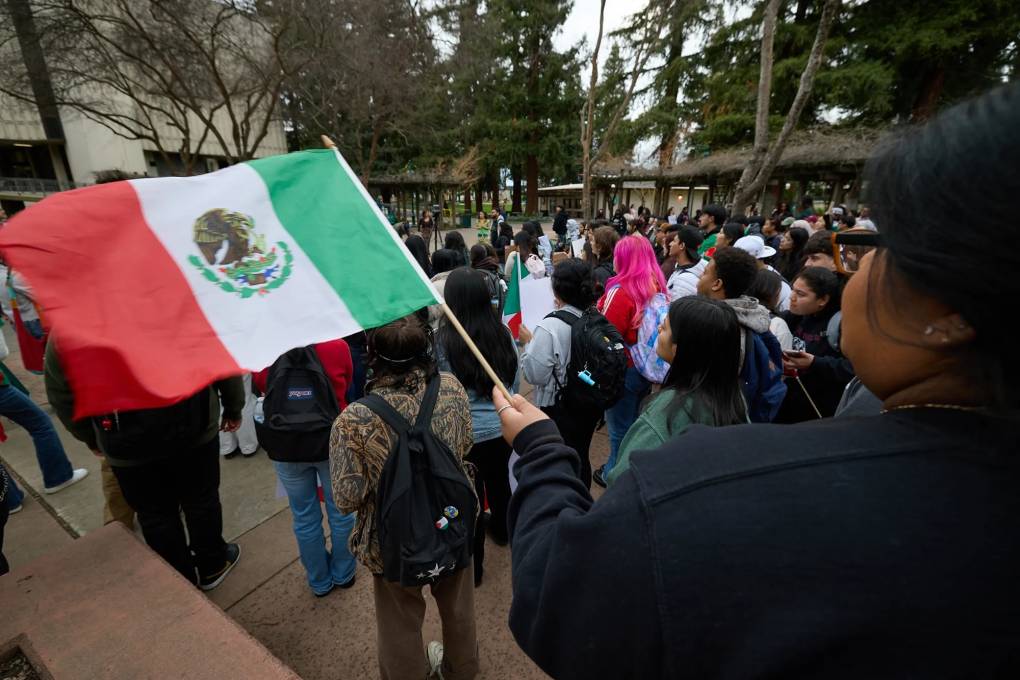
"caption": "A student waves a Mexican flag while participating in an anti-deportation protest at Sacramento State University on Feb. 12, 2025.\n",
"credit": "Fred Greaves for CalMatters",
"altTag": null,
"description": null,
"imgSizes": {
"medium": {
"file": "https://cdn.kqed.org/wp-content/uploads/sites/10/2025/03/Sac_state_protest_2025_02_11_FG_S1A6149-copy-800x533.jpg",
"width": 800,
"height": 533,
"mimeType": "image/jpeg"
},
"large": {
"file": "https://cdn.kqed.org/wp-content/uploads/sites/10/2025/03/Sac_state_protest_2025_02_11_FG_S1A6149-copy-1020x680.jpg",
"width": 1020,
"height": 680,
"mimeType": "image/jpeg"
},
"thumbnail": {
"file": "https://cdn.kqed.org/wp-content/uploads/sites/10/2025/03/Sac_state_protest_2025_02_11_FG_S1A6149-copy-160x107.jpg",
"width": 160,
"height": 107,
"mimeType": "image/jpeg"
},
"1536x1536": {
"file": "https://cdn.kqed.org/wp-content/uploads/sites/10/2025/03/Sac_state_protest_2025_02_11_FG_S1A6149-copy-1536x1024.jpg",
"width": 1536,
"height": 1024,
"mimeType": "image/jpeg"
},
"post-thumbnail": {
"file": "https://cdn.kqed.org/wp-content/uploads/sites/10/2025/03/Sac_state_protest_2025_02_11_FG_S1A6149-copy-672x372.jpg",
"width": 672,
"height": 372,
"mimeType": "image/jpeg"
},
"twentyfourteen-full-width": {
"file": "https://cdn.kqed.org/wp-content/uploads/sites/10/2025/03/Sac_state_protest_2025_02_11_FG_S1A6149-copy-1038x576.jpg",
"width": 1038,
"height": 576,
"mimeType": "image/jpeg"
},
"full-width": {
"file": "https://cdn.kqed.org/wp-content/uploads/sites/10/2025/03/Sac_state_protest_2025_02_11_FG_S1A6149-copy-1920x1280.jpg",
"width": 1920,
"height": 1280,
"mimeType": "image/jpeg"
},
"kqedFullSize": {
"file": "https://cdn.kqed.org/wp-content/uploads/sites/10/2025/03/Sac_state_protest_2025_02_11_FG_S1A6149-copy.jpg",
"width": 2000,
"height": 1333
}
},
"isLoading": false,
"fetchFailed": false
},
"news_11861171": {
"type": "attachments",
"id": "news_11861171",
"meta": {
"index": "attachments_1716263798",
"site": "news",
"id": "11861171",
"found": true
},
"parent": 11861170,
"imgSizes": {
"apple_news_ca_landscape_5_5": {
"file": "https://ww2.kqed.org/app/uploads/sites/10/2021/02/ap20085537395007_custom-ecee50ce392cd8fa5d32a2063cb73d5bd1c02722-1044x783.jpg",
"width": 1044,
"mimeType": "image/jpeg",
"height": 783
},
"apple_news_ca_square_4_0": {
"file": "https://ww2.kqed.org/app/uploads/sites/10/2021/02/ap20085537395007_custom-ecee50ce392cd8fa5d32a2063cb73d5bd1c02722-470x470.jpg",
"width": 470,
"mimeType": "image/jpeg",
"height": 470
},
"twentyfourteen-full-width": {
"file": "https://ww2.kqed.org/app/uploads/sites/10/2021/02/ap20085537395007_custom-ecee50ce392cd8fa5d32a2063cb73d5bd1c02722-1038x576.jpg",
"width": 1038,
"mimeType": "image/jpeg",
"height": 576
},
"thumbnail": {
"file": "https://ww2.kqed.org/app/uploads/sites/10/2021/02/ap20085537395007_custom-ecee50ce392cd8fa5d32a2063cb73d5bd1c02722-160x107.jpg",
"width": 160,
"mimeType": "image/jpeg",
"height": 107
},
"post-thumbnail": {
"file": "https://ww2.kqed.org/app/uploads/sites/10/2021/02/ap20085537395007_custom-ecee50ce392cd8fa5d32a2063cb73d5bd1c02722-672x372.jpg",
"width": 672,
"mimeType": "image/jpeg",
"height": 372
},
"kqedFullSize": {
"file": "https://ww2.kqed.org/app/uploads/sites/10/2021/02/ap20085537395007_custom-ecee50ce392cd8fa5d32a2063cb73d5bd1c02722-scaled-e1613765453619.jpg",
"width": 1920,
"height": 1279
},
"2048x2048": {
"file": "https://ww2.kqed.org/app/uploads/sites/10/2021/02/ap20085537395007_custom-ecee50ce392cd8fa5d32a2063cb73d5bd1c02722-2048x1364.jpg",
"width": 2048,
"mimeType": "image/jpeg",
"height": 1364
},
"apple_news_ca_landscape_4_7": {
"file": "https://ww2.kqed.org/app/uploads/sites/10/2021/02/ap20085537395007_custom-ecee50ce392cd8fa5d32a2063cb73d5bd1c02722-632x474.jpg",
"width": 632,
"mimeType": "image/jpeg",
"height": 474
},
"large": {
"file": "https://ww2.kqed.org/app/uploads/sites/10/2021/02/ap20085537395007_custom-ecee50ce392cd8fa5d32a2063cb73d5bd1c02722-1020x679.jpg",
"width": 1020,
"mimeType": "image/jpeg",
"height": 679
},
"apple_news_ca_landscape_4_0": {
"file": "https://ww2.kqed.org/app/uploads/sites/10/2021/02/ap20085537395007_custom-ecee50ce392cd8fa5d32a2063cb73d5bd1c02722-536x402.jpg",
"width": 536,
"mimeType": "image/jpeg",
"height": 402
},
"apple_news_ca_portrait_12_9": {
"file": "https://ww2.kqed.org/app/uploads/sites/10/2021/02/ap20085537395007_custom-ecee50ce392cd8fa5d32a2063cb73d5bd1c02722-1122x1496.jpg",
"width": 1122,
"mimeType": "image/jpeg",
"height": 1496
},
"medium": {
"file": "https://ww2.kqed.org/app/uploads/sites/10/2021/02/ap20085537395007_custom-ecee50ce392cd8fa5d32a2063cb73d5bd1c02722-800x533.jpg",
"width": 800,
"mimeType": "image/jpeg",
"height": 533
},
"apple_news_ca_portrait_4_0": {
"file": "https://ww2.kqed.org/app/uploads/sites/10/2021/02/ap20085537395007_custom-ecee50ce392cd8fa5d32a2063cb73d5bd1c02722-354x472.jpg",
"width": 354,
"mimeType": "image/jpeg",
"height": 472
},
"apple_news_ca_portrait_9_7": {
"file": "https://ww2.kqed.org/app/uploads/sites/10/2021/02/ap20085537395007_custom-ecee50ce392cd8fa5d32a2063cb73d5bd1c02722-840x1120.jpg",
"width": 840,
"mimeType": "image/jpeg",
"height": 1120
},
"apple_news_ca_landscape_12_9": {
"file": "https://ww2.kqed.org/app/uploads/sites/10/2021/02/ap20085537395007_custom-ecee50ce392cd8fa5d32a2063cb73d5bd1c02722-1832x1374.jpg",
"width": 1832,
"mimeType": "image/jpeg",
"height": 1374
},
"apple_news_ca_square_9_7": {
"file": "https://ww2.kqed.org/app/uploads/sites/10/2021/02/ap20085537395007_custom-ecee50ce392cd8fa5d32a2063cb73d5bd1c02722-1104x1104.jpg",
"width": 1104,
"mimeType": "image/jpeg",
"height": 1104
},
"1536x1536": {
"file": "https://ww2.kqed.org/app/uploads/sites/10/2021/02/ap20085537395007_custom-ecee50ce392cd8fa5d32a2063cb73d5bd1c02722-1536x1023.jpg",
"width": 1536,
"mimeType": "image/jpeg",
"height": 1023
},
"apple_news_ca_portrait_4_7": {
"file": "https://ww2.kqed.org/app/uploads/sites/10/2021/02/ap20085537395007_custom-ecee50ce392cd8fa5d32a2063cb73d5bd1c02722-414x552.jpg",
"width": 414,
"mimeType": "image/jpeg",
"height": 552
},
"apple_news_ca_square_12_9": {
"file": "https://ww2.kqed.org/app/uploads/sites/10/2021/02/ap20085537395007_custom-ecee50ce392cd8fa5d32a2063cb73d5bd1c02722-1472x1472.jpg",
"width": 1472,
"mimeType": "image/jpeg",
"height": 1472
},
"apple_news_ca_portrait_5_5": {
"file": "https://ww2.kqed.org/app/uploads/sites/10/2021/02/ap20085537395007_custom-ecee50ce392cd8fa5d32a2063cb73d5bd1c02722-687x916.jpg",
"width": 687,
"mimeType": "image/jpeg",
"height": 916
},
"full-width": {
"file": "https://ww2.kqed.org/app/uploads/sites/10/2021/02/ap20085537395007_custom-ecee50ce392cd8fa5d32a2063cb73d5bd1c02722-1920x1279.jpg",
"width": 1920,
"mimeType": "image/jpeg",
"height": 1279
},
"apple_news_ca_square_4_7": {
"file": "https://ww2.kqed.org/app/uploads/sites/10/2021/02/ap20085537395007_custom-ecee50ce392cd8fa5d32a2063cb73d5bd1c02722-550x550.jpg",
"width": 550,
"mimeType": "image/jpeg",
"height": 550
},
"apple_news_ca_landscape_9_7": {
"file": "https://ww2.kqed.org/app/uploads/sites/10/2021/02/ap20085537395007_custom-ecee50ce392cd8fa5d32a2063cb73d5bd1c02722-1376x1032.jpg",
"width": 1376,
"mimeType": "image/jpeg",
"height": 1032
},
"apple_news_ca_square_5_5": {
"file": "https://ww2.kqed.org/app/uploads/sites/10/2021/02/ap20085537395007_custom-ecee50ce392cd8fa5d32a2063cb73d5bd1c02722-912x912.jpg",
"width": 912,
"mimeType": "image/jpeg",
"height": 912
}
},
"publishDate": 1613761514,
"modified": 1613766809,
"caption": "A U.S. Immigration and Customs Enforcement officer looks on during an operation in Escondido, California, in 2019. The Biden administration on Thursday announced new guidelines that are expected to sharply limit arrests and deportations carried out by ICE.",
"description": "A U.S. Immigration and Customs Enforcement officer looks on during an operation in Escondido, Calif., in 2019. The Biden administration on Thursday announced new guidelines that are expected to sharply limit arrests and deportations carried out by ICE.",
"title": "A U.S. Immigration and Customs Enforcement officer looks on during an operation in Escondido, Calif., in 2019. The Biden administration today announced new guidelines that are expected to sharply limit arrests and deportations carried out by ICE.",
"credit": "Gregory Bull/AP",
"status": "inherit",
"altTag": null,
"isLoading": false,
"fetchFailed": false
},
"news_12024430": {
"type": "attachments",
"id": "news_12024430",
"meta": {
"index": "attachments_1716263798",
"site": "news",
"id": "12024430",
"found": true
},
"title": "250128-SFImmigration-08-BL",
"publishDate": 1738105102,
"status": "inherit",
"parent": 12024325,
"modified": 1742325555,
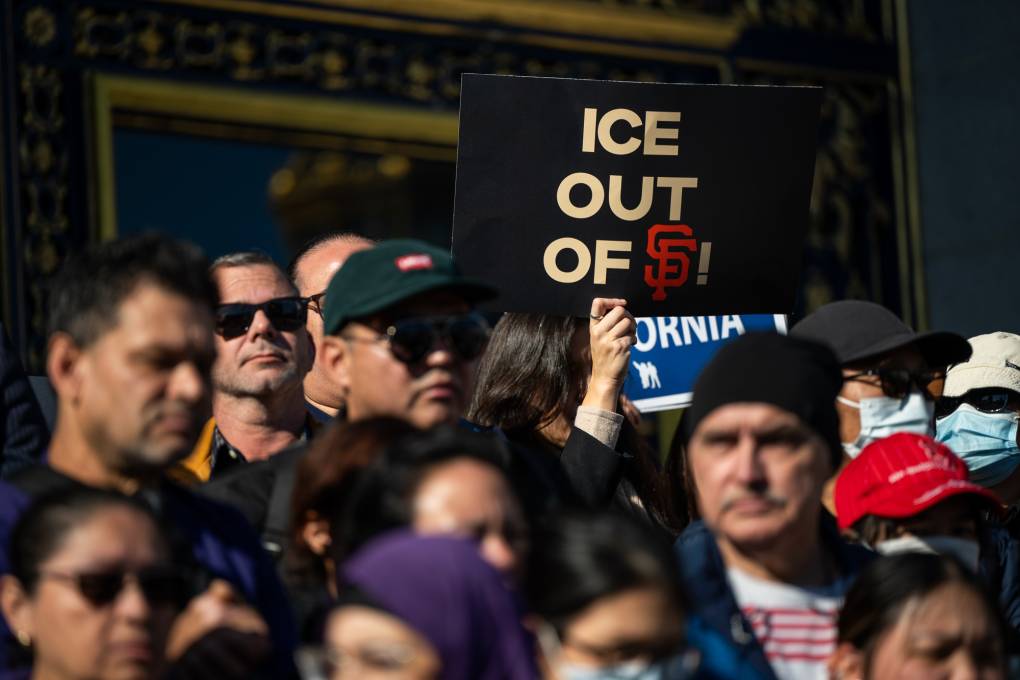
"caption": "A group of elected and public safety officials, labor leaders, and community members fill the steps in front of City Hall in San Francisco on Jan. 28, 2025, during a press conference to reaffirm San Francisco’s commitment to being a Sanctuary City.",
"credit": "Beth LaBerge/KQED",
"altTag": null,
"description": null,
"imgSizes": {
"medium": {
"file": "https://cdn.kqed.org/wp-content/uploads/sites/10/2025/01/250128-SFImmigration-08-BL-800x533.jpg",
"width": 800,
"height": 533,
"mimeType": "image/jpeg"
},
"large": {
"file": "https://cdn.kqed.org/wp-content/uploads/sites/10/2025/01/250128-SFImmigration-08-BL-1020x680.jpg",
"width": 1020,
"height": 680,
"mimeType": "image/jpeg"
},
"thumbnail": {
"file": "https://cdn.kqed.org/wp-content/uploads/sites/10/2025/01/250128-SFImmigration-08-BL-160x107.jpg",
"width": 160,
"height": 107,
"mimeType": "image/jpeg"
},
"1536x1536": {
"file": "https://cdn.kqed.org/wp-content/uploads/sites/10/2025/01/250128-SFImmigration-08-BL-1536x1024.jpg",
"width": 1536,
"height": 1024,
"mimeType": "image/jpeg"
},
"post-thumbnail": {
"file": "https://cdn.kqed.org/wp-content/uploads/sites/10/2025/01/250128-SFImmigration-08-BL-672x372.jpg",
"width": 672,
"height": 372,
"mimeType": "image/jpeg"
},
"twentyfourteen-full-width": {
"file": "https://cdn.kqed.org/wp-content/uploads/sites/10/2025/01/250128-SFImmigration-08-BL-1038x576.jpg",
"width": 1038,
"height": 576,
"mimeType": "image/jpeg"
},
"full-width": {
"file": "https://cdn.kqed.org/wp-content/uploads/sites/10/2025/01/250128-SFImmigration-08-BL-1920x1280.jpg",
"width": 1920,
"height": 1280,
"mimeType": "image/jpeg"
},
"kqedFullSize": {
"file": "https://cdn.kqed.org/wp-content/uploads/sites/10/2025/01/250128-SFImmigration-08-BL.jpg",
"width": 2000,
"height": 1333
}
},
"isLoading": false,
"fetchFailed": false
},
"news_12026446": {
"type": "attachments",
"id": "news_12026446",
"meta": {
"index": "attachments_1716263798",
"site": "news",
"id": "12026446",
"found": true
},
"title": "020625-ICE-Arrest-AP-GB-01-CM",
"publishDate": 1739212388,
"status": "inherit",
"parent": 12026443,
"modified": 1739296136,
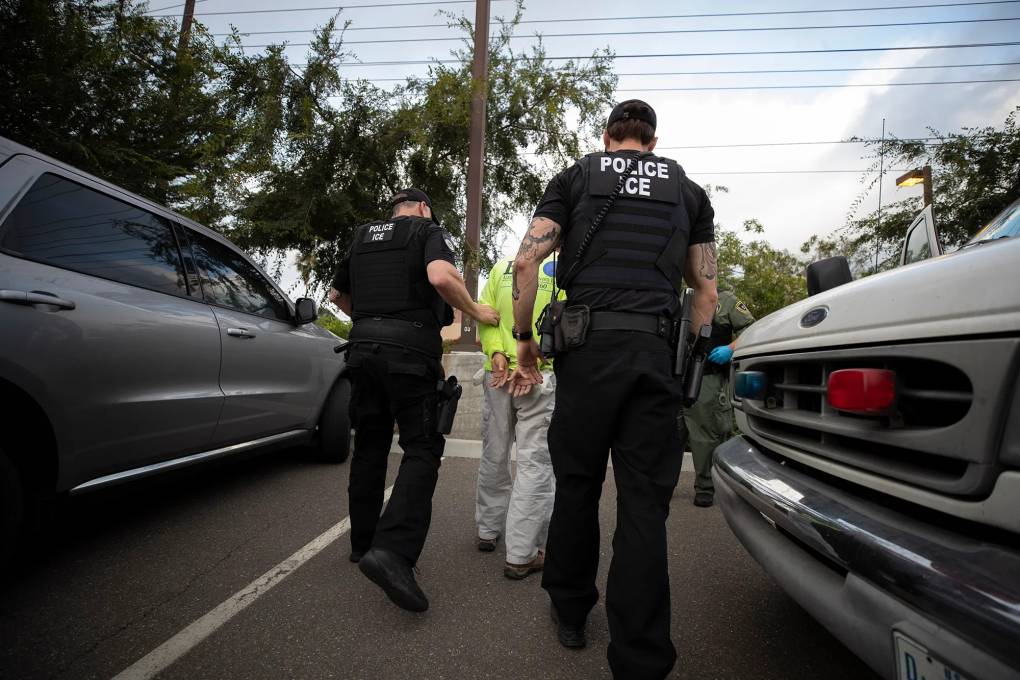
"caption": "A U.S. Immigration and Customs Enforcement (ICE) officer escorts a man in handcuffs during an operation in Escondido on July 8, 2019.",
"credit": "Gregory Bull/AP Photo",
"altTag": null,
"description": null,
"imgSizes": {
"medium": {
"file": "https://cdn.kqed.org/wp-content/uploads/sites/10/2025/02/020625-ICE-Arrest-AP-GB-01-CM-800x533.jpg",
"width": 800,
"height": 533,
"mimeType": "image/jpeg"
},
"large": {
"file": "https://cdn.kqed.org/wp-content/uploads/sites/10/2025/02/020625-ICE-Arrest-AP-GB-01-CM-1020x680.jpg",
"width": 1020,
"height": 680,
"mimeType": "image/jpeg"
},
"thumbnail": {
"file": "https://cdn.kqed.org/wp-content/uploads/sites/10/2025/02/020625-ICE-Arrest-AP-GB-01-CM-160x107.jpg",
"width": 160,
"height": 107,
"mimeType": "image/jpeg"
},
"1536x1536": {
"file": "https://cdn.kqed.org/wp-content/uploads/sites/10/2025/02/020625-ICE-Arrest-AP-GB-01-CM-1536x1024.jpg",
"width": 1536,
"height": 1024,
"mimeType": "image/jpeg"
},
"post-thumbnail": {
"file": "https://cdn.kqed.org/wp-content/uploads/sites/10/2025/02/020625-ICE-Arrest-AP-GB-01-CM-672x372.jpg",
"width": 672,
"height": 372,
"mimeType": "image/jpeg"
},
"twentyfourteen-full-width": {
"file": "https://cdn.kqed.org/wp-content/uploads/sites/10/2025/02/020625-ICE-Arrest-AP-GB-01-CM-1038x576.jpg",
"width": 1038,
"height": 576,
"mimeType": "image/jpeg"
},
"full-width": {
"file": "https://cdn.kqed.org/wp-content/uploads/sites/10/2025/02/020625-ICE-Arrest-AP-GB-01-CM-1920x1280.jpg",
"width": 1920,
"height": 1280,
"mimeType": "image/jpeg"
},
"kqedFullSize": {
"file": "https://cdn.kqed.org/wp-content/uploads/sites/10/2025/02/020625-ICE-Arrest-AP-GB-01-CM.jpg",
"width": 2000,
"height": 1333
}
},
"isLoading": false,
"fetchFailed": false
},
"news_11946335": {
"type": "attachments",
"id": "news_11946335",
"meta": {
"index": "attachments_1716263798",
"site": "news",
"id": "11946335",
"found": true
},
"title": "RS18012_GettyImages-492659230-qut",
"publishDate": 1681231034,
"status": "inherit",
"parent": 11946255,
"modified": 1738868441,
"caption": "A new California bill would protect some noncitizens from being turned over to U.S. Immigration and Customs Enforcement (ICE) upon their release from prison.",
"credit": "John Moore/Getty Images",
"altTag": "Detail shot of the back of a large man with a bald head and thick neck, wearing a black shirt with 'police ice' printed on it in all capital letters",
"description": null,
"imgSizes": {
"medium": {
"file": "https://cdn.kqed.org/wp-content/uploads/sites/10/2023/04/RS18012_GettyImages-492659230-qut-800x533.jpg",
"width": 800,
"height": 533,
"mimeType": "image/jpeg"
},
"large": {
"file": "https://cdn.kqed.org/wp-content/uploads/sites/10/2023/04/RS18012_GettyImages-492659230-qut-1020x680.jpg",
"width": 1020,
"height": 680,
"mimeType": "image/jpeg"
},
"thumbnail": {
"file": "https://cdn.kqed.org/wp-content/uploads/sites/10/2023/04/RS18012_GettyImages-492659230-qut-160x107.jpg",
"width": 160,
"height": 107,
"mimeType": "image/jpeg"
},
"1536x1536": {
"file": "https://cdn.kqed.org/wp-content/uploads/sites/10/2023/04/RS18012_GettyImages-492659230-qut-1536x1024.jpg",
"width": 1536,
"height": 1024,
"mimeType": "image/jpeg"
},
"post-thumbnail": {
"file": "https://cdn.kqed.org/wp-content/uploads/sites/10/2023/04/RS18012_GettyImages-492659230-qut-672x372.jpg",
"width": 672,
"height": 372,
"mimeType": "image/jpeg"
},
"twentyfourteen-full-width": {
"file": "https://cdn.kqed.org/wp-content/uploads/sites/10/2023/04/RS18012_GettyImages-492659230-qut-1038x576.jpg",
"width": 1038,
"height": 576,
"mimeType": "image/jpeg"
},
"kqedFullSize": {
"file": "https://cdn.kqed.org/wp-content/uploads/sites/10/2023/04/RS18012_GettyImages-492659230-qut.jpg",
"width": 1920,
"height": 1280
}
},
"isLoading": false,
"fetchFailed": false
},
"news_12024755": {
"type": "attachments",
"id": "news_12024755",
"meta": {
"index": "attachments_1716263798",
"site": "news",
"id": "12024755",
"found": true
},
"title": "20250125_Immigration-Forum_DB_00822",
"publishDate": 1738208185,
"status": "inherit",
"parent": 0,
"modified": 1738872612,
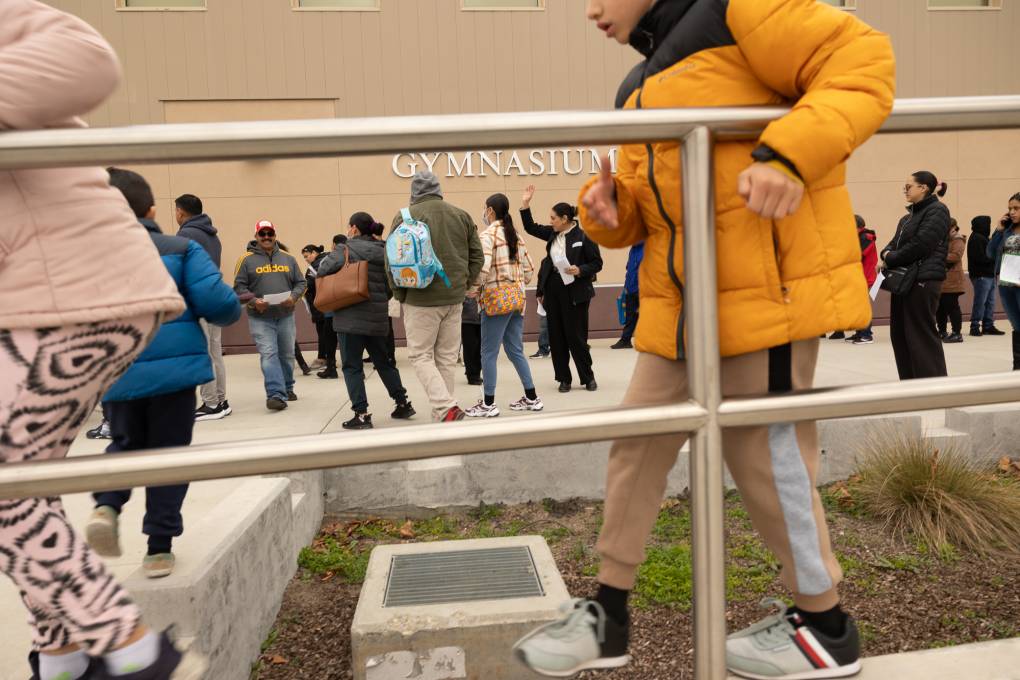
"caption": "People wait in line to register and enter an informational session about immigration services at Willow Cove Elementary in Pittsburg, California, on Jan. 29, 2025. More than 300 people attended the event organized by Stand Together Contra Costa and the Pittsburg Unified School District, which offered free, private consultation with immigration attorneys, along with medical services and a resource fair.",
"credit": "David M. Barreda/KQED",
"altTag": "People stand in line outside a school building.",
"description": null,
"imgSizes": {
"medium": {
"file": "https://cdn.kqed.org/wp-content/uploads/sites/10/2025/01/20250125_Immigration-Forum_DB_00822-800x533.jpg",
"width": 800,
"height": 533,
"mimeType": "image/jpeg"
},
"large": {
"file": "https://cdn.kqed.org/wp-content/uploads/sites/10/2025/01/20250125_Immigration-Forum_DB_00822-1020x680.jpg",
"width": 1020,
"height": 680,
"mimeType": "image/jpeg"
},
"thumbnail": {
"file": "https://cdn.kqed.org/wp-content/uploads/sites/10/2025/01/20250125_Immigration-Forum_DB_00822-160x107.jpg",
"width": 160,
"height": 107,
"mimeType": "image/jpeg"
},
"1536x1536": {
"file": "https://cdn.kqed.org/wp-content/uploads/sites/10/2025/01/20250125_Immigration-Forum_DB_00822-1536x1024.jpg",
"width": 1536,
"height": 1024,
"mimeType": "image/jpeg"
},
"post-thumbnail": {
"file": "https://cdn.kqed.org/wp-content/uploads/sites/10/2025/01/20250125_Immigration-Forum_DB_00822-672x372.jpg",
"width": 672,
"height": 372,
"mimeType": "image/jpeg"
},
"twentyfourteen-full-width": {
"file": "https://cdn.kqed.org/wp-content/uploads/sites/10/2025/01/20250125_Immigration-Forum_DB_00822-1038x576.jpg",
"width": 1038,
"height": 576,
"mimeType": "image/jpeg"
},
"full-width": {
"file": "https://cdn.kqed.org/wp-content/uploads/sites/10/2025/01/20250125_Immigration-Forum_DB_00822-1920x1280.jpg",
"width": 1920,
"height": 1280,
"mimeType": "image/jpeg"
},
"kqedFullSize": {
"file": "https://cdn.kqed.org/wp-content/uploads/sites/10/2025/01/20250125_Immigration-Forum_DB_00822.jpg",
"width": 2000,
"height": 1333
}
},
"isLoading": false,
"fetchFailed": false
},
"news_12024428": {
"type": "attachments",
"id": "news_12024428",
"meta": {
"index": "attachments_1716263798",
"site": "news",
"id": "12024428",
"found": true
},
"title": "250128-SFImmigration-03-BL",
"publishDate": 1738105092,
"status": "inherit",
"parent": 0,
"modified": 1738105369,
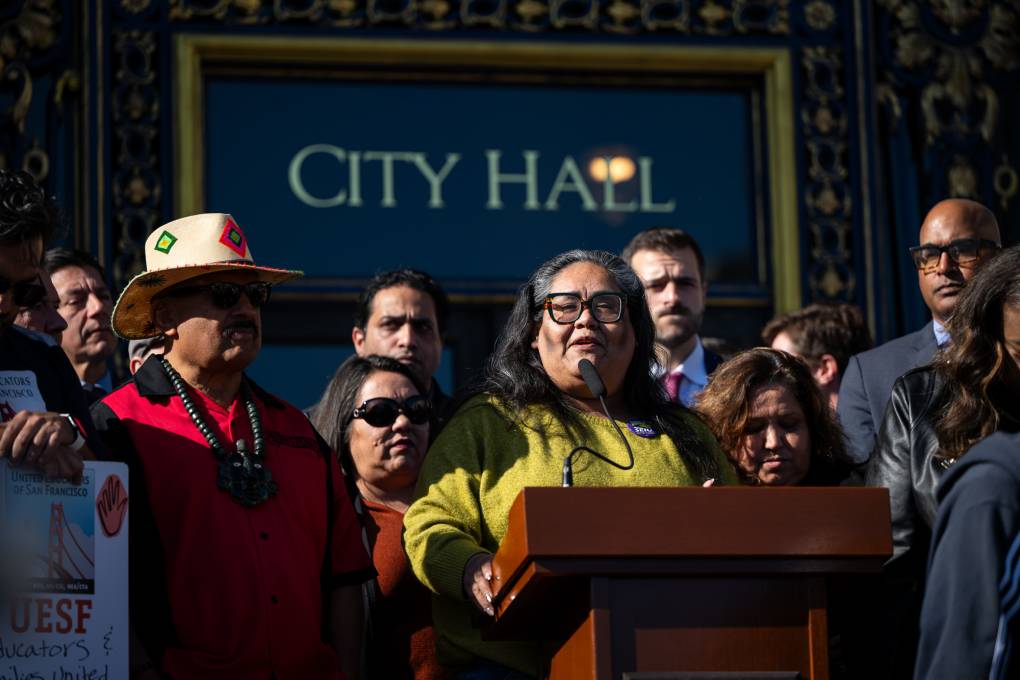
"caption": "SEIU Local 87 president Olga Miranda speaks during a press conference with elected and public safety officials and labor leaders in front of City Hall in San Francisco on Tuesday, Jan. 28, 2025, to reaffirm San Francisco’s commitment to being a Sanctuary City.",
"credit": "Beth LaBerge/KQED",
"altTag": null,
"description": null,
"imgSizes": {
"medium": {
"file": "https://cdn.kqed.org/wp-content/uploads/sites/10/2025/01/250128-SFImmigration-03-BL-800x533.jpg",
"width": 800,
"height": 533,
"mimeType": "image/jpeg"
},
"large": {
"file": "https://cdn.kqed.org/wp-content/uploads/sites/10/2025/01/250128-SFImmigration-03-BL-1020x680.jpg",
"width": 1020,
"height": 680,
"mimeType": "image/jpeg"
},
"thumbnail": {
"file": "https://cdn.kqed.org/wp-content/uploads/sites/10/2025/01/250128-SFImmigration-03-BL-160x107.jpg",
"width": 160,
"height": 107,
"mimeType": "image/jpeg"
},
"1536x1536": {
"file": "https://cdn.kqed.org/wp-content/uploads/sites/10/2025/01/250128-SFImmigration-03-BL-1536x1024.jpg",
"width": 1536,
"height": 1024,
"mimeType": "image/jpeg"
},
"post-thumbnail": {
"file": "https://cdn.kqed.org/wp-content/uploads/sites/10/2025/01/250128-SFImmigration-03-BL-672x372.jpg",
"width": 672,
"height": 372,
"mimeType": "image/jpeg"
},
"twentyfourteen-full-width": {
"file": "https://cdn.kqed.org/wp-content/uploads/sites/10/2025/01/250128-SFImmigration-03-BL-1038x576.jpg",
"width": 1038,
"height": 576,
"mimeType": "image/jpeg"
},
"full-width": {
"file": "https://cdn.kqed.org/wp-content/uploads/sites/10/2025/01/250128-SFImmigration-03-BL-1920x1280.jpg",
"width": 1920,
"height": 1280,
"mimeType": "image/jpeg"
},
"kqedFullSize": {
"file": "https://cdn.kqed.org/wp-content/uploads/sites/10/2025/01/250128-SFImmigration-03-BL.jpg",
"width": 2000,
"height": 1333
}
},
"isLoading": false,
"fetchFailed": false
},
"news_12023022": {
"type": "attachments",
"id": "news_12023022",
"meta": {
"index": "attachments_1716263798",
"site": "news",
"id": "12023022",
"found": true
},
"title": "npr.brightspotcdn copy",
"publishDate": 1737242434,
"status": "inherit",
"parent": 12023017,
"modified": 1737242484,
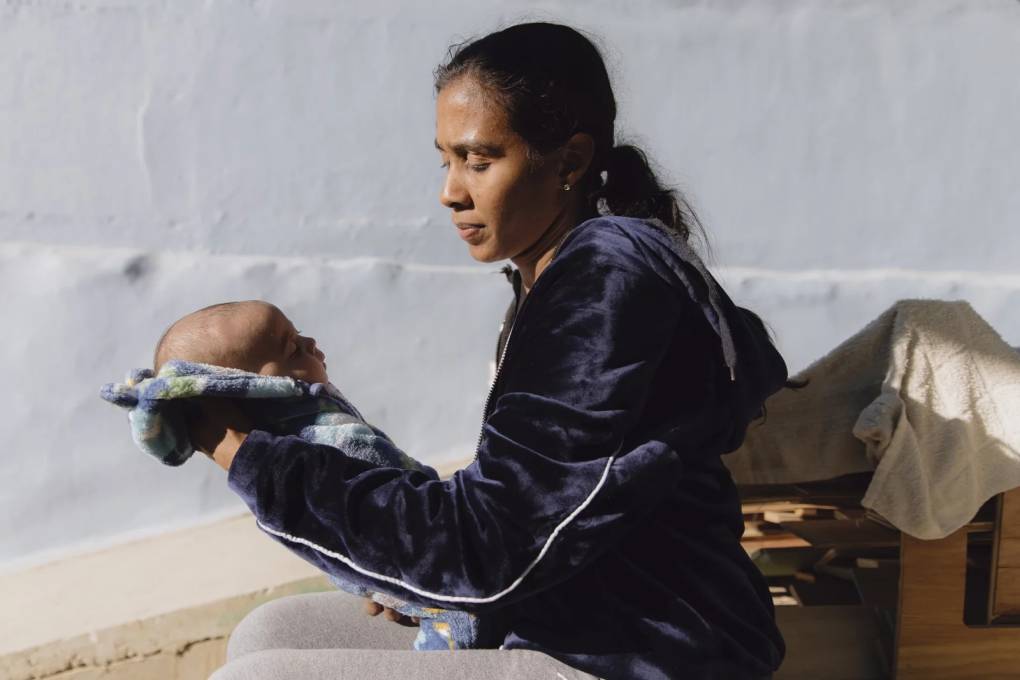
"caption": "Cindy Alamei Patiño holds her recently born baby at the Embajadores de Jesús church in Tijuana, Mexico, on Dec. 6, 2024. The mother of 2 traveled with her husband, Andres Patiño, from Colombia.",
"credit": "Zaydee Sanchez for NPR",
"altTag": null,
"description": null,
"imgSizes": {
"medium": {
"file": "https://cdn.kqed.org/wp-content/uploads/sites/10/2025/01/npr.brightspotcdn-copy-49-800x534.jpg",
"width": 800,
"height": 534,
"mimeType": "image/jpeg"
},
"large": {
"file": "https://cdn.kqed.org/wp-content/uploads/sites/10/2025/01/npr.brightspotcdn-copy-49-1020x680.jpg",
"width": 1020,
"height": 680,
"mimeType": "image/jpeg"
},
"thumbnail": {
"file": "https://cdn.kqed.org/wp-content/uploads/sites/10/2025/01/npr.brightspotcdn-copy-49-160x107.jpg",
"width": 160,
"height": 107,
"mimeType": "image/jpeg"
},
"1536x1536": {
"file": "https://cdn.kqed.org/wp-content/uploads/sites/10/2025/01/npr.brightspotcdn-copy-49-1536x1024.jpg",
"width": 1536,
"height": 1024,
"mimeType": "image/jpeg"
},
"post-thumbnail": {
"file": "https://cdn.kqed.org/wp-content/uploads/sites/10/2025/01/npr.brightspotcdn-copy-49-672x372.jpg",
"width": 672,
"height": 372,
"mimeType": "image/jpeg"
},
"twentyfourteen-full-width": {
"file": "https://cdn.kqed.org/wp-content/uploads/sites/10/2025/01/npr.brightspotcdn-copy-49-1038x576.jpg",
"width": 1038,
"height": 576,
"mimeType": "image/jpeg"
},
"kqedFullSize": {
"file": "https://cdn.kqed.org/wp-content/uploads/sites/10/2025/01/npr.brightspotcdn-copy-49.jpg",
"width": 1600,
"height": 1067
}
},
"isLoading": false,
"fetchFailed": false
},
"news_12014019": {
"type": "attachments",
"id": "news_12014019",
"meta": {
"index": "attachments_1716263798",
"site": "news",
"id": "12014019",
"found": true
},
"title": "npr.brightspotcdn copy",
"publishDate": 1731361728,
"status": "inherit",
"parent": 12014017,
"modified": 1731361760,
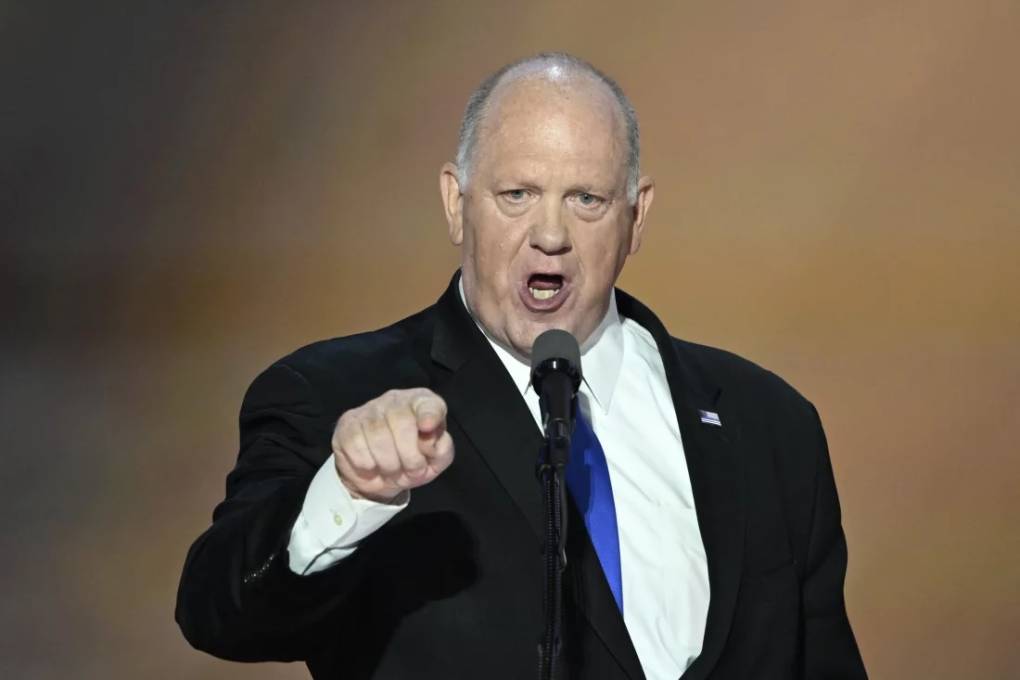
"caption": "Tom Homan speaks at the Republican National Convention in Milwaukee in July. Trump announced on Sunday that the former acting ICE director will oversee border control in his second administration.",
"credit": "Andrew Caballero-Reynolds/AFP via Getty Images",
"altTag": null,
"description": null,
"imgSizes": {
"medium": {
"file": "https://cdn.kqed.org/wp-content/uploads/sites/10/2024/11/npr.brightspotcdn-copy-800x533.jpg",
"width": 800,
"height": 533,
"mimeType": "image/jpeg"
},
"large": {
"file": "https://cdn.kqed.org/wp-content/uploads/sites/10/2024/11/npr.brightspotcdn-copy-1020x680.jpg",
"width": 1020,
"height": 680,
"mimeType": "image/jpeg"
},
"thumbnail": {
"file": "https://cdn.kqed.org/wp-content/uploads/sites/10/2024/11/npr.brightspotcdn-copy-160x107.jpg",
"width": 160,
"height": 107,
"mimeType": "image/jpeg"
},
"post-thumbnail": {
"file": "https://cdn.kqed.org/wp-content/uploads/sites/10/2024/11/npr.brightspotcdn-copy-672x372.jpg",
"width": 672,
"height": 372,
"mimeType": "image/jpeg"
},
"twentyfourteen-full-width": {
"file": "https://cdn.kqed.org/wp-content/uploads/sites/10/2024/11/npr.brightspotcdn-copy-1038x576.jpg",
"width": 1038,
"height": 576,
"mimeType": "image/jpeg"
},
"kqedFullSize": {
"file": "https://cdn.kqed.org/wp-content/uploads/sites/10/2024/11/npr.brightspotcdn-copy.jpg",
"width": 1100,
"height": 733
}
},
"isLoading": false,
"fetchFailed": false
},
"news_11975267": {
"type": "attachments",
"id": "news_11975267",
"meta": {
"index": "attachments_1716263798",
"site": "news",
"id": "11975267",
"found": true
},
"parent": 11975246,
"imgSizes": {
"thumbnail": {
"file": "https://cdn.kqed.org/wp-content/uploads/sites/10/2024/02/RS45759__MG_0162-qut-800x533-1-160x107.jpg",
"width": 160,
"mimeType": "image/jpeg",
"height": 107
},
"post-thumbnail": {
"file": "https://cdn.kqed.org/wp-content/uploads/sites/10/2024/02/RS45759__MG_0162-qut-800x533-1-672x372.jpg",
"width": 672,
"mimeType": "image/jpeg",
"height": 372
},
"kqedFullSize": {
"file": "https://cdn.kqed.org/wp-content/uploads/sites/10/2024/02/RS45759__MG_0162-qut-800x533-1.jpg",
"width": 800,
"height": 533
}
},
"publishDate": 1707508999,
"modified": 1707517874,
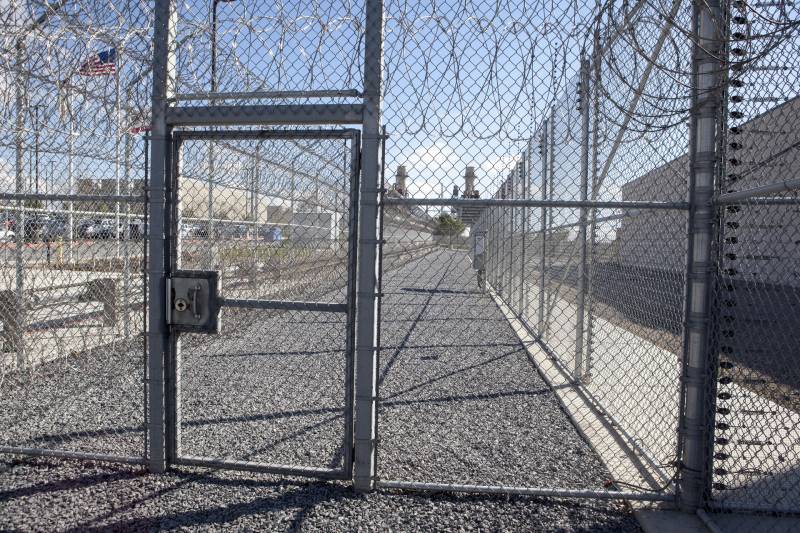
"caption": "Layers of security fencing at Otay Mesa immigration Detention Facility just east of San Diego, in a photo from 2020.",
"description": null,
"title": "RS45759__MG_0162-qut-800x533",
"credit": "Erin Siegal McIntyre/KQED",
"status": "inherit",
"altTag": "A chain-link fence with barbed wire at the top of a detention facility. An American flag waves in the distance.",
"isLoading": false,
"fetchFailed": false
},
"news_11923545": {
"type": "attachments",
"id": "news_11923545",
"meta": {
"index": "attachments_1716263798",
"site": "news",
"id": "11923545",
"found": true
},
"parent": 0,
"imgSizes": {
"twentyfourteen-full-width": {
"file": "https://ww2.kqed.org/app/uploads/sites/10/2022/08/6.21.22-Vision-Act-Rally_Joyce-Xi-7-scaled-e1661451509669-1038x576.jpg",
"width": 1038,
"mimeType": "image/jpeg",
"height": 576
},
"thumbnail": {
"file": "https://ww2.kqed.org/app/uploads/sites/10/2022/08/6.21.22-Vision-Act-Rally_Joyce-Xi-7-scaled-e1661451509669-160x102.jpg",
"width": 160,
"mimeType": "image/jpeg",
"height": 102
},
"post-thumbnail": {
"file": "https://ww2.kqed.org/app/uploads/sites/10/2022/08/6.21.22-Vision-Act-Rally_Joyce-Xi-7-scaled-e1661451509669-672x372.jpg",
"width": 672,
"mimeType": "image/jpeg",
"height": 372
},
"kqedFullSize": {
"file": "https://ww2.kqed.org/app/uploads/sites/10/2022/08/6.21.22-Vision-Act-Rally_Joyce-Xi-7-scaled-e1661451509669.jpg",
"width": 2540,
"height": 1612
},
"2048x2048": {
"file": "https://ww2.kqed.org/app/uploads/sites/10/2022/08/6.21.22-Vision-Act-Rally_Joyce-Xi-7-scaled-e1661451509669-2048x1300.jpg",
"width": 2048,
"mimeType": "image/jpeg",
"height": 1300
},
"large": {
"file": "https://ww2.kqed.org/app/uploads/sites/10/2022/08/6.21.22-Vision-Act-Rally_Joyce-Xi-7-scaled-e1661451509669-1020x647.jpg",
"width": 1020,
"mimeType": "image/jpeg",
"height": 647
},
"1536x1536": {
"file": "https://ww2.kqed.org/app/uploads/sites/10/2022/08/6.21.22-Vision-Act-Rally_Joyce-Xi-7-scaled-e1661451509669-1536x975.jpg",
"width": 1536,
"mimeType": "image/jpeg",
"height": 975
},
"full-width": {
"file": "https://ww2.kqed.org/app/uploads/sites/10/2022/08/6.21.22-Vision-Act-Rally_Joyce-Xi-7-scaled-e1661451509669-1920x1219.jpg",
"width": 1920,
"mimeType": "image/jpeg",
"height": 1219
},
"medium": {
"file": "https://ww2.kqed.org/app/uploads/sites/10/2022/08/6.21.22-Vision-Act-Rally_Joyce-Xi-7-scaled-e1661451509669-800x508.jpg",
"width": 800,
"mimeType": "image/jpeg",
"height": 508
}
},
"publishDate": 1661447263,
"modified": 1661452518,
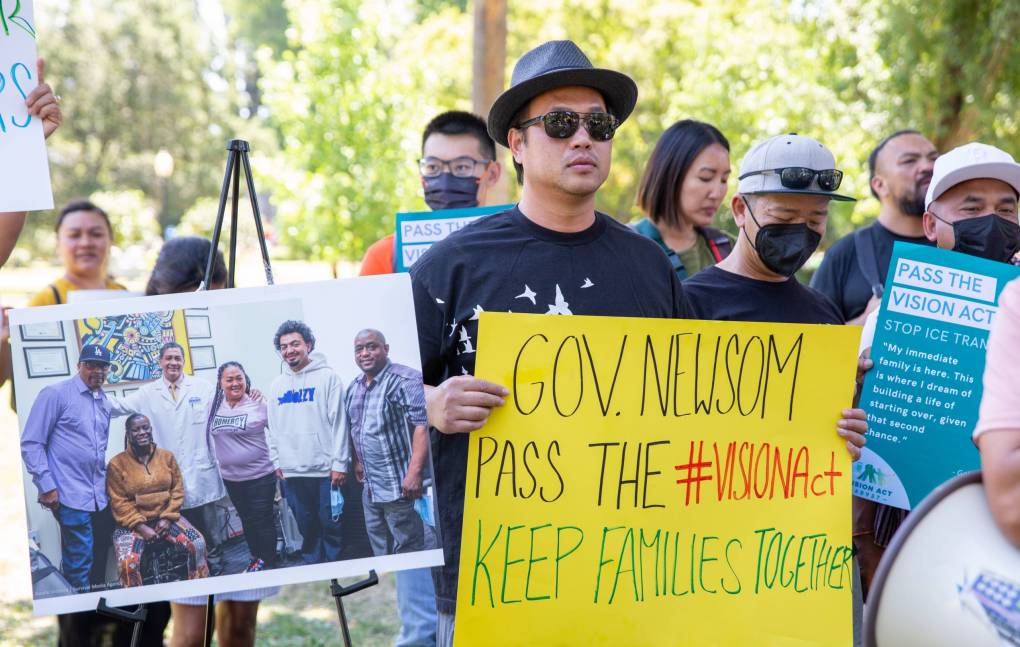
"caption": "Immigrant advocates rally for the passage of the VISION Act, in Sacramento on June 21, 2022. The bill would end the transfer of immigrants to U.S. Immigration and Customs Enforcement when they are released from California prisons.\n\n",
"description": null,
"title": "6.21.22 Vision Act Rally_Joyce Xi-7",
"credit": "Photo by Joyce Xi, courtesy of the Asian Law Caucus",
"status": "inherit",
"altTag": "Demonstrators stand in a group, holding signs and photos. One sign says: 'Gov. Newsom Pass The #VisionAct Keep Families Together'",
"isLoading": false,
"fetchFailed": false
}
},
"audioPlayerReducer": {
"postId": "stream_live",
"isPaused": true,
"isPlaying": false,
"pfsActive": false,
"pledgeModalIsOpen": true,
"playerDrawerIsOpen": false,
"liveAudioPlayStartedAt": 0,
"liveAudioPlayContext": ""
},
"authorsReducer": {
"byline_news_12032339": {
"type": "authors",
"id": "byline_news_12032339",
"meta": {
"override": true
},
"slug": "byline_news_12032339",
"name": "\u003ca href=\"https://calmatters.org/author/delilah-brumer/\">Delilah Brumer\u003c/a>, CalMatters",
"isLoading": false
},
"byline_news_12026443": {
"type": "authors",
"id": "byline_news_12026443",
"meta": {
"override": true
},
"slug": "byline_news_12026443",
"name": "Jeanne Kuang, CalMatters",
"isLoading": false
},
"byline_news_12023017": {
"type": "authors",
"id": "byline_news_12023017",
"meta": {
"override": true
},
"slug": "byline_news_12023017",
"name": "\u003ca href=\"https://www.npr.org/people/297147616/jasmine-garsd\">Jasmine Garsd\u003c/a>, NPR",
"isLoading": false
},
"byline_news_12014017": {
"type": "authors",
"id": "byline_news_12014017",
"meta": {
"override": true
},
"slug": "byline_news_12014017",
"name": "\u003ca href=\"https://www.npr.org/people/776048102/rachel-treisman\">Rachel Treisman\u003c/a>, NPR",
"isLoading": false
},
"tychehendricks": {
"type": "authors",
"id": "259",
"meta": {
"index": "authors_1716337520",
"id": "259",
"found": true
},
"name": "Tyche Hendricks",
"firstName": "Tyche",
"lastName": "Hendricks",
"slug": "tychehendricks",
"email": "thendricks@kqed.org",
"display_author_email": true,
"staff_mastheads": [
"news"
],
"title": "KQED Senior Editor, Immigration",
"bio": "\u003cspan style=\"font-weight: 400;\">Tyche Hendricks is KQED’s senior editor for immigration, leading coverage of the policy and politics that affect California’s immigrant communities. Her work for KQED’s radio and online audiences is also carried on NPR and other national outlets. She has been recognized with awards from the Radio and Television News Directors Association, the Society for Professional Journalists; the Education Writers Association; the Best of the West and the National Federation of Community Broadcasters. Before joining KQED in 2010, Tyche spent more than a dozen years as a newspaper reporter, notably at the \u003c/span>\u003ci>\u003cspan style=\"font-weight: 400;\">San Francisco Chronicle\u003c/span>\u003c/i>\u003cspan style=\"font-weight: 400;\">. At different times she has covered criminal justice, government and politics and urban planning. Tyche has taught in the MFA Creative Writing program at the University of San Francisco and at UC Berkeley’s Graduate School of Journalism, where she was co-director of a national immigration symposium for professional journalists. She is the author of \u003c/span>\u003ci>\u003cspan style=\"font-weight: 400;\">The Wind Doesn't Need a Passport: Stories from the U.S.-Mexico Borderlands\u003c/span>\u003c/i>\u003cspan style=\"font-weight: 400;\"> (University of California Press). \u003c/span>",
"avatar": "https://secure.gravatar.com/avatar/b8ee458e2731c2d43df86882ce17267e?s=600&d=blank&r=g",
"twitter": "tychehendricks",
"facebook": null,
"instagram": null,
"linkedin": null,
"sites": [
{
"site": "news",
"roles": [
"editor"
]
},
{
"site": "stateofhealth",
"roles": [
"editor"
]
}
],
"headData": {
"title": "Tyche Hendricks | KQED",
"description": "KQED Senior Editor, Immigration",
"ogImgSrc": "https://secure.gravatar.com/avatar/b8ee458e2731c2d43df86882ce17267e?s=600&d=blank&r=g",
"twImgSrc": "https://secure.gravatar.com/avatar/b8ee458e2731c2d43df86882ce17267e?s=600&d=blank&r=g"
},
"isLoading": false,
"link": "/author/tychehendricks"
},
"lsarah": {
"type": "authors",
"id": "11626",
"meta": {
"index": "authors_1716337520",
"id": "11626",
"found": true
},
"name": "Lakshmi Sarah",
"firstName": "Lakshmi",
"lastName": "Sarah",
"slug": "lsarah",
"email": "lsarah@kqed.org",
"display_author_email": false,
"staff_mastheads": [],
"title": "Digital Producer",
"bio": "Lakshmi Sarah is an educator, author and journalist with a focus on innovative storytelling. She has worked with newspapers, radio and magazines from Ahmedabad, India to Los Angeles, California. She has written and produced for Die Zeit, Global Voices, AJ+, KQED, Fusion Media Group and the New York Times.",
"avatar": "https://secure.gravatar.com/avatar/652dcaecd8b28826fc17a8b2d6bb4e93?s=600&d=blank&r=g",
"twitter": "lakitalki",
"facebook": null,
"instagram": "https://www.instagram.com/laki.talki/",
"linkedin": "https://www.linkedin.com/in/lakisarah/",
"sites": [
{
"site": "arts",
"roles": []
},
{
"site": "news",
"roles": []
},
{
"site": "bayareabites",
"roles": []
},
{
"site": "science",
"roles": []
}
],
"headData": {
"title": "Lakshmi Sarah | KQED",
"description": "Digital Producer",
"ogImgSrc": "https://secure.gravatar.com/avatar/652dcaecd8b28826fc17a8b2d6bb4e93?s=600&d=blank&r=g",
"twImgSrc": "https://secure.gravatar.com/avatar/652dcaecd8b28826fc17a8b2d6bb4e93?s=600&d=blank&r=g"
},
"isLoading": false,
"link": "/author/lsarah"
},
"jlara": {
"type": "authors",
"id": "11761",
"meta": {
"index": "authors_1716337520",
"id": "11761",
"found": true
},
"name": "Juan Carlos Lara",
"firstName": "Juan Carlos",
"lastName": "Lara",
"slug": "jlara",
"email": "jlara@kqed.org",
"display_author_email": false,
"staff_mastheads": [],
"title": "KQED Contributor",
"bio": null,
"avatar": "https://secure.gravatar.com/avatar/19e2052b9b05657c5ff2af2121846e9c?s=600&d=blank&r=g",
"twitter": null,
"facebook": null,
"instagram": null,
"linkedin": null,
"sites": [
{
"site": "arts",
"roles": [
"editor"
]
},
{
"site": "news",
"roles": [
"editor"
]
},
{
"site": "forum",
"roles": [
"editor"
]
},
{
"site": "liveblog",
"roles": [
"contributor"
]
}
],
"headData": {
"title": "Juan Carlos Lara | KQED",
"description": "KQED Contributor",
"ogImgSrc": "https://secure.gravatar.com/avatar/19e2052b9b05657c5ff2af2121846e9c?s=600&d=blank&r=g",
"twImgSrc": "https://secure.gravatar.com/avatar/19e2052b9b05657c5ff2af2121846e9c?s=600&d=blank&r=g"
},
"isLoading": false,
"link": "/author/jlara"
},
"naltenberg": {
"type": "authors",
"id": "11896",
"meta": {
"index": "authors_1716337520",
"id": "11896",
"found": true
},
"name": "Nik Altenberg",
"firstName": "Nik",
"lastName": "Altenberg",
"slug": "naltenberg",
"email": "naltenberg@kqed.org",
"display_author_email": false,
"staff_mastheads": [],
"title": "KQED Contributor",
"bio": "Nik Altenberg is an on-call reporter for KQED and a copy editor and fact checker for Santa Cruz Local. Nik’s reporting interests include policing, public health, environment, immigration, housing and the places where these issues intersect.",
"avatar": "https://secure.gravatar.com/avatar/e391b3a18ce4a53a7ca3f3065c74418b?s=600&d=blank&r=g",
"twitter": null,
"facebook": null,
"instagram": "https://www.instagram.com/nikaltenberg/",
"linkedin": null,
"sites": [
{
"site": "news",
"roles": []
}
],
"headData": {
"title": "Nik Altenberg | KQED",
"description": "KQED Contributor",
"ogImgSrc": "https://secure.gravatar.com/avatar/e391b3a18ce4a53a7ca3f3065c74418b?s=600&d=blank&r=g",
"twImgSrc": "https://secure.gravatar.com/avatar/e391b3a18ce4a53a7ca3f3065c74418b?s=600&d=blank&r=g"
},
"isLoading": false,
"link": "/author/naltenberg"
},
"jgeha": {
"type": "authors",
"id": "11906",
"meta": {
"index": "authors_1716337520",
"id": "11906",
"found": true
},
"name": "Joseph Geha",
"firstName": "Joseph",
"lastName": "Geha",
"slug": "jgeha",
"email": "jgeha@kqed.org",
"display_author_email": false,
"staff_mastheads": [
"news",
"science"
],
"title": "KQED Contributor",
"bio": null,
"avatar": "https://secure.gravatar.com/avatar/ea84d2b6dd93d6369d453edf19dd583f117cd1759d2d9c9c92f9de77017354fe?s=600&d=blank&r=g",
"twitter": null,
"bluesky": null,
"facebook": null,
"instagram": null,
"linkedin": null,
"sites": [
{
"site": "news",
"roles": [
"editor"
]
},
{
"site": "liveblog",
"roles": [
"author"
]
}
],
"headData": {
"title": "Joseph Geha | KQED",
"description": "KQED Contributor",
"ogImgSrc": "https://secure.gravatar.com/avatar/ea84d2b6dd93d6369d453edf19dd583f117cd1759d2d9c9c92f9de77017354fe?s=600&d=blank&r=g",
"twImgSrc": "https://secure.gravatar.com/avatar/ea84d2b6dd93d6369d453edf19dd583f117cd1759d2d9c9c92f9de77017354fe?s=600&d=blank&r=g"
},
"isLoading": false,
"link": "/author/jgeha"
},
"kdebenedetti": {
"type": "authors",
"id": "11913",
"meta": {
"index": "authors_1716337520",
"id": "11913",
"found": true
},
"name": "Katie DeBenedetti",
"firstName": "Katie",
"lastName": "DeBenedetti",
"slug": "kdebenedetti",
"email": "kdebenedetti@kqed.org",
"display_author_email": false,
"staff_mastheads": [
"news",
"science"
],
"title": "KQED Contributor",
"bio": "Katie DeBenedetti is a digital reporter covering daily news for the Express Desk. Prior to joining KQED as a culture reporting intern in January 2024, she covered education and city government for the Napa Valley Register.",
"avatar": "https://secure.gravatar.com/avatar/6e31073cb8f7e4214ab03f42771d0f45?s=600&d=blank&r=g",
"twitter": null,
"facebook": null,
"instagram": null,
"linkedin": null,
"sites": [
{
"site": "news",
"roles": [
"author"
]
},
{
"site": "science",
"roles": [
"author"
]
},
{
"site": "liveblog",
"roles": [
"author"
]
}
],
"headData": {
"title": "Katie DeBenedetti | KQED",
"description": "KQED Contributor",
"ogImgSrc": "https://secure.gravatar.com/avatar/6e31073cb8f7e4214ab03f42771d0f45?s=600&d=blank&r=g",
"twImgSrc": "https://secure.gravatar.com/avatar/6e31073cb8f7e4214ab03f42771d0f45?s=600&d=blank&r=g"
},
"isLoading": false,
"link": "/author/kdebenedetti"
},
"slim": {
"type": "authors",
"id": "11920",
"meta": {
"index": "authors_1716337520",
"id": "11920",
"found": true
},
"name": "Samantha Lim",
"firstName": "Samantha",
"lastName": "Lim",
"slug": "slim",
"email": "slim@KQED.org",
"display_author_email": false,
"staff_mastheads": [],
"title": "KQED Contributor",
"bio": null,
"avatar": "https://secure.gravatar.com/avatar/82e592e6c15fe1a04d385e8ad0fb0b4e?s=600&d=blank&r=g",
"twitter": null,
"facebook": null,
"instagram": null,
"linkedin": null,
"sites": [
{
"site": "news",
"roles": []
}
],
"headData": {
"title": "Samantha Lim | KQED",
"description": "KQED Contributor",
"ogImgSrc": "https://secure.gravatar.com/avatar/82e592e6c15fe1a04d385e8ad0fb0b4e?s=600&d=blank&r=g",
"twImgSrc": "https://secure.gravatar.com/avatar/82e592e6c15fe1a04d385e8ad0fb0b4e?s=600&d=blank&r=g"
},
"isLoading": false,
"link": "/author/slim"
}
},
"pagesReducer": {
"news_tag_u-s-immigration-and-customs-enforcement": {
"type": "terms",
"id": "news_20529",
"meta": {
"index": "terms_1716263798",
"site": "news",
"id": "20529",
"score": 10.404849
},
"featImg": null,
"name": "U.S. Immigration and Customs Enforcement",
"description": null,
"taxonomy": "tag",
"headData": {
"twImgId": null,
"twTitle": null,
"ogTitle": null,
"ogImgId": null,
"twDescription": null,
"description": null,
"title": "U.S. Immigration and Customs Enforcement Archives | KQED News",
"ogDescription": null
},
"ttid": 20546,
"slug": "u-s-immigration-and-customs-enforcement",
"isLoading": false,
"title": "U.S. Immigration and Customs Enforcement",
"pageMeta": {
"site": "news",
"WpPageTemplate": "page-topic-editorial",
"currentPage": 16
},
"blocks": [
{
"blockName": "kqed/post-list",
"attrs": {
"layout": "cardArticle2",
"query": "posts/news?tag=u-s-immigration-and-customs-enforcement",
"seeMore": false,
"paginated": true,
"page": 16
}
},
{
"blockName": "kqed/ad"
}
]
}
},
"pfsSessionReducer": {},
"postsReducer": {
"stream_live": {
"type": "live",
"id": "stream_live",
"audioUrl": "https://streams.kqed.org/kqedradio",
"title": "Live Stream",
"excerpt": "Live Stream information currently unavailable.",
"link": "/radio",
"featImg": "",
"label": {
"name": "KQED Live",
"link": "/"
}
},
"stream_kqedNewscast": {
"type": "posts",
"id": "stream_kqedNewscast",
"audioUrl": "https://www.kqed.org/.stream/anon/radio/RDnews/newscast.mp3?_=1",
"title": "KQED Newscast",
"featImg": "",
"label": {
"name": "88.5 FM",
"link": "/"
}
},
"news_12032339": {
"type": "posts",
"id": "news_12032339",
"meta": {
"index": "posts_1716263798",
"site": "news",
"id": "12032339",
"score": null,
"sort": [
1742655647000
]
},
"guestAuthors": [],
"slug": "students-call-on-california-colleges-to-protect-campuses-from-immigration-enforcement",
"title": "Students Call on California Colleges to Protect Campuses From Immigration Enforcement",
"publishDate": 1742655647,
"format": "standard",
"headTitle": "Students Call on California Colleges to Protect Campuses From Immigration Enforcement | KQED",
"labelTerm": {
"term": 18481,
"site": "news"
},
"content": "\u003cp>\u003cem>This story was originally published by \u003ca href=\"https://calmatters.org/\">CalMatters\u003c/a>. \u003ca href=\"https://calmatters.org/subscribe-to-calmatters/\">Sign up\u003c/a> for their newsletters. \u003c/em>\u003cem>Lea esta historia en \u003ca href=\"https://calmatters.org/calmatters-en-espanol/2025/03/universidades-estudiantes-migrantes-recursos-autoridades-migratorias/\">Español.\u003c/a>\u003c/em>\u003c/p>\n\u003cp>Fearing immigration enforcement on or near college campuses during President Donald Trump’s second term, students across the state have been demanding university officials offer more protections. Students have been protesting against Trump’s pledge of mass deportations at campuses such as UC Berkeley and Sacramento State. Recently, about 300 students at Cal State Northridge gathered on their university’s lawn with signs, flags and megaphones in hand. They chanted “Jobs and education, not mass deportation” and “Say it loud, say it clear, ICE is not welcome here.”\u003c/p>\n\u003cp>At Cal State Northridge, where 71% of students are the first in their family to go to college and 80% are students of color, many protestors said they have peers or family members who could be affected by increased immigration enforcement. An estimated \u003ca href=\"https://www.csac.ca.gov/undocumented-student-affordability-report\">100,000 college students\u003c/a> live in California without permanent legal status, and 3.3 million Californians live in mixed-status households, according to data from Equity Research Institute, a USC research group.\u003c/p>\n\u003cp>In January, the Trump administration \u003ca href=\"https://www.dhs.gov/news/2025/01/21/statement-dhs-spokesperson-directives-expanding-law-enforcement-and-ending-abuse\">scrapped policies\u003c/a> dating back to 2011 that limited immigration agents from arresting people at churches, schools and other areas designated as “sensitive locations.” Despite the change, there have been few, if any, reports of immigration arrests on or near California college campuses — but for students like Karisma Ramos Ayala, who grew up in a mixed-status household, the fear and anger remain.\u003c/p>\n\u003cfigure id=\"attachment_12032360\" class=\"wp-caption aligncenter\" style=\"max-width: 1568px\">\u003cimg loading=\"lazy\" decoding=\"async\" class=\"size-full wp-image-12032360\" src=\"https://cdn.kqed.org/wp-content/uploads/sites/10/2025/03/031725-CalState-Northridge-CM-01-copy.jpg\" alt=\"\" width=\"1568\" height=\"1045\" srcset=\"https://cdn.kqed.org/wp-content/uploads/sites/10/2025/03/031725-CalState-Northridge-CM-01-copy.jpg 1568w, https://cdn.kqed.org/wp-content/uploads/sites/10/2025/03/031725-CalState-Northridge-CM-01-copy-800x533.jpg 800w, https://cdn.kqed.org/wp-content/uploads/sites/10/2025/03/031725-CalState-Northridge-CM-01-copy-1020x680.jpg 1020w, https://cdn.kqed.org/wp-content/uploads/sites/10/2025/03/031725-CalState-Northridge-CM-01-copy-160x107.jpg 160w, https://cdn.kqed.org/wp-content/uploads/sites/10/2025/03/031725-CalState-Northridge-CM-01-copy-1536x1024.jpg 1536w\" sizes=\"auto, (max-width: 1568px) 100vw, 1568px\">\u003cfigcaption class=\"wp-caption-text\">Students and staff protest President Donald Trump’s immigration policies in front of the University Library at Cal State Northridge on Feb. 19, 2025. The demonstrators, led by the group CSUN Students Organizing Against Repression, called on university administration to declare the university a ‘sanctuary campus.’ \u003ccite>(Delilah Brumer/CalMatters)\u003c/cite>\u003c/figcaption>\u003c/figure>\n\u003cp>“I don’t think ICE should be anywhere near schools or colleges or students,” said Ramos Ayala, an undergraduate creative writing major at Cal State Northridge. “It’s really sad and scary at the same time. People are here for education, they’re here for something good, and we can’t let that be taken away.”\u003c/p>\n\u003cp>Many of California’s colleges and universities provide resources for immigrant students and students from mixed-status families, including \u003ca href=\"https://www.ilrc.org/red-cards-tarjetas-rojas\">“Know Your Rights” cards\u003c/a>, on-campus \u003ca href=\"https://calmatters.org/education/higher-education/college-beat/2025/02/dream-centers-legal-services/\">Dream resource centers\u003c/a> and free immigration legal services through partner nonprofits. However, public higher education institutions are limited by federal laws from attempting to prevent immigration enforcement agents from coming onto or near public parts of campus.\u003c/p>\n\u003cp>[ad fullwidth]\u003c/p>\n\u003cp>“The universities couldn’t physically try to stop immigration enforcement from coming on the campuses, but there’s a lot that can be done through legal means and just providing assistance to students that could be important in these times,” said Kevin R. Johnson, an immigration law professor and the former dean of the UC Davis School of Law. “Tensions are high right now, and we’ll have to wait and see what happens.”\u003c/p>\n\u003ch2>\u003cstrong>State and campuses offer guidance\u003c/strong>\u003c/h2>\n\u003cp>State Attorney General Rob Bonta \u003ca href=\"https://oag.ca.gov/sites/all/files/agweb/pdfs/immigration/higher-education-guidance.pdf\">issued guidance\u003c/a> to California’s public colleges and universities, outlining that immigration enforcement agents are able to enter campus areas that are generally open to the public, such as central quads. For private areas, such as campus housing, immigration enforcement officers do not have a right to enter without a judicial warrant, due to the Fourth Amendment of the U.S. Constitution.[aside postID=news_12025647 hero='https://cdn.kqed.org/wp-content/uploads/sites/10/2025/01/GettyImages-1243312873-1020x680.jpg']Policies for where immigration enforcement officers can and cannot enter become murkier when it comes to other campus areas, such as classrooms, student services centers and labs. According to Bonta’s directives, immigration enforcement officers do not have the right to enter campus locations that are “designated for students and staff only.” This varies significantly from campus to campus, because while some colleges and universities designate certain buildings as restricted by posting signage or requiring student IDs, others do not.\u003c/p>\n\u003cp>Each of the state’s three public higher education systems have published guidance on how to respond to immigration enforcement, emphasizing that California campus police departments are prohibited \u003ca href=\"https://calmatters.digitaldemocracy.org/bills/ca_201720180sb54\">by a 2017 state law \u003c/a>from “generally providing personal information … about an individual for immigration enforcement purposes, including, but not limited to, the individual’s home address or work address, unless that information is available to the public.”\u003c/p>\n\u003cp>The California Community Colleges system, which serves the largest share of students in California who lack permanent legal status, \u003ca href=\"https://www.cccco.edu/-/media/CCCCO-Website/docs/legal-advisory/2025-02-27advisory-update-sanctuary-jurisdiction-a11y.pdf?la=en&hash=B2F5B1F5500FFFA9ED94B23E56068828A874CA0D\">issued a directive (PDF) \u003c/a>to its 116 colleges reminding administrators of their obligations “to prevent students, staff, and faculty from participating in federal immigration enforcement efforts unless required by state or federal law.” The California State University and University of California systems have communicated similar information to administrators, faculty and staff, and all three systems offer web pages with system-specific immigration information and resources.\u003c/p>\n\u003cfigure id=\"attachment_12032361\" class=\"wp-caption aligncenter\" style=\"max-width: 1568px\">\u003cimg loading=\"lazy\" decoding=\"async\" class=\"size-full wp-image-12032361\" src=\"https://cdn.kqed.org/wp-content/uploads/sites/10/2025/03/020425-Rob-Bonta-Presser-FG-CM-04-copy.jpg\" alt=\"\" width=\"1568\" height=\"1045\" srcset=\"https://cdn.kqed.org/wp-content/uploads/sites/10/2025/03/020425-Rob-Bonta-Presser-FG-CM-04-copy.jpg 1568w, https://cdn.kqed.org/wp-content/uploads/sites/10/2025/03/020425-Rob-Bonta-Presser-FG-CM-04-copy-800x533.jpg 800w, https://cdn.kqed.org/wp-content/uploads/sites/10/2025/03/020425-Rob-Bonta-Presser-FG-CM-04-copy-1020x680.jpg 1020w, https://cdn.kqed.org/wp-content/uploads/sites/10/2025/03/020425-Rob-Bonta-Presser-FG-CM-04-copy-160x107.jpg 160w, https://cdn.kqed.org/wp-content/uploads/sites/10/2025/03/020425-Rob-Bonta-Presser-FG-CM-04-copy-1536x1024.jpg 1536w\" sizes=\"auto, (max-width: 1568px) 100vw, 1568px\">\u003cfigcaption class=\"wp-caption-text\">California Attorney General Rob Bonta addresses the media during a press conference at the California Department of Justice in Sacramento on Feb. 4, 2025. \u003ccite>(Fred Greaves/CalMatters)\u003c/cite>\u003c/figcaption>\u003c/figure>\n\u003cp>Like many other California colleges and universities, Cal Poly Humboldt outlines \u003ca href=\"https://www.humboldt.edu/immigration#:~:text=Current%20policy%20prevents%20ICE%20agents,are%20available%20to%20assist%20you.\">on its website \u003c/a>that anyone who sees an immigration enforcement officer on campus should immediately call the chief human resources officer or campus police, and should not “voluntarily grant access” to any non-public places, if the officer does not have a judicial warrant. Similarly, \u003ca href=\"https://www.universityofcalifornia.edu/frequently-asked-questions-university-employees-about-possible-federal-immigration-enforcement\">the UC system advises\u003c/a> any university employee who is asked by an immigration enforcement officer to grant access to campus housing to “ask the officer for documentation of their name, identification number, agency affiliation, and business card; ask for a copy of any warrant or subpoena presented, inform the officer that you are not obstructing their process but need to consult with Campus Counsel for assistance, and contact Campus Counsel.”\u003c/p>\n\u003cp>Private university campuses are generally not considered open to the public, meaning immigration enforcement officers would need a judicial warrant to enter. At the University of Southern California, \u003ca href=\"https://generalcounsel.usc.edu/services/subpoenas-summons-and-complaints-2/subpoena/\">a five-step protocol \u003c/a>for staff who are presented with a warrant includes asking for an officer’s credentials and contact information, referring the officer to the university’s office of the general counsel and not attempting to physically block the officer.\u003c/p>\n\u003cp>When the Trump administration threw out the “sensitive locations” policy, \u003ca href=\"https://www.dhs.gov/news/2025/01/21/statement-dhs-spokesperson-directives-expanding-law-enforcement-and-ending-abuse\">a statement\u003c/a> from the Department of Homeland Security said the change was “to empower law enforcement to protect Americans.”\u003c/p>\n\u003cfigure id=\"attachment_12032365\" class=\"wp-caption aligncenter\" style=\"max-width: 1568px\">\u003cimg loading=\"lazy\" decoding=\"async\" class=\"size-full wp-image-12032365\" src=\"https://cdn.kqed.org/wp-content/uploads/sites/10/2025/03/Sac_state_protest_2025_02_11_FG_S1A5984-copy.jpg\" alt=\"\" width=\"1568\" height=\"1045\" srcset=\"https://cdn.kqed.org/wp-content/uploads/sites/10/2025/03/Sac_state_protest_2025_02_11_FG_S1A5984-copy.jpg 1568w, https://cdn.kqed.org/wp-content/uploads/sites/10/2025/03/Sac_state_protest_2025_02_11_FG_S1A5984-copy-800x533.jpg 800w, https://cdn.kqed.org/wp-content/uploads/sites/10/2025/03/Sac_state_protest_2025_02_11_FG_S1A5984-copy-1020x680.jpg 1020w, https://cdn.kqed.org/wp-content/uploads/sites/10/2025/03/Sac_state_protest_2025_02_11_FG_S1A5984-copy-160x107.jpg 160w, https://cdn.kqed.org/wp-content/uploads/sites/10/2025/03/Sac_state_protest_2025_02_11_FG_S1A5984-copy-1536x1024.jpg 1536w\" sizes=\"auto, (max-width: 1568px) 100vw, 1568px\">\u003cfigcaption class=\"wp-caption-text\">Students hold signs while participating in an anti-deportation protest at Sacramento State University on Feb. 12, 2025. \u003ccite>(Fred Greaves for CalMatters)\u003c/cite>\u003c/figcaption>\u003c/figure>\n\u003cp>“Criminals will no longer be able to hide in America’s schools and churches to avoid arrest,” the statement said. “The Trump Administration will not tie the hands of our brave law enforcement, and instead trusts them to use common sense.”\u003c/p>\n\u003cp>Key to California institutions’ strategies for supporting immigrant and mixed-status students are Dream resource centers, which are on-campus spaces that offer assistance with financial aid forms, mental health support, academic resources and referrals to nonprofit immigration law firms. A 2019 \u003ca href=\"https://leginfo.legislature.ca.gov/faces/billTextClient.xhtml?bill_id=201920200AB1645\">state law \u003c/a>first encouraged the designation of Dream center liaisons, and, in the more than five years since, the state has provided $52.2 million to fund the centers and personnel.\u003c/p>\n\u003cp>Alouette Cervantes-Salazar, the Dream Resource Center coordinator at East Los Angeles College, has been hosting check-in chats in the months since the 2024 presidential election, to outline students’ rights and hear their concerns. The chats include information from lawyers at the Central American Resource Center, a nonprofit immigration service provider which partners with 20 colleges and universities across the state.\u003c/p>\n\u003cp>“We focus on what we can do, and what is in our control, and continuing to have a safe place for all students, regardless of their immigration status,” Cervantes-Salazar said. Her center has served students from Costa Rica, England, Nigeria, Mexico, Myanmar and more than 20 other countries.\u003c/p>\n\u003cfigure id=\"attachment_12032364\" class=\"wp-caption aligncenter\" style=\"max-width: 1568px\">\u003cimg loading=\"lazy\" decoding=\"async\" class=\"size-full wp-image-12032364\" src=\"https://cdn.kqed.org/wp-content/uploads/sites/10/2025/03/Sac_state_protest_2025_02_11_FG_FG26318-copy.jpg\" alt=\"\" width=\"1568\" height=\"1045\" srcset=\"https://cdn.kqed.org/wp-content/uploads/sites/10/2025/03/Sac_state_protest_2025_02_11_FG_FG26318-copy.jpg 1568w, https://cdn.kqed.org/wp-content/uploads/sites/10/2025/03/Sac_state_protest_2025_02_11_FG_FG26318-copy-800x533.jpg 800w, https://cdn.kqed.org/wp-content/uploads/sites/10/2025/03/Sac_state_protest_2025_02_11_FG_FG26318-copy-1020x680.jpg 1020w, https://cdn.kqed.org/wp-content/uploads/sites/10/2025/03/Sac_state_protest_2025_02_11_FG_FG26318-copy-160x107.jpg 160w, https://cdn.kqed.org/wp-content/uploads/sites/10/2025/03/Sac_state_protest_2025_02_11_FG_FG26318-copy-1536x1024.jpg 1536w\" sizes=\"auto, (max-width: 1568px) 100vw, 1568px\">\u003cfigcaption class=\"wp-caption-text\">A speaker fires up attendees during an anti-deportation protest at Sacramento State University on Feb. 12, 2025. \u003ccite>(Fred Greaves for CalMatters)\u003c/cite>\u003c/figcaption>\u003c/figure>\n\u003cfigure>\u003c/figure>\n\u003ch2>\u003cstrong>Advocates push for further protections\u003c/strong>\u003c/h2>\n\u003cp>Campus protesters have not only called on Trump to change course on immigration, but also for their universities to do more to support students. At Cal State Northridge, protesters urged university officials to declare the school a “sanctuary campus” and bar any immigration enforcement officers from entering campus. At Sacramento State, students read poems and shared their families’ immigration stories, calling for the campus to unite behind immigrant students.\u003c/p>\n\u003cp>Cal State system spokesperson Amy Bentley-Smith wrote in a statement to CalMatters that the system’s 23 campuses are “deeply committed to ensuring academic opportunities are available to all students, regardless of immigration status.”\u003c/p>\n\u003cp>“Core to the CSU mission is providing a space where all students feel welcomed and safe as they pursue their education,” the statement said. “The CSU will do everything we can to support our undocumented community.”\u003c/p>\n\u003cp>Aditi Hariharan, the president of the UC Student Association and an undergraduate at UC Davis, wants the UC system to dedicate more funding for immigration resources. The organization is also pushing California campuses to notify their communities immediately, through alert systems, if immigration enforcement officials are spotted nearby.\u003c/p>\n\u003cp>Hariharan criticized the UC system for \u003ca href=\"https://calmatters.org/education/higher-education/2024/01/undocumented-students-2/\">rejecting a student-led proposal\u003c/a> last year to allow students who lack permanent legal status to work on-campus jobs. Gov. Gavin Newsom vetoed a similar proposal, \u003ca href=\"https://calmatters.org/education/higher-education/2024/05/undocumented-students-work/\">citing potential liability\u003c/a> for the state if it were to implement the policy.\u003c/p>\n\u003cp>“I think that the fears present on campus currently extrapolate to the whole campus community, and it’s vital for UC to really prove to its undocumented students that it’s in support of them, or else it’s really difficult to cultivate a safe campus environment,” Hariharan said.\u003c/p>\n\u003cp>A UC system statement emphasized \u003ca href=\"https://undoc.universityofcalifornia.edu/\">the resources\u003c/a> they offer to immigrant students, which include help with financial aid forms, mental health counseling and legal advising.\u003c/p>\n\u003cp>“We recognize there is uncertainty among many in the University of California community in light of actions from the federal administration,” the statement said. “The University continues to closely monitor and assess the potential impacts to our communities. We proudly welcome students from all backgrounds, experiences, and perspectives, regardless of immigration status.”\u003c/p>\n\u003cp>Some conservative student groups have mobilized on campuses and on social media to back the Trump administration’s stance that colleges should not be sanctuary locations, including at Cal State Long Beach, where a handful of demonstrators recently held signs that read “We support mass deportations.” As the \u003ca href=\"https://lbcurrent.com/news/2025/02/25/students-debate-pro-mass-deportation-content-creators/\">student newspaper The Long Beach Current \u003c/a>reported, protesters and counter-protesters debated the role of immigration enforcement and the safety of students on campus.\u003c/p>\n\u003cp>Chicano studies professor Rosa Rivera Furumoto spoke at the Cal State Northridge protest to support immigrants, at the invitation of the student organizers. She said she is hopeful as she sees “a youth movement” against Trump’s immigration enforcement policies gain traction across the state.\u003c/p>\n\u003cp>“We’re in a situation that is really scary, and we need to rise up,” Rivera Furumoto said.\u003c/p>\n\u003cp>\u003cem>Delilah Brumer is a fellow with the College Journalism Network, a collaboration between CalMatters and student journalists from across California. CalMatters higher education coverage is supported by a grant from the College Futures Foundation.\u003c/em>\u003c/p>\n\u003cp>\u003cem>This article was \u003ca href=\"https://calmatters.org/education/2025/03/california-colleges-immigration-enforcement/\">originally published on CalMatters\u003c/a> and was republished under the \u003ca href=\"https://creativecommons.org/licenses/by-nc-nd/4.0/\">Creative Commons Attribution-NonCommercial-NoDerivatives\u003c/a> license.\u003c/em>\u003c/p>\n\u003cp>[ad floatright]\u003c/p>\n",
"blocks": [],
"excerpt": "After the Trump administration threw out policies dating back to 2011 limiting immigration arrests at 'sensitive locations,' California colleges and universities are providing resources to support students, but can’t stop immigration enforcement from entering public spaces. Some advocates say more must be done.",
"status": "publish",
"parent": 0,
"modified": 1742594063,
"stats": {
"hasAudio": false,
"hasVideo": false,
"hasChartOrMap": false,
"iframeSrcs": [],
"hasGoogleForm": false,
"hasGallery": false,
"hasHearkenModule": false,
"hasPolis": false,
"paragraphCount": 32,
"wordCount": 1977
},
"headData": {
"title": "Students Call on California Colleges to Protect Campuses From Immigration Enforcement | KQED",
"description": "After the Trump administration threw out policies dating back to 2011 limiting immigration arrests at 'sensitive locations,' California colleges and universities are providing resources to support students, but can’t stop immigration enforcement from entering public spaces. Some advocates say more must be done.",
"ogTitle": "",
"ogDescription": "",
"ogImgId": "",
"twTitle": "",
"twDescription": "",
"twImgId": "",
"schema": {
"@context": "https://schema.org",
"@type": "NewsArticle",
"headline": "Students Call on California Colleges to Protect Campuses From Immigration Enforcement",
"datePublished": "2025-03-22T08:00:47-07:00",
"dateModified": "2025-03-21T14:54:23-07:00",
"image": "https://cdn.kqed.org/wp-content/uploads/2020/02/KQED-OG-Image@1x.png",
"isAccessibleForFree": "True",
"publisher": {
"@type": "NewsMediaOrganization",
"@id": "https://www.kqed.org/#organization",
"name": "KQED",
"logo": "https://cdn.kqed.org/wp-content/uploads/2020/02/KQED-OG-Image@1x.png",
"url": "https://www.kqed.org",
"sameAs": [
"https://www.facebook.com/KQED",
"https://twitter.com/KQED",
"https://www.instagram.com/kqed/",
"https://www.tiktok.com/@kqedofficial",
"https://www.linkedin.com/company/kqed",
"https://www.youtube.com/channel/UCeC0IOo7i1P_61zVUWbJ4nw"
]
}
}
},
"sticky": false,
"nprByline": "\u003ca href=\"https://calmatters.org/author/delilah-brumer/\">Delilah Brumer\u003c/a>, CalMatters",
"templateType": "standard",
"featuredImageType": "standard",
"excludeFromSiteSearch": "Include",
"showOnAuthorArchivePages": "No",
"articleAge": "0",
"path": "/news/12032339/students-call-on-california-colleges-to-protect-campuses-from-immigration-enforcement",
"audioTrackLength": null,
"parsedContent": [
{
"type": "contentString",
"content": "\u003cdiv class=\"post-body\">\u003cp>\u003cp>\u003cem>This story was originally published by \u003ca href=\"https://calmatters.org/\">CalMatters\u003c/a>. \u003ca href=\"https://calmatters.org/subscribe-to-calmatters/\">Sign up\u003c/a> for their newsletters. \u003c/em>\u003cem>Lea esta historia en \u003ca href=\"https://calmatters.org/calmatters-en-espanol/2025/03/universidades-estudiantes-migrantes-recursos-autoridades-migratorias/\">Español.\u003c/a>\u003c/em>\u003c/p>\n\u003cp>Fearing immigration enforcement on or near college campuses during President Donald Trump’s second term, students across the state have been demanding university officials offer more protections. Students have been protesting against Trump’s pledge of mass deportations at campuses such as UC Berkeley and Sacramento State. Recently, about 300 students at Cal State Northridge gathered on their university’s lawn with signs, flags and megaphones in hand. They chanted “Jobs and education, not mass deportation” and “Say it loud, say it clear, ICE is not welcome here.”\u003c/p>\n\u003cp>At Cal State Northridge, where 71% of students are the first in their family to go to college and 80% are students of color, many protestors said they have peers or family members who could be affected by increased immigration enforcement. An estimated \u003ca href=\"https://www.csac.ca.gov/undocumented-student-affordability-report\">100,000 college students\u003c/a> live in California without permanent legal status, and 3.3 million Californians live in mixed-status households, according to data from Equity Research Institute, a USC research group.\u003c/p>\n\u003cp>In January, the Trump administration \u003ca href=\"https://www.dhs.gov/news/2025/01/21/statement-dhs-spokesperson-directives-expanding-law-enforcement-and-ending-abuse\">scrapped policies\u003c/a> dating back to 2011 that limited immigration agents from arresting people at churches, schools and other areas designated as “sensitive locations.” Despite the change, there have been few, if any, reports of immigration arrests on or near California college campuses — but for students like Karisma Ramos Ayala, who grew up in a mixed-status household, the fear and anger remain.\u003c/p>\n\u003cfigure id=\"attachment_12032360\" class=\"wp-caption aligncenter\" style=\"max-width: 1568px\">\u003cimg loading=\"lazy\" decoding=\"async\" class=\"size-full wp-image-12032360\" src=\"https://cdn.kqed.org/wp-content/uploads/sites/10/2025/03/031725-CalState-Northridge-CM-01-copy.jpg\" alt=\"\" width=\"1568\" height=\"1045\" srcset=\"https://cdn.kqed.org/wp-content/uploads/sites/10/2025/03/031725-CalState-Northridge-CM-01-copy.jpg 1568w, https://cdn.kqed.org/wp-content/uploads/sites/10/2025/03/031725-CalState-Northridge-CM-01-copy-800x533.jpg 800w, https://cdn.kqed.org/wp-content/uploads/sites/10/2025/03/031725-CalState-Northridge-CM-01-copy-1020x680.jpg 1020w, https://cdn.kqed.org/wp-content/uploads/sites/10/2025/03/031725-CalState-Northridge-CM-01-copy-160x107.jpg 160w, https://cdn.kqed.org/wp-content/uploads/sites/10/2025/03/031725-CalState-Northridge-CM-01-copy-1536x1024.jpg 1536w\" sizes=\"auto, (max-width: 1568px) 100vw, 1568px\">\u003cfigcaption class=\"wp-caption-text\">Students and staff protest President Donald Trump’s immigration policies in front of the University Library at Cal State Northridge on Feb. 19, 2025. The demonstrators, led by the group CSUN Students Organizing Against Repression, called on university administration to declare the university a ‘sanctuary campus.’ \u003ccite>(Delilah Brumer/CalMatters)\u003c/cite>\u003c/figcaption>\u003c/figure>\n\u003cp>“I don’t think ICE should be anywhere near schools or colleges or students,” said Ramos Ayala, an undergraduate creative writing major at Cal State Northridge. “It’s really sad and scary at the same time. People are here for education, they’re here for something good, and we can’t let that be taken away.”\u003c/p>\n\u003cp>Many of California’s colleges and universities provide resources for immigrant students and students from mixed-status families, including \u003ca href=\"https://www.ilrc.org/red-cards-tarjetas-rojas\">“Know Your Rights” cards\u003c/a>, on-campus \u003ca href=\"https://calmatters.org/education/higher-education/college-beat/2025/02/dream-centers-legal-services/\">Dream resource centers\u003c/a> and free immigration legal services through partner nonprofits. However, public higher education institutions are limited by federal laws from attempting to prevent immigration enforcement agents from coming onto or near public parts of campus.\u003c/p>\n\u003cp>\u003c/p>\u003c/div>",
"attributes": {
"named": {},
"numeric": []
}
},
{
"type": "component",
"content": "",
"name": "ad",
"attributes": {
"named": {
"label": "fullwidth"
},
"numeric": [
"fullwidth"
]
}
},
{
"type": "contentString",
"content": "\u003cdiv class=\"post-body\">\u003cp>\u003c/p>\n\u003cp>“The universities couldn’t physically try to stop immigration enforcement from coming on the campuses, but there’s a lot that can be done through legal means and just providing assistance to students that could be important in these times,” said Kevin R. Johnson, an immigration law professor and the former dean of the UC Davis School of Law. “Tensions are high right now, and we’ll have to wait and see what happens.”\u003c/p>\n\u003ch2>\u003cstrong>State and campuses offer guidance\u003c/strong>\u003c/h2>\n\u003cp>State Attorney General Rob Bonta \u003ca href=\"https://oag.ca.gov/sites/all/files/agweb/pdfs/immigration/higher-education-guidance.pdf\">issued guidance\u003c/a> to California’s public colleges and universities, outlining that immigration enforcement agents are able to enter campus areas that are generally open to the public, such as central quads. For private areas, such as campus housing, immigration enforcement officers do not have a right to enter without a judicial warrant, due to the Fourth Amendment of the U.S. Constitution.\u003c/p>\u003c/div>",
"attributes": {
"named": {},
"numeric": []
}
},
{
"type": "component",
"content": "",
"name": "aside",
"attributes": {
"named": {
"postid": "news_12025647",
"hero": "https://cdn.kqed.org/wp-content/uploads/sites/10/2025/01/GettyImages-1243312873-1020x680.jpg",
"label": ""
},
"numeric": []
}
},
{
"type": "contentString",
"content": "\u003cdiv class=\"post-body\">\u003cp>Policies for where immigration enforcement officers can and cannot enter become murkier when it comes to other campus areas, such as classrooms, student services centers and labs. According to Bonta’s directives, immigration enforcement officers do not have the right to enter campus locations that are “designated for students and staff only.” This varies significantly from campus to campus, because while some colleges and universities designate certain buildings as restricted by posting signage or requiring student IDs, others do not.\u003c/p>\n\u003cp>Each of the state’s three public higher education systems have published guidance on how to respond to immigration enforcement, emphasizing that California campus police departments are prohibited \u003ca href=\"https://calmatters.digitaldemocracy.org/bills/ca_201720180sb54\">by a 2017 state law \u003c/a>from “generally providing personal information … about an individual for immigration enforcement purposes, including, but not limited to, the individual’s home address or work address, unless that information is available to the public.”\u003c/p>\n\u003cp>The California Community Colleges system, which serves the largest share of students in California who lack permanent legal status, \u003ca href=\"https://www.cccco.edu/-/media/CCCCO-Website/docs/legal-advisory/2025-02-27advisory-update-sanctuary-jurisdiction-a11y.pdf?la=en&hash=B2F5B1F5500FFFA9ED94B23E56068828A874CA0D\">issued a directive (PDF) \u003c/a>to its 116 colleges reminding administrators of their obligations “to prevent students, staff, and faculty from participating in federal immigration enforcement efforts unless required by state or federal law.” The California State University and University of California systems have communicated similar information to administrators, faculty and staff, and all three systems offer web pages with system-specific immigration information and resources.\u003c/p>\n\u003cfigure id=\"attachment_12032361\" class=\"wp-caption aligncenter\" style=\"max-width: 1568px\">\u003cimg loading=\"lazy\" decoding=\"async\" class=\"size-full wp-image-12032361\" src=\"https://cdn.kqed.org/wp-content/uploads/sites/10/2025/03/020425-Rob-Bonta-Presser-FG-CM-04-copy.jpg\" alt=\"\" width=\"1568\" height=\"1045\" srcset=\"https://cdn.kqed.org/wp-content/uploads/sites/10/2025/03/020425-Rob-Bonta-Presser-FG-CM-04-copy.jpg 1568w, https://cdn.kqed.org/wp-content/uploads/sites/10/2025/03/020425-Rob-Bonta-Presser-FG-CM-04-copy-800x533.jpg 800w, https://cdn.kqed.org/wp-content/uploads/sites/10/2025/03/020425-Rob-Bonta-Presser-FG-CM-04-copy-1020x680.jpg 1020w, https://cdn.kqed.org/wp-content/uploads/sites/10/2025/03/020425-Rob-Bonta-Presser-FG-CM-04-copy-160x107.jpg 160w, https://cdn.kqed.org/wp-content/uploads/sites/10/2025/03/020425-Rob-Bonta-Presser-FG-CM-04-copy-1536x1024.jpg 1536w\" sizes=\"auto, (max-width: 1568px) 100vw, 1568px\">\u003cfigcaption class=\"wp-caption-text\">California Attorney General Rob Bonta addresses the media during a press conference at the California Department of Justice in Sacramento on Feb. 4, 2025. \u003ccite>(Fred Greaves/CalMatters)\u003c/cite>\u003c/figcaption>\u003c/figure>\n\u003cp>Like many other California colleges and universities, Cal Poly Humboldt outlines \u003ca href=\"https://www.humboldt.edu/immigration#:~:text=Current%20policy%20prevents%20ICE%20agents,are%20available%20to%20assist%20you.\">on its website \u003c/a>that anyone who sees an immigration enforcement officer on campus should immediately call the chief human resources officer or campus police, and should not “voluntarily grant access” to any non-public places, if the officer does not have a judicial warrant. Similarly, \u003ca href=\"https://www.universityofcalifornia.edu/frequently-asked-questions-university-employees-about-possible-federal-immigration-enforcement\">the UC system advises\u003c/a> any university employee who is asked by an immigration enforcement officer to grant access to campus housing to “ask the officer for documentation of their name, identification number, agency affiliation, and business card; ask for a copy of any warrant or subpoena presented, inform the officer that you are not obstructing their process but need to consult with Campus Counsel for assistance, and contact Campus Counsel.”\u003c/p>\n\u003cp>Private university campuses are generally not considered open to the public, meaning immigration enforcement officers would need a judicial warrant to enter. At the University of Southern California, \u003ca href=\"https://generalcounsel.usc.edu/services/subpoenas-summons-and-complaints-2/subpoena/\">a five-step protocol \u003c/a>for staff who are presented with a warrant includes asking for an officer’s credentials and contact information, referring the officer to the university’s office of the general counsel and not attempting to physically block the officer.\u003c/p>\n\u003cp>When the Trump administration threw out the “sensitive locations” policy, \u003ca href=\"https://www.dhs.gov/news/2025/01/21/statement-dhs-spokesperson-directives-expanding-law-enforcement-and-ending-abuse\">a statement\u003c/a> from the Department of Homeland Security said the change was “to empower law enforcement to protect Americans.”\u003c/p>\n\u003cfigure id=\"attachment_12032365\" class=\"wp-caption aligncenter\" style=\"max-width: 1568px\">\u003cimg loading=\"lazy\" decoding=\"async\" class=\"size-full wp-image-12032365\" src=\"https://cdn.kqed.org/wp-content/uploads/sites/10/2025/03/Sac_state_protest_2025_02_11_FG_S1A5984-copy.jpg\" alt=\"\" width=\"1568\" height=\"1045\" srcset=\"https://cdn.kqed.org/wp-content/uploads/sites/10/2025/03/Sac_state_protest_2025_02_11_FG_S1A5984-copy.jpg 1568w, https://cdn.kqed.org/wp-content/uploads/sites/10/2025/03/Sac_state_protest_2025_02_11_FG_S1A5984-copy-800x533.jpg 800w, https://cdn.kqed.org/wp-content/uploads/sites/10/2025/03/Sac_state_protest_2025_02_11_FG_S1A5984-copy-1020x680.jpg 1020w, https://cdn.kqed.org/wp-content/uploads/sites/10/2025/03/Sac_state_protest_2025_02_11_FG_S1A5984-copy-160x107.jpg 160w, https://cdn.kqed.org/wp-content/uploads/sites/10/2025/03/Sac_state_protest_2025_02_11_FG_S1A5984-copy-1536x1024.jpg 1536w\" sizes=\"auto, (max-width: 1568px) 100vw, 1568px\">\u003cfigcaption class=\"wp-caption-text\">Students hold signs while participating in an anti-deportation protest at Sacramento State University on Feb. 12, 2025. \u003ccite>(Fred Greaves for CalMatters)\u003c/cite>\u003c/figcaption>\u003c/figure>\n\u003cp>“Criminals will no longer be able to hide in America’s schools and churches to avoid arrest,” the statement said. “The Trump Administration will not tie the hands of our brave law enforcement, and instead trusts them to use common sense.”\u003c/p>\n\u003cp>Key to California institutions’ strategies for supporting immigrant and mixed-status students are Dream resource centers, which are on-campus spaces that offer assistance with financial aid forms, mental health support, academic resources and referrals to nonprofit immigration law firms. A 2019 \u003ca href=\"https://leginfo.legislature.ca.gov/faces/billTextClient.xhtml?bill_id=201920200AB1645\">state law \u003c/a>first encouraged the designation of Dream center liaisons, and, in the more than five years since, the state has provided $52.2 million to fund the centers and personnel.\u003c/p>\n\u003cp>Alouette Cervantes-Salazar, the Dream Resource Center coordinator at East Los Angeles College, has been hosting check-in chats in the months since the 2024 presidential election, to outline students’ rights and hear their concerns. The chats include information from lawyers at the Central American Resource Center, a nonprofit immigration service provider which partners with 20 colleges and universities across the state.\u003c/p>\n\u003cp>“We focus on what we can do, and what is in our control, and continuing to have a safe place for all students, regardless of their immigration status,” Cervantes-Salazar said. Her center has served students from Costa Rica, England, Nigeria, Mexico, Myanmar and more than 20 other countries.\u003c/p>\n\u003cfigure id=\"attachment_12032364\" class=\"wp-caption aligncenter\" style=\"max-width: 1568px\">\u003cimg loading=\"lazy\" decoding=\"async\" class=\"size-full wp-image-12032364\" src=\"https://cdn.kqed.org/wp-content/uploads/sites/10/2025/03/Sac_state_protest_2025_02_11_FG_FG26318-copy.jpg\" alt=\"\" width=\"1568\" height=\"1045\" srcset=\"https://cdn.kqed.org/wp-content/uploads/sites/10/2025/03/Sac_state_protest_2025_02_11_FG_FG26318-copy.jpg 1568w, https://cdn.kqed.org/wp-content/uploads/sites/10/2025/03/Sac_state_protest_2025_02_11_FG_FG26318-copy-800x533.jpg 800w, https://cdn.kqed.org/wp-content/uploads/sites/10/2025/03/Sac_state_protest_2025_02_11_FG_FG26318-copy-1020x680.jpg 1020w, https://cdn.kqed.org/wp-content/uploads/sites/10/2025/03/Sac_state_protest_2025_02_11_FG_FG26318-copy-160x107.jpg 160w, https://cdn.kqed.org/wp-content/uploads/sites/10/2025/03/Sac_state_protest_2025_02_11_FG_FG26318-copy-1536x1024.jpg 1536w\" sizes=\"auto, (max-width: 1568px) 100vw, 1568px\">\u003cfigcaption class=\"wp-caption-text\">A speaker fires up attendees during an anti-deportation protest at Sacramento State University on Feb. 12, 2025. \u003ccite>(Fred Greaves for CalMatters)\u003c/cite>\u003c/figcaption>\u003c/figure>\n\u003cfigure>\u003c/figure>\n\u003ch2>\u003cstrong>Advocates push for further protections\u003c/strong>\u003c/h2>\n\u003cp>Campus protesters have not only called on Trump to change course on immigration, but also for their universities to do more to support students. At Cal State Northridge, protesters urged university officials to declare the school a “sanctuary campus” and bar any immigration enforcement officers from entering campus. At Sacramento State, students read poems and shared their families’ immigration stories, calling for the campus to unite behind immigrant students.\u003c/p>\n\u003cp>Cal State system spokesperson Amy Bentley-Smith wrote in a statement to CalMatters that the system’s 23 campuses are “deeply committed to ensuring academic opportunities are available to all students, regardless of immigration status.”\u003c/p>\n\u003cp>“Core to the CSU mission is providing a space where all students feel welcomed and safe as they pursue their education,” the statement said. “The CSU will do everything we can to support our undocumented community.”\u003c/p>\n\u003cp>Aditi Hariharan, the president of the UC Student Association and an undergraduate at UC Davis, wants the UC system to dedicate more funding for immigration resources. The organization is also pushing California campuses to notify their communities immediately, through alert systems, if immigration enforcement officials are spotted nearby.\u003c/p>\n\u003cp>Hariharan criticized the UC system for \u003ca href=\"https://calmatters.org/education/higher-education/2024/01/undocumented-students-2/\">rejecting a student-led proposal\u003c/a> last year to allow students who lack permanent legal status to work on-campus jobs. Gov. Gavin Newsom vetoed a similar proposal, \u003ca href=\"https://calmatters.org/education/higher-education/2024/05/undocumented-students-work/\">citing potential liability\u003c/a> for the state if it were to implement the policy.\u003c/p>\n\u003cp>“I think that the fears present on campus currently extrapolate to the whole campus community, and it’s vital for UC to really prove to its undocumented students that it’s in support of them, or else it’s really difficult to cultivate a safe campus environment,” Hariharan said.\u003c/p>\n\u003cp>A UC system statement emphasized \u003ca href=\"https://undoc.universityofcalifornia.edu/\">the resources\u003c/a> they offer to immigrant students, which include help with financial aid forms, mental health counseling and legal advising.\u003c/p>\n\u003cp>“We recognize there is uncertainty among many in the University of California community in light of actions from the federal administration,” the statement said. “The University continues to closely monitor and assess the potential impacts to our communities. We proudly welcome students from all backgrounds, experiences, and perspectives, regardless of immigration status.”\u003c/p>\n\u003cp>Some conservative student groups have mobilized on campuses and on social media to back the Trump administration’s stance that colleges should not be sanctuary locations, including at Cal State Long Beach, where a handful of demonstrators recently held signs that read “We support mass deportations.” As the \u003ca href=\"https://lbcurrent.com/news/2025/02/25/students-debate-pro-mass-deportation-content-creators/\">student newspaper The Long Beach Current \u003c/a>reported, protesters and counter-protesters debated the role of immigration enforcement and the safety of students on campus.\u003c/p>\n\u003cp>Chicano studies professor Rosa Rivera Furumoto spoke at the Cal State Northridge protest to support immigrants, at the invitation of the student organizers. She said she is hopeful as she sees “a youth movement” against Trump’s immigration enforcement policies gain traction across the state.\u003c/p>\n\u003cp>“We’re in a situation that is really scary, and we need to rise up,” Rivera Furumoto said.\u003c/p>\n\u003cp>\u003cem>Delilah Brumer is a fellow with the College Journalism Network, a collaboration between CalMatters and student journalists from across California. CalMatters higher education coverage is supported by a grant from the College Futures Foundation.\u003c/em>\u003c/p>\n\u003cp>\u003cem>This article was \u003ca href=\"https://calmatters.org/education/2025/03/california-colleges-immigration-enforcement/\">originally published on CalMatters\u003c/a> and was republished under the \u003ca href=\"https://creativecommons.org/licenses/by-nc-nd/4.0/\">Creative Commons Attribution-NonCommercial-NoDerivatives\u003c/a> license.\u003c/em>\u003c/p>\n\u003cp>\u003c/p>\u003c/div>",
"attributes": {
"named": {},
"numeric": []
}
},
{
"type": "component",
"content": "",
"name": "ad",
"attributes": {
"named": {
"label": "floatright"
},
"numeric": [
"floatright"
]
}
},
{
"type": "contentString",
"content": "\u003cdiv class=\"post-body\">\u003cp>\u003c/p>\n\u003c/div>\u003c/p>",
"attributes": {
"named": {},
"numeric": []
}
}
],
"link": "/news/12032339/students-call-on-california-colleges-to-protect-campuses-from-immigration-enforcement",
"authors": [
"byline_news_12032339"
],
"categories": [
"news_8"
],
"tags": [
"news_32239",
"news_20013",
"news_20202",
"news_32906",
"news_20529"
],
"affiliates": [
"news_18481"
],
"featImg": "news_12032340",
"label": "news_18481"
},
"news_12028303": {
"type": "posts",
"id": "news_12028303",
"meta": {
"index": "posts_1716263798",
"site": "news",
"id": "12028303",
"score": null,
"sort": [
1740436965000
]
},
"guestAuthors": [],
"slug": "ice-arrest-left-bay-area-man-hospitalized-struggling-breathe-attorney-says",
"title": "ICE Arrest Left Bay Area Man Hospitalized and Struggling to Breathe, Attorney Says",
"publishDate": 1740436965,
"format": "standard",
"headTitle": "ICE Arrest Left Bay Area Man Hospitalized and Struggling to Breathe, Attorney Says | KQED",
"labelTerm": {
"site": "news"
},
"content": "\u003cp>\u003cem>Updated Tuesday, March 4\u003c/em>\u003c/p>\n\u003cp>The attorney for a South Bay man arrested by \u003ca href=\"https://www.kqed.org/news/tag/immigration-customs-and-enforcement\">Immigration and Customs Enforcement\u003c/a> last week said that the officers were violent and aggressive with him and violated his constitutional rights, however the agency has challenged much of that narrative.\u003c/p>\n\u003cp>Ulises Peña Lopez, a Sunnyvale resident, was arrested by ICE outside his home on Friday morning, according to his attorney, Elena Hodges.\u003c/p>\n\u003cp>When officers approached Peña Lopez, he was in his car and requested to \u003ca href=\"https://www.kqed.org/news/12025647/what-to-do-if-you-encounter-ice\">see a warrant and speak with an attorney\u003c/a>, Hodges said.\u003c/p>\n\u003cp>[ad fullwidth]\u003c/p>\n\u003cp>“And in response, ICE bashed in his car window and dragged him out,” Hodges said. Peña Lopez suffered a panic attack and was taken by ambulance to a hospital in Mountain View.\u003c/p>\n\u003cp>Hodges said the violent arrest and failure to show a warrant marked only the beginning of a series of concerning actions from the immigration agency. When she was eventually able to speak with Peña Lopez at the hospital, she said ICE agents refused to leave the room so they could speak privately.\u003c/p>\n\u003cp>Peña Lopez’s family alleges that he was mistreated in the hospital and that they were not allowed to see him for more than 24 hours after his arrest.\u003c/p>\n\u003cp>“They shackled him to his bed, prevented him from contacting his family, and kept him isolated from his loved ones,” the family \u003ca href=\"https://www.instagram.com/p/DGb7CE_STDA/?img_index=1\">said in a statement\u003c/a> on Sunday afternoon. “He shared that the ICE agents beat him up in an alley after taking him from the house.”\u003c/p>\n\u003cp>An ICE spokesperson said Thursday evening that Peña Lopez was not following commands from officers who could not see inside his car’s tinted windows, and they struck it three times until it cracked. Peña Lopez was not dragged from the car, ICE said, but rather “exited his vehicle unassisted and was fully cooperative as arresting officers took him into custody.”\u003c/p>\n\u003cp>The spokesperson also said the allegation that Peña Lopez was beaten by officers is “absolutely inaccurate.”\u003c/p>\n\u003cp>Peña Lopez was not shown a warrant while being arrested, ICE acknowledged, though the spokesperson claims it was not shown because shortly after exiting the car, Peña Lopez began experiencing a medical event and needed aid from the officers, followed by the paramedics. Once at the hospital, officers didn’t allow family or an attorney to visit with him until it was clear he was medically stable, ICE said.\u003c/p>\n\u003cp>The family said that Peña Lopez has health conditions, including a blood clot, heart issues, a spinal disorder and knee injuries, and that he collapsed and struggled to breathe after the arrest.\u003c/p>\n\u003cp>“This was not just an arrest; it was an assault on his dignity, his health, and his rights,” the statement said. “This violent act against him has left our entire family and community heartbroken and enraged.”\u003c/p>\n\u003cp>[aside postID=news_12027607 hero='https://cdn.kqed.org/wp-content/uploads/sites/10/2024/09/GettyImages-184795463-1020x680.jpg']\u003c/p>\n\u003cp>The agency has yet to produce records about his case, Hodges said.\u003c/p>\n\u003cp>“This feels really indicative of an environment politically that is empowering ICE to act with even more impunity, even more recklessness and cruelty than we’re accustomed to,” Hodges said.\u003c/p>\n\u003cp>An ICE spokesperson said Peña Lopez was previously deported from the U.S. in 2013, illegally re-entered at some point after that, and was targeted for arrest because of his criminal record.\u003c/p>\n\u003cp>Peña Lopez was previously convicted of disregarding safety and evading police in November 2016 in San Luis Obispo County, as well as assault with a deadly weapon with force in March 2020 in Santa Clara County, ICE said. He was also convicted of a DUI in September 2020 in Santa Clara County.\u003c/p>\n\u003cp>Peña Lopez has a wife and a 3-year-old daughter and has lived in Sunnyvale for about 13 years, his family and attorney said. Hodges said information about his immigration status or the reason he was arrested isn’t clear yet due to the lack of records from ICE.\u003c/p>\n\u003cp>“We want a full investigation of what happened to him that day,” said Jesus Ruiz, an organizer with the Rapid Response Network of Santa Clara County. “We are reaching out to local congresspeople to get the support to launch an investigation of what happened.”\u003c/p>\n\u003cp>On Saturday night, Peña Lopez was released from the hospital and was transferred overnight to the Golden State Annex Detention Center in McFarland, in the Central Valley, Hodges said.\u003c/p>\n\u003cp>On Sunday, Peña Lopez had another panic attack at the facility and was taken to a hospital, but he wasn’t told which one, Hodges said he told his family. After returning to the detention facility on Sunday night, he was denied access to medications and was not fed, Hodges said, adding that she and the family are worried about his health and well-being.\u003c/p>\n\u003cp>“We want justice for Ulises, and we will fight to ensure that no one else has to endure such brutality,” his family’s statement said.\u003c/p>\n\u003cp>Community members and supporters read the family’s statement at a vigil at the Mexican Heritage Plaza in East San José on Sunday for Jocelynn Rojo Carranza. The 11-year-old girl in Texas died by suicide this month after classmates had bullied her and threatened to call ICE to deport her parents, according to her mother.\u003c/p>\n\u003cp>“This whole narrative that this new administration is painting on the undocumented community, it carries consequences,” said Ruiz, the Rapid Response Network organizer, adding that it trickles down “to those enforcing immigration law and feeling that they can treat the undocumented community as less than humans.”\u003c/p>\n\u003cp>\u003cem>KQED’s \u003c/em>\u003ca href=\"https://www.kqed.org/author/calam\">\u003cem>Christopher Alam\u003c/em>\u003c/a>\u003cem> contributed to this report.\u003c/em>\u003c/p>\n\u003cp>\u003cem>This story has been updated to include a more detailed response from ICE than was available at the time of original publication.\u003c/em>\u003c/p>\n\u003cp>\u003c/p>\n",
"blocks": [],
"excerpt": "Ulises Peña Lopez, a Santa Clara County resident, was unlawfully and violently detained by Immigration and Customs Enforcement officers, according to his attorney, family and advocates.",
"status": "publish",
"parent": 0,
"modified": 1741140111,
"stats": {
"hasAudio": false,
"hasVideo": false,
"hasChartOrMap": false,
"iframeSrcs": [],
"hasGoogleForm": false,
"hasGallery": false,
"hasHearkenModule": false,
"hasPolis": false,
"paragraphCount": 29,
"wordCount": 1024
},
"headData": {
"title": "ICE Arrest Left Bay Area Man Hospitalized and Struggling to Breathe, Attorney Says | KQED",
"description": "Ulises Peña Lopez, a Santa Clara County resident, was unlawfully and violently detained by Immigration and Customs Enforcement officers, according to his attorney, family and advocates.",
"ogTitle": "",
"ogDescription": "",
"ogImgId": "",
"twTitle": "",
"twDescription": "",
"twImgId": "",
"schema": {
"@context": "https://schema.org",
"@type": "NewsArticle",
"headline": "ICE Arrest Left Bay Area Man Hospitalized and Struggling to Breathe, Attorney Says",
"datePublished": "2025-02-24T14:42:45-08:00",
"dateModified": "2025-03-04T18:01:51-08:00",
"image": "https://cdn.kqed.org/wp-content/uploads/2020/02/KQED-OG-Image@1x.png",
"isAccessibleForFree": "True",
"publisher": {
"@type": "NewsMediaOrganization",
"@id": "https://www.kqed.org/#organization",
"name": "KQED",
"logo": "https://cdn.kqed.org/wp-content/uploads/2020/02/KQED-OG-Image@1x.png",
"url": "https://www.kqed.org",
"sameAs": [
"https://www.facebook.com/KQED",
"https://twitter.com/KQED",
"https://www.instagram.com/kqed/",
"https://www.tiktok.com/@kqedofficial",
"https://www.linkedin.com/company/kqed",
"https://www.youtube.com/channel/UCeC0IOo7i1P_61zVUWbJ4nw"
]
}
}
},
"sticky": false,
"nprStoryId": "kqed-12028303",
"templateType": "standard",
"featuredImageType": "standard",
"excludeFromSiteSearch": "Include",
"articleAge": "0",
"path": "/news/12028303/ice-arrest-left-bay-area-man-hospitalized-struggling-breathe-attorney-says",
"audioTrackLength": null,
"parsedContent": [
{
"type": "contentString",
"content": "\u003cdiv class=\"post-body\">\u003cp>\u003cp>\u003cem>Updated Tuesday, March 4\u003c/em>\u003c/p>\n\u003cp>The attorney for a South Bay man arrested by \u003ca href=\"https://www.kqed.org/news/tag/immigration-customs-and-enforcement\">Immigration and Customs Enforcement\u003c/a> last week said that the officers were violent and aggressive with him and violated his constitutional rights, however the agency has challenged much of that narrative.\u003c/p>\n\u003cp>Ulises Peña Lopez, a Sunnyvale resident, was arrested by ICE outside his home on Friday morning, according to his attorney, Elena Hodges.\u003c/p>\n\u003cp>When officers approached Peña Lopez, he was in his car and requested to \u003ca href=\"https://www.kqed.org/news/12025647/what-to-do-if-you-encounter-ice\">see a warrant and speak with an attorney\u003c/a>, Hodges said.\u003c/p>\n\u003cp>\u003c/p>\u003c/div>",
"attributes": {
"named": {},
"numeric": []
}
},
{
"type": "component",
"content": "",
"name": "ad",
"attributes": {
"named": {
"label": "fullwidth"
},
"numeric": [
"fullwidth"
]
}
},
{
"type": "contentString",
"content": "\u003cdiv class=\"post-body\">\u003cp>\u003c/p>\n\u003cp>“And in response, ICE bashed in his car window and dragged him out,” Hodges said. Peña Lopez suffered a panic attack and was taken by ambulance to a hospital in Mountain View.\u003c/p>\n\u003cp>Hodges said the violent arrest and failure to show a warrant marked only the beginning of a series of concerning actions from the immigration agency. When she was eventually able to speak with Peña Lopez at the hospital, she said ICE agents refused to leave the room so they could speak privately.\u003c/p>\n\u003cp>Peña Lopez’s family alleges that he was mistreated in the hospital and that they were not allowed to see him for more than 24 hours after his arrest.\u003c/p>\n\u003cp>“They shackled him to his bed, prevented him from contacting his family, and kept him isolated from his loved ones,” the family \u003ca href=\"https://www.instagram.com/p/DGb7CE_STDA/?img_index=1\">said in a statement\u003c/a> on Sunday afternoon. “He shared that the ICE agents beat him up in an alley after taking him from the house.”\u003c/p>\n\u003cp>An ICE spokesperson said Thursday evening that Peña Lopez was not following commands from officers who could not see inside his car’s tinted windows, and they struck it three times until it cracked. Peña Lopez was not dragged from the car, ICE said, but rather “exited his vehicle unassisted and was fully cooperative as arresting officers took him into custody.”\u003c/p>\n\u003cp>The spokesperson also said the allegation that Peña Lopez was beaten by officers is “absolutely inaccurate.”\u003c/p>\n\u003cp>Peña Lopez was not shown a warrant while being arrested, ICE acknowledged, though the spokesperson claims it was not shown because shortly after exiting the car, Peña Lopez began experiencing a medical event and needed aid from the officers, followed by the paramedics. Once at the hospital, officers didn’t allow family or an attorney to visit with him until it was clear he was medically stable, ICE said.\u003c/p>\n\u003cp>The family said that Peña Lopez has health conditions, including a blood clot, heart issues, a spinal disorder and knee injuries, and that he collapsed and struggled to breathe after the arrest.\u003c/p>\n\u003cp>“This was not just an arrest; it was an assault on his dignity, his health, and his rights,” the statement said. “This violent act against him has left our entire family and community heartbroken and enraged.”\u003c/p>\n\u003cp>\u003c/p>\u003c/div>",
"attributes": {
"named": {},
"numeric": []
}
},
{
"type": "component",
"content": "",
"name": "aside",
"attributes": {
"named": {
"postid": "news_12027607",
"hero": "https://cdn.kqed.org/wp-content/uploads/sites/10/2024/09/GettyImages-184795463-1020x680.jpg",
"label": ""
},
"numeric": []
}
},
{
"type": "contentString",
"content": "\u003cdiv class=\"post-body\">\u003cp>\u003c/p>\n\u003cp>The agency has yet to produce records about his case, Hodges said.\u003c/p>\n\u003cp>“This feels really indicative of an environment politically that is empowering ICE to act with even more impunity, even more recklessness and cruelty than we’re accustomed to,” Hodges said.\u003c/p>\n\u003cp>An ICE spokesperson said Peña Lopez was previously deported from the U.S. in 2013, illegally re-entered at some point after that, and was targeted for arrest because of his criminal record.\u003c/p>\n\u003cp>Peña Lopez was previously convicted of disregarding safety and evading police in November 2016 in San Luis Obispo County, as well as assault with a deadly weapon with force in March 2020 in Santa Clara County, ICE said. He was also convicted of a DUI in September 2020 in Santa Clara County.\u003c/p>\n\u003cp>Peña Lopez has a wife and a 3-year-old daughter and has lived in Sunnyvale for about 13 years, his family and attorney said. Hodges said information about his immigration status or the reason he was arrested isn’t clear yet due to the lack of records from ICE.\u003c/p>\n\u003cp>“We want a full investigation of what happened to him that day,” said Jesus Ruiz, an organizer with the Rapid Response Network of Santa Clara County. “We are reaching out to local congresspeople to get the support to launch an investigation of what happened.”\u003c/p>\n\u003cp>On Saturday night, Peña Lopez was released from the hospital and was transferred overnight to the Golden State Annex Detention Center in McFarland, in the Central Valley, Hodges said.\u003c/p>\n\u003cp>On Sunday, Peña Lopez had another panic attack at the facility and was taken to a hospital, but he wasn’t told which one, Hodges said he told his family. After returning to the detention facility on Sunday night, he was denied access to medications and was not fed, Hodges said, adding that she and the family are worried about his health and well-being.\u003c/p>\n\u003cp>“We want justice for Ulises, and we will fight to ensure that no one else has to endure such brutality,” his family’s statement said.\u003c/p>\n\u003cp>Community members and supporters read the family’s statement at a vigil at the Mexican Heritage Plaza in East San José on Sunday for Jocelynn Rojo Carranza. The 11-year-old girl in Texas died by suicide this month after classmates had bullied her and threatened to call ICE to deport her parents, according to her mother.\u003c/p>\n\u003cp>“This whole narrative that this new administration is painting on the undocumented community, it carries consequences,” said Ruiz, the Rapid Response Network organizer, adding that it trickles down “to those enforcing immigration law and feeling that they can treat the undocumented community as less than humans.”\u003c/p>\n\u003cp>\u003cem>KQED’s \u003c/em>\u003ca href=\"https://www.kqed.org/author/calam\">\u003cem>Christopher Alam\u003c/em>\u003c/a>\u003cem> contributed to this report.\u003c/em>\u003c/p>\n\u003cp>\u003cem>This story has been updated to include a more detailed response from ICE than was available at the time of original publication.\u003c/em>\u003c/p>\n\u003cp>\u003c/p>\n\u003c/div>\u003c/p>",
"attributes": {
"named": {},
"numeric": []
}
}
],
"link": "/news/12028303/ice-arrest-left-bay-area-man-hospitalized-struggling-breathe-attorney-says",
"authors": [
"11906",
"11626"
],
"categories": [
"news_1169",
"news_8",
"news_13"
],
"tags": [
"news_1323",
"news_20466",
"news_27626",
"news_34377",
"news_20579",
"news_20202",
"news_17968",
"news_18188",
"news_21285",
"news_20529"
],
"featImg": "news_11861171",
"label": "news"
},
"news_12026582": {
"type": "posts",
"id": "news_12026582",
"meta": {
"index": "posts_1716263798",
"site": "news",
"id": "12026582",
"score": null,
"sort": [
1739309028000
]
},
"guestAuthors": [],
"slug": "fake-flyer-warning-sf-area-ice-raids-shows-how-false-rumors-spread-fear",
"title": "Fake Flyer Warning of SF Area ICE Raids Shows How False Rumors Spread Fear",
"publishDate": 1739309028,
"format": "standard",
"headTitle": "Fake Flyer Warning of SF Area ICE Raids Shows How False Rumors Spread Fear | KQED",
"labelTerm": {
"site": "news"
},
"content": "\u003cp>Over the weekend, a flyer on a supposed Department of Homeland Security letterhead spread through social channels, warning of impending \u003ca href=\"https://www.kqed.org/news/12025647/what-to-do-if-you-encounter-ice\">ICE raids\u003c/a> around the Bay Area.\u003c/p>\n\u003cp>According to the undated notice, immigration officials would be visiting five locations — \u003ca href=\"https://www.kqed.org/news/12025930/keeping-ice-out-of-classrooms-how-california-leaders-are-stepping-up-efforts\">three schools\u003c/a> and two malls in San Francisco and San Mateo County — at 1:30 p.m. “tomorrow,” looking for people who remained in the U.S. past their visa expiration and “jobs that smuggle immigrants.”\u003c/p>\n\u003cp>The \u003ca href=\"https://www.instagram.com/p/DFydy_nSNLU/?img_index=1\">notice was fake\u003c/a>, but the rippling panic it spread through fearful immigrant communities wasn’t.\u003c/p>\n\u003cp>“It’s physically very draining for a lot of folks and mentally draining for a lot of folks to have to respond or get panicked by false reports,” said Gabriel Medina, the executive director of La Raza Community Resource Center. The center is one of 21 partner organizations that form the \u003ca href=\"https://sfildc.org/our-work/rapid-response/\">San Francisco Rapid Response Network\u003c/a>, which verifies and responds to reports of immigration enforcement.\u003c/p>\n\u003cp>[ad fullwidth]\u003c/p>\n\u003cp>Medina said the number of calls coming into the network’s 24-hour hotline has soared since President Trump took office, calling for mass deportations and crackdowns on \u003ca href=\"https://www.kqed.org/news/12026179/san-francisco-leads-lawsuit-against-trumps-threats-to-punish-sanctuary-cities\">sanctuary cities such as San Francisco\u003c/a>. On a day when the network might usually get five calls, it’s answering 50, he said.\u003c/p>\n\u003cp>The flyer that circulated over the weekend, which warned that so-called “415-650 Worksite Inspections” were coming, said agents would target Stonestown Galleria in San Francisco, Westlake Shopping Center in Daly City, and three San Mateo County schools. At the bottom, it said it was signed by Donald Trump, using a cursive typeface but not his actual signature.\u003c/p>\n\u003cfigure id=\"attachment_12023242\" class=\"wp-caption aligncenter\" style=\"max-width: 2000px\">\u003cimg loading=\"lazy\" decoding=\"async\" class=\"size-full wp-image-12023242\" src=\"https://cdn.kqed.org/wp-content/uploads/sites/10/2025/01/Presser_IMG_5746.jpg\" alt=\"\" width=\"2000\" height=\"1500\" srcset=\"https://cdn.kqed.org/wp-content/uploads/sites/10/2025/01/Presser_IMG_5746.jpg 2000w, https://cdn.kqed.org/wp-content/uploads/sites/10/2025/01/Presser_IMG_5746-800x600.jpg 800w, https://cdn.kqed.org/wp-content/uploads/sites/10/2025/01/Presser_IMG_5746-1020x765.jpg 1020w, https://cdn.kqed.org/wp-content/uploads/sites/10/2025/01/Presser_IMG_5746-160x120.jpg 160w, https://cdn.kqed.org/wp-content/uploads/sites/10/2025/01/Presser_IMG_5746-1536x1152.jpg 1536w, https://cdn.kqed.org/wp-content/uploads/sites/10/2025/01/Presser_IMG_5746-1920x1440.jpg 1920w\" sizes=\"auto, (max-width: 2000px) 100vw, 2000px\">\u003cfigcaption class=\"wp-caption-text\">Attorney General Rob Bonta (second from right), City Attorney David Chiu (center), Gabriel Medina from La Raza immigration services and others, at a press conference on Tuesday, Jan. 21, 2025, to announce preliminary injunction against President Donald Trump’s birthright citizenship order. \u003ccite>(Gilare Zada/KQED)\u003c/cite>\u003c/figcaption>\u003c/figure>\n\u003cp>A San Francisco Rapid Response Network infographic on Instagram debunked the message.\u003c/p>\n\u003cp>Some fake reports have been born of legitimate concern — the rapid response team hears from concerned residents every day, including when a San Francisco public school student told school officials they had seen an ICE agent on the 29 Sunset Muni bus last month. Though quickly squashed, the rumor prompted a \u003ca href=\"https://www.instagram.com/p/DFL1mQ5y4vg/?igsh=NTc4MTIwNjQ2YQ%3D%3D\">district email to some school communities\u003c/a> and a \u003ca href=\"https://sfstandard.com/2025/01/23/ice-agent-muni-bus-visitacion-valley/\">media frenzy\u003c/a>.\u003c/p>\n\u003cp>Others have had more questionable intentions. Last week, a man wearing a windbreaker with “ICE Immigration” across the back and chest and a red baseball hat embroidered with “Trump Won” was spotted eating at a taqueria in the Mission District, which has significant Latinx and immigrant communities. The \u003cem>San Francisco Standard \u003c/em>\u003ca href=\"https://sfstandard.com/2025/02/07/daniel-goodwyn-ice-impersonator-mission-taqueria/\">identified the man\u003c/a> as Daniel Goodwyn — among those Trump \u003ca href=\"https://www.kqed.org/news/12023252/2-californians-on-fbis-most-wanted-list-among-capitol-rioters-pardoned-by-trump\">pardoned in connection with the Jan. 6 riot\u003c/a>, and a leader of a San Francisco conservative group — who also \u003ca href=\"https://www.instagram.com/p/DFtynSmJw_a/\">posted a photo on his Instagram account wearing the outfit\u003c/a> in front of City Hall at a Lunar New Year event.\u003c/p>\n\u003cp>“This is a terrorist seeking to intimidate our immigrant community,” Supervisor Jackie Fielder, who represents the Mission, \u003ca href=\"https://www.instagram.com/p/DFyul7wywsK/?img_index=2\">wrote on Instagram\u003c/a> after the man’s visit to the taqueria.\u003c/p>\n\u003cp>[aside postID=news_12025647 hero='https://cdn.kqed.org/wp-content/uploads/sites/10/2025/01/GettyImages-1243312873-1020x680.jpg']\u003c/p>\n\u003cp>“Folks are trying to stoke fear with flyers, with jackets, with phone calls to different agencies, to different emails, letters,” Medina said. “That is their ultimate tool that has the most capacity, but it’s also the one that can be most easily defeated.”\u003c/p>\n\u003cp>While there has been some authenticated ICE activity around the Bay Area since Trump took office — including attempts to \u003ca href=\"https://www.kqed.org/news/12024442/ice-agents-tried-to-enter-downtown-sf-office-buildings-janitors-union-says\">enter downtown San Francisco office buildings\u003c/a> that Democrats and union officials said were in search of janitorial workers, as well as operations in San José — most of the reports haven’t been true. Medina said that during La Raza’s week on call for San Francisco’s rapid response hotline at the end of January, there were seven warrants issued and five arrests.\u003c/p>\n\u003cp>“These are all individual warrants for individual folks, specific locations, specific person. To date, no raid has taken place,” he told KQED.\u003c/p>\n\u003cp>Medina said people who think they see ICE activity should first inform the network so its trained workers can sift through and verify apparent sightings. \u003ca href=\"https://www.kqed.org/news/12024332/ice-raids-in-california-how-to-sort-fact-from-rumor-online#what-does-ice-look-like\">Advocates say\u003c/a> this is a better option than posting on social media or communicating through personal channels right away since that can cause unnecessary panic.\u003c/p>\n\u003cp>“We all have to take a little bit of a deep breath when we hear any of these calls and assess them,” Medina said. “We’re all impacted by it, but we also have to keep in mind who we represent, who we’re fighting for, and make sure to verify and give out good information and be extra careful and understand the impact of any information we share.”\u003c/p>\n\u003cp>\u003c/p>\n",
"blocks": [],
"excerpt": "A flyer shared on social media warned of worksite enforcement in San Francisco and San Mateo County. It was fake, but the panic it sent through immigrant communities wasn’t.",
"status": "publish",
"parent": 0,
"modified": 1739314982,
"stats": {
"hasAudio": false,
"hasVideo": false,
"hasChartOrMap": false,
"iframeSrcs": [],
"hasGoogleForm": false,
"hasGallery": false,
"hasHearkenModule": false,
"hasPolis": false,
"paragraphCount": 18,
"wordCount": 843
},
"headData": {
"title": "Fake Flyer Warning of SF Area ICE Raids Shows How False Rumors Spread Fear | KQED",
"description": "A flyer shared on social media warned of worksite enforcement in San Francisco and San Mateo County. It was fake, but the panic it sent through immigrant communities wasn’t.",
"ogTitle": "",
"ogDescription": "",
"ogImgId": "",
"twTitle": "",
"twDescription": "",
"twImgId": "",
"schema": {
"@context": "https://schema.org",
"@type": "NewsArticle",
"headline": "Fake Flyer Warning of SF Area ICE Raids Shows How False Rumors Spread Fear",
"datePublished": "2025-02-11T13:23:48-08:00",
"dateModified": "2025-02-11T15:03:02-08:00",
"image": "https://cdn.kqed.org/wp-content/uploads/2020/02/KQED-OG-Image@1x.png",
"isAccessibleForFree": "True",
"publisher": {
"@type": "NewsMediaOrganization",
"@id": "https://www.kqed.org/#organization",
"name": "KQED",
"logo": "https://cdn.kqed.org/wp-content/uploads/2020/02/KQED-OG-Image@1x.png",
"url": "https://www.kqed.org",
"sameAs": [
"https://www.facebook.com/KQED",
"https://twitter.com/KQED",
"https://www.instagram.com/kqed/",
"https://www.tiktok.com/@kqedofficial",
"https://www.linkedin.com/company/kqed",
"https://www.youtube.com/channel/UCeC0IOo7i1P_61zVUWbJ4nw"
]
}
}
},
"sticky": false,
"nprStoryId": "kqed-12026582",
"excludeFromSiteSearch": "Include",
"articleAge": "0",
"path": "/news/12026582/fake-flyer-warning-sf-area-ice-raids-shows-how-false-rumors-spread-fear",
"audioTrackLength": null,
"parsedContent": [
{
"type": "contentString",
"content": "\u003cdiv class=\"post-body\">\u003cp>\u003cp>Over the weekend, a flyer on a supposed Department of Homeland Security letterhead spread through social channels, warning of impending \u003ca href=\"https://www.kqed.org/news/12025647/what-to-do-if-you-encounter-ice\">ICE raids\u003c/a> around the Bay Area.\u003c/p>\n\u003cp>According to the undated notice, immigration officials would be visiting five locations — \u003ca href=\"https://www.kqed.org/news/12025930/keeping-ice-out-of-classrooms-how-california-leaders-are-stepping-up-efforts\">three schools\u003c/a> and two malls in San Francisco and San Mateo County — at 1:30 p.m. “tomorrow,” looking for people who remained in the U.S. past their visa expiration and “jobs that smuggle immigrants.”\u003c/p>\n\u003cp>The \u003ca href=\"https://www.instagram.com/p/DFydy_nSNLU/?img_index=1\">notice was fake\u003c/a>, but the rippling panic it spread through fearful immigrant communities wasn’t.\u003c/p>\n\u003cp>“It’s physically very draining for a lot of folks and mentally draining for a lot of folks to have to respond or get panicked by false reports,” said Gabriel Medina, the executive director of La Raza Community Resource Center. The center is one of 21 partner organizations that form the \u003ca href=\"https://sfildc.org/our-work/rapid-response/\">San Francisco Rapid Response Network\u003c/a>, which verifies and responds to reports of immigration enforcement.\u003c/p>\n\u003cp>\u003c/p>\u003c/div>",
"attributes": {
"named": {},
"numeric": []
}
},
{
"type": "component",
"content": "",
"name": "ad",
"attributes": {
"named": {
"label": "fullwidth"
},
"numeric": [
"fullwidth"
]
}
},
{
"type": "contentString",
"content": "\u003cdiv class=\"post-body\">\u003cp>\u003c/p>\n\u003cp>Medina said the number of calls coming into the network’s 24-hour hotline has soared since President Trump took office, calling for mass deportations and crackdowns on \u003ca href=\"https://www.kqed.org/news/12026179/san-francisco-leads-lawsuit-against-trumps-threats-to-punish-sanctuary-cities\">sanctuary cities such as San Francisco\u003c/a>. On a day when the network might usually get five calls, it’s answering 50, he said.\u003c/p>\n\u003cp>The flyer that circulated over the weekend, which warned that so-called “415-650 Worksite Inspections” were coming, said agents would target Stonestown Galleria in San Francisco, Westlake Shopping Center in Daly City, and three San Mateo County schools. At the bottom, it said it was signed by Donald Trump, using a cursive typeface but not his actual signature.\u003c/p>\n\u003cfigure id=\"attachment_12023242\" class=\"wp-caption aligncenter\" style=\"max-width: 2000px\">\u003cimg loading=\"lazy\" decoding=\"async\" class=\"size-full wp-image-12023242\" src=\"https://cdn.kqed.org/wp-content/uploads/sites/10/2025/01/Presser_IMG_5746.jpg\" alt=\"\" width=\"2000\" height=\"1500\" srcset=\"https://cdn.kqed.org/wp-content/uploads/sites/10/2025/01/Presser_IMG_5746.jpg 2000w, https://cdn.kqed.org/wp-content/uploads/sites/10/2025/01/Presser_IMG_5746-800x600.jpg 800w, https://cdn.kqed.org/wp-content/uploads/sites/10/2025/01/Presser_IMG_5746-1020x765.jpg 1020w, https://cdn.kqed.org/wp-content/uploads/sites/10/2025/01/Presser_IMG_5746-160x120.jpg 160w, https://cdn.kqed.org/wp-content/uploads/sites/10/2025/01/Presser_IMG_5746-1536x1152.jpg 1536w, https://cdn.kqed.org/wp-content/uploads/sites/10/2025/01/Presser_IMG_5746-1920x1440.jpg 1920w\" sizes=\"auto, (max-width: 2000px) 100vw, 2000px\">\u003cfigcaption class=\"wp-caption-text\">Attorney General Rob Bonta (second from right), City Attorney David Chiu (center), Gabriel Medina from La Raza immigration services and others, at a press conference on Tuesday, Jan. 21, 2025, to announce preliminary injunction against President Donald Trump’s birthright citizenship order. \u003ccite>(Gilare Zada/KQED)\u003c/cite>\u003c/figcaption>\u003c/figure>\n\u003cp>A San Francisco Rapid Response Network infographic on Instagram debunked the message.\u003c/p>\n\u003cp>Some fake reports have been born of legitimate concern — the rapid response team hears from concerned residents every day, including when a San Francisco public school student told school officials they had seen an ICE agent on the 29 Sunset Muni bus last month. Though quickly squashed, the rumor prompted a \u003ca href=\"https://www.instagram.com/p/DFL1mQ5y4vg/?igsh=NTc4MTIwNjQ2YQ%3D%3D\">district email to some school communities\u003c/a> and a \u003ca href=\"https://sfstandard.com/2025/01/23/ice-agent-muni-bus-visitacion-valley/\">media frenzy\u003c/a>.\u003c/p>\n\u003cp>Others have had more questionable intentions. Last week, a man wearing a windbreaker with “ICE Immigration” across the back and chest and a red baseball hat embroidered with “Trump Won” was spotted eating at a taqueria in the Mission District, which has significant Latinx and immigrant communities. The \u003cem>San Francisco Standard \u003c/em>\u003ca href=\"https://sfstandard.com/2025/02/07/daniel-goodwyn-ice-impersonator-mission-taqueria/\">identified the man\u003c/a> as Daniel Goodwyn — among those Trump \u003ca href=\"https://www.kqed.org/news/12023252/2-californians-on-fbis-most-wanted-list-among-capitol-rioters-pardoned-by-trump\">pardoned in connection with the Jan. 6 riot\u003c/a>, and a leader of a San Francisco conservative group — who also \u003ca href=\"https://www.instagram.com/p/DFtynSmJw_a/\">posted a photo on his Instagram account wearing the outfit\u003c/a> in front of City Hall at a Lunar New Year event.\u003c/p>\n\u003cp>“This is a terrorist seeking to intimidate our immigrant community,” Supervisor Jackie Fielder, who represents the Mission, \u003ca href=\"https://www.instagram.com/p/DFyul7wywsK/?img_index=2\">wrote on Instagram\u003c/a> after the man’s visit to the taqueria.\u003c/p>\n\u003cp>\u003c/p>\u003c/div>",
"attributes": {
"named": {},
"numeric": []
}
},
{
"type": "component",
"content": "",
"name": "aside",
"attributes": {
"named": {
"postid": "news_12025647",
"hero": "https://cdn.kqed.org/wp-content/uploads/sites/10/2025/01/GettyImages-1243312873-1020x680.jpg",
"label": ""
},
"numeric": []
}
},
{
"type": "contentString",
"content": "\u003cdiv class=\"post-body\">\u003cp>\u003c/p>\n\u003cp>“Folks are trying to stoke fear with flyers, with jackets, with phone calls to different agencies, to different emails, letters,” Medina said. “That is their ultimate tool that has the most capacity, but it’s also the one that can be most easily defeated.”\u003c/p>\n\u003cp>While there has been some authenticated ICE activity around the Bay Area since Trump took office — including attempts to \u003ca href=\"https://www.kqed.org/news/12024442/ice-agents-tried-to-enter-downtown-sf-office-buildings-janitors-union-says\">enter downtown San Francisco office buildings\u003c/a> that Democrats and union officials said were in search of janitorial workers, as well as operations in San José — most of the reports haven’t been true. Medina said that during La Raza’s week on call for San Francisco’s rapid response hotline at the end of January, there were seven warrants issued and five arrests.\u003c/p>\n\u003cp>“These are all individual warrants for individual folks, specific locations, specific person. To date, no raid has taken place,” he told KQED.\u003c/p>\n\u003cp>Medina said people who think they see ICE activity should first inform the network so its trained workers can sift through and verify apparent sightings. \u003ca href=\"https://www.kqed.org/news/12024332/ice-raids-in-california-how-to-sort-fact-from-rumor-online#what-does-ice-look-like\">Advocates say\u003c/a> this is a better option than posting on social media or communicating through personal channels right away since that can cause unnecessary panic.\u003c/p>\n\u003cp>“We all have to take a little bit of a deep breath when we hear any of these calls and assess them,” Medina said. “We’re all impacted by it, but we also have to keep in mind who we represent, who we’re fighting for, and make sure to verify and give out good information and be extra careful and understand the impact of any information we share.”\u003c/p>\n\u003cp>\u003c/p>\n\u003c/div>\u003c/p>",
"attributes": {
"named": {},
"numeric": []
}
}
],
"link": "/news/12026582/fake-flyer-warning-sf-area-ice-raids-shows-how-false-rumors-spread-fear",
"authors": [
"11913"
],
"categories": [
"news_31795",
"news_1169",
"news_8"
],
"tags": [
"news_2567",
"news_27626",
"news_20202",
"news_38",
"news_551",
"news_20529"
],
"featImg": "news_12024430",
"label": "news"
},
"news_12026443": {
"type": "posts",
"id": "news_12026443",
"meta": {
"index": "posts_1716263798",
"site": "news",
"id": "12026443",
"score": null,
"sort": [
1739221243000
]
},
"guestAuthors": [],
"slug": "trumps-shock-and-awe-immigration-orders-are-creating-fear-experts-say-thats-the-point",
"title": "Trump’s Early Moves on Immigration Are Creating Fear. California Is Pushing Back",
"publishDate": 1739221243,
"format": "standard",
"headTitle": "Trump’s Early Moves on Immigration Are Creating Fear. California Is Pushing Back | KQED",
"labelTerm": {},
"content": "\u003cp>President Donald Trump returned to office last month with a major show of force on immigration, issuing numerous orders and directives to dramatically increase enforcement.\u003c/p>\n\u003cp>They’ve sparked glee from his supporters, condemnation from his opponents, fear from immigrant communities amid nationwide raids — and also \u003ca href=\"https://www.mynspr.org/news/2025-01-31/north-state-ice-sightings-circulating-on-social-media-likely-false-claims\">plenty of false alarms\u003c/a>.\u003c/p>\n\u003cp>The flurry of new policies — some pushing long-held legal boundaries — are part of a “shock and awe” strategy meant to amplify the promises of a military-assisted mass deportation, experts said. Among the administration’s goals is for fearful immigrants to “voluntarily depart.”\u003c/p>\n\u003cp>“The big issue is this basically full-court press (from the administration) on immigration enforcement and the fear it’s generated,” said UC Davis immigration law professor Kevin Johnson. “(The fear) probably is the biggest impact of all.”\u003c/p>\n\u003cp>The uncertainty over immigrants’ futures has led communities to question whether workers should continue to show up to businesses, children to school and patients to doctors’ offices — and whether there will be economic disruptions and school funding consequences as a result.\u003c/p>\n\u003cp>[ad fullwidth]\u003c/p>\n\u003cp>Many immigrants \u003ca href=\"https://www.nytimes.com/2025/01/30/us/immigrant-communities-hiding-ice.html\">are staying home\u003c/a>. Others have little choice but to continue their routines.\u003c/p>\n\u003cp>In Kern County, an immigrant citrus picker who spoke on the condition that her name not be used because she fears deportation said, like many of her coworkers, she stayed home for a day in the wake of \u003ca href=\"https://calmatters.org/economy/2025/01/kern-county-immigration-sweep/\">a Border Patrol operation last month\u003c/a> — conducted before Trump took office — that seemed to target farmworkers.\u003c/p>\n\u003cp>But she has bills to pay, so she’s continued going to work and sending her child to daycare. Rumors of immigration authority sightings have also continued to spread, including one that prompted the contractor she works for to keep her crew in the orange grove at the end of a recent workday. The contractor didn’t release them to go home until checking that the roads were clear, she said.\u003c/p>\n\u003cp>“Everybody goes out with fear,” she said. “But one has needs. And my needs are bigger than the fear.”\u003c/p>\n\u003cp>Trump’s actions have the potential to drastically remake the immigration landscape. Here’s what’s changed so far and how California is responding.\u003c/p>\n\u003cp>\u003cstrong>Targeting birthright citizenship\u003c/strong>\u003c/p>\n\u003cp>One of Trump’s first-day executive orders sought to end the century-plus-old practice of granting citizenship to all children born on U.S. soil, even if their parents are undocumented. Courts have affirmed the 14th Amendment’s guarantee of birthright citizenship since 1898, in the case of a San Francisco man whose parents were from China.\u003c/p>\n\u003cp>Two federal judges, responding to separate lawsuits, quickly halted the order.\u003c/p>\n\u003cp>A third lawsuit, brought by 18 states, including California and the city of San Francisco, was heard in a Massachusetts federal court last Friday. Attorney General Rob Bonta’s office says the executive order would strip citizenship rights from about 24,500 children who are born in California each year.\u003c/p>\n\u003cp>\u003cstrong>Expanding ICE’s reach\u003c/strong>\u003c/p>\n\u003cp>The administration has directed the Immigration and Customs Enforcement to \u003ca href=\"https://public-inspection.federalregister.gov/2025-01720.pdf\">expand\u003c/a> use of a process called “expedited removal”: deportations that are allowed to bypass immigration courts, where a judge would normally decide the merit of allowing someone to stay in the country. In the past, immigrants without legal status and who do not make an asylum claim can be placed in this process if they’re arrested within 14 days of entering the country and within 100 miles of the border.\u003c/p>\n\u003cp>That already covered most of California. The new order expands the process to the entire country and to immigrants arrested within two years of entering.\u003c/p>\n\u003cp>“That could have a huge effect” on the number of people authorities can arrest and put in the fast-tracked deportation process far from the border, said UCLA law professor Ahilan Arulanantham.\u003c/p>\n\u003cp>Immigration courts have a longstanding backlog that, in \u003ca href=\"https://crsreports.congress.gov/product/pdf/IN/IN12492\">late 2024, rose to 3.5 million cases\u003c/a>.\u003c/p>\n\u003cp>Other Trump actions could also dramatically increase those cases:\u003c/p>\n\u003cul>\n\u003cli>He revoked a policy prohibiting agents from making arrests in “sensitive locations” such as churches, schools and hospitals;\u003c/li>\n\u003cli>And he signed the Laken Riley Act, a GOP bill that had some Democratic support, directing ICE to detain and deport immigrants who are charged — not just convicted — with certain crimes.\u003c/li>\n\u003c/ul>\n\u003cp>Experts say much of how this is carried out still depends on how much Congress is willing to allow ICE to spend. The agency, which operates on about $9 billion a year, estimates it needs $27 billion to carry out the Laken Riley Act, \u003ca href=\"https://www.npr.org/2025/01/16/nx-s1-5262921/laken-riley-act-deportation-ice\">NPR has reported\u003c/a>.\u003c/p>\n\u003cp>The reach of ICE’s recent activity is also unclear. The agency in the last week of January posted daily arrest numbers on the social media platform X, showing nationwide an average of about 800 arrests a day. That’s far higher than daily arrests during the Biden administration, which \u003ca href=\"https://www.cbsnews.com/chicago/news/tracking-administrative-arrests-ice/\">averaged about 300 in 2024\u003c/a>, according to ICE.\u003c/p>\n\u003cp>But it’s not clear how many people have been held in detention, released with immigration court cases pending, or deported: ICE spokesperson Richard Beam said those figures aren’t available, nor was a state-by-state breakdown.\u003c/p>\n\u003cp>The agency also would not provide figures of how many of those arrested have the criminal convictions the administration says it’s targeting. An NBC News report in late January \u003ca href=\"https://www.nbcnews.com/news/latino/ice-trump-deportations-numbers-rcna188937\">found for one of the days\u003c/a>, nearly half of those arrested were nonviolent offenders or had no criminal record.\u003c/p>\n\u003ch2>Cancelling legal immigration paths\u003c/h2>\n\u003cp>In addition to targeting immigrants without legal status, Trump is revoking pathways for immigrants to arrive legally, often on humanitarian grounds.\u003c/p>\n\u003cp>Trump suspended refugee admissions in one Day-One order. In other actions, he’s gone after the temporary legal statuses of immigrants whom the Biden administration allowed to enter. Trump’s administration has called those statuses another way to allow illegal immigration under the guise of government support.\u003c/p>\n\u003cp>For example, his Homeland Security department canceled the temporary status of about 300,000 Venezuelans that had allowed them protections from deportation and work permits. That status, intended to protect people from tumultuous home countries, \u003ca href=\"https://www.npr.org/2025/02/04/nx-s1-5285470/venezuelans-florida-tps-immigration-trump\">expires in April\u003c/a>, and another 250,000 protected Venezuelans’ status expires in September.\u003c/p>\n\u003cp>The administration also is preparing, \u003ca href=\"https://www.nytimes.com/2025/01/23/us/politics/trump-immigrants-deportation.html\">according to the New York Times\u003c/a>, to strip the temporary legal status of immigrants from four countries (Cuba, Nicaragua, Venezuela and Haiti) that the Biden administration had allowed to enter — and gain work permits — if they found American sponsors, as a way to curb illegal border crossings.\u003c/p>\n\u003cp>Similarly, on Day One, Trump ended a Biden-era program allowing migrants at the border to schedule appointments to be temporarily allowed into the U.S. with work permits while they wait for immigration cases to be decided.\u003c/p>\n\u003cp>Because many of those immigrants are newer arrivals, Kathleen Bush-Joseph, policy analyst at the Migration Policy Institute, said, they’re particularly likely to be put in the fast-tracked deportation process.\u003c/p>\n\u003ch2>Trying to secure local cooperation\u003c/h2>\n\u003cp>The administration is again trying to overturn local and state sanctuary laws, meaning we’re likely to see a return to the California-versus-federal showdown from the first Trump administration on how much the state can be required to help immigration agents.\u003c/p>\n\u003cp>Those fights, Arulanantham said, “really are fundamental to balance of power between the federal government and states with respect to how immigration enforcement plays out on the ground.”\u003c/p>\n\u003cp>\u003cspan style=\"font-weight: 400\">[aside label=’Related Coverage' tag='immigration']\u003c/span>\u003c/p>\n\u003cp>From the arresting immigration agents to the detention bed space to the judges considering whether to order deportations, the Trump administration doesn’t have nearly the capacity to carry out the level of crackdown he vows.\u003c/p>\n\u003cp>So, his orders seek to sign on more local police as partners in the effort. The administration is also suing Chicago and Cook County over their non-cooperation policies, accusing the cities of “thwarting” enforcement, and has threatened to prosecute local officials who fail to cooperate with immigration agents.\u003c/p>\n\u003cp>On her first day as attorney general, Pam Bondi ordered the Justice Department to once again pause grants for sanctuary cities and states. That could include California, which in 2017 passed a law barring police and sheriffs from arresting or detaining immigrants on behalf of federal agents.\u003c/p>\n\u003cp>In the previous iteration of this standoff, California won in court when the federal government tried to withhold funding. On Friday, San Francisco and Santa Clara counties renewed the fight, suing Trump over his latest threats.\u003c/p>\n\u003cp>California Attorney General Rob Bonta on Friday said he hadn’t seen any interruptions to grants yet, but “if that happens, we will sue.”\u003c/p>\n\u003cp>California conservative sheriffs are now in an odd position between a blue state and a red federal administration. Riverside County Sheriff Chad Bianco, in a video Thursday, sought to quell fears and “misinformation” among constituents that his agency was involved in immigration enforcement. Yet, in the same video, he said he hoped to assist ICE “within the confines of the sanctuary state laws” with arresting undocumented immigrants who are being held in his jails.\u003c/p>\n\u003ch2>California’s response\u003c/h2>\n\u003cp>The Legislature this week passed $50 million in a special session Gov. Gavin Newsom called to help “Trump-proof” the state — $25 million for the state Department of Justice to sue the federal administration on a variety of matters, including immigration and $25 million toward legal aid to represent immigrants in deportation proceedings.\u003c/p>\n\u003cp>Democratic lawmakers have introduced a series of bills seeking to discourage the presence of immigration authorities near or at schools.\u003c/p>\n\u003cp>Newsom has scaled back his own criticisms of the president in recent weeks as he seeks to secure federal wildfire aid.\u003c/p>\n\u003cp>Bonta has continued to push back with a series of press statements encouraging immigrants to know their rights and advising school employees they don’t have to assist immigration agents in apprehending immigrant students.\u003c/p>\n\u003cp>California notched some big wins in court opposing many policies during the last Trump administration, including halting the Muslim ban and Trump’s efforts to undo temporary legal status for immigrants who were brought to the U.S. illegally as children.\u003c/p>\n\u003cp>But Bush-Joseph noted the Supreme Court in 2023 limited the states’ powers to challenge presidential immigration policies when Texas and other red states tried to sue Biden.\u003c/p>\n\u003cp>[ad floatright]\u003c/p>\n\u003cp>“The inverse can be true under the Trump administration if blue states try to bring lawsuits,” Bush-Joseph said.\u003c/p>\n\n",
"blocks": [],
"excerpt": "A flurry of changes on immigration promises a dramatic crackdown. California pushed back in court last time but may be in a tougher position now, experts say.",
"status": "publish",
"parent": 0,
"modified": 1742510737,
"stats": {
"hasAudio": false,
"hasVideo": false,
"hasChartOrMap": false,
"iframeSrcs": [],
"hasGoogleForm": false,
"hasGallery": false,
"hasHearkenModule": false,
"hasPolis": false,
"paragraphCount": 48,
"wordCount": 1774
},
"headData": {
"title": "Trump’s Early Moves on Immigration Are Creating Fear. California Is Pushing Back | KQED",
"description": "A flurry of changes on immigration promises a dramatic crackdown. California pushed back in court last time but may be in a tougher position now, experts say.",
"ogTitle": "",
"ogDescription": "",
"ogImgId": "",
"twTitle": "",
"twDescription": "",
"twImgId": "",
"schema": {
"@context": "https://schema.org",
"@type": "NewsArticle",
"headline": "Trump’s Early Moves on Immigration Are Creating Fear. California Is Pushing Back",
"datePublished": "2025-02-10T13:00:43-08:00",
"dateModified": "2025-03-20T15:45:37-07:00",
"image": "https://cdn.kqed.org/wp-content/uploads/2020/02/KQED-OG-Image@1x.png",
"isAccessibleForFree": "True",
"publisher": {
"@type": "NewsMediaOrganization",
"@id": "https://www.kqed.org/#organization",
"name": "KQED",
"logo": "https://cdn.kqed.org/wp-content/uploads/2020/02/KQED-OG-Image@1x.png",
"url": "https://www.kqed.org",
"sameAs": [
"https://www.facebook.com/KQED",
"https://twitter.com/KQED",
"https://www.instagram.com/kqed/",
"https://www.tiktok.com/@kqedofficial",
"https://www.linkedin.com/company/kqed",
"https://www.youtube.com/channel/UCeC0IOo7i1P_61zVUWbJ4nw"
]
}
}
},
"source": "CalMatters",
"sourceUrl": "https://calmatters.org/",
"sticky": false,
"nprByline": "Jeanne Kuang, CalMatters",
"nprStoryId": "kqed-12026443",
"templateType": "standard",
"featuredImageType": "standard",
"excludeFromSiteSearch": "Include",
"showOnAuthorArchivePages": "No",
"articleAge": "0",
"path": "/news/12026443/trumps-shock-and-awe-immigration-orders-are-creating-fear-experts-say-thats-the-point",
"audioTrackLength": null,
"parsedContent": [
{
"type": "contentString",
"content": "\u003cdiv class=\"post-body\">\u003cp>\u003cp>President Donald Trump returned to office last month with a major show of force on immigration, issuing numerous orders and directives to dramatically increase enforcement.\u003c/p>\n\u003cp>They’ve sparked glee from his supporters, condemnation from his opponents, fear from immigrant communities amid nationwide raids — and also \u003ca href=\"https://www.mynspr.org/news/2025-01-31/north-state-ice-sightings-circulating-on-social-media-likely-false-claims\">plenty of false alarms\u003c/a>.\u003c/p>\n\u003cp>The flurry of new policies — some pushing long-held legal boundaries — are part of a “shock and awe” strategy meant to amplify the promises of a military-assisted mass deportation, experts said. Among the administration’s goals is for fearful immigrants to “voluntarily depart.”\u003c/p>\n\u003cp>“The big issue is this basically full-court press (from the administration) on immigration enforcement and the fear it’s generated,” said UC Davis immigration law professor Kevin Johnson. “(The fear) probably is the biggest impact of all.”\u003c/p>\n\u003cp>The uncertainty over immigrants’ futures has led communities to question whether workers should continue to show up to businesses, children to school and patients to doctors’ offices — and whether there will be economic disruptions and school funding consequences as a result.\u003c/p>\n\u003cp>\u003c/p>\u003c/div>",
"attributes": {
"named": {},
"numeric": []
}
},
{
"type": "component",
"content": "",
"name": "ad",
"attributes": {
"named": {
"label": "fullwidth"
},
"numeric": [
"fullwidth"
]
}
},
{
"type": "contentString",
"content": "\u003cdiv class=\"post-body\">\u003cp>\u003c/p>\n\u003cp>Many immigrants \u003ca href=\"https://www.nytimes.com/2025/01/30/us/immigrant-communities-hiding-ice.html\">are staying home\u003c/a>. Others have little choice but to continue their routines.\u003c/p>\n\u003cp>In Kern County, an immigrant citrus picker who spoke on the condition that her name not be used because she fears deportation said, like many of her coworkers, she stayed home for a day in the wake of \u003ca href=\"https://calmatters.org/economy/2025/01/kern-county-immigration-sweep/\">a Border Patrol operation last month\u003c/a> — conducted before Trump took office — that seemed to target farmworkers.\u003c/p>\n\u003cp>But she has bills to pay, so she’s continued going to work and sending her child to daycare. Rumors of immigration authority sightings have also continued to spread, including one that prompted the contractor she works for to keep her crew in the orange grove at the end of a recent workday. The contractor didn’t release them to go home until checking that the roads were clear, she said.\u003c/p>\n\u003cp>“Everybody goes out with fear,” she said. “But one has needs. And my needs are bigger than the fear.”\u003c/p>\n\u003cp>Trump’s actions have the potential to drastically remake the immigration landscape. Here’s what’s changed so far and how California is responding.\u003c/p>\n\u003cp>\u003cstrong>Targeting birthright citizenship\u003c/strong>\u003c/p>\n\u003cp>One of Trump’s first-day executive orders sought to end the century-plus-old practice of granting citizenship to all children born on U.S. soil, even if their parents are undocumented. Courts have affirmed the 14th Amendment’s guarantee of birthright citizenship since 1898, in the case of a San Francisco man whose parents were from China.\u003c/p>\n\u003cp>Two federal judges, responding to separate lawsuits, quickly halted the order.\u003c/p>\n\u003cp>A third lawsuit, brought by 18 states, including California and the city of San Francisco, was heard in a Massachusetts federal court last Friday. Attorney General Rob Bonta’s office says the executive order would strip citizenship rights from about 24,500 children who are born in California each year.\u003c/p>\n\u003cp>\u003cstrong>Expanding ICE’s reach\u003c/strong>\u003c/p>\n\u003cp>The administration has directed the Immigration and Customs Enforcement to \u003ca href=\"https://public-inspection.federalregister.gov/2025-01720.pdf\">expand\u003c/a> use of a process called “expedited removal”: deportations that are allowed to bypass immigration courts, where a judge would normally decide the merit of allowing someone to stay in the country. In the past, immigrants without legal status and who do not make an asylum claim can be placed in this process if they’re arrested within 14 days of entering the country and within 100 miles of the border.\u003c/p>\n\u003cp>That already covered most of California. The new order expands the process to the entire country and to immigrants arrested within two years of entering.\u003c/p>\n\u003cp>“That could have a huge effect” on the number of people authorities can arrest and put in the fast-tracked deportation process far from the border, said UCLA law professor Ahilan Arulanantham.\u003c/p>\n\u003cp>Immigration courts have a longstanding backlog that, in \u003ca href=\"https://crsreports.congress.gov/product/pdf/IN/IN12492\">late 2024, rose to 3.5 million cases\u003c/a>.\u003c/p>\n\u003cp>Other Trump actions could also dramatically increase those cases:\u003c/p>\n\u003cul>\n\u003cli>He revoked a policy prohibiting agents from making arrests in “sensitive locations” such as churches, schools and hospitals;\u003c/li>\n\u003cli>And he signed the Laken Riley Act, a GOP bill that had some Democratic support, directing ICE to detain and deport immigrants who are charged — not just convicted — with certain crimes.\u003c/li>\n\u003c/ul>\n\u003cp>Experts say much of how this is carried out still depends on how much Congress is willing to allow ICE to spend. The agency, which operates on about $9 billion a year, estimates it needs $27 billion to carry out the Laken Riley Act, \u003ca href=\"https://www.npr.org/2025/01/16/nx-s1-5262921/laken-riley-act-deportation-ice\">NPR has reported\u003c/a>.\u003c/p>\n\u003cp>The reach of ICE’s recent activity is also unclear. The agency in the last week of January posted daily arrest numbers on the social media platform X, showing nationwide an average of about 800 arrests a day. That’s far higher than daily arrests during the Biden administration, which \u003ca href=\"https://www.cbsnews.com/chicago/news/tracking-administrative-arrests-ice/\">averaged about 300 in 2024\u003c/a>, according to ICE.\u003c/p>\n\u003cp>But it’s not clear how many people have been held in detention, released with immigration court cases pending, or deported: ICE spokesperson Richard Beam said those figures aren’t available, nor was a state-by-state breakdown.\u003c/p>\n\u003cp>The agency also would not provide figures of how many of those arrested have the criminal convictions the administration says it’s targeting. An NBC News report in late January \u003ca href=\"https://www.nbcnews.com/news/latino/ice-trump-deportations-numbers-rcna188937\">found for one of the days\u003c/a>, nearly half of those arrested were nonviolent offenders or had no criminal record.\u003c/p>\n\u003ch2>Cancelling legal immigration paths\u003c/h2>\n\u003cp>In addition to targeting immigrants without legal status, Trump is revoking pathways for immigrants to arrive legally, often on humanitarian grounds.\u003c/p>\n\u003cp>Trump suspended refugee admissions in one Day-One order. In other actions, he’s gone after the temporary legal statuses of immigrants whom the Biden administration allowed to enter. Trump’s administration has called those statuses another way to allow illegal immigration under the guise of government support.\u003c/p>\n\u003cp>For example, his Homeland Security department canceled the temporary status of about 300,000 Venezuelans that had allowed them protections from deportation and work permits. That status, intended to protect people from tumultuous home countries, \u003ca href=\"https://www.npr.org/2025/02/04/nx-s1-5285470/venezuelans-florida-tps-immigration-trump\">expires in April\u003c/a>, and another 250,000 protected Venezuelans’ status expires in September.\u003c/p>\n\u003cp>The administration also is preparing, \u003ca href=\"https://www.nytimes.com/2025/01/23/us/politics/trump-immigrants-deportation.html\">according to the New York Times\u003c/a>, to strip the temporary legal status of immigrants from four countries (Cuba, Nicaragua, Venezuela and Haiti) that the Biden administration had allowed to enter — and gain work permits — if they found American sponsors, as a way to curb illegal border crossings.\u003c/p>\n\u003cp>Similarly, on Day One, Trump ended a Biden-era program allowing migrants at the border to schedule appointments to be temporarily allowed into the U.S. with work permits while they wait for immigration cases to be decided.\u003c/p>\n\u003cp>Because many of those immigrants are newer arrivals, Kathleen Bush-Joseph, policy analyst at the Migration Policy Institute, said, they’re particularly likely to be put in the fast-tracked deportation process.\u003c/p>\n\u003ch2>Trying to secure local cooperation\u003c/h2>\n\u003cp>The administration is again trying to overturn local and state sanctuary laws, meaning we’re likely to see a return to the California-versus-federal showdown from the first Trump administration on how much the state can be required to help immigration agents.\u003c/p>\n\u003cp>Those fights, Arulanantham said, “really are fundamental to balance of power between the federal government and states with respect to how immigration enforcement plays out on the ground.”\u003c/p>\n\u003cp>\u003cspan style=\"font-weight: 400\">\u003c/p>\u003c/div>",
"attributes": {
"named": {},
"numeric": []
}
},
{
"type": "component",
"content": "",
"name": "aside",
"attributes": {
"named": {
"label": "Related Coverage'",
"tag": "immigration"
},
"numeric": [
"Coverage'"
]
}
},
{
"type": "contentString",
"content": "\u003cdiv class=\"post-body\">\u003cp>\u003c/span>\u003c/p>\n\u003cp>From the arresting immigration agents to the detention bed space to the judges considering whether to order deportations, the Trump administration doesn’t have nearly the capacity to carry out the level of crackdown he vows.\u003c/p>\n\u003cp>So, his orders seek to sign on more local police as partners in the effort. The administration is also suing Chicago and Cook County over their non-cooperation policies, accusing the cities of “thwarting” enforcement, and has threatened to prosecute local officials who fail to cooperate with immigration agents.\u003c/p>\n\u003cp>On her first day as attorney general, Pam Bondi ordered the Justice Department to once again pause grants for sanctuary cities and states. That could include California, which in 2017 passed a law barring police and sheriffs from arresting or detaining immigrants on behalf of federal agents.\u003c/p>\n\u003cp>In the previous iteration of this standoff, California won in court when the federal government tried to withhold funding. On Friday, San Francisco and Santa Clara counties renewed the fight, suing Trump over his latest threats.\u003c/p>\n\u003cp>California Attorney General Rob Bonta on Friday said he hadn’t seen any interruptions to grants yet, but “if that happens, we will sue.”\u003c/p>\n\u003cp>California conservative sheriffs are now in an odd position between a blue state and a red federal administration. Riverside County Sheriff Chad Bianco, in a video Thursday, sought to quell fears and “misinformation” among constituents that his agency was involved in immigration enforcement. Yet, in the same video, he said he hoped to assist ICE “within the confines of the sanctuary state laws” with arresting undocumented immigrants who are being held in his jails.\u003c/p>\n\u003ch2>California’s response\u003c/h2>\n\u003cp>The Legislature this week passed $50 million in a special session Gov. Gavin Newsom called to help “Trump-proof” the state — $25 million for the state Department of Justice to sue the federal administration on a variety of matters, including immigration and $25 million toward legal aid to represent immigrants in deportation proceedings.\u003c/p>\n\u003cp>Democratic lawmakers have introduced a series of bills seeking to discourage the presence of immigration authorities near or at schools.\u003c/p>\n\u003cp>Newsom has scaled back his own criticisms of the president in recent weeks as he seeks to secure federal wildfire aid.\u003c/p>\n\u003cp>Bonta has continued to push back with a series of press statements encouraging immigrants to know their rights and advising school employees they don’t have to assist immigration agents in apprehending immigrant students.\u003c/p>\n\u003cp>California notched some big wins in court opposing many policies during the last Trump administration, including halting the Muslim ban and Trump’s efforts to undo temporary legal status for immigrants who were brought to the U.S. illegally as children.\u003c/p>\n\u003cp>But Bush-Joseph noted the Supreme Court in 2023 limited the states’ powers to challenge presidential immigration policies when Texas and other red states tried to sue Biden.\u003c/p>\n\u003cp>\u003c/p>\u003c/div>",
"attributes": {
"named": {},
"numeric": []
}
},
{
"type": "component",
"content": "",
"name": "ad",
"attributes": {
"named": {
"label": "floatright"
},
"numeric": [
"floatright"
]
}
},
{
"type": "contentString",
"content": "\u003cdiv class=\"post-body\">\u003cp>\u003c/p>\n\u003cp>“The inverse can be true under the Trump administration if blue states try to bring lawsuits,” Bush-Joseph said.\u003c/p>\n\n\u003c/div>\u003c/p>",
"attributes": {
"named": {},
"numeric": []
}
}
],
"link": "/news/12026443/trumps-shock-and-awe-immigration-orders-are-creating-fear-experts-say-thats-the-point",
"authors": [
"byline_news_12026443"
],
"categories": [
"news_31795",
"news_34167",
"news_1169",
"news_28250",
"news_8",
"news_13"
],
"tags": [
"news_1323",
"news_17708",
"news_20202",
"news_24303",
"news_3674",
"news_20529"
],
"affiliates": [
"news_18481"
],
"featImg": "news_12026446",
"label": "source_news_12026443"
},
"news_12025977": {
"type": "posts",
"id": "news_12025977",
"meta": {
"index": "posts_1716263798",
"site": "news",
"id": "12025977",
"score": null,
"sort": [
1738885876000
]
},
"guestAuthors": [],
"slug": "fcc-investigates-sf-radio-station-for-ice-reporting-sparking-press-freedom-fears",
"title": "FCC Investigates SF Radio Station for ICE Reporting, Sparking Press Freedom Fears",
"publishDate": 1738885876,
"format": "standard",
"headTitle": "FCC Investigates SF Radio Station for ICE Reporting, Sparking Press Freedom Fears | KQED",
"labelTerm": {
"site": "news"
},
"content": "\u003cp>The Federal Communications Commission is investigating San Francisco-based KCBS for its coverage of \u003ca href=\"https://www.kqed.org/news/12024442/ice-agents-tried-to-enter-downtown-sf-office-buildings-janitors-union-says\">immigration enforcement actions in San José\u003c/a> last month, sparking concerns from press freedom advocates and drawing right-wing backlash to the radio station.\u003c/p>\n\u003cp>In an interview \u003ca href=\"https://www.foxnews.com/media/fcc-chair-says-its-really-concerning-soros-backed-radio-station-exposed-undercover-ice-agents\">on Fox News\u003c/a>, Trump-appointed commission chair Brendan Carr said he opened the investigation after KCBS shared the live locations and vehicle descriptions of immigration officials on Jan. 26.\u003c/p>\n\u003cp>“We have sent a letter of inquiry, a formal investigation into that matter, and they have just a matter of days left to respond to that inquiry and explain how this could possibly be consistent with their public interest obligations,” Carr said.\u003c/p>\n\u003cp>[ad fullwidth]\u003c/p>\n\u003cp>First Amendment advocates worry the FCC investigation will have a chilling effect on news organizations reporting on the Trump administration’s \u003ca href=\"https://www.kqed.org/news/12017970/trump-has-promised-mass-deportations-can-california-fight-back\">mass deportation plans\u003c/a>.\u003c/p>\n\u003cp>“Law enforcement operations, immigration or otherwise, are matters of public interest,” said David Loy, legal director for the First Amendment Coalition. “People generally have the right to report this on social media and in print and so on. So it’s very troubling because it’s possible the FCC is potentially being weaponized to crack down on reporting that the administration simply just doesn’t like.”\u003c/p>\n\u003cp>Loy worried that the move could deter other news organizations from pursuing reporting critical of the Trump administration.\u003c/p>\n\u003cp>“It’s an intimidating exercise. The process is the punishment,” Loy said. “Even if charges are never filed, people have to look over their shoulder to wonder, is the government going to come after me because I report something that the government doesn’t like me to say?”\u003c/p>\n\u003cp>[aside postID=news_12025930 hero='https://cdn.kqed.org/wp-content/uploads/sites/10/2025/01/20250125_Immigration-Forum_DB_00822-672x372.jpg']\u003c/p>\n\u003cp>In the Fox News interview, Carr also described East San José, where the ICE actions were happening, as an area known for violent gang activity.\u003c/p>\n\u003cp>Right-wing influencer Andy Ngo used a similar description of the area in a post on social media platform X on the same night as the KCBS reporting.\u003c/p>\n\u003cp>“The information put law enforcement officers at serious risk while an operation was ongoing targeting violent, criminal foreign nationals,” Ngo wrote.\u003c/p>\n\u003cp>In the following days, the radio station’s social media replies were flooded with criticism and calls for the station to lose its broadcasting license.\u003c/p>\n\u003cp>Posts with the initial reporting were not found on the station’s website as of Thursday afternoon. Neither KCBS nor its parent company, Audacy, responded to requests for comment.\u003c/p>\n\u003cp>Last year, Carr criticized his own commission for voting to approve part of Audacy’s bankruptcy reorganization plan that would involve the investment firm founded by billionaire George Soros, a donor to liberal causes and a lightning rod for the right wing. Soros Fund Management bought much of Audacy’s debt during the reorganization process, \u003ca href=\"https://www.bloomberg.com/news/articles/2024-02-14/soros-fund-set-to-own-biggest-audacy-stake-after-bankruptcy?sref=0h3tD0ig\">\u003cem>Bloomberg\u003c/em> reported\u003c/a>. This drew the ire of Carr and other conservatives, and Carr vowed to take another look at that decision after being tapped by Trump to lead the FCC.\u003c/p>\n\u003cp>The clashes with KCBS and its parent company are only the latest confrontations between President Trump’s FCC and media organizations.\u003c/p>\n\u003cp>Carr announced last week that the commission will also \u003ca href=\"https://www.kqed.org/news/12024893/trumps-fcc-chief-opens-investigation-into-npr-and-pbs\">investigate NPR and PBS\u003c/a> for possibly violating federal rules banning commercials.\u003c/p>\n\u003cp>Top officials at both organizations have pushed back against the claim, insisting that they are allowed to run sponsorship credits, which differ from commercials, and that they are diligent in following the long-established rules.\u003c/p>\n\u003cp>“We are confident any review of our programming and underwriting practices will confirm NPR’s adherence to these rules,” NPR President and CEO Katherine Maher said in a public statement.\u003c/p>\n\u003cp>Before becoming president for the second time, Trump sued CBS over its “60 Minutes” interview with then-Vice President Kamala Harris, accusing the company of interfering in the election through its editing of the interview. Last week, Carr demanded the full transcript of the interview, which the FCC released Wednesday.\u003c/p>\n\u003cp>Not all members of the current FCC agree with these actions.\u003c/p>\n\u003cp>“We cannot allow our licensing authority to be weaponized to curtail freedom of the press. The First Amendment is a pillar of American democracy, and our country needs a press free from interference from regulators like me,” FCC Commissioner Anna M. Gomez, who President Biden appointed, said in a statement.\u003c/p>\n\u003cp>\u003c/p>\n",
"blocks": [],
"excerpt": "Federal Communications Commission Chairman Brendan Carr said the agency is investigating San Francisco-based KCBS for its coverage of immigration enforcement actions in San José.",
"status": "publish",
"parent": 0,
"modified": 1738888908,
"stats": {
"hasAudio": false,
"hasVideo": false,
"hasChartOrMap": false,
"iframeSrcs": [],
"hasGoogleForm": false,
"hasGallery": false,
"hasHearkenModule": false,
"hasPolis": false,
"paragraphCount": 23,
"wordCount": 750
},
"headData": {
"title": "FCC Investigates SF Radio Station for ICE Reporting, Sparking Press Freedom Fears | KQED",
"description": "Federal Communications Commission Chairman Brendan Carr said the agency is investigating San Francisco-based KCBS for its coverage of immigration enforcement actions in San José.",
"ogTitle": "",
"ogDescription": "",
"ogImgId": "",
"twTitle": "",
"twDescription": "",
"twImgId": "",
"schema": {
"@context": "https://schema.org",
"@type": "NewsArticle",
"headline": "FCC Investigates SF Radio Station for ICE Reporting, Sparking Press Freedom Fears",
"datePublished": "2025-02-06T15:51:16-08:00",
"dateModified": "2025-02-06T16:41:48-08:00",
"image": "https://cdn.kqed.org/wp-content/uploads/2020/02/KQED-OG-Image@1x.png",
"isAccessibleForFree": "True",
"publisher": {
"@type": "NewsMediaOrganization",
"@id": "https://www.kqed.org/#organization",
"name": "KQED",
"logo": "https://cdn.kqed.org/wp-content/uploads/2020/02/KQED-OG-Image@1x.png",
"url": "https://www.kqed.org",
"sameAs": [
"https://www.facebook.com/KQED",
"https://twitter.com/KQED",
"https://www.instagram.com/kqed/",
"https://www.tiktok.com/@kqedofficial",
"https://www.linkedin.com/company/kqed",
"https://www.youtube.com/channel/UCeC0IOo7i1P_61zVUWbJ4nw"
]
}
}
},
"sticky": false,
"nprStoryId": "kqed-12025977",
"excludeFromSiteSearch": "Include",
"articleAge": "0",
"path": "/news/12025977/fcc-investigates-sf-radio-station-for-ice-reporting-sparking-press-freedom-fears",
"audioTrackLength": null,
"parsedContent": [
{
"type": "contentString",
"content": "\u003cdiv class=\"post-body\">\u003cp>\u003cp>The Federal Communications Commission is investigating San Francisco-based KCBS for its coverage of \u003ca href=\"https://www.kqed.org/news/12024442/ice-agents-tried-to-enter-downtown-sf-office-buildings-janitors-union-says\">immigration enforcement actions in San José\u003c/a> last month, sparking concerns from press freedom advocates and drawing right-wing backlash to the radio station.\u003c/p>\n\u003cp>In an interview \u003ca href=\"https://www.foxnews.com/media/fcc-chair-says-its-really-concerning-soros-backed-radio-station-exposed-undercover-ice-agents\">on Fox News\u003c/a>, Trump-appointed commission chair Brendan Carr said he opened the investigation after KCBS shared the live locations and vehicle descriptions of immigration officials on Jan. 26.\u003c/p>\n\u003cp>“We have sent a letter of inquiry, a formal investigation into that matter, and they have just a matter of days left to respond to that inquiry and explain how this could possibly be consistent with their public interest obligations,” Carr said.\u003c/p>\n\u003cp>\u003c/p>\u003c/div>",
"attributes": {
"named": {},
"numeric": []
}
},
{
"type": "component",
"content": "",
"name": "ad",
"attributes": {
"named": {
"label": "fullwidth"
},
"numeric": [
"fullwidth"
]
}
},
{
"type": "contentString",
"content": "\u003cdiv class=\"post-body\">\u003cp>\u003c/p>\n\u003cp>First Amendment advocates worry the FCC investigation will have a chilling effect on news organizations reporting on the Trump administration’s \u003ca href=\"https://www.kqed.org/news/12017970/trump-has-promised-mass-deportations-can-california-fight-back\">mass deportation plans\u003c/a>.\u003c/p>\n\u003cp>“Law enforcement operations, immigration or otherwise, are matters of public interest,” said David Loy, legal director for the First Amendment Coalition. “People generally have the right to report this on social media and in print and so on. So it’s very troubling because it’s possible the FCC is potentially being weaponized to crack down on reporting that the administration simply just doesn’t like.”\u003c/p>\n\u003cp>Loy worried that the move could deter other news organizations from pursuing reporting critical of the Trump administration.\u003c/p>\n\u003cp>“It’s an intimidating exercise. The process is the punishment,” Loy said. “Even if charges are never filed, people have to look over their shoulder to wonder, is the government going to come after me because I report something that the government doesn’t like me to say?”\u003c/p>\n\u003cp>\u003c/p>\u003c/div>",
"attributes": {
"named": {},
"numeric": []
}
},
{
"type": "component",
"content": "",
"name": "aside",
"attributes": {
"named": {
"postid": "news_12025930",
"hero": "https://cdn.kqed.org/wp-content/uploads/sites/10/2025/01/20250125_Immigration-Forum_DB_00822-672x372.jpg",
"label": ""
},
"numeric": []
}
},
{
"type": "contentString",
"content": "\u003cdiv class=\"post-body\">\u003cp>\u003c/p>\n\u003cp>In the Fox News interview, Carr also described East San José, where the ICE actions were happening, as an area known for violent gang activity.\u003c/p>\n\u003cp>Right-wing influencer Andy Ngo used a similar description of the area in a post on social media platform X on the same night as the KCBS reporting.\u003c/p>\n\u003cp>“The information put law enforcement officers at serious risk while an operation was ongoing targeting violent, criminal foreign nationals,” Ngo wrote.\u003c/p>\n\u003cp>In the following days, the radio station’s social media replies were flooded with criticism and calls for the station to lose its broadcasting license.\u003c/p>\n\u003cp>Posts with the initial reporting were not found on the station’s website as of Thursday afternoon. Neither KCBS nor its parent company, Audacy, responded to requests for comment.\u003c/p>\n\u003cp>Last year, Carr criticized his own commission for voting to approve part of Audacy’s bankruptcy reorganization plan that would involve the investment firm founded by billionaire George Soros, a donor to liberal causes and a lightning rod for the right wing. Soros Fund Management bought much of Audacy’s debt during the reorganization process, \u003ca href=\"https://www.bloomberg.com/news/articles/2024-02-14/soros-fund-set-to-own-biggest-audacy-stake-after-bankruptcy?sref=0h3tD0ig\">\u003cem>Bloomberg\u003c/em> reported\u003c/a>. This drew the ire of Carr and other conservatives, and Carr vowed to take another look at that decision after being tapped by Trump to lead the FCC.\u003c/p>\n\u003cp>The clashes with KCBS and its parent company are only the latest confrontations between President Trump’s FCC and media organizations.\u003c/p>\n\u003cp>Carr announced last week that the commission will also \u003ca href=\"https://www.kqed.org/news/12024893/trumps-fcc-chief-opens-investigation-into-npr-and-pbs\">investigate NPR and PBS\u003c/a> for possibly violating federal rules banning commercials.\u003c/p>\n\u003cp>Top officials at both organizations have pushed back against the claim, insisting that they are allowed to run sponsorship credits, which differ from commercials, and that they are diligent in following the long-established rules.\u003c/p>\n\u003cp>“We are confident any review of our programming and underwriting practices will confirm NPR’s adherence to these rules,” NPR President and CEO Katherine Maher said in a public statement.\u003c/p>\n\u003cp>Before becoming president for the second time, Trump sued CBS over its “60 Minutes” interview with then-Vice President Kamala Harris, accusing the company of interfering in the election through its editing of the interview. Last week, Carr demanded the full transcript of the interview, which the FCC released Wednesday.\u003c/p>\n\u003cp>Not all members of the current FCC agree with these actions.\u003c/p>\n\u003cp>“We cannot allow our licensing authority to be weaponized to curtail freedom of the press. The First Amendment is a pillar of American democracy, and our country needs a press free from interference from regulators like me,” FCC Commissioner Anna M. Gomez, who President Biden appointed, said in a statement.\u003c/p>\n\u003cp>\u003c/p>\n\u003c/div>\u003c/p>",
"attributes": {
"named": {},
"numeric": []
}
}
],
"link": "/news/12025977/fcc-investigates-sf-radio-station-for-ice-reporting-sparking-press-freedom-fears",
"authors": [
"11761"
],
"categories": [
"news_31795",
"news_1169",
"news_8"
],
"tags": [
"news_22057",
"news_27626",
"news_21791",
"news_18541",
"news_20529"
],
"featImg": "news_11946335",
"label": "news"
},
"news_12025930": {
"type": "posts",
"id": "news_12025930",
"meta": {
"index": "posts_1716263798",
"site": "news",
"id": "12025930",
"score": null,
"sort": [
1738872012000
]
},
"guestAuthors": [],
"slug": "keeping-ice-out-of-classrooms-how-california-leaders-are-stepping-up-efforts",
"title": "Keeping ICE Out of Classrooms: How California Leaders Are Stepping Up Efforts",
"publishDate": 1738872012,
"format": "image",
"headTitle": "Keeping ICE Out of Classrooms: How California Leaders Are Stepping Up Efforts | KQED",
"labelTerm": {
"site": "news"
},
"content": "\u003cp>On a recent Saturday morning at Willow Cove Elementary School in the East Bay city of Pittsburg, two sisters, originally from Honduras, were waiting their turn to sit down with a lawyer at a free immigration clinic.\u003c/p>\n\u003cp>The women, Reina and María, said they had come for advice about María’s asylum claim after learning that the lawyer they’d hired was disbarred. Although Reina is a U.S. citizen, KQED is not using the women’s last names because of María’s uncertain immigration status.\u003c/p>\n\u003cp>They were among hundreds of anxious families who had turned out for the event, organized by the Pittsburg Unified School District and \u003ca href=\"https://standtogethercontracosta.org/about/our-partners/\">Stand Together Contra Costa\u003c/a>, an immigrant legal services network.\u003c/p>\n\u003cp>In recent weeks, schools and colleges have become some of the places where fear is hitting immigrants the hardest amid President Donald Trump’s ongoing pledge of mass deportations. That’s especially true since \u003ca href=\"https://www.dhs.gov/news/2025/01/21/statement-dhs-spokesperson-directives-expanding-law-enforcement-and-ending-abuse\">the administration last month reversed\u003c/a> a Department of Homeland Security policy dating back to 2011 \u003ca href=\"https://www.dhs.gov/sites/default/files/publications/21_1027_opa_guidelines-enforcement-actions-in-near-protected-areas.pdf\">that kept immigration agents away\u003c/a> from schools, churches and other so-called “protected” areas.\u003c/p>\n\u003cp>Reina, 50, said she’s hearing from her teenage daughter that a lot of high school students aren’t showing up for school.\u003c/p>\n\u003cp>[ad fullwidth]\u003c/p>\n\u003cp>“They’re staying home because they’re afraid they could be arrested,” she said, “Or their parents could be taken away while they’re in class.”\u003c/p>\n\u003cp>María said when she walks her 8-year-old son to school, she meets other immigrant mothers looking anxiously at passing cars, some too scared to approach the campus. For her part, María said she sometimes couldn’t eat or sleep out of fear of being sent back to Honduras, adding that she was forced to abandon her coffee farm and flee the country four years ago after receiving death threats.\u003c/p>\n\u003cp>Now, she sees the climate of fear affecting her son.\u003c/p>\n\u003cp>“He can tell things are changing, and he asks if we’re going to get deported,” she said.\u003c/p>\n\u003cfigure id=\"attachment_12024761\" class=\"wp-caption aligncenter\" style=\"max-width: 2000px\">\u003ca href=\"https://cdn.kqed.org/wp-content/uploads/sites/10/2025/01/20250125_Immigration-Forum_DB_02022.jpg\">\u003cimg loading=\"lazy\" decoding=\"async\" class=\"size-full wp-image-12024761\" src=\"https://cdn.kqed.org/wp-content/uploads/sites/10/2025/01/20250125_Immigration-Forum_DB_02022.jpg\" alt=\"\" width=\"2000\" height=\"1333\" srcset=\"https://cdn.kqed.org/wp-content/uploads/sites/10/2025/01/20250125_Immigration-Forum_DB_02022.jpg 2000w, https://cdn.kqed.org/wp-content/uploads/sites/10/2025/01/20250125_Immigration-Forum_DB_02022-800x533.jpg 800w, https://cdn.kqed.org/wp-content/uploads/sites/10/2025/01/20250125_Immigration-Forum_DB_02022-1020x680.jpg 1020w, https://cdn.kqed.org/wp-content/uploads/sites/10/2025/01/20250125_Immigration-Forum_DB_02022-160x107.jpg 160w, https://cdn.kqed.org/wp-content/uploads/sites/10/2025/01/20250125_Immigration-Forum_DB_02022-1536x1024.jpg 1536w, https://cdn.kqed.org/wp-content/uploads/sites/10/2025/01/20250125_Immigration-Forum_DB_02022-1920x1280.jpg 1920w\" sizes=\"auto, (max-width: 2000px) 100vw, 2000px\">\u003c/a>\u003cfigcaption class=\"wp-caption-text\">Ixchel Barragán, left, and Maria Zavaleta, a legal assistant and attorney respectively with Bean, Lloyd, Mukherji, & Taylor, LLP, meet with a woman seeking legal advice at an informational session about immigration services at Willow Cove Elementary in Pittsburg on Jan. 29, 2025. \u003ccite>(David M. Barreda/KQED)\u003c/cite>\u003c/figcaption>\u003c/figure>\n\u003ch2>Safeguarding schools\u003c/h2>\n\u003cp>California \u003ca href=\"https://www.kqed.org/news/11621200/governor-jerry-brown-signs-sanctuary-state-bill-setting-up-standoff-with-trump-adminstration\">already limits\u003c/a> the use of state and local resources in immigration enforcement. However, some state legislators want to go a step further to protect students in classrooms.\u003c/p>\n\u003cp>Almost immediately after assuming power, the Trump administration began launching high-profile immigration enforcement operations in a handful of cities across the country — although there have so far been no known reports of such actions at any school sites. While officials have said they’re targeting dangerous criminals, agents have also arrested people with no criminal history.\u003c/p>\n\u003cp>When \u003ca href=\"https://www.youtube.com/watch?v=tODarHnNiNs\">asked last month on CBS News \u003c/a>whether she thought immigrants with criminal records were likely to be found in churches, hospitals and schools, Homeland Security Secretary Kristi Noem responded: “I’m saying those are not going to be safe zones.”\u003c/p>\n\u003cp>In that context, California lawmakers have recently introduced three new bills in the state Legislature that aim to keep immigration agents away from schools.\u003c/p>\n\u003cp>[aside label=more on immigration\" tag=\"immigration\"]One, AB 49, \u003ca href=\"https://www.kqed.org/news/12016440/california-bill-would-protect-schools-child-care-centers-from-immigration-raids\">introduced by Assemblymember Al Muratsuchi\u003c/a> (D–Torrance), would prohibit school or child care center employees from letting ICE officers enter their sites without a valid ID, statement of purpose, court order and approval from the school district’s superintendent or child care center director.\u003c/p>\n\u003cp>Another, SB 48, \u003ca href=\"https://www.kqed.org/news/12018681/california-lawmaker-seeks-keep-ice-agents-1-mile-from-schools\">introduced by state Senate Majority Leader Lena Gonzalez\u003c/a> (D–Los Angeles), would prohibit local police from assisting ICE agents in the 1-mile radius around a school and bar immigration authorities from entering schools or obtaining information about students, their families and school employees without a judicial warrant.\u003c/p>\n\u003cp>A third bill, SB 98, \u003ca href=\"https://sd25.senate.ca.gov/news/senator-perez-introduces-safe-act-expand-school-alert-systems-warn-immigration-enforcement\">introduced by state Sen. Sasha Renee Pérez\u003c/a> (D–Alhambra) would require schools and colleges to create an alert system and notify students, parents, faculty and staff whenever immigration officers come onto the campus.\u003c/p>\n\u003cp>Muratsuchi said his goal is to ensure that children — and their parents — feel safe going to school.\u003c/p>\n\u003cp>“Regardless of how you feel about efforts to establish a safe and secure border or in pursuing undocumented immigrants who have committed crimes, that’s not what we’re talking about here,” he said. “We’re talking about kids.”\u003c/p>\n\u003cfigure id=\"attachment_12024764\" class=\"wp-caption aligncenter\" style=\"max-width: 2000px\">\u003ca href=\"https://cdn.kqed.org/wp-content/uploads/sites/10/2025/01/20250125_Immigration-Forum_DB_02323.jpg\">\u003cimg loading=\"lazy\" decoding=\"async\" class=\"size-full wp-image-12024764\" src=\"https://cdn.kqed.org/wp-content/uploads/sites/10/2025/01/20250125_Immigration-Forum_DB_02323.jpg\" alt=\"\" width=\"2000\" height=\"1333\" srcset=\"https://cdn.kqed.org/wp-content/uploads/sites/10/2025/01/20250125_Immigration-Forum_DB_02323.jpg 2000w, https://cdn.kqed.org/wp-content/uploads/sites/10/2025/01/20250125_Immigration-Forum_DB_02323-800x533.jpg 800w, https://cdn.kqed.org/wp-content/uploads/sites/10/2025/01/20250125_Immigration-Forum_DB_02323-1020x680.jpg 1020w, https://cdn.kqed.org/wp-content/uploads/sites/10/2025/01/20250125_Immigration-Forum_DB_02323-160x107.jpg 160w, https://cdn.kqed.org/wp-content/uploads/sites/10/2025/01/20250125_Immigration-Forum_DB_02323-1536x1024.jpg 1536w, https://cdn.kqed.org/wp-content/uploads/sites/10/2025/01/20250125_Immigration-Forum_DB_02323-1920x1280.jpg 1920w\" sizes=\"auto, (max-width: 2000px) 100vw, 2000px\">\u003c/a>\u003cfigcaption class=\"wp-caption-text\">Pittsburg School Board President Heliodoro Moreno leads a “Know Your Rights” workshop at an informational session about immigration services at Willow Cove Elementary in Pittsburg on Jan. 25, 2025. \u003ccite>(David M. Barreda/KQED)\u003c/cite>\u003c/figcaption>\u003c/figure>\n\u003ch2>California’s ‘sanctuary state’ protections\u003c/h2>\n\u003cp>The new proposed measures would build on existing safeguards for California’s large immigrant population.\u003c/p>\n\u003cp>Under the \u003ca href=\"https://leginfo.legislature.ca.gov/faces/billNavClient.xhtml?bill_id=201720180SB54\">2017 California Values Act\u003c/a> (SB 54), passed at the start of Trump’s first term, schools and universities, as well as police, courts, county hospitals and other public institutions, are discouraged from voluntarily working with immigration agents. In adopting the law, California became the first in the nation to enact a statewide ‘sanctuary law,’ aimed at promoting trust and cooperation between local authorities and the communities they serve, regardless of immigration status.\u003c/p>\n\u003cp>California Secretary of State Rob \u003ca href=\"https://oag.ca.gov/news/press-releases/response-increased-threats-california-immigrant-communities-attorney-general\">Bonta recently issued guidance\u003c/a> for schools and other institutions on how to put the law into practice. He acknowledged that the federal government has the right to enforce immigration laws, including arresting — and potentially deporting — people living in California. However, he noted that federal courts have upheld the state’s right not to use its resources to assist.\u003c/p>\n\u003cfigure id=\"attachment_12024765\" class=\"wp-caption aligncenter\" style=\"max-width: 2000px\">\u003ca href=\"https://cdn.kqed.org/wp-content/uploads/sites/10/2025/01/20250125_Immigration-Forum_DB_02460.jpg\">\u003cimg loading=\"lazy\" decoding=\"async\" class=\"size-full wp-image-12024765\" src=\"https://cdn.kqed.org/wp-content/uploads/sites/10/2025/01/20250125_Immigration-Forum_DB_02460.jpg\" alt=\"\" width=\"2000\" height=\"1333\" srcset=\"https://cdn.kqed.org/wp-content/uploads/sites/10/2025/01/20250125_Immigration-Forum_DB_02460.jpg 2000w, https://cdn.kqed.org/wp-content/uploads/sites/10/2025/01/20250125_Immigration-Forum_DB_02460-800x533.jpg 800w, https://cdn.kqed.org/wp-content/uploads/sites/10/2025/01/20250125_Immigration-Forum_DB_02460-1020x680.jpg 1020w, https://cdn.kqed.org/wp-content/uploads/sites/10/2025/01/20250125_Immigration-Forum_DB_02460-160x107.jpg 160w, https://cdn.kqed.org/wp-content/uploads/sites/10/2025/01/20250125_Immigration-Forum_DB_02460-1536x1024.jpg 1536w, https://cdn.kqed.org/wp-content/uploads/sites/10/2025/01/20250125_Immigration-Forum_DB_02460-1920x1280.jpg 1920w\" sizes=\"auto, (max-width: 2000px) 100vw, 2000px\">\u003c/a>\u003cfigcaption class=\"wp-caption-text\">Emma Valencia, 5, blows bubbles with her cousin Blanca Valencia, of Pittsburg, Calif., on a lawn outside of an informational session about immigration services at Willow Cove Elementary in Pittsburg on Jan. 25, 2025. \u003ccite>(David M. Barreda/KQED)\u003c/cite>\u003c/figcaption>\u003c/figure>\n\u003cp>And he added, “Every child has the right to a free public education, regardless of their immigration status. Every child and family also has the right to keep their education records and personal information confidential.”\u003c/p>\n\u003cp>In Pittsburg, schools Superintendent Janet Schulze said her district has already implemented the SB 54 policies Bonta outlined.\u003c/p>\n\u003cp>“We already had a process in place for the unlikely event if immigration comes to any of our schools,” she said. “So we reviewed that, made sure it was in alignment with the attorney general, and then had our board recommit.”\u003c/p>\n\u003cp>Now, she said, her district is training the front office staff at every school so they know how to keep student records confidential and refer all law enforcement officials to her office to verify any warrants or requests for access.\u003c/p>\n\u003cp>And hosting the Saturday immigration clinic was another way to combat the fear that many immigrant families in the district are feeling, Schulze said.\u003c/p>\n\u003cp>“It’s an important event for all of our community members to understand what’s happening, to know their rights, and to know what services are available,” she said. “That just makes us stronger as a school district.”\u003c/p>\n\u003cfigure id=\"attachment_12024753\" class=\"wp-caption aligncenter\" style=\"max-width: 2000px\">\u003ca href=\"https://cdn.kqed.org/wp-content/uploads/sites/10/2025/01/20250125_Immigration-Forum_DB_00499.jpg\">\u003cimg loading=\"lazy\" decoding=\"async\" class=\"size-full wp-image-12024753\" src=\"https://cdn.kqed.org/wp-content/uploads/sites/10/2025/01/20250125_Immigration-Forum_DB_00499.jpg\" alt=\"\" width=\"2000\" height=\"1333\" srcset=\"https://cdn.kqed.org/wp-content/uploads/sites/10/2025/01/20250125_Immigration-Forum_DB_00499.jpg 2000w, https://cdn.kqed.org/wp-content/uploads/sites/10/2025/01/20250125_Immigration-Forum_DB_00499-800x533.jpg 800w, https://cdn.kqed.org/wp-content/uploads/sites/10/2025/01/20250125_Immigration-Forum_DB_00499-1020x680.jpg 1020w, https://cdn.kqed.org/wp-content/uploads/sites/10/2025/01/20250125_Immigration-Forum_DB_00499-160x107.jpg 160w, https://cdn.kqed.org/wp-content/uploads/sites/10/2025/01/20250125_Immigration-Forum_DB_00499-1536x1024.jpg 1536w, https://cdn.kqed.org/wp-content/uploads/sites/10/2025/01/20250125_Immigration-Forum_DB_00499-1920x1280.jpg 1920w\" sizes=\"auto, (max-width: 2000px) 100vw, 2000px\">\u003c/a>\u003cfigcaption class=\"wp-caption-text\">John Cardenas, a legal assistant with Stand Together Contra Costa, registers participants at an informational session about immigration services at Willow Cove Elementary in Pittsburg on Jan. 25, 2025. \u003ccite>(David M. Barreda/KQED)\u003c/cite>\u003c/figcaption>\u003c/figure>\n\u003ch2>‘A lot of worries and uncertainty’\u003c/h2>\n\u003cp>Meanwhile, public universities in California have long offered financial, legal and other \u003ca href=\"https://www.universityofcalifornia.edu/student-success/undocumented-students\">support to their undocumented students\u003c/a>.\u003c/p>\n\u003cp>In 2017, the University of California sued the first Trump administration to defend the Deferred Action for Childhood Arrivals program. DACA, as it’s commonly known, provides temporary protection from deportation and a work permit to hundreds of thousands of otherwise undocumented young people who came to the U.S. as children. Though the courts allowed the program to stand, they barred it from accepting new applicants.\u003c/p>\n\u003cp>Ju Hong runs the \u003ca href=\"https://labor.ucla.edu/our-projects/dream-resource-center/\">Dream Resource Center\u003c/a> at UCLA. He said undocumented students, with and without DACA, are anxious — and hungry for information about fast-changing federal policies.\u003c/p>\n\u003cp>“There are a lot of worries and uncertainty,” Hong said. “They just want some policy updates. … And definitely legal support.”\u003c/p>\n\u003cp>So far, however, UC leadership has said little. The UC Office of the President declined KQED’s request for an interview and instead issued a short statement that reads in part: “We are monitoring the [presidential] transition closely and assessing the potential impacts to the UC community. In the meantime, we proudly welcome students from all backgrounds, experiences, and perspectives, regardless of immigration status.”\u003c/p>\n\u003cp>That’s not enough assurance for many students, including a group at UC Berkeley who \u003ca href=\"https://www.kqed.org/news/12024593/uc-berkeley-students-march-for-undocumented-classmates-say-school-isnt-doing-enough\">marched on campus\u003c/a> last week demanding more support for immigrant students.\u003c/p>\n\u003cfigure id=\"attachment_12024759\" class=\"wp-caption aligncenter\" style=\"max-width: 2000px\">\u003ca href=\"https://cdn.kqed.org/wp-content/uploads/sites/10/2025/01/20250125_Immigration-Forum_DB_01725.jpg\">\u003cimg loading=\"lazy\" decoding=\"async\" class=\"size-full wp-image-12024759\" src=\"https://cdn.kqed.org/wp-content/uploads/sites/10/2025/01/20250125_Immigration-Forum_DB_01725.jpg\" alt=\"\" width=\"2000\" height=\"1333\" srcset=\"https://cdn.kqed.org/wp-content/uploads/sites/10/2025/01/20250125_Immigration-Forum_DB_01725.jpg 2000w, https://cdn.kqed.org/wp-content/uploads/sites/10/2025/01/20250125_Immigration-Forum_DB_01725-800x533.jpg 800w, https://cdn.kqed.org/wp-content/uploads/sites/10/2025/01/20250125_Immigration-Forum_DB_01725-1020x680.jpg 1020w, https://cdn.kqed.org/wp-content/uploads/sites/10/2025/01/20250125_Immigration-Forum_DB_01725-160x107.jpg 160w, https://cdn.kqed.org/wp-content/uploads/sites/10/2025/01/20250125_Immigration-Forum_DB_01725-1536x1024.jpg 1536w, https://cdn.kqed.org/wp-content/uploads/sites/10/2025/01/20250125_Immigration-Forum_DB_01725-1920x1280.jpg 1920w\" sizes=\"auto, (max-width: 2000px) 100vw, 2000px\">\u003c/a>\u003cfigcaption class=\"wp-caption-text\">Alejandra Villagrán, a community health coordinator with Monument Impact, tables at an informational session about immigration services at Willow Cove Elementary in Pittsburg on Jan. 25, 2025. \u003ccite>(David M. Barreda/KQED)\u003c/cite>\u003c/figcaption>\u003c/figure>\n\u003ch2>‘Afraid it could be a trap’\u003c/h2>\n\u003cp>While they waited to meet with an immigration lawyer at Pittsburg’s Willow Cove Elementary, Reina and María, the Honduran sisters, sat in on a “Know Your Rights” workshop, led by school board president Heliodoro Moreno, in the library.\u003c/p>\n\u003cp>Switching seamlessly between English and Spanish, Moreno, who’s also an immigration attorney with the Contra Costa Public Defender’s Office, told attendees that they’re not legally obliged to open the door of their homes to ICE agents unless agents show a warrant signed by a judge.\u003c/p>\n\u003cp>The information was helpful, María said, but she was sorry more people weren’t taking advantage of the forum.\u003c/p>\n\u003cp>[ad floatright]\u003c/p>\n\u003cp>“I told a lot of my friends they should come today,” she said. “But they said no. They were afraid it could be a trap, and immigration agents could come and take us all away.”\u003c/p>\n\n",
"blocks": [],
"excerpt": "As fear of arrest and deportation rises among California's immigrant families, some California school districts and state leaders are working to strengthen protections for immigrant students in schools.\r\n",
"status": "publish",
"parent": 0,
"modified": 1739312593,
"stats": {
"hasAudio": false,
"hasVideo": false,
"hasChartOrMap": false,
"iframeSrcs": [],
"hasGoogleForm": false,
"hasGallery": false,
"hasHearkenModule": false,
"hasPolis": false,
"paragraphCount": 39,
"wordCount": 1702
},
"headData": {
"title": "Keeping ICE Out of Classrooms: How California Leaders Are Stepping Up Efforts | KQED",
"description": "As fear of arrest and deportation rises among California's immigrant families, some California school districts and state leaders are working to strengthen protections for immigrant students in schools.\r\n",
"ogTitle": "",
"ogDescription": "",
"ogImgId": "",
"twTitle": "",
"twDescription": "",
"twImgId": "",
"schema": {
"@context": "https://schema.org",
"@type": "NewsArticle",
"headline": "Keeping ICE Out of Classrooms: How California Leaders Are Stepping Up Efforts",
"datePublished": "2025-02-06T12:00:12-08:00",
"dateModified": "2025-02-11T14:23:13-08:00",
"image": "https://cdn.kqed.org/wp-content/uploads/2020/02/KQED-OG-Image@1x.png",
"isAccessibleForFree": "True",
"publisher": {
"@type": "NewsMediaOrganization",
"@id": "https://www.kqed.org/#organization",
"name": "KQED",
"logo": "https://cdn.kqed.org/wp-content/uploads/2020/02/KQED-OG-Image@1x.png",
"url": "https://www.kqed.org",
"sameAs": [
"https://www.facebook.com/KQED",
"https://twitter.com/KQED",
"https://www.instagram.com/kqed/",
"https://www.tiktok.com/@kqedofficial",
"https://www.linkedin.com/company/kqed",
"https://www.youtube.com/channel/UCeC0IOo7i1P_61zVUWbJ4nw"
]
}
}
},
"audioUrl": "https://traffic.omny.fm/d/clips/0af137ef-751e-4b19-a055-aaef00d2d578/ffca7e9f-6831-41c5-bcaf-aaef00f5a073/825d6f92-a26d-4997-be19-b27a010ef2f1/audio.mp3",
"sticky": false,
"nprStoryId": "kqed-12025930",
"excludeFromSiteSearch": "Include",
"articleAge": "0",
"path": "/news/12025930/keeping-ice-out-of-classrooms-how-california-leaders-are-stepping-up-efforts",
"audioTrackLength": null,
"parsedContent": [
{
"type": "contentString",
"content": "\u003cdiv class=\"post-body\">\u003cp>\u003cp>On a recent Saturday morning at Willow Cove Elementary School in the East Bay city of Pittsburg, two sisters, originally from Honduras, were waiting their turn to sit down with a lawyer at a free immigration clinic.\u003c/p>\n\u003cp>The women, Reina and María, said they had come for advice about María’s asylum claim after learning that the lawyer they’d hired was disbarred. Although Reina is a U.S. citizen, KQED is not using the women’s last names because of María’s uncertain immigration status.\u003c/p>\n\u003cp>They were among hundreds of anxious families who had turned out for the event, organized by the Pittsburg Unified School District and \u003ca href=\"https://standtogethercontracosta.org/about/our-partners/\">Stand Together Contra Costa\u003c/a>, an immigrant legal services network.\u003c/p>\n\u003cp>In recent weeks, schools and colleges have become some of the places where fear is hitting immigrants the hardest amid President Donald Trump’s ongoing pledge of mass deportations. That’s especially true since \u003ca href=\"https://www.dhs.gov/news/2025/01/21/statement-dhs-spokesperson-directives-expanding-law-enforcement-and-ending-abuse\">the administration last month reversed\u003c/a> a Department of Homeland Security policy dating back to 2011 \u003ca href=\"https://www.dhs.gov/sites/default/files/publications/21_1027_opa_guidelines-enforcement-actions-in-near-protected-areas.pdf\">that kept immigration agents away\u003c/a> from schools, churches and other so-called “protected” areas.\u003c/p>\n\u003cp>Reina, 50, said she’s hearing from her teenage daughter that a lot of high school students aren’t showing up for school.\u003c/p>\n\u003cp>\u003c/p>\u003c/div>",
"attributes": {
"named": {},
"numeric": []
}
},
{
"type": "component",
"content": "",
"name": "ad",
"attributes": {
"named": {
"label": "fullwidth"
},
"numeric": [
"fullwidth"
]
}
},
{
"type": "contentString",
"content": "\u003cdiv class=\"post-body\">\u003cp>\u003c/p>\n\u003cp>“They’re staying home because they’re afraid they could be arrested,” she said, “Or their parents could be taken away while they’re in class.”\u003c/p>\n\u003cp>María said when she walks her 8-year-old son to school, she meets other immigrant mothers looking anxiously at passing cars, some too scared to approach the campus. For her part, María said she sometimes couldn’t eat or sleep out of fear of being sent back to Honduras, adding that she was forced to abandon her coffee farm and flee the country four years ago after receiving death threats.\u003c/p>\n\u003cp>Now, she sees the climate of fear affecting her son.\u003c/p>\n\u003cp>“He can tell things are changing, and he asks if we’re going to get deported,” she said.\u003c/p>\n\u003cfigure id=\"attachment_12024761\" class=\"wp-caption aligncenter\" style=\"max-width: 2000px\">\u003ca href=\"https://cdn.kqed.org/wp-content/uploads/sites/10/2025/01/20250125_Immigration-Forum_DB_02022.jpg\">\u003cimg loading=\"lazy\" decoding=\"async\" class=\"size-full wp-image-12024761\" src=\"https://cdn.kqed.org/wp-content/uploads/sites/10/2025/01/20250125_Immigration-Forum_DB_02022.jpg\" alt=\"\" width=\"2000\" height=\"1333\" srcset=\"https://cdn.kqed.org/wp-content/uploads/sites/10/2025/01/20250125_Immigration-Forum_DB_02022.jpg 2000w, https://cdn.kqed.org/wp-content/uploads/sites/10/2025/01/20250125_Immigration-Forum_DB_02022-800x533.jpg 800w, https://cdn.kqed.org/wp-content/uploads/sites/10/2025/01/20250125_Immigration-Forum_DB_02022-1020x680.jpg 1020w, https://cdn.kqed.org/wp-content/uploads/sites/10/2025/01/20250125_Immigration-Forum_DB_02022-160x107.jpg 160w, https://cdn.kqed.org/wp-content/uploads/sites/10/2025/01/20250125_Immigration-Forum_DB_02022-1536x1024.jpg 1536w, https://cdn.kqed.org/wp-content/uploads/sites/10/2025/01/20250125_Immigration-Forum_DB_02022-1920x1280.jpg 1920w\" sizes=\"auto, (max-width: 2000px) 100vw, 2000px\">\u003c/a>\u003cfigcaption class=\"wp-caption-text\">Ixchel Barragán, left, and Maria Zavaleta, a legal assistant and attorney respectively with Bean, Lloyd, Mukherji, & Taylor, LLP, meet with a woman seeking legal advice at an informational session about immigration services at Willow Cove Elementary in Pittsburg on Jan. 29, 2025. \u003ccite>(David M. Barreda/KQED)\u003c/cite>\u003c/figcaption>\u003c/figure>\n\u003ch2>Safeguarding schools\u003c/h2>\n\u003cp>California \u003ca href=\"https://www.kqed.org/news/11621200/governor-jerry-brown-signs-sanctuary-state-bill-setting-up-standoff-with-trump-adminstration\">already limits\u003c/a> the use of state and local resources in immigration enforcement. However, some state legislators want to go a step further to protect students in classrooms.\u003c/p>\n\u003cp>Almost immediately after assuming power, the Trump administration began launching high-profile immigration enforcement operations in a handful of cities across the country — although there have so far been no known reports of such actions at any school sites. While officials have said they’re targeting dangerous criminals, agents have also arrested people with no criminal history.\u003c/p>\n\u003cp>When \u003ca href=\"https://www.youtube.com/watch?v=tODarHnNiNs\">asked last month on CBS News \u003c/a>whether she thought immigrants with criminal records were likely to be found in churches, hospitals and schools, Homeland Security Secretary Kristi Noem responded: “I’m saying those are not going to be safe zones.”\u003c/p>\n\u003cp>In that context, California lawmakers have recently introduced three new bills in the state Legislature that aim to keep immigration agents away from schools.\u003c/p>\n\u003cp>\u003c/p>\u003c/div>",
"attributes": {
"named": {},
"numeric": []
}
},
{
"type": "component",
"content": "",
"name": "aside",
"attributes": {
"named": {
"label": "more on immigration\"",
"tag": "immigration"
},
"numeric": [
"on",
"immigration\""
]
}
},
{
"type": "contentString",
"content": "\u003cdiv class=\"post-body\">\u003cp>One, AB 49, \u003ca href=\"https://www.kqed.org/news/12016440/california-bill-would-protect-schools-child-care-centers-from-immigration-raids\">introduced by Assemblymember Al Muratsuchi\u003c/a> (D–Torrance), would prohibit school or child care center employees from letting ICE officers enter their sites without a valid ID, statement of purpose, court order and approval from the school district’s superintendent or child care center director.\u003c/p>\n\u003cp>Another, SB 48, \u003ca href=\"https://www.kqed.org/news/12018681/california-lawmaker-seeks-keep-ice-agents-1-mile-from-schools\">introduced by state Senate Majority Leader Lena Gonzalez\u003c/a> (D–Los Angeles), would prohibit local police from assisting ICE agents in the 1-mile radius around a school and bar immigration authorities from entering schools or obtaining information about students, their families and school employees without a judicial warrant.\u003c/p>\n\u003cp>A third bill, SB 98, \u003ca href=\"https://sd25.senate.ca.gov/news/senator-perez-introduces-safe-act-expand-school-alert-systems-warn-immigration-enforcement\">introduced by state Sen. Sasha Renee Pérez\u003c/a> (D–Alhambra) would require schools and colleges to create an alert system and notify students, parents, faculty and staff whenever immigration officers come onto the campus.\u003c/p>\n\u003cp>Muratsuchi said his goal is to ensure that children — and their parents — feel safe going to school.\u003c/p>\n\u003cp>“Regardless of how you feel about efforts to establish a safe and secure border or in pursuing undocumented immigrants who have committed crimes, that’s not what we’re talking about here,” he said. “We’re talking about kids.”\u003c/p>\n\u003cfigure id=\"attachment_12024764\" class=\"wp-caption aligncenter\" style=\"max-width: 2000px\">\u003ca href=\"https://cdn.kqed.org/wp-content/uploads/sites/10/2025/01/20250125_Immigration-Forum_DB_02323.jpg\">\u003cimg loading=\"lazy\" decoding=\"async\" class=\"size-full wp-image-12024764\" src=\"https://cdn.kqed.org/wp-content/uploads/sites/10/2025/01/20250125_Immigration-Forum_DB_02323.jpg\" alt=\"\" width=\"2000\" height=\"1333\" srcset=\"https://cdn.kqed.org/wp-content/uploads/sites/10/2025/01/20250125_Immigration-Forum_DB_02323.jpg 2000w, https://cdn.kqed.org/wp-content/uploads/sites/10/2025/01/20250125_Immigration-Forum_DB_02323-800x533.jpg 800w, https://cdn.kqed.org/wp-content/uploads/sites/10/2025/01/20250125_Immigration-Forum_DB_02323-1020x680.jpg 1020w, https://cdn.kqed.org/wp-content/uploads/sites/10/2025/01/20250125_Immigration-Forum_DB_02323-160x107.jpg 160w, https://cdn.kqed.org/wp-content/uploads/sites/10/2025/01/20250125_Immigration-Forum_DB_02323-1536x1024.jpg 1536w, https://cdn.kqed.org/wp-content/uploads/sites/10/2025/01/20250125_Immigration-Forum_DB_02323-1920x1280.jpg 1920w\" sizes=\"auto, (max-width: 2000px) 100vw, 2000px\">\u003c/a>\u003cfigcaption class=\"wp-caption-text\">Pittsburg School Board President Heliodoro Moreno leads a “Know Your Rights” workshop at an informational session about immigration services at Willow Cove Elementary in Pittsburg on Jan. 25, 2025. \u003ccite>(David M. Barreda/KQED)\u003c/cite>\u003c/figcaption>\u003c/figure>\n\u003ch2>California’s ‘sanctuary state’ protections\u003c/h2>\n\u003cp>The new proposed measures would build on existing safeguards for California’s large immigrant population.\u003c/p>\n\u003cp>Under the \u003ca href=\"https://leginfo.legislature.ca.gov/faces/billNavClient.xhtml?bill_id=201720180SB54\">2017 California Values Act\u003c/a> (SB 54), passed at the start of Trump’s first term, schools and universities, as well as police, courts, county hospitals and other public institutions, are discouraged from voluntarily working with immigration agents. In adopting the law, California became the first in the nation to enact a statewide ‘sanctuary law,’ aimed at promoting trust and cooperation between local authorities and the communities they serve, regardless of immigration status.\u003c/p>\n\u003cp>California Secretary of State Rob \u003ca href=\"https://oag.ca.gov/news/press-releases/response-increased-threats-california-immigrant-communities-attorney-general\">Bonta recently issued guidance\u003c/a> for schools and other institutions on how to put the law into practice. He acknowledged that the federal government has the right to enforce immigration laws, including arresting — and potentially deporting — people living in California. However, he noted that federal courts have upheld the state’s right not to use its resources to assist.\u003c/p>\n\u003cfigure id=\"attachment_12024765\" class=\"wp-caption aligncenter\" style=\"max-width: 2000px\">\u003ca href=\"https://cdn.kqed.org/wp-content/uploads/sites/10/2025/01/20250125_Immigration-Forum_DB_02460.jpg\">\u003cimg loading=\"lazy\" decoding=\"async\" class=\"size-full wp-image-12024765\" src=\"https://cdn.kqed.org/wp-content/uploads/sites/10/2025/01/20250125_Immigration-Forum_DB_02460.jpg\" alt=\"\" width=\"2000\" height=\"1333\" srcset=\"https://cdn.kqed.org/wp-content/uploads/sites/10/2025/01/20250125_Immigration-Forum_DB_02460.jpg 2000w, https://cdn.kqed.org/wp-content/uploads/sites/10/2025/01/20250125_Immigration-Forum_DB_02460-800x533.jpg 800w, https://cdn.kqed.org/wp-content/uploads/sites/10/2025/01/20250125_Immigration-Forum_DB_02460-1020x680.jpg 1020w, https://cdn.kqed.org/wp-content/uploads/sites/10/2025/01/20250125_Immigration-Forum_DB_02460-160x107.jpg 160w, https://cdn.kqed.org/wp-content/uploads/sites/10/2025/01/20250125_Immigration-Forum_DB_02460-1536x1024.jpg 1536w, https://cdn.kqed.org/wp-content/uploads/sites/10/2025/01/20250125_Immigration-Forum_DB_02460-1920x1280.jpg 1920w\" sizes=\"auto, (max-width: 2000px) 100vw, 2000px\">\u003c/a>\u003cfigcaption class=\"wp-caption-text\">Emma Valencia, 5, blows bubbles with her cousin Blanca Valencia, of Pittsburg, Calif., on a lawn outside of an informational session about immigration services at Willow Cove Elementary in Pittsburg on Jan. 25, 2025. \u003ccite>(David M. Barreda/KQED)\u003c/cite>\u003c/figcaption>\u003c/figure>\n\u003cp>And he added, “Every child has the right to a free public education, regardless of their immigration status. Every child and family also has the right to keep their education records and personal information confidential.”\u003c/p>\n\u003cp>In Pittsburg, schools Superintendent Janet Schulze said her district has already implemented the SB 54 policies Bonta outlined.\u003c/p>\n\u003cp>“We already had a process in place for the unlikely event if immigration comes to any of our schools,” she said. “So we reviewed that, made sure it was in alignment with the attorney general, and then had our board recommit.”\u003c/p>\n\u003cp>Now, she said, her district is training the front office staff at every school so they know how to keep student records confidential and refer all law enforcement officials to her office to verify any warrants or requests for access.\u003c/p>\n\u003cp>And hosting the Saturday immigration clinic was another way to combat the fear that many immigrant families in the district are feeling, Schulze said.\u003c/p>\n\u003cp>“It’s an important event for all of our community members to understand what’s happening, to know their rights, and to know what services are available,” she said. “That just makes us stronger as a school district.”\u003c/p>\n\u003cfigure id=\"attachment_12024753\" class=\"wp-caption aligncenter\" style=\"max-width: 2000px\">\u003ca href=\"https://cdn.kqed.org/wp-content/uploads/sites/10/2025/01/20250125_Immigration-Forum_DB_00499.jpg\">\u003cimg loading=\"lazy\" decoding=\"async\" class=\"size-full wp-image-12024753\" src=\"https://cdn.kqed.org/wp-content/uploads/sites/10/2025/01/20250125_Immigration-Forum_DB_00499.jpg\" alt=\"\" width=\"2000\" height=\"1333\" srcset=\"https://cdn.kqed.org/wp-content/uploads/sites/10/2025/01/20250125_Immigration-Forum_DB_00499.jpg 2000w, https://cdn.kqed.org/wp-content/uploads/sites/10/2025/01/20250125_Immigration-Forum_DB_00499-800x533.jpg 800w, https://cdn.kqed.org/wp-content/uploads/sites/10/2025/01/20250125_Immigration-Forum_DB_00499-1020x680.jpg 1020w, https://cdn.kqed.org/wp-content/uploads/sites/10/2025/01/20250125_Immigration-Forum_DB_00499-160x107.jpg 160w, https://cdn.kqed.org/wp-content/uploads/sites/10/2025/01/20250125_Immigration-Forum_DB_00499-1536x1024.jpg 1536w, https://cdn.kqed.org/wp-content/uploads/sites/10/2025/01/20250125_Immigration-Forum_DB_00499-1920x1280.jpg 1920w\" sizes=\"auto, (max-width: 2000px) 100vw, 2000px\">\u003c/a>\u003cfigcaption class=\"wp-caption-text\">John Cardenas, a legal assistant with Stand Together Contra Costa, registers participants at an informational session about immigration services at Willow Cove Elementary in Pittsburg on Jan. 25, 2025. \u003ccite>(David M. Barreda/KQED)\u003c/cite>\u003c/figcaption>\u003c/figure>\n\u003ch2>‘A lot of worries and uncertainty’\u003c/h2>\n\u003cp>Meanwhile, public universities in California have long offered financial, legal and other \u003ca href=\"https://www.universityofcalifornia.edu/student-success/undocumented-students\">support to their undocumented students\u003c/a>.\u003c/p>\n\u003cp>In 2017, the University of California sued the first Trump administration to defend the Deferred Action for Childhood Arrivals program. DACA, as it’s commonly known, provides temporary protection from deportation and a work permit to hundreds of thousands of otherwise undocumented young people who came to the U.S. as children. Though the courts allowed the program to stand, they barred it from accepting new applicants.\u003c/p>\n\u003cp>Ju Hong runs the \u003ca href=\"https://labor.ucla.edu/our-projects/dream-resource-center/\">Dream Resource Center\u003c/a> at UCLA. He said undocumented students, with and without DACA, are anxious — and hungry for information about fast-changing federal policies.\u003c/p>\n\u003cp>“There are a lot of worries and uncertainty,” Hong said. “They just want some policy updates. … And definitely legal support.”\u003c/p>\n\u003cp>So far, however, UC leadership has said little. The UC Office of the President declined KQED’s request for an interview and instead issued a short statement that reads in part: “We are monitoring the [presidential] transition closely and assessing the potential impacts to the UC community. In the meantime, we proudly welcome students from all backgrounds, experiences, and perspectives, regardless of immigration status.”\u003c/p>\n\u003cp>That’s not enough assurance for many students, including a group at UC Berkeley who \u003ca href=\"https://www.kqed.org/news/12024593/uc-berkeley-students-march-for-undocumented-classmates-say-school-isnt-doing-enough\">marched on campus\u003c/a> last week demanding more support for immigrant students.\u003c/p>\n\u003cfigure id=\"attachment_12024759\" class=\"wp-caption aligncenter\" style=\"max-width: 2000px\">\u003ca href=\"https://cdn.kqed.org/wp-content/uploads/sites/10/2025/01/20250125_Immigration-Forum_DB_01725.jpg\">\u003cimg loading=\"lazy\" decoding=\"async\" class=\"size-full wp-image-12024759\" src=\"https://cdn.kqed.org/wp-content/uploads/sites/10/2025/01/20250125_Immigration-Forum_DB_01725.jpg\" alt=\"\" width=\"2000\" height=\"1333\" srcset=\"https://cdn.kqed.org/wp-content/uploads/sites/10/2025/01/20250125_Immigration-Forum_DB_01725.jpg 2000w, https://cdn.kqed.org/wp-content/uploads/sites/10/2025/01/20250125_Immigration-Forum_DB_01725-800x533.jpg 800w, https://cdn.kqed.org/wp-content/uploads/sites/10/2025/01/20250125_Immigration-Forum_DB_01725-1020x680.jpg 1020w, https://cdn.kqed.org/wp-content/uploads/sites/10/2025/01/20250125_Immigration-Forum_DB_01725-160x107.jpg 160w, https://cdn.kqed.org/wp-content/uploads/sites/10/2025/01/20250125_Immigration-Forum_DB_01725-1536x1024.jpg 1536w, https://cdn.kqed.org/wp-content/uploads/sites/10/2025/01/20250125_Immigration-Forum_DB_01725-1920x1280.jpg 1920w\" sizes=\"auto, (max-width: 2000px) 100vw, 2000px\">\u003c/a>\u003cfigcaption class=\"wp-caption-text\">Alejandra Villagrán, a community health coordinator with Monument Impact, tables at an informational session about immigration services at Willow Cove Elementary in Pittsburg on Jan. 25, 2025. \u003ccite>(David M. Barreda/KQED)\u003c/cite>\u003c/figcaption>\u003c/figure>\n\u003ch2>‘Afraid it could be a trap’\u003c/h2>\n\u003cp>While they waited to meet with an immigration lawyer at Pittsburg’s Willow Cove Elementary, Reina and María, the Honduran sisters, sat in on a “Know Your Rights” workshop, led by school board president Heliodoro Moreno, in the library.\u003c/p>\n\u003cp>Switching seamlessly between English and Spanish, Moreno, who’s also an immigration attorney with the Contra Costa Public Defender’s Office, told attendees that they’re not legally obliged to open the door of their homes to ICE agents unless agents show a warrant signed by a judge.\u003c/p>\n\u003cp>The information was helpful, María said, but she was sorry more people weren’t taking advantage of the forum.\u003c/p>\n\u003cp>\u003c/p>\u003c/div>",
"attributes": {
"named": {},
"numeric": []
}
},
{
"type": "component",
"content": "",
"name": "ad",
"attributes": {
"named": {
"label": "floatright"
},
"numeric": [
"floatright"
]
}
},
{
"type": "contentString",
"content": "\u003cdiv class=\"post-body\">\u003cp>\u003c/p>\n\u003cp>“I told a lot of my friends they should come today,” she said. “But they said no. They were afraid it could be a trap, and immigration agents could come and take us all away.”\u003c/p>\n\n\u003c/div>\u003c/p>",
"attributes": {
"named": {},
"numeric": []
}
}
],
"link": "/news/12025930/keeping-ice-out-of-classrooms-how-california-leaders-are-stepping-up-efforts",
"authors": [
"259"
],
"categories": [
"news_18540",
"news_1169",
"news_8"
],
"tags": [
"news_1323",
"news_20013",
"news_27626",
"news_21027",
"news_20202",
"news_17968",
"news_23272",
"news_20529",
"news_244"
],
"featImg": "news_12024755",
"label": "news"
},
"news_12024442": {
"type": "posts",
"id": "news_12024442",
"meta": {
"index": "posts_1716263798",
"site": "news",
"id": "12024442",
"score": null,
"sort": [
1738161133000
]
},
"guestAuthors": [],
"slug": "ice-agents-tried-to-enter-downtown-sf-office-buildings-janitors-union-says",
"title": "ICE Agents Tried to Enter Downtown SF Office Buildings, Janitors Union Says",
"publishDate": 1738161133,
"format": "standard",
"headTitle": "ICE Agents Tried to Enter Downtown SF Office Buildings, Janitors Union Says | KQED",
"labelTerm": {
"site": "news"
},
"content": "\u003cp>A union representing janitors in \u003ca href=\"https://www.kqed.org/news/tag/san-francisco\">San Francisco\u003c/a> claimed federal immigration agents entered office buildings last week, spreading concern that immigrant workers in the city may be at risk of being detained.\u003c/p>\n\u003cp>“The janitors who work in these buildings clean our city’s offices. They go to work each day, pay taxes & raise their kids,” state Sen. Scott Wiener (D–San Francisco) \u003ca href=\"https://x.com/Scott_Wiener/status/1883928916072751332\">said on social media platform X\u003c/a>. “Trump says he’s only targeting criminals. That’s a bald-faced lie.”\u003c/p>\n\u003cp>\u003ca href=\"https://www.kqed.org/news/tag/donald-trump\">President Donald Trump\u003c/a> has signed executive orders to strengthen border security and increase deportations since his inauguration. There have been two confirmed immigration enforcement actions in the Bay Area, as well as rumors of several more. Rumors of federal raids and mass deportations have instilled fear in the undocumented community.\u003c/p>\n\u003cp>[ad fullwidth]\u003c/p>\n\u003cp>There were reports of immigration agents entering five buildings in downtown San Francisco on Friday night, but SEIU Local 87 was only able to confirm two, according to union President Olga Miranda. Workers said plainclothes agents attempted to access the building, but they were stopped by security and asked to provide warrants.\u003c/p>\n\u003cp>No one was detained, Miranda said.\u003c/p>\n\u003cp>“This is the moment that private business in San Francisco can really speak up and say, ‘This is private property. You can’t come here’,” Miranda said.\u003c/p>\n\u003cp>She said it’s critical for employees to be educated on what to do if immigration officers show up at their workplace. Businesses also need to be ready to protect their workers by having established protocols, she added.[aside postID=news_12024332 hero='https://cdn.kqed.org/wp-content/uploads/sites/10/2025/01/GettyImages-1181956018-scaled.jpg']\u003c/p>\n\u003cp>Bay Area elected officials have pushed back against Trump’s anti-immigrant directives and his attacks on sanctuary cities. In San Francisco, officials reaffirmed a commitment to \u003ca href=\"https://www.kqed.org/news/12024325/sf-leaders-reaffirm-sanctuary-city-status-amid-trumps-immigration-crackdown\">not use city resources\u003c/a> for immigration enforcement on Tuesday.\u003c/p>\n\u003cp>In San Jose, Mayor Matt Mahan confirmed ICE agents were conducting operations over the weekend. In a statement, he said the San Jose Police Department will not participate in immigration enforcement.\u003c/p>\n\u003cp>Miranda said cities such as San Francisco were always going to be targets for the Trump administration. However, the community shouldn’t live in fear, according to Miranda. People should feel comfortable sending their children to school and going to work, and it shouldn’t be seen as an act of defiance by federal officials, she said.\u003c/p>\n\u003cp>“We will always be in the crosshairs of this administration… but we will not live in darkness, and we will not live in fear,” Miranda said.\u003c/p>\n\u003cp>\u003c/p>\n",
"blocks": [],
"excerpt": "A union representing San Francisco service workers confirmed two sightings last week but said no one was detained. The reports come amid heightened fears in the immigrant community.",
"status": "publish",
"parent": 0,
"modified": 1738968654,
"stats": {
"hasAudio": false,
"hasVideo": false,
"hasChartOrMap": false,
"iframeSrcs": [],
"hasGoogleForm": false,
"hasGallery": false,
"hasHearkenModule": false,
"hasPolis": false,
"paragraphCount": 13,
"wordCount": 445
},
"headData": {
"title": "ICE Agents Tried to Enter Downtown SF Office Buildings, Janitors Union Says | KQED",
"description": "A union representing San Francisco service workers confirmed two sightings last week but said no one was detained. The reports come amid heightened fears in the immigrant community.",
"ogTitle": "",
"ogDescription": "",
"ogImgId": "",
"twTitle": "",
"twDescription": "",
"twImgId": "",
"schema": {
"@context": "https://schema.org",
"@type": "NewsArticle",
"headline": "ICE Agents Tried to Enter Downtown SF Office Buildings, Janitors Union Says",
"datePublished": "2025-01-29T06:32:13-08:00",
"dateModified": "2025-02-07T14:50:54-08:00",
"image": "https://cdn.kqed.org/wp-content/uploads/2020/02/KQED-OG-Image@1x.png",
"isAccessibleForFree": "True",
"publisher": {
"@type": "NewsMediaOrganization",
"@id": "https://www.kqed.org/#organization",
"name": "KQED",
"logo": "https://cdn.kqed.org/wp-content/uploads/2020/02/KQED-OG-Image@1x.png",
"url": "https://www.kqed.org",
"sameAs": [
"https://www.facebook.com/KQED",
"https://twitter.com/KQED",
"https://www.instagram.com/kqed/",
"https://www.tiktok.com/@kqedofficial",
"https://www.linkedin.com/company/kqed",
"https://www.youtube.com/channel/UCeC0IOo7i1P_61zVUWbJ4nw"
]
}
}
},
"sticky": false,
"nprStoryId": "kqed-12024442",
"excludeFromSiteSearch": "Include",
"articleAge": "0",
"path": "/news/12024442/ice-agents-tried-to-enter-downtown-sf-office-buildings-janitors-union-says",
"audioTrackLength": null,
"parsedContent": [
{
"type": "contentString",
"content": "\u003cdiv class=\"post-body\">\u003cp>\u003cp>A union representing janitors in \u003ca href=\"https://www.kqed.org/news/tag/san-francisco\">San Francisco\u003c/a> claimed federal immigration agents entered office buildings last week, spreading concern that immigrant workers in the city may be at risk of being detained.\u003c/p>\n\u003cp>“The janitors who work in these buildings clean our city’s offices. They go to work each day, pay taxes & raise their kids,” state Sen. Scott Wiener (D–San Francisco) \u003ca href=\"https://x.com/Scott_Wiener/status/1883928916072751332\">said on social media platform X\u003c/a>. “Trump says he’s only targeting criminals. That’s a bald-faced lie.”\u003c/p>\n\u003cp>\u003ca href=\"https://www.kqed.org/news/tag/donald-trump\">President Donald Trump\u003c/a> has signed executive orders to strengthen border security and increase deportations since his inauguration. There have been two confirmed immigration enforcement actions in the Bay Area, as well as rumors of several more. Rumors of federal raids and mass deportations have instilled fear in the undocumented community.\u003c/p>\n\u003cp>\u003c/p>\u003c/div>",
"attributes": {
"named": {},
"numeric": []
}
},
{
"type": "component",
"content": "",
"name": "ad",
"attributes": {
"named": {
"label": "fullwidth"
},
"numeric": [
"fullwidth"
]
}
},
{
"type": "contentString",
"content": "\u003cdiv class=\"post-body\">\u003cp>\u003c/p>\n\u003cp>There were reports of immigration agents entering five buildings in downtown San Francisco on Friday night, but SEIU Local 87 was only able to confirm two, according to union President Olga Miranda. Workers said plainclothes agents attempted to access the building, but they were stopped by security and asked to provide warrants.\u003c/p>\n\u003cp>No one was detained, Miranda said.\u003c/p>\n\u003cp>“This is the moment that private business in San Francisco can really speak up and say, ‘This is private property. You can’t come here’,” Miranda said.\u003c/p>\n\u003cp>She said it’s critical for employees to be educated on what to do if immigration officers show up at their workplace. Businesses also need to be ready to protect their workers by having established protocols, she added.\u003c/p>\u003c/div>",
"attributes": {
"named": {},
"numeric": []
}
},
{
"type": "component",
"content": "",
"name": "aside",
"attributes": {
"named": {
"postid": "news_12024332",
"hero": "https://cdn.kqed.org/wp-content/uploads/sites/10/2025/01/GettyImages-1181956018-scaled.jpg",
"label": ""
},
"numeric": []
}
},
{
"type": "contentString",
"content": "\u003cdiv class=\"post-body\">\u003cp>\u003c/p>\n\u003cp>Bay Area elected officials have pushed back against Trump’s anti-immigrant directives and his attacks on sanctuary cities. In San Francisco, officials reaffirmed a commitment to \u003ca href=\"https://www.kqed.org/news/12024325/sf-leaders-reaffirm-sanctuary-city-status-amid-trumps-immigration-crackdown\">not use city resources\u003c/a> for immigration enforcement on Tuesday.\u003c/p>\n\u003cp>In San Jose, Mayor Matt Mahan confirmed ICE agents were conducting operations over the weekend. In a statement, he said the San Jose Police Department will not participate in immigration enforcement.\u003c/p>\n\u003cp>Miranda said cities such as San Francisco were always going to be targets for the Trump administration. However, the community shouldn’t live in fear, according to Miranda. People should feel comfortable sending their children to school and going to work, and it shouldn’t be seen as an act of defiance by federal officials, she said.\u003c/p>\n\u003cp>“We will always be in the crosshairs of this administration… but we will not live in darkness, and we will not live in fear,” Miranda said.\u003c/p>\n\u003cp>\u003c/p>\n\u003c/div>\u003c/p>",
"attributes": {
"named": {},
"numeric": []
}
}
],
"link": "/news/12024442/ice-agents-tried-to-enter-downtown-sf-office-buildings-janitors-union-says",
"authors": [
"11920"
],
"categories": [
"news_31795",
"news_1169",
"news_8",
"news_13"
],
"tags": [
"news_18538",
"news_167",
"news_27626",
"news_34377",
"news_21027",
"news_20579",
"news_20202",
"news_17968",
"news_38",
"news_20445",
"news_20529"
],
"featImg": "news_12024428",
"label": "news"
},
"news_12023017": {
"type": "posts",
"id": "news_12023017",
"meta": {
"index": "posts_1716263798",
"site": "news",
"id": "12023017",
"score": null,
"sort": [
1737320405000
]
},
"guestAuthors": [],
"slug": "as-trump-takes-office-border-crossings-are-down-but-thats-only-part-of-the-story",
"title": "As Trump Takes Office, Border Crossings Are Down. But That's Only Part of the Story",
"publishDate": 1737320405,
"format": "standard",
"headTitle": "As Trump Takes Office, Border Crossings Are Down. But That’s Only Part of the Story | KQED",
"labelTerm": {
"term": 253,
"site": "news"
},
"content": "\u003cp>TIJUANA, Mexico — It’s noon and the sun is brutal. At the foot of a steep hill, in the shade, a woman with an exhausted stare is rocking her child to sleep.\u003c/p>\n\u003cp>Cindy Alamie says she can’t remember the last time she rested, certainly not back in Buenaventura, the city on Colombia’s Pacific coast where she comes from, a place rocked by armed conflict.\u003c/p>\n\u003cp>She and her husband owned a small store there. He was a peace activist in his free time. Local gangs began demanding higher protection fees. She said, “They told us if we didn’t pay, they’d kill our family.”\u003c/p>\n\u003cp>Alamie says the decision to leave home was made in a matter of seconds. They’d head north to the U.S.-Mexico border and hire a \u003cem>coyote\u003c/em> (a smuggler) to get them to the other side. Her sister, who lives in California, would be waiting.\u003c/p>\n\u003cp>Finding a coyote in Tijuana was easy. One guy offered to cross the family of three for $8,000. But folks at Juventud 2000, a shelter in the city, dissuaded them.\u003c/p>\n\u003cp>“They told us we could get killed out there or caught and sent back to Colombia,” she says.\u003c/p>\n\u003cfigure id=\"attachment_12023023\" class=\"wp-caption aligncenter\" style=\"max-width: 1600px\">\u003cimg loading=\"lazy\" decoding=\"async\" class=\"size-full wp-image-12023023\" src=\"https://cdn.kqed.org/wp-content/uploads/sites/10/2025/01/npr.brightspotcdn-1-copy-7.jpg\" alt=\"\" width=\"1600\" height=\"1067\" srcset=\"https://cdn.kqed.org/wp-content/uploads/sites/10/2025/01/npr.brightspotcdn-1-copy-7.jpg 1600w, https://cdn.kqed.org/wp-content/uploads/sites/10/2025/01/npr.brightspotcdn-1-copy-7-800x534.jpg 800w, https://cdn.kqed.org/wp-content/uploads/sites/10/2025/01/npr.brightspotcdn-1-copy-7-1020x680.jpg 1020w, https://cdn.kqed.org/wp-content/uploads/sites/10/2025/01/npr.brightspotcdn-1-copy-7-160x107.jpg 160w, https://cdn.kqed.org/wp-content/uploads/sites/10/2025/01/npr.brightspotcdn-1-copy-7-1536x1024.jpg 1536w\" sizes=\"auto, (max-width: 1600px) 100vw, 1600px\">\u003cfigcaption class=\"wp-caption-text\">Andres Patiño plays with his son outside the Embajadores de Jesús church in Tijuana, Mexico, on Dec. 6, 2024. \u003ccite>(Zaydee Sanchez for NPR)\u003c/cite>\u003c/figcaption>\u003c/figure>\n\u003cp>Immigrants like Alamie have decided instead to go the official route by using the CBP One app, which provides an appointment to request legal entry into the U.S. But she’s been waiting for five months and is starting to get desperate.\u003c/p>\n\u003cp>Unauthorized apprehensions at the U.S. southern border have decreased significantly in the past six months — by more than 70% compared with the same period in 2023, according to \u003ca href=\"https://www.cbp.gov/newsroom/national-media-release/cbp-releases-december-2024-monthly-update\">Customs and Border Protection\u003c/a>.\u003c/p>\n\u003cp>The U.S. government attributes the dip to \u003ca href=\"https://www.npr.org/2024/06/23/1198912704/bidens-executive-actions-on-immigration-send-mixed-signals\">an executive order\u003c/a> issued last summer by President Biden that severely restricts asylum requests from migrants attempting to cross the U.S.-Mexico border with no authorization. Another factor is the implementation of the CBP One app, and experts say the Mexican national guard cracking down on migrants heading north is playing a key role, as well.\u003c/p>\n\u003cp>[ad fullwidth]\u003c/p>\n\u003cp>When Biden’s successor, President-elect Donald Trump, takes office on Jan. 20, he will be inheriting a quiet border.\u003c/p>\n\u003cp>Alamie says the date is looming in her mind. “I think about it every day,” she says. “I imagine him taking his seat at the White House. And then what’s going to happen?”\u003c/p>\n\u003cp>In addition to ramping up border security, Trump has promised to shut down the CBP One app. “We will stop all migrant flights, end all illegal entries” he \u003ca href=\"https://x.com/realDonaldTrump/status/1835315698169475316?ref_src=twsrc%5Etfw%7Ctwcamp%5Etweetembed%7Ctwterm%5E1835315698169475316%7Ctwgr%5Ec463189ca2f09e6a59829ce2e85febcef0d344a1%7Ctwcon%5Es1_&ref_url=https%3A%2F%2Fwww.washingtonexaminer.com%2Fpolicy%2Fimmigration%2F3227614%2Ftrump-ending-cbp-one-migrant-app-border-consequences%2F\">posted on X last year\u003c/a>, “[and] terminate the Kamala phone app for smuggling illegals,” a reference to the app.\u003c/p>\n\u003cp>Trump’s assertion that the app is used to smuggle people across the border is false. Immigrants seeking asylum use the app to make appointments for screening with U.S. government officials to gain legal entry into the country while they wait to seek asylum.\u003c/p>\n\u003cfigure id=\"attachment_12023024\" class=\"wp-caption aligncenter\" style=\"max-width: 1600px\">\u003cimg loading=\"lazy\" decoding=\"async\" class=\"size-full wp-image-12023024\" src=\"https://cdn.kqed.org/wp-content/uploads/sites/10/2025/01/npr.brightspotcdn-2-copy.jpg\" alt=\"\" width=\"1600\" height=\"1067\" srcset=\"https://cdn.kqed.org/wp-content/uploads/sites/10/2025/01/npr.brightspotcdn-2-copy.jpg 1600w, https://cdn.kqed.org/wp-content/uploads/sites/10/2025/01/npr.brightspotcdn-2-copy-800x534.jpg 800w, https://cdn.kqed.org/wp-content/uploads/sites/10/2025/01/npr.brightspotcdn-2-copy-1020x680.jpg 1020w, https://cdn.kqed.org/wp-content/uploads/sites/10/2025/01/npr.brightspotcdn-2-copy-160x107.jpg 160w, https://cdn.kqed.org/wp-content/uploads/sites/10/2025/01/npr.brightspotcdn-2-copy-1536x1024.jpg 1536w\" sizes=\"auto, (max-width: 1600px) 100vw, 1600px\">\u003cfigcaption class=\"wp-caption-text\">The pedestrian port of entry in Tijuana, Mexico on Dec. 6, 2024. \u003ccite>(Zaydee Sanchez for NPR)\u003c/cite>\u003c/figcaption>\u003c/figure>\n\u003cfigure id=\"attachment_12023025\" class=\"wp-caption aligncenter\" style=\"max-width: 1600px\">\u003cimg loading=\"lazy\" decoding=\"async\" class=\"size-full wp-image-12023025\" src=\"https://cdn.kqed.org/wp-content/uploads/sites/10/2025/01/npr.brightspotcdn-3-copy.jpg\" alt=\"\" width=\"1600\" height=\"1067\" srcset=\"https://cdn.kqed.org/wp-content/uploads/sites/10/2025/01/npr.brightspotcdn-3-copy.jpg 1600w, https://cdn.kqed.org/wp-content/uploads/sites/10/2025/01/npr.brightspotcdn-3-copy-800x534.jpg 800w, https://cdn.kqed.org/wp-content/uploads/sites/10/2025/01/npr.brightspotcdn-3-copy-1020x680.jpg 1020w, https://cdn.kqed.org/wp-content/uploads/sites/10/2025/01/npr.brightspotcdn-3-copy-160x107.jpg 160w, https://cdn.kqed.org/wp-content/uploads/sites/10/2025/01/npr.brightspotcdn-3-copy-1536x1024.jpg 1536w\" sizes=\"auto, (max-width: 1600px) 100vw, 1600px\">\u003cfigcaption class=\"wp-caption-text\">Tents line the grounds of the migrant shelter Juventud 2000 in Tijuana, Mexico, on Dec. 6, 2024. \u003ccite>(Zaydee Sanchez for NPR)\u003c/cite>\u003c/figcaption>\u003c/figure>\n\u003cp>But the lower number of border apprehensions only tells part of the story. Behind the scenes, folks on the ground say major shifts are happening in how people cross the border. “Immigrants are still arriving,” says Jose Maria Garcia Lara, director of the Juventud 2000 migrant shelter. “They’re just moving underground.”\u003c/p>\n\u003cp>The shelter is just a stone’s throw away from the border wall. It’s so packed that the floor of the main room is covered in back-to-back sleeping tents. Many people here are Mexicans displaced by narco violence.\u003c/p>\n\u003cp>On this day, a nonprofit is delivering presents to migrant children. The result is utter chaos. Shrieks of delight are punctuated by beeping toy sounds.\u003c/p>\n\u003cp>Garcia Lara says this is nothing compared with what it was like early last year. There were so many migrants that people had to camp out in public parks.\u003c/p>\n\u003cp>“For months now, the number of people arriving at the shelter has gone down,” he says. “They’re still coming to Tijuana though. Becoming invisible. Hiring coyotes who put them up in motels and safe houses, so they can cross over through more remote parts.”\u003c/p>\n\u003cfigure id=\"attachment_12023026\" class=\"wp-caption aligncenter\" style=\"max-width: 1600px\">\u003cimg loading=\"lazy\" decoding=\"async\" class=\"size-full wp-image-12023026\" src=\"https://cdn.kqed.org/wp-content/uploads/sites/10/2025/01/npr.brightspotcdn-4-copy-e1737242919751.jpg\" alt=\"\" width=\"1600\" height=\"1152\" srcset=\"https://cdn.kqed.org/wp-content/uploads/sites/10/2025/01/npr.brightspotcdn-4-copy-e1737242919751.jpg 1600w, https://cdn.kqed.org/wp-content/uploads/sites/10/2025/01/npr.brightspotcdn-4-copy-e1737242919751-800x576.jpg 800w, https://cdn.kqed.org/wp-content/uploads/sites/10/2025/01/npr.brightspotcdn-4-copy-e1737242919751-1020x734.jpg 1020w, https://cdn.kqed.org/wp-content/uploads/sites/10/2025/01/npr.brightspotcdn-4-copy-e1737242919751-160x115.jpg 160w, https://cdn.kqed.org/wp-content/uploads/sites/10/2025/01/npr.brightspotcdn-4-copy-e1737242919751-1536x1106.jpg 1536w\" sizes=\"auto, (max-width: 1600px) 100vw, 1600px\">\u003cfigcaption class=\"wp-caption-text\">Jose Maria Garcia Lara head of migrant shelter Juventud 2000 in Tijuana, Mexico, on Dec. 6, 2024. \u003ccite>(Zaydee Sanchez for NPR)\u003c/cite>\u003c/figcaption>\u003c/figure>\n\u003cp>Humanitarian aid groups say the shift has been notable. “Things along the border have changed in the last year to four months,” says James Crodero of the volunteer group Border Kindness, which leaves first aid supplies and water for migrants along the border. He says crossings have shifted “from more predictable routes that have been used for years on end, to areas that we don’t know. We know for a fact that people are coming across, and it has moved into more dangerous areas.”\u003c/p>\n\u003cp>Outside the Tijuana shelter, in her piece of shade, Alamie says she’s reconsidering attempting to cross. The coyote has almost doubled his price, from $8,000 to $15,000.\u003c/p>\n\u003cp>“It’s so close,” she sighs, pointing in the direction of the border wall.\u003c/p>\n\u003cp>There is a general sense of anxiety at the shelter. Near where Alamie is sitting, a group of women wash clothing at a furious pace.\u003c/p>\n\u003cp>They’re all from Michoacán, Mexico, and say they’re all fleeing drug violence. They keep trying to get a CBP One appointment with no luck, and they know their window of opportunity is closing. But they don’t want to cross without documents or hire a coyote.\u003c/p>\n\u003cp>When asked if they’d ever go back home, one woman, Marta, who asks that her last name be withheld fearing cartel violence, smiles wearily. Without pausing her scrubbing, she answers: “Never. But we can’t move forward either. We’re stuck.”\u003c/p>\n\u003cfigure id=\"attachment_12023027\" class=\"wp-caption aligncenter\" style=\"max-width: 1600px\">\u003cimg loading=\"lazy\" decoding=\"async\" class=\"size-full wp-image-12023027\" src=\"https://cdn.kqed.org/wp-content/uploads/sites/10/2025/01/npr.brightspotcdn-5-copy.jpg\" alt=\"\" width=\"1600\" height=\"1067\" srcset=\"https://cdn.kqed.org/wp-content/uploads/sites/10/2025/01/npr.brightspotcdn-5-copy.jpg 1600w, https://cdn.kqed.org/wp-content/uploads/sites/10/2025/01/npr.brightspotcdn-5-copy-800x534.jpg 800w, https://cdn.kqed.org/wp-content/uploads/sites/10/2025/01/npr.brightspotcdn-5-copy-1020x680.jpg 1020w, https://cdn.kqed.org/wp-content/uploads/sites/10/2025/01/npr.brightspotcdn-5-copy-160x107.jpg 160w, https://cdn.kqed.org/wp-content/uploads/sites/10/2025/01/npr.brightspotcdn-5-copy-1536x1024.jpg 1536w\" sizes=\"auto, (max-width: 1600px) 100vw, 1600px\">\u003cfigcaption class=\"wp-caption-text\">Marta from Michoacán, Mexico, washes clothes at the migrant shelter Embajadores de Jesús church in Tijuana, Mexico, on Dec. 6, 2024. \u003ccite>(Zaydee Sanchez for NPR)\u003c/cite>\u003c/figcaption>\u003c/figure>\n\u003cfigure id=\"attachment_12023028\" class=\"wp-caption aligncenter\" style=\"max-width: 1600px\">\u003cimg loading=\"lazy\" decoding=\"async\" class=\"size-full wp-image-12023028\" src=\"https://cdn.kqed.org/wp-content/uploads/sites/10/2025/01/npr.brightspotcdn-6-copy.jpg\" alt=\"\" width=\"1600\" height=\"1067\" srcset=\"https://cdn.kqed.org/wp-content/uploads/sites/10/2025/01/npr.brightspotcdn-6-copy.jpg 1600w, https://cdn.kqed.org/wp-content/uploads/sites/10/2025/01/npr.brightspotcdn-6-copy-800x534.jpg 800w, https://cdn.kqed.org/wp-content/uploads/sites/10/2025/01/npr.brightspotcdn-6-copy-1020x680.jpg 1020w, https://cdn.kqed.org/wp-content/uploads/sites/10/2025/01/npr.brightspotcdn-6-copy-160x107.jpg 160w, https://cdn.kqed.org/wp-content/uploads/sites/10/2025/01/npr.brightspotcdn-6-copy-1536x1024.jpg 1536w\" sizes=\"auto, (max-width: 1600px) 100vw, 1600px\">\u003cfigcaption class=\"wp-caption-text\">A child peers through the gate doors as women wash clothes at the Embajadores de Jesús church in Tijuana, Mexico, on Dec. 6, 2024. \u003ccite>(Zaydee Sanchez for NPR)\u003c/cite>\u003c/figcaption>\u003c/figure>\n\u003cp>On the other side of the city, in a neighborhood up in the hills, a man named Samuel makes a living getting people like Marta and Alamie unstuck. Samuel is a coyote.\u003c/p>\n\u003cp>He will not give his last name because what he does is illegal in both countries. And like all coyotes, he has to give a cut of his profits to a cartel. He won’t tell me which one. He simply refers to them as “\u003cem>los mañosos,\u003c/em>” or “the slick ones.”\u003c/p>\n\u003cp>Samuel says crossing costs between $9,000 and $12,000 for a family. He says he’s heard of coyotes who can “get violent” with women but that he’s always been respectful.\u003c/p>\n\u003cfigure id=\"attachment_12023030\" class=\"wp-caption aligncenter\" style=\"max-width: 1600px\">\u003cimg loading=\"lazy\" decoding=\"async\" class=\"size-full wp-image-12023030\" src=\"https://cdn.kqed.org/wp-content/uploads/sites/10/2025/01/npr.brightspotcdn-7-copy.jpg\" alt=\"\" width=\"1600\" height=\"1067\" srcset=\"https://cdn.kqed.org/wp-content/uploads/sites/10/2025/01/npr.brightspotcdn-7-copy.jpg 1600w, https://cdn.kqed.org/wp-content/uploads/sites/10/2025/01/npr.brightspotcdn-7-copy-800x534.jpg 800w, https://cdn.kqed.org/wp-content/uploads/sites/10/2025/01/npr.brightspotcdn-7-copy-1020x680.jpg 1020w, https://cdn.kqed.org/wp-content/uploads/sites/10/2025/01/npr.brightspotcdn-7-copy-160x107.jpg 160w, https://cdn.kqed.org/wp-content/uploads/sites/10/2025/01/npr.brightspotcdn-7-copy-1536x1024.jpg 1536w\" sizes=\"auto, (max-width: 1600px) 100vw, 1600px\">\u003cfigcaption class=\"wp-caption-text\">A mountain view of Tecate, Mexico, from California’s Jacumba Valley on Dec. 7, 2024. \u003ccite>(Zaydee Sanchez for NPR)\u003c/cite>\u003c/figcaption>\u003c/figure>\n\u003cp>These days, he says, migrants get crossed through deeper parts of the desert. It’s dangerous terrain, and can take up to a week, but it’s less patrolled by Mexican authorities and U.S. Border Patrol. “We don’t get caught. We have ways,” he says.\u003c/p>\n\u003cdiv class=\"ad-header \">\n\u003cp>An unassuming middle-aged man, Samuel is surveilling as we speak, his eyes darting around. He speaks in short sentences unless he gets heated, like when he’s asked if the incoming Trump administration could hurt his business. “The U.S. can put up a wall,” he says. “But you better make sure it reaches the sky. Because there’s no such thing as a problem for us. Like a mouse, we’ll find a hole.”\u003c/p>\n\u003cp>Several miles up, on the other side of the border, many people envision a very different future under Trump’s administration, one with an impenetrable border.\u003c/p>\n\u003cfigure id=\"attachment_12023031\" class=\"wp-caption aligncenter\" style=\"max-width: 1600px\">\u003cimg loading=\"lazy\" decoding=\"async\" class=\"size-full wp-image-12023031\" src=\"https://cdn.kqed.org/wp-content/uploads/sites/10/2025/01/npr.brightspotcdn-8-copy-e1737243188696.jpg\" alt=\"\" width=\"1600\" height=\"1324\" srcset=\"https://cdn.kqed.org/wp-content/uploads/sites/10/2025/01/npr.brightspotcdn-8-copy-e1737243188696.jpg 1600w, https://cdn.kqed.org/wp-content/uploads/sites/10/2025/01/npr.brightspotcdn-8-copy-e1737243188696-800x662.jpg 800w, https://cdn.kqed.org/wp-content/uploads/sites/10/2025/01/npr.brightspotcdn-8-copy-e1737243188696-1020x844.jpg 1020w, https://cdn.kqed.org/wp-content/uploads/sites/10/2025/01/npr.brightspotcdn-8-copy-e1737243188696-160x132.jpg 160w, https://cdn.kqed.org/wp-content/uploads/sites/10/2025/01/npr.brightspotcdn-8-copy-e1737243188696-1536x1271.jpg 1536w\" sizes=\"auto, (max-width: 1600px) 100vw, 1600px\">\u003cfigcaption class=\"wp-caption-text\">Kate Monroe at the US southern border in Jacumba Valley, California, on Dec. 8, 2024. \u003ccite>(Zaydee Sanchez for NPR)\u003c/cite>\u003c/figcaption>\u003c/figure>\n\u003cp>Kate Monroe is the founder of Border Vets, a group of military veterans that advocate for stronger border security. We meet her on the San Diego side of the border, in what’s known as the Jacumba Wilderness.\u003c/p>\n\u003cp>NPR has reported extensively in this region. In the past few years, it’s been the site of massive informal open-air detention camps. “Up until just a few months ago, you would see 500 to 1,000 people a day crossing in every single hole along this border, in broad daylight,” she says. That sight scared her. “Americans, we don’t have to go quietly into the night. We can stand up and fight that,” referring to illegal crossings.[aside label=\"Related Stories\" postID=\"forum_2010101908347,news_12021487,news_12016488\"]Still, for the last few months, it’s been quieter out here as border crossings go down or, depending on who you ask, go further underground.\u003c/p>\n\u003cp>Monroe’s hope is that the incoming president takes border enforcement further. She says she’s looking forward to seeing mass deportations of immigrants with criminal records.\u003c/p>\n\u003cp>“I think everyone can agree that those people should go,” she says. Monroe also hopes to see a strengthened Border Patrol and the wall finished.\u003c/p>\n\u003cp>Being an advocate for tougher immigration and border enforcement doesn’t mean she doesn’t have compassion for immigrants, she says. Particularly when it comes to the risks and dangers women face.\u003c/p>\n\u003cp>Monroe says her military career ended after a brutal sexual assault. When she hears migrant women’s stories and the way sexual assault is often seen as the “price to pay” for making the trek to the U.S., it reminds her of what she endured. “It disgusts me,” she says. “It pains me and my spirit.”\u003c/p>\n\u003cp>If anything, she would like to see border security and deportations combined with immigration reform that allows for orderly migration. “If we really want people in our country, we need to build workforce housing, change our visa program, reimagine the way that we handle immigration. All these jobs we say Americans don’t want, we need to put together a plan to get labor here in a way that doesn’t get them assaulted, robbed and killed on the way here.”\u003c/p>\n\u003cfigure id=\"attachment_12023033\" class=\"wp-caption aligncenter\" style=\"max-width: 1600px\">\u003cimg loading=\"lazy\" decoding=\"async\" class=\"size-full wp-image-12023033\" src=\"https://cdn.kqed.org/wp-content/uploads/sites/10/2025/01/npr.brightspotcdn-9-copy.jpg\" alt=\"\" width=\"1600\" height=\"1067\" srcset=\"https://cdn.kqed.org/wp-content/uploads/sites/10/2025/01/npr.brightspotcdn-9-copy.jpg 1600w, https://cdn.kqed.org/wp-content/uploads/sites/10/2025/01/npr.brightspotcdn-9-copy-800x534.jpg 800w, https://cdn.kqed.org/wp-content/uploads/sites/10/2025/01/npr.brightspotcdn-9-copy-1020x680.jpg 1020w, https://cdn.kqed.org/wp-content/uploads/sites/10/2025/01/npr.brightspotcdn-9-copy-160x107.jpg 160w, https://cdn.kqed.org/wp-content/uploads/sites/10/2025/01/npr.brightspotcdn-9-copy-1536x1024.jpg 1536w\" sizes=\"auto, (max-width: 1600px) 100vw, 1600px\">\u003cfigcaption class=\"wp-caption-text\">Kate Monroe visits the southern US border in Jacumba Valley on Dec. 8, 2024. \u003ccite>(Zaydee Sanchez for NPR)\u003c/cite>\u003c/figcaption>\u003c/figure>\n\u003cfigure id=\"attachment_12023034\" class=\"wp-caption aligncenter\" style=\"max-width: 1600px\">\u003cimg loading=\"lazy\" decoding=\"async\" class=\"size-full wp-image-12023034\" src=\"https://cdn.kqed.org/wp-content/uploads/sites/10/2025/01/npr.brightspotcdn-10-copy.jpg\" alt=\"\" width=\"1600\" height=\"1067\" srcset=\"https://cdn.kqed.org/wp-content/uploads/sites/10/2025/01/npr.brightspotcdn-10-copy.jpg 1600w, https://cdn.kqed.org/wp-content/uploads/sites/10/2025/01/npr.brightspotcdn-10-copy-800x534.jpg 800w, https://cdn.kqed.org/wp-content/uploads/sites/10/2025/01/npr.brightspotcdn-10-copy-1020x680.jpg 1020w, https://cdn.kqed.org/wp-content/uploads/sites/10/2025/01/npr.brightspotcdn-10-copy-160x107.jpg 160w, https://cdn.kqed.org/wp-content/uploads/sites/10/2025/01/npr.brightspotcdn-10-copy-1536x1024.jpg 1536w\" sizes=\"auto, (max-width: 1600px) 100vw, 1600px\">\u003cfigcaption class=\"wp-caption-text\">Kate Monroe speaks to migrants in Jacumba Valley, after they crossed into the US on Dec. 8, 2024. \u003ccite>(Zaydee Sanchez for NPR)\u003c/cite>\u003c/figcaption>\u003c/figure>\n\u003cp>As we talk, we see a family walking by the border wall. They’re the first migrants I’ve seen out here in three days.\u003c/p>\n\u003cp>They look terrified to see us.\u003c/p>\n\u003cp>Monroe gives them water. Two of the girls, ages 4 and 11, start sobbing. Their puffy winter jackets are covered in desert dust. Their father, Ronald, hugs them and cries. “It’s over,” he whispers in their ear. “We’re no longer running away. Nothing can happen to us now.”\u003c/p>\n\u003cp>The family is from Venezuela. They’ve been on the move for a month. They say it felt too scary to wait in Mexico hoping to get an official appointment for entry into the U.S., so they hired a coyote. When asked about that experience, Ronald’s voice cracks as he says, “To those people, we are nothing but merchandise.”\u003c/p>\n\u003cp>In a matter of seconds, before he can tell us his last name or the rest of his story, Border Patrol agents arrive.\u003c/p>\n\u003cfigure id=\"attachment_12023035\" class=\"wp-caption aligncenter\" style=\"max-width: 1600px\">\u003cimg loading=\"lazy\" decoding=\"async\" class=\"size-full wp-image-12023035\" src=\"https://cdn.kqed.org/wp-content/uploads/sites/10/2025/01/npr.brightspotcdn-11-copy.jpg\" alt=\"\" width=\"1600\" height=\"1067\" srcset=\"https://cdn.kqed.org/wp-content/uploads/sites/10/2025/01/npr.brightspotcdn-11-copy.jpg 1600w, https://cdn.kqed.org/wp-content/uploads/sites/10/2025/01/npr.brightspotcdn-11-copy-800x534.jpg 800w, https://cdn.kqed.org/wp-content/uploads/sites/10/2025/01/npr.brightspotcdn-11-copy-1020x680.jpg 1020w, https://cdn.kqed.org/wp-content/uploads/sites/10/2025/01/npr.brightspotcdn-11-copy-160x107.jpg 160w, https://cdn.kqed.org/wp-content/uploads/sites/10/2025/01/npr.brightspotcdn-11-copy-1536x1024.jpg 1536w\" sizes=\"auto, (max-width: 1600px) 100vw, 1600px\">\u003cfigcaption class=\"wp-caption-text\">A mother holds onto her daughter after crossing the southern border in Jacumba Valley as Border Patrol agents process the group. \u003ccite>(Zaydee Sanchez for NPR)\u003c/cite>\u003c/figcaption>\u003c/figure>\n\u003cp>“Can you imagine how humiliating?” Monroe says, pointing at Ronald as he crouches to remove his shoelaces, a standard Border Patrol request, while his daughters watch. “Is this what compassion looks like?” she asks as the family is loaded into the patrol car.\u003c/p>\n\u003cp>Monroe believes scenes like this are a result of policies Democrats put in place. She says there has to be a better way for people to come to America, and that Trump has the answers to fix the broken immigration system.\u003c/p>\n\u003c/div>\n\u003cp>[ad floatright]\u003c/p>\n",
"blocks": [],
"excerpt": "Unauthorized apprehensions at the US southern border have decreased significantly in the past six months, with the CBP One app one of the main factors. But wait times can be long, and Trump has vowed to shut down the app.",
"status": "publish",
"parent": 0,
"modified": 1737246884,
"stats": {
"hasAudio": false,
"hasVideo": false,
"hasChartOrMap": false,
"iframeSrcs": [],
"hasGoogleForm": false,
"hasGallery": false,
"hasHearkenModule": false,
"hasPolis": false,
"paragraphCount": 46,
"wordCount": 2190
},
"headData": {
"title": "As Trump Takes Office, Border Crossings Are Down. But That's Only Part of the Story | KQED",
"description": "Unauthorized apprehensions at the US southern border have decreased significantly in the past six months, with the CBP One app one of the main factors. But wait times can be long, and Trump has vowed to shut down the app.",
"ogTitle": "",
"ogDescription": "",
"ogImgId": "",
"twTitle": "",
"twDescription": "",
"twImgId": "",
"schema": {
"@context": "https://schema.org",
"@type": "NewsArticle",
"headline": "As Trump Takes Office, Border Crossings Are Down. But That's Only Part of the Story",
"datePublished": "2025-01-19T13:00:05-08:00",
"dateModified": "2025-01-18T16:34:44-08:00",
"image": "https://cdn.kqed.org/wp-content/uploads/2020/02/KQED-OG-Image@1x.png",
"isAccessibleForFree": "True",
"publisher": {
"@type": "NewsMediaOrganization",
"@id": "https://www.kqed.org/#organization",
"name": "KQED",
"logo": "https://cdn.kqed.org/wp-content/uploads/2020/02/KQED-OG-Image@1x.png",
"url": "https://www.kqed.org",
"sameAs": [
"https://www.facebook.com/KQED",
"https://twitter.com/KQED",
"https://www.instagram.com/kqed/",
"https://www.tiktok.com/@kqedofficial",
"https://www.linkedin.com/company/kqed",
"https://www.youtube.com/channel/UCeC0IOo7i1P_61zVUWbJ4nw"
]
}
}
},
"sticky": false,
"nprByline": "\u003ca href=\"https://www.npr.org/people/297147616/jasmine-garsd\">Jasmine Garsd\u003c/a>, NPR",
"excludeFromSiteSearch": "Include",
"showOnAuthorArchivePages": "No",
"articleAge": "0",
"path": "/news/12023017/as-trump-takes-office-border-crossings-are-down-but-thats-only-part-of-the-story",
"audioTrackLength": null,
"parsedContent": [
{
"type": "contentString",
"content": "\u003cdiv class=\"post-body\">\u003cp>\u003cp>TIJUANA, Mexico — It’s noon and the sun is brutal. At the foot of a steep hill, in the shade, a woman with an exhausted stare is rocking her child to sleep.\u003c/p>\n\u003cp>Cindy Alamie says she can’t remember the last time she rested, certainly not back in Buenaventura, the city on Colombia’s Pacific coast where she comes from, a place rocked by armed conflict.\u003c/p>\n\u003cp>She and her husband owned a small store there. He was a peace activist in his free time. Local gangs began demanding higher protection fees. She said, “They told us if we didn’t pay, they’d kill our family.”\u003c/p>\n\u003cp>Alamie says the decision to leave home was made in a matter of seconds. They’d head north to the U.S.-Mexico border and hire a \u003cem>coyote\u003c/em> (a smuggler) to get them to the other side. Her sister, who lives in California, would be waiting.\u003c/p>\n\u003cp>Finding a coyote in Tijuana was easy. One guy offered to cross the family of three for $8,000. But folks at Juventud 2000, a shelter in the city, dissuaded them.\u003c/p>\n\u003cp>“They told us we could get killed out there or caught and sent back to Colombia,” she says.\u003c/p>\n\u003cfigure id=\"attachment_12023023\" class=\"wp-caption aligncenter\" style=\"max-width: 1600px\">\u003cimg loading=\"lazy\" decoding=\"async\" class=\"size-full wp-image-12023023\" src=\"https://cdn.kqed.org/wp-content/uploads/sites/10/2025/01/npr.brightspotcdn-1-copy-7.jpg\" alt=\"\" width=\"1600\" height=\"1067\" srcset=\"https://cdn.kqed.org/wp-content/uploads/sites/10/2025/01/npr.brightspotcdn-1-copy-7.jpg 1600w, https://cdn.kqed.org/wp-content/uploads/sites/10/2025/01/npr.brightspotcdn-1-copy-7-800x534.jpg 800w, https://cdn.kqed.org/wp-content/uploads/sites/10/2025/01/npr.brightspotcdn-1-copy-7-1020x680.jpg 1020w, https://cdn.kqed.org/wp-content/uploads/sites/10/2025/01/npr.brightspotcdn-1-copy-7-160x107.jpg 160w, https://cdn.kqed.org/wp-content/uploads/sites/10/2025/01/npr.brightspotcdn-1-copy-7-1536x1024.jpg 1536w\" sizes=\"auto, (max-width: 1600px) 100vw, 1600px\">\u003cfigcaption class=\"wp-caption-text\">Andres Patiño plays with his son outside the Embajadores de Jesús church in Tijuana, Mexico, on Dec. 6, 2024. \u003ccite>(Zaydee Sanchez for NPR)\u003c/cite>\u003c/figcaption>\u003c/figure>\n\u003cp>Immigrants like Alamie have decided instead to go the official route by using the CBP One app, which provides an appointment to request legal entry into the U.S. But she’s been waiting for five months and is starting to get desperate.\u003c/p>\n\u003cp>Unauthorized apprehensions at the U.S. southern border have decreased significantly in the past six months — by more than 70% compared with the same period in 2023, according to \u003ca href=\"https://www.cbp.gov/newsroom/national-media-release/cbp-releases-december-2024-monthly-update\">Customs and Border Protection\u003c/a>.\u003c/p>\n\u003cp>The U.S. government attributes the dip to \u003ca href=\"https://www.npr.org/2024/06/23/1198912704/bidens-executive-actions-on-immigration-send-mixed-signals\">an executive order\u003c/a> issued last summer by President Biden that severely restricts asylum requests from migrants attempting to cross the U.S.-Mexico border with no authorization. Another factor is the implementation of the CBP One app, and experts say the Mexican national guard cracking down on migrants heading north is playing a key role, as well.\u003c/p>\n\u003cp>\u003c/p>\u003c/div>",
"attributes": {
"named": {},
"numeric": []
}
},
{
"type": "component",
"content": "",
"name": "ad",
"attributes": {
"named": {
"label": "fullwidth"
},
"numeric": [
"fullwidth"
]
}
},
{
"type": "contentString",
"content": "\u003cdiv class=\"post-body\">\u003cp>\u003c/p>\n\u003cp>When Biden’s successor, President-elect Donald Trump, takes office on Jan. 20, he will be inheriting a quiet border.\u003c/p>\n\u003cp>Alamie says the date is looming in her mind. “I think about it every day,” she says. “I imagine him taking his seat at the White House. And then what’s going to happen?”\u003c/p>\n\u003cp>In addition to ramping up border security, Trump has promised to shut down the CBP One app. “We will stop all migrant flights, end all illegal entries” he \u003ca href=\"https://x.com/realDonaldTrump/status/1835315698169475316?ref_src=twsrc%5Etfw%7Ctwcamp%5Etweetembed%7Ctwterm%5E1835315698169475316%7Ctwgr%5Ec463189ca2f09e6a59829ce2e85febcef0d344a1%7Ctwcon%5Es1_&ref_url=https%3A%2F%2Fwww.washingtonexaminer.com%2Fpolicy%2Fimmigration%2F3227614%2Ftrump-ending-cbp-one-migrant-app-border-consequences%2F\">posted on X last year\u003c/a>, “[and] terminate the Kamala phone app for smuggling illegals,” a reference to the app.\u003c/p>\n\u003cp>Trump’s assertion that the app is used to smuggle people across the border is false. Immigrants seeking asylum use the app to make appointments for screening with U.S. government officials to gain legal entry into the country while they wait to seek asylum.\u003c/p>\n\u003cfigure id=\"attachment_12023024\" class=\"wp-caption aligncenter\" style=\"max-width: 1600px\">\u003cimg loading=\"lazy\" decoding=\"async\" class=\"size-full wp-image-12023024\" src=\"https://cdn.kqed.org/wp-content/uploads/sites/10/2025/01/npr.brightspotcdn-2-copy.jpg\" alt=\"\" width=\"1600\" height=\"1067\" srcset=\"https://cdn.kqed.org/wp-content/uploads/sites/10/2025/01/npr.brightspotcdn-2-copy.jpg 1600w, https://cdn.kqed.org/wp-content/uploads/sites/10/2025/01/npr.brightspotcdn-2-copy-800x534.jpg 800w, https://cdn.kqed.org/wp-content/uploads/sites/10/2025/01/npr.brightspotcdn-2-copy-1020x680.jpg 1020w, https://cdn.kqed.org/wp-content/uploads/sites/10/2025/01/npr.brightspotcdn-2-copy-160x107.jpg 160w, https://cdn.kqed.org/wp-content/uploads/sites/10/2025/01/npr.brightspotcdn-2-copy-1536x1024.jpg 1536w\" sizes=\"auto, (max-width: 1600px) 100vw, 1600px\">\u003cfigcaption class=\"wp-caption-text\">The pedestrian port of entry in Tijuana, Mexico on Dec. 6, 2024. \u003ccite>(Zaydee Sanchez for NPR)\u003c/cite>\u003c/figcaption>\u003c/figure>\n\u003cfigure id=\"attachment_12023025\" class=\"wp-caption aligncenter\" style=\"max-width: 1600px\">\u003cimg loading=\"lazy\" decoding=\"async\" class=\"size-full wp-image-12023025\" src=\"https://cdn.kqed.org/wp-content/uploads/sites/10/2025/01/npr.brightspotcdn-3-copy.jpg\" alt=\"\" width=\"1600\" height=\"1067\" srcset=\"https://cdn.kqed.org/wp-content/uploads/sites/10/2025/01/npr.brightspotcdn-3-copy.jpg 1600w, https://cdn.kqed.org/wp-content/uploads/sites/10/2025/01/npr.brightspotcdn-3-copy-800x534.jpg 800w, https://cdn.kqed.org/wp-content/uploads/sites/10/2025/01/npr.brightspotcdn-3-copy-1020x680.jpg 1020w, https://cdn.kqed.org/wp-content/uploads/sites/10/2025/01/npr.brightspotcdn-3-copy-160x107.jpg 160w, https://cdn.kqed.org/wp-content/uploads/sites/10/2025/01/npr.brightspotcdn-3-copy-1536x1024.jpg 1536w\" sizes=\"auto, (max-width: 1600px) 100vw, 1600px\">\u003cfigcaption class=\"wp-caption-text\">Tents line the grounds of the migrant shelter Juventud 2000 in Tijuana, Mexico, on Dec. 6, 2024. \u003ccite>(Zaydee Sanchez for NPR)\u003c/cite>\u003c/figcaption>\u003c/figure>\n\u003cp>But the lower number of border apprehensions only tells part of the story. Behind the scenes, folks on the ground say major shifts are happening in how people cross the border. “Immigrants are still arriving,” says Jose Maria Garcia Lara, director of the Juventud 2000 migrant shelter. “They’re just moving underground.”\u003c/p>\n\u003cp>The shelter is just a stone’s throw away from the border wall. It’s so packed that the floor of the main room is covered in back-to-back sleeping tents. Many people here are Mexicans displaced by narco violence.\u003c/p>\n\u003cp>On this day, a nonprofit is delivering presents to migrant children. The result is utter chaos. Shrieks of delight are punctuated by beeping toy sounds.\u003c/p>\n\u003cp>Garcia Lara says this is nothing compared with what it was like early last year. There were so many migrants that people had to camp out in public parks.\u003c/p>\n\u003cp>“For months now, the number of people arriving at the shelter has gone down,” he says. “They’re still coming to Tijuana though. Becoming invisible. Hiring coyotes who put them up in motels and safe houses, so they can cross over through more remote parts.”\u003c/p>\n\u003cfigure id=\"attachment_12023026\" class=\"wp-caption aligncenter\" style=\"max-width: 1600px\">\u003cimg loading=\"lazy\" decoding=\"async\" class=\"size-full wp-image-12023026\" src=\"https://cdn.kqed.org/wp-content/uploads/sites/10/2025/01/npr.brightspotcdn-4-copy-e1737242919751.jpg\" alt=\"\" width=\"1600\" height=\"1152\" srcset=\"https://cdn.kqed.org/wp-content/uploads/sites/10/2025/01/npr.brightspotcdn-4-copy-e1737242919751.jpg 1600w, https://cdn.kqed.org/wp-content/uploads/sites/10/2025/01/npr.brightspotcdn-4-copy-e1737242919751-800x576.jpg 800w, https://cdn.kqed.org/wp-content/uploads/sites/10/2025/01/npr.brightspotcdn-4-copy-e1737242919751-1020x734.jpg 1020w, https://cdn.kqed.org/wp-content/uploads/sites/10/2025/01/npr.brightspotcdn-4-copy-e1737242919751-160x115.jpg 160w, https://cdn.kqed.org/wp-content/uploads/sites/10/2025/01/npr.brightspotcdn-4-copy-e1737242919751-1536x1106.jpg 1536w\" sizes=\"auto, (max-width: 1600px) 100vw, 1600px\">\u003cfigcaption class=\"wp-caption-text\">Jose Maria Garcia Lara head of migrant shelter Juventud 2000 in Tijuana, Mexico, on Dec. 6, 2024. \u003ccite>(Zaydee Sanchez for NPR)\u003c/cite>\u003c/figcaption>\u003c/figure>\n\u003cp>Humanitarian aid groups say the shift has been notable. “Things along the border have changed in the last year to four months,” says James Crodero of the volunteer group Border Kindness, which leaves first aid supplies and water for migrants along the border. He says crossings have shifted “from more predictable routes that have been used for years on end, to areas that we don’t know. We know for a fact that people are coming across, and it has moved into more dangerous areas.”\u003c/p>\n\u003cp>Outside the Tijuana shelter, in her piece of shade, Alamie says she’s reconsidering attempting to cross. The coyote has almost doubled his price, from $8,000 to $15,000.\u003c/p>\n\u003cp>“It’s so close,” she sighs, pointing in the direction of the border wall.\u003c/p>\n\u003cp>There is a general sense of anxiety at the shelter. Near where Alamie is sitting, a group of women wash clothing at a furious pace.\u003c/p>\n\u003cp>They’re all from Michoacán, Mexico, and say they’re all fleeing drug violence. They keep trying to get a CBP One appointment with no luck, and they know their window of opportunity is closing. But they don’t want to cross without documents or hire a coyote.\u003c/p>\n\u003cp>When asked if they’d ever go back home, one woman, Marta, who asks that her last name be withheld fearing cartel violence, smiles wearily. Without pausing her scrubbing, she answers: “Never. But we can’t move forward either. We’re stuck.”\u003c/p>\n\u003cfigure id=\"attachment_12023027\" class=\"wp-caption aligncenter\" style=\"max-width: 1600px\">\u003cimg loading=\"lazy\" decoding=\"async\" class=\"size-full wp-image-12023027\" src=\"https://cdn.kqed.org/wp-content/uploads/sites/10/2025/01/npr.brightspotcdn-5-copy.jpg\" alt=\"\" width=\"1600\" height=\"1067\" srcset=\"https://cdn.kqed.org/wp-content/uploads/sites/10/2025/01/npr.brightspotcdn-5-copy.jpg 1600w, https://cdn.kqed.org/wp-content/uploads/sites/10/2025/01/npr.brightspotcdn-5-copy-800x534.jpg 800w, https://cdn.kqed.org/wp-content/uploads/sites/10/2025/01/npr.brightspotcdn-5-copy-1020x680.jpg 1020w, https://cdn.kqed.org/wp-content/uploads/sites/10/2025/01/npr.brightspotcdn-5-copy-160x107.jpg 160w, https://cdn.kqed.org/wp-content/uploads/sites/10/2025/01/npr.brightspotcdn-5-copy-1536x1024.jpg 1536w\" sizes=\"auto, (max-width: 1600px) 100vw, 1600px\">\u003cfigcaption class=\"wp-caption-text\">Marta from Michoacán, Mexico, washes clothes at the migrant shelter Embajadores de Jesús church in Tijuana, Mexico, on Dec. 6, 2024. \u003ccite>(Zaydee Sanchez for NPR)\u003c/cite>\u003c/figcaption>\u003c/figure>\n\u003cfigure id=\"attachment_12023028\" class=\"wp-caption aligncenter\" style=\"max-width: 1600px\">\u003cimg loading=\"lazy\" decoding=\"async\" class=\"size-full wp-image-12023028\" src=\"https://cdn.kqed.org/wp-content/uploads/sites/10/2025/01/npr.brightspotcdn-6-copy.jpg\" alt=\"\" width=\"1600\" height=\"1067\" srcset=\"https://cdn.kqed.org/wp-content/uploads/sites/10/2025/01/npr.brightspotcdn-6-copy.jpg 1600w, https://cdn.kqed.org/wp-content/uploads/sites/10/2025/01/npr.brightspotcdn-6-copy-800x534.jpg 800w, https://cdn.kqed.org/wp-content/uploads/sites/10/2025/01/npr.brightspotcdn-6-copy-1020x680.jpg 1020w, https://cdn.kqed.org/wp-content/uploads/sites/10/2025/01/npr.brightspotcdn-6-copy-160x107.jpg 160w, https://cdn.kqed.org/wp-content/uploads/sites/10/2025/01/npr.brightspotcdn-6-copy-1536x1024.jpg 1536w\" sizes=\"auto, (max-width: 1600px) 100vw, 1600px\">\u003cfigcaption class=\"wp-caption-text\">A child peers through the gate doors as women wash clothes at the Embajadores de Jesús church in Tijuana, Mexico, on Dec. 6, 2024. \u003ccite>(Zaydee Sanchez for NPR)\u003c/cite>\u003c/figcaption>\u003c/figure>\n\u003cp>On the other side of the city, in a neighborhood up in the hills, a man named Samuel makes a living getting people like Marta and Alamie unstuck. Samuel is a coyote.\u003c/p>\n\u003cp>He will not give his last name because what he does is illegal in both countries. And like all coyotes, he has to give a cut of his profits to a cartel. He won’t tell me which one. He simply refers to them as “\u003cem>los mañosos,\u003c/em>” or “the slick ones.”\u003c/p>\n\u003cp>Samuel says crossing costs between $9,000 and $12,000 for a family. He says he’s heard of coyotes who can “get violent” with women but that he’s always been respectful.\u003c/p>\n\u003cfigure id=\"attachment_12023030\" class=\"wp-caption aligncenter\" style=\"max-width: 1600px\">\u003cimg loading=\"lazy\" decoding=\"async\" class=\"size-full wp-image-12023030\" src=\"https://cdn.kqed.org/wp-content/uploads/sites/10/2025/01/npr.brightspotcdn-7-copy.jpg\" alt=\"\" width=\"1600\" height=\"1067\" srcset=\"https://cdn.kqed.org/wp-content/uploads/sites/10/2025/01/npr.brightspotcdn-7-copy.jpg 1600w, https://cdn.kqed.org/wp-content/uploads/sites/10/2025/01/npr.brightspotcdn-7-copy-800x534.jpg 800w, https://cdn.kqed.org/wp-content/uploads/sites/10/2025/01/npr.brightspotcdn-7-copy-1020x680.jpg 1020w, https://cdn.kqed.org/wp-content/uploads/sites/10/2025/01/npr.brightspotcdn-7-copy-160x107.jpg 160w, https://cdn.kqed.org/wp-content/uploads/sites/10/2025/01/npr.brightspotcdn-7-copy-1536x1024.jpg 1536w\" sizes=\"auto, (max-width: 1600px) 100vw, 1600px\">\u003cfigcaption class=\"wp-caption-text\">A mountain view of Tecate, Mexico, from California’s Jacumba Valley on Dec. 7, 2024. \u003ccite>(Zaydee Sanchez for NPR)\u003c/cite>\u003c/figcaption>\u003c/figure>\n\u003cp>These days, he says, migrants get crossed through deeper parts of the desert. It’s dangerous terrain, and can take up to a week, but it’s less patrolled by Mexican authorities and U.S. Border Patrol. “We don’t get caught. We have ways,” he says.\u003c/p>\n\u003cdiv class=\"ad-header \">\n\u003cp>An unassuming middle-aged man, Samuel is surveilling as we speak, his eyes darting around. He speaks in short sentences unless he gets heated, like when he’s asked if the incoming Trump administration could hurt his business. “The U.S. can put up a wall,” he says. “But you better make sure it reaches the sky. Because there’s no such thing as a problem for us. Like a mouse, we’ll find a hole.”\u003c/p>\n\u003cp>Several miles up, on the other side of the border, many people envision a very different future under Trump’s administration, one with an impenetrable border.\u003c/p>\n\u003cfigure id=\"attachment_12023031\" class=\"wp-caption aligncenter\" style=\"max-width: 1600px\">\u003cimg loading=\"lazy\" decoding=\"async\" class=\"size-full wp-image-12023031\" src=\"https://cdn.kqed.org/wp-content/uploads/sites/10/2025/01/npr.brightspotcdn-8-copy-e1737243188696.jpg\" alt=\"\" width=\"1600\" height=\"1324\" srcset=\"https://cdn.kqed.org/wp-content/uploads/sites/10/2025/01/npr.brightspotcdn-8-copy-e1737243188696.jpg 1600w, https://cdn.kqed.org/wp-content/uploads/sites/10/2025/01/npr.brightspotcdn-8-copy-e1737243188696-800x662.jpg 800w, https://cdn.kqed.org/wp-content/uploads/sites/10/2025/01/npr.brightspotcdn-8-copy-e1737243188696-1020x844.jpg 1020w, https://cdn.kqed.org/wp-content/uploads/sites/10/2025/01/npr.brightspotcdn-8-copy-e1737243188696-160x132.jpg 160w, https://cdn.kqed.org/wp-content/uploads/sites/10/2025/01/npr.brightspotcdn-8-copy-e1737243188696-1536x1271.jpg 1536w\" sizes=\"auto, (max-width: 1600px) 100vw, 1600px\">\u003cfigcaption class=\"wp-caption-text\">Kate Monroe at the US southern border in Jacumba Valley, California, on Dec. 8, 2024. \u003ccite>(Zaydee Sanchez for NPR)\u003c/cite>\u003c/figcaption>\u003c/figure>\n\u003cp>Kate Monroe is the founder of Border Vets, a group of military veterans that advocate for stronger border security. We meet her on the San Diego side of the border, in what’s known as the Jacumba Wilderness.\u003c/p>\n\u003cp>NPR has reported extensively in this region. In the past few years, it’s been the site of massive informal open-air detention camps. “Up until just a few months ago, you would see 500 to 1,000 people a day crossing in every single hole along this border, in broad daylight,” she says. That sight scared her. “Americans, we don’t have to go quietly into the night. We can stand up and fight that,” referring to illegal crossings.\u003c/p>\u003c/div>",
"attributes": {
"named": {},
"numeric": []
}
},
{
"type": "component",
"content": "",
"name": "aside",
"attributes": {
"named": {
"label": "Related Stories ",
"postid": "forum_2010101908347,news_12021487,news_12016488"
},
"numeric": []
}
},
{
"type": "contentString",
"content": "\u003cdiv class=\"post-body\">\u003cp>Still, for the last few months, it’s been quieter out here as border crossings go down or, depending on who you ask, go further underground.\u003c/p>\n\u003cp>Monroe’s hope is that the incoming president takes border enforcement further. She says she’s looking forward to seeing mass deportations of immigrants with criminal records.\u003c/p>\n\u003cp>“I think everyone can agree that those people should go,” she says. Monroe also hopes to see a strengthened Border Patrol and the wall finished.\u003c/p>\n\u003cp>Being an advocate for tougher immigration and border enforcement doesn’t mean she doesn’t have compassion for immigrants, she says. Particularly when it comes to the risks and dangers women face.\u003c/p>\n\u003cp>Monroe says her military career ended after a brutal sexual assault. When she hears migrant women’s stories and the way sexual assault is often seen as the “price to pay” for making the trek to the U.S., it reminds her of what she endured. “It disgusts me,” she says. “It pains me and my spirit.”\u003c/p>\n\u003cp>If anything, she would like to see border security and deportations combined with immigration reform that allows for orderly migration. “If we really want people in our country, we need to build workforce housing, change our visa program, reimagine the way that we handle immigration. All these jobs we say Americans don’t want, we need to put together a plan to get labor here in a way that doesn’t get them assaulted, robbed and killed on the way here.”\u003c/p>\n\u003cfigure id=\"attachment_12023033\" class=\"wp-caption aligncenter\" style=\"max-width: 1600px\">\u003cimg loading=\"lazy\" decoding=\"async\" class=\"size-full wp-image-12023033\" src=\"https://cdn.kqed.org/wp-content/uploads/sites/10/2025/01/npr.brightspotcdn-9-copy.jpg\" alt=\"\" width=\"1600\" height=\"1067\" srcset=\"https://cdn.kqed.org/wp-content/uploads/sites/10/2025/01/npr.brightspotcdn-9-copy.jpg 1600w, https://cdn.kqed.org/wp-content/uploads/sites/10/2025/01/npr.brightspotcdn-9-copy-800x534.jpg 800w, https://cdn.kqed.org/wp-content/uploads/sites/10/2025/01/npr.brightspotcdn-9-copy-1020x680.jpg 1020w, https://cdn.kqed.org/wp-content/uploads/sites/10/2025/01/npr.brightspotcdn-9-copy-160x107.jpg 160w, https://cdn.kqed.org/wp-content/uploads/sites/10/2025/01/npr.brightspotcdn-9-copy-1536x1024.jpg 1536w\" sizes=\"auto, (max-width: 1600px) 100vw, 1600px\">\u003cfigcaption class=\"wp-caption-text\">Kate Monroe visits the southern US border in Jacumba Valley on Dec. 8, 2024. \u003ccite>(Zaydee Sanchez for NPR)\u003c/cite>\u003c/figcaption>\u003c/figure>\n\u003cfigure id=\"attachment_12023034\" class=\"wp-caption aligncenter\" style=\"max-width: 1600px\">\u003cimg loading=\"lazy\" decoding=\"async\" class=\"size-full wp-image-12023034\" src=\"https://cdn.kqed.org/wp-content/uploads/sites/10/2025/01/npr.brightspotcdn-10-copy.jpg\" alt=\"\" width=\"1600\" height=\"1067\" srcset=\"https://cdn.kqed.org/wp-content/uploads/sites/10/2025/01/npr.brightspotcdn-10-copy.jpg 1600w, https://cdn.kqed.org/wp-content/uploads/sites/10/2025/01/npr.brightspotcdn-10-copy-800x534.jpg 800w, https://cdn.kqed.org/wp-content/uploads/sites/10/2025/01/npr.brightspotcdn-10-copy-1020x680.jpg 1020w, https://cdn.kqed.org/wp-content/uploads/sites/10/2025/01/npr.brightspotcdn-10-copy-160x107.jpg 160w, https://cdn.kqed.org/wp-content/uploads/sites/10/2025/01/npr.brightspotcdn-10-copy-1536x1024.jpg 1536w\" sizes=\"auto, (max-width: 1600px) 100vw, 1600px\">\u003cfigcaption class=\"wp-caption-text\">Kate Monroe speaks to migrants in Jacumba Valley, after they crossed into the US on Dec. 8, 2024. \u003ccite>(Zaydee Sanchez for NPR)\u003c/cite>\u003c/figcaption>\u003c/figure>\n\u003cp>As we talk, we see a family walking by the border wall. They’re the first migrants I’ve seen out here in three days.\u003c/p>\n\u003cp>They look terrified to see us.\u003c/p>\n\u003cp>Monroe gives them water. Two of the girls, ages 4 and 11, start sobbing. Their puffy winter jackets are covered in desert dust. Their father, Ronald, hugs them and cries. “It’s over,” he whispers in their ear. “We’re no longer running away. Nothing can happen to us now.”\u003c/p>\n\u003cp>The family is from Venezuela. They’ve been on the move for a month. They say it felt too scary to wait in Mexico hoping to get an official appointment for entry into the U.S., so they hired a coyote. When asked about that experience, Ronald’s voice cracks as he says, “To those people, we are nothing but merchandise.”\u003c/p>\n\u003cp>In a matter of seconds, before he can tell us his last name or the rest of his story, Border Patrol agents arrive.\u003c/p>\n\u003cfigure id=\"attachment_12023035\" class=\"wp-caption aligncenter\" style=\"max-width: 1600px\">\u003cimg loading=\"lazy\" decoding=\"async\" class=\"size-full wp-image-12023035\" src=\"https://cdn.kqed.org/wp-content/uploads/sites/10/2025/01/npr.brightspotcdn-11-copy.jpg\" alt=\"\" width=\"1600\" height=\"1067\" srcset=\"https://cdn.kqed.org/wp-content/uploads/sites/10/2025/01/npr.brightspotcdn-11-copy.jpg 1600w, https://cdn.kqed.org/wp-content/uploads/sites/10/2025/01/npr.brightspotcdn-11-copy-800x534.jpg 800w, https://cdn.kqed.org/wp-content/uploads/sites/10/2025/01/npr.brightspotcdn-11-copy-1020x680.jpg 1020w, https://cdn.kqed.org/wp-content/uploads/sites/10/2025/01/npr.brightspotcdn-11-copy-160x107.jpg 160w, https://cdn.kqed.org/wp-content/uploads/sites/10/2025/01/npr.brightspotcdn-11-copy-1536x1024.jpg 1536w\" sizes=\"auto, (max-width: 1600px) 100vw, 1600px\">\u003cfigcaption class=\"wp-caption-text\">A mother holds onto her daughter after crossing the southern border in Jacumba Valley as Border Patrol agents process the group. \u003ccite>(Zaydee Sanchez for NPR)\u003c/cite>\u003c/figcaption>\u003c/figure>\n\u003cp>“Can you imagine how humiliating?” Monroe says, pointing at Ronald as he crouches to remove his shoelaces, a standard Border Patrol request, while his daughters watch. “Is this what compassion looks like?” she asks as the family is loaded into the patrol car.\u003c/p>\n\u003cp>Monroe believes scenes like this are a result of policies Democrats put in place. She says there has to be a better way for people to come to America, and that Trump has the answers to fix the broken immigration system.\u003c/p>\n\u003c/div>\n\u003cp>\u003c/p>\u003c/div>",
"attributes": {
"named": {},
"numeric": []
}
},
{
"type": "component",
"content": "",
"name": "ad",
"attributes": {
"named": {
"label": "floatright"
},
"numeric": [
"floatright"
]
}
},
{
"type": "contentString",
"content": "\u003cdiv class=\"post-body\">\u003cp>\u003c/p>\n\u003c/div>\u003c/p>",
"attributes": {
"named": {},
"numeric": []
}
}
],
"link": "/news/12023017/as-trump-takes-office-border-crossings-are-down-but-thats-only-part-of-the-story",
"authors": [
"byline_news_12023017"
],
"categories": [
"news_31795",
"news_1169",
"news_8",
"news_13"
],
"tags": [
"news_26233",
"news_1323",
"news_20202",
"news_20529"
],
"affiliates": [
"news_253"
],
"featImg": "news_12023022",
"label": "news_253"
},
"news_12014017": {
"type": "posts",
"id": "news_12014017",
"meta": {
"index": "posts_1716263798",
"site": "news",
"id": "12014017",
"score": null,
"sort": [
1731369609000
]
},
"guestAuthors": [],
"slug": "what-to-know-about-tom-homan-the-former-ice-head-returning-as-trumps-border-czar",
"title": "What to Know About Tom Homan, the Former ICE Head Returning as Trump's 'Border Czar'",
"publishDate": 1731369609,
"format": "standard",
"headTitle": "What to Know About Tom Homan, the Former ICE Head Returning as Trump’s ‘Border Czar’ | KQED",
"labelTerm": {
"term": 253,
"site": "news"
},
"content": "\u003cp>President-elect Trump announced Sunday night that Tom Homan, his former acting head of Immigration and Customs Enforcement (ICE), will join his second administration to oversee border control.\u003c/p>\n\u003cp>In his role as “border czar” — which does not require Senate confirmation — Homan will be in charge of the southern and northern U.S. borders, as well as “all Maritime and Aviation Security,” Trump said in his \u003ca href=\"https://truthsocial.com/@realDonaldTrump/posts/113462412414821782\">post on Truth Social\u003c/a>.\u003c/p>\n\u003cp>“Likewise, Tom Homan will be in charge of all Deportation of Illegal Aliens back to their Country of Origin,” Trump wrote, adding that “there is nobody better at policing and controlling our Borders.”\u003c/p>\n\u003cp>It is unclear what role Homan will take, since managing immigration requires coordination between several agencies under the Department of Homeland Security.[aside postID=news_12011983 hero='https://cdn.kqed.org/wp-content/uploads/sites/10/2024/10/241031-BORDER-CROSSINGS-ZM-02-KQED-1020x680.jpg']Homan, a former police officer and Border Patrol agent, has worked under six presidents during his three decades in law enforcement. He was executive associate director of enforcement and removal operations for Immigration and Customs Enforcement under President Obama. During that administration, ICE carried out a record number of deportations.\u003c/p>\n\u003cp>Honan repeatedly \u003ca href=\"https://www.npr.org/live-updates/trump-2024-rnc-milwaukee#former-acting-ice-director-tells-undocumented-immigrants-to-start-packing\">praised Trump\u003c/a> for being the one who did the most to secure the border.\u003c/p>\n\u003cp>Sunday’s announcement was largely expected, as Trump had said \u003ca href=\"https://ny1.com/nyc/all-boroughs/news/2024/07/15/rnc-chair-whatley-trump-project-2025\">over the summer\u003c/a> that he would tap Homan to help oversee immigration policies in his potential second term. Speaking at the National Conservatism Conference in July, Homan \u003ca href=\"https://www.npr.org/2024/08/14/nx-s1-5037992/trump-immigrants-border-mass-deportation-presidential-race-migrants\">told undocumented immigrants\u003c/a> to “wait till 2025,” adding, “If you’re here illegally, you better be looking over your shoulder.”\u003c/p>\n\u003cp>“Trump comes back in January,” Homan said. “I’ll be on his heels coming back. And I will run the biggest deportation operation this country’s ever seen.”\u003c/p>\n\u003ch2 class=\"edTag\">Homan was behind Trump’s controversial family separation policy\u003c/h2>\n\u003cp>Homan was the face of the Trump administration’s crackdown on immigration during his tenure as acting director of ICE from January 2017 to June 2018.\u003c/p>\n\u003cp>During that time, he often appeared at White House press briefings to defend his agents’ arrests of undocumented immigrants and call for stronger enforcement, \u003ca href=\"https://www.cnn.com/2024/11/10/politics/tom-homan-border-czar-ice-donald-trump/index.html\">according to CNN\u003c/a>, and \u003ca href=\"https://www.washingtonpost.com/immigration/trump-says-he-will-install-fomer-ice-chief-tom-homan-as-new-border-czar/2019/06/14/db9a88d4-8ea8-11e9-b08e-cfd89bd36d4e_story.html\">applauded Trump\u003c/a> for “taking the shackles off” ICE by allowing agents to make a broader range of arrests.\u003c/p>\n\u003cp>[ad fullwidth]\u003c/p>\n\u003cp>Notably, Homan was one of the architects behind its controversial \u003ca href=\"https://www.theatlantic.com/magazine/archive/2022/09/trump-administration-family-separation-policy-immigration/670604/\">family separation policy\u003c/a>. More than 5,500 children of immigrants were separated from their parents at the U.S.-Mexico border in 2018 under the administration’s short-lived “\u003ca href=\"https://www.npr.org/2022/08/10/1116738450/how-the-family-separation-policy-came-to-be\">Zero Tolerance\u003c/a>” policy. According to the Department of Homeland Security, as of April, there were still 1,401 children \u003ca href=\"https://www.dhs.gov/sites/default/files/2024-05/24_0422_sec_frtf-interim-progress-report-final-508.pdf\">without confirmed reunification\u003c/a>.\u003c/p>\n\u003cp>Trump signed an executive order stopping family separations in June 2018 after much condemnation from lawmakers and the public, and the Biden administration \u003ca href=\"https://www.npr.org/2021/01/27/961048895/justice-department-rescinds-trumps-zero-tolerance-immigration-policy\">officially rescinded it\u003c/a> days after President Biden took office in 2021.\u003c/p>\n\u003cp>Homan retired in frustration in 2018 when the White House failed to move his nomination toward Senate confirmation, according to the \u003ca href=\"https://www.washingtonpost.com/immigration/trump-says-he-will-install-fomer-ice-chief-tom-homan-as-new-border-czar/2019/06/14/db9a88d4-8ea8-11e9-b08e-cfd89bd36d4e_story.html\">\u003cem>Washington Post\u003c/em>\u003c/a>\u003cem>. \u003c/em>He became a Fox News contributor, joined the conservative Heritage Foundation as a visiting fellow and \u003ca href=\"https://www.nytimes.com/interactive/2024/10/22/us/politics/project-2025-trump-heritage-foundation.html\">contributed to Project 2025\u003c/a>, its controversial blueprint for reshaping the federal government\u003cem>. \u003c/em>\u003c/p>\n\u003cp>Trump had sought to distance himself from Project 2025 during his campaign, even though it \u003ca href=\"https://www.npr.org/2024/11/05/g-s1-32720/what-is-project-2025-trump-election\">overlaps with his own agenda\u003c/a>. Trump made immigration a major part of his campaign and has vowed to deport millions of immigrants who are in the country without authorization.\u003c/p>\n\u003ch2 class=\"edTag\">Homan has warned undocumented immigrants to ‘start packing’\u003c/h2>\n\u003cp>Homan spoke about how such deportations would work in an interview on Fox \u003cem>Sunday Morning Futures \u003c/em>hours before his appointment was announced, saying it would be a “well-targeted, planned operation, conducted … by the men of ICE.”\u003c/p>\n\u003cp>“When we go out there we’re gonna know who we’re looking for, we most likely know where they’re going to be and it’s gonna be done in a humane manner,” Homan said, adding that it will focus on the “public safety threats and the national security threats first.”[aside label=\"Related Stories\" postID=\"news_12013409,news_12013693,news_12013535\"]But those groups won’t be the only targets, Homan told \u003ca href=\"https://www.cbsnews.com/news/trump-mass-deportation-plan-cost-consequences-60-minutes-transcript/\">CBS’ \u003cem>60 Minutes\u003c/em>\u003c/a> last month. He said he would restart workplace enforcement after the Biden administration moved away from the controversial practice of \u003ca href=\"https://www.cnn.com/2021/10/12/politics/ice-workplace-raids/index.html\">mass worksite immigration raids\u003c/a> in favor of pursuing “exploitative employers.” He also said in that interview that “families can be deported together,” suggesting children who are U.S. citizens but with undocumented parents would have to go with them.\u003c/p>\n\u003cp>Months earlier, speaking onstage at the \u003ca href=\"https://www.npr.org/live-updates/trump-2024-rnc-milwaukee#former-acting-ice-director-tells-undocumented-immigrants-to-start-packing\">Republican National Convention\u003c/a>, Homan said Trump would designate Mexican cartels a “terrorist organization” for their role in getting \u003ca href=\"https://www.npr.org/2024/09/30/nx-s1-5124997/fentanyl-overdose-opioid-btmps-drug-cartel-xylazine-tranq-mexico-china\">fentanyl over the border\u003c/a>, warning, “He’s gonna wipe you off the face of the Earth.”\u003c/p>\n\u003cdiv class=\"ad-header \">\n\u003cp>He also addressed undocumented immigrants at large, whom he said Biden released into the country against federal law.\u003c/p>\n\u003cp>“You better start packing now,” he said, as attendees waving pro-deportation signs cheered. “‘Cause you’re going home.”\u003c/p>\n\u003cp>Trump’s anti-immigrant rhetoric and policy proposals, while clearly a winning issue with voters, aren’t being met without pushback.\u003c/p>\n\u003cp>In the days since Trump’s election, immigrants rights groups have said they stand \u003ca href=\"https://www.npr.org/2024/11/06/nx-s1-5182279/immigrant-rights-border-trump-election-migration-immigration\">ready to challenge his anti-migrant policies\u003c/a> through protests, local legislation and lawsuits. And analysts from the Brookings Institution, the American Enterprise Institute and the Niskanen Center project that lower — potentially even negative — net migration to the U.S. would hurt the country’s economy, as \u003ca href=\"https://www.npr.org/2024/11/06/nx-s1-5181327/trump-election-economy-tariffs-deportations\">NPR has reported\u003c/a>.\u003c/p>\n\u003cp>Homan is not the only appointee that Trump has named for his upcoming term. He announced last week that \u003ca href=\"https://www.npr.org/2024/11/07/nx-s1-5183242/trump-chief-of-staff-susie-wiles\">Susie Wiles\u003c/a> will be his chief of staff.\u003c/p>\n\u003cp>On Monday, Trump offered Rep. Elise Stefanik, the New York Republican who chairs the House Republican Conference, to be the U.S. ambassador to the United Nations. The role requires Senate confirmation, which is all but guaranteed in the soon-to-be Republican-controlled chamber.\u003c/p>\n\u003cp>\u003cem>Sergio Martínez-Beltrán contributed to this report.\u003c/em>\u003c/p>\n\u003c/div>\n\u003cp>\u003c/p>\n",
"blocks": [],
"excerpt": null,
"status": "publish",
"parent": 0,
"modified": 1731362462,
"stats": {
"hasAudio": false,
"hasVideo": false,
"hasChartOrMap": false,
"iframeSrcs": [],
"hasGoogleForm": false,
"hasGallery": false,
"hasHearkenModule": false,
"hasPolis": false,
"paragraphCount": 25,
"wordCount": 1090
},
"headData": {
"title": "What to Know About Tom Homan, the Former ICE Head Returning as Trump's 'Border Czar' | KQED",
"description": "President-elect Trump announced Sunday night that Tom Homan, his former acting head of Immigration and Customs Enforcement (ICE), will join his second administration to oversee border control. In his role as “border czar” — which does not require Senate confirmation — Homan will be in charge of the southern and northern U.S. borders, as well",
"ogTitle": "",
"ogDescription": "",
"ogImgId": "",
"twTitle": "",
"twDescription": "",
"twImgId": "",
"schema": {
"@context": "https://schema.org",
"@type": "NewsArticle",
"headline": "What to Know About Tom Homan, the Former ICE Head Returning as Trump's 'Border Czar'",
"datePublished": "2024-11-11T16:00:09-08:00",
"dateModified": "2024-11-11T14:01:02-08:00",
"image": "https://cdn.kqed.org/wp-content/uploads/2020/02/KQED-OG-Image@1x.png",
"isAccessibleForFree": "True",
"publisher": {
"@type": "NewsMediaOrganization",
"@id": "https://www.kqed.org/#organization",
"name": "KQED",
"logo": "https://cdn.kqed.org/wp-content/uploads/2020/02/KQED-OG-Image@1x.png",
"url": "https://www.kqed.org",
"sameAs": [
"https://www.facebook.com/KQED",
"https://twitter.com/KQED",
"https://www.instagram.com/kqed/",
"https://www.tiktok.com/@kqedofficial",
"https://www.linkedin.com/company/kqed",
"https://www.youtube.com/channel/UCeC0IOo7i1P_61zVUWbJ4nw"
]
}
}
},
"sticky": false,
"nprByline": "\u003ca href=\"https://www.npr.org/people/776048102/rachel-treisman\">Rachel Treisman\u003c/a>, NPR",
"excludeFromSiteSearch": "Include",
"showOnAuthorArchivePages": "No",
"articleAge": "0",
"path": "/news/12014017/what-to-know-about-tom-homan-the-former-ice-head-returning-as-trumps-border-czar",
"audioTrackLength": null,
"parsedContent": [
{
"type": "contentString",
"content": "\u003cdiv class=\"post-body\">\u003cp>\u003cp>President-elect Trump announced Sunday night that Tom Homan, his former acting head of Immigration and Customs Enforcement (ICE), will join his second administration to oversee border control.\u003c/p>\n\u003cp>In his role as “border czar” — which does not require Senate confirmation — Homan will be in charge of the southern and northern U.S. borders, as well as “all Maritime and Aviation Security,” Trump said in his \u003ca href=\"https://truthsocial.com/@realDonaldTrump/posts/113462412414821782\">post on Truth Social\u003c/a>.\u003c/p>\n\u003cp>“Likewise, Tom Homan will be in charge of all Deportation of Illegal Aliens back to their Country of Origin,” Trump wrote, adding that “there is nobody better at policing and controlling our Borders.”\u003c/p>\n\u003cp>It is unclear what role Homan will take, since managing immigration requires coordination between several agencies under the Department of Homeland Security.\u003c/p>\u003c/div>",
"attributes": {
"named": {},
"numeric": []
}
},
{
"type": "component",
"content": "",
"name": "aside",
"attributes": {
"named": {
"postid": "news_12011983",
"hero": "https://cdn.kqed.org/wp-content/uploads/sites/10/2024/10/241031-BORDER-CROSSINGS-ZM-02-KQED-1020x680.jpg",
"label": ""
},
"numeric": []
}
},
{
"type": "contentString",
"content": "\u003cdiv class=\"post-body\">\u003cp>Homan, a former police officer and Border Patrol agent, has worked under six presidents during his three decades in law enforcement. He was executive associate director of enforcement and removal operations for Immigration and Customs Enforcement under President Obama. During that administration, ICE carried out a record number of deportations.\u003c/p>\n\u003cp>Honan repeatedly \u003ca href=\"https://www.npr.org/live-updates/trump-2024-rnc-milwaukee#former-acting-ice-director-tells-undocumented-immigrants-to-start-packing\">praised Trump\u003c/a> for being the one who did the most to secure the border.\u003c/p>\n\u003cp>Sunday’s announcement was largely expected, as Trump had said \u003ca href=\"https://ny1.com/nyc/all-boroughs/news/2024/07/15/rnc-chair-whatley-trump-project-2025\">over the summer\u003c/a> that he would tap Homan to help oversee immigration policies in his potential second term. Speaking at the National Conservatism Conference in July, Homan \u003ca href=\"https://www.npr.org/2024/08/14/nx-s1-5037992/trump-immigrants-border-mass-deportation-presidential-race-migrants\">told undocumented immigrants\u003c/a> to “wait till 2025,” adding, “If you’re here illegally, you better be looking over your shoulder.”\u003c/p>\n\u003cp>“Trump comes back in January,” Homan said. “I’ll be on his heels coming back. And I will run the biggest deportation operation this country’s ever seen.”\u003c/p>\n\u003ch2 class=\"edTag\">Homan was behind Trump’s controversial family separation policy\u003c/h2>\n\u003cp>Homan was the face of the Trump administration’s crackdown on immigration during his tenure as acting director of ICE from January 2017 to June 2018.\u003c/p>\n\u003cp>During that time, he often appeared at White House press briefings to defend his agents’ arrests of undocumented immigrants and call for stronger enforcement, \u003ca href=\"https://www.cnn.com/2024/11/10/politics/tom-homan-border-czar-ice-donald-trump/index.html\">according to CNN\u003c/a>, and \u003ca href=\"https://www.washingtonpost.com/immigration/trump-says-he-will-install-fomer-ice-chief-tom-homan-as-new-border-czar/2019/06/14/db9a88d4-8ea8-11e9-b08e-cfd89bd36d4e_story.html\">applauded Trump\u003c/a> for “taking the shackles off” ICE by allowing agents to make a broader range of arrests.\u003c/p>\n\u003cp>\u003c/p>\u003c/div>",
"attributes": {
"named": {},
"numeric": []
}
},
{
"type": "component",
"content": "",
"name": "ad",
"attributes": {
"named": {
"label": "fullwidth"
},
"numeric": [
"fullwidth"
]
}
},
{
"type": "contentString",
"content": "\u003cdiv class=\"post-body\">\u003cp>\u003c/p>\n\u003cp>Notably, Homan was one of the architects behind its controversial \u003ca href=\"https://www.theatlantic.com/magazine/archive/2022/09/trump-administration-family-separation-policy-immigration/670604/\">family separation policy\u003c/a>. More than 5,500 children of immigrants were separated from their parents at the U.S.-Mexico border in 2018 under the administration’s short-lived “\u003ca href=\"https://www.npr.org/2022/08/10/1116738450/how-the-family-separation-policy-came-to-be\">Zero Tolerance\u003c/a>” policy. According to the Department of Homeland Security, as of April, there were still 1,401 children \u003ca href=\"https://www.dhs.gov/sites/default/files/2024-05/24_0422_sec_frtf-interim-progress-report-final-508.pdf\">without confirmed reunification\u003c/a>.\u003c/p>\n\u003cp>Trump signed an executive order stopping family separations in June 2018 after much condemnation from lawmakers and the public, and the Biden administration \u003ca href=\"https://www.npr.org/2021/01/27/961048895/justice-department-rescinds-trumps-zero-tolerance-immigration-policy\">officially rescinded it\u003c/a> days after President Biden took office in 2021.\u003c/p>\n\u003cp>Homan retired in frustration in 2018 when the White House failed to move his nomination toward Senate confirmation, according to the \u003ca href=\"https://www.washingtonpost.com/immigration/trump-says-he-will-install-fomer-ice-chief-tom-homan-as-new-border-czar/2019/06/14/db9a88d4-8ea8-11e9-b08e-cfd89bd36d4e_story.html\">\u003cem>Washington Post\u003c/em>\u003c/a>\u003cem>. \u003c/em>He became a Fox News contributor, joined the conservative Heritage Foundation as a visiting fellow and \u003ca href=\"https://www.nytimes.com/interactive/2024/10/22/us/politics/project-2025-trump-heritage-foundation.html\">contributed to Project 2025\u003c/a>, its controversial blueprint for reshaping the federal government\u003cem>. \u003c/em>\u003c/p>\n\u003cp>Trump had sought to distance himself from Project 2025 during his campaign, even though it \u003ca href=\"https://www.npr.org/2024/11/05/g-s1-32720/what-is-project-2025-trump-election\">overlaps with his own agenda\u003c/a>. Trump made immigration a major part of his campaign and has vowed to deport millions of immigrants who are in the country without authorization.\u003c/p>\n\u003ch2 class=\"edTag\">Homan has warned undocumented immigrants to ‘start packing’\u003c/h2>\n\u003cp>Homan spoke about how such deportations would work in an interview on Fox \u003cem>Sunday Morning Futures \u003c/em>hours before his appointment was announced, saying it would be a “well-targeted, planned operation, conducted … by the men of ICE.”\u003c/p>\n\u003cp>“When we go out there we’re gonna know who we’re looking for, we most likely know where they’re going to be and it’s gonna be done in a humane manner,” Homan said, adding that it will focus on the “public safety threats and the national security threats first.”\u003c/p>\u003c/div>",
"attributes": {
"named": {},
"numeric": []
}
},
{
"type": "component",
"content": "",
"name": "aside",
"attributes": {
"named": {
"label": "Related Stories ",
"postid": "news_12013409,news_12013693,news_12013535"
},
"numeric": []
}
},
{
"type": "contentString",
"content": "\u003cdiv class=\"post-body\">\u003cp>But those groups won’t be the only targets, Homan told \u003ca href=\"https://www.cbsnews.com/news/trump-mass-deportation-plan-cost-consequences-60-minutes-transcript/\">CBS’ \u003cem>60 Minutes\u003c/em>\u003c/a> last month. He said he would restart workplace enforcement after the Biden administration moved away from the controversial practice of \u003ca href=\"https://www.cnn.com/2021/10/12/politics/ice-workplace-raids/index.html\">mass worksite immigration raids\u003c/a> in favor of pursuing “exploitative employers.” He also said in that interview that “families can be deported together,” suggesting children who are U.S. citizens but with undocumented parents would have to go with them.\u003c/p>\n\u003cp>Months earlier, speaking onstage at the \u003ca href=\"https://www.npr.org/live-updates/trump-2024-rnc-milwaukee#former-acting-ice-director-tells-undocumented-immigrants-to-start-packing\">Republican National Convention\u003c/a>, Homan said Trump would designate Mexican cartels a “terrorist organization” for their role in getting \u003ca href=\"https://www.npr.org/2024/09/30/nx-s1-5124997/fentanyl-overdose-opioid-btmps-drug-cartel-xylazine-tranq-mexico-china\">fentanyl over the border\u003c/a>, warning, “He’s gonna wipe you off the face of the Earth.”\u003c/p>\n\u003cdiv class=\"ad-header \">\n\u003cp>He also addressed undocumented immigrants at large, whom he said Biden released into the country against federal law.\u003c/p>\n\u003cp>“You better start packing now,” he said, as attendees waving pro-deportation signs cheered. “‘Cause you’re going home.”\u003c/p>\n\u003cp>Trump’s anti-immigrant rhetoric and policy proposals, while clearly a winning issue with voters, aren’t being met without pushback.\u003c/p>\n\u003cp>In the days since Trump’s election, immigrants rights groups have said they stand \u003ca href=\"https://www.npr.org/2024/11/06/nx-s1-5182279/immigrant-rights-border-trump-election-migration-immigration\">ready to challenge his anti-migrant policies\u003c/a> through protests, local legislation and lawsuits. And analysts from the Brookings Institution, the American Enterprise Institute and the Niskanen Center project that lower — potentially even negative — net migration to the U.S. would hurt the country’s economy, as \u003ca href=\"https://www.npr.org/2024/11/06/nx-s1-5181327/trump-election-economy-tariffs-deportations\">NPR has reported\u003c/a>.\u003c/p>\n\u003cp>Homan is not the only appointee that Trump has named for his upcoming term. He announced last week that \u003ca href=\"https://www.npr.org/2024/11/07/nx-s1-5183242/trump-chief-of-staff-susie-wiles\">Susie Wiles\u003c/a> will be his chief of staff.\u003c/p>\n\u003cp>On Monday, Trump offered Rep. Elise Stefanik, the New York Republican who chairs the House Republican Conference, to be the U.S. ambassador to the United Nations. The role requires Senate confirmation, which is all but guaranteed in the soon-to-be Republican-controlled chamber.\u003c/p>\n\u003cp>\u003cem>Sergio Martínez-Beltrán contributed to this report.\u003c/em>\u003c/p>\n\u003c/div>\n\u003cp>\u003c/p>\n\u003c/div>\u003c/p>",
"attributes": {
"named": {},
"numeric": []
}
}
],
"link": "/news/12014017/what-to-know-about-tom-homan-the-former-ice-head-returning-as-trumps-border-czar",
"authors": [
"byline_news_12014017"
],
"categories": [
"news_1169",
"news_8",
"news_13"
],
"tags": [
"news_1323",
"news_20202",
"news_20529"
],
"affiliates": [
"news_253"
],
"featImg": "news_12014019",
"label": "news_253"
},
"news_11975246": {
"type": "posts",
"id": "news_11975246",
"meta": {
"index": "posts_1716263798",
"site": "news",
"id": "11975246",
"score": null,
"sort": [
1707751815000
]
},
"parent": 0,
"labelTerm": {
"site": "news"
},
"blocks": [],
"publishDate": 1707751815,
"format": "standard",
"title": "California Advocacy Group Sues ICE, Judge Orders Release of All Immigration Policies",
"headTitle": "California Advocacy Group Sues ICE, Judge Orders Release of All Immigration Policies | KQED",
"content": "\u003cp>Federal immigration authorities will soon be required to release a trove of documents that have until now been shielded from public view. In a lawsuit brought by a San Diego-based immigrant rights group, a federal judge in Washington, D.C., has given U.S. Immigration and Customs Enforcement until the end of February to begin releasing its policy documents.\u003c/p>\n\u003cp>At a time when \u003ca href=\"https://www.kqed.org/news/11974484/immigration-border-security-loom-large-in-2024\">immigration enforcement is emerging as a key issue\u003c/a> in this year’s presidential election, the ruling has the potential to bring greater transparency to the sprawling agency responsible for immigration detention and deportation.\u003c/p>\n\u003cp>[pullquote align=\"right\" size=\"medium\" citation=\"Andrew Fels, attorney, Al Otro Lado\"]‘For us, it’s just this idea of trying to stop ICE from, intentionally or not, functioning as a secret police force. We don’t know what they’re doing. We don’t know how they’re doing it. And that’s not what the law allows.’[/pullquote]Al Otro Lado filed the complaint in May after ICE failed to respond to requests for public records. Last month, U.S. District Judge Jia Cobb \u003ca href=\"https://cdn.kqed.org/wp-content/uploads/sites/10/2024/02/ICEPDFNikAltenberg.pdf\">ordered ICE to release (PDF)\u003c/a> all of the agency’s 339 active policies, as many as 5,627 pages, according to court documents. She gave the agency until Oct. 31 to produce all documents and required that ICE regularly update its website with current policies.\u003c/p>\n\u003cp>Andrew Fels, an attorney for Al Otro Lado, called the ruling “fantastic.”\u003c/p>\n\u003cp>“For us, it’s just this idea of trying to stop ICE from, intentionally or not, functioning as a secret police force,” Fels said. “We don’t know what they’re doing. We don’t know how they’re doing it. And that’s not what the law allows.”\u003c/p>\n\u003cp>Public agencies are required to make their policies available online, according to the \u003ca href=\"https://www.justice.gov/oip/freedom-information-act-5-usc-552\">Freedom of Information Act (FOIA)\u003c/a>. ICE is “wildly out of compliance” with this requirement, Fels said.\u003c/p>\n\u003cp>An ICE spokesperson said in an email that the agency does not comment on pending litigation.\u003c/p>\n\u003cp>[ad fullwidth]\u003c/p>\n\u003cp>Fels said ICE has been more cooperative with the process than he would have expected. “They have not fought this as much as they could,” he said. “There are aspects of ICE’s job that are made easier by having all of these policies public. And certainly, it makes life easier for their FOIA officers.”\u003c/p>\n\u003ch2>\u003cstrong>Accountability for mistreatment in ICE detention\u003c/strong>\u003c/h2>\n\u003cp>For advocates representing people who have reported mistreatment in ICE detention centers, the release of these policies could be a game-changer.\u003c/p>\n\u003cp>“People are really at a loss of why they’ve been treated so cruelly and inhumanely. People are really living in the dark,” said Niketa Kumar, a spokesperson for the San Francisco-based Asian Law Caucus, a civil rights group that has represented immigrants in detention. “Sunlight is the best disinfectant.”\u003c/p>\n\u003cp>[aside label=\"Related Stories\" postID=\"news_11962387,news_11946255,news_11942414\"]Jose Ruben Hernandez Gomez was one of several \u003ca href=\"https://www.kqed.org/news/11943030/ice-aburptly-transfers-4-detainee-hunger-strikers-from-california-to-texas-sparking-fears-of-force-feeding\">detainees at the Mesa Verde ICE Processing Center\u003c/a> in Bakersfield who went on a hunger strike in May to protest conditions in the facility. ICE agents then allegedly dragged him and three others and transferred them to a facility in Texas, where he said \u003ca href=\"https://www.kqed.org/news/11970816/californian-who-joined-hunger-strike-in-ice-detention-seeks-1-million-in-complaint\">he was threatened with \u003c/a>force-feeding and experienced medical neglect. Attorneys with the Asian Law Caucus helped him file a complaint against ICE, a precursor to a potential lawsuit.\u003c/p>\n\u003cp>Kumar said she hopes that the documents that ICE must make public under the judge’s order will “affirm and underscore what Jose Ruben and others have been saying.”\u003c/p>\n\u003cp>“I think we can expect that this will bring to light practices that have been in the shadows,” Kumar said. “A lot of people who have gone on hunger strike, they’ve put their lives on the line to bring attention to the conditions” in detention centers.\u003c/p>\n\u003cp>ICE policies often only come to light after litigation, Kumar said.\u003c/p>\n\u003cp>In a statement submitted to the court on Jan. 12, Fernando Pineiro, director of ICE’s FOIA office, said that as of January, the office was “handling 168 active FOIA litigations” and, on average, “producing approximately 18,000 pages of responsive records each month.”\u003c/p>\n\u003cp>[pullquote align=\"right\" size=\"medium\" citation=\"Niketa Kumar, spokesperson, Asian Law Caucus\"]‘I think we can expect that this will bring to light practices that have been in the shadows. A lot of people who have gone on hunger strike, they’ve put their lives on the line to bring attention to the conditions.’[/pullquote]Making ICE policies publicly available could also make it harder for private contractors to skirt responsibility. In California, GEO Group is contracted to run several ICE detention centers. Kumar said the lack of transparency around policies can lead to a lack of accountability.\u003c/p>\n\u003cp>“When GEO engages in misconduct — such as sexually abusive patdowns — the corporation claims that they are doing so pursuant to ICE policy and instructions,” Kumar wrote in an email. But without knowing these policies, it is hard to hold anyone accountable for the alleged mistreatment.\u003c/p>\n\u003cp>For example, when people try to raise grievances with ICE, “ICE often replies that they do not have control over GEO staff,” Kumar wrote.\u003c/p>\n\u003cp>GEO Group did not respond to a request for comment.\u003c/p>\n\u003ch2>\u003cstrong>Shedding light on family separation\u003c/strong>\u003c/h2>\n\u003cp>Among the 339 active ICE policies, advocates expect to see documentation governing ICE’s role in the widely condemned practice of separating migrant families at the border. On \u003ca href=\"https://www.ice.gov/foia/library\">ICE’s FOIA “reading room,”\u003c/a> the webpage where the agency is required to make many of its public records available, the only document related to the policy of family separation is \u003ca href=\"https://www.ice.gov/doclib/foia/dro_policy_memos/parentchildseparationsmay232008.pdf\">a half-page memo from 2008 (PDF)\u003c/a>.\u003c/p>\n\u003cp>Family separations intensified under former President Donald Trump’s administration. Yet, details of the policies implemented under his administration are still largely unknown, according to Fels.\u003c/p>\n\u003cp>The November presidential election is one reason that the Oct. 31 deadline for ICE to make all the documents public is important, Fels said.\u003c/p>\n\u003cp>“Making sure that we know, before there are any radical shifts in policy, what the current policy actually is — that seems of paramount importance,” he said.\u003c/p>\n\u003cp>\u003c/p>\n",
"stats": {
"hasVideo": false,
"hasChartOrMap": false,
"hasAudio": false,
"hasPolis": false,
"wordCount": 1078,
"hasGoogleForm": false,
"hasGallery": false,
"hasHearkenModule": false,
"iframeSrcs": [],
"paragraphCount": 25
},
"modified": 1707518424,
"excerpt": "The immigration agency has until Oct. 31 to release a trove of internal documents under a transparency lawsuit brought by a San Diego-based immigrant advocacy group. ",
"headData": {
"twImgId": "",
"twTitle": "",
"ogTitle": "",
"ogImgId": "",
"twDescription": "",
"description": "The immigration agency has until Oct. 31 to release a trove of internal documents under a transparency lawsuit brought by a San Diego-based immigrant advocacy group. ",
"title": "California Advocacy Group Sues ICE, Judge Orders Release of All Immigration Policies | KQED",
"ogDescription": "",
"schema": {
"@context": "https://schema.org",
"@type": "NewsArticle",
"headline": "California Advocacy Group Sues ICE, Judge Orders Release of All Immigration Policies",
"datePublished": "2024-02-12T07:30:15-08:00",
"dateModified": "2024-02-09T14:40:24-08:00",
"image": "https://cdn.kqed.org/wp-content/uploads/2020/02/KQED-OG-Image@1x.png",
"isAccessibleForFree": "True",
"publisher": {
"@type": "NewsMediaOrganization",
"@id": "https://www.kqed.org/#organization",
"name": "KQED",
"logo": "https://cdn.kqed.org/wp-content/uploads/2020/02/KQED-OG-Image@1x.png",
"url": "https://www.kqed.org",
"sameAs": [
"https://www.facebook.com/KQED",
"https://twitter.com/KQED",
"https://www.instagram.com/kqed/",
"https://www.tiktok.com/@kqedofficial",
"https://www.linkedin.com/company/kqed",
"https://www.youtube.com/channel/UCeC0IOo7i1P_61zVUWbJ4nw"
]
}
}
},
"guestAuthors": [],
"slug": "california-advocacy-group-sues-ice-judge-orders-release-of-all-immigration-policies",
"status": "publish",
"excludeFromSiteSearch": "Include",
"sticky": false,
"articleAge": "0",
"path": "/news/11975246/california-advocacy-group-sues-ice-judge-orders-release-of-all-immigration-policies",
"audioTrackLength": null,
"parsedContent": [
{
"type": "contentString",
"content": "\u003cdiv class=\"post-body\">\u003cp>\u003cp>Federal immigration authorities will soon be required to release a trove of documents that have until now been shielded from public view. In a lawsuit brought by a San Diego-based immigrant rights group, a federal judge in Washington, D.C., has given U.S. Immigration and Customs Enforcement until the end of February to begin releasing its policy documents.\u003c/p>\n\u003cp>At a time when \u003ca href=\"https://www.kqed.org/news/11974484/immigration-border-security-loom-large-in-2024\">immigration enforcement is emerging as a key issue\u003c/a> in this year’s presidential election, the ruling has the potential to bring greater transparency to the sprawling agency responsible for immigration detention and deportation.\u003c/p>\n\u003cp>\u003c/p>\u003c/div>",
"attributes": {
"named": {},
"numeric": []
}
},
{
"type": "component",
"content": "‘For us, it’s just this idea of trying to stop ICE from, intentionally or not, functioning as a secret police force. We don’t know what they’re doing. We don’t know how they’re doing it. And that’s not what the law allows.’",
"name": "pullquote",
"attributes": {
"named": {
"align": "right",
"size": "medium",
"citation": "Andrew Fels, attorney, Al Otro Lado",
"label": ""
},
"numeric": []
}
},
{
"type": "contentString",
"content": "\u003cdiv class=\"post-body\">\u003cp>Al Otro Lado filed the complaint in May after ICE failed to respond to requests for public records. Last month, U.S. District Judge Jia Cobb \u003ca href=\"https://cdn.kqed.org/wp-content/uploads/sites/10/2024/02/ICEPDFNikAltenberg.pdf\">ordered ICE to release (PDF)\u003c/a> all of the agency’s 339 active policies, as many as 5,627 pages, according to court documents. She gave the agency until Oct. 31 to produce all documents and required that ICE regularly update its website with current policies.\u003c/p>\n\u003cp>Andrew Fels, an attorney for Al Otro Lado, called the ruling “fantastic.”\u003c/p>\n\u003cp>“For us, it’s just this idea of trying to stop ICE from, intentionally or not, functioning as a secret police force,” Fels said. “We don’t know what they’re doing. We don’t know how they’re doing it. And that’s not what the law allows.”\u003c/p>\n\u003cp>Public agencies are required to make their policies available online, according to the \u003ca href=\"https://www.justice.gov/oip/freedom-information-act-5-usc-552\">Freedom of Information Act (FOIA)\u003c/a>. ICE is “wildly out of compliance” with this requirement, Fels said.\u003c/p>\n\u003cp>An ICE spokesperson said in an email that the agency does not comment on pending litigation.\u003c/p>\n\u003cp>\u003c/p>\u003c/div>",
"attributes": {
"named": {},
"numeric": []
}
},
{
"type": "component",
"content": "",
"name": "ad",
"attributes": {
"named": {
"label": "fullwidth"
},
"numeric": [
"fullwidth"
]
}
},
{
"type": "contentString",
"content": "\u003cdiv class=\"post-body\">\u003cp>\u003c/p>\n\u003cp>Fels said ICE has been more cooperative with the process than he would have expected. “They have not fought this as much as they could,” he said. “There are aspects of ICE’s job that are made easier by having all of these policies public. And certainly, it makes life easier for their FOIA officers.”\u003c/p>\n\u003ch2>\u003cstrong>Accountability for mistreatment in ICE detention\u003c/strong>\u003c/h2>\n\u003cp>For advocates representing people who have reported mistreatment in ICE detention centers, the release of these policies could be a game-changer.\u003c/p>\n\u003cp>“People are really at a loss of why they’ve been treated so cruelly and inhumanely. People are really living in the dark,” said Niketa Kumar, a spokesperson for the San Francisco-based Asian Law Caucus, a civil rights group that has represented immigrants in detention. “Sunlight is the best disinfectant.”\u003c/p>\n\u003cp>\u003c/p>\u003c/div>",
"attributes": {
"named": {},
"numeric": []
}
},
{
"type": "component",
"content": "",
"name": "aside",
"attributes": {
"named": {
"label": "Related Stories ",
"postid": "news_11962387,news_11946255,news_11942414"
},
"numeric": []
}
},
{
"type": "contentString",
"content": "\u003cdiv class=\"post-body\">\u003cp>Jose Ruben Hernandez Gomez was one of several \u003ca href=\"https://www.kqed.org/news/11943030/ice-aburptly-transfers-4-detainee-hunger-strikers-from-california-to-texas-sparking-fears-of-force-feeding\">detainees at the Mesa Verde ICE Processing Center\u003c/a> in Bakersfield who went on a hunger strike in May to protest conditions in the facility. ICE agents then allegedly dragged him and three others and transferred them to a facility in Texas, where he said \u003ca href=\"https://www.kqed.org/news/11970816/californian-who-joined-hunger-strike-in-ice-detention-seeks-1-million-in-complaint\">he was threatened with \u003c/a>force-feeding and experienced medical neglect. Attorneys with the Asian Law Caucus helped him file a complaint against ICE, a precursor to a potential lawsuit.\u003c/p>\n\u003cp>Kumar said she hopes that the documents that ICE must make public under the judge’s order will “affirm and underscore what Jose Ruben and others have been saying.”\u003c/p>\n\u003cp>“I think we can expect that this will bring to light practices that have been in the shadows,” Kumar said. “A lot of people who have gone on hunger strike, they’ve put their lives on the line to bring attention to the conditions” in detention centers.\u003c/p>\n\u003cp>ICE policies often only come to light after litigation, Kumar said.\u003c/p>\n\u003cp>In a statement submitted to the court on Jan. 12, Fernando Pineiro, director of ICE’s FOIA office, said that as of January, the office was “handling 168 active FOIA litigations” and, on average, “producing approximately 18,000 pages of responsive records each month.”\u003c/p>\n\u003cp>\u003c/p>\u003c/div>",
"attributes": {
"named": {},
"numeric": []
}
},
{
"type": "component",
"content": "‘I think we can expect that this will bring to light practices that have been in the shadows. A lot of people who have gone on hunger strike, they’ve put their lives on the line to bring attention to the conditions.’",
"name": "pullquote",
"attributes": {
"named": {
"align": "right",
"size": "medium",
"citation": "Niketa Kumar, spokesperson, Asian Law Caucus",
"label": ""
},
"numeric": []
}
},
{
"type": "contentString",
"content": "\u003cdiv class=\"post-body\">\u003cp>Making ICE policies publicly available could also make it harder for private contractors to skirt responsibility. In California, GEO Group is contracted to run several ICE detention centers. Kumar said the lack of transparency around policies can lead to a lack of accountability.\u003c/p>\n\u003cp>“When GEO engages in misconduct — such as sexually abusive patdowns — the corporation claims that they are doing so pursuant to ICE policy and instructions,” Kumar wrote in an email. But without knowing these policies, it is hard to hold anyone accountable for the alleged mistreatment.\u003c/p>\n\u003cp>For example, when people try to raise grievances with ICE, “ICE often replies that they do not have control over GEO staff,” Kumar wrote.\u003c/p>\n\u003cp>GEO Group did not respond to a request for comment.\u003c/p>\n\u003ch2>\u003cstrong>Shedding light on family separation\u003c/strong>\u003c/h2>\n\u003cp>Among the 339 active ICE policies, advocates expect to see documentation governing ICE’s role in the widely condemned practice of separating migrant families at the border. On \u003ca href=\"https://www.ice.gov/foia/library\">ICE’s FOIA “reading room,”\u003c/a> the webpage where the agency is required to make many of its public records available, the only document related to the policy of family separation is \u003ca href=\"https://www.ice.gov/doclib/foia/dro_policy_memos/parentchildseparationsmay232008.pdf\">a half-page memo from 2008 (PDF)\u003c/a>.\u003c/p>\n\u003cp>Family separations intensified under former President Donald Trump’s administration. Yet, details of the policies implemented under his administration are still largely unknown, according to Fels.\u003c/p>\n\u003cp>The November presidential election is one reason that the Oct. 31 deadline for ICE to make all the documents public is important, Fels said.\u003c/p>\n\u003cp>“Making sure that we know, before there are any radical shifts in policy, what the current policy actually is — that seems of paramount importance,” he said.\u003c/p>\n\u003cp>\u003c/p>\n\u003c/div>\u003c/p>",
"attributes": {
"named": {},
"numeric": []
}
}
],
"link": "/news/11975246/california-advocacy-group-sues-ice-judge-orders-release-of-all-immigration-policies",
"authors": [
"11896"
],
"categories": [
"news_1169",
"news_6188",
"news_8"
],
"tags": [
"news_27626",
"news_21027",
"news_20202",
"news_20529"
],
"featImg": "news_11975267",
"label": "news"
},
"news_11946255": {
"type": "posts",
"id": "news_11946255",
"meta": {
"index": "posts_1716263798",
"site": "news",
"id": "11946255",
"score": null,
"sort": [
1681218063000
]
},
"guestAuthors": [],
"slug": "california-bill-would-protect-immigrants-freed-under-criminal-justice-reforms-from-being-handed-to-ice",
"title": "California Bill Would Protect Immigrants Freed Under Criminal Justice Reforms From Being Handed to ICE",
"publishDate": 1681218063,
"format": "standard",
"headTitle": "California Bill Would Protect Immigrants Freed Under Criminal Justice Reforms From Being Handed to ICE | KQED",
"labelTerm": {
"term": 72,
"site": "news"
},
"content": "\u003cp>A bill that would restrict California prisons from handing certain people over to immigration authorities upon their release gets its first hearing in the state Assembly this morning.\u003c/p>\n\u003cp>The bill, known as the \u003ca href=\"https://leginfo.legislature.ca.gov/faces/billTextClient.xhtml?bill_id=202320240AB1306\">HOME Act\u003c/a>, takes a more targeted approach than its predecessor, the VISION Act, \u003ca href=\"https://www.kqed.org/news/11924388/effort-to-block-prison-to-ice-transfers-in-california-fails-in-final-hours-of-legislative-session\">which narrowly failed in the state Legislature\u003c/a> last August.\u003c/p>\n\u003cp>Rather than block all transfers from prison to U.S. Immigration and Customs Enforcement (ICE), the HOME Act would protect noncitizens from being turned over to federal authorities \u003cem>if \u003c/em>the governor has granted them clemency, or they’ve been released from prison due to any of several criminal justice reform laws recently enacted in California.\u003c/p>\n\u003cp>The bill’s author, Assemblymember Wendy Carrillo (D-Echo Park), says that when the Legislature passed those reforms — aimed at \u003ca href=\"https://www.kqed.org/news/11689707/in-shift-california-lawmakers-embrace-some-ambitious-criminal-justice-reforms\">reducing over-incarceration and racial disparities\u003c/a> in the criminal justice system, and \u003ca href=\"https://www.gov.ca.gov/2019/10/08/governor-newsom-signs-criminal-justice-bills-to-support-reentry-victims-of-crime-and-sentencing-reform/\">offering second chances\u003c/a> — she doesn’t believe lawmakers meant to exclude immigrants.\u003c/p>\n\u003cfigure id=\"attachment_11946264\" class=\"wp-caption alignright\" style=\"max-width: 800px\">\u003cimg loading=\"lazy\" decoding=\"async\" class=\"size-medium wp-image-11946264\" src=\"https://ww2.kqed.org/app/uploads/sites/10/2023/04/GettyImages-1229455864-800x555.jpg\" alt='A Latina woman speaks into a microphone behind a dais with a sign that reads \"Los Angeles County Democratic Party.\"' width=\"800\" height=\"555\">\u003cfigcaption class=\"wp-caption-text\">Assemblymember Wendy Carrillo speaks during the Los Angeles County Democratic Party election night drive-in watch party at the Los Angeles Zoo parking lot on Tuesday, Nov. 3, 2020. \u003ccite>(Myung J. Chun/Los Angeles Times via Getty Images)\u003c/cite>\u003c/figcaption>\u003c/figure>\n\u003cp>“Yet the state of California has created a dual system of justice, which treats immigrants differently after they have paid their debt to society and have been paroled. They are not given the opportunity to restart their lives and go home,” she said. “It is a complete injustice in our judicial system.”\u003c/p>\n\u003cp>Under federal immigration law, even legal permanent residents with green cards can lose their status and be deported if they have committed certain crimes. Undocumented immigrants who lack legal status are also deportable, though in recent years, \u003ca href=\"https://www.gov.ca.gov/2021/09/24/governor-newsom-signs-suite-of-legislation-to-support-californias-immigrant-communities-and-remove-outdated-term-alien-from-state-codes/\">California has enacted a range of policies to support all immigrants\u003c/a>, including those who are unauthorized.\u003c/p>\n\u003ch2>Legal tug-of-war\u003c/h2>\n\u003cp>One person who could have benefited from the HOME Act is \u003ca href=\"https://www.kqed.org/news/11938736/the-state-overturned-her-murder-conviction-but-ice-still-wants-to-deport-her-this-california-woman-is-caught-in-a-legal-tug-of-war\">Sandra Castañeda, a Los Angeles woman who was released from prison in 2021, after 19 years behind bars\u003c/a>.\u003c/p>\n\u003cp>Castañeda had been convicted of second-degree murder in 2002 after a teenager was killed when a man fired from the window of Castañeda’s van as she drove acquaintances to Taco Bell. The shooter was never arrested, and, though she had no criminal record, Castañeda was sent away for 40 years-to-life for the shooting.\u003c/p>\n\u003cfigure id=\"attachment_11946279\" class=\"wp-caption alignright\" style=\"max-width: 477px\">\u003cimg loading=\"lazy\" decoding=\"async\" class=\"size-full wp-image-11946279\" src=\"https://ww2.kqed.org/app/uploads/sites/10/2023/04/RS64467_003_SandraCastaneda_IMG_1498.jpg\" alt=\"A white van seen behind a prison fence at the prison entrance as people stand beside it.\" width=\"477\" height=\"358\" srcset=\"https://cdn.kqed.org/wp-content/uploads/sites/10/2023/04/RS64467_003_SandraCastaneda_IMG_1498.jpg 477w, https://cdn.kqed.org/wp-content/uploads/sites/10/2023/04/RS64467_003_SandraCastaneda_IMG_1498-160x120.jpg 160w\" sizes=\"(max-width: 477px) 100vw, 477px\">\u003cfigcaption class=\"wp-caption-text\">Sandra Castañeda is loaded into a van from US Immigration and Customs Enforcement inside the gates of the California Institution for Women on the day of her release from prison, July 27, 2021. \u003ccite>(Courtesy of Colby Lenz/California Coalition for Women Prisoners)\u003c/cite>\u003c/figcaption>\u003c/figure>\n\u003cp>But in 2018 the state Legislature narrowed the “felony murder” law, which allowed for murder charges for people like Castañeda, who were present at a murder but did not themselves kill anyone. And a state judge vacated her conviction and ordered her freed.\u003c/p>\n\u003cp>Yet rather than let Castañeda go home to her family, prison officials arranged for ICE to take her into custody on the day of her release. She spent another year incarcerated at an ICE detention center in rural Georgia, fighting deportation.\u003c/p>\n\u003cp>Though Castañeda has been a legal U.S. resident since age 9, she had never become a citizen, and ICE officials argued that her conviction — even though it had been overturned — was grounds to remove her from the country. An immigration judge has since ruled she’s not deportable because she now has only a misdemeanor on her record, but ICE is appealing.\u003c/p>\n\u003ch2>Mending the heartbreak\u003c/h2>\n\u003cp>Castañeda, now 41, will testify at this morning’s state Assembly hearing, calling on lawmakers to pass the HOME Act and to allow people like herself, who’ve earned their release, to be able to return to their loved ones. (She not only had her conviction overturned, based on the change in the felony murder law, but also had her sentence commuted by Gov. Gavin Newsom and won early parole based on her rehabilitation.)\u003c/p>\n\u003cp>“I want them to see what they do to our families and to ourselves,” she said. “I want them to see the heartbreak.”\u003c/p>\n\u003cfigure id=\"attachment_11946280\" class=\"wp-caption alignnone\" style=\"max-width: 800px\">\u003cimg loading=\"lazy\" decoding=\"async\" class=\"size-medium wp-image-11946280\" src=\"https://ww2.kqed.org/app/uploads/sites/10/2023/04/RS64472_006_SandraCastaneda_IMG_7079-qut-800x572.jpg\" alt=\"A middle-aged Latina woman with a black shirt sits on a couch and smiles to the camera.\" width=\"800\" height=\"572\" srcset=\"https://cdn.kqed.org/wp-content/uploads/sites/10/2023/04/RS64472_006_SandraCastaneda_IMG_7079-qut-800x572.jpg 800w, https://cdn.kqed.org/wp-content/uploads/sites/10/2023/04/RS64472_006_SandraCastaneda_IMG_7079-qut-1020x729.jpg 1020w, https://cdn.kqed.org/wp-content/uploads/sites/10/2023/04/RS64472_006_SandraCastaneda_IMG_7079-qut-160x114.jpg 160w, https://cdn.kqed.org/wp-content/uploads/sites/10/2023/04/RS64472_006_SandraCastaneda_IMG_7079-qut-1536x1098.jpg 1536w, https://cdn.kqed.org/wp-content/uploads/sites/10/2023/04/RS64472_006_SandraCastaneda_IMG_7079-qut.jpg 1920w\" sizes=\"(max-width: 800px) 100vw, 800px\">\u003cfigcaption class=\"wp-caption-text\">Sandra Castañeda at home in Hawthorne, Los Angeles County, on Aug. 9, 2022, shortly after she was released from a year in immigration detention. Castañeda plans to testify to the state Assembly in favor of the HOME Act, a bill that would allow certain immigrants like herself to be protected from transfer to ICE upon their release from prison. \u003ccite>(Tyche Hendricks/KQED)\u003c/cite>\u003c/figcaption>\u003c/figure>\n\u003cp>Castañeda recalled her own sense of fear and powerlessness when, after a years-long effort to be released and the uncertainty over how to build a new life as a free woman, she learned that she faced an immigration hold.\u003c/p>\n\u003cp>“You’re already dealing with the roller coaster emotions of coming home. And then they tell you, ‘Oh, never mind, you’re going to go to ICE.’ So now I’ve got to go sit at this place wondering if I’m going to get deported,” she recalled. “That really puts more stress on people. And being in the detention center, you hear about these people committing suicide because they don’t want to go back to their country. It’s a scary situation.”\u003c/p>\n\u003cp>The HOME Act, AB 1306, would bar prisons from handing over to ICE those noncitizens who are being released as a result of several recent criminal justice reform laws passed by the Legislature and signed by Newsom or his predecessor, Jerry Brown. They include:\u003c/p>\n\u003cul>\n\u003cli>People eligible for compassionate release or parole because they are older or suffering severe medical conditions.\u003c/li>\n\u003cli>People eligible for early parole after serving a set amount of time because their crimes were committed in their youth.\u003c/li>\n\u003cli>People whose crimes were a direct result of having been victims of sexual assault or domestic violence.\u003c/li>\n\u003cli>People eligible for release because they demonstrate that racial bias affected their case.\u003c/li>\n\u003cli>People, like Castañeda, eligible for resentencing because they were originally convicted under the felony murder rule but did not kill anyone.\u003c/li>\n\u003c/ul>\n\u003cp>The bill would also protect people whose sentences were commuted by the governor. And, where the unsuccessful \u003ca href=\"https://www.kqed.org/news/11923465/immigrant-advocates-make-final-push-to-pass-bill-ending-prison-to-ice-transfers-in-california\">VISION Act also would have banned transfers from local jails to ICE\u003c/a>, the HOME Act only focuses on restricting transfers by the California Department of Corrections and Rehabilitation, or CDCR.\u003c/p>\n\u003cp>[ad fullwidth]\u003c/p>\n\u003cp>Immigration agents could still track people down once they are back in their communities, take them into custody and initiate deportation proceedings. But California authorities would be limiting their participation in the process. Illinois, Oregon and Washington, D.C., have already ended prison-to-ICE transfers.\u003c/p>\n\u003ch2>Law enforcement concerns\u003c/h2>\n\u003cp>A spokesperson for ICE said the agency does not comment on pending legislation. But on background, she added that immigration detainers, leading to transfers within the controlled environment of a prison or jail, are “a critical public safety tool” that conserves government resources and protects the public from the risk that the person will reoffend.\u003c/p>\n\u003cp>On average, \u003ca href=\"https://leginfo.legislature.ca.gov/faces/billAnalysisClient.xhtml?bill_id=202120220AB937\">nearly 1,600 people come out of state prison each year with an immigration detainer\u003c/a> that leads to their transfer to ICE to be deported, according to an estimate by state Senate staff.[pullquote align=\"right\" size=\"medium\" citation=\"Assemblymember Wendy Carrillo\"]‘[T]he state of California has created a dual system of justice, which treats immigrants differently after they have paid their debt to society and have been paroled. They are not given the opportunity to restart their lives and go home. It is a complete injustice in our judicial system.’[/pullquote]Police and sheriffs’ groups opposed the broader VISION Act in the last legislative session. In \u003ca href=\"https://ct3.blob.core.windows.net/21blobs/58984f34-e091-4208-93db-4e804b666038\">a joint statement\u003c/a>, they said, “We are also not arguing that immigrants somehow pose any more threat than citizens or asking to involve immigration authorities in low-level offenses. However, there should be a point, in the most egregious cases, where we do not provide protections for dangerous persons from enforcement.”\u003c/p>\n\u003cp>A spokesperson for the Peace Officers Research Association of California said the group’s board had not yet considered its stance on the HOME Act, which generally would not shield people deemed “dangerous” from ICE, but he expected board members to take it up at their next meeting.\u003c/p>\n\u003cp>The VISION Act failed in the state Senate last year by three votes, with all Republicans and three Democrats voting against it, as well as nine Democrats who did not vote.\u003c/p>\n\u003cp>None of the three Senate Democrats who opposed the VISION Act — Susan Eggman, Steve Glazer and Bill Dodd — would comment on the HOME Act.\u003c/p>\n\u003ch2>Ending double punishment\u003c/h2>\n\u003cp>Carrillo, author of both the VISION Act and the HOME Act, noted that this year’s version is much more narrowly focused, and that she’s hopeful it will win widespread support with last year’s holdouts and newly elected lawmakers.\u003c/p>\n\u003cp>“At the end of the day, we are saying that the state of California will treat all people equally, regardless of where they were born,” she said. “We also want the Biden administration to acknowledge what we’re doing in the state of California and figure out a way in which ICE is not being used as a tool to further incarcerate immigrants.”[aside postID=news_11938736 hero='https://ww2.kqed.org/app/uploads/sites/10/2023/01/RS57626_007_KQED_AnoopPrasad_08052022-qut-1020x680.jpg']Angela Chan, an immigration expert at the San Francisco Public Defender’s office who helped craft the bill, said the Legislature overwhelmingly supported the recent criminal justice reforms with a recognition that excessive sentencing was harming Black and Latino communities — and she hoped they would see that turning immigrants over to ICE subjects them to a double punishment.\u003c/p>\n\u003cp>The bill “gets our legislative members and the governor to really think about these individuals that are being turned over to ICE as human beings, as people who have gone through a lot … domestic violence survivors, young refugees, elderly folks, people with medical conditions,” she said. “And [it’s cause] for them to think about the harm to both these individuals and to their families and communities, when we allow our state resources to turn them over to ICE once they’ve earned release.”\u003c/p>\n\u003cp>Castañeda took time off from her job in a reentry program run by Homeboy Industries to catch a ride from LA to the state Capitol on Monday with Tin Nguyen, whose life sentence also was commuted by Newsom and who is also scheduled to address the Assembly Public Safety Committee.\u003c/p>\n\u003cp>“I’m working, helping my community as much as I can,” said Castañeda, who hopes to study and become an immigration law paralegal. “It’s sad that they want to go after people like that. We messed up and we’re trying to give back and fix it and help other people. I get it that not everybody comes with that mentality, but a lot of us do … We had to work hard to be able to get a second chance.”\u003c/p>\n\u003cp>[ad floatright]\u003c/p>\n",
"blocks": [],
"excerpt": "The bill’s author, Assemblymember Wendy Carrillo, says California has created a 'dual system of justice' and that her bill would offer crucial protection to immigrants who have served their sentences so they can be given 'the opportunity to restart their lives and go home.'",
"status": "publish",
"parent": 0,
"modified": 1721136164,
"stats": {
"hasAudio": false,
"hasVideo": false,
"hasChartOrMap": false,
"iframeSrcs": [],
"hasGoogleForm": false,
"hasGallery": false,
"hasHearkenModule": false,
"hasPolis": false,
"paragraphCount": 30,
"wordCount": 1910
},
"headData": {
"title": "California Bill Would Protect Immigrants Freed Under Criminal Justice Reforms From Being Handed to ICE | KQED",
"description": "The bill’s author, Assemblymember Wendy Carrillo, says California has created a 'dual system of justice' and that her bill would offer crucial protection to immigrants who have served their sentences so they can be given 'the opportunity to restart their lives and go home.'",
"ogTitle": "",
"ogDescription": "",
"ogImgId": "",
"twTitle": "",
"twDescription": "",
"twImgId": "",
"schema": {
"@context": "https://schema.org",
"@type": "NewsArticle",
"headline": "California Bill Would Protect Immigrants Freed Under Criminal Justice Reforms From Being Handed to ICE",
"datePublished": "2023-04-11T06:01:03-07:00",
"dateModified": "2024-07-16T06:22:44-07:00",
"image": "https://cdn.kqed.org/wp-content/uploads/2020/02/KQED-OG-Image@1x.png",
"isAccessibleForFree": "True",
"publisher": {
"@type": "NewsMediaOrganization",
"@id": "https://www.kqed.org/#organization",
"name": "KQED",
"logo": "https://cdn.kqed.org/wp-content/uploads/2020/02/KQED-OG-Image@1x.png",
"url": "https://www.kqed.org",
"sameAs": [
"https://www.facebook.com/KQED",
"https://twitter.com/KQED",
"https://www.instagram.com/kqed/",
"https://www.tiktok.com/@kqedofficial",
"https://www.linkedin.com/company/kqed",
"https://www.youtube.com/channel/UCeC0IOo7i1P_61zVUWbJ4nw"
]
}
}
},
"audioUrl": "https://traffic.omny.fm/d/clips/0af137ef-751e-4b19-a055-aaef00d2d578/ffca7e9f-6831-4[…]f-aaef00f5a073/f20326d9-cb17-4a0e-98ad-afe100fcbaea/audio.mp3",
"sticky": false,
"excludeFromSiteSearch": "Include",
"articleAge": "0",
"path": "/news/11946255/california-bill-would-protect-immigrants-freed-under-criminal-justice-reforms-from-being-handed-to-ice",
"audioTrackLength": null,
"parsedContent": [
{
"type": "contentString",
"content": "\u003cdiv class=\"post-body\">\u003cp>\u003cp>A bill that would restrict California prisons from handing certain people over to immigration authorities upon their release gets its first hearing in the state Assembly this morning.\u003c/p>\n\u003cp>The bill, known as the \u003ca href=\"https://leginfo.legislature.ca.gov/faces/billTextClient.xhtml?bill_id=202320240AB1306\">HOME Act\u003c/a>, takes a more targeted approach than its predecessor, the VISION Act, \u003ca href=\"https://www.kqed.org/news/11924388/effort-to-block-prison-to-ice-transfers-in-california-fails-in-final-hours-of-legislative-session\">which narrowly failed in the state Legislature\u003c/a> last August.\u003c/p>\n\u003cp>Rather than block all transfers from prison to U.S. Immigration and Customs Enforcement (ICE), the HOME Act would protect noncitizens from being turned over to federal authorities \u003cem>if \u003c/em>the governor has granted them clemency, or they’ve been released from prison due to any of several criminal justice reform laws recently enacted in California.\u003c/p>\n\u003cp>The bill’s author, Assemblymember Wendy Carrillo (D-Echo Park), says that when the Legislature passed those reforms — aimed at \u003ca href=\"https://www.kqed.org/news/11689707/in-shift-california-lawmakers-embrace-some-ambitious-criminal-justice-reforms\">reducing over-incarceration and racial disparities\u003c/a> in the criminal justice system, and \u003ca href=\"https://www.gov.ca.gov/2019/10/08/governor-newsom-signs-criminal-justice-bills-to-support-reentry-victims-of-crime-and-sentencing-reform/\">offering second chances\u003c/a> — she doesn’t believe lawmakers meant to exclude immigrants.\u003c/p>\n\u003cfigure id=\"attachment_11946264\" class=\"wp-caption alignright\" style=\"max-width: 800px\">\u003cimg loading=\"lazy\" decoding=\"async\" class=\"size-medium wp-image-11946264\" src=\"https://ww2.kqed.org/app/uploads/sites/10/2023/04/GettyImages-1229455864-800x555.jpg\" alt='A Latina woman speaks into a microphone behind a dais with a sign that reads \"Los Angeles County Democratic Party.\"' width=\"800\" height=\"555\">\u003cfigcaption class=\"wp-caption-text\">Assemblymember Wendy Carrillo speaks during the Los Angeles County Democratic Party election night drive-in watch party at the Los Angeles Zoo parking lot on Tuesday, Nov. 3, 2020. \u003ccite>(Myung J. Chun/Los Angeles Times via Getty Images)\u003c/cite>\u003c/figcaption>\u003c/figure>\n\u003cp>“Yet the state of California has created a dual system of justice, which treats immigrants differently after they have paid their debt to society and have been paroled. They are not given the opportunity to restart their lives and go home,” she said. “It is a complete injustice in our judicial system.”\u003c/p>\n\u003cp>Under federal immigration law, even legal permanent residents with green cards can lose their status and be deported if they have committed certain crimes. Undocumented immigrants who lack legal status are also deportable, though in recent years, \u003ca href=\"https://www.gov.ca.gov/2021/09/24/governor-newsom-signs-suite-of-legislation-to-support-californias-immigrant-communities-and-remove-outdated-term-alien-from-state-codes/\">California has enacted a range of policies to support all immigrants\u003c/a>, including those who are unauthorized.\u003c/p>\n\u003ch2>Legal tug-of-war\u003c/h2>\n\u003cp>One person who could have benefited from the HOME Act is \u003ca href=\"https://www.kqed.org/news/11938736/the-state-overturned-her-murder-conviction-but-ice-still-wants-to-deport-her-this-california-woman-is-caught-in-a-legal-tug-of-war\">Sandra Castañeda, a Los Angeles woman who was released from prison in 2021, after 19 years behind bars\u003c/a>.\u003c/p>\n\u003cp>Castañeda had been convicted of second-degree murder in 2002 after a teenager was killed when a man fired from the window of Castañeda’s van as she drove acquaintances to Taco Bell. The shooter was never arrested, and, though she had no criminal record, Castañeda was sent away for 40 years-to-life for the shooting.\u003c/p>\n\u003cfigure id=\"attachment_11946279\" class=\"wp-caption alignright\" style=\"max-width: 477px\">\u003cimg loading=\"lazy\" decoding=\"async\" class=\"size-full wp-image-11946279\" src=\"https://ww2.kqed.org/app/uploads/sites/10/2023/04/RS64467_003_SandraCastaneda_IMG_1498.jpg\" alt=\"A white van seen behind a prison fence at the prison entrance as people stand beside it.\" width=\"477\" height=\"358\" srcset=\"https://cdn.kqed.org/wp-content/uploads/sites/10/2023/04/RS64467_003_SandraCastaneda_IMG_1498.jpg 477w, https://cdn.kqed.org/wp-content/uploads/sites/10/2023/04/RS64467_003_SandraCastaneda_IMG_1498-160x120.jpg 160w\" sizes=\"(max-width: 477px) 100vw, 477px\">\u003cfigcaption class=\"wp-caption-text\">Sandra Castañeda is loaded into a van from US Immigration and Customs Enforcement inside the gates of the California Institution for Women on the day of her release from prison, July 27, 2021. \u003ccite>(Courtesy of Colby Lenz/California Coalition for Women Prisoners)\u003c/cite>\u003c/figcaption>\u003c/figure>\n\u003cp>But in 2018 the state Legislature narrowed the “felony murder” law, which allowed for murder charges for people like Castañeda, who were present at a murder but did not themselves kill anyone. And a state judge vacated her conviction and ordered her freed.\u003c/p>\n\u003cp>Yet rather than let Castañeda go home to her family, prison officials arranged for ICE to take her into custody on the day of her release. She spent another year incarcerated at an ICE detention center in rural Georgia, fighting deportation.\u003c/p>\n\u003cp>Though Castañeda has been a legal U.S. resident since age 9, she had never become a citizen, and ICE officials argued that her conviction — even though it had been overturned — was grounds to remove her from the country. An immigration judge has since ruled she’s not deportable because she now has only a misdemeanor on her record, but ICE is appealing.\u003c/p>\n\u003ch2>Mending the heartbreak\u003c/h2>\n\u003cp>Castañeda, now 41, will testify at this morning’s state Assembly hearing, calling on lawmakers to pass the HOME Act and to allow people like herself, who’ve earned their release, to be able to return to their loved ones. (She not only had her conviction overturned, based on the change in the felony murder law, but also had her sentence commuted by Gov. Gavin Newsom and won early parole based on her rehabilitation.)\u003c/p>\n\u003cp>“I want them to see what they do to our families and to ourselves,” she said. “I want them to see the heartbreak.”\u003c/p>\n\u003cfigure id=\"attachment_11946280\" class=\"wp-caption alignnone\" style=\"max-width: 800px\">\u003cimg loading=\"lazy\" decoding=\"async\" class=\"size-medium wp-image-11946280\" src=\"https://ww2.kqed.org/app/uploads/sites/10/2023/04/RS64472_006_SandraCastaneda_IMG_7079-qut-800x572.jpg\" alt=\"A middle-aged Latina woman with a black shirt sits on a couch and smiles to the camera.\" width=\"800\" height=\"572\" srcset=\"https://cdn.kqed.org/wp-content/uploads/sites/10/2023/04/RS64472_006_SandraCastaneda_IMG_7079-qut-800x572.jpg 800w, https://cdn.kqed.org/wp-content/uploads/sites/10/2023/04/RS64472_006_SandraCastaneda_IMG_7079-qut-1020x729.jpg 1020w, https://cdn.kqed.org/wp-content/uploads/sites/10/2023/04/RS64472_006_SandraCastaneda_IMG_7079-qut-160x114.jpg 160w, https://cdn.kqed.org/wp-content/uploads/sites/10/2023/04/RS64472_006_SandraCastaneda_IMG_7079-qut-1536x1098.jpg 1536w, https://cdn.kqed.org/wp-content/uploads/sites/10/2023/04/RS64472_006_SandraCastaneda_IMG_7079-qut.jpg 1920w\" sizes=\"(max-width: 800px) 100vw, 800px\">\u003cfigcaption class=\"wp-caption-text\">Sandra Castañeda at home in Hawthorne, Los Angeles County, on Aug. 9, 2022, shortly after she was released from a year in immigration detention. Castañeda plans to testify to the state Assembly in favor of the HOME Act, a bill that would allow certain immigrants like herself to be protected from transfer to ICE upon their release from prison. \u003ccite>(Tyche Hendricks/KQED)\u003c/cite>\u003c/figcaption>\u003c/figure>\n\u003cp>Castañeda recalled her own sense of fear and powerlessness when, after a years-long effort to be released and the uncertainty over how to build a new life as a free woman, she learned that she faced an immigration hold.\u003c/p>\n\u003cp>“You’re already dealing with the roller coaster emotions of coming home. And then they tell you, ‘Oh, never mind, you’re going to go to ICE.’ So now I’ve got to go sit at this place wondering if I’m going to get deported,” she recalled. “That really puts more stress on people. And being in the detention center, you hear about these people committing suicide because they don’t want to go back to their country. It’s a scary situation.”\u003c/p>\n\u003cp>The HOME Act, AB 1306, would bar prisons from handing over to ICE those noncitizens who are being released as a result of several recent criminal justice reform laws passed by the Legislature and signed by Newsom or his predecessor, Jerry Brown. They include:\u003c/p>\n\u003cul>\n\u003cli>People eligible for compassionate release or parole because they are older or suffering severe medical conditions.\u003c/li>\n\u003cli>People eligible for early parole after serving a set amount of time because their crimes were committed in their youth.\u003c/li>\n\u003cli>People whose crimes were a direct result of having been victims of sexual assault or domestic violence.\u003c/li>\n\u003cli>People eligible for release because they demonstrate that racial bias affected their case.\u003c/li>\n\u003cli>People, like Castañeda, eligible for resentencing because they were originally convicted under the felony murder rule but did not kill anyone.\u003c/li>\n\u003c/ul>\n\u003cp>The bill would also protect people whose sentences were commuted by the governor. And, where the unsuccessful \u003ca href=\"https://www.kqed.org/news/11923465/immigrant-advocates-make-final-push-to-pass-bill-ending-prison-to-ice-transfers-in-california\">VISION Act also would have banned transfers from local jails to ICE\u003c/a>, the HOME Act only focuses on restricting transfers by the California Department of Corrections and Rehabilitation, or CDCR.\u003c/p>\n\u003cp>\u003c/p>\u003c/div>",
"attributes": {
"named": {},
"numeric": []
}
},
{
"type": "component",
"content": "",
"name": "ad",
"attributes": {
"named": {
"label": "fullwidth"
},
"numeric": [
"fullwidth"
]
}
},
{
"type": "contentString",
"content": "\u003cdiv class=\"post-body\">\u003cp>\u003c/p>\n\u003cp>Immigration agents could still track people down once they are back in their communities, take them into custody and initiate deportation proceedings. But California authorities would be limiting their participation in the process. Illinois, Oregon and Washington, D.C., have already ended prison-to-ICE transfers.\u003c/p>\n\u003ch2>Law enforcement concerns\u003c/h2>\n\u003cp>A spokesperson for ICE said the agency does not comment on pending legislation. But on background, she added that immigration detainers, leading to transfers within the controlled environment of a prison or jail, are “a critical public safety tool” that conserves government resources and protects the public from the risk that the person will reoffend.\u003c/p>\n\u003cp>On average, \u003ca href=\"https://leginfo.legislature.ca.gov/faces/billAnalysisClient.xhtml?bill_id=202120220AB937\">nearly 1,600 people come out of state prison each year with an immigration detainer\u003c/a> that leads to their transfer to ICE to be deported, according to an estimate by state Senate staff.\u003c/p>\u003c/div>",
"attributes": {
"named": {},
"numeric": []
}
},
{
"type": "component",
"content": "‘[T]he state of California has created a dual system of justice, which treats immigrants differently after they have paid their debt to society and have been paroled. They are not given the opportunity to restart their lives and go home. It is a complete injustice in our judicial system.’",
"name": "pullquote",
"attributes": {
"named": {
"align": "right",
"size": "medium",
"citation": "Assemblymember Wendy Carrillo",
"label": ""
},
"numeric": []
}
},
{
"type": "contentString",
"content": "\u003cdiv class=\"post-body\">\u003cp>Police and sheriffs’ groups opposed the broader VISION Act in the last legislative session. In \u003ca href=\"https://ct3.blob.core.windows.net/21blobs/58984f34-e091-4208-93db-4e804b666038\">a joint statement\u003c/a>, they said, “We are also not arguing that immigrants somehow pose any more threat than citizens or asking to involve immigration authorities in low-level offenses. However, there should be a point, in the most egregious cases, where we do not provide protections for dangerous persons from enforcement.”\u003c/p>\n\u003cp>A spokesperson for the Peace Officers Research Association of California said the group’s board had not yet considered its stance on the HOME Act, which generally would not shield people deemed “dangerous” from ICE, but he expected board members to take it up at their next meeting.\u003c/p>\n\u003cp>The VISION Act failed in the state Senate last year by three votes, with all Republicans and three Democrats voting against it, as well as nine Democrats who did not vote.\u003c/p>\n\u003cp>None of the three Senate Democrats who opposed the VISION Act — Susan Eggman, Steve Glazer and Bill Dodd — would comment on the HOME Act.\u003c/p>\n\u003ch2>Ending double punishment\u003c/h2>\n\u003cp>Carrillo, author of both the VISION Act and the HOME Act, noted that this year’s version is much more narrowly focused, and that she’s hopeful it will win widespread support with last year’s holdouts and newly elected lawmakers.\u003c/p>\n\u003cp>“At the end of the day, we are saying that the state of California will treat all people equally, regardless of where they were born,” she said. “We also want the Biden administration to acknowledge what we’re doing in the state of California and figure out a way in which ICE is not being used as a tool to further incarcerate immigrants.”\u003c/p>\u003c/div>",
"attributes": {
"named": {},
"numeric": []
}
},
{
"type": "component",
"content": "",
"name": "aside",
"attributes": {
"named": {
"postid": "news_11938736",
"hero": "https://ww2.kqed.org/app/uploads/sites/10/2023/01/RS57626_007_KQED_AnoopPrasad_08052022-qut-1020x680.jpg",
"label": ""
},
"numeric": []
}
},
{
"type": "contentString",
"content": "\u003cdiv class=\"post-body\">\u003cp>Angela Chan, an immigration expert at the San Francisco Public Defender’s office who helped craft the bill, said the Legislature overwhelmingly supported the recent criminal justice reforms with a recognition that excessive sentencing was harming Black and Latino communities — and she hoped they would see that turning immigrants over to ICE subjects them to a double punishment.\u003c/p>\n\u003cp>The bill “gets our legislative members and the governor to really think about these individuals that are being turned over to ICE as human beings, as people who have gone through a lot … domestic violence survivors, young refugees, elderly folks, people with medical conditions,” she said. “And [it’s cause] for them to think about the harm to both these individuals and to their families and communities, when we allow our state resources to turn them over to ICE once they’ve earned release.”\u003c/p>\n\u003cp>Castañeda took time off from her job in a reentry program run by Homeboy Industries to catch a ride from LA to the state Capitol on Monday with Tin Nguyen, whose life sentence also was commuted by Newsom and who is also scheduled to address the Assembly Public Safety Committee.\u003c/p>\n\u003cp>“I’m working, helping my community as much as I can,” said Castañeda, who hopes to study and become an immigration law paralegal. “It’s sad that they want to go after people like that. We messed up and we’re trying to give back and fix it and help other people. I get it that not everybody comes with that mentality, but a lot of us do … We had to work hard to be able to get a second chance.”\u003c/p>\n\u003cp>\u003c/p>\u003c/div>",
"attributes": {
"named": {},
"numeric": []
}
},
{
"type": "component",
"content": "",
"name": "ad",
"attributes": {
"named": {
"label": "floatright"
},
"numeric": [
"floatright"
]
}
},
{
"type": "contentString",
"content": "\u003cdiv class=\"post-body\">\u003cp>\u003c/p>\n\u003c/div>\u003c/p>",
"attributes": {
"named": {},
"numeric": []
}
}
],
"link": "/news/11946255/california-bill-would-protect-immigrants-freed-under-criminal-justice-reforms-from-being-handed-to-ice",
"authors": [
"259"
],
"programs": [
"news_72"
],
"categories": [
"news_31795",
"news_1169",
"news_6188",
"news_8"
],
"tags": [
"news_1629",
"news_27626",
"news_21027",
"news_20202",
"news_19954",
"news_20529"
],
"featImg": "news_11946335",
"label": "news_72"
},
"news_11923465": {
"type": "posts",
"id": "news_11923465",
"meta": {
"index": "posts_1716263798",
"site": "news",
"id": "11923465",
"score": null,
"sort": [
1661443245000
]
},
"guestAuthors": [],
"slug": "immigrant-advocates-make-final-push-to-pass-bill-ending-prison-to-ice-transfers-in-california",
"title": "Immigrant Advocates Make Final Push to Pass Bill Ending Prison-to-ICE Transfers in California",
"publishDate": 1661443245,
"format": "standard",
"headTitle": "Immigrant Advocates Make Final Push to Pass Bill Ending Prison-to-ICE Transfers in California | KQED",
"labelTerm": {
"site": "news"
},
"content": "\u003cp>California immigrant advocates are making a final push to persuade state lawmakers to pass a bill that would end the practice of transferring noncitizens to immigration custody when they’re released from jail or prison — legislation that would go further than California’s existing so-called “sanctuary state” law.\u003c/p>\n\u003cp>The bill, known as the VISION Act, overwhelmingly passed the state Assembly last year but fell short of the 21 votes needed for Senate passage, so it carried over as a “two-year bill.” Now it’s awaiting a floor vote in the state Senate before the legislative session concludes at the end of August.\u003c/p>\n\u003cp>The bill’s backers are looking for support from three more senators, and they’ve been \u003ca href=\"https://vietrise.org/wp-content/uploads/sites/38/2022/08/2022.08.16_OC-Elected-Officials-Support-the-VISION-Act.pdf\">sending letters\u003c/a> and \u003ca href=\"https://sanfernandosun.com/2022/08/10/valley-organizations-urge-hertzberg-to-support-the-vision-act/\">holding rallies\u003c/a> in the districts of several Democrats still on the fence. If the session ends without a vote, the bill will die.\u003c/p>\n\u003cp>Late Tuesday, the authors made amendments to \u003ca href=\"https://leginfo.legislature.ca.gov/faces/billTextClient.xhtml?bill_id=202120220AB937\">AB 937\u003c/a> that they hope will address concerns from Democratic senators who pulled back their support last year over opposition from law enforcement groups. One change would allow the state parole board to notify ICE if an immigrant who was released on parole is later convicted of a serious new offense.\u003c/p>\n\u003cp>At a recent press conference, Assemblymember Wendy Carrillo, the bill’s author, emphasized that it would still require incarcerated immigrants to serve their sentences. But under the VISION Act, state and local officials would no longer hand them over to U.S. Immigration and Customs Enforcement upon release, unless served with a warrant issued by a judge. State and local officials would also stop tracking the birthplace of offenders in their criminal records systems.\u003c/p>\n\u003cp>[ad fullwidth]\u003c/p>\n\u003cp>“If individuals have served their time, have paid their debt to society, regardless of where you are born you have a right to restart your life,” she said. “That is the societal contract that we have. And California should not be in the business of collaborating with ICE.”\u003c/p>\n\u003cp>On average, \u003ca href=\"https://leginfo.legislature.ca.gov/faces/billAnalysisClient.xhtml?bill_id=202120220AB937\">nearly 1,600 people come out of state prison each year with an immigration hold\u003c/a> that leads to their transfer to ICE to be deported, according to an estimate by state Senate staff.[pullquote align=\"right\" size=\"medium\" citation=\"California Assemblymember Wendy Carrillo\"]‘If individuals have served their time, have paid their debt to society, regardless of where you are born, you have a right to restart your life. That is the societal contract that we have.’[/pullquote]The VISION Act would close a loophole in an earlier law, the 2018 California Values Act, \u003ca href=\"https://leginfo.legislature.ca.gov/faces/billNavClient.xhtml?bill_id=201720180SB54\">SB 54\u003c/a>, sometimes known as the “sanctuary state” law, which limited police and sheriff’s departments from collaborating with U.S. Immigration and Customs Enforcement, with exceptions for a wide range of crimes, from violent felonies to certain misdemeanors. The Values Act didn’t prohibit transfers to ICE by prisons, but the VISION Act would.\u003c/p>\n\u003cp>Police and sheriff’s groups oppose the bill. They point to federal law, which says immigrants, even those who are legal with green cards, can be deported if they’ve committed a so-called “aggravated felony,” from a long list of crimes that includes some misdemeanors. And they say it’s safer for ICE to take custody of a person inside a locked facility than to arrest them at their home or a public location.\u003c/p>\n\u003cp>“This proposed legislation puts local law enforcement in a no-win situation, having to choose between state and federal laws,” the Police Officers Research Association of California said in a statement last year.\u003c/p>\n\u003cp>And in a joint statement, \u003ca href=\"https://ct3.blob.core.windows.net/21blobs/58984f34-e091-4208-93db-4e804b666038\">law enforcement groups noted that the VISION Act would prevent them\u003c/a> from notifying immigration authorities of the release of people who had served sentences for crimes such as rape, murder and torture.\u003c/p>\n\u003cp>“We are also not arguing that immigrants somehow pose any more threat than citizens or asking to involve immigration authorities in low-level offenses. However, there should be a point, in the most egregious cases, where we do not provide protections for dangerous persons from enforcement,” the statement said.\u003c/p>\n\u003cp>But advocates for the bill say it’s not California’s responsibility to do the work of immigration enforcement, and ICE can still bring deportation proceedings against someone whether or not they’re incarcerated. They point to other states — including Oregon and Illinois — which have passed laws to end most prison-to-ICE transfers.\u003c/p>\n\u003cp>“In California, we’re always proud to say that we’re the first when it comes to social justice,” said veteran civil rights and labor organizer Dolores Huerta. “Well, now we’re not the first, because other states have already taken care of this issue. … It’s time for us to act.”[pullquote align=\"right\" size=\"medium\" citation=\"Sandra Castañeda, Los Angeles resident\"]‘I thought I would never say this, but prison is better than this place.’[/pullquote]Huerta called the transfers “double jeopardy” because people often wind up spending additional months or years in ICE detention, where it’s more difficult to mount a defense against deportation.\u003c/p>\n\u003cp>Los Angeles resident Sandra Castañeda lived through that. When her conviction for a murder she didn’t commit was vacated last summer, she thought she’d be going home after 19 years in prison. Instead, she was handed to ICE and held for a year in a private detention center in rural Georgia. She said she saw many women there give up their cases in desperation and accept deportation, because they couldn’t bear the conditions.\u003c/p>\n\u003cp>“I thought I would never say this, but prison is better than this place,” Castañeda said last month in a phone call from the Stewart Detention Center in Lumpkin, Ga. “In prison you have a routine. You have a job, there’s classes, there’s things to do. … Here, you’re stuck in a dorm with 23 people, all day, every day.”\u003c/p>\n\u003cp>Castañeda was released this month with the help of a pro bono lawyer, Anoop Prasad of the Asian Law Caucus in San Francisco. An immigration judge ruled that she’s not deportable because she no longer has an aggravated felony on her record.\u003c/p>\n\u003cp>Castañeda’s conviction was wiped away by a California judge after the Legislature eliminated the state’s “felony murder” rule, which had allowed her to be charged with murder because she was driving a car out of which a fatal shot was fired, even though she had no indication that her passenger would shoot. But Prasad noted that Castañeda also earned a commutation from Gov. Gavin Newsom because of her exemplary behavior in prison.\u003c/p>\n\u003cp>“For the governor on the one hand to be like, ‘I’m granting clemency. You’re a model for other incarcerated people.’ And then in the next breath to say, ‘Oh, call up ICE and have this person deported,’” makes no sense, Prasad said. “California needs to end this hypocrisy of working with an agency that’s so cruel.”\u003c/p>\n\u003cp>A UC San Diego poll last summer found \u003ca href=\"https://usipc.ucsd.edu/publications/usipc-vision-act-final-20210803.pdf\">two-thirds of California voters supported the VISION Act\u003c/a>.\u003c/p>\n\u003cp>The bill could go to a vote in the state Senate next week. Newsom has not given any indication of whether he will sign the bill if it reaches his desk.\u003c/p>\n\u003cp>[ad floatright]\u003c/p>\n\u003cp>\u003cem>Aug. 26 Correction: A previous version of this story mischaracterized SB 54, the California Values Act, saying it allowed police and sheriffs to collaborate with ICE only in cases of immigrants convicted of serious or violent crimes. In fact, the law allows them to do so when a person has been convicted (or in some cases charged) with a long list of crimes, including some misdemeanors.\u003c/em>\u003c/p>\n\n",
"blocks": [],
"excerpt": "Backers of the VISION Act, moving through the state Senate this month, say noncitizens released from prison should not be handed over for deportation.",
"status": "publish",
"parent": 0,
"modified": 1721158596,
"stats": {
"hasAudio": false,
"hasVideo": false,
"hasChartOrMap": false,
"iframeSrcs": [],
"hasGoogleForm": false,
"hasGallery": false,
"hasHearkenModule": false,
"hasPolis": false,
"paragraphCount": 23,
"wordCount": 1353
},
"headData": {
"title": "Immigrant Advocates Make Final Push to Pass Bill Ending Prison-to-ICE Transfers in California | KQED",
"description": "Backers of the VISION Act, moving through the state Senate this month, say noncitizens released from prison should not be handed over for deportation.",
"ogTitle": "",
"ogDescription": "",
"ogImgId": "",
"twTitle": "",
"twDescription": "",
"twImgId": "",
"schema": {
"@context": "https://schema.org",
"@type": "NewsArticle",
"headline": "Immigrant Advocates Make Final Push to Pass Bill Ending Prison-to-ICE Transfers in California",
"datePublished": "2022-08-25T09:00:45-07:00",
"dateModified": "2024-07-16T12:36:36-07:00",
"image": "https://cdn.kqed.org/wp-content/uploads/2020/02/KQED-OG-Image@1x.png",
"isAccessibleForFree": "True",
"publisher": {
"@type": "NewsMediaOrganization",
"@id": "https://www.kqed.org/#organization",
"name": "KQED",
"logo": "https://cdn.kqed.org/wp-content/uploads/2020/02/KQED-OG-Image@1x.png",
"url": "https://www.kqed.org",
"sameAs": [
"https://www.facebook.com/KQED",
"https://twitter.com/KQED",
"https://www.instagram.com/kqed/",
"https://www.tiktok.com/@kqedofficial",
"https://www.linkedin.com/company/kqed",
"https://www.youtube.com/channel/UCeC0IOo7i1P_61zVUWbJ4nw"
]
}
}
},
"audioUrl": "https://traffic.omny.fm/d/clips/0af137ef-751e-4b19-a055-aaef00d2d578/ffca7e9f-6831-4[…]f-aaef00f5a073/ef0bfdc7-39e8-4fc2-84ec-aefb0125f855/audio.mp3",
"sticky": false,
"excludeFromSiteSearch": "Include",
"path": "/news/11923465/immigrant-advocates-make-final-push-to-pass-bill-ending-prison-to-ice-transfers-in-california",
"audioTrackLength": null,
"parsedContent": [
{
"type": "contentString",
"content": "\u003cdiv class=\"post-body\">\u003cp>\u003cp>California immigrant advocates are making a final push to persuade state lawmakers to pass a bill that would end the practice of transferring noncitizens to immigration custody when they’re released from jail or prison — legislation that would go further than California’s existing so-called “sanctuary state” law.\u003c/p>\n\u003cp>The bill, known as the VISION Act, overwhelmingly passed the state Assembly last year but fell short of the 21 votes needed for Senate passage, so it carried over as a “two-year bill.” Now it’s awaiting a floor vote in the state Senate before the legislative session concludes at the end of August.\u003c/p>\n\u003cp>The bill’s backers are looking for support from three more senators, and they’ve been \u003ca href=\"https://vietrise.org/wp-content/uploads/sites/38/2022/08/2022.08.16_OC-Elected-Officials-Support-the-VISION-Act.pdf\">sending letters\u003c/a> and \u003ca href=\"https://sanfernandosun.com/2022/08/10/valley-organizations-urge-hertzberg-to-support-the-vision-act/\">holding rallies\u003c/a> in the districts of several Democrats still on the fence. If the session ends without a vote, the bill will die.\u003c/p>\n\u003cp>Late Tuesday, the authors made amendments to \u003ca href=\"https://leginfo.legislature.ca.gov/faces/billTextClient.xhtml?bill_id=202120220AB937\">AB 937\u003c/a> that they hope will address concerns from Democratic senators who pulled back their support last year over opposition from law enforcement groups. One change would allow the state parole board to notify ICE if an immigrant who was released on parole is later convicted of a serious new offense.\u003c/p>\n\u003cp>At a recent press conference, Assemblymember Wendy Carrillo, the bill’s author, emphasized that it would still require incarcerated immigrants to serve their sentences. But under the VISION Act, state and local officials would no longer hand them over to U.S. Immigration and Customs Enforcement upon release, unless served with a warrant issued by a judge. State and local officials would also stop tracking the birthplace of offenders in their criminal records systems.\u003c/p>\n\u003cp>\u003c/p>\u003c/div>",
"attributes": {
"named": {},
"numeric": []
}
},
{
"type": "component",
"content": "",
"name": "ad",
"attributes": {
"named": {
"label": "fullwidth"
},
"numeric": [
"fullwidth"
]
}
},
{
"type": "contentString",
"content": "\u003cdiv class=\"post-body\">\u003cp>\u003c/p>\n\u003cp>“If individuals have served their time, have paid their debt to society, regardless of where you are born you have a right to restart your life,” she said. “That is the societal contract that we have. And California should not be in the business of collaborating with ICE.”\u003c/p>\n\u003cp>On average, \u003ca href=\"https://leginfo.legislature.ca.gov/faces/billAnalysisClient.xhtml?bill_id=202120220AB937\">nearly 1,600 people come out of state prison each year with an immigration hold\u003c/a> that leads to their transfer to ICE to be deported, according to an estimate by state Senate staff.\u003c/p>\u003c/div>",
"attributes": {
"named": {},
"numeric": []
}
},
{
"type": "component",
"content": "‘If individuals have served their time, have paid their debt to society, regardless of where you are born, you have a right to restart your life. That is the societal contract that we have.’",
"name": "pullquote",
"attributes": {
"named": {
"align": "right",
"size": "medium",
"citation": "California Assemblymember Wendy Carrillo",
"label": ""
},
"numeric": []
}
},
{
"type": "contentString",
"content": "\u003cdiv class=\"post-body\">\u003cp>The VISION Act would close a loophole in an earlier law, the 2018 California Values Act, \u003ca href=\"https://leginfo.legislature.ca.gov/faces/billNavClient.xhtml?bill_id=201720180SB54\">SB 54\u003c/a>, sometimes known as the “sanctuary state” law, which limited police and sheriff’s departments from collaborating with U.S. Immigration and Customs Enforcement, with exceptions for a wide range of crimes, from violent felonies to certain misdemeanors. The Values Act didn’t prohibit transfers to ICE by prisons, but the VISION Act would.\u003c/p>\n\u003cp>Police and sheriff’s groups oppose the bill. They point to federal law, which says immigrants, even those who are legal with green cards, can be deported if they’ve committed a so-called “aggravated felony,” from a long list of crimes that includes some misdemeanors. And they say it’s safer for ICE to take custody of a person inside a locked facility than to arrest them at their home or a public location.\u003c/p>\n\u003cp>“This proposed legislation puts local law enforcement in a no-win situation, having to choose between state and federal laws,” the Police Officers Research Association of California said in a statement last year.\u003c/p>\n\u003cp>And in a joint statement, \u003ca href=\"https://ct3.blob.core.windows.net/21blobs/58984f34-e091-4208-93db-4e804b666038\">law enforcement groups noted that the VISION Act would prevent them\u003c/a> from notifying immigration authorities of the release of people who had served sentences for crimes such as rape, murder and torture.\u003c/p>\n\u003cp>“We are also not arguing that immigrants somehow pose any more threat than citizens or asking to involve immigration authorities in low-level offenses. However, there should be a point, in the most egregious cases, where we do not provide protections for dangerous persons from enforcement,” the statement said.\u003c/p>\n\u003cp>But advocates for the bill say it’s not California’s responsibility to do the work of immigration enforcement, and ICE can still bring deportation proceedings against someone whether or not they’re incarcerated. They point to other states — including Oregon and Illinois — which have passed laws to end most prison-to-ICE transfers.\u003c/p>\n\u003cp>“In California, we’re always proud to say that we’re the first when it comes to social justice,” said veteran civil rights and labor organizer Dolores Huerta. “Well, now we’re not the first, because other states have already taken care of this issue. … It’s time for us to act.”\u003c/p>\u003c/div>",
"attributes": {
"named": {},
"numeric": []
}
},
{
"type": "component",
"content": "‘I thought I would never say this, but prison is better than this place.’",
"name": "pullquote",
"attributes": {
"named": {
"align": "right",
"size": "medium",
"citation": "Sandra Castañeda, Los Angeles resident",
"label": ""
},
"numeric": []
}
},
{
"type": "contentString",
"content": "\u003cdiv class=\"post-body\">\u003cp>Huerta called the transfers “double jeopardy” because people often wind up spending additional months or years in ICE detention, where it’s more difficult to mount a defense against deportation.\u003c/p>\n\u003cp>Los Angeles resident Sandra Castañeda lived through that. When her conviction for a murder she didn’t commit was vacated last summer, she thought she’d be going home after 19 years in prison. Instead, she was handed to ICE and held for a year in a private detention center in rural Georgia. She said she saw many women there give up their cases in desperation and accept deportation, because they couldn’t bear the conditions.\u003c/p>\n\u003cp>“I thought I would never say this, but prison is better than this place,” Castañeda said last month in a phone call from the Stewart Detention Center in Lumpkin, Ga. “In prison you have a routine. You have a job, there’s classes, there’s things to do. … Here, you’re stuck in a dorm with 23 people, all day, every day.”\u003c/p>\n\u003cp>Castañeda was released this month with the help of a pro bono lawyer, Anoop Prasad of the Asian Law Caucus in San Francisco. An immigration judge ruled that she’s not deportable because she no longer has an aggravated felony on her record.\u003c/p>\n\u003cp>Castañeda’s conviction was wiped away by a California judge after the Legislature eliminated the state’s “felony murder” rule, which had allowed her to be charged with murder because she was driving a car out of which a fatal shot was fired, even though she had no indication that her passenger would shoot. But Prasad noted that Castañeda also earned a commutation from Gov. Gavin Newsom because of her exemplary behavior in prison.\u003c/p>\n\u003cp>“For the governor on the one hand to be like, ‘I’m granting clemency. You’re a model for other incarcerated people.’ And then in the next breath to say, ‘Oh, call up ICE and have this person deported,’” makes no sense, Prasad said. “California needs to end this hypocrisy of working with an agency that’s so cruel.”\u003c/p>\n\u003cp>A UC San Diego poll last summer found \u003ca href=\"https://usipc.ucsd.edu/publications/usipc-vision-act-final-20210803.pdf\">two-thirds of California voters supported the VISION Act\u003c/a>.\u003c/p>\n\u003cp>The bill could go to a vote in the state Senate next week. Newsom has not given any indication of whether he will sign the bill if it reaches his desk.\u003c/p>\n\u003cp>\u003c/p>\u003c/div>",
"attributes": {
"named": {},
"numeric": []
}
},
{
"type": "component",
"content": "",
"name": "ad",
"attributes": {
"named": {
"label": "floatright"
},
"numeric": [
"floatright"
]
}
},
{
"type": "contentString",
"content": "\u003cdiv class=\"post-body\">\u003cp>\u003c/p>\n\u003cp>\u003cem>Aug. 26 Correction: A previous version of this story mischaracterized SB 54, the California Values Act, saying it allowed police and sheriffs to collaborate with ICE only in cases of immigrants convicted of serious or violent crimes. In fact, the law allows them to do so when a person has been convicted (or in some cases charged) with a long list of crimes, including some misdemeanors.\u003c/em>\u003c/p>\n\n\u003c/div>\u003c/p>",
"attributes": {
"named": {},
"numeric": []
}
}
],
"link": "/news/11923465/immigrant-advocates-make-final-push-to-pass-bill-ending-prison-to-ice-transfers-in-california",
"authors": [
"259"
],
"categories": [
"news_1169",
"news_8",
"news_13"
],
"tags": [
"news_3149",
"news_18123",
"news_886",
"news_23883",
"news_21027",
"news_20202",
"news_25409",
"news_20750",
"news_3883",
"news_20529"
],
"featImg": "news_11923545",
"label": "news"
}
},
"podcastsReducer": {
"isFetching": false,
"fetchFailed": false,
"hasFetched": false,
"podcasts": {}
},
"radioProgramsReducer": {
"isFetching": false,
"fetchFailed": false,
"hasFetched": false,
"radioPrograms": {}
},
"radioSearchSegmentsReducer": {},
"programsReducer": {
"all-things-considered": {
"id": "all-things-considered",
"title": "All Things Considered",
"info": "Every weekday, \u003cem>All Things Considered\u003c/em> hosts Robert Siegel, Audie Cornish, Ari Shapiro, and Kelly McEvers present the program's trademark mix of news, interviews, commentaries, reviews, and offbeat features. Michel Martin hosts on the weekends.",
"airtime": "MON-FRI 1pm-2pm, 4:30pm-6:30pm\u003cbr />SAT-SUN 5pm-6pm",
"imageSrc": "https://cdn.kqed.org/wp-content/uploads/2024/04/All-Things-Considered-Podcast-Tile-360x360-1.jpg",
"officialWebsiteLink": "https://www.npr.org/programs/all-things-considered/",
"meta": {
"site": "news",
"source": "npr"
},
"link": "/radio/program/all-things-considered"
},
"american-suburb-podcast": {
"id": "american-suburb-podcast",
"title": "American Suburb: The Podcast",
"tagline": "The flip side of gentrification, told through one town",
"info": "Gentrification is changing cities across America, forcing people from neighborhoods they have long called home. Call them the displaced. Now those priced out of the Bay Area are looking for a better life in an unlikely place. American Suburb follows this migration to one California town along the Delta, 45 miles from San Francisco. But is this once sleepy suburb ready for them?",
"imageSrc": "https://cdn.kqed.org/wp-content/uploads/2024/04/American-Suburb-Podcast-Tile-703x703-1.jpg",
"officialWebsiteLink": "/news/series/american-suburb-podcast",
"meta": {
"site": "news",
"source": "kqed",
"order": 19
},
"link": "/news/series/american-suburb-podcast/",
"subscribe": {
"npr": "https://rpb3r.app.goo.gl/RBrW",
"apple": "https://itunes.apple.com/WebObjects/MZStore.woa/wa/viewPodcast?mt=2&id=1287748328",
"tuneIn": "https://tunein.com/radio/American-Suburb-p1086805/",
"rss": "https://ww2.kqed.org/news/series/american-suburb-podcast/feed/podcast",
"google": "https://podcasts.google.com/feed/aHR0cHM6Ly9mZWVkcy5tZWdhcGhvbmUuZm0vS1FJTkMzMDExODgxNjA5"
}
},
"baycurious": {
"id": "baycurious",
"title": "Bay Curious",
"tagline": "Exploring the Bay Area, one question at a time",
"info": "KQED’s new podcast, Bay Curious, gets to the bottom of the mysteries — both profound and peculiar — that give the Bay Area its unique identity. And we’ll do it with your help! You ask the questions. You decide what Bay Curious investigates. And you join us on the journey to find the answers.",
"imageSrc": "https://cdn.kqed.org/wp-content/uploads/2024/04/Bay-Curious-Podcast-Tile-703x703-1.jpg",
"imageAlt": "KQED Bay Curious",
"officialWebsiteLink": "/news/series/baycurious",
"meta": {
"site": "news",
"source": "kqed",
"order": 3
},
"link": "/podcasts/baycurious",
"subscribe": {
"apple": "https://podcasts.apple.com/us/podcast/bay-curious/id1172473406",
"npr": "https://www.npr.org/podcasts/500557090/bay-curious",
"rss": "https://ww2.kqed.org/news/category/bay-curious-podcast/feed/podcast",
"amazon": "https://music.amazon.com/podcasts/9a90d476-aa04-455d-9a4c-0871ed6216d4/bay-curious",
"stitcher": "https://www.stitcher.com/podcast/kqed/bay-curious",
"spotify": "https://open.spotify.com/show/6O76IdmhixfijmhTZLIJ8k"
}
},
"bbc-world-service": {
"id": "bbc-world-service",
"title": "BBC World Service",
"info": "The day's top stories from BBC News compiled twice daily in the week, once at weekends.",
"airtime": "MON-FRI 9pm-10pm, TUE-FRI 1am-2am",
"imageSrc": "https://cdn.kqed.org/wp-content/uploads/2024/04/BBC-World-Service-Podcast-Tile-360x360-1.jpg",
"officialWebsiteLink": "https://www.bbc.co.uk/sounds/play/live:bbc_world_service",
"meta": {
"site": "news",
"source": "BBC World Service"
},
"link": "/radio/program/bbc-world-service",
"subscribe": {
"apple": "https://itunes.apple.com/us/podcast/global-news-podcast/id135067274?mt=2",
"tuneIn": "https://tunein.com/radio/BBC-World-Service-p455581/",
"rss": "https://podcasts.files.bbci.co.uk/p02nq0gn.rss"
}
},
"californiareport": {
"id": "californiareport",
"title": "The California Report",
"tagline": "California, day by day",
"info": "KQED’s statewide radio news program providing daily coverage of issues, trends and public policy decisions.",
"imageSrc": "https://cdn.kqed.org/wp-content/uploads/2024/04/The-California-Report-Podcast-Tile-703x703-1.jpg",
"imageAlt": "KQED The California Report",
"officialWebsiteLink": "/californiareport",
"meta": {
"site": "news",
"source": "kqed",
"order": 8
},
"link": "/californiareport",
"subscribe": {
"apple": "https://podcasts.apple.com/us/podcast/kqeds-the-california-report/id79681292",
"amazon": "https://music.amazon.com/podcasts/26099305-72af-4542-9dde-ac1807fe36d5/kqed-s-the-california-report",
"npr": "https://www.npr.org/podcasts/432285393/the-california-report",
"stitcher": "https://www.stitcher.com/podcast/kqedfm-kqeds-the-california-report-podcast-8838",
"rss": "https://ww2.kqed.org/news/tag/tcram/feed/podcast"
}
},
"californiareportmagazine": {
"id": "californiareportmagazine",
"title": "The California Report Magazine",
"tagline": "Your state, your stories",
"info": "Every week, The California Report Magazine takes you on a road trip for the ears: to visit the places and meet the people who make California unique. The in-depth storytelling podcast from the California Report.",
"airtime": "FRI 4:30pm-5pm, 6:30pm-7pm, 11pm-11:30pm",
"imageSrc": "https://cdn.kqed.org/wp-content/uploads/2024/04/The-California-Report-Magazine-Podcast-Tile-703x703-1.jpg",
"imageAlt": "KQED The California Report Magazine",
"officialWebsiteLink": "/californiareportmagazine",
"meta": {
"site": "news",
"source": "kqed",
"order": 10
},
"link": "/californiareportmagazine",
"subscribe": {
"apple": "https://podcasts.apple.com/us/podcast/the-california-report-magazine/id1314750545",
"google": "https://podcasts.google.com/feed/aHR0cHM6Ly9mZWVkcy5tZWdhcGhvbmUuZm0vS1FJTkM3NjkwNjk1OTAz",
"npr": "https://www.npr.org/podcasts/564733126/the-california-report-magazine",
"stitcher": "https://www.stitcher.com/podcast/kqed/the-california-report-magazine",
"rss": "https://ww2.kqed.org/news/tag/tcrmag/feed/podcast"
}
},
"city-arts": {
"id": "city-arts",
"title": "City Arts & Lectures",
"info": "A one-hour radio program to hear celebrated writers, artists and thinkers address contemporary ideas and values, often discussing the creative process. Please note: tapes or transcripts are not available",
"imageSrc": "https://ww2.kqed.org/radio/wp-content/uploads/sites/50/2018/05/cityartsandlecture-300x300.jpg",
"officialWebsiteLink": "https://www.cityarts.net/",
"airtime": "SUN 1pm-2pm, TUE 10pm, WED 1am",
"meta": {
"site": "news",
"source": "City Arts & Lectures"
},
"link": "https://www.cityarts.net",
"subscribe": {
"tuneIn": "https://tunein.com/radio/City-Arts-and-Lectures-p692/",
"rss": "https://www.cityarts.net/feed/"
}
},
"closealltabs": {
"id": "closealltabs",
"title": "Close All Tabs",
"tagline": "Your irreverent guide to the trends redefining our world",
"info": "Close All Tabs breaks down how digital culture shapes our world through thoughtful insights and irreverent humor.",
"imageSrc": "https://cdn.kqed.org/wp-content/uploads/2025/02/CAT_2_Tile-scaled.jpg",
"imageAlt": "KQED Close All Tabs",
"officialWebsiteLink": "/podcasts/closealltabs",
"meta": {
"site": "news",
"source": "kqed",
"order": 1
},
"link": "/podcasts/closealltabs",
"subscribe": {
"apple": "https://podcasts.apple.com/us/podcast/close-all-tabs/id214663465",
"rss": "https://feeds.megaphone.fm/KQINC6993880386",
"amazon": "https://music.amazon.com/podcasts/92d9d4ac-67a3-4eed-b10a-fb45d45b1ef2/close-all-tabs",
"spotify": "https://open.spotify.com/show/6LAJFHnGK1pYXYzv6SIol6?si=deb0cae19813417c"
}
},
"code-switch-life-kit": {
"id": "code-switch-life-kit",
"title": "Code Switch / Life Kit",
"info": "\u003cem>Code Switch\u003c/em>, which listeners will hear in the first part of the hour, has fearless and much-needed conversations about race. Hosted by journalists of color, the show tackles the subject of race head-on, exploring how it impacts every part of society — from politics and pop culture to history, sports and more.\u003cbr />\u003cbr />\u003cem>Life Kit\u003c/em>, which will be in the second part of the hour, guides you through spaces and feelings no one prepares you for — from finances to mental health, from workplace microaggressions to imposter syndrome, from relationships to parenting. The show features experts with real world experience and shares their knowledge. Because everyone needs a little help being human.\u003cbr />\u003cbr />\u003ca href=\"https://www.npr.org/podcasts/510312/codeswitch\">\u003cem>Code Switch\u003c/em> offical site and podcast\u003c/a>\u003cbr />\u003ca href=\"https://www.npr.org/lifekit\">\u003cem>Life Kit\u003c/em> offical site and podcast\u003c/a>\u003cbr />",
"airtime": "SUN 9pm-10pm",
"imageSrc": "https://cdn.kqed.org/wp-content/uploads/2024/04/Code-Switch-Life-Kit-Podcast-Tile-360x360-1.jpg",
"meta": {
"site": "radio",
"source": "npr"
},
"link": "/radio/program/code-switch-life-kit",
"subscribe": {
"apple": "https://podcasts.apple.com/podcast/1112190608?mt=2&at=11l79Y&ct=nprdirectory",
"google": "https://podcasts.google.com/feed/aHR0cHM6Ly93d3cubnByLm9yZy9yc3MvcG9kY2FzdC5waHA_aWQ9NTEwMzEy",
"spotify": "https://open.spotify.com/show/3bExJ9JQpkwNhoHvaIIuyV",
"rss": "https://feeds.npr.org/510312/podcast.xml"
}
},
"commonwealth-club": {
"id": "commonwealth-club",
"title": "Commonwealth Club of California Podcast",
"info": "The Commonwealth Club of California is the nation's oldest and largest public affairs forum. As a non-partisan forum, The Club brings to the public airwaves diverse viewpoints on important topics. The Club's weekly radio broadcast - the oldest in the U.S., dating back to 1924 - is carried across the nation on public radio stations and is now podcasting. Our website archive features audio of our recent programs, as well as selected speeches from our long and distinguished history. This podcast feed is usually updated twice a week and is always un-edited.",
"airtime": "THU 10pm, FRI 1am",
"imageSrc": "https://cdn.kqed.org/wp-content/uploads/2024/04/Commonwealth-Club-Podcast-Tile-360x360-1.jpg",
"officialWebsiteLink": "https://www.commonwealthclub.org/podcasts",
"meta": {
"site": "news",
"source": "Commonwealth Club of California"
},
"link": "/radio/program/commonwealth-club",
"subscribe": {
"apple": "https://itunes.apple.com/us/podcast/commonwealth-club-of-california-podcast/id976334034?mt=2",
"google": "https://podcasts.google.com/feed/aHR0cDovL3d3dy5jb21tb253ZWFsdGhjbHViLm9yZy9hdWRpby9wb2RjYXN0L3dlZWtseS54bWw",
"tuneIn": "https://tunein.com/radio/Commonwealth-Club-of-California-p1060/"
}
},
"forum": {
"id": "forum",
"title": "Forum",
"tagline": "The conversation starts here",
"info": "KQED’s live call-in program discussing local, state, national and international issues, as well as in-depth interviews.",
"airtime": "MON-FRI 9am-11am, 10pm-11pm",
"imageSrc": "https://cdn.kqed.org/wp-content/uploads/2024/04/Forum-Podcast-Tile-703x703-1.jpg",
"imageAlt": "KQED Forum with Mina Kim and Alexis Madrigal",
"officialWebsiteLink": "/forum",
"meta": {
"site": "news",
"source": "kqed",
"order": 9
},
"link": "/forum",
"subscribe": {
"apple": "https://podcasts.apple.com/us/podcast/kqeds-forum/id73329719",
"google": "https://podcasts.google.com/feed/aHR0cHM6Ly9mZWVkcy5tZWdhcGhvbmUuZm0vS1FJTkM5NTU3MzgxNjMz",
"npr": "https://www.npr.org/podcasts/432307980/forum",
"stitcher": "https://www.stitcher.com/podcast/kqedfm-kqeds-forum-podcast",
"rss": "https://feeds.megaphone.fm/KQINC9557381633"
}
},
"freakonomics-radio": {
"id": "freakonomics-radio",
"title": "Freakonomics Radio",
"info": "Freakonomics Radio is a one-hour award-winning podcast and public-radio project hosted by Stephen Dubner, with co-author Steve Levitt as a regular guest. It is produced in partnership with WNYC.",
"imageSrc": "https://ww2.kqed.org/news/wp-content/uploads/sites/10/2018/05/freakonomicsRadio.png",
"officialWebsiteLink": "http://freakonomics.com/",
"airtime": "SUN 1am-2am, SAT 3pm-4pm",
"meta": {
"site": "radio",
"source": "WNYC"
},
"link": "/radio/program/freakonomics-radio",
"subscribe": {
"npr": "https://rpb3r.app.goo.gl/4s8b",
"apple": "https://itunes.apple.com/us/podcast/freakonomics-radio/id354668519",
"tuneIn": "https://tunein.com/podcasts/WNYC-Podcasts/Freakonomics-Radio-p272293/",
"rss": "https://feeds.feedburner.com/freakonomicsradio"
}
},
"fresh-air": {
"id": "fresh-air",
"title": "Fresh Air",
"info": "Hosted by Terry Gross, \u003cem>Fresh Air from WHYY\u003c/em> is the Peabody Award-winning weekday magazine of contemporary arts and issues. One of public radio's most popular programs, Fresh Air features intimate conversations with today's biggest luminaries.",
"airtime": "MON-FRI 7pm-8pm",
"imageSrc": "https://cdn.kqed.org/wp-content/uploads/2024/04/Fresh-Air-Podcast-Tile-360x360-1.jpg",
"officialWebsiteLink": "https://www.npr.org/programs/fresh-air/",
"meta": {
"site": "radio",
"source": "npr"
},
"link": "/radio/program/fresh-air",
"subscribe": {
"npr": "https://rpb3r.app.goo.gl/4s8b",
"apple": "https://itunes.apple.com/WebObjects/MZStore.woa/wa/viewPodcast?s=143441&mt=2&id=214089682&at=11l79Y&ct=nprdirectory",
"tuneIn": "https://tunein.com/radio/Fresh-Air-p17/",
"rss": "https://feeds.npr.org/381444908/podcast.xml"
}
},
"here-and-now": {
"id": "here-and-now",
"title": "Here & Now",
"info": "A live production of NPR and WBUR Boston, in collaboration with stations across the country, Here & Now reflects the fluid world of news as it's happening in the middle of the day, with timely, in-depth news, interviews and conversation. Hosted by Robin Young, Jeremy Hobson and Tonya Mosley.",
"airtime": "MON-THU 11am-12pm",
"imageSrc": "https://cdn.kqed.org/wp-content/uploads/2024/04/Here-And-Now-Podcast-Tile-360x360-1.jpg",
"officialWebsiteLink": "http://www.wbur.org/hereandnow",
"meta": {
"site": "news",
"source": "npr"
},
"link": "/radio/program/here-and-now",
"subsdcribe": {
"apple": "https://itunes.apple.com/WebObjects/MZStore.woa/wa/viewPodcast?mt=2&id=426698661",
"tuneIn": "https://tunein.com/radio/Here--Now-p211/",
"rss": "https://feeds.npr.org/510051/podcast.xml"
}
},
"hidden-brain": {
"id": "hidden-brain",
"title": "Hidden Brain",
"info": "Shankar Vedantam uses science and storytelling to reveal the unconscious patterns that drive human behavior, shape our choices and direct our relationships.",
"imageSrc": "https://ww2.kqed.org/radio/wp-content/uploads/sites/50/2018/05/hiddenbrain.jpg",
"officialWebsiteLink": "https://www.npr.org/series/423302056/hidden-brain",
"airtime": "SUN 7pm-8pm",
"meta": {
"site": "news",
"source": "NPR"
},
"link": "/radio/program/hidden-brain",
"subscribe": {
"apple": "https://itunes.apple.com/us/podcast/hidden-brain/id1028908750?mt=2",
"tuneIn": "https://tunein.com/podcasts/Science-Podcasts/Hidden-Brain-p787503/",
"rss": "https://feeds.npr.org/510308/podcast.xml"
}
},
"how-i-built-this": {
"id": "how-i-built-this",
"title": "How I Built This with Guy Raz",
"info": "Guy Raz dives into the stories behind some of the world's best known companies. How I Built This weaves a narrative journey about innovators, entrepreneurs and idealists—and the movements they built.",
"imageSrc": "https://ww2.kqed.org/news/wp-content/uploads/sites/10/2018/05/howIBuiltThis.png",
"officialWebsiteLink": "https://www.npr.org/podcasts/510313/how-i-built-this",
"airtime": "SUN 7:30pm-8pm",
"meta": {
"site": "news",
"source": "npr"
},
"link": "/radio/program/how-i-built-this",
"subscribe": {
"npr": "https://rpb3r.app.goo.gl/3zxy",
"apple": "https://itunes.apple.com/us/podcast/how-i-built-this-with-guy-raz/id1150510297?mt=2",
"tuneIn": "https://tunein.com/podcasts/Arts--Culture-Podcasts/How-I-Built-This-p910896/",
"rss": "https://feeds.npr.org/510313/podcast.xml"
}
},
"hyphenacion": {
"id": "hyphenacion",
"title": "Hyphenación",
"tagline": "Where conversation and cultura meet",
"info": "What kind of no sabo word is Hyphenación? For us, it’s about living within a hyphenation. Like being a third-gen Mexican-American from the Texas border now living that Bay Area Chicano life. Like Xorje! Each week we bring together a couple of hyphenated Latinos to talk all about personal life choices: family, careers, relationships, belonging … everything is on the table. ",
"imageSrc": "https://cdn.kqed.org/wp-content/uploads/2025/03/Hyphenacion_FinalAssets_PodcastTile.png",
"imageAlt": "KQED Hyphenación",
"officialWebsiteLink": "/podcasts/hyphenacion",
"meta": {
"site": "news",
"source": "kqed",
"order": 15
},
"link": "/podcasts/hyphenacion",
"subscribe": {
"apple": "https://podcasts.apple.com/us/podcast/hyphenaci%C3%B3n/id1191591838",
"spotify": "https://open.spotify.com/show/2p3Fifq96nw9BPcmFdIq0o?si=39209f7b25774f38",
"youtube": "https://www.youtube.com/c/kqedarts",
"amazon": "https://music.amazon.com/podcasts/6c3dd23c-93fb-4aab-97ba-1725fa6315f1/hyphenaci%C3%B3n",
"rss": "https://feeds.megaphone.fm/KQINC2275451163"
}
},
"jerrybrown": {
"id": "jerrybrown",
"title": "The Political Mind of Jerry Brown",
"tagline": "Lessons from a lifetime in politics",
"info": "The Political Mind of Jerry Brown brings listeners the wisdom of the former Governor, Mayor, and presidential candidate. Scott Shafer interviewed Brown for more than 40 hours, covering the former governor's life and half-century in the political game – and Brown has some lessons he'd like to share. ",
"imageSrc": "https://cdn.kqed.org/wp-content/uploads/2024/04/The-Political-Mind-of-Jerry-Brown-Podcast-Tile-703x703-1.jpg",
"imageAlt": "KQED The Political Mind of Jerry Brown",
"officialWebsiteLink": "/podcasts/jerrybrown",
"meta": {
"site": "news",
"source": "kqed",
"order": 18
},
"link": "/podcasts/jerrybrown",
"subscribe": {
"npr": "https://www.npr.org/podcasts/790253322/the-political-mind-of-jerry-brown",
"apple": "https://itunes.apple.com/us/podcast/id1492194549",
"rss": "https://ww2.kqed.org/news/series/jerrybrown/feed/podcast/",
"tuneIn": "http://tun.in/pjGcK",
"stitcher": "https://www.stitcher.com/podcast/kqed/the-political-mind-of-jerry-brown",
"spotify": "https://open.spotify.com/show/54C1dmuyFyKMFttY6X2j6r?si=K8SgRCoISNK6ZbjpXrX5-w",
"amazon": "https://music.amazon.com/podcasts/44420f75-3b0e-4301-ab3b-16da6b09e543/the-political-mind-of-jerry-brown"
}
},
"latino-usa": {
"id": "latino-usa",
"title": "Latino USA",
"airtime": "MON 1am-2am, SUN 6pm-7pm",
"info": "Latino USA, the radio journal of news and culture, is the only national, English-language radio program produced from a Latino perspective.",
"imageSrc": "https://ww2.kqed.org/radio/wp-content/uploads/sites/50/2018/04/latinoUsa.jpg",
"officialWebsiteLink": "http://latinousa.org/",
"meta": {
"site": "news",
"source": "npr"
},
"link": "/radio/program/latino-usa",
"subscribe": {
"npr": "https://rpb3r.app.goo.gl/xtTd",
"apple": "https://itunes.apple.com/WebObjects/MZStore.woa/wa/viewPodcast?s=143441&mt=2&id=79681317&at=11l79Y&ct=nprdirectory",
"tuneIn": "https://tunein.com/radio/Latino-USA-p621/",
"rss": "https://feeds.npr.org/510016/podcast.xml"
}
},
"marketplace": {
"id": "marketplace",
"title": "Marketplace",
"info": "Our flagship program, helmed by Kai Ryssdal, examines what the day in money delivered, through stories, conversations, newsworthy numbers and more. Updated Monday through Friday at about 3:30 p.m. PT.",
"airtime": "MON-FRI 4pm-4:30pm, MON-WED 6:30pm-7pm",
"imageSrc": "https://cdn.kqed.org/wp-content/uploads/2024/04/Marketplace-Podcast-Tile-360x360-1.jpg",
"officialWebsiteLink": "https://www.marketplace.org/",
"meta": {
"site": "news",
"source": "American Public Media"
},
"link": "/radio/program/marketplace",
"subscribe": {
"apple": "https://itunes.apple.com/WebObjects/MZStore.woa/wa/viewPodcast?s=143441&mt=2&id=201853034&at=11l79Y&ct=nprdirectory",
"tuneIn": "https://tunein.com/radio/APM-Marketplace-p88/",
"rss": "https://feeds.publicradio.org/public_feeds/marketplace-pm/rss/rss"
}
},
"masters-of-scale": {
"id": "masters-of-scale",
"title": "Masters of Scale",
"info": "Masters of Scale is an original podcast in which LinkedIn co-founder and Greylock Partner Reid Hoffman sets out to describe and prove theories that explain how great entrepreneurs take their companies from zero to a gazillion in ingenious fashion.",
"airtime": "Every other Wednesday June 12 through October 16 at 8pm (repeats Thursdays at 2am)",
"imageSrc": "https://cdn.kqed.org/wp-content/uploads/2024/04/Masters-of-Scale-Podcast-Tile-360x360-1.jpg",
"officialWebsiteLink": "https://mastersofscale.com/",
"meta": {
"site": "radio",
"source": "WaitWhat"
},
"link": "/radio/program/masters-of-scale",
"subscribe": {
"apple": "http://mastersofscale.app.link/",
"rss": "https://rss.art19.com/masters-of-scale"
}
},
"mindshift": {
"id": "mindshift",
"title": "MindShift",
"tagline": "A podcast about the future of learning and how we raise our kids",
"info": "The MindShift podcast explores the innovations in education that are shaping how kids learn. Hosts Ki Sung and Katrina Schwartz introduce listeners to educators, researchers, parents and students who are developing effective ways to improve how kids learn. We cover topics like how fed-up administrators are developing surprising tactics to deal with classroom disruptions; how listening to podcasts are helping kids develop reading skills; the consequences of overparenting; and why interdisciplinary learning can engage students on all ends of the traditional achievement spectrum. This podcast is part of the MindShift education site, a division of KQED News. KQED is an NPR/PBS member station based in San Francisco. You can also visit the MindShift website for episodes and supplemental blog posts or tweet us \u003ca href=\"https://twitter.com/MindShiftKQED\">@MindShiftKQED\u003c/a> or visit us at \u003ca href=\"/mindshift\">MindShift.KQED.org\u003c/a>",
"imageSrc": "https://cdn.kqed.org/wp-content/uploads/2024/04/Mindshift-Podcast-Tile-703x703-1.jpg",
"imageAlt": "KQED MindShift: How We Will Learn",
"officialWebsiteLink": "/mindshift/",
"meta": {
"site": "news",
"source": "kqed",
"order": 12
},
"link": "/podcasts/mindshift",
"subscribe": {
"apple": "https://podcasts.apple.com/us/podcast/mindshift-podcast/id1078765985",
"google": "https://podcasts.google.com/feed/aHR0cHM6Ly9mZWVkcy5tZWdhcGhvbmUuZm0vS1FJTkM1NzY0NjAwNDI5",
"npr": "https://www.npr.org/podcasts/464615685/mind-shift-podcast",
"stitcher": "https://www.stitcher.com/podcast/kqed/stories-teachers-share",
"spotify": "https://open.spotify.com/show/0MxSpNYZKNprFLCl7eEtyx"
}
},
"morning-edition": {
"id": "morning-edition",
"title": "Morning Edition",
"info": "\u003cem>Morning Edition\u003c/em> takes listeners around the country and the world with multi-faceted stories and commentaries every weekday. Hosts Steve Inskeep, David Greene and Rachel Martin bring you the latest breaking news and features to prepare you for the day.",
"airtime": "MON-FRI 3am-9am",
"imageSrc": "https://cdn.kqed.org/wp-content/uploads/2024/04/Morning-Edition-Podcast-Tile-360x360-1.jpg",
"officialWebsiteLink": "https://www.npr.org/programs/morning-edition/",
"meta": {
"site": "news",
"source": "npr"
},
"link": "/radio/program/morning-edition"
},
"onourwatch": {
"id": "onourwatch",
"title": "On Our Watch",
"tagline": "Deeply-reported investigative journalism",
"info": "For decades, the process for how police police themselves has been inconsistent – if not opaque. In some states, like California, these proceedings were completely hidden. After a new police transparency law unsealed scores of internal affairs files, our reporters set out to examine these cases and the shadow world of police discipline. On Our Watch brings listeners into the rooms where officers are questioned and witnesses are interrogated to find out who this system is really protecting. Is it the officers, or the public they've sworn to serve?",
"imageSrc": "https://cdn.kqed.org/wp-content/uploads/2024/04/On-Our-Watch-Podcast-Tile-703x703-1.jpg",
"imageAlt": "On Our Watch from NPR and KQED",
"officialWebsiteLink": "/podcasts/onourwatch",
"meta": {
"site": "news",
"source": "kqed",
"order": 11
},
"link": "/podcasts/onourwatch",
"subscribe": {
"apple": "https://podcasts.apple.com/podcast/id1567098962",
"google": "https://podcasts.google.com/feed/aHR0cHM6Ly9mZWVkcy5ucHIub3JnLzUxMDM2MC9wb2RjYXN0LnhtbD9zYz1nb29nbGVwb2RjYXN0cw",
"npr": "https://rpb3r.app.goo.gl/onourwatch",
"spotify": "https://open.spotify.com/show/0OLWoyizopu6tY1XiuX70x",
"tuneIn": "https://tunein.com/radio/On-Our-Watch-p1436229/",
"stitcher": "https://www.stitcher.com/show/on-our-watch",
"rss": "https://feeds.npr.org/510360/podcast.xml"
}
},
"on-the-media": {
"id": "on-the-media",
"title": "On The Media",
"info": "Our weekly podcast explores how the media 'sausage' is made, casts an incisive eye on fluctuations in the marketplace of ideas, and examines threats to the freedom of information and expression in America and abroad. For one hour a week, the show tries to lift the veil from the process of \"making media,\" especially news media, because it's through that lens that we see the world and the world sees us",
"airtime": "SUN 2pm-3pm, MON 12am-1am",
"imageSrc": "https://ww2.kqed.org/radio/wp-content/uploads/sites/50/2018/04/onTheMedia.png",
"officialWebsiteLink": "https://www.wnycstudios.org/shows/otm",
"meta": {
"site": "news",
"source": "wnyc"
},
"link": "/radio/program/on-the-media",
"subscribe": {
"apple": "https://itunes.apple.com/us/podcast/on-the-media/id73330715?mt=2",
"tuneIn": "https://tunein.com/radio/On-the-Media-p69/",
"rss": "http://feeds.wnyc.org/onthemedia"
}
},
"pbs-newshour": {
"id": "pbs-newshour",
"title": "PBS NewsHour",
"info": "Analysis, background reports and updates from the PBS NewsHour putting today's news in context.",
"airtime": "MON-FRI 3pm-4pm",
"imageSrc": "https://cdn.kqed.org/wp-content/uploads/2024/04/PBS-News-Hour-Podcast-Tile-360x360-1.jpg",
"officialWebsiteLink": "https://www.pbs.org/newshour/",
"meta": {
"site": "news",
"source": "pbs"
},
"link": "/radio/program/pbs-newshour",
"subscribe": {
"apple": "https://itunes.apple.com/us/podcast/pbs-newshour-full-show/id394432287?mt=2",
"tuneIn": "https://tunein.com/radio/PBS-NewsHour---Full-Show-p425698/",
"rss": "https://www.pbs.org/newshour/feeds/rss/podcasts/show"
}
},
"perspectives": {
"id": "perspectives",
"title": "Perspectives",
"tagline": "KQED's series of daily listener commentaries since 1991",
"info": "KQED's series of daily listener commentaries since 1991.",
"imageSrc": "https://cdn.kqed.org/wp-content/uploads/2025/01/Perspectives_Tile_Final.jpg",
"imageAlt": "KQED Perspectives",
"officialWebsiteLink": "/perspectives/",
"meta": {
"site": "radio",
"source": "kqed",
"order": 14
},
"link": "/perspectives",
"subscribe": {
"apple": "https://podcasts.apple.com/us/podcast/id73801135",
"npr": "https://www.npr.org/podcasts/432309616/perspectives",
"rss": "https://ww2.kqed.org/perspectives/category/perspectives/feed/",
"google": "https://podcasts.google.com/feed/aHR0cHM6Ly93dzIua3FlZC5vcmcvcGVyc3BlY3RpdmVzL2NhdGVnb3J5L3BlcnNwZWN0aXZlcy9mZWVkLw"
}
},
"planet-money": {
"id": "planet-money",
"title": "Planet Money",
"info": "The economy explained. Imagine you could call up a friend and say, Meet me at the bar and tell me what's going on with the economy. Now imagine that's actually a fun evening.",
"airtime": "SUN 3pm-4pm",
"imageSrc": "https://ww2.kqed.org/radio/wp-content/uploads/sites/50/2018/04/planetmoney.jpg",
"officialWebsiteLink": "https://www.npr.org/sections/money/",
"meta": {
"site": "news",
"source": "npr"
},
"link": "/radio/program/planet-money",
"subscribe": {
"npr": "https://rpb3r.app.goo.gl/M4f5",
"apple": "https://itunes.apple.com/us/podcast/planet-money/id290783428?mt=2",
"tuneIn": "https://tunein.com/podcasts/Business--Economics-Podcasts/Planet-Money-p164680/",
"rss": "https://feeds.npr.org/510289/podcast.xml"
}
},
"politicalbreakdown": {
"id": "politicalbreakdown",
"title": "Political Breakdown",
"tagline": "Politics from a personal perspective",
"info": "Political Breakdown is a new series that explores the political intersection of California and the nation. Each week hosts Scott Shafer and Marisa Lagos are joined with a new special guest to unpack politics -- with personality — and offer an insider’s glimpse at how politics happens.",
"airtime": "THU 6:30pm-7pm",
"imageSrc": "https://cdn.kqed.org/wp-content/uploads/2024/04/Political-Breakdown-2024-Podcast-Tile-703x703-1.jpg",
"imageAlt": "KQED Political Breakdown",
"officialWebsiteLink": "/podcasts/politicalbreakdown",
"meta": {
"site": "radio",
"source": "kqed",
"order": 5
},
"link": "/podcasts/politicalbreakdown",
"subscribe": {
"apple": "https://podcasts.apple.com/us/podcast/political-breakdown/id1327641087",
"amazon": "https://music.amazon.com/podcasts/e0c2d153-ad36-4c8d-901d-f1da6a724824/political-breakdown",
"npr": "https://www.npr.org/podcasts/572155894/political-breakdown",
"stitcher": "https://www.stitcher.com/podcast/kqed/political-breakdown",
"spotify": "https://open.spotify.com/show/07RVyIjIdk2WDuVehvBMoN",
"rss": "https://ww2.kqed.org/news/tag/political-breakdown/feed/podcast"
}
},
"possible": {
"id": "possible",
"title": "Possible",
"info": "Possible is hosted by entrepreneur Reid Hoffman and writer Aria Finger. Together in Possible, Hoffman and Finger lead enlightening discussions about building a brighter collective future. The show features interviews with visionary guests like Trevor Noah, Sam Altman and Janette Sadik-Khan. Possible paints an optimistic portrait of the world we can create through science, policy, business, art and our shared humanity. It asks: What if everything goes right for once? How can we get there? Each episode also includes a short fiction story generated by advanced AI GPT-4, serving as a thought-provoking springboard to speculate how humanity could leverage technology for good.",
"airtime": "SUN 2pm",
"imageSrc": "https://cdn.kqed.org/wp-content/uploads/2024/04/Possible-Podcast-Tile-360x360-1.jpg",
"officialWebsiteLink": "https://www.possible.fm/",
"meta": {
"site": "news",
"source": "Possible"
},
"link": "/radio/program/possible",
"subscribe": {
"apple": "https://podcasts.apple.com/us/podcast/possible/id1677184070",
"spotify": "https://open.spotify.com/show/730YpdUSNlMyPQwNnyjp4k"
}
},
"pri-the-world": {
"id": "pri-the-world",
"title": "PRI's The World: Latest Edition",
"info": "Each weekday, host Marco Werman and his team of producers bring you the world's most interesting stories in an hour of radio that reminds us just how small our planet really is.",
"airtime": "MON-FRI 2pm-3pm",
"imageSrc": "https://cdn.kqed.org/wp-content/uploads/2024/04/The-World-Podcast-Tile-360x360-1.jpg",
"officialWebsiteLink": "https://www.pri.org/programs/the-world",
"meta": {
"site": "news",
"source": "PRI"
},
"link": "/radio/program/pri-the-world",
"subscribe": {
"apple": "https://itunes.apple.com/us/podcast/pris-the-world-latest-edition/id278196007?mt=2",
"tuneIn": "https://tunein.com/podcasts/News--Politics-Podcasts/PRIs-The-World-p24/",
"rss": "http://feeds.feedburner.com/pri/theworld"
}
},
"radiolab": {
"id": "radiolab",
"title": "Radiolab",
"info": "A two-time Peabody Award-winner, Radiolab is an investigation told through sounds and stories, and centered around one big idea. In the Radiolab world, information sounds like music and science and culture collide. Hosted by Jad Abumrad and Robert Krulwich, the show is designed for listeners who demand skepticism, but appreciate wonder. WNYC Studios is the producer of other leading podcasts including Freakonomics Radio, Death, Sex & Money, On the Media and many more.",
"airtime": "SUN 12am-1am, SAT 2pm-3pm",
"imageSrc": "https://ww2.kqed.org/radio/wp-content/uploads/sites/50/2018/04/radiolab1400.png",
"officialWebsiteLink": "https://www.wnycstudios.org/shows/radiolab/",
"meta": {
"site": "science",
"source": "WNYC"
},
"link": "/radio/program/radiolab",
"subscribe": {
"apple": "https://itunes.apple.com/us/podcast/radiolab/id152249110?mt=2",
"tuneIn": "https://tunein.com/radio/RadioLab-p68032/",
"rss": "https://feeds.wnyc.org/radiolab"
}
},
"reveal": {
"id": "reveal",
"title": "Reveal",
"info": "Created by The Center for Investigative Reporting and PRX, Reveal is public radios first one-hour weekly radio show and podcast dedicated to investigative reporting. Credible, fact based and without a partisan agenda, Reveal combines the power and artistry of driveway moment storytelling with data-rich reporting on critically important issues. The result is stories that inform and inspire, arming our listeners with information to right injustices, hold the powerful accountable and improve lives.Reveal is hosted by Al Letson and showcases the award-winning work of CIR and newsrooms large and small across the nation. In a radio and podcast market crowded with choices, Reveal focuses on important and often surprising stories that illuminate the world for our listeners.",
"airtime": "SAT 4pm-5pm",
"imageSrc": "https://ww2.kqed.org/radio/wp-content/uploads/sites/50/2018/04/reveal300px.png",
"officialWebsiteLink": "https://www.revealnews.org/episodes/",
"meta": {
"site": "news",
"source": "npr"
},
"link": "/radio/program/reveal",
"subscribe": {
"apple": "https://itunes.apple.com/us/podcast/reveal/id886009669",
"tuneIn": "https://tunein.com/radio/Reveal-p679597/",
"rss": "http://feeds.revealradio.org/revealpodcast"
}
},
"rightnowish": {
"id": "rightnowish",
"title": "Rightnowish",
"tagline": "Art is where you find it",
"info": "Rightnowish digs into life in the Bay Area right now… ish. Journalist Pendarvis Harshaw takes us to galleries painted on the sides of liquor stores in West Oakland. We'll dance in warehouses in the Bayview, make smoothies with kids in South Berkeley, and listen to classical music in a 1984 Cutlass Supreme in Richmond. Every week, Pen talks to movers and shakers about how the Bay Area shapes what they create, and how they shape the place we call home.",
"imageSrc": "https://cdn.kqed.org/wp-content/uploads/2024/04/Rightnowish-Podcast-Tile-500x500-1.jpg",
"imageAlt": "KQED Rightnowish with Pendarvis Harshaw",
"officialWebsiteLink": "/podcasts/rightnowish",
"meta": {
"site": "arts",
"source": "kqed",
"order": 16
},
"link": "/podcasts/rightnowish",
"subscribe": {
"npr": "https://www.npr.org/podcasts/721590300/rightnowish",
"rss": "https://ww2.kqed.org/arts/programs/rightnowish/feed/podcast",
"apple": "https://podcasts.apple.com/us/podcast/rightnowish/id1482187648",
"stitcher": "https://www.stitcher.com/podcast/kqed/rightnowish",
"google": "https://podcasts.google.com/feed/aHR0cHM6Ly9mZWVkcy5tZWdhcGhvbmUuZm0vS1FJTkMxMjU5MTY3NDc4",
"spotify": "https://open.spotify.com/show/7kEJuafTzTVan7B78ttz1I"
}
},
"science-friday": {
"id": "science-friday",
"title": "Science Friday",
"info": "Science Friday is a weekly science talk show, broadcast live over public radio stations nationwide. Each week, the show focuses on science topics that are in the news and tries to bring an educated, balanced discussion to bear on the scientific issues at hand. Panels of expert guests join host Ira Flatow, a veteran science journalist, to discuss science and to take questions from listeners during the call-in portion of the program.",
"airtime": "FRI 11am-1pm",
"imageSrc": "https://cdn.kqed.org/wp-content/uploads/2024/04/Science-Friday-Podcast-Tile-360x360-1.jpg",
"officialWebsiteLink": "https://www.wnycstudios.org/shows/science-friday",
"meta": {
"site": "news",
"source": "npr"
},
"link": "/radio/program/science-friday",
"subscribe": {
"apple": "https://itunes.apple.com/WebObjects/MZStore.woa/wa/viewPodcast?s=143441&mt=2&id=73329284&at=11l79Y&ct=nprdirectory",
"tuneIn": "https://tunein.com/radio/Science-Friday-p394/",
"rss": "http://feeds.wnyc.org/science-friday"
}
},
"snap-judgment": {
"id": "snap-judgment",
"title": "Snap Judgment",
"tagline": "Real stories with killer beats",
"info": "The Snap Judgment radio show and podcast mixes real stories with killer beats to produce cinematic, dramatic radio. Snap's musical brand of storytelling dares listeners to see the world through the eyes of another. This is storytelling... with a BEAT!! Snap first aired on public radio stations nationwide in July 2010. Today, Snap Judgment airs on over 450 public radio stations and is brought to the airwaves by KQED & PRX.",
"airtime": "SAT 1pm-2pm, 9pm-10pm",
"imageSrc": "https://cdn.kqed.org/wp-content/uploads/2024/05/Snap-Judgment-Podcast-Tile-703x703-1.jpg",
"imageAlt": "KQED Snap Judgment",
"officialWebsiteLink": "https://snapjudgment.org",
"meta": {
"site": "arts",
"source": "kqed",
"order": 4
},
"link": "https://snapjudgment.org",
"subscribe": {
"apple": "https://podcasts.apple.com/us/podcast/snap-judgment/id283657561",
"npr": "https://www.npr.org/podcasts/449018144/snap-judgment",
"stitcher": "https://www.pandora.com/podcast/snap-judgment/PC:241?source=stitcher-sunset",
"spotify": "https://open.spotify.com/show/3Cct7ZWmxHNAtLgBTqjC5v",
"rss": "https://snap.feed.snapjudgment.org/"
}
},
"soldout": {
"id": "soldout",
"title": "SOLD OUT: Rethinking Housing in America",
"tagline": "A new future for housing",
"info": "Sold Out: Rethinking Housing in America",
"imageSrc": "https://cdn.kqed.org/wp-content/uploads/2024/04/Sold-Out-Podcast-Tile-703x703-1.jpg",
"imageAlt": "KQED Sold Out: Rethinking Housing in America",
"officialWebsiteLink": "/podcasts/soldout",
"meta": {
"site": "news",
"source": "kqed",
"order": 13
},
"link": "/podcasts/soldout",
"subscribe": {
"npr": "https://www.npr.org/podcasts/911586047/s-o-l-d-o-u-t-a-new-future-for-housing",
"apple": "https://podcasts.apple.com/us/podcast/introducing-sold-out-rethinking-housing-in-america/id1531354937",
"rss": "https://feeds.megaphone.fm/soldout",
"spotify": "https://open.spotify.com/show/38dTBSk2ISFoPiyYNoKn1X",
"stitcher": "https://www.stitcher.com/podcast/kqed/sold-out-rethinking-housing-in-america",
"tunein": "https://tunein.com/radio/SOLD-OUT-Rethinking-Housing-in-America-p1365871/"
}
},
"spooked": {
"id": "spooked",
"title": "Spooked",
"tagline": "True-life supernatural stories",
"info": "",
"imageSrc": "https://cdn.kqed.org/wp-content/uploads/2024/10/Spooked-Podcast-Tile-703x703-1.jpg",
"imageAlt": "KQED Spooked",
"officialWebsiteLink": "https://spookedpodcast.org/",
"meta": {
"site": "news",
"source": "kqed",
"order": 7
},
"link": "https://spookedpodcast.org/",
"subscribe": {
"apple": "https://podcasts.apple.com/us/podcast/spooked/id1279361017",
"npr": "https://www.npr.org/podcasts/549547848/snap-judgment-presents-spooked",
"spotify": "https://open.spotify.com/show/76571Rfl3m7PLJQZKQIGCT",
"rss": "https://feeds.simplecast.com/TBotaapn"
}
},
"tech-nation": {
"id": "tech-nation",
"title": "Tech Nation Radio Podcast",
"info": "Tech Nation is a weekly public radio program, hosted by Dr. Moira Gunn. Founded in 1993, it has grown from a simple interview show to a multi-faceted production, featuring conversations with noted technology and science leaders, and a weekly science and technology-related commentary.",
"airtime": "FRI 10pm",
"imageSrc": "https://cdn.kqed.org/wp-content/uploads/2024/04/Tech-Nation-Radio-Podcast-Tile-360x360-1.jpg",
"officialWebsiteLink": "http://technation.podomatic.com/",
"meta": {
"site": "science",
"source": "Tech Nation Media"
},
"link": "/radio/program/tech-nation",
"subscribe": {
"rss": "https://technation.podomatic.com/rss2.xml"
}
},
"ted-radio-hour": {
"id": "ted-radio-hour",
"title": "TED Radio Hour",
"info": "The TED Radio Hour is a journey through fascinating ideas, astonishing inventions, fresh approaches to old problems, and new ways to think and create.",
"airtime": "SUN 3pm-4pm, SAT 10pm-11pm",
"imageSrc": "https://ww2.kqed.org/radio/wp-content/uploads/sites/50/2018/04/tedRadioHour.jpg",
"officialWebsiteLink": "https://www.npr.org/programs/ted-radio-hour/?showDate=2018-06-22",
"meta": {
"site": "news",
"source": "npr"
},
"link": "/radio/program/ted-radio-hour",
"subscribe": {
"npr": "https://rpb3r.app.goo.gl/8vsS",
"apple": "https://itunes.apple.com/WebObjects/MZStore.woa/wa/viewPodcast?s=143441&mt=2&id=523121474&at=11l79Y&ct=nprdirectory",
"tuneIn": "https://tunein.com/radio/TED-Radio-Hour-p418021/",
"rss": "https://feeds.npr.org/510298/podcast.xml"
}
},
"thebay": {
"id": "thebay",
"title": "The Bay",
"tagline": "Local news to keep you rooted",
"info": "Host Devin Katayama walks you through the biggest story of the day with reporters and newsmakers.",
"imageSrc": "https://cdn.kqed.org/wp-content/uploads/2024/04/The-Bay-Podcast-Tile-703x703-1.jpg",
"imageAlt": "KQED The Bay",
"officialWebsiteLink": "/podcasts/thebay",
"meta": {
"site": "radio",
"source": "kqed",
"order": 2
},
"link": "/podcasts/thebay",
"subscribe": {
"apple": "https://podcasts.apple.com/us/podcast/the-bay/id1350043452",
"amazon": "https://music.amazon.com/podcasts/d800ea4c-7a2c-42f2-b861-edaf78a5db0b/the-bay",
"npr": "https://www.npr.org/podcasts/586725995/the-bay",
"stitcher": "https://www.stitcher.com/podcast/kqed/the-bay",
"spotify": "https://open.spotify.com/show/4BIKBKIujizLHlIlBNaAqQ",
"rss": "https://feeds.megaphone.fm/KQINC8259786327"
}
},
"thelatest": {
"id": "thelatest",
"title": "The Latest",
"tagline": "Trusted local news in real time",
"info": "",
"imageSrc": "https://cdn.kqed.org/wp-content/uploads/2025/05/The-Latest-2025-Podcast-Tile-703x703-1.jpg",
"imageAlt": "KQED The Latest",
"officialWebsiteLink": "/thelatest",
"meta": {
"site": "news",
"source": "kqed",
"order": 6
},
"link": "/thelatest",
"subscribe": {
"apple": "https://podcasts.apple.com/us/podcast/the-latest-from-kqed/id1197721799",
"npr": "https://www.npr.org/podcasts/1257949365/the-latest-from-k-q-e-d",
"spotify": "https://open.spotify.com/show/5KIIXMgM9GTi5AepwOYvIZ?si=bd3053fec7244dba",
"rss": "https://feeds.megaphone.fm/KQINC9137121918"
}
},
"theleap": {
"id": "theleap",
"title": "The Leap",
"tagline": "What if you closed your eyes, and jumped?",
"info": "Stories about people making dramatic, risky changes, told by award-winning public radio reporter Judy Campbell.",
"imageSrc": "https://cdn.kqed.org/wp-content/uploads/2024/04/The-Leap-Podcast-Tile-703x703-1.jpg",
"imageAlt": "KQED The Leap",
"officialWebsiteLink": "/podcasts/theleap",
"meta": {
"site": "news",
"source": "kqed",
"order": 17
},
"link": "/podcasts/theleap",
"subscribe": {
"apple": "https://podcasts.apple.com/us/podcast/the-leap/id1046668171",
"npr": "https://www.npr.org/podcasts/447248267/the-leap",
"stitcher": "https://www.stitcher.com/podcast/kqed/the-leap",
"spotify": "https://open.spotify.com/show/3sSlVHHzU0ytLwuGs1SD1U",
"rss": "https://ww2.kqed.org/news/programs/the-leap/feed/podcast"
}
},
"the-moth-radio-hour": {
"id": "the-moth-radio-hour",
"title": "The Moth Radio Hour",
"info": "Since its launch in 1997, The Moth has presented thousands of true stories, told live and without notes, to standing-room-only crowds worldwide. Moth storytellers stand alone, under a spotlight, with only a microphone and a roomful of strangers. The storyteller and the audience embark on a high-wire act of shared experience which is both terrifying and exhilarating. Since 2008, The Moth podcast has featured many of our favorite stories told live on Moth stages around the country. For information on all of our programs and live events, visit themoth.org.",
"airtime": "SAT 8pm-9pm and SUN 11am-12pm",
"imageSrc": "https://ww2.kqed.org/radio/wp-content/uploads/sites/50/2018/04/theMoth.jpg",
"officialWebsiteLink": "https://themoth.org/",
"meta": {
"site": "arts",
"source": "prx"
},
"link": "/radio/program/the-moth-radio-hour",
"subscribe": {
"apple": "https://itunes.apple.com/us/podcast/the-moth-podcast/id275699983?mt=2",
"tuneIn": "https://tunein.com/radio/The-Moth-p273888/",
"rss": "http://feeds.themoth.org/themothpodcast"
}
},
"the-new-yorker-radio-hour": {
"id": "the-new-yorker-radio-hour",
"title": "The New Yorker Radio Hour",
"info": "The New Yorker Radio Hour is a weekly program presented by the magazine's editor, David Remnick, and produced by WNYC Studios and The New Yorker. Each episode features a diverse mix of interviews, profiles, storytelling, and an occasional burst of humor inspired by the magazine, and shaped by its writers, artists, and editors. This isn't a radio version of a magazine, but something all its own, reflecting the rich possibilities of audio storytelling and conversation. Theme music for the show was composed and performed by Merrill Garbus of tUnE-YArDs.",
"airtime": "SAT 10am-11am",
"imageSrc": "https://cdn.kqed.org/wp-content/uploads/2024/04/The-New-Yorker-Podcast-Tile-360x360-1.jpg",
"officialWebsiteLink": "https://www.wnycstudios.org/shows/tnyradiohour",
"meta": {
"site": "arts",
"source": "WNYC"
},
"link": "/radio/program/the-new-yorker-radio-hour",
"subscribe": {
"apple": "https://itunes.apple.com/us/podcast/id1050430296",
"tuneIn": "https://tunein.com/podcasts/WNYC-Podcasts/New-Yorker-Radio-Hour-p803804/",
"rss": "https://feeds.feedburner.com/newyorkerradiohour"
}
},
"the-sam-sanders-show": {
"id": "the-sam-sanders-show",
"title": "The Sam Sanders Show",
"info": "One of public radio's most dynamic voices, Sam Sanders helped launch The NPR Politics Podcast and hosted NPR's hit show It's Been A Minute. Now, the award-winning host returns with something brand new, The Sam Sanders Show. Every week, Sam Sanders and friends dig into the culture that shapes our lives: what's driving the biggest trends, how artists really think, and even the memes you can't stop scrolling past. Sam is beloved for his way of unpacking the world and bringing you up close to fresh currents and engaging conversations. The Sam Sanders Show is smart, funny and always a good time.",
"airtime": "FRI 12-1pm AND SAT 11am-12pm",
"imageSrc": "https://cdn.kqed.org/wp-content/uploads/2025/11/The-Sam-Sanders-Show-Podcast-Tile-400x400-1.jpg",
"officialWebsiteLink": "https://www.kcrw.com/shows/the-sam-sanders-show/latest",
"meta": {
"site": "arts",
"source": "KCRW"
},
"link": "https://www.kcrw.com/shows/the-sam-sanders-show/latest",
"subscribe": {
"rss": "https://feed.cdnstream1.com/zjb/feed/download/ac/28/59/ac28594c-e1d0-4231-8728-61865cdc80e8.xml"
}
},
"the-splendid-table": {
"id": "the-splendid-table",
"title": "The Splendid Table",
"info": "\u003cem>The Splendid Table\u003c/em> hosts our nation's conversations about cooking, sustainability and food culture.",
"imageSrc": "https://cdn.kqed.org/wp-content/uploads/2024/04/The-Splendid-Table-Podcast-Tile-360x360-1.jpg",
"officialWebsiteLink": "https://www.splendidtable.org/",
"airtime": "SUN 10-11 pm",
"meta": {
"site": "radio",
"source": "npr"
},
"link": "/radio/program/the-splendid-table"
},
"this-american-life": {
"id": "this-american-life",
"title": "This American Life",
"info": "This American Life is a weekly public radio show, heard by 2.2 million people on more than 500 stations. Another 2.5 million people download the weekly podcast. It is hosted by Ira Glass, produced in collaboration with Chicago Public Media, delivered to stations by PRX The Public Radio Exchange, and has won all of the major broadcasting awards.",
"airtime": "SAT 12pm-1pm, 7pm-8pm",
"imageSrc": "https://ww2.kqed.org/radio/wp-content/uploads/sites/50/2018/04/thisAmericanLife.png",
"officialWebsiteLink": "https://www.thisamericanlife.org/",
"meta": {
"site": "news",
"source": "wbez"
},
"link": "/radio/program/this-american-life",
"subscribe": {
"apple": "https://itunes.apple.com/WebObjects/MZStore.woa/wa/viewPodcast?s=143441&mt=2&id=201671138&at=11l79Y&ct=nprdirectory",
"rss": "https://www.thisamericanlife.org/podcast/rss.xml"
}
},
"tinydeskradio": {
"id": "tinydeskradio",
"title": "Tiny Desk Radio",
"info": "We're bringing the best of Tiny Desk to the airwaves, only on public radio.",
"airtime": "SUN 8pm and SAT 9pm",
"imageSrc": "https://cdn.kqed.org/wp-content/uploads/2025/04/300x300-For-Member-Station-Logo-Tiny-Desk-Radio-@2x.png",
"officialWebsiteLink": "https://www.npr.org/series/g-s1-52030/tiny-desk-radio",
"meta": {
"site": "news",
"source": "npr"
},
"link": "/radio/program/tinydeskradio",
"subscribe": {
"rss": "https://feeds.npr.org/g-s1-52030/rss.xml"
}
},
"wait-wait-dont-tell-me": {
"id": "wait-wait-dont-tell-me",
"title": "Wait Wait... Don't Tell Me!",
"info": "Peter Sagal and Bill Kurtis host the weekly NPR News quiz show alongside some of the best and brightest news and entertainment personalities.",
"airtime": "SUN 10am-11am, SAT 11am-12pm, SAT 6pm-7pm",
"imageSrc": "https://cdn.kqed.org/wp-content/uploads/2024/04/Wait-Wait-Podcast-Tile-300x300-1.jpg",
"officialWebsiteLink": "https://www.npr.org/programs/wait-wait-dont-tell-me/",
"meta": {
"site": "news",
"source": "npr"
},
"link": "/radio/program/wait-wait-dont-tell-me",
"subscribe": {
"npr": "https://rpb3r.app.goo.gl/Xogv",
"apple": "https://itunes.apple.com/WebObjects/MZStore.woa/wa/viewPodcast?s=143441&mt=2&id=121493804&at=11l79Y&ct=nprdirectory",
"tuneIn": "https://tunein.com/radio/Wait-Wait-Dont-Tell-Me-p46/",
"rss": "https://feeds.npr.org/344098539/podcast.xml"
}
},
"weekend-edition-saturday": {
"id": "weekend-edition-saturday",
"title": "Weekend Edition Saturday",
"info": "Weekend Edition Saturday wraps up the week's news and offers a mix of analysis and features on a wide range of topics, including arts, sports, entertainment, and human interest stories. The two-hour program is hosted by NPR's Peabody Award-winning Scott Simon.",
"airtime": "SAT 5am-10am",
"imageSrc": "https://cdn.kqed.org/wp-content/uploads/2024/04/Weekend-Edition-Podcast-Tile-360x360-1.jpg",
"officialWebsiteLink": "https://www.npr.org/programs/weekend-edition-saturday/",
"meta": {
"site": "news",
"source": "npr"
},
"link": "/radio/program/weekend-edition-saturday"
},
"weekend-edition-sunday": {
"id": "weekend-edition-sunday",
"title": "Weekend Edition Sunday",
"info": "Weekend Edition Sunday features interviews with newsmakers, artists, scientists, politicians, musicians, writers, theologians and historians. The program has covered news events from Nelson Mandela's 1990 release from a South African prison to the capture of Saddam Hussein.",
"airtime": "SUN 5am-10am",
"imageSrc": "https://cdn.kqed.org/wp-content/uploads/2024/04/Weekend-Edition-Podcast-Tile-360x360-1.jpg",
"officialWebsiteLink": "https://www.npr.org/programs/weekend-edition-sunday/",
"meta": {
"site": "news",
"source": "npr"
},
"link": "/radio/program/weekend-edition-sunday"
}
},
"racesReducer": {},
"racesGenElectionReducer": {},
"racesGenElection2026Reducer": {},
"racesGenElection2026PresidentialReducer": {},
"radioSchedulesReducer": {},
"listsReducer": {
"posts/news?tag=u-s-immigration-and-customs-enforcement": {
"isFetching": false,
"latestQuery": {
"from": 180,
"size": 12
},
"vitalsOnly": false,
"totalRequested": 12,
"isLoading": false,
"isLoadingMore": true,
"total": {
"value": 370,
"relation": "eq"
},
"items": [
"news_12032339",
"news_12028303",
"news_12026582",
"news_12026443",
"news_12025977",
"news_12025930",
"news_12024442",
"news_12023017",
"news_12014017",
"news_11975246",
"news_11946255",
"news_11923465"
],
"complete": true
}
},
"recallGuideReducer": {
"intros": {},
"policy": {},
"candidates": {}
},
"savedArticleReducer": {
"articles": [],
"status": {}
},
"newslettersReducer": {
"isFetching": false,
"fetchFailed": false,
"hasFetched": false,
"newsletters": {},
"isSubscribing": false,
"isUnsubscribing": false,
"subscribedNewsletters": {}
},
"termsReducer": {
"about": {
"name": "About",
"type": "terms",
"id": "about",
"slug": "about",
"link": "/about",
"taxonomy": "site"
},
"arts": {
"name": "Arts & Culture",
"grouping": [
"arts",
"pop",
"trulyca"
],
"description": "KQED Arts provides daily in-depth coverage of the Bay Area's music, art, film, performing arts, literature and arts news, as well as cultural commentary and criticism.",
"type": "terms",
"id": "arts",
"slug": "arts",
"link": "/arts",
"taxonomy": "site"
},
"artschool": {
"name": "Art School",
"parent": "arts",
"type": "terms",
"id": "artschool",
"slug": "artschool",
"link": "/artschool",
"taxonomy": "site"
},
"bayareabites": {
"name": "KQED food",
"grouping": [
"food",
"bayareabites",
"checkplease"
],
"parent": "food",
"type": "terms",
"id": "bayareabites",
"slug": "bayareabites",
"link": "/food",
"taxonomy": "site"
},
"bayareahiphop": {
"name": "Bay Area Hiphop",
"type": "terms",
"id": "bayareahiphop",
"slug": "bayareahiphop",
"link": "/bayareahiphop",
"taxonomy": "site"
},
"campaign21": {
"name": "Campaign 21",
"type": "terms",
"id": "campaign21",
"slug": "campaign21",
"link": "/campaign21",
"taxonomy": "site"
},
"careers": {
"name": "Careers",
"type": "terms",
"id": "careers",
"slug": "careers",
"link": "/careers",
"taxonomy": "site"
},
"checkplease": {
"name": "KQED food",
"grouping": [
"food",
"bayareabites",
"checkplease"
],
"parent": "food",
"type": "terms",
"id": "checkplease",
"slug": "checkplease",
"link": "/food",
"taxonomy": "site"
},
"education": {
"name": "Education",
"grouping": [
"education"
],
"type": "terms",
"id": "education",
"slug": "education",
"link": "/education",
"taxonomy": "site"
},
"elections": {
"name": "Elections",
"type": "terms",
"id": "elections",
"slug": "elections",
"link": "/elections",
"taxonomy": "site"
},
"events": {
"name": "Events",
"type": "terms",
"id": "events",
"slug": "events",
"link": "/events",
"taxonomy": "site"
},
"event": {
"name": "Event",
"alias": "events",
"type": "terms",
"id": "event",
"slug": "event",
"link": "/event",
"taxonomy": "site"
},
"filmschoolshorts": {
"name": "Film School Shorts",
"type": "terms",
"id": "filmschoolshorts",
"slug": "filmschoolshorts",
"link": "/filmschoolshorts",
"taxonomy": "site"
},
"food": {
"name": "KQED food",
"grouping": [
"food",
"bayareabites",
"checkplease"
],
"type": "terms",
"id": "food",
"slug": "food",
"link": "/food",
"taxonomy": "site"
},
"forum": {
"name": "Forum",
"relatedContentQuery": "posts/forum?",
"parent": "news",
"type": "terms",
"id": "forum",
"slug": "forum",
"link": "/forum",
"taxonomy": "site"
},
"futureofyou": {
"name": "Future of You",
"grouping": [
"science",
"futureofyou"
],
"parent": "science",
"type": "terms",
"id": "futureofyou",
"slug": "futureofyou",
"link": "/futureofyou",
"taxonomy": "site"
},
"jpepinheart": {
"name": "KQED food",
"relatedContentQuery": "posts/food,bayareabites,checkplease",
"parent": "food",
"type": "terms",
"id": "jpepinheart",
"slug": "jpepinheart",
"link": "/food",
"taxonomy": "site"
},
"liveblog": {
"name": "Live Blog",
"type": "terms",
"id": "liveblog",
"slug": "liveblog",
"link": "/liveblog",
"taxonomy": "site"
},
"livetv": {
"name": "Live TV",
"parent": "tv",
"type": "terms",
"id": "livetv",
"slug": "livetv",
"link": "/livetv",
"taxonomy": "site"
},
"lowdown": {
"name": "The Lowdown",
"relatedContentQuery": "posts/lowdown?",
"parent": "news",
"type": "terms",
"id": "lowdown",
"slug": "lowdown",
"link": "/lowdown",
"taxonomy": "site"
},
"mindshift": {
"name": "Mindshift",
"parent": "news",
"description": "MindShift explores the future of education by highlighting the innovative – and sometimes counterintuitive – ways educators and parents are helping all children succeed.",
"type": "terms",
"id": "mindshift",
"slug": "mindshift",
"link": "/mindshift",
"taxonomy": "site"
},
"news": {
"name": "News",
"grouping": [
"news",
"forum"
],
"type": "terms",
"id": "news",
"slug": "news",
"link": "/news",
"taxonomy": "site"
},
"newsletters": {
"name": "newsletters",
"type": "terms",
"id": "newsletters",
"slug": "newsletters",
"link": "/newsletters",
"taxonomy": "site"
},
"perspectives": {
"name": "Perspectives",
"parent": "radio",
"type": "terms",
"id": "perspectives",
"slug": "perspectives",
"link": "/perspectives",
"taxonomy": "site"
},
"podcasts": {
"name": "Podcasts",
"type": "terms",
"id": "podcasts",
"slug": "podcasts",
"link": "/podcasts",
"taxonomy": "site"
},
"pop": {
"name": "Pop",
"parent": "arts",
"type": "terms",
"id": "pop",
"slug": "pop",
"link": "/pop",
"taxonomy": "site"
},
"pressroom": {
"name": "Pressroom",
"type": "terms",
"id": "pressroom",
"slug": "pressroom",
"link": "/pressroom",
"taxonomy": "site"
},
"quest": {
"name": "Quest",
"parent": "science",
"type": "terms",
"id": "quest",
"slug": "quest",
"link": "/quest",
"taxonomy": "site"
},
"radio": {
"name": "Radio",
"grouping": [
"forum",
"perspectives"
],
"description": "Listen to KQED Public Radio – home of Forum and The California Report – on 88.5 FM in San Francisco, 89.3 FM in Sacramento, 88.3 FM in Santa Rosa and 88.1 FM in Martinez.",
"type": "terms",
"id": "radio",
"slug": "radio",
"link": "/radio",
"taxonomy": "site"
},
"root": {
"name": "KQED",
"image": "https://ww2.kqed.org/app/uploads/2020/02/KQED-OG-Image@1x.png",
"imageWidth": 1200,
"imageHeight": 630,
"headData": {
"title": "KQED | News, Radio, Podcasts, TV | Public Media for Northern California",
"description": "KQED provides public radio, television, and independent reporting on issues that matter to the Bay Area. We’re the NPR and PBS member station for Northern California."
},
"type": "terms",
"id": "root",
"slug": "root",
"link": "/root",
"taxonomy": "site"
},
"science": {
"name": "Science",
"grouping": [
"science",
"futureofyou"
],
"description": "KQED Science brings you award-winning science and environment coverage from the Bay Area and beyond.",
"type": "terms",
"id": "science",
"slug": "science",
"link": "/science",
"taxonomy": "site"
},
"stateofhealth": {
"name": "State of Health",
"parent": "science",
"type": "terms",
"id": "stateofhealth",
"slug": "stateofhealth",
"link": "/stateofhealth",
"taxonomy": "site"
},
"support": {
"name": "Support",
"type": "terms",
"id": "support",
"slug": "support",
"link": "/support",
"taxonomy": "site"
},
"thedolist": {
"name": "The Do List",
"parent": "arts",
"type": "terms",
"id": "thedolist",
"slug": "thedolist",
"link": "/thedolist",
"taxonomy": "site"
},
"trulyca": {
"name": "Truly CA",
"grouping": [
"arts",
"pop",
"trulyca"
],
"parent": "arts",
"type": "terms",
"id": "trulyca",
"slug": "trulyca",
"link": "/trulyca",
"taxonomy": "site"
},
"tv": {
"name": "TV",
"type": "terms",
"id": "tv",
"slug": "tv",
"link": "/tv",
"taxonomy": "site"
},
"voterguide": {
"name": "Voter Guide",
"parent": "elections",
"alias": "elections",
"type": "terms",
"id": "voterguide",
"slug": "voterguide",
"link": "/voterguide",
"taxonomy": "site"
},
"guiaelectoral": {
"name": "Guia Electoral",
"parent": "elections",
"alias": "elections",
"type": "terms",
"id": "guiaelectoral",
"slug": "guiaelectoral",
"link": "/guiaelectoral",
"taxonomy": "site"
},
"news_tag_u-s-immigration-and-customs-enforcement": {
"isLoading": true
},
"news_20529": {
"type": "terms",
"id": "news_20529",
"meta": {
"index": "terms_1716263798",
"site": "news",
"id": "20529",
"found": true
},
"relationships": {},
"featImg": null,
"name": "U.S. Immigration and Customs Enforcement",
"description": null,
"taxonomy": "tag",
"headData": {
"twImgId": null,
"twTitle": null,
"ogTitle": null,
"ogImgId": null,
"twDescription": null,
"description": null,
"title": "U.S. Immigration and Customs Enforcement Archives | KQED News",
"ogDescription": null
},
"ttid": 20546,
"slug": "u-s-immigration-and-customs-enforcement",
"isLoading": false,
"link": "/news/tag/u-s-immigration-and-customs-enforcement"
},
"source_news_12026443": {
"type": "terms",
"id": "source_news_12026443",
"meta": {
"override": true
},
"name": "CalMatters",
"link": "https://calmatters.org/",
"isLoading": false
},
"news_8": {
"type": "terms",
"id": "news_8",
"meta": {
"index": "terms_1716263798",
"site": "news",
"id": "8",
"found": true
},
"relationships": {},
"featImg": null,
"name": "News",
"description": null,
"taxonomy": "category",
"headData": {
"twImgId": null,
"twTitle": null,
"ogTitle": null,
"ogImgId": null,
"twDescription": null,
"description": null,
"title": "News Archives | KQED News",
"ogDescription": null
},
"ttid": 8,
"slug": "news",
"isLoading": false,
"link": "/news/category/news"
},
"news_32239": {
"type": "terms",
"id": "news_32239",
"meta": {
"index": "terms_1716263798",
"site": "news",
"id": "32239",
"found": true
},
"relationships": {},
"featImg": null,
"name": "colleges",
"description": null,
"taxonomy": "tag",
"headData": {
"twImgId": null,
"twTitle": null,
"ogTitle": null,
"ogImgId": null,
"twDescription": null,
"description": null,
"title": "colleges Archives | KQED News",
"ogDescription": null
},
"ttid": 32256,
"slug": "colleges",
"isLoading": false,
"link": "/news/tag/colleges"
},
"news_20013": {
"type": "terms",
"id": "news_20013",
"meta": {
"index": "terms_1716263798",
"site": "news",
"id": "20013",
"found": true
},
"relationships": {},
"featImg": null,
"name": "education",
"description": null,
"taxonomy": "tag",
"headData": {
"twImgId": null,
"twTitle": null,
"ogTitle": null,
"ogImgId": null,
"twDescription": null,
"description": null,
"title": "education Archives | KQED News",
"ogDescription": null
},
"ttid": 20030,
"slug": "education",
"isLoading": false,
"link": "/news/tag/education"
},
"news_20202": {
"type": "terms",
"id": "news_20202",
"meta": {
"index": "terms_1716263798",
"site": "news",
"id": "20202",
"found": true
},
"relationships": {},
"featImg": null,
"name": "immigration",
"description": null,
"taxonomy": "tag",
"headData": {
"twImgId": null,
"twTitle": null,
"ogTitle": null,
"ogImgId": null,
"twDescription": null,
"description": null,
"title": "immigration Archives | KQED News",
"ogDescription": null
},
"ttid": 20219,
"slug": "immigration",
"isLoading": false,
"link": "/news/tag/immigration"
},
"news_32906": {
"type": "terms",
"id": "news_32906",
"meta": {
"index": "terms_1716263798",
"site": "news",
"id": "32906",
"found": true
},
"relationships": {},
"featImg": null,
"name": "mass arrests",
"description": null,
"taxonomy": "tag",
"headData": {
"twImgId": null,
"twTitle": null,
"ogTitle": null,
"ogImgId": null,
"twDescription": null,
"description": null,
"title": "mass arrests Archives | KQED News",
"ogDescription": null
},
"ttid": 32923,
"slug": "mass-arrests",
"isLoading": false,
"link": "/news/tag/mass-arrests"
},
"news_18481": {
"type": "terms",
"id": "news_18481",
"meta": {
"index": "terms_1716263798",
"site": "news",
"id": "18481",
"found": true
},
"relationships": {},
"featImg": null,
"name": "CALmatters",
"description": null,
"taxonomy": "affiliate",
"headData": {
"twImgId": null,
"twTitle": null,
"ogTitle": null,
"ogImgId": null,
"twDescription": null,
"description": null,
"title": "CALmatters Archives | KQED Arts",
"ogDescription": null
},
"ttid": 18515,
"slug": "calmatters",
"isLoading": false,
"link": "/news/affiliate/calmatters"
},
"news_1169": {
"type": "terms",
"id": "news_1169",
"meta": {
"index": "terms_1716263798",
"site": "news",
"id": "1169",
"found": true
},
"relationships": {},
"featImg": null,
"name": "Immigration",
"description": null,
"taxonomy": "category",
"headData": {
"twImgId": null,
"twTitle": null,
"ogTitle": null,
"ogImgId": null,
"twDescription": null,
"description": null,
"title": "Immigration Archives | KQED News",
"ogDescription": null
},
"ttid": 1180,
"slug": "immigration",
"isLoading": false,
"link": "/news/category/immigration"
},
"news_13": {
"type": "terms",
"id": "news_13",
"meta": {
"index": "terms_1716263798",
"site": "news",
"id": "13",
"found": true
},
"relationships": {},
"name": "Politics",
"slug": "politics",
"taxonomy": "category",
"description": null,
"featImg": null,
"headData": {
"title": "Politics | KQED News",
"description": null,
"ogTitle": null,
"ogDescription": null,
"ogImgId": null,
"twTitle": null,
"twDescription": null,
"twImgId": null
},
"ttid": 13,
"isLoading": false,
"link": "/news/category/politics"
},
"news_1323": {
"type": "terms",
"id": "news_1323",
"meta": {
"index": "terms_1716263798",
"site": "news",
"id": "1323",
"found": true
},
"relationships": {},
"featImg": null,
"name": "Donald Trump",
"description": null,
"taxonomy": "tag",
"headData": {
"twImgId": null,
"twTitle": null,
"ogTitle": null,
"ogImgId": null,
"twDescription": null,
"description": null,
"title": "Donald Trump Archives | KQED News",
"ogDescription": null
},
"ttid": 1335,
"slug": "donald-trump",
"isLoading": false,
"link": "/news/tag/donald-trump"
},
"news_20466": {
"type": "terms",
"id": "news_20466",
"meta": {
"index": "terms_1716263798",
"site": "news",
"id": "20466",
"found": true
},
"relationships": {},
"featImg": null,
"name": "Executive Order",
"description": null,
"taxonomy": "tag",
"headData": {
"twImgId": null,
"twTitle": null,
"ogTitle": null,
"ogImgId": null,
"twDescription": null,
"description": null,
"title": "Executive Order Archives | KQED News",
"ogDescription": null
},
"ttid": 20483,
"slug": "executive-order",
"isLoading": false,
"link": "/news/tag/executive-order"
},
"news_27626": {
"type": "terms",
"id": "news_27626",
"meta": {
"index": "terms_1716263798",
"site": "news",
"id": "27626",
"found": true
},
"relationships": {},
"featImg": null,
"name": "featured-news",
"description": null,
"taxonomy": "tag",
"headData": {
"twImgId": null,
"twTitle": null,
"ogTitle": null,
"ogImgId": null,
"twDescription": null,
"description": null,
"title": "featured-news Archives | KQED News",
"ogDescription": null
},
"ttid": 27643,
"slug": "featured-news",
"isLoading": false,
"link": "/news/tag/featured-news"
},
"news_34377": {
"type": "terms",
"id": "news_34377",
"meta": {
"index": "terms_1716263798",
"site": "news",
"id": "34377",
"found": true
},
"relationships": {},
"name": "featured-politics",
"slug": "featured-politics",
"taxonomy": "tag",
"description": null,
"featImg": null,
"headData": {
"title": "featured-politics Archives | KQED News",
"description": null,
"ogTitle": null,
"ogDescription": null,
"ogImgId": null,
"twTitle": null,
"twDescription": null,
"twImgId": null
},
"ttid": 34394,
"isLoading": false,
"link": "/news/tag/featured-politics"
},
"news_20579": {
"type": "terms",
"id": "news_20579",
"meta": {
"index": "terms_1716263798",
"site": "news",
"id": "20579",
"found": true
},
"relationships": {},
"featImg": null,
"name": "immigrant rights",
"description": null,
"taxonomy": "tag",
"headData": {
"twImgId": null,
"twTitle": null,
"ogTitle": null,
"ogImgId": null,
"twDescription": null,
"description": null,
"title": "immigrant rights Archives | KQED News",
"ogDescription": null
},
"ttid": 20596,
"slug": "immigrant-rights",
"isLoading": false,
"link": "/news/tag/immigrant-rights"
},
"news_17968": {
"type": "terms",
"id": "news_17968",
"meta": {
"index": "terms_1716263798",
"site": "news",
"id": "17968",
"found": true
},
"relationships": {},
"name": "Politics",
"slug": "politics",
"taxonomy": "tag",
"description": null,
"featImg": null,
"headData": {
"title": "Politics | KQED News",
"description": null,
"ogTitle": null,
"ogDescription": null,
"ogImgId": null,
"twTitle": null,
"twDescription": null,
"twImgId": null
},
"ttid": 18002,
"isLoading": false,
"link": "/news/tag/politics"
},
"news_18188": {
"type": "terms",
"id": "news_18188",
"meta": {
"index": "terms_1716263798",
"site": "news",
"id": "18188",
"found": true
},
"relationships": {},
"featImg": null,
"name": "Santa Clara County",
"description": null,
"taxonomy": "tag",
"headData": {
"twImgId": null,
"twTitle": null,
"ogTitle": null,
"ogImgId": null,
"twDescription": null,
"description": null,
"title": "Santa Clara County Archives | KQED News",
"ogDescription": null
},
"ttid": 18222,
"slug": "santa-clara-county",
"isLoading": false,
"link": "/news/tag/santa-clara-county"
},
"news_21285": {
"type": "terms",
"id": "news_21285",
"meta": {
"index": "terms_1716263798",
"site": "news",
"id": "21285",
"found": true
},
"relationships": {},
"featImg": null,
"name": "South Bay",
"description": null,
"taxonomy": "tag",
"headData": {
"twImgId": null,
"twTitle": null,
"ogTitle": null,
"ogImgId": null,
"twDescription": null,
"description": null,
"title": "South Bay Archives | KQED News",
"ogDescription": null
},
"ttid": 21302,
"slug": "south-bay",
"isLoading": false,
"link": "/news/tag/south-bay"
},
"news_33748": {
"type": "terms",
"id": "news_33748",
"meta": {
"index": "terms_1716263798",
"site": "news",
"id": "33748",
"found": true
},
"relationships": {},
"featImg": null,
"name": "Immigration",
"description": null,
"taxonomy": "interest",
"headData": {
"twImgId": null,
"twTitle": null,
"ogTitle": null,
"ogImgId": null,
"twDescription": null,
"description": null,
"title": "Immigration Archives | KQED News",
"ogDescription": null
},
"ttid": 33765,
"slug": "immigration",
"isLoading": false,
"link": "/news/interest/immigration"
},
"news_33734": {
"type": "terms",
"id": "news_33734",
"meta": {
"index": "terms_1716263798",
"site": "news",
"id": "33734",
"found": true
},
"relationships": {},
"featImg": null,
"name": "Local Politics",
"description": null,
"taxonomy": "interest",
"headData": {
"twImgId": null,
"twTitle": null,
"ogTitle": null,
"ogImgId": null,
"twDescription": null,
"description": null,
"title": "Local Politics Archives | KQED News",
"ogDescription": null
},
"ttid": 33751,
"slug": "local-politics",
"isLoading": false,
"link": "/news/interest/local-politics"
},
"news_33733": {
"type": "terms",
"id": "news_33733",
"meta": {
"index": "terms_1716263798",
"site": "news",
"id": "33733",
"found": true
},
"relationships": {},
"featImg": null,
"name": "News",
"description": null,
"taxonomy": "interest",
"headData": {
"twImgId": null,
"twTitle": null,
"ogTitle": null,
"ogImgId": null,
"twDescription": null,
"description": null,
"title": "News Archives | KQED News",
"ogDescription": null
},
"ttid": 33750,
"slug": "news",
"isLoading": false,
"link": "/news/interest/news"
},
"news_31795": {
"type": "terms",
"id": "news_31795",
"meta": {
"index": "terms_1716263798",
"site": "news",
"id": "31795",
"found": true
},
"relationships": {},
"featImg": null,
"name": "California",
"description": null,
"taxonomy": "category",
"headData": {
"twImgId": null,
"twTitle": null,
"ogTitle": null,
"ogImgId": null,
"twDescription": null,
"description": null,
"title": "California Archives | KQED News",
"ogDescription": null
},
"ttid": 31812,
"slug": "california",
"isLoading": false,
"link": "/news/category/california"
},
"news_2567": {
"type": "terms",
"id": "news_2567",
"meta": {
"index": "terms_1716263798",
"site": "news",
"id": "2567",
"found": true
},
"relationships": {},
"featImg": null,
"name": "Daly City",
"description": null,
"taxonomy": "tag",
"headData": {
"twImgId": null,
"twTitle": null,
"ogTitle": null,
"ogImgId": null,
"twDescription": null,
"description": null,
"title": "Daly City Archives | KQED News",
"ogDescription": null
},
"ttid": 2582,
"slug": "daly-city",
"isLoading": false,
"link": "/news/tag/daly-city"
},
"news_38": {
"type": "terms",
"id": "news_38",
"meta": {
"index": "terms_1716263798",
"site": "news",
"id": "38",
"found": true
},
"relationships": {},
"featImg": null,
"name": "San Francisco",
"description": null,
"taxonomy": "tag",
"headData": {
"twImgId": null,
"twTitle": null,
"ogTitle": null,
"ogImgId": null,
"twDescription": null,
"description": null,
"title": "San Francisco Archives | KQED News",
"ogDescription": null
},
"ttid": 58,
"slug": "san-francisco",
"isLoading": false,
"link": "/news/tag/san-francisco"
},
"news_551": {
"type": "terms",
"id": "news_551",
"meta": {
"index": "terms_1716263798",
"site": "news",
"id": "551",
"found": true
},
"relationships": {},
"featImg": null,
"name": "San Mateo County",
"description": null,
"taxonomy": "tag",
"headData": {
"twImgId": null,
"twTitle": null,
"ogTitle": null,
"ogImgId": null,
"twDescription": null,
"description": null,
"title": "San Mateo County Archives | KQED News",
"ogDescription": null
},
"ttid": 560,
"slug": "san-mateo-county",
"isLoading": false,
"link": "/news/tag/san-mateo-county"
},
"news_33729": {
"type": "terms",
"id": "news_33729",
"meta": {
"index": "terms_1716263798",
"site": "news",
"id": "33729",
"found": true
},
"relationships": {},
"featImg": null,
"name": "San Francisco",
"description": null,
"taxonomy": "interest",
"headData": {
"twImgId": null,
"twTitle": null,
"ogTitle": null,
"ogImgId": null,
"twDescription": null,
"description": null,
"title": "San Francisco Archives | KQED News",
"ogDescription": null
},
"ttid": 33746,
"slug": "san-francisco",
"isLoading": false,
"link": "/news/interest/san-francisco"
},
"news_34167": {
"type": "terms",
"id": "news_34167",
"meta": {
"index": "terms_1716263798",
"site": "news",
"id": "34167",
"found": true
},
"relationships": {},
"name": "Criminal Justice",
"slug": "criminal-justice",
"taxonomy": "category",
"description": null,
"featImg": null,
"headData": {
"title": "Criminal Justice Archives | KQED News",
"description": null,
"ogTitle": null,
"ogDescription": null,
"ogImgId": null,
"twTitle": null,
"twDescription": null,
"twImgId": null
},
"ttid": 34184,
"isLoading": false,
"link": "/news/category/criminal-justice"
},
"news_28250": {
"type": "terms",
"id": "news_28250",
"meta": {
"index": "terms_1716263798",
"site": "news",
"id": "28250",
"found": true
},
"relationships": {},
"featImg": null,
"name": "Local",
"description": null,
"taxonomy": "category",
"headData": {
"twImgId": null,
"twTitle": null,
"ogTitle": null,
"ogImgId": null,
"twDescription": null,
"description": null,
"title": "Local Archives | KQED News",
"ogDescription": null
},
"ttid": 28267,
"slug": "local",
"isLoading": false,
"link": "/news/category/local"
},
"news_17708": {
"type": "terms",
"id": "news_17708",
"meta": {
"index": "terms_1716263798",
"site": "news",
"id": "17708",
"found": true
},
"relationships": {},
"featImg": null,
"name": "immigrants",
"description": null,
"taxonomy": "tag",
"headData": {
"twImgId": null,
"twTitle": null,
"ogTitle": null,
"ogImgId": null,
"twDescription": null,
"description": null,
"title": "immigrants Archives | KQED News",
"ogDescription": null
},
"ttid": 17742,
"slug": "immigrants",
"isLoading": false,
"link": "/news/tag/immigrants"
},
"news_24303": {
"type": "terms",
"id": "news_24303",
"meta": {
"index": "terms_1716263798",
"site": "news",
"id": "24303",
"found": true
},
"relationships": {},
"featImg": null,
"name": "immigration policy",
"description": null,
"taxonomy": "tag",
"headData": {
"twImgId": null,
"twTitle": null,
"ogTitle": null,
"ogImgId": null,
"twDescription": null,
"description": null,
"title": "immigration policy Archives | KQED News",
"ogDescription": null
},
"ttid": 24320,
"slug": "immigration-policy",
"isLoading": false,
"link": "/news/tag/immigration-policy"
},
"news_3674": {
"type": "terms",
"id": "news_3674",
"meta": {
"index": "terms_1716263798",
"site": "news",
"id": "3674",
"found": true
},
"relationships": {},
"featImg": null,
"name": "Rob Bonta",
"description": null,
"taxonomy": "tag",
"headData": {
"twImgId": null,
"twTitle": null,
"ogTitle": null,
"ogImgId": null,
"twDescription": null,
"description": null,
"title": "Rob Bonta Archives | KQED News",
"ogDescription": null
},
"ttid": 3692,
"slug": "rob-bonta",
"isLoading": false,
"link": "/news/tag/rob-bonta"
},
"news_33738": {
"type": "terms",
"id": "news_33738",
"meta": {
"index": "terms_1716263798",
"site": "news",
"id": "33738",
"found": true
},
"relationships": {},
"featImg": null,
"name": "California",
"description": null,
"taxonomy": "interest",
"headData": {
"twImgId": null,
"twTitle": null,
"ogTitle": null,
"ogImgId": null,
"twDescription": null,
"description": null,
"title": "California Archives | KQED News",
"ogDescription": null
},
"ttid": 33755,
"slug": "california",
"isLoading": false,
"link": "/news/interest/california"
},
"news_33745": {
"type": "terms",
"id": "news_33745",
"meta": {
"index": "terms_1716263798",
"site": "news",
"id": "33745",
"found": true
},
"relationships": {},
"featImg": null,
"name": "Criminal Justice",
"description": null,
"taxonomy": "interest",
"headData": {
"twImgId": null,
"twTitle": null,
"ogTitle": null,
"ogImgId": null,
"twDescription": null,
"description": null,
"title": "Criminal Justice Archives | KQED News",
"ogDescription": null
},
"ttid": 33762,
"slug": "criminal-justice",
"isLoading": false,
"link": "/news/interest/criminal-justice"
},
"news_22057": {
"type": "terms",
"id": "news_22057",
"meta": {
"index": "terms_1716263798",
"site": "news",
"id": "22057",
"found": true
},
"relationships": {},
"featImg": null,
"name": "FCC",
"description": null,
"taxonomy": "tag",
"headData": {
"twImgId": null,
"twTitle": null,
"ogTitle": null,
"ogImgId": null,
"twDescription": null,
"description": null,
"title": "FCC Archives | KQED News",
"ogDescription": null
},
"ttid": 22074,
"slug": "fcc",
"isLoading": false,
"link": "/news/tag/fcc"
},
"news_21791": {
"type": "terms",
"id": "news_21791",
"meta": {
"index": "terms_1716263798",
"site": "news",
"id": "21791",
"found": true
},
"relationships": {},
"featImg": null,
"name": "immigration enforcement",
"description": null,
"taxonomy": "tag",
"headData": {
"twImgId": null,
"twTitle": null,
"ogTitle": null,
"ogImgId": null,
"twDescription": null,
"description": null,
"title": "immigration enforcement Archives | KQED News",
"ogDescription": null
},
"ttid": 21808,
"slug": "immigration-enforcement",
"isLoading": false,
"link": "/news/tag/immigration-enforcement"
},
"news_18541": {
"type": "terms",
"id": "news_18541",
"meta": {
"index": "terms_1716263798",
"site": "news",
"id": "18541",
"found": true
},
"relationships": {},
"featImg": null,
"name": "San Jose",
"description": null,
"taxonomy": "tag",
"headData": {
"twImgId": null,
"twTitle": null,
"ogTitle": null,
"ogImgId": null,
"twDescription": null,
"description": null,
"title": "San Jose Archives | KQED News",
"ogDescription": null
},
"ttid": 91,
"slug": "san-jose",
"isLoading": false,
"link": "/news/tag/san-jose"
},
"news_33731": {
"type": "terms",
"id": "news_33731",
"meta": {
"index": "terms_1716263798",
"site": "news",
"id": "33731",
"found": true
},
"relationships": {},
"featImg": null,
"name": "South Bay",
"description": null,
"taxonomy": "interest",
"headData": {
"twImgId": null,
"twTitle": null,
"ogTitle": null,
"ogImgId": null,
"twDescription": null,
"description": null,
"title": "South Bay Archives | KQED News",
"ogDescription": null
},
"ttid": 33748,
"slug": "south-bay",
"isLoading": false,
"link": "/news/interest/south-bay"
},
"news_18540": {
"type": "terms",
"id": "news_18540",
"meta": {
"index": "terms_1716263798",
"site": "news",
"id": "18540",
"found": true
},
"relationships": {},
"featImg": null,
"name": "Education",
"description": null,
"taxonomy": "category",
"headData": {
"twImgId": null,
"twTitle": null,
"ogTitle": null,
"ogImgId": null,
"twDescription": null,
"description": null,
"title": "Education Archives | KQED News",
"ogDescription": null
},
"ttid": 2595,
"slug": "education",
"isLoading": false,
"link": "/news/category/education"
},
"news_21027": {
"type": "terms",
"id": "news_21027",
"meta": {
"index": "terms_1716263798",
"site": "news",
"id": "21027",
"found": true
},
"relationships": {},
"featImg": null,
"name": "ICE",
"description": null,
"taxonomy": "tag",
"headData": {
"twImgId": null,
"twTitle": null,
"ogTitle": null,
"ogImgId": null,
"twDescription": null,
"description": null,
"title": "ICE Archives | KQED News",
"ogDescription": null
},
"ttid": 21044,
"slug": "ice",
"isLoading": false,
"link": "/news/tag/ice"
},
"news_23272": {
"type": "terms",
"id": "news_23272",
"meta": {
"index": "terms_1716263798",
"site": "news",
"id": "23272",
"found": true
},
"relationships": {},
"featImg": null,
"name": "Sanctuary State",
"description": null,
"taxonomy": "tag",
"headData": {
"twImgId": null,
"twTitle": null,
"ogTitle": null,
"ogImgId": null,
"twDescription": null,
"description": null,
"title": "Sanctuary State Archives | KQED News",
"ogDescription": null
},
"ttid": 23289,
"slug": "sanctuary-state",
"isLoading": false,
"link": "/news/tag/sanctuary-state"
},
"news_244": {
"type": "terms",
"id": "news_244",
"meta": {
"index": "terms_1716263798",
"site": "news",
"id": "244",
"found": true
},
"relationships": {},
"featImg": null,
"name": "undocumented immigrants",
"description": null,
"taxonomy": "tag",
"headData": {
"twImgId": null,
"twTitle": null,
"ogTitle": null,
"ogImgId": null,
"twDescription": null,
"description": null,
"title": "undocumented immigrants Archives | KQED News",
"ogDescription": null
},
"ttid": 252,
"slug": "undocumented-immigrants",
"isLoading": false,
"link": "/news/tag/undocumented-immigrants"
},
"news_33746": {
"type": "terms",
"id": "news_33746",
"meta": {
"index": "terms_1716263798",
"site": "news",
"id": "33746",
"found": true
},
"relationships": {},
"featImg": null,
"name": "Education",
"description": null,
"taxonomy": "interest",
"headData": {
"twImgId": null,
"twTitle": null,
"ogTitle": null,
"ogImgId": null,
"twDescription": null,
"description": null,
"title": "Education Archives | KQED News",
"ogDescription": null
},
"ttid": 33763,
"slug": "education",
"isLoading": false,
"link": "/news/interest/education"
},
"news_18538": {
"type": "terms",
"id": "news_18538",
"meta": {
"index": "terms_1716263798",
"site": "news",
"id": "18538",
"found": true
},
"relationships": {},
"featImg": null,
"name": "California",
"description": null,
"taxonomy": "tag",
"headData": {
"twImgId": null,
"twTitle": null,
"ogTitle": null,
"ogImgId": null,
"twDescription": null,
"description": null,
"title": "California Archives | KQED News",
"ogDescription": null
},
"ttid": 31,
"slug": "california",
"isLoading": false,
"link": "/news/tag/california"
},
"news_167": {
"type": "terms",
"id": "news_167",
"meta": {
"index": "terms_1716263798",
"site": "news",
"id": "167",
"found": true
},
"relationships": {},
"featImg": null,
"name": "David Chiu",
"description": null,
"taxonomy": "tag",
"headData": {
"twImgId": null,
"twTitle": null,
"ogTitle": null,
"ogImgId": null,
"twDescription": null,
"description": null,
"title": "David Chiu Archives | KQED News",
"ogDescription": null
},
"ttid": 174,
"slug": "david-chiu",
"isLoading": false,
"link": "/news/tag/david-chiu"
},
"news_20445": {
"type": "terms",
"id": "news_20445",
"meta": {
"index": "terms_1716263798",
"site": "news",
"id": "20445",
"found": true
},
"relationships": {},
"featImg": null,
"name": "Sanctuary Cities",
"description": null,
"taxonomy": "tag",
"headData": {
"twImgId": null,
"twTitle": null,
"ogTitle": null,
"ogImgId": null,
"twDescription": null,
"description": null,
"title": "Sanctuary Cities Archives | KQED News",
"ogDescription": null
},
"ttid": 20462,
"slug": "sanctuary-cities",
"isLoading": false,
"link": "/news/tag/sanctuary-cities"
},
"news_26233": {
"type": "terms",
"id": "news_26233",
"meta": {
"index": "terms_1716263798",
"site": "news",
"id": "26233",
"found": true
},
"relationships": {},
"featImg": null,
"name": "asylum seeker",
"description": null,
"taxonomy": "tag",
"headData": {
"twImgId": null,
"twTitle": null,
"ogTitle": null,
"ogImgId": null,
"twDescription": null,
"description": null,
"title": "asylum seeker Archives | KQED News",
"ogDescription": null
},
"ttid": 26250,
"slug": "asylum-seeker",
"isLoading": false,
"link": "/news/tag/asylum-seeker"
},
"news_253": {
"type": "terms",
"id": "news_253",
"meta": {
"index": "terms_1716263798",
"site": "news",
"id": "253",
"found": true
},
"relationships": {},
"featImg": null,
"name": "NPR",
"description": null,
"taxonomy": "affiliate",
"headData": {
"twImgId": null,
"twTitle": null,
"ogTitle": null,
"ogImgId": null,
"twDescription": null,
"description": "KQED is the NPR station for the Bay Area, providing award-winning news, programming, and community engagement.",
"title": "NPR Archives - Get the Latest News and Reports from California | KQED",
"ogDescription": null
},
"ttid": 7083,
"slug": "npr",
"isLoading": false,
"link": "/news/affiliate/npr"
},
"news_6188": {
"type": "terms",
"id": "news_6188",
"meta": {
"index": "terms_1716263798",
"site": "news",
"id": "6188",
"found": true
},
"relationships": {},
"featImg": null,
"name": "Law and Justice",
"description": null,
"taxonomy": "category",
"headData": {
"twImgId": null,
"twTitle": null,
"ogTitle": null,
"ogImgId": null,
"twDescription": null,
"description": null,
"title": "Law and Justice Archives | KQED News",
"ogDescription": null
},
"ttid": 6212,
"slug": "law-and-justice",
"isLoading": false,
"link": "/news/category/law-and-justice"
},
"news_72": {
"type": "terms",
"id": "news_72",
"meta": {
"index": "terms_1716263798",
"site": "news",
"id": "72",
"found": true
},
"relationships": {},
"featImg": "https://ww2.kqed.org/app/uploads/sites/10/2014/10/TCR-2-Logo-Web-Banners-03.png",
"name": "The California Report",
"description": null,
"taxonomy": "program",
"headData": {
"twImgId": null,
"twTitle": null,
"ogTitle": null,
"ogImgId": null,
"twDescription": null,
"description": null,
"title": "The California Report Archives | KQED News",
"ogDescription": null
},
"ttid": 6969,
"slug": "the-california-report",
"isLoading": false,
"link": "/news/program/the-california-report"
},
"news_1629": {
"type": "terms",
"id": "news_1629",
"meta": {
"index": "terms_1716263798",
"site": "news",
"id": "1629",
"found": true
},
"relationships": {},
"featImg": null,
"name": "CDCR",
"description": null,
"taxonomy": "tag",
"headData": {
"twImgId": null,
"twTitle": null,
"ogTitle": null,
"ogImgId": null,
"twDescription": null,
"description": null,
"title": "CDCR Archives | KQED News",
"ogDescription": null
},
"ttid": 1641,
"slug": "cdcr",
"isLoading": false,
"link": "/news/tag/cdcr"
},
"news_19954": {
"type": "terms",
"id": "news_19954",
"meta": {
"index": "terms_1716263798",
"site": "news",
"id": "19954",
"found": true
},
"relationships": {},
"featImg": null,
"name": "Law and Justice",
"description": null,
"taxonomy": "tag",
"headData": {
"twImgId": null,
"twTitle": null,
"ogTitle": null,
"ogImgId": null,
"twDescription": null,
"description": null,
"title": "Law and Justice Archives | KQED News",
"ogDescription": null
},
"ttid": 19971,
"slug": "law-and-justice",
"isLoading": false,
"link": "/news/tag/law-and-justice"
},
"news_3149": {
"type": "terms",
"id": "news_3149",
"meta": {
"index": "terms_1716263798",
"site": "news",
"id": "3149",
"found": true
},
"relationships": {},
"featImg": null,
"name": "California State Prison",
"description": null,
"taxonomy": "tag",
"headData": {
"twImgId": null,
"twTitle": null,
"ogTitle": null,
"ogImgId": null,
"twDescription": null,
"description": null,
"title": "California State Prison Archives | KQED News",
"ogDescription": null
},
"ttid": 3167,
"slug": "california-state-prison",
"isLoading": false,
"link": "/news/tag/california-state-prison"
},
"news_18123": {
"type": "terms",
"id": "news_18123",
"meta": {
"index": "terms_1716263798",
"site": "news",
"id": "18123",
"found": true
},
"relationships": {},
"featImg": null,
"name": "deportation",
"description": null,
"taxonomy": "tag",
"headData": {
"twImgId": null,
"twTitle": null,
"ogTitle": null,
"ogImgId": null,
"twDescription": null,
"description": null,
"title": "deportation Archives | KQED News",
"ogDescription": null
},
"ttid": 18157,
"slug": "deportation",
"isLoading": false,
"link": "/news/tag/deportation"
},
"news_886": {
"type": "terms",
"id": "news_886",
"meta": {
"index": "terms_1716263798",
"site": "news",
"id": "886",
"found": true
},
"relationships": {},
"name": "Dolores Huerta",
"slug": "dolores-huerta",
"taxonomy": "tag",
"description": null,
"featImg": null,
"headData": {
"title": "Dolores Huerta | KQED News",
"description": null,
"ogTitle": null,
"ogDescription": null,
"ogImgId": null,
"twTitle": null,
"twDescription": null,
"twImgId": null,
"metaRobotsNoIndex": "noindex"
},
"ttid": 896,
"isLoading": false,
"link": "/news/tag/dolores-huerta"
},
"news_23883": {
"type": "terms",
"id": "news_23883",
"meta": {
"index": "terms_1716263798",
"site": "news",
"id": "23883",
"found": true
},
"relationships": {},
"featImg": null,
"name": "felony murder",
"description": null,
"taxonomy": "tag",
"headData": {
"twImgId": null,
"twTitle": null,
"ogTitle": null,
"ogImgId": null,
"twDescription": null,
"description": null,
"title": "felony murder Archives | KQED News",
"ogDescription": null
},
"ttid": 23900,
"slug": "felony-murder",
"isLoading": false,
"link": "/news/tag/felony-murder"
},
"news_25409": {
"type": "terms",
"id": "news_25409",
"meta": {
"index": "terms_1716263798",
"site": "news",
"id": "25409",
"found": true
},
"relationships": {},
"featImg": null,
"name": "Latinx",
"description": null,
"taxonomy": "tag",
"headData": {
"twImgId": null,
"twTitle": null,
"ogTitle": null,
"ogImgId": null,
"twDescription": null,
"description": null,
"title": "Latinx Archives | KQED News",
"ogDescription": null
},
"ttid": 25426,
"slug": "latinx",
"isLoading": false,
"link": "/news/tag/latinx"
},
"news_20750": {
"type": "terms",
"id": "news_20750",
"meta": {
"index": "terms_1716263798",
"site": "news",
"id": "20750",
"found": true
},
"relationships": {},
"featImg": null,
"name": "SB 54",
"description": null,
"taxonomy": "tag",
"headData": {
"twImgId": null,
"twTitle": null,
"ogTitle": null,
"ogImgId": null,
"twDescription": null,
"description": null,
"title": "SB 54 Archives | KQED News",
"ogDescription": null
},
"ttid": 20767,
"slug": "sb-54",
"isLoading": false,
"link": "/news/tag/sb-54"
},
"news_3883": {
"type": "terms",
"id": "news_3883",
"meta": {
"index": "terms_1716263798",
"site": "news",
"id": "3883",
"found": true
},
"relationships": {},
"featImg": null,
"name": "State Senate",
"description": null,
"taxonomy": "tag",
"headData": {
"twImgId": null,
"twTitle": null,
"ogTitle": null,
"ogImgId": null,
"twDescription": null,
"description": null,
"title": "State Senate Archives | KQED News",
"ogDescription": null
},
"ttid": 3902,
"slug": "state-senate",
"isLoading": false,
"link": "/news/tag/state-senate"
}
},
"userPermissionsReducer": {
"wpLoggedIn": false
},
"eventsReducer": {},
"fssReducer": {},
"tvDailyScheduleReducer": {},
"tvWeeklyScheduleReducer": {},
"tvPrimetimeScheduleReducer": {},
"tvMonthlyScheduleReducer": {},
"userAccountReducer": {
"user": {
"email": null,
"emailStatus": "EMAIL_UNVALIDATED",
"loggedStatus": "LOGGED_OUT",
"loggingChecked": false,
"articles": [],
"firstName": null,
"lastName": null,
"phoneNumber": null,
"fetchingMembership": false,
"membershipError": false,
"memberships": [
{
"id": null,
"startDate": null,
"firstName": null,
"lastName": null,
"familyNumber": null,
"memberNumber": null,
"memberSince": null,
"expirationDate": null,
"pfsEligible": false,
"isSustaining": false,
"membershipLevel": "Prospect",
"membershipStatus": "Non Member",
"lastGiftDate": null,
"renewalDate": null,
"lastDonationAmount": null
}
]
},
"authModal": {
"isOpen": false,
"view": "LANDING_VIEW"
},
"error": null
},
"youthMediaReducer": {},
"checkPleaseReducer": {
"filterData": {
"region": {
"key": "Restaurant Region",
"filters": [
"Any Region"
]
},
"cuisine": {
"key": "Restaurant Cuisine",
"filters": [
"Any Cuisine"
]
}
},
"restaurantDataById": {},
"restaurantIdsSorted": [],
"error": null
},
"userAgentReducer": {
"userAgent": "Mozilla/5.0 AppleWebKit/537.36 (KHTML, like Gecko; compatible; ClaudeBot/1.0; +claudebot@anthropic.com)",
"isBot": true
},
"requestOutcomesReducer": {
"notFound": []
}
}