window.__IS_SSR__=true
window.__INITIAL_STATE__={
"attachmentsReducer": {
"audio_0": {
"type": "attachments",
"id": "audio_0",
"imgSizes": {
"kqedFullSize": {
"file": "https://ww2.kqed.org/news/wp-content/themes/KQED-unified/img/audio_bgs/background0.jpg"
}
}
},
"audio_1": {
"type": "attachments",
"id": "audio_1",
"imgSizes": {
"kqedFullSize": {
"file": "https://ww2.kqed.org/news/wp-content/themes/KQED-unified/img/audio_bgs/background1.jpg"
}
}
},
"audio_2": {
"type": "attachments",
"id": "audio_2",
"imgSizes": {
"kqedFullSize": {
"file": "https://ww2.kqed.org/news/wp-content/themes/KQED-unified/img/audio_bgs/background2.jpg"
}
}
},
"audio_3": {
"type": "attachments",
"id": "audio_3",
"imgSizes": {
"kqedFullSize": {
"file": "https://ww2.kqed.org/news/wp-content/themes/KQED-unified/img/audio_bgs/background3.jpg"
}
}
},
"audio_4": {
"type": "attachments",
"id": "audio_4",
"imgSizes": {
"kqedFullSize": {
"file": "https://ww2.kqed.org/news/wp-content/themes/KQED-unified/img/audio_bgs/background4.jpg"
}
}
},
"placeholder": {
"type": "attachments",
"id": "placeholder",
"imgSizes": {
"thumbnail": {
"file": "https://cdn.kqed.org/wp-content/uploads/2024/12/KQED-Default-Image-816638274-2000x1333-1-160x107.jpg",
"width": 160,
"height": 107,
"mimeType": "image/jpeg"
},
"medium": {
"file": "https://cdn.kqed.org/wp-content/uploads/2024/12/KQED-Default-Image-816638274-2000x1333-1-800x533.jpg",
"width": 800,
"height": 533,
"mimeType": "image/jpeg"
},
"medium_large": {
"file": "https://cdn.kqed.org/wp-content/uploads/2024/12/KQED-Default-Image-816638274-2000x1333-1-768x512.jpg",
"width": 768,
"height": 512,
"mimeType": "image/jpeg"
},
"large": {
"file": "https://cdn.kqed.org/wp-content/uploads/2024/12/KQED-Default-Image-816638274-2000x1333-1-1020x680.jpg",
"width": 1020,
"height": 680,
"mimeType": "image/jpeg"
},
"1536x1536": {
"file": "https://cdn.kqed.org/wp-content/uploads/2024/12/KQED-Default-Image-816638274-2000x1333-1-1536x1024.jpg",
"width": 1536,
"height": 1024,
"mimeType": "image/jpeg"
},
"fd-lrg": {
"file": "https://cdn.kqed.org/wp-content/uploads/2024/12/KQED-Default-Image-816638274-2000x1333-1-1536x1024.jpg",
"width": 1536,
"height": 1024,
"mimeType": "image/jpeg"
},
"fd-med": {
"file": "https://cdn.kqed.org/wp-content/uploads/2024/12/KQED-Default-Image-816638274-2000x1333-1-1020x680.jpg",
"width": 1020,
"height": 680,
"mimeType": "image/jpeg"
},
"fd-sm": {
"file": "https://cdn.kqed.org/wp-content/uploads/2024/12/KQED-Default-Image-816638274-2000x1333-1-800x533.jpg",
"width": 800,
"height": 533,
"mimeType": "image/jpeg"
},
"post-thumbnail": {
"file": "https://cdn.kqed.org/wp-content/uploads/2024/12/KQED-Default-Image-816638274-2000x1333-1-672x372.jpg",
"width": 672,
"height": 372,
"mimeType": "image/jpeg"
},
"twentyfourteen-full-width": {
"file": "https://cdn.kqed.org/wp-content/uploads/2024/12/KQED-Default-Image-816638274-2000x1333-1-1038x576.jpg",
"width": 1038,
"height": 576,
"mimeType": "image/jpeg"
},
"xxsmall": {
"file": "https://cdn.kqed.org/wp-content/uploads/2024/12/KQED-Default-Image-816638274-2000x1333-1-160x107.jpg",
"width": 160,
"height": 107,
"mimeType": "image/jpeg"
},
"xsmall": {
"file": "https://cdn.kqed.org/wp-content/uploads/2024/12/KQED-Default-Image-816638274-2000x1333-1-672x372.jpg",
"width": 672,
"height": 372,
"mimeType": "image/jpeg"
},
"small": {
"file": "https://cdn.kqed.org/wp-content/uploads/2024/12/KQED-Default-Image-816638274-2000x1333-1-672x372.jpg",
"width": 672,
"height": 372,
"mimeType": "image/jpeg"
},
"xlarge": {
"file": "https://cdn.kqed.org/wp-content/uploads/2024/12/KQED-Default-Image-816638274-2000x1333-1-1020x680.jpg",
"width": 1020,
"height": 680,
"mimeType": "image/jpeg"
},
"full-width": {
"file": "https://cdn.kqed.org/wp-content/uploads/2024/12/KQED-Default-Image-816638274-2000x1333-1-1920x1280.jpg",
"width": 1920,
"height": 1280,
"mimeType": "image/jpeg"
},
"guest-author-32": {
"file": "https://cdn.kqed.org/wp-content/uploads/2025/01/KQED-Default-Image-816638274-1333x1333-1-160x160.jpg",
"width": 32,
"height": 32,
"mimeType": "image/jpeg"
},
"guest-author-50": {
"file": "https://cdn.kqed.org/wp-content/uploads/2025/01/KQED-Default-Image-816638274-1333x1333-1-160x160.jpg",
"width": 50,
"height": 50,
"mimeType": "image/jpeg"
},
"guest-author-64": {
"file": "https://cdn.kqed.org/wp-content/uploads/2025/01/KQED-Default-Image-816638274-1333x1333-1-160x160.jpg",
"width": 64,
"height": 64,
"mimeType": "image/jpeg"
},
"guest-author-96": {
"file": "https://cdn.kqed.org/wp-content/uploads/2025/01/KQED-Default-Image-816638274-1333x1333-1-160x160.jpg",
"width": 96,
"height": 96,
"mimeType": "image/jpeg"
},
"guest-author-128": {
"file": "https://cdn.kqed.org/wp-content/uploads/2025/01/KQED-Default-Image-816638274-1333x1333-1-160x160.jpg",
"width": 128,
"height": 128,
"mimeType": "image/jpeg"
},
"detail": {
"file": "https://cdn.kqed.org/wp-content/uploads/2025/01/KQED-Default-Image-816638274-1333x1333-1-160x160.jpg",
"width": 160,
"height": 160,
"mimeType": "image/jpeg"
},
"kqedFullSize": {
"file": "https://cdn.kqed.org/wp-content/uploads/2024/12/KQED-Default-Image-816638274-2000x1333-1.jpg",
"width": 2000,
"height": 1333
}
}
},
"news_11898867": {
"type": "attachments",
"id": "news_11898867",
"meta": {
"index": "attachments_1716263798",
"site": "news",
"id": "11898867",
"found": true
},
"parent": 11898866,
"imgSizes": {
"twentyfourteen-full-width": {
"file": "https://ww2.kqed.org/app/uploads/sites/10/2021/12/GettyImages-1236376826-1024x576.jpg",
"width": 1024,
"mimeType": "image/jpeg",
"height": 576
},
"thumbnail": {
"file": "https://ww2.kqed.org/app/uploads/sites/10/2021/12/GettyImages-1236376826-160x107.jpg",
"width": 160,
"mimeType": "image/jpeg",
"height": 107
},
"post-thumbnail": {
"file": "https://ww2.kqed.org/app/uploads/sites/10/2021/12/GettyImages-1236376826-672x372.jpg",
"width": 672,
"mimeType": "image/jpeg",
"height": 372
},
"kqedFullSize": {
"file": "https://ww2.kqed.org/app/uploads/sites/10/2021/12/GettyImages-1236376826.jpg",
"width": 1024,
"height": 683
},
"large": {
"file": "https://ww2.kqed.org/app/uploads/sites/10/2021/12/GettyImages-1236376826-1020x680.jpg",
"width": 1020,
"mimeType": "image/jpeg",
"height": 680
},
"medium": {
"file": "https://ww2.kqed.org/app/uploads/sites/10/2021/12/GettyImages-1236376826-800x534.jpg",
"width": 800,
"mimeType": "image/jpeg",
"height": 534
}
},
"publishDate": 1639364942,
"modified": 1639519276,
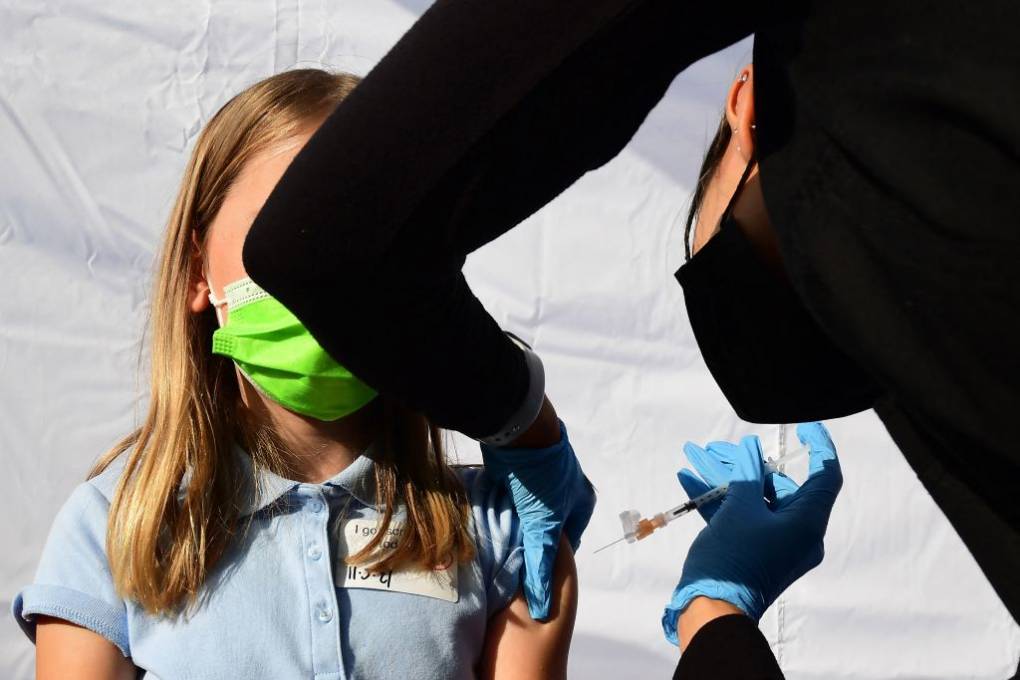
"caption": "A student receives a dose of Pfizer's COVID-19 vaccine at a school vaccine launch event in Los Angeles on Nov. 5, 2021.",
"description": null,
"title": "US-HEALTH-VIRUS-CHILDREN-VACCINES",
"credit": "Frederic J. Brown/AFP via Getty Images",
"status": "inherit",
"altTag": "A child wearing a green mask and blue shirt receives a needle in her arm from an adult wearing surgical gloves and a syringe.",
"isLoading": false,
"fetchFailed": false
},
"news_11895541": {
"type": "attachments",
"id": "news_11895541",
"meta": {
"index": "attachments_1716263798",
"site": "news",
"id": "11895541",
"found": true
},
"parent": 11895538,
"imgSizes": {
"twentyfourteen-full-width": {
"file": "https://ww2.kqed.org/app/uploads/sites/10/2021/11/Oak_Tech_008-1200x750-1-1038x576.jpeg",
"width": 1038,
"mimeType": "image/jpeg",
"height": 576
},
"thumbnail": {
"file": "https://ww2.kqed.org/app/uploads/sites/10/2021/11/Oak_Tech_008-1200x750-1-160x100.jpeg",
"width": 160,
"mimeType": "image/jpeg",
"height": 100
},
"post-thumbnail": {
"file": "https://ww2.kqed.org/app/uploads/sites/10/2021/11/Oak_Tech_008-1200x750-1-672x372.jpeg",
"width": 672,
"mimeType": "image/jpeg",
"height": 372
},
"kqedFullSize": {
"file": "https://ww2.kqed.org/app/uploads/sites/10/2021/11/Oak_Tech_008-1200x750-1.jpeg",
"width": 1200,
"height": 750
},
"large": {
"file": "https://ww2.kqed.org/app/uploads/sites/10/2021/11/Oak_Tech_008-1200x750-1-1020x638.jpeg",
"width": 1020,
"mimeType": "image/jpeg",
"height": 638
},
"medium": {
"file": "https://ww2.kqed.org/app/uploads/sites/10/2021/11/Oak_Tech_008-1200x750-1-800x500.jpeg",
"width": 800,
"mimeType": "image/jpeg",
"height": 500
}
},
"publishDate": 1636406064,
"modified": 1636506216,
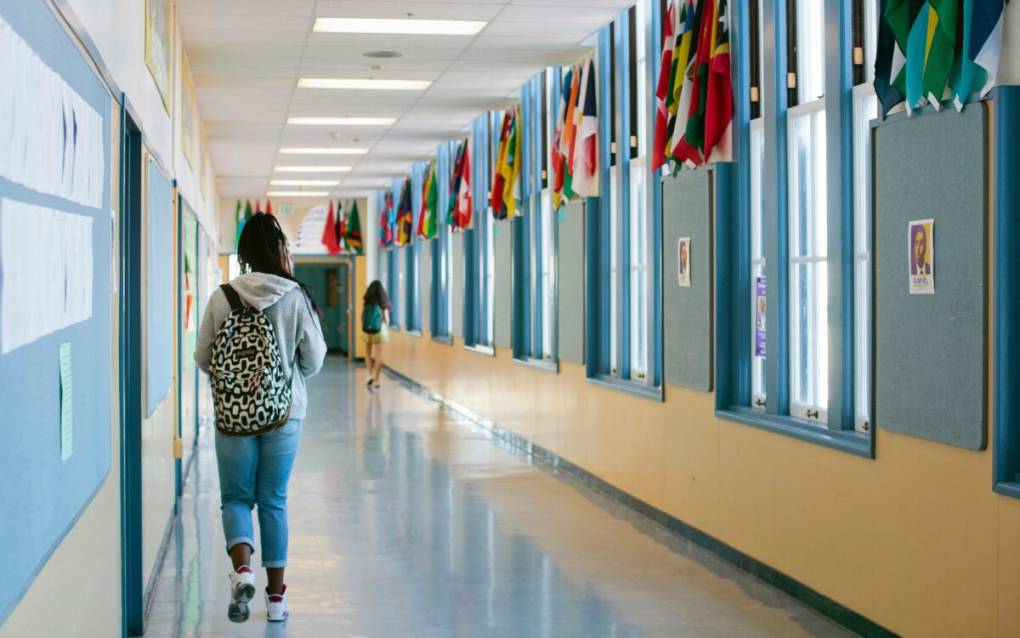
"caption": "High school students at Oakland Technical High School on May 1, 2017.",
"description": null,
"title": "Oakland Tech",
"credit": "Alison Yin/EdSource",
"status": "inherit",
"altTag": "A high school student with a backpack walks down a long, windowed school hallway.",
"isLoading": false,
"fetchFailed": false
},
"news_11884096": {
"type": "attachments",
"id": "news_11884096",
"meta": {
"index": "attachments_1716263798",
"site": "news",
"id": "11884096",
"found": true
},
"parent": 11883979,
"imgSizes": {
"twentyfourteen-full-width": {
"file": "https://ww2.kqed.org/app/uploads/sites/10/2021/08/IMG_5419-1038x576.jpg",
"width": 1038,
"mimeType": "image/jpeg",
"height": 576
},
"thumbnail": {
"file": "https://ww2.kqed.org/app/uploads/sites/10/2021/08/IMG_5419-160x107.jpg",
"width": 160,
"mimeType": "image/jpeg",
"height": 107
},
"post-thumbnail": {
"file": "https://ww2.kqed.org/app/uploads/sites/10/2021/08/IMG_5419-672x372.jpg",
"width": 672,
"mimeType": "image/jpeg",
"height": 372
},
"kqedFullSize": {
"file": "https://ww2.kqed.org/app/uploads/sites/10/2021/08/IMG_5419-scaled.jpg",
"width": 2560,
"height": 1706
},
"2048x2048": {
"file": "https://ww2.kqed.org/app/uploads/sites/10/2021/08/IMG_5419-2048x1365.jpg",
"width": 2048,
"mimeType": "image/jpeg",
"height": 1365
},
"large": {
"file": "https://ww2.kqed.org/app/uploads/sites/10/2021/08/IMG_5419-1020x680.jpg",
"width": 1020,
"mimeType": "image/jpeg",
"height": 680
},
"1536x1536": {
"file": "https://ww2.kqed.org/app/uploads/sites/10/2021/08/IMG_5419-1536x1024.jpg",
"width": 1536,
"mimeType": "image/jpeg",
"height": 1024
},
"full-width": {
"file": "https://ww2.kqed.org/app/uploads/sites/10/2021/08/IMG_5419-1920x1280.jpg",
"width": 1920,
"mimeType": "image/jpeg",
"height": 1280
},
"medium": {
"file": "https://ww2.kqed.org/app/uploads/sites/10/2021/08/IMG_5419-800x533.jpg",
"width": 800,
"mimeType": "image/jpeg",
"height": 533
}
},
"publishDate": 1628261407,
"modified": 1628294563,
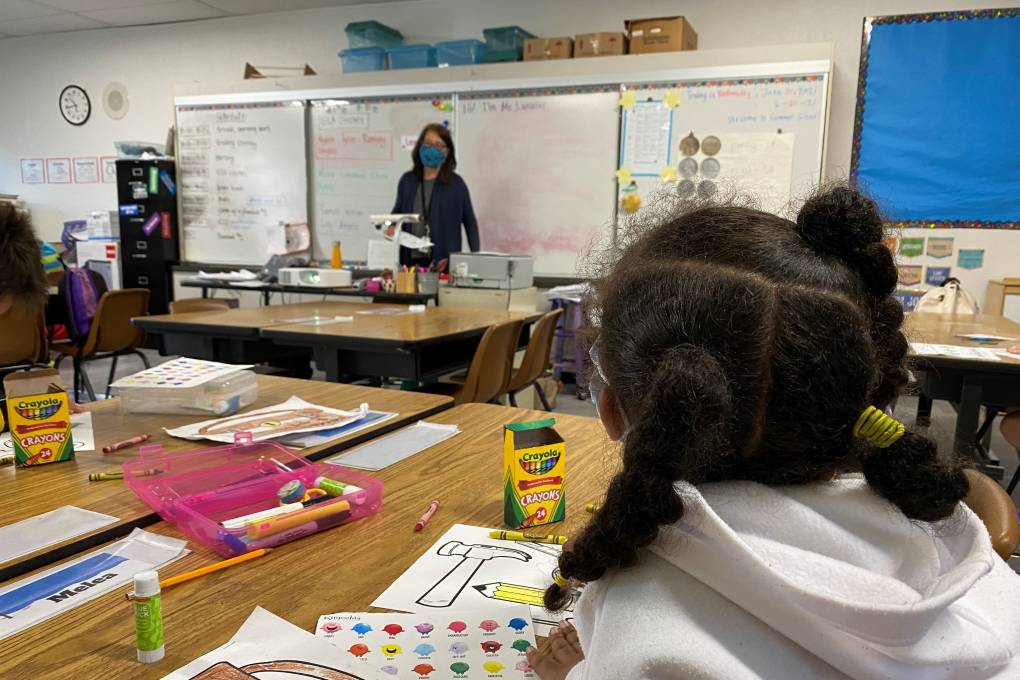
"caption": "Social worker Vinita Lee helps third graders in Castro Valley Unified's summer school program understand how to handle their emotions by creating a 'toolbox' of responses. This year, CVUSD tripled summer school attendance with the goal of providing more students with the tools they may need to return to in-person learning.",
"description": "Social worker, Vinita Lee, helps third graders in Castro Valley Unified's summer school program understand how to handle their emotions by creating a 'tool box' of responses.",
"title": "IMG_5419",
"credit": "Julia McEvoy/KQED",
"status": "inherit",
"altTag": "The view from behind a student's shoulder inside a classroom. The whiteboard is visible and a teacher stands in front of it, teaching a lesson. The student is sitting at their desk and both the student and teacher are wearing facemasks and are keeping distance from each other.",
"isLoading": false,
"fetchFailed": false
},
"news_11859067": {
"type": "attachments",
"id": "news_11859067",
"meta": {
"index": "attachments_1716263798",
"site": "news",
"id": "11859067",
"found": true
},
"parent": 11859065,
"imgSizes": {
"apple_news_ca_landscape_5_5": {
"file": "https://ww2.kqed.org/app/uploads/sites/10/2021/02/1920_Lowell-1044x783.jpg",
"width": 1044,
"mimeType": "image/jpeg",
"height": 783
},
"apple_news_ca_square_4_0": {
"file": "https://ww2.kqed.org/app/uploads/sites/10/2021/02/1920_Lowell-470x470.jpg",
"width": 470,
"mimeType": "image/jpeg",
"height": 470
},
"twentyfourteen-full-width": {
"file": "https://ww2.kqed.org/app/uploads/sites/10/2021/02/1920_Lowell-1038x576.jpg",
"width": 1038,
"mimeType": "image/jpeg",
"height": 576
},
"thumbnail": {
"file": "https://ww2.kqed.org/app/uploads/sites/10/2021/02/1920_Lowell-160x90.jpg",
"width": 160,
"mimeType": "image/jpeg",
"height": 90
},
"post-thumbnail": {
"file": "https://ww2.kqed.org/app/uploads/sites/10/2021/02/1920_Lowell-672x372.jpg",
"width": 672,
"mimeType": "image/jpeg",
"height": 372
},
"kqedFullSize": {
"file": "https://ww2.kqed.org/app/uploads/sites/10/2021/02/1920_Lowell.jpg",
"width": 1552,
"height": 873
},
"apple_news_ca_landscape_4_7": {
"file": "https://ww2.kqed.org/app/uploads/sites/10/2021/02/1920_Lowell-632x474.jpg",
"width": 632,
"mimeType": "image/jpeg",
"height": 474
},
"large": {
"file": "https://ww2.kqed.org/app/uploads/sites/10/2021/02/1920_Lowell-1020x574.jpg",
"width": 1020,
"mimeType": "image/jpeg",
"height": 574
},
"apple_news_ca_landscape_4_0": {
"file": "https://ww2.kqed.org/app/uploads/sites/10/2021/02/1920_Lowell-536x402.jpg",
"width": 536,
"mimeType": "image/jpeg",
"height": 402
},
"apple_news_ca_portrait_12_9": {
"file": "https://ww2.kqed.org/app/uploads/sites/10/2021/02/1920_Lowell-1122x873.jpg",
"width": 1122,
"mimeType": "image/jpeg",
"height": 873
},
"medium": {
"file": "https://ww2.kqed.org/app/uploads/sites/10/2021/02/1920_Lowell-800x450.jpg",
"width": 800,
"mimeType": "image/jpeg",
"height": 450
},
"apple_news_ca_portrait_4_0": {
"file": "https://ww2.kqed.org/app/uploads/sites/10/2021/02/1920_Lowell-354x472.jpg",
"width": 354,
"mimeType": "image/jpeg",
"height": 472
},
"apple_news_ca_portrait_9_7": {
"file": "https://ww2.kqed.org/app/uploads/sites/10/2021/02/1920_Lowell-840x873.jpg",
"width": 840,
"mimeType": "image/jpeg",
"height": 873
},
"apple_news_ca_square_9_7": {
"file": "https://ww2.kqed.org/app/uploads/sites/10/2021/02/1920_Lowell-1104x873.jpg",
"width": 1104,
"mimeType": "image/jpeg",
"height": 873
},
"1536x1536": {
"file": "https://ww2.kqed.org/app/uploads/sites/10/2021/02/1920_Lowell-1536x864.jpg",
"width": 1536,
"mimeType": "image/jpeg",
"height": 864
},
"apple_news_ca_portrait_4_7": {
"file": "https://ww2.kqed.org/app/uploads/sites/10/2021/02/1920_Lowell-414x552.jpg",
"width": 414,
"mimeType": "image/jpeg",
"height": 552
},
"apple_news_ca_square_12_9": {
"file": "https://ww2.kqed.org/app/uploads/sites/10/2021/02/1920_Lowell-1472x873.jpg",
"width": 1472,
"mimeType": "image/jpeg",
"height": 873
},
"apple_news_ca_portrait_5_5": {
"file": "https://ww2.kqed.org/app/uploads/sites/10/2021/02/1920_Lowell-687x873.jpg",
"width": 687,
"mimeType": "image/jpeg",
"height": 873
},
"apple_news_ca_square_4_7": {
"file": "https://ww2.kqed.org/app/uploads/sites/10/2021/02/1920_Lowell-550x550.jpg",
"width": 550,
"mimeType": "image/jpeg",
"height": 550
},
"apple_news_ca_landscape_9_7": {
"file": "https://ww2.kqed.org/app/uploads/sites/10/2021/02/1920_Lowell-1376x873.jpg",
"width": 1376,
"mimeType": "image/jpeg",
"height": 873
},
"apple_news_ca_square_5_5": {
"file": "https://ww2.kqed.org/app/uploads/sites/10/2021/02/1920_Lowell-912x873.jpg",
"width": 912,
"mimeType": "image/jpeg",
"height": 873
}
},
"publishDate": 1612628339,
"modified": 1612812130,
"caption": "The Lowell Black Student Union holds a Black Students Matter rally at Lowell High School in San Francisco on Feb. 5, 2021 in response to a recent racist incident at the school.",
"description": null,
"title": "1920_Lowell",
"credit": "Beth LaBerge/KQED",
"status": "inherit",
"altTag": null,
"isLoading": false,
"fetchFailed": false
},
"news_11858724": {
"type": "attachments",
"id": "news_11858724",
"meta": {
"index": "attachments_1716263798",
"site": "news",
"id": "11858724",
"found": true
},
"parent": 11858202,
"imgSizes": {
"apple_news_ca_landscape_5_5": {
"file": "https://ww2.kqed.org/app/uploads/sites/10/2021/02/Shavonne-Hines-Foster-1044x783.jpg",
"width": 1044,
"mimeType": "image/jpeg",
"height": 783
},
"apple_news_ca_square_4_0": {
"file": "https://ww2.kqed.org/app/uploads/sites/10/2021/02/Shavonne-Hines-Foster-470x470.jpg",
"width": 470,
"mimeType": "image/jpeg",
"height": 470
},
"twentyfourteen-full-width": {
"file": "https://ww2.kqed.org/app/uploads/sites/10/2021/02/Shavonne-Hines-Foster-1038x576.jpg",
"width": 1038,
"mimeType": "image/jpeg",
"height": 576
},
"thumbnail": {
"file": "https://ww2.kqed.org/app/uploads/sites/10/2021/02/Shavonne-Hines-Foster-160x107.jpg",
"width": 160,
"mimeType": "image/jpeg",
"height": 107
},
"post-thumbnail": {
"file": "https://ww2.kqed.org/app/uploads/sites/10/2021/02/Shavonne-Hines-Foster-672x372.jpg",
"width": 672,
"mimeType": "image/jpeg",
"height": 372
},
"kqedFullSize": {
"file": "https://ww2.kqed.org/app/uploads/sites/10/2021/02/Shavonne-Hines-Foster.jpg",
"width": 1920,
"height": 1280
},
"apple_news_ca_landscape_4_7": {
"file": "https://ww2.kqed.org/app/uploads/sites/10/2021/02/Shavonne-Hines-Foster-632x474.jpg",
"width": 632,
"mimeType": "image/jpeg",
"height": 474
},
"large": {
"file": "https://ww2.kqed.org/app/uploads/sites/10/2021/02/Shavonne-Hines-Foster-1020x680.jpg",
"width": 1020,
"mimeType": "image/jpeg",
"height": 680
},
"apple_news_ca_landscape_4_0": {
"file": "https://ww2.kqed.org/app/uploads/sites/10/2021/02/Shavonne-Hines-Foster-536x402.jpg",
"width": 536,
"mimeType": "image/jpeg",
"height": 402
},
"apple_news_ca_portrait_12_9": {
"file": "https://ww2.kqed.org/app/uploads/sites/10/2021/02/Shavonne-Hines-Foster-1122x1280.jpg",
"width": 1122,
"mimeType": "image/jpeg",
"height": 1280
},
"medium": {
"file": "https://ww2.kqed.org/app/uploads/sites/10/2021/02/Shavonne-Hines-Foster-800x533.jpg",
"width": 800,
"mimeType": "image/jpeg",
"height": 533
},
"apple_news_ca_portrait_4_0": {
"file": "https://ww2.kqed.org/app/uploads/sites/10/2021/02/Shavonne-Hines-Foster-354x472.jpg",
"width": 354,
"mimeType": "image/jpeg",
"height": 472
},
"apple_news_ca_portrait_9_7": {
"file": "https://ww2.kqed.org/app/uploads/sites/10/2021/02/Shavonne-Hines-Foster-840x1120.jpg",
"width": 840,
"mimeType": "image/jpeg",
"height": 1120
},
"apple_news_ca_landscape_12_9": {
"file": "https://ww2.kqed.org/app/uploads/sites/10/2021/02/Shavonne-Hines-Foster-1832x1280.jpg",
"width": 1832,
"mimeType": "image/jpeg",
"height": 1280
},
"apple_news_ca_square_9_7": {
"file": "https://ww2.kqed.org/app/uploads/sites/10/2021/02/Shavonne-Hines-Foster-1104x1104.jpg",
"width": 1104,
"mimeType": "image/jpeg",
"height": 1104
},
"1536x1536": {
"file": "https://ww2.kqed.org/app/uploads/sites/10/2021/02/Shavonne-Hines-Foster-1536x1024.jpg",
"width": 1536,
"mimeType": "image/jpeg",
"height": 1024
},
"apple_news_ca_portrait_4_7": {
"file": "https://ww2.kqed.org/app/uploads/sites/10/2021/02/Shavonne-Hines-Foster-414x552.jpg",
"width": 414,
"mimeType": "image/jpeg",
"height": 552
},
"apple_news_ca_square_12_9": {
"file": "https://ww2.kqed.org/app/uploads/sites/10/2021/02/Shavonne-Hines-Foster-1472x1280.jpg",
"width": 1472,
"mimeType": "image/jpeg",
"height": 1280
},
"apple_news_ca_portrait_5_5": {
"file": "https://ww2.kqed.org/app/uploads/sites/10/2021/02/Shavonne-Hines-Foster-687x916.jpg",
"width": 687,
"mimeType": "image/jpeg",
"height": 916
},
"apple_news_ca_square_4_7": {
"file": "https://ww2.kqed.org/app/uploads/sites/10/2021/02/Shavonne-Hines-Foster-550x550.jpg",
"width": 550,
"mimeType": "image/jpeg",
"height": 550
},
"apple_news_ca_landscape_9_7": {
"file": "https://ww2.kqed.org/app/uploads/sites/10/2021/02/Shavonne-Hines-Foster-1376x1032.jpg",
"width": 1376,
"mimeType": "image/jpeg",
"height": 1032
},
"apple_news_ca_square_5_5": {
"file": "https://ww2.kqed.org/app/uploads/sites/10/2021/02/Shavonne-Hines-Foster-912x912.jpg",
"width": 912,
"mimeType": "image/jpeg",
"height": 912
}
},
"publishDate": 1612478074,
"modified": 1612479064,
"caption": "'Students feel more comfortable coming to me to deal with this situation than administrators. That shows you a lot,' said Lowell High School senior Shavonne Hines-Foster about a recent racist post incident during a virtual anti-racism lesson at the school.",
"description": "'Students feel more comfortable coming to me to deal with this situation than administrators. That shows you a lot,' said Lowell High School senior Shavonne Hines-Foster about a recent racist post incident during a virtual anti-racism lesson at the school.",
"title": "Shavonne-Hines-Foster",
"credit": "Beth LaBerge/KQED",
"status": "inherit",
"altTag": null,
"isLoading": false,
"fetchFailed": false
},
"news_11841734": {
"type": "attachments",
"id": "news_11841734",
"meta": {
"index": "attachments_1716263798",
"site": "news",
"id": "11841734",
"found": true
},
"parent": 11841065,
"imgSizes": {
"apple_news_ca_landscape_5_5": {
"file": "https://ww2.kqed.org/app/uploads/sites/10/2020/10/RS45262_Atash_table_edited-qut-1044x783.jpg",
"width": 1044,
"mimeType": "image/jpeg",
"height": 783
},
"apple_news_ca_square_4_0": {
"file": "https://ww2.kqed.org/app/uploads/sites/10/2020/10/RS45262_Atash_table_edited-qut-470x470.jpg",
"width": 470,
"mimeType": "image/jpeg",
"height": 470
},
"twentyfourteen-full-width": {
"file": "https://ww2.kqed.org/app/uploads/sites/10/2020/10/RS45262_Atash_table_edited-qut-1038x576.jpg",
"width": 1038,
"mimeType": "image/jpeg",
"height": 576
},
"thumbnail": {
"file": "https://ww2.kqed.org/app/uploads/sites/10/2020/10/RS45262_Atash_table_edited-qut-160x90.jpg",
"width": 160,
"mimeType": "image/jpeg",
"height": 90
},
"post-thumbnail": {
"file": "https://ww2.kqed.org/app/uploads/sites/10/2020/10/RS45262_Atash_table_edited-qut-672x372.jpg",
"width": 672,
"mimeType": "image/jpeg",
"height": 372
},
"kqedFullSize": {
"file": "https://ww2.kqed.org/app/uploads/sites/10/2020/10/RS45262_Atash_table_edited-qut.jpg",
"width": 1920,
"height": 1080
},
"apple_news_ca_landscape_4_7": {
"file": "https://ww2.kqed.org/app/uploads/sites/10/2020/10/RS45262_Atash_table_edited-qut-632x474.jpg",
"width": 632,
"mimeType": "image/jpeg",
"height": 474
},
"large": {
"file": "https://ww2.kqed.org/app/uploads/sites/10/2020/10/RS45262_Atash_table_edited-qut-1020x574.jpg",
"width": 1020,
"mimeType": "image/jpeg",
"height": 574
},
"apple_news_ca_landscape_4_0": {
"file": "https://ww2.kqed.org/app/uploads/sites/10/2020/10/RS45262_Atash_table_edited-qut-536x402.jpg",
"width": 536,
"mimeType": "image/jpeg",
"height": 402
},
"apple_news_ca_portrait_12_9": {
"file": "https://ww2.kqed.org/app/uploads/sites/10/2020/10/RS45262_Atash_table_edited-qut-1122x1080.jpg",
"width": 1122,
"mimeType": "image/jpeg",
"height": 1080
},
"medium": {
"file": "https://ww2.kqed.org/app/uploads/sites/10/2020/10/RS45262_Atash_table_edited-qut-800x450.jpg",
"width": 800,
"mimeType": "image/jpeg",
"height": 450
},
"apple_news_ca_portrait_4_0": {
"file": "https://ww2.kqed.org/app/uploads/sites/10/2020/10/RS45262_Atash_table_edited-qut-354x472.jpg",
"width": 354,
"mimeType": "image/jpeg",
"height": 472
},
"apple_news_ca_portrait_9_7": {
"file": "https://ww2.kqed.org/app/uploads/sites/10/2020/10/RS45262_Atash_table_edited-qut-840x1080.jpg",
"width": 840,
"mimeType": "image/jpeg",
"height": 1080
},
"apple_news_ca_landscape_12_9": {
"file": "https://ww2.kqed.org/app/uploads/sites/10/2020/10/RS45262_Atash_table_edited-qut-1832x1080.jpg",
"width": 1832,
"mimeType": "image/jpeg",
"height": 1080
},
"apple_news_ca_square_9_7": {
"file": "https://ww2.kqed.org/app/uploads/sites/10/2020/10/RS45262_Atash_table_edited-qut-1104x1080.jpg",
"width": 1104,
"mimeType": "image/jpeg",
"height": 1080
},
"1536x1536": {
"file": "https://ww2.kqed.org/app/uploads/sites/10/2020/10/RS45262_Atash_table_edited-qut-1536x864.jpg",
"width": 1536,
"mimeType": "image/jpeg",
"height": 864
},
"apple_news_ca_portrait_4_7": {
"file": "https://ww2.kqed.org/app/uploads/sites/10/2020/10/RS45262_Atash_table_edited-qut-414x552.jpg",
"width": 414,
"mimeType": "image/jpeg",
"height": 552
},
"apple_news_ca_square_12_9": {
"file": "https://ww2.kqed.org/app/uploads/sites/10/2020/10/RS45262_Atash_table_edited-qut-1472x1080.jpg",
"width": 1472,
"mimeType": "image/jpeg",
"height": 1080
},
"apple_news_ca_portrait_5_5": {
"file": "https://ww2.kqed.org/app/uploads/sites/10/2020/10/RS45262_Atash_table_edited-qut-687x916.jpg",
"width": 687,
"mimeType": "image/jpeg",
"height": 916
},
"apple_news_ca_square_4_7": {
"file": "https://ww2.kqed.org/app/uploads/sites/10/2020/10/RS45262_Atash_table_edited-qut-550x550.jpg",
"width": 550,
"mimeType": "image/jpeg",
"height": 550
},
"apple_news_ca_landscape_9_7": {
"file": "https://ww2.kqed.org/app/uploads/sites/10/2020/10/RS45262_Atash_table_edited-qut-1376x1032.jpg",
"width": 1376,
"mimeType": "image/jpeg",
"height": 1032
},
"apple_news_ca_square_5_5": {
"file": "https://ww2.kqed.org/app/uploads/sites/10/2020/10/RS45262_Atash_table_edited-qut-912x912.jpg",
"width": 912,
"mimeType": "image/jpeg",
"height": 912
}
},
"publishDate": 1602276831,
"modified": 1602277058,
"caption": "David Atash worked as a wellness ambassador for the Foundation for California Community Colleges before transferring to University of Southern California earlier this year.",
"description": "David Atash worked as a wellness ambassador for the Foundation for California Community Colleges before transferring to University of Southern California earlier this year.",
"title": "RS45262_Atash_table_edited-qut",
"credit": "Courtesy of David Atash",
"status": "inherit",
"isLoading": false,
"fetchFailed": false
},
"news_11829646": {
"type": "attachments",
"id": "news_11829646",
"meta": {
"index": "attachments_1716263798",
"site": "news",
"id": "11829646",
"found": true
},
"parent": 11829370,
"imgSizes": {
"apple_news_ca_square_4_0": {
"file": "https://ww2.kqed.org/app/uploads/sites/10/2020/07/RS33664_irvine-qut-470x470.jpg",
"width": 470,
"mimeType": "image/jpeg",
"height": 470
},
"twentyfourteen-full-width": {
"file": "https://ww2.kqed.org/app/uploads/sites/10/2020/07/RS33664_irvine-qut-1024x576.jpg",
"width": 1024,
"mimeType": "image/jpeg",
"height": 576
},
"thumbnail": {
"file": "https://ww2.kqed.org/app/uploads/sites/10/2020/07/RS33664_irvine-qut-160x106.jpg",
"width": 160,
"mimeType": "image/jpeg",
"height": 106
},
"post-thumbnail": {
"file": "https://ww2.kqed.org/app/uploads/sites/10/2020/07/RS33664_irvine-qut-672x372.jpg",
"width": 672,
"mimeType": "image/jpeg",
"height": 372
},
"kqedFullSize": {
"file": "https://ww2.kqed.org/app/uploads/sites/10/2020/07/RS33664_irvine-qut.jpg",
"width": 1024,
"height": 681
},
"apple_news_ca_landscape_4_7": {
"file": "https://ww2.kqed.org/app/uploads/sites/10/2020/07/RS33664_irvine-qut-632x474.jpg",
"width": 632,
"mimeType": "image/jpeg",
"height": 474
},
"large": {
"file": "https://ww2.kqed.org/app/uploads/sites/10/2020/07/RS33664_irvine-qut-1020x678.jpg",
"width": 1020,
"mimeType": "image/jpeg",
"height": 678
},
"apple_news_ca_landscape_4_0": {
"file": "https://ww2.kqed.org/app/uploads/sites/10/2020/07/RS33664_irvine-qut-536x402.jpg",
"width": 536,
"mimeType": "image/jpeg",
"height": 402
},
"medium": {
"file": "https://ww2.kqed.org/app/uploads/sites/10/2020/07/RS33664_irvine-qut-800x532.jpg",
"width": 800,
"mimeType": "image/jpeg",
"height": 532
},
"apple_news_ca_portrait_4_0": {
"file": "https://ww2.kqed.org/app/uploads/sites/10/2020/07/RS33664_irvine-qut-354x472.jpg",
"width": 354,
"mimeType": "image/jpeg",
"height": 472
},
"apple_news_ca_portrait_9_7": {
"file": "https://ww2.kqed.org/app/uploads/sites/10/2020/07/RS33664_irvine-qut-840x681.jpg",
"width": 840,
"mimeType": "image/jpeg",
"height": 681
},
"apple_news_ca_portrait_4_7": {
"file": "https://ww2.kqed.org/app/uploads/sites/10/2020/07/RS33664_irvine-qut-414x552.jpg",
"width": 414,
"mimeType": "image/jpeg",
"height": 552
},
"apple_news_ca_portrait_5_5": {
"file": "https://ww2.kqed.org/app/uploads/sites/10/2020/07/RS33664_irvine-qut-687x681.jpg",
"width": 687,
"mimeType": "image/jpeg",
"height": 681
},
"apple_news_ca_square_4_7": {
"file": "https://ww2.kqed.org/app/uploads/sites/10/2020/07/RS33664_irvine-qut-550x550.jpg",
"width": 550,
"mimeType": "image/jpeg",
"height": 550
},
"apple_news_ca_square_5_5": {
"file": "https://ww2.kqed.org/app/uploads/sites/10/2020/07/RS33664_irvine-qut-912x681.jpg",
"width": 912,
"mimeType": "image/jpeg",
"height": 681
}
},
"publishDate": 1595199585,
"modified": 1595288321,
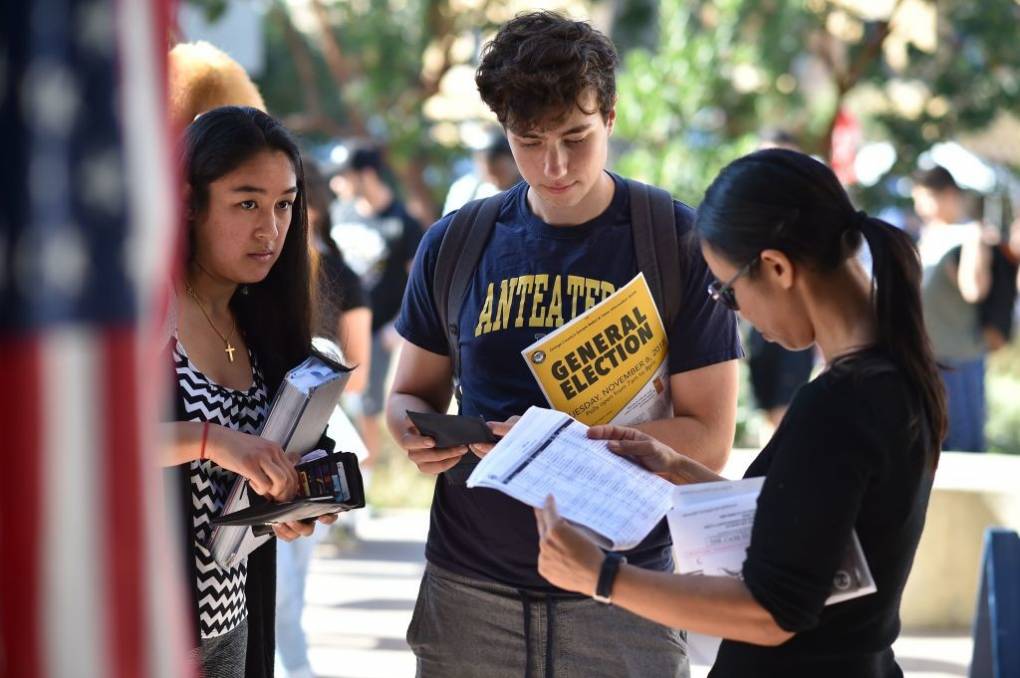
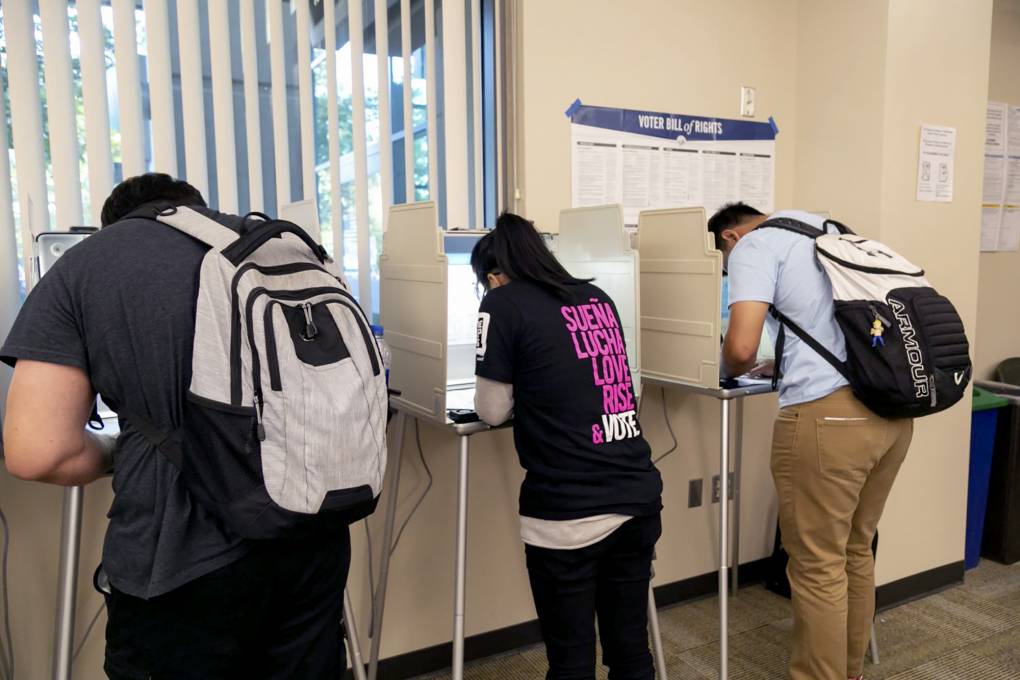
"caption": "Students wait in line to cast their ballots at a polling station on the campus of UC Irvine on Nov. 6, 2018.",
"description": "Students wait in line to cast their ballots at a polling station on the campus of UC Irvine on Nov. 6, 2018.",
"title": "US-POLITICS-ELECTION-VOTE",
"credit": "Robyn Beck/AFP/Getty Images",
"status": "inherit",
"isLoading": false,
"fetchFailed": false
},
"news_11814854": {
"type": "attachments",
"id": "news_11814854",
"meta": {
"index": "attachments_1716263798",
"site": "news",
"id": "11814854",
"found": true
},
"parent": 11814761,
"imgSizes": {
"apple_news_ca_landscape_5_5": {
"file": "https://ww2.kqed.org/app/uploads/sites/10/2020/04/RS42964_online-class-being-taught-qut-1044x783.jpg",
"width": 1044,
"mimeType": "image/jpeg",
"height": 783
},
"apple_news_ca_square_4_0": {
"file": "https://ww2.kqed.org/app/uploads/sites/10/2020/04/RS42964_online-class-being-taught-qut-470x470.jpg",
"width": 470,
"mimeType": "image/jpeg",
"height": 470
},
"twentyfourteen-full-width": {
"file": "https://ww2.kqed.org/app/uploads/sites/10/2020/04/RS42964_online-class-being-taught-qut-1038x576.jpg",
"width": 1038,
"mimeType": "image/jpeg",
"height": 576
},
"thumbnail": {
"file": "https://ww2.kqed.org/app/uploads/sites/10/2020/04/RS42964_online-class-being-taught-qut-160x107.jpg",
"width": 160,
"mimeType": "image/jpeg",
"height": 107
},
"post-thumbnail": {
"file": "https://ww2.kqed.org/app/uploads/sites/10/2020/04/RS42964_online-class-being-taught-qut-672x372.jpg",
"width": 672,
"mimeType": "image/jpeg",
"height": 372
},
"kqedFullSize": {
"file": "https://ww2.kqed.org/app/uploads/sites/10/2020/04/RS42964_online-class-being-taught-qut.jpg",
"width": 1280,
"height": 853
},
"apple_news_ca_landscape_4_7": {
"file": "https://ww2.kqed.org/app/uploads/sites/10/2020/04/RS42964_online-class-being-taught-qut-632x474.jpg",
"width": 632,
"mimeType": "image/jpeg",
"height": 474
},
"large": {
"file": "https://ww2.kqed.org/app/uploads/sites/10/2020/04/RS42964_online-class-being-taught-qut-1020x680.jpg",
"width": 1020,
"mimeType": "image/jpeg",
"height": 680
},
"apple_news_ca_landscape_4_0": {
"file": "https://ww2.kqed.org/app/uploads/sites/10/2020/04/RS42964_online-class-being-taught-qut-536x402.jpg",
"width": 536,
"mimeType": "image/jpeg",
"height": 402
},
"apple_news_ca_portrait_12_9": {
"file": "https://ww2.kqed.org/app/uploads/sites/10/2020/04/RS42964_online-class-being-taught-qut-1122x853.jpg",
"width": 1122,
"mimeType": "image/jpeg",
"height": 853
},
"medium": {
"file": "https://ww2.kqed.org/app/uploads/sites/10/2020/04/RS42964_online-class-being-taught-qut-800x533.jpg",
"width": 800,
"mimeType": "image/jpeg",
"height": 533
},
"apple_news_ca_portrait_4_0": {
"file": "https://ww2.kqed.org/app/uploads/sites/10/2020/04/RS42964_online-class-being-taught-qut-354x472.jpg",
"width": 354,
"mimeType": "image/jpeg",
"height": 472
},
"apple_news_ca_portrait_9_7": {
"file": "https://ww2.kqed.org/app/uploads/sites/10/2020/04/RS42964_online-class-being-taught-qut-840x853.jpg",
"width": 840,
"mimeType": "image/jpeg",
"height": 853
},
"apple_news_ca_square_9_7": {
"file": "https://ww2.kqed.org/app/uploads/sites/10/2020/04/RS42964_online-class-being-taught-qut-1104x853.jpg",
"width": 1104,
"mimeType": "image/jpeg",
"height": 853
},
"apple_news_ca_portrait_4_7": {
"file": "https://ww2.kqed.org/app/uploads/sites/10/2020/04/RS42964_online-class-being-taught-qut-414x552.jpg",
"width": 414,
"mimeType": "image/jpeg",
"height": 552
},
"apple_news_ca_portrait_5_5": {
"file": "https://ww2.kqed.org/app/uploads/sites/10/2020/04/RS42964_online-class-being-taught-qut-687x853.jpg",
"width": 687,
"mimeType": "image/jpeg",
"height": 853
},
"apple_news_ca_square_4_7": {
"file": "https://ww2.kqed.org/app/uploads/sites/10/2020/04/RS42964_online-class-being-taught-qut-550x550.jpg",
"width": 550,
"mimeType": "image/jpeg",
"height": 550
},
"apple_news_ca_square_5_5": {
"file": "https://ww2.kqed.org/app/uploads/sites/10/2020/04/RS42964_online-class-being-taught-qut-912x853.jpg",
"width": 912,
"mimeType": "image/jpeg",
"height": 853
}
},
"publishDate": 1588117970,
"modified": 1588199204,
"caption": "A California teen teaches music virtually through QuaranTunes, a new online music education service that offers free, or by donation, private lessons to children. Proceeds all go to coronavirus relief efforts. ",
"description": "A California teen teaches music virtually through QuaranTunes, a new online music education service that offers free or by-donation private lessons to children. Proceeds all go to coronavirus relief efforts. ",
"title": "RS42964_online class being taught-qut",
"credit": "Courtesy of QuaranTunes",
"status": "inherit",
"isLoading": false,
"fetchFailed": false
},
"news_11814447": {
"type": "attachments",
"id": "news_11814447",
"meta": {
"index": "attachments_1716263798",
"site": "news",
"id": "11814447",
"found": true
},
"parent": 11813278,
"imgSizes": {
"apple_news_ca_landscape_5_5": {
"file": "https://ww2.kqed.org/app/uploads/sites/10/2020/04/RS42911_002_KQED_Oakland_PrentissMayo_04242020-qut-1044x783.jpg",
"width": 1044,
"mimeType": "image/jpeg",
"height": 783
},
"apple_news_ca_square_4_0": {
"file": "https://ww2.kqed.org/app/uploads/sites/10/2020/04/RS42911_002_KQED_Oakland_PrentissMayo_04242020-qut-470x470.jpg",
"width": 470,
"mimeType": "image/jpeg",
"height": 470
},
"twentyfourteen-full-width": {
"file": "https://ww2.kqed.org/app/uploads/sites/10/2020/04/RS42911_002_KQED_Oakland_PrentissMayo_04242020-qut-1038x576.jpg",
"width": 1038,
"mimeType": "image/jpeg",
"height": 576
},
"thumbnail": {
"file": "https://ww2.kqed.org/app/uploads/sites/10/2020/04/RS42911_002_KQED_Oakland_PrentissMayo_04242020-qut-160x107.jpg",
"width": 160,
"mimeType": "image/jpeg",
"height": 107
},
"post-thumbnail": {
"file": "https://ww2.kqed.org/app/uploads/sites/10/2020/04/RS42911_002_KQED_Oakland_PrentissMayo_04242020-qut-672x372.jpg",
"width": 672,
"mimeType": "image/jpeg",
"height": 372
},
"kqedFullSize": {
"file": "https://ww2.kqed.org/app/uploads/sites/10/2020/04/RS42911_002_KQED_Oakland_PrentissMayo_04242020-qut.jpg",
"width": 1920,
"height": 1280
},
"apple_news_ca_landscape_4_7": {
"file": "https://ww2.kqed.org/app/uploads/sites/10/2020/04/RS42911_002_KQED_Oakland_PrentissMayo_04242020-qut-632x474.jpg",
"width": 632,
"mimeType": "image/jpeg",
"height": 474
},
"large": {
"file": "https://ww2.kqed.org/app/uploads/sites/10/2020/04/RS42911_002_KQED_Oakland_PrentissMayo_04242020-qut-1020x680.jpg",
"width": 1020,
"mimeType": "image/jpeg",
"height": 680
},
"apple_news_ca_landscape_4_0": {
"file": "https://ww2.kqed.org/app/uploads/sites/10/2020/04/RS42911_002_KQED_Oakland_PrentissMayo_04242020-qut-536x402.jpg",
"width": 536,
"mimeType": "image/jpeg",
"height": 402
},
"apple_news_ca_portrait_12_9": {
"file": "https://ww2.kqed.org/app/uploads/sites/10/2020/04/RS42911_002_KQED_Oakland_PrentissMayo_04242020-qut-1122x1280.jpg",
"width": 1122,
"mimeType": "image/jpeg",
"height": 1280
},
"medium": {
"file": "https://ww2.kqed.org/app/uploads/sites/10/2020/04/RS42911_002_KQED_Oakland_PrentissMayo_04242020-qut-800x533.jpg",
"width": 800,
"mimeType": "image/jpeg",
"height": 533
},
"apple_news_ca_portrait_4_0": {
"file": "https://ww2.kqed.org/app/uploads/sites/10/2020/04/RS42911_002_KQED_Oakland_PrentissMayo_04242020-qut-354x472.jpg",
"width": 354,
"mimeType": "image/jpeg",
"height": 472
},
"apple_news_ca_portrait_9_7": {
"file": "https://ww2.kqed.org/app/uploads/sites/10/2020/04/RS42911_002_KQED_Oakland_PrentissMayo_04242020-qut-840x1120.jpg",
"width": 840,
"mimeType": "image/jpeg",
"height": 1120
},
"apple_news_ca_landscape_12_9": {
"file": "https://ww2.kqed.org/app/uploads/sites/10/2020/04/RS42911_002_KQED_Oakland_PrentissMayo_04242020-qut-1832x1280.jpg",
"width": 1832,
"mimeType": "image/jpeg",
"height": 1280
},
"apple_news_ca_square_9_7": {
"file": "https://ww2.kqed.org/app/uploads/sites/10/2020/04/RS42911_002_KQED_Oakland_PrentissMayo_04242020-qut-1104x1104.jpg",
"width": 1104,
"mimeType": "image/jpeg",
"height": 1104
},
"apple_news_ca_portrait_4_7": {
"file": "https://ww2.kqed.org/app/uploads/sites/10/2020/04/RS42911_002_KQED_Oakland_PrentissMayo_04242020-qut-414x552.jpg",
"width": 414,
"mimeType": "image/jpeg",
"height": 552
},
"apple_news_ca_square_12_9": {
"file": "https://ww2.kqed.org/app/uploads/sites/10/2020/04/RS42911_002_KQED_Oakland_PrentissMayo_04242020-qut-1472x1280.jpg",
"width": 1472,
"mimeType": "image/jpeg",
"height": 1280
},
"apple_news_ca_portrait_5_5": {
"file": "https://ww2.kqed.org/app/uploads/sites/10/2020/04/RS42911_002_KQED_Oakland_PrentissMayo_04242020-qut-687x916.jpg",
"width": 687,
"mimeType": "image/jpeg",
"height": 916
},
"full-width": {
"file": "https://ww2.kqed.org/app/uploads/sites/10/2020/04/RS42911_002_KQED_Oakland_PrentissMayo_04242020-qut-1920x1280.jpg",
"width": 1920,
"mimeType": "image/jpeg",
"height": 1280
},
"apple_news_ca_square_4_7": {
"file": "https://ww2.kqed.org/app/uploads/sites/10/2020/04/RS42911_002_KQED_Oakland_PrentissMayo_04242020-qut-550x550.jpg",
"width": 550,
"mimeType": "image/jpeg",
"height": 550
},
"apple_news_ca_landscape_9_7": {
"file": "https://ww2.kqed.org/app/uploads/sites/10/2020/04/RS42911_002_KQED_Oakland_PrentissMayo_04242020-qut-1376x1032.jpg",
"width": 1376,
"mimeType": "image/jpeg",
"height": 1032
},
"apple_news_ca_square_5_5": {
"file": "https://ww2.kqed.org/app/uploads/sites/10/2020/04/RS42911_002_KQED_Oakland_PrentissMayo_04242020-qut-912x912.jpg",
"width": 912,
"mimeType": "image/jpeg",
"height": 912
}
},
"publishDate": 1587942144,
"modified": 1588027809,
"caption": "Prentiss Mayo at his home in Oakland on April 24, 2020. Mayo is part of the Underground Scholars group at UC Berkeley. He's legally blind and has had to navigate an additional set of challenges during the pandemic. ",
"description": null,
"title": "Prentiss Mayo at his home in Oakland on April 24, 2020.",
"credit": "Beth LaBerge/KQED",
"status": "inherit",
"isLoading": false,
"fetchFailed": false
},
"news_11792803": {
"type": "attachments",
"id": "news_11792803",
"meta": {
"index": "attachments_1716263798",
"site": "news",
"id": "11792803",
"found": true
},
"parent": 11792755,
"imgSizes": {
"apple_news_ca_landscape_5_5": {
"file": "https://ww2.kqed.org/app/uploads/sites/10/2019/12/Student_voters_photo4-1044x783.jpg",
"width": 1044,
"mimeType": "image/jpeg",
"height": 783
},
"apple_news_ca_square_4_0": {
"file": "https://ww2.kqed.org/app/uploads/sites/10/2019/12/Student_voters_photo4-470x470.jpg",
"width": 470,
"mimeType": "image/jpeg",
"height": 470
},
"twentyfourteen-full-width": {
"file": "https://ww2.kqed.org/app/uploads/sites/10/2019/12/Student_voters_photo4-1038x576.jpg",
"width": 1038,
"mimeType": "image/jpeg",
"height": 576
},
"thumbnail": {
"file": "https://ww2.kqed.org/app/uploads/sites/10/2019/12/Student_voters_photo4-160x107.jpg",
"width": 160,
"mimeType": "image/jpeg",
"height": 107
},
"post-thumbnail": {
"file": "https://ww2.kqed.org/app/uploads/sites/10/2019/12/Student_voters_photo4-672x372.jpg",
"width": 672,
"mimeType": "image/jpeg",
"height": 372
},
"kqedFullSize": {
"file": "https://ww2.kqed.org/app/uploads/sites/10/2019/12/Student_voters_photo4.jpg",
"width": 2000,
"height": 1334
},
"apple_news_ca_landscape_4_7": {
"file": "https://ww2.kqed.org/app/uploads/sites/10/2019/12/Student_voters_photo4-632x474.jpg",
"width": 632,
"mimeType": "image/jpeg",
"height": 474
},
"large": {
"file": "https://ww2.kqed.org/app/uploads/sites/10/2019/12/Student_voters_photo4-1020x680.jpg",
"width": 1020,
"mimeType": "image/jpeg",
"height": 680
},
"complete_open_graph": {
"file": "https://ww2.kqed.org/app/uploads/sites/10/2019/12/Student_voters_photo4-1200x800.jpg",
"width": 1200,
"mimeType": "image/jpeg",
"height": 800
},
"apple_news_ca_landscape_4_0": {
"file": "https://ww2.kqed.org/app/uploads/sites/10/2019/12/Student_voters_photo4-536x402.jpg",
"width": 536,
"mimeType": "image/jpeg",
"height": 402
},
"apple_news_ca_portrait_12_9": {
"file": "https://ww2.kqed.org/app/uploads/sites/10/2019/12/Student_voters_photo4-1122x1334.jpg",
"width": 1122,
"mimeType": "image/jpeg",
"height": 1334
},
"medium": {
"file": "https://ww2.kqed.org/app/uploads/sites/10/2019/12/Student_voters_photo4-800x534.jpg",
"width": 800,
"mimeType": "image/jpeg",
"height": 534
},
"apple_news_ca_portrait_4_0": {
"file": "https://ww2.kqed.org/app/uploads/sites/10/2019/12/Student_voters_photo4-354x472.jpg",
"width": 354,
"mimeType": "image/jpeg",
"height": 472
},
"apple_news_ca_portrait_9_7": {
"file": "https://ww2.kqed.org/app/uploads/sites/10/2019/12/Student_voters_photo4-840x1120.jpg",
"width": 840,
"mimeType": "image/jpeg",
"height": 1120
},
"apple_news_ca_landscape_12_9": {
"file": "https://ww2.kqed.org/app/uploads/sites/10/2019/12/Student_voters_photo4-1832x1334.jpg",
"width": 1832,
"mimeType": "image/jpeg",
"height": 1334
},
"apple_news_ca_square_9_7": {
"file": "https://ww2.kqed.org/app/uploads/sites/10/2019/12/Student_voters_photo4-1104x1104.jpg",
"width": 1104,
"mimeType": "image/jpeg",
"height": 1104
},
"apple_news_ca_portrait_4_7": {
"file": "https://ww2.kqed.org/app/uploads/sites/10/2019/12/Student_voters_photo4-414x552.jpg",
"width": 414,
"mimeType": "image/jpeg",
"height": 552
},
"apple_news_ca_square_12_9": {
"file": "https://ww2.kqed.org/app/uploads/sites/10/2019/12/Student_voters_photo4-1472x1334.jpg",
"width": 1472,
"mimeType": "image/jpeg",
"height": 1334
},
"apple_news_ca_portrait_5_5": {
"file": "https://ww2.kqed.org/app/uploads/sites/10/2019/12/Student_voters_photo4-687x916.jpg",
"width": 687,
"mimeType": "image/jpeg",
"height": 916
},
"full-width": {
"file": "https://ww2.kqed.org/app/uploads/sites/10/2019/12/Student_voters_photo4-1920x1281.jpg",
"width": 1920,
"mimeType": "image/jpeg",
"height": 1281
},
"apple_news_ca_square_4_7": {
"file": "https://ww2.kqed.org/app/uploads/sites/10/2019/12/Student_voters_photo4-550x550.jpg",
"width": 550,
"mimeType": "image/jpeg",
"height": 550
},
"apple_news_ca_landscape_9_7": {
"file": "https://ww2.kqed.org/app/uploads/sites/10/2019/12/Student_voters_photo4-1376x1032.jpg",
"width": 1376,
"mimeType": "image/jpeg",
"height": 1032
},
"apple_news_ca_square_5_5": {
"file": "https://ww2.kqed.org/app/uploads/sites/10/2019/12/Student_voters_photo4-912x912.jpg",
"width": 912,
"mimeType": "image/jpeg",
"height": 912
}
},
"publishDate": 1577139583,
"modified": 1577139679,
"caption": "Students vote on the California State University, Sacramento campus\non November 6, 2018.",
"description": null,
"title": "Student_voters_photo4",
"credit": "Eucario Calderon/The State Hornet",
"status": "inherit",
"isLoading": false,
"fetchFailed": false
},
"news_11792620": {
"type": "attachments",
"id": "news_11792620",
"meta": {
"index": "attachments_1716263798",
"site": "news",
"id": "11792620",
"found": true
},
"title": "The new Trump administration rule makes it harder for states to waive the requirement that adults work at least 20 hours a week in order to receive their Supplemental Nutrition Assistance Program — or SNAP — benefits. Some low-income college students could be affected.",
"publishDate": 1576950119,
"status": "inherit",
"parent": 11792619,
"modified": 1761673418,
"caption": "The new Trump administration rule makes it harder for states to waive the requirement that adults work at least 20 hours a week in order to receive their Supplemental Nutrition Assistance Program — or SNAP — benefits. Some low-income college students could be affected.",
"credit": "Danny Moloshok/AP Photo",
"altTag": null,
"description": "The new Trump administration rule makes it harder for states to waive the requirement that adults work at least 20 hours a week in order to receive their Supplemental Nutrition Assistance Program — or SNAP — benefits. Some low-income college students could be affected.",
"imgSizes": {
"thumbnail": {
"file": "https://cdn.kqed.org/wp-content/uploads/sites/10/2019/12/ap_17271692702067-ea1b97e98e157d598fa245d9c752f917e6c25c57-160x120.jpg",
"width": 160,
"height": 120,
"mimeType": "image/jpeg"
},
"medium": {
"file": "https://cdn.kqed.org/wp-content/uploads/sites/10/2019/12/ap_17271692702067-ea1b97e98e157d598fa245d9c752f917e6c25c57-800x600.jpg",
"width": 800,
"height": 600,
"mimeType": "image/jpeg"
},
"large": {
"file": "https://cdn.kqed.org/wp-content/uploads/sites/10/2019/12/ap_17271692702067-ea1b97e98e157d598fa245d9c752f917e6c25c57-1020x765.jpg",
"width": 1020,
"height": 765,
"mimeType": "image/jpeg"
},
"complete_open_graph": {
"file": "https://cdn.kqed.org/wp-content/uploads/sites/10/2019/12/ap_17271692702067-ea1b97e98e157d598fa245d9c752f917e6c25c57-1200x900.jpg",
"width": 1200,
"height": 900,
"mimeType": "image/jpeg"
},
"post-thumbnail": {
"file": "https://cdn.kqed.org/wp-content/uploads/sites/10/2019/12/ap_17271692702067-ea1b97e98e157d598fa245d9c752f917e6c25c57-672x372.jpg",
"width": 672,
"height": 372,
"mimeType": "image/jpeg"
},
"twentyfourteen-full-width": {
"file": "https://cdn.kqed.org/wp-content/uploads/sites/10/2019/12/ap_17271692702067-ea1b97e98e157d598fa245d9c752f917e6c25c57-1038x576.jpg",
"width": 1038,
"height": 576,
"mimeType": "image/jpeg"
},
"full-width": {
"file": "https://cdn.kqed.org/wp-content/uploads/sites/10/2019/12/ap_17271692702067-ea1b97e98e157d598fa245d9c752f917e6c25c57-1920x1440.jpg",
"width": 1920,
"height": 1440,
"mimeType": "image/jpeg"
},
"apple_news_ca_landscape_12_9": {
"file": "https://cdn.kqed.org/wp-content/uploads/sites/10/2019/12/ap_17271692702067-ea1b97e98e157d598fa245d9c752f917e6c25c57-1832x1374.jpg",
"width": 1832,
"height": 1374,
"mimeType": "image/jpeg"
},
"apple_news_ca_landscape_9_7": {
"file": "https://cdn.kqed.org/wp-content/uploads/sites/10/2019/12/ap_17271692702067-ea1b97e98e157d598fa245d9c752f917e6c25c57-1376x1032.jpg",
"width": 1376,
"height": 1032,
"mimeType": "image/jpeg"
},
"apple_news_ca_landscape_5_5": {
"file": "https://cdn.kqed.org/wp-content/uploads/sites/10/2019/12/ap_17271692702067-ea1b97e98e157d598fa245d9c752f917e6c25c57-1044x783.jpg",
"width": 1044,
"height": 783,
"mimeType": "image/jpeg"
},
"apple_news_ca_landscape_4_7": {
"file": "https://cdn.kqed.org/wp-content/uploads/sites/10/2019/12/ap_17271692702067-ea1b97e98e157d598fa245d9c752f917e6c25c57-632x474.jpg",
"width": 632,
"height": 474,
"mimeType": "image/jpeg"
},
"apple_news_ca_landscape_4_0": {
"file": "https://cdn.kqed.org/wp-content/uploads/sites/10/2019/12/ap_17271692702067-ea1b97e98e157d598fa245d9c752f917e6c25c57-536x402.jpg",
"width": 536,
"height": 402,
"mimeType": "image/jpeg"
},
"apple_news_ca_portrait_12_9": {
"file": "https://cdn.kqed.org/wp-content/uploads/sites/10/2019/12/ap_17271692702067-ea1b97e98e157d598fa245d9c752f917e6c25c57-1122x1496.jpg",
"width": 1122,
"height": 1496,
"mimeType": "image/jpeg"
},
"apple_news_ca_portrait_9_7": {
"file": "https://cdn.kqed.org/wp-content/uploads/sites/10/2019/12/ap_17271692702067-ea1b97e98e157d598fa245d9c752f917e6c25c57-840x1120.jpg",
"width": 840,
"height": 1120,
"mimeType": "image/jpeg"
},
"apple_news_ca_portrait_5_5": {
"file": "https://cdn.kqed.org/wp-content/uploads/sites/10/2019/12/ap_17271692702067-ea1b97e98e157d598fa245d9c752f917e6c25c57-687x916.jpg",
"width": 687,
"height": 916,
"mimeType": "image/jpeg"
},
"apple_news_ca_portrait_4_7": {
"file": "https://cdn.kqed.org/wp-content/uploads/sites/10/2019/12/ap_17271692702067-ea1b97e98e157d598fa245d9c752f917e6c25c57-414x552.jpg",
"width": 414,
"height": 552,
"mimeType": "image/jpeg"
},
"apple_news_ca_portrait_4_0": {
"file": "https://cdn.kqed.org/wp-content/uploads/sites/10/2019/12/ap_17271692702067-ea1b97e98e157d598fa245d9c752f917e6c25c57-354x472.jpg",
"width": 354,
"height": 472,
"mimeType": "image/jpeg"
},
"apple_news_ca_square_12_9": {
"file": "https://cdn.kqed.org/wp-content/uploads/sites/10/2019/12/ap_17271692702067-ea1b97e98e157d598fa245d9c752f917e6c25c57-1472x1472.jpg",
"width": 1472,
"height": 1472,
"mimeType": "image/jpeg"
},
"apple_news_ca_square_9_7": {
"file": "https://cdn.kqed.org/wp-content/uploads/sites/10/2019/12/ap_17271692702067-ea1b97e98e157d598fa245d9c752f917e6c25c57-1104x1104.jpg",
"width": 1104,
"height": 1104,
"mimeType": "image/jpeg"
},
"apple_news_ca_square_5_5": {
"file": "https://cdn.kqed.org/wp-content/uploads/sites/10/2019/12/ap_17271692702067-ea1b97e98e157d598fa245d9c752f917e6c25c57-912x912.jpg",
"width": 912,
"height": 912,
"mimeType": "image/jpeg"
},
"apple_news_ca_square_4_7": {
"file": "https://cdn.kqed.org/wp-content/uploads/sites/10/2019/12/ap_17271692702067-ea1b97e98e157d598fa245d9c752f917e6c25c57-550x550.jpg",
"width": 550,
"height": 550,
"mimeType": "image/jpeg"
},
"apple_news_ca_square_4_0": {
"file": "https://cdn.kqed.org/wp-content/uploads/sites/10/2019/12/ap_17271692702067-ea1b97e98e157d598fa245d9c752f917e6c25c57-470x470.jpg",
"width": 470,
"height": 470,
"mimeType": "image/jpeg"
},
"kqedFullSize": {
"file": "https://cdn.kqed.org/wp-content/uploads/sites/10/2019/12/ap_17271692702067-ea1b97e98e157d598fa245d9c752f917e6c25c57-e1576950264238.jpg",
"width": 1920,
"height": 1440
}
},
"isLoading": false,
"fetchFailed": false
},
"news_11791718": {
"type": "attachments",
"id": "news_11791718",
"meta": {
"index": "attachments_1716263798",
"site": "news",
"id": "11791718",
"found": true
},
"parent": 11791679,
"imgSizes": {
"apple_news_ca_landscape_5_5": {
"file": "https://ww2.kqed.org/app/uploads/sites/10/2019/12/Teacher-diversity-5-copy-1044x783.jpg",
"width": 1044,
"mimeType": "image/jpeg",
"height": 783
},
"apple_news_ca_square_4_0": {
"file": "https://ww2.kqed.org/app/uploads/sites/10/2019/12/Teacher-diversity-5-copy-470x470.jpg",
"width": 470,
"mimeType": "image/jpeg",
"height": 470
},
"twentyfourteen-full-width": {
"file": "https://ww2.kqed.org/app/uploads/sites/10/2019/12/Teacher-diversity-5-copy-1038x576.jpg",
"width": 1038,
"mimeType": "image/jpeg",
"height": 576
},
"thumbnail": {
"file": "https://ww2.kqed.org/app/uploads/sites/10/2019/12/Teacher-diversity-5-copy-160x120.jpg",
"width": 160,
"mimeType": "image/jpeg",
"height": 120
},
"post-thumbnail": {
"file": "https://ww2.kqed.org/app/uploads/sites/10/2019/12/Teacher-diversity-5-copy-672x372.jpg",
"width": 672,
"mimeType": "image/jpeg",
"height": 372
},
"kqedFullSize": {
"file": "https://ww2.kqed.org/app/uploads/sites/10/2019/12/Teacher-diversity-5-copy.jpg",
"width": 1920,
"height": 1440
},
"apple_news_ca_landscape_4_7": {
"file": "https://ww2.kqed.org/app/uploads/sites/10/2019/12/Teacher-diversity-5-copy-632x474.jpg",
"width": 632,
"mimeType": "image/jpeg",
"height": 474
},
"large": {
"file": "https://ww2.kqed.org/app/uploads/sites/10/2019/12/Teacher-diversity-5-copy-1020x765.jpg",
"width": 1020,
"mimeType": "image/jpeg",
"height": 765
},
"complete_open_graph": {
"file": "https://ww2.kqed.org/app/uploads/sites/10/2019/12/Teacher-diversity-5-copy-1200x900.jpg",
"width": 1200,
"mimeType": "image/jpeg",
"height": 900
},
"apple_news_ca_landscape_4_0": {
"file": "https://ww2.kqed.org/app/uploads/sites/10/2019/12/Teacher-diversity-5-copy-536x402.jpg",
"width": 536,
"mimeType": "image/jpeg",
"height": 402
},
"apple_news_ca_portrait_12_9": {
"file": "https://ww2.kqed.org/app/uploads/sites/10/2019/12/Teacher-diversity-5-copy-1122x1440.jpg",
"width": 1122,
"mimeType": "image/jpeg",
"height": 1440
},
"medium": {
"file": "https://ww2.kqed.org/app/uploads/sites/10/2019/12/Teacher-diversity-5-copy-800x600.jpg",
"width": 800,
"mimeType": "image/jpeg",
"height": 600
},
"apple_news_ca_portrait_4_0": {
"file": "https://ww2.kqed.org/app/uploads/sites/10/2019/12/Teacher-diversity-5-copy-354x472.jpg",
"width": 354,
"mimeType": "image/jpeg",
"height": 472
},
"apple_news_ca_portrait_9_7": {
"file": "https://ww2.kqed.org/app/uploads/sites/10/2019/12/Teacher-diversity-5-copy-840x1120.jpg",
"width": 840,
"mimeType": "image/jpeg",
"height": 1120
},
"apple_news_ca_landscape_12_9": {
"file": "https://ww2.kqed.org/app/uploads/sites/10/2019/12/Teacher-diversity-5-copy-1832x1374.jpg",
"width": 1832,
"mimeType": "image/jpeg",
"height": 1374
},
"apple_news_ca_square_9_7": {
"file": "https://ww2.kqed.org/app/uploads/sites/10/2019/12/Teacher-diversity-5-copy-1104x1104.jpg",
"width": 1104,
"mimeType": "image/jpeg",
"height": 1104
},
"apple_news_ca_portrait_4_7": {
"file": "https://ww2.kqed.org/app/uploads/sites/10/2019/12/Teacher-diversity-5-copy-414x552.jpg",
"width": 414,
"mimeType": "image/jpeg",
"height": 552
},
"apple_news_ca_square_12_9": {
"file": "https://ww2.kqed.org/app/uploads/sites/10/2019/12/Teacher-diversity-5-copy-1472x1440.jpg",
"width": 1472,
"mimeType": "image/jpeg",
"height": 1440
},
"apple_news_ca_portrait_5_5": {
"file": "https://ww2.kqed.org/app/uploads/sites/10/2019/12/Teacher-diversity-5-copy-687x916.jpg",
"width": 687,
"mimeType": "image/jpeg",
"height": 916
},
"full-width": {
"file": "https://ww2.kqed.org/app/uploads/sites/10/2019/12/Teacher-diversity-5-copy-1920x1440.jpg",
"width": 1920,
"mimeType": "image/jpeg",
"height": 1440
},
"apple_news_ca_square_4_7": {
"file": "https://ww2.kqed.org/app/uploads/sites/10/2019/12/Teacher-diversity-5-copy-550x550.jpg",
"width": 550,
"mimeType": "image/jpeg",
"height": 550
},
"apple_news_ca_landscape_9_7": {
"file": "https://ww2.kqed.org/app/uploads/sites/10/2019/12/Teacher-diversity-5-copy-1376x1032.jpg",
"width": 1376,
"mimeType": "image/jpeg",
"height": 1032
},
"apple_news_ca_square_5_5": {
"file": "https://ww2.kqed.org/app/uploads/sites/10/2019/12/Teacher-diversity-5-copy-912x912.jpg",
"width": 912,
"mimeType": "image/jpeg",
"height": 912
}
},
"publishDate": 1576613910,
"modified": 1576631858,
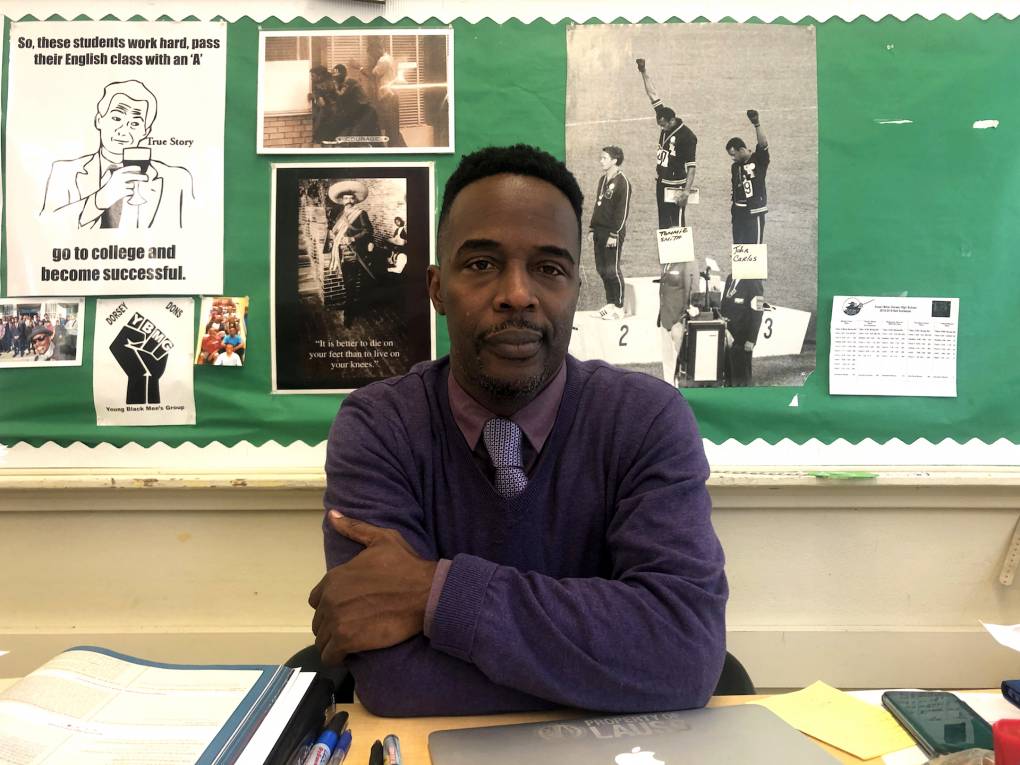
"caption": "Darryl McKellar has been teaching for 20 years. “I’m like Batman,” he said. “I use every trick in my utility belt to get a kid to buy into education.” ",
"description": null,
"title": "Teacher diversity 5 copy",
"credit": "Vanessa Rancano/KQED ",
"status": "inherit",
"isLoading": false,
"fetchFailed": false
}
},
"audioPlayerReducer": {
"postId": "stream_live",
"isPaused": true,
"isPlaying": false,
"pfsActive": false,
"pledgeModalIsOpen": true,
"playerDrawerIsOpen": false,
"liveAudioPlayStartedAt": 0,
"liveAudioPlayContext": ""
},
"authorsReducer": {
"byline_news_11898866": {
"type": "authors",
"id": "byline_news_11898866",
"meta": {
"override": true
},
"slug": "byline_news_11898866",
"name": "\u003ca href=\"https://edsource.org/author/atadayon\">Ali Tadayon\u003c/a>",
"isLoading": false
},
"byline_news_11895538": {
"type": "authors",
"id": "byline_news_11895538",
"meta": {
"override": true
},
"slug": "byline_news_11895538",
"name": "\u003ca href=\"https://edsource.org/author/cjones\">Carolyn Jones\u003c/a>",
"isLoading": false
},
"byline_news_11792755": {
"type": "authors",
"id": "byline_news_11792755",
"meta": {
"override": true
},
"slug": "byline_news_11792755",
"name": "Felicia Mello",
"isLoading": false
},
"byline_news_11792619": {
"type": "authors",
"id": "byline_news_11792619",
"meta": {
"override": true
},
"slug": "byline_news_11792619",
"name": "\u003ca href=\"https://www.npr.org/people/776048102/rachel-treisman\">Rachel Treisman\u003c/a>",
"isLoading": false
},
"gmarzorati": {
"type": "authors",
"id": "227",
"meta": {
"index": "authors_1716337520",
"id": "227",
"found": true
},
"name": "Guy Marzorati",
"firstName": "Guy",
"lastName": "Marzorati",
"slug": "gmarzorati",
"email": "gmarzorati@KQED.org",
"display_author_email": true,
"staff_mastheads": [
"news"
],
"title": "Correspondent",
"bio": "Guy Marzorati is a correspondent on KQED's California Politics and Government Desk, based in San Jose. A graduate of Santa Clara University, Guy joined KQED in 2013. He reports on state and local politics and produces KQED's digital voter guide.",
"avatar": "https://secure.gravatar.com/avatar/e7038b8dbfd55b104369b76b1cd0b9de?s=600&d=blank&r=g",
"twitter": "guymarzorati",
"facebook": null,
"instagram": null,
"linkedin": null,
"sites": [
{
"site": "",
"roles": [
"editor"
]
},
{
"site": "news",
"roles": [
"editor"
]
},
{
"site": "science",
"roles": [
"editor"
]
},
{
"site": "forum",
"roles": [
"editor"
]
},
{
"site": "elections",
"roles": [
"editor"
]
},
{
"site": "liveblog",
"roles": [
"editor"
]
}
],
"headData": {
"title": "Guy Marzorati | KQED",
"description": "Correspondent",
"ogImgSrc": "https://secure.gravatar.com/avatar/e7038b8dbfd55b104369b76b1cd0b9de?s=600&d=blank&r=g",
"twImgSrc": "https://secure.gravatar.com/avatar/e7038b8dbfd55b104369b76b1cd0b9de?s=600&d=blank&r=g"
},
"isLoading": false,
"link": "/author/gmarzorati"
},
"jmcevoy": {
"type": "authors",
"id": "231",
"meta": {
"index": "authors_1716337520",
"id": "231",
"found": true
},
"name": "Julia McEvoy",
"firstName": "Julia",
"lastName": "McEvoy",
"slug": "jmcevoy",
"email": "jmcevoy@KQED.org",
"display_author_email": true,
"staff_mastheads": [
"news"
],
"title": "KQED Senior Editor",
"bio": "Julia McEvoy is KQED's Senior Editor, Education Equity.\r\n\r\nJulia heads KQED’s education coverage examining inequities students face in Bay Area and California schools, and reports on what it will take to educate the next generation.\r\n\r\nJulia's editorial work has received a Peabody Award, a Casey Medal for Coverage of Children and Families, several Edward R. Murrow awards, as well as awards from the Public Radio News Directors Inc. and the Society for Professional Journalists.",
"avatar": "https://secure.gravatar.com/avatar/aec3ce21abe02b302fd33638abd56a22?s=600&d=blank&r=g",
"twitter": "juliamcevoy1",
"facebook": null,
"instagram": null,
"linkedin": null,
"sites": [
{
"site": "news",
"roles": []
},
{
"site": "stateofhealth",
"roles": [
"author"
]
}
],
"headData": {
"title": "Julia McEvoy | KQED",
"description": "KQED Senior Editor",
"ogImgSrc": "https://secure.gravatar.com/avatar/aec3ce21abe02b302fd33638abd56a22?s=600&d=blank&r=g",
"twImgSrc": "https://secure.gravatar.com/avatar/aec3ce21abe02b302fd33638abd56a22?s=600&d=blank&r=g"
},
"isLoading": false,
"link": "/author/jmcevoy"
},
"cveltman": {
"type": "authors",
"id": "8608",
"meta": {
"index": "authors_1716337520",
"id": "8608",
"found": true
},
"name": "Chloe Veltman",
"firstName": "Chloe",
"lastName": "Veltman",
"slug": "cveltman",
"email": "cveltman@kqed.org",
"display_author_email": true,
"staff_mastheads": [],
"title": "Arts and Culture Reporter",
"bio": "Chloe Veltman is a former arts and culture reporter for KQED. Prior to joining the organization, she launched and led the arts bureau at Colorado Public Radio, served as the Bay Area's culture columnist for the New York Times, and was the founder, host and executive producer of VoiceBox, a national award-winning weekly podcast/radio show and live events series all about the human voice. Chloe is the recipient of numerous prizes, grants and fellowships including a Webby Award for her work on interactive storytelling, both the John S Knight Journalism Fellowship and Humanities Center Fellowship at Stanford University, the Sundance Arts Writing Fellowship and a Library of Congress Research Fellowship. She is the author of the book \"On Acting\" and has appeared as a guest lecturer at Yale University and the San Francisco Conservatory of Music among other institutions. She holds a BA in english literature from King's College, Cambridge, and a Masters in Dramaturgy from the Central School of Speech and Drama/Harvard Institute for Advanced Theater Training.\r\n\u003ca href=\"https://www.chloeveltman.com\">www.chloeveltman.com\u003c/a>",
"avatar": "https://secure.gravatar.com/avatar/55403394b00a1ddab683952c2eb2cf85?s=600&d=blank&r=g",
"twitter": "chloeveltman",
"facebook": null,
"instagram": null,
"linkedin": null,
"sites": [
{
"site": "arts",
"roles": []
},
{
"site": "news",
"roles": [
"author"
]
},
{
"site": "pop",
"roles": [
"editor"
]
},
{
"site": "science",
"roles": []
}
],
"headData": {
"title": "Chloe Veltman | KQED",
"description": "Arts and Culture Reporter",
"ogImgSrc": "https://secure.gravatar.com/avatar/55403394b00a1ddab683952c2eb2cf85?s=600&d=blank&r=g",
"twImgSrc": "https://secure.gravatar.com/avatar/55403394b00a1ddab683952c2eb2cf85?s=600&d=blank&r=g"
},
"isLoading": false,
"link": "/author/cveltman"
},
"lklivans": {
"type": "authors",
"id": "8648",
"meta": {
"index": "authors_1716337520",
"id": "8648",
"found": true
},
"name": "Laura Klivans",
"firstName": "Laura",
"lastName": "Klivans",
"slug": "lklivans",
"email": "lklivans@kqed.org",
"display_author_email": true,
"staff_mastheads": [
"news",
"science"
],
"title": "Reporter",
"bio": "Laura Klivans is an award-winning science reporter for KQED News, where she covers climate change with an eye on both groundbreaking progress and gaps in action. She is the former host of KQED's blockbuster video series about tiny, amazing animals, \u003cem>Deep Look\u003c/em>. Her work reaches national audiences through NPR, \u003cem>Here & Now, \u003c/em>PRI, and other major outlets. \r\n\r\nLaura’s won five Northern California Area Emmy Awards for Deep Look and First Place in the Greater Bay Area Journalism Awards for a podcast exploring how one Oakland neighborhood teamed up to reduce planet-heating pollution.\r\n\r\nBeyond her reporting, she hosts and moderates events. In the past, she taught audio storytelling at the UC Berkeley Graduate School of Journalism, led international education programs, worked with immigrants and refugees along the Thai-Burmese border, taught high schoolers sex ed, and was an actress. \r\n\r\nShe's a former UC Berkeley Human Rights Fellow, USC Center for Health Journalism's California Fellow and Coro Fellow in Public Affairs. Laura has a master’s in journalism from UC Berkeley, a master’s in education from Harvard, and an undergraduate degree from Northwestern University.\r\n\r\nShe loves trying to riddle the meaning out of vanity license plates.",
"avatar": "https://secure.gravatar.com/avatar/2d2ecd1550a494cc10ad4a503406965585902124739e775a9b3817eebf1d88be?s=600&d=blank&r=g",
"twitter": "lauraklivans",
"bluesky": null,
"facebook": null,
"instagram": null,
"linkedin": null,
"sites": [
{
"site": "news",
"roles": [
"editor"
]
},
{
"site": "stateofhealth",
"roles": [
"contributor",
"editor"
]
},
{
"site": "science",
"roles": [
"editor"
]
},
{
"site": "forum",
"roles": [
"editor"
]
}
],
"headData": {
"title": "Laura Klivans | KQED",
"description": "Reporter",
"ogImgSrc": "https://secure.gravatar.com/avatar/2d2ecd1550a494cc10ad4a503406965585902124739e775a9b3817eebf1d88be?s=600&d=blank&r=g",
"twImgSrc": "https://secure.gravatar.com/avatar/2d2ecd1550a494cc10ad4a503406965585902124739e775a9b3817eebf1d88be?s=600&d=blank&r=g"
},
"isLoading": false,
"link": "/author/lklivans"
},
"vrancano": {
"type": "authors",
"id": "11276",
"meta": {
"index": "authors_1716337520",
"id": "11276",
"found": true
},
"name": "Vanessa Rancaño",
"firstName": "Vanessa",
"lastName": "Rancaño",
"slug": "vrancano",
"email": "vrancano@kqed.org",
"display_author_email": false,
"staff_mastheads": [
"news"
],
"title": "Reporter",
"bio": "Vanessa Rancaño is a features reporter for KQED. She’s also covered homelessness and education for the station and reported from the Central Valley. Her work has aired across public radio, from flagship national news shows to longform narrative podcasts. Before taking up a mic, she worked as a freelance print journalist. She’s been recognized with a number of national and regional awards. Vanessa grew up in California's Central Valley. She's a former NPR Kroc Fellow, and a graduate of the UC Berkeley Graduate School of Journalism.",
"avatar": "https://secure.gravatar.com/avatar/b3a383dfb0e7ee1c17568f2cf067904ab654d6e3de9743fc661f3c788ade1bed?s=600&d=blank&r=g",
"twitter": "vanessarancano",
"bluesky": null,
"facebook": null,
"instagram": null,
"linkedin": null,
"sites": [
{
"site": "arts",
"roles": [
"editor"
]
},
{
"site": "news",
"roles": [
"editor"
]
},
{
"site": "liveblog",
"roles": [
"contributor"
]
}
],
"headData": {
"title": "Vanessa Rancaño | KQED",
"description": "Reporter",
"ogImgSrc": "https://secure.gravatar.com/avatar/b3a383dfb0e7ee1c17568f2cf067904ab654d6e3de9743fc661f3c788ade1bed?s=600&d=blank&r=g",
"twImgSrc": "https://secure.gravatar.com/avatar/b3a383dfb0e7ee1c17568f2cf067904ab654d6e3de9743fc661f3c788ade1bed?s=600&d=blank&r=g"
},
"isLoading": false,
"link": "/author/vrancano"
},
"lsarah": {
"type": "authors",
"id": "11626",
"meta": {
"index": "authors_1716337520",
"id": "11626",
"found": true
},
"name": "Lakshmi Sarah",
"firstName": "Lakshmi",
"lastName": "Sarah",
"slug": "lsarah",
"email": "lsarah@kqed.org",
"display_author_email": false,
"staff_mastheads": [],
"title": "Digital Producer",
"bio": "Lakshmi Sarah is an educator, author and journalist with a focus on innovative storytelling. She has worked with newspapers, radio and magazines from Ahmedabad, India to Los Angeles, California. She has written and produced for Die Zeit, Global Voices, AJ+, KQED, Fusion Media Group and the New York Times.",
"avatar": "https://secure.gravatar.com/avatar/652dcaecd8b28826fc17a8b2d6bb4e93?s=600&d=blank&r=g",
"twitter": "lakitalki",
"facebook": null,
"instagram": "https://www.instagram.com/laki.talki/",
"linkedin": "https://www.linkedin.com/in/lakisarah/",
"sites": [
{
"site": "arts",
"roles": []
},
{
"site": "news",
"roles": []
},
{
"site": "bayareabites",
"roles": []
},
{
"site": "science",
"roles": []
}
],
"headData": {
"title": "Lakshmi Sarah | KQED",
"description": "Digital Producer",
"ogImgSrc": "https://secure.gravatar.com/avatar/652dcaecd8b28826fc17a8b2d6bb4e93?s=600&d=blank&r=g",
"twImgSrc": "https://secure.gravatar.com/avatar/652dcaecd8b28826fc17a8b2d6bb4e93?s=600&d=blank&r=g"
},
"isLoading": false,
"link": "/author/lsarah"
},
"hmcdede": {
"type": "authors",
"id": "11635",
"meta": {
"index": "authors_1716337520",
"id": "11635",
"found": true
},
"name": "Holly McDede",
"firstName": "Holly",
"lastName": "McDede",
"slug": "hmcdede",
"email": "hmcdede@KQED.org",
"display_author_email": false,
"staff_mastheads": [],
"title": "KQED Contributor",
"bio": null,
"avatar": "https://secure.gravatar.com/avatar/999d9bf31bb3a2f0511932d99526cb3e?s=600&d=blank&r=g",
"twitter": null,
"facebook": null,
"instagram": null,
"linkedin": null,
"sites": [
{
"site": "arts",
"roles": [
"editor"
]
},
{
"site": "news",
"roles": [
"edit_others_posts",
"editor"
]
},
{
"site": "science",
"roles": [
"editor"
]
},
{
"site": "forum",
"roles": [
"editor"
]
},
{
"site": "perspectives",
"roles": [
"administrator"
]
}
],
"headData": {
"title": "Holly McDede | KQED",
"description": "KQED Contributor",
"ogImgSrc": "https://secure.gravatar.com/avatar/999d9bf31bb3a2f0511932d99526cb3e?s=600&d=blank&r=g",
"twImgSrc": "https://secure.gravatar.com/avatar/999d9bf31bb3a2f0511932d99526cb3e?s=600&d=blank&r=g"
},
"isLoading": false,
"link": "/author/hmcdede"
},
"blaberge": {
"type": "authors",
"id": "11667",
"meta": {
"index": "authors_1716337520",
"id": "11667",
"found": true
},
"name": "Beth LaBerge",
"firstName": "Beth",
"lastName": "LaBerge",
"slug": "blaberge",
"email": "blaberge@KQED.org",
"display_author_email": true,
"staff_mastheads": [
"news"
],
"title": "Photographer, News",
"bio": "Beth LaBerge is a visual journalist for \u003ca href=\"https://www.kqed.org/news\">KQED News\u003c/a>.",
"avatar": "https://secure.gravatar.com/avatar/ce49ecd7a1306685637b45a1f6f5dedfc4ae9481966eb596fea5160466dd6319?s=600&d=blank&r=g",
"twitter": null,
"bluesky": null,
"facebook": null,
"instagram": "https://www.instagram.com/bethlaberge/",
"linkedin": null,
"sites": [
{
"site": "arts",
"roles": [
"editor",
"manage_categories"
]
},
{
"site": "news",
"roles": [
"editor",
"edit_plugins",
"manage_categories"
]
},
{
"site": "science",
"roles": [
"editor",
"contributor",
"author",
"manage_categories"
]
},
{
"site": "perspectives",
"roles": [
"editor"
]
},
{
"site": "liveblog",
"roles": [
"editor"
]
}
],
"headData": {
"title": "Beth LaBerge | KQED",
"description": "Photographer, News",
"ogImgSrc": "https://secure.gravatar.com/avatar/ce49ecd7a1306685637b45a1f6f5dedfc4ae9481966eb596fea5160466dd6319?s=600&d=blank&r=g",
"twImgSrc": "https://secure.gravatar.com/avatar/ce49ecd7a1306685637b45a1f6f5dedfc4ae9481966eb596fea5160466dd6319?s=600&d=blank&r=g"
},
"isLoading": false,
"link": "/author/blaberge"
},
"gfrenes": {
"type": "authors",
"id": "11732",
"meta": {
"index": "authors_1716337520",
"id": "11732",
"found": true
},
"name": "Gabriella Frenes",
"firstName": "Gabriella",
"lastName": "Frenes",
"slug": "gfrenes",
"email": "gfrenes@kqed.org",
"display_author_email": false,
"staff_mastheads": [],
"title": "KQED Contributor",
"bio": null,
"avatar": "https://secure.gravatar.com/avatar/2c29f711ce960d0ec5d504b68e28e419?s=600&d=blank&r=g",
"twitter": null,
"facebook": null,
"instagram": null,
"linkedin": null,
"sites": [
{
"site": "arts",
"roles": [
"author"
]
},
{
"site": "news",
"roles": [
"author"
]
}
],
"headData": {
"title": "Gabriella Frenes | KQED",
"description": "KQED Contributor",
"ogImgSrc": "https://secure.gravatar.com/avatar/2c29f711ce960d0ec5d504b68e28e419?s=600&d=blank&r=g",
"twImgSrc": "https://secure.gravatar.com/avatar/2c29f711ce960d0ec5d504b68e28e419?s=600&d=blank&r=g"
},
"isLoading": false,
"link": "/author/gfrenes"
}
},
"pagesReducer": {
"news_tag_students": {
"type": "terms",
"id": "news_3457",
"meta": {
"index": "terms_1716263798",
"site": "news",
"id": "3457",
"score": 8.557341
},
"name": "Students",
"slug": "students",
"taxonomy": "tag",
"description": null,
"featImg": null,
"headData": {
"title": "Students | KQED News",
"description": null,
"ogTitle": null,
"ogDescription": null,
"ogImgId": null,
"twTitle": null,
"twDescription": null,
"twImgId": null
},
"ttid": 3475,
"isLoading": false,
"title": "Students",
"pageMeta": {
"site": "news",
"WpPageTemplate": "page-topic-editorial",
"currentPage": 8
},
"blocks": [
{
"blockName": "kqed/post-list",
"attrs": {
"layout": "cardArticle2",
"query": "posts/news?tag=students",
"seeMore": false,
"paginated": true,
"page": 8
}
},
{
"blockName": "kqed/ad"
}
]
}
},
"pfsSessionReducer": {},
"postsReducer": {
"stream_live": {
"type": "live",
"id": "stream_live",
"audioUrl": "https://streams.kqed.org/kqedradio",
"title": "Live Stream",
"excerpt": "Live Stream information currently unavailable.",
"link": "/radio",
"featImg": "",
"label": {
"name": "KQED Live",
"link": "/"
}
},
"stream_kqedNewscast": {
"type": "posts",
"id": "stream_kqedNewscast",
"audioUrl": "https://www.kqed.org/.stream/anon/radio/RDnews/newscast.mp3?_=1",
"title": "KQED Newscast",
"featImg": "",
"label": {
"name": "88.5 FM",
"link": "/"
}
},
"news_11898866": {
"type": "posts",
"id": "news_11898866",
"meta": {
"index": "posts_1716263798",
"site": "news",
"id": "11898866",
"score": null,
"sort": [
1639515616000
]
},
"guestAuthors": [],
"slug": "scores-of-california-students-still-lack-proof-of-vaccination-as-school-mandate-deadlines-approach",
"title": "Scores of California Students Still Lack Proof of Vaccination as School Mandate Deadlines Approach",
"publishDate": 1639515616,
"format": "standard",
"headTitle": "Scores of California Students Still Lack Proof of Vaccination as School Mandate Deadlines Approach | KQED",
"labelTerm": {},
"content": "\u003cp>A handful of large California school districts are facing a potential crisis in the coming weeks: Thousands of their students 12 years and older have yet to provide proof of vaccination, despite looming deadlines.\u003c/p>\n\u003cp>Those districts include West Contra Costa Unified (WCCUSD), as well those in Los Angeles, Sacramento and Oakland. As of last Wednesday, for instance, only 33% of WCCUSD’s students age 12 and older had verified that they had received both doses of the vaccine, which will be required to continue in-person education there beginning Jan. 3.[pullquote size=\"medium\" align=\"right\" citation=\"LaResha Martin, chief academic officer, West Contra Costa Unified School District\"]‘The reality is that we have a virtual academy that doesn’t have enough teachers.’[/pullquote]That means weeks ahead of the district’s mandate deadline, the status of about 8,000 students remains unknown. Students who aren’t fully vaccinated by then will either have to enroll in the \u003ca href=\"https://edsource.org/2021/bay-area-district-among-first-in-state-to-keep-distance-learning-even-after-campuses-reopen/647422\">district’s independent study program\u003c/a> or leave the district altogether.\u003c/p>\n\u003cp>It’s likely that many families simply haven’t gotten around to submitting their children’s vaccination status. \u003ca href=\"https://covid19.ca.gov/vaccination-progress-data/\">The state touts that more than 70% of children age 12-17 have received at least one dose of the vaccine\u003c/a>, but parents must still submit their children’s proof of vaccination to districts with mandates to continue in-person instruction.\u003c/p>\n\u003cp data-reader-unique-id=\"8\">But the sheer number of people holding out so close to the deadline is stoking anxiety among officials in districts like WCCUSD, who fear that their short-staffed virtual education alternatives will be quickly overwhelmed by an onslaught of unvaccinated students.\u003c/p>\n\u003cp data-reader-unique-id=\"9\">“The reality is that we have a virtual academy that doesn’t have enough teachers,” WCCUSD’s Chief Academic Officer LaResha Martin told EdSource. Superintendent Kenneth “Chris” Hurst, at a school board meeting last Wednesday, said he no longer believes the Jan. 3 deadline for the vaccine mandate is tenable, and intends to propose pushing the date back, possibly to July 2022 to align with the state’s student vaccine mandate.\u003c/p>\n\u003cp>In the meantime, the district is boosting its outreach efforts and hosting vaccine clinics. Martin laid out some options for dealing with the potential flood of independent study students: The district will continue trying to quickly hire teachers, and could propose transferring unvaccinated teachers to the virtual academy — although those teachers are not required to move to different schools. Currently, 85% of school staff have provided proof of vaccination, according to the district.\u003c/p>\n\u003cp data-reader-unique-id=\"13\">Similar situations are playing out in other districts throughout California.\u003c/p>\n\u003cp data-reader-unique-id=\"15\">In Los Angeles Unified — which enrolls about one-fifth of California’s students — some 34,000 students have not yet complied with the district’s vaccine mandate, \u003ca href=\"https://www.latimes.com/california/story/2021-12-07/33-000-l-a-unified-have-not-provided-proof-of-covid-vaccination\" data-reader-unique-id=\"16\">The Los Angeles Times reported\u003c/a> last week. That’s more than twice as many students as are currently enrolled in the district’s independent study program.\u003c/p>\n\u003cp>While noting that more than 86% of its eligible students have been vaccinated, the district on Friday \u003ca href=\"https://achieve.lausd.net/site/default.aspx?PageType=3&DomainID=4&ModuleInstanceID=4466&ViewID=6446EE88-D30C-497E-9316-3F8874B3E108&RenderLoc=0&FlexDataID=114452&PageID=1\" data-reader-unique-id=\"19\">announced a proposal\u003c/a> to allow unvaccinated students to continue in-person instruction until the 2022 fall semester, at which point they would have to enroll in independent study if still unvaccinated. That proposal will go before the school board on Dec. 14.[aside postID=\"news_11896682,mindshift_58766,news_11895014\" label=\"Related Posts\"]In Sacramento City Unified, \u003ca href=\"https://edsource.org/updates/75-of-sacramento-city-unifieds-students-miss-vaccination-deadline\" data-reader-unique-id=\"21\">only a quarter\u003c/a> of middle and high school students turned in proof that they had received at least one dose of the COVID-19 vaccine by the district’s Nov. 30 deadline. That means more than 14,000 students 12 and older will have to potentially enroll in independent study.\u003c/p>\n\u003cp data-reader-unique-id=\"22\">And in Oakland Unified, about 40% of students 12 and older — some 6,000 students — have not yet submitted proof of vaccination, \u003ca href=\"https://oaklandside.org/2021/12/02/oaklands-student-vaccine-mandate-starts-jan-31-what-you-need-to-know/\" data-reader-unique-id=\"23\">Oaklandside reported earlier this month\u003c/a>, prompting the school board last week to \u003ca href=\"https://www.ktvu.com/news/oakland-schools-delays-student-covid-vaccine-requirement-deadline\">push back the district’s deadline\u003c/a> from Jan. 1 to Jan. 31. About 1,000 of those students have qualified for either a medical or religious exemption, district officials said — an exemption not offered by the West Contra Costa or LA districts.\u003c/p>\n\u003cp data-reader-unique-id=\"26\">Martin, WCCUSD’s chief academic officer, said the district has been scrambling since the start of the semester to hire enough teachers to meet the demand for its virtual academy. Even before the pandemic, however, the state and county faced a district-wide school staffing shortage, which only got worse over the last year, after many teachers and other employees left the profession.\u003c/p>\n\u003cp data-reader-unique-id=\"27\">“We don’t have enough teachers. That’s just the bottom line,” Martin said.\u003c/p>\n\u003cp data-reader-unique-id=\"28\">The district is actively hiring teachers for its virtual academy. But among the hundreds of applicants who have responded to the district’s job listings, Martin said, only a handful are actually qualified.\u003c/p>\n\u003cp data-reader-unique-id=\"29\">She said the academy, whose existence preceded the pandemic, was designed as a year-round option for the handful of families in the district who wanted a remote learning alternative for their children. It was not, however, designed to be a state-required independent study option for the entire district.\u003c/p>\n\u003cp data-reader-unique-id=\"31\">Teachers and school staff “are doing a whole reset, adding new students to classes, trying to reorganize their school,” Martin said. “It’s a constant revolving door, and that’s not what it was originally designed for. I would hope people are understanding.”\u003c/p>\n\u003cp>\u003cem>\u003ca href=\"https://edsource.org/2021/thousands-of-california-students-still-lack-proof-of-vaccination-despite-school-deadlines/664510\">This story was originally published by EdSource\u003c/a>.\u003c/em>\u003cbr>\n[ad fullwidth]\u003c/p>\n\u003cp>\u003c/p>\n",
"blocks": [],
"excerpt": "A number of large California school districts are scrambling to accommodate the thousands of students who they expect will not be fully vaccinated against COVID-19 by January, which they have made a requirement to attend in-person classes.",
"status": "publish",
"parent": 0,
"modified": 1726005879,
"stats": {
"hasAudio": false,
"hasVideo": false,
"hasChartOrMap": false,
"iframeSrcs": [],
"hasGoogleForm": false,
"hasGallery": false,
"hasHearkenModule": false,
"hasPolis": false,
"paragraphCount": 7,
"wordCount": 926
},
"headData": {
"title": "Scores of California Students Still Lack Proof of Vaccination as School Mandate Deadlines Approach | KQED",
"description": "A number of large California school districts are scrambling to accommodate the thousands of students who they expect will not be fully vaccinated against COVID-19 by January, which they have made a requirement to attend in-person classes.",
"ogTitle": "",
"ogDescription": "",
"ogImgId": "",
"twTitle": "",
"twDescription": "",
"twImgId": "",
"schema": {
"@context": "https://schema.org",
"@type": "NewsArticle",
"headline": "Scores of California Students Still Lack Proof of Vaccination as School Mandate Deadlines Approach",
"datePublished": "2021-12-14T13:00:16-08:00",
"dateModified": "2024-09-10T15:04:39-07:00",
"image": "https://cdn.kqed.org/wp-content/uploads/2020/02/KQED-OG-Image@1x.png",
"isAccessibleForFree": "True",
"publisher": {
"@type": "NewsMediaOrganization",
"@id": "https://www.kqed.org/#organization",
"name": "KQED",
"logo": "https://cdn.kqed.org/wp-content/uploads/2020/02/KQED-OG-Image@1x.png",
"url": "https://www.kqed.org",
"sameAs": [
"https://www.facebook.com/KQED",
"https://twitter.com/KQED",
"https://www.instagram.com/kqed/",
"https://www.tiktok.com/@kqedofficial",
"https://www.linkedin.com/company/kqed",
"https://www.youtube.com/channel/UCeC0IOo7i1P_61zVUWbJ4nw"
]
}
}
},
"source": "EdSource",
"sourceUrl": "https://edsource.org/",
"sticky": false,
"nprByline": "\u003ca href=\"https://edsource.org/author/atadayon\">Ali Tadayon\u003c/a>",
"excludeFromSiteSearch": "Include",
"showOnAuthorArchivePages": "No",
"path": "/news/11898866/scores-of-california-students-still-lack-proof-of-vaccination-as-school-mandate-deadlines-approach",
"audioTrackLength": null,
"parsedContent": [
{
"type": "contentString",
"content": "\u003cdiv class=\"post-body\">\u003cp>\u003cp>A handful of large California school districts are facing a potential crisis in the coming weeks: Thousands of their students 12 years and older have yet to provide proof of vaccination, despite looming deadlines.\u003c/p>\n\u003cp>Those districts include West Contra Costa Unified (WCCUSD), as well those in Los Angeles, Sacramento and Oakland. As of last Wednesday, for instance, only 33% of WCCUSD’s students age 12 and older had verified that they had received both doses of the vaccine, which will be required to continue in-person education there beginning Jan. 3.\u003c/p>\u003c/div>",
"attributes": {
"named": {},
"numeric": []
}
},
{
"type": "component",
"content": "‘The reality is that we have a virtual academy that doesn’t have enough teachers.’",
"name": "pullquote",
"attributes": {
"named": {
"size": "medium",
"align": "right",
"citation": "LaResha Martin, chief academic officer, West Contra Costa Unified School District",
"label": ""
},
"numeric": []
}
},
{
"type": "contentString",
"content": "\u003cdiv class=\"post-body\">\u003cp>That means weeks ahead of the district’s mandate deadline, the status of about 8,000 students remains unknown. Students who aren’t fully vaccinated by then will either have to enroll in the \u003ca href=\"https://edsource.org/2021/bay-area-district-among-first-in-state-to-keep-distance-learning-even-after-campuses-reopen/647422\">district’s independent study program\u003c/a> or leave the district altogether.\u003c/p>\n\u003cp>It’s likely that many families simply haven’t gotten around to submitting their children’s vaccination status. \u003ca href=\"https://covid19.ca.gov/vaccination-progress-data/\">The state touts that more than 70% of children age 12-17 have received at least one dose of the vaccine\u003c/a>, but parents must still submit their children’s proof of vaccination to districts with mandates to continue in-person instruction.\u003c/p>\n\u003cp data-reader-unique-id=\"8\">But the sheer number of people holding out so close to the deadline is stoking anxiety among officials in districts like WCCUSD, who fear that their short-staffed virtual education alternatives will be quickly overwhelmed by an onslaught of unvaccinated students.\u003c/p>\n\u003cp data-reader-unique-id=\"9\">“The reality is that we have a virtual academy that doesn’t have enough teachers,” WCCUSD’s Chief Academic Officer LaResha Martin told EdSource. Superintendent Kenneth “Chris” Hurst, at a school board meeting last Wednesday, said he no longer believes the Jan. 3 deadline for the vaccine mandate is tenable, and intends to propose pushing the date back, possibly to July 2022 to align with the state’s student vaccine mandate.\u003c/p>\n\u003cp>In the meantime, the district is boosting its outreach efforts and hosting vaccine clinics. Martin laid out some options for dealing with the potential flood of independent study students: The district will continue trying to quickly hire teachers, and could propose transferring unvaccinated teachers to the virtual academy — although those teachers are not required to move to different schools. Currently, 85% of school staff have provided proof of vaccination, according to the district.\u003c/p>\n\u003cp data-reader-unique-id=\"13\">Similar situations are playing out in other districts throughout California.\u003c/p>\n\u003cp data-reader-unique-id=\"15\">In Los Angeles Unified — which enrolls about one-fifth of California’s students — some 34,000 students have not yet complied with the district’s vaccine mandate, \u003ca href=\"https://www.latimes.com/california/story/2021-12-07/33-000-l-a-unified-have-not-provided-proof-of-covid-vaccination\" data-reader-unique-id=\"16\">The Los Angeles Times reported\u003c/a> last week. That’s more than twice as many students as are currently enrolled in the district’s independent study program.\u003c/p>\n\u003cp>While noting that more than 86% of its eligible students have been vaccinated, the district on Friday \u003ca href=\"https://achieve.lausd.net/site/default.aspx?PageType=3&DomainID=4&ModuleInstanceID=4466&ViewID=6446EE88-D30C-497E-9316-3F8874B3E108&RenderLoc=0&FlexDataID=114452&PageID=1\" data-reader-unique-id=\"19\">announced a proposal\u003c/a> to allow unvaccinated students to continue in-person instruction until the 2022 fall semester, at which point they would have to enroll in independent study if still unvaccinated. That proposal will go before the school board on Dec. 14.\u003c/p>\u003c/div>",
"attributes": {
"named": {},
"numeric": []
}
},
{
"type": "component",
"content": "",
"name": "aside",
"attributes": {
"named": {
"postid": "news_11896682,mindshift_58766,news_11895014",
"label": "Related Posts "
},
"numeric": []
}
},
{
"type": "contentString",
"content": "\u003cdiv class=\"post-body\">\u003cp>In Sacramento City Unified, \u003ca href=\"https://edsource.org/updates/75-of-sacramento-city-unifieds-students-miss-vaccination-deadline\" data-reader-unique-id=\"21\">only a quarter\u003c/a> of middle and high school students turned in proof that they had received at least one dose of the COVID-19 vaccine by the district’s Nov. 30 deadline. That means more than 14,000 students 12 and older will have to potentially enroll in independent study.\u003c/p>\n\u003cp data-reader-unique-id=\"22\">And in Oakland Unified, about 40% of students 12 and older — some 6,000 students — have not yet submitted proof of vaccination, \u003ca href=\"https://oaklandside.org/2021/12/02/oaklands-student-vaccine-mandate-starts-jan-31-what-you-need-to-know/\" data-reader-unique-id=\"23\">Oaklandside reported earlier this month\u003c/a>, prompting the school board last week to \u003ca href=\"https://www.ktvu.com/news/oakland-schools-delays-student-covid-vaccine-requirement-deadline\">push back the district’s deadline\u003c/a> from Jan. 1 to Jan. 31. About 1,000 of those students have qualified for either a medical or religious exemption, district officials said — an exemption not offered by the West Contra Costa or LA districts.\u003c/p>\n\u003cp data-reader-unique-id=\"26\">Martin, WCCUSD’s chief academic officer, said the district has been scrambling since the start of the semester to hire enough teachers to meet the demand for its virtual academy. Even before the pandemic, however, the state and county faced a district-wide school staffing shortage, which only got worse over the last year, after many teachers and other employees left the profession.\u003c/p>\n\u003cp data-reader-unique-id=\"27\">“We don’t have enough teachers. That’s just the bottom line,” Martin said.\u003c/p>\n\u003cp data-reader-unique-id=\"28\">The district is actively hiring teachers for its virtual academy. But among the hundreds of applicants who have responded to the district’s job listings, Martin said, only a handful are actually qualified.\u003c/p>\n\u003cp data-reader-unique-id=\"29\">She said the academy, whose existence preceded the pandemic, was designed as a year-round option for the handful of families in the district who wanted a remote learning alternative for their children. It was not, however, designed to be a state-required independent study option for the entire district.\u003c/p>\n\u003cp data-reader-unique-id=\"31\">Teachers and school staff “are doing a whole reset, adding new students to classes, trying to reorganize their school,” Martin said. “It’s a constant revolving door, and that’s not what it was originally designed for. I would hope people are understanding.”\u003c/p>\n\u003cp>\u003cem>\u003ca href=\"https://edsource.org/2021/thousands-of-california-students-still-lack-proof-of-vaccination-despite-school-deadlines/664510\">This story was originally published by EdSource\u003c/a>.\u003c/em>\u003cbr>\n\u003c/p>\u003c/div>",
"attributes": {
"named": {},
"numeric": []
}
},
{
"type": "component",
"content": "",
"name": "ad",
"attributes": {
"named": {
"label": "fullwidth"
},
"numeric": [
"fullwidth"
]
}
},
{
"type": "contentString",
"content": "\u003cdiv class=\"post-body\">\u003cp>\u003c/p>\n\u003cp>\u003c/p>\n\u003c/div>\u003c/p>",
"attributes": {
"named": {},
"numeric": []
}
}
],
"link": "/news/11898866/scores-of-california-students-still-lack-proof-of-vaccination-as-school-mandate-deadlines-approach",
"authors": [
"byline_news_11898866"
],
"categories": [
"news_457",
"news_8"
],
"tags": [
"news_18543",
"news_28919",
"news_3457"
],
"featImg": "news_11898867",
"label": "source_news_11898866"
},
"news_11895538": {
"type": "posts",
"id": "news_11895538",
"meta": {
"index": "posts_1716263798",
"site": "news",
"id": "11895538",
"score": null,
"sort": [
1636493394000
]
},
"guestAuthors": [],
"slug": "representation-matters-the-case-for-more-black-counselors-in-k-12-schools",
"title": "'Representation Matters': The Case for More Black Counselors in K-12 Schools",
"publishDate": 1636493394,
"format": "standard",
"headTitle": "‘Representation Matters’: The Case for More Black Counselors in K-12 Schools | KQED",
"labelTerm": {},
"content": "\u003cp>A growing number of education advocates who have long called on schools to diversify their teaching staffs are urging administrators to extend those efforts beyond the classroom — to the counseling office.\u003c/p>\n\u003cp>The needs of Black students, advocates argue, are too often overlooked by non-Black middle and high school counselors. Black students are \u003ca href=\"http://blog.csba.org/ap-inequities/\">more likely to be placed in classes that don’t adequately prepare them\u003c/a> for college or a career, \u003ca class=\"external\" href=\"https://www.apa.org/news/press/releases/2021/10/black-students-harsh-discipline\" target=\"_blank\" rel=\"noopener noreferrer\">subject them to harsher discipline\u003c/a> and fail to address any mental health needs, research shows.[pullquote align=\"right\" size=\"medium\" citation=\"Lisa Andrews, California College Guidance Initiative\"]‘It often takes Black counselors to be on the front lines, aggressively advocating for Black students, pushing the needle forward for them, ensuring they have access to rigorous classes.’[/pullquote]“There’s a subconscious mindset that Black students, students in poverty, cannot learn,” said Lisa Andrews, a director at the California College Guidance Initiative and a counseling professor at the University of La Verne, near Pomona. “To change that, school counseling needs to be transformational and revolutionary.”\u003c/p>\n\u003cp>School counselors help students choose classes, provide academic guidance, advise students on college applications and career options and offer mental health support. While counselors of any race or background can offer high-quality advising to any student, Black counselors might be more inclined to take extra time, show a little more patience and establish trust with Black students and their families, she said.\u003c/p>\n\u003ch3>Personal experience\u003c/h3>\n\u003cp>Andrews points to an experience she had while working as a high school counselor. One day she met a group of young Black girls outside her office who lagged academically and were not focused on four-year college goals. She brought them in and explained they needed to focus more on academics if they wanted to go to college, she said.\u003c/p>\n\u003cp>“At first, they didn’t respond because I sounded like just another authority figure. But then I told them, ‘Listen, I was born in Compton. I have struggled,’” Andrews said. “That changed everything. They knew that I understood, and we could start building a trusting relationship.”\u003c/p>\n\u003cp>[ad fullwidth]\u003c/p>\n\u003cp>She met with the girls weekly to check in on their progress. By the time they became seniors, all 17 had passed the classes needed to attend California’s public universities, Andrews said.\u003c/p>\n\u003cp>“It often takes Black counselors to be on the front lines, aggressively advocating for Black students, pushing the needle forward for them, ensuring they have access to rigorous classes,” she said. “If you set the expectations high, the students will respond.”\u003c/p>\n\u003cp>There’s no data on the racial or ethnic makeup of California’s nearly 10,000 K-12 school counselors. Classroom teachers throughout the state, however, are overwhelmingly white. In the 2018-19 school year, more than 60% of California’s public school teachers were white, even though just 22% of students were white, according to an analysis by \u003ca class=\"external\" href=\"https://edtrust.org/educator-diversity/#CA\" target=\"_blank\" rel=\"noopener noreferrer\">EdTrust West\u003c/a>, a nonprofit education equity organization. Meanwhile, fewer than 4% of teachers — and 5.4% of students — that year were Black.\u003c/p>\n\u003cp>A 2020 \u003ca class=\"external\" href=\"https://s3-us-east-2.amazonaws.com/edtrustmain/wp-content/uploads/2014/09/08183916/Inequities-in-Advanced-Coursework-Whats-Driving-Them-and-What-Leaders-Can-Do-January-2019.pdf\" target=\"_blank\" rel=\"noopener noreferrer\">EdTrust study\u003c/a> showed that Black students are less likely to be placed in advanced math in middle school or in Advanced Placement classes in high school, and many attend schools where AP classes are not offered at all. \u003ca href=\"https://kappanonline.org/meeting-mental-health-needs-black-students-cokley-cody-smith/\">Numerous academic studies have shown that Black students are less likely to attend schools with adequate counseling\u003c/a> staff or access to mental health services.\u003c/p>\n\u003cp>\u003cspan class=\"m_4958875047977244530normaltextrun\">“Representation matters. Whether it’s guidance counselors, teachers, mental health providers or leaders, having a workforce that reflects the racial and ethnic diversity of California directly impacts students’ experiences in school — and their educational outcomes,” said Natalie Wheatfall-Lum, EdTrust West’s director of education policy. “Moreover, counselors can either be the gatekeepers or the connectors to college. We need counselors who believe all students can go to college and challenge the biases they may have about who is and isn’t ‘college-bound.’ Unfortunately, too few California students have access to education professionals who look like them and understand their lived experiences.”\u003c/span>\u003c/p>\n\u003ch3>Recruitment challenges\u003c/h3>\n\u003cp>School districts and counselor preparation programs can take steps to diversify the field through mentorship, training and retention programs, said Loretta Whitson, executive director of the California Association of School Counselors. Graduate schools can host job fairs and make other outreach efforts to recruit Black students to the counseling field, she added, and ensure they get the support they need to graduate and find jobs.[aside label=\"related coverage\" tag=\"education\"]The Los Angeles Unified School District has taken a lead in efforts to hire Black counselors. In February, the district allotted $80 million to fund a Black Student Achievement Plan, which includes several initiatives aimed at improving test scores, attendance and graduation rates at about 100 schools where many Black students are enrolled. So far, as part of the plan, the district has hired about 60 new counselors, many of whom are Black.\u003c/p>\n\u003cp>But it’s not an easy task, said Jared DuPree, a senior director at the district. For one, the district does not ask job candidates their race or ethnicity, and among the candidates interviewed, only a small percentage are Black, he said.\u003c/p>\n\u003cp>“We’re fooling ourselves if we think we can reserve these spots just for Black counselors,” DuPree said. “But you don’t have to be Black to support Black students. Counselors of any race can be effective at this.”\u003c/p>\n\u003cp>Still, a counselor’s race can be an important factor in establishing trust, at least in the beginning, he noted. And Black students, he said, might be more likely to ask for help from counselors whose culture, experiences and outlook resemble their own.\u003c/p>\n\u003cp>“Whether it’s right or wrong, Black families sometimes feel more comfortable with people who look like them,” he said. “It reduces anxiety. They feel, ‘This person can identify with my lived experiences, to the things I value.’ It’s a source of comfort.”\u003c/p>\n\u003ch3>‘It’s about relatability’\u003c/h3>\n\u003cp>Lyndsey Taylor, a student adviser at Chaffey College in Rancho Cucamonga, who’s studying to be a high school counselor, said that being Black helps when she’s counseling Black students, but it’s certainly not the only factor that leads to a successful counseling relationship. Patience is key, too.\u003c/p>\n\u003cp>“Just because you’re the same race, it’s not going to be instant. You still have to build trust,” Taylor said. “It’s about relatability, being able to see yourself in the person who’s advising you. ‘Here’s someone who looks like me, and authentically wants me to succeed.’ It takes time for students of color to build that trust, break that barrier.”\u003c/p>\n\u003cp>Lavernis Martin, a high school counselor at a group of Southern California charter schools, said that his experience as a student inspired him to pursue counseling as a career. While he grew up in a middle-class, predominantly white suburb of Los Angeles, his cousins lived in a mostly Black neighborhood in the city, he said, and throughout his childhood witnessed the differences in their educational experiences.[pullquote align=\"right\" size=\"medium\" citation=\"Lavernis Martin, high school counselor\"]‘As a counselor, I tell my Black students, you are better than what your environment suggests. You are just as capable as your peers. And I’m on your team.’[/pullquote]“It was like, ‘Why am I in the fourth grade and learning these things, and you’re in eighth grade and struggling to keep up?’ It was a big eye-opener. Something clearly needed to change,” he said. “My own privilege played a huge role in my options and opportunities. As a counselor, I tell my Black students, you are better than what your environment suggests. You are just as capable as your peers. And I’m on your team.”\u003c/p>\n\u003cp>Like Taylor, Martin agrees that Black counselors are only part of what it will take to ensure Black students succeed. Curriculum that emphasizes the accomplishments of Black people, as well as practices on campus to keep Black students engaged in school, are also crucial steps, he said.\u003c/p>\n\u003cp>Muhammad Abdul-Qawi, principal of Del Mar High School, a continuation school in San Gabriel, said he never would have made it to college if his mother hadn’t pushed him. The counselors at his high school in Oklahoma did not encourage Black students academically, he said, and many of his classmates, whose abilities were equal to his, suffered for it.\u003c/p>\n\u003cp>“This should not be controversial,” Abdul-Qawi said of the need to recruit more Black counselors. “There’s a lot of success stories out there, but there should be a whole lot more.”\u003c/p>\n\u003cp>[ad floatright]\u003c/p>\n\u003cp>\u003cem>\u003ca href=\"https://edsource.org/2021/the-absolutely-essential-role-of-black-counselors-on-campus/663367\">This story originally appeared in EdSource.\u003c/a>\u003c/em>\u003c/p>\n\n",
"blocks": [],
"excerpt": "Some education advocates are calling for schools to further diversify not only their teaching ranks, but also their counseling staff, noting that Black counselors can play an essential role in boosting achievement among Black students.",
"status": "publish",
"parent": 0,
"modified": 1740613023,
"stats": {
"hasAudio": false,
"hasVideo": false,
"hasChartOrMap": false,
"iframeSrcs": [],
"hasGoogleForm": false,
"hasGallery": false,
"hasHearkenModule": false,
"hasPolis": false,
"paragraphCount": 24,
"wordCount": 1534
},
"headData": {
"title": "'Representation Matters': The Case for More Black Counselors in K-12 Schools | KQED",
"description": "Some education advocates are calling for schools to further diversify not only their teaching ranks, but also their counseling staff, noting that Black counselors can play an essential role in boosting achievement among Black students.",
"ogTitle": "",
"ogDescription": "",
"ogImgId": "",
"twTitle": "",
"twDescription": "",
"twImgId": "",
"schema": {
"@context": "https://schema.org",
"@type": "NewsArticle",
"headline": "'Representation Matters': The Case for More Black Counselors in K-12 Schools",
"datePublished": "2021-11-09T13:29:54-08:00",
"dateModified": "2025-02-26T15:37:03-08:00",
"image": "https://cdn.kqed.org/wp-content/uploads/2020/02/KQED-OG-Image@1x.png",
"isAccessibleForFree": "True",
"publisher": {
"@type": "NewsMediaOrganization",
"@id": "https://www.kqed.org/#organization",
"name": "KQED",
"logo": "https://cdn.kqed.org/wp-content/uploads/2020/02/KQED-OG-Image@1x.png",
"url": "https://www.kqed.org",
"sameAs": [
"https://www.facebook.com/KQED",
"https://twitter.com/KQED",
"https://www.instagram.com/kqed/",
"https://www.tiktok.com/@kqedofficial",
"https://www.linkedin.com/company/kqed",
"https://www.youtube.com/channel/UCeC0IOo7i1P_61zVUWbJ4nw"
]
}
}
},
"source": "EdSource",
"sourceUrl": "https://edsource.org/",
"sticky": false,
"nprByline": "\u003ca href=\"https://edsource.org/author/cjones\">Carolyn Jones\u003c/a>",
"templateType": "standard",
"featuredImageType": "standard",
"excludeFromSiteSearch": "Include",
"showOnAuthorArchivePages": "No",
"articleAge": "0",
"path": "/news/11895538/representation-matters-the-case-for-more-black-counselors-in-k-12-schools",
"audioTrackLength": null,
"parsedContent": [
{
"type": "contentString",
"content": "\u003cdiv class=\"post-body\">\u003cp>\u003cp>A growing number of education advocates who have long called on schools to diversify their teaching staffs are urging administrators to extend those efforts beyond the classroom — to the counseling office.\u003c/p>\n\u003cp>The needs of Black students, advocates argue, are too often overlooked by non-Black middle and high school counselors. Black students are \u003ca href=\"http://blog.csba.org/ap-inequities/\">more likely to be placed in classes that don’t adequately prepare them\u003c/a> for college or a career, \u003ca class=\"external\" href=\"https://www.apa.org/news/press/releases/2021/10/black-students-harsh-discipline\" target=\"_blank\" rel=\"noopener noreferrer\">subject them to harsher discipline\u003c/a> and fail to address any mental health needs, research shows.\u003c/p>\u003c/div>",
"attributes": {
"named": {},
"numeric": []
}
},
{
"type": "component",
"content": "‘It often takes Black counselors to be on the front lines, aggressively advocating for Black students, pushing the needle forward for them, ensuring they have access to rigorous classes.’",
"name": "pullquote",
"attributes": {
"named": {
"align": "right",
"size": "medium",
"citation": "Lisa Andrews, California College Guidance Initiative",
"label": ""
},
"numeric": []
}
},
{
"type": "contentString",
"content": "\u003cdiv class=\"post-body\">\u003cp>“There’s a subconscious mindset that Black students, students in poverty, cannot learn,” said Lisa Andrews, a director at the California College Guidance Initiative and a counseling professor at the University of La Verne, near Pomona. “To change that, school counseling needs to be transformational and revolutionary.”\u003c/p>\n\u003cp>School counselors help students choose classes, provide academic guidance, advise students on college applications and career options and offer mental health support. While counselors of any race or background can offer high-quality advising to any student, Black counselors might be more inclined to take extra time, show a little more patience and establish trust with Black students and their families, she said.\u003c/p>\n\u003ch3>Personal experience\u003c/h3>\n\u003cp>Andrews points to an experience she had while working as a high school counselor. One day she met a group of young Black girls outside her office who lagged academically and were not focused on four-year college goals. She brought them in and explained they needed to focus more on academics if they wanted to go to college, she said.\u003c/p>\n\u003cp>“At first, they didn’t respond because I sounded like just another authority figure. But then I told them, ‘Listen, I was born in Compton. I have struggled,’” Andrews said. “That changed everything. They knew that I understood, and we could start building a trusting relationship.”\u003c/p>\n\u003cp>\u003c/p>\u003c/div>",
"attributes": {
"named": {},
"numeric": []
}
},
{
"type": "component",
"content": "",
"name": "ad",
"attributes": {
"named": {
"label": "fullwidth"
},
"numeric": [
"fullwidth"
]
}
},
{
"type": "contentString",
"content": "\u003cdiv class=\"post-body\">\u003cp>\u003c/p>\n\u003cp>She met with the girls weekly to check in on their progress. By the time they became seniors, all 17 had passed the classes needed to attend California’s public universities, Andrews said.\u003c/p>\n\u003cp>“It often takes Black counselors to be on the front lines, aggressively advocating for Black students, pushing the needle forward for them, ensuring they have access to rigorous classes,” she said. “If you set the expectations high, the students will respond.”\u003c/p>\n\u003cp>There’s no data on the racial or ethnic makeup of California’s nearly 10,000 K-12 school counselors. Classroom teachers throughout the state, however, are overwhelmingly white. In the 2018-19 school year, more than 60% of California’s public school teachers were white, even though just 22% of students were white, according to an analysis by \u003ca class=\"external\" href=\"https://edtrust.org/educator-diversity/#CA\" target=\"_blank\" rel=\"noopener noreferrer\">EdTrust West\u003c/a>, a nonprofit education equity organization. Meanwhile, fewer than 4% of teachers — and 5.4% of students — that year were Black.\u003c/p>\n\u003cp>A 2020 \u003ca class=\"external\" href=\"https://s3-us-east-2.amazonaws.com/edtrustmain/wp-content/uploads/2014/09/08183916/Inequities-in-Advanced-Coursework-Whats-Driving-Them-and-What-Leaders-Can-Do-January-2019.pdf\" target=\"_blank\" rel=\"noopener noreferrer\">EdTrust study\u003c/a> showed that Black students are less likely to be placed in advanced math in middle school or in Advanced Placement classes in high school, and many attend schools where AP classes are not offered at all. \u003ca href=\"https://kappanonline.org/meeting-mental-health-needs-black-students-cokley-cody-smith/\">Numerous academic studies have shown that Black students are less likely to attend schools with adequate counseling\u003c/a> staff or access to mental health services.\u003c/p>\n\u003cp>\u003cspan class=\"m_4958875047977244530normaltextrun\">“Representation matters. Whether it’s guidance counselors, teachers, mental health providers or leaders, having a workforce that reflects the racial and ethnic diversity of California directly impacts students’ experiences in school — and their educational outcomes,” said Natalie Wheatfall-Lum, EdTrust West’s director of education policy. “Moreover, counselors can either be the gatekeepers or the connectors to college. We need counselors who believe all students can go to college and challenge the biases they may have about who is and isn’t ‘college-bound.’ Unfortunately, too few California students have access to education professionals who look like them and understand their lived experiences.”\u003c/span>\u003c/p>\n\u003ch3>Recruitment challenges\u003c/h3>\n\u003cp>School districts and counselor preparation programs can take steps to diversify the field through mentorship, training and retention programs, said Loretta Whitson, executive director of the California Association of School Counselors. Graduate schools can host job fairs and make other outreach efforts to recruit Black students to the counseling field, she added, and ensure they get the support they need to graduate and find jobs.\u003c/p>\u003c/div>",
"attributes": {
"named": {},
"numeric": []
}
},
{
"type": "component",
"content": "",
"name": "aside",
"attributes": {
"named": {
"label": "related coverage ",
"tag": "education"
},
"numeric": []
}
},
{
"type": "contentString",
"content": "\u003cdiv class=\"post-body\">\u003cp>The Los Angeles Unified School District has taken a lead in efforts to hire Black counselors. In February, the district allotted $80 million to fund a Black Student Achievement Plan, which includes several initiatives aimed at improving test scores, attendance and graduation rates at about 100 schools where many Black students are enrolled. So far, as part of the plan, the district has hired about 60 new counselors, many of whom are Black.\u003c/p>\n\u003cp>But it’s not an easy task, said Jared DuPree, a senior director at the district. For one, the district does not ask job candidates their race or ethnicity, and among the candidates interviewed, only a small percentage are Black, he said.\u003c/p>\n\u003cp>“We’re fooling ourselves if we think we can reserve these spots just for Black counselors,” DuPree said. “But you don’t have to be Black to support Black students. Counselors of any race can be effective at this.”\u003c/p>\n\u003cp>Still, a counselor’s race can be an important factor in establishing trust, at least in the beginning, he noted. And Black students, he said, might be more likely to ask for help from counselors whose culture, experiences and outlook resemble their own.\u003c/p>\n\u003cp>“Whether it’s right or wrong, Black families sometimes feel more comfortable with people who look like them,” he said. “It reduces anxiety. They feel, ‘This person can identify with my lived experiences, to the things I value.’ It’s a source of comfort.”\u003c/p>\n\u003ch3>‘It’s about relatability’\u003c/h3>\n\u003cp>Lyndsey Taylor, a student adviser at Chaffey College in Rancho Cucamonga, who’s studying to be a high school counselor, said that being Black helps when she’s counseling Black students, but it’s certainly not the only factor that leads to a successful counseling relationship. Patience is key, too.\u003c/p>\n\u003cp>“Just because you’re the same race, it’s not going to be instant. You still have to build trust,” Taylor said. “It’s about relatability, being able to see yourself in the person who’s advising you. ‘Here’s someone who looks like me, and authentically wants me to succeed.’ It takes time for students of color to build that trust, break that barrier.”\u003c/p>\n\u003cp>Lavernis Martin, a high school counselor at a group of Southern California charter schools, said that his experience as a student inspired him to pursue counseling as a career. While he grew up in a middle-class, predominantly white suburb of Los Angeles, his cousins lived in a mostly Black neighborhood in the city, he said, and throughout his childhood witnessed the differences in their educational experiences.\u003c/p>\u003c/div>",
"attributes": {
"named": {},
"numeric": []
}
},
{
"type": "component",
"content": "‘As a counselor, I tell my Black students, you are better than what your environment suggests. You are just as capable as your peers. And I’m on your team.’",
"name": "pullquote",
"attributes": {
"named": {
"align": "right",
"size": "medium",
"citation": "Lavernis Martin, high school counselor",
"label": ""
},
"numeric": []
}
},
{
"type": "contentString",
"content": "\u003cdiv class=\"post-body\">\u003cp>“It was like, ‘Why am I in the fourth grade and learning these things, and you’re in eighth grade and struggling to keep up?’ It was a big eye-opener. Something clearly needed to change,” he said. “My own privilege played a huge role in my options and opportunities. As a counselor, I tell my Black students, you are better than what your environment suggests. You are just as capable as your peers. And I’m on your team.”\u003c/p>\n\u003cp>Like Taylor, Martin agrees that Black counselors are only part of what it will take to ensure Black students succeed. Curriculum that emphasizes the accomplishments of Black people, as well as practices on campus to keep Black students engaged in school, are also crucial steps, he said.\u003c/p>\n\u003cp>Muhammad Abdul-Qawi, principal of Del Mar High School, a continuation school in San Gabriel, said he never would have made it to college if his mother hadn’t pushed him. The counselors at his high school in Oklahoma did not encourage Black students academically, he said, and many of his classmates, whose abilities were equal to his, suffered for it.\u003c/p>\n\u003cp>“This should not be controversial,” Abdul-Qawi said of the need to recruit more Black counselors. “There’s a lot of success stories out there, but there should be a whole lot more.”\u003c/p>\n\u003cp>\u003c/p>\u003c/div>",
"attributes": {
"named": {},
"numeric": []
}
},
{
"type": "component",
"content": "",
"name": "ad",
"attributes": {
"named": {
"label": "floatright"
},
"numeric": [
"floatright"
]
}
},
{
"type": "contentString",
"content": "\u003cdiv class=\"post-body\">\u003cp>\u003c/p>\n\u003cp>\u003cem>\u003ca href=\"https://edsource.org/2021/the-absolutely-essential-role-of-black-counselors-on-campus/663367\">This story originally appeared in EdSource.\u003c/a>\u003c/em>\u003c/p>\n\n\u003c/div>\u003c/p>",
"attributes": {
"named": {},
"numeric": []
}
}
],
"link": "/news/11895538/representation-matters-the-case-for-more-black-counselors-in-k-12-schools",
"authors": [
"byline_news_11895538"
],
"categories": [
"news_18540",
"news_8"
],
"tags": [
"news_20013",
"news_30211",
"news_3457"
],
"featImg": "news_11895541",
"label": "source_news_11895538"
},
"news_11883979": {
"type": "posts",
"id": "news_11883979",
"meta": {
"index": "posts_1716263798",
"site": "news",
"id": "11883979",
"score": null,
"sort": [
1628291675000
]
},
"guestAuthors": [],
"slug": "in-castro-valley-students-and-teachers-work-together-to-heal-the-scars-of-the-pandemic",
"title": "In Castro Valley, Students and Teachers Work Together to Heal the Scars of the Pandemic",
"publishDate": 1628291675,
"format": "standard",
"headTitle": "In Castro Valley, Students and Teachers Work Together to Heal the Scars of the Pandemic | KQED",
"labelTerm": {
"site": "news"
},
"content": "\u003cp>Jocelyn Barajas is bent over a soup of crushed strawberries, holding a pipette.\u003c/p>\n\u003cp>She’s a rising high school freshman in Castro Valley taking summer classes this year. Her science class has started a new experiment, with their goal being to extract DNA from strawberries.\u003c/p>\n\u003cp>At first, Jocelyn was not thrilled with the idea of summer school. Going through her last year of middle school during a pandemic made her lose some faith in education. All her classes were online and she says teachers never gave kids a chance to share what they were going through.\u003c/p>\n\u003cp>“People probably went through depression and we didn’t know about it because we always had our camera offs,” she said. “We never had or could have spoken because there was so little time in all of our virtual classes.”\u003cbr>\n[ad fullwidth]\u003cbr>\nSeveral of Jocelyn’s classmates at Castro Valley High School feel the same way. Online learning made it really difficult for them to engage with what they were learning about.\u003c/p>\n\u003cp>“Every time I was on a Zoom call or a Google Meet call, I would just storm out and go to a different couch and just watch YouTube,” said Rico Lupian, another incoming freshman.\u003c/p>\n\u003cp>[pullquote align=\"right\" size=\"medium\" citation=\"Jocelyn Barajas, Rising High School Freshman\"]‘People probably went through depression and we didn’t know about it because we always had our cameras off.’[/pullquote]Months of isolation away from the classroom has helped bring down the emotional well-being among many students in the Castro Valley Unified School District, they and their teachers told KQED. School officials hope to start the healing process through art and increased access to mental health professionals.\u003c/p>\n\u003cp>To help students readjust to classroom life before the new school year, officials at CVUSD tripled summer school attendance. But experienced educators, like Jazz Monique Hudson, noticed something was off when the students started coming in.\u003c/p>\n\u003cp>She is an \u003ca href=\"http://www.jazzhudson.com/about/\">arts educator \u003c/a>who teaches writing and poetry as part of the \u003ca href=\"https://www.fsmei.org\">Freedom Soul Media Education Initiatives\u003c/a>, which uses a culturally relevant curriculum. “We cannot approach education the same way we did before,” she said. “Not at all.”\u003c/p>\n\u003cfigure id=\"attachment_11884099\" class=\"wp-caption alignnone\" style=\"max-width: 2560px\">\u003cimg loading=\"lazy\" decoding=\"async\" class=\"size-full wp-image-11884099\" src=\"https://ww2.kqed.org/app/uploads/sites/10/2021/08/IMG_5449-scaled.jpg\" alt=\"A head shot of Jazz Monique Hudson. She is wearing a dark-colored jacket and is smiling at the camera. Behind her is a school building.\" width=\"2560\" height=\"1920\" srcset=\"https://cdn.kqed.org/wp-content/uploads/sites/10/2021/08/IMG_5449-scaled.jpg 2560w, https://cdn.kqed.org/wp-content/uploads/sites/10/2021/08/IMG_5449-800x600.jpg 800w, https://cdn.kqed.org/wp-content/uploads/sites/10/2021/08/IMG_5449-1020x765.jpg 1020w, https://cdn.kqed.org/wp-content/uploads/sites/10/2021/08/IMG_5449-160x120.jpg 160w, https://cdn.kqed.org/wp-content/uploads/sites/10/2021/08/IMG_5449-1536x1152.jpg 1536w, https://cdn.kqed.org/wp-content/uploads/sites/10/2021/08/IMG_5449-2048x1536.jpg 2048w, https://cdn.kqed.org/wp-content/uploads/sites/10/2021/08/IMG_5449-1920x1440.jpg 1920w\" sizes=\"auto, (max-width: 2560px) 100vw, 2560px\">\u003cfigcaption class=\"wp-caption-text\">Jazz Monique Hudson is an arts educator and Oakland youth poet laureate who teaches writing and poetry in Castro Valley Unified School District. For her, working with kids in person again has been an opportunity to learn more about how they’ve been processing trauma and what she can do to support them. \u003ccite>(Julia McEvoy/KQED)\u003c/cite>\u003c/figcaption>\u003c/figure>\n\u003cp>“[We must process] things around anxiety and, like, learning how to be back in the classroom,” she explained. “Let alone use a pencil and paper, because it’s been all on a Chromebook.”\u003c/p>\n\u003cp>Hudson gave her students a writing assignment the first week: to write down who they are. When she noticed that a lot of them were struggling to get something down on paper, she stopped the whole lesson and asked them to share instead what they were feeling at the moment.\u003c/p>\n\u003cp>[pullquote align=\"right\" size=\"medium\" citation=\"Jazz Monique Hudson, Artist and Educator\"]‘The pandemic was a trauma and a harm and it should be treated as such.’[/pullquote]“A lot of the journal prompts were, ‘I’m feeling anxiety about being in a classroom. I don’t know how to talk to people. I don’t know how to make friends’,” she said.\u003c/p>\n\u003cp>In teaching, Hudson explains, resiliency among children can sometimes be understood as the process of a person learning how to restore themselves back to a feeling of wholeness after a difficult or traumatic event.\u003c/p>\n\u003cp>“But I’ve never seen a situation of a person moving into resiliency and going back to who they were before that trauma or before that harm,” she said. “The pandemic was a trauma and a harm and it should be treated as such.”\u003c/p>\n\u003cfigure id=\"attachment_11884098\" class=\"wp-caption alignnone\" style=\"max-width: 2560px\">\u003cimg loading=\"lazy\" decoding=\"async\" class=\"wp-image-11884098 size-full\" src=\"https://ww2.kqed.org/app/uploads/sites/10/2021/08/IMG_5387-scaled.jpg\" alt=\"A whiteboard with a big piece of paper attached to it. On the big piece of paper, there are several categories drawn with a marker. The large piece of paper is titled 'Mental Health,' and the categories are, 'I'm great!', 'I'm okay,' 'I'm meh,' 'I'm struggling,' and 'Please check-in.' There are many post-its in the first two categories.\" width=\"2560\" height=\"1920\" srcset=\"https://cdn.kqed.org/wp-content/uploads/sites/10/2021/08/IMG_5387-scaled.jpg 2560w, https://cdn.kqed.org/wp-content/uploads/sites/10/2021/08/IMG_5387-800x600.jpg 800w, https://cdn.kqed.org/wp-content/uploads/sites/10/2021/08/IMG_5387-1020x765.jpg 1020w, https://cdn.kqed.org/wp-content/uploads/sites/10/2021/08/IMG_5387-160x120.jpg 160w, https://cdn.kqed.org/wp-content/uploads/sites/10/2021/08/IMG_5387-1536x1152.jpg 1536w, https://cdn.kqed.org/wp-content/uploads/sites/10/2021/08/IMG_5387-2048x1536.jpg 2048w, https://cdn.kqed.org/wp-content/uploads/sites/10/2021/08/IMG_5387-1920x1440.jpg 1920w\" sizes=\"auto, (max-width: 2560px) 100vw, 2560px\">\u003cfigcaption class=\"wp-caption-text\">Daily activities, like sharing with the class how you’re feeling, are meant to help students stay connected to their emotions and articulate what’s going in their lives. Jazz Monique Hudson, educator at Castro Valley Unified, says that months of online learning and isolation have made it harder for students to communicate. “We cannot approach education the same way we did before,” she said. \u003ccite>(Julia McEvoy/KQED)\u003c/cite>\u003c/figcaption>\u003c/figure>\n\u003ch3>Fostering Mental Wellness\u003c/h3>\n\u003cp>As part of the summer school experience, the district enlisted a team of artists to teach writing courses over the summer, where students could talk about their emotions.\u003c/p>\n\u003cp>One of these artists is a 2016 Oakland Youth Poet Laureate, \u003ca href=\"https://www.youtube.com/watch?v=dLml8bvLnmY\">Azariah Cole-Shephard\u003c/a>. She’s had conversations with several of her students to learn how they’ve dealt with everything that’s happened during the pandemic. What’s struck her is how the past year has so deeply eroded their sense of self-worth.\u003c/p>\n\u003cp>[pullquote align=\"right\" size=\"medium\" citation=\"Azariah Cole-Shepard, Artist and Educator\"]‘Poetry is an important vehicle for trauma management and mental wellness because it teaches you how to cope with the things that are going on around you.’[/pullquote]Some of her students have complicated relationships with their parents or family members, and being in close quarters with them for over a year has affected their well-being.\u003c/p>\n\u003cp>Many openly hear, she said, “that they’re incapable of things.”\u003c/p>\n\u003cp>In Cole-Shephard’s classroom, students can write about what’s been going on in their lives, using poetry as a tool to understand a little more what they’re feeling.\u003c/p>\n\u003cp>“Poetry is an important vehicle for trauma management and mental wellness because it teaches you how to cope with the things that are going on around you, but then also serves as a vehicle for guidance in the healing process,” she said.\u003c/p>\n\u003cp>She hopes that in her class, students can understand that just because they’re going through a dark time in life, they don’t need to stay in it.\u003c/p>\n\u003cp>“Giving them the ability to do things like create images to go along with the poetry or create comic strips that incorporate a story,” she said, are activities that are resonating with the students.\u003c/p>\n\u003cp>KQED spoke with several students enrolled in the summer school program to understand what’s on their minds a few days before the fall semester starts on Aug. 10.\u003c/p>\n\u003cp>Jocelyn, the incoming high school freshman, said most of her family came down with COVID-19. Her brother is rarely home because he has to work.\u003c/p>\n\u003cp>“So I was pretty lonely, which is why I had to move in with my grandparents,” Jocelyn said.\u003c/p>\n\u003cp>Jocelyn’s grades also suffered while she struggled with learning from home. She said the quality of her educational experience dropped.\u003c/p>\n\u003cp>“We didn’t learn a lot,” Jocelyn said. “We got less than what we deserved.”\u003c/p>\n\u003cp>One of her classmates, Gracelynn Nichol, also had to move in with her grandparents after her mother lost her job. “It was rough. My mom still doesn’t have a job,” she said. “My mental health was so messed up during the whole pandemic.”\u003c/p>\n\u003cp>And for Rico Lupian, being at home all the time made it harder to process the hard news of COVID-19 infections in his family. “My mom’s sister got COVID. She’s cured now,” he said. “And then her whole family got COVID.”\u003c/p>\n\u003cfigure id=\"attachment_11884100\" class=\"wp-caption alignnone\" style=\"max-width: 2560px\">\u003cimg loading=\"lazy\" decoding=\"async\" class=\"wp-image-11884100 size-full\" src=\"https://ww2.kqed.org/app/uploads/sites/10/2021/08/IMG_5396-scaled.jpg\" alt=\"A teacher explains something to a student at the student's desk. The teacher has long, curly hair and is wearing a white shirt. The teacher reads and points to some papers. The student is sitting down at their desk and looks at what the teacher points at.\" width=\"2560\" height=\"1920\" srcset=\"https://cdn.kqed.org/wp-content/uploads/sites/10/2021/08/IMG_5396-scaled.jpg 2560w, https://cdn.kqed.org/wp-content/uploads/sites/10/2021/08/IMG_5396-800x600.jpg 800w, https://cdn.kqed.org/wp-content/uploads/sites/10/2021/08/IMG_5396-1020x765.jpg 1020w, https://cdn.kqed.org/wp-content/uploads/sites/10/2021/08/IMG_5396-160x120.jpg 160w, https://cdn.kqed.org/wp-content/uploads/sites/10/2021/08/IMG_5396-1536x1152.jpg 1536w, https://cdn.kqed.org/wp-content/uploads/sites/10/2021/08/IMG_5396-2048x1536.jpg 2048w, https://cdn.kqed.org/wp-content/uploads/sites/10/2021/08/IMG_5396-1920x1440.jpg 1920w\" sizes=\"auto, (max-width: 2560px) 100vw, 2560px\">\u003cfigcaption class=\"wp-caption-text\">A writing class at Castro Valley High’s summer school program. \u003ccite>(Julia McEvoy)\u003c/cite>\u003c/figcaption>\u003c/figure>\n\u003ch3>‘A Veil Has Been Lifted Off the Adults’ Eyes’\u003c/h3>\n\u003cp>While many students kept their computer cameras off during distance learning, others did not. In those cases, distance learning allowed teachers to see inside kids’ homes, giving them a real look — albeit through computer screens — at what some families and students were experiencing during the pandemic.\u003c/p>\n\u003cp>Marion Meadows, the district’s head of behavioral health, shared what some of the teachers noticed through their virtual classrooms.\u003c/p>\n\u003cp>“They could see depression,” she said. “They could see kids using drugs in the background, they could see their family life.”\u003c/p>\n\u003cp>Learning more about how students are experiencing the pandemic was a wake-up call for teachers, who in turn relayed what they saw to administrators.\u003c/p>\n\u003cp>“It’s like a veil has been lifted off the adults’ eyes,” Meadows said.\u003c/p>\n\u003cp>Besides preparing classroom discussions about mental health and trauma management, Meadows says district teachers spent the past year developing anti-racist lesson plans for every single grade. If teachers intend to connect with their students, she says, they’ve got to understand how the pandemic replicated racist systems already in place.\u003c/p>\n\u003cp>[aside label ='Related Coverage' tag='distance-learning']“Lack of access to health care, socioeconomic disparities, health disparities,” she explained. “The pandemic worsened it and then added an academic piece on it and an isolation piece on it.”\u003c/p>\n\u003cp>Thanks to the \u003ca href=\"https://oese.ed.gov/offices/education-stabilization-fund/elementary-secondary-school-emergency-relief-fund/\">Elementary and Secondary School Emergency Relief Fund\u003c/a>, part of the federal government’s CARES Act, the district has money to actually translate the teachers’ plans into action.\u003c/p>\n\u003cp>It spent some of those dollars to hire more social workers and restorative justice practitioners who could train teachers on how to create spaces where students feel safe talking about what’s bothering them. It even launched parent support circles to help families cope with stress.\u003c/p>\n\u003cp>For many students, going back to school itself is the start of healing. Seeing the inside of a classroom once again signaled that things are going back to normal. Rico thinks there is something to that.\u003c/p>\n\u003cp>“I finally get to see all my friends,” he said. “I get to make new friends and it just feels good just to be in school.”\u003cbr>\n[ad fullwidth]\u003c/p>\n\u003cp>[ad floatright]\u003c/p>\n",
"blocks": [],
"excerpt": "When some Castro Valley students returned for in-person learning after months of isolation, teachers realized something was different about their mental health.",
"status": "publish",
"parent": 0,
"modified": 1740613370,
"stats": {
"hasAudio": false,
"hasVideo": false,
"hasChartOrMap": false,
"iframeSrcs": [],
"hasGoogleForm": false,
"hasGallery": false,
"hasHearkenModule": false,
"hasPolis": false,
"paragraphCount": 40,
"wordCount": 1689
},
"headData": {
"title": "In Castro Valley, Students and Teachers Work Together to Heal the Scars of the Pandemic | KQED",
"description": "When some Castro Valley students returned for in-person learning after months of isolation, teachers realized something was different about their mental health.",
"ogTitle": "",
"ogDescription": "",
"ogImgId": "",
"twTitle": "",
"twDescription": "",
"twImgId": "",
"schema": {
"@context": "https://schema.org",
"@type": "NewsArticle",
"headline": "In Castro Valley, Students and Teachers Work Together to Heal the Scars of the Pandemic",
"datePublished": "2021-08-06T16:14:35-07:00",
"dateModified": "2025-02-26T15:42:50-08:00",
"image": "https://cdn.kqed.org/wp-content/uploads/2020/02/KQED-OG-Image@1x.png",
"isAccessibleForFree": "True",
"publisher": {
"@type": "NewsMediaOrganization",
"@id": "https://www.kqed.org/#organization",
"name": "KQED",
"logo": "https://cdn.kqed.org/wp-content/uploads/2020/02/KQED-OG-Image@1x.png",
"url": "https://www.kqed.org",
"sameAs": [
"https://www.facebook.com/KQED",
"https://twitter.com/KQED",
"https://www.instagram.com/kqed/",
"https://www.tiktok.com/@kqedofficial",
"https://www.linkedin.com/company/kqed",
"https://www.youtube.com/channel/UCeC0IOo7i1P_61zVUWbJ4nw"
]
}
}
},
"audioUrl": "https://traffic.omny.fm/d/clips/0af137ef-751e-4b19-a055-aaef00d2d578/ffca7e9f-6831-41c5-bcaf-aaef00f5a073/0a216b05-f5f0-47f3-b4bc-ad7a011770cb/audio.mp3",
"sticky": false,
"path": "/news/11883979/in-castro-valley-students-and-teachers-work-together-to-heal-the-scars-of-the-pandemic",
"audioTrackLength": null,
"parsedContent": [
{
"type": "contentString",
"content": "\u003cdiv class=\"post-body\">\u003cp>\u003cp>Jocelyn Barajas is bent over a soup of crushed strawberries, holding a pipette.\u003c/p>\n\u003cp>She’s a rising high school freshman in Castro Valley taking summer classes this year. Her science class has started a new experiment, with their goal being to extract DNA from strawberries.\u003c/p>\n\u003cp>At first, Jocelyn was not thrilled with the idea of summer school. Going through her last year of middle school during a pandemic made her lose some faith in education. All her classes were online and she says teachers never gave kids a chance to share what they were going through.\u003c/p>\n\u003cp>“People probably went through depression and we didn’t know about it because we always had our camera offs,” she said. “We never had or could have spoken because there was so little time in all of our virtual classes.”\u003cbr>\n\u003c/p>\u003c/div>",
"attributes": {
"named": {},
"numeric": []
}
},
{
"type": "component",
"content": "",
"name": "ad",
"attributes": {
"named": {
"label": "fullwidth"
},
"numeric": [
"fullwidth"
]
}
},
{
"type": "contentString",
"content": "\u003cdiv class=\"post-body\">\u003cp>\u003cbr>\nSeveral of Jocelyn’s classmates at Castro Valley High School feel the same way. Online learning made it really difficult for them to engage with what they were learning about.\u003c/p>\n\u003cp>“Every time I was on a Zoom call or a Google Meet call, I would just storm out and go to a different couch and just watch YouTube,” said Rico Lupian, another incoming freshman.\u003c/p>\n\u003cp>\u003c/p>\u003c/div>",
"attributes": {
"named": {},
"numeric": []
}
},
{
"type": "component",
"content": "‘People probably went through depression and we didn’t know about it because we always had our cameras off.’",
"name": "pullquote",
"attributes": {
"named": {
"align": "right",
"size": "medium",
"citation": "Jocelyn Barajas, Rising High School Freshman",
"label": ""
},
"numeric": []
}
},
{
"type": "contentString",
"content": "\u003cdiv class=\"post-body\">\u003cp>Months of isolation away from the classroom has helped bring down the emotional well-being among many students in the Castro Valley Unified School District, they and their teachers told KQED. School officials hope to start the healing process through art and increased access to mental health professionals.\u003c/p>\n\u003cp>To help students readjust to classroom life before the new school year, officials at CVUSD tripled summer school attendance. But experienced educators, like Jazz Monique Hudson, noticed something was off when the students started coming in.\u003c/p>\n\u003cp>She is an \u003ca href=\"http://www.jazzhudson.com/about/\">arts educator \u003c/a>who teaches writing and poetry as part of the \u003ca href=\"https://www.fsmei.org\">Freedom Soul Media Education Initiatives\u003c/a>, which uses a culturally relevant curriculum. “We cannot approach education the same way we did before,” she said. “Not at all.”\u003c/p>\n\u003cfigure id=\"attachment_11884099\" class=\"wp-caption alignnone\" style=\"max-width: 2560px\">\u003cimg loading=\"lazy\" decoding=\"async\" class=\"size-full wp-image-11884099\" src=\"https://ww2.kqed.org/app/uploads/sites/10/2021/08/IMG_5449-scaled.jpg\" alt=\"A head shot of Jazz Monique Hudson. She is wearing a dark-colored jacket and is smiling at the camera. Behind her is a school building.\" width=\"2560\" height=\"1920\" srcset=\"https://cdn.kqed.org/wp-content/uploads/sites/10/2021/08/IMG_5449-scaled.jpg 2560w, https://cdn.kqed.org/wp-content/uploads/sites/10/2021/08/IMG_5449-800x600.jpg 800w, https://cdn.kqed.org/wp-content/uploads/sites/10/2021/08/IMG_5449-1020x765.jpg 1020w, https://cdn.kqed.org/wp-content/uploads/sites/10/2021/08/IMG_5449-160x120.jpg 160w, https://cdn.kqed.org/wp-content/uploads/sites/10/2021/08/IMG_5449-1536x1152.jpg 1536w, https://cdn.kqed.org/wp-content/uploads/sites/10/2021/08/IMG_5449-2048x1536.jpg 2048w, https://cdn.kqed.org/wp-content/uploads/sites/10/2021/08/IMG_5449-1920x1440.jpg 1920w\" sizes=\"auto, (max-width: 2560px) 100vw, 2560px\">\u003cfigcaption class=\"wp-caption-text\">Jazz Monique Hudson is an arts educator and Oakland youth poet laureate who teaches writing and poetry in Castro Valley Unified School District. For her, working with kids in person again has been an opportunity to learn more about how they’ve been processing trauma and what she can do to support them. \u003ccite>(Julia McEvoy/KQED)\u003c/cite>\u003c/figcaption>\u003c/figure>\n\u003cp>“[We must process] things around anxiety and, like, learning how to be back in the classroom,” she explained. “Let alone use a pencil and paper, because it’s been all on a Chromebook.”\u003c/p>\n\u003cp>Hudson gave her students a writing assignment the first week: to write down who they are. When she noticed that a lot of them were struggling to get something down on paper, she stopped the whole lesson and asked them to share instead what they were feeling at the moment.\u003c/p>\n\u003cp>\u003c/p>\u003c/div>",
"attributes": {
"named": {},
"numeric": []
}
},
{
"type": "component",
"content": "‘The pandemic was a trauma and a harm and it should be treated as such.’",
"name": "pullquote",
"attributes": {
"named": {
"align": "right",
"size": "medium",
"citation": "Jazz Monique Hudson, Artist and Educator",
"label": ""
},
"numeric": []
}
},
{
"type": "contentString",
"content": "\u003cdiv class=\"post-body\">\u003cp>“A lot of the journal prompts were, ‘I’m feeling anxiety about being in a classroom. I don’t know how to talk to people. I don’t know how to make friends’,” she said.\u003c/p>\n\u003cp>In teaching, Hudson explains, resiliency among children can sometimes be understood as the process of a person learning how to restore themselves back to a feeling of wholeness after a difficult or traumatic event.\u003c/p>\n\u003cp>“But I’ve never seen a situation of a person moving into resiliency and going back to who they were before that trauma or before that harm,” she said. “The pandemic was a trauma and a harm and it should be treated as such.”\u003c/p>\n\u003cfigure id=\"attachment_11884098\" class=\"wp-caption alignnone\" style=\"max-width: 2560px\">\u003cimg loading=\"lazy\" decoding=\"async\" class=\"wp-image-11884098 size-full\" src=\"https://ww2.kqed.org/app/uploads/sites/10/2021/08/IMG_5387-scaled.jpg\" alt=\"A whiteboard with a big piece of paper attached to it. On the big piece of paper, there are several categories drawn with a marker. The large piece of paper is titled 'Mental Health,' and the categories are, 'I'm great!', 'I'm okay,' 'I'm meh,' 'I'm struggling,' and 'Please check-in.' There are many post-its in the first two categories.\" width=\"2560\" height=\"1920\" srcset=\"https://cdn.kqed.org/wp-content/uploads/sites/10/2021/08/IMG_5387-scaled.jpg 2560w, https://cdn.kqed.org/wp-content/uploads/sites/10/2021/08/IMG_5387-800x600.jpg 800w, https://cdn.kqed.org/wp-content/uploads/sites/10/2021/08/IMG_5387-1020x765.jpg 1020w, https://cdn.kqed.org/wp-content/uploads/sites/10/2021/08/IMG_5387-160x120.jpg 160w, https://cdn.kqed.org/wp-content/uploads/sites/10/2021/08/IMG_5387-1536x1152.jpg 1536w, https://cdn.kqed.org/wp-content/uploads/sites/10/2021/08/IMG_5387-2048x1536.jpg 2048w, https://cdn.kqed.org/wp-content/uploads/sites/10/2021/08/IMG_5387-1920x1440.jpg 1920w\" sizes=\"auto, (max-width: 2560px) 100vw, 2560px\">\u003cfigcaption class=\"wp-caption-text\">Daily activities, like sharing with the class how you’re feeling, are meant to help students stay connected to their emotions and articulate what’s going in their lives. Jazz Monique Hudson, educator at Castro Valley Unified, says that months of online learning and isolation have made it harder for students to communicate. “We cannot approach education the same way we did before,” she said. \u003ccite>(Julia McEvoy/KQED)\u003c/cite>\u003c/figcaption>\u003c/figure>\n\u003ch3>Fostering Mental Wellness\u003c/h3>\n\u003cp>As part of the summer school experience, the district enlisted a team of artists to teach writing courses over the summer, where students could talk about their emotions.\u003c/p>\n\u003cp>One of these artists is a 2016 Oakland Youth Poet Laureate, \u003ca href=\"https://www.youtube.com/watch?v=dLml8bvLnmY\">Azariah Cole-Shephard\u003c/a>. She’s had conversations with several of her students to learn how they’ve dealt with everything that’s happened during the pandemic. What’s struck her is how the past year has so deeply eroded their sense of self-worth.\u003c/p>\n\u003cp>\u003c/p>\u003c/div>",
"attributes": {
"named": {},
"numeric": []
}
},
{
"type": "component",
"content": "‘Poetry is an important vehicle for trauma management and mental wellness because it teaches you how to cope with the things that are going on around you.’",
"name": "pullquote",
"attributes": {
"named": {
"align": "right",
"size": "medium",
"citation": "Azariah Cole-Shepard, Artist and Educator",
"label": ""
},
"numeric": []
}
},
{
"type": "contentString",
"content": "\u003cdiv class=\"post-body\">\u003cp>Some of her students have complicated relationships with their parents or family members, and being in close quarters with them for over a year has affected their well-being.\u003c/p>\n\u003cp>Many openly hear, she said, “that they’re incapable of things.”\u003c/p>\n\u003cp>In Cole-Shephard’s classroom, students can write about what’s been going on in their lives, using poetry as a tool to understand a little more what they’re feeling.\u003c/p>\n\u003cp>“Poetry is an important vehicle for trauma management and mental wellness because it teaches you how to cope with the things that are going on around you, but then also serves as a vehicle for guidance in the healing process,” she said.\u003c/p>\n\u003cp>She hopes that in her class, students can understand that just because they’re going through a dark time in life, they don’t need to stay in it.\u003c/p>\n\u003cp>“Giving them the ability to do things like create images to go along with the poetry or create comic strips that incorporate a story,” she said, are activities that are resonating with the students.\u003c/p>\n\u003cp>KQED spoke with several students enrolled in the summer school program to understand what’s on their minds a few days before the fall semester starts on Aug. 10.\u003c/p>\n\u003cp>Jocelyn, the incoming high school freshman, said most of her family came down with COVID-19. Her brother is rarely home because he has to work.\u003c/p>\n\u003cp>“So I was pretty lonely, which is why I had to move in with my grandparents,” Jocelyn said.\u003c/p>\n\u003cp>Jocelyn’s grades also suffered while she struggled with learning from home. She said the quality of her educational experience dropped.\u003c/p>\n\u003cp>“We didn’t learn a lot,” Jocelyn said. “We got less than what we deserved.”\u003c/p>\n\u003cp>One of her classmates, Gracelynn Nichol, also had to move in with her grandparents after her mother lost her job. “It was rough. My mom still doesn’t have a job,” she said. “My mental health was so messed up during the whole pandemic.”\u003c/p>\n\u003cp>And for Rico Lupian, being at home all the time made it harder to process the hard news of COVID-19 infections in his family. “My mom’s sister got COVID. She’s cured now,” he said. “And then her whole family got COVID.”\u003c/p>\n\u003cfigure id=\"attachment_11884100\" class=\"wp-caption alignnone\" style=\"max-width: 2560px\">\u003cimg loading=\"lazy\" decoding=\"async\" class=\"wp-image-11884100 size-full\" src=\"https://ww2.kqed.org/app/uploads/sites/10/2021/08/IMG_5396-scaled.jpg\" alt=\"A teacher explains something to a student at the student's desk. The teacher has long, curly hair and is wearing a white shirt. The teacher reads and points to some papers. The student is sitting down at their desk and looks at what the teacher points at.\" width=\"2560\" height=\"1920\" srcset=\"https://cdn.kqed.org/wp-content/uploads/sites/10/2021/08/IMG_5396-scaled.jpg 2560w, https://cdn.kqed.org/wp-content/uploads/sites/10/2021/08/IMG_5396-800x600.jpg 800w, https://cdn.kqed.org/wp-content/uploads/sites/10/2021/08/IMG_5396-1020x765.jpg 1020w, https://cdn.kqed.org/wp-content/uploads/sites/10/2021/08/IMG_5396-160x120.jpg 160w, https://cdn.kqed.org/wp-content/uploads/sites/10/2021/08/IMG_5396-1536x1152.jpg 1536w, https://cdn.kqed.org/wp-content/uploads/sites/10/2021/08/IMG_5396-2048x1536.jpg 2048w, https://cdn.kqed.org/wp-content/uploads/sites/10/2021/08/IMG_5396-1920x1440.jpg 1920w\" sizes=\"auto, (max-width: 2560px) 100vw, 2560px\">\u003cfigcaption class=\"wp-caption-text\">A writing class at Castro Valley High’s summer school program. \u003ccite>(Julia McEvoy)\u003c/cite>\u003c/figcaption>\u003c/figure>\n\u003ch3>‘A Veil Has Been Lifted Off the Adults’ Eyes’\u003c/h3>\n\u003cp>While many students kept their computer cameras off during distance learning, others did not. In those cases, distance learning allowed teachers to see inside kids’ homes, giving them a real look — albeit through computer screens — at what some families and students were experiencing during the pandemic.\u003c/p>\n\u003cp>Marion Meadows, the district’s head of behavioral health, shared what some of the teachers noticed through their virtual classrooms.\u003c/p>\n\u003cp>“They could see depression,” she said. “They could see kids using drugs in the background, they could see their family life.”\u003c/p>\n\u003cp>Learning more about how students are experiencing the pandemic was a wake-up call for teachers, who in turn relayed what they saw to administrators.\u003c/p>\n\u003cp>“It’s like a veil has been lifted off the adults’ eyes,” Meadows said.\u003c/p>\n\u003cp>Besides preparing classroom discussions about mental health and trauma management, Meadows says district teachers spent the past year developing anti-racist lesson plans for every single grade. If teachers intend to connect with their students, she says, they’ve got to understand how the pandemic replicated racist systems already in place.\u003c/p>\n\u003cp>\u003c/p>\u003c/div>",
"attributes": {
"named": {},
"numeric": []
}
},
{
"type": "component",
"content": "",
"name": "aside",
"attributes": {
"named": {
"label": "Related Coverage ",
"tag": "distance-learning"
},
"numeric": []
}
},
{
"type": "contentString",
"content": "\u003cdiv class=\"post-body\">\u003cp>“Lack of access to health care, socioeconomic disparities, health disparities,” she explained. “The pandemic worsened it and then added an academic piece on it and an isolation piece on it.”\u003c/p>\n\u003cp>Thanks to the \u003ca href=\"https://oese.ed.gov/offices/education-stabilization-fund/elementary-secondary-school-emergency-relief-fund/\">Elementary and Secondary School Emergency Relief Fund\u003c/a>, part of the federal government’s CARES Act, the district has money to actually translate the teachers’ plans into action.\u003c/p>\n\u003cp>It spent some of those dollars to hire more social workers and restorative justice practitioners who could train teachers on how to create spaces where students feel safe talking about what’s bothering them. It even launched parent support circles to help families cope with stress.\u003c/p>\n\u003cp>For many students, going back to school itself is the start of healing. Seeing the inside of a classroom once again signaled that things are going back to normal. Rico thinks there is something to that.\u003c/p>\n\u003cp>“I finally get to see all my friends,” he said. “I get to make new friends and it just feels good just to be in school.”\u003cbr>\n\u003c/p>\u003c/div>",
"attributes": {
"named": {},
"numeric": []
}
},
{
"type": "component",
"content": "",
"name": "ad",
"attributes": {
"named": {
"label": "fullwidth"
},
"numeric": [
"fullwidth"
]
}
},
{
"type": "contentString",
"content": "\u003cdiv class=\"post-body\">\u003cp>\u003c/p>\n\u003cp>\u003c/p>\u003c/div>",
"attributes": {
"named": {},
"numeric": []
}
},
{
"type": "component",
"content": "",
"name": "ad",
"attributes": {
"named": {
"label": "floatright"
},
"numeric": [
"floatright"
]
}
},
{
"type": "contentString",
"content": "\u003cdiv class=\"post-body\">\u003cp>\u003c/p>\n\u003c/div>\u003c/p>",
"attributes": {
"named": {},
"numeric": []
}
}
],
"link": "/news/11883979/in-castro-valley-students-and-teachers-work-together-to-heal-the-scars-of-the-pandemic",
"authors": [
"231"
],
"categories": [
"news_18540",
"news_8"
],
"tags": [
"news_260",
"news_5012",
"news_27666",
"news_20013",
"news_2109",
"news_3457"
],
"featImg": "news_11884096",
"label": "news"
},
"news_11859065": {
"type": "posts",
"id": "news_11859065",
"meta": {
"index": "posts_1716263798",
"site": "news",
"id": "11859065",
"score": null,
"sort": [
1612646532000
]
},
"guestAuthors": [],
"slug": "black-student-union-aims-to-hold-lowell-high-school-accountable",
"title": "Black Student Union Aims to Hold Lowell High School Accountable",
"publishDate": 1612646532,
"format": "standard",
"headTitle": "Black Student Union Aims to Hold Lowell High School Accountable | KQED",
"labelTerm": {
"site": "news"
},
"content": "\u003cp>Students and faculty across San Francisco Unified School District rallied outside Lowell High School on Friday in response to Lowell students posting racist and pornographic messages on a schoolwide digital platform, Padlet, during a virtual lesson on anti-racism. [aside postID=\"news_11858202\"]\u003c/p>\n\u003cp>The Black Student Union organized the rally and press conference in an effort to hold the administration accountable for the most recent events, which they said was one moment in a long history of systemic racism.\u003c/p>\n\u003cfigure id=\"attachment_11859101\" class=\"wp-caption alignnone\" style=\"max-width: 800px\">\u003cimg loading=\"lazy\" decoding=\"async\" class=\"size-medium wp-image-11859101\" src=\"https://ww2.kqed.org/app/uploads/sites/10/2021/02/005_SanFrancisco_LowellHSRally_02052021-800x533.jpg\" alt=\"Lowell Black Student Union co-president Shavonne Hines-Foster speaks during a rally held at Lowell High School on Feb. 5, 2021, to address recent racist incidents at the school.\" width=\"800\" height=\"533\" srcset=\"https://cdn.kqed.org/wp-content/uploads/sites/10/2021/02/005_SanFrancisco_LowellHSRally_02052021-800x533.jpg 800w, https://cdn.kqed.org/wp-content/uploads/sites/10/2021/02/005_SanFrancisco_LowellHSRally_02052021-1020x679.jpg 1020w, https://cdn.kqed.org/wp-content/uploads/sites/10/2021/02/005_SanFrancisco_LowellHSRally_02052021-160x107.jpg 160w, https://cdn.kqed.org/wp-content/uploads/sites/10/2021/02/005_SanFrancisco_LowellHSRally_02052021-1536x1022.jpg 1536w, https://cdn.kqed.org/wp-content/uploads/sites/10/2021/02/005_SanFrancisco_LowellHSRally_02052021.jpg 1920w\" sizes=\"auto, (max-width: 800px) 100vw, 800px\">\u003cfigcaption class=\"wp-caption-text\">Lowell Black Student Union co-president Shavonne Hines-Foster speaks during a rally held at Lowell High School on Feb. 5, 2021, to address recent racist incidents at the school. \u003ccite>(Beth LaBerge/KQED)\u003c/cite>\u003c/figcaption>\u003c/figure>\n\u003cp>“We are here today to not only denounce the attacks made on our Black and Jewish communities two weeks ago, but also to denounce Lowell High School’s long-standing history of upholding the effects of systemic racism,” said student body Secretary Viviana Ojeda. “The Lowell administration efforts have been largely performative, to say the least.” [pullquote size=\"medium\" align=\"right\" citation=\"Kathya Correa Almanza, student\"]‘When these walls opened in the 1800s they were only open for white students. Now, those same doors exist except they call it an admissions policy.’[/pullquote]\u003c/p>\n\u003cp>When the racist and pornographic messages bombarded the virtual classroom in late January, Lowell administrators initially wrote an email to parents and students saying that the lesson had been hacked – but in a later statement changed course, saying it was “highly likely” the posts were made by a student.\u003c/p>\n\u003cp>In 2016, Tsia Blacksher, then BSU co-president, led a walkout in protest of similar racist attacks. “These countless stories of racism we have heard from students and alumni have dated decades back. And it’s about time we demand change now,” said student speaker Agnes Liang.\u003c/p>\n\u003cfigure id=\"attachment_11859102\" class=\"wp-caption alignnone\" style=\"max-width: 800px\">\u003cimg loading=\"lazy\" decoding=\"async\" class=\"size-medium wp-image-11859102\" src=\"https://ww2.kqed.org/app/uploads/sites/10/2021/02/010_SanFrancisco_LowellHSRally_02052021-800x533.jpg\" alt=\"Student delegate Kathya Correa Almanza speaks during a rally at Lowell High School on Feb. 5, 2021, against recent racist incidents at the school.\" width=\"800\" height=\"533\" srcset=\"https://cdn.kqed.org/wp-content/uploads/sites/10/2021/02/010_SanFrancisco_LowellHSRally_02052021-800x533.jpg 800w, https://cdn.kqed.org/wp-content/uploads/sites/10/2021/02/010_SanFrancisco_LowellHSRally_02052021-1020x679.jpg 1020w, https://cdn.kqed.org/wp-content/uploads/sites/10/2021/02/010_SanFrancisco_LowellHSRally_02052021-160x107.jpg 160w, https://cdn.kqed.org/wp-content/uploads/sites/10/2021/02/010_SanFrancisco_LowellHSRally_02052021-1536x1022.jpg 1536w, https://cdn.kqed.org/wp-content/uploads/sites/10/2021/02/010_SanFrancisco_LowellHSRally_02052021.jpg 1920w\" sizes=\"auto, (max-width: 800px) 100vw, 800px\">\u003cfigcaption class=\"wp-caption-text\">Student delegate Kathya Correa Almanza speaks during a rally at Lowell High School on Feb. 5, 2021 against recent racist incidents at the school. \u003ccite>(Beth LaBerge/KQED)\u003c/cite>\u003c/figcaption>\u003c/figure>\n\u003cp>CJ Lu Sing, a fellow Lowell student in the Multicultural Club said that despite BSU’s efforts and demands in 2016, “there has been minimal progress fulfilled with promises made.”\u003c/p>\n\u003cp>[ad fullwidth]\u003c/p>\n\u003cp>BSU members also voiced support for a plan to eliminate the current admissions process, which is based on grades and test scores — in favor of a lottery system. The school board will vote Tuesday on the proposal.\u003c/p>\n\u003cp>“History is not a thing of the past. It’s something that lives among us,” said student Kathya Correa Almanza, “Waiting for someone with courage to call it out. When these walls opened in the 1800s they were only open for white students. Now, those same doors exist, except they call it an admissions policy.” Correa-Almanza highlighted the lack of representation for Black students. \u003ca href=\"https://www.sfusd.edu/sites/default/files/2021-01/sarc2020-Lowell%20HS-697_English.pdf\" target=\"_blank\" rel=\"noopener noreferrer\">At Lowell\u003c/a> there are close to 3,000 students, made up of 2% Black student (districtwide there are 8% Black students), 11% Hispanic/Latino, 18% white and 50% Asian.[aside tag=\"education\" label=\"More Related Stories\"]\u003c/p>\n\u003cp>With roughly 100 students, teachers and alumni in the crowd, Shavonne Hines-Foster, Lowell High School senior and BSU leader, pointed out that only one administrator came out to the press conference, but quickly left in the middle of the event. \u003c/p>\n\u003cp>“Oftentimes when we hold these events talking about race they [the administration] don’t show up,” Hines-Foster said. “Or if they do show up they’re quietly in the back which doesn’t show active engagement in dealing with this issue.”\u003c/p>\n\u003cp>\u003c/p>\n\u003cp>“Our children are hurting. And as their parents we are, too,” said one member of the SFUSD African American Parent Advisory Council.\u003c/p>\n\n",
"blocks": [],
"excerpt": "'The Lowell administration efforts have been largely performative to say the least,' said one student speaking at an event in front of Lowell High School. Students posted racist messages on a schoolwide digital platform during a virtual lesson on anti-racism.",
"status": "publish",
"parent": 0,
"modified": 1740613028,
"stats": {
"hasAudio": false,
"hasVideo": false,
"hasChartOrMap": false,
"iframeSrcs": [],
"hasGoogleForm": false,
"hasGallery": false,
"hasHearkenModule": false,
"hasPolis": false,
"paragraphCount": 13,
"wordCount": 633
},
"headData": {
"title": "Black Student Union Aims to Hold Lowell High School Accountable | KQED",
"description": "'The Lowell administration efforts have been largely performative to say the least,' said one student speaking at an event in front of Lowell High School. Students posted racist messages on a schoolwide digital platform during a virtual lesson on anti-racism.",
"ogTitle": "",
"ogDescription": "",
"ogImgId": "",
"twTitle": "",
"twDescription": "",
"twImgId": "",
"schema": {
"@context": "https://schema.org",
"@type": "NewsArticle",
"headline": "Black Student Union Aims to Hold Lowell High School Accountable",
"datePublished": "2021-02-06T13:22:12-08:00",
"dateModified": "2025-02-26T15:37:08-08:00",
"image": "https://cdn.kqed.org/wp-content/uploads/2020/02/KQED-OG-Image@1x.png",
"isAccessibleForFree": "True",
"publisher": {
"@type": "NewsMediaOrganization",
"@id": "https://www.kqed.org/#organization",
"name": "KQED",
"logo": "https://cdn.kqed.org/wp-content/uploads/2020/02/KQED-OG-Image@1x.png",
"url": "https://www.kqed.org",
"sameAs": [
"https://www.facebook.com/KQED",
"https://twitter.com/KQED",
"https://www.instagram.com/kqed/",
"https://www.tiktok.com/@kqedofficial",
"https://www.linkedin.com/company/kqed",
"https://www.youtube.com/channel/UCeC0IOo7i1P_61zVUWbJ4nw"
]
}
}
},
"sticky": false,
"path": "/news/11859065/black-student-union-aims-to-hold-lowell-high-school-accountable",
"audioTrackLength": null,
"parsedContent": [
{
"type": "contentString",
"content": "\u003cdiv class=\"post-body\">\u003cp>\u003cp>Students and faculty across San Francisco Unified School District rallied outside Lowell High School on Friday in response to Lowell students posting racist and pornographic messages on a schoolwide digital platform, Padlet, during a virtual lesson on anti-racism. \u003c/p>\u003c/div>",
"attributes": {
"named": {},
"numeric": []
}
},
{
"type": "component",
"content": "",
"name": "aside",
"attributes": {
"named": {
"postid": "news_11858202",
"label": ""
},
"numeric": []
}
},
{
"type": "contentString",
"content": "\u003cdiv class=\"post-body\">\u003cp>\u003c/p>\n\u003cp>The Black Student Union organized the rally and press conference in an effort to hold the administration accountable for the most recent events, which they said was one moment in a long history of systemic racism.\u003c/p>\n\u003cfigure id=\"attachment_11859101\" class=\"wp-caption alignnone\" style=\"max-width: 800px\">\u003cimg loading=\"lazy\" decoding=\"async\" class=\"size-medium wp-image-11859101\" src=\"https://ww2.kqed.org/app/uploads/sites/10/2021/02/005_SanFrancisco_LowellHSRally_02052021-800x533.jpg\" alt=\"Lowell Black Student Union co-president Shavonne Hines-Foster speaks during a rally held at Lowell High School on Feb. 5, 2021, to address recent racist incidents at the school.\" width=\"800\" height=\"533\" srcset=\"https://cdn.kqed.org/wp-content/uploads/sites/10/2021/02/005_SanFrancisco_LowellHSRally_02052021-800x533.jpg 800w, https://cdn.kqed.org/wp-content/uploads/sites/10/2021/02/005_SanFrancisco_LowellHSRally_02052021-1020x679.jpg 1020w, https://cdn.kqed.org/wp-content/uploads/sites/10/2021/02/005_SanFrancisco_LowellHSRally_02052021-160x107.jpg 160w, https://cdn.kqed.org/wp-content/uploads/sites/10/2021/02/005_SanFrancisco_LowellHSRally_02052021-1536x1022.jpg 1536w, https://cdn.kqed.org/wp-content/uploads/sites/10/2021/02/005_SanFrancisco_LowellHSRally_02052021.jpg 1920w\" sizes=\"auto, (max-width: 800px) 100vw, 800px\">\u003cfigcaption class=\"wp-caption-text\">Lowell Black Student Union co-president Shavonne Hines-Foster speaks during a rally held at Lowell High School on Feb. 5, 2021, to address recent racist incidents at the school. \u003ccite>(Beth LaBerge/KQED)\u003c/cite>\u003c/figcaption>\u003c/figure>\n\u003cp>“We are here today to not only denounce the attacks made on our Black and Jewish communities two weeks ago, but also to denounce Lowell High School’s long-standing history of upholding the effects of systemic racism,” said student body Secretary Viviana Ojeda. “The Lowell administration efforts have been largely performative, to say the least.” \u003c/p>\u003c/div>",
"attributes": {
"named": {},
"numeric": []
}
},
{
"type": "component",
"content": "‘When these walls opened in the 1800s they were only open for white students. Now, those same doors exist except they call it an admissions policy.’",
"name": "pullquote",
"attributes": {
"named": {
"size": "medium",
"align": "right",
"citation": "Kathya Correa Almanza, student",
"label": ""
},
"numeric": []
}
},
{
"type": "contentString",
"content": "\u003cdiv class=\"post-body\">\u003cp>\u003c/p>\n\u003cp>When the racist and pornographic messages bombarded the virtual classroom in late January, Lowell administrators initially wrote an email to parents and students saying that the lesson had been hacked – but in a later statement changed course, saying it was “highly likely” the posts were made by a student.\u003c/p>\n\u003cp>In 2016, Tsia Blacksher, then BSU co-president, led a walkout in protest of similar racist attacks. “These countless stories of racism we have heard from students and alumni have dated decades back. And it’s about time we demand change now,” said student speaker Agnes Liang.\u003c/p>\n\u003cfigure id=\"attachment_11859102\" class=\"wp-caption alignnone\" style=\"max-width: 800px\">\u003cimg loading=\"lazy\" decoding=\"async\" class=\"size-medium wp-image-11859102\" src=\"https://ww2.kqed.org/app/uploads/sites/10/2021/02/010_SanFrancisco_LowellHSRally_02052021-800x533.jpg\" alt=\"Student delegate Kathya Correa Almanza speaks during a rally at Lowell High School on Feb. 5, 2021, against recent racist incidents at the school.\" width=\"800\" height=\"533\" srcset=\"https://cdn.kqed.org/wp-content/uploads/sites/10/2021/02/010_SanFrancisco_LowellHSRally_02052021-800x533.jpg 800w, https://cdn.kqed.org/wp-content/uploads/sites/10/2021/02/010_SanFrancisco_LowellHSRally_02052021-1020x679.jpg 1020w, https://cdn.kqed.org/wp-content/uploads/sites/10/2021/02/010_SanFrancisco_LowellHSRally_02052021-160x107.jpg 160w, https://cdn.kqed.org/wp-content/uploads/sites/10/2021/02/010_SanFrancisco_LowellHSRally_02052021-1536x1022.jpg 1536w, https://cdn.kqed.org/wp-content/uploads/sites/10/2021/02/010_SanFrancisco_LowellHSRally_02052021.jpg 1920w\" sizes=\"auto, (max-width: 800px) 100vw, 800px\">\u003cfigcaption class=\"wp-caption-text\">Student delegate Kathya Correa Almanza speaks during a rally at Lowell High School on Feb. 5, 2021 against recent racist incidents at the school. \u003ccite>(Beth LaBerge/KQED)\u003c/cite>\u003c/figcaption>\u003c/figure>\n\u003cp>CJ Lu Sing, a fellow Lowell student in the Multicultural Club said that despite BSU’s efforts and demands in 2016, “there has been minimal progress fulfilled with promises made.”\u003c/p>\n\u003cp>\u003c/p>\u003c/div>",
"attributes": {
"named": {},
"numeric": []
}
},
{
"type": "component",
"content": "",
"name": "ad",
"attributes": {
"named": {
"label": "fullwidth"
},
"numeric": [
"fullwidth"
]
}
},
{
"type": "contentString",
"content": "\u003cdiv class=\"post-body\">\u003cp>\u003c/p>\n\u003cp>BSU members also voiced support for a plan to eliminate the current admissions process, which is based on grades and test scores — in favor of a lottery system. The school board will vote Tuesday on the proposal.\u003c/p>\n\u003cp>“History is not a thing of the past. It’s something that lives among us,” said student Kathya Correa Almanza, “Waiting for someone with courage to call it out. When these walls opened in the 1800s they were only open for white students. Now, those same doors exist, except they call it an admissions policy.” Correa-Almanza highlighted the lack of representation for Black students. \u003ca href=\"https://www.sfusd.edu/sites/default/files/2021-01/sarc2020-Lowell%20HS-697_English.pdf\" target=\"_blank\" rel=\"noopener noreferrer\">At Lowell\u003c/a> there are close to 3,000 students, made up of 2% Black student (districtwide there are 8% Black students), 11% Hispanic/Latino, 18% white and 50% Asian.\u003c/p>\u003c/div>",
"attributes": {
"named": {},
"numeric": []
}
},
{
"type": "component",
"content": "",
"name": "aside",
"attributes": {
"named": {
"tag": "education",
"label": "More Related Stories "
},
"numeric": []
}
},
{
"type": "contentString",
"content": "\u003cdiv class=\"post-body\">\u003cp>\u003c/p>\n\u003cp>With roughly 100 students, teachers and alumni in the crowd, Shavonne Hines-Foster, Lowell High School senior and BSU leader, pointed out that only one administrator came out to the press conference, but quickly left in the middle of the event. \u003c/p>\n\u003cp>“Oftentimes when we hold these events talking about race they [the administration] don’t show up,” Hines-Foster said. “Or if they do show up they’re quietly in the back which doesn’t show active engagement in dealing with this issue.”\u003c/p>\n\u003cp>\u003c/p>\n\u003cp>“Our children are hurting. And as their parents we are, too,” said one member of the SFUSD African American Parent Advisory Council.\u003c/p>\n\n\u003c/div>\u003c/p>",
"attributes": {
"named": {},
"numeric": []
}
}
],
"link": "/news/11859065/black-student-union-aims-to-hold-lowell-high-school-accountable",
"authors": [
"11732",
"11667",
"11626"
],
"categories": [
"news_18540",
"news_28250",
"news_8"
],
"tags": [
"news_20013",
"news_29127",
"news_28289",
"news_19216",
"news_38",
"news_22602",
"news_1290",
"news_3457"
],
"featImg": "news_11859067",
"label": "news"
},
"news_11858202": {
"type": "posts",
"id": "news_11858202",
"meta": {
"index": "posts_1716263798",
"site": "news",
"id": "11858202",
"score": null,
"sort": [
1612484406000
]
},
"guestAuthors": [],
"slug": "lowells-black-students-and-alumni-push-elite-sf-school-to-confront-history-of-racism",
"title": "Lowell's Black Students and Alumni Push Elite SF School to Confront History of Racism",
"publishDate": 1612484406,
"format": "audio",
"headTitle": "Lowell’s Black Students and Alumni Push Elite SF School to Confront History of Racism | KQED",
"labelTerm": {
"site": "news"
},
"content": "\u003cp>San Francisco’s Lowell High School is considered one of the nation’s top-performing public schools – and for decades it has also been at the center of debates about race, diversity and merit.\u003c/p>\n\u003cp>Lowell has traditionally been the only public high school in the city where students need certain grades to get in. Members of the Board of Education are currently considering a resolution to change that policy permanently, a policy which the resolution’s backers say perpetuates segregation and exclusion. Less than 2% of students at Lowell are Black.\u003c/p>\n\u003cp>The resolution comes as the San Francisco Unified School District continues to investigate racist, anti-Semitic and pornographic messages \u003ca href=\"https://www.sfgate.com/local/article/anti-racism-lesson-San-Francisco-Lowell-hacked-15890373.php\">posted during a virtual anti-racism lesson\u003c/a> at the school late last month.\u003c/p>\n\u003cp>Lowell administrators initially wrote an email to parents and students saying that the lesson had been hacked – but in a later statement changed course, saying it was “highly likely” the posts were made by a student.\u003c/p>\n\u003cp>Sophomore Gabrielle Grice – a member of the school’s Black Student Union – said it felt like school officials were initially trying to blame people outside the school.\u003c/p>\n\u003cp>[ad fullwidth]\u003c/p>\n\u003cp>“I feel like the administration responded this way to keep up their reputation of like, ‘Oh, we’re a really good school, free of racism. We’ll welcome you with open arms.’ That type of reputation,” she said. “The more you sweep things under the rug, someone is eventually going to trip over it.”\u003c/p>\n\u003cp>When Grice first learned about the racist posts she said she wasn’t surprised and that it felt consistent with her experience at Lowell. Her father is one of the few Black teachers at the school.\u003c/p>\n\u003cp>“When you get into the classrooms and you sit down, you’re met with many micro-aggressions and things like that, people telling you, ‘You got in just because of your dad,’ ” Grice said. “The general environment is not welcoming with Black students there.”\u003c/p>\n\u003cfigure id=\"attachment_11858194\" class=\"wp-caption aligncenter\" style=\"max-width: 2560px\">\u003cimg loading=\"lazy\" decoding=\"async\" class=\"size-full wp-image-11858194\" src=\"https://ww2.kqed.org/app/uploads/sites/10/2021/02/IMG_6896-scaled.jpg\" alt=\"\" width=\"2560\" height=\"1824\" srcset=\"https://cdn.kqed.org/wp-content/uploads/sites/10/2021/02/IMG_6896-scaled.jpg 2560w, https://cdn.kqed.org/wp-content/uploads/sites/10/2021/02/IMG_6896-800x570.jpg 800w, https://cdn.kqed.org/wp-content/uploads/sites/10/2021/02/IMG_6896-1020x727.jpg 1020w, https://cdn.kqed.org/wp-content/uploads/sites/10/2021/02/IMG_6896-160x114.jpg 160w, https://cdn.kqed.org/wp-content/uploads/sites/10/2021/02/IMG_6896-1536x1095.jpg 1536w, https://cdn.kqed.org/wp-content/uploads/sites/10/2021/02/IMG_6896-2048x1460.jpg 2048w, https://cdn.kqed.org/wp-content/uploads/sites/10/2021/02/IMG_6896-1920x1368.jpg 1920w\" sizes=\"auto, (max-width: 2560px) 100vw, 2560px\">\u003cfigcaption class=\"wp-caption-text\">Gabrielle Grice, a sophomore at Lowell and member of the Black Student Union. \u003ccite>(Courtesy of Gabrielle Grice)\u003c/cite>\u003c/figcaption>\u003c/figure>\n\u003cp>Lowell Principal Dacotah Swett did not respond to requests for comment for this story, but posted a video message soon after the racist posts went up.\u003c/p>\n\u003cp>“If you are one of our students, the full measure of disciplinary action will be taken in accordance with the district policies up to and including expulsion,” she said in the video, addressing the perpetrator(s) of the racist posts. “I am committed to working alongside our leadership groups, the [Black Student Union], and our cultural clubs to collaborate with them and determine what we can do together to heal this fresh wound.”\u003c/p>\n\u003cp>Shavonne Hines-Foster, a Lowell senior and Black Student Union leader, spoke during a long and emotional Board of Education meeting soon after the racist posts were made. Hines-Foster is also a student delegate for SFUSD.\u003c/p>\n\u003cp>“Y’all keep coddling this raggedy-ass school. Ya’ll need to stop now,” Hines-Foster said at the meeting. “It’s really the fact that students feel more comfortable coming to me to deal with this situation than administrators. That shows you a lot … This has gone on for too long.”\u003c/p>\n\u003cp>The Black Student Union at Lowell has been demanding changes at the school for decades.\u003c/p>\n\u003cp>[pullquote size=\"medium\" align=\"right\" citation=\"Yulanda Williams, SFPD officer and Lowell '73 alumna\"]‘When we dared to say we wanted a Black Student Union, they felt like we were revolting and like we were going to become the Black Panthers or we were going to engage in some type of guerrilla warfare.’[/pullquote]\u003c/p>\n\u003cp>Yulanda Williams graduated from Lowell in 1973. She’s now a San Francisco police officer and the president of Officers for Justice, an association of Black SFPD officers. She still remembers how it felt arriving on school grounds.\u003c/p>\n\u003cp>“You could feel the tension just starting to rise and the pressure starting to rise,” Williams said. She still remembers the offensive song her classmates used to sing to her: “They used to sing something that went like this: ‘Dark Girl in the Night.’ Why would you do that to me?”\u003c/p>\n\u003cp>She said there were about 300 Black students at Lowell at the time, and they organized. Williams became a member of the Black Student Union.\u003c/p>\n\u003cp>“When we dared to say we wanted a Black Student Union, they felt like we were revolting and like we were going to become the Black Panthers or we were going to engage in some type of guerrilla warfare with everyone there,” Williams said.\u003c/p>\n\u003cfigure id=\"attachment_11858196\" class=\"wp-caption aligncenter\" style=\"max-width: 800px\">\u003cimg loading=\"lazy\" decoding=\"async\" class=\"size-full wp-image-11858196\" src=\"https://ww2.kqed.org/app/uploads/sites/10/2021/02/Yulanda-Williams.jpg\" alt=\"\" width=\"800\" height=\"466\" srcset=\"https://cdn.kqed.org/wp-content/uploads/sites/10/2021/02/Yulanda-Williams.jpg 800w, https://cdn.kqed.org/wp-content/uploads/sites/10/2021/02/Yulanda-Williams-160x93.jpg 160w\" sizes=\"auto, (max-width: 800px) 100vw, 800px\">\u003cfigcaption class=\"wp-caption-text\">Yulanda William is now a San Francisco police officer. This is her yearbook photo from her time at Lowell High School. \u003ccite>(Yulanda Williams)\u003c/cite>\u003c/figcaption>\u003c/figure>\n\u003cp>But Williams said the real reason students fought for a Black Student Union was because she and her classmates wanted the support of Black mentors. The union also made several demands to administrators. They asked for more Black teachers, tutoring services and a day where they could celebrate and express Black culture.\u003c/p>\n\u003cp>When she heard about current Lowell students raising similar issues after last month’s racist posts incident – over 40 years after her own experiences at Lowell – Williams said she became emotional.\u003c/p>\n\u003cp>“I found myself crying in tears,” she said. “I could hardly get my words out.”\u003c/p>\n\u003cp>Tsia Blacksher was co-president of Lowell’s Black Student Union in 2016. She led a walkout after a student put up a derogatory poster on the window of the school library during Black History Month. The poster showed photos of rappers and a meme of President Barack Obama and read, “Happy Black History Month #Gang.”\u003c/p>\n\u003cp>But Blacksher said the walkout wasn’t just about the poster. Her time at Lowell was probably the worst four years of her life, she said.\u003c/p>\n\u003cfigure id=\"attachment_11858739\" class=\"wp-caption aligncenter\" style=\"max-width: 800px\">\u003cimg loading=\"lazy\" decoding=\"async\" class=\"size-full wp-image-11858739\" src=\"https://ww2.kqed.org/app/uploads/sites/10/2021/02/Tsia-Blacksher-City-Hall.jpg\" alt=\"\" width=\"800\" height=\"587\" srcset=\"https://cdn.kqed.org/wp-content/uploads/sites/10/2021/02/Tsia-Blacksher-City-Hall.jpg 800w, https://cdn.kqed.org/wp-content/uploads/sites/10/2021/02/Tsia-Blacksher-City-Hall-160x117.jpg 160w\" sizes=\"auto, (max-width: 800px) 100vw, 800px\">\u003cfigcaption class=\"wp-caption-text\">Tsia Blacksher speaks during a rally at San Francisco City Hall following a walkout at Lowell High School in 2016. \u003ccite>(Courtesy Tsia Blacksher)\u003c/cite>\u003c/figcaption>\u003c/figure>\n\u003cp>In middle school, Blacksher had excelled academically, and being accepted into such an elite high school made her feel like she’d proved the adults who doubted her wrong. But once at Lowell, she said she felt isolated. She remembers having to read from a script and play the role of a slave girl during one of her history classes.\u003c/p>\n\u003cp>Trying to force the school to change as a student there was exhausting, she said. Now a senior at Spelman College in Atlanta, Blacksher was back home in San Francisco when she learned about the racist posts incident.\u003c/p>\n\u003cp>“It kind of broke me down,” she said, adding that it felt like little had changed since she led the walkout five years ago.\u003c/p>\n\u003cp>“Why did I go through this stuff in high school? Why wasn’t I sleeping? Why wasn’t I eating? Why was I up until 3 a.m., 5 a.m., writing speeches if we’re just in the same situation all over again?” Blacksher said.\u003c/p>\n\u003cp>SFUSD officials declined an interview request for this story, but said in a statement that the district has made several changes over the years to address racism and diversity.\u003c/p>\n\u003cp>The district said Lowell teachers have incorporated anti-racism practices into their work, and the school has dedicated staff members to work with historically underrepresented students. School administrators visit underrepresented middle schools to help answer questions and encourage more students of color to apply to the school.\u003c/p>\n\u003cp>The Black Student Union plans to hold a “stand in” outside the school on Friday afternoon to encourage the community to stand in support of changes they want to see at their school. Black Student Union members like Snit Tecle, a sophomore at Lowell, will be there.\u003c/p>\n\u003cp>And she doesn’t plan to end her advocacy there either. When she graduates, she plans to return to Lowell one day as a guidance counselor.\u003c/p>\n\u003cp>[ad floatright]\u003c/p>\n\u003cp>“So I can help, hopefully more people of color, especially Black students, to make sure they don’t have to endure this type of situation ever again,” Tecle said, adding, “I’m going to save the school.”\u003c/p>\n\n",
"blocks": [],
"excerpt": "As an SFUSD investigation into a racist incident at Lowell High School continues, Black students and alumni say it feels like little has changed over decades.",
"status": "publish",
"parent": 0,
"modified": 1740613035,
"stats": {
"hasAudio": false,
"hasVideo": false,
"hasChartOrMap": false,
"iframeSrcs": [],
"hasGoogleForm": false,
"hasGallery": false,
"hasHearkenModule": false,
"hasPolis": false,
"paragraphCount": 34,
"wordCount": 1419
},
"headData": {
"title": "Lowell's Black Students and Alumni Push Elite SF School to Confront History of Racism | KQED",
"description": "As an SFUSD investigation into a racist incident at Lowell High School continues, Black students and alumni say it feels like little has changed over decades.",
"ogTitle": "",
"ogDescription": "",
"ogImgId": "",
"twTitle": "",
"twDescription": "",
"twImgId": "",
"socialDescription": "As an SFUSD investigation into a racist incident at Lowell High School continues, Black students and alumni say it feels like little has changed over decades.",
"schema": {
"@context": "https://schema.org",
"@type": "NewsArticle",
"headline": "Lowell's Black Students and Alumni Push Elite SF School to Confront History of Racism",
"datePublished": "2021-02-04T16:20:06-08:00",
"dateModified": "2025-02-26T15:37:15-08:00",
"image": "https://cdn.kqed.org/wp-content/uploads/2020/02/KQED-OG-Image@1x.png",
"isAccessibleForFree": "True",
"publisher": {
"@type": "NewsMediaOrganization",
"@id": "https://www.kqed.org/#organization",
"name": "KQED",
"logo": "https://cdn.kqed.org/wp-content/uploads/2020/02/KQED-OG-Image@1x.png",
"url": "https://www.kqed.org",
"sameAs": [
"https://www.facebook.com/KQED",
"https://twitter.com/KQED",
"https://www.instagram.com/kqed/",
"https://www.tiktok.com/@kqedofficial",
"https://www.linkedin.com/company/kqed",
"https://www.youtube.com/channel/UCeC0IOo7i1P_61zVUWbJ4nw"
]
}
}
},
"audioUrl": "https://traffic.omny.fm/d/clips/0af137ef-751e-4b19-a055-aaef00d2d578/ffca7e9f-6831-41c5-bcaf-aaef00f5a073/f65ec00f-14cb-4a7a-80a5-acc501317c0e/audio.mp3",
"sticky": false,
"path": "/news/11858202/lowells-black-students-and-alumni-push-elite-sf-school-to-confront-history-of-racism",
"audioTrackLength": null,
"parsedContent": [
{
"type": "contentString",
"content": "\u003cdiv class=\"post-body\">\u003cp>\u003cp>San Francisco’s Lowell High School is considered one of the nation’s top-performing public schools – and for decades it has also been at the center of debates about race, diversity and merit.\u003c/p>\n\u003cp>Lowell has traditionally been the only public high school in the city where students need certain grades to get in. Members of the Board of Education are currently considering a resolution to change that policy permanently, a policy which the resolution’s backers say perpetuates segregation and exclusion. Less than 2% of students at Lowell are Black.\u003c/p>\n\u003cp>The resolution comes as the San Francisco Unified School District continues to investigate racist, anti-Semitic and pornographic messages \u003ca href=\"https://www.sfgate.com/local/article/anti-racism-lesson-San-Francisco-Lowell-hacked-15890373.php\">posted during a virtual anti-racism lesson\u003c/a> at the school late last month.\u003c/p>\n\u003cp>Lowell administrators initially wrote an email to parents and students saying that the lesson had been hacked – but in a later statement changed course, saying it was “highly likely” the posts were made by a student.\u003c/p>\n\u003cp>Sophomore Gabrielle Grice – a member of the school’s Black Student Union – said it felt like school officials were initially trying to blame people outside the school.\u003c/p>\n\u003cp>\u003c/p>\u003c/div>",
"attributes": {
"named": {},
"numeric": []
}
},
{
"type": "component",
"content": "",
"name": "ad",
"attributes": {
"named": {
"label": "fullwidth"
},
"numeric": [
"fullwidth"
]
}
},
{
"type": "contentString",
"content": "\u003cdiv class=\"post-body\">\u003cp>\u003c/p>\n\u003cp>“I feel like the administration responded this way to keep up their reputation of like, ‘Oh, we’re a really good school, free of racism. We’ll welcome you with open arms.’ That type of reputation,” she said. “The more you sweep things under the rug, someone is eventually going to trip over it.”\u003c/p>\n\u003cp>When Grice first learned about the racist posts she said she wasn’t surprised and that it felt consistent with her experience at Lowell. Her father is one of the few Black teachers at the school.\u003c/p>\n\u003cp>“When you get into the classrooms and you sit down, you’re met with many micro-aggressions and things like that, people telling you, ‘You got in just because of your dad,’ ” Grice said. “The general environment is not welcoming with Black students there.”\u003c/p>\n\u003cfigure id=\"attachment_11858194\" class=\"wp-caption aligncenter\" style=\"max-width: 2560px\">\u003cimg loading=\"lazy\" decoding=\"async\" class=\"size-full wp-image-11858194\" src=\"https://ww2.kqed.org/app/uploads/sites/10/2021/02/IMG_6896-scaled.jpg\" alt=\"\" width=\"2560\" height=\"1824\" srcset=\"https://cdn.kqed.org/wp-content/uploads/sites/10/2021/02/IMG_6896-scaled.jpg 2560w, https://cdn.kqed.org/wp-content/uploads/sites/10/2021/02/IMG_6896-800x570.jpg 800w, https://cdn.kqed.org/wp-content/uploads/sites/10/2021/02/IMG_6896-1020x727.jpg 1020w, https://cdn.kqed.org/wp-content/uploads/sites/10/2021/02/IMG_6896-160x114.jpg 160w, https://cdn.kqed.org/wp-content/uploads/sites/10/2021/02/IMG_6896-1536x1095.jpg 1536w, https://cdn.kqed.org/wp-content/uploads/sites/10/2021/02/IMG_6896-2048x1460.jpg 2048w, https://cdn.kqed.org/wp-content/uploads/sites/10/2021/02/IMG_6896-1920x1368.jpg 1920w\" sizes=\"auto, (max-width: 2560px) 100vw, 2560px\">\u003cfigcaption class=\"wp-caption-text\">Gabrielle Grice, a sophomore at Lowell and member of the Black Student Union. \u003ccite>(Courtesy of Gabrielle Grice)\u003c/cite>\u003c/figcaption>\u003c/figure>\n\u003cp>Lowell Principal Dacotah Swett did not respond to requests for comment for this story, but posted a video message soon after the racist posts went up.\u003c/p>\n\u003cp>“If you are one of our students, the full measure of disciplinary action will be taken in accordance with the district policies up to and including expulsion,” she said in the video, addressing the perpetrator(s) of the racist posts. “I am committed to working alongside our leadership groups, the [Black Student Union], and our cultural clubs to collaborate with them and determine what we can do together to heal this fresh wound.”\u003c/p>\n\u003cp>Shavonne Hines-Foster, a Lowell senior and Black Student Union leader, spoke during a long and emotional Board of Education meeting soon after the racist posts were made. Hines-Foster is also a student delegate for SFUSD.\u003c/p>\n\u003cp>“Y’all keep coddling this raggedy-ass school. Ya’ll need to stop now,” Hines-Foster said at the meeting. “It’s really the fact that students feel more comfortable coming to me to deal with this situation than administrators. That shows you a lot … This has gone on for too long.”\u003c/p>\n\u003cp>The Black Student Union at Lowell has been demanding changes at the school for decades.\u003c/p>\n\u003cp>\u003c/p>\u003c/div>",
"attributes": {
"named": {},
"numeric": []
}
},
{
"type": "component",
"content": "‘When we dared to say we wanted a Black Student Union, they felt like we were revolting and like we were going to become the Black Panthers or we were going to engage in some type of guerrilla warfare.’",
"name": "pullquote",
"attributes": {
"named": {
"size": "medium",
"align": "right",
"citation": "Yulanda Williams, SFPD officer and Lowell '73 alumna",
"label": ""
},
"numeric": []
}
},
{
"type": "contentString",
"content": "\u003cdiv class=\"post-body\">\u003cp>\u003c/p>\n\u003cp>Yulanda Williams graduated from Lowell in 1973. She’s now a San Francisco police officer and the president of Officers for Justice, an association of Black SFPD officers. She still remembers how it felt arriving on school grounds.\u003c/p>\n\u003cp>“You could feel the tension just starting to rise and the pressure starting to rise,” Williams said. She still remembers the offensive song her classmates used to sing to her: “They used to sing something that went like this: ‘Dark Girl in the Night.’ Why would you do that to me?”\u003c/p>\n\u003cp>She said there were about 300 Black students at Lowell at the time, and they organized. Williams became a member of the Black Student Union.\u003c/p>\n\u003cp>“When we dared to say we wanted a Black Student Union, they felt like we were revolting and like we were going to become the Black Panthers or we were going to engage in some type of guerrilla warfare with everyone there,” Williams said.\u003c/p>\n\u003cfigure id=\"attachment_11858196\" class=\"wp-caption aligncenter\" style=\"max-width: 800px\">\u003cimg loading=\"lazy\" decoding=\"async\" class=\"size-full wp-image-11858196\" src=\"https://ww2.kqed.org/app/uploads/sites/10/2021/02/Yulanda-Williams.jpg\" alt=\"\" width=\"800\" height=\"466\" srcset=\"https://cdn.kqed.org/wp-content/uploads/sites/10/2021/02/Yulanda-Williams.jpg 800w, https://cdn.kqed.org/wp-content/uploads/sites/10/2021/02/Yulanda-Williams-160x93.jpg 160w\" sizes=\"auto, (max-width: 800px) 100vw, 800px\">\u003cfigcaption class=\"wp-caption-text\">Yulanda William is now a San Francisco police officer. This is her yearbook photo from her time at Lowell High School. \u003ccite>(Yulanda Williams)\u003c/cite>\u003c/figcaption>\u003c/figure>\n\u003cp>But Williams said the real reason students fought for a Black Student Union was because she and her classmates wanted the support of Black mentors. The union also made several demands to administrators. They asked for more Black teachers, tutoring services and a day where they could celebrate and express Black culture.\u003c/p>\n\u003cp>When she heard about current Lowell students raising similar issues after last month’s racist posts incident – over 40 years after her own experiences at Lowell – Williams said she became emotional.\u003c/p>\n\u003cp>“I found myself crying in tears,” she said. “I could hardly get my words out.”\u003c/p>\n\u003cp>Tsia Blacksher was co-president of Lowell’s Black Student Union in 2016. She led a walkout after a student put up a derogatory poster on the window of the school library during Black History Month. The poster showed photos of rappers and a meme of President Barack Obama and read, “Happy Black History Month #Gang.”\u003c/p>\n\u003cp>But Blacksher said the walkout wasn’t just about the poster. Her time at Lowell was probably the worst four years of her life, she said.\u003c/p>\n\u003cfigure id=\"attachment_11858739\" class=\"wp-caption aligncenter\" style=\"max-width: 800px\">\u003cimg loading=\"lazy\" decoding=\"async\" class=\"size-full wp-image-11858739\" src=\"https://ww2.kqed.org/app/uploads/sites/10/2021/02/Tsia-Blacksher-City-Hall.jpg\" alt=\"\" width=\"800\" height=\"587\" srcset=\"https://cdn.kqed.org/wp-content/uploads/sites/10/2021/02/Tsia-Blacksher-City-Hall.jpg 800w, https://cdn.kqed.org/wp-content/uploads/sites/10/2021/02/Tsia-Blacksher-City-Hall-160x117.jpg 160w\" sizes=\"auto, (max-width: 800px) 100vw, 800px\">\u003cfigcaption class=\"wp-caption-text\">Tsia Blacksher speaks during a rally at San Francisco City Hall following a walkout at Lowell High School in 2016. \u003ccite>(Courtesy Tsia Blacksher)\u003c/cite>\u003c/figcaption>\u003c/figure>\n\u003cp>In middle school, Blacksher had excelled academically, and being accepted into such an elite high school made her feel like she’d proved the adults who doubted her wrong. But once at Lowell, she said she felt isolated. She remembers having to read from a script and play the role of a slave girl during one of her history classes.\u003c/p>\n\u003cp>Trying to force the school to change as a student there was exhausting, she said. Now a senior at Spelman College in Atlanta, Blacksher was back home in San Francisco when she learned about the racist posts incident.\u003c/p>\n\u003cp>“It kind of broke me down,” she said, adding that it felt like little had changed since she led the walkout five years ago.\u003c/p>\n\u003cp>“Why did I go through this stuff in high school? Why wasn’t I sleeping? Why wasn’t I eating? Why was I up until 3 a.m., 5 a.m., writing speeches if we’re just in the same situation all over again?” Blacksher said.\u003c/p>\n\u003cp>SFUSD officials declined an interview request for this story, but said in a statement that the district has made several changes over the years to address racism and diversity.\u003c/p>\n\u003cp>The district said Lowell teachers have incorporated anti-racism practices into their work, and the school has dedicated staff members to work with historically underrepresented students. School administrators visit underrepresented middle schools to help answer questions and encourage more students of color to apply to the school.\u003c/p>\n\u003cp>The Black Student Union plans to hold a “stand in” outside the school on Friday afternoon to encourage the community to stand in support of changes they want to see at their school. Black Student Union members like Snit Tecle, a sophomore at Lowell, will be there.\u003c/p>\n\u003cp>And she doesn’t plan to end her advocacy there either. When she graduates, she plans to return to Lowell one day as a guidance counselor.\u003c/p>\n\u003cp>\u003c/p>\u003c/div>",
"attributes": {
"named": {},
"numeric": []
}
},
{
"type": "component",
"content": "",
"name": "ad",
"attributes": {
"named": {
"label": "floatright"
},
"numeric": [
"floatright"
]
}
},
{
"type": "contentString",
"content": "\u003cdiv class=\"post-body\">\u003cp>\u003c/p>\n\u003cp>“So I can help, hopefully more people of color, especially Black students, to make sure they don’t have to endure this type of situation ever again,” Tecle said, adding, “I’m going to save the school.”\u003c/p>\n\n\u003c/div>\u003c/p>",
"attributes": {
"named": {},
"numeric": []
}
}
],
"link": "/news/11858202/lowells-black-students-and-alumni-push-elite-sf-school-to-confront-history-of-racism",
"authors": [
"11635"
],
"categories": [
"news_18540",
"news_8"
],
"tags": [
"news_20013",
"news_29127",
"news_19216",
"news_38",
"news_3457"
],
"featImg": "news_11858724",
"label": "news"
},
"news_11841065": {
"type": "posts",
"id": "news_11841065",
"meta": {
"index": "posts_1716263798",
"site": "news",
"id": "11841065",
"score": null,
"sort": [
1602277658000
]
},
"guestAuthors": [],
"slug": "its-ok-to-not-be-ok-college-students-tackle-mental-health-challenges-during-the-pandemic",
"title": "It's OK to Not Be OK: College Students Tackle Mental Health Challenges During the Pandemic",
"publishDate": 1602277658,
"format": "audio",
"headTitle": "It’s OK to Not Be OK: College Students Tackle Mental Health Challenges During the Pandemic | KQED",
"labelTerm": {
"site": "news"
},
"content": "\u003cp>Last winter, Jada Ross had “40 reasons to wake up in the morning.” The college sophomore would wipe sleep from her eyes, knowing she could look forward to a discussion in her African and Caribbean Literatures class. She knew she could count on seeing her co-workers at the campus IT department where she worked or the energetic middle school students she mentored in an after-school program.\u003c/p>\n\u003cp>“I had struggled with mental health before the pandemic started,” Ross said. “So I literally had all of these systems set in place so I felt motivated to get up in the morning.”\u003c/p>\n\u003cp>Sometimes she was tired and it would take an extra push, like from her blue nose pitbull pawing her face, forcing her up for their morning walk. He lived with her as her emotional support animal.\u003c/p>\n\u003cp>But like most people, the tightly woven fabric of Ross’s days began fraying as the coronavirus pandemic burgeoned.\u003c/p>\n\u003cp>The virus put a halt to her jobs at both the middle school and the Mills College IT department. Ross said she felt too anxious about COVID-19 to continue her side job as a driver for DoorDash. Her beloved dog died in February and, on top of it all, she was going through a break up.\u003c/p>\n\u003cp>[ad fullwidth]\u003c/p>\n\u003cp>“With COVID, it was like everything was amplified times ten,” Ross said.\u003c/p>\n\u003cp>[pullquote size=\"medium\" align=\"right\" citation=\"Jada Ross, Mills College student\"]‘I cried for days. I felt like I was at rock bottom, like my lowest point ever.’[/pullquote]\u003c/p>\n\u003cp>She is not alone. College presents a host of new challenges for young people: demanding academics with steep competition, discovering new aspects of one’s identity and often living independently for the first time. There’s been an \u003ca href=\"https://news.psu.edu/story/554203/2019/01/16/academics/annual-collegiate-mental-health-report-examines-trends-and-policy\" target=\"_blank\" rel=\"noopener noreferrer\">uptick in mental health conditions like anxiety and depression\u003c/a> in \u003ca href=\"https://www.apa.org/monitor/2019/01/gen-z#:~:text=They%20are%20also%20more%20likely,15%20percent%20of%20older%20adults.\" target=\"_blank\" rel=\"noopener noreferrer\">college students\u003c/a> over the past several years, and the pandemic is adding yet another layer of challenge.\u003c/p>\n\u003cp>\u003ca href=\"https://escholarship.org/uc/item/80k5d5hw\" target=\"_blank\" rel=\"noopener noreferrer\">A recent survey of tens of thousands of students\u003c/a> showed significant jumps in undergraduate and graduate students who screened positive for both depression and anxiety during the pandemic as compared to rates measured before the pandemic. While screening positively for these mental health conditions is not the same as actually having them, survey authors said the findings were “unprecedented.”\u003c/p>\n\u003cp>By mid-March, Ross said the dizzying line-up of challenges felt like too much.\u003c/p>\n\u003cp>“I cried for days,” Ross said. “I felt like I was at rock bottom, like my lowest point ever.”\u003c/p>\n\u003cp>Eventually, Ross approached one of the resident assistants in her dorm, asking them to take her to the hospital. She said she was admitted to the Fremont Hospital psychiatric unit, where she stayed for two weeks.\u003c/p>\n\u003cp>Elsewhere on the Mills College campus, junior Alondra Rios also faced tests of her resilience. After leaving campus to move back in with family in Los Angeles, she found it easier to slip into depression.\u003c/p>\n\u003cp>“One of the things that I’ve had to deal with has been learning to sit with my thoughts,” Rios said, who grappled with anxiety even before the pandemic.\u003c/p>\n\u003cp>At University of California, Riverside, junior Marissa Howdershelt, who uses they/them pronouns, felt similarly.\u003c/p>\n\u003cp>“About a month into it, I definitely started slipping into a depression,” they said. “Being removed from my campus community was a shock.”\u003c/p>\n\u003cp>Before the pandemic, Howdershelt would spend most of their days on campus, involved in student groups and serving on the Collegiate Mental Health Innovation Council for the nonprofit Mental Health America.\u003c/p>\n\u003cp>After the pandemic shut down most college campuses, they found it much harder to suddenly spend their days on Zoom, at home, where they felt they could be their “most genuine self” in terms of gender identity and sexuality.\u003c/p>\n\u003ch3>\u003cstrong>Campuses Respond\u003c/strong>\u003c/h3>\n\u003cp>Leaders of counseling and psychological services at California’s colleges and universities say they are up against many hurdles, too. Getting the word out about services must now happen online for the most part. Some students who are able to access services nevertheless lack a private space where they can speak candidly with a counselor. It is harder to offer traditional one-on-one or group counseling to out-of-state students, as state licensing laws largely do not permit work across state lines.\u003c/p>\n\u003cp>Counselors are seeing a lot of the same challenges they typically see, like anxiety, depression, trauma, and relationship stressors, only amplified, said Aviva Wilcox, assistant vice president of counseling, health and wellness at Mills College.\u003c/p>\n\u003cp>[pullquote size=\"medium\" align=\"right\" citation=\"David Atash, University of Southern California student\"]‘You throw 30 things at the wall and the two things that stick could really help.’[/pullquote]\u003c/p>\n\u003cp>Many stressors go beyond the pandemic, she said.\u003c/p>\n\u003cp>“For example, our Black students on campus have been impacted by anti-Blackness long before there was increased national attention to anti-Blackness and the movement for Black lives. But there’s an increased intensity,” Wilcox said.\u003c/p>\n\u003cp>In response, colleges and universities are trying to get creative.\u003c/p>\n\u003cp>University counseling staff are looking for new ways to inform students of resources available to them, including popping into zoom lectures to let students know about counseling and workshops, or asking professors to embed information about campus mental health services in their syllabi.\u003c/p>\n\u003cp>For in-state students who choose to access remote counseling, there have been some unexpected advantages.\u003c/p>\n\u003cp>“Before the pandemic, we saw a lot of disparity among students,” said Laura Horne, chief program officer at Active Minds, a nonprofit that focuses on mental health in young adults. “LGBTQ students, students of color are less likely to get the help that they need for mental health.”\u003c/p>\n\u003cp>She said much of this can be attributed to the fact that the field has struggled to innovate beyond in-person therapy, which can be intimidating to students who have never engaged in this before. Affordable and culturally sensitive mental health care \u003ca href=\"https://www.mhanational.org/issues/black-and-african-american-communities-and-mental-health\" target=\"_blank\" rel=\"noopener noreferrer\">can often be less available to Black students\u003c/a>.\u003c/p>\n\u003cp>“Virtual therapy, I think, is an example of how we can get a little bit more innovative and meet students where they are and make it a little bit easier for them to try it without feeling like they have to commit right away,” Horne said.\u003c/p>\n\u003cp>[aside tag=\"mental-health\" label=\"related stories\"]\u003c/p>\n\u003cp>Lea Jarnagin, interim director for student wellness and basic needs initiatives for the California State University (CSU) system, said some CSUs are offering workshops that are specifically geared towards addressing the uncertainty of the pandemic.\u003c/p>\n\u003cp>Jarnagin says the CSUs have partnered with a few local public health departments in recent years around student mental health, and that “this pandemic has really provided an opportunity to expand those partnerships.” The hope is that university staff can facilitate a “warm hand off” between the university and community based organizations when the university cannot provide services students need.\u003c/p>\n\u003cp>Counseling staff are finding nontraditional ways to serve out-of-state students, too, since they cannot legally offer them ongoing individual or group therapy.\u003c/p>\n\u003cp>Barbara Thomas, senior director of counseling and psychological services at the University of San Francisco (USF), said her team has developed mental health workshops to help out-of-state students, of which there are roughly 1500 at her university.\u003c/p>\n\u003cp>“We’re not making these people a client,” she said, as someone would be considered if they were accessing therapy sessions.\u003c/p>\n\u003cp>This allows the team to provide offerings like “Mindful Monday” or “Anxiety Tool Box,” to any students who are interested, regardless of their location. USF has tripled the number of such workshops this year.\u003c/p>\n\u003cp>Thomas said her staff has also expanded what she calls “consultation services,” in which they help recommend local counseling services for out-of-state students.\u003c/p>\n\u003cp>“If you were residing in Iowa, you could call us and we could help you determine, given your insurance, what are local resources,” she said.\u003c/p>\n\u003ch3>\u003cstrong>Students Find Their Own Solutions\u003c/strong>\u003c/h3>\n\u003cp>In recent months, Rios, now a senior at Mills, identified key practices to keep her afloat in a time characterized by change. She sought out on-campus therapy, committed to working out virtually with her soccer teammates each morning, and got comfortable with solo dance parties in her dorm room.\u003c/p>\n\u003cfigure id=\"attachment_11841732\" class=\"wp-caption alignnone\" style=\"max-width: 800px\">\u003cimg loading=\"lazy\" decoding=\"async\" class=\"size-medium wp-image-11841732\" src=\"https://ww2.kqed.org/app/uploads/sites/10/2020/10/RS45260_rios_soccer_edited-qut-800x449.jpg\" alt=\"Before the pandemic, Alondra Rios (center, with ball) played soccer for Mills College. While she can no longer do that in person, she wakes up most mornings to work out with her teammates virtually.\" width=\"800\" height=\"449\" srcset=\"https://cdn.kqed.org/wp-content/uploads/sites/10/2020/10/RS45260_rios_soccer_edited-qut-800x449.jpg 800w, https://cdn.kqed.org/wp-content/uploads/sites/10/2020/10/RS45260_rios_soccer_edited-qut-160x90.jpg 160w, https://cdn.kqed.org/wp-content/uploads/sites/10/2020/10/RS45260_rios_soccer_edited-qut.jpg 828w\" sizes=\"auto, (max-width: 800px) 100vw, 800px\">\u003cfigcaption class=\"wp-caption-text\">Before the pandemic, Alondra Rios (center, with ball) played soccer for Mills College. While she can no longer do that in person, she wakes up most mornings to work out with her teammates virtually. \u003ccite>(Courtesy of Alondra Rios)\u003c/cite>\u003c/figcaption>\u003c/figure>\n\u003cp>Howdershelt, now a senior at UC Riverside, is getting engaged in the community beyond campus, helping to set up food donations in low-income neighborhoods. They also found solace in “cleansing” their social media accounts: unfollowing the people or groups that gave them anxiety and following others that focus on mental health and mindfulness.\u003c/p>\n\u003cp>When Ross returned to campus after being hospitalized, the pressure didn’t let up much. Her time away meant she had a backlog of school work. And housing became a huge stress — she spent time in on-campus emergency housing until advisors and mentors helped her set up a gofundme campaign to collect money for rent.\u003c/p>\n\u003cp>After the killing of George Floyd, she leapt into the movement for racial justice. “Obviously I want to be a part of that,” she said.\u003c/p>\n\u003cp>But it took a toll, too. “Just the weight of even participating in that really hit me,” she said.\u003c/p>\n\u003cp>To get back on her feet, she said, “I was just like, wow, I really have to tap into myself.”\u003c/p>\n\u003cp>She started with routine, hanging a whiteboard in her dorm room to help maintain her schedule. On it, she scrawls reminders: eat three times a day, practice gratitude, do your homework assignments. She plans socially distanced meet-ups with friends, she goes to therapy at school and she takes regular walks through Mills College’s leafy campus.\u003c/p>\n\u003cp>She’s also found alternative forms of activism, becoming a representative of the Black Student Collective where she advocates for more annual therapy sessions for BIPOC students (Mills students are currently offered eight individual therapy sessions a year).\u003c/p>\n\u003cp>“When I wake up in the morning, I set a routine for myself,” Ross said. “But if I get to a really low point, none of that gets done, you know?”\u003c/p>\n\u003cp>When this happens, Ross said, she’s learning to ask for help.\u003c/p>\n\u003cp>On particularly hard days, she has another reason to get up too: a new blue nose pitbull, licking her face, goading her for a walk. She’s named him Blue.\u003c/p>\n\u003cfigure id=\"attachment_11841730\" class=\"wp-caption alignnone\" style=\"max-width: 800px\">\u003cimg loading=\"lazy\" decoding=\"async\" class=\"size-medium wp-image-11841730\" src=\"https://ww2.kqed.org/app/uploads/sites/10/2020/10/RS45258_Ross_dog_edited-qut-800x800.jpg\" alt=\"Jada Ross with her dog Blue. "He's just very attention seeking. And I need that sometimes," Ross said.\" width=\"800\" height=\"800\" srcset=\"https://cdn.kqed.org/wp-content/uploads/sites/10/2020/10/RS45258_Ross_dog_edited-qut-800x800.jpg 800w, https://cdn.kqed.org/wp-content/uploads/sites/10/2020/10/RS45258_Ross_dog_edited-qut-1020x1020.jpg 1020w, https://cdn.kqed.org/wp-content/uploads/sites/10/2020/10/RS45258_Ross_dog_edited-qut-160x160.jpg 160w, https://cdn.kqed.org/wp-content/uploads/sites/10/2020/10/RS45258_Ross_dog_edited-qut-1536x1536.jpg 1536w, https://cdn.kqed.org/wp-content/uploads/sites/10/2020/10/RS45258_Ross_dog_edited-qut-1472x1472.jpg 1472w, https://cdn.kqed.org/wp-content/uploads/sites/10/2020/10/RS45258_Ross_dog_edited-qut-1104x1104.jpg 1104w, https://cdn.kqed.org/wp-content/uploads/sites/10/2020/10/RS45258_Ross_dog_edited-qut-912x912.jpg 912w, https://cdn.kqed.org/wp-content/uploads/sites/10/2020/10/RS45258_Ross_dog_edited-qut-550x550.jpg 550w, https://cdn.kqed.org/wp-content/uploads/sites/10/2020/10/RS45258_Ross_dog_edited-qut-470x470.jpg 470w, https://cdn.kqed.org/wp-content/uploads/sites/10/2020/10/RS45258_Ross_dog_edited-qut.jpg 1920w\" sizes=\"auto, (max-width: 800px) 100vw, 800px\">\u003cfigcaption class=\"wp-caption-text\">Jada Ross with her dog Blue. “He’s just very attention seeking. And I need that sometimes,” Ross said. \u003ccite>(Courtesy of Jada Ross)\u003c/cite>\u003c/figcaption>\u003c/figure>\n\u003ch3>\u003cstrong>A Few More Ideas for How to Get Help\u003c/strong>\u003c/h3>\n\u003cp>KQED spoke with many students across California, from a range of colleges and universities, to hear about how they are taking care of themselves. Luckily, even during a pandemic, a movement for racial justice and a turbulent election year, there are many ways to get help. Here are some of their approaches, in addition to tips we heard from mental health staff at universities, colleges and nonprofits that work with young adults.\u003c/p>\n\u003cp>Students can reach out to counseling services on campus to see what they are offering — there may be more and different options than previously available. On some campuses, faculty are playing a greater role than usual, and some students report chatting with their professors not only about their academics, but their wellbeing overall.\u003c/p>\n\u003cp>University of Southern California junior David Atash said it’s clear different things work for different people.\u003c/p>\n\u003cp>“You throw 30 things at the wall and the two things that stick could really help,” he said.\u003c/p>\n\u003cp>He said he meditates briefly each morning and goes on long walks near campus.\u003c/p>\n\u003cfigure id=\"attachment_11841731\" class=\"wp-caption alignnone\" style=\"max-width: 800px\">\u003cimg loading=\"lazy\" decoding=\"async\" class=\"size-medium wp-image-11841731\" src=\"https://ww2.kqed.org/app/uploads/sites/10/2020/10/RS45259_Atash_hiking_edited-qut-800x450.jpg\" alt=\"University of Southern California student David Atash says walking helps him manage his anxiety.\" width=\"800\" height=\"450\" srcset=\"https://cdn.kqed.org/wp-content/uploads/sites/10/2020/10/RS45259_Atash_hiking_edited-qut-800x450.jpg 800w, https://cdn.kqed.org/wp-content/uploads/sites/10/2020/10/RS45259_Atash_hiking_edited-qut-1020x574.jpg 1020w, https://cdn.kqed.org/wp-content/uploads/sites/10/2020/10/RS45259_Atash_hiking_edited-qut-160x90.jpg 160w, https://cdn.kqed.org/wp-content/uploads/sites/10/2020/10/RS45259_Atash_hiking_edited-qut-1536x864.jpg 1536w, https://cdn.kqed.org/wp-content/uploads/sites/10/2020/10/RS45259_Atash_hiking_edited-qut.jpg 1920w\" sizes=\"auto, (max-width: 800px) 100vw, 800px\">\u003cfigcaption class=\"wp-caption-text\">University of Southern California student David Atash says walking helps him manage his anxiety. \u003ccite>(Courtesy of David Atash)\u003c/cite>\u003c/figcaption>\u003c/figure>\n\u003cp>Amrita Bhasin, a sophomore at UC Berkeley, has started doing digital art and drawing on her iPad. If she wants to relax, she’s also found comfort in watching movies, which she said helps her avoid spending excessive time on social media.\u003c/p>\n\u003cp>“There’s a starting and ending time, versus if I go in TikTok, there’s no ending point,” she said. “There is physically no ending point on social media.”\u003c/p>\n\u003cp>Occidental College junior Liz Frissell said she’s getting through by moving her laptop outside for some of her online classes and meetings. She schedules time to connect with friends online through Facetime, games, and Netflix parties, where watchers can synchronize media with friends and chat at the same time.\u003c/p>\n\u003cp>USF’s Thomas says there is no one-size-fits-all approach to self care. In fact, really exploring what works for you can be overwhelming.\u003c/p>\n\u003cp>“I talk a lot about baby steps,” she said.\u003c/p>\n\u003cp>She advises students to add one change, then see how that works before trying another.\u003c/p>\n\u003cp>One unexpected outcome of the pandemic, said Active Minds’ Horne, is \u003ca href=\"https://healthymindsnetwork.org/wp-content/uploads/2020/07/Healthy_Minds_NCHA_COVID_Survey_Report_FINAL.pdf\" target=\"_blank\" rel=\"noopener noreferrer\">resilience\u003c/a>.\u003c/p>\n\u003cp>“Often when we talk about young adults I think we all worry about them,” Horne said. “We worry about how they’re adapting to social media and these other large societal issues that are new for humans, much less for this generation.”\u003c/p>\n\u003cp>“But we do see tremendous resilience among students,” Horne continued. “One of the things that really surprised us in looking at our data from students and what they were experiencing during the pandemic is just how optimistic and hopeful they remain, despite all the challenges that we are all experiencing.”\u003c/p>\n\u003ch3>Resources and Suggestions\u003c/h3>\n\u003cp>[ad floatright]\u003c/p>\n\u003cp>Here are some suggestions from mental health professionals and students:\u003c/p>\n\u003cul>\n\u003cli>Reach out to others, schedule connection time virtually or safely in person\u003c/li>\n\u003cli>Seek support from family or peers\u003c/li>\n\u003cli>Start or continue individual or group therapy virtually (\u003ca href=\"https://www.activeminds.org/blog/teletherapy-during-stay-at-home-orders/\" target=\"_blank\" rel=\"noopener noreferrer\">here\u003c/a> are some pointers if it’s hard to find private space where you live)\u003c/li>\n\u003cli>Explore resources from nonprofits that completely or partially focus on mental health in young adults: \u003ca href=\"https://www.activeminds.org/\" target=\"_blank\" rel=\"noopener noreferrer\">Active Minds\u003c/a>, \u003ca href=\"https://www.mhanational.org/life-campus\" target=\"_blank\" rel=\"noopener noreferrer\">Mental Health America\u003c/a>, \u003ca href=\"https://www.jedfoundation.org/\" target=\"_blank\" rel=\"noopener noreferrer\">The JED Foundation\u003c/a>\u003c/li>\n\u003cli>Increase the amount you sleep\u003c/li>\n\u003cli>Adjust your diet, even slightly, towards healthier foods\u003c/li>\n\u003cli>Decrease substance use\u003c/li>\n\u003cli>Improve screen time\n\u003cul>\n\u003cli>Give your social media a “cleanse” — how can you follow more positive accounts and unfollow ones that cause anxiety or depression?\u003c/li>\n\u003cli>Avoid scrolling and instead relax with something with a clear endpoint, like a movie.\u003c/li>\n\u003c/ul>\n\u003c/li>\n\u003cli>Limit news consumption\u003c/li>\n\u003cli>Start a journal or continue journaling\u003c/li>\n\u003cli>Practice \u003ca href=\"https://www.uofmhealth.org/health-library/uz2255\" target=\"_blank\" rel=\"noopener noreferrer\">breathing exercises \u003c/a>\u003c/li>\n\u003cli>Meditate\u003c/li>\n\u003cli>Exercise\u003c/li>\n\u003cli>Listen to music\u003c/li>\n\u003cli>Dance\u003c/li>\n\u003cli>Get out into green or outdoor spaces\u003c/li>\n\u003cli>Garden\u003c/li>\n\u003cli>Spend time with your pet/get a pet\u003c/li>\n\u003cli>Make art\u003c/li>\n\u003cli>Use technology to help you, such as apps like \u003ca href=\"https://www.stopbreathethink.com/meditations/\" target=\"_blank\" rel=\"noopener noreferrer\">Stop, Breathe and Think\u003c/a>\u003c/li>\n\u003c/ul>\n\n",
"blocks": [],
"excerpt": "Anxiety and depression are rising among college students, but there's help available. Here are some ideas and resources.",
"status": "publish",
"parent": 0,
"modified": 1740612882,
"stats": {
"hasAudio": false,
"hasVideo": false,
"hasChartOrMap": false,
"iframeSrcs": [],
"hasGoogleForm": false,
"hasGallery": false,
"hasHearkenModule": false,
"hasPolis": false,
"paragraphCount": 66,
"wordCount": 2525
},
"headData": {
"title": "It's OK to Not Be OK: College Students Tackle Mental Health Challenges During the Pandemic | KQED",
"description": "Anxiety and depression are rising among college students, but there's help available. Here are some ideas and resources.",
"ogTitle": "",
"ogDescription": "",
"ogImgId": "",
"twTitle": "",
"twDescription": "",
"twImgId": "",
"schema": {
"@context": "https://schema.org",
"@type": "NewsArticle",
"headline": "It's OK to Not Be OK: College Students Tackle Mental Health Challenges During the Pandemic",
"datePublished": "2020-10-09T14:07:38-07:00",
"dateModified": "2025-02-26T15:34:42-08:00",
"image": "https://cdn.kqed.org/wp-content/uploads/2020/02/KQED-OG-Image@1x.png",
"isAccessibleForFree": "True",
"publisher": {
"@type": "NewsMediaOrganization",
"@id": "https://www.kqed.org/#organization",
"name": "KQED",
"logo": "https://cdn.kqed.org/wp-content/uploads/2020/02/KQED-OG-Image@1x.png",
"url": "https://www.kqed.org",
"sameAs": [
"https://www.facebook.com/KQED",
"https://twitter.com/KQED",
"https://www.instagram.com/kqed/",
"https://www.tiktok.com/@kqedofficial",
"https://www.linkedin.com/company/kqed",
"https://www.youtube.com/channel/UCeC0IOo7i1P_61zVUWbJ4nw"
]
}
}
},
"audioUrl": "https://traffic.omny.fm/d/clips/0af137ef-751e-4b19-a055-aaef00d2d578/ffca7e9f-6831-41c5-bcaf-aaef00f5a073/9a5beec2-813f-476a-a781-ac4701275e34/audio.mp3",
"sticky": false,
"path": "/news/11841065/its-ok-to-not-be-ok-college-students-tackle-mental-health-challenges-during-the-pandemic",
"audioDuration": 424000,
"audioTrackLength": null,
"parsedContent": [
{
"type": "contentString",
"content": "\u003cdiv class=\"post-body\">\u003cp>\u003cp>Last winter, Jada Ross had “40 reasons to wake up in the morning.” The college sophomore would wipe sleep from her eyes, knowing she could look forward to a discussion in her African and Caribbean Literatures class. She knew she could count on seeing her co-workers at the campus IT department where she worked or the energetic middle school students she mentored in an after-school program.\u003c/p>\n\u003cp>“I had struggled with mental health before the pandemic started,” Ross said. “So I literally had all of these systems set in place so I felt motivated to get up in the morning.”\u003c/p>\n\u003cp>Sometimes she was tired and it would take an extra push, like from her blue nose pitbull pawing her face, forcing her up for their morning walk. He lived with her as her emotional support animal.\u003c/p>\n\u003cp>But like most people, the tightly woven fabric of Ross’s days began fraying as the coronavirus pandemic burgeoned.\u003c/p>\n\u003cp>The virus put a halt to her jobs at both the middle school and the Mills College IT department. Ross said she felt too anxious about COVID-19 to continue her side job as a driver for DoorDash. Her beloved dog died in February and, on top of it all, she was going through a break up.\u003c/p>\n\u003cp>\u003c/p>\u003c/div>",
"attributes": {
"named": {},
"numeric": []
}
},
{
"type": "component",
"content": "",
"name": "ad",
"attributes": {
"named": {
"label": "fullwidth"
},
"numeric": [
"fullwidth"
]
}
},
{
"type": "contentString",
"content": "\u003cdiv class=\"post-body\">\u003cp>\u003c/p>\n\u003cp>“With COVID, it was like everything was amplified times ten,” Ross said.\u003c/p>\n\u003cp>\u003c/p>\u003c/div>",
"attributes": {
"named": {},
"numeric": []
}
},
{
"type": "component",
"content": "‘I cried for days. I felt like I was at rock bottom, like my lowest point ever.’",
"name": "pullquote",
"attributes": {
"named": {
"size": "medium",
"align": "right",
"citation": "Jada Ross, Mills College student",
"label": ""
},
"numeric": []
}
},
{
"type": "contentString",
"content": "\u003cdiv class=\"post-body\">\u003cp>\u003c/p>\n\u003cp>She is not alone. College presents a host of new challenges for young people: demanding academics with steep competition, discovering new aspects of one’s identity and often living independently for the first time. There’s been an \u003ca href=\"https://news.psu.edu/story/554203/2019/01/16/academics/annual-collegiate-mental-health-report-examines-trends-and-policy\" target=\"_blank\" rel=\"noopener noreferrer\">uptick in mental health conditions like anxiety and depression\u003c/a> in \u003ca href=\"https://www.apa.org/monitor/2019/01/gen-z#:~:text=They%20are%20also%20more%20likely,15%20percent%20of%20older%20adults.\" target=\"_blank\" rel=\"noopener noreferrer\">college students\u003c/a> over the past several years, and the pandemic is adding yet another layer of challenge.\u003c/p>\n\u003cp>\u003ca href=\"https://escholarship.org/uc/item/80k5d5hw\" target=\"_blank\" rel=\"noopener noreferrer\">A recent survey of tens of thousands of students\u003c/a> showed significant jumps in undergraduate and graduate students who screened positive for both depression and anxiety during the pandemic as compared to rates measured before the pandemic. While screening positively for these mental health conditions is not the same as actually having them, survey authors said the findings were “unprecedented.”\u003c/p>\n\u003cp>By mid-March, Ross said the dizzying line-up of challenges felt like too much.\u003c/p>\n\u003cp>“I cried for days,” Ross said. “I felt like I was at rock bottom, like my lowest point ever.”\u003c/p>\n\u003cp>Eventually, Ross approached one of the resident assistants in her dorm, asking them to take her to the hospital. She said she was admitted to the Fremont Hospital psychiatric unit, where she stayed for two weeks.\u003c/p>\n\u003cp>Elsewhere on the Mills College campus, junior Alondra Rios also faced tests of her resilience. After leaving campus to move back in with family in Los Angeles, she found it easier to slip into depression.\u003c/p>\n\u003cp>“One of the things that I’ve had to deal with has been learning to sit with my thoughts,” Rios said, who grappled with anxiety even before the pandemic.\u003c/p>\n\u003cp>At University of California, Riverside, junior Marissa Howdershelt, who uses they/them pronouns, felt similarly.\u003c/p>\n\u003cp>“About a month into it, I definitely started slipping into a depression,” they said. “Being removed from my campus community was a shock.”\u003c/p>\n\u003cp>Before the pandemic, Howdershelt would spend most of their days on campus, involved in student groups and serving on the Collegiate Mental Health Innovation Council for the nonprofit Mental Health America.\u003c/p>\n\u003cp>After the pandemic shut down most college campuses, they found it much harder to suddenly spend their days on Zoom, at home, where they felt they could be their “most genuine self” in terms of gender identity and sexuality.\u003c/p>\n\u003ch3>\u003cstrong>Campuses Respond\u003c/strong>\u003c/h3>\n\u003cp>Leaders of counseling and psychological services at California’s colleges and universities say they are up against many hurdles, too. Getting the word out about services must now happen online for the most part. Some students who are able to access services nevertheless lack a private space where they can speak candidly with a counselor. It is harder to offer traditional one-on-one or group counseling to out-of-state students, as state licensing laws largely do not permit work across state lines.\u003c/p>\n\u003cp>Counselors are seeing a lot of the same challenges they typically see, like anxiety, depression, trauma, and relationship stressors, only amplified, said Aviva Wilcox, assistant vice president of counseling, health and wellness at Mills College.\u003c/p>\n\u003cp>\u003c/p>\u003c/div>",
"attributes": {
"named": {},
"numeric": []
}
},
{
"type": "component",
"content": "‘You throw 30 things at the wall and the two things that stick could really help.’",
"name": "pullquote",
"attributes": {
"named": {
"size": "medium",
"align": "right",
"citation": "David Atash, University of Southern California student",
"label": ""
},
"numeric": []
}
},
{
"type": "contentString",
"content": "\u003cdiv class=\"post-body\">\u003cp>\u003c/p>\n\u003cp>Many stressors go beyond the pandemic, she said.\u003c/p>\n\u003cp>“For example, our Black students on campus have been impacted by anti-Blackness long before there was increased national attention to anti-Blackness and the movement for Black lives. But there’s an increased intensity,” Wilcox said.\u003c/p>\n\u003cp>In response, colleges and universities are trying to get creative.\u003c/p>\n\u003cp>University counseling staff are looking for new ways to inform students of resources available to them, including popping into zoom lectures to let students know about counseling and workshops, or asking professors to embed information about campus mental health services in their syllabi.\u003c/p>\n\u003cp>For in-state students who choose to access remote counseling, there have been some unexpected advantages.\u003c/p>\n\u003cp>“Before the pandemic, we saw a lot of disparity among students,” said Laura Horne, chief program officer at Active Minds, a nonprofit that focuses on mental health in young adults. “LGBTQ students, students of color are less likely to get the help that they need for mental health.”\u003c/p>\n\u003cp>She said much of this can be attributed to the fact that the field has struggled to innovate beyond in-person therapy, which can be intimidating to students who have never engaged in this before. Affordable and culturally sensitive mental health care \u003ca href=\"https://www.mhanational.org/issues/black-and-african-american-communities-and-mental-health\" target=\"_blank\" rel=\"noopener noreferrer\">can often be less available to Black students\u003c/a>.\u003c/p>\n\u003cp>“Virtual therapy, I think, is an example of how we can get a little bit more innovative and meet students where they are and make it a little bit easier for them to try it without feeling like they have to commit right away,” Horne said.\u003c/p>\n\u003cp>\u003c/p>\u003c/div>",
"attributes": {
"named": {},
"numeric": []
}
},
{
"type": "component",
"content": "",
"name": "aside",
"attributes": {
"named": {
"tag": "mental-health",
"label": "related stories "
},
"numeric": []
}
},
{
"type": "contentString",
"content": "\u003cdiv class=\"post-body\">\u003cp>\u003c/p>\n\u003cp>Lea Jarnagin, interim director for student wellness and basic needs initiatives for the California State University (CSU) system, said some CSUs are offering workshops that are specifically geared towards addressing the uncertainty of the pandemic.\u003c/p>\n\u003cp>Jarnagin says the CSUs have partnered with a few local public health departments in recent years around student mental health, and that “this pandemic has really provided an opportunity to expand those partnerships.” The hope is that university staff can facilitate a “warm hand off” between the university and community based organizations when the university cannot provide services students need.\u003c/p>\n\u003cp>Counseling staff are finding nontraditional ways to serve out-of-state students, too, since they cannot legally offer them ongoing individual or group therapy.\u003c/p>\n\u003cp>Barbara Thomas, senior director of counseling and psychological services at the University of San Francisco (USF), said her team has developed mental health workshops to help out-of-state students, of which there are roughly 1500 at her university.\u003c/p>\n\u003cp>“We’re not making these people a client,” she said, as someone would be considered if they were accessing therapy sessions.\u003c/p>\n\u003cp>This allows the team to provide offerings like “Mindful Monday” or “Anxiety Tool Box,” to any students who are interested, regardless of their location. USF has tripled the number of such workshops this year.\u003c/p>\n\u003cp>Thomas said her staff has also expanded what she calls “consultation services,” in which they help recommend local counseling services for out-of-state students.\u003c/p>\n\u003cp>“If you were residing in Iowa, you could call us and we could help you determine, given your insurance, what are local resources,” she said.\u003c/p>\n\u003ch3>\u003cstrong>Students Find Their Own Solutions\u003c/strong>\u003c/h3>\n\u003cp>In recent months, Rios, now a senior at Mills, identified key practices to keep her afloat in a time characterized by change. She sought out on-campus therapy, committed to working out virtually with her soccer teammates each morning, and got comfortable with solo dance parties in her dorm room.\u003c/p>\n\u003cfigure id=\"attachment_11841732\" class=\"wp-caption alignnone\" style=\"max-width: 800px\">\u003cimg loading=\"lazy\" decoding=\"async\" class=\"size-medium wp-image-11841732\" src=\"https://ww2.kqed.org/app/uploads/sites/10/2020/10/RS45260_rios_soccer_edited-qut-800x449.jpg\" alt=\"Before the pandemic, Alondra Rios (center, with ball) played soccer for Mills College. While she can no longer do that in person, she wakes up most mornings to work out with her teammates virtually.\" width=\"800\" height=\"449\" srcset=\"https://cdn.kqed.org/wp-content/uploads/sites/10/2020/10/RS45260_rios_soccer_edited-qut-800x449.jpg 800w, https://cdn.kqed.org/wp-content/uploads/sites/10/2020/10/RS45260_rios_soccer_edited-qut-160x90.jpg 160w, https://cdn.kqed.org/wp-content/uploads/sites/10/2020/10/RS45260_rios_soccer_edited-qut.jpg 828w\" sizes=\"auto, (max-width: 800px) 100vw, 800px\">\u003cfigcaption class=\"wp-caption-text\">Before the pandemic, Alondra Rios (center, with ball) played soccer for Mills College. While she can no longer do that in person, she wakes up most mornings to work out with her teammates virtually. \u003ccite>(Courtesy of Alondra Rios)\u003c/cite>\u003c/figcaption>\u003c/figure>\n\u003cp>Howdershelt, now a senior at UC Riverside, is getting engaged in the community beyond campus, helping to set up food donations in low-income neighborhoods. They also found solace in “cleansing” their social media accounts: unfollowing the people or groups that gave them anxiety and following others that focus on mental health and mindfulness.\u003c/p>\n\u003cp>When Ross returned to campus after being hospitalized, the pressure didn’t let up much. Her time away meant she had a backlog of school work. And housing became a huge stress — she spent time in on-campus emergency housing until advisors and mentors helped her set up a gofundme campaign to collect money for rent.\u003c/p>\n\u003cp>After the killing of George Floyd, she leapt into the movement for racial justice. “Obviously I want to be a part of that,” she said.\u003c/p>\n\u003cp>But it took a toll, too. “Just the weight of even participating in that really hit me,” she said.\u003c/p>\n\u003cp>To get back on her feet, she said, “I was just like, wow, I really have to tap into myself.”\u003c/p>\n\u003cp>She started with routine, hanging a whiteboard in her dorm room to help maintain her schedule. On it, she scrawls reminders: eat three times a day, practice gratitude, do your homework assignments. She plans socially distanced meet-ups with friends, she goes to therapy at school and she takes regular walks through Mills College’s leafy campus.\u003c/p>\n\u003cp>She’s also found alternative forms of activism, becoming a representative of the Black Student Collective where she advocates for more annual therapy sessions for BIPOC students (Mills students are currently offered eight individual therapy sessions a year).\u003c/p>\n\u003cp>“When I wake up in the morning, I set a routine for myself,” Ross said. “But if I get to a really low point, none of that gets done, you know?”\u003c/p>\n\u003cp>When this happens, Ross said, she’s learning to ask for help.\u003c/p>\n\u003cp>On particularly hard days, she has another reason to get up too: a new blue nose pitbull, licking her face, goading her for a walk. She’s named him Blue.\u003c/p>\n\u003cfigure id=\"attachment_11841730\" class=\"wp-caption alignnone\" style=\"max-width: 800px\">\u003cimg loading=\"lazy\" decoding=\"async\" class=\"size-medium wp-image-11841730\" src=\"https://ww2.kqed.org/app/uploads/sites/10/2020/10/RS45258_Ross_dog_edited-qut-800x800.jpg\" alt=\"Jada Ross with her dog Blue. "He's just very attention seeking. And I need that sometimes," Ross said.\" width=\"800\" height=\"800\" srcset=\"https://cdn.kqed.org/wp-content/uploads/sites/10/2020/10/RS45258_Ross_dog_edited-qut-800x800.jpg 800w, https://cdn.kqed.org/wp-content/uploads/sites/10/2020/10/RS45258_Ross_dog_edited-qut-1020x1020.jpg 1020w, https://cdn.kqed.org/wp-content/uploads/sites/10/2020/10/RS45258_Ross_dog_edited-qut-160x160.jpg 160w, https://cdn.kqed.org/wp-content/uploads/sites/10/2020/10/RS45258_Ross_dog_edited-qut-1536x1536.jpg 1536w, https://cdn.kqed.org/wp-content/uploads/sites/10/2020/10/RS45258_Ross_dog_edited-qut-1472x1472.jpg 1472w, https://cdn.kqed.org/wp-content/uploads/sites/10/2020/10/RS45258_Ross_dog_edited-qut-1104x1104.jpg 1104w, https://cdn.kqed.org/wp-content/uploads/sites/10/2020/10/RS45258_Ross_dog_edited-qut-912x912.jpg 912w, https://cdn.kqed.org/wp-content/uploads/sites/10/2020/10/RS45258_Ross_dog_edited-qut-550x550.jpg 550w, https://cdn.kqed.org/wp-content/uploads/sites/10/2020/10/RS45258_Ross_dog_edited-qut-470x470.jpg 470w, https://cdn.kqed.org/wp-content/uploads/sites/10/2020/10/RS45258_Ross_dog_edited-qut.jpg 1920w\" sizes=\"auto, (max-width: 800px) 100vw, 800px\">\u003cfigcaption class=\"wp-caption-text\">Jada Ross with her dog Blue. “He’s just very attention seeking. And I need that sometimes,” Ross said. \u003ccite>(Courtesy of Jada Ross)\u003c/cite>\u003c/figcaption>\u003c/figure>\n\u003ch3>\u003cstrong>A Few More Ideas for How to Get Help\u003c/strong>\u003c/h3>\n\u003cp>KQED spoke with many students across California, from a range of colleges and universities, to hear about how they are taking care of themselves. Luckily, even during a pandemic, a movement for racial justice and a turbulent election year, there are many ways to get help. Here are some of their approaches, in addition to tips we heard from mental health staff at universities, colleges and nonprofits that work with young adults.\u003c/p>\n\u003cp>Students can reach out to counseling services on campus to see what they are offering — there may be more and different options than previously available. On some campuses, faculty are playing a greater role than usual, and some students report chatting with their professors not only about their academics, but their wellbeing overall.\u003c/p>\n\u003cp>University of Southern California junior David Atash said it’s clear different things work for different people.\u003c/p>\n\u003cp>“You throw 30 things at the wall and the two things that stick could really help,” he said.\u003c/p>\n\u003cp>He said he meditates briefly each morning and goes on long walks near campus.\u003c/p>\n\u003cfigure id=\"attachment_11841731\" class=\"wp-caption alignnone\" style=\"max-width: 800px\">\u003cimg loading=\"lazy\" decoding=\"async\" class=\"size-medium wp-image-11841731\" src=\"https://ww2.kqed.org/app/uploads/sites/10/2020/10/RS45259_Atash_hiking_edited-qut-800x450.jpg\" alt=\"University of Southern California student David Atash says walking helps him manage his anxiety.\" width=\"800\" height=\"450\" srcset=\"https://cdn.kqed.org/wp-content/uploads/sites/10/2020/10/RS45259_Atash_hiking_edited-qut-800x450.jpg 800w, https://cdn.kqed.org/wp-content/uploads/sites/10/2020/10/RS45259_Atash_hiking_edited-qut-1020x574.jpg 1020w, https://cdn.kqed.org/wp-content/uploads/sites/10/2020/10/RS45259_Atash_hiking_edited-qut-160x90.jpg 160w, https://cdn.kqed.org/wp-content/uploads/sites/10/2020/10/RS45259_Atash_hiking_edited-qut-1536x864.jpg 1536w, https://cdn.kqed.org/wp-content/uploads/sites/10/2020/10/RS45259_Atash_hiking_edited-qut.jpg 1920w\" sizes=\"auto, (max-width: 800px) 100vw, 800px\">\u003cfigcaption class=\"wp-caption-text\">University of Southern California student David Atash says walking helps him manage his anxiety. \u003ccite>(Courtesy of David Atash)\u003c/cite>\u003c/figcaption>\u003c/figure>\n\u003cp>Amrita Bhasin, a sophomore at UC Berkeley, has started doing digital art and drawing on her iPad. If she wants to relax, she’s also found comfort in watching movies, which she said helps her avoid spending excessive time on social media.\u003c/p>\n\u003cp>“There’s a starting and ending time, versus if I go in TikTok, there’s no ending point,” she said. “There is physically no ending point on social media.”\u003c/p>\n\u003cp>Occidental College junior Liz Frissell said she’s getting through by moving her laptop outside for some of her online classes and meetings. She schedules time to connect with friends online through Facetime, games, and Netflix parties, where watchers can synchronize media with friends and chat at the same time.\u003c/p>\n\u003cp>USF’s Thomas says there is no one-size-fits-all approach to self care. In fact, really exploring what works for you can be overwhelming.\u003c/p>\n\u003cp>“I talk a lot about baby steps,” she said.\u003c/p>\n\u003cp>She advises students to add one change, then see how that works before trying another.\u003c/p>\n\u003cp>One unexpected outcome of the pandemic, said Active Minds’ Horne, is \u003ca href=\"https://healthymindsnetwork.org/wp-content/uploads/2020/07/Healthy_Minds_NCHA_COVID_Survey_Report_FINAL.pdf\" target=\"_blank\" rel=\"noopener noreferrer\">resilience\u003c/a>.\u003c/p>\n\u003cp>“Often when we talk about young adults I think we all worry about them,” Horne said. “We worry about how they’re adapting to social media and these other large societal issues that are new for humans, much less for this generation.”\u003c/p>\n\u003cp>“But we do see tremendous resilience among students,” Horne continued. “One of the things that really surprised us in looking at our data from students and what they were experiencing during the pandemic is just how optimistic and hopeful they remain, despite all the challenges that we are all experiencing.”\u003c/p>\n\u003ch3>Resources and Suggestions\u003c/h3>\n\u003cp>\u003c/p>\u003c/div>",
"attributes": {
"named": {},
"numeric": []
}
},
{
"type": "component",
"content": "",
"name": "ad",
"attributes": {
"named": {
"label": "floatright"
},
"numeric": [
"floatright"
]
}
},
{
"type": "contentString",
"content": "\u003cdiv class=\"post-body\">\u003cp>\u003c/p>\n\u003cp>Here are some suggestions from mental health professionals and students:\u003c/p>\n\u003cul>\n\u003cli>Reach out to others, schedule connection time virtually or safely in person\u003c/li>\n\u003cli>Seek support from family or peers\u003c/li>\n\u003cli>Start or continue individual or group therapy virtually (\u003ca href=\"https://www.activeminds.org/blog/teletherapy-during-stay-at-home-orders/\" target=\"_blank\" rel=\"noopener noreferrer\">here\u003c/a> are some pointers if it’s hard to find private space where you live)\u003c/li>\n\u003cli>Explore resources from nonprofits that completely or partially focus on mental health in young adults: \u003ca href=\"https://www.activeminds.org/\" target=\"_blank\" rel=\"noopener noreferrer\">Active Minds\u003c/a>, \u003ca href=\"https://www.mhanational.org/life-campus\" target=\"_blank\" rel=\"noopener noreferrer\">Mental Health America\u003c/a>, \u003ca href=\"https://www.jedfoundation.org/\" target=\"_blank\" rel=\"noopener noreferrer\">The JED Foundation\u003c/a>\u003c/li>\n\u003cli>Increase the amount you sleep\u003c/li>\n\u003cli>Adjust your diet, even slightly, towards healthier foods\u003c/li>\n\u003cli>Decrease substance use\u003c/li>\n\u003cli>Improve screen time\n\u003cul>\n\u003cli>Give your social media a “cleanse” — how can you follow more positive accounts and unfollow ones that cause anxiety or depression?\u003c/li>\n\u003cli>Avoid scrolling and instead relax with something with a clear endpoint, like a movie.\u003c/li>\n\u003c/ul>\n\u003c/li>\n\u003cli>Limit news consumption\u003c/li>\n\u003cli>Start a journal or continue journaling\u003c/li>\n\u003cli>Practice \u003ca href=\"https://www.uofmhealth.org/health-library/uz2255\" target=\"_blank\" rel=\"noopener noreferrer\">breathing exercises \u003c/a>\u003c/li>\n\u003cli>Meditate\u003c/li>\n\u003cli>Exercise\u003c/li>\n\u003cli>Listen to music\u003c/li>\n\u003cli>Dance\u003c/li>\n\u003cli>Get out into green or outdoor spaces\u003c/li>\n\u003cli>Garden\u003c/li>\n\u003cli>Spend time with your pet/get a pet\u003c/li>\n\u003cli>Make art\u003c/li>\n\u003cli>Use technology to help you, such as apps like \u003ca href=\"https://www.stopbreathethink.com/meditations/\" target=\"_blank\" rel=\"noopener noreferrer\">Stop, Breathe and Think\u003c/a>\u003c/li>\n\u003c/ul>\n\n\u003c/div>\u003c/p>",
"attributes": {
"named": {},
"numeric": []
}
}
],
"link": "/news/11841065/its-ok-to-not-be-ok-college-students-tackle-mental-health-challenges-during-the-pandemic",
"authors": [
"8648"
],
"categories": [
"news_18540",
"news_457",
"news_8"
],
"tags": [
"news_27350",
"news_27504",
"news_4843",
"news_2109",
"news_3457"
],
"featImg": "news_11841734",
"label": "news"
},
"news_11829370": {
"type": "posts",
"id": "news_11829370",
"meta": {
"index": "posts_1716263798",
"site": "news",
"id": "11829370",
"score": null,
"sort": [
1595291458000
]
},
"guestAuthors": [],
"slug": "why-covid-19-threatens-student-votes-in-california",
"title": "Why COVID-19 Threatens Student Votes in California",
"publishDate": 1595291458,
"format": "audio",
"headTitle": "Why COVID-19 Threatens Student Votes in California | KQED",
"labelTerm": {
"term": 72,
"site": "news"
},
"content": "\u003cp>This year was supposed to be a comeback year for Kyle Schulz and the College Republicans at Cal Poly Pomona, in eastern Los Angeles County. In 2018, the House district in which the campus resides was caught up in the Blue Wave — sending freshman Democrat Gil Cisneros to Congress.\u003c/p>\n\u003cp>“We got our butts kicked, to be honest,” Schulz said, the club’s spokesman and former president. “To work on that, we were doing a lot more campaigning.”\u003c/p>\n\u003cp>But the club’s plans for hosting campus events, canvassing the district and registering voters came to a screeching halt in mid-March, when Cal Poly Pomona — like schools around the state — shifted to virtual learning in the face of the COVID-19 pandemic. The school’s College Republicans didn’t meet for the rest of the semester.\u003c/p>\n\u003cp>Now, the pandemic is threatening to scatter students away from campuses in the fall, when California will mail a ballot to every registered voter as a COVID-19-safe alternative to voting in person. The closures could discourage the efforts of campus groups, and make the prospects of turning out the college vote, already a difficult proposition in normal times, even more complicated.\u003c/p>\n\u003cp>“It’s going to be pretty bad, to be honest,” Schulz said.\u003c/p>\n\u003cp>A decline in turnout could have a significant impact in the Pomona Valley and nearby northern Orange County, an area home to a large college population, where a decline in the student vote could affect competitive races up and down the ticket.\u003c/p>\n\u003cp>[pullquote size=\"medium\" align=\"right\" citation=\"David Becker, Center for Election Innovation and Research\"]‘As we (question) whether college campuses are going to open up in the fall, the ability to do outreach to large numbers of people is going to be severely limited.’[/pullquote]\u003c/p>\n\u003cp>Advocates for democratic engagement on college campuses are urging higher education leaders and faculty to take creative approaches to encourage voting, while students are adapting their get-out-the-vote methods for the Zoom age.\u003c/p>\n\u003cp>“As difficult as it is for someone like me to vote during a pandemic, the college student population is a particularly difficult one,” said Adam Gismondi, director of impact at the Institute for Democracy & Higher Education at the Tisch College of Civic Life at Tufts University.\u003c/p>\n\u003cp>“Because most students are mobile, they often move addresses while they’re in college. So it’s a really tangled web right now to work through.”\u003c/p>\n\u003cp>[ad fullwidth]\u003c/p>\n\u003cp>In March, California set a record for turnout in a primary election, fueling hopes of another surge in participation this fall.\u003c/p>\n\u003cp>Then came the virus, and closures that dashed plans for voter registration efforts at university student centers, shopping malls and front doors across the state.\u003c/p>\n\u003ch3>Voter Registration Challenges\u003c/h3>\n\u003cp>New voter registrations across the country plummeted in the spring, according to data compiled by the \u003ca href=\"https://electioninnovation.org/new-voter-registrations-in-2020/\" target=\"_blank\" rel=\"noopener noreferrer\">Center for Election Innovation and Research, \u003c/a>in Washington. Registrations in California were down sharply in April, compared to the same month in 2016.\u003c/p>\n\u003cp>Unlike four years ago, California’s primary was already over by April. But the top reason for the registration drop-off was closures at the state’s DMV offices, where drivers license and state ID transactions automatically trigger a voter registration, said David Becker, the center’s executive director.\u003c/p>\n\u003cp>An early study of the DMV automatic voter registration program \u003ca href=\"https://www.ppic.org/wp-content/uploads/implementing-automated-voter-registration-in-california.pdf\" target=\"_blank\" rel=\"noopener noreferrer\">didn’t find wide adoption\u003c/a> by younger voters. But the pandemic could also pose challenges for a physically distanced form of sign up: online voter registration.\u003c/p>\n\u003cp>“It’s fundamentally a fairly passive tool, people need to know to look for it,” Becker said. “And as we have questions about whether college campuses are going to open up in the fall, the ability to do outreach to large numbers of people is going to be severely limited.”\u003c/p>\n\u003cp>Even if registration efforts improve, the curtailed openings of campuses in the state present a hurdle for ensuring a smooth voting experience for many undergraduates.\u003c/p>\n\u003cfigure id=\"attachment_11829865\" class=\"wp-caption aligncenter\" style=\"max-width: 1642px\">\u003cimg loading=\"lazy\" decoding=\"async\" class=\"size-full wp-image-11829865\" src=\"https://ww2.kqed.org/app/uploads/sites/10/2020/07/DMV-voter-registration.jpg\" alt=\"A man walks in front of a DMV office in San Francisco on May 8, 2020.\" width=\"1642\" height=\"1045\" srcset=\"https://cdn.kqed.org/wp-content/uploads/sites/10/2020/07/DMV-voter-registration.jpg 1642w, https://cdn.kqed.org/wp-content/uploads/sites/10/2020/07/DMV-voter-registration-800x509.jpg 800w, https://cdn.kqed.org/wp-content/uploads/sites/10/2020/07/DMV-voter-registration-1020x649.jpg 1020w, https://cdn.kqed.org/wp-content/uploads/sites/10/2020/07/DMV-voter-registration-160x102.jpg 160w, https://cdn.kqed.org/wp-content/uploads/sites/10/2020/07/DMV-voter-registration-1536x978.jpg 1536w\" sizes=\"auto, (max-width: 1642px) 100vw, 1642px\">\u003cfigcaption class=\"wp-caption-text\">A man walks in front of a DMV office in San Francisco on May 8, 2020. \u003ccite>(Justin Sullivan/Getty Images)\u003c/cite>\u003c/figcaption>\u003c/figure>\n\u003cp>College students are a mobile population in general, with many moving between dorms, off-campus housing and their childhood homes. Students who are registered to vote may need to update their information in order to receive a ballot at the correct address.\u003c/p>\n\u003cp>If more students can vote at home, it reduces the chance of long lines at in-person ballot sites, which could be fewer in number than in previous years.\u003c/p>\n\u003cp>“The need to communicate with voters is going to be particularly crucial in this year,” Becker said. “Having good information on the voter lists is the core of that.”\u003c/p>\n\u003ch3>Bigger Impact on Southern California Races?\u003c/h3>\n\u003cp>The student vote could be especially important in the districts stretching north from Orange County, through Fullerton and La Habra, to the Los Angeles County cities of Diamond Bar and Pomona.\u003c/p>\n\u003cp>There, more than 100,000 students attend Cal State Fullerton, Mt. San Antonio College, Cal Poly Pomona and Fullerton College.\u003c/p>\n\u003cp>On the November ballot, voters in the area will decide on a rematch between Democratic Congressman Gil Cisneros (D-Yorba Linda) and Republican Young Kim, the former state Assemblywoman who lost to Cisneros by fewer than 8,000 votes in 2018.\u003c/p>\n\u003cp>In the similarly shaped 29th State Senate District, Sen. Ling-Ling Chang (R-Diamond Bar) will defend her seat against Democrat Josh Newman. Newman defeated Chang in the 2016 election, but was recalled by voters in June of 2018, with Chang regaining the seat.\u003c/p>\n\u003cp>And in the 55th Assembly District, incumbent Phillip Chen (R-Brea) is facing a challenge from Andrew Rodriguez, a Democratic councilman from Walnut.\u003c/p>\n\u003cp>[aside label='More Politics' tag='politics']In these tight races, Democratic candidates are relying on a boost from reliably liberal college voters. According to the California Target Book, “precincts adjacent to college campuses that have high concentration of voters between the ages of 18 to 34 can easily award over 90% of their votes to a Democratic candidate in a typical D vs. R race, and net the Democratic candidate thousands of raw votes.”\u003c/p>\n\u003cp>The College Democrats at Cal State Fullerton planned to spend the year focusing on those three races, said Andrew Levy, the group’s president.\u003c/p>\n\u003cp>In 2018, \u003ca href=\"http://news.fullerton.edu/2019fa/student-voting-rates.aspx\" target=\"_blank\" rel=\"noopener noreferrer\">voter engagement surged\u003c/a> on the Fullerton campus, with the voting rate increasing by nearly a third over the previous mid-term election. The 2,627 CSU Fullerton students who \u003ca href=\"https://caballotbowl.sos.ca.gov/\" target=\"_blank\" rel=\"noopener noreferrer\">registered to vote\u003c/a> marked the second-highest total of any public school in the state.\u003c/p>\n\u003cp>“We planned on having a lot of people go and phone bank at the local (California Democratic Party) office and canvass in addition to that,” Levy said of the group’s plans for 2020. “But once COVID-19 hit, it was just kind of a bummer.”\u003c/p>\n\u003cp>Orange County is one of 15 counties that already mail every voter a ballot, which could help the transition to November’s largely vote-by-mail election. And the hurdle of constantly shifting student addresses could be eased, in part, by the decision of \u003ca href=\"https://laist.com/2020/07/06/community-college-state-budget-enrollment-impact.php\" target=\"_blank\" rel=\"noopener noreferrer\">many incoming freshmen\u003c/a> to stay home and attend a community college.\u003c/p>\n\u003cp>“We actually are seeing a huge increase in the number of students who are registering for classes for Fullerton College, for Mount SAC, for Orange Coast, so there’s a lot of students who aren’t going to be moving,” said Jodi Balma, a professor of political science at Fullerton College.\u003c/p>\n\u003cp>“But it’s a very transient population as far as moving apartment to apartment to dorm to apartment to back home,” Balma said. “And so we do want to make sure that people update their registration data.”\u003c/p>\n\u003ch3>Like Everything Else, Getting Out the Vote Moves Online\u003c/h3>\n\u003cp>Student organizers are hoping to convey this information to their fellow undergrads by adapting their plans to the distanced reality of the fall; with virtual phone banking and social media campaigns replacing registration tables and door-knocking trips.\u003c/p>\n\u003cp>“The strategy is still the same: ask every student and create cultures of voting on campus. Students helping students vote through peer-to-peer contact has been shown to be the most effective,” said Nic Riani, a rising senior at UCLA and the board chair of the California Public Interest Research Group (CALPIRG) Students, which helps run the state’s Students Vote Project.\u003c/p>\n\u003cp>“Obviously, we can’t do any of our usual in-person tactics, like waving to students as they walk to class to help them register to vote or going into classes and passing out forms,” Riani said. “But we can hop into Zoom lectures to make announcements and build a network of students that are committing to voting and then call and text those students to help them make a plan to vote.”\u003c/p>\n\u003cp>[aside postID=about_15238 label='Take Our Survey']CALPIRG is running a summer internship program, collecting pledges to vote from more than 3,000 college students in California, Riani said. The group plans to call those students in the fall to make sure they are registered to vote at an address where they can receive their mail ballot.\u003c/p>\n\u003cp>College administrators and faculty will also have an important role in ensuring a successful student vote in the fall.\u003c/p>\n\u003cp>Presidents and chancellors can serve as powerful lobbying voices as state and county officials decide on the location of polling places and vote centers. And during distanced learning, professors and faculty will have the most direct access to students, Gismondi said, whose Institute for Democracy & Higher Education has a forthcoming report with recommendations to increase student voting.\u003c/p>\n\u003cp>“Faculty members, no matter what happens in the fall, will be the most important contact point for college students, because they’re really the one group on the university’s side that will have guaranteed contacts with students,” Gismondi said, who encourages professors to facilitate political conversations and spend class time on the mechanics of voting.\u003c/p>\n\u003cp>“We think that a lot of the things that colleges and universities can and should do under normal circumstances can still happen,” Gismondi added. “It’s going to require some flexibility, it’s going to require some adaptability and it’s going to take some creativity.”\u003c/p>\n\u003cp>[ad floatright]\u003c/p>\n",
"blocks": [],
"excerpt": "The coronavirus pandemic has dashed plans for voter registration efforts at university student centers, shopping malls and front doors across the state.",
"status": "publish",
"parent": 0,
"modified": 1740612889,
"stats": {
"hasAudio": false,
"hasVideo": false,
"hasChartOrMap": false,
"iframeSrcs": [],
"hasGoogleForm": false,
"hasGallery": false,
"hasHearkenModule": false,
"hasPolis": false,
"paragraphCount": 42,
"wordCount": 1766
},
"headData": {
"title": "Why COVID-19 Threatens Student Votes in California | KQED",
"description": "The coronavirus pandemic has dashed plans for voter registration efforts at university student centers, shopping malls and front doors across the state.",
"ogTitle": "",
"ogDescription": "",
"ogImgId": "",
"twTitle": "",
"twDescription": "",
"twImgId": "",
"schema": {
"@context": "https://schema.org",
"@type": "NewsArticle",
"headline": "Why COVID-19 Threatens Student Votes in California",
"datePublished": "2020-07-20T17:30:58-07:00",
"dateModified": "2025-02-26T15:34:49-08:00",
"image": "https://cdn.kqed.org/wp-content/uploads/2020/02/KQED-OG-Image@1x.png",
"isAccessibleForFree": "True",
"publisher": {
"@type": "NewsMediaOrganization",
"@id": "https://www.kqed.org/#organization",
"name": "KQED",
"logo": "https://cdn.kqed.org/wp-content/uploads/2020/02/KQED-OG-Image@1x.png",
"url": "https://www.kqed.org",
"sameAs": [
"https://www.facebook.com/KQED",
"https://twitter.com/KQED",
"https://www.instagram.com/kqed/",
"https://www.tiktok.com/@kqedofficial",
"https://www.linkedin.com/company/kqed",
"https://www.youtube.com/channel/UCeC0IOo7i1P_61zVUWbJ4nw"
]
}
}
},
"audioUrl": "https://traffic.omny.fm/d/clips/0af137ef-751e-4b19-a055-aaef00d2d578/ffca7e9f-6831-41c5-bcaf-aaef00f5a073/e0e3d953-9d1d-4b92-876e-abff011446f0/audio.mp3",
"sticky": false,
"path": "/news/11829370/why-covid-19-threatens-student-votes-in-california",
"audioTrackLength": null,
"parsedContent": [
{
"type": "contentString",
"content": "\u003cdiv class=\"post-body\">\u003cp>\u003cp>This year was supposed to be a comeback year for Kyle Schulz and the College Republicans at Cal Poly Pomona, in eastern Los Angeles County. In 2018, the House district in which the campus resides was caught up in the Blue Wave — sending freshman Democrat Gil Cisneros to Congress.\u003c/p>\n\u003cp>“We got our butts kicked, to be honest,” Schulz said, the club’s spokesman and former president. “To work on that, we were doing a lot more campaigning.”\u003c/p>\n\u003cp>But the club’s plans for hosting campus events, canvassing the district and registering voters came to a screeching halt in mid-March, when Cal Poly Pomona — like schools around the state — shifted to virtual learning in the face of the COVID-19 pandemic. The school’s College Republicans didn’t meet for the rest of the semester.\u003c/p>\n\u003cp>Now, the pandemic is threatening to scatter students away from campuses in the fall, when California will mail a ballot to every registered voter as a COVID-19-safe alternative to voting in person. The closures could discourage the efforts of campus groups, and make the prospects of turning out the college vote, already a difficult proposition in normal times, even more complicated.\u003c/p>\n\u003cp>“It’s going to be pretty bad, to be honest,” Schulz said.\u003c/p>\n\u003cp>A decline in turnout could have a significant impact in the Pomona Valley and nearby northern Orange County, an area home to a large college population, where a decline in the student vote could affect competitive races up and down the ticket.\u003c/p>\n\u003cp>\u003c/p>\u003c/div>",
"attributes": {
"named": {},
"numeric": []
}
},
{
"type": "component",
"content": "‘As we (question) whether college campuses are going to open up in the fall, the ability to do outreach to large numbers of people is going to be severely limited.’",
"name": "pullquote",
"attributes": {
"named": {
"size": "medium",
"align": "right",
"citation": "David Becker, Center for Election Innovation and Research",
"label": ""
},
"numeric": []
}
},
{
"type": "contentString",
"content": "\u003cdiv class=\"post-body\">\u003cp>\u003c/p>\n\u003cp>Advocates for democratic engagement on college campuses are urging higher education leaders and faculty to take creative approaches to encourage voting, while students are adapting their get-out-the-vote methods for the Zoom age.\u003c/p>\n\u003cp>“As difficult as it is for someone like me to vote during a pandemic, the college student population is a particularly difficult one,” said Adam Gismondi, director of impact at the Institute for Democracy & Higher Education at the Tisch College of Civic Life at Tufts University.\u003c/p>\n\u003cp>“Because most students are mobile, they often move addresses while they’re in college. So it’s a really tangled web right now to work through.”\u003c/p>\n\u003cp>\u003c/p>\u003c/div>",
"attributes": {
"named": {},
"numeric": []
}
},
{
"type": "component",
"content": "",
"name": "ad",
"attributes": {
"named": {
"label": "fullwidth"
},
"numeric": [
"fullwidth"
]
}
},
{
"type": "contentString",
"content": "\u003cdiv class=\"post-body\">\u003cp>\u003c/p>\n\u003cp>In March, California set a record for turnout in a primary election, fueling hopes of another surge in participation this fall.\u003c/p>\n\u003cp>Then came the virus, and closures that dashed plans for voter registration efforts at university student centers, shopping malls and front doors across the state.\u003c/p>\n\u003ch3>Voter Registration Challenges\u003c/h3>\n\u003cp>New voter registrations across the country plummeted in the spring, according to data compiled by the \u003ca href=\"https://electioninnovation.org/new-voter-registrations-in-2020/\" target=\"_blank\" rel=\"noopener noreferrer\">Center for Election Innovation and Research, \u003c/a>in Washington. Registrations in California were down sharply in April, compared to the same month in 2016.\u003c/p>\n\u003cp>Unlike four years ago, California’s primary was already over by April. But the top reason for the registration drop-off was closures at the state’s DMV offices, where drivers license and state ID transactions automatically trigger a voter registration, said David Becker, the center’s executive director.\u003c/p>\n\u003cp>An early study of the DMV automatic voter registration program \u003ca href=\"https://www.ppic.org/wp-content/uploads/implementing-automated-voter-registration-in-california.pdf\" target=\"_blank\" rel=\"noopener noreferrer\">didn’t find wide adoption\u003c/a> by younger voters. But the pandemic could also pose challenges for a physically distanced form of sign up: online voter registration.\u003c/p>\n\u003cp>“It’s fundamentally a fairly passive tool, people need to know to look for it,” Becker said. “And as we have questions about whether college campuses are going to open up in the fall, the ability to do outreach to large numbers of people is going to be severely limited.”\u003c/p>\n\u003cp>Even if registration efforts improve, the curtailed openings of campuses in the state present a hurdle for ensuring a smooth voting experience for many undergraduates.\u003c/p>\n\u003cfigure id=\"attachment_11829865\" class=\"wp-caption aligncenter\" style=\"max-width: 1642px\">\u003cimg loading=\"lazy\" decoding=\"async\" class=\"size-full wp-image-11829865\" src=\"https://ww2.kqed.org/app/uploads/sites/10/2020/07/DMV-voter-registration.jpg\" alt=\"A man walks in front of a DMV office in San Francisco on May 8, 2020.\" width=\"1642\" height=\"1045\" srcset=\"https://cdn.kqed.org/wp-content/uploads/sites/10/2020/07/DMV-voter-registration.jpg 1642w, https://cdn.kqed.org/wp-content/uploads/sites/10/2020/07/DMV-voter-registration-800x509.jpg 800w, https://cdn.kqed.org/wp-content/uploads/sites/10/2020/07/DMV-voter-registration-1020x649.jpg 1020w, https://cdn.kqed.org/wp-content/uploads/sites/10/2020/07/DMV-voter-registration-160x102.jpg 160w, https://cdn.kqed.org/wp-content/uploads/sites/10/2020/07/DMV-voter-registration-1536x978.jpg 1536w\" sizes=\"auto, (max-width: 1642px) 100vw, 1642px\">\u003cfigcaption class=\"wp-caption-text\">A man walks in front of a DMV office in San Francisco on May 8, 2020. \u003ccite>(Justin Sullivan/Getty Images)\u003c/cite>\u003c/figcaption>\u003c/figure>\n\u003cp>College students are a mobile population in general, with many moving between dorms, off-campus housing and their childhood homes. Students who are registered to vote may need to update their information in order to receive a ballot at the correct address.\u003c/p>\n\u003cp>If more students can vote at home, it reduces the chance of long lines at in-person ballot sites, which could be fewer in number than in previous years.\u003c/p>\n\u003cp>“The need to communicate with voters is going to be particularly crucial in this year,” Becker said. “Having good information on the voter lists is the core of that.”\u003c/p>\n\u003ch3>Bigger Impact on Southern California Races?\u003c/h3>\n\u003cp>The student vote could be especially important in the districts stretching north from Orange County, through Fullerton and La Habra, to the Los Angeles County cities of Diamond Bar and Pomona.\u003c/p>\n\u003cp>There, more than 100,000 students attend Cal State Fullerton, Mt. San Antonio College, Cal Poly Pomona and Fullerton College.\u003c/p>\n\u003cp>On the November ballot, voters in the area will decide on a rematch between Democratic Congressman Gil Cisneros (D-Yorba Linda) and Republican Young Kim, the former state Assemblywoman who lost to Cisneros by fewer than 8,000 votes in 2018.\u003c/p>\n\u003cp>In the similarly shaped 29th State Senate District, Sen. Ling-Ling Chang (R-Diamond Bar) will defend her seat against Democrat Josh Newman. Newman defeated Chang in the 2016 election, but was recalled by voters in June of 2018, with Chang regaining the seat.\u003c/p>\n\u003cp>And in the 55th Assembly District, incumbent Phillip Chen (R-Brea) is facing a challenge from Andrew Rodriguez, a Democratic councilman from Walnut.\u003c/p>\n\u003cp>\u003c/p>\u003c/div>",
"attributes": {
"named": {},
"numeric": []
}
},
{
"type": "component",
"content": "",
"name": "aside",
"attributes": {
"named": {
"label": "More Politics ",
"tag": "politics"
},
"numeric": []
}
},
{
"type": "contentString",
"content": "\u003cdiv class=\"post-body\">\u003cp>In these tight races, Democratic candidates are relying on a boost from reliably liberal college voters. According to the California Target Book, “precincts adjacent to college campuses that have high concentration of voters between the ages of 18 to 34 can easily award over 90% of their votes to a Democratic candidate in a typical D vs. R race, and net the Democratic candidate thousands of raw votes.”\u003c/p>\n\u003cp>The College Democrats at Cal State Fullerton planned to spend the year focusing on those three races, said Andrew Levy, the group’s president.\u003c/p>\n\u003cp>In 2018, \u003ca href=\"http://news.fullerton.edu/2019fa/student-voting-rates.aspx\" target=\"_blank\" rel=\"noopener noreferrer\">voter engagement surged\u003c/a> on the Fullerton campus, with the voting rate increasing by nearly a third over the previous mid-term election. The 2,627 CSU Fullerton students who \u003ca href=\"https://caballotbowl.sos.ca.gov/\" target=\"_blank\" rel=\"noopener noreferrer\">registered to vote\u003c/a> marked the second-highest total of any public school in the state.\u003c/p>\n\u003cp>“We planned on having a lot of people go and phone bank at the local (California Democratic Party) office and canvass in addition to that,” Levy said of the group’s plans for 2020. “But once COVID-19 hit, it was just kind of a bummer.”\u003c/p>\n\u003cp>Orange County is one of 15 counties that already mail every voter a ballot, which could help the transition to November’s largely vote-by-mail election. And the hurdle of constantly shifting student addresses could be eased, in part, by the decision of \u003ca href=\"https://laist.com/2020/07/06/community-college-state-budget-enrollment-impact.php\" target=\"_blank\" rel=\"noopener noreferrer\">many incoming freshmen\u003c/a> to stay home and attend a community college.\u003c/p>\n\u003cp>“We actually are seeing a huge increase in the number of students who are registering for classes for Fullerton College, for Mount SAC, for Orange Coast, so there’s a lot of students who aren’t going to be moving,” said Jodi Balma, a professor of political science at Fullerton College.\u003c/p>\n\u003cp>“But it’s a very transient population as far as moving apartment to apartment to dorm to apartment to back home,” Balma said. “And so we do want to make sure that people update their registration data.”\u003c/p>\n\u003ch3>Like Everything Else, Getting Out the Vote Moves Online\u003c/h3>\n\u003cp>Student organizers are hoping to convey this information to their fellow undergrads by adapting their plans to the distanced reality of the fall; with virtual phone banking and social media campaigns replacing registration tables and door-knocking trips.\u003c/p>\n\u003cp>“The strategy is still the same: ask every student and create cultures of voting on campus. Students helping students vote through peer-to-peer contact has been shown to be the most effective,” said Nic Riani, a rising senior at UCLA and the board chair of the California Public Interest Research Group (CALPIRG) Students, which helps run the state’s Students Vote Project.\u003c/p>\n\u003cp>“Obviously, we can’t do any of our usual in-person tactics, like waving to students as they walk to class to help them register to vote or going into classes and passing out forms,” Riani said. “But we can hop into Zoom lectures to make announcements and build a network of students that are committing to voting and then call and text those students to help them make a plan to vote.”\u003c/p>\n\u003cp>\u003c/p>\u003c/div>",
"attributes": {
"named": {},
"numeric": []
}
},
{
"type": "component",
"content": "",
"name": "aside",
"attributes": {
"named": {
"postid": "about_15238",
"label": "Take Our Survey "
},
"numeric": []
}
},
{
"type": "contentString",
"content": "\u003cdiv class=\"post-body\">\u003cp>CALPIRG is running a summer internship program, collecting pledges to vote from more than 3,000 college students in California, Riani said. The group plans to call those students in the fall to make sure they are registered to vote at an address where they can receive their mail ballot.\u003c/p>\n\u003cp>College administrators and faculty will also have an important role in ensuring a successful student vote in the fall.\u003c/p>\n\u003cp>Presidents and chancellors can serve as powerful lobbying voices as state and county officials decide on the location of polling places and vote centers. And during distanced learning, professors and faculty will have the most direct access to students, Gismondi said, whose Institute for Democracy & Higher Education has a forthcoming report with recommendations to increase student voting.\u003c/p>\n\u003cp>“Faculty members, no matter what happens in the fall, will be the most important contact point for college students, because they’re really the one group on the university’s side that will have guaranteed contacts with students,” Gismondi said, who encourages professors to facilitate political conversations and spend class time on the mechanics of voting.\u003c/p>\n\u003cp>“We think that a lot of the things that colleges and universities can and should do under normal circumstances can still happen,” Gismondi added. “It’s going to require some flexibility, it’s going to require some adaptability and it’s going to take some creativity.”\u003c/p>\n\u003cp>\u003c/p>\u003c/div>",
"attributes": {
"named": {},
"numeric": []
}
},
{
"type": "component",
"content": "",
"name": "ad",
"attributes": {
"named": {
"label": "floatright"
},
"numeric": [
"floatright"
]
}
},
{
"type": "contentString",
"content": "\u003cdiv class=\"post-body\">\u003cp>\u003c/p>\n\u003c/div>\u003c/p>",
"attributes": {
"named": {},
"numeric": []
}
}
],
"link": "/news/11829370/why-covid-19-threatens-student-votes-in-california",
"authors": [
"227"
],
"programs": [
"news_72"
],
"categories": [
"news_457",
"news_8",
"news_33520",
"news_13"
],
"tags": [
"news_18538",
"news_23240",
"news_27350",
"news_27504",
"news_28756",
"news_27419",
"news_27626",
"news_17968",
"news_3457",
"news_20147",
"news_2027"
],
"featImg": "news_11829646",
"label": "news_72"
},
"news_11814761": {
"type": "posts",
"id": "news_11814761",
"meta": {
"index": "posts_1716263798",
"site": "news",
"id": "11814761",
"score": null,
"sort": [
1588161625000
]
},
"guestAuthors": [],
"slug": "california-teens-teach-music-while-donating-to-coronavirus-relief-efforts",
"title": "California Teens Teach Music While Donating to Coronavirus Relief Efforts",
"publishDate": 1588161625,
"format": "audio",
"headTitle": "California Teens Teach Music While Donating to Coronavirus Relief Efforts | KQED",
"labelTerm": {
"term": 72,
"site": "news"
},
"content": "\u003cp>UC Santa Barbara undergraduate student \u003ca href=\"https://www.quarantunes.site/our-teachers?pgid=k8i54fhx-57cffd79-3215-4bd5-a951-ffdb518f1435\" target=\"_blank\" rel=\"noopener noreferrer\">Yarah Meijer\u003c/a> was looking for something to do after coming back home to the San Francisco Bay Area when her campus shut down due to the coronavirus.\u003c/p>\n\u003cp>“Originally, I asked my parents if they’d be comfortable with me working at a convenience store,” Meijer said. “But my dad thought I should look up volunteer work or tutoring that I could do virtually to help out.”\u003c/p>\n\u003cp>It’s tough being cooped up at home right now, especially if you’re a teenager. But some California high school students and undergrads, like Meijer, are using their weeks in quarantine to teach music to kids — and donating the proceeds to support coronavirus relief efforts.\u003c/p>\n\u003cp>She’s doing this through \u003ca href=\"https://www.quarantunes.site/\" target=\"_blank\" rel=\"noopener noreferrer\">QuaranTunes\u003c/a>, a new, online music education service that connects teen music teachers with students ages 4 to 14 who want to learn a musical instrument or sing.\u003c/p>\n\u003cp>[ad fullwidth]\u003c/p>\n\u003cp>The one-on-one, 40-minute coaching sessions take place via video chat (usually Zoom) at no cost to the student. Donations are encouraged, though. They all go to the \u003ca href=\"https://www.cdcfoundation.org/\" target=\"_blank\" rel=\"noopener noreferrer\">CDC Foundation\u003c/a>’s efforts to combat COVID-19.\u003c/p>\n\u003cp>One of Meijer’s young students, Sanah Ayyar, started learning the violin a few weeks ago at home with help from her mom.\u003c/p>\n\u003cp>“But she’s really busy,” the 11-year-old student said. “So, I haven’t learned much.”\u003c/p>\n\u003cfigure id=\"attachment_11814844\" class=\"wp-caption alignright\" style=\"max-width: 800px\">\u003cimg loading=\"lazy\" decoding=\"async\" class=\"size-medium wp-image-11814844\" src=\"https://ww2.kqed.org/app/uploads/sites/10/2020/04/RS42965_Yarah-and-Sanah-qut-800x743.jpg\" alt=\"\" width=\"800\" height=\"743\" srcset=\"https://cdn.kqed.org/wp-content/uploads/sites/10/2020/04/RS42965_Yarah-and-Sanah-qut-800x743.jpg 800w, https://cdn.kqed.org/wp-content/uploads/sites/10/2020/04/RS42965_Yarah-and-Sanah-qut-160x149.jpg 160w, https://cdn.kqed.org/wp-content/uploads/sites/10/2020/04/RS42965_Yarah-and-Sanah-qut-1020x948.jpg 1020w, https://cdn.kqed.org/wp-content/uploads/sites/10/2020/04/RS42965_Yarah-and-Sanah-qut.jpg 1182w\" sizes=\"auto, (max-width: 800px) 100vw, 800px\">\u003cfigcaption class=\"wp-caption-text\">Yarah Meijer gives Sanah Ayyar a violin lesson online. \u003ccite>(Zoom video screenshot)\u003c/cite>\u003c/figcaption>\u003c/figure>\n\u003cp>She’s now getting lots of tips from Meijer, including how to play with the correct posture and bow pressure, and how to use rosin.\u003c/p>\n\u003cp>“I guess I’ll start spending more time on the violin,” Ayyar said at the end of a recent lesson.\u003c/p>\n\u003cp>\u003ca href=\"https://www.quarantunes.site/-about\" target=\"_blank\" rel=\"noopener noreferrer\">Julia Segal\u003c/a>, a high school junior, founded QuaranTunes.\u003c/p>\n\u003cp>“I started learning the piano at the age of 3, and started learning voice at the age of 8,” Segal said. “And currently, I’m the lead singer-songwriter of a Palo Alto-based indie-pop band called \u003ca href=\"https://www.reveriebandofficial.com/\" target=\"_blank\" rel=\"noopener noreferrer\">Reverie\u003c/a>.”\u003c/p>\n\u003cp>Segal said she was inspired to launch QuaranTunes after giving her little sister, who was bored and antsy at the start of California’s stay-at-home order, music lessons so that her parents could focus on their work.\u003c/p>\n\u003cp>“I realized that there are probably thousands of other families in the same situation as ours, with children who just really wanted to be kept occupied and to have fun and learn something new in quarantine, but just didn’t really have the resources for that,” Segal said.\u003c/p>\n\u003cfigure id=\"attachment_11814846\" class=\"wp-caption alignleft\" style=\"max-width: 640px\">\u003cimg loading=\"lazy\" decoding=\"async\" class=\"size-large wp-image-11814846\" src=\"https://ww2.kqed.org/app/uploads/sites/10/2020/04/RS42961_julia-segal-qut-1020x680.jpg\" alt=\"\" width=\"640\" height=\"427\" srcset=\"https://cdn.kqed.org/wp-content/uploads/sites/10/2020/04/RS42961_julia-segal-qut-1020x680.jpg 1020w, https://cdn.kqed.org/wp-content/uploads/sites/10/2020/04/RS42961_julia-segal-qut-160x107.jpg 160w, https://cdn.kqed.org/wp-content/uploads/sites/10/2020/04/RS42961_julia-segal-qut-800x533.jpg 800w, https://cdn.kqed.org/wp-content/uploads/sites/10/2020/04/RS42961_julia-segal-qut.jpg 1920w\" sizes=\"auto, (max-width: 640px) 100vw, 640px\">\u003cfigcaption class=\"wp-caption-text\">QuaranTunes founder Julia Segal is a singer and songwriter. \u003ccite>(Courtesy of Julia Segal)\u003c/cite>\u003c/figcaption>\u003c/figure>\n\u003cp>Segal enlisted her musical friends as coaches, including high school senior \u003ca href=\"https://www.quarantunes.site/our-teachers?pgid=k8drzdxn-b7657a3f-916b-4085-8953-724e5ef5f835\" target=\"_blank\" rel=\"noopener noreferrer\">Leo Marburg\u003c/a>. He plays piano, ukulele and trombone, and also sings.\u003c/p>\n\u003cp>“It combined two things I’m interested in: music and teaching,” Marburg said of QuaranTunes. “And it also felt like a great way to help out.”\u003c/p>\n\u003cp>Marburg currently has three students, including Ariella Neymark.\u003c/p>\n\u003cp>At 7 years old, Neymark is a budding ukulele player.\u003c/p>\n\u003cp>“Do you remember the name of the strings?” Marburg asked Neymark during a ukulele lesson he recently taught via Zoom.\u003c/p>\n\u003cp>“Yeah. Groovy Cows Eat Apples,” Neymark said, reciting a mnemonic she learned. “So: G, C, E, A.”\u003c/p>\n\u003cfigure id=\"attachment_11814848\" class=\"wp-caption alignright\" style=\"max-width: 800px\">\u003cimg loading=\"lazy\" decoding=\"async\" class=\"size-medium wp-image-11814848\" src=\"https://ww2.kqed.org/app/uploads/sites/10/2020/04/RS42962_Leo-and-Ariella-qut-800x993.jpg\" alt=\"\" width=\"800\" height=\"993\" srcset=\"https://cdn.kqed.org/wp-content/uploads/sites/10/2020/04/RS42962_Leo-and-Ariella-qut-800x993.jpg 800w, https://cdn.kqed.org/wp-content/uploads/sites/10/2020/04/RS42962_Leo-and-Ariella-qut-160x199.jpg 160w, https://cdn.kqed.org/wp-content/uploads/sites/10/2020/04/RS42962_Leo-and-Ariella-qut.jpg 978w\" sizes=\"auto, (max-width: 800px) 100vw, 800px\">\u003cfigcaption class=\"wp-caption-text\">Leo Marburg gives Ariella Neymark a ukulele lesson via Zoom. \u003ccite>(Zoom screenshot)\u003c/cite>\u003c/figcaption>\u003c/figure>\n\u003cp>Neymark gamely played the notes, even though she could tell her little blue ukulele was a bit out of tune — a hard thing to fix via web video.\u003c/p>\n\u003cp>But she said she’s loving the lessons.\u003c/p>\n\u003cp>“I get to learn at my own speed,” said the student. “And it’s fun.”\u003c/p>\n\u003cp>Her mom, Irina Neymark, said she found out about QuaranTunes on Facebook.\u003c/p>\n\u003cp>“It’s a wonderful program that, in the current times, can connect the little ones and those in their teens and make it a positive experience,” Neymark said. “It keeps them busy, as well as learning new skills.”\u003c/p>\n\u003cp>The internet has long been awash with online learning resources for developing musicians. You can even \u003ca href=\"https://www.masterclass.com/classes/carlos-santana-teaches-the-art-and-soul-of-guitar\" target=\"_blank\" rel=\"noopener noreferrer\">get guitar pointers from Carlos Santana.\u003c/a> The closure of music schools and private studios as a result of the coronavirus has increased the number of offerings in recent weeks. The San Francisco Community Music Center, for example, is one California organization that has moved many classes that would typically be taught in person, \u003ca href=\"https://sfcmc.org/youth/online-learning/\" target=\"_blank\" rel=\"noopener noreferrer\">online\u003c/a>.\u003c/p>\n\u003cp>QuaranTunes has only been around for a few weeks. But Segal said more than 100 students from across the United States, as well as the United Kingdom, India and Canada, have signed up for lessons. Nearly 70 teen musicians have come onboard to teach.\u003c/p>\n\u003cfigure id=\"attachment_11814850\" class=\"wp-caption alignleft\" style=\"max-width: 800px\">\u003cimg loading=\"lazy\" decoding=\"async\" class=\"size-medium wp-image-11814850\" src=\"https://ww2.kqed.org/app/uploads/sites/10/2020/04/RS42963_masterclass-qut-800x443.jpg\" alt=\"\" width=\"800\" height=\"443\" srcset=\"https://cdn.kqed.org/wp-content/uploads/sites/10/2020/04/RS42963_masterclass-qut-800x443.jpg 800w, https://cdn.kqed.org/wp-content/uploads/sites/10/2020/04/RS42963_masterclass-qut-160x89.jpg 160w, https://cdn.kqed.org/wp-content/uploads/sites/10/2020/04/RS42963_masterclass-qut-1020x565.jpg 1020w, https://cdn.kqed.org/wp-content/uploads/sites/10/2020/04/RS42963_masterclass-qut-672x372.jpg 672w, https://cdn.kqed.org/wp-content/uploads/sites/10/2020/04/RS42963_masterclass-qut-1038x576.jpg 1038w, https://cdn.kqed.org/wp-content/uploads/sites/10/2020/04/RS42963_masterclass-qut.jpg 1738w\" sizes=\"auto, (max-width: 800px) 100vw, 800px\">\u003cfigcaption class=\"wp-caption-text\">QuaranTunes recently offered a guitar master class taught by professional guitarist and teacher Josh Thurston-Milgrom (top row, second from left) to help teen teachers hone their pedagogical skills. \u003ccite>(Zoom screenshot)\u003c/cite>\u003c/figcaption>\u003c/figure>\n\u003cp>Segal said QuaranTunes also just started offering master classes by professionals, to help the young teachers develop pedagogical skills.\u003c/p>\n\u003cp>“Many of our teenage musicians are super talented,” Segal said. “But they just haven’t really had experience actually teaching before.”\u003c/p>\n\u003cp>And the service has \u003ca href=\"https://www.gofundme.com/f/quarantuneslessons/donate?utm_source=widget&utm_medium=referral&utm_campaign=p_cp+share-sheet\" target=\"_blank\" rel=\"noopener noreferrer\">already raised\u003c/a> more than $2,500 for the \u003ca href=\"https://www.cdcfoundation.org/\" target=\"_blank\" rel=\"noopener noreferrer\">CDC Foundation\u003c/a>’s efforts to combat COVID-19.\u003c/p>\n\u003cp>“The thing that’s been driving me is the idea that although we may not be the ones on the front lines who are fighting the virus directly, we’re all playing a role in helping the world fight this pandemic,” Segal said. “And we’re doing it through what it is that we do best, which is music.”\u003c/p>\n\u003cp>\u003c/p>\n",
"blocks": [],
"excerpt": "California high schoolers and undergraduates teach music to students ages 4 through 14 via video chat at no cost. Donations are encouraged, though. ",
"status": "publish",
"parent": 0,
"modified": 1740613377,
"stats": {
"hasAudio": false,
"hasVideo": false,
"hasChartOrMap": false,
"iframeSrcs": [],
"hasGoogleForm": false,
"hasGallery": false,
"hasHearkenModule": false,
"hasPolis": false,
"paragraphCount": 32,
"wordCount": 979
},
"headData": {
"title": "California Teens Teach Music While Donating to Coronavirus Relief Efforts | KQED",
"description": "California high schoolers and undergraduates teach music to students ages 4 through 14 via video chat at no cost. Donations are encouraged, though. ",
"ogTitle": "",
"ogDescription": "",
"ogImgId": "",
"twTitle": "",
"twDescription": "",
"twImgId": "",
"schema": {
"@context": "https://schema.org",
"@type": "NewsArticle",
"headline": "California Teens Teach Music While Donating to Coronavirus Relief Efforts",
"datePublished": "2020-04-29T05:00:25-07:00",
"dateModified": "2025-02-26T15:42:57-08:00",
"image": "https://cdn.kqed.org/wp-content/uploads/2020/02/KQED-OG-Image@1x.png",
"isAccessibleForFree": "True",
"publisher": {
"@type": "NewsMediaOrganization",
"@id": "https://www.kqed.org/#organization",
"name": "KQED",
"logo": "https://cdn.kqed.org/wp-content/uploads/2020/02/KQED-OG-Image@1x.png",
"url": "https://www.kqed.org",
"sameAs": [
"https://www.facebook.com/KQED",
"https://twitter.com/KQED",
"https://www.instagram.com/kqed/",
"https://www.tiktok.com/@kqedofficial",
"https://www.linkedin.com/company/kqed",
"https://www.youtube.com/channel/UCeC0IOo7i1P_61zVUWbJ4nw"
]
}
}
},
"audioUrl": "https://traffic.omny.fm/d/clips/0af137ef-751e-4b19-a055-aaef00d2d578/ffca7e9f-6831-41c5-bcaf-aaef00f5a073/4ebb91af-5747-41ce-b795-abac01273c45/audio.mp3",
"sticky": false,
"path": "/news/11814761/california-teens-teach-music-while-donating-to-coronavirus-relief-efforts",
"audioDuration": 141000,
"audioTrackLength": null,
"parsedContent": [
{
"type": "contentString",
"content": "\u003cdiv class=\"post-body\">\u003cp>\u003cp>UC Santa Barbara undergraduate student \u003ca href=\"https://www.quarantunes.site/our-teachers?pgid=k8i54fhx-57cffd79-3215-4bd5-a951-ffdb518f1435\" target=\"_blank\" rel=\"noopener noreferrer\">Yarah Meijer\u003c/a> was looking for something to do after coming back home to the San Francisco Bay Area when her campus shut down due to the coronavirus.\u003c/p>\n\u003cp>“Originally, I asked my parents if they’d be comfortable with me working at a convenience store,” Meijer said. “But my dad thought I should look up volunteer work or tutoring that I could do virtually to help out.”\u003c/p>\n\u003cp>It’s tough being cooped up at home right now, especially if you’re a teenager. But some California high school students and undergrads, like Meijer, are using their weeks in quarantine to teach music to kids — and donating the proceeds to support coronavirus relief efforts.\u003c/p>\n\u003cp>She’s doing this through \u003ca href=\"https://www.quarantunes.site/\" target=\"_blank\" rel=\"noopener noreferrer\">QuaranTunes\u003c/a>, a new, online music education service that connects teen music teachers with students ages 4 to 14 who want to learn a musical instrument or sing.\u003c/p>\n\u003cp>\u003c/p>\u003c/div>",
"attributes": {
"named": {},
"numeric": []
}
},
{
"type": "component",
"content": "",
"name": "ad",
"attributes": {
"named": {
"label": "fullwidth"
},
"numeric": [
"fullwidth"
]
}
},
{
"type": "contentString",
"content": "\u003cdiv class=\"post-body\">\u003cp>\u003c/p>\n\u003cp>The one-on-one, 40-minute coaching sessions take place via video chat (usually Zoom) at no cost to the student. Donations are encouraged, though. They all go to the \u003ca href=\"https://www.cdcfoundation.org/\" target=\"_blank\" rel=\"noopener noreferrer\">CDC Foundation\u003c/a>’s efforts to combat COVID-19.\u003c/p>\n\u003cp>One of Meijer’s young students, Sanah Ayyar, started learning the violin a few weeks ago at home with help from her mom.\u003c/p>\n\u003cp>“But she’s really busy,” the 11-year-old student said. “So, I haven’t learned much.”\u003c/p>\n\u003cfigure id=\"attachment_11814844\" class=\"wp-caption alignright\" style=\"max-width: 800px\">\u003cimg loading=\"lazy\" decoding=\"async\" class=\"size-medium wp-image-11814844\" src=\"https://ww2.kqed.org/app/uploads/sites/10/2020/04/RS42965_Yarah-and-Sanah-qut-800x743.jpg\" alt=\"\" width=\"800\" height=\"743\" srcset=\"https://cdn.kqed.org/wp-content/uploads/sites/10/2020/04/RS42965_Yarah-and-Sanah-qut-800x743.jpg 800w, https://cdn.kqed.org/wp-content/uploads/sites/10/2020/04/RS42965_Yarah-and-Sanah-qut-160x149.jpg 160w, https://cdn.kqed.org/wp-content/uploads/sites/10/2020/04/RS42965_Yarah-and-Sanah-qut-1020x948.jpg 1020w, https://cdn.kqed.org/wp-content/uploads/sites/10/2020/04/RS42965_Yarah-and-Sanah-qut.jpg 1182w\" sizes=\"auto, (max-width: 800px) 100vw, 800px\">\u003cfigcaption class=\"wp-caption-text\">Yarah Meijer gives Sanah Ayyar a violin lesson online. \u003ccite>(Zoom video screenshot)\u003c/cite>\u003c/figcaption>\u003c/figure>\n\u003cp>She’s now getting lots of tips from Meijer, including how to play with the correct posture and bow pressure, and how to use rosin.\u003c/p>\n\u003cp>“I guess I’ll start spending more time on the violin,” Ayyar said at the end of a recent lesson.\u003c/p>\n\u003cp>\u003ca href=\"https://www.quarantunes.site/-about\" target=\"_blank\" rel=\"noopener noreferrer\">Julia Segal\u003c/a>, a high school junior, founded QuaranTunes.\u003c/p>\n\u003cp>“I started learning the piano at the age of 3, and started learning voice at the age of 8,” Segal said. “And currently, I’m the lead singer-songwriter of a Palo Alto-based indie-pop band called \u003ca href=\"https://www.reveriebandofficial.com/\" target=\"_blank\" rel=\"noopener noreferrer\">Reverie\u003c/a>.”\u003c/p>\n\u003cp>Segal said she was inspired to launch QuaranTunes after giving her little sister, who was bored and antsy at the start of California’s stay-at-home order, music lessons so that her parents could focus on their work.\u003c/p>\n\u003cp>“I realized that there are probably thousands of other families in the same situation as ours, with children who just really wanted to be kept occupied and to have fun and learn something new in quarantine, but just didn’t really have the resources for that,” Segal said.\u003c/p>\n\u003cfigure id=\"attachment_11814846\" class=\"wp-caption alignleft\" style=\"max-width: 640px\">\u003cimg loading=\"lazy\" decoding=\"async\" class=\"size-large wp-image-11814846\" src=\"https://ww2.kqed.org/app/uploads/sites/10/2020/04/RS42961_julia-segal-qut-1020x680.jpg\" alt=\"\" width=\"640\" height=\"427\" srcset=\"https://cdn.kqed.org/wp-content/uploads/sites/10/2020/04/RS42961_julia-segal-qut-1020x680.jpg 1020w, https://cdn.kqed.org/wp-content/uploads/sites/10/2020/04/RS42961_julia-segal-qut-160x107.jpg 160w, https://cdn.kqed.org/wp-content/uploads/sites/10/2020/04/RS42961_julia-segal-qut-800x533.jpg 800w, https://cdn.kqed.org/wp-content/uploads/sites/10/2020/04/RS42961_julia-segal-qut.jpg 1920w\" sizes=\"auto, (max-width: 640px) 100vw, 640px\">\u003cfigcaption class=\"wp-caption-text\">QuaranTunes founder Julia Segal is a singer and songwriter. \u003ccite>(Courtesy of Julia Segal)\u003c/cite>\u003c/figcaption>\u003c/figure>\n\u003cp>Segal enlisted her musical friends as coaches, including high school senior \u003ca href=\"https://www.quarantunes.site/our-teachers?pgid=k8drzdxn-b7657a3f-916b-4085-8953-724e5ef5f835\" target=\"_blank\" rel=\"noopener noreferrer\">Leo Marburg\u003c/a>. He plays piano, ukulele and trombone, and also sings.\u003c/p>\n\u003cp>“It combined two things I’m interested in: music and teaching,” Marburg said of QuaranTunes. “And it also felt like a great way to help out.”\u003c/p>\n\u003cp>Marburg currently has three students, including Ariella Neymark.\u003c/p>\n\u003cp>At 7 years old, Neymark is a budding ukulele player.\u003c/p>\n\u003cp>“Do you remember the name of the strings?” Marburg asked Neymark during a ukulele lesson he recently taught via Zoom.\u003c/p>\n\u003cp>“Yeah. Groovy Cows Eat Apples,” Neymark said, reciting a mnemonic she learned. “So: G, C, E, A.”\u003c/p>\n\u003cfigure id=\"attachment_11814848\" class=\"wp-caption alignright\" style=\"max-width: 800px\">\u003cimg loading=\"lazy\" decoding=\"async\" class=\"size-medium wp-image-11814848\" src=\"https://ww2.kqed.org/app/uploads/sites/10/2020/04/RS42962_Leo-and-Ariella-qut-800x993.jpg\" alt=\"\" width=\"800\" height=\"993\" srcset=\"https://cdn.kqed.org/wp-content/uploads/sites/10/2020/04/RS42962_Leo-and-Ariella-qut-800x993.jpg 800w, https://cdn.kqed.org/wp-content/uploads/sites/10/2020/04/RS42962_Leo-and-Ariella-qut-160x199.jpg 160w, https://cdn.kqed.org/wp-content/uploads/sites/10/2020/04/RS42962_Leo-and-Ariella-qut.jpg 978w\" sizes=\"auto, (max-width: 800px) 100vw, 800px\">\u003cfigcaption class=\"wp-caption-text\">Leo Marburg gives Ariella Neymark a ukulele lesson via Zoom. \u003ccite>(Zoom screenshot)\u003c/cite>\u003c/figcaption>\u003c/figure>\n\u003cp>Neymark gamely played the notes, even though she could tell her little blue ukulele was a bit out of tune — a hard thing to fix via web video.\u003c/p>\n\u003cp>But she said she’s loving the lessons.\u003c/p>\n\u003cp>“I get to learn at my own speed,” said the student. “And it’s fun.”\u003c/p>\n\u003cp>Her mom, Irina Neymark, said she found out about QuaranTunes on Facebook.\u003c/p>\n\u003cp>“It’s a wonderful program that, in the current times, can connect the little ones and those in their teens and make it a positive experience,” Neymark said. “It keeps them busy, as well as learning new skills.”\u003c/p>\n\u003cp>The internet has long been awash with online learning resources for developing musicians. You can even \u003ca href=\"https://www.masterclass.com/classes/carlos-santana-teaches-the-art-and-soul-of-guitar\" target=\"_blank\" rel=\"noopener noreferrer\">get guitar pointers from Carlos Santana.\u003c/a> The closure of music schools and private studios as a result of the coronavirus has increased the number of offerings in recent weeks. The San Francisco Community Music Center, for example, is one California organization that has moved many classes that would typically be taught in person, \u003ca href=\"https://sfcmc.org/youth/online-learning/\" target=\"_blank\" rel=\"noopener noreferrer\">online\u003c/a>.\u003c/p>\n\u003cp>QuaranTunes has only been around for a few weeks. But Segal said more than 100 students from across the United States, as well as the United Kingdom, India and Canada, have signed up for lessons. Nearly 70 teen musicians have come onboard to teach.\u003c/p>\n\u003cfigure id=\"attachment_11814850\" class=\"wp-caption alignleft\" style=\"max-width: 800px\">\u003cimg loading=\"lazy\" decoding=\"async\" class=\"size-medium wp-image-11814850\" src=\"https://ww2.kqed.org/app/uploads/sites/10/2020/04/RS42963_masterclass-qut-800x443.jpg\" alt=\"\" width=\"800\" height=\"443\" srcset=\"https://cdn.kqed.org/wp-content/uploads/sites/10/2020/04/RS42963_masterclass-qut-800x443.jpg 800w, https://cdn.kqed.org/wp-content/uploads/sites/10/2020/04/RS42963_masterclass-qut-160x89.jpg 160w, https://cdn.kqed.org/wp-content/uploads/sites/10/2020/04/RS42963_masterclass-qut-1020x565.jpg 1020w, https://cdn.kqed.org/wp-content/uploads/sites/10/2020/04/RS42963_masterclass-qut-672x372.jpg 672w, https://cdn.kqed.org/wp-content/uploads/sites/10/2020/04/RS42963_masterclass-qut-1038x576.jpg 1038w, https://cdn.kqed.org/wp-content/uploads/sites/10/2020/04/RS42963_masterclass-qut.jpg 1738w\" sizes=\"auto, (max-width: 800px) 100vw, 800px\">\u003cfigcaption class=\"wp-caption-text\">QuaranTunes recently offered a guitar master class taught by professional guitarist and teacher Josh Thurston-Milgrom (top row, second from left) to help teen teachers hone their pedagogical skills. \u003ccite>(Zoom screenshot)\u003c/cite>\u003c/figcaption>\u003c/figure>\n\u003cp>Segal said QuaranTunes also just started offering master classes by professionals, to help the young teachers develop pedagogical skills.\u003c/p>\n\u003cp>“Many of our teenage musicians are super talented,” Segal said. “But they just haven’t really had experience actually teaching before.”\u003c/p>\n\u003cp>And the service has \u003ca href=\"https://www.gofundme.com/f/quarantuneslessons/donate?utm_source=widget&utm_medium=referral&utm_campaign=p_cp+share-sheet\" target=\"_blank\" rel=\"noopener noreferrer\">already raised\u003c/a> more than $2,500 for the \u003ca href=\"https://www.cdcfoundation.org/\" target=\"_blank\" rel=\"noopener noreferrer\">CDC Foundation\u003c/a>’s efforts to combat COVID-19.\u003c/p>\n\u003cp>“The thing that’s been driving me is the idea that although we may not be the ones on the front lines who are fighting the virus directly, we’re all playing a role in helping the world fight this pandemic,” Segal said. “And we’re doing it through what it is that we do best, which is music.”\u003c/p>\n\u003cp>\u003c/p>\n\u003c/div>\u003c/p>",
"attributes": {
"named": {},
"numeric": []
}
}
],
"link": "/news/11814761/california-teens-teach-music-while-donating-to-coronavirus-relief-efforts",
"authors": [
"8608"
],
"programs": [
"news_72"
],
"categories": [
"news_223",
"news_18540",
"news_8",
"news_33520"
],
"tags": [
"news_20013",
"news_1425",
"news_3457"
],
"featImg": "news_11814854",
"label": "news_72"
},
"news_11813278": {
"type": "posts",
"id": "news_11813278",
"meta": {
"index": "posts_1716263798",
"site": "news",
"id": "11813278",
"score": null,
"sort": [
1588029572000
]
},
"guestAuthors": [],
"slug": "for-formerly-incarcerated-students-shelter-in-place-can-feel-like-prison-again",
"title": "For Formerly Incarcerated Students, Sheltering in Place Can Feel Like Prison Again",
"publishDate": 1588029572,
"format": "audio",
"headTitle": "For Formerly Incarcerated Students, Sheltering in Place Can Feel Like Prison Again | KQED",
"labelTerm": {},
"content": "\u003cp>On the first night of Alameda County’s shelter-in-place order, UC Berkeley graduate student Daniela Medina had a dream: She was back in prison.\u003c/p>\n\u003cp>Medina is a part of \u003ca href=\"https://undergroundscholars.berkeley.edu/\" target=\"_blank\" rel=\"noopener noreferrer\">Berkeley Underground Scholars\u003c/a>, a campus community of formerly incarcerated students. Since the pandemic hit, she and other members say shelter-in-place orders are triggering memories of their past confinement, compounding the stress of the moment and making studying nearly impossible.\u003c/p>\n\u003cp>“It’s really hard to shake that and to remind yourself that you’re not in that space, that this is something different, that you’re OK,” she said.\u003c/p>\n\u003cp>Years ago, before Medina got her bachelor’s degree at UC Berkeley, before she started her master’s in social welfare, she spent a decade in prison, including about six months in solitary confinement.\u003c/p>\n\u003cfigure id=\"attachment_11813442\" class=\"wp-caption alignright\" style=\"max-width: 800px\">\u003cimg loading=\"lazy\" decoding=\"async\" class=\"wp-image-11813442 size-medium\" src=\"https://ww2.kqed.org/app/uploads/sites/10/2020/04/Daniela-Medina2-e1587512686941-800x644.jpg\" alt=\"\" width=\"800\" height=\"644\" srcset=\"https://cdn.kqed.org/wp-content/uploads/sites/10/2020/04/Daniela-Medina2-e1587512686941-800x644.jpg 800w, https://cdn.kqed.org/wp-content/uploads/sites/10/2020/04/Daniela-Medina2-e1587512686941-160x129.jpg 160w, https://cdn.kqed.org/wp-content/uploads/sites/10/2020/04/Daniela-Medina2-e1587512686941-1020x821.jpg 1020w, https://cdn.kqed.org/wp-content/uploads/sites/10/2020/04/Daniela-Medina2-e1587512686941-1920x1545.jpg 1920w\" sizes=\"auto, (max-width: 800px) 100vw, 800px\">\u003cfigcaption class=\"wp-caption-text\">Daniela Medina at her 2019 graduation from UC Berkeley with a certificate from state Sen. Nancy Skinner, D-Berkeley, recognizing the work of Underground Scholars. \u003ccite>(Courtesy of Daniela Medina )\u003c/cite>\u003c/figcaption>\u003c/figure>\n\u003cp>“You start remembering being closed in,” she said. “It triggers in your body those same feelings.”\u003c/p>\n\u003cp>It’s not just claustrophobia, it’s a deep sense of powerlessness and uncertainty; it’s her body bracing for deprivation, preparing to once again ration food, pads and tampons, Medina said. “It puts you right back into survival mode.”\u003c/p>\n\u003cp>Formerly incarcerated students have become more visible on the state’s college campuses in recent years, with the expansion of \u003ca href=\"https://develop.sfsu.edu/project-rebound\" target=\"_blank\" rel=\"noopener noreferrer\">Project Rebound\u003c/a> at California State University campuses and growing \u003ca href=\"https://theopportunityinstitute.org/blog/formerly-incarcerated-peer-mentors-in-california-community-colleges\" target=\"_blank\" rel=\"noopener noreferrer\">support networks\u003c/a> at community colleges. There are now about 100 students in Berkeley Underground Scholars, and according the organization’s director, students are building chapters at nearly every other UC campus.\u003c/p>\n\u003cp>For Medina, the group has been an essential source of encouragement. “We thrive off of each other,” she said, explaining that the campus was a safe space that brought them together. “We enjoy being in school, we enjoy learning, we enjoy being in the library — that’s what has made us whole out here,” she said. With the campus essentially closed, she and other members of the group are struggling. \u003c/p>\n\u003cp>[ad fullwidth]\u003c/p>\n\u003cp>As college students manage the financial and emotional toll of the crisis and adjust to a new way of learning, non-traditional students — those raising kids, those with disabilities, veterans, former foster youth and formerly incarcerated students — have been pushing schools to consider their unique needs, to offer more flexibility in grading and to provide mental health support.\u003c/p>\n\u003cfigure id=\"attachment_11813281\" class=\"wp-caption aligncenter\" style=\"max-width: 800px\">\u003cimg loading=\"lazy\" decoding=\"async\" class=\"wp-image-11813281 size-medium\" src=\"https://ww2.kqed.org/app/uploads/sites/10/2020/04/Underground-Scholars2-800x596.jpg\" alt=\"\" width=\"800\" height=\"596\" srcset=\"https://cdn.kqed.org/wp-content/uploads/sites/10/2020/04/Underground-Scholars2-800x596.jpg 800w, https://cdn.kqed.org/wp-content/uploads/sites/10/2020/04/Underground-Scholars2-160x119.jpg 160w, https://cdn.kqed.org/wp-content/uploads/sites/10/2020/04/Underground-Scholars2-1020x760.jpg 1020w, https://cdn.kqed.org/wp-content/uploads/sites/10/2020/04/Underground-Scholars2-1122x837.jpg 1122w, https://cdn.kqed.org/wp-content/uploads/sites/10/2020/04/Underground-Scholars2.jpg 1123w\" sizes=\"auto, (max-width: 800px) 100vw, 800px\">\u003cfigcaption class=\"wp-caption-text\">Daniela Medina stand alongside fellow Underground Scholars. \u003ccite>(Courtesy of Daniela Medina)\u003c/cite>\u003c/figcaption>\u003c/figure>\n\u003cp>“We’re super non-traditional students,” Medina said of the Underground Scholars. Medina herself is a parent, and many others are former foster youth or have disabilities.\u003c/p>\n\u003cp>Fellow Underground Scholar Prentiss Mayo is legally blind, and since learning moved online he’s been working overtime to master the assistive technology that allows him to read online materials in addition to the distance learning platforms and his coursework. At the same time, he’s been helping his high school-age daughter adjust to her new school reality. “The first couple of days, oh yeah, it was hell,” he said.\u003c/p>\n\u003cp>[pullquote size=\"medium\" align=\"right\" citation=\"Ngoc, a UC Berkeley sociology major\"]‘We’re not asking to be equal. We’re saying be equitable.’[/pullquote]\u003c/p>\n\u003cp>In the early days of the shutdown, Mayo also found himself falling back into a routine he’d established in jail. He’d workout, he says, then just lay in bed. Not an ideal place to be when trying to study.\u003c/p>\n\u003cp>“We’re just in fight or flight mode. It cuts off memory, cuts off everything else,” said UC Berkeley sociology major Ngoc, who’s formerly incarcerated, too, and asked to be identified only by his middle name because he’s trying to steer clear of people from his past.\u003c/p>\n\u003cp>For Ngoc, home confinement dredges up trauma from prison, but it also triggers feelings from a violent and lonely childhood in the foster system.\u003c/p>\n\u003cp>“Home has always been a scary place,” he said, explaining that he’s had to learn to be diligent about keeping stress out of his living space. Before, he took pains never to study at home because he said his brain struggles to differentiate between academic pressure and the stressors he experienced as a child.\u003cbr>\n[aside tag=\"resource\" label=\"coronavirus resources\"]\u003c/p>\n\u003cp>Since transferring from a community college, Ngoc has embraced the rigors of academic life at UC Berkeley and thrived: He’s racked up scholarships and awards, including a public service award from the chancellor. He’s a research fellow, a member of multiple committees in his department, and he created a program for underrepresented students on campus.\u003c/p>\n\u003cp>But this is different.\u003c/p>\n\u003cp>Ngoc, Medina and Mayo all say UC Berkeley’s \u003ca href=\"https://news.berkeley.edu/2020/03/20/coronavirus-response-grading-policies-for-the-spring-semester/\" target=\"_blank\" rel=\"noopener noreferrer\">move to pass/no pass grading\u003c/a> is a relief. Still, they want their professors to recognize the toll this is taking.\u003c/p>\n\u003cp>“When you’re this close to mental breakdown you’re very scared of taking on more than you can handle, because I’ve given up on school before; I’ve given up on life before,” Ngoc said.\u003c/p>\n\u003cp>That’s why he’s advocating for professors to give non-traditional students more flexibility in this moment. He wants the option to be graded only on work done before the start of this crisis. “We’re not asking to be equal,” he said. “We’re saying be equitable.”\u003c/p>\n\u003cfigure id=\"attachment_11813280\" class=\"wp-caption aligncenter\" style=\"max-width: 800px\">\u003cimg loading=\"lazy\" decoding=\"async\" class=\"wp-image-11813280 size-medium\" src=\"https://ww2.kqed.org/app/uploads/sites/10/2020/04/Underground-Scholars1-800x600.jpg\" alt=\"\" width=\"800\" height=\"600\" srcset=\"https://cdn.kqed.org/wp-content/uploads/sites/10/2020/04/Underground-Scholars1-800x600.jpg 800w, https://cdn.kqed.org/wp-content/uploads/sites/10/2020/04/Underground-Scholars1-160x120.jpg 160w, https://cdn.kqed.org/wp-content/uploads/sites/10/2020/04/Underground-Scholars1-1020x765.jpg 1020w, https://cdn.kqed.org/wp-content/uploads/sites/10/2020/04/Underground-Scholars1-1044x783.jpg 1044w, https://cdn.kqed.org/wp-content/uploads/sites/10/2020/04/Underground-Scholars1-632x474.jpg 632w, https://cdn.kqed.org/wp-content/uploads/sites/10/2020/04/Underground-Scholars1-536x402.jpg 536w, https://cdn.kqed.org/wp-content/uploads/sites/10/2020/04/Underground-Scholars1.jpg 1333w\" sizes=\"auto, (max-width: 800px) 100vw, 800px\">\u003cfigcaption class=\"wp-caption-text\">Daniela Medina and fellow Berkeley Underground Scholars with Angela Davis (center) at their May 2019 graduation. \u003ccite>(Courtesy of Daniela Medina)\u003c/cite>\u003c/figcaption>\u003c/figure>\n\u003cp>With the support of elected student representatives, Ngoc helped draft a template letter which students can present to their professors and department heads. “Continued learning, under these current circumstances, can/will exacerbate mental health issues,” it reads in part, “… allow them to focus solely on their well-being for the rest of the semester.”\u003c/p>\n\u003cp>In a statement, the university said the transition to a pass/no pass option takes into account the stresses and challenges of the moment in an equitable way, and that students seeking additional consideration should work individually with instructors to find solutions.\u003c/p>\n\u003cp>Ngoc is just hoping those instructors are willing to listen. “We didn’t come this far to fail,” he said. “So whatever our professors tell us at this point, we’re gonna do. But at what cost?”\u003c/p>\n\u003cp>[ad floatright]\u003c/p>\n",
"blocks": [],
"excerpt": "Formerly incarcerated students are finding California's stay-at-home order triggering memories of their past confinement, compounding the stress of the moment and making studying nearly impossible.",
"status": "publish",
"parent": 0,
"modified": 1740612895,
"stats": {
"hasAudio": false,
"hasVideo": false,
"hasChartOrMap": false,
"iframeSrcs": [],
"hasGoogleForm": false,
"hasGallery": false,
"hasHearkenModule": false,
"hasPolis": false,
"paragraphCount": 26,
"wordCount": 1130
},
"headData": {
"title": "For Formerly Incarcerated Students, Sheltering in Place Can Feel Like Prison Again | KQED",
"description": "Formerly incarcerated students are finding California's stay-at-home order triggering memories of their past confinement, compounding the stress of the moment and making studying nearly impossible.",
"ogTitle": "",
"ogDescription": "",
"ogImgId": "",
"twTitle": "",
"twDescription": "",
"twImgId": "",
"schema": {
"@context": "https://schema.org",
"@type": "NewsArticle",
"headline": "For Formerly Incarcerated Students, Sheltering in Place Can Feel Like Prison Again",
"datePublished": "2020-04-27T16:19:32-07:00",
"dateModified": "2025-02-26T15:34:55-08:00",
"image": "https://cdn.kqed.org/wp-content/uploads/2020/02/KQED-OG-Image@1x.png",
"isAccessibleForFree": "True",
"publisher": {
"@type": "NewsMediaOrganization",
"@id": "https://www.kqed.org/#organization",
"name": "KQED",
"logo": "https://cdn.kqed.org/wp-content/uploads/2020/02/KQED-OG-Image@1x.png",
"url": "https://www.kqed.org",
"sameAs": [
"https://www.facebook.com/KQED",
"https://twitter.com/KQED",
"https://www.instagram.com/kqed/",
"https://www.tiktok.com/@kqedofficial",
"https://www.linkedin.com/company/kqed",
"https://www.youtube.com/channel/UCeC0IOo7i1P_61zVUWbJ4nw"
]
}
}
},
"source": "Coronavirus",
"sourceUrl": "https://www.kqed.org/coronavirus",
"audioUrl": "https://traffic.omny.fm/d/clips/0af137ef-751e-4b19-a055-aaef00d2d578/ffca7e9f-6831-41c5-bcaf-aaef00f5a073/29835b13-2dee-4e7c-a9ae-aba3011f30c4/audio.mp3",
"sticky": false,
"path": "/news/11813278/for-formerly-incarcerated-students-shelter-in-place-can-feel-like-prison-again",
"audioTrackLength": null,
"parsedContent": [
{
"type": "contentString",
"content": "\u003cdiv class=\"post-body\">\u003cp>\u003cp>On the first night of Alameda County’s shelter-in-place order, UC Berkeley graduate student Daniela Medina had a dream: She was back in prison.\u003c/p>\n\u003cp>Medina is a part of \u003ca href=\"https://undergroundscholars.berkeley.edu/\" target=\"_blank\" rel=\"noopener noreferrer\">Berkeley Underground Scholars\u003c/a>, a campus community of formerly incarcerated students. Since the pandemic hit, she and other members say shelter-in-place orders are triggering memories of their past confinement, compounding the stress of the moment and making studying nearly impossible.\u003c/p>\n\u003cp>“It’s really hard to shake that and to remind yourself that you’re not in that space, that this is something different, that you’re OK,” she said.\u003c/p>\n\u003cp>Years ago, before Medina got her bachelor’s degree at UC Berkeley, before she started her master’s in social welfare, she spent a decade in prison, including about six months in solitary confinement.\u003c/p>\n\u003cfigure id=\"attachment_11813442\" class=\"wp-caption alignright\" style=\"max-width: 800px\">\u003cimg loading=\"lazy\" decoding=\"async\" class=\"wp-image-11813442 size-medium\" src=\"https://ww2.kqed.org/app/uploads/sites/10/2020/04/Daniela-Medina2-e1587512686941-800x644.jpg\" alt=\"\" width=\"800\" height=\"644\" srcset=\"https://cdn.kqed.org/wp-content/uploads/sites/10/2020/04/Daniela-Medina2-e1587512686941-800x644.jpg 800w, https://cdn.kqed.org/wp-content/uploads/sites/10/2020/04/Daniela-Medina2-e1587512686941-160x129.jpg 160w, https://cdn.kqed.org/wp-content/uploads/sites/10/2020/04/Daniela-Medina2-e1587512686941-1020x821.jpg 1020w, https://cdn.kqed.org/wp-content/uploads/sites/10/2020/04/Daniela-Medina2-e1587512686941-1920x1545.jpg 1920w\" sizes=\"auto, (max-width: 800px) 100vw, 800px\">\u003cfigcaption class=\"wp-caption-text\">Daniela Medina at her 2019 graduation from UC Berkeley with a certificate from state Sen. Nancy Skinner, D-Berkeley, recognizing the work of Underground Scholars. \u003ccite>(Courtesy of Daniela Medina )\u003c/cite>\u003c/figcaption>\u003c/figure>\n\u003cp>“You start remembering being closed in,” she said. “It triggers in your body those same feelings.”\u003c/p>\n\u003cp>It’s not just claustrophobia, it’s a deep sense of powerlessness and uncertainty; it’s her body bracing for deprivation, preparing to once again ration food, pads and tampons, Medina said. “It puts you right back into survival mode.”\u003c/p>\n\u003cp>Formerly incarcerated students have become more visible on the state’s college campuses in recent years, with the expansion of \u003ca href=\"https://develop.sfsu.edu/project-rebound\" target=\"_blank\" rel=\"noopener noreferrer\">Project Rebound\u003c/a> at California State University campuses and growing \u003ca href=\"https://theopportunityinstitute.org/blog/formerly-incarcerated-peer-mentors-in-california-community-colleges\" target=\"_blank\" rel=\"noopener noreferrer\">support networks\u003c/a> at community colleges. There are now about 100 students in Berkeley Underground Scholars, and according the organization’s director, students are building chapters at nearly every other UC campus.\u003c/p>\n\u003cp>For Medina, the group has been an essential source of encouragement. “We thrive off of each other,” she said, explaining that the campus was a safe space that brought them together. “We enjoy being in school, we enjoy learning, we enjoy being in the library — that’s what has made us whole out here,” she said. With the campus essentially closed, she and other members of the group are struggling. \u003c/p>\n\u003cp>\u003c/p>\u003c/div>",
"attributes": {
"named": {},
"numeric": []
}
},
{
"type": "component",
"content": "",
"name": "ad",
"attributes": {
"named": {
"label": "fullwidth"
},
"numeric": [
"fullwidth"
]
}
},
{
"type": "contentString",
"content": "\u003cdiv class=\"post-body\">\u003cp>\u003c/p>\n\u003cp>As college students manage the financial and emotional toll of the crisis and adjust to a new way of learning, non-traditional students — those raising kids, those with disabilities, veterans, former foster youth and formerly incarcerated students — have been pushing schools to consider their unique needs, to offer more flexibility in grading and to provide mental health support.\u003c/p>\n\u003cfigure id=\"attachment_11813281\" class=\"wp-caption aligncenter\" style=\"max-width: 800px\">\u003cimg loading=\"lazy\" decoding=\"async\" class=\"wp-image-11813281 size-medium\" src=\"https://ww2.kqed.org/app/uploads/sites/10/2020/04/Underground-Scholars2-800x596.jpg\" alt=\"\" width=\"800\" height=\"596\" srcset=\"https://cdn.kqed.org/wp-content/uploads/sites/10/2020/04/Underground-Scholars2-800x596.jpg 800w, https://cdn.kqed.org/wp-content/uploads/sites/10/2020/04/Underground-Scholars2-160x119.jpg 160w, https://cdn.kqed.org/wp-content/uploads/sites/10/2020/04/Underground-Scholars2-1020x760.jpg 1020w, https://cdn.kqed.org/wp-content/uploads/sites/10/2020/04/Underground-Scholars2-1122x837.jpg 1122w, https://cdn.kqed.org/wp-content/uploads/sites/10/2020/04/Underground-Scholars2.jpg 1123w\" sizes=\"auto, (max-width: 800px) 100vw, 800px\">\u003cfigcaption class=\"wp-caption-text\">Daniela Medina stand alongside fellow Underground Scholars. \u003ccite>(Courtesy of Daniela Medina)\u003c/cite>\u003c/figcaption>\u003c/figure>\n\u003cp>“We’re super non-traditional students,” Medina said of the Underground Scholars. Medina herself is a parent, and many others are former foster youth or have disabilities.\u003c/p>\n\u003cp>Fellow Underground Scholar Prentiss Mayo is legally blind, and since learning moved online he’s been working overtime to master the assistive technology that allows him to read online materials in addition to the distance learning platforms and his coursework. At the same time, he’s been helping his high school-age daughter adjust to her new school reality. “The first couple of days, oh yeah, it was hell,” he said.\u003c/p>\n\u003cp>\u003c/p>\u003c/div>",
"attributes": {
"named": {},
"numeric": []
}
},
{
"type": "component",
"content": "‘We’re not asking to be equal. We’re saying be equitable.’",
"name": "pullquote",
"attributes": {
"named": {
"size": "medium",
"align": "right",
"citation": "Ngoc, a UC Berkeley sociology major",
"label": ""
},
"numeric": []
}
},
{
"type": "contentString",
"content": "\u003cdiv class=\"post-body\">\u003cp>\u003c/p>\n\u003cp>In the early days of the shutdown, Mayo also found himself falling back into a routine he’d established in jail. He’d workout, he says, then just lay in bed. Not an ideal place to be when trying to study.\u003c/p>\n\u003cp>“We’re just in fight or flight mode. It cuts off memory, cuts off everything else,” said UC Berkeley sociology major Ngoc, who’s formerly incarcerated, too, and asked to be identified only by his middle name because he’s trying to steer clear of people from his past.\u003c/p>\n\u003cp>For Ngoc, home confinement dredges up trauma from prison, but it also triggers feelings from a violent and lonely childhood in the foster system.\u003c/p>\n\u003cp>“Home has always been a scary place,” he said, explaining that he’s had to learn to be diligent about keeping stress out of his living space. Before, he took pains never to study at home because he said his brain struggles to differentiate between academic pressure and the stressors he experienced as a child.\u003cbr>\n\u003c/p>\u003c/div>",
"attributes": {
"named": {},
"numeric": []
}
},
{
"type": "component",
"content": "",
"name": "aside",
"attributes": {
"named": {
"tag": "resource",
"label": "coronavirus resources "
},
"numeric": []
}
},
{
"type": "contentString",
"content": "\u003cdiv class=\"post-body\">\u003cp>\u003c/p>\n\u003cp>Since transferring from a community college, Ngoc has embraced the rigors of academic life at UC Berkeley and thrived: He’s racked up scholarships and awards, including a public service award from the chancellor. He’s a research fellow, a member of multiple committees in his department, and he created a program for underrepresented students on campus.\u003c/p>\n\u003cp>But this is different.\u003c/p>\n\u003cp>Ngoc, Medina and Mayo all say UC Berkeley’s \u003ca href=\"https://news.berkeley.edu/2020/03/20/coronavirus-response-grading-policies-for-the-spring-semester/\" target=\"_blank\" rel=\"noopener noreferrer\">move to pass/no pass grading\u003c/a> is a relief. Still, they want their professors to recognize the toll this is taking.\u003c/p>\n\u003cp>“When you’re this close to mental breakdown you’re very scared of taking on more than you can handle, because I’ve given up on school before; I’ve given up on life before,” Ngoc said.\u003c/p>\n\u003cp>That’s why he’s advocating for professors to give non-traditional students more flexibility in this moment. He wants the option to be graded only on work done before the start of this crisis. “We’re not asking to be equal,” he said. “We’re saying be equitable.”\u003c/p>\n\u003cfigure id=\"attachment_11813280\" class=\"wp-caption aligncenter\" style=\"max-width: 800px\">\u003cimg loading=\"lazy\" decoding=\"async\" class=\"wp-image-11813280 size-medium\" src=\"https://ww2.kqed.org/app/uploads/sites/10/2020/04/Underground-Scholars1-800x600.jpg\" alt=\"\" width=\"800\" height=\"600\" srcset=\"https://cdn.kqed.org/wp-content/uploads/sites/10/2020/04/Underground-Scholars1-800x600.jpg 800w, https://cdn.kqed.org/wp-content/uploads/sites/10/2020/04/Underground-Scholars1-160x120.jpg 160w, https://cdn.kqed.org/wp-content/uploads/sites/10/2020/04/Underground-Scholars1-1020x765.jpg 1020w, https://cdn.kqed.org/wp-content/uploads/sites/10/2020/04/Underground-Scholars1-1044x783.jpg 1044w, https://cdn.kqed.org/wp-content/uploads/sites/10/2020/04/Underground-Scholars1-632x474.jpg 632w, https://cdn.kqed.org/wp-content/uploads/sites/10/2020/04/Underground-Scholars1-536x402.jpg 536w, https://cdn.kqed.org/wp-content/uploads/sites/10/2020/04/Underground-Scholars1.jpg 1333w\" sizes=\"auto, (max-width: 800px) 100vw, 800px\">\u003cfigcaption class=\"wp-caption-text\">Daniela Medina and fellow Berkeley Underground Scholars with Angela Davis (center) at their May 2019 graduation. \u003ccite>(Courtesy of Daniela Medina)\u003c/cite>\u003c/figcaption>\u003c/figure>\n\u003cp>With the support of elected student representatives, Ngoc helped draft a template letter which students can present to their professors and department heads. “Continued learning, under these current circumstances, can/will exacerbate mental health issues,” it reads in part, “… allow them to focus solely on their well-being for the rest of the semester.”\u003c/p>\n\u003cp>In a statement, the university said the transition to a pass/no pass option takes into account the stresses and challenges of the moment in an equitable way, and that students seeking additional consideration should work individually with instructors to find solutions.\u003c/p>\n\u003cp>Ngoc is just hoping those instructors are willing to listen. “We didn’t come this far to fail,” he said. “So whatever our professors tell us at this point, we’re gonna do. But at what cost?”\u003c/p>\n\u003cp>\u003c/p>\u003c/div>",
"attributes": {
"named": {},
"numeric": []
}
},
{
"type": "component",
"content": "",
"name": "ad",
"attributes": {
"named": {
"label": "floatright"
},
"numeric": [
"floatright"
]
}
},
{
"type": "contentString",
"content": "\u003cdiv class=\"post-body\">\u003cp>\u003c/p>\n\u003c/div>\u003c/p>",
"attributes": {
"named": {},
"numeric": []
}
}
],
"link": "/news/11813278/for-formerly-incarcerated-students-shelter-in-place-can-feel-like-prison-again",
"authors": [
"11276"
],
"categories": [
"news_18540",
"news_8"
],
"tags": [
"news_27350",
"news_27504",
"news_20013",
"news_27626",
"news_3457",
"news_206"
],
"featImg": "news_11814447",
"label": "source_news_11813278"
},
"news_11792755": {
"type": "posts",
"id": "news_11792755",
"meta": {
"index": "posts_1716263798",
"site": "news",
"id": "11792755",
"score": null,
"sort": [
1577143855000
]
},
"guestAuthors": [],
"slug": "goats-popcorn-and-politics-californias-youth-vote-mobilizes-for-2020-election",
"title": "Goats, Popcorn, Politics: California’s Youth Vote Mobilizes for 2020 Election",
"publishDate": 1577143855,
"format": "standard",
"headTitle": "Goats, Popcorn, Politics: California’s Youth Vote Mobilizes for 2020 Election | KQED",
"labelTerm": {},
"content": "\u003cp>When Savannah Mendoza was a child, her father would take her along to the polling place when he went to vote. Years later, Mendoza is a political science major at Sacramento State. She wants to run for office someday.\u003c/p>\n\u003cp>But for now, she’s focused on a more immediate challenge: getting her classmates to turn out for the 2020 elections.\u003c/p>\n\u003cp>“As a young Latina, that’s something that in our communities we don’t see that often,” said Mendoza. “We don’t recognize how powerful our voice and our vote is.”\u003c/p>\n\u003cp>Mendoza and other campus organizers across California are gearing up for the state’s early primary in March, hoping for a repeat of the 2018 elections, when student voter turnout nationwide more than doubled. They’re trying creative tactics to get their peers registered and to the polls, helped along by two new California laws aimed at encouraging campus civic engagement.\u003c/p>\n\u003cfigure id=\"attachment_11792804\" class=\"wp-caption aligncenter\" style=\"max-width: 800px\">\u003cimg loading=\"lazy\" decoding=\"async\" src=\"https://ww2.kqed.org/app/uploads/sites/10/2019/12/Student_voters_photo3-800x533.jpg\" alt=\"\" width=\"800\" height=\"533\" class=\"size-medium wp-image-11792804\" srcset=\"https://cdn.kqed.org/wp-content/uploads/sites/10/2019/12/Student_voters_photo3-800x533.jpg 800w, https://cdn.kqed.org/wp-content/uploads/sites/10/2019/12/Student_voters_photo3-160x107.jpg 160w, https://cdn.kqed.org/wp-content/uploads/sites/10/2019/12/Student_voters_photo3-1020x680.jpg 1020w, https://cdn.kqed.org/wp-content/uploads/sites/10/2019/12/Student_voters_photo3-1200x800.jpg 1200w, https://cdn.kqed.org/wp-content/uploads/sites/10/2019/12/Student_voters_photo3-1920x1280.jpg 1920w, https://cdn.kqed.org/wp-content/uploads/sites/10/2019/12/Student_voters_photo3.jpg 2000w\" sizes=\"auto, (max-width: 800px) 100vw, 800px\">\u003cfigcaption class=\"wp-caption-text\">Savannah Mendoza, a third-year political science major at Sacramento State University. Mendoza serves as the civic engagement coordinator for the Associated Students, the campus student government organization. \u003ccite>(Anne Wernikoff/CalMatters)\u003c/cite>\u003c/figcaption>\u003c/figure>\n\u003cp>Younger adults have long voted at lower rates than older ones, but a combination of shock over the 2016 elections and strong feelings about issues such as the environment and immigration drove a surge in student voting in 2018 that outpaced the uptick seen among the general population, experts say. Those same factors could come into play again next year, said Nancy Thomas, director of Tufts University’s Institute for Democracy and Higher Education, which reports on college student voting rates in each federal election.\u003c/p>\n\u003cp>“I don’t think there’s any question that 2020 is going to be another bumper crop year for college and university student voting,” she said.\u003c/p>\n\u003cp>From ‘Vote Goat’ petting zoos to toting popcorn machines to dorms for ‘pop-up’ voter registration drives, many of the campaigns seek to inject some fun into voting. To be successful, they will have to overcome the barriers that can inhibit students from participating in elections:\u003cbr>\nMany students have moved to attend school and will need to re-register if they want to vote at their new address. Mendoza, who serves as civic engagement coordinator for Sacramento State’s student government, says students sometimes brush her off because they’re busy with work and classes, think they don’t know enough about the issues, or simply feel that their vote doesn’t matter.\u003c/p>\n\u003cp>“They’ve kind of lost hope in our government, because they see what’s happening at higher levels and they feel like they can’t do anything about it,” she said.\u003c/p>\n\u003cfigure id=\"attachment_11792800\" class=\"wp-caption aligncenter\" style=\"max-width: 800px\">\u003cimg loading=\"lazy\" decoding=\"async\" src=\"https://ww2.kqed.org/app/uploads/sites/10/2019/12/Student_voters_photo7-800x533.jpg\" alt=\"\" width=\"800\" height=\"533\" class=\"size-medium wp-image-11792800\" srcset=\"https://cdn.kqed.org/wp-content/uploads/sites/10/2019/12/Student_voters_photo7-800x533.jpg 800w, https://cdn.kqed.org/wp-content/uploads/sites/10/2019/12/Student_voters_photo7-160x107.jpg 160w, https://cdn.kqed.org/wp-content/uploads/sites/10/2019/12/Student_voters_photo7-1020x679.jpg 1020w, https://cdn.kqed.org/wp-content/uploads/sites/10/2019/12/Student_voters_photo7.jpg 1200w\" sizes=\"auto, (max-width: 800px) 100vw, 800px\">\u003cfigcaption class=\"wp-caption-text\">Student Ash Conner, 30, a member of the California Public Interest Research Group (CALPIRG), a statewide student run activist group, brings out Luna, a Vote Goat, to encourage students to get out and vote at UC Riverside campus in Riverside on Tuesday, November 6, 2018. \u003ccite>(Watchara Phomicinda, The Press- Enterprise/SCNG)\u003c/cite>\u003c/figcaption>\u003c/figure>\n\u003cp>At Fresno State, fourth-year D’Aungillique Jackson said that at first, talking to students about registering to vote was “almost like pulling teeth.” Then Jackson, the vice-president of her school’s NAACP chapter, attended a civic engagement training sponsored by the organization.\u003cbr>\nShe learned to start conversations about criminal justice issues that disproportionately affect young people of color, she said, such as gang conspiracy and stand your ground laws.\u003c/p>\n\u003cp>“Talking to people about things that affect them that way, I was able to increase interest about the election process among black people on campus and in my greater community,” she said.\u003c/p>\n\u003cp>After hosting dozens of civic engagement events last year, including a voting-themed variety show, Jackson decided the job was too big for students to handle alone. She and other Fresno State students lobbied legislators to pass a new law that requires public college and university campuses to designate a “civic and voter empowerment coordinator” who will run voter education events and social media campaigns. Authored by Assemblywoman Cottie Petrie-Norris, the law is set to take effect January 1.\u003c/p>\n\u003cp>The law is just one of several ways California is pushing to make student voting easier at a time when reports of campus voter suppression are surfacing nationwide.\u003c/p>\n\u003cp>“You have to make [voting] convenient, especially for the working student,” said Noel Mora, an outreach worker with the California Secretary of State’s office.\u003c/p>\n\u003cp>[pullquote size='medium' align='right' citation=\"Noel Mora, outreach worker with the California Secretary of State's office\"]‘You have to make [voting] convenient, especially for the working student.’[/pullquote]\u003c/p>\n\u003cp>One way to do that is with vote centers — one-stop shops that open between four and 10 days before the election for voters to register and drop off mail-in ballots. Fifteen counties are experimenting with the centers in 2020, including on college campuses.\u003c/p>\n\u003cp>As a student, Mora helped bring the first on-campus vote center to Sacramento State in 2018. That fall, students held a Black & Brown Voter Summit with speeches on issues like health care and criminal justice reform, and a performance by local rapper Consci8us. Organizers gave students rides to the polls in golf carts. Thousands turned out, some waiting in line until late in the night. \u003c/p>\n\u003cp>Now Mora is helping students around the state bring vote centers to their campuses. A second state law passed this year encourages county registrars to locate them at colleges.\u003c/p>\n\u003cp>Fresno County Clerk and Registrar of Voters Brandi Orth said the law played a role in her county’s decision to place vote centers at four colleges for 2020, including Fresno State, which had not had a polling place since 2012. Students had urged the county unsuccessfully to host polls there in 2018. (Orth said logistics made it impractical.)\u003c/p>\n\u003cp>Meanwhile, Jackson is preparing to host a voter training during Fresno State’s Black History Month cookout in February; Mendoza and her team are planning ‘Propositions in Pajamas’ — dorm-room get togethers to talk about California’s ballot measures.\u003c/p>\n\u003cp>Just like the ubiquitous ‘I Voted’ stickers, these kinds of communal events tap into the inherently social nature of voting, said Thomas. \u003c/p>\n\u003cp>[pullquote size='medium' align='left' citation=\"D’Aungillique Jackson, student at California State University, Fresno\"]‘On college campuses, voting is an exercise of community organizing and inclusion.’[/pullquote]\u003c/p>\n\u003cp>“On college campuses, voting is an exercise of community organizing and inclusion,” she said. “It’s about getting people who are not usually reliable or consistent voters to become consistent voters.”\u003c/p>\n\u003cp>Sebastian Cazares, 19, said he was inspired to get involved in non-partisan get-out-the-vote campaigns after experiencing the heated political climate that surrounds College of the Canyons, a community college in Santa Clarita where he is student body president.\u003c/p>\n\u003cp>The college sits in the contested 25th Congressional district, where Democrats are fighting against Republicans and each other to succeed former Rep. Katie Hill, who flipped the district blue before admitting to an affair with a campaign staffer and resigning. The area recently weathered both wildfires and a high school shooting at Cazares’ alma mater.\u003c/p>\n\u003cp>“I don’t have all the answers, but I truly believe that getting young people involved is essential to fixing all this craziness,” Cazares said. “Our generation has been looked down on for so long because we’re seen as lazy and entitled, but I really feel like our opinions and values matter right now in the discourse of America.”\u003c/p>\n\u003cfigure id=\"attachment_11792801\" class=\"wp-caption aligncenter\" style=\"max-width: 701px\">\u003cimg loading=\"lazy\" decoding=\"async\" src=\"https://ww2.kqed.org/app/uploads/sites/10/2019/12/Student_voters_photo6.jpg\" alt=\"\" width=\"701\" height=\"473\" class=\"size-full wp-image-11792801\" srcset=\"https://cdn.kqed.org/wp-content/uploads/sites/10/2019/12/Student_voters_photo6.jpg 701w, https://cdn.kqed.org/wp-content/uploads/sites/10/2019/12/Student_voters_photo6-160x108.jpg 160w\" sizes=\"auto, (max-width: 701px) 100vw, 701px\">\u003cfigcaption class=\"wp-caption-text\">A billboard on the Sacramento State campus encourages students to\u003cbr>vote in 2018. \u003ccite>(Courtesy of the California Endowment)\u003c/cite>\u003c/figcaption>\u003c/figure>\n\u003cp>Cazares is planning a march to the polls on his campus, one of 24 student-led voting outreach projects around the country awarded micro-grants from the advocacy group Rise. The organization, which lobbies for states to increase higher education funding, is also partnering with online voter guide BallotReady to build an app that will allow students to create sample ballots and share them with commentary on social media, said CEO Max Lubin.\u003c/p>\n\u003cp>“Instead of having this traditional endorsement process that’s top-down, we’re empowering students to choose candidates and policies that they know to be better and share those with their friends,” Lubin said.\u003c/p>\n\u003cp>California law already requires public colleges to provide a voter registration link in their online campus portal; UCLA has gone further and allows students signing up for classes to auto-fill a registration form with their information, then click a button to send it to the Secretary of State’s office. This spring, the state commission overseeing financial aid started asking each of the 100,000 students who contact its call center each year whether they want to register to vote and if they need help with the process.\u003c/p>\n\u003cp>Some might see efforts to legislate higher student turnout as partisan politics — Democrats control California’s government, after all, and younger voters tend to vote Democratic.\u003c/p>\n\u003cp>Assemblywoman Petrie-Norris says her bill isn’t about partisanship. “Voting and youth voter turnout is not a red value, it’s not a blue value, it’s a California value,” she said.\u003c/p>\n\u003cfigure id=\"attachment_11792802\" class=\"wp-caption aligncenter\" style=\"max-width: 800px\">\u003cimg loading=\"lazy\" decoding=\"async\" src=\"https://ww2.kqed.org/app/uploads/sites/10/2019/12/Student_voters_photo5-800x534.jpg\" alt=\"\" width=\"800\" height=\"534\" class=\"size-medium wp-image-11792802\">\u003cfigcaption class=\"wp-caption-text\">Students vote on the California State University, Sacramento campus\u003cbr>on November 6, 2018. \u003ccite>(Eucario Calderon/The State Hornet)\u003c/cite>\u003c/figcaption>\u003c/figure>\n\u003cp>A significant increase in younger voters could help progressive Democrats in the primary, said Mark Baldassare, president of the Public Policy Institute of California. It could also make a difference in close contests over congressional seats or ballot measures, he said. And because of California’s changing demographics, a younger electorate would also mean a more ethnically diverse electorate.\u003c/p>\n\u003cp>Several recent polls show progressive presidential hopeful Sen. Bernie Sanders with a commanding lead among younger adults in California. “Younger voters tend to be more likely to want to see a larger and more expansive role for government,” Baldassare said.\u003c/p>\n\u003cp>Students voting in the March primary will also have a chance to pass judgment on a ballot proposal that will directly affect their campuses: a $15 billion bond for school maintenance and construction.\u003c/p>\n\u003cp>While most students in the state may lean left, some of the most successful campus voter drives have been bipartisan — like one at UCLA in 2018, where a coalition including the campus Democratic and Republican clubs more than tripled the voting rate. \u003c/p>\n\u003cp>“I don’t feel like keeping young people from the polls is going to benefit the Republican Party,” said Michelle Ohanian, policy director for the Bruin Republicans. “We need to increase voter turnout from this group because we need politicians to also hear our voice.”\u003c/p>\n\u003cp>[ad fullwidth]\u003c/p>\n\u003cp>[ad floatright]\u003c/p>\n",
"blocks": [],
"excerpt": "To get younger voters to turn out during elections, campus organizers incorporated 'vote goat' petting zoos and popcorn machines to dorms as part of 'pop-up' voter registration drives. ",
"status": "publish",
"parent": 0,
"modified": 1740612903,
"stats": {
"hasAudio": false,
"hasVideo": false,
"hasChartOrMap": false,
"iframeSrcs": [],
"hasGoogleForm": false,
"hasGallery": false,
"hasHearkenModule": false,
"hasPolis": false,
"paragraphCount": 37,
"wordCount": 1830
},
"headData": {
"title": "Goats, Popcorn, Politics: California’s Youth Vote Mobilizes for 2020 Election | KQED",
"description": "To get younger voters to turn out during elections, campus organizers incorporated 'vote goat' petting zoos and popcorn machines to dorms as part of 'pop-up' voter registration drives. ",
"ogTitle": "",
"ogDescription": "",
"ogImgId": "",
"twTitle": "",
"twDescription": "",
"twImgId": "",
"schema": {
"@context": "https://schema.org",
"@type": "NewsArticle",
"headline": "Goats, Popcorn, Politics: California’s Youth Vote Mobilizes for 2020 Election",
"datePublished": "2019-12-23T15:30:55-08:00",
"dateModified": "2025-02-26T15:35:03-08:00",
"image": "https://cdn.kqed.org/wp-content/uploads/2020/02/KQED-OG-Image@1x.png",
"isAccessibleForFree": "True",
"publisher": {
"@type": "NewsMediaOrganization",
"@id": "https://www.kqed.org/#organization",
"name": "KQED",
"logo": "https://cdn.kqed.org/wp-content/uploads/2020/02/KQED-OG-Image@1x.png",
"url": "https://www.kqed.org",
"sameAs": [
"https://www.facebook.com/KQED",
"https://twitter.com/KQED",
"https://www.instagram.com/kqed/",
"https://www.tiktok.com/@kqedofficial",
"https://www.linkedin.com/company/kqed",
"https://www.youtube.com/channel/UCeC0IOo7i1P_61zVUWbJ4nw"
]
}
}
},
"source": "CalMatters",
"sourceUrl": "https://calmatters.org/california-dream/2019/12/2020-youth-vote-election-california-students-millennials-goats-popcorn-politics/",
"sticky": false,
"nprByline": "Felicia Mello",
"path": "/news/11792755/goats-popcorn-and-politics-californias-youth-vote-mobilizes-for-2020-election",
"audioTrackLength": null,
"parsedContent": [
{
"type": "contentString",
"content": "\u003cdiv class=\"post-body\">\u003cp>\u003cp>When Savannah Mendoza was a child, her father would take her along to the polling place when he went to vote. Years later, Mendoza is a political science major at Sacramento State. She wants to run for office someday.\u003c/p>\n\u003cp>But for now, she’s focused on a more immediate challenge: getting her classmates to turn out for the 2020 elections.\u003c/p>\n\u003cp>“As a young Latina, that’s something that in our communities we don’t see that often,” said Mendoza. “We don’t recognize how powerful our voice and our vote is.”\u003c/p>\n\u003cp>Mendoza and other campus organizers across California are gearing up for the state’s early primary in March, hoping for a repeat of the 2018 elections, when student voter turnout nationwide more than doubled. They’re trying creative tactics to get their peers registered and to the polls, helped along by two new California laws aimed at encouraging campus civic engagement.\u003c/p>\n\u003cfigure id=\"attachment_11792804\" class=\"wp-caption aligncenter\" style=\"max-width: 800px\">\u003cimg loading=\"lazy\" decoding=\"async\" src=\"https://ww2.kqed.org/app/uploads/sites/10/2019/12/Student_voters_photo3-800x533.jpg\" alt=\"\" width=\"800\" height=\"533\" class=\"size-medium wp-image-11792804\" srcset=\"https://cdn.kqed.org/wp-content/uploads/sites/10/2019/12/Student_voters_photo3-800x533.jpg 800w, https://cdn.kqed.org/wp-content/uploads/sites/10/2019/12/Student_voters_photo3-160x107.jpg 160w, https://cdn.kqed.org/wp-content/uploads/sites/10/2019/12/Student_voters_photo3-1020x680.jpg 1020w, https://cdn.kqed.org/wp-content/uploads/sites/10/2019/12/Student_voters_photo3-1200x800.jpg 1200w, https://cdn.kqed.org/wp-content/uploads/sites/10/2019/12/Student_voters_photo3-1920x1280.jpg 1920w, https://cdn.kqed.org/wp-content/uploads/sites/10/2019/12/Student_voters_photo3.jpg 2000w\" sizes=\"auto, (max-width: 800px) 100vw, 800px\">\u003cfigcaption class=\"wp-caption-text\">Savannah Mendoza, a third-year political science major at Sacramento State University. Mendoza serves as the civic engagement coordinator for the Associated Students, the campus student government organization. \u003ccite>(Anne Wernikoff/CalMatters)\u003c/cite>\u003c/figcaption>\u003c/figure>\n\u003cp>Younger adults have long voted at lower rates than older ones, but a combination of shock over the 2016 elections and strong feelings about issues such as the environment and immigration drove a surge in student voting in 2018 that outpaced the uptick seen among the general population, experts say. Those same factors could come into play again next year, said Nancy Thomas, director of Tufts University’s Institute for Democracy and Higher Education, which reports on college student voting rates in each federal election.\u003c/p>\n\u003cp>“I don’t think there’s any question that 2020 is going to be another bumper crop year for college and university student voting,” she said.\u003c/p>\n\u003cp>From ‘Vote Goat’ petting zoos to toting popcorn machines to dorms for ‘pop-up’ voter registration drives, many of the campaigns seek to inject some fun into voting. To be successful, they will have to overcome the barriers that can inhibit students from participating in elections:\u003cbr>\nMany students have moved to attend school and will need to re-register if they want to vote at their new address. Mendoza, who serves as civic engagement coordinator for Sacramento State’s student government, says students sometimes brush her off because they’re busy with work and classes, think they don’t know enough about the issues, or simply feel that their vote doesn’t matter.\u003c/p>\n\u003cp>“They’ve kind of lost hope in our government, because they see what’s happening at higher levels and they feel like they can’t do anything about it,” she said.\u003c/p>\n\u003cfigure id=\"attachment_11792800\" class=\"wp-caption aligncenter\" style=\"max-width: 800px\">\u003cimg loading=\"lazy\" decoding=\"async\" src=\"https://ww2.kqed.org/app/uploads/sites/10/2019/12/Student_voters_photo7-800x533.jpg\" alt=\"\" width=\"800\" height=\"533\" class=\"size-medium wp-image-11792800\" srcset=\"https://cdn.kqed.org/wp-content/uploads/sites/10/2019/12/Student_voters_photo7-800x533.jpg 800w, https://cdn.kqed.org/wp-content/uploads/sites/10/2019/12/Student_voters_photo7-160x107.jpg 160w, https://cdn.kqed.org/wp-content/uploads/sites/10/2019/12/Student_voters_photo7-1020x679.jpg 1020w, https://cdn.kqed.org/wp-content/uploads/sites/10/2019/12/Student_voters_photo7.jpg 1200w\" sizes=\"auto, (max-width: 800px) 100vw, 800px\">\u003cfigcaption class=\"wp-caption-text\">Student Ash Conner, 30, a member of the California Public Interest Research Group (CALPIRG), a statewide student run activist group, brings out Luna, a Vote Goat, to encourage students to get out and vote at UC Riverside campus in Riverside on Tuesday, November 6, 2018. \u003ccite>(Watchara Phomicinda, The Press- Enterprise/SCNG)\u003c/cite>\u003c/figcaption>\u003c/figure>\n\u003cp>At Fresno State, fourth-year D’Aungillique Jackson said that at first, talking to students about registering to vote was “almost like pulling teeth.” Then Jackson, the vice-president of her school’s NAACP chapter, attended a civic engagement training sponsored by the organization.\u003cbr>\nShe learned to start conversations about criminal justice issues that disproportionately affect young people of color, she said, such as gang conspiracy and stand your ground laws.\u003c/p>\n\u003cp>“Talking to people about things that affect them that way, I was able to increase interest about the election process among black people on campus and in my greater community,” she said.\u003c/p>\n\u003cp>After hosting dozens of civic engagement events last year, including a voting-themed variety show, Jackson decided the job was too big for students to handle alone. She and other Fresno State students lobbied legislators to pass a new law that requires public college and university campuses to designate a “civic and voter empowerment coordinator” who will run voter education events and social media campaigns. Authored by Assemblywoman Cottie Petrie-Norris, the law is set to take effect January 1.\u003c/p>\n\u003cp>The law is just one of several ways California is pushing to make student voting easier at a time when reports of campus voter suppression are surfacing nationwide.\u003c/p>\n\u003cp>“You have to make [voting] convenient, especially for the working student,” said Noel Mora, an outreach worker with the California Secretary of State’s office.\u003c/p>\n\u003cp>\u003c/p>\u003c/div>",
"attributes": {
"named": {},
"numeric": []
}
},
{
"type": "component",
"content": "‘You have to make [voting] convenient, especially for the working student.’",
"name": "pullquote",
"attributes": {
"named": {
"size": "medium",
"align": "right",
"citation": "Noel Mora, outreach worker with the California Secretary of State's office",
"label": ""
},
"numeric": []
}
},
{
"type": "contentString",
"content": "\u003cdiv class=\"post-body\">\u003cp>\u003c/p>\n\u003cp>One way to do that is with vote centers — one-stop shops that open between four and 10 days before the election for voters to register and drop off mail-in ballots. Fifteen counties are experimenting with the centers in 2020, including on college campuses.\u003c/p>\n\u003cp>As a student, Mora helped bring the first on-campus vote center to Sacramento State in 2018. That fall, students held a Black & Brown Voter Summit with speeches on issues like health care and criminal justice reform, and a performance by local rapper Consci8us. Organizers gave students rides to the polls in golf carts. Thousands turned out, some waiting in line until late in the night. \u003c/p>\n\u003cp>Now Mora is helping students around the state bring vote centers to their campuses. A second state law passed this year encourages county registrars to locate them at colleges.\u003c/p>\n\u003cp>Fresno County Clerk and Registrar of Voters Brandi Orth said the law played a role in her county’s decision to place vote centers at four colleges for 2020, including Fresno State, which had not had a polling place since 2012. Students had urged the county unsuccessfully to host polls there in 2018. (Orth said logistics made it impractical.)\u003c/p>\n\u003cp>Meanwhile, Jackson is preparing to host a voter training during Fresno State’s Black History Month cookout in February; Mendoza and her team are planning ‘Propositions in Pajamas’ — dorm-room get togethers to talk about California’s ballot measures.\u003c/p>\n\u003cp>Just like the ubiquitous ‘I Voted’ stickers, these kinds of communal events tap into the inherently social nature of voting, said Thomas. \u003c/p>\n\u003cp>\u003c/p>\u003c/div>",
"attributes": {
"named": {},
"numeric": []
}
},
{
"type": "component",
"content": "‘On college campuses, voting is an exercise of community organizing and inclusion.’",
"name": "pullquote",
"attributes": {
"named": {
"size": "medium",
"align": "left",
"citation": "D’Aungillique Jackson, student at California State University, Fresno",
"label": ""
},
"numeric": []
}
},
{
"type": "contentString",
"content": "\u003cdiv class=\"post-body\">\u003cp>\u003c/p>\n\u003cp>“On college campuses, voting is an exercise of community organizing and inclusion,” she said. “It’s about getting people who are not usually reliable or consistent voters to become consistent voters.”\u003c/p>\n\u003cp>Sebastian Cazares, 19, said he was inspired to get involved in non-partisan get-out-the-vote campaigns after experiencing the heated political climate that surrounds College of the Canyons, a community college in Santa Clarita where he is student body president.\u003c/p>\n\u003cp>The college sits in the contested 25th Congressional district, where Democrats are fighting against Republicans and each other to succeed former Rep. Katie Hill, who flipped the district blue before admitting to an affair with a campaign staffer and resigning. The area recently weathered both wildfires and a high school shooting at Cazares’ alma mater.\u003c/p>\n\u003cp>“I don’t have all the answers, but I truly believe that getting young people involved is essential to fixing all this craziness,” Cazares said. “Our generation has been looked down on for so long because we’re seen as lazy and entitled, but I really feel like our opinions and values matter right now in the discourse of America.”\u003c/p>\n\u003cfigure id=\"attachment_11792801\" class=\"wp-caption aligncenter\" style=\"max-width: 701px\">\u003cimg loading=\"lazy\" decoding=\"async\" src=\"https://ww2.kqed.org/app/uploads/sites/10/2019/12/Student_voters_photo6.jpg\" alt=\"\" width=\"701\" height=\"473\" class=\"size-full wp-image-11792801\" srcset=\"https://cdn.kqed.org/wp-content/uploads/sites/10/2019/12/Student_voters_photo6.jpg 701w, https://cdn.kqed.org/wp-content/uploads/sites/10/2019/12/Student_voters_photo6-160x108.jpg 160w\" sizes=\"auto, (max-width: 701px) 100vw, 701px\">\u003cfigcaption class=\"wp-caption-text\">A billboard on the Sacramento State campus encourages students to\u003cbr>vote in 2018. \u003ccite>(Courtesy of the California Endowment)\u003c/cite>\u003c/figcaption>\u003c/figure>\n\u003cp>Cazares is planning a march to the polls on his campus, one of 24 student-led voting outreach projects around the country awarded micro-grants from the advocacy group Rise. The organization, which lobbies for states to increase higher education funding, is also partnering with online voter guide BallotReady to build an app that will allow students to create sample ballots and share them with commentary on social media, said CEO Max Lubin.\u003c/p>\n\u003cp>“Instead of having this traditional endorsement process that’s top-down, we’re empowering students to choose candidates and policies that they know to be better and share those with their friends,” Lubin said.\u003c/p>\n\u003cp>California law already requires public colleges to provide a voter registration link in their online campus portal; UCLA has gone further and allows students signing up for classes to auto-fill a registration form with their information, then click a button to send it to the Secretary of State’s office. This spring, the state commission overseeing financial aid started asking each of the 100,000 students who contact its call center each year whether they want to register to vote and if they need help with the process.\u003c/p>\n\u003cp>Some might see efforts to legislate higher student turnout as partisan politics — Democrats control California’s government, after all, and younger voters tend to vote Democratic.\u003c/p>\n\u003cp>Assemblywoman Petrie-Norris says her bill isn’t about partisanship. “Voting and youth voter turnout is not a red value, it’s not a blue value, it’s a California value,” she said.\u003c/p>\n\u003cfigure id=\"attachment_11792802\" class=\"wp-caption aligncenter\" style=\"max-width: 800px\">\u003cimg loading=\"lazy\" decoding=\"async\" src=\"https://ww2.kqed.org/app/uploads/sites/10/2019/12/Student_voters_photo5-800x534.jpg\" alt=\"\" width=\"800\" height=\"534\" class=\"size-medium wp-image-11792802\">\u003cfigcaption class=\"wp-caption-text\">Students vote on the California State University, Sacramento campus\u003cbr>on November 6, 2018. \u003ccite>(Eucario Calderon/The State Hornet)\u003c/cite>\u003c/figcaption>\u003c/figure>\n\u003cp>A significant increase in younger voters could help progressive Democrats in the primary, said Mark Baldassare, president of the Public Policy Institute of California. It could also make a difference in close contests over congressional seats or ballot measures, he said. And because of California’s changing demographics, a younger electorate would also mean a more ethnically diverse electorate.\u003c/p>\n\u003cp>Several recent polls show progressive presidential hopeful Sen. Bernie Sanders with a commanding lead among younger adults in California. “Younger voters tend to be more likely to want to see a larger and more expansive role for government,” Baldassare said.\u003c/p>\n\u003cp>Students voting in the March primary will also have a chance to pass judgment on a ballot proposal that will directly affect their campuses: a $15 billion bond for school maintenance and construction.\u003c/p>\n\u003cp>While most students in the state may lean left, some of the most successful campus voter drives have been bipartisan — like one at UCLA in 2018, where a coalition including the campus Democratic and Republican clubs more than tripled the voting rate. \u003c/p>\n\u003cp>“I don’t feel like keeping young people from the polls is going to benefit the Republican Party,” said Michelle Ohanian, policy director for the Bruin Republicans. “We need to increase voter turnout from this group because we need politicians to also hear our voice.”\u003c/p>\n\u003cp>\u003c/p>\u003c/div>",
"attributes": {
"named": {},
"numeric": []
}
},
{
"type": "component",
"content": "",
"name": "ad",
"attributes": {
"named": {
"label": "fullwidth"
},
"numeric": [
"fullwidth"
]
}
},
{
"type": "contentString",
"content": "\u003cdiv class=\"post-body\">\u003cp>\u003c/p>\n\u003cp>\u003c/p>\u003c/div>",
"attributes": {
"named": {},
"numeric": []
}
},
{
"type": "component",
"content": "",
"name": "ad",
"attributes": {
"named": {
"label": "floatright"
},
"numeric": [
"floatright"
]
}
},
{
"type": "contentString",
"content": "\u003cdiv class=\"post-body\">\u003cp>\u003c/p>\n\u003c/div>\u003c/p>",
"attributes": {
"named": {},
"numeric": []
}
}
],
"link": "/news/11792755/goats-popcorn-and-politics-californias-youth-vote-mobilizes-for-2020-election",
"authors": [
"byline_news_11792755"
],
"programs": [
"news_72"
],
"categories": [
"news_8",
"news_33520"
],
"tags": [
"news_3457",
"news_20572"
],
"featImg": "news_11792803",
"label": "source_news_11792755"
},
"news_11792619": {
"type": "posts",
"id": "news_11792619",
"meta": {
"index": "posts_1716263798",
"site": "news",
"id": "11792619",
"score": null,
"sort": [
1576951326000
]
},
"guestAuthors": [],
"slug": "new-snap-rule-impacts-college-students-by-limiting-benefits-and-adding-confusion",
"title": "New SNAP Rule Impacts College Students by Limiting Benefits and Adding Confusion",
"publishDate": 1576951326,
"format": "standard",
"headTitle": "New SNAP Rule Impacts College Students by Limiting Benefits and Adding Confusion | KQED",
"labelTerm": {},
"content": "\u003cp>Some low-income college students are among the 688,000 food stamp recipients projected to lose benefits as a result of a Trump administration\u003ca href=\"https://www.npr.org/2019/12/04/784732180/nearly-700-000-snap-recipients-could-lose-benefits-under-new-trump-rule\" target=\"_blank\" rel=\"noopener noreferrer\"> rule announced Dec. 4\u003c/a>. While the rule explicitly targets “able-bodied adults without dependents,” it also limits food assistance for a share of college students at a time when campuses across the country are already grappling with how to respond to \u003ca href=\"https://hungerandhealth.feedingamerica.org/understand-food-insecurity/\" target=\"_blank\" rel=\"noopener noreferrer\">food insecurity.\u003c/a>\u003c/p>\n\u003cp>The new rule makes it harder for states to waive the requirement that adults work at least 20 hours a week in order to receive their Supplemental Nutrition Assistance Program — or SNAP — benefits. Policy experts say it will limit benefits for college students enrolled less than half-time while further complicating the already confusing process of determining students’ eligibility and connecting them to resources.\u003c/p>\n\u003cp>“As long as a student is at least half-time, they are not considered an [able-bodied adult without dependents] subject to SNAP work requirements, so that new rule would not impact them,” says Kathryn Larin, director of the Education Workforce and Income Security team at the Government Accountability Office. “The group that it would impact would be students enrolled less than half-time.”\u003c/p>\n\u003cp>Most college students are \u003ca href=\"https://www.clasp.org/sites/default/files/publications/2017/10/SNAP%20for%20College%20Students-An%20Overview.pdf\" target=\"_blank\" rel=\"noopener noreferrer\">excluded from receiving SNAP\u003c/a> by design, Larin says.\u003c/p>\n\u003cp>This is because Congress created the program with the image of a “traditional” student in mind: someone entering college directly from high school, financially reliant on their parents, with no income or dependents.\u003c/p>\n\u003cp>[ad fullwidth]\u003c/p>\n\u003cp>But this archetype is far from universal, says Parker Gilkesson, an analyst at the Center for Law and Social Policy who specializes in income and work supports. Only about \u003ca href=\"https://www.clasp.org/sites/default/files/publications/2019/12/2019_snapandstudentsfoodassistance.pdf\" target=\"_blank\" rel=\"noopener noreferrer\">one in four students\u003c/a> attend a four-year institution immediately after high school.\u003c/p>\n\u003cp>Many college students are older or parents themselves. And few have a financial safety net: countless families are spending all they have just to send their children to college, let alone pay for their food and other necessities, she says.\u003c/p>\n\u003cp>“[Congress] did recognize there are circumstances where students could and should be eligible for SNAP, and so they set up a number of exceptions from this prohibition against college students getting SNAP,” Larin said. “What are those exemptions, who is eligible for them, how do you meet those exemptions? That’s where the confusion comes in.”\u003c/p>\n\u003cp>In order for college students to be eligible for SNAP, they must first meet income and asset limits, household qualifications, and immigration status requirements. Those who are enrolled less than half-time — as defined by their school — can then qualify under standard SNAP rules.\u003c/p>\n\u003cp>[aside postID='bayareabites_135943,news_11781066,news_11776046' \u003ci>label=\u003c/i>'More Coverage']\u003c/p>\n\u003cp>Students enrolled more than half-time may qualify for SNAP by \u003ca href=\"https://www.fns.usda.gov/snap/students\">meeting one of a number of criteria\u003c/a>, including being responsible for a dependent child younger than 6, working at least 20 hours a week in paid employment, receiving Temporary Assistance for Needy Families benefits, participating in an on-the-job training program, being outside the 18-49 age range, and being unable to work for health reasons.\u003c/p>\n\u003cp>“No matter if they’re full-time, part-time, half-time, even taking one class, [students] are taking the initiative to really better themselves and grow and further their academic career,” Gilkesson says. “They shouldn’t be punished for not being able to find steady employment in the economy that we are in today.”\u003c/p>\n\u003cp>Gilkesson says it is unclear exactly how many students will lose benefits as a result of the new rule, particularly because able-bodied adults without dependents are not necessarily also classified as students if they are enrolled part-time. But she adds it is clear that the rule will \u003ca href=\"https://www.clasp.org/blog/finalized-snap-rule-rooted-racial-discrimination?fbclid=IwAR1BescyIaxBdFUzwjfMPnoT-OF_sbiSMy82-aHXSjvMqZ10A7d6s-B0PnE\">disproportionately impact \u003c/a>young people, people of color, and those who struggle to find employment, leaving them without much-needed food assistance.\u003c/p>\n\u003cp>“Most people who receive SNAP who can work, do work,” she says. “But there are a lot of jobs and specifically low wage jobs out here that have volatile schedules … people can be let go at any time, so we shouldn’t allow people to go hungry just based on their ability to maintain work.”\u003c/p>\n\u003cp>According to \u003ca href=\"https://ccrc.tc.columbia.edu/Community-College-FAQs.html\">NCES data \u003c/a>on unduplicated year-round enrollment, 5.8 million students were enrolled in public two-year colleges in fall 2017. About 2.1 million were full-time, and 3.7 million were part time. Gilkesson says that while there are more students enrolled part time in community colleges than in four-year institutions, food insecurity exists on all types of campuses.\u003c/p>\n\u003cp>Yet there is no national estimate for how many college students do not have enough to eat. This was among the findings of a 2018\u003ca href=\"https://www.gao.gov/products/GAO-19-95?mobile_opt_out=1\"> Government Accountability Office report\u003c/a> that also said almost 2 million at-risk students who were potentially eligible for SNAP did not report receiving benefits in 2016.\u003c/p>\n\u003cp>Only four in 10 students who are potentially eligible for SNAP are actually enrolled in the program, according to Gilkesson. This is due to perceived stigma as well as confusion about who can apply for SNAP and how to do so.\u003c/p>\n\u003cp>“The information that’s available from the USDA … is difficult to find on their website and also hard to understand, it’s very legal language,” says Larin, adding that people whose jobs it is to connect college students with these resources may struggle to understand the criteria. Advocates worry that the new rule will exacerbate this confusion.\u003c/p>\n\u003cp>[pullquote size='medium' align='right' citation=' Parker Gilkesson, analyst at the Center for Law and Social Policy']‘You need food to live, you need food to work, you need food to thrive’[/pullquote]\u003c/p>\n\u003cp>The GAO report released last December made two recommendations: that the Food and Nutrition Service (which is part of USDA) improve the information on its website to make it easier to find and understand, and that it take a more active role in sharing states’ best practices for connecting students to SNAP. The agency agreed with the report’s recommendations but has not yet implemented them as of mid-December 2019.\u003c/p>\n\u003cp>Gilkesson received SNAP in college, and was a SNAP worker at a county agency in North Carolina prior to her current job. She says it was not until she saw the other side of the “intricate” process that she realized how much information she never received as a student, both because she didn’t know what to tell workers and they didn’t always know what to ask.\u003c/p>\n\u003cp>As a SNAP worker, she saw the impact that fresh food and hot meals had on clients’ lives.\u003c/p>\n\u003cp>“You need food to live, you need food to work, you need food to thrive,” Gilkesson says. “And hunger does not make people more employable either.”\u003c/p>\n\u003cp>In fact, she adds, hunger makes it harder for people to find well-paying jobs that align with their skills, and often leads to cycles of being laid off, having to find a new job quickly, and missing out on the opportunity to gain the education, training and skills necessary for more meaningful and sustainable employment.\u003c/p>\n\u003cp>She says research shows SNAP encourages work, and that the idea that people experiencing poverty don’t want to get jobs is “implicit bias.”\u003c/p>\n\u003cp>The Trump administration says the new rule is intended to promote SNAP \u003ca href=\"https://www.cnbc.com/2019/12/04/agriculture-secretary-sonny-perdue-food-stamp-changes-not-about-kicking-people-out.html\" target=\"_blank\" rel=\"noopener noreferrer\">recipients entering the workforce\u003c/a>. Critics have slammed the change for eliminating food assistance for nearly 700,000 people, many of whom already struggle to find work.\u003c/p>\n\u003cp>Gilkesson says it is concerning that college students will lose benefits, but the prevalence of food insecurity should be an issue regardless of who is experiencing it.\u003c/p>\n\u003cp>“No one should be hungry,” she says. “That’s a basic necessity. And when we start to think about it in that way, we really will start to see the policy change that we need to see.”\u003c/p>\n\u003cp>[ad floatright]\u003c/p>\n\u003cp>\u003cem>Rachel Treisman is an intern for NPR’s National Desk. \u003c/em>\u003c/p>\n\u003cdiv class=\"fullattribution\">Copyright 2019 NPR. To see more, visit https://www.npr.org.\u003cimg decoding=\"async\" src=\"https://www.google-analytics.com/__utm.gif?utmac=UA-5828686-4&utmdt=New+SNAP+Rule+Impacts+College+Students+By+Limiting+Benefits+And+Adding+Confusion&utme=8(APIKey)9(MDAxOTAwOTE4MDEyMTkxMDAzNjczZDljZA004)\">\u003c/div>\n\n",
"blocks": [],
"excerpt": "College students often struggle to make ends meet, and food insecurity is more common on campus than you might think. A new rule makes it even more challenging for some to get food stamps. ",
"status": "publish",
"parent": 0,
"modified": 1740612910,
"stats": {
"hasAudio": false,
"hasVideo": false,
"hasChartOrMap": false,
"iframeSrcs": [],
"hasGoogleForm": false,
"hasGallery": false,
"hasHearkenModule": false,
"hasPolis": false,
"paragraphCount": 31,
"wordCount": 1370
},
"headData": {
"title": "New SNAP Rule Impacts College Students by Limiting Benefits and Adding Confusion | KQED",
"description": "College students often struggle to make ends meet, and food insecurity is more common on campus than you might think. A new rule makes it even more challenging for some to get food stamps. ",
"ogTitle": "",
"ogDescription": "",
"ogImgId": "",
"twTitle": "",
"twDescription": "",
"twImgId": "",
"schema": {
"@context": "https://schema.org",
"@type": "NewsArticle",
"headline": "New SNAP Rule Impacts College Students by Limiting Benefits and Adding Confusion",
"datePublished": "2019-12-21T10:02:06-08:00",
"dateModified": "2025-02-26T15:35:10-08:00",
"image": "https://cdn.kqed.org/wp-content/uploads/2020/02/KQED-OG-Image@1x.png",
"isAccessibleForFree": "True",
"publisher": {
"@type": "NewsMediaOrganization",
"@id": "https://www.kqed.org/#organization",
"name": "KQED",
"logo": "https://cdn.kqed.org/wp-content/uploads/2020/02/KQED-OG-Image@1x.png",
"url": "https://www.kqed.org",
"sameAs": [
"https://www.facebook.com/KQED",
"https://twitter.com/KQED",
"https://www.instagram.com/kqed/",
"https://www.tiktok.com/@kqedofficial",
"https://www.linkedin.com/company/kqed",
"https://www.youtube.com/channel/UCeC0IOo7i1P_61zVUWbJ4nw"
]
}
}
},
"source": "NPR",
"sourceUrl": "https://www.npr.org",
"sticky": false,
"nprImageCredit": "Danny Moloshok",
"nprByline": "\u003ca href=\"https://www.npr.org/people/776048102/rachel-treisman\">Rachel Treisman\u003c/a>",
"nprImageAgency": "AP",
"nprStoryId": "789295697",
"nprApiLink": "http://api.npr.org/query?id=789295697&apiKey=MDAxOTAwOTE4MDEyMTkxMDAzNjczZDljZA004",
"nprHtmlLink": "https://www.npr.org/2019/12/21/789295697/new-snap-rule-impacts-college-students-by-limiting-benefits-and-adding-confusion?ft=nprml&f=789295697",
"nprRetrievedStory": "1",
"nprPubDate": "Sat, 21 Dec 2019 07:00:00 -0500",
"nprStoryDate": "Sat, 21 Dec 2019 07:00:20 -0500",
"nprLastModifiedDate": "Sat, 21 Dec 2019 07:00:20 -0500",
"path": "/news/11792619/new-snap-rule-impacts-college-students-by-limiting-benefits-and-adding-confusion",
"audioTrackLength": null,
"parsedContent": [
{
"type": "contentString",
"content": "\u003cdiv class=\"post-body\">\u003cp>\u003cp>Some low-income college students are among the 688,000 food stamp recipients projected to lose benefits as a result of a Trump administration\u003ca href=\"https://www.npr.org/2019/12/04/784732180/nearly-700-000-snap-recipients-could-lose-benefits-under-new-trump-rule\" target=\"_blank\" rel=\"noopener noreferrer\"> rule announced Dec. 4\u003c/a>. While the rule explicitly targets “able-bodied adults without dependents,” it also limits food assistance for a share of college students at a time when campuses across the country are already grappling with how to respond to \u003ca href=\"https://hungerandhealth.feedingamerica.org/understand-food-insecurity/\" target=\"_blank\" rel=\"noopener noreferrer\">food insecurity.\u003c/a>\u003c/p>\n\u003cp>The new rule makes it harder for states to waive the requirement that adults work at least 20 hours a week in order to receive their Supplemental Nutrition Assistance Program — or SNAP — benefits. Policy experts say it will limit benefits for college students enrolled less than half-time while further complicating the already confusing process of determining students’ eligibility and connecting them to resources.\u003c/p>\n\u003cp>“As long as a student is at least half-time, they are not considered an [able-bodied adult without dependents] subject to SNAP work requirements, so that new rule would not impact them,” says Kathryn Larin, director of the Education Workforce and Income Security team at the Government Accountability Office. “The group that it would impact would be students enrolled less than half-time.”\u003c/p>\n\u003cp>Most college students are \u003ca href=\"https://www.clasp.org/sites/default/files/publications/2017/10/SNAP%20for%20College%20Students-An%20Overview.pdf\" target=\"_blank\" rel=\"noopener noreferrer\">excluded from receiving SNAP\u003c/a> by design, Larin says.\u003c/p>\n\u003cp>This is because Congress created the program with the image of a “traditional” student in mind: someone entering college directly from high school, financially reliant on their parents, with no income or dependents.\u003c/p>\n\u003cp>\u003c/p>\u003c/div>",
"attributes": {
"named": {},
"numeric": []
}
},
{
"type": "component",
"content": "",
"name": "ad",
"attributes": {
"named": {
"label": "fullwidth"
},
"numeric": [
"fullwidth"
]
}
},
{
"type": "contentString",
"content": "\u003cdiv class=\"post-body\">\u003cp>\u003c/p>\n\u003cp>But this archetype is far from universal, says Parker Gilkesson, an analyst at the Center for Law and Social Policy who specializes in income and work supports. Only about \u003ca href=\"https://www.clasp.org/sites/default/files/publications/2019/12/2019_snapandstudentsfoodassistance.pdf\" target=\"_blank\" rel=\"noopener noreferrer\">one in four students\u003c/a> attend a four-year institution immediately after high school.\u003c/p>\n\u003cp>Many college students are older or parents themselves. And few have a financial safety net: countless families are spending all they have just to send their children to college, let alone pay for their food and other necessities, she says.\u003c/p>\n\u003cp>“[Congress] did recognize there are circumstances where students could and should be eligible for SNAP, and so they set up a number of exceptions from this prohibition against college students getting SNAP,” Larin said. “What are those exemptions, who is eligible for them, how do you meet those exemptions? That’s where the confusion comes in.”\u003c/p>\n\u003cp>In order for college students to be eligible for SNAP, they must first meet income and asset limits, household qualifications, and immigration status requirements. Those who are enrolled less than half-time — as defined by their school — can then qualify under standard SNAP rules.\u003c/p>\n\u003cp>\u003c/p>\u003c/div>",
"attributes": {
"named": {},
"numeric": []
}
},
{
"type": "component",
"content": "",
"name": "aside",
"attributes": {
"named": {
"postid": "bayareabites_135943,news_11781066,news_11776046",
"label": "\u003ci>label=\u003c/i>'More Coverage'"
},
"numeric": [
"\u003ci>label=\u003c/i>'More",
"Coverage'"
]
}
},
{
"type": "contentString",
"content": "\u003cdiv class=\"post-body\">\u003cp>\u003c/p>\n\u003cp>Students enrolled more than half-time may qualify for SNAP by \u003ca href=\"https://www.fns.usda.gov/snap/students\">meeting one of a number of criteria\u003c/a>, including being responsible for a dependent child younger than 6, working at least 20 hours a week in paid employment, receiving Temporary Assistance for Needy Families benefits, participating in an on-the-job training program, being outside the 18-49 age range, and being unable to work for health reasons.\u003c/p>\n\u003cp>“No matter if they’re full-time, part-time, half-time, even taking one class, [students] are taking the initiative to really better themselves and grow and further their academic career,” Gilkesson says. “They shouldn’t be punished for not being able to find steady employment in the economy that we are in today.”\u003c/p>\n\u003cp>Gilkesson says it is unclear exactly how many students will lose benefits as a result of the new rule, particularly because able-bodied adults without dependents are not necessarily also classified as students if they are enrolled part-time. But she adds it is clear that the rule will \u003ca href=\"https://www.clasp.org/blog/finalized-snap-rule-rooted-racial-discrimination?fbclid=IwAR1BescyIaxBdFUzwjfMPnoT-OF_sbiSMy82-aHXSjvMqZ10A7d6s-B0PnE\">disproportionately impact \u003c/a>young people, people of color, and those who struggle to find employment, leaving them without much-needed food assistance.\u003c/p>\n\u003cp>“Most people who receive SNAP who can work, do work,” she says. “But there are a lot of jobs and specifically low wage jobs out here that have volatile schedules … people can be let go at any time, so we shouldn’t allow people to go hungry just based on their ability to maintain work.”\u003c/p>\n\u003cp>According to \u003ca href=\"https://ccrc.tc.columbia.edu/Community-College-FAQs.html\">NCES data \u003c/a>on unduplicated year-round enrollment, 5.8 million students were enrolled in public two-year colleges in fall 2017. About 2.1 million were full-time, and 3.7 million were part time. Gilkesson says that while there are more students enrolled part time in community colleges than in four-year institutions, food insecurity exists on all types of campuses.\u003c/p>\n\u003cp>Yet there is no national estimate for how many college students do not have enough to eat. This was among the findings of a 2018\u003ca href=\"https://www.gao.gov/products/GAO-19-95?mobile_opt_out=1\"> Government Accountability Office report\u003c/a> that also said almost 2 million at-risk students who were potentially eligible for SNAP did not report receiving benefits in 2016.\u003c/p>\n\u003cp>Only four in 10 students who are potentially eligible for SNAP are actually enrolled in the program, according to Gilkesson. This is due to perceived stigma as well as confusion about who can apply for SNAP and how to do so.\u003c/p>\n\u003cp>“The information that’s available from the USDA … is difficult to find on their website and also hard to understand, it’s very legal language,” says Larin, adding that people whose jobs it is to connect college students with these resources may struggle to understand the criteria. Advocates worry that the new rule will exacerbate this confusion.\u003c/p>\n\u003cp>\u003c/p>\u003c/div>",
"attributes": {
"named": {},
"numeric": []
}
},
{
"type": "component",
"content": "‘You need food to live, you need food to work, you need food to thrive’",
"name": "pullquote",
"attributes": {
"named": {
"size": "medium",
"align": "right",
"citation": " Parker Gilkesson, analyst at the Center for Law and Social Policy",
"label": ""
},
"numeric": []
}
},
{
"type": "contentString",
"content": "\u003cdiv class=\"post-body\">\u003cp>\u003c/p>\n\u003cp>The GAO report released last December made two recommendations: that the Food and Nutrition Service (which is part of USDA) improve the information on its website to make it easier to find and understand, and that it take a more active role in sharing states’ best practices for connecting students to SNAP. The agency agreed with the report’s recommendations but has not yet implemented them as of mid-December 2019.\u003c/p>\n\u003cp>Gilkesson received SNAP in college, and was a SNAP worker at a county agency in North Carolina prior to her current job. She says it was not until she saw the other side of the “intricate” process that she realized how much information she never received as a student, both because she didn’t know what to tell workers and they didn’t always know what to ask.\u003c/p>\n\u003cp>As a SNAP worker, she saw the impact that fresh food and hot meals had on clients’ lives.\u003c/p>\n\u003cp>“You need food to live, you need food to work, you need food to thrive,” Gilkesson says. “And hunger does not make people more employable either.”\u003c/p>\n\u003cp>In fact, she adds, hunger makes it harder for people to find well-paying jobs that align with their skills, and often leads to cycles of being laid off, having to find a new job quickly, and missing out on the opportunity to gain the education, training and skills necessary for more meaningful and sustainable employment.\u003c/p>\n\u003cp>She says research shows SNAP encourages work, and that the idea that people experiencing poverty don’t want to get jobs is “implicit bias.”\u003c/p>\n\u003cp>The Trump administration says the new rule is intended to promote SNAP \u003ca href=\"https://www.cnbc.com/2019/12/04/agriculture-secretary-sonny-perdue-food-stamp-changes-not-about-kicking-people-out.html\" target=\"_blank\" rel=\"noopener noreferrer\">recipients entering the workforce\u003c/a>. Critics have slammed the change for eliminating food assistance for nearly 700,000 people, many of whom already struggle to find work.\u003c/p>\n\u003cp>Gilkesson says it is concerning that college students will lose benefits, but the prevalence of food insecurity should be an issue regardless of who is experiencing it.\u003c/p>\n\u003cp>“No one should be hungry,” she says. “That’s a basic necessity. And when we start to think about it in that way, we really will start to see the policy change that we need to see.”\u003c/p>\n\u003cp>\u003c/p>\u003c/div>",
"attributes": {
"named": {},
"numeric": []
}
},
{
"type": "component",
"content": "",
"name": "ad",
"attributes": {
"named": {
"label": "floatright"
},
"numeric": [
"floatright"
]
}
},
{
"type": "contentString",
"content": "\u003cdiv class=\"post-body\">\u003cp>\u003c/p>\n\u003cp>\u003cem>Rachel Treisman is an intern for NPR’s National Desk. \u003c/em>\u003c/p>\n\u003cdiv class=\"fullattribution\">Copyright 2019 NPR. To see more, visit https://www.npr.org.\u003cimg decoding=\"async\" src=\"https://www.google-analytics.com/__utm.gif?utmac=UA-5828686-4&utmdt=New+SNAP+Rule+Impacts+College+Students+By+Limiting+Benefits+And+Adding+Confusion&utme=8(APIKey)9(MDAxOTAwOTE4MDEyMTkxMDAzNjczZDljZA004)\">\u003c/div>\n\n\u003c/div>\u003c/p>",
"attributes": {
"named": {},
"numeric": []
}
}
],
"link": "/news/11792619/new-snap-rule-impacts-college-students-by-limiting-benefits-and-adding-confusion",
"authors": [
"byline_news_11792619"
],
"programs": [
"news_72"
],
"categories": [
"news_1758",
"news_24114",
"news_457",
"news_8",
"news_33520"
],
"tags": [
"news_23122",
"news_21602",
"news_21308",
"news_22992",
"news_3457"
],
"featImg": "news_11792620",
"label": "source_news_11792619"
},
"news_11791679": {
"type": "posts",
"id": "news_11791679",
"meta": {
"index": "posts_1716263798",
"site": "news",
"id": "11791679",
"score": null,
"sort": [
1576623249000
]
},
"guestAuthors": [],
"slug": "the-future-is-male-why-california-needs-more-male-teachers-of-color",
"title": "The Future Is Male: Why California Needs More Male Teachers of Color",
"publishDate": 1576623249,
"format": "audio",
"headTitle": "The Future Is Male: Why California Needs More Male Teachers of Color | KQED",
"labelTerm": {
"term": 72,
"site": "news"
},
"content": "\u003cp>Darryl McKellar makes teaching look easy. Over 20 years in the classroom, the English teacher has mastered some of the job’s trickiest tasks.\u003c/p>\n\u003cp>Today, he has a writing assignment for the 10th-graders in his second-period class, based on a short story they read, “The Lottery.”\u003c/p>\n\u003cp>“When I say lottery, what do you think? Breanna, what do you think?”\u003c/p>\n\u003cp>“Drama,” she says.\u003c/p>\n\u003cp>[aside postID='mindshift_47991']“Why drama?” McKellar asks.\u003c/p>\n\u003cp>“When you win a lot of money, it causes a lot of controversy,” she says.\u003c/p>\n\u003cp>“Mo’ money, mo’ problems. Who said it?” McKellar asks.\u003c/p>\n\u003cp>There’s some murmuring. It sounds familiar, but these kids weren’t around in the ’90s. “It’s … a rapper?” one student ventures.\u003c/p>\n\u003cp>“Wait,” McKellar says, launching into a pretty spot-on impression. “Uh huh, uh huh, baby baby.” The students laugh.\u003c/p>\n\u003cp>“Biggie Smalls!” a student says.\u003c/p>\n\u003cp>McKellar nods. “Notorious B.I.G. But he also says we can’t expect to change the world until we do what? Change who? Change yourself.”\u003c/p>\n\u003cp>He looks pleased with himself as the students pair up and dive into the assignment. “I’m like Batman,” he says. “I use every trick in my utility belt to get a kid to buy into education.”\u003c/p>\n\u003ch3>Role Models in the Classroom\u003c/h3>\n\u003cp>For these students, having a teacher of color like McKellar — who has high expectations, can relate to their experiences and serve as a role model — could make a big difference. When students of color have teachers of color, \u003ca href=\"https://learningpolicyinstitute.org/sites/default/files/product-files/Diversifying_Teaching_Profession_REPORT_0.pdf\" target=\"_blank\" rel=\"noopener noreferrer\">there’s evidence\u003c/a> they learn more, finish high school at higher rates and are more likely to go to college. For instance, \u003ca href=\"http://ftp.iza.org/dp10630.pdf\" target=\"_blank\" rel=\"noopener noreferrer\">one study\u003c/a> found having at least one black teacher from third to fifth grade cut the high school dropout rate in half for black boys.\u003c/p>\n\u003cp>But the number of teachers of color in California isn’t keeping pace with the diversity of its student body.\u003c/p>\n\u003cp>[pullquote align='right' citation='Tony Thurmond, state superintendent of public instruction']‘Even one teacher of color in a school is enough for students of color to do better academically.’[/pullquote]Changing that is top of mind for Tony Thurmond, state superintendent of public instruction. He has made closing the achievement gap for students of color a central part of his mission, and he says diversifying the teacher workforce is key.\u003c/p>\n\u003cp>“Even one teacher of color in a school is enough for students of color to do better academically,” he said, citing studies that show long-term positive benefits.\u003c/p>\n\u003cp>\u003ca href=\"https://dq.cde.ca.gov/dataquest/dqcensus/EnrEthYears.aspx?cds=00&agglevel=state&year=2018-19\" target=\"_blank\" rel=\"noopener noreferrer\">Three-quarters\u003c/a> of California students in traditional public and charter schools are of color, compared to about a third of teachers. But in McKellar his students have something especially rare: Fewer than 10% of the \u003ca href=\"https://dq.cde.ca.gov/dataquest/Staff/StaffByEth.aspx?cLevel=State&cYear=2018-19&cChoice=StateNum&cType=T&cGender=M&Submit=1\" target=\"_blank\" rel=\"noopener noreferrer\">state’s teachers are men of color\u003c/a> and just 1% are black men like him.\u003c/p>\n\u003cp>McKellar’s ninth-grade students Elijah Foster and Tyler Banner say having a man in front of the class is still a new experience.\u003c/p>\n\u003cp>They’ve been taught almost exclusively by women, and they say having a male teacher changes the dynamic. “It feels like the man expects more out of you,” Banner said. “You see them as, like, the homie,” Foster added. “Like a close friend — trustable.”\u003c/p>\n\u003cp>“They need to see someone in front of them who says, ‘This thing called education is going to work out just fine,’ ” McKellar said of his male students. “Me being in front of students, being a black man, and dispelling every stereotype about what we bring to the table, that’s my motivation.”\u003c/p>\n\u003cp>[ad fullwidth]\u003c/p>\n\u003ch3>A Pipeline for Male Teachers of Color\u003c/h3>\n\u003cp>For 28-year-old Fabian Flores, it’s not unusual to be one of the few men in his classes at California State University, Dominguez Hills College of Education.\u003c/p>\n\u003cp>So he’s finding the support of a group for aspiring male teachers of color lifesaving.\u003c/p>\n\u003cp>“I’m not alone,” he said. “I’m not the only one struggling with this, I’m not the only male that wants to become an educator.”\u003c/p>\n\u003cfigure id=\"attachment_11791719\" class=\"wp-caption aligncenter\" style=\"max-width: 1920px\">\u003ca href=\"https://ww2.kqed.org/news/2019/12/17/the-future-is-male-why-california-needs-more-male-teachers-of-color/teacher-diversity-4-copy/\" rel=\"attachment wp-att-11791719\">\u003cimg loading=\"lazy\" decoding=\"async\" class=\"size-full wp-image-11791719\" src=\"https://ww2.kqed.org/app/uploads/sites/10/2019/12/Teacher-diversity-4-copy.jpg\" alt=\"\" width=\"1920\" height=\"1440\" srcset=\"https://cdn.kqed.org/wp-content/uploads/sites/10/2019/12/Teacher-diversity-4-copy.jpg 1920w, https://cdn.kqed.org/wp-content/uploads/sites/10/2019/12/Teacher-diversity-4-copy-160x120.jpg 160w, https://cdn.kqed.org/wp-content/uploads/sites/10/2019/12/Teacher-diversity-4-copy-800x600.jpg 800w, https://cdn.kqed.org/wp-content/uploads/sites/10/2019/12/Teacher-diversity-4-copy-1020x765.jpg 1020w, https://cdn.kqed.org/wp-content/uploads/sites/10/2019/12/Teacher-diversity-4-copy-1200x900.jpg 1200w, https://cdn.kqed.org/wp-content/uploads/sites/10/2019/12/Teacher-diversity-4-copy-1832x1374.jpg 1832w, https://cdn.kqed.org/wp-content/uploads/sites/10/2019/12/Teacher-diversity-4-copy-1376x1032.jpg 1376w, https://cdn.kqed.org/wp-content/uploads/sites/10/2019/12/Teacher-diversity-4-copy-1044x783.jpg 1044w, https://cdn.kqed.org/wp-content/uploads/sites/10/2019/12/Teacher-diversity-4-copy-632x474.jpg 632w, https://cdn.kqed.org/wp-content/uploads/sites/10/2019/12/Teacher-diversity-4-copy-536x402.jpg 536w\" sizes=\"auto, (max-width: 1920px) 100vw, 1920px\">\u003c/a>\u003cfigcaption class=\"wp-caption-text\">Veteran teacher Darryl McKellar mentors aspiring male teachers of color at CSU Dominguez Hills through the Future Minority Male Teachers of California program. \u003ccite>(Vanessa Rancano/KQED)\u003c/cite>\u003c/figcaption>\u003c/figure>\n\u003cp>Flores is part of a program called \u003ca href=\"https://www.csun.edu/eisner-education/future-minority-male-teachers-of-california\" target=\"_blank\" rel=\"noopener noreferrer\">Future Minority Male Teachers of California\u003c/a>, an experiment that got underway in 2017. The goal is to improve the pipeline for men of color who want to teach by focusing on recruitment from the local community, plus financial, instructional and emotional support from peers and veteran teachers. A handful of California State University colleges of education are testing the program, but there’s hope to expand systemwide.\u003c/p>\n\u003cp>McKellar is a mentor in the program at CSU Dominguez Hills, in Los Angeles. “I encourage them to use all of their experiences as a person of color,” he said.\u003c/p>\n\u003cp>[aside postID='mindshift_34806']He also tries to impart skills that he says aren’t always taught in teacher prep programs, like how to connect with students from a social-emotional standpoint.\u003c/p>\n\u003cp>“I’m giving you the cheat codes,” he said of his role as a mentor. “I’m giving you all the nuances I wasn’t privy to.”\u003c/p>\n\u003cp>Flores credits the program, and McKellar, for keeping him on the teaching track. He said he almost quit early on after a veteran teacher warned him away from the profession, saying it’s underpaid and undervalued.\u003c/p>\n\u003cp>“I was kinda on the ropes, like should I continue?” he said. “But getting into this program and speaking with the male educators helped me reject that type of thinking.”\u003c/p>\n\u003cp>The program also offers small scholarships to help pay for school. \u003ca href=\"https://docs.google.com/viewer?url=https%3A%2F%2Flearningpolicyinstitute.org%2Fsites%2Fdefault%2Ffiles%2Fproduct-files%2FDiversifying_Teaching_Profession_REPORT_0.pdf\" target=\"_blank\" rel=\"noopener noreferrer\">Research suggests\u003c/a> that subsidizing the cost of teacher education is one of the best ways to remove barriers keeping people of color from joining the profession.\u003c/p>\n\u003cp>[aside postID='news_10423719']College graduates of color are \u003ca href=\"https://www.brookings.edu/research/black-white-disparity-in-student-loan-debt-more-than-triples-after-graduation/\" target=\"_blank\" rel=\"noopener noreferrer\">disproportionately burdened by debt\u003c/a>. On average, black college graduates owe over $7,000 more than white peers when they earn their B.A. A few years later, that black-white gap has tripled to $25,000. When weighing a student loan load against a future salary, teaching can make for a \u003ca href=\"https://www.americanprogress.org/issues/education-postsecondary/reports/2019/07/09/471850/student-debt-overlooked-barrier-increasing-teacher-diversity/\" target=\"_blank\" rel=\"noopener noreferrer\">tough proposition\u003c/a>.\u003c/p>\n\u003cp>“I would not be here if it wasn’t for that extra money,” said Flores, who got a $5,000 scholarship.\u003c/p>\n\u003cfigure id=\"attachment_11791717\" class=\"wp-caption aligncenter\" style=\"max-width: 1920px\">\u003ca href=\"https://ww2.kqed.org/news/2019/12/17/the-future-is-male-why-california-needs-more-male-teachers-of-color/teacher-diversity-6-copy/\" rel=\"attachment wp-att-11791717\">\u003cimg loading=\"lazy\" decoding=\"async\" class=\"size-full wp-image-11791717\" src=\"https://ww2.kqed.org/app/uploads/sites/10/2019/12/Teacher-diversity-6-copy.jpg\" alt=\"\" width=\"1920\" height=\"1440\" srcset=\"https://cdn.kqed.org/wp-content/uploads/sites/10/2019/12/Teacher-diversity-6-copy.jpg 1920w, https://cdn.kqed.org/wp-content/uploads/sites/10/2019/12/Teacher-diversity-6-copy-160x120.jpg 160w, https://cdn.kqed.org/wp-content/uploads/sites/10/2019/12/Teacher-diversity-6-copy-800x600.jpg 800w, https://cdn.kqed.org/wp-content/uploads/sites/10/2019/12/Teacher-diversity-6-copy-1020x765.jpg 1020w, https://cdn.kqed.org/wp-content/uploads/sites/10/2019/12/Teacher-diversity-6-copy-1200x900.jpg 1200w, https://cdn.kqed.org/wp-content/uploads/sites/10/2019/12/Teacher-diversity-6-copy-1832x1374.jpg 1832w, https://cdn.kqed.org/wp-content/uploads/sites/10/2019/12/Teacher-diversity-6-copy-1376x1032.jpg 1376w, https://cdn.kqed.org/wp-content/uploads/sites/10/2019/12/Teacher-diversity-6-copy-1044x783.jpg 1044w, https://cdn.kqed.org/wp-content/uploads/sites/10/2019/12/Teacher-diversity-6-copy-632x474.jpg 632w, https://cdn.kqed.org/wp-content/uploads/sites/10/2019/12/Teacher-diversity-6-copy-536x402.jpg 536w\" sizes=\"auto, (max-width: 1920px) 100vw, 1920px\">\u003c/a>\u003cfigcaption class=\"wp-caption-text\">Fabian Flores, 28, said he was only able to stay on track toward becoming a teacher because of a scholarship he received through the Future Minority Male Teachers of California program. \u003ccite>(Vanessa Rancano/KQED)\u003c/cite>\u003c/figcaption>\u003c/figure>\n\u003cp>Future Minority Male Teachers of California wants to get more men of color teaching in elementary grades, where they’re most rare and where they could have the biggest impact on achievement gaps.\u003c/p>\n\u003cp>“That’s the real unicorn in education,” said John Davis, dean of the College of Education at CSU Dominguez Hills. “How do we get men of color to teach at that primary level?”\u003c/p>\n\u003cp>During \u003ca href=\"https://docs.google.com/viewer?url=https%3A%2F%2Fwww.csun.edu%2Fsites%2Fdefault%2Ffiles%2FF2MTC-toolkit.pdf%23page%3D44\" target=\"_blank\" rel=\"noopener noreferrer\">the 2015-16 school year\u003c/a>, of the roughly 900 students preparing to become elementary school teachers at the six CSUs participating in the program, only 4% were Latino men, 1% were Asian men and 0.4% were African American men.\u003c/p>\n\u003cp>[pullquote align='right' citation='John Davis, dean of the College of Education at CSU Dominguez Hills']‘That’s the real unicorn in education: How do we get men of color to teach at that primary level?’[/pullquote]The efforts to change that are showing some promise: At Dominguez Hills, there were just two Latino elementary teacher candidates in the fall of 2017. The following year, there were 14; at CSULA, the number of Asian males rose from two to 11, and for black males from zero to three.\u003c/p>\n\u003cp>In general, at the six schools numbers went up significantly for Latinos, slightly for black men and results were mixed for Asian men—rising in some cases, dropping in others.\u003c/p>\n\u003cp>California Department of Education leaders met with Future Minority Male Teachers of California directors earlier this year, and Thurmond said proposals are in the works to build out the program across the CSU system.\u003c/p>\n\u003cp>“California is really on the precipice of being the leader in teacher preparation,” said Thurmond. “But right now we’re pulling together resources to help expand some of these bright spots that we see.”\u003c/p>\n\u003cp>While the added support may help get men of color into and through teacher training and into classrooms, the next challenge is keeping them there.\u003c/p>\n\u003cp>\u003cem>The California Dream series is a statewide media collaboration of CalMatters, KPBS, KPCC, KQED and Capital Public Radio, with support from the Corporation for Public Broadcasting, the James Irvine Foundation and the College Futures Foundation.\u003c/em>\u003c/p>\n\u003cp>\u003cimg loading=\"lazy\" decoding=\"async\" class=\"alignnone size-full wp-image-11768052\" src=\"https://ww2.kqed.org/app/uploads/sites/10/2019/08/CADreamBanner-1-800x219.jpg\" alt=\"\" width=\"800\" height=\"219\" srcset=\"https://cdn.kqed.org/wp-content/uploads/sites/10/2019/08/CADreamBanner-1-800x219.jpg 800w, https://cdn.kqed.org/wp-content/uploads/sites/10/2019/08/CADreamBanner-1-800x219-160x44.jpg 160w\" sizes=\"auto, (max-width: 800px) 100vw, 800px\">\u003c/p>\n\u003cp>[ad floatright]\u003c/p>\n",
"blocks": [],
"excerpt": "One CSU-based program seeks to diversify the ranks of the state’s classroom teachers.",
"status": "publish",
"parent": 0,
"modified": 1740613042,
"stats": {
"hasAudio": false,
"hasVideo": false,
"hasChartOrMap": false,
"iframeSrcs": [],
"hasGoogleForm": false,
"hasGallery": false,
"hasHearkenModule": false,
"hasPolis": false,
"paragraphCount": 44,
"wordCount": 1530
},
"headData": {
"title": "The Future Is Male: Why California Needs More Male Teachers of Color | KQED",
"description": "One CSU-based program seeks to diversify the ranks of the state’s classroom teachers.",
"ogTitle": "",
"ogDescription": "",
"ogImgId": "",
"twTitle": "",
"twDescription": "",
"twImgId": "",
"schema": {
"@context": "https://schema.org",
"@type": "NewsArticle",
"headline": "The Future Is Male: Why California Needs More Male Teachers of Color",
"datePublished": "2019-12-17T14:54:09-08:00",
"dateModified": "2025-02-26T15:37:22-08:00",
"image": "https://cdn.kqed.org/wp-content/uploads/2020/02/KQED-OG-Image@1x.png",
"isAccessibleForFree": "True",
"publisher": {
"@type": "NewsMediaOrganization",
"@id": "https://www.kqed.org/#organization",
"name": "KQED",
"logo": "https://cdn.kqed.org/wp-content/uploads/2020/02/KQED-OG-Image@1x.png",
"url": "https://www.kqed.org",
"sameAs": [
"https://www.facebook.com/KQED",
"https://twitter.com/KQED",
"https://www.instagram.com/kqed/",
"https://www.tiktok.com/@kqedofficial",
"https://www.linkedin.com/company/kqed",
"https://www.youtube.com/channel/UCeC0IOo7i1P_61zVUWbJ4nw"
]
}
}
},
"audioUrl": "https://www.kqed.org/.stream/anon/radio/RDnews/2020/01/RancanoTeacherDiversity.mp3",
"sticky": false,
"audioTrackLength": 264,
"path": "/news/11791679/the-future-is-male-why-california-needs-more-male-teachers-of-color",
"audioDuration": 264000,
"parsedContent": [
{
"type": "contentString",
"content": "\u003cdiv class=\"post-body\">\u003cp>\u003cp>Darryl McKellar makes teaching look easy. Over 20 years in the classroom, the English teacher has mastered some of the job’s trickiest tasks.\u003c/p>\n\u003cp>Today, he has a writing assignment for the 10th-graders in his second-period class, based on a short story they read, “The Lottery.”\u003c/p>\n\u003cp>“When I say lottery, what do you think? Breanna, what do you think?”\u003c/p>\n\u003cp>“Drama,” she says.\u003c/p>\n\u003cp>\u003c/p>\u003c/div>",
"attributes": {
"named": {},
"numeric": []
}
},
{
"type": "component",
"content": "",
"name": "aside",
"attributes": {
"named": {
"postid": "mindshift_47991",
"label": ""
},
"numeric": []
}
},
{
"type": "contentString",
"content": "\u003cdiv class=\"post-body\">\u003cp>“Why drama?” McKellar asks.\u003c/p>\n\u003cp>“When you win a lot of money, it causes a lot of controversy,” she says.\u003c/p>\n\u003cp>“Mo’ money, mo’ problems. Who said it?” McKellar asks.\u003c/p>\n\u003cp>There’s some murmuring. It sounds familiar, but these kids weren’t around in the ’90s. “It’s … a rapper?” one student ventures.\u003c/p>\n\u003cp>“Wait,” McKellar says, launching into a pretty spot-on impression. “Uh huh, uh huh, baby baby.” The students laugh.\u003c/p>\n\u003cp>“Biggie Smalls!” a student says.\u003c/p>\n\u003cp>McKellar nods. “Notorious B.I.G. But he also says we can’t expect to change the world until we do what? Change who? Change yourself.”\u003c/p>\n\u003cp>He looks pleased with himself as the students pair up and dive into the assignment. “I’m like Batman,” he says. “I use every trick in my utility belt to get a kid to buy into education.”\u003c/p>\n\u003ch3>Role Models in the Classroom\u003c/h3>\n\u003cp>For these students, having a teacher of color like McKellar — who has high expectations, can relate to their experiences and serve as a role model — could make a big difference. When students of color have teachers of color, \u003ca href=\"https://learningpolicyinstitute.org/sites/default/files/product-files/Diversifying_Teaching_Profession_REPORT_0.pdf\" target=\"_blank\" rel=\"noopener noreferrer\">there’s evidence\u003c/a> they learn more, finish high school at higher rates and are more likely to go to college. For instance, \u003ca href=\"http://ftp.iza.org/dp10630.pdf\" target=\"_blank\" rel=\"noopener noreferrer\">one study\u003c/a> found having at least one black teacher from third to fifth grade cut the high school dropout rate in half for black boys.\u003c/p>\n\u003cp>But the number of teachers of color in California isn’t keeping pace with the diversity of its student body.\u003c/p>\n\u003cp>\u003c/p>\u003c/div>",
"attributes": {
"named": {},
"numeric": []
}
},
{
"type": "component",
"content": "‘Even one teacher of color in a school is enough for students of color to do better academically.’",
"name": "pullquote",
"attributes": {
"named": {
"align": "right",
"citation": "Tony Thurmond, state superintendent of public instruction",
"label": ""
},
"numeric": []
}
},
{
"type": "contentString",
"content": "\u003cdiv class=\"post-body\">\u003cp>Changing that is top of mind for Tony Thurmond, state superintendent of public instruction. He has made closing the achievement gap for students of color a central part of his mission, and he says diversifying the teacher workforce is key.\u003c/p>\n\u003cp>“Even one teacher of color in a school is enough for students of color to do better academically,” he said, citing studies that show long-term positive benefits.\u003c/p>\n\u003cp>\u003ca href=\"https://dq.cde.ca.gov/dataquest/dqcensus/EnrEthYears.aspx?cds=00&agglevel=state&year=2018-19\" target=\"_blank\" rel=\"noopener noreferrer\">Three-quarters\u003c/a> of California students in traditional public and charter schools are of color, compared to about a third of teachers. But in McKellar his students have something especially rare: Fewer than 10% of the \u003ca href=\"https://dq.cde.ca.gov/dataquest/Staff/StaffByEth.aspx?cLevel=State&cYear=2018-19&cChoice=StateNum&cType=T&cGender=M&Submit=1\" target=\"_blank\" rel=\"noopener noreferrer\">state’s teachers are men of color\u003c/a> and just 1% are black men like him.\u003c/p>\n\u003cp>McKellar’s ninth-grade students Elijah Foster and Tyler Banner say having a man in front of the class is still a new experience.\u003c/p>\n\u003cp>They’ve been taught almost exclusively by women, and they say having a male teacher changes the dynamic. “It feels like the man expects more out of you,” Banner said. “You see them as, like, the homie,” Foster added. “Like a close friend — trustable.”\u003c/p>\n\u003cp>“They need to see someone in front of them who says, ‘This thing called education is going to work out just fine,’ ” McKellar said of his male students. “Me being in front of students, being a black man, and dispelling every stereotype about what we bring to the table, that’s my motivation.”\u003c/p>\n\u003cp>\u003c/p>\u003c/div>",
"attributes": {
"named": {},
"numeric": []
}
},
{
"type": "component",
"content": "",
"name": "ad",
"attributes": {
"named": {
"label": "fullwidth"
},
"numeric": [
"fullwidth"
]
}
},
{
"type": "contentString",
"content": "\u003cdiv class=\"post-body\">\u003cp>\u003c/p>\n\u003ch3>A Pipeline for Male Teachers of Color\u003c/h3>\n\u003cp>For 28-year-old Fabian Flores, it’s not unusual to be one of the few men in his classes at California State University, Dominguez Hills College of Education.\u003c/p>\n\u003cp>So he’s finding the support of a group for aspiring male teachers of color lifesaving.\u003c/p>\n\u003cp>“I’m not alone,” he said. “I’m not the only one struggling with this, I’m not the only male that wants to become an educator.”\u003c/p>\n\u003cfigure id=\"attachment_11791719\" class=\"wp-caption aligncenter\" style=\"max-width: 1920px\">\u003ca href=\"https://ww2.kqed.org/news/2019/12/17/the-future-is-male-why-california-needs-more-male-teachers-of-color/teacher-diversity-4-copy/\" rel=\"attachment wp-att-11791719\">\u003cimg loading=\"lazy\" decoding=\"async\" class=\"size-full wp-image-11791719\" src=\"https://ww2.kqed.org/app/uploads/sites/10/2019/12/Teacher-diversity-4-copy.jpg\" alt=\"\" width=\"1920\" height=\"1440\" srcset=\"https://cdn.kqed.org/wp-content/uploads/sites/10/2019/12/Teacher-diversity-4-copy.jpg 1920w, https://cdn.kqed.org/wp-content/uploads/sites/10/2019/12/Teacher-diversity-4-copy-160x120.jpg 160w, https://cdn.kqed.org/wp-content/uploads/sites/10/2019/12/Teacher-diversity-4-copy-800x600.jpg 800w, https://cdn.kqed.org/wp-content/uploads/sites/10/2019/12/Teacher-diversity-4-copy-1020x765.jpg 1020w, https://cdn.kqed.org/wp-content/uploads/sites/10/2019/12/Teacher-diversity-4-copy-1200x900.jpg 1200w, https://cdn.kqed.org/wp-content/uploads/sites/10/2019/12/Teacher-diversity-4-copy-1832x1374.jpg 1832w, https://cdn.kqed.org/wp-content/uploads/sites/10/2019/12/Teacher-diversity-4-copy-1376x1032.jpg 1376w, https://cdn.kqed.org/wp-content/uploads/sites/10/2019/12/Teacher-diversity-4-copy-1044x783.jpg 1044w, https://cdn.kqed.org/wp-content/uploads/sites/10/2019/12/Teacher-diversity-4-copy-632x474.jpg 632w, https://cdn.kqed.org/wp-content/uploads/sites/10/2019/12/Teacher-diversity-4-copy-536x402.jpg 536w\" sizes=\"auto, (max-width: 1920px) 100vw, 1920px\">\u003c/a>\u003cfigcaption class=\"wp-caption-text\">Veteran teacher Darryl McKellar mentors aspiring male teachers of color at CSU Dominguez Hills through the Future Minority Male Teachers of California program. \u003ccite>(Vanessa Rancano/KQED)\u003c/cite>\u003c/figcaption>\u003c/figure>\n\u003cp>Flores is part of a program called \u003ca href=\"https://www.csun.edu/eisner-education/future-minority-male-teachers-of-california\" target=\"_blank\" rel=\"noopener noreferrer\">Future Minority Male Teachers of California\u003c/a>, an experiment that got underway in 2017. The goal is to improve the pipeline for men of color who want to teach by focusing on recruitment from the local community, plus financial, instructional and emotional support from peers and veteran teachers. A handful of California State University colleges of education are testing the program, but there’s hope to expand systemwide.\u003c/p>\n\u003cp>McKellar is a mentor in the program at CSU Dominguez Hills, in Los Angeles. “I encourage them to use all of their experiences as a person of color,” he said.\u003c/p>\n\u003cp>\u003c/p>\u003c/div>",
"attributes": {
"named": {},
"numeric": []
}
},
{
"type": "component",
"content": "",
"name": "aside",
"attributes": {
"named": {
"postid": "mindshift_34806",
"label": ""
},
"numeric": []
}
},
{
"type": "contentString",
"content": "\u003cdiv class=\"post-body\">\u003cp>He also tries to impart skills that he says aren’t always taught in teacher prep programs, like how to connect with students from a social-emotional standpoint.\u003c/p>\n\u003cp>“I’m giving you the cheat codes,” he said of his role as a mentor. “I’m giving you all the nuances I wasn’t privy to.”\u003c/p>\n\u003cp>Flores credits the program, and McKellar, for keeping him on the teaching track. He said he almost quit early on after a veteran teacher warned him away from the profession, saying it’s underpaid and undervalued.\u003c/p>\n\u003cp>“I was kinda on the ropes, like should I continue?” he said. “But getting into this program and speaking with the male educators helped me reject that type of thinking.”\u003c/p>\n\u003cp>The program also offers small scholarships to help pay for school. \u003ca href=\"https://docs.google.com/viewer?url=https%3A%2F%2Flearningpolicyinstitute.org%2Fsites%2Fdefault%2Ffiles%2Fproduct-files%2FDiversifying_Teaching_Profession_REPORT_0.pdf\" target=\"_blank\" rel=\"noopener noreferrer\">Research suggests\u003c/a> that subsidizing the cost of teacher education is one of the best ways to remove barriers keeping people of color from joining the profession.\u003c/p>\n\u003cp>\u003c/p>\u003c/div>",
"attributes": {
"named": {},
"numeric": []
}
},
{
"type": "component",
"content": "",
"name": "aside",
"attributes": {
"named": {
"postid": "news_10423719",
"label": ""
},
"numeric": []
}
},
{
"type": "contentString",
"content": "\u003cdiv class=\"post-body\">\u003cp>College graduates of color are \u003ca href=\"https://www.brookings.edu/research/black-white-disparity-in-student-loan-debt-more-than-triples-after-graduation/\" target=\"_blank\" rel=\"noopener noreferrer\">disproportionately burdened by debt\u003c/a>. On average, black college graduates owe over $7,000 more than white peers when they earn their B.A. A few years later, that black-white gap has tripled to $25,000. When weighing a student loan load against a future salary, teaching can make for a \u003ca href=\"https://www.americanprogress.org/issues/education-postsecondary/reports/2019/07/09/471850/student-debt-overlooked-barrier-increasing-teacher-diversity/\" target=\"_blank\" rel=\"noopener noreferrer\">tough proposition\u003c/a>.\u003c/p>\n\u003cp>“I would not be here if it wasn’t for that extra money,” said Flores, who got a $5,000 scholarship.\u003c/p>\n\u003cfigure id=\"attachment_11791717\" class=\"wp-caption aligncenter\" style=\"max-width: 1920px\">\u003ca href=\"https://ww2.kqed.org/news/2019/12/17/the-future-is-male-why-california-needs-more-male-teachers-of-color/teacher-diversity-6-copy/\" rel=\"attachment wp-att-11791717\">\u003cimg loading=\"lazy\" decoding=\"async\" class=\"size-full wp-image-11791717\" src=\"https://ww2.kqed.org/app/uploads/sites/10/2019/12/Teacher-diversity-6-copy.jpg\" alt=\"\" width=\"1920\" height=\"1440\" srcset=\"https://cdn.kqed.org/wp-content/uploads/sites/10/2019/12/Teacher-diversity-6-copy.jpg 1920w, https://cdn.kqed.org/wp-content/uploads/sites/10/2019/12/Teacher-diversity-6-copy-160x120.jpg 160w, https://cdn.kqed.org/wp-content/uploads/sites/10/2019/12/Teacher-diversity-6-copy-800x600.jpg 800w, https://cdn.kqed.org/wp-content/uploads/sites/10/2019/12/Teacher-diversity-6-copy-1020x765.jpg 1020w, https://cdn.kqed.org/wp-content/uploads/sites/10/2019/12/Teacher-diversity-6-copy-1200x900.jpg 1200w, https://cdn.kqed.org/wp-content/uploads/sites/10/2019/12/Teacher-diversity-6-copy-1832x1374.jpg 1832w, https://cdn.kqed.org/wp-content/uploads/sites/10/2019/12/Teacher-diversity-6-copy-1376x1032.jpg 1376w, https://cdn.kqed.org/wp-content/uploads/sites/10/2019/12/Teacher-diversity-6-copy-1044x783.jpg 1044w, https://cdn.kqed.org/wp-content/uploads/sites/10/2019/12/Teacher-diversity-6-copy-632x474.jpg 632w, https://cdn.kqed.org/wp-content/uploads/sites/10/2019/12/Teacher-diversity-6-copy-536x402.jpg 536w\" sizes=\"auto, (max-width: 1920px) 100vw, 1920px\">\u003c/a>\u003cfigcaption class=\"wp-caption-text\">Fabian Flores, 28, said he was only able to stay on track toward becoming a teacher because of a scholarship he received through the Future Minority Male Teachers of California program. \u003ccite>(Vanessa Rancano/KQED)\u003c/cite>\u003c/figcaption>\u003c/figure>\n\u003cp>Future Minority Male Teachers of California wants to get more men of color teaching in elementary grades, where they’re most rare and where they could have the biggest impact on achievement gaps.\u003c/p>\n\u003cp>“That’s the real unicorn in education,” said John Davis, dean of the College of Education at CSU Dominguez Hills. “How do we get men of color to teach at that primary level?”\u003c/p>\n\u003cp>During \u003ca href=\"https://docs.google.com/viewer?url=https%3A%2F%2Fwww.csun.edu%2Fsites%2Fdefault%2Ffiles%2FF2MTC-toolkit.pdf%23page%3D44\" target=\"_blank\" rel=\"noopener noreferrer\">the 2015-16 school year\u003c/a>, of the roughly 900 students preparing to become elementary school teachers at the six CSUs participating in the program, only 4% were Latino men, 1% were Asian men and 0.4% were African American men.\u003c/p>\n\u003cp>\u003c/p>\u003c/div>",
"attributes": {
"named": {},
"numeric": []
}
},
{
"type": "component",
"content": "‘That’s the real unicorn in education: How do we get men of color to teach at that primary level?’",
"name": "pullquote",
"attributes": {
"named": {
"align": "right",
"citation": "John Davis, dean of the College of Education at CSU Dominguez Hills",
"label": ""
},
"numeric": []
}
},
{
"type": "contentString",
"content": "\u003cdiv class=\"post-body\">\u003cp>The efforts to change that are showing some promise: At Dominguez Hills, there were just two Latino elementary teacher candidates in the fall of 2017. The following year, there were 14; at CSULA, the number of Asian males rose from two to 11, and for black males from zero to three.\u003c/p>\n\u003cp>In general, at the six schools numbers went up significantly for Latinos, slightly for black men and results were mixed for Asian men—rising in some cases, dropping in others.\u003c/p>\n\u003cp>California Department of Education leaders met with Future Minority Male Teachers of California directors earlier this year, and Thurmond said proposals are in the works to build out the program across the CSU system.\u003c/p>\n\u003cp>“California is really on the precipice of being the leader in teacher preparation,” said Thurmond. “But right now we’re pulling together resources to help expand some of these bright spots that we see.”\u003c/p>\n\u003cp>While the added support may help get men of color into and through teacher training and into classrooms, the next challenge is keeping them there.\u003c/p>\n\u003cp>\u003cem>The California Dream series is a statewide media collaboration of CalMatters, KPBS, KPCC, KQED and Capital Public Radio, with support from the Corporation for Public Broadcasting, the James Irvine Foundation and the College Futures Foundation.\u003c/em>\u003c/p>\n\u003cp>\u003cimg loading=\"lazy\" decoding=\"async\" class=\"alignnone size-full wp-image-11768052\" src=\"https://ww2.kqed.org/app/uploads/sites/10/2019/08/CADreamBanner-1-800x219.jpg\" alt=\"\" width=\"800\" height=\"219\" srcset=\"https://cdn.kqed.org/wp-content/uploads/sites/10/2019/08/CADreamBanner-1-800x219.jpg 800w, https://cdn.kqed.org/wp-content/uploads/sites/10/2019/08/CADreamBanner-1-800x219-160x44.jpg 160w\" sizes=\"auto, (max-width: 800px) 100vw, 800px\">\u003c/p>\n\u003cp>\u003c/p>\u003c/div>",
"attributes": {
"named": {},
"numeric": []
}
},
{
"type": "component",
"content": "",
"name": "ad",
"attributes": {
"named": {
"label": "floatright"
},
"numeric": [
"floatright"
]
}
},
{
"type": "contentString",
"content": "\u003cdiv class=\"post-body\">\u003cp>\u003c/p>\n\u003c/div>\u003c/p>",
"attributes": {
"named": {},
"numeric": []
}
}
],
"link": "/news/11791679/the-future-is-male-why-california-needs-more-male-teachers-of-color",
"authors": [
"11276"
],
"programs": [
"news_72"
],
"series": [
"news_21879"
],
"categories": [
"news_18540",
"news_8",
"news_33520"
],
"tags": [
"news_21126",
"news_21840",
"news_3457",
"news_2044",
"news_17041"
],
"featImg": "news_11791718",
"label": "news_72"
}
},
"podcastsReducer": {
"isFetching": false,
"fetchFailed": false,
"hasFetched": false,
"podcasts": {}
},
"radioProgramsReducer": {
"isFetching": false,
"fetchFailed": false,
"hasFetched": false,
"radioPrograms": {}
},
"radioSearchSegmentsReducer": {},
"programsReducer": {
"all-things-considered": {
"id": "all-things-considered",
"title": "All Things Considered",
"info": "Every weekday, \u003cem>All Things Considered\u003c/em> hosts Robert Siegel, Audie Cornish, Ari Shapiro, and Kelly McEvers present the program's trademark mix of news, interviews, commentaries, reviews, and offbeat features. Michel Martin hosts on the weekends.",
"airtime": "MON-FRI 1pm-2pm, 4:30pm-6:30pm\u003cbr />SAT-SUN 5pm-6pm",
"imageSrc": "https://cdn.kqed.org/wp-content/uploads/2024/04/All-Things-Considered-Podcast-Tile-360x360-1.jpg",
"officialWebsiteLink": "https://www.npr.org/programs/all-things-considered/",
"meta": {
"site": "news",
"source": "npr"
},
"link": "/radio/program/all-things-considered"
},
"american-suburb-podcast": {
"id": "american-suburb-podcast",
"title": "American Suburb: The Podcast",
"tagline": "The flip side of gentrification, told through one town",
"info": "Gentrification is changing cities across America, forcing people from neighborhoods they have long called home. Call them the displaced. Now those priced out of the Bay Area are looking for a better life in an unlikely place. American Suburb follows this migration to one California town along the Delta, 45 miles from San Francisco. But is this once sleepy suburb ready for them?",
"imageSrc": "https://cdn.kqed.org/wp-content/uploads/2024/04/American-Suburb-Podcast-Tile-703x703-1.jpg",
"officialWebsiteLink": "/news/series/american-suburb-podcast",
"meta": {
"site": "news",
"source": "kqed",
"order": 19
},
"link": "/news/series/american-suburb-podcast/",
"subscribe": {
"npr": "https://rpb3r.app.goo.gl/RBrW",
"apple": "https://itunes.apple.com/WebObjects/MZStore.woa/wa/viewPodcast?mt=2&id=1287748328",
"tuneIn": "https://tunein.com/radio/American-Suburb-p1086805/",
"rss": "https://ww2.kqed.org/news/series/american-suburb-podcast/feed/podcast",
"google": "https://podcasts.google.com/feed/aHR0cHM6Ly9mZWVkcy5tZWdhcGhvbmUuZm0vS1FJTkMzMDExODgxNjA5"
}
},
"baycurious": {
"id": "baycurious",
"title": "Bay Curious",
"tagline": "Exploring the Bay Area, one question at a time",
"info": "KQED’s new podcast, Bay Curious, gets to the bottom of the mysteries — both profound and peculiar — that give the Bay Area its unique identity. And we’ll do it with your help! You ask the questions. You decide what Bay Curious investigates. And you join us on the journey to find the answers.",
"imageSrc": "https://cdn.kqed.org/wp-content/uploads/2024/04/Bay-Curious-Podcast-Tile-703x703-1.jpg",
"imageAlt": "KQED Bay Curious",
"officialWebsiteLink": "/news/series/baycurious",
"meta": {
"site": "news",
"source": "kqed",
"order": 3
},
"link": "/podcasts/baycurious",
"subscribe": {
"apple": "https://podcasts.apple.com/us/podcast/bay-curious/id1172473406",
"npr": "https://www.npr.org/podcasts/500557090/bay-curious",
"rss": "https://ww2.kqed.org/news/category/bay-curious-podcast/feed/podcast",
"amazon": "https://music.amazon.com/podcasts/9a90d476-aa04-455d-9a4c-0871ed6216d4/bay-curious",
"stitcher": "https://www.stitcher.com/podcast/kqed/bay-curious",
"spotify": "https://open.spotify.com/show/6O76IdmhixfijmhTZLIJ8k"
}
},
"bbc-world-service": {
"id": "bbc-world-service",
"title": "BBC World Service",
"info": "The day's top stories from BBC News compiled twice daily in the week, once at weekends.",
"airtime": "MON-FRI 9pm-10pm, TUE-FRI 1am-2am",
"imageSrc": "https://cdn.kqed.org/wp-content/uploads/2024/04/BBC-World-Service-Podcast-Tile-360x360-1.jpg",
"officialWebsiteLink": "https://www.bbc.co.uk/sounds/play/live:bbc_world_service",
"meta": {
"site": "news",
"source": "BBC World Service"
},
"link": "/radio/program/bbc-world-service",
"subscribe": {
"apple": "https://itunes.apple.com/us/podcast/global-news-podcast/id135067274?mt=2",
"tuneIn": "https://tunein.com/radio/BBC-World-Service-p455581/",
"rss": "https://podcasts.files.bbci.co.uk/p02nq0gn.rss"
}
},
"californiareport": {
"id": "californiareport",
"title": "The California Report",
"tagline": "California, day by day",
"info": "KQED’s statewide radio news program providing daily coverage of issues, trends and public policy decisions.",
"imageSrc": "https://cdn.kqed.org/wp-content/uploads/2024/04/The-California-Report-Podcast-Tile-703x703-1.jpg",
"imageAlt": "KQED The California Report",
"officialWebsiteLink": "/californiareport",
"meta": {
"site": "news",
"source": "kqed",
"order": 8
},
"link": "/californiareport",
"subscribe": {
"apple": "https://podcasts.apple.com/us/podcast/kqeds-the-california-report/id79681292",
"amazon": "https://music.amazon.com/podcasts/26099305-72af-4542-9dde-ac1807fe36d5/kqed-s-the-california-report",
"npr": "https://www.npr.org/podcasts/432285393/the-california-report",
"stitcher": "https://www.stitcher.com/podcast/kqedfm-kqeds-the-california-report-podcast-8838",
"rss": "https://ww2.kqed.org/news/tag/tcram/feed/podcast"
}
},
"californiareportmagazine": {
"id": "californiareportmagazine",
"title": "The California Report Magazine",
"tagline": "Your state, your stories",
"info": "Every week, The California Report Magazine takes you on a road trip for the ears: to visit the places and meet the people who make California unique. The in-depth storytelling podcast from the California Report.",
"airtime": "FRI 4:30pm-5pm, 6:30pm-7pm, 11pm-11:30pm",
"imageSrc": "https://cdn.kqed.org/wp-content/uploads/2024/04/The-California-Report-Magazine-Podcast-Tile-703x703-1.jpg",
"imageAlt": "KQED The California Report Magazine",
"officialWebsiteLink": "/californiareportmagazine",
"meta": {
"site": "news",
"source": "kqed",
"order": 10
},
"link": "/californiareportmagazine",
"subscribe": {
"apple": "https://podcasts.apple.com/us/podcast/the-california-report-magazine/id1314750545",
"google": "https://podcasts.google.com/feed/aHR0cHM6Ly9mZWVkcy5tZWdhcGhvbmUuZm0vS1FJTkM3NjkwNjk1OTAz",
"npr": "https://www.npr.org/podcasts/564733126/the-california-report-magazine",
"stitcher": "https://www.stitcher.com/podcast/kqed/the-california-report-magazine",
"rss": "https://ww2.kqed.org/news/tag/tcrmag/feed/podcast"
}
},
"city-arts": {
"id": "city-arts",
"title": "City Arts & Lectures",
"info": "A one-hour radio program to hear celebrated writers, artists and thinkers address contemporary ideas and values, often discussing the creative process. Please note: tapes or transcripts are not available",
"imageSrc": "https://ww2.kqed.org/radio/wp-content/uploads/sites/50/2018/05/cityartsandlecture-300x300.jpg",
"officialWebsiteLink": "https://www.cityarts.net/",
"airtime": "SUN 1pm-2pm, TUE 10pm, WED 1am",
"meta": {
"site": "news",
"source": "City Arts & Lectures"
},
"link": "https://www.cityarts.net",
"subscribe": {
"tuneIn": "https://tunein.com/radio/City-Arts-and-Lectures-p692/",
"rss": "https://www.cityarts.net/feed/"
}
},
"closealltabs": {
"id": "closealltabs",
"title": "Close All Tabs",
"tagline": "Your irreverent guide to the trends redefining our world",
"info": "Close All Tabs breaks down how digital culture shapes our world through thoughtful insights and irreverent humor.",
"imageSrc": "https://cdn.kqed.org/wp-content/uploads/2025/02/CAT_2_Tile-scaled.jpg",
"imageAlt": "KQED Close All Tabs",
"officialWebsiteLink": "/podcasts/closealltabs",
"meta": {
"site": "news",
"source": "kqed",
"order": 1
},
"link": "/podcasts/closealltabs",
"subscribe": {
"apple": "https://podcasts.apple.com/us/podcast/close-all-tabs/id214663465",
"rss": "https://feeds.megaphone.fm/KQINC6993880386",
"amazon": "https://music.amazon.com/podcasts/92d9d4ac-67a3-4eed-b10a-fb45d45b1ef2/close-all-tabs",
"spotify": "https://open.spotify.com/show/6LAJFHnGK1pYXYzv6SIol6?si=deb0cae19813417c"
}
},
"code-switch-life-kit": {
"id": "code-switch-life-kit",
"title": "Code Switch / Life Kit",
"info": "\u003cem>Code Switch\u003c/em>, which listeners will hear in the first part of the hour, has fearless and much-needed conversations about race. Hosted by journalists of color, the show tackles the subject of race head-on, exploring how it impacts every part of society — from politics and pop culture to history, sports and more.\u003cbr />\u003cbr />\u003cem>Life Kit\u003c/em>, which will be in the second part of the hour, guides you through spaces and feelings no one prepares you for — from finances to mental health, from workplace microaggressions to imposter syndrome, from relationships to parenting. The show features experts with real world experience and shares their knowledge. Because everyone needs a little help being human.\u003cbr />\u003cbr />\u003ca href=\"https://www.npr.org/podcasts/510312/codeswitch\">\u003cem>Code Switch\u003c/em> offical site and podcast\u003c/a>\u003cbr />\u003ca href=\"https://www.npr.org/lifekit\">\u003cem>Life Kit\u003c/em> offical site and podcast\u003c/a>\u003cbr />",
"airtime": "SUN 9pm-10pm",
"imageSrc": "https://cdn.kqed.org/wp-content/uploads/2024/04/Code-Switch-Life-Kit-Podcast-Tile-360x360-1.jpg",
"meta": {
"site": "radio",
"source": "npr"
},
"link": "/radio/program/code-switch-life-kit",
"subscribe": {
"apple": "https://podcasts.apple.com/podcast/1112190608?mt=2&at=11l79Y&ct=nprdirectory",
"google": "https://podcasts.google.com/feed/aHR0cHM6Ly93d3cubnByLm9yZy9yc3MvcG9kY2FzdC5waHA_aWQ9NTEwMzEy",
"spotify": "https://open.spotify.com/show/3bExJ9JQpkwNhoHvaIIuyV",
"rss": "https://feeds.npr.org/510312/podcast.xml"
}
},
"commonwealth-club": {
"id": "commonwealth-club",
"title": "Commonwealth Club of California Podcast",
"info": "The Commonwealth Club of California is the nation's oldest and largest public affairs forum. As a non-partisan forum, The Club brings to the public airwaves diverse viewpoints on important topics. The Club's weekly radio broadcast - the oldest in the U.S., dating back to 1924 - is carried across the nation on public radio stations and is now podcasting. Our website archive features audio of our recent programs, as well as selected speeches from our long and distinguished history. This podcast feed is usually updated twice a week and is always un-edited.",
"airtime": "THU 10pm, FRI 1am",
"imageSrc": "https://cdn.kqed.org/wp-content/uploads/2024/04/Commonwealth-Club-Podcast-Tile-360x360-1.jpg",
"officialWebsiteLink": "https://www.commonwealthclub.org/podcasts",
"meta": {
"site": "news",
"source": "Commonwealth Club of California"
},
"link": "/radio/program/commonwealth-club",
"subscribe": {
"apple": "https://itunes.apple.com/us/podcast/commonwealth-club-of-california-podcast/id976334034?mt=2",
"google": "https://podcasts.google.com/feed/aHR0cDovL3d3dy5jb21tb253ZWFsdGhjbHViLm9yZy9hdWRpby9wb2RjYXN0L3dlZWtseS54bWw",
"tuneIn": "https://tunein.com/radio/Commonwealth-Club-of-California-p1060/"
}
},
"forum": {
"id": "forum",
"title": "Forum",
"tagline": "The conversation starts here",
"info": "KQED’s live call-in program discussing local, state, national and international issues, as well as in-depth interviews.",
"airtime": "MON-FRI 9am-11am, 10pm-11pm",
"imageSrc": "https://cdn.kqed.org/wp-content/uploads/2024/04/Forum-Podcast-Tile-703x703-1.jpg",
"imageAlt": "KQED Forum with Mina Kim and Alexis Madrigal",
"officialWebsiteLink": "/forum",
"meta": {
"site": "news",
"source": "kqed",
"order": 9
},
"link": "/forum",
"subscribe": {
"apple": "https://podcasts.apple.com/us/podcast/kqeds-forum/id73329719",
"google": "https://podcasts.google.com/feed/aHR0cHM6Ly9mZWVkcy5tZWdhcGhvbmUuZm0vS1FJTkM5NTU3MzgxNjMz",
"npr": "https://www.npr.org/podcasts/432307980/forum",
"stitcher": "https://www.stitcher.com/podcast/kqedfm-kqeds-forum-podcast",
"rss": "https://feeds.megaphone.fm/KQINC9557381633"
}
},
"freakonomics-radio": {
"id": "freakonomics-radio",
"title": "Freakonomics Radio",
"info": "Freakonomics Radio is a one-hour award-winning podcast and public-radio project hosted by Stephen Dubner, with co-author Steve Levitt as a regular guest. It is produced in partnership with WNYC.",
"imageSrc": "https://ww2.kqed.org/news/wp-content/uploads/sites/10/2018/05/freakonomicsRadio.png",
"officialWebsiteLink": "http://freakonomics.com/",
"airtime": "SUN 1am-2am, SAT 3pm-4pm",
"meta": {
"site": "radio",
"source": "WNYC"
},
"link": "/radio/program/freakonomics-radio",
"subscribe": {
"npr": "https://rpb3r.app.goo.gl/4s8b",
"apple": "https://itunes.apple.com/us/podcast/freakonomics-radio/id354668519",
"tuneIn": "https://tunein.com/podcasts/WNYC-Podcasts/Freakonomics-Radio-p272293/",
"rss": "https://feeds.feedburner.com/freakonomicsradio"
}
},
"fresh-air": {
"id": "fresh-air",
"title": "Fresh Air",
"info": "Hosted by Terry Gross, \u003cem>Fresh Air from WHYY\u003c/em> is the Peabody Award-winning weekday magazine of contemporary arts and issues. One of public radio's most popular programs, Fresh Air features intimate conversations with today's biggest luminaries.",
"airtime": "MON-FRI 7pm-8pm",
"imageSrc": "https://cdn.kqed.org/wp-content/uploads/2024/04/Fresh-Air-Podcast-Tile-360x360-1.jpg",
"officialWebsiteLink": "https://www.npr.org/programs/fresh-air/",
"meta": {
"site": "radio",
"source": "npr"
},
"link": "/radio/program/fresh-air",
"subscribe": {
"npr": "https://rpb3r.app.goo.gl/4s8b",
"apple": "https://itunes.apple.com/WebObjects/MZStore.woa/wa/viewPodcast?s=143441&mt=2&id=214089682&at=11l79Y&ct=nprdirectory",
"tuneIn": "https://tunein.com/radio/Fresh-Air-p17/",
"rss": "https://feeds.npr.org/381444908/podcast.xml"
}
},
"here-and-now": {
"id": "here-and-now",
"title": "Here & Now",
"info": "A live production of NPR and WBUR Boston, in collaboration with stations across the country, Here & Now reflects the fluid world of news as it's happening in the middle of the day, with timely, in-depth news, interviews and conversation. Hosted by Robin Young, Jeremy Hobson and Tonya Mosley.",
"airtime": "MON-THU 11am-12pm",
"imageSrc": "https://cdn.kqed.org/wp-content/uploads/2024/04/Here-And-Now-Podcast-Tile-360x360-1.jpg",
"officialWebsiteLink": "http://www.wbur.org/hereandnow",
"meta": {
"site": "news",
"source": "npr"
},
"link": "/radio/program/here-and-now",
"subsdcribe": {
"apple": "https://itunes.apple.com/WebObjects/MZStore.woa/wa/viewPodcast?mt=2&id=426698661",
"tuneIn": "https://tunein.com/radio/Here--Now-p211/",
"rss": "https://feeds.npr.org/510051/podcast.xml"
}
},
"hidden-brain": {
"id": "hidden-brain",
"title": "Hidden Brain",
"info": "Shankar Vedantam uses science and storytelling to reveal the unconscious patterns that drive human behavior, shape our choices and direct our relationships.",
"imageSrc": "https://ww2.kqed.org/radio/wp-content/uploads/sites/50/2018/05/hiddenbrain.jpg",
"officialWebsiteLink": "https://www.npr.org/series/423302056/hidden-brain",
"airtime": "SUN 7pm-8pm",
"meta": {
"site": "news",
"source": "NPR"
},
"link": "/radio/program/hidden-brain",
"subscribe": {
"apple": "https://itunes.apple.com/us/podcast/hidden-brain/id1028908750?mt=2",
"tuneIn": "https://tunein.com/podcasts/Science-Podcasts/Hidden-Brain-p787503/",
"rss": "https://feeds.npr.org/510308/podcast.xml"
}
},
"how-i-built-this": {
"id": "how-i-built-this",
"title": "How I Built This with Guy Raz",
"info": "Guy Raz dives into the stories behind some of the world's best known companies. How I Built This weaves a narrative journey about innovators, entrepreneurs and idealists—and the movements they built.",
"imageSrc": "https://ww2.kqed.org/news/wp-content/uploads/sites/10/2018/05/howIBuiltThis.png",
"officialWebsiteLink": "https://www.npr.org/podcasts/510313/how-i-built-this",
"airtime": "SUN 7:30pm-8pm",
"meta": {
"site": "news",
"source": "npr"
},
"link": "/radio/program/how-i-built-this",
"subscribe": {
"npr": "https://rpb3r.app.goo.gl/3zxy",
"apple": "https://itunes.apple.com/us/podcast/how-i-built-this-with-guy-raz/id1150510297?mt=2",
"tuneIn": "https://tunein.com/podcasts/Arts--Culture-Podcasts/How-I-Built-This-p910896/",
"rss": "https://feeds.npr.org/510313/podcast.xml"
}
},
"hyphenacion": {
"id": "hyphenacion",
"title": "Hyphenación",
"tagline": "Where conversation and cultura meet",
"info": "What kind of no sabo word is Hyphenación? For us, it’s about living within a hyphenation. Like being a third-gen Mexican-American from the Texas border now living that Bay Area Chicano life. Like Xorje! Each week we bring together a couple of hyphenated Latinos to talk all about personal life choices: family, careers, relationships, belonging … everything is on the table. ",
"imageSrc": "https://cdn.kqed.org/wp-content/uploads/2025/03/Hyphenacion_FinalAssets_PodcastTile.png",
"imageAlt": "KQED Hyphenación",
"officialWebsiteLink": "/podcasts/hyphenacion",
"meta": {
"site": "news",
"source": "kqed",
"order": 15
},
"link": "/podcasts/hyphenacion",
"subscribe": {
"apple": "https://podcasts.apple.com/us/podcast/hyphenaci%C3%B3n/id1191591838",
"spotify": "https://open.spotify.com/show/2p3Fifq96nw9BPcmFdIq0o?si=39209f7b25774f38",
"youtube": "https://www.youtube.com/c/kqedarts",
"amazon": "https://music.amazon.com/podcasts/6c3dd23c-93fb-4aab-97ba-1725fa6315f1/hyphenaci%C3%B3n",
"rss": "https://feeds.megaphone.fm/KQINC2275451163"
}
},
"jerrybrown": {
"id": "jerrybrown",
"title": "The Political Mind of Jerry Brown",
"tagline": "Lessons from a lifetime in politics",
"info": "The Political Mind of Jerry Brown brings listeners the wisdom of the former Governor, Mayor, and presidential candidate. Scott Shafer interviewed Brown for more than 40 hours, covering the former governor's life and half-century in the political game – and Brown has some lessons he'd like to share. ",
"imageSrc": "https://cdn.kqed.org/wp-content/uploads/2024/04/The-Political-Mind-of-Jerry-Brown-Podcast-Tile-703x703-1.jpg",
"imageAlt": "KQED The Political Mind of Jerry Brown",
"officialWebsiteLink": "/podcasts/jerrybrown",
"meta": {
"site": "news",
"source": "kqed",
"order": 18
},
"link": "/podcasts/jerrybrown",
"subscribe": {
"npr": "https://www.npr.org/podcasts/790253322/the-political-mind-of-jerry-brown",
"apple": "https://itunes.apple.com/us/podcast/id1492194549",
"rss": "https://ww2.kqed.org/news/series/jerrybrown/feed/podcast/",
"tuneIn": "http://tun.in/pjGcK",
"stitcher": "https://www.stitcher.com/podcast/kqed/the-political-mind-of-jerry-brown",
"spotify": "https://open.spotify.com/show/54C1dmuyFyKMFttY6X2j6r?si=K8SgRCoISNK6ZbjpXrX5-w",
"amazon": "https://music.amazon.com/podcasts/44420f75-3b0e-4301-ab3b-16da6b09e543/the-political-mind-of-jerry-brown"
}
},
"latino-usa": {
"id": "latino-usa",
"title": "Latino USA",
"airtime": "MON 1am-2am, SUN 6pm-7pm",
"info": "Latino USA, the radio journal of news and culture, is the only national, English-language radio program produced from a Latino perspective.",
"imageSrc": "https://ww2.kqed.org/radio/wp-content/uploads/sites/50/2018/04/latinoUsa.jpg",
"officialWebsiteLink": "http://latinousa.org/",
"meta": {
"site": "news",
"source": "npr"
},
"link": "/radio/program/latino-usa",
"subscribe": {
"npr": "https://rpb3r.app.goo.gl/xtTd",
"apple": "https://itunes.apple.com/WebObjects/MZStore.woa/wa/viewPodcast?s=143441&mt=2&id=79681317&at=11l79Y&ct=nprdirectory",
"tuneIn": "https://tunein.com/radio/Latino-USA-p621/",
"rss": "https://feeds.npr.org/510016/podcast.xml"
}
},
"marketplace": {
"id": "marketplace",
"title": "Marketplace",
"info": "Our flagship program, helmed by Kai Ryssdal, examines what the day in money delivered, through stories, conversations, newsworthy numbers and more. Updated Monday through Friday at about 3:30 p.m. PT.",
"airtime": "MON-FRI 4pm-4:30pm, MON-WED 6:30pm-7pm",
"imageSrc": "https://cdn.kqed.org/wp-content/uploads/2024/04/Marketplace-Podcast-Tile-360x360-1.jpg",
"officialWebsiteLink": "https://www.marketplace.org/",
"meta": {
"site": "news",
"source": "American Public Media"
},
"link": "/radio/program/marketplace",
"subscribe": {
"apple": "https://itunes.apple.com/WebObjects/MZStore.woa/wa/viewPodcast?s=143441&mt=2&id=201853034&at=11l79Y&ct=nprdirectory",
"tuneIn": "https://tunein.com/radio/APM-Marketplace-p88/",
"rss": "https://feeds.publicradio.org/public_feeds/marketplace-pm/rss/rss"
}
},
"masters-of-scale": {
"id": "masters-of-scale",
"title": "Masters of Scale",
"info": "Masters of Scale is an original podcast in which LinkedIn co-founder and Greylock Partner Reid Hoffman sets out to describe and prove theories that explain how great entrepreneurs take their companies from zero to a gazillion in ingenious fashion.",
"airtime": "Every other Wednesday June 12 through October 16 at 8pm (repeats Thursdays at 2am)",
"imageSrc": "https://cdn.kqed.org/wp-content/uploads/2024/04/Masters-of-Scale-Podcast-Tile-360x360-1.jpg",
"officialWebsiteLink": "https://mastersofscale.com/",
"meta": {
"site": "radio",
"source": "WaitWhat"
},
"link": "/radio/program/masters-of-scale",
"subscribe": {
"apple": "http://mastersofscale.app.link/",
"rss": "https://rss.art19.com/masters-of-scale"
}
},
"mindshift": {
"id": "mindshift",
"title": "MindShift",
"tagline": "A podcast about the future of learning and how we raise our kids",
"info": "The MindShift podcast explores the innovations in education that are shaping how kids learn. Hosts Ki Sung and Katrina Schwartz introduce listeners to educators, researchers, parents and students who are developing effective ways to improve how kids learn. We cover topics like how fed-up administrators are developing surprising tactics to deal with classroom disruptions; how listening to podcasts are helping kids develop reading skills; the consequences of overparenting; and why interdisciplinary learning can engage students on all ends of the traditional achievement spectrum. This podcast is part of the MindShift education site, a division of KQED News. KQED is an NPR/PBS member station based in San Francisco. You can also visit the MindShift website for episodes and supplemental blog posts or tweet us \u003ca href=\"https://twitter.com/MindShiftKQED\">@MindShiftKQED\u003c/a> or visit us at \u003ca href=\"/mindshift\">MindShift.KQED.org\u003c/a>",
"imageSrc": "https://cdn.kqed.org/wp-content/uploads/2024/04/Mindshift-Podcast-Tile-703x703-1.jpg",
"imageAlt": "KQED MindShift: How We Will Learn",
"officialWebsiteLink": "/mindshift/",
"meta": {
"site": "news",
"source": "kqed",
"order": 12
},
"link": "/podcasts/mindshift",
"subscribe": {
"apple": "https://podcasts.apple.com/us/podcast/mindshift-podcast/id1078765985",
"google": "https://podcasts.google.com/feed/aHR0cHM6Ly9mZWVkcy5tZWdhcGhvbmUuZm0vS1FJTkM1NzY0NjAwNDI5",
"npr": "https://www.npr.org/podcasts/464615685/mind-shift-podcast",
"stitcher": "https://www.stitcher.com/podcast/kqed/stories-teachers-share",
"spotify": "https://open.spotify.com/show/0MxSpNYZKNprFLCl7eEtyx"
}
},
"morning-edition": {
"id": "morning-edition",
"title": "Morning Edition",
"info": "\u003cem>Morning Edition\u003c/em> takes listeners around the country and the world with multi-faceted stories and commentaries every weekday. Hosts Steve Inskeep, David Greene and Rachel Martin bring you the latest breaking news and features to prepare you for the day.",
"airtime": "MON-FRI 3am-9am",
"imageSrc": "https://cdn.kqed.org/wp-content/uploads/2024/04/Morning-Edition-Podcast-Tile-360x360-1.jpg",
"officialWebsiteLink": "https://www.npr.org/programs/morning-edition/",
"meta": {
"site": "news",
"source": "npr"
},
"link": "/radio/program/morning-edition"
},
"onourwatch": {
"id": "onourwatch",
"title": "On Our Watch",
"tagline": "Deeply-reported investigative journalism",
"info": "For decades, the process for how police police themselves has been inconsistent – if not opaque. In some states, like California, these proceedings were completely hidden. After a new police transparency law unsealed scores of internal affairs files, our reporters set out to examine these cases and the shadow world of police discipline. On Our Watch brings listeners into the rooms where officers are questioned and witnesses are interrogated to find out who this system is really protecting. Is it the officers, or the public they've sworn to serve?",
"imageSrc": "https://cdn.kqed.org/wp-content/uploads/2024/04/On-Our-Watch-Podcast-Tile-703x703-1.jpg",
"imageAlt": "On Our Watch from NPR and KQED",
"officialWebsiteLink": "/podcasts/onourwatch",
"meta": {
"site": "news",
"source": "kqed",
"order": 11
},
"link": "/podcasts/onourwatch",
"subscribe": {
"apple": "https://podcasts.apple.com/podcast/id1567098962",
"google": "https://podcasts.google.com/feed/aHR0cHM6Ly9mZWVkcy5ucHIub3JnLzUxMDM2MC9wb2RjYXN0LnhtbD9zYz1nb29nbGVwb2RjYXN0cw",
"npr": "https://rpb3r.app.goo.gl/onourwatch",
"spotify": "https://open.spotify.com/show/0OLWoyizopu6tY1XiuX70x",
"tuneIn": "https://tunein.com/radio/On-Our-Watch-p1436229/",
"stitcher": "https://www.stitcher.com/show/on-our-watch",
"rss": "https://feeds.npr.org/510360/podcast.xml"
}
},
"on-the-media": {
"id": "on-the-media",
"title": "On The Media",
"info": "Our weekly podcast explores how the media 'sausage' is made, casts an incisive eye on fluctuations in the marketplace of ideas, and examines threats to the freedom of information and expression in America and abroad. For one hour a week, the show tries to lift the veil from the process of \"making media,\" especially news media, because it's through that lens that we see the world and the world sees us",
"airtime": "SUN 2pm-3pm, MON 12am-1am",
"imageSrc": "https://ww2.kqed.org/radio/wp-content/uploads/sites/50/2018/04/onTheMedia.png",
"officialWebsiteLink": "https://www.wnycstudios.org/shows/otm",
"meta": {
"site": "news",
"source": "wnyc"
},
"link": "/radio/program/on-the-media",
"subscribe": {
"apple": "https://itunes.apple.com/us/podcast/on-the-media/id73330715?mt=2",
"tuneIn": "https://tunein.com/radio/On-the-Media-p69/",
"rss": "http://feeds.wnyc.org/onthemedia"
}
},
"pbs-newshour": {
"id": "pbs-newshour",
"title": "PBS NewsHour",
"info": "Analysis, background reports and updates from the PBS NewsHour putting today's news in context.",
"airtime": "MON-FRI 3pm-4pm",
"imageSrc": "https://cdn.kqed.org/wp-content/uploads/2024/04/PBS-News-Hour-Podcast-Tile-360x360-1.jpg",
"officialWebsiteLink": "https://www.pbs.org/newshour/",
"meta": {
"site": "news",
"source": "pbs"
},
"link": "/radio/program/pbs-newshour",
"subscribe": {
"apple": "https://itunes.apple.com/us/podcast/pbs-newshour-full-show/id394432287?mt=2",
"tuneIn": "https://tunein.com/radio/PBS-NewsHour---Full-Show-p425698/",
"rss": "https://www.pbs.org/newshour/feeds/rss/podcasts/show"
}
},
"perspectives": {
"id": "perspectives",
"title": "Perspectives",
"tagline": "KQED's series of daily listener commentaries since 1991",
"info": "KQED's series of daily listener commentaries since 1991.",
"imageSrc": "https://cdn.kqed.org/wp-content/uploads/2025/01/Perspectives_Tile_Final.jpg",
"imageAlt": "KQED Perspectives",
"officialWebsiteLink": "/perspectives/",
"meta": {
"site": "radio",
"source": "kqed",
"order": 14
},
"link": "/perspectives",
"subscribe": {
"apple": "https://podcasts.apple.com/us/podcast/id73801135",
"npr": "https://www.npr.org/podcasts/432309616/perspectives",
"rss": "https://ww2.kqed.org/perspectives/category/perspectives/feed/",
"google": "https://podcasts.google.com/feed/aHR0cHM6Ly93dzIua3FlZC5vcmcvcGVyc3BlY3RpdmVzL2NhdGVnb3J5L3BlcnNwZWN0aXZlcy9mZWVkLw"
}
},
"planet-money": {
"id": "planet-money",
"title": "Planet Money",
"info": "The economy explained. Imagine you could call up a friend and say, Meet me at the bar and tell me what's going on with the economy. Now imagine that's actually a fun evening.",
"airtime": "SUN 3pm-4pm",
"imageSrc": "https://ww2.kqed.org/radio/wp-content/uploads/sites/50/2018/04/planetmoney.jpg",
"officialWebsiteLink": "https://www.npr.org/sections/money/",
"meta": {
"site": "news",
"source": "npr"
},
"link": "/radio/program/planet-money",
"subscribe": {
"npr": "https://rpb3r.app.goo.gl/M4f5",
"apple": "https://itunes.apple.com/us/podcast/planet-money/id290783428?mt=2",
"tuneIn": "https://tunein.com/podcasts/Business--Economics-Podcasts/Planet-Money-p164680/",
"rss": "https://feeds.npr.org/510289/podcast.xml"
}
},
"politicalbreakdown": {
"id": "politicalbreakdown",
"title": "Political Breakdown",
"tagline": "Politics from a personal perspective",
"info": "Political Breakdown is a new series that explores the political intersection of California and the nation. Each week hosts Scott Shafer and Marisa Lagos are joined with a new special guest to unpack politics -- with personality — and offer an insider’s glimpse at how politics happens.",
"airtime": "THU 6:30pm-7pm",
"imageSrc": "https://cdn.kqed.org/wp-content/uploads/2024/04/Political-Breakdown-2024-Podcast-Tile-703x703-1.jpg",
"imageAlt": "KQED Political Breakdown",
"officialWebsiteLink": "/podcasts/politicalbreakdown",
"meta": {
"site": "radio",
"source": "kqed",
"order": 5
},
"link": "/podcasts/politicalbreakdown",
"subscribe": {
"apple": "https://podcasts.apple.com/us/podcast/political-breakdown/id1327641087",
"amazon": "https://music.amazon.com/podcasts/e0c2d153-ad36-4c8d-901d-f1da6a724824/political-breakdown",
"npr": "https://www.npr.org/podcasts/572155894/political-breakdown",
"stitcher": "https://www.stitcher.com/podcast/kqed/political-breakdown",
"spotify": "https://open.spotify.com/show/07RVyIjIdk2WDuVehvBMoN",
"rss": "https://ww2.kqed.org/news/tag/political-breakdown/feed/podcast"
}
},
"possible": {
"id": "possible",
"title": "Possible",
"info": "Possible is hosted by entrepreneur Reid Hoffman and writer Aria Finger. Together in Possible, Hoffman and Finger lead enlightening discussions about building a brighter collective future. The show features interviews with visionary guests like Trevor Noah, Sam Altman and Janette Sadik-Khan. Possible paints an optimistic portrait of the world we can create through science, policy, business, art and our shared humanity. It asks: What if everything goes right for once? How can we get there? Each episode also includes a short fiction story generated by advanced AI GPT-4, serving as a thought-provoking springboard to speculate how humanity could leverage technology for good.",
"airtime": "SUN 2pm",
"imageSrc": "https://cdn.kqed.org/wp-content/uploads/2024/04/Possible-Podcast-Tile-360x360-1.jpg",
"officialWebsiteLink": "https://www.possible.fm/",
"meta": {
"site": "news",
"source": "Possible"
},
"link": "/radio/program/possible",
"subscribe": {
"apple": "https://podcasts.apple.com/us/podcast/possible/id1677184070",
"spotify": "https://open.spotify.com/show/730YpdUSNlMyPQwNnyjp4k"
}
},
"pri-the-world": {
"id": "pri-the-world",
"title": "PRI's The World: Latest Edition",
"info": "Each weekday, host Marco Werman and his team of producers bring you the world's most interesting stories in an hour of radio that reminds us just how small our planet really is.",
"airtime": "MON-FRI 2pm-3pm",
"imageSrc": "https://cdn.kqed.org/wp-content/uploads/2024/04/The-World-Podcast-Tile-360x360-1.jpg",
"officialWebsiteLink": "https://www.pri.org/programs/the-world",
"meta": {
"site": "news",
"source": "PRI"
},
"link": "/radio/program/pri-the-world",
"subscribe": {
"apple": "https://itunes.apple.com/us/podcast/pris-the-world-latest-edition/id278196007?mt=2",
"tuneIn": "https://tunein.com/podcasts/News--Politics-Podcasts/PRIs-The-World-p24/",
"rss": "http://feeds.feedburner.com/pri/theworld"
}
},
"radiolab": {
"id": "radiolab",
"title": "Radiolab",
"info": "A two-time Peabody Award-winner, Radiolab is an investigation told through sounds and stories, and centered around one big idea. In the Radiolab world, information sounds like music and science and culture collide. Hosted by Jad Abumrad and Robert Krulwich, the show is designed for listeners who demand skepticism, but appreciate wonder. WNYC Studios is the producer of other leading podcasts including Freakonomics Radio, Death, Sex & Money, On the Media and many more.",
"airtime": "SUN 12am-1am, SAT 2pm-3pm",
"imageSrc": "https://ww2.kqed.org/radio/wp-content/uploads/sites/50/2018/04/radiolab1400.png",
"officialWebsiteLink": "https://www.wnycstudios.org/shows/radiolab/",
"meta": {
"site": "science",
"source": "WNYC"
},
"link": "/radio/program/radiolab",
"subscribe": {
"apple": "https://itunes.apple.com/us/podcast/radiolab/id152249110?mt=2",
"tuneIn": "https://tunein.com/radio/RadioLab-p68032/",
"rss": "https://feeds.wnyc.org/radiolab"
}
},
"reveal": {
"id": "reveal",
"title": "Reveal",
"info": "Created by The Center for Investigative Reporting and PRX, Reveal is public radios first one-hour weekly radio show and podcast dedicated to investigative reporting. Credible, fact based and without a partisan agenda, Reveal combines the power and artistry of driveway moment storytelling with data-rich reporting on critically important issues. The result is stories that inform and inspire, arming our listeners with information to right injustices, hold the powerful accountable and improve lives.Reveal is hosted by Al Letson and showcases the award-winning work of CIR and newsrooms large and small across the nation. In a radio and podcast market crowded with choices, Reveal focuses on important and often surprising stories that illuminate the world for our listeners.",
"airtime": "SAT 4pm-5pm",
"imageSrc": "https://ww2.kqed.org/radio/wp-content/uploads/sites/50/2018/04/reveal300px.png",
"officialWebsiteLink": "https://www.revealnews.org/episodes/",
"meta": {
"site": "news",
"source": "npr"
},
"link": "/radio/program/reveal",
"subscribe": {
"apple": "https://itunes.apple.com/us/podcast/reveal/id886009669",
"tuneIn": "https://tunein.com/radio/Reveal-p679597/",
"rss": "http://feeds.revealradio.org/revealpodcast"
}
},
"rightnowish": {
"id": "rightnowish",
"title": "Rightnowish",
"tagline": "Art is where you find it",
"info": "Rightnowish digs into life in the Bay Area right now… ish. Journalist Pendarvis Harshaw takes us to galleries painted on the sides of liquor stores in West Oakland. We'll dance in warehouses in the Bayview, make smoothies with kids in South Berkeley, and listen to classical music in a 1984 Cutlass Supreme in Richmond. Every week, Pen talks to movers and shakers about how the Bay Area shapes what they create, and how they shape the place we call home.",
"imageSrc": "https://cdn.kqed.org/wp-content/uploads/2024/04/Rightnowish-Podcast-Tile-500x500-1.jpg",
"imageAlt": "KQED Rightnowish with Pendarvis Harshaw",
"officialWebsiteLink": "/podcasts/rightnowish",
"meta": {
"site": "arts",
"source": "kqed",
"order": 16
},
"link": "/podcasts/rightnowish",
"subscribe": {
"npr": "https://www.npr.org/podcasts/721590300/rightnowish",
"rss": "https://ww2.kqed.org/arts/programs/rightnowish/feed/podcast",
"apple": "https://podcasts.apple.com/us/podcast/rightnowish/id1482187648",
"stitcher": "https://www.stitcher.com/podcast/kqed/rightnowish",
"google": "https://podcasts.google.com/feed/aHR0cHM6Ly9mZWVkcy5tZWdhcGhvbmUuZm0vS1FJTkMxMjU5MTY3NDc4",
"spotify": "https://open.spotify.com/show/7kEJuafTzTVan7B78ttz1I"
}
},
"science-friday": {
"id": "science-friday",
"title": "Science Friday",
"info": "Science Friday is a weekly science talk show, broadcast live over public radio stations nationwide. Each week, the show focuses on science topics that are in the news and tries to bring an educated, balanced discussion to bear on the scientific issues at hand. Panels of expert guests join host Ira Flatow, a veteran science journalist, to discuss science and to take questions from listeners during the call-in portion of the program.",
"airtime": "FRI 11am-1pm",
"imageSrc": "https://cdn.kqed.org/wp-content/uploads/2024/04/Science-Friday-Podcast-Tile-360x360-1.jpg",
"officialWebsiteLink": "https://www.wnycstudios.org/shows/science-friday",
"meta": {
"site": "news",
"source": "npr"
},
"link": "/radio/program/science-friday",
"subscribe": {
"apple": "https://itunes.apple.com/WebObjects/MZStore.woa/wa/viewPodcast?s=143441&mt=2&id=73329284&at=11l79Y&ct=nprdirectory",
"tuneIn": "https://tunein.com/radio/Science-Friday-p394/",
"rss": "http://feeds.wnyc.org/science-friday"
}
},
"snap-judgment": {
"id": "snap-judgment",
"title": "Snap Judgment",
"tagline": "Real stories with killer beats",
"info": "The Snap Judgment radio show and podcast mixes real stories with killer beats to produce cinematic, dramatic radio. Snap's musical brand of storytelling dares listeners to see the world through the eyes of another. This is storytelling... with a BEAT!! Snap first aired on public radio stations nationwide in July 2010. Today, Snap Judgment airs on over 450 public radio stations and is brought to the airwaves by KQED & PRX.",
"airtime": "SAT 1pm-2pm, 9pm-10pm",
"imageSrc": "https://cdn.kqed.org/wp-content/uploads/2024/05/Snap-Judgment-Podcast-Tile-703x703-1.jpg",
"imageAlt": "KQED Snap Judgment",
"officialWebsiteLink": "https://snapjudgment.org",
"meta": {
"site": "arts",
"source": "kqed",
"order": 4
},
"link": "https://snapjudgment.org",
"subscribe": {
"apple": "https://podcasts.apple.com/us/podcast/snap-judgment/id283657561",
"npr": "https://www.npr.org/podcasts/449018144/snap-judgment",
"stitcher": "https://www.pandora.com/podcast/snap-judgment/PC:241?source=stitcher-sunset",
"spotify": "https://open.spotify.com/show/3Cct7ZWmxHNAtLgBTqjC5v",
"rss": "https://snap.feed.snapjudgment.org/"
}
},
"soldout": {
"id": "soldout",
"title": "SOLD OUT: Rethinking Housing in America",
"tagline": "A new future for housing",
"info": "Sold Out: Rethinking Housing in America",
"imageSrc": "https://cdn.kqed.org/wp-content/uploads/2024/04/Sold-Out-Podcast-Tile-703x703-1.jpg",
"imageAlt": "KQED Sold Out: Rethinking Housing in America",
"officialWebsiteLink": "/podcasts/soldout",
"meta": {
"site": "news",
"source": "kqed",
"order": 13
},
"link": "/podcasts/soldout",
"subscribe": {
"npr": "https://www.npr.org/podcasts/911586047/s-o-l-d-o-u-t-a-new-future-for-housing",
"apple": "https://podcasts.apple.com/us/podcast/introducing-sold-out-rethinking-housing-in-america/id1531354937",
"rss": "https://feeds.megaphone.fm/soldout",
"spotify": "https://open.spotify.com/show/38dTBSk2ISFoPiyYNoKn1X",
"stitcher": "https://www.stitcher.com/podcast/kqed/sold-out-rethinking-housing-in-america",
"tunein": "https://tunein.com/radio/SOLD-OUT-Rethinking-Housing-in-America-p1365871/"
}
},
"spooked": {
"id": "spooked",
"title": "Spooked",
"tagline": "True-life supernatural stories",
"info": "",
"imageSrc": "https://cdn.kqed.org/wp-content/uploads/2024/10/Spooked-Podcast-Tile-703x703-1.jpg",
"imageAlt": "KQED Spooked",
"officialWebsiteLink": "https://spookedpodcast.org/",
"meta": {
"site": "news",
"source": "kqed",
"order": 7
},
"link": "https://spookedpodcast.org/",
"subscribe": {
"apple": "https://podcasts.apple.com/us/podcast/spooked/id1279361017",
"npr": "https://www.npr.org/podcasts/549547848/snap-judgment-presents-spooked",
"spotify": "https://open.spotify.com/show/76571Rfl3m7PLJQZKQIGCT",
"rss": "https://feeds.simplecast.com/TBotaapn"
}
},
"tech-nation": {
"id": "tech-nation",
"title": "Tech Nation Radio Podcast",
"info": "Tech Nation is a weekly public radio program, hosted by Dr. Moira Gunn. Founded in 1993, it has grown from a simple interview show to a multi-faceted production, featuring conversations with noted technology and science leaders, and a weekly science and technology-related commentary.",
"airtime": "FRI 10pm",
"imageSrc": "https://cdn.kqed.org/wp-content/uploads/2024/04/Tech-Nation-Radio-Podcast-Tile-360x360-1.jpg",
"officialWebsiteLink": "http://technation.podomatic.com/",
"meta": {
"site": "science",
"source": "Tech Nation Media"
},
"link": "/radio/program/tech-nation",
"subscribe": {
"rss": "https://technation.podomatic.com/rss2.xml"
}
},
"ted-radio-hour": {
"id": "ted-radio-hour",
"title": "TED Radio Hour",
"info": "The TED Radio Hour is a journey through fascinating ideas, astonishing inventions, fresh approaches to old problems, and new ways to think and create.",
"airtime": "SUN 3pm-4pm, SAT 10pm-11pm",
"imageSrc": "https://ww2.kqed.org/radio/wp-content/uploads/sites/50/2018/04/tedRadioHour.jpg",
"officialWebsiteLink": "https://www.npr.org/programs/ted-radio-hour/?showDate=2018-06-22",
"meta": {
"site": "news",
"source": "npr"
},
"link": "/radio/program/ted-radio-hour",
"subscribe": {
"npr": "https://rpb3r.app.goo.gl/8vsS",
"apple": "https://itunes.apple.com/WebObjects/MZStore.woa/wa/viewPodcast?s=143441&mt=2&id=523121474&at=11l79Y&ct=nprdirectory",
"tuneIn": "https://tunein.com/radio/TED-Radio-Hour-p418021/",
"rss": "https://feeds.npr.org/510298/podcast.xml"
}
},
"thebay": {
"id": "thebay",
"title": "The Bay",
"tagline": "Local news to keep you rooted",
"info": "Host Devin Katayama walks you through the biggest story of the day with reporters and newsmakers.",
"imageSrc": "https://cdn.kqed.org/wp-content/uploads/2024/04/The-Bay-Podcast-Tile-703x703-1.jpg",
"imageAlt": "KQED The Bay",
"officialWebsiteLink": "/podcasts/thebay",
"meta": {
"site": "radio",
"source": "kqed",
"order": 2
},
"link": "/podcasts/thebay",
"subscribe": {
"apple": "https://podcasts.apple.com/us/podcast/the-bay/id1350043452",
"amazon": "https://music.amazon.com/podcasts/d800ea4c-7a2c-42f2-b861-edaf78a5db0b/the-bay",
"npr": "https://www.npr.org/podcasts/586725995/the-bay",
"stitcher": "https://www.stitcher.com/podcast/kqed/the-bay",
"spotify": "https://open.spotify.com/show/4BIKBKIujizLHlIlBNaAqQ",
"rss": "https://feeds.megaphone.fm/KQINC8259786327"
}
},
"thelatest": {
"id": "thelatest",
"title": "The Latest",
"tagline": "Trusted local news in real time",
"info": "",
"imageSrc": "https://cdn.kqed.org/wp-content/uploads/2025/05/The-Latest-2025-Podcast-Tile-703x703-1.jpg",
"imageAlt": "KQED The Latest",
"officialWebsiteLink": "/thelatest",
"meta": {
"site": "news",
"source": "kqed",
"order": 6
},
"link": "/thelatest",
"subscribe": {
"apple": "https://podcasts.apple.com/us/podcast/the-latest-from-kqed/id1197721799",
"npr": "https://www.npr.org/podcasts/1257949365/the-latest-from-k-q-e-d",
"spotify": "https://open.spotify.com/show/5KIIXMgM9GTi5AepwOYvIZ?si=bd3053fec7244dba",
"rss": "https://feeds.megaphone.fm/KQINC9137121918"
}
},
"theleap": {
"id": "theleap",
"title": "The Leap",
"tagline": "What if you closed your eyes, and jumped?",
"info": "Stories about people making dramatic, risky changes, told by award-winning public radio reporter Judy Campbell.",
"imageSrc": "https://cdn.kqed.org/wp-content/uploads/2024/04/The-Leap-Podcast-Tile-703x703-1.jpg",
"imageAlt": "KQED The Leap",
"officialWebsiteLink": "/podcasts/theleap",
"meta": {
"site": "news",
"source": "kqed",
"order": 17
},
"link": "/podcasts/theleap",
"subscribe": {
"apple": "https://podcasts.apple.com/us/podcast/the-leap/id1046668171",
"npr": "https://www.npr.org/podcasts/447248267/the-leap",
"stitcher": "https://www.stitcher.com/podcast/kqed/the-leap",
"spotify": "https://open.spotify.com/show/3sSlVHHzU0ytLwuGs1SD1U",
"rss": "https://ww2.kqed.org/news/programs/the-leap/feed/podcast"
}
},
"the-moth-radio-hour": {
"id": "the-moth-radio-hour",
"title": "The Moth Radio Hour",
"info": "Since its launch in 1997, The Moth has presented thousands of true stories, told live and without notes, to standing-room-only crowds worldwide. Moth storytellers stand alone, under a spotlight, with only a microphone and a roomful of strangers. The storyteller and the audience embark on a high-wire act of shared experience which is both terrifying and exhilarating. Since 2008, The Moth podcast has featured many of our favorite stories told live on Moth stages around the country. For information on all of our programs and live events, visit themoth.org.",
"airtime": "SAT 8pm-9pm and SUN 11am-12pm",
"imageSrc": "https://ww2.kqed.org/radio/wp-content/uploads/sites/50/2018/04/theMoth.jpg",
"officialWebsiteLink": "https://themoth.org/",
"meta": {
"site": "arts",
"source": "prx"
},
"link": "/radio/program/the-moth-radio-hour",
"subscribe": {
"apple": "https://itunes.apple.com/us/podcast/the-moth-podcast/id275699983?mt=2",
"tuneIn": "https://tunein.com/radio/The-Moth-p273888/",
"rss": "http://feeds.themoth.org/themothpodcast"
}
},
"the-new-yorker-radio-hour": {
"id": "the-new-yorker-radio-hour",
"title": "The New Yorker Radio Hour",
"info": "The New Yorker Radio Hour is a weekly program presented by the magazine's editor, David Remnick, and produced by WNYC Studios and The New Yorker. Each episode features a diverse mix of interviews, profiles, storytelling, and an occasional burst of humor inspired by the magazine, and shaped by its writers, artists, and editors. This isn't a radio version of a magazine, but something all its own, reflecting the rich possibilities of audio storytelling and conversation. Theme music for the show was composed and performed by Merrill Garbus of tUnE-YArDs.",
"airtime": "SAT 10am-11am",
"imageSrc": "https://cdn.kqed.org/wp-content/uploads/2024/04/The-New-Yorker-Podcast-Tile-360x360-1.jpg",
"officialWebsiteLink": "https://www.wnycstudios.org/shows/tnyradiohour",
"meta": {
"site": "arts",
"source": "WNYC"
},
"link": "/radio/program/the-new-yorker-radio-hour",
"subscribe": {
"apple": "https://itunes.apple.com/us/podcast/id1050430296",
"tuneIn": "https://tunein.com/podcasts/WNYC-Podcasts/New-Yorker-Radio-Hour-p803804/",
"rss": "https://feeds.feedburner.com/newyorkerradiohour"
}
},
"the-sam-sanders-show": {
"id": "the-sam-sanders-show",
"title": "The Sam Sanders Show",
"info": "One of public radio's most dynamic voices, Sam Sanders helped launch The NPR Politics Podcast and hosted NPR's hit show It's Been A Minute. Now, the award-winning host returns with something brand new, The Sam Sanders Show. Every week, Sam Sanders and friends dig into the culture that shapes our lives: what's driving the biggest trends, how artists really think, and even the memes you can't stop scrolling past. Sam is beloved for his way of unpacking the world and bringing you up close to fresh currents and engaging conversations. The Sam Sanders Show is smart, funny and always a good time.",
"airtime": "FRI 12-1pm AND SAT 11am-12pm",
"imageSrc": "https://cdn.kqed.org/wp-content/uploads/2025/11/The-Sam-Sanders-Show-Podcast-Tile-400x400-1.jpg",
"officialWebsiteLink": "https://www.kcrw.com/shows/the-sam-sanders-show/latest",
"meta": {
"site": "arts",
"source": "KCRW"
},
"link": "https://www.kcrw.com/shows/the-sam-sanders-show/latest",
"subscribe": {
"rss": "https://feed.cdnstream1.com/zjb/feed/download/ac/28/59/ac28594c-e1d0-4231-8728-61865cdc80e8.xml"
}
},
"the-splendid-table": {
"id": "the-splendid-table",
"title": "The Splendid Table",
"info": "\u003cem>The Splendid Table\u003c/em> hosts our nation's conversations about cooking, sustainability and food culture.",
"imageSrc": "https://cdn.kqed.org/wp-content/uploads/2024/04/The-Splendid-Table-Podcast-Tile-360x360-1.jpg",
"officialWebsiteLink": "https://www.splendidtable.org/",
"airtime": "SUN 10-11 pm",
"meta": {
"site": "radio",
"source": "npr"
},
"link": "/radio/program/the-splendid-table"
},
"this-american-life": {
"id": "this-american-life",
"title": "This American Life",
"info": "This American Life is a weekly public radio show, heard by 2.2 million people on more than 500 stations. Another 2.5 million people download the weekly podcast. It is hosted by Ira Glass, produced in collaboration with Chicago Public Media, delivered to stations by PRX The Public Radio Exchange, and has won all of the major broadcasting awards.",
"airtime": "SAT 12pm-1pm, 7pm-8pm",
"imageSrc": "https://ww2.kqed.org/radio/wp-content/uploads/sites/50/2018/04/thisAmericanLife.png",
"officialWebsiteLink": "https://www.thisamericanlife.org/",
"meta": {
"site": "news",
"source": "wbez"
},
"link": "/radio/program/this-american-life",
"subscribe": {
"apple": "https://itunes.apple.com/WebObjects/MZStore.woa/wa/viewPodcast?s=143441&mt=2&id=201671138&at=11l79Y&ct=nprdirectory",
"rss": "https://www.thisamericanlife.org/podcast/rss.xml"
}
},
"tinydeskradio": {
"id": "tinydeskradio",
"title": "Tiny Desk Radio",
"info": "We're bringing the best of Tiny Desk to the airwaves, only on public radio.",
"airtime": "SUN 8pm and SAT 9pm",
"imageSrc": "https://cdn.kqed.org/wp-content/uploads/2025/04/300x300-For-Member-Station-Logo-Tiny-Desk-Radio-@2x.png",
"officialWebsiteLink": "https://www.npr.org/series/g-s1-52030/tiny-desk-radio",
"meta": {
"site": "news",
"source": "npr"
},
"link": "/radio/program/tinydeskradio",
"subscribe": {
"rss": "https://feeds.npr.org/g-s1-52030/rss.xml"
}
},
"wait-wait-dont-tell-me": {
"id": "wait-wait-dont-tell-me",
"title": "Wait Wait... Don't Tell Me!",
"info": "Peter Sagal and Bill Kurtis host the weekly NPR News quiz show alongside some of the best and brightest news and entertainment personalities.",
"airtime": "SUN 10am-11am, SAT 11am-12pm, SAT 6pm-7pm",
"imageSrc": "https://cdn.kqed.org/wp-content/uploads/2024/04/Wait-Wait-Podcast-Tile-300x300-1.jpg",
"officialWebsiteLink": "https://www.npr.org/programs/wait-wait-dont-tell-me/",
"meta": {
"site": "news",
"source": "npr"
},
"link": "/radio/program/wait-wait-dont-tell-me",
"subscribe": {
"npr": "https://rpb3r.app.goo.gl/Xogv",
"apple": "https://itunes.apple.com/WebObjects/MZStore.woa/wa/viewPodcast?s=143441&mt=2&id=121493804&at=11l79Y&ct=nprdirectory",
"tuneIn": "https://tunein.com/radio/Wait-Wait-Dont-Tell-Me-p46/",
"rss": "https://feeds.npr.org/344098539/podcast.xml"
}
},
"weekend-edition-saturday": {
"id": "weekend-edition-saturday",
"title": "Weekend Edition Saturday",
"info": "Weekend Edition Saturday wraps up the week's news and offers a mix of analysis and features on a wide range of topics, including arts, sports, entertainment, and human interest stories. The two-hour program is hosted by NPR's Peabody Award-winning Scott Simon.",
"airtime": "SAT 5am-10am",
"imageSrc": "https://cdn.kqed.org/wp-content/uploads/2024/04/Weekend-Edition-Podcast-Tile-360x360-1.jpg",
"officialWebsiteLink": "https://www.npr.org/programs/weekend-edition-saturday/",
"meta": {
"site": "news",
"source": "npr"
},
"link": "/radio/program/weekend-edition-saturday"
},
"weekend-edition-sunday": {
"id": "weekend-edition-sunday",
"title": "Weekend Edition Sunday",
"info": "Weekend Edition Sunday features interviews with newsmakers, artists, scientists, politicians, musicians, writers, theologians and historians. The program has covered news events from Nelson Mandela's 1990 release from a South African prison to the capture of Saddam Hussein.",
"airtime": "SUN 5am-10am",
"imageSrc": "https://cdn.kqed.org/wp-content/uploads/2024/04/Weekend-Edition-Podcast-Tile-360x360-1.jpg",
"officialWebsiteLink": "https://www.npr.org/programs/weekend-edition-sunday/",
"meta": {
"site": "news",
"source": "npr"
},
"link": "/radio/program/weekend-edition-sunday"
}
},
"racesReducer": {},
"racesGenElectionReducer": {},
"racesGenElection2026Reducer": {},
"radioSchedulesReducer": {},
"listsReducer": {
"posts/news?tag=students": {
"isFetching": false,
"latestQuery": {
"from": 84,
"size": 12
},
"vitalsOnly": false,
"totalRequested": 12,
"isLoading": false,
"isLoadingMore": true,
"total": {
"value": 114,
"relation": "eq"
},
"items": [
"news_11898866",
"news_11895538",
"news_11883979",
"news_11859065",
"news_11858202",
"news_11841065",
"news_11829370",
"news_11814761",
"news_11813278",
"news_11792755",
"news_11792619",
"news_11791679"
],
"complete": true
}
},
"recallGuideReducer": {
"intros": {},
"policy": {},
"candidates": {}
},
"savedArticleReducer": {
"articles": [],
"status": {}
},
"newslettersReducer": {
"isFetching": false,
"fetchFailed": false,
"hasFetched": false,
"newsletters": {},
"isSubscribing": false,
"isUnsubscribing": false,
"subscribedNewsletters": {}
},
"termsReducer": {
"about": {
"name": "About",
"type": "terms",
"id": "about",
"slug": "about",
"link": "/about",
"taxonomy": "site"
},
"arts": {
"name": "Arts & Culture",
"grouping": [
"arts",
"pop",
"trulyca"
],
"description": "KQED Arts provides daily in-depth coverage of the Bay Area's music, art, film, performing arts, literature and arts news, as well as cultural commentary and criticism.",
"type": "terms",
"id": "arts",
"slug": "arts",
"link": "/arts",
"taxonomy": "site"
},
"artschool": {
"name": "Art School",
"parent": "arts",
"type": "terms",
"id": "artschool",
"slug": "artschool",
"link": "/artschool",
"taxonomy": "site"
},
"bayareabites": {
"name": "KQED food",
"grouping": [
"food",
"bayareabites",
"checkplease"
],
"parent": "food",
"type": "terms",
"id": "bayareabites",
"slug": "bayareabites",
"link": "/food",
"taxonomy": "site"
},
"bayareahiphop": {
"name": "Bay Area Hiphop",
"type": "terms",
"id": "bayareahiphop",
"slug": "bayareahiphop",
"link": "/bayareahiphop",
"taxonomy": "site"
},
"campaign21": {
"name": "Campaign 21",
"type": "terms",
"id": "campaign21",
"slug": "campaign21",
"link": "/campaign21",
"taxonomy": "site"
},
"careers": {
"name": "Careers",
"type": "terms",
"id": "careers",
"slug": "careers",
"link": "/careers",
"taxonomy": "site"
},
"checkplease": {
"name": "KQED food",
"grouping": [
"food",
"bayareabites",
"checkplease"
],
"parent": "food",
"type": "terms",
"id": "checkplease",
"slug": "checkplease",
"link": "/food",
"taxonomy": "site"
},
"education": {
"name": "Education",
"grouping": [
"education"
],
"type": "terms",
"id": "education",
"slug": "education",
"link": "/education",
"taxonomy": "site"
},
"elections": {
"name": "Elections",
"type": "terms",
"id": "elections",
"slug": "elections",
"link": "/elections",
"taxonomy": "site"
},
"events": {
"name": "Events",
"type": "terms",
"id": "events",
"slug": "events",
"link": "/events",
"taxonomy": "site"
},
"event": {
"name": "Event",
"alias": "events",
"type": "terms",
"id": "event",
"slug": "event",
"link": "/event",
"taxonomy": "site"
},
"filmschoolshorts": {
"name": "Film School Shorts",
"type": "terms",
"id": "filmschoolshorts",
"slug": "filmschoolshorts",
"link": "/filmschoolshorts",
"taxonomy": "site"
},
"food": {
"name": "KQED food",
"grouping": [
"food",
"bayareabites",
"checkplease"
],
"type": "terms",
"id": "food",
"slug": "food",
"link": "/food",
"taxonomy": "site"
},
"forum": {
"name": "Forum",
"relatedContentQuery": "posts/forum?",
"parent": "news",
"type": "terms",
"id": "forum",
"slug": "forum",
"link": "/forum",
"taxonomy": "site"
},
"futureofyou": {
"name": "Future of You",
"grouping": [
"science",
"futureofyou"
],
"parent": "science",
"type": "terms",
"id": "futureofyou",
"slug": "futureofyou",
"link": "/futureofyou",
"taxonomy": "site"
},
"jpepinheart": {
"name": "KQED food",
"relatedContentQuery": "posts/food,bayareabites,checkplease",
"parent": "food",
"type": "terms",
"id": "jpepinheart",
"slug": "jpepinheart",
"link": "/food",
"taxonomy": "site"
},
"liveblog": {
"name": "Live Blog",
"type": "terms",
"id": "liveblog",
"slug": "liveblog",
"link": "/liveblog",
"taxonomy": "site"
},
"livetv": {
"name": "Live TV",
"parent": "tv",
"type": "terms",
"id": "livetv",
"slug": "livetv",
"link": "/livetv",
"taxonomy": "site"
},
"lowdown": {
"name": "The Lowdown",
"relatedContentQuery": "posts/lowdown?",
"parent": "news",
"type": "terms",
"id": "lowdown",
"slug": "lowdown",
"link": "/lowdown",
"taxonomy": "site"
},
"mindshift": {
"name": "Mindshift",
"parent": "news",
"description": "MindShift explores the future of education by highlighting the innovative – and sometimes counterintuitive – ways educators and parents are helping all children succeed.",
"type": "terms",
"id": "mindshift",
"slug": "mindshift",
"link": "/mindshift",
"taxonomy": "site"
},
"news": {
"name": "News",
"grouping": [
"news",
"forum"
],
"type": "terms",
"id": "news",
"slug": "news",
"link": "/news",
"taxonomy": "site"
},
"newsletters": {
"name": "newsletters",
"type": "terms",
"id": "newsletters",
"slug": "newsletters",
"link": "/newsletters",
"taxonomy": "site"
},
"perspectives": {
"name": "Perspectives",
"parent": "radio",
"type": "terms",
"id": "perspectives",
"slug": "perspectives",
"link": "/perspectives",
"taxonomy": "site"
},
"podcasts": {
"name": "Podcasts",
"type": "terms",
"id": "podcasts",
"slug": "podcasts",
"link": "/podcasts",
"taxonomy": "site"
},
"pop": {
"name": "Pop",
"parent": "arts",
"type": "terms",
"id": "pop",
"slug": "pop",
"link": "/pop",
"taxonomy": "site"
},
"pressroom": {
"name": "Pressroom",
"type": "terms",
"id": "pressroom",
"slug": "pressroom",
"link": "/pressroom",
"taxonomy": "site"
},
"quest": {
"name": "Quest",
"parent": "science",
"type": "terms",
"id": "quest",
"slug": "quest",
"link": "/quest",
"taxonomy": "site"
},
"radio": {
"name": "Radio",
"grouping": [
"forum",
"perspectives"
],
"description": "Listen to KQED Public Radio – home of Forum and The California Report – on 88.5 FM in San Francisco, 89.3 FM in Sacramento, 88.3 FM in Santa Rosa and 88.1 FM in Martinez.",
"type": "terms",
"id": "radio",
"slug": "radio",
"link": "/radio",
"taxonomy": "site"
},
"root": {
"name": "KQED",
"image": "https://ww2.kqed.org/app/uploads/2020/02/KQED-OG-Image@1x.png",
"imageWidth": 1200,
"imageHeight": 630,
"headData": {
"title": "KQED | News, Radio, Podcasts, TV | Public Media for Northern California",
"description": "KQED provides public radio, television, and independent reporting on issues that matter to the Bay Area. We’re the NPR and PBS member station for Northern California."
},
"type": "terms",
"id": "root",
"slug": "root",
"link": "/root",
"taxonomy": "site"
},
"science": {
"name": "Science",
"grouping": [
"science",
"futureofyou"
],
"description": "KQED Science brings you award-winning science and environment coverage from the Bay Area and beyond.",
"type": "terms",
"id": "science",
"slug": "science",
"link": "/science",
"taxonomy": "site"
},
"stateofhealth": {
"name": "State of Health",
"parent": "science",
"type": "terms",
"id": "stateofhealth",
"slug": "stateofhealth",
"link": "/stateofhealth",
"taxonomy": "site"
},
"support": {
"name": "Support",
"type": "terms",
"id": "support",
"slug": "support",
"link": "/support",
"taxonomy": "site"
},
"thedolist": {
"name": "The Do List",
"parent": "arts",
"type": "terms",
"id": "thedolist",
"slug": "thedolist",
"link": "/thedolist",
"taxonomy": "site"
},
"trulyca": {
"name": "Truly CA",
"grouping": [
"arts",
"pop",
"trulyca"
],
"parent": "arts",
"type": "terms",
"id": "trulyca",
"slug": "trulyca",
"link": "/trulyca",
"taxonomy": "site"
},
"tv": {
"name": "TV",
"type": "terms",
"id": "tv",
"slug": "tv",
"link": "/tv",
"taxonomy": "site"
},
"voterguide": {
"name": "Voter Guide",
"parent": "elections",
"alias": "elections",
"type": "terms",
"id": "voterguide",
"slug": "voterguide",
"link": "/voterguide",
"taxonomy": "site"
},
"guiaelectoral": {
"name": "Guia Electoral",
"parent": "elections",
"alias": "elections",
"type": "terms",
"id": "guiaelectoral",
"slug": "guiaelectoral",
"link": "/guiaelectoral",
"taxonomy": "site"
},
"news_tag_students": {
"isLoading": true
},
"news_3457": {
"type": "terms",
"id": "news_3457",
"meta": {
"index": "terms_1716263798",
"site": "news",
"id": "3457",
"found": true
},
"relationships": {},
"name": "Students",
"slug": "students",
"taxonomy": "tag",
"description": null,
"featImg": null,
"headData": {
"title": "Students | KQED News",
"description": null,
"ogTitle": null,
"ogDescription": null,
"ogImgId": null,
"twTitle": null,
"twDescription": null,
"twImgId": null
},
"ttid": 3475,
"isLoading": false,
"link": "/news/tag/students"
},
"source_news_11898866": {
"type": "terms",
"id": "source_news_11898866",
"meta": {
"override": true
},
"name": "EdSource",
"link": "https://edsource.org/",
"isLoading": false
},
"source_news_11895538": {
"type": "terms",
"id": "source_news_11895538",
"meta": {
"override": true
},
"name": "EdSource",
"link": "https://edsource.org/",
"isLoading": false
},
"source_news_11813278": {
"type": "terms",
"id": "source_news_11813278",
"meta": {
"override": true
},
"name": "Coronavirus",
"link": "https://www.kqed.org/coronavirus",
"isLoading": false
},
"source_news_11792755": {
"type": "terms",
"id": "source_news_11792755",
"meta": {
"override": true
},
"name": "CalMatters",
"link": "https://calmatters.org/california-dream/2019/12/2020-youth-vote-election-california-students-millennials-goats-popcorn-politics/",
"isLoading": false
},
"source_news_11792619": {
"type": "terms",
"id": "source_news_11792619",
"meta": {
"override": true
},
"name": "NPR",
"link": "https://www.npr.org",
"isLoading": false
},
"news_457": {
"type": "terms",
"id": "news_457",
"meta": {
"index": "terms_1716263798",
"site": "news",
"id": "457",
"found": true
},
"relationships": {},
"featImg": null,
"name": "Health",
"description": null,
"taxonomy": "category",
"headData": {
"twImgId": null,
"twTitle": null,
"ogTitle": null,
"ogImgId": null,
"twDescription": null,
"description": null,
"title": "Health Archives | KQED News",
"ogDescription": null
},
"ttid": 16998,
"slug": "health",
"isLoading": false,
"link": "/news/category/health"
},
"news_8": {
"type": "terms",
"id": "news_8",
"meta": {
"index": "terms_1716263798",
"site": "news",
"id": "8",
"found": true
},
"relationships": {},
"featImg": null,
"name": "News",
"description": null,
"taxonomy": "category",
"headData": {
"twImgId": null,
"twTitle": null,
"ogTitle": null,
"ogImgId": null,
"twDescription": null,
"description": null,
"title": "News Archives | KQED News",
"ogDescription": null
},
"ttid": 8,
"slug": "news",
"isLoading": false,
"link": "/news/category/news"
},
"news_18543": {
"type": "terms",
"id": "news_18543",
"meta": {
"index": "terms_1716263798",
"site": "news",
"id": "18543",
"found": true
},
"relationships": {},
"featImg": null,
"name": "Health",
"description": null,
"taxonomy": "tag",
"headData": {
"twImgId": null,
"twTitle": null,
"ogTitle": null,
"ogImgId": null,
"twDescription": null,
"description": null,
"title": "Health Archives | KQED News",
"ogDescription": null
},
"ttid": 466,
"slug": "health",
"isLoading": false,
"link": "/news/tag/health"
},
"news_28919": {
"type": "terms",
"id": "news_28919",
"meta": {
"index": "terms_1716263798",
"site": "news",
"id": "28919",
"found": true
},
"relationships": {},
"featImg": null,
"name": "pfizer",
"description": null,
"taxonomy": "tag",
"headData": {
"twImgId": null,
"twTitle": null,
"ogTitle": null,
"ogImgId": null,
"twDescription": null,
"description": null,
"title": "pfizer Archives | KQED News",
"ogDescription": null
},
"ttid": 28936,
"slug": "pfizer",
"isLoading": false,
"link": "/news/tag/pfizer"
},
"news_18540": {
"type": "terms",
"id": "news_18540",
"meta": {
"index": "terms_1716263798",
"site": "news",
"id": "18540",
"found": true
},
"relationships": {},
"featImg": null,
"name": "Education",
"description": null,
"taxonomy": "category",
"headData": {
"twImgId": null,
"twTitle": null,
"ogTitle": null,
"ogImgId": null,
"twDescription": null,
"description": null,
"title": "Education Archives | KQED News",
"ogDescription": null
},
"ttid": 2595,
"slug": "education",
"isLoading": false,
"link": "/news/category/education"
},
"news_20013": {
"type": "terms",
"id": "news_20013",
"meta": {
"index": "terms_1716263798",
"site": "news",
"id": "20013",
"found": true
},
"relationships": {},
"featImg": null,
"name": "education",
"description": null,
"taxonomy": "tag",
"headData": {
"twImgId": null,
"twTitle": null,
"ogTitle": null,
"ogImgId": null,
"twDescription": null,
"description": null,
"title": "education Archives | KQED News",
"ogDescription": null
},
"ttid": 20030,
"slug": "education",
"isLoading": false,
"link": "/news/tag/education"
},
"news_30211": {
"type": "terms",
"id": "news_30211",
"meta": {
"index": "terms_1716263798",
"site": "news",
"id": "30211",
"found": true
},
"relationships": {},
"featImg": null,
"name": "education equity",
"description": null,
"taxonomy": "tag",
"headData": {
"twImgId": null,
"twTitle": null,
"ogTitle": null,
"ogImgId": null,
"twDescription": null,
"description": null,
"title": "education equity Archives | KQED News",
"ogDescription": null
},
"ttid": 30228,
"slug": "education-equity",
"isLoading": false,
"link": "/news/tag/education-equity"
},
"news_260": {
"type": "terms",
"id": "news_260",
"meta": {
"index": "terms_1716263798",
"site": "news",
"id": "260",
"found": true
},
"relationships": {},
"featImg": null,
"name": "Alameda County",
"description": null,
"taxonomy": "tag",
"headData": {
"twImgId": null,
"twTitle": null,
"ogTitle": null,
"ogImgId": null,
"twDescription": null,
"description": null,
"title": "Alameda County Archives | KQED News",
"ogDescription": null
},
"ttid": 268,
"slug": "alameda-county",
"isLoading": false,
"link": "/news/tag/alameda-county"
},
"news_5012": {
"type": "terms",
"id": "news_5012",
"meta": {
"index": "terms_1716263798",
"site": "news",
"id": "5012",
"found": true
},
"relationships": {},
"name": "Castro Valley",
"slug": "castro-valley",
"taxonomy": "tag",
"description": null,
"featImg": null,
"headData": {
"title": "Castro Valley | KQED News",
"description": null,
"ogTitle": null,
"ogDescription": null,
"ogImgId": null,
"twTitle": null,
"twDescription": null,
"twImgId": null,
"metaRobotsNoIndex": "noindex"
},
"ttid": 5031,
"isLoading": false,
"link": "/news/tag/castro-valley"
},
"news_27666": {
"type": "terms",
"id": "news_27666",
"meta": {
"index": "terms_1716263798",
"site": "news",
"id": "27666",
"found": true
},
"relationships": {},
"featImg": null,
"name": "distance learning",
"description": null,
"taxonomy": "tag",
"headData": {
"twImgId": null,
"twTitle": null,
"ogTitle": null,
"ogImgId": null,
"twDescription": null,
"description": null,
"title": "distance learning Archives | KQED News",
"ogDescription": null
},
"ttid": 27683,
"slug": "distance-learning",
"isLoading": false,
"link": "/news/tag/distance-learning"
},
"news_2109": {
"type": "terms",
"id": "news_2109",
"meta": {
"index": "terms_1716263798",
"site": "news",
"id": "2109",
"found": true
},
"relationships": {},
"featImg": null,
"name": "mental health",
"description": null,
"taxonomy": "tag",
"headData": {
"twImgId": null,
"twTitle": null,
"ogTitle": null,
"ogImgId": null,
"twDescription": null,
"description": null,
"title": "mental health Archives | KQED News",
"ogDescription": null
},
"ttid": 2124,
"slug": "mental-health",
"isLoading": false,
"link": "/news/tag/mental-health"
},
"news_28250": {
"type": "terms",
"id": "news_28250",
"meta": {
"index": "terms_1716263798",
"site": "news",
"id": "28250",
"found": true
},
"relationships": {},
"featImg": null,
"name": "Local",
"description": null,
"taxonomy": "category",
"headData": {
"twImgId": null,
"twTitle": null,
"ogTitle": null,
"ogImgId": null,
"twDescription": null,
"description": null,
"title": "Local Archives | KQED News",
"ogDescription": null
},
"ttid": 28267,
"slug": "local",
"isLoading": false,
"link": "/news/category/local"
},
"news_29127": {
"type": "terms",
"id": "news_29127",
"meta": {
"index": "terms_1716263798",
"site": "news",
"id": "29127",
"found": true
},
"relationships": {},
"featImg": null,
"name": "lowell high school",
"description": null,
"taxonomy": "tag",
"headData": {
"twImgId": null,
"twTitle": null,
"ogTitle": null,
"ogImgId": null,
"twDescription": null,
"description": null,
"title": "lowell high school Archives | KQED News",
"ogDescription": null
},
"ttid": 29144,
"slug": "lowell-high-school",
"isLoading": false,
"link": "/news/tag/lowell-high-school"
},
"news_28289": {
"type": "terms",
"id": "news_28289",
"meta": {
"index": "terms_1716263798",
"site": "news",
"id": "28289",
"found": true
},
"relationships": {},
"featImg": null,
"name": "racial reckoning",
"description": null,
"taxonomy": "tag",
"headData": {
"twImgId": null,
"twTitle": null,
"ogTitle": null,
"ogImgId": null,
"twDescription": null,
"description": null,
"title": "racial reckoning Archives | KQED News",
"ogDescription": null
},
"ttid": 28306,
"slug": "racial-reckoning",
"isLoading": false,
"link": "/news/tag/racial-reckoning"
},
"news_19216": {
"type": "terms",
"id": "news_19216",
"meta": {
"index": "terms_1716263798",
"site": "news",
"id": "19216",
"found": true
},
"relationships": {},
"featImg": null,
"name": "racism",
"description": null,
"taxonomy": "tag",
"headData": {
"twImgId": null,
"twTitle": null,
"ogTitle": null,
"ogImgId": null,
"twDescription": null,
"description": null,
"title": "racism Archives | KQED News",
"ogDescription": null
},
"ttid": 19233,
"slug": "racism",
"isLoading": false,
"link": "/news/tag/racism"
},
"news_38": {
"type": "terms",
"id": "news_38",
"meta": {
"index": "terms_1716263798",
"site": "news",
"id": "38",
"found": true
},
"relationships": {},
"featImg": null,
"name": "San Francisco",
"description": null,
"taxonomy": "tag",
"headData": {
"twImgId": null,
"twTitle": null,
"ogTitle": null,
"ogImgId": null,
"twDescription": null,
"description": null,
"title": "San Francisco Archives | KQED News",
"ogDescription": null
},
"ttid": 58,
"slug": "san-francisco",
"isLoading": false,
"link": "/news/tag/san-francisco"
},
"news_22602": {
"type": "terms",
"id": "news_22602",
"meta": {
"index": "terms_1716263798",
"site": "news",
"id": "22602",
"found": true
},
"relationships": {},
"featImg": null,
"name": "school",
"description": null,
"taxonomy": "tag",
"headData": {
"twImgId": null,
"twTitle": null,
"ogTitle": null,
"ogImgId": null,
"twDescription": null,
"description": null,
"title": "school Archives | KQED News",
"ogDescription": null
},
"ttid": 22619,
"slug": "school",
"isLoading": false,
"link": "/news/tag/school"
},
"news_1290": {
"type": "terms",
"id": "news_1290",
"meta": {
"index": "terms_1716263798",
"site": "news",
"id": "1290",
"found": true
},
"relationships": {},
"featImg": null,
"name": "SFUSD",
"description": null,
"taxonomy": "tag",
"headData": {
"twImgId": null,
"twTitle": null,
"ogTitle": null,
"ogImgId": null,
"twDescription": null,
"description": null,
"title": "SFUSD Archives | KQED News",
"ogDescription": null
},
"ttid": 1302,
"slug": "sfusd",
"isLoading": false,
"link": "/news/tag/sfusd"
},
"news_27350": {
"type": "terms",
"id": "news_27350",
"meta": {
"index": "terms_1716263798",
"site": "news",
"id": "27350",
"found": true
},
"relationships": {},
"featImg": null,
"name": "coronavirus",
"description": null,
"taxonomy": "tag",
"headData": {
"twImgId": null,
"twTitle": null,
"ogTitle": null,
"ogImgId": null,
"twDescription": null,
"description": null,
"title": "coronavirus Archives | KQED News",
"ogDescription": null
},
"ttid": 27367,
"slug": "coronavirus",
"isLoading": false,
"link": "/news/tag/coronavirus"
},
"news_27504": {
"type": "terms",
"id": "news_27504",
"meta": {
"index": "terms_1716263798",
"site": "news",
"id": "27504",
"found": true
},
"relationships": {},
"featImg": null,
"name": "covid-19",
"description": null,
"taxonomy": "tag",
"headData": {
"twImgId": null,
"twTitle": null,
"ogTitle": null,
"ogImgId": null,
"twDescription": null,
"description": null,
"title": "covid-19 Archives | KQED News",
"ogDescription": null
},
"ttid": 27521,
"slug": "covid-19",
"isLoading": false,
"link": "/news/tag/covid-19"
},
"news_4843": {
"type": "terms",
"id": "news_4843",
"meta": {
"index": "terms_1716263798",
"site": "news",
"id": "4843",
"found": true
},
"relationships": {},
"featImg": null,
"name": "higher education",
"description": null,
"taxonomy": "tag",
"headData": {
"twImgId": null,
"twTitle": null,
"ogTitle": null,
"ogImgId": null,
"twDescription": null,
"description": null,
"title": "higher education Archives | KQED News",
"ogDescription": null
},
"ttid": 4862,
"slug": "higher-education",
"isLoading": false,
"link": "/news/tag/higher-education"
},
"news_72": {
"type": "terms",
"id": "news_72",
"meta": {
"index": "terms_1716263798",
"site": "news",
"id": "72",
"found": true
},
"relationships": {},
"featImg": "https://ww2.kqed.org/app/uploads/sites/10/2014/10/TCR-2-Logo-Web-Banners-03.png",
"name": "The California Report",
"description": null,
"taxonomy": "program",
"headData": {
"twImgId": null,
"twTitle": null,
"ogTitle": null,
"ogImgId": null,
"twDescription": null,
"description": null,
"title": "The California Report Archives | KQED News",
"ogDescription": null
},
"ttid": 6969,
"slug": "the-california-report",
"isLoading": false,
"link": "/news/program/the-california-report"
},
"news_33520": {
"type": "terms",
"id": "news_33520",
"meta": {
"index": "terms_1716263798",
"site": "news",
"id": "33520",
"found": true
},
"relationships": {},
"featImg": null,
"name": "Podcast",
"description": null,
"taxonomy": "category",
"headData": {
"twImgId": null,
"twTitle": null,
"ogTitle": null,
"ogImgId": null,
"twDescription": null,
"description": null,
"title": "Podcast Archives | KQED News",
"ogDescription": null
},
"ttid": 33537,
"slug": "podcast",
"isLoading": false,
"link": "/news/category/podcast"
},
"news_13": {
"type": "terms",
"id": "news_13",
"meta": {
"index": "terms_1716263798",
"site": "news",
"id": "13",
"found": true
},
"relationships": {},
"name": "Politics",
"slug": "politics",
"taxonomy": "category",
"description": null,
"featImg": null,
"headData": {
"title": "Politics | KQED News",
"description": null,
"ogTitle": null,
"ogDescription": null,
"ogImgId": null,
"twTitle": null,
"twDescription": null,
"twImgId": null
},
"ttid": 13,
"isLoading": false,
"link": "/news/category/politics"
},
"news_18538": {
"type": "terms",
"id": "news_18538",
"meta": {
"index": "terms_1716263798",
"site": "news",
"id": "18538",
"found": true
},
"relationships": {},
"featImg": null,
"name": "California",
"description": null,
"taxonomy": "tag",
"headData": {
"twImgId": null,
"twTitle": null,
"ogTitle": null,
"ogImgId": null,
"twDescription": null,
"description": null,
"title": "California Archives | KQED News",
"ogDescription": null
},
"ttid": 31,
"slug": "california",
"isLoading": false,
"link": "/news/tag/california"
},
"news_23240": {
"type": "terms",
"id": "news_23240",
"meta": {
"index": "terms_1716263798",
"site": "news",
"id": "23240",
"found": true
},
"relationships": {},
"featImg": null,
"name": "CD39",
"description": null,
"taxonomy": "tag",
"headData": {
"twImgId": null,
"twTitle": null,
"ogTitle": null,
"ogImgId": null,
"twDescription": null,
"description": null,
"title": "CD39 Archives | KQED News",
"ogDescription": null
},
"ttid": 23257,
"slug": "cd39",
"isLoading": false,
"link": "/news/tag/cd39"
},
"news_28756": {
"type": "terms",
"id": "news_28756",
"meta": {
"index": "terms_1716263798",
"site": "news",
"id": "28756",
"found": true
},
"relationships": {},
"name": "Election 2020",
"slug": "election-2020",
"taxonomy": "tag",
"description": null,
"featImg": null,
"headData": {
"title": "Election 2020 | KQED News",
"description": null,
"ogTitle": null,
"ogDescription": null,
"ogImgId": null,
"twTitle": null,
"twDescription": null,
"twImgId": null
},
"ttid": 28773,
"isLoading": false,
"link": "/news/tag/election-2020"
},
"news_27419": {
"type": "terms",
"id": "news_27419",
"meta": {
"index": "terms_1716263798",
"site": "news",
"id": "27419",
"found": true
},
"relationships": {},
"featImg": null,
"name": "election2020-featured",
"description": null,
"taxonomy": "tag",
"headData": {
"twImgId": null,
"twTitle": null,
"ogTitle": null,
"ogImgId": null,
"twDescription": null,
"description": null,
"title": "election2020-featured Archives | KQED News",
"ogDescription": null
},
"ttid": 27436,
"slug": "election2020-featured",
"isLoading": false,
"link": "/news/tag/election2020-featured"
},
"news_27626": {
"type": "terms",
"id": "news_27626",
"meta": {
"index": "terms_1716263798",
"site": "news",
"id": "27626",
"found": true
},
"relationships": {},
"featImg": null,
"name": "featured-news",
"description": null,
"taxonomy": "tag",
"headData": {
"twImgId": null,
"twTitle": null,
"ogTitle": null,
"ogImgId": null,
"twDescription": null,
"description": null,
"title": "featured-news Archives | KQED News",
"ogDescription": null
},
"ttid": 27643,
"slug": "featured-news",
"isLoading": false,
"link": "/news/tag/featured-news"
},
"news_17968": {
"type": "terms",
"id": "news_17968",
"meta": {
"index": "terms_1716263798",
"site": "news",
"id": "17968",
"found": true
},
"relationships": {},
"name": "Politics",
"slug": "politics",
"taxonomy": "tag",
"description": null,
"featImg": null,
"headData": {
"title": "Politics | KQED News",
"description": null,
"ogTitle": null,
"ogDescription": null,
"ogImgId": null,
"twTitle": null,
"twDescription": null,
"twImgId": null
},
"ttid": 18002,
"isLoading": false,
"link": "/news/tag/politics"
},
"news_20147": {
"type": "terms",
"id": "news_20147",
"meta": {
"index": "terms_1716263798",
"site": "news",
"id": "20147",
"found": true
},
"relationships": {},
"featImg": null,
"name": "voters",
"description": null,
"taxonomy": "tag",
"headData": {
"twImgId": null,
"twTitle": null,
"ogTitle": null,
"ogImgId": null,
"twDescription": null,
"description": null,
"title": "voters Archives | KQED News",
"ogDescription": null
},
"ttid": 20164,
"slug": "voters",
"isLoading": false,
"link": "/news/tag/voters"
},
"news_2027": {
"type": "terms",
"id": "news_2027",
"meta": {
"index": "terms_1716263798",
"site": "news",
"id": "2027",
"found": true
},
"relationships": {},
"featImg": null,
"name": "voting",
"description": null,
"taxonomy": "tag",
"headData": {
"twImgId": null,
"twTitle": null,
"ogTitle": null,
"ogImgId": null,
"twDescription": null,
"description": null,
"title": "voting Archives | KQED News",
"ogDescription": null
},
"ttid": 2042,
"slug": "voting",
"isLoading": false,
"link": "/news/tag/voting"
},
"news_223": {
"type": "terms",
"id": "news_223",
"meta": {
"index": "terms_1716263798",
"site": "news",
"id": "223",
"found": true
},
"relationships": {},
"featImg": null,
"name": "Arts and Culture",
"description": null,
"taxonomy": "category",
"headData": {
"twImgId": null,
"twTitle": null,
"ogTitle": null,
"ogImgId": null,
"twDescription": null,
"description": null,
"title": "Arts and Culture Archives | KQED News",
"ogDescription": null
},
"ttid": 231,
"slug": "arts-and-culture",
"isLoading": false,
"link": "/news/category/arts-and-culture"
},
"news_1425": {
"type": "terms",
"id": "news_1425",
"meta": {
"index": "terms_1716263798",
"site": "news",
"id": "1425",
"found": true
},
"relationships": {},
"featImg": null,
"name": "music",
"description": null,
"taxonomy": "tag",
"headData": {
"twImgId": null,
"twTitle": null,
"ogTitle": null,
"ogImgId": null,
"twDescription": null,
"description": null,
"title": "music Archives | KQED News",
"ogDescription": null
},
"ttid": 1437,
"slug": "music",
"isLoading": false,
"link": "/news/tag/music"
},
"news_206": {
"type": "terms",
"id": "news_206",
"meta": {
"index": "terms_1716263798",
"site": "news",
"id": "206",
"found": true
},
"relationships": {},
"featImg": null,
"name": "University of California",
"description": null,
"taxonomy": "tag",
"headData": {
"twImgId": null,
"twTitle": null,
"ogTitle": null,
"ogImgId": null,
"twDescription": null,
"description": null,
"title": "University of California Archives | KQED News",
"ogDescription": null
},
"ttid": 214,
"slug": "university-of-california",
"isLoading": false,
"link": "/news/tag/university-of-california"
},
"news_20572": {
"type": "terms",
"id": "news_20572",
"meta": {
"index": "terms_1716263798",
"site": "news",
"id": "20572",
"found": true
},
"relationships": {},
"featImg": null,
"name": "voter registration",
"description": null,
"taxonomy": "tag",
"headData": {
"twImgId": null,
"twTitle": null,
"ogTitle": null,
"ogImgId": null,
"twDescription": null,
"description": null,
"title": "voter registration Archives | KQED News",
"ogDescription": null
},
"ttid": 20589,
"slug": "voter-registration",
"isLoading": false,
"link": "/news/tag/voter-registration"
},
"news_1758": {
"type": "terms",
"id": "news_1758",
"meta": {
"index": "terms_1716263798",
"site": "news",
"id": "1758",
"found": true
},
"relationships": {},
"featImg": null,
"name": "Economy",
"description": null,
"taxonomy": "category",
"headData": {
"twImgId": null,
"twTitle": null,
"ogTitle": null,
"ogImgId": null,
"twDescription": null,
"description": "Full coverage of the economy",
"title": "Economy Archives | KQED News",
"ogDescription": null
},
"ttid": 2648,
"slug": "economy",
"isLoading": false,
"link": "/news/category/economy"
},
"news_24114": {
"type": "terms",
"id": "news_24114",
"meta": {
"index": "terms_1716263798",
"site": "news",
"id": "24114",
"found": true
},
"relationships": {},
"featImg": null,
"name": "Food",
"description": null,
"taxonomy": "category",
"headData": {
"twImgId": null,
"twTitle": null,
"ogTitle": null,
"ogImgId": null,
"twDescription": null,
"description": null,
"title": "Food Archives | KQED News",
"ogDescription": null
},
"ttid": 24131,
"slug": "food",
"isLoading": false,
"link": "/news/category/food"
},
"news_23122": {
"type": "terms",
"id": "news_23122",
"meta": {
"index": "terms_1716263798",
"site": "news",
"id": "23122",
"found": true
},
"relationships": {},
"featImg": null,
"name": "food assistance",
"description": null,
"taxonomy": "tag",
"headData": {
"twImgId": null,
"twTitle": null,
"ogTitle": null,
"ogImgId": null,
"twDescription": null,
"description": null,
"title": "food assistance Archives | KQED News",
"ogDescription": null
},
"ttid": 23139,
"slug": "food-assistance",
"isLoading": false,
"link": "/news/tag/food-assistance"
},
"news_21602": {
"type": "terms",
"id": "news_21602",
"meta": {
"index": "terms_1716263798",
"site": "news",
"id": "21602",
"found": true
},
"relationships": {},
"featImg": null,
"name": "food insecurity",
"description": null,
"taxonomy": "tag",
"headData": {
"twImgId": null,
"twTitle": null,
"ogTitle": null,
"ogImgId": null,
"twDescription": null,
"description": null,
"title": "food insecurity Archives | KQED News",
"ogDescription": null
},
"ttid": 21619,
"slug": "food-insecurity",
"isLoading": false,
"link": "/news/tag/food-insecurity"
},
"news_21308": {
"type": "terms",
"id": "news_21308",
"meta": {
"index": "terms_1716263798",
"site": "news",
"id": "21308",
"found": true
},
"relationships": {},
"featImg": null,
"name": "low-income",
"description": null,
"taxonomy": "tag",
"headData": {
"twImgId": null,
"twTitle": null,
"ogTitle": null,
"ogImgId": null,
"twDescription": null,
"description": null,
"title": "low-income Archives | KQED News",
"ogDescription": null
},
"ttid": 21325,
"slug": "low-income",
"isLoading": false,
"link": "/news/tag/low-income"
},
"news_22992": {
"type": "terms",
"id": "news_22992",
"meta": {
"index": "terms_1716263798",
"site": "news",
"id": "22992",
"found": true
},
"relationships": {},
"featImg": null,
"name": "snap",
"description": null,
"taxonomy": "tag",
"headData": {
"twImgId": null,
"twTitle": null,
"ogTitle": null,
"ogImgId": null,
"twDescription": null,
"description": null,
"title": "snap Archives | KQED News",
"ogDescription": null
},
"ttid": 23009,
"slug": "snap",
"isLoading": false,
"link": "/news/tag/snap"
},
"news_21879": {
"type": "terms",
"id": "news_21879",
"meta": {
"index": "terms_1716263798",
"site": "news",
"id": "21879",
"found": true
},
"relationships": {},
"featImg": "https://ww2.kqed.org/app/uploads/sites/10/2017/10/interstate-1920x1080-tight-crop.jpg",
"name": "The California Dream",
"description": "\u003ch1>The California Dream\u003c/h1>\r\nYou became a Californian because someone in your family believed in a dream. A strong public education. The promise of a job. The weather. (Ahhh, the weather.) In its long history, the California Dream has meant different things to different people. Today, the state’s identity is in marked contrast to the rest of the country. The dream may still be alive, but it’s challenged at every corner.\r\n\r\nWhat does it mean today?\r\n\r\nKQED and mission-driven media organizations around the state will explore the California Dream starting this year. Reporters and producers will tell the personal stories and discuss the ideas that make up the history, future and current state of the California Dream.\r\n\r\nIs the dream still attainable for most people who live here? \u003ca href=\"https://www.kqed.org/news/11671006/what-was-your-familys-california-dream\">\u003cstrong>Tell us your California Dream story\u003c/strong>\u003c/a>.\r\n\r\n\u003ca href=\"https://www.kqed.org/news/11671006/what-was-your-familys-california-dream\">\u003cimg class=\"aligncenter size-medium wp-image-11660152\" src=\"https://ww2.kqed.org/news/wp-content/uploads/sites/10/2018/04/CADreamBanner-1-800x219.jpg\" alt=\"\" width=\"800\" height=\"219\" />\u003c/a>",
"taxonomy": "series",
"headData": {
"twImgId": null,
"twTitle": null,
"ogTitle": null,
"ogImgId": null,
"twDescription": null,
"description": "The California Dream You became a Californian because someone in your family believed in a dream. A strong public education. The promise of a job. The weather. (Ahhh, the weather.) In its long history, the California Dream has meant different things to different people. Today, the state’s identity is in marked contrast to the rest of the country. The dream may still be alive, but it’s challenged at every corner. What does it mean today? KQED and mission-driven media organizations around the state will explore the California Dream starting this year. Reporters and producers will tell the personal stories and discuss the ideas that make up the history, future and current state of the California Dream. Is the dream still attainable for most people who live here? Tell us your California Dream story.",
"title": "The California Dream Archives | KQED News",
"ogDescription": null
},
"ttid": 21896,
"slug": "californiadream",
"isLoading": false,
"link": "/news/series/californiadream"
},
"news_21126": {
"type": "terms",
"id": "news_21126",
"meta": {
"index": "terms_1716263798",
"site": "news",
"id": "21126",
"found": true
},
"relationships": {},
"featImg": null,
"name": "African American",
"description": null,
"taxonomy": "tag",
"headData": {
"twImgId": null,
"twTitle": null,
"ogTitle": null,
"ogImgId": null,
"twDescription": null,
"description": null,
"title": "African American Archives | KQED News",
"ogDescription": null
},
"ttid": 21143,
"slug": "african-american",
"isLoading": false,
"link": "/news/tag/african-american"
},
"news_21840": {
"type": "terms",
"id": "news_21840",
"meta": {
"index": "terms_1716263798",
"site": "news",
"id": "21840",
"found": true
},
"relationships": {},
"featImg": null,
"name": "California Dream",
"description": null,
"taxonomy": "tag",
"headData": {
"twImgId": null,
"twTitle": null,
"ogTitle": null,
"ogImgId": null,
"twDescription": null,
"description": null,
"title": "California Dream Archives | KQED News",
"ogDescription": null
},
"ttid": 21857,
"slug": "california-dream",
"isLoading": false,
"link": "/news/tag/california-dream"
},
"news_2044": {
"type": "terms",
"id": "news_2044",
"meta": {
"index": "terms_1716263798",
"site": "news",
"id": "2044",
"found": true
},
"relationships": {},
"featImg": null,
"name": "teachers",
"description": null,
"taxonomy": "tag",
"headData": {
"twImgId": null,
"twTitle": null,
"ogTitle": null,
"ogImgId": null,
"twDescription": null,
"description": null,
"title": "teachers Archives | KQED News",
"ogDescription": null
},
"ttid": 2059,
"slug": "teachers",
"isLoading": false,
"link": "/news/tag/teachers"
},
"news_17041": {
"type": "terms",
"id": "news_17041",
"meta": {
"index": "terms_1716263798",
"site": "news",
"id": "17041",
"found": true
},
"relationships": {},
"featImg": null,
"name": "the-california-report-featured",
"description": null,
"taxonomy": "tag",
"headData": {
"twImgId": null,
"twTitle": null,
"ogTitle": null,
"ogImgId": null,
"twDescription": null,
"description": null,
"title": "the-california-report-featured Archives | KQED News",
"ogDescription": null
},
"ttid": 17067,
"slug": "the-california-report-featured",
"isLoading": false,
"link": "/news/tag/the-california-report-featured"
}
},
"userPermissionsReducer": {
"wpLoggedIn": false
},
"eventsReducer": {},
"fssReducer": {},
"tvDailyScheduleReducer": {},
"tvWeeklyScheduleReducer": {},
"tvPrimetimeScheduleReducer": {},
"tvMonthlyScheduleReducer": {},
"userAccountReducer": {
"user": {
"email": null,
"emailStatus": "EMAIL_UNVALIDATED",
"loggedStatus": "LOGGED_OUT",
"loggingChecked": false,
"articles": [],
"firstName": null,
"lastName": null,
"phoneNumber": null,
"fetchingMembership": false,
"membershipError": false,
"memberships": [
{
"id": null,
"startDate": null,
"firstName": null,
"lastName": null,
"familyNumber": null,
"memberNumber": null,
"memberSince": null,
"expirationDate": null,
"pfsEligible": false,
"isSustaining": false,
"membershipLevel": "Prospect",
"membershipStatus": "Non Member",
"lastGiftDate": null,
"renewalDate": null,
"lastDonationAmount": null
}
]
},
"authModal": {
"isOpen": false,
"view": "LANDING_VIEW"
},
"error": null
},
"youthMediaReducer": {},
"checkPleaseReducer": {
"filterData": {
"region": {
"key": "Restaurant Region",
"filters": [
"Any Region"
]
},
"cuisine": {
"key": "Restaurant Cuisine",
"filters": [
"Any Cuisine"
]
}
},
"restaurantDataById": {},
"restaurantIdsSorted": [],
"error": null
},
"userAgentReducer": {
"userAgent": "Mozilla/5.0 AppleWebKit/537.36 (KHTML, like Gecko; compatible; ClaudeBot/1.0; +claudebot@anthropic.com)",
"isBot": true
},
"requestOutcomesReducer": {
"notFound": []
}
}