window.__IS_SSR__=true
window.__INITIAL_STATE__={
"attachmentsReducer": {
"audio_0": {
"type": "attachments",
"id": "audio_0",
"imgSizes": {
"kqedFullSize": {
"file": "https://ww2.kqed.org/news/wp-content/themes/KQED-unified/img/audio_bgs/background0.jpg"
}
}
},
"audio_1": {
"type": "attachments",
"id": "audio_1",
"imgSizes": {
"kqedFullSize": {
"file": "https://ww2.kqed.org/news/wp-content/themes/KQED-unified/img/audio_bgs/background1.jpg"
}
}
},
"audio_2": {
"type": "attachments",
"id": "audio_2",
"imgSizes": {
"kqedFullSize": {
"file": "https://ww2.kqed.org/news/wp-content/themes/KQED-unified/img/audio_bgs/background2.jpg"
}
}
},
"audio_3": {
"type": "attachments",
"id": "audio_3",
"imgSizes": {
"kqedFullSize": {
"file": "https://ww2.kqed.org/news/wp-content/themes/KQED-unified/img/audio_bgs/background3.jpg"
}
}
},
"audio_4": {
"type": "attachments",
"id": "audio_4",
"imgSizes": {
"kqedFullSize": {
"file": "https://ww2.kqed.org/news/wp-content/themes/KQED-unified/img/audio_bgs/background4.jpg"
}
}
},
"placeholder": {
"type": "attachments",
"id": "placeholder",
"imgSizes": {
"thumbnail": {
"file": "https://cdn.kqed.org/wp-content/uploads/2024/12/KQED-Default-Image-816638274-2000x1333-1-160x107.jpg",
"width": 160,
"height": 107,
"mimeType": "image/jpeg"
},
"medium": {
"file": "https://cdn.kqed.org/wp-content/uploads/2024/12/KQED-Default-Image-816638274-2000x1333-1-800x533.jpg",
"width": 800,
"height": 533,
"mimeType": "image/jpeg"
},
"medium_large": {
"file": "https://cdn.kqed.org/wp-content/uploads/2024/12/KQED-Default-Image-816638274-2000x1333-1-768x512.jpg",
"width": 768,
"height": 512,
"mimeType": "image/jpeg"
},
"large": {
"file": "https://cdn.kqed.org/wp-content/uploads/2024/12/KQED-Default-Image-816638274-2000x1333-1-1020x680.jpg",
"width": 1020,
"height": 680,
"mimeType": "image/jpeg"
},
"1536x1536": {
"file": "https://cdn.kqed.org/wp-content/uploads/2024/12/KQED-Default-Image-816638274-2000x1333-1-1536x1024.jpg",
"width": 1536,
"height": 1024,
"mimeType": "image/jpeg"
},
"fd-lrg": {
"file": "https://cdn.kqed.org/wp-content/uploads/2024/12/KQED-Default-Image-816638274-2000x1333-1-1536x1024.jpg",
"width": 1536,
"height": 1024,
"mimeType": "image/jpeg"
},
"fd-med": {
"file": "https://cdn.kqed.org/wp-content/uploads/2024/12/KQED-Default-Image-816638274-2000x1333-1-1020x680.jpg",
"width": 1020,
"height": 680,
"mimeType": "image/jpeg"
},
"fd-sm": {
"file": "https://cdn.kqed.org/wp-content/uploads/2024/12/KQED-Default-Image-816638274-2000x1333-1-800x533.jpg",
"width": 800,
"height": 533,
"mimeType": "image/jpeg"
},
"post-thumbnail": {
"file": "https://cdn.kqed.org/wp-content/uploads/2024/12/KQED-Default-Image-816638274-2000x1333-1-672x372.jpg",
"width": 672,
"height": 372,
"mimeType": "image/jpeg"
},
"twentyfourteen-full-width": {
"file": "https://cdn.kqed.org/wp-content/uploads/2024/12/KQED-Default-Image-816638274-2000x1333-1-1038x576.jpg",
"width": 1038,
"height": 576,
"mimeType": "image/jpeg"
},
"xxsmall": {
"file": "https://cdn.kqed.org/wp-content/uploads/2024/12/KQED-Default-Image-816638274-2000x1333-1-160x107.jpg",
"width": 160,
"height": 107,
"mimeType": "image/jpeg"
},
"xsmall": {
"file": "https://cdn.kqed.org/wp-content/uploads/2024/12/KQED-Default-Image-816638274-2000x1333-1-672x372.jpg",
"width": 672,
"height": 372,
"mimeType": "image/jpeg"
},
"small": {
"file": "https://cdn.kqed.org/wp-content/uploads/2024/12/KQED-Default-Image-816638274-2000x1333-1-672x372.jpg",
"width": 672,
"height": 372,
"mimeType": "image/jpeg"
},
"xlarge": {
"file": "https://cdn.kqed.org/wp-content/uploads/2024/12/KQED-Default-Image-816638274-2000x1333-1-1020x680.jpg",
"width": 1020,
"height": 680,
"mimeType": "image/jpeg"
},
"full-width": {
"file": "https://cdn.kqed.org/wp-content/uploads/2024/12/KQED-Default-Image-816638274-2000x1333-1-1920x1280.jpg",
"width": 1920,
"height": 1280,
"mimeType": "image/jpeg"
},
"guest-author-32": {
"file": "https://cdn.kqed.org/wp-content/uploads/2025/01/KQED-Default-Image-816638274-1333x1333-1-160x160.jpg",
"width": 32,
"height": 32,
"mimeType": "image/jpeg"
},
"guest-author-50": {
"file": "https://cdn.kqed.org/wp-content/uploads/2025/01/KQED-Default-Image-816638274-1333x1333-1-160x160.jpg",
"width": 50,
"height": 50,
"mimeType": "image/jpeg"
},
"guest-author-64": {
"file": "https://cdn.kqed.org/wp-content/uploads/2025/01/KQED-Default-Image-816638274-1333x1333-1-160x160.jpg",
"width": 64,
"height": 64,
"mimeType": "image/jpeg"
},
"guest-author-96": {
"file": "https://cdn.kqed.org/wp-content/uploads/2025/01/KQED-Default-Image-816638274-1333x1333-1-160x160.jpg",
"width": 96,
"height": 96,
"mimeType": "image/jpeg"
},
"guest-author-128": {
"file": "https://cdn.kqed.org/wp-content/uploads/2025/01/KQED-Default-Image-816638274-1333x1333-1-160x160.jpg",
"width": 128,
"height": 128,
"mimeType": "image/jpeg"
},
"detail": {
"file": "https://cdn.kqed.org/wp-content/uploads/2025/01/KQED-Default-Image-816638274-1333x1333-1-160x160.jpg",
"width": 160,
"height": 160,
"mimeType": "image/jpeg"
},
"kqedFullSize": {
"file": "https://cdn.kqed.org/wp-content/uploads/2024/12/KQED-Default-Image-816638274-2000x1333-1.jpg",
"width": 2000,
"height": 1333
}
}
},
"news_11989556": {
"type": "attachments",
"id": "news_11989556",
"meta": {
"index": "attachments_1716263798",
"site": "news",
"id": "11989556",
"found": true
},
"title": "240605-STANFORD-JG-14",
"publishDate": 1717809313,
"status": "inherit",
"parent": 11989520,
"modified": 1717809377,
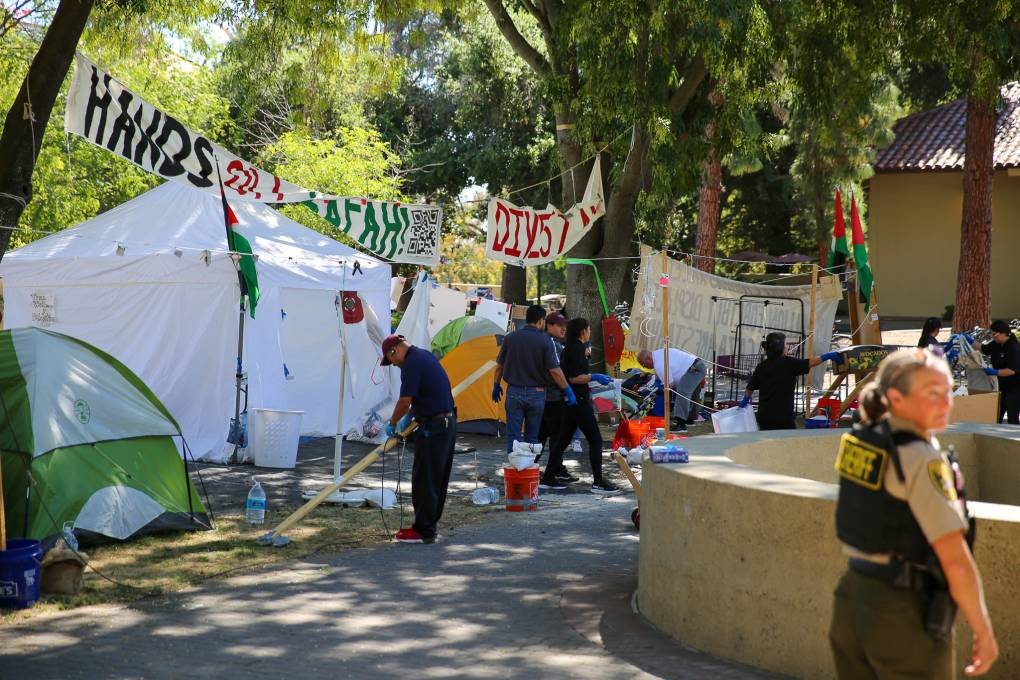
"caption": "Stanford University workers are seen breaking down a pro-Palestine encampment in White Plaza Wednesday, June 5, 2024.",
"credit": "Joseph Geha/KQED",
"altTag": null,
"description": null,
"imgSizes": {
"medium": {
"file": "https://cdn.kqed.org/wp-content/uploads/sites/10/2024/06/240605-STANFORD-JG-14-1-800x533.jpg",
"width": 800,
"height": 533,
"mimeType": "image/jpeg"
},
"large": {
"file": "https://cdn.kqed.org/wp-content/uploads/sites/10/2024/06/240605-STANFORD-JG-14-1-1020x680.jpg",
"width": 1020,
"height": 680,
"mimeType": "image/jpeg"
},
"thumbnail": {
"file": "https://cdn.kqed.org/wp-content/uploads/sites/10/2024/06/240605-STANFORD-JG-14-1-160x107.jpg",
"width": 160,
"height": 107,
"mimeType": "image/jpeg"
},
"1536x1536": {
"file": "https://cdn.kqed.org/wp-content/uploads/sites/10/2024/06/240605-STANFORD-JG-14-1-1536x1024.jpg",
"width": 1536,
"height": 1024,
"mimeType": "image/jpeg"
},
"post-thumbnail": {
"file": "https://cdn.kqed.org/wp-content/uploads/sites/10/2024/06/240605-STANFORD-JG-14-1-672x372.jpg",
"width": 672,
"height": 372,
"mimeType": "image/jpeg"
},
"twentyfourteen-full-width": {
"file": "https://cdn.kqed.org/wp-content/uploads/sites/10/2024/06/240605-STANFORD-JG-14-1-1038x576.jpg",
"width": 1038,
"height": 576,
"mimeType": "image/jpeg"
},
"full-width": {
"file": "https://cdn.kqed.org/wp-content/uploads/sites/10/2024/06/240605-STANFORD-JG-14-1-1920x1280.jpg",
"width": 1920,
"height": 1280,
"mimeType": "image/jpeg"
},
"kqedFullSize": {
"file": "https://cdn.kqed.org/wp-content/uploads/sites/10/2024/06/240605-STANFORD-JG-14-1.jpg",
"width": 2048,
"height": 1365
}
},
"isLoading": false,
"fetchFailed": false
},
"news_11989124": {
"type": "attachments",
"id": "news_11989124",
"meta": {
"index": "attachments_1716263798",
"site": "news",
"id": "11989124",
"found": true
},
"title": "240605-STANFORD-JG-10-KQED",
"publishDate": 1717611523,
"status": "inherit",
"parent": 12058280,
"modified": 1759358920,
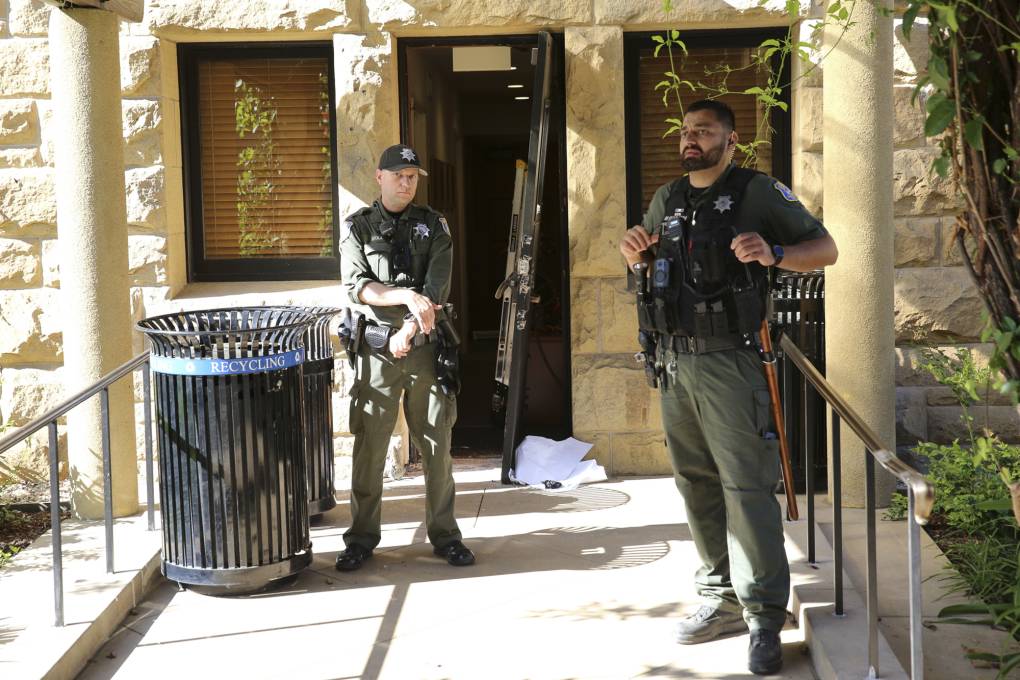
"caption": "Santa Clara County Sheriff's Office Deputies stand guard outside Building 10 at Stanford University, where pro-Palestinian protesters broke into the university president's office and occupied it before being arrested on June 5, 2024.",
"credit": "Joseph Geha/KQED",
"altTag": null,
"description": null,
"imgSizes": {
"medium": {
"file": "https://cdn.kqed.org/wp-content/uploads/sites/10/2024/06/240605-STANFORD-JG-10-KQED-800x533.jpg",
"width": 800,
"height": 533,
"mimeType": "image/jpeg"
},
"large": {
"file": "https://cdn.kqed.org/wp-content/uploads/sites/10/2024/06/240605-STANFORD-JG-10-KQED-1020x680.jpg",
"width": 1020,
"height": 680,
"mimeType": "image/jpeg"
},
"thumbnail": {
"file": "https://cdn.kqed.org/wp-content/uploads/sites/10/2024/06/240605-STANFORD-JG-10-KQED-160x107.jpg",
"width": 160,
"height": 107,
"mimeType": "image/jpeg"
},
"1536x1536": {
"file": "https://cdn.kqed.org/wp-content/uploads/sites/10/2024/06/240605-STANFORD-JG-10-KQED-1536x1024.jpg",
"width": 1536,
"height": 1024,
"mimeType": "image/jpeg"
},
"post-thumbnail": {
"file": "https://cdn.kqed.org/wp-content/uploads/sites/10/2024/06/240605-STANFORD-JG-10-KQED-672x372.jpg",
"width": 672,
"height": 372,
"mimeType": "image/jpeg"
},
"twentyfourteen-full-width": {
"file": "https://cdn.kqed.org/wp-content/uploads/sites/10/2024/06/240605-STANFORD-JG-10-KQED-1038x576.jpg",
"width": 1038,
"height": 576,
"mimeType": "image/jpeg"
},
"full-width": {
"file": "https://cdn.kqed.org/wp-content/uploads/sites/10/2024/06/240605-STANFORD-JG-10-KQED-1920x1280.jpg",
"width": 1920,
"height": 1280,
"mimeType": "image/jpeg"
},
"kqedFullSize": {
"file": "https://cdn.kqed.org/wp-content/uploads/sites/10/2024/06/240605-STANFORD-JG-10-KQED.jpg",
"width": 2000,
"height": 1333
}
},
"isLoading": false,
"fetchFailed": false
},
"news_11965605": {
"type": "attachments",
"id": "news_11965605",
"meta": {
"index": "attachments_1716263798",
"site": "news",
"id": "11965605",
"found": true
},
"parent": 11965530,
"imgSizes": {
"twentyfourteen-full-width": {
"file": "https://ww2.kqed.org/app/uploads/sites/10/2023/10/GettyImages-1328596577-1038x576.jpg",
"width": 1038,
"mimeType": "image/jpeg",
"height": 576
},
"thumbnail": {
"file": "https://ww2.kqed.org/app/uploads/sites/10/2023/10/GettyImages-1328596577-160x107.jpg",
"width": 160,
"mimeType": "image/jpeg",
"height": 107
},
"post-thumbnail": {
"file": "https://ww2.kqed.org/app/uploads/sites/10/2023/10/GettyImages-1328596577-672x372.jpg",
"width": 672,
"mimeType": "image/jpeg",
"height": 372
},
"kqedFullSize": {
"file": "https://ww2.kqed.org/app/uploads/sites/10/2023/10/GettyImages-1328596577-scaled.jpg",
"width": 2560,
"height": 1707
},
"2048x2048": {
"file": "https://ww2.kqed.org/app/uploads/sites/10/2023/10/GettyImages-1328596577-2048x1365.jpg",
"width": 2048,
"mimeType": "image/jpeg",
"height": 1365
},
"large": {
"file": "https://ww2.kqed.org/app/uploads/sites/10/2023/10/GettyImages-1328596577-1020x680.jpg",
"width": 1020,
"mimeType": "image/jpeg",
"height": 680
},
"1536x1536": {
"file": "https://ww2.kqed.org/app/uploads/sites/10/2023/10/GettyImages-1328596577-1536x1024.jpg",
"width": 1536,
"mimeType": "image/jpeg",
"height": 1024
},
"full-width": {
"file": "https://ww2.kqed.org/app/uploads/sites/10/2023/10/GettyImages-1328596577-1920x1280.jpg",
"width": 1920,
"mimeType": "image/jpeg",
"height": 1280
},
"medium": {
"file": "https://ww2.kqed.org/app/uploads/sites/10/2023/10/GettyImages-1328596577-800x533.jpg",
"width": 800,
"mimeType": "image/jpeg",
"height": 533
}
},
"publishDate": 1698259924,
"modified": 1698261572,
"caption": "The devastation in Gaza may be seen by U.S. children on the Internet or TV, sometimes directly showing other young people in distress. These instances can be difficult to explain to children, who may struggle to comprehend the deaths and political conflicts of the world. KQED’s Brian Watt sat down with Hilit Kletter, a child psychologist at Stanford Medicine, to discuss how parents and caregivers can speak to their children about these complex situations.",
"description": null,
"title": "Mother talking to son outdoors",
"credit": "The Good Brigade/Getty Images",
"status": "inherit",
"altTag": "A mother is speaking to her son.",
"isLoading": false,
"fetchFailed": false
},
"news_11959990": {
"type": "attachments",
"id": "news_11959990",
"meta": {
"index": "attachments_1716263798",
"site": "news",
"id": "11959990",
"found": true
},
"parent": 11959989,
"imgSizes": {
"twentyfourteen-full-width": {
"file": "https://ww2.kqed.org/app/uploads/sites/10/2023/09/GettyImages-1443354055-1024x576.jpg",
"width": 1024,
"mimeType": "image/jpeg",
"height": 576
},
"thumbnail": {
"file": "https://ww2.kqed.org/app/uploads/sites/10/2023/09/GettyImages-1443354055-160x110.jpg",
"width": 160,
"mimeType": "image/jpeg",
"height": 110
},
"post-thumbnail": {
"file": "https://ww2.kqed.org/app/uploads/sites/10/2023/09/GettyImages-1443354055-672x372.jpg",
"width": 672,
"mimeType": "image/jpeg",
"height": 372
},
"kqedFullSize": {
"file": "https://ww2.kqed.org/app/uploads/sites/10/2023/09/GettyImages-1443354055.jpg",
"width": 1024,
"height": 704
},
"large": {
"file": "https://ww2.kqed.org/app/uploads/sites/10/2023/09/GettyImages-1443354055-1020x701.jpg",
"width": 1020,
"mimeType": "image/jpeg",
"height": 701
},
"medium": {
"file": "https://ww2.kqed.org/app/uploads/sites/10/2023/09/GettyImages-1443354055-800x550.jpg",
"width": 800,
"mimeType": "image/jpeg",
"height": 550
}
},
"publishDate": 1693687756,
"modified": 1693687871,
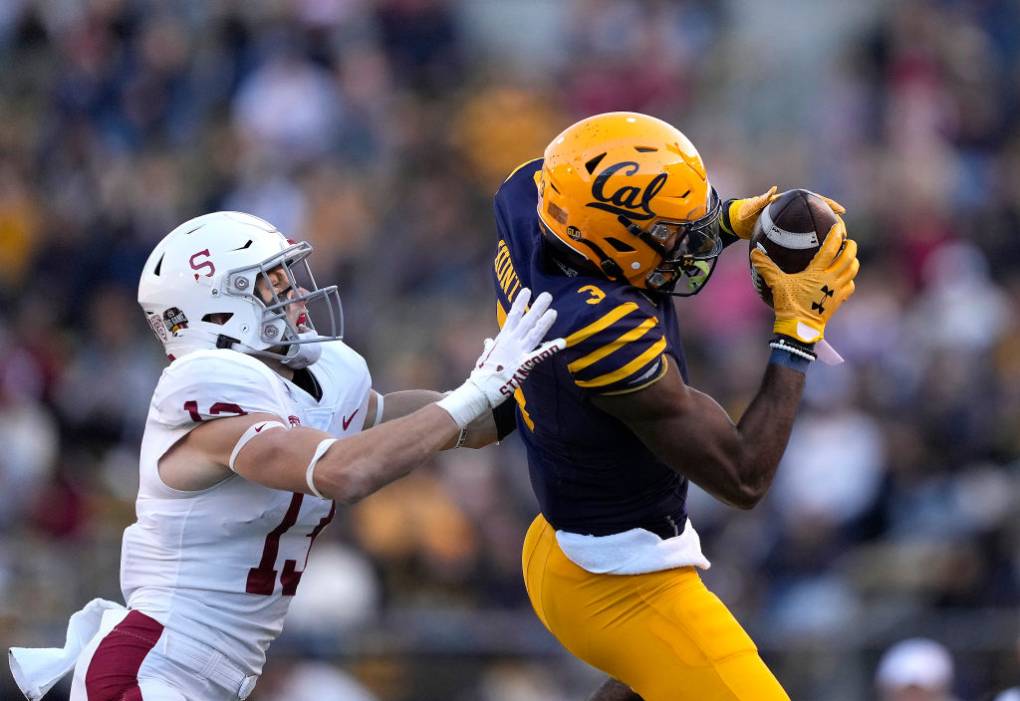
"caption": "Jeremiah Hunter of the California Golden Bears catches a pass over Ethan Bonner of the Stanford Cardinal during the first quarter at California Memorial Stadium on Nov. 19, 2022 in Berkeley. ",
"description": null,
"title": "Stanford v California",
"credit": "Thearon W. Henderson/Getty Images",
"status": "inherit",
"altTag": "Two college footballers, one from Stanford, the other from UC Berkeley, in action during a football match.",
"isLoading": false,
"fetchFailed": false
},
"news_11951966": {
"type": "attachments",
"id": "news_11951966",
"meta": {
"index": "attachments_1716263798",
"site": "news",
"id": "11951966",
"found": true
},
"parent": 11951849,
"imgSizes": {
"twentyfourteen-full-width": {
"file": "https://ww2.kqed.org/app/uploads/sites/10/2023/06/RS65953_003_KQED_StanfordGradUnion_05302023-qut-1038x576.jpg",
"width": 1038,
"mimeType": "image/jpeg",
"height": 576
},
"thumbnail": {
"file": "https://ww2.kqed.org/app/uploads/sites/10/2023/06/RS65953_003_KQED_StanfordGradUnion_05302023-qut-160x107.jpg",
"width": 160,
"mimeType": "image/jpeg",
"height": 107
},
"post-thumbnail": {
"file": "https://ww2.kqed.org/app/uploads/sites/10/2023/06/RS65953_003_KQED_StanfordGradUnion_05302023-qut-672x372.jpg",
"width": 672,
"mimeType": "image/jpeg",
"height": 372
},
"kqedFullSize": {
"file": "https://ww2.kqed.org/app/uploads/sites/10/2023/06/RS65953_003_KQED_StanfordGradUnion_05302023-qut.jpg",
"width": 1920,
"height": 1280
},
"large": {
"file": "https://ww2.kqed.org/app/uploads/sites/10/2023/06/RS65953_003_KQED_StanfordGradUnion_05302023-qut-1020x680.jpg",
"width": 1020,
"mimeType": "image/jpeg",
"height": 680
},
"1536x1536": {
"file": "https://ww2.kqed.org/app/uploads/sites/10/2023/06/RS65953_003_KQED_StanfordGradUnion_05302023-qut-1536x1024.jpg",
"width": 1536,
"mimeType": "image/jpeg",
"height": 1024
},
"medium": {
"file": "https://ww2.kqed.org/app/uploads/sites/10/2023/06/RS65953_003_KQED_StanfordGradUnion_05302023-qut-800x533.jpg",
"width": 800,
"mimeType": "image/jpeg",
"height": 533
}
},
"publishDate": 1685655107,
"modified": 1685664597,
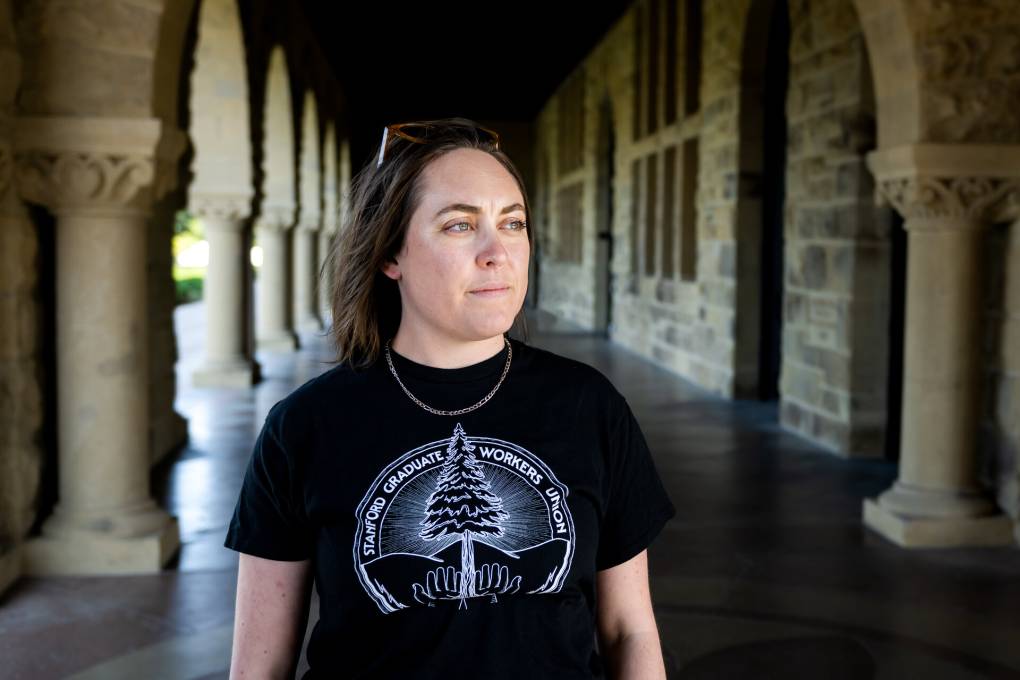
"caption": "Chloé Brault, a Ph.D. candidate in comparative literature, stands near Wallenberg Hall on the Stanford campus on May 30, 2023.",
"description": null,
"title": "RS65953_003_KQED_StanfordGradUnion_05302023-qut",
"credit": "Beth LaBerge/KQED",
"status": "inherit",
"altTag": "A woman with long, brown hair stares off into the distance. She stands in an outdoor hallway of a building with chunky pillars. She wears a black T-shirt that reads, \"Stanford Graduate Workers Union.\"",
"isLoading": false,
"fetchFailed": false
},
"news_11915590": {
"type": "attachments",
"id": "news_11915590",
"meta": {
"index": "attachments_1716263798",
"site": "news",
"id": "11915590",
"found": true
},
"title": "RS19790_GettyImages-493193647-qut",
"publishDate": 1654035304,
"status": "inherit",
"parent": 11915565,
"modified": 1724977959,
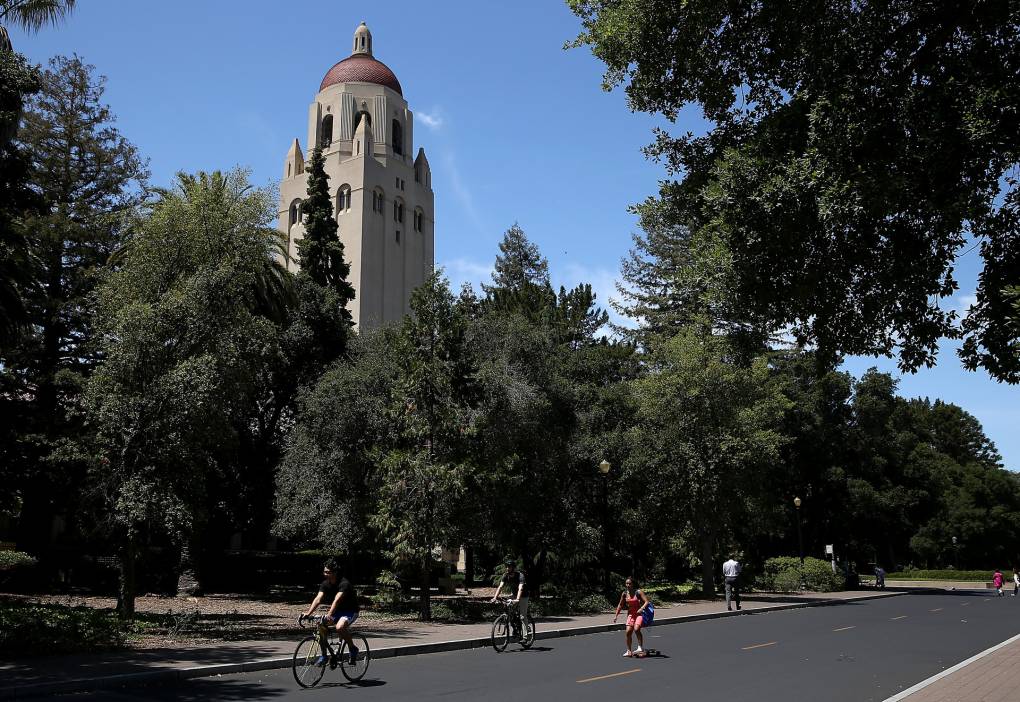
"caption": "Students ride bikes past Hoover Tower on the Stanford University campus. The university strongly supports Senate Bill 748, which would change the rules for how police respond to trespassing on private college campuses.",
"credit": "Justin Sullivan/Getty Images",
"altTag": "Students ride bikes on a tree-lined street on the campus of Stanford University.",
"description": null,
"imgSizes": {
"medium": {
"file": "https://cdn.kqed.org/wp-content/uploads/sites/10/2022/05/RS19790_GettyImages-493193647-qut-800x551.jpg",
"width": 800,
"height": 551,
"mimeType": "image/jpeg"
},
"large": {
"file": "https://cdn.kqed.org/wp-content/uploads/sites/10/2022/05/RS19790_GettyImages-493193647-qut-1020x702.jpg",
"width": 1020,
"height": 702,
"mimeType": "image/jpeg"
},
"thumbnail": {
"file": "https://cdn.kqed.org/wp-content/uploads/sites/10/2022/05/RS19790_GettyImages-493193647-qut-160x110.jpg",
"width": 160,
"height": 110,
"mimeType": "image/jpeg"
},
"1536x1536": {
"file": "https://cdn.kqed.org/wp-content/uploads/sites/10/2022/05/RS19790_GettyImages-493193647-qut-1536x1058.jpg",
"width": 1536,
"height": 1058,
"mimeType": "image/jpeg"
},
"post-thumbnail": {
"file": "https://cdn.kqed.org/wp-content/uploads/sites/10/2022/05/RS19790_GettyImages-493193647-qut-672x372.jpg",
"width": 672,
"height": 372,
"mimeType": "image/jpeg"
},
"twentyfourteen-full-width": {
"file": "https://cdn.kqed.org/wp-content/uploads/sites/10/2022/05/RS19790_GettyImages-493193647-qut-1038x576.jpg",
"width": 1038,
"height": 576,
"mimeType": "image/jpeg"
},
"kqedFullSize": {
"file": "https://cdn.kqed.org/wp-content/uploads/sites/10/2022/05/RS19790_GettyImages-493193647-qut.jpg",
"width": 1920,
"height": 1322
}
},
"isLoading": false,
"fetchFailed": false
},
"news_11912619": {
"type": "attachments",
"id": "news_11912619",
"meta": {
"index": "attachments_1716263798",
"site": "news",
"id": "11912619",
"found": true
},
"parent": 11912590,
"imgSizes": {
"twentyfourteen-full-width": {
"file": "https://ww2.kqed.org/app/uploads/sites/10/2022/04/64667143290__84C93925-9FB3-4BA8-9CDD-959DE9D525B8.fullsizerender-2-1038x576.jpeg",
"width": 1038,
"mimeType": "image/jpeg",
"height": 576
},
"thumbnail": {
"file": "https://ww2.kqed.org/app/uploads/sites/10/2022/04/64667143290__84C93925-9FB3-4BA8-9CDD-959DE9D525B8.fullsizerender-2-160x151.jpeg",
"width": 160,
"mimeType": "image/jpeg",
"height": 151
},
"post-thumbnail": {
"file": "https://ww2.kqed.org/app/uploads/sites/10/2022/04/64667143290__84C93925-9FB3-4BA8-9CDD-959DE9D525B8.fullsizerender-2-672x372.jpeg",
"width": 672,
"mimeType": "image/jpeg",
"height": 372
},
"kqedFullSize": {
"file": "https://ww2.kqed.org/app/uploads/sites/10/2022/04/64667143290__84C93925-9FB3-4BA8-9CDD-959DE9D525B8.fullsizerender-2-scaled.jpeg",
"width": 2560,
"height": 2416
},
"2048x2048": {
"file": "https://ww2.kqed.org/app/uploads/sites/10/2022/04/64667143290__84C93925-9FB3-4BA8-9CDD-959DE9D525B8.fullsizerender-2-2048x1933.jpeg",
"width": 2048,
"mimeType": "image/jpeg",
"height": 1933
},
"large": {
"file": "https://ww2.kqed.org/app/uploads/sites/10/2022/04/64667143290__84C93925-9FB3-4BA8-9CDD-959DE9D525B8.fullsizerender-2-1020x963.jpeg",
"width": 1020,
"mimeType": "image/jpeg",
"height": 963
},
"1536x1536": {
"file": "https://ww2.kqed.org/app/uploads/sites/10/2022/04/64667143290__84C93925-9FB3-4BA8-9CDD-959DE9D525B8.fullsizerender-2-1536x1449.jpeg",
"width": 1536,
"mimeType": "image/jpeg",
"height": 1449
},
"full-width": {
"file": "https://ww2.kqed.org/app/uploads/sites/10/2022/04/64667143290__84C93925-9FB3-4BA8-9CDD-959DE9D525B8.fullsizerender-2-1920x1812.jpeg",
"width": 1920,
"mimeType": "image/jpeg",
"height": 1812
},
"medium": {
"file": "https://ww2.kqed.org/app/uploads/sites/10/2022/04/64667143290__84C93925-9FB3-4BA8-9CDD-959DE9D525B8.fullsizerender-2-800x755.jpeg",
"width": 800,
"mimeType": "image/jpeg",
"height": 755
}
},
"publishDate": 1651253967,
"modified": 1651254000,
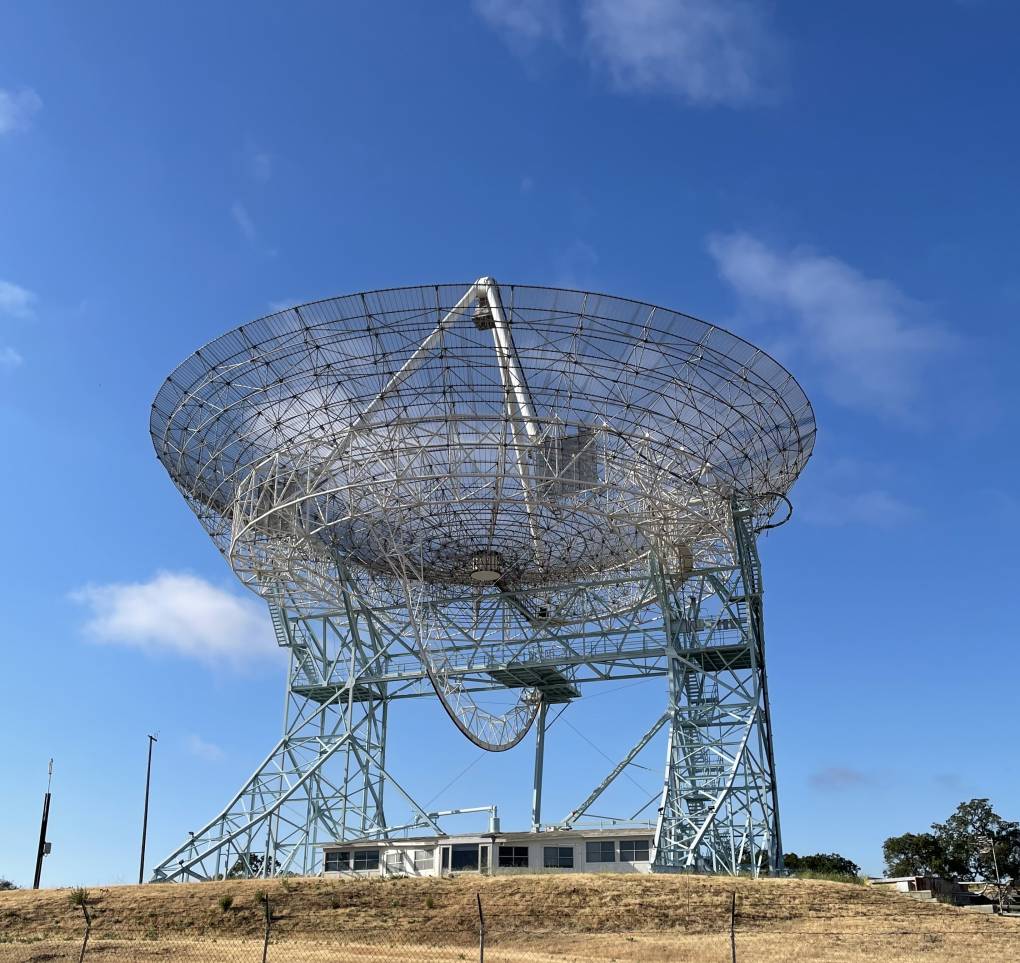
"caption": "The Dish, aka the Stanford Dish, is a radio antenna in the Stanford foothills. It's also an iconic local landmark, and the centerpiece of a popular hiking path on the Stanford campus.",
"description": "The Dish, aka the Stanford Dish, is a radio antenna in the Stanford foothills. It's also an iconic local landmark, and the centerpiece of a popular hiking path on the Stanford campus.",
"title": "64667143290__84C93925-9FB3-4BA8-9CDD-959DE9D525B8.fullsizerender 2",
"credit": "Rachael Myrow/KQED",
"status": "inherit",
"altTag": "A satellite dish points up into the blue sky.",
"isLoading": false,
"fetchFailed": false
},
"news_11900443": {
"type": "attachments",
"id": "news_11900443",
"meta": {
"index": "attachments_1716263798",
"site": "news",
"id": "11900443",
"found": true
},
"parent": 11900423,
"imgSizes": {
"thumbnail": {
"file": "https://ww2.kqed.org/app/uploads/sites/10/2021/12/1318005-160x107.jpg",
"width": 160,
"mimeType": "image/jpeg",
"height": 107
},
"post-thumbnail": {
"file": "https://ww2.kqed.org/app/uploads/sites/10/2021/12/1318005-672x372.jpg",
"width": 672,
"mimeType": "image/jpeg",
"height": 372
},
"kqedFullSize": {
"file": "https://ww2.kqed.org/app/uploads/sites/10/2021/12/1318005.jpg",
"width": 767,
"height": 511
}
},
"publishDate": 1640806080,
"modified": 1640820159,
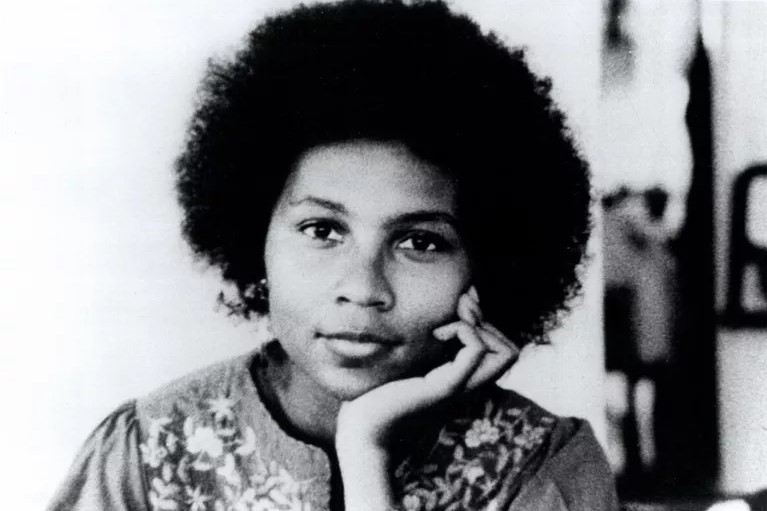
"caption": "bell hooks, who died on Dec. 15 at age 69, was foundational in shaping Black feminist thought and expanding a feminist worldview beyond white, middle-class identity — from her pointed critiques of the “imperialist white supremacist capitalist patriarchy” to her vulnerability and thoughts on love and healing.",
"description": "bell hooks, who passed away on Dec. 15 at age 69, has been foundational in shaping Black feminist thought.",
"title": "1318005",
"credit": "Courtesy of Wikimedia Commons",
"status": "inherit",
"altTag": "bell hooks looks at the camera straight on and rests her chin on her left palm.",
"isLoading": false,
"fetchFailed": false
},
"news_11871566": {
"type": "attachments",
"id": "news_11871566",
"meta": {
"index": "attachments_1716263798",
"site": "news",
"id": "11871566",
"found": true
},
"parent": 11871565,
"imgSizes": {
"twentyfourteen-full-width": {
"file": "https://ww2.kqed.org/app/uploads/sites/10/2021/04/16994899290_64a91947fa_b-1023x576.jpg",
"width": 1023,
"mimeType": "image/jpeg",
"height": 576
},
"thumbnail": {
"file": "https://ww2.kqed.org/app/uploads/sites/10/2021/04/16994899290_64a91947fa_b-160x101.jpg",
"width": 160,
"mimeType": "image/jpeg",
"height": 101
},
"post-thumbnail": {
"file": "https://ww2.kqed.org/app/uploads/sites/10/2021/04/16994899290_64a91947fa_b-672x372.jpg",
"width": 672,
"mimeType": "image/jpeg",
"height": 372
},
"kqedFullSize": {
"file": "https://ww2.kqed.org/app/uploads/sites/10/2021/04/16994899290_64a91947fa_b.jpg",
"width": 1023,
"height": 645
},
"large": {
"file": "https://ww2.kqed.org/app/uploads/sites/10/2021/04/16994899290_64a91947fa_b-1020x643.jpg",
"width": 1020,
"mimeType": "image/jpeg",
"height": 643
},
"medium": {
"file": "https://ww2.kqed.org/app/uploads/sites/10/2021/04/16994899290_64a91947fa_b-800x504.jpg",
"width": 800,
"mimeType": "image/jpeg",
"height": 504
}
},
"publishDate": 1619652499,
"modified": 1621474833,
"caption": "For half a century, Searsville Lake functioned as a man-made playground that drew thousands of people from all over the Bay Area for water sports, summer camps, picnics and more. ",
"description": "For half a century, Searsville Lake functioned as a man-made playground that drew thousands of people from all over the Bay Area for water sports, summer camps, picnics and more.",
"title": "16994899290_64a91947fa_b",
"credit": "Courtesy Stanford University Archives",
"status": "inherit",
"altTag": "For half a century, Searsville Lake functioned as a man-made playground that drew thousands of people from all over the Bay Area for water sports, summer camps, picnics and more when the weather was good.",
"isLoading": false,
"fetchFailed": false
},
"news_11831633": {
"type": "attachments",
"id": "news_11831633",
"meta": {
"index": "attachments_1716263798",
"site": "news",
"id": "11831633",
"found": true
},
"parent": 11831577,
"imgSizes": {
"apple_news_ca_landscape_5_5": {
"file": "https://ww2.kqed.org/app/uploads/sites/10/2020/08/IMG_8452-1044x783.jpg",
"width": 1044,
"mimeType": "image/jpeg",
"height": 783
},
"apple_news_ca_square_4_0": {
"file": "https://ww2.kqed.org/app/uploads/sites/10/2020/08/IMG_8452-470x470.jpg",
"width": 470,
"mimeType": "image/jpeg",
"height": 470
},
"twentyfourteen-full-width": {
"file": "https://ww2.kqed.org/app/uploads/sites/10/2020/08/IMG_8452-1038x576.jpg",
"width": 1038,
"mimeType": "image/jpeg",
"height": 576
},
"thumbnail": {
"file": "https://ww2.kqed.org/app/uploads/sites/10/2020/08/IMG_8452-160x120.jpg",
"width": 160,
"mimeType": "image/jpeg",
"height": 120
},
"post-thumbnail": {
"file": "https://ww2.kqed.org/app/uploads/sites/10/2020/08/IMG_8452-672x372.jpg",
"width": 672,
"mimeType": "image/jpeg",
"height": 372
},
"kqedFullSize": {
"file": "https://ww2.kqed.org/app/uploads/sites/10/2020/08/IMG_8452-e1596416384681.jpg",
"width": 1920,
"height": 1436
},
"2048x2048": {
"file": "https://ww2.kqed.org/app/uploads/sites/10/2020/08/IMG_8452-2048x1531.jpg",
"width": 2048,
"mimeType": "image/jpeg",
"height": 1531
},
"apple_news_ca_landscape_4_7": {
"file": "https://ww2.kqed.org/app/uploads/sites/10/2020/08/IMG_8452-632x474.jpg",
"width": 632,
"mimeType": "image/jpeg",
"height": 474
},
"large": {
"file": "https://ww2.kqed.org/app/uploads/sites/10/2020/08/IMG_8452-1020x763.jpg",
"width": 1020,
"mimeType": "image/jpeg",
"height": 763
},
"apple_news_ca_landscape_4_0": {
"file": "https://ww2.kqed.org/app/uploads/sites/10/2020/08/IMG_8452-536x402.jpg",
"width": 536,
"mimeType": "image/jpeg",
"height": 402
},
"apple_news_ca_portrait_12_9": {
"file": "https://ww2.kqed.org/app/uploads/sites/10/2020/08/IMG_8452-1122x1496.jpg",
"width": 1122,
"mimeType": "image/jpeg",
"height": 1496
},
"medium": {
"file": "https://ww2.kqed.org/app/uploads/sites/10/2020/08/IMG_8452-800x598.jpg",
"width": 800,
"mimeType": "image/jpeg",
"height": 598
},
"apple_news_ca_portrait_4_0": {
"file": "https://ww2.kqed.org/app/uploads/sites/10/2020/08/IMG_8452-354x472.jpg",
"width": 354,
"mimeType": "image/jpeg",
"height": 472
},
"apple_news_ca_portrait_9_7": {
"file": "https://ww2.kqed.org/app/uploads/sites/10/2020/08/IMG_8452-840x1120.jpg",
"width": 840,
"mimeType": "image/jpeg",
"height": 1120
},
"apple_news_ca_landscape_12_9": {
"file": "https://ww2.kqed.org/app/uploads/sites/10/2020/08/IMG_8452-1832x1374.jpg",
"width": 1832,
"mimeType": "image/jpeg",
"height": 1374
},
"apple_news_ca_square_9_7": {
"file": "https://ww2.kqed.org/app/uploads/sites/10/2020/08/IMG_8452-1104x1104.jpg",
"width": 1104,
"mimeType": "image/jpeg",
"height": 1104
},
"1536x1536": {
"file": "https://ww2.kqed.org/app/uploads/sites/10/2020/08/IMG_8452-1536x1148.jpg",
"width": 1536,
"mimeType": "image/jpeg",
"height": 1148
},
"apple_news_ca_portrait_4_7": {
"file": "https://ww2.kqed.org/app/uploads/sites/10/2020/08/IMG_8452-414x552.jpg",
"width": 414,
"mimeType": "image/jpeg",
"height": 552
},
"apple_news_ca_square_12_9": {
"file": "https://ww2.kqed.org/app/uploads/sites/10/2020/08/IMG_8452-1472x1472.jpg",
"width": 1472,
"mimeType": "image/jpeg",
"height": 1472
},
"apple_news_ca_portrait_5_5": {
"file": "https://ww2.kqed.org/app/uploads/sites/10/2020/08/IMG_8452-687x916.jpg",
"width": 687,
"mimeType": "image/jpeg",
"height": 916
},
"full-width": {
"file": "https://ww2.kqed.org/app/uploads/sites/10/2020/08/IMG_8452-1920x1436.jpg",
"width": 1920,
"mimeType": "image/jpeg",
"height": 1436
},
"apple_news_ca_square_4_7": {
"file": "https://ww2.kqed.org/app/uploads/sites/10/2020/08/IMG_8452-550x550.jpg",
"width": 550,
"mimeType": "image/jpeg",
"height": 550
},
"apple_news_ca_landscape_9_7": {
"file": "https://ww2.kqed.org/app/uploads/sites/10/2020/08/IMG_8452-1376x1032.jpg",
"width": 1376,
"mimeType": "image/jpeg",
"height": 1032
},
"apple_news_ca_square_5_5": {
"file": "https://ww2.kqed.org/app/uploads/sites/10/2020/08/IMG_8452-912x912.jpg",
"width": 912,
"mimeType": "image/jpeg",
"height": 912
}
},
"publishDate": 1596415899,
"modified": 1596578254,
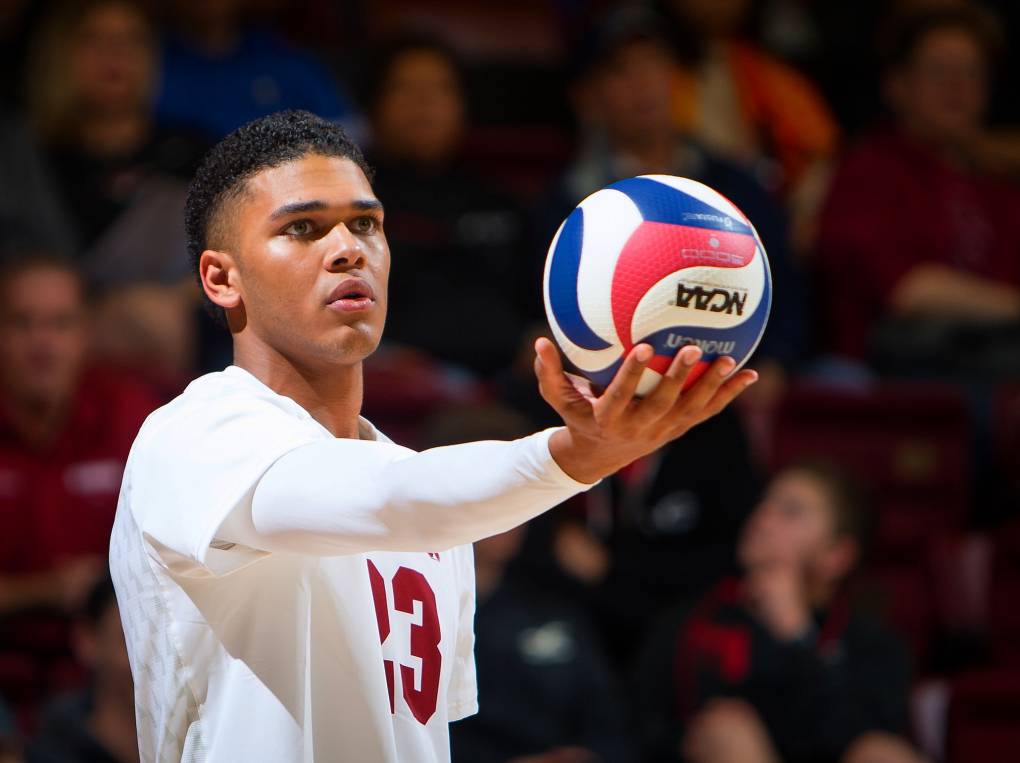
"caption": "Stanford volleyball player Jaylen Jasper prepares to serve in a 2019 game against the University of Southern California. ",
"description": "Stanford volleyball player Jaylen Jasper prepares to serve in a 2019 game against the University of Southern California. ",
"title": "IMG_8452",
"credit": "Mike Rasay/Stanford",
"status": "inherit",
"isLoading": false,
"fetchFailed": false
},
"news_11813962": {
"type": "attachments",
"id": "news_11813962",
"meta": {
"index": "attachments_1716263798",
"site": "news",
"id": "11813962",
"found": true
},
"parent": 11813888,
"imgSizes": {
"apple_news_ca_landscape_5_5": {
"file": "https://ww2.kqed.org/app/uploads/sites/10/2020/04/GettyImages-1206287512_1920x-1044x783.jpg",
"width": 1044,
"mimeType": "image/jpeg",
"height": 783
},
"apple_news_ca_square_4_0": {
"file": "https://ww2.kqed.org/app/uploads/sites/10/2020/04/GettyImages-1206287512_1920x-470x470.jpg",
"width": 470,
"mimeType": "image/jpeg",
"height": 470
},
"twentyfourteen-full-width": {
"file": "https://ww2.kqed.org/app/uploads/sites/10/2020/04/GettyImages-1206287512_1920x-1038x576.jpg",
"width": 1038,
"mimeType": "image/jpeg",
"height": 576
},
"thumbnail": {
"file": "https://ww2.kqed.org/app/uploads/sites/10/2020/04/GettyImages-1206287512_1920x-160x107.jpg",
"width": 160,
"mimeType": "image/jpeg",
"height": 107
},
"post-thumbnail": {
"file": "https://ww2.kqed.org/app/uploads/sites/10/2020/04/GettyImages-1206287512_1920x-672x372.jpg",
"width": 672,
"mimeType": "image/jpeg",
"height": 372
},
"kqedFullSize": {
"file": "https://ww2.kqed.org/app/uploads/sites/10/2020/04/GettyImages-1206287512_1920x.jpg",
"width": 1920,
"height": 1280
},
"apple_news_ca_landscape_4_7": {
"file": "https://ww2.kqed.org/app/uploads/sites/10/2020/04/GettyImages-1206287512_1920x-632x474.jpg",
"width": 632,
"mimeType": "image/jpeg",
"height": 474
},
"large": {
"file": "https://ww2.kqed.org/app/uploads/sites/10/2020/04/GettyImages-1206287512_1920x-1020x680.jpg",
"width": 1020,
"mimeType": "image/jpeg",
"height": 680
},
"apple_news_ca_landscape_4_0": {
"file": "https://ww2.kqed.org/app/uploads/sites/10/2020/04/GettyImages-1206287512_1920x-536x402.jpg",
"width": 536,
"mimeType": "image/jpeg",
"height": 402
},
"apple_news_ca_portrait_12_9": {
"file": "https://ww2.kqed.org/app/uploads/sites/10/2020/04/GettyImages-1206287512_1920x-1122x1280.jpg",
"width": 1122,
"mimeType": "image/jpeg",
"height": 1280
},
"medium": {
"file": "https://ww2.kqed.org/app/uploads/sites/10/2020/04/GettyImages-1206287512_1920x-800x533.jpg",
"width": 800,
"mimeType": "image/jpeg",
"height": 533
},
"apple_news_ca_portrait_4_0": {
"file": "https://ww2.kqed.org/app/uploads/sites/10/2020/04/GettyImages-1206287512_1920x-354x472.jpg",
"width": 354,
"mimeType": "image/jpeg",
"height": 472
},
"apple_news_ca_portrait_9_7": {
"file": "https://ww2.kqed.org/app/uploads/sites/10/2020/04/GettyImages-1206287512_1920x-840x1120.jpg",
"width": 840,
"mimeType": "image/jpeg",
"height": 1120
},
"apple_news_ca_landscape_12_9": {
"file": "https://ww2.kqed.org/app/uploads/sites/10/2020/04/GettyImages-1206287512_1920x-1832x1280.jpg",
"width": 1832,
"mimeType": "image/jpeg",
"height": 1280
},
"apple_news_ca_square_9_7": {
"file": "https://ww2.kqed.org/app/uploads/sites/10/2020/04/GettyImages-1206287512_1920x-1104x1104.jpg",
"width": 1104,
"mimeType": "image/jpeg",
"height": 1104
},
"apple_news_ca_portrait_4_7": {
"file": "https://ww2.kqed.org/app/uploads/sites/10/2020/04/GettyImages-1206287512_1920x-414x552.jpg",
"width": 414,
"mimeType": "image/jpeg",
"height": 552
},
"apple_news_ca_square_12_9": {
"file": "https://ww2.kqed.org/app/uploads/sites/10/2020/04/GettyImages-1206287512_1920x-1472x1280.jpg",
"width": 1472,
"mimeType": "image/jpeg",
"height": 1280
},
"apple_news_ca_portrait_5_5": {
"file": "https://ww2.kqed.org/app/uploads/sites/10/2020/04/GettyImages-1206287512_1920x-687x916.jpg",
"width": 687,
"mimeType": "image/jpeg",
"height": 916
},
"full-width": {
"file": "https://ww2.kqed.org/app/uploads/sites/10/2020/04/GettyImages-1206287512_1920x-1920x1280.jpg",
"width": 1920,
"mimeType": "image/jpeg",
"height": 1280
},
"apple_news_ca_square_4_7": {
"file": "https://ww2.kqed.org/app/uploads/sites/10/2020/04/GettyImages-1206287512_1920x-550x550.jpg",
"width": 550,
"mimeType": "image/jpeg",
"height": 550
},
"apple_news_ca_landscape_9_7": {
"file": "https://ww2.kqed.org/app/uploads/sites/10/2020/04/GettyImages-1206287512_1920x-1376x1032.jpg",
"width": 1376,
"mimeType": "image/jpeg",
"height": 1032
},
"apple_news_ca_square_5_5": {
"file": "https://ww2.kqed.org/app/uploads/sites/10/2020/04/GettyImages-1206287512_1920x-912x912.jpg",
"width": 912,
"mimeType": "image/jpeg",
"height": 912
}
},
"publishDate": 1587667826,
"modified": 1587669970,
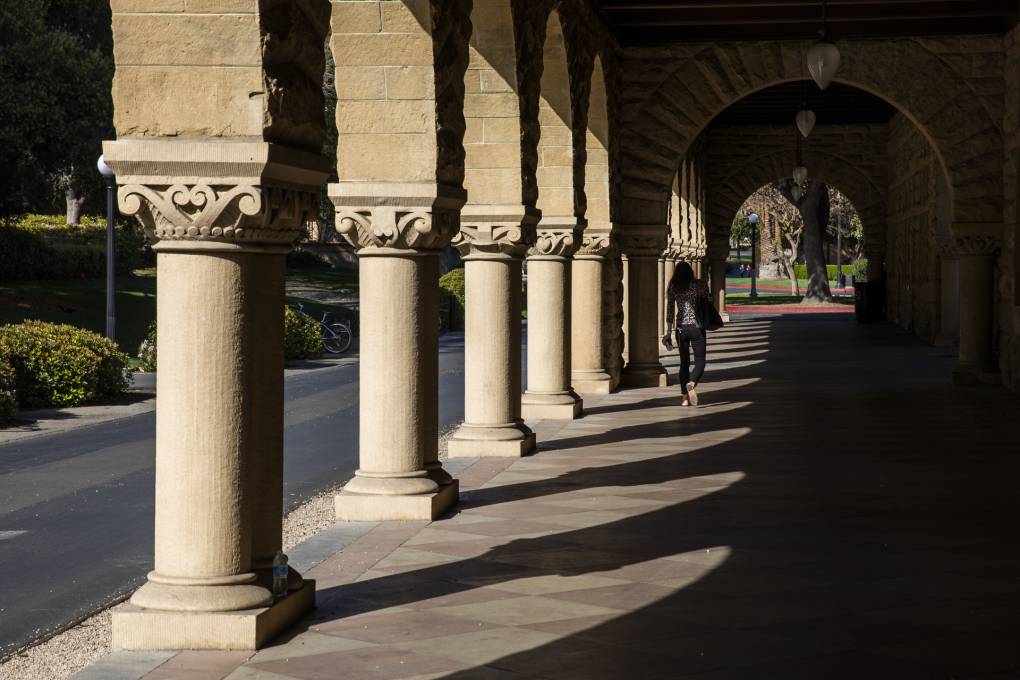
"caption": "A person walks past archways during a quiet morning at Stanford University on March 9, 2020. ",
"description": "STANFORD, CA - MARCH 09: A person walks past archways during a quiet morning at Stanford University on March 9, 2020 in Stanford, California. ",
"title": "Stanford University Cancels On-Campus Classes After Faculty Member Tests Positive For Coronavirus",
"credit": "Philip Pacheco/Getty Images",
"status": "inherit",
"isLoading": false,
"fetchFailed": false
},
"news_11807558": {
"type": "attachments",
"id": "news_11807558",
"meta": {
"index": "attachments_1716263798",
"site": "news",
"id": "11807558",
"found": true
},
"parent": 11807552,
"imgSizes": {
"apple_news_ca_landscape_5_5": {
"file": "https://ww2.kqed.org/app/uploads/sites/10/2020/03/RS42118_065_KQED_SanFrancisco_Coronavirus_03132020_-qut-1-1044x783.jpg",
"width": 1044,
"mimeType": "image/jpeg",
"height": 783
},
"apple_news_ca_square_4_0": {
"file": "https://ww2.kqed.org/app/uploads/sites/10/2020/03/RS42118_065_KQED_SanFrancisco_Coronavirus_03132020_-qut-1-470x470.jpg",
"width": 470,
"mimeType": "image/jpeg",
"height": 470
},
"twentyfourteen-full-width": {
"file": "https://ww2.kqed.org/app/uploads/sites/10/2020/03/RS42118_065_KQED_SanFrancisco_Coronavirus_03132020_-qut-1-1038x576.jpg",
"width": 1038,
"mimeType": "image/jpeg",
"height": 576
},
"thumbnail": {
"file": "https://ww2.kqed.org/app/uploads/sites/10/2020/03/RS42118_065_KQED_SanFrancisco_Coronavirus_03132020_-qut-1-160x107.jpg",
"width": 160,
"mimeType": "image/jpeg",
"height": 107
},
"post-thumbnail": {
"file": "https://ww2.kqed.org/app/uploads/sites/10/2020/03/RS42118_065_KQED_SanFrancisco_Coronavirus_03132020_-qut-1-672x372.jpg",
"width": 672,
"mimeType": "image/jpeg",
"height": 372
},
"kqedFullSize": {
"file": "https://ww2.kqed.org/app/uploads/sites/10/2020/03/RS42118_065_KQED_SanFrancisco_Coronavirus_03132020_-qut-1.jpg",
"width": 1920,
"height": 1280
},
"apple_news_ca_landscape_4_7": {
"file": "https://ww2.kqed.org/app/uploads/sites/10/2020/03/RS42118_065_KQED_SanFrancisco_Coronavirus_03132020_-qut-1-632x474.jpg",
"width": 632,
"mimeType": "image/jpeg",
"height": 474
},
"large": {
"file": "https://ww2.kqed.org/app/uploads/sites/10/2020/03/RS42118_065_KQED_SanFrancisco_Coronavirus_03132020_-qut-1-1020x680.jpg",
"width": 1020,
"mimeType": "image/jpeg",
"height": 680
},
"apple_news_ca_landscape_4_0": {
"file": "https://ww2.kqed.org/app/uploads/sites/10/2020/03/RS42118_065_KQED_SanFrancisco_Coronavirus_03132020_-qut-1-536x402.jpg",
"width": 536,
"mimeType": "image/jpeg",
"height": 402
},
"apple_news_ca_portrait_12_9": {
"file": "https://ww2.kqed.org/app/uploads/sites/10/2020/03/RS42118_065_KQED_SanFrancisco_Coronavirus_03132020_-qut-1-1122x1280.jpg",
"width": 1122,
"mimeType": "image/jpeg",
"height": 1280
},
"medium": {
"file": "https://ww2.kqed.org/app/uploads/sites/10/2020/03/RS42118_065_KQED_SanFrancisco_Coronavirus_03132020_-qut-1-800x533.jpg",
"width": 800,
"mimeType": "image/jpeg",
"height": 533
},
"apple_news_ca_portrait_4_0": {
"file": "https://ww2.kqed.org/app/uploads/sites/10/2020/03/RS42118_065_KQED_SanFrancisco_Coronavirus_03132020_-qut-1-354x472.jpg",
"width": 354,
"mimeType": "image/jpeg",
"height": 472
},
"apple_news_ca_portrait_9_7": {
"file": "https://ww2.kqed.org/app/uploads/sites/10/2020/03/RS42118_065_KQED_SanFrancisco_Coronavirus_03132020_-qut-1-840x1120.jpg",
"width": 840,
"mimeType": "image/jpeg",
"height": 1120
},
"apple_news_ca_landscape_12_9": {
"file": "https://ww2.kqed.org/app/uploads/sites/10/2020/03/RS42118_065_KQED_SanFrancisco_Coronavirus_03132020_-qut-1-1832x1280.jpg",
"width": 1832,
"mimeType": "image/jpeg",
"height": 1280
},
"apple_news_ca_square_9_7": {
"file": "https://ww2.kqed.org/app/uploads/sites/10/2020/03/RS42118_065_KQED_SanFrancisco_Coronavirus_03132020_-qut-1-1104x1104.jpg",
"width": 1104,
"mimeType": "image/jpeg",
"height": 1104
},
"apple_news_ca_portrait_4_7": {
"file": "https://ww2.kqed.org/app/uploads/sites/10/2020/03/RS42118_065_KQED_SanFrancisco_Coronavirus_03132020_-qut-1-414x552.jpg",
"width": 414,
"mimeType": "image/jpeg",
"height": 552
},
"apple_news_ca_square_12_9": {
"file": "https://ww2.kqed.org/app/uploads/sites/10/2020/03/RS42118_065_KQED_SanFrancisco_Coronavirus_03132020_-qut-1-1472x1280.jpg",
"width": 1472,
"mimeType": "image/jpeg",
"height": 1280
},
"apple_news_ca_portrait_5_5": {
"file": "https://ww2.kqed.org/app/uploads/sites/10/2020/03/RS42118_065_KQED_SanFrancisco_Coronavirus_03132020_-qut-1-687x916.jpg",
"width": 687,
"mimeType": "image/jpeg",
"height": 916
},
"full-width": {
"file": "https://ww2.kqed.org/app/uploads/sites/10/2020/03/RS42118_065_KQED_SanFrancisco_Coronavirus_03132020_-qut-1-1920x1280.jpg",
"width": 1920,
"mimeType": "image/jpeg",
"height": 1280
},
"apple_news_ca_square_4_7": {
"file": "https://ww2.kqed.org/app/uploads/sites/10/2020/03/RS42118_065_KQED_SanFrancisco_Coronavirus_03132020_-qut-1-550x550.jpg",
"width": 550,
"mimeType": "image/jpeg",
"height": 550
},
"apple_news_ca_landscape_9_7": {
"file": "https://ww2.kqed.org/app/uploads/sites/10/2020/03/RS42118_065_KQED_SanFrancisco_Coronavirus_03132020_-qut-1-1376x1032.jpg",
"width": 1376,
"mimeType": "image/jpeg",
"height": 1032
},
"apple_news_ca_square_5_5": {
"file": "https://ww2.kqed.org/app/uploads/sites/10/2020/03/RS42118_065_KQED_SanFrancisco_Coronavirus_03132020_-qut-1-912x912.jpg",
"width": 912,
"mimeType": "image/jpeg",
"height": 912
}
},
"publishDate": 1584643800,
"modified": 1584643833,
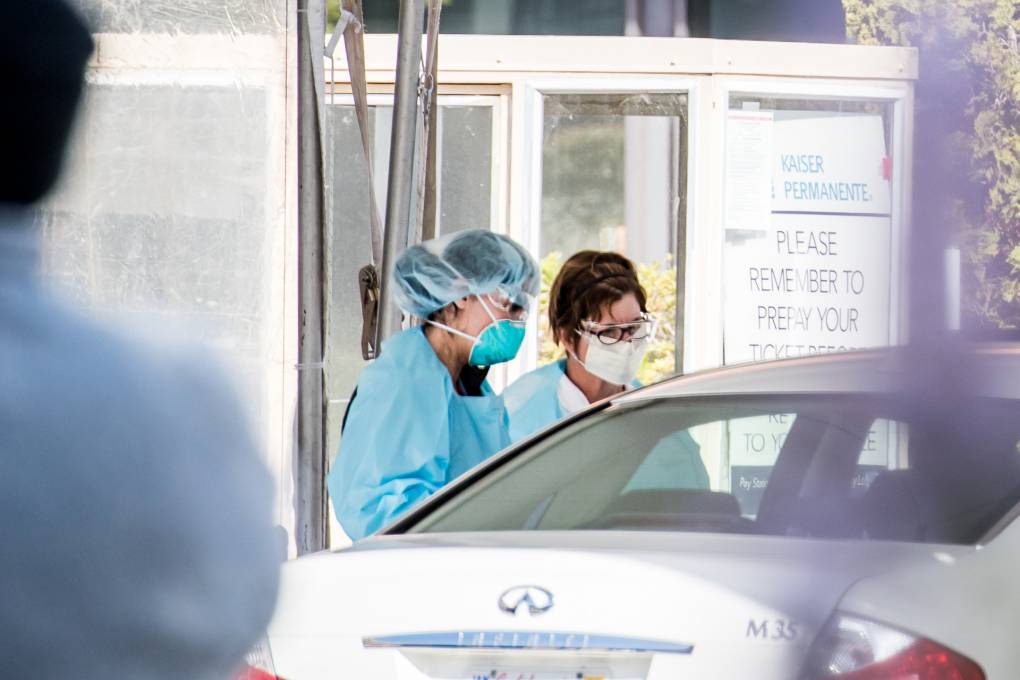
"caption": "Medical workers at the Kaiser Permanente French Campus test patients for the novel coronavirus, COVID-19, at a drive-thru testing facility in San Francisco, Calif. on Mar. 13, 2020.",
"description": null,
"title": "RS42118_065_KQED_SanFrancisco_Coronavirus_03132020_-qut",
"credit": "Beth LaBerge/KQED",
"status": "inherit",
"isLoading": false,
"fetchFailed": false
}
},
"audioPlayerReducer": {
"postId": "stream_live",
"isPaused": true,
"isPlaying": false,
"pfsActive": false,
"pledgeModalIsOpen": true,
"playerDrawerIsOpen": false,
"liveAudioPlayStartedAt": 0,
"liveAudioPlayContext": ""
},
"authorsReducer": {
"byline_news_11989050": {
"type": "authors",
"id": "byline_news_11989050",
"meta": {
"override": true
},
"slug": "byline_news_11989050",
"name": "\u003ca href=\"https://twitter.com/katie_debe?lang=en\">Katie DeBenedetti\u003c/a>",
"isLoading": false
},
"byline_news_11915565": {
"type": "authors",
"id": "byline_news_11915565",
"meta": {
"override": true
},
"slug": "byline_news_11915565",
"name": "\u003ca href=\"https://calmatters.org/author/elina-lingappa/\">Elina Lingappa\u003c/a>",
"isLoading": false
},
"byline_news_11900423": {
"type": "authors",
"id": "byline_news_11900423",
"meta": {
"override": true
},
"slug": "byline_news_11900423",
"name": "\u003ca href=\"https://twitter.com/jireh_deng\">Jireh Deng\u003c/a>",
"isLoading": false
},
"byline_news_11807552": {
"type": "authors",
"id": "byline_news_11807552",
"meta": {
"override": true
},
"slug": "byline_news_11807552",
"name": "\u003ca href=\"https://khn.org/news/author/anna-maria-barry-jester/\"> Anna Maria Barry-Jester \u003ca />",
"isLoading": false
},
"kqednewsstaffandwires": {
"type": "authors",
"id": "237",
"meta": {
"index": "authors_1716337520",
"id": "237",
"found": true
},
"name": "KQED News Staff and Wires",
"firstName": "KQED News Staff and Wires",
"lastName": null,
"slug": "kqednewsstaffandwires",
"email": "onlinenewsstaff@kqed.org",
"display_author_email": false,
"staff_mastheads": [],
"title": null,
"bio": null,
"avatar": "https://secure.gravatar.com/avatar/72295af8ebbfbd19a4948f5271285664?s=600&d=blank&r=g",
"twitter": null,
"facebook": null,
"instagram": null,
"linkedin": null,
"sites": [
{
"site": "arts",
"roles": [
"contributor"
]
},
{
"site": "news",
"roles": [
"contributor"
]
},
{
"site": "lowdown",
"roles": [
"author"
]
},
{
"site": "stateofhealth",
"roles": [
"contributor"
]
},
{
"site": "food",
"roles": [
"author"
]
}
],
"headData": {
"title": "KQED News Staff and Wires | KQED",
"description": null,
"ogImgSrc": "https://secure.gravatar.com/avatar/72295af8ebbfbd19a4948f5271285664?s=600&d=blank&r=g",
"twImgSrc": "https://secure.gravatar.com/avatar/72295af8ebbfbd19a4948f5271285664?s=600&d=blank&r=g"
},
"isLoading": false,
"link": "/author/kqednewsstaffandwires"
},
"rachael-myrow": {
"type": "authors",
"id": "251",
"meta": {
"index": "authors_1716337520",
"id": "251",
"found": true
},
"name": "Rachael Myrow",
"firstName": "Rachael",
"lastName": "Myrow",
"slug": "rachael-myrow",
"email": "rmyrow@kqed.org",
"display_author_email": true,
"staff_mastheads": [
"news"
],
"title": "Senior Editor of KQED's Silicon Valley News Desk",
"bio": "• I write and edit stories about how Silicon Valley power and policies shape everyday life in California. I’m also passionate about making Bay Area history and culture more accessible to a broad public. • I’ve been a journalist for most of my life, starting in high school with The Franklin Press in Los Angeles, where I grew up. While earning my first degree in English at UC Berkeley, I got my start in public radio at KALX-FM. After completing a second degree in journalism at Cal, I landed my first professional job at Marketplace, then moved on to KPCC (now LAist), and then KQED, where I hosted The California Report for more than seven years. • My reporting has appeared on NPR, The World, WBUR’s \u003ci>Here & Now\u003c/i>, and the BBC. I also guest host for KQED’s \u003ci>Forum\u003c/i>, as well as the Commonwealth Club in San Francisco. • I speak periodically on media, democracy and technology issues, and do voiceover work for documentaries and educational video projects. • Outside of the studio, you'll find me hiking Bay Area trails and whipping up Insta-ready meals in my kitchen. • I do not accept gifts, money, or favors from anyone connected to my reporting, I don't pay people for information, and I do not support or donate to political causes. • I strive to treat the people I report on with fairness, honesty, and respect. I also recognize there are often multiple sides to a story and work to verify information through multiple sources and documentation. If I get something wrong, I correct it.",
"avatar": "https://secure.gravatar.com/avatar/3ed8a3c5f26025e4a805ba634cda8cd764906b97438a6d9ce216b044e340da4e?s=600&d=blank&r=g",
"twitter": "rachaelmyrow",
"bluesky": null,
"facebook": null,
"instagram": null,
"linkedin": "https://www.linkedin.com/in/rachaelmyrow/",
"sites": [
{
"site": "arts",
"roles": [
"administrator"
]
},
{
"site": "news",
"roles": [
"edit_others_posts",
"editor"
]
},
{
"site": "futureofyou",
"roles": [
"editor"
]
},
{
"site": "bayareabites",
"roles": [
"editor"
]
},
{
"site": "stateofhealth",
"roles": [
"editor"
]
},
{
"site": "science",
"roles": [
"editor"
]
},
{
"site": "food",
"roles": [
"editor"
]
},
{
"site": "forum",
"roles": [
"editor"
]
},
{
"site": "liveblog",
"roles": [
"author"
]
}
],
"headData": {
"title": "Rachael Myrow | KQED",
"description": "Senior Editor of KQED's Silicon Valley News Desk",
"ogImgSrc": "https://secure.gravatar.com/avatar/3ed8a3c5f26025e4a805ba634cda8cd764906b97438a6d9ce216b044e340da4e?s=600&d=blank&r=g",
"twImgSrc": "https://secure.gravatar.com/avatar/3ed8a3c5f26025e4a805ba634cda8cd764906b97438a6d9ce216b044e340da4e?s=600&d=blank&r=g"
},
"isLoading": false,
"link": "/author/rachael-myrow"
},
"matthewgreen": {
"type": "authors",
"id": "1263",
"meta": {
"index": "authors_1716337520",
"id": "1263",
"found": true
},
"name": "Matthew Green",
"firstName": "Matthew",
"lastName": "Green",
"slug": "matthewgreen",
"email": "mgreen@kqed.org",
"display_author_email": false,
"staff_mastheads": [],
"title": "KQED Editor/Reporter",
"bio": "Matthew Green is a digital media producer for KQED News. He previously produced \u003ca href=\"http://www.kqed.org/lowdown\">The Lowdown\u003c/a>, KQED’s multimedia news education blog. Matthew's written for numerous Bay Area publications, including the Oakland Tribune and San Francisco Chronicle. He also taught journalism classes at Fremont High School in East Oakland.\r\n\r\nEmail: mgreen@kqed.org; Twitter: @MGreenKQED",
"avatar": "https://secure.gravatar.com/avatar/3bf498d1267ca02c8494f33d8cfc575e?s=600&d=blank&r=g",
"twitter": "MGreenKQED",
"facebook": null,
"instagram": null,
"linkedin": null,
"sites": [
{
"site": "news",
"roles": []
},
{
"site": "lowdown",
"roles": []
},
{
"site": "science",
"roles": []
},
{
"site": "education",
"roles": []
},
{
"site": "quest",
"roles": []
},
{
"site": "liveblog",
"roles": []
}
],
"headData": {
"title": "Matthew Green | KQED",
"description": "KQED Editor/Reporter",
"ogImgSrc": "https://secure.gravatar.com/avatar/3bf498d1267ca02c8494f33d8cfc575e?s=600&d=blank&r=g",
"twImgSrc": "https://secure.gravatar.com/avatar/3bf498d1267ca02c8494f33d8cfc575e?s=600&d=blank&r=g"
},
"isLoading": false,
"link": "/author/matthewgreen"
},
"hmcdede": {
"type": "authors",
"id": "11635",
"meta": {
"index": "authors_1716337520",
"id": "11635",
"found": true
},
"name": "Holly McDede",
"firstName": "Holly",
"lastName": "McDede",
"slug": "hmcdede",
"email": "hmcdede@KQED.org",
"display_author_email": false,
"staff_mastheads": [],
"title": "KQED Contributor",
"bio": null,
"avatar": "https://secure.gravatar.com/avatar/999d9bf31bb3a2f0511932d99526cb3e?s=600&d=blank&r=g",
"twitter": null,
"facebook": null,
"instagram": null,
"linkedin": null,
"sites": [
{
"site": "arts",
"roles": [
"editor"
]
},
{
"site": "news",
"roles": [
"edit_others_posts",
"editor"
]
},
{
"site": "science",
"roles": [
"editor"
]
},
{
"site": "forum",
"roles": [
"editor"
]
},
{
"site": "perspectives",
"roles": [
"administrator"
]
}
],
"headData": {
"title": "Holly McDede | KQED",
"description": "KQED Contributor",
"ogImgSrc": "https://secure.gravatar.com/avatar/999d9bf31bb3a2f0511932d99526cb3e?s=600&d=blank&r=g",
"twImgSrc": "https://secure.gravatar.com/avatar/999d9bf31bb3a2f0511932d99526cb3e?s=600&d=blank&r=g"
},
"isLoading": false,
"link": "/author/hmcdede"
},
"abandlamudi": {
"type": "authors",
"id": "11672",
"meta": {
"index": "authors_1716337520",
"id": "11672",
"found": true
},
"name": "Adhiti Bandlamudi",
"firstName": "Adhiti",
"lastName": "Bandlamudi",
"slug": "abandlamudi",
"email": "abandlamudi@kqed.org",
"display_author_email": false,
"staff_mastheads": [
"news"
],
"title": "KQED Housing Reporter",
"bio": "Adhiti Bandlamudi reports for KQED's Housing desk. She focuses on how housing gets built across the Bay Area. Before joining KQED in 2020, she reported for WUNC in Durham, North Carolina, WABE in Atlanta, Georgia and Capital Public Radio in Sacramento. In 2017, she was awarded a Kroc Fellowship at NPR where she reported on everything from sprinkles to the Golden State Killer's arrest. When she's not reporting, she's baking new recipes in her kitchen or watching movies with friends and family. She's originally from Georgia and has strong opinions about Great British Bake Off.",
"avatar": "https://secure.gravatar.com/avatar/868129c8b257bb99a3500e2c86a65400?s=600&d=mm&r=g",
"twitter": "oddity_adhiti",
"facebook": null,
"instagram": null,
"linkedin": null,
"sites": [
{
"site": "arts",
"roles": [
"author"
]
},
{
"site": "news",
"roles": [
"editor"
]
},
{
"site": "liveblog",
"roles": [
"author"
]
}
],
"headData": {
"title": "Adhiti Bandlamudi | KQED",
"description": "KQED Housing Reporter",
"ogImgSrc": "https://secure.gravatar.com/avatar/868129c8b257bb99a3500e2c86a65400?s=600&d=mm&r=g",
"twImgSrc": "https://secure.gravatar.com/avatar/868129c8b257bb99a3500e2c86a65400?s=600&d=mm&r=g"
},
"isLoading": false,
"link": "/author/abandlamudi"
},
"nkhan": {
"type": "authors",
"id": "11867",
"meta": {
"index": "authors_1716337520",
"id": "11867",
"found": true
},
"name": "Nisa Khan",
"firstName": "Nisa",
"lastName": "Khan",
"slug": "nkhan",
"email": "nkhan@kqed.org",
"display_author_email": false,
"staff_mastheads": [],
"title": "KQED Contributor",
"bio": "Nisa Khan is a reporter for KQED's Audience News Desk. She was formerly a data reporter at Michigan Radio. She earned a Bachelor of Science in Information from the University of Michigan and a Master of Arts in Communication from Stanford University.",
"avatar": "https://secure.gravatar.com/avatar/8720459eef081ff64582b3506b124d58523e80e120704a0cbd9892533c914991?s=600&d=blank&r=g",
"twitter": "mnisakhan",
"bluesky": null,
"facebook": null,
"instagram": null,
"linkedin": null,
"sites": [
{
"site": "arts",
"roles": [
"editor"
]
},
{
"site": "news",
"roles": [
"editor"
]
},
{
"site": "science",
"roles": [
"editor",
"author"
]
},
{
"site": "forum",
"roles": [
"editor"
]
},
{
"site": "liveblog",
"roles": [
"contributor"
]
}
],
"headData": {
"title": "Nisa Khan | KQED",
"description": "KQED Contributor",
"ogImgSrc": "https://secure.gravatar.com/avatar/8720459eef081ff64582b3506b124d58523e80e120704a0cbd9892533c914991?s=600&d=blank&r=g",
"twImgSrc": "https://secure.gravatar.com/avatar/8720459eef081ff64582b3506b124d58523e80e120704a0cbd9892533c914991?s=600&d=blank&r=g"
},
"isLoading": false,
"link": "/author/nkhan"
},
"jgeha": {
"type": "authors",
"id": "11906",
"meta": {
"index": "authors_1716337520",
"id": "11906",
"found": true
},
"name": "Joseph Geha",
"firstName": "Joseph",
"lastName": "Geha",
"slug": "jgeha",
"email": "jgeha@kqed.org",
"display_author_email": false,
"staff_mastheads": [
"news",
"science"
],
"title": "KQED Contributor",
"bio": null,
"avatar": "https://secure.gravatar.com/avatar/ea84d2b6dd93d6369d453edf19dd583f117cd1759d2d9c9c92f9de77017354fe?s=600&d=blank&r=g",
"twitter": null,
"bluesky": null,
"facebook": null,
"instagram": null,
"linkedin": null,
"sites": [
{
"site": "news",
"roles": [
"editor"
]
},
{
"site": "liveblog",
"roles": [
"author"
]
}
],
"headData": {
"title": "Joseph Geha | KQED",
"description": "KQED Contributor",
"ogImgSrc": "https://secure.gravatar.com/avatar/ea84d2b6dd93d6369d453edf19dd583f117cd1759d2d9c9c92f9de77017354fe?s=600&d=blank&r=g",
"twImgSrc": "https://secure.gravatar.com/avatar/ea84d2b6dd93d6369d453edf19dd583f117cd1759d2d9c9c92f9de77017354fe?s=600&d=blank&r=g"
},
"isLoading": false,
"link": "/author/jgeha"
}
},
"pagesReducer": {
"news_tag_stanford": {
"type": "terms",
"id": "news_178",
"meta": {
"index": "terms_1716263798",
"site": "news",
"id": "178",
"score": 8.367239
},
"featImg": null,
"name": "Stanford",
"description": null,
"taxonomy": "tag",
"headData": {
"twImgId": null,
"twTitle": null,
"ogTitle": null,
"ogImgId": null,
"twDescription": null,
"description": null,
"title": "Stanford Archives | KQED News",
"ogDescription": null
},
"ttid": 185,
"slug": "stanford",
"isLoading": false,
"title": "Stanford",
"pageMeta": {
"site": "news",
"WpPageTemplate": "page-topic-editorial",
"currentPage": 5
},
"blocks": [
{
"blockName": "kqed/post-list",
"attrs": {
"layout": "cardArticle2",
"query": "posts/news?tag=stanford",
"seeMore": false,
"paginated": true,
"page": 5
}
},
{
"blockName": "kqed/ad"
}
]
}
},
"pfsSessionReducer": {},
"postsReducer": {
"stream_live": {
"type": "live",
"id": "stream_live",
"audioUrl": "https://streams.kqed.org/kqedradio",
"title": "Live Stream",
"excerpt": "Live Stream information currently unavailable.",
"link": "/radio",
"featImg": "",
"label": {
"name": "KQED Live",
"link": "/"
}
},
"stream_kqedNewscast": {
"type": "posts",
"id": "stream_kqedNewscast",
"audioUrl": "https://www.kqed.org/.stream/anon/radio/RDnews/newscast.mp3?_=1",
"title": "KQED Newscast",
"featImg": "",
"label": {
"name": "88.5 FM",
"link": "/"
}
},
"news_11989520": {
"type": "posts",
"id": "news_11989520",
"meta": {
"index": "posts_1716263798",
"site": "news",
"id": "11989520",
"score": null,
"sort": [
1717808435000
]
},
"guestAuthors": [],
"slug": "stanford-student-newspaper-editors-call-for-charges-against-reporter-to-be-dropped",
"title": "Stanford Student Newspaper Editors Call for Charges Against Reporter to Be Dropped",
"publishDate": 1717808435,
"format": "standard",
"headTitle": "Stanford Student Newspaper Editors Call for Charges Against Reporter to Be Dropped | KQED",
"labelTerm": {
"site": "news"
},
"content": "\u003cp>The editor of Stanford University’s student newspaper is calling on school leadership to drop felony charges and rescind a suspension against a reporter who was arrested while covering a Pro-Palestinian protest this week.\u003c/p>\n\u003cp>In the early morning hours on Wednesday, a group of Stanford students and activists entered and \u003ca href=\"https://www.kqed.org/news/11989050/pro-palestinian-stanford-protesters-detained-after-occupying-presidents-office\">barricaded themselves\u003c/a> inside the office of Stanford’s president. The group said it wants the school to divest from companies tied to Israel’s military assault on the Gaza Strip, among other demands.\u003c/p>\n\u003cp>Officials said they found damage inside the building, and the sandstone exterior of the building and others around it in the main quad area was graffitied with messages including “kill cops,” “death to Israel,” and “free Palestine.”\u003c/p>\n\u003cp>[ad fullwidth]\u003c/p>\n\u003cp>In a statement issued Friday afternoon, Kaushikee Nayudu, the editor-in-chief and president of \u003cem>The Stanford Daily, \u003c/em>said one of the paper’s reporters, Dilan Gohill, was present to cover the demonstration.\u003c/p>\n\u003cp>“He identified himself as a member of the press multiple times. He continued to stress this information — and showed his press pass to officers he engaged with — at the (Stanford University Department of Public Safety) station and Santa Clara County Jail,” Nayudu said.\u003c/p>\n\u003cp>She added that officers he interacted with “acknowledged and noted his role as a reporter,” but he was nevertheless arrested and booked into Santa Clara County Main Jail on a felony charge of burglary with intent to commit a crime.\u003c/p>\n\u003cp>“He did not participate in the construction of barricades or vandalism and explicitly told protesters he would not assist since he was present as reporter,” Nayudu said. “We hope the university will lift his suspension and urge the DA’s office to drop the charges against him.”\u003c/p>\n\u003cp>Nayudu and other editors of the paper, in an \u003ca href=\"https://stanforddaily.com/2024/06/05/letter-from-the-editors-on-todays-arrests-at-the-presidents-office/\">opinion piece\u003c/a> published Wednesday, said arresting Gohill was a violation of his First Amendment and Fourth Amendment rights. “We are appalled at this threat to the freedom of the press.”\u003c/p>\n\u003cfigure id=\"attachment_11989555\" class=\"wp-caption alignnone\" style=\"max-width: 2048px\">\u003cimg loading=\"lazy\" decoding=\"async\" class=\"size-full wp-image-11989555\" src=\"https://cdn.kqed.org/wp-content/uploads/sites/10/2024/06/240605-STANFORD-JG-15-1.jpg\" alt=\"\" width=\"2048\" height=\"1365\" srcset=\"https://cdn.kqed.org/wp-content/uploads/sites/10/2024/06/240605-STANFORD-JG-15-1.jpg 2048w, https://cdn.kqed.org/wp-content/uploads/sites/10/2024/06/240605-STANFORD-JG-15-1-800x533.jpg 800w, https://cdn.kqed.org/wp-content/uploads/sites/10/2024/06/240605-STANFORD-JG-15-1-1020x680.jpg 1020w, https://cdn.kqed.org/wp-content/uploads/sites/10/2024/06/240605-STANFORD-JG-15-1-160x107.jpg 160w, https://cdn.kqed.org/wp-content/uploads/sites/10/2024/06/240605-STANFORD-JG-15-1-1536x1024.jpg 1536w, https://cdn.kqed.org/wp-content/uploads/sites/10/2024/06/240605-STANFORD-JG-15-1-1920x1280.jpg 1920w\" sizes=\"(max-width: 2048px) 100vw, 2048px\">\u003cfigcaption class=\"wp-caption-text\">Building 10 at Stanford University, where pro-Palestinian protesters broke into the university president’s office and occupied it before being arrested on Wednesday, June 5, 2024. \u003ccite>(Joseph Geha/KQED)\u003c/cite>\u003c/figcaption>\u003c/figure>\n\u003cp>The paper’s editors also said a second Daily staffer, an editor, was present in the president’s office to participate in the protest but was not there in a journalistic capacity. They noted that she has not been involved in coverage related to the Israel-Gaza war “due to an established conflict of interest on this issue.”\u003c/p>\n\u003cp>Nayudu said Friday that the editor who participated in the protest has since stepped down from her position.\u003c/p>\n\u003cp>All 13 people arrested were charged with the same crime, according to an arrest log from the university, and were held on $20,000 bail for much of Wednesday. A spokesperson for the Santa Clara County Sheriff’s Office, Brooks Jarosz, said Friday that all of those arrested were released.\u003c/p>\n\u003cp>Most of those arrested were released without having to pay bail in exchange for agreeing to conditions of their release, while others chose to post the bail and not agree to the conditions, Jarosz said.\u003c/p>\n\u003cp>It’s unclear when those arrested will be arraigned in court. A spokesperson for the Santa Clara County District Attorney’s Office, Sean Webby, said the office hadn’t yet received the cases from the Stanford Department of Public Safety.\u003c/p>\n\u003cp>In a \u003ca href=\"https://news.stanford.edu/stories/2024/06/this-morning-s-occupation-of-building-10\">previous statement\u003c/a>, Stanford President Richard Saller and Provost Jenny Martinez said all students who were inside the office and arrested would be suspended, and any of them who are seniors would not be allowed to graduate.\u003c/p>\n\u003cp>“These actions are necessary based on the public safety threat posed to our campus community,” the statement read. “The situation on campus has now crossed the line from peaceful protest to actions that threaten the safety of our community,” the statement said.\u003c/p>\n\u003cp>A school spokesperson, Dee Mostofi, did not respond to questions about whether the school intends to continue to press charges against Gohill and maintain his suspension.\u003c/p>\n\u003cp>[aside postID=news_11989050 hero='https://cdn.kqed.org/wp-content/uploads/sites/10/2024/06/240605-STANFORD-JG-10-KQED-1020x680.jpg']Following the arrests at the president’s office, the university on Wednesday also dismantled a pro-Palestinian protest encampment that had been set up weeks earlier on a central plaza. In their statement, Saller and Martinez said the encampment violated multiple university policies and again cited an interest in public safety as a reason to clear it.\u003c/p>\n\u003cp>Natalie Zahr, an assistant professor at Stanford and a member of the group Stanford Faculty for Justice in Palestine, said she feels the university leadership’s characterization of the protests and occupation has been overblown.\u003c/p>\n\u003cp>“I don’t see how anybody’s endangered,” Zahr said. “I mean, yes, there might have been vandalism, but I’m sorry people are getting killed” in the Israel-Gaza war, she said.\u003c/p>\n\u003cp>She also cast doubt on whether the students behind the occupation were also responsible for graffiti on campus building exteriors and said $20,000 bail for those arrested is excessive.\u003c/p>\n\u003cp>Zahr said she wrote a note to Saller on Wednesday asking for “due process” and for him to “clearly find out who was involved in doing what” before he decided on punishments for students.\u003c/p>\n\u003cp>Overall, she said she’s proud of students speaking out and taking action on the issue.\u003c/p>\n\u003cp>“They invigorated an apathetic population, including me,” she said. “I’m just praying that this will be over soon.”\u003c/p>\n\u003cp>\u003c/p>\n",
"blocks": [],
"excerpt": "Editors of The Stanford Daily student newspaper say the university leadership should drop felony charges and claw back a suspension against a reporter who was arrested while covering a protest.",
"status": "publish",
"parent": 0,
"modified": 1719447621,
"stats": {
"hasAudio": false,
"hasVideo": false,
"hasChartOrMap": false,
"iframeSrcs": [],
"hasGoogleForm": false,
"hasGallery": false,
"hasHearkenModule": false,
"hasPolis": false,
"paragraphCount": 25,
"wordCount": 963
},
"headData": {
"title": "Stanford Student Newspaper Editors Call for Charges Against Reporter to Be Dropped | KQED",
"description": "Editors of The Stanford Daily student newspaper say the university leadership should drop felony charges and claw back a suspension against a reporter who was arrested while covering a protest.",
"ogTitle": "",
"ogDescription": "",
"ogImgId": "",
"twTitle": "",
"twDescription": "",
"twImgId": "",
"schema": {
"@context": "https://schema.org",
"@type": "NewsArticle",
"headline": "Stanford Student Newspaper Editors Call for Charges Against Reporter to Be Dropped",
"datePublished": "2024-06-07T18:00:35-07:00",
"dateModified": "2024-06-26T17:20:21-07:00",
"image": "https://cdn.kqed.org/wp-content/uploads/2020/02/KQED-OG-Image@1x.png",
"isAccessibleForFree": "True",
"publisher": {
"@type": "NewsMediaOrganization",
"@id": "https://www.kqed.org/#organization",
"name": "KQED",
"logo": "https://cdn.kqed.org/wp-content/uploads/2020/02/KQED-OG-Image@1x.png",
"url": "https://www.kqed.org",
"sameAs": [
"https://www.facebook.com/KQED",
"https://twitter.com/KQED",
"https://www.instagram.com/kqed/",
"https://www.tiktok.com/@kqedofficial",
"https://www.linkedin.com/company/kqed",
"https://www.youtube.com/channel/UCeC0IOo7i1P_61zVUWbJ4nw"
]
}
}
},
"sticky": false,
"nprStoryId": "kqed-11989520",
"excludeFromSiteSearch": "Include",
"articleAge": "0",
"path": "/news/11989520/stanford-student-newspaper-editors-call-for-charges-against-reporter-to-be-dropped",
"audioTrackLength": null,
"parsedContent": [
{
"type": "contentString",
"content": "\u003cdiv class=\"post-body\">\u003cp>\u003cp>The editor of Stanford University’s student newspaper is calling on school leadership to drop felony charges and rescind a suspension against a reporter who was arrested while covering a Pro-Palestinian protest this week.\u003c/p>\n\u003cp>In the early morning hours on Wednesday, a group of Stanford students and activists entered and \u003ca href=\"https://www.kqed.org/news/11989050/pro-palestinian-stanford-protesters-detained-after-occupying-presidents-office\">barricaded themselves\u003c/a> inside the office of Stanford’s president. The group said it wants the school to divest from companies tied to Israel’s military assault on the Gaza Strip, among other demands.\u003c/p>\n\u003cp>Officials said they found damage inside the building, and the sandstone exterior of the building and others around it in the main quad area was graffitied with messages including “kill cops,” “death to Israel,” and “free Palestine.”\u003c/p>\n\u003cp>\u003c/p>\u003c/div>",
"attributes": {
"named": {},
"numeric": []
}
},
{
"type": "component",
"content": "",
"name": "ad",
"attributes": {
"named": {
"label": "fullwidth"
},
"numeric": [
"fullwidth"
]
}
},
{
"type": "contentString",
"content": "\u003cdiv class=\"post-body\">\u003cp>\u003c/p>\n\u003cp>In a statement issued Friday afternoon, Kaushikee Nayudu, the editor-in-chief and president of \u003cem>The Stanford Daily, \u003c/em>said one of the paper’s reporters, Dilan Gohill, was present to cover the demonstration.\u003c/p>\n\u003cp>“He identified himself as a member of the press multiple times. He continued to stress this information — and showed his press pass to officers he engaged with — at the (Stanford University Department of Public Safety) station and Santa Clara County Jail,” Nayudu said.\u003c/p>\n\u003cp>She added that officers he interacted with “acknowledged and noted his role as a reporter,” but he was nevertheless arrested and booked into Santa Clara County Main Jail on a felony charge of burglary with intent to commit a crime.\u003c/p>\n\u003cp>“He did not participate in the construction of barricades or vandalism and explicitly told protesters he would not assist since he was present as reporter,” Nayudu said. “We hope the university will lift his suspension and urge the DA’s office to drop the charges against him.”\u003c/p>\n\u003cp>Nayudu and other editors of the paper, in an \u003ca href=\"https://stanforddaily.com/2024/06/05/letter-from-the-editors-on-todays-arrests-at-the-presidents-office/\">opinion piece\u003c/a> published Wednesday, said arresting Gohill was a violation of his First Amendment and Fourth Amendment rights. “We are appalled at this threat to the freedom of the press.”\u003c/p>\n\u003cfigure id=\"attachment_11989555\" class=\"wp-caption alignnone\" style=\"max-width: 2048px\">\u003cimg loading=\"lazy\" decoding=\"async\" class=\"size-full wp-image-11989555\" src=\"https://cdn.kqed.org/wp-content/uploads/sites/10/2024/06/240605-STANFORD-JG-15-1.jpg\" alt=\"\" width=\"2048\" height=\"1365\" srcset=\"https://cdn.kqed.org/wp-content/uploads/sites/10/2024/06/240605-STANFORD-JG-15-1.jpg 2048w, https://cdn.kqed.org/wp-content/uploads/sites/10/2024/06/240605-STANFORD-JG-15-1-800x533.jpg 800w, https://cdn.kqed.org/wp-content/uploads/sites/10/2024/06/240605-STANFORD-JG-15-1-1020x680.jpg 1020w, https://cdn.kqed.org/wp-content/uploads/sites/10/2024/06/240605-STANFORD-JG-15-1-160x107.jpg 160w, https://cdn.kqed.org/wp-content/uploads/sites/10/2024/06/240605-STANFORD-JG-15-1-1536x1024.jpg 1536w, https://cdn.kqed.org/wp-content/uploads/sites/10/2024/06/240605-STANFORD-JG-15-1-1920x1280.jpg 1920w\" sizes=\"(max-width: 2048px) 100vw, 2048px\">\u003cfigcaption class=\"wp-caption-text\">Building 10 at Stanford University, where pro-Palestinian protesters broke into the university president’s office and occupied it before being arrested on Wednesday, June 5, 2024. \u003ccite>(Joseph Geha/KQED)\u003c/cite>\u003c/figcaption>\u003c/figure>\n\u003cp>The paper’s editors also said a second Daily staffer, an editor, was present in the president’s office to participate in the protest but was not there in a journalistic capacity. They noted that she has not been involved in coverage related to the Israel-Gaza war “due to an established conflict of interest on this issue.”\u003c/p>\n\u003cp>Nayudu said Friday that the editor who participated in the protest has since stepped down from her position.\u003c/p>\n\u003cp>All 13 people arrested were charged with the same crime, according to an arrest log from the university, and were held on $20,000 bail for much of Wednesday. A spokesperson for the Santa Clara County Sheriff’s Office, Brooks Jarosz, said Friday that all of those arrested were released.\u003c/p>\n\u003cp>Most of those arrested were released without having to pay bail in exchange for agreeing to conditions of their release, while others chose to post the bail and not agree to the conditions, Jarosz said.\u003c/p>\n\u003cp>It’s unclear when those arrested will be arraigned in court. A spokesperson for the Santa Clara County District Attorney’s Office, Sean Webby, said the office hadn’t yet received the cases from the Stanford Department of Public Safety.\u003c/p>\n\u003cp>In a \u003ca href=\"https://news.stanford.edu/stories/2024/06/this-morning-s-occupation-of-building-10\">previous statement\u003c/a>, Stanford President Richard Saller and Provost Jenny Martinez said all students who were inside the office and arrested would be suspended, and any of them who are seniors would not be allowed to graduate.\u003c/p>\n\u003cp>“These actions are necessary based on the public safety threat posed to our campus community,” the statement read. “The situation on campus has now crossed the line from peaceful protest to actions that threaten the safety of our community,” the statement said.\u003c/p>\n\u003cp>A school spokesperson, Dee Mostofi, did not respond to questions about whether the school intends to continue to press charges against Gohill and maintain his suspension.\u003c/p>\n\u003cp>\u003c/p>\u003c/div>",
"attributes": {
"named": {},
"numeric": []
}
},
{
"type": "component",
"content": "",
"name": "aside",
"attributes": {
"named": {
"postid": "news_11989050",
"hero": "https://cdn.kqed.org/wp-content/uploads/sites/10/2024/06/240605-STANFORD-JG-10-KQED-1020x680.jpg",
"label": ""
},
"numeric": []
}
},
{
"type": "contentString",
"content": "\u003cdiv class=\"post-body\">\u003cp>Following the arrests at the president’s office, the university on Wednesday also dismantled a pro-Palestinian protest encampment that had been set up weeks earlier on a central plaza. In their statement, Saller and Martinez said the encampment violated multiple university policies and again cited an interest in public safety as a reason to clear it.\u003c/p>\n\u003cp>Natalie Zahr, an assistant professor at Stanford and a member of the group Stanford Faculty for Justice in Palestine, said she feels the university leadership’s characterization of the protests and occupation has been overblown.\u003c/p>\n\u003cp>“I don’t see how anybody’s endangered,” Zahr said. “I mean, yes, there might have been vandalism, but I’m sorry people are getting killed” in the Israel-Gaza war, she said.\u003c/p>\n\u003cp>She also cast doubt on whether the students behind the occupation were also responsible for graffiti on campus building exteriors and said $20,000 bail for those arrested is excessive.\u003c/p>\n\u003cp>Zahr said she wrote a note to Saller on Wednesday asking for “due process” and for him to “clearly find out who was involved in doing what” before he decided on punishments for students.\u003c/p>\n\u003cp>Overall, she said she’s proud of students speaking out and taking action on the issue.\u003c/p>\n\u003cp>“They invigorated an apathetic population, including me,” she said. “I’m just praying that this will be over soon.”\u003c/p>\n\u003cp>\u003c/p>\n\u003c/div>\u003c/p>",
"attributes": {
"named": {},
"numeric": []
}
}
],
"link": "/news/11989520/stanford-student-newspaper-editors-call-for-charges-against-reporter-to-be-dropped",
"authors": [
"11906"
],
"categories": [
"news_8"
],
"tags": [
"news_27626",
"news_32906",
"news_33647",
"news_21285",
"news_178",
"news_22646"
],
"featImg": "news_11989556",
"label": "news"
},
"news_11989050": {
"type": "posts",
"id": "news_11989050",
"meta": {
"index": "posts_1716263798",
"site": "news",
"id": "11989050",
"score": null,
"sort": [
1717616748000
]
},
"guestAuthors": [],
"slug": "pro-palestinian-stanford-protesters-detained-after-occupying-presidents-office",
"title": "Stanford Protest Camp Dismantled After 13 Arrests at Pro-Palestinian Occupation",
"publishDate": 1717616748,
"format": "standard",
"headTitle": "Stanford Protest Camp Dismantled After 13 Arrests at Pro-Palestinian Occupation | KQED",
"labelTerm": {
"site": "news"
},
"content": "\u003cp>\u003cem>Updated 2:35 p.m. Wednesday\u003c/em>\u003c/p>\n\u003cp>After 13 people were arrested when pro-Palestinian activists barricaded themselves inside the office of Stanford’s president Wednesday morning, campus officials cleared \u003ca href=\"https://www.kqed.org/news/11984203/pro-palestinian-protests-sweep-california-college-campuses-amid-israel-hamas-war\">a protest encampment\u003c/a> that had been set up weeks earlier on a central plaza, university officials said.\u003c/p>\n\u003cp>The protesters entered the building housing the offices of the university president and provost off the main quad early Wednesday, the final day of classes for the spring quarter, saying they planned to stay until their demands were met or they were forcibly removed.\u003c/p>\n\u003cp>Stanford police and Santa Clara County sheriff’s officials responded and began arresting people within about two hours, and by 9:45 a.m. the building was cleared, according to the university.\u003c/p>\n\u003cp>Protesters trying to interfere with a transport vehicle shoved a public safety officer, who was injured, university spokesperson Dee Mostofi said in a statement.\u003c/p>\n\u003cp>[ad fullwidth]\u003c/p>\n\u003cp>Officials said they found damage inside the building, and the sandstone exterior of the building and others around it in the main quad area were graffitied with messages including “kill cops,” “death to Israel” and “free Palestine.”\u003c/p>\n\u003cp>“This graffiti conveys vile and hateful sentiments that we condemn in the strongest terms,” President Richard Saller and Provost Jenny Martinez wrote in a statement. “Whether the graffiti was created by members of the Stanford community or outsiders, we expect that the vast majority of our community joins us in rejecting this assault on our campus.”\u003c/p>\n\u003cp>Students who were arrested will be immediately suspended, and any who are seniors will be barred from graduating, Saller and Martinez said.\u003c/p>\n\u003cfigure id=\"attachment_11989121\" class=\"wp-caption alignnone\" style=\"max-width: 2000px\">\u003cimg loading=\"lazy\" decoding=\"async\" class=\"size-full wp-image-11989121\" src=\"https://cdn.kqed.org/wp-content/uploads/sites/10/2024/06/240605-STANFORD-JG-01-KQED.jpg\" alt=\"\" width=\"2000\" height=\"1333\" srcset=\"https://cdn.kqed.org/wp-content/uploads/sites/10/2024/06/240605-STANFORD-JG-01-KQED.jpg 2000w, https://cdn.kqed.org/wp-content/uploads/sites/10/2024/06/240605-STANFORD-JG-01-KQED-800x533.jpg 800w, https://cdn.kqed.org/wp-content/uploads/sites/10/2024/06/240605-STANFORD-JG-01-KQED-1020x680.jpg 1020w, https://cdn.kqed.org/wp-content/uploads/sites/10/2024/06/240605-STANFORD-JG-01-KQED-160x107.jpg 160w, https://cdn.kqed.org/wp-content/uploads/sites/10/2024/06/240605-STANFORD-JG-01-KQED-1536x1024.jpg 1536w, https://cdn.kqed.org/wp-content/uploads/sites/10/2024/06/240605-STANFORD-JG-01-KQED-1920x1280.jpg 1920w\" sizes=\"(max-width: 2000px) 100vw, 2000px\">\u003cfigcaption class=\"wp-caption-text\">Stanford University workers remove American and Israeli flags from an installment at White Plaza on June 5, 2024. \u003ccite>(Joseph Geha/KQED)\u003c/cite>\u003c/figcaption>\u003c/figure>\n\u003cp>Among the people arrested was a \u003cem>Stanford Daily\u003c/em> reporter covering the occupation, according to a representative for the student newspaper. In a statement, the \u003cem>Daily\u003c/em> told KQED that the student was wearing \u003cem>Stanford Daily\u003c/em> attire and a press badge.\u003c/p>\n\u003cp>After the law enforcement arrests, campus officials also cleared the pro-Palestinian encampment on Stanford’s White Plaza as well as a nearby pro-Israel installation with U.S. and Israeli flags. Barricades were set up around the university’s main quad and White Plaza, where the encampment had been since early April. In a statement, the university said that the encampment violated a number of university policies but had been allowed to remain in place prior to the occupation.\u003c/p>\n\u003cp>“The situation on campus has now crossed the line from peaceful protest to actions that threaten the safety of our community,” the statement said.\u003c/p>\n\u003cfigure id=\"attachment_11989123\" class=\"wp-caption alignnone\" style=\"max-width: 2000px\">\u003cimg loading=\"lazy\" decoding=\"async\" class=\"size-full wp-image-11989123\" src=\"https://cdn.kqed.org/wp-content/uploads/sites/10/2024/06/240605-STANFORD-JG-05-KQED.jpg\" alt=\"\" width=\"2000\" height=\"1333\" srcset=\"https://cdn.kqed.org/wp-content/uploads/sites/10/2024/06/240605-STANFORD-JG-05-KQED.jpg 2000w, https://cdn.kqed.org/wp-content/uploads/sites/10/2024/06/240605-STANFORD-JG-05-KQED-800x533.jpg 800w, https://cdn.kqed.org/wp-content/uploads/sites/10/2024/06/240605-STANFORD-JG-05-KQED-1020x680.jpg 1020w, https://cdn.kqed.org/wp-content/uploads/sites/10/2024/06/240605-STANFORD-JG-05-KQED-160x107.jpg 160w, https://cdn.kqed.org/wp-content/uploads/sites/10/2024/06/240605-STANFORD-JG-05-KQED-1536x1024.jpg 1536w, https://cdn.kqed.org/wp-content/uploads/sites/10/2024/06/240605-STANFORD-JG-05-KQED-1920x1280.jpg 1920w\" sizes=\"(max-width: 2000px) 100vw, 2000px\">\u003cfigcaption class=\"wp-caption-text\">Stanford University workers break down a pro-Palestinian encampment in White Plaza on June 5, 2024. \u003ccite>(Joseph Geha/KQED)\u003c/cite>\u003c/figcaption>\u003c/figure>\n\u003cp>Aaron Schimmel, a Jewish graduate student at Stanford, said he felt the university had not taken violations of school rules by protesters seriously enough before the occupation.\u003c/p>\n\u003cp>“It’s just mob rule on campus,” Schimmel said while standing outside the president’s office Wednesday morning.\u003c/p>\n\u003cp>Tree, a 20-year-old student who declined to share her last name for fear of retaliation by the university, called the school’s decision to remove the encampment “cowardly.”\u003c/p>\n\u003cp>[aside label='Related Coverage' tag='campus-protests']“It’s more important now than ever to mobilize and keep our eyes and keep our goals towards a free Palestine, because that is ultimately what we are fighting for,” Tree told KQED. “More than divestment, more than just our right to free speech, more than more rights and protections for Muslim, Palestinian and Arab students, we want a free Palestine.”\u003c/p>\n\u003cp>The group behind the building occupation, Stanford for Palestine, wants Stanford’s Board of Trustees to consider a proposal to divest from companies tied to Israel’s military assault on the Gaza Strip and for Saller to support the bill. Activists also demand that the university drop all disciplinary action against students involved in previous pro-Palestinian protests on campus.\u003c/p>\n\u003cp>According to Emily Williams, a spokesperson for the students, they “believe that Stanford has not acted in good faith or moved in the direction of divestment, and so their demands still remain the same, which are divestment from companies that are materially and or monetarily contributing to or working with the Zionist, Israeli entity.”\u003c/p>\n\u003cp>Williams said the students who were arrested were being held at the Santa Clara County Main Jail in San Jose as of Wednesday afternoon.\u003c/p>\n\u003cp>\u003c/p>\n\u003cp>\u003cem>KQED’s Joseph Geha contributed to this report.\u003c/em>\u003c/p>\n\n",
"blocks": [],
"excerpt": "Among those arrested after pro-Palestinian activists barricaded themselves inside the office of Stanford's president Wednesday morning was a student reporter covering the occupation, the Stanford Daily said.",
"status": "publish",
"parent": 0,
"modified": 1717714619,
"stats": {
"hasAudio": false,
"hasVideo": false,
"hasChartOrMap": false,
"iframeSrcs": [],
"hasGoogleForm": false,
"hasGallery": false,
"hasHearkenModule": false,
"hasPolis": false,
"paragraphCount": 21,
"wordCount": 768
},
"headData": {
"title": "Stanford Protest Camp Dismantled After 13 Arrests at Pro-Palestinian Occupation | KQED",
"description": "Among those arrested after pro-Palestinian activists barricaded themselves inside the office of Stanford's president Wednesday morning was a student reporter covering the occupation, the Stanford Daily said.",
"ogTitle": "",
"ogDescription": "",
"ogImgId": "",
"twTitle": "",
"twDescription": "",
"twImgId": "",
"schema": {
"@context": "https://schema.org",
"@type": "NewsArticle",
"headline": "Stanford Protest Camp Dismantled After 13 Arrests at Pro-Palestinian Occupation",
"datePublished": "2024-06-05T12:45:48-07:00",
"dateModified": "2024-06-06T15:56:59-07:00",
"image": "https://cdn.kqed.org/wp-content/uploads/2020/02/KQED-OG-Image@1x.png",
"isAccessibleForFree": "True",
"publisher": {
"@type": "NewsMediaOrganization",
"@id": "https://www.kqed.org/#organization",
"name": "KQED",
"logo": "https://cdn.kqed.org/wp-content/uploads/2020/02/KQED-OG-Image@1x.png",
"url": "https://www.kqed.org",
"sameAs": [
"https://www.facebook.com/KQED",
"https://twitter.com/KQED",
"https://www.instagram.com/kqed/",
"https://www.tiktok.com/@kqedofficial",
"https://www.linkedin.com/company/kqed",
"https://www.youtube.com/channel/UCeC0IOo7i1P_61zVUWbJ4nw"
]
}
}
},
"sticky": false,
"nprByline": "\u003ca href=\"https://twitter.com/katie_debe?lang=en\">Katie DeBenedetti\u003c/a>",
"nprStoryId": "kqed-11989050",
"excludeFromSiteSearch": "Include",
"showOnAuthorArchivePages": "No",
"articleAge": "0",
"path": "/news/11989050/pro-palestinian-stanford-protesters-detained-after-occupying-presidents-office",
"audioTrackLength": null,
"parsedContent": [
{
"type": "contentString",
"content": "\u003cdiv class=\"post-body\">\u003cp>\u003cp>\u003cem>Updated 2:35 p.m. Wednesday\u003c/em>\u003c/p>\n\u003cp>After 13 people were arrested when pro-Palestinian activists barricaded themselves inside the office of Stanford’s president Wednesday morning, campus officials cleared \u003ca href=\"https://www.kqed.org/news/11984203/pro-palestinian-protests-sweep-california-college-campuses-amid-israel-hamas-war\">a protest encampment\u003c/a> that had been set up weeks earlier on a central plaza, university officials said.\u003c/p>\n\u003cp>The protesters entered the building housing the offices of the university president and provost off the main quad early Wednesday, the final day of classes for the spring quarter, saying they planned to stay until their demands were met or they were forcibly removed.\u003c/p>\n\u003cp>Stanford police and Santa Clara County sheriff’s officials responded and began arresting people within about two hours, and by 9:45 a.m. the building was cleared, according to the university.\u003c/p>\n\u003cp>Protesters trying to interfere with a transport vehicle shoved a public safety officer, who was injured, university spokesperson Dee Mostofi said in a statement.\u003c/p>\n\u003cp>\u003c/p>\u003c/div>",
"attributes": {
"named": {},
"numeric": []
}
},
{
"type": "component",
"content": "",
"name": "ad",
"attributes": {
"named": {
"label": "fullwidth"
},
"numeric": [
"fullwidth"
]
}
},
{
"type": "contentString",
"content": "\u003cdiv class=\"post-body\">\u003cp>\u003c/p>\n\u003cp>Officials said they found damage inside the building, and the sandstone exterior of the building and others around it in the main quad area were graffitied with messages including “kill cops,” “death to Israel” and “free Palestine.”\u003c/p>\n\u003cp>“This graffiti conveys vile and hateful sentiments that we condemn in the strongest terms,” President Richard Saller and Provost Jenny Martinez wrote in a statement. “Whether the graffiti was created by members of the Stanford community or outsiders, we expect that the vast majority of our community joins us in rejecting this assault on our campus.”\u003c/p>\n\u003cp>Students who were arrested will be immediately suspended, and any who are seniors will be barred from graduating, Saller and Martinez said.\u003c/p>\n\u003cfigure id=\"attachment_11989121\" class=\"wp-caption alignnone\" style=\"max-width: 2000px\">\u003cimg loading=\"lazy\" decoding=\"async\" class=\"size-full wp-image-11989121\" src=\"https://cdn.kqed.org/wp-content/uploads/sites/10/2024/06/240605-STANFORD-JG-01-KQED.jpg\" alt=\"\" width=\"2000\" height=\"1333\" srcset=\"https://cdn.kqed.org/wp-content/uploads/sites/10/2024/06/240605-STANFORD-JG-01-KQED.jpg 2000w, https://cdn.kqed.org/wp-content/uploads/sites/10/2024/06/240605-STANFORD-JG-01-KQED-800x533.jpg 800w, https://cdn.kqed.org/wp-content/uploads/sites/10/2024/06/240605-STANFORD-JG-01-KQED-1020x680.jpg 1020w, https://cdn.kqed.org/wp-content/uploads/sites/10/2024/06/240605-STANFORD-JG-01-KQED-160x107.jpg 160w, https://cdn.kqed.org/wp-content/uploads/sites/10/2024/06/240605-STANFORD-JG-01-KQED-1536x1024.jpg 1536w, https://cdn.kqed.org/wp-content/uploads/sites/10/2024/06/240605-STANFORD-JG-01-KQED-1920x1280.jpg 1920w\" sizes=\"(max-width: 2000px) 100vw, 2000px\">\u003cfigcaption class=\"wp-caption-text\">Stanford University workers remove American and Israeli flags from an installment at White Plaza on June 5, 2024. \u003ccite>(Joseph Geha/KQED)\u003c/cite>\u003c/figcaption>\u003c/figure>\n\u003cp>Among the people arrested was a \u003cem>Stanford Daily\u003c/em> reporter covering the occupation, according to a representative for the student newspaper. In a statement, the \u003cem>Daily\u003c/em> told KQED that the student was wearing \u003cem>Stanford Daily\u003c/em> attire and a press badge.\u003c/p>\n\u003cp>After the law enforcement arrests, campus officials also cleared the pro-Palestinian encampment on Stanford’s White Plaza as well as a nearby pro-Israel installation with U.S. and Israeli flags. Barricades were set up around the university’s main quad and White Plaza, where the encampment had been since early April. In a statement, the university said that the encampment violated a number of university policies but had been allowed to remain in place prior to the occupation.\u003c/p>\n\u003cp>“The situation on campus has now crossed the line from peaceful protest to actions that threaten the safety of our community,” the statement said.\u003c/p>\n\u003cfigure id=\"attachment_11989123\" class=\"wp-caption alignnone\" style=\"max-width: 2000px\">\u003cimg loading=\"lazy\" decoding=\"async\" class=\"size-full wp-image-11989123\" src=\"https://cdn.kqed.org/wp-content/uploads/sites/10/2024/06/240605-STANFORD-JG-05-KQED.jpg\" alt=\"\" width=\"2000\" height=\"1333\" srcset=\"https://cdn.kqed.org/wp-content/uploads/sites/10/2024/06/240605-STANFORD-JG-05-KQED.jpg 2000w, https://cdn.kqed.org/wp-content/uploads/sites/10/2024/06/240605-STANFORD-JG-05-KQED-800x533.jpg 800w, https://cdn.kqed.org/wp-content/uploads/sites/10/2024/06/240605-STANFORD-JG-05-KQED-1020x680.jpg 1020w, https://cdn.kqed.org/wp-content/uploads/sites/10/2024/06/240605-STANFORD-JG-05-KQED-160x107.jpg 160w, https://cdn.kqed.org/wp-content/uploads/sites/10/2024/06/240605-STANFORD-JG-05-KQED-1536x1024.jpg 1536w, https://cdn.kqed.org/wp-content/uploads/sites/10/2024/06/240605-STANFORD-JG-05-KQED-1920x1280.jpg 1920w\" sizes=\"(max-width: 2000px) 100vw, 2000px\">\u003cfigcaption class=\"wp-caption-text\">Stanford University workers break down a pro-Palestinian encampment in White Plaza on June 5, 2024. \u003ccite>(Joseph Geha/KQED)\u003c/cite>\u003c/figcaption>\u003c/figure>\n\u003cp>Aaron Schimmel, a Jewish graduate student at Stanford, said he felt the university had not taken violations of school rules by protesters seriously enough before the occupation.\u003c/p>\n\u003cp>“It’s just mob rule on campus,” Schimmel said while standing outside the president’s office Wednesday morning.\u003c/p>\n\u003cp>Tree, a 20-year-old student who declined to share her last name for fear of retaliation by the university, called the school’s decision to remove the encampment “cowardly.”\u003c/p>\n\u003cp>\u003c/p>\u003c/div>",
"attributes": {
"named": {},
"numeric": []
}
},
{
"type": "component",
"content": "",
"name": "aside",
"attributes": {
"named": {
"label": "Related Coverage ",
"tag": "campus-protests"
},
"numeric": []
}
},
{
"type": "contentString",
"content": "\u003cdiv class=\"post-body\">\u003cp>“It’s more important now than ever to mobilize and keep our eyes and keep our goals towards a free Palestine, because that is ultimately what we are fighting for,” Tree told KQED. “More than divestment, more than just our right to free speech, more than more rights and protections for Muslim, Palestinian and Arab students, we want a free Palestine.”\u003c/p>\n\u003cp>The group behind the building occupation, Stanford for Palestine, wants Stanford’s Board of Trustees to consider a proposal to divest from companies tied to Israel’s military assault on the Gaza Strip and for Saller to support the bill. Activists also demand that the university drop all disciplinary action against students involved in previous pro-Palestinian protests on campus.\u003c/p>\n\u003cp>According to Emily Williams, a spokesperson for the students, they “believe that Stanford has not acted in good faith or moved in the direction of divestment, and so their demands still remain the same, which are divestment from companies that are materially and or monetarily contributing to or working with the Zionist, Israeli entity.”\u003c/p>\n\u003cp>Williams said the students who were arrested were being held at the Santa Clara County Main Jail in San Jose as of Wednesday afternoon.\u003c/p>\n\u003cp>\u003c/p>\n\u003cp>\u003cem>KQED’s Joseph Geha contributed to this report.\u003c/em>\u003c/p>\n\n\u003c/div>\u003c/p>",
"attributes": {
"named": {},
"numeric": []
}
}
],
"link": "/news/11989050/pro-palestinian-stanford-protesters-detained-after-occupying-presidents-office",
"authors": [
"byline_news_11989050"
],
"categories": [
"news_18540",
"news_8"
],
"tags": [
"news_34008",
"news_20013",
"news_33647",
"news_178",
"news_1928"
],
"featImg": "news_11989124",
"label": "news"
},
"news_11965530": {
"type": "posts",
"id": "news_11965530",
"meta": {
"index": "posts_1716263798",
"site": "news",
"id": "11965530",
"score": null,
"sort": [
1698267641000
]
},
"guestAuthors": [],
"slug": "how-to-talk-to-your-child-about-traumatic-events-kqed",
"title": "How to Talk to Your Child About Traumatic World Events",
"publishDate": 1698267641,
"format": "standard",
"headTitle": "How to Talk to Your Child About Traumatic World Events | KQED",
"labelTerm": {
"site": "news"
},
"content": "\u003cp>Thousands of Palestinians and Israelis have been killed since the Oct. 7 attack by Hamas forces in Israel. Thousands \u003ca href=\"https://apnews.com/article/israel-palestinians-gaza-hamas-war-781b3c63af4ae6e51c313a68f314e66d\">more Palestinians have been wounded and displaced during Israeli air raids\u003c/a> — with \u003ca href=\"https://www.aljazeera.com/news/2023/10/22/israeli-air-raids-kill-at-least-55-in-gaza-overnight-hamas-says#:~:text=Israeli%20air%20raids%20have%20damaged,time%20in%20nearly%20a%20decade.\">strikes destroying 40% of Gaza’s housing\u003c/a>, according to the United Nations.\u003c/p>\n\u003cp>\u003ca href=\"https://www.cnn.com/2023/10/24/middleeast/gaza-water-war-climate-intl-cmd/index.html%20--%20which%20also%20speaks%20to\">Israel also sealed off Gaza for over a week\u003c/a>, \u003ca href=\"https://www.npr.org/2023/10/16/1206256497/the-latest-in-gaza-as-power-drinking-water-and-medical-supplies-are-running-out\">halting the entry of food, water, medicine and fuel\u003c/a>. Israel recently allowed 20 trucks to enter Palestine carrying aid — \u003ca href=\"https://www.reuters.com/world/middle-east/trucks-enter-gaza-carrying-medical-supplies-food-hamas-2023-10-21/\">a vast reduction from the hundreds of trucks usually entering Palestine daily\u003c/a>. [aside label='More on Creating Healthy Dialogue with Your Kids' link1='https://www.npr.org/2019/04/24/716704917/when-the-news-is-scary-what-to-say-to-kids, What to Say to Kids When the News is Scary']The population in Gaza is among the youngest in the world, \u003ca href=\"https://www.npr.org/2023/10/19/1206479861/israel-gaza-hamas-children-population-war-palestinians\">with nearly half of the people living there under the age of 18\u003c/a>. A 2021 study showed that \u003ca href=\"https://www.npr.org/2023/10/18/1206897328/half-of-gazas-population-is-under-18-heres-what-that-means-for-the-conflict\">91% of children in the Gaza Strip have post-traumatic stress disorder\u003c/a>.\u003c/p>\n\u003cp>With how connected our world is, it is likely your child in the United States has seen the images and videos coming out of Gaza on the Internet or on TV — which sometimes directly show other young people in distress. The devastation can be difficult to explain to children, who may struggle to comprehend the deaths and political conflict.\u003c/p>\n\u003cp>Hilit Kletter is a child psychologist at Stanford Medicine and \u003ca href=\"https://profiles.stanford.edu/hilit-kletter\">the director of the Stress and Resilience Clinic\u003c/a>. KQED’s Brian Watt spoke to Kletter about how parents and caregivers can approach these tough conversations with children.\u003c/p>\n\u003cp>\u003cem>This conversation has been edited for brevity and clarity.\u003c/em>\u003c/p>\n\u003cp>[ad fullwidth]\u003c/p>\n\u003cp>\u003cstrong>Brian Watt: How is speaking with kids about this violence in Gaza different from talking to children about other types of violence? For example, mass shootings here in the United States? \u003c/strong>\u003c/p>\n\u003cp>Hilit Kletter: It’s not much different. The content and the idea is similar. The only difference might be that, unfortunately, shootings are something that we hear about more commonly here in the States. And war might be a more foreign concept, especially for younger children having a difficult time grasping that the war is not happening \u003cem>here\u003c/em> but is happening somewhere far away.\u003c/p>\n\u003cp>\u003cstrong>But shootings also seem more random, even if they are somewhat commonplace, unfortunately, in the United States … and to have less context around them than war, for example. Is there any difference there in how kids process that? \u003c/strong>\u003c/p>\n\u003cp>Within the U.S., unfortunately, it’s become commonplace because of the frequency and increase of mass shootings that a lot of the schools now have drills for it. Some kids have experienced lockdowns in their school — so they do have awareness. [pullquote size=\"medium\" align=\"right\" citation=\"Hilit Kletter, child psychologist, Stanford Medicine\"]‘It’s inevitable that your child may hear something about it, whether at school, through their friends, through other adults talking about it.’[/pullquote]The concept of war is a little bit more difficult to explain: What that \u003cem>is\u003c/em>, and — for especially younger individuals — to grasp the abstract idea behind it of what causes war and “Why are two sides fighting?”\u003c/p>\n\u003cp>And you cannot explain it in basic terms for really young kids. I might explain it in terms of: “It’s kind of like when you have an argument with a friend, and you might disagree,” but that doesn’t get at the complexity, right? Then, depending on the developmental level, you’re probably going to provide different explanations for kids around it.\u003c/p>\n\u003cp>\u003cstrong>So, what are some other ways to begin this dialogue with children? How can parents start thinking about it? \u003c/strong>\u003c/p>\n\u003cp>It’s inevitable that your child may hear something about it, whether at school, through their friends, through other adults talking about it. And a lot of times, we’re not aware when we are adults conversing amongst ourselves that the kids are nearby and pick up on everything. So, I think as a parent, it is important to pre-empt. Because you want to be the one providing the information and not have this be introduced by someone else to your child. [pullquote size=\"medium\" align=\"right\" citation=\"Hilit Kletter, child psychologist, Stanford Medicine\"]‘We don’t recommend lying to kids or fudging the truth — but tailoring the information according to the age.’[/pullquote]And the way I would begin it is by asking: What do they know, and what have they heard? Because that’s an opportunity to then start the conversation; to gently correct any misperceptions, provide them with information at the appropriate developmental level, and be honest, as much as you can.\u003c/p>\n\u003cp>We don’t recommend lying to kids or fudging the truth — but tailoring the information according to the age.\u003c/p>\n\u003cp>\u003cstrong>We’ve seen rallies in support of Israel and protests condemning Israel’s response in Gaza and the siege. How should parents approach explaining the response here in the United States? \u003c/strong>\u003c/p>\n\u003cp>I think the way you can focus on it is what people are trying to do to help. And regardless of what side you’re on, that people are concerned. [aside label='More on the Youth Population in Gaza' link1='https://www.npr.org/2023/10/18/1206897328/half-of-gazas-population-is-under-18-heres-what-that-means-for-the-conflict, Half of the Population of Gaza is Under 18. What that Means for the Conflict']Some may have loved ones or family over there, and people are doing what they can to help. There’s many different ways that they can go about doing that, whether they volunteer to gather supplies to send to the affected individuals or collect donations to provide to different disaster relief organizations. Or they go to rallies to show their support, or just [come] together as a community to be able to express what you \u003cem>do \u003c/em>think about it and have a source of support.\u003c/p>\n\u003cp>\u003cstrong>Kids will begin to form opinions. Is there a way to talk to them about being sensitive to peers who might be hurt by those opinions? \u003c/strong>\u003c/p>\n\u003cp>I think that’s why it’s important to encourage those conversations within the family at first — to allow them to express how they feel and what they think. To also help them practice because kids may not have the ability like adults to filter information. And currently, there’s \u003cem>so \u003c/em>much information out there. It’s overwhelming, even as an adult. As adults, we can help kids be able to filter that. [pullquote size=\"medium\" align=\"right\" citation=\"Hilit Kletter, child psychologist, Stanford Medicine\"]‘It’s important to encourage those conversations within the family at first — to allow them to express how they feel, and what they think.’[/pullquote]I think there’s two approaches. One is — you can view it as an opportunity for discussion. People often don’t agree — and that’s the beauty of the world, that we can have differing opinions, we can express how we feel. And sometimes that can be an opportunity for discussion and learning and growth.\u003c/p>\n\u003cp>Other times, when people have very strong opinions, it’s maybe best not to engage and to learn to respect that it’s OK that people will have different opinions. And that you can walk away, and it’s OK to agree to disagree.\u003c/p>\n\u003cp>\u003cstrong>What kind of impact can the many graphic images of the war that we are seeing widely shared on social media have on children? \u003c/strong>\u003c/p>\n\u003cp>It can impact their sleep. It can impact their sense of safety: Feeling more afraid, having increased anxiety and just general fears. It can sometimes be portrayed in more disruptive behavior — starting to act out, or having temper tantrums or being more defiant. In older kids, you might see them become more withdrawn or isolated.\u003c/p>\n\u003cp>[It’s] also important to remember that kids’ brains are still developing … the prefrontal cortex doesn’t stop developing until age 26. That’s the part of the brain that’s responsible for things like our ability to regulate our emotions and our behaviors and to problem-solve.\u003c/p>\n\u003cp>\u003cstrong>What is the risk of avoiding this conversation entirely? \u003c/strong>\u003c/p>\n\u003cp>It might send the message for kids that it’s something that they \u003cem>should \u003c/em>be afraid of — if the adults are not even able to bring it up, then it must be a really scary thing.\u003c/p>\n\u003cp>It might [also] inadvertently send a message of: “It’s not OK to express your feelings or to have opinions about this,” and might make kids feel like they’re completely alone. Especially in times like this — when something of this nature that’s on such a horrible level is happening — all of us tend to feel like we’re going through it alone. And if it’s not brought up, if there’s no opportunity for these conversations, then that might reinforce that.\u003c/p>\n\u003cp>\u003cem>KQED’s \u003ca href=\"https://www.kqed.org/author/bwatt\">Brian Watt\u003c/a> and \u003ca href=\"https://www.kqed.org/author/agonzalez\">Alexander Gonzalez\u003c/a> contributed to this report.\u003c/em>\u003c/p>\n\u003cp>[ad floatright]\u003c/p>\n",
"blocks": [],
"excerpt": "Child psychologist Hilit Kletter, from Stanford Medicine's Stress and Resilience Clinic, offers guidance on discussing complex issues with kids in an interview with KQED's Brian Watt.",
"status": "publish",
"parent": 0,
"modified": 1747676353,
"stats": {
"hasAudio": false,
"hasVideo": false,
"hasChartOrMap": false,
"iframeSrcs": [],
"hasGoogleForm": false,
"hasGallery": false,
"hasHearkenModule": false,
"hasPolis": false,
"paragraphCount": 27,
"wordCount": 1560
},
"headData": {
"title": "How to Talk to Your Child About Traumatic World Events | KQED",
"description": "Find out how to discuss distressing news with your child, offering comfort and age-appropriate information to help them process complex events.",
"ogTitle": "",
"ogDescription": "",
"ogImgId": "",
"twTitle": "",
"twDescription": "",
"twImgId": "",
"socialDescription": "Find out how to discuss distressing news with your child, offering comfort and age-appropriate information to help them process complex events.",
"schema": {
"@context": "https://schema.org",
"@type": "NewsArticle",
"headline": "How to Talk to Your Child About Traumatic World Events",
"datePublished": "2023-10-25T14:00:41-07:00",
"dateModified": "2025-05-19T10:39:13-07:00",
"image": "https://cdn.kqed.org/wp-content/uploads/2020/02/KQED-OG-Image@1x.png",
"isAccessibleForFree": "True",
"publisher": {
"@type": "NewsMediaOrganization",
"@id": "https://www.kqed.org/#organization",
"name": "KQED",
"logo": "https://cdn.kqed.org/wp-content/uploads/2020/02/KQED-OG-Image@1x.png",
"url": "https://www.kqed.org",
"sameAs": [
"https://www.facebook.com/KQED",
"https://twitter.com/KQED",
"https://www.instagram.com/kqed/",
"https://www.tiktok.com/@kqedofficial",
"https://www.linkedin.com/company/kqed",
"https://www.youtube.com/channel/UCeC0IOo7i1P_61zVUWbJ4nw"
]
}
}
},
"audioUrl": "https://traffic.omny.fm/d/clips/0af137ef-751e-4b19-a055-aaef00d2d578/ffca7e9f-6831-41c5-bcaf-aaef00f5a073/b5547b6b-570d-46e3-96b8-b0a500f8c931/audio.mp3",
"sticky": false,
"WpOldSlug": "how-to-talk-to-your-child-about-traumatic-world-events",
"templateType": "standard",
"featuredImageType": "standard",
"excludeFromSiteSearch": "Include",
"articleAge": "0",
"path": "/news/11965530/how-to-talk-to-your-child-about-traumatic-events-kqed",
"audioTrackLength": null,
"parsedContent": [
{
"type": "contentString",
"content": "\u003cdiv class=\"post-body\">\u003cp>\u003cp>Thousands of Palestinians and Israelis have been killed since the Oct. 7 attack by Hamas forces in Israel. Thousands \u003ca href=\"https://apnews.com/article/israel-palestinians-gaza-hamas-war-781b3c63af4ae6e51c313a68f314e66d\">more Palestinians have been wounded and displaced during Israeli air raids\u003c/a> — with \u003ca href=\"https://www.aljazeera.com/news/2023/10/22/israeli-air-raids-kill-at-least-55-in-gaza-overnight-hamas-says#:~:text=Israeli%20air%20raids%20have%20damaged,time%20in%20nearly%20a%20decade.\">strikes destroying 40% of Gaza’s housing\u003c/a>, according to the United Nations.\u003c/p>\n\u003cp>\u003ca href=\"https://www.cnn.com/2023/10/24/middleeast/gaza-water-war-climate-intl-cmd/index.html%20--%20which%20also%20speaks%20to\">Israel also sealed off Gaza for over a week\u003c/a>, \u003ca href=\"https://www.npr.org/2023/10/16/1206256497/the-latest-in-gaza-as-power-drinking-water-and-medical-supplies-are-running-out\">halting the entry of food, water, medicine and fuel\u003c/a>. Israel recently allowed 20 trucks to enter Palestine carrying aid — \u003ca href=\"https://www.reuters.com/world/middle-east/trucks-enter-gaza-carrying-medical-supplies-food-hamas-2023-10-21/\">a vast reduction from the hundreds of trucks usually entering Palestine daily\u003c/a>. \u003c/p>\u003c/div>",
"attributes": {
"named": {},
"numeric": []
}
},
{
"type": "component",
"content": "",
"name": "aside",
"attributes": {
"named": {
"label": "More on Creating Healthy Dialogue with Your Kids ",
"link1": "https://www.npr.org/2019/04/24/716704917/when-the-news-is-scary-what-to-say-to-kids, What to Say to Kids When the News is Scary"
},
"numeric": []
}
},
{
"type": "contentString",
"content": "\u003cdiv class=\"post-body\">\u003cp>The population in Gaza is among the youngest in the world, \u003ca href=\"https://www.npr.org/2023/10/19/1206479861/israel-gaza-hamas-children-population-war-palestinians\">with nearly half of the people living there under the age of 18\u003c/a>. A 2021 study showed that \u003ca href=\"https://www.npr.org/2023/10/18/1206897328/half-of-gazas-population-is-under-18-heres-what-that-means-for-the-conflict\">91% of children in the Gaza Strip have post-traumatic stress disorder\u003c/a>.\u003c/p>\n\u003cp>With how connected our world is, it is likely your child in the United States has seen the images and videos coming out of Gaza on the Internet or on TV — which sometimes directly show other young people in distress. The devastation can be difficult to explain to children, who may struggle to comprehend the deaths and political conflict.\u003c/p>\n\u003cp>Hilit Kletter is a child psychologist at Stanford Medicine and \u003ca href=\"https://profiles.stanford.edu/hilit-kletter\">the director of the Stress and Resilience Clinic\u003c/a>. KQED’s Brian Watt spoke to Kletter about how parents and caregivers can approach these tough conversations with children.\u003c/p>\n\u003cp>\u003cem>This conversation has been edited for brevity and clarity.\u003c/em>\u003c/p>\n\u003cp>\u003c/p>\u003c/div>",
"attributes": {
"named": {},
"numeric": []
}
},
{
"type": "component",
"content": "",
"name": "ad",
"attributes": {
"named": {
"label": "fullwidth"
},
"numeric": [
"fullwidth"
]
}
},
{
"type": "contentString",
"content": "\u003cdiv class=\"post-body\">\u003cp>\u003c/p>\n\u003cp>\u003cstrong>Brian Watt: How is speaking with kids about this violence in Gaza different from talking to children about other types of violence? For example, mass shootings here in the United States? \u003c/strong>\u003c/p>\n\u003cp>Hilit Kletter: It’s not much different. The content and the idea is similar. The only difference might be that, unfortunately, shootings are something that we hear about more commonly here in the States. And war might be a more foreign concept, especially for younger children having a difficult time grasping that the war is not happening \u003cem>here\u003c/em> but is happening somewhere far away.\u003c/p>\n\u003cp>\u003cstrong>But shootings also seem more random, even if they are somewhat commonplace, unfortunately, in the United States … and to have less context around them than war, for example. Is there any difference there in how kids process that? \u003c/strong>\u003c/p>\n\u003cp>Within the U.S., unfortunately, it’s become commonplace because of the frequency and increase of mass shootings that a lot of the schools now have drills for it. Some kids have experienced lockdowns in their school — so they do have awareness. \u003c/p>\u003c/div>",
"attributes": {
"named": {},
"numeric": []
}
},
{
"type": "component",
"content": "‘It’s inevitable that your child may hear something about it, whether at school, through their friends, through other adults talking about it.’",
"name": "pullquote",
"attributes": {
"named": {
"size": "medium",
"align": "right",
"citation": "Hilit Kletter, child psychologist, Stanford Medicine",
"label": ""
},
"numeric": []
}
},
{
"type": "contentString",
"content": "\u003cdiv class=\"post-body\">\u003cp>The concept of war is a little bit more difficult to explain: What that \u003cem>is\u003c/em>, and — for especially younger individuals — to grasp the abstract idea behind it of what causes war and “Why are two sides fighting?”\u003c/p>\n\u003cp>And you cannot explain it in basic terms for really young kids. I might explain it in terms of: “It’s kind of like when you have an argument with a friend, and you might disagree,” but that doesn’t get at the complexity, right? Then, depending on the developmental level, you’re probably going to provide different explanations for kids around it.\u003c/p>\n\u003cp>\u003cstrong>So, what are some other ways to begin this dialogue with children? How can parents start thinking about it? \u003c/strong>\u003c/p>\n\u003cp>It’s inevitable that your child may hear something about it, whether at school, through their friends, through other adults talking about it. And a lot of times, we’re not aware when we are adults conversing amongst ourselves that the kids are nearby and pick up on everything. So, I think as a parent, it is important to pre-empt. Because you want to be the one providing the information and not have this be introduced by someone else to your child. \u003c/p>\u003c/div>",
"attributes": {
"named": {},
"numeric": []
}
},
{
"type": "component",
"content": "‘We don’t recommend lying to kids or fudging the truth — but tailoring the information according to the age.’",
"name": "pullquote",
"attributes": {
"named": {
"size": "medium",
"align": "right",
"citation": "Hilit Kletter, child psychologist, Stanford Medicine",
"label": ""
},
"numeric": []
}
},
{
"type": "contentString",
"content": "\u003cdiv class=\"post-body\">\u003cp>And the way I would begin it is by asking: What do they know, and what have they heard? Because that’s an opportunity to then start the conversation; to gently correct any misperceptions, provide them with information at the appropriate developmental level, and be honest, as much as you can.\u003c/p>\n\u003cp>We don’t recommend lying to kids or fudging the truth — but tailoring the information according to the age.\u003c/p>\n\u003cp>\u003cstrong>We’ve seen rallies in support of Israel and protests condemning Israel’s response in Gaza and the siege. How should parents approach explaining the response here in the United States? \u003c/strong>\u003c/p>\n\u003cp>I think the way you can focus on it is what people are trying to do to help. And regardless of what side you’re on, that people are concerned. \u003c/p>\u003c/div>",
"attributes": {
"named": {},
"numeric": []
}
},
{
"type": "component",
"content": "",
"name": "aside",
"attributes": {
"named": {
"label": "More on the Youth Population in Gaza ",
"link1": "https://www.npr.org/2023/10/18/1206897328/half-of-gazas-population-is-under-18-heres-what-that-means-for-the-conflict, Half of the Population of Gaza is Under 18. What that Means for the Conflict"
},
"numeric": []
}
},
{
"type": "contentString",
"content": "\u003cdiv class=\"post-body\">\u003cp>Some may have loved ones or family over there, and people are doing what they can to help. There’s many different ways that they can go about doing that, whether they volunteer to gather supplies to send to the affected individuals or collect donations to provide to different disaster relief organizations. Or they go to rallies to show their support, or just [come] together as a community to be able to express what you \u003cem>do \u003c/em>think about it and have a source of support.\u003c/p>\n\u003cp>\u003cstrong>Kids will begin to form opinions. Is there a way to talk to them about being sensitive to peers who might be hurt by those opinions? \u003c/strong>\u003c/p>\n\u003cp>I think that’s why it’s important to encourage those conversations within the family at first — to allow them to express how they feel and what they think. To also help them practice because kids may not have the ability like adults to filter information. And currently, there’s \u003cem>so \u003c/em>much information out there. It’s overwhelming, even as an adult. As adults, we can help kids be able to filter that. \u003c/p>\u003c/div>",
"attributes": {
"named": {},
"numeric": []
}
},
{
"type": "component",
"content": "‘It’s important to encourage those conversations within the family at first — to allow them to express how they feel, and what they think.’",
"name": "pullquote",
"attributes": {
"named": {
"size": "medium",
"align": "right",
"citation": "Hilit Kletter, child psychologist, Stanford Medicine",
"label": ""
},
"numeric": []
}
},
{
"type": "contentString",
"content": "\u003cdiv class=\"post-body\">\u003cp>I think there’s two approaches. One is — you can view it as an opportunity for discussion. People often don’t agree — and that’s the beauty of the world, that we can have differing opinions, we can express how we feel. And sometimes that can be an opportunity for discussion and learning and growth.\u003c/p>\n\u003cp>Other times, when people have very strong opinions, it’s maybe best not to engage and to learn to respect that it’s OK that people will have different opinions. And that you can walk away, and it’s OK to agree to disagree.\u003c/p>\n\u003cp>\u003cstrong>What kind of impact can the many graphic images of the war that we are seeing widely shared on social media have on children? \u003c/strong>\u003c/p>\n\u003cp>It can impact their sleep. It can impact their sense of safety: Feeling more afraid, having increased anxiety and just general fears. It can sometimes be portrayed in more disruptive behavior — starting to act out, or having temper tantrums or being more defiant. In older kids, you might see them become more withdrawn or isolated.\u003c/p>\n\u003cp>[It’s] also important to remember that kids’ brains are still developing … the prefrontal cortex doesn’t stop developing until age 26. That’s the part of the brain that’s responsible for things like our ability to regulate our emotions and our behaviors and to problem-solve.\u003c/p>\n\u003cp>\u003cstrong>What is the risk of avoiding this conversation entirely? \u003c/strong>\u003c/p>\n\u003cp>It might send the message for kids that it’s something that they \u003cem>should \u003c/em>be afraid of — if the adults are not even able to bring it up, then it must be a really scary thing.\u003c/p>\n\u003cp>It might [also] inadvertently send a message of: “It’s not OK to express your feelings or to have opinions about this,” and might make kids feel like they’re completely alone. Especially in times like this — when something of this nature that’s on such a horrible level is happening — all of us tend to feel like we’re going through it alone. And if it’s not brought up, if there’s no opportunity for these conversations, then that might reinforce that.\u003c/p>\n\u003cp>\u003cem>KQED’s \u003ca href=\"https://www.kqed.org/author/bwatt\">Brian Watt\u003c/a> and \u003ca href=\"https://www.kqed.org/author/agonzalez\">Alexander Gonzalez\u003c/a> contributed to this report.\u003c/em>\u003c/p>\n\u003cp>\u003c/p>\u003c/div>",
"attributes": {
"named": {},
"numeric": []
}
},
{
"type": "component",
"content": "",
"name": "ad",
"attributes": {
"named": {
"label": "floatright"
},
"numeric": [
"floatright"
]
}
},
{
"type": "contentString",
"content": "\u003cdiv class=\"post-body\">\u003cp>\u003c/p>\n\u003c/div>\u003c/p>",
"attributes": {
"named": {},
"numeric": []
}
}
],
"link": "/news/11965530/how-to-talk-to-your-child-about-traumatic-events-kqed",
"authors": [
"11867"
],
"categories": [
"news_8"
],
"tags": [
"news_32707",
"news_2043",
"news_6631",
"news_33333",
"news_2109",
"news_178"
],
"featImg": "news_11965605",
"label": "news"
},
"news_11959989": {
"type": "posts",
"id": "news_11959989",
"meta": {
"index": "posts_1716263798",
"site": "news",
"id": "11959989",
"score": null,
"sort": [
1693698335000
]
},
"parent": 0,
"labelTerm": {
"site": "news"
},
"blocks": [],
"publishDate": 1693698335,
"format": "standard",
"title": "'I'm Done' — Fans Disappointed as Stanford and UC Berkeley Join Atlantic Coast Conference",
"headTitle": "‘I’m Done’ — Fans Disappointed as Stanford and UC Berkeley Join Atlantic Coast Conference | KQED",
"content": "\u003cp>Bay Area college sports fans and Cal supporters were disappointed by the news that Stanford University and the University of California, Berkeley will leave a disintegrating Pac-12 to join the Atlantic Coast Conference for the 2024–25 school year after the ACC voted on Friday to add the two schools, along with Southern Methodist University.\u003c/p>\n\u003cp>“Our conference really identified with the West Coast. … It’s sad to think that it’s not going to be there anymore, and all the local rivalries,” said Rich Kennedy, who told KQED he’s been a Cal fan all his life. “You can stand up and you can see the Pacific Ocean, and now we’re going to be in the Atlantic Coast Conference. Makes no sense.”\u003c/p>\n\u003cp>In statements Friday, both\u003ca href=\"https://gostanford.com/news/2023/9/1/athletics-stanford-to-join-the-atlantic-coast-conference-in-august-2024.aspx\"> Stanford\u003c/a> and\u003ca href=\"https://calbears.com/news/2023/9/1/athletics-news-uc-berkeley-to-join-acc-for-2024-25-academic-year.aspx\"> UC Berkeley\u003c/a> welcomed the move, which would bring to nine the number of ACC schools that are members of the\u003ca href=\"https://www.aau.edu/\"> Association of American Universities\u003c/a>.\u003c/p>\n\u003cp>“We are very pleased with the outcome, which will support the best interests of our student-athletes and aligns with Berkeley’s values,” said UC Berkeley Chancellor Carol T. Christ, while Jerry Yang, chair of the Stanford University Board of Trustees, said “We appreciate the invitation of the ACC member schools, and we are excited to join them.”[pullquote align=\"right\" size=\"medium\" citation=\"John Reinthaler, Cal Bears fan\"]‘Big money has taken over not only the rest of our professional sports, but taken over the NCAA. Everybody chases the money and that’s what it’s all about.’[/pullquote]But for diehard Cal fans, the news came as a shock.\u003c/p>\n\u003cp>“I’m done, I’m done with all that stuff,” said John Reinthaler, a Cal Bears fan since age 6. “Big money has taken over not only the rest of our professional sports, but taken over the NCAA. Everybody chases the money and that’s what it’s all about. Everyone worries about our attendance and stuff at the stadium, which is nice, but it’s all driven by TV.”\u003c/p>\n\u003cp>“As a student, you want to be able to support your teams, I think that’s a part of the college experience,” said Christian Tate, while watching an NCAA football game between Cal and North Texas. “You have to have a level of disposable income to go and travel to a football game … so I think it makes it hard to root for your team outside of the few home games.”\u003c/p>\n\u003cp>The move by Stanford and UC Berkeley to\u003ca href=\"https://apnews.com/article/acc-conference-realignment-expansion-stanford-cal-smu-95e7d6f990dd35a638f9bef72fe96ee7\"> the Atlantic Coast Conference\u003c/a> was one born out of need, not convenience.\u003c/p>\n\u003cp>[ad fullwidth]\u003c/p>\n\u003cp>After watching \u003ca href=\"https://apnews.com/article/conference-realignment-at-a-glance-ae641134398b930f57abf2ec7c03f215\">seven fellow Pac-12 schools\u003c/a> follow conference flagships Southern California and UCLA to new homes last month, the success-rich programs at Stanford and Cal had no viable options left other than joining a conference based on the other side of the continent.\u003c/p>\n\u003cp>“Conference affiliations and the broadcast revenue they generate provide key financial support for the wide array of sports that Stanford offers,” said Stanford’s Jaquish & Kenninger Director of Athletics Bernard Muir, in a statement Friday. “Joining the ACC will ensure the Power Conference competitive infrastructure and long-term media revenues that are critical for our student-athletes to compete.”\u003c/p>\n\u003cp>Lifelong Cal fan Dan Sanford blames the Pac-12 commissioner for the disintegration of the conference.\u003c/p>\n\u003cp>“T\u003cspan style=\"font-weight: 400\">he PAC 12 Commissioner didn’t have the foresight to anticipate this, and they kind of took an aggressive line with the television networks, and as a result of that, they got burned,” said Sanford in an interview with KQED. “When USC and UCLA decided to leave the conference, they left the door open for that to happen because of the timing, and they didn’t arrange an alternative to it fast enough. So the whole thing imploded. Very sad circumstances for Cal, Stanford, Washington State and Oregon State, because they were the four left standing at the end of the day.”\u003c/span>\u003c/p>\n\u003cp>The Bay Area schools located just miles from the Pacific Ocean accepted invitations, along with Dallas-based SMU, to the ACC on Friday to be part of a conference with schools almost exclusively in states on the Eastern seaboard.\u003c/p>\n\u003cp>“We’ve talked a lot to our student-athletes and got feedback that they want to play at the highest level,” Cal athletic director Jim Knowlton said. “They want to still have opportunities to compete for national championships, to produce Olympians and they want to compete against schools like us.”[pullquote align=\"right\" size=\"medium\" citation=\"Bernard Muir, director of athletics, Stanford\"]‘Joining the ACC will ensure the Power Conference competitive infrastructure and long-term media revenues that are critical for our student-athletes to compete.’[/pullquote]The seeds for the move were planted when USC and UCLA accepted invitations in June 2022 to join the Big Ten next season. With a diminished Pac-12 unable to get a media rights deal with the revenue and distribution to satisfy many of the remaining schools, the conference started to break up this summer.\u003c/p>\n\u003cp>Colorado, Arizona, Arizona State and Utah left for the Big 12, with Oregon and Washington headed to the Big Ten. That left Stanford, Cal, Oregon State and Washington State as the only Pac-12 schools.\u003c/p>\n\u003cp>The Bay Area schools had more options because of their location and rich athletic traditions. Both schools felt the move to the ACC was the best financially and to allow the nonrevenue Olympic sports to compete at the top level of college athletics, which would have been difficult in a Pac-12 made up of the remaining four schools and other available additions.\u003c/p>\n\u003cp>“The athletes care deeply about being able to play at the highest level of competition and to play with like schools,” UC Berkeley Chancellor Carol Christ said. “This move guarantees or achieves those two goals. A reconstituted Pac-12, though there’s a lot of imaginative attractiveness about that, it’s also very uncertain about whether it would achieve those two goals.”\u003c/p>\n\u003cp>Stanford has won a record 134 NCAA championships — including at least one in 46 straight years — and produced 296 medals at the Summer Olympics. Cal is not far behind with 103 national championships and 223 Olympic medals.\u003c/p>\n\u003cp>The move doesn’t come without costs with increased travel in many sports and a reduction in revenue.\u003c/p>\n\u003cp>Cal and Stanford will receive a partial share of ACC Tier 1 media revenue for the next nine years before getting a full payment in the final three years of the conference’s deal with ESPN, according to a person familiar with the terms. The person spoke on condition of anonymity because the ACC and the schools have not disclosed the finances.\u003c/p>\n\u003cp>Cal and Stanford will get a 30% share in the first seven years, followed by 70% and 75% the next years before getting the full amount, the person said. The schools will immediately get full shares of money from the ACC Network, the College Football Playoff, bowl games and NCAA men’s basketball tournament units.[aside postID=forum_2010101893987 hero='https://ww2.kqed.org/app/uploads/sites/43/2023/08/GettyImages-1236700753-1-1020x611.jpg']There will be an initial gap of about $15 million a year from what the schools were currently getting from the Pac-12. Cal will make up some of that gap through a “tax” that the UC Regents placed on UCLA for going to the Big Ten, which will be between $2 million and $10 million a year. Christ said the final determination will be made after the regents get the full details of the contracts.\u003c/p>\n\u003cp>Neither school plans to cut any sports and will seek to close the funding gap through other campus sources.\u003c/p>\n\u003cp>“Conference affiliations and the broadcast revenue they generate provide key financial support for the wide array of sports that Stanford offers,” athletic director Bernard Muir said. “Joining the ACC will ensure the power conference competitive infrastructure and long-term media revenues that are critical for our student-athletes to compete.”\u003c/p>\n\u003cp>As for travel, both Cal and Stanford said the majority of their teams will see little or no impact on their schedules. Both school have several teams (six at Cal and 11 at Stanford) that compete in sports not sponsored by the ACC.\u003c/p>\n\u003cp>For sports like golf, tennis, gymnastics, track and swimming that mostly participate in tournaments and meets, there will be little need to travel East other than for the conference championships with some in-season meets possibly being held in the Dallas area.\u003c/p>\n\u003cp>For nonrevenue team sports like soccer, baseball, softball and volleyball, teams at Cal and Stanford will likely only need to make two regular season trips to the East Coast. Most of those teams typically make one trip East for nonconference play but will now only do it for ACC games.\u003c/p>\n\u003cp>The basketball and football teams will likely make three of four trips East each, with some of the basketball trips likely aligned with school breaks.\u003c/p>\n\u003cp>“I just feel like we’ll just have to switch our traveling and just stay home in November and December and travel in January and February,” Stanford women’s basketball coach Tara VanDerveer said. “Our players want that kind of competition.”\u003c/p>\n\u003cp>\u003cem>This story includes reporting from Josh Dubow of The Associated Press and KQED’s Dana Cronin.\u003c/em>\u003c/p>\n\u003cp> \u003c/p>\n\u003cp> \u003c/p>\n\u003cp>[ad floatright]\u003c/p>\n",
"stats": {
"hasVideo": false,
"hasChartOrMap": false,
"hasAudio": false,
"hasPolis": false,
"wordCount": 1625,
"hasGoogleForm": false,
"hasGallery": false,
"hasHearkenModule": false,
"iframeSrcs": [],
"paragraphCount": 30
},
"modified": 1693702495,
"excerpt": "The Bay Area schools felt the invitation to the ACC was the best financially and the only way to allow its nonrevenue Olympic sports to compete at the highest level, but some fans are disappointed.",
"headData": {
"twImgId": "",
"twTitle": "",
"ogTitle": "",
"ogImgId": "",
"twDescription": "",
"description": "The Bay Area schools felt the invitation to the ACC was the best financially and the only way to allow its nonrevenue Olympic sports to compete at the highest level, but some fans are disappointed.",
"title": "'I'm Done' — Fans Disappointed as Stanford and UC Berkeley Join Atlantic Coast Conference | KQED",
"ogDescription": "",
"schema": {
"@context": "https://schema.org",
"@type": "NewsArticle",
"headline": "'I'm Done' — Fans Disappointed as Stanford and UC Berkeley Join Atlantic Coast Conference",
"datePublished": "2023-09-02T16:45:35-07:00",
"dateModified": "2023-09-02T17:54:55-07:00",
"image": "https://cdn.kqed.org/wp-content/uploads/2020/02/KQED-OG-Image@1x.png",
"isAccessibleForFree": "True",
"publisher": {
"@type": "NewsMediaOrganization",
"@id": "https://www.kqed.org/#organization",
"name": "KQED",
"logo": "https://cdn.kqed.org/wp-content/uploads/2020/02/KQED-OG-Image@1x.png",
"url": "https://www.kqed.org",
"sameAs": [
"https://www.facebook.com/KQED",
"https://twitter.com/KQED",
"https://www.instagram.com/kqed/",
"https://www.tiktok.com/@kqedofficial",
"https://www.linkedin.com/company/kqed",
"https://www.youtube.com/channel/UCeC0IOo7i1P_61zVUWbJ4nw"
]
}
}
},
"guestAuthors": [],
"slug": "stanford-uc-berkeley-will-join-the-atlantic-coast-conference-next-year",
"status": "publish",
"excludeFromSiteSearch": "Include",
"showOnAuthorArchivePages": "No",
"articleAge": "0",
"path": "/news/11959989/stanford-uc-berkeley-will-join-the-atlantic-coast-conference-next-year",
"audioTrackLength": null,
"parsedContent": [
{
"type": "contentString",
"content": "\u003cdiv class=\"post-body\">\u003cp>\u003cp>Bay Area college sports fans and Cal supporters were disappointed by the news that Stanford University and the University of California, Berkeley will leave a disintegrating Pac-12 to join the Atlantic Coast Conference for the 2024–25 school year after the ACC voted on Friday to add the two schools, along with Southern Methodist University.\u003c/p>\n\u003cp>“Our conference really identified with the West Coast. … It’s sad to think that it’s not going to be there anymore, and all the local rivalries,” said Rich Kennedy, who told KQED he’s been a Cal fan all his life. “You can stand up and you can see the Pacific Ocean, and now we’re going to be in the Atlantic Coast Conference. Makes no sense.”\u003c/p>\n\u003cp>In statements Friday, both\u003ca href=\"https://gostanford.com/news/2023/9/1/athletics-stanford-to-join-the-atlantic-coast-conference-in-august-2024.aspx\"> Stanford\u003c/a> and\u003ca href=\"https://calbears.com/news/2023/9/1/athletics-news-uc-berkeley-to-join-acc-for-2024-25-academic-year.aspx\"> UC Berkeley\u003c/a> welcomed the move, which would bring to nine the number of ACC schools that are members of the\u003ca href=\"https://www.aau.edu/\"> Association of American Universities\u003c/a>.\u003c/p>\n\u003cp>“We are very pleased with the outcome, which will support the best interests of our student-athletes and aligns with Berkeley’s values,” said UC Berkeley Chancellor Carol T. Christ, while Jerry Yang, chair of the Stanford University Board of Trustees, said “We appreciate the invitation of the ACC member schools, and we are excited to join them.”\u003c/p>\u003c/div>",
"attributes": {
"named": {},
"numeric": []
}
},
{
"type": "component",
"content": "‘Big money has taken over not only the rest of our professional sports, but taken over the NCAA. Everybody chases the money and that’s what it’s all about.’",
"name": "pullquote",
"attributes": {
"named": {
"align": "right",
"size": "medium",
"citation": "John Reinthaler, Cal Bears fan",
"label": ""
},
"numeric": []
}
},
{
"type": "contentString",
"content": "\u003cdiv class=\"post-body\">\u003cp>But for diehard Cal fans, the news came as a shock.\u003c/p>\n\u003cp>“I’m done, I’m done with all that stuff,” said John Reinthaler, a Cal Bears fan since age 6. “Big money has taken over not only the rest of our professional sports, but taken over the NCAA. Everybody chases the money and that’s what it’s all about. Everyone worries about our attendance and stuff at the stadium, which is nice, but it’s all driven by TV.”\u003c/p>\n\u003cp>“As a student, you want to be able to support your teams, I think that’s a part of the college experience,” said Christian Tate, while watching an NCAA football game between Cal and North Texas. “You have to have a level of disposable income to go and travel to a football game … so I think it makes it hard to root for your team outside of the few home games.”\u003c/p>\n\u003cp>The move by Stanford and UC Berkeley to\u003ca href=\"https://apnews.com/article/acc-conference-realignment-expansion-stanford-cal-smu-95e7d6f990dd35a638f9bef72fe96ee7\"> the Atlantic Coast Conference\u003c/a> was one born out of need, not convenience.\u003c/p>\n\u003cp>\u003c/p>\u003c/div>",
"attributes": {
"named": {},
"numeric": []
}
},
{
"type": "component",
"content": "",
"name": "ad",
"attributes": {
"named": {
"label": "fullwidth"
},
"numeric": [
"fullwidth"
]
}
},
{
"type": "contentString",
"content": "\u003cdiv class=\"post-body\">\u003cp>\u003c/p>\n\u003cp>After watching \u003ca href=\"https://apnews.com/article/conference-realignment-at-a-glance-ae641134398b930f57abf2ec7c03f215\">seven fellow Pac-12 schools\u003c/a> follow conference flagships Southern California and UCLA to new homes last month, the success-rich programs at Stanford and Cal had no viable options left other than joining a conference based on the other side of the continent.\u003c/p>\n\u003cp>“Conference affiliations and the broadcast revenue they generate provide key financial support for the wide array of sports that Stanford offers,” said Stanford’s Jaquish & Kenninger Director of Athletics Bernard Muir, in a statement Friday. “Joining the ACC will ensure the Power Conference competitive infrastructure and long-term media revenues that are critical for our student-athletes to compete.”\u003c/p>\n\u003cp>Lifelong Cal fan Dan Sanford blames the Pac-12 commissioner for the disintegration of the conference.\u003c/p>\n\u003cp>“T\u003cspan style=\"font-weight: 400\">he PAC 12 Commissioner didn’t have the foresight to anticipate this, and they kind of took an aggressive line with the television networks, and as a result of that, they got burned,” said Sanford in an interview with KQED. “When USC and UCLA decided to leave the conference, they left the door open for that to happen because of the timing, and they didn’t arrange an alternative to it fast enough. So the whole thing imploded. Very sad circumstances for Cal, Stanford, Washington State and Oregon State, because they were the four left standing at the end of the day.”\u003c/span>\u003c/p>\n\u003cp>The Bay Area schools located just miles from the Pacific Ocean accepted invitations, along with Dallas-based SMU, to the ACC on Friday to be part of a conference with schools almost exclusively in states on the Eastern seaboard.\u003c/p>\n\u003cp>“We’ve talked a lot to our student-athletes and got feedback that they want to play at the highest level,” Cal athletic director Jim Knowlton said. “They want to still have opportunities to compete for national championships, to produce Olympians and they want to compete against schools like us.”\u003c/p>\u003c/div>",
"attributes": {
"named": {},
"numeric": []
}
},
{
"type": "component",
"content": "‘Joining the ACC will ensure the Power Conference competitive infrastructure and long-term media revenues that are critical for our student-athletes to compete.’",
"name": "pullquote",
"attributes": {
"named": {
"align": "right",
"size": "medium",
"citation": "Bernard Muir, director of athletics, Stanford",
"label": ""
},
"numeric": []
}
},
{
"type": "contentString",
"content": "\u003cdiv class=\"post-body\">\u003cp>The seeds for the move were planted when USC and UCLA accepted invitations in June 2022 to join the Big Ten next season. With a diminished Pac-12 unable to get a media rights deal with the revenue and distribution to satisfy many of the remaining schools, the conference started to break up this summer.\u003c/p>\n\u003cp>Colorado, Arizona, Arizona State and Utah left for the Big 12, with Oregon and Washington headed to the Big Ten. That left Stanford, Cal, Oregon State and Washington State as the only Pac-12 schools.\u003c/p>\n\u003cp>The Bay Area schools had more options because of their location and rich athletic traditions. Both schools felt the move to the ACC was the best financially and to allow the nonrevenue Olympic sports to compete at the top level of college athletics, which would have been difficult in a Pac-12 made up of the remaining four schools and other available additions.\u003c/p>\n\u003cp>“The athletes care deeply about being able to play at the highest level of competition and to play with like schools,” UC Berkeley Chancellor Carol Christ said. “This move guarantees or achieves those two goals. A reconstituted Pac-12, though there’s a lot of imaginative attractiveness about that, it’s also very uncertain about whether it would achieve those two goals.”\u003c/p>\n\u003cp>Stanford has won a record 134 NCAA championships — including at least one in 46 straight years — and produced 296 medals at the Summer Olympics. Cal is not far behind with 103 national championships and 223 Olympic medals.\u003c/p>\n\u003cp>The move doesn’t come without costs with increased travel in many sports and a reduction in revenue.\u003c/p>\n\u003cp>Cal and Stanford will receive a partial share of ACC Tier 1 media revenue for the next nine years before getting a full payment in the final three years of the conference’s deal with ESPN, according to a person familiar with the terms. The person spoke on condition of anonymity because the ACC and the schools have not disclosed the finances.\u003c/p>\n\u003cp>Cal and Stanford will get a 30% share in the first seven years, followed by 70% and 75% the next years before getting the full amount, the person said. The schools will immediately get full shares of money from the ACC Network, the College Football Playoff, bowl games and NCAA men’s basketball tournament units.\u003c/p>\u003c/div>",
"attributes": {
"named": {},
"numeric": []
}
},
{
"type": "component",
"content": "",
"name": "aside",
"attributes": {
"named": {
"postid": "forum_2010101893987",
"hero": "https://ww2.kqed.org/app/uploads/sites/43/2023/08/GettyImages-1236700753-1-1020x611.jpg",
"label": ""
},
"numeric": []
}
},
{
"type": "contentString",
"content": "\u003cdiv class=\"post-body\">\u003cp>There will be an initial gap of about $15 million a year from what the schools were currently getting from the Pac-12. Cal will make up some of that gap through a “tax” that the UC Regents placed on UCLA for going to the Big Ten, which will be between $2 million and $10 million a year. Christ said the final determination will be made after the regents get the full details of the contracts.\u003c/p>\n\u003cp>Neither school plans to cut any sports and will seek to close the funding gap through other campus sources.\u003c/p>\n\u003cp>“Conference affiliations and the broadcast revenue they generate provide key financial support for the wide array of sports that Stanford offers,” athletic director Bernard Muir said. “Joining the ACC will ensure the power conference competitive infrastructure and long-term media revenues that are critical for our student-athletes to compete.”\u003c/p>\n\u003cp>As for travel, both Cal and Stanford said the majority of their teams will see little or no impact on their schedules. Both school have several teams (six at Cal and 11 at Stanford) that compete in sports not sponsored by the ACC.\u003c/p>\n\u003cp>For sports like golf, tennis, gymnastics, track and swimming that mostly participate in tournaments and meets, there will be little need to travel East other than for the conference championships with some in-season meets possibly being held in the Dallas area.\u003c/p>\n\u003cp>For nonrevenue team sports like soccer, baseball, softball and volleyball, teams at Cal and Stanford will likely only need to make two regular season trips to the East Coast. Most of those teams typically make one trip East for nonconference play but will now only do it for ACC games.\u003c/p>\n\u003cp>The basketball and football teams will likely make three of four trips East each, with some of the basketball trips likely aligned with school breaks.\u003c/p>\n\u003cp>“I just feel like we’ll just have to switch our traveling and just stay home in November and December and travel in January and February,” Stanford women’s basketball coach Tara VanDerveer said. “Our players want that kind of competition.”\u003c/p>\n\u003cp>\u003cem>This story includes reporting from Josh Dubow of The Associated Press and KQED’s Dana Cronin.\u003c/em>\u003c/p>\n\u003cp> \u003c/p>\n\u003cp> \u003c/p>\n\u003cp>\u003c/p>\u003c/div>",
"attributes": {
"named": {},
"numeric": []
}
},
{
"type": "component",
"content": "",
"name": "ad",
"attributes": {
"named": {
"label": "floatright"
},
"numeric": [
"floatright"
]
}
},
{
"type": "contentString",
"content": "\u003cdiv class=\"post-body\">\u003cp>\u003c/p>\n\u003c/div>\u003c/p>",
"attributes": {
"named": {},
"numeric": []
}
}
],
"link": "/news/11959989/stanford-uc-berkeley-will-join-the-atlantic-coast-conference-next-year",
"authors": [
"237"
],
"categories": [
"news_8",
"news_10"
],
"tags": [
"news_33129",
"news_33128",
"news_33130",
"news_33131",
"news_178",
"news_17597"
],
"featImg": "news_11959990",
"label": "news"
},
"news_11951849": {
"type": "posts",
"id": "news_11951849",
"meta": {
"index": "posts_1716263798",
"site": "news",
"id": "11951849",
"score": null,
"sort": [
1688685376000
]
},
"guestAuthors": [],
"slug": "stanford-graduate-workers-move-to-unionize-to-improve-working-conditions",
"title": "Stanford Graduate Workers Vote to Unionize to Improve Working Conditions",
"publishDate": 1688685376,
"format": "standard",
"headTitle": "Stanford Graduate Workers Vote to Unionize to Improve Working Conditions | KQED",
"labelTerm": {
"term": 72,
"site": "news"
},
"content": "\u003cp>\u003cstrong>Update, 4 p.m. Thursday: \u003c/strong>Stanford University graduate students have voted to unionize after an election conducted through the National Labor Relations Board came back with over 90% support Thursday.\u003c/p>\n\u003cp>Katherine Whatley, a Ph.D. student at Stanford, said the labor of grad students often goes unnoticed.\u003c/p>\n\u003cp>“Whether it be working in the lab or in the classroom or doing research, giving presentations — all of that is labor,” Whatley told KQED. “So, we use the [term] Stanford Graduate Workers because we want to highlight the fact that we are workers, not only students, and that the work that we do, the labor that we do, is vital to Stanford as an institution.”\u003c/p>\n\u003cp>With the election results finalized, the union can now bargain with the university for a contract. In a statement, Stanford said it looks forward to working in good faith with the union.\u003c/p>\n\u003cp>\u003cstrong>Original story, June 1:\u003c/strong> Graduate workers at \u003ca href=\"https://www.kqed.org/news/tag/stanford-university\">Stanford University\u003c/a> voted this week on whether to form a union.\u003c/p>\n\u003cp>If the campaign succeeds, thousands of graduate students who provide teaching and research duties could represent one of the nation’s largest bargaining units among graduate workers at a private university.\u003c/p>\n\u003cp>The vote comes months after \u003ca href=\"https://www.kqed.org/forum/2010101891301/48000-academic-workers-strike-across-university-of-california-campuse\">academic workers at the University of California walked off the job\u003c/a> in the largest higher education strike in U.S. history, and is part of a wave of union drives among graduate workers nationwide. Graduate workers at \u003ca href=\"https://news.yale.edu/2023/01/09/yale-graduate-students-vote-form-labor-union\">Yale University\u003c/a>, the \u003ca href=\"https://www.latimes.com/california/story/2023-02-17/usc-graduate-student-workers-vote-yes-to-unionization\">University of Southern California\u003c/a> and the \u003ca href=\"https://chicago.suntimes.com/education/2023/3/17/23645593/graduate-students-unionize-university-chicago-teaching-research\">University of Chicago\u003c/a> all voted to unionize this year.\u003c/p>\n\u003cp>The outcome of the election at Stanford is \u003ca href=\"https://news.stanford.edu/report/2023/05/18/graduate-student-union-election-scheduled/\">expected this summer\u003c/a>.\u003c/p>\n\u003cp>[ad fullwidth]\u003c/p>\n\u003cp>Amid soaring housing costs and a tumultuous academic job market, graduate workers at Stanford and elsewhere are pushing to increase wages and improve benefits. They say academic hierarchies and low pay can leave graduate workers vulnerable to harassment, bullying and discrimination.\u003c/p>\n\u003cp>Graduate workers see collective bargaining as a way to change that, and to create more fair, effective grievance processes when graduate employees do file complaints.\u003c/p>\n\u003cp>The \u003ca href=\"https://www.npr.org/sections/thetwo-way/2016/08/23/491090762/nlrb-rules-graduate-students-are-employees-with-the-right-to-unionize#:~:text=The%20National%20Labor%20Relations%20Board%20ruled%203%2D1%20Tuesday%20that,the%20right%20to%20collective%20bargaining.\">National Labor Relations Board ruled in 2016\u003c/a> that graduate students working as teaching or research assistants at private universities are employees. But graduate workers say the process for filing harassment complaints through the Title IX office — officially known as the SHARE (Sexual Harassment/Assault Response and Education) Title IX Office — is not equipped to support graduate student employees.\u003c/p>\n\u003ch2>A complaint process designed for students, not graduate workers\u003c/h2>\n\u003cp>Chloé Brault, a Ph.D. candidate in comparative literature at Stanford, said graduate workers need a process that treats reports of abuse or predatory behavior like workplace safety issues.\u003c/p>\n\u003cfigure id=\"attachment_11951864\" class=\"wp-caption aligncenter\" style=\"max-width: 1920px\">\u003cimg loading=\"lazy\" decoding=\"async\" class=\"size-full wp-image-11951864\" src=\"https://ww2.kqed.org/app/uploads/sites/10/2023/05/RS65954_002_KQED_StanfordGradUnion_05302023-qut.jpg\" alt=\"A shot of the back of a woman's black T-shirt that reads, "Stanford works because we do."\" width=\"1920\" height=\"1280\" srcset=\"https://cdn.kqed.org/wp-content/uploads/sites/10/2023/05/RS65954_002_KQED_StanfordGradUnion_05302023-qut.jpg 1920w, https://cdn.kqed.org/wp-content/uploads/sites/10/2023/05/RS65954_002_KQED_StanfordGradUnion_05302023-qut-800x533.jpg 800w, https://cdn.kqed.org/wp-content/uploads/sites/10/2023/05/RS65954_002_KQED_StanfordGradUnion_05302023-qut-1020x680.jpg 1020w, https://cdn.kqed.org/wp-content/uploads/sites/10/2023/05/RS65954_002_KQED_StanfordGradUnion_05302023-qut-160x107.jpg 160w, https://cdn.kqed.org/wp-content/uploads/sites/10/2023/05/RS65954_002_KQED_StanfordGradUnion_05302023-qut-1536x1024.jpg 1536w\" sizes=\"auto, (max-width: 1920px) 100vw, 1920px\">\u003cfigcaption class=\"wp-caption-text\">Chloé Brault, a Stanford Ph.D. candidate, shows the back of her T-shirt, which says, ‘Stanford Works Because We Do,’ near Wallenberg Hall on the Stanford campus on May 30, 2023. \u003ccite>(Beth LaBerge/KQED)\u003c/cite>\u003c/figcaption>\u003c/figure>\n\u003cp>“The idea of power abuse — if you define harassment as power abuse — is very familiar to any graduate worker at Stanford,” Brault said. “This might look like bullying, it might look like retaining pay, it may look like undermining in a meeting in a professional setting, it might look like stalking. Frankly, I’ve heard it all.”\u003c/p>\n\u003cp>Brault said over the past six years, she’s been involved in three cases filed with the Title IX office as a witness, and she’s seen how traumatizing the process can be.\u003c/p>\n\u003cp>[pullquote size=\"medium\" align=\"right\" citation=\"Chloé Brault, Stanford Ph.D. candidate\"]‘The idea of power abuse — if you define harassment as power abuse — is very familiar to any graduate worker at Stanford.’[/pullquote]\u003c/p>\n\u003cp>Regulations adopted during the Trump administration narrowed the definition of sexual harassment to conduct that is “so severe, pervasive and objectively offensive” it denies a person’s access to their education.\u003c/p>\n\u003cp>The \u003ca href=\"https://www.equalrights.org/issue/the-title-ix-process/\">Title IX process can take several months or longer\u003c/a>, and focus on determining whether allegations meet that federal definition of sexual harassment rather than providing support.\u003c/p>\n\u003cp>“We get told, ‘This meets the threshold, this does not, the grievance process will proceed whether you like it or not, we’ll give you options to opt in or opt out, but otherwise the investigation is happening with or without you,’” Brault said.\u003c/p>\n\u003cp>Brault added that international student workers face additional barriers to reporting, and for them taking a leave of absence can mean losing campus housing, income and visas.\u003c/p>\n\u003ch2>A push for a fairer, more transparent, more effective complaint process\u003c/h2>\n\u003cp>Through unionizing, Stanford graduate workers could bargain for an official grievance process that takes those concerns into account, and be provided with union representation in disciplinary proceedings. They’re also advocating for contingency plans for graduate workers when supervisors are accused of abuse.\u003c/p>\n\u003cfigure id=\"attachment_11951859\" class=\"wp-caption aligncenter\" style=\"max-width: 1920px\">\u003cimg loading=\"lazy\" decoding=\"async\" class=\"size-full wp-image-11951859\" src=\"https://ww2.kqed.org/app/uploads/sites/10/2023/05/RS65956_005_KQED_StanfordGradUnion_05302023-qut.jpg\" alt=\"A shot of a college campus from inside an arched tunnel.\" width=\"1920\" height=\"1280\" srcset=\"https://cdn.kqed.org/wp-content/uploads/sites/10/2023/05/RS65956_005_KQED_StanfordGradUnion_05302023-qut.jpg 1920w, https://cdn.kqed.org/wp-content/uploads/sites/10/2023/05/RS65956_005_KQED_StanfordGradUnion_05302023-qut-800x533.jpg 800w, https://cdn.kqed.org/wp-content/uploads/sites/10/2023/05/RS65956_005_KQED_StanfordGradUnion_05302023-qut-1020x680.jpg 1020w, https://cdn.kqed.org/wp-content/uploads/sites/10/2023/05/RS65956_005_KQED_StanfordGradUnion_05302023-qut-160x107.jpg 160w, https://cdn.kqed.org/wp-content/uploads/sites/10/2023/05/RS65956_005_KQED_StanfordGradUnion_05302023-qut-1536x1024.jpg 1536w\" sizes=\"auto, (max-width: 1920px) 100vw, 1920px\">\u003cfigcaption class=\"wp-caption-text\">The Stanford campus, on May 30, 2023. \u003ccite>(Beth LaBerge/KQED)\u003c/cite>\u003c/figcaption>\u003c/figure>\n\u003cp>Gabriela Basel, a third-year Ph.D. student studying chemical engineering, said she knows too many people at Stanford who have gone through the Title IX process only to see no changes.\u003c/p>\n\u003cp>“And it’s just gut-wrenching to hear these stories of power abuse and sexual abuse from supervisors and knowing that there’s nothing that graduate employees can do, there’s nowhere we can go,” Basel said.\u003c/p>\n\u003cp>But with a union, she said, Stanford will have no choice but to listen and sit down with workers at the bargaining table.[aside postID=news_11950873 hero='https://ww2.kqed.org/app/uploads/sites/10/2023/05/GettyImages-1490480975-1020x680.jpg']Stett Holbrook, senior director of media relations and issues management at Stanford, said in a statement that the university values the many contributions graduate students make to Stanford’s mission of teaching and research.\u003c/p>\n\u003cp>Holbrook also noted that the university is encouraging every eligible graduate student to educate themselves about what it means to become a member of a union and then to exercise their right to vote in the election.\u003c/p>\n\u003cp>Holbrook said the university is committed to providing a campus that is free of sex-based discrimination, sexual harassment and all forms of sexual misconduct. He said the school’s Title IX office has been working with the Graduate Life Office to increase its visibility within the graduate student community.\u003c/p>\n\u003cp>Stanford graduate workers are not alone in organizing to improve protections for those who experience abuse on the job. Student workers at \u003ca href=\"http://harvardgradunion.org/times-up-committee/nocarveout/\">Harvard\u003c/a> and \u003ca href=\"https://www.washingtonpost.com/education/2022/01/07/columbia-university-strike-ends/\">Columbia\u003c/a> both have pushed for the option of third-party arbitration for discrimination and harassment complaints.\u003c/p>\n\u003ch2>Labor movement meets the fight against gender-based violence\u003c/h2>\n\u003cp>Labor movements must think about sexual harassment and discrimination as a labor issue, said Erin O’Callaghan, an incoming assistant professor at Colorado State University who participated in two strikes while she was a graduate student worker at the University of Illinois at Chicago.\u003c/p>\n\u003cp>O’Callaghan co-authored a paper, ‘‘\u003ca href=\"https://pubmed.ncbi.nlm.nih.gov/34661481/#full-view-affiliation-1\">Sexual Harassment in the Academy: Harnessing the Growing Labor Movement in Higher Education to Address Sexual Harassment Against Graduate Workers\u003c/a>,” that calls for structural changes in academia to address gender-based violence.\u003c/p>\n\u003cp>According to a study cited in that paper, \u003ca href=\"https://journals.sagepub.com/doi/abs/10.1177/0361684316644838\">nearly 60% of female graduate students reported experiencing sexual harassment\u003c/a> from other students, and 38% of female graduate students reported sexual harassment by faculty or staff.\u003c/p>\n\u003cfigure id=\"attachment_11951861\" class=\"wp-caption aligncenter\" style=\"max-width: 1920px\">\u003cimg loading=\"lazy\" decoding=\"async\" class=\"size-full wp-image-11951861\" src=\"https://ww2.kqed.org/app/uploads/sites/10/2023/05/RS65958_002_StanfordUnionRally_DSC_6426-qut.jpg\" alt=\"On a college campus hundreds of students are gathered in a quad-like area surrounded by chunky buildings and green trees. It's a sea of students.\" width=\"1920\" height=\"1281\" srcset=\"https://cdn.kqed.org/wp-content/uploads/sites/10/2023/05/RS65958_002_StanfordUnionRally_DSC_6426-qut.jpg 1920w, https://cdn.kqed.org/wp-content/uploads/sites/10/2023/05/RS65958_002_StanfordUnionRally_DSC_6426-qut-800x534.jpg 800w, https://cdn.kqed.org/wp-content/uploads/sites/10/2023/05/RS65958_002_StanfordUnionRally_DSC_6426-qut-1020x681.jpg 1020w, https://cdn.kqed.org/wp-content/uploads/sites/10/2023/05/RS65958_002_StanfordUnionRally_DSC_6426-qut-160x107.jpg 160w, https://cdn.kqed.org/wp-content/uploads/sites/10/2023/05/RS65958_002_StanfordUnionRally_DSC_6426-qut-1536x1025.jpg 1536w\" sizes=\"auto, (max-width: 1920px) 100vw, 1920px\">\u003cfigcaption class=\"wp-caption-text\">Students gather for a union rally at Stanford on April 3, 2023. \u003ccite>(Courtesy Fletcher Chapin)\u003c/cite>\u003c/figcaption>\u003c/figure>\n\u003cp>“The bottom line is that because [graduate workers] are such a cheap form of labor, and there’s another one to take your place, there’s no incentive to protect people that are in that type of working environment,” O’Callaghan said. “You could have four graduate students working under you as a faculty member and their collective salary would not come close to what you are paid.”\u003c/p>\n\u003cp>Union organizers are aiming to address some of that power imbalance by campaigning for a living wage, affordable housing and better benefits like full dental and vision coverage and subsidized child care.[pullquote size=\"medium\" align=\"right\" citation=\"Erin O’Callaghan, assistant professor, Colorado State University\"]‘The bottom line is that because [graduate workers] are such a cheap form of labor, and there’s another one to take your place, there’s no incentive to protect people that are in that type of working environment.’[/pullquote]Working conditions can be particularly precarious for \u003ca href=\"https://facts.stanford.edu/academics/graduate/\">international students, who make up about 35% of all graduate students at Stanford\u003c/a>.\u003c/p>\n\u003cp>Miikka Jaarte, a fourth-year Ph.D. candidate from Finland who is studying philosophy, said an estimated 45% of his annual take-home pay goes toward rent.\u003c/p>\n\u003cp>“Every year I was in Stanford housing, I would get a little pay bump and I would get a larger rent bump,” Jaarte said. “We would just like our wages to keep up with the cost of housing and with inflation.”\u003c/p>\n\u003cp>Union organizers are also pushing for better protections for international student workers, like improving legal resources and creating a grievance procedure for graduate workers who have been unjustly terminated and fear deportation.\u003c/p>\n\u003ch2>Workers organizing amid a bleak academic job market\u003c/h2>\n\u003cp>For Allen Nie, a fourth-year computer science Ph.D. student, unionizing is a way to acknowledge the value graduate student workers bring to the university, and their identities as workers.\u003c/p>\n\u003cfigure id=\"attachment_11951860\" class=\"wp-caption aligncenter\" style=\"max-width: 1920px\">\u003cimg loading=\"lazy\" decoding=\"async\" class=\"size-full wp-image-11951860\" src=\"https://ww2.kqed.org/app/uploads/sites/10/2023/05/RS65957_001_StanfordUnionRally_DSC_6418-qut.jpg\" alt=\"College students in hoodies with backpacks chat on campus on a sunny day. Many students are on a quad area with trees and big tan buildings.\" width=\"1920\" height=\"1281\" srcset=\"https://cdn.kqed.org/wp-content/uploads/sites/10/2023/05/RS65957_001_StanfordUnionRally_DSC_6418-qut.jpg 1920w, https://cdn.kqed.org/wp-content/uploads/sites/10/2023/05/RS65957_001_StanfordUnionRally_DSC_6418-qut-800x534.jpg 800w, https://cdn.kqed.org/wp-content/uploads/sites/10/2023/05/RS65957_001_StanfordUnionRally_DSC_6418-qut-1020x681.jpg 1020w, https://cdn.kqed.org/wp-content/uploads/sites/10/2023/05/RS65957_001_StanfordUnionRally_DSC_6418-qut-160x107.jpg 160w, https://cdn.kqed.org/wp-content/uploads/sites/10/2023/05/RS65957_001_StanfordUnionRally_DSC_6418-qut-1536x1025.jpg 1536w\" sizes=\"auto, (max-width: 1920px) 100vw, 1920px\">\u003cfigcaption class=\"wp-caption-text\">Allen Nie, a fourth-year Stanford Ph.D. student, attends a rally on campus on April 3, 2023. \u003ccite>(Courtesy Fletcher Chapin)\u003c/cite>\u003c/figcaption>\u003c/figure>\n\u003cp>“Even though there is some enrichment of our knowledge, we’re not just purely passively receiving that from the university,” he said. “To those of my fellow workers, I would say, ‘Take a hard look at how much you’re getting from the university and take a look at how much you’re contributing to the scientific community.'”\u003c/p>\n\u003cp>The wave of graduate workers organizing appears poised to continue. According to Bloomberg Law, \u003ca href=\"https://news.bloomberglaw.com/daily-labor-report/college-university-strike-wave-continues-its-swell-into-2023\">professors, graduate teaching and research assistants and other academic workers went on strike 15 times in 2022\u003c/a>, and the \u003ca href=\"https://twitter.com/unionelections/status/1599824581325336576\">largest union election petitions last year were filed by graduate workers\u003c/a>, according to Daily Union Elections.[pullquote size=\"medium\" align=\"right\" citation=\"Sarah Mason, graduate student researcher, UC Santa Cruz Center for Labor and Community\"]‘We need to be fighting now for what we need. And more than that, those fights can be the basis for truly transforming the university on our terms.’[/pullquote]Workers in higher education are responding to structural changes in academia over the last few decades, said Sarah Mason, a Ph.D. candidate in sociology and a graduate student researcher at the UC Santa Cruz Center for Labor and Community.\u003c/p>\n\u003cp>Departments and divisions have been financially gutted, workloads have exploded and tenured faculty positions have been replaced by a precarious workforce, Mason said. She added that students are crushed by private debt and described the prospects for future employment as incredibly bleak.\u003c/p>\n\u003cp>“I think there’s an increasing sense that these problems are not going to be solved by the people who created them,” Mason said. “We need to be fighting now for what we need. And more than that, those fights can be the basis for truly transforming the university on our terms.”\u003c/p>\n\u003cp>[ad floatright]\u003c/p>\n",
"blocks": [],
"excerpt": "Thousands of Stanford University graduate student workers will represent one of the largest bargaining units in the US.",
"status": "publish",
"parent": 0,
"modified": 1740612850,
"stats": {
"hasAudio": false,
"hasVideo": false,
"hasChartOrMap": false,
"iframeSrcs": [],
"hasGoogleForm": false,
"hasGallery": false,
"hasHearkenModule": false,
"hasPolis": false,
"paragraphCount": 41,
"wordCount": 1898
},
"headData": {
"title": "Stanford Graduate Workers Vote to Unionize to Improve Working Conditions | KQED",
"description": "Thousands of Stanford University graduate student workers will represent one of the largest bargaining units in the US.",
"ogTitle": "",
"ogDescription": "",
"ogImgId": "",
"twTitle": "",
"twDescription": "",
"twImgId": "",
"schema": {
"@context": "https://schema.org",
"@type": "NewsArticle",
"headline": "Stanford Graduate Workers Vote to Unionize to Improve Working Conditions",
"datePublished": "2023-07-06T16:16:16-07:00",
"dateModified": "2025-02-26T15:34:10-08:00",
"image": "https://cdn.kqed.org/wp-content/uploads/2020/02/KQED-OG-Image@1x.png",
"isAccessibleForFree": "True",
"publisher": {
"@type": "NewsMediaOrganization",
"@id": "https://www.kqed.org/#organization",
"name": "KQED",
"logo": "https://cdn.kqed.org/wp-content/uploads/2020/02/KQED-OG-Image@1x.png",
"url": "https://www.kqed.org",
"sameAs": [
"https://www.facebook.com/KQED",
"https://twitter.com/KQED",
"https://www.instagram.com/kqed/",
"https://www.tiktok.com/@kqedofficial",
"https://www.linkedin.com/company/kqed",
"https://www.youtube.com/channel/UCeC0IOo7i1P_61zVUWbJ4nw"
]
}
}
},
"audioUrl": "https://traffic.omny.fm/d/clips/0af137ef-751e-4b19-a055-aaef00d2d578/ffca7e9f-6831-41c5-bcaf-aaef00f5a073/27c56816-cb2d-4c38-88fe-b0150106e28c/audio.mp3",
"sticky": false,
"excludeFromSiteSearch": "Include",
"articleAge": "0",
"path": "/news/11951849/stanford-graduate-workers-move-to-unionize-to-improve-working-conditions",
"audioTrackLength": null,
"parsedContent": [
{
"type": "contentString",
"content": "\u003cdiv class=\"post-body\">\u003cp>\u003cp>\u003cstrong>Update, 4 p.m. Thursday: \u003c/strong>Stanford University graduate students have voted to unionize after an election conducted through the National Labor Relations Board came back with over 90% support Thursday.\u003c/p>\n\u003cp>Katherine Whatley, a Ph.D. student at Stanford, said the labor of grad students often goes unnoticed.\u003c/p>\n\u003cp>“Whether it be working in the lab or in the classroom or doing research, giving presentations — all of that is labor,” Whatley told KQED. “So, we use the [term] Stanford Graduate Workers because we want to highlight the fact that we are workers, not only students, and that the work that we do, the labor that we do, is vital to Stanford as an institution.”\u003c/p>\n\u003cp>With the election results finalized, the union can now bargain with the university for a contract. In a statement, Stanford said it looks forward to working in good faith with the union.\u003c/p>\n\u003cp>\u003cstrong>Original story, June 1:\u003c/strong> Graduate workers at \u003ca href=\"https://www.kqed.org/news/tag/stanford-university\">Stanford University\u003c/a> voted this week on whether to form a union.\u003c/p>\n\u003cp>If the campaign succeeds, thousands of graduate students who provide teaching and research duties could represent one of the nation’s largest bargaining units among graduate workers at a private university.\u003c/p>\n\u003cp>The vote comes months after \u003ca href=\"https://www.kqed.org/forum/2010101891301/48000-academic-workers-strike-across-university-of-california-campuse\">academic workers at the University of California walked off the job\u003c/a> in the largest higher education strike in U.S. history, and is part of a wave of union drives among graduate workers nationwide. Graduate workers at \u003ca href=\"https://news.yale.edu/2023/01/09/yale-graduate-students-vote-form-labor-union\">Yale University\u003c/a>, the \u003ca href=\"https://www.latimes.com/california/story/2023-02-17/usc-graduate-student-workers-vote-yes-to-unionization\">University of Southern California\u003c/a> and the \u003ca href=\"https://chicago.suntimes.com/education/2023/3/17/23645593/graduate-students-unionize-university-chicago-teaching-research\">University of Chicago\u003c/a> all voted to unionize this year.\u003c/p>\n\u003cp>The outcome of the election at Stanford is \u003ca href=\"https://news.stanford.edu/report/2023/05/18/graduate-student-union-election-scheduled/\">expected this summer\u003c/a>.\u003c/p>\n\u003cp>\u003c/p>\u003c/div>",
"attributes": {
"named": {},
"numeric": []
}
},
{
"type": "component",
"content": "",
"name": "ad",
"attributes": {
"named": {
"label": "fullwidth"
},
"numeric": [
"fullwidth"
]
}
},
{
"type": "contentString",
"content": "\u003cdiv class=\"post-body\">\u003cp>\u003c/p>\n\u003cp>Amid soaring housing costs and a tumultuous academic job market, graduate workers at Stanford and elsewhere are pushing to increase wages and improve benefits. They say academic hierarchies and low pay can leave graduate workers vulnerable to harassment, bullying and discrimination.\u003c/p>\n\u003cp>Graduate workers see collective bargaining as a way to change that, and to create more fair, effective grievance processes when graduate employees do file complaints.\u003c/p>\n\u003cp>The \u003ca href=\"https://www.npr.org/sections/thetwo-way/2016/08/23/491090762/nlrb-rules-graduate-students-are-employees-with-the-right-to-unionize#:~:text=The%20National%20Labor%20Relations%20Board%20ruled%203%2D1%20Tuesday%20that,the%20right%20to%20collective%20bargaining.\">National Labor Relations Board ruled in 2016\u003c/a> that graduate students working as teaching or research assistants at private universities are employees. But graduate workers say the process for filing harassment complaints through the Title IX office — officially known as the SHARE (Sexual Harassment/Assault Response and Education) Title IX Office — is not equipped to support graduate student employees.\u003c/p>\n\u003ch2>A complaint process designed for students, not graduate workers\u003c/h2>\n\u003cp>Chloé Brault, a Ph.D. candidate in comparative literature at Stanford, said graduate workers need a process that treats reports of abuse or predatory behavior like workplace safety issues.\u003c/p>\n\u003cfigure id=\"attachment_11951864\" class=\"wp-caption aligncenter\" style=\"max-width: 1920px\">\u003cimg loading=\"lazy\" decoding=\"async\" class=\"size-full wp-image-11951864\" src=\"https://ww2.kqed.org/app/uploads/sites/10/2023/05/RS65954_002_KQED_StanfordGradUnion_05302023-qut.jpg\" alt=\"A shot of the back of a woman's black T-shirt that reads, "Stanford works because we do."\" width=\"1920\" height=\"1280\" srcset=\"https://cdn.kqed.org/wp-content/uploads/sites/10/2023/05/RS65954_002_KQED_StanfordGradUnion_05302023-qut.jpg 1920w, https://cdn.kqed.org/wp-content/uploads/sites/10/2023/05/RS65954_002_KQED_StanfordGradUnion_05302023-qut-800x533.jpg 800w, https://cdn.kqed.org/wp-content/uploads/sites/10/2023/05/RS65954_002_KQED_StanfordGradUnion_05302023-qut-1020x680.jpg 1020w, https://cdn.kqed.org/wp-content/uploads/sites/10/2023/05/RS65954_002_KQED_StanfordGradUnion_05302023-qut-160x107.jpg 160w, https://cdn.kqed.org/wp-content/uploads/sites/10/2023/05/RS65954_002_KQED_StanfordGradUnion_05302023-qut-1536x1024.jpg 1536w\" sizes=\"auto, (max-width: 1920px) 100vw, 1920px\">\u003cfigcaption class=\"wp-caption-text\">Chloé Brault, a Stanford Ph.D. candidate, shows the back of her T-shirt, which says, ‘Stanford Works Because We Do,’ near Wallenberg Hall on the Stanford campus on May 30, 2023. \u003ccite>(Beth LaBerge/KQED)\u003c/cite>\u003c/figcaption>\u003c/figure>\n\u003cp>“The idea of power abuse — if you define harassment as power abuse — is very familiar to any graduate worker at Stanford,” Brault said. “This might look like bullying, it might look like retaining pay, it may look like undermining in a meeting in a professional setting, it might look like stalking. Frankly, I’ve heard it all.”\u003c/p>\n\u003cp>Brault said over the past six years, she’s been involved in three cases filed with the Title IX office as a witness, and she’s seen how traumatizing the process can be.\u003c/p>\n\u003cp>\u003c/p>\u003c/div>",
"attributes": {
"named": {},
"numeric": []
}
},
{
"type": "component",
"content": "‘The idea of power abuse — if you define harassment as power abuse — is very familiar to any graduate worker at Stanford.’",
"name": "pullquote",
"attributes": {
"named": {
"size": "medium",
"align": "right",
"citation": "Chloé Brault, Stanford Ph.D. candidate",
"label": ""
},
"numeric": []
}
},
{
"type": "contentString",
"content": "\u003cdiv class=\"post-body\">\u003cp>\u003c/p>\n\u003cp>Regulations adopted during the Trump administration narrowed the definition of sexual harassment to conduct that is “so severe, pervasive and objectively offensive” it denies a person’s access to their education.\u003c/p>\n\u003cp>The \u003ca href=\"https://www.equalrights.org/issue/the-title-ix-process/\">Title IX process can take several months or longer\u003c/a>, and focus on determining whether allegations meet that federal definition of sexual harassment rather than providing support.\u003c/p>\n\u003cp>“We get told, ‘This meets the threshold, this does not, the grievance process will proceed whether you like it or not, we’ll give you options to opt in or opt out, but otherwise the investigation is happening with or without you,’” Brault said.\u003c/p>\n\u003cp>Brault added that international student workers face additional barriers to reporting, and for them taking a leave of absence can mean losing campus housing, income and visas.\u003c/p>\n\u003ch2>A push for a fairer, more transparent, more effective complaint process\u003c/h2>\n\u003cp>Through unionizing, Stanford graduate workers could bargain for an official grievance process that takes those concerns into account, and be provided with union representation in disciplinary proceedings. They’re also advocating for contingency plans for graduate workers when supervisors are accused of abuse.\u003c/p>\n\u003cfigure id=\"attachment_11951859\" class=\"wp-caption aligncenter\" style=\"max-width: 1920px\">\u003cimg loading=\"lazy\" decoding=\"async\" class=\"size-full wp-image-11951859\" src=\"https://ww2.kqed.org/app/uploads/sites/10/2023/05/RS65956_005_KQED_StanfordGradUnion_05302023-qut.jpg\" alt=\"A shot of a college campus from inside an arched tunnel.\" width=\"1920\" height=\"1280\" srcset=\"https://cdn.kqed.org/wp-content/uploads/sites/10/2023/05/RS65956_005_KQED_StanfordGradUnion_05302023-qut.jpg 1920w, https://cdn.kqed.org/wp-content/uploads/sites/10/2023/05/RS65956_005_KQED_StanfordGradUnion_05302023-qut-800x533.jpg 800w, https://cdn.kqed.org/wp-content/uploads/sites/10/2023/05/RS65956_005_KQED_StanfordGradUnion_05302023-qut-1020x680.jpg 1020w, https://cdn.kqed.org/wp-content/uploads/sites/10/2023/05/RS65956_005_KQED_StanfordGradUnion_05302023-qut-160x107.jpg 160w, https://cdn.kqed.org/wp-content/uploads/sites/10/2023/05/RS65956_005_KQED_StanfordGradUnion_05302023-qut-1536x1024.jpg 1536w\" sizes=\"auto, (max-width: 1920px) 100vw, 1920px\">\u003cfigcaption class=\"wp-caption-text\">The Stanford campus, on May 30, 2023. \u003ccite>(Beth LaBerge/KQED)\u003c/cite>\u003c/figcaption>\u003c/figure>\n\u003cp>Gabriela Basel, a third-year Ph.D. student studying chemical engineering, said she knows too many people at Stanford who have gone through the Title IX process only to see no changes.\u003c/p>\n\u003cp>“And it’s just gut-wrenching to hear these stories of power abuse and sexual abuse from supervisors and knowing that there’s nothing that graduate employees can do, there’s nowhere we can go,” Basel said.\u003c/p>\n\u003cp>But with a union, she said, Stanford will have no choice but to listen and sit down with workers at the bargaining table.\u003c/p>\u003c/div>",
"attributes": {
"named": {},
"numeric": []
}
},
{
"type": "component",
"content": "",
"name": "aside",
"attributes": {
"named": {
"postid": "news_11950873",
"hero": "https://ww2.kqed.org/app/uploads/sites/10/2023/05/GettyImages-1490480975-1020x680.jpg",
"label": ""
},
"numeric": []
}
},
{
"type": "contentString",
"content": "\u003cdiv class=\"post-body\">\u003cp>Stett Holbrook, senior director of media relations and issues management at Stanford, said in a statement that the university values the many contributions graduate students make to Stanford’s mission of teaching and research.\u003c/p>\n\u003cp>Holbrook also noted that the university is encouraging every eligible graduate student to educate themselves about what it means to become a member of a union and then to exercise their right to vote in the election.\u003c/p>\n\u003cp>Holbrook said the university is committed to providing a campus that is free of sex-based discrimination, sexual harassment and all forms of sexual misconduct. He said the school’s Title IX office has been working with the Graduate Life Office to increase its visibility within the graduate student community.\u003c/p>\n\u003cp>Stanford graduate workers are not alone in organizing to improve protections for those who experience abuse on the job. Student workers at \u003ca href=\"http://harvardgradunion.org/times-up-committee/nocarveout/\">Harvard\u003c/a> and \u003ca href=\"https://www.washingtonpost.com/education/2022/01/07/columbia-university-strike-ends/\">Columbia\u003c/a> both have pushed for the option of third-party arbitration for discrimination and harassment complaints.\u003c/p>\n\u003ch2>Labor movement meets the fight against gender-based violence\u003c/h2>\n\u003cp>Labor movements must think about sexual harassment and discrimination as a labor issue, said Erin O’Callaghan, an incoming assistant professor at Colorado State University who participated in two strikes while she was a graduate student worker at the University of Illinois at Chicago.\u003c/p>\n\u003cp>O’Callaghan co-authored a paper, ‘‘\u003ca href=\"https://pubmed.ncbi.nlm.nih.gov/34661481/#full-view-affiliation-1\">Sexual Harassment in the Academy: Harnessing the Growing Labor Movement in Higher Education to Address Sexual Harassment Against Graduate Workers\u003c/a>,” that calls for structural changes in academia to address gender-based violence.\u003c/p>\n\u003cp>According to a study cited in that paper, \u003ca href=\"https://journals.sagepub.com/doi/abs/10.1177/0361684316644838\">nearly 60% of female graduate students reported experiencing sexual harassment\u003c/a> from other students, and 38% of female graduate students reported sexual harassment by faculty or staff.\u003c/p>\n\u003cfigure id=\"attachment_11951861\" class=\"wp-caption aligncenter\" style=\"max-width: 1920px\">\u003cimg loading=\"lazy\" decoding=\"async\" class=\"size-full wp-image-11951861\" src=\"https://ww2.kqed.org/app/uploads/sites/10/2023/05/RS65958_002_StanfordUnionRally_DSC_6426-qut.jpg\" alt=\"On a college campus hundreds of students are gathered in a quad-like area surrounded by chunky buildings and green trees. It's a sea of students.\" width=\"1920\" height=\"1281\" srcset=\"https://cdn.kqed.org/wp-content/uploads/sites/10/2023/05/RS65958_002_StanfordUnionRally_DSC_6426-qut.jpg 1920w, https://cdn.kqed.org/wp-content/uploads/sites/10/2023/05/RS65958_002_StanfordUnionRally_DSC_6426-qut-800x534.jpg 800w, https://cdn.kqed.org/wp-content/uploads/sites/10/2023/05/RS65958_002_StanfordUnionRally_DSC_6426-qut-1020x681.jpg 1020w, https://cdn.kqed.org/wp-content/uploads/sites/10/2023/05/RS65958_002_StanfordUnionRally_DSC_6426-qut-160x107.jpg 160w, https://cdn.kqed.org/wp-content/uploads/sites/10/2023/05/RS65958_002_StanfordUnionRally_DSC_6426-qut-1536x1025.jpg 1536w\" sizes=\"auto, (max-width: 1920px) 100vw, 1920px\">\u003cfigcaption class=\"wp-caption-text\">Students gather for a union rally at Stanford on April 3, 2023. \u003ccite>(Courtesy Fletcher Chapin)\u003c/cite>\u003c/figcaption>\u003c/figure>\n\u003cp>“The bottom line is that because [graduate workers] are such a cheap form of labor, and there’s another one to take your place, there’s no incentive to protect people that are in that type of working environment,” O’Callaghan said. “You could have four graduate students working under you as a faculty member and their collective salary would not come close to what you are paid.”\u003c/p>\n\u003cp>Union organizers are aiming to address some of that power imbalance by campaigning for a living wage, affordable housing and better benefits like full dental and vision coverage and subsidized child care.\u003c/p>\u003c/div>",
"attributes": {
"named": {},
"numeric": []
}
},
{
"type": "component",
"content": "‘The bottom line is that because [graduate workers] are such a cheap form of labor, and there’s another one to take your place, there’s no incentive to protect people that are in that type of working environment.’",
"name": "pullquote",
"attributes": {
"named": {
"size": "medium",
"align": "right",
"citation": "Erin O’Callaghan, assistant professor, Colorado State University",
"label": ""
},
"numeric": []
}
},
{
"type": "contentString",
"content": "\u003cdiv class=\"post-body\">\u003cp>Working conditions can be particularly precarious for \u003ca href=\"https://facts.stanford.edu/academics/graduate/\">international students, who make up about 35% of all graduate students at Stanford\u003c/a>.\u003c/p>\n\u003cp>Miikka Jaarte, a fourth-year Ph.D. candidate from Finland who is studying philosophy, said an estimated 45% of his annual take-home pay goes toward rent.\u003c/p>\n\u003cp>“Every year I was in Stanford housing, I would get a little pay bump and I would get a larger rent bump,” Jaarte said. “We would just like our wages to keep up with the cost of housing and with inflation.”\u003c/p>\n\u003cp>Union organizers are also pushing for better protections for international student workers, like improving legal resources and creating a grievance procedure for graduate workers who have been unjustly terminated and fear deportation.\u003c/p>\n\u003ch2>Workers organizing amid a bleak academic job market\u003c/h2>\n\u003cp>For Allen Nie, a fourth-year computer science Ph.D. student, unionizing is a way to acknowledge the value graduate student workers bring to the university, and their identities as workers.\u003c/p>\n\u003cfigure id=\"attachment_11951860\" class=\"wp-caption aligncenter\" style=\"max-width: 1920px\">\u003cimg loading=\"lazy\" decoding=\"async\" class=\"size-full wp-image-11951860\" src=\"https://ww2.kqed.org/app/uploads/sites/10/2023/05/RS65957_001_StanfordUnionRally_DSC_6418-qut.jpg\" alt=\"College students in hoodies with backpacks chat on campus on a sunny day. Many students are on a quad area with trees and big tan buildings.\" width=\"1920\" height=\"1281\" srcset=\"https://cdn.kqed.org/wp-content/uploads/sites/10/2023/05/RS65957_001_StanfordUnionRally_DSC_6418-qut.jpg 1920w, https://cdn.kqed.org/wp-content/uploads/sites/10/2023/05/RS65957_001_StanfordUnionRally_DSC_6418-qut-800x534.jpg 800w, https://cdn.kqed.org/wp-content/uploads/sites/10/2023/05/RS65957_001_StanfordUnionRally_DSC_6418-qut-1020x681.jpg 1020w, https://cdn.kqed.org/wp-content/uploads/sites/10/2023/05/RS65957_001_StanfordUnionRally_DSC_6418-qut-160x107.jpg 160w, https://cdn.kqed.org/wp-content/uploads/sites/10/2023/05/RS65957_001_StanfordUnionRally_DSC_6418-qut-1536x1025.jpg 1536w\" sizes=\"auto, (max-width: 1920px) 100vw, 1920px\">\u003cfigcaption class=\"wp-caption-text\">Allen Nie, a fourth-year Stanford Ph.D. student, attends a rally on campus on April 3, 2023. \u003ccite>(Courtesy Fletcher Chapin)\u003c/cite>\u003c/figcaption>\u003c/figure>\n\u003cp>“Even though there is some enrichment of our knowledge, we’re not just purely passively receiving that from the university,” he said. “To those of my fellow workers, I would say, ‘Take a hard look at how much you’re getting from the university and take a look at how much you’re contributing to the scientific community.'”\u003c/p>\n\u003cp>The wave of graduate workers organizing appears poised to continue. According to Bloomberg Law, \u003ca href=\"https://news.bloomberglaw.com/daily-labor-report/college-university-strike-wave-continues-its-swell-into-2023\">professors, graduate teaching and research assistants and other academic workers went on strike 15 times in 2022\u003c/a>, and the \u003ca href=\"https://twitter.com/unionelections/status/1599824581325336576\">largest union election petitions last year were filed by graduate workers\u003c/a>, according to Daily Union Elections.\u003c/p>\u003c/div>",
"attributes": {
"named": {},
"numeric": []
}
},
{
"type": "component",
"content": "‘We need to be fighting now for what we need. And more than that, those fights can be the basis for truly transforming the university on our terms.’",
"name": "pullquote",
"attributes": {
"named": {
"size": "medium",
"align": "right",
"citation": "Sarah Mason, graduate student researcher, UC Santa Cruz Center for Labor and Community",
"label": ""
},
"numeric": []
}
},
{
"type": "contentString",
"content": "\u003cdiv class=\"post-body\">\u003cp>Workers in higher education are responding to structural changes in academia over the last few decades, said Sarah Mason, a Ph.D. candidate in sociology and a graduate student researcher at the UC Santa Cruz Center for Labor and Community.\u003c/p>\n\u003cp>Departments and divisions have been financially gutted, workloads have exploded and tenured faculty positions have been replaced by a precarious workforce, Mason said. She added that students are crushed by private debt and described the prospects for future employment as incredibly bleak.\u003c/p>\n\u003cp>“I think there’s an increasing sense that these problems are not going to be solved by the people who created them,” Mason said. “We need to be fighting now for what we need. And more than that, those fights can be the basis for truly transforming the university on our terms.”\u003c/p>\n\u003cp>\u003c/p>\u003c/div>",
"attributes": {
"named": {},
"numeric": []
}
},
{
"type": "component",
"content": "",
"name": "ad",
"attributes": {
"named": {
"label": "floatright"
},
"numeric": [
"floatright"
]
}
},
{
"type": "contentString",
"content": "\u003cdiv class=\"post-body\">\u003cp>\u003c/p>\n\u003c/div>\u003c/p>",
"attributes": {
"named": {},
"numeric": []
}
}
],
"link": "/news/11951849/stanford-graduate-workers-move-to-unionize-to-improve-working-conditions",
"authors": [
"11635"
],
"programs": [
"news_72"
],
"categories": [
"news_18540",
"news_34551",
"news_8",
"news_33520"
],
"tags": [
"news_20013",
"news_19904",
"news_20482",
"news_178",
"news_3457"
],
"featImg": "news_11951966",
"label": "news_72"
},
"news_11915565": {
"type": "posts",
"id": "news_11915565",
"meta": {
"index": "posts_1716263798",
"site": "news",
"id": "11915565",
"score": null,
"sort": [
1654039051000
]
},
"guestAuthors": [],
"slug": "private-colleges-want-more-power-to-police-trespassers-heres-what-you-need-to-know",
"title": "Private Colleges Want More Power to Police Trespassers. Here's What You Need to Know",
"publishDate": 1654039051,
"format": "standard",
"headTitle": "Private Colleges Want More Power to Police Trespassers. Here’s What You Need to Know | KQED",
"labelTerm": {
"term": 18481,
"site": "news"
},
"content": "\u003cp>Private colleges in California want more power to rein in trespassing on their campuses, particularly when people repeatedly enter to harass students.\u003c/p>\n\u003cp>Willful trespassing on the campuses of California’s K-12 schools and public universities is considered a misdemeanor, and can result in jail time. But private colleges can only hand out warning letters.[pullquote align=\"right\" size=\"medium\" citation=\"Jessica Ramey Stender, deputy legal director, Equal Rights Advocates\"]‘I think it shows the difficult position that universities are in, in trying to ensure that they keep their students safe.’[/pullquote]The issue is at the center of a bill that is one chamber away from reaching Gov. Gavin Newsom’s desk. Private colleges say that the current situation hampers their ability to protect students — but some students worry that the proposed changes could make campuses feel cut off from surrounding neighborhoods and lead to racial profiling.\u003c/p>\n\u003cp>The no-trespassing letters are ineffective because there isn’t a clear consequence for violating them, say the bill’s supporters, which include policing associations and the 86-member Association of Independent California Colleges and Universities.\u003c/p>\n\u003cp>During the pandemic, the association has heard reports of people entering campuses to make racist comments toward Asian American and Pacific Islander students. Trespassers who sexually harass female students also are an issue, said Alex Graves, the association’s vice president for government relations.\u003c/p>\n\u003cp>Still, the bill highlights a complicated dynamic.\u003c/p>\n\u003cp>[ad fullwidth]\u003c/p>\n\u003cp>Many private college campuses in California are open spaces, including the Claremont Colleges and Santa Clara University, which support the bill. Community members pass through often to walk their dogs or relax on the manicured lawns.\u003c/p>\n\u003cp>The open nature of campuses makes reining in trespassing “a very difficult line to walk,” said Jessica Ramey Stender, deputy legal director of Equal Rights Advocates, a gender-justice nonprofit.\u003c/p>\n\u003cp>“I think it shows the difficult position that universities are in, in trying to ensure that they keep their students safe,” she said.\u003c/p>\n\u003cp>Here’s what you should know about \u003ca href=\"https://leginfo.legislature.ca.gov/faces/billTextClient.xhtml?bill_id=202120220SB748\">Senate Bill 748\u003c/a>.\u003c/p>\n\u003ch2>Which changes would the bill make?\u003c/h2>\n\u003cp>The bill would rework a section of the state’s criminal code that right now applies only to public colleges or universities and public and private K-12 schools.\u003c/p>\n\u003cp>For those schools, the law says that it’s a misdemeanor for a person to “willfully and knowingly” enter a campus after having been banned. A person can be barred for disrupting a campus or facility’s “orderly operation,” according to the law.\u003c/p>\n\u003cp>The bill would expand the provision to include private colleges and universities. Punishment for a violation is either a fine of no more than $500 or imprisonment in county jail for no longer than six months, or both.\u003c/p>\n\u003cp>Authored by Sen. Anthony Portantino, a San Fernando Valley Democrat, the bill passed the state Senate 34-0 in January and is scheduled to be heard by the Assembly Public Safety Committee on June 1.\u003c/p>\n\u003ch2>How do private campuses currently handle trespassing?\u003c/h2>\n\u003cp>Let’s use the University of San Diego as an example.\u003c/p>\n\u003cp>The university supports the bill. It has the kind of idyllic campus that the general public regularly visits: \u003ca href=\"https://www.sandiego.edu/about/fast-facts.php\">180 acres overlooking San Diego, Mission Bay and the Pacific Ocean\u003c/a>.\u003c/p>\n\u003cp>It’s fairly common for the university’s police force to be summoned to disturbances involving people who have entered campus, said James Miyashiro, assistant vice president of safety at USD.\u003c/p>\n\u003cp>Recently, an unhoused man barricaded himself in a campus bathroom, and threatened to return once police told him to leave, said Miyashiro, who watched footage from an officer’s body camera.\u003c/p>\n\u003cp>Altercations with students also occur. People come to campus to play pickup games and sometimes get in fights with students who have the space reserved, or make comments that offend students, who then report them to the police, Miyashiro said.\u003c/p>\n\u003cp>When campus police get such a report, they ask the person to leave campus. If they come back, officers give them a letter barring them from campus.\u003c/p>\n\u003cp>But “that doesn’t have a lot of teeth behind it,” Miyashiro said. And city police are reluctant to respond to trespassing issues on campus, particularly during hours when the buildings are open, he said.\u003c/p>\n\u003cp>Miyashiro contrasted the dynamic with his experience at two public universities where he worked previously: the University of California, Los Angeles and Riverside Community College District. There, campus police could tell a person causing a disturbance that if they returned within seven days, they could be arrested.\u003c/p>\n\u003cp>Several \u003ca href=\"https://acrobat.adobe.com/link/track?uri=urn:aaid:scds:US:86c7c3bd-6880-3f3b-a2c2-8f5178884c18\">city police associations back the bill\u003c/a>, including the Riverside Sheriffs’ Association and the Santa Ana Police Officers Association.\u003c/p>\n\u003cp>Equal Rights Advocates also decided to support the measure, Stender said, based on what it has heard from students who have been victims of sexual assault or harassment. Sometimes, the attacker will return to campus to continue harassing or even assault them again, she said.\u003c/p>\n\u003cp>The consequence of a misdemeanor charge brings clarity, said John Ojeisekhoba, the president-elect of a campus-policing association that supports the bill.\u003c/p>\n\u003cp>“It will give an officer a significant level of deterrence. That will be the difference. Right now, there’s just no such thing, ” he said.\u003c/p>\n\u003ch2>Could this bill lead to racial profiling?\u003c/h2>\n\u003cp>Several students said they are concerned about this outcome.\u003c/p>\n\u003cp>Alessia Milstein, who graduated this spring from Pitzer College, said there should be other options for how people get help instead of defaulting to calling the police. Milstein was involved in the Claremont Colleges’ Prison Abolition Collective, a club that educates students about prison and police abolition.\u003c/p>\n\u003cfigure id=\"attachment_11915577\" class=\"wp-caption aligncenter\" style=\"max-width: 800px\">\u003ca href=\"https://ww2.kqed.org/app/uploads/sites/10/2022/05/052622-Pitzer-College-RN-CJN-CM-04.jpg\">\u003cimg loading=\"lazy\" decoding=\"async\" class=\"size-medium wp-image-11915577\" src=\"https://ww2.kqed.org/app/uploads/sites/10/2022/05/052622-Pitzer-College-RN-CJN-CM-04-800x539.jpg\" alt=\"A young woman who was involved in abolition activism at Pitzer College stands, looking seriously at the camera.\" width=\"800\" height=\"539\" srcset=\"https://cdn.kqed.org/wp-content/uploads/sites/10/2022/05/052622-Pitzer-College-RN-CJN-CM-04-800x539.jpg 800w, https://cdn.kqed.org/wp-content/uploads/sites/10/2022/05/052622-Pitzer-College-RN-CJN-CM-04-1020x687.jpg 1020w, https://cdn.kqed.org/wp-content/uploads/sites/10/2022/05/052622-Pitzer-College-RN-CJN-CM-04-160x108.jpg 160w, https://cdn.kqed.org/wp-content/uploads/sites/10/2022/05/052622-Pitzer-College-RN-CJN-CM-04-1536x1034.jpg 1536w, https://cdn.kqed.org/wp-content/uploads/sites/10/2022/05/052622-Pitzer-College-RN-CJN-CM-04.jpg 1568w\" sizes=\"(max-width: 800px) 100vw, 800px\">\u003c/a>\u003cfigcaption class=\"wp-caption-text\">Alessia Milstein graduated this spring from Pitzer College, in Claremont. She was involved in abolition activism on campus. \u003ccite>(Raquel Natalicchio/CalMatters)\u003c/cite>\u003c/figcaption>\u003c/figure>\n\u003cp>It’s also important to remember that everyone is subject to having racial biases — and relying on police to decide who belongs on campus is “allowing those to run freely,” she said.\u003c/p>\n\u003cp>“I just feel like it’s kind of the epitome, again, of why police don’t work,” Milstein said. “You’re trying to solve every conflict with a catchall that is rooted in colonialism and white supremacy.”\u003c/p>\n\u003cp>There are “more negatives than positives” with the bill, said Tess Gibbs, a rising senior at Scripps College, who is also part of the collective.\u003c/p>\n\u003cp>Specifically, Gibbs said she worries the bill could make campus into a sort of “fortress,” cut off from the surrounding community.\u003c/p>\n\u003cp>“I just question how much this would actually significantly increase safety of students, which seems to be its intention,” Gibbs said.\u003c/p>\n\u003cp>A movement to reduce police presence on California campuses has grown over the last several years, following a nationwide reckoning over the scope of police power.\u003c/p>\n\u003cp>At the University of California and California State University, some students have \u003ca href=\"https://calmatters.org/education/2020/06/students-push-uc-to-abolish-police-departments/\">called for abolishing, or increasing oversight of, campus police departments\u003c/a>, particularly because of concerns over aggressive policing of protests and \u003ca href=\"https://calmatters.org/education/higher-education/college-beat-higher-education/2021/03/uc-cal-state-police-diversity-whiter-than-students/\">racial profiling\u003c/a>.\u003c/p>\n\u003cp>And racism regularly leads to people of color being deemed suspicious. One such incident that garnered national attention: In 2018, \u003ca href=\"https://www.nytimes.com/2018/05/09/nyregion/yale-black-student-nap.html\">a white student at Yale University called campus police after seeing a Black student asleep in the dorm common room\u003c/a>. Several police officers responded to the incident.\u003c/p>\n\u003cp>“We have to make sure it’s applied in a way that makes sense,” Portantino said of the bill.\u003c/p>\n\u003cp>When asked via email about concerns that the bill could lead to racial profiling or harassment of unhoused people, he said that the measure isn’t meant to be used for anything other than “fostering prudent student and campus safety.”\u003c/p>\n\u003ch2>How could campus police avoid over-policing, if the bill becomes law?\u003c/h2>\n\u003cp>Several campus safety officials interviewed said they intended to use the bill’s power just as needed, rather than overdo it. Of course, that’s easier said than done.\u003c/p>\n\u003cp>Ojeisekhoba, of the International Association of Campus Law Enforcement Administrators, acknowledged that mistakes can happen. Still, he said he has seen a shift in how campus police respond to reports of suspicious behavior. As an example, he pointed to the private university where he is chief of police, Biola University in La Mirada.\u003c/p>\n\u003cp>Instead of immediately sending an officer to the scene after getting a call about suspicious behavior, dispatchers are trained to ask more questions in the hopes of figuring out whether there is actually an issue. The approach is meant to “reduce potential mistakes or the appearance of racial profiling,” he said.[pullquote align=\"right\" size=\"medium\" citation=\"Tess Gibbs, Scripps College student\"]‘I just question how much this would actually significantly increase safety of students.’[/pullquote]Stan Skipworth, associate vice president of campus safety at the Claremont Colleges, also said in an email that jail time isn’t necessary in all instances of trespassing — just the most egregious cases.\u003c/p>\n\u003cp>Instead of relying on police, students should learn to count on community members when problems arise, said Alaia Zaki, a rising senior at the University of San Francisco. Zaki is part of the university’s chapter of Alliance for Change, an organization that helps people transition from prison and reenter communities.\u003c/p>\n\u003cp>Zaki highlighted \u003ca href=\"https://batjc.wordpress.com/resources/pods-and-pod-mapping-worksheet/\">pod-mapping\u003c/a> as potential inspiration. The approach has been championed by the Bay Area Transformative Justice Collective, an Oakland-based group.\u003c/p>\n\u003cp>Pods are meant to be a way to deal with \u003ca href=\"https://www.newyorker.com/magazine/2020/05/18/what-mutual-aid-can-do-during-a-pandemic\">small harms\u003c/a> by relying on a group of trusted friends or neighbors. For example, instead of calling the police, a person could reach out to their pod.\u003c/p>\n\u003cp>[ad floatright]\u003c/p>\n\u003cp>“To have a relationship founded on community would be kind of a game-changer because you would have people that you know, and hopefully respect and trust, coming to deescalate your situations,” Zaki said.\u003cbr>\n\u003cem>\u003cbr>\nElina Lingappa is a fellow with the \u003ca href=\"https://calmatters.org/projects/college-journalism-network/\">CalMatters College Journalism Network\u003c/a>, a collaboration between CalMatters and student journalists from across California. This story and other higher education coverage is supported by the College Futures Foundation.\u003c/em>\u003c/p>\n\n",
"blocks": [],
"excerpt": "Senate Bill 748 would change the rules for how police respond to trespassers on campus — but students worry it could lead to racial profiling.",
"status": "publish",
"parent": 0,
"modified": 1721108426,
"stats": {
"hasAudio": false,
"hasVideo": false,
"hasChartOrMap": false,
"iframeSrcs": [],
"hasGoogleForm": false,
"hasGallery": false,
"hasHearkenModule": false,
"hasPolis": false,
"paragraphCount": 46,
"wordCount": 1693
},
"headData": {
"title": "Private Colleges Want More Power to Police Trespassers. Here's What You Need to Know | KQED",
"description": "Senate Bill 748 would change the rules for how police respond to trespassers on campus — but students worry it could lead to racial profiling.",
"ogTitle": "",
"ogDescription": "",
"ogImgId": "",
"twTitle": "",
"twDescription": "",
"twImgId": "",
"schema": {
"@context": "https://schema.org",
"@type": "NewsArticle",
"headline": "Private Colleges Want More Power to Police Trespassers. Here's What You Need to Know",
"datePublished": "2022-05-31T16:17:31-07:00",
"dateModified": "2024-07-15T22:40:26-07:00",
"image": "https://cdn.kqed.org/wp-content/uploads/2020/02/KQED-OG-Image@1x.png",
"isAccessibleForFree": "True",
"publisher": {
"@type": "NewsMediaOrganization",
"@id": "https://www.kqed.org/#organization",
"name": "KQED",
"logo": "https://cdn.kqed.org/wp-content/uploads/2020/02/KQED-OG-Image@1x.png",
"url": "https://www.kqed.org",
"sameAs": [
"https://www.facebook.com/KQED",
"https://twitter.com/KQED",
"https://www.instagram.com/kqed/",
"https://www.tiktok.com/@kqedofficial",
"https://www.linkedin.com/company/kqed",
"https://www.youtube.com/channel/UCeC0IOo7i1P_61zVUWbJ4nw"
]
}
}
},
"sticky": false,
"nprByline": "\u003ca href=\"https://calmatters.org/author/elina-lingappa/\">Elina Lingappa\u003c/a>",
"excludeFromSiteSearch": "Include",
"showOnAuthorArchivePages": "No",
"path": "/news/11915565/private-colleges-want-more-power-to-police-trespassers-heres-what-you-need-to-know",
"audioTrackLength": null,
"parsedContent": [
{
"type": "contentString",
"content": "\u003cdiv class=\"post-body\">\u003cp>\u003cp>Private colleges in California want more power to rein in trespassing on their campuses, particularly when people repeatedly enter to harass students.\u003c/p>\n\u003cp>Willful trespassing on the campuses of California’s K-12 schools and public universities is considered a misdemeanor, and can result in jail time. But private colleges can only hand out warning letters.\u003c/p>\u003c/div>",
"attributes": {
"named": {},
"numeric": []
}
},
{
"type": "component",
"content": "‘I think it shows the difficult position that universities are in, in trying to ensure that they keep their students safe.’",
"name": "pullquote",
"attributes": {
"named": {
"align": "right",
"size": "medium",
"citation": "Jessica Ramey Stender, deputy legal director, Equal Rights Advocates",
"label": ""
},
"numeric": []
}
},
{
"type": "contentString",
"content": "\u003cdiv class=\"post-body\">\u003cp>The issue is at the center of a bill that is one chamber away from reaching Gov. Gavin Newsom’s desk. Private colleges say that the current situation hampers their ability to protect students — but some students worry that the proposed changes could make campuses feel cut off from surrounding neighborhoods and lead to racial profiling.\u003c/p>\n\u003cp>The no-trespassing letters are ineffective because there isn’t a clear consequence for violating them, say the bill’s supporters, which include policing associations and the 86-member Association of Independent California Colleges and Universities.\u003c/p>\n\u003cp>During the pandemic, the association has heard reports of people entering campuses to make racist comments toward Asian American and Pacific Islander students. Trespassers who sexually harass female students also are an issue, said Alex Graves, the association’s vice president for government relations.\u003c/p>\n\u003cp>Still, the bill highlights a complicated dynamic.\u003c/p>\n\u003cp>\u003c/p>\u003c/div>",
"attributes": {
"named": {},
"numeric": []
}
},
{
"type": "component",
"content": "",
"name": "ad",
"attributes": {
"named": {
"label": "fullwidth"
},
"numeric": [
"fullwidth"
]
}
},
{
"type": "contentString",
"content": "\u003cdiv class=\"post-body\">\u003cp>\u003c/p>\n\u003cp>Many private college campuses in California are open spaces, including the Claremont Colleges and Santa Clara University, which support the bill. Community members pass through often to walk their dogs or relax on the manicured lawns.\u003c/p>\n\u003cp>The open nature of campuses makes reining in trespassing “a very difficult line to walk,” said Jessica Ramey Stender, deputy legal director of Equal Rights Advocates, a gender-justice nonprofit.\u003c/p>\n\u003cp>“I think it shows the difficult position that universities are in, in trying to ensure that they keep their students safe,” she said.\u003c/p>\n\u003cp>Here’s what you should know about \u003ca href=\"https://leginfo.legislature.ca.gov/faces/billTextClient.xhtml?bill_id=202120220SB748\">Senate Bill 748\u003c/a>.\u003c/p>\n\u003ch2>Which changes would the bill make?\u003c/h2>\n\u003cp>The bill would rework a section of the state’s criminal code that right now applies only to public colleges or universities and public and private K-12 schools.\u003c/p>\n\u003cp>For those schools, the law says that it’s a misdemeanor for a person to “willfully and knowingly” enter a campus after having been banned. A person can be barred for disrupting a campus or facility’s “orderly operation,” according to the law.\u003c/p>\n\u003cp>The bill would expand the provision to include private colleges and universities. Punishment for a violation is either a fine of no more than $500 or imprisonment in county jail for no longer than six months, or both.\u003c/p>\n\u003cp>Authored by Sen. Anthony Portantino, a San Fernando Valley Democrat, the bill passed the state Senate 34-0 in January and is scheduled to be heard by the Assembly Public Safety Committee on June 1.\u003c/p>\n\u003ch2>How do private campuses currently handle trespassing?\u003c/h2>\n\u003cp>Let’s use the University of San Diego as an example.\u003c/p>\n\u003cp>The university supports the bill. It has the kind of idyllic campus that the general public regularly visits: \u003ca href=\"https://www.sandiego.edu/about/fast-facts.php\">180 acres overlooking San Diego, Mission Bay and the Pacific Ocean\u003c/a>.\u003c/p>\n\u003cp>It’s fairly common for the university’s police force to be summoned to disturbances involving people who have entered campus, said James Miyashiro, assistant vice president of safety at USD.\u003c/p>\n\u003cp>Recently, an unhoused man barricaded himself in a campus bathroom, and threatened to return once police told him to leave, said Miyashiro, who watched footage from an officer’s body camera.\u003c/p>\n\u003cp>Altercations with students also occur. People come to campus to play pickup games and sometimes get in fights with students who have the space reserved, or make comments that offend students, who then report them to the police, Miyashiro said.\u003c/p>\n\u003cp>When campus police get such a report, they ask the person to leave campus. If they come back, officers give them a letter barring them from campus.\u003c/p>\n\u003cp>But “that doesn’t have a lot of teeth behind it,” Miyashiro said. And city police are reluctant to respond to trespassing issues on campus, particularly during hours when the buildings are open, he said.\u003c/p>\n\u003cp>Miyashiro contrasted the dynamic with his experience at two public universities where he worked previously: the University of California, Los Angeles and Riverside Community College District. There, campus police could tell a person causing a disturbance that if they returned within seven days, they could be arrested.\u003c/p>\n\u003cp>Several \u003ca href=\"https://acrobat.adobe.com/link/track?uri=urn:aaid:scds:US:86c7c3bd-6880-3f3b-a2c2-8f5178884c18\">city police associations back the bill\u003c/a>, including the Riverside Sheriffs’ Association and the Santa Ana Police Officers Association.\u003c/p>\n\u003cp>Equal Rights Advocates also decided to support the measure, Stender said, based on what it has heard from students who have been victims of sexual assault or harassment. Sometimes, the attacker will return to campus to continue harassing or even assault them again, she said.\u003c/p>\n\u003cp>The consequence of a misdemeanor charge brings clarity, said John Ojeisekhoba, the president-elect of a campus-policing association that supports the bill.\u003c/p>\n\u003cp>“It will give an officer a significant level of deterrence. That will be the difference. Right now, there’s just no such thing, ” he said.\u003c/p>\n\u003ch2>Could this bill lead to racial profiling?\u003c/h2>\n\u003cp>Several students said they are concerned about this outcome.\u003c/p>\n\u003cp>Alessia Milstein, who graduated this spring from Pitzer College, said there should be other options for how people get help instead of defaulting to calling the police. Milstein was involved in the Claremont Colleges’ Prison Abolition Collective, a club that educates students about prison and police abolition.\u003c/p>\n\u003cfigure id=\"attachment_11915577\" class=\"wp-caption aligncenter\" style=\"max-width: 800px\">\u003ca href=\"https://ww2.kqed.org/app/uploads/sites/10/2022/05/052622-Pitzer-College-RN-CJN-CM-04.jpg\">\u003cimg loading=\"lazy\" decoding=\"async\" class=\"size-medium wp-image-11915577\" src=\"https://ww2.kqed.org/app/uploads/sites/10/2022/05/052622-Pitzer-College-RN-CJN-CM-04-800x539.jpg\" alt=\"A young woman who was involved in abolition activism at Pitzer College stands, looking seriously at the camera.\" width=\"800\" height=\"539\" srcset=\"https://cdn.kqed.org/wp-content/uploads/sites/10/2022/05/052622-Pitzer-College-RN-CJN-CM-04-800x539.jpg 800w, https://cdn.kqed.org/wp-content/uploads/sites/10/2022/05/052622-Pitzer-College-RN-CJN-CM-04-1020x687.jpg 1020w, https://cdn.kqed.org/wp-content/uploads/sites/10/2022/05/052622-Pitzer-College-RN-CJN-CM-04-160x108.jpg 160w, https://cdn.kqed.org/wp-content/uploads/sites/10/2022/05/052622-Pitzer-College-RN-CJN-CM-04-1536x1034.jpg 1536w, https://cdn.kqed.org/wp-content/uploads/sites/10/2022/05/052622-Pitzer-College-RN-CJN-CM-04.jpg 1568w\" sizes=\"(max-width: 800px) 100vw, 800px\">\u003c/a>\u003cfigcaption class=\"wp-caption-text\">Alessia Milstein graduated this spring from Pitzer College, in Claremont. She was involved in abolition activism on campus. \u003ccite>(Raquel Natalicchio/CalMatters)\u003c/cite>\u003c/figcaption>\u003c/figure>\n\u003cp>It’s also important to remember that everyone is subject to having racial biases — and relying on police to decide who belongs on campus is “allowing those to run freely,” she said.\u003c/p>\n\u003cp>“I just feel like it’s kind of the epitome, again, of why police don’t work,” Milstein said. “You’re trying to solve every conflict with a catchall that is rooted in colonialism and white supremacy.”\u003c/p>\n\u003cp>There are “more negatives than positives” with the bill, said Tess Gibbs, a rising senior at Scripps College, who is also part of the collective.\u003c/p>\n\u003cp>Specifically, Gibbs said she worries the bill could make campus into a sort of “fortress,” cut off from the surrounding community.\u003c/p>\n\u003cp>“I just question how much this would actually significantly increase safety of students, which seems to be its intention,” Gibbs said.\u003c/p>\n\u003cp>A movement to reduce police presence on California campuses has grown over the last several years, following a nationwide reckoning over the scope of police power.\u003c/p>\n\u003cp>At the University of California and California State University, some students have \u003ca href=\"https://calmatters.org/education/2020/06/students-push-uc-to-abolish-police-departments/\">called for abolishing, or increasing oversight of, campus police departments\u003c/a>, particularly because of concerns over aggressive policing of protests and \u003ca href=\"https://calmatters.org/education/higher-education/college-beat-higher-education/2021/03/uc-cal-state-police-diversity-whiter-than-students/\">racial profiling\u003c/a>.\u003c/p>\n\u003cp>And racism regularly leads to people of color being deemed suspicious. One such incident that garnered national attention: In 2018, \u003ca href=\"https://www.nytimes.com/2018/05/09/nyregion/yale-black-student-nap.html\">a white student at Yale University called campus police after seeing a Black student asleep in the dorm common room\u003c/a>. Several police officers responded to the incident.\u003c/p>\n\u003cp>“We have to make sure it’s applied in a way that makes sense,” Portantino said of the bill.\u003c/p>\n\u003cp>When asked via email about concerns that the bill could lead to racial profiling or harassment of unhoused people, he said that the measure isn’t meant to be used for anything other than “fostering prudent student and campus safety.”\u003c/p>\n\u003ch2>How could campus police avoid over-policing, if the bill becomes law?\u003c/h2>\n\u003cp>Several campus safety officials interviewed said they intended to use the bill’s power just as needed, rather than overdo it. Of course, that’s easier said than done.\u003c/p>\n\u003cp>Ojeisekhoba, of the International Association of Campus Law Enforcement Administrators, acknowledged that mistakes can happen. Still, he said he has seen a shift in how campus police respond to reports of suspicious behavior. As an example, he pointed to the private university where he is chief of police, Biola University in La Mirada.\u003c/p>\n\u003cp>Instead of immediately sending an officer to the scene after getting a call about suspicious behavior, dispatchers are trained to ask more questions in the hopes of figuring out whether there is actually an issue. The approach is meant to “reduce potential mistakes or the appearance of racial profiling,” he said.\u003c/p>\u003c/div>",
"attributes": {
"named": {},
"numeric": []
}
},
{
"type": "component",
"content": "‘I just question how much this would actually significantly increase safety of students.’",
"name": "pullquote",
"attributes": {
"named": {
"align": "right",
"size": "medium",
"citation": "Tess Gibbs, Scripps College student",
"label": ""
},
"numeric": []
}
},
{
"type": "contentString",
"content": "\u003cdiv class=\"post-body\">\u003cp>Stan Skipworth, associate vice president of campus safety at the Claremont Colleges, also said in an email that jail time isn’t necessary in all instances of trespassing — just the most egregious cases.\u003c/p>\n\u003cp>Instead of relying on police, students should learn to count on community members when problems arise, said Alaia Zaki, a rising senior at the University of San Francisco. Zaki is part of the university’s chapter of Alliance for Change, an organization that helps people transition from prison and reenter communities.\u003c/p>\n\u003cp>Zaki highlighted \u003ca href=\"https://batjc.wordpress.com/resources/pods-and-pod-mapping-worksheet/\">pod-mapping\u003c/a> as potential inspiration. The approach has been championed by the Bay Area Transformative Justice Collective, an Oakland-based group.\u003c/p>\n\u003cp>Pods are meant to be a way to deal with \u003ca href=\"https://www.newyorker.com/magazine/2020/05/18/what-mutual-aid-can-do-during-a-pandemic\">small harms\u003c/a> by relying on a group of trusted friends or neighbors. For example, instead of calling the police, a person could reach out to their pod.\u003c/p>\n\u003cp>\u003c/p>\u003c/div>",
"attributes": {
"named": {},
"numeric": []
}
},
{
"type": "component",
"content": "",
"name": "ad",
"attributes": {
"named": {
"label": "floatright"
},
"numeric": [
"floatright"
]
}
},
{
"type": "contentString",
"content": "\u003cdiv class=\"post-body\">\u003cp>\u003c/p>\n\u003cp>“To have a relationship founded on community would be kind of a game-changer because you would have people that you know, and hopefully respect and trust, coming to deescalate your situations,” Zaki said.\u003cbr>\n\u003cem>\u003cbr>\nElina Lingappa is a fellow with the \u003ca href=\"https://calmatters.org/projects/college-journalism-network/\">CalMatters College Journalism Network\u003c/a>, a collaboration between CalMatters and student journalists from across California. This story and other higher education coverage is supported by the College Futures Foundation.\u003c/em>\u003c/p>\n\n\u003c/div>\u003c/p>",
"attributes": {
"named": {},
"numeric": []
}
}
],
"link": "/news/11915565/private-colleges-want-more-power-to-police-trespassers-heres-what-you-need-to-know",
"authors": [
"byline_news_11915565"
],
"categories": [
"news_18540",
"news_8"
],
"tags": [
"news_18085",
"news_17725",
"news_20013",
"news_21892",
"news_116",
"news_6501",
"news_178"
],
"affiliates": [
"news_18481"
],
"featImg": "news_11915590",
"label": "news_18481"
},
"news_11912590": {
"type": "posts",
"id": "news_11912590",
"meta": {
"index": "posts_1716263798",
"site": "news",
"id": "11912590",
"score": null,
"sort": [
1651744889000
]
},
"guestAuthors": [],
"slug": "no-the-stanford-dish-isnt-listening-for-aliens-but-it-was-designed-to-spy-on-russia",
"title": "No, the Stanford Dish Isn't Listening for Aliens — but It Was Built to Spy on Russia",
"publishDate": 1651744889,
"format": "standard",
"headTitle": "No, the Stanford Dish Isn’t Listening for Aliens — but It Was Built to Spy on Russia | KQED",
"labelTerm": {},
"content": "\u003cp>On the western edge of Stanford University’s sprawling, 8,180-acre campus stands a giant satellite dish pointed at the sky. It’s known simply as “\u003ca href=\"https://dish.stanford.edu\" target=\"_blank\" rel=\"noopener noreferrer\">The Dish\u003c/a>,” and it stands out among Stanford’s rolling hills — green or yellow, depending on the season.\u003c/p>\n\u003cp>[baycuriouspodcastinfo]\u003c/p>\n\u003cp>“Who built The Dish?” asked former Menlo Park resident Jim Timmins. He also wanted to know, “When was it built? For what purpose? Is it still in service? If it’s not in service, when was it taken out of service?”\u003c/p>\n\u003cp>Timmins retired from a career in finance four years ago and moved to a dairy farm outside of Toronto, Canada. But he still listens to Bay Curious, and he still dreams about The Dish — not just the satellite dish, but the sprawling park and walking paths surrounding the massive saucer that thousands of people visit each year.\u003c/p>\n\u003cfigure id=\"attachment_11912625\" class=\"wp-caption aligncenter\" style=\"max-width: 2560px\">\u003cimg loading=\"lazy\" decoding=\"async\" class=\"size-full wp-image-11912625\" src=\"https://ww2.kqed.org/app/uploads/sites/10/2022/04/IMG_5780-scaled.jpeg\" alt=\"An elevated view of green hills dotted with oak trees and the San Francisco Bay in the distance.\" width=\"2560\" height=\"1920\" srcset=\"https://cdn.kqed.org/wp-content/uploads/sites/10/2022/04/IMG_5780-scaled.jpeg 2560w, https://cdn.kqed.org/wp-content/uploads/sites/10/2022/04/IMG_5780-800x600.jpeg 800w, https://cdn.kqed.org/wp-content/uploads/sites/10/2022/04/IMG_5780-1020x765.jpeg 1020w, https://cdn.kqed.org/wp-content/uploads/sites/10/2022/04/IMG_5780-160x120.jpeg 160w, https://cdn.kqed.org/wp-content/uploads/sites/10/2022/04/IMG_5780-1536x1152.jpeg 1536w, https://cdn.kqed.org/wp-content/uploads/sites/10/2022/04/IMG_5780-2048x1536.jpeg 2048w, https://cdn.kqed.org/wp-content/uploads/sites/10/2022/04/IMG_5780-1920x1440.jpeg 1920w\" sizes=\"(max-width: 2560px) 100vw, 2560px\">\u003cfigcaption class=\"wp-caption-text\">An elevated view, from the mezzanine of the Stanford Dish, of surrounding green hills dotted with oak trees, and the San Francisco Bay in the distance. \u003ccite>(Rachael Myrow/KQED)\u003c/cite>\u003c/figcaption>\u003c/figure>\n\u003cp>“It’s just an incredible view,” Timmins explained. “I can remember it like it was yesterday. To the west, is the Pacific Ocean. To the south, I could see past San Jose. To the east, I could see well into the Central Valley. And to the north, I could see all the way past San Francisco and the Golden Gate in to Marin.”\u003c/p>\n\u003cp>[ad fullwidth]\u003c/p>\n\u003cp>Now, this reporter has never seen quite so far as Timmins says he did when he started running around The Dish, as a Stanford student, back in 1979. But I do spot San Jose and San Francisco on clear days, and I love the way I can watch the landscape change over the seasons.\u003c/p>\n\u003cfigure id=\"attachment_11912633\" class=\"wp-caption aligncenter\" style=\"max-width: 2560px\">\u003cimg loading=\"lazy\" decoding=\"async\" class=\"size-full wp-image-11912633\" src=\"https://ww2.kqed.org/app/uploads/sites/10/2022/04/40E5EEAA-9216-4CA3-9C40-3549EE977935-scaled.jpg\" alt=\"A close up of oak acorns still on the tree.\" width=\"2560\" height=\"2560\" srcset=\"https://cdn.kqed.org/wp-content/uploads/sites/10/2022/04/40E5EEAA-9216-4CA3-9C40-3549EE977935-scaled.jpg 2560w, https://cdn.kqed.org/wp-content/uploads/sites/10/2022/04/40E5EEAA-9216-4CA3-9C40-3549EE977935-800x800.jpg 800w, https://cdn.kqed.org/wp-content/uploads/sites/10/2022/04/40E5EEAA-9216-4CA3-9C40-3549EE977935-1020x1020.jpg 1020w, https://cdn.kqed.org/wp-content/uploads/sites/10/2022/04/40E5EEAA-9216-4CA3-9C40-3549EE977935-160x160.jpg 160w, https://cdn.kqed.org/wp-content/uploads/sites/10/2022/04/40E5EEAA-9216-4CA3-9C40-3549EE977935-1536x1536.jpg 1536w, https://cdn.kqed.org/wp-content/uploads/sites/10/2022/04/40E5EEAA-9216-4CA3-9C40-3549EE977935-2048x2048.jpg 2048w, https://cdn.kqed.org/wp-content/uploads/sites/10/2022/04/40E5EEAA-9216-4CA3-9C40-3549EE977935-1920x1920.jpg 1920w\" sizes=\"(max-width: 2560px) 100vw, 2560px\">\u003cfigcaption class=\"wp-caption-text\">Oak trees sprout leaves — and acorns — in the spring. \u003ccite>(Rachael Myrow/KQED)\u003c/cite>\u003c/figcaption>\u003c/figure>\n\u003cp>Clutches of deer and turkeys roam the grounds in the spring. Coyotes and tarantulas, too, in the late summer.\u003c/p>\n\u003cp>Red-tailed hawks coast on thermals, hunting for chirping ground squirrels in the grass below all year. I’ve spotted egrets, woodpeckers and hummingbirds. I’ve never seen a mountain lion, but signs warn me they’re out there as well.\u003c/p>\n\u003cp>Even though I — and some 600,000 visitors a year — think of The Dish as a public park, it’s actually owned by Stanford. “The Dish is primarily used for academic research purposes, but in addition to that, it’s used for habitat restoration conservation efforts,” said Jovan Solis, who works with \u003ca href=\"https://lbre.stanford.edu\" target=\"_blank\" rel=\"noopener noreferrer\">Stanford Land, Buildings & Real Estate\u003c/a>.\u003c/p>\n\u003cfigure id=\"attachment_11912632\" class=\"wp-caption aligncenter\" style=\"max-width: 2560px\">\u003cimg loading=\"lazy\" decoding=\"async\" class=\"wp-image-11912632 size-full\" src=\"https://ww2.kqed.org/app/uploads/sites/10/2022/04/IMG_4483-scaled.jpeg\" alt=\"A young male turkey shows his tail on a paved hiking path.\" width=\"2560\" height=\"1920\" srcset=\"https://cdn.kqed.org/wp-content/uploads/sites/10/2022/04/IMG_4483-scaled.jpeg 2560w, https://cdn.kqed.org/wp-content/uploads/sites/10/2022/04/IMG_4483-800x600.jpeg 800w, https://cdn.kqed.org/wp-content/uploads/sites/10/2022/04/IMG_4483-1020x765.jpeg 1020w, https://cdn.kqed.org/wp-content/uploads/sites/10/2022/04/IMG_4483-160x120.jpeg 160w, https://cdn.kqed.org/wp-content/uploads/sites/10/2022/04/IMG_4483-1536x1152.jpeg 1536w, https://cdn.kqed.org/wp-content/uploads/sites/10/2022/04/IMG_4483-2048x1536.jpeg 2048w, https://cdn.kqed.org/wp-content/uploads/sites/10/2022/04/IMG_4483-1920x1440.jpeg 1920w\" sizes=\"(max-width: 2560px) 100vw, 2560px\">\u003cfigcaption class=\"wp-caption-text\">A young male turkey eyes a KQED reporter warily on the hiking path at the Stanford Dish. \u003ccite>(Rachael Myrow/KQED)\u003c/cite>\u003c/figcaption>\u003c/figure>\n\u003cp>Look closely and you’ll spot all kinds of habitat restoration projects Stanford students and professors are working on. There are efforts to encourage \u003ca href=\"https://news.stanford.edu/2019/01/15/save-native-grasslands-study-invasive-species/\" target=\"_blank\" rel=\"noopener noreferrer\">native grasses\u003c/a> and plants, like the \u003ca href=\"https://jrbp.stanford.edu/research/projects/floral-ecology-mimulus-aurantiacus-and-pedicularis-densiflora\" target=\"_blank\" rel=\"noopener noreferrer\">sticky monkey flower\u003c/a> and California \u003ca href=\"https://web.stanford.edu/~siegelr/flora/poppy.html\" target=\"_blank\" rel=\"noopener noreferrer\">poppies\u003c/a>, as well as critters, like the \u003ca href=\"https://hcp.stanford.edu/salamander.html\" target=\"_blank\" rel=\"noopener noreferrer\">California tiger salamander\u003c/a>. There also are two massive, solar-powered water storage facilities and a \u003ca href=\"https://www.alertwildfire.org/region/southeastbay/?camera=Axis-StanfordDish&v=81e002f\" target=\"_blank\" rel=\"noopener noreferrer\">wildfire alert system\u003c/a>.\u003cspan class=\"Apple-converted-space\"> \u003c/span>\u003c/p>\n\u003ch2>\u003cstrong>The dish about the Dish at the Dish\u003c/strong>\u003c/h2>\n\u003cp>The Dish is a parabolic antenna radio telescope pointed at the heavens. It’s basically a giant, U-shaped dish, 150 feet from edge to edge, that sends and receives signals from space. And who’s the wizard of this Oz? It’s Stephen Muther, a senior research engineer with \u003ca href=\"https://www.sri.com/hoi/dish-radio-antenna/\" target=\"_blank\" rel=\"noopener noreferrer\">SRI International\u003c/a>, a nonprofit scientific research institute started by Stanford in 1946.[emailsignup newslettername=\"baycurious\" align=\"right\"]He explained that The Dish was built in the early 1960s as a Cold War response to Sputnik 1, the first artificial satellite launched into space. Sputnik, launched by the Soviet Union in 1957, was about the size and shape of a beach ball, and it sent the U.S. into a national panic that was eventually channeled into a space program of our own.\u003c/p>\n\u003cfigure id=\"attachment_11912627\" class=\"wp-caption aligncenter\" style=\"max-width: 2560px\">\u003cimg loading=\"lazy\" decoding=\"async\" class=\"size-full wp-image-11912627\" src=\"https://ww2.kqed.org/app/uploads/sites/10/2022/04/IMG_5772-scaled.jpeg\" alt=\"A man standing several flights of stairs up a giant satellite dish smiles at the view.\" width=\"2560\" height=\"1920\" srcset=\"https://cdn.kqed.org/wp-content/uploads/sites/10/2022/04/IMG_5772-scaled.jpeg 2560w, https://cdn.kqed.org/wp-content/uploads/sites/10/2022/04/IMG_5772-800x600.jpeg 800w, https://cdn.kqed.org/wp-content/uploads/sites/10/2022/04/IMG_5772-1020x765.jpeg 1020w, https://cdn.kqed.org/wp-content/uploads/sites/10/2022/04/IMG_5772-160x120.jpeg 160w, https://cdn.kqed.org/wp-content/uploads/sites/10/2022/04/IMG_5772-1536x1152.jpeg 1536w, https://cdn.kqed.org/wp-content/uploads/sites/10/2022/04/IMG_5772-2048x1536.jpeg 2048w, https://cdn.kqed.org/wp-content/uploads/sites/10/2022/04/IMG_5772-1920x1440.jpeg 1920w\" sizes=\"(max-width: 2560px) 100vw, 2560px\">\u003cfigcaption class=\"wp-caption-text\">Stephen Muther, a senior research engineer at SRI International, takes in the view from the mezzanine level of his office. \u003ccite>(Rachael Myrow/KQED)\u003c/cite>\u003c/figcaption>\u003c/figure>\n\u003cp>“We were … listening to signals from [the Soviet Union] as they bounced off of the moon, using the moon as a reflector,” Muther said. The Dish was basically a giant spying device. (You can watch \u003ca href=\"https://youtu.be/bAvwUjN30kY\">silent footage of its construction here\u003c/a>.)\u003c/p>\n\u003cp>To this day, scientists and amateur radio enthusiasts like to demonstrate the process, for research purposes and for fun. The Dish concentrates radio waves into a narrow beam of energy, most of which gets absorbed by the moon. The rest bounces back our way, a round trip that takes about 2.5 seconds.\u003c/p>\n\u003cp>“We’ve sent Morse code signals to the moon and back,” Muther said. “Testing, one, two, three. Hello. Hello. That kind of thing.”\u003c/p>\n\u003cfigure id=\"attachment_11912628\" class=\"wp-caption aligncenter\" style=\"max-width: 2493px\">\u003cimg loading=\"lazy\" decoding=\"async\" class=\"size-full wp-image-11912628\" src=\"https://ww2.kqed.org/app/uploads/sites/10/2022/04/IMG_5801-scaled.jpeg\" alt=\"A 1960s era control panel features knobs and meters.\" width=\"2493\" height=\"2560\" srcset=\"https://cdn.kqed.org/wp-content/uploads/sites/10/2022/04/IMG_5801-scaled.jpeg 2493w, https://cdn.kqed.org/wp-content/uploads/sites/10/2022/04/IMG_5801-800x821.jpeg 800w, https://cdn.kqed.org/wp-content/uploads/sites/10/2022/04/IMG_5801-1020x1047.jpeg 1020w, https://cdn.kqed.org/wp-content/uploads/sites/10/2022/04/IMG_5801-160x164.jpeg 160w, https://cdn.kqed.org/wp-content/uploads/sites/10/2022/04/IMG_5801-1496x1536.jpeg 1496w, https://cdn.kqed.org/wp-content/uploads/sites/10/2022/04/IMG_5801-1995x2048.jpeg 1995w, https://cdn.kqed.org/wp-content/uploads/sites/10/2022/04/IMG_5801-1920x1971.jpeg 1920w\" sizes=\"(max-width: 2493px) 100vw, 2493px\">\u003cfigcaption class=\"wp-caption-text\">A 1960s-era control panel inside the observation desk of The Dish. \u003ccite>(Rachael Myrow/KQED)\u003c/cite>\u003c/figcaption>\u003c/figure>\n\u003cp>For years, I presumed The Dish was designed to listen for aliens. “No,” said Muther. It turns out that the airwaves above the hills on the Stanford campus are filled with all sorts of extraneous sounds, “from cellphones to broadcast stations, radio-dispatched anything. It’s a very noisy environment,” Muther said.\u003c/p>\n\u003cp>“You really want to be out in the middle of nowhere [to listen for signs of extraterrestrial life],” he continued. “We mostly talk to spacecraft [i.e., human-made satellites] closer to home.”\u003c/p>\n\u003cp>Muther also offered me a tour of the observation deck at ground level of The Dish, his day-to-day office. It looks like a science classroom circa 1960, albeit one with a great view.\u003c/p>\n\u003cfigure id=\"attachment_11912822\" class=\"wp-caption aligncenter\" style=\"max-width: 2560px\">\u003cimg loading=\"lazy\" decoding=\"async\" class=\"wp-image-11912822 size-full\" src=\"https://ww2.kqed.org/app/uploads/sites/10/2022/04/IMG_4811-scaled.jpeg\" alt=\"A sign is posted next to neat rows of flowers planted where grass has been cleared.\" width=\"2560\" height=\"1920\" srcset=\"https://cdn.kqed.org/wp-content/uploads/sites/10/2022/04/IMG_4811-scaled.jpeg 2560w, https://cdn.kqed.org/wp-content/uploads/sites/10/2022/04/IMG_4811-800x600.jpeg 800w, https://cdn.kqed.org/wp-content/uploads/sites/10/2022/04/IMG_4811-1020x765.jpeg 1020w, https://cdn.kqed.org/wp-content/uploads/sites/10/2022/04/IMG_4811-160x120.jpeg 160w, https://cdn.kqed.org/wp-content/uploads/sites/10/2022/04/IMG_4811-1536x1152.jpeg 1536w, https://cdn.kqed.org/wp-content/uploads/sites/10/2022/04/IMG_4811-2048x1536.jpeg 2048w, https://cdn.kqed.org/wp-content/uploads/sites/10/2022/04/IMG_4811-1920x1440.jpeg 1920w\" sizes=\"(max-width: 2560px) 100vw, 2560px\">\u003cfigcaption class=\"wp-caption-text\">A sign tells passersby about efforts to more fully establish the sticky monkey flower, a favorite of local hummingbirds, on the grounds of the Stanford Dish. \u003ccite>(Rachael Myrow/KQED)\u003c/cite>\u003c/figcaption>\u003c/figure>\n\u003cp>“All these buttons here are the same ones you see on the control consoles in the old \u003ca href=\"https://www.nasa.gov/sites/default/files/thumbnails/image/s69-40022_orig.jpg\" target=\"_blank\" rel=\"noopener noreferrer\">Apollo Mission Control\u003c/a>,” he said. “It’s the same hardware, came from the same era, and it’s still in use today. We still have spare parts for it.”\u003c/p>\n\u003cp>The Dish sits on a circular rail, rotating upon command from these very controls inside the observation deck. It also can be tilted up or to the side, as desired. “This whole structure rotates — the building and everything,” Muther said.\u003c/p>\n\u003cp>I asked Muther what the red “panic” button in the center of the main console is used for. “Well, sometimes the computer doesn’t do what you think it should be doing, and sends you off in the wrong direction really fast, and you’ve got to put a stop to it,” he said.\u003c/p>\n\u003cfigure id=\"attachment_11912636\" class=\"wp-caption aligncenter\" style=\"max-width: 1213px\">\u003cimg loading=\"lazy\" decoding=\"async\" class=\"size-full wp-image-11912636\" src=\"https://ww2.kqed.org/app/uploads/sites/10/2022/04/IMG_2177.jpeg\" alt=\"A tarantula stands atop dry grass.\" width=\"1213\" height=\"1213\" srcset=\"https://cdn.kqed.org/wp-content/uploads/sites/10/2022/04/IMG_2177.jpeg 1213w, https://cdn.kqed.org/wp-content/uploads/sites/10/2022/04/IMG_2177-800x800.jpeg 800w, https://cdn.kqed.org/wp-content/uploads/sites/10/2022/04/IMG_2177-1020x1020.jpeg 1020w, https://cdn.kqed.org/wp-content/uploads/sites/10/2022/04/IMG_2177-160x160.jpeg 160w\" sizes=\"(max-width: 1213px) 100vw, 1213px\">\u003cfigcaption class=\"wp-caption-text\">A tarantula eyes a KQED reporter along the hiking trail at the Stanford Dish. \u003ccite>(Rachael Myrow/KQED)\u003c/cite>\u003c/figcaption>\u003c/figure>\n\u003cp>A chain-link fence keeps most nosy humans away from the satellite dish, but there is a lot of wildlife in the area. Birds, in particular, like to perch on The Dish and watch the goings-on below.\u003c/p>\n\u003cp>Why not see for yourself what draws the crowds? No dogs or bicycles are allowed, but The Dish is open seven days a week, typically sunup to sundown.\u003c/p>\n\u003cfigure id=\"attachment_11912823\" class=\"wp-caption aligncenter\" style=\"max-width: 2560px\">\u003cimg loading=\"lazy\" decoding=\"async\" class=\"size-full wp-image-11912823\" src=\"https://ww2.kqed.org/app/uploads/sites/10/2022/04/IMG_4803-scaled-e1651344034172.jpeg\" alt=\"A woman with sunglasses and a striped sunhat smiles in the foreground. A satellite dish sits on the hills behind her.\" width=\"2560\" height=\"1920\" srcset=\"https://cdn.kqed.org/wp-content/uploads/sites/10/2022/04/IMG_4803-scaled-e1651344034172.jpeg 2560w, https://cdn.kqed.org/wp-content/uploads/sites/10/2022/04/IMG_4803-scaled-e1651344034172-800x600.jpeg 800w, https://cdn.kqed.org/wp-content/uploads/sites/10/2022/04/IMG_4803-scaled-e1651344034172-1020x765.jpeg 1020w, https://cdn.kqed.org/wp-content/uploads/sites/10/2022/04/IMG_4803-scaled-e1651344034172-160x120.jpeg 160w, https://cdn.kqed.org/wp-content/uploads/sites/10/2022/04/IMG_4803-scaled-e1651344034172-1536x1152.jpeg 1536w, https://cdn.kqed.org/wp-content/uploads/sites/10/2022/04/IMG_4803-scaled-e1651344034172-2048x1536.jpeg 2048w, https://cdn.kqed.org/wp-content/uploads/sites/10/2022/04/IMG_4803-scaled-e1651344034172-1920x1440.jpeg 1920w\" sizes=\"(max-width: 2560px) 100vw, 2560px\">\u003cfigcaption class=\"wp-caption-text\">KQED’s Rachael Myrow has struggled to take a selfie that includes her and The Dish while delivering a proper sense of scale. \u003ccite>(Rachael Myrow/KQED)\u003c/cite>\u003c/figcaption>\u003c/figure>\n\u003cp>[ad floatright]\u003c/p>\n\u003cp>[baycuriousquestion]\u003c/p>\n\n",
"blocks": [],
"excerpt": "The Stanford Dish is a popular park as well as the home of a 1960s-era parabolic antenna radio telescope built to keep tabs on the Russian space program at the height of the Cold War. It's still used for research.",
"status": "publish",
"parent": 0,
"modified": 1729027672,
"stats": {
"hasAudio": false,
"hasVideo": false,
"hasChartOrMap": false,
"iframeSrcs": [],
"hasGoogleForm": false,
"hasGallery": false,
"hasHearkenModule": true,
"hasPolis": false,
"paragraphCount": 25,
"wordCount": 1265
},
"headData": {
"title": "No, the Stanford Dish Isn't Listening for Aliens — but It Was Built to Spy on Russia | KQED",
"description": "The Stanford Dish is a popular park as well as the home of a 1960s-era parabolic antenna radio telescope built to keep tabs on the Russian space program at the height of the Cold War. It's still used for research.",
"ogTitle": "",
"ogDescription": "",
"ogImgId": "",
"twTitle": "",
"twDescription": "",
"twImgId": "",
"schema": {
"@context": "https://schema.org",
"@type": "NewsArticle",
"headline": "No, the Stanford Dish Isn't Listening for Aliens — but It Was Built to Spy on Russia",
"datePublished": "2022-05-05T03:01:29-07:00",
"dateModified": "2024-10-15T14:27:52-07:00",
"image": "https://cdn.kqed.org/wp-content/uploads/2020/02/KQED-OG-Image@1x.png",
"isAccessibleForFree": "True",
"publisher": {
"@type": "NewsMediaOrganization",
"@id": "https://www.kqed.org/#organization",
"name": "KQED",
"logo": "https://cdn.kqed.org/wp-content/uploads/2020/02/KQED-OG-Image@1x.png",
"url": "https://www.kqed.org",
"sameAs": [
"https://www.facebook.com/KQED",
"https://twitter.com/KQED",
"https://www.instagram.com/kqed/",
"https://www.tiktok.com/@kqedofficial",
"https://www.linkedin.com/company/kqed",
"https://www.youtube.com/channel/UCeC0IOo7i1P_61zVUWbJ4nw"
]
}
}
},
"source": "Bay Curious",
"sourceUrl": "https://www.kqed.org/podcasts/baycurious",
"audioUrl": "https://www.podtrac.com/pts/redirect.mp3/traffic.megaphone.fm/KQINC8535676983.mp3?updated=1651707265",
"sticky": false,
"excludeFromSiteSearch": "Include",
"path": "/news/11912590/no-the-stanford-dish-isnt-listening-for-aliens-but-it-was-designed-to-spy-on-russia",
"audioTrackLength": null,
"parsedContent": [
{
"type": "contentString",
"content": "\u003cdiv class=\"post-body\">\u003cp>\u003cp>On the western edge of Stanford University’s sprawling, 8,180-acre campus stands a giant satellite dish pointed at the sky. It’s known simply as “\u003ca href=\"https://dish.stanford.edu\" target=\"_blank\" rel=\"noopener noreferrer\">The Dish\u003c/a>,” and it stands out among Stanford’s rolling hills — green or yellow, depending on the season.\u003c/p>\n\u003cp>\u003c/p>\u003cp>\u003caside class=\"alignleft utils-parseShortcode-shortcodes-__bayCuriousPodcastShortcode__bayCurious\">\u003cimg src=https://cdn.kqed.org/wp-content/uploads/2023/02/bayCuriousLogo.png alt=\"Bay Curious Podcast\" loading=\"lazy\" />\n \u003ca href=\"/news/series/baycurious\">Bay Curious\u003c/a> is a podcast that answers your questions about the Bay Area.\n Subscribe on \u003ca href=\"https://itunes.apple.com/us/podcast/bay-curious/id1172473406\" target=\"_blank\" rel=\"noopener noreferrer\">Apple Podcasts\u003c/a>,\n \u003ca href=\"http://www.npr.org/podcasts/500557090/bay-curious\" target=\"_blank\" rel=\"noopener noreferrer\">NPR One\u003c/a> or your favorite podcast platform.\u003c/aside>\u003c/p>\u003cp>\u003c/p>\n\u003cp>“Who built The Dish?” asked former Menlo Park resident Jim Timmins. He also wanted to know, “When was it built? For what purpose? Is it still in service? If it’s not in service, when was it taken out of service?”\u003c/p>\n\u003cp>Timmins retired from a career in finance four years ago and moved to a dairy farm outside of Toronto, Canada. But he still listens to Bay Curious, and he still dreams about The Dish — not just the satellite dish, but the sprawling park and walking paths surrounding the massive saucer that thousands of people visit each year.\u003c/p>\n\u003cfigure id=\"attachment_11912625\" class=\"wp-caption aligncenter\" style=\"max-width: 2560px\">\u003cimg loading=\"lazy\" decoding=\"async\" class=\"size-full wp-image-11912625\" src=\"https://ww2.kqed.org/app/uploads/sites/10/2022/04/IMG_5780-scaled.jpeg\" alt=\"An elevated view of green hills dotted with oak trees and the San Francisco Bay in the distance.\" width=\"2560\" height=\"1920\" srcset=\"https://cdn.kqed.org/wp-content/uploads/sites/10/2022/04/IMG_5780-scaled.jpeg 2560w, https://cdn.kqed.org/wp-content/uploads/sites/10/2022/04/IMG_5780-800x600.jpeg 800w, https://cdn.kqed.org/wp-content/uploads/sites/10/2022/04/IMG_5780-1020x765.jpeg 1020w, https://cdn.kqed.org/wp-content/uploads/sites/10/2022/04/IMG_5780-160x120.jpeg 160w, https://cdn.kqed.org/wp-content/uploads/sites/10/2022/04/IMG_5780-1536x1152.jpeg 1536w, https://cdn.kqed.org/wp-content/uploads/sites/10/2022/04/IMG_5780-2048x1536.jpeg 2048w, https://cdn.kqed.org/wp-content/uploads/sites/10/2022/04/IMG_5780-1920x1440.jpeg 1920w\" sizes=\"(max-width: 2560px) 100vw, 2560px\">\u003cfigcaption class=\"wp-caption-text\">An elevated view, from the mezzanine of the Stanford Dish, of surrounding green hills dotted with oak trees, and the San Francisco Bay in the distance. \u003ccite>(Rachael Myrow/KQED)\u003c/cite>\u003c/figcaption>\u003c/figure>\n\u003cp>“It’s just an incredible view,” Timmins explained. “I can remember it like it was yesterday. To the west, is the Pacific Ocean. To the south, I could see past San Jose. To the east, I could see well into the Central Valley. And to the north, I could see all the way past San Francisco and the Golden Gate in to Marin.”\u003c/p>\n\u003cp>\u003c/p>\u003c/div>",
"attributes": {
"named": {},
"numeric": []
}
},
{
"type": "component",
"content": "",
"name": "ad",
"attributes": {
"named": {
"label": "fullwidth"
},
"numeric": [
"fullwidth"
]
}
},
{
"type": "contentString",
"content": "\u003cdiv class=\"post-body\">\u003cp>\u003c/p>\n\u003cp>Now, this reporter has never seen quite so far as Timmins says he did when he started running around The Dish, as a Stanford student, back in 1979. But I do spot San Jose and San Francisco on clear days, and I love the way I can watch the landscape change over the seasons.\u003c/p>\n\u003cfigure id=\"attachment_11912633\" class=\"wp-caption aligncenter\" style=\"max-width: 2560px\">\u003cimg loading=\"lazy\" decoding=\"async\" class=\"size-full wp-image-11912633\" src=\"https://ww2.kqed.org/app/uploads/sites/10/2022/04/40E5EEAA-9216-4CA3-9C40-3549EE977935-scaled.jpg\" alt=\"A close up of oak acorns still on the tree.\" width=\"2560\" height=\"2560\" srcset=\"https://cdn.kqed.org/wp-content/uploads/sites/10/2022/04/40E5EEAA-9216-4CA3-9C40-3549EE977935-scaled.jpg 2560w, https://cdn.kqed.org/wp-content/uploads/sites/10/2022/04/40E5EEAA-9216-4CA3-9C40-3549EE977935-800x800.jpg 800w, https://cdn.kqed.org/wp-content/uploads/sites/10/2022/04/40E5EEAA-9216-4CA3-9C40-3549EE977935-1020x1020.jpg 1020w, https://cdn.kqed.org/wp-content/uploads/sites/10/2022/04/40E5EEAA-9216-4CA3-9C40-3549EE977935-160x160.jpg 160w, https://cdn.kqed.org/wp-content/uploads/sites/10/2022/04/40E5EEAA-9216-4CA3-9C40-3549EE977935-1536x1536.jpg 1536w, https://cdn.kqed.org/wp-content/uploads/sites/10/2022/04/40E5EEAA-9216-4CA3-9C40-3549EE977935-2048x2048.jpg 2048w, https://cdn.kqed.org/wp-content/uploads/sites/10/2022/04/40E5EEAA-9216-4CA3-9C40-3549EE977935-1920x1920.jpg 1920w\" sizes=\"(max-width: 2560px) 100vw, 2560px\">\u003cfigcaption class=\"wp-caption-text\">Oak trees sprout leaves — and acorns — in the spring. \u003ccite>(Rachael Myrow/KQED)\u003c/cite>\u003c/figcaption>\u003c/figure>\n\u003cp>Clutches of deer and turkeys roam the grounds in the spring. Coyotes and tarantulas, too, in the late summer.\u003c/p>\n\u003cp>Red-tailed hawks coast on thermals, hunting for chirping ground squirrels in the grass below all year. I’ve spotted egrets, woodpeckers and hummingbirds. I’ve never seen a mountain lion, but signs warn me they’re out there as well.\u003c/p>\n\u003cp>Even though I — and some 600,000 visitors a year — think of The Dish as a public park, it’s actually owned by Stanford. “The Dish is primarily used for academic research purposes, but in addition to that, it’s used for habitat restoration conservation efforts,” said Jovan Solis, who works with \u003ca href=\"https://lbre.stanford.edu\" target=\"_blank\" rel=\"noopener noreferrer\">Stanford Land, Buildings & Real Estate\u003c/a>.\u003c/p>\n\u003cfigure id=\"attachment_11912632\" class=\"wp-caption aligncenter\" style=\"max-width: 2560px\">\u003cimg loading=\"lazy\" decoding=\"async\" class=\"wp-image-11912632 size-full\" src=\"https://ww2.kqed.org/app/uploads/sites/10/2022/04/IMG_4483-scaled.jpeg\" alt=\"A young male turkey shows his tail on a paved hiking path.\" width=\"2560\" height=\"1920\" srcset=\"https://cdn.kqed.org/wp-content/uploads/sites/10/2022/04/IMG_4483-scaled.jpeg 2560w, https://cdn.kqed.org/wp-content/uploads/sites/10/2022/04/IMG_4483-800x600.jpeg 800w, https://cdn.kqed.org/wp-content/uploads/sites/10/2022/04/IMG_4483-1020x765.jpeg 1020w, https://cdn.kqed.org/wp-content/uploads/sites/10/2022/04/IMG_4483-160x120.jpeg 160w, https://cdn.kqed.org/wp-content/uploads/sites/10/2022/04/IMG_4483-1536x1152.jpeg 1536w, https://cdn.kqed.org/wp-content/uploads/sites/10/2022/04/IMG_4483-2048x1536.jpeg 2048w, https://cdn.kqed.org/wp-content/uploads/sites/10/2022/04/IMG_4483-1920x1440.jpeg 1920w\" sizes=\"(max-width: 2560px) 100vw, 2560px\">\u003cfigcaption class=\"wp-caption-text\">A young male turkey eyes a KQED reporter warily on the hiking path at the Stanford Dish. \u003ccite>(Rachael Myrow/KQED)\u003c/cite>\u003c/figcaption>\u003c/figure>\n\u003cp>Look closely and you’ll spot all kinds of habitat restoration projects Stanford students and professors are working on. There are efforts to encourage \u003ca href=\"https://news.stanford.edu/2019/01/15/save-native-grasslands-study-invasive-species/\" target=\"_blank\" rel=\"noopener noreferrer\">native grasses\u003c/a> and plants, like the \u003ca href=\"https://jrbp.stanford.edu/research/projects/floral-ecology-mimulus-aurantiacus-and-pedicularis-densiflora\" target=\"_blank\" rel=\"noopener noreferrer\">sticky monkey flower\u003c/a> and California \u003ca href=\"https://web.stanford.edu/~siegelr/flora/poppy.html\" target=\"_blank\" rel=\"noopener noreferrer\">poppies\u003c/a>, as well as critters, like the \u003ca href=\"https://hcp.stanford.edu/salamander.html\" target=\"_blank\" rel=\"noopener noreferrer\">California tiger salamander\u003c/a>. There also are two massive, solar-powered water storage facilities and a \u003ca href=\"https://www.alertwildfire.org/region/southeastbay/?camera=Axis-StanfordDish&v=81e002f\" target=\"_blank\" rel=\"noopener noreferrer\">wildfire alert system\u003c/a>.\u003cspan class=\"Apple-converted-space\"> \u003c/span>\u003c/p>\n\u003ch2>\u003cstrong>The dish about the Dish at the Dish\u003c/strong>\u003c/h2>\n\u003cp>The Dish is a parabolic antenna radio telescope pointed at the heavens. It’s basically a giant, U-shaped dish, 150 feet from edge to edge, that sends and receives signals from space. And who’s the wizard of this Oz? It’s Stephen Muther, a senior research engineer with \u003ca href=\"https://www.sri.com/hoi/dish-radio-antenna/\" target=\"_blank\" rel=\"noopener noreferrer\">SRI International\u003c/a>, a nonprofit scientific research institute started by Stanford in 1946.\u003c/p>\u003c/div>",
"attributes": {
"named": {},
"numeric": []
}
},
{
"type": "component",
"content": "",
"name": "emailsignup",
"attributes": {
"named": {
"newslettername": "baycurious",
"align": "right",
"label": ""
},
"numeric": []
}
},
{
"type": "contentString",
"content": "\u003cdiv class=\"post-body\">\u003cp>He explained that The Dish was built in the early 1960s as a Cold War response to Sputnik 1, the first artificial satellite launched into space. Sputnik, launched by the Soviet Union in 1957, was about the size and shape of a beach ball, and it sent the U.S. into a national panic that was eventually channeled into a space program of our own.\u003c/p>\n\u003cfigure id=\"attachment_11912627\" class=\"wp-caption aligncenter\" style=\"max-width: 2560px\">\u003cimg loading=\"lazy\" decoding=\"async\" class=\"size-full wp-image-11912627\" src=\"https://ww2.kqed.org/app/uploads/sites/10/2022/04/IMG_5772-scaled.jpeg\" alt=\"A man standing several flights of stairs up a giant satellite dish smiles at the view.\" width=\"2560\" height=\"1920\" srcset=\"https://cdn.kqed.org/wp-content/uploads/sites/10/2022/04/IMG_5772-scaled.jpeg 2560w, https://cdn.kqed.org/wp-content/uploads/sites/10/2022/04/IMG_5772-800x600.jpeg 800w, https://cdn.kqed.org/wp-content/uploads/sites/10/2022/04/IMG_5772-1020x765.jpeg 1020w, https://cdn.kqed.org/wp-content/uploads/sites/10/2022/04/IMG_5772-160x120.jpeg 160w, https://cdn.kqed.org/wp-content/uploads/sites/10/2022/04/IMG_5772-1536x1152.jpeg 1536w, https://cdn.kqed.org/wp-content/uploads/sites/10/2022/04/IMG_5772-2048x1536.jpeg 2048w, https://cdn.kqed.org/wp-content/uploads/sites/10/2022/04/IMG_5772-1920x1440.jpeg 1920w\" sizes=\"(max-width: 2560px) 100vw, 2560px\">\u003cfigcaption class=\"wp-caption-text\">Stephen Muther, a senior research engineer at SRI International, takes in the view from the mezzanine level of his office. \u003ccite>(Rachael Myrow/KQED)\u003c/cite>\u003c/figcaption>\u003c/figure>\n\u003cp>“We were … listening to signals from [the Soviet Union] as they bounced off of the moon, using the moon as a reflector,” Muther said. The Dish was basically a giant spying device. (You can watch \u003ca href=\"https://youtu.be/bAvwUjN30kY\">silent footage of its construction here\u003c/a>.)\u003c/p>\n\u003cp>To this day, scientists and amateur radio enthusiasts like to demonstrate the process, for research purposes and for fun. The Dish concentrates radio waves into a narrow beam of energy, most of which gets absorbed by the moon. The rest bounces back our way, a round trip that takes about 2.5 seconds.\u003c/p>\n\u003cp>“We’ve sent Morse code signals to the moon and back,” Muther said. “Testing, one, two, three. Hello. Hello. That kind of thing.”\u003c/p>\n\u003cfigure id=\"attachment_11912628\" class=\"wp-caption aligncenter\" style=\"max-width: 2493px\">\u003cimg loading=\"lazy\" decoding=\"async\" class=\"size-full wp-image-11912628\" src=\"https://ww2.kqed.org/app/uploads/sites/10/2022/04/IMG_5801-scaled.jpeg\" alt=\"A 1960s era control panel features knobs and meters.\" width=\"2493\" height=\"2560\" srcset=\"https://cdn.kqed.org/wp-content/uploads/sites/10/2022/04/IMG_5801-scaled.jpeg 2493w, https://cdn.kqed.org/wp-content/uploads/sites/10/2022/04/IMG_5801-800x821.jpeg 800w, https://cdn.kqed.org/wp-content/uploads/sites/10/2022/04/IMG_5801-1020x1047.jpeg 1020w, https://cdn.kqed.org/wp-content/uploads/sites/10/2022/04/IMG_5801-160x164.jpeg 160w, https://cdn.kqed.org/wp-content/uploads/sites/10/2022/04/IMG_5801-1496x1536.jpeg 1496w, https://cdn.kqed.org/wp-content/uploads/sites/10/2022/04/IMG_5801-1995x2048.jpeg 1995w, https://cdn.kqed.org/wp-content/uploads/sites/10/2022/04/IMG_5801-1920x1971.jpeg 1920w\" sizes=\"(max-width: 2493px) 100vw, 2493px\">\u003cfigcaption class=\"wp-caption-text\">A 1960s-era control panel inside the observation desk of The Dish. \u003ccite>(Rachael Myrow/KQED)\u003c/cite>\u003c/figcaption>\u003c/figure>\n\u003cp>For years, I presumed The Dish was designed to listen for aliens. “No,” said Muther. It turns out that the airwaves above the hills on the Stanford campus are filled with all sorts of extraneous sounds, “from cellphones to broadcast stations, radio-dispatched anything. It’s a very noisy environment,” Muther said.\u003c/p>\n\u003cp>“You really want to be out in the middle of nowhere [to listen for signs of extraterrestrial life],” he continued. “We mostly talk to spacecraft [i.e., human-made satellites] closer to home.”\u003c/p>\n\u003cp>Muther also offered me a tour of the observation deck at ground level of The Dish, his day-to-day office. It looks like a science classroom circa 1960, albeit one with a great view.\u003c/p>\n\u003cfigure id=\"attachment_11912822\" class=\"wp-caption aligncenter\" style=\"max-width: 2560px\">\u003cimg loading=\"lazy\" decoding=\"async\" class=\"wp-image-11912822 size-full\" src=\"https://ww2.kqed.org/app/uploads/sites/10/2022/04/IMG_4811-scaled.jpeg\" alt=\"A sign is posted next to neat rows of flowers planted where grass has been cleared.\" width=\"2560\" height=\"1920\" srcset=\"https://cdn.kqed.org/wp-content/uploads/sites/10/2022/04/IMG_4811-scaled.jpeg 2560w, https://cdn.kqed.org/wp-content/uploads/sites/10/2022/04/IMG_4811-800x600.jpeg 800w, https://cdn.kqed.org/wp-content/uploads/sites/10/2022/04/IMG_4811-1020x765.jpeg 1020w, https://cdn.kqed.org/wp-content/uploads/sites/10/2022/04/IMG_4811-160x120.jpeg 160w, https://cdn.kqed.org/wp-content/uploads/sites/10/2022/04/IMG_4811-1536x1152.jpeg 1536w, https://cdn.kqed.org/wp-content/uploads/sites/10/2022/04/IMG_4811-2048x1536.jpeg 2048w, https://cdn.kqed.org/wp-content/uploads/sites/10/2022/04/IMG_4811-1920x1440.jpeg 1920w\" sizes=\"(max-width: 2560px) 100vw, 2560px\">\u003cfigcaption class=\"wp-caption-text\">A sign tells passersby about efforts to more fully establish the sticky monkey flower, a favorite of local hummingbirds, on the grounds of the Stanford Dish. \u003ccite>(Rachael Myrow/KQED)\u003c/cite>\u003c/figcaption>\u003c/figure>\n\u003cp>“All these buttons here are the same ones you see on the control consoles in the old \u003ca href=\"https://www.nasa.gov/sites/default/files/thumbnails/image/s69-40022_orig.jpg\" target=\"_blank\" rel=\"noopener noreferrer\">Apollo Mission Control\u003c/a>,” he said. “It’s the same hardware, came from the same era, and it’s still in use today. We still have spare parts for it.”\u003c/p>\n\u003cp>The Dish sits on a circular rail, rotating upon command from these very controls inside the observation deck. It also can be tilted up or to the side, as desired. “This whole structure rotates — the building and everything,” Muther said.\u003c/p>\n\u003cp>I asked Muther what the red “panic” button in the center of the main console is used for. “Well, sometimes the computer doesn’t do what you think it should be doing, and sends you off in the wrong direction really fast, and you’ve got to put a stop to it,” he said.\u003c/p>\n\u003cfigure id=\"attachment_11912636\" class=\"wp-caption aligncenter\" style=\"max-width: 1213px\">\u003cimg loading=\"lazy\" decoding=\"async\" class=\"size-full wp-image-11912636\" src=\"https://ww2.kqed.org/app/uploads/sites/10/2022/04/IMG_2177.jpeg\" alt=\"A tarantula stands atop dry grass.\" width=\"1213\" height=\"1213\" srcset=\"https://cdn.kqed.org/wp-content/uploads/sites/10/2022/04/IMG_2177.jpeg 1213w, https://cdn.kqed.org/wp-content/uploads/sites/10/2022/04/IMG_2177-800x800.jpeg 800w, https://cdn.kqed.org/wp-content/uploads/sites/10/2022/04/IMG_2177-1020x1020.jpeg 1020w, https://cdn.kqed.org/wp-content/uploads/sites/10/2022/04/IMG_2177-160x160.jpeg 160w\" sizes=\"(max-width: 1213px) 100vw, 1213px\">\u003cfigcaption class=\"wp-caption-text\">A tarantula eyes a KQED reporter along the hiking trail at the Stanford Dish. \u003ccite>(Rachael Myrow/KQED)\u003c/cite>\u003c/figcaption>\u003c/figure>\n\u003cp>A chain-link fence keeps most nosy humans away from the satellite dish, but there is a lot of wildlife in the area. Birds, in particular, like to perch on The Dish and watch the goings-on below.\u003c/p>\n\u003cp>Why not see for yourself what draws the crowds? No dogs or bicycles are allowed, but The Dish is open seven days a week, typically sunup to sundown.\u003c/p>\n\u003cfigure id=\"attachment_11912823\" class=\"wp-caption aligncenter\" style=\"max-width: 2560px\">\u003cimg loading=\"lazy\" decoding=\"async\" class=\"size-full wp-image-11912823\" src=\"https://ww2.kqed.org/app/uploads/sites/10/2022/04/IMG_4803-scaled-e1651344034172.jpeg\" alt=\"A woman with sunglasses and a striped sunhat smiles in the foreground. A satellite dish sits on the hills behind her.\" width=\"2560\" height=\"1920\" srcset=\"https://cdn.kqed.org/wp-content/uploads/sites/10/2022/04/IMG_4803-scaled-e1651344034172.jpeg 2560w, https://cdn.kqed.org/wp-content/uploads/sites/10/2022/04/IMG_4803-scaled-e1651344034172-800x600.jpeg 800w, https://cdn.kqed.org/wp-content/uploads/sites/10/2022/04/IMG_4803-scaled-e1651344034172-1020x765.jpeg 1020w, https://cdn.kqed.org/wp-content/uploads/sites/10/2022/04/IMG_4803-scaled-e1651344034172-160x120.jpeg 160w, https://cdn.kqed.org/wp-content/uploads/sites/10/2022/04/IMG_4803-scaled-e1651344034172-1536x1152.jpeg 1536w, https://cdn.kqed.org/wp-content/uploads/sites/10/2022/04/IMG_4803-scaled-e1651344034172-2048x1536.jpeg 2048w, https://cdn.kqed.org/wp-content/uploads/sites/10/2022/04/IMG_4803-scaled-e1651344034172-1920x1440.jpeg 1920w\" sizes=\"(max-width: 2560px) 100vw, 2560px\">\u003cfigcaption class=\"wp-caption-text\">KQED’s Rachael Myrow has struggled to take a selfie that includes her and The Dish while delivering a proper sense of scale. \u003ccite>(Rachael Myrow/KQED)\u003c/cite>\u003c/figcaption>\u003c/figure>\n\u003cp>\u003c/p>\u003c/div>",
"attributes": {
"named": {},
"numeric": []
}
},
{
"type": "component",
"content": "",
"name": "ad",
"attributes": {
"named": {
"label": "floatright"
},
"numeric": [
"floatright"
]
}
},
{
"type": "contentString",
"content": "\u003cdiv class=\"post-body\">\u003cp>\u003c/p>\n\u003cp>\u003c/p>\u003c/div>",
"attributes": {
"named": {},
"numeric": []
}
},
{
"type": "component",
"content": "",
"name": "baycuriousquestion",
"attributes": {
"named": {
"label": ""
},
"numeric": []
}
},
{
"type": "contentString",
"content": "\u003cdiv class=\"post-body\">\u003cp>\u003c/p>\n\n\u003c/div>\u003c/p>",
"attributes": {
"named": {},
"numeric": []
}
}
],
"link": "/news/11912590/no-the-stanford-dish-isnt-listening-for-aliens-but-it-was-designed-to-spy-on-russia",
"authors": [
"251"
],
"programs": [
"news_28779",
"news_34552",
"news_33523"
],
"series": [
"news_17986"
],
"categories": [
"news_28250",
"news_8",
"news_33520",
"news_248"
],
"tags": [
"news_17925",
"news_1259",
"news_1770",
"news_178",
"news_1631"
],
"featImg": "news_11912619",
"label": "source_news_11912590"
},
"news_11900423": {
"type": "posts",
"id": "news_11900423",
"meta": {
"index": "posts_1716263798",
"site": "news",
"id": "11900423",
"score": null,
"sort": [
1640806254000
]
},
"guestAuthors": [],
"slug": "unapologetic-in-the-prioritization-of-black-women-bell-hooks-remembered-by-loved-ones",
"title": "'Unapologetic in the Prioritization of Black Women': bell hooks Remembered by Loved Ones",
"publishDate": 1640806254,
"format": "standard",
"headTitle": "‘Unapologetic in the Prioritization of Black Women’: bell hooks Remembered by Loved Ones | KQED",
"labelTerm": {
"term": 253,
"site": "news"
},
"content": "\u003cp>M. Shadee Malaklou had just been hired as the new chair of the \u003ca href=\"https://www.berea.edu/wgs/\">Women’s and Gender Studies department at Berea College\u003c/a> in Kentucky when she was invited to have lunch with bell hooks. When she arrived, Malaklou remembers, hooks said with a nod and a wink, “‘I was against your hire.'”\u003c/p>\n\u003cp>Rather than being taken aback, Malaklou leaned into hooks’s irreverence and witty honesty — a trait of her writing, too.\u003c/p>\n\u003cp>“That was her way,” says Malaklou. hooks had assumed that Malaklou, a woman of Iranian descent from Southern California, wouldn’t like Berea’s lack of an Iranian American community and would leave. But three years later, hooks was writing a glowing commendation for Malaklou’s tenure.\u003c/p>\n\u003cp>[aside postID=\"news_11899786\" hero=\"https://ww2.kqed.org/app/uploads/sites/10/2021/12/Bellhooks.jpeg\"]Malaklou, now the inaugural director of Berea College’s recently opened \u003ca href=\"https://www.berea.edu/bhc/\">bell hooks center\u003c/a>, speaks about her friendship with hooks with gratitude, recognizing she had access to the private and mundane side of her, while others celebrated her public figure and academia.\u003c/p>\n\u003cp>Over the last three years of bell hooks’s life, she and Malaklou became close friends and confidants. Sometimes, she would call Malaklou to share McDonald’s cheeseburgers, even in the middle of class. It’s also well-known that hooks had an endless craving for Juicy Fruit gum: “She would ask me to order it for her in hordes from Amazon,” says Malaklou.\u003c/p>\n\u003cp>The rest of the world probably knows hooks best through her most popular books, “\u003ca href=\"https://www.routledge.com/Feminism-Is-for-Everybody-Passionate-Politics/hooks/p/book/9781138821620\">Feminism Is for Everybody\u003c/a>,” “\u003ca href=\"https://sites.utexas.edu/lsjcs/files/2018/02/Teaching-to-Transcend.pdf\">Teaching to Transgress\u003c/a>” and “\u003ca href=\"https://www.mahoganybooks.com/9780060959470\">All About Love: New Visions\u003c/a>,” which reemerged in the pandemic as a New York Times bestseller despite being published in 2000.\u003c/p>\n\u003cp>Since \u003ca href=\"https://www.kqed.org/news/11899786/she-was-prophetic-bay-area-remembers-groundbreaking-author-and-cultural-critic-bell-hooks\">hooks’s passing on Dec. 15\u003c/a>, social media has flooded with eulogies and poignant reflections on almost three decades of her work in feminism, teaching and theory. Many noted the accessibility of her language, as well as her willingness to write from life experience as a way to speak on spirituality and family.\u003c/p>\n\u003cp>Before she was bell hooks, though, she was Gloria Watkins, a rising scholar teaching at Yale University in the 1980s. At that time, Rachel Chapman, now a tenured professor of anthropology at the University of Washington, had the professor as her undergraduate thesis advisor. Chapman remembers that her classes were highly sought after, and that she led a support group of Black women, called “Sisters of the Yam,” who idolized her.\u003c/p>\n\u003cp>While working with hooks, Chapman recognized that much of her mentor’s work was concerned with the loss of Black life. “She was writing about what it means to be young and Black and angry and seeing clearly the thin line between being mad and madness, between radical action and personal self-destruction,” says Chapman.\u003c/p>\n\u003cp>[pullquote size='large' align='right']Before she was bell hooks, though, she was Gloria Watkins, a rising scholar teaching at Yale University in the 1980s.[/pullquote]What Chapman witnessed at the time was someone working through the pain and the hurt that would later lead to “All About Love.” Chapman would see hooks again in Los Angeles, while she was working toward her doctoral degree at UCLA in 1992. The \u003ca href=\"https://www.npr.org/2017/04/26/524744989/when-la-erupted-in-anger-a-look-back-at-the-rodney-king-riots\">Los Angeles riots were raging after the police beating of Rodney King\u003c/a>, and hooks was addressing a beleaguered crowd of the college’s student activists. She offered them advice that would stay with Chapman over the years.\u003c/p>\n\u003cp>“‘I don’t do social justice work with anyone who’s not in a movement with me for a lifetime. And that really reduces the number of people who I’m willing to interact with on that level,'” Chapman remembers hooks saying. “That gave me permission to not have to engage every person running their racism at me. I now do whatever gives me strength and move on.”\u003c/p>\n\u003cp>hooks’s work with students and approach to education has also become part of her legacy, says Jody Greene, founder of the \u003ca href=\"https://citl.ucsc.edu/\">Center for Innovations in Teaching and Learning\u003c/a> at UC Santa Cruz, where hooks received her doctoral degree. She says the writer’s books about the practice of teaching have been deeply influential to teachers like herself.\u003c/p>\n\u003cp>“hooks strongly believed in education as the cultivation of a human being and not just an instrument for creating good employees,” says Greene, who was a student at Yale during hooks’s time there.\u003c/p>\n\u003cp>[pullquote align=\"right\" size=\"medium\" citation=\"Professor Rachel Chapman, University of Washington\"]‘She was writing about what it means to be young and Black and angry.’[/pullquote]In her last decade of life, hooks wasn’t growing complacent in her ideas, friends say: She was actively learning and growing, giving talks and having conversations with other academics and public figures.\u003c/p>\n\u003cp>Shelby Chestnut, director of policy and programs at the Transgender Law Center, \u003ca href=\"https://www.youtube.com/watch?v=9oMmZIJijgY&t=1081s\">introduced hooks and Laverne Cox at their conversation at the New School\u003c/a> in 2014. Chestnut remembers meeting hooks for the first time, particularly her generosity and tenderness toward strangers.\u003c/p>\n\u003cp>“She was like, ‘Hold my hand.’ And so I held her hand and then Laverne held her other hand, and we just walked around the [West Village],” says Chestnut.\u003c/p>\n\u003cp>Chestnut saw hooks working to understand and include the trans community in her understandings about feminism, even at a time it wasn’t popular. Her foundational works on feminism, including “\u003ca href=\"https://www.routledge.com/Aint-I-a-Woman-Black-Women-and-Feminism/hooks/p/book/9781138821514\">Ain’t I a Woman\u003c/a>,” critiqued white feminism and began farsighted conversations around intersectionality even before \u003ca href=\"https://www.npr.org/2021/03/29/982357959/what-does-intersectionality-mean\">the term was created by Kimberlé Crenshaw\u003c/a>.\u003c/p>\n\u003cp>“Even her kindness to all, to feminism more broadly, she was really unapologetic in the prioritization of Black women,” says Chestnut.\u003c/p>\n\u003cp>Multiple people shared how hooks profoundly cared for young people and children, too. Linda Strong-Leek, former professor at Berea College and now provost at Haverford College, remembered hooks’s concern that “‘we had never seen a book with a Black boy just sitting and reading.'”\u003c/p>\n\u003cp>Many of her hooks’s books, such as “\u003ca href=\"https://www.lbyr.com/titles/bell-hooks/be-boy-buzz/9781484788400/\">Be Boy Buzz\u003c/a>,” were aimed at increasing literacy for children of color and providing meaningful representation.\u003c/p>\n\u003cp>[aside label ='Related Coverage' tag='education']hooks gave over 30 years of her life to groundbreaking scholarship, but she also identified as an Appalachian scholar and chose to return to her home state of Kentucky in the last years of her life.\u003c/p>\n\u003cp>In her book “\u003ca href=\"https://www.routledge.com/Belonging-A-Culture-of-Place/hooks/p/book/9780415968164\">Belonging: A Culture of Place\u003c/a>,” hooks wasn’t an abstract theorist, but someone grounded in the geography of her rural upbringing in contrast to city life. Her friends say her love for community was both political and personal. Strong-Leek recalls that, first and foremost, hooks was dedicated to the people around her.\u003c/p>\n\u003cp>“We would go out in Berea. Most people didn’t know who she was if they weren’t connected to the college or readers [of] feminist theory,” she says. “I want people to remember that she loved regular people.”\u003cbr>\n[ad fullwidth]\u003c/p>\n\u003cp>[ad floatright]\u003c/p>\n",
"blocks": [],
"excerpt": "\"She was writing about what it means to be young and Black and angry and seeing clearly the thin line … between radical action and personal self-destruction,\" says former student and now University of Washington professor Rachel Chapman.",
"status": "publish",
"parent": 0,
"modified": 1721131703,
"stats": {
"hasAudio": false,
"hasVideo": false,
"hasChartOrMap": false,
"iframeSrcs": [],
"hasGoogleForm": false,
"hasGallery": false,
"hasHearkenModule": false,
"hasPolis": false,
"paragraphCount": 24,
"wordCount": 1221
},
"headData": {
"title": "'Unapologetic in the Prioritization of Black Women': bell hooks Remembered by Loved Ones | KQED",
"description": ""She was writing about what it means to be young and Black and angry and seeing clearly the thin line … between radical action and personal self-destruction," says former student and now University of Washington professor Rachel Chapman.",
"ogTitle": "",
"ogDescription": "",
"ogImgId": "",
"twTitle": "",
"twDescription": "",
"twImgId": "",
"schema": {
"@context": "https://schema.org",
"@type": "NewsArticle",
"headline": "'Unapologetic in the Prioritization of Black Women': bell hooks Remembered by Loved Ones",
"datePublished": "2021-12-29T11:30:54-08:00",
"dateModified": "2024-07-16T05:08:23-07:00",
"image": "https://cdn.kqed.org/wp-content/uploads/2020/02/KQED-OG-Image@1x.png",
"isAccessibleForFree": "True",
"publisher": {
"@type": "NewsMediaOrganization",
"@id": "https://www.kqed.org/#organization",
"name": "KQED",
"logo": "https://cdn.kqed.org/wp-content/uploads/2020/02/KQED-OG-Image@1x.png",
"url": "https://www.kqed.org",
"sameAs": [
"https://www.facebook.com/KQED",
"https://twitter.com/KQED",
"https://www.instagram.com/kqed/",
"https://www.tiktok.com/@kqedofficial",
"https://www.linkedin.com/company/kqed",
"https://www.youtube.com/channel/UCeC0IOo7i1P_61zVUWbJ4nw"
]
}
}
},
"sticky": false,
"nprByline": "\u003ca href=\"https://twitter.com/jireh_deng\">Jireh Deng\u003c/a>",
"excludeFromSiteSearch": "Include",
"showOnAuthorArchivePages": "No",
"path": "/news/11900423/unapologetic-in-the-prioritization-of-black-women-bell-hooks-remembered-by-loved-ones",
"audioTrackLength": null,
"parsedContent": [
{
"type": "contentString",
"content": "\u003cdiv class=\"post-body\">\u003cp>\u003cp>M. Shadee Malaklou had just been hired as the new chair of the \u003ca href=\"https://www.berea.edu/wgs/\">Women’s and Gender Studies department at Berea College\u003c/a> in Kentucky when she was invited to have lunch with bell hooks. When she arrived, Malaklou remembers, hooks said with a nod and a wink, “‘I was against your hire.'”\u003c/p>\n\u003cp>Rather than being taken aback, Malaklou leaned into hooks’s irreverence and witty honesty — a trait of her writing, too.\u003c/p>\n\u003cp>“That was her way,” says Malaklou. hooks had assumed that Malaklou, a woman of Iranian descent from Southern California, wouldn’t like Berea’s lack of an Iranian American community and would leave. But three years later, hooks was writing a glowing commendation for Malaklou’s tenure.\u003c/p>\n\u003cp>\u003c/p>\u003c/div>",
"attributes": {
"named": {},
"numeric": []
}
},
{
"type": "component",
"content": "",
"name": "aside",
"attributes": {
"named": {
"postid": "news_11899786",
"hero": "https://ww2.kqed.org/app/uploads/sites/10/2021/12/Bellhooks.jpeg",
"label": ""
},
"numeric": []
}
},
{
"type": "contentString",
"content": "\u003cdiv class=\"post-body\">\u003cp>Malaklou, now the inaugural director of Berea College’s recently opened \u003ca href=\"https://www.berea.edu/bhc/\">bell hooks center\u003c/a>, speaks about her friendship with hooks with gratitude, recognizing she had access to the private and mundane side of her, while others celebrated her public figure and academia.\u003c/p>\n\u003cp>Over the last three years of bell hooks’s life, she and Malaklou became close friends and confidants. Sometimes, she would call Malaklou to share McDonald’s cheeseburgers, even in the middle of class. It’s also well-known that hooks had an endless craving for Juicy Fruit gum: “She would ask me to order it for her in hordes from Amazon,” says Malaklou.\u003c/p>\n\u003cp>The rest of the world probably knows hooks best through her most popular books, “\u003ca href=\"https://www.routledge.com/Feminism-Is-for-Everybody-Passionate-Politics/hooks/p/book/9781138821620\">Feminism Is for Everybody\u003c/a>,” “\u003ca href=\"https://sites.utexas.edu/lsjcs/files/2018/02/Teaching-to-Transcend.pdf\">Teaching to Transgress\u003c/a>” and “\u003ca href=\"https://www.mahoganybooks.com/9780060959470\">All About Love: New Visions\u003c/a>,” which reemerged in the pandemic as a New York Times bestseller despite being published in 2000.\u003c/p>\n\u003cp>Since \u003ca href=\"https://www.kqed.org/news/11899786/she-was-prophetic-bay-area-remembers-groundbreaking-author-and-cultural-critic-bell-hooks\">hooks’s passing on Dec. 15\u003c/a>, social media has flooded with eulogies and poignant reflections on almost three decades of her work in feminism, teaching and theory. Many noted the accessibility of her language, as well as her willingness to write from life experience as a way to speak on spirituality and family.\u003c/p>\n\u003cp>Before she was bell hooks, though, she was Gloria Watkins, a rising scholar teaching at Yale University in the 1980s. At that time, Rachel Chapman, now a tenured professor of anthropology at the University of Washington, had the professor as her undergraduate thesis advisor. Chapman remembers that her classes were highly sought after, and that she led a support group of Black women, called “Sisters of the Yam,” who idolized her.\u003c/p>\n\u003cp>While working with hooks, Chapman recognized that much of her mentor’s work was concerned with the loss of Black life. “She was writing about what it means to be young and Black and angry and seeing clearly the thin line between being mad and madness, between radical action and personal self-destruction,” says Chapman.\u003c/p>\n\u003cp>\u003c/p>\u003c/div>",
"attributes": {
"named": {},
"numeric": []
}
},
{
"type": "component",
"content": "Before she was bell hooks, though, she was Gloria Watkins, a rising scholar teaching at Yale University in the 1980s.",
"name": "pullquote",
"attributes": {
"named": {
"size": "large",
"align": "right",
"label": ""
},
"numeric": []
}
},
{
"type": "contentString",
"content": "\u003cdiv class=\"post-body\">\u003cp>What Chapman witnessed at the time was someone working through the pain and the hurt that would later lead to “All About Love.” Chapman would see hooks again in Los Angeles, while she was working toward her doctoral degree at UCLA in 1992. The \u003ca href=\"https://www.npr.org/2017/04/26/524744989/when-la-erupted-in-anger-a-look-back-at-the-rodney-king-riots\">Los Angeles riots were raging after the police beating of Rodney King\u003c/a>, and hooks was addressing a beleaguered crowd of the college’s student activists. She offered them advice that would stay with Chapman over the years.\u003c/p>\n\u003cp>“‘I don’t do social justice work with anyone who’s not in a movement with me for a lifetime. And that really reduces the number of people who I’m willing to interact with on that level,'” Chapman remembers hooks saying. “That gave me permission to not have to engage every person running their racism at me. I now do whatever gives me strength and move on.”\u003c/p>\n\u003cp>hooks’s work with students and approach to education has also become part of her legacy, says Jody Greene, founder of the \u003ca href=\"https://citl.ucsc.edu/\">Center for Innovations in Teaching and Learning\u003c/a> at UC Santa Cruz, where hooks received her doctoral degree. She says the writer’s books about the practice of teaching have been deeply influential to teachers like herself.\u003c/p>\n\u003cp>“hooks strongly believed in education as the cultivation of a human being and not just an instrument for creating good employees,” says Greene, who was a student at Yale during hooks’s time there.\u003c/p>\n\u003cp>\u003c/p>\u003c/div>",
"attributes": {
"named": {},
"numeric": []
}
},
{
"type": "component",
"content": "‘She was writing about what it means to be young and Black and angry.’",
"name": "pullquote",
"attributes": {
"named": {
"align": "right",
"size": "medium",
"citation": "Professor Rachel Chapman, University of Washington",
"label": ""
},
"numeric": []
}
},
{
"type": "contentString",
"content": "\u003cdiv class=\"post-body\">\u003cp>In her last decade of life, hooks wasn’t growing complacent in her ideas, friends say: She was actively learning and growing, giving talks and having conversations with other academics and public figures.\u003c/p>\n\u003cp>Shelby Chestnut, director of policy and programs at the Transgender Law Center, \u003ca href=\"https://www.youtube.com/watch?v=9oMmZIJijgY&t=1081s\">introduced hooks and Laverne Cox at their conversation at the New School\u003c/a> in 2014. Chestnut remembers meeting hooks for the first time, particularly her generosity and tenderness toward strangers.\u003c/p>\n\u003cp>“She was like, ‘Hold my hand.’ And so I held her hand and then Laverne held her other hand, and we just walked around the [West Village],” says Chestnut.\u003c/p>\n\u003cp>Chestnut saw hooks working to understand and include the trans community in her understandings about feminism, even at a time it wasn’t popular. Her foundational works on feminism, including “\u003ca href=\"https://www.routledge.com/Aint-I-a-Woman-Black-Women-and-Feminism/hooks/p/book/9781138821514\">Ain’t I a Woman\u003c/a>,” critiqued white feminism and began farsighted conversations around intersectionality even before \u003ca href=\"https://www.npr.org/2021/03/29/982357959/what-does-intersectionality-mean\">the term was created by Kimberlé Crenshaw\u003c/a>.\u003c/p>\n\u003cp>“Even her kindness to all, to feminism more broadly, she was really unapologetic in the prioritization of Black women,” says Chestnut.\u003c/p>\n\u003cp>Multiple people shared how hooks profoundly cared for young people and children, too. Linda Strong-Leek, former professor at Berea College and now provost at Haverford College, remembered hooks’s concern that “‘we had never seen a book with a Black boy just sitting and reading.'”\u003c/p>\n\u003cp>Many of her hooks’s books, such as “\u003ca href=\"https://www.lbyr.com/titles/bell-hooks/be-boy-buzz/9781484788400/\">Be Boy Buzz\u003c/a>,” were aimed at increasing literacy for children of color and providing meaningful representation.\u003c/p>\n\u003cp>\u003c/p>\u003c/div>",
"attributes": {
"named": {},
"numeric": []
}
},
{
"type": "component",
"content": "",
"name": "aside",
"attributes": {
"named": {
"label": "Related Coverage ",
"tag": "education"
},
"numeric": []
}
},
{
"type": "contentString",
"content": "\u003cdiv class=\"post-body\">\u003cp>hooks gave over 30 years of her life to groundbreaking scholarship, but she also identified as an Appalachian scholar and chose to return to her home state of Kentucky in the last years of her life.\u003c/p>\n\u003cp>In her book “\u003ca href=\"https://www.routledge.com/Belonging-A-Culture-of-Place/hooks/p/book/9780415968164\">Belonging: A Culture of Place\u003c/a>,” hooks wasn’t an abstract theorist, but someone grounded in the geography of her rural upbringing in contrast to city life. Her friends say her love for community was both political and personal. Strong-Leek recalls that, first and foremost, hooks was dedicated to the people around her.\u003c/p>\n\u003cp>“We would go out in Berea. Most people didn’t know who she was if they weren’t connected to the college or readers [of] feminist theory,” she says. “I want people to remember that she loved regular people.”\u003cbr>\n\u003c/p>\u003c/div>",
"attributes": {
"named": {},
"numeric": []
}
},
{
"type": "component",
"content": "",
"name": "ad",
"attributes": {
"named": {
"label": "fullwidth"
},
"numeric": [
"fullwidth"
]
}
},
{
"type": "contentString",
"content": "\u003cdiv class=\"post-body\">\u003cp>\u003c/p>\n\u003cp>\u003c/p>\u003c/div>",
"attributes": {
"named": {},
"numeric": []
}
},
{
"type": "component",
"content": "",
"name": "ad",
"attributes": {
"named": {
"label": "floatright"
},
"numeric": [
"floatright"
]
}
},
{
"type": "contentString",
"content": "\u003cdiv class=\"post-body\">\u003cp>\u003c/p>\n\u003c/div>\u003c/p>",
"attributes": {
"named": {},
"numeric": []
}
}
],
"link": "/news/11900423/unapologetic-in-the-prioritization-of-black-women-bell-hooks-remembered-by-loved-ones",
"authors": [
"byline_news_11900423"
],
"categories": [
"news_29992",
"news_223",
"news_8"
],
"tags": [
"news_19133",
"news_20013",
"news_27626",
"news_22557",
"news_1222",
"news_16988",
"news_178",
"news_1928",
"news_2792"
],
"affiliates": [
"news_253"
],
"featImg": "news_11900443",
"label": "news_253"
},
"news_11871565": {
"type": "posts",
"id": "news_11871565",
"meta": {
"index": "posts_1716263798",
"site": "news",
"id": "11871565",
"score": null,
"sort": [
1621504820000
]
},
"guestAuthors": [],
"slug": "the-real-history-behind-the-myths-and-mystery-of-stanfords-searsville-lake",
"title": "The Real History Behind the Myths and Mystery of Stanford's Searsville Lake",
"publishDate": 1621504820,
"format": "standard",
"headTitle": "The Real History Behind the Myths and Mystery of Stanford’s Searsville Lake | KQED",
"labelTerm": {},
"content": "\u003cp>Rohnert Park resident David Mattea remembers fondly when he was a boy in the 1970s, how his family would drive half an hour south to escape foggy Daly City. They would head to a place called Searsville Lake for some fun in the sun. When the weather was good, the man-made playground would regularly draw thousands of people from all over the Bay Area for water sports, summer camps, picnics and more.\u003c/p>\n\u003cp>[baycuriouspodcastinfo]\u003c/p>\n\u003cp>“Whatever became of Searsville Lake on the Peninsula?” Mattea wants to know.\u003c/p>\n\u003ch2>The Great Water Grab of the 19th Century\u003c/h2>\n\u003cp>In the years following the Gold Rush, San Francisco’s growing population was thirsty for drinking water. The Spring Valley Water Company bought up a lot of the farmland on the Peninsula south of the city to take advantage of all the creek water pouring off the Santa Cruz Mountains. They built dams to collect the water in reservoirs like \u003ca href=\"https://www.kqed.org/news/11747125/the-not-so-crystal-clean-history-of-san-franciscos-drinking-water-2\">Crystal Springs \u003c/a>and directed it to San Francisco.\u003c/p>\n\u003cp>Now, around this time, the railroad baron Leland Stanford was building a brand new university. He bought a small reservoir from the Spring Valley Water Company for use on his \u003ca href=\"https://www.kqed.org/news/11781771/how-stanford-became-the-largest-landowner-in-silicon-valley\" target=\"_blank\" rel=\"noopener noreferrer\">sprawling, 8,200-acre campus\u003c/a>.\u003c/p>\n\u003cfigure id=\"attachment_11871596\" class=\"wp-caption aligncenter\" style=\"max-width: 1024px\">\u003cimg loading=\"lazy\" decoding=\"async\" class=\"size-full wp-image-11871596\" src=\"https://ww2.kqed.org/app/uploads/sites/10/2021/05/16562202803_c583eefd4c_b.jpg\" alt=\"The dam was built in 1892 by the Spring Valley Water Company, but the reservoir never proved to be a reliable source of palatable drinking water and was acquired by Stanford University in 1919. \" width=\"1024\" height=\"612\" srcset=\"https://cdn.kqed.org/wp-content/uploads/sites/10/2021/05/16562202803_c583eefd4c_b.jpg 1024w, https://cdn.kqed.org/wp-content/uploads/sites/10/2021/05/16562202803_c583eefd4c_b-800x478.jpg 800w, https://cdn.kqed.org/wp-content/uploads/sites/10/2021/05/16562202803_c583eefd4c_b-1020x610.jpg 1020w, https://cdn.kqed.org/wp-content/uploads/sites/10/2021/05/16562202803_c583eefd4c_b-160x96.jpg 160w\" sizes=\"(max-width: 1024px) 100vw, 1024px\">\u003cfigcaption class=\"wp-caption-text\">The dam was built in 1892 by the Spring Valley Water Company, but the reservoir never proved to be a reliable source of palatable drinking water and was acquired by Stanford University in 1919. \u003ccite>(Courtesy of Stanford University Archives)\u003c/cite>\u003c/figcaption>\u003c/figure>\n\u003cp>A handful of creeks feed the little reservoir on the campus, according to Tom Zigterman, director of water resources and civil infrastructure at Stanford.\u003c/p>\n\u003cp>[ad fullwidth]\u003c/p>\n\u003cp>“There’s four or five, depends on where you’re doing the counting, but it’s a number of creeks that merge right there at that canyon,” he says.\u003c/p>\n\u003cp>However, this reservoir proved to be a major disappointment as a drinking water source because one of the creeks that fed into it, Corte Madera Creek, also carried tons of silt and sediment down from the mountains.\u003c/p>\n\u003cp>“The water smelled awful,” says Julie Cain, a historian for Stanford Heritage Services, which is responsible for the campus archaeology program. Cain is co-writing a book with another local historian, Nancy Lund, about Searsville Dam. “The water tasted awful. All of the porcelain sinks and bathtubs had yellow or brownish stains that could not be removed.”\u003c/p>\n\u003cp>Cain says Stanford’s early campus manager “figured out relatively quickly that this water was really going to only be good for irrigation and fire protection.”\u003c/p>\n\u003cp>Even though the reservoir couldn’t deliver potable water, it was still a pretty sweet place to hang out.\u003c/p>\n\u003cp>“There were about 200 families living in the area, roughly, and the lake became an immediate unofficial recreational spot with people that lived nearby,” Cain says.\u003c/p>\n\u003cfigure id=\"attachment_11871597\" class=\"wp-caption aligncenter\" style=\"max-width: 1024px\">\u003cimg loading=\"lazy\" decoding=\"async\" class=\"size-full wp-image-11871597\" src=\"https://ww2.kqed.org/app/uploads/sites/10/2021/05/17180724472_97b8ec665b_b.jpg\" alt=\"Searsville Dam may be man-made, but it's still pretty and fascinating to natural scientists. The dam is surrounded by grasslands, chaparral, oak woodland, mixed evergreen forest, and even freshwater wetlands. \" width=\"1024\" height=\"665\" srcset=\"https://cdn.kqed.org/wp-content/uploads/sites/10/2021/05/17180724472_97b8ec665b_b.jpg 1024w, https://cdn.kqed.org/wp-content/uploads/sites/10/2021/05/17180724472_97b8ec665b_b-800x520.jpg 800w, https://cdn.kqed.org/wp-content/uploads/sites/10/2021/05/17180724472_97b8ec665b_b-1020x662.jpg 1020w, https://cdn.kqed.org/wp-content/uploads/sites/10/2021/05/17180724472_97b8ec665b_b-160x104.jpg 160w\" sizes=\"(max-width: 1024px) 100vw, 1024px\">\u003cfigcaption class=\"wp-caption-text\">Searsville Dam may be man-made, but it’s still pretty to many and fascinating to natural scientists. The dam is surrounded by grasslands, chaparral, oak woodland, mixed evergreen forest, and even freshwater wetlands. \u003ccite>(Courtesy of Dan Quinn)\u003c/cite>\u003c/figcaption>\u003c/figure>\n\u003cp>In 1922, a Stanford couple leased the property so they could teach water sports and run a summer camp. Ernst and Greta Brandsten were both Swedish immigrants and Olympic divers. They called it Camp Searsville.\u003c/p>\n\u003cp>“Greta was the first woman ever to win an Olympic gold medal for \u003ca href=\"https://en.wikipedia.org/wiki/Greta_Johansson\" target=\"_blank\" rel=\"noopener noreferrer\">high diving in 1912\u003c/a>!” Cain notes.\u003c/p>\n\u003cp>Girl Scouts and Boy Scouts camped on the property. Tons of sand was brought in to create a man-made beach. 1,500 people might show up on a Sunday, 2,500 people on a holiday weekend. It was a scene, “for not just the local community, but really anybody within the Bay Area. I have photos of, I think Memorial Day, and it looks like \u003ca href=\"http://www.pdxhistory.com/html/coney_island.html\" target=\"_blank\" rel=\"noopener noreferrer\">Coney Island\u003c/a>,” Cain says.\u003c/p>\n\u003ch2>Debunking Urban Myths\u003c/h2>\n\u003cp>Near the lake, there was a tiny town called Searsville that doesn’t exist anymore. It’s a myth, however, that the town was flooded by the construction of the reservoir. That was a rumor started by Ernst Brandsten, who loved to scare his diving students by telling them they could hit their heads on an old Searsville rooftop if they weren’t careful.\u003c/p>\n\u003cp>Also untrue: a legendary concert in 1968 that baby boomers who spent summer days at Searsville Lake as children and teenagers recall. They remember hearing \u003cem>about\u003c/em> \u003cem>it\u003c/em>, but nobody could have \u003cem>attended\u003c/em> \u003cem>it\u003c/em>, because as historian Julie Cain explains, the university got wind of it while it was being organized and shut the concert down.\u003c/p>\n\u003cp>(A legendary concert that DID happen in 1963 featured the famous folk singer Pete Seeger. But Searsville – again, contrary to rumor – did not become a rock concert venue.)\u003c/p>\n\u003cfigure id=\"attachment_11871599\" class=\"wp-caption aligncenter\" style=\"max-width: 1024px\">\u003cimg loading=\"lazy\" decoding=\"async\" class=\"size-full wp-image-11871599\" src=\"https://ww2.kqed.org/app/uploads/sites/10/2021/05/16559944954_0ba30159ea_b.jpg\" alt=\"Searsville Dam is a concrete gravity structure made of interlocking concrete blocks. \" width=\"1024\" height=\"681\" srcset=\"https://cdn.kqed.org/wp-content/uploads/sites/10/2021/05/16559944954_0ba30159ea_b.jpg 1024w, https://cdn.kqed.org/wp-content/uploads/sites/10/2021/05/16559944954_0ba30159ea_b-800x532.jpg 800w, https://cdn.kqed.org/wp-content/uploads/sites/10/2021/05/16559944954_0ba30159ea_b-1020x678.jpg 1020w, https://cdn.kqed.org/wp-content/uploads/sites/10/2021/05/16559944954_0ba30159ea_b-160x106.jpg 160w\" sizes=\"(max-width: 1024px) 100vw, 1024px\">\u003cfigcaption class=\"wp-caption-text\">Searsville Dam is a concrete gravity structure made of interlocking concrete blocks. \u003ccite>(Courtesy of Philippe Cohen)\u003c/cite>\u003c/figcaption>\u003c/figure>\n\u003cp>“They would have had great people, though,” Cain says. “Country Joe and the Fish, Joan Baez, everybody and their dog that was anybody in San Francisco was on that list.”\u003c/p>\n\u003ch2>What happened to the Coney Island of Stanford University, Then?\u003c/h2>\n\u003cp>As decades passed, the university’s biology department grew tired of having to share its 1,200-acre biological preserve with the swimming, boating, picnicking party animals of the Bay Area.\u003c/p>\n\u003cp>Stanford researchers use the land to study everything from Bay \u003ca href=\"https://news.stanford.edu/news/2002/may15/butterfly-515.html\" target=\"_blank\" rel=\"noopener noreferrer\">checkerspot butterflies\u003c/a> to climate change and invasive plants. A lot of this didn’t mean much to Searsville Lake visitors, who unwittingly trampled on a lot of science projects.\u003c/p>\n\u003cp>“Which really, has continued to this day with local kids who got nothing better to do,” Cain says.\u003c/p>\n\u003cp>In 1976, the university bought out the camp’s lease and closed the beloved swimming spot down. You can still take docent-led tours of what’s now called the Jasper Ridge Biological Preserve, but mostly, the party is over.\u003c/p>\n\u003cp>After more decades passed, the dam caught the eye of a different group of locals for very different reasons. In 2013, two environmental groups brought a \u003ca href=\"https://www.kqed.org/news/7035/environmentalists-sue-stanford-over-dam\" target=\"_blank\" rel=\"noopener noreferrer\">lawsuit\u003c/a> against Stanford, arguing Searsville Dam, particularly its diversion of water from the San Francisquito Creek Watershed, damaged the habitat and threatened local fauna.\u003c/p>\n\u003cfigure id=\"attachment_11871600\" class=\"wp-caption aligncenter\" style=\"max-width: 613px\">\u003cimg loading=\"lazy\" decoding=\"async\" class=\"size-full wp-image-11871600\" src=\"https://ww2.kqed.org/app/uploads/sites/10/2021/05/17156443456_8de7bb384f_z.jpg\" alt=\"The Searsville Dam is located within the San Francisquito Creek watershed, which encompasses about 50 square miles and more than 20 creeks. Over thousands of years, the creek has carried sediment downstream from the Santa Cruz Mountains to create the alluvial fan upon which Atherton, Menlo Park, Palo Alto, East Palo Alto and Stanford were developed.\" width=\"613\" height=\"640\" srcset=\"https://cdn.kqed.org/wp-content/uploads/sites/10/2021/05/17156443456_8de7bb384f_z.jpg 613w, https://cdn.kqed.org/wp-content/uploads/sites/10/2021/05/17156443456_8de7bb384f_z-160x167.jpg 160w\" sizes=\"(max-width: 613px) 100vw, 613px\">\u003cfigcaption class=\"wp-caption-text\">The Searsville Dam is located within the San Francisquito Creek Watershed, which encompasses about 50 square miles and more than 20 creeks. Over thousands of years, the creek has carried sediment downstream from the Santa Cruz Mountains to create the alluvial fan upon which Atherton, Menlo Park, Palo Alto, East Palo Alto and Stanford were developed. \u003ccite>(Courtesy Oakland Museum)\u003c/cite>\u003c/figcaption>\u003c/figure>\n\u003cp>Fish biologist Matt Stoecker grew up in Portola Valley, one of several Peninsula cities that popped up near Stanford. His parents swam in Searsville Lake. He remembers playing in the creeks that fed the reservoir when he was a boy.\u003c/p>\n\u003cp>“There was a steelhead run that used to run from the Bay all the way up to Windy Hill and Portola Valley, where I lived,” Stoecker says.\u003c/p>\n\u003cp>He remembers one brave little steelhead trout in particular.\u003c/p>\n\u003cp>“This was actually a steelhead that had come from the ocean and may have swum from as far away as, you know, off the coast of Japan, all the way back to the stream it was born in and this useless dam that’s not serving a function anymore is preventing it from swimming back to its home,” Stoecker says.\u003c/p>\n\u003cp>As a grown-up, Stoecker started a group called \u003ca href=\"http://www.beyondsearsvilledam.org/Beyond_Searsville_Dam/Home.html\" target=\"_blank\" rel=\"noopener noreferrer\">Beyond Searsville Dam\u003c/a>, which has spent 20 years trying to get Stanford to restore the local watershed to something like its original glory.\u003c/p>\n\u003cp>The university did budge, kind of. It’s come up with a \u003ca href=\"https://news.stanford.edu/news/2015/may/searsville-preferred-plan-050115.html\" target=\"_blank\" rel=\"noopener noreferrer\">plan\u003c/a> — not to get rid of Searsville Dam altogether, which is what Stoecker wants — but to open a hole in the bottom of the dam.\u003c/p>\n\u003cfigure id=\"attachment_11871593\" class=\"wp-caption aligncenter\" style=\"max-width: 1024px\">\u003cimg loading=\"lazy\" decoding=\"async\" class=\"size-full wp-image-11871593\" src=\"https://ww2.kqed.org/app/uploads/sites/10/2013/01/16562202473_dbbd4e6bbd_b.jpg\" alt=\"Two environmental groups filed a federal lawsuit against Stanford University, claiming Searsville Dam harms threatened steelhead trout.\" width=\"1024\" height=\"638\" srcset=\"https://cdn.kqed.org/wp-content/uploads/sites/10/2013/01/16562202473_dbbd4e6bbd_b.jpg 1024w, https://cdn.kqed.org/wp-content/uploads/sites/10/2013/01/16562202473_dbbd4e6bbd_b-800x498.jpg 800w, https://cdn.kqed.org/wp-content/uploads/sites/10/2013/01/16562202473_dbbd4e6bbd_b-1020x636.jpg 1020w, https://cdn.kqed.org/wp-content/uploads/sites/10/2013/01/16562202473_dbbd4e6bbd_b-160x100.jpg 160w\" sizes=\"(max-width: 1024px) 100vw, 1024px\">\u003cfigcaption class=\"wp-caption-text\">Two environmental groups filed a federal lawsuit against Stanford University, claiming Searsville Dam harms threatened steelhead trout. \u003ccite>(Courtesy of Philippe Cohen)\u003c/cite>\u003c/figcaption>\u003c/figure>\n\u003cp>That would let the \u003ca href=\"https://www.fisheries.noaa.gov/west-coast/endangered-species-conservation/central-california-coast-steelhead\" target=\"_blank\" rel=\"noopener noreferrer\">steelhead trout\u003c/a> returning from the bay go upstream, and it would let the water go downstream.\u003c/p>\n\u003cp>Even so, you can anticipate Stanford will engage in a lot of meetings in the years to come with the public and various agencies before anything finally happens on the ground.\u003c/p>\n\u003cp>“So it’s not a total success story, but it’s a partial success story,” writes plaintiff’s attorney Chris Sproul, who notes the lawsuit has been resolved. “The environment organizations I represent are happy with the progress so far and hopeful that the big prize will be attained (steelhead being able to freely utilize the entire Corte Madera Creek watershed — there is some absolutely beautiful habitat up above Searsville) in the not-too-distant future.”\u003c/p>\n\u003cp>“We’ve been meeting with the resource agencies at the state and federal level: (Army) Corps of Engineers, National Marine Fisheries (Service), the California Department of Fish and Wildlife, (San Francisco Bay) Regional Water Quality Control Board. They’re all involved,” says Zigterman, director of water resources and civil infrastructure for Stanford.\u003c/p>\n\u003cp>So, I gotta give the last word to historian Julie Cain.\u003c/p>\n\u003cp>“I’m probably going to put words in somebody’s mouth,” she says, “but I’m sure somebody at Stanford is shaking his or her head, going, ‘What in the hell did we buy that place for?'”\u003c/p>\n\u003cp>[ad floatright]\u003c/p>\n\u003cp>[baycuriousquestion]\u003c/p>\n\n",
"blocks": [],
"excerpt": "Some of the shoreline along Searsville Dam used to be a man-made, beach-like playground open to the public on the Stanford campus. Over the years rumors and myths about the place have taken root.",
"status": "publish",
"parent": 0,
"modified": 1729027889,
"stats": {
"hasAudio": false,
"hasVideo": false,
"hasChartOrMap": false,
"iframeSrcs": [],
"hasGoogleForm": false,
"hasGallery": false,
"hasHearkenModule": true,
"hasPolis": false,
"paragraphCount": 39,
"wordCount": 1584
},
"headData": {
"title": "The Real History Behind the Myths and Mystery of Stanford's Searsville Lake | KQED",
"description": "Some of the shoreline along Searsville Dam used to be a man-made, beach-like playground open to the public on the Stanford campus. Over the years rumors and myths about the place have taken root.",
"ogTitle": "",
"ogDescription": "",
"ogImgId": "",
"twTitle": "",
"twDescription": "",
"twImgId": "",
"schema": {
"@context": "https://schema.org",
"@type": "NewsArticle",
"headline": "The Real History Behind the Myths and Mystery of Stanford's Searsville Lake",
"datePublished": "2021-05-20T03:00:20-07:00",
"dateModified": "2024-10-15T14:31:29-07:00",
"image": "https://cdn.kqed.org/wp-content/uploads/2020/02/KQED-OG-Image@1x.png",
"isAccessibleForFree": "True",
"publisher": {
"@type": "NewsMediaOrganization",
"@id": "https://www.kqed.org/#organization",
"name": "KQED",
"logo": "https://cdn.kqed.org/wp-content/uploads/2020/02/KQED-OG-Image@1x.png",
"url": "https://www.kqed.org",
"sameAs": [
"https://www.facebook.com/KQED",
"https://twitter.com/KQED",
"https://www.instagram.com/kqed/",
"https://www.tiktok.com/@kqedofficial",
"https://www.linkedin.com/company/kqed",
"https://www.youtube.com/channel/UCeC0IOo7i1P_61zVUWbJ4nw"
]
}
}
},
"source": "Bay Curious",
"sourceUrl": "https://www.kqed.org/podcasts/baycurious",
"audioUrl": "https://www.podtrac.com/pts/redirect.mp3/traffic.megaphone.fm/KQINC5318402244.mp3?updated=1621448971",
"sticky": false,
"templateType": "standard",
"featuredImageType": "standard",
"subhead": "Did Leland Stanford really flood a town? What about that legendary concert in 1968?",
"path": "/news/11871565/the-real-history-behind-the-myths-and-mystery-of-stanfords-searsville-lake",
"audioTrackLength": null,
"parsedContent": [
{
"type": "contentString",
"content": "\u003cdiv class=\"post-body\">\u003cp>\u003cp>Rohnert Park resident David Mattea remembers fondly when he was a boy in the 1970s, how his family would drive half an hour south to escape foggy Daly City. They would head to a place called Searsville Lake for some fun in the sun. When the weather was good, the man-made playground would regularly draw thousands of people from all over the Bay Area for water sports, summer camps, picnics and more.\u003c/p>\n\u003cp>\u003c/p>\u003cp>\u003caside class=\"alignleft utils-parseShortcode-shortcodes-__bayCuriousPodcastShortcode__bayCurious\">\u003cimg src=https://cdn.kqed.org/wp-content/uploads/2023/02/bayCuriousLogo.png alt=\"Bay Curious Podcast\" loading=\"lazy\" />\n \u003ca href=\"/news/series/baycurious\">Bay Curious\u003c/a> is a podcast that answers your questions about the Bay Area.\n Subscribe on \u003ca href=\"https://itunes.apple.com/us/podcast/bay-curious/id1172473406\" target=\"_blank\" rel=\"noopener noreferrer\">Apple Podcasts\u003c/a>,\n \u003ca href=\"http://www.npr.org/podcasts/500557090/bay-curious\" target=\"_blank\" rel=\"noopener noreferrer\">NPR One\u003c/a> or your favorite podcast platform.\u003c/aside>\u003c/p>\u003cp>\u003c/p>\n\u003cp>“Whatever became of Searsville Lake on the Peninsula?” Mattea wants to know.\u003c/p>\n\u003ch2>The Great Water Grab of the 19th Century\u003c/h2>\n\u003cp>In the years following the Gold Rush, San Francisco’s growing population was thirsty for drinking water. The Spring Valley Water Company bought up a lot of the farmland on the Peninsula south of the city to take advantage of all the creek water pouring off the Santa Cruz Mountains. They built dams to collect the water in reservoirs like \u003ca href=\"https://www.kqed.org/news/11747125/the-not-so-crystal-clean-history-of-san-franciscos-drinking-water-2\">Crystal Springs \u003c/a>and directed it to San Francisco.\u003c/p>\n\u003cp>Now, around this time, the railroad baron Leland Stanford was building a brand new university. He bought a small reservoir from the Spring Valley Water Company for use on his \u003ca href=\"https://www.kqed.org/news/11781771/how-stanford-became-the-largest-landowner-in-silicon-valley\" target=\"_blank\" rel=\"noopener noreferrer\">sprawling, 8,200-acre campus\u003c/a>.\u003c/p>\n\u003cfigure id=\"attachment_11871596\" class=\"wp-caption aligncenter\" style=\"max-width: 1024px\">\u003cimg loading=\"lazy\" decoding=\"async\" class=\"size-full wp-image-11871596\" src=\"https://ww2.kqed.org/app/uploads/sites/10/2021/05/16562202803_c583eefd4c_b.jpg\" alt=\"The dam was built in 1892 by the Spring Valley Water Company, but the reservoir never proved to be a reliable source of palatable drinking water and was acquired by Stanford University in 1919. \" width=\"1024\" height=\"612\" srcset=\"https://cdn.kqed.org/wp-content/uploads/sites/10/2021/05/16562202803_c583eefd4c_b.jpg 1024w, https://cdn.kqed.org/wp-content/uploads/sites/10/2021/05/16562202803_c583eefd4c_b-800x478.jpg 800w, https://cdn.kqed.org/wp-content/uploads/sites/10/2021/05/16562202803_c583eefd4c_b-1020x610.jpg 1020w, https://cdn.kqed.org/wp-content/uploads/sites/10/2021/05/16562202803_c583eefd4c_b-160x96.jpg 160w\" sizes=\"(max-width: 1024px) 100vw, 1024px\">\u003cfigcaption class=\"wp-caption-text\">The dam was built in 1892 by the Spring Valley Water Company, but the reservoir never proved to be a reliable source of palatable drinking water and was acquired by Stanford University in 1919. \u003ccite>(Courtesy of Stanford University Archives)\u003c/cite>\u003c/figcaption>\u003c/figure>\n\u003cp>A handful of creeks feed the little reservoir on the campus, according to Tom Zigterman, director of water resources and civil infrastructure at Stanford.\u003c/p>\n\u003cp>\u003c/p>\u003c/div>",
"attributes": {
"named": {},
"numeric": []
}
},
{
"type": "component",
"content": "",
"name": "ad",
"attributes": {
"named": {
"label": "fullwidth"
},
"numeric": [
"fullwidth"
]
}
},
{
"type": "contentString",
"content": "\u003cdiv class=\"post-body\">\u003cp>\u003c/p>\n\u003cp>“There’s four or five, depends on where you’re doing the counting, but it’s a number of creeks that merge right there at that canyon,” he says.\u003c/p>\n\u003cp>However, this reservoir proved to be a major disappointment as a drinking water source because one of the creeks that fed into it, Corte Madera Creek, also carried tons of silt and sediment down from the mountains.\u003c/p>\n\u003cp>“The water smelled awful,” says Julie Cain, a historian for Stanford Heritage Services, which is responsible for the campus archaeology program. Cain is co-writing a book with another local historian, Nancy Lund, about Searsville Dam. “The water tasted awful. All of the porcelain sinks and bathtubs had yellow or brownish stains that could not be removed.”\u003c/p>\n\u003cp>Cain says Stanford’s early campus manager “figured out relatively quickly that this water was really going to only be good for irrigation and fire protection.”\u003c/p>\n\u003cp>Even though the reservoir couldn’t deliver potable water, it was still a pretty sweet place to hang out.\u003c/p>\n\u003cp>“There were about 200 families living in the area, roughly, and the lake became an immediate unofficial recreational spot with people that lived nearby,” Cain says.\u003c/p>\n\u003cfigure id=\"attachment_11871597\" class=\"wp-caption aligncenter\" style=\"max-width: 1024px\">\u003cimg loading=\"lazy\" decoding=\"async\" class=\"size-full wp-image-11871597\" src=\"https://ww2.kqed.org/app/uploads/sites/10/2021/05/17180724472_97b8ec665b_b.jpg\" alt=\"Searsville Dam may be man-made, but it's still pretty and fascinating to natural scientists. The dam is surrounded by grasslands, chaparral, oak woodland, mixed evergreen forest, and even freshwater wetlands. \" width=\"1024\" height=\"665\" srcset=\"https://cdn.kqed.org/wp-content/uploads/sites/10/2021/05/17180724472_97b8ec665b_b.jpg 1024w, https://cdn.kqed.org/wp-content/uploads/sites/10/2021/05/17180724472_97b8ec665b_b-800x520.jpg 800w, https://cdn.kqed.org/wp-content/uploads/sites/10/2021/05/17180724472_97b8ec665b_b-1020x662.jpg 1020w, https://cdn.kqed.org/wp-content/uploads/sites/10/2021/05/17180724472_97b8ec665b_b-160x104.jpg 160w\" sizes=\"(max-width: 1024px) 100vw, 1024px\">\u003cfigcaption class=\"wp-caption-text\">Searsville Dam may be man-made, but it’s still pretty to many and fascinating to natural scientists. The dam is surrounded by grasslands, chaparral, oak woodland, mixed evergreen forest, and even freshwater wetlands. \u003ccite>(Courtesy of Dan Quinn)\u003c/cite>\u003c/figcaption>\u003c/figure>\n\u003cp>In 1922, a Stanford couple leased the property so they could teach water sports and run a summer camp. Ernst and Greta Brandsten were both Swedish immigrants and Olympic divers. They called it Camp Searsville.\u003c/p>\n\u003cp>“Greta was the first woman ever to win an Olympic gold medal for \u003ca href=\"https://en.wikipedia.org/wiki/Greta_Johansson\" target=\"_blank\" rel=\"noopener noreferrer\">high diving in 1912\u003c/a>!” Cain notes.\u003c/p>\n\u003cp>Girl Scouts and Boy Scouts camped on the property. Tons of sand was brought in to create a man-made beach. 1,500 people might show up on a Sunday, 2,500 people on a holiday weekend. It was a scene, “for not just the local community, but really anybody within the Bay Area. I have photos of, I think Memorial Day, and it looks like \u003ca href=\"http://www.pdxhistory.com/html/coney_island.html\" target=\"_blank\" rel=\"noopener noreferrer\">Coney Island\u003c/a>,” Cain says.\u003c/p>\n\u003ch2>Debunking Urban Myths\u003c/h2>\n\u003cp>Near the lake, there was a tiny town called Searsville that doesn’t exist anymore. It’s a myth, however, that the town was flooded by the construction of the reservoir. That was a rumor started by Ernst Brandsten, who loved to scare his diving students by telling them they could hit their heads on an old Searsville rooftop if they weren’t careful.\u003c/p>\n\u003cp>Also untrue: a legendary concert in 1968 that baby boomers who spent summer days at Searsville Lake as children and teenagers recall. They remember hearing \u003cem>about\u003c/em> \u003cem>it\u003c/em>, but nobody could have \u003cem>attended\u003c/em> \u003cem>it\u003c/em>, because as historian Julie Cain explains, the university got wind of it while it was being organized and shut the concert down.\u003c/p>\n\u003cp>(A legendary concert that DID happen in 1963 featured the famous folk singer Pete Seeger. But Searsville – again, contrary to rumor – did not become a rock concert venue.)\u003c/p>\n\u003cfigure id=\"attachment_11871599\" class=\"wp-caption aligncenter\" style=\"max-width: 1024px\">\u003cimg loading=\"lazy\" decoding=\"async\" class=\"size-full wp-image-11871599\" src=\"https://ww2.kqed.org/app/uploads/sites/10/2021/05/16559944954_0ba30159ea_b.jpg\" alt=\"Searsville Dam is a concrete gravity structure made of interlocking concrete blocks. \" width=\"1024\" height=\"681\" srcset=\"https://cdn.kqed.org/wp-content/uploads/sites/10/2021/05/16559944954_0ba30159ea_b.jpg 1024w, https://cdn.kqed.org/wp-content/uploads/sites/10/2021/05/16559944954_0ba30159ea_b-800x532.jpg 800w, https://cdn.kqed.org/wp-content/uploads/sites/10/2021/05/16559944954_0ba30159ea_b-1020x678.jpg 1020w, https://cdn.kqed.org/wp-content/uploads/sites/10/2021/05/16559944954_0ba30159ea_b-160x106.jpg 160w\" sizes=\"(max-width: 1024px) 100vw, 1024px\">\u003cfigcaption class=\"wp-caption-text\">Searsville Dam is a concrete gravity structure made of interlocking concrete blocks. \u003ccite>(Courtesy of Philippe Cohen)\u003c/cite>\u003c/figcaption>\u003c/figure>\n\u003cp>“They would have had great people, though,” Cain says. “Country Joe and the Fish, Joan Baez, everybody and their dog that was anybody in San Francisco was on that list.”\u003c/p>\n\u003ch2>What happened to the Coney Island of Stanford University, Then?\u003c/h2>\n\u003cp>As decades passed, the university’s biology department grew tired of having to share its 1,200-acre biological preserve with the swimming, boating, picnicking party animals of the Bay Area.\u003c/p>\n\u003cp>Stanford researchers use the land to study everything from Bay \u003ca href=\"https://news.stanford.edu/news/2002/may15/butterfly-515.html\" target=\"_blank\" rel=\"noopener noreferrer\">checkerspot butterflies\u003c/a> to climate change and invasive plants. A lot of this didn’t mean much to Searsville Lake visitors, who unwittingly trampled on a lot of science projects.\u003c/p>\n\u003cp>“Which really, has continued to this day with local kids who got nothing better to do,” Cain says.\u003c/p>\n\u003cp>In 1976, the university bought out the camp’s lease and closed the beloved swimming spot down. You can still take docent-led tours of what’s now called the Jasper Ridge Biological Preserve, but mostly, the party is over.\u003c/p>\n\u003cp>After more decades passed, the dam caught the eye of a different group of locals for very different reasons. In 2013, two environmental groups brought a \u003ca href=\"https://www.kqed.org/news/7035/environmentalists-sue-stanford-over-dam\" target=\"_blank\" rel=\"noopener noreferrer\">lawsuit\u003c/a> against Stanford, arguing Searsville Dam, particularly its diversion of water from the San Francisquito Creek Watershed, damaged the habitat and threatened local fauna.\u003c/p>\n\u003cfigure id=\"attachment_11871600\" class=\"wp-caption aligncenter\" style=\"max-width: 613px\">\u003cimg loading=\"lazy\" decoding=\"async\" class=\"size-full wp-image-11871600\" src=\"https://ww2.kqed.org/app/uploads/sites/10/2021/05/17156443456_8de7bb384f_z.jpg\" alt=\"The Searsville Dam is located within the San Francisquito Creek watershed, which encompasses about 50 square miles and more than 20 creeks. Over thousands of years, the creek has carried sediment downstream from the Santa Cruz Mountains to create the alluvial fan upon which Atherton, Menlo Park, Palo Alto, East Palo Alto and Stanford were developed.\" width=\"613\" height=\"640\" srcset=\"https://cdn.kqed.org/wp-content/uploads/sites/10/2021/05/17156443456_8de7bb384f_z.jpg 613w, https://cdn.kqed.org/wp-content/uploads/sites/10/2021/05/17156443456_8de7bb384f_z-160x167.jpg 160w\" sizes=\"(max-width: 613px) 100vw, 613px\">\u003cfigcaption class=\"wp-caption-text\">The Searsville Dam is located within the San Francisquito Creek Watershed, which encompasses about 50 square miles and more than 20 creeks. Over thousands of years, the creek has carried sediment downstream from the Santa Cruz Mountains to create the alluvial fan upon which Atherton, Menlo Park, Palo Alto, East Palo Alto and Stanford were developed. \u003ccite>(Courtesy Oakland Museum)\u003c/cite>\u003c/figcaption>\u003c/figure>\n\u003cp>Fish biologist Matt Stoecker grew up in Portola Valley, one of several Peninsula cities that popped up near Stanford. His parents swam in Searsville Lake. He remembers playing in the creeks that fed the reservoir when he was a boy.\u003c/p>\n\u003cp>“There was a steelhead run that used to run from the Bay all the way up to Windy Hill and Portola Valley, where I lived,” Stoecker says.\u003c/p>\n\u003cp>He remembers one brave little steelhead trout in particular.\u003c/p>\n\u003cp>“This was actually a steelhead that had come from the ocean and may have swum from as far away as, you know, off the coast of Japan, all the way back to the stream it was born in and this useless dam that’s not serving a function anymore is preventing it from swimming back to its home,” Stoecker says.\u003c/p>\n\u003cp>As a grown-up, Stoecker started a group called \u003ca href=\"http://www.beyondsearsvilledam.org/Beyond_Searsville_Dam/Home.html\" target=\"_blank\" rel=\"noopener noreferrer\">Beyond Searsville Dam\u003c/a>, which has spent 20 years trying to get Stanford to restore the local watershed to something like its original glory.\u003c/p>\n\u003cp>The university did budge, kind of. It’s come up with a \u003ca href=\"https://news.stanford.edu/news/2015/may/searsville-preferred-plan-050115.html\" target=\"_blank\" rel=\"noopener noreferrer\">plan\u003c/a> — not to get rid of Searsville Dam altogether, which is what Stoecker wants — but to open a hole in the bottom of the dam.\u003c/p>\n\u003cfigure id=\"attachment_11871593\" class=\"wp-caption aligncenter\" style=\"max-width: 1024px\">\u003cimg loading=\"lazy\" decoding=\"async\" class=\"size-full wp-image-11871593\" src=\"https://ww2.kqed.org/app/uploads/sites/10/2013/01/16562202473_dbbd4e6bbd_b.jpg\" alt=\"Two environmental groups filed a federal lawsuit against Stanford University, claiming Searsville Dam harms threatened steelhead trout.\" width=\"1024\" height=\"638\" srcset=\"https://cdn.kqed.org/wp-content/uploads/sites/10/2013/01/16562202473_dbbd4e6bbd_b.jpg 1024w, https://cdn.kqed.org/wp-content/uploads/sites/10/2013/01/16562202473_dbbd4e6bbd_b-800x498.jpg 800w, https://cdn.kqed.org/wp-content/uploads/sites/10/2013/01/16562202473_dbbd4e6bbd_b-1020x636.jpg 1020w, https://cdn.kqed.org/wp-content/uploads/sites/10/2013/01/16562202473_dbbd4e6bbd_b-160x100.jpg 160w\" sizes=\"(max-width: 1024px) 100vw, 1024px\">\u003cfigcaption class=\"wp-caption-text\">Two environmental groups filed a federal lawsuit against Stanford University, claiming Searsville Dam harms threatened steelhead trout. \u003ccite>(Courtesy of Philippe Cohen)\u003c/cite>\u003c/figcaption>\u003c/figure>\n\u003cp>That would let the \u003ca href=\"https://www.fisheries.noaa.gov/west-coast/endangered-species-conservation/central-california-coast-steelhead\" target=\"_blank\" rel=\"noopener noreferrer\">steelhead trout\u003c/a> returning from the bay go upstream, and it would let the water go downstream.\u003c/p>\n\u003cp>Even so, you can anticipate Stanford will engage in a lot of meetings in the years to come with the public and various agencies before anything finally happens on the ground.\u003c/p>\n\u003cp>“So it’s not a total success story, but it’s a partial success story,” writes plaintiff’s attorney Chris Sproul, who notes the lawsuit has been resolved. “The environment organizations I represent are happy with the progress so far and hopeful that the big prize will be attained (steelhead being able to freely utilize the entire Corte Madera Creek watershed — there is some absolutely beautiful habitat up above Searsville) in the not-too-distant future.”\u003c/p>\n\u003cp>“We’ve been meeting with the resource agencies at the state and federal level: (Army) Corps of Engineers, National Marine Fisheries (Service), the California Department of Fish and Wildlife, (San Francisco Bay) Regional Water Quality Control Board. They’re all involved,” says Zigterman, director of water resources and civil infrastructure for Stanford.\u003c/p>\n\u003cp>So, I gotta give the last word to historian Julie Cain.\u003c/p>\n\u003cp>“I’m probably going to put words in somebody’s mouth,” she says, “but I’m sure somebody at Stanford is shaking his or her head, going, ‘What in the hell did we buy that place for?'”\u003c/p>\n\u003cp>\u003c/p>\u003c/div>",
"attributes": {
"named": {},
"numeric": []
}
},
{
"type": "component",
"content": "",
"name": "ad",
"attributes": {
"named": {
"label": "floatright"
},
"numeric": [
"floatright"
]
}
},
{
"type": "contentString",
"content": "\u003cdiv class=\"post-body\">\u003cp>\u003c/p>\n\u003cp>\u003c/p>\u003c/div>",
"attributes": {
"named": {},
"numeric": []
}
},
{
"type": "component",
"content": "",
"name": "baycuriousquestion",
"attributes": {
"named": {
"label": ""
},
"numeric": []
}
},
{
"type": "contentString",
"content": "\u003cdiv class=\"post-body\">\u003cp>\u003c/p>\n\n\u003c/div>\u003c/p>",
"attributes": {
"named": {},
"numeric": []
}
}
],
"link": "/news/11871565/the-real-history-behind-the-myths-and-mystery-of-stanfords-searsville-lake",
"authors": [
"251"
],
"programs": [
"news_28779",
"news_34552",
"news_33523"
],
"series": [
"news_17986"
],
"categories": [
"news_19906",
"news_28250",
"news_8",
"news_33520",
"news_248"
],
"tags": [
"news_27626",
"news_178",
"news_1631",
"news_22761"
],
"featImg": "news_11871566",
"label": "source_news_11871565"
},
"news_11831577": {
"type": "posts",
"id": "news_11831577",
"meta": {
"index": "posts_1716263798",
"site": "news",
"id": "11831577",
"score": null,
"sort": [
1596840593000
]
},
"guestAuthors": [],
"slug": "amid-weareunited-movement-a-stanford-volleyball-star-fights-to-save-his-team",
"title": "Amid #WeAreUnited Movement, a Stanford Volleyball Star Fights to Save His Team",
"publishDate": 1596840593,
"format": "standard",
"headTitle": "Amid #WeAreUnited Movement, a Stanford Volleyball Star Fights to Save His Team | KQED",
"labelTerm": {
"site": "news"
},
"content": "\u003cp>After about a month of organizing, student athletes in the Pac-12 conference created the #WeAreUnited movement, and \u003ca href=\"https://www.theplayerstribune.com/en-us/articles/pac-12-players-covid-19-statement-football-season\">issued a list of demands\u003c/a> last Sunday related to health and safety, racial injustice and players’ economic rights. Unhappy with how their universities have handled those issues, they’re threatening to opt out of the upcoming season.\u003c/p>\n\u003cp>Athletes representing #WeAreUnited met with officials from Gov. Gavin Newsom’s office on Tuesday, and with Pac-12 Commissioner Larry Scott in a late-evening call Thursday. Both meetings focused on players’ concerns with schools’ health and safety protocols around COVID-19, concerns outlined in one of their top demands: \u003c/p>\n\u003cblockquote>\u003cp>Because we are being asked to play college sports in a pandemic in a system without enforced health and safety standards, and without transparency about COVID cases on our teams, the risks to ourselves, our families, and our communities, #WeAreUnited.\u003c/p>\u003c/blockquote>\n\u003cp>The group’s list of demands also includes a section on “preserving all existing sports by eliminating excessive expenditures” – a section which specifically calls out Stanford University. \u003c/p>\n\u003cp>“End lavish facility expenditures and use some endowment funds to preserve all sports,” the statement reads. “As an example, Stanford University should reinstate all sports discontinued by tapping into their $27.7 billion endowment.”\u003c/p>\n\u003cp>In July, Stanford University – a Pac-12 institution – \u003ca href=\"https://news.stanford.edu/2020/07/08/athletics/#:~:text=Stanford%20will%20discontinue%2011%20of,swimming%2C%20men's%20volleyball%20and%20wrestling.\">announced its decision\u003c/a> to eliminate 11 varsity sports teams at the end of the 2020-21 academic year, citing major financial concerns.\u003c/p>\n\u003cp>“As you can imagine this has been a heartbreaking day for all of us, especially with those student athletes and coaches involved,” Stanford Athletic Director Bernard Muir said \u003ca href=\"https://apnews.com/14a9b95d892dfde558900c8a11f429b3\">when announcing the cuts\u003c/a>. “It recently became painfully clear we would not remain financially stable and support 36 varsity sports at a nationally competitive level, which is what we desire.”\u003c/p>\n\u003cp>[pullquote align=\"right\" size=\"medium\" citation=\"Jaylen Jasper\"]‘To hear that I’m not going to be able to play at the school that I’ve come to love so much was a shock. It was heartbreaking, confusing.’[/pullquote]\u003c/p>\n\u003cp>Comprising more than 240 student athletes and 22 coaches, the 11 teams on the chopping block were men’s and women’s fencing, field hockey, lightweight rowing, men’s rowing, co-ed and women’s sailing, squash, synchronized swimming, wrestling and men’s volleyball (but not women’s volleyball). The university also plans to cut 20 support staff positions.\u003c/p>\n\u003cp>Each of the teams are scheduled to have one final season of varsity competition in 2020-21, after which they can become club sports.\u003c/p>\n\u003cp>For Jaylen Jasper, a diehard member of the Stanford men’s volleyball team, that’s cold comfort.\u003c/p>\n\u003cp>His team’s previous season had already come to a screeching halt in early March when the university canceled in-person classes and sports due to the pandemic. To then learn that the university planned to eliminate the sport altogether, was nothing short of devastating, he said.\u003c/p>\n\u003cp>“Volleyball has been my whole life since I started playing end of my freshman, beginning of sophomore year of high school,” Jasper said from his hometown of Annapolis, Maryland, where he is spending the summer training, coaching youth leagues and organizing to save his team.\u003c/p>\n\u003cfigure id=\"attachment_11831631\" class=\"wp-caption aligncenter\" style=\"max-width: 1242px\">\u003ca href=\"https://ww2.kqed.org/app/uploads/sites/10/2020/08/IMG_1167.jpg\">\u003cimg loading=\"lazy\" decoding=\"async\" class=\"size-full wp-image-11831631\" src=\"https://ww2.kqed.org/app/uploads/sites/10/2020/08/IMG_1167.jpg\" alt=\"\" width=\"1242\" height=\"1229\" srcset=\"https://cdn.kqed.org/wp-content/uploads/sites/10/2020/08/IMG_1167.jpg 1242w, https://cdn.kqed.org/wp-content/uploads/sites/10/2020/08/IMG_1167-800x792.jpg 800w, https://cdn.kqed.org/wp-content/uploads/sites/10/2020/08/IMG_1167-1020x1009.jpg 1020w, https://cdn.kqed.org/wp-content/uploads/sites/10/2020/08/IMG_1167-160x158.jpg 160w\" sizes=\"(max-width: 1242px) 100vw, 1242px\">\u003c/a>\u003cfigcaption class=\"wp-caption-text\">Stanford volleyball player Jaylen Jasper prepares to serve in a 2019 game against University of Southern California. \u003ccite>(Rob Ericson/Stanford)\u003c/cite>\u003c/figcaption>\u003c/figure>\n\u003cp>Jasper, 21, will be one of the team’s captains next season — if there is a next season. And until the announcement, he had planned to repeat his junior year so he could have two more full seasons of volleyball and complete a double major in psychology and political science. But faced with the prospect of having no team to play on, he’s reconsidering those plans.\u003c/p>\n\u003cp>“To hear that I’m not going to be able to play at the school that I’ve come to love so much was a shock,” he said. “It was heartbreaking, confusing.”\u003c/p>\n\u003cp>At a formidable \u003ca href=\"https://gostanford.com/sports/mens-volleyball/roster/jaylen-jasper/16575\">6-foot-7\u003c/a>, Jasper plays the opposite hitter position, attacking the ball with an intimidating ferocity. One of the conference’s standout players, with hopes of playing professionally after college, he’s been an all-American honorable mention three years in a row, played on the youth and junior national teams, gone to the World University Games and made the collegiate national team roster, to name just a handful of distinctions.\u003c/p>\n\u003cp>Jasper is also one of the few people of color on his team — and the only one who identifies as African American — in a sport not widely known for its racial diversity.\u003c/p>\n\u003cp>[pullquote size=\"medium\" align=\"right\" citation=\"Jaylen Jasper\"]‘[Volleyball] is a community that is so accepting … that diversity can thrive. We’re just building on it every day and we pride ourselves on it. So it was painful to hear that (Stanford officials) don’t see it how we see it.’[/pullquote]“I’m half Black, quarter white, quarter Mexican. Tri-racial,” he said. “I mean, in all honesty, when I look at Division 1 men’s volleyball, it’s not the most diverse sport in the world. There are plenty of teams that I can pick out just the one or two Black kids they have. And honestly, a lot of them are also number 23. I’m not sure if that’s a trend or what’s going on. But a lot of Black volleyball players wear number 23, and that’s kind of interesting to me.”\u003c/p>\n\u003cp>That lack of diversity in men’s volleyball, Jasper said, was no doubt a major factor in the university’s decision to cut the team.\u003c/p>\n\u003cp>“They gave us a whole list of reasons why … But one of the reasons, or some of the reasons were, you know, diversity, that the teams that were cut weren’t the most diverse. They were (also) saying that we were having financial hardships from COVID-19 and the teams that were cut weren’t exactly moneymakers.”\u003c/p>\n\u003cp>Stanford officials earlier said the 11 teams cut were chosen “after a comprehensive evaluation of all of our sports across a broad set of criteria and considerations,” including local and national fan interest, each sport’s future success at Stanford – and its impact on diversity at the school.\u003c/p>\n\u003cp>“I understood, but at the same time, our sport is growing,” he said, noting that six historically Black colleges just added men’s volleyball teams at the Division 1 and Division 2 level. “So right there, that is just increasing diversity in the sport in general. And I come back home to Annapolis and Baltimore, and I go work at these camps and I see a lot of minorities playing. … I think you have to go to the right areas to actually see the diversity. You’re not going to see it at the top level.”\u003c/p>\n\u003cp>Beyond racial diversity, he said, the sport also has a large LGBTQ community and a strong culture of inclusion.\u003c/p>\n\u003cp>“It is a community that is so accepting … that diversity can thrive,” he said. “And we’re just building on it every day and we pride ourselves on it. So it was painful to hear that (Stanford officials) don’t see it how we see it.”\u003c/p>\n\u003cp>While he was not an organizer with the #WeAreUnited players movement, Jasper expressed support and said he was encouraged and thankful when he first read their list of demands.\u003c/p>\n\u003cp>“I am so proud of the athletes that are standing up for themselves and what they believe is right and demanding better from the people who essentially control their way of life,” he said.\u003c/p>\n\u003cp>“Football is the sport everyone has their eyes on, and will most likely have the most impact on the conference and the NCAA, so to see them come together and not only try to better the situation for themselves, but trying to better the situation for ALL college athletes – and specifically Stanford athletes including myself and my team – is amazing. I am beyond grateful for their courage and their inclusivity.”\u003c/p>\n\u003cp>[ad fullwidth]\u003c/p>\n\u003cp>Both of Jasper’s parents were college athletes: His mom played basketball and his dad football at the University of Hawaii where they met. As a kid, his dad pushed him to play football, and in defiance he picked basketball. And when his dad then pressured him to take that sport more seriously, he went searching for something else.\u003c/p>\n\u003cp>“So I told myself, I’m going to pick one sport you know nothing about and just go with that,” Jasper said. He was introduced to volleyball when his sister started playing in high school.\u003c/p>\n\u003cp>Jasper said he had until then struggled to find his passion, but became enamored with volleyball “as soon as I stepped onto the court.” He quickly formed a club team with some friends and was soon getting national recognition for his skills.\u003c/p>\n\u003cp>“It’s a non-contact team sport that’s played where balls are hit damn near 70, 80, 90 miles an hour, and you have to angle your arm to get it to a 2-foot radius on the court,” he said. “It was intellectually stimulating. And I loved the challenge athletically. And the people that I met were some of the nicest, most generous, accepting people that I’ve ever met in my life.”\u003c/p>\n\u003cp>https://www.youtube.com/watch?v=lSLaUAmuqtc\u003c/p>\n\u003cp>He added, “It changed me for the better, because I learned how to be a good teammate, how to be encouraging, how to, you know, show up on time, how to be a leader.”\u003c/p>\n\u003cp>Stanford was among the many colleges that recruited Jasper, offering him an athletic scholarship that covered most of his tuition (the university has agreed to honor all athletic scholarships, even for sports being eliminated).\u003c/p>\n\u003cp>“I just remember talking to our athletic director and him welcoming me into the Stanford family and that Stanford prides itself on its amazing academics, but also its amazing athletics,” he said. “So that’s really what attracted me to the school in the first place.”\u003c/p>\n\u003cp>[pullquote align=\"right\" size=\"medium\" citation=\"Jaylen Jasper\"]‘It changed me for the better, because I learned how to be a good teammate, how to be encouraging, how to, you know, show up on time, how to be a leader.’[/pullquote]\u003c/p>\n\u003cp>It’s also what makes the Stanford’s decision to eliminate his sport such a bitter pill to swallow, one that he said left Jasper and his teammates feeling “very blindsided and almost lied to.”\u003c/p>\n\u003cp>It’s hardly surprising the school is prioritizing more popular, revenue-generating teams like football, he said, but argues that shouldn’t come at the expense of equally valuable, if less appreciated, sports.\u003c/p>\n\u003cp>Immediately after the announcement was made, Jasper said, the men’s volleyball alumni network stepped in to try to save the program.\u003c/p>\n\u003cp>“It was just so cool to see — some people that had graduated so long ago still care so much about the program and what it did for them.”\u003c/p>\n\u003cp>The group of current and former players has since started a crowdfunding campaign and social media blitz.\u003c/p>\n\u003cp>“We’re just trying to raise as much awareness and get as much publicity as possible, because in order to actually have anything done, we need the biggest base possible to basically pressure the university and make it a PR nightmare for them,” he said. \u003c/p>\n\u003cp>And although the athletic director made clear that the decision is final, officials told Jasper’s group they were willing to at least continue the discussion, he said.\u003c/p>\n\u003cp>“So in all honesty, I really don’t know what the chances are, but I do know that it is not going to be a sprint,” he said. “We’re not going to accomplish anything in the next month or so. It’s going to be a marathon and we’re going to be fighting this battle for a while. If I have to be fighting it until the end of next year and then on through that, and they just keep cracking the door open, eventually we’re gonna bust that door down.”\u003c/p>\n\u003cp>At the same time, Jasper also got involved in another organizing effort, joining a group of more than 50 other Stanford athletes of color in response to the police killing of George Floyd and the movement it galvanized.\u003c/p>\n\u003cfigure id=\"attachment_11831634\" class=\"wp-caption aligncenter\" style=\"max-width: 2560px\">\u003ca href=\"https://ww2.kqed.org/app/uploads/sites/10/2020/08/IMG_8670-scaled.jpg\">\u003cimg loading=\"lazy\" decoding=\"async\" class=\"size-full wp-image-11831634\" src=\"https://ww2.kqed.org/app/uploads/sites/10/2020/08/IMG_8670-scaled.jpg\" alt=\"\" width=\"2560\" height=\"1555\" srcset=\"https://cdn.kqed.org/wp-content/uploads/sites/10/2020/08/IMG_8670-scaled.jpg 2560w, https://cdn.kqed.org/wp-content/uploads/sites/10/2020/08/IMG_8670-800x486.jpg 800w, https://cdn.kqed.org/wp-content/uploads/sites/10/2020/08/IMG_8670-1020x620.jpg 1020w, https://cdn.kqed.org/wp-content/uploads/sites/10/2020/08/IMG_8670-160x97.jpg 160w, https://cdn.kqed.org/wp-content/uploads/sites/10/2020/08/IMG_8670-1536x933.jpg 1536w, https://cdn.kqed.org/wp-content/uploads/sites/10/2020/08/IMG_8670-2048x1244.jpg 2048w, https://cdn.kqed.org/wp-content/uploads/sites/10/2020/08/IMG_8670-1920x1166.jpg 1920w\" sizes=\"(max-width: 2560px) 100vw, 2560px\">\u003c/a>\u003cfigcaption class=\"wp-caption-text\">Jasper spikes the ball in a 2019 game against Purdue Fort Wayne. \u003ccite>(Mike Rasay/Stanford)\u003c/cite>\u003c/figcaption>\u003c/figure>\n\u003cp>Some of the athletes involved were, like him, among the only people of color on their teams. And in that moment of intense racial reckoning, many felt isolated.\u003c/p>\n\u003cp>“I didn’t know who to talk to either,” he said. “So I guess we also just wanted a space for us to talk, which we basically ended up creating ourselves.”\u003c/p>\n\u003cp>But beyond that, the group also wanted the athletic department to actively acknowledge racial injustice and take a strong stand against it.\u003c/p>\n\u003cp>“None of us really felt like our teams or coaches really understood, and like, decided to say something. We were very unhappy with, I guess, the privilege that a lot of the athletic department was showing,” he said.\u003c/p>\n\u003cp>“After that, I feel like it just got picked up and became a thing. All the teams put out a statement saying, we don’t support racism, we love diversity. And then I feel like it just kind of became a trend for companies and whatever, and basically everyone just started saying that. But it was better than nothing and it was putting it out there.”\u003c/p>\n\u003cp>Immersing himself in both campaigns this summer, Jasper said, has made him that much more aware of the tremendous influence volleyball has had in almost every facet in his life, particularly in shaping into a leader and a fighter.\u003c/p>\n\u003cp>“It really hit me how much volleyball has taught me. And I don’t know what I would do or where I would be without it. And I’m forever in debt. I love the sport,” he said. “And, you know, like with everything that we’re going through right now, I’ve got to fight as hard as I can to make sure that that opportunity that I have exists for the next kid down the road and that the community can to continue to thrive and grow.”\u003c/p>\n\u003cp>\u003cem>KQED’s David Marks contributed to this story.\u003c/em>\u003c/p>\n\u003cp>[ad floatright]\u003c/p>\n",
"blocks": [],
"excerpt": "Ever since Stanford announced it was cutting 11 teams, men's volleyball star Jaylen Jasper has been leading the charge to save the sport he's devoted much of his life to.",
"status": "publish",
"parent": 0,
"modified": 1721105528,
"stats": {
"hasAudio": false,
"hasVideo": true,
"hasChartOrMap": false,
"iframeSrcs": [],
"hasGoogleForm": false,
"hasGallery": false,
"hasHearkenModule": false,
"hasPolis": false,
"paragraphCount": 54,
"wordCount": 2537
},
"headData": {
"title": "Amid #WeAreUnited Movement, a Stanford Volleyball Star Fights to Save His Team | KQED",
"description": "Ever since Stanford announced it was cutting 11 varsity sports, men's volleyball star Jaylen Jasper has been leading the charge to save his team.",
"ogTitle": "",
"ogDescription": "",
"ogImgId": "",
"twTitle": "",
"twDescription": "",
"twImgId": "",
"socialDescription": "Ever since Stanford announced it was cutting 11 varsity sports, men's volleyball star Jaylen Jasper has been leading the charge to save his team.",
"schema": {
"@context": "https://schema.org",
"@type": "NewsArticle",
"headline": "Amid #WeAreUnited Movement, a Stanford Volleyball Star Fights to Save His Team",
"datePublished": "2020-08-07T15:49:53-07:00",
"dateModified": "2024-07-15T21:52:08-07:00",
"image": "https://cdn.kqed.org/wp-content/uploads/2020/02/KQED-OG-Image@1x.png",
"isAccessibleForFree": "True",
"publisher": {
"@type": "NewsMediaOrganization",
"@id": "https://www.kqed.org/#organization",
"name": "KQED",
"logo": "https://cdn.kqed.org/wp-content/uploads/2020/02/KQED-OG-Image@1x.png",
"url": "https://www.kqed.org",
"sameAs": [
"https://www.facebook.com/KQED",
"https://twitter.com/KQED",
"https://www.instagram.com/kqed/",
"https://www.tiktok.com/@kqedofficial",
"https://www.linkedin.com/company/kqed",
"https://www.youtube.com/channel/UCeC0IOo7i1P_61zVUWbJ4nw"
]
}
}
},
"sticky": false,
"path": "/news/11831577/amid-weareunited-movement-a-stanford-volleyball-star-fights-to-save-his-team",
"audioTrackLength": null,
"parsedContent": [
{
"type": "contentString",
"content": "\u003cdiv class=\"post-body\">\u003cp>\u003cp>After about a month of organizing, student athletes in the Pac-12 conference created the #WeAreUnited movement, and \u003ca href=\"https://www.theplayerstribune.com/en-us/articles/pac-12-players-covid-19-statement-football-season\">issued a list of demands\u003c/a> last Sunday related to health and safety, racial injustice and players’ economic rights. Unhappy with how their universities have handled those issues, they’re threatening to opt out of the upcoming season.\u003c/p>\n\u003cp>Athletes representing #WeAreUnited met with officials from Gov. Gavin Newsom’s office on Tuesday, and with Pac-12 Commissioner Larry Scott in a late-evening call Thursday. Both meetings focused on players’ concerns with schools’ health and safety protocols around COVID-19, concerns outlined in one of their top demands: \u003c/p>\n\u003cblockquote>\u003cp>Because we are being asked to play college sports in a pandemic in a system without enforced health and safety standards, and without transparency about COVID cases on our teams, the risks to ourselves, our families, and our communities, #WeAreUnited.\u003c/p>\u003c/blockquote>\n\u003cp>The group’s list of demands also includes a section on “preserving all existing sports by eliminating excessive expenditures” – a section which specifically calls out Stanford University. \u003c/p>\n\u003cp>“End lavish facility expenditures and use some endowment funds to preserve all sports,” the statement reads. “As an example, Stanford University should reinstate all sports discontinued by tapping into their $27.7 billion endowment.”\u003c/p>\n\u003cp>In July, Stanford University – a Pac-12 institution – \u003ca href=\"https://news.stanford.edu/2020/07/08/athletics/#:~:text=Stanford%20will%20discontinue%2011%20of,swimming%2C%20men's%20volleyball%20and%20wrestling.\">announced its decision\u003c/a> to eliminate 11 varsity sports teams at the end of the 2020-21 academic year, citing major financial concerns.\u003c/p>\n\u003cp>“As you can imagine this has been a heartbreaking day for all of us, especially with those student athletes and coaches involved,” Stanford Athletic Director Bernard Muir said \u003ca href=\"https://apnews.com/14a9b95d892dfde558900c8a11f429b3\">when announcing the cuts\u003c/a>. “It recently became painfully clear we would not remain financially stable and support 36 varsity sports at a nationally competitive level, which is what we desire.”\u003c/p>\n\u003cp>\u003c/p>\u003c/div>",
"attributes": {
"named": {},
"numeric": []
}
},
{
"type": "component",
"content": "‘To hear that I’m not going to be able to play at the school that I’ve come to love so much was a shock. It was heartbreaking, confusing.’",
"name": "pullquote",
"attributes": {
"named": {
"align": "right",
"size": "medium",
"citation": "Jaylen Jasper",
"label": ""
},
"numeric": []
}
},
{
"type": "contentString",
"content": "\u003cdiv class=\"post-body\">\u003cp>\u003c/p>\n\u003cp>Comprising more than 240 student athletes and 22 coaches, the 11 teams on the chopping block were men’s and women’s fencing, field hockey, lightweight rowing, men’s rowing, co-ed and women’s sailing, squash, synchronized swimming, wrestling and men’s volleyball (but not women’s volleyball). The university also plans to cut 20 support staff positions.\u003c/p>\n\u003cp>Each of the teams are scheduled to have one final season of varsity competition in 2020-21, after which they can become club sports.\u003c/p>\n\u003cp>For Jaylen Jasper, a diehard member of the Stanford men’s volleyball team, that’s cold comfort.\u003c/p>\n\u003cp>His team’s previous season had already come to a screeching halt in early March when the university canceled in-person classes and sports due to the pandemic. To then learn that the university planned to eliminate the sport altogether, was nothing short of devastating, he said.\u003c/p>\n\u003cp>“Volleyball has been my whole life since I started playing end of my freshman, beginning of sophomore year of high school,” Jasper said from his hometown of Annapolis, Maryland, where he is spending the summer training, coaching youth leagues and organizing to save his team.\u003c/p>\n\u003cfigure id=\"attachment_11831631\" class=\"wp-caption aligncenter\" style=\"max-width: 1242px\">\u003ca href=\"https://ww2.kqed.org/app/uploads/sites/10/2020/08/IMG_1167.jpg\">\u003cimg loading=\"lazy\" decoding=\"async\" class=\"size-full wp-image-11831631\" src=\"https://ww2.kqed.org/app/uploads/sites/10/2020/08/IMG_1167.jpg\" alt=\"\" width=\"1242\" height=\"1229\" srcset=\"https://cdn.kqed.org/wp-content/uploads/sites/10/2020/08/IMG_1167.jpg 1242w, https://cdn.kqed.org/wp-content/uploads/sites/10/2020/08/IMG_1167-800x792.jpg 800w, https://cdn.kqed.org/wp-content/uploads/sites/10/2020/08/IMG_1167-1020x1009.jpg 1020w, https://cdn.kqed.org/wp-content/uploads/sites/10/2020/08/IMG_1167-160x158.jpg 160w\" sizes=\"(max-width: 1242px) 100vw, 1242px\">\u003c/a>\u003cfigcaption class=\"wp-caption-text\">Stanford volleyball player Jaylen Jasper prepares to serve in a 2019 game against University of Southern California. \u003ccite>(Rob Ericson/Stanford)\u003c/cite>\u003c/figcaption>\u003c/figure>\n\u003cp>Jasper, 21, will be one of the team’s captains next season — if there is a next season. And until the announcement, he had planned to repeat his junior year so he could have two more full seasons of volleyball and complete a double major in psychology and political science. But faced with the prospect of having no team to play on, he’s reconsidering those plans.\u003c/p>\n\u003cp>“To hear that I’m not going to be able to play at the school that I’ve come to love so much was a shock,” he said. “It was heartbreaking, confusing.”\u003c/p>\n\u003cp>At a formidable \u003ca href=\"https://gostanford.com/sports/mens-volleyball/roster/jaylen-jasper/16575\">6-foot-7\u003c/a>, Jasper plays the opposite hitter position, attacking the ball with an intimidating ferocity. One of the conference’s standout players, with hopes of playing professionally after college, he’s been an all-American honorable mention three years in a row, played on the youth and junior national teams, gone to the World University Games and made the collegiate national team roster, to name just a handful of distinctions.\u003c/p>\n\u003cp>Jasper is also one of the few people of color on his team — and the only one who identifies as African American — in a sport not widely known for its racial diversity.\u003c/p>\n\u003cp>\u003c/p>\u003c/div>",
"attributes": {
"named": {},
"numeric": []
}
},
{
"type": "component",
"content": "‘[Volleyball] is a community that is so accepting … that diversity can thrive. We’re just building on it every day and we pride ourselves on it. So it was painful to hear that (Stanford officials) don’t see it how we see it.’",
"name": "pullquote",
"attributes": {
"named": {
"size": "medium",
"align": "right",
"citation": "Jaylen Jasper",
"label": ""
},
"numeric": []
}
},
{
"type": "contentString",
"content": "\u003cdiv class=\"post-body\">\u003cp>“I’m half Black, quarter white, quarter Mexican. Tri-racial,” he said. “I mean, in all honesty, when I look at Division 1 men’s volleyball, it’s not the most diverse sport in the world. There are plenty of teams that I can pick out just the one or two Black kids they have. And honestly, a lot of them are also number 23. I’m not sure if that’s a trend or what’s going on. But a lot of Black volleyball players wear number 23, and that’s kind of interesting to me.”\u003c/p>\n\u003cp>That lack of diversity in men’s volleyball, Jasper said, was no doubt a major factor in the university’s decision to cut the team.\u003c/p>\n\u003cp>“They gave us a whole list of reasons why … But one of the reasons, or some of the reasons were, you know, diversity, that the teams that were cut weren’t the most diverse. They were (also) saying that we were having financial hardships from COVID-19 and the teams that were cut weren’t exactly moneymakers.”\u003c/p>\n\u003cp>Stanford officials earlier said the 11 teams cut were chosen “after a comprehensive evaluation of all of our sports across a broad set of criteria and considerations,” including local and national fan interest, each sport’s future success at Stanford – and its impact on diversity at the school.\u003c/p>\n\u003cp>“I understood, but at the same time, our sport is growing,” he said, noting that six historically Black colleges just added men’s volleyball teams at the Division 1 and Division 2 level. “So right there, that is just increasing diversity in the sport in general. And I come back home to Annapolis and Baltimore, and I go work at these camps and I see a lot of minorities playing. … I think you have to go to the right areas to actually see the diversity. You’re not going to see it at the top level.”\u003c/p>\n\u003cp>Beyond racial diversity, he said, the sport also has a large LGBTQ community and a strong culture of inclusion.\u003c/p>\n\u003cp>“It is a community that is so accepting … that diversity can thrive,” he said. “And we’re just building on it every day and we pride ourselves on it. So it was painful to hear that (Stanford officials) don’t see it how we see it.”\u003c/p>\n\u003cp>While he was not an organizer with the #WeAreUnited players movement, Jasper expressed support and said he was encouraged and thankful when he first read their list of demands.\u003c/p>\n\u003cp>“I am so proud of the athletes that are standing up for themselves and what they believe is right and demanding better from the people who essentially control their way of life,” he said.\u003c/p>\n\u003cp>“Football is the sport everyone has their eyes on, and will most likely have the most impact on the conference and the NCAA, so to see them come together and not only try to better the situation for themselves, but trying to better the situation for ALL college athletes – and specifically Stanford athletes including myself and my team – is amazing. I am beyond grateful for their courage and their inclusivity.”\u003c/p>\n\u003cp>\u003c/p>\u003c/div>",
"attributes": {
"named": {},
"numeric": []
}
},
{
"type": "component",
"content": "",
"name": "ad",
"attributes": {
"named": {
"label": "fullwidth"
},
"numeric": [
"fullwidth"
]
}
},
{
"type": "contentString",
"content": "\u003cdiv class=\"post-body\">\u003cp>\u003c/p>\n\u003cp>Both of Jasper’s parents were college athletes: His mom played basketball and his dad football at the University of Hawaii where they met. As a kid, his dad pushed him to play football, and in defiance he picked basketball. And when his dad then pressured him to take that sport more seriously, he went searching for something else.\u003c/p>\n\u003cp>“So I told myself, I’m going to pick one sport you know nothing about and just go with that,” Jasper said. He was introduced to volleyball when his sister started playing in high school.\u003c/p>\n\u003cp>Jasper said he had until then struggled to find his passion, but became enamored with volleyball “as soon as I stepped onto the court.” He quickly formed a club team with some friends and was soon getting national recognition for his skills.\u003c/p>\n\u003cp>“It’s a non-contact team sport that’s played where balls are hit damn near 70, 80, 90 miles an hour, and you have to angle your arm to get it to a 2-foot radius on the court,” he said. “It was intellectually stimulating. And I loved the challenge athletically. And the people that I met were some of the nicest, most generous, accepting people that I’ve ever met in my life.”\u003c/p>\u003c/p>\u003cp>\u003cspan class='utils-parseShortcode-shortcodes-__youtubeShortcode__embedYoutube'>\n \u003cspan class='utils-parseShortcode-shortcodes-__youtubeShortcode__embedYoutubeInside'>\n \u003ciframe\n loading='lazy'\n class='utils-parseShortcode-shortcodes-__youtubeShortcode__youtubePlayer'\n type='text/html'\n src='//www.youtube.com/embed/lSLaUAmuqtc'\n title='//www.youtube.com/embed/lSLaUAmuqtc'\n allowfullscreen='true'\n style='border:0;'>\u003c/iframe>\n \u003c/span>\n \u003c/span>\u003c/p>\u003cp>\u003cp>He added, “It changed me for the better, because I learned how to be a good teammate, how to be encouraging, how to, you know, show up on time, how to be a leader.”\u003c/p>\n\u003cp>Stanford was among the many colleges that recruited Jasper, offering him an athletic scholarship that covered most of his tuition (the university has agreed to honor all athletic scholarships, even for sports being eliminated).\u003c/p>\n\u003cp>“I just remember talking to our athletic director and him welcoming me into the Stanford family and that Stanford prides itself on its amazing academics, but also its amazing athletics,” he said. “So that’s really what attracted me to the school in the first place.”\u003c/p>\n\u003cp>\u003c/p>\u003c/div>",
"attributes": {
"named": {},
"numeric": []
}
},
{
"type": "component",
"content": "‘It changed me for the better, because I learned how to be a good teammate, how to be encouraging, how to, you know, show up on time, how to be a leader.’",
"name": "pullquote",
"attributes": {
"named": {
"align": "right",
"size": "medium",
"citation": "Jaylen Jasper",
"label": ""
},
"numeric": []
}
},
{
"type": "contentString",
"content": "\u003cdiv class=\"post-body\">\u003cp>\u003c/p>\n\u003cp>It’s also what makes the Stanford’s decision to eliminate his sport such a bitter pill to swallow, one that he said left Jasper and his teammates feeling “very blindsided and almost lied to.”\u003c/p>\n\u003cp>It’s hardly surprising the school is prioritizing more popular, revenue-generating teams like football, he said, but argues that shouldn’t come at the expense of equally valuable, if less appreciated, sports.\u003c/p>\n\u003cp>Immediately after the announcement was made, Jasper said, the men’s volleyball alumni network stepped in to try to save the program.\u003c/p>\n\u003cp>“It was just so cool to see — some people that had graduated so long ago still care so much about the program and what it did for them.”\u003c/p>\n\u003cp>The group of current and former players has since started a crowdfunding campaign and social media blitz.\u003c/p>\n\u003cp>“We’re just trying to raise as much awareness and get as much publicity as possible, because in order to actually have anything done, we need the biggest base possible to basically pressure the university and make it a PR nightmare for them,” he said. \u003c/p>\n\u003cp>And although the athletic director made clear that the decision is final, officials told Jasper’s group they were willing to at least continue the discussion, he said.\u003c/p>\n\u003cp>“So in all honesty, I really don’t know what the chances are, but I do know that it is not going to be a sprint,” he said. “We’re not going to accomplish anything in the next month or so. It’s going to be a marathon and we’re going to be fighting this battle for a while. If I have to be fighting it until the end of next year and then on through that, and they just keep cracking the door open, eventually we’re gonna bust that door down.”\u003c/p>\n\u003cp>At the same time, Jasper also got involved in another organizing effort, joining a group of more than 50 other Stanford athletes of color in response to the police killing of George Floyd and the movement it galvanized.\u003c/p>\n\u003cfigure id=\"attachment_11831634\" class=\"wp-caption aligncenter\" style=\"max-width: 2560px\">\u003ca href=\"https://ww2.kqed.org/app/uploads/sites/10/2020/08/IMG_8670-scaled.jpg\">\u003cimg loading=\"lazy\" decoding=\"async\" class=\"size-full wp-image-11831634\" src=\"https://ww2.kqed.org/app/uploads/sites/10/2020/08/IMG_8670-scaled.jpg\" alt=\"\" width=\"2560\" height=\"1555\" srcset=\"https://cdn.kqed.org/wp-content/uploads/sites/10/2020/08/IMG_8670-scaled.jpg 2560w, https://cdn.kqed.org/wp-content/uploads/sites/10/2020/08/IMG_8670-800x486.jpg 800w, https://cdn.kqed.org/wp-content/uploads/sites/10/2020/08/IMG_8670-1020x620.jpg 1020w, https://cdn.kqed.org/wp-content/uploads/sites/10/2020/08/IMG_8670-160x97.jpg 160w, https://cdn.kqed.org/wp-content/uploads/sites/10/2020/08/IMG_8670-1536x933.jpg 1536w, https://cdn.kqed.org/wp-content/uploads/sites/10/2020/08/IMG_8670-2048x1244.jpg 2048w, https://cdn.kqed.org/wp-content/uploads/sites/10/2020/08/IMG_8670-1920x1166.jpg 1920w\" sizes=\"(max-width: 2560px) 100vw, 2560px\">\u003c/a>\u003cfigcaption class=\"wp-caption-text\">Jasper spikes the ball in a 2019 game against Purdue Fort Wayne. \u003ccite>(Mike Rasay/Stanford)\u003c/cite>\u003c/figcaption>\u003c/figure>\n\u003cp>Some of the athletes involved were, like him, among the only people of color on their teams. And in that moment of intense racial reckoning, many felt isolated.\u003c/p>\n\u003cp>“I didn’t know who to talk to either,” he said. “So I guess we also just wanted a space for us to talk, which we basically ended up creating ourselves.”\u003c/p>\n\u003cp>But beyond that, the group also wanted the athletic department to actively acknowledge racial injustice and take a strong stand against it.\u003c/p>\n\u003cp>“None of us really felt like our teams or coaches really understood, and like, decided to say something. We were very unhappy with, I guess, the privilege that a lot of the athletic department was showing,” he said.\u003c/p>\n\u003cp>“After that, I feel like it just got picked up and became a thing. All the teams put out a statement saying, we don’t support racism, we love diversity. And then I feel like it just kind of became a trend for companies and whatever, and basically everyone just started saying that. But it was better than nothing and it was putting it out there.”\u003c/p>\n\u003cp>Immersing himself in both campaigns this summer, Jasper said, has made him that much more aware of the tremendous influence volleyball has had in almost every facet in his life, particularly in shaping into a leader and a fighter.\u003c/p>\n\u003cp>“It really hit me how much volleyball has taught me. And I don’t know what I would do or where I would be without it. And I’m forever in debt. I love the sport,” he said. “And, you know, like with everything that we’re going through right now, I’ve got to fight as hard as I can to make sure that that opportunity that I have exists for the next kid down the road and that the community can to continue to thrive and grow.”\u003c/p>\n\u003cp>\u003cem>KQED’s David Marks contributed to this story.\u003c/em>\u003c/p>\n\u003cp>\u003c/p>\u003c/div>",
"attributes": {
"named": {},
"numeric": []
}
},
{
"type": "component",
"content": "",
"name": "ad",
"attributes": {
"named": {
"label": "floatright"
},
"numeric": [
"floatright"
]
}
},
{
"type": "contentString",
"content": "\u003cdiv class=\"post-body\">\u003cp>\u003c/p>\n\u003c/div>\u003c/p>",
"attributes": {
"named": {},
"numeric": []
}
}
],
"link": "/news/11831577/amid-weareunited-movement-a-stanford-volleyball-star-fights-to-save-his-team",
"authors": [
"1263"
],
"categories": [
"news_457",
"news_8",
"news_10"
],
"tags": [
"news_27350",
"news_27504",
"news_4843",
"news_34078",
"news_178"
],
"featImg": "news_11831633",
"label": "news"
},
"news_11813888": {
"type": "posts",
"id": "news_11813888",
"meta": {
"index": "posts_1716263798",
"site": "news",
"id": "11813888",
"score": null,
"sort": [
1587672023000
]
},
"guestAuthors": [],
"slug": "give-stanford-janitors-same-covid-19-benefits-as-staff-demand-students",
"title": "Give Stanford Janitors Same COVID-19 Benefits as Staff, Students Demand",
"publishDate": 1587672023,
"format": "standard",
"headTitle": "Give Stanford Janitors Same COVID-19 Benefits as Staff, Students Demand | KQED",
"labelTerm": {},
"content": "\u003cp>Throughout the COVID-19 pandemic, Stanford has continued to provide pay and benefits for its full-time and part-time employees. But some students at the university say those same protections don’t exist for some subcontracted employees.\u003c/p>\n\u003cp>Stanford is continuing to pay its employees through June 15, whether or not they’re working on campus. But subcontractors hired by UG2, a custodial service company that provides the university with roughly 200 janitorial and custodial staff, \u003ca href=\"https://stanforddaily.com/2020/03/22/stanford-contracted-workers-deserve-the-same-benefits-as-your-regular-employees/\">aren’t getting those same benefits.\u003c/a> [aside tag=\"coronavirus\" label=\"related coverage\"]\u003c/p>\n\u003cp>Stanford University Provost Persis Drell on April 14 released a \u003ca href=\"https://healthalerts.stanford.edu/2020/04/14/supporting-our-stanford-workforce/\">letter\u003c/a> to students and staff assuring them that employees, even those represented by a union, would receive pay continuation and access to a grant program that would help support employees who are facing financial hardship. Arushi Gupta, a freshman and member of \u003ca href=\"https://twitter.com/stanford_swr?lang=en\">Stanford Students for Workers’ Rights (SWR)\u003c/a>, believes the letter was a good step, but doesn’t go far enough.\u003c/p>\n\u003cp>“While we were happy to see them make that commitment after a month of pushing Stanford to do something, it’s been over a week since [the letter came out] and workers haven’t heard anything, unions haven’t heard anything, subcontractors haven’t heard anything,” Gupta said.\u003c/p>\n\u003cp>Gupta said her main frustration is that there doesn’t seem to be clear communication between the university, UG2 and SEIU United Service Workers West, the union organization which represents UG2 workers.\u003c/p>\n\u003cfigure id=\"attachment_11813960\" class=\"wp-caption aligncenter\" style=\"max-width: 1920px\">\u003cimg loading=\"lazy\" decoding=\"async\" class=\"size-full wp-image-11813960\" src=\"https://ww2.kqed.org/app/uploads/sites/10/2020/04/IMG_1677_1920x.jpeg\" alt=\"\" width=\"1920\" height=\"1280\" srcset=\"https://cdn.kqed.org/wp-content/uploads/sites/10/2020/04/IMG_1677_1920x.jpeg 1920w, https://cdn.kqed.org/wp-content/uploads/sites/10/2020/04/IMG_1677_1920x-160x107.jpeg 160w, https://cdn.kqed.org/wp-content/uploads/sites/10/2020/04/IMG_1677_1920x-800x533.jpeg 800w, https://cdn.kqed.org/wp-content/uploads/sites/10/2020/04/IMG_1677_1920x-1020x680.jpeg 1020w\" sizes=\"(max-width: 1920px) 100vw, 1920px\">\u003cfigcaption class=\"wp-caption-text\">Stanford students participated in a May Day Rally in 2019 to demand better pay and benefits for subcontractors on campus. Now, students want subcontractors to get pay and benefits whether or not they’re working during the pandemic. \u003ccite>(Courtesy of Jessicka Antonio)\u003c/cite>\u003c/figcaption>\u003c/figure>\n\u003cp>“What we really want is for Stanford to really stand by their workers and talk to them directly and work with unions,” Gupta said. “You know, treat their service workers the way that they treat students and faculty.”\u003c/p>\n\u003cp>SWR wants three things for contracted service workers:\u003c/p>\n\u003cul>\n\u003cli>Pay until June 15, like full-time and part-time university employees\u003c/li>\n\u003cli>Hazard pay of 10% for those who continue to work on campus\u003c/li>\n\u003cli>Additional sick leave\u003c/li>\n\u003c/ul>\n\u003cp>Junior Arielle DeVito points out that Stanford has one of the biggest endowments in the country, at nearly \u003ca href=\"https://news.stanford.edu/2019/10/02/stanford-releases-annual-financial-results-investment-return-endowment/\">$27.7 billion\u003c/a>.\u003c/p>\n\u003cp>“It would be, at this point, very easy for Stanford to provide for its subcontracted employees what it’s already providing for its direct hires,” DeVito said. “So, while we have sympathy that there are students, there are faculty, there are so many people that need help right now, it to me shows a lack of priorities rather than a lack of ability.” [ad fullwidth]\u003c/p>\n\u003cp>Stanford spokesman E.J. Miranda said the university cares about the health and safety of its employed and subcontracted service workers.\u003c/p>\n\u003cp>“We perform routine safety checks to ensure that our custodial contractor is providing its employees with the appropriate level of protective gear depending on the cleaning needs — including gloves, face masks, safety glasses and coveralls,” Miranda said.\u003c/p>\n\u003cp>The university is also providing health care for all its employees under COVID-19, regardless of whether they are working or not.\u003c/p>\n\u003cp>\u003c/p>\n",
"blocks": [],
"excerpt": "Stanford University has promised to provide benefits and pay to its employees through the pandemic. But some students argue that subcontracted employees aren't included. ",
"status": "publish",
"parent": 0,
"modified": 1729028551,
"stats": {
"hasAudio": false,
"hasVideo": false,
"hasChartOrMap": false,
"iframeSrcs": [],
"hasGoogleForm": false,
"hasGallery": false,
"hasHearkenModule": false,
"hasPolis": false,
"paragraphCount": 13,
"wordCount": 548
},
"headData": {
"title": "Give Stanford Janitors Same COVID-19 Benefits as Staff, Students Demand | KQED",
"description": "Stanford University has promised to provide benefits and pay to its employees through the pandemic. But some students argue that subcontracted employees aren't included. ",
"ogTitle": "",
"ogDescription": "",
"ogImgId": "",
"twTitle": "",
"twDescription": "",
"twImgId": "",
"schema": {
"@context": "https://schema.org",
"@type": "NewsArticle",
"headline": "Give Stanford Janitors Same COVID-19 Benefits as Staff, Students Demand",
"datePublished": "2020-04-23T13:00:23-07:00",
"dateModified": "2024-10-15T14:42:31-07:00",
"image": "https://cdn.kqed.org/wp-content/uploads/2020/02/KQED-OG-Image@1x.png",
"isAccessibleForFree": "True",
"publisher": {
"@type": "NewsMediaOrganization",
"@id": "https://www.kqed.org/#organization",
"name": "KQED",
"logo": "https://cdn.kqed.org/wp-content/uploads/2020/02/KQED-OG-Image@1x.png",
"url": "https://www.kqed.org",
"sameAs": [
"https://www.facebook.com/KQED",
"https://twitter.com/KQED",
"https://www.instagram.com/kqed/",
"https://www.tiktok.com/@kqedofficial",
"https://www.linkedin.com/company/kqed",
"https://www.youtube.com/channel/UCeC0IOo7i1P_61zVUWbJ4nw"
]
}
}
},
"source": "Coronavirus",
"sourceUrl": "http://www.kqed.org/coronavirus",
"sticky": false,
"path": "/news/11813888/give-stanford-janitors-same-covid-19-benefits-as-staff-demand-students",
"audioTrackLength": null,
"parsedContent": [
{
"type": "contentString",
"content": "\u003cdiv class=\"post-body\">\u003cp>\u003cp>Throughout the COVID-19 pandemic, Stanford has continued to provide pay and benefits for its full-time and part-time employees. But some students at the university say those same protections don’t exist for some subcontracted employees.\u003c/p>\n\u003cp>Stanford is continuing to pay its employees through June 15, whether or not they’re working on campus. But subcontractors hired by UG2, a custodial service company that provides the university with roughly 200 janitorial and custodial staff, \u003ca href=\"https://stanforddaily.com/2020/03/22/stanford-contracted-workers-deserve-the-same-benefits-as-your-regular-employees/\">aren’t getting those same benefits.\u003c/a> \u003c/p>\u003c/div>",
"attributes": {
"named": {},
"numeric": []
}
},
{
"type": "component",
"content": "",
"name": "aside",
"attributes": {
"named": {
"tag": "coronavirus",
"label": "related coverage "
},
"numeric": []
}
},
{
"type": "contentString",
"content": "\u003cdiv class=\"post-body\">\u003cp>\u003c/p>\n\u003cp>Stanford University Provost Persis Drell on April 14 released a \u003ca href=\"https://healthalerts.stanford.edu/2020/04/14/supporting-our-stanford-workforce/\">letter\u003c/a> to students and staff assuring them that employees, even those represented by a union, would receive pay continuation and access to a grant program that would help support employees who are facing financial hardship. Arushi Gupta, a freshman and member of \u003ca href=\"https://twitter.com/stanford_swr?lang=en\">Stanford Students for Workers’ Rights (SWR)\u003c/a>, believes the letter was a good step, but doesn’t go far enough.\u003c/p>\n\u003cp>“While we were happy to see them make that commitment after a month of pushing Stanford to do something, it’s been over a week since [the letter came out] and workers haven’t heard anything, unions haven’t heard anything, subcontractors haven’t heard anything,” Gupta said.\u003c/p>\n\u003cp>Gupta said her main frustration is that there doesn’t seem to be clear communication between the university, UG2 and SEIU United Service Workers West, the union organization which represents UG2 workers.\u003c/p>\n\u003cfigure id=\"attachment_11813960\" class=\"wp-caption aligncenter\" style=\"max-width: 1920px\">\u003cimg loading=\"lazy\" decoding=\"async\" class=\"size-full wp-image-11813960\" src=\"https://ww2.kqed.org/app/uploads/sites/10/2020/04/IMG_1677_1920x.jpeg\" alt=\"\" width=\"1920\" height=\"1280\" srcset=\"https://cdn.kqed.org/wp-content/uploads/sites/10/2020/04/IMG_1677_1920x.jpeg 1920w, https://cdn.kqed.org/wp-content/uploads/sites/10/2020/04/IMG_1677_1920x-160x107.jpeg 160w, https://cdn.kqed.org/wp-content/uploads/sites/10/2020/04/IMG_1677_1920x-800x533.jpeg 800w, https://cdn.kqed.org/wp-content/uploads/sites/10/2020/04/IMG_1677_1920x-1020x680.jpeg 1020w\" sizes=\"(max-width: 1920px) 100vw, 1920px\">\u003cfigcaption class=\"wp-caption-text\">Stanford students participated in a May Day Rally in 2019 to demand better pay and benefits for subcontractors on campus. Now, students want subcontractors to get pay and benefits whether or not they’re working during the pandemic. \u003ccite>(Courtesy of Jessicka Antonio)\u003c/cite>\u003c/figcaption>\u003c/figure>\n\u003cp>“What we really want is for Stanford to really stand by their workers and talk to them directly and work with unions,” Gupta said. “You know, treat their service workers the way that they treat students and faculty.”\u003c/p>\n\u003cp>SWR wants three things for contracted service workers:\u003c/p>\n\u003cul>\n\u003cli>Pay until June 15, like full-time and part-time university employees\u003c/li>\n\u003cli>Hazard pay of 10% for those who continue to work on campus\u003c/li>\n\u003cli>Additional sick leave\u003c/li>\n\u003c/ul>\n\u003cp>Junior Arielle DeVito points out that Stanford has one of the biggest endowments in the country, at nearly \u003ca href=\"https://news.stanford.edu/2019/10/02/stanford-releases-annual-financial-results-investment-return-endowment/\">$27.7 billion\u003c/a>.\u003c/p>\n\u003cp>“It would be, at this point, very easy for Stanford to provide for its subcontracted employees what it’s already providing for its direct hires,” DeVito said. “So, while we have sympathy that there are students, there are faculty, there are so many people that need help right now, it to me shows a lack of priorities rather than a lack of ability.” \u003c/p>\u003c/div>",
"attributes": {
"named": {},
"numeric": []
}
},
{
"type": "component",
"content": "",
"name": "ad",
"attributes": {
"named": {
"label": "fullwidth"
},
"numeric": [
"fullwidth"
]
}
},
{
"type": "contentString",
"content": "\u003cdiv class=\"post-body\">\u003cp>\u003c/p>\n\u003cp>Stanford spokesman E.J. Miranda said the university cares about the health and safety of its employed and subcontracted service workers.\u003c/p>\n\u003cp>“We perform routine safety checks to ensure that our custodial contractor is providing its employees with the appropriate level of protective gear depending on the cleaning needs — including gloves, face masks, safety glasses and coveralls,” Miranda said.\u003c/p>\n\u003cp>The university is also providing health care for all its employees under COVID-19, regardless of whether they are working or not.\u003c/p>\n\u003cp>\u003c/p>\n\u003c/div>\u003c/p>",
"attributes": {
"named": {},
"numeric": []
}
}
],
"link": "/news/11813888/give-stanford-janitors-same-covid-19-benefits-as-staff-demand-students",
"authors": [
"11672"
],
"categories": [
"news_1758",
"news_18540",
"news_34551",
"news_8",
"news_248"
],
"tags": [
"news_27510",
"news_27350",
"news_27504",
"news_20013",
"news_21405",
"news_19948",
"news_19904",
"news_214",
"news_178",
"news_1631"
],
"featImg": "news_11813962",
"label": "source_news_11813888"
},
"news_11807552": {
"type": "posts",
"id": "news_11807552",
"meta": {
"index": "posts_1716263798",
"site": "news",
"id": "11807552",
"score": null,
"sort": [
1584656800000
]
},
"parent": 0,
"labelTerm": {},
"blocks": [],
"publishDate": 1584656800,
"format": "standard",
"disqusTitle": "California Physicians Brace for Coronavirus Battle That Could Be Months From Peaking",
"title": "California Physicians Brace for Coronavirus Battle That Could Be Months From Peaking",
"headTitle": "KQED News",
"content": "\u003cp>On Tuesday, Dr. Jeanne Noble devoted time between patient visits to hanging clear 2-gallon plastic bags at each of her colleagues’ workstations. Noble is a professor of emergency medicine and director of the UCSF Medical Center response to the novel coronavirus that has permeated California and reached into every U.S. state.\u003c/p>\n\u003cp>The bags were there to hold personal protective equipment (PPE) — the masks, face shields, gowns and other items that health care providers rely on every day to protect themselves from the viruses shed by patients, largely through coughs and sneezes. In normal times, safety protocols would require these items be disposed of after one use. But just weeks into the COVID-19 pandemic, supplies of protective gear at UCSF are already so low that doctors and nurses are wiping down and reusing almost everything except gloves.\u003c/p>\n\u003cp>“It is not a foolproof strategy at all; we all realize the risk we are taking,” Noble said. But as supplies dwindle, she increasingly finds herself asking the folks in charge of infection control at the hospital if they can make changes to protocols. “As days go by, one regulation after the other goes out,” she said.\u003c/p>\n\u003cp>Noble is among the Bay Area physicians applauding the decision this week by seven Bay Area counties and multiple others across California to order residents to \u003ca href=\"https://www.kqed.org/news/11806988/sheltering-in-place-what-you-need-to-know\" target=\"_blank\" rel=\"noopener noreferrer\">shelter in place\u003c/a> for the foreseeable future, directives that are upending life for millions of people and shuttering schools and businesses across the state. Without swift and dramatic changes to curb transmission of the virus, hospital officials say, it is just a matter of time before their health systems are overwhelmed.\u003c/p>\n\u003cp>\"My prediction is that we will get a wave of patients, but that it will be less than it would have been had we not put these shelter-in-place orders out there,\" Jahan Fahimi, the director of the emergency department at UCSF, told KQED. \"But it's still going to be challenging.\"\u003c/p>\n\u003cp>[ad fullwidth]\u003c/p>\n\u003cp>Interviews with California physicians on the front lines of COVID-19 offer a sobering portrait of a health care system preparing for the worst of a pandemic that could be months from peaking. In the Bay Area, the battle is being waged hospital by hospital, with wide variations in resources.\u003c/p>\n\u003cp>The tent where Noble tended to patients this week was set up to deal with a recent rise in people showing up with respiratory illness. Even without the coronavirus threat, UCSF’s emergency room is a busy one, and doctors frequently see patients in hallways and other spaces. But the current outbreak makes that close contact unsafe. So instead, everyone who comes to the hospital is being triaged. Most people with fever, cough or shortness of breath are diverted to the tent, which is heated and has negative air pressure to prevent the spread of infection. For now, the pace is manageable, but Noble fears what’s ahead.\u003c/p>\n\u003cp>[pullquote size=\"medium\" align=\"right\" citation=\"Jahan Fahimi, the director of the emergency department at UCSF\"]'With the supply chain being disrupted, we are frantically trying to figure out how we're going to meet the needs of our workforce.'[/pullquote]\u003c/p>\n\u003cp>Farther south, in Palo Alto, Stanford Medical Center was testing patients with respiratory problems in its parking garage. The private university hospital has more protective gear than the public one in San Francisco; a global scavenger hunt several weeks ago bolstered supplies, though Stanford, too, has adapted protocols to be more sparing with some items.\u003c/p>\n\u003cp>“We don’t have an unlimited supply,” said Dr. Andra Blomkalns, professor and chair of the Stanford School of Medicine’s Department of Emergency Medicine. “But at least we’re not looking at our last box.”\u003c/p>\n\u003cp>The entire country is short on protective gear, a result of both the surging demand for such equipment as the virus spreads and the implosion of supply chains from China, where much of the equipment is manufactured.\u003c/p>\n\u003cp>\"We're really trying to make sure that we use the right kind of PPE in the right scenarios and conserve the more critical PPE for what we expect to be kind of a long couple of months,\" Fahimi told KQED. \"And with the supply chain being disrupted, we are frantically trying to figure out how we're going to meet the needs of our workforce.\"\u003c/p>\n\u003cp>Noble believes some equipment will need to be made locally. “If the [federal] government doesn’t step in and force manufacturing of these products here now, we are going to run out,” she said.\u003c/p>\n\u003cp>Empty supply closets affect everyone who needs care, including heart attack victims and people in need of emergency surgery, said Dr. Vivian Reyes, president of the California chapter of the American College of Emergency Physicians and a practicing emergency physician in the Bay Area.\u003c/p>\n\u003cp>“I know it’s really hard for us Americans because we’re never told no,” she said of the shortfall of supplies. “But we’re not in normal times right now.”\u003c/p>\n\u003cp>And protective equipment isn’t the only thing in short supply.\u003c/p>\n\u003cp>Until a few days ago, UCSF had to rely on the San Francisco Department of Public Health for coronavirus testing, and a shortage of test kits meant clinicians could test only the most critically ill. The situation improved March 9, when the university started running tests created in its own lab. First, there were 40 tests a day. By Tuesday, there were 60 to 80. But a new shortage looms: The hospital has just \u003ca href=\"https://khn.org/news/as-coronavirus-testing-gears-up-specialized-swabs-running-out/\">500 testing swabs\u003c/a> left.\u003cbr>\n[aside postID=\"news_11807416\" label=\"Coronavirus Testing in California\" hero=\"https://cdn.kqed.org/wp-content/uploads/sites/10/2020/03/RS42027_011_KQED_SanFrancisco_Coronavirus_03132020_7054-qut-1020x680.jpg\"]\u003c/p>\n\u003cp>Stanford pathologist Benjamin Pinsky built an in-house test that has been approved for use by the federal Food and Drug Administration. Since March 3, Stanford has used it to test more than 500 patients, 12% of whom had tested positive as of Tuesday. The university has been running tests for other hospitals as well, including UCSF. It’s a dramatic improvement from a few weeks ago, when Stanford relied on its county lab.\u003c/p>\n\u003cp>\"If we had no supply issues, we are ready to sort of ramp up testing at UCSF and could probably serve all of our internal needs and probably reach out to our fellow hospitals in San Francisco in the Bay Area ... but we're faced with a shortage of some of these supplies,\" Fahimi told KQED.\u003c/p>\n\u003cp>Blomkalns saw a sick patient in mid-February, before the hospital had its own test kits, who had symptoms of COVID-19 but didn’t qualify for testing under the narrow federal guidelines in place at the time. He went home, only to return to the hospital after his condition deteriorated. This time, he was tested and it came back positive.\u003c/p>\n\u003cp>In Santa Clara County, home to Stanford, 175 people have tested positive for COVID-19 and six have died. Late last week, the medical center’s emergency department saw the highest number of patients in one day in its history. Blomkalns doubts it’s because there are more cases in her area. “If you don’t test, you don’t have any cases,” she said.\u003c/p>\n\u003cp>Blomkalns worries about staffing shortages as health care workers are inevitably exposed to the virus. As of Tuesday, one doctor in the Stanford ER had tested positive. At UCSF, six health care providers had.\u003c/p>\n\u003cp>Not all Bay Area hospitals are seeing a flood of patients. In fact, some have fewer patients than usual, as they have canceled elective surgeries in anticipation of a COVID-19 surge.\u003c/p>\n\u003cp>The doctors treating COVID-19 patients say nearly all who test positive have a cough. They complain of fatigue, body aches, headaches, runny noses and sore throats. While most people are well enough to recover at home, those who get critically ill tend to do so in their second week of symptoms, and can deteriorate very quickly, several doctors noted. “We are recommending that patients get intubated a little earlier than they might otherwise,” said Reyes.\u003c/p>\n\u003cp>[aside postID=\"news_11806966\" label=\"Look Up Local Food Banks That Need Your Help\" hero=\"https://cdn.kqed.org/wp-content/uploads/sites/10/2020/03/RS42178_012_KQED_SanFranciscoMarinFoodBank_03182020_-qut-1020x680.jpg\"]\u003c/p>\n\u003cp>In general, officials are asking people who have mild cases of COVID-19 to treat their symptoms at home, as they would a cold or flu, and refrain from seeking care at hospitals. People experiencing shortness of breath, however, should definitely go to the emergency room, said Blomkalns.\u003c/p>\n\u003cp>For children, the criteria may be a bit different. Shortness of breath should trigger a visit, as should altered mental state, excessive irritability, or an inability to eat or drink, said Dr. Nicolaus Glomb, a pediatric emergency care physician at UCSF Benioff Children’s Hospital.\u003c/p>\n\u003cp>Gov. Gavin Newsom said Tuesday that rough projections suggest the state could need anywhere from 4,000 to 20,000 additional beds to treat patients with serious cases of COVID-19.\u003c/p>\n\u003cp>The testing problems worry Noble, as do the equipment shortages, but not nearly as much as the potential for a lot of sick people. “I’m mostly worried about a tsunami of very ill patients that we’re not equipped to take care of,” said Noble.\u003c/p>\n\u003cp>Blomkalns isn’t sure whether or when Stanford might exceed capacity, saying the caseload trajectory may hinge on how aggressively state and national authorities move to cut off routes of community transmission. “It all depends on what happens in the coming weeks and days,” she said. “We know what we need to do, and we’re doing the job.”\u003c/p>\n\u003cp>\u003cem>KQED's Alice Woelfle and KHN Senior Correspondents JoNel Aleccia and Jenny Gold contributed to this report.\u003c/em>\u003c/p>\n\u003cp>[ad floatright]\u003c/p>\n\u003cp>\u003cem>This \u003ca href=\"https://khn.org/\">KHN\u003c/a> story first published on \u003ca href=\"http://www.californiahealthline.org/\" target=\"_blank\" rel=\"noopener noreferrer\">California Healthline\u003c/a>, a service of the \u003ca href=\"http://www.chcf.org/\" target=\"_blank\" rel=\"noopener noreferrer\">California Health Care Foundation\u003c/a>.\u003c/em>\u003c/p>\n\n",
"disqusIdentifier": "11807552 https://ww2.kqed.org/news/?p=11807552",
"disqusUrl": "https://ww2.kqed.org/news/2020/03/19/california-physicians-brace-for-coronavirus-battle-that-could-be-months-from-peaking/",
"stats": {
"hasVideo": false,
"hasChartOrMap": false,
"hasAudio": false,
"hasPolis": false,
"wordCount": 1682,
"hasGoogleForm": false,
"hasGallery": false,
"hasHearkenModule": false,
"iframeSrcs": [],
"paragraphCount": 34
},
"modified": 1584664018,
"excerpt": "UCSF says supplies of protective gear are already so low that doctors and nurses are wiping down and reusing almost everything except gloves. ",
"headData": {
"twImgId": "",
"twTitle": "",
"ogTitle": "",
"ogImgId": "",
"twDescription": "",
"description": "UCSF says supplies of protective gear are already so low that doctors and nurses are wiping down and reusing almost everything except gloves. ",
"title": "California Physicians Brace for Coronavirus Battle That Could Be Months From Peaking | KQED",
"ogDescription": "",
"schema": {
"@context": "https://schema.org",
"@type": "NewsArticle",
"headline": "California Physicians Brace for Coronavirus Battle That Could Be Months From Peaking",
"datePublished": "2020-03-19T15:26:40-07:00",
"dateModified": "2020-03-19T17:26:58-07:00",
"image": "https://cdn.kqed.org/wp-content/uploads/2020/02/KQED-OG-Image@1x.png",
"isAccessibleForFree": "True",
"publisher": {
"@type": "NewsMediaOrganization",
"@id": "https://www.kqed.org/#organization",
"name": "KQED",
"logo": "https://cdn.kqed.org/wp-content/uploads/2020/02/KQED-OG-Image@1x.png",
"url": "https://www.kqed.org",
"sameAs": [
"https://www.facebook.com/KQED",
"https://twitter.com/KQED",
"https://www.instagram.com/kqed/",
"https://www.tiktok.com/@kqedofficial",
"https://www.linkedin.com/company/kqed",
"https://www.youtube.com/channel/UCeC0IOo7i1P_61zVUWbJ4nw"
]
}
}
},
"guestAuthors": [],
"slug": "california-physicians-brace-for-coronavirus-battle-that-could-be-months-from-peaking",
"status": "publish",
"sourceUrl": "https://khn.org",
"nprByline": "\u003ca href=\"https://khn.org/news/author/anna-maria-barry-jester/\"> Anna Maria Barry-Jester \u003ca />",
"source": "Kaiser Health News",
"path": "/news/11807552/california-physicians-brace-for-coronavirus-battle-that-could-be-months-from-peaking",
"audioTrackLength": null,
"parsedContent": [
{
"type": "contentString",
"content": "\u003cdiv class=\"post-body\">\u003cp>\u003cp>On Tuesday, Dr. Jeanne Noble devoted time between patient visits to hanging clear 2-gallon plastic bags at each of her colleagues’ workstations. Noble is a professor of emergency medicine and director of the UCSF Medical Center response to the novel coronavirus that has permeated California and reached into every U.S. state.\u003c/p>\n\u003cp>The bags were there to hold personal protective equipment (PPE) — the masks, face shields, gowns and other items that health care providers rely on every day to protect themselves from the viruses shed by patients, largely through coughs and sneezes. In normal times, safety protocols would require these items be disposed of after one use. But just weeks into the COVID-19 pandemic, supplies of protective gear at UCSF are already so low that doctors and nurses are wiping down and reusing almost everything except gloves.\u003c/p>\n\u003cp>“It is not a foolproof strategy at all; we all realize the risk we are taking,” Noble said. But as supplies dwindle, she increasingly finds herself asking the folks in charge of infection control at the hospital if they can make changes to protocols. “As days go by, one regulation after the other goes out,” she said.\u003c/p>\n\u003cp>Noble is among the Bay Area physicians applauding the decision this week by seven Bay Area counties and multiple others across California to order residents to \u003ca href=\"https://www.kqed.org/news/11806988/sheltering-in-place-what-you-need-to-know\" target=\"_blank\" rel=\"noopener noreferrer\">shelter in place\u003c/a> for the foreseeable future, directives that are upending life for millions of people and shuttering schools and businesses across the state. Without swift and dramatic changes to curb transmission of the virus, hospital officials say, it is just a matter of time before their health systems are overwhelmed.\u003c/p>\n\u003cp>\"My prediction is that we will get a wave of patients, but that it will be less than it would have been had we not put these shelter-in-place orders out there,\" Jahan Fahimi, the director of the emergency department at UCSF, told KQED. \"But it's still going to be challenging.\"\u003c/p>\n\u003cp>\u003c/p>\u003c/div>",
"attributes": {
"named": {},
"numeric": []
}
},
{
"type": "component",
"content": "",
"name": "ad",
"attributes": {
"named": {
"label": "fullwidth"
},
"numeric": [
"fullwidth"
]
}
},
{
"type": "contentString",
"content": "\u003cdiv class=\"post-body\">\u003cp>\u003c/p>\n\u003cp>Interviews with California physicians on the front lines of COVID-19 offer a sobering portrait of a health care system preparing for the worst of a pandemic that could be months from peaking. In the Bay Area, the battle is being waged hospital by hospital, with wide variations in resources.\u003c/p>\n\u003cp>The tent where Noble tended to patients this week was set up to deal with a recent rise in people showing up with respiratory illness. Even without the coronavirus threat, UCSF’s emergency room is a busy one, and doctors frequently see patients in hallways and other spaces. But the current outbreak makes that close contact unsafe. So instead, everyone who comes to the hospital is being triaged. Most people with fever, cough or shortness of breath are diverted to the tent, which is heated and has negative air pressure to prevent the spread of infection. For now, the pace is manageable, but Noble fears what’s ahead.\u003c/p>\n\u003cp>\u003c/p>\u003c/div>",
"attributes": {
"named": {},
"numeric": []
}
},
{
"type": "component",
"content": "'With the supply chain being disrupted, we are frantically trying to figure out how we're going to meet the needs of our workforce.'",
"name": "pullquote",
"attributes": {
"named": {
"size": "medium",
"align": "right",
"citation": "Jahan Fahimi, the director of the emergency department at UCSF",
"label": ""
},
"numeric": []
}
},
{
"type": "contentString",
"content": "\u003cdiv class=\"post-body\">\u003cp>\u003c/p>\n\u003cp>Farther south, in Palo Alto, Stanford Medical Center was testing patients with respiratory problems in its parking garage. The private university hospital has more protective gear than the public one in San Francisco; a global scavenger hunt several weeks ago bolstered supplies, though Stanford, too, has adapted protocols to be more sparing with some items.\u003c/p>\n\u003cp>“We don’t have an unlimited supply,” said Dr. Andra Blomkalns, professor and chair of the Stanford School of Medicine’s Department of Emergency Medicine. “But at least we’re not looking at our last box.”\u003c/p>\n\u003cp>The entire country is short on protective gear, a result of both the surging demand for such equipment as the virus spreads and the implosion of supply chains from China, where much of the equipment is manufactured.\u003c/p>\n\u003cp>\"We're really trying to make sure that we use the right kind of PPE in the right scenarios and conserve the more critical PPE for what we expect to be kind of a long couple of months,\" Fahimi told KQED. \"And with the supply chain being disrupted, we are frantically trying to figure out how we're going to meet the needs of our workforce.\"\u003c/p>\n\u003cp>Noble believes some equipment will need to be made locally. “If the [federal] government doesn’t step in and force manufacturing of these products here now, we are going to run out,” she said.\u003c/p>\n\u003cp>Empty supply closets affect everyone who needs care, including heart attack victims and people in need of emergency surgery, said Dr. Vivian Reyes, president of the California chapter of the American College of Emergency Physicians and a practicing emergency physician in the Bay Area.\u003c/p>\n\u003cp>“I know it’s really hard for us Americans because we’re never told no,” she said of the shortfall of supplies. “But we’re not in normal times right now.”\u003c/p>\n\u003cp>And protective equipment isn’t the only thing in short supply.\u003c/p>\n\u003cp>Until a few days ago, UCSF had to rely on the San Francisco Department of Public Health for coronavirus testing, and a shortage of test kits meant clinicians could test only the most critically ill. The situation improved March 9, when the university started running tests created in its own lab. First, there were 40 tests a day. By Tuesday, there were 60 to 80. But a new shortage looms: The hospital has just \u003ca href=\"https://khn.org/news/as-coronavirus-testing-gears-up-specialized-swabs-running-out/\">500 testing swabs\u003c/a> left.\u003cbr>\n\u003c/p>\u003c/div>",
"attributes": {
"named": {},
"numeric": []
}
},
{
"type": "component",
"content": "",
"name": "aside",
"attributes": {
"named": {
"postid": "news_11807416",
"label": "Coronavirus Testing in California ",
"hero": "https://cdn.kqed.org/wp-content/uploads/sites/10/2020/03/RS42027_011_KQED_SanFrancisco_Coronavirus_03132020_7054-qut-1020x680.jpg"
},
"numeric": []
}
},
{
"type": "contentString",
"content": "\u003cdiv class=\"post-body\">\u003cp>\u003c/p>\n\u003cp>Stanford pathologist Benjamin Pinsky built an in-house test that has been approved for use by the federal Food and Drug Administration. Since March 3, Stanford has used it to test more than 500 patients, 12% of whom had tested positive as of Tuesday. The university has been running tests for other hospitals as well, including UCSF. It’s a dramatic improvement from a few weeks ago, when Stanford relied on its county lab.\u003c/p>\n\u003cp>\"If we had no supply issues, we are ready to sort of ramp up testing at UCSF and could probably serve all of our internal needs and probably reach out to our fellow hospitals in San Francisco in the Bay Area ... but we're faced with a shortage of some of these supplies,\" Fahimi told KQED.\u003c/p>\n\u003cp>Blomkalns saw a sick patient in mid-February, before the hospital had its own test kits, who had symptoms of COVID-19 but didn’t qualify for testing under the narrow federal guidelines in place at the time. He went home, only to return to the hospital after his condition deteriorated. This time, he was tested and it came back positive.\u003c/p>\n\u003cp>In Santa Clara County, home to Stanford, 175 people have tested positive for COVID-19 and six have died. Late last week, the medical center’s emergency department saw the highest number of patients in one day in its history. Blomkalns doubts it’s because there are more cases in her area. “If you don’t test, you don’t have any cases,” she said.\u003c/p>\n\u003cp>Blomkalns worries about staffing shortages as health care workers are inevitably exposed to the virus. As of Tuesday, one doctor in the Stanford ER had tested positive. At UCSF, six health care providers had.\u003c/p>\n\u003cp>Not all Bay Area hospitals are seeing a flood of patients. In fact, some have fewer patients than usual, as they have canceled elective surgeries in anticipation of a COVID-19 surge.\u003c/p>\n\u003cp>The doctors treating COVID-19 patients say nearly all who test positive have a cough. They complain of fatigue, body aches, headaches, runny noses and sore throats. While most people are well enough to recover at home, those who get critically ill tend to do so in their second week of symptoms, and can deteriorate very quickly, several doctors noted. “We are recommending that patients get intubated a little earlier than they might otherwise,” said Reyes.\u003c/p>\n\u003cp>\u003c/p>\u003c/div>",
"attributes": {
"named": {},
"numeric": []
}
},
{
"type": "component",
"content": "",
"name": "aside",
"attributes": {
"named": {
"postid": "news_11806966",
"label": "Look Up Local Food Banks That Need Your Help ",
"hero": "https://cdn.kqed.org/wp-content/uploads/sites/10/2020/03/RS42178_012_KQED_SanFranciscoMarinFoodBank_03182020_-qut-1020x680.jpg"
},
"numeric": []
}
},
{
"type": "contentString",
"content": "\u003cdiv class=\"post-body\">\u003cp>\u003c/p>\n\u003cp>In general, officials are asking people who have mild cases of COVID-19 to treat their symptoms at home, as they would a cold or flu, and refrain from seeking care at hospitals. People experiencing shortness of breath, however, should definitely go to the emergency room, said Blomkalns.\u003c/p>\n\u003cp>For children, the criteria may be a bit different. Shortness of breath should trigger a visit, as should altered mental state, excessive irritability, or an inability to eat or drink, said Dr. Nicolaus Glomb, a pediatric emergency care physician at UCSF Benioff Children’s Hospital.\u003c/p>\n\u003cp>Gov. Gavin Newsom said Tuesday that rough projections suggest the state could need anywhere from 4,000 to 20,000 additional beds to treat patients with serious cases of COVID-19.\u003c/p>\n\u003cp>The testing problems worry Noble, as do the equipment shortages, but not nearly as much as the potential for a lot of sick people. “I’m mostly worried about a tsunami of very ill patients that we’re not equipped to take care of,” said Noble.\u003c/p>\n\u003cp>Blomkalns isn’t sure whether or when Stanford might exceed capacity, saying the caseload trajectory may hinge on how aggressively state and national authorities move to cut off routes of community transmission. “It all depends on what happens in the coming weeks and days,” she said. “We know what we need to do, and we’re doing the job.”\u003c/p>\n\u003cp>\u003cem>KQED's Alice Woelfle and KHN Senior Correspondents JoNel Aleccia and Jenny Gold contributed to this report.\u003c/em>\u003c/p>\n\u003cp>\u003c/p>\u003c/div>",
"attributes": {
"named": {},
"numeric": []
}
},
{
"type": "component",
"content": "",
"name": "ad",
"attributes": {
"named": {
"label": "floatright"
},
"numeric": [
"floatright"
]
}
},
{
"type": "contentString",
"content": "\u003cdiv class=\"post-body\">\u003cp>\u003c/p>\n\u003cp>\u003cem>This \u003ca href=\"https://khn.org/\">KHN\u003c/a> story first published on \u003ca href=\"http://www.californiahealthline.org/\" target=\"_blank\" rel=\"noopener noreferrer\">California Healthline\u003c/a>, a service of the \u003ca href=\"http://www.chcf.org/\" target=\"_blank\" rel=\"noopener noreferrer\">California Health Care Foundation\u003c/a>.\u003c/em>\u003c/p>\n\n\u003c/div>\u003c/p>",
"attributes": {
"named": {},
"numeric": []
}
}
],
"link": "/news/11807552/california-physicians-brace-for-coronavirus-battle-that-could-be-months-from-peaking",
"authors": [
"byline_news_11807552"
],
"categories": [
"news_457",
"news_8",
"news_356"
],
"tags": [
"news_18538",
"news_27350",
"news_178",
"news_20292"
],
"featImg": "news_11807558",
"label": "source_news_11807552"
}
},
"podcastsReducer": {
"isFetching": false,
"fetchFailed": false,
"hasFetched": false,
"podcasts": {}
},
"radioProgramsReducer": {
"isFetching": false,
"fetchFailed": false,
"hasFetched": false,
"radioPrograms": {}
},
"radioSearchSegmentsReducer": {},
"programsReducer": {
"all-things-considered": {
"id": "all-things-considered",
"title": "All Things Considered",
"info": "Every weekday, \u003cem>All Things Considered\u003c/em> hosts Robert Siegel, Audie Cornish, Ari Shapiro, and Kelly McEvers present the program's trademark mix of news, interviews, commentaries, reviews, and offbeat features. Michel Martin hosts on the weekends.",
"airtime": "MON-FRI 1pm-2pm, 4:30pm-6:30pm\u003cbr />SAT-SUN 5pm-6pm",
"imageSrc": "https://cdn.kqed.org/wp-content/uploads/2024/04/All-Things-Considered-Podcast-Tile-360x360-1.jpg",
"officialWebsiteLink": "https://www.npr.org/programs/all-things-considered/",
"meta": {
"site": "news",
"source": "npr"
},
"link": "/radio/program/all-things-considered"
},
"american-suburb-podcast": {
"id": "american-suburb-podcast",
"title": "American Suburb: The Podcast",
"tagline": "The flip side of gentrification, told through one town",
"info": "Gentrification is changing cities across America, forcing people from neighborhoods they have long called home. Call them the displaced. Now those priced out of the Bay Area are looking for a better life in an unlikely place. American Suburb follows this migration to one California town along the Delta, 45 miles from San Francisco. But is this once sleepy suburb ready for them?",
"imageSrc": "https://cdn.kqed.org/wp-content/uploads/2024/04/American-Suburb-Podcast-Tile-703x703-1.jpg",
"officialWebsiteLink": "/news/series/american-suburb-podcast",
"meta": {
"site": "news",
"source": "kqed",
"order": 19
},
"link": "/news/series/american-suburb-podcast/",
"subscribe": {
"npr": "https://rpb3r.app.goo.gl/RBrW",
"apple": "https://itunes.apple.com/WebObjects/MZStore.woa/wa/viewPodcast?mt=2&id=1287748328",
"tuneIn": "https://tunein.com/radio/American-Suburb-p1086805/",
"rss": "https://ww2.kqed.org/news/series/american-suburb-podcast/feed/podcast",
"google": "https://podcasts.google.com/feed/aHR0cHM6Ly9mZWVkcy5tZWdhcGhvbmUuZm0vS1FJTkMzMDExODgxNjA5"
}
},
"baycurious": {
"id": "baycurious",
"title": "Bay Curious",
"tagline": "Exploring the Bay Area, one question at a time",
"info": "KQED’s new podcast, Bay Curious, gets to the bottom of the mysteries — both profound and peculiar — that give the Bay Area its unique identity. And we’ll do it with your help! You ask the questions. You decide what Bay Curious investigates. And you join us on the journey to find the answers.",
"imageSrc": "https://cdn.kqed.org/wp-content/uploads/2024/04/Bay-Curious-Podcast-Tile-703x703-1.jpg",
"imageAlt": "KQED Bay Curious",
"officialWebsiteLink": "/news/series/baycurious",
"meta": {
"site": "news",
"source": "kqed",
"order": 3
},
"link": "/podcasts/baycurious",
"subscribe": {
"apple": "https://podcasts.apple.com/us/podcast/bay-curious/id1172473406",
"npr": "https://www.npr.org/podcasts/500557090/bay-curious",
"rss": "https://ww2.kqed.org/news/category/bay-curious-podcast/feed/podcast",
"amazon": "https://music.amazon.com/podcasts/9a90d476-aa04-455d-9a4c-0871ed6216d4/bay-curious",
"stitcher": "https://www.stitcher.com/podcast/kqed/bay-curious",
"spotify": "https://open.spotify.com/show/6O76IdmhixfijmhTZLIJ8k"
}
},
"bbc-world-service": {
"id": "bbc-world-service",
"title": "BBC World Service",
"info": "The day's top stories from BBC News compiled twice daily in the week, once at weekends.",
"airtime": "MON-FRI 9pm-10pm, TUE-FRI 1am-2am",
"imageSrc": "https://cdn.kqed.org/wp-content/uploads/2024/04/BBC-World-Service-Podcast-Tile-360x360-1.jpg",
"officialWebsiteLink": "https://www.bbc.co.uk/sounds/play/live:bbc_world_service",
"meta": {
"site": "news",
"source": "BBC World Service"
},
"link": "/radio/program/bbc-world-service",
"subscribe": {
"apple": "https://itunes.apple.com/us/podcast/global-news-podcast/id135067274?mt=2",
"tuneIn": "https://tunein.com/radio/BBC-World-Service-p455581/",
"rss": "https://podcasts.files.bbci.co.uk/p02nq0gn.rss"
}
},
"californiareport": {
"id": "californiareport",
"title": "The California Report",
"tagline": "California, day by day",
"info": "KQED’s statewide radio news program providing daily coverage of issues, trends and public policy decisions.",
"imageSrc": "https://cdn.kqed.org/wp-content/uploads/2024/04/The-California-Report-Podcast-Tile-703x703-1.jpg",
"imageAlt": "KQED The California Report",
"officialWebsiteLink": "/californiareport",
"meta": {
"site": "news",
"source": "kqed",
"order": 8
},
"link": "/californiareport",
"subscribe": {
"apple": "https://podcasts.apple.com/us/podcast/kqeds-the-california-report/id79681292",
"amazon": "https://music.amazon.com/podcasts/26099305-72af-4542-9dde-ac1807fe36d5/kqed-s-the-california-report",
"npr": "https://www.npr.org/podcasts/432285393/the-california-report",
"stitcher": "https://www.stitcher.com/podcast/kqedfm-kqeds-the-california-report-podcast-8838",
"rss": "https://ww2.kqed.org/news/tag/tcram/feed/podcast"
}
},
"californiareportmagazine": {
"id": "californiareportmagazine",
"title": "The California Report Magazine",
"tagline": "Your state, your stories",
"info": "Every week, The California Report Magazine takes you on a road trip for the ears: to visit the places and meet the people who make California unique. The in-depth storytelling podcast from the California Report.",
"airtime": "FRI 4:30pm-5pm, 6:30pm-7pm, 11pm-11:30pm",
"imageSrc": "https://cdn.kqed.org/wp-content/uploads/2024/04/The-California-Report-Magazine-Podcast-Tile-703x703-1.jpg",
"imageAlt": "KQED The California Report Magazine",
"officialWebsiteLink": "/californiareportmagazine",
"meta": {
"site": "news",
"source": "kqed",
"order": 10
},
"link": "/californiareportmagazine",
"subscribe": {
"apple": "https://podcasts.apple.com/us/podcast/the-california-report-magazine/id1314750545",
"google": "https://podcasts.google.com/feed/aHR0cHM6Ly9mZWVkcy5tZWdhcGhvbmUuZm0vS1FJTkM3NjkwNjk1OTAz",
"npr": "https://www.npr.org/podcasts/564733126/the-california-report-magazine",
"stitcher": "https://www.stitcher.com/podcast/kqed/the-california-report-magazine",
"rss": "https://ww2.kqed.org/news/tag/tcrmag/feed/podcast"
}
},
"city-arts": {
"id": "city-arts",
"title": "City Arts & Lectures",
"info": "A one-hour radio program to hear celebrated writers, artists and thinkers address contemporary ideas and values, often discussing the creative process. Please note: tapes or transcripts are not available",
"imageSrc": "https://ww2.kqed.org/radio/wp-content/uploads/sites/50/2018/05/cityartsandlecture-300x300.jpg",
"officialWebsiteLink": "https://www.cityarts.net/",
"airtime": "SUN 1pm-2pm, TUE 10pm, WED 1am",
"meta": {
"site": "news",
"source": "City Arts & Lectures"
},
"link": "https://www.cityarts.net",
"subscribe": {
"tuneIn": "https://tunein.com/radio/City-Arts-and-Lectures-p692/",
"rss": "https://www.cityarts.net/feed/"
}
},
"closealltabs": {
"id": "closealltabs",
"title": "Close All Tabs",
"tagline": "Your irreverent guide to the trends redefining our world",
"info": "Close All Tabs breaks down how digital culture shapes our world through thoughtful insights and irreverent humor.",
"imageSrc": "https://cdn.kqed.org/wp-content/uploads/2025/02/CAT_2_Tile-scaled.jpg",
"imageAlt": "KQED Close All Tabs",
"officialWebsiteLink": "/podcasts/closealltabs",
"meta": {
"site": "news",
"source": "kqed",
"order": 1
},
"link": "/podcasts/closealltabs",
"subscribe": {
"apple": "https://podcasts.apple.com/us/podcast/close-all-tabs/id214663465",
"rss": "https://feeds.megaphone.fm/KQINC6993880386",
"amazon": "https://music.amazon.com/podcasts/92d9d4ac-67a3-4eed-b10a-fb45d45b1ef2/close-all-tabs",
"spotify": "https://open.spotify.com/show/6LAJFHnGK1pYXYzv6SIol6?si=deb0cae19813417c"
}
},
"code-switch-life-kit": {
"id": "code-switch-life-kit",
"title": "Code Switch / Life Kit",
"info": "\u003cem>Code Switch\u003c/em>, which listeners will hear in the first part of the hour, has fearless and much-needed conversations about race. Hosted by journalists of color, the show tackles the subject of race head-on, exploring how it impacts every part of society — from politics and pop culture to history, sports and more.\u003cbr />\u003cbr />\u003cem>Life Kit\u003c/em>, which will be in the second part of the hour, guides you through spaces and feelings no one prepares you for — from finances to mental health, from workplace microaggressions to imposter syndrome, from relationships to parenting. The show features experts with real world experience and shares their knowledge. Because everyone needs a little help being human.\u003cbr />\u003cbr />\u003ca href=\"https://www.npr.org/podcasts/510312/codeswitch\">\u003cem>Code Switch\u003c/em> offical site and podcast\u003c/a>\u003cbr />\u003ca href=\"https://www.npr.org/lifekit\">\u003cem>Life Kit\u003c/em> offical site and podcast\u003c/a>\u003cbr />",
"airtime": "SUN 9pm-10pm",
"imageSrc": "https://cdn.kqed.org/wp-content/uploads/2024/04/Code-Switch-Life-Kit-Podcast-Tile-360x360-1.jpg",
"meta": {
"site": "radio",
"source": "npr"
},
"link": "/radio/program/code-switch-life-kit",
"subscribe": {
"apple": "https://podcasts.apple.com/podcast/1112190608?mt=2&at=11l79Y&ct=nprdirectory",
"google": "https://podcasts.google.com/feed/aHR0cHM6Ly93d3cubnByLm9yZy9yc3MvcG9kY2FzdC5waHA_aWQ9NTEwMzEy",
"spotify": "https://open.spotify.com/show/3bExJ9JQpkwNhoHvaIIuyV",
"rss": "https://feeds.npr.org/510312/podcast.xml"
}
},
"commonwealth-club": {
"id": "commonwealth-club",
"title": "Commonwealth Club of California Podcast",
"info": "The Commonwealth Club of California is the nation's oldest and largest public affairs forum. As a non-partisan forum, The Club brings to the public airwaves diverse viewpoints on important topics. The Club's weekly radio broadcast - the oldest in the U.S., dating back to 1924 - is carried across the nation on public radio stations and is now podcasting. Our website archive features audio of our recent programs, as well as selected speeches from our long and distinguished history. This podcast feed is usually updated twice a week and is always un-edited.",
"airtime": "THU 10pm, FRI 1am",
"imageSrc": "https://cdn.kqed.org/wp-content/uploads/2024/04/Commonwealth-Club-Podcast-Tile-360x360-1.jpg",
"officialWebsiteLink": "https://www.commonwealthclub.org/podcasts",
"meta": {
"site": "news",
"source": "Commonwealth Club of California"
},
"link": "/radio/program/commonwealth-club",
"subscribe": {
"apple": "https://itunes.apple.com/us/podcast/commonwealth-club-of-california-podcast/id976334034?mt=2",
"google": "https://podcasts.google.com/feed/aHR0cDovL3d3dy5jb21tb253ZWFsdGhjbHViLm9yZy9hdWRpby9wb2RjYXN0L3dlZWtseS54bWw",
"tuneIn": "https://tunein.com/radio/Commonwealth-Club-of-California-p1060/"
}
},
"forum": {
"id": "forum",
"title": "Forum",
"tagline": "The conversation starts here",
"info": "KQED’s live call-in program discussing local, state, national and international issues, as well as in-depth interviews.",
"airtime": "MON-FRI 9am-11am, 10pm-11pm",
"imageSrc": "https://cdn.kqed.org/wp-content/uploads/2024/04/Forum-Podcast-Tile-703x703-1.jpg",
"imageAlt": "KQED Forum with Mina Kim and Alexis Madrigal",
"officialWebsiteLink": "/forum",
"meta": {
"site": "news",
"source": "kqed",
"order": 9
},
"link": "/forum",
"subscribe": {
"apple": "https://podcasts.apple.com/us/podcast/kqeds-forum/id73329719",
"google": "https://podcasts.google.com/feed/aHR0cHM6Ly9mZWVkcy5tZWdhcGhvbmUuZm0vS1FJTkM5NTU3MzgxNjMz",
"npr": "https://www.npr.org/podcasts/432307980/forum",
"stitcher": "https://www.stitcher.com/podcast/kqedfm-kqeds-forum-podcast",
"rss": "https://feeds.megaphone.fm/KQINC9557381633"
}
},
"freakonomics-radio": {
"id": "freakonomics-radio",
"title": "Freakonomics Radio",
"info": "Freakonomics Radio is a one-hour award-winning podcast and public-radio project hosted by Stephen Dubner, with co-author Steve Levitt as a regular guest. It is produced in partnership with WNYC.",
"imageSrc": "https://ww2.kqed.org/news/wp-content/uploads/sites/10/2018/05/freakonomicsRadio.png",
"officialWebsiteLink": "http://freakonomics.com/",
"airtime": "SUN 1am-2am, SAT 3pm-4pm",
"meta": {
"site": "radio",
"source": "WNYC"
},
"link": "/radio/program/freakonomics-radio",
"subscribe": {
"npr": "https://rpb3r.app.goo.gl/4s8b",
"apple": "https://itunes.apple.com/us/podcast/freakonomics-radio/id354668519",
"tuneIn": "https://tunein.com/podcasts/WNYC-Podcasts/Freakonomics-Radio-p272293/",
"rss": "https://feeds.feedburner.com/freakonomicsradio"
}
},
"fresh-air": {
"id": "fresh-air",
"title": "Fresh Air",
"info": "Hosted by Terry Gross, \u003cem>Fresh Air from WHYY\u003c/em> is the Peabody Award-winning weekday magazine of contemporary arts and issues. One of public radio's most popular programs, Fresh Air features intimate conversations with today's biggest luminaries.",
"airtime": "MON-FRI 7pm-8pm",
"imageSrc": "https://cdn.kqed.org/wp-content/uploads/2024/04/Fresh-Air-Podcast-Tile-360x360-1.jpg",
"officialWebsiteLink": "https://www.npr.org/programs/fresh-air/",
"meta": {
"site": "radio",
"source": "npr"
},
"link": "/radio/program/fresh-air",
"subscribe": {
"npr": "https://rpb3r.app.goo.gl/4s8b",
"apple": "https://itunes.apple.com/WebObjects/MZStore.woa/wa/viewPodcast?s=143441&mt=2&id=214089682&at=11l79Y&ct=nprdirectory",
"tuneIn": "https://tunein.com/radio/Fresh-Air-p17/",
"rss": "https://feeds.npr.org/381444908/podcast.xml"
}
},
"here-and-now": {
"id": "here-and-now",
"title": "Here & Now",
"info": "A live production of NPR and WBUR Boston, in collaboration with stations across the country, Here & Now reflects the fluid world of news as it's happening in the middle of the day, with timely, in-depth news, interviews and conversation. Hosted by Robin Young, Jeremy Hobson and Tonya Mosley.",
"airtime": "MON-THU 11am-12pm",
"imageSrc": "https://cdn.kqed.org/wp-content/uploads/2024/04/Here-And-Now-Podcast-Tile-360x360-1.jpg",
"officialWebsiteLink": "http://www.wbur.org/hereandnow",
"meta": {
"site": "news",
"source": "npr"
},
"link": "/radio/program/here-and-now",
"subsdcribe": {
"apple": "https://itunes.apple.com/WebObjects/MZStore.woa/wa/viewPodcast?mt=2&id=426698661",
"tuneIn": "https://tunein.com/radio/Here--Now-p211/",
"rss": "https://feeds.npr.org/510051/podcast.xml"
}
},
"hidden-brain": {
"id": "hidden-brain",
"title": "Hidden Brain",
"info": "Shankar Vedantam uses science and storytelling to reveal the unconscious patterns that drive human behavior, shape our choices and direct our relationships.",
"imageSrc": "https://ww2.kqed.org/radio/wp-content/uploads/sites/50/2018/05/hiddenbrain.jpg",
"officialWebsiteLink": "https://www.npr.org/series/423302056/hidden-brain",
"airtime": "SUN 7pm-8pm",
"meta": {
"site": "news",
"source": "NPR"
},
"link": "/radio/program/hidden-brain",
"subscribe": {
"apple": "https://itunes.apple.com/us/podcast/hidden-brain/id1028908750?mt=2",
"tuneIn": "https://tunein.com/podcasts/Science-Podcasts/Hidden-Brain-p787503/",
"rss": "https://feeds.npr.org/510308/podcast.xml"
}
},
"how-i-built-this": {
"id": "how-i-built-this",
"title": "How I Built This with Guy Raz",
"info": "Guy Raz dives into the stories behind some of the world's best known companies. How I Built This weaves a narrative journey about innovators, entrepreneurs and idealists—and the movements they built.",
"imageSrc": "https://ww2.kqed.org/news/wp-content/uploads/sites/10/2018/05/howIBuiltThis.png",
"officialWebsiteLink": "https://www.npr.org/podcasts/510313/how-i-built-this",
"airtime": "SUN 7:30pm-8pm",
"meta": {
"site": "news",
"source": "npr"
},
"link": "/radio/program/how-i-built-this",
"subscribe": {
"npr": "https://rpb3r.app.goo.gl/3zxy",
"apple": "https://itunes.apple.com/us/podcast/how-i-built-this-with-guy-raz/id1150510297?mt=2",
"tuneIn": "https://tunein.com/podcasts/Arts--Culture-Podcasts/How-I-Built-This-p910896/",
"rss": "https://feeds.npr.org/510313/podcast.xml"
}
},
"hyphenacion": {
"id": "hyphenacion",
"title": "Hyphenación",
"tagline": "Where conversation and cultura meet",
"info": "What kind of no sabo word is Hyphenación? For us, it’s about living within a hyphenation. Like being a third-gen Mexican-American from the Texas border now living that Bay Area Chicano life. Like Xorje! Each week we bring together a couple of hyphenated Latinos to talk all about personal life choices: family, careers, relationships, belonging … everything is on the table. ",
"imageSrc": "https://cdn.kqed.org/wp-content/uploads/2025/03/Hyphenacion_FinalAssets_PodcastTile.png",
"imageAlt": "KQED Hyphenación",
"officialWebsiteLink": "/podcasts/hyphenacion",
"meta": {
"site": "news",
"source": "kqed",
"order": 15
},
"link": "/podcasts/hyphenacion",
"subscribe": {
"apple": "https://podcasts.apple.com/us/podcast/hyphenaci%C3%B3n/id1191591838",
"spotify": "https://open.spotify.com/show/2p3Fifq96nw9BPcmFdIq0o?si=39209f7b25774f38",
"youtube": "https://www.youtube.com/c/kqedarts",
"amazon": "https://music.amazon.com/podcasts/6c3dd23c-93fb-4aab-97ba-1725fa6315f1/hyphenaci%C3%B3n",
"rss": "https://feeds.megaphone.fm/KQINC2275451163"
}
},
"jerrybrown": {
"id": "jerrybrown",
"title": "The Political Mind of Jerry Brown",
"tagline": "Lessons from a lifetime in politics",
"info": "The Political Mind of Jerry Brown brings listeners the wisdom of the former Governor, Mayor, and presidential candidate. Scott Shafer interviewed Brown for more than 40 hours, covering the former governor's life and half-century in the political game – and Brown has some lessons he'd like to share. ",
"imageSrc": "https://cdn.kqed.org/wp-content/uploads/2024/04/The-Political-Mind-of-Jerry-Brown-Podcast-Tile-703x703-1.jpg",
"imageAlt": "KQED The Political Mind of Jerry Brown",
"officialWebsiteLink": "/podcasts/jerrybrown",
"meta": {
"site": "news",
"source": "kqed",
"order": 18
},
"link": "/podcasts/jerrybrown",
"subscribe": {
"npr": "https://www.npr.org/podcasts/790253322/the-political-mind-of-jerry-brown",
"apple": "https://itunes.apple.com/us/podcast/id1492194549",
"rss": "https://ww2.kqed.org/news/series/jerrybrown/feed/podcast/",
"tuneIn": "http://tun.in/pjGcK",
"stitcher": "https://www.stitcher.com/podcast/kqed/the-political-mind-of-jerry-brown",
"spotify": "https://open.spotify.com/show/54C1dmuyFyKMFttY6X2j6r?si=K8SgRCoISNK6ZbjpXrX5-w",
"amazon": "https://music.amazon.com/podcasts/44420f75-3b0e-4301-ab3b-16da6b09e543/the-political-mind-of-jerry-brown"
}
},
"latino-usa": {
"id": "latino-usa",
"title": "Latino USA",
"airtime": "MON 1am-2am, SUN 6pm-7pm",
"info": "Latino USA, the radio journal of news and culture, is the only national, English-language radio program produced from a Latino perspective.",
"imageSrc": "https://ww2.kqed.org/radio/wp-content/uploads/sites/50/2018/04/latinoUsa.jpg",
"officialWebsiteLink": "http://latinousa.org/",
"meta": {
"site": "news",
"source": "npr"
},
"link": "/radio/program/latino-usa",
"subscribe": {
"npr": "https://rpb3r.app.goo.gl/xtTd",
"apple": "https://itunes.apple.com/WebObjects/MZStore.woa/wa/viewPodcast?s=143441&mt=2&id=79681317&at=11l79Y&ct=nprdirectory",
"tuneIn": "https://tunein.com/radio/Latino-USA-p621/",
"rss": "https://feeds.npr.org/510016/podcast.xml"
}
},
"marketplace": {
"id": "marketplace",
"title": "Marketplace",
"info": "Our flagship program, helmed by Kai Ryssdal, examines what the day in money delivered, through stories, conversations, newsworthy numbers and more. Updated Monday through Friday at about 3:30 p.m. PT.",
"airtime": "MON-FRI 4pm-4:30pm, MON-WED 6:30pm-7pm",
"imageSrc": "https://cdn.kqed.org/wp-content/uploads/2024/04/Marketplace-Podcast-Tile-360x360-1.jpg",
"officialWebsiteLink": "https://www.marketplace.org/",
"meta": {
"site": "news",
"source": "American Public Media"
},
"link": "/radio/program/marketplace",
"subscribe": {
"apple": "https://itunes.apple.com/WebObjects/MZStore.woa/wa/viewPodcast?s=143441&mt=2&id=201853034&at=11l79Y&ct=nprdirectory",
"tuneIn": "https://tunein.com/radio/APM-Marketplace-p88/",
"rss": "https://feeds.publicradio.org/public_feeds/marketplace-pm/rss/rss"
}
},
"masters-of-scale": {
"id": "masters-of-scale",
"title": "Masters of Scale",
"info": "Masters of Scale is an original podcast in which LinkedIn co-founder and Greylock Partner Reid Hoffman sets out to describe and prove theories that explain how great entrepreneurs take their companies from zero to a gazillion in ingenious fashion.",
"airtime": "Every other Wednesday June 12 through October 16 at 8pm (repeats Thursdays at 2am)",
"imageSrc": "https://cdn.kqed.org/wp-content/uploads/2024/04/Masters-of-Scale-Podcast-Tile-360x360-1.jpg",
"officialWebsiteLink": "https://mastersofscale.com/",
"meta": {
"site": "radio",
"source": "WaitWhat"
},
"link": "/radio/program/masters-of-scale",
"subscribe": {
"apple": "http://mastersofscale.app.link/",
"rss": "https://rss.art19.com/masters-of-scale"
}
},
"mindshift": {
"id": "mindshift",
"title": "MindShift",
"tagline": "A podcast about the future of learning and how we raise our kids",
"info": "The MindShift podcast explores the innovations in education that are shaping how kids learn. Hosts Ki Sung and Katrina Schwartz introduce listeners to educators, researchers, parents and students who are developing effective ways to improve how kids learn. We cover topics like how fed-up administrators are developing surprising tactics to deal with classroom disruptions; how listening to podcasts are helping kids develop reading skills; the consequences of overparenting; and why interdisciplinary learning can engage students on all ends of the traditional achievement spectrum. This podcast is part of the MindShift education site, a division of KQED News. KQED is an NPR/PBS member station based in San Francisco. You can also visit the MindShift website for episodes and supplemental blog posts or tweet us \u003ca href=\"https://twitter.com/MindShiftKQED\">@MindShiftKQED\u003c/a> or visit us at \u003ca href=\"/mindshift\">MindShift.KQED.org\u003c/a>",
"imageSrc": "https://cdn.kqed.org/wp-content/uploads/2024/04/Mindshift-Podcast-Tile-703x703-1.jpg",
"imageAlt": "KQED MindShift: How We Will Learn",
"officialWebsiteLink": "/mindshift/",
"meta": {
"site": "news",
"source": "kqed",
"order": 12
},
"link": "/podcasts/mindshift",
"subscribe": {
"apple": "https://podcasts.apple.com/us/podcast/mindshift-podcast/id1078765985",
"google": "https://podcasts.google.com/feed/aHR0cHM6Ly9mZWVkcy5tZWdhcGhvbmUuZm0vS1FJTkM1NzY0NjAwNDI5",
"npr": "https://www.npr.org/podcasts/464615685/mind-shift-podcast",
"stitcher": "https://www.stitcher.com/podcast/kqed/stories-teachers-share",
"spotify": "https://open.spotify.com/show/0MxSpNYZKNprFLCl7eEtyx"
}
},
"morning-edition": {
"id": "morning-edition",
"title": "Morning Edition",
"info": "\u003cem>Morning Edition\u003c/em> takes listeners around the country and the world with multi-faceted stories and commentaries every weekday. Hosts Steve Inskeep, David Greene and Rachel Martin bring you the latest breaking news and features to prepare you for the day.",
"airtime": "MON-FRI 3am-9am",
"imageSrc": "https://cdn.kqed.org/wp-content/uploads/2024/04/Morning-Edition-Podcast-Tile-360x360-1.jpg",
"officialWebsiteLink": "https://www.npr.org/programs/morning-edition/",
"meta": {
"site": "news",
"source": "npr"
},
"link": "/radio/program/morning-edition"
},
"onourwatch": {
"id": "onourwatch",
"title": "On Our Watch",
"tagline": "Deeply-reported investigative journalism",
"info": "For decades, the process for how police police themselves has been inconsistent – if not opaque. In some states, like California, these proceedings were completely hidden. After a new police transparency law unsealed scores of internal affairs files, our reporters set out to examine these cases and the shadow world of police discipline. On Our Watch brings listeners into the rooms where officers are questioned and witnesses are interrogated to find out who this system is really protecting. Is it the officers, or the public they've sworn to serve?",
"imageSrc": "https://cdn.kqed.org/wp-content/uploads/2024/04/On-Our-Watch-Podcast-Tile-703x703-1.jpg",
"imageAlt": "On Our Watch from NPR and KQED",
"officialWebsiteLink": "/podcasts/onourwatch",
"meta": {
"site": "news",
"source": "kqed",
"order": 11
},
"link": "/podcasts/onourwatch",
"subscribe": {
"apple": "https://podcasts.apple.com/podcast/id1567098962",
"google": "https://podcasts.google.com/feed/aHR0cHM6Ly9mZWVkcy5ucHIub3JnLzUxMDM2MC9wb2RjYXN0LnhtbD9zYz1nb29nbGVwb2RjYXN0cw",
"npr": "https://rpb3r.app.goo.gl/onourwatch",
"spotify": "https://open.spotify.com/show/0OLWoyizopu6tY1XiuX70x",
"tuneIn": "https://tunein.com/radio/On-Our-Watch-p1436229/",
"stitcher": "https://www.stitcher.com/show/on-our-watch",
"rss": "https://feeds.npr.org/510360/podcast.xml"
}
},
"on-the-media": {
"id": "on-the-media",
"title": "On The Media",
"info": "Our weekly podcast explores how the media 'sausage' is made, casts an incisive eye on fluctuations in the marketplace of ideas, and examines threats to the freedom of information and expression in America and abroad. For one hour a week, the show tries to lift the veil from the process of \"making media,\" especially news media, because it's through that lens that we see the world and the world sees us",
"airtime": "SUN 2pm-3pm, MON 12am-1am",
"imageSrc": "https://ww2.kqed.org/radio/wp-content/uploads/sites/50/2018/04/onTheMedia.png",
"officialWebsiteLink": "https://www.wnycstudios.org/shows/otm",
"meta": {
"site": "news",
"source": "wnyc"
},
"link": "/radio/program/on-the-media",
"subscribe": {
"apple": "https://itunes.apple.com/us/podcast/on-the-media/id73330715?mt=2",
"tuneIn": "https://tunein.com/radio/On-the-Media-p69/",
"rss": "http://feeds.wnyc.org/onthemedia"
}
},
"pbs-newshour": {
"id": "pbs-newshour",
"title": "PBS NewsHour",
"info": "Analysis, background reports and updates from the PBS NewsHour putting today's news in context.",
"airtime": "MON-FRI 3pm-4pm",
"imageSrc": "https://cdn.kqed.org/wp-content/uploads/2024/04/PBS-News-Hour-Podcast-Tile-360x360-1.jpg",
"officialWebsiteLink": "https://www.pbs.org/newshour/",
"meta": {
"site": "news",
"source": "pbs"
},
"link": "/radio/program/pbs-newshour",
"subscribe": {
"apple": "https://itunes.apple.com/us/podcast/pbs-newshour-full-show/id394432287?mt=2",
"tuneIn": "https://tunein.com/radio/PBS-NewsHour---Full-Show-p425698/",
"rss": "https://www.pbs.org/newshour/feeds/rss/podcasts/show"
}
},
"perspectives": {
"id": "perspectives",
"title": "Perspectives",
"tagline": "KQED's series of daily listener commentaries since 1991",
"info": "KQED's series of daily listener commentaries since 1991.",
"imageSrc": "https://cdn.kqed.org/wp-content/uploads/2025/01/Perspectives_Tile_Final.jpg",
"imageAlt": "KQED Perspectives",
"officialWebsiteLink": "/perspectives/",
"meta": {
"site": "radio",
"source": "kqed",
"order": 14
},
"link": "/perspectives",
"subscribe": {
"apple": "https://podcasts.apple.com/us/podcast/id73801135",
"npr": "https://www.npr.org/podcasts/432309616/perspectives",
"rss": "https://ww2.kqed.org/perspectives/category/perspectives/feed/",
"google": "https://podcasts.google.com/feed/aHR0cHM6Ly93dzIua3FlZC5vcmcvcGVyc3BlY3RpdmVzL2NhdGVnb3J5L3BlcnNwZWN0aXZlcy9mZWVkLw"
}
},
"planet-money": {
"id": "planet-money",
"title": "Planet Money",
"info": "The economy explained. Imagine you could call up a friend and say, Meet me at the bar and tell me what's going on with the economy. Now imagine that's actually a fun evening.",
"airtime": "SUN 3pm-4pm",
"imageSrc": "https://ww2.kqed.org/radio/wp-content/uploads/sites/50/2018/04/planetmoney.jpg",
"officialWebsiteLink": "https://www.npr.org/sections/money/",
"meta": {
"site": "news",
"source": "npr"
},
"link": "/radio/program/planet-money",
"subscribe": {
"npr": "https://rpb3r.app.goo.gl/M4f5",
"apple": "https://itunes.apple.com/us/podcast/planet-money/id290783428?mt=2",
"tuneIn": "https://tunein.com/podcasts/Business--Economics-Podcasts/Planet-Money-p164680/",
"rss": "https://feeds.npr.org/510289/podcast.xml"
}
},
"politicalbreakdown": {
"id": "politicalbreakdown",
"title": "Political Breakdown",
"tagline": "Politics from a personal perspective",
"info": "Political Breakdown is a new series that explores the political intersection of California and the nation. Each week hosts Scott Shafer and Marisa Lagos are joined with a new special guest to unpack politics -- with personality — and offer an insider’s glimpse at how politics happens.",
"airtime": "THU 6:30pm-7pm",
"imageSrc": "https://cdn.kqed.org/wp-content/uploads/2024/04/Political-Breakdown-2024-Podcast-Tile-703x703-1.jpg",
"imageAlt": "KQED Political Breakdown",
"officialWebsiteLink": "/podcasts/politicalbreakdown",
"meta": {
"site": "radio",
"source": "kqed",
"order": 5
},
"link": "/podcasts/politicalbreakdown",
"subscribe": {
"apple": "https://podcasts.apple.com/us/podcast/political-breakdown/id1327641087",
"amazon": "https://music.amazon.com/podcasts/e0c2d153-ad36-4c8d-901d-f1da6a724824/political-breakdown",
"npr": "https://www.npr.org/podcasts/572155894/political-breakdown",
"stitcher": "https://www.stitcher.com/podcast/kqed/political-breakdown",
"spotify": "https://open.spotify.com/show/07RVyIjIdk2WDuVehvBMoN",
"rss": "https://ww2.kqed.org/news/tag/political-breakdown/feed/podcast"
}
},
"possible": {
"id": "possible",
"title": "Possible",
"info": "Possible is hosted by entrepreneur Reid Hoffman and writer Aria Finger. Together in Possible, Hoffman and Finger lead enlightening discussions about building a brighter collective future. The show features interviews with visionary guests like Trevor Noah, Sam Altman and Janette Sadik-Khan. Possible paints an optimistic portrait of the world we can create through science, policy, business, art and our shared humanity. It asks: What if everything goes right for once? How can we get there? Each episode also includes a short fiction story generated by advanced AI GPT-4, serving as a thought-provoking springboard to speculate how humanity could leverage technology for good.",
"airtime": "SUN 2pm",
"imageSrc": "https://cdn.kqed.org/wp-content/uploads/2024/04/Possible-Podcast-Tile-360x360-1.jpg",
"officialWebsiteLink": "https://www.possible.fm/",
"meta": {
"site": "news",
"source": "Possible"
},
"link": "/radio/program/possible",
"subscribe": {
"apple": "https://podcasts.apple.com/us/podcast/possible/id1677184070",
"spotify": "https://open.spotify.com/show/730YpdUSNlMyPQwNnyjp4k"
}
},
"pri-the-world": {
"id": "pri-the-world",
"title": "PRI's The World: Latest Edition",
"info": "Each weekday, host Marco Werman and his team of producers bring you the world's most interesting stories in an hour of radio that reminds us just how small our planet really is.",
"airtime": "MON-FRI 2pm-3pm",
"imageSrc": "https://cdn.kqed.org/wp-content/uploads/2024/04/The-World-Podcast-Tile-360x360-1.jpg",
"officialWebsiteLink": "https://www.pri.org/programs/the-world",
"meta": {
"site": "news",
"source": "PRI"
},
"link": "/radio/program/pri-the-world",
"subscribe": {
"apple": "https://itunes.apple.com/us/podcast/pris-the-world-latest-edition/id278196007?mt=2",
"tuneIn": "https://tunein.com/podcasts/News--Politics-Podcasts/PRIs-The-World-p24/",
"rss": "http://feeds.feedburner.com/pri/theworld"
}
},
"radiolab": {
"id": "radiolab",
"title": "Radiolab",
"info": "A two-time Peabody Award-winner, Radiolab is an investigation told through sounds and stories, and centered around one big idea. In the Radiolab world, information sounds like music and science and culture collide. Hosted by Jad Abumrad and Robert Krulwich, the show is designed for listeners who demand skepticism, but appreciate wonder. WNYC Studios is the producer of other leading podcasts including Freakonomics Radio, Death, Sex & Money, On the Media and many more.",
"airtime": "SUN 12am-1am, SAT 2pm-3pm",
"imageSrc": "https://ww2.kqed.org/radio/wp-content/uploads/sites/50/2018/04/radiolab1400.png",
"officialWebsiteLink": "https://www.wnycstudios.org/shows/radiolab/",
"meta": {
"site": "science",
"source": "WNYC"
},
"link": "/radio/program/radiolab",
"subscribe": {
"apple": "https://itunes.apple.com/us/podcast/radiolab/id152249110?mt=2",
"tuneIn": "https://tunein.com/radio/RadioLab-p68032/",
"rss": "https://feeds.wnyc.org/radiolab"
}
},
"reveal": {
"id": "reveal",
"title": "Reveal",
"info": "Created by The Center for Investigative Reporting and PRX, Reveal is public radios first one-hour weekly radio show and podcast dedicated to investigative reporting. Credible, fact based and without a partisan agenda, Reveal combines the power and artistry of driveway moment storytelling with data-rich reporting on critically important issues. The result is stories that inform and inspire, arming our listeners with information to right injustices, hold the powerful accountable and improve lives.Reveal is hosted by Al Letson and showcases the award-winning work of CIR and newsrooms large and small across the nation. In a radio and podcast market crowded with choices, Reveal focuses on important and often surprising stories that illuminate the world for our listeners.",
"airtime": "SAT 4pm-5pm",
"imageSrc": "https://ww2.kqed.org/radio/wp-content/uploads/sites/50/2018/04/reveal300px.png",
"officialWebsiteLink": "https://www.revealnews.org/episodes/",
"meta": {
"site": "news",
"source": "npr"
},
"link": "/radio/program/reveal",
"subscribe": {
"apple": "https://itunes.apple.com/us/podcast/reveal/id886009669",
"tuneIn": "https://tunein.com/radio/Reveal-p679597/",
"rss": "http://feeds.revealradio.org/revealpodcast"
}
},
"rightnowish": {
"id": "rightnowish",
"title": "Rightnowish",
"tagline": "Art is where you find it",
"info": "Rightnowish digs into life in the Bay Area right now… ish. Journalist Pendarvis Harshaw takes us to galleries painted on the sides of liquor stores in West Oakland. We'll dance in warehouses in the Bayview, make smoothies with kids in South Berkeley, and listen to classical music in a 1984 Cutlass Supreme in Richmond. Every week, Pen talks to movers and shakers about how the Bay Area shapes what they create, and how they shape the place we call home.",
"imageSrc": "https://cdn.kqed.org/wp-content/uploads/2024/04/Rightnowish-Podcast-Tile-500x500-1.jpg",
"imageAlt": "KQED Rightnowish with Pendarvis Harshaw",
"officialWebsiteLink": "/podcasts/rightnowish",
"meta": {
"site": "arts",
"source": "kqed",
"order": 16
},
"link": "/podcasts/rightnowish",
"subscribe": {
"npr": "https://www.npr.org/podcasts/721590300/rightnowish",
"rss": "https://ww2.kqed.org/arts/programs/rightnowish/feed/podcast",
"apple": "https://podcasts.apple.com/us/podcast/rightnowish/id1482187648",
"stitcher": "https://www.stitcher.com/podcast/kqed/rightnowish",
"google": "https://podcasts.google.com/feed/aHR0cHM6Ly9mZWVkcy5tZWdhcGhvbmUuZm0vS1FJTkMxMjU5MTY3NDc4",
"spotify": "https://open.spotify.com/show/7kEJuafTzTVan7B78ttz1I"
}
},
"science-friday": {
"id": "science-friday",
"title": "Science Friday",
"info": "Science Friday is a weekly science talk show, broadcast live over public radio stations nationwide. Each week, the show focuses on science topics that are in the news and tries to bring an educated, balanced discussion to bear on the scientific issues at hand. Panels of expert guests join host Ira Flatow, a veteran science journalist, to discuss science and to take questions from listeners during the call-in portion of the program.",
"airtime": "FRI 11am-1pm",
"imageSrc": "https://cdn.kqed.org/wp-content/uploads/2024/04/Science-Friday-Podcast-Tile-360x360-1.jpg",
"officialWebsiteLink": "https://www.wnycstudios.org/shows/science-friday",
"meta": {
"site": "news",
"source": "npr"
},
"link": "/radio/program/science-friday",
"subscribe": {
"apple": "https://itunes.apple.com/WebObjects/MZStore.woa/wa/viewPodcast?s=143441&mt=2&id=73329284&at=11l79Y&ct=nprdirectory",
"tuneIn": "https://tunein.com/radio/Science-Friday-p394/",
"rss": "http://feeds.wnyc.org/science-friday"
}
},
"snap-judgment": {
"id": "snap-judgment",
"title": "Snap Judgment",
"tagline": "Real stories with killer beats",
"info": "The Snap Judgment radio show and podcast mixes real stories with killer beats to produce cinematic, dramatic radio. Snap's musical brand of storytelling dares listeners to see the world through the eyes of another. This is storytelling... with a BEAT!! Snap first aired on public radio stations nationwide in July 2010. Today, Snap Judgment airs on over 450 public radio stations and is brought to the airwaves by KQED & PRX.",
"airtime": "SAT 1pm-2pm, 9pm-10pm",
"imageSrc": "https://cdn.kqed.org/wp-content/uploads/2024/05/Snap-Judgment-Podcast-Tile-703x703-1.jpg",
"imageAlt": "KQED Snap Judgment",
"officialWebsiteLink": "https://snapjudgment.org",
"meta": {
"site": "arts",
"source": "kqed",
"order": 4
},
"link": "https://snapjudgment.org",
"subscribe": {
"apple": "https://podcasts.apple.com/us/podcast/snap-judgment/id283657561",
"npr": "https://www.npr.org/podcasts/449018144/snap-judgment",
"stitcher": "https://www.pandora.com/podcast/snap-judgment/PC:241?source=stitcher-sunset",
"spotify": "https://open.spotify.com/show/3Cct7ZWmxHNAtLgBTqjC5v",
"rss": "https://snap.feed.snapjudgment.org/"
}
},
"soldout": {
"id": "soldout",
"title": "SOLD OUT: Rethinking Housing in America",
"tagline": "A new future for housing",
"info": "Sold Out: Rethinking Housing in America",
"imageSrc": "https://cdn.kqed.org/wp-content/uploads/2024/04/Sold-Out-Podcast-Tile-703x703-1.jpg",
"imageAlt": "KQED Sold Out: Rethinking Housing in America",
"officialWebsiteLink": "/podcasts/soldout",
"meta": {
"site": "news",
"source": "kqed",
"order": 13
},
"link": "/podcasts/soldout",
"subscribe": {
"npr": "https://www.npr.org/podcasts/911586047/s-o-l-d-o-u-t-a-new-future-for-housing",
"apple": "https://podcasts.apple.com/us/podcast/introducing-sold-out-rethinking-housing-in-america/id1531354937",
"rss": "https://feeds.megaphone.fm/soldout",
"spotify": "https://open.spotify.com/show/38dTBSk2ISFoPiyYNoKn1X",
"stitcher": "https://www.stitcher.com/podcast/kqed/sold-out-rethinking-housing-in-america",
"tunein": "https://tunein.com/radio/SOLD-OUT-Rethinking-Housing-in-America-p1365871/"
}
},
"spooked": {
"id": "spooked",
"title": "Spooked",
"tagline": "True-life supernatural stories",
"info": "",
"imageSrc": "https://cdn.kqed.org/wp-content/uploads/2024/10/Spooked-Podcast-Tile-703x703-1.jpg",
"imageAlt": "KQED Spooked",
"officialWebsiteLink": "https://spookedpodcast.org/",
"meta": {
"site": "news",
"source": "kqed",
"order": 7
},
"link": "https://spookedpodcast.org/",
"subscribe": {
"apple": "https://podcasts.apple.com/us/podcast/spooked/id1279361017",
"npr": "https://www.npr.org/podcasts/549547848/snap-judgment-presents-spooked",
"spotify": "https://open.spotify.com/show/76571Rfl3m7PLJQZKQIGCT",
"rss": "https://feeds.simplecast.com/TBotaapn"
}
},
"tech-nation": {
"id": "tech-nation",
"title": "Tech Nation Radio Podcast",
"info": "Tech Nation is a weekly public radio program, hosted by Dr. Moira Gunn. Founded in 1993, it has grown from a simple interview show to a multi-faceted production, featuring conversations with noted technology and science leaders, and a weekly science and technology-related commentary.",
"airtime": "FRI 10pm",
"imageSrc": "https://cdn.kqed.org/wp-content/uploads/2024/04/Tech-Nation-Radio-Podcast-Tile-360x360-1.jpg",
"officialWebsiteLink": "http://technation.podomatic.com/",
"meta": {
"site": "science",
"source": "Tech Nation Media"
},
"link": "/radio/program/tech-nation",
"subscribe": {
"rss": "https://technation.podomatic.com/rss2.xml"
}
},
"ted-radio-hour": {
"id": "ted-radio-hour",
"title": "TED Radio Hour",
"info": "The TED Radio Hour is a journey through fascinating ideas, astonishing inventions, fresh approaches to old problems, and new ways to think and create.",
"airtime": "SUN 3pm-4pm, SAT 10pm-11pm",
"imageSrc": "https://ww2.kqed.org/radio/wp-content/uploads/sites/50/2018/04/tedRadioHour.jpg",
"officialWebsiteLink": "https://www.npr.org/programs/ted-radio-hour/?showDate=2018-06-22",
"meta": {
"site": "news",
"source": "npr"
},
"link": "/radio/program/ted-radio-hour",
"subscribe": {
"npr": "https://rpb3r.app.goo.gl/8vsS",
"apple": "https://itunes.apple.com/WebObjects/MZStore.woa/wa/viewPodcast?s=143441&mt=2&id=523121474&at=11l79Y&ct=nprdirectory",
"tuneIn": "https://tunein.com/radio/TED-Radio-Hour-p418021/",
"rss": "https://feeds.npr.org/510298/podcast.xml"
}
},
"thebay": {
"id": "thebay",
"title": "The Bay",
"tagline": "Local news to keep you rooted",
"info": "Host Devin Katayama walks you through the biggest story of the day with reporters and newsmakers.",
"imageSrc": "https://cdn.kqed.org/wp-content/uploads/2024/04/The-Bay-Podcast-Tile-703x703-1.jpg",
"imageAlt": "KQED The Bay",
"officialWebsiteLink": "/podcasts/thebay",
"meta": {
"site": "radio",
"source": "kqed",
"order": 2
},
"link": "/podcasts/thebay",
"subscribe": {
"apple": "https://podcasts.apple.com/us/podcast/the-bay/id1350043452",
"amazon": "https://music.amazon.com/podcasts/d800ea4c-7a2c-42f2-b861-edaf78a5db0b/the-bay",
"npr": "https://www.npr.org/podcasts/586725995/the-bay",
"stitcher": "https://www.stitcher.com/podcast/kqed/the-bay",
"spotify": "https://open.spotify.com/show/4BIKBKIujizLHlIlBNaAqQ",
"rss": "https://feeds.megaphone.fm/KQINC8259786327"
}
},
"thelatest": {
"id": "thelatest",
"title": "The Latest",
"tagline": "Trusted local news in real time",
"info": "",
"imageSrc": "https://cdn.kqed.org/wp-content/uploads/2025/05/The-Latest-2025-Podcast-Tile-703x703-1.jpg",
"imageAlt": "KQED The Latest",
"officialWebsiteLink": "/thelatest",
"meta": {
"site": "news",
"source": "kqed",
"order": 6
},
"link": "/thelatest",
"subscribe": {
"apple": "https://podcasts.apple.com/us/podcast/the-latest-from-kqed/id1197721799",
"npr": "https://www.npr.org/podcasts/1257949365/the-latest-from-k-q-e-d",
"spotify": "https://open.spotify.com/show/5KIIXMgM9GTi5AepwOYvIZ?si=bd3053fec7244dba",
"rss": "https://feeds.megaphone.fm/KQINC9137121918"
}
},
"theleap": {
"id": "theleap",
"title": "The Leap",
"tagline": "What if you closed your eyes, and jumped?",
"info": "Stories about people making dramatic, risky changes, told by award-winning public radio reporter Judy Campbell.",
"imageSrc": "https://cdn.kqed.org/wp-content/uploads/2024/04/The-Leap-Podcast-Tile-703x703-1.jpg",
"imageAlt": "KQED The Leap",
"officialWebsiteLink": "/podcasts/theleap",
"meta": {
"site": "news",
"source": "kqed",
"order": 17
},
"link": "/podcasts/theleap",
"subscribe": {
"apple": "https://podcasts.apple.com/us/podcast/the-leap/id1046668171",
"npr": "https://www.npr.org/podcasts/447248267/the-leap",
"stitcher": "https://www.stitcher.com/podcast/kqed/the-leap",
"spotify": "https://open.spotify.com/show/3sSlVHHzU0ytLwuGs1SD1U",
"rss": "https://ww2.kqed.org/news/programs/the-leap/feed/podcast"
}
},
"the-moth-radio-hour": {
"id": "the-moth-radio-hour",
"title": "The Moth Radio Hour",
"info": "Since its launch in 1997, The Moth has presented thousands of true stories, told live and without notes, to standing-room-only crowds worldwide. Moth storytellers stand alone, under a spotlight, with only a microphone and a roomful of strangers. The storyteller and the audience embark on a high-wire act of shared experience which is both terrifying and exhilarating. Since 2008, The Moth podcast has featured many of our favorite stories told live on Moth stages around the country. For information on all of our programs and live events, visit themoth.org.",
"airtime": "SAT 8pm-9pm and SUN 11am-12pm",
"imageSrc": "https://ww2.kqed.org/radio/wp-content/uploads/sites/50/2018/04/theMoth.jpg",
"officialWebsiteLink": "https://themoth.org/",
"meta": {
"site": "arts",
"source": "prx"
},
"link": "/radio/program/the-moth-radio-hour",
"subscribe": {
"apple": "https://itunes.apple.com/us/podcast/the-moth-podcast/id275699983?mt=2",
"tuneIn": "https://tunein.com/radio/The-Moth-p273888/",
"rss": "http://feeds.themoth.org/themothpodcast"
}
},
"the-new-yorker-radio-hour": {
"id": "the-new-yorker-radio-hour",
"title": "The New Yorker Radio Hour",
"info": "The New Yorker Radio Hour is a weekly program presented by the magazine's editor, David Remnick, and produced by WNYC Studios and The New Yorker. Each episode features a diverse mix of interviews, profiles, storytelling, and an occasional burst of humor inspired by the magazine, and shaped by its writers, artists, and editors. This isn't a radio version of a magazine, but something all its own, reflecting the rich possibilities of audio storytelling and conversation. Theme music for the show was composed and performed by Merrill Garbus of tUnE-YArDs.",
"airtime": "SAT 10am-11am",
"imageSrc": "https://cdn.kqed.org/wp-content/uploads/2024/04/The-New-Yorker-Podcast-Tile-360x360-1.jpg",
"officialWebsiteLink": "https://www.wnycstudios.org/shows/tnyradiohour",
"meta": {
"site": "arts",
"source": "WNYC"
},
"link": "/radio/program/the-new-yorker-radio-hour",
"subscribe": {
"apple": "https://itunes.apple.com/us/podcast/id1050430296",
"tuneIn": "https://tunein.com/podcasts/WNYC-Podcasts/New-Yorker-Radio-Hour-p803804/",
"rss": "https://feeds.feedburner.com/newyorkerradiohour"
}
},
"the-sam-sanders-show": {
"id": "the-sam-sanders-show",
"title": "The Sam Sanders Show",
"info": "One of public radio's most dynamic voices, Sam Sanders helped launch The NPR Politics Podcast and hosted NPR's hit show It's Been A Minute. Now, the award-winning host returns with something brand new, The Sam Sanders Show. Every week, Sam Sanders and friends dig into the culture that shapes our lives: what's driving the biggest trends, how artists really think, and even the memes you can't stop scrolling past. Sam is beloved for his way of unpacking the world and bringing you up close to fresh currents and engaging conversations. The Sam Sanders Show is smart, funny and always a good time.",
"airtime": "FRI 12-1pm AND SAT 11am-12pm",
"imageSrc": "https://cdn.kqed.org/wp-content/uploads/2025/11/The-Sam-Sanders-Show-Podcast-Tile-400x400-1.jpg",
"officialWebsiteLink": "https://www.kcrw.com/shows/the-sam-sanders-show/latest",
"meta": {
"site": "arts",
"source": "KCRW"
},
"link": "https://www.kcrw.com/shows/the-sam-sanders-show/latest",
"subscribe": {
"rss": "https://feed.cdnstream1.com/zjb/feed/download/ac/28/59/ac28594c-e1d0-4231-8728-61865cdc80e8.xml"
}
},
"the-splendid-table": {
"id": "the-splendid-table",
"title": "The Splendid Table",
"info": "\u003cem>The Splendid Table\u003c/em> hosts our nation's conversations about cooking, sustainability and food culture.",
"imageSrc": "https://cdn.kqed.org/wp-content/uploads/2024/04/The-Splendid-Table-Podcast-Tile-360x360-1.jpg",
"officialWebsiteLink": "https://www.splendidtable.org/",
"airtime": "SUN 10-11 pm",
"meta": {
"site": "radio",
"source": "npr"
},
"link": "/radio/program/the-splendid-table"
},
"this-american-life": {
"id": "this-american-life",
"title": "This American Life",
"info": "This American Life is a weekly public radio show, heard by 2.2 million people on more than 500 stations. Another 2.5 million people download the weekly podcast. It is hosted by Ira Glass, produced in collaboration with Chicago Public Media, delivered to stations by PRX The Public Radio Exchange, and has won all of the major broadcasting awards.",
"airtime": "SAT 12pm-1pm, 7pm-8pm",
"imageSrc": "https://ww2.kqed.org/radio/wp-content/uploads/sites/50/2018/04/thisAmericanLife.png",
"officialWebsiteLink": "https://www.thisamericanlife.org/",
"meta": {
"site": "news",
"source": "wbez"
},
"link": "/radio/program/this-american-life",
"subscribe": {
"apple": "https://itunes.apple.com/WebObjects/MZStore.woa/wa/viewPodcast?s=143441&mt=2&id=201671138&at=11l79Y&ct=nprdirectory",
"rss": "https://www.thisamericanlife.org/podcast/rss.xml"
}
},
"tinydeskradio": {
"id": "tinydeskradio",
"title": "Tiny Desk Radio",
"info": "We're bringing the best of Tiny Desk to the airwaves, only on public radio.",
"airtime": "SUN 8pm and SAT 9pm",
"imageSrc": "https://cdn.kqed.org/wp-content/uploads/2025/04/300x300-For-Member-Station-Logo-Tiny-Desk-Radio-@2x.png",
"officialWebsiteLink": "https://www.npr.org/series/g-s1-52030/tiny-desk-radio",
"meta": {
"site": "news",
"source": "npr"
},
"link": "/radio/program/tinydeskradio",
"subscribe": {
"rss": "https://feeds.npr.org/g-s1-52030/rss.xml"
}
},
"wait-wait-dont-tell-me": {
"id": "wait-wait-dont-tell-me",
"title": "Wait Wait... Don't Tell Me!",
"info": "Peter Sagal and Bill Kurtis host the weekly NPR News quiz show alongside some of the best and brightest news and entertainment personalities.",
"airtime": "SUN 10am-11am, SAT 11am-12pm, SAT 6pm-7pm",
"imageSrc": "https://cdn.kqed.org/wp-content/uploads/2024/04/Wait-Wait-Podcast-Tile-300x300-1.jpg",
"officialWebsiteLink": "https://www.npr.org/programs/wait-wait-dont-tell-me/",
"meta": {
"site": "news",
"source": "npr"
},
"link": "/radio/program/wait-wait-dont-tell-me",
"subscribe": {
"npr": "https://rpb3r.app.goo.gl/Xogv",
"apple": "https://itunes.apple.com/WebObjects/MZStore.woa/wa/viewPodcast?s=143441&mt=2&id=121493804&at=11l79Y&ct=nprdirectory",
"tuneIn": "https://tunein.com/radio/Wait-Wait-Dont-Tell-Me-p46/",
"rss": "https://feeds.npr.org/344098539/podcast.xml"
}
},
"weekend-edition-saturday": {
"id": "weekend-edition-saturday",
"title": "Weekend Edition Saturday",
"info": "Weekend Edition Saturday wraps up the week's news and offers a mix of analysis and features on a wide range of topics, including arts, sports, entertainment, and human interest stories. The two-hour program is hosted by NPR's Peabody Award-winning Scott Simon.",
"airtime": "SAT 5am-10am",
"imageSrc": "https://cdn.kqed.org/wp-content/uploads/2024/04/Weekend-Edition-Podcast-Tile-360x360-1.jpg",
"officialWebsiteLink": "https://www.npr.org/programs/weekend-edition-saturday/",
"meta": {
"site": "news",
"source": "npr"
},
"link": "/radio/program/weekend-edition-saturday"
},
"weekend-edition-sunday": {
"id": "weekend-edition-sunday",
"title": "Weekend Edition Sunday",
"info": "Weekend Edition Sunday features interviews with newsmakers, artists, scientists, politicians, musicians, writers, theologians and historians. The program has covered news events from Nelson Mandela's 1990 release from a South African prison to the capture of Saddam Hussein.",
"airtime": "SUN 5am-10am",
"imageSrc": "https://cdn.kqed.org/wp-content/uploads/2024/04/Weekend-Edition-Podcast-Tile-360x360-1.jpg",
"officialWebsiteLink": "https://www.npr.org/programs/weekend-edition-sunday/",
"meta": {
"site": "news",
"source": "npr"
},
"link": "/radio/program/weekend-edition-sunday"
}
},
"racesReducer": {},
"racesGenElectionReducer": {},
"racesGenElection2026Reducer": {},
"racesGenElection2026PresidentialReducer": {},
"radioSchedulesReducer": {},
"listsReducer": {
"posts/news?tag=stanford": {
"isFetching": false,
"latestQuery": {
"from": 48,
"size": 12
},
"vitalsOnly": false,
"totalRequested": 12,
"isLoading": false,
"isLoadingMore": true,
"total": {
"value": 134,
"relation": "eq"
},
"items": [
"news_11989520",
"news_11989050",
"news_11965530",
"news_11959989",
"news_11951849",
"news_11915565",
"news_11912590",
"news_11900423",
"news_11871565",
"news_11831577",
"news_11813888",
"news_11807552"
],
"complete": true
}
},
"recallGuideReducer": {
"intros": {},
"policy": {},
"candidates": {}
},
"savedArticleReducer": {
"articles": [],
"status": {}
},
"newslettersReducer": {
"isFetching": false,
"fetchFailed": false,
"hasFetched": false,
"newsletters": {},
"isSubscribing": false,
"isUnsubscribing": false,
"subscribedNewsletters": {}
},
"termsReducer": {
"about": {
"name": "About",
"type": "terms",
"id": "about",
"slug": "about",
"link": "/about",
"taxonomy": "site"
},
"arts": {
"name": "Arts & Culture",
"grouping": [
"arts",
"pop",
"trulyca"
],
"description": "KQED Arts provides daily in-depth coverage of the Bay Area's music, art, film, performing arts, literature and arts news, as well as cultural commentary and criticism.",
"type": "terms",
"id": "arts",
"slug": "arts",
"link": "/arts",
"taxonomy": "site"
},
"artschool": {
"name": "Art School",
"parent": "arts",
"type": "terms",
"id": "artschool",
"slug": "artschool",
"link": "/artschool",
"taxonomy": "site"
},
"bayareabites": {
"name": "KQED food",
"grouping": [
"food",
"bayareabites",
"checkplease"
],
"parent": "food",
"type": "terms",
"id": "bayareabites",
"slug": "bayareabites",
"link": "/food",
"taxonomy": "site"
},
"bayareahiphop": {
"name": "Bay Area Hiphop",
"type": "terms",
"id": "bayareahiphop",
"slug": "bayareahiphop",
"link": "/bayareahiphop",
"taxonomy": "site"
},
"campaign21": {
"name": "Campaign 21",
"type": "terms",
"id": "campaign21",
"slug": "campaign21",
"link": "/campaign21",
"taxonomy": "site"
},
"careers": {
"name": "Careers",
"type": "terms",
"id": "careers",
"slug": "careers",
"link": "/careers",
"taxonomy": "site"
},
"checkplease": {
"name": "KQED food",
"grouping": [
"food",
"bayareabites",
"checkplease"
],
"parent": "food",
"type": "terms",
"id": "checkplease",
"slug": "checkplease",
"link": "/food",
"taxonomy": "site"
},
"education": {
"name": "Education",
"grouping": [
"education"
],
"type": "terms",
"id": "education",
"slug": "education",
"link": "/education",
"taxonomy": "site"
},
"elections": {
"name": "Elections",
"type": "terms",
"id": "elections",
"slug": "elections",
"link": "/elections",
"taxonomy": "site"
},
"events": {
"name": "Events",
"type": "terms",
"id": "events",
"slug": "events",
"link": "/events",
"taxonomy": "site"
},
"event": {
"name": "Event",
"alias": "events",
"type": "terms",
"id": "event",
"slug": "event",
"link": "/event",
"taxonomy": "site"
},
"filmschoolshorts": {
"name": "Film School Shorts",
"type": "terms",
"id": "filmschoolshorts",
"slug": "filmschoolshorts",
"link": "/filmschoolshorts",
"taxonomy": "site"
},
"food": {
"name": "KQED food",
"grouping": [
"food",
"bayareabites",
"checkplease"
],
"type": "terms",
"id": "food",
"slug": "food",
"link": "/food",
"taxonomy": "site"
},
"forum": {
"name": "Forum",
"relatedContentQuery": "posts/forum?",
"parent": "news",
"type": "terms",
"id": "forum",
"slug": "forum",
"link": "/forum",
"taxonomy": "site"
},
"futureofyou": {
"name": "Future of You",
"grouping": [
"science",
"futureofyou"
],
"parent": "science",
"type": "terms",
"id": "futureofyou",
"slug": "futureofyou",
"link": "/futureofyou",
"taxonomy": "site"
},
"jpepinheart": {
"name": "KQED food",
"relatedContentQuery": "posts/food,bayareabites,checkplease",
"parent": "food",
"type": "terms",
"id": "jpepinheart",
"slug": "jpepinheart",
"link": "/food",
"taxonomy": "site"
},
"liveblog": {
"name": "Live Blog",
"type": "terms",
"id": "liveblog",
"slug": "liveblog",
"link": "/liveblog",
"taxonomy": "site"
},
"livetv": {
"name": "Live TV",
"parent": "tv",
"type": "terms",
"id": "livetv",
"slug": "livetv",
"link": "/livetv",
"taxonomy": "site"
},
"lowdown": {
"name": "The Lowdown",
"relatedContentQuery": "posts/lowdown?",
"parent": "news",
"type": "terms",
"id": "lowdown",
"slug": "lowdown",
"link": "/lowdown",
"taxonomy": "site"
},
"mindshift": {
"name": "Mindshift",
"parent": "news",
"description": "MindShift explores the future of education by highlighting the innovative – and sometimes counterintuitive – ways educators and parents are helping all children succeed.",
"type": "terms",
"id": "mindshift",
"slug": "mindshift",
"link": "/mindshift",
"taxonomy": "site"
},
"news": {
"name": "News",
"grouping": [
"news",
"forum"
],
"type": "terms",
"id": "news",
"slug": "news",
"link": "/news",
"taxonomy": "site"
},
"newsletters": {
"name": "newsletters",
"type": "terms",
"id": "newsletters",
"slug": "newsletters",
"link": "/newsletters",
"taxonomy": "site"
},
"perspectives": {
"name": "Perspectives",
"parent": "radio",
"type": "terms",
"id": "perspectives",
"slug": "perspectives",
"link": "/perspectives",
"taxonomy": "site"
},
"podcasts": {
"name": "Podcasts",
"type": "terms",
"id": "podcasts",
"slug": "podcasts",
"link": "/podcasts",
"taxonomy": "site"
},
"pop": {
"name": "Pop",
"parent": "arts",
"type": "terms",
"id": "pop",
"slug": "pop",
"link": "/pop",
"taxonomy": "site"
},
"pressroom": {
"name": "Pressroom",
"type": "terms",
"id": "pressroom",
"slug": "pressroom",
"link": "/pressroom",
"taxonomy": "site"
},
"quest": {
"name": "Quest",
"parent": "science",
"type": "terms",
"id": "quest",
"slug": "quest",
"link": "/quest",
"taxonomy": "site"
},
"radio": {
"name": "Radio",
"grouping": [
"forum",
"perspectives"
],
"description": "Listen to KQED Public Radio – home of Forum and The California Report – on 88.5 FM in San Francisco, 89.3 FM in Sacramento, 88.3 FM in Santa Rosa and 88.1 FM in Martinez.",
"type": "terms",
"id": "radio",
"slug": "radio",
"link": "/radio",
"taxonomy": "site"
},
"root": {
"name": "KQED",
"image": "https://ww2.kqed.org/app/uploads/2020/02/KQED-OG-Image@1x.png",
"imageWidth": 1200,
"imageHeight": 630,
"headData": {
"title": "KQED | News, Radio, Podcasts, TV | Public Media for Northern California",
"description": "KQED provides public radio, television, and independent reporting on issues that matter to the Bay Area. We’re the NPR and PBS member station for Northern California."
},
"type": "terms",
"id": "root",
"slug": "root",
"link": "/root",
"taxonomy": "site"
},
"science": {
"name": "Science",
"grouping": [
"science",
"futureofyou"
],
"description": "KQED Science brings you award-winning science and environment coverage from the Bay Area and beyond.",
"type": "terms",
"id": "science",
"slug": "science",
"link": "/science",
"taxonomy": "site"
},
"stateofhealth": {
"name": "State of Health",
"parent": "science",
"type": "terms",
"id": "stateofhealth",
"slug": "stateofhealth",
"link": "/stateofhealth",
"taxonomy": "site"
},
"support": {
"name": "Support",
"type": "terms",
"id": "support",
"slug": "support",
"link": "/support",
"taxonomy": "site"
},
"thedolist": {
"name": "The Do List",
"parent": "arts",
"type": "terms",
"id": "thedolist",
"slug": "thedolist",
"link": "/thedolist",
"taxonomy": "site"
},
"trulyca": {
"name": "Truly CA",
"grouping": [
"arts",
"pop",
"trulyca"
],
"parent": "arts",
"type": "terms",
"id": "trulyca",
"slug": "trulyca",
"link": "/trulyca",
"taxonomy": "site"
},
"tv": {
"name": "TV",
"type": "terms",
"id": "tv",
"slug": "tv",
"link": "/tv",
"taxonomy": "site"
},
"voterguide": {
"name": "Voter Guide",
"parent": "elections",
"alias": "elections",
"type": "terms",
"id": "voterguide",
"slug": "voterguide",
"link": "/voterguide",
"taxonomy": "site"
},
"guiaelectoral": {
"name": "Guia Electoral",
"parent": "elections",
"alias": "elections",
"type": "terms",
"id": "guiaelectoral",
"slug": "guiaelectoral",
"link": "/guiaelectoral",
"taxonomy": "site"
},
"news_tag_stanford": {
"isLoading": true
},
"news_178": {
"type": "terms",
"id": "news_178",
"meta": {
"index": "terms_1716263798",
"site": "news",
"id": "178",
"found": true
},
"relationships": {},
"featImg": null,
"name": "Stanford",
"description": null,
"taxonomy": "tag",
"headData": {
"twImgId": null,
"twTitle": null,
"ogTitle": null,
"ogImgId": null,
"twDescription": null,
"description": null,
"title": "Stanford Archives | KQED News",
"ogDescription": null
},
"ttid": 185,
"slug": "stanford",
"isLoading": false,
"link": "/news/tag/stanford"
},
"source_news_11912590": {
"type": "terms",
"id": "source_news_11912590",
"meta": {
"override": true
},
"name": "Bay Curious",
"link": "https://www.kqed.org/podcasts/baycurious",
"isLoading": false
},
"source_news_11871565": {
"type": "terms",
"id": "source_news_11871565",
"meta": {
"override": true
},
"name": "Bay Curious",
"link": "https://www.kqed.org/podcasts/baycurious",
"isLoading": false
},
"source_news_11813888": {
"type": "terms",
"id": "source_news_11813888",
"meta": {
"override": true
},
"name": "Coronavirus",
"link": "http://www.kqed.org/coronavirus",
"isLoading": false
},
"source_news_11807552": {
"type": "terms",
"id": "source_news_11807552",
"meta": {
"override": true
},
"name": "Kaiser Health News",
"link": "https://khn.org",
"isLoading": false
},
"news_8": {
"type": "terms",
"id": "news_8",
"meta": {
"index": "terms_1716263798",
"site": "news",
"id": "8",
"found": true
},
"relationships": {},
"featImg": null,
"name": "News",
"description": null,
"taxonomy": "category",
"headData": {
"twImgId": null,
"twTitle": null,
"ogTitle": null,
"ogImgId": null,
"twDescription": null,
"description": null,
"title": "News Archives | KQED News",
"ogDescription": null
},
"ttid": 8,
"slug": "news",
"isLoading": false,
"link": "/news/category/news"
},
"news_27626": {
"type": "terms",
"id": "news_27626",
"meta": {
"index": "terms_1716263798",
"site": "news",
"id": "27626",
"found": true
},
"relationships": {},
"featImg": null,
"name": "featured-news",
"description": null,
"taxonomy": "tag",
"headData": {
"twImgId": null,
"twTitle": null,
"ogTitle": null,
"ogImgId": null,
"twDescription": null,
"description": null,
"title": "featured-news Archives | KQED News",
"ogDescription": null
},
"ttid": 27643,
"slug": "featured-news",
"isLoading": false,
"link": "/news/tag/featured-news"
},
"news_32906": {
"type": "terms",
"id": "news_32906",
"meta": {
"index": "terms_1716263798",
"site": "news",
"id": "32906",
"found": true
},
"relationships": {},
"featImg": null,
"name": "mass arrests",
"description": null,
"taxonomy": "tag",
"headData": {
"twImgId": null,
"twTitle": null,
"ogTitle": null,
"ogImgId": null,
"twDescription": null,
"description": null,
"title": "mass arrests Archives | KQED News",
"ogDescription": null
},
"ttid": 32923,
"slug": "mass-arrests",
"isLoading": false,
"link": "/news/tag/mass-arrests"
},
"news_33647": {
"type": "terms",
"id": "news_33647",
"meta": {
"index": "terms_1716263798",
"site": "news",
"id": "33647",
"found": true
},
"relationships": {},
"featImg": null,
"name": "pro-palestinian protest",
"description": null,
"taxonomy": "tag",
"headData": {
"twImgId": null,
"twTitle": null,
"ogTitle": null,
"ogImgId": null,
"twDescription": null,
"description": null,
"title": "pro-palestinian protest Archives | KQED News",
"ogDescription": null
},
"ttid": 33664,
"slug": "pro-palestinian-protest",
"isLoading": false,
"link": "/news/tag/pro-palestinian-protest"
},
"news_21285": {
"type": "terms",
"id": "news_21285",
"meta": {
"index": "terms_1716263798",
"site": "news",
"id": "21285",
"found": true
},
"relationships": {},
"featImg": null,
"name": "South Bay",
"description": null,
"taxonomy": "tag",
"headData": {
"twImgId": null,
"twTitle": null,
"ogTitle": null,
"ogImgId": null,
"twDescription": null,
"description": null,
"title": "South Bay Archives | KQED News",
"ogDescription": null
},
"ttid": 21302,
"slug": "south-bay",
"isLoading": false,
"link": "/news/tag/south-bay"
},
"news_22646": {
"type": "terms",
"id": "news_22646",
"meta": {
"index": "terms_1716263798",
"site": "news",
"id": "22646",
"found": true
},
"relationships": {},
"featImg": null,
"name": "student activism",
"description": null,
"taxonomy": "tag",
"headData": {
"twImgId": null,
"twTitle": null,
"ogTitle": null,
"ogImgId": null,
"twDescription": null,
"description": null,
"title": "student activism Archives | KQED News",
"ogDescription": null
},
"ttid": 22663,
"slug": "student-activism",
"isLoading": false,
"link": "/news/tag/student-activism"
},
"news_33746": {
"type": "terms",
"id": "news_33746",
"meta": {
"index": "terms_1716263798",
"site": "news",
"id": "33746",
"found": true
},
"relationships": {},
"featImg": null,
"name": "Education",
"description": null,
"taxonomy": "interest",
"headData": {
"twImgId": null,
"twTitle": null,
"ogTitle": null,
"ogImgId": null,
"twDescription": null,
"description": null,
"title": "Education Archives | KQED News",
"ogDescription": null
},
"ttid": 33763,
"slug": "education",
"isLoading": false,
"link": "/news/interest/education"
},
"news_33733": {
"type": "terms",
"id": "news_33733",
"meta": {
"index": "terms_1716263798",
"site": "news",
"id": "33733",
"found": true
},
"relationships": {},
"featImg": null,
"name": "News",
"description": null,
"taxonomy": "interest",
"headData": {
"twImgId": null,
"twTitle": null,
"ogTitle": null,
"ogImgId": null,
"twDescription": null,
"description": null,
"title": "News Archives | KQED News",
"ogDescription": null
},
"ttid": 33750,
"slug": "news",
"isLoading": false,
"link": "/news/interest/news"
},
"news_18540": {
"type": "terms",
"id": "news_18540",
"meta": {
"index": "terms_1716263798",
"site": "news",
"id": "18540",
"found": true
},
"relationships": {},
"featImg": null,
"name": "Education",
"description": null,
"taxonomy": "category",
"headData": {
"twImgId": null,
"twTitle": null,
"ogTitle": null,
"ogImgId": null,
"twDescription": null,
"description": null,
"title": "Education Archives | KQED News",
"ogDescription": null
},
"ttid": 2595,
"slug": "education",
"isLoading": false,
"link": "/news/category/education"
},
"news_34008": {
"type": "terms",
"id": "news_34008",
"meta": {
"index": "terms_1716263798",
"site": "news",
"id": "34008",
"found": true
},
"relationships": {},
"featImg": null,
"name": "campus protests",
"description": null,
"taxonomy": "tag",
"headData": {
"twImgId": null,
"twTitle": null,
"ogTitle": null,
"ogImgId": null,
"twDescription": null,
"description": null,
"title": "campus protests Archives | KQED News",
"ogDescription": null
},
"ttid": 34025,
"slug": "campus-protests",
"isLoading": false,
"link": "/news/tag/campus-protests"
},
"news_20013": {
"type": "terms",
"id": "news_20013",
"meta": {
"index": "terms_1716263798",
"site": "news",
"id": "20013",
"found": true
},
"relationships": {},
"featImg": null,
"name": "education",
"description": null,
"taxonomy": "tag",
"headData": {
"twImgId": null,
"twTitle": null,
"ogTitle": null,
"ogImgId": null,
"twDescription": null,
"description": null,
"title": "education Archives | KQED News",
"ogDescription": null
},
"ttid": 20030,
"slug": "education",
"isLoading": false,
"link": "/news/tag/education"
},
"news_1928": {
"type": "terms",
"id": "news_1928",
"meta": {
"index": "terms_1716263798",
"site": "news",
"id": "1928",
"found": true
},
"relationships": {},
"featImg": null,
"name": "Stanford University",
"description": null,
"taxonomy": "tag",
"headData": {
"twImgId": null,
"twTitle": null,
"ogTitle": null,
"ogImgId": null,
"twDescription": null,
"description": null,
"title": "Stanford University Archives | KQED News",
"ogDescription": null
},
"ttid": 1943,
"slug": "stanford-university",
"isLoading": false,
"link": "/news/tag/stanford-university"
},
"news_33738": {
"type": "terms",
"id": "news_33738",
"meta": {
"index": "terms_1716263798",
"site": "news",
"id": "33738",
"found": true
},
"relationships": {},
"featImg": null,
"name": "California",
"description": null,
"taxonomy": "interest",
"headData": {
"twImgId": null,
"twTitle": null,
"ogTitle": null,
"ogImgId": null,
"twDescription": null,
"description": null,
"title": "California Archives | KQED News",
"ogDescription": null
},
"ttid": 33755,
"slug": "california",
"isLoading": false,
"link": "/news/interest/california"
},
"news_33744": {
"type": "terms",
"id": "news_33744",
"meta": {
"index": "terms_1716263798",
"site": "news",
"id": "33744",
"found": true
},
"relationships": {},
"featImg": null,
"name": "Peninsula",
"description": null,
"taxonomy": "interest",
"headData": {
"twImgId": null,
"twTitle": null,
"ogTitle": null,
"ogImgId": null,
"twDescription": null,
"description": null,
"title": "Peninsula Archives | KQED News",
"ogDescription": null
},
"ttid": 33761,
"slug": "peninsula",
"isLoading": false,
"link": "/news/interest/peninsula"
},
"news_32707": {
"type": "terms",
"id": "news_32707",
"meta": {
"index": "terms_1716263798",
"site": "news",
"id": "32707",
"found": true
},
"relationships": {},
"featImg": null,
"name": "audience-news",
"description": null,
"taxonomy": "tag",
"headData": {
"twImgId": null,
"twTitle": null,
"ogTitle": null,
"ogImgId": null,
"twDescription": null,
"description": null,
"title": "audience-news Archives | KQED News",
"ogDescription": null
},
"ttid": 32724,
"slug": "audience-news",
"isLoading": false,
"link": "/news/tag/audience-news"
},
"news_2043": {
"type": "terms",
"id": "news_2043",
"meta": {
"index": "terms_1716263798",
"site": "news",
"id": "2043",
"found": true
},
"relationships": {},
"featImg": null,
"name": "children",
"description": null,
"taxonomy": "tag",
"headData": {
"twImgId": null,
"twTitle": null,
"ogTitle": null,
"ogImgId": null,
"twDescription": null,
"description": null,
"title": "children Archives | KQED News",
"ogDescription": null
},
"ttid": 2058,
"slug": "children",
"isLoading": false,
"link": "/news/tag/children"
},
"news_6631": {
"type": "terms",
"id": "news_6631",
"meta": {
"index": "terms_1716263798",
"site": "news",
"id": "6631",
"found": true
},
"relationships": {},
"featImg": null,
"name": "Gaza",
"description": null,
"taxonomy": "tag",
"headData": {
"twImgId": null,
"twTitle": null,
"ogTitle": null,
"ogImgId": null,
"twDescription": null,
"description": null,
"title": "Gaza Archives | KQED News",
"ogDescription": null
},
"ttid": 6655,
"slug": "gaza",
"isLoading": false,
"link": "/news/tag/gaza"
},
"news_33333": {
"type": "terms",
"id": "news_33333",
"meta": {
"index": "terms_1716263798",
"site": "news",
"id": "33333",
"found": true
},
"relationships": {},
"featImg": null,
"name": "Israel-Hamas War",
"description": null,
"taxonomy": "tag",
"headData": {
"twImgId": null,
"twTitle": null,
"ogTitle": null,
"ogImgId": null,
"twDescription": null,
"description": null,
"title": "Israel-Hamas War Archives | KQED News",
"ogDescription": null
},
"ttid": 33350,
"slug": "israel-hamas-war",
"isLoading": false,
"link": "/news/tag/israel-hamas-war"
},
"news_2109": {
"type": "terms",
"id": "news_2109",
"meta": {
"index": "terms_1716263798",
"site": "news",
"id": "2109",
"found": true
},
"relationships": {},
"featImg": null,
"name": "mental health",
"description": null,
"taxonomy": "tag",
"headData": {
"twImgId": null,
"twTitle": null,
"ogTitle": null,
"ogImgId": null,
"twDescription": null,
"description": null,
"title": "mental health Archives | KQED News",
"ogDescription": null
},
"ttid": 2124,
"slug": "mental-health",
"isLoading": false,
"link": "/news/tag/mental-health"
},
"news_10": {
"type": "terms",
"id": "news_10",
"meta": {
"index": "terms_1716263798",
"site": "news",
"id": "10",
"found": true
},
"relationships": {},
"featImg": null,
"name": "Sports",
"description": null,
"taxonomy": "category",
"headData": {
"twImgId": null,
"twTitle": null,
"ogTitle": null,
"ogImgId": null,
"twDescription": null,
"description": null,
"title": "Sports Archives | KQED News",
"ogDescription": null
},
"ttid": 10,
"slug": "sports",
"isLoading": false,
"link": "/news/category/sports"
},
"news_33130": {
"type": "terms",
"id": "news_33130",
"meta": {
"index": "terms_1716263798",
"site": "news",
"id": "33130",
"found": true
},
"relationships": {},
"featImg": null,
"name": "Bay Area sports",
"description": null,
"taxonomy": "tag",
"headData": {
"twImgId": null,
"twTitle": null,
"ogTitle": null,
"ogImgId": null,
"twDescription": null,
"description": null,
"title": "Bay Area sports Archives | KQED News",
"ogDescription": null
},
"ttid": 33147,
"slug": "bay-area-sports",
"isLoading": false,
"link": "/news/tag/bay-area-sports"
},
"news_17597": {
"type": "terms",
"id": "news_17597",
"meta": {
"index": "terms_1716263798",
"site": "news",
"id": "17597",
"found": true
},
"relationships": {},
"featImg": null,
"name": "UC Berkeley",
"description": null,
"taxonomy": "tag",
"headData": {
"twImgId": null,
"twTitle": null,
"ogTitle": null,
"ogImgId": null,
"twDescription": null,
"description": null,
"title": "UC Berkeley Archives | KQED News",
"ogDescription": null
},
"ttid": 17631,
"slug": "uc-berkeley",
"isLoading": false,
"link": "/news/tag/uc-berkeley"
},
"news_72": {
"type": "terms",
"id": "news_72",
"meta": {
"index": "terms_1716263798",
"site": "news",
"id": "72",
"found": true
},
"relationships": {},
"featImg": "https://ww2.kqed.org/app/uploads/sites/10/2014/10/TCR-2-Logo-Web-Banners-03.png",
"name": "The California Report",
"description": null,
"taxonomy": "program",
"headData": {
"twImgId": null,
"twTitle": null,
"ogTitle": null,
"ogImgId": null,
"twDescription": null,
"description": null,
"title": "The California Report Archives | KQED News",
"ogDescription": null
},
"ttid": 6969,
"slug": "the-california-report",
"isLoading": false,
"link": "/news/program/the-california-report"
},
"news_34551": {
"type": "terms",
"id": "news_34551",
"meta": {
"index": "terms_1716263798",
"site": "news",
"id": "34551",
"found": true
},
"relationships": {},
"name": "Labor",
"slug": "labor",
"taxonomy": "category",
"description": "We examine worker safety, workplace regulation, employment trends and union organizing.",
"featImg": null,
"headData": {
"title": "Labor | KQED News",
"description": "We examine worker safety, workplace regulation, employment trends and union organizing.",
"ogTitle": null,
"ogDescription": null,
"ogImgId": null,
"twTitle": null,
"twDescription": null,
"twImgId": null
},
"ttid": 34568,
"isLoading": false,
"link": "/news/category/labor"
},
"news_33520": {
"type": "terms",
"id": "news_33520",
"meta": {
"index": "terms_1716263798",
"site": "news",
"id": "33520",
"found": true
},
"relationships": {},
"featImg": null,
"name": "Podcast",
"description": null,
"taxonomy": "category",
"headData": {
"twImgId": null,
"twTitle": null,
"ogTitle": null,
"ogImgId": null,
"twDescription": null,
"description": null,
"title": "Podcast Archives | KQED News",
"ogDescription": null
},
"ttid": 33537,
"slug": "podcast",
"isLoading": false,
"link": "/news/category/podcast"
},
"news_19904": {
"type": "terms",
"id": "news_19904",
"meta": {
"index": "terms_1716263798",
"site": "news",
"id": "19904",
"found": true
},
"relationships": {},
"name": "Labor",
"slug": "labor",
"taxonomy": "tag",
"description": null,
"featImg": null,
"headData": {
"title": "Labor | KQED News",
"description": null,
"ogTitle": null,
"ogDescription": null,
"ogImgId": null,
"twTitle": null,
"twDescription": null,
"twImgId": null
},
"ttid": 19921,
"isLoading": false,
"link": "/news/tag/labor"
},
"news_20482": {
"type": "terms",
"id": "news_20482",
"meta": {
"index": "terms_1716263798",
"site": "news",
"id": "20482",
"found": true
},
"relationships": {},
"featImg": null,
"name": "labor unions",
"description": null,
"taxonomy": "tag",
"headData": {
"twImgId": null,
"twTitle": null,
"ogTitle": null,
"ogImgId": null,
"twDescription": null,
"description": null,
"title": "labor unions Archives | KQED News",
"ogDescription": null
},
"ttid": 20499,
"slug": "labor-unions",
"isLoading": false,
"link": "/news/tag/labor-unions"
},
"news_3457": {
"type": "terms",
"id": "news_3457",
"meta": {
"index": "terms_1716263798",
"site": "news",
"id": "3457",
"found": true
},
"relationships": {},
"name": "Students",
"slug": "students",
"taxonomy": "tag",
"description": null,
"featImg": null,
"headData": {
"title": "Students | KQED News",
"description": null,
"ogTitle": null,
"ogDescription": null,
"ogImgId": null,
"twTitle": null,
"twDescription": null,
"twImgId": null
},
"ttid": 3475,
"isLoading": false,
"link": "/news/tag/students"
},
"news_18085": {
"type": "terms",
"id": "news_18085",
"meta": {
"index": "terms_1716263798",
"site": "news",
"id": "18085",
"found": true
},
"relationships": {},
"name": "College",
"slug": "college",
"taxonomy": "tag",
"description": null,
"featImg": null,
"headData": {
"title": "College | KQED News",
"description": null,
"ogTitle": null,
"ogDescription": null,
"ogImgId": null,
"twTitle": null,
"twDescription": null,
"twImgId": null
},
"ttid": 18119,
"isLoading": false,
"link": "/news/tag/college"
},
"news_17725": {
"type": "terms",
"id": "news_17725",
"meta": {
"index": "terms_1716263798",
"site": "news",
"id": "17725",
"found": true
},
"relationships": {},
"featImg": null,
"name": "criminal justice",
"description": null,
"taxonomy": "tag",
"headData": {
"twImgId": null,
"twTitle": null,
"ogTitle": null,
"ogImgId": null,
"twDescription": null,
"description": null,
"title": "criminal justice Archives | KQED News",
"ogDescription": null
},
"ttid": 17759,
"slug": "criminal-justice",
"isLoading": false,
"link": "/news/tag/criminal-justice"
},
"news_21892": {
"type": "terms",
"id": "news_21892",
"meta": {
"index": "terms_1716263798",
"site": "news",
"id": "21892",
"found": true
},
"relationships": {},
"featImg": null,
"name": "Harassment",
"description": null,
"taxonomy": "tag",
"headData": {
"twImgId": null,
"twTitle": null,
"ogTitle": null,
"ogImgId": null,
"twDescription": null,
"description": null,
"title": "Harassment Archives | KQED News",
"ogDescription": null
},
"ttid": 21909,
"slug": "harassment",
"isLoading": false,
"link": "/news/tag/harassment"
},
"news_116": {
"type": "terms",
"id": "news_116",
"meta": {
"index": "terms_1716263798",
"site": "news",
"id": "116",
"found": true
},
"relationships": {},
"featImg": null,
"name": "police",
"description": null,
"taxonomy": "tag",
"headData": {
"twImgId": null,
"twTitle": null,
"ogTitle": null,
"ogImgId": null,
"twDescription": null,
"description": null,
"title": "police Archives | KQED News",
"ogDescription": null
},
"ttid": 120,
"slug": "police",
"isLoading": false,
"link": "/news/tag/police"
},
"news_6501": {
"type": "terms",
"id": "news_6501",
"meta": {
"index": "terms_1716263798",
"site": "news",
"id": "6501",
"found": true
},
"relationships": {},
"featImg": null,
"name": "racial profiling",
"description": null,
"taxonomy": "tag",
"headData": {
"twImgId": null,
"twTitle": null,
"ogTitle": null,
"ogImgId": null,
"twDescription": null,
"description": null,
"title": "racial profiling Archives | KQED News",
"ogDescription": null
},
"ttid": 6525,
"slug": "racial-profiling",
"isLoading": false,
"link": "/news/tag/racial-profiling"
},
"news_18481": {
"type": "terms",
"id": "news_18481",
"meta": {
"index": "terms_1716263798",
"site": "news",
"id": "18481",
"found": true
},
"relationships": {},
"featImg": null,
"name": "CALmatters",
"description": null,
"taxonomy": "affiliate",
"headData": {
"twImgId": null,
"twTitle": null,
"ogTitle": null,
"ogImgId": null,
"twDescription": null,
"description": null,
"title": "CALmatters Archives | KQED Arts",
"ogDescription": null
},
"ttid": 18515,
"slug": "calmatters",
"isLoading": false,
"link": "/news/affiliate/calmatters"
},
"news_28779": {
"type": "terms",
"id": "news_28779",
"meta": {
"index": "terms_1716263798",
"site": "news",
"id": "28779",
"found": true
},
"relationships": {},
"featImg": null,
"name": "The Bay",
"description": null,
"taxonomy": "program",
"headData": {
"twImgId": null,
"twTitle": null,
"ogTitle": null,
"ogImgId": null,
"twDescription": null,
"description": "The Bay is a daily news and culture program from KQED that covers the latest headlines, trends, and stories that matter to the Bay Area.",
"title": "The Bay Area Archives | KQED",
"ogDescription": null
},
"ttid": 28796,
"slug": "the-bay",
"isLoading": false,
"link": "/news/program/the-bay"
},
"news_34552": {
"type": "terms",
"id": "news_34552",
"meta": {
"index": "terms_1716263798",
"site": "news",
"id": "34552",
"found": true
},
"relationships": {},
"name": "baycurious",
"slug": "baycurious",
"taxonomy": "program",
"description": null,
"featImg": null,
"headData": {
"title": "baycurious | KQED News",
"description": null,
"ogTitle": null,
"ogDescription": null,
"ogImgId": null,
"twTitle": null,
"twDescription": null,
"twImgId": null
},
"ttid": 34569,
"isLoading": false,
"link": "/news/program/baycurious"
},
"news_33523": {
"type": "terms",
"id": "news_33523",
"meta": {
"index": "terms_1716263798",
"site": "news",
"id": "33523",
"found": true
},
"relationships": {},
"featImg": null,
"name": "Bay Curious",
"description": null,
"taxonomy": "program",
"headData": {
"twImgId": null,
"twTitle": null,
"ogTitle": null,
"ogImgId": null,
"twDescription": null,
"description": null,
"title": "Bay Curious Archives | KQED News",
"ogDescription": null
},
"ttid": 33540,
"slug": "bay-curious",
"isLoading": false,
"link": "/news/program/bay-curious"
},
"news_17986": {
"type": "terms",
"id": "news_17986",
"meta": {
"index": "terms_1716263798",
"site": "news",
"id": "17986",
"found": true
},
"relationships": {},
"featImg": "https://ww2.kqed.org/app/uploads/sites/10/2016/11/BayCuriousLogoFinal01-e1493662037229.png",
"name": "Bay Curious",
"description": "\u003ch2>A podcast exploring the Bay Area one question at a time\u003c/h2>\r\n\r\n\u003caside>\r\n\u003cdiv style=\"width: 100%; padding-right: 20px;\">\r\n\r\nKQED’s \u003cstrong>Bay Curious\u003c/strong> gets to the bottom of the mysteries — both profound and peculiar — that give the Bay Area its unique identity. And we’ll do it with your help! You ask the questions. You decide what Bay Curious investigates. And you join us on the journey to find the answers.\r\n\u003cbr />\r\n\u003cspan class=\"alignleft\">\u003ca href=\"https://itunes.apple.com/us/podcast/id1172473406\">\u003cimg width=\"75px\" src=\"https://ww2.kqed.org/news/wp-content/uploads/sites/10/2016/11/DownloadOniTunes_100x100.png\">\u003c/a> \u003ca href=\"https://goo.gl/app/playmusic?ibi=com.google.PlayMusic&isi=691797987&ius=googleplaymusic&link=https://play.google.com/music/m/Ipi2mc5aqfen4nr2daayiziiyuy?t%3DBay_Curious\">\u003cimg width=\"75px\" src=\"https://ww2.kqed.org/news/wp-content/uploads/sites/10/2016/11/Google_Play_100x100.png\">\u003c/a>\u003c/span>\u003c/div>\r\n\u003c/aside> \r\n\u003ch2>What's your question?\u003c/h2>\r\n\u003cdiv id=\"huxq6\" class=\"curiosity-module\" data-pym-src=\"//modules.wearehearken.com/kqed/curiosity_modules/133\">\u003c/div>\r\n\u003cscript src=\"//assets.wearehearken.com/production/thirdparty/p.m.js\">\u003c/script>\r\n\u003ch2>Bay Curious monthly newsletter\u003c/h2>\r\nWe're launching it soon! \u003ca href=\"https://docs.google.com/forms/d/e/1FAIpQLSdEtzbyNbSQkRHCCAkKhoGiAl3Bd0zWxhk0ZseJ1KH_o_ZDjQ/viewform\" target=\"_blank\">Sign up\u003c/a> so you don't miss it when it drops.\r\n",
"taxonomy": "series",
"headData": {
"twImgId": null,
"twTitle": null,
"ogTitle": null,
"ogImgId": null,
"twDescription": null,
"description": "A podcast exploring the Bay Area one question at a time KQED’s Bay Curious gets to the bottom of the mysteries — both profound and peculiar — that give the Bay Area its unique identity. And we’ll do it with your help! You ask the questions. You decide what Bay Curious investigates. And you join us on the journey to find the answers. What's your question? Bay Curious monthly newsletter We're launching it soon! Sign up so you don't miss it when it drops.",
"title": "Bay Curious Archives | KQED News",
"ogDescription": null
},
"ttid": 18020,
"slug": "baycurious",
"isLoading": false,
"link": "/news/series/baycurious"
},
"news_28250": {
"type": "terms",
"id": "news_28250",
"meta": {
"index": "terms_1716263798",
"site": "news",
"id": "28250",
"found": true
},
"relationships": {},
"featImg": null,
"name": "Local",
"description": null,
"taxonomy": "category",
"headData": {
"twImgId": null,
"twTitle": null,
"ogTitle": null,
"ogImgId": null,
"twDescription": null,
"description": null,
"title": "Local Archives | KQED News",
"ogDescription": null
},
"ttid": 28267,
"slug": "local",
"isLoading": false,
"link": "/news/category/local"
},
"news_248": {
"type": "terms",
"id": "news_248",
"meta": {
"index": "terms_1716263798",
"site": "news",
"id": "248",
"found": true
},
"relationships": {},
"featImg": null,
"name": "Technology",
"description": null,
"taxonomy": "category",
"headData": {
"twImgId": null,
"twTitle": null,
"ogTitle": null,
"ogImgId": null,
"twDescription": null,
"description": null,
"title": "Technology Archives | KQED News",
"ogDescription": null
},
"ttid": 256,
"slug": "technology",
"isLoading": false,
"link": "/news/category/technology"
},
"news_17925": {
"type": "terms",
"id": "news_17925",
"meta": {
"index": "terms_1716263798",
"site": "news",
"id": "17925",
"found": true
},
"relationships": {},
"featImg": null,
"name": "hiking",
"description": null,
"taxonomy": "tag",
"headData": {
"twImgId": null,
"twTitle": null,
"ogTitle": null,
"ogImgId": null,
"twDescription": null,
"description": null,
"title": "hiking Archives | KQED News",
"ogDescription": null
},
"ttid": 17959,
"slug": "hiking",
"isLoading": false,
"link": "/news/tag/hiking"
},
"news_1259": {
"type": "terms",
"id": "news_1259",
"meta": {
"index": "terms_1716263798",
"site": "news",
"id": "1259",
"found": true
},
"relationships": {},
"featImg": null,
"name": "Peninsula",
"description": null,
"taxonomy": "tag",
"headData": {
"twImgId": null,
"twTitle": null,
"ogTitle": null,
"ogImgId": null,
"twDescription": null,
"description": null,
"title": "Peninsula Archives | KQED News",
"ogDescription": null
},
"ttid": 1271,
"slug": "peninsula",
"isLoading": false,
"link": "/news/tag/peninsula"
},
"news_1770": {
"type": "terms",
"id": "news_1770",
"meta": {
"index": "terms_1716263798",
"site": "news",
"id": "1770",
"found": true
},
"relationships": {},
"featImg": null,
"name": "space",
"description": null,
"taxonomy": "tag",
"headData": {
"twImgId": null,
"twTitle": null,
"ogTitle": null,
"ogImgId": null,
"twDescription": null,
"description": null,
"title": "space Archives | KQED News",
"ogDescription": null
},
"ttid": 1785,
"slug": "space",
"isLoading": false,
"link": "/news/tag/space"
},
"news_1631": {
"type": "terms",
"id": "news_1631",
"meta": {
"index": "terms_1716263798",
"site": "news",
"id": "1631",
"found": true
},
"relationships": {},
"name": "Technology",
"slug": "technology",
"taxonomy": "tag",
"description": null,
"featImg": null,
"headData": {
"title": "Technology | KQED News",
"description": null,
"ogTitle": null,
"ogDescription": null,
"ogImgId": null,
"twTitle": null,
"twDescription": null,
"twImgId": null
},
"ttid": 1643,
"isLoading": false,
"link": "/news/tag/technology"
},
"news_29992": {
"type": "terms",
"id": "news_29992",
"meta": {
"index": "terms_1716263798",
"site": "news",
"id": "29992",
"found": true
},
"relationships": {},
"featImg": null,
"name": "Arts",
"description": null,
"taxonomy": "category",
"headData": {
"twImgId": null,
"twTitle": null,
"ogTitle": null,
"ogImgId": null,
"twDescription": null,
"description": null,
"title": "Arts Archives | KQED News",
"ogDescription": null
},
"ttid": 30009,
"slug": "arts",
"isLoading": false,
"link": "/news/category/arts"
},
"news_223": {
"type": "terms",
"id": "news_223",
"meta": {
"index": "terms_1716263798",
"site": "news",
"id": "223",
"found": true
},
"relationships": {},
"featImg": null,
"name": "Arts and Culture",
"description": null,
"taxonomy": "category",
"headData": {
"twImgId": null,
"twTitle": null,
"ogTitle": null,
"ogImgId": null,
"twDescription": null,
"description": null,
"title": "Arts and Culture Archives | KQED News",
"ogDescription": null
},
"ttid": 231,
"slug": "arts-and-culture",
"isLoading": false,
"link": "/news/category/arts-and-culture"
},
"news_19133": {
"type": "terms",
"id": "news_19133",
"meta": {
"index": "terms_1716263798",
"site": "news",
"id": "19133",
"found": true
},
"relationships": {},
"featImg": null,
"name": "Arts",
"description": null,
"taxonomy": "tag",
"headData": {
"twImgId": null,
"twTitle": null,
"ogTitle": null,
"ogImgId": null,
"twDescription": null,
"description": null,
"title": "Arts Archives | KQED News",
"ogDescription": null
},
"ttid": 19150,
"slug": "arts",
"isLoading": false,
"link": "/news/tag/arts"
},
"news_22557": {
"type": "terms",
"id": "news_22557",
"meta": {
"index": "terms_1716263798",
"site": "news",
"id": "22557",
"found": true
},
"relationships": {},
"featImg": null,
"name": "Literature",
"description": null,
"taxonomy": "tag",
"headData": {
"twImgId": null,
"twTitle": null,
"ogTitle": null,
"ogImgId": null,
"twDescription": null,
"description": null,
"title": "Literature Archives | KQED News",
"ogDescription": null
},
"ttid": 22574,
"slug": "literature",
"isLoading": false,
"link": "/news/tag/literature"
},
"news_1222": {
"type": "terms",
"id": "news_1222",
"meta": {
"index": "terms_1716263798",
"site": "news",
"id": "1222",
"found": true
},
"relationships": {},
"featImg": null,
"name": "poetry",
"description": null,
"taxonomy": "tag",
"headData": {
"twImgId": null,
"twTitle": null,
"ogTitle": null,
"ogImgId": null,
"twDescription": null,
"description": null,
"title": "poetry Archives | KQED News",
"ogDescription": null
},
"ttid": 1234,
"slug": "poetry",
"isLoading": false,
"link": "/news/tag/poetry"
},
"news_16988": {
"type": "terms",
"id": "news_16988",
"meta": {
"index": "terms_1716263798",
"site": "news",
"id": "16988",
"found": true
},
"relationships": {},
"featImg": null,
"name": "social justice",
"description": null,
"taxonomy": "tag",
"headData": {
"twImgId": null,
"twTitle": null,
"ogTitle": null,
"ogImgId": null,
"twDescription": null,
"description": null,
"title": "social justice Archives | KQED News",
"ogDescription": null
},
"ttid": 17014,
"slug": "social-justice",
"isLoading": false,
"link": "/news/tag/social-justice"
},
"news_2792": {
"type": "terms",
"id": "news_2792",
"meta": {
"index": "terms_1716263798",
"site": "news",
"id": "2792",
"found": true
},
"relationships": {},
"featImg": null,
"name": "UCLA",
"description": null,
"taxonomy": "tag",
"headData": {
"twImgId": null,
"twTitle": null,
"ogTitle": null,
"ogImgId": null,
"twDescription": null,
"description": null,
"title": "UCLA Archives | KQED News",
"ogDescription": null
},
"ttid": 2810,
"slug": "ucla",
"isLoading": false,
"link": "/news/tag/ucla"
},
"news_253": {
"type": "terms",
"id": "news_253",
"meta": {
"index": "terms_1716263798",
"site": "news",
"id": "253",
"found": true
},
"relationships": {},
"featImg": null,
"name": "NPR",
"description": null,
"taxonomy": "affiliate",
"headData": {
"twImgId": null,
"twTitle": null,
"ogTitle": null,
"ogImgId": null,
"twDescription": null,
"description": "KQED is the NPR station for the Bay Area, providing award-winning news, programming, and community engagement.",
"title": "NPR Archives - Get the Latest News and Reports from California | KQED",
"ogDescription": null
},
"ttid": 7083,
"slug": "npr",
"isLoading": false,
"link": "/news/affiliate/npr"
},
"news_19906": {
"type": "terms",
"id": "news_19906",
"meta": {
"index": "terms_1716263798",
"site": "news",
"id": "19906",
"found": true
},
"relationships": {},
"featImg": null,
"name": "Environment",
"description": null,
"taxonomy": "category",
"headData": {
"twImgId": null,
"twTitle": null,
"ogTitle": null,
"ogImgId": null,
"twDescription": null,
"description": null,
"title": "Environment Archives | KQED News",
"ogDescription": null
},
"ttid": 19923,
"slug": "environment",
"isLoading": false,
"link": "/news/category/environment"
},
"news_22761": {
"type": "terms",
"id": "news_22761",
"meta": {
"index": "terms_1716263798",
"site": "news",
"id": "22761",
"found": true
},
"relationships": {},
"featImg": null,
"name": "The Gold Rush",
"description": null,
"taxonomy": "tag",
"headData": {
"twImgId": null,
"twTitle": null,
"ogTitle": null,
"ogImgId": null,
"twDescription": null,
"description": null,
"title": "The Gold Rush Archives | KQED News",
"ogDescription": null
},
"ttid": 22778,
"slug": "the-gold-rush",
"isLoading": false,
"link": "/news/tag/the-gold-rush"
},
"news_457": {
"type": "terms",
"id": "news_457",
"meta": {
"index": "terms_1716263798",
"site": "news",
"id": "457",
"found": true
},
"relationships": {},
"featImg": null,
"name": "Health",
"description": null,
"taxonomy": "category",
"headData": {
"twImgId": null,
"twTitle": null,
"ogTitle": null,
"ogImgId": null,
"twDescription": null,
"description": null,
"title": "Health Archives | KQED News",
"ogDescription": null
},
"ttid": 16998,
"slug": "health",
"isLoading": false,
"link": "/news/category/health"
},
"news_27350": {
"type": "terms",
"id": "news_27350",
"meta": {
"index": "terms_1716263798",
"site": "news",
"id": "27350",
"found": true
},
"relationships": {},
"featImg": null,
"name": "coronavirus",
"description": null,
"taxonomy": "tag",
"headData": {
"twImgId": null,
"twTitle": null,
"ogTitle": null,
"ogImgId": null,
"twDescription": null,
"description": null,
"title": "coronavirus Archives | KQED News",
"ogDescription": null
},
"ttid": 27367,
"slug": "coronavirus",
"isLoading": false,
"link": "/news/tag/coronavirus"
},
"news_27504": {
"type": "terms",
"id": "news_27504",
"meta": {
"index": "terms_1716263798",
"site": "news",
"id": "27504",
"found": true
},
"relationships": {},
"featImg": null,
"name": "covid-19",
"description": null,
"taxonomy": "tag",
"headData": {
"twImgId": null,
"twTitle": null,
"ogTitle": null,
"ogImgId": null,
"twDescription": null,
"description": null,
"title": "covid-19 Archives | KQED News",
"ogDescription": null
},
"ttid": 27521,
"slug": "covid-19",
"isLoading": false,
"link": "/news/tag/covid-19"
},
"news_4843": {
"type": "terms",
"id": "news_4843",
"meta": {
"index": "terms_1716263798",
"site": "news",
"id": "4843",
"found": true
},
"relationships": {},
"featImg": null,
"name": "higher education",
"description": null,
"taxonomy": "tag",
"headData": {
"twImgId": null,
"twTitle": null,
"ogTitle": null,
"ogImgId": null,
"twDescription": null,
"description": null,
"title": "higher education Archives | KQED News",
"ogDescription": null
},
"ttid": 4862,
"slug": "higher-education",
"isLoading": false,
"link": "/news/tag/higher-education"
},
"news_34078": {
"type": "terms",
"id": "news_34078",
"meta": {
"index": "terms_1716263798",
"site": "news",
"id": "34078",
"found": true
},
"relationships": {},
"featImg": null,
"name": "sports",
"description": null,
"taxonomy": "tag",
"headData": {
"twImgId": null,
"twTitle": null,
"ogTitle": null,
"ogImgId": null,
"twDescription": null,
"description": null,
"title": "sports Archives | KQED News",
"ogDescription": null
},
"ttid": 34095,
"slug": "sports",
"isLoading": false,
"link": "/news/tag/sports"
},
"news_1758": {
"type": "terms",
"id": "news_1758",
"meta": {
"index": "terms_1716263798",
"site": "news",
"id": "1758",
"found": true
},
"relationships": {},
"featImg": null,
"name": "Economy",
"description": null,
"taxonomy": "category",
"headData": {
"twImgId": null,
"twTitle": null,
"ogTitle": null,
"ogImgId": null,
"twDescription": null,
"description": "Full coverage of the economy",
"title": "Economy Archives | KQED News",
"ogDescription": null
},
"ttid": 2648,
"slug": "economy",
"isLoading": false,
"link": "/news/category/economy"
},
"news_27510": {
"type": "terms",
"id": "news_27510",
"meta": {
"index": "terms_1716263798",
"site": "news",
"id": "27510",
"found": true
},
"relationships": {},
"featImg": null,
"name": "Adhiti Bandlamudi",
"description": null,
"taxonomy": "tag",
"headData": {
"twImgId": null,
"twTitle": null,
"ogTitle": null,
"ogImgId": null,
"twDescription": null,
"description": null,
"title": "Adhiti Bandlamudi Archives | KQED News",
"ogDescription": null
},
"ttid": 27527,
"slug": "adhiti-bandlamudi",
"isLoading": false,
"link": "/news/tag/adhiti-bandlamudi"
},
"news_21405": {
"type": "terms",
"id": "news_21405",
"meta": {
"index": "terms_1716263798",
"site": "news",
"id": "21405",
"found": true
},
"relationships": {},
"featImg": null,
"name": "equity",
"description": null,
"taxonomy": "tag",
"headData": {
"twImgId": null,
"twTitle": null,
"ogTitle": null,
"ogImgId": null,
"twDescription": null,
"description": null,
"title": "equity Archives | KQED News",
"ogDescription": null
},
"ttid": 21422,
"slug": "equity",
"isLoading": false,
"link": "/news/tag/equity"
},
"news_19948": {
"type": "terms",
"id": "news_19948",
"meta": {
"index": "terms_1716263798",
"site": "news",
"id": "19948",
"found": true
},
"relationships": {},
"featImg": null,
"name": "Janitors",
"description": null,
"taxonomy": "tag",
"headData": {
"twImgId": null,
"twTitle": null,
"ogTitle": null,
"ogImgId": null,
"twDescription": null,
"description": null,
"title": "Janitors Archives | KQED News",
"ogDescription": null
},
"ttid": 19965,
"slug": "janitors",
"isLoading": false,
"link": "/news/tag/janitors"
},
"news_214": {
"type": "terms",
"id": "news_214",
"meta": {
"index": "terms_1716263798",
"site": "news",
"id": "214",
"found": true
},
"relationships": {},
"featImg": null,
"name": "SEIU",
"description": null,
"taxonomy": "tag",
"headData": {
"twImgId": null,
"twTitle": null,
"ogTitle": null,
"ogImgId": null,
"twDescription": null,
"description": null,
"title": "SEIU Archives | KQED News",
"ogDescription": null
},
"ttid": 222,
"slug": "seiu",
"isLoading": false,
"link": "/news/tag/seiu"
},
"news_356": {
"type": "terms",
"id": "news_356",
"meta": {
"index": "terms_1716263798",
"site": "news",
"id": "356",
"found": true
},
"relationships": {},
"featImg": null,
"name": "Science",
"description": null,
"taxonomy": "category",
"headData": {
"twImgId": null,
"twTitle": null,
"ogTitle": null,
"ogImgId": null,
"twDescription": null,
"description": null,
"title": "Science Archives | KQED News",
"ogDescription": null
},
"ttid": 364,
"slug": "science",
"isLoading": false,
"link": "/news/category/science"
},
"news_18538": {
"type": "terms",
"id": "news_18538",
"meta": {
"index": "terms_1716263798",
"site": "news",
"id": "18538",
"found": true
},
"relationships": {},
"featImg": null,
"name": "California",
"description": null,
"taxonomy": "tag",
"headData": {
"twImgId": null,
"twTitle": null,
"ogTitle": null,
"ogImgId": null,
"twDescription": null,
"description": null,
"title": "California Archives | KQED News",
"ogDescription": null
},
"ttid": 31,
"slug": "california",
"isLoading": false,
"link": "/news/tag/california"
},
"news_20292": {
"type": "terms",
"id": "news_20292",
"meta": {
"index": "terms_1716263798",
"site": "news",
"id": "20292",
"found": true
},
"relationships": {},
"featImg": null,
"name": "UC San Francisco",
"description": null,
"taxonomy": "tag",
"headData": {
"twImgId": null,
"twTitle": null,
"ogTitle": null,
"ogImgId": null,
"twDescription": null,
"description": null,
"title": "UC San Francisco Archives | KQED News",
"ogDescription": null
},
"ttid": 20309,
"slug": "uc-san-francisco",
"isLoading": false,
"link": "/news/tag/uc-san-francisco"
}
},
"userPermissionsReducer": {
"wpLoggedIn": false
},
"eventsReducer": {},
"fssReducer": {},
"tvDailyScheduleReducer": {},
"tvWeeklyScheduleReducer": {},
"tvPrimetimeScheduleReducer": {},
"tvMonthlyScheduleReducer": {},
"userAccountReducer": {
"user": {
"email": null,
"emailStatus": "EMAIL_UNVALIDATED",
"loggedStatus": "LOGGED_OUT",
"loggingChecked": false,
"articles": [],
"firstName": null,
"lastName": null,
"phoneNumber": null,
"fetchingMembership": false,
"membershipError": false,
"memberships": [
{
"id": null,
"startDate": null,
"firstName": null,
"lastName": null,
"familyNumber": null,
"memberNumber": null,
"memberSince": null,
"expirationDate": null,
"pfsEligible": false,
"isSustaining": false,
"membershipLevel": "Prospect",
"membershipStatus": "Non Member",
"lastGiftDate": null,
"renewalDate": null,
"lastDonationAmount": null
}
]
},
"authModal": {
"isOpen": false,
"view": "LANDING_VIEW"
},
"error": null
},
"youthMediaReducer": {},
"checkPleaseReducer": {
"filterData": {
"region": {
"key": "Restaurant Region",
"filters": [
"Any Region"
]
},
"cuisine": {
"key": "Restaurant Cuisine",
"filters": [
"Any Cuisine"
]
}
},
"restaurantDataById": {},
"restaurantIdsSorted": [],
"error": null
},
"userAgentReducer": {
"userAgent": "Mozilla/5.0 AppleWebKit/537.36 (KHTML, like Gecko; compatible; ClaudeBot/1.0; +claudebot@anthropic.com)",
"isBot": true
},
"requestOutcomesReducer": {
"notFound": []
}
}