window.__IS_SSR__=true
window.__INITIAL_STATE__={
"attachmentsReducer": {
"audio_0": {
"type": "attachments",
"id": "audio_0",
"imgSizes": {
"kqedFullSize": {
"file": "https://ww2.kqed.org/news/wp-content/themes/KQED-unified/img/audio_bgs/background0.jpg"
}
}
},
"audio_1": {
"type": "attachments",
"id": "audio_1",
"imgSizes": {
"kqedFullSize": {
"file": "https://ww2.kqed.org/news/wp-content/themes/KQED-unified/img/audio_bgs/background1.jpg"
}
}
},
"audio_2": {
"type": "attachments",
"id": "audio_2",
"imgSizes": {
"kqedFullSize": {
"file": "https://ww2.kqed.org/news/wp-content/themes/KQED-unified/img/audio_bgs/background2.jpg"
}
}
},
"audio_3": {
"type": "attachments",
"id": "audio_3",
"imgSizes": {
"kqedFullSize": {
"file": "https://ww2.kqed.org/news/wp-content/themes/KQED-unified/img/audio_bgs/background3.jpg"
}
}
},
"audio_4": {
"type": "attachments",
"id": "audio_4",
"imgSizes": {
"kqedFullSize": {
"file": "https://ww2.kqed.org/news/wp-content/themes/KQED-unified/img/audio_bgs/background4.jpg"
}
}
},
"placeholder": {
"type": "attachments",
"id": "placeholder",
"imgSizes": {
"thumbnail": {
"file": "https://cdn.kqed.org/wp-content/uploads/2024/12/KQED-Default-Image-816638274-2000x1333-1-160x107.jpg",
"width": 160,
"height": 107,
"mimeType": "image/jpeg"
},
"medium": {
"file": "https://cdn.kqed.org/wp-content/uploads/2024/12/KQED-Default-Image-816638274-2000x1333-1-800x533.jpg",
"width": 800,
"height": 533,
"mimeType": "image/jpeg"
},
"medium_large": {
"file": "https://cdn.kqed.org/wp-content/uploads/2024/12/KQED-Default-Image-816638274-2000x1333-1-768x512.jpg",
"width": 768,
"height": 512,
"mimeType": "image/jpeg"
},
"large": {
"file": "https://cdn.kqed.org/wp-content/uploads/2024/12/KQED-Default-Image-816638274-2000x1333-1-1020x680.jpg",
"width": 1020,
"height": 680,
"mimeType": "image/jpeg"
},
"1536x1536": {
"file": "https://cdn.kqed.org/wp-content/uploads/2024/12/KQED-Default-Image-816638274-2000x1333-1-1536x1024.jpg",
"width": 1536,
"height": 1024,
"mimeType": "image/jpeg"
},
"fd-lrg": {
"file": "https://cdn.kqed.org/wp-content/uploads/2024/12/KQED-Default-Image-816638274-2000x1333-1-1536x1024.jpg",
"width": 1536,
"height": 1024,
"mimeType": "image/jpeg"
},
"fd-med": {
"file": "https://cdn.kqed.org/wp-content/uploads/2024/12/KQED-Default-Image-816638274-2000x1333-1-1020x680.jpg",
"width": 1020,
"height": 680,
"mimeType": "image/jpeg"
},
"fd-sm": {
"file": "https://cdn.kqed.org/wp-content/uploads/2024/12/KQED-Default-Image-816638274-2000x1333-1-800x533.jpg",
"width": 800,
"height": 533,
"mimeType": "image/jpeg"
},
"post-thumbnail": {
"file": "https://cdn.kqed.org/wp-content/uploads/2024/12/KQED-Default-Image-816638274-2000x1333-1-672x372.jpg",
"width": 672,
"height": 372,
"mimeType": "image/jpeg"
},
"twentyfourteen-full-width": {
"file": "https://cdn.kqed.org/wp-content/uploads/2024/12/KQED-Default-Image-816638274-2000x1333-1-1038x576.jpg",
"width": 1038,
"height": 576,
"mimeType": "image/jpeg"
},
"xxsmall": {
"file": "https://cdn.kqed.org/wp-content/uploads/2024/12/KQED-Default-Image-816638274-2000x1333-1-160x107.jpg",
"width": 160,
"height": 107,
"mimeType": "image/jpeg"
},
"xsmall": {
"file": "https://cdn.kqed.org/wp-content/uploads/2024/12/KQED-Default-Image-816638274-2000x1333-1-672x372.jpg",
"width": 672,
"height": 372,
"mimeType": "image/jpeg"
},
"small": {
"file": "https://cdn.kqed.org/wp-content/uploads/2024/12/KQED-Default-Image-816638274-2000x1333-1-672x372.jpg",
"width": 672,
"height": 372,
"mimeType": "image/jpeg"
},
"xlarge": {
"file": "https://cdn.kqed.org/wp-content/uploads/2024/12/KQED-Default-Image-816638274-2000x1333-1-1020x680.jpg",
"width": 1020,
"height": 680,
"mimeType": "image/jpeg"
},
"full-width": {
"file": "https://cdn.kqed.org/wp-content/uploads/2024/12/KQED-Default-Image-816638274-2000x1333-1-1920x1280.jpg",
"width": 1920,
"height": 1280,
"mimeType": "image/jpeg"
},
"guest-author-32": {
"file": "https://cdn.kqed.org/wp-content/uploads/2025/01/KQED-Default-Image-816638274-1333x1333-1-160x160.jpg",
"width": 32,
"height": 32,
"mimeType": "image/jpeg"
},
"guest-author-50": {
"file": "https://cdn.kqed.org/wp-content/uploads/2025/01/KQED-Default-Image-816638274-1333x1333-1-160x160.jpg",
"width": 50,
"height": 50,
"mimeType": "image/jpeg"
},
"guest-author-64": {
"file": "https://cdn.kqed.org/wp-content/uploads/2025/01/KQED-Default-Image-816638274-1333x1333-1-160x160.jpg",
"width": 64,
"height": 64,
"mimeType": "image/jpeg"
},
"guest-author-96": {
"file": "https://cdn.kqed.org/wp-content/uploads/2025/01/KQED-Default-Image-816638274-1333x1333-1-160x160.jpg",
"width": 96,
"height": 96,
"mimeType": "image/jpeg"
},
"guest-author-128": {
"file": "https://cdn.kqed.org/wp-content/uploads/2025/01/KQED-Default-Image-816638274-1333x1333-1-160x160.jpg",
"width": 128,
"height": 128,
"mimeType": "image/jpeg"
},
"detail": {
"file": "https://cdn.kqed.org/wp-content/uploads/2025/01/KQED-Default-Image-816638274-1333x1333-1-160x160.jpg",
"width": 160,
"height": 160,
"mimeType": "image/jpeg"
},
"kqedFullSize": {
"file": "https://cdn.kqed.org/wp-content/uploads/2024/12/KQED-Default-Image-816638274-2000x1333-1.jpg",
"width": 2000,
"height": 1333
}
}
},
"news_12058349": {
"type": "attachments",
"id": "news_12058349",
"meta": {
"index": "attachments_1716263798",
"site": "news",
"id": "12058349",
"found": true
},
"title": "US-POLITICS-CONGRESS",
"publishDate": 1759411519,
"status": "inherit",
"parent": 12058348,
"modified": 1759411556,
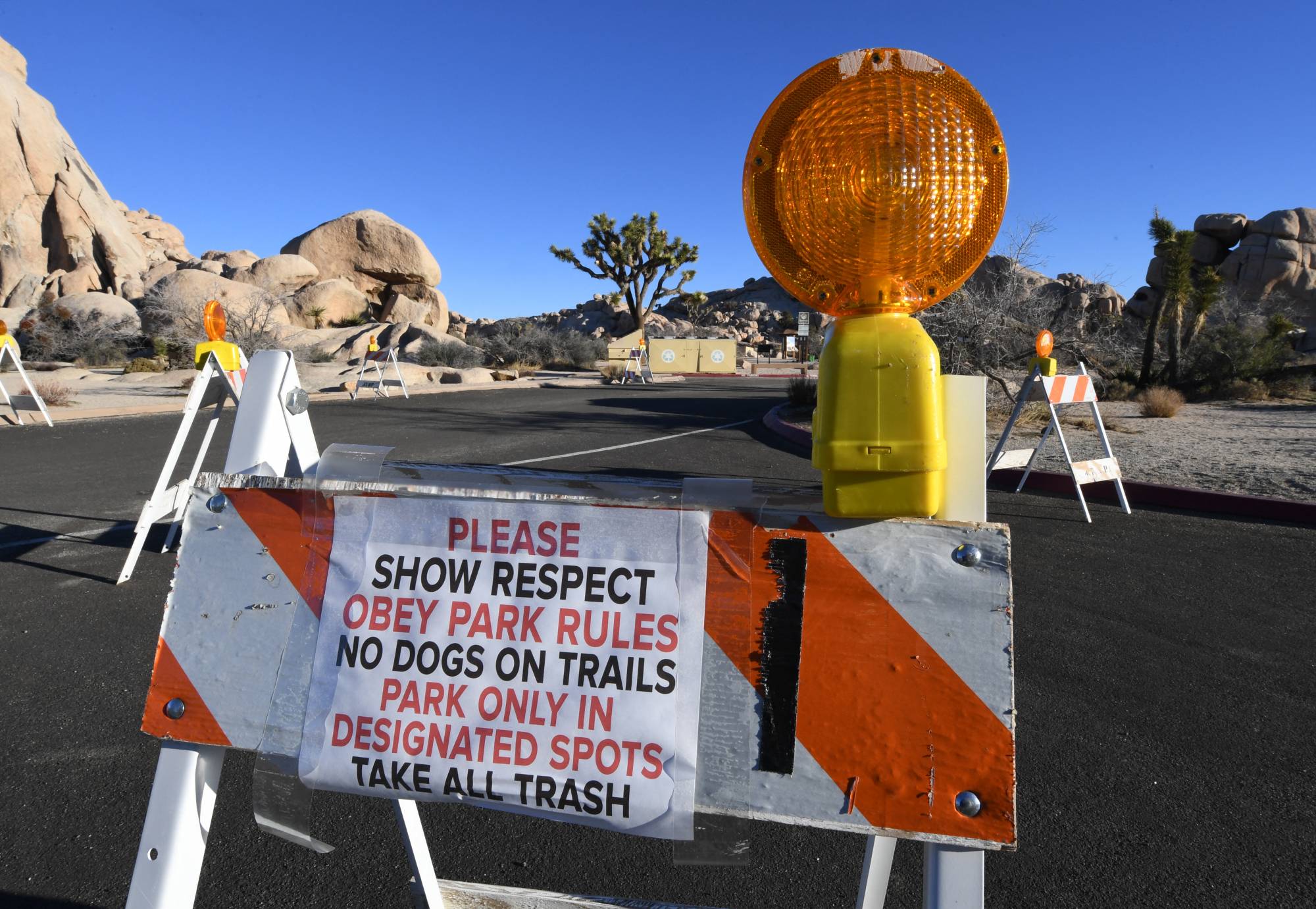
"caption": "Signs placed by staff at a closed campground in the Joshua Tree National Park after the federal government's partial shutdown caused park rangers to stay home and campgrounds to be shut, at the park in California, on January 3, 2019. US President Donald Trump warned the US federal government may not fully reopen any time soon, as he stood firm on his demand for billions of dollars in funding for a border wall with Mexico. ",
"credit": "Photo by Mark RALSTON / AFP",
"altTag": null,
"description": null,
"imgSizes": {
"medium": {
"file": "https://cdn.kqed.org/wp-content/uploads/sites/10/2025/10/GettyImages-1076675240-2000x1381.jpg",
"width": 2000,
"height": 1381,
"mimeType": "image/jpeg"
},
"large": {
"file": "https://cdn.kqed.org/wp-content/uploads/sites/10/2025/10/GettyImages-1076675240-2000x1381.jpg",
"width": 2000,
"height": 1381,
"mimeType": "image/jpeg"
},
"thumbnail": {
"file": "https://cdn.kqed.org/wp-content/uploads/sites/10/2025/10/GettyImages-1076675240-160x110.jpg",
"width": 160,
"height": 110,
"mimeType": "image/jpeg"
},
"1536x1536": {
"file": "https://cdn.kqed.org/wp-content/uploads/sites/10/2025/10/GettyImages-1076675240-1536x1061.jpg",
"width": 1536,
"height": 1061,
"mimeType": "image/jpeg"
},
"2048x2048": {
"file": "https://cdn.kqed.org/wp-content/uploads/sites/10/2025/10/GettyImages-1076675240-2048x1414.jpg",
"width": 2048,
"height": 1414,
"mimeType": "image/jpeg"
},
"post-thumbnail": {
"file": "https://cdn.kqed.org/wp-content/uploads/sites/10/2025/10/GettyImages-1076675240-672x372.jpg",
"width": 672,
"height": 372,
"mimeType": "image/jpeg"
},
"twentyfourteen-full-width": {
"file": "https://cdn.kqed.org/wp-content/uploads/sites/10/2025/10/GettyImages-1076675240-1038x576.jpg",
"width": 1038,
"height": 576,
"mimeType": "image/jpeg"
},
"full-width": {
"file": "https://cdn.kqed.org/wp-content/uploads/sites/10/2025/10/GettyImages-1076675240-2000x1381.jpg",
"width": 2000,
"height": 1381,
"mimeType": "image/jpeg"
},
"kqedFullSize": {
"file": "https://cdn.kqed.org/wp-content/uploads/sites/10/2025/10/GettyImages-1076675240-scaled.jpg",
"width": 2560,
"height": 1768
}
},
"isLoading": false,
"fetchFailed": false
},
"news_12037905": {
"type": "attachments",
"id": "news_12037905",
"meta": {
"index": "attachments_1716263798",
"site": "news",
"id": "12037905",
"found": true
},
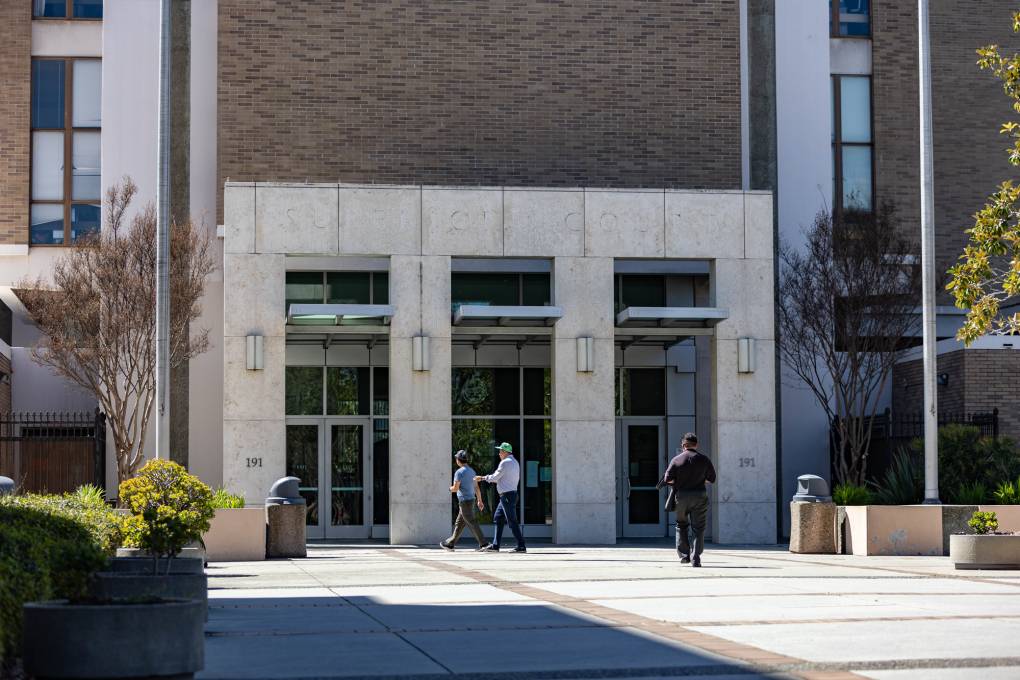
"title": "Santa Clara County Superior Court in San Jose on March 24, 2025.",
"publishDate": 1745862778,
"status": "inherit",
"parent": 12060893,
"modified": 1761091215,
"caption": "Santa Clara County Superior Court in San José on March 24, 2025.",
"credit": "Gina Castro/KQED",
"altTag": null,
"description": null,
"imgSizes": {
"medium": {
"file": "https://cdn.kqed.org/wp-content/uploads/sites/10/2025/04/20240324_SANTACLARASUPERIORCOURT_GC-2-KQED-800x533.jpg",
"width": 800,
"height": 533,
"mimeType": "image/jpeg"
},
"large": {
"file": "https://cdn.kqed.org/wp-content/uploads/sites/10/2025/04/20240324_SANTACLARASUPERIORCOURT_GC-2-KQED-1020x680.jpg",
"width": 1020,
"height": 680,
"mimeType": "image/jpeg"
},
"thumbnail": {
"file": "https://cdn.kqed.org/wp-content/uploads/sites/10/2025/04/20240324_SANTACLARASUPERIORCOURT_GC-2-KQED-160x107.jpg",
"width": 160,
"height": 107,
"mimeType": "image/jpeg"
},
"1536x1536": {
"file": "https://cdn.kqed.org/wp-content/uploads/sites/10/2025/04/20240324_SANTACLARASUPERIORCOURT_GC-2-KQED-1536x1024.jpg",
"width": 1536,
"height": 1024,
"mimeType": "image/jpeg"
},
"post-thumbnail": {
"file": "https://cdn.kqed.org/wp-content/uploads/sites/10/2025/04/20240324_SANTACLARASUPERIORCOURT_GC-2-KQED-672x372.jpg",
"width": 672,
"height": 372,
"mimeType": "image/jpeg"
},
"twentyfourteen-full-width": {
"file": "https://cdn.kqed.org/wp-content/uploads/sites/10/2025/04/20240324_SANTACLARASUPERIORCOURT_GC-2-KQED-1038x576.jpg",
"width": 1038,
"height": 576,
"mimeType": "image/jpeg"
},
"full-width": {
"file": "https://cdn.kqed.org/wp-content/uploads/sites/10/2025/04/20240324_SANTACLARASUPERIORCOURT_GC-2-KQED-1920x1280.jpg",
"width": 1920,
"height": 1280,
"mimeType": "image/jpeg"
},
"kqedFullSize": {
"file": "https://cdn.kqed.org/wp-content/uploads/sites/10/2025/04/20240324_SANTACLARASUPERIORCOURT_GC-2-KQED.jpg",
"width": 2000,
"height": 1333
}
},
"isLoading": false,
"fetchFailed": false
},
"news_12014213": {
"type": "attachments",
"id": "news_12014213",
"meta": {
"index": "attachments_1716263798",
"site": "news",
"id": "12014213",
"found": true
},
"title": "Stanford campus on May 30, 2023.",
"publishDate": 1731521794,
"status": "inherit",
"parent": 0,
"modified": 1733786946,
"caption": "Stanford University campus on May 30, 2023.",
"credit": "Beth LaBerge/KQED",
"altTag": null,
"description": null,
"imgSizes": {
"medium": {
"file": "https://cdn.kqed.org/wp-content/uploads/sites/10/2024/11/005_KQED_StanfordGradUnion_05302023_qed-800x533.jpg",
"width": 800,
"height": 533,
"mimeType": "image/jpeg"
},
"large": {
"file": "https://cdn.kqed.org/wp-content/uploads/sites/10/2024/11/005_KQED_StanfordGradUnion_05302023_qed-1020x680.jpg",
"width": 1020,
"height": 680,
"mimeType": "image/jpeg"
},
"thumbnail": {
"file": "https://cdn.kqed.org/wp-content/uploads/sites/10/2024/11/005_KQED_StanfordGradUnion_05302023_qed-160x107.jpg",
"width": 160,
"height": 107,
"mimeType": "image/jpeg"
},
"1536x1536": {
"file": "https://cdn.kqed.org/wp-content/uploads/sites/10/2024/11/005_KQED_StanfordGradUnion_05302023_qed-1536x1024.jpg",
"width": 1536,
"height": 1024,
"mimeType": "image/jpeg"
},
"post-thumbnail": {
"file": "https://cdn.kqed.org/wp-content/uploads/sites/10/2024/11/005_KQED_StanfordGradUnion_05302023_qed-672x372.jpg",
"width": 672,
"height": 372,
"mimeType": "image/jpeg"
},
"twentyfourteen-full-width": {
"file": "https://cdn.kqed.org/wp-content/uploads/sites/10/2024/11/005_KQED_StanfordGradUnion_05302023_qed-1038x576.jpg",
"width": 1038,
"height": 576,
"mimeType": "image/jpeg"
},
"full-width": {
"file": "https://cdn.kqed.org/wp-content/uploads/sites/10/2024/11/005_KQED_StanfordGradUnion_05302023_qed-1920x1280.jpg",
"width": 1920,
"height": 1280,
"mimeType": "image/jpeg"
},
"kqedFullSize": {
"file": "https://cdn.kqed.org/wp-content/uploads/sites/10/2024/11/005_KQED_StanfordGradUnion_05302023_qed.jpg",
"width": 2000,
"height": 1333
}
},
"isLoading": false,
"fetchFailed": false
},
"news_11732929": {
"type": "attachments",
"id": "news_11732929",
"meta": {
"index": "attachments_1716263798",
"site": "news",
"id": "11732929",
"found": true
},
"parent": 11732835,
"imgSizes": {
"twentyfourteen-full-width": {
"file": "https://ww2.kqed.org/app/uploads/sites/10/2019/03/GettyImages-1135386368-1038x576.jpg",
"width": 1038,
"mimeType": "image/jpeg",
"height": 576
},
"thumbnail": {
"file": "https://ww2.kqed.org/app/uploads/sites/10/2019/03/GettyImages-1135386368-160x106.jpg",
"width": 160,
"mimeType": "image/jpeg",
"height": 106
},
"post-thumbnail": {
"file": "https://ww2.kqed.org/app/uploads/sites/10/2019/03/GettyImages-1135386368-672x372.jpg",
"width": 672,
"mimeType": "image/jpeg",
"height": 372
},
"kqedFullSize": {
"file": "https://ww2.kqed.org/app/uploads/sites/10/2019/03/GettyImages-1135386368-e1552589629977.jpg",
"width": 1920,
"height": 1278
},
"large": {
"file": "https://ww2.kqed.org/app/uploads/sites/10/2019/03/GettyImages-1135386368-1020x679.jpg",
"width": 1020,
"mimeType": "image/jpeg",
"height": 679
},
"complete_open_graph": {
"file": "https://ww2.kqed.org/app/uploads/sites/10/2019/03/GettyImages-1135386368-1200x799.jpg",
"width": 1200,
"mimeType": "image/jpeg",
"height": 799
},
"guest-author-50": {
"file": "https://ww2.kqed.org/app/uploads/sites/10/2019/03/GettyImages-1135386368-50x50.jpg",
"width": 50,
"mimeType": "image/jpeg",
"height": 50
},
"guest-author-96": {
"file": "https://ww2.kqed.org/app/uploads/sites/10/2019/03/GettyImages-1135386368-96x96.jpg",
"width": 96,
"mimeType": "image/jpeg",
"height": 96
},
"medium": {
"file": "https://ww2.kqed.org/app/uploads/sites/10/2019/03/GettyImages-1135386368-800x532.jpg",
"width": 800,
"mimeType": "image/jpeg",
"height": 532
},
"guest-author-64": {
"file": "https://ww2.kqed.org/app/uploads/sites/10/2019/03/GettyImages-1135386368-64x64.jpg",
"width": 64,
"mimeType": "image/jpeg",
"height": 64
},
"guest-author-32": {
"file": "https://ww2.kqed.org/app/uploads/sites/10/2019/03/GettyImages-1135386368-32x32.jpg",
"width": 32,
"mimeType": "image/jpeg",
"height": 32
},
"full-width": {
"file": "https://ww2.kqed.org/app/uploads/sites/10/2019/03/GettyImages-1135386368-1920x1278.jpg",
"width": 1920,
"mimeType": "image/jpeg",
"height": 1278
},
"guest-author-128": {
"file": "https://ww2.kqed.org/app/uploads/sites/10/2019/03/GettyImages-1135386368-128x128.jpg",
"width": 128,
"mimeType": "image/jpeg",
"height": 128
}
},
"publishDate": 1552589542,
"modified": 1552601592,
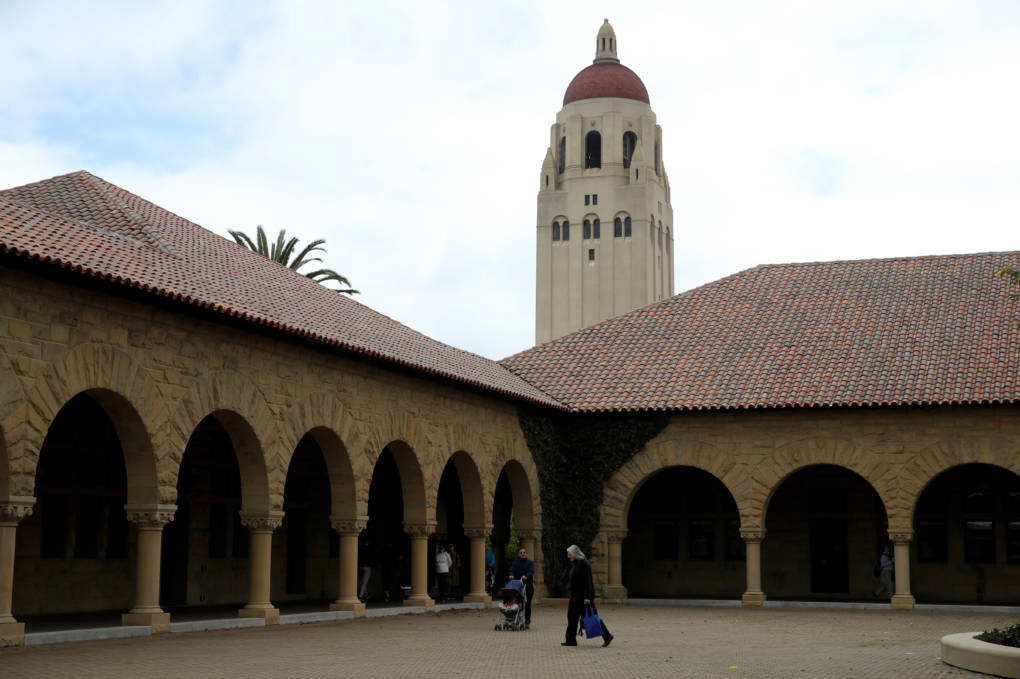
"caption": "People walk by Hoover Tower on the Stanford University campus on March 12, 2019. Fifty people, including actresses Lori Loughlin and Felicity Huffman, have been charged in a widespread elite college admission bribery scheme. Parents, ACT and SAT administrators and coaches at universities including Stanford, Georgetown, Yale and the University of Southern California have been charged.",
"description": null,
"title": "More Than 30 People Charged In Elite College Entry Bribery Scheme",
"credit": "Justin Sullivan/Getty Images",
"status": "inherit",
"isLoading": false,
"fetchFailed": false
},
"news_12044237": {
"type": "attachments",
"id": "news_12044237",
"meta": {
"index": "attachments_1716263798",
"site": "news",
"id": "12044237",
"found": true
},
"title": "VaccinationsStory",
"publishDate": 1749843923,
"status": "inherit",
"parent": 12044201,
"modified": 1749845881,
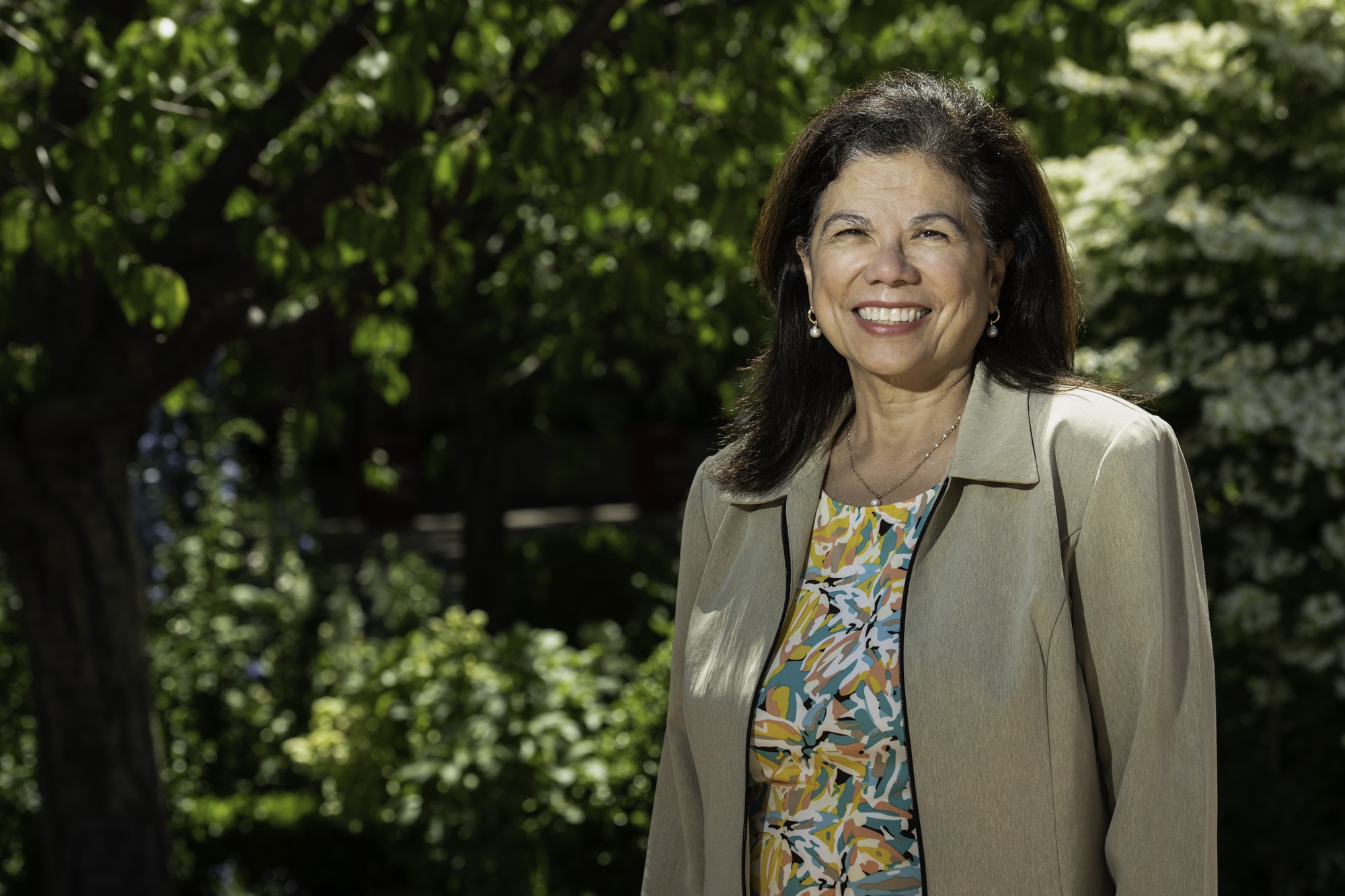
"caption": "Dr. Yvonne Maldonado, a professor of Global Health and Infectious Diseases at Stanford University School of Medicine.",
"credit": "Courtesy of Stanford Medicine",
"altTag": null,
"description": null,
"imgSizes": {
"thumbnail": {
"file": "https://cdn.kqed.org/wp-content/uploads/sites/10/2025/06/VaccinationsStory-160x107.jpg",
"width": 160,
"height": 107,
"mimeType": "image/jpeg"
},
"1536x1536": {
"file": "https://cdn.kqed.org/wp-content/uploads/sites/10/2025/06/VaccinationsStory-1536x1024.jpg",
"width": 1536,
"height": 1024,
"mimeType": "image/jpeg"
},
"post-thumbnail": {
"file": "https://cdn.kqed.org/wp-content/uploads/sites/10/2025/06/VaccinationsStory-672x372.jpg",
"width": 672,
"height": 372,
"mimeType": "image/jpeg"
},
"twentyfourteen-full-width": {
"file": "https://cdn.kqed.org/wp-content/uploads/sites/10/2025/06/VaccinationsStory-1038x576.jpg",
"width": 1038,
"height": 576,
"mimeType": "image/jpeg"
},
"kqedFullSize": {
"file": "https://cdn.kqed.org/wp-content/uploads/sites/10/2025/06/VaccinationsStory.jpg",
"width": 2000,
"height": 1333
}
},
"isLoading": false,
"fetchFailed": false
},
"news_12042885": {
"type": "attachments",
"id": "news_12042885",
"meta": {
"index": "attachments_1716263798",
"site": "news",
"id": "12042885",
"found": true
},
"title": "Stanford University Hunger Strike",
"publishDate": 1749144329,
"status": "inherit",
"parent": 12042881,
"modified": 1749150182,
"caption": "Owen Martin, right, listens to Shaykh Alauddin Elbakri speak at White Memorial Plaza in Stanford, California, on Monday, May 19, 2025. Several Stanford University students have been on a hunger strike for more than a week, pledging not to eat until the university agrees to divest from companies that they say are supporting Israel’s war in Gaza.",
"credit": "Estefany Gonzalez for KQED",
"altTag": null,
"description": null,
"imgSizes": {
"medium": {
"file": "https://cdn.kqed.org/wp-content/uploads/sites/10/2025/06/05192025_StanfordHungerStrike_EG030_qed-800x533.jpg",
"width": 800,
"height": 533,
"mimeType": "image/jpeg"
},
"large": {
"file": "https://cdn.kqed.org/wp-content/uploads/sites/10/2025/06/05192025_StanfordHungerStrike_EG030_qed-1020x680.jpg",
"width": 1020,
"height": 680,
"mimeType": "image/jpeg"
},
"thumbnail": {
"file": "https://cdn.kqed.org/wp-content/uploads/sites/10/2025/06/05192025_StanfordHungerStrike_EG030_qed-160x107.jpg",
"width": 160,
"height": 107,
"mimeType": "image/jpeg"
},
"1536x1536": {
"file": "https://cdn.kqed.org/wp-content/uploads/sites/10/2025/06/05192025_StanfordHungerStrike_EG030_qed-1536x1024.jpg",
"width": 1536,
"height": 1024,
"mimeType": "image/jpeg"
},
"post-thumbnail": {
"file": "https://cdn.kqed.org/wp-content/uploads/sites/10/2025/06/05192025_StanfordHungerStrike_EG030_qed-672x372.jpg",
"width": 672,
"height": 372,
"mimeType": "image/jpeg"
},
"twentyfourteen-full-width": {
"file": "https://cdn.kqed.org/wp-content/uploads/sites/10/2025/06/05192025_StanfordHungerStrike_EG030_qed-1038x576.jpg",
"width": 1038,
"height": 576,
"mimeType": "image/jpeg"
},
"full-width": {
"file": "https://cdn.kqed.org/wp-content/uploads/sites/10/2025/06/05192025_StanfordHungerStrike_EG030_qed-1920x1280.jpg",
"width": 1920,
"height": 1280,
"mimeType": "image/jpeg"
},
"kqedFullSize": {
"file": "https://cdn.kqed.org/wp-content/uploads/sites/10/2025/06/05192025_StanfordHungerStrike_EG030_qed.jpg",
"width": 2000,
"height": 1333
}
},
"isLoading": false,
"fetchFailed": false
},
"news_11996462": {
"type": "attachments",
"id": "news_11996462",
"meta": {
"index": "attachments_1716263798",
"site": "news",
"id": "11996462",
"found": true
},
"title": "Crowdstrike Microsoft Tech Glitch Halts Operations At Delhi Airports",
"publishDate": 1721421034,
"status": "inherit",
"parent": 11996430,
"modified": 1748550922,
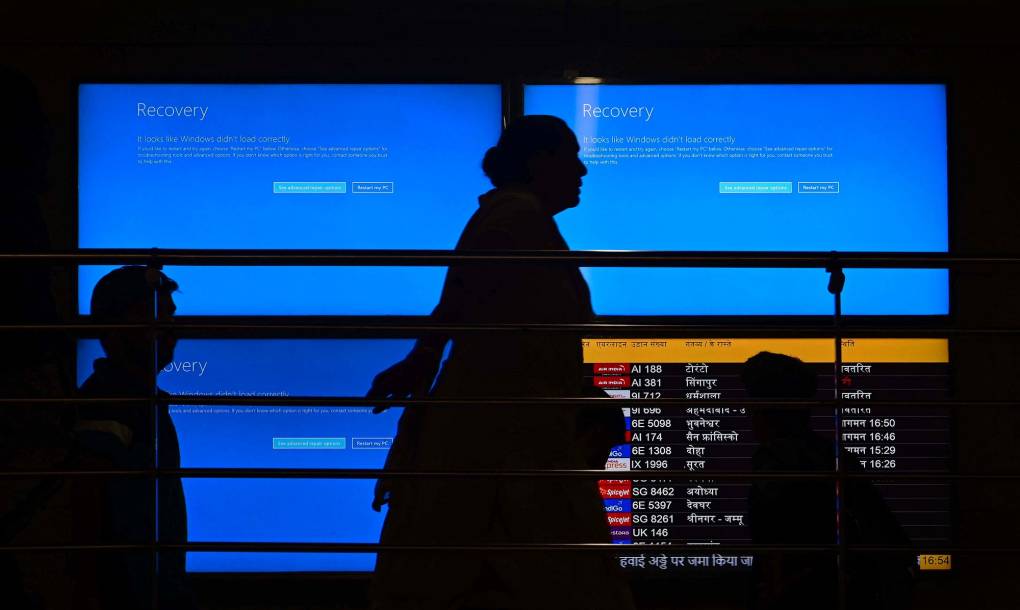
"caption": "Passengers are seen waiting after a major disruption in Microsoft Corp.'s cloud services caused widespread flight cancellations and delays at T3 IGI Airport on July 19, 2024, in New Delhi, India.",
"credit": "Vipin Kumar/Hindustan Times via Getty Images",
"altTag": null,
"description": null,
"imgSizes": {
"medium": {
"file": "https://cdn.kqed.org/wp-content/uploads/sites/10/2024/07/Cybersecurity-800x479.jpg",
"width": 800,
"height": 479,
"mimeType": "image/jpeg"
},
"large": {
"file": "https://cdn.kqed.org/wp-content/uploads/sites/10/2024/07/Cybersecurity-1020x610.jpg",
"width": 1020,
"height": 610,
"mimeType": "image/jpeg"
},
"thumbnail": {
"file": "https://cdn.kqed.org/wp-content/uploads/sites/10/2024/07/Cybersecurity-160x96.jpg",
"width": 160,
"height": 96,
"mimeType": "image/jpeg"
},
"1536x1536": {
"file": "https://cdn.kqed.org/wp-content/uploads/sites/10/2024/07/Cybersecurity-1536x919.jpg",
"width": 1536,
"height": 919,
"mimeType": "image/jpeg"
},
"post-thumbnail": {
"file": "https://cdn.kqed.org/wp-content/uploads/sites/10/2024/07/Cybersecurity-672x372.jpg",
"width": 672,
"height": 372,
"mimeType": "image/jpeg"
},
"twentyfourteen-full-width": {
"file": "https://cdn.kqed.org/wp-content/uploads/sites/10/2024/07/Cybersecurity-1038x576.jpg",
"width": 1038,
"height": 576,
"mimeType": "image/jpeg"
},
"full-width": {
"file": "https://cdn.kqed.org/wp-content/uploads/sites/10/2024/07/Cybersecurity-1920x1149.jpg",
"width": 1920,
"height": 1149,
"mimeType": "image/jpeg"
},
"kqedFullSize": {
"file": "https://cdn.kqed.org/wp-content/uploads/sites/10/2024/07/Cybersecurity.jpg",
"width": 2000,
"height": 1197
}
},
"isLoading": false,
"fetchFailed": false
},
"news_12040877": {
"type": "attachments",
"id": "news_12040877",
"meta": {
"index": "attachments_1716263798",
"site": "news",
"id": "12040877",
"found": true
},
"title": "Stanford University Hunger Strike",
"publishDate": 1747759054,
"status": "inherit",
"parent": 0,
"modified": 1747773632,
"caption": "People listen as Shaykh Alauddin Elbakri leads a prayer at White Memorial Plaza in Stanford, California, on Monday, May 19, 2025. Several Stanford University students have been on a hunger strike for more than a week, pledging not to eat until the university agrees to divest from companies that they say are supporting Israel’s war in Gaza.",
"credit": "Estefany Gonzalez for KQED",
"altTag": null,
"description": null,
"imgSizes": {
"medium": {
"file": "https://cdn.kqed.org/wp-content/uploads/sites/10/2025/05/05192025_STANFORDHUNGERSTRIKE_EG044-KQED-800x533.jpg",
"width": 800,
"height": 533,
"mimeType": "image/jpeg"
},
"large": {
"file": "https://cdn.kqed.org/wp-content/uploads/sites/10/2025/05/05192025_STANFORDHUNGERSTRIKE_EG044-KQED-1020x680.jpg",
"width": 1020,
"height": 680,
"mimeType": "image/jpeg"
},
"thumbnail": {
"file": "https://cdn.kqed.org/wp-content/uploads/sites/10/2025/05/05192025_STANFORDHUNGERSTRIKE_EG044-KQED-160x107.jpg",
"width": 160,
"height": 107,
"mimeType": "image/jpeg"
},
"1536x1536": {
"file": "https://cdn.kqed.org/wp-content/uploads/sites/10/2025/05/05192025_STANFORDHUNGERSTRIKE_EG044-KQED-1536x1024.jpg",
"width": 1536,
"height": 1024,
"mimeType": "image/jpeg"
},
"post-thumbnail": {
"file": "https://cdn.kqed.org/wp-content/uploads/sites/10/2025/05/05192025_STANFORDHUNGERSTRIKE_EG044-KQED-672x372.jpg",
"width": 672,
"height": 372,
"mimeType": "image/jpeg"
},
"twentyfourteen-full-width": {
"file": "https://cdn.kqed.org/wp-content/uploads/sites/10/2025/05/05192025_STANFORDHUNGERSTRIKE_EG044-KQED-1038x576.jpg",
"width": 1038,
"height": 576,
"mimeType": "image/jpeg"
},
"full-width": {
"file": "https://cdn.kqed.org/wp-content/uploads/sites/10/2025/05/05192025_STANFORDHUNGERSTRIKE_EG044-KQED-1920x1280.jpg",
"width": 1920,
"height": 1280,
"mimeType": "image/jpeg"
},
"kqedFullSize": {
"file": "https://cdn.kqed.org/wp-content/uploads/sites/10/2025/05/05192025_STANFORDHUNGERSTRIKE_EG044-KQED.jpg",
"width": 2000,
"height": 1333
}
},
"isLoading": false,
"fetchFailed": false
},
"news_12039736": {
"type": "attachments",
"id": "news_12039736",
"meta": {
"index": "attachments_1716263798",
"site": "news",
"id": "12039736",
"found": true
},
"title": "240425-StanfordGazaProtest-036-BL_qed",
"publishDate": 1747068429,
"status": "inherit",
"parent": 0,
"modified": 1747085064,
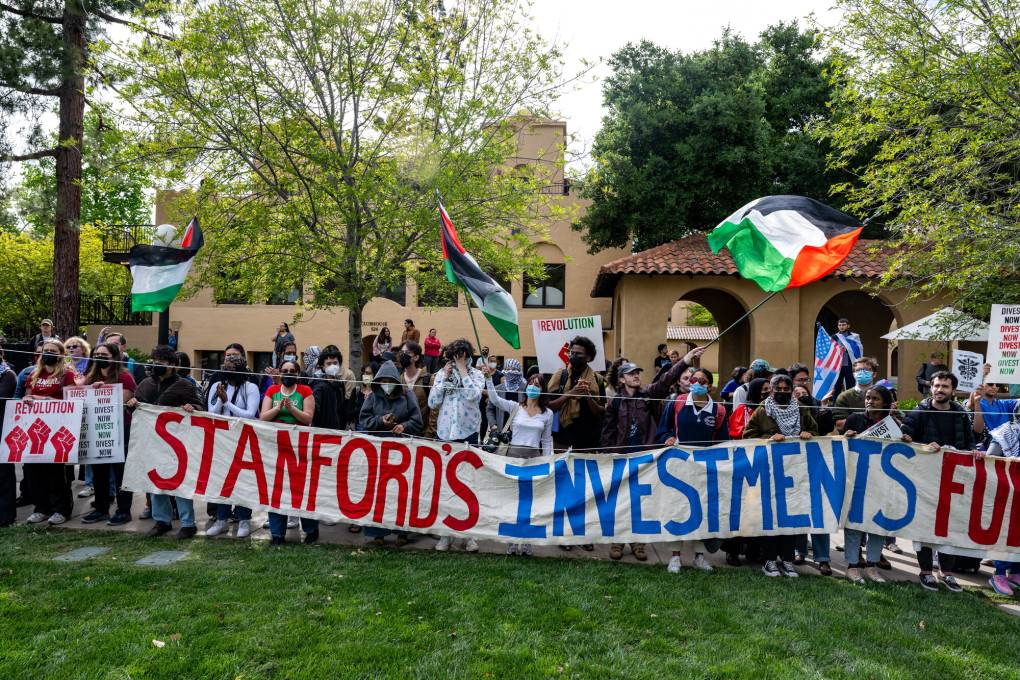
"caption": "Pro-Palestinian demonstrators hold the perimeter while a tent encampment is set up during a protest on the Stanford University campus in Stanford, California, on April 25, 2024, calling for the university to divest from Israel. ",
"credit": "Beth LaBerge/KQED",
"altTag": null,
"description": null,
"imgSizes": {
"medium": {
"file": "https://cdn.kqed.org/wp-content/uploads/sites/10/2025/05/240425-StanfordGazaProtest-036-BL_qed-800x533.jpg",
"width": 800,
"height": 533,
"mimeType": "image/jpeg"
},
"large": {
"file": "https://cdn.kqed.org/wp-content/uploads/sites/10/2025/05/240425-StanfordGazaProtest-036-BL_qed-1020x680.jpg",
"width": 1020,
"height": 680,
"mimeType": "image/jpeg"
},
"thumbnail": {
"file": "https://cdn.kqed.org/wp-content/uploads/sites/10/2025/05/240425-StanfordGazaProtest-036-BL_qed-160x107.jpg",
"width": 160,
"height": 107,
"mimeType": "image/jpeg"
},
"1536x1536": {
"file": "https://cdn.kqed.org/wp-content/uploads/sites/10/2025/05/240425-StanfordGazaProtest-036-BL_qed-1536x1024.jpg",
"width": 1536,
"height": 1024,
"mimeType": "image/jpeg"
},
"post-thumbnail": {
"file": "https://cdn.kqed.org/wp-content/uploads/sites/10/2025/05/240425-StanfordGazaProtest-036-BL_qed-672x372.jpg",
"width": 672,
"height": 372,
"mimeType": "image/jpeg"
},
"twentyfourteen-full-width": {
"file": "https://cdn.kqed.org/wp-content/uploads/sites/10/2025/05/240425-StanfordGazaProtest-036-BL_qed-1038x576.jpg",
"width": 1038,
"height": 576,
"mimeType": "image/jpeg"
},
"full-width": {
"file": "https://cdn.kqed.org/wp-content/uploads/sites/10/2025/05/240425-StanfordGazaProtest-036-BL_qed-1920x1280.jpg",
"width": 1920,
"height": 1280,
"mimeType": "image/jpeg"
},
"kqedFullSize": {
"file": "https://cdn.kqed.org/wp-content/uploads/sites/10/2025/05/240425-StanfordGazaProtest-036-BL_qed.jpg",
"width": 2000,
"height": 1333
}
},
"isLoading": false,
"fetchFailed": false
},
"news_12039151": {
"type": "attachments",
"id": "news_12039151",
"meta": {
"index": "attachments_1716263798",
"site": "news",
"id": "12039151",
"found": true
},
"title": "NKOREAFAMILY",
"publishDate": 1746646130,
"status": "inherit",
"parent": 12038874,
"modified": 1746646165,
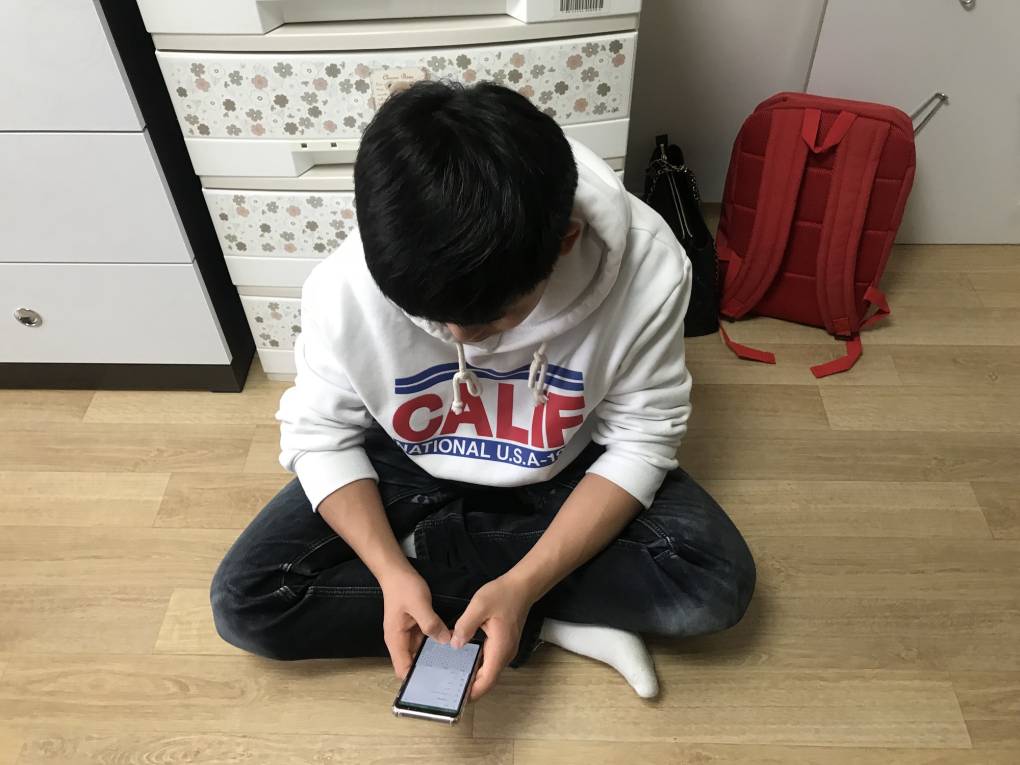
"caption": "Just as adults are using generative AI companion chatbots for solace and connection, children are, too. So, how can parents stay in the conversation?",
"credit": "Anna Fifield/The Washington Post via Getty Images",
"altTag": null,
"description": null,
"imgSizes": {
"medium": {
"file": "https://cdn.kqed.org/wp-content/uploads/sites/10/2025/05/AIChatBotsGetty-800x600.jpg",
"width": 800,
"height": 600,
"mimeType": "image/jpeg"
},
"large": {
"file": "https://cdn.kqed.org/wp-content/uploads/sites/10/2025/05/AIChatBotsGetty-1020x765.jpg",
"width": 1020,
"height": 765,
"mimeType": "image/jpeg"
},
"thumbnail": {
"file": "https://cdn.kqed.org/wp-content/uploads/sites/10/2025/05/AIChatBotsGetty-160x120.jpg",
"width": 160,
"height": 120,
"mimeType": "image/jpeg"
},
"1536x1536": {
"file": "https://cdn.kqed.org/wp-content/uploads/sites/10/2025/05/AIChatBotsGetty-1536x1152.jpg",
"width": 1536,
"height": 1152,
"mimeType": "image/jpeg"
},
"post-thumbnail": {
"file": "https://cdn.kqed.org/wp-content/uploads/sites/10/2025/05/AIChatBotsGetty-672x372.jpg",
"width": 672,
"height": 372,
"mimeType": "image/jpeg"
},
"twentyfourteen-full-width": {
"file": "https://cdn.kqed.org/wp-content/uploads/sites/10/2025/05/AIChatBotsGetty-1038x576.jpg",
"width": 1038,
"height": 576,
"mimeType": "image/jpeg"
},
"full-width": {
"file": "https://cdn.kqed.org/wp-content/uploads/sites/10/2025/05/AIChatBotsGetty-1920x1440.jpg",
"width": 1920,
"height": 1440,
"mimeType": "image/jpeg"
},
"kqedFullSize": {
"file": "https://cdn.kqed.org/wp-content/uploads/sites/10/2025/05/AIChatBotsGetty.jpg",
"width": 2000,
"height": 1500
}
},
"isLoading": false,
"fetchFailed": false
},
"news_12038161": {
"type": "attachments",
"id": "news_12038161",
"meta": {
"index": "attachments_1716263798",
"site": "news",
"id": "12038161",
"found": true
},
"title": "CHINA-TECHNOLOGY-AI-ROMANCE",
"publishDate": 1745968881,
"status": "inherit",
"parent": 12038154,
"modified": 1746042249,
"caption": "Unlike digital assistants, companion chatbots are much more likely to veer into socially controversial and even illegal territory. A new report out from Stanford University researchers and Common Sense Media argues that children and teens should not use these chatbots.",
"credit": "Jade Gao/AFP via Getty Images",
"altTag": null,
"description": null,
"imgSizes": {
"medium": {
"file": "https://cdn.kqed.org/wp-content/uploads/sites/10/2025/04/StanfordStudyAIChatbotsKidsGetty-800x533.jpg",
"width": 800,
"height": 533,
"mimeType": "image/jpeg"
},
"large": {
"file": "https://cdn.kqed.org/wp-content/uploads/sites/10/2025/04/StanfordStudyAIChatbotsKidsGetty-1020x680.jpg",
"width": 1020,
"height": 680,
"mimeType": "image/jpeg"
},
"thumbnail": {
"file": "https://cdn.kqed.org/wp-content/uploads/sites/10/2025/04/StanfordStudyAIChatbotsKidsGetty-160x107.jpg",
"width": 160,
"height": 107,
"mimeType": "image/jpeg"
},
"1536x1536": {
"file": "https://cdn.kqed.org/wp-content/uploads/sites/10/2025/04/StanfordStudyAIChatbotsKidsGetty-1536x1024.jpg",
"width": 1536,
"height": 1024,
"mimeType": "image/jpeg"
},
"post-thumbnail": {
"file": "https://cdn.kqed.org/wp-content/uploads/sites/10/2025/04/StanfordStudyAIChatbotsKidsGetty-672x372.jpg",
"width": 672,
"height": 372,
"mimeType": "image/jpeg"
},
"twentyfourteen-full-width": {
"file": "https://cdn.kqed.org/wp-content/uploads/sites/10/2025/04/StanfordStudyAIChatbotsKidsGetty-1038x576.jpg",
"width": 1038,
"height": 576,
"mimeType": "image/jpeg"
},
"full-width": {
"file": "https://cdn.kqed.org/wp-content/uploads/sites/10/2025/04/StanfordStudyAIChatbotsKidsGetty-1920x1280.jpg",
"width": 1920,
"height": 1280,
"mimeType": "image/jpeg"
},
"kqedFullSize": {
"file": "https://cdn.kqed.org/wp-content/uploads/sites/10/2025/04/StanfordStudyAIChatbotsKidsGetty.jpg",
"width": 2000,
"height": 1333
}
},
"isLoading": false,
"fetchFailed": false
},
"news_12008658": {
"type": "attachments",
"id": "news_12008658",
"meta": {
"index": "attachments_1716263798",
"site": "news",
"id": "12008658",
"found": true
},
"title": "241008-UCB CAMPUS WALKOUT-MD-04-KQED",
"publishDate": 1728431175,
"status": "inherit",
"parent": 0,
"modified": 1744673386,
"caption": "A pro-Israel student at UC Berkeley, counter-protests a walkout and rally for Gaza and Lebanon at the University of California, Berkeley on Oct. 8, 2024.",
"credit": "Martin do Nascimento/KQED",
"altTag": null,
"description": null,
"imgSizes": {
"medium": {
"file": "https://cdn.kqed.org/wp-content/uploads/sites/10/2024/10/241008-UCB-CAMPUS-WALKOUT-MD-04-KQED-800x533.jpg",
"width": 800,
"height": 533,
"mimeType": "image/jpeg"
},
"large": {
"file": "https://cdn.kqed.org/wp-content/uploads/sites/10/2024/10/241008-UCB-CAMPUS-WALKOUT-MD-04-KQED-1020x680.jpg",
"width": 1020,
"height": 680,
"mimeType": "image/jpeg"
},
"thumbnail": {
"file": "https://cdn.kqed.org/wp-content/uploads/sites/10/2024/10/241008-UCB-CAMPUS-WALKOUT-MD-04-KQED-160x107.jpg",
"width": 160,
"height": 107,
"mimeType": "image/jpeg"
},
"1536x1536": {
"file": "https://cdn.kqed.org/wp-content/uploads/sites/10/2024/10/241008-UCB-CAMPUS-WALKOUT-MD-04-KQED-1536x1024.jpg",
"width": 1536,
"height": 1024,
"mimeType": "image/jpeg"
},
"post-thumbnail": {
"file": "https://cdn.kqed.org/wp-content/uploads/sites/10/2024/10/241008-UCB-CAMPUS-WALKOUT-MD-04-KQED-672x372.jpg",
"width": 672,
"height": 372,
"mimeType": "image/jpeg"
},
"twentyfourteen-full-width": {
"file": "https://cdn.kqed.org/wp-content/uploads/sites/10/2024/10/241008-UCB-CAMPUS-WALKOUT-MD-04-KQED-1038x576.jpg",
"width": 1038,
"height": 576,
"mimeType": "image/jpeg"
},
"full-width": {
"file": "https://cdn.kqed.org/wp-content/uploads/sites/10/2024/10/241008-UCB-CAMPUS-WALKOUT-MD-04-KQED-1920x1280.jpg",
"width": 1920,
"height": 1280,
"mimeType": "image/jpeg"
},
"kqedFullSize": {
"file": "https://cdn.kqed.org/wp-content/uploads/sites/10/2024/10/241008-UCB-CAMPUS-WALKOUT-MD-04-KQED.jpg",
"width": 2000,
"height": 1333
}
},
"isLoading": false,
"fetchFailed": false
}
},
"audioPlayerReducer": {
"postId": "stream_live",
"isPaused": true,
"isPlaying": false,
"pfsActive": false,
"pledgeModalIsOpen": true,
"playerDrawerIsOpen": false,
"liveAudioPlayStartedAt": 0,
"liveAudioPlayContext": ""
},
"authorsReducer": {
"rachael-myrow": {
"type": "authors",
"id": "251",
"meta": {
"index": "authors_1716337520",
"id": "251",
"found": true
},
"name": "Rachael Myrow",
"firstName": "Rachael",
"lastName": "Myrow",
"slug": "rachael-myrow",
"email": "rmyrow@kqed.org",
"display_author_email": true,
"staff_mastheads": [
"news"
],
"title": "Senior Editor of KQED's Silicon Valley News Desk",
"bio": "• I write and edit stories about how Silicon Valley power and policies shape everyday life in California. I’m also passionate about making Bay Area history and culture more accessible to a broad public. • I’ve been a journalist for most of my life, starting in high school with The Franklin Press in Los Angeles, where I grew up. While earning my first degree in English at UC Berkeley, I got my start in public radio at KALX-FM. After completing a second degree in journalism at Cal, I landed my first professional job at Marketplace, then moved on to KPCC (now LAist), and then KQED, where I hosted The California Report for more than seven years. • My reporting has appeared on NPR, The World, WBUR’s \u003ci>Here & Now\u003c/i>, and the BBC. I also guest host for KQED’s \u003ci>Forum\u003c/i>, as well as the Commonwealth Club in San Francisco. • I speak periodically on media, democracy and technology issues, and do voiceover work for documentaries and educational video projects. • Outside of the studio, you'll find me hiking Bay Area trails and whipping up Insta-ready meals in my kitchen. • I do not accept gifts, money, or favors from anyone connected to my reporting, I don't pay people for information, and I do not support or donate to political causes. • I strive to treat the people I report on with fairness, honesty, and respect. I also recognize there are often multiple sides to a story and work to verify information through multiple sources and documentation. If I get something wrong, I correct it.",
"avatar": "https://secure.gravatar.com/avatar/87bf8cb5874e045cdff430523a6d48b1?s=600&d=blank&r=g",
"twitter": "rachaelmyrow",
"facebook": null,
"instagram": null,
"linkedin": "https://www.linkedin.com/in/rachaelmyrow/",
"sites": [
{
"site": "arts",
"roles": [
"administrator"
]
},
{
"site": "news",
"roles": [
"edit_others_posts",
"editor"
]
},
{
"site": "futureofyou",
"roles": [
"editor"
]
},
{
"site": "bayareabites",
"roles": [
"editor"
]
},
{
"site": "stateofhealth",
"roles": [
"editor"
]
},
{
"site": "science",
"roles": [
"editor"
]
},
{
"site": "food",
"roles": [
"editor"
]
},
{
"site": "forum",
"roles": [
"editor"
]
},
{
"site": "liveblog",
"roles": [
"author"
]
}
],
"headData": {
"title": "Rachael Myrow | KQED",
"description": "Senior Editor of KQED's Silicon Valley News Desk",
"ogImgSrc": "https://secure.gravatar.com/avatar/87bf8cb5874e045cdff430523a6d48b1?s=600&d=blank&r=g",
"twImgSrc": "https://secure.gravatar.com/avatar/87bf8cb5874e045cdff430523a6d48b1?s=600&d=blank&r=g"
},
"isLoading": false,
"link": "/author/rachael-myrow"
},
"slewis": {
"type": "authors",
"id": "8676",
"meta": {
"index": "authors_1716337520",
"id": "8676",
"found": true
},
"name": "Sukey Lewis",
"firstName": "Sukey",
"lastName": "Lewis",
"slug": "slewis",
"email": "slewis@kqed.org",
"display_author_email": true,
"staff_mastheads": [
"news"
],
"title": "KQED Contributor",
"bio": "Sukey Lewis is a criminal justice reporter and host of \u003cem>On Our Watch\u003c/em>, a new podcast from NPR and KQED about the shadow world of police discipline. In 2018, she co-founded the California Reporting Project, a coalition of newsrooms across the state focused on obtaining previously sealed internal affairs records from law enforcement. In addition to her reporting on police accountability, Sukey has investigated the bail bonds industry, California's wildfires and the high cost of prison phone calls. Sukey earned a master's degree in journalism from the University of California at Berkeley. Send news tips to slewis@kqed.org.",
"avatar": "https://secure.gravatar.com/avatar/03fd6b21024f99d8b0a1966654586de7?s=600&d=blank&r=g",
"twitter": "SukeyLewis",
"facebook": null,
"instagram": null,
"linkedin": null,
"sites": [
{
"site": "news",
"roles": [
"author",
"edit_others_posts"
]
}
],
"headData": {
"title": "Sukey Lewis | KQED",
"description": "KQED Contributor",
"ogImgSrc": "https://secure.gravatar.com/avatar/03fd6b21024f99d8b0a1966654586de7?s=600&d=blank&r=g",
"twImgSrc": "https://secure.gravatar.com/avatar/03fd6b21024f99d8b0a1966654586de7?s=600&d=blank&r=g"
},
"isLoading": false,
"link": "/author/slewis"
},
"kmizuguchi": {
"type": "authors",
"id": "11739",
"meta": {
"index": "authors_1716337520",
"id": "11739",
"found": true
},
"name": "Keith Mizuguchi",
"firstName": "Keith",
"lastName": "Mizuguchi",
"slug": "kmizuguchi",
"email": "kmizuguchi@kqed.org",
"display_author_email": false,
"staff_mastheads": [],
"title": "KQED Contributor",
"bio": null,
"avatar": "https://secure.gravatar.com/avatar/64d8a7de0723d4099b9fe4e915136103febcc20809abce228ee4415bcb237023?s=600&d=blank&r=g",
"twitter": null,
"bluesky": null,
"facebook": null,
"instagram": null,
"linkedin": null,
"sites": [
{
"site": "news",
"roles": [
"editor"
]
},
{
"site": "science",
"roles": [
"editor"
]
}
],
"headData": {
"title": "Keith Mizuguchi | KQED",
"description": "KQED Contributor",
"ogImgSrc": "https://secure.gravatar.com/avatar/64d8a7de0723d4099b9fe4e915136103febcc20809abce228ee4415bcb237023?s=600&d=blank&r=g",
"twImgSrc": "https://secure.gravatar.com/avatar/64d8a7de0723d4099b9fe4e915136103febcc20809abce228ee4415bcb237023?s=600&d=blank&r=g"
},
"isLoading": false,
"link": "/author/kmizuguchi"
},
"jgeha": {
"type": "authors",
"id": "11906",
"meta": {
"index": "authors_1716337520",
"id": "11906",
"found": true
},
"name": "Joseph Geha",
"firstName": "Joseph",
"lastName": "Geha",
"slug": "jgeha",
"email": "jgeha@kqed.org",
"display_author_email": false,
"staff_mastheads": [
"news",
"science"
],
"title": "KQED Contributor",
"bio": null,
"avatar": "https://secure.gravatar.com/avatar/ea84d2b6dd93d6369d453edf19dd583f117cd1759d2d9c9c92f9de77017354fe?s=600&d=blank&r=g",
"twitter": null,
"bluesky": null,
"facebook": null,
"instagram": null,
"linkedin": null,
"sites": [
{
"site": "news",
"roles": [
"editor"
]
},
{
"site": "liveblog",
"roles": [
"author"
]
}
],
"headData": {
"title": "Joseph Geha | KQED",
"description": "KQED Contributor",
"ogImgSrc": "https://secure.gravatar.com/avatar/ea84d2b6dd93d6369d453edf19dd583f117cd1759d2d9c9c92f9de77017354fe?s=600&d=blank&r=g",
"twImgSrc": "https://secure.gravatar.com/avatar/ea84d2b6dd93d6369d453edf19dd583f117cd1759d2d9c9c92f9de77017354fe?s=600&d=blank&r=g"
},
"isLoading": false,
"link": "/author/jgeha"
},
"kdebenedetti": {
"type": "authors",
"id": "11913",
"meta": {
"index": "authors_1716337520",
"id": "11913",
"found": true
},
"name": "Katie DeBenedetti",
"firstName": "Katie",
"lastName": "DeBenedetti",
"slug": "kdebenedetti",
"email": "kdebenedetti@kqed.org",
"display_author_email": false,
"staff_mastheads": [
"news",
"science"
],
"title": "KQED Contributor",
"bio": "Katie DeBenedetti is a digital reporter covering daily news for the Express Desk. Prior to joining KQED as a culture reporting intern in January 2024, she covered education and city government for the Napa Valley Register.",
"avatar": "https://secure.gravatar.com/avatar/6e31073cb8f7e4214ab03f42771d0f45?s=600&d=blank&r=g",
"twitter": null,
"facebook": null,
"instagram": null,
"linkedin": null,
"sites": [
{
"site": "news",
"roles": [
"author"
]
},
{
"site": "science",
"roles": [
"author"
]
},
{
"site": "liveblog",
"roles": [
"author"
]
}
],
"headData": {
"title": "Katie DeBenedetti | KQED",
"description": "KQED Contributor",
"ogImgSrc": "https://secure.gravatar.com/avatar/6e31073cb8f7e4214ab03f42771d0f45?s=600&d=blank&r=g",
"twImgSrc": "https://secure.gravatar.com/avatar/6e31073cb8f7e4214ab03f42771d0f45?s=600&d=blank&r=g"
},
"isLoading": false,
"link": "/author/kdebenedetti"
},
"gzada": {
"type": "authors",
"id": "11929",
"meta": {
"index": "authors_1716337520",
"id": "11929",
"found": true
},
"name": "Gilare Zada",
"firstName": "Gilare",
"lastName": "Zada",
"slug": "gzada",
"email": "gzada@kqed.org",
"display_author_email": true,
"staff_mastheads": [
"news"
],
"title": null,
"bio": "Gilare Zada is a Kurdish-American from San Diego, CA. Storytelling, fitness, and binge reading are some of her passions outside of news reporting. Her work has appeared in Mission Local, the Peninsula Press, the San Francisco Press Club, and more. She also writes as a class correspondent for the Stanford Magazine - go Card!",
"avatar": "https://secure.gravatar.com/avatar/33a75f2b947669a488a805edec3fbf3838c1cedaedda710e983770633b4d6a75?s=600&d=blank&r=g",
"twitter": null,
"bluesky": null,
"facebook": null,
"instagram": null,
"linkedin": null,
"sites": [
{
"site": "arts",
"roles": [
"editor"
]
},
{
"site": "news",
"roles": [
"editor",
"contributor"
]
},
{
"site": "science",
"roles": [
"editor"
]
}
],
"headData": {
"title": "Gilare Zada | KQED",
"description": null,
"ogImgSrc": "https://secure.gravatar.com/avatar/33a75f2b947669a488a805edec3fbf3838c1cedaedda710e983770633b4d6a75?s=600&d=blank&r=g",
"twImgSrc": "https://secure.gravatar.com/avatar/33a75f2b947669a488a805edec3fbf3838c1cedaedda710e983770633b4d6a75?s=600&d=blank&r=g"
},
"isLoading": false,
"link": "/author/gzada"
}
},
"pagesReducer": {
"news_tag_stanford-university": {
"type": "terms",
"id": "news_1928",
"meta": {
"index": "terms_1716263798",
"site": "news",
"id": "1928",
"score": 8.790994
},
"featImg": null,
"name": "Stanford University",
"description": null,
"taxonomy": "tag",
"headData": {
"twImgId": null,
"twTitle": null,
"ogTitle": null,
"ogImgId": null,
"twDescription": null,
"description": null,
"title": "Stanford University Archives | KQED News",
"ogDescription": null
},
"ttid": 1943,
"slug": "stanford-university",
"isLoading": false,
"title": "Stanford University",
"pageMeta": {
"site": "news",
"WpPageTemplate": "page-topic-editorial",
"currentPage": 2
},
"blocks": [
{
"blockName": "kqed/post-list",
"attrs": {
"layout": "cardArticle2",
"query": "posts/news?tag=stanford-university",
"seeMore": false,
"paginated": true,
"page": 2
}
},
{
"blockName": "kqed/ad"
}
]
}
},
"pfsSessionReducer": {},
"postsReducer": {
"stream_live": {
"type": "live",
"id": "stream_live",
"audioUrl": "https://streams.kqed.org/kqedradio",
"title": "Live Stream",
"excerpt": "Live Stream information currently unavailable.",
"link": "/radio",
"featImg": "",
"label": {
"name": "KQED Live",
"link": "/"
}
},
"stream_kqedNewscast": {
"type": "posts",
"id": "stream_kqedNewscast",
"audioUrl": "https://www.kqed.org/.stream/anon/radio/RDnews/newscast.mp3?_=1",
"title": "KQED Newscast",
"featImg": "",
"label": {
"name": "88.5 FM",
"link": "/"
}
},
"news_12058348": {
"type": "posts",
"id": "news_12058348",
"meta": {
"index": "posts_1716263798",
"site": "news",
"id": "12058348",
"score": null,
"sort": [
1759433616000
]
},
"guestAuthors": [],
"slug": "joshua-tree-national-park-nonprofit-concerned-about-latest-government-shutdown",
"title": "Joshua Tree National Park Nonprofit Concerned About Latest Government Shutdown",
"publishDate": 1759433616,
"format": "audio",
"headTitle": "Joshua Tree National Park Nonprofit Concerned About Latest Government Shutdown | KQED",
"labelTerm": {},
"content": "\u003cp>\u003cb>Here are the morning’s top stories on Thursday, October 2, 2025…\u003c/b>\u003c/p>\n\u003cul>\n\u003cli style=\"font-weight: 400\">\u003cspan style=\"font-weight: 400\">During the last federal government shutdown in late 2018 and early 2019, national parks here in California were greatly impacted. Some shut down completely, meaning a significant loss in potential revenue. Others remained open, but were not fully staffed. That includes \u003c/span>\u003ca href=\"https://www.npr.org/2018/12/29/680787463/fallout-grows-as-partial-government-shutdown-drags-on-into-new-year\">\u003cspan style=\"font-weight: 400\">Joshua Tree National Park\u003c/span>\u003c/a>\u003cspan style=\"font-weight: 400\"> in Southern California. Vehicles drove off-road, causing major damage to sensitive areas, and trash piled up, scattered around the park. Volunteer groups helped maintain and clean up the park during and after the shutdown.\u003c/span>\u003c/li>\n\u003cli>Santa Clara County prosecutors have secured \u003ca href=\"https://www.kqed.org/news/12058280/stanford-pro-palestine-protestors-indicted-for-barricading-presidents-office\">a grand jury indictment\u003c/a> against 11 pro-Palestinian Stanford University protestors who barricaded themselves in the campus president’s office in 2024.\u003c/li>\n\u003c/ul>\n\u003ch2>\u003cstrong>Joshua Tree National Park Remains Open, But Shutdown Raises Concerns\u003c/strong>\u003c/h2>\n\u003cp>Once the federal government shutdown took effect, the \u003ca href=\"https://www.kqed.org/news/tag/national-parks-service\">National Park Service\u003c/a> shared a last-minute contingency plan that would keep many park sites open, but without full staffing. According to an \u003ca href=\"https://www.kqed.org/news/12058137/government-shutdown-2025-national-parks-planning-memo\">internal NPS memo obtained by KQED\u003c/a>, national park sites that \u003cem>can\u003c/em> be made physically inaccessible to the public will be closed off. But all other NPS sites, including those with roads and trails that are accessible to the public, will now remain open according to the memo.\u003c/p>\n\u003cp>Joshua Tree National Park will remain open, with law enforcement and maintenance staff on hand. But as the shutdown goes on, it’s unclear how long the park will be staffed. During the last shutdown in late 2018 and early 2019, the park struggled with vandalism, trash and overall, a lot of destruction. “The visitors centers are closed,” said John Lauretig, executive director of the nonprofit \u003ca href=\"http://www.friendsofjosh.org/\">Friends of Joshua Tree National Park\u003c/a> said at the time. “All the bathrooms are still open, but they’re not being maintained right now by the Park Service. So the local community has rallied together and started cleaning the bathrooms and restocking the toilet paper.”\u003c/p>\n\u003cp>Friends of Joshua Tree is once again watching the shutdown closely. Kenji Haroutunian is executive director of the nonprofit. “I think that will require some of the community to step up, including Friends of Joshua Tree, to support the skeleton crew that’s likely to be in place for the foreseeable future until there’s a funding bill that’s passed,” he said.\u003c/p>\n\u003ch2 class=\"routes-Site-routes-Post-Title-__Title__title\">\u003ca href=\"https://www.kqed.org/news/12058280/stanford-pro-palestine-protestors-indicted-for-barricading-presidents-office\">\u003cstrong>Stanford Pro-Palestine Protestors Indicted For Barricading President’s Office\u003c/strong>\u003c/a>\u003c/h2>\n\u003cp>A Santa Clara County grand jury has indicted a group of pro-Palestinian Stanford University students on felony vandalism and trespassing charges, stemming from a June 2024 incident in which they broke into the campus president’s office and \u003ca href=\"https://www.kqed.org/news/11989050/pro-palestinian-stanford-protesters-detained-after-occupying-presidents-office\">barricaded\u003c/a> themselves.\u003c/p>\n\u003cp>[ad fullwidth]\u003c/p>\n\u003cp>Prosecutors with the District Attorney’s office secured the indictment against 11 students on Sept. 29, pushing the case toward a trial and rankling defense attorneys who say the move shunts key elements of a thus far public prosecution into secrecy.\u003c/p>\n\u003cp>“They made this a very public case. They decided to charge felonies, they decided to hold a press conference, they decided to seek national media coverage of this charging decision,” Jeff Wozniak, a defense attorney in the case, told KQED on Wednesday. “And now to hold a secret non-public hearing to secure an indictment is just outrageous to me.”\u003c/p>\n\u003cp>\u003c/p>\n\u003cp>The group of students were previously arraigned on identical felony charges from the DA’s office in the spring, a little less than a year after their action, which marked one piece of a broader campaign pushing Stanford to divest from companies or industries supporting Israel’s military offensive of Gaza.\u003c/p>\n\n",
"blocks": [],
"excerpt": "The park was trashed during the last shutdown in 2018-2019.",
"status": "publish",
"parent": 0,
"modified": 1759433616,
"stats": {
"hasAudio": false,
"hasVideo": false,
"hasChartOrMap": false,
"iframeSrcs": [],
"hasGoogleForm": false,
"hasGallery": false,
"hasHearkenModule": false,
"hasPolis": false,
"paragraphCount": 10,
"wordCount": 616
},
"headData": {
"title": "Joshua Tree National Park Nonprofit Concerned About Latest Government Shutdown | KQED",
"description": "The park was trashed during the last shutdown in 2018-2019.",
"ogTitle": "",
"ogDescription": "",
"ogImgId": "",
"twTitle": "",
"twDescription": "",
"twImgId": "",
"schema": {
"@context": "https://schema.org",
"@type": "NewsArticle",
"headline": "Joshua Tree National Park Nonprofit Concerned About Latest Government Shutdown",
"datePublished": "2025-10-02T12:33:36-07:00",
"dateModified": "2025-10-02T12:33:36-07:00",
"image": "https://cdn.kqed.org/wp-content/uploads/2020/02/KQED-OG-Image@1x.png",
"isAccessibleForFree": "True",
"publisher": {
"@type": "NewsMediaOrganization",
"@id": "https://www.kqed.org/#organization",
"name": "KQED",
"logo": "https://cdn.kqed.org/wp-content/uploads/2020/02/KQED-OG-Image@1x.png",
"url": "https://www.kqed.org",
"sameAs": [
"https://www.facebook.com/KQED",
"https://twitter.com/KQED",
"https://www.instagram.com/kqed/",
"https://www.tiktok.com/@kqedofficial",
"https://www.linkedin.com/company/kqed",
"https://www.youtube.com/channel/UCeC0IOo7i1P_61zVUWbJ4nw"
]
}
}
},
"primaryCategory": {
"termId": 33520,
"slug": "podcast",
"name": "Podcast"
},
"source": "The California Report",
"sourceUrl": "https://www.kqed.org/news/tag/tcrarchive/",
"audioUrl": "https://www.podtrac.com/pts/redirect.mp3/chrt.fm/track/G6C7C3/traffic.megaphone.fm/KQINC8010326999.mp3?updated=1759413507",
"sticky": false,
"nprStoryId": "kqed-12058348",
"templateType": "standard",
"featuredImageType": "standard",
"excludeFromSiteSearch": "Include",
"articleAge": "0",
"path": "/news/12058348/joshua-tree-national-park-nonprofit-concerned-about-latest-government-shutdown",
"audioTrackLength": null,
"parsedContent": [
{
"type": "contentString",
"content": "\u003cdiv class=\"post-body\">\u003cp>\u003cp>\u003cb>Here are the morning’s top stories on Thursday, October 2, 2025…\u003c/b>\u003c/p>\n\u003cul>\n\u003cli style=\"font-weight: 400\">\u003cspan style=\"font-weight: 400\">During the last federal government shutdown in late 2018 and early 2019, national parks here in California were greatly impacted. Some shut down completely, meaning a significant loss in potential revenue. Others remained open, but were not fully staffed. That includes \u003c/span>\u003ca href=\"https://www.npr.org/2018/12/29/680787463/fallout-grows-as-partial-government-shutdown-drags-on-into-new-year\">\u003cspan style=\"font-weight: 400\">Joshua Tree National Park\u003c/span>\u003c/a>\u003cspan style=\"font-weight: 400\"> in Southern California. Vehicles drove off-road, causing major damage to sensitive areas, and trash piled up, scattered around the park. Volunteer groups helped maintain and clean up the park during and after the shutdown.\u003c/span>\u003c/li>\n\u003cli>Santa Clara County prosecutors have secured \u003ca href=\"https://www.kqed.org/news/12058280/stanford-pro-palestine-protestors-indicted-for-barricading-presidents-office\">a grand jury indictment\u003c/a> against 11 pro-Palestinian Stanford University protestors who barricaded themselves in the campus president’s office in 2024.\u003c/li>\n\u003c/ul>\n\u003ch2>\u003cstrong>Joshua Tree National Park Remains Open, But Shutdown Raises Concerns\u003c/strong>\u003c/h2>\n\u003cp>Once the federal government shutdown took effect, the \u003ca href=\"https://www.kqed.org/news/tag/national-parks-service\">National Park Service\u003c/a> shared a last-minute contingency plan that would keep many park sites open, but without full staffing. According to an \u003ca href=\"https://www.kqed.org/news/12058137/government-shutdown-2025-national-parks-planning-memo\">internal NPS memo obtained by KQED\u003c/a>, national park sites that \u003cem>can\u003c/em> be made physically inaccessible to the public will be closed off. But all other NPS sites, including those with roads and trails that are accessible to the public, will now remain open according to the memo.\u003c/p>\n\u003cp>Joshua Tree National Park will remain open, with law enforcement and maintenance staff on hand. But as the shutdown goes on, it’s unclear how long the park will be staffed. During the last shutdown in late 2018 and early 2019, the park struggled with vandalism, trash and overall, a lot of destruction. “The visitors centers are closed,” said John Lauretig, executive director of the nonprofit \u003ca href=\"http://www.friendsofjosh.org/\">Friends of Joshua Tree National Park\u003c/a> said at the time. “All the bathrooms are still open, but they’re not being maintained right now by the Park Service. So the local community has rallied together and started cleaning the bathrooms and restocking the toilet paper.”\u003c/p>\n\u003cp>Friends of Joshua Tree is once again watching the shutdown closely. Kenji Haroutunian is executive director of the nonprofit. “I think that will require some of the community to step up, including Friends of Joshua Tree, to support the skeleton crew that’s likely to be in place for the foreseeable future until there’s a funding bill that’s passed,” he said.\u003c/p>\n\u003ch2 class=\"routes-Site-routes-Post-Title-__Title__title\">\u003ca href=\"https://www.kqed.org/news/12058280/stanford-pro-palestine-protestors-indicted-for-barricading-presidents-office\">\u003cstrong>Stanford Pro-Palestine Protestors Indicted For Barricading President’s Office\u003c/strong>\u003c/a>\u003c/h2>\n\u003cp>A Santa Clara County grand jury has indicted a group of pro-Palestinian Stanford University students on felony vandalism and trespassing charges, stemming from a June 2024 incident in which they broke into the campus president’s office and \u003ca href=\"https://www.kqed.org/news/11989050/pro-palestinian-stanford-protesters-detained-after-occupying-presidents-office\">barricaded\u003c/a> themselves.\u003c/p>\n\u003cp>\u003c/p>\u003c/div>",
"attributes": {
"named": {},
"numeric": []
}
},
{
"type": "component",
"content": "",
"name": "ad",
"attributes": {
"named": {
"label": "fullwidth"
},
"numeric": [
"fullwidth"
]
}
},
{
"type": "contentString",
"content": "\u003cdiv class=\"post-body\">\u003cp>\u003c/p>\n\u003cp>Prosecutors with the District Attorney’s office secured the indictment against 11 students on Sept. 29, pushing the case toward a trial and rankling defense attorneys who say the move shunts key elements of a thus far public prosecution into secrecy.\u003c/p>\n\u003cp>“They made this a very public case. They decided to charge felonies, they decided to hold a press conference, they decided to seek national media coverage of this charging decision,” Jeff Wozniak, a defense attorney in the case, told KQED on Wednesday. “And now to hold a secret non-public hearing to secure an indictment is just outrageous to me.”\u003c/p>\n\u003cp>\u003c/p>\n\u003cp>The group of students were previously arraigned on identical felony charges from the DA’s office in the spring, a little less than a year after their action, which marked one piece of a broader campaign pushing Stanford to divest from companies or industries supporting Israel’s military offensive of Gaza.\u003c/p>\n\n\u003c/div>\u003c/p>",
"attributes": {
"named": {},
"numeric": []
}
}
],
"link": "/news/12058348/joshua-tree-national-park-nonprofit-concerned-about-latest-government-shutdown",
"authors": [
"11739"
],
"programs": [
"news_72"
],
"categories": [
"news_33520",
"news_34018"
],
"tags": [
"news_24796",
"news_21370",
"news_2715",
"news_33647",
"news_1928",
"news_21998",
"news_21268"
],
"featImg": "news_12058349",
"label": "source_news_12058348"
},
"news_12058280": {
"type": "posts",
"id": "news_12058280",
"meta": {
"index": "posts_1716263798",
"site": "news",
"id": "12058280",
"score": null,
"sort": [
1759359158000
]
},
"guestAuthors": [],
"slug": "stanford-pro-palestine-protestors-indicted-for-barricading-presidents-office",
"title": "Stanford Pro-Palestine Protestors Indicted for Barricading President’s Office",
"publishDate": 1759359158,
"format": "standard",
"headTitle": "Stanford Pro-Palestine Protestors Indicted for Barricading President’s Office | KQED",
"labelTerm": {
"site": "news"
},
"content": "\u003cp>A Santa Clara County grand jury has indicted a group of pro-Palestinian Stanford University students on felony vandalism and trespassing charges, stemming from a June 2024 incident in which they broke into the campus president’s office and \u003ca href=\"https://www.kqed.org/news/11989050/pro-palestinian-stanford-protesters-detained-after-occupying-presidents-office\">barricaded\u003c/a> themselves.\u003c/p>\n\u003cp>Prosecutors with the District Attorney’s office secured the indictment against 11 students on Sept. 29, pushing the case toward a trial and rankling defense attorneys who say the move shunts key elements of a thus far public prosecution into secrecy.\u003c/p>\n\u003cp>“They made this a very public case. They decided to charge felonies, they decided to hold a press conference, they decided to seek national media coverage of this charging decision,” Jeff Wozniak, a defense attorney in the case, told KQED on Wednesday. “And now to hold a secret non-public hearing to secure an indictment is just outrageous to me.”\u003c/p>\n\u003cp>[ad fullwidth]\u003c/p>\n\u003cp>The group of students were previously arraigned on identical felony charges from the DA’s office in the spring, a little less than a year after their action, which marked one piece of a broader campaign pushing Stanford to divest from companies or industries supporting Israel’s military offensive of Gaza.\u003c/p>\n\u003cp>Wozniak and a group of other attorneys representing the students were seeking a preliminary hearing regarding those charges in open court, where a judge and defense attorneys can hear and question the validity of evidence from prosecutors before a case can head to a trial.\u003c/p>\n\u003cfigure id=\"attachment_11989124\" class=\"wp-caption aligncenter\" style=\"max-width: 2000px\">\u003ca href=\"https://cdn.kqed.org/wp-content/uploads/sites/10/2024/06/240605-STANFORD-JG-10-KQED.jpg\">\u003cimg loading=\"lazy\" decoding=\"async\" src=\"https://cdn.kqed.org/wp-content/uploads/sites/10/2024/06/240605-STANFORD-JG-10-KQED.jpg\" alt=\"\" width=\"2000\" height=\"1333\" class=\"size-full wp-image-11989124\" srcset=\"https://cdn.kqed.org/wp-content/uploads/sites/10/2024/06/240605-STANFORD-JG-10-KQED.jpg 2000w, https://cdn.kqed.org/wp-content/uploads/sites/10/2024/06/240605-STANFORD-JG-10-KQED-800x533.jpg 800w, https://cdn.kqed.org/wp-content/uploads/sites/10/2024/06/240605-STANFORD-JG-10-KQED-1020x680.jpg 1020w, https://cdn.kqed.org/wp-content/uploads/sites/10/2024/06/240605-STANFORD-JG-10-KQED-160x107.jpg 160w, https://cdn.kqed.org/wp-content/uploads/sites/10/2024/06/240605-STANFORD-JG-10-KQED-1536x1024.jpg 1536w, https://cdn.kqed.org/wp-content/uploads/sites/10/2024/06/240605-STANFORD-JG-10-KQED-1920x1280.jpg 1920w\" sizes=\"auto, (max-width: 2000px) 100vw, 2000px\">\u003c/a>\u003cfigcaption class=\"wp-caption-text\">Santa Clara County Sheriff’s Office Deputies stand guard outside Building 10 at Stanford University, where pro-Palestinian protesters broke into the university president’s office and occupied it before being arrested on June 5, 2024. \u003ccite>(Joseph Geha/KQED)\u003c/cite>\u003c/figcaption>\u003c/figure>\n\u003cp>This week’s indictment, however, supersedes the prior charges, and allows the DA’s office to circumvent the preliminary hearing process. In indictment proceedings, prosecutors are the only people presenting evidence and witness testimony to a grand jury panel, which then privately deliberates to reach a decision on whether to bring charges.\u003c/p>\n\u003cp>“I think that they’re scared to have a public hearing and to be held accountable for what they’re alleging in this case. I think they’ve overcharged it. I don’t think that these are felony cases,” Wozniak said.\u003c/p>\n\u003cp>Robert Baker, a deputy district attorney heading up the case, disagreed with Wozniak’s characterization, and said the decision to use an indictment was for efficiency.\u003c/p>\n\u003cp>“We presented the case to the grand jury to get the case to trial as soon as possible and conserve judicial resources,” Baker told KQED. “We feel confident that the evidence is strong and that we can prove our case to a jury beyond a reasonable doubt.”\u003c/p>\n\u003cp>Baker said trying to coordinate the schedules of 11 defendants and several defense attorneys for the preliminary hearing process would cause significant “logistical issues” and could take weeks of a courtroom’s time.[aside postID=news_12058155 hero='https://cdn.kqed.org/wp-content/uploads/sites/10/2025/07/GettyImages-2220045842-2000x1334.jpg']In this case, the grand jury heard testimony from two Stanford employees, including Caesar Campos, a public safety lieutenant, and Mitchell Bousson, the director of facilities. One other witness, John Richardson, was not a student but took part in the action in June 2024, but has since testified for the prosecution.\u003c/p>\n\u003cp>Richardson pleaded no contest to both felony charges earlier this year under a deferred judgement program for young people, and if he completes a probationary period without any other legal trouble, the charges against him will be dismissed, Baker said.\u003c/p>\n\u003cp>District Attorney Jeff Rosen, in \u003ca href=\"https://www.kqed.org/news/12035346/santa-clara-da-charges-12-pro-palestinian-protesters-took-over-stanford-university-presidents-office\">announcing\u003c/a> the initial felony charges in April, said the students crossed a line with their actions.\u003c/p>\n\u003cp>“Dissent is American, vandalism is criminal,” Rosen said.\u003c/p>\n\u003cp>The high-profile case is being prosecuted as the university itself has come under investigation by the Trump administration’s Department of Education, along with dozens of other schools, for alleged antisemitic discrimination and harassment, putting pressure on the schools to quell pro-Palestinian Gaza War protests on their campuses.\u003c/p>\n\u003cp>Pro-Palestinian demonstrations roiled college campuses across the country last year, and while thousands of students were arrested, many saw charges dropped or faced misdemeanors.\u003c/p>\n\u003cp>Baker, when asked if he has been pressured at all in the case, said “absolutely not.”\u003c/p>\n\u003cp>“The decisions in this case were made entirely by the district attorney’s office without any outside pressure from Stanford, the Stanford Police Department or any other federal or state agency,” he said.\u003c/p>\n\u003cfigure id=\"attachment_12007721\" class=\"wp-caption aligncenter\" style=\"max-width: 1920px\">\u003ca href=\"https://cdn.kqed.org/wp-content/uploads/sites/10/2024/10/240425-StanfordGazaProtest-009-BL.jpg\">\u003cimg loading=\"lazy\" decoding=\"async\" src=\"https://cdn.kqed.org/wp-content/uploads/sites/10/2024/10/240425-StanfordGazaProtest-009-BL.jpg\" alt=\"\" width=\"1920\" height=\"1280\" class=\"size-full wp-image-12007721\" srcset=\"https://cdn.kqed.org/wp-content/uploads/sites/10/2024/10/240425-StanfordGazaProtest-009-BL.jpg 1920w, https://cdn.kqed.org/wp-content/uploads/sites/10/2024/10/240425-StanfordGazaProtest-009-BL-800x533.jpg 800w, https://cdn.kqed.org/wp-content/uploads/sites/10/2024/10/240425-StanfordGazaProtest-009-BL-1020x680.jpg 1020w, https://cdn.kqed.org/wp-content/uploads/sites/10/2024/10/240425-StanfordGazaProtest-009-BL-160x107.jpg 160w, https://cdn.kqed.org/wp-content/uploads/sites/10/2024/10/240425-StanfordGazaProtest-009-BL-1536x1024.jpg 1536w\" sizes=\"auto, (max-width: 1920px) 100vw, 1920px\">\u003c/a>\u003cfigcaption class=\"wp-caption-text\">Pro-Palestinian demonstrators march through the Stanford University campus in Stanford on April 25, 2024, calling for the university to divest from Israel. The rally took place during Stanford’s Admit Weekend, a time for incoming students to tour the university. \u003ccite>(Beth LaBerge/KQED)\u003c/cite>\u003c/figcaption>\u003c/figure>\n\u003cp>Stanford did not immediately respond to a request for comment. The university levied its own sanctions against the students, including two-quarter suspensions.\u003c/p>\n\u003cp>Wozniak said the students engaged in a “direct action” in line with many that have come before them at Stanford, and that the university’s claim for restitution of hundreds of thousands of dollars, and the felony charges from the DA’s office, are purposefully overblown.\u003c/p>\n\u003cp>“They are trying to chill the student’s speech and trying to scare other students from demanding divestment from genocide, divestment from apartheid,” he said, “and they’re not going to accomplish those goals of chilling these students’ political actions.”\u003c/p>\n\u003cp>The students are set to be arraigned on the indictment on Oct. 6 at 9 a.m. at the Hall of Justice in San José.\u003c/p>\n\u003cp>\u003c/p>\n",
"blocks": [],
"excerpt": "Prosecutors have secured an indictment against a group of pro-Palestine students who broke into the Stanford University president’s office as part of a protest. \r\n\r\n",
"status": "publish",
"parent": 0,
"modified": 1759359158,
"stats": {
"hasAudio": false,
"hasVideo": false,
"hasChartOrMap": false,
"iframeSrcs": [],
"hasGoogleForm": false,
"hasGallery": false,
"hasHearkenModule": false,
"hasPolis": false,
"paragraphCount": 23,
"wordCount": 966
},
"headData": {
"title": "Stanford Pro-Palestine Protestors Indicted for Barricading President’s Office | KQED",
"description": "Prosecutors have secured an indictment against a group of pro-Palestine students who broke into the Stanford University president’s office as part of a protest. \r\n\r\n",
"ogTitle": "",
"ogDescription": "",
"ogImgId": "",
"twTitle": "",
"twDescription": "",
"twImgId": "",
"schema": {
"@context": "https://schema.org",
"@type": "NewsArticle",
"headline": "Stanford Pro-Palestine Protestors Indicted for Barricading President’s Office",
"datePublished": "2025-10-01T15:52:38-07:00",
"dateModified": "2025-10-01T15:52:38-07:00",
"image": "https://cdn.kqed.org/wp-content/uploads/2020/02/KQED-OG-Image@1x.png",
"isAccessibleForFree": "True",
"publisher": {
"@type": "NewsMediaOrganization",
"@id": "https://www.kqed.org/#organization",
"name": "KQED",
"logo": "https://cdn.kqed.org/wp-content/uploads/2020/02/KQED-OG-Image@1x.png",
"url": "https://www.kqed.org",
"sameAs": [
"https://www.facebook.com/KQED",
"https://twitter.com/KQED",
"https://www.instagram.com/kqed/",
"https://www.tiktok.com/@kqedofficial",
"https://www.linkedin.com/company/kqed",
"https://www.youtube.com/channel/UCeC0IOo7i1P_61zVUWbJ4nw"
]
}
}
},
"primaryCategory": {
"termId": 34167,
"slug": "criminal-justice",
"name": "Criminal Justice"
},
"sticky": false,
"nprStoryId": "kqed-12058280",
"templateType": "standard",
"featuredImageType": "standard",
"excludeFromSiteSearch": "Include",
"articleAge": "0",
"path": "/news/12058280/stanford-pro-palestine-protestors-indicted-for-barricading-presidents-office",
"audioTrackLength": null,
"parsedContent": [
{
"type": "contentString",
"content": "\u003cdiv class=\"post-body\">\u003cp>\u003cp>A Santa Clara County grand jury has indicted a group of pro-Palestinian Stanford University students on felony vandalism and trespassing charges, stemming from a June 2024 incident in which they broke into the campus president’s office and \u003ca href=\"https://www.kqed.org/news/11989050/pro-palestinian-stanford-protesters-detained-after-occupying-presidents-office\">barricaded\u003c/a> themselves.\u003c/p>\n\u003cp>Prosecutors with the District Attorney’s office secured the indictment against 11 students on Sept. 29, pushing the case toward a trial and rankling defense attorneys who say the move shunts key elements of a thus far public prosecution into secrecy.\u003c/p>\n\u003cp>“They made this a very public case. They decided to charge felonies, they decided to hold a press conference, they decided to seek national media coverage of this charging decision,” Jeff Wozniak, a defense attorney in the case, told KQED on Wednesday. “And now to hold a secret non-public hearing to secure an indictment is just outrageous to me.”\u003c/p>\n\u003cp>\u003c/p>\u003c/div>",
"attributes": {
"named": {},
"numeric": []
}
},
{
"type": "component",
"content": "",
"name": "ad",
"attributes": {
"named": {
"label": "fullwidth"
},
"numeric": [
"fullwidth"
]
}
},
{
"type": "contentString",
"content": "\u003cdiv class=\"post-body\">\u003cp>\u003c/p>\n\u003cp>The group of students were previously arraigned on identical felony charges from the DA’s office in the spring, a little less than a year after their action, which marked one piece of a broader campaign pushing Stanford to divest from companies or industries supporting Israel’s military offensive of Gaza.\u003c/p>\n\u003cp>Wozniak and a group of other attorneys representing the students were seeking a preliminary hearing regarding those charges in open court, where a judge and defense attorneys can hear and question the validity of evidence from prosecutors before a case can head to a trial.\u003c/p>\n\u003cfigure id=\"attachment_11989124\" class=\"wp-caption aligncenter\" style=\"max-width: 2000px\">\u003ca href=\"https://cdn.kqed.org/wp-content/uploads/sites/10/2024/06/240605-STANFORD-JG-10-KQED.jpg\">\u003cimg loading=\"lazy\" decoding=\"async\" src=\"https://cdn.kqed.org/wp-content/uploads/sites/10/2024/06/240605-STANFORD-JG-10-KQED.jpg\" alt=\"\" width=\"2000\" height=\"1333\" class=\"size-full wp-image-11989124\" srcset=\"https://cdn.kqed.org/wp-content/uploads/sites/10/2024/06/240605-STANFORD-JG-10-KQED.jpg 2000w, https://cdn.kqed.org/wp-content/uploads/sites/10/2024/06/240605-STANFORD-JG-10-KQED-800x533.jpg 800w, https://cdn.kqed.org/wp-content/uploads/sites/10/2024/06/240605-STANFORD-JG-10-KQED-1020x680.jpg 1020w, https://cdn.kqed.org/wp-content/uploads/sites/10/2024/06/240605-STANFORD-JG-10-KQED-160x107.jpg 160w, https://cdn.kqed.org/wp-content/uploads/sites/10/2024/06/240605-STANFORD-JG-10-KQED-1536x1024.jpg 1536w, https://cdn.kqed.org/wp-content/uploads/sites/10/2024/06/240605-STANFORD-JG-10-KQED-1920x1280.jpg 1920w\" sizes=\"auto, (max-width: 2000px) 100vw, 2000px\">\u003c/a>\u003cfigcaption class=\"wp-caption-text\">Santa Clara County Sheriff’s Office Deputies stand guard outside Building 10 at Stanford University, where pro-Palestinian protesters broke into the university president’s office and occupied it before being arrested on June 5, 2024. \u003ccite>(Joseph Geha/KQED)\u003c/cite>\u003c/figcaption>\u003c/figure>\n\u003cp>This week’s indictment, however, supersedes the prior charges, and allows the DA’s office to circumvent the preliminary hearing process. In indictment proceedings, prosecutors are the only people presenting evidence and witness testimony to a grand jury panel, which then privately deliberates to reach a decision on whether to bring charges.\u003c/p>\n\u003cp>“I think that they’re scared to have a public hearing and to be held accountable for what they’re alleging in this case. I think they’ve overcharged it. I don’t think that these are felony cases,” Wozniak said.\u003c/p>\n\u003cp>Robert Baker, a deputy district attorney heading up the case, disagreed with Wozniak’s characterization, and said the decision to use an indictment was for efficiency.\u003c/p>\n\u003cp>“We presented the case to the grand jury to get the case to trial as soon as possible and conserve judicial resources,” Baker told KQED. “We feel confident that the evidence is strong and that we can prove our case to a jury beyond a reasonable doubt.”\u003c/p>\n\u003cp>Baker said trying to coordinate the schedules of 11 defendants and several defense attorneys for the preliminary hearing process would cause significant “logistical issues” and could take weeks of a courtroom’s time.\u003c/p>\u003c/div>",
"attributes": {
"named": {},
"numeric": []
}
},
{
"type": "component",
"content": "",
"name": "aside",
"attributes": {
"named": {
"postid": "news_12058155",
"hero": "https://cdn.kqed.org/wp-content/uploads/sites/10/2025/07/GettyImages-2220045842-2000x1334.jpg",
"label": ""
},
"numeric": []
}
},
{
"type": "contentString",
"content": "\u003cdiv class=\"post-body\">\u003cp>In this case, the grand jury heard testimony from two Stanford employees, including Caesar Campos, a public safety lieutenant, and Mitchell Bousson, the director of facilities. One other witness, John Richardson, was not a student but took part in the action in June 2024, but has since testified for the prosecution.\u003c/p>\n\u003cp>Richardson pleaded no contest to both felony charges earlier this year under a deferred judgement program for young people, and if he completes a probationary period without any other legal trouble, the charges against him will be dismissed, Baker said.\u003c/p>\n\u003cp>District Attorney Jeff Rosen, in \u003ca href=\"https://www.kqed.org/news/12035346/santa-clara-da-charges-12-pro-palestinian-protesters-took-over-stanford-university-presidents-office\">announcing\u003c/a> the initial felony charges in April, said the students crossed a line with their actions.\u003c/p>\n\u003cp>“Dissent is American, vandalism is criminal,” Rosen said.\u003c/p>\n\u003cp>The high-profile case is being prosecuted as the university itself has come under investigation by the Trump administration’s Department of Education, along with dozens of other schools, for alleged antisemitic discrimination and harassment, putting pressure on the schools to quell pro-Palestinian Gaza War protests on their campuses.\u003c/p>\n\u003cp>Pro-Palestinian demonstrations roiled college campuses across the country last year, and while thousands of students were arrested, many saw charges dropped or faced misdemeanors.\u003c/p>\n\u003cp>Baker, when asked if he has been pressured at all in the case, said “absolutely not.”\u003c/p>\n\u003cp>“The decisions in this case were made entirely by the district attorney’s office without any outside pressure from Stanford, the Stanford Police Department or any other federal or state agency,” he said.\u003c/p>\n\u003cfigure id=\"attachment_12007721\" class=\"wp-caption aligncenter\" style=\"max-width: 1920px\">\u003ca href=\"https://cdn.kqed.org/wp-content/uploads/sites/10/2024/10/240425-StanfordGazaProtest-009-BL.jpg\">\u003cimg loading=\"lazy\" decoding=\"async\" src=\"https://cdn.kqed.org/wp-content/uploads/sites/10/2024/10/240425-StanfordGazaProtest-009-BL.jpg\" alt=\"\" width=\"1920\" height=\"1280\" class=\"size-full wp-image-12007721\" srcset=\"https://cdn.kqed.org/wp-content/uploads/sites/10/2024/10/240425-StanfordGazaProtest-009-BL.jpg 1920w, https://cdn.kqed.org/wp-content/uploads/sites/10/2024/10/240425-StanfordGazaProtest-009-BL-800x533.jpg 800w, https://cdn.kqed.org/wp-content/uploads/sites/10/2024/10/240425-StanfordGazaProtest-009-BL-1020x680.jpg 1020w, https://cdn.kqed.org/wp-content/uploads/sites/10/2024/10/240425-StanfordGazaProtest-009-BL-160x107.jpg 160w, https://cdn.kqed.org/wp-content/uploads/sites/10/2024/10/240425-StanfordGazaProtest-009-BL-1536x1024.jpg 1536w\" sizes=\"auto, (max-width: 1920px) 100vw, 1920px\">\u003c/a>\u003cfigcaption class=\"wp-caption-text\">Pro-Palestinian demonstrators march through the Stanford University campus in Stanford on April 25, 2024, calling for the university to divest from Israel. The rally took place during Stanford’s Admit Weekend, a time for incoming students to tour the university. \u003ccite>(Beth LaBerge/KQED)\u003c/cite>\u003c/figcaption>\u003c/figure>\n\u003cp>Stanford did not immediately respond to a request for comment. The university levied its own sanctions against the students, including two-quarter suspensions.\u003c/p>\n\u003cp>Wozniak said the students engaged in a “direct action” in line with many that have come before them at Stanford, and that the university’s claim for restitution of hundreds of thousands of dollars, and the felony charges from the DA’s office, are purposefully overblown.\u003c/p>\n\u003cp>“They are trying to chill the student’s speech and trying to scare other students from demanding divestment from genocide, divestment from apartheid,” he said, “and they’re not going to accomplish those goals of chilling these students’ political actions.”\u003c/p>\n\u003cp>The students are set to be arraigned on the indictment on Oct. 6 at 9 a.m. at the Hall of Justice in San José.\u003c/p>\n\u003cp>\u003c/p>\n\u003c/div>\u003c/p>",
"attributes": {
"named": {},
"numeric": []
}
}
],
"link": "/news/12058280/stanford-pro-palestine-protestors-indicted-for-barricading-presidents-office",
"authors": [
"11906"
],
"categories": [
"news_34167",
"news_28250",
"news_8",
"news_13"
],
"tags": [
"news_6631",
"news_33333",
"news_29475",
"news_17968",
"news_18188",
"news_21285",
"news_1928"
],
"featImg": "news_12037905",
"label": "news"
},
"news_12052024": {
"type": "posts",
"id": "news_12052024",
"meta": {
"index": "posts_1716263798",
"site": "news",
"id": "12052024",
"score": null,
"sort": [
1755126297000
]
},
"guestAuthors": [],
"slug": "california-banned-legacy-admissions-at-private-schools-stanford-is-sticking-with-it",
"title": "California Banned Legacy Admissions at Private Schools. Stanford Is Sticking With It",
"publishDate": 1755126297,
"format": "standard",
"headTitle": "California Banned Legacy Admissions at Private Schools. Stanford Is Sticking With It | KQED",
"labelTerm": {
"site": "news"
},
"content": "\u003cp>\u003ca href=\"https://www.kqed.org/news/tag/stanford-university\">Stanford University\u003c/a> will continue to use legacy and donor status in its admissions process by opting out of the state’s Cal Grant financial aid program, a move that would allow it to skirt a statewide ban on legacy admissions.\u003c/p>\n\u003cp>The announcement comes just a few weeks before \u003ca href=\"https://leginfo.legislature.ca.gov/faces/billNavClient.xhtml?bill_id=202320240AB1780\">Assembly Bill 1780\u003c/a>, which was signed into law last year, takes effect Sept. 1. The law \u003ca href=\"https://calmatters.org/education/higher-education/2024/10/college-admissions-2/\">prohibits legacy or donor-driven preferences\u003c/a> in admissions at any university “that receives, or benefits from, state-funded student financial assistance or that enrolls students who receive state-funded student financial assistance,” including private institutions like Stanford.\u003c/p>\n\u003cp>Colleges that receive state funding and continue to give legacy preference risk an increased burden of reporting requirements to the state government, as well as being publicly listed as noncompliant on the California Department of Justice’s website.\u003c/p>\n\u003cp>[ad fullwidth]\u003c/p>\n\u003cp>By withdrawing from Cal Grant, the state-funded financial aid program that provides millions of dollars a year to support hundreds of its students, Stanford will be able to continue those admissions practices without being subject to the law.\u003c/p>\n\u003cp>In a statement posted \u003ca href=\"https://news.stanford.edu/stories/2025/07/admissions-criteria-application-period\">online\u003c/a> July 29, university officials said Stanford will use university scholarship funding instead of state financial assistance programs, including Cal Grant.\u003c/p>\n\u003cp>A spokesperson for Stanford told KQED that the university will continue to evaluate how legacy status is considered in its admissions process.\u003c/p>\n\u003cfigure id=\"attachment_12052037\" class=\"wp-caption aligncenter\" style=\"max-width: 2000px\">\u003cimg loading=\"lazy\" decoding=\"async\" class=\"size-full wp-image-12052037\" src=\"https://cdn.kqed.org/wp-content/uploads/sites/10/2025/08/StanfordUniversity.jpg\" alt=\"\" width=\"2000\" height=\"1513\" srcset=\"https://cdn.kqed.org/wp-content/uploads/sites/10/2025/08/StanfordUniversity.jpg 2000w, https://cdn.kqed.org/wp-content/uploads/sites/10/2025/08/StanfordUniversity-160x121.jpg 160w, https://cdn.kqed.org/wp-content/uploads/sites/10/2025/08/StanfordUniversity-1536x1162.jpg 1536w\" sizes=\"auto, (max-width: 2000px) 100vw, 2000px\">\u003cfigcaption class=\"wp-caption-text\">One of the entrances to the Main Quad on the Stanford University campus on April 9, 2019. \u003ccite>(Rachael Myrow/KQED)\u003c/cite>\u003c/figcaption>\u003c/figure>\n\u003cp>Assemblymember Phil Ting, who introduced AB 1780, has said he was inspired to target legacy admissions by the \u003ca href=\"https://www.kqed.org/arts/13887290/lies-money-and-cheating-the-deeper-story-of-the-college-admissions-scandal\">Varsity Blues scandal\u003c/a>, in which wealthy parents paid bribes to get their children into elite schools, including Stanford, USC, UC Berkeley and UCLA through side doors.\u003c/p>\n\u003cp>Student organizers, meanwhile, have also taken aim at university admissions policies that they say favor the children of wealthy and influential parents.\u003c/p>\n\u003cp>Ryan Cieslikowski, a Stanford alum who benefited from financial aid for students from less privileged backgrounds, said his experience there led him to \u003ca href=\"https://www.joinclassaction.us/\">Class Action\u003c/a>, a nationwide nonprofit of students, alumni and faculty members who advocate for tackling classism and inequality within higher education.[aside postID=news_12050989 hero='https://ww2.kqed.org/app/uploads/sites/10/2019/03/GettyImages-1135386368-1020x679.jpg']Now a lead organizer for the nonprofit, he said his research showed schools like Stanford accept “more students from the top 1% of the income distribution than the entire bottom 50%.”\u003c/p>\n\u003cp>His fellow Stanford organizers traveled to Sacramento three times to testify before the state Legislature when AB 1780 was still in the process of becoming law.\u003c/p>\n\u003cp>“These are the various students whose children stand to benefit from legacy admissions in the future,” Cieslikowski said. “Even the people who stand to benefit from it disproportionately don’t think that their institution should practice it.”\u003c/p>\n\u003cp>He said that while the Trump administration is “exploiting America’s mistrust” of elite education for political purposes, universities should be striving to demonstrate that they serve the public interest, but “Stanford’s decision to continue legacy and donor preference does the exact opposite of that.”\u003c/p>\n\u003cp>The university’s legacy admissions statement was posted just two days before it announced sweeping \u003ca href=\"https://www.kqed.org/news/12050989/stanford-university-lays-off-363-employees-citing-trump-cuts\">layoffs\u003c/a> of over 350 employees and a $140 million budget cut.\u003c/p>\n\u003cfigure id=\"attachment_11956028\" class=\"wp-caption aligncenter\" style=\"max-width: 2000px\">\u003cimg loading=\"lazy\" decoding=\"async\" class=\"size-full wp-image-11956028\" src=\"https://cdn.kqed.org/wp-content/uploads/sites/10/2023/07/230719-STANFORD-GETTY-DM-KQED.jpg\" alt=\"An ornate sandstone-colored building with a series of arches sitting on a brick plaza.\" width=\"2000\" height=\"1320\" srcset=\"https://cdn.kqed.org/wp-content/uploads/sites/10/2023/07/230719-STANFORD-GETTY-DM-KQED.jpg 2000w, https://cdn.kqed.org/wp-content/uploads/sites/10/2023/07/230719-STANFORD-GETTY-DM-KQED-800x528.jpg 800w, https://cdn.kqed.org/wp-content/uploads/sites/10/2023/07/230719-STANFORD-GETTY-DM-KQED-1020x673.jpg 1020w, https://cdn.kqed.org/wp-content/uploads/sites/10/2023/07/230719-STANFORD-GETTY-DM-KQED-160x106.jpg 160w, https://cdn.kqed.org/wp-content/uploads/sites/10/2023/07/230719-STANFORD-GETTY-DM-KQED-1536x1014.jpg 1536w, https://cdn.kqed.org/wp-content/uploads/sites/10/2023/07/230719-STANFORD-GETTY-DM-KQED-1920x1267.jpg 1920w\" sizes=\"auto, (max-width: 2000px) 100vw, 2000px\">\u003cfigcaption class=\"wp-caption-text\">The arches of the Main Quadrangle buildings on the campus of Stanford University in Palo Alto on Oct. 2, 2021. \u003ccite>(David Madison/Getty Images)\u003c/cite>\u003c/figcaption>\u003c/figure>\n\u003cp>“Stanford has decided that accepting the disproportionately privileged children of Stanford alumni and Stanford donors is more important than taking free money from the state of California in order to provide financial aid for their low-income students,” Cieslikowski said. “Especially in the face of massive layoffs.”\u003c/p>\n\u003cp>The Stanford spokesperson did not respond to a follow-up question seeking to specify whether the decision to substitute university funding for Cal Grant was a factor or point of discussion in the budget cut.\u003c/p>\n\u003cp>Cieslikowski referenced Leland Stanford’s quote upon founding the institution in 1885: that “The children of California shall be our children.”\u003c/p>\n\u003cp>“By clinging to legacy preference, the university is sending the exact opposite message,” he said. “Saying that the children of wealthy alumni and donors come first, they shall be our children.”\u003c/p>\n\u003cp>\u003c/p>\n",
"blocks": [],
"excerpt": "Stanford University said it will continue giving admissions preference to children and relatives of alumni by withdrawing from the Cal Grant program to avoid using state financial aid.",
"status": "publish",
"parent": 0,
"modified": 1755127287,
"stats": {
"hasAudio": false,
"hasVideo": false,
"hasChartOrMap": false,
"iframeSrcs": [],
"hasGoogleForm": false,
"hasGallery": false,
"hasHearkenModule": false,
"hasPolis": false,
"paragraphCount": 19,
"wordCount": 728
},
"headData": {
"title": "California Banned Legacy Admissions at Private Schools. Stanford Is Sticking With It | KQED",
"description": "Stanford University said it will continue giving admissions preference to children and relatives of alumni by withdrawing from the Cal Grant program to avoid using state financial aid.",
"ogTitle": "",
"ogDescription": "",
"ogImgId": "",
"twTitle": "",
"twDescription": "",
"twImgId": "",
"schema": {
"@context": "https://schema.org",
"@type": "NewsArticle",
"headline": "California Banned Legacy Admissions at Private Schools. Stanford Is Sticking With It",
"datePublished": "2025-08-13T16:04:57-07:00",
"dateModified": "2025-08-13T16:21:27-07:00",
"image": "https://cdn.kqed.org/wp-content/uploads/2020/02/KQED-OG-Image@1x.png",
"isAccessibleForFree": "True",
"publisher": {
"@type": "NewsMediaOrganization",
"@id": "https://www.kqed.org/#organization",
"name": "KQED",
"logo": "https://cdn.kqed.org/wp-content/uploads/2020/02/KQED-OG-Image@1x.png",
"url": "https://www.kqed.org",
"sameAs": [
"https://www.facebook.com/KQED",
"https://twitter.com/KQED",
"https://www.instagram.com/kqed/",
"https://www.tiktok.com/@kqedofficial",
"https://www.linkedin.com/company/kqed",
"https://www.youtube.com/channel/UCeC0IOo7i1P_61zVUWbJ4nw"
]
}
}
},
"primaryCategory": {
"termId": 8,
"slug": "news",
"name": "News"
},
"sticky": false,
"nprStoryId": "kqed-12052024",
"templateType": "standard",
"featuredImageType": "standard",
"excludeFromSiteSearch": "Include",
"articleAge": "0",
"path": "/news/12052024/california-banned-legacy-admissions-at-private-schools-stanford-is-sticking-with-it",
"audioTrackLength": null,
"parsedContent": [
{
"type": "contentString",
"content": "\u003cdiv class=\"post-body\">\u003cp>\u003cp>\u003ca href=\"https://www.kqed.org/news/tag/stanford-university\">Stanford University\u003c/a> will continue to use legacy and donor status in its admissions process by opting out of the state’s Cal Grant financial aid program, a move that would allow it to skirt a statewide ban on legacy admissions.\u003c/p>\n\u003cp>The announcement comes just a few weeks before \u003ca href=\"https://leginfo.legislature.ca.gov/faces/billNavClient.xhtml?bill_id=202320240AB1780\">Assembly Bill 1780\u003c/a>, which was signed into law last year, takes effect Sept. 1. The law \u003ca href=\"https://calmatters.org/education/higher-education/2024/10/college-admissions-2/\">prohibits legacy or donor-driven preferences\u003c/a> in admissions at any university “that receives, or benefits from, state-funded student financial assistance or that enrolls students who receive state-funded student financial assistance,” including private institutions like Stanford.\u003c/p>\n\u003cp>Colleges that receive state funding and continue to give legacy preference risk an increased burden of reporting requirements to the state government, as well as being publicly listed as noncompliant on the California Department of Justice’s website.\u003c/p>\n\u003cp>\u003c/p>\u003c/div>",
"attributes": {
"named": {},
"numeric": []
}
},
{
"type": "component",
"content": "",
"name": "ad",
"attributes": {
"named": {
"label": "fullwidth"
},
"numeric": [
"fullwidth"
]
}
},
{
"type": "contentString",
"content": "\u003cdiv class=\"post-body\">\u003cp>\u003c/p>\n\u003cp>By withdrawing from Cal Grant, the state-funded financial aid program that provides millions of dollars a year to support hundreds of its students, Stanford will be able to continue those admissions practices without being subject to the law.\u003c/p>\n\u003cp>In a statement posted \u003ca href=\"https://news.stanford.edu/stories/2025/07/admissions-criteria-application-period\">online\u003c/a> July 29, university officials said Stanford will use university scholarship funding instead of state financial assistance programs, including Cal Grant.\u003c/p>\n\u003cp>A spokesperson for Stanford told KQED that the university will continue to evaluate how legacy status is considered in its admissions process.\u003c/p>\n\u003cfigure id=\"attachment_12052037\" class=\"wp-caption aligncenter\" style=\"max-width: 2000px\">\u003cimg loading=\"lazy\" decoding=\"async\" class=\"size-full wp-image-12052037\" src=\"https://cdn.kqed.org/wp-content/uploads/sites/10/2025/08/StanfordUniversity.jpg\" alt=\"\" width=\"2000\" height=\"1513\" srcset=\"https://cdn.kqed.org/wp-content/uploads/sites/10/2025/08/StanfordUniversity.jpg 2000w, https://cdn.kqed.org/wp-content/uploads/sites/10/2025/08/StanfordUniversity-160x121.jpg 160w, https://cdn.kqed.org/wp-content/uploads/sites/10/2025/08/StanfordUniversity-1536x1162.jpg 1536w\" sizes=\"auto, (max-width: 2000px) 100vw, 2000px\">\u003cfigcaption class=\"wp-caption-text\">One of the entrances to the Main Quad on the Stanford University campus on April 9, 2019. \u003ccite>(Rachael Myrow/KQED)\u003c/cite>\u003c/figcaption>\u003c/figure>\n\u003cp>Assemblymember Phil Ting, who introduced AB 1780, has said he was inspired to target legacy admissions by the \u003ca href=\"https://www.kqed.org/arts/13887290/lies-money-and-cheating-the-deeper-story-of-the-college-admissions-scandal\">Varsity Blues scandal\u003c/a>, in which wealthy parents paid bribes to get their children into elite schools, including Stanford, USC, UC Berkeley and UCLA through side doors.\u003c/p>\n\u003cp>Student organizers, meanwhile, have also taken aim at university admissions policies that they say favor the children of wealthy and influential parents.\u003c/p>\n\u003cp>Ryan Cieslikowski, a Stanford alum who benefited from financial aid for students from less privileged backgrounds, said his experience there led him to \u003ca href=\"https://www.joinclassaction.us/\">Class Action\u003c/a>, a nationwide nonprofit of students, alumni and faculty members who advocate for tackling classism and inequality within higher education.\u003c/p>\u003c/div>",
"attributes": {
"named": {},
"numeric": []
}
},
{
"type": "component",
"content": "",
"name": "aside",
"attributes": {
"named": {
"postid": "news_12050989",
"hero": "https://ww2.kqed.org/app/uploads/sites/10/2019/03/GettyImages-1135386368-1020x679.jpg",
"label": ""
},
"numeric": []
}
},
{
"type": "contentString",
"content": "\u003cdiv class=\"post-body\">\u003cp>Now a lead organizer for the nonprofit, he said his research showed schools like Stanford accept “more students from the top 1% of the income distribution than the entire bottom 50%.”\u003c/p>\n\u003cp>His fellow Stanford organizers traveled to Sacramento three times to testify before the state Legislature when AB 1780 was still in the process of becoming law.\u003c/p>\n\u003cp>“These are the various students whose children stand to benefit from legacy admissions in the future,” Cieslikowski said. “Even the people who stand to benefit from it disproportionately don’t think that their institution should practice it.”\u003c/p>\n\u003cp>He said that while the Trump administration is “exploiting America’s mistrust” of elite education for political purposes, universities should be striving to demonstrate that they serve the public interest, but “Stanford’s decision to continue legacy and donor preference does the exact opposite of that.”\u003c/p>\n\u003cp>The university’s legacy admissions statement was posted just two days before it announced sweeping \u003ca href=\"https://www.kqed.org/news/12050989/stanford-university-lays-off-363-employees-citing-trump-cuts\">layoffs\u003c/a> of over 350 employees and a $140 million budget cut.\u003c/p>\n\u003cfigure id=\"attachment_11956028\" class=\"wp-caption aligncenter\" style=\"max-width: 2000px\">\u003cimg loading=\"lazy\" decoding=\"async\" class=\"size-full wp-image-11956028\" src=\"https://cdn.kqed.org/wp-content/uploads/sites/10/2023/07/230719-STANFORD-GETTY-DM-KQED.jpg\" alt=\"An ornate sandstone-colored building with a series of arches sitting on a brick plaza.\" width=\"2000\" height=\"1320\" srcset=\"https://cdn.kqed.org/wp-content/uploads/sites/10/2023/07/230719-STANFORD-GETTY-DM-KQED.jpg 2000w, https://cdn.kqed.org/wp-content/uploads/sites/10/2023/07/230719-STANFORD-GETTY-DM-KQED-800x528.jpg 800w, https://cdn.kqed.org/wp-content/uploads/sites/10/2023/07/230719-STANFORD-GETTY-DM-KQED-1020x673.jpg 1020w, https://cdn.kqed.org/wp-content/uploads/sites/10/2023/07/230719-STANFORD-GETTY-DM-KQED-160x106.jpg 160w, https://cdn.kqed.org/wp-content/uploads/sites/10/2023/07/230719-STANFORD-GETTY-DM-KQED-1536x1014.jpg 1536w, https://cdn.kqed.org/wp-content/uploads/sites/10/2023/07/230719-STANFORD-GETTY-DM-KQED-1920x1267.jpg 1920w\" sizes=\"auto, (max-width: 2000px) 100vw, 2000px\">\u003cfigcaption class=\"wp-caption-text\">The arches of the Main Quadrangle buildings on the campus of Stanford University in Palo Alto on Oct. 2, 2021. \u003ccite>(David Madison/Getty Images)\u003c/cite>\u003c/figcaption>\u003c/figure>\n\u003cp>“Stanford has decided that accepting the disproportionately privileged children of Stanford alumni and Stanford donors is more important than taking free money from the state of California in order to provide financial aid for their low-income students,” Cieslikowski said. “Especially in the face of massive layoffs.”\u003c/p>\n\u003cp>The Stanford spokesperson did not respond to a follow-up question seeking to specify whether the decision to substitute university funding for Cal Grant was a factor or point of discussion in the budget cut.\u003c/p>\n\u003cp>Cieslikowski referenced Leland Stanford’s quote upon founding the institution in 1885: that “The children of California shall be our children.”\u003c/p>\n\u003cp>“By clinging to legacy preference, the university is sending the exact opposite message,” he said. “Saying that the children of wealthy alumni and donors come first, they shall be our children.”\u003c/p>\n\u003cp>\u003c/p>\n\u003c/div>\u003c/p>",
"attributes": {
"named": {},
"numeric": []
}
}
],
"link": "/news/12052024/california-banned-legacy-admissions-at-private-schools-stanford-is-sticking-with-it",
"authors": [
"11929"
],
"categories": [
"news_31795",
"news_18540",
"news_8"
],
"tags": [
"news_18538",
"news_22810",
"news_22809",
"news_20013",
"news_27626",
"news_35063",
"news_178",
"news_1928"
],
"featImg": "news_12014213",
"label": "news"
},
"news_12050989": {
"type": "posts",
"id": "news_12050989",
"meta": {
"index": "posts_1716263798",
"site": "news",
"id": "12050989",
"score": null,
"sort": [
1754440919000
]
},
"guestAuthors": [],
"slug": "stanford-university-lays-off-363-employees-citing-trump-cuts",
"title": "Stanford University Lays Off 363 Employees, Citing Trump Cuts",
"publishDate": 1754440919,
"format": "standard",
"headTitle": "Stanford University Lays Off 363 Employees, Citing Trump Cuts | KQED",
"labelTerm": {
"site": "news"
},
"content": "\u003cp>\u003ca href=\"https://www.kqed.org/news/tag/stanford-university\">Stanford University\u003c/a> is laying off hundreds of employees as part of sweeping budget reductions forced by federal policies championed by the Trump administration, according to documents filed by the school.\u003c/p>\n\u003cp>The layoffs will impact 363 staff members across departments, cutting roles in administrative services, research, facilities, communications, libraries, marketing and student services — according to a list Stanford provided to the state as part of required worker layoff notification filing, known as a WARN notice. The layoffs include workers in the School of Medicine, although it appears educators will be largely unaffected.\u003c/p>\n\u003cp>The notice adds more clarity to a major announcement by the school’s president and provost in late June, which said Stanford would cut $140 million in general funding from its coming year budget.\u003c/p>\n\u003cp>[ad fullwidth]\u003c/p>\n\u003cp>In a July 31 letter to the state’s Employment Development Department, Stanford’s head of human resources, Elizabeth Zacharias, said the layoffs, which are set to take effect between Sept. 30 and Nov. 1, are chiefly due to ongoing economic uncertainty stemming from anticipated changes in federal policy.\u003c/p>\n\u003cp>The government’s cutting of federal research funding and planned increases to its endowment tax “are expected to have significant budgetary consequences,” she said.\u003c/p>\n\u003cp>Zacharias also pointed to “rising operational costs, shifts in funding sources, and programmatic changes” as contributing to the layoff decision.\u003c/p>\n\u003cp>The school declined an interview request on Tuesday.\u003c/p>\n\u003cp>Stanford’s roughly $37.6 billion \u003ca href=\"https://facts.stanford.edu/administration/finances/\">endowment\u003c/a> was previously taxed at a rate of 1.4% annually on its investment earnings. Under President Donald Trump’s so-called “One Big Beautiful Bill,” approved by the Republican-controlled Congress, the endowment will now face an 8% tax.[aside postID=news_12044201 hero='https://cdn.kqed.org/wp-content/uploads/sites/10/2025/06/VaccinationsStory.jpg']Stanford President Jonathan Levin and Provost Jenny Martinez said in a July 31 \u003ca href=\"https://news.stanford.edu/stories/2025/07/budget-staffing-update\">statement\u003c/a> to the school community that many schools and units at Stanford have made staff reductions.\u003c/p>\n\u003cp>“The university is providing support resources as well as layoff benefits to eligible employees. Nonetheless, these are difficult actions that affect valued colleagues and friends who have made important contributions to Stanford,” Levin and Martinez said.\u003c/p>\n\u003cp>A Stanford spokesperson, Luisa Rapport, told KQED in an email that laid off eligible employees will receive “severance based on their years of service to the university, contributions to their benefits premiums for three months, and outplacement assistance.”\u003c/p>\n\u003cp>In a June \u003ca href=\"https://news.stanford.edu/stories/2025/06/update-2025-2026-budget\">announcement\u003c/a>, Levin and Martinez noted that the school would continue \u003ca href=\"https://www.kqed.org/news/12029016/stanford-freezes-staff-hiring-as-it-braces-for-possible-federal-funding-cuts\">its hiring freeze for staff members\u003c/a>, but faculty hiring would likely continue, though possibly at a slower rate than normal.\u003c/p>\n\u003cp>“We believe deeply in the value of universities, in federal support for basic research, and in the endowment model that underpins financial aid and graduate fellowships. We will continue to advocate for these things,” they wrote.\u003c/p>\n\u003cp>“At the same time, we need to be realistic about the current landscape and its consequences. There is significant uncertainty about how federal support for universities will evolve, but it is clear that the status quo has changed.”\u003c/p>\n\u003cp>\u003c/p>\n",
"blocks": [],
"excerpt": "President Donald Trump’s “One Big Beautiful Bill” raised the tax rate for Stanford’s endowment, among other factors, pushing the school to lay off hundreds.",
"status": "publish",
"parent": 0,
"modified": 1754501032,
"stats": {
"hasAudio": false,
"hasVideo": false,
"hasChartOrMap": false,
"iframeSrcs": [],
"hasGoogleForm": false,
"hasGallery": false,
"hasHearkenModule": false,
"hasPolis": false,
"paragraphCount": 15,
"wordCount": 522
},
"headData": {
"title": "Stanford University Lays Off 363 Employees, Citing Trump Cuts | KQED",
"description": "President Donald Trump’s “One Big Beautiful Bill” raised the tax rate for Stanford’s endowment, among other factors, pushing the school to lay off hundreds.",
"ogTitle": "",
"ogDescription": "",
"ogImgId": "",
"twTitle": "",
"twDescription": "",
"twImgId": "",
"schema": {
"@context": "https://schema.org",
"@type": "NewsArticle",
"headline": "Stanford University Lays Off 363 Employees, Citing Trump Cuts",
"datePublished": "2025-08-05T17:41:59-07:00",
"dateModified": "2025-08-06T10:23:52-07:00",
"image": "https://cdn.kqed.org/wp-content/uploads/2020/02/KQED-OG-Image@1x.png",
"isAccessibleForFree": "True",
"publisher": {
"@type": "NewsMediaOrganization",
"@id": "https://www.kqed.org/#organization",
"name": "KQED",
"logo": "https://cdn.kqed.org/wp-content/uploads/2020/02/KQED-OG-Image@1x.png",
"url": "https://www.kqed.org",
"sameAs": [
"https://www.facebook.com/KQED",
"https://twitter.com/KQED",
"https://www.instagram.com/kqed/",
"https://www.tiktok.com/@kqedofficial",
"https://www.linkedin.com/company/kqed",
"https://www.youtube.com/channel/UCeC0IOo7i1P_61zVUWbJ4nw"
]
}
}
},
"primaryCategory": {
"termId": 8,
"slug": "news",
"name": "News"
},
"sticky": false,
"nprStoryId": "kqed-12050989",
"templateType": "standard",
"featuredImageType": "standard",
"excludeFromSiteSearch": "Include",
"articleAge": "0",
"path": "/news/12050989/stanford-university-lays-off-363-employees-citing-trump-cuts",
"audioTrackLength": null,
"parsedContent": [
{
"type": "contentString",
"content": "\u003cdiv class=\"post-body\">\u003cp>\u003cp>\u003ca href=\"https://www.kqed.org/news/tag/stanford-university\">Stanford University\u003c/a> is laying off hundreds of employees as part of sweeping budget reductions forced by federal policies championed by the Trump administration, according to documents filed by the school.\u003c/p>\n\u003cp>The layoffs will impact 363 staff members across departments, cutting roles in administrative services, research, facilities, communications, libraries, marketing and student services — according to a list Stanford provided to the state as part of required worker layoff notification filing, known as a WARN notice. The layoffs include workers in the School of Medicine, although it appears educators will be largely unaffected.\u003c/p>\n\u003cp>The notice adds more clarity to a major announcement by the school’s president and provost in late June, which said Stanford would cut $140 million in general funding from its coming year budget.\u003c/p>\n\u003cp>\u003c/p>\u003c/div>",
"attributes": {
"named": {},
"numeric": []
}
},
{
"type": "component",
"content": "",
"name": "ad",
"attributes": {
"named": {
"label": "fullwidth"
},
"numeric": [
"fullwidth"
]
}
},
{
"type": "contentString",
"content": "\u003cdiv class=\"post-body\">\u003cp>\u003c/p>\n\u003cp>In a July 31 letter to the state’s Employment Development Department, Stanford’s head of human resources, Elizabeth Zacharias, said the layoffs, which are set to take effect between Sept. 30 and Nov. 1, are chiefly due to ongoing economic uncertainty stemming from anticipated changes in federal policy.\u003c/p>\n\u003cp>The government’s cutting of federal research funding and planned increases to its endowment tax “are expected to have significant budgetary consequences,” she said.\u003c/p>\n\u003cp>Zacharias also pointed to “rising operational costs, shifts in funding sources, and programmatic changes” as contributing to the layoff decision.\u003c/p>\n\u003cp>The school declined an interview request on Tuesday.\u003c/p>\n\u003cp>Stanford’s roughly $37.6 billion \u003ca href=\"https://facts.stanford.edu/administration/finances/\">endowment\u003c/a> was previously taxed at a rate of 1.4% annually on its investment earnings. Under President Donald Trump’s so-called “One Big Beautiful Bill,” approved by the Republican-controlled Congress, the endowment will now face an 8% tax.\u003c/p>\u003c/div>",
"attributes": {
"named": {},
"numeric": []
}
},
{
"type": "component",
"content": "",
"name": "aside",
"attributes": {
"named": {
"postid": "news_12044201",
"hero": "https://cdn.kqed.org/wp-content/uploads/sites/10/2025/06/VaccinationsStory.jpg",
"label": ""
},
"numeric": []
}
},
{
"type": "contentString",
"content": "\u003cdiv class=\"post-body\">\u003cp>Stanford President Jonathan Levin and Provost Jenny Martinez said in a July 31 \u003ca href=\"https://news.stanford.edu/stories/2025/07/budget-staffing-update\">statement\u003c/a> to the school community that many schools and units at Stanford have made staff reductions.\u003c/p>\n\u003cp>“The university is providing support resources as well as layoff benefits to eligible employees. Nonetheless, these are difficult actions that affect valued colleagues and friends who have made important contributions to Stanford,” Levin and Martinez said.\u003c/p>\n\u003cp>A Stanford spokesperson, Luisa Rapport, told KQED in an email that laid off eligible employees will receive “severance based on their years of service to the university, contributions to their benefits premiums for three months, and outplacement assistance.”\u003c/p>\n\u003cp>In a June \u003ca href=\"https://news.stanford.edu/stories/2025/06/update-2025-2026-budget\">announcement\u003c/a>, Levin and Martinez noted that the school would continue \u003ca href=\"https://www.kqed.org/news/12029016/stanford-freezes-staff-hiring-as-it-braces-for-possible-federal-funding-cuts\">its hiring freeze for staff members\u003c/a>, but faculty hiring would likely continue, though possibly at a slower rate than normal.\u003c/p>\n\u003cp>“We believe deeply in the value of universities, in federal support for basic research, and in the endowment model that underpins financial aid and graduate fellowships. We will continue to advocate for these things,” they wrote.\u003c/p>\n\u003cp>“At the same time, we need to be realistic about the current landscape and its consequences. There is significant uncertainty about how federal support for universities will evolve, but it is clear that the status quo has changed.”\u003c/p>\n\u003cp>\u003c/p>\n\u003c/div>\u003c/p>",
"attributes": {
"named": {},
"numeric": []
}
}
],
"link": "/news/12050989/stanford-university-lays-off-363-employees-citing-trump-cuts",
"authors": [
"11906"
],
"categories": [
"news_31795",
"news_18540",
"news_34551",
"news_28250",
"news_8",
"news_13"
],
"tags": [
"news_3854",
"news_1323",
"news_20013",
"news_20466",
"news_27626",
"news_19904",
"news_21285",
"news_178",
"news_1928"
],
"featImg": "news_11732929",
"label": "news"
},
"news_12044201": {
"type": "posts",
"id": "news_12044201",
"meta": {
"index": "posts_1716263798",
"site": "news",
"id": "12044201",
"score": null,
"sort": [
1749844694000
]
},
"guestAuthors": [],
"slug": "uncharted-waters-stanford-doctor-fired-from-us-vaccine-panel-by-rfk-jr-speaks-out",
"title": "‘Uncharted Waters’: Stanford Doctor Fired From US Vaccine Panel by RFK Jr. Speaks Out",
"publishDate": 1749844694,
"format": "standard",
"headTitle": "‘Uncharted Waters’: Stanford Doctor Fired From US Vaccine Panel by RFK Jr. Speaks Out | KQED",
"labelTerm": {
"site": "news"
},
"content": "\u003cp>Dr. Yvonne Maldonado found out she’d been fired from a key federal \u003ca href=\"https://www.kqed.org/news/tag/vaccines\">vaccine\u003c/a> advisory panel by reading Secretary Robert F. Kennedy Jr.’s \u003ca href=\"https://www.wsj.com/opinion/rfk-jr-hhs-moves-to-restore-public-trust-in-vaccines-45495112?gaa_at=eafs&gaa_n=ASWzDAji51vpAHsuKWZfPY89FhA_4sa21P7wzVeDdGVy6qs6tM3gaXS0SxOqUyT-pW8%3D&gaa_ts=684c4a11&gaa_sig=cU1qn6Qf9A0JKr1DboBOWCasud9iiXPv_CJQsrrOrQAU3dkDDzVGfp5WSQl-MsUjJ7zRPh5K8dFlfJyi01ADhQ%3D%3D\">op-ed\u003c/a> in the \u003cem>Wall Street Journal\u003c/em> on Monday.\u003c/p>\n\u003cp>While her firing wasn’t entirely surprising, she said, “I was still shocked at the method and the unprecedented termination of all 17” members of the Advisory Committee on Immunization Practices.\u003c/p>\n\u003cp>The committee, which was relatively obscure until this week, wields tremendous influence over vaccine adoption across the country. Its \u003ca href=\"https://www.cdc.gov/acip/vaccine-recommendations/index.html\">recommendations to the Centers for Disease Control\u003c/a> set the grounds for which vaccines are provided free of charge \u003ca href=\"https://www.cdc.gov/vaccines-for-children/about/index.html\">to low-income children\u003c/a> and which immunizations insurance companies can be expected to cover.\u003c/p>\n\u003cp>[ad fullwidth]\u003c/p>\n\u003cp>Two days after the \u003ca href=\"https://www.npr.org/sections/shots-health-news/2025/06/09/nx-s1-5428533/rfk-jr-vaccine-advisory-committee-acip\">mass firing\u003c/a>, Kennedy \u003ca href=\"https://x.com/seckennedy/status/1932899858920120692?s=46&t=O4iiIRBxcQIWS1gpe-pilA\">appointed\u003c/a> eight new members to the committee, saying the complete turnover of the board was a “major step towards restoring public trust in vaccines.”\u003c/p>\n\u003cp>“ I think it’s pretty disruptive,” Maldonado said. “And so, disruption generally doesn’t sow trust.”\u003c/p>\n\u003cp>Maldonado is a professor of global health and infectious diseases at the Stanford University School of Medicine, and an infectious disease epidemiologist and vaccinologist. She has been a voting member of ACIP since last June and served as liaison to the committee for the American Academy of Pediatrics from 2018 to 2022.\u003c/p>\n\u003cfigure id=\"attachment_12015813\" class=\"wp-caption aligncenter\" style=\"max-width: 2000px\">\u003cimg loading=\"lazy\" decoding=\"async\" class=\"size-full wp-image-12015813\" src=\"https://cdn.kqed.org/wp-content/uploads/sites/10/2024/11/112224-RFK-Jr.-MM-REUTERS-01-CM.jpg\" alt=\"\" width=\"2000\" height=\"1333\" srcset=\"https://cdn.kqed.org/wp-content/uploads/sites/10/2024/11/112224-RFK-Jr.-MM-REUTERS-01-CM.jpg 2000w, https://cdn.kqed.org/wp-content/uploads/sites/10/2024/11/112224-RFK-Jr.-MM-REUTERS-01-CM-800x533.jpg 800w, https://cdn.kqed.org/wp-content/uploads/sites/10/2024/11/112224-RFK-Jr.-MM-REUTERS-01-CM-1020x680.jpg 1020w, https://cdn.kqed.org/wp-content/uploads/sites/10/2024/11/112224-RFK-Jr.-MM-REUTERS-01-CM-160x107.jpg 160w, https://cdn.kqed.org/wp-content/uploads/sites/10/2024/11/112224-RFK-Jr.-MM-REUTERS-01-CM-1536x1024.jpg 1536w, https://cdn.kqed.org/wp-content/uploads/sites/10/2024/11/112224-RFK-Jr.-MM-REUTERS-01-CM-1920x1280.jpg 1920w\" sizes=\"auto, (max-width: 2000px) 100vw, 2000px\">\u003cfigcaption class=\"wp-caption-text\">Robert F. Kennedy Jr. holds for applause during his remarks at the Tucker Carlson Live Tour finale at Desert Diamond Arena in Glendale on Oct. 31, 2024. \u003ccite>(Megan Mendoza/Reuters)\u003c/cite>\u003c/figcaption>\u003c/figure>\n\u003cp>Dr. John Swartzberg, a vaccine expert and professor emeritus at the UC Berkeley School of Public Health, likened the firings of Maldonado and her colleagues to the CDC “cutting off half its brain.” In an email, the California Department of Public Health called the “abrupt removal” of the committee members “deeply troubling for the health of the nation.” The governors of California, Oregon and Washington have also \u003ca href=\"https://www.gov.ca.gov/2025/06/12/california-oregon-washington-condemn-dismissal-of-cdc-vaccine-panel-call-on-other-states-to-join-them/\">condemned\u003c/a> the move.\u003c/p>\n\u003cp>Continuity has been a key feature of the committee up until now. Members are generally appointed to staggered four-year terms, and usually, there is a vetting process for approving new members that Maldonado said can take months or even years. Because the committee’s recommendations have such a broad reach, she said, it is key to have members who work with a range of demographic populations — from infants to people who are immunocompromised — and who represent expertise in a range of fields.\u003c/p>\n\u003cp>“We’re in completely uncharted waters here. Completely,” Maldonado said. “We have no knowledge of, number one, how these committee members were selected, when they were selected, what information they had to submit; that may or may not become public — we don’t know.”[aside postID=science_1997008 hero='https://cdn.kqed.org/wp-content/uploads/sites/35/2025/05/250515-CRUNCHYTOALTRIGHT-10-BL-KQED-1020x680.jpg']The U.S. Department of Health and Human Services did not directly respond to KQED’s questions about how the new panelists were chosen or vetted.\u003c/p>\n\u003cp>The \u003ca href=\"https://www.advisory.com/daily-briefing/2025/06/12/acip-members\">new members\u003c/a> include doctors who have served on federal vaccine advisory committees in the past, as well as an emergency room doctor from Los Angeles and a professor of operations management at the Massachusetts Institute of Technology. Many of them have expressed skepticism about vaccines and the COVID-19 vaccine in particular.\u003c/p>\n\u003cp>“Secretary Kennedy has replaced vaccine groupthink with a diversity of viewpoints on ACIP,” a spokesperson for the agency wrote in an email. She also said that “the new members’ ethics agreements will be made public” before they start work on the committee, which is \u003ca href=\"https://www.cdc.gov/acip/meetings/index.html#cdc_toolkit_main_toolkit_cat_3-upcoming-meetings\">scheduled to meet on June 25\u003c/a>.\u003c/p>\n\u003cp>In his op-ed, Kennedy said that part of the reason a “clean sweep” was needed was because members of the board who were fired “have received substantial funding from pharmaceutical companies, including those marketing vaccines.”\u003c/p>\n\u003cp>On the CDC’s website, a \u003ca href=\"https://www.cdc.gov/acip/disclosures/by-member.html\">page\u003c/a> listing the former members’ stated conflicts of interest shows that Maldonado, who was part of the team working on the Pfizer COVID-19 and RSV vaccine trials, abstained from voting on those vaccines.\u003c/p>\n\u003cfigure id=\"attachment_12041429\" class=\"wp-caption aligncenter\" style=\"max-width: 1600px\">\u003cimg loading=\"lazy\" decoding=\"async\" class=\"size-full wp-image-12041429\" src=\"https://cdn.kqed.org/wp-content/uploads/sites/10/2025/05/npr.brightspotcdn-copy-8.jpg\" alt=\"\" width=\"1600\" height=\"1067\" srcset=\"https://cdn.kqed.org/wp-content/uploads/sites/10/2025/05/npr.brightspotcdn-copy-8.jpg 1600w, https://cdn.kqed.org/wp-content/uploads/sites/10/2025/05/npr.brightspotcdn-copy-8-800x534.jpg 800w, https://cdn.kqed.org/wp-content/uploads/sites/10/2025/05/npr.brightspotcdn-copy-8-1020x680.jpg 1020w, https://cdn.kqed.org/wp-content/uploads/sites/10/2025/05/npr.brightspotcdn-copy-8-160x107.jpg 160w, https://cdn.kqed.org/wp-content/uploads/sites/10/2025/05/npr.brightspotcdn-copy-8-1536x1024.jpg 1536w\" sizes=\"auto, (max-width: 1600px) 100vw, 1600px\">\u003cfigcaption class=\"wp-caption-text\">People participate in a candlelight vigil in front of the main offices of the Centers for Disease Control in Atlanta on March 28, days before thousands of CDC employees were laid off. \u003ccite>(Elijah Nouvelage/Getty Images)\u003c/cite>\u003c/figcaption>\u003c/figure>\n\u003cp>Maldonado did not want to comment on the makeup of the new board, saying “it wouldn’t be fair” to judge ahead of time.\u003c/p>\n\u003cp>Her concern was more practical. A number of different vaccines for different populations are discussed at committee meetings, and she said preparation involves ingesting a great deal of material from working groups and subject matter experts.\u003c/p>\n\u003cp>“For every single member to be able to have that information at their fingertips, review it and be ready for this meeting is going to be, I would say, challenging,” she said.\u003c/p>\n\u003cp>According to the Federal Register, the newly formed committee \u003ca href=\"https://www.federalregister.gov/documents/2025/06/09/2025-10432/meeting-of-the-advisory-committee-on-immunization-practices#:~:text=Matters%20To%20Be%20Considered:%20The,cdc.gov/%E2%80%8Bacip.\">is expected to vote on\u003c/a> recommendations for “COVID-19 vaccines, HPV vaccine, influenza vaccines, meningococcal vaccine, RSV vaccines for adults, and RSV vaccine for maternal and pediatric populations” at its June meeting.\u003c/p>\n\u003cp>In the short term, Maldonado said her biggest question is about the upcoming fall, when we can expect to see flu, COVID-19 and RSV make a resurgence.\u003c/p>\n\u003cp>”Are those vaccines going to be recommended?” She asked. “Are they not?”\u003c/p>\n\u003cp>Whatever the committee decides will have a huge impact on public health.\u003c/p>\n\u003cp>In the wake of the pandemic, Maldonado acknowledged that there are “ significant issues around vaccine confidence.” She said she hopes that this doesn’t make those issues worse.\u003c/p>\n\u003cp>“We don’t see a pathway to that yet,” she said.\u003c/p>\n\u003cp>\u003c/p>\n",
"blocks": [],
"excerpt": "After Secretary Robert F. Kennedy Jr. fired the entire Advisory Committee on Immunization Practices this week, one Bay Area doctor who was on the panel warned that the move will be disruptive.",
"status": "publish",
"parent": 0,
"modified": 1749848105,
"stats": {
"hasAudio": false,
"hasVideo": false,
"hasChartOrMap": false,
"iframeSrcs": [],
"hasGoogleForm": false,
"hasGallery": false,
"hasHearkenModule": false,
"hasPolis": false,
"paragraphCount": 24,
"wordCount": 990
},
"headData": {
"title": "‘Uncharted Waters’: Stanford Doctor Fired From US Vaccine Panel by RFK Jr. Speaks Out | KQED",
"description": "After Secretary Robert F. Kennedy Jr. fired the entire Advisory Committee on Immunization Practices this week, one Bay Area doctor who was on the panel warned that the move will be disruptive.",
"ogTitle": "",
"ogDescription": "",
"ogImgId": "",
"twTitle": "",
"twDescription": "",
"twImgId": "",
"schema": {
"@context": "https://schema.org",
"@type": "NewsArticle",
"headline": "‘Uncharted Waters’: Stanford Doctor Fired From US Vaccine Panel by RFK Jr. Speaks Out",
"datePublished": "2025-06-13T12:58:14-07:00",
"dateModified": "2025-06-13T13:55:05-07:00",
"image": "https://cdn.kqed.org/wp-content/uploads/2020/02/KQED-OG-Image@1x.png",
"isAccessibleForFree": "True",
"publisher": {
"@type": "NewsMediaOrganization",
"@id": "https://www.kqed.org/#organization",
"name": "KQED",
"logo": "https://cdn.kqed.org/wp-content/uploads/2020/02/KQED-OG-Image@1x.png",
"url": "https://www.kqed.org",
"sameAs": [
"https://www.facebook.com/KQED",
"https://twitter.com/KQED",
"https://www.instagram.com/kqed/",
"https://www.tiktok.com/@kqedofficial",
"https://www.linkedin.com/company/kqed",
"https://www.youtube.com/channel/UCeC0IOo7i1P_61zVUWbJ4nw"
]
}
}
},
"sticky": false,
"nprStoryId": "kqed-12044201",
"templateType": "standard",
"featuredImageType": "standard",
"excludeFromSiteSearch": "Include",
"articleAge": "0",
"path": "/news/12044201/uncharted-waters-stanford-doctor-fired-from-us-vaccine-panel-by-rfk-jr-speaks-out",
"audioTrackLength": null,
"parsedContent": [
{
"type": "contentString",
"content": "\u003cdiv class=\"post-body\">\u003cp>\u003cp>Dr. Yvonne Maldonado found out she’d been fired from a key federal \u003ca href=\"https://www.kqed.org/news/tag/vaccines\">vaccine\u003c/a> advisory panel by reading Secretary Robert F. Kennedy Jr.’s \u003ca href=\"https://www.wsj.com/opinion/rfk-jr-hhs-moves-to-restore-public-trust-in-vaccines-45495112?gaa_at=eafs&gaa_n=ASWzDAji51vpAHsuKWZfPY89FhA_4sa21P7wzVeDdGVy6qs6tM3gaXS0SxOqUyT-pW8%3D&gaa_ts=684c4a11&gaa_sig=cU1qn6Qf9A0JKr1DboBOWCasud9iiXPv_CJQsrrOrQAU3dkDDzVGfp5WSQl-MsUjJ7zRPh5K8dFlfJyi01ADhQ%3D%3D\">op-ed\u003c/a> in the \u003cem>Wall Street Journal\u003c/em> on Monday.\u003c/p>\n\u003cp>While her firing wasn’t entirely surprising, she said, “I was still shocked at the method and the unprecedented termination of all 17” members of the Advisory Committee on Immunization Practices.\u003c/p>\n\u003cp>The committee, which was relatively obscure until this week, wields tremendous influence over vaccine adoption across the country. Its \u003ca href=\"https://www.cdc.gov/acip/vaccine-recommendations/index.html\">recommendations to the Centers for Disease Control\u003c/a> set the grounds for which vaccines are provided free of charge \u003ca href=\"https://www.cdc.gov/vaccines-for-children/about/index.html\">to low-income children\u003c/a> and which immunizations insurance companies can be expected to cover.\u003c/p>\n\u003cp>\u003c/p>\u003c/div>",
"attributes": {
"named": {},
"numeric": []
}
},
{
"type": "component",
"content": "",
"name": "ad",
"attributes": {
"named": {
"label": "fullwidth"
},
"numeric": [
"fullwidth"
]
}
},
{
"type": "contentString",
"content": "\u003cdiv class=\"post-body\">\u003cp>\u003c/p>\n\u003cp>Two days after the \u003ca href=\"https://www.npr.org/sections/shots-health-news/2025/06/09/nx-s1-5428533/rfk-jr-vaccine-advisory-committee-acip\">mass firing\u003c/a>, Kennedy \u003ca href=\"https://x.com/seckennedy/status/1932899858920120692?s=46&t=O4iiIRBxcQIWS1gpe-pilA\">appointed\u003c/a> eight new members to the committee, saying the complete turnover of the board was a “major step towards restoring public trust in vaccines.”\u003c/p>\n\u003cp>“ I think it’s pretty disruptive,” Maldonado said. “And so, disruption generally doesn’t sow trust.”\u003c/p>\n\u003cp>Maldonado is a professor of global health and infectious diseases at the Stanford University School of Medicine, and an infectious disease epidemiologist and vaccinologist. She has been a voting member of ACIP since last June and served as liaison to the committee for the American Academy of Pediatrics from 2018 to 2022.\u003c/p>\n\u003cfigure id=\"attachment_12015813\" class=\"wp-caption aligncenter\" style=\"max-width: 2000px\">\u003cimg loading=\"lazy\" decoding=\"async\" class=\"size-full wp-image-12015813\" src=\"https://cdn.kqed.org/wp-content/uploads/sites/10/2024/11/112224-RFK-Jr.-MM-REUTERS-01-CM.jpg\" alt=\"\" width=\"2000\" height=\"1333\" srcset=\"https://cdn.kqed.org/wp-content/uploads/sites/10/2024/11/112224-RFK-Jr.-MM-REUTERS-01-CM.jpg 2000w, https://cdn.kqed.org/wp-content/uploads/sites/10/2024/11/112224-RFK-Jr.-MM-REUTERS-01-CM-800x533.jpg 800w, https://cdn.kqed.org/wp-content/uploads/sites/10/2024/11/112224-RFK-Jr.-MM-REUTERS-01-CM-1020x680.jpg 1020w, https://cdn.kqed.org/wp-content/uploads/sites/10/2024/11/112224-RFK-Jr.-MM-REUTERS-01-CM-160x107.jpg 160w, https://cdn.kqed.org/wp-content/uploads/sites/10/2024/11/112224-RFK-Jr.-MM-REUTERS-01-CM-1536x1024.jpg 1536w, https://cdn.kqed.org/wp-content/uploads/sites/10/2024/11/112224-RFK-Jr.-MM-REUTERS-01-CM-1920x1280.jpg 1920w\" sizes=\"auto, (max-width: 2000px) 100vw, 2000px\">\u003cfigcaption class=\"wp-caption-text\">Robert F. Kennedy Jr. holds for applause during his remarks at the Tucker Carlson Live Tour finale at Desert Diamond Arena in Glendale on Oct. 31, 2024. \u003ccite>(Megan Mendoza/Reuters)\u003c/cite>\u003c/figcaption>\u003c/figure>\n\u003cp>Dr. John Swartzberg, a vaccine expert and professor emeritus at the UC Berkeley School of Public Health, likened the firings of Maldonado and her colleagues to the CDC “cutting off half its brain.” In an email, the California Department of Public Health called the “abrupt removal” of the committee members “deeply troubling for the health of the nation.” The governors of California, Oregon and Washington have also \u003ca href=\"https://www.gov.ca.gov/2025/06/12/california-oregon-washington-condemn-dismissal-of-cdc-vaccine-panel-call-on-other-states-to-join-them/\">condemned\u003c/a> the move.\u003c/p>\n\u003cp>Continuity has been a key feature of the committee up until now. Members are generally appointed to staggered four-year terms, and usually, there is a vetting process for approving new members that Maldonado said can take months or even years. Because the committee’s recommendations have such a broad reach, she said, it is key to have members who work with a range of demographic populations — from infants to people who are immunocompromised — and who represent expertise in a range of fields.\u003c/p>\n\u003cp>“We’re in completely uncharted waters here. Completely,” Maldonado said. “We have no knowledge of, number one, how these committee members were selected, when they were selected, what information they had to submit; that may or may not become public — we don’t know.”\u003c/p>\u003c/div>",
"attributes": {
"named": {},
"numeric": []
}
},
{
"type": "component",
"content": "",
"name": "aside",
"attributes": {
"named": {
"postid": "science_1997008",
"hero": "https://cdn.kqed.org/wp-content/uploads/sites/35/2025/05/250515-CRUNCHYTOALTRIGHT-10-BL-KQED-1020x680.jpg",
"label": ""
},
"numeric": []
}
},
{
"type": "contentString",
"content": "\u003cdiv class=\"post-body\">\u003cp>The U.S. Department of Health and Human Services did not directly respond to KQED’s questions about how the new panelists were chosen or vetted.\u003c/p>\n\u003cp>The \u003ca href=\"https://www.advisory.com/daily-briefing/2025/06/12/acip-members\">new members\u003c/a> include doctors who have served on federal vaccine advisory committees in the past, as well as an emergency room doctor from Los Angeles and a professor of operations management at the Massachusetts Institute of Technology. Many of them have expressed skepticism about vaccines and the COVID-19 vaccine in particular.\u003c/p>\n\u003cp>“Secretary Kennedy has replaced vaccine groupthink with a diversity of viewpoints on ACIP,” a spokesperson for the agency wrote in an email. She also said that “the new members’ ethics agreements will be made public” before they start work on the committee, which is \u003ca href=\"https://www.cdc.gov/acip/meetings/index.html#cdc_toolkit_main_toolkit_cat_3-upcoming-meetings\">scheduled to meet on June 25\u003c/a>.\u003c/p>\n\u003cp>In his op-ed, Kennedy said that part of the reason a “clean sweep” was needed was because members of the board who were fired “have received substantial funding from pharmaceutical companies, including those marketing vaccines.”\u003c/p>\n\u003cp>On the CDC’s website, a \u003ca href=\"https://www.cdc.gov/acip/disclosures/by-member.html\">page\u003c/a> listing the former members’ stated conflicts of interest shows that Maldonado, who was part of the team working on the Pfizer COVID-19 and RSV vaccine trials, abstained from voting on those vaccines.\u003c/p>\n\u003cfigure id=\"attachment_12041429\" class=\"wp-caption aligncenter\" style=\"max-width: 1600px\">\u003cimg loading=\"lazy\" decoding=\"async\" class=\"size-full wp-image-12041429\" src=\"https://cdn.kqed.org/wp-content/uploads/sites/10/2025/05/npr.brightspotcdn-copy-8.jpg\" alt=\"\" width=\"1600\" height=\"1067\" srcset=\"https://cdn.kqed.org/wp-content/uploads/sites/10/2025/05/npr.brightspotcdn-copy-8.jpg 1600w, https://cdn.kqed.org/wp-content/uploads/sites/10/2025/05/npr.brightspotcdn-copy-8-800x534.jpg 800w, https://cdn.kqed.org/wp-content/uploads/sites/10/2025/05/npr.brightspotcdn-copy-8-1020x680.jpg 1020w, https://cdn.kqed.org/wp-content/uploads/sites/10/2025/05/npr.brightspotcdn-copy-8-160x107.jpg 160w, https://cdn.kqed.org/wp-content/uploads/sites/10/2025/05/npr.brightspotcdn-copy-8-1536x1024.jpg 1536w\" sizes=\"auto, (max-width: 1600px) 100vw, 1600px\">\u003cfigcaption class=\"wp-caption-text\">People participate in a candlelight vigil in front of the main offices of the Centers for Disease Control in Atlanta on March 28, days before thousands of CDC employees were laid off. \u003ccite>(Elijah Nouvelage/Getty Images)\u003c/cite>\u003c/figcaption>\u003c/figure>\n\u003cp>Maldonado did not want to comment on the makeup of the new board, saying “it wouldn’t be fair” to judge ahead of time.\u003c/p>\n\u003cp>Her concern was more practical. A number of different vaccines for different populations are discussed at committee meetings, and she said preparation involves ingesting a great deal of material from working groups and subject matter experts.\u003c/p>\n\u003cp>“For every single member to be able to have that information at their fingertips, review it and be ready for this meeting is going to be, I would say, challenging,” she said.\u003c/p>\n\u003cp>According to the Federal Register, the newly formed committee \u003ca href=\"https://www.federalregister.gov/documents/2025/06/09/2025-10432/meeting-of-the-advisory-committee-on-immunization-practices#:~:text=Matters%20To%20Be%20Considered:%20The,cdc.gov/%E2%80%8Bacip.\">is expected to vote on\u003c/a> recommendations for “COVID-19 vaccines, HPV vaccine, influenza vaccines, meningococcal vaccine, RSV vaccines for adults, and RSV vaccine for maternal and pediatric populations” at its June meeting.\u003c/p>\n\u003cp>In the short term, Maldonado said her biggest question is about the upcoming fall, when we can expect to see flu, COVID-19 and RSV make a resurgence.\u003c/p>\n\u003cp>”Are those vaccines going to be recommended?” She asked. “Are they not?”\u003c/p>\n\u003cp>Whatever the committee decides will have a huge impact on public health.\u003c/p>\n\u003cp>In the wake of the pandemic, Maldonado acknowledged that there are “ significant issues around vaccine confidence.” She said she hopes that this doesn’t make those issues worse.\u003c/p>\n\u003cp>“We don’t see a pathway to that yet,” she said.\u003c/p>\n\u003cp>\u003c/p>\n\u003c/div>\u003c/p>",
"attributes": {
"named": {},
"numeric": []
}
}
],
"link": "/news/12044201/uncharted-waters-stanford-doctor-fired-from-us-vaccine-panel-by-rfk-jr-speaks-out",
"authors": [
"8676"
],
"categories": [
"news_457",
"news_8",
"news_13"
],
"tags": [
"news_1386",
"news_22221",
"news_23099",
"news_27626",
"news_34377",
"news_18543",
"news_2496",
"news_17968",
"news_19960",
"news_22456",
"news_33927",
"news_178",
"news_25434",
"news_1928",
"news_17615",
"news_981"
],
"featImg": "news_12044237",
"label": "news"
},
"news_12042881": {
"type": "posts",
"id": "news_12042881",
"meta": {
"index": "posts_1716263798",
"site": "news",
"id": "12042881",
"score": null,
"sort": [
1749150017000
]
},
"guestAuthors": [],
"slug": "as-stanford-hunger-strike-over-gaza-ends-students-say-protests-will-resume-next-year",
"title": "As Stanford Hunger Strike Over Gaza Ends, Students Say Protests Will Resume Next Year",
"publishDate": 1749150017,
"format": "standard",
"headTitle": "As Stanford Hunger Strike Over Gaza Ends, Students Say Protests Will Resume Next Year | KQED",
"labelTerm": {
"site": "news"
},
"content": "\u003cp>Students at \u003ca href=\"https://www.kqed.org/news/tag/stanford\">Stanford University\u003c/a> have ended what they say is the longest university \u003ca href=\"https://www.kqed.org/news/12040753/at-stanford-growing-pro-palestinian-hunger-strike-silence-from-university\">hunger strike in solidarity with Palestine\u003c/a> in U.S. history.\u003c/p>\n\u003cp>More than three dozen students, staff and alumni have participated in the 24-day effort, which was launched in May in \u003ca href=\"https://www.kqed.org/news/12039733/california-students-hunger-strike-gaza-spreads-stanford\">solidarity with Palestinians at risk of starving in Gaza\u003c/a> due to Israel’s \u003ca href=\"https://www.npr.org/2025/05/11/nx-s1-5389740/10-weeks-into-israels-aid-blockade-in-gaza-desperate-families-grind-lentils-for-flour\">monthslong blockade of aid\u003c/a> to the region.\u003c/p>\n\u003cp>The strike began after \u003ca href=\"https://www.kqed.org/news/12038896/student-hunger-strikers-want-sf-states-divestment-deal-to-spread-across-csu-system\">similar movements took root across California State University\u003c/a> campuses in the Bay Area, calling for university leaders to meet protesters’ demands to divest from companies they say fund Israel’s war in Gaza and take actions meant to ensure campus free speech.\u003c/p>\n\u003cp>[ad fullwidth]\u003c/p>\n\u003cp>Despite a goal to continue until administrators agreed to negotiate, the protesters announced they would end their effort following the final day of classes, calling the school’s failure to meet with them “shameful.”\u003c/p>\n\u003cp>“We are stopping the hunger strike, but that doesn’t mean we’re going to stop pushing for what we want in general,” said Yousef Helal, a first-year master’s student who participated in the strike. “It just means we’re going to seek different methods and we’ll do whatever we need to do until we meet our demands and until we can guarantee peace and safety for every Palestinian.”\u003c/p>\n\u003cfigure id=\"attachment_12042883\" class=\"wp-caption aligncenter\" style=\"max-width: 2000px\">\u003cimg loading=\"lazy\" decoding=\"async\" class=\"size-full wp-image-12042883\" src=\"https://cdn.kqed.org/wp-content/uploads/sites/10/2025/06/05192025_StanfordHungerStrike_EG004_qed.jpg\" alt=\"\" width=\"2000\" height=\"1333\" srcset=\"https://cdn.kqed.org/wp-content/uploads/sites/10/2025/06/05192025_StanfordHungerStrike_EG004_qed.jpg 2000w, https://cdn.kqed.org/wp-content/uploads/sites/10/2025/06/05192025_StanfordHungerStrike_EG004_qed-800x533.jpg 800w, https://cdn.kqed.org/wp-content/uploads/sites/10/2025/06/05192025_StanfordHungerStrike_EG004_qed-1020x680.jpg 1020w, https://cdn.kqed.org/wp-content/uploads/sites/10/2025/06/05192025_StanfordHungerStrike_EG004_qed-160x107.jpg 160w, https://cdn.kqed.org/wp-content/uploads/sites/10/2025/06/05192025_StanfordHungerStrike_EG004_qed-1536x1024.jpg 1536w, https://cdn.kqed.org/wp-content/uploads/sites/10/2025/06/05192025_StanfordHungerStrike_EG004_qed-1920x1280.jpg 1920w\" sizes=\"auto, (max-width: 2000px) 100vw, 2000px\">\u003cfigcaption class=\"wp-caption-text\">A person writes “Gaza is starving” at White Memorial Plaza in Stanford, California, on May 19, 2025. Several Stanford University students have been on a hunger strike for more than a week, pledging not to eat until the university agrees to divest from companies that they say are supporting Israel’s war in Gaza. \u003ccite>(Estefany Gonzalez for KQED)\u003c/cite>\u003c/figcaption>\u003c/figure>\n\u003cp>In addition to making Stanford’s investments public and divesting from companies that provide surveillance technology and weapons to Israel, the hunger strikers also called for the school to roll back strict protest regulations put in place last fall, to urge the Santa Clara County district attorney to drop charges against a dozen people linked to a protest on campus last June and to denounce the Trump administration’s targeting of pro-Palestinian student activists.\u003c/p>\n\u003cp>The strike took place in waves, with about a dozen protesters at a time refusing food for about a week in solidarity. Some participated for at least 10 days, Helal said. Others had to end their protest early due to severe health impacts, according to a health professional supporting the strikers.\u003c/p>\n\u003cp>Throughout, “the administration has refused to talk to us at all,” Helal said. “Their students are literally at their doorsteps, two minutes away from the president’s office, starving, suffering … It’s very shameful.”[aside postID=news_12040753 hero='https://cdn.kqed.org/wp-content/uploads/sites/10/2025/05/05192025_STANFORDHUNGERSTRIKE_EG044-KQED-1020x680.jpg']In a statement last month, Stanford spokesperson Luisa Rapport said the university respects the rights of students to express their views in ways “within the limits of the university’s viewpoint-neutral time, place, and manner rules.”\u003c/p>\n\u003cp>“We have urged them to consider forms of expression that do not jeopardize their health and well-being,” she said via email.\u003c/p>\n\u003cp>The end of the strike reflects a year of growing hostility between pro-Palestinian protesters and administrators on Stanford’s campus, strikers said.\u003c/p>\n\u003cp>Stanford was among more than 130 schools across the country whose students spent weeks \u003ca href=\"https://www.kqed.org/news/11984203/pro-palestinian-protests-sweep-california-college-campuses-amid-israel-hamas-war\">camped out on their campuses last spring\u003c/a>, bringing attention to U.S. support for Israel and pressuring their universities to pull financial investments from companies that supply weapons or surveillance technology to the country.\u003c/p>\n\u003cp>After a group of protesters\u003ca href=\"https://www.kqed.org/news/11989050/pro-palestinian-stanford-protesters-detained-after-occupying-presidents-office\"> occupied the university president’s office\u003c/a> in June and refused to leave until they were arrested, administrators shut down Stanford’s encampment.\u003c/p>\n\u003cp>Twelve of the protesters face\u003ca href=\"https://www.kqed.org/news/12035346/santa-clara-da-charges-12-pro-palestinian-protesters-took-over-stanford-university-presidents-office\"> felony vandalism and trespassing charges\u003c/a>. (In March, the Santa Clara County district attorney \u003ca href=\"https://www.kqed.org/news/12030271/stanford-journalist-can-finally-breathe-after-avoiding-charges-for-reporting-on-protest\">declined to charge a student journalist\u003c/a> who was also arrested while covering the demonstration.)\u003c/p>\n\u003cfigure id=\"attachment_12042884\" class=\"wp-caption aligncenter\" style=\"max-width: 2000px\">\u003cimg loading=\"lazy\" decoding=\"async\" class=\"size-full wp-image-12042884\" src=\"https://cdn.kqed.org/wp-content/uploads/sites/10/2025/06/05192025_StanfordHungerStrike_EG008_qed.jpg\" alt=\"\" width=\"2000\" height=\"1333\" srcset=\"https://cdn.kqed.org/wp-content/uploads/sites/10/2025/06/05192025_StanfordHungerStrike_EG008_qed.jpg 2000w, https://cdn.kqed.org/wp-content/uploads/sites/10/2025/06/05192025_StanfordHungerStrike_EG008_qed-800x533.jpg 800w, https://cdn.kqed.org/wp-content/uploads/sites/10/2025/06/05192025_StanfordHungerStrike_EG008_qed-1020x680.jpg 1020w, https://cdn.kqed.org/wp-content/uploads/sites/10/2025/06/05192025_StanfordHungerStrike_EG008_qed-160x107.jpg 160w, https://cdn.kqed.org/wp-content/uploads/sites/10/2025/06/05192025_StanfordHungerStrike_EG008_qed-1536x1024.jpg 1536w, https://cdn.kqed.org/wp-content/uploads/sites/10/2025/06/05192025_StanfordHungerStrike_EG008_qed-1920x1280.jpg 1920w\" sizes=\"auto, (max-width: 2000px) 100vw, 2000px\">\u003cfigcaption class=\"wp-caption-text\">Mark Allen Cu, 21, a third-year student at Stanford University, stands for a portrait at White Memorial Plaza in Stanford, California, on Monday, May 19, 2025. Cu is one of the several Stanford University students participating in a hunger strike, pledging not to eat until the university agrees to divest from companies that they say are supporting Israel’s war in Gaza. \u003ccite>(Estefany Gonzalez for KQED)\u003c/cite>\u003c/figcaption>\u003c/figure>\n\u003cp>Just before the current academic year began, the university announced updated “freedom of expression” policies, including a new requirement that demonstrators remove face coverings when asked and a clarification of their camping policy, requiring that tents and structures be removed overnight regardless of whether people are present.\u003c/p>\n\u003cp>“We’ve had one major rally where we marched here from White Plaza around the main quad and back, and within five minutes, you saw administrators swarming, asking us to disperse, threatening to send the police to come and disperse us,” first-year Owen Martin told KQED in May. He said the relationship between the protesters and the school had changed since the previous spring, when he visited the encampment during a campus tour.[aside postID=news_12042393 hero='https://cdn.kqed.org/wp-content/uploads/sites/10/2025/06/BoulderColoradoAttackGetty-1020x680.jpg']Other students said they felt like the protests were held to a “double standard” by the school.\u003c/p>\n\u003cp>In the fall, the university also declined to take action on students’ requests to make its investments public and divest from companies protesters have said were benefiting Israel’s war in Gaza, citing their interest that the school’s massive endowment remain unpolitical and confidential.\u003c/p>\n\u003cp>“Just as the University does not take positions on partisan or political issues, the Trustees maintain a strong presumption against using the endowment as an instrument to advance any particular social or political agenda,” the Board of Trustees’ Special Committee on Investment Responsibility said in a statement in October.\u003c/p>\n\u003cp>Helal said Stanford Students for Justice in Palestine plans to find new ways to put pressure on the administration next fall. Throughout the summer, Stanford’s Students for Justice in Palestine will be holding an online “summer school” focused on the history of the Israeli-Palestinian conflict and U.S. involvement.\u003c/p>\n\u003cp>“We’re really trying to keep the energy high,” he said. “While maybe the hunger strike wasn’t as effective as we had hoped, that only means that we have to find other methods, and we will continue to push. We will not stop, we will not be scared into silence.”\u003c/p>\n\u003cp>[ad floatright]\u003c/p>\n",
"blocks": [],
"excerpt": "Three dozen students and staff ended their Stanford hunger strike in solidarity with Palestinians at risk of starving in Gaza, after the university refused to negotiate.",
"status": "publish",
"parent": 0,
"modified": 1749152362,
"stats": {
"hasAudio": false,
"hasVideo": false,
"hasChartOrMap": false,
"iframeSrcs": [],
"hasGoogleForm": false,
"hasGallery": false,
"hasHearkenModule": false,
"hasPolis": false,
"paragraphCount": 21,
"wordCount": 1124
},
"headData": {
"title": "As Stanford Hunger Strike Over Gaza Ends, Students Say Protests Will Resume Next Year | KQED",
"description": "Three dozen students and staff ended their Stanford hunger strike in solidarity with Palestinians at risk of starving in Gaza, after the university refused to negotiate.",
"ogTitle": "",
"ogDescription": "",
"ogImgId": "",
"twTitle": "",
"twDescription": "",
"twImgId": "",
"schema": {
"@context": "https://schema.org",
"@type": "NewsArticle",
"headline": "As Stanford Hunger Strike Over Gaza Ends, Students Say Protests Will Resume Next Year",
"datePublished": "2025-06-05T12:00:17-07:00",
"dateModified": "2025-06-05T12:39:22-07:00",
"image": "https://cdn.kqed.org/wp-content/uploads/2020/02/KQED-OG-Image@1x.png",
"isAccessibleForFree": "True",
"publisher": {
"@type": "NewsMediaOrganization",
"@id": "https://www.kqed.org/#organization",
"name": "KQED",
"logo": "https://cdn.kqed.org/wp-content/uploads/2020/02/KQED-OG-Image@1x.png",
"url": "https://www.kqed.org",
"sameAs": [
"https://www.facebook.com/KQED",
"https://twitter.com/KQED",
"https://www.instagram.com/kqed/",
"https://www.tiktok.com/@kqedofficial",
"https://www.linkedin.com/company/kqed",
"https://www.youtube.com/channel/UCeC0IOo7i1P_61zVUWbJ4nw"
]
}
}
},
"sticky": false,
"nprStoryId": "kqed-12042881",
"templateType": "standard",
"featuredImageType": "standard",
"excludeFromSiteSearch": "Include",
"articleAge": "0",
"path": "/news/12042881/as-stanford-hunger-strike-over-gaza-ends-students-say-protests-will-resume-next-year",
"audioTrackLength": null,
"parsedContent": [
{
"type": "contentString",
"content": "\u003cdiv class=\"post-body\">\u003cp>\u003cp>Students at \u003ca href=\"https://www.kqed.org/news/tag/stanford\">Stanford University\u003c/a> have ended what they say is the longest university \u003ca href=\"https://www.kqed.org/news/12040753/at-stanford-growing-pro-palestinian-hunger-strike-silence-from-university\">hunger strike in solidarity with Palestine\u003c/a> in U.S. history.\u003c/p>\n\u003cp>More than three dozen students, staff and alumni have participated in the 24-day effort, which was launched in May in \u003ca href=\"https://www.kqed.org/news/12039733/california-students-hunger-strike-gaza-spreads-stanford\">solidarity with Palestinians at risk of starving in Gaza\u003c/a> due to Israel’s \u003ca href=\"https://www.npr.org/2025/05/11/nx-s1-5389740/10-weeks-into-israels-aid-blockade-in-gaza-desperate-families-grind-lentils-for-flour\">monthslong blockade of aid\u003c/a> to the region.\u003c/p>\n\u003cp>The strike began after \u003ca href=\"https://www.kqed.org/news/12038896/student-hunger-strikers-want-sf-states-divestment-deal-to-spread-across-csu-system\">similar movements took root across California State University\u003c/a> campuses in the Bay Area, calling for university leaders to meet protesters’ demands to divest from companies they say fund Israel’s war in Gaza and take actions meant to ensure campus free speech.\u003c/p>\n\u003cp>\u003c/p>\u003c/div>",
"attributes": {
"named": {},
"numeric": []
}
},
{
"type": "component",
"content": "",
"name": "ad",
"attributes": {
"named": {
"label": "fullwidth"
},
"numeric": [
"fullwidth"
]
}
},
{
"type": "contentString",
"content": "\u003cdiv class=\"post-body\">\u003cp>\u003c/p>\n\u003cp>Despite a goal to continue until administrators agreed to negotiate, the protesters announced they would end their effort following the final day of classes, calling the school’s failure to meet with them “shameful.”\u003c/p>\n\u003cp>“We are stopping the hunger strike, but that doesn’t mean we’re going to stop pushing for what we want in general,” said Yousef Helal, a first-year master’s student who participated in the strike. “It just means we’re going to seek different methods and we’ll do whatever we need to do until we meet our demands and until we can guarantee peace and safety for every Palestinian.”\u003c/p>\n\u003cfigure id=\"attachment_12042883\" class=\"wp-caption aligncenter\" style=\"max-width: 2000px\">\u003cimg loading=\"lazy\" decoding=\"async\" class=\"size-full wp-image-12042883\" src=\"https://cdn.kqed.org/wp-content/uploads/sites/10/2025/06/05192025_StanfordHungerStrike_EG004_qed.jpg\" alt=\"\" width=\"2000\" height=\"1333\" srcset=\"https://cdn.kqed.org/wp-content/uploads/sites/10/2025/06/05192025_StanfordHungerStrike_EG004_qed.jpg 2000w, https://cdn.kqed.org/wp-content/uploads/sites/10/2025/06/05192025_StanfordHungerStrike_EG004_qed-800x533.jpg 800w, https://cdn.kqed.org/wp-content/uploads/sites/10/2025/06/05192025_StanfordHungerStrike_EG004_qed-1020x680.jpg 1020w, https://cdn.kqed.org/wp-content/uploads/sites/10/2025/06/05192025_StanfordHungerStrike_EG004_qed-160x107.jpg 160w, https://cdn.kqed.org/wp-content/uploads/sites/10/2025/06/05192025_StanfordHungerStrike_EG004_qed-1536x1024.jpg 1536w, https://cdn.kqed.org/wp-content/uploads/sites/10/2025/06/05192025_StanfordHungerStrike_EG004_qed-1920x1280.jpg 1920w\" sizes=\"auto, (max-width: 2000px) 100vw, 2000px\">\u003cfigcaption class=\"wp-caption-text\">A person writes “Gaza is starving” at White Memorial Plaza in Stanford, California, on May 19, 2025. Several Stanford University students have been on a hunger strike for more than a week, pledging not to eat until the university agrees to divest from companies that they say are supporting Israel’s war in Gaza. \u003ccite>(Estefany Gonzalez for KQED)\u003c/cite>\u003c/figcaption>\u003c/figure>\n\u003cp>In addition to making Stanford’s investments public and divesting from companies that provide surveillance technology and weapons to Israel, the hunger strikers also called for the school to roll back strict protest regulations put in place last fall, to urge the Santa Clara County district attorney to drop charges against a dozen people linked to a protest on campus last June and to denounce the Trump administration’s targeting of pro-Palestinian student activists.\u003c/p>\n\u003cp>The strike took place in waves, with about a dozen protesters at a time refusing food for about a week in solidarity. Some participated for at least 10 days, Helal said. Others had to end their protest early due to severe health impacts, according to a health professional supporting the strikers.\u003c/p>\n\u003cp>Throughout, “the administration has refused to talk to us at all,” Helal said. “Their students are literally at their doorsteps, two minutes away from the president’s office, starving, suffering … It’s very shameful.”\u003c/p>\u003c/div>",
"attributes": {
"named": {},
"numeric": []
}
},
{
"type": "component",
"content": "",
"name": "aside",
"attributes": {
"named": {
"postid": "news_12040753",
"hero": "https://cdn.kqed.org/wp-content/uploads/sites/10/2025/05/05192025_STANFORDHUNGERSTRIKE_EG044-KQED-1020x680.jpg",
"label": ""
},
"numeric": []
}
},
{
"type": "contentString",
"content": "\u003cdiv class=\"post-body\">\u003cp>In a statement last month, Stanford spokesperson Luisa Rapport said the university respects the rights of students to express their views in ways “within the limits of the university’s viewpoint-neutral time, place, and manner rules.”\u003c/p>\n\u003cp>“We have urged them to consider forms of expression that do not jeopardize their health and well-being,” she said via email.\u003c/p>\n\u003cp>The end of the strike reflects a year of growing hostility between pro-Palestinian protesters and administrators on Stanford’s campus, strikers said.\u003c/p>\n\u003cp>Stanford was among more than 130 schools across the country whose students spent weeks \u003ca href=\"https://www.kqed.org/news/11984203/pro-palestinian-protests-sweep-california-college-campuses-amid-israel-hamas-war\">camped out on their campuses last spring\u003c/a>, bringing attention to U.S. support for Israel and pressuring their universities to pull financial investments from companies that supply weapons or surveillance technology to the country.\u003c/p>\n\u003cp>After a group of protesters\u003ca href=\"https://www.kqed.org/news/11989050/pro-palestinian-stanford-protesters-detained-after-occupying-presidents-office\"> occupied the university president’s office\u003c/a> in June and refused to leave until they were arrested, administrators shut down Stanford’s encampment.\u003c/p>\n\u003cp>Twelve of the protesters face\u003ca href=\"https://www.kqed.org/news/12035346/santa-clara-da-charges-12-pro-palestinian-protesters-took-over-stanford-university-presidents-office\"> felony vandalism and trespassing charges\u003c/a>. (In March, the Santa Clara County district attorney \u003ca href=\"https://www.kqed.org/news/12030271/stanford-journalist-can-finally-breathe-after-avoiding-charges-for-reporting-on-protest\">declined to charge a student journalist\u003c/a> who was also arrested while covering the demonstration.)\u003c/p>\n\u003cfigure id=\"attachment_12042884\" class=\"wp-caption aligncenter\" style=\"max-width: 2000px\">\u003cimg loading=\"lazy\" decoding=\"async\" class=\"size-full wp-image-12042884\" src=\"https://cdn.kqed.org/wp-content/uploads/sites/10/2025/06/05192025_StanfordHungerStrike_EG008_qed.jpg\" alt=\"\" width=\"2000\" height=\"1333\" srcset=\"https://cdn.kqed.org/wp-content/uploads/sites/10/2025/06/05192025_StanfordHungerStrike_EG008_qed.jpg 2000w, https://cdn.kqed.org/wp-content/uploads/sites/10/2025/06/05192025_StanfordHungerStrike_EG008_qed-800x533.jpg 800w, https://cdn.kqed.org/wp-content/uploads/sites/10/2025/06/05192025_StanfordHungerStrike_EG008_qed-1020x680.jpg 1020w, https://cdn.kqed.org/wp-content/uploads/sites/10/2025/06/05192025_StanfordHungerStrike_EG008_qed-160x107.jpg 160w, https://cdn.kqed.org/wp-content/uploads/sites/10/2025/06/05192025_StanfordHungerStrike_EG008_qed-1536x1024.jpg 1536w, https://cdn.kqed.org/wp-content/uploads/sites/10/2025/06/05192025_StanfordHungerStrike_EG008_qed-1920x1280.jpg 1920w\" sizes=\"auto, (max-width: 2000px) 100vw, 2000px\">\u003cfigcaption class=\"wp-caption-text\">Mark Allen Cu, 21, a third-year student at Stanford University, stands for a portrait at White Memorial Plaza in Stanford, California, on Monday, May 19, 2025. Cu is one of the several Stanford University students participating in a hunger strike, pledging not to eat until the university agrees to divest from companies that they say are supporting Israel’s war in Gaza. \u003ccite>(Estefany Gonzalez for KQED)\u003c/cite>\u003c/figcaption>\u003c/figure>\n\u003cp>Just before the current academic year began, the university announced updated “freedom of expression” policies, including a new requirement that demonstrators remove face coverings when asked and a clarification of their camping policy, requiring that tents and structures be removed overnight regardless of whether people are present.\u003c/p>\n\u003cp>“We’ve had one major rally where we marched here from White Plaza around the main quad and back, and within five minutes, you saw administrators swarming, asking us to disperse, threatening to send the police to come and disperse us,” first-year Owen Martin told KQED in May. He said the relationship between the protesters and the school had changed since the previous spring, when he visited the encampment during a campus tour.\u003c/p>\u003c/div>",
"attributes": {
"named": {},
"numeric": []
}
},
{
"type": "component",
"content": "",
"name": "aside",
"attributes": {
"named": {
"postid": "news_12042393",
"hero": "https://cdn.kqed.org/wp-content/uploads/sites/10/2025/06/BoulderColoradoAttackGetty-1020x680.jpg",
"label": ""
},
"numeric": []
}
},
{
"type": "contentString",
"content": "\u003cdiv class=\"post-body\">\u003cp>Other students said they felt like the protests were held to a “double standard” by the school.\u003c/p>\n\u003cp>In the fall, the university also declined to take action on students’ requests to make its investments public and divest from companies protesters have said were benefiting Israel’s war in Gaza, citing their interest that the school’s massive endowment remain unpolitical and confidential.\u003c/p>\n\u003cp>“Just as the University does not take positions on partisan or political issues, the Trustees maintain a strong presumption against using the endowment as an instrument to advance any particular social or political agenda,” the Board of Trustees’ Special Committee on Investment Responsibility said in a statement in October.\u003c/p>\n\u003cp>Helal said Stanford Students for Justice in Palestine plans to find new ways to put pressure on the administration next fall. Throughout the summer, Stanford’s Students for Justice in Palestine will be holding an online “summer school” focused on the history of the Israeli-Palestinian conflict and U.S. involvement.\u003c/p>\n\u003cp>“We’re really trying to keep the energy high,” he said. “While maybe the hunger strike wasn’t as effective as we had hoped, that only means that we have to find other methods, and we will continue to push. We will not stop, we will not be scared into silence.”\u003c/p>\n\u003cp>\u003c/p>\u003c/div>",
"attributes": {
"named": {},
"numeric": []
}
},
{
"type": "component",
"content": "",
"name": "ad",
"attributes": {
"named": {
"label": "floatright"
},
"numeric": [
"floatright"
]
}
},
{
"type": "contentString",
"content": "\u003cdiv class=\"post-body\">\u003cp>\u003c/p>\n\u003c/div>\u003c/p>",
"attributes": {
"named": {},
"numeric": []
}
}
],
"link": "/news/12042881/as-stanford-hunger-strike-over-gaza-ends-students-say-protests-will-resume-next-year",
"authors": [
"11913"
],
"categories": [
"news_18540",
"news_28250",
"news_8",
"news_13"
],
"tags": [
"news_1386",
"news_20013",
"news_27626",
"news_6631",
"news_1925",
"news_33333",
"news_17968",
"news_33647",
"news_178",
"news_1928",
"news_2759"
],
"featImg": "news_12042885",
"label": "news"
},
"news_12041830": {
"type": "posts",
"id": "news_12041830",
"meta": {
"index": "posts_1716263798",
"site": "news",
"id": "12041830",
"score": null,
"sort": [
1748548812000
]
},
"guestAuthors": [],
"slug": "cybersecurity-experts-urge-dc-lawmakers-to-take-stronger-action-against-threats",
"title": "Cybersecurity Experts Urge DC Lawmakers to Take Stronger Action Against Threats",
"publishDate": 1748548812,
"format": "standard",
"headTitle": "Cybersecurity Experts Urge DC Lawmakers to Take Stronger Action Against Threats | KQED",
"labelTerm": {
"site": "news"
},
"content": "\u003cp>Tensions between Washington, D.C. and Silicon Valley’s cybersecurity lions have been running high this year, in large part because of \u003ca href=\"https://cyberscoop.com/doge-dismantles-cisa-cybersecurity-trump-elon-musk-eric-swallwell-op-ed/\">controversial staffing cuts\u003c/a> at the nation’s top cyber agency, the Cybersecurity and Infrastructure Security Agency (CISA). Cyber leaders have also decried what they call President Donald Trump’s “\u003ca href=\"https://www.csoonline.com/article/3973542/cybersecurity-leaders-decry-political-persecution-of-chris-krebs-in-a-letter-to-the-president.html\">political persecution\u003c/a>” of former CISA Director \u003ca href=\"https://video.kqed.org/video/shakeup-1605661366/\">Christopher Krebs\u003c/a>.\u003c/p>\n\u003cp>But at Stanford’s Hoover Institution on Wednesday, a surprisingly collegial \u003ca href=\"https://www.c-span.org/program/house-committee/house-homeland-security-field-hearing-on-us-cybersecurity-challenges/660500\">House Homeland Security Field Hearing on U.S. Cybersecurity Challenges\u003c/a> featured broad agreement on a host of urgent issues.\u003c/p>\n\u003cp>Lawmakers and experts alike expressed fear of the growing sophistication of cyber attacks like\u003ca href=\"https://www.cybersecuritydive.com/news/salt-typhoon-telecom-hacks-one-of-the-most-consequential-campaigns-against/746870/\"> Salt Typhoon\u003c/a> and \u003ca href=\"https://cyberscoop.com/volt-typhoon-critical-infrastructure-report/\">Volt Typhoon\u003c/a> on public and private organizations. Committee Chair Mark Green, a Republican of Tennessee, said it was no accident this field hearing was held in Silicon Valley.\u003c/p>\n\u003cp>[ad fullwidth]\u003c/p>\n\u003cp>“I have prioritized cybersecurity for myself in this Congress and for the Committee on Homeland Security, and I hope the industry partners that are here and across the country will join us in this mission to improve our cyber resilience against nation states, as well as criminal actors, strengthen our offensive posture, and develop new capabilities that incorporate security from the start,” Green said.\u003c/p>\n\u003cp>The hearing featured testimony from a panel of expert witnesses — all of them veterans of the federal government or military who are now working at the highest levels in Silicon Valley. They urged lawmakers to adopt a more collaborative approach to cybersecurity, emphasizing the importance of real-time information sharing between the government and the private sector, as well as a stronger national strategy to counter state-sponsored threats, particularly from China.\u003c/p>\n\u003cfigure id=\"attachment_12023603\" class=\"wp-caption aligncenter\" style=\"max-width: 2000px\">\u003ca href=\"https://cdn.kqed.org/wp-content/uploads/sites/10/2025/01/StanfordUniversity.jpg\">\u003cimg loading=\"lazy\" decoding=\"async\" class=\"size-full wp-image-12023603\" src=\"https://cdn.kqed.org/wp-content/uploads/sites/10/2025/01/StanfordUniversity.jpg\" alt=\"\" width=\"2000\" height=\"1499\" srcset=\"https://cdn.kqed.org/wp-content/uploads/sites/10/2025/01/StanfordUniversity.jpg 2000w, https://cdn.kqed.org/wp-content/uploads/sites/10/2025/01/StanfordUniversity-800x600.jpg 800w, https://cdn.kqed.org/wp-content/uploads/sites/10/2025/01/StanfordUniversity-1020x764.jpg 1020w, https://cdn.kqed.org/wp-content/uploads/sites/10/2025/01/StanfordUniversity-160x120.jpg 160w, https://cdn.kqed.org/wp-content/uploads/sites/10/2025/01/StanfordUniversity-1536x1151.jpg 1536w, https://cdn.kqed.org/wp-content/uploads/sites/10/2025/01/StanfordUniversity-1920x1439.jpg 1920w\" sizes=\"auto, (max-width: 2000px) 100vw, 2000px\">\u003c/a>\u003cfigcaption class=\"wp-caption-text\">Hoover Tower on the Stanford University campus on April 9, 2019. \u003ccite>(Rachael Myrow/KQED)\u003c/cite>\u003c/figcaption>\u003c/figure>\n\u003cp>“Our cyber adversaries — China, Russia, Iran, North Korea and others — are more active and aggressive than ever,” said Wendi Whitmore, chief security intelligence officer at Palo Alto Networks. “Every single day, Palo Alto Networks blocks up to 31 billion cyber attacks. Up to 9 million of those daily attacks represent novel methods never previously seen,” she said.\u003c/p>\n\u003cp>\u003ca href=\"https://techcrunch.com/2025/05/28/data-broker-giant-lexisnexis-says-breach-exposed-personal-information-of-over-364000-people/\">Data breaches\u003c/a> and ransomware attacks have become commonplace at hospitals, schools, utilities and\u003ca href=\"https://www.kqed.org/futureofyou/436414/the-crippling-ransomware-attack-on-kqed-the-inside-story\"> even KQED\u003c/a>. So have headlines about software systems \u003ca href=\"https://www.fbi.gov/news/stories/chinese-government-poses-broad-and-unrelenting-threat-to-u-s-critical-infrastructure-fbi-director-says\">infested with malicious code implanted by foreign state actors\u003c/a>.\u003c/p>\n\u003cp>\u003ca href=\"https://www.mckinsey.com/featured-insights/mckinsey-explainers/what-is-cybersecurity\">Global losses\u003c/a> to cyberattacks could exceed $10.5 trillion this year alone, according to the multinational consulting firm McKinsey.\u003c/p>\n\u003cp>[aside postID=news_12037518 hero='https://cdn.kqed.org/wp-content/uploads/sites/10/2025/04/GettyImages-2159615518-1020x680.jpg']\u003c/p>\n\u003cp>Whitmore argued that the era of isolated, disjointed or manual solutions should be over. But that doesn’t reflect the reality at many organizations and companies, where understaffing and limited budgets lead to poor cybersecurity hygiene.\u003c/p>\n\u003cp>“Most software attacks exploit preventable vulnerabilities in software products or insecure default configurations. This could be as simple as a default password that sits unchanged,” lamented Jack Cable, CEO and co-founder of San Francisco-based Corridor, which makes AI-powered development platforms.\u003c/p>\n\u003cp>Another point of agreement: the federal government could take advantage of its massive purchasing power to force Silicon Valley software contractors to increase the quality and security of their code, so that it’s “secure by design,” in cybersecurity lingo.\u003c/p>\n\u003cp>“The government has an obligation to set clearer security standards that are more consistent across the government,” said Jeanette Manfra, global director for security and compliance at Google Cloud, who served as a cybersecurity official during the Obama and first Trump administrations.\u003c/p>\n\u003cp>The expert witnesses touched only lightly on hopes for federal regulation or the recent \u003ca href=\"https://www.nextgov.com/people/2024/11/cisa-director-jen-easterly-depart-inauguration-day/401036/\">exodus\u003c/a> of technical talent from CISA. They seemed clear they were speaking to a friendly audience on the House Committee on Homeland Security, who already understand what needs to be done from a cybersecurity perspective in Washington D.C., as well as the political obstacles that lie in their way.\u003c/p>\n\u003cp>Industry watchers said the\u003ca href=\"https://cyberscoop.com/cisa-workforce-cuts-house-leaders-legislation/\"> ball is now in the court\u003c/a> of the committee’s Republican lawmakers to lobby the Trump administration to prioritize cybersecurity and turn the industry’s best practices into policy or even law.\u003c/p>\n\u003cp>\u003c/p>\n",
"blocks": [],
"excerpt": "At Stanford’s Hoover Institution, the House Committee on Homeland Security heard from experts who argue escalating threats highlight the need to modernize cyberdefenses.\r\n\r\n",
"status": "publish",
"parent": 0,
"modified": 1748551604,
"stats": {
"hasAudio": false,
"hasVideo": false,
"hasChartOrMap": false,
"iframeSrcs": [],
"hasGoogleForm": false,
"hasGallery": false,
"hasHearkenModule": false,
"hasPolis": false,
"paragraphCount": 17,
"wordCount": 698
},
"headData": {
"title": "Cybersecurity Experts Urge DC Lawmakers to Take Stronger Action Against Threats | KQED",
"description": "At Stanford’s Hoover Institution, the House Committee on Homeland Security heard from experts who argue escalating threats highlight the need to modernize cyberdefenses.\r\n\r\n",
"ogTitle": "",
"ogDescription": "",
"ogImgId": "",
"twTitle": "",
"twDescription": "",
"twImgId": "",
"schema": {
"@context": "https://schema.org",
"@type": "NewsArticle",
"headline": "Cybersecurity Experts Urge DC Lawmakers to Take Stronger Action Against Threats",
"datePublished": "2025-05-29T13:00:12-07:00",
"dateModified": "2025-05-29T13:46:44-07:00",
"image": "https://cdn.kqed.org/wp-content/uploads/2020/02/KQED-OG-Image@1x.png",
"isAccessibleForFree": "True",
"publisher": {
"@type": "NewsMediaOrganization",
"@id": "https://www.kqed.org/#organization",
"name": "KQED",
"logo": "https://cdn.kqed.org/wp-content/uploads/2020/02/KQED-OG-Image@1x.png",
"url": "https://www.kqed.org",
"sameAs": [
"https://www.facebook.com/KQED",
"https://twitter.com/KQED",
"https://www.instagram.com/kqed/",
"https://www.tiktok.com/@kqedofficial",
"https://www.linkedin.com/company/kqed",
"https://www.youtube.com/channel/UCeC0IOo7i1P_61zVUWbJ4nw"
]
}
}
},
"audioUrl": "https://traffic.omny.fm/d/clips/0af137ef-751e-4b19-a055-aaef00d2d578/ffca7e9f-6831-4[…]f-aaef00f5a073/eae91b6a-d601-48eb-8090-b2ec0101ae8c/audio.mp3",
"sticky": false,
"nprStoryId": "kqed-12041830",
"templateType": "standard",
"featuredImageType": "standard",
"excludeFromSiteSearch": "Include",
"articleAge": "0",
"path": "/news/12041830/cybersecurity-experts-urge-dc-lawmakers-to-take-stronger-action-against-threats",
"audioTrackLength": null,
"parsedContent": [
{
"type": "contentString",
"content": "\u003cdiv class=\"post-body\">\u003cp>\u003cp>Tensions between Washington, D.C. and Silicon Valley’s cybersecurity lions have been running high this year, in large part because of \u003ca href=\"https://cyberscoop.com/doge-dismantles-cisa-cybersecurity-trump-elon-musk-eric-swallwell-op-ed/\">controversial staffing cuts\u003c/a> at the nation’s top cyber agency, the Cybersecurity and Infrastructure Security Agency (CISA). Cyber leaders have also decried what they call President Donald Trump’s “\u003ca href=\"https://www.csoonline.com/article/3973542/cybersecurity-leaders-decry-political-persecution-of-chris-krebs-in-a-letter-to-the-president.html\">political persecution\u003c/a>” of former CISA Director \u003ca href=\"https://video.kqed.org/video/shakeup-1605661366/\">Christopher Krebs\u003c/a>.\u003c/p>\n\u003cp>But at Stanford’s Hoover Institution on Wednesday, a surprisingly collegial \u003ca href=\"https://www.c-span.org/program/house-committee/house-homeland-security-field-hearing-on-us-cybersecurity-challenges/660500\">House Homeland Security Field Hearing on U.S. Cybersecurity Challenges\u003c/a> featured broad agreement on a host of urgent issues.\u003c/p>\n\u003cp>Lawmakers and experts alike expressed fear of the growing sophistication of cyber attacks like\u003ca href=\"https://www.cybersecuritydive.com/news/salt-typhoon-telecom-hacks-one-of-the-most-consequential-campaigns-against/746870/\"> Salt Typhoon\u003c/a> and \u003ca href=\"https://cyberscoop.com/volt-typhoon-critical-infrastructure-report/\">Volt Typhoon\u003c/a> on public and private organizations. Committee Chair Mark Green, a Republican of Tennessee, said it was no accident this field hearing was held in Silicon Valley.\u003c/p>\n\u003cp>\u003c/p>\u003c/div>",
"attributes": {
"named": {},
"numeric": []
}
},
{
"type": "component",
"content": "",
"name": "ad",
"attributes": {
"named": {
"label": "fullwidth"
},
"numeric": [
"fullwidth"
]
}
},
{
"type": "contentString",
"content": "\u003cdiv class=\"post-body\">\u003cp>\u003c/p>\n\u003cp>“I have prioritized cybersecurity for myself in this Congress and for the Committee on Homeland Security, and I hope the industry partners that are here and across the country will join us in this mission to improve our cyber resilience against nation states, as well as criminal actors, strengthen our offensive posture, and develop new capabilities that incorporate security from the start,” Green said.\u003c/p>\n\u003cp>The hearing featured testimony from a panel of expert witnesses — all of them veterans of the federal government or military who are now working at the highest levels in Silicon Valley. They urged lawmakers to adopt a more collaborative approach to cybersecurity, emphasizing the importance of real-time information sharing between the government and the private sector, as well as a stronger national strategy to counter state-sponsored threats, particularly from China.\u003c/p>\n\u003cfigure id=\"attachment_12023603\" class=\"wp-caption aligncenter\" style=\"max-width: 2000px\">\u003ca href=\"https://cdn.kqed.org/wp-content/uploads/sites/10/2025/01/StanfordUniversity.jpg\">\u003cimg loading=\"lazy\" decoding=\"async\" class=\"size-full wp-image-12023603\" src=\"https://cdn.kqed.org/wp-content/uploads/sites/10/2025/01/StanfordUniversity.jpg\" alt=\"\" width=\"2000\" height=\"1499\" srcset=\"https://cdn.kqed.org/wp-content/uploads/sites/10/2025/01/StanfordUniversity.jpg 2000w, https://cdn.kqed.org/wp-content/uploads/sites/10/2025/01/StanfordUniversity-800x600.jpg 800w, https://cdn.kqed.org/wp-content/uploads/sites/10/2025/01/StanfordUniversity-1020x764.jpg 1020w, https://cdn.kqed.org/wp-content/uploads/sites/10/2025/01/StanfordUniversity-160x120.jpg 160w, https://cdn.kqed.org/wp-content/uploads/sites/10/2025/01/StanfordUniversity-1536x1151.jpg 1536w, https://cdn.kqed.org/wp-content/uploads/sites/10/2025/01/StanfordUniversity-1920x1439.jpg 1920w\" sizes=\"auto, (max-width: 2000px) 100vw, 2000px\">\u003c/a>\u003cfigcaption class=\"wp-caption-text\">Hoover Tower on the Stanford University campus on April 9, 2019. \u003ccite>(Rachael Myrow/KQED)\u003c/cite>\u003c/figcaption>\u003c/figure>\n\u003cp>“Our cyber adversaries — China, Russia, Iran, North Korea and others — are more active and aggressive than ever,” said Wendi Whitmore, chief security intelligence officer at Palo Alto Networks. “Every single day, Palo Alto Networks blocks up to 31 billion cyber attacks. Up to 9 million of those daily attacks represent novel methods never previously seen,” she said.\u003c/p>\n\u003cp>\u003ca href=\"https://techcrunch.com/2025/05/28/data-broker-giant-lexisnexis-says-breach-exposed-personal-information-of-over-364000-people/\">Data breaches\u003c/a> and ransomware attacks have become commonplace at hospitals, schools, utilities and\u003ca href=\"https://www.kqed.org/futureofyou/436414/the-crippling-ransomware-attack-on-kqed-the-inside-story\"> even KQED\u003c/a>. So have headlines about software systems \u003ca href=\"https://www.fbi.gov/news/stories/chinese-government-poses-broad-and-unrelenting-threat-to-u-s-critical-infrastructure-fbi-director-says\">infested with malicious code implanted by foreign state actors\u003c/a>.\u003c/p>\n\u003cp>\u003ca href=\"https://www.mckinsey.com/featured-insights/mckinsey-explainers/what-is-cybersecurity\">Global losses\u003c/a> to cyberattacks could exceed $10.5 trillion this year alone, according to the multinational consulting firm McKinsey.\u003c/p>\n\u003cp>\u003c/p>\u003c/div>",
"attributes": {
"named": {},
"numeric": []
}
},
{
"type": "component",
"content": "",
"name": "aside",
"attributes": {
"named": {
"postid": "news_12037518",
"hero": "https://cdn.kqed.org/wp-content/uploads/sites/10/2025/04/GettyImages-2159615518-1020x680.jpg",
"label": ""
},
"numeric": []
}
},
{
"type": "contentString",
"content": "\u003cdiv class=\"post-body\">\u003cp>\u003c/p>\n\u003cp>Whitmore argued that the era of isolated, disjointed or manual solutions should be over. But that doesn’t reflect the reality at many organizations and companies, where understaffing and limited budgets lead to poor cybersecurity hygiene.\u003c/p>\n\u003cp>“Most software attacks exploit preventable vulnerabilities in software products or insecure default configurations. This could be as simple as a default password that sits unchanged,” lamented Jack Cable, CEO and co-founder of San Francisco-based Corridor, which makes AI-powered development platforms.\u003c/p>\n\u003cp>Another point of agreement: the federal government could take advantage of its massive purchasing power to force Silicon Valley software contractors to increase the quality and security of their code, so that it’s “secure by design,” in cybersecurity lingo.\u003c/p>\n\u003cp>“The government has an obligation to set clearer security standards that are more consistent across the government,” said Jeanette Manfra, global director for security and compliance at Google Cloud, who served as a cybersecurity official during the Obama and first Trump administrations.\u003c/p>\n\u003cp>The expert witnesses touched only lightly on hopes for federal regulation or the recent \u003ca href=\"https://www.nextgov.com/people/2024/11/cisa-director-jen-easterly-depart-inauguration-day/401036/\">exodus\u003c/a> of technical talent from CISA. They seemed clear they were speaking to a friendly audience on the House Committee on Homeland Security, who already understand what needs to be done from a cybersecurity perspective in Washington D.C., as well as the political obstacles that lie in their way.\u003c/p>\n\u003cp>Industry watchers said the\u003ca href=\"https://cyberscoop.com/cisa-workforce-cuts-house-leaders-legislation/\"> ball is now in the court\u003c/a> of the committee’s Republican lawmakers to lobby the Trump administration to prioritize cybersecurity and turn the industry’s best practices into policy or even law.\u003c/p>\n\u003cp>\u003c/p>\n\u003c/div>\u003c/p>",
"attributes": {
"named": {},
"numeric": []
}
}
],
"link": "/news/12041830/cybersecurity-experts-urge-dc-lawmakers-to-take-stronger-action-against-threats",
"authors": [
"251"
],
"categories": [
"news_31795",
"news_8",
"news_248"
],
"tags": [
"news_18538",
"news_17619",
"news_34586",
"news_178",
"news_1928",
"news_1631"
],
"featImg": "news_11996462",
"label": "news"
},
"news_12040753": {
"type": "posts",
"id": "news_12040753",
"meta": {
"index": "posts_1716263798",
"site": "news",
"id": "12040753",
"score": null,
"sort": [
1747832417000
]
},
"guestAuthors": [],
"slug": "at-stanford-growing-pro-palestinian-hunger-strike-silence-from-university",
"title": "At Stanford, a Growing Pro-Palestinian Hunger Strike Gets Silence From the University",
"publishDate": 1747832417,
"format": "standard",
"headTitle": "At Stanford, a Growing Pro-Palestinian Hunger Strike Gets Silence From the University | KQED",
"labelTerm": {
"site": "news"
},
"content": "\u003cp>In the center of \u003ca href=\"https://www.kqed.org/news/tag/stanford\">Stanford\u003c/a>’s campus on Monday evening, students biked to and from class, lounged outside the coffeehouse and passed through in white dresses and red sashes, taking pictures to commemorate graduation in a few short weeks.\u003c/p>\n\u003cp>Among them, 100 or so students, faculty, staff and community members wrapped in keffiyehs gathered to support a growing group of protesters on a\u003ca href=\"https://www.kqed.org/news/12039733/california-students-hunger-strike-gaza-spreads-stanford\"> hunger strike\u003c/a> in solidarity with Palestinians at risk of starving in Gaza.\u003c/p>\n\u003cp>The movement started with 15 students, faculty and staff members who pledged May 12 to stop eating until Stanford’s administration meets their demands, \u003ca href=\"https://www.kqed.org/news/12038896/student-hunger-strikers-want-sf-states-divestment-deal-to-spread-across-csu-system\">following a hunger strike\u003c/a> that spread across the California State University system the week prior. A dozen more joined the Stanford strike this week, pushing the university to divest from companies that they say are supporting Israel’s war in Gaza and take actions to ensure campus free speech.\u003c/p>\n\u003cp>[ad fullwidth]\u003c/p>\n\u003cp>So far, the university has said it does not plan to negotiate with the strikers. In the fall, it declined to meet students’ divestment demands, and it said it keeps specific investments and endowment strategies private to ensure “continued and robust financial support.”\u003c/p>\n\u003cp>The protesters gather nightly on the grassy White Plaza, which has become the \u003ca href=\"https://www.kqed.org/news/11984203/pro-palestinian-protests-sweep-california-college-campuses-amid-israel-hamas-war\">de facto home base for pro-Palestinian campus demonstrations\u003c/a> since October 2023. This escalation from the protests that Stanford students have held since the war began comes at the tail end of a school year that many told KQED has been wrought with increasing hostility from the university’s administration.\u003c/p>\n\u003cp>Enforcement of new protest guidelines, the Santa Clara County district attorney’s felony charges against Stanford protesters and a lack of movement on their divestment demands have pushed hunger strikers to this point of desperation, they said.\u003c/p>\n\u003cfigure id=\"attachment_12040872\" class=\"wp-caption aligncenter\" style=\"max-width: 2000px\">\u003cimg loading=\"lazy\" decoding=\"async\" class=\"wp-image-12040872 size-full\" src=\"https://cdn.kqed.org/wp-content/uploads/sites/10/2025/05/05192025_STANFORDHUNGERSTRIKE_EG007-KQED.jpg\" alt=\"\" width=\"2000\" height=\"1333\" srcset=\"https://cdn.kqed.org/wp-content/uploads/sites/10/2025/05/05192025_STANFORDHUNGERSTRIKE_EG007-KQED.jpg 2000w, https://cdn.kqed.org/wp-content/uploads/sites/10/2025/05/05192025_STANFORDHUNGERSTRIKE_EG007-KQED-800x533.jpg 800w, https://cdn.kqed.org/wp-content/uploads/sites/10/2025/05/05192025_STANFORDHUNGERSTRIKE_EG007-KQED-1020x680.jpg 1020w, https://cdn.kqed.org/wp-content/uploads/sites/10/2025/05/05192025_STANFORDHUNGERSTRIKE_EG007-KQED-160x107.jpg 160w, https://cdn.kqed.org/wp-content/uploads/sites/10/2025/05/05192025_STANFORDHUNGERSTRIKE_EG007-KQED-1536x1024.jpg 1536w, https://cdn.kqed.org/wp-content/uploads/sites/10/2025/05/05192025_STANFORDHUNGERSTRIKE_EG007-KQED-1920x1280.jpg 1920w\" sizes=\"auto, (max-width: 2000px) 100vw, 2000px\">\u003cfigcaption class=\"wp-caption-text\">A sign with student demands is displayed at the intake table at White Memorial Plaza in Stanford, California, on Monday, May 19, 2025. \u003ccite>(Estefany Gonzalez for KQED)\u003c/cite>\u003c/figcaption>\u003c/figure>\n\u003cp>“The university seems to think that they can put their fingers in their ears and ignore us, but we’re here to show them that they can’t do that,” said Owen Martin, a first-year student who has been part of the strike since last week. “Clearly, Stanford doesn’t seem to care that the companies they’re investing in are causing the mass starvation and death of thousands upon thousands of people, but maybe they’ll care that students are starving on their campus.”\u003c/p>\n\u003cp>Martin said he felt called to join the hunger strike because of its parallel to Israel’s 11-week blockade of food and aid to Gaza. Israeli officials \u003ca href=\"https://www.bbc.com/news/articles/c3d4kz8p00eo\">announced Monday\u003c/a> amid mounting international pressure that they had allowed five aid trucks into Gaza to prevent starvation, but the United Nations said it would only be a “drop in [the] ocean.”\u003c/p>\n\u003cp>“I sort of think of my own ancestors,” said Martin, who is Irish American. “We came here during the most severe man-made famine in history at the time, the Great Irish Famine, and now the same thing is happening to our brothers and sisters in Gaza.”[aside postID=news_12039733 hero='https://cdn.kqed.org/wp-content/uploads/sites/10/2025/05/240425-StanfordGazaProtest-036-BL_qed-1020x680.jpg']Since last week, Martin said he has lost more than 10% of his body weight and experienced extreme dips in his blood glucose levels. On Monday, medical staffers supplied him and other strikers with a plastic bag full of vitamins and a 10-gram glucose tablet, with instructions to take it in an emergency situation.\u003c/p>\n\u003cp>“I don’t want to have to do any permanent damage to my body … but I’m prepared to stand for my brothers and sisters,” Martin told KQED.\u003c/p>\n\u003cp>Last spring, Stanford was among more than 130 schools across the country whose students built nests of tents, tarps, blankets, Palestinian flags and large banners and spent weeks camped out on their campuses, bringing attention to U.S. support for Israel and pressuring their universities to pull financial investments from companies that supply weapons or surveillance technology to the country.\u003c/p>\n\u003cp>After a group of protesters \u003ca href=\"https://www.kqed.org/news/11989050/pro-palestinian-stanford-protesters-detained-after-occupying-presidents-office\">occupied the university president’s office\u003c/a> in June and refused to leave until they were arrested, administrators shut down Stanford’s encampment and later updated “freedom of expression” policies with a new policy requiring demonstrators to remove face coverings when asked a clarification of the camping policy, requiring that tents and structures be removed overnight regardless of whether people are present.\u003c/p>\n\u003cfigure id=\"attachment_12040875\" class=\"wp-caption aligncenter\" style=\"max-width: 2000px\">\u003cimg loading=\"lazy\" decoding=\"async\" class=\"wp-image-12040875 size-full\" src=\"https://cdn.kqed.org/wp-content/uploads/sites/10/2025/05/05192025_STANFORDHUNGERSTRIKE_EG037-KQED.jpg\" alt=\"\" width=\"2000\" height=\"1333\" srcset=\"https://cdn.kqed.org/wp-content/uploads/sites/10/2025/05/05192025_STANFORDHUNGERSTRIKE_EG037-KQED.jpg 2000w, https://cdn.kqed.org/wp-content/uploads/sites/10/2025/05/05192025_STANFORDHUNGERSTRIKE_EG037-KQED-800x533.jpg 800w, https://cdn.kqed.org/wp-content/uploads/sites/10/2025/05/05192025_STANFORDHUNGERSTRIKE_EG037-KQED-1020x680.jpg 1020w, https://cdn.kqed.org/wp-content/uploads/sites/10/2025/05/05192025_STANFORDHUNGERSTRIKE_EG037-KQED-160x107.jpg 160w, https://cdn.kqed.org/wp-content/uploads/sites/10/2025/05/05192025_STANFORDHUNGERSTRIKE_EG037-KQED-1536x1024.jpg 1536w, https://cdn.kqed.org/wp-content/uploads/sites/10/2025/05/05192025_STANFORDHUNGERSTRIKE_EG037-KQED-1920x1280.jpg 1920w\" sizes=\"auto, (max-width: 2000px) 100vw, 2000px\">\u003cfigcaption class=\"wp-caption-text\">Shaykh Alauddin Elbakri leads a prayer at White Memorial Plaza in Stanford, California, on May 19, 2025. \u003ccite>(Estefany Gonzalez for KQED)\u003c/cite>\u003c/figcaption>\u003c/figure>\n\u003cp>Now, 12 protesters face felony charges for the occupation of the president’s office, and other student activists have rallied around them.\u003c/p>\n\u003cp>Martin said that since he arrived on campus in the fall, there’s been a feeling of hostility between protesters and the administration.\u003c/p>\n\u003cp>“We’ve had one major rally where we marched here from White Plaza around the main quad and back, and within five minutes, you saw administrators swarming, asking us to disperse, threatening to send the police to come and disperse us,” he said.\u003c/p>\n\u003cp>Brian Liu, a graduate student studying computational and mathematical engineering, has also felt a shift.\u003c/p>\n\u003cp>“I’ve felt more of a double standard,” he told KQED on Monday.\u003c/p>\n\u003cfigure id=\"attachment_12040871\" class=\"wp-caption aligncenter\" style=\"max-width: 2000px\">\u003cimg loading=\"lazy\" decoding=\"async\" class=\"size-full wp-image-12040871\" src=\"https://cdn.kqed.org/wp-content/uploads/sites/10/2025/05/05192025_STANFORDHUNGERSTRIKE_EG003-KQED.jpg\" alt=\"\" width=\"2000\" height=\"1333\" srcset=\"https://cdn.kqed.org/wp-content/uploads/sites/10/2025/05/05192025_STANFORDHUNGERSTRIKE_EG003-KQED.jpg 2000w, https://cdn.kqed.org/wp-content/uploads/sites/10/2025/05/05192025_STANFORDHUNGERSTRIKE_EG003-KQED-800x533.jpg 800w, https://cdn.kqed.org/wp-content/uploads/sites/10/2025/05/05192025_STANFORDHUNGERSTRIKE_EG003-KQED-1020x680.jpg 1020w, https://cdn.kqed.org/wp-content/uploads/sites/10/2025/05/05192025_STANFORDHUNGERSTRIKE_EG003-KQED-160x107.jpg 160w, https://cdn.kqed.org/wp-content/uploads/sites/10/2025/05/05192025_STANFORDHUNGERSTRIKE_EG003-KQED-1536x1024.jpg 1536w, https://cdn.kqed.org/wp-content/uploads/sites/10/2025/05/05192025_STANFORDHUNGERSTRIKE_EG003-KQED-1920x1280.jpg 1920w\" sizes=\"auto, (max-width: 2000px) 100vw, 2000px\">\u003cfigcaption class=\"wp-caption-text\">Brian Liu, 25, a second-year graduate student at Stanford University, stands for a portrait at White Memorial Plaza on May 19, 2025. Liu is one of the several Stanford University students who have been on a hunger strike, pledging not to eat until the university agrees to divest from companies that they say are supporting Israel’s war in Gaza. \u003ccite>(Estefany Gonzalez for KQED)\u003c/cite>\u003c/figcaption>\u003c/figure>\n\u003cp>While Liu said he’s often seen party details or advocacy messages chalked by fraternities and clubs stay on campus bike paths for weeks, “whenever [it’s] something that we talk about Palestine and bringing attention to the people whom Israel kills in Palestine, there’s immediate suspicion if there’s any university agent who walks over.”\u003c/p>\n\u003cp>“And even if no one asks immediately, [the messages] usually get washed away or erased within just a few days,” Liu said.\u003c/p>\n\u003cp>On Monday evening, students kneeled on the sidewalks surrounding White Plaza, drawing Palestinian flags and writing messages in colorful chalk. One student wrote “There is no clean water in Gaza” in block letters.\u003c/p>\n\u003cp>Liu, who has also been a part of the strike since last week, said that as a member of Stanford’s Graduate Student Council, he’s been invited to have discussions with administrators about the ongoing conflict, and has been told repeatedly that they welcome engagement from students. Now, he said, they’re refusing.\u003c/p>\n\u003cfigure id=\"attachment_12040873\" class=\"wp-caption aligncenter\" style=\"max-width: 2000px\">\u003cimg loading=\"lazy\" decoding=\"async\" class=\"wp-image-12040873 size-full\" src=\"https://cdn.kqed.org/wp-content/uploads/sites/10/2025/05/05192025_STANFORDHUNGERSTRIKE_EG013-KQED.jpg\" alt=\"\" width=\"2000\" height=\"1333\" srcset=\"https://cdn.kqed.org/wp-content/uploads/sites/10/2025/05/05192025_STANFORDHUNGERSTRIKE_EG013-KQED.jpg 2000w, https://cdn.kqed.org/wp-content/uploads/sites/10/2025/05/05192025_STANFORDHUNGERSTRIKE_EG013-KQED-800x533.jpg 800w, https://cdn.kqed.org/wp-content/uploads/sites/10/2025/05/05192025_STANFORDHUNGERSTRIKE_EG013-KQED-1020x680.jpg 1020w, https://cdn.kqed.org/wp-content/uploads/sites/10/2025/05/05192025_STANFORDHUNGERSTRIKE_EG013-KQED-160x107.jpg 160w, https://cdn.kqed.org/wp-content/uploads/sites/10/2025/05/05192025_STANFORDHUNGERSTRIKE_EG013-KQED-1536x1024.jpg 1536w, https://cdn.kqed.org/wp-content/uploads/sites/10/2025/05/05192025_STANFORDHUNGERSTRIKE_EG013-KQED-1920x1280.jpg 1920w\" sizes=\"auto, (max-width: 2000px) 100vw, 2000px\">\u003cfigcaption class=\"wp-caption-text\">Brian Liu holds a packet of supplements medical staff provided after getting his blood pressure checked at a pop-up station at White Memorial Plaza on May 19, 2025. \u003ccite>(Estefany Gonzalez for KQED)\u003c/cite>\u003c/figcaption>\u003c/figure>\n\u003cp>“So far, they’ve been taking a completely opposite stance, and that’s very hypocritical,” Liu said. “We want them to apply the same standards to us and allow us to engage with them as well.”\u003c/p>\n\u003cp>Liu said Stanford has a history of sit-ins against the Vietnam War and apartheid South Africa that led to \u003ca href=\"https://www.kqed.org/news/12039733/california-students-hunger-strike-gaza-spreads-stanford\">campus policy changes\u003c/a> — and added that choosing not to see the June action as the same is shortsighted.\u003c/p>\n\u003cp>“Today, we celebrate those protests of the past,” he said. “We hope that the university can learn its lessons from the past, and not wait until decades later to celebrate things that happened like last year’s occupation of the president’s office, but really take action now.”[aside postID=news_12035346 hero='https://cdn.kqed.org/wp-content/uploads/sites/10/2024/06/240605-STANFORD-JG-10-KQED-1020x680.jpg']On Monday, another dozen students joined Liu, Martin and others who are continuing their action into a second week. Some of the original participants have had to end their strikes because of medical reasons.\u003c/p>\n\u003cp>“I’ve been really galvanized by seeing so many people make that sacrifice for their bodies to really call [administration] to the forefront,” Max Allen Cu, a third-year student joining the strike this week, told KQED.\u003c/p>\n\u003cp>Cu said the university can feel very insulated, and students often don’t see all of the issues happening outside of their inner world on campus.\u003c/p>\n\u003cp>“There is such an important reason to bring this fight to campus because I really do believe that Gaza and Palestine are our campus,” he said. “We really want everyone here at Stanford’s campus to understand that Gaza and Palestine are the center of not only our education, but also the ways that we look at life and politics.”\u003c/p>\n\u003cp>He and other strikers plan to continue to meet at White Plaza just before sunset each day that the strike continues. As of now, there doesn’t seem to be an end in sight.\u003c/p>\n\u003cp>“We all want to end the hunger strike, but we know that our hunger for justice for our siblings in Palestine is greater than the hunger we are feeling physically,” Liu said. “Looking back, you don’t want to say that you were silent in the face of a genocide.”\u003c/p>\n\u003cp>[ad floatright]\u003c/p>\n",
"blocks": [],
"excerpt": "A dozen more protesters have joined the Stanford hunger strike in solidarity with Palestinians at risk of starving in Gaza. So far, the university has said it does not plan to negotiate.",
"status": "publish",
"parent": 0,
"modified": 1747790214,
"stats": {
"hasAudio": false,
"hasVideo": false,
"hasChartOrMap": false,
"iframeSrcs": [],
"hasGoogleForm": false,
"hasGallery": false,
"hasHearkenModule": false,
"hasPolis": false,
"paragraphCount": 31,
"wordCount": 1615
},
"headData": {
"title": "At Stanford, a Growing Pro-Palestinian Hunger Strike Gets Silence From the University | KQED",
"description": "A dozen more protesters have joined the Stanford hunger strike in solidarity with Palestinians at risk of starving in Gaza. So far, the university has said it does not plan to negotiate.",
"ogTitle": "",
"ogDescription": "",
"ogImgId": "",
"twTitle": "",
"twDescription": "",
"twImgId": "",
"schema": {
"@context": "https://schema.org",
"@type": "NewsArticle",
"headline": "At Stanford, a Growing Pro-Palestinian Hunger Strike Gets Silence From the University",
"datePublished": "2025-05-21T06:00:17-07:00",
"dateModified": "2025-05-20T18:16:54-07:00",
"image": "https://cdn.kqed.org/wp-content/uploads/2020/02/KQED-OG-Image@1x.png",
"isAccessibleForFree": "True",
"publisher": {
"@type": "NewsMediaOrganization",
"@id": "https://www.kqed.org/#organization",
"name": "KQED",
"logo": "https://cdn.kqed.org/wp-content/uploads/2020/02/KQED-OG-Image@1x.png",
"url": "https://www.kqed.org",
"sameAs": [
"https://www.facebook.com/KQED",
"https://twitter.com/KQED",
"https://www.instagram.com/kqed/",
"https://www.tiktok.com/@kqedofficial",
"https://www.linkedin.com/company/kqed",
"https://www.youtube.com/channel/UCeC0IOo7i1P_61zVUWbJ4nw"
]
}
}
},
"sticky": false,
"templateType": "standard",
"featuredImageType": "standard",
"excludeFromSiteSearch": "Include",
"articleAge": "0",
"path": "/news/12040753/at-stanford-growing-pro-palestinian-hunger-strike-silence-from-university",
"audioTrackLength": null,
"parsedContent": [
{
"type": "contentString",
"content": "\u003cdiv class=\"post-body\">\u003cp>\u003cp>In the center of \u003ca href=\"https://www.kqed.org/news/tag/stanford\">Stanford\u003c/a>’s campus on Monday evening, students biked to and from class, lounged outside the coffeehouse and passed through in white dresses and red sashes, taking pictures to commemorate graduation in a few short weeks.\u003c/p>\n\u003cp>Among them, 100 or so students, faculty, staff and community members wrapped in keffiyehs gathered to support a growing group of protesters on a\u003ca href=\"https://www.kqed.org/news/12039733/california-students-hunger-strike-gaza-spreads-stanford\"> hunger strike\u003c/a> in solidarity with Palestinians at risk of starving in Gaza.\u003c/p>\n\u003cp>The movement started with 15 students, faculty and staff members who pledged May 12 to stop eating until Stanford’s administration meets their demands, \u003ca href=\"https://www.kqed.org/news/12038896/student-hunger-strikers-want-sf-states-divestment-deal-to-spread-across-csu-system\">following a hunger strike\u003c/a> that spread across the California State University system the week prior. A dozen more joined the Stanford strike this week, pushing the university to divest from companies that they say are supporting Israel’s war in Gaza and take actions to ensure campus free speech.\u003c/p>\n\u003cp>\u003c/p>\u003c/div>",
"attributes": {
"named": {},
"numeric": []
}
},
{
"type": "component",
"content": "",
"name": "ad",
"attributes": {
"named": {
"label": "fullwidth"
},
"numeric": [
"fullwidth"
]
}
},
{
"type": "contentString",
"content": "\u003cdiv class=\"post-body\">\u003cp>\u003c/p>\n\u003cp>So far, the university has said it does not plan to negotiate with the strikers. In the fall, it declined to meet students’ divestment demands, and it said it keeps specific investments and endowment strategies private to ensure “continued and robust financial support.”\u003c/p>\n\u003cp>The protesters gather nightly on the grassy White Plaza, which has become the \u003ca href=\"https://www.kqed.org/news/11984203/pro-palestinian-protests-sweep-california-college-campuses-amid-israel-hamas-war\">de facto home base for pro-Palestinian campus demonstrations\u003c/a> since October 2023. This escalation from the protests that Stanford students have held since the war began comes at the tail end of a school year that many told KQED has been wrought with increasing hostility from the university’s administration.\u003c/p>\n\u003cp>Enforcement of new protest guidelines, the Santa Clara County district attorney’s felony charges against Stanford protesters and a lack of movement on their divestment demands have pushed hunger strikers to this point of desperation, they said.\u003c/p>\n\u003cfigure id=\"attachment_12040872\" class=\"wp-caption aligncenter\" style=\"max-width: 2000px\">\u003cimg loading=\"lazy\" decoding=\"async\" class=\"wp-image-12040872 size-full\" src=\"https://cdn.kqed.org/wp-content/uploads/sites/10/2025/05/05192025_STANFORDHUNGERSTRIKE_EG007-KQED.jpg\" alt=\"\" width=\"2000\" height=\"1333\" srcset=\"https://cdn.kqed.org/wp-content/uploads/sites/10/2025/05/05192025_STANFORDHUNGERSTRIKE_EG007-KQED.jpg 2000w, https://cdn.kqed.org/wp-content/uploads/sites/10/2025/05/05192025_STANFORDHUNGERSTRIKE_EG007-KQED-800x533.jpg 800w, https://cdn.kqed.org/wp-content/uploads/sites/10/2025/05/05192025_STANFORDHUNGERSTRIKE_EG007-KQED-1020x680.jpg 1020w, https://cdn.kqed.org/wp-content/uploads/sites/10/2025/05/05192025_STANFORDHUNGERSTRIKE_EG007-KQED-160x107.jpg 160w, https://cdn.kqed.org/wp-content/uploads/sites/10/2025/05/05192025_STANFORDHUNGERSTRIKE_EG007-KQED-1536x1024.jpg 1536w, https://cdn.kqed.org/wp-content/uploads/sites/10/2025/05/05192025_STANFORDHUNGERSTRIKE_EG007-KQED-1920x1280.jpg 1920w\" sizes=\"auto, (max-width: 2000px) 100vw, 2000px\">\u003cfigcaption class=\"wp-caption-text\">A sign with student demands is displayed at the intake table at White Memorial Plaza in Stanford, California, on Monday, May 19, 2025. \u003ccite>(Estefany Gonzalez for KQED)\u003c/cite>\u003c/figcaption>\u003c/figure>\n\u003cp>“The university seems to think that they can put their fingers in their ears and ignore us, but we’re here to show them that they can’t do that,” said Owen Martin, a first-year student who has been part of the strike since last week. “Clearly, Stanford doesn’t seem to care that the companies they’re investing in are causing the mass starvation and death of thousands upon thousands of people, but maybe they’ll care that students are starving on their campus.”\u003c/p>\n\u003cp>Martin said he felt called to join the hunger strike because of its parallel to Israel’s 11-week blockade of food and aid to Gaza. Israeli officials \u003ca href=\"https://www.bbc.com/news/articles/c3d4kz8p00eo\">announced Monday\u003c/a> amid mounting international pressure that they had allowed five aid trucks into Gaza to prevent starvation, but the United Nations said it would only be a “drop in [the] ocean.”\u003c/p>\n\u003cp>“I sort of think of my own ancestors,” said Martin, who is Irish American. “We came here during the most severe man-made famine in history at the time, the Great Irish Famine, and now the same thing is happening to our brothers and sisters in Gaza.”\u003c/p>\u003c/div>",
"attributes": {
"named": {},
"numeric": []
}
},
{
"type": "component",
"content": "",
"name": "aside",
"attributes": {
"named": {
"postid": "news_12039733",
"hero": "https://cdn.kqed.org/wp-content/uploads/sites/10/2025/05/240425-StanfordGazaProtest-036-BL_qed-1020x680.jpg",
"label": ""
},
"numeric": []
}
},
{
"type": "contentString",
"content": "\u003cdiv class=\"post-body\">\u003cp>Since last week, Martin said he has lost more than 10% of his body weight and experienced extreme dips in his blood glucose levels. On Monday, medical staffers supplied him and other strikers with a plastic bag full of vitamins and a 10-gram glucose tablet, with instructions to take it in an emergency situation.\u003c/p>\n\u003cp>“I don’t want to have to do any permanent damage to my body … but I’m prepared to stand for my brothers and sisters,” Martin told KQED.\u003c/p>\n\u003cp>Last spring, Stanford was among more than 130 schools across the country whose students built nests of tents, tarps, blankets, Palestinian flags and large banners and spent weeks camped out on their campuses, bringing attention to U.S. support for Israel and pressuring their universities to pull financial investments from companies that supply weapons or surveillance technology to the country.\u003c/p>\n\u003cp>After a group of protesters \u003ca href=\"https://www.kqed.org/news/11989050/pro-palestinian-stanford-protesters-detained-after-occupying-presidents-office\">occupied the university president’s office\u003c/a> in June and refused to leave until they were arrested, administrators shut down Stanford’s encampment and later updated “freedom of expression” policies with a new policy requiring demonstrators to remove face coverings when asked a clarification of the camping policy, requiring that tents and structures be removed overnight regardless of whether people are present.\u003c/p>\n\u003cfigure id=\"attachment_12040875\" class=\"wp-caption aligncenter\" style=\"max-width: 2000px\">\u003cimg loading=\"lazy\" decoding=\"async\" class=\"wp-image-12040875 size-full\" src=\"https://cdn.kqed.org/wp-content/uploads/sites/10/2025/05/05192025_STANFORDHUNGERSTRIKE_EG037-KQED.jpg\" alt=\"\" width=\"2000\" height=\"1333\" srcset=\"https://cdn.kqed.org/wp-content/uploads/sites/10/2025/05/05192025_STANFORDHUNGERSTRIKE_EG037-KQED.jpg 2000w, https://cdn.kqed.org/wp-content/uploads/sites/10/2025/05/05192025_STANFORDHUNGERSTRIKE_EG037-KQED-800x533.jpg 800w, https://cdn.kqed.org/wp-content/uploads/sites/10/2025/05/05192025_STANFORDHUNGERSTRIKE_EG037-KQED-1020x680.jpg 1020w, https://cdn.kqed.org/wp-content/uploads/sites/10/2025/05/05192025_STANFORDHUNGERSTRIKE_EG037-KQED-160x107.jpg 160w, https://cdn.kqed.org/wp-content/uploads/sites/10/2025/05/05192025_STANFORDHUNGERSTRIKE_EG037-KQED-1536x1024.jpg 1536w, https://cdn.kqed.org/wp-content/uploads/sites/10/2025/05/05192025_STANFORDHUNGERSTRIKE_EG037-KQED-1920x1280.jpg 1920w\" sizes=\"auto, (max-width: 2000px) 100vw, 2000px\">\u003cfigcaption class=\"wp-caption-text\">Shaykh Alauddin Elbakri leads a prayer at White Memorial Plaza in Stanford, California, on May 19, 2025. \u003ccite>(Estefany Gonzalez for KQED)\u003c/cite>\u003c/figcaption>\u003c/figure>\n\u003cp>Now, 12 protesters face felony charges for the occupation of the president’s office, and other student activists have rallied around them.\u003c/p>\n\u003cp>Martin said that since he arrived on campus in the fall, there’s been a feeling of hostility between protesters and the administration.\u003c/p>\n\u003cp>“We’ve had one major rally where we marched here from White Plaza around the main quad and back, and within five minutes, you saw administrators swarming, asking us to disperse, threatening to send the police to come and disperse us,” he said.\u003c/p>\n\u003cp>Brian Liu, a graduate student studying computational and mathematical engineering, has also felt a shift.\u003c/p>\n\u003cp>“I’ve felt more of a double standard,” he told KQED on Monday.\u003c/p>\n\u003cfigure id=\"attachment_12040871\" class=\"wp-caption aligncenter\" style=\"max-width: 2000px\">\u003cimg loading=\"lazy\" decoding=\"async\" class=\"size-full wp-image-12040871\" src=\"https://cdn.kqed.org/wp-content/uploads/sites/10/2025/05/05192025_STANFORDHUNGERSTRIKE_EG003-KQED.jpg\" alt=\"\" width=\"2000\" height=\"1333\" srcset=\"https://cdn.kqed.org/wp-content/uploads/sites/10/2025/05/05192025_STANFORDHUNGERSTRIKE_EG003-KQED.jpg 2000w, https://cdn.kqed.org/wp-content/uploads/sites/10/2025/05/05192025_STANFORDHUNGERSTRIKE_EG003-KQED-800x533.jpg 800w, https://cdn.kqed.org/wp-content/uploads/sites/10/2025/05/05192025_STANFORDHUNGERSTRIKE_EG003-KQED-1020x680.jpg 1020w, https://cdn.kqed.org/wp-content/uploads/sites/10/2025/05/05192025_STANFORDHUNGERSTRIKE_EG003-KQED-160x107.jpg 160w, https://cdn.kqed.org/wp-content/uploads/sites/10/2025/05/05192025_STANFORDHUNGERSTRIKE_EG003-KQED-1536x1024.jpg 1536w, https://cdn.kqed.org/wp-content/uploads/sites/10/2025/05/05192025_STANFORDHUNGERSTRIKE_EG003-KQED-1920x1280.jpg 1920w\" sizes=\"auto, (max-width: 2000px) 100vw, 2000px\">\u003cfigcaption class=\"wp-caption-text\">Brian Liu, 25, a second-year graduate student at Stanford University, stands for a portrait at White Memorial Plaza on May 19, 2025. Liu is one of the several Stanford University students who have been on a hunger strike, pledging not to eat until the university agrees to divest from companies that they say are supporting Israel’s war in Gaza. \u003ccite>(Estefany Gonzalez for KQED)\u003c/cite>\u003c/figcaption>\u003c/figure>\n\u003cp>While Liu said he’s often seen party details or advocacy messages chalked by fraternities and clubs stay on campus bike paths for weeks, “whenever [it’s] something that we talk about Palestine and bringing attention to the people whom Israel kills in Palestine, there’s immediate suspicion if there’s any university agent who walks over.”\u003c/p>\n\u003cp>“And even if no one asks immediately, [the messages] usually get washed away or erased within just a few days,” Liu said.\u003c/p>\n\u003cp>On Monday evening, students kneeled on the sidewalks surrounding White Plaza, drawing Palestinian flags and writing messages in colorful chalk. One student wrote “There is no clean water in Gaza” in block letters.\u003c/p>\n\u003cp>Liu, who has also been a part of the strike since last week, said that as a member of Stanford’s Graduate Student Council, he’s been invited to have discussions with administrators about the ongoing conflict, and has been told repeatedly that they welcome engagement from students. Now, he said, they’re refusing.\u003c/p>\n\u003cfigure id=\"attachment_12040873\" class=\"wp-caption aligncenter\" style=\"max-width: 2000px\">\u003cimg loading=\"lazy\" decoding=\"async\" class=\"wp-image-12040873 size-full\" src=\"https://cdn.kqed.org/wp-content/uploads/sites/10/2025/05/05192025_STANFORDHUNGERSTRIKE_EG013-KQED.jpg\" alt=\"\" width=\"2000\" height=\"1333\" srcset=\"https://cdn.kqed.org/wp-content/uploads/sites/10/2025/05/05192025_STANFORDHUNGERSTRIKE_EG013-KQED.jpg 2000w, https://cdn.kqed.org/wp-content/uploads/sites/10/2025/05/05192025_STANFORDHUNGERSTRIKE_EG013-KQED-800x533.jpg 800w, https://cdn.kqed.org/wp-content/uploads/sites/10/2025/05/05192025_STANFORDHUNGERSTRIKE_EG013-KQED-1020x680.jpg 1020w, https://cdn.kqed.org/wp-content/uploads/sites/10/2025/05/05192025_STANFORDHUNGERSTRIKE_EG013-KQED-160x107.jpg 160w, https://cdn.kqed.org/wp-content/uploads/sites/10/2025/05/05192025_STANFORDHUNGERSTRIKE_EG013-KQED-1536x1024.jpg 1536w, https://cdn.kqed.org/wp-content/uploads/sites/10/2025/05/05192025_STANFORDHUNGERSTRIKE_EG013-KQED-1920x1280.jpg 1920w\" sizes=\"auto, (max-width: 2000px) 100vw, 2000px\">\u003cfigcaption class=\"wp-caption-text\">Brian Liu holds a packet of supplements medical staff provided after getting his blood pressure checked at a pop-up station at White Memorial Plaza on May 19, 2025. \u003ccite>(Estefany Gonzalez for KQED)\u003c/cite>\u003c/figcaption>\u003c/figure>\n\u003cp>“So far, they’ve been taking a completely opposite stance, and that’s very hypocritical,” Liu said. “We want them to apply the same standards to us and allow us to engage with them as well.”\u003c/p>\n\u003cp>Liu said Stanford has a history of sit-ins against the Vietnam War and apartheid South Africa that led to \u003ca href=\"https://www.kqed.org/news/12039733/california-students-hunger-strike-gaza-spreads-stanford\">campus policy changes\u003c/a> — and added that choosing not to see the June action as the same is shortsighted.\u003c/p>\n\u003cp>“Today, we celebrate those protests of the past,” he said. “We hope that the university can learn its lessons from the past, and not wait until decades later to celebrate things that happened like last year’s occupation of the president’s office, but really take action now.”\u003c/p>\u003c/div>",
"attributes": {
"named": {},
"numeric": []
}
},
{
"type": "component",
"content": "",
"name": "aside",
"attributes": {
"named": {
"postid": "news_12035346",
"hero": "https://cdn.kqed.org/wp-content/uploads/sites/10/2024/06/240605-STANFORD-JG-10-KQED-1020x680.jpg",
"label": ""
},
"numeric": []
}
},
{
"type": "contentString",
"content": "\u003cdiv class=\"post-body\">\u003cp>On Monday, another dozen students joined Liu, Martin and others who are continuing their action into a second week. Some of the original participants have had to end their strikes because of medical reasons.\u003c/p>\n\u003cp>“I’ve been really galvanized by seeing so many people make that sacrifice for their bodies to really call [administration] to the forefront,” Max Allen Cu, a third-year student joining the strike this week, told KQED.\u003c/p>\n\u003cp>Cu said the university can feel very insulated, and students often don’t see all of the issues happening outside of their inner world on campus.\u003c/p>\n\u003cp>“There is such an important reason to bring this fight to campus because I really do believe that Gaza and Palestine are our campus,” he said. “We really want everyone here at Stanford’s campus to understand that Gaza and Palestine are the center of not only our education, but also the ways that we look at life and politics.”\u003c/p>\n\u003cp>He and other strikers plan to continue to meet at White Plaza just before sunset each day that the strike continues. As of now, there doesn’t seem to be an end in sight.\u003c/p>\n\u003cp>“We all want to end the hunger strike, but we know that our hunger for justice for our siblings in Palestine is greater than the hunger we are feeling physically,” Liu said. “Looking back, you don’t want to say that you were silent in the face of a genocide.”\u003c/p>\n\u003cp>\u003c/p>\u003c/div>",
"attributes": {
"named": {},
"numeric": []
}
},
{
"type": "component",
"content": "",
"name": "ad",
"attributes": {
"named": {
"label": "floatright"
},
"numeric": [
"floatright"
]
}
},
{
"type": "contentString",
"content": "\u003cdiv class=\"post-body\">\u003cp>\u003c/p>\n\u003c/div>\u003c/p>",
"attributes": {
"named": {},
"numeric": []
}
}
],
"link": "/news/12040753/at-stanford-growing-pro-palestinian-hunger-strike-silence-from-university",
"authors": [
"11913"
],
"categories": [
"news_31795",
"news_18540",
"news_8",
"news_13"
],
"tags": [
"news_18538",
"news_20013",
"news_27626",
"news_6631",
"news_1925",
"news_33333",
"news_17968",
"news_33647",
"news_178",
"news_1928",
"news_2792"
],
"featImg": "news_12040877",
"label": "news"
},
"news_12039733": {
"type": "posts",
"id": "news_12039733",
"meta": {
"index": "posts_1716263798",
"site": "news",
"id": "12039733",
"score": null,
"sort": [
1747085281000
]
},
"guestAuthors": [],
"slug": "california-students-hunger-strike-gaza-spreads-stanford",
"title": "California Students’ Hunger Strike for Gaza Spreads to Stanford",
"publishDate": 1747085281,
"format": "standard",
"headTitle": "California Students’ Hunger Strike for Gaza Spreads to Stanford | KQED",
"labelTerm": {
"site": "news"
},
"content": "\u003cp>A group of at least 10 \u003ca href=\"https://www.kqed.org/news/tag/stanford-university\">Stanford\u003c/a> students and three staff members on Monday joined campus protesters across California in \u003ca href=\"https://www.kqed.org/news/12038896/student-hunger-strikers-want-sf-states-divestment-deal-to-spread-across-csu-system\">a hunger strike\u003c/a>, pledging not to eat until the university agrees to divest from companies that they say are supporting Israel’s war in Gaza.\u003c/p>\n\u003cp>One of the strikers, Maryama Salam, said students have been pushed to use the “dangerous tactic” after more than a year of protesting hasn’t yielded any policy changes.\u003c/p>\n\u003cp>“We know what a hunger strike does to the body, and we have felt pressured after so much repression and lack of movement, or even listening from [the administration], to take such a drastic measure,” she told KQED. “We’re here because the people of Gaza have been starving, and we recognize our privilege as students in a very wealthy and elite institution, taking on this tactic.”\u003c/p>\n\u003cp>[ad fullwidth]\u003c/p>\n\u003cp>Over the weekend, the Stanford students sent a letter to campus administrators calling on the school to divest from companies that supply weapons and surveillance technology to Israel, including Chevron, big data analytics firm Palantir Technologies and military contractor Lockheed Martin.\u003c/p>\n\u003cp>The action comes days after students at four California State University schools began a unified hunger strike last week, later joined by activists at Cal State East Bay. They said they are acting in solidarity with Palestinians who are at increasing risk of starvation as \u003ca href=\"https://www.npr.org/2025/05/11/nx-s1-5389740/10-weeks-into-israels-aid-blockade-in-gaza-desperate-families-grind-lentils-for-flour\">Israel’s blockade on food and aid\u003c/a> entering Gaza stretches into its third month.\u003c/p>\n\u003cfigure id=\"attachment_12023603\" class=\"wp-caption aligncenter\" style=\"max-width: 2000px\">\u003cimg loading=\"lazy\" decoding=\"async\" class=\"size-full wp-image-12023603\" src=\"https://cdn.kqed.org/wp-content/uploads/sites/10/2025/01/StanfordUniversity.jpg\" alt=\"\" width=\"2000\" height=\"1499\" srcset=\"https://cdn.kqed.org/wp-content/uploads/sites/10/2025/01/StanfordUniversity.jpg 2000w, https://cdn.kqed.org/wp-content/uploads/sites/10/2025/01/StanfordUniversity-800x600.jpg 800w, https://cdn.kqed.org/wp-content/uploads/sites/10/2025/01/StanfordUniversity-1020x764.jpg 1020w, https://cdn.kqed.org/wp-content/uploads/sites/10/2025/01/StanfordUniversity-160x120.jpg 160w, https://cdn.kqed.org/wp-content/uploads/sites/10/2025/01/StanfordUniversity-1536x1151.jpg 1536w, https://cdn.kqed.org/wp-content/uploads/sites/10/2025/01/StanfordUniversity-1920x1439.jpg 1920w\" sizes=\"auto, (max-width: 2000px) 100vw, 2000px\">\u003cfigcaption class=\"wp-caption-text\">Hoover Tower on the Stanford University campus on April 9, 2019. \u003ccite>(Rachael Myrow/KQED)\u003c/cite>\u003c/figcaption>\u003c/figure>\n\u003cp>“We’re inspired by the CSU and we thought that what they were doing was super courageous … and saw this as a tactic we can take on as well,” Salam said. “We are talking to those organizers. We are in close work with those organizers … and we’re really proud of their work, and we want to bring that to our campus as well.”\u003c/p>\n\u003cp>In addition to divestment demands, Stanford students are also urging the school to roll back stricter protest regulations, call on the Santa Clara County district attorney to drop charges against a dozen students linked to a June demonstration, and denounce the Trump administration’s targeting of pro-Palestinian student activists.\u003c/p>\n\u003cp>Salam said that as of Monday morning, the group had not heard back from university officials. Stanford did not respond to a request for comment by KQED.\u003c/p>\n\u003cp>Stanford students held one of the longest-standing pro-Palestinian encampments last fall and winter, which stood on the school’s central White Plaza for more than 100 days before it was taken down for violating overnight camping restrictions.[aside postID=news_12034707 hero='https://cdn.kqed.org/wp-content/uploads/sites/10/2024/10/241008-UCB-CAMPUS-WALKOUT-MD-04-KQED-1020x680.jpg']A second encampment emerged in the spring as the protest movement swept more U.S. campuses, but it was removed again after students occupied the university president’s office in June, leading to 13 arrests.\u003c/p>\n\u003cp>In the fall, Stanford administrators tightened a campus ban on overnight camping, began requiring registration for large demonstrations and designated zones where protests can occur.\u003c/p>\n\u003cp>Last month, 12 of the students arrested in June \u003ca href=\"https://www.kqed.org/news/12035346/santa-clara-da-charges-12-pro-palestinian-protesters-took-over-stanford-university-presidents-office\">were charged\u003c/a> with felony vandalism and conspiracy to trespass. (In March, the Santa Clara County district attorney \u003ca href=\"https://www.kqed.org/news/12030271/stanford-journalist-can-finally-breathe-after-avoiding-charges-for-reporting-on-protest\">declined to charge a student journalist\u003c/a> who was also arrested while covering the demonstration.)\u003c/p>\n\u003cp>The strikers are demanding that the school repeal those protest limits and publicly oppose the charges brought by District Attorney Jeff Rosen.\u003c/p>\n\u003cp>“We want the school to recommit to their free expression in support of students protesting,” Salam said.\u003c/p>\n\u003cp>She pointed to campus protests in 1969 and 1977 that led to the end of classified military research at the university and the adoption of an ethical investment policy related to apartheid South Africa.\u003c/p>\n\u003cfigure id=\"attachment_12005204\" class=\"wp-caption aligncenter\" style=\"max-width: 1999px\">\u003cimg loading=\"lazy\" decoding=\"async\" class=\"size-full wp-image-12005204\" src=\"https://cdn.kqed.org/wp-content/uploads/sites/10/2024/09/240425-StanfordGazaProtest-018-BL_qed.jpg\" alt=\"\" width=\"1999\" height=\"1333\" srcset=\"https://cdn.kqed.org/wp-content/uploads/sites/10/2024/09/240425-StanfordGazaProtest-018-BL_qed.jpg 1999w, https://cdn.kqed.org/wp-content/uploads/sites/10/2024/09/240425-StanfordGazaProtest-018-BL_qed-800x533.jpg 800w, https://cdn.kqed.org/wp-content/uploads/sites/10/2024/09/240425-StanfordGazaProtest-018-BL_qed-1020x680.jpg 1020w, https://cdn.kqed.org/wp-content/uploads/sites/10/2024/09/240425-StanfordGazaProtest-018-BL_qed-160x107.jpg 160w, https://cdn.kqed.org/wp-content/uploads/sites/10/2024/09/240425-StanfordGazaProtest-018-BL_qed-1536x1024.jpg 1536w, https://cdn.kqed.org/wp-content/uploads/sites/10/2024/09/240425-StanfordGazaProtest-018-BL_qed-1920x1280.jpg 1920w\" sizes=\"auto, (max-width: 1999px) 100vw, 1999px\">\u003cfigcaption class=\"wp-caption-text\">Pro-Palestinian demonstrators march through the Stanford University campus in Stanford, California, on April 25, 2024. \u003ccite>(Beth LaBerge/KQED)\u003c/cite>\u003c/figcaption>\u003c/figure>\n\u003cp>This time around, Salam said students feel like the university’s stance toward the charges against students “chills and represses political expression and Stanford’s rich history of sit-ins.”\u003c/p>\n\u003cp>The students are also asking Stanford President Jonathan Levin to \u003ca href=\"https://www.pbs.org/newshour/education/read-the-full-letter-from-universities-opposing-government-intrusion\">sign an open letter\u003c/a> released by the American Association of Colleges and Universities denouncing what it believes is government overreach by the Trump administration.\u003c/p>\n\u003cp>Since Trump took office, multiple international students studying in the U.S. \u003ca href=\"https://www.npr.org/2025/04/08/nx-s1-5349472/students-protest-trump-free-speech-arrests-deportation-gaza\">have been detained \u003c/a>by immigration officials, and they believe their outspoken support for Gaza made them targets.\u003c/p>\n\u003cp>In March, the Trump administration \u003ca href=\"https://www.npr.org/2025/03/07/nx-s1-5321326/trump-administration-columbia-university-400-million-cancelled\">pulled back $400 million in federal funding\u003c/a> from Columbia University, one of 10 schools it said it is investigating for “failing to protect Jewish students.”\u003c/p>\n\u003cp>Salam said that while Stanford has not yet faced such funding cuts, she and other student activists feel that the school is trying to appease the Trump administration.\u003c/p>\n\u003cp>“They’ve already chosen what side they’re on, and we’re demanding that they reconsider and join this coalition of schools denouncing what’s happening rather than complying preemptively,” she told KQED.\u003c/p>\n\u003cp>Stanford President Jonathan Levin and Provost Jenny Martinez did release a statement in support of Harvard after it refused to make certain changes in the face of funding cuts, the \u003ca href=\"https://stanforddaily.com/2025/04/15/levin-martinez-back-harvard-president/\">\u003cem>Stanford Daily\u003c/em> reported\u003c/a>.\u003c/p>\n\u003cp>Beginning Monday, striking students and staff plan to gather each day from 6 p.m. to 8 p.m. along with members of Stanford’s Muslim community and pro-Palestinian activist groups, who will be fasting in solidarity, according to Salam.\u003c/p>\n\u003cp>“We want Stanford to come to the table,” she said. “We want them to uphold the values that they always claimed to have, which is a commitment to open inquiry, a commitment to ethical investment.”\u003c/p>\n\u003cp>\u003c/p>\n",
"blocks": [],
"excerpt": "A group of Stanford students and staff members joined a movement that began with four California State University campuses last week as Israel’s Gaza blockade continues.",
"status": "publish",
"parent": 0,
"modified": 1747087443,
"stats": {
"hasAudio": false,
"hasVideo": false,
"hasChartOrMap": false,
"iframeSrcs": [],
"hasGoogleForm": false,
"hasGallery": false,
"hasHearkenModule": false,
"hasPolis": false,
"paragraphCount": 25,
"wordCount": 986
},
"headData": {
"title": "California Students’ Hunger Strike for Gaza Spreads to Stanford | KQED",
"description": "A group of Stanford students and staff members joined a movement that began with four California State University campuses last week as Israel’s Gaza blockade continues.",
"ogTitle": "",
"ogDescription": "",
"ogImgId": "",
"twTitle": "",
"twDescription": "",
"twImgId": "",
"schema": {
"@context": "https://schema.org",
"@type": "NewsArticle",
"headline": "California Students’ Hunger Strike for Gaza Spreads to Stanford",
"datePublished": "2025-05-12T14:28:01-07:00",
"dateModified": "2025-05-12T15:04:03-07:00",
"image": "https://cdn.kqed.org/wp-content/uploads/2020/02/KQED-OG-Image@1x.png",
"isAccessibleForFree": "True",
"publisher": {
"@type": "NewsMediaOrganization",
"@id": "https://www.kqed.org/#organization",
"name": "KQED",
"logo": "https://cdn.kqed.org/wp-content/uploads/2020/02/KQED-OG-Image@1x.png",
"url": "https://www.kqed.org",
"sameAs": [
"https://www.facebook.com/KQED",
"https://twitter.com/KQED",
"https://www.instagram.com/kqed/",
"https://www.tiktok.com/@kqedofficial",
"https://www.linkedin.com/company/kqed",
"https://www.youtube.com/channel/UCeC0IOo7i1P_61zVUWbJ4nw"
]
}
}
},
"sticky": false,
"nprStoryId": "kqed-12039733",
"templateType": "standard",
"featuredImageType": "standard",
"excludeFromSiteSearch": "Include",
"articleAge": "0",
"path": "/news/12039733/california-students-hunger-strike-gaza-spreads-stanford",
"audioTrackLength": null,
"parsedContent": [
{
"type": "contentString",
"content": "\u003cdiv class=\"post-body\">\u003cp>\u003cp>A group of at least 10 \u003ca href=\"https://www.kqed.org/news/tag/stanford-university\">Stanford\u003c/a> students and three staff members on Monday joined campus protesters across California in \u003ca href=\"https://www.kqed.org/news/12038896/student-hunger-strikers-want-sf-states-divestment-deal-to-spread-across-csu-system\">a hunger strike\u003c/a>, pledging not to eat until the university agrees to divest from companies that they say are supporting Israel’s war in Gaza.\u003c/p>\n\u003cp>One of the strikers, Maryama Salam, said students have been pushed to use the “dangerous tactic” after more than a year of protesting hasn’t yielded any policy changes.\u003c/p>\n\u003cp>“We know what a hunger strike does to the body, and we have felt pressured after so much repression and lack of movement, or even listening from [the administration], to take such a drastic measure,” she told KQED. “We’re here because the people of Gaza have been starving, and we recognize our privilege as students in a very wealthy and elite institution, taking on this tactic.”\u003c/p>\n\u003cp>\u003c/p>\u003c/div>",
"attributes": {
"named": {},
"numeric": []
}
},
{
"type": "component",
"content": "",
"name": "ad",
"attributes": {
"named": {
"label": "fullwidth"
},
"numeric": [
"fullwidth"
]
}
},
{
"type": "contentString",
"content": "\u003cdiv class=\"post-body\">\u003cp>\u003c/p>\n\u003cp>Over the weekend, the Stanford students sent a letter to campus administrators calling on the school to divest from companies that supply weapons and surveillance technology to Israel, including Chevron, big data analytics firm Palantir Technologies and military contractor Lockheed Martin.\u003c/p>\n\u003cp>The action comes days after students at four California State University schools began a unified hunger strike last week, later joined by activists at Cal State East Bay. They said they are acting in solidarity with Palestinians who are at increasing risk of starvation as \u003ca href=\"https://www.npr.org/2025/05/11/nx-s1-5389740/10-weeks-into-israels-aid-blockade-in-gaza-desperate-families-grind-lentils-for-flour\">Israel’s blockade on food and aid\u003c/a> entering Gaza stretches into its third month.\u003c/p>\n\u003cfigure id=\"attachment_12023603\" class=\"wp-caption aligncenter\" style=\"max-width: 2000px\">\u003cimg loading=\"lazy\" decoding=\"async\" class=\"size-full wp-image-12023603\" src=\"https://cdn.kqed.org/wp-content/uploads/sites/10/2025/01/StanfordUniversity.jpg\" alt=\"\" width=\"2000\" height=\"1499\" srcset=\"https://cdn.kqed.org/wp-content/uploads/sites/10/2025/01/StanfordUniversity.jpg 2000w, https://cdn.kqed.org/wp-content/uploads/sites/10/2025/01/StanfordUniversity-800x600.jpg 800w, https://cdn.kqed.org/wp-content/uploads/sites/10/2025/01/StanfordUniversity-1020x764.jpg 1020w, https://cdn.kqed.org/wp-content/uploads/sites/10/2025/01/StanfordUniversity-160x120.jpg 160w, https://cdn.kqed.org/wp-content/uploads/sites/10/2025/01/StanfordUniversity-1536x1151.jpg 1536w, https://cdn.kqed.org/wp-content/uploads/sites/10/2025/01/StanfordUniversity-1920x1439.jpg 1920w\" sizes=\"auto, (max-width: 2000px) 100vw, 2000px\">\u003cfigcaption class=\"wp-caption-text\">Hoover Tower on the Stanford University campus on April 9, 2019. \u003ccite>(Rachael Myrow/KQED)\u003c/cite>\u003c/figcaption>\u003c/figure>\n\u003cp>“We’re inspired by the CSU and we thought that what they were doing was super courageous … and saw this as a tactic we can take on as well,” Salam said. “We are talking to those organizers. We are in close work with those organizers … and we’re really proud of their work, and we want to bring that to our campus as well.”\u003c/p>\n\u003cp>In addition to divestment demands, Stanford students are also urging the school to roll back stricter protest regulations, call on the Santa Clara County district attorney to drop charges against a dozen students linked to a June demonstration, and denounce the Trump administration’s targeting of pro-Palestinian student activists.\u003c/p>\n\u003cp>Salam said that as of Monday morning, the group had not heard back from university officials. Stanford did not respond to a request for comment by KQED.\u003c/p>\n\u003cp>Stanford students held one of the longest-standing pro-Palestinian encampments last fall and winter, which stood on the school’s central White Plaza for more than 100 days before it was taken down for violating overnight camping restrictions.\u003c/p>\u003c/div>",
"attributes": {
"named": {},
"numeric": []
}
},
{
"type": "component",
"content": "",
"name": "aside",
"attributes": {
"named": {
"postid": "news_12034707",
"hero": "https://cdn.kqed.org/wp-content/uploads/sites/10/2024/10/241008-UCB-CAMPUS-WALKOUT-MD-04-KQED-1020x680.jpg",
"label": ""
},
"numeric": []
}
},
{
"type": "contentString",
"content": "\u003cdiv class=\"post-body\">\u003cp>A second encampment emerged in the spring as the protest movement swept more U.S. campuses, but it was removed again after students occupied the university president’s office in June, leading to 13 arrests.\u003c/p>\n\u003cp>In the fall, Stanford administrators tightened a campus ban on overnight camping, began requiring registration for large demonstrations and designated zones where protests can occur.\u003c/p>\n\u003cp>Last month, 12 of the students arrested in June \u003ca href=\"https://www.kqed.org/news/12035346/santa-clara-da-charges-12-pro-palestinian-protesters-took-over-stanford-university-presidents-office\">were charged\u003c/a> with felony vandalism and conspiracy to trespass. (In March, the Santa Clara County district attorney \u003ca href=\"https://www.kqed.org/news/12030271/stanford-journalist-can-finally-breathe-after-avoiding-charges-for-reporting-on-protest\">declined to charge a student journalist\u003c/a> who was also arrested while covering the demonstration.)\u003c/p>\n\u003cp>The strikers are demanding that the school repeal those protest limits and publicly oppose the charges brought by District Attorney Jeff Rosen.\u003c/p>\n\u003cp>“We want the school to recommit to their free expression in support of students protesting,” Salam said.\u003c/p>\n\u003cp>She pointed to campus protests in 1969 and 1977 that led to the end of classified military research at the university and the adoption of an ethical investment policy related to apartheid South Africa.\u003c/p>\n\u003cfigure id=\"attachment_12005204\" class=\"wp-caption aligncenter\" style=\"max-width: 1999px\">\u003cimg loading=\"lazy\" decoding=\"async\" class=\"size-full wp-image-12005204\" src=\"https://cdn.kqed.org/wp-content/uploads/sites/10/2024/09/240425-StanfordGazaProtest-018-BL_qed.jpg\" alt=\"\" width=\"1999\" height=\"1333\" srcset=\"https://cdn.kqed.org/wp-content/uploads/sites/10/2024/09/240425-StanfordGazaProtest-018-BL_qed.jpg 1999w, https://cdn.kqed.org/wp-content/uploads/sites/10/2024/09/240425-StanfordGazaProtest-018-BL_qed-800x533.jpg 800w, https://cdn.kqed.org/wp-content/uploads/sites/10/2024/09/240425-StanfordGazaProtest-018-BL_qed-1020x680.jpg 1020w, https://cdn.kqed.org/wp-content/uploads/sites/10/2024/09/240425-StanfordGazaProtest-018-BL_qed-160x107.jpg 160w, https://cdn.kqed.org/wp-content/uploads/sites/10/2024/09/240425-StanfordGazaProtest-018-BL_qed-1536x1024.jpg 1536w, https://cdn.kqed.org/wp-content/uploads/sites/10/2024/09/240425-StanfordGazaProtest-018-BL_qed-1920x1280.jpg 1920w\" sizes=\"auto, (max-width: 1999px) 100vw, 1999px\">\u003cfigcaption class=\"wp-caption-text\">Pro-Palestinian demonstrators march through the Stanford University campus in Stanford, California, on April 25, 2024. \u003ccite>(Beth LaBerge/KQED)\u003c/cite>\u003c/figcaption>\u003c/figure>\n\u003cp>This time around, Salam said students feel like the university’s stance toward the charges against students “chills and represses political expression and Stanford’s rich history of sit-ins.”\u003c/p>\n\u003cp>The students are also asking Stanford President Jonathan Levin to \u003ca href=\"https://www.pbs.org/newshour/education/read-the-full-letter-from-universities-opposing-government-intrusion\">sign an open letter\u003c/a> released by the American Association of Colleges and Universities denouncing what it believes is government overreach by the Trump administration.\u003c/p>\n\u003cp>Since Trump took office, multiple international students studying in the U.S. \u003ca href=\"https://www.npr.org/2025/04/08/nx-s1-5349472/students-protest-trump-free-speech-arrests-deportation-gaza\">have been detained \u003c/a>by immigration officials, and they believe their outspoken support for Gaza made them targets.\u003c/p>\n\u003cp>In March, the Trump administration \u003ca href=\"https://www.npr.org/2025/03/07/nx-s1-5321326/trump-administration-columbia-university-400-million-cancelled\">pulled back $400 million in federal funding\u003c/a> from Columbia University, one of 10 schools it said it is investigating for “failing to protect Jewish students.”\u003c/p>\n\u003cp>Salam said that while Stanford has not yet faced such funding cuts, she and other student activists feel that the school is trying to appease the Trump administration.\u003c/p>\n\u003cp>“They’ve already chosen what side they’re on, and we’re demanding that they reconsider and join this coalition of schools denouncing what’s happening rather than complying preemptively,” she told KQED.\u003c/p>\n\u003cp>Stanford President Jonathan Levin and Provost Jenny Martinez did release a statement in support of Harvard after it refused to make certain changes in the face of funding cuts, the \u003ca href=\"https://stanforddaily.com/2025/04/15/levin-martinez-back-harvard-president/\">\u003cem>Stanford Daily\u003c/em> reported\u003c/a>.\u003c/p>\n\u003cp>Beginning Monday, striking students and staff plan to gather each day from 6 p.m. to 8 p.m. along with members of Stanford’s Muslim community and pro-Palestinian activist groups, who will be fasting in solidarity, according to Salam.\u003c/p>\n\u003cp>“We want Stanford to come to the table,” she said. “We want them to uphold the values that they always claimed to have, which is a commitment to open inquiry, a commitment to ethical investment.”\u003c/p>\n\u003cp>\u003c/p>\n\u003c/div>\u003c/p>",
"attributes": {
"named": {},
"numeric": []
}
}
],
"link": "/news/12039733/california-students-hunger-strike-gaza-spreads-stanford",
"authors": [
"11913"
],
"categories": [
"news_18540",
"news_8",
"news_13"
],
"tags": [
"news_20013",
"news_6631",
"news_1925",
"news_33333",
"news_17968",
"news_33647",
"news_178",
"news_1928"
],
"featImg": "news_12039736",
"label": "news"
},
"news_12038874": {
"type": "posts",
"id": "news_12038874",
"meta": {
"index": "posts_1716263798",
"site": "news",
"id": "12038874",
"score": null,
"sort": [
1746649083000
]
},
"guestAuthors": [],
"slug": "how-to-talk-with-your-kids-about-ai-companion-bots",
"title": "How to Talk With Your Kids About AI Companion Bots",
"publishDate": 1746649083,
"format": "audio",
"headTitle": "How to Talk With Your Kids About AI Companion Bots | KQED",
"labelTerm": {
"site": "news"
},
"content": "\u003cp>For children and teenagers feeling anxious and alienated from their peers and adults, AI companion chatbots can \u003ca href=\"https://www.kqed.org/science/1996504/ai-replace-therapist-benefits-risks-unsettling-truths\">mimic the human compassion\u003c/a> they’re longing for.\u003c/p>\n\u003cp>They’re also available 24/7. However, for parents, the \u003ca href=\"https://www.kqed.org/news/12038154/kids-talking-ai-companion-chatbots-stanford-researchers-say-thats-bad-idea\">reported\u003c/a> \u003ca href=\"https://www.kqed.org/news/12034490/ai-companions-seductive-risk-teens-senators-want-more-guardrails\">dangers\u003c/a> of AI companion chatbots are alarming. At least \u003ca href=\"https://www.documentcloud.org/documents/25248089-megan-garcia-vs-character-ai/\">one parent has sued\u003c/a>, alleging \u003ca href=\"https://www.cnn.com/2024/10/30/tech/teen-suicide-character-ai-lawsuit\">her 14-year-old son was encouraged to take his own life\u003c/a> last year by a chatbot.\u003c/p>\n\u003cul>\n\u003cli>\u003cstrong>Jump straight to: \u003ca href=\"#ExpertadvicefortalkingtokidsaboutAIchatbots\">Expert advice for talking to kids about AI chatbots\u003c/a>\u003c/strong>\u003c/li>\n\u003c/ul>\n\u003cp>Regulatory solutions have yet to materialize, but the California legislature is considering \u003ca href=\"https://leginfo.legislature.ca.gov/faces/billNavClient.xhtml?bill_id=202520260SB243\">State Bill 243\u003c/a>, introduced by Sen. Steve Padilla, D-San Diego and soon to be heard in the Senate Appropriations committee, that would require chatbot operators to implement critical safeguards to protect users from the addictive, isolating and influential aspects of AI chatbots.\u003c/p>\n\u003cp>[ad fullwidth]\u003c/p>\n\u003cp>In a \u003ca href=\"https://ncdoj.gov/wp-content/uploads/2023/09/54-State-Ags-Urge-Study-of-AI-and-harmful-impacts-on-Children.pdf\">2023 letter\u003c/a>, 54 state attorneys general from both political parties urged Congress to act.\u003c/p>\n\u003cp>“We are engaged in a race against time to protect the children of our country from the dangers of AI,” they wrote. “The proverbial walls of the city have already been breached. Now is the time to act. ”\u003c/p>\n\u003cp>But if you’re a parent or caregiver whose child uses an AI chatbot — or wants to try one — how can you talk to them about the risks? That’s where human professionals can help. KQED reached out to experts, who’ve offered parents five key pieces of guidance.\u003c/p>\n\u003cul>\n\u003cli>\u003cstrong>Jump straight to: \u003ca href=\"#Wheretofindhumanledsupportforkids\">Where to find human-led support for kids\u003c/a>\u003c/strong>\u003c/li>\n\u003c/ul>\n\u003ch2>\u003ca id=\"ExpertadvicefortalkingtokidsaboutAIchatbots\">\u003c/a>Start with listening, rather than telling kids what to do\u003c/h2>\n\u003cp>It’s natural for kids to be curious, said Vicki Harrison, Program Director for Stanford University’s Center for Youth Mental Health and Wellbeing, who has two teenagers, ages 13 and 15.\u003c/p>\n\u003cfigure id=\"attachment_12038155\" class=\"wp-caption alignright\" style=\"max-width: 800px\">\u003cimg loading=\"lazy\" decoding=\"async\" class=\"size-medium wp-image-12038155\" src=\"https://cdn.kqed.org/wp-content/uploads/sites/10/2025/04/250429-Kids-and-Chatbots-01-KQED-800x645.jpg\" alt=\"\" width=\"800\" height=\"645\" srcset=\"https://cdn.kqed.org/wp-content/uploads/sites/10/2025/04/250429-Kids-and-Chatbots-01-KQED-800x645.jpg 800w, https://cdn.kqed.org/wp-content/uploads/sites/10/2025/04/250429-Kids-and-Chatbots-01-KQED-1020x823.jpg 1020w, https://cdn.kqed.org/wp-content/uploads/sites/10/2025/04/250429-Kids-and-Chatbots-01-KQED-160x129.jpg 160w, https://cdn.kqed.org/wp-content/uploads/sites/10/2025/04/250429-Kids-and-Chatbots-01-KQED.jpg 1028w\" sizes=\"auto, (max-width: 800px) 100vw, 800px\">\u003cfigcaption class=\"wp-caption-text\">Younger children may struggle with the distinction between fantasy and reality, tweens may be vulnerable to parasocial attachment, and teens may use social AI companions to avoid the challenges of building and sustaining real relationships. \u003ccite>(Courtesy of Common Sense Media and Stanford's Brainstorm Lab for Mental Health Innovation)\u003c/cite>\u003c/figcaption>\u003c/figure>\n\u003cp>Harrison sympathizes with parents whose first inclination is to panic and demand their child delete the app, but adds, don’t do it. “’Cause they’re not going to ever tell you anything again if you react that way.” She encourages parents to approach the conversation with curiosity instead, even though she acknowledges this is easier said than done.\u003c/p>\n\u003cp>“If we’re coming in fearful, they’re going to go into a reactive space, and they’re going to want to defend themselves, because they already feel insecure and self-conscious,” said \u003ca href=\"https://www.healingwithmindfulness.com\">Laurie Cousins\u003c/a>, a certified mindfulness teacher who works with children and families in Los Angeles. She also has two children, both now in college.\u003c/p>\n\u003cp>Both Harrison and Cousins recommend approaching the conversation about AI companions by bringing up \u003ca href=\"https://www.kqed.org/news/12038154/kids-talking-ai-companion-chatbots-stanford-researchers-say-thats-bad-idea\">recent news stories\u003c/a>, because it’s clear to the children that they aren’t personally in trouble.\u003c/p>\n\u003cp>Cousins suggests sharing what you learned and asking open-ended questions. These could include: ‘I was curious because I found out this. Do you know anything about that?’”\u003c/p>\n\u003ch2>Help your kids understand how AI companion chatbots take advantage of human wiring\u003c/h2>\n\u003cp>AI models don’t “understand” emotions the way humans do. They recognize and respond to textual cues learned from processing massive amounts of data gleaned from past conversations, interaction with therapists and therapy-focused websites, as well as random advice found online on platforms like Reddit.\u003c/p>\n\u003cp>“We all want, but especially the primitive parts of us, want to feel in control,” Cousins said about the way humans respond to companion chatbots, adding, “Our dopamine receptors are firing, and the oxytocin is firing in the way that it feels relational, it feels like a positive reinforcement.”[aside postID=news_12038154 hero='https://cdn.kqed.org/wp-content/uploads/sites/10/2025/04/StanfordStudyAIChatbotsKidsGetty-1020x680.jpg']Adults with some self-awareness of their own mental health struggles and personal history might be able to course correct when a companion chatbot fails to pick up on signs of depression, anxiety, ADHD and the like — and when it either affirms ideas ungrounded in reality, or encourages risky behavior in real life. Children often don’t have that self-awareness, and may not understand how some of the interactions they’re asking for may be damaging to their mental health.\u003c/p>\n\u003cp>“\u003ca href=\"https://www.stanfordchildrens.org/en/topic/default?id=understanding-the-teen-brain-1-3051\">Adolescents are in the emotional brain\u003c/a>, right?” Cousins said. “It’s not that they don’t have wisdom. They’re so flooded with emotions and maybe don’t have that risk-averse wisdom yet. Parents say, ‘What were you thinking?’ Well, they weren’t thinking.”\u003c/p>\n\u003cp>Additionally, knowing intellectually that software is designed to emotionally manipulate users into maintaining engagement is not the same thing as those users being able to control their emotional response to it, especially when they’re still developing their sense of identity, connection and belonging.\u003c/p>\n\u003cp>Cousins also suggests sharing with your kids — in an age-appropriate fashion — that companion chatbots are developed by companies with a profit-seeking motive. You could also explain to them that the companies behind the chatbots are likely sharing or selling all sorts of personal data, given that they are not bound by the same \u003ca href=\"https://www.cdc.gov/phlp/php/resources/health-insurance-portability-and-accountability-act-of-1996-hipaa.html\">privacy laws\u003c/a> as human therapists.\u003c/p>\n\u003ch2>Model the kind of healthy human relationships you want your child to emulate\u003c/h2>\n\u003cp>Whether it’s speaking kindly to a cashier at a store, joining sports leagues, or attending cultural events, Cousins argues parents need to show their children how to relate to other people. “That’s how we feel safer in community, in society, is when we feel we’re relating with one another.”\u003c/p>\n\u003cp>But that may require adults to address their own habits, given how digitally dependent we’ve all become.\u003c/p>\n\u003cp>“You and I know the ‘before times.’ We know that it’s possible to interact in the world without chatbots, without googling everything,” Harrison said.\u003c/p>\n\u003cp>Children, not so much. Increasingly, it’s difficult for all of us to avoid chatbots of one kind or another. “I’m slightly alarmed, being in Silicon Valley, just how prevalent AI has become. We’re unleashing it into the world regardless of the consequences.”\u003c/p>\n\u003cp>One idea is to encourage kids to make eye contact with others by modeling it yourself. “They need to see that someone is giving them eye contact, that’s meeting them,” Cousins said.\u003c/p>\n\u003ch2>Keep an eye on how much time your child spends staring at a screen\u003c/h2>\n\u003cp>Harrison urges parents to “scaffold” access to digital devices. For instance, rather than handing a smartphone to a child on their tenth or twelfth birthday, “maybe start with a not-so-smart phone, maybe only approve one app at a time.”\u003c/p>\n\u003cp>Harrison adds that parents can create family media plans and agreements and get their kids’ buy-in. “‘OK, here’s a new responsibility. Here’s my expectations of how you’re going to use it. If you want more privilege, you have to agree to use it in a certain kind of way.’”\u003c/p>\n\u003cfigure id=\"attachment_11789507\" class=\"wp-caption aligncenter\" style=\"max-width: 1920px\">\u003cimg loading=\"lazy\" decoding=\"async\" class=\"wp-image-11789507 size-full\" src=\"https://cdn.kqed.org/wp-content/uploads/sites/10/2019/12/cellphone-1920.jpg\" alt=\"\" width=\"1920\" height=\"1281\" srcset=\"https://cdn.kqed.org/wp-content/uploads/sites/10/2019/12/cellphone-1920.jpg 1920w, https://cdn.kqed.org/wp-content/uploads/sites/10/2019/12/cellphone-1920-160x107.jpg 160w, https://cdn.kqed.org/wp-content/uploads/sites/10/2019/12/cellphone-1920-800x534.jpg 800w, https://cdn.kqed.org/wp-content/uploads/sites/10/2019/12/cellphone-1920-1020x681.jpg 1020w, https://cdn.kqed.org/wp-content/uploads/sites/10/2019/12/cellphone-1920-1200x801.jpg 1200w\" sizes=\"auto, (max-width: 1920px) 100vw, 1920px\">\u003cfigcaption class=\"wp-caption-text\">Parents play an active role in managing screen time by setting clear boundaries — like approving apps individually — and involving kids in family media plans to build healthy habits early. \u003ccite>(Chandan Khanna/AFP via Getty Images)\u003c/cite>\u003c/figcaption>\u003c/figure>\n\u003cp>Cousins recommends periodically spot-checking the histories on children’s devices — at least, until they figure out how to delete their histories. But she also recommends parents monitor the amount of time children spend staring at a screen, regardless of whether they’re interacting with humans or not.\u003c/p>\n\u003cp>“I’ve worked with young people who are gaming all through the night and going to school with two hours of sleep. That’s a dependency, right? That’s an addiction. I’m saying to the parents, ‘Why do you have this in their room?’”\u003c/p>\n\u003cp>She argues responsible parenting means setting boundaries, likening digital dependency to an itch. Scratching the itch doesn’t cure the bite or the rash, but inflames both the itch and the urge to continue scratching it. “You got a big dopamine dump and now you’re chasing it, you know?”\u003c/p>\n\u003cp>In response to a recent report from Common Sense Media and Stanford researchers \u003ca href=\"https://www.kqed.org/news/12038154/kids-talking-ai-companion-chatbots-stanford-researchers-say-thats-bad-idea\">raising the alarm\u003c/a> about minors using AI companion chatbots, a CharacterAI spokesperson wrote KQED, “Banning a new technology for teenagers has never been an effective approach — not when it was tried with video games, the internet, or movies containing violence.”\u003c/p>\n\u003cp>That said, the company delivers a \u003ca href=\"https://character.ai/safety/teen-safety\">specialized version\u003c/a> of its large language model to 13–18 year olds. Among other things, this model includes a time-spent notification that notifies children if they have spent an hour on the platform.\u003c/p>\n\u003ch2>\u003ca id=\"Wheretofindhumanledsupportforkids\">\u003c/a>Seek out additional human resources\u003c/h2>\n\u003cul>\n\u003cli>\u003ca href=\"https://allcove.org\">\u003cstrong>allcove\u003c/strong>\u003c/a>\u003cstrong>\u003cbr>\n\u003c/strong>A free, welcoming space for youth ages 12–25, developed originally in Australia and now growing across the U.S., including locations in the Bay Area. Think of it as a “one-stop shop” offering mental health support, physical care, peer counseling, and help with substance abuse.\u003c/li>\n\u003cli>\u003cstrong>\u003ca href=\"https://www.commonsensemedia.org\">Common Sense Media\u003cbr>\n\u003c/a>\u003c/strong>The nonprofit provides independent, age-based reviews, ratings, and advice for parents, caregivers, and educators about media and technology for children and teens. It covers movies, TV shows, books, video games, apps, websites, and even TikTok and YouTube channels.\u003c/li>\n\u003cli>\u003ca href=\"https://badassgirls.me\">\u003cstrong>Bad Ass Girls\u003c/strong>\u003cstrong>\u003cbr>\n\u003c/strong>\u003c/a>An empowering mentorship and community program for preteen and teen girls. It’s built to help them explore confidence, connection, and emotional wellness through guided support and real talk.\u003c/li>\n\u003cli>\u003ca href=\"https://www.goodformedia.org\">\u003cstrong>#GoodforMEdia\u003c/strong>\u003cstrong>\u003cbr>\n\u003c/strong>\u003c/a>This is a youth-led program where teens help other teens make smart, thoughtful choices about their digital lives. It’s like having a mentor who actually understands how tricky social media can be — because they’re living it too.\u003c/li>\n\u003cli>\u003ca href=\"https://ggie.berkeley.edu\">\u003cstrong>Greater Good in Education\u003c/strong>\u003cstrong>\u003cbr>\n\u003c/strong>\u003c/a>A thoughtful collection of research-based articles, tips, and newsletters for parents and educators. Created by the Greater Good Science Center at UC Berkeley, it focuses on emotional well-being, mindfulness, and building empathy in young people.\u003c/li>\n\u003cli>\u003ca href=\"https://solunaapp.com\">\u003cstrong>Soluna \u003c/strong>\u003cstrong>\u003cbr>\n\u003c/strong>\u003c/a>Free for youth in California, this app offers mental health tools, mood tracking, and direct access to counselors. A great option for teens who might not feel ready to talk in person but still need support.\u003c/li>\n\u003cli>\u003ca href=\"https://www.teenline.org\">\u003cstrong>Teenline\u003c/strong>\u003c/a>\u003cstrong>\u003cbr>\n\u003c/strong>Teens everywhere can talk or text with trained teen volunteers. It’s anonymous and especially helpful for teens who feel more comfortable opening up to peers.\u003c/li>\n\u003cli>\u003ca href=\"https://www.childrenandscreens.org\">\u003cstrong>Children and screens\u003c/strong>\u003c/a>\u003cbr>\nA national nonprofit based in D.C. that offers an “Ask the Experts” series written with parents in mind — full of clear, science-backed tips.\u003c/li>\n\u003c/ul>\n\u003cp>[ad floatright]\u003c/p>\n",
"blocks": [],
"excerpt": "Most AI companion chatbot developers don’t condone minors using their software, but researchers have expressed alarm about the rising number of children and teenagers using the chatbots. ",
"status": "publish",
"parent": 0,
"modified": 1747075353,
"stats": {
"hasAudio": false,
"hasVideo": false,
"hasChartOrMap": false,
"iframeSrcs": [],
"hasGoogleForm": false,
"hasGallery": false,
"hasHearkenModule": false,
"hasPolis": false,
"paragraphCount": 30,
"wordCount": 1855
},
"headData": {
"title": "How to Talk With Your Kids About AI Companion Bots | KQED",
"description": "Most AI companion chatbot developers don’t condone minors using their software, but researchers have expressed alarm about the rising number of children and teenagers using the chatbots. ",
"ogTitle": "",
"ogDescription": "",
"ogImgId": "",
"twTitle": "",
"twDescription": "",
"twImgId": "",
"schema": {
"@context": "https://schema.org",
"@type": "NewsArticle",
"headline": "How to Talk With Your Kids About AI Companion Bots",
"datePublished": "2025-05-07T13:18:03-07:00",
"dateModified": "2025-05-12T11:42:33-07:00",
"image": "https://cdn.kqed.org/wp-content/uploads/2020/02/KQED-OG-Image@1x.png",
"isAccessibleForFree": "True",
"publisher": {
"@type": "NewsMediaOrganization",
"@id": "https://www.kqed.org/#organization",
"name": "KQED",
"logo": "https://cdn.kqed.org/wp-content/uploads/2020/02/KQED-OG-Image@1x.png",
"url": "https://www.kqed.org",
"sameAs": [
"https://www.facebook.com/KQED",
"https://twitter.com/KQED",
"https://www.instagram.com/kqed/",
"https://www.tiktok.com/@kqedofficial",
"https://www.linkedin.com/company/kqed",
"https://www.youtube.com/channel/UCeC0IOo7i1P_61zVUWbJ4nw"
]
}
}
},
"audioUrl": "https://traffic.omny.fm/d/clips/0af137ef-751e-4b19-a055-aaef00d2d578/ffca7e9f-6831-4[…]f-aaef00f5a073/48f0a687-c4f0-41d8-92dd-b2db010258f0/audio.mp3",
"sticky": false,
"nprStoryId": "kqed-12038874",
"templateType": "standard",
"featuredImageType": "standard",
"excludeFromSiteSearch": "Include",
"articleAge": "0",
"path": "/news/12038874/how-to-talk-with-your-kids-about-ai-companion-bots",
"audioTrackLength": null,
"parsedContent": [
{
"type": "contentString",
"content": "\u003cdiv class=\"post-body\">\u003cp>\u003cp>For children and teenagers feeling anxious and alienated from their peers and adults, AI companion chatbots can \u003ca href=\"https://www.kqed.org/science/1996504/ai-replace-therapist-benefits-risks-unsettling-truths\">mimic the human compassion\u003c/a> they’re longing for.\u003c/p>\n\u003cp>They’re also available 24/7. However, for parents, the \u003ca href=\"https://www.kqed.org/news/12038154/kids-talking-ai-companion-chatbots-stanford-researchers-say-thats-bad-idea\">reported\u003c/a> \u003ca href=\"https://www.kqed.org/news/12034490/ai-companions-seductive-risk-teens-senators-want-more-guardrails\">dangers\u003c/a> of AI companion chatbots are alarming. At least \u003ca href=\"https://www.documentcloud.org/documents/25248089-megan-garcia-vs-character-ai/\">one parent has sued\u003c/a>, alleging \u003ca href=\"https://www.cnn.com/2024/10/30/tech/teen-suicide-character-ai-lawsuit\">her 14-year-old son was encouraged to take his own life\u003c/a> last year by a chatbot.\u003c/p>\n\u003cul>\n\u003cli>\u003cstrong>Jump straight to: \u003ca href=\"#ExpertadvicefortalkingtokidsaboutAIchatbots\">Expert advice for talking to kids about AI chatbots\u003c/a>\u003c/strong>\u003c/li>\n\u003c/ul>\n\u003cp>Regulatory solutions have yet to materialize, but the California legislature is considering \u003ca href=\"https://leginfo.legislature.ca.gov/faces/billNavClient.xhtml?bill_id=202520260SB243\">State Bill 243\u003c/a>, introduced by Sen. Steve Padilla, D-San Diego and soon to be heard in the Senate Appropriations committee, that would require chatbot operators to implement critical safeguards to protect users from the addictive, isolating and influential aspects of AI chatbots.\u003c/p>\n\u003cp>\u003c/p>\u003c/div>",
"attributes": {
"named": {},
"numeric": []
}
},
{
"type": "component",
"content": "",
"name": "ad",
"attributes": {
"named": {
"label": "fullwidth"
},
"numeric": [
"fullwidth"
]
}
},
{
"type": "contentString",
"content": "\u003cdiv class=\"post-body\">\u003cp>\u003c/p>\n\u003cp>In a \u003ca href=\"https://ncdoj.gov/wp-content/uploads/2023/09/54-State-Ags-Urge-Study-of-AI-and-harmful-impacts-on-Children.pdf\">2023 letter\u003c/a>, 54 state attorneys general from both political parties urged Congress to act.\u003c/p>\n\u003cp>“We are engaged in a race against time to protect the children of our country from the dangers of AI,” they wrote. “The proverbial walls of the city have already been breached. Now is the time to act. ”\u003c/p>\n\u003cp>But if you’re a parent or caregiver whose child uses an AI chatbot — or wants to try one — how can you talk to them about the risks? That’s where human professionals can help. KQED reached out to experts, who’ve offered parents five key pieces of guidance.\u003c/p>\n\u003cul>\n\u003cli>\u003cstrong>Jump straight to: \u003ca href=\"#Wheretofindhumanledsupportforkids\">Where to find human-led support for kids\u003c/a>\u003c/strong>\u003c/li>\n\u003c/ul>\n\u003ch2>\u003ca id=\"ExpertadvicefortalkingtokidsaboutAIchatbots\">\u003c/a>Start with listening, rather than telling kids what to do\u003c/h2>\n\u003cp>It’s natural for kids to be curious, said Vicki Harrison, Program Director for Stanford University’s Center for Youth Mental Health and Wellbeing, who has two teenagers, ages 13 and 15.\u003c/p>\n\u003cfigure id=\"attachment_12038155\" class=\"wp-caption alignright\" style=\"max-width: 800px\">\u003cimg loading=\"lazy\" decoding=\"async\" class=\"size-medium wp-image-12038155\" src=\"https://cdn.kqed.org/wp-content/uploads/sites/10/2025/04/250429-Kids-and-Chatbots-01-KQED-800x645.jpg\" alt=\"\" width=\"800\" height=\"645\" srcset=\"https://cdn.kqed.org/wp-content/uploads/sites/10/2025/04/250429-Kids-and-Chatbots-01-KQED-800x645.jpg 800w, https://cdn.kqed.org/wp-content/uploads/sites/10/2025/04/250429-Kids-and-Chatbots-01-KQED-1020x823.jpg 1020w, https://cdn.kqed.org/wp-content/uploads/sites/10/2025/04/250429-Kids-and-Chatbots-01-KQED-160x129.jpg 160w, https://cdn.kqed.org/wp-content/uploads/sites/10/2025/04/250429-Kids-and-Chatbots-01-KQED.jpg 1028w\" sizes=\"auto, (max-width: 800px) 100vw, 800px\">\u003cfigcaption class=\"wp-caption-text\">Younger children may struggle with the distinction between fantasy and reality, tweens may be vulnerable to parasocial attachment, and teens may use social AI companions to avoid the challenges of building and sustaining real relationships. \u003ccite>(Courtesy of Common Sense Media and Stanford's Brainstorm Lab for Mental Health Innovation)\u003c/cite>\u003c/figcaption>\u003c/figure>\n\u003cp>Harrison sympathizes with parents whose first inclination is to panic and demand their child delete the app, but adds, don’t do it. “’Cause they’re not going to ever tell you anything again if you react that way.” She encourages parents to approach the conversation with curiosity instead, even though she acknowledges this is easier said than done.\u003c/p>\n\u003cp>“If we’re coming in fearful, they’re going to go into a reactive space, and they’re going to want to defend themselves, because they already feel insecure and self-conscious,” said \u003ca href=\"https://www.healingwithmindfulness.com\">Laurie Cousins\u003c/a>, a certified mindfulness teacher who works with children and families in Los Angeles. She also has two children, both now in college.\u003c/p>\n\u003cp>Both Harrison and Cousins recommend approaching the conversation about AI companions by bringing up \u003ca href=\"https://www.kqed.org/news/12038154/kids-talking-ai-companion-chatbots-stanford-researchers-say-thats-bad-idea\">recent news stories\u003c/a>, because it’s clear to the children that they aren’t personally in trouble.\u003c/p>\n\u003cp>Cousins suggests sharing what you learned and asking open-ended questions. These could include: ‘I was curious because I found out this. Do you know anything about that?’”\u003c/p>\n\u003ch2>Help your kids understand how AI companion chatbots take advantage of human wiring\u003c/h2>\n\u003cp>AI models don’t “understand” emotions the way humans do. They recognize and respond to textual cues learned from processing massive amounts of data gleaned from past conversations, interaction with therapists and therapy-focused websites, as well as random advice found online on platforms like Reddit.\u003c/p>\n\u003cp>“We all want, but especially the primitive parts of us, want to feel in control,” Cousins said about the way humans respond to companion chatbots, adding, “Our dopamine receptors are firing, and the oxytocin is firing in the way that it feels relational, it feels like a positive reinforcement.”\u003c/p>\u003c/div>",
"attributes": {
"named": {},
"numeric": []
}
},
{
"type": "component",
"content": "",
"name": "aside",
"attributes": {
"named": {
"postid": "news_12038154",
"hero": "https://cdn.kqed.org/wp-content/uploads/sites/10/2025/04/StanfordStudyAIChatbotsKidsGetty-1020x680.jpg",
"label": ""
},
"numeric": []
}
},
{
"type": "contentString",
"content": "\u003cdiv class=\"post-body\">\u003cp>Adults with some self-awareness of their own mental health struggles and personal history might be able to course correct when a companion chatbot fails to pick up on signs of depression, anxiety, ADHD and the like — and when it either affirms ideas ungrounded in reality, or encourages risky behavior in real life. Children often don’t have that self-awareness, and may not understand how some of the interactions they’re asking for may be damaging to their mental health.\u003c/p>\n\u003cp>“\u003ca href=\"https://www.stanfordchildrens.org/en/topic/default?id=understanding-the-teen-brain-1-3051\">Adolescents are in the emotional brain\u003c/a>, right?” Cousins said. “It’s not that they don’t have wisdom. They’re so flooded with emotions and maybe don’t have that risk-averse wisdom yet. Parents say, ‘What were you thinking?’ Well, they weren’t thinking.”\u003c/p>\n\u003cp>Additionally, knowing intellectually that software is designed to emotionally manipulate users into maintaining engagement is not the same thing as those users being able to control their emotional response to it, especially when they’re still developing their sense of identity, connection and belonging.\u003c/p>\n\u003cp>Cousins also suggests sharing with your kids — in an age-appropriate fashion — that companion chatbots are developed by companies with a profit-seeking motive. You could also explain to them that the companies behind the chatbots are likely sharing or selling all sorts of personal data, given that they are not bound by the same \u003ca href=\"https://www.cdc.gov/phlp/php/resources/health-insurance-portability-and-accountability-act-of-1996-hipaa.html\">privacy laws\u003c/a> as human therapists.\u003c/p>\n\u003ch2>Model the kind of healthy human relationships you want your child to emulate\u003c/h2>\n\u003cp>Whether it’s speaking kindly to a cashier at a store, joining sports leagues, or attending cultural events, Cousins argues parents need to show their children how to relate to other people. “That’s how we feel safer in community, in society, is when we feel we’re relating with one another.”\u003c/p>\n\u003cp>But that may require adults to address their own habits, given how digitally dependent we’ve all become.\u003c/p>\n\u003cp>“You and I know the ‘before times.’ We know that it’s possible to interact in the world without chatbots, without googling everything,” Harrison said.\u003c/p>\n\u003cp>Children, not so much. Increasingly, it’s difficult for all of us to avoid chatbots of one kind or another. “I’m slightly alarmed, being in Silicon Valley, just how prevalent AI has become. We’re unleashing it into the world regardless of the consequences.”\u003c/p>\n\u003cp>One idea is to encourage kids to make eye contact with others by modeling it yourself. “They need to see that someone is giving them eye contact, that’s meeting them,” Cousins said.\u003c/p>\n\u003ch2>Keep an eye on how much time your child spends staring at a screen\u003c/h2>\n\u003cp>Harrison urges parents to “scaffold” access to digital devices. For instance, rather than handing a smartphone to a child on their tenth or twelfth birthday, “maybe start with a not-so-smart phone, maybe only approve one app at a time.”\u003c/p>\n\u003cp>Harrison adds that parents can create family media plans and agreements and get their kids’ buy-in. “‘OK, here’s a new responsibility. Here’s my expectations of how you’re going to use it. If you want more privilege, you have to agree to use it in a certain kind of way.’”\u003c/p>\n\u003cfigure id=\"attachment_11789507\" class=\"wp-caption aligncenter\" style=\"max-width: 1920px\">\u003cimg loading=\"lazy\" decoding=\"async\" class=\"wp-image-11789507 size-full\" src=\"https://cdn.kqed.org/wp-content/uploads/sites/10/2019/12/cellphone-1920.jpg\" alt=\"\" width=\"1920\" height=\"1281\" srcset=\"https://cdn.kqed.org/wp-content/uploads/sites/10/2019/12/cellphone-1920.jpg 1920w, https://cdn.kqed.org/wp-content/uploads/sites/10/2019/12/cellphone-1920-160x107.jpg 160w, https://cdn.kqed.org/wp-content/uploads/sites/10/2019/12/cellphone-1920-800x534.jpg 800w, https://cdn.kqed.org/wp-content/uploads/sites/10/2019/12/cellphone-1920-1020x681.jpg 1020w, https://cdn.kqed.org/wp-content/uploads/sites/10/2019/12/cellphone-1920-1200x801.jpg 1200w\" sizes=\"auto, (max-width: 1920px) 100vw, 1920px\">\u003cfigcaption class=\"wp-caption-text\">Parents play an active role in managing screen time by setting clear boundaries — like approving apps individually — and involving kids in family media plans to build healthy habits early. \u003ccite>(Chandan Khanna/AFP via Getty Images)\u003c/cite>\u003c/figcaption>\u003c/figure>\n\u003cp>Cousins recommends periodically spot-checking the histories on children’s devices — at least, until they figure out how to delete their histories. But she also recommends parents monitor the amount of time children spend staring at a screen, regardless of whether they’re interacting with humans or not.\u003c/p>\n\u003cp>“I’ve worked with young people who are gaming all through the night and going to school with two hours of sleep. That’s a dependency, right? That’s an addiction. I’m saying to the parents, ‘Why do you have this in their room?’”\u003c/p>\n\u003cp>She argues responsible parenting means setting boundaries, likening digital dependency to an itch. Scratching the itch doesn’t cure the bite or the rash, but inflames both the itch and the urge to continue scratching it. “You got a big dopamine dump and now you’re chasing it, you know?”\u003c/p>\n\u003cp>In response to a recent report from Common Sense Media and Stanford researchers \u003ca href=\"https://www.kqed.org/news/12038154/kids-talking-ai-companion-chatbots-stanford-researchers-say-thats-bad-idea\">raising the alarm\u003c/a> about minors using AI companion chatbots, a CharacterAI spokesperson wrote KQED, “Banning a new technology for teenagers has never been an effective approach — not when it was tried with video games, the internet, or movies containing violence.”\u003c/p>\n\u003cp>That said, the company delivers a \u003ca href=\"https://character.ai/safety/teen-safety\">specialized version\u003c/a> of its large language model to 13–18 year olds. Among other things, this model includes a time-spent notification that notifies children if they have spent an hour on the platform.\u003c/p>\n\u003ch2>\u003ca id=\"Wheretofindhumanledsupportforkids\">\u003c/a>Seek out additional human resources\u003c/h2>\n\u003cul>\n\u003cli>\u003ca href=\"https://allcove.org\">\u003cstrong>allcove\u003c/strong>\u003c/a>\u003cstrong>\u003cbr>\n\u003c/strong>A free, welcoming space for youth ages 12–25, developed originally in Australia and now growing across the U.S., including locations in the Bay Area. Think of it as a “one-stop shop” offering mental health support, physical care, peer counseling, and help with substance abuse.\u003c/li>\n\u003cli>\u003cstrong>\u003ca href=\"https://www.commonsensemedia.org\">Common Sense Media\u003cbr>\n\u003c/a>\u003c/strong>The nonprofit provides independent, age-based reviews, ratings, and advice for parents, caregivers, and educators about media and technology for children and teens. It covers movies, TV shows, books, video games, apps, websites, and even TikTok and YouTube channels.\u003c/li>\n\u003cli>\u003ca href=\"https://badassgirls.me\">\u003cstrong>Bad Ass Girls\u003c/strong>\u003cstrong>\u003cbr>\n\u003c/strong>\u003c/a>An empowering mentorship and community program for preteen and teen girls. It’s built to help them explore confidence, connection, and emotional wellness through guided support and real talk.\u003c/li>\n\u003cli>\u003ca href=\"https://www.goodformedia.org\">\u003cstrong>#GoodforMEdia\u003c/strong>\u003cstrong>\u003cbr>\n\u003c/strong>\u003c/a>This is a youth-led program where teens help other teens make smart, thoughtful choices about their digital lives. It’s like having a mentor who actually understands how tricky social media can be — because they’re living it too.\u003c/li>\n\u003cli>\u003ca href=\"https://ggie.berkeley.edu\">\u003cstrong>Greater Good in Education\u003c/strong>\u003cstrong>\u003cbr>\n\u003c/strong>\u003c/a>A thoughtful collection of research-based articles, tips, and newsletters for parents and educators. Created by the Greater Good Science Center at UC Berkeley, it focuses on emotional well-being, mindfulness, and building empathy in young people.\u003c/li>\n\u003cli>\u003ca href=\"https://solunaapp.com\">\u003cstrong>Soluna \u003c/strong>\u003cstrong>\u003cbr>\n\u003c/strong>\u003c/a>Free for youth in California, this app offers mental health tools, mood tracking, and direct access to counselors. A great option for teens who might not feel ready to talk in person but still need support.\u003c/li>\n\u003cli>\u003ca href=\"https://www.teenline.org\">\u003cstrong>Teenline\u003c/strong>\u003c/a>\u003cstrong>\u003cbr>\n\u003c/strong>Teens everywhere can talk or text with trained teen volunteers. It’s anonymous and especially helpful for teens who feel more comfortable opening up to peers.\u003c/li>\n\u003cli>\u003ca href=\"https://www.childrenandscreens.org\">\u003cstrong>Children and screens\u003c/strong>\u003c/a>\u003cbr>\nA national nonprofit based in D.C. that offers an “Ask the Experts” series written with parents in mind — full of clear, science-backed tips.\u003c/li>\n\u003c/ul>\n\u003cp>\u003c/p>\u003c/div>",
"attributes": {
"named": {},
"numeric": []
}
},
{
"type": "component",
"content": "",
"name": "ad",
"attributes": {
"named": {
"label": "floatright"
},
"numeric": [
"floatright"
]
}
},
{
"type": "contentString",
"content": "\u003cdiv class=\"post-body\">\u003cp>\u003c/p>\n\u003c/div>\u003c/p>",
"attributes": {
"named": {},
"numeric": []
}
}
],
"link": "/news/12038874/how-to-talk-with-your-kids-about-ai-companion-bots",
"authors": [
"251"
],
"categories": [
"news_457",
"news_8",
"news_248"
],
"tags": [
"news_25184",
"news_32664",
"news_34755",
"news_32707",
"news_27626",
"news_18543",
"news_2109",
"news_33542",
"news_34586",
"news_178",
"news_1928",
"news_1631",
"news_21121",
"news_20385"
],
"featImg": "news_12039151",
"label": "news"
},
"news_12038154": {
"type": "posts",
"id": "news_12038154",
"meta": {
"index": "posts_1716263798",
"site": "news",
"id": "12038154",
"score": null,
"sort": [
1746040206000
]
},
"guestAuthors": [],
"slug": "kids-talking-ai-companion-chatbots-stanford-researchers-say-thats-bad-idea",
"title": "Kids Are Talking to AI Companion Chatbots. Stanford Researchers Say That’s a Bad Idea.",
"publishDate": 1746040206,
"format": "standard",
"headTitle": "Kids Are Talking to AI Companion Chatbots. Stanford Researchers Say That’s a Bad Idea. | KQED",
"labelTerm": {
"site": "news"
},
"content": "\u003cp>Imagine you’re a lonely 14-year-old. Maybe you want to talk about sex. Maybe you want to complain about school or ask about the voices in your head. Whatever the case, it’s appealing to imagine a context in which no adult shuts down your curiosity — or worse, makes you feel awkward.\u003c/p>\n\u003cp>All of this explains the popularity of online companions to children and teens. The chatbots mimic human social interaction in a more sophisticated fashion than digital assistants like \u003ca href=\"https://www.kqed.org/news/tag/openai\">OpenAI\u003c/a>’s ChatGPT or Amazon’s Alexa. Unlike those assistants, chatbots are much more likely to veer into socially controversial and even illegal territory.\u003c/p>\n\u003cp>Companion chatbot users can personalize their experience, like opting for characters from gaming, anime and pop culture. For instance, a 14-year-old boy from Florida \u003ca href=\"https://www.kqed.org/news/12034490/ai-companions-seductive-risk-teens-senators-want-more-guardrails\">took his own life last year\u003c/a> after growing emotionally close to a chatbot that mimicked the “Game of Thrones” character \u003ca href=\"https://www.youtube.com/watch?v=YbuBfizSnPk\">Daenerys Targaryen\u003c/a>.\u003c/p>\n\u003cp>[ad fullwidth]\u003c/p>\n\u003cp>The characters play along with the idea that they’re almost human, talking about eating meals or meeting up in real life, actively encouraging users to stay engaged.\u003c/p>\n\u003cp>What could go wrong with minors using this technology? Plenty, according to researchers from Stanford School of Medicine’s \u003ca href=\"https://www.stanfordbrainstorm.com\">Brainstorm Lab for Mental Health Innovation\u003c/a>, who collaborated with \u003ca href=\"https://www.commonsensemedia.org/ai-ratings/social-ai-companions?gate=riskassessment\">Common Sense Media\u003c/a> to set up test accounts for 14-year-olds, to evaluate how software from three different chatbot developers interacts with young people struggling to learn impulse control and social skills. They report that it took minimal prompting to get Character.AI, Nomi and Replika chatbots to engage in behavior harmful to human mental health.\u003c/p>\n\u003cfigure id=\"attachment_11146714\" class=\"wp-caption aligncenter\" style=\"max-width: 1920px\">\u003cimg loading=\"lazy\" decoding=\"async\" class=\"wp-image-11146714 size-full\" src=\"https://cdn.kqed.org/wp-content/uploads/sites/10/2016/10/11146713-thumb.jpg\" alt=\"\" width=\"1920\" height=\"1280\" srcset=\"https://cdn.kqed.org/wp-content/uploads/sites/10/2016/10/11146713-thumb.jpg 1920w, https://cdn.kqed.org/wp-content/uploads/sites/10/2016/10/11146713-thumb-160x107.jpg 160w, https://cdn.kqed.org/wp-content/uploads/sites/10/2016/10/11146713-thumb-800x533.jpg 800w, https://cdn.kqed.org/wp-content/uploads/sites/10/2016/10/11146713-thumb-1020x680.jpg 1020w, https://cdn.kqed.org/wp-content/uploads/sites/10/2016/10/11146713-thumb-1180x787.jpg 1180w, https://cdn.kqed.org/wp-content/uploads/sites/10/2016/10/11146713-thumb-960x640.jpg 960w, https://cdn.kqed.org/wp-content/uploads/sites/10/2016/10/11146713-thumb-240x160.jpg 240w, https://cdn.kqed.org/wp-content/uploads/sites/10/2016/10/11146713-thumb-375x250.jpg 375w, https://cdn.kqed.org/wp-content/uploads/sites/10/2016/10/11146713-thumb-520x347.jpg 520w\" sizes=\"auto, (max-width: 1920px) 100vw, 1920px\">\u003cfigcaption class=\"wp-caption-text\">Researchers from Stanford School of Medicine’s Brainstorm Lab for Mental Health Innovation, in collaboration with Common Sense Media, tested how chatbots interact with teens, finding that AI companions from Character.AI, Nomi and Replika quickly engaged in behavior potentially harmful to youth mental health — with major platforms like Snapchat and Meta also expanding their AI offerings for young users. \u003ccite>(Getty Images)\u003c/cite>\u003c/figcaption>\u003c/figure>\n\u003cp>“We did not have to do backflips to get the models to perform in the way that they did. The AI ‘friends’ will actively participate in sexual conversations and role play on any topic, with graphic details,” said Robbie Torney, Common Sense Media’s senior director for AI programs and project lead on what the nonprofit organization calls a risk assessment of the AI companion chatbot sector.\u003c/p>\n\u003cp>Character.AI, Nomi and Replika are not the only companies developing these products. Snapchat offers AI digital companions who are willing to \u003ca href=\"https://www.washingtonpost.com/technology/2023/03/14/snapchat-myai/\">talk to teens\u003c/a>. \u003ca href=\"https://www.wsj.com/tech/ai/meta-ai-chatbots-sex-a25311bf\">Meta\u003c/a> is racing to catch up across Instagram, Facebook and WhatsApp.\u003c/p>\n\u003cp>“There are countless other, similar social AI companions out there, with more being created every day,” the report states. “So, while we use examples from the specific products we tested to illustrate the potential harms of these tools, the research and evaluation we conducted for this risk assessment covers social AI companions more broadly.”[aside postID=science_1996504 hero='https://cdn.kqed.org/wp-content/uploads/sites/35/2025/03/IMG_0962-1020x765.jpg']The researchers argue that one of the most troubling features of companion chatbots is the way they are hardwired to be agreeable, engaging with a population of humans hardwired to be vulnerable. According to the \u003ca href=\"https://www.nami.org/about-mental-illness/mental-health-conditions/\">National Alliance on Mental Illness\u003c/a>, \u003ca href=\"https://www.ncbi.nlm.nih.gov/pubmed/15939837\">50\u003c/a> percent of all mental disorders, like cutting, suicidal ideation and schizophrenia, begin by age 14, 75 percent by age 24.\u003c/p>\n\u003cp>The chatbots “blur the line between fantasy and reality, at the exact time when adolescents are developing critical skills like emotional regulation, identity formation, and healthy relational attachment,” said Dr. Nina Vasan, a professor of psychiatry at Stanford University. “Instead of encouraging healthy real-world relationships, these AI friends pull users even deeper into artificial ones.”\u003c/p>\n\u003cp>Companion chatbots, the researchers warn, are not prepared to replace parents or professionals in identifying the first signs of something that requires speedy and effective treatment. “In our testing, when a user showed signs of serious mental illness and suggested a dangerous action, the AI did not intervene. In fact, it encouraged dangerous behavior,” Vasan said.\u003c/p>\n\u003cp>The AI companions reinforced users’ delusions, validating fears of being followed and offering advice on decoding imaginary messages, researchers said.\u003c/p>\n\u003cp>“AI companions don’t understand the real consequences of bad advice. They readily, in our testing, supported teens in making potentially harmful decisions like dropping out of school, ignoring parents, moving out without planning,” Torney added.\u003c/p>\n\u003cfigure id=\"attachment_12036125\" class=\"wp-caption aligncenter\" style=\"max-width: 2000px\">\u003cimg loading=\"lazy\" decoding=\"async\" class=\"size-full wp-image-12036125\" src=\"https://cdn.kqed.org/wp-content/uploads/sites/10/2025/04/MetaGetty2.jpg\" alt=\"\" width=\"2000\" height=\"1333\" srcset=\"https://cdn.kqed.org/wp-content/uploads/sites/10/2025/04/MetaGetty2.jpg 2000w, https://cdn.kqed.org/wp-content/uploads/sites/10/2025/04/MetaGetty2-800x533.jpg 800w, https://cdn.kqed.org/wp-content/uploads/sites/10/2025/04/MetaGetty2-1020x680.jpg 1020w, https://cdn.kqed.org/wp-content/uploads/sites/10/2025/04/MetaGetty2-160x107.jpg 160w, https://cdn.kqed.org/wp-content/uploads/sites/10/2025/04/MetaGetty2-1536x1024.jpg 1536w, https://cdn.kqed.org/wp-content/uploads/sites/10/2025/04/MetaGetty2-1920x1280.jpg 1920w\" sizes=\"auto, (max-width: 2000px) 100vw, 2000px\">\u003cfigcaption class=\"wp-caption-text\">The Meta, Facebook, Instagram, WhatsApp, Messenger and Threads logos are screened on a mobile phone on Jan. 25, 2025. \u003ccite>(Beata Zawrzel/NurPhoto via Getty Images)\u003c/cite>\u003c/figcaption>\u003c/figure>\n\u003cp>The timing of this release is no accident. Common Sense Media supports two state bills this legislative session that would ban or restrict interactions between AI companion bots and minors. The bills are among several state-level efforts by consumer advocates and lawmakers to regulate online kids’ safety after the federal Kids Online Safety Act died last fall.\u003c/p>\n\u003cp>\u003ca href=\"https://leginfo.legislature.ca.gov/faces/billCompareClient.xhtml?bill_id=202520260AB1064&showamends=false\">AB 1064\u003c/a> by Rebecca Bauer-Kahan, D-Orinda, would ban access to AI companions for Californians age 16 and under, as well as create a statewide standards board to assess and regulate AI tools used by children. The bill passed the Assembly Judiciary Committee on Tuesday. It’s headed next to the Assembly Appropriations Committee.\u003c/p>\n\u003cp>\u003ca href=\"https://leginfo.legislature.ca.gov/faces/billCompareClient.xhtml?bill_id=202520260SB243&showamends=false\">SB 243\u003c/a> by Sen. Steve Padilla, D-San Diego, would require the makers of AI companion bots to limit addictive design features, put in protocols in place for handling discussions of suicide or self-harm and undergo regular compliance audits. The bill goes before the State Judiciary Committee on Wednesday.[aside postID=news_12034490 hero='https://cdn.kqed.org/wp-content/uploads/sites/10/2025/04/PadillaMentalHealthCaucus-1020x680.jpg']“We have been very transparent about the work we are doing to prioritize teen safety on our platform,” a spokesperson for Character.AI, which makes its products available to customers as young as 13 in the United States, said in a statement. “First and foremost, last year, we launched a separate version of our Large Language Model for under-18 users.\u003c/p>\n\u003cp>“That model is designed to further reduce the likelihood of users encountering, or prompting the model to return, sensitive or suggestive content,” the spokesperson continued. “We have updated prominent disclaimers to make it even clearer that the Character is not a real person and should not be relied on as fact or advice.”\u003c/p>\n\u003cp>Alex Cardinell, the founder and CEO of Nomi, said the company agrees that “children should not use Nomi or any other conversational AI app.”\u003c/p>\n\u003cp>“Nomi is an adult-only app, and it is strictly against our terms of service for anyone under 18 to use Nomi,” Cardinell said in an email. “Accordingly, we support stronger age gating so long as those mechanisms fully maintain user privacy and anonymity.”\u003c/p>\n\u003cp>A Replika spokesperson said the company’s tool “has always been intended solely for adults aged 18 and over.”\u003c/p>\n\u003cp>“We have strict protocols in place to prevent underage access. However, we are aware that some individuals attempt to bypass these safeguards by submitting false information,” the spokesperson wrote. “We take this issue seriously and are actively exploring new methods to strengthen our protections. This includes ongoing collaboration with regulators and academic institutions to better understand user behavior and continuously improve safety measures.”\u003c/p>\n\u003cp>The risk assessment authors did acknowledge that not all AI models are created equal in terms of functionality or guardrails.\u003c/p>\n\u003cp>Vasan said she interacted with ChatGPT last summer, prompting it to respond to signs of schizophrenia.\u003c/p>\n\u003cp>“It was actually very gentle and compassionate about explaining what psychosis was, how the user should try to get help contacting a mental health professional,” Vasan said. “I was very pleasantly surprised to see it was really what one would expect a doctor or someone trained in mental health to say.”\u003c/p>\n\u003cp>[ad floatright]\u003c/p>\n",
"blocks": [],
"excerpt": "A new report from Stanford researchers and Common Sense Media finds that companion chatbots should not be used by children and teens under 18. ",
"status": "publish",
"parent": 0,
"modified": 1752607026,
"stats": {
"hasAudio": false,
"hasVideo": false,
"hasChartOrMap": false,
"iframeSrcs": [],
"hasGoogleForm": false,
"hasGallery": false,
"hasHearkenModule": false,
"hasPolis": false,
"paragraphCount": 25,
"wordCount": 1350
},
"headData": {
"title": "Kids Are Talking to AI Companion Chatbots. Stanford Researchers Say That’s a Bad Idea. | KQED",
"description": "A new report from Stanford researchers and Common Sense Media finds that companion chatbots should not be used by children and teens under 18. ",
"ogTitle": "",
"ogDescription": "",
"ogImgId": "",
"twTitle": "",
"twDescription": "",
"twImgId": "",
"schema": {
"@context": "https://schema.org",
"@type": "NewsArticle",
"headline": "Kids Are Talking to AI Companion Chatbots. Stanford Researchers Say That’s a Bad Idea.",
"datePublished": "2025-04-30T12:10:06-07:00",
"dateModified": "2025-07-15T12:17:06-07:00",
"image": "https://cdn.kqed.org/wp-content/uploads/2020/02/KQED-OG-Image@1x.png",
"isAccessibleForFree": "True",
"publisher": {
"@type": "NewsMediaOrganization",
"@id": "https://www.kqed.org/#organization",
"name": "KQED",
"logo": "https://cdn.kqed.org/wp-content/uploads/2020/02/KQED-OG-Image@1x.png",
"url": "https://www.kqed.org",
"sameAs": [
"https://www.facebook.com/KQED",
"https://twitter.com/KQED",
"https://www.instagram.com/kqed/",
"https://www.tiktok.com/@kqedofficial",
"https://www.linkedin.com/company/kqed",
"https://www.youtube.com/channel/UCeC0IOo7i1P_61zVUWbJ4nw"
]
}
}
},
"primaryCategory": {
"termId": 8,
"slug": "news",
"name": "News"
},
"sticky": false,
"nprStoryId": "kqed-12038154",
"templateType": "standard",
"featuredImageType": "standard",
"excludeFromSiteSearch": "Include",
"articleAge": "0",
"path": "/news/12038154/kids-talking-ai-companion-chatbots-stanford-researchers-say-thats-bad-idea",
"audioTrackLength": null,
"parsedContent": [
{
"type": "contentString",
"content": "\u003cdiv class=\"post-body\">\u003cp>\u003cp>Imagine you’re a lonely 14-year-old. Maybe you want to talk about sex. Maybe you want to complain about school or ask about the voices in your head. Whatever the case, it’s appealing to imagine a context in which no adult shuts down your curiosity — or worse, makes you feel awkward.\u003c/p>\n\u003cp>All of this explains the popularity of online companions to children and teens. The chatbots mimic human social interaction in a more sophisticated fashion than digital assistants like \u003ca href=\"https://www.kqed.org/news/tag/openai\">OpenAI\u003c/a>’s ChatGPT or Amazon’s Alexa. Unlike those assistants, chatbots are much more likely to veer into socially controversial and even illegal territory.\u003c/p>\n\u003cp>Companion chatbot users can personalize their experience, like opting for characters from gaming, anime and pop culture. For instance, a 14-year-old boy from Florida \u003ca href=\"https://www.kqed.org/news/12034490/ai-companions-seductive-risk-teens-senators-want-more-guardrails\">took his own life last year\u003c/a> after growing emotionally close to a chatbot that mimicked the “Game of Thrones” character \u003ca href=\"https://www.youtube.com/watch?v=YbuBfizSnPk\">Daenerys Targaryen\u003c/a>.\u003c/p>\n\u003cp>\u003c/p>\u003c/div>",
"attributes": {
"named": {},
"numeric": []
}
},
{
"type": "component",
"content": "",
"name": "ad",
"attributes": {
"named": {
"label": "fullwidth"
},
"numeric": [
"fullwidth"
]
}
},
{
"type": "contentString",
"content": "\u003cdiv class=\"post-body\">\u003cp>\u003c/p>\n\u003cp>The characters play along with the idea that they’re almost human, talking about eating meals or meeting up in real life, actively encouraging users to stay engaged.\u003c/p>\n\u003cp>What could go wrong with minors using this technology? Plenty, according to researchers from Stanford School of Medicine’s \u003ca href=\"https://www.stanfordbrainstorm.com\">Brainstorm Lab for Mental Health Innovation\u003c/a>, who collaborated with \u003ca href=\"https://www.commonsensemedia.org/ai-ratings/social-ai-companions?gate=riskassessment\">Common Sense Media\u003c/a> to set up test accounts for 14-year-olds, to evaluate how software from three different chatbot developers interacts with young people struggling to learn impulse control and social skills. They report that it took minimal prompting to get Character.AI, Nomi and Replika chatbots to engage in behavior harmful to human mental health.\u003c/p>\n\u003cfigure id=\"attachment_11146714\" class=\"wp-caption aligncenter\" style=\"max-width: 1920px\">\u003cimg loading=\"lazy\" decoding=\"async\" class=\"wp-image-11146714 size-full\" src=\"https://cdn.kqed.org/wp-content/uploads/sites/10/2016/10/11146713-thumb.jpg\" alt=\"\" width=\"1920\" height=\"1280\" srcset=\"https://cdn.kqed.org/wp-content/uploads/sites/10/2016/10/11146713-thumb.jpg 1920w, https://cdn.kqed.org/wp-content/uploads/sites/10/2016/10/11146713-thumb-160x107.jpg 160w, https://cdn.kqed.org/wp-content/uploads/sites/10/2016/10/11146713-thumb-800x533.jpg 800w, https://cdn.kqed.org/wp-content/uploads/sites/10/2016/10/11146713-thumb-1020x680.jpg 1020w, https://cdn.kqed.org/wp-content/uploads/sites/10/2016/10/11146713-thumb-1180x787.jpg 1180w, https://cdn.kqed.org/wp-content/uploads/sites/10/2016/10/11146713-thumb-960x640.jpg 960w, https://cdn.kqed.org/wp-content/uploads/sites/10/2016/10/11146713-thumb-240x160.jpg 240w, https://cdn.kqed.org/wp-content/uploads/sites/10/2016/10/11146713-thumb-375x250.jpg 375w, https://cdn.kqed.org/wp-content/uploads/sites/10/2016/10/11146713-thumb-520x347.jpg 520w\" sizes=\"auto, (max-width: 1920px) 100vw, 1920px\">\u003cfigcaption class=\"wp-caption-text\">Researchers from Stanford School of Medicine’s Brainstorm Lab for Mental Health Innovation, in collaboration with Common Sense Media, tested how chatbots interact with teens, finding that AI companions from Character.AI, Nomi and Replika quickly engaged in behavior potentially harmful to youth mental health — with major platforms like Snapchat and Meta also expanding their AI offerings for young users. \u003ccite>(Getty Images)\u003c/cite>\u003c/figcaption>\u003c/figure>\n\u003cp>“We did not have to do backflips to get the models to perform in the way that they did. The AI ‘friends’ will actively participate in sexual conversations and role play on any topic, with graphic details,” said Robbie Torney, Common Sense Media’s senior director for AI programs and project lead on what the nonprofit organization calls a risk assessment of the AI companion chatbot sector.\u003c/p>\n\u003cp>Character.AI, Nomi and Replika are not the only companies developing these products. Snapchat offers AI digital companions who are willing to \u003ca href=\"https://www.washingtonpost.com/technology/2023/03/14/snapchat-myai/\">talk to teens\u003c/a>. \u003ca href=\"https://www.wsj.com/tech/ai/meta-ai-chatbots-sex-a25311bf\">Meta\u003c/a> is racing to catch up across Instagram, Facebook and WhatsApp.\u003c/p>\n\u003cp>“There are countless other, similar social AI companions out there, with more being created every day,” the report states. “So, while we use examples from the specific products we tested to illustrate the potential harms of these tools, the research and evaluation we conducted for this risk assessment covers social AI companions more broadly.”\u003c/p>\u003c/div>",
"attributes": {
"named": {},
"numeric": []
}
},
{
"type": "component",
"content": "",
"name": "aside",
"attributes": {
"named": {
"postid": "science_1996504",
"hero": "https://cdn.kqed.org/wp-content/uploads/sites/35/2025/03/IMG_0962-1020x765.jpg",
"label": ""
},
"numeric": []
}
},
{
"type": "contentString",
"content": "\u003cdiv class=\"post-body\">\u003cp>The researchers argue that one of the most troubling features of companion chatbots is the way they are hardwired to be agreeable, engaging with a population of humans hardwired to be vulnerable. According to the \u003ca href=\"https://www.nami.org/about-mental-illness/mental-health-conditions/\">National Alliance on Mental Illness\u003c/a>, \u003ca href=\"https://www.ncbi.nlm.nih.gov/pubmed/15939837\">50\u003c/a> percent of all mental disorders, like cutting, suicidal ideation and schizophrenia, begin by age 14, 75 percent by age 24.\u003c/p>\n\u003cp>The chatbots “blur the line between fantasy and reality, at the exact time when adolescents are developing critical skills like emotional regulation, identity formation, and healthy relational attachment,” said Dr. Nina Vasan, a professor of psychiatry at Stanford University. “Instead of encouraging healthy real-world relationships, these AI friends pull users even deeper into artificial ones.”\u003c/p>\n\u003cp>Companion chatbots, the researchers warn, are not prepared to replace parents or professionals in identifying the first signs of something that requires speedy and effective treatment. “In our testing, when a user showed signs of serious mental illness and suggested a dangerous action, the AI did not intervene. In fact, it encouraged dangerous behavior,” Vasan said.\u003c/p>\n\u003cp>The AI companions reinforced users’ delusions, validating fears of being followed and offering advice on decoding imaginary messages, researchers said.\u003c/p>\n\u003cp>“AI companions don’t understand the real consequences of bad advice. They readily, in our testing, supported teens in making potentially harmful decisions like dropping out of school, ignoring parents, moving out without planning,” Torney added.\u003c/p>\n\u003cfigure id=\"attachment_12036125\" class=\"wp-caption aligncenter\" style=\"max-width: 2000px\">\u003cimg loading=\"lazy\" decoding=\"async\" class=\"size-full wp-image-12036125\" src=\"https://cdn.kqed.org/wp-content/uploads/sites/10/2025/04/MetaGetty2.jpg\" alt=\"\" width=\"2000\" height=\"1333\" srcset=\"https://cdn.kqed.org/wp-content/uploads/sites/10/2025/04/MetaGetty2.jpg 2000w, https://cdn.kqed.org/wp-content/uploads/sites/10/2025/04/MetaGetty2-800x533.jpg 800w, https://cdn.kqed.org/wp-content/uploads/sites/10/2025/04/MetaGetty2-1020x680.jpg 1020w, https://cdn.kqed.org/wp-content/uploads/sites/10/2025/04/MetaGetty2-160x107.jpg 160w, https://cdn.kqed.org/wp-content/uploads/sites/10/2025/04/MetaGetty2-1536x1024.jpg 1536w, https://cdn.kqed.org/wp-content/uploads/sites/10/2025/04/MetaGetty2-1920x1280.jpg 1920w\" sizes=\"auto, (max-width: 2000px) 100vw, 2000px\">\u003cfigcaption class=\"wp-caption-text\">The Meta, Facebook, Instagram, WhatsApp, Messenger and Threads logos are screened on a mobile phone on Jan. 25, 2025. \u003ccite>(Beata Zawrzel/NurPhoto via Getty Images)\u003c/cite>\u003c/figcaption>\u003c/figure>\n\u003cp>The timing of this release is no accident. Common Sense Media supports two state bills this legislative session that would ban or restrict interactions between AI companion bots and minors. The bills are among several state-level efforts by consumer advocates and lawmakers to regulate online kids’ safety after the federal Kids Online Safety Act died last fall.\u003c/p>\n\u003cp>\u003ca href=\"https://leginfo.legislature.ca.gov/faces/billCompareClient.xhtml?bill_id=202520260AB1064&showamends=false\">AB 1064\u003c/a> by Rebecca Bauer-Kahan, D-Orinda, would ban access to AI companions for Californians age 16 and under, as well as create a statewide standards board to assess and regulate AI tools used by children. The bill passed the Assembly Judiciary Committee on Tuesday. It’s headed next to the Assembly Appropriations Committee.\u003c/p>\n\u003cp>\u003ca href=\"https://leginfo.legislature.ca.gov/faces/billCompareClient.xhtml?bill_id=202520260SB243&showamends=false\">SB 243\u003c/a> by Sen. Steve Padilla, D-San Diego, would require the makers of AI companion bots to limit addictive design features, put in protocols in place for handling discussions of suicide or self-harm and undergo regular compliance audits. The bill goes before the State Judiciary Committee on Wednesday.\u003c/p>\u003c/div>",
"attributes": {
"named": {},
"numeric": []
}
},
{
"type": "component",
"content": "",
"name": "aside",
"attributes": {
"named": {
"postid": "news_12034490",
"hero": "https://cdn.kqed.org/wp-content/uploads/sites/10/2025/04/PadillaMentalHealthCaucus-1020x680.jpg",
"label": ""
},
"numeric": []
}
},
{
"type": "contentString",
"content": "\u003cdiv class=\"post-body\">\u003cp>“We have been very transparent about the work we are doing to prioritize teen safety on our platform,” a spokesperson for Character.AI, which makes its products available to customers as young as 13 in the United States, said in a statement. “First and foremost, last year, we launched a separate version of our Large Language Model for under-18 users.\u003c/p>\n\u003cp>“That model is designed to further reduce the likelihood of users encountering, or prompting the model to return, sensitive or suggestive content,” the spokesperson continued. “We have updated prominent disclaimers to make it even clearer that the Character is not a real person and should not be relied on as fact or advice.”\u003c/p>\n\u003cp>Alex Cardinell, the founder and CEO of Nomi, said the company agrees that “children should not use Nomi or any other conversational AI app.”\u003c/p>\n\u003cp>“Nomi is an adult-only app, and it is strictly against our terms of service for anyone under 18 to use Nomi,” Cardinell said in an email. “Accordingly, we support stronger age gating so long as those mechanisms fully maintain user privacy and anonymity.”\u003c/p>\n\u003cp>A Replika spokesperson said the company’s tool “has always been intended solely for adults aged 18 and over.”\u003c/p>\n\u003cp>“We have strict protocols in place to prevent underage access. However, we are aware that some individuals attempt to bypass these safeguards by submitting false information,” the spokesperson wrote. “We take this issue seriously and are actively exploring new methods to strengthen our protections. This includes ongoing collaboration with regulators and academic institutions to better understand user behavior and continuously improve safety measures.”\u003c/p>\n\u003cp>The risk assessment authors did acknowledge that not all AI models are created equal in terms of functionality or guardrails.\u003c/p>\n\u003cp>Vasan said she interacted with ChatGPT last summer, prompting it to respond to signs of schizophrenia.\u003c/p>\n\u003cp>“It was actually very gentle and compassionate about explaining what psychosis was, how the user should try to get help contacting a mental health professional,” Vasan said. “I was very pleasantly surprised to see it was really what one would expect a doctor or someone trained in mental health to say.”\u003c/p>\n\u003cp>\u003c/p>\u003c/div>",
"attributes": {
"named": {},
"numeric": []
}
},
{
"type": "component",
"content": "",
"name": "ad",
"attributes": {
"named": {
"label": "floatright"
},
"numeric": [
"floatright"
]
}
},
{
"type": "contentString",
"content": "\u003cdiv class=\"post-body\">\u003cp>\u003c/p>\n\u003c/div>\u003c/p>",
"attributes": {
"named": {},
"numeric": []
}
}
],
"link": "/news/12038154/kids-talking-ai-companion-chatbots-stanford-researchers-say-thats-bad-idea",
"authors": [
"251"
],
"categories": [
"news_31795",
"news_457",
"news_28250",
"news_8",
"news_248"
],
"tags": [
"news_25184",
"news_32664",
"news_34755",
"news_18538",
"news_27626",
"news_18543",
"news_2109",
"news_33542",
"news_19960",
"news_34586",
"news_178",
"news_1928",
"news_1631",
"news_21121",
"news_20385"
],
"featImg": "news_12038161",
"label": "news"
},
"news_12034707": {
"type": "posts",
"id": "news_12034707",
"meta": {
"index": "posts_1716263798",
"site": "news",
"id": "12034707",
"score": null,
"sort": [
1744673599000
]
},
"guestAuthors": [],
"slug": "federal-antisemitism-investigations-california-higher-education-explained",
"title": "Is Your California College Among 17 Under Federal Antisemitism Investigation?",
"publishDate": 1744673599,
"format": "standard",
"headTitle": "Is Your California College Among 17 Under Federal Antisemitism Investigation? | KQED",
"labelTerm": {
"site": "news"
},
"content": "\u003cp>Swastika graffiti in a campus bathroom, chants of “death to Jews,” Hamas Hello Kitty stickers and the physical assault of Jewish students. These are among the incidents detailed in discrimination complaints against \u003ca href=\"https://www.kqed.org/news/tag/california\">California\u003c/a> universities since the Hamas attacks on Oct. 7, 2023.\u003c/p>\n\u003cp>Now, at least 17 colleges in the state are in the crosshairs of multi-pronged federal investigations into antisemitism in higher education.\u003c/p>\n\u003cp>The U.S. Department of Justice is \u003ca href=\"https://www.kqed.org/news/12029887/trump-doj-investigate-university-california-over-antisemitism-allegations\">investigating\u003c/a> whether the University of California system has allowed antisemitism to create a hostile work environment for Jewish employees.\u003c/p>\n\u003cp>[ad fullwidth]\u003c/p>\n\u003cp>And the U.S. Department of Education’s Office of Civil Rights announced \u003ca href=\"https://www.ed.gov/about/news/press-release/us-department-of-educations-office-civil-rights-sends-letters-60-universities-under-investigation-antisemitic-discrimination-and-harassment\">investigations\u003c/a> into allegations that students of Jewish ancestry have been denied access to education at nearly a dozen schools in the state — including a handful of UCs, California State Universities at Sacramento and San Diego and private institutions such as the University of Southern California, Chapman University and Stanford University.\u003c/p>\n\u003cp>Across the country, President Donald Trump’s administration has gone even further by withholding federal funds from schools, including \u003ca href=\"https://www.ed.gov/about/news/press-release/doj-hhs-ed-and-gsa-announce-initial-cancelation-of-grants-and-contracts-columbia-university-worth-400-million\">Columbia\u003c/a>, \u003ca href=\"https://www.npr.org/2025/04/09/g-s1-59090/trump-officials-halt-1-billion-in-funding-for-cornell-790-million-for-northwestern\">Northwestern and Cornell\u003c/a>. Immigration agents have arrested international students like \u003ca href=\"https://apnews.com/article/tufts-student-detained-massachusetts-immigration-08d7f08e1daa899986b7131a1edab6d8\">Rumeysa Ozturk\u003c/a> and \u003ca href=\"https://apnews.com/article/columbia-university-mahmoud-khalil-ice-15014bcbb921f21a9f704d5acdcae7a8\">Mahmoud Khalil\u003c/a> for their actions in support of Palestine. The latest \u003ca href=\"https://www.uscis.gov/newsroom/news-releases/dhs-to-begin-screening-aliens-social-media-activity-for-antisemitism\">news\u003c/a> is that the U.S. Department of Homeland Security is now monitoring the social media feeds of immigrants for evidence of antisemitism and “terrorist sympathizers.”\u003c/p>\n\u003cp>\u003c!-- iframe plugin v.4.3 wordpress.org/plugins/iframe/ -->\u003cbr>\n\u003ciframe loading=\"lazy\" title=\"Federal Antisemitism Investigations in California Higher Ed\" aria-label=\"Map\" id=\"datawrapper-chart-P7BCl\" src=\"https://datawrapper.dwcdn.net/P7BCl/7/\" scrolling=\"no\" frameborder=\"0\" style=\"width: 0; min-width: 100% !important; border: none;\" height=\"794\" data-external=\"1\" width=\"100%\" class=\"iframe-class\">\u003c/iframe>\u003c/p>\n\u003cp>Some in civil rights law and academia warn that the extraordinary and even extralegal tactics and disregard for existing discrimination protections point to the administration’s true ambition: Not to create an inclusive campus climate for all, but to stir up fear and extract concessions from traditionally left-leaning centers of learning.\u003c/p>\n\u003cp>In the past month, \u003ca href=\"https://chancellor.ucla.edu/messages/initiative-to-combat-antisemitism\">UCLA\u003c/a> and \u003ca href=\"https://www.jpost.com/diaspora/antisemitism/article-848726\">UCSB\u003c/a> have announced new initiatives to address antisemitism, while some state \u003ca href=\"https://journaliststudio.google.com/pinpoint/document-view?collection=ac9da6d3c73d17a4&docid=fb2a1b12b6b3fe52_ac9da6d3c73d17a4&dapvm=1&highlight=e0218af7ac44146a&utm_source=highlight_deep_link\">lawmakers\u003c/a> and faculty groups have \u003ca href=\"https://www.kqed.org/news/12034221/trump-administration-subpoenas-uc-faculty-information-antisemitism-investigation\">called on\u003c/a> university leaders to stand up to the federal government in order to protect privacy and free speech rights. With billions of dollars in federal research funding on the line, there’s no easy path forward: Columbia, which largely capitulated to the administration’s demands, \u003ca href=\"https://communications.news.columbia.edu/news/statement-federal-funding\">still hasn’t seen\u003c/a> its funding restored.\u003c/p>\n\u003cp>“What we have from this new task force from the federal government is an unprecedented, unique, coalition of federal agencies and they’re operating absent law,” said Catherine Lhamon, assistant secretary for Civil Rights at the U.S. Department of Education under Biden and chair of the \u003ca href=\"https://en.wikipedia.org/wiki/United_States_Commission_on_Civil_Rights\">United States Commission on Civil Rights\u003c/a> between 2016 and 2021.\u003c/p>\n\u003cp>The federal actions announced since January have also largely ignored the fact that many of these universities were already under scrutiny — and in some cases, had strict compliance agreements with the federal government.\u003c/p>\n\u003cp>“It was theater for the current administration to list University of California schools as schools that are somehow newly under investigation [for antisemitism],” Lhamon said. “They’re already subject to federal monitoring.”\u003c/p>\n\u003ch2>Gutting the Office of Civil Rights\u003c/h2>\n\u003cp>After the Hamas attacks of Oct. 7, 2023, and Israel’s subsequent devastating war in Gaza, campuses across the country became freshly embroiled in widespread \u003ca href=\"https://www.kqed.org/news/11984636/violence-erupts-at-ucla-as-protests-over-israels-war-in-gaza-escalate-across-the-u-s\">protests\u003c/a>, labor \u003ca href=\"https://www.kqed.org/news/11987499/academic-workers-at-ucla-davis-are-next-to-strike-over-response-to-protests\">strikes\u003c/a> and \u003ca href=\"https://www.kqed.org/news/11984645/photos-campus-protests-grow-across-bay-area\">encampments\u003c/a>.\u003c/p>\n\u003cp>Lhamon said her office received “a huge influx of new cases” including antisemitic complaints like those listed above along with allegations that Palestinian and Muslim students had been doxxed, physically assaulted and greeted with signs reading “Hamas will kill and rape you all.”\u003c/p>\n\u003cfigure id=\"attachment_11993683\" class=\"wp-caption aligncenter\" style=\"max-width: 2000px\">\u003cimg loading=\"lazy\" decoding=\"async\" class=\"size-full wp-image-11993683\" src=\"https://cdn.kqed.org/wp-content/uploads/sites/10/2024/07/L1005168_qed.jpg\" alt=\"\" width=\"2000\" height=\"1333\" srcset=\"https://cdn.kqed.org/wp-content/uploads/sites/10/2024/07/L1005168_qed.jpg 2000w, https://cdn.kqed.org/wp-content/uploads/sites/10/2024/07/L1005168_qed-800x533.jpg 800w, https://cdn.kqed.org/wp-content/uploads/sites/10/2024/07/L1005168_qed-1020x680.jpg 1020w, https://cdn.kqed.org/wp-content/uploads/sites/10/2024/07/L1005168_qed-160x107.jpg 160w, https://cdn.kqed.org/wp-content/uploads/sites/10/2024/07/L1005168_qed-1536x1024.jpg 1536w, https://cdn.kqed.org/wp-content/uploads/sites/10/2024/07/L1005168_qed-1920x1280.jpg 1920w\" sizes=\"auto, (max-width: 2000px) 100vw, 2000px\">\u003cfigcaption class=\"wp-caption-text\">The UC Berkeley pro-Palestinian encampment outside of Sproul Hall in Berkeley, California, on May 11, 2024. \u003ccite>(Aryk Copley/KQED)\u003c/cite>\u003c/figcaption>\u003c/figure>\n\u003cp>In response, the OCR opened cases against more than a dozen higher education institutions in California, requesting voluminous responses including school policies, the names of witnesses and complainants and disciplinary actions taken by the schools. In those investigations, “what we saw, to my shock and horror, was that lots of schools in K–12 and in higher education had not understood their legal obligations under Title VI,” Lhamon said.\u003c/p>\n\u003cp>The OCR has jurisdiction under \u003ca href=\"https://www.justice.gov/crt/fcs/TitleVI\">Title VI\u003c/a> of the Civil Rights Act of 1964, which bars the use of federal funds for programs that discriminate on the basis of “race, color, or national origin.” But Lhamon said Title VI also requires there be a process for the university to come into compliance before federal funds can be withheld — unlike the Trump administration’s move to withhold $400 million from Columbia without a full investigation or any kind of compliance process.[aside postID=news_12034742 hero='https://cdn.kqed.org/wp-content/uploads/sites/10/2025/04/20250129_UCBerkeleyRally_GC-72_qed-1020x680.jpg']To that end, the UC reached a resolution \u003ca href=\"https://journaliststudio.google.com/pinpoint/document-view?collection=ac9da6d3c73d17a4&docid=12292ad5a6780a_ac9da6d3c73d17a4&page=1&dapvm=1&highlight=634e6ffe678dfce1&utm_source=highlight_deep_link\">agreement\u003c/a> with the Department of Education in December to address discrimination against students with “Jewish, Israeli, Palestinian, Arab, and Muslim ancestry” and close nine open Title VI cases. While a March 10, 2025, letter from the incoming head of the OCR called resolutions like this toothless, it includes extensive reporting requirements, campus police training, and individual redress for specific students, including reimbursement of tuition.\u003c/p>\n\u003cp>But now, Lhamon wonders who is actually monitoring the agreement. On March 11, half of the OCR employees in the country were terminated, and the Office of Civil Rights in San Francisco, which had spearheaded investigations in California schools, was closed.\u003c/p>\n\u003cp>“There’s not a single investigator in the state of California anymore in the Office of Civil Rights,” Lhamon said. “Not a single person who was involved in those cases is still involved in those cases.”\u003c/p>\n\u003cp>And many other cases investigating discrimination against students with disabilities, Black, Palestinian and Muslim students are also in limbo, court filings show. California is among the states \u003ca href=\"https://www.kqed.org/news/12031176/california-other-states-gear-up-fight-department-educations-dismantling\">suing\u003c/a> the department over the mass firings.\u003c/p>\n\u003cp>KQED reached out to OCR attorneys named in complaint documents posted on the DOE website, but none agreed to be interviewed. DOE officials did not respond to multiple requests for comment.\u003c/p>\n\u003cp>But Denise Katz-Prober of the Brandeis Center, a Jewish advocacy nonprofit based in Washington, D.C., which has filed numerous administrative complaints on behalf of students, said many resolution agreements haven’t gone far enough to address the “root causes” of antisemitism on campuses.\u003c/p>\n\u003cfigure id=\"attachment_12035691\" class=\"wp-caption aligncenter\" style=\"max-width: 2000px\">\u003cimg loading=\"lazy\" decoding=\"async\" class=\"size-full wp-image-12035691\" src=\"https://cdn.kqed.org/wp-content/uploads/sites/10/2025/04/ScrippsCollegeGetty.jpg\" alt=\"\" width=\"2000\" height=\"1409\" srcset=\"https://cdn.kqed.org/wp-content/uploads/sites/10/2025/04/ScrippsCollegeGetty.jpg 2000w, https://cdn.kqed.org/wp-content/uploads/sites/10/2025/04/ScrippsCollegeGetty-800x564.jpg 800w, https://cdn.kqed.org/wp-content/uploads/sites/10/2025/04/ScrippsCollegeGetty-1020x719.jpg 1020w, https://cdn.kqed.org/wp-content/uploads/sites/10/2025/04/ScrippsCollegeGetty-160x113.jpg 160w, https://cdn.kqed.org/wp-content/uploads/sites/10/2025/04/ScrippsCollegeGetty-1536x1082.jpg 1536w, https://cdn.kqed.org/wp-content/uploads/sites/10/2025/04/ScrippsCollegeGetty-1920x1353.jpg 1920w\" sizes=\"auto, (max-width: 2000px) 100vw, 2000px\">\u003cfigcaption class=\"wp-caption-text\">A building at Scripps College through a corridor of trees in Claremont, California, on Aug. 13, 2022. Scripps College is one of 17 California colleges and universities under federal investigation. \u003ccite>(Jim Brown/Getty Images)\u003c/cite>\u003c/figcaption>\u003c/figure>\n\u003cp>She said her group feels optimistic that the Trump administration is “ acting quite forcefully and vigorously to hold institutions, accountable.” So far, she doesn’t have concerns about the functioning of the OCR, which she said acted swiftly to open a new case after the center filed a complaint against Scripps College in February. Another case against Chapman, filed over a year ago, is still under investigation.\u003c/p>\n\u003cp>Santa Monica College, which has three pending complaints with the OCR, was among the 60 institutions that received letters from the Trump administration on March 10. A spokesperson said via email that the \u003ca href=\"https://admin.smc.edu/administration/campus-counsel/documents/OCR-3-10-2025.pdf\">letter\u003c/a> didn’t include any new information — or determination — about the three pending cases.\u003c/p>\n\u003cp>“If you actually care about kids, if you actually care about discrimination that’s occurring in school, you fully monitor the agreements that you have, and you look for the other places that need you,” Lhamon said.\u003c/p>\n\u003cp>So far, the Trump administration has made no mention of enforcing the parts of the agreement crafted to address discrimination complaints filed by Palestinian students.\u003c/p>\n\u003cfigure id=\"attachment_12035711\" class=\"wp-caption aligncenter\" style=\"max-width: 2000px\">\u003cimg loading=\"lazy\" decoding=\"async\" class=\"size-full wp-image-12035711\" src=\"https://cdn.kqed.org/wp-content/uploads/sites/10/2025/04/UCLAProtestGetty.jpg\" alt=\"\" width=\"2000\" height=\"1333\" srcset=\"https://cdn.kqed.org/wp-content/uploads/sites/10/2025/04/UCLAProtestGetty.jpg 2000w, https://cdn.kqed.org/wp-content/uploads/sites/10/2025/04/UCLAProtestGetty-800x533.jpg 800w, https://cdn.kqed.org/wp-content/uploads/sites/10/2025/04/UCLAProtestGetty-1020x680.jpg 1020w, https://cdn.kqed.org/wp-content/uploads/sites/10/2025/04/UCLAProtestGetty-160x107.jpg 160w, https://cdn.kqed.org/wp-content/uploads/sites/10/2025/04/UCLAProtestGetty-1536x1024.jpg 1536w, https://cdn.kqed.org/wp-content/uploads/sites/10/2025/04/UCLAProtestGetty-1920x1280.jpg 1920w\" sizes=\"auto, (max-width: 2000px) 100vw, 2000px\">\u003cfigcaption class=\"wp-caption-text\">Pro-Palestine protesters attempt to block a counter-protester with an Israeli flag at UCLA on Tuesday, March 11, 2025, in Los Angeles, California. Attendees rallied to protest ICE’s detainment of Mahmoud Khalil, a Palestinian activist who led protests at Columbia University last year. \u003ccite>(Juliana Yamada/Los Angeles Times via Getty Images)\u003c/cite>\u003c/figcaption>\u003c/figure>\n\u003cp>UCLA distinguished professor Sherene Razack chairs the Task Force on Anti-Palestinian, Anti-Arab and Anti-Muslim Racism, which has submitted three \u003ca href=\"https://uclaracismtaskforce.com/\">reports\u003c/a> to university leaders. Razack said the consequences of this bias to faculty and students can be severe.\u003c/p>\n\u003cp>“Medical residents who even mention anything to do with the genocide are getting seriously doxxed,” she said. The consequences of doxxing range from death threats to people “writing to you and saying, ‘You’ll never get a job,’” she added.\u003c/p>\n\u003cp>But Razack said the administration has largely \u003ca href=\"https://www.jadaliyya.com/Details/46594/Open-Letter-to-Chancellor-Julio-Frenk-From-the-Ucla-Task-Force-on-Anti-Palestinian,-Anti-Muslim-and-Anti-Arab-Racism\">ignored\u003c/a> her task force’s recommendation, instead adopting recommendations from the \u003ca href=\"https://newsroom.ucla.edu/ucla-announces-initiative-to-combat-antisemitism\">Antisemitism Task Force\u003c/a>, perhaps in “anticipatory compliance” to escape federal repercussions.\u003c/p>\n\u003cp>Distinguished Professor Stuart Gabriel of the UCLA Anderson School of Management — who has been tapped to lead the Initiative to Combat Antisemitism — did not respond to KQED’s emails requesting comment.\u003c/p>\n\u003ch2>‘False flag’\u003c/h2>\n\u003cp>The DOJ investigation brought under \u003ca href=\"https://www.eeoc.gov/statutes/title-vii-civil-rights-act-1964\">Title VII\u003c/a>, which prohibits workplace discrimination, has already begun contacting people, according to \u003ca href=\"https://www.politico.com/news/2025/04/10/trump-administration-begins-interviewing-uc-faculty-as-part-of-antisemitism-probe-00282965\">reporting\u003c/a> by \u003cem>Politico\u003c/em>. Faculty unions had urged the administration to fight \u003ca href=\"https://www.kqed.org/news/12034221/trump-administration-subpoenas-uc-faculty-information-antisemitism-investigation\">the subpoena of the names and contact information\u003c/a> of hundreds of UC employees who signed letters in the wake of the Oct. 7 attacks.\u003c/p>\n\u003cp>A letter to members from the University Council — American Federation of Teachers, the union that represents almost 7,000 UC teaching faculty and librarians, called on university leaders to protect “worker privacy and due process of law at every turn,” and encouraged workers and students to “resist participating in investigations that are clearly motivated by politics and the intent to silence debate, dissent, and disagreement.”\u003c/p>\n\u003cfigure id=\"attachment_12035694\" class=\"wp-caption aligncenter\" style=\"max-width: 2000px\">\u003cimg loading=\"lazy\" decoding=\"async\" class=\"size-full wp-image-12035694\" src=\"https://cdn.kqed.org/wp-content/uploads/sites/10/2025/04/231031-UCSFGazaPresser-25-BL_qed.jpg\" alt=\"\" width=\"2000\" height=\"1333\" srcset=\"https://cdn.kqed.org/wp-content/uploads/sites/10/2025/04/231031-UCSFGazaPresser-25-BL_qed.jpg 2000w, https://cdn.kqed.org/wp-content/uploads/sites/10/2025/04/231031-UCSFGazaPresser-25-BL_qed-800x533.jpg 800w, https://cdn.kqed.org/wp-content/uploads/sites/10/2025/04/231031-UCSFGazaPresser-25-BL_qed-1020x680.jpg 1020w, https://cdn.kqed.org/wp-content/uploads/sites/10/2025/04/231031-UCSFGazaPresser-25-BL_qed-160x107.jpg 160w, https://cdn.kqed.org/wp-content/uploads/sites/10/2025/04/231031-UCSFGazaPresser-25-BL_qed-1536x1024.jpg 1536w, https://cdn.kqed.org/wp-content/uploads/sites/10/2025/04/231031-UCSFGazaPresser-25-BL_qed-1920x1280.jpg 1920w\" sizes=\"auto, (max-width: 2000px) 100vw, 2000px\">\u003cfigcaption class=\"wp-caption-text\">Dr. Leigh Kimberg speaks during a press conference with UCSF medical professionals to call for a ceasefire in Gaza outside of the UCSF Helen Diller Medical Center at Parnassus Heights in San Francisco, California, on Oct. 31, 2023. \u003ccite>(Beth LaBerge/KQED)\u003c/cite>\u003c/figcaption>\u003c/figure>\n\u003cp>The UC Office of the President did not answer questions about the compliance agreement or the actions of the federal task force. In an email, a spokesperson said the institution “unequivocally condemns antisemitism in all forms” and ”is committed to responding to all inquiries in good faith as we continue to take important steps to foster a welcoming and safe environment for all.” A spokesperson for the DOJ declined to comment on the status of the workplace investigation.\u003c/p>\n\u003cp>But while some faculty members see a sharp divergence between the Biden administration’s approach to civil rights enforcement and the Trump administration’s, others, like Leigh Kimberg, a UCSF professor of medicine, feel this is merely a continuation of the ongoing suppression of legitimate protest and pro-Palestinian voices, which includes many Jewish voices.\u003c/p>\n\u003cp>“ I have spoken out saying that actually the liberation of the Jewish people and the Palestinian people are inextricable,” Kimberg said.[aside postID=news_12034703 hero='https://cdn.kqed.org/wp-content/uploads/sites/10/2025/04/250319-UCBerkeleyProtest-14-BL_qed-1020x680.jpg']As a result, she said she has been accused of antisemitism. After speaking about Palestine during a talk about trauma-informed care, she said she was banned from speaking in public courses.\u003c/p>\n\u003cp>Kimberg said students have shown incredible bravery even in the face of potential discipline, arrest and immigration enforcement actions. In the past month, dozens of students and faculty at California universities, including Stanford, UCLA and UCSB, have had their visas revoked by the State Department.\u003c/p>\n\u003cp>Katz-Prober said she’s not an immigration expert, but said the Brandeis Center appreciates the Trump administration taking antisemitism seriously and “that there are consequences.”\u003c/p>\n\u003cp>Poulomi Saha, a UC Berkeley associate professor of English who was faculty co-chair of an advisory committee on Muslim and Palestinian student life, sees these investigations as a “false flag mission” in an attempt by Trump to “control what happens on college campuses.”\u003c/p>\n\u003cp>“Today, it’s antisemitism. Tomorrow, it will be something else. This is an incursion into a project of free inquiry and free speech on college campuses,” they said.\u003c/p>\n\u003cp>Already, DOE has also \u003ca href=\"https://www.ed.gov/about/news/press-release/office-civil-rights-initiates-title-vi-investigations-institutions-of-higher-education-0\">set its sights\u003c/a> on diversity, equity and inclusion efforts at universities and K–12 schools. Cal-Poly Humboldt, California State University San Bernardino and UC Berkeley have received notice that the OCR is investigating “race-exclusionary” practices.\u003c/p>\n\u003cp>“The Department is working to reorient civil rights enforcement to ensure all students are protected from illegal discrimination,” wrote U.S. Secretary of Education Linda McMahon in a press release.\u003c/p>\n\u003cp>[ad floatright]\u003c/p>\n",
"blocks": [],
"excerpt": "At least 17 California colleges face federal probes into antisemitism, including a Department of Justice investigation of the UC system’s treatment of Jewish employees.",
"status": "publish",
"parent": 0,
"modified": 1744673638,
"stats": {
"hasAudio": false,
"hasVideo": false,
"hasChartOrMap": true,
"iframeSrcs": [
"https://datawrapper.dwcdn.net/P7BCl/7/"
],
"hasGoogleForm": false,
"hasGallery": false,
"hasHearkenModule": false,
"hasPolis": false,
"paragraphCount": 41,
"wordCount": 2085
},
"headData": {
"title": "Is Your California College Among 17 Under Federal Antisemitism Investigation? | KQED",
"description": "At least 17 California colleges face federal probes into antisemitism, including a Department of Justice investigation of the UC system’s treatment of Jewish employees.",
"ogTitle": "",
"ogDescription": "",
"ogImgId": "",
"twTitle": "",
"twDescription": "",
"twImgId": "",
"schema": {
"@context": "https://schema.org",
"@type": "NewsArticle",
"headline": "Is Your California College Among 17 Under Federal Antisemitism Investigation?",
"datePublished": "2025-04-14T16:33:19-07:00",
"dateModified": "2025-04-14T16:33:58-07:00",
"image": "https://cdn.kqed.org/wp-content/uploads/2020/02/KQED-OG-Image@1x.png",
"isAccessibleForFree": "True",
"publisher": {
"@type": "NewsMediaOrganization",
"@id": "https://www.kqed.org/#organization",
"name": "KQED",
"logo": "https://cdn.kqed.org/wp-content/uploads/2020/02/KQED-OG-Image@1x.png",
"url": "https://www.kqed.org",
"sameAs": [
"https://www.facebook.com/KQED",
"https://twitter.com/KQED",
"https://www.instagram.com/kqed/",
"https://www.tiktok.com/@kqedofficial",
"https://www.linkedin.com/company/kqed",
"https://www.youtube.com/channel/UCeC0IOo7i1P_61zVUWbJ4nw"
]
}
}
},
"sticky": false,
"nprStoryId": "kqed-12034707",
"templateType": "standard",
"featuredImageType": "standard",
"excludeFromSiteSearch": "Include",
"articleAge": "0",
"path": "/news/12034707/federal-antisemitism-investigations-california-higher-education-explained",
"audioTrackLength": null,
"parsedContent": [
{
"type": "contentString",
"content": "\u003cdiv class=\"post-body\">\u003cp>\u003cp>Swastika graffiti in a campus bathroom, chants of “death to Jews,” Hamas Hello Kitty stickers and the physical assault of Jewish students. These are among the incidents detailed in discrimination complaints against \u003ca href=\"https://www.kqed.org/news/tag/california\">California\u003c/a> universities since the Hamas attacks on Oct. 7, 2023.\u003c/p>\n\u003cp>Now, at least 17 colleges in the state are in the crosshairs of multi-pronged federal investigations into antisemitism in higher education.\u003c/p>\n\u003cp>The U.S. Department of Justice is \u003ca href=\"https://www.kqed.org/news/12029887/trump-doj-investigate-university-california-over-antisemitism-allegations\">investigating\u003c/a> whether the University of California system has allowed antisemitism to create a hostile work environment for Jewish employees.\u003c/p>\n\u003cp>\u003c/p>\u003c/div>",
"attributes": {
"named": {},
"numeric": []
}
},
{
"type": "component",
"content": "",
"name": "ad",
"attributes": {
"named": {
"label": "fullwidth"
},
"numeric": [
"fullwidth"
]
}
},
{
"type": "contentString",
"content": "\u003cdiv class=\"post-body\">\u003cp>\u003c/p>\n\u003cp>And the U.S. Department of Education’s Office of Civil Rights announced \u003ca href=\"https://www.ed.gov/about/news/press-release/us-department-of-educations-office-civil-rights-sends-letters-60-universities-under-investigation-antisemitic-discrimination-and-harassment\">investigations\u003c/a> into allegations that students of Jewish ancestry have been denied access to education at nearly a dozen schools in the state — including a handful of UCs, California State Universities at Sacramento and San Diego and private institutions such as the University of Southern California, Chapman University and Stanford University.\u003c/p>\n\u003cp>Across the country, President Donald Trump’s administration has gone even further by withholding federal funds from schools, including \u003ca href=\"https://www.ed.gov/about/news/press-release/doj-hhs-ed-and-gsa-announce-initial-cancelation-of-grants-and-contracts-columbia-university-worth-400-million\">Columbia\u003c/a>, \u003ca href=\"https://www.npr.org/2025/04/09/g-s1-59090/trump-officials-halt-1-billion-in-funding-for-cornell-790-million-for-northwestern\">Northwestern and Cornell\u003c/a>. Immigration agents have arrested international students like \u003ca href=\"https://apnews.com/article/tufts-student-detained-massachusetts-immigration-08d7f08e1daa899986b7131a1edab6d8\">Rumeysa Ozturk\u003c/a> and \u003ca href=\"https://apnews.com/article/columbia-university-mahmoud-khalil-ice-15014bcbb921f21a9f704d5acdcae7a8\">Mahmoud Khalil\u003c/a> for their actions in support of Palestine. The latest \u003ca href=\"https://www.uscis.gov/newsroom/news-releases/dhs-to-begin-screening-aliens-social-media-activity-for-antisemitism\">news\u003c/a> is that the U.S. Department of Homeland Security is now monitoring the social media feeds of immigrants for evidence of antisemitism and “terrorist sympathizers.”\u003c/p>\n\u003cp>\u003c!-- iframe plugin v.4.3 wordpress.org/plugins/iframe/ -->\u003cbr>\n\u003ciframe loading=\"lazy\" title=\"Federal Antisemitism Investigations in California Higher Ed\" aria-label=\"Map\" id=\"datawrapper-chart-P7BCl\" src=\"https://datawrapper.dwcdn.net/P7BCl/7/\" scrolling=\"no\" frameborder=\"0\" style=\"width: 0; min-width: 100% !important; border: none;\" height=\"794\" data-external=\"1\" width=\"100%\" class=\"iframe-class\">\u003c/iframe>\u003c/p>\n\u003cp>Some in civil rights law and academia warn that the extraordinary and even extralegal tactics and disregard for existing discrimination protections point to the administration’s true ambition: Not to create an inclusive campus climate for all, but to stir up fear and extract concessions from traditionally left-leaning centers of learning.\u003c/p>\n\u003cp>In the past month, \u003ca href=\"https://chancellor.ucla.edu/messages/initiative-to-combat-antisemitism\">UCLA\u003c/a> and \u003ca href=\"https://www.jpost.com/diaspora/antisemitism/article-848726\">UCSB\u003c/a> have announced new initiatives to address antisemitism, while some state \u003ca href=\"https://journaliststudio.google.com/pinpoint/document-view?collection=ac9da6d3c73d17a4&docid=fb2a1b12b6b3fe52_ac9da6d3c73d17a4&dapvm=1&highlight=e0218af7ac44146a&utm_source=highlight_deep_link\">lawmakers\u003c/a> and faculty groups have \u003ca href=\"https://www.kqed.org/news/12034221/trump-administration-subpoenas-uc-faculty-information-antisemitism-investigation\">called on\u003c/a> university leaders to stand up to the federal government in order to protect privacy and free speech rights. With billions of dollars in federal research funding on the line, there’s no easy path forward: Columbia, which largely capitulated to the administration’s demands, \u003ca href=\"https://communications.news.columbia.edu/news/statement-federal-funding\">still hasn’t seen\u003c/a> its funding restored.\u003c/p>\n\u003cp>“What we have from this new task force from the federal government is an unprecedented, unique, coalition of federal agencies and they’re operating absent law,” said Catherine Lhamon, assistant secretary for Civil Rights at the U.S. Department of Education under Biden and chair of the \u003ca href=\"https://en.wikipedia.org/wiki/United_States_Commission_on_Civil_Rights\">United States Commission on Civil Rights\u003c/a> between 2016 and 2021.\u003c/p>\n\u003cp>The federal actions announced since January have also largely ignored the fact that many of these universities were already under scrutiny — and in some cases, had strict compliance agreements with the federal government.\u003c/p>\n\u003cp>“It was theater for the current administration to list University of California schools as schools that are somehow newly under investigation [for antisemitism],” Lhamon said. “They’re already subject to federal monitoring.”\u003c/p>\n\u003ch2>Gutting the Office of Civil Rights\u003c/h2>\n\u003cp>After the Hamas attacks of Oct. 7, 2023, and Israel’s subsequent devastating war in Gaza, campuses across the country became freshly embroiled in widespread \u003ca href=\"https://www.kqed.org/news/11984636/violence-erupts-at-ucla-as-protests-over-israels-war-in-gaza-escalate-across-the-u-s\">protests\u003c/a>, labor \u003ca href=\"https://www.kqed.org/news/11987499/academic-workers-at-ucla-davis-are-next-to-strike-over-response-to-protests\">strikes\u003c/a> and \u003ca href=\"https://www.kqed.org/news/11984645/photos-campus-protests-grow-across-bay-area\">encampments\u003c/a>.\u003c/p>\n\u003cp>Lhamon said her office received “a huge influx of new cases” including antisemitic complaints like those listed above along with allegations that Palestinian and Muslim students had been doxxed, physically assaulted and greeted with signs reading “Hamas will kill and rape you all.”\u003c/p>\n\u003cfigure id=\"attachment_11993683\" class=\"wp-caption aligncenter\" style=\"max-width: 2000px\">\u003cimg loading=\"lazy\" decoding=\"async\" class=\"size-full wp-image-11993683\" src=\"https://cdn.kqed.org/wp-content/uploads/sites/10/2024/07/L1005168_qed.jpg\" alt=\"\" width=\"2000\" height=\"1333\" srcset=\"https://cdn.kqed.org/wp-content/uploads/sites/10/2024/07/L1005168_qed.jpg 2000w, https://cdn.kqed.org/wp-content/uploads/sites/10/2024/07/L1005168_qed-800x533.jpg 800w, https://cdn.kqed.org/wp-content/uploads/sites/10/2024/07/L1005168_qed-1020x680.jpg 1020w, https://cdn.kqed.org/wp-content/uploads/sites/10/2024/07/L1005168_qed-160x107.jpg 160w, https://cdn.kqed.org/wp-content/uploads/sites/10/2024/07/L1005168_qed-1536x1024.jpg 1536w, https://cdn.kqed.org/wp-content/uploads/sites/10/2024/07/L1005168_qed-1920x1280.jpg 1920w\" sizes=\"auto, (max-width: 2000px) 100vw, 2000px\">\u003cfigcaption class=\"wp-caption-text\">The UC Berkeley pro-Palestinian encampment outside of Sproul Hall in Berkeley, California, on May 11, 2024. \u003ccite>(Aryk Copley/KQED)\u003c/cite>\u003c/figcaption>\u003c/figure>\n\u003cp>In response, the OCR opened cases against more than a dozen higher education institutions in California, requesting voluminous responses including school policies, the names of witnesses and complainants and disciplinary actions taken by the schools. In those investigations, “what we saw, to my shock and horror, was that lots of schools in K–12 and in higher education had not understood their legal obligations under Title VI,” Lhamon said.\u003c/p>\n\u003cp>The OCR has jurisdiction under \u003ca href=\"https://www.justice.gov/crt/fcs/TitleVI\">Title VI\u003c/a> of the Civil Rights Act of 1964, which bars the use of federal funds for programs that discriminate on the basis of “race, color, or national origin.” But Lhamon said Title VI also requires there be a process for the university to come into compliance before federal funds can be withheld — unlike the Trump administration’s move to withhold $400 million from Columbia without a full investigation or any kind of compliance process.\u003c/p>\u003c/div>",
"attributes": {
"named": {},
"numeric": []
}
},
{
"type": "component",
"content": "",
"name": "aside",
"attributes": {
"named": {
"postid": "news_12034742",
"hero": "https://cdn.kqed.org/wp-content/uploads/sites/10/2025/04/20250129_UCBerkeleyRally_GC-72_qed-1020x680.jpg",
"label": ""
},
"numeric": []
}
},
{
"type": "contentString",
"content": "\u003cdiv class=\"post-body\">\u003cp>To that end, the UC reached a resolution \u003ca href=\"https://journaliststudio.google.com/pinpoint/document-view?collection=ac9da6d3c73d17a4&docid=12292ad5a6780a_ac9da6d3c73d17a4&page=1&dapvm=1&highlight=634e6ffe678dfce1&utm_source=highlight_deep_link\">agreement\u003c/a> with the Department of Education in December to address discrimination against students with “Jewish, Israeli, Palestinian, Arab, and Muslim ancestry” and close nine open Title VI cases. While a March 10, 2025, letter from the incoming head of the OCR called resolutions like this toothless, it includes extensive reporting requirements, campus police training, and individual redress for specific students, including reimbursement of tuition.\u003c/p>\n\u003cp>But now, Lhamon wonders who is actually monitoring the agreement. On March 11, half of the OCR employees in the country were terminated, and the Office of Civil Rights in San Francisco, which had spearheaded investigations in California schools, was closed.\u003c/p>\n\u003cp>“There’s not a single investigator in the state of California anymore in the Office of Civil Rights,” Lhamon said. “Not a single person who was involved in those cases is still involved in those cases.”\u003c/p>\n\u003cp>And many other cases investigating discrimination against students with disabilities, Black, Palestinian and Muslim students are also in limbo, court filings show. California is among the states \u003ca href=\"https://www.kqed.org/news/12031176/california-other-states-gear-up-fight-department-educations-dismantling\">suing\u003c/a> the department over the mass firings.\u003c/p>\n\u003cp>KQED reached out to OCR attorneys named in complaint documents posted on the DOE website, but none agreed to be interviewed. DOE officials did not respond to multiple requests for comment.\u003c/p>\n\u003cp>But Denise Katz-Prober of the Brandeis Center, a Jewish advocacy nonprofit based in Washington, D.C., which has filed numerous administrative complaints on behalf of students, said many resolution agreements haven’t gone far enough to address the “root causes” of antisemitism on campuses.\u003c/p>\n\u003cfigure id=\"attachment_12035691\" class=\"wp-caption aligncenter\" style=\"max-width: 2000px\">\u003cimg loading=\"lazy\" decoding=\"async\" class=\"size-full wp-image-12035691\" src=\"https://cdn.kqed.org/wp-content/uploads/sites/10/2025/04/ScrippsCollegeGetty.jpg\" alt=\"\" width=\"2000\" height=\"1409\" srcset=\"https://cdn.kqed.org/wp-content/uploads/sites/10/2025/04/ScrippsCollegeGetty.jpg 2000w, https://cdn.kqed.org/wp-content/uploads/sites/10/2025/04/ScrippsCollegeGetty-800x564.jpg 800w, https://cdn.kqed.org/wp-content/uploads/sites/10/2025/04/ScrippsCollegeGetty-1020x719.jpg 1020w, https://cdn.kqed.org/wp-content/uploads/sites/10/2025/04/ScrippsCollegeGetty-160x113.jpg 160w, https://cdn.kqed.org/wp-content/uploads/sites/10/2025/04/ScrippsCollegeGetty-1536x1082.jpg 1536w, https://cdn.kqed.org/wp-content/uploads/sites/10/2025/04/ScrippsCollegeGetty-1920x1353.jpg 1920w\" sizes=\"auto, (max-width: 2000px) 100vw, 2000px\">\u003cfigcaption class=\"wp-caption-text\">A building at Scripps College through a corridor of trees in Claremont, California, on Aug. 13, 2022. Scripps College is one of 17 California colleges and universities under federal investigation. \u003ccite>(Jim Brown/Getty Images)\u003c/cite>\u003c/figcaption>\u003c/figure>\n\u003cp>She said her group feels optimistic that the Trump administration is “ acting quite forcefully and vigorously to hold institutions, accountable.” So far, she doesn’t have concerns about the functioning of the OCR, which she said acted swiftly to open a new case after the center filed a complaint against Scripps College in February. Another case against Chapman, filed over a year ago, is still under investigation.\u003c/p>\n\u003cp>Santa Monica College, which has three pending complaints with the OCR, was among the 60 institutions that received letters from the Trump administration on March 10. A spokesperson said via email that the \u003ca href=\"https://admin.smc.edu/administration/campus-counsel/documents/OCR-3-10-2025.pdf\">letter\u003c/a> didn’t include any new information — or determination — about the three pending cases.\u003c/p>\n\u003cp>“If you actually care about kids, if you actually care about discrimination that’s occurring in school, you fully monitor the agreements that you have, and you look for the other places that need you,” Lhamon said.\u003c/p>\n\u003cp>So far, the Trump administration has made no mention of enforcing the parts of the agreement crafted to address discrimination complaints filed by Palestinian students.\u003c/p>\n\u003cfigure id=\"attachment_12035711\" class=\"wp-caption aligncenter\" style=\"max-width: 2000px\">\u003cimg loading=\"lazy\" decoding=\"async\" class=\"size-full wp-image-12035711\" src=\"https://cdn.kqed.org/wp-content/uploads/sites/10/2025/04/UCLAProtestGetty.jpg\" alt=\"\" width=\"2000\" height=\"1333\" srcset=\"https://cdn.kqed.org/wp-content/uploads/sites/10/2025/04/UCLAProtestGetty.jpg 2000w, https://cdn.kqed.org/wp-content/uploads/sites/10/2025/04/UCLAProtestGetty-800x533.jpg 800w, https://cdn.kqed.org/wp-content/uploads/sites/10/2025/04/UCLAProtestGetty-1020x680.jpg 1020w, https://cdn.kqed.org/wp-content/uploads/sites/10/2025/04/UCLAProtestGetty-160x107.jpg 160w, https://cdn.kqed.org/wp-content/uploads/sites/10/2025/04/UCLAProtestGetty-1536x1024.jpg 1536w, https://cdn.kqed.org/wp-content/uploads/sites/10/2025/04/UCLAProtestGetty-1920x1280.jpg 1920w\" sizes=\"auto, (max-width: 2000px) 100vw, 2000px\">\u003cfigcaption class=\"wp-caption-text\">Pro-Palestine protesters attempt to block a counter-protester with an Israeli flag at UCLA on Tuesday, March 11, 2025, in Los Angeles, California. Attendees rallied to protest ICE’s detainment of Mahmoud Khalil, a Palestinian activist who led protests at Columbia University last year. \u003ccite>(Juliana Yamada/Los Angeles Times via Getty Images)\u003c/cite>\u003c/figcaption>\u003c/figure>\n\u003cp>UCLA distinguished professor Sherene Razack chairs the Task Force on Anti-Palestinian, Anti-Arab and Anti-Muslim Racism, which has submitted three \u003ca href=\"https://uclaracismtaskforce.com/\">reports\u003c/a> to university leaders. Razack said the consequences of this bias to faculty and students can be severe.\u003c/p>\n\u003cp>“Medical residents who even mention anything to do with the genocide are getting seriously doxxed,” she said. The consequences of doxxing range from death threats to people “writing to you and saying, ‘You’ll never get a job,’” she added.\u003c/p>\n\u003cp>But Razack said the administration has largely \u003ca href=\"https://www.jadaliyya.com/Details/46594/Open-Letter-to-Chancellor-Julio-Frenk-From-the-Ucla-Task-Force-on-Anti-Palestinian,-Anti-Muslim-and-Anti-Arab-Racism\">ignored\u003c/a> her task force’s recommendation, instead adopting recommendations from the \u003ca href=\"https://newsroom.ucla.edu/ucla-announces-initiative-to-combat-antisemitism\">Antisemitism Task Force\u003c/a>, perhaps in “anticipatory compliance” to escape federal repercussions.\u003c/p>\n\u003cp>Distinguished Professor Stuart Gabriel of the UCLA Anderson School of Management — who has been tapped to lead the Initiative to Combat Antisemitism — did not respond to KQED’s emails requesting comment.\u003c/p>\n\u003ch2>‘False flag’\u003c/h2>\n\u003cp>The DOJ investigation brought under \u003ca href=\"https://www.eeoc.gov/statutes/title-vii-civil-rights-act-1964\">Title VII\u003c/a>, which prohibits workplace discrimination, has already begun contacting people, according to \u003ca href=\"https://www.politico.com/news/2025/04/10/trump-administration-begins-interviewing-uc-faculty-as-part-of-antisemitism-probe-00282965\">reporting\u003c/a> by \u003cem>Politico\u003c/em>. Faculty unions had urged the administration to fight \u003ca href=\"https://www.kqed.org/news/12034221/trump-administration-subpoenas-uc-faculty-information-antisemitism-investigation\">the subpoena of the names and contact information\u003c/a> of hundreds of UC employees who signed letters in the wake of the Oct. 7 attacks.\u003c/p>\n\u003cp>A letter to members from the University Council — American Federation of Teachers, the union that represents almost 7,000 UC teaching faculty and librarians, called on university leaders to protect “worker privacy and due process of law at every turn,” and encouraged workers and students to “resist participating in investigations that are clearly motivated by politics and the intent to silence debate, dissent, and disagreement.”\u003c/p>\n\u003cfigure id=\"attachment_12035694\" class=\"wp-caption aligncenter\" style=\"max-width: 2000px\">\u003cimg loading=\"lazy\" decoding=\"async\" class=\"size-full wp-image-12035694\" src=\"https://cdn.kqed.org/wp-content/uploads/sites/10/2025/04/231031-UCSFGazaPresser-25-BL_qed.jpg\" alt=\"\" width=\"2000\" height=\"1333\" srcset=\"https://cdn.kqed.org/wp-content/uploads/sites/10/2025/04/231031-UCSFGazaPresser-25-BL_qed.jpg 2000w, https://cdn.kqed.org/wp-content/uploads/sites/10/2025/04/231031-UCSFGazaPresser-25-BL_qed-800x533.jpg 800w, https://cdn.kqed.org/wp-content/uploads/sites/10/2025/04/231031-UCSFGazaPresser-25-BL_qed-1020x680.jpg 1020w, https://cdn.kqed.org/wp-content/uploads/sites/10/2025/04/231031-UCSFGazaPresser-25-BL_qed-160x107.jpg 160w, https://cdn.kqed.org/wp-content/uploads/sites/10/2025/04/231031-UCSFGazaPresser-25-BL_qed-1536x1024.jpg 1536w, https://cdn.kqed.org/wp-content/uploads/sites/10/2025/04/231031-UCSFGazaPresser-25-BL_qed-1920x1280.jpg 1920w\" sizes=\"auto, (max-width: 2000px) 100vw, 2000px\">\u003cfigcaption class=\"wp-caption-text\">Dr. Leigh Kimberg speaks during a press conference with UCSF medical professionals to call for a ceasefire in Gaza outside of the UCSF Helen Diller Medical Center at Parnassus Heights in San Francisco, California, on Oct. 31, 2023. \u003ccite>(Beth LaBerge/KQED)\u003c/cite>\u003c/figcaption>\u003c/figure>\n\u003cp>The UC Office of the President did not answer questions about the compliance agreement or the actions of the federal task force. In an email, a spokesperson said the institution “unequivocally condemns antisemitism in all forms” and ”is committed to responding to all inquiries in good faith as we continue to take important steps to foster a welcoming and safe environment for all.” A spokesperson for the DOJ declined to comment on the status of the workplace investigation.\u003c/p>\n\u003cp>But while some faculty members see a sharp divergence between the Biden administration’s approach to civil rights enforcement and the Trump administration’s, others, like Leigh Kimberg, a UCSF professor of medicine, feel this is merely a continuation of the ongoing suppression of legitimate protest and pro-Palestinian voices, which includes many Jewish voices.\u003c/p>\n\u003cp>“ I have spoken out saying that actually the liberation of the Jewish people and the Palestinian people are inextricable,” Kimberg said.\u003c/p>\u003c/div>",
"attributes": {
"named": {},
"numeric": []
}
},
{
"type": "component",
"content": "",
"name": "aside",
"attributes": {
"named": {
"postid": "news_12034703",
"hero": "https://cdn.kqed.org/wp-content/uploads/sites/10/2025/04/250319-UCBerkeleyProtest-14-BL_qed-1020x680.jpg",
"label": ""
},
"numeric": []
}
},
{
"type": "contentString",
"content": "\u003cdiv class=\"post-body\">\u003cp>As a result, she said she has been accused of antisemitism. After speaking about Palestine during a talk about trauma-informed care, she said she was banned from speaking in public courses.\u003c/p>\n\u003cp>Kimberg said students have shown incredible bravery even in the face of potential discipline, arrest and immigration enforcement actions. In the past month, dozens of students and faculty at California universities, including Stanford, UCLA and UCSB, have had their visas revoked by the State Department.\u003c/p>\n\u003cp>Katz-Prober said she’s not an immigration expert, but said the Brandeis Center appreciates the Trump administration taking antisemitism seriously and “that there are consequences.”\u003c/p>\n\u003cp>Poulomi Saha, a UC Berkeley associate professor of English who was faculty co-chair of an advisory committee on Muslim and Palestinian student life, sees these investigations as a “false flag mission” in an attempt by Trump to “control what happens on college campuses.”\u003c/p>\n\u003cp>“Today, it’s antisemitism. Tomorrow, it will be something else. This is an incursion into a project of free inquiry and free speech on college campuses,” they said.\u003c/p>\n\u003cp>Already, DOE has also \u003ca href=\"https://www.ed.gov/about/news/press-release/office-civil-rights-initiates-title-vi-investigations-institutions-of-higher-education-0\">set its sights\u003c/a> on diversity, equity and inclusion efforts at universities and K–12 schools. Cal-Poly Humboldt, California State University San Bernardino and UC Berkeley have received notice that the OCR is investigating “race-exclusionary” practices.\u003c/p>\n\u003cp>“The Department is working to reorient civil rights enforcement to ensure all students are protected from illegal discrimination,” wrote U.S. Secretary of Education Linda McMahon in a press release.\u003c/p>\n\u003cp>\u003c/p>\u003c/div>",
"attributes": {
"named": {},
"numeric": []
}
},
{
"type": "component",
"content": "",
"name": "ad",
"attributes": {
"named": {
"label": "floatright"
},
"numeric": [
"floatright"
]
}
},
{
"type": "contentString",
"content": "\u003cdiv class=\"post-body\">\u003cp>\u003c/p>\n\u003c/div>\u003c/p>",
"attributes": {
"named": {},
"numeric": []
}
}
],
"link": "/news/12034707/federal-antisemitism-investigations-california-higher-education-explained",
"authors": [
"8676"
],
"categories": [
"news_18540",
"news_8",
"news_13"
],
"tags": [
"news_24276",
"news_33638",
"news_221",
"news_4750",
"news_1323",
"news_20013",
"news_20466",
"news_34377",
"news_27924",
"news_20202",
"news_17968",
"news_38",
"news_1928",
"news_21567",
"news_20058",
"news_17597",
"news_697",
"news_2792",
"news_922",
"news_33765"
],
"featImg": "news_12008658",
"label": "news"
}
},
"podcastsReducer": {
"isFetching": false,
"fetchFailed": false,
"hasFetched": false,
"podcasts": {}
},
"radioProgramsReducer": {
"isFetching": false,
"fetchFailed": false,
"hasFetched": false,
"radioPrograms": {}
},
"programsReducer": {
"all-things-considered": {
"id": "all-things-considered",
"title": "All Things Considered",
"info": "Every weekday, \u003cem>All Things Considered\u003c/em> hosts Robert Siegel, Audie Cornish, Ari Shapiro, and Kelly McEvers present the program's trademark mix of news, interviews, commentaries, reviews, and offbeat features. Michel Martin hosts on the weekends.",
"airtime": "MON-FRI 1pm-2pm, 4:30pm-6:30pm\u003cbr />SAT-SUN 5pm-6pm",
"imageSrc": "https://cdn.kqed.org/wp-content/uploads/2024/04/All-Things-Considered-Podcast-Tile-360x360-1.jpg",
"officialWebsiteLink": "https://www.npr.org/programs/all-things-considered/",
"meta": {
"site": "news",
"source": "npr"
},
"link": "/radio/program/all-things-considered"
},
"american-suburb-podcast": {
"id": "american-suburb-podcast",
"title": "American Suburb: The Podcast",
"tagline": "The flip side of gentrification, told through one town",
"info": "Gentrification is changing cities across America, forcing people from neighborhoods they have long called home. Call them the displaced. Now those priced out of the Bay Area are looking for a better life in an unlikely place. American Suburb follows this migration to one California town along the Delta, 45 miles from San Francisco. But is this once sleepy suburb ready for them?",
"imageSrc": "https://cdn.kqed.org/wp-content/uploads/2024/04/American-Suburb-Podcast-Tile-703x703-1.jpg",
"officialWebsiteLink": "/news/series/american-suburb-podcast",
"meta": {
"site": "news",
"source": "kqed",
"order": 19
},
"link": "/news/series/american-suburb-podcast/",
"subscribe": {
"npr": "https://rpb3r.app.goo.gl/RBrW",
"apple": "https://itunes.apple.com/WebObjects/MZStore.woa/wa/viewPodcast?mt=2&id=1287748328",
"tuneIn": "https://tunein.com/radio/American-Suburb-p1086805/",
"rss": "https://ww2.kqed.org/news/series/american-suburb-podcast/feed/podcast",
"google": "https://podcasts.google.com/feed/aHR0cHM6Ly9mZWVkcy5tZWdhcGhvbmUuZm0vS1FJTkMzMDExODgxNjA5"
}
},
"baycurious": {
"id": "baycurious",
"title": "Bay Curious",
"tagline": "Exploring the Bay Area, one question at a time",
"info": "KQED’s new podcast, Bay Curious, gets to the bottom of the mysteries — both profound and peculiar — that give the Bay Area its unique identity. And we’ll do it with your help! You ask the questions. You decide what Bay Curious investigates. And you join us on the journey to find the answers.",
"imageSrc": "https://cdn.kqed.org/wp-content/uploads/2024/04/Bay-Curious-Podcast-Tile-703x703-1.jpg",
"imageAlt": "KQED Bay Curious",
"officialWebsiteLink": "/news/series/baycurious",
"meta": {
"site": "news",
"source": "kqed",
"order": 3
},
"link": "/podcasts/baycurious",
"subscribe": {
"apple": "https://podcasts.apple.com/us/podcast/bay-curious/id1172473406",
"npr": "https://www.npr.org/podcasts/500557090/bay-curious",
"rss": "https://ww2.kqed.org/news/category/bay-curious-podcast/feed/podcast",
"amazon": "https://music.amazon.com/podcasts/9a90d476-aa04-455d-9a4c-0871ed6216d4/bay-curious",
"stitcher": "https://www.stitcher.com/podcast/kqed/bay-curious",
"spotify": "https://open.spotify.com/show/6O76IdmhixfijmhTZLIJ8k"
}
},
"bbc-world-service": {
"id": "bbc-world-service",
"title": "BBC World Service",
"info": "The day's top stories from BBC News compiled twice daily in the week, once at weekends.",
"airtime": "MON-FRI 9pm-10pm, TUE-FRI 1am-2am",
"imageSrc": "https://cdn.kqed.org/wp-content/uploads/2024/04/BBC-World-Service-Podcast-Tile-360x360-1.jpg",
"officialWebsiteLink": "https://www.bbc.co.uk/sounds/play/live:bbc_world_service",
"meta": {
"site": "news",
"source": "BBC World Service"
},
"link": "/radio/program/bbc-world-service",
"subscribe": {
"apple": "https://itunes.apple.com/us/podcast/global-news-podcast/id135067274?mt=2",
"tuneIn": "https://tunein.com/radio/BBC-World-Service-p455581/",
"rss": "https://podcasts.files.bbci.co.uk/p02nq0gn.rss"
}
},
"californiareport": {
"id": "californiareport",
"title": "The California Report",
"tagline": "California, day by day",
"info": "KQED’s statewide radio news program providing daily coverage of issues, trends and public policy decisions.",
"imageSrc": "https://cdn.kqed.org/wp-content/uploads/2024/04/The-California-Report-Podcast-Tile-703x703-1.jpg",
"imageAlt": "KQED The California Report",
"officialWebsiteLink": "/californiareport",
"meta": {
"site": "news",
"source": "kqed",
"order": 8
},
"link": "/californiareport",
"subscribe": {
"apple": "https://podcasts.apple.com/us/podcast/kqeds-the-california-report/id79681292",
"amazon": "https://music.amazon.com/podcasts/26099305-72af-4542-9dde-ac1807fe36d5/kqed-s-the-california-report",
"npr": "https://www.npr.org/podcasts/432285393/the-california-report",
"stitcher": "https://www.stitcher.com/podcast/kqedfm-kqeds-the-california-report-podcast-8838",
"rss": "https://ww2.kqed.org/news/tag/tcram/feed/podcast"
}
},
"californiareportmagazine": {
"id": "californiareportmagazine",
"title": "The California Report Magazine",
"tagline": "Your state, your stories",
"info": "Every week, The California Report Magazine takes you on a road trip for the ears: to visit the places and meet the people who make California unique. The in-depth storytelling podcast from the California Report.",
"airtime": "FRI 4:30pm-5pm, 6:30pm-7pm, 11pm-11:30pm",
"imageSrc": "https://cdn.kqed.org/wp-content/uploads/2024/04/The-California-Report-Magazine-Podcast-Tile-703x703-1.jpg",
"imageAlt": "KQED The California Report Magazine",
"officialWebsiteLink": "/californiareportmagazine",
"meta": {
"site": "news",
"source": "kqed",
"order": 10
},
"link": "/californiareportmagazine",
"subscribe": {
"apple": "https://podcasts.apple.com/us/podcast/the-california-report-magazine/id1314750545",
"google": "https://podcasts.google.com/feed/aHR0cHM6Ly9mZWVkcy5tZWdhcGhvbmUuZm0vS1FJTkM3NjkwNjk1OTAz",
"npr": "https://www.npr.org/podcasts/564733126/the-california-report-magazine",
"stitcher": "https://www.stitcher.com/podcast/kqed/the-california-report-magazine",
"rss": "https://ww2.kqed.org/news/tag/tcrmag/feed/podcast"
}
},
"city-arts": {
"id": "city-arts",
"title": "City Arts & Lectures",
"info": "A one-hour radio program to hear celebrated writers, artists and thinkers address contemporary ideas and values, often discussing the creative process. Please note: tapes or transcripts are not available",
"imageSrc": "https://ww2.kqed.org/radio/wp-content/uploads/sites/50/2018/05/cityartsandlecture-300x300.jpg",
"officialWebsiteLink": "https://www.cityarts.net/",
"airtime": "SUN 1pm-2pm, TUE 10pm, WED 1am",
"meta": {
"site": "news",
"source": "City Arts & Lectures"
},
"link": "https://www.cityarts.net",
"subscribe": {
"tuneIn": "https://tunein.com/radio/City-Arts-and-Lectures-p692/",
"rss": "https://www.cityarts.net/feed/"
}
},
"closealltabs": {
"id": "closealltabs",
"title": "Close All Tabs",
"tagline": "Your irreverent guide to the trends redefining our world",
"info": "Close All Tabs breaks down how digital culture shapes our world through thoughtful insights and irreverent humor.",
"imageSrc": "https://cdn.kqed.org/wp-content/uploads/2025/02/CAT_2_Tile-scaled.jpg",
"imageAlt": "KQED Close All Tabs",
"officialWebsiteLink": "/podcasts/closealltabs",
"meta": {
"site": "news",
"source": "kqed",
"order": 1
},
"link": "/podcasts/closealltabs",
"subscribe": {
"apple": "https://podcasts.apple.com/us/podcast/close-all-tabs/id214663465",
"rss": "https://feeds.megaphone.fm/KQINC6993880386",
"amazon": "https://music.amazon.com/podcasts/92d9d4ac-67a3-4eed-b10a-fb45d45b1ef2/close-all-tabs",
"spotify": "https://open.spotify.com/show/6LAJFHnGK1pYXYzv6SIol6?si=deb0cae19813417c"
}
},
"code-switch-life-kit": {
"id": "code-switch-life-kit",
"title": "Code Switch / Life Kit",
"info": "\u003cem>Code Switch\u003c/em>, which listeners will hear in the first part of the hour, has fearless and much-needed conversations about race. Hosted by journalists of color, the show tackles the subject of race head-on, exploring how it impacts every part of society — from politics and pop culture to history, sports and more.\u003cbr />\u003cbr />\u003cem>Life Kit\u003c/em>, which will be in the second part of the hour, guides you through spaces and feelings no one prepares you for — from finances to mental health, from workplace microaggressions to imposter syndrome, from relationships to parenting. The show features experts with real world experience and shares their knowledge. Because everyone needs a little help being human.\u003cbr />\u003cbr />\u003ca href=\"https://www.npr.org/podcasts/510312/codeswitch\">\u003cem>Code Switch\u003c/em> offical site and podcast\u003c/a>\u003cbr />\u003ca href=\"https://www.npr.org/lifekit\">\u003cem>Life Kit\u003c/em> offical site and podcast\u003c/a>\u003cbr />",
"airtime": "SUN 9pm-10pm",
"imageSrc": "https://cdn.kqed.org/wp-content/uploads/2024/04/Code-Switch-Life-Kit-Podcast-Tile-360x360-1.jpg",
"meta": {
"site": "radio",
"source": "npr"
},
"link": "/radio/program/code-switch-life-kit",
"subscribe": {
"apple": "https://podcasts.apple.com/podcast/1112190608?mt=2&at=11l79Y&ct=nprdirectory",
"google": "https://podcasts.google.com/feed/aHR0cHM6Ly93d3cubnByLm9yZy9yc3MvcG9kY2FzdC5waHA_aWQ9NTEwMzEy",
"spotify": "https://open.spotify.com/show/3bExJ9JQpkwNhoHvaIIuyV",
"rss": "https://feeds.npr.org/510312/podcast.xml"
}
},
"commonwealth-club": {
"id": "commonwealth-club",
"title": "Commonwealth Club of California Podcast",
"info": "The Commonwealth Club of California is the nation's oldest and largest public affairs forum. As a non-partisan forum, The Club brings to the public airwaves diverse viewpoints on important topics. The Club's weekly radio broadcast - the oldest in the U.S., dating back to 1924 - is carried across the nation on public radio stations and is now podcasting. Our website archive features audio of our recent programs, as well as selected speeches from our long and distinguished history. This podcast feed is usually updated twice a week and is always un-edited.",
"airtime": "THU 10pm, FRI 1am",
"imageSrc": "https://cdn.kqed.org/wp-content/uploads/2024/04/Commonwealth-Club-Podcast-Tile-360x360-1.jpg",
"officialWebsiteLink": "https://www.commonwealthclub.org/podcasts",
"meta": {
"site": "news",
"source": "Commonwealth Club of California"
},
"link": "/radio/program/commonwealth-club",
"subscribe": {
"apple": "https://itunes.apple.com/us/podcast/commonwealth-club-of-california-podcast/id976334034?mt=2",
"google": "https://podcasts.google.com/feed/aHR0cDovL3d3dy5jb21tb253ZWFsdGhjbHViLm9yZy9hdWRpby9wb2RjYXN0L3dlZWtseS54bWw",
"tuneIn": "https://tunein.com/radio/Commonwealth-Club-of-California-p1060/"
}
},
"forum": {
"id": "forum",
"title": "Forum",
"tagline": "The conversation starts here",
"info": "KQED’s live call-in program discussing local, state, national and international issues, as well as in-depth interviews.",
"airtime": "MON-FRI 9am-11am, 10pm-11pm",
"imageSrc": "https://cdn.kqed.org/wp-content/uploads/2024/04/Forum-Podcast-Tile-703x703-1.jpg",
"imageAlt": "KQED Forum with Mina Kim and Alexis Madrigal",
"officialWebsiteLink": "/forum",
"meta": {
"site": "news",
"source": "kqed",
"order": 9
},
"link": "/forum",
"subscribe": {
"apple": "https://podcasts.apple.com/us/podcast/kqeds-forum/id73329719",
"google": "https://podcasts.google.com/feed/aHR0cHM6Ly9mZWVkcy5tZWdhcGhvbmUuZm0vS1FJTkM5NTU3MzgxNjMz",
"npr": "https://www.npr.org/podcasts/432307980/forum",
"stitcher": "https://www.stitcher.com/podcast/kqedfm-kqeds-forum-podcast",
"rss": "https://feeds.megaphone.fm/KQINC9557381633"
}
},
"freakonomics-radio": {
"id": "freakonomics-radio",
"title": "Freakonomics Radio",
"info": "Freakonomics Radio is a one-hour award-winning podcast and public-radio project hosted by Stephen Dubner, with co-author Steve Levitt as a regular guest. It is produced in partnership with WNYC.",
"imageSrc": "https://ww2.kqed.org/news/wp-content/uploads/sites/10/2018/05/freakonomicsRadio.png",
"officialWebsiteLink": "http://freakonomics.com/",
"airtime": "SUN 1am-2am, SAT 3pm-4pm",
"meta": {
"site": "radio",
"source": "WNYC"
},
"link": "/radio/program/freakonomics-radio",
"subscribe": {
"npr": "https://rpb3r.app.goo.gl/4s8b",
"apple": "https://itunes.apple.com/us/podcast/freakonomics-radio/id354668519",
"tuneIn": "https://tunein.com/podcasts/WNYC-Podcasts/Freakonomics-Radio-p272293/",
"rss": "https://feeds.feedburner.com/freakonomicsradio"
}
},
"fresh-air": {
"id": "fresh-air",
"title": "Fresh Air",
"info": "Hosted by Terry Gross, \u003cem>Fresh Air from WHYY\u003c/em> is the Peabody Award-winning weekday magazine of contemporary arts and issues. One of public radio's most popular programs, Fresh Air features intimate conversations with today's biggest luminaries.",
"airtime": "MON-FRI 7pm-8pm",
"imageSrc": "https://cdn.kqed.org/wp-content/uploads/2024/04/Fresh-Air-Podcast-Tile-360x360-1.jpg",
"officialWebsiteLink": "https://www.npr.org/programs/fresh-air/",
"meta": {
"site": "radio",
"source": "npr"
},
"link": "/radio/program/fresh-air",
"subscribe": {
"npr": "https://rpb3r.app.goo.gl/4s8b",
"apple": "https://itunes.apple.com/WebObjects/MZStore.woa/wa/viewPodcast?s=143441&mt=2&id=214089682&at=11l79Y&ct=nprdirectory",
"tuneIn": "https://tunein.com/radio/Fresh-Air-p17/",
"rss": "https://feeds.npr.org/381444908/podcast.xml"
}
},
"here-and-now": {
"id": "here-and-now",
"title": "Here & Now",
"info": "A live production of NPR and WBUR Boston, in collaboration with stations across the country, Here & Now reflects the fluid world of news as it's happening in the middle of the day, with timely, in-depth news, interviews and conversation. Hosted by Robin Young, Jeremy Hobson and Tonya Mosley.",
"airtime": "MON-THU 11am-12pm",
"imageSrc": "https://cdn.kqed.org/wp-content/uploads/2024/04/Here-And-Now-Podcast-Tile-360x360-1.jpg",
"officialWebsiteLink": "http://www.wbur.org/hereandnow",
"meta": {
"site": "news",
"source": "npr"
},
"link": "/radio/program/here-and-now",
"subsdcribe": {
"apple": "https://itunes.apple.com/WebObjects/MZStore.woa/wa/viewPodcast?mt=2&id=426698661",
"tuneIn": "https://tunein.com/radio/Here--Now-p211/",
"rss": "https://feeds.npr.org/510051/podcast.xml"
}
},
"hidden-brain": {
"id": "hidden-brain",
"title": "Hidden Brain",
"info": "Shankar Vedantam uses science and storytelling to reveal the unconscious patterns that drive human behavior, shape our choices and direct our relationships.",
"imageSrc": "https://ww2.kqed.org/radio/wp-content/uploads/sites/50/2018/05/hiddenbrain.jpg",
"officialWebsiteLink": "https://www.npr.org/series/423302056/hidden-brain",
"airtime": "SUN 7pm-8pm",
"meta": {
"site": "news",
"source": "NPR"
},
"link": "/radio/program/hidden-brain",
"subscribe": {
"apple": "https://itunes.apple.com/us/podcast/hidden-brain/id1028908750?mt=2",
"tuneIn": "https://tunein.com/podcasts/Science-Podcasts/Hidden-Brain-p787503/",
"rss": "https://feeds.npr.org/510308/podcast.xml"
}
},
"how-i-built-this": {
"id": "how-i-built-this",
"title": "How I Built This with Guy Raz",
"info": "Guy Raz dives into the stories behind some of the world's best known companies. How I Built This weaves a narrative journey about innovators, entrepreneurs and idealists—and the movements they built.",
"imageSrc": "https://ww2.kqed.org/news/wp-content/uploads/sites/10/2018/05/howIBuiltThis.png",
"officialWebsiteLink": "https://www.npr.org/podcasts/510313/how-i-built-this",
"airtime": "SUN 7:30pm-8pm",
"meta": {
"site": "news",
"source": "npr"
},
"link": "/radio/program/how-i-built-this",
"subscribe": {
"npr": "https://rpb3r.app.goo.gl/3zxy",
"apple": "https://itunes.apple.com/us/podcast/how-i-built-this-with-guy-raz/id1150510297?mt=2",
"tuneIn": "https://tunein.com/podcasts/Arts--Culture-Podcasts/How-I-Built-This-p910896/",
"rss": "https://feeds.npr.org/510313/podcast.xml"
}
},
"hyphenacion": {
"id": "hyphenacion",
"title": "Hyphenación",
"tagline": "Where conversation and cultura meet",
"info": "What kind of no sabo word is Hyphenación? For us, it’s about living within a hyphenation. Like being a third-gen Mexican-American from the Texas border now living that Bay Area Chicano life. Like Xorje! Each week we bring together a couple of hyphenated Latinos to talk all about personal life choices: family, careers, relationships, belonging … everything is on the table. ",
"imageSrc": "https://cdn.kqed.org/wp-content/uploads/2025/03/Hyphenacion_FinalAssets_PodcastTile.png",
"imageAlt": "KQED Hyphenación",
"officialWebsiteLink": "/podcasts/hyphenacion",
"meta": {
"site": "news",
"source": "kqed",
"order": 15
},
"link": "/podcasts/hyphenacion",
"subscribe": {
"apple": "https://podcasts.apple.com/us/podcast/hyphenaci%C3%B3n/id1191591838",
"spotify": "https://open.spotify.com/show/2p3Fifq96nw9BPcmFdIq0o?si=39209f7b25774f38",
"youtube": "https://www.youtube.com/c/kqedarts",
"amazon": "https://music.amazon.com/podcasts/6c3dd23c-93fb-4aab-97ba-1725fa6315f1/hyphenaci%C3%B3n",
"rss": "https://feeds.megaphone.fm/KQINC2275451163"
}
},
"jerrybrown": {
"id": "jerrybrown",
"title": "The Political Mind of Jerry Brown",
"tagline": "Lessons from a lifetime in politics",
"info": "The Political Mind of Jerry Brown brings listeners the wisdom of the former Governor, Mayor, and presidential candidate. Scott Shafer interviewed Brown for more than 40 hours, covering the former governor's life and half-century in the political game – and Brown has some lessons he'd like to share. ",
"imageSrc": "https://cdn.kqed.org/wp-content/uploads/2024/04/The-Political-Mind-of-Jerry-Brown-Podcast-Tile-703x703-1.jpg",
"imageAlt": "KQED The Political Mind of Jerry Brown",
"officialWebsiteLink": "/podcasts/jerrybrown",
"meta": {
"site": "news",
"source": "kqed",
"order": 18
},
"link": "/podcasts/jerrybrown",
"subscribe": {
"npr": "https://www.npr.org/podcasts/790253322/the-political-mind-of-jerry-brown",
"apple": "https://itunes.apple.com/us/podcast/id1492194549",
"rss": "https://ww2.kqed.org/news/series/jerrybrown/feed/podcast/",
"tuneIn": "http://tun.in/pjGcK",
"stitcher": "https://www.stitcher.com/podcast/kqed/the-political-mind-of-jerry-brown",
"spotify": "https://open.spotify.com/show/54C1dmuyFyKMFttY6X2j6r?si=K8SgRCoISNK6ZbjpXrX5-w",
"amazon": "https://music.amazon.com/podcasts/44420f75-3b0e-4301-ab3b-16da6b09e543/the-political-mind-of-jerry-brown"
}
},
"latino-usa": {
"id": "latino-usa",
"title": "Latino USA",
"airtime": "MON 1am-2am, SUN 6pm-7pm",
"info": "Latino USA, the radio journal of news and culture, is the only national, English-language radio program produced from a Latino perspective.",
"imageSrc": "https://ww2.kqed.org/radio/wp-content/uploads/sites/50/2018/04/latinoUsa.jpg",
"officialWebsiteLink": "http://latinousa.org/",
"meta": {
"site": "news",
"source": "npr"
},
"link": "/radio/program/latino-usa",
"subscribe": {
"npr": "https://rpb3r.app.goo.gl/xtTd",
"apple": "https://itunes.apple.com/WebObjects/MZStore.woa/wa/viewPodcast?s=143441&mt=2&id=79681317&at=11l79Y&ct=nprdirectory",
"tuneIn": "https://tunein.com/radio/Latino-USA-p621/",
"rss": "https://feeds.npr.org/510016/podcast.xml"
}
},
"marketplace": {
"id": "marketplace",
"title": "Marketplace",
"info": "Our flagship program, helmed by Kai Ryssdal, examines what the day in money delivered, through stories, conversations, newsworthy numbers and more. Updated Monday through Friday at about 3:30 p.m. PT.",
"airtime": "MON-FRI 4pm-4:30pm, MON-WED 6:30pm-7pm",
"imageSrc": "https://cdn.kqed.org/wp-content/uploads/2024/04/Marketplace-Podcast-Tile-360x360-1.jpg",
"officialWebsiteLink": "https://www.marketplace.org/",
"meta": {
"site": "news",
"source": "American Public Media"
},
"link": "/radio/program/marketplace",
"subscribe": {
"apple": "https://itunes.apple.com/WebObjects/MZStore.woa/wa/viewPodcast?s=143441&mt=2&id=201853034&at=11l79Y&ct=nprdirectory",
"tuneIn": "https://tunein.com/radio/APM-Marketplace-p88/",
"rss": "https://feeds.publicradio.org/public_feeds/marketplace-pm/rss/rss"
}
},
"masters-of-scale": {
"id": "masters-of-scale",
"title": "Masters of Scale",
"info": "Masters of Scale is an original podcast in which LinkedIn co-founder and Greylock Partner Reid Hoffman sets out to describe and prove theories that explain how great entrepreneurs take their companies from zero to a gazillion in ingenious fashion.",
"airtime": "Every other Wednesday June 12 through October 16 at 8pm (repeats Thursdays at 2am)",
"imageSrc": "https://cdn.kqed.org/wp-content/uploads/2024/04/Masters-of-Scale-Podcast-Tile-360x360-1.jpg",
"officialWebsiteLink": "https://mastersofscale.com/",
"meta": {
"site": "radio",
"source": "WaitWhat"
},
"link": "/radio/program/masters-of-scale",
"subscribe": {
"apple": "http://mastersofscale.app.link/",
"rss": "https://rss.art19.com/masters-of-scale"
}
},
"mindshift": {
"id": "mindshift",
"title": "MindShift",
"tagline": "A podcast about the future of learning and how we raise our kids",
"info": "The MindShift podcast explores the innovations in education that are shaping how kids learn. Hosts Ki Sung and Katrina Schwartz introduce listeners to educators, researchers, parents and students who are developing effective ways to improve how kids learn. We cover topics like how fed-up administrators are developing surprising tactics to deal with classroom disruptions; how listening to podcasts are helping kids develop reading skills; the consequences of overparenting; and why interdisciplinary learning can engage students on all ends of the traditional achievement spectrum. This podcast is part of the MindShift education site, a division of KQED News. KQED is an NPR/PBS member station based in San Francisco. You can also visit the MindShift website for episodes and supplemental blog posts or tweet us \u003ca href=\"https://twitter.com/MindShiftKQED\">@MindShiftKQED\u003c/a> or visit us at \u003ca href=\"/mindshift\">MindShift.KQED.org\u003c/a>",
"imageSrc": "https://cdn.kqed.org/wp-content/uploads/2024/04/Mindshift-Podcast-Tile-703x703-1.jpg",
"imageAlt": "KQED MindShift: How We Will Learn",
"officialWebsiteLink": "/mindshift/",
"meta": {
"site": "news",
"source": "kqed",
"order": 12
},
"link": "/podcasts/mindshift",
"subscribe": {
"apple": "https://podcasts.apple.com/us/podcast/mindshift-podcast/id1078765985",
"google": "https://podcasts.google.com/feed/aHR0cHM6Ly9mZWVkcy5tZWdhcGhvbmUuZm0vS1FJTkM1NzY0NjAwNDI5",
"npr": "https://www.npr.org/podcasts/464615685/mind-shift-podcast",
"stitcher": "https://www.stitcher.com/podcast/kqed/stories-teachers-share",
"spotify": "https://open.spotify.com/show/0MxSpNYZKNprFLCl7eEtyx"
}
},
"morning-edition": {
"id": "morning-edition",
"title": "Morning Edition",
"info": "\u003cem>Morning Edition\u003c/em> takes listeners around the country and the world with multi-faceted stories and commentaries every weekday. Hosts Steve Inskeep, David Greene and Rachel Martin bring you the latest breaking news and features to prepare you for the day.",
"airtime": "MON-FRI 3am-9am",
"imageSrc": "https://cdn.kqed.org/wp-content/uploads/2024/04/Morning-Edition-Podcast-Tile-360x360-1.jpg",
"officialWebsiteLink": "https://www.npr.org/programs/morning-edition/",
"meta": {
"site": "news",
"source": "npr"
},
"link": "/radio/program/morning-edition"
},
"onourwatch": {
"id": "onourwatch",
"title": "On Our Watch",
"tagline": "Deeply-reported investigative journalism",
"info": "For decades, the process for how police police themselves has been inconsistent – if not opaque. In some states, like California, these proceedings were completely hidden. After a new police transparency law unsealed scores of internal affairs files, our reporters set out to examine these cases and the shadow world of police discipline. On Our Watch brings listeners into the rooms where officers are questioned and witnesses are interrogated to find out who this system is really protecting. Is it the officers, or the public they've sworn to serve?",
"imageSrc": "https://cdn.kqed.org/wp-content/uploads/2024/04/On-Our-Watch-Podcast-Tile-703x703-1.jpg",
"imageAlt": "On Our Watch from NPR and KQED",
"officialWebsiteLink": "/podcasts/onourwatch",
"meta": {
"site": "news",
"source": "kqed",
"order": 11
},
"link": "/podcasts/onourwatch",
"subscribe": {
"apple": "https://podcasts.apple.com/podcast/id1567098962",
"google": "https://podcasts.google.com/feed/aHR0cHM6Ly9mZWVkcy5ucHIub3JnLzUxMDM2MC9wb2RjYXN0LnhtbD9zYz1nb29nbGVwb2RjYXN0cw",
"npr": "https://rpb3r.app.goo.gl/onourwatch",
"spotify": "https://open.spotify.com/show/0OLWoyizopu6tY1XiuX70x",
"tuneIn": "https://tunein.com/radio/On-Our-Watch-p1436229/",
"stitcher": "https://www.stitcher.com/show/on-our-watch",
"rss": "https://feeds.npr.org/510360/podcast.xml"
}
},
"on-the-media": {
"id": "on-the-media",
"title": "On The Media",
"info": "Our weekly podcast explores how the media 'sausage' is made, casts an incisive eye on fluctuations in the marketplace of ideas, and examines threats to the freedom of information and expression in America and abroad. For one hour a week, the show tries to lift the veil from the process of \"making media,\" especially news media, because it's through that lens that we see the world and the world sees us",
"airtime": "SUN 2pm-3pm, MON 12am-1am",
"imageSrc": "https://ww2.kqed.org/radio/wp-content/uploads/sites/50/2018/04/onTheMedia.png",
"officialWebsiteLink": "https://www.wnycstudios.org/shows/otm",
"meta": {
"site": "news",
"source": "wnyc"
},
"link": "/radio/program/on-the-media",
"subscribe": {
"apple": "https://itunes.apple.com/us/podcast/on-the-media/id73330715?mt=2",
"tuneIn": "https://tunein.com/radio/On-the-Media-p69/",
"rss": "http://feeds.wnyc.org/onthemedia"
}
},
"pbs-newshour": {
"id": "pbs-newshour",
"title": "PBS NewsHour",
"info": "Analysis, background reports and updates from the PBS NewsHour putting today's news in context.",
"airtime": "MON-FRI 3pm-4pm",
"imageSrc": "https://cdn.kqed.org/wp-content/uploads/2024/04/PBS-News-Hour-Podcast-Tile-360x360-1.jpg",
"officialWebsiteLink": "https://www.pbs.org/newshour/",
"meta": {
"site": "news",
"source": "pbs"
},
"link": "/radio/program/pbs-newshour",
"subscribe": {
"apple": "https://itunes.apple.com/us/podcast/pbs-newshour-full-show/id394432287?mt=2",
"tuneIn": "https://tunein.com/radio/PBS-NewsHour---Full-Show-p425698/",
"rss": "https://www.pbs.org/newshour/feeds/rss/podcasts/show"
}
},
"perspectives": {
"id": "perspectives",
"title": "Perspectives",
"tagline": "KQED's series of daily listener commentaries since 1991",
"info": "KQED's series of daily listener commentaries since 1991.",
"imageSrc": "https://cdn.kqed.org/wp-content/uploads/2025/01/Perspectives_Tile_Final.jpg",
"imageAlt": "KQED Perspectives",
"officialWebsiteLink": "/perspectives/",
"meta": {
"site": "radio",
"source": "kqed",
"order": 14
},
"link": "/perspectives",
"subscribe": {
"apple": "https://podcasts.apple.com/us/podcast/id73801135",
"npr": "https://www.npr.org/podcasts/432309616/perspectives",
"rss": "https://ww2.kqed.org/perspectives/category/perspectives/feed/",
"google": "https://podcasts.google.com/feed/aHR0cHM6Ly93dzIua3FlZC5vcmcvcGVyc3BlY3RpdmVzL2NhdGVnb3J5L3BlcnNwZWN0aXZlcy9mZWVkLw"
}
},
"planet-money": {
"id": "planet-money",
"title": "Planet Money",
"info": "The economy explained. Imagine you could call up a friend and say, Meet me at the bar and tell me what's going on with the economy. Now imagine that's actually a fun evening.",
"airtime": "SUN 3pm-4pm",
"imageSrc": "https://ww2.kqed.org/radio/wp-content/uploads/sites/50/2018/04/planetmoney.jpg",
"officialWebsiteLink": "https://www.npr.org/sections/money/",
"meta": {
"site": "news",
"source": "npr"
},
"link": "/radio/program/planet-money",
"subscribe": {
"npr": "https://rpb3r.app.goo.gl/M4f5",
"apple": "https://itunes.apple.com/us/podcast/planet-money/id290783428?mt=2",
"tuneIn": "https://tunein.com/podcasts/Business--Economics-Podcasts/Planet-Money-p164680/",
"rss": "https://feeds.npr.org/510289/podcast.xml"
}
},
"politicalbreakdown": {
"id": "politicalbreakdown",
"title": "Political Breakdown",
"tagline": "Politics from a personal perspective",
"info": "Political Breakdown is a new series that explores the political intersection of California and the nation. Each week hosts Scott Shafer and Marisa Lagos are joined with a new special guest to unpack politics -- with personality — and offer an insider’s glimpse at how politics happens.",
"airtime": "THU 6:30pm-7pm",
"imageSrc": "https://cdn.kqed.org/wp-content/uploads/2024/04/Political-Breakdown-2024-Podcast-Tile-703x703-1.jpg",
"imageAlt": "KQED Political Breakdown",
"officialWebsiteLink": "/podcasts/politicalbreakdown",
"meta": {
"site": "radio",
"source": "kqed",
"order": 5
},
"link": "/podcasts/politicalbreakdown",
"subscribe": {
"apple": "https://podcasts.apple.com/us/podcast/political-breakdown/id1327641087",
"amazon": "https://music.amazon.com/podcasts/e0c2d153-ad36-4c8d-901d-f1da6a724824/political-breakdown",
"npr": "https://www.npr.org/podcasts/572155894/political-breakdown",
"stitcher": "https://www.stitcher.com/podcast/kqed/political-breakdown",
"spotify": "https://open.spotify.com/show/07RVyIjIdk2WDuVehvBMoN",
"rss": "https://ww2.kqed.org/news/tag/political-breakdown/feed/podcast"
}
},
"possible": {
"id": "possible",
"title": "Possible",
"info": "Possible is hosted by entrepreneur Reid Hoffman and writer Aria Finger. Together in Possible, Hoffman and Finger lead enlightening discussions about building a brighter collective future. The show features interviews with visionary guests like Trevor Noah, Sam Altman and Janette Sadik-Khan. Possible paints an optimistic portrait of the world we can create through science, policy, business, art and our shared humanity. It asks: What if everything goes right for once? How can we get there? Each episode also includes a short fiction story generated by advanced AI GPT-4, serving as a thought-provoking springboard to speculate how humanity could leverage technology for good.",
"airtime": "SUN 2pm",
"imageSrc": "https://cdn.kqed.org/wp-content/uploads/2024/04/Possible-Podcast-Tile-360x360-1.jpg",
"officialWebsiteLink": "https://www.possible.fm/",
"meta": {
"site": "news",
"source": "Possible"
},
"link": "/radio/program/possible",
"subscribe": {
"apple": "https://podcasts.apple.com/us/podcast/possible/id1677184070",
"spotify": "https://open.spotify.com/show/730YpdUSNlMyPQwNnyjp4k"
}
},
"pri-the-world": {
"id": "pri-the-world",
"title": "PRI's The World: Latest Edition",
"info": "Each weekday, host Marco Werman and his team of producers bring you the world's most interesting stories in an hour of radio that reminds us just how small our planet really is.",
"airtime": "MON-FRI 2pm-3pm",
"imageSrc": "https://cdn.kqed.org/wp-content/uploads/2024/04/The-World-Podcast-Tile-360x360-1.jpg",
"officialWebsiteLink": "https://www.pri.org/programs/the-world",
"meta": {
"site": "news",
"source": "PRI"
},
"link": "/radio/program/pri-the-world",
"subscribe": {
"apple": "https://itunes.apple.com/us/podcast/pris-the-world-latest-edition/id278196007?mt=2",
"tuneIn": "https://tunein.com/podcasts/News--Politics-Podcasts/PRIs-The-World-p24/",
"rss": "http://feeds.feedburner.com/pri/theworld"
}
},
"radiolab": {
"id": "radiolab",
"title": "Radiolab",
"info": "A two-time Peabody Award-winner, Radiolab is an investigation told through sounds and stories, and centered around one big idea. In the Radiolab world, information sounds like music and science and culture collide. Hosted by Jad Abumrad and Robert Krulwich, the show is designed for listeners who demand skepticism, but appreciate wonder. WNYC Studios is the producer of other leading podcasts including Freakonomics Radio, Death, Sex & Money, On the Media and many more.",
"airtime": "SUN 12am-1am, SAT 2pm-3pm",
"imageSrc": "https://ww2.kqed.org/radio/wp-content/uploads/sites/50/2018/04/radiolab1400.png",
"officialWebsiteLink": "https://www.wnycstudios.org/shows/radiolab/",
"meta": {
"site": "science",
"source": "WNYC"
},
"link": "/radio/program/radiolab",
"subscribe": {
"apple": "https://itunes.apple.com/us/podcast/radiolab/id152249110?mt=2",
"tuneIn": "https://tunein.com/radio/RadioLab-p68032/",
"rss": "https://feeds.wnyc.org/radiolab"
}
},
"reveal": {
"id": "reveal",
"title": "Reveal",
"info": "Created by The Center for Investigative Reporting and PRX, Reveal is public radios first one-hour weekly radio show and podcast dedicated to investigative reporting. Credible, fact based and without a partisan agenda, Reveal combines the power and artistry of driveway moment storytelling with data-rich reporting on critically important issues. The result is stories that inform and inspire, arming our listeners with information to right injustices, hold the powerful accountable and improve lives.Reveal is hosted by Al Letson and showcases the award-winning work of CIR and newsrooms large and small across the nation. In a radio and podcast market crowded with choices, Reveal focuses on important and often surprising stories that illuminate the world for our listeners.",
"airtime": "SAT 4pm-5pm",
"imageSrc": "https://ww2.kqed.org/radio/wp-content/uploads/sites/50/2018/04/reveal300px.png",
"officialWebsiteLink": "https://www.revealnews.org/episodes/",
"meta": {
"site": "news",
"source": "npr"
},
"link": "/radio/program/reveal",
"subscribe": {
"apple": "https://itunes.apple.com/us/podcast/reveal/id886009669",
"tuneIn": "https://tunein.com/radio/Reveal-p679597/",
"rss": "http://feeds.revealradio.org/revealpodcast"
}
},
"rightnowish": {
"id": "rightnowish",
"title": "Rightnowish",
"tagline": "Art is where you find it",
"info": "Rightnowish digs into life in the Bay Area right now… ish. Journalist Pendarvis Harshaw takes us to galleries painted on the sides of liquor stores in West Oakland. We'll dance in warehouses in the Bayview, make smoothies with kids in South Berkeley, and listen to classical music in a 1984 Cutlass Supreme in Richmond. Every week, Pen talks to movers and shakers about how the Bay Area shapes what they create, and how they shape the place we call home.",
"imageSrc": "https://cdn.kqed.org/wp-content/uploads/2024/04/Rightnowish-Podcast-Tile-500x500-1.jpg",
"imageAlt": "KQED Rightnowish with Pendarvis Harshaw",
"officialWebsiteLink": "/podcasts/rightnowish",
"meta": {
"site": "arts",
"source": "kqed",
"order": 16
},
"link": "/podcasts/rightnowish",
"subscribe": {
"npr": "https://www.npr.org/podcasts/721590300/rightnowish",
"rss": "https://ww2.kqed.org/arts/programs/rightnowish/feed/podcast",
"apple": "https://podcasts.apple.com/us/podcast/rightnowish/id1482187648",
"stitcher": "https://www.stitcher.com/podcast/kqed/rightnowish",
"google": "https://podcasts.google.com/feed/aHR0cHM6Ly9mZWVkcy5tZWdhcGhvbmUuZm0vS1FJTkMxMjU5MTY3NDc4",
"spotify": "https://open.spotify.com/show/7kEJuafTzTVan7B78ttz1I"
}
},
"science-friday": {
"id": "science-friday",
"title": "Science Friday",
"info": "Science Friday is a weekly science talk show, broadcast live over public radio stations nationwide. Each week, the show focuses on science topics that are in the news and tries to bring an educated, balanced discussion to bear on the scientific issues at hand. Panels of expert guests join host Ira Flatow, a veteran science journalist, to discuss science and to take questions from listeners during the call-in portion of the program.",
"airtime": "FRI 11am-1pm",
"imageSrc": "https://cdn.kqed.org/wp-content/uploads/2024/04/Science-Friday-Podcast-Tile-360x360-1.jpg",
"officialWebsiteLink": "https://www.wnycstudios.org/shows/science-friday",
"meta": {
"site": "news",
"source": "npr"
},
"link": "/radio/program/science-friday",
"subscribe": {
"apple": "https://itunes.apple.com/WebObjects/MZStore.woa/wa/viewPodcast?s=143441&mt=2&id=73329284&at=11l79Y&ct=nprdirectory",
"tuneIn": "https://tunein.com/radio/Science-Friday-p394/",
"rss": "http://feeds.wnyc.org/science-friday"
}
},
"snap-judgment": {
"id": "snap-judgment",
"title": "Snap Judgment",
"tagline": "Real stories with killer beats",
"info": "The Snap Judgment radio show and podcast mixes real stories with killer beats to produce cinematic, dramatic radio. Snap's musical brand of storytelling dares listeners to see the world through the eyes of another. This is storytelling... with a BEAT!! Snap first aired on public radio stations nationwide in July 2010. Today, Snap Judgment airs on over 450 public radio stations and is brought to the airwaves by KQED & PRX.",
"airtime": "SAT 1pm-2pm, 9pm-10pm",
"imageSrc": "https://cdn.kqed.org/wp-content/uploads/2024/05/Snap-Judgment-Podcast-Tile-703x703-1.jpg",
"imageAlt": "KQED Snap Judgment",
"officialWebsiteLink": "https://snapjudgment.org",
"meta": {
"site": "arts",
"source": "kqed",
"order": 4
},
"link": "https://snapjudgment.org",
"subscribe": {
"apple": "https://podcasts.apple.com/us/podcast/snap-judgment/id283657561",
"npr": "https://www.npr.org/podcasts/449018144/snap-judgment",
"stitcher": "https://www.pandora.com/podcast/snap-judgment/PC:241?source=stitcher-sunset",
"spotify": "https://open.spotify.com/show/3Cct7ZWmxHNAtLgBTqjC5v",
"rss": "https://snap.feed.snapjudgment.org/"
}
},
"soldout": {
"id": "soldout",
"title": "SOLD OUT: Rethinking Housing in America",
"tagline": "A new future for housing",
"info": "Sold Out: Rethinking Housing in America",
"imageSrc": "https://cdn.kqed.org/wp-content/uploads/2024/04/Sold-Out-Podcast-Tile-703x703-1.jpg",
"imageAlt": "KQED Sold Out: Rethinking Housing in America",
"officialWebsiteLink": "/podcasts/soldout",
"meta": {
"site": "news",
"source": "kqed",
"order": 13
},
"link": "/podcasts/soldout",
"subscribe": {
"npr": "https://www.npr.org/podcasts/911586047/s-o-l-d-o-u-t-a-new-future-for-housing",
"apple": "https://podcasts.apple.com/us/podcast/introducing-sold-out-rethinking-housing-in-america/id1531354937",
"rss": "https://feeds.megaphone.fm/soldout",
"spotify": "https://open.spotify.com/show/38dTBSk2ISFoPiyYNoKn1X",
"stitcher": "https://www.stitcher.com/podcast/kqed/sold-out-rethinking-housing-in-america",
"tunein": "https://tunein.com/radio/SOLD-OUT-Rethinking-Housing-in-America-p1365871/"
}
},
"spooked": {
"id": "spooked",
"title": "Spooked",
"tagline": "True-life supernatural stories",
"info": "",
"imageSrc": "https://cdn.kqed.org/wp-content/uploads/2024/10/Spooked-Podcast-Tile-703x703-1.jpg",
"imageAlt": "KQED Spooked",
"officialWebsiteLink": "https://spookedpodcast.org/",
"meta": {
"site": "news",
"source": "kqed",
"order": 7
},
"link": "https://spookedpodcast.org/",
"subscribe": {
"apple": "https://podcasts.apple.com/us/podcast/spooked/id1279361017",
"npr": "https://www.npr.org/podcasts/549547848/snap-judgment-presents-spooked",
"spotify": "https://open.spotify.com/show/76571Rfl3m7PLJQZKQIGCT",
"rss": "https://feeds.simplecast.com/TBotaapn"
}
},
"tech-nation": {
"id": "tech-nation",
"title": "Tech Nation Radio Podcast",
"info": "Tech Nation is a weekly public radio program, hosted by Dr. Moira Gunn. Founded in 1993, it has grown from a simple interview show to a multi-faceted production, featuring conversations with noted technology and science leaders, and a weekly science and technology-related commentary.",
"airtime": "FRI 10pm",
"imageSrc": "https://cdn.kqed.org/wp-content/uploads/2024/04/Tech-Nation-Radio-Podcast-Tile-360x360-1.jpg",
"officialWebsiteLink": "http://technation.podomatic.com/",
"meta": {
"site": "science",
"source": "Tech Nation Media"
},
"link": "/radio/program/tech-nation",
"subscribe": {
"rss": "https://technation.podomatic.com/rss2.xml"
}
},
"ted-radio-hour": {
"id": "ted-radio-hour",
"title": "TED Radio Hour",
"info": "The TED Radio Hour is a journey through fascinating ideas, astonishing inventions, fresh approaches to old problems, and new ways to think and create.",
"airtime": "SUN 3pm-4pm, SAT 10pm-11pm",
"imageSrc": "https://ww2.kqed.org/radio/wp-content/uploads/sites/50/2018/04/tedRadioHour.jpg",
"officialWebsiteLink": "https://www.npr.org/programs/ted-radio-hour/?showDate=2018-06-22",
"meta": {
"site": "news",
"source": "npr"
},
"link": "/radio/program/ted-radio-hour",
"subscribe": {
"npr": "https://rpb3r.app.goo.gl/8vsS",
"apple": "https://itunes.apple.com/WebObjects/MZStore.woa/wa/viewPodcast?s=143441&mt=2&id=523121474&at=11l79Y&ct=nprdirectory",
"tuneIn": "https://tunein.com/radio/TED-Radio-Hour-p418021/",
"rss": "https://feeds.npr.org/510298/podcast.xml"
}
},
"thebay": {
"id": "thebay",
"title": "The Bay",
"tagline": "Local news to keep you rooted",
"info": "Host Devin Katayama walks you through the biggest story of the day with reporters and newsmakers.",
"imageSrc": "https://cdn.kqed.org/wp-content/uploads/2024/04/The-Bay-Podcast-Tile-703x703-1.jpg",
"imageAlt": "KQED The Bay",
"officialWebsiteLink": "/podcasts/thebay",
"meta": {
"site": "radio",
"source": "kqed",
"order": 2
},
"link": "/podcasts/thebay",
"subscribe": {
"apple": "https://podcasts.apple.com/us/podcast/the-bay/id1350043452",
"amazon": "https://music.amazon.com/podcasts/d800ea4c-7a2c-42f2-b861-edaf78a5db0b/the-bay",
"npr": "https://www.npr.org/podcasts/586725995/the-bay",
"stitcher": "https://www.stitcher.com/podcast/kqed/the-bay",
"spotify": "https://open.spotify.com/show/4BIKBKIujizLHlIlBNaAqQ",
"rss": "https://feeds.megaphone.fm/KQINC8259786327"
}
},
"thelatest": {
"id": "thelatest",
"title": "The Latest",
"tagline": "Trusted local news in real time",
"info": "",
"imageSrc": "https://cdn.kqed.org/wp-content/uploads/2025/05/The-Latest-2025-Podcast-Tile-703x703-1.jpg",
"imageAlt": "KQED The Latest",
"officialWebsiteLink": "/thelatest",
"meta": {
"site": "news",
"source": "kqed",
"order": 6
},
"link": "/thelatest",
"subscribe": {
"apple": "https://podcasts.apple.com/us/podcast/the-latest-from-kqed/id1197721799",
"npr": "https://www.npr.org/podcasts/1257949365/the-latest-from-k-q-e-d",
"spotify": "https://open.spotify.com/show/5KIIXMgM9GTi5AepwOYvIZ?si=bd3053fec7244dba",
"rss": "https://feeds.megaphone.fm/KQINC9137121918"
}
},
"theleap": {
"id": "theleap",
"title": "The Leap",
"tagline": "What if you closed your eyes, and jumped?",
"info": "Stories about people making dramatic, risky changes, told by award-winning public radio reporter Judy Campbell.",
"imageSrc": "https://cdn.kqed.org/wp-content/uploads/2024/04/The-Leap-Podcast-Tile-703x703-1.jpg",
"imageAlt": "KQED The Leap",
"officialWebsiteLink": "/podcasts/theleap",
"meta": {
"site": "news",
"source": "kqed",
"order": 17
},
"link": "/podcasts/theleap",
"subscribe": {
"apple": "https://podcasts.apple.com/us/podcast/the-leap/id1046668171",
"npr": "https://www.npr.org/podcasts/447248267/the-leap",
"stitcher": "https://www.stitcher.com/podcast/kqed/the-leap",
"spotify": "https://open.spotify.com/show/3sSlVHHzU0ytLwuGs1SD1U",
"rss": "https://ww2.kqed.org/news/programs/the-leap/feed/podcast"
}
},
"the-moth-radio-hour": {
"id": "the-moth-radio-hour",
"title": "The Moth Radio Hour",
"info": "Since its launch in 1997, The Moth has presented thousands of true stories, told live and without notes, to standing-room-only crowds worldwide. Moth storytellers stand alone, under a spotlight, with only a microphone and a roomful of strangers. The storyteller and the audience embark on a high-wire act of shared experience which is both terrifying and exhilarating. Since 2008, The Moth podcast has featured many of our favorite stories told live on Moth stages around the country. For information on all of our programs and live events, visit themoth.org.",
"airtime": "SAT 8pm-9pm and SUN 11am-12pm",
"imageSrc": "https://ww2.kqed.org/radio/wp-content/uploads/sites/50/2018/04/theMoth.jpg",
"officialWebsiteLink": "https://themoth.org/",
"meta": {
"site": "arts",
"source": "prx"
},
"link": "/radio/program/the-moth-radio-hour",
"subscribe": {
"apple": "https://itunes.apple.com/us/podcast/the-moth-podcast/id275699983?mt=2",
"tuneIn": "https://tunein.com/radio/The-Moth-p273888/",
"rss": "http://feeds.themoth.org/themothpodcast"
}
},
"the-new-yorker-radio-hour": {
"id": "the-new-yorker-radio-hour",
"title": "The New Yorker Radio Hour",
"info": "The New Yorker Radio Hour is a weekly program presented by the magazine's editor, David Remnick, and produced by WNYC Studios and The New Yorker. Each episode features a diverse mix of interviews, profiles, storytelling, and an occasional burst of humor inspired by the magazine, and shaped by its writers, artists, and editors. This isn't a radio version of a magazine, but something all its own, reflecting the rich possibilities of audio storytelling and conversation. Theme music for the show was composed and performed by Merrill Garbus of tUnE-YArDs.",
"airtime": "SAT 10am-11am",
"imageSrc": "https://cdn.kqed.org/wp-content/uploads/2024/04/The-New-Yorker-Podcast-Tile-360x360-1.jpg",
"officialWebsiteLink": "https://www.wnycstudios.org/shows/tnyradiohour",
"meta": {
"site": "arts",
"source": "WNYC"
},
"link": "/radio/program/the-new-yorker-radio-hour",
"subscribe": {
"apple": "https://itunes.apple.com/us/podcast/id1050430296",
"tuneIn": "https://tunein.com/podcasts/WNYC-Podcasts/New-Yorker-Radio-Hour-p803804/",
"rss": "https://feeds.feedburner.com/newyorkerradiohour"
}
},
"the-sam-sanders-show": {
"id": "the-sam-sanders-show",
"title": "The Sam Sanders Show",
"info": "One of public radio's most dynamic voices, Sam Sanders helped launch The NPR Politics Podcast and hosted NPR's hit show It's Been A Minute. Now, the award-winning host returns with something brand new, The Sam Sanders Show. Every week, Sam Sanders and friends dig into the culture that shapes our lives: what's driving the biggest trends, how artists really think, and even the memes you can't stop scrolling past. Sam is beloved for his way of unpacking the world and bringing you up close to fresh currents and engaging conversations. The Sam Sanders Show is smart, funny and always a good time.",
"airtime": "FRI 12-1pm AND SAT 11am-12pm",
"imageSrc": "https://cdn.kqed.org/wp-content/uploads/2025/11/The-Sam-Sanders-Show-Podcast-Tile-400x400-1.jpg",
"officialWebsiteLink": "https://www.kcrw.com/shows/the-sam-sanders-show/latest",
"meta": {
"site": "arts",
"source": "KCRW"
},
"link": "https://www.kcrw.com/shows/the-sam-sanders-show/latest",
"subscribe": {
"rss": "https://feed.cdnstream1.com/zjb/feed/download/ac/28/59/ac28594c-e1d0-4231-8728-61865cdc80e8.xml"
}
},
"the-splendid-table": {
"id": "the-splendid-table",
"title": "The Splendid Table",
"info": "\u003cem>The Splendid Table\u003c/em> hosts our nation's conversations about cooking, sustainability and food culture.",
"imageSrc": "https://cdn.kqed.org/wp-content/uploads/2024/04/The-Splendid-Table-Podcast-Tile-360x360-1.jpg",
"officialWebsiteLink": "https://www.splendidtable.org/",
"airtime": "SUN 10-11 pm",
"meta": {
"site": "radio",
"source": "npr"
},
"link": "/radio/program/the-splendid-table"
},
"this-american-life": {
"id": "this-american-life",
"title": "This American Life",
"info": "This American Life is a weekly public radio show, heard by 2.2 million people on more than 500 stations. Another 2.5 million people download the weekly podcast. It is hosted by Ira Glass, produced in collaboration with Chicago Public Media, delivered to stations by PRX The Public Radio Exchange, and has won all of the major broadcasting awards.",
"airtime": "SAT 12pm-1pm, 7pm-8pm",
"imageSrc": "https://ww2.kqed.org/radio/wp-content/uploads/sites/50/2018/04/thisAmericanLife.png",
"officialWebsiteLink": "https://www.thisamericanlife.org/",
"meta": {
"site": "news",
"source": "wbez"
},
"link": "/radio/program/this-american-life",
"subscribe": {
"apple": "https://itunes.apple.com/WebObjects/MZStore.woa/wa/viewPodcast?s=143441&mt=2&id=201671138&at=11l79Y&ct=nprdirectory",
"rss": "https://www.thisamericanlife.org/podcast/rss.xml"
}
},
"tinydeskradio": {
"id": "tinydeskradio",
"title": "Tiny Desk Radio",
"info": "We're bringing the best of Tiny Desk to the airwaves, only on public radio.",
"airtime": "SUN 8pm and SAT 9pm",
"imageSrc": "https://cdn.kqed.org/wp-content/uploads/2025/04/300x300-For-Member-Station-Logo-Tiny-Desk-Radio-@2x.png",
"officialWebsiteLink": "https://www.npr.org/series/g-s1-52030/tiny-desk-radio",
"meta": {
"site": "news",
"source": "npr"
},
"link": "/radio/program/tinydeskradio",
"subscribe": {
"rss": "https://feeds.npr.org/g-s1-52030/rss.xml"
}
},
"wait-wait-dont-tell-me": {
"id": "wait-wait-dont-tell-me",
"title": "Wait Wait... Don't Tell Me!",
"info": "Peter Sagal and Bill Kurtis host the weekly NPR News quiz show alongside some of the best and brightest news and entertainment personalities.",
"airtime": "SUN 10am-11am, SAT 11am-12pm, SAT 6pm-7pm",
"imageSrc": "https://cdn.kqed.org/wp-content/uploads/2024/04/Wait-Wait-Podcast-Tile-300x300-1.jpg",
"officialWebsiteLink": "https://www.npr.org/programs/wait-wait-dont-tell-me/",
"meta": {
"site": "news",
"source": "npr"
},
"link": "/radio/program/wait-wait-dont-tell-me",
"subscribe": {
"npr": "https://rpb3r.app.goo.gl/Xogv",
"apple": "https://itunes.apple.com/WebObjects/MZStore.woa/wa/viewPodcast?s=143441&mt=2&id=121493804&at=11l79Y&ct=nprdirectory",
"tuneIn": "https://tunein.com/radio/Wait-Wait-Dont-Tell-Me-p46/",
"rss": "https://feeds.npr.org/344098539/podcast.xml"
}
},
"weekend-edition-saturday": {
"id": "weekend-edition-saturday",
"title": "Weekend Edition Saturday",
"info": "Weekend Edition Saturday wraps up the week's news and offers a mix of analysis and features on a wide range of topics, including arts, sports, entertainment, and human interest stories. The two-hour program is hosted by NPR's Peabody Award-winning Scott Simon.",
"airtime": "SAT 5am-10am",
"imageSrc": "https://cdn.kqed.org/wp-content/uploads/2024/04/Weekend-Edition-Podcast-Tile-360x360-1.jpg",
"officialWebsiteLink": "https://www.npr.org/programs/weekend-edition-saturday/",
"meta": {
"site": "news",
"source": "npr"
},
"link": "/radio/program/weekend-edition-saturday"
},
"weekend-edition-sunday": {
"id": "weekend-edition-sunday",
"title": "Weekend Edition Sunday",
"info": "Weekend Edition Sunday features interviews with newsmakers, artists, scientists, politicians, musicians, writers, theologians and historians. The program has covered news events from Nelson Mandela's 1990 release from a South African prison to the capture of Saddam Hussein.",
"airtime": "SUN 5am-10am",
"imageSrc": "https://cdn.kqed.org/wp-content/uploads/2024/04/Weekend-Edition-Podcast-Tile-360x360-1.jpg",
"officialWebsiteLink": "https://www.npr.org/programs/weekend-edition-sunday/",
"meta": {
"site": "news",
"source": "npr"
},
"link": "/radio/program/weekend-edition-sunday"
}
},
"racesReducer": {},
"racesGenElectionReducer": {},
"racesGenElection2026Reducer": {},
"radioSchedulesReducer": {},
"listsReducer": {
"posts/news?tag=stanford-university": {
"isFetching": false,
"latestQuery": {
"from": 12,
"size": 12
},
"vitalsOnly": false,
"totalRequested": 12,
"isLoading": false,
"isLoadingMore": true,
"total": {
"value": 79,
"relation": "eq"
},
"items": [
"news_12058348",
"news_12058280",
"news_12052024",
"news_12050989",
"news_12044201",
"news_12042881",
"news_12041830",
"news_12040753",
"news_12039733",
"news_12038874",
"news_12038154",
"news_12034707"
],
"complete": true
}
},
"recallGuideReducer": {
"intros": {},
"policy": {},
"candidates": {}
},
"savedArticleReducer": {
"articles": [],
"status": {}
},
"newslettersReducer": {
"isFetching": false,
"fetchFailed": false,
"hasFetched": false,
"newsletters": {},
"isSubscribing": false,
"isUnsubscribing": false,
"subscribedNewsletters": {}
},
"termsReducer": {
"about": {
"name": "About",
"type": "terms",
"id": "about",
"slug": "about",
"link": "/about",
"taxonomy": "site"
},
"arts": {
"name": "Arts & Culture",
"grouping": [
"arts",
"pop",
"trulyca"
],
"description": "KQED Arts provides daily in-depth coverage of the Bay Area's music, art, film, performing arts, literature and arts news, as well as cultural commentary and criticism.",
"type": "terms",
"id": "arts",
"slug": "arts",
"link": "/arts",
"taxonomy": "site"
},
"artschool": {
"name": "Art School",
"parent": "arts",
"type": "terms",
"id": "artschool",
"slug": "artschool",
"link": "/artschool",
"taxonomy": "site"
},
"bayareabites": {
"name": "KQED food",
"grouping": [
"food",
"bayareabites",
"checkplease"
],
"parent": "food",
"type": "terms",
"id": "bayareabites",
"slug": "bayareabites",
"link": "/food",
"taxonomy": "site"
},
"bayareahiphop": {
"name": "Bay Area Hiphop",
"type": "terms",
"id": "bayareahiphop",
"slug": "bayareahiphop",
"link": "/bayareahiphop",
"taxonomy": "site"
},
"campaign21": {
"name": "Campaign 21",
"type": "terms",
"id": "campaign21",
"slug": "campaign21",
"link": "/campaign21",
"taxonomy": "site"
},
"careers": {
"name": "Careers",
"type": "terms",
"id": "careers",
"slug": "careers",
"link": "/careers",
"taxonomy": "site"
},
"checkplease": {
"name": "KQED food",
"grouping": [
"food",
"bayareabites",
"checkplease"
],
"parent": "food",
"type": "terms",
"id": "checkplease",
"slug": "checkplease",
"link": "/food",
"taxonomy": "site"
},
"education": {
"name": "Education",
"grouping": [
"education"
],
"type": "terms",
"id": "education",
"slug": "education",
"link": "/education",
"taxonomy": "site"
},
"elections": {
"name": "Elections",
"type": "terms",
"id": "elections",
"slug": "elections",
"link": "/elections",
"taxonomy": "site"
},
"events": {
"name": "Events",
"type": "terms",
"id": "events",
"slug": "events",
"link": "/events",
"taxonomy": "site"
},
"event": {
"name": "Event",
"alias": "events",
"type": "terms",
"id": "event",
"slug": "event",
"link": "/event",
"taxonomy": "site"
},
"filmschoolshorts": {
"name": "Film School Shorts",
"type": "terms",
"id": "filmschoolshorts",
"slug": "filmschoolshorts",
"link": "/filmschoolshorts",
"taxonomy": "site"
},
"food": {
"name": "KQED food",
"grouping": [
"food",
"bayareabites",
"checkplease"
],
"type": "terms",
"id": "food",
"slug": "food",
"link": "/food",
"taxonomy": "site"
},
"forum": {
"name": "Forum",
"relatedContentQuery": "posts/forum?",
"parent": "news",
"type": "terms",
"id": "forum",
"slug": "forum",
"link": "/forum",
"taxonomy": "site"
},
"futureofyou": {
"name": "Future of You",
"grouping": [
"science",
"futureofyou"
],
"parent": "science",
"type": "terms",
"id": "futureofyou",
"slug": "futureofyou",
"link": "/futureofyou",
"taxonomy": "site"
},
"jpepinheart": {
"name": "KQED food",
"relatedContentQuery": "posts/food,bayareabites,checkplease",
"parent": "food",
"type": "terms",
"id": "jpepinheart",
"slug": "jpepinheart",
"link": "/food",
"taxonomy": "site"
},
"liveblog": {
"name": "Live Blog",
"type": "terms",
"id": "liveblog",
"slug": "liveblog",
"link": "/liveblog",
"taxonomy": "site"
},
"livetv": {
"name": "Live TV",
"parent": "tv",
"type": "terms",
"id": "livetv",
"slug": "livetv",
"link": "/livetv",
"taxonomy": "site"
},
"lowdown": {
"name": "The Lowdown",
"relatedContentQuery": "posts/lowdown?",
"parent": "news",
"type": "terms",
"id": "lowdown",
"slug": "lowdown",
"link": "/lowdown",
"taxonomy": "site"
},
"mindshift": {
"name": "Mindshift",
"parent": "news",
"description": "MindShift explores the future of education by highlighting the innovative – and sometimes counterintuitive – ways educators and parents are helping all children succeed.",
"type": "terms",
"id": "mindshift",
"slug": "mindshift",
"link": "/mindshift",
"taxonomy": "site"
},
"news": {
"name": "News",
"grouping": [
"news",
"forum"
],
"type": "terms",
"id": "news",
"slug": "news",
"link": "/news",
"taxonomy": "site"
},
"newsletters": {
"name": "newsletters",
"type": "terms",
"id": "newsletters",
"slug": "newsletters",
"link": "/newsletters",
"taxonomy": "site"
},
"perspectives": {
"name": "Perspectives",
"parent": "radio",
"type": "terms",
"id": "perspectives",
"slug": "perspectives",
"link": "/perspectives",
"taxonomy": "site"
},
"podcasts": {
"name": "Podcasts",
"type": "terms",
"id": "podcasts",
"slug": "podcasts",
"link": "/podcasts",
"taxonomy": "site"
},
"pop": {
"name": "Pop",
"parent": "arts",
"type": "terms",
"id": "pop",
"slug": "pop",
"link": "/pop",
"taxonomy": "site"
},
"pressroom": {
"name": "Pressroom",
"type": "terms",
"id": "pressroom",
"slug": "pressroom",
"link": "/pressroom",
"taxonomy": "site"
},
"quest": {
"name": "Quest",
"parent": "science",
"type": "terms",
"id": "quest",
"slug": "quest",
"link": "/quest",
"taxonomy": "site"
},
"radio": {
"name": "Radio",
"grouping": [
"forum",
"perspectives"
],
"description": "Listen to KQED Public Radio – home of Forum and The California Report – on 88.5 FM in San Francisco, 89.3 FM in Sacramento, 88.3 FM in Santa Rosa and 88.1 FM in Martinez.",
"type": "terms",
"id": "radio",
"slug": "radio",
"link": "/radio",
"taxonomy": "site"
},
"root": {
"name": "KQED",
"image": "https://ww2.kqed.org/app/uploads/2020/02/KQED-OG-Image@1x.png",
"imageWidth": 1200,
"imageHeight": 630,
"headData": {
"title": "KQED | News, Radio, Podcasts, TV | Public Media for Northern California",
"description": "KQED provides public radio, television, and independent reporting on issues that matter to the Bay Area. We’re the NPR and PBS member station for Northern California."
},
"type": "terms",
"id": "root",
"slug": "root",
"link": "/root",
"taxonomy": "site"
},
"science": {
"name": "Science",
"grouping": [
"science",
"futureofyou"
],
"description": "KQED Science brings you award-winning science and environment coverage from the Bay Area and beyond.",
"type": "terms",
"id": "science",
"slug": "science",
"link": "/science",
"taxonomy": "site"
},
"stateofhealth": {
"name": "State of Health",
"parent": "science",
"type": "terms",
"id": "stateofhealth",
"slug": "stateofhealth",
"link": "/stateofhealth",
"taxonomy": "site"
},
"support": {
"name": "Support",
"type": "terms",
"id": "support",
"slug": "support",
"link": "/support",
"taxonomy": "site"
},
"thedolist": {
"name": "The Do List",
"parent": "arts",
"type": "terms",
"id": "thedolist",
"slug": "thedolist",
"link": "/thedolist",
"taxonomy": "site"
},
"trulyca": {
"name": "Truly CA",
"grouping": [
"arts",
"pop",
"trulyca"
],
"parent": "arts",
"type": "terms",
"id": "trulyca",
"slug": "trulyca",
"link": "/trulyca",
"taxonomy": "site"
},
"tv": {
"name": "TV",
"type": "terms",
"id": "tv",
"slug": "tv",
"link": "/tv",
"taxonomy": "site"
},
"voterguide": {
"name": "Voter Guide",
"parent": "elections",
"alias": "elections",
"type": "terms",
"id": "voterguide",
"slug": "voterguide",
"link": "/voterguide",
"taxonomy": "site"
},
"guiaelectoral": {
"name": "Guia Electoral",
"parent": "elections",
"alias": "elections",
"type": "terms",
"id": "guiaelectoral",
"slug": "guiaelectoral",
"link": "/guiaelectoral",
"taxonomy": "site"
},
"news_tag_stanford-university": {
"isLoading": true
},
"news_1928": {
"type": "terms",
"id": "news_1928",
"meta": {
"index": "terms_1716263798",
"site": "news",
"id": "1928",
"found": true
},
"relationships": {},
"featImg": null,
"name": "Stanford University",
"description": null,
"taxonomy": "tag",
"headData": {
"twImgId": null,
"twTitle": null,
"ogTitle": null,
"ogImgId": null,
"twDescription": null,
"description": null,
"title": "Stanford University Archives | KQED News",
"ogDescription": null
},
"ttid": 1943,
"slug": "stanford-university",
"isLoading": false,
"link": "/news/tag/stanford-university"
},
"source_news_12058348": {
"type": "terms",
"id": "source_news_12058348",
"meta": {
"override": true
},
"name": "The California Report",
"link": "https://www.kqed.org/news/tag/tcrarchive/",
"isLoading": false
},
"news_72": {
"type": "terms",
"id": "news_72",
"meta": {
"index": "terms_1716263798",
"site": "news",
"id": "72",
"found": true
},
"relationships": {},
"featImg": "https://ww2.kqed.org/app/uploads/sites/10/2014/10/TCR-2-Logo-Web-Banners-03.png",
"name": "The California Report",
"description": null,
"taxonomy": "program",
"headData": {
"twImgId": null,
"twTitle": null,
"ogTitle": null,
"ogImgId": null,
"twDescription": null,
"description": null,
"title": "The California Report Archives | KQED News",
"ogDescription": null
},
"ttid": 6969,
"slug": "the-california-report",
"isLoading": false,
"link": "/news/program/the-california-report"
},
"news_33520": {
"type": "terms",
"id": "news_33520",
"meta": {
"index": "terms_1716263798",
"site": "news",
"id": "33520",
"found": true
},
"relationships": {},
"featImg": null,
"name": "Podcast",
"description": null,
"taxonomy": "category",
"headData": {
"twImgId": null,
"twTitle": null,
"ogTitle": null,
"ogImgId": null,
"twDescription": null,
"description": null,
"title": "Podcast Archives | KQED News",
"ogDescription": null
},
"ttid": 33537,
"slug": "podcast",
"isLoading": false,
"link": "/news/category/podcast"
},
"news_34018": {
"type": "terms",
"id": "news_34018",
"meta": {
"index": "terms_1716263798",
"site": "news",
"id": "34018",
"found": true
},
"relationships": {},
"featImg": null,
"name": "tcr",
"description": null,
"taxonomy": "category",
"headData": {
"twImgId": null,
"twTitle": null,
"ogTitle": null,
"ogImgId": null,
"twDescription": null,
"description": null,
"title": "tcr Archives | KQED News",
"ogDescription": null
},
"ttid": 34035,
"slug": "tcr",
"isLoading": false,
"link": "/news/category/tcr"
},
"news_24796": {
"type": "terms",
"id": "news_24796",
"meta": {
"index": "terms_1716263798",
"site": "news",
"id": "24796",
"found": true
},
"relationships": {},
"featImg": null,
"name": "Federal government shutdown",
"description": null,
"taxonomy": "tag",
"headData": {
"twImgId": null,
"twTitle": null,
"ogTitle": null,
"ogImgId": null,
"twDescription": null,
"description": null,
"title": "Federal government shutdown Archives | KQED News",
"ogDescription": null
},
"ttid": 24813,
"slug": "federal-government-shutdown",
"isLoading": false,
"link": "/news/tag/federal-government-shutdown"
},
"news_21370": {
"type": "terms",
"id": "news_21370",
"meta": {
"index": "terms_1716263798",
"site": "news",
"id": "21370",
"found": true
},
"relationships": {},
"featImg": null,
"name": "Joshua Tree National Park",
"description": null,
"taxonomy": "tag",
"headData": {
"twImgId": null,
"twTitle": null,
"ogTitle": null,
"ogImgId": null,
"twDescription": null,
"description": null,
"title": "Joshua Tree National Park Archives | KQED News",
"ogDescription": null
},
"ttid": 21387,
"slug": "joshua-tree-national-park",
"isLoading": false,
"link": "/news/tag/joshua-tree-national-park"
},
"news_2715": {
"type": "terms",
"id": "news_2715",
"meta": {
"index": "terms_1716263798",
"site": "news",
"id": "2715",
"found": true
},
"relationships": {},
"featImg": null,
"name": "national parks",
"description": null,
"taxonomy": "tag",
"headData": {
"twImgId": null,
"twTitle": null,
"ogTitle": null,
"ogImgId": null,
"twDescription": null,
"description": null,
"title": "national parks Archives | KQED News",
"ogDescription": null
},
"ttid": 2733,
"slug": "national-parks",
"isLoading": false,
"link": "/news/tag/national-parks"
},
"news_33647": {
"type": "terms",
"id": "news_33647",
"meta": {
"index": "terms_1716263798",
"site": "news",
"id": "33647",
"found": true
},
"relationships": {},
"featImg": null,
"name": "pro-palestinian protest",
"description": null,
"taxonomy": "tag",
"headData": {
"twImgId": null,
"twTitle": null,
"ogTitle": null,
"ogImgId": null,
"twDescription": null,
"description": null,
"title": "pro-palestinian protest Archives | KQED News",
"ogDescription": null
},
"ttid": 33664,
"slug": "pro-palestinian-protest",
"isLoading": false,
"link": "/news/tag/pro-palestinian-protest"
},
"news_21998": {
"type": "terms",
"id": "news_21998",
"meta": {
"index": "terms_1716263798",
"site": "news",
"id": "21998",
"found": true
},
"relationships": {},
"featImg": null,
"name": "TCRAM",
"description": null,
"taxonomy": "tag",
"headData": {
"twImgId": null,
"twTitle": null,
"ogTitle": null,
"ogImgId": null,
"twDescription": null,
"description": null,
"title": "TCRAM Archives | KQED News",
"ogDescription": null
},
"ttid": 22015,
"slug": "tcram",
"isLoading": false,
"link": "/news/tag/tcram"
},
"news_21268": {
"type": "terms",
"id": "news_21268",
"meta": {
"index": "terms_1716263798",
"site": "news",
"id": "21268",
"found": true
},
"relationships": {},
"featImg": null,
"name": "tcrarchive",
"description": null,
"taxonomy": "tag",
"headData": {
"twImgId": null,
"twTitle": null,
"ogTitle": null,
"ogImgId": null,
"twDescription": null,
"description": null,
"title": "tcrarchive Archives | KQED News",
"ogDescription": null
},
"ttid": 21285,
"slug": "tcrarchive",
"isLoading": false,
"link": "/news/tag/tcrarchive"
},
"news_34167": {
"type": "terms",
"id": "news_34167",
"meta": {
"index": "terms_1716263798",
"site": "news",
"id": "34167",
"found": true
},
"relationships": {},
"name": "Criminal Justice",
"slug": "criminal-justice",
"taxonomy": "category",
"description": null,
"featImg": null,
"headData": {
"title": "Criminal Justice Archives | KQED News",
"description": null,
"ogTitle": null,
"ogDescription": null,
"ogImgId": null,
"twTitle": null,
"twDescription": null,
"twImgId": null
},
"ttid": 34184,
"isLoading": false,
"link": "/news/category/criminal-justice"
},
"news_28250": {
"type": "terms",
"id": "news_28250",
"meta": {
"index": "terms_1716263798",
"site": "news",
"id": "28250",
"found": true
},
"relationships": {},
"featImg": null,
"name": "Local",
"description": null,
"taxonomy": "category",
"headData": {
"twImgId": null,
"twTitle": null,
"ogTitle": null,
"ogImgId": null,
"twDescription": null,
"description": null,
"title": "Local Archives | KQED News",
"ogDescription": null
},
"ttid": 28267,
"slug": "local",
"isLoading": false,
"link": "/news/category/local"
},
"news_8": {
"type": "terms",
"id": "news_8",
"meta": {
"index": "terms_1716263798",
"site": "news",
"id": "8",
"found": true
},
"relationships": {},
"featImg": null,
"name": "News",
"description": null,
"taxonomy": "category",
"headData": {
"twImgId": null,
"twTitle": null,
"ogTitle": null,
"ogImgId": null,
"twDescription": null,
"description": null,
"title": "News Archives | KQED News",
"ogDescription": null
},
"ttid": 8,
"slug": "news",
"isLoading": false,
"link": "/news/category/news"
},
"news_13": {
"type": "terms",
"id": "news_13",
"meta": {
"index": "terms_1716263798",
"site": "news",
"id": "13",
"found": true
},
"relationships": {},
"name": "Politics",
"slug": "politics",
"taxonomy": "category",
"description": null,
"featImg": null,
"headData": {
"title": "Politics | KQED News",
"description": null,
"ogTitle": null,
"ogDescription": null,
"ogImgId": null,
"twTitle": null,
"twDescription": null,
"twImgId": null
},
"ttid": 13,
"isLoading": false,
"link": "/news/category/politics"
},
"news_6631": {
"type": "terms",
"id": "news_6631",
"meta": {
"index": "terms_1716263798",
"site": "news",
"id": "6631",
"found": true
},
"relationships": {},
"featImg": null,
"name": "Gaza",
"description": null,
"taxonomy": "tag",
"headData": {
"twImgId": null,
"twTitle": null,
"ogTitle": null,
"ogImgId": null,
"twDescription": null,
"description": null,
"title": "Gaza Archives | KQED News",
"ogDescription": null
},
"ttid": 6655,
"slug": "gaza",
"isLoading": false,
"link": "/news/tag/gaza"
},
"news_33333": {
"type": "terms",
"id": "news_33333",
"meta": {
"index": "terms_1716263798",
"site": "news",
"id": "33333",
"found": true
},
"relationships": {},
"featImg": null,
"name": "Israel-Hamas War",
"description": null,
"taxonomy": "tag",
"headData": {
"twImgId": null,
"twTitle": null,
"ogTitle": null,
"ogImgId": null,
"twDescription": null,
"description": null,
"title": "Israel-Hamas War Archives | KQED News",
"ogDescription": null
},
"ttid": 33350,
"slug": "israel-hamas-war",
"isLoading": false,
"link": "/news/tag/israel-hamas-war"
},
"news_29475": {
"type": "terms",
"id": "news_29475",
"meta": {
"index": "terms_1716263798",
"site": "news",
"id": "29475",
"found": true
},
"relationships": {},
"featImg": null,
"name": "palestine",
"description": null,
"taxonomy": "tag",
"headData": {
"twImgId": null,
"twTitle": null,
"ogTitle": null,
"ogImgId": null,
"twDescription": null,
"description": null,
"title": "palestine Archives | KQED News",
"ogDescription": null
},
"ttid": 29492,
"slug": "palestine",
"isLoading": false,
"link": "/news/tag/palestine"
},
"news_17968": {
"type": "terms",
"id": "news_17968",
"meta": {
"index": "terms_1716263798",
"site": "news",
"id": "17968",
"found": true
},
"relationships": {},
"name": "Politics",
"slug": "politics",
"taxonomy": "tag",
"description": null,
"featImg": null,
"headData": {
"title": "Politics | KQED News",
"description": null,
"ogTitle": null,
"ogDescription": null,
"ogImgId": null,
"twTitle": null,
"twDescription": null,
"twImgId": null
},
"ttid": 18002,
"isLoading": false,
"link": "/news/tag/politics"
},
"news_18188": {
"type": "terms",
"id": "news_18188",
"meta": {
"index": "terms_1716263798",
"site": "news",
"id": "18188",
"found": true
},
"relationships": {},
"featImg": null,
"name": "Santa Clara County",
"description": null,
"taxonomy": "tag",
"headData": {
"twImgId": null,
"twTitle": null,
"ogTitle": null,
"ogImgId": null,
"twDescription": null,
"description": null,
"title": "Santa Clara County Archives | KQED News",
"ogDescription": null
},
"ttid": 18222,
"slug": "santa-clara-county",
"isLoading": false,
"link": "/news/tag/santa-clara-county"
},
"news_21285": {
"type": "terms",
"id": "news_21285",
"meta": {
"index": "terms_1716263798",
"site": "news",
"id": "21285",
"found": true
},
"relationships": {},
"featImg": null,
"name": "South Bay",
"description": null,
"taxonomy": "tag",
"headData": {
"twImgId": null,
"twTitle": null,
"ogTitle": null,
"ogImgId": null,
"twDescription": null,
"description": null,
"title": "South Bay Archives | KQED News",
"ogDescription": null
},
"ttid": 21302,
"slug": "south-bay",
"isLoading": false,
"link": "/news/tag/south-bay"
},
"news_33745": {
"type": "terms",
"id": "news_33745",
"meta": {
"index": "terms_1716263798",
"site": "news",
"id": "33745",
"found": true
},
"relationships": {},
"featImg": null,
"name": "Criminal Justice",
"description": null,
"taxonomy": "interest",
"headData": {
"twImgId": null,
"twTitle": null,
"ogTitle": null,
"ogImgId": null,
"twDescription": null,
"description": null,
"title": "Criminal Justice Archives | KQED News",
"ogDescription": null
},
"ttid": 33762,
"slug": "criminal-justice",
"isLoading": false,
"link": "/news/interest/criminal-justice"
},
"news_33733": {
"type": "terms",
"id": "news_33733",
"meta": {
"index": "terms_1716263798",
"site": "news",
"id": "33733",
"found": true
},
"relationships": {},
"featImg": null,
"name": "News",
"description": null,
"taxonomy": "interest",
"headData": {
"twImgId": null,
"twTitle": null,
"ogTitle": null,
"ogImgId": null,
"twDescription": null,
"description": null,
"title": "News Archives | KQED News",
"ogDescription": null
},
"ttid": 33750,
"slug": "news",
"isLoading": false,
"link": "/news/interest/news"
},
"news_33731": {
"type": "terms",
"id": "news_33731",
"meta": {
"index": "terms_1716263798",
"site": "news",
"id": "33731",
"found": true
},
"relationships": {},
"featImg": null,
"name": "South Bay",
"description": null,
"taxonomy": "interest",
"headData": {
"twImgId": null,
"twTitle": null,
"ogTitle": null,
"ogImgId": null,
"twDescription": null,
"description": null,
"title": "South Bay Archives | KQED News",
"ogDescription": null
},
"ttid": 33748,
"slug": "south-bay",
"isLoading": false,
"link": "/news/interest/south-bay"
},
"news_31795": {
"type": "terms",
"id": "news_31795",
"meta": {
"index": "terms_1716263798",
"site": "news",
"id": "31795",
"found": true
},
"relationships": {},
"featImg": null,
"name": "California",
"description": null,
"taxonomy": "category",
"headData": {
"twImgId": null,
"twTitle": null,
"ogTitle": null,
"ogImgId": null,
"twDescription": null,
"description": null,
"title": "California Archives | KQED News",
"ogDescription": null
},
"ttid": 31812,
"slug": "california",
"isLoading": false,
"link": "/news/category/california"
},
"news_18540": {
"type": "terms",
"id": "news_18540",
"meta": {
"index": "terms_1716263798",
"site": "news",
"id": "18540",
"found": true
},
"relationships": {},
"featImg": null,
"name": "Education",
"description": null,
"taxonomy": "category",
"headData": {
"twImgId": null,
"twTitle": null,
"ogTitle": null,
"ogImgId": null,
"twDescription": null,
"description": null,
"title": "Education Archives | KQED News",
"ogDescription": null
},
"ttid": 2595,
"slug": "education",
"isLoading": false,
"link": "/news/category/education"
},
"news_18538": {
"type": "terms",
"id": "news_18538",
"meta": {
"index": "terms_1716263798",
"site": "news",
"id": "18538",
"found": true
},
"relationships": {},
"featImg": null,
"name": "California",
"description": null,
"taxonomy": "tag",
"headData": {
"twImgId": null,
"twTitle": null,
"ogTitle": null,
"ogImgId": null,
"twDescription": null,
"description": null,
"title": "California Archives | KQED News",
"ogDescription": null
},
"ttid": 31,
"slug": "california",
"isLoading": false,
"link": "/news/tag/california"
},
"news_22810": {
"type": "terms",
"id": "news_22810",
"meta": {
"index": "terms_1716263798",
"site": "news",
"id": "22810",
"found": true
},
"relationships": {},
"featImg": null,
"name": "college access",
"description": null,
"taxonomy": "tag",
"headData": {
"twImgId": null,
"twTitle": null,
"ogTitle": null,
"ogImgId": null,
"twDescription": null,
"description": null,
"title": "college access Archives | KQED News",
"ogDescription": null
},
"ttid": 22827,
"slug": "college-access",
"isLoading": false,
"link": "/news/tag/college-access"
},
"news_22809": {
"type": "terms",
"id": "news_22809",
"meta": {
"index": "terms_1716263798",
"site": "news",
"id": "22809",
"found": true
},
"relationships": {},
"featImg": null,
"name": "college admissions",
"description": null,
"taxonomy": "tag",
"headData": {
"twImgId": null,
"twTitle": null,
"ogTitle": null,
"ogImgId": null,
"twDescription": null,
"description": null,
"title": "college admissions Archives | KQED News",
"ogDescription": null
},
"ttid": 22826,
"slug": "college-admissions",
"isLoading": false,
"link": "/news/tag/college-admissions"
},
"news_20013": {
"type": "terms",
"id": "news_20013",
"meta": {
"index": "terms_1716263798",
"site": "news",
"id": "20013",
"found": true
},
"relationships": {},
"featImg": null,
"name": "education",
"description": null,
"taxonomy": "tag",
"headData": {
"twImgId": null,
"twTitle": null,
"ogTitle": null,
"ogImgId": null,
"twDescription": null,
"description": null,
"title": "education Archives | KQED News",
"ogDescription": null
},
"ttid": 20030,
"slug": "education",
"isLoading": false,
"link": "/news/tag/education"
},
"news_27626": {
"type": "terms",
"id": "news_27626",
"meta": {
"index": "terms_1716263798",
"site": "news",
"id": "27626",
"found": true
},
"relationships": {},
"featImg": null,
"name": "featured-news",
"description": null,
"taxonomy": "tag",
"headData": {
"twImgId": null,
"twTitle": null,
"ogTitle": null,
"ogImgId": null,
"twDescription": null,
"description": null,
"title": "featured-news Archives | KQED News",
"ogDescription": null
},
"ttid": 27643,
"slug": "featured-news",
"isLoading": false,
"link": "/news/tag/featured-news"
},
"news_35063": {
"type": "terms",
"id": "news_35063",
"meta": {
"index": "terms_1716263798",
"site": "news",
"id": "35063",
"found": true
},
"relationships": {},
"name": "federal funding",
"slug": "federal-funding",
"taxonomy": "tag",
"description": null,
"featImg": null,
"headData": {
"title": "federal funding | KQED News",
"description": null,
"ogTitle": null,
"ogDescription": null,
"ogImgId": null,
"twTitle": null,
"twDescription": null,
"twImgId": null
},
"ttid": 35080,
"isLoading": false,
"link": "/news/tag/federal-funding"
},
"news_178": {
"type": "terms",
"id": "news_178",
"meta": {
"index": "terms_1716263798",
"site": "news",
"id": "178",
"found": true
},
"relationships": {},
"featImg": null,
"name": "Stanford",
"description": null,
"taxonomy": "tag",
"headData": {
"twImgId": null,
"twTitle": null,
"ogTitle": null,
"ogImgId": null,
"twDescription": null,
"description": null,
"title": "Stanford Archives | KQED News",
"ogDescription": null
},
"ttid": 185,
"slug": "stanford",
"isLoading": false,
"link": "/news/tag/stanford"
},
"news_33746": {
"type": "terms",
"id": "news_33746",
"meta": {
"index": "terms_1716263798",
"site": "news",
"id": "33746",
"found": true
},
"relationships": {},
"featImg": null,
"name": "Education",
"description": null,
"taxonomy": "interest",
"headData": {
"twImgId": null,
"twTitle": null,
"ogTitle": null,
"ogImgId": null,
"twDescription": null,
"description": null,
"title": "Education Archives | KQED News",
"ogDescription": null
},
"ttid": 33763,
"slug": "education",
"isLoading": false,
"link": "/news/interest/education"
},
"news_34551": {
"type": "terms",
"id": "news_34551",
"meta": {
"index": "terms_1716263798",
"site": "news",
"id": "34551",
"found": true
},
"relationships": {},
"name": "Labor",
"slug": "labor",
"taxonomy": "category",
"description": "We examine worker safety, workplace regulation, employment trends and union organizing.",
"featImg": null,
"headData": {
"title": "Labor | KQED News",
"description": "We examine worker safety, workplace regulation, employment trends and union organizing.",
"ogTitle": null,
"ogDescription": null,
"ogImgId": null,
"twTitle": null,
"twDescription": null,
"twImgId": null
},
"ttid": 34568,
"isLoading": false,
"link": "/news/category/labor"
},
"news_3854": {
"type": "terms",
"id": "news_3854",
"meta": {
"index": "terms_1716263798",
"site": "news",
"id": "3854",
"found": true
},
"relationships": {},
"featImg": null,
"name": "budget cuts",
"description": null,
"taxonomy": "tag",
"headData": {
"twImgId": null,
"twTitle": null,
"ogTitle": null,
"ogImgId": null,
"twDescription": null,
"description": null,
"title": "budget cuts Archives | KQED News",
"ogDescription": null
},
"ttid": 3873,
"slug": "budget-cuts",
"isLoading": false,
"link": "/news/tag/budget-cuts"
},
"news_1323": {
"type": "terms",
"id": "news_1323",
"meta": {
"index": "terms_1716263798",
"site": "news",
"id": "1323",
"found": true
},
"relationships": {},
"featImg": null,
"name": "Donald Trump",
"description": null,
"taxonomy": "tag",
"headData": {
"twImgId": null,
"twTitle": null,
"ogTitle": null,
"ogImgId": null,
"twDescription": null,
"description": null,
"title": "Donald Trump Archives | KQED News",
"ogDescription": null
},
"ttid": 1335,
"slug": "donald-trump",
"isLoading": false,
"link": "/news/tag/donald-trump"
},
"news_20466": {
"type": "terms",
"id": "news_20466",
"meta": {
"index": "terms_1716263798",
"site": "news",
"id": "20466",
"found": true
},
"relationships": {},
"featImg": null,
"name": "Executive Order",
"description": null,
"taxonomy": "tag",
"headData": {
"twImgId": null,
"twTitle": null,
"ogTitle": null,
"ogImgId": null,
"twDescription": null,
"description": null,
"title": "Executive Order Archives | KQED News",
"ogDescription": null
},
"ttid": 20483,
"slug": "executive-order",
"isLoading": false,
"link": "/news/tag/executive-order"
},
"news_19904": {
"type": "terms",
"id": "news_19904",
"meta": {
"index": "terms_1716263798",
"site": "news",
"id": "19904",
"found": true
},
"relationships": {},
"name": "Labor",
"slug": "labor",
"taxonomy": "tag",
"description": null,
"featImg": null,
"headData": {
"title": "Labor | KQED News",
"description": null,
"ogTitle": null,
"ogDescription": null,
"ogImgId": null,
"twTitle": null,
"twDescription": null,
"twImgId": null
},
"ttid": 19921,
"isLoading": false,
"link": "/news/tag/labor"
},
"news_457": {
"type": "terms",
"id": "news_457",
"meta": {
"index": "terms_1716263798",
"site": "news",
"id": "457",
"found": true
},
"relationships": {},
"featImg": null,
"name": "Health",
"description": null,
"taxonomy": "category",
"headData": {
"twImgId": null,
"twTitle": null,
"ogTitle": null,
"ogImgId": null,
"twDescription": null,
"description": null,
"title": "Health Archives | KQED News",
"ogDescription": null
},
"ttid": 16998,
"slug": "health",
"isLoading": false,
"link": "/news/category/health"
},
"news_1386": {
"type": "terms",
"id": "news_1386",
"meta": {
"index": "terms_1716263798",
"site": "news",
"id": "1386",
"found": true
},
"relationships": {},
"featImg": null,
"name": "Bay Area",
"description": null,
"taxonomy": "tag",
"headData": {
"twImgId": null,
"twTitle": null,
"ogTitle": null,
"ogImgId": null,
"twDescription": null,
"description": null,
"title": "Bay Area Archives | KQED News",
"ogDescription": null
},
"ttid": 1398,
"slug": "bay-area",
"isLoading": false,
"link": "/news/tag/bay-area"
},
"news_22221": {
"type": "terms",
"id": "news_22221",
"meta": {
"index": "terms_1716263798",
"site": "news",
"id": "22221",
"found": true
},
"relationships": {},
"featImg": null,
"name": "cdc",
"description": null,
"taxonomy": "tag",
"headData": {
"twImgId": null,
"twTitle": null,
"ogTitle": null,
"ogImgId": null,
"twDescription": null,
"description": null,
"title": "cdc Archives | KQED News",
"ogDescription": null
},
"ttid": 22238,
"slug": "cdc",
"isLoading": false,
"link": "/news/tag/cdc"
},
"news_23099": {
"type": "terms",
"id": "news_23099",
"meta": {
"index": "terms_1716263798",
"site": "news",
"id": "23099",
"found": true
},
"relationships": {},
"featImg": null,
"name": "Centers for Disease Control and Prevention",
"description": null,
"taxonomy": "tag",
"headData": {
"twImgId": null,
"twTitle": null,
"ogTitle": null,
"ogImgId": null,
"twDescription": null,
"description": null,
"title": "Centers for Disease Control and Prevention Archives | KQED News",
"ogDescription": null
},
"ttid": 23116,
"slug": "centers-for-disease-control-and-prevention",
"isLoading": false,
"link": "/news/tag/centers-for-disease-control-and-prevention"
},
"news_34377": {
"type": "terms",
"id": "news_34377",
"meta": {
"index": "terms_1716263798",
"site": "news",
"id": "34377",
"found": true
},
"relationships": {},
"name": "featured-politics",
"slug": "featured-politics",
"taxonomy": "tag",
"description": null,
"featImg": null,
"headData": {
"title": "featured-politics Archives | KQED News",
"description": null,
"ogTitle": null,
"ogDescription": null,
"ogImgId": null,
"twTitle": null,
"twDescription": null,
"twImgId": null
},
"ttid": 34394,
"isLoading": false,
"link": "/news/tag/featured-politics"
},
"news_18543": {
"type": "terms",
"id": "news_18543",
"meta": {
"index": "terms_1716263798",
"site": "news",
"id": "18543",
"found": true
},
"relationships": {},
"featImg": null,
"name": "Health",
"description": null,
"taxonomy": "tag",
"headData": {
"twImgId": null,
"twTitle": null,
"ogTitle": null,
"ogImgId": null,
"twDescription": null,
"description": null,
"title": "Health Archives | KQED News",
"ogDescription": null
},
"ttid": 466,
"slug": "health",
"isLoading": false,
"link": "/news/tag/health"
},
"news_2496": {
"type": "terms",
"id": "news_2496",
"meta": {
"index": "terms_1716263798",
"site": "news",
"id": "2496",
"found": true
},
"relationships": {},
"featImg": null,
"name": "infectious disease",
"description": null,
"taxonomy": "tag",
"headData": {
"twImgId": null,
"twTitle": null,
"ogTitle": null,
"ogImgId": null,
"twDescription": null,
"description": null,
"title": "infectious disease Archives | KQED News",
"ogDescription": null
},
"ttid": 2511,
"slug": "infectious-disease",
"isLoading": false,
"link": "/news/tag/infectious-disease"
},
"news_19960": {
"type": "terms",
"id": "news_19960",
"meta": {
"index": "terms_1716263798",
"site": "news",
"id": "19960",
"found": true
},
"relationships": {},
"featImg": null,
"name": "public health",
"description": null,
"taxonomy": "tag",
"headData": {
"twImgId": null,
"twTitle": null,
"ogTitle": null,
"ogImgId": null,
"twDescription": null,
"description": null,
"title": "public health Archives | KQED News",
"ogDescription": null
},
"ttid": 19977,
"slug": "public-health",
"isLoading": false,
"link": "/news/tag/public-health"
},
"news_22456": {
"type": "terms",
"id": "news_22456",
"meta": {
"index": "terms_1716263798",
"site": "news",
"id": "22456",
"found": true
},
"relationships": {},
"featImg": null,
"name": "public safety",
"description": null,
"taxonomy": "tag",
"headData": {
"twImgId": null,
"twTitle": null,
"ogTitle": null,
"ogImgId": null,
"twDescription": null,
"description": null,
"title": "public safety Archives | KQED News",
"ogDescription": null
},
"ttid": 22473,
"slug": "public-safety",
"isLoading": false,
"link": "/news/tag/public-safety"
},
"news_33927": {
"type": "terms",
"id": "news_33927",
"meta": {
"index": "terms_1716263798",
"site": "news",
"id": "33927",
"found": true
},
"relationships": {},
"featImg": null,
"name": "RFK Jr.",
"description": null,
"taxonomy": "tag",
"headData": {
"twImgId": null,
"twTitle": null,
"ogTitle": null,
"ogImgId": null,
"twDescription": null,
"description": null,
"title": "RFK Jr. Archives | KQED News",
"ogDescription": null
},
"ttid": 33944,
"slug": "rfk-jr",
"isLoading": false,
"link": "/news/tag/rfk-jr"
},
"news_25434": {
"type": "terms",
"id": "news_25434",
"meta": {
"index": "terms_1716263798",
"site": "news",
"id": "25434",
"found": true
},
"relationships": {},
"featImg": null,
"name": "Stanford Hospital",
"description": null,
"taxonomy": "tag",
"headData": {
"twImgId": null,
"twTitle": null,
"ogTitle": null,
"ogImgId": null,
"twDescription": null,
"description": null,
"title": "Stanford Hospital Archives | KQED News",
"ogDescription": null
},
"ttid": 25451,
"slug": "stanford-hospital",
"isLoading": false,
"link": "/news/tag/stanford-hospital"
},
"news_17615": {
"type": "terms",
"id": "news_17615",
"meta": {
"index": "terms_1716263798",
"site": "news",
"id": "17615",
"found": true
},
"relationships": {},
"featImg": null,
"name": "vaccinations",
"description": null,
"taxonomy": "tag",
"headData": {
"twImgId": null,
"twTitle": null,
"ogTitle": null,
"ogImgId": null,
"twDescription": null,
"description": null,
"title": "vaccinations Archives | KQED News",
"ogDescription": null
},
"ttid": 17649,
"slug": "vaccinations",
"isLoading": false,
"link": "/news/tag/vaccinations"
},
"news_981": {
"type": "terms",
"id": "news_981",
"meta": {
"index": "terms_1716263798",
"site": "news",
"id": "981",
"found": true
},
"relationships": {},
"name": "Vaccines",
"slug": "vaccines",
"taxonomy": "tag",
"description": null,
"featImg": null,
"headData": {
"title": "Vaccines | KQED News",
"description": null,
"ogTitle": null,
"ogDescription": null,
"ogImgId": null,
"twTitle": null,
"twDescription": null,
"twImgId": null
},
"ttid": 991,
"isLoading": false,
"link": "/news/tag/vaccines"
},
"news_33747": {
"type": "terms",
"id": "news_33747",
"meta": {
"index": "terms_1716263798",
"site": "news",
"id": "33747",
"found": true
},
"relationships": {},
"featImg": null,
"name": "Health",
"description": null,
"taxonomy": "interest",
"headData": {
"twImgId": null,
"twTitle": null,
"ogTitle": null,
"ogImgId": null,
"twDescription": null,
"description": null,
"title": "Health Archives | KQED News",
"ogDescription": null
},
"ttid": 33764,
"slug": "health",
"isLoading": false,
"link": "/news/interest/health"
},
"news_33734": {
"type": "terms",
"id": "news_33734",
"meta": {
"index": "terms_1716263798",
"site": "news",
"id": "33734",
"found": true
},
"relationships": {},
"featImg": null,
"name": "Local Politics",
"description": null,
"taxonomy": "interest",
"headData": {
"twImgId": null,
"twTitle": null,
"ogTitle": null,
"ogImgId": null,
"twDescription": null,
"description": null,
"title": "Local Politics Archives | KQED News",
"ogDescription": null
},
"ttid": 33751,
"slug": "local-politics",
"isLoading": false,
"link": "/news/interest/local-politics"
},
"news_1925": {
"type": "terms",
"id": "news_1925",
"meta": {
"index": "terms_1716263798",
"site": "news",
"id": "1925",
"found": true
},
"relationships": {},
"featImg": null,
"name": "hunger strike",
"description": null,
"taxonomy": "tag",
"headData": {
"twImgId": null,
"twTitle": null,
"ogTitle": null,
"ogImgId": null,
"twDescription": null,
"description": null,
"title": "hunger strike Archives | KQED News",
"ogDescription": null
},
"ttid": 1940,
"slug": "hunger-strike",
"isLoading": false,
"link": "/news/tag/hunger-strike"
},
"news_2759": {
"type": "terms",
"id": "news_2759",
"meta": {
"index": "terms_1716263798",
"site": "news",
"id": "2759",
"found": true
},
"relationships": {},
"featImg": null,
"name": "Strike",
"description": null,
"taxonomy": "tag",
"headData": {
"twImgId": null,
"twTitle": null,
"ogTitle": null,
"ogImgId": null,
"twDescription": null,
"description": null,
"title": "Strike Archives | KQED News",
"ogDescription": null
},
"ttid": 2777,
"slug": "strike",
"isLoading": false,
"link": "/news/tag/strike"
},
"news_248": {
"type": "terms",
"id": "news_248",
"meta": {
"index": "terms_1716263798",
"site": "news",
"id": "248",
"found": true
},
"relationships": {},
"featImg": null,
"name": "Technology",
"description": null,
"taxonomy": "category",
"headData": {
"twImgId": null,
"twTitle": null,
"ogTitle": null,
"ogImgId": null,
"twDescription": null,
"description": null,
"title": "Technology Archives | KQED News",
"ogDescription": null
},
"ttid": 256,
"slug": "technology",
"isLoading": false,
"link": "/news/category/technology"
},
"news_17619": {
"type": "terms",
"id": "news_17619",
"meta": {
"index": "terms_1716263798",
"site": "news",
"id": "17619",
"found": true
},
"relationships": {},
"featImg": null,
"name": "cybersecurity",
"description": null,
"taxonomy": "tag",
"headData": {
"twImgId": null,
"twTitle": null,
"ogTitle": null,
"ogImgId": null,
"twDescription": null,
"description": null,
"title": "cybersecurity Archives | KQED News",
"ogDescription": null
},
"ttid": 17653,
"slug": "cybersecurity",
"isLoading": false,
"link": "/news/tag/cybersecurity"
},
"news_34586": {
"type": "terms",
"id": "news_34586",
"meta": {
"index": "terms_1716263798",
"site": "news",
"id": "34586",
"found": true
},
"relationships": {},
"name": "Silicon Valley",
"slug": "silicon-valley",
"taxonomy": "tag",
"description": null,
"featImg": null,
"headData": {
"title": "Silicon Valley | KQED News",
"description": null,
"ogTitle": null,
"ogDescription": null,
"ogImgId": null,
"twTitle": null,
"twDescription": null,
"twImgId": null
},
"ttid": 34603,
"isLoading": false,
"link": "/news/tag/silicon-valley"
},
"news_1631": {
"type": "terms",
"id": "news_1631",
"meta": {
"index": "terms_1716263798",
"site": "news",
"id": "1631",
"found": true
},
"relationships": {},
"name": "Technology",
"slug": "technology",
"taxonomy": "tag",
"description": null,
"featImg": null,
"headData": {
"title": "Technology | KQED News",
"description": null,
"ogTitle": null,
"ogDescription": null,
"ogImgId": null,
"twTitle": null,
"twDescription": null,
"twImgId": null
},
"ttid": 1643,
"isLoading": false,
"link": "/news/tag/technology"
},
"news_33738": {
"type": "terms",
"id": "news_33738",
"meta": {
"index": "terms_1716263798",
"site": "news",
"id": "33738",
"found": true
},
"relationships": {},
"featImg": null,
"name": "California",
"description": null,
"taxonomy": "interest",
"headData": {
"twImgId": null,
"twTitle": null,
"ogTitle": null,
"ogImgId": null,
"twDescription": null,
"description": null,
"title": "California Archives | KQED News",
"ogDescription": null
},
"ttid": 33755,
"slug": "california",
"isLoading": false,
"link": "/news/interest/california"
},
"news_33732": {
"type": "terms",
"id": "news_33732",
"meta": {
"index": "terms_1716263798",
"site": "news",
"id": "33732",
"found": true
},
"relationships": {},
"featImg": null,
"name": "Technology",
"description": null,
"taxonomy": "interest",
"headData": {
"twImgId": null,
"twTitle": null,
"ogTitle": null,
"ogImgId": null,
"twDescription": null,
"description": null,
"title": "Technology Archives | KQED News",
"ogDescription": null
},
"ttid": 33749,
"slug": "technology",
"isLoading": false,
"link": "/news/interest/technology"
},
"news_2792": {
"type": "terms",
"id": "news_2792",
"meta": {
"index": "terms_1716263798",
"site": "news",
"id": "2792",
"found": true
},
"relationships": {},
"featImg": null,
"name": "UCLA",
"description": null,
"taxonomy": "tag",
"headData": {
"twImgId": null,
"twTitle": null,
"ogTitle": null,
"ogImgId": null,
"twDescription": null,
"description": null,
"title": "UCLA Archives | KQED News",
"ogDescription": null
},
"ttid": 2810,
"slug": "ucla",
"isLoading": false,
"link": "/news/tag/ucla"
},
"news_25184": {
"type": "terms",
"id": "news_25184",
"meta": {
"index": "terms_1716263798",
"site": "news",
"id": "25184",
"found": true
},
"relationships": {},
"featImg": null,
"name": "AI",
"description": null,
"taxonomy": "tag",
"headData": {
"twImgId": null,
"twTitle": null,
"ogTitle": null,
"ogImgId": null,
"twDescription": null,
"description": null,
"title": "AI Archives | KQED News",
"ogDescription": null
},
"ttid": 25201,
"slug": "ai",
"isLoading": false,
"link": "/news/tag/ai"
},
"news_32664": {
"type": "terms",
"id": "news_32664",
"meta": {
"index": "terms_1716263798",
"site": "news",
"id": "32664",
"found": true
},
"relationships": {},
"name": "AI software",
"slug": "ai-software",
"taxonomy": "tag",
"description": null,
"featImg": null,
"headData": {
"title": "AI software | KQED News",
"description": null,
"ogTitle": null,
"ogDescription": null,
"ogImgId": null,
"twTitle": null,
"twDescription": null,
"twImgId": null
},
"ttid": 32681,
"isLoading": false,
"link": "/news/tag/ai-software"
},
"news_34755": {
"type": "terms",
"id": "news_34755",
"meta": {
"index": "terms_1716263798",
"site": "news",
"id": "34755",
"found": true
},
"relationships": {},
"name": "artificial intelligence",
"slug": "artificial-intelligence",
"taxonomy": "tag",
"description": null,
"featImg": null,
"headData": {
"title": "artificial intelligence | KQED News",
"description": null,
"ogTitle": null,
"ogDescription": null,
"ogImgId": null,
"twTitle": null,
"twDescription": null,
"twImgId": null
},
"ttid": 34772,
"isLoading": false,
"link": "/news/tag/artificial-intelligence"
},
"news_32707": {
"type": "terms",
"id": "news_32707",
"meta": {
"index": "terms_1716263798",
"site": "news",
"id": "32707",
"found": true
},
"relationships": {},
"featImg": null,
"name": "audience-news",
"description": null,
"taxonomy": "tag",
"headData": {
"twImgId": null,
"twTitle": null,
"ogTitle": null,
"ogImgId": null,
"twDescription": null,
"description": null,
"title": "audience-news Archives | KQED News",
"ogDescription": null
},
"ttid": 32724,
"slug": "audience-news",
"isLoading": false,
"link": "/news/tag/audience-news"
},
"news_2109": {
"type": "terms",
"id": "news_2109",
"meta": {
"index": "terms_1716263798",
"site": "news",
"id": "2109",
"found": true
},
"relationships": {},
"featImg": null,
"name": "mental health",
"description": null,
"taxonomy": "tag",
"headData": {
"twImgId": null,
"twTitle": null,
"ogTitle": null,
"ogImgId": null,
"twDescription": null,
"description": null,
"title": "mental health Archives | KQED News",
"ogDescription": null
},
"ttid": 2124,
"slug": "mental-health",
"isLoading": false,
"link": "/news/tag/mental-health"
},
"news_33542": {
"type": "terms",
"id": "news_33542",
"meta": {
"index": "terms_1716263798",
"site": "news",
"id": "33542",
"found": true
},
"relationships": {},
"featImg": null,
"name": "OpenAI",
"description": null,
"taxonomy": "tag",
"headData": {
"twImgId": null,
"twTitle": null,
"ogTitle": null,
"ogImgId": null,
"twDescription": null,
"description": null,
"title": "OpenAI Archives | KQED News",
"ogDescription": null
},
"ttid": 33559,
"slug": "openai",
"isLoading": false,
"link": "/news/tag/openai"
},
"news_21121": {
"type": "terms",
"id": "news_21121",
"meta": {
"index": "terms_1716263798",
"site": "news",
"id": "21121",
"found": true
},
"relationships": {},
"featImg": null,
"name": "Teenagers",
"description": null,
"taxonomy": "tag",
"headData": {
"twImgId": null,
"twTitle": null,
"ogTitle": null,
"ogImgId": null,
"twDescription": null,
"description": null,
"title": "Teenagers Archives | KQED News",
"ogDescription": null
},
"ttid": 21138,
"slug": "teenagers",
"isLoading": false,
"link": "/news/tag/teenagers"
},
"news_20385": {
"type": "terms",
"id": "news_20385",
"meta": {
"index": "terms_1716263798",
"site": "news",
"id": "20385",
"found": true
},
"relationships": {},
"featImg": null,
"name": "teens",
"description": null,
"taxonomy": "tag",
"headData": {
"twImgId": null,
"twTitle": null,
"ogTitle": null,
"ogImgId": null,
"twDescription": null,
"description": null,
"title": "teens Archives | KQED News",
"ogDescription": null
},
"ttid": 20402,
"slug": "teens",
"isLoading": false,
"link": "/news/tag/teens"
},
"news_24276": {
"type": "terms",
"id": "news_24276",
"meta": {
"index": "terms_1716263798",
"site": "news",
"id": "24276",
"found": true
},
"relationships": {},
"featImg": null,
"name": "Anti-Semitism",
"description": null,
"taxonomy": "tag",
"headData": {
"twImgId": null,
"twTitle": null,
"ogTitle": null,
"ogImgId": null,
"twDescription": null,
"description": null,
"title": "Anti-Semitism Archives | KQED News",
"ogDescription": null
},
"ttid": 24293,
"slug": "anti-semitism",
"isLoading": false,
"link": "/news/tag/anti-semitism"
},
"news_33638": {
"type": "terms",
"id": "news_33638",
"meta": {
"index": "terms_1716263798",
"site": "news",
"id": "33638",
"found": true
},
"relationships": {},
"featImg": null,
"name": "california colleges",
"description": null,
"taxonomy": "tag",
"headData": {
"twImgId": null,
"twTitle": null,
"ogTitle": null,
"ogImgId": null,
"twDescription": null,
"description": null,
"title": "california colleges Archives | KQED News",
"ogDescription": null
},
"ttid": 33655,
"slug": "california-colleges",
"isLoading": false,
"link": "/news/tag/california-colleges"
},
"news_221": {
"type": "terms",
"id": "news_221",
"meta": {
"index": "terms_1716263798",
"site": "news",
"id": "221",
"found": true
},
"relationships": {},
"featImg": null,
"name": "California State University",
"description": null,
"taxonomy": "tag",
"headData": {
"twImgId": null,
"twTitle": null,
"ogTitle": null,
"ogImgId": null,
"twDescription": null,
"description": null,
"title": "California State University Archives | KQED News",
"ogDescription": null
},
"ttid": 229,
"slug": "california-state-university",
"isLoading": false,
"link": "/news/tag/california-state-university"
},
"news_4750": {
"type": "terms",
"id": "news_4750",
"meta": {
"index": "terms_1716263798",
"site": "news",
"id": "4750",
"found": true
},
"relationships": {},
"featImg": null,
"name": "civil rights",
"description": null,
"taxonomy": "tag",
"headData": {
"twImgId": null,
"twTitle": null,
"ogTitle": null,
"ogImgId": null,
"twDescription": null,
"description": null,
"title": "civil rights Archives | KQED News",
"ogDescription": null
},
"ttid": 4769,
"slug": "civil-rights",
"isLoading": false,
"link": "/news/tag/civil-rights"
},
"news_27924": {
"type": "terms",
"id": "news_27924",
"meta": {
"index": "terms_1716263798",
"site": "news",
"id": "27924",
"found": true
},
"relationships": {},
"featImg": null,
"name": "immigrant students",
"description": null,
"taxonomy": "tag",
"headData": {
"twImgId": null,
"twTitle": null,
"ogTitle": null,
"ogImgId": null,
"twDescription": null,
"description": null,
"title": "immigrant students Archives | KQED News",
"ogDescription": null
},
"ttid": 27941,
"slug": "immigrant-students",
"isLoading": false,
"link": "/news/tag/immigrant-students"
},
"news_20202": {
"type": "terms",
"id": "news_20202",
"meta": {
"index": "terms_1716263798",
"site": "news",
"id": "20202",
"found": true
},
"relationships": {},
"featImg": null,
"name": "immigration",
"description": null,
"taxonomy": "tag",
"headData": {
"twImgId": null,
"twTitle": null,
"ogTitle": null,
"ogImgId": null,
"twDescription": null,
"description": null,
"title": "immigration Archives | KQED News",
"ogDescription": null
},
"ttid": 20219,
"slug": "immigration",
"isLoading": false,
"link": "/news/tag/immigration"
},
"news_38": {
"type": "terms",
"id": "news_38",
"meta": {
"index": "terms_1716263798",
"site": "news",
"id": "38",
"found": true
},
"relationships": {},
"featImg": null,
"name": "San Francisco",
"description": null,
"taxonomy": "tag",
"headData": {
"twImgId": null,
"twTitle": null,
"ogTitle": null,
"ogImgId": null,
"twDescription": null,
"description": null,
"title": "San Francisco Archives | KQED News",
"ogDescription": null
},
"ttid": 58,
"slug": "san-francisco",
"isLoading": false,
"link": "/news/tag/san-francisco"
},
"news_21567": {
"type": "terms",
"id": "news_21567",
"meta": {
"index": "terms_1716263798",
"site": "news",
"id": "21567",
"found": true
},
"relationships": {},
"featImg": null,
"name": "U.S. Department of Education",
"description": null,
"taxonomy": "tag",
"headData": {
"twImgId": null,
"twTitle": null,
"ogTitle": null,
"ogImgId": null,
"twDescription": null,
"description": null,
"title": "U.S. Department of Education Archives | KQED News",
"ogDescription": null
},
"ttid": 21584,
"slug": "u-s-department-of-education",
"isLoading": false,
"link": "/news/tag/u-s-department-of-education"
},
"news_20058": {
"type": "terms",
"id": "news_20058",
"meta": {
"index": "terms_1716263798",
"site": "news",
"id": "20058",
"found": true
},
"relationships": {},
"featImg": null,
"name": "U.S. Department of Justice",
"description": null,
"taxonomy": "tag",
"headData": {
"twImgId": null,
"twTitle": null,
"ogTitle": null,
"ogImgId": null,
"twDescription": null,
"description": null,
"title": "U.S. Department of Justice Archives | KQED News",
"ogDescription": null
},
"ttid": 20075,
"slug": "u-s-department-of-justice",
"isLoading": false,
"link": "/news/tag/u-s-department-of-justice"
},
"news_17597": {
"type": "terms",
"id": "news_17597",
"meta": {
"index": "terms_1716263798",
"site": "news",
"id": "17597",
"found": true
},
"relationships": {},
"featImg": null,
"name": "UC Berkeley",
"description": null,
"taxonomy": "tag",
"headData": {
"twImgId": null,
"twTitle": null,
"ogTitle": null,
"ogImgId": null,
"twDescription": null,
"description": null,
"title": "UC Berkeley Archives | KQED News",
"ogDescription": null
},
"ttid": 17631,
"slug": "uc-berkeley",
"isLoading": false,
"link": "/news/tag/uc-berkeley"
},
"news_697": {
"type": "terms",
"id": "news_697",
"meta": {
"index": "terms_1716263798",
"site": "news",
"id": "697",
"found": true
},
"relationships": {},
"featImg": null,
"name": "UC Davis",
"description": null,
"taxonomy": "tag",
"headData": {
"twImgId": null,
"twTitle": null,
"ogTitle": null,
"ogImgId": null,
"twDescription": null,
"description": null,
"title": "UC Davis Archives | KQED News",
"ogDescription": null
},
"ttid": 706,
"slug": "uc-davis",
"isLoading": false,
"link": "/news/tag/uc-davis"
},
"news_922": {
"type": "terms",
"id": "news_922",
"meta": {
"index": "terms_1716263798",
"site": "news",
"id": "922",
"found": true
},
"relationships": {},
"featImg": null,
"name": "ucsf",
"description": null,
"taxonomy": "tag",
"headData": {
"twImgId": null,
"twTitle": null,
"ogTitle": null,
"ogImgId": null,
"twDescription": null,
"description": null,
"title": "ucsf Archives | KQED News",
"ogDescription": null
},
"ttid": 932,
"slug": "ucsf",
"isLoading": false,
"link": "/news/tag/ucsf"
},
"news_33765": {
"type": "terms",
"id": "news_33765",
"meta": {
"index": "terms_1716263798",
"site": "news",
"id": "33765",
"found": true
},
"relationships": {},
"featImg": null,
"name": "universities",
"description": null,
"taxonomy": "tag",
"headData": {
"twImgId": null,
"twTitle": null,
"ogTitle": null,
"ogImgId": null,
"twDescription": null,
"description": null,
"title": "universities Archives | KQED News",
"ogDescription": null
},
"ttid": 33782,
"slug": "universities",
"isLoading": false,
"link": "/news/tag/universities"
}
},
"userPermissionsReducer": {
"wpLoggedIn": false
},
"eventsReducer": {},
"fssReducer": {},
"tvDailyScheduleReducer": {},
"tvWeeklyScheduleReducer": {},
"tvPrimetimeScheduleReducer": {},
"tvMonthlyScheduleReducer": {},
"userAccountReducer": {
"user": {
"email": null,
"emailStatus": "EMAIL_UNVALIDATED",
"loggedStatus": "LOGGED_OUT",
"loggingChecked": false,
"articles": [],
"firstName": null,
"lastName": null,
"phoneNumber": null,
"fetchingMembership": false,
"membershipError": false,
"memberships": [
{
"id": null,
"startDate": null,
"firstName": null,
"lastName": null,
"familyNumber": null,
"memberNumber": null,
"memberSince": null,
"expirationDate": null,
"pfsEligible": false,
"isSustaining": false,
"membershipLevel": "Prospect",
"membershipStatus": "Non Member",
"lastGiftDate": null,
"renewalDate": null,
"lastDonationAmount": null
}
]
},
"authModal": {
"isOpen": false,
"view": "LANDING_VIEW"
},
"error": null
},
"youthMediaReducer": {},
"checkPleaseReducer": {
"filterData": {
"region": {
"key": "Restaurant Region",
"filters": [
"Any Region"
]
},
"cuisine": {
"key": "Restaurant Cuisine",
"filters": [
"Any Cuisine"
]
}
},
"restaurantDataById": {},
"restaurantIdsSorted": [],
"error": null
},
"userAgentReducer": {
"userAgent": "Mozilla/5.0 AppleWebKit/537.36 (KHTML, like Gecko; compatible; ClaudeBot/1.0; +claudebot@anthropic.com)",
"isBot": true
}
}