window.__IS_SSR__=true
window.__INITIAL_STATE__={
"attachmentsReducer": {
"audio_0": {
"type": "attachments",
"id": "audio_0",
"imgSizes": {
"kqedFullSize": {
"file": "https://ww2.kqed.org/news/wp-content/themes/KQED-unified/img/audio_bgs/background0.jpg"
}
}
},
"audio_1": {
"type": "attachments",
"id": "audio_1",
"imgSizes": {
"kqedFullSize": {
"file": "https://ww2.kqed.org/news/wp-content/themes/KQED-unified/img/audio_bgs/background1.jpg"
}
}
},
"audio_2": {
"type": "attachments",
"id": "audio_2",
"imgSizes": {
"kqedFullSize": {
"file": "https://ww2.kqed.org/news/wp-content/themes/KQED-unified/img/audio_bgs/background2.jpg"
}
}
},
"audio_3": {
"type": "attachments",
"id": "audio_3",
"imgSizes": {
"kqedFullSize": {
"file": "https://ww2.kqed.org/news/wp-content/themes/KQED-unified/img/audio_bgs/background3.jpg"
}
}
},
"audio_4": {
"type": "attachments",
"id": "audio_4",
"imgSizes": {
"kqedFullSize": {
"file": "https://ww2.kqed.org/news/wp-content/themes/KQED-unified/img/audio_bgs/background4.jpg"
}
}
},
"placeholder": {
"type": "attachments",
"id": "placeholder",
"imgSizes": {
"thumbnail": {
"file": "https://cdn.kqed.org/wp-content/uploads/2024/12/KQED-Default-Image-816638274-2000x1333-1-160x107.jpg",
"width": 160,
"height": 107,
"mimeType": "image/jpeg"
},
"medium": {
"file": "https://cdn.kqed.org/wp-content/uploads/2024/12/KQED-Default-Image-816638274-2000x1333-1-800x533.jpg",
"width": 800,
"height": 533,
"mimeType": "image/jpeg"
},
"medium_large": {
"file": "https://cdn.kqed.org/wp-content/uploads/2024/12/KQED-Default-Image-816638274-2000x1333-1-768x512.jpg",
"width": 768,
"height": 512,
"mimeType": "image/jpeg"
},
"large": {
"file": "https://cdn.kqed.org/wp-content/uploads/2024/12/KQED-Default-Image-816638274-2000x1333-1-1020x680.jpg",
"width": 1020,
"height": 680,
"mimeType": "image/jpeg"
},
"1536x1536": {
"file": "https://cdn.kqed.org/wp-content/uploads/2024/12/KQED-Default-Image-816638274-2000x1333-1-1536x1024.jpg",
"width": 1536,
"height": 1024,
"mimeType": "image/jpeg"
},
"fd-lrg": {
"file": "https://cdn.kqed.org/wp-content/uploads/2024/12/KQED-Default-Image-816638274-2000x1333-1-1536x1024.jpg",
"width": 1536,
"height": 1024,
"mimeType": "image/jpeg"
},
"fd-med": {
"file": "https://cdn.kqed.org/wp-content/uploads/2024/12/KQED-Default-Image-816638274-2000x1333-1-1020x680.jpg",
"width": 1020,
"height": 680,
"mimeType": "image/jpeg"
},
"fd-sm": {
"file": "https://cdn.kqed.org/wp-content/uploads/2024/12/KQED-Default-Image-816638274-2000x1333-1-800x533.jpg",
"width": 800,
"height": 533,
"mimeType": "image/jpeg"
},
"post-thumbnail": {
"file": "https://cdn.kqed.org/wp-content/uploads/2024/12/KQED-Default-Image-816638274-2000x1333-1-672x372.jpg",
"width": 672,
"height": 372,
"mimeType": "image/jpeg"
},
"twentyfourteen-full-width": {
"file": "https://cdn.kqed.org/wp-content/uploads/2024/12/KQED-Default-Image-816638274-2000x1333-1-1038x576.jpg",
"width": 1038,
"height": 576,
"mimeType": "image/jpeg"
},
"xxsmall": {
"file": "https://cdn.kqed.org/wp-content/uploads/2024/12/KQED-Default-Image-816638274-2000x1333-1-160x107.jpg",
"width": 160,
"height": 107,
"mimeType": "image/jpeg"
},
"xsmall": {
"file": "https://cdn.kqed.org/wp-content/uploads/2024/12/KQED-Default-Image-816638274-2000x1333-1-672x372.jpg",
"width": 672,
"height": 372,
"mimeType": "image/jpeg"
},
"small": {
"file": "https://cdn.kqed.org/wp-content/uploads/2024/12/KQED-Default-Image-816638274-2000x1333-1-672x372.jpg",
"width": 672,
"height": 372,
"mimeType": "image/jpeg"
},
"xlarge": {
"file": "https://cdn.kqed.org/wp-content/uploads/2024/12/KQED-Default-Image-816638274-2000x1333-1-1020x680.jpg",
"width": 1020,
"height": 680,
"mimeType": "image/jpeg"
},
"full-width": {
"file": "https://cdn.kqed.org/wp-content/uploads/2024/12/KQED-Default-Image-816638274-2000x1333-1-1920x1280.jpg",
"width": 1920,
"height": 1280,
"mimeType": "image/jpeg"
},
"guest-author-32": {
"file": "https://cdn.kqed.org/wp-content/uploads/2025/01/KQED-Default-Image-816638274-1333x1333-1-160x160.jpg",
"width": 32,
"height": 32,
"mimeType": "image/jpeg"
},
"guest-author-50": {
"file": "https://cdn.kqed.org/wp-content/uploads/2025/01/KQED-Default-Image-816638274-1333x1333-1-160x160.jpg",
"width": 50,
"height": 50,
"mimeType": "image/jpeg"
},
"guest-author-64": {
"file": "https://cdn.kqed.org/wp-content/uploads/2025/01/KQED-Default-Image-816638274-1333x1333-1-160x160.jpg",
"width": 64,
"height": 64,
"mimeType": "image/jpeg"
},
"guest-author-96": {
"file": "https://cdn.kqed.org/wp-content/uploads/2025/01/KQED-Default-Image-816638274-1333x1333-1-160x160.jpg",
"width": 96,
"height": 96,
"mimeType": "image/jpeg"
},
"guest-author-128": {
"file": "https://cdn.kqed.org/wp-content/uploads/2025/01/KQED-Default-Image-816638274-1333x1333-1-160x160.jpg",
"width": 128,
"height": 128,
"mimeType": "image/jpeg"
},
"detail": {
"file": "https://cdn.kqed.org/wp-content/uploads/2025/01/KQED-Default-Image-816638274-1333x1333-1-160x160.jpg",
"width": 160,
"height": 160,
"mimeType": "image/jpeg"
},
"kqedFullSize": {
"file": "https://cdn.kqed.org/wp-content/uploads/2024/12/KQED-Default-Image-816638274-2000x1333-1.jpg",
"width": 2000,
"height": 1333
}
}
},
"news_12017418": {
"type": "attachments",
"id": "news_12017418",
"meta": {
"index": "attachments_1716263798",
"site": "news",
"id": "12017418",
"found": true
},
"title": "UnitedHealthcare CEO Killed",
"publishDate": 1733853532,
"status": "inherit",
"parent": 12017407,
"modified": 1733854076,
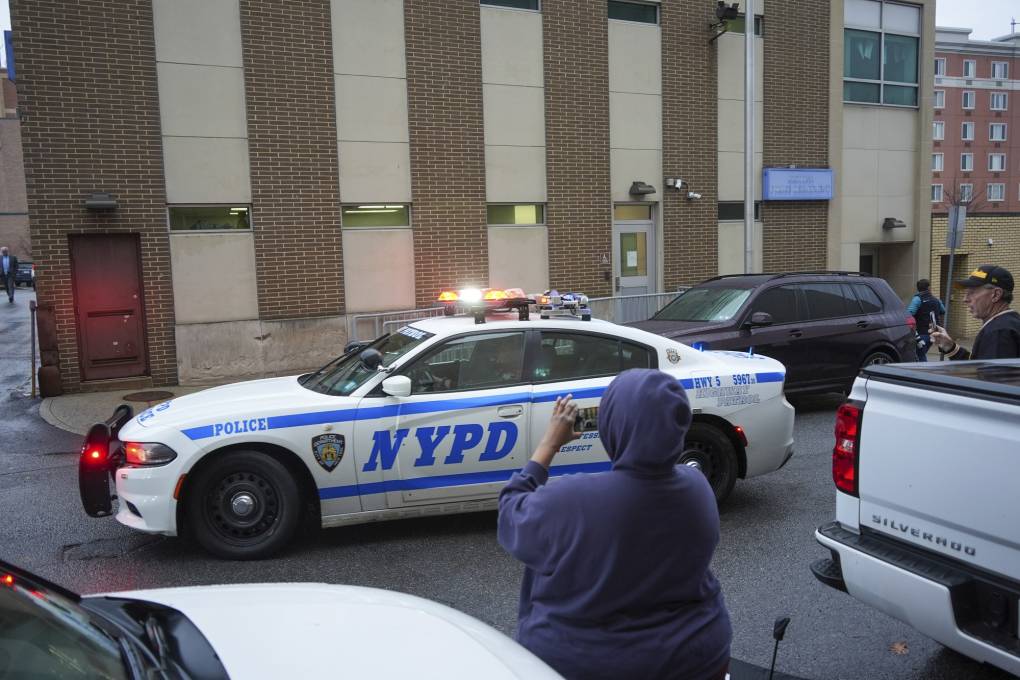
"caption": "New York Police officers arrive at Altoona Police Department, where a man with a gun thought to be similar to the one used in the killing of UnitedHealthcare CEO Brian Thompson has been taken into police custody for questioning on Monday, Dec. 9, 2024, in Altoona, Pennsylvania.",
"credit": "Gene J. Puskar/AP Photo",
"altTag": null,
"description": null,
"imgSizes": {
"medium": {
"file": "https://cdn.kqed.org/wp-content/uploads/sites/10/2024/12/NYPDAP-800x533.jpg",
"width": 800,
"height": 533,
"mimeType": "image/jpeg"
},
"large": {
"file": "https://cdn.kqed.org/wp-content/uploads/sites/10/2024/12/NYPDAP-1020x680.jpg",
"width": 1020,
"height": 680,
"mimeType": "image/jpeg"
},
"thumbnail": {
"file": "https://cdn.kqed.org/wp-content/uploads/sites/10/2024/12/NYPDAP-160x107.jpg",
"width": 160,
"height": 107,
"mimeType": "image/jpeg"
},
"1536x1536": {
"file": "https://cdn.kqed.org/wp-content/uploads/sites/10/2024/12/NYPDAP-1536x1024.jpg",
"width": 1536,
"height": 1024,
"mimeType": "image/jpeg"
},
"post-thumbnail": {
"file": "https://cdn.kqed.org/wp-content/uploads/sites/10/2024/12/NYPDAP-672x372.jpg",
"width": 672,
"height": 372,
"mimeType": "image/jpeg"
},
"twentyfourteen-full-width": {
"file": "https://cdn.kqed.org/wp-content/uploads/sites/10/2024/12/NYPDAP-1038x576.jpg",
"width": 1038,
"height": 576,
"mimeType": "image/jpeg"
},
"full-width": {
"file": "https://cdn.kqed.org/wp-content/uploads/sites/10/2024/12/NYPDAP-1920x1280.jpg",
"width": 1920,
"height": 1280,
"mimeType": "image/jpeg"
},
"kqedFullSize": {
"file": "https://cdn.kqed.org/wp-content/uploads/sites/10/2024/12/NYPDAP.jpg",
"width": 2000,
"height": 1333
}
},
"isLoading": false,
"fetchFailed": false
},
"news_12017340": {
"type": "attachments",
"id": "news_12017340",
"meta": {
"index": "attachments_1716263798",
"site": "news",
"id": "12017340",
"found": true
},
"title": "UnitedHealthcare CEO Killed",
"publishDate": 1733781167,
"status": "inherit",
"parent": 12017333,
"modified": 1733789244,
"caption": "In this photo taken from video, New York Police Chief of Detectives Joseph Kenny answers questions during a news conference on Monday, Dec. 9, 2024, in New York.",
"credit": "New York City Mayor's Office/AP Photo",
"altTag": null,
"description": null,
"imgSizes": {
"medium": {
"file": "https://cdn.kqed.org/wp-content/uploads/sites/10/2024/12/LuigiMangioneAP1-800x533.jpg",
"width": 800,
"height": 533,
"mimeType": "image/jpeg"
},
"large": {
"file": "https://cdn.kqed.org/wp-content/uploads/sites/10/2024/12/LuigiMangioneAP1-1020x680.jpg",
"width": 1020,
"height": 680,
"mimeType": "image/jpeg"
},
"thumbnail": {
"file": "https://cdn.kqed.org/wp-content/uploads/sites/10/2024/12/LuigiMangioneAP1-160x107.jpg",
"width": 160,
"height": 107,
"mimeType": "image/jpeg"
},
"1536x1536": {
"file": "https://cdn.kqed.org/wp-content/uploads/sites/10/2024/12/LuigiMangioneAP1-1536x1024.jpg",
"width": 1536,
"height": 1024,
"mimeType": "image/jpeg"
},
"post-thumbnail": {
"file": "https://cdn.kqed.org/wp-content/uploads/sites/10/2024/12/LuigiMangioneAP1-672x372.jpg",
"width": 672,
"height": 372,
"mimeType": "image/jpeg"
},
"twentyfourteen-full-width": {
"file": "https://cdn.kqed.org/wp-content/uploads/sites/10/2024/12/LuigiMangioneAP1-1038x576.jpg",
"width": 1038,
"height": 576,
"mimeType": "image/jpeg"
},
"full-width": {
"file": "https://cdn.kqed.org/wp-content/uploads/sites/10/2024/12/LuigiMangioneAP1-1920x1280.jpg",
"width": 1920,
"height": 1280,
"mimeType": "image/jpeg"
},
"kqedFullSize": {
"file": "https://cdn.kqed.org/wp-content/uploads/sites/10/2024/12/LuigiMangioneAP1.jpg",
"width": 2000,
"height": 1333
}
},
"isLoading": false,
"fetchFailed": false
},
"news_11813962": {
"type": "attachments",
"id": "news_11813962",
"meta": {
"index": "attachments_1716263798",
"site": "news",
"id": "11813962",
"found": true
},
"parent": 11813888,
"imgSizes": {
"apple_news_ca_landscape_5_5": {
"file": "https://ww2.kqed.org/app/uploads/sites/10/2020/04/GettyImages-1206287512_1920x-1044x783.jpg",
"width": 1044,
"mimeType": "image/jpeg",
"height": 783
},
"apple_news_ca_square_4_0": {
"file": "https://ww2.kqed.org/app/uploads/sites/10/2020/04/GettyImages-1206287512_1920x-470x470.jpg",
"width": 470,
"mimeType": "image/jpeg",
"height": 470
},
"twentyfourteen-full-width": {
"file": "https://ww2.kqed.org/app/uploads/sites/10/2020/04/GettyImages-1206287512_1920x-1038x576.jpg",
"width": 1038,
"mimeType": "image/jpeg",
"height": 576
},
"thumbnail": {
"file": "https://ww2.kqed.org/app/uploads/sites/10/2020/04/GettyImages-1206287512_1920x-160x107.jpg",
"width": 160,
"mimeType": "image/jpeg",
"height": 107
},
"post-thumbnail": {
"file": "https://ww2.kqed.org/app/uploads/sites/10/2020/04/GettyImages-1206287512_1920x-672x372.jpg",
"width": 672,
"mimeType": "image/jpeg",
"height": 372
},
"kqedFullSize": {
"file": "https://ww2.kqed.org/app/uploads/sites/10/2020/04/GettyImages-1206287512_1920x.jpg",
"width": 1920,
"height": 1280
},
"apple_news_ca_landscape_4_7": {
"file": "https://ww2.kqed.org/app/uploads/sites/10/2020/04/GettyImages-1206287512_1920x-632x474.jpg",
"width": 632,
"mimeType": "image/jpeg",
"height": 474
},
"large": {
"file": "https://ww2.kqed.org/app/uploads/sites/10/2020/04/GettyImages-1206287512_1920x-1020x680.jpg",
"width": 1020,
"mimeType": "image/jpeg",
"height": 680
},
"apple_news_ca_landscape_4_0": {
"file": "https://ww2.kqed.org/app/uploads/sites/10/2020/04/GettyImages-1206287512_1920x-536x402.jpg",
"width": 536,
"mimeType": "image/jpeg",
"height": 402
},
"apple_news_ca_portrait_12_9": {
"file": "https://ww2.kqed.org/app/uploads/sites/10/2020/04/GettyImages-1206287512_1920x-1122x1280.jpg",
"width": 1122,
"mimeType": "image/jpeg",
"height": 1280
},
"medium": {
"file": "https://ww2.kqed.org/app/uploads/sites/10/2020/04/GettyImages-1206287512_1920x-800x533.jpg",
"width": 800,
"mimeType": "image/jpeg",
"height": 533
},
"apple_news_ca_portrait_4_0": {
"file": "https://ww2.kqed.org/app/uploads/sites/10/2020/04/GettyImages-1206287512_1920x-354x472.jpg",
"width": 354,
"mimeType": "image/jpeg",
"height": 472
},
"apple_news_ca_portrait_9_7": {
"file": "https://ww2.kqed.org/app/uploads/sites/10/2020/04/GettyImages-1206287512_1920x-840x1120.jpg",
"width": 840,
"mimeType": "image/jpeg",
"height": 1120
},
"apple_news_ca_landscape_12_9": {
"file": "https://ww2.kqed.org/app/uploads/sites/10/2020/04/GettyImages-1206287512_1920x-1832x1280.jpg",
"width": 1832,
"mimeType": "image/jpeg",
"height": 1280
},
"apple_news_ca_square_9_7": {
"file": "https://ww2.kqed.org/app/uploads/sites/10/2020/04/GettyImages-1206287512_1920x-1104x1104.jpg",
"width": 1104,
"mimeType": "image/jpeg",
"height": 1104
},
"apple_news_ca_portrait_4_7": {
"file": "https://ww2.kqed.org/app/uploads/sites/10/2020/04/GettyImages-1206287512_1920x-414x552.jpg",
"width": 414,
"mimeType": "image/jpeg",
"height": 552
},
"apple_news_ca_square_12_9": {
"file": "https://ww2.kqed.org/app/uploads/sites/10/2020/04/GettyImages-1206287512_1920x-1472x1280.jpg",
"width": 1472,
"mimeType": "image/jpeg",
"height": 1280
},
"apple_news_ca_portrait_5_5": {
"file": "https://ww2.kqed.org/app/uploads/sites/10/2020/04/GettyImages-1206287512_1920x-687x916.jpg",
"width": 687,
"mimeType": "image/jpeg",
"height": 916
},
"full-width": {
"file": "https://ww2.kqed.org/app/uploads/sites/10/2020/04/GettyImages-1206287512_1920x-1920x1280.jpg",
"width": 1920,
"mimeType": "image/jpeg",
"height": 1280
},
"apple_news_ca_square_4_7": {
"file": "https://ww2.kqed.org/app/uploads/sites/10/2020/04/GettyImages-1206287512_1920x-550x550.jpg",
"width": 550,
"mimeType": "image/jpeg",
"height": 550
},
"apple_news_ca_landscape_9_7": {
"file": "https://ww2.kqed.org/app/uploads/sites/10/2020/04/GettyImages-1206287512_1920x-1376x1032.jpg",
"width": 1376,
"mimeType": "image/jpeg",
"height": 1032
},
"apple_news_ca_square_5_5": {
"file": "https://ww2.kqed.org/app/uploads/sites/10/2020/04/GettyImages-1206287512_1920x-912x912.jpg",
"width": 912,
"mimeType": "image/jpeg",
"height": 912
}
},
"publishDate": 1587667826,
"modified": 1587669970,
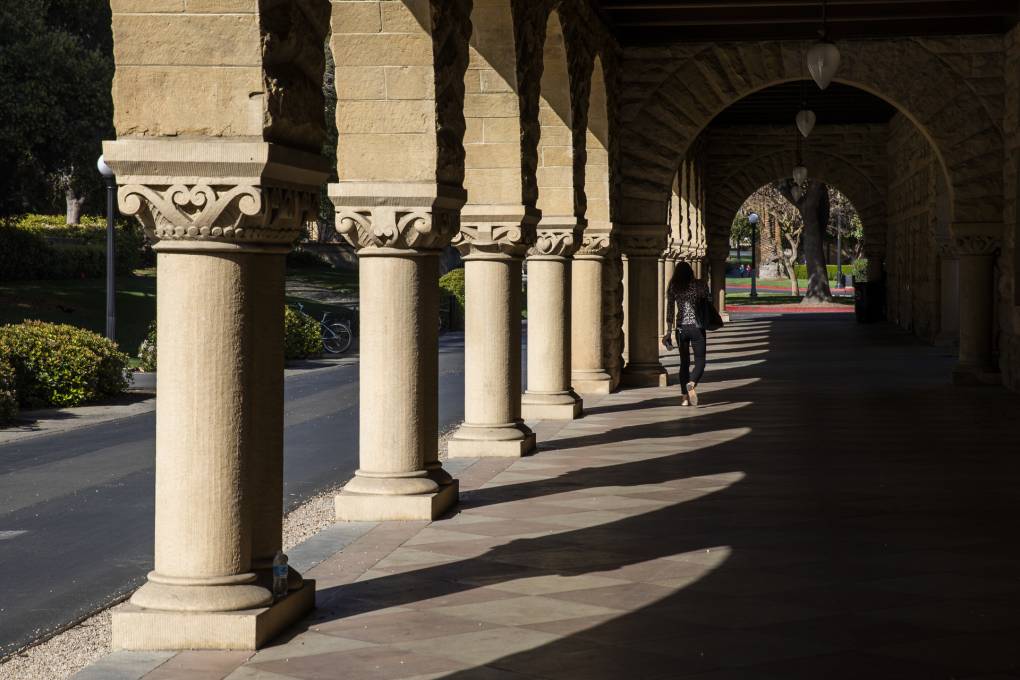
"caption": "A person walks past archways during a quiet morning at Stanford University on March 9, 2020. ",
"description": "STANFORD, CA - MARCH 09: A person walks past archways during a quiet morning at Stanford University on March 9, 2020 in Stanford, California. ",
"title": "Stanford University Cancels On-Campus Classes After Faculty Member Tests Positive For Coronavirus",
"credit": "Philip Pacheco/Getty Images",
"status": "inherit",
"isLoading": false,
"fetchFailed": false
},
"news_11984250": {
"type": "attachments",
"id": "news_11984250",
"meta": {
"index": "attachments_1716263798",
"site": "news",
"id": "11984250",
"found": true
},
"parent": 11984246,
"imgSizes": {
"twentyfourteen-full-width": {
"file": "https://cdn.kqed.org/wp-content/uploads/sites/10/2024/04/San-Jose-overview-1038x576.jpg",
"width": 1038,
"mimeType": "image/jpeg",
"height": 576
},
"thumbnail": {
"file": "https://cdn.kqed.org/wp-content/uploads/sites/10/2024/04/San-Jose-overview-160x120.jpg",
"width": 160,
"mimeType": "image/jpeg",
"height": 120
},
"post-thumbnail": {
"file": "https://cdn.kqed.org/wp-content/uploads/sites/10/2024/04/San-Jose-overview-672x372.jpg",
"width": 672,
"mimeType": "image/jpeg",
"height": 372
},
"kqedFullSize": {
"file": "https://cdn.kqed.org/wp-content/uploads/sites/10/2024/04/San-Jose-overview.jpg",
"width": 2000,
"height": 1506
},
"large": {
"file": "https://cdn.kqed.org/wp-content/uploads/sites/10/2024/04/San-Jose-overview-1020x768.jpg",
"width": 1020,
"mimeType": "image/jpeg",
"height": 768
},
"1536x1536": {
"file": "https://cdn.kqed.org/wp-content/uploads/sites/10/2024/04/San-Jose-overview-1536x1157.jpg",
"width": 1536,
"mimeType": "image/jpeg",
"height": 1157
},
"full-width": {
"file": "https://cdn.kqed.org/wp-content/uploads/sites/10/2024/04/San-Jose-overview-1920x1446.jpg",
"width": 1920,
"mimeType": "image/jpeg",
"height": 1446
},
"medium": {
"file": "https://cdn.kqed.org/wp-content/uploads/sites/10/2024/04/San-Jose-overview-800x602.jpg",
"width": 800,
"mimeType": "image/jpeg",
"height": 602
}
},
"publishDate": 1714172424,
"modified": 1714173015,
"caption": "An aerial photo of San José from City Hall on April 16, 2024. ",
"description": null,
"title": "San Jose overview",
"credit": "Joseph Geha/KQED",
"status": "inherit",
"altTag": null,
"isLoading": false,
"fetchFailed": false
},
"news_12006513": {
"type": "attachments",
"id": "news_12006513",
"meta": {
"index": "attachments_1716263798",
"site": "news",
"id": "12006513",
"found": true
},
"title": "240925-LEBANESE COMMUNITY REACTION-MD-03-KQED-1",
"publishDate": 1727310990,
"status": "inherit",
"parent": 0,
"modified": 1727318676,
"caption": "Professor Ramzi Salti at Stanford University in Palo Alto on Sept. 25, 2024.",
"credit": "Martin do Nascimento/KQED",
"altTag": null,
"description": null,
"imgSizes": {
"medium": {
"file": "https://cdn.kqed.org/wp-content/uploads/sites/10/2024/09/240925-LEBANESE-COMMUNITY-REACTION-MD-03-KQED-1-800x533.jpg",
"width": 800,
"height": 533,
"mimeType": "image/jpeg"
},
"large": {
"file": "https://cdn.kqed.org/wp-content/uploads/sites/10/2024/09/240925-LEBANESE-COMMUNITY-REACTION-MD-03-KQED-1-1020x680.jpg",
"width": 1020,
"height": 680,
"mimeType": "image/jpeg"
},
"thumbnail": {
"file": "https://cdn.kqed.org/wp-content/uploads/sites/10/2024/09/240925-LEBANESE-COMMUNITY-REACTION-MD-03-KQED-1-160x107.jpg",
"width": 160,
"height": 107,
"mimeType": "image/jpeg"
},
"1536x1536": {
"file": "https://cdn.kqed.org/wp-content/uploads/sites/10/2024/09/240925-LEBANESE-COMMUNITY-REACTION-MD-03-KQED-1-1536x1024.jpg",
"width": 1536,
"height": 1024,
"mimeType": "image/jpeg"
},
"post-thumbnail": {
"file": "https://cdn.kqed.org/wp-content/uploads/sites/10/2024/09/240925-LEBANESE-COMMUNITY-REACTION-MD-03-KQED-1-672x372.jpg",
"width": 672,
"height": 372,
"mimeType": "image/jpeg"
},
"twentyfourteen-full-width": {
"file": "https://cdn.kqed.org/wp-content/uploads/sites/10/2024/09/240925-LEBANESE-COMMUNITY-REACTION-MD-03-KQED-1-1038x576.jpg",
"width": 1038,
"height": 576,
"mimeType": "image/jpeg"
},
"full-width": {
"file": "https://cdn.kqed.org/wp-content/uploads/sites/10/2024/09/240925-LEBANESE-COMMUNITY-REACTION-MD-03-KQED-1-1920x1280.jpg",
"width": 1920,
"height": 1280,
"mimeType": "image/jpeg"
},
"kqedFullSize": {
"file": "https://cdn.kqed.org/wp-content/uploads/sites/10/2024/09/240925-LEBANESE-COMMUNITY-REACTION-MD-03-KQED-1.jpg?ver=1727318666",
"width": 2000,
"height": 1333
}
},
"isLoading": false,
"fetchFailed": false
},
"news_12005204": {
"type": "attachments",
"id": "news_12005204",
"meta": {
"index": "attachments_1716263798",
"site": "news",
"id": "12005204",
"found": true
},
"title": "240425-StanfordGazaProtest-018-BL_qed",
"publishDate": 1726681055,
"status": "inherit",
"parent": 12005195,
"modified": 1747085226,
"caption": "Pro-Palestinian demonstrators march through the Stanford University campus in Stanford, California, on April 25, 2024.",
"credit": "Beth LaBerge/KQED",
"altTag": null,
"description": null,
"imgSizes": {
"medium": {
"file": "https://cdn.kqed.org/wp-content/uploads/sites/10/2024/09/240425-StanfordGazaProtest-018-BL_qed-800x533.jpg",
"width": 800,
"height": 533,
"mimeType": "image/jpeg"
},
"large": {
"file": "https://cdn.kqed.org/wp-content/uploads/sites/10/2024/09/240425-StanfordGazaProtest-018-BL_qed-1020x680.jpg",
"width": 1020,
"height": 680,
"mimeType": "image/jpeg"
},
"thumbnail": {
"file": "https://cdn.kqed.org/wp-content/uploads/sites/10/2024/09/240425-StanfordGazaProtest-018-BL_qed-160x107.jpg",
"width": 160,
"height": 107,
"mimeType": "image/jpeg"
},
"1536x1536": {
"file": "https://cdn.kqed.org/wp-content/uploads/sites/10/2024/09/240425-StanfordGazaProtest-018-BL_qed-1536x1024.jpg",
"width": 1536,
"height": 1024,
"mimeType": "image/jpeg"
},
"post-thumbnail": {
"file": "https://cdn.kqed.org/wp-content/uploads/sites/10/2024/09/240425-StanfordGazaProtest-018-BL_qed-672x372.jpg",
"width": 672,
"height": 372,
"mimeType": "image/jpeg"
},
"twentyfourteen-full-width": {
"file": "https://cdn.kqed.org/wp-content/uploads/sites/10/2024/09/240425-StanfordGazaProtest-018-BL_qed-1038x576.jpg",
"width": 1038,
"height": 576,
"mimeType": "image/jpeg"
},
"full-width": {
"file": "https://cdn.kqed.org/wp-content/uploads/sites/10/2024/09/240425-StanfordGazaProtest-018-BL_qed-1920x1280.jpg",
"width": 1920,
"height": 1280,
"mimeType": "image/jpeg"
},
"kqedFullSize": {
"file": "https://cdn.kqed.org/wp-content/uploads/sites/10/2024/09/240425-StanfordGazaProtest-018-BL_qed.jpg",
"width": 1999,
"height": 1333
}
},
"isLoading": false,
"fetchFailed": false
},
"news_11997254": {
"type": "attachments",
"id": "news_11997254",
"meta": {
"index": "attachments_1716263798",
"site": "news",
"id": "11997254",
"found": true
},
"title": "WWP: USA vs Hungary",
"publishDate": 1721861426,
"status": "inherit",
"parent": 0,
"modified": 1721952235,
"caption": "Maggie Steffens (left) and Dorottya Szilagyi during a USA vs. Hungary game at Avery Aquatic Center in Palo Alto on July 5, 2024.",
"credit": "Catharyn Hayne/KLC fotos",
"altTag": "Two women wearing swimming attire play water polo in a pool.",
"description": null,
"imgSizes": {
"medium": {
"file": "https://cdn.kqed.org/wp-content/uploads/sites/10/2024/07/240724-WATER-POLO-04-KQED-800x533.jpg",
"width": 800,
"height": 533,
"mimeType": "image/jpeg"
},
"large": {
"file": "https://cdn.kqed.org/wp-content/uploads/sites/10/2024/07/240724-WATER-POLO-04-KQED-1020x680.jpg",
"width": 1020,
"height": 680,
"mimeType": "image/jpeg"
},
"thumbnail": {
"file": "https://cdn.kqed.org/wp-content/uploads/sites/10/2024/07/240724-WATER-POLO-04-KQED-160x107.jpg",
"width": 160,
"height": 107,
"mimeType": "image/jpeg"
},
"1536x1536": {
"file": "https://cdn.kqed.org/wp-content/uploads/sites/10/2024/07/240724-WATER-POLO-04-KQED-1536x1024.jpg",
"width": 1536,
"height": 1024,
"mimeType": "image/jpeg"
},
"post-thumbnail": {
"file": "https://cdn.kqed.org/wp-content/uploads/sites/10/2024/07/240724-WATER-POLO-04-KQED-672x372.jpg",
"width": 672,
"height": 372,
"mimeType": "image/jpeg"
},
"twentyfourteen-full-width": {
"file": "https://cdn.kqed.org/wp-content/uploads/sites/10/2024/07/240724-WATER-POLO-04-KQED-1038x576.jpg",
"width": 1038,
"height": 576,
"mimeType": "image/jpeg"
},
"full-width": {
"file": "https://cdn.kqed.org/wp-content/uploads/sites/10/2024/07/240724-WATER-POLO-04-KQED-1920x1280.jpg",
"width": 1920,
"height": 1280,
"mimeType": "image/jpeg"
},
"kqedFullSize": {
"file": "https://cdn.kqed.org/wp-content/uploads/sites/10/2024/07/240724-WATER-POLO-04-KQED.jpg",
"width": 2000,
"height": 1333
}
},
"isLoading": false,
"fetchFailed": false
},
"news_11997137": {
"type": "attachments",
"id": "news_11997137",
"meta": {
"index": "attachments_1716263798",
"site": "news",
"id": "11997137",
"found": true
},
"title": "The Tenderloin Police station along Eddy St, on Wednesday May 30, 2012, in San Francisco, Ca. San Francisco Mayor Ed Lee, will announce he has a six year plan to restore police staffing to 1971 levels.",
"publishDate": 1721845272,
"status": "inherit",
"parent": 11997127,
"modified": 1721845324,
"caption": "The Tenderloin Police station along Eddy Street, on May 30, 2012, in San Francisco.",
"credit": "Michael Macor/The San Francisco Chronicle via Getty Images",
"altTag": null,
"description": null,
"imgSizes": {
"medium": {
"file": "https://cdn.kqed.org/wp-content/uploads/sites/10/2024/07/SFPDTenderloinStation-800x526.jpg",
"width": 800,
"height": 526,
"mimeType": "image/jpeg"
},
"large": {
"file": "https://cdn.kqed.org/wp-content/uploads/sites/10/2024/07/SFPDTenderloinStation-1020x671.jpg",
"width": 1020,
"height": 671,
"mimeType": "image/jpeg"
},
"thumbnail": {
"file": "https://cdn.kqed.org/wp-content/uploads/sites/10/2024/07/SFPDTenderloinStation-160x105.jpg",
"width": 160,
"height": 105,
"mimeType": "image/jpeg"
},
"1536x1536": {
"file": "https://cdn.kqed.org/wp-content/uploads/sites/10/2024/07/SFPDTenderloinStation-1536x1010.jpg",
"width": 1536,
"height": 1010,
"mimeType": "image/jpeg"
},
"post-thumbnail": {
"file": "https://cdn.kqed.org/wp-content/uploads/sites/10/2024/07/SFPDTenderloinStation-672x372.jpg",
"width": 672,
"height": 372,
"mimeType": "image/jpeg"
},
"twentyfourteen-full-width": {
"file": "https://cdn.kqed.org/wp-content/uploads/sites/10/2024/07/SFPDTenderloinStation-1038x576.jpg",
"width": 1038,
"height": 576,
"mimeType": "image/jpeg"
},
"full-width": {
"file": "https://cdn.kqed.org/wp-content/uploads/sites/10/2024/07/SFPDTenderloinStation-1920x1262.jpg",
"width": 1920,
"height": 1262,
"mimeType": "image/jpeg"
},
"kqedFullSize": {
"file": "https://cdn.kqed.org/wp-content/uploads/sites/10/2024/07/SFPDTenderloinStation.jpg",
"width": 2000,
"height": 1315
}
},
"isLoading": false,
"fetchFailed": false
},
"news_11993198": {
"type": "attachments",
"id": "news_11993198",
"meta": {
"index": "attachments_1716263798",
"site": "news",
"id": "11993198",
"found": true
},
"title": "28726-1",
"publishDate": 1720461333,
"status": "inherit",
"parent": 11993183,
"modified": 1720477752,
"caption": "Stanford lecturer Ramzi Salti, aka DJ Ramzi, in the early days of his show “Arabology” at Stanford University’s KZSU radio station in Palo Alto in 2013.",
"credit": "L.A. Cicero / Stanford News Service",
"altTag": "A man wearing a striped button down shirt with glasses and headphones speaks into a microphone with an audio control panel in front of him.",
"description": null,
"imgSizes": {
"thumbnail": {
"file": "https://cdn.kqed.org/wp-content/uploads/sites/10/2024/07/28726-1-160x120.jpg",
"width": 160,
"height": 120,
"mimeType": "image/jpeg"
},
"post-thumbnail": {
"file": "https://cdn.kqed.org/wp-content/uploads/sites/10/2024/07/28726-1-672x372.jpg",
"width": 672,
"height": 372,
"mimeType": "image/jpeg"
},
"kqedFullSize": {
"file": "https://cdn.kqed.org/wp-content/uploads/sites/10/2024/07/28726-1.jpg",
"width": 720,
"height": 540
}
},
"isLoading": false,
"fetchFailed": false
},
"news_11991402": {
"type": "attachments",
"id": "news_11991402",
"meta": {
"index": "attachments_1716263798",
"site": "news",
"id": "11991402",
"found": true
},
"title": "GOHILL-1-KQED",
"publishDate": 1718928695,
"status": "inherit",
"parent": 12030271,
"modified": 1741391989,
"caption": "Stanford Daily student journalist Dilan Gohill.",
"credit": "Courtesy of Dilan Gohill",
"altTag": null,
"description": null,
"imgSizes": {
"medium": {
"file": "https://cdn.kqed.org/wp-content/uploads/sites/10/2024/06/GOHILL-1-KQED-800x533.jpg",
"width": 800,
"height": 533,
"mimeType": "image/jpeg"
},
"large": {
"file": "https://cdn.kqed.org/wp-content/uploads/sites/10/2024/06/GOHILL-1-KQED-1020x680.jpg",
"width": 1020,
"height": 680,
"mimeType": "image/jpeg"
},
"thumbnail": {
"file": "https://cdn.kqed.org/wp-content/uploads/sites/10/2024/06/GOHILL-1-KQED-160x107.jpg",
"width": 160,
"height": 107,
"mimeType": "image/jpeg"
},
"1536x1536": {
"file": "https://cdn.kqed.org/wp-content/uploads/sites/10/2024/06/GOHILL-1-KQED-1536x1024.jpg",
"width": 1536,
"height": 1024,
"mimeType": "image/jpeg"
},
"post-thumbnail": {
"file": "https://cdn.kqed.org/wp-content/uploads/sites/10/2024/06/GOHILL-1-KQED-672x372.jpg",
"width": 672,
"height": 372,
"mimeType": "image/jpeg"
},
"twentyfourteen-full-width": {
"file": "https://cdn.kqed.org/wp-content/uploads/sites/10/2024/06/GOHILL-1-KQED-1038x576.jpg",
"width": 1038,
"height": 576,
"mimeType": "image/jpeg"
},
"full-width": {
"file": "https://cdn.kqed.org/wp-content/uploads/sites/10/2024/06/GOHILL-1-KQED-1920x1280.jpg",
"width": 1920,
"height": 1280,
"mimeType": "image/jpeg"
},
"kqedFullSize": {
"file": "https://cdn.kqed.org/wp-content/uploads/sites/10/2024/06/GOHILL-1-KQED.jpg",
"width": 2000,
"height": 1333
}
},
"isLoading": false,
"fetchFailed": false
},
"news_11989124": {
"type": "attachments",
"id": "news_11989124",
"meta": {
"index": "attachments_1716263798",
"site": "news",
"id": "11989124",
"found": true
},
"title": "240605-STANFORD-JG-10-KQED",
"publishDate": 1717611523,
"status": "inherit",
"parent": 12058280,
"modified": 1759358920,
"caption": "Santa Clara County Sheriff's Office Deputies stand guard outside Building 10 at Stanford University, where pro-Palestinian protesters broke into the university president's office and occupied it before being arrested on June 5, 2024.",
"credit": "Joseph Geha/KQED",
"altTag": null,
"description": null,
"imgSizes": {
"medium": {
"file": "https://cdn.kqed.org/wp-content/uploads/sites/10/2024/06/240605-STANFORD-JG-10-KQED-800x533.jpg",
"width": 800,
"height": 533,
"mimeType": "image/jpeg"
},
"large": {
"file": "https://cdn.kqed.org/wp-content/uploads/sites/10/2024/06/240605-STANFORD-JG-10-KQED-1020x680.jpg",
"width": 1020,
"height": 680,
"mimeType": "image/jpeg"
},
"thumbnail": {
"file": "https://cdn.kqed.org/wp-content/uploads/sites/10/2024/06/240605-STANFORD-JG-10-KQED-160x107.jpg",
"width": 160,
"height": 107,
"mimeType": "image/jpeg"
},
"1536x1536": {
"file": "https://cdn.kqed.org/wp-content/uploads/sites/10/2024/06/240605-STANFORD-JG-10-KQED-1536x1024.jpg",
"width": 1536,
"height": 1024,
"mimeType": "image/jpeg"
},
"post-thumbnail": {
"file": "https://cdn.kqed.org/wp-content/uploads/sites/10/2024/06/240605-STANFORD-JG-10-KQED-672x372.jpg",
"width": 672,
"height": 372,
"mimeType": "image/jpeg"
},
"twentyfourteen-full-width": {
"file": "https://cdn.kqed.org/wp-content/uploads/sites/10/2024/06/240605-STANFORD-JG-10-KQED-1038x576.jpg",
"width": 1038,
"height": 576,
"mimeType": "image/jpeg"
},
"full-width": {
"file": "https://cdn.kqed.org/wp-content/uploads/sites/10/2024/06/240605-STANFORD-JG-10-KQED-1920x1280.jpg",
"width": 1920,
"height": 1280,
"mimeType": "image/jpeg"
},
"kqedFullSize": {
"file": "https://cdn.kqed.org/wp-content/uploads/sites/10/2024/06/240605-STANFORD-JG-10-KQED.jpg",
"width": 2000,
"height": 1333
}
},
"isLoading": false,
"fetchFailed": false
},
"news_11984136": {
"type": "attachments",
"id": "news_11984136",
"meta": {
"index": "attachments_1716263798",
"site": "news",
"id": "11984136",
"found": true
},
"parent": 0,
"imgSizes": {
"twentyfourteen-full-width": {
"file": "https://cdn.kqed.org/wp-content/uploads/sites/10/2024/04/240425-StanfordGazaProtest-022-BL-1038x576.jpg",
"width": 1038,
"mimeType": "image/jpeg",
"height": 576
},
"thumbnail": {
"file": "https://cdn.kqed.org/wp-content/uploads/sites/10/2024/04/240425-StanfordGazaProtest-022-BL-160x107.jpg",
"width": 160,
"mimeType": "image/jpeg",
"height": 107
},
"post-thumbnail": {
"file": "https://cdn.kqed.org/wp-content/uploads/sites/10/2024/04/240425-StanfordGazaProtest-022-BL-672x372.jpg",
"width": 672,
"mimeType": "image/jpeg",
"height": 372
},
"kqedFullSize": {
"file": "https://cdn.kqed.org/wp-content/uploads/sites/10/2024/04/240425-StanfordGazaProtest-022-BL.jpg",
"width": 1920,
"height": 1280
},
"large": {
"file": "https://cdn.kqed.org/wp-content/uploads/sites/10/2024/04/240425-StanfordGazaProtest-022-BL-1020x680.jpg",
"width": 1020,
"mimeType": "image/jpeg",
"height": 680
},
"1536x1536": {
"file": "https://cdn.kqed.org/wp-content/uploads/sites/10/2024/04/240425-StanfordGazaProtest-022-BL-1536x1024.jpg",
"width": 1536,
"mimeType": "image/jpeg",
"height": 1024
},
"medium": {
"file": "https://cdn.kqed.org/wp-content/uploads/sites/10/2024/04/240425-StanfordGazaProtest-022-BL-800x533.jpg",
"width": 800,
"mimeType": "image/jpeg",
"height": 533
}
},
"publishDate": 1714149444,
"modified": 1714178507,
"caption": "A pro-Israel counterprotester waves an Israel flag during a pro-Palestinian march through the Stanford University campus on April 25, 2024, calling for the university to divest from Israel. The rally took place during Stanford's Admit Weekend, a time for incoming students to tour the university.",
"description": null,
"title": "240425-StanfordGazaProtest-022-BL",
"credit": "Beth LaBerge/KQED",
"status": "inherit",
"altTag": null,
"isLoading": false,
"fetchFailed": false
}
},
"audioPlayerReducer": {
"postId": "stream_live",
"isPaused": true,
"isPlaying": false,
"pfsActive": false,
"pledgeModalIsOpen": true,
"playerDrawerIsOpen": false,
"liveAudioPlayStartedAt": 0,
"liveAudioPlayContext": ""
},
"authorsReducer": {
"byline_news_11989050": {
"type": "authors",
"id": "byline_news_11989050",
"meta": {
"override": true
},
"slug": "byline_news_11989050",
"name": "\u003ca href=\"https://twitter.com/katie_debe?lang=en\">Katie DeBenedetti\u003c/a>",
"isLoading": false
},
"aproehl": {
"type": "authors",
"id": "11296",
"meta": {
"index": "authors_1716337520",
"id": "11296",
"found": true
},
"name": "Ariana Proehl",
"firstName": "Ariana",
"lastName": "Proehl",
"slug": "aproehl",
"email": "aproehl@KQED.org",
"display_author_email": true,
"staff_mastheads": [
"news"
],
"title": "Culture Reporter, KQED",
"bio": "Ariana Proehl is a Culture Reporter and Host.",
"avatar": "https://secure.gravatar.com/avatar/c96b24567eb5bb3a4f8bb295ed53e232?s=600&d=blank&r=g",
"twitter": "ArianaProehl",
"facebook": null,
"instagram": null,
"linkedin": null,
"sites": [
{
"site": "arts",
"roles": []
},
{
"site": "news",
"roles": []
},
{
"site": "education",
"roles": []
},
{
"site": "forum",
"roles": []
}
],
"headData": {
"title": "Ariana Proehl | KQED",
"description": "Culture Reporter, KQED",
"ogImgSrc": "https://secure.gravatar.com/avatar/c96b24567eb5bb3a4f8bb295ed53e232?s=600&d=blank&r=g",
"twImgSrc": "https://secure.gravatar.com/avatar/c96b24567eb5bb3a4f8bb295ed53e232?s=600&d=blank&r=g"
},
"isLoading": false,
"link": "/author/aproehl"
},
"dcronin": {
"type": "authors",
"id": "11362",
"meta": {
"index": "authors_1716337520",
"id": "11362",
"found": true
},
"name": "Dana Cronin",
"firstName": "Dana",
"lastName": "Cronin",
"slug": "dcronin",
"email": "dcronin@KQED.org",
"display_author_email": true,
"staff_mastheads": [],
"title": "KQED Contributor",
"bio": "Dana Cronin is a reporter for KQED News. She loves writing stories about climate change, environmental issues, food and agriculture. She's reported across the country, from Colorado to Washington D.C. to Illinois, and has won numerous awards for her coverage. Her work is regularly featured on national broadcasts, including NPR’s Morning Edition, All Things Considered, PBS Newshour and Science Friday. She lives in Oakland and has an avocado tree in her back yard.",
"avatar": "https://secure.gravatar.com/avatar/b242755225e2f85f37c259df1f4cdfa36dc82f17dcf79e697fb392d658d1750b?s=600&d=blank&r=g",
"twitter": "DanaHCronin",
"bluesky": null,
"facebook": null,
"instagram": null,
"linkedin": null,
"sites": [
{
"site": "arts",
"roles": [
"author"
]
},
{
"site": "news",
"roles": [
"editor"
]
},
{
"site": "science",
"roles": [
"author"
]
},
{
"site": "liveblog",
"roles": [
"author"
]
}
],
"headData": {
"title": "Dana Cronin | KQED",
"description": "KQED Contributor",
"ogImgSrc": "https://secure.gravatar.com/avatar/b242755225e2f85f37c259df1f4cdfa36dc82f17dcf79e697fb392d658d1750b?s=600&d=blank&r=g",
"twImgSrc": "https://secure.gravatar.com/avatar/b242755225e2f85f37c259df1f4cdfa36dc82f17dcf79e697fb392d658d1750b?s=600&d=blank&r=g"
},
"isLoading": false,
"link": "/author/dcronin"
},
"adahlstromeckman": {
"type": "authors",
"id": "11785",
"meta": {
"index": "authors_1716337520",
"id": "11785",
"found": true
},
"name": "Azul Dahlstrom-Eckman",
"firstName": "Azul",
"lastName": "Dahlstrom-Eckman",
"slug": "adahlstromeckman",
"email": "adahlstrom-eckman@kqed.org",
"display_author_email": true,
"staff_mastheads": [],
"title": "Reporter",
"bio": "Azul is a reporter for KQED focusing on transportation and features. He joined KQED in 2021 as an alumnus of KALW's Audio Academy radio journalism training program.",
"avatar": "https://secure.gravatar.com/avatar/9cb750298435add7815a777f55bf1f46845c1386bb8452555c60a7b820b5aba3?s=600&d=blank&r=g",
"twitter": "@zuliemann",
"bluesky": "@azul415.bsky.social",
"facebook": null,
"instagram": null,
"linkedin": null,
"sites": [
{
"site": "arts",
"roles": [
"editor"
]
},
{
"site": "news",
"roles": [
"editor"
]
},
{
"site": "science",
"roles": [
"editor"
]
},
{
"site": "liveblog",
"roles": [
"author"
]
}
],
"headData": {
"title": "Azul Dahlstrom-Eckman | KQED",
"description": "Reporter",
"ogImgSrc": "https://secure.gravatar.com/avatar/9cb750298435add7815a777f55bf1f46845c1386bb8452555c60a7b820b5aba3?s=600&d=blank&r=g",
"twImgSrc": "https://secure.gravatar.com/avatar/9cb750298435add7815a777f55bf1f46845c1386bb8452555c60a7b820b5aba3?s=600&d=blank&r=g"
},
"isLoading": false,
"link": "/author/adahlstromeckman"
},
"jgeha": {
"type": "authors",
"id": "11906",
"meta": {
"index": "authors_1716337520",
"id": "11906",
"found": true
},
"name": "Joseph Geha",
"firstName": "Joseph",
"lastName": "Geha",
"slug": "jgeha",
"email": "jgeha@kqed.org",
"display_author_email": false,
"staff_mastheads": [
"news",
"science"
],
"title": "KQED Contributor",
"bio": null,
"avatar": "https://secure.gravatar.com/avatar/ea84d2b6dd93d6369d453edf19dd583f117cd1759d2d9c9c92f9de77017354fe?s=600&d=blank&r=g",
"twitter": null,
"bluesky": null,
"facebook": null,
"instagram": null,
"linkedin": null,
"sites": [
{
"site": "news",
"roles": [
"editor"
]
},
{
"site": "liveblog",
"roles": [
"author"
]
}
],
"headData": {
"title": "Joseph Geha | KQED",
"description": "KQED Contributor",
"ogImgSrc": "https://secure.gravatar.com/avatar/ea84d2b6dd93d6369d453edf19dd583f117cd1759d2d9c9c92f9de77017354fe?s=600&d=blank&r=g",
"twImgSrc": "https://secure.gravatar.com/avatar/ea84d2b6dd93d6369d453edf19dd583f117cd1759d2d9c9c92f9de77017354fe?s=600&d=blank&r=g"
},
"isLoading": false,
"link": "/author/jgeha"
},
"kdebenedetti": {
"type": "authors",
"id": "11913",
"meta": {
"index": "authors_1716337520",
"id": "11913",
"found": true
},
"name": "Katie DeBenedetti",
"firstName": "Katie",
"lastName": "DeBenedetti",
"slug": "kdebenedetti",
"email": "kdebenedetti@kqed.org",
"display_author_email": false,
"staff_mastheads": [
"news",
"science"
],
"title": "KQED Contributor",
"bio": "Katie DeBenedetti is a digital reporter covering daily news for the Express Desk. Prior to joining KQED as a culture reporting intern in January 2024, she covered education and city government for the Napa Valley Register.",
"avatar": "https://secure.gravatar.com/avatar/6e31073cb8f7e4214ab03f42771d0f45?s=600&d=blank&r=g",
"twitter": null,
"facebook": null,
"instagram": null,
"linkedin": null,
"sites": [
{
"site": "news",
"roles": [
"author"
]
},
{
"site": "science",
"roles": [
"author"
]
},
{
"site": "liveblog",
"roles": [
"author"
]
}
],
"headData": {
"title": "Katie DeBenedetti | KQED",
"description": "KQED Contributor",
"ogImgSrc": "https://secure.gravatar.com/avatar/6e31073cb8f7e4214ab03f42771d0f45?s=600&d=blank&r=g",
"twImgSrc": "https://secure.gravatar.com/avatar/6e31073cb8f7e4214ab03f42771d0f45?s=600&d=blank&r=g"
},
"isLoading": false,
"link": "/author/kdebenedetti"
},
"emanoukian": {
"type": "authors",
"id": "11925",
"meta": {
"index": "authors_1716337520",
"id": "11925",
"found": true
},
"name": "Elize Manoukian",
"firstName": "Elize",
"lastName": "Manoukian",
"slug": "emanoukian",
"email": "emanoukian@KQED.org",
"display_author_email": false,
"staff_mastheads": [
"news"
],
"title": "Digital News Editor",
"bio": "Elize Manoukian is an award-winning audio producer and editor on the Express Desk, KQED's digital news platform. Her work has appeared on KPFA, Interlochen Public Radio, Oregon Public Broadcast, the New York Daily News, LA Times and the San Diego Union-Tribune. You can reach her at emanoukian@kqed.org.",
"avatar": "https://secure.gravatar.com/avatar/4525f1a8e46ccb30933b32653d9772064cfefe3fa655eb45b3b3a80341f6bdad?s=600&d=blank&r=g",
"twitter": null,
"bluesky": null,
"facebook": null,
"instagram": null,
"linkedin": null,
"sites": [
{
"site": "arts",
"roles": [
"editor"
]
},
{
"site": "news",
"roles": [
"editor"
]
},
{
"site": "science",
"roles": [
"editor"
]
}
],
"headData": {
"title": "Elize Manoukian | KQED",
"description": "Digital News Editor",
"ogImgSrc": "https://secure.gravatar.com/avatar/4525f1a8e46ccb30933b32653d9772064cfefe3fa655eb45b3b3a80341f6bdad?s=600&d=blank&r=g",
"twImgSrc": "https://secure.gravatar.com/avatar/4525f1a8e46ccb30933b32653d9772064cfefe3fa655eb45b3b3a80341f6bdad?s=600&d=blank&r=g"
},
"isLoading": false,
"link": "/author/emanoukian"
}
},
"pagesReducer": {
"news_tag_stanford-university": {
"type": "terms",
"id": "news_1928",
"meta": {
"index": "terms_1716263798",
"site": "news",
"id": "1928",
"score": 8.7980385
},
"featImg": null,
"name": "Stanford University",
"description": null,
"taxonomy": "tag",
"headData": {
"twImgId": null,
"twTitle": null,
"ogTitle": null,
"ogImgId": null,
"twDescription": null,
"description": null,
"title": "Stanford University Archives | KQED News",
"ogDescription": null
},
"ttid": 1943,
"slug": "stanford-university",
"isLoading": false,
"title": "Stanford University",
"pageMeta": {
"site": "news",
"WpPageTemplate": "page-topic-editorial",
"currentPage": 4
},
"blocks": [
{
"blockName": "kqed/post-list",
"attrs": {
"layout": "cardArticle2",
"query": "posts/news?tag=stanford-university",
"seeMore": false,
"paginated": true,
"page": 4
}
},
{
"blockName": "kqed/ad"
}
]
}
},
"pfsSessionReducer": {},
"postsReducer": {
"stream_live": {
"type": "live",
"id": "stream_live",
"audioUrl": "https://hls.kqed.org/hls/kqed_app/playlist.m3u8",
"title": "Live Stream",
"excerpt": "Live Stream information currently unavailable.",
"link": "/radio",
"featImg": "",
"label": {
"name": "KQED Live",
"link": "/"
}
},
"stream_kqedNewscast": {
"type": "posts",
"id": "stream_kqedNewscast",
"audioUrl": "https://www.kqed.org/.stream/anon/radio/RDnews/newscast.mp3?_=1",
"title": "KQED Newscast",
"featImg": "",
"label": {
"name": "88.5 FM",
"link": "/"
}
},
"news_12017407": {
"type": "posts",
"id": "news_12017407",
"meta": {
"index": "posts_1716263798",
"site": "news",
"id": "12017407",
"score": null,
"sort": [
1733853821000
]
},
"guestAuthors": [],
"slug": "bay-area-ties-luigi-mangione-suspect-ceos-killing-raise-questions",
"title": "Bay Area Ties of Luigi Mangione, Suspect in CEO’s Killing, Raise Questions",
"publishDate": 1733853821,
"format": "standard",
"headTitle": "Bay Area Ties of Luigi Mangione, Suspect in CEO’s Killing, Raise Questions | KQED",
"labelTerm": {
"site": "news"
},
"content": "\u003cp>\u003cem>Updated 12:38 p.m. Tuesday \u003c/em>\u003c/p>\n\u003cp>Luigi Mangione, the 26-year-old man charged with the murder of UnitedHealthcare’s CEO, has \u003ca href=\"https://www.kqed.org/news/tag/bay-area\">Bay Area\u003c/a> ties and was reportedly the subject of a recent missing person report in San Francisco.\u003c/p>\n\u003cp>Mangione was arrested in central Pennsylvania on Monday morning as a “strong person of interest” in the killing of Brian Thompson, and he was charged in Manhattan late that night. He is believed to have spent at least a summer in the Bay Area, \u003ca href=\"https://www.kqed.org/news/12017333/luigi-mangione-person-of-interest-health-care-ceo-shooting-ties-stanford\">working at Stanford\u003c/a> in 2019, but it appears his family may have had reason to believe he was in San Francisco as recently as last month.\u003c/p>\n\u003cp>The \u003cem>San Francisco Standard\u003c/em> is reporting that \u003ca href=\"https://sfstandard.com/2024/12/09/luigi-mangione-unitedhealthcare-sfpd-missing-person-report/\">Mangione’s mother reported him missing\u003c/a> to the San Francisco Police Department on Nov. 18, according to a police source with knowledge of the case.\u003c/p>\n\u003cp>[ad fullwidth]\u003c/p>\n\u003cp>Kathleen Mangione made a report, but it was not immediately clear whether he had been in San Francisco or she had reason to believe he had, according to the \u003cem>Standard\u003c/em>. Mangione is believed to have been suffering from a painful back injury and \u003ca href=\"https://www.nytimes.com/2024/12/09/nyregion/united-healthcare-ceo-shooting-luigi-mangione.html?smtyp=cur&smid=bsky-nytimes\">stopped communicating with family\u003c/a> and friends unexpectedly about six months ago, the \u003cem>New York Times\u003c/em> reported.\u003c/p>\n\u003cp>SFPD Chief Bill Scott, when asked at an unrelated press conference Tuesday morning, would neither confirm nor deny the existence of a missing person report.\u003c/p>\n\u003cfigure id=\"attachment_12017420\" class=\"wp-caption aligncenter\" style=\"max-width: 1200px\">\u003cimg loading=\"lazy\" decoding=\"async\" class=\"size-full wp-image-12017420\" src=\"https://cdn.kqed.org/wp-content/uploads/sites/10/2024/12/AP24345562201149.jpg\" alt=\"\" width=\"1200\" height=\"800\" srcset=\"https://cdn.kqed.org/wp-content/uploads/sites/10/2024/12/AP24345562201149.jpg 1200w, https://cdn.kqed.org/wp-content/uploads/sites/10/2024/12/AP24345562201149-800x533.jpg 800w, https://cdn.kqed.org/wp-content/uploads/sites/10/2024/12/AP24345562201149-1020x680.jpg 1020w, https://cdn.kqed.org/wp-content/uploads/sites/10/2024/12/AP24345562201149-160x107.jpg 160w\" sizes=\"auto, (max-width: 1200px) 100vw, 1200px\">\u003cfigcaption class=\"wp-caption-text\">This image released by Pennsylvania State Police shows a video image of Luigi Mangione, a suspect in the fatal shooting of UnitedHealthcare CEO Brian Thompson, at a McDonald’s in Altoona, Pennsylvania, on Monday, Dec. 9, 2024. \u003ccite>(Pennsylvania State Police via AP)\u003c/cite>\u003c/figcaption>\u003c/figure>\n\u003cp>During a press conference on Monday confirming Mangione’s arrest, New York City Police Department officials said that he had ties to San Francisco but did not elaborate.\u003c/p>\n\u003cp>Mangione was arrested in Altoona, Pennsylvania, after local law enforcement was dispatched to a McDonald’s, where an employee spotted someone matching the description of the murder suspect.\u003c/p>\n\u003cp>He was found with a firearm and suppressor consistent with the weapon used in the killing, along with a mask and clothes matching the wanted person’s clothing. He also had multiple fraudulent IDs, including one from New Jersey that matched the one the suspect used to check into a New York City hostel before the shooting, according to New York Police Commissioner Jessica Tisch.\u003c/p>\n\u003cp>[aside postID=news_12017333 hero='https://cdn.kqed.org/wp-content/uploads/sites/10/2024/12/LuigiMangioneAP1-1020x680.jpg']\u003c/p>\n\u003cp>A written document that was said to include information about his “motivation” and “mindset” was also recovered.\u003c/p>\n\u003cp>According to a LinkedIn profile that seems to belong to Mangione, he worked as a head counselor at Stanford’s pre-college summer program for high school students. Stanford spokesperson Dee Mostofi confirmed that a person with the same name was employed as a head counselor from May to September 2019.\u003c/p>\n\u003cp>During that time, Mangione advised students in the program and worked as a teaching assistant for those studying artificial intelligence. Head counselors generally live on campus, serving as “visible role models and leaders” for the programs’ participants, according to Stanford’s website.\u003c/p>\n\u003cp>He was officially charged with second-degree murder in connection with Thompson’s killing Monday night, the \u003cem>Times\u003c/em> reported. He also faces charges in Pennsylvania of forgery, tampering with records, falsely identifying himself to law enforcement, carrying a firearm without a license and possessing an “instrument of crime” with intent.\u003c/p>\n\u003cp>According to court records, his last known address is in Honolulu.\u003c/p>\n\u003cp>Mangione is currently being held in prison in Blair County, Pennsylvania. He was denied bail and appeared at an extradition hearing Tuesday where his attorney, Thomas Dickey, said he was contesting his extradition to New York, the \u003cem>Times\u003c/em> reported.\u003c/p>\n\u003cp>\u003c/p>\n",
"blocks": [],
"excerpt": "Mangione, who was charged with the murder of UnitedHealthcare’s CEO, appears to have worked at Stanford and was reportedly the subject of a recent missing person report in San Francisco.",
"status": "publish",
"parent": 0,
"modified": 1738186037,
"stats": {
"hasAudio": false,
"hasVideo": false,
"hasChartOrMap": false,
"iframeSrcs": [],
"hasGoogleForm": false,
"hasGallery": false,
"hasHearkenModule": false,
"hasPolis": false,
"paragraphCount": 18,
"wordCount": 639
},
"headData": {
"title": "Bay Area Ties of Luigi Mangione, Suspect in CEO’s Killing, Raise Questions | KQED",
"description": "Mangione, who was charged with the murder of UnitedHealthcare’s CEO, appears to have worked at Stanford and was reportedly the subject of a recent missing person report in San Francisco.",
"ogTitle": "",
"ogDescription": "",
"ogImgId": "",
"twTitle": "",
"twDescription": "",
"twImgId": "",
"schema": {
"@context": "https://schema.org",
"@type": "NewsArticle",
"headline": "Bay Area Ties of Luigi Mangione, Suspect in CEO’s Killing, Raise Questions",
"datePublished": "2024-12-10T10:03:41-08:00",
"dateModified": "2025-01-29T13:27:17-08:00",
"image": "https://cdn.kqed.org/wp-content/uploads/2020/02/KQED-OG-Image@1x.png",
"isAccessibleForFree": "True",
"publisher": {
"@type": "NewsMediaOrganization",
"@id": "https://www.kqed.org/#organization",
"name": "KQED",
"logo": "https://cdn.kqed.org/wp-content/uploads/2020/02/KQED-OG-Image@1x.png",
"url": "https://www.kqed.org",
"sameAs": [
"https://www.facebook.com/KQED",
"https://twitter.com/KQED",
"https://www.instagram.com/kqed/",
"https://www.tiktok.com/@kqedofficial",
"https://www.linkedin.com/company/kqed",
"https://www.youtube.com/channel/UCeC0IOo7i1P_61zVUWbJ4nw"
]
}
}
},
"sticky": false,
"nprStoryId": "kqed-12017407",
"excludeFromSiteSearch": "Include",
"articleAge": "0",
"path": "/news/12017407/bay-area-ties-luigi-mangione-suspect-ceos-killing-raise-questions",
"audioTrackLength": null,
"parsedContent": [
{
"type": "contentString",
"content": "\u003cdiv class=\"post-body\">\u003cp>\u003cp>\u003cem>Updated 12:38 p.m. Tuesday \u003c/em>\u003c/p>\n\u003cp>Luigi Mangione, the 26-year-old man charged with the murder of UnitedHealthcare’s CEO, has \u003ca href=\"https://www.kqed.org/news/tag/bay-area\">Bay Area\u003c/a> ties and was reportedly the subject of a recent missing person report in San Francisco.\u003c/p>\n\u003cp>Mangione was arrested in central Pennsylvania on Monday morning as a “strong person of interest” in the killing of Brian Thompson, and he was charged in Manhattan late that night. He is believed to have spent at least a summer in the Bay Area, \u003ca href=\"https://www.kqed.org/news/12017333/luigi-mangione-person-of-interest-health-care-ceo-shooting-ties-stanford\">working at Stanford\u003c/a> in 2019, but it appears his family may have had reason to believe he was in San Francisco as recently as last month.\u003c/p>\n\u003cp>The \u003cem>San Francisco Standard\u003c/em> is reporting that \u003ca href=\"https://sfstandard.com/2024/12/09/luigi-mangione-unitedhealthcare-sfpd-missing-person-report/\">Mangione’s mother reported him missing\u003c/a> to the San Francisco Police Department on Nov. 18, according to a police source with knowledge of the case.\u003c/p>\n\u003cp>\u003c/p>\u003c/div>",
"attributes": {
"named": {},
"numeric": []
}
},
{
"type": "component",
"content": "",
"name": "ad",
"attributes": {
"named": {
"label": "fullwidth"
},
"numeric": [
"fullwidth"
]
}
},
{
"type": "contentString",
"content": "\u003cdiv class=\"post-body\">\u003cp>\u003c/p>\n\u003cp>Kathleen Mangione made a report, but it was not immediately clear whether he had been in San Francisco or she had reason to believe he had, according to the \u003cem>Standard\u003c/em>. Mangione is believed to have been suffering from a painful back injury and \u003ca href=\"https://www.nytimes.com/2024/12/09/nyregion/united-healthcare-ceo-shooting-luigi-mangione.html?smtyp=cur&smid=bsky-nytimes\">stopped communicating with family\u003c/a> and friends unexpectedly about six months ago, the \u003cem>New York Times\u003c/em> reported.\u003c/p>\n\u003cp>SFPD Chief Bill Scott, when asked at an unrelated press conference Tuesday morning, would neither confirm nor deny the existence of a missing person report.\u003c/p>\n\u003cfigure id=\"attachment_12017420\" class=\"wp-caption aligncenter\" style=\"max-width: 1200px\">\u003cimg loading=\"lazy\" decoding=\"async\" class=\"size-full wp-image-12017420\" src=\"https://cdn.kqed.org/wp-content/uploads/sites/10/2024/12/AP24345562201149.jpg\" alt=\"\" width=\"1200\" height=\"800\" srcset=\"https://cdn.kqed.org/wp-content/uploads/sites/10/2024/12/AP24345562201149.jpg 1200w, https://cdn.kqed.org/wp-content/uploads/sites/10/2024/12/AP24345562201149-800x533.jpg 800w, https://cdn.kqed.org/wp-content/uploads/sites/10/2024/12/AP24345562201149-1020x680.jpg 1020w, https://cdn.kqed.org/wp-content/uploads/sites/10/2024/12/AP24345562201149-160x107.jpg 160w\" sizes=\"auto, (max-width: 1200px) 100vw, 1200px\">\u003cfigcaption class=\"wp-caption-text\">This image released by Pennsylvania State Police shows a video image of Luigi Mangione, a suspect in the fatal shooting of UnitedHealthcare CEO Brian Thompson, at a McDonald’s in Altoona, Pennsylvania, on Monday, Dec. 9, 2024. \u003ccite>(Pennsylvania State Police via AP)\u003c/cite>\u003c/figcaption>\u003c/figure>\n\u003cp>During a press conference on Monday confirming Mangione’s arrest, New York City Police Department officials said that he had ties to San Francisco but did not elaborate.\u003c/p>\n\u003cp>Mangione was arrested in Altoona, Pennsylvania, after local law enforcement was dispatched to a McDonald’s, where an employee spotted someone matching the description of the murder suspect.\u003c/p>\n\u003cp>He was found with a firearm and suppressor consistent with the weapon used in the killing, along with a mask and clothes matching the wanted person’s clothing. He also had multiple fraudulent IDs, including one from New Jersey that matched the one the suspect used to check into a New York City hostel before the shooting, according to New York Police Commissioner Jessica Tisch.\u003c/p>\n\u003cp>\u003c/p>\u003c/div>",
"attributes": {
"named": {},
"numeric": []
}
},
{
"type": "component",
"content": "",
"name": "aside",
"attributes": {
"named": {
"postid": "news_12017333",
"hero": "https://cdn.kqed.org/wp-content/uploads/sites/10/2024/12/LuigiMangioneAP1-1020x680.jpg",
"label": ""
},
"numeric": []
}
},
{
"type": "contentString",
"content": "\u003cdiv class=\"post-body\">\u003cp>\u003c/p>\n\u003cp>A written document that was said to include information about his “motivation” and “mindset” was also recovered.\u003c/p>\n\u003cp>According to a LinkedIn profile that seems to belong to Mangione, he worked as a head counselor at Stanford’s pre-college summer program for high school students. Stanford spokesperson Dee Mostofi confirmed that a person with the same name was employed as a head counselor from May to September 2019.\u003c/p>\n\u003cp>During that time, Mangione advised students in the program and worked as a teaching assistant for those studying artificial intelligence. Head counselors generally live on campus, serving as “visible role models and leaders” for the programs’ participants, according to Stanford’s website.\u003c/p>\n\u003cp>He was officially charged with second-degree murder in connection with Thompson’s killing Monday night, the \u003cem>Times\u003c/em> reported. He also faces charges in Pennsylvania of forgery, tampering with records, falsely identifying himself to law enforcement, carrying a firearm without a license and possessing an “instrument of crime” with intent.\u003c/p>\n\u003cp>According to court records, his last known address is in Honolulu.\u003c/p>\n\u003cp>Mangione is currently being held in prison in Blair County, Pennsylvania. He was denied bail and appeared at an extradition hearing Tuesday where his attorney, Thomas Dickey, said he was contesting his extradition to New York, the \u003cem>Times\u003c/em> reported.\u003c/p>\n\u003cp>\u003c/p>\n\u003c/div>\u003c/p>",
"attributes": {
"named": {},
"numeric": []
}
}
],
"link": "/news/12017407/bay-area-ties-luigi-mangione-suspect-ceos-killing-raise-questions",
"authors": [
"11913"
],
"categories": [
"news_34167",
"news_457",
"news_8"
],
"tags": [
"news_17626",
"news_27626",
"news_18543",
"news_1054",
"news_3574",
"news_19960",
"news_22456",
"news_1928"
],
"featImg": "news_12017418",
"label": "news"
},
"news_12017333": {
"type": "posts",
"id": "news_12017333",
"meta": {
"index": "posts_1716263798",
"site": "news",
"id": "12017333",
"score": null,
"sort": [
1733787268000
]
},
"guestAuthors": [],
"slug": "luigi-mangione-person-of-interest-health-care-ceo-shooting-ties-stanford",
"title": "Luigi Mangione, Person of Interest in Health Care CEO Shooting, Has Ties to Stanford",
"publishDate": 1733787268,
"format": "standard",
"headTitle": "Luigi Mangione, Person of Interest in Health Care CEO Shooting, Has Ties to Stanford | KQED",
"labelTerm": {
"site": "news"
},
"content": "\u003cp>The 26-year-old man arrested as a person of interest in the killing of UnitedHealthcare’s CEO appears to have previously worked at \u003ca href=\"https://www.kqed.org/news/tag/stanford-university\">Stanford\u003c/a>.\u003c/p>\n\u003cp>Luigi Mangione was arrested in central Pennsylvania on Monday morning. Someone with that name served as a head counselor for the university’s summer program for high school students in 2019, according to Stanford spokesperson Dee Mostofi.\u003c/p>\n\u003cp>New York City Police Department officials confirmed during a press conference that Mangione was arrested in Altoona, Pennsylvania, after local law enforcement was dispatched to a McDonald’s, where an employee spotted someone matching the description of the murder suspect.\u003c/p>\n\u003cp>[ad fullwidth]\u003c/p>\n\u003cp>Altoona police officers took Mangione into custody on an unrelated firearms charge, but he is considered a “strong person of interest” in the death of the insurance company’s chief, New York Mayor Eric Adams said during the press conference.\u003c/p>\n\u003cp>Police found a firearm and suppressor consistent with the weapon used in the killing in Mangione’s possession, along with a mask and clothes matching the wanted person’s clothing. He also had multiple fraudulent IDs, including one from New Jersey that matched the one the suspect used to check into a New York City hostel before the shooting, according to New York Police Commissioner Jessica Tisch.\u003c/p>\n\u003cfigure id=\"attachment_12014213\" class=\"wp-caption aligncenter\" style=\"max-width: 2000px\">\u003cimg loading=\"lazy\" decoding=\"async\" class=\"size-full wp-image-12014213\" src=\"https://cdn.kqed.org/wp-content/uploads/sites/10/2024/11/005_KQED_StanfordGradUnion_05302023_qed.jpg\" alt=\"\" width=\"2000\" height=\"1333\" srcset=\"https://cdn.kqed.org/wp-content/uploads/sites/10/2024/11/005_KQED_StanfordGradUnion_05302023_qed.jpg 2000w, https://cdn.kqed.org/wp-content/uploads/sites/10/2024/11/005_KQED_StanfordGradUnion_05302023_qed-800x533.jpg 800w, https://cdn.kqed.org/wp-content/uploads/sites/10/2024/11/005_KQED_StanfordGradUnion_05302023_qed-1020x680.jpg 1020w, https://cdn.kqed.org/wp-content/uploads/sites/10/2024/11/005_KQED_StanfordGradUnion_05302023_qed-160x107.jpg 160w, https://cdn.kqed.org/wp-content/uploads/sites/10/2024/11/005_KQED_StanfordGradUnion_05302023_qed-1536x1024.jpg 1536w, https://cdn.kqed.org/wp-content/uploads/sites/10/2024/11/005_KQED_StanfordGradUnion_05302023_qed-1920x1280.jpg 1920w\" sizes=\"auto, (max-width: 2000px) 100vw, 2000px\">\u003cfigcaption class=\"wp-caption-text\">Stanford University campus on May 30, 2023. \u003ccite>(Beth LaBerge/KQED)\u003c/cite>\u003c/figcaption>\u003c/figure>\n\u003cp>A written document that was said to include information about his “motivation” and “mindset” was also recovered.\u003c/p>\n\u003cp>The arrest comes five days after \u003ca href=\"https://www.npr.org/2024/12/04/nx-s1-5215908/the-killing-of-the-unitedhealthcare-ceo-was-a-targeted-attack-authorities-say\">Brian Thompson was shot\u003c/a> outside UnitedHealthcare’s investor conference at the Hilton Midtown hotel in what police have called a “brazen, targeted murder.”\u003c/p>\n\u003cp>[aside postID=news_12016811 hero='https://cdn.kqed.org/wp-content/uploads/sites/10/2024/09/021_Alameda_MarioGonzalezPressConf_04272021_qed-1020x679.jpg']\u003c/p>\n\u003cp>NYPD officials confirmed Monday that Mangione had ties to San Francisco, but they did not elaborate on the connection.\u003c/p>\n\u003cp>He appears to have worked in Palo Alto from at least May to December of 2019, during which time he advised high school students and residential counselors in Stanford’s pre-college summer programs.\u003c/p>\n\u003cp>Head counselors also work as teaching assistants and live on campus, serving as “visible role models and leaders” for the programs’ participants, according to \u003ca href=\"https://spcs.stanford.edu/jobs/head-counselor\">Stanford’s website\u003c/a>.\u003c/p>\n\u003cp>A LinkedIn profile that seems to belong to Mangione said he worked with students studying artificial intelligence and holds both bachelor’s and master’s degrees from the University of Pennsylvania in computer science.\u003c/p>\n\u003cp>His last known address was in Honolulu, and he was born and raised in Maryland, NYPD Chief of Detectives Joseph Kenny said.\u003c/p>\n\u003cp>\u003c/p>\n",
"blocks": [],
"excerpt": "The man arrested as a person of interest in the killing of UnitedHealthcare CEO Brian Thompson appears to have served as a head counselor for a Stanford summer program in 2019.",
"status": "publish",
"parent": 0,
"modified": 1738186039,
"stats": {
"hasAudio": false,
"hasVideo": false,
"hasChartOrMap": false,
"iframeSrcs": [],
"hasGoogleForm": false,
"hasGallery": false,
"hasHearkenModule": false,
"hasPolis": false,
"paragraphCount": 15,
"wordCount": 443
},
"headData": {
"title": "Luigi Mangione, Person of Interest in Health Care CEO Shooting, Has Ties to Stanford | KQED",
"description": "The man arrested as a person of interest in the killing of UnitedHealthcare CEO Brian Thompson appears to have served as a head counselor for a Stanford summer program in 2019.",
"ogTitle": "",
"ogDescription": "",
"ogImgId": "",
"twTitle": "",
"twDescription": "",
"twImgId": "",
"schema": {
"@context": "https://schema.org",
"@type": "NewsArticle",
"headline": "Luigi Mangione, Person of Interest in Health Care CEO Shooting, Has Ties to Stanford",
"datePublished": "2024-12-09T15:34:28-08:00",
"dateModified": "2025-01-29T13:27:19-08:00",
"image": "https://cdn.kqed.org/wp-content/uploads/2020/02/KQED-OG-Image@1x.png",
"isAccessibleForFree": "True",
"publisher": {
"@type": "NewsMediaOrganization",
"@id": "https://www.kqed.org/#organization",
"name": "KQED",
"logo": "https://cdn.kqed.org/wp-content/uploads/2020/02/KQED-OG-Image@1x.png",
"url": "https://www.kqed.org",
"sameAs": [
"https://www.facebook.com/KQED",
"https://twitter.com/KQED",
"https://www.instagram.com/kqed/",
"https://www.tiktok.com/@kqedofficial",
"https://www.linkedin.com/company/kqed",
"https://www.youtube.com/channel/UCeC0IOo7i1P_61zVUWbJ4nw"
]
}
}
},
"sticky": false,
"nprStoryId": "kqed-12017333",
"excludeFromSiteSearch": "Include",
"articleAge": "0",
"path": "/news/12017333/luigi-mangione-person-of-interest-health-care-ceo-shooting-ties-stanford",
"audioTrackLength": null,
"parsedContent": [
{
"type": "contentString",
"content": "\u003cdiv class=\"post-body\">\u003cp>\u003cp>The 26-year-old man arrested as a person of interest in the killing of UnitedHealthcare’s CEO appears to have previously worked at \u003ca href=\"https://www.kqed.org/news/tag/stanford-university\">Stanford\u003c/a>.\u003c/p>\n\u003cp>Luigi Mangione was arrested in central Pennsylvania on Monday morning. Someone with that name served as a head counselor for the university’s summer program for high school students in 2019, according to Stanford spokesperson Dee Mostofi.\u003c/p>\n\u003cp>New York City Police Department officials confirmed during a press conference that Mangione was arrested in Altoona, Pennsylvania, after local law enforcement was dispatched to a McDonald’s, where an employee spotted someone matching the description of the murder suspect.\u003c/p>\n\u003cp>\u003c/p>\u003c/div>",
"attributes": {
"named": {},
"numeric": []
}
},
{
"type": "component",
"content": "",
"name": "ad",
"attributes": {
"named": {
"label": "fullwidth"
},
"numeric": [
"fullwidth"
]
}
},
{
"type": "contentString",
"content": "\u003cdiv class=\"post-body\">\u003cp>\u003c/p>\n\u003cp>Altoona police officers took Mangione into custody on an unrelated firearms charge, but he is considered a “strong person of interest” in the death of the insurance company’s chief, New York Mayor Eric Adams said during the press conference.\u003c/p>\n\u003cp>Police found a firearm and suppressor consistent with the weapon used in the killing in Mangione’s possession, along with a mask and clothes matching the wanted person’s clothing. He also had multiple fraudulent IDs, including one from New Jersey that matched the one the suspect used to check into a New York City hostel before the shooting, according to New York Police Commissioner Jessica Tisch.\u003c/p>\n\u003cfigure id=\"attachment_12014213\" class=\"wp-caption aligncenter\" style=\"max-width: 2000px\">\u003cimg loading=\"lazy\" decoding=\"async\" class=\"size-full wp-image-12014213\" src=\"https://cdn.kqed.org/wp-content/uploads/sites/10/2024/11/005_KQED_StanfordGradUnion_05302023_qed.jpg\" alt=\"\" width=\"2000\" height=\"1333\" srcset=\"https://cdn.kqed.org/wp-content/uploads/sites/10/2024/11/005_KQED_StanfordGradUnion_05302023_qed.jpg 2000w, https://cdn.kqed.org/wp-content/uploads/sites/10/2024/11/005_KQED_StanfordGradUnion_05302023_qed-800x533.jpg 800w, https://cdn.kqed.org/wp-content/uploads/sites/10/2024/11/005_KQED_StanfordGradUnion_05302023_qed-1020x680.jpg 1020w, https://cdn.kqed.org/wp-content/uploads/sites/10/2024/11/005_KQED_StanfordGradUnion_05302023_qed-160x107.jpg 160w, https://cdn.kqed.org/wp-content/uploads/sites/10/2024/11/005_KQED_StanfordGradUnion_05302023_qed-1536x1024.jpg 1536w, https://cdn.kqed.org/wp-content/uploads/sites/10/2024/11/005_KQED_StanfordGradUnion_05302023_qed-1920x1280.jpg 1920w\" sizes=\"auto, (max-width: 2000px) 100vw, 2000px\">\u003cfigcaption class=\"wp-caption-text\">Stanford University campus on May 30, 2023. \u003ccite>(Beth LaBerge/KQED)\u003c/cite>\u003c/figcaption>\u003c/figure>\n\u003cp>A written document that was said to include information about his “motivation” and “mindset” was also recovered.\u003c/p>\n\u003cp>The arrest comes five days after \u003ca href=\"https://www.npr.org/2024/12/04/nx-s1-5215908/the-killing-of-the-unitedhealthcare-ceo-was-a-targeted-attack-authorities-say\">Brian Thompson was shot\u003c/a> outside UnitedHealthcare’s investor conference at the Hilton Midtown hotel in what police have called a “brazen, targeted murder.”\u003c/p>\n\u003cp>\u003c/p>\u003c/div>",
"attributes": {
"named": {},
"numeric": []
}
},
{
"type": "component",
"content": "",
"name": "aside",
"attributes": {
"named": {
"postid": "news_12016811",
"hero": "https://cdn.kqed.org/wp-content/uploads/sites/10/2024/09/021_Alameda_MarioGonzalezPressConf_04272021_qed-1020x679.jpg",
"label": ""
},
"numeric": []
}
},
{
"type": "contentString",
"content": "\u003cdiv class=\"post-body\">\u003cp>\u003c/p>\n\u003cp>NYPD officials confirmed Monday that Mangione had ties to San Francisco, but they did not elaborate on the connection.\u003c/p>\n\u003cp>He appears to have worked in Palo Alto from at least May to December of 2019, during which time he advised high school students and residential counselors in Stanford’s pre-college summer programs.\u003c/p>\n\u003cp>Head counselors also work as teaching assistants and live on campus, serving as “visible role models and leaders” for the programs’ participants, according to \u003ca href=\"https://spcs.stanford.edu/jobs/head-counselor\">Stanford’s website\u003c/a>.\u003c/p>\n\u003cp>A LinkedIn profile that seems to belong to Mangione said he worked with students studying artificial intelligence and holds both bachelor’s and master’s degrees from the University of Pennsylvania in computer science.\u003c/p>\n\u003cp>His last known address was in Honolulu, and he was born and raised in Maryland, NYPD Chief of Detectives Joseph Kenny said.\u003c/p>\n\u003cp>\u003c/p>\n\u003c/div>\u003c/p>",
"attributes": {
"named": {},
"numeric": []
}
}
],
"link": "/news/12017333/luigi-mangione-person-of-interest-health-care-ceo-shooting-ties-stanford",
"authors": [
"11913"
],
"categories": [
"news_34167",
"news_457",
"news_8"
],
"tags": [
"news_17626",
"news_17725",
"news_18543",
"news_3574",
"news_22456",
"news_1928"
],
"featImg": "news_12017340",
"label": "news"
},
"news_12014071": {
"type": "posts",
"id": "news_12014071",
"meta": {
"index": "posts_1716263798",
"site": "news",
"id": "12014071",
"score": null,
"sort": [
1731441536000
]
},
"guestAuthors": [],
"slug": "thousands-stanford-grad-students-delay-strike-push-last-minute-deal",
"title": "Thousands of Stanford Grad Students Delay Strike in Push for Last-Minute Deal",
"publishDate": 1731441536,
"format": "standard",
"headTitle": "Thousands of Stanford Grad Students Delay Strike in Push for Last-Minute Deal | KQED",
"labelTerm": {
"site": "news"
},
"content": "\u003cp>Thousands of \u003ca href=\"https://www.kqed.org/news/tag/stanford\">Stanford\u003c/a> graduate students planning to strike on Tuesday pushed their walkout back a day amid eleventh-hour negotiations with the university.\u003c/p>\n\u003cp>Much like \u003ca href=\"https://www.kqed.org/news/11935671/university-of-california-workers-reach-deal-to-end-monthlong-strike\">a weekslong strike\u003c/a> that gripped the University of California system in 2022, the Stanford strike could mean significant disruptions to the current academic term, which is just under a month away from final exams.\u003c/p>\n\u003cp>The Stanford Graduate Workers’ Union, which \u003ca href=\"https://www.kqed.org/news/11951849/stanford-graduate-workers-move-to-unionize-to-improve-working-conditions\">formed last year\u003c/a> but has not yet approved a contract, is negotiating with the university for higher wages, more comprehensive benefits and guaranteed funding for doctoral students.\u003c/p>\n\u003cp>[ad fullwidth]\u003c/p>\n\u003cp>The bargaining team cited “sufficient movement,” saying in an email to members on Monday night that it postponed the strike for 24 hours while the two contingents returned to the bargaining table on Tuesday.\u003c/p>\n\u003cp>“We are not quite there, but we think it is worthwhile to continue bargaining,” the message reads. “We will resume bargaining Tuesday … with an expectation that we will either get it done or move forward with the strike.”\u003c/p>\n\u003cp>The union now plans to begin striking Wednesday at 10 a.m., when more than 2,000 graduate students — who lead classes, grade student work and conduct research — could walk off the job, threatening to withhold work until a contract is reached.\u003c/p>\n\u003cp>[aside postID=news_12009822 hero='https://cdn.kqed.org/wp-content/uploads/sites/10/2024/04/San-Jose-overview-1020x768.jpg']\u003c/p>\n\u003cp>“A strike will cause massive disruption to the university’s teaching and research missions, should Stanford fail to avert it,” the bargaining team told members last week. “Teaching assistants will cancel their review and discussion sessions, office hours, and labs. Assignments will not be graded. … However, Stanford’s continued refusal to meet the basic needs of its employees leaves thousands of graduate workers with no choice but to walk off the job.”\u003c/p>\n\u003cp>In an email to Stanford community members on Monday, Provost Jenny Martinez and Vice Provost for Graduate Education Stacey Bent said, “The university takes seriously our obligation to preserve the continuity of learning and research.”\u003c/p>\n\u003cp>“The university has worked to listen and engage constructively with the union at the negotiating table and to put forward a competitive contract offer. We continue to seek a timely resolution,” the message continues.\u003c/p>\n\u003cp>The union has been in contract negotiations with the university for a year following its formation in July 2023. SGWU authorized a strike last Wednesday when 94% of members voted against the university’s latest contract offer and 89% agreed to walk off the job.\u003c/p>\n\u003cp>The bargaining team said last week that it had made progress on securing better benefits, but “Stanford is still refusing to offer a living wage.”\u003c/p>\n\u003cp>Stanford’s \u003ca href=\"https://drive.google.com/file/d/1NQ76sax0xEolsR14ujLw3QnjzCCSlaEe/view\">most recent offer\u003c/a> included a minimum salary of $53,908 a year. The union said that’s not enough to cover the cost of living in Santa Clara County, which it estimates to be $68,620 based on an MIT livable wage calculator. SGWU has proposed a minimum compensation of $58,840, followed by annual increases of 4% and 3.5% for the following two years.\u003c/p>\n\u003cp>Martinez and Bent said in a statement on Nov. 7 that the union is demanding a pay increase between 14%–16%, while the university is offering a 12% increase over three years.\u003c/p>\n\u003cp>“Stanford’s offered salary levels … are the highest among our Ivy Plus peers,” the statement said, referring to a group of schools across the country, including the eight Ivy League schools and other elite universities.\u003c/p>\n\u003cp>While the parties haven’t reached an agreement on compensation, a bargaining tracker published by the union shows that they have made 18 tentative agreements related to union rights, appointments, and health and safety, among other things.\u003c/p>\n\u003cp>SGWU said in a message to members last week that they had also made progress on negotiations for benefits like health care and immigration costs, and getting the university to publish information about rent increases through the years of the contract. Seventy percent of graduate workers live on campus, and the union aims to tie wage increases to the rising cost of living in university housing.\u003c/p>\n\u003cp>Still, sticking points between SGWU and Stanford include guaranteed funding for Ph.D. candidates, which the university already agrees to provide, but the union said it has “failed to honor” on many occasions. The union is also lobbying for access to public transit passes for all students, not just those living off campus.\u003c/p>\n\u003cp>The bargaining team said it will be in meetings with staff all day Tuesday in hopes of reaching an agreement.\u003c/p>\n\u003cp>\u003c/p>\n",
"blocks": [],
"excerpt": "Stanford graduate student workers pushed their strike back a day amid negotiations but said they are prepared to walk out on Wednesday if an agreement is not reached.",
"status": "publish",
"parent": 0,
"modified": 1740612803,
"stats": {
"hasAudio": false,
"hasVideo": false,
"hasChartOrMap": false,
"iframeSrcs": [],
"hasGoogleForm": false,
"hasGallery": false,
"hasHearkenModule": false,
"hasPolis": false,
"paragraphCount": 21,
"wordCount": 784
},
"headData": {
"title": "Thousands of Stanford Grad Students Delay Strike in Push for Last-Minute Deal | KQED",
"description": "Stanford graduate student workers pushed their strike back a day amid negotiations but said they are prepared to walk out on Wednesday if an agreement is not reached.",
"ogTitle": "",
"ogDescription": "",
"ogImgId": "",
"twTitle": "",
"twDescription": "",
"twImgId": "",
"schema": {
"@context": "https://schema.org",
"@type": "NewsArticle",
"headline": "Thousands of Stanford Grad Students Delay Strike in Push for Last-Minute Deal",
"datePublished": "2024-11-12T11:58:56-08:00",
"dateModified": "2025-02-26T15:33:23-08:00",
"image": "https://cdn.kqed.org/wp-content/uploads/2020/02/KQED-OG-Image@1x.png",
"isAccessibleForFree": "True",
"publisher": {
"@type": "NewsMediaOrganization",
"@id": "https://www.kqed.org/#organization",
"name": "KQED",
"logo": "https://cdn.kqed.org/wp-content/uploads/2020/02/KQED-OG-Image@1x.png",
"url": "https://www.kqed.org",
"sameAs": [
"https://www.facebook.com/KQED",
"https://twitter.com/KQED",
"https://www.instagram.com/kqed/",
"https://www.tiktok.com/@kqedofficial",
"https://www.linkedin.com/company/kqed",
"https://www.youtube.com/channel/UCeC0IOo7i1P_61zVUWbJ4nw"
]
}
}
},
"sticky": false,
"nprStoryId": "kqed-12014071",
"excludeFromSiteSearch": "Include",
"articleAge": "0",
"path": "/news/12014071/thousands-stanford-grad-students-delay-strike-push-last-minute-deal",
"audioTrackLength": null,
"parsedContent": [
{
"type": "contentString",
"content": "\u003cdiv class=\"post-body\">\u003cp>\u003cp>Thousands of \u003ca href=\"https://www.kqed.org/news/tag/stanford\">Stanford\u003c/a> graduate students planning to strike on Tuesday pushed their walkout back a day amid eleventh-hour negotiations with the university.\u003c/p>\n\u003cp>Much like \u003ca href=\"https://www.kqed.org/news/11935671/university-of-california-workers-reach-deal-to-end-monthlong-strike\">a weekslong strike\u003c/a> that gripped the University of California system in 2022, the Stanford strike could mean significant disruptions to the current academic term, which is just under a month away from final exams.\u003c/p>\n\u003cp>The Stanford Graduate Workers’ Union, which \u003ca href=\"https://www.kqed.org/news/11951849/stanford-graduate-workers-move-to-unionize-to-improve-working-conditions\">formed last year\u003c/a> but has not yet approved a contract, is negotiating with the university for higher wages, more comprehensive benefits and guaranteed funding for doctoral students.\u003c/p>\n\u003cp>\u003c/p>\u003c/div>",
"attributes": {
"named": {},
"numeric": []
}
},
{
"type": "component",
"content": "",
"name": "ad",
"attributes": {
"named": {
"label": "fullwidth"
},
"numeric": [
"fullwidth"
]
}
},
{
"type": "contentString",
"content": "\u003cdiv class=\"post-body\">\u003cp>\u003c/p>\n\u003cp>The bargaining team cited “sufficient movement,” saying in an email to members on Monday night that it postponed the strike for 24 hours while the two contingents returned to the bargaining table on Tuesday.\u003c/p>\n\u003cp>“We are not quite there, but we think it is worthwhile to continue bargaining,” the message reads. “We will resume bargaining Tuesday … with an expectation that we will either get it done or move forward with the strike.”\u003c/p>\n\u003cp>The union now plans to begin striking Wednesday at 10 a.m., when more than 2,000 graduate students — who lead classes, grade student work and conduct research — could walk off the job, threatening to withhold work until a contract is reached.\u003c/p>\n\u003cp>\u003c/p>\u003c/div>",
"attributes": {
"named": {},
"numeric": []
}
},
{
"type": "component",
"content": "",
"name": "aside",
"attributes": {
"named": {
"postid": "news_12009822",
"hero": "https://cdn.kqed.org/wp-content/uploads/sites/10/2024/04/San-Jose-overview-1020x768.jpg",
"label": ""
},
"numeric": []
}
},
{
"type": "contentString",
"content": "\u003cdiv class=\"post-body\">\u003cp>\u003c/p>\n\u003cp>“A strike will cause massive disruption to the university’s teaching and research missions, should Stanford fail to avert it,” the bargaining team told members last week. “Teaching assistants will cancel their review and discussion sessions, office hours, and labs. Assignments will not be graded. … However, Stanford’s continued refusal to meet the basic needs of its employees leaves thousands of graduate workers with no choice but to walk off the job.”\u003c/p>\n\u003cp>In an email to Stanford community members on Monday, Provost Jenny Martinez and Vice Provost for Graduate Education Stacey Bent said, “The university takes seriously our obligation to preserve the continuity of learning and research.”\u003c/p>\n\u003cp>“The university has worked to listen and engage constructively with the union at the negotiating table and to put forward a competitive contract offer. We continue to seek a timely resolution,” the message continues.\u003c/p>\n\u003cp>The union has been in contract negotiations with the university for a year following its formation in July 2023. SGWU authorized a strike last Wednesday when 94% of members voted against the university’s latest contract offer and 89% agreed to walk off the job.\u003c/p>\n\u003cp>The bargaining team said last week that it had made progress on securing better benefits, but “Stanford is still refusing to offer a living wage.”\u003c/p>\n\u003cp>Stanford’s \u003ca href=\"https://drive.google.com/file/d/1NQ76sax0xEolsR14ujLw3QnjzCCSlaEe/view\">most recent offer\u003c/a> included a minimum salary of $53,908 a year. The union said that’s not enough to cover the cost of living in Santa Clara County, which it estimates to be $68,620 based on an MIT livable wage calculator. SGWU has proposed a minimum compensation of $58,840, followed by annual increases of 4% and 3.5% for the following two years.\u003c/p>\n\u003cp>Martinez and Bent said in a statement on Nov. 7 that the union is demanding a pay increase between 14%–16%, while the university is offering a 12% increase over three years.\u003c/p>\n\u003cp>“Stanford’s offered salary levels … are the highest among our Ivy Plus peers,” the statement said, referring to a group of schools across the country, including the eight Ivy League schools and other elite universities.\u003c/p>\n\u003cp>While the parties haven’t reached an agreement on compensation, a bargaining tracker published by the union shows that they have made 18 tentative agreements related to union rights, appointments, and health and safety, among other things.\u003c/p>\n\u003cp>SGWU said in a message to members last week that they had also made progress on negotiations for benefits like health care and immigration costs, and getting the university to publish information about rent increases through the years of the contract. Seventy percent of graduate workers live on campus, and the union aims to tie wage increases to the rising cost of living in university housing.\u003c/p>\n\u003cp>Still, sticking points between SGWU and Stanford include guaranteed funding for Ph.D. candidates, which the university already agrees to provide, but the union said it has “failed to honor” on many occasions. The union is also lobbying for access to public transit passes for all students, not just those living off campus.\u003c/p>\n\u003cp>The bargaining team said it will be in meetings with staff all day Tuesday in hopes of reaching an agreement.\u003c/p>\n\u003cp>\u003c/p>\n\u003c/div>\u003c/p>",
"attributes": {
"named": {},
"numeric": []
}
}
],
"link": "/news/12014071/thousands-stanford-grad-students-delay-strike-push-last-minute-deal",
"authors": [
"11913"
],
"categories": [
"news_18540",
"news_34551",
"news_8"
],
"tags": [
"news_18538",
"news_20013",
"news_27626",
"news_32885",
"news_19904",
"news_803",
"news_21285",
"news_178",
"news_1928",
"news_2759",
"news_3457"
],
"featImg": "news_11813962",
"label": "news"
},
"news_12009822": {
"type": "posts",
"id": "news_12009822",
"meta": {
"index": "posts_1716263798",
"site": "news",
"id": "12009822",
"score": null,
"sort": [
1729526400000
]
},
"guestAuthors": [],
"slug": "stanford-ai-model-helps-locate-racist-deeds-in-santa-clara-county",
"title": "Stanford AI Model Helps Locate Racist Deeds in Santa Clara County",
"publishDate": 1729526400,
"format": "standard",
"headTitle": "Stanford AI Model Helps Locate Racist Deeds in Santa Clara County | KQED",
"labelTerm": {
"site": "news"
},
"content": "\u003cp>Even in \u003ca href=\"https://www.kqed.org/news/tag/santa-clara\">Santa Clara\u003c/a> County, home to many of the companies and centers of innovation that have earned Silicon Valley its name, governments often do things in an old-fashioned manner.\u003c/p>\n\u003cp>So when California lawmakers handed down a mandate in 2021 that all counties in the state needed to cull their property deed records to find and redact racially restrictive covenants, Santa Clara County put two employees on the daunting task.\u003c/p>\n\u003cp>They began in 2022 what they expected might be an up to five-year project to manually sift through tens of millions of pages of paper and digitized property deed records. They were looking for racist language that barred people of specific races or ethnicities from owning properties in the county.\u003c/p>\n\u003cp>“I mean, it was literally eyes on paper turning pages, then it was eyes on the computer going through those same type of pages on the reels. And they did an excellent job,” said Louis Chiaramonte, the county’s assistant clerk-recorder.\u003c/p>\n\u003cp>The county’s team only made its way through around 100,000 records, finding about 400 of the thousands of defunct racist clauses that are tucked into documents related to ownership of homes and control of blocks and neighborhoods of the South Bay.\u003c/p>\n\u003cp>That’s when the county and \u003ca href=\"https://reglab.stanford.edu/\">Stanford University’s RegLab\u003c/a>, a hub for research and development into how government agencies can perform core services more efficiently, partnered to bring the power of AI language models onto the job, significantly speeding up the process.\u003c/p>\n\u003cp>[ad fullwidth]\u003c/p>\n\u003cp>After curating racist covenant documents from seven counties across the nation, the RegLab researchers trained an open-source language model on those examples. They then put it to work, scanning 5.2 million Santa Clara County deed records from 1902 through 1980.\u003c/p>\n\u003cp>It took about a week.\u003c/p>\n\u003cp>“What our project really shows is there’s a very different and compelling path forward to achieving these kinds of tasks that don’t suffer the kinds of cost overruns that have historically really plagued government technology contracting,” said Daniel Ho, a professor and the director of the RegLab.\u003c/p>\n\u003cp>Los Angeles County, for example, \u003ca href=\"https://www.latimes.com/california/story/2024-02-06/l-a-county-will-remove-racist-restrictive-covenant-language-from-millions-of-documents\">outsourced the work\u003c/a> to a contractor for about $8 million in a process expected to take about seven years to finish, Ho said.\u003c/p>\n\u003cp>Chiaramonte said the RegLab model helped Santa Clara County accelerate the process of flagging and mapping about 7,500 restrictive covenants. From there, the covenants are reviewed and sent to the county’s lawyers for final approval before a new, modified version of the deed is recorded. About 4,500 have been completed, and the original deeds remain unchanged for historical reference.\u003c/p>\n\u003cp>“It’s just amazing. I’m very thankful that this opportunity presented itself, and we’re able to work with them, Chiaramonte said. “And it appears that this language model tool that they have is extremely effective and has produced meaningful changes to how we could approach things in the future.”\u003c/p>\n\u003cp>The county employees who started the work will shift their focus to manually culling through the remaining records from 1850 to 1901 — most of which were handwritten — and digitizing newer records from after 1981.\u003c/p>\n\u003cp>\u003c!-- iframe plugin v.4.3 wordpress.org/plugins/iframe/ -->\u003cbr>\n\u003ciframe loading=\"lazy\" src=\"https://reglab.github.io/racialcovenants/static/maps/dotmap_embedded.html\" width=\"1000\" height=\"700\" scrolling=\"yes\" class=\"iframe-class\" frameborder=\"0\">\u003c/iframe>\u003c/p>\n\u003cp>\u003ci>Map by \u003ca href=\"https://reglab.github.io/racialcovenants/\">Stanford University’s RegLab\u003c/a>\u003c/i>\u003c/p>\n\u003cp>Faiz Surani, one of the co-authors of the \u003ca href=\"https://reglab.github.io/racialcovenants/\">research paper on the project\u003c/a>, noted that the curation of examples and the training of the open-source model was the bulk of the front-end work, and it needed to be precise. The team trained the model to recognize not just simple keywords but also to identify a covenant even when a document scan is degraded, common strings of words and where in the document covenants are often located.\u003c/p>\n\u003cp>“If you ask ChatGPT to detect racial covenants, it’ll do a decent job out of the box,” Surani said. “The challenge is when you are going over 5 million, 10 million, 20 million records, you need to be virtually perfect, or else you’re going to be missing something or you’re going to be buried under a pile of false positives.”\u003c/p>\n\u003cp>Surani and Ho said the model has so far shown itself to be nearly 100% accurate in finding covenants in the records it searched. In all, the AI-based technology was able to save about 86,000 person-hours for the county.\u003c/p>\n\u003cp>The racist covenants and restrictions often included racial epithets. The covenants were less often seen in the very early 20th century because it was still legal to zone by race. After the nation outlawed that practice as unconstitutional in 1917, deed restrictions became more commonplace as a way to use private transactions to maintain segregation.\u003c/p>\n\u003cp>“The language in these covenants became more targeted and explicit. Deed records reveal widespread exclusion of specific ethnic groups, including African Americans, Chinese, Japanese, and other non-Caucasian communities. Terms such as ‘Negro,’ ‘Mongolian,’ and ‘colored’ were commonly employed to delineate the racial boundaries of acceptable property owners and tenants,” the RegLab’s research paper said.\u003c/p>\n\u003cfigure id=\"attachment_12010146\" class=\"wp-caption aligncenter\" style=\"max-width: 1953px\">\u003cimg loading=\"lazy\" decoding=\"async\" class=\"size-full wp-image-12010146\" src=\"https://cdn.kqed.org/wp-content/uploads/sites/10/2024/10/241018-Covenant-Example-2-KQED.png\" alt=\"\" width=\"1953\" height=\"612\" srcset=\"https://cdn.kqed.org/wp-content/uploads/sites/10/2024/10/241018-Covenant-Example-2-KQED.png 1953w, https://cdn.kqed.org/wp-content/uploads/sites/10/2024/10/241018-Covenant-Example-2-KQED-800x251.png 800w, https://cdn.kqed.org/wp-content/uploads/sites/10/2024/10/241018-Covenant-Example-2-KQED-1020x320.png 1020w, https://cdn.kqed.org/wp-content/uploads/sites/10/2024/10/241018-Covenant-Example-2-KQED-160x50.png 160w, https://cdn.kqed.org/wp-content/uploads/sites/10/2024/10/241018-Covenant-Example-2-KQED-1536x481.png 1536w, https://cdn.kqed.org/wp-content/uploads/sites/10/2024/10/241018-Covenant-Example-2-KQED-1920x602.png 1920w\" sizes=\"auto, (max-width: 1953px) 100vw, 1953px\">\u003cfigcaption class=\"wp-caption-text\">An example of racist covenant clauses found in thousands of Santa Clara County deed records that were flagged by an AI-powered tool from Stanford University’s RegLab. \u003ccite>(Courtesy Stanford RegLab)\u003c/cite>\u003c/figcaption>\u003c/figure>\n\u003cp>Ho said he is optimistic the technology could be used to help governments look for other violations of California’s fair housing laws, including protections based on veteran status, family status, income and religion.\u003c/p>\n\u003cp>Surani said that as someone who identifies as Asian American, he was struck by the bluntness and banality of how the covenants were included in contracts.\u003c/p>\n\u003cp>“There will be one provision which says, you know, you have to install a sewage tank. The next provision, only Caucasians may live here. The next provision, you can’t construct an outhouse here,” he said.\u003c/p>\n\u003cp>Surani said another “gut punch” was how the research helped crystallize the widespread nature of the covenants.\u003c/p>\n\u003cp>“We find entire towns — not just neighborhoods — towns that were racially restricted from their founding,” Surani said, such as Redwood Estates, an unincorporated town along Highway 17 in the county.\u003c/p>\n\u003cp>There were heavy concentrations around Stanford and even a city-owned cemetery in San José with dozens of covenants allowing only white people to be interred.\u003c/p>\n\u003cp>Overall, Ho said the research showed that in 1950, about a decade after the peak use of covenants, about one in every four housing units in the county was under some sort of racially restrictive covenant.\u003c/p>\n\u003cp>[aside label='Related Coverage' tag='santa-clara']\u003c/p>\n\u003cp>He estimates that about 10 developers were responsible for roughly a third of all the covenants in the county, suggesting that a small group had a major influence on how Santa Clara County was plotted and built.\u003c/p>\n\u003cp>Some successful developers, like Joseph Eichler, chose not to include such covenants in their home tracts, “contrary to some historical scholarship, which notes that at that time, you would have lost business and would have gone out of business by not including that,” Ho said.\u003c/p>\n\u003cp>Walter Wilson, a co-founder of the Minority Business Consortium and \u003ca href=\"https://www.kqed.org/news/11988184/african-american-cultural-center-planned-for-south-bay-gets-federal-grant\">an advocate for African Americans and Black people in the South Bay\u003c/a>, said these long-unenforceable covenants were one of the biggest ways long-term wealth was concentrated in the hands of a few and laid the foundation for \u003ca href=\"https://www.kqed.org/news/11984246/less-than-1-of-santa-clara-county-contracts-go-to-black-and-latino-businesses-study-shows\">ongoing systemic discrimination\u003c/a>.\u003c/p>\n\u003cp>“That still continues to this day by design,” Wilson said. “Among those people in those communities and the folks who control the politics, there’s almost an unwritten word, where they won’t even say it.\u003c/p>\n\u003cp>“But you don’t see very many Black people in Cupertino. You don’t see very many Latinos in Cupertino.”\u003c/p>\n\u003cp>He added: “California racism is the most dangerous in the world because it is just under the surface. It lies just under the law.”\u003c/p>\n\u003cp>Wilson said it’s exciting to see technology being used to address written discrimination but suggests the technology should also be targeted at current racist systems and practices.\u003c/p>\n\u003cp>“How is it addressing real discrimination that’s impacting people’s lives?” he said.\u003c/p>\n\u003cp>[ad floatright]\u003c/p>\n",
"blocks": [],
"excerpt": "Santa Clara County’s effort to find racially restrictive covenants in the county’s property deed records has been accelerated by AI technology developed at Stanford University's RegLab.\r\n",
"status": "publish",
"parent": 0,
"modified": 1740181215,
"stats": {
"hasAudio": false,
"hasVideo": false,
"hasChartOrMap": true,
"iframeSrcs": [
"https://reglab.github.io/racialcovenants/static/maps/dotmap_embedded.html"
],
"hasGoogleForm": false,
"hasGallery": false,
"hasHearkenModule": false,
"hasPolis": false,
"paragraphCount": 38,
"wordCount": 1393
},
"headData": {
"title": "Stanford AI Model Helps Locate Racist Deeds in Santa Clara County | KQED",
"description": "Santa Clara County’s effort to find racially restrictive covenants in the county’s property deed records has been accelerated by AI technology developed at Stanford University's RegLab.\r\n",
"ogTitle": "",
"ogDescription": "",
"ogImgId": "",
"twTitle": "",
"twDescription": "",
"twImgId": "",
"schema": {
"@context": "https://schema.org",
"@type": "NewsArticle",
"headline": "Stanford AI Model Helps Locate Racist Deeds in Santa Clara County",
"datePublished": "2024-10-21T09:00:00-07:00",
"dateModified": "2025-02-21T15:40:15-08:00",
"image": "https://cdn.kqed.org/wp-content/uploads/2020/02/KQED-OG-Image@1x.png",
"isAccessibleForFree": "True",
"publisher": {
"@type": "NewsMediaOrganization",
"@id": "https://www.kqed.org/#organization",
"name": "KQED",
"logo": "https://cdn.kqed.org/wp-content/uploads/2020/02/KQED-OG-Image@1x.png",
"url": "https://www.kqed.org",
"sameAs": [
"https://www.facebook.com/KQED",
"https://twitter.com/KQED",
"https://www.instagram.com/kqed/",
"https://www.tiktok.com/@kqedofficial",
"https://www.linkedin.com/company/kqed",
"https://www.youtube.com/channel/UCeC0IOo7i1P_61zVUWbJ4nw"
]
}
}
},
"sticky": false,
"nprStoryId": "kqed-12009822",
"excludeFromSiteSearch": "Include",
"articleAge": "0",
"path": "/news/12009822/stanford-ai-model-helps-locate-racist-deeds-in-santa-clara-county",
"audioTrackLength": null,
"parsedContent": [
{
"type": "contentString",
"content": "\u003cdiv class=\"post-body\">\u003cp>\u003cp>Even in \u003ca href=\"https://www.kqed.org/news/tag/santa-clara\">Santa Clara\u003c/a> County, home to many of the companies and centers of innovation that have earned Silicon Valley its name, governments often do things in an old-fashioned manner.\u003c/p>\n\u003cp>So when California lawmakers handed down a mandate in 2021 that all counties in the state needed to cull their property deed records to find and redact racially restrictive covenants, Santa Clara County put two employees on the daunting task.\u003c/p>\n\u003cp>They began in 2022 what they expected might be an up to five-year project to manually sift through tens of millions of pages of paper and digitized property deed records. They were looking for racist language that barred people of specific races or ethnicities from owning properties in the county.\u003c/p>\n\u003cp>“I mean, it was literally eyes on paper turning pages, then it was eyes on the computer going through those same type of pages on the reels. And they did an excellent job,” said Louis Chiaramonte, the county’s assistant clerk-recorder.\u003c/p>\n\u003cp>The county’s team only made its way through around 100,000 records, finding about 400 of the thousands of defunct racist clauses that are tucked into documents related to ownership of homes and control of blocks and neighborhoods of the South Bay.\u003c/p>\n\u003cp>That’s when the county and \u003ca href=\"https://reglab.stanford.edu/\">Stanford University’s RegLab\u003c/a>, a hub for research and development into how government agencies can perform core services more efficiently, partnered to bring the power of AI language models onto the job, significantly speeding up the process.\u003c/p>\n\u003cp>\u003c/p>\u003c/div>",
"attributes": {
"named": {},
"numeric": []
}
},
{
"type": "component",
"content": "",
"name": "ad",
"attributes": {
"named": {
"label": "fullwidth"
},
"numeric": [
"fullwidth"
]
}
},
{
"type": "contentString",
"content": "\u003cdiv class=\"post-body\">\u003cp>\u003c/p>\n\u003cp>After curating racist covenant documents from seven counties across the nation, the RegLab researchers trained an open-source language model on those examples. They then put it to work, scanning 5.2 million Santa Clara County deed records from 1902 through 1980.\u003c/p>\n\u003cp>It took about a week.\u003c/p>\n\u003cp>“What our project really shows is there’s a very different and compelling path forward to achieving these kinds of tasks that don’t suffer the kinds of cost overruns that have historically really plagued government technology contracting,” said Daniel Ho, a professor and the director of the RegLab.\u003c/p>\n\u003cp>Los Angeles County, for example, \u003ca href=\"https://www.latimes.com/california/story/2024-02-06/l-a-county-will-remove-racist-restrictive-covenant-language-from-millions-of-documents\">outsourced the work\u003c/a> to a contractor for about $8 million in a process expected to take about seven years to finish, Ho said.\u003c/p>\n\u003cp>Chiaramonte said the RegLab model helped Santa Clara County accelerate the process of flagging and mapping about 7,500 restrictive covenants. From there, the covenants are reviewed and sent to the county’s lawyers for final approval before a new, modified version of the deed is recorded. About 4,500 have been completed, and the original deeds remain unchanged for historical reference.\u003c/p>\n\u003cp>“It’s just amazing. I’m very thankful that this opportunity presented itself, and we’re able to work with them, Chiaramonte said. “And it appears that this language model tool that they have is extremely effective and has produced meaningful changes to how we could approach things in the future.”\u003c/p>\n\u003cp>The county employees who started the work will shift their focus to manually culling through the remaining records from 1850 to 1901 — most of which were handwritten — and digitizing newer records from after 1981.\u003c/p>\n\u003cp>\u003c!-- iframe plugin v.4.3 wordpress.org/plugins/iframe/ -->\u003cbr>\n\u003ciframe loading=\"lazy\" src=\"https://reglab.github.io/racialcovenants/static/maps/dotmap_embedded.html\" width=\"1000\" height=\"700\" scrolling=\"yes\" class=\"iframe-class\" frameborder=\"0\">\u003c/iframe>\u003c/p>\n\u003cp>\u003ci>Map by \u003ca href=\"https://reglab.github.io/racialcovenants/\">Stanford University’s RegLab\u003c/a>\u003c/i>\u003c/p>\n\u003cp>Faiz Surani, one of the co-authors of the \u003ca href=\"https://reglab.github.io/racialcovenants/\">research paper on the project\u003c/a>, noted that the curation of examples and the training of the open-source model was the bulk of the front-end work, and it needed to be precise. The team trained the model to recognize not just simple keywords but also to identify a covenant even when a document scan is degraded, common strings of words and where in the document covenants are often located.\u003c/p>\n\u003cp>“If you ask ChatGPT to detect racial covenants, it’ll do a decent job out of the box,” Surani said. “The challenge is when you are going over 5 million, 10 million, 20 million records, you need to be virtually perfect, or else you’re going to be missing something or you’re going to be buried under a pile of false positives.”\u003c/p>\n\u003cp>Surani and Ho said the model has so far shown itself to be nearly 100% accurate in finding covenants in the records it searched. In all, the AI-based technology was able to save about 86,000 person-hours for the county.\u003c/p>\n\u003cp>The racist covenants and restrictions often included racial epithets. The covenants were less often seen in the very early 20th century because it was still legal to zone by race. After the nation outlawed that practice as unconstitutional in 1917, deed restrictions became more commonplace as a way to use private transactions to maintain segregation.\u003c/p>\n\u003cp>“The language in these covenants became more targeted and explicit. Deed records reveal widespread exclusion of specific ethnic groups, including African Americans, Chinese, Japanese, and other non-Caucasian communities. Terms such as ‘Negro,’ ‘Mongolian,’ and ‘colored’ were commonly employed to delineate the racial boundaries of acceptable property owners and tenants,” the RegLab’s research paper said.\u003c/p>\n\u003cfigure id=\"attachment_12010146\" class=\"wp-caption aligncenter\" style=\"max-width: 1953px\">\u003cimg loading=\"lazy\" decoding=\"async\" class=\"size-full wp-image-12010146\" src=\"https://cdn.kqed.org/wp-content/uploads/sites/10/2024/10/241018-Covenant-Example-2-KQED.png\" alt=\"\" width=\"1953\" height=\"612\" srcset=\"https://cdn.kqed.org/wp-content/uploads/sites/10/2024/10/241018-Covenant-Example-2-KQED.png 1953w, https://cdn.kqed.org/wp-content/uploads/sites/10/2024/10/241018-Covenant-Example-2-KQED-800x251.png 800w, https://cdn.kqed.org/wp-content/uploads/sites/10/2024/10/241018-Covenant-Example-2-KQED-1020x320.png 1020w, https://cdn.kqed.org/wp-content/uploads/sites/10/2024/10/241018-Covenant-Example-2-KQED-160x50.png 160w, https://cdn.kqed.org/wp-content/uploads/sites/10/2024/10/241018-Covenant-Example-2-KQED-1536x481.png 1536w, https://cdn.kqed.org/wp-content/uploads/sites/10/2024/10/241018-Covenant-Example-2-KQED-1920x602.png 1920w\" sizes=\"auto, (max-width: 1953px) 100vw, 1953px\">\u003cfigcaption class=\"wp-caption-text\">An example of racist covenant clauses found in thousands of Santa Clara County deed records that were flagged by an AI-powered tool from Stanford University’s RegLab. \u003ccite>(Courtesy Stanford RegLab)\u003c/cite>\u003c/figcaption>\u003c/figure>\n\u003cp>Ho said he is optimistic the technology could be used to help governments look for other violations of California’s fair housing laws, including protections based on veteran status, family status, income and religion.\u003c/p>\n\u003cp>Surani said that as someone who identifies as Asian American, he was struck by the bluntness and banality of how the covenants were included in contracts.\u003c/p>\n\u003cp>“There will be one provision which says, you know, you have to install a sewage tank. The next provision, only Caucasians may live here. The next provision, you can’t construct an outhouse here,” he said.\u003c/p>\n\u003cp>Surani said another “gut punch” was how the research helped crystallize the widespread nature of the covenants.\u003c/p>\n\u003cp>“We find entire towns — not just neighborhoods — towns that were racially restricted from their founding,” Surani said, such as Redwood Estates, an unincorporated town along Highway 17 in the county.\u003c/p>\n\u003cp>There were heavy concentrations around Stanford and even a city-owned cemetery in San José with dozens of covenants allowing only white people to be interred.\u003c/p>\n\u003cp>Overall, Ho said the research showed that in 1950, about a decade after the peak use of covenants, about one in every four housing units in the county was under some sort of racially restrictive covenant.\u003c/p>\n\u003cp>\u003c/p>\u003c/div>",
"attributes": {
"named": {},
"numeric": []
}
},
{
"type": "component",
"content": "",
"name": "aside",
"attributes": {
"named": {
"label": "Related Coverage ",
"tag": "santa-clara"
},
"numeric": []
}
},
{
"type": "contentString",
"content": "\u003cdiv class=\"post-body\">\u003cp>\u003c/p>\n\u003cp>He estimates that about 10 developers were responsible for roughly a third of all the covenants in the county, suggesting that a small group had a major influence on how Santa Clara County was plotted and built.\u003c/p>\n\u003cp>Some successful developers, like Joseph Eichler, chose not to include such covenants in their home tracts, “contrary to some historical scholarship, which notes that at that time, you would have lost business and would have gone out of business by not including that,” Ho said.\u003c/p>\n\u003cp>Walter Wilson, a co-founder of the Minority Business Consortium and \u003ca href=\"https://www.kqed.org/news/11988184/african-american-cultural-center-planned-for-south-bay-gets-federal-grant\">an advocate for African Americans and Black people in the South Bay\u003c/a>, said these long-unenforceable covenants were one of the biggest ways long-term wealth was concentrated in the hands of a few and laid the foundation for \u003ca href=\"https://www.kqed.org/news/11984246/less-than-1-of-santa-clara-county-contracts-go-to-black-and-latino-businesses-study-shows\">ongoing systemic discrimination\u003c/a>.\u003c/p>\n\u003cp>“That still continues to this day by design,” Wilson said. “Among those people in those communities and the folks who control the politics, there’s almost an unwritten word, where they won’t even say it.\u003c/p>\n\u003cp>“But you don’t see very many Black people in Cupertino. You don’t see very many Latinos in Cupertino.”\u003c/p>\n\u003cp>He added: “California racism is the most dangerous in the world because it is just under the surface. It lies just under the law.”\u003c/p>\n\u003cp>Wilson said it’s exciting to see technology being used to address written discrimination but suggests the technology should also be targeted at current racist systems and practices.\u003c/p>\n\u003cp>“How is it addressing real discrimination that’s impacting people’s lives?” he said.\u003c/p>\n\u003cp>\u003c/p>\u003c/div>",
"attributes": {
"named": {},
"numeric": []
}
},
{
"type": "component",
"content": "",
"name": "ad",
"attributes": {
"named": {
"label": "floatright"
},
"numeric": [
"floatright"
]
}
},
{
"type": "contentString",
"content": "\u003cdiv class=\"post-body\">\u003cp>\u003c/p>\n\u003c/div>\u003c/p>",
"attributes": {
"named": {},
"numeric": []
}
}
],
"link": "/news/12009822/stanford-ai-model-helps-locate-racist-deeds-in-santa-clara-county",
"authors": [
"11906"
],
"categories": [
"news_31795",
"news_6266",
"news_8",
"news_248"
],
"tags": [
"news_25184",
"news_32664",
"news_28095",
"news_30069",
"news_20228",
"news_27626",
"news_1775",
"news_25329",
"news_28180",
"news_18188",
"news_34586",
"news_178",
"news_1928"
],
"featImg": "news_11984250",
"label": "news"
},
"news_12006427": {
"type": "posts",
"id": "news_12006427",
"meta": {
"index": "posts_1716263798",
"site": "news",
"id": "12006427",
"score": null,
"sort": [
1727380249000
]
},
"guestAuthors": [],
"slug": "bay-area-lebanese-community-unites-amid-growing-sense-of-doom-as-israeli-strikes-mount",
"title": "Bay Area Lebanese Community Unites Amid Growing ‘Sense of Doom’ as Israeli Strikes Mount",
"publishDate": 1727380249,
"format": "standard",
"headTitle": "Bay Area Lebanese Community Unites Amid Growing ‘Sense of Doom’ as Israeli Strikes Mount | KQED",
"labelTerm": {
"site": "news"
},
"content": "\u003cp>Dr. Ramzi Salti met with his new students at \u003ca href=\"https://www.kqed.org/news/tag/stanford-university\">Stanford University\u003c/a> earlier this week.\u003c/p>\n\u003cp>In the Arabic language course he has taught at the university for 25 years, students read the news and discuss current events. Salti, an advanced lecturer in the school’s Arabic program, told KQED he’s unsure how to incorporate the most recent conflict in Lebanon into his curriculum.\u003c/p>\n\u003cp>“We haven’t had time to process any of it,” said Salti, whose family left Lebanon and immigrated to the United States 45 years ago. “But you cannot have a course about current events in the Middle East and not go there.”\u003c/p>\n\u003cp>Concern and anxiety have gripped the Bay Area’s Lebanese diaspora, a community of more than 5,000 people, according to estimates from the West Coast’s \u003ca href=\"https://honoraryconsulateoflebanon-uswestcoast.org/\">Honorary Consulate of Lebanon\u003c/a>, since Israel began pummeling southern Lebanon with airstrikes on Monday. More than 500 people were reportedly \u003ca href=\"https://www.nytimes.com/2024/09/25/world/middleeast/lebanon-civilian-death-toll-israel.html\">killed\u003c/a>, including 50 children.\u003c/p>\n\u003cp>[ad fullwidth]\u003c/p>\n\u003cp>Thousands fled the region for Beirut, the country’s capital on the Mediterranean coast. The airstrikes follow a series of pager and other device explosions across the country facilitated by Israel. The coordinated attack on Hezbollah killed at least \u003ca href=\"https://foreignpolicy.com/2024/09/24/hezbollah-pager-explosions-lebanon-israel-middle-east-iran-us-policy/\">40 people\u003c/a> and injured 3,000 others. Israel and Hezbollah, an Iran-backed militia and political party in Lebanon, have been locked in almost daily cross-border skirmishes since the Hamas-led attack on Israel on Oct. 7.\u003c/p>\n\u003cp>The majority of Richard Kadi’s family lives near Saida, a city in southern Lebanon. The barrages fuel constant worries about his cousins and uncles. Kadi, who lives in Belmont, checks on them daily. It’s difficult, he said, for them to escape the region.\u003c/p>\n\u003cfigure id=\"attachment_12006424\" class=\"wp-caption aligncenter\" style=\"max-width: 2000px\">\u003cimg loading=\"lazy\" decoding=\"async\" class=\"size-full wp-image-12006424\" src=\"https://cdn.kqed.org/wp-content/uploads/sites/10/2024/09/240925-LEBANESE-COMMUNITY-REACTIONS-MD-01-KQED.jpg\" alt=\"\" width=\"2000\" height=\"1333\" srcset=\"https://cdn.kqed.org/wp-content/uploads/sites/10/2024/09/240925-LEBANESE-COMMUNITY-REACTIONS-MD-01-KQED.jpg 2000w, https://cdn.kqed.org/wp-content/uploads/sites/10/2024/09/240925-LEBANESE-COMMUNITY-REACTIONS-MD-01-KQED-800x533.jpg 800w, https://cdn.kqed.org/wp-content/uploads/sites/10/2024/09/240925-LEBANESE-COMMUNITY-REACTIONS-MD-01-KQED-1020x680.jpg 1020w, https://cdn.kqed.org/wp-content/uploads/sites/10/2024/09/240925-LEBANESE-COMMUNITY-REACTIONS-MD-01-KQED-160x107.jpg 160w, https://cdn.kqed.org/wp-content/uploads/sites/10/2024/09/240925-LEBANESE-COMMUNITY-REACTIONS-MD-01-KQED-1536x1024.jpg 1536w, https://cdn.kqed.org/wp-content/uploads/sites/10/2024/09/240925-LEBANESE-COMMUNITY-REACTIONS-MD-01-KQED-1920x1280.jpg 1920w\" sizes=\"(max-width: 2000px) 100vw, 2000px\">\u003cfigcaption class=\"wp-caption-text\">The Our Lady of Lebanon Maronite Catholic Church in Millbrae on Sept. 25, 2024. \u003ccite>(Martin do Nascimento/KQED)\u003c/cite>\u003c/figcaption>\u003c/figure>\n\u003cp>“The roads are congested,” Kadi said. “They are really afraid that there won’t be any gas for the cars, or there won’t be any food or bread. People are worried and scared, and they don’t know how far this is going to escalate.”\u003c/p>\n\u003cp>MJ Azzi, who came to the United States as a student six years ago, is in constant communication with her parents.\u003c/p>\n\u003cp>“They are very scared,” she said. “They say that whatever it is that they have been dreading to happen for the past many months is happening right now.”\u003c/p>\n\u003cp>Salti said that the situation has spiraled more dramatically than his friends and family in Lebanon expected. They’re now afraid the country could get dragged into the worst conflict in its history.\u003c/p>\n\u003cp>“I think that there is a sense of doom, unfortunately, that has overtaken people who maybe had too rosy of a picture before,” he said.\u003c/p>\n\u003cp>Salti remembers what he calls “a beautiful childhood” in the country. Lebanon was a cultural powerhouse for much of the 20th century. It has the most \u003ca href=\"https://www.bbc.com/news/world-middle-east-14647308\">liberal media\u003c/a> in any Arab country. Lebanese artists produced Arabic-language pop music, books and movies, and Beirut was known as the “Paris of the Middle East.” Many Lebanese people speak Arabic, English and French, and the country’s many religious and ethnic minorities are guaranteed representation in government.\u003c/p>\n\u003cp>[aside postID=news_12005195 hero='https://cdn.kqed.org/wp-content/uploads/sites/10/2024/09/240425-StanfordGazaProtest-018-BL_qed-1020x680.jpg']\u003c/p>\n\u003cp>Bordered by Syria to the north and east and Israel to the south, Lebanon was stable for three decades after gaining independence from France in the early 1940s. Salti recalled the outbreak of the Lebanese Civil War in 1975, which began as a clash between Lebanese Christians and the Palestine Liberation Organization. Then, the U.S., Syria, Israel and Iran got involved in the 15-year conflict that displaced nearly 1 million people.\u003c/p>\n\u003cp>Waves of Lebanese have left the country since. Many fled when Israel invaded and occupied southern Lebanon in 1982 and again in 2006 during the Israel-Hezbollah war. Hezbollah was founded after Israel’s invasion in 1982.\u003c/p>\n\u003cp>The history looms heavily over this week’s fighting.\u003c/p>\n\u003cp>“That’s been the story of Lebanon for the past 50 years,” said Kadi, who emigrated from Lebanon 24 years ago. “Every now and then, there’s been bombardment attacks or airplanes flying over our heads.\u003c/p>\n\u003cp>Younger Lebanese, like Azzi, have been traumatized by the periodic violence, as well as the port explosion that rocked Beirut in 2020.\u003c/p>\n\u003cp>“You can never plan for the future,” said Azzi, 27. “I grew up in a climate of instability, and it just feels like it’s been the same for as long as I’ve known.”\u003c/p>\n\u003cp>California is home to the second-largest Lebanese diaspora in the U.S. after Michigan. Thousands gather annually at the Bay Area Lebanese Festival held in August in downtown Redwood City. On weekends, Kadi and friends play soccer and cards together, and they meet on Sundays at Our Lady of Lebanon Maronite Catholic Church in Millbrae.\u003c/p>\n\u003cp>While Kadi isn’t part of a political organization, he and others in the community share their opinions about the inflamed tensions in the region.\u003c/p>\n\u003cp>“People see things differently, from different perspectives,” Kadi said. “Of course, people blame Hezbollah. But at the end of the day, it’s the bigger power who can actually serve justice.”\u003c/p>\n\u003cp>Several Bay Area politicians have called for an end to the violence. East Bay Congressman Mark DeSaulnier (D-Concord), who voted against providing offensive weapons to Israel earlier this year, is among the elected officials urging the Biden administration to pursue a ceasefire in the region.\u003c/p>\n\u003cp>“I’d like to see America assert that there has to be a regional and international pressure on both sides to stop and to get to a discussion about long-term peace, which means coexistence,” DeSaulnier said. “We’re tempting World War III. Not to be over reactionary, but smaller conflicts, as history has taught us, can escalate.”\u003c/p>\n\u003cp>In his final speech addressing the United Nations General Assembly on Tuesday, President Joe Biden said, “Nobody wants to see full-scale war.”\u003c/p>\n\u003cp>“A solution is still possible,” he added.\u003c/p>\n\u003cp>Both Salti and Kadi hoped for a stronger statement from Biden. As they wait for a ceasefire, they find hope in community and culture.\u003c/p>\n\u003cp>When he’s not teaching, Salti hosts a radio program and podcast called \u003ca href=\"https://www.kqed.org/news/11993183/ramzi-salti-champions-indie-arab-musicians-with-arabology-podcast\">Arabology\u003c/a>. Each \u003ca href=\"https://soundcloud.com/arabology/sets/podcasts\">two-hour episode\u003c/a> is filled with facts about Arabic music and artists, woven through an array of indie-Arabic tracks and remixes.\u003c/p>\n\u003cp>He’s planning an episode on Lebanese music featuring, Salti said, “everything that’s beautiful about Lebanon, not the war and destruction.” Included in the mix is “\u003ca href=\"https://www.youtube.com/watch?v=Hb7WKF3WLV0\">I Love You, Lebanon\u003c/a>,” a song released in 1970 by Fairuz, whom he called “the Diva of Lebanon.” The nostalgic lyrics summarize the love that a lot of Lebanese have for their country, Salti said.\u003c/p>\n\u003cp>“It’s a song about peace, about loving Lebanon through its best times and worst times,” he said. “It’s the best medication I could recommend right now in terms of Lebanese music that can be healing and empowering.”\u003c/p>\n\u003cp>\u003cem>KQED’s \u003ca href=\"https://www.kqed.org/author/carlysevern\">Carly Severn\u003c/a> contributed to this report\u003c/em>.\u003c/p>\n\u003cp>[ad floatright]\u003c/p>\n",
"blocks": [],
"excerpt": "Concern and anxiety have gripped the Bay Area’s Lebanese diaspora because of the escalation in violence between Israel and Hezbollah.",
"status": "publish",
"parent": 0,
"modified": 1727381718,
"stats": {
"hasAudio": false,
"hasVideo": false,
"hasChartOrMap": false,
"iframeSrcs": [],
"hasGoogleForm": false,
"hasGallery": false,
"hasHearkenModule": false,
"hasPolis": false,
"paragraphCount": 33,
"wordCount": 1253
},
"headData": {
"title": "Bay Area Lebanese Community Unites Amid Growing ‘Sense of Doom’ as Israeli Strikes Mount | KQED",
"description": "Concern and anxiety have gripped the Bay Area’s Lebanese diaspora because of the escalation in violence between Israel and Hezbollah.",
"ogTitle": "",
"ogDescription": "",
"ogImgId": "",
"twTitle": "",
"twDescription": "",
"twImgId": "",
"schema": {
"@context": "https://schema.org",
"@type": "NewsArticle",
"headline": "Bay Area Lebanese Community Unites Amid Growing ‘Sense of Doom’ as Israeli Strikes Mount",
"datePublished": "2024-09-26T12:50:49-07:00",
"dateModified": "2024-09-26T13:15:18-07:00",
"image": "https://cdn.kqed.org/wp-content/uploads/2020/02/KQED-OG-Image@1x.png",
"isAccessibleForFree": "True",
"publisher": {
"@type": "NewsMediaOrganization",
"@id": "https://www.kqed.org/#organization",
"name": "KQED",
"logo": "https://cdn.kqed.org/wp-content/uploads/2020/02/KQED-OG-Image@1x.png",
"url": "https://www.kqed.org",
"sameAs": [
"https://www.facebook.com/KQED",
"https://twitter.com/KQED",
"https://www.instagram.com/kqed/",
"https://www.tiktok.com/@kqedofficial",
"https://www.linkedin.com/company/kqed",
"https://www.youtube.com/channel/UCeC0IOo7i1P_61zVUWbJ4nw"
]
}
}
},
"sticky": false,
"nprStoryId": "kqed-12006427",
"excludeFromSiteSearch": "Include",
"articleAge": "0",
"path": "/news/12006427/bay-area-lebanese-community-unites-amid-growing-sense-of-doom-as-israeli-strikes-mount",
"audioTrackLength": null,
"parsedContent": [
{
"type": "contentString",
"content": "\u003cdiv class=\"post-body\">\u003cp>\u003cp>Dr. Ramzi Salti met with his new students at \u003ca href=\"https://www.kqed.org/news/tag/stanford-university\">Stanford University\u003c/a> earlier this week.\u003c/p>\n\u003cp>In the Arabic language course he has taught at the university for 25 years, students read the news and discuss current events. Salti, an advanced lecturer in the school’s Arabic program, told KQED he’s unsure how to incorporate the most recent conflict in Lebanon into his curriculum.\u003c/p>\n\u003cp>“We haven’t had time to process any of it,” said Salti, whose family left Lebanon and immigrated to the United States 45 years ago. “But you cannot have a course about current events in the Middle East and not go there.”\u003c/p>\n\u003cp>Concern and anxiety have gripped the Bay Area’s Lebanese diaspora, a community of more than 5,000 people, according to estimates from the West Coast’s \u003ca href=\"https://honoraryconsulateoflebanon-uswestcoast.org/\">Honorary Consulate of Lebanon\u003c/a>, since Israel began pummeling southern Lebanon with airstrikes on Monday. More than 500 people were reportedly \u003ca href=\"https://www.nytimes.com/2024/09/25/world/middleeast/lebanon-civilian-death-toll-israel.html\">killed\u003c/a>, including 50 children.\u003c/p>\n\u003cp>\u003c/p>\u003c/div>",
"attributes": {
"named": {},
"numeric": []
}
},
{
"type": "component",
"content": "",
"name": "ad",
"attributes": {
"named": {
"label": "fullwidth"
},
"numeric": [
"fullwidth"
]
}
},
{
"type": "contentString",
"content": "\u003cdiv class=\"post-body\">\u003cp>\u003c/p>\n\u003cp>Thousands fled the region for Beirut, the country’s capital on the Mediterranean coast. The airstrikes follow a series of pager and other device explosions across the country facilitated by Israel. The coordinated attack on Hezbollah killed at least \u003ca href=\"https://foreignpolicy.com/2024/09/24/hezbollah-pager-explosions-lebanon-israel-middle-east-iran-us-policy/\">40 people\u003c/a> and injured 3,000 others. Israel and Hezbollah, an Iran-backed militia and political party in Lebanon, have been locked in almost daily cross-border skirmishes since the Hamas-led attack on Israel on Oct. 7.\u003c/p>\n\u003cp>The majority of Richard Kadi’s family lives near Saida, a city in southern Lebanon. The barrages fuel constant worries about his cousins and uncles. Kadi, who lives in Belmont, checks on them daily. It’s difficult, he said, for them to escape the region.\u003c/p>\n\u003cfigure id=\"attachment_12006424\" class=\"wp-caption aligncenter\" style=\"max-width: 2000px\">\u003cimg loading=\"lazy\" decoding=\"async\" class=\"size-full wp-image-12006424\" src=\"https://cdn.kqed.org/wp-content/uploads/sites/10/2024/09/240925-LEBANESE-COMMUNITY-REACTIONS-MD-01-KQED.jpg\" alt=\"\" width=\"2000\" height=\"1333\" srcset=\"https://cdn.kqed.org/wp-content/uploads/sites/10/2024/09/240925-LEBANESE-COMMUNITY-REACTIONS-MD-01-KQED.jpg 2000w, https://cdn.kqed.org/wp-content/uploads/sites/10/2024/09/240925-LEBANESE-COMMUNITY-REACTIONS-MD-01-KQED-800x533.jpg 800w, https://cdn.kqed.org/wp-content/uploads/sites/10/2024/09/240925-LEBANESE-COMMUNITY-REACTIONS-MD-01-KQED-1020x680.jpg 1020w, https://cdn.kqed.org/wp-content/uploads/sites/10/2024/09/240925-LEBANESE-COMMUNITY-REACTIONS-MD-01-KQED-160x107.jpg 160w, https://cdn.kqed.org/wp-content/uploads/sites/10/2024/09/240925-LEBANESE-COMMUNITY-REACTIONS-MD-01-KQED-1536x1024.jpg 1536w, https://cdn.kqed.org/wp-content/uploads/sites/10/2024/09/240925-LEBANESE-COMMUNITY-REACTIONS-MD-01-KQED-1920x1280.jpg 1920w\" sizes=\"(max-width: 2000px) 100vw, 2000px\">\u003cfigcaption class=\"wp-caption-text\">The Our Lady of Lebanon Maronite Catholic Church in Millbrae on Sept. 25, 2024. \u003ccite>(Martin do Nascimento/KQED)\u003c/cite>\u003c/figcaption>\u003c/figure>\n\u003cp>“The roads are congested,” Kadi said. “They are really afraid that there won’t be any gas for the cars, or there won’t be any food or bread. People are worried and scared, and they don’t know how far this is going to escalate.”\u003c/p>\n\u003cp>MJ Azzi, who came to the United States as a student six years ago, is in constant communication with her parents.\u003c/p>\n\u003cp>“They are very scared,” she said. “They say that whatever it is that they have been dreading to happen for the past many months is happening right now.”\u003c/p>\n\u003cp>Salti said that the situation has spiraled more dramatically than his friends and family in Lebanon expected. They’re now afraid the country could get dragged into the worst conflict in its history.\u003c/p>\n\u003cp>“I think that there is a sense of doom, unfortunately, that has overtaken people who maybe had too rosy of a picture before,” he said.\u003c/p>\n\u003cp>Salti remembers what he calls “a beautiful childhood” in the country. Lebanon was a cultural powerhouse for much of the 20th century. It has the most \u003ca href=\"https://www.bbc.com/news/world-middle-east-14647308\">liberal media\u003c/a> in any Arab country. Lebanese artists produced Arabic-language pop music, books and movies, and Beirut was known as the “Paris of the Middle East.” Many Lebanese people speak Arabic, English and French, and the country’s many religious and ethnic minorities are guaranteed representation in government.\u003c/p>\n\u003cp>\u003c/p>\u003c/div>",
"attributes": {
"named": {},
"numeric": []
}
},
{
"type": "component",
"content": "",
"name": "aside",
"attributes": {
"named": {
"postid": "news_12005195",
"hero": "https://cdn.kqed.org/wp-content/uploads/sites/10/2024/09/240425-StanfordGazaProtest-018-BL_qed-1020x680.jpg",
"label": ""
},
"numeric": []
}
},
{
"type": "contentString",
"content": "\u003cdiv class=\"post-body\">\u003cp>\u003c/p>\n\u003cp>Bordered by Syria to the north and east and Israel to the south, Lebanon was stable for three decades after gaining independence from France in the early 1940s. Salti recalled the outbreak of the Lebanese Civil War in 1975, which began as a clash between Lebanese Christians and the Palestine Liberation Organization. Then, the U.S., Syria, Israel and Iran got involved in the 15-year conflict that displaced nearly 1 million people.\u003c/p>\n\u003cp>Waves of Lebanese have left the country since. Many fled when Israel invaded and occupied southern Lebanon in 1982 and again in 2006 during the Israel-Hezbollah war. Hezbollah was founded after Israel’s invasion in 1982.\u003c/p>\n\u003cp>The history looms heavily over this week’s fighting.\u003c/p>\n\u003cp>“That’s been the story of Lebanon for the past 50 years,” said Kadi, who emigrated from Lebanon 24 years ago. “Every now and then, there’s been bombardment attacks or airplanes flying over our heads.\u003c/p>\n\u003cp>Younger Lebanese, like Azzi, have been traumatized by the periodic violence, as well as the port explosion that rocked Beirut in 2020.\u003c/p>\n\u003cp>“You can never plan for the future,” said Azzi, 27. “I grew up in a climate of instability, and it just feels like it’s been the same for as long as I’ve known.”\u003c/p>\n\u003cp>California is home to the second-largest Lebanese diaspora in the U.S. after Michigan. Thousands gather annually at the Bay Area Lebanese Festival held in August in downtown Redwood City. On weekends, Kadi and friends play soccer and cards together, and they meet on Sundays at Our Lady of Lebanon Maronite Catholic Church in Millbrae.\u003c/p>\n\u003cp>While Kadi isn’t part of a political organization, he and others in the community share their opinions about the inflamed tensions in the region.\u003c/p>\n\u003cp>“People see things differently, from different perspectives,” Kadi said. “Of course, people blame Hezbollah. But at the end of the day, it’s the bigger power who can actually serve justice.”\u003c/p>\n\u003cp>Several Bay Area politicians have called for an end to the violence. East Bay Congressman Mark DeSaulnier (D-Concord), who voted against providing offensive weapons to Israel earlier this year, is among the elected officials urging the Biden administration to pursue a ceasefire in the region.\u003c/p>\n\u003cp>“I’d like to see America assert that there has to be a regional and international pressure on both sides to stop and to get to a discussion about long-term peace, which means coexistence,” DeSaulnier said. “We’re tempting World War III. Not to be over reactionary, but smaller conflicts, as history has taught us, can escalate.”\u003c/p>\n\u003cp>In his final speech addressing the United Nations General Assembly on Tuesday, President Joe Biden said, “Nobody wants to see full-scale war.”\u003c/p>\n\u003cp>“A solution is still possible,” he added.\u003c/p>\n\u003cp>Both Salti and Kadi hoped for a stronger statement from Biden. As they wait for a ceasefire, they find hope in community and culture.\u003c/p>\n\u003cp>When he’s not teaching, Salti hosts a radio program and podcast called \u003ca href=\"https://www.kqed.org/news/11993183/ramzi-salti-champions-indie-arab-musicians-with-arabology-podcast\">Arabology\u003c/a>. Each \u003ca href=\"https://soundcloud.com/arabology/sets/podcasts\">two-hour episode\u003c/a> is filled with facts about Arabic music and artists, woven through an array of indie-Arabic tracks and remixes.\u003c/p>\n\u003cp>He’s planning an episode on Lebanese music featuring, Salti said, “everything that’s beautiful about Lebanon, not the war and destruction.” Included in the mix is “\u003ca href=\"https://www.youtube.com/watch?v=Hb7WKF3WLV0\">I Love You, Lebanon\u003c/a>,” a song released in 1970 by Fairuz, whom he called “the Diva of Lebanon.” The nostalgic lyrics summarize the love that a lot of Lebanese have for their country, Salti said.\u003c/p>\n\u003cp>“It’s a song about peace, about loving Lebanon through its best times and worst times,” he said. “It’s the best medication I could recommend right now in terms of Lebanese music that can be healing and empowering.”\u003c/p>\n\u003cp>\u003cem>KQED’s \u003ca href=\"https://www.kqed.org/author/carlysevern\">Carly Severn\u003c/a> contributed to this report\u003c/em>.\u003c/p>\n\u003cp>\u003c/p>\u003c/div>",
"attributes": {
"named": {},
"numeric": []
}
},
{
"type": "component",
"content": "",
"name": "ad",
"attributes": {
"named": {
"label": "floatright"
},
"numeric": [
"floatright"
]
}
},
{
"type": "contentString",
"content": "\u003cdiv class=\"post-body\">\u003cp>\u003c/p>\n\u003c/div>\u003c/p>",
"attributes": {
"named": {},
"numeric": []
}
}
],
"link": "/news/12006427/bay-area-lebanese-community-unites-amid-growing-sense-of-doom-as-israeli-strikes-mount",
"authors": [
"11925"
],
"categories": [
"news_18540",
"news_8",
"news_13"
],
"tags": [
"news_20013",
"news_27626",
"news_6631",
"news_1741",
"news_33449",
"news_17968",
"news_178",
"news_1928"
],
"featImg": "news_12006513",
"label": "news"
},
"news_12005195": {
"type": "posts",
"id": "news_12005195",
"meta": {
"index": "posts_1716263798",
"site": "news",
"id": "12005195",
"score": null,
"sort": [
1726685619000
]
},
"guestAuthors": [],
"slug": "stanfords-new-protest-policies-ban-tents-overnight-require-students-to-remove-masks-when-asked",
"title": "Stanford’s New Protest Policies Ban Tents Overnight, Require Students to Remove Masks When Asked",
"publishDate": 1726685619,
"format": "standard",
"headTitle": "Stanford’s New Protest Policies Ban Tents Overnight, Require Students to Remove Masks When Asked | KQED",
"labelTerm": {
"site": "news"
},
"content": "\u003cp>Days before the start of its fall term, \u003ca href=\"https://www.kqed.org/news/tag/stanford\">Stanford\u003c/a> announced new “freedom of expression” policies amid a polarized presidential election season and the ongoing war in Gaza.\u003c/p>\n\u003cp>Among the biggest policy changes are an obligation to remove facial coverings when asked and a clarification of the camping policy, requiring that tents and structures be removed overnight regardless of whether people are present. Much of the policy is not new, but it centralizes rules regarding where and how students can protest, and it introduces a new reporting system for discrimination after multiple \u003ca href=\"https://www.kqed.org/news/11989050/pro-palestinian-stanford-protesters-detained-after-occupying-presidents-office\" target=\"_blank\" rel=\"noopener\">high-profile antiwar protests\u003c/a> — including a barricade inside the office of the university’s president that \u003ca href=\"https://www.kqed.org/news/11991389/press-freedom-groups-want-charges-dropped-against-stanford-student-journalist\" target=\"_blank\" rel=\"noopener\">resulted in 13 arrests\u003c/a> — in the spring.\u003c/p>\n\u003cp>The new rule on facial coverings requires people to remove them for the purpose of identification “under circumstances covered by the Campus Disruptions Policy,” similar to \u003ca href=\"https://www.kqed.org/news/12002150/uc-academic-workers-union-says-new-protest-policies-will-limit-free-speech\">policies introduced at other universities\u003c/a> this fall. People could be asked to remove masks for identification if they are violating policy by disrupting or preventing classes, lectures, meetings and other activities, obstructing the movement of any person around a campus building, or refusing to leave a building that is closed.\u003c/p>\n\u003cp>“It’s a method of surveillance that a lot of students don’t necessarily feel comfortable with,” Emily Williams, who was a spokesperson for the Stanford Against Apartheid in Palestine coalition in the spring, told KQED. They said some students were worried about the “subjectivity” of the requirement.\u003c/p>\n\u003cp>[ad fullwidth]\u003c/p>\n\u003cp>“In a time where COVID-19 rates are rising and other infectious diseases, as people are returning from their travels for the summer, it’s a policy that might scare people out of wearing facial protection because of the fear of being surveilled or being singled out.”\u003c/p>\n\u003cp>The overnight camping policy, which disallows staying outside on university campus between 10 p.m. and 8 a.m., has also been updated to prevent “setting up structures that remain between those hours,” regardless of whether people are in them. The policy was \u003ca href=\"https://news.stanford.edu/stories/2024/02/preserving-free-speech-safety-white-plaza\">enforced in February\u003c/a>, ending a sit-in by pro-Palestinian protesters on the campus’ White Plaza that had lasted more than 100 days.\u003c/p>\n\u003cfigure id=\"attachment_12005209\" class=\"wp-caption aligncenter\" style=\"max-width: 2000px\">\u003cimg loading=\"lazy\" decoding=\"async\" class=\"size-full wp-image-12005209\" src=\"https://cdn.kqed.org/wp-content/uploads/sites/10/2024/09/240425-StanfordGazaProtest-017-BL_qed.jpg\" alt=\"\" width=\"2000\" height=\"1333\" srcset=\"https://cdn.kqed.org/wp-content/uploads/sites/10/2024/09/240425-StanfordGazaProtest-017-BL_qed.jpg 2000w, https://cdn.kqed.org/wp-content/uploads/sites/10/2024/09/240425-StanfordGazaProtest-017-BL_qed-800x533.jpg 800w, https://cdn.kqed.org/wp-content/uploads/sites/10/2024/09/240425-StanfordGazaProtest-017-BL_qed-1020x680.jpg 1020w, https://cdn.kqed.org/wp-content/uploads/sites/10/2024/09/240425-StanfordGazaProtest-017-BL_qed-160x107.jpg 160w, https://cdn.kqed.org/wp-content/uploads/sites/10/2024/09/240425-StanfordGazaProtest-017-BL_qed-1536x1024.jpg 1536w, https://cdn.kqed.org/wp-content/uploads/sites/10/2024/09/240425-StanfordGazaProtest-017-BL_qed-1920x1280.jpg 1920w\" sizes=\"(max-width: 2000px) 100vw, 2000px\">\u003cfigcaption class=\"wp-caption-text\">Pro-Palestinian demonstrators march through the Stanford University campus in Stanford, Calif., on April 25, 2024, calling for the university to divest from Israel. \u003ccite>(Beth LaBerge/KQED)\u003c/cite>\u003c/figcaption>\u003c/figure>\n\u003cp>However, Williams said that a later encampment set up in April was allowed to remain in place until June 5, when campus leaders dismantled it after the occupation of the president’s office by protesters. Stanford’s new president, Jonathan Levin, \u003ca href=\"https://www.sfchronicle.com/bayarea/article/stanford-debuts-freedom-expression-policy-19772135.php\">told the \u003cem>San Francisco Chronicle\u003c/em>\u003c/a> two weeks ago that the school would enforce and be clear about its policies this year.\u003c/p>\n\u003cp>In an email shared with students on Tuesday, campus leaders said the new Freedom of Expression website provides interim guidance on “the application of freedom of expression principles in different contexts around campus.”\u003c/p>\n\u003cp>“The focus of our policies is on having reasonable, viewpoint-neutral time, place and manner rules that leave ample channels for expression,” the message from Provost Jenny Martinez and Vice Provost for Student Affairs Michele Rasmussen reads.\u003c/p>\n\u003cp>The site also centralizes rules for events on White Plaza, where large “spontaneous” gatherings by campus affiliates are allowed without advance permission. The policy requires credence for planned events and adherence to “rules regarding amplified noise and other issues.”\u003c/p>\n\u003cp>[aside postID=news_12002172 hero='https://cdn.kqed.org/wp-content/uploads/sites/10/2022/05/RS19790_GettyImages-493193647-qut-1020x702.jpg']\u003c/p>\n\u003cp>Several other outdoor areas — Meyer Green, the groves next to the Oval, Manzanita Field, and Panama Street Clearing — have been designated for large events. Small gatherings can be held in a wider variety of settings, but events held at these locations with over 100 participants, loud sound, marching or running, or a high-profile speaker will be subject to new Major Event Protocol, which requires permission from the Office of Student Engagement or registration by a faculty or staff member. The site says permission won’t be denied based on the “viewpoint of speakers or participants,” but organizers must follow registration rules and work with campus authorities.\u003c/p>\n\u003cp>New policy also tightens rules on recording and taking photos of lectures and official course-related activities and limits allowed photos for personal use.\u003c/p>\n\u003cp>“Widespread recording may chill open discussion within classrooms when students are faced with the possibility of a comment made in class ‘going viral’ on social media,” the policy reads.\u003c/p>\n\u003cp>A second website linked in the provosts’ email also introduces a new Title VI process for students to report discrimination, replacing the university’s Protected Identity Harm Reporting (PIHR) protocol. It includes an early screen for reports involving speech protected by federal or state law, a structure for providing updates on existing claims and a dashboard for reporting incidents to the community, according to the message.\u003c/p>\n\u003cp>Leaders say the new process is in response to concerns with PIHR, including confusion about its purpose, the timeline for following up on submitted reports and “long-standing concerns about the potential for the PIHR process to chill freedom of expression.”\u003c/p>\n\u003cp>The new system is formed around Title VI, which prohibits institutions receiving federal funding from discriminating on the basis of race, while the previous focused on “protected identity harm,” which the email calls “vague.”\u003c/p>\n\u003cp>Much of the guidance is “interim,” administrators said in the email sent to students on Tuesday, and some policies will continue to be evaluated over the next year.\u003c/p>\n\u003cp>Williams said that how students respond largely depends on how the policy changes affect their lives.\u003c/p>\n\u003cp>“I think it’s just a matter of being able to experience it first and see how they’re going to play into action,” they told KQED. “Student reaction could largely vary.”\u003c/p>\n\u003cp>\u003c/p>\n",
"blocks": [],
"excerpt": "The new policies centralize and clarify rules on “freedom of expression” after last year’s protests over the war in Gaza and set up a new system for reporting discrimination.",
"status": "publish",
"parent": 0,
"modified": 1726688315,
"stats": {
"hasAudio": false,
"hasVideo": false,
"hasChartOrMap": false,
"iframeSrcs": [],
"hasGoogleForm": false,
"hasGallery": false,
"hasHearkenModule": false,
"hasPolis": false,
"paragraphCount": 22,
"wordCount": 1004
},
"headData": {
"title": "Stanford’s New Protest Policies Ban Tents Overnight, Require Students to Remove Masks When Asked | KQED",
"description": "The new policies centralize and clarify rules on “freedom of expression” after last year’s protests over the war in Gaza and set up a new system for reporting discrimination.",
"ogTitle": "",
"ogDescription": "",
"ogImgId": "",
"twTitle": "",
"twDescription": "",
"twImgId": "",
"schema": {
"@context": "https://schema.org",
"@type": "NewsArticle",
"headline": "Stanford’s New Protest Policies Ban Tents Overnight, Require Students to Remove Masks When Asked",
"datePublished": "2024-09-18T11:53:39-07:00",
"dateModified": "2024-09-18T12:38:35-07:00",
"image": "https://cdn.kqed.org/wp-content/uploads/2020/02/KQED-OG-Image@1x.png",
"isAccessibleForFree": "True",
"publisher": {
"@type": "NewsMediaOrganization",
"@id": "https://www.kqed.org/#organization",
"name": "KQED",
"logo": "https://cdn.kqed.org/wp-content/uploads/2020/02/KQED-OG-Image@1x.png",
"url": "https://www.kqed.org",
"sameAs": [
"https://www.facebook.com/KQED",
"https://twitter.com/KQED",
"https://www.instagram.com/kqed/",
"https://www.tiktok.com/@kqedofficial",
"https://www.linkedin.com/company/kqed",
"https://www.youtube.com/channel/UCeC0IOo7i1P_61zVUWbJ4nw"
]
}
}
},
"sticky": false,
"nprStoryId": "kqed-12005195",
"excludeFromSiteSearch": "Include",
"articleAge": "0",
"path": "/news/12005195/stanfords-new-protest-policies-ban-tents-overnight-require-students-to-remove-masks-when-asked",
"audioTrackLength": null,
"parsedContent": [
{
"type": "contentString",
"content": "\u003cdiv class=\"post-body\">\u003cp>\u003cp>Days before the start of its fall term, \u003ca href=\"https://www.kqed.org/news/tag/stanford\">Stanford\u003c/a> announced new “freedom of expression” policies amid a polarized presidential election season and the ongoing war in Gaza.\u003c/p>\n\u003cp>Among the biggest policy changes are an obligation to remove facial coverings when asked and a clarification of the camping policy, requiring that tents and structures be removed overnight regardless of whether people are present. Much of the policy is not new, but it centralizes rules regarding where and how students can protest, and it introduces a new reporting system for discrimination after multiple \u003ca href=\"https://www.kqed.org/news/11989050/pro-palestinian-stanford-protesters-detained-after-occupying-presidents-office\" target=\"_blank\" rel=\"noopener\">high-profile antiwar protests\u003c/a> — including a barricade inside the office of the university’s president that \u003ca href=\"https://www.kqed.org/news/11991389/press-freedom-groups-want-charges-dropped-against-stanford-student-journalist\" target=\"_blank\" rel=\"noopener\">resulted in 13 arrests\u003c/a> — in the spring.\u003c/p>\n\u003cp>The new rule on facial coverings requires people to remove them for the purpose of identification “under circumstances covered by the Campus Disruptions Policy,” similar to \u003ca href=\"https://www.kqed.org/news/12002150/uc-academic-workers-union-says-new-protest-policies-will-limit-free-speech\">policies introduced at other universities\u003c/a> this fall. People could be asked to remove masks for identification if they are violating policy by disrupting or preventing classes, lectures, meetings and other activities, obstructing the movement of any person around a campus building, or refusing to leave a building that is closed.\u003c/p>\n\u003cp>“It’s a method of surveillance that a lot of students don’t necessarily feel comfortable with,” Emily Williams, who was a spokesperson for the Stanford Against Apartheid in Palestine coalition in the spring, told KQED. They said some students were worried about the “subjectivity” of the requirement.\u003c/p>\n\u003cp>\u003c/p>\u003c/div>",
"attributes": {
"named": {},
"numeric": []
}
},
{
"type": "component",
"content": "",
"name": "ad",
"attributes": {
"named": {
"label": "fullwidth"
},
"numeric": [
"fullwidth"
]
}
},
{
"type": "contentString",
"content": "\u003cdiv class=\"post-body\">\u003cp>\u003c/p>\n\u003cp>“In a time where COVID-19 rates are rising and other infectious diseases, as people are returning from their travels for the summer, it’s a policy that might scare people out of wearing facial protection because of the fear of being surveilled or being singled out.”\u003c/p>\n\u003cp>The overnight camping policy, which disallows staying outside on university campus between 10 p.m. and 8 a.m., has also been updated to prevent “setting up structures that remain between those hours,” regardless of whether people are in them. The policy was \u003ca href=\"https://news.stanford.edu/stories/2024/02/preserving-free-speech-safety-white-plaza\">enforced in February\u003c/a>, ending a sit-in by pro-Palestinian protesters on the campus’ White Plaza that had lasted more than 100 days.\u003c/p>\n\u003cfigure id=\"attachment_12005209\" class=\"wp-caption aligncenter\" style=\"max-width: 2000px\">\u003cimg loading=\"lazy\" decoding=\"async\" class=\"size-full wp-image-12005209\" src=\"https://cdn.kqed.org/wp-content/uploads/sites/10/2024/09/240425-StanfordGazaProtest-017-BL_qed.jpg\" alt=\"\" width=\"2000\" height=\"1333\" srcset=\"https://cdn.kqed.org/wp-content/uploads/sites/10/2024/09/240425-StanfordGazaProtest-017-BL_qed.jpg 2000w, https://cdn.kqed.org/wp-content/uploads/sites/10/2024/09/240425-StanfordGazaProtest-017-BL_qed-800x533.jpg 800w, https://cdn.kqed.org/wp-content/uploads/sites/10/2024/09/240425-StanfordGazaProtest-017-BL_qed-1020x680.jpg 1020w, https://cdn.kqed.org/wp-content/uploads/sites/10/2024/09/240425-StanfordGazaProtest-017-BL_qed-160x107.jpg 160w, https://cdn.kqed.org/wp-content/uploads/sites/10/2024/09/240425-StanfordGazaProtest-017-BL_qed-1536x1024.jpg 1536w, https://cdn.kqed.org/wp-content/uploads/sites/10/2024/09/240425-StanfordGazaProtest-017-BL_qed-1920x1280.jpg 1920w\" sizes=\"(max-width: 2000px) 100vw, 2000px\">\u003cfigcaption class=\"wp-caption-text\">Pro-Palestinian demonstrators march through the Stanford University campus in Stanford, Calif., on April 25, 2024, calling for the university to divest from Israel. \u003ccite>(Beth LaBerge/KQED)\u003c/cite>\u003c/figcaption>\u003c/figure>\n\u003cp>However, Williams said that a later encampment set up in April was allowed to remain in place until June 5, when campus leaders dismantled it after the occupation of the president’s office by protesters. Stanford’s new president, Jonathan Levin, \u003ca href=\"https://www.sfchronicle.com/bayarea/article/stanford-debuts-freedom-expression-policy-19772135.php\">told the \u003cem>San Francisco Chronicle\u003c/em>\u003c/a> two weeks ago that the school would enforce and be clear about its policies this year.\u003c/p>\n\u003cp>In an email shared with students on Tuesday, campus leaders said the new Freedom of Expression website provides interim guidance on “the application of freedom of expression principles in different contexts around campus.”\u003c/p>\n\u003cp>“The focus of our policies is on having reasonable, viewpoint-neutral time, place and manner rules that leave ample channels for expression,” the message from Provost Jenny Martinez and Vice Provost for Student Affairs Michele Rasmussen reads.\u003c/p>\n\u003cp>The site also centralizes rules for events on White Plaza, where large “spontaneous” gatherings by campus affiliates are allowed without advance permission. The policy requires credence for planned events and adherence to “rules regarding amplified noise and other issues.”\u003c/p>\n\u003cp>\u003c/p>\u003c/div>",
"attributes": {
"named": {},
"numeric": []
}
},
{
"type": "component",
"content": "",
"name": "aside",
"attributes": {
"named": {
"postid": "news_12002172",
"hero": "https://cdn.kqed.org/wp-content/uploads/sites/10/2022/05/RS19790_GettyImages-493193647-qut-1020x702.jpg",
"label": ""
},
"numeric": []
}
},
{
"type": "contentString",
"content": "\u003cdiv class=\"post-body\">\u003cp>\u003c/p>\n\u003cp>Several other outdoor areas — Meyer Green, the groves next to the Oval, Manzanita Field, and Panama Street Clearing — have been designated for large events. Small gatherings can be held in a wider variety of settings, but events held at these locations with over 100 participants, loud sound, marching or running, or a high-profile speaker will be subject to new Major Event Protocol, which requires permission from the Office of Student Engagement or registration by a faculty or staff member. The site says permission won’t be denied based on the “viewpoint of speakers or participants,” but organizers must follow registration rules and work with campus authorities.\u003c/p>\n\u003cp>New policy also tightens rules on recording and taking photos of lectures and official course-related activities and limits allowed photos for personal use.\u003c/p>\n\u003cp>“Widespread recording may chill open discussion within classrooms when students are faced with the possibility of a comment made in class ‘going viral’ on social media,” the policy reads.\u003c/p>\n\u003cp>A second website linked in the provosts’ email also introduces a new Title VI process for students to report discrimination, replacing the university’s Protected Identity Harm Reporting (PIHR) protocol. It includes an early screen for reports involving speech protected by federal or state law, a structure for providing updates on existing claims and a dashboard for reporting incidents to the community, according to the message.\u003c/p>\n\u003cp>Leaders say the new process is in response to concerns with PIHR, including confusion about its purpose, the timeline for following up on submitted reports and “long-standing concerns about the potential for the PIHR process to chill freedom of expression.”\u003c/p>\n\u003cp>The new system is formed around Title VI, which prohibits institutions receiving federal funding from discriminating on the basis of race, while the previous focused on “protected identity harm,” which the email calls “vague.”\u003c/p>\n\u003cp>Much of the guidance is “interim,” administrators said in the email sent to students on Tuesday, and some policies will continue to be evaluated over the next year.\u003c/p>\n\u003cp>Williams said that how students respond largely depends on how the policy changes affect their lives.\u003c/p>\n\u003cp>“I think it’s just a matter of being able to experience it first and see how they’re going to play into action,” they told KQED. “Student reaction could largely vary.”\u003c/p>\n\u003cp>\u003c/p>\n\u003c/div>\u003c/p>",
"attributes": {
"named": {},
"numeric": []
}
}
],
"link": "/news/12005195/stanfords-new-protest-policies-ban-tents-overnight-require-students-to-remove-masks-when-asked",
"authors": [
"11913"
],
"categories": [
"news_31795",
"news_18540",
"news_8"
],
"tags": [
"news_18538",
"news_20013",
"news_6631",
"news_33333",
"news_18541",
"news_21285",
"news_178",
"news_1928"
],
"featImg": "news_12005204",
"label": "news"
},
"news_11997442": {
"type": "posts",
"id": "news_11997442",
"meta": {
"index": "posts_1716263798",
"site": "news",
"id": "11997442",
"score": null,
"sort": [
1722020452000
]
},
"guestAuthors": [],
"slug": "us-olympic-water-polo-teams-have-strong-bay-area-and-california-ties",
"title": "US Olympic Water Polo Teams Have Strong Bay Area and California Ties",
"publishDate": 1722020452,
"format": "standard",
"headTitle": "US Olympic Water Polo Teams Have Strong Bay Area and California Ties | KQED",
"labelTerm": {
"site": "news"
},
"content": "\u003cp>Southern California is typically known as the hub that cultivates top-notch water polo players, many of whom go on to compete in the Olympics, but the Bay Area has gradually developed its own network of talent.\u003c/p>\n\u003cp>“When I first started, there was one team in all of Marin County, but all the water polo players that really loved the sport converged on this one club, Sleepy Hollow SHAQ, and that made it a hotbed in the area,” said Dylan Woodhead of San Anselmo, an athlete on the U.S. men’s water polo team competing at Summer Games in Paris, which kick off on Friday.\u003c/p>\n\u003cp>He said this small community in Marin inspired him to love the sport.\u003c/p>\n\u003cp>“That made the sport so much more exciting, to be around coaches that are good role models and friends that I really enjoy being around. And that helped me just dive headfirst into the sport,” he added.\u003c/p>\n\u003cp>In the U.S., water polo is a relatively niche sport. According to USA Water Polo, the nonprofit federation that promotes the sport and selects the U.S. Olympic team, there are more than 50,000 affiliated members and 500 clubs nationwide. That number is dwarfed by other American sports, like baseball, which has more than 15 million amateur players across the country.\u003c/p>\n\u003cp>[ad fullwidth]\u003c/p>\n\u003cp>Despite the small footprint, water polo dominates in California. This year, all but 3 of the 26 players on the U.S. men’s and women’s Olympic teams are from the state. \u003ca href=\"https://www.ncsasports.org/mens-water-polo/colleges\">Three-quarters\u003c/a> of all high school players in the country live in California, according to Next College Student Athlete, a college athlete recruiting company.\u003c/p>\n\u003cp>“It’s definitely a California team. The state will have its stamp on the team culture for sure,” said Woodhead, whose position on the U.S. men’s team is attacker. “The Southern California guys definitely talk about traffic more than anyone else I’ve ever met.”\u003c/p>\n\u003cfigure id=\"attachment_11997462\" class=\"wp-caption aligncenter\" style=\"max-width: 1920px\">\u003ca href=\"https://cdn.kqed.org/wp-content/uploads/sites/10/2024/07/IMG_4977-scaled.jpg\">\u003cimg loading=\"lazy\" decoding=\"async\" class=\"size-full wp-image-11997462\" src=\"https://cdn.kqed.org/wp-content/uploads/sites/10/2024/07/IMG_4977-scaled.jpg\" alt=\"Multiple people sit with their feet in the water at a pool.\" width=\"1920\" height=\"2560\" srcset=\"https://cdn.kqed.org/wp-content/uploads/sites/10/2024/07/IMG_4977-scaled.jpg 1920w, https://cdn.kqed.org/wp-content/uploads/sites/10/2024/07/IMG_4977-800x1067.jpg 800w, https://cdn.kqed.org/wp-content/uploads/sites/10/2024/07/IMG_4977-1020x1360.jpg 1020w, https://cdn.kqed.org/wp-content/uploads/sites/10/2024/07/IMG_4977-160x213.jpg 160w, https://cdn.kqed.org/wp-content/uploads/sites/10/2024/07/IMG_4977-1152x1536.jpg 1152w, https://cdn.kqed.org/wp-content/uploads/sites/10/2024/07/IMG_4977-1536x2048.jpg 1536w\" sizes=\"(max-width: 1920px) 100vw, 1920px\">\u003c/a>\u003cfigcaption class=\"wp-caption-text\">Athletes on the UC Berkeley Men’s water polo team rest during practice on July 18, 2024. \u003ccite>(Azul Dahlstrom-Eckman/KQED)\u003c/cite>\u003c/figcaption>\u003c/figure>\n\u003cp>Jenna Flynn, a Stanford sophomore who grew up in San José, attributes her success in making the Olympic team to the small scene for the sport in her hometown. She said there, she found a supportive community where she could hone her skills.\u003c/p>\n\u003cp>“I think that that’s something that we have over Southern California water polo,” said Flynn, a 20-year-old attacker on Team USA. “It’s an amazing opportunity to feel like I am a representative of NorCal water polo.”\u003c/p>\n\u003cp>The U.S. women’s team is considered a top contender for a gold medal this year. They have won the gold medal in the past three Olympics and appear to be in good form after winning a gold medal at the World Aquatics Championships in Qatar this year. Flynn scored 11 goals in the competition.\u003c/p>\n\u003cp>The last time the U.S. men’s team won medals was in the 2008 Olympics, earning silver. This summer, the team to beat is Serbia, which has won the gold medal in the past two Olympics.\u003c/p>\n\u003cp>Despite the small following for water polo, the sport got a pop culture moment earlier this month. Rapper Flavor Flav from the group Public Enemy dropped by the women’s team’s practice and dove into the pool.\u003c/p>\n\u003cp>“He was just like, ‘I’m gonna get in with you guys and see how hard this is!’” Flynn recalled.\u003c/p>\n\u003cp>Flav announced that he had signed a five-year sponsorship deal with the U.S. men’s and women’s senior national team and agreed to be the teams’ official hype man. He \u003ca href=\"https://www.youtube.com/watch?v=8CWpLnnTUMY&t=126s\">told CBS\u003c/a> he was moved to help the team after seeing an \u003ca href=\"https://www.instagram.com/p/C6j4IeUsLvY/?utm--source=ig--web--copy--link&igsh=MzRlODBiNWFlZA%3D%3D&img_index=1\">Instagram post\u003c/a> by women’s team captain Maggie Steffens, a native of Danville.\u003c/p>\n\u003cp>“Some may not know this, but most Olympians need a 2nd (or 3rd) job to support chasing the dream (myself included!) and most teams rely on sponsors for travel, accommodations, nutritional support, rent/lodging, and simply affording to live in this day and age,” Stephens posted on social media.\u003c/p>\n\u003cfigure id=\"attachment_11997465\" class=\"wp-caption aligncenter\" style=\"max-width: 1920px\">\u003ca href=\"https://cdn.kqed.org/wp-content/uploads/sites/10/2024/07/IMG_4980-scaled.jpg\">\u003cimg loading=\"lazy\" decoding=\"async\" class=\"size-full wp-image-11997465\" src=\"https://cdn.kqed.org/wp-content/uploads/sites/10/2024/07/IMG_4980-scaled.jpg\" alt='Two plaques on a wall that say \"Olympians\" with a list of names.' width=\"1920\" height=\"2560\" srcset=\"https://cdn.kqed.org/wp-content/uploads/sites/10/2024/07/IMG_4980-scaled.jpg 1920w, https://cdn.kqed.org/wp-content/uploads/sites/10/2024/07/IMG_4980-800x1067.jpg 800w, https://cdn.kqed.org/wp-content/uploads/sites/10/2024/07/IMG_4980-1020x1360.jpg 1020w, https://cdn.kqed.org/wp-content/uploads/sites/10/2024/07/IMG_4980-160x213.jpg 160w, https://cdn.kqed.org/wp-content/uploads/sites/10/2024/07/IMG_4980-1152x1536.jpg 1152w, https://cdn.kqed.org/wp-content/uploads/sites/10/2024/07/IMG_4980-1536x2048.jpg 1536w\" sizes=\"(max-width: 1920px) 100vw, 1920px\">\u003c/a>\u003cfigcaption class=\"wp-caption-text\">A plaque at Spieker Pool on the UC Berkeley Campus shows the names of past students who competed in the Olympics, with room for additional names. \u003ccite>(Azul Dahlstrom-Eckman/KQED)\u003c/cite>\u003c/figcaption>\u003c/figure>\n\u003cp>Without a professional water polo league in the U.S., the pinnacle for many American players remains the Olympics.\u003c/p>\n\u003cp>“It’s two weeks, and that might be the only time anybody ever sees the sport of water polo,” said Kirk Everist, coach of the men’s water polo at UC Berkeley for the past 22 seasons and a former two-time Olympian himself. “But they’ve been playing in tournaments and playing a lot for four years to get there. It’s not just that one tournament.”\u003c/p>\n\u003cp>Bay Area institutions of higher education have made their mark on this year’s Olympic teams. More than half of the men’s team this year played for either Stanford or UC Berkeley when they were students, and five members of the women’s team either currently play or played for Stanford.\u003c/p>\n\u003cp>Jake Howerton, a fifth-year senior, transferred from Pepperdine University in Los Angeles to play at Cal. He said he enjoys the Olympics because it gives the sport he loves, as well as California, a spotlight on the world stage.\u003c/p>\n\u003cp>“I grew up in a household where we sat down and watched the Olympics all day for that month,” he said, “It means the world to all of us, basically.”\u003c/p>\n\u003cp>He plans to do what many players do after college – head to Europe to play professionally until he can try out for the U.S. Olympic Team.\u003c/p>\n\u003cp>\u003c/p>\n\u003cp>\u003cem>You can find the schedule of water polo matches \u003c/em>\u003ca href=\"https://olympics.com/en/paris-2024/schedule/water-polo?day=27-july\">\u003cem>here.\u003c/em>\u003c/a>\u003cem> You can learn more about the Bay Area athletes competing in the Paris Olympics \u003c/em>\u003ca href=\"https://www.kqed.org/news/11993783/paris-2024-olympic-games-san-francisco-bay-area-athletes-competing\">\u003cem>here.\u003c/em>\u003c/a>\u003c/p>\n\n",
"blocks": [],
"excerpt": "This year’s teams have a strong showing from Cal and Stanford alums and current students. ",
"status": "publish",
"parent": 0,
"modified": 1722106875,
"stats": {
"hasAudio": false,
"hasVideo": false,
"hasChartOrMap": false,
"iframeSrcs": [],
"hasGoogleForm": false,
"hasGallery": false,
"hasHearkenModule": false,
"hasPolis": false,
"paragraphCount": 24,
"wordCount": 1033
},
"headData": {
"title": "US Olympic Water Polo Teams Have Strong Bay Area and California Ties | KQED",
"description": "This year’s teams have a strong showing from Cal and Stanford alums and current students. ",
"ogTitle": "",
"ogDescription": "",
"ogImgId": "",
"twTitle": "",
"twDescription": "",
"twImgId": "",
"schema": {
"@context": "https://schema.org",
"@type": "NewsArticle",
"headline": "US Olympic Water Polo Teams Have Strong Bay Area and California Ties",
"datePublished": "2024-07-26T12:00:52-07:00",
"dateModified": "2024-07-27T12:01:15-07:00",
"image": "https://cdn.kqed.org/wp-content/uploads/2020/02/KQED-OG-Image@1x.png",
"isAccessibleForFree": "True",
"publisher": {
"@type": "NewsMediaOrganization",
"@id": "https://www.kqed.org/#organization",
"name": "KQED",
"logo": "https://cdn.kqed.org/wp-content/uploads/2020/02/KQED-OG-Image@1x.png",
"url": "https://www.kqed.org",
"sameAs": [
"https://www.facebook.com/KQED",
"https://twitter.com/KQED",
"https://www.instagram.com/kqed/",
"https://www.tiktok.com/@kqedofficial",
"https://www.linkedin.com/company/kqed",
"https://www.youtube.com/channel/UCeC0IOo7i1P_61zVUWbJ4nw"
]
}
}
},
"audioUrl": "https://traffic.omny.fm/d/clips/0af137ef-751e-4b19-a055-aaef00d2d578/ffca7e9f-6831-41c5-bcaf-aaef00f5a073/880cd982-941e-43c8-88c7-b1b9010df45c/audio.mp3",
"sticky": false,
"nprStoryId": "kqed-11997442",
"excludeFromSiteSearch": "Include",
"articleAge": "0",
"path": "/news/11997442/us-olympic-water-polo-teams-have-strong-bay-area-and-california-ties",
"audioTrackLength": null,
"parsedContent": [
{
"type": "contentString",
"content": "\u003cdiv class=\"post-body\">\u003cp>\u003cp>Southern California is typically known as the hub that cultivates top-notch water polo players, many of whom go on to compete in the Olympics, but the Bay Area has gradually developed its own network of talent.\u003c/p>\n\u003cp>“When I first started, there was one team in all of Marin County, but all the water polo players that really loved the sport converged on this one club, Sleepy Hollow SHAQ, and that made it a hotbed in the area,” said Dylan Woodhead of San Anselmo, an athlete on the U.S. men’s water polo team competing at Summer Games in Paris, which kick off on Friday.\u003c/p>\n\u003cp>He said this small community in Marin inspired him to love the sport.\u003c/p>\n\u003cp>“That made the sport so much more exciting, to be around coaches that are good role models and friends that I really enjoy being around. And that helped me just dive headfirst into the sport,” he added.\u003c/p>\n\u003cp>In the U.S., water polo is a relatively niche sport. According to USA Water Polo, the nonprofit federation that promotes the sport and selects the U.S. Olympic team, there are more than 50,000 affiliated members and 500 clubs nationwide. That number is dwarfed by other American sports, like baseball, which has more than 15 million amateur players across the country.\u003c/p>\n\u003cp>\u003c/p>\u003c/div>",
"attributes": {
"named": {},
"numeric": []
}
},
{
"type": "component",
"content": "",
"name": "ad",
"attributes": {
"named": {
"label": "fullwidth"
},
"numeric": [
"fullwidth"
]
}
},
{
"type": "contentString",
"content": "\u003cdiv class=\"post-body\">\u003cp>\u003c/p>\n\u003cp>Despite the small footprint, water polo dominates in California. This year, all but 3 of the 26 players on the U.S. men’s and women’s Olympic teams are from the state. \u003ca href=\"https://www.ncsasports.org/mens-water-polo/colleges\">Three-quarters\u003c/a> of all high school players in the country live in California, according to Next College Student Athlete, a college athlete recruiting company.\u003c/p>\n\u003cp>“It’s definitely a California team. The state will have its stamp on the team culture for sure,” said Woodhead, whose position on the U.S. men’s team is attacker. “The Southern California guys definitely talk about traffic more than anyone else I’ve ever met.”\u003c/p>\n\u003cfigure id=\"attachment_11997462\" class=\"wp-caption aligncenter\" style=\"max-width: 1920px\">\u003ca href=\"https://cdn.kqed.org/wp-content/uploads/sites/10/2024/07/IMG_4977-scaled.jpg\">\u003cimg loading=\"lazy\" decoding=\"async\" class=\"size-full wp-image-11997462\" src=\"https://cdn.kqed.org/wp-content/uploads/sites/10/2024/07/IMG_4977-scaled.jpg\" alt=\"Multiple people sit with their feet in the water at a pool.\" width=\"1920\" height=\"2560\" srcset=\"https://cdn.kqed.org/wp-content/uploads/sites/10/2024/07/IMG_4977-scaled.jpg 1920w, https://cdn.kqed.org/wp-content/uploads/sites/10/2024/07/IMG_4977-800x1067.jpg 800w, https://cdn.kqed.org/wp-content/uploads/sites/10/2024/07/IMG_4977-1020x1360.jpg 1020w, https://cdn.kqed.org/wp-content/uploads/sites/10/2024/07/IMG_4977-160x213.jpg 160w, https://cdn.kqed.org/wp-content/uploads/sites/10/2024/07/IMG_4977-1152x1536.jpg 1152w, https://cdn.kqed.org/wp-content/uploads/sites/10/2024/07/IMG_4977-1536x2048.jpg 1536w\" sizes=\"(max-width: 1920px) 100vw, 1920px\">\u003c/a>\u003cfigcaption class=\"wp-caption-text\">Athletes on the UC Berkeley Men’s water polo team rest during practice on July 18, 2024. \u003ccite>(Azul Dahlstrom-Eckman/KQED)\u003c/cite>\u003c/figcaption>\u003c/figure>\n\u003cp>Jenna Flynn, a Stanford sophomore who grew up in San José, attributes her success in making the Olympic team to the small scene for the sport in her hometown. She said there, she found a supportive community where she could hone her skills.\u003c/p>\n\u003cp>“I think that that’s something that we have over Southern California water polo,” said Flynn, a 20-year-old attacker on Team USA. “It’s an amazing opportunity to feel like I am a representative of NorCal water polo.”\u003c/p>\n\u003cp>The U.S. women’s team is considered a top contender for a gold medal this year. They have won the gold medal in the past three Olympics and appear to be in good form after winning a gold medal at the World Aquatics Championships in Qatar this year. Flynn scored 11 goals in the competition.\u003c/p>\n\u003cp>The last time the U.S. men’s team won medals was in the 2008 Olympics, earning silver. This summer, the team to beat is Serbia, which has won the gold medal in the past two Olympics.\u003c/p>\n\u003cp>Despite the small following for water polo, the sport got a pop culture moment earlier this month. Rapper Flavor Flav from the group Public Enemy dropped by the women’s team’s practice and dove into the pool.\u003c/p>\n\u003cp>“He was just like, ‘I’m gonna get in with you guys and see how hard this is!’” Flynn recalled.\u003c/p>\n\u003cp>Flav announced that he had signed a five-year sponsorship deal with the U.S. men’s and women’s senior national team and agreed to be the teams’ official hype man. He \u003ca href=\"https://www.youtube.com/watch?v=8CWpLnnTUMY&t=126s\">told CBS\u003c/a> he was moved to help the team after seeing an \u003ca href=\"https://www.instagram.com/p/C6j4IeUsLvY/?utm--source=ig--web--copy--link&igsh=MzRlODBiNWFlZA%3D%3D&img_index=1\">Instagram post\u003c/a> by women’s team captain Maggie Steffens, a native of Danville.\u003c/p>\n\u003cp>“Some may not know this, but most Olympians need a 2nd (or 3rd) job to support chasing the dream (myself included!) and most teams rely on sponsors for travel, accommodations, nutritional support, rent/lodging, and simply affording to live in this day and age,” Stephens posted on social media.\u003c/p>\n\u003cfigure id=\"attachment_11997465\" class=\"wp-caption aligncenter\" style=\"max-width: 1920px\">\u003ca href=\"https://cdn.kqed.org/wp-content/uploads/sites/10/2024/07/IMG_4980-scaled.jpg\">\u003cimg loading=\"lazy\" decoding=\"async\" class=\"size-full wp-image-11997465\" src=\"https://cdn.kqed.org/wp-content/uploads/sites/10/2024/07/IMG_4980-scaled.jpg\" alt='Two plaques on a wall that say \"Olympians\" with a list of names.' width=\"1920\" height=\"2560\" srcset=\"https://cdn.kqed.org/wp-content/uploads/sites/10/2024/07/IMG_4980-scaled.jpg 1920w, https://cdn.kqed.org/wp-content/uploads/sites/10/2024/07/IMG_4980-800x1067.jpg 800w, https://cdn.kqed.org/wp-content/uploads/sites/10/2024/07/IMG_4980-1020x1360.jpg 1020w, https://cdn.kqed.org/wp-content/uploads/sites/10/2024/07/IMG_4980-160x213.jpg 160w, https://cdn.kqed.org/wp-content/uploads/sites/10/2024/07/IMG_4980-1152x1536.jpg 1152w, https://cdn.kqed.org/wp-content/uploads/sites/10/2024/07/IMG_4980-1536x2048.jpg 1536w\" sizes=\"(max-width: 1920px) 100vw, 1920px\">\u003c/a>\u003cfigcaption class=\"wp-caption-text\">A plaque at Spieker Pool on the UC Berkeley Campus shows the names of past students who competed in the Olympics, with room for additional names. \u003ccite>(Azul Dahlstrom-Eckman/KQED)\u003c/cite>\u003c/figcaption>\u003c/figure>\n\u003cp>Without a professional water polo league in the U.S., the pinnacle for many American players remains the Olympics.\u003c/p>\n\u003cp>“It’s two weeks, and that might be the only time anybody ever sees the sport of water polo,” said Kirk Everist, coach of the men’s water polo at UC Berkeley for the past 22 seasons and a former two-time Olympian himself. “But they’ve been playing in tournaments and playing a lot for four years to get there. It’s not just that one tournament.”\u003c/p>\n\u003cp>Bay Area institutions of higher education have made their mark on this year’s Olympic teams. More than half of the men’s team this year played for either Stanford or UC Berkeley when they were students, and five members of the women’s team either currently play or played for Stanford.\u003c/p>\n\u003cp>Jake Howerton, a fifth-year senior, transferred from Pepperdine University in Los Angeles to play at Cal. He said he enjoys the Olympics because it gives the sport he loves, as well as California, a spotlight on the world stage.\u003c/p>\n\u003cp>“I grew up in a household where we sat down and watched the Olympics all day for that month,” he said, “It means the world to all of us, basically.”\u003c/p>\n\u003cp>He plans to do what many players do after college – head to Europe to play professionally until he can try out for the U.S. Olympic Team.\u003c/p>\n\u003cp>\u003c/p>\n\u003cp>\u003cem>You can find the schedule of water polo matches \u003c/em>\u003ca href=\"https://olympics.com/en/paris-2024/schedule/water-polo?day=27-july\">\u003cem>here.\u003c/em>\u003c/a>\u003cem> You can learn more about the Bay Area athletes competing in the Paris Olympics \u003c/em>\u003ca href=\"https://www.kqed.org/news/11993783/paris-2024-olympic-games-san-francisco-bay-area-athletes-competing\">\u003cem>here.\u003c/em>\u003c/a>\u003c/p>\n\n\u003c/div>\u003c/p>",
"attributes": {
"named": {},
"numeric": []
}
}
],
"link": "/news/11997442/us-olympic-water-polo-teams-have-strong-bay-area-and-california-ties",
"authors": [
"11785"
],
"categories": [
"news_8",
"news_10"
],
"tags": [
"news_6454",
"news_1386",
"news_2835",
"news_1928",
"news_18383",
"news_17597",
"news_2933"
],
"featImg": "news_11997254",
"label": "news"
},
"news_11997127": {
"type": "posts",
"id": "news_11997127",
"meta": {
"index": "posts_1716263798",
"site": "news",
"id": "11997127",
"score": null,
"sort": [
1721845450000
]
},
"guestAuthors": [],
"slug": "video-of-sfpd-shooting-fleeing-man-doesnt-prove-self-defense-expert-says",
"title": "Video of SFPD Shooting Fleeing Man Doesn't Prove Self-Defense, Expert Says",
"publishDate": 1721845450,
"format": "standard",
"headTitle": "Video of SFPD Shooting Fleeing Man Doesn’t Prove Self-Defense, Expert Says | KQED",
"labelTerm": {
"site": "news"
},
"content": "\u003cp>Video that appears to show San Francisco police fatally shooting a man who was running away in the Tenderloin this week does not on its own show enough evidence to justify lethal force, according to a criminal law expert.\u003c/p>\n\u003cp>Officers \u003ca href=\"https://www.kqed.org/news/11996667/sf-police-fatally-shoot-man-near-civic-center-while-investigating-armed-robbery\">were responding to an armed robbery\u003c/a> before the shooting, according to the San Francisco Police Department. In the video from a neighbor’s security camera, \u003ca href=\"https://sfstandard.com/2024/07/22/video-san-francsico-police-shooting-tenderloin/\">obtained by the \u003cem>San Francisco Standard\u003c/em>\u003c/a>, the man is seen running away after a brief encounter with police. One officer yells “stop” before firing four shots, and the man collapses to the ground.\u003c/p>\n\u003cp>The man, whom police have still not identified, died at a hospital. It’s the first fatal shooting by San Francisco police so far this year.\u003c/p>\n\u003cp>\u003ca href=\"https://www.sanfranciscopolice.org/news/northern-district-officer-involved-shooting-24-077\">In a statement\u003c/a>, SFPD said the man wielded a gun, and the \u003cem>Standard\u003c/em> reported that a source with knowledge of the incident said the man pointed it at an officer.\u003c/p>\n\u003cp>[ad fullwidth]\u003c/p>\n\u003cp>According to Stanford criminal law expert Robert Weisberg, the video alone is too ambiguous to prove the officers acted in self-defense or that the suspect had a gun at all.\u003c/p>\n\u003cp>“It could be that they found a gun on him, ultimately, but it’s going to be hard to prove that he ever actually aimed it at the police,” he said. “I don’t think the video reveals that.”[aside postID=news_11996211 hero='https://cdn.kqed.org/wp-content/uploads/sites/10/2024/07/SFPoliceChief2024-1020x701.jpg']The video shows the man briefly turn around toward the officers before he continues running away. In a tweet, the San Francisco Police Officers Association suggested the man fired at the officers at that moment and that they \u003ca href=\"https://x.com/SanFranciscoPOA/status/1815497300971778324\">acted in self-defense\u003c/a>.\u003c/p>\n\u003cp>“When the officer fires, we can see the muzzle flash after the first shot, and the sound of the officer’s firearm is distinctly different than the subject’s firearm,” the POA wrote.\u003c/p>\n\u003cp>Even if the man did have a gun and shot it at the officer, there’s still the question of why the officer shot him while he was running away, Weisberg said.\u003c/p>\n\u003cp>“It’s possible that the suspect was the one being accused of the robbery,” he said. “And under most state laws and in California law, even if the officer reasonably inferred that the suspect had committed a felony and was running away to avoid arrest, the officer still could not use deadly force unless something in the circumstances indicated that the suspect, even in running away, posed a threat of deadly force to other people.”\u003c/p>\n\u003cp>The facts are still unclear based on the video, Weisberg said.\u003c/p>\n\u003cp>The shooting is still under investigation by various agencies, including the District Attorney’s Office, the Chief Medical Examiner’s Office and the Department of Police Accountability. None of the agencies responded to a request for further comment. The department plans to hold a town hall within the week.\u003c/p>\n\u003cp>\u003cem>KQED’s \u003ca href=\"https://www.kqed.org/author/calam\">Christopher Alam\u003c/a> contributed to this report.\u003c/em>\u003c/p>\n\u003cp>\u003c/p>\n",
"blocks": [],
"excerpt": "After San Francisco police fatally shot a man who they said was armed, surveillance video of the incident does not contain enough evidence to justify lethal force, according to a Stanford criminal law expert.",
"status": "publish",
"parent": 0,
"modified": 1721858798,
"stats": {
"hasAudio": false,
"hasVideo": false,
"hasChartOrMap": false,
"iframeSrcs": [],
"hasGoogleForm": false,
"hasGallery": false,
"hasHearkenModule": false,
"hasPolis": false,
"paragraphCount": 14,
"wordCount": 517
},
"headData": {
"title": "Video of SFPD Shooting Fleeing Man Doesn't Prove Self-Defense, Expert Says | KQED",
"description": "After San Francisco police fatally shot a man who they said was armed, surveillance video of the incident does not contain enough evidence to justify lethal force, according to a Stanford criminal law expert.",
"ogTitle": "",
"ogDescription": "",
"ogImgId": "",
"twTitle": "",
"twDescription": "",
"twImgId": "",
"schema": {
"@context": "https://schema.org",
"@type": "NewsArticle",
"headline": "Video of SFPD Shooting Fleeing Man Doesn't Prove Self-Defense, Expert Says",
"datePublished": "2024-07-24T11:24:10-07:00",
"dateModified": "2024-07-24T15:06:38-07:00",
"image": "https://cdn.kqed.org/wp-content/uploads/2020/02/KQED-OG-Image@1x.png",
"isAccessibleForFree": "True",
"publisher": {
"@type": "NewsMediaOrganization",
"@id": "https://www.kqed.org/#organization",
"name": "KQED",
"logo": "https://cdn.kqed.org/wp-content/uploads/2020/02/KQED-OG-Image@1x.png",
"url": "https://www.kqed.org",
"sameAs": [
"https://www.facebook.com/KQED",
"https://twitter.com/KQED",
"https://www.instagram.com/kqed/",
"https://www.tiktok.com/@kqedofficial",
"https://www.linkedin.com/company/kqed",
"https://www.youtube.com/channel/UCeC0IOo7i1P_61zVUWbJ4nw"
]
}
}
},
"sticky": false,
"nprStoryId": "kqed-11997127",
"excludeFromSiteSearch": "Include",
"articleAge": "0",
"path": "/news/11997127/video-of-sfpd-shooting-fleeing-man-doesnt-prove-self-defense-expert-says",
"audioTrackLength": null,
"parsedContent": [
{
"type": "contentString",
"content": "\u003cdiv class=\"post-body\">\u003cp>\u003cp>Video that appears to show San Francisco police fatally shooting a man who was running away in the Tenderloin this week does not on its own show enough evidence to justify lethal force, according to a criminal law expert.\u003c/p>\n\u003cp>Officers \u003ca href=\"https://www.kqed.org/news/11996667/sf-police-fatally-shoot-man-near-civic-center-while-investigating-armed-robbery\">were responding to an armed robbery\u003c/a> before the shooting, according to the San Francisco Police Department. In the video from a neighbor’s security camera, \u003ca href=\"https://sfstandard.com/2024/07/22/video-san-francsico-police-shooting-tenderloin/\">obtained by the \u003cem>San Francisco Standard\u003c/em>\u003c/a>, the man is seen running away after a brief encounter with police. One officer yells “stop” before firing four shots, and the man collapses to the ground.\u003c/p>\n\u003cp>The man, whom police have still not identified, died at a hospital. It’s the first fatal shooting by San Francisco police so far this year.\u003c/p>\n\u003cp>\u003ca href=\"https://www.sanfranciscopolice.org/news/northern-district-officer-involved-shooting-24-077\">In a statement\u003c/a>, SFPD said the man wielded a gun, and the \u003cem>Standard\u003c/em> reported that a source with knowledge of the incident said the man pointed it at an officer.\u003c/p>\n\u003cp>\u003c/p>\u003c/div>",
"attributes": {
"named": {},
"numeric": []
}
},
{
"type": "component",
"content": "",
"name": "ad",
"attributes": {
"named": {
"label": "fullwidth"
},
"numeric": [
"fullwidth"
]
}
},
{
"type": "contentString",
"content": "\u003cdiv class=\"post-body\">\u003cp>\u003c/p>\n\u003cp>According to Stanford criminal law expert Robert Weisberg, the video alone is too ambiguous to prove the officers acted in self-defense or that the suspect had a gun at all.\u003c/p>\n\u003cp>“It could be that they found a gun on him, ultimately, but it’s going to be hard to prove that he ever actually aimed it at the police,” he said. “I don’t think the video reveals that.”\u003c/p>\u003c/div>",
"attributes": {
"named": {},
"numeric": []
}
},
{
"type": "component",
"content": "",
"name": "aside",
"attributes": {
"named": {
"postid": "news_11996211",
"hero": "https://cdn.kqed.org/wp-content/uploads/sites/10/2024/07/SFPoliceChief2024-1020x701.jpg",
"label": ""
},
"numeric": []
}
},
{
"type": "contentString",
"content": "\u003cdiv class=\"post-body\">\u003cp>The video shows the man briefly turn around toward the officers before he continues running away. In a tweet, the San Francisco Police Officers Association suggested the man fired at the officers at that moment and that they \u003ca href=\"https://x.com/SanFranciscoPOA/status/1815497300971778324\">acted in self-defense\u003c/a>.\u003c/p>\n\u003cp>“When the officer fires, we can see the muzzle flash after the first shot, and the sound of the officer’s firearm is distinctly different than the subject’s firearm,” the POA wrote.\u003c/p>\n\u003cp>Even if the man did have a gun and shot it at the officer, there’s still the question of why the officer shot him while he was running away, Weisberg said.\u003c/p>\n\u003cp>“It’s possible that the suspect was the one being accused of the robbery,” he said. “And under most state laws and in California law, even if the officer reasonably inferred that the suspect had committed a felony and was running away to avoid arrest, the officer still could not use deadly force unless something in the circumstances indicated that the suspect, even in running away, posed a threat of deadly force to other people.”\u003c/p>\n\u003cp>The facts are still unclear based on the video, Weisberg said.\u003c/p>\n\u003cp>The shooting is still under investigation by various agencies, including the District Attorney’s Office, the Chief Medical Examiner’s Office and the Department of Police Accountability. None of the agencies responded to a request for further comment. The department plans to hold a town hall within the week.\u003c/p>\n\u003cp>\u003cem>KQED’s \u003ca href=\"https://www.kqed.org/author/calam\">Christopher Alam\u003c/a> contributed to this report.\u003c/em>\u003c/p>\n\u003cp>\u003c/p>\n\u003c/div>\u003c/p>",
"attributes": {
"named": {},
"numeric": []
}
}
],
"link": "/news/11997127/video-of-sfpd-shooting-fleeing-man-doesnt-prove-self-defense-expert-says",
"authors": [
"11362"
],
"categories": [
"news_8"
],
"tags": [
"news_17626",
"news_22850",
"news_18046",
"news_38",
"news_545",
"news_1928"
],
"featImg": "news_11997137",
"label": "news"
},
"news_11993183": {
"type": "posts",
"id": "news_11993183",
"meta": {
"index": "posts_1716263798",
"site": "news",
"id": "11993183",
"score": null,
"sort": [
1720782007000
]
},
"guestAuthors": [],
"slug": "ramzi-salti-champions-indie-arab-musicians-with-arabology-podcast",
"title": "Ramzi Salti Champions Indie Arab Musicians With 'Arabology' Podcast",
"publishDate": 1720782007,
"format": "standard",
"headTitle": "Ramzi Salti Champions Indie Arab Musicians With ‘Arabology’ Podcast | KQED",
"labelTerm": {
"term": 26731,
"site": "news"
},
"content": "\u003cp>For over a decade, \u003ca href=\"https://dlcl.stanford.edu/people/ramzi-salti\">Ramzi Salti\u003c/a> — aka DJ Ramzi — has been sharing his deep passion for Arabic music with listeners all over the world through his radio show and podcast, \u003cem>\u003ca href=\"https://www.arabology.org/\">Arabology\u003c/a>\u003c/em>.\u003c/p>\n\u003cp>Between his encyclopedic-level musical knowledge and his voice — a deep rasp elevated by a warm, enthusiastic on-air demeanor — “radio deejay” is a fitting role for him. But Salti, an advanced lecturer in the Arabic program at Stanford University since 1999, didn’t expect to add the title to his résumé.\u003c/p>\n\u003cp>Then, the pro-democracy movements of the \u003ca href=\"https://www.history.com/topics/middle-east/arab-spring\">Arab Spring\u003c/a> sprouted in 2011.\u003c/p>\n\u003cp>“It was a very optimistic time. And the music that fueled the revolution was everywhere,” Salti said. “And people were asking me since I speak Arabic, ‘What are they saying?’”\u003c/p>\n\u003cp>Salti started translating songs as a resource for people on campus — like Egyptian band Cairokee’s popular anthem \u003ca href=\"https://www.youtube.com/watch?v=Fgw_zfLLvh8\">“Sout al Horeya,”\u003c/a> which means “Voice of Freedom,” and Tunisian singer Emel Mathlouthi’s iconic song \u003ca href=\"https://www.youtube.com/watch?v=wJ79iEfus8E\">“Kelmti Horra,”\u003c/a> which means “My Word Is Free.”\u003c/p>\n\u003cp>[ad fullwidth]\u003c/p>\n\u003cp>He was also invited to talk about the music of the Arab Spring on Stanford’s radio station, \u003ca href=\"https://kzsu.stanford.edu/\">KZSU\u003c/a>. The reaction was so positive that he was asked back a few more times. By the fourth guest spot, he was offered to train as a deejay and get a show of his own. And \u003cem>Arabology\u003c/em> was born.\u003c/p>\n\u003cfigure id=\"attachment_11993197\" class=\"wp-caption aligncenter\" style=\"max-width: 900px\">\u003ca href=\"https://cdn.kqed.org/wp-content/uploads/sites/10/2024/07/12659-arabology_news.jpg\">\u003cimg loading=\"lazy\" decoding=\"async\" class=\"size-full wp-image-11993197\" src=\"https://cdn.kqed.org/wp-content/uploads/sites/10/2024/07/12659-arabology_news.jpg\" alt=\"A man wearing a striped button down shirt sits in front of an audio board and points while another man behind him looks at the controls.\" width=\"900\" height=\"600\" srcset=\"https://cdn.kqed.org/wp-content/uploads/sites/10/2024/07/12659-arabology_news.jpg 900w, https://cdn.kqed.org/wp-content/uploads/sites/10/2024/07/12659-arabology_news-800x533.jpg 800w, https://cdn.kqed.org/wp-content/uploads/sites/10/2024/07/12659-arabology_news-160x107.jpg 160w\" sizes=\"(max-width: 900px) 100vw, 900px\">\u003c/a>\u003cfigcaption class=\"wp-caption-text\">Ahmad Qousi (left) assists Ramzi Salti in the early days of his show ‘Arabology’ at Stanford University’s KZSU radio station in Palo Alto in 2013. \u003ccite>(L.A. Cicero / Stanford News Service)\u003c/cite>\u003c/figcaption>\u003c/figure>\n\u003cp>“Before I was a deejay and before I had a radio show, I’ve always been an educator,” Salti said. “When I talk about \u003cem>Arabology\u003c/em>, I say it’s an educational show … it’s entertainment with a goal.”\u003c/p>\n\u003cp>His goal is to introduce people to the wide variety of Arabic music that exists, hoping they’ll enjoy it and be curious to hear more. Each \u003ca href=\"https://soundcloud.com/arabology/sets/podcasts\">two-hour episode\u003c/a> is filled with fun facts about Arabic music and artists, sprinkled across an array of indie Arabic tracks and remixes — everything from Arabic rock, electronica, jazz, pop, hip-hop and more. He also features \u003ca href=\"https://soundcloud.com/arabology/sets/arabology-interviews\">interviews\u003c/a> with musicians, actors, poets and other culture makers on the show, which began as a weekly live program on KZSU.\u003c/p>\n\u003cp>“When you hear about Arabic music, it just sounds foreign to so many people,” Salti said. “And it gets mixed in with religious chants and religion and Islam — all of which are beautiful — but there’s a whole other genre of Arabic music that is very secular.”\u003c/p>\n\u003cp>https://www.youtube.com/watch?v=9UFCqtbKv_k\u003c/p>\n\u003cp>He also hopes that by exposing audiences to the diversity of sounds and stories of various Arab artists, the show will help push back against the stereotypes and demonization of Arabs and Arab Americans in society.\u003c/p>\n\u003cp>“If somebody walks away with the idea that, ‘wow, Arabic music isn’t as weird as I would have thought,’ or change their mind about the systematic demonization we see of Muslims, that would be what I want,” Salti said.\u003c/p>\n\u003ch2>A lifelong love of music\u003c/h2>\n\u003cp>Salti’s love for Arabic music started early. “Music has been my best friend since childhood,” Salti said. He grew up in Lebanon, and then in Jordan when his parents moved the family there after the Lebanese Civil War broke out in 1975.\u003c/p>\n\u003cp>“When I got to Jordan, I was so lonely, and I missed Lebanon so much,” he said. “So I would turn to music and Arabic music — especially the music of \u003ca href=\"https://www.youtube.com/channel/UCKXmVTvVMQz_fggy66HlgQQ\">Fairuz\u003c/a>, who is the number one Lebanese diva.”\u003c/p>\n\u003cp>In 1983, Salti moved to the U.S. to study at Santa Clara University. Just 17 years old and navigating the culture shock on his own, he again turned to music to help him cope. He credits the couple of cassettes of Arabic music he brought to California with getting him through college.\u003c/p>\n\u003cp>Among his peers, Salti’s ear for music stood out. At graduation, he and his friends made and exchanged cassette mixtapes as gifts. For his mixtape, he included songs with lyrics in English and French, plus some songs in Arabic.\u003c/p>\n\u003cp>“And I would wait to see the reaction,” Salti said. “And sure enough, I would always get positive feedback. And they would tell me … ‘the way you choose music is so great. You should have a radio show one day.’”\u003c/p>\n\u003ch2>A show where indie Arab artists shine\u003c/h2>\n\u003cp>Salti is especially known for featuring indie artists, women artists and LGBTQ artists on \u003cem>Arabology\u003c/em> — the singers and musicians often ignored by mainstream Arabic radio stations, particularly in more conservative areas.\u003c/p>\n\u003cp>“I can play that kind of music right here at KZSU in Arabic and not have to censor it,” Salti said. “In fact, I can praise it and disseminate it because it is beautiful, powerful music that unfortunately doesn’t get heard enough in the Arab world.”\u003c/p>\n\u003cfigure id=\"attachment_11993199\" class=\"wp-caption aligncenter\" style=\"max-width: 2048px\">\u003ca href=\"https://cdn.kqed.org/wp-content/uploads/sites/10/2024/07/IMG_7805.jpg\">\u003cimg loading=\"lazy\" decoding=\"async\" class=\"size-full wp-image-11993199\" src=\"https://cdn.kqed.org/wp-content/uploads/sites/10/2024/07/IMG_7805.jpg\" alt=\"A man wearing black clothing points at a piece of paper and stands with a woman who is holding the paper with a picture board and festive lights behind them.\" width=\"2048\" height=\"1366\" srcset=\"https://cdn.kqed.org/wp-content/uploads/sites/10/2024/07/IMG_7805.jpg 2048w, https://cdn.kqed.org/wp-content/uploads/sites/10/2024/07/IMG_7805-800x534.jpg 800w, https://cdn.kqed.org/wp-content/uploads/sites/10/2024/07/IMG_7805-1020x680.jpg 1020w, https://cdn.kqed.org/wp-content/uploads/sites/10/2024/07/IMG_7805-160x107.jpg 160w, https://cdn.kqed.org/wp-content/uploads/sites/10/2024/07/IMG_7805-1536x1025.jpg 1536w, https://cdn.kqed.org/wp-content/uploads/sites/10/2024/07/IMG_7805-1920x1281.jpg 1920w\" sizes=\"(max-width: 2048px) 100vw, 2048px\">\u003c/a>\u003cfigcaption class=\"wp-caption-text\">‘Arabology’ host Ramzi Salti with Lebanese singer Yasmine Hamdan at the KZSU radio station at Stanford University in November 2017. \u003ccite>(Photo courtesy of Ramzi Salti)\u003c/cite>\u003c/figcaption>\u003c/figure>\n\u003cp>He’s hosted shows that have focused solely on Arab women’s voices. The music of Lebanese singer \u003ca href=\"https://yasminehamdan.com/en/#/#home\">Yasmine Hamdan\u003c/a> — who Salti refers to as “the queen of underground Lebanese music” — is featured often, and Hamdan herself has been a \u003ca href=\"https://soundcloud.com/arabology/yasminehamdan2017\">guest on the show\u003c/a>. Her 2009 electronic synthpop album \u003ca href=\"https://www.youtube.com/playlist?list=OLAK5uy_mNDTYjeKL3sOh2tk9DHu5izNioGedkb9Y\">\u003ci>Arabology\u003c/i>\u003c/a>, as part of the duo Y.A.S., inspired the name of Salti’s podcast.\u003c/p>\n\u003cp>Another artist he’s interviewed and played often on the show is \u003ca href=\"https://www.instagram.com/hamed.sinno/?hl=en\">Hamed Sinno\u003c/a>, who is openly gay. Sinno was the lead singer of the Lebanese band \u003ca href=\"https://www.youtube.com/watch?v=pfPvgAtgTNM\">Mashrou’ Leila\u003c/a> until the group disbanded in 2022 due to harassment and hate campaigns.\u003c/p>\n\u003cp>In 2009, they released a song titled \u003ca href=\"https://www.youtube.com/watch?v=f1GOmPx-Ba8\">“Shim El Yasmine,”\u003c/a> which translates to “Smell the Jasmine.” It’s a tender ballad about Sinno’s break-up with a man.\u003c/p>\n\u003cp>“It was such a moment because I think it was the first time we had an openly gay Muslim singer sing in Arabic about what [they are] going through,” Salti said.\u003c/p>\n\u003cp>https://www.youtube.com/watch?v=-a2sOF_hhKw\u003c/p>\n\u003cp>Salti said the common theme in all the music he plays is coexistence, whether it’s from artists living on the margins of Arab society or songs with more explicit messages of unity.\u003c/p>\n\u003cp>One of his go-to artists in the latter vein is Lebanese singer \u003ca href=\"https://www.taniasaleh.com/\">Tania Saleh\u003c/a> and her song \u003ca href=\"https://www.youtube.com/watch?v=5_PbJg9v0CM\">“Omar and Ali.”\u003c/a> In it, she encourages Sunni and Shia Muslims to end their fighting and make peace.\u003c/p>\n\u003cp>“She says, ‘Get up Omar, get up Ali, shake hands and become brothers again,’” Salti explained.\u003c/p>\n\u003cp>“On a more personal level, I myself happen to be a Christian Arab, but I’m always assumed to be Muslim,” he added. “A lot of people think the whole Arab world is Muslim.”\u003c/p>\n\u003cp>He said he doesn’t typically correct people because he doesn’t want to feed an idea that there’s anything wrong with being Muslim. But it’s a reminder of the stereotypes he and other Arabs and Arab Americans face — and an added motivation for him to continue showcasing different Arab communities and perspectives through his show.\u003c/p>\n\u003ch2>‘We need to build bridges’\u003c/h2>\n\u003cp>Ramzi’s dedication to amplifying indie Arab musicians has built him a solid reputation in that scene. Today, the show is a go-to platform for emerging Arab and Arab American musicians.\u003c/p>\n\u003cp>“I’m at a stage where every morning when I look at my email, and I look at my messages, there are people telling me about other people, [or] that I need to discover this band. Some bands send me their demos,” Salti said.\u003c/p>\n\u003cp>Since the pandemic, Salti has been pre-recording his shows on a more sporadic schedule and releasing them as a \u003ca href=\"https://www.arabology.org/p/all-my-podcasts.html\">podcast\u003c/a> on streaming platforms, including a \u003ca href=\"https://www.youtube.com/channel/UCyf1lyybLSdVr6N4eOuLe0w\">video podcast\u003c/a> on YouTube. This summer, he’s spending time in Jordan, where he plans to interview artists for new episodes of \u003cem>Arabology\u003c/em>. He otherwise hasn’t released a new show in a while, which he said is intentional.\u003c/p>\n\u003cp>“It feels weird and inhuman, maybe, to be playing dance music from that region at a time where people in that region are living a nightmare,” Salti said, referring to the ongoing Israel-Hamas war in Gaza.\u003c/p>\n\u003cp>Salti said that instead, he’s been discovering poetry by poets in Gaza, set to music. He cites one such production by \u003ca href=\"http://www.checkpoint303.com/\">Checkpoint 303\u003c/a>, a nonprofit, experimental music collective founded by Tunisian artist SC Mocha and Palestinian artist SC Yosh. They \u003ca href=\"https://www.youtube.com/watch?v=v4QbAMK41XY\">remixed\u003c/a> the viral poem by Palestinian poet and professor Refaat Alareer titled \u003ca href=\"https://x.com/itranslate123/status/1719701312990830934\">“If I Must Die.”\u003c/a> Alareer published the poem on social media just weeks before he was killed in Gaza by an Israeli airstrike.\u003c/p>\n\u003cp>“The song itself is powerful,” Salti said. “It will make you really, really think about the violence that’s going on and how many potential artists, singers, poets are disappearing before they’ve even seen the world or been given a chance.”\u003c/p>\n\u003cp>At the same time, Salti acknowledges the power of music as a means of expression and hope.\u003c/p>\n\u003cp>“I think a lot of Arab artists and even artists in Gaza itself are finding that music and poetry [are] one of the few outlets they have left,” he said.\u003c/p>\n\u003cp>Salti also likes to share songs that combine Hebrew and Arabic when he comes across them. “I’m so proud of these artists who come together, you know, Jewish artists with Muslim artists recording a duet. That, to me, is beautiful.”\u003c/p>\n\u003cp>Because while Salti may switch up songs for his music mixes, one tune remains constant — his commitment to opening hearts and minds through music.\u003c/p>\n\u003cp>[ad floatright]\u003c/p>\n\u003cp>“What I want listeners to take away when they listen to one of my episodes has never changed, and that is to have a different view of the Arab world and to understand that the difference between East and West is not so vast; that we need to build bridges; that we can both learn from each other,” he said. “And for me, if music gets you to discover tolerance and coexistence, then I’ve done my job.”\u003c/p>\n\n",
"blocks": [],
"excerpt": "For the past 13 years, Ramzi Salti — aka DJ Ramzi — has been sharing his deep knowledge and passion for Arabic music with listeners all over the world through his podcast Arabology.",
"status": "publish",
"parent": 0,
"modified": 1720803106,
"stats": {
"hasAudio": false,
"hasVideo": true,
"hasChartOrMap": false,
"iframeSrcs": [],
"hasGoogleForm": false,
"hasGallery": false,
"hasHearkenModule": false,
"hasPolis": false,
"paragraphCount": 40,
"wordCount": 1825
},
"headData": {
"title": "Ramzi Salti Champions Indie Arab Musicians With 'Arabology' Podcast | KQED",
"description": "For the past 13 years, Ramzi Salti — aka DJ Ramzi — has been sharing his deep knowledge and passion for Arabic music with listeners all over the world through his podcast Arabology.",
"ogTitle": "",
"ogDescription": "",
"ogImgId": "",
"twTitle": "",
"twDescription": "",
"twImgId": "",
"schema": {
"@context": "https://schema.org",
"@type": "NewsArticle",
"headline": "Ramzi Salti Champions Indie Arab Musicians With 'Arabology' Podcast",
"datePublished": "2024-07-12T04:00:07-07:00",
"dateModified": "2024-07-12T09:51:46-07:00",
"image": "https://cdn.kqed.org/wp-content/uploads/2020/02/KQED-OG-Image@1x.png",
"isAccessibleForFree": "True",
"publisher": {
"@type": "NewsMediaOrganization",
"@id": "https://www.kqed.org/#organization",
"name": "KQED",
"logo": "https://cdn.kqed.org/wp-content/uploads/2020/02/KQED-OG-Image@1x.png",
"url": "https://www.kqed.org",
"sameAs": [
"https://www.facebook.com/KQED",
"https://twitter.com/KQED",
"https://www.instagram.com/kqed/",
"https://www.tiktok.com/@kqedofficial",
"https://www.linkedin.com/company/kqed",
"https://www.youtube.com/channel/UCeC0IOo7i1P_61zVUWbJ4nw"
]
}
}
},
"audioUrl": "https://traffic.omny.fm/d/clips/0af137ef-751e-4b19-a055-aaef00d2d578/ffca7e9f-6831-41c5-bcaf-aaef00f5a073/988442cd-d413-4b73-a040-b1a7011f0ceb/audio.mp3",
"sticky": false,
"nprStoryId": "kqed-11993183",
"excludeFromSiteSearch": "Include",
"articleAge": "0",
"path": "/news/11993183/ramzi-salti-champions-indie-arab-musicians-with-arabology-podcast",
"audioTrackLength": null,
"parsedContent": [
{
"type": "contentString",
"content": "\u003cdiv class=\"post-body\">\u003cp>\u003cp>For over a decade, \u003ca href=\"https://dlcl.stanford.edu/people/ramzi-salti\">Ramzi Salti\u003c/a> — aka DJ Ramzi — has been sharing his deep passion for Arabic music with listeners all over the world through his radio show and podcast, \u003cem>\u003ca href=\"https://www.arabology.org/\">Arabology\u003c/a>\u003c/em>.\u003c/p>\n\u003cp>Between his encyclopedic-level musical knowledge and his voice — a deep rasp elevated by a warm, enthusiastic on-air demeanor — “radio deejay” is a fitting role for him. But Salti, an advanced lecturer in the Arabic program at Stanford University since 1999, didn’t expect to add the title to his résumé.\u003c/p>\n\u003cp>Then, the pro-democracy movements of the \u003ca href=\"https://www.history.com/topics/middle-east/arab-spring\">Arab Spring\u003c/a> sprouted in 2011.\u003c/p>\n\u003cp>“It was a very optimistic time. And the music that fueled the revolution was everywhere,” Salti said. “And people were asking me since I speak Arabic, ‘What are they saying?’”\u003c/p>\n\u003cp>Salti started translating songs as a resource for people on campus — like Egyptian band Cairokee’s popular anthem \u003ca href=\"https://www.youtube.com/watch?v=Fgw_zfLLvh8\">“Sout al Horeya,”\u003c/a> which means “Voice of Freedom,” and Tunisian singer Emel Mathlouthi’s iconic song \u003ca href=\"https://www.youtube.com/watch?v=wJ79iEfus8E\">“Kelmti Horra,”\u003c/a> which means “My Word Is Free.”\u003c/p>\n\u003cp>\u003c/p>\u003c/div>",
"attributes": {
"named": {},
"numeric": []
}
},
{
"type": "component",
"content": "",
"name": "ad",
"attributes": {
"named": {
"label": "fullwidth"
},
"numeric": [
"fullwidth"
]
}
},
{
"type": "contentString",
"content": "\u003cdiv class=\"post-body\">\u003cp>\u003c/p>\n\u003cp>He was also invited to talk about the music of the Arab Spring on Stanford’s radio station, \u003ca href=\"https://kzsu.stanford.edu/\">KZSU\u003c/a>. The reaction was so positive that he was asked back a few more times. By the fourth guest spot, he was offered to train as a deejay and get a show of his own. And \u003cem>Arabology\u003c/em> was born.\u003c/p>\n\u003cfigure id=\"attachment_11993197\" class=\"wp-caption aligncenter\" style=\"max-width: 900px\">\u003ca href=\"https://cdn.kqed.org/wp-content/uploads/sites/10/2024/07/12659-arabology_news.jpg\">\u003cimg loading=\"lazy\" decoding=\"async\" class=\"size-full wp-image-11993197\" src=\"https://cdn.kqed.org/wp-content/uploads/sites/10/2024/07/12659-arabology_news.jpg\" alt=\"A man wearing a striped button down shirt sits in front of an audio board and points while another man behind him looks at the controls.\" width=\"900\" height=\"600\" srcset=\"https://cdn.kqed.org/wp-content/uploads/sites/10/2024/07/12659-arabology_news.jpg 900w, https://cdn.kqed.org/wp-content/uploads/sites/10/2024/07/12659-arabology_news-800x533.jpg 800w, https://cdn.kqed.org/wp-content/uploads/sites/10/2024/07/12659-arabology_news-160x107.jpg 160w\" sizes=\"(max-width: 900px) 100vw, 900px\">\u003c/a>\u003cfigcaption class=\"wp-caption-text\">Ahmad Qousi (left) assists Ramzi Salti in the early days of his show ‘Arabology’ at Stanford University’s KZSU radio station in Palo Alto in 2013. \u003ccite>(L.A. Cicero / Stanford News Service)\u003c/cite>\u003c/figcaption>\u003c/figure>\n\u003cp>“Before I was a deejay and before I had a radio show, I’ve always been an educator,” Salti said. “When I talk about \u003cem>Arabology\u003c/em>, I say it’s an educational show … it’s entertainment with a goal.”\u003c/p>\n\u003cp>His goal is to introduce people to the wide variety of Arabic music that exists, hoping they’ll enjoy it and be curious to hear more. Each \u003ca href=\"https://soundcloud.com/arabology/sets/podcasts\">two-hour episode\u003c/a> is filled with fun facts about Arabic music and artists, sprinkled across an array of indie Arabic tracks and remixes — everything from Arabic rock, electronica, jazz, pop, hip-hop and more. He also features \u003ca href=\"https://soundcloud.com/arabology/sets/arabology-interviews\">interviews\u003c/a> with musicians, actors, poets and other culture makers on the show, which began as a weekly live program on KZSU.\u003c/p>\n\u003cp>“When you hear about Arabic music, it just sounds foreign to so many people,” Salti said. “And it gets mixed in with religious chants and religion and Islam — all of which are beautiful — but there’s a whole other genre of Arabic music that is very secular.”\u003c/p>\u003c/p>\u003cp>\u003cspan class='utils-parseShortcode-shortcodes-__youtubeShortcode__embedYoutube'>\n \u003cspan class='utils-parseShortcode-shortcodes-__youtubeShortcode__embedYoutubeInside'>\n \u003ciframe\n loading='lazy'\n class='utils-parseShortcode-shortcodes-__youtubeShortcode__youtubePlayer'\n type='text/html'\n src='//www.youtube.com/embed/9UFCqtbKv_k'\n title='//www.youtube.com/embed/9UFCqtbKv_k'\n allowfullscreen='true'\n style='border:0;'>\u003c/iframe>\n \u003c/span>\n \u003c/span>\u003c/p>\u003cp>\u003cp>He also hopes that by exposing audiences to the diversity of sounds and stories of various Arab artists, the show will help push back against the stereotypes and demonization of Arabs and Arab Americans in society.\u003c/p>\n\u003cp>“If somebody walks away with the idea that, ‘wow, Arabic music isn’t as weird as I would have thought,’ or change their mind about the systematic demonization we see of Muslims, that would be what I want,” Salti said.\u003c/p>\n\u003ch2>A lifelong love of music\u003c/h2>\n\u003cp>Salti’s love for Arabic music started early. “Music has been my best friend since childhood,” Salti said. He grew up in Lebanon, and then in Jordan when his parents moved the family there after the Lebanese Civil War broke out in 1975.\u003c/p>\n\u003cp>“When I got to Jordan, I was so lonely, and I missed Lebanon so much,” he said. “So I would turn to music and Arabic music — especially the music of \u003ca href=\"https://www.youtube.com/channel/UCKXmVTvVMQz_fggy66HlgQQ\">Fairuz\u003c/a>, who is the number one Lebanese diva.”\u003c/p>\n\u003cp>In 1983, Salti moved to the U.S. to study at Santa Clara University. Just 17 years old and navigating the culture shock on his own, he again turned to music to help him cope. He credits the couple of cassettes of Arabic music he brought to California with getting him through college.\u003c/p>\n\u003cp>Among his peers, Salti’s ear for music stood out. At graduation, he and his friends made and exchanged cassette mixtapes as gifts. For his mixtape, he included songs with lyrics in English and French, plus some songs in Arabic.\u003c/p>\n\u003cp>“And I would wait to see the reaction,” Salti said. “And sure enough, I would always get positive feedback. And they would tell me … ‘the way you choose music is so great. You should have a radio show one day.’”\u003c/p>\n\u003ch2>A show where indie Arab artists shine\u003c/h2>\n\u003cp>Salti is especially known for featuring indie artists, women artists and LGBTQ artists on \u003cem>Arabology\u003c/em> — the singers and musicians often ignored by mainstream Arabic radio stations, particularly in more conservative areas.\u003c/p>\n\u003cp>“I can play that kind of music right here at KZSU in Arabic and not have to censor it,” Salti said. “In fact, I can praise it and disseminate it because it is beautiful, powerful music that unfortunately doesn’t get heard enough in the Arab world.”\u003c/p>\n\u003cfigure id=\"attachment_11993199\" class=\"wp-caption aligncenter\" style=\"max-width: 2048px\">\u003ca href=\"https://cdn.kqed.org/wp-content/uploads/sites/10/2024/07/IMG_7805.jpg\">\u003cimg loading=\"lazy\" decoding=\"async\" class=\"size-full wp-image-11993199\" src=\"https://cdn.kqed.org/wp-content/uploads/sites/10/2024/07/IMG_7805.jpg\" alt=\"A man wearing black clothing points at a piece of paper and stands with a woman who is holding the paper with a picture board and festive lights behind them.\" width=\"2048\" height=\"1366\" srcset=\"https://cdn.kqed.org/wp-content/uploads/sites/10/2024/07/IMG_7805.jpg 2048w, https://cdn.kqed.org/wp-content/uploads/sites/10/2024/07/IMG_7805-800x534.jpg 800w, https://cdn.kqed.org/wp-content/uploads/sites/10/2024/07/IMG_7805-1020x680.jpg 1020w, https://cdn.kqed.org/wp-content/uploads/sites/10/2024/07/IMG_7805-160x107.jpg 160w, https://cdn.kqed.org/wp-content/uploads/sites/10/2024/07/IMG_7805-1536x1025.jpg 1536w, https://cdn.kqed.org/wp-content/uploads/sites/10/2024/07/IMG_7805-1920x1281.jpg 1920w\" sizes=\"(max-width: 2048px) 100vw, 2048px\">\u003c/a>\u003cfigcaption class=\"wp-caption-text\">‘Arabology’ host Ramzi Salti with Lebanese singer Yasmine Hamdan at the KZSU radio station at Stanford University in November 2017. \u003ccite>(Photo courtesy of Ramzi Salti)\u003c/cite>\u003c/figcaption>\u003c/figure>\n\u003cp>He’s hosted shows that have focused solely on Arab women’s voices. The music of Lebanese singer \u003ca href=\"https://yasminehamdan.com/en/#/#home\">Yasmine Hamdan\u003c/a> — who Salti refers to as “the queen of underground Lebanese music” — is featured often, and Hamdan herself has been a \u003ca href=\"https://soundcloud.com/arabology/yasminehamdan2017\">guest on the show\u003c/a>. Her 2009 electronic synthpop album \u003ca href=\"https://www.youtube.com/playlist?list=OLAK5uy_mNDTYjeKL3sOh2tk9DHu5izNioGedkb9Y\">\u003ci>Arabology\u003c/i>\u003c/a>, as part of the duo Y.A.S., inspired the name of Salti’s podcast.\u003c/p>\n\u003cp>Another artist he’s interviewed and played often on the show is \u003ca href=\"https://www.instagram.com/hamed.sinno/?hl=en\">Hamed Sinno\u003c/a>, who is openly gay. Sinno was the lead singer of the Lebanese band \u003ca href=\"https://www.youtube.com/watch?v=pfPvgAtgTNM\">Mashrou’ Leila\u003c/a> until the group disbanded in 2022 due to harassment and hate campaigns.\u003c/p>\n\u003cp>In 2009, they released a song titled \u003ca href=\"https://www.youtube.com/watch?v=f1GOmPx-Ba8\">“Shim El Yasmine,”\u003c/a> which translates to “Smell the Jasmine.” It’s a tender ballad about Sinno’s break-up with a man.\u003c/p>\n\u003cp>“It was such a moment because I think it was the first time we had an openly gay Muslim singer sing in Arabic about what [they are] going through,” Salti said.\u003c/p>\u003c/p>\u003cp>\u003cspan class='utils-parseShortcode-shortcodes-__youtubeShortcode__embedYoutube'>\n \u003cspan class='utils-parseShortcode-shortcodes-__youtubeShortcode__embedYoutubeInside'>\n \u003ciframe\n loading='lazy'\n class='utils-parseShortcode-shortcodes-__youtubeShortcode__youtubePlayer'\n type='text/html'\n src='//www.youtube.com/embed/-a2sOF_hhKw'\n title='//www.youtube.com/embed/-a2sOF_hhKw'\n allowfullscreen='true'\n style='border:0;'>\u003c/iframe>\n \u003c/span>\n \u003c/span>\u003c/p>\u003cp>\u003cp>Salti said the common theme in all the music he plays is coexistence, whether it’s from artists living on the margins of Arab society or songs with more explicit messages of unity.\u003c/p>\n\u003cp>One of his go-to artists in the latter vein is Lebanese singer \u003ca href=\"https://www.taniasaleh.com/\">Tania Saleh\u003c/a> and her song \u003ca href=\"https://www.youtube.com/watch?v=5_PbJg9v0CM\">“Omar and Ali.”\u003c/a> In it, she encourages Sunni and Shia Muslims to end their fighting and make peace.\u003c/p>\n\u003cp>“She says, ‘Get up Omar, get up Ali, shake hands and become brothers again,’” Salti explained.\u003c/p>\n\u003cp>“On a more personal level, I myself happen to be a Christian Arab, but I’m always assumed to be Muslim,” he added. “A lot of people think the whole Arab world is Muslim.”\u003c/p>\n\u003cp>He said he doesn’t typically correct people because he doesn’t want to feed an idea that there’s anything wrong with being Muslim. But it’s a reminder of the stereotypes he and other Arabs and Arab Americans face — and an added motivation for him to continue showcasing different Arab communities and perspectives through his show.\u003c/p>\n\u003ch2>‘We need to build bridges’\u003c/h2>\n\u003cp>Ramzi’s dedication to amplifying indie Arab musicians has built him a solid reputation in that scene. Today, the show is a go-to platform for emerging Arab and Arab American musicians.\u003c/p>\n\u003cp>“I’m at a stage where every morning when I look at my email, and I look at my messages, there are people telling me about other people, [or] that I need to discover this band. Some bands send me their demos,” Salti said.\u003c/p>\n\u003cp>Since the pandemic, Salti has been pre-recording his shows on a more sporadic schedule and releasing them as a \u003ca href=\"https://www.arabology.org/p/all-my-podcasts.html\">podcast\u003c/a> on streaming platforms, including a \u003ca href=\"https://www.youtube.com/channel/UCyf1lyybLSdVr6N4eOuLe0w\">video podcast\u003c/a> on YouTube. This summer, he’s spending time in Jordan, where he plans to interview artists for new episodes of \u003cem>Arabology\u003c/em>. He otherwise hasn’t released a new show in a while, which he said is intentional.\u003c/p>\n\u003cp>“It feels weird and inhuman, maybe, to be playing dance music from that region at a time where people in that region are living a nightmare,” Salti said, referring to the ongoing Israel-Hamas war in Gaza.\u003c/p>\n\u003cp>Salti said that instead, he’s been discovering poetry by poets in Gaza, set to music. He cites one such production by \u003ca href=\"http://www.checkpoint303.com/\">Checkpoint 303\u003c/a>, a nonprofit, experimental music collective founded by Tunisian artist SC Mocha and Palestinian artist SC Yosh. They \u003ca href=\"https://www.youtube.com/watch?v=v4QbAMK41XY\">remixed\u003c/a> the viral poem by Palestinian poet and professor Refaat Alareer titled \u003ca href=\"https://x.com/itranslate123/status/1719701312990830934\">“If I Must Die.”\u003c/a> Alareer published the poem on social media just weeks before he was killed in Gaza by an Israeli airstrike.\u003c/p>\n\u003cp>“The song itself is powerful,” Salti said. “It will make you really, really think about the violence that’s going on and how many potential artists, singers, poets are disappearing before they’ve even seen the world or been given a chance.”\u003c/p>\n\u003cp>At the same time, Salti acknowledges the power of music as a means of expression and hope.\u003c/p>\n\u003cp>“I think a lot of Arab artists and even artists in Gaza itself are finding that music and poetry [are] one of the few outlets they have left,” he said.\u003c/p>\n\u003cp>Salti also likes to share songs that combine Hebrew and Arabic when he comes across them. “I’m so proud of these artists who come together, you know, Jewish artists with Muslim artists recording a duet. That, to me, is beautiful.”\u003c/p>\n\u003cp>Because while Salti may switch up songs for his music mixes, one tune remains constant — his commitment to opening hearts and minds through music.\u003c/p>\n\u003cp>\u003c/p>\u003c/div>",
"attributes": {
"named": {},
"numeric": []
}
},
{
"type": "component",
"content": "",
"name": "ad",
"attributes": {
"named": {
"label": "floatright"
},
"numeric": [
"floatright"
]
}
},
{
"type": "contentString",
"content": "\u003cdiv class=\"post-body\">\u003cp>\u003c/p>\n\u003cp>“What I want listeners to take away when they listen to one of my episodes has never changed, and that is to have a different view of the Arab world and to understand that the difference between East and West is not so vast; that we need to build bridges; that we can both learn from each other,” he said. “And for me, if music gets you to discover tolerance and coexistence, then I’ve done my job.”\u003c/p>\n\n\u003c/div>\u003c/p>",
"attributes": {
"named": {},
"numeric": []
}
}
],
"link": "/news/11993183/ramzi-salti-champions-indie-arab-musicians-with-arabology-podcast",
"authors": [
"11296"
],
"programs": [
"news_72",
"news_26731"
],
"categories": [
"news_29992",
"news_223",
"news_8"
],
"tags": [
"news_143",
"news_27626",
"news_6631",
"news_1425",
"news_4272",
"news_28426",
"news_21795",
"news_1928"
],
"featImg": "news_11993198",
"label": "news_26731"
},
"news_11991389": {
"type": "posts",
"id": "news_11991389",
"meta": {
"index": "posts_1716263798",
"site": "news",
"id": "11991389",
"score": null,
"sort": [
1718930748000
]
},
"guestAuthors": [],
"slug": "press-freedom-groups-want-charges-dropped-against-stanford-student-journalist",
"title": "Press Freedom Groups Want Charges Dropped Against Stanford Student Journalist",
"publishDate": 1718930748,
"format": "standard",
"headTitle": "Press Freedom Groups Want Charges Dropped Against Stanford Student Journalist | KQED",
"labelTerm": {
"site": "news"
},
"content": "\u003cp>A consortium of press freedom organizations is calling on Santa Clara County District Attorney Jeff Rosen not to pursue criminal charges against a student journalist who was arrested while covering a pro-Palestinian protest at Stanford University.\u003c/p>\n\u003cp>The First Amendment Coalition, the Student Press Law Center and two dozen other press organizations \u003ca href=\"https://firstamendmentcoalition.org/2024/06/coalition-calls-on-da-to-decline-charges-against-stanford-student-journalist/\">issued a letter\u003c/a> to Rosen on Thursday asking him not to charge Dilan Gohill, a freshman student journalist for The Stanford Daily.\u003c/p>\n\u003cp>Gohill was one of 13 people arrested on June 5 when protesters broke into the university president’s office and barricaded themselves inside before law enforcement later entered and removed them. Gohill was booked into Santa Clara County Main Jail on charges of burglary, vandalism and conspiracy.\u003c/p>\n\u003cp>[ad fullwidth]\u003c/p>\n\u003cp>“District attorneys have to make decisions in the interest of justice, and it’s not in the interest of justice to prosecute a reporter for reporting the news,” David Loy, the legal director for the First Amendment Coalition, said.\u003c/p>\n\u003cp>In the letter, the consortium highlights that during the protest action, Gohill was dressed in red Stanford Daily attire and displaying a press badge, while the protesters were dressed in black. Gohill did not participate in the protest in any way, nor did he vandalize any property, and he identified himself as a journalist to officers, the letter said.\u003c/p>\n\u003cp>“Based on the circumstances and absence of any criminal motivation, we urge your office to avoid expending significant resources prosecuting a young journalist who was acting in good faith to serve the public’s interest in timely coverage of newsworthy events,” the letter reads.\u003c/p>\n\u003cp>Gohill’s editors at the Daily have also issued \u003ca href=\"https://stanforddaily.com/2024/06/12/letter-from-the-board-on-our-reporters-arrest/\">multiple\u003c/a> \u003ca href=\"https://stanforddaily.com/2024/06/05/letter-from-the-editors-on-todays-arrests-at-the-presidents-office/\">statements\u003c/a> noting that he was there to cover the protest, along with another reporter who remained outside, and he was in communication with his editors.\u003c/p>\n\u003cp>A spokesperson for Rosen’s office, Sean Webby, told KQED that the district attorney’s office has still not received cases regarding the people arrested at Stanford on June 5, so the office declined to comment.\u003c/p>\n\u003cp>The consortium’s calls in defense of Gohill join \u003ca href=\"https://www.kqed.org/news/11989520/stanford-student-newspaper-editors-call-for-charges-against-reporter-to-be-dropped\">similar requests\u003c/a> from the editors of the Daily and come in the wake of Stanford University doubling down on supporting the criminal prosecution of Gohill.\u003c/p>\n\u003cp>Gohill “had no First Amendment or other legal right to be barricaded inside the president’s office,” the university said in a \u003ca href=\"https://news.stanford.edu/stories/2024/06/university-statement-on-stanford-daily-students-arrested-on-june-5\">June 10 statement\u003c/a>.\u003c/p>\n\u003cp>“We believe that the Daily reporter reporting from inside the building acted in violation of the law and university policies and fully support having him be criminally prosecuted and referred to Stanford’s Office of Community Standards along with the other students,” the statement said.\u003c/p>\n\u003cp>The press freedom organizations are not the only ones demanding Gohill not be punished. He is now being represented for free by an array of attorneys, who have also called out the university.\u003c/p>\n\u003cp>“The university taking the position that this kid’s a criminal, they’re in the wrong. And I would expect more of Stanford,” attorney Nick Rowley said. He added that he is ready to sue the school and law enforcement over the treatment of Gohill if needed.\u003c/p>\n\u003cp>Rowley said the criminal charges against Gohill should be dropped, and the university should not pursue any disciplinary action against him.\u003c/p>\n\u003cp>[aside label=\"Related Stories\" postID=\"news_11989520,news_11989050,news_11984203\"]“This was a big mistake. And we can forgive people for making mistakes and we can forget. But if they’re going to continue to press forward against this young man, they’re going to regret it. Everybody’s going to regret it,” Rowley said.\u003c/p>\n\u003cp>A prominent First Amendment and media attorney, Jean-Paul Jassy, who was also representing Gohill, said it was clear Gohill was there as a journalist to report the news.\u003c/p>\n\u003cp>“When you take a step back and you realize that the university is making a public statement that they actually encourage his criminal prosecution, that’s just ridiculous,” Jassy said. “It’s an affront not just to the sense of justice that I think we all have, but it’s really an attack on First Amendment principles of free press.”\u003c/p>\n\u003cp>The Daily’s editors previously noted that a second newspaper staffer, an editor, was present in the president’s office, but unlike Gohill, that editor was there to participate in the protest and was not there in a journalistic capacity.\u003c/p>\n\u003cp>The Daily said that the editor had not been involved in coverage related to the Israel-Gaza war “due to an established conflict of interest on this issue,” and the editor stepped down from their position at the paper earlier this month.\u003c/p>\n\u003cp>\u003c/p>\n",
"blocks": [],
"excerpt": "Stanford Daily student journalist Dilan Gohill was arrested while covering a June 5 protest inside the university president’s office. An attorney said they were ready to sue Stanford and law enforcement over the treatment of Gohill.",
"status": "publish",
"parent": 0,
"modified": 1729027159,
"stats": {
"hasAudio": false,
"hasVideo": false,
"hasChartOrMap": false,
"iframeSrcs": [],
"hasGoogleForm": false,
"hasGallery": false,
"hasHearkenModule": false,
"hasPolis": false,
"paragraphCount": 21,
"wordCount": 804
},
"headData": {
"title": "Press Freedom Groups Want Charges Dropped Against Stanford Student Journalist | KQED",
"description": "Stanford Daily student journalist Dilan Gohill was arrested while covering a June 5 protest inside the university president’s office. An attorney said they were ready to sue Stanford and law enforcement over the treatment of Gohill.",
"ogTitle": "",
"ogDescription": "",
"ogImgId": "",
"twTitle": "",
"twDescription": "",
"twImgId": "",
"schema": {
"@context": "https://schema.org",
"@type": "NewsArticle",
"headline": "Press Freedom Groups Want Charges Dropped Against Stanford Student Journalist",
"datePublished": "2024-06-20T17:45:48-07:00",
"dateModified": "2024-10-15T14:19:19-07:00",
"image": "https://cdn.kqed.org/wp-content/uploads/2020/02/KQED-OG-Image@1x.png",
"isAccessibleForFree": "True",
"publisher": {
"@type": "NewsMediaOrganization",
"@id": "https://www.kqed.org/#organization",
"name": "KQED",
"logo": "https://cdn.kqed.org/wp-content/uploads/2020/02/KQED-OG-Image@1x.png",
"url": "https://www.kqed.org",
"sameAs": [
"https://www.facebook.com/KQED",
"https://twitter.com/KQED",
"https://www.instagram.com/kqed/",
"https://www.tiktok.com/@kqedofficial",
"https://www.linkedin.com/company/kqed",
"https://www.youtube.com/channel/UCeC0IOo7i1P_61zVUWbJ4nw"
]
}
}
},
"sticky": false,
"nprStoryId": "kqed-11991389",
"excludeFromSiteSearch": "Include",
"articleAge": "0",
"path": "/news/11991389/press-freedom-groups-want-charges-dropped-against-stanford-student-journalist",
"audioTrackLength": null,
"parsedContent": [
{
"type": "contentString",
"content": "\u003cdiv class=\"post-body\">\u003cp>\u003cp>A consortium of press freedom organizations is calling on Santa Clara County District Attorney Jeff Rosen not to pursue criminal charges against a student journalist who was arrested while covering a pro-Palestinian protest at Stanford University.\u003c/p>\n\u003cp>The First Amendment Coalition, the Student Press Law Center and two dozen other press organizations \u003ca href=\"https://firstamendmentcoalition.org/2024/06/coalition-calls-on-da-to-decline-charges-against-stanford-student-journalist/\">issued a letter\u003c/a> to Rosen on Thursday asking him not to charge Dilan Gohill, a freshman student journalist for The Stanford Daily.\u003c/p>\n\u003cp>Gohill was one of 13 people arrested on June 5 when protesters broke into the university president’s office and barricaded themselves inside before law enforcement later entered and removed them. Gohill was booked into Santa Clara County Main Jail on charges of burglary, vandalism and conspiracy.\u003c/p>\n\u003cp>\u003c/p>\u003c/div>",
"attributes": {
"named": {},
"numeric": []
}
},
{
"type": "component",
"content": "",
"name": "ad",
"attributes": {
"named": {
"label": "fullwidth"
},
"numeric": [
"fullwidth"
]
}
},
{
"type": "contentString",
"content": "\u003cdiv class=\"post-body\">\u003cp>\u003c/p>\n\u003cp>“District attorneys have to make decisions in the interest of justice, and it’s not in the interest of justice to prosecute a reporter for reporting the news,” David Loy, the legal director for the First Amendment Coalition, said.\u003c/p>\n\u003cp>In the letter, the consortium highlights that during the protest action, Gohill was dressed in red Stanford Daily attire and displaying a press badge, while the protesters were dressed in black. Gohill did not participate in the protest in any way, nor did he vandalize any property, and he identified himself as a journalist to officers, the letter said.\u003c/p>\n\u003cp>“Based on the circumstances and absence of any criminal motivation, we urge your office to avoid expending significant resources prosecuting a young journalist who was acting in good faith to serve the public’s interest in timely coverage of newsworthy events,” the letter reads.\u003c/p>\n\u003cp>Gohill’s editors at the Daily have also issued \u003ca href=\"https://stanforddaily.com/2024/06/12/letter-from-the-board-on-our-reporters-arrest/\">multiple\u003c/a> \u003ca href=\"https://stanforddaily.com/2024/06/05/letter-from-the-editors-on-todays-arrests-at-the-presidents-office/\">statements\u003c/a> noting that he was there to cover the protest, along with another reporter who remained outside, and he was in communication with his editors.\u003c/p>\n\u003cp>A spokesperson for Rosen’s office, Sean Webby, told KQED that the district attorney’s office has still not received cases regarding the people arrested at Stanford on June 5, so the office declined to comment.\u003c/p>\n\u003cp>The consortium’s calls in defense of Gohill join \u003ca href=\"https://www.kqed.org/news/11989520/stanford-student-newspaper-editors-call-for-charges-against-reporter-to-be-dropped\">similar requests\u003c/a> from the editors of the Daily and come in the wake of Stanford University doubling down on supporting the criminal prosecution of Gohill.\u003c/p>\n\u003cp>Gohill “had no First Amendment or other legal right to be barricaded inside the president’s office,” the university said in a \u003ca href=\"https://news.stanford.edu/stories/2024/06/university-statement-on-stanford-daily-students-arrested-on-june-5\">June 10 statement\u003c/a>.\u003c/p>\n\u003cp>“We believe that the Daily reporter reporting from inside the building acted in violation of the law and university policies and fully support having him be criminally prosecuted and referred to Stanford’s Office of Community Standards along with the other students,” the statement said.\u003c/p>\n\u003cp>The press freedom organizations are not the only ones demanding Gohill not be punished. He is now being represented for free by an array of attorneys, who have also called out the university.\u003c/p>\n\u003cp>“The university taking the position that this kid’s a criminal, they’re in the wrong. And I would expect more of Stanford,” attorney Nick Rowley said. He added that he is ready to sue the school and law enforcement over the treatment of Gohill if needed.\u003c/p>\n\u003cp>Rowley said the criminal charges against Gohill should be dropped, and the university should not pursue any disciplinary action against him.\u003c/p>\n\u003cp>\u003c/p>\u003c/div>",
"attributes": {
"named": {},
"numeric": []
}
},
{
"type": "component",
"content": "",
"name": "aside",
"attributes": {
"named": {
"label": "Related Stories ",
"postid": "news_11989520,news_11989050,news_11984203"
},
"numeric": []
}
},
{
"type": "contentString",
"content": "\u003cdiv class=\"post-body\">\u003cp>“This was a big mistake. And we can forgive people for making mistakes and we can forget. But if they’re going to continue to press forward against this young man, they’re going to regret it. Everybody’s going to regret it,” Rowley said.\u003c/p>\n\u003cp>A prominent First Amendment and media attorney, Jean-Paul Jassy, who was also representing Gohill, said it was clear Gohill was there as a journalist to report the news.\u003c/p>\n\u003cp>“When you take a step back and you realize that the university is making a public statement that they actually encourage his criminal prosecution, that’s just ridiculous,” Jassy said. “It’s an affront not just to the sense of justice that I think we all have, but it’s really an attack on First Amendment principles of free press.”\u003c/p>\n\u003cp>The Daily’s editors previously noted that a second newspaper staffer, an editor, was present in the president’s office, but unlike Gohill, that editor was there to participate in the protest and was not there in a journalistic capacity.\u003c/p>\n\u003cp>The Daily said that the editor had not been involved in coverage related to the Israel-Gaza war “due to an established conflict of interest on this issue,” and the editor stepped down from their position at the paper earlier this month.\u003c/p>\n\u003cp>\u003c/p>\n\u003c/div>\u003c/p>",
"attributes": {
"named": {},
"numeric": []
}
}
],
"link": "/news/11991389/press-freedom-groups-want-charges-dropped-against-stanford-student-journalist",
"authors": [
"11906"
],
"categories": [
"news_18540",
"news_8",
"news_248"
],
"tags": [
"news_20013",
"news_33647",
"news_21285",
"news_1928",
"news_22646",
"news_1631"
],
"featImg": "news_11991402",
"label": "news"
},
"news_11989050": {
"type": "posts",
"id": "news_11989050",
"meta": {
"index": "posts_1716263798",
"site": "news",
"id": "11989050",
"score": null,
"sort": [
1717616748000
]
},
"guestAuthors": [],
"slug": "pro-palestinian-stanford-protesters-detained-after-occupying-presidents-office",
"title": "Stanford Protest Camp Dismantled After 13 Arrests at Pro-Palestinian Occupation",
"publishDate": 1717616748,
"format": "standard",
"headTitle": "Stanford Protest Camp Dismantled After 13 Arrests at Pro-Palestinian Occupation | KQED",
"labelTerm": {
"site": "news"
},
"content": "\u003cp>\u003cem>Updated 2:35 p.m. Wednesday\u003c/em>\u003c/p>\n\u003cp>After 13 people were arrested when pro-Palestinian activists barricaded themselves inside the office of Stanford’s president Wednesday morning, campus officials cleared \u003ca href=\"https://www.kqed.org/news/11984203/pro-palestinian-protests-sweep-california-college-campuses-amid-israel-hamas-war\">a protest encampment\u003c/a> that had been set up weeks earlier on a central plaza, university officials said.\u003c/p>\n\u003cp>The protesters entered the building housing the offices of the university president and provost off the main quad early Wednesday, the final day of classes for the spring quarter, saying they planned to stay until their demands were met or they were forcibly removed.\u003c/p>\n\u003cp>Stanford police and Santa Clara County sheriff’s officials responded and began arresting people within about two hours, and by 9:45 a.m. the building was cleared, according to the university.\u003c/p>\n\u003cp>Protesters trying to interfere with a transport vehicle shoved a public safety officer, who was injured, university spokesperson Dee Mostofi said in a statement.\u003c/p>\n\u003cp>[ad fullwidth]\u003c/p>\n\u003cp>Officials said they found damage inside the building, and the sandstone exterior of the building and others around it in the main quad area were graffitied with messages including “kill cops,” “death to Israel” and “free Palestine.”\u003c/p>\n\u003cp>“This graffiti conveys vile and hateful sentiments that we condemn in the strongest terms,” President Richard Saller and Provost Jenny Martinez wrote in a statement. “Whether the graffiti was created by members of the Stanford community or outsiders, we expect that the vast majority of our community joins us in rejecting this assault on our campus.”\u003c/p>\n\u003cp>Students who were arrested will be immediately suspended, and any who are seniors will be barred from graduating, Saller and Martinez said.\u003c/p>\n\u003cfigure id=\"attachment_11989121\" class=\"wp-caption alignnone\" style=\"max-width: 2000px\">\u003cimg loading=\"lazy\" decoding=\"async\" class=\"size-full wp-image-11989121\" src=\"https://cdn.kqed.org/wp-content/uploads/sites/10/2024/06/240605-STANFORD-JG-01-KQED.jpg\" alt=\"\" width=\"2000\" height=\"1333\" srcset=\"https://cdn.kqed.org/wp-content/uploads/sites/10/2024/06/240605-STANFORD-JG-01-KQED.jpg 2000w, https://cdn.kqed.org/wp-content/uploads/sites/10/2024/06/240605-STANFORD-JG-01-KQED-800x533.jpg 800w, https://cdn.kqed.org/wp-content/uploads/sites/10/2024/06/240605-STANFORD-JG-01-KQED-1020x680.jpg 1020w, https://cdn.kqed.org/wp-content/uploads/sites/10/2024/06/240605-STANFORD-JG-01-KQED-160x107.jpg 160w, https://cdn.kqed.org/wp-content/uploads/sites/10/2024/06/240605-STANFORD-JG-01-KQED-1536x1024.jpg 1536w, https://cdn.kqed.org/wp-content/uploads/sites/10/2024/06/240605-STANFORD-JG-01-KQED-1920x1280.jpg 1920w\" sizes=\"(max-width: 2000px) 100vw, 2000px\">\u003cfigcaption class=\"wp-caption-text\">Stanford University workers remove American and Israeli flags from an installment at White Plaza on June 5, 2024. \u003ccite>(Joseph Geha/KQED)\u003c/cite>\u003c/figcaption>\u003c/figure>\n\u003cp>Among the people arrested was a \u003cem>Stanford Daily\u003c/em> reporter covering the occupation, according to a representative for the student newspaper. In a statement, the \u003cem>Daily\u003c/em> told KQED that the student was wearing \u003cem>Stanford Daily\u003c/em> attire and a press badge.\u003c/p>\n\u003cp>After the law enforcement arrests, campus officials also cleared the pro-Palestinian encampment on Stanford’s White Plaza as well as a nearby pro-Israel installation with U.S. and Israeli flags. Barricades were set up around the university’s main quad and White Plaza, where the encampment had been since early April. In a statement, the university said that the encampment violated a number of university policies but had been allowed to remain in place prior to the occupation.\u003c/p>\n\u003cp>“The situation on campus has now crossed the line from peaceful protest to actions that threaten the safety of our community,” the statement said.\u003c/p>\n\u003cfigure id=\"attachment_11989123\" class=\"wp-caption alignnone\" style=\"max-width: 2000px\">\u003cimg loading=\"lazy\" decoding=\"async\" class=\"size-full wp-image-11989123\" src=\"https://cdn.kqed.org/wp-content/uploads/sites/10/2024/06/240605-STANFORD-JG-05-KQED.jpg\" alt=\"\" width=\"2000\" height=\"1333\" srcset=\"https://cdn.kqed.org/wp-content/uploads/sites/10/2024/06/240605-STANFORD-JG-05-KQED.jpg 2000w, https://cdn.kqed.org/wp-content/uploads/sites/10/2024/06/240605-STANFORD-JG-05-KQED-800x533.jpg 800w, https://cdn.kqed.org/wp-content/uploads/sites/10/2024/06/240605-STANFORD-JG-05-KQED-1020x680.jpg 1020w, https://cdn.kqed.org/wp-content/uploads/sites/10/2024/06/240605-STANFORD-JG-05-KQED-160x107.jpg 160w, https://cdn.kqed.org/wp-content/uploads/sites/10/2024/06/240605-STANFORD-JG-05-KQED-1536x1024.jpg 1536w, https://cdn.kqed.org/wp-content/uploads/sites/10/2024/06/240605-STANFORD-JG-05-KQED-1920x1280.jpg 1920w\" sizes=\"(max-width: 2000px) 100vw, 2000px\">\u003cfigcaption class=\"wp-caption-text\">Stanford University workers break down a pro-Palestinian encampment in White Plaza on June 5, 2024. \u003ccite>(Joseph Geha/KQED)\u003c/cite>\u003c/figcaption>\u003c/figure>\n\u003cp>Aaron Schimmel, a Jewish graduate student at Stanford, said he felt the university had not taken violations of school rules by protesters seriously enough before the occupation.\u003c/p>\n\u003cp>“It’s just mob rule on campus,” Schimmel said while standing outside the president’s office Wednesday morning.\u003c/p>\n\u003cp>Tree, a 20-year-old student who declined to share her last name for fear of retaliation by the university, called the school’s decision to remove the encampment “cowardly.”\u003c/p>\n\u003cp>[aside label='Related Coverage' tag='campus-protests']“It’s more important now than ever to mobilize and keep our eyes and keep our goals towards a free Palestine, because that is ultimately what we are fighting for,” Tree told KQED. “More than divestment, more than just our right to free speech, more than more rights and protections for Muslim, Palestinian and Arab students, we want a free Palestine.”\u003c/p>\n\u003cp>The group behind the building occupation, Stanford for Palestine, wants Stanford’s Board of Trustees to consider a proposal to divest from companies tied to Israel’s military assault on the Gaza Strip and for Saller to support the bill. Activists also demand that the university drop all disciplinary action against students involved in previous pro-Palestinian protests on campus.\u003c/p>\n\u003cp>According to Emily Williams, a spokesperson for the students, they “believe that Stanford has not acted in good faith or moved in the direction of divestment, and so their demands still remain the same, which are divestment from companies that are materially and or monetarily contributing to or working with the Zionist, Israeli entity.”\u003c/p>\n\u003cp>Williams said the students who were arrested were being held at the Santa Clara County Main Jail in San Jose as of Wednesday afternoon.\u003c/p>\n\u003cp>\u003c/p>\n\u003cp>\u003cem>KQED’s Joseph Geha contributed to this report.\u003c/em>\u003c/p>\n\n",
"blocks": [],
"excerpt": "Among those arrested after pro-Palestinian activists barricaded themselves inside the office of Stanford's president Wednesday morning was a student reporter covering the occupation, the Stanford Daily said.",
"status": "publish",
"parent": 0,
"modified": 1717714619,
"stats": {
"hasAudio": false,
"hasVideo": false,
"hasChartOrMap": false,
"iframeSrcs": [],
"hasGoogleForm": false,
"hasGallery": false,
"hasHearkenModule": false,
"hasPolis": false,
"paragraphCount": 21,
"wordCount": 768
},
"headData": {
"title": "Stanford Protest Camp Dismantled After 13 Arrests at Pro-Palestinian Occupation | KQED",
"description": "Among those arrested after pro-Palestinian activists barricaded themselves inside the office of Stanford's president Wednesday morning was a student reporter covering the occupation, the Stanford Daily said.",
"ogTitle": "",
"ogDescription": "",
"ogImgId": "",
"twTitle": "",
"twDescription": "",
"twImgId": "",
"schema": {
"@context": "https://schema.org",
"@type": "NewsArticle",
"headline": "Stanford Protest Camp Dismantled After 13 Arrests at Pro-Palestinian Occupation",
"datePublished": "2024-06-05T12:45:48-07:00",
"dateModified": "2024-06-06T15:56:59-07:00",
"image": "https://cdn.kqed.org/wp-content/uploads/2020/02/KQED-OG-Image@1x.png",
"isAccessibleForFree": "True",
"publisher": {
"@type": "NewsMediaOrganization",
"@id": "https://www.kqed.org/#organization",
"name": "KQED",
"logo": "https://cdn.kqed.org/wp-content/uploads/2020/02/KQED-OG-Image@1x.png",
"url": "https://www.kqed.org",
"sameAs": [
"https://www.facebook.com/KQED",
"https://twitter.com/KQED",
"https://www.instagram.com/kqed/",
"https://www.tiktok.com/@kqedofficial",
"https://www.linkedin.com/company/kqed",
"https://www.youtube.com/channel/UCeC0IOo7i1P_61zVUWbJ4nw"
]
}
}
},
"sticky": false,
"nprByline": "\u003ca href=\"https://twitter.com/katie_debe?lang=en\">Katie DeBenedetti\u003c/a>",
"nprStoryId": "kqed-11989050",
"excludeFromSiteSearch": "Include",
"showOnAuthorArchivePages": "No",
"articleAge": "0",
"path": "/news/11989050/pro-palestinian-stanford-protesters-detained-after-occupying-presidents-office",
"audioTrackLength": null,
"parsedContent": [
{
"type": "contentString",
"content": "\u003cdiv class=\"post-body\">\u003cp>\u003cp>\u003cem>Updated 2:35 p.m. Wednesday\u003c/em>\u003c/p>\n\u003cp>After 13 people were arrested when pro-Palestinian activists barricaded themselves inside the office of Stanford’s president Wednesday morning, campus officials cleared \u003ca href=\"https://www.kqed.org/news/11984203/pro-palestinian-protests-sweep-california-college-campuses-amid-israel-hamas-war\">a protest encampment\u003c/a> that had been set up weeks earlier on a central plaza, university officials said.\u003c/p>\n\u003cp>The protesters entered the building housing the offices of the university president and provost off the main quad early Wednesday, the final day of classes for the spring quarter, saying they planned to stay until their demands were met or they were forcibly removed.\u003c/p>\n\u003cp>Stanford police and Santa Clara County sheriff’s officials responded and began arresting people within about two hours, and by 9:45 a.m. the building was cleared, according to the university.\u003c/p>\n\u003cp>Protesters trying to interfere with a transport vehicle shoved a public safety officer, who was injured, university spokesperson Dee Mostofi said in a statement.\u003c/p>\n\u003cp>\u003c/p>\u003c/div>",
"attributes": {
"named": {},
"numeric": []
}
},
{
"type": "component",
"content": "",
"name": "ad",
"attributes": {
"named": {
"label": "fullwidth"
},
"numeric": [
"fullwidth"
]
}
},
{
"type": "contentString",
"content": "\u003cdiv class=\"post-body\">\u003cp>\u003c/p>\n\u003cp>Officials said they found damage inside the building, and the sandstone exterior of the building and others around it in the main quad area were graffitied with messages including “kill cops,” “death to Israel” and “free Palestine.”\u003c/p>\n\u003cp>“This graffiti conveys vile and hateful sentiments that we condemn in the strongest terms,” President Richard Saller and Provost Jenny Martinez wrote in a statement. “Whether the graffiti was created by members of the Stanford community or outsiders, we expect that the vast majority of our community joins us in rejecting this assault on our campus.”\u003c/p>\n\u003cp>Students who were arrested will be immediately suspended, and any who are seniors will be barred from graduating, Saller and Martinez said.\u003c/p>\n\u003cfigure id=\"attachment_11989121\" class=\"wp-caption alignnone\" style=\"max-width: 2000px\">\u003cimg loading=\"lazy\" decoding=\"async\" class=\"size-full wp-image-11989121\" src=\"https://cdn.kqed.org/wp-content/uploads/sites/10/2024/06/240605-STANFORD-JG-01-KQED.jpg\" alt=\"\" width=\"2000\" height=\"1333\" srcset=\"https://cdn.kqed.org/wp-content/uploads/sites/10/2024/06/240605-STANFORD-JG-01-KQED.jpg 2000w, https://cdn.kqed.org/wp-content/uploads/sites/10/2024/06/240605-STANFORD-JG-01-KQED-800x533.jpg 800w, https://cdn.kqed.org/wp-content/uploads/sites/10/2024/06/240605-STANFORD-JG-01-KQED-1020x680.jpg 1020w, https://cdn.kqed.org/wp-content/uploads/sites/10/2024/06/240605-STANFORD-JG-01-KQED-160x107.jpg 160w, https://cdn.kqed.org/wp-content/uploads/sites/10/2024/06/240605-STANFORD-JG-01-KQED-1536x1024.jpg 1536w, https://cdn.kqed.org/wp-content/uploads/sites/10/2024/06/240605-STANFORD-JG-01-KQED-1920x1280.jpg 1920w\" sizes=\"(max-width: 2000px) 100vw, 2000px\">\u003cfigcaption class=\"wp-caption-text\">Stanford University workers remove American and Israeli flags from an installment at White Plaza on June 5, 2024. \u003ccite>(Joseph Geha/KQED)\u003c/cite>\u003c/figcaption>\u003c/figure>\n\u003cp>Among the people arrested was a \u003cem>Stanford Daily\u003c/em> reporter covering the occupation, according to a representative for the student newspaper. In a statement, the \u003cem>Daily\u003c/em> told KQED that the student was wearing \u003cem>Stanford Daily\u003c/em> attire and a press badge.\u003c/p>\n\u003cp>After the law enforcement arrests, campus officials also cleared the pro-Palestinian encampment on Stanford’s White Plaza as well as a nearby pro-Israel installation with U.S. and Israeli flags. Barricades were set up around the university’s main quad and White Plaza, where the encampment had been since early April. In a statement, the university said that the encampment violated a number of university policies but had been allowed to remain in place prior to the occupation.\u003c/p>\n\u003cp>“The situation on campus has now crossed the line from peaceful protest to actions that threaten the safety of our community,” the statement said.\u003c/p>\n\u003cfigure id=\"attachment_11989123\" class=\"wp-caption alignnone\" style=\"max-width: 2000px\">\u003cimg loading=\"lazy\" decoding=\"async\" class=\"size-full wp-image-11989123\" src=\"https://cdn.kqed.org/wp-content/uploads/sites/10/2024/06/240605-STANFORD-JG-05-KQED.jpg\" alt=\"\" width=\"2000\" height=\"1333\" srcset=\"https://cdn.kqed.org/wp-content/uploads/sites/10/2024/06/240605-STANFORD-JG-05-KQED.jpg 2000w, https://cdn.kqed.org/wp-content/uploads/sites/10/2024/06/240605-STANFORD-JG-05-KQED-800x533.jpg 800w, https://cdn.kqed.org/wp-content/uploads/sites/10/2024/06/240605-STANFORD-JG-05-KQED-1020x680.jpg 1020w, https://cdn.kqed.org/wp-content/uploads/sites/10/2024/06/240605-STANFORD-JG-05-KQED-160x107.jpg 160w, https://cdn.kqed.org/wp-content/uploads/sites/10/2024/06/240605-STANFORD-JG-05-KQED-1536x1024.jpg 1536w, https://cdn.kqed.org/wp-content/uploads/sites/10/2024/06/240605-STANFORD-JG-05-KQED-1920x1280.jpg 1920w\" sizes=\"(max-width: 2000px) 100vw, 2000px\">\u003cfigcaption class=\"wp-caption-text\">Stanford University workers break down a pro-Palestinian encampment in White Plaza on June 5, 2024. \u003ccite>(Joseph Geha/KQED)\u003c/cite>\u003c/figcaption>\u003c/figure>\n\u003cp>Aaron Schimmel, a Jewish graduate student at Stanford, said he felt the university had not taken violations of school rules by protesters seriously enough before the occupation.\u003c/p>\n\u003cp>“It’s just mob rule on campus,” Schimmel said while standing outside the president’s office Wednesday morning.\u003c/p>\n\u003cp>Tree, a 20-year-old student who declined to share her last name for fear of retaliation by the university, called the school’s decision to remove the encampment “cowardly.”\u003c/p>\n\u003cp>\u003c/p>\u003c/div>",
"attributes": {
"named": {},
"numeric": []
}
},
{
"type": "component",
"content": "",
"name": "aside",
"attributes": {
"named": {
"label": "Related Coverage ",
"tag": "campus-protests"
},
"numeric": []
}
},
{
"type": "contentString",
"content": "\u003cdiv class=\"post-body\">\u003cp>“It’s more important now than ever to mobilize and keep our eyes and keep our goals towards a free Palestine, because that is ultimately what we are fighting for,” Tree told KQED. “More than divestment, more than just our right to free speech, more than more rights and protections for Muslim, Palestinian and Arab students, we want a free Palestine.”\u003c/p>\n\u003cp>The group behind the building occupation, Stanford for Palestine, wants Stanford’s Board of Trustees to consider a proposal to divest from companies tied to Israel’s military assault on the Gaza Strip and for Saller to support the bill. Activists also demand that the university drop all disciplinary action against students involved in previous pro-Palestinian protests on campus.\u003c/p>\n\u003cp>According to Emily Williams, a spokesperson for the students, they “believe that Stanford has not acted in good faith or moved in the direction of divestment, and so their demands still remain the same, which are divestment from companies that are materially and or monetarily contributing to or working with the Zionist, Israeli entity.”\u003c/p>\n\u003cp>Williams said the students who were arrested were being held at the Santa Clara County Main Jail in San Jose as of Wednesday afternoon.\u003c/p>\n\u003cp>\u003c/p>\n\u003cp>\u003cem>KQED’s Joseph Geha contributed to this report.\u003c/em>\u003c/p>\n\n\u003c/div>\u003c/p>",
"attributes": {
"named": {},
"numeric": []
}
}
],
"link": "/news/11989050/pro-palestinian-stanford-protesters-detained-after-occupying-presidents-office",
"authors": [
"byline_news_11989050"
],
"categories": [
"news_18540",
"news_8"
],
"tags": [
"news_34008",
"news_20013",
"news_33647",
"news_178",
"news_1928"
],
"featImg": "news_11989124",
"label": "news"
},
"news_11984203": {
"type": "posts",
"id": "news_11984203",
"meta": {
"index": "posts_1716263798",
"site": "news",
"id": "11984203",
"score": null,
"sort": [
1714226413000
]
},
"parent": 0,
"labelTerm": {
"site": "news"
},
"blocks": [],
"publishDate": 1714226413,
"format": "standard",
"title": "Pro-Palestinian Protests Sweep Bay Area College Campuses Amid Surging National Movement",
"headTitle": "Pro-Palestinian Protests Sweep Bay Area College Campuses Amid Surging National Movement | KQED",
"content": "\u003cp>Capping a week where student protesters at colleges across California staged actions decrying their universities’ business dealings with Israeli-linked companies, students at Stanford University became the latest to join the fray on Thursday evening.\u003c/p>\n\u003cp>This week, students at Cal Poly Humboldt began occupying a building on that campus, police clashed with student protesters at the University of Southern California and UC Berkeley attendees started an encampment in front of Sproul Hall.\u003c/p>\n\u003cp>On Thursday, around 200 students peacefully marched around the Stanford campus for over an hour. The protest coincided with the university’s “Admit Weekend,” when prospective students are on campus for orientation activities.\u003c/p>\n\u003cfigure id=\"attachment_11984137\" class=\"wp-caption aligncenter\" style=\"max-width: 1920px\">\u003cimg loading=\"lazy\" decoding=\"async\" class=\"size-full wp-image-11984137\" src=\"https://cdn.kqed.org/wp-content/uploads/sites/10/2024/04/240425-StanfordGazaProtest-023-BL.jpg\" alt=\"\" width=\"1920\" height=\"1280\" srcset=\"https://cdn.kqed.org/wp-content/uploads/sites/10/2024/04/240425-StanfordGazaProtest-023-BL.jpg 1920w, https://cdn.kqed.org/wp-content/uploads/sites/10/2024/04/240425-StanfordGazaProtest-023-BL-800x533.jpg 800w, https://cdn.kqed.org/wp-content/uploads/sites/10/2024/04/240425-StanfordGazaProtest-023-BL-1020x680.jpg 1020w, https://cdn.kqed.org/wp-content/uploads/sites/10/2024/04/240425-StanfordGazaProtest-023-BL-160x107.jpg 160w, https://cdn.kqed.org/wp-content/uploads/sites/10/2024/04/240425-StanfordGazaProtest-023-BL-1536x1024.jpg 1536w\" sizes=\"(max-width: 1920px) 100vw, 1920px\">\u003cfigcaption class=\"wp-caption-text\">Hundreds of pro-Palestinian demonstrators march through the Stanford University campus on April 25, 2024, calling for the university to divest from Israel. \u003ccite>(Beth LaBerge/KQED)\u003c/cite>\u003c/figcaption>\u003c/figure>\n\u003cp>Once the protest passed White Plaza, what the university calls its “designated free speech zone,” students rushed to quickly form a perimeter around the plaza and throw down tents and tarps. Yungsu Kim, a student at Stanford and one of the organizers of the protest there, said they were setting up a “People’s University” and planned to stay at least through Friday and hold free classes on the subjects of Palestine and the effect of United States imperialism.\u003c/p>\n\u003cp>https://twitter.com/zuliemann/status/1783651064425877558\u003c/p>\n\u003cp>Students like Kim are not only calling on the University to divest but to first disclose their investments, saying there is a lack of transparency by Stanford in its investments.\u003c/p>\n\u003cp>“They play this shadowy game where they refuse to shed any light on which companies the university is actually invested in,” Kim said.\u003c/p>\n\u003cfigure id=\"attachment_11984143\" class=\"wp-caption aligncenter\" style=\"max-width: 1920px\">\u003cimg loading=\"lazy\" decoding=\"async\" class=\"wp-image-11984143 size-full\" src=\"https://cdn.kqed.org/wp-content/uploads/sites/10/2024/04/240425-StanfordGazaProtest-014-BL.jpg\" alt=\"\" width=\"1920\" height=\"1280\" srcset=\"https://cdn.kqed.org/wp-content/uploads/sites/10/2024/04/240425-StanfordGazaProtest-014-BL.jpg 1920w, https://cdn.kqed.org/wp-content/uploads/sites/10/2024/04/240425-StanfordGazaProtest-014-BL-800x533.jpg 800w, https://cdn.kqed.org/wp-content/uploads/sites/10/2024/04/240425-StanfordGazaProtest-014-BL-1020x680.jpg 1020w, https://cdn.kqed.org/wp-content/uploads/sites/10/2024/04/240425-StanfordGazaProtest-014-BL-160x107.jpg 160w, https://cdn.kqed.org/wp-content/uploads/sites/10/2024/04/240425-StanfordGazaProtest-014-BL-1536x1024.jpg 1536w\" sizes=\"(max-width: 1920px) 100vw, 1920px\">\u003cfigcaption class=\"wp-caption-text\">Pro-Palestinian demonstrators march through the Stanford University campus on April 25, 2024. \u003ccite>(Beth LaBerge/KQED)\u003c/cite>\u003c/figcaption>\u003c/figure>\n\u003cp>In a statement to KQED, director of university public relations Charlene Gage wrote:\u003c/p>\n\u003cp>“The university’s endowment has no direct holdings in Israeli companies, or direct holdings in defense contractors, beyond small exposures resulting from passive funds that track broad indexes such as the S&P 500,” Gage wrote.\u003c/p>\n\u003cp>But that doesn’t necessarily mean that the university doesn’t invest in companies that do business in Israel.\u003c/p>\n\u003cp>“Divestment decisions are made by Stanford’s Board of Trustees. In 2015, the Board declined a proposal to divest of certain companies doing business in Israel. The Board has not received another formal divestment petition on this subject, and its 2015 decision remains in place,” wrote Gage.\u003c/p>\n\u003cfigure id=\"attachment_11984142\" class=\"wp-caption aligncenter\" style=\"max-width: 1920px\">\u003cimg loading=\"lazy\" decoding=\"async\" class=\"wp-image-11984142 size-full\" src=\"https://cdn.kqed.org/wp-content/uploads/sites/10/2024/04/240425-StanfordGazaProtest-009-BL.jpg\" alt=\"\" width=\"1920\" height=\"1280\" srcset=\"https://cdn.kqed.org/wp-content/uploads/sites/10/2024/04/240425-StanfordGazaProtest-009-BL.jpg 1920w, https://cdn.kqed.org/wp-content/uploads/sites/10/2024/04/240425-StanfordGazaProtest-009-BL-800x533.jpg 800w, https://cdn.kqed.org/wp-content/uploads/sites/10/2024/04/240425-StanfordGazaProtest-009-BL-1020x680.jpg 1020w, https://cdn.kqed.org/wp-content/uploads/sites/10/2024/04/240425-StanfordGazaProtest-009-BL-160x107.jpg 160w, https://cdn.kqed.org/wp-content/uploads/sites/10/2024/04/240425-StanfordGazaProtest-009-BL-1536x1024.jpg 1536w\" sizes=\"(max-width: 1920px) 100vw, 1920px\">\u003cfigcaption class=\"wp-caption-text\">Pro-Palestinian demonstrators listen to speakers before marching through the Stanford University campus in Stanford on April 25, 2024. \u003ccite>(Beth LaBerge/KQED)\u003c/cite>\u003c/figcaption>\u003c/figure>\n\u003cp>Beheshta Kohistani was among the new students on campus on Thursday for Admit Weekend. The prospective student plans to study biology at Stanford and said that watching how universities respond to peaceful protests like these is “very telling,” especially after seeing how police violently arrested at least 100 people at a student encampment at Columbia University in New York City last week.\u003c/p>\n\u003cp>“I think the violent response from Columbia is very telling of the environment, and I wouldn’t want to be in that type of environment learning. So I’m really interested to see how Stanford responds to these student protests because they are largely peaceful, and I think they’re for the good,” Kohistani said.\u003c/p>\n\u003cp>[ad fullwidth]\u003c/p>\n\u003cp>Stanford has maintained that the university “respects the interest of students in advocating for their views” but has maintained that overnight camping on the campus is prohibited and poses a safety risk.\u003c/p>\n\u003cp>On Friday, Stanford President Richard Saller and Provost Jenny Martinez released a statement that said, “Last night after 8 p.m., university staff handed out letters signed by the two of us to approximately 60 students who remained on White Plaza, notifying them of the university policies they were violating.”\u003c/p>\n\u003cp>The letter said: “The submission of students’ names to the Office of Community Standards (OCS) has begun.” As graduation approaches, a previous letter from the University noted that “the initiation of an OCS proceeding at this time of year may inhibit the timely conferral of a diploma.”\u003c/p>\n\u003cfigure id=\"attachment_11984134\" class=\"wp-caption aligncenter\" style=\"max-width: 1920px\">\u003cimg loading=\"lazy\" decoding=\"async\" class=\"wp-image-11984134 size-full\" src=\"https://cdn.kqed.org/wp-content/uploads/sites/10/2024/04/240425-StanfordGazaProtest-020-BL.jpg\" alt=\"\" width=\"1920\" height=\"1280\" srcset=\"https://cdn.kqed.org/wp-content/uploads/sites/10/2024/04/240425-StanfordGazaProtest-020-BL.jpg 1920w, https://cdn.kqed.org/wp-content/uploads/sites/10/2024/04/240425-StanfordGazaProtest-020-BL-800x533.jpg 800w, https://cdn.kqed.org/wp-content/uploads/sites/10/2024/04/240425-StanfordGazaProtest-020-BL-1020x680.jpg 1020w, https://cdn.kqed.org/wp-content/uploads/sites/10/2024/04/240425-StanfordGazaProtest-020-BL-160x107.jpg 160w, https://cdn.kqed.org/wp-content/uploads/sites/10/2024/04/240425-StanfordGazaProtest-020-BL-1536x1024.jpg 1536w\" sizes=\"(max-width: 1920px) 100vw, 1920px\">\u003cfigcaption class=\"wp-caption-text\">Pro-Palestinian demonstrators march through the Stanford University campus on April 25, 2024. \u003ccite>(Beth LaBerge/KQED)\u003c/cite>\u003c/figcaption>\u003c/figure>\n\u003cp>Organizer Yungsu Kim said he is aware of the risks of protesting.\u003c/p>\n\u003cp>“I am also continuing a legacy of sorts of student involvement in mass movements, where all sectors of society are involved because they know that things like this just cannot continue. Injustice like this can’t continue,” Kim said.\u003c/p>\n\u003cp>An encampment that began Monday is ongoing and growing at UC Berkeley’s Sproul Plaza.\u003c/p>\n\u003cfigure id=\"attachment_11984220\" class=\"wp-caption aligncenter\" style=\"max-width: 1920px\">\u003cimg loading=\"lazy\" decoding=\"async\" class=\"wp-image-11984220 size-full\" src=\"https://cdn.kqed.org/wp-content/uploads/sites/10/2024/04/240424-BERKELEY-GAZA-ENCAMPMENT-MD-06_qut.jpg\" alt=\"\" width=\"1920\" height=\"1280\" srcset=\"https://cdn.kqed.org/wp-content/uploads/sites/10/2024/04/240424-BERKELEY-GAZA-ENCAMPMENT-MD-06_qut.jpg 1920w, https://cdn.kqed.org/wp-content/uploads/sites/10/2024/04/240424-BERKELEY-GAZA-ENCAMPMENT-MD-06_qut-800x533.jpg 800w, https://cdn.kqed.org/wp-content/uploads/sites/10/2024/04/240424-BERKELEY-GAZA-ENCAMPMENT-MD-06_qut-1020x680.jpg 1020w, https://cdn.kqed.org/wp-content/uploads/sites/10/2024/04/240424-BERKELEY-GAZA-ENCAMPMENT-MD-06_qut-160x107.jpg 160w, https://cdn.kqed.org/wp-content/uploads/sites/10/2024/04/240424-BERKELEY-GAZA-ENCAMPMENT-MD-06_qut-1536x1024.jpg 1536w\" sizes=\"(max-width: 1920px) 100vw, 1920px\">\u003cfigcaption class=\"wp-caption-text\">The UC Berkeley Gaza Solidarity Encampment in front of Sproul Hall on April 24, 2024. \u003ccite>(Martin do Nascimento/KQED)\u003c/cite>\u003c/figcaption>\u003c/figure>\n\u003cp>On Monday, students like Lev Collins unfurled their tents across the iconic Sproul steps, home to the 1960s Free Speech movement, which made an indelible mark on campus activism and the country at large.\u003c/p>\n\u003cp>“I am here because of the genocide that’s going on in Gaza. It is completely unacceptable and tragic, and it’s upsetting that our tuition money and our tax dollars are funding this genocide,” Collins said.\u003c/p>\n\u003cp>Students have vowed to stay there until UC stops investing in companies that benefit Israel.\u003c/p>\n\u003cfigure id=\"attachment_11984215\" class=\"wp-caption aligncenter\" style=\"max-width: 1920px\">\u003cimg loading=\"lazy\" decoding=\"async\" class=\"wp-image-11984215 size-full\" src=\"https://cdn.kqed.org/wp-content/uploads/sites/10/2024/04/240423-BERKELEY-GAZA-ENCAMPMENT-MD-05_qut.jpg\" alt=\"\" width=\"1920\" height=\"1280\" srcset=\"https://cdn.kqed.org/wp-content/uploads/sites/10/2024/04/240423-BERKELEY-GAZA-ENCAMPMENT-MD-05_qut.jpg 1920w, https://cdn.kqed.org/wp-content/uploads/sites/10/2024/04/240423-BERKELEY-GAZA-ENCAMPMENT-MD-05_qut-800x533.jpg 800w, https://cdn.kqed.org/wp-content/uploads/sites/10/2024/04/240423-BERKELEY-GAZA-ENCAMPMENT-MD-05_qut-1020x680.jpg 1020w, https://cdn.kqed.org/wp-content/uploads/sites/10/2024/04/240423-BERKELEY-GAZA-ENCAMPMENT-MD-05_qut-160x107.jpg 160w, https://cdn.kqed.org/wp-content/uploads/sites/10/2024/04/240423-BERKELEY-GAZA-ENCAMPMENT-MD-05_qut-1536x1024.jpg 1536w\" sizes=\"(max-width: 1920px) 100vw, 1920px\">\u003cfigcaption class=\"wp-caption-text\">UC Berkeley students at the UC Berkeley Gaza Solidarity Encampment in front of Sproul Hall on April 23, 2024. \u003ccite>(Martin do Nascimento/KQED)\u003c/cite>\u003c/figcaption>\u003c/figure>\n\u003cp>Yousuf Abubakr studies mechanical engineering at Cal. He has just three weeks left to graduate and said he’s doing his best to juggle his studies while running security for the new overnight encampment.\u003c/p>\n\u003cp>“A lot of us are falling behind in school, whatever. But, you know, you look at the struggles that we’re seeing on the other side of the world, and we can’t let that go,” Abubakr said.\u003c/p>\n\u003cfigure id=\"attachment_11984219\" class=\"wp-caption aligncenter\" style=\"max-width: 1920px\">\u003cimg loading=\"lazy\" decoding=\"async\" class=\"wp-image-11984219 size-full\" src=\"https://cdn.kqed.org/wp-content/uploads/sites/10/2024/04/240424-BERKELEY-GAZA-ENCAMPMENT-MD-03_qut.jpg\" alt=\"\" width=\"1920\" height=\"1280\" srcset=\"https://cdn.kqed.org/wp-content/uploads/sites/10/2024/04/240424-BERKELEY-GAZA-ENCAMPMENT-MD-03_qut.jpg 1920w, https://cdn.kqed.org/wp-content/uploads/sites/10/2024/04/240424-BERKELEY-GAZA-ENCAMPMENT-MD-03_qut-800x533.jpg 800w, https://cdn.kqed.org/wp-content/uploads/sites/10/2024/04/240424-BERKELEY-GAZA-ENCAMPMENT-MD-03_qut-1020x680.jpg 1020w, https://cdn.kqed.org/wp-content/uploads/sites/10/2024/04/240424-BERKELEY-GAZA-ENCAMPMENT-MD-03_qut-160x107.jpg 160w, https://cdn.kqed.org/wp-content/uploads/sites/10/2024/04/240424-BERKELEY-GAZA-ENCAMPMENT-MD-03_qut-1536x1024.jpg 1536w\" sizes=\"(max-width: 1920px) 100vw, 1920px\">\u003cfigcaption class=\"wp-caption-text\">Signs set beside tents at UC Berkeley Gaza Solidarity Encampment in front of Sproul Hall on April 24, 2024. \u003ccite>(Martin do Nascimento/KQED)\u003c/cite>\u003c/figcaption>\u003c/figure>\n\u003cp>In a statement, UC Berkeley said it has no plans to change its investment policies and practices, and UC’s Office of the Chief Investment Officer declined to comment.\u003c/p>\n\u003cp>\u003cem>KQED’s \u003ca href=\"https://www.kqed.org/author/shossaini\">Sara Hossaini\u003c/a> contributed reporting to this story.\u003c/em>\u003c/p>\n\u003cp>\u003c/p>\n",
"stats": {
"hasVideo": false,
"hasChartOrMap": false,
"hasAudio": false,
"hasPolis": false,
"wordCount": 1065,
"hasGoogleForm": false,
"hasGallery": false,
"hasHearkenModule": false,
"iframeSrcs": [],
"paragraphCount": 27
},
"modified": 1714506942,
"excerpt": "Protests on college campuses over the Israel-Hamas War in Gaza are spreading throughout California. KQED captured images of demonstrations taking place at UC Berkeley and Stanford University.",
"headData": {
"twImgId": "",
"twTitle": "",
"ogTitle": "",
"ogImgId": "",
"twDescription": "",
"description": "Protests on college campuses over the Israel-Hamas War in Gaza are spreading throughout California. KQED captured images of demonstrations taking place at UC Berkeley and Stanford University.",
"title": "Pro-Palestinian Protests Sweep Bay Area College Campuses Amid Surging National Movement | KQED",
"ogDescription": "",
"schema": {
"@context": "https://schema.org",
"@type": "NewsArticle",
"headline": "Pro-Palestinian Protests Sweep Bay Area College Campuses Amid Surging National Movement",
"datePublished": "2024-04-27T07:00:13-07:00",
"dateModified": "2024-04-30T12:55:42-07:00",
"image": "https://cdn.kqed.org/wp-content/uploads/2020/02/KQED-OG-Image@1x.png",
"isAccessibleForFree": "True",
"publisher": {
"@type": "NewsMediaOrganization",
"@id": "https://www.kqed.org/#organization",
"name": "KQED",
"logo": "https://cdn.kqed.org/wp-content/uploads/2020/02/KQED-OG-Image@1x.png",
"url": "https://www.kqed.org",
"sameAs": [
"https://www.facebook.com/KQED",
"https://twitter.com/KQED",
"https://www.instagram.com/kqed/",
"https://www.tiktok.com/@kqedofficial",
"https://www.linkedin.com/company/kqed",
"https://www.youtube.com/channel/UCeC0IOo7i1P_61zVUWbJ4nw"
]
}
}
},
"guestAuthors": [],
"slug": "pro-palestinian-protests-sweep-california-college-campuses-amid-israel-hamas-war",
"status": "publish",
"excludeFromSiteSearch": "Include",
"sticky": false,
"articleAge": "0",
"nprStoryId": "kqed-11984203",
"path": "/news/11984203/pro-palestinian-protests-sweep-california-college-campuses-amid-israel-hamas-war",
"audioTrackLength": null,
"parsedContent": [
{
"type": "contentString",
"content": "\u003cdiv class=\"post-body\">\u003cp>\u003cp>Capping a week where student protesters at colleges across California staged actions decrying their universities’ business dealings with Israeli-linked companies, students at Stanford University became the latest to join the fray on Thursday evening.\u003c/p>\n\u003cp>This week, students at Cal Poly Humboldt began occupying a building on that campus, police clashed with student protesters at the University of Southern California and UC Berkeley attendees started an encampment in front of Sproul Hall.\u003c/p>\n\u003cp>On Thursday, around 200 students peacefully marched around the Stanford campus for over an hour. The protest coincided with the university’s “Admit Weekend,” when prospective students are on campus for orientation activities.\u003c/p>\n\u003cfigure id=\"attachment_11984137\" class=\"wp-caption aligncenter\" style=\"max-width: 1920px\">\u003cimg loading=\"lazy\" decoding=\"async\" class=\"size-full wp-image-11984137\" src=\"https://cdn.kqed.org/wp-content/uploads/sites/10/2024/04/240425-StanfordGazaProtest-023-BL.jpg\" alt=\"\" width=\"1920\" height=\"1280\" srcset=\"https://cdn.kqed.org/wp-content/uploads/sites/10/2024/04/240425-StanfordGazaProtest-023-BL.jpg 1920w, https://cdn.kqed.org/wp-content/uploads/sites/10/2024/04/240425-StanfordGazaProtest-023-BL-800x533.jpg 800w, https://cdn.kqed.org/wp-content/uploads/sites/10/2024/04/240425-StanfordGazaProtest-023-BL-1020x680.jpg 1020w, https://cdn.kqed.org/wp-content/uploads/sites/10/2024/04/240425-StanfordGazaProtest-023-BL-160x107.jpg 160w, https://cdn.kqed.org/wp-content/uploads/sites/10/2024/04/240425-StanfordGazaProtest-023-BL-1536x1024.jpg 1536w\" sizes=\"(max-width: 1920px) 100vw, 1920px\">\u003cfigcaption class=\"wp-caption-text\">Hundreds of pro-Palestinian demonstrators march through the Stanford University campus on April 25, 2024, calling for the university to divest from Israel. \u003ccite>(Beth LaBerge/KQED)\u003c/cite>\u003c/figcaption>\u003c/figure>\n\u003cp>Once the protest passed White Plaza, what the university calls its “designated free speech zone,” students rushed to quickly form a perimeter around the plaza and throw down tents and tarps. Yungsu Kim, a student at Stanford and one of the organizers of the protest there, said they were setting up a “People’s University” and planned to stay at least through Friday and hold free classes on the subjects of Palestine and the effect of United States imperialism.\u003c/p>\u003c/p>\u003c/div>",
"attributes": {
"named": {},
"numeric": []
}
},
{
"type": "component",
"content": "",
"name": "singleTwitterStatus",
"attributes": {
"named": {
"id": "1783651064425877558"
},
"numeric": []
}
},
{
"type": "contentString",
"content": "\u003cdiv class=\"post-body\">\u003cp>\n\u003cp>Students like Kim are not only calling on the University to divest but to first disclose their investments, saying there is a lack of transparency by Stanford in its investments.\u003c/p>\n\u003cp>“They play this shadowy game where they refuse to shed any light on which companies the university is actually invested in,” Kim said.\u003c/p>\n\u003cfigure id=\"attachment_11984143\" class=\"wp-caption aligncenter\" style=\"max-width: 1920px\">\u003cimg loading=\"lazy\" decoding=\"async\" class=\"wp-image-11984143 size-full\" src=\"https://cdn.kqed.org/wp-content/uploads/sites/10/2024/04/240425-StanfordGazaProtest-014-BL.jpg\" alt=\"\" width=\"1920\" height=\"1280\" srcset=\"https://cdn.kqed.org/wp-content/uploads/sites/10/2024/04/240425-StanfordGazaProtest-014-BL.jpg 1920w, https://cdn.kqed.org/wp-content/uploads/sites/10/2024/04/240425-StanfordGazaProtest-014-BL-800x533.jpg 800w, https://cdn.kqed.org/wp-content/uploads/sites/10/2024/04/240425-StanfordGazaProtest-014-BL-1020x680.jpg 1020w, https://cdn.kqed.org/wp-content/uploads/sites/10/2024/04/240425-StanfordGazaProtest-014-BL-160x107.jpg 160w, https://cdn.kqed.org/wp-content/uploads/sites/10/2024/04/240425-StanfordGazaProtest-014-BL-1536x1024.jpg 1536w\" sizes=\"(max-width: 1920px) 100vw, 1920px\">\u003cfigcaption class=\"wp-caption-text\">Pro-Palestinian demonstrators march through the Stanford University campus on April 25, 2024. \u003ccite>(Beth LaBerge/KQED)\u003c/cite>\u003c/figcaption>\u003c/figure>\n\u003cp>In a statement to KQED, director of university public relations Charlene Gage wrote:\u003c/p>\n\u003cp>“The university’s endowment has no direct holdings in Israeli companies, or direct holdings in defense contractors, beyond small exposures resulting from passive funds that track broad indexes such as the S&P 500,” Gage wrote.\u003c/p>\n\u003cp>But that doesn’t necessarily mean that the university doesn’t invest in companies that do business in Israel.\u003c/p>\n\u003cp>“Divestment decisions are made by Stanford’s Board of Trustees. In 2015, the Board declined a proposal to divest of certain companies doing business in Israel. The Board has not received another formal divestment petition on this subject, and its 2015 decision remains in place,” wrote Gage.\u003c/p>\n\u003cfigure id=\"attachment_11984142\" class=\"wp-caption aligncenter\" style=\"max-width: 1920px\">\u003cimg loading=\"lazy\" decoding=\"async\" class=\"wp-image-11984142 size-full\" src=\"https://cdn.kqed.org/wp-content/uploads/sites/10/2024/04/240425-StanfordGazaProtest-009-BL.jpg\" alt=\"\" width=\"1920\" height=\"1280\" srcset=\"https://cdn.kqed.org/wp-content/uploads/sites/10/2024/04/240425-StanfordGazaProtest-009-BL.jpg 1920w, https://cdn.kqed.org/wp-content/uploads/sites/10/2024/04/240425-StanfordGazaProtest-009-BL-800x533.jpg 800w, https://cdn.kqed.org/wp-content/uploads/sites/10/2024/04/240425-StanfordGazaProtest-009-BL-1020x680.jpg 1020w, https://cdn.kqed.org/wp-content/uploads/sites/10/2024/04/240425-StanfordGazaProtest-009-BL-160x107.jpg 160w, https://cdn.kqed.org/wp-content/uploads/sites/10/2024/04/240425-StanfordGazaProtest-009-BL-1536x1024.jpg 1536w\" sizes=\"(max-width: 1920px) 100vw, 1920px\">\u003cfigcaption class=\"wp-caption-text\">Pro-Palestinian demonstrators listen to speakers before marching through the Stanford University campus in Stanford on April 25, 2024. \u003ccite>(Beth LaBerge/KQED)\u003c/cite>\u003c/figcaption>\u003c/figure>\n\u003cp>Beheshta Kohistani was among the new students on campus on Thursday for Admit Weekend. The prospective student plans to study biology at Stanford and said that watching how universities respond to peaceful protests like these is “very telling,” especially after seeing how police violently arrested at least 100 people at a student encampment at Columbia University in New York City last week.\u003c/p>\n\u003cp>“I think the violent response from Columbia is very telling of the environment, and I wouldn’t want to be in that type of environment learning. So I’m really interested to see how Stanford responds to these student protests because they are largely peaceful, and I think they’re for the good,” Kohistani said.\u003c/p>\n\u003cp>\u003c/p>\u003c/div>",
"attributes": {
"named": {},
"numeric": []
}
},
{
"type": "component",
"content": "",
"name": "ad",
"attributes": {
"named": {
"label": "fullwidth"
},
"numeric": [
"fullwidth"
]
}
},
{
"type": "contentString",
"content": "\u003cdiv class=\"post-body\">\u003cp>\u003c/p>\n\u003cp>Stanford has maintained that the university “respects the interest of students in advocating for their views” but has maintained that overnight camping on the campus is prohibited and poses a safety risk.\u003c/p>\n\u003cp>On Friday, Stanford President Richard Saller and Provost Jenny Martinez released a statement that said, “Last night after 8 p.m., university staff handed out letters signed by the two of us to approximately 60 students who remained on White Plaza, notifying them of the university policies they were violating.”\u003c/p>\n\u003cp>The letter said: “The submission of students’ names to the Office of Community Standards (OCS) has begun.” As graduation approaches, a previous letter from the University noted that “the initiation of an OCS proceeding at this time of year may inhibit the timely conferral of a diploma.”\u003c/p>\n\u003cfigure id=\"attachment_11984134\" class=\"wp-caption aligncenter\" style=\"max-width: 1920px\">\u003cimg loading=\"lazy\" decoding=\"async\" class=\"wp-image-11984134 size-full\" src=\"https://cdn.kqed.org/wp-content/uploads/sites/10/2024/04/240425-StanfordGazaProtest-020-BL.jpg\" alt=\"\" width=\"1920\" height=\"1280\" srcset=\"https://cdn.kqed.org/wp-content/uploads/sites/10/2024/04/240425-StanfordGazaProtest-020-BL.jpg 1920w, https://cdn.kqed.org/wp-content/uploads/sites/10/2024/04/240425-StanfordGazaProtest-020-BL-800x533.jpg 800w, https://cdn.kqed.org/wp-content/uploads/sites/10/2024/04/240425-StanfordGazaProtest-020-BL-1020x680.jpg 1020w, https://cdn.kqed.org/wp-content/uploads/sites/10/2024/04/240425-StanfordGazaProtest-020-BL-160x107.jpg 160w, https://cdn.kqed.org/wp-content/uploads/sites/10/2024/04/240425-StanfordGazaProtest-020-BL-1536x1024.jpg 1536w\" sizes=\"(max-width: 1920px) 100vw, 1920px\">\u003cfigcaption class=\"wp-caption-text\">Pro-Palestinian demonstrators march through the Stanford University campus on April 25, 2024. \u003ccite>(Beth LaBerge/KQED)\u003c/cite>\u003c/figcaption>\u003c/figure>\n\u003cp>Organizer Yungsu Kim said he is aware of the risks of protesting.\u003c/p>\n\u003cp>“I am also continuing a legacy of sorts of student involvement in mass movements, where all sectors of society are involved because they know that things like this just cannot continue. Injustice like this can’t continue,” Kim said.\u003c/p>\n\u003cp>An encampment that began Monday is ongoing and growing at UC Berkeley’s Sproul Plaza.\u003c/p>\n\u003cfigure id=\"attachment_11984220\" class=\"wp-caption aligncenter\" style=\"max-width: 1920px\">\u003cimg loading=\"lazy\" decoding=\"async\" class=\"wp-image-11984220 size-full\" src=\"https://cdn.kqed.org/wp-content/uploads/sites/10/2024/04/240424-BERKELEY-GAZA-ENCAMPMENT-MD-06_qut.jpg\" alt=\"\" width=\"1920\" height=\"1280\" srcset=\"https://cdn.kqed.org/wp-content/uploads/sites/10/2024/04/240424-BERKELEY-GAZA-ENCAMPMENT-MD-06_qut.jpg 1920w, https://cdn.kqed.org/wp-content/uploads/sites/10/2024/04/240424-BERKELEY-GAZA-ENCAMPMENT-MD-06_qut-800x533.jpg 800w, https://cdn.kqed.org/wp-content/uploads/sites/10/2024/04/240424-BERKELEY-GAZA-ENCAMPMENT-MD-06_qut-1020x680.jpg 1020w, https://cdn.kqed.org/wp-content/uploads/sites/10/2024/04/240424-BERKELEY-GAZA-ENCAMPMENT-MD-06_qut-160x107.jpg 160w, https://cdn.kqed.org/wp-content/uploads/sites/10/2024/04/240424-BERKELEY-GAZA-ENCAMPMENT-MD-06_qut-1536x1024.jpg 1536w\" sizes=\"(max-width: 1920px) 100vw, 1920px\">\u003cfigcaption class=\"wp-caption-text\">The UC Berkeley Gaza Solidarity Encampment in front of Sproul Hall on April 24, 2024. \u003ccite>(Martin do Nascimento/KQED)\u003c/cite>\u003c/figcaption>\u003c/figure>\n\u003cp>On Monday, students like Lev Collins unfurled their tents across the iconic Sproul steps, home to the 1960s Free Speech movement, which made an indelible mark on campus activism and the country at large.\u003c/p>\n\u003cp>“I am here because of the genocide that’s going on in Gaza. It is completely unacceptable and tragic, and it’s upsetting that our tuition money and our tax dollars are funding this genocide,” Collins said.\u003c/p>\n\u003cp>Students have vowed to stay there until UC stops investing in companies that benefit Israel.\u003c/p>\n\u003cfigure id=\"attachment_11984215\" class=\"wp-caption aligncenter\" style=\"max-width: 1920px\">\u003cimg loading=\"lazy\" decoding=\"async\" class=\"wp-image-11984215 size-full\" src=\"https://cdn.kqed.org/wp-content/uploads/sites/10/2024/04/240423-BERKELEY-GAZA-ENCAMPMENT-MD-05_qut.jpg\" alt=\"\" width=\"1920\" height=\"1280\" srcset=\"https://cdn.kqed.org/wp-content/uploads/sites/10/2024/04/240423-BERKELEY-GAZA-ENCAMPMENT-MD-05_qut.jpg 1920w, https://cdn.kqed.org/wp-content/uploads/sites/10/2024/04/240423-BERKELEY-GAZA-ENCAMPMENT-MD-05_qut-800x533.jpg 800w, https://cdn.kqed.org/wp-content/uploads/sites/10/2024/04/240423-BERKELEY-GAZA-ENCAMPMENT-MD-05_qut-1020x680.jpg 1020w, https://cdn.kqed.org/wp-content/uploads/sites/10/2024/04/240423-BERKELEY-GAZA-ENCAMPMENT-MD-05_qut-160x107.jpg 160w, https://cdn.kqed.org/wp-content/uploads/sites/10/2024/04/240423-BERKELEY-GAZA-ENCAMPMENT-MD-05_qut-1536x1024.jpg 1536w\" sizes=\"(max-width: 1920px) 100vw, 1920px\">\u003cfigcaption class=\"wp-caption-text\">UC Berkeley students at the UC Berkeley Gaza Solidarity Encampment in front of Sproul Hall on April 23, 2024. \u003ccite>(Martin do Nascimento/KQED)\u003c/cite>\u003c/figcaption>\u003c/figure>\n\u003cp>Yousuf Abubakr studies mechanical engineering at Cal. He has just three weeks left to graduate and said he’s doing his best to juggle his studies while running security for the new overnight encampment.\u003c/p>\n\u003cp>“A lot of us are falling behind in school, whatever. But, you know, you look at the struggles that we’re seeing on the other side of the world, and we can’t let that go,” Abubakr said.\u003c/p>\n\u003cfigure id=\"attachment_11984219\" class=\"wp-caption aligncenter\" style=\"max-width: 1920px\">\u003cimg loading=\"lazy\" decoding=\"async\" class=\"wp-image-11984219 size-full\" src=\"https://cdn.kqed.org/wp-content/uploads/sites/10/2024/04/240424-BERKELEY-GAZA-ENCAMPMENT-MD-03_qut.jpg\" alt=\"\" width=\"1920\" height=\"1280\" srcset=\"https://cdn.kqed.org/wp-content/uploads/sites/10/2024/04/240424-BERKELEY-GAZA-ENCAMPMENT-MD-03_qut.jpg 1920w, https://cdn.kqed.org/wp-content/uploads/sites/10/2024/04/240424-BERKELEY-GAZA-ENCAMPMENT-MD-03_qut-800x533.jpg 800w, https://cdn.kqed.org/wp-content/uploads/sites/10/2024/04/240424-BERKELEY-GAZA-ENCAMPMENT-MD-03_qut-1020x680.jpg 1020w, https://cdn.kqed.org/wp-content/uploads/sites/10/2024/04/240424-BERKELEY-GAZA-ENCAMPMENT-MD-03_qut-160x107.jpg 160w, https://cdn.kqed.org/wp-content/uploads/sites/10/2024/04/240424-BERKELEY-GAZA-ENCAMPMENT-MD-03_qut-1536x1024.jpg 1536w\" sizes=\"(max-width: 1920px) 100vw, 1920px\">\u003cfigcaption class=\"wp-caption-text\">Signs set beside tents at UC Berkeley Gaza Solidarity Encampment in front of Sproul Hall on April 24, 2024. \u003ccite>(Martin do Nascimento/KQED)\u003c/cite>\u003c/figcaption>\u003c/figure>\n\u003cp>In a statement, UC Berkeley said it has no plans to change its investment policies and practices, and UC’s Office of the Chief Investment Officer declined to comment.\u003c/p>\n\u003cp>\u003cem>KQED’s \u003ca href=\"https://www.kqed.org/author/shossaini\">Sara Hossaini\u003c/a> contributed reporting to this story.\u003c/em>\u003c/p>\n\u003cp>\u003c/p>\n\u003c/div>\u003c/p>",
"attributes": {
"named": {},
"numeric": []
}
}
],
"link": "/news/11984203/pro-palestinian-protests-sweep-california-college-campuses-amid-israel-hamas-war",
"authors": [
"11785"
],
"categories": [
"news_18540",
"news_8"
],
"tags": [
"news_1386",
"news_18538",
"news_20013",
"news_27626",
"news_6631",
"news_33333",
"news_745",
"news_1928",
"news_17597",
"news_33765"
],
"featImg": "news_11984136",
"label": "news"
}
},
"podcastsReducer": {
"isFetching": false,
"fetchFailed": false,
"hasFetched": false,
"podcasts": {}
},
"radioProgramsReducer": {
"isFetching": false,
"fetchFailed": false,
"hasFetched": false,
"radioPrograms": {}
},
"radioSearchSegmentsReducer": {},
"programsReducer": {
"all-things-considered": {
"id": "all-things-considered",
"title": "All Things Considered",
"info": "Every weekday, \u003cem>All Things Considered\u003c/em> hosts Robert Siegel, Audie Cornish, Ari Shapiro, and Kelly McEvers present the program's trademark mix of news, interviews, commentaries, reviews, and offbeat features. Michel Martin hosts on the weekends.",
"airtime": "MON-FRI 1pm-2pm, 4:30pm-6:30pm\u003cbr />SAT-SUN 5pm-6pm",
"imageSrc": "https://cdn.kqed.org/wp-content/uploads/2024/04/All-Things-Considered-Podcast-Tile-360x360-1.jpg",
"officialWebsiteLink": "https://www.npr.org/programs/all-things-considered/",
"meta": {
"site": "news",
"source": "npr"
},
"link": "/radio/program/all-things-considered"
},
"american-suburb-podcast": {
"id": "american-suburb-podcast",
"title": "American Suburb: The Podcast",
"tagline": "The flip side of gentrification, told through one town",
"info": "Gentrification is changing cities across America, forcing people from neighborhoods they have long called home. Call them the displaced. Now those priced out of the Bay Area are looking for a better life in an unlikely place. American Suburb follows this migration to one California town along the Delta, 45 miles from San Francisco. But is this once sleepy suburb ready for them?",
"imageSrc": "https://cdn.kqed.org/wp-content/uploads/2024/04/American-Suburb-Podcast-Tile-703x703-1.jpg",
"officialWebsiteLink": "/news/series/american-suburb-podcast",
"meta": {
"site": "news",
"source": "kqed",
"order": 19
},
"link": "/news/series/american-suburb-podcast/",
"subscribe": {
"npr": "https://rpb3r.app.goo.gl/RBrW",
"apple": "https://itunes.apple.com/WebObjects/MZStore.woa/wa/viewPodcast?mt=2&id=1287748328",
"tuneIn": "https://tunein.com/radio/American-Suburb-p1086805/",
"rss": "https://ww2.kqed.org/news/series/american-suburb-podcast/feed/podcast",
"google": "https://podcasts.google.com/feed/aHR0cHM6Ly9mZWVkcy5tZWdhcGhvbmUuZm0vS1FJTkMzMDExODgxNjA5"
}
},
"baycurious": {
"id": "baycurious",
"title": "Bay Curious",
"tagline": "Exploring the Bay Area, one question at a time",
"info": "KQED’s new podcast, Bay Curious, gets to the bottom of the mysteries — both profound and peculiar — that give the Bay Area its unique identity. And we’ll do it with your help! You ask the questions. You decide what Bay Curious investigates. And you join us on the journey to find the answers.",
"imageSrc": "https://cdn.kqed.org/wp-content/uploads/2024/04/Bay-Curious-Podcast-Tile-703x703-1.jpg",
"imageAlt": "KQED Bay Curious",
"officialWebsiteLink": "/news/series/baycurious",
"meta": {
"site": "news",
"source": "kqed",
"order": 3
},
"link": "/podcasts/baycurious",
"subscribe": {
"apple": "https://podcasts.apple.com/us/podcast/bay-curious/id1172473406",
"npr": "https://www.npr.org/podcasts/500557090/bay-curious",
"rss": "https://ww2.kqed.org/news/category/bay-curious-podcast/feed/podcast",
"amazon": "https://music.amazon.com/podcasts/9a90d476-aa04-455d-9a4c-0871ed6216d4/bay-curious",
"stitcher": "https://www.stitcher.com/podcast/kqed/bay-curious",
"spotify": "https://open.spotify.com/show/6O76IdmhixfijmhTZLIJ8k"
}
},
"bbc-world-service": {
"id": "bbc-world-service",
"title": "BBC World Service",
"info": "The day's top stories from BBC News compiled twice daily in the week, once at weekends.",
"airtime": "MON-FRI 9pm-10pm, TUE-FRI 1am-2am",
"imageSrc": "https://cdn.kqed.org/wp-content/uploads/2024/04/BBC-World-Service-Podcast-Tile-360x360-1.jpg",
"officialWebsiteLink": "https://www.bbc.co.uk/sounds/play/live:bbc_world_service",
"meta": {
"site": "news",
"source": "BBC World Service"
},
"link": "/radio/program/bbc-world-service",
"subscribe": {
"apple": "https://itunes.apple.com/us/podcast/global-news-podcast/id135067274?mt=2",
"tuneIn": "https://tunein.com/radio/BBC-World-Service-p455581/",
"rss": "https://podcasts.files.bbci.co.uk/p02nq0gn.rss"
}
},
"californiareport": {
"id": "californiareport",
"title": "The California Report",
"tagline": "California, day by day",
"info": "KQED’s statewide radio news program providing daily coverage of issues, trends and public policy decisions.",
"imageSrc": "https://cdn.kqed.org/wp-content/uploads/2024/04/The-California-Report-Podcast-Tile-703x703-1.jpg",
"imageAlt": "KQED The California Report",
"officialWebsiteLink": "/californiareport",
"meta": {
"site": "news",
"source": "kqed",
"order": 8
},
"link": "/californiareport",
"subscribe": {
"apple": "https://podcasts.apple.com/us/podcast/kqeds-the-california-report/id79681292",
"amazon": "https://music.amazon.com/podcasts/26099305-72af-4542-9dde-ac1807fe36d5/kqed-s-the-california-report",
"npr": "https://www.npr.org/podcasts/432285393/the-california-report",
"stitcher": "https://www.stitcher.com/podcast/kqedfm-kqeds-the-california-report-podcast-8838",
"rss": "https://ww2.kqed.org/news/tag/tcram/feed/podcast"
}
},
"californiareportmagazine": {
"id": "californiareportmagazine",
"title": "The California Report Magazine",
"tagline": "Your state, your stories",
"info": "Every week, The California Report Magazine takes you on a road trip for the ears: to visit the places and meet the people who make California unique. The in-depth storytelling podcast from the California Report.",
"airtime": "FRI 4:30pm-5pm, 6:30pm-7pm, 11pm-11:30pm",
"imageSrc": "https://cdn.kqed.org/wp-content/uploads/2024/04/The-California-Report-Magazine-Podcast-Tile-703x703-1.jpg",
"imageAlt": "KQED The California Report Magazine",
"officialWebsiteLink": "/californiareportmagazine",
"meta": {
"site": "news",
"source": "kqed",
"order": 10
},
"link": "/californiareportmagazine",
"subscribe": {
"apple": "https://podcasts.apple.com/us/podcast/the-california-report-magazine/id1314750545",
"google": "https://podcasts.google.com/feed/aHR0cHM6Ly9mZWVkcy5tZWdhcGhvbmUuZm0vS1FJTkM3NjkwNjk1OTAz",
"npr": "https://www.npr.org/podcasts/564733126/the-california-report-magazine",
"stitcher": "https://www.stitcher.com/podcast/kqed/the-california-report-magazine",
"rss": "https://ww2.kqed.org/news/tag/tcrmag/feed/podcast"
}
},
"city-arts": {
"id": "city-arts",
"title": "City Arts & Lectures",
"info": "A one-hour radio program to hear celebrated writers, artists and thinkers address contemporary ideas and values, often discussing the creative process. Please note: tapes or transcripts are not available",
"imageSrc": "https://ww2.kqed.org/radio/wp-content/uploads/sites/50/2018/05/cityartsandlecture-300x300.jpg",
"officialWebsiteLink": "https://www.cityarts.net/",
"airtime": "SUN 1pm-2pm, TUE 10pm, WED 1am",
"meta": {
"site": "news",
"source": "City Arts & Lectures"
},
"link": "https://www.cityarts.net",
"subscribe": {
"tuneIn": "https://tunein.com/radio/City-Arts-and-Lectures-p692/",
"rss": "https://www.cityarts.net/feed/"
}
},
"closealltabs": {
"id": "closealltabs",
"title": "Close All Tabs",
"tagline": "Your irreverent guide to the trends redefining our world",
"info": "Close All Tabs breaks down how digital culture shapes our world through thoughtful insights and irreverent humor.",
"imageSrc": "https://cdn.kqed.org/wp-content/uploads/2025/02/CAT_2_Tile-scaled.jpg",
"imageAlt": "KQED Close All Tabs",
"officialWebsiteLink": "/podcasts/closealltabs",
"meta": {
"site": "news",
"source": "kqed",
"order": 1
},
"link": "/podcasts/closealltabs",
"subscribe": {
"apple": "https://podcasts.apple.com/us/podcast/close-all-tabs/id214663465",
"rss": "https://feeds.megaphone.fm/KQINC6993880386",
"amazon": "https://music.amazon.com/podcasts/92d9d4ac-67a3-4eed-b10a-fb45d45b1ef2/close-all-tabs",
"spotify": "https://open.spotify.com/show/6LAJFHnGK1pYXYzv6SIol6?si=deb0cae19813417c"
}
},
"code-switch-life-kit": {
"id": "code-switch-life-kit",
"title": "Code Switch / Life Kit",
"info": "\u003cem>Code Switch\u003c/em>, which listeners will hear in the first part of the hour, has fearless and much-needed conversations about race. Hosted by journalists of color, the show tackles the subject of race head-on, exploring how it impacts every part of society — from politics and pop culture to history, sports and more.\u003cbr />\u003cbr />\u003cem>Life Kit\u003c/em>, which will be in the second part of the hour, guides you through spaces and feelings no one prepares you for — from finances to mental health, from workplace microaggressions to imposter syndrome, from relationships to parenting. The show features experts with real world experience and shares their knowledge. Because everyone needs a little help being human.\u003cbr />\u003cbr />\u003ca href=\"https://www.npr.org/podcasts/510312/codeswitch\">\u003cem>Code Switch\u003c/em> offical site and podcast\u003c/a>\u003cbr />\u003ca href=\"https://www.npr.org/lifekit\">\u003cem>Life Kit\u003c/em> offical site and podcast\u003c/a>\u003cbr />",
"airtime": "SUN 9pm-10pm",
"imageSrc": "https://cdn.kqed.org/wp-content/uploads/2024/04/Code-Switch-Life-Kit-Podcast-Tile-360x360-1.jpg",
"meta": {
"site": "radio",
"source": "npr"
},
"link": "/radio/program/code-switch-life-kit",
"subscribe": {
"apple": "https://podcasts.apple.com/podcast/1112190608?mt=2&at=11l79Y&ct=nprdirectory",
"google": "https://podcasts.google.com/feed/aHR0cHM6Ly93d3cubnByLm9yZy9yc3MvcG9kY2FzdC5waHA_aWQ9NTEwMzEy",
"spotify": "https://open.spotify.com/show/3bExJ9JQpkwNhoHvaIIuyV",
"rss": "https://feeds.npr.org/510312/podcast.xml"
}
},
"commonwealth-club": {
"id": "commonwealth-club",
"title": "Commonwealth Club of California Podcast",
"info": "The Commonwealth Club of California is the nation's oldest and largest public affairs forum. As a non-partisan forum, The Club brings to the public airwaves diverse viewpoints on important topics. The Club's weekly radio broadcast - the oldest in the U.S., dating back to 1924 - is carried across the nation on public radio stations and is now podcasting. Our website archive features audio of our recent programs, as well as selected speeches from our long and distinguished history. This podcast feed is usually updated twice a week and is always un-edited.",
"airtime": "THU 10pm, FRI 1am",
"imageSrc": "https://cdn.kqed.org/wp-content/uploads/2024/04/Commonwealth-Club-Podcast-Tile-360x360-1.jpg",
"officialWebsiteLink": "https://www.commonwealthclub.org/podcasts",
"meta": {
"site": "news",
"source": "Commonwealth Club of California"
},
"link": "/radio/program/commonwealth-club",
"subscribe": {
"apple": "https://itunes.apple.com/us/podcast/commonwealth-club-of-california-podcast/id976334034?mt=2",
"google": "https://podcasts.google.com/feed/aHR0cDovL3d3dy5jb21tb253ZWFsdGhjbHViLm9yZy9hdWRpby9wb2RjYXN0L3dlZWtseS54bWw",
"tuneIn": "https://tunein.com/radio/Commonwealth-Club-of-California-p1060/"
}
},
"forum": {
"id": "forum",
"title": "Forum",
"tagline": "The conversation starts here",
"info": "KQED’s live call-in program discussing local, state, national and international issues, as well as in-depth interviews.",
"airtime": "MON-FRI 9am-11am, 10pm-11pm",
"imageSrc": "https://cdn.kqed.org/wp-content/uploads/2024/04/Forum-Podcast-Tile-703x703-1.jpg",
"imageAlt": "KQED Forum with Mina Kim and Alexis Madrigal",
"officialWebsiteLink": "/forum",
"meta": {
"site": "news",
"source": "kqed",
"order": 9
},
"link": "/forum",
"subscribe": {
"apple": "https://podcasts.apple.com/us/podcast/kqeds-forum/id73329719",
"google": "https://podcasts.google.com/feed/aHR0cHM6Ly9mZWVkcy5tZWdhcGhvbmUuZm0vS1FJTkM5NTU3MzgxNjMz",
"npr": "https://www.npr.org/podcasts/432307980/forum",
"stitcher": "https://www.stitcher.com/podcast/kqedfm-kqeds-forum-podcast",
"rss": "https://feeds.megaphone.fm/KQINC9557381633"
}
},
"freakonomics-radio": {
"id": "freakonomics-radio",
"title": "Freakonomics Radio",
"info": "Freakonomics Radio is a one-hour award-winning podcast and public-radio project hosted by Stephen Dubner, with co-author Steve Levitt as a regular guest. It is produced in partnership with WNYC.",
"imageSrc": "https://ww2.kqed.org/news/wp-content/uploads/sites/10/2018/05/freakonomicsRadio.png",
"officialWebsiteLink": "http://freakonomics.com/",
"airtime": "SUN 1am-2am, SAT 3pm-4pm",
"meta": {
"site": "radio",
"source": "WNYC"
},
"link": "/radio/program/freakonomics-radio",
"subscribe": {
"npr": "https://rpb3r.app.goo.gl/4s8b",
"apple": "https://itunes.apple.com/us/podcast/freakonomics-radio/id354668519",
"tuneIn": "https://tunein.com/podcasts/WNYC-Podcasts/Freakonomics-Radio-p272293/",
"rss": "https://feeds.feedburner.com/freakonomicsradio"
}
},
"fresh-air": {
"id": "fresh-air",
"title": "Fresh Air",
"info": "Hosted by Terry Gross, \u003cem>Fresh Air from WHYY\u003c/em> is the Peabody Award-winning weekday magazine of contemporary arts and issues. One of public radio's most popular programs, Fresh Air features intimate conversations with today's biggest luminaries.",
"airtime": "MON-FRI 7pm-8pm",
"imageSrc": "https://cdn.kqed.org/wp-content/uploads/2024/04/Fresh-Air-Podcast-Tile-360x360-1.jpg",
"officialWebsiteLink": "https://www.npr.org/programs/fresh-air/",
"meta": {
"site": "radio",
"source": "npr"
},
"link": "/radio/program/fresh-air",
"subscribe": {
"npr": "https://rpb3r.app.goo.gl/4s8b",
"apple": "https://itunes.apple.com/WebObjects/MZStore.woa/wa/viewPodcast?s=143441&mt=2&id=214089682&at=11l79Y&ct=nprdirectory",
"tuneIn": "https://tunein.com/radio/Fresh-Air-p17/",
"rss": "https://feeds.npr.org/381444908/podcast.xml"
}
},
"here-and-now": {
"id": "here-and-now",
"title": "Here & Now",
"info": "A live production of NPR and WBUR Boston, in collaboration with stations across the country, Here & Now reflects the fluid world of news as it's happening in the middle of the day, with timely, in-depth news, interviews and conversation. Hosted by Robin Young, Jeremy Hobson and Tonya Mosley.",
"airtime": "MON-THU 11am-12pm",
"imageSrc": "https://cdn.kqed.org/wp-content/uploads/2024/04/Here-And-Now-Podcast-Tile-360x360-1.jpg",
"officialWebsiteLink": "http://www.wbur.org/hereandnow",
"meta": {
"site": "news",
"source": "npr"
},
"link": "/radio/program/here-and-now",
"subsdcribe": {
"apple": "https://itunes.apple.com/WebObjects/MZStore.woa/wa/viewPodcast?mt=2&id=426698661",
"tuneIn": "https://tunein.com/radio/Here--Now-p211/",
"rss": "https://feeds.npr.org/510051/podcast.xml"
}
},
"hidden-brain": {
"id": "hidden-brain",
"title": "Hidden Brain",
"info": "Shankar Vedantam uses science and storytelling to reveal the unconscious patterns that drive human behavior, shape our choices and direct our relationships.",
"imageSrc": "https://ww2.kqed.org/radio/wp-content/uploads/sites/50/2018/05/hiddenbrain.jpg",
"officialWebsiteLink": "https://www.npr.org/series/423302056/hidden-brain",
"airtime": "SUN 7pm-8pm",
"meta": {
"site": "news",
"source": "NPR"
},
"link": "/radio/program/hidden-brain",
"subscribe": {
"apple": "https://itunes.apple.com/us/podcast/hidden-brain/id1028908750?mt=2",
"tuneIn": "https://tunein.com/podcasts/Science-Podcasts/Hidden-Brain-p787503/",
"rss": "https://feeds.npr.org/510308/podcast.xml"
}
},
"how-i-built-this": {
"id": "how-i-built-this",
"title": "How I Built This with Guy Raz",
"info": "Guy Raz dives into the stories behind some of the world's best known companies. How I Built This weaves a narrative journey about innovators, entrepreneurs and idealists—and the movements they built.",
"imageSrc": "https://ww2.kqed.org/news/wp-content/uploads/sites/10/2018/05/howIBuiltThis.png",
"officialWebsiteLink": "https://www.npr.org/podcasts/510313/how-i-built-this",
"airtime": "SUN 7:30pm-8pm",
"meta": {
"site": "news",
"source": "npr"
},
"link": "/radio/program/how-i-built-this",
"subscribe": {
"npr": "https://rpb3r.app.goo.gl/3zxy",
"apple": "https://itunes.apple.com/us/podcast/how-i-built-this-with-guy-raz/id1150510297?mt=2",
"tuneIn": "https://tunein.com/podcasts/Arts--Culture-Podcasts/How-I-Built-This-p910896/",
"rss": "https://feeds.npr.org/510313/podcast.xml"
}
},
"hyphenacion": {
"id": "hyphenacion",
"title": "Hyphenación",
"tagline": "Where conversation and cultura meet",
"info": "What kind of no sabo word is Hyphenación? For us, it’s about living within a hyphenation. Like being a third-gen Mexican-American from the Texas border now living that Bay Area Chicano life. Like Xorje! Each week we bring together a couple of hyphenated Latinos to talk all about personal life choices: family, careers, relationships, belonging … everything is on the table. ",
"imageSrc": "https://cdn.kqed.org/wp-content/uploads/2025/03/Hyphenacion_FinalAssets_PodcastTile.png",
"imageAlt": "KQED Hyphenación",
"officialWebsiteLink": "/podcasts/hyphenacion",
"meta": {
"site": "news",
"source": "kqed",
"order": 15
},
"link": "/podcasts/hyphenacion",
"subscribe": {
"apple": "https://podcasts.apple.com/us/podcast/hyphenaci%C3%B3n/id1191591838",
"spotify": "https://open.spotify.com/show/2p3Fifq96nw9BPcmFdIq0o?si=39209f7b25774f38",
"youtube": "https://www.youtube.com/c/kqedarts",
"amazon": "https://music.amazon.com/podcasts/6c3dd23c-93fb-4aab-97ba-1725fa6315f1/hyphenaci%C3%B3n",
"rss": "https://feeds.megaphone.fm/KQINC2275451163"
}
},
"jerrybrown": {
"id": "jerrybrown",
"title": "The Political Mind of Jerry Brown",
"tagline": "Lessons from a lifetime in politics",
"info": "The Political Mind of Jerry Brown brings listeners the wisdom of the former Governor, Mayor, and presidential candidate. Scott Shafer interviewed Brown for more than 40 hours, covering the former governor's life and half-century in the political game – and Brown has some lessons he'd like to share. ",
"imageSrc": "https://cdn.kqed.org/wp-content/uploads/2024/04/The-Political-Mind-of-Jerry-Brown-Podcast-Tile-703x703-1.jpg",
"imageAlt": "KQED The Political Mind of Jerry Brown",
"officialWebsiteLink": "/podcasts/jerrybrown",
"meta": {
"site": "news",
"source": "kqed",
"order": 18
},
"link": "/podcasts/jerrybrown",
"subscribe": {
"npr": "https://www.npr.org/podcasts/790253322/the-political-mind-of-jerry-brown",
"apple": "https://itunes.apple.com/us/podcast/id1492194549",
"rss": "https://ww2.kqed.org/news/series/jerrybrown/feed/podcast/",
"tuneIn": "http://tun.in/pjGcK",
"stitcher": "https://www.stitcher.com/podcast/kqed/the-political-mind-of-jerry-brown",
"spotify": "https://open.spotify.com/show/54C1dmuyFyKMFttY6X2j6r?si=K8SgRCoISNK6ZbjpXrX5-w",
"amazon": "https://music.amazon.com/podcasts/44420f75-3b0e-4301-ab3b-16da6b09e543/the-political-mind-of-jerry-brown"
}
},
"latino-usa": {
"id": "latino-usa",
"title": "Latino USA",
"airtime": "MON 1am-2am, SUN 6pm-7pm",
"info": "Latino USA, the radio journal of news and culture, is the only national, English-language radio program produced from a Latino perspective.",
"imageSrc": "https://ww2.kqed.org/radio/wp-content/uploads/sites/50/2018/04/latinoUsa.jpg",
"officialWebsiteLink": "http://latinousa.org/",
"meta": {
"site": "news",
"source": "npr"
},
"link": "/radio/program/latino-usa",
"subscribe": {
"npr": "https://rpb3r.app.goo.gl/xtTd",
"apple": "https://itunes.apple.com/WebObjects/MZStore.woa/wa/viewPodcast?s=143441&mt=2&id=79681317&at=11l79Y&ct=nprdirectory",
"tuneIn": "https://tunein.com/radio/Latino-USA-p621/",
"rss": "https://feeds.npr.org/510016/podcast.xml"
}
},
"marketplace": {
"id": "marketplace",
"title": "Marketplace",
"info": "Our flagship program, helmed by Kai Ryssdal, examines what the day in money delivered, through stories, conversations, newsworthy numbers and more. Updated Monday through Friday at about 3:30 p.m. PT.",
"airtime": "MON-FRI 4pm-4:30pm, MON-WED 6:30pm-7pm",
"imageSrc": "https://cdn.kqed.org/wp-content/uploads/2024/04/Marketplace-Podcast-Tile-360x360-1.jpg",
"officialWebsiteLink": "https://www.marketplace.org/",
"meta": {
"site": "news",
"source": "American Public Media"
},
"link": "/radio/program/marketplace",
"subscribe": {
"apple": "https://itunes.apple.com/WebObjects/MZStore.woa/wa/viewPodcast?s=143441&mt=2&id=201853034&at=11l79Y&ct=nprdirectory",
"tuneIn": "https://tunein.com/radio/APM-Marketplace-p88/",
"rss": "https://feeds.publicradio.org/public_feeds/marketplace-pm/rss/rss"
}
},
"masters-of-scale": {
"id": "masters-of-scale",
"title": "Masters of Scale",
"info": "Masters of Scale is an original podcast in which LinkedIn co-founder and Greylock Partner Reid Hoffman sets out to describe and prove theories that explain how great entrepreneurs take their companies from zero to a gazillion in ingenious fashion.",
"airtime": "Every other Wednesday June 12 through October 16 at 8pm (repeats Thursdays at 2am)",
"imageSrc": "https://cdn.kqed.org/wp-content/uploads/2024/04/Masters-of-Scale-Podcast-Tile-360x360-1.jpg",
"officialWebsiteLink": "https://mastersofscale.com/",
"meta": {
"site": "radio",
"source": "WaitWhat"
},
"link": "/radio/program/masters-of-scale",
"subscribe": {
"apple": "http://mastersofscale.app.link/",
"rss": "https://rss.art19.com/masters-of-scale"
}
},
"mindshift": {
"id": "mindshift",
"title": "MindShift",
"tagline": "A podcast about the future of learning and how we raise our kids",
"info": "The MindShift podcast explores the innovations in education that are shaping how kids learn. Hosts Ki Sung and Katrina Schwartz introduce listeners to educators, researchers, parents and students who are developing effective ways to improve how kids learn. We cover topics like how fed-up administrators are developing surprising tactics to deal with classroom disruptions; how listening to podcasts are helping kids develop reading skills; the consequences of overparenting; and why interdisciplinary learning can engage students on all ends of the traditional achievement spectrum. This podcast is part of the MindShift education site, a division of KQED News. KQED is an NPR/PBS member station based in San Francisco. You can also visit the MindShift website for episodes and supplemental blog posts or tweet us \u003ca href=\"https://twitter.com/MindShiftKQED\">@MindShiftKQED\u003c/a> or visit us at \u003ca href=\"/mindshift\">MindShift.KQED.org\u003c/a>",
"imageSrc": "https://cdn.kqed.org/wp-content/uploads/2024/04/Mindshift-Podcast-Tile-703x703-1.jpg",
"imageAlt": "KQED MindShift: How We Will Learn",
"officialWebsiteLink": "/mindshift/",
"meta": {
"site": "news",
"source": "kqed",
"order": 12
},
"link": "/podcasts/mindshift",
"subscribe": {
"apple": "https://podcasts.apple.com/us/podcast/mindshift-podcast/id1078765985",
"google": "https://podcasts.google.com/feed/aHR0cHM6Ly9mZWVkcy5tZWdhcGhvbmUuZm0vS1FJTkM1NzY0NjAwNDI5",
"npr": "https://www.npr.org/podcasts/464615685/mind-shift-podcast",
"stitcher": "https://www.stitcher.com/podcast/kqed/stories-teachers-share",
"spotify": "https://open.spotify.com/show/0MxSpNYZKNprFLCl7eEtyx"
}
},
"morning-edition": {
"id": "morning-edition",
"title": "Morning Edition",
"info": "\u003cem>Morning Edition\u003c/em> takes listeners around the country and the world with multi-faceted stories and commentaries every weekday. Hosts Steve Inskeep, David Greene and Rachel Martin bring you the latest breaking news and features to prepare you for the day.",
"airtime": "MON-FRI 3am-9am",
"imageSrc": "https://cdn.kqed.org/wp-content/uploads/2024/04/Morning-Edition-Podcast-Tile-360x360-1.jpg",
"officialWebsiteLink": "https://www.npr.org/programs/morning-edition/",
"meta": {
"site": "news",
"source": "npr"
},
"link": "/radio/program/morning-edition"
},
"onourwatch": {
"id": "onourwatch",
"title": "On Our Watch",
"tagline": "Deeply-reported investigative journalism",
"info": "For decades, the process for how police police themselves has been inconsistent – if not opaque. In some states, like California, these proceedings were completely hidden. After a new police transparency law unsealed scores of internal affairs files, our reporters set out to examine these cases and the shadow world of police discipline. On Our Watch brings listeners into the rooms where officers are questioned and witnesses are interrogated to find out who this system is really protecting. Is it the officers, or the public they've sworn to serve?",
"imageSrc": "https://cdn.kqed.org/wp-content/uploads/2024/04/On-Our-Watch-Podcast-Tile-703x703-1.jpg",
"imageAlt": "On Our Watch from NPR and KQED",
"officialWebsiteLink": "/podcasts/onourwatch",
"meta": {
"site": "news",
"source": "kqed",
"order": 11
},
"link": "/podcasts/onourwatch",
"subscribe": {
"apple": "https://podcasts.apple.com/podcast/id1567098962",
"google": "https://podcasts.google.com/feed/aHR0cHM6Ly9mZWVkcy5ucHIub3JnLzUxMDM2MC9wb2RjYXN0LnhtbD9zYz1nb29nbGVwb2RjYXN0cw",
"npr": "https://rpb3r.app.goo.gl/onourwatch",
"spotify": "https://open.spotify.com/show/0OLWoyizopu6tY1XiuX70x",
"tuneIn": "https://tunein.com/radio/On-Our-Watch-p1436229/",
"stitcher": "https://www.stitcher.com/show/on-our-watch",
"rss": "https://feeds.npr.org/510360/podcast.xml"
}
},
"on-the-media": {
"id": "on-the-media",
"title": "On The Media",
"info": "Our weekly podcast explores how the media 'sausage' is made, casts an incisive eye on fluctuations in the marketplace of ideas, and examines threats to the freedom of information and expression in America and abroad. For one hour a week, the show tries to lift the veil from the process of \"making media,\" especially news media, because it's through that lens that we see the world and the world sees us",
"airtime": "SUN 2pm-3pm, MON 12am-1am",
"imageSrc": "https://ww2.kqed.org/radio/wp-content/uploads/sites/50/2018/04/onTheMedia.png",
"officialWebsiteLink": "https://www.wnycstudios.org/shows/otm",
"meta": {
"site": "news",
"source": "wnyc"
},
"link": "/radio/program/on-the-media",
"subscribe": {
"apple": "https://itunes.apple.com/us/podcast/on-the-media/id73330715?mt=2",
"tuneIn": "https://tunein.com/radio/On-the-Media-p69/",
"rss": "http://feeds.wnyc.org/onthemedia"
}
},
"pbs-newshour": {
"id": "pbs-newshour",
"title": "PBS NewsHour",
"info": "Analysis, background reports and updates from the PBS NewsHour putting today's news in context.",
"airtime": "MON-FRI 3pm-4pm",
"imageSrc": "https://cdn.kqed.org/wp-content/uploads/2024/04/PBS-News-Hour-Podcast-Tile-360x360-1.jpg",
"officialWebsiteLink": "https://www.pbs.org/newshour/",
"meta": {
"site": "news",
"source": "pbs"
},
"link": "/radio/program/pbs-newshour",
"subscribe": {
"apple": "https://itunes.apple.com/us/podcast/pbs-newshour-full-show/id394432287?mt=2",
"tuneIn": "https://tunein.com/radio/PBS-NewsHour---Full-Show-p425698/",
"rss": "https://www.pbs.org/newshour/feeds/rss/podcasts/show"
}
},
"perspectives": {
"id": "perspectives",
"title": "Perspectives",
"tagline": "KQED's series of daily listener commentaries since 1991",
"info": "KQED's series of daily listener commentaries since 1991.",
"imageSrc": "https://cdn.kqed.org/wp-content/uploads/2025/01/Perspectives_Tile_Final.jpg",
"imageAlt": "KQED Perspectives",
"officialWebsiteLink": "/perspectives/",
"meta": {
"site": "radio",
"source": "kqed",
"order": 14
},
"link": "/perspectives",
"subscribe": {
"apple": "https://podcasts.apple.com/us/podcast/id73801135",
"npr": "https://www.npr.org/podcasts/432309616/perspectives",
"rss": "https://ww2.kqed.org/perspectives/category/perspectives/feed/",
"google": "https://podcasts.google.com/feed/aHR0cHM6Ly93dzIua3FlZC5vcmcvcGVyc3BlY3RpdmVzL2NhdGVnb3J5L3BlcnNwZWN0aXZlcy9mZWVkLw"
}
},
"planet-money": {
"id": "planet-money",
"title": "Planet Money",
"info": "The economy explained. Imagine you could call up a friend and say, Meet me at the bar and tell me what's going on with the economy. Now imagine that's actually a fun evening.",
"airtime": "SUN 3pm-4pm",
"imageSrc": "https://ww2.kqed.org/radio/wp-content/uploads/sites/50/2018/04/planetmoney.jpg",
"officialWebsiteLink": "https://www.npr.org/sections/money/",
"meta": {
"site": "news",
"source": "npr"
},
"link": "/radio/program/planet-money",
"subscribe": {
"npr": "https://rpb3r.app.goo.gl/M4f5",
"apple": "https://itunes.apple.com/us/podcast/planet-money/id290783428?mt=2",
"tuneIn": "https://tunein.com/podcasts/Business--Economics-Podcasts/Planet-Money-p164680/",
"rss": "https://feeds.npr.org/510289/podcast.xml"
}
},
"politicalbreakdown": {
"id": "politicalbreakdown",
"title": "Political Breakdown",
"tagline": "Politics from a personal perspective",
"info": "Political Breakdown is a new series that explores the political intersection of California and the nation. Each week hosts Scott Shafer and Marisa Lagos are joined with a new special guest to unpack politics -- with personality — and offer an insider’s glimpse at how politics happens.",
"airtime": "THU 6:30pm-7pm",
"imageSrc": "https://cdn.kqed.org/wp-content/uploads/2024/04/Political-Breakdown-2024-Podcast-Tile-703x703-1.jpg",
"imageAlt": "KQED Political Breakdown",
"officialWebsiteLink": "/podcasts/politicalbreakdown",
"meta": {
"site": "radio",
"source": "kqed",
"order": 5
},
"link": "/podcasts/politicalbreakdown",
"subscribe": {
"apple": "https://podcasts.apple.com/us/podcast/political-breakdown/id1327641087",
"amazon": "https://music.amazon.com/podcasts/e0c2d153-ad36-4c8d-901d-f1da6a724824/political-breakdown",
"npr": "https://www.npr.org/podcasts/572155894/political-breakdown",
"stitcher": "https://www.stitcher.com/podcast/kqed/political-breakdown",
"spotify": "https://open.spotify.com/show/07RVyIjIdk2WDuVehvBMoN",
"rss": "https://ww2.kqed.org/news/tag/political-breakdown/feed/podcast"
}
},
"possible": {
"id": "possible",
"title": "Possible",
"info": "Possible is hosted by entrepreneur Reid Hoffman and writer Aria Finger. Together in Possible, Hoffman and Finger lead enlightening discussions about building a brighter collective future. The show features interviews with visionary guests like Trevor Noah, Sam Altman and Janette Sadik-Khan. Possible paints an optimistic portrait of the world we can create through science, policy, business, art and our shared humanity. It asks: What if everything goes right for once? How can we get there? Each episode also includes a short fiction story generated by advanced AI GPT-4, serving as a thought-provoking springboard to speculate how humanity could leverage technology for good.",
"airtime": "SUN 2pm",
"imageSrc": "https://cdn.kqed.org/wp-content/uploads/2024/04/Possible-Podcast-Tile-360x360-1.jpg",
"officialWebsiteLink": "https://www.possible.fm/",
"meta": {
"site": "news",
"source": "Possible"
},
"link": "/radio/program/possible",
"subscribe": {
"apple": "https://podcasts.apple.com/us/podcast/possible/id1677184070",
"spotify": "https://open.spotify.com/show/730YpdUSNlMyPQwNnyjp4k"
}
},
"pri-the-world": {
"id": "pri-the-world",
"title": "PRI's The World: Latest Edition",
"info": "Each weekday, host Marco Werman and his team of producers bring you the world's most interesting stories in an hour of radio that reminds us just how small our planet really is.",
"airtime": "MON-FRI 2pm-3pm",
"imageSrc": "https://cdn.kqed.org/wp-content/uploads/2024/04/The-World-Podcast-Tile-360x360-1.jpg",
"officialWebsiteLink": "https://www.pri.org/programs/the-world",
"meta": {
"site": "news",
"source": "PRI"
},
"link": "/radio/program/pri-the-world",
"subscribe": {
"apple": "https://itunes.apple.com/us/podcast/pris-the-world-latest-edition/id278196007?mt=2",
"tuneIn": "https://tunein.com/podcasts/News--Politics-Podcasts/PRIs-The-World-p24/",
"rss": "http://feeds.feedburner.com/pri/theworld"
}
},
"radiolab": {
"id": "radiolab",
"title": "Radiolab",
"info": "A two-time Peabody Award-winner, Radiolab is an investigation told through sounds and stories, and centered around one big idea. In the Radiolab world, information sounds like music and science and culture collide. Hosted by Jad Abumrad and Robert Krulwich, the show is designed for listeners who demand skepticism, but appreciate wonder. WNYC Studios is the producer of other leading podcasts including Freakonomics Radio, Death, Sex & Money, On the Media and many more.",
"airtime": "SUN 12am-1am, SAT 2pm-3pm",
"imageSrc": "https://ww2.kqed.org/radio/wp-content/uploads/sites/50/2018/04/radiolab1400.png",
"officialWebsiteLink": "https://www.wnycstudios.org/shows/radiolab/",
"meta": {
"site": "science",
"source": "WNYC"
},
"link": "/radio/program/radiolab",
"subscribe": {
"apple": "https://itunes.apple.com/us/podcast/radiolab/id152249110?mt=2",
"tuneIn": "https://tunein.com/radio/RadioLab-p68032/",
"rss": "https://feeds.wnyc.org/radiolab"
}
},
"reveal": {
"id": "reveal",
"title": "Reveal",
"info": "Created by The Center for Investigative Reporting and PRX, Reveal is public radios first one-hour weekly radio show and podcast dedicated to investigative reporting. Credible, fact based and without a partisan agenda, Reveal combines the power and artistry of driveway moment storytelling with data-rich reporting on critically important issues. The result is stories that inform and inspire, arming our listeners with information to right injustices, hold the powerful accountable and improve lives.Reveal is hosted by Al Letson and showcases the award-winning work of CIR and newsrooms large and small across the nation. In a radio and podcast market crowded with choices, Reveal focuses on important and often surprising stories that illuminate the world for our listeners.",
"airtime": "SAT 4pm-5pm",
"imageSrc": "https://ww2.kqed.org/radio/wp-content/uploads/sites/50/2018/04/reveal300px.png",
"officialWebsiteLink": "https://www.revealnews.org/episodes/",
"meta": {
"site": "news",
"source": "npr"
},
"link": "/radio/program/reveal",
"subscribe": {
"apple": "https://itunes.apple.com/us/podcast/reveal/id886009669",
"tuneIn": "https://tunein.com/radio/Reveal-p679597/",
"rss": "http://feeds.revealradio.org/revealpodcast"
}
},
"rightnowish": {
"id": "rightnowish",
"title": "Rightnowish",
"tagline": "Art is where you find it",
"info": "Rightnowish digs into life in the Bay Area right now… ish. Journalist Pendarvis Harshaw takes us to galleries painted on the sides of liquor stores in West Oakland. We'll dance in warehouses in the Bayview, make smoothies with kids in South Berkeley, and listen to classical music in a 1984 Cutlass Supreme in Richmond. Every week, Pen talks to movers and shakers about how the Bay Area shapes what they create, and how they shape the place we call home.",
"imageSrc": "https://cdn.kqed.org/wp-content/uploads/2024/04/Rightnowish-Podcast-Tile-500x500-1.jpg",
"imageAlt": "KQED Rightnowish with Pendarvis Harshaw",
"officialWebsiteLink": "/podcasts/rightnowish",
"meta": {
"site": "arts",
"source": "kqed",
"order": 16
},
"link": "/podcasts/rightnowish",
"subscribe": {
"npr": "https://www.npr.org/podcasts/721590300/rightnowish",
"rss": "https://ww2.kqed.org/arts/programs/rightnowish/feed/podcast",
"apple": "https://podcasts.apple.com/us/podcast/rightnowish/id1482187648",
"stitcher": "https://www.stitcher.com/podcast/kqed/rightnowish",
"google": "https://podcasts.google.com/feed/aHR0cHM6Ly9mZWVkcy5tZWdhcGhvbmUuZm0vS1FJTkMxMjU5MTY3NDc4",
"spotify": "https://open.spotify.com/show/7kEJuafTzTVan7B78ttz1I"
}
},
"science-friday": {
"id": "science-friday",
"title": "Science Friday",
"info": "Science Friday is a weekly science talk show, broadcast live over public radio stations nationwide. Each week, the show focuses on science topics that are in the news and tries to bring an educated, balanced discussion to bear on the scientific issues at hand. Panels of expert guests join host Ira Flatow, a veteran science journalist, to discuss science and to take questions from listeners during the call-in portion of the program.",
"airtime": "FRI 11am-1pm",
"imageSrc": "https://cdn.kqed.org/wp-content/uploads/2024/04/Science-Friday-Podcast-Tile-360x360-1.jpg",
"officialWebsiteLink": "https://www.wnycstudios.org/shows/science-friday",
"meta": {
"site": "news",
"source": "npr"
},
"link": "/radio/program/science-friday",
"subscribe": {
"apple": "https://itunes.apple.com/WebObjects/MZStore.woa/wa/viewPodcast?s=143441&mt=2&id=73329284&at=11l79Y&ct=nprdirectory",
"tuneIn": "https://tunein.com/radio/Science-Friday-p394/",
"rss": "http://feeds.wnyc.org/science-friday"
}
},
"snap-judgment": {
"id": "snap-judgment",
"title": "Snap Judgment",
"tagline": "Real stories with killer beats",
"info": "The Snap Judgment radio show and podcast mixes real stories with killer beats to produce cinematic, dramatic radio. Snap's musical brand of storytelling dares listeners to see the world through the eyes of another. This is storytelling... with a BEAT!! Snap first aired on public radio stations nationwide in July 2010. Today, Snap Judgment airs on over 450 public radio stations and is brought to the airwaves by KQED & PRX.",
"airtime": "SAT 1pm-2pm, 9pm-10pm",
"imageSrc": "https://cdn.kqed.org/wp-content/uploads/2024/05/Snap-Judgment-Podcast-Tile-703x703-1.jpg",
"imageAlt": "KQED Snap Judgment",
"officialWebsiteLink": "https://snapjudgment.org",
"meta": {
"site": "arts",
"source": "kqed",
"order": 4
},
"link": "https://snapjudgment.org",
"subscribe": {
"apple": "https://podcasts.apple.com/us/podcast/snap-judgment/id283657561",
"npr": "https://www.npr.org/podcasts/449018144/snap-judgment",
"stitcher": "https://www.pandora.com/podcast/snap-judgment/PC:241?source=stitcher-sunset",
"spotify": "https://open.spotify.com/show/3Cct7ZWmxHNAtLgBTqjC5v",
"rss": "https://snap.feed.snapjudgment.org/"
}
},
"soldout": {
"id": "soldout",
"title": "SOLD OUT: Rethinking Housing in America",
"tagline": "A new future for housing",
"info": "Sold Out: Rethinking Housing in America",
"imageSrc": "https://cdn.kqed.org/wp-content/uploads/2024/04/Sold-Out-Podcast-Tile-703x703-1.jpg",
"imageAlt": "KQED Sold Out: Rethinking Housing in America",
"officialWebsiteLink": "/podcasts/soldout",
"meta": {
"site": "news",
"source": "kqed",
"order": 13
},
"link": "/podcasts/soldout",
"subscribe": {
"npr": "https://www.npr.org/podcasts/911586047/s-o-l-d-o-u-t-a-new-future-for-housing",
"apple": "https://podcasts.apple.com/us/podcast/introducing-sold-out-rethinking-housing-in-america/id1531354937",
"rss": "https://feeds.megaphone.fm/soldout",
"spotify": "https://open.spotify.com/show/38dTBSk2ISFoPiyYNoKn1X",
"stitcher": "https://www.stitcher.com/podcast/kqed/sold-out-rethinking-housing-in-america",
"tunein": "https://tunein.com/radio/SOLD-OUT-Rethinking-Housing-in-America-p1365871/"
}
},
"spooked": {
"id": "spooked",
"title": "Spooked",
"tagline": "True-life supernatural stories",
"info": "",
"imageSrc": "https://cdn.kqed.org/wp-content/uploads/2024/10/Spooked-Podcast-Tile-703x703-1.jpg",
"imageAlt": "KQED Spooked",
"officialWebsiteLink": "https://spookedpodcast.org/",
"meta": {
"site": "news",
"source": "kqed",
"order": 7
},
"link": "https://spookedpodcast.org/",
"subscribe": {
"apple": "https://podcasts.apple.com/us/podcast/spooked/id1279361017",
"npr": "https://www.npr.org/podcasts/549547848/snap-judgment-presents-spooked",
"spotify": "https://open.spotify.com/show/76571Rfl3m7PLJQZKQIGCT",
"rss": "https://feeds.simplecast.com/TBotaapn"
}
},
"tech-nation": {
"id": "tech-nation",
"title": "Tech Nation Radio Podcast",
"info": "Tech Nation is a weekly public radio program, hosted by Dr. Moira Gunn. Founded in 1993, it has grown from a simple interview show to a multi-faceted production, featuring conversations with noted technology and science leaders, and a weekly science and technology-related commentary.",
"airtime": "FRI 10pm",
"imageSrc": "https://cdn.kqed.org/wp-content/uploads/2024/04/Tech-Nation-Radio-Podcast-Tile-360x360-1.jpg",
"officialWebsiteLink": "http://technation.podomatic.com/",
"meta": {
"site": "science",
"source": "Tech Nation Media"
},
"link": "/radio/program/tech-nation",
"subscribe": {
"rss": "https://technation.podomatic.com/rss2.xml"
}
},
"ted-radio-hour": {
"id": "ted-radio-hour",
"title": "TED Radio Hour",
"info": "The TED Radio Hour is a journey through fascinating ideas, astonishing inventions, fresh approaches to old problems, and new ways to think and create.",
"airtime": "SUN 3pm-4pm, SAT 10pm-11pm",
"imageSrc": "https://ww2.kqed.org/radio/wp-content/uploads/sites/50/2018/04/tedRadioHour.jpg",
"officialWebsiteLink": "https://www.npr.org/programs/ted-radio-hour/?showDate=2018-06-22",
"meta": {
"site": "news",
"source": "npr"
},
"link": "/radio/program/ted-radio-hour",
"subscribe": {
"npr": "https://rpb3r.app.goo.gl/8vsS",
"apple": "https://itunes.apple.com/WebObjects/MZStore.woa/wa/viewPodcast?s=143441&mt=2&id=523121474&at=11l79Y&ct=nprdirectory",
"tuneIn": "https://tunein.com/radio/TED-Radio-Hour-p418021/",
"rss": "https://feeds.npr.org/510298/podcast.xml"
}
},
"thebay": {
"id": "thebay",
"title": "The Bay",
"tagline": "Local news to keep you rooted",
"info": "Host Devin Katayama walks you through the biggest story of the day with reporters and newsmakers.",
"imageSrc": "https://cdn.kqed.org/wp-content/uploads/2024/04/The-Bay-Podcast-Tile-703x703-1.jpg",
"imageAlt": "KQED The Bay",
"officialWebsiteLink": "/podcasts/thebay",
"meta": {
"site": "radio",
"source": "kqed",
"order": 2
},
"link": "/podcasts/thebay",
"subscribe": {
"apple": "https://podcasts.apple.com/us/podcast/the-bay/id1350043452",
"amazon": "https://music.amazon.com/podcasts/d800ea4c-7a2c-42f2-b861-edaf78a5db0b/the-bay",
"npr": "https://www.npr.org/podcasts/586725995/the-bay",
"stitcher": "https://www.stitcher.com/podcast/kqed/the-bay",
"spotify": "https://open.spotify.com/show/4BIKBKIujizLHlIlBNaAqQ",
"rss": "https://feeds.megaphone.fm/KQINC8259786327"
}
},
"thelatest": {
"id": "thelatest",
"title": "The Latest",
"tagline": "Trusted local news in real time",
"info": "",
"imageSrc": "https://cdn.kqed.org/wp-content/uploads/2025/05/The-Latest-2025-Podcast-Tile-703x703-1.jpg",
"imageAlt": "KQED The Latest",
"officialWebsiteLink": "/thelatest",
"meta": {
"site": "news",
"source": "kqed",
"order": 6
},
"link": "/thelatest",
"subscribe": {
"apple": "https://podcasts.apple.com/us/podcast/the-latest-from-kqed/id1197721799",
"npr": "https://www.npr.org/podcasts/1257949365/the-latest-from-k-q-e-d",
"spotify": "https://open.spotify.com/show/5KIIXMgM9GTi5AepwOYvIZ?si=bd3053fec7244dba",
"rss": "https://feeds.megaphone.fm/KQINC9137121918"
}
},
"theleap": {
"id": "theleap",
"title": "The Leap",
"tagline": "What if you closed your eyes, and jumped?",
"info": "Stories about people making dramatic, risky changes, told by award-winning public radio reporter Judy Campbell.",
"imageSrc": "https://cdn.kqed.org/wp-content/uploads/2024/04/The-Leap-Podcast-Tile-703x703-1.jpg",
"imageAlt": "KQED The Leap",
"officialWebsiteLink": "/podcasts/theleap",
"meta": {
"site": "news",
"source": "kqed",
"order": 17
},
"link": "/podcasts/theleap",
"subscribe": {
"apple": "https://podcasts.apple.com/us/podcast/the-leap/id1046668171",
"npr": "https://www.npr.org/podcasts/447248267/the-leap",
"stitcher": "https://www.stitcher.com/podcast/kqed/the-leap",
"spotify": "https://open.spotify.com/show/3sSlVHHzU0ytLwuGs1SD1U",
"rss": "https://ww2.kqed.org/news/programs/the-leap/feed/podcast"
}
},
"the-moth-radio-hour": {
"id": "the-moth-radio-hour",
"title": "The Moth Radio Hour",
"info": "Since its launch in 1997, The Moth has presented thousands of true stories, told live and without notes, to standing-room-only crowds worldwide. Moth storytellers stand alone, under a spotlight, with only a microphone and a roomful of strangers. The storyteller and the audience embark on a high-wire act of shared experience which is both terrifying and exhilarating. Since 2008, The Moth podcast has featured many of our favorite stories told live on Moth stages around the country. For information on all of our programs and live events, visit themoth.org.",
"airtime": "SAT 8pm-9pm and SUN 11am-12pm",
"imageSrc": "https://ww2.kqed.org/radio/wp-content/uploads/sites/50/2018/04/theMoth.jpg",
"officialWebsiteLink": "https://themoth.org/",
"meta": {
"site": "arts",
"source": "prx"
},
"link": "/radio/program/the-moth-radio-hour",
"subscribe": {
"apple": "https://itunes.apple.com/us/podcast/the-moth-podcast/id275699983?mt=2",
"tuneIn": "https://tunein.com/radio/The-Moth-p273888/",
"rss": "http://feeds.themoth.org/themothpodcast"
}
},
"the-new-yorker-radio-hour": {
"id": "the-new-yorker-radio-hour",
"title": "The New Yorker Radio Hour",
"info": "The New Yorker Radio Hour is a weekly program presented by the magazine's editor, David Remnick, and produced by WNYC Studios and The New Yorker. Each episode features a diverse mix of interviews, profiles, storytelling, and an occasional burst of humor inspired by the magazine, and shaped by its writers, artists, and editors. This isn't a radio version of a magazine, but something all its own, reflecting the rich possibilities of audio storytelling and conversation. Theme music for the show was composed and performed by Merrill Garbus of tUnE-YArDs.",
"airtime": "SAT 10am-11am",
"imageSrc": "https://cdn.kqed.org/wp-content/uploads/2024/04/The-New-Yorker-Podcast-Tile-360x360-1.jpg",
"officialWebsiteLink": "https://www.wnycstudios.org/shows/tnyradiohour",
"meta": {
"site": "arts",
"source": "WNYC"
},
"link": "/radio/program/the-new-yorker-radio-hour",
"subscribe": {
"apple": "https://itunes.apple.com/us/podcast/id1050430296",
"tuneIn": "https://tunein.com/podcasts/WNYC-Podcasts/New-Yorker-Radio-Hour-p803804/",
"rss": "https://feeds.feedburner.com/newyorkerradiohour"
}
},
"the-sam-sanders-show": {
"id": "the-sam-sanders-show",
"title": "The Sam Sanders Show",
"info": "One of public radio's most dynamic voices, Sam Sanders helped launch The NPR Politics Podcast and hosted NPR's hit show It's Been A Minute. Now, the award-winning host returns with something brand new, The Sam Sanders Show. Every week, Sam Sanders and friends dig into the culture that shapes our lives: what's driving the biggest trends, how artists really think, and even the memes you can't stop scrolling past. Sam is beloved for his way of unpacking the world and bringing you up close to fresh currents and engaging conversations. The Sam Sanders Show is smart, funny and always a good time.",
"airtime": "FRI 12-1pm AND SAT 11am-12pm",
"imageSrc": "https://cdn.kqed.org/wp-content/uploads/2025/11/The-Sam-Sanders-Show-Podcast-Tile-400x400-1.jpg",
"officialWebsiteLink": "https://www.kcrw.com/shows/the-sam-sanders-show/latest",
"meta": {
"site": "arts",
"source": "KCRW"
},
"link": "https://www.kcrw.com/shows/the-sam-sanders-show/latest",
"subscribe": {
"rss": "https://feed.cdnstream1.com/zjb/feed/download/ac/28/59/ac28594c-e1d0-4231-8728-61865cdc80e8.xml"
}
},
"the-splendid-table": {
"id": "the-splendid-table",
"title": "The Splendid Table",
"info": "\u003cem>The Splendid Table\u003c/em> hosts our nation's conversations about cooking, sustainability and food culture.",
"imageSrc": "https://cdn.kqed.org/wp-content/uploads/2024/04/The-Splendid-Table-Podcast-Tile-360x360-1.jpg",
"officialWebsiteLink": "https://www.splendidtable.org/",
"airtime": "SUN 10-11 pm",
"meta": {
"site": "radio",
"source": "npr"
},
"link": "/radio/program/the-splendid-table"
},
"this-american-life": {
"id": "this-american-life",
"title": "This American Life",
"info": "This American Life is a weekly public radio show, heard by 2.2 million people on more than 500 stations. Another 2.5 million people download the weekly podcast. It is hosted by Ira Glass, produced in collaboration with Chicago Public Media, delivered to stations by PRX The Public Radio Exchange, and has won all of the major broadcasting awards.",
"airtime": "SAT 12pm-1pm, 7pm-8pm",
"imageSrc": "https://ww2.kqed.org/radio/wp-content/uploads/sites/50/2018/04/thisAmericanLife.png",
"officialWebsiteLink": "https://www.thisamericanlife.org/",
"meta": {
"site": "news",
"source": "wbez"
},
"link": "/radio/program/this-american-life",
"subscribe": {
"apple": "https://itunes.apple.com/WebObjects/MZStore.woa/wa/viewPodcast?s=143441&mt=2&id=201671138&at=11l79Y&ct=nprdirectory",
"rss": "https://www.thisamericanlife.org/podcast/rss.xml"
}
},
"tinydeskradio": {
"id": "tinydeskradio",
"title": "Tiny Desk Radio",
"info": "We're bringing the best of Tiny Desk to the airwaves, only on public radio.",
"airtime": "SUN 8pm and SAT 9pm",
"imageSrc": "https://cdn.kqed.org/wp-content/uploads/2025/04/300x300-For-Member-Station-Logo-Tiny-Desk-Radio-@2x.png",
"officialWebsiteLink": "https://www.npr.org/series/g-s1-52030/tiny-desk-radio",
"meta": {
"site": "news",
"source": "npr"
},
"link": "/radio/program/tinydeskradio",
"subscribe": {
"rss": "https://feeds.npr.org/g-s1-52030/rss.xml"
}
},
"wait-wait-dont-tell-me": {
"id": "wait-wait-dont-tell-me",
"title": "Wait Wait... Don't Tell Me!",
"info": "Peter Sagal and Bill Kurtis host the weekly NPR News quiz show alongside some of the best and brightest news and entertainment personalities.",
"airtime": "SUN 10am-11am, SAT 11am-12pm, SAT 6pm-7pm",
"imageSrc": "https://cdn.kqed.org/wp-content/uploads/2024/04/Wait-Wait-Podcast-Tile-300x300-1.jpg",
"officialWebsiteLink": "https://www.npr.org/programs/wait-wait-dont-tell-me/",
"meta": {
"site": "news",
"source": "npr"
},
"link": "/radio/program/wait-wait-dont-tell-me",
"subscribe": {
"npr": "https://rpb3r.app.goo.gl/Xogv",
"apple": "https://itunes.apple.com/WebObjects/MZStore.woa/wa/viewPodcast?s=143441&mt=2&id=121493804&at=11l79Y&ct=nprdirectory",
"tuneIn": "https://tunein.com/radio/Wait-Wait-Dont-Tell-Me-p46/",
"rss": "https://feeds.npr.org/344098539/podcast.xml"
}
},
"weekend-edition-saturday": {
"id": "weekend-edition-saturday",
"title": "Weekend Edition Saturday",
"info": "Weekend Edition Saturday wraps up the week's news and offers a mix of analysis and features on a wide range of topics, including arts, sports, entertainment, and human interest stories. The two-hour program is hosted by NPR's Peabody Award-winning Scott Simon.",
"airtime": "SAT 5am-10am",
"imageSrc": "https://cdn.kqed.org/wp-content/uploads/2024/04/Weekend-Edition-Podcast-Tile-360x360-1.jpg",
"officialWebsiteLink": "https://www.npr.org/programs/weekend-edition-saturday/",
"meta": {
"site": "news",
"source": "npr"
},
"link": "/radio/program/weekend-edition-saturday"
},
"weekend-edition-sunday": {
"id": "weekend-edition-sunday",
"title": "Weekend Edition Sunday",
"info": "Weekend Edition Sunday features interviews with newsmakers, artists, scientists, politicians, musicians, writers, theologians and historians. The program has covered news events from Nelson Mandela's 1990 release from a South African prison to the capture of Saddam Hussein.",
"airtime": "SUN 5am-10am",
"imageSrc": "https://cdn.kqed.org/wp-content/uploads/2024/04/Weekend-Edition-Podcast-Tile-360x360-1.jpg",
"officialWebsiteLink": "https://www.npr.org/programs/weekend-edition-sunday/",
"meta": {
"site": "news",
"source": "npr"
},
"link": "/radio/program/weekend-edition-sunday"
}
},
"racesReducer": {},
"racesGenElectionReducer": {},
"racesGenElection2026Reducer": {},
"racesGeneralEl2026Reducer": {},
"radioSchedulesReducer": {},
"listsReducer": {
"posts/news?tag=stanford-university": {
"isFetching": false,
"latestQuery": {
"from": 36,
"size": 12
},
"vitalsOnly": false,
"totalRequested": 12,
"isLoading": false,
"isLoadingMore": true,
"total": {
"value": 83,
"relation": "eq"
},
"items": [
"news_12017407",
"news_12017333",
"news_12014071",
"news_12009822",
"news_12006427",
"news_12005195",
"news_11997442",
"news_11997127",
"news_11993183",
"news_11991389",
"news_11989050",
"news_11984203"
],
"complete": true
}
},
"recallGuideReducer": {
"intros": {},
"policy": {},
"candidates": {}
},
"savedArticleReducer": {
"articles": [],
"status": {}
},
"newslettersReducer": {
"isFetching": false,
"fetchFailed": false,
"hasFetched": false,
"newsletters": {},
"isSubscribing": false,
"isUnsubscribing": false,
"subscribedNewsletters": {}
},
"termsReducer": {
"about": {
"name": "About",
"type": "terms",
"id": "about",
"slug": "about",
"link": "/about",
"taxonomy": "site"
},
"arts": {
"name": "Arts & Culture",
"grouping": [
"arts",
"pop",
"trulyca"
],
"description": "KQED Arts provides daily in-depth coverage of the Bay Area's music, art, film, performing arts, literature and arts news, as well as cultural commentary and criticism.",
"type": "terms",
"id": "arts",
"slug": "arts",
"link": "/arts",
"taxonomy": "site"
},
"artschool": {
"name": "Art School",
"parent": "arts",
"type": "terms",
"id": "artschool",
"slug": "artschool",
"link": "/artschool",
"taxonomy": "site"
},
"bayareabites": {
"name": "KQED food",
"grouping": [
"food",
"bayareabites",
"checkplease"
],
"parent": "food",
"type": "terms",
"id": "bayareabites",
"slug": "bayareabites",
"link": "/food",
"taxonomy": "site"
},
"bayareahiphop": {
"name": "Bay Area Hiphop",
"type": "terms",
"id": "bayareahiphop",
"slug": "bayareahiphop",
"link": "/bayareahiphop",
"taxonomy": "site"
},
"campaign21": {
"name": "Campaign 21",
"type": "terms",
"id": "campaign21",
"slug": "campaign21",
"link": "/campaign21",
"taxonomy": "site"
},
"careers": {
"name": "Careers",
"type": "terms",
"id": "careers",
"slug": "careers",
"link": "/careers",
"taxonomy": "site"
},
"checkplease": {
"name": "KQED food",
"grouping": [
"food",
"bayareabites",
"checkplease"
],
"parent": "food",
"type": "terms",
"id": "checkplease",
"slug": "checkplease",
"link": "/food",
"taxonomy": "site"
},
"education": {
"name": "Education",
"grouping": [
"education"
],
"type": "terms",
"id": "education",
"slug": "education",
"link": "/education",
"taxonomy": "site"
},
"elections": {
"name": "Elections",
"type": "terms",
"id": "elections",
"slug": "elections",
"link": "/elections",
"taxonomy": "site"
},
"events": {
"name": "Events",
"type": "terms",
"id": "events",
"slug": "events",
"link": "/events",
"taxonomy": "site"
},
"event": {
"name": "Event",
"alias": "events",
"type": "terms",
"id": "event",
"slug": "event",
"link": "/event",
"taxonomy": "site"
},
"filmschoolshorts": {
"name": "Film School Shorts",
"type": "terms",
"id": "filmschoolshorts",
"slug": "filmschoolshorts",
"link": "/filmschoolshorts",
"taxonomy": "site"
},
"food": {
"name": "KQED food",
"grouping": [
"food",
"bayareabites",
"checkplease"
],
"type": "terms",
"id": "food",
"slug": "food",
"link": "/food",
"taxonomy": "site"
},
"forum": {
"name": "Forum",
"relatedContentQuery": "posts/forum?",
"parent": "news",
"type": "terms",
"id": "forum",
"slug": "forum",
"link": "/forum",
"taxonomy": "site"
},
"futureofyou": {
"name": "Future of You",
"grouping": [
"science",
"futureofyou"
],
"parent": "science",
"type": "terms",
"id": "futureofyou",
"slug": "futureofyou",
"link": "/futureofyou",
"taxonomy": "site"
},
"jpepinheart": {
"name": "KQED food",
"relatedContentQuery": "posts/food,bayareabites,checkplease",
"parent": "food",
"type": "terms",
"id": "jpepinheart",
"slug": "jpepinheart",
"link": "/food",
"taxonomy": "site"
},
"liveblog": {
"name": "Live Blog",
"type": "terms",
"id": "liveblog",
"slug": "liveblog",
"link": "/liveblog",
"taxonomy": "site"
},
"livetv": {
"name": "Live TV",
"parent": "tv",
"type": "terms",
"id": "livetv",
"slug": "livetv",
"link": "/livetv",
"taxonomy": "site"
},
"lowdown": {
"name": "The Lowdown",
"relatedContentQuery": "posts/lowdown?",
"parent": "news",
"type": "terms",
"id": "lowdown",
"slug": "lowdown",
"link": "/lowdown",
"taxonomy": "site"
},
"mindshift": {
"name": "Mindshift",
"parent": "news",
"description": "MindShift explores the future of education by highlighting the innovative – and sometimes counterintuitive – ways educators and parents are helping all children succeed.",
"type": "terms",
"id": "mindshift",
"slug": "mindshift",
"link": "/mindshift",
"taxonomy": "site"
},
"news": {
"name": "News",
"grouping": [
"news",
"forum"
],
"type": "terms",
"id": "news",
"slug": "news",
"link": "/news",
"taxonomy": "site"
},
"newsletters": {
"name": "newsletters",
"type": "terms",
"id": "newsletters",
"slug": "newsletters",
"link": "/newsletters",
"taxonomy": "site"
},
"perspectives": {
"name": "Perspectives",
"parent": "radio",
"type": "terms",
"id": "perspectives",
"slug": "perspectives",
"link": "/perspectives",
"taxonomy": "site"
},
"podcasts": {
"name": "Podcasts",
"type": "terms",
"id": "podcasts",
"slug": "podcasts",
"link": "/podcasts",
"taxonomy": "site"
},
"pop": {
"name": "Pop",
"parent": "arts",
"type": "terms",
"id": "pop",
"slug": "pop",
"link": "/pop",
"taxonomy": "site"
},
"pressroom": {
"name": "Pressroom",
"type": "terms",
"id": "pressroom",
"slug": "pressroom",
"link": "/pressroom",
"taxonomy": "site"
},
"quest": {
"name": "Quest",
"parent": "science",
"type": "terms",
"id": "quest",
"slug": "quest",
"link": "/quest",
"taxonomy": "site"
},
"radio": {
"name": "Radio",
"grouping": [
"forum",
"perspectives"
],
"description": "Listen to KQED Public Radio – home of Forum and The California Report – on 88.5 FM in San Francisco, 89.3 FM in Sacramento, 88.3 FM in Santa Rosa and 88.1 FM in Martinez.",
"type": "terms",
"id": "radio",
"slug": "radio",
"link": "/radio",
"taxonomy": "site"
},
"root": {
"name": "KQED",
"image": "https://ww2.kqed.org/app/uploads/2020/02/KQED-OG-Image@1x.png",
"imageWidth": 1200,
"imageHeight": 630,
"headData": {
"title": "KQED | News, Radio, Podcasts, TV | Public Media for Northern California",
"description": "KQED provides public radio, television, and independent reporting on issues that matter to the Bay Area. We’re the NPR and PBS member station for Northern California."
},
"type": "terms",
"id": "root",
"slug": "root",
"link": "/root",
"taxonomy": "site"
},
"science": {
"name": "Science",
"grouping": [
"science",
"futureofyou"
],
"description": "KQED Science brings you award-winning science and environment coverage from the Bay Area and beyond.",
"type": "terms",
"id": "science",
"slug": "science",
"link": "/science",
"taxonomy": "site"
},
"stateofhealth": {
"name": "State of Health",
"parent": "science",
"type": "terms",
"id": "stateofhealth",
"slug": "stateofhealth",
"link": "/stateofhealth",
"taxonomy": "site"
},
"support": {
"name": "Support",
"type": "terms",
"id": "support",
"slug": "support",
"link": "/support",
"taxonomy": "site"
},
"thedolist": {
"name": "The Do List",
"parent": "arts",
"type": "terms",
"id": "thedolist",
"slug": "thedolist",
"link": "/thedolist",
"taxonomy": "site"
},
"trulyca": {
"name": "Truly CA",
"grouping": [
"arts",
"pop",
"trulyca"
],
"parent": "arts",
"type": "terms",
"id": "trulyca",
"slug": "trulyca",
"link": "/trulyca",
"taxonomy": "site"
},
"tv": {
"name": "TV",
"type": "terms",
"id": "tv",
"slug": "tv",
"link": "/tv",
"taxonomy": "site"
},
"voterguide": {
"name": "Voter Guide",
"parent": "elections",
"alias": "elections",
"type": "terms",
"id": "voterguide",
"slug": "voterguide",
"link": "/voterguide",
"taxonomy": "site"
},
"guiaelectoral": {
"name": "Guia Electoral",
"parent": "elections",
"alias": "elections",
"type": "terms",
"id": "guiaelectoral",
"slug": "guiaelectoral",
"link": "/guiaelectoral",
"taxonomy": "site"
},
"news_tag_stanford-university": {
"isLoading": true
},
"news_1928": {
"type": "terms",
"id": "news_1928",
"meta": {
"index": "terms_1716263798",
"site": "news",
"id": "1928",
"found": true
},
"relationships": {},
"featImg": null,
"name": "Stanford University",
"description": null,
"taxonomy": "tag",
"headData": {
"twImgId": null,
"twTitle": null,
"ogTitle": null,
"ogImgId": null,
"twDescription": null,
"description": null,
"title": "Stanford University Archives | KQED News",
"ogDescription": null
},
"ttid": 1943,
"slug": "stanford-university",
"isLoading": false,
"link": "/news/tag/stanford-university"
},
"news_34167": {
"type": "terms",
"id": "news_34167",
"meta": {
"index": "terms_1716263798",
"site": "news",
"id": "34167",
"found": true
},
"relationships": {},
"name": "Criminal Justice",
"slug": "criminal-justice",
"taxonomy": "category",
"description": null,
"featImg": null,
"headData": {
"title": "Criminal Justice Archives | KQED News",
"description": null,
"ogTitle": null,
"ogDescription": null,
"ogImgId": null,
"twTitle": null,
"twDescription": null,
"twImgId": null
},
"ttid": 34184,
"isLoading": false,
"link": "/news/category/criminal-justice"
},
"news_457": {
"type": "terms",
"id": "news_457",
"meta": {
"index": "terms_1716263798",
"site": "news",
"id": "457",
"found": true
},
"relationships": {},
"featImg": null,
"name": "Health",
"description": null,
"taxonomy": "category",
"headData": {
"twImgId": null,
"twTitle": null,
"ogTitle": null,
"ogImgId": null,
"twDescription": null,
"description": null,
"title": "Health Archives | KQED News",
"ogDescription": null
},
"ttid": 16998,
"slug": "health",
"isLoading": false,
"link": "/news/category/health"
},
"news_8": {
"type": "terms",
"id": "news_8",
"meta": {
"index": "terms_1716263798",
"site": "news",
"id": "8",
"found": true
},
"relationships": {},
"featImg": null,
"name": "News",
"description": null,
"taxonomy": "category",
"headData": {
"twImgId": null,
"twTitle": null,
"ogTitle": null,
"ogImgId": null,
"twDescription": null,
"description": null,
"title": "News Archives | KQED News",
"ogDescription": null
},
"ttid": 8,
"slug": "news",
"isLoading": false,
"link": "/news/category/news"
},
"news_17626": {
"type": "terms",
"id": "news_17626",
"meta": {
"index": "terms_1716263798",
"site": "news",
"id": "17626",
"found": true
},
"relationships": {},
"featImg": null,
"name": "crime",
"description": null,
"taxonomy": "tag",
"headData": {
"twImgId": null,
"twTitle": null,
"ogTitle": null,
"ogImgId": null,
"twDescription": null,
"description": null,
"title": "crime Archives | KQED News",
"ogDescription": null
},
"ttid": 17660,
"slug": "crime",
"isLoading": false,
"link": "/news/tag/crime"
},
"news_27626": {
"type": "terms",
"id": "news_27626",
"meta": {
"index": "terms_1716263798",
"site": "news",
"id": "27626",
"found": true
},
"relationships": {},
"featImg": null,
"name": "featured-news",
"description": null,
"taxonomy": "tag",
"headData": {
"twImgId": null,
"twTitle": null,
"ogTitle": null,
"ogImgId": null,
"twDescription": null,
"description": null,
"title": "featured-news Archives | KQED News",
"ogDescription": null
},
"ttid": 27643,
"slug": "featured-news",
"isLoading": false,
"link": "/news/tag/featured-news"
},
"news_18543": {
"type": "terms",
"id": "news_18543",
"meta": {
"index": "terms_1716263798",
"site": "news",
"id": "18543",
"found": true
},
"relationships": {},
"featImg": null,
"name": "Health",
"description": null,
"taxonomy": "tag",
"headData": {
"twImgId": null,
"twTitle": null,
"ogTitle": null,
"ogImgId": null,
"twDescription": null,
"description": null,
"title": "Health Archives | KQED News",
"ogDescription": null
},
"ttid": 466,
"slug": "health",
"isLoading": false,
"link": "/news/tag/health"
},
"news_1054": {
"type": "terms",
"id": "news_1054",
"meta": {
"index": "terms_1716263798",
"site": "news",
"id": "1054",
"found": true
},
"relationships": {},
"featImg": null,
"name": "health insurance",
"description": null,
"taxonomy": "tag",
"headData": {
"twImgId": null,
"twTitle": null,
"ogTitle": null,
"ogImgId": null,
"twDescription": null,
"description": null,
"title": "health insurance Archives | KQED News",
"ogDescription": null
},
"ttid": 1065,
"slug": "health-insurance",
"isLoading": false,
"link": "/news/tag/health-insurance"
},
"news_3574": {
"type": "terms",
"id": "news_3574",
"meta": {
"index": "terms_1716263798",
"site": "news",
"id": "3574",
"found": true
},
"relationships": {},
"featImg": null,
"name": "murder",
"description": null,
"taxonomy": "tag",
"headData": {
"twImgId": null,
"twTitle": null,
"ogTitle": null,
"ogImgId": null,
"twDescription": null,
"description": null,
"title": "murder Archives | KQED News",
"ogDescription": null
},
"ttid": 3592,
"slug": "murder",
"isLoading": false,
"link": "/news/tag/murder"
},
"news_19960": {
"type": "terms",
"id": "news_19960",
"meta": {
"index": "terms_1716263798",
"site": "news",
"id": "19960",
"found": true
},
"relationships": {},
"featImg": null,
"name": "public health",
"description": null,
"taxonomy": "tag",
"headData": {
"twImgId": null,
"twTitle": null,
"ogTitle": null,
"ogImgId": null,
"twDescription": null,
"description": null,
"title": "public health Archives | KQED News",
"ogDescription": null
},
"ttid": 19977,
"slug": "public-health",
"isLoading": false,
"link": "/news/tag/public-health"
},
"news_22456": {
"type": "terms",
"id": "news_22456",
"meta": {
"index": "terms_1716263798",
"site": "news",
"id": "22456",
"found": true
},
"relationships": {},
"featImg": null,
"name": "public safety",
"description": null,
"taxonomy": "tag",
"headData": {
"twImgId": null,
"twTitle": null,
"ogTitle": null,
"ogImgId": null,
"twDescription": null,
"description": null,
"title": "public safety Archives | KQED News",
"ogDescription": null
},
"ttid": 22473,
"slug": "public-safety",
"isLoading": false,
"link": "/news/tag/public-safety"
},
"news_33745": {
"type": "terms",
"id": "news_33745",
"meta": {
"index": "terms_1716263798",
"site": "news",
"id": "33745",
"found": true
},
"relationships": {},
"featImg": null,
"name": "Criminal Justice",
"description": null,
"taxonomy": "interest",
"headData": {
"twImgId": null,
"twTitle": null,
"ogTitle": null,
"ogImgId": null,
"twDescription": null,
"description": null,
"title": "Criminal Justice Archives | KQED News",
"ogDescription": null
},
"ttid": 33762,
"slug": "criminal-justice",
"isLoading": false,
"link": "/news/interest/criminal-justice"
},
"news_33747": {
"type": "terms",
"id": "news_33747",
"meta": {
"index": "terms_1716263798",
"site": "news",
"id": "33747",
"found": true
},
"relationships": {},
"featImg": null,
"name": "Health",
"description": null,
"taxonomy": "interest",
"headData": {
"twImgId": null,
"twTitle": null,
"ogTitle": null,
"ogImgId": null,
"twDescription": null,
"description": null,
"title": "Health Archives | KQED News",
"ogDescription": null
},
"ttid": 33764,
"slug": "health",
"isLoading": false,
"link": "/news/interest/health"
},
"news_33733": {
"type": "terms",
"id": "news_33733",
"meta": {
"index": "terms_1716263798",
"site": "news",
"id": "33733",
"found": true
},
"relationships": {},
"featImg": null,
"name": "News",
"description": null,
"taxonomy": "interest",
"headData": {
"twImgId": null,
"twTitle": null,
"ogTitle": null,
"ogImgId": null,
"twDescription": null,
"description": null,
"title": "News Archives | KQED News",
"ogDescription": null
},
"ttid": 33750,
"slug": "news",
"isLoading": false,
"link": "/news/interest/news"
},
"news_17725": {
"type": "terms",
"id": "news_17725",
"meta": {
"index": "terms_1716263798",
"site": "news",
"id": "17725",
"found": true
},
"relationships": {},
"featImg": null,
"name": "criminal justice",
"description": null,
"taxonomy": "tag",
"headData": {
"twImgId": null,
"twTitle": null,
"ogTitle": null,
"ogImgId": null,
"twDescription": null,
"description": null,
"title": "criminal justice Archives | KQED News",
"ogDescription": null
},
"ttid": 17759,
"slug": "criminal-justice",
"isLoading": false,
"link": "/news/tag/criminal-justice"
},
"news_18540": {
"type": "terms",
"id": "news_18540",
"meta": {
"index": "terms_1716263798",
"site": "news",
"id": "18540",
"found": true
},
"relationships": {},
"featImg": null,
"name": "Education",
"description": null,
"taxonomy": "category",
"headData": {
"twImgId": null,
"twTitle": null,
"ogTitle": null,
"ogImgId": null,
"twDescription": null,
"description": null,
"title": "Education Archives | KQED News",
"ogDescription": null
},
"ttid": 2595,
"slug": "education",
"isLoading": false,
"link": "/news/category/education"
},
"news_34551": {
"type": "terms",
"id": "news_34551",
"meta": {
"index": "terms_1716263798",
"site": "news",
"id": "34551",
"found": true
},
"relationships": {},
"name": "Labor",
"slug": "labor",
"taxonomy": "category",
"description": "We examine worker safety, workplace regulation, employment trends and union organizing.",
"featImg": null,
"headData": {
"title": "Labor | KQED News",
"description": "We examine worker safety, workplace regulation, employment trends and union organizing.",
"ogTitle": null,
"ogDescription": null,
"ogImgId": null,
"twTitle": null,
"twDescription": null,
"twImgId": null
},
"ttid": 34568,
"isLoading": false,
"link": "/news/category/labor"
},
"news_18538": {
"type": "terms",
"id": "news_18538",
"meta": {
"index": "terms_1716263798",
"site": "news",
"id": "18538",
"found": true
},
"relationships": {},
"featImg": null,
"name": "California",
"description": null,
"taxonomy": "tag",
"headData": {
"twImgId": null,
"twTitle": null,
"ogTitle": null,
"ogImgId": null,
"twDescription": null,
"description": null,
"title": "California Archives | KQED News",
"ogDescription": null
},
"ttid": 31,
"slug": "california",
"isLoading": false,
"link": "/news/tag/california"
},
"news_20013": {
"type": "terms",
"id": "news_20013",
"meta": {
"index": "terms_1716263798",
"site": "news",
"id": "20013",
"found": true
},
"relationships": {},
"featImg": null,
"name": "education",
"description": null,
"taxonomy": "tag",
"headData": {
"twImgId": null,
"twTitle": null,
"ogTitle": null,
"ogImgId": null,
"twDescription": null,
"description": null,
"title": "education Archives | KQED News",
"ogDescription": null
},
"ttid": 20030,
"slug": "education",
"isLoading": false,
"link": "/news/tag/education"
},
"news_32885": {
"type": "terms",
"id": "news_32885",
"meta": {
"index": "terms_1716263798",
"site": "news",
"id": "32885",
"found": true
},
"relationships": {},
"featImg": null,
"name": "higher wages",
"description": null,
"taxonomy": "tag",
"headData": {
"twImgId": null,
"twTitle": null,
"ogTitle": null,
"ogImgId": null,
"twDescription": null,
"description": null,
"title": "higher wages Archives | KQED News",
"ogDescription": null
},
"ttid": 32902,
"slug": "higher-wages",
"isLoading": false,
"link": "/news/tag/higher-wages"
},
"news_19904": {
"type": "terms",
"id": "news_19904",
"meta": {
"index": "terms_1716263798",
"site": "news",
"id": "19904",
"found": true
},
"relationships": {},
"name": "Labor",
"slug": "labor",
"taxonomy": "tag",
"description": null,
"featImg": null,
"headData": {
"title": "Labor | KQED News",
"description": null,
"ogTitle": null,
"ogDescription": null,
"ogImgId": null,
"twTitle": null,
"twDescription": null,
"twImgId": null
},
"ttid": 19921,
"isLoading": false,
"link": "/news/tag/labor"
},
"news_803": {
"type": "terms",
"id": "news_803",
"meta": {
"index": "terms_1716263798",
"site": "news",
"id": "803",
"found": true
},
"relationships": {},
"featImg": null,
"name": "Palo Alto",
"description": null,
"taxonomy": "tag",
"headData": {
"twImgId": null,
"twTitle": null,
"ogTitle": null,
"ogImgId": null,
"twDescription": null,
"description": null,
"title": "Palo Alto Archives | KQED News",
"ogDescription": null
},
"ttid": 813,
"slug": "palo-alto",
"isLoading": false,
"link": "/news/tag/palo-alto"
},
"news_21285": {
"type": "terms",
"id": "news_21285",
"meta": {
"index": "terms_1716263798",
"site": "news",
"id": "21285",
"found": true
},
"relationships": {},
"featImg": null,
"name": "South Bay",
"description": null,
"taxonomy": "tag",
"headData": {
"twImgId": null,
"twTitle": null,
"ogTitle": null,
"ogImgId": null,
"twDescription": null,
"description": null,
"title": "South Bay Archives | KQED News",
"ogDescription": null
},
"ttid": 21302,
"slug": "south-bay",
"isLoading": false,
"link": "/news/tag/south-bay"
},
"news_178": {
"type": "terms",
"id": "news_178",
"meta": {
"index": "terms_1716263798",
"site": "news",
"id": "178",
"found": true
},
"relationships": {},
"featImg": null,
"name": "Stanford",
"description": null,
"taxonomy": "tag",
"headData": {
"twImgId": null,
"twTitle": null,
"ogTitle": null,
"ogImgId": null,
"twDescription": null,
"description": null,
"title": "Stanford Archives | KQED News",
"ogDescription": null
},
"ttid": 185,
"slug": "stanford",
"isLoading": false,
"link": "/news/tag/stanford"
},
"news_2759": {
"type": "terms",
"id": "news_2759",
"meta": {
"index": "terms_1716263798",
"site": "news",
"id": "2759",
"found": true
},
"relationships": {},
"featImg": null,
"name": "Strike",
"description": null,
"taxonomy": "tag",
"headData": {
"twImgId": null,
"twTitle": null,
"ogTitle": null,
"ogImgId": null,
"twDescription": null,
"description": null,
"title": "Strike Archives | KQED News",
"ogDescription": null
},
"ttid": 2777,
"slug": "strike",
"isLoading": false,
"link": "/news/tag/strike"
},
"news_3457": {
"type": "terms",
"id": "news_3457",
"meta": {
"index": "terms_1716263798",
"site": "news",
"id": "3457",
"found": true
},
"relationships": {},
"name": "Students",
"slug": "students",
"taxonomy": "tag",
"description": null,
"featImg": null,
"headData": {
"title": "Students | KQED News",
"description": null,
"ogTitle": null,
"ogDescription": null,
"ogImgId": null,
"twTitle": null,
"twDescription": null,
"twImgId": null
},
"ttid": 3475,
"isLoading": false,
"link": "/news/tag/students"
},
"news_33746": {
"type": "terms",
"id": "news_33746",
"meta": {
"index": "terms_1716263798",
"site": "news",
"id": "33746",
"found": true
},
"relationships": {},
"featImg": null,
"name": "Education",
"description": null,
"taxonomy": "interest",
"headData": {
"twImgId": null,
"twTitle": null,
"ogTitle": null,
"ogImgId": null,
"twDescription": null,
"description": null,
"title": "Education Archives | KQED News",
"ogDescription": null
},
"ttid": 33763,
"slug": "education",
"isLoading": false,
"link": "/news/interest/education"
},
"news_33731": {
"type": "terms",
"id": "news_33731",
"meta": {
"index": "terms_1716263798",
"site": "news",
"id": "33731",
"found": true
},
"relationships": {},
"featImg": null,
"name": "South Bay",
"description": null,
"taxonomy": "interest",
"headData": {
"twImgId": null,
"twTitle": null,
"ogTitle": null,
"ogImgId": null,
"twDescription": null,
"description": null,
"title": "South Bay Archives | KQED News",
"ogDescription": null
},
"ttid": 33748,
"slug": "south-bay",
"isLoading": false,
"link": "/news/interest/south-bay"
},
"news_31795": {
"type": "terms",
"id": "news_31795",
"meta": {
"index": "terms_1716263798",
"site": "news",
"id": "31795",
"found": true
},
"relationships": {},
"featImg": null,
"name": "California",
"description": null,
"taxonomy": "category",
"headData": {
"twImgId": null,
"twTitle": null,
"ogTitle": null,
"ogImgId": null,
"twDescription": null,
"description": null,
"title": "California Archives | KQED News",
"ogDescription": null
},
"ttid": 31812,
"slug": "california",
"isLoading": false,
"link": "/news/category/california"
},
"news_6266": {
"type": "terms",
"id": "news_6266",
"meta": {
"index": "terms_1716263798",
"site": "news",
"id": "6266",
"found": true
},
"relationships": {},
"featImg": null,
"name": "Housing",
"description": null,
"taxonomy": "category",
"headData": {
"twImgId": null,
"twTitle": null,
"ogTitle": null,
"ogImgId": null,
"twDescription": null,
"description": null,
"title": "Housing Archives | KQED News",
"ogDescription": null
},
"ttid": 6290,
"slug": "housing",
"isLoading": false,
"link": "/news/category/housing"
},
"news_248": {
"type": "terms",
"id": "news_248",
"meta": {
"index": "terms_1716263798",
"site": "news",
"id": "248",
"found": true
},
"relationships": {},
"featImg": null,
"name": "Technology",
"description": null,
"taxonomy": "category",
"headData": {
"twImgId": null,
"twTitle": null,
"ogTitle": null,
"ogImgId": null,
"twDescription": null,
"description": null,
"title": "Technology Archives | KQED News",
"ogDescription": null
},
"ttid": 256,
"slug": "technology",
"isLoading": false,
"link": "/news/category/technology"
},
"news_25184": {
"type": "terms",
"id": "news_25184",
"meta": {
"index": "terms_1716263798",
"site": "news",
"id": "25184",
"found": true
},
"relationships": {},
"featImg": null,
"name": "AI",
"description": null,
"taxonomy": "tag",
"headData": {
"twImgId": null,
"twTitle": null,
"ogTitle": null,
"ogImgId": null,
"twDescription": null,
"description": null,
"title": "AI Archives | KQED News",
"ogDescription": null
},
"ttid": 25201,
"slug": "ai",
"isLoading": false,
"link": "/news/tag/ai"
},
"news_32664": {
"type": "terms",
"id": "news_32664",
"meta": {
"index": "terms_1716263798",
"site": "news",
"id": "32664",
"found": true
},
"relationships": {},
"name": "AI software",
"slug": "ai-software",
"taxonomy": "tag",
"description": null,
"featImg": null,
"headData": {
"title": "AI software | KQED News",
"description": null,
"ogTitle": null,
"ogDescription": null,
"ogImgId": null,
"twTitle": null,
"twDescription": null,
"twImgId": null
},
"ttid": 32681,
"isLoading": false,
"link": "/news/tag/ai-software"
},
"news_28095": {
"type": "terms",
"id": "news_28095",
"meta": {
"index": "terms_1716263798",
"site": "news",
"id": "28095",
"found": true
},
"relationships": {},
"featImg": null,
"name": "anti-racism",
"description": null,
"taxonomy": "tag",
"headData": {
"twImgId": null,
"twTitle": null,
"ogTitle": null,
"ogImgId": null,
"twDescription": null,
"description": null,
"title": "anti-racism Archives | KQED News",
"ogDescription": null
},
"ttid": 28112,
"slug": "anti-racism",
"isLoading": false,
"link": "/news/tag/anti-racism"
},
"news_30069": {
"type": "terms",
"id": "news_30069",
"meta": {
"index": "terms_1716263798",
"site": "news",
"id": "30069",
"found": true
},
"relationships": {},
"featImg": null,
"name": "california law",
"description": null,
"taxonomy": "tag",
"headData": {
"twImgId": null,
"twTitle": null,
"ogTitle": null,
"ogImgId": null,
"twDescription": null,
"description": null,
"title": "california law Archives | KQED News",
"ogDescription": null
},
"ttid": 30086,
"slug": "california-law",
"isLoading": false,
"link": "/news/tag/california-law"
},
"news_20228": {
"type": "terms",
"id": "news_20228",
"meta": {
"index": "terms_1716263798",
"site": "news",
"id": "20228",
"found": true
},
"relationships": {},
"featImg": null,
"name": "discrimination",
"description": null,
"taxonomy": "tag",
"headData": {
"twImgId": null,
"twTitle": null,
"ogTitle": null,
"ogImgId": null,
"twDescription": null,
"description": null,
"title": "discrimination Archives | KQED News",
"ogDescription": null
},
"ttid": 20245,
"slug": "discrimination",
"isLoading": false,
"link": "/news/tag/discrimination"
},
"news_1775": {
"type": "terms",
"id": "news_1775",
"meta": {
"index": "terms_1716263798",
"site": "news",
"id": "1775",
"found": true
},
"relationships": {},
"featImg": null,
"name": "housing",
"description": null,
"taxonomy": "tag",
"headData": {
"twImgId": null,
"twTitle": null,
"ogTitle": null,
"ogImgId": null,
"twDescription": null,
"description": null,
"title": "housing Archives | KQED News",
"ogDescription": null
},
"ttid": 1790,
"slug": "housing",
"isLoading": false,
"link": "/news/tag/housing"
},
"news_25329": {
"type": "terms",
"id": "news_25329",
"meta": {
"index": "terms_1716263798",
"site": "news",
"id": "25329",
"found": true
},
"relationships": {},
"featImg": null,
"name": "housing discrimination",
"description": null,
"taxonomy": "tag",
"headData": {
"twImgId": null,
"twTitle": null,
"ogTitle": null,
"ogImgId": null,
"twDescription": null,
"description": null,
"title": "housing discrimination Archives | KQED News",
"ogDescription": null
},
"ttid": 25346,
"slug": "housing-discrimination",
"isLoading": false,
"link": "/news/tag/housing-discrimination"
},
"news_28180": {
"type": "terms",
"id": "news_28180",
"meta": {
"index": "terms_1716263798",
"site": "news",
"id": "28180",
"found": true
},
"relationships": {},
"featImg": null,
"name": "racial discrimination",
"description": null,
"taxonomy": "tag",
"headData": {
"twImgId": null,
"twTitle": null,
"ogTitle": null,
"ogImgId": null,
"twDescription": null,
"description": null,
"title": "racial discrimination Archives | KQED News",
"ogDescription": null
},
"ttid": 28197,
"slug": "racial-discrimination",
"isLoading": false,
"link": "/news/tag/racial-discrimination"
},
"news_18188": {
"type": "terms",
"id": "news_18188",
"meta": {
"index": "terms_1716263798",
"site": "news",
"id": "18188",
"found": true
},
"relationships": {},
"featImg": null,
"name": "Santa Clara County",
"description": null,
"taxonomy": "tag",
"headData": {
"twImgId": null,
"twTitle": null,
"ogTitle": null,
"ogImgId": null,
"twDescription": null,
"description": null,
"title": "Santa Clara County Archives | KQED News",
"ogDescription": null
},
"ttid": 18222,
"slug": "santa-clara-county",
"isLoading": false,
"link": "/news/tag/santa-clara-county"
},
"news_34586": {
"type": "terms",
"id": "news_34586",
"meta": {
"index": "terms_1716263798",
"site": "news",
"id": "34586",
"found": true
},
"relationships": {},
"name": "Silicon Valley",
"slug": "silicon-valley",
"taxonomy": "tag",
"description": null,
"featImg": null,
"headData": {
"title": "Silicon Valley | KQED News",
"description": null,
"ogTitle": null,
"ogDescription": null,
"ogImgId": null,
"twTitle": null,
"twDescription": null,
"twImgId": null
},
"ttid": 34603,
"isLoading": false,
"link": "/news/tag/silicon-valley"
},
"news_33738": {
"type": "terms",
"id": "news_33738",
"meta": {
"index": "terms_1716263798",
"site": "news",
"id": "33738",
"found": true
},
"relationships": {},
"featImg": null,
"name": "California",
"description": null,
"taxonomy": "interest",
"headData": {
"twImgId": null,
"twTitle": null,
"ogTitle": null,
"ogImgId": null,
"twDescription": null,
"description": null,
"title": "California Archives | KQED News",
"ogDescription": null
},
"ttid": 33755,
"slug": "california",
"isLoading": false,
"link": "/news/interest/california"
},
"news_33739": {
"type": "terms",
"id": "news_33739",
"meta": {
"index": "terms_1716263798",
"site": "news",
"id": "33739",
"found": true
},
"relationships": {},
"featImg": null,
"name": "Housing",
"description": null,
"taxonomy": "interest",
"headData": {
"twImgId": null,
"twTitle": null,
"ogTitle": null,
"ogImgId": null,
"twDescription": null,
"description": null,
"title": "Housing Archives | KQED News",
"ogDescription": null
},
"ttid": 33756,
"slug": "housing",
"isLoading": false,
"link": "/news/interest/housing"
},
"news_33732": {
"type": "terms",
"id": "news_33732",
"meta": {
"index": "terms_1716263798",
"site": "news",
"id": "33732",
"found": true
},
"relationships": {},
"featImg": null,
"name": "Technology",
"description": null,
"taxonomy": "interest",
"headData": {
"twImgId": null,
"twTitle": null,
"ogTitle": null,
"ogImgId": null,
"twDescription": null,
"description": null,
"title": "Technology Archives | KQED News",
"ogDescription": null
},
"ttid": 33749,
"slug": "technology",
"isLoading": false,
"link": "/news/interest/technology"
},
"news_13": {
"type": "terms",
"id": "news_13",
"meta": {
"index": "terms_1716263798",
"site": "news",
"id": "13",
"found": true
},
"relationships": {},
"name": "Politics",
"slug": "politics",
"taxonomy": "category",
"description": null,
"featImg": null,
"headData": {
"title": "Politics | KQED News",
"description": null,
"ogTitle": null,
"ogDescription": null,
"ogImgId": null,
"twTitle": null,
"twDescription": null,
"twImgId": null
},
"ttid": 13,
"isLoading": false,
"link": "/news/category/politics"
},
"news_6631": {
"type": "terms",
"id": "news_6631",
"meta": {
"index": "terms_1716263798",
"site": "news",
"id": "6631",
"found": true
},
"relationships": {},
"featImg": null,
"name": "Gaza",
"description": null,
"taxonomy": "tag",
"headData": {
"twImgId": null,
"twTitle": null,
"ogTitle": null,
"ogImgId": null,
"twDescription": null,
"description": null,
"title": "Gaza Archives | KQED News",
"ogDescription": null
},
"ttid": 6655,
"slug": "gaza",
"isLoading": false,
"link": "/news/tag/gaza"
},
"news_1741": {
"type": "terms",
"id": "news_1741",
"meta": {
"index": "terms_1716263798",
"site": "news",
"id": "1741",
"found": true
},
"relationships": {},
"featImg": null,
"name": "Israel",
"description": null,
"taxonomy": "tag",
"headData": {
"twImgId": null,
"twTitle": null,
"ogTitle": null,
"ogImgId": null,
"twDescription": null,
"description": null,
"title": "Israel Archives | KQED News",
"ogDescription": null
},
"ttid": 1753,
"slug": "israel",
"isLoading": false,
"link": "/news/tag/israel"
},
"news_33449": {
"type": "terms",
"id": "news_33449",
"meta": {
"index": "terms_1716263798",
"site": "news",
"id": "33449",
"found": true
},
"relationships": {},
"featImg": null,
"name": "Middle East Conflict",
"description": null,
"taxonomy": "tag",
"headData": {
"twImgId": null,
"twTitle": null,
"ogTitle": null,
"ogImgId": null,
"twDescription": null,
"description": null,
"title": "Middle East Conflict Archives | KQED News",
"ogDescription": null
},
"ttid": 33466,
"slug": "middle-east-conflict",
"isLoading": false,
"link": "/news/tag/middle-east-conflict"
},
"news_17968": {
"type": "terms",
"id": "news_17968",
"meta": {
"index": "terms_1716263798",
"site": "news",
"id": "17968",
"found": true
},
"relationships": {},
"name": "Politics",
"slug": "politics",
"taxonomy": "tag",
"description": null,
"featImg": null,
"headData": {
"title": "Politics | KQED News",
"description": null,
"ogTitle": null,
"ogDescription": null,
"ogImgId": null,
"twTitle": null,
"twDescription": null,
"twImgId": null
},
"ttid": 18002,
"isLoading": false,
"link": "/news/tag/politics"
},
"news_33734": {
"type": "terms",
"id": "news_33734",
"meta": {
"index": "terms_1716263798",
"site": "news",
"id": "33734",
"found": true
},
"relationships": {},
"featImg": null,
"name": "Local Politics",
"description": null,
"taxonomy": "interest",
"headData": {
"twImgId": null,
"twTitle": null,
"ogTitle": null,
"ogImgId": null,
"twDescription": null,
"description": null,
"title": "Local Politics Archives | KQED News",
"ogDescription": null
},
"ttid": 33751,
"slug": "local-politics",
"isLoading": false,
"link": "/news/interest/local-politics"
},
"news_33333": {
"type": "terms",
"id": "news_33333",
"meta": {
"index": "terms_1716263798",
"site": "news",
"id": "33333",
"found": true
},
"relationships": {},
"featImg": null,
"name": "Israel-Hamas War",
"description": null,
"taxonomy": "tag",
"headData": {
"twImgId": null,
"twTitle": null,
"ogTitle": null,
"ogImgId": null,
"twDescription": null,
"description": null,
"title": "Israel-Hamas War Archives | KQED News",
"ogDescription": null
},
"ttid": 33350,
"slug": "israel-hamas-war",
"isLoading": false,
"link": "/news/tag/israel-hamas-war"
},
"news_18541": {
"type": "terms",
"id": "news_18541",
"meta": {
"index": "terms_1716263798",
"site": "news",
"id": "18541",
"found": true
},
"relationships": {},
"featImg": null,
"name": "San Jose",
"description": null,
"taxonomy": "tag",
"headData": {
"twImgId": null,
"twTitle": null,
"ogTitle": null,
"ogImgId": null,
"twDescription": null,
"description": null,
"title": "San Jose Archives | KQED News",
"ogDescription": null
},
"ttid": 91,
"slug": "san-jose",
"isLoading": false,
"link": "/news/tag/san-jose"
},
"news_10": {
"type": "terms",
"id": "news_10",
"meta": {
"index": "terms_1716263798",
"site": "news",
"id": "10",
"found": true
},
"relationships": {},
"featImg": null,
"name": "Sports",
"description": null,
"taxonomy": "category",
"headData": {
"twImgId": null,
"twTitle": null,
"ogTitle": null,
"ogImgId": null,
"twDescription": null,
"description": null,
"title": "Sports Archives | KQED News",
"ogDescription": null
},
"ttid": 10,
"slug": "sports",
"isLoading": false,
"link": "/news/category/sports"
},
"news_6454": {
"type": "terms",
"id": "news_6454",
"meta": {
"index": "terms_1716263798",
"site": "news",
"id": "6454",
"found": true
},
"relationships": {},
"name": "2024 Olympics",
"slug": "2024-olympics",
"taxonomy": "tag",
"description": null,
"featImg": null,
"headData": {
"title": "2024 Olympics | KQED News",
"description": null,
"ogTitle": null,
"ogDescription": null,
"ogImgId": null,
"twTitle": null,
"twDescription": null,
"twImgId": null,
"metaRobotsNoIndex": "noindex"
},
"ttid": 6478,
"isLoading": false,
"link": "/news/tag/2024-olympics"
},
"news_1386": {
"type": "terms",
"id": "news_1386",
"meta": {
"index": "terms_1716263798",
"site": "news",
"id": "1386",
"found": true
},
"relationships": {},
"featImg": null,
"name": "Bay Area",
"description": null,
"taxonomy": "tag",
"headData": {
"twImgId": null,
"twTitle": null,
"ogTitle": null,
"ogImgId": null,
"twDescription": null,
"description": null,
"title": "Bay Area Archives | KQED News",
"ogDescription": null
},
"ttid": 1398,
"slug": "bay-area",
"isLoading": false,
"link": "/news/tag/bay-area"
},
"news_2835": {
"type": "terms",
"id": "news_2835",
"meta": {
"index": "terms_1716263798",
"site": "news",
"id": "2835",
"found": true
},
"relationships": {},
"name": "medals",
"slug": "medals",
"taxonomy": "tag",
"description": null,
"featImg": null,
"headData": {
"title": "medals | KQED News",
"description": null,
"ogTitle": null,
"ogDescription": null,
"ogImgId": null,
"twTitle": null,
"twDescription": null,
"twImgId": null,
"metaRobotsNoIndex": "noindex"
},
"ttid": 2853,
"isLoading": false,
"link": "/news/tag/medals"
},
"news_18383": {
"type": "terms",
"id": "news_18383",
"meta": {
"index": "terms_1716263798",
"site": "news",
"id": "18383",
"found": true
},
"relationships": {},
"featImg": null,
"name": "swimming",
"description": null,
"taxonomy": "tag",
"headData": {
"twImgId": null,
"twTitle": null,
"ogTitle": null,
"ogImgId": null,
"twDescription": null,
"description": null,
"title": "swimming Archives | KQED News",
"ogDescription": null
},
"ttid": 18417,
"slug": "swimming",
"isLoading": false,
"link": "/news/tag/swimming"
},
"news_17597": {
"type": "terms",
"id": "news_17597",
"meta": {
"index": "terms_1716263798",
"site": "news",
"id": "17597",
"found": true
},
"relationships": {},
"featImg": null,
"name": "UC Berkeley",
"description": null,
"taxonomy": "tag",
"headData": {
"twImgId": null,
"twTitle": null,
"ogTitle": null,
"ogImgId": null,
"twDescription": null,
"description": null,
"title": "UC Berkeley Archives | KQED News",
"ogDescription": null
},
"ttid": 17631,
"slug": "uc-berkeley",
"isLoading": false,
"link": "/news/tag/uc-berkeley"
},
"news_2933": {
"type": "terms",
"id": "news_2933",
"meta": {
"index": "terms_1716263798",
"site": "news",
"id": "2933",
"found": true
},
"relationships": {},
"name": "water polo",
"slug": "water-polo",
"taxonomy": "tag",
"description": null,
"featImg": null,
"headData": {
"title": "water polo | KQED News",
"description": null,
"ogTitle": null,
"ogDescription": null,
"ogImgId": null,
"twTitle": null,
"twDescription": null,
"twImgId": null,
"metaRobotsNoIndex": "noindex"
},
"ttid": 2951,
"isLoading": false,
"link": "/news/tag/water-polo"
},
"news_22850": {
"type": "terms",
"id": "news_22850",
"meta": {
"index": "terms_1716263798",
"site": "news",
"id": "22850",
"found": true
},
"relationships": {},
"featImg": null,
"name": "Police shooting",
"description": null,
"taxonomy": "tag",
"headData": {
"twImgId": null,
"twTitle": null,
"ogTitle": null,
"ogImgId": null,
"twDescription": null,
"description": null,
"title": "Police shooting Archives | KQED News",
"ogDescription": null
},
"ttid": 22867,
"slug": "police-shooting",
"isLoading": false,
"link": "/news/tag/police-shooting"
},
"news_18046": {
"type": "terms",
"id": "news_18046",
"meta": {
"index": "terms_1716263798",
"site": "news",
"id": "18046",
"found": true
},
"relationships": {},
"featImg": null,
"name": "police violence",
"description": null,
"taxonomy": "tag",
"headData": {
"twImgId": null,
"twTitle": null,
"ogTitle": null,
"ogImgId": null,
"twDescription": null,
"description": null,
"title": "police violence Archives | KQED News",
"ogDescription": null
},
"ttid": 18080,
"slug": "police-violence",
"isLoading": false,
"link": "/news/tag/police-violence"
},
"news_38": {
"type": "terms",
"id": "news_38",
"meta": {
"index": "terms_1716263798",
"site": "news",
"id": "38",
"found": true
},
"relationships": {},
"featImg": null,
"name": "San Francisco",
"description": null,
"taxonomy": "tag",
"headData": {
"twImgId": null,
"twTitle": null,
"ogTitle": null,
"ogImgId": null,
"twDescription": null,
"description": null,
"title": "San Francisco Archives | KQED News",
"ogDescription": null
},
"ttid": 58,
"slug": "san-francisco",
"isLoading": false,
"link": "/news/tag/san-francisco"
},
"news_545": {
"type": "terms",
"id": "news_545",
"meta": {
"index": "terms_1716263798",
"site": "news",
"id": "545",
"found": true
},
"relationships": {},
"featImg": null,
"name": "San Francisco Police Department",
"description": null,
"taxonomy": "tag",
"headData": {
"twImgId": null,
"twTitle": null,
"ogTitle": null,
"ogImgId": null,
"twDescription": null,
"description": null,
"title": "San Francisco Police Department Archives | KQED News",
"ogDescription": null
},
"ttid": 554,
"slug": "san-francisco-police-department",
"isLoading": false,
"link": "/news/tag/san-francisco-police-department"
},
"news_33729": {
"type": "terms",
"id": "news_33729",
"meta": {
"index": "terms_1716263798",
"site": "news",
"id": "33729",
"found": true
},
"relationships": {},
"featImg": null,
"name": "San Francisco",
"description": null,
"taxonomy": "interest",
"headData": {
"twImgId": null,
"twTitle": null,
"ogTitle": null,
"ogImgId": null,
"twDescription": null,
"description": null,
"title": "San Francisco Archives | KQED News",
"ogDescription": null
},
"ttid": 33746,
"slug": "san-francisco",
"isLoading": false,
"link": "/news/interest/san-francisco"
},
"news_72": {
"type": "terms",
"id": "news_72",
"meta": {
"index": "terms_1716263798",
"site": "news",
"id": "72",
"found": true
},
"relationships": {},
"featImg": "https://ww2.kqed.org/app/uploads/sites/10/2014/10/TCR-2-Logo-Web-Banners-03.png",
"name": "The California Report",
"description": null,
"taxonomy": "program",
"headData": {
"twImgId": null,
"twTitle": null,
"ogTitle": null,
"ogImgId": null,
"twDescription": null,
"description": null,
"title": "The California Report Archives | KQED News",
"ogDescription": null
},
"ttid": 6969,
"slug": "the-california-report",
"isLoading": false,
"link": "/news/program/the-california-report"
},
"news_26731": {
"type": "terms",
"id": "news_26731",
"meta": {
"index": "terms_1716263798",
"site": "news",
"id": "26731",
"found": true
},
"relationships": {},
"featImg": null,
"name": "The California Report Magazine",
"description": null,
"taxonomy": "program",
"headData": {
"twImgId": null,
"twTitle": null,
"ogTitle": null,
"ogImgId": null,
"twDescription": null,
"description": null,
"title": "The California Report Magazine Archives | KQED News",
"ogDescription": null
},
"ttid": 26748,
"slug": "the-california-report-magazine",
"isLoading": false,
"link": "/news/program/the-california-report-magazine"
},
"news_29992": {
"type": "terms",
"id": "news_29992",
"meta": {
"index": "terms_1716263798",
"site": "news",
"id": "29992",
"found": true
},
"relationships": {},
"featImg": null,
"name": "Arts",
"description": null,
"taxonomy": "category",
"headData": {
"twImgId": null,
"twTitle": null,
"ogTitle": null,
"ogImgId": null,
"twDescription": null,
"description": null,
"title": "Arts Archives | KQED News",
"ogDescription": null
},
"ttid": 30009,
"slug": "arts",
"isLoading": false,
"link": "/news/category/arts"
},
"news_223": {
"type": "terms",
"id": "news_223",
"meta": {
"index": "terms_1716263798",
"site": "news",
"id": "223",
"found": true
},
"relationships": {},
"featImg": null,
"name": "Arts and Culture",
"description": null,
"taxonomy": "category",
"headData": {
"twImgId": null,
"twTitle": null,
"ogTitle": null,
"ogImgId": null,
"twDescription": null,
"description": null,
"title": "Arts and Culture Archives | KQED News",
"ogDescription": null
},
"ttid": 231,
"slug": "arts-and-culture",
"isLoading": false,
"link": "/news/category/arts-and-culture"
},
"news_143": {
"type": "terms",
"id": "news_143",
"meta": {
"index": "terms_1716263798",
"site": "news",
"id": "143",
"found": true
},
"relationships": {},
"featImg": null,
"name": "Arab Americans",
"description": null,
"taxonomy": "tag",
"headData": {
"twImgId": null,
"twTitle": null,
"ogTitle": null,
"ogImgId": null,
"twDescription": null,
"description": null,
"title": "Arab Americans Archives | KQED News",
"ogDescription": null
},
"ttid": 147,
"slug": "arab-americans",
"isLoading": false,
"link": "/news/tag/arab-americans"
},
"news_1425": {
"type": "terms",
"id": "news_1425",
"meta": {
"index": "terms_1716263798",
"site": "news",
"id": "1425",
"found": true
},
"relationships": {},
"featImg": null,
"name": "music",
"description": null,
"taxonomy": "tag",
"headData": {
"twImgId": null,
"twTitle": null,
"ogTitle": null,
"ogImgId": null,
"twDescription": null,
"description": null,
"title": "music Archives | KQED News",
"ogDescription": null
},
"ttid": 1437,
"slug": "music",
"isLoading": false,
"link": "/news/tag/music"
},
"news_4272": {
"type": "terms",
"id": "news_4272",
"meta": {
"index": "terms_1716263798",
"site": "news",
"id": "4272",
"found": true
},
"relationships": {},
"featImg": null,
"name": "Muslims",
"description": null,
"taxonomy": "tag",
"headData": {
"twImgId": null,
"twTitle": null,
"ogTitle": null,
"ogImgId": null,
"twDescription": null,
"description": null,
"title": "Muslims Archives | KQED News",
"ogDescription": null
},
"ttid": 4291,
"slug": "muslims",
"isLoading": false,
"link": "/news/tag/muslims"
},
"news_28426": {
"type": "terms",
"id": "news_28426",
"meta": {
"index": "terms_1716263798",
"site": "news",
"id": "28426",
"found": true
},
"relationships": {},
"featImg": null,
"name": "podcast",
"description": null,
"taxonomy": "tag",
"headData": {
"twImgId": null,
"twTitle": null,
"ogTitle": null,
"ogImgId": null,
"twDescription": null,
"description": null,
"title": "podcast Archives | KQED News",
"ogDescription": null
},
"ttid": 28443,
"slug": "podcast",
"isLoading": false,
"link": "/news/tag/podcast"
},
"news_21795": {
"type": "terms",
"id": "news_21795",
"meta": {
"index": "terms_1716263798",
"site": "news",
"id": "21795",
"found": true
},
"relationships": {},
"featImg": null,
"name": "Radio",
"description": null,
"taxonomy": "tag",
"headData": {
"twImgId": null,
"twTitle": null,
"ogTitle": null,
"ogImgId": null,
"twDescription": null,
"description": null,
"title": "Radio Archives | KQED News",
"ogDescription": null
},
"ttid": 21812,
"slug": "radio",
"isLoading": false,
"link": "/news/tag/radio"
},
"news_33736": {
"type": "terms",
"id": "news_33736",
"meta": {
"index": "terms_1716263798",
"site": "news",
"id": "33736",
"found": true
},
"relationships": {},
"featImg": null,
"name": "Arts and Culture",
"description": null,
"taxonomy": "interest",
"headData": {
"twImgId": null,
"twTitle": null,
"ogTitle": null,
"ogImgId": null,
"twDescription": null,
"description": null,
"title": "Arts and Culture Archives | KQED News",
"ogDescription": null
},
"ttid": 33753,
"slug": "arts-and-culture",
"isLoading": false,
"link": "/news/interest/arts-and-culture"
},
"news_33749": {
"type": "terms",
"id": "news_33749",
"meta": {
"index": "terms_1716263798",
"site": "news",
"id": "33749",
"found": true
},
"relationships": {},
"featImg": null,
"name": "Entertainment",
"description": null,
"taxonomy": "interest",
"headData": {
"twImgId": null,
"twTitle": null,
"ogTitle": null,
"ogImgId": null,
"twDescription": null,
"description": null,
"title": "Entertainment Archives | KQED News",
"ogDescription": null
},
"ttid": 33766,
"slug": "entertainment",
"isLoading": false,
"link": "/news/interest/entertainment"
},
"news_33647": {
"type": "terms",
"id": "news_33647",
"meta": {
"index": "terms_1716263798",
"site": "news",
"id": "33647",
"found": true
},
"relationships": {},
"featImg": null,
"name": "pro-palestinian protest",
"description": null,
"taxonomy": "tag",
"headData": {
"twImgId": null,
"twTitle": null,
"ogTitle": null,
"ogImgId": null,
"twDescription": null,
"description": null,
"title": "pro-palestinian protest Archives | KQED News",
"ogDescription": null
},
"ttid": 33664,
"slug": "pro-palestinian-protest",
"isLoading": false,
"link": "/news/tag/pro-palestinian-protest"
},
"news_22646": {
"type": "terms",
"id": "news_22646",
"meta": {
"index": "terms_1716263798",
"site": "news",
"id": "22646",
"found": true
},
"relationships": {},
"featImg": null,
"name": "student activism",
"description": null,
"taxonomy": "tag",
"headData": {
"twImgId": null,
"twTitle": null,
"ogTitle": null,
"ogImgId": null,
"twDescription": null,
"description": null,
"title": "student activism Archives | KQED News",
"ogDescription": null
},
"ttid": 22663,
"slug": "student-activism",
"isLoading": false,
"link": "/news/tag/student-activism"
},
"news_1631": {
"type": "terms",
"id": "news_1631",
"meta": {
"index": "terms_1716263798",
"site": "news",
"id": "1631",
"found": true
},
"relationships": {},
"name": "Technology",
"slug": "technology",
"taxonomy": "tag",
"description": null,
"featImg": null,
"headData": {
"title": "Technology | KQED News",
"description": null,
"ogTitle": null,
"ogDescription": null,
"ogImgId": null,
"twTitle": null,
"twDescription": null,
"twImgId": null
},
"ttid": 1643,
"isLoading": false,
"link": "/news/tag/technology"
},
"news_34008": {
"type": "terms",
"id": "news_34008",
"meta": {
"index": "terms_1716263798",
"site": "news",
"id": "34008",
"found": true
},
"relationships": {},
"featImg": null,
"name": "campus protests",
"description": null,
"taxonomy": "tag",
"headData": {
"twImgId": null,
"twTitle": null,
"ogTitle": null,
"ogImgId": null,
"twDescription": null,
"description": null,
"title": "campus protests Archives | KQED News",
"ogDescription": null
},
"ttid": 34025,
"slug": "campus-protests",
"isLoading": false,
"link": "/news/tag/campus-protests"
},
"news_33744": {
"type": "terms",
"id": "news_33744",
"meta": {
"index": "terms_1716263798",
"site": "news",
"id": "33744",
"found": true
},
"relationships": {},
"featImg": null,
"name": "Peninsula",
"description": null,
"taxonomy": "interest",
"headData": {
"twImgId": null,
"twTitle": null,
"ogTitle": null,
"ogImgId": null,
"twDescription": null,
"description": null,
"title": "Peninsula Archives | KQED News",
"ogDescription": null
},
"ttid": 33761,
"slug": "peninsula",
"isLoading": false,
"link": "/news/interest/peninsula"
},
"news_745": {
"type": "terms",
"id": "news_745",
"meta": {
"index": "terms_1716263798",
"site": "news",
"id": "745",
"found": true
},
"relationships": {},
"featImg": null,
"name": "protests",
"description": null,
"taxonomy": "tag",
"headData": {
"twImgId": null,
"twTitle": null,
"ogTitle": null,
"ogImgId": null,
"twDescription": null,
"description": null,
"title": "protests Archives | KQED News",
"ogDescription": null
},
"ttid": 754,
"slug": "protests",
"isLoading": false,
"link": "/news/tag/protests"
},
"news_33765": {
"type": "terms",
"id": "news_33765",
"meta": {
"index": "terms_1716263798",
"site": "news",
"id": "33765",
"found": true
},
"relationships": {},
"featImg": null,
"name": "universities",
"description": null,
"taxonomy": "tag",
"headData": {
"twImgId": null,
"twTitle": null,
"ogTitle": null,
"ogImgId": null,
"twDescription": null,
"description": null,
"title": "universities Archives | KQED News",
"ogDescription": null
},
"ttid": 33782,
"slug": "universities",
"isLoading": false,
"link": "/news/tag/universities"
}
},
"userPermissionsReducer": {
"wpLoggedIn": false
},
"eventsReducer": {},
"fssReducer": {},
"tvDailyScheduleReducer": {},
"tvWeeklyScheduleReducer": {},
"tvPrimetimeScheduleReducer": {},
"tvMonthlyScheduleReducer": {},
"userAccountReducer": {
"user": {
"email": null,
"emailStatus": "EMAIL_UNVALIDATED",
"loggedStatus": "LOGGED_OUT",
"loggingChecked": false,
"articles": [],
"firstName": null,
"lastName": null,
"phoneNumber": null,
"fetchingMembership": false,
"membershipError": false,
"memberships": [
{
"id": null,
"startDate": null,
"firstName": null,
"lastName": null,
"familyNumber": null,
"memberNumber": null,
"memberSince": null,
"expirationDate": null,
"pfsEligible": false,
"isSustaining": false,
"membershipLevel": "Prospect",
"membershipStatus": "Non Member",
"lastGiftDate": null,
"renewalDate": null,
"lastDonationAmount": null
}
]
},
"authModal": {
"isOpen": false,
"view": "LANDING_VIEW"
},
"error": null
},
"youthMediaReducer": {},
"checkPleaseReducer": {
"filterData": {
"region": {
"key": "Restaurant Region",
"filters": [
"Any Region"
]
},
"cuisine": {
"key": "Restaurant Cuisine",
"filters": [
"Any Cuisine"
]
}
},
"restaurantDataById": {},
"restaurantIdsSorted": [],
"error": null
},
"userAgentReducer": {
"userAgent": "Mozilla/5.0 AppleWebKit/537.36 (KHTML, like Gecko; compatible; ClaudeBot/1.0; +claudebot@anthropic.com)",
"isBot": true
},
"requestOutcomesReducer": {
"notFound": []
},
"navPromosReducer": {
"isFetching": false,
"fetchFailed": false,
"hasFetched": true,
"promos": {
"news": {},
"podcasts-radio": {},
"video-tv": {},
"events": {},
"support": {}
}
}
}