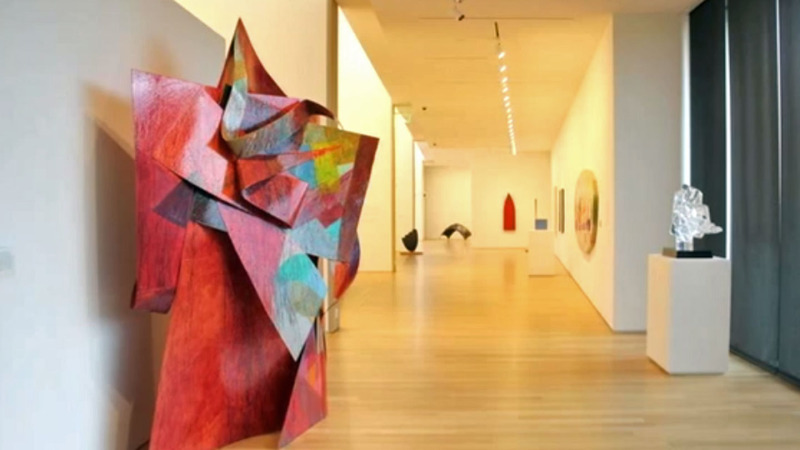
window.__IS_SSR__=true
window.__INITIAL_STATE__={
"attachmentsReducer": {
"audio_0": {
"type": "attachments",
"id": "audio_0",
"imgSizes": {
"kqedFullSize": {
"file": "https://ww2.kqed.org/news/wp-content/themes/KQED-unified/img/audio_bgs/background0.jpg"
}
}
},
"audio_1": {
"type": "attachments",
"id": "audio_1",
"imgSizes": {
"kqedFullSize": {
"file": "https://ww2.kqed.org/news/wp-content/themes/KQED-unified/img/audio_bgs/background1.jpg"
}
}
},
"audio_2": {
"type": "attachments",
"id": "audio_2",
"imgSizes": {
"kqedFullSize": {
"file": "https://ww2.kqed.org/news/wp-content/themes/KQED-unified/img/audio_bgs/background2.jpg"
}
}
},
"audio_3": {
"type": "attachments",
"id": "audio_3",
"imgSizes": {
"kqedFullSize": {
"file": "https://ww2.kqed.org/news/wp-content/themes/KQED-unified/img/audio_bgs/background3.jpg"
}
}
},
"audio_4": {
"type": "attachments",
"id": "audio_4",
"imgSizes": {
"kqedFullSize": {
"file": "https://ww2.kqed.org/news/wp-content/themes/KQED-unified/img/audio_bgs/background4.jpg"
}
}
},
"placeholder": {
"type": "attachments",
"id": "placeholder",
"imgSizes": {
"thumbnail": {
"file": "https://cdn.kqed.org/wp-content/uploads/2024/12/KQED-Default-Image-816638274-2000x1333-1-160x107.jpg",
"width": 160,
"height": 107,
"mimeType": "image/jpeg"
},
"medium": {
"file": "https://cdn.kqed.org/wp-content/uploads/2024/12/KQED-Default-Image-816638274-2000x1333-1-800x533.jpg",
"width": 800,
"height": 533,
"mimeType": "image/jpeg"
},
"medium_large": {
"file": "https://cdn.kqed.org/wp-content/uploads/2024/12/KQED-Default-Image-816638274-2000x1333-1-768x512.jpg",
"width": 768,
"height": 512,
"mimeType": "image/jpeg"
},
"large": {
"file": "https://cdn.kqed.org/wp-content/uploads/2024/12/KQED-Default-Image-816638274-2000x1333-1-1020x680.jpg",
"width": 1020,
"height": 680,
"mimeType": "image/jpeg"
},
"1536x1536": {
"file": "https://cdn.kqed.org/wp-content/uploads/2024/12/KQED-Default-Image-816638274-2000x1333-1-1536x1024.jpg",
"width": 1536,
"height": 1024,
"mimeType": "image/jpeg"
},
"fd-lrg": {
"file": "https://cdn.kqed.org/wp-content/uploads/2024/12/KQED-Default-Image-816638274-2000x1333-1-1536x1024.jpg",
"width": 1536,
"height": 1024,
"mimeType": "image/jpeg"
},
"fd-med": {
"file": "https://cdn.kqed.org/wp-content/uploads/2024/12/KQED-Default-Image-816638274-2000x1333-1-1020x680.jpg",
"width": 1020,
"height": 680,
"mimeType": "image/jpeg"
},
"fd-sm": {
"file": "https://cdn.kqed.org/wp-content/uploads/2024/12/KQED-Default-Image-816638274-2000x1333-1-800x533.jpg",
"width": 800,
"height": 533,
"mimeType": "image/jpeg"
},
"post-thumbnail": {
"file": "https://cdn.kqed.org/wp-content/uploads/2024/12/KQED-Default-Image-816638274-2000x1333-1-672x372.jpg",
"width": 672,
"height": 372,
"mimeType": "image/jpeg"
},
"twentyfourteen-full-width": {
"file": "https://cdn.kqed.org/wp-content/uploads/2024/12/KQED-Default-Image-816638274-2000x1333-1-1038x576.jpg",
"width": 1038,
"height": 576,
"mimeType": "image/jpeg"
},
"xxsmall": {
"file": "https://cdn.kqed.org/wp-content/uploads/2024/12/KQED-Default-Image-816638274-2000x1333-1-160x107.jpg",
"width": 160,
"height": 107,
"mimeType": "image/jpeg"
},
"xsmall": {
"file": "https://cdn.kqed.org/wp-content/uploads/2024/12/KQED-Default-Image-816638274-2000x1333-1-672x372.jpg",
"width": 672,
"height": 372,
"mimeType": "image/jpeg"
},
"small": {
"file": "https://cdn.kqed.org/wp-content/uploads/2024/12/KQED-Default-Image-816638274-2000x1333-1-672x372.jpg",
"width": 672,
"height": 372,
"mimeType": "image/jpeg"
},
"xlarge": {
"file": "https://cdn.kqed.org/wp-content/uploads/2024/12/KQED-Default-Image-816638274-2000x1333-1-1020x680.jpg",
"width": 1020,
"height": 680,
"mimeType": "image/jpeg"
},
"full-width": {
"file": "https://cdn.kqed.org/wp-content/uploads/2024/12/KQED-Default-Image-816638274-2000x1333-1-1920x1280.jpg",
"width": 1920,
"height": 1280,
"mimeType": "image/jpeg"
},
"guest-author-32": {
"file": "https://cdn.kqed.org/wp-content/uploads/2025/01/KQED-Default-Image-816638274-1333x1333-1-160x160.jpg",
"width": 32,
"height": 32,
"mimeType": "image/jpeg"
},
"guest-author-50": {
"file": "https://cdn.kqed.org/wp-content/uploads/2025/01/KQED-Default-Image-816638274-1333x1333-1-160x160.jpg",
"width": 50,
"height": 50,
"mimeType": "image/jpeg"
},
"guest-author-64": {
"file": "https://cdn.kqed.org/wp-content/uploads/2025/01/KQED-Default-Image-816638274-1333x1333-1-160x160.jpg",
"width": 64,
"height": 64,
"mimeType": "image/jpeg"
},
"guest-author-96": {
"file": "https://cdn.kqed.org/wp-content/uploads/2025/01/KQED-Default-Image-816638274-1333x1333-1-160x160.jpg",
"width": 96,
"height": 96,
"mimeType": "image/jpeg"
},
"guest-author-128": {
"file": "https://cdn.kqed.org/wp-content/uploads/2025/01/KQED-Default-Image-816638274-1333x1333-1-160x160.jpg",
"width": 128,
"height": 128,
"mimeType": "image/jpeg"
},
"detail": {
"file": "https://cdn.kqed.org/wp-content/uploads/2025/01/KQED-Default-Image-816638274-1333x1333-1-160x160.jpg",
"width": 160,
"height": 160,
"mimeType": "image/jpeg"
},
"kqedFullSize": {
"file": "https://cdn.kqed.org/wp-content/uploads/2024/12/KQED-Default-Image-816638274-2000x1333-1.jpg",
"width": 2000,
"height": 1333
}
}
},
"news_10351583": {
"type": "attachments",
"id": "news_10351583",
"meta": {
"index": "attachments_1716263798",
"site": "news",
"id": "10351583",
"found": true
},
"parent": 10351579,
"imgSizes": {
"twentyfourteen-full-width": {
"file": "https://ww2.kqed.org/app/uploads/sites/10/2014/11/Anderson-1038x576.jpg",
"width": 1038,
"mimeType": "image/jpeg",
"height": 576
},
"thumbnail": {
"file": "https://ww2.kqed.org/app/uploads/sites/10/2014/11/Anderson-400x225.jpg",
"width": 400,
"mimeType": "image/jpeg",
"height": 225
},
"post-thumbnail": {
"file": "https://ww2.kqed.org/app/uploads/sites/10/2014/11/Anderson-672x372.jpg",
"width": 672,
"mimeType": "image/jpeg",
"height": 372
},
"kqedFullSize": {
"file": "https://ww2.kqed.org/app/uploads/sites/10/2014/11/Anderson.jpg",
"width": 1440,
"height": 810
},
"guest-author-96": {
"file": "https://ww2.kqed.org/app/uploads/sites/10/2014/11/Anderson-96x96.jpg",
"width": 96,
"mimeType": "image/jpeg",
"height": 96
},
"medium": {
"file": "https://ww2.kqed.org/app/uploads/sites/10/2014/11/Anderson-800x450.jpg",
"width": 800,
"mimeType": "image/jpeg",
"height": 450
},
"guest-author-64": {
"file": "https://ww2.kqed.org/app/uploads/sites/10/2014/11/Anderson-64x64.jpg",
"width": 64,
"mimeType": "image/jpeg",
"height": 64
},
"detail": {
"file": "https://ww2.kqed.org/app/uploads/sites/10/2014/11/Anderson-75x75.jpg",
"width": 75,
"mimeType": "image/jpeg",
"height": 75
},
"guest-author-32": {
"file": "https://ww2.kqed.org/app/uploads/sites/10/2014/11/Anderson-32x32.jpg",
"width": 32,
"mimeType": "image/jpeg",
"height": 32
},
"guest-author-128": {
"file": "https://ww2.kqed.org/app/uploads/sites/10/2014/11/Anderson-128x128.jpg",
"width": 128,
"mimeType": "image/jpeg",
"height": 128
}
},
"publishDate": 1416611211,
"modified": 1416621027,
"caption": "The Anderson Collection is now open on Stanford's campus. (Miranda Shepherd)",
"description": "The Anderson Collection is now open on Stanford's campus. (Miranda Shepherd)",
"title": "Anderson",
"credit": null,
"status": "inherit",
"isLoading": false,
"fetchFailed": false
},
"science_22368": {
"type": "attachments",
"id": "science_22368",
"meta": {
"index": "attachments_1716263798",
"site": "science",
"id": "22368",
"found": true
},
"parent": 22363,
"imgSizes": {
"kqedFullSize": {
"file": "https://ww2.kqed.org/app/uploads/sites/35/2014/10/moerner_hero-e1412788133180.jpg",
"width": 751,
"height": 424
}
},
"publishDate": 1412788091,
"modified": 1412788091,
"caption": "Stanford professor W.E. Moerner has been awarded the 2014 Nobel Prize in Chemistry. (L.A. Cicero/Stanford)",
"description": "Stanford professor W.E. Moerner has been awarded the 2014 Nobel Prize in Chemistry. (L.A. Cicero/Stanford)",
"title": "moerner_hero",
"credit": null,
"status": "inherit",
"isLoading": false,
"fetchFailed": false
},
"news_135404": {
"type": "attachments",
"id": "news_135404",
"meta": {
"index": "attachments_1716263798",
"site": "news",
"id": "135404",
"found": true
},
"parent": 135391,
"imgSizes": {
"kqedFullSize": {
"file": "https://ww2.kqed.org/app/uploads/sites/10/2014/05/coal-plant.jpg",
"width": 640,
"height": 426
}
},
"publishDate": 1399508255,
"modified": 1399508255,
"caption": "The Stanford University Board of Trustees has decided to not make direct investments of endowment funds in coal-mining companies. (Jeff Swensen/Getty Images)",
"description": "The Stanford University Board of Trustees has decided to not make direct investments of endowment funds in coal-mining companies. (Jeff Swensen/Getty Images)",
"title": "coal-plant",
"credit": null,
"status": "inherit",
"isLoading": false,
"fetchFailed": false
},
"news_117327": {
"type": "attachments",
"id": "news_117327",
"meta": {
"index": "attachments_1716263798",
"site": "news",
"id": "117327",
"found": true
},
"parent": 117319,
"imgSizes": {
"kqedFullSize": {
"file": "https://ww2.kqed.org/app/uploads/sites/10/2013/11/Render-Entry-2012-06-07-e1383699759732.jpg",
"width": 640,
"height": 461
}
},
"publishDate": 1383699518,
"modified": 1383699518,
"caption": "Artist's rendering of the museum building for the Anderson Collection at Stanford University. (Courtesy Stanford University.",
"description": null,
"title": "Stanford-Anderson Collection",
"credit": null,
"status": "inherit",
"isLoading": false,
"fetchFailed": false
},
"news_11871593": {
"type": "attachments",
"id": "news_11871593",
"meta": {
"index": "attachments_1716263798",
"site": "news",
"id": "11871593",
"found": true
},
"parent": 7035,
"imgSizes": {
"twentyfourteen-full-width": {
"file": "https://ww2.kqed.org/app/uploads/sites/10/2013/01/16562202473_dbbd4e6bbd_b-1024x576.jpg",
"width": 1024,
"mimeType": "image/jpeg",
"height": 576
},
"thumbnail": {
"file": "https://ww2.kqed.org/app/uploads/sites/10/2013/01/16562202473_dbbd4e6bbd_b-160x100.jpg",
"width": 160,
"mimeType": "image/jpeg",
"height": 100
},
"post-thumbnail": {
"file": "https://ww2.kqed.org/app/uploads/sites/10/2013/01/16562202473_dbbd4e6bbd_b-672x372.jpg",
"width": 672,
"mimeType": "image/jpeg",
"height": 372
},
"kqedFullSize": {
"file": "https://ww2.kqed.org/app/uploads/sites/10/2013/01/16562202473_dbbd4e6bbd_b.jpg",
"width": 1024,
"height": 638
},
"large": {
"file": "https://ww2.kqed.org/app/uploads/sites/10/2013/01/16562202473_dbbd4e6bbd_b-1020x636.jpg",
"width": 1020,
"mimeType": "image/jpeg",
"height": 636
},
"medium": {
"file": "https://ww2.kqed.org/app/uploads/sites/10/2013/01/16562202473_dbbd4e6bbd_b-800x498.jpg",
"width": 800,
"mimeType": "image/jpeg",
"height": 498
}
},
"publishDate": 1619655260,
"modified": 1619655347,
"caption": "Two environmental groups filed a federal lawsuit against Stanford University, claiming Searsville Dam harms threatened steelhead trout.",
"description": "Two environmental groups filed a federal lawsuit against Stanford University, claiming Searsville Dam harms threatened steelhead trout.",
"title": "16562202473_dbbd4e6bbd_b",
"credit": "Courtesy of Philippe Cohen",
"status": "inherit",
"altTag": "Two environmental groups filed a federal lawsuit against Stanford University, claiming Searsville Dam harms threatened steelhead trout.",
"isLoading": false,
"fetchFailed": false
}
},
"audioPlayerReducer": {
"postId": "stream_live",
"isPaused": true,
"isPlaying": false,
"pfsActive": false,
"pledgeModalIsOpen": true,
"playerDrawerIsOpen": false,
"liveAudioPlayStartedAt": 0,
"liveAudioPlayContext": ""
},
"authorsReducer": {
"byline_news_10351579": {
"type": "authors",
"id": "byline_news_10351579",
"meta": {
"override": true
},
"slug": "byline_news_10351579",
"name": "\u003ca href=\"http://peninsulapress.com/author/mirandashepherd/\">Miranda Shepherd\u003c/a>\u003cbr>Peninsula Press",
"isLoading": false
},
"skalantari": {
"type": "authors",
"id": "46",
"meta": {
"index": "authors_1716337520",
"id": "46",
"found": true
},
"name": "Shuka Kalantari",
"firstName": "Shuka",
"lastName": "Kalantari",
"slug": "skalantari",
"email": "skalantari@kqed.org",
"display_author_email": false,
"staff_mastheads": [],
"title": null,
"bio": "Shuka Kalantari is a Bay Area journalist reporting on health, food, culture and immigrant communities in California and internationally. She's reported for Public Radio International’s The World, BBC World News Service’s Outlook, Philosophy Talk, Vice Magazine. Shuka is also a frequent contributor to KQED Public Media. You can follow her \u003ca href=\"https://twitter.com/skalantari\">@skalantari\u003c/a> on Twitter and \u003ca href=\"https://instagram.com/skalantari/\">Instagram\u003c/a>.",
"avatar": "https://secure.gravatar.com/avatar/67c95e0bdb512a96a3b0be3ff8a194a6?s=600&d=blank&r=g",
"twitter": null,
"facebook": null,
"instagram": null,
"linkedin": null,
"sites": [
{
"site": "arts",
"roles": [
"Contributor",
"subscriber"
]
},
{
"site": "news",
"roles": [
"contributor"
]
},
{
"site": "bayareabites",
"roles": [
"contributor"
]
},
{
"site": "stateofhealth",
"roles": [
"editor"
]
}
],
"headData": {
"title": "Shuka Kalantari | KQED",
"description": null,
"ogImgSrc": "https://secure.gravatar.com/avatar/67c95e0bdb512a96a3b0be3ff8a194a6?s=600&d=blank&r=g",
"twImgSrc": "https://secure.gravatar.com/avatar/67c95e0bdb512a96a3b0be3ff8a194a6?s=600&d=blank&r=g"
},
"isLoading": false,
"link": "/author/skalantari"
},
"jbrooks": {
"type": "authors",
"id": "80",
"meta": {
"index": "authors_1716337520",
"id": "80",
"found": true
},
"name": "Jon Brooks",
"firstName": "Jon",
"lastName": "Brooks",
"slug": "jbrooks",
"email": "jbrooks@kqed.org",
"display_author_email": true,
"staff_mastheads": [
"science"
],
"title": "Digital Editor",
"bio": "Jon Brooks is a former Digital Editor for KQED Science. He is the former editor of KQED’s daily news blog, News Fix. In 2014, he won a California Journalism Award for his coverage of ride services like Uber and Lyft and the taxi industry. A veteran blogger, he previously worked for Yahoo! in various news writing and editing roles. Jon is also a playwright whose work has been produced in San Francisco, New York, Italy, and around the U.S. He has written about film for his own blog and studied film at Boston University.",
"avatar": "https://secure.gravatar.com/avatar/98887f7ed1c876ed414d4c915e969584?s=600&d=blank&r=g",
"twitter": "jbrooksfoy",
"facebook": null,
"instagram": null,
"linkedin": null,
"sites": [
{
"site": "arts",
"roles": [
"Contributor",
"editor"
]
},
{
"site": "news",
"roles": [
"author"
]
},
{
"site": "futureofyou",
"roles": [
"administrator"
]
},
{
"site": "mindshift",
"roles": [
"editor"
]
},
{
"site": "stateofhealth",
"roles": [
"editor"
]
},
{
"site": "science",
"roles": [
"administrator"
]
},
{
"site": "quest",
"roles": [
"editor"
]
}
],
"headData": {
"title": "Jon Brooks | KQED",
"description": "Digital Editor",
"ogImgSrc": "https://secure.gravatar.com/avatar/98887f7ed1c876ed414d4c915e969584?s=600&d=blank&r=g",
"twImgSrc": "https://secure.gravatar.com/avatar/98887f7ed1c876ed414d4c915e969584?s=600&d=blank&r=g"
},
"isLoading": false,
"link": "/author/jbrooks"
},
"agrossberg": {
"type": "authors",
"id": "188",
"meta": {
"index": "authors_1716337520",
"id": "188",
"found": true
},
"name": "Adam Grossberg",
"firstName": "Adam",
"lastName": "Grossberg",
"slug": "agrossberg",
"email": "agrossberg@KQED.org",
"display_author_email": false,
"staff_mastheads": [],
"title": "KQED Contributor",
"bio": "Adam Grossberg is a former video producer at KQED News. Prior to coming to KQED, he produced videos for PBS, The New York Times, Current TV and The Center for Investigative Reporting. His work has received an Excellence in Journalism award from the Society of Professional Journalists, a regional Murrow award and two Northern California Emmy awards. He is a graduate of the UC Berkeley Graduate School of Journalism.",
"avatar": "https://secure.gravatar.com/avatar/8e96dbdaaf98f5959a2c778289e0f9b5?s=600&d=blank&r=g",
"twitter": null,
"facebook": null,
"instagram": null,
"linkedin": null,
"sites": [
{
"site": "arts",
"roles": [
"contributor"
]
},
{
"site": "news",
"roles": [
"subscriber"
]
},
{
"site": "stateofhealth",
"roles": [
"editor"
]
},
{
"site": "science",
"roles": [
"editor"
]
}
],
"headData": {
"title": "Adam Grossberg | KQED",
"description": "KQED Contributor",
"ogImgSrc": "https://secure.gravatar.com/avatar/8e96dbdaaf98f5959a2c778289e0f9b5?s=600&d=blank&r=g",
"twImgSrc": "https://secure.gravatar.com/avatar/8e96dbdaaf98f5959a2c778289e0f9b5?s=600&d=blank&r=g"
},
"isLoading": false,
"link": "/author/agrossberg"
},
"kqed": {
"type": "authors",
"id": "236",
"meta": {
"index": "authors_1716337520",
"id": "236",
"found": true
},
"name": "KQED News Staff",
"firstName": "KQED News Staff",
"lastName": null,
"slug": "kqed",
"email": "faq@kqed.org",
"display_author_email": false,
"staff_mastheads": [],
"title": null,
"bio": null,
"avatar": "https://secure.gravatar.com/avatar/ef0e801a68c4c54afa9180db14084167?s=600&d=blank&r=g",
"twitter": null,
"facebook": null,
"instagram": null,
"linkedin": null,
"sites": [
{
"site": "arts",
"roles": [
"contributor"
]
},
{
"site": "news",
"roles": [
"editor"
]
},
{
"site": "futureofyou",
"roles": [
"author"
]
}
],
"headData": {
"title": "KQED News Staff | KQED",
"description": null,
"ogImgSrc": "https://secure.gravatar.com/avatar/ef0e801a68c4c54afa9180db14084167?s=600&d=blank&r=g",
"twImgSrc": "https://secure.gravatar.com/avatar/ef0e801a68c4c54afa9180db14084167?s=600&d=blank&r=g"
},
"isLoading": false,
"link": "/author/kqed"
},
"rachael-myrow": {
"type": "authors",
"id": "251",
"meta": {
"index": "authors_1716337520",
"id": "251",
"found": true
},
"name": "Rachael Myrow",
"firstName": "Rachael",
"lastName": "Myrow",
"slug": "rachael-myrow",
"email": "rmyrow@kqed.org",
"display_author_email": true,
"staff_mastheads": [
"news"
],
"title": "Senior Editor of KQED's Silicon Valley News Desk",
"bio": "• I write and edit stories about how Silicon Valley power and policies shape everyday life in California. I’m also passionate about making Bay Area history and culture more accessible to a broad public. • I’ve been a journalist for most of my life, starting in high school with The Franklin Press in Los Angeles, where I grew up. While earning my first degree in English at UC Berkeley, I got my start in public radio at KALX-FM. After completing a second degree in journalism at Cal, I landed my first professional job at Marketplace, then moved on to KPCC (now LAist), and then KQED, where I hosted The California Report for more than seven years. • My reporting has appeared on NPR, The World, WBUR’s \u003ci>Here & Now\u003c/i>, and the BBC. I also guest host for KQED’s \u003ci>Forum\u003c/i>, as well as the Commonwealth Club in San Francisco. • I speak periodically on media, democracy and technology issues, and do voiceover work for documentaries and educational video projects. • Outside of the studio, you'll find me hiking Bay Area trails and whipping up Insta-ready meals in my kitchen. • I do not accept gifts, money, or favors from anyone connected to my reporting, I don't pay people for information, and I do not support or donate to political causes. • I strive to treat the people I report on with fairness, honesty, and respect. I also recognize there are often multiple sides to a story and work to verify information through multiple sources and documentation. If I get something wrong, I correct it.",
"avatar": "https://secure.gravatar.com/avatar/87bf8cb5874e045cdff430523a6d48b1?s=600&d=blank&r=g",
"twitter": "rachaelmyrow",
"facebook": null,
"instagram": null,
"linkedin": "https://www.linkedin.com/in/rachaelmyrow/",
"sites": [
{
"site": "arts",
"roles": [
"administrator"
]
},
{
"site": "news",
"roles": [
"edit_others_posts",
"editor"
]
},
{
"site": "futureofyou",
"roles": [
"editor"
]
},
{
"site": "bayareabites",
"roles": [
"editor"
]
},
{
"site": "stateofhealth",
"roles": [
"editor"
]
},
{
"site": "science",
"roles": [
"editor"
]
},
{
"site": "food",
"roles": [
"editor"
]
},
{
"site": "forum",
"roles": [
"editor"
]
},
{
"site": "liveblog",
"roles": [
"author"
]
}
],
"headData": {
"title": "Rachael Myrow | KQED",
"description": "Senior Editor of KQED's Silicon Valley News Desk",
"ogImgSrc": "https://secure.gravatar.com/avatar/87bf8cb5874e045cdff430523a6d48b1?s=600&d=blank&r=g",
"twImgSrc": "https://secure.gravatar.com/avatar/87bf8cb5874e045cdff430523a6d48b1?s=600&d=blank&r=g"
},
"isLoading": false,
"link": "/author/rachael-myrow"
},
"kqedscience": {
"type": "authors",
"id": "6387",
"meta": {
"index": "authors_1716337520",
"id": "6387",
"found": true
},
"name": "KQED Science",
"firstName": "KQED",
"lastName": "Science",
"slug": "kqedscience",
"email": "kqedscience@gmail.com",
"display_author_email": false,
"staff_mastheads": [],
"title": null,
"bio": "KQED Science brings you award-winning science and environment coverage from the Bay Area and beyond by the flagship Northern California PBS and NPR affiliate.",
"avatar": "https://secure.gravatar.com/avatar/5a295ff49cf82a8c0f30937d3f788b2f?s=600&d=blank&r=g",
"twitter": null,
"facebook": null,
"instagram": null,
"linkedin": null,
"sites": [
{
"site": "science",
"roles": [
"contributor"
]
},
{
"site": "quest",
"roles": [
"editor"
]
},
{
"site": "food",
"roles": [
"contributor"
]
}
],
"headData": {
"title": "KQED Science | KQED",
"description": null,
"ogImgSrc": "https://secure.gravatar.com/avatar/5a295ff49cf82a8c0f30937d3f788b2f?s=600&d=blank&r=g",
"twImgSrc": "https://secure.gravatar.com/avatar/5a295ff49cf82a8c0f30937d3f788b2f?s=600&d=blank&r=g"
},
"isLoading": false,
"link": "/author/kqedscience"
}
},
"pagesReducer": {
"news_tag_stanford-university": {
"type": "terms",
"id": "news_1928",
"meta": {
"index": "terms_1716263798",
"site": "news",
"id": "1928",
"score": 8.790994
},
"featImg": null,
"name": "Stanford University",
"description": null,
"taxonomy": "tag",
"headData": {
"twImgId": null,
"twTitle": null,
"ogTitle": null,
"ogImgId": null,
"twDescription": null,
"description": null,
"title": "Stanford University Archives | KQED News",
"ogDescription": null
},
"ttid": 1943,
"slug": "stanford-university",
"isLoading": false,
"title": "Stanford University",
"pageMeta": {
"site": "news",
"WpPageTemplate": "page-topic-editorial",
"currentPage": 7
},
"blocks": [
{
"blockName": "kqed/post-list",
"attrs": {
"layout": "cardArticle2",
"query": "posts/news?tag=stanford-university",
"seeMore": false,
"paginated": true,
"page": 7
}
},
{
"blockName": "kqed/ad"
}
]
}
},
"pfsSessionReducer": {},
"postsReducer": {
"stream_live": {
"type": "live",
"id": "stream_live",
"audioUrl": "https://streams.kqed.org/kqedradio",
"title": "Live Stream",
"excerpt": "Live Stream information currently unavailable.",
"link": "/radio",
"featImg": "",
"label": {
"name": "KQED Live",
"link": "/"
}
},
"stream_kqedNewscast": {
"type": "posts",
"id": "stream_kqedNewscast",
"audioUrl": "https://www.kqed.org/.stream/anon/radio/RDnews/newscast.mp3?_=1",
"title": "KQED Newscast",
"featImg": "",
"label": {
"name": "88.5 FM",
"link": "/"
}
},
"news_10351579": {
"type": "posts",
"id": "news_10351579",
"meta": {
"index": "posts_1716263798",
"site": "news",
"id": "10351579",
"score": null,
"sort": [
1416758400000
]
},
"parent": 0,
"labelTerm": {
"site": "news",
"term": 6944
},
"blocks": [],
"publishDate": 1416758400,
"format": "standard",
"disqusTitle": "Stanford University Opens Private Art Collection to the Public",
"title": "Stanford University Opens Private Art Collection to the Public",
"headTitle": "News Fix | KQED News",
"content": "\u003cp>The 1947 Jackson Pollock painting “Lucifer” used to hang over Mary Patricia Anderson Pence’s bed. The 121 works collected by Harry W. and Mary Margaret Anderson and their daughter, Mary Patricia, now hang on the walls of a free museum on Stanford’s campus that opened to the public this September.\u003c/p>\n\u003cp>[youtube http://www.youtube.com/watch?v=s3EJUEjyrCU&w=1050&h=591]\u003c/p>\n\u003cp>Focusing on post-WWII American art, the stunning collection includes 86 artists, including Jackson Pollock, Willem de Kooning, Ellsworth Kelly and Mark Rothko.\u003c/p>\n\u003cp>The museum has been drawing large crowds since its opening. Aimee Shapiro, the director of programming and engagement at the Anderson Collection, said: “We’ve evened out averaging 2,800 people a week since we opened. So we’ve already had 16,000 people here in the five weeks that we’ve been open.”\u003c/p>\n\u003cp>The museum, like the Cantor Arts Center next door on the Stanford campus, doesn’t charge for admission.\u003c/p>\n\u003cp>[ad fullwidth]\u003c/p>\n\u003cp>“Adding a $20 ticket to a museum experience is quite prohibitive to families or to people who are not upper-middle class … It’s completely free — so if you have three kids and a spouse, you don’t have to pay $100 to walk into a museum for an hour,” Shapiro said.\u003c/p>\n\u003cp>“Institutions can sometimes be intimidating,” said Sophia Villarreal Licona, the arts-in-student-life coordinator at the Stanford Arts Institute. “They can be expensive or hard to get to. … I think that the fact that the museum is free is fantastic. It does a lot in terms of accessibility … but it is not the end of what the museum needs to do in terms of reaching new audiences.”\u003c/p>\n\u003cp>One such effort was the theatrical dance performance “Scene in Action,” staged by Stanford dance professor Aleta Hayes and a seminar of students. The performance brought huge crowds to the museum that may not have seen the collection otherwise.\u003c/p>\n\u003cp>\u003c/p>\n\u003cp>Taylor Litchfield, a dancer in the production, praised the collection and the staff for not only inviting them into the space but also teaching them about art history in the process. “Only at Stanford,” Litchfield said. “It’s amazing how generous [the Andersons] are to donate their art and this entire collection.\"\u003c/p>\n\n",
"disqusIdentifier": "10351579 http://ww2.kqed.org/news/?p=10351579",
"disqusUrl": "https://ww2.kqed.org/news/2014/11/23/stanford-university-opens-private-art-collection-to-the-public/",
"stats": {
"hasVideo": true,
"hasChartOrMap": false,
"hasAudio": false,
"hasPolis": false,
"wordCount": 402,
"hasGoogleForm": false,
"hasGallery": false,
"hasHearkenModule": false,
"iframeSrcs": [],
"paragraphCount": 11
},
"modified": 1416621429,
"excerpt": "The private Anderson Collection featuring Jackson Pollock and Mark Rothko is now available to the public.",
"headData": {
"twImgId": "",
"twTitle": "",
"ogTitle": "",
"ogImgId": "",
"twDescription": "",
"description": "The private Anderson Collection featuring Jackson Pollock and Mark Rothko is now available to the public.",
"title": "Stanford University Opens Private Art Collection to the Public | KQED",
"ogDescription": "",
"schema": {
"@context": "https://schema.org",
"@type": "NewsArticle",
"headline": "Stanford University Opens Private Art Collection to the Public",
"datePublished": "2014-11-23T08:00:00-08:00",
"dateModified": "2014-11-21T17:57:09-08:00",
"image": "https://cdn.kqed.org/wp-content/uploads/2020/02/KQED-OG-Image@1x.png",
"isAccessibleForFree": "True",
"publisher": {
"@type": "NewsMediaOrganization",
"@id": "https://www.kqed.org/#organization",
"name": "KQED",
"logo": "https://cdn.kqed.org/wp-content/uploads/2020/02/KQED-OG-Image@1x.png",
"url": "https://www.kqed.org",
"sameAs": [
"https://www.facebook.com/KQED",
"https://twitter.com/KQED",
"https://www.instagram.com/kqed/",
"https://www.tiktok.com/@kqedofficial",
"https://www.linkedin.com/company/kqed",
"https://www.youtube.com/channel/UCeC0IOo7i1P_61zVUWbJ4nw"
]
}
}
},
"guestAuthors": [],
"slug": "stanford-university-opens-private-art-collection-to-the-public",
"status": "publish",
"customPermalink": "2014/11/23/Stanford-University-Anderson-Collection-free-museum/",
"nprByline": "\u003ca href=\"http://peninsulapress.com/author/mirandashepherd/\">Miranda Shepherd\u003c/a>\u003cbr>Peninsula Press",
"path": "/news/10351579/stanford-university-opens-private-art-collection-to-the-public",
"audioTrackLength": null,
"parsedContent": [
{
"type": "contentString",
"content": "\u003cdiv class=\"post-body\">\u003cp>\u003cp>The 1947 Jackson Pollock painting “Lucifer” used to hang over Mary Patricia Anderson Pence’s bed. The 121 works collected by Harry W. and Mary Margaret Anderson and their daughter, Mary Patricia, now hang on the walls of a free museum on Stanford’s campus that opened to the public this September.\u003c/p>\n\u003cp>\u003c/p>\u003cp>\u003cspan class='utils-parseShortcode-shortcodes-__youtubeShortcode__embedYoutube'>\n \u003cspan class='utils-parseShortcode-shortcodes-__youtubeShortcode__embedYoutubeInside'>\n \u003ciframe\n loading='lazy'\n class='utils-parseShortcode-shortcodes-__youtubeShortcode__youtubePlayer'\n type='text/html'\n src='//www.youtube.com/embed/s3EJUEjyrCU'\n title='//www.youtube.com/embed/s3EJUEjyrCU'\n allowfullscreen='true'\n style='border:0;'>\u003c/iframe>\n \u003c/span>\n \u003c/span>\u003c/p>\u003cp>\u003c/p>\n\u003cp>Focusing on post-WWII American art, the stunning collection includes 86 artists, including Jackson Pollock, Willem de Kooning, Ellsworth Kelly and Mark Rothko.\u003c/p>\n\u003cp>The museum has been drawing large crowds since its opening. Aimee Shapiro, the director of programming and engagement at the Anderson Collection, said: “We’ve evened out averaging 2,800 people a week since we opened. So we’ve already had 16,000 people here in the five weeks that we’ve been open.”\u003c/p>\n\u003cp>The museum, like the Cantor Arts Center next door on the Stanford campus, doesn’t charge for admission.\u003c/p>\n\u003cp>\u003c/p>\u003c/div>",
"attributes": {
"named": {},
"numeric": []
}
},
{
"type": "component",
"content": "",
"name": "ad",
"attributes": {
"named": {
"label": "fullwidth"
},
"numeric": [
"fullwidth"
]
}
},
{
"type": "contentString",
"content": "\u003cdiv class=\"post-body\">\u003cp>\u003c/p>\n\u003cp>“Adding a $20 ticket to a museum experience is quite prohibitive to families or to people who are not upper-middle class … It’s completely free — so if you have three kids and a spouse, you don’t have to pay $100 to walk into a museum for an hour,” Shapiro said.\u003c/p>\n\u003cp>“Institutions can sometimes be intimidating,” said Sophia Villarreal Licona, the arts-in-student-life coordinator at the Stanford Arts Institute. “They can be expensive or hard to get to. … I think that the fact that the museum is free is fantastic. It does a lot in terms of accessibility … but it is not the end of what the museum needs to do in terms of reaching new audiences.”\u003c/p>\n\u003cp>One such effort was the theatrical dance performance “Scene in Action,” staged by Stanford dance professor Aleta Hayes and a seminar of students. The performance brought huge crowds to the museum that may not have seen the collection otherwise.\u003c/p>\n\u003cp>\u003c/p>\n\u003cp>Taylor Litchfield, a dancer in the production, praised the collection and the staff for not only inviting them into the space but also teaching them about art history in the process. “Only at Stanford,” Litchfield said. “It’s amazing how generous [the Andersons] are to donate their art and this entire collection.\"\u003c/p>\n\n\u003c/div>\u003c/p>",
"attributes": {
"named": {},
"numeric": []
}
}
],
"link": "/news/10351579/stanford-university-opens-private-art-collection-to-the-public",
"authors": [
"byline_news_10351579"
],
"programs": [
"news_6944"
],
"categories": [
"news_223"
],
"tags": [
"news_1928"
],
"affiliates": [
"news_5933"
],
"featImg": "news_10351583",
"label": "news_6944"
},
"science_22363": {
"type": "posts",
"id": "science_22363",
"meta": {
"index": "posts_1716263798",
"site": "science",
"id": "22363",
"score": null,
"sort": [
1412788386000
]
},
"parent": 0,
"labelTerm": {
"site": "science"
},
"blocks": [],
"publishDate": 1412788386,
"format": "aside",
"title": "Stanford Scientist Shares Nobel in Chemistry",
"headTitle": "Stanford Scientist Shares Nobel in Chemistry | KQED",
"content": "\u003cp>\u003cstrong>By Scott Neuman\u003cbr>\n\u003ca href=\"http://www.npr.org/blogs/thetwo-way/2014/10/08/354514604/scientists-share-chemistry-nobel-for-breakthrough-in-microscopy\">NPR\u003c/a>\u003c/strong>\u003c/p>\n\u003cfigure id=\"attachment_22365\" class=\"wp-caption aligncenter\" style=\"max-width: 600px\">\u003ca href=\"http://ww2.kqed.org/science/wp-content/uploads/sites/35/2014/10/14369-moerner.jpg\">\u003cimg loading=\"lazy\" decoding=\"async\" src=\"http://ww2.kqed.org/science/wp-content/uploads/sites/35/2014/10/14369-moerner.jpg\" alt=\"Stanford professor W.E. Moerner has been awarded the 2014 Nobel Prize in Chemistry. (L.A. Cicero/Stanford)\" width=\"600\" height=\"399\" class=\"size-full wp-image-22365\">\u003c/a>\u003cfigcaption class=\"wp-caption-text\">Stanford professor W.E. Moerner has been awarded the 2014 Nobel Prize in Chemistry. (L.A. Cicero/Stanford)\u003c/figcaption>\u003c/figure>\n\u003cp>Two Americans and a German will share the Nobel Prize in chemistry for developing a new type of microscopy that allows researchers, for the first time, to see individual molecules inside living cells.\u003c/p>\n\u003cp>The Royal Swedish Academy of Sciences has awarded Americans Eric Betzig and William Moerner and German scientist Stefan Hell the prize for “the development of super-resolved fluorescence microscopy,” which “has brought optical microscopy into the nanodimension.”\u003c/p>\n\u003cp>\u003ca href=\"http://www.nobelprize.org/nobel_prizes/chemistry/laureates/2014/press.html\">Nobelprize.org\u003c/a> says:\u003c/p>\n\u003cblockquote>\u003cp>“For a long time optical microscopy was held back by a presumed limitation: that it would never obtain a better resolution than half the wavelength of light. Helped by fluorescent molecules the Nobel Laureates in Chemistry 2014 ingeniously circumvented this limitation. Their ground-breaking work has brought optical microscopy into the nanodimension.\u003c/p>\n\u003cp>“In what has become known as nanoscopy, scientists visualize the pathways of individual molecules inside living cells. They can see how molecules create synapses between nerve cells in the brain; they can track proteins involved in Parkinson’s, Alzheimer’s and Huntington’s diseases as they aggregate; they follow individual proteins in fertilized eggs as these divide into embryos.”\u003c/p>\u003c/blockquote>\n\u003cp>The academy says it is awarding the prize for two distinct principles. \u003ca href=\"http://www3.mpibpc.mpg.de/groups/hell/STED.htm\">Simulated emission depletion (STED) microscopy\u003c/a>, which uses a laser to stimulate fluorescent molecules to glow and another laser to filter out all but a small portion of the result, allowing incredibly fine resolution. That research was carried out by Hell.\u003c/p>\n\u003cp>[ad fullwidth]\u003c/p>\n\u003cp>Working separately, Betzig and Moerner are credited with developing \u003ca href=\"http://www.rsc.org/conferencesandevents/rscconferences/fd/molecule-fd2015/index.asp\">single-molecule microscopy\u003c/a>, a “method [that] relies upon the possibility to turn the fluorescence of individual molecules on and off. Scientists image the same area multiple times, letting just a few interspersed molecules glow each time,” according to Nobelprize.org.\u003c/p>\n\u003cp>Betzig is a group leader at Janelia Farm Research Campus, Howard Hughes Medical Institute, Ashburn, Va., and Moerner is the Harry S. Mosher Professor in Chemistry and professor, by courtesy, of applied physics at Stanford University.\u003c/p>\n\u003cp>\u003c/p>\n\u003cp>Hell is the director at the Max Planck Institute for Biophysical Chemistry, Gottingen, and division head at the German Cancer Research Center in Heidelberg, Germany.\u003c/p>\n\n",
"stats": {
"hasVideo": false,
"hasChartOrMap": false,
"hasAudio": false,
"hasPolis": false,
"wordCount": 382,
"hasGoogleForm": false,
"hasGallery": false,
"hasHearkenModule": false,
"iframeSrcs": [],
"paragraphCount": 12
},
"modified": 1704932795,
"excerpt": "Two Americans and a German will share the Nobel Prize in chemistry for developing a new type of microscopy that allows researchers, for the first time, to see individual molecules inside living cells.",
"headData": {
"twImgId": "",
"twTitle": "",
"ogTitle": "",
"ogImgId": "",
"twDescription": "",
"description": "Two Americans and a German will share the Nobel Prize in chemistry for developing a new type of microscopy that allows researchers, for the first time, to see individual molecules inside living cells.",
"title": "Stanford Scientist Shares Nobel in Chemistry | KQED",
"ogDescription": "",
"schema": {
"@context": "https://schema.org",
"@type": "Article",
"headline": "Stanford Scientist Shares Nobel in Chemistry",
"datePublished": "2014-10-08T10:13:06-07:00",
"dateModified": "2024-01-10T16:26:35-08:00",
"image": "https://cdn.kqed.org/wp-content/uploads/2020/02/KQED-OG-Image@1x.png"
}
},
"guestAuthors": [],
"slug": "stanford-scientist-shares-nobel-in-chemistry",
"status": "publish",
"sticky": false,
"path": "/science/22363/stanford-scientist-shares-nobel-in-chemistry",
"audioTrackLength": null,
"parsedContent": [
{
"type": "contentString",
"content": "\u003cdiv class=\"post-body\">\u003cp>\u003cp>\u003cstrong>By Scott Neuman\u003cbr>\n\u003ca href=\"http://www.npr.org/blogs/thetwo-way/2014/10/08/354514604/scientists-share-chemistry-nobel-for-breakthrough-in-microscopy\">NPR\u003c/a>\u003c/strong>\u003c/p>\n\u003cfigure id=\"attachment_22365\" class=\"wp-caption aligncenter\" style=\"max-width: 600px\">\u003ca href=\"http://ww2.kqed.org/science/wp-content/uploads/sites/35/2014/10/14369-moerner.jpg\">\u003cimg loading=\"lazy\" decoding=\"async\" src=\"http://ww2.kqed.org/science/wp-content/uploads/sites/35/2014/10/14369-moerner.jpg\" alt=\"Stanford professor W.E. Moerner has been awarded the 2014 Nobel Prize in Chemistry. (L.A. Cicero/Stanford)\" width=\"600\" height=\"399\" class=\"size-full wp-image-22365\">\u003c/a>\u003cfigcaption class=\"wp-caption-text\">Stanford professor W.E. Moerner has been awarded the 2014 Nobel Prize in Chemistry. (L.A. Cicero/Stanford)\u003c/figcaption>\u003c/figure>\n\u003cp>Two Americans and a German will share the Nobel Prize in chemistry for developing a new type of microscopy that allows researchers, for the first time, to see individual molecules inside living cells.\u003c/p>\n\u003cp>The Royal Swedish Academy of Sciences has awarded Americans Eric Betzig and William Moerner and German scientist Stefan Hell the prize for “the development of super-resolved fluorescence microscopy,” which “has brought optical microscopy into the nanodimension.”\u003c/p>\n\u003cp>\u003ca href=\"http://www.nobelprize.org/nobel_prizes/chemistry/laureates/2014/press.html\">Nobelprize.org\u003c/a> says:\u003c/p>\n\u003cblockquote>\u003cp>“For a long time optical microscopy was held back by a presumed limitation: that it would never obtain a better resolution than half the wavelength of light. Helped by fluorescent molecules the Nobel Laureates in Chemistry 2014 ingeniously circumvented this limitation. Their ground-breaking work has brought optical microscopy into the nanodimension.\u003c/p>\n\u003cp>“In what has become known as nanoscopy, scientists visualize the pathways of individual molecules inside living cells. They can see how molecules create synapses between nerve cells in the brain; they can track proteins involved in Parkinson’s, Alzheimer’s and Huntington’s diseases as they aggregate; they follow individual proteins in fertilized eggs as these divide into embryos.”\u003c/p>\u003c/blockquote>\n\u003cp>The academy says it is awarding the prize for two distinct principles. \u003ca href=\"http://www3.mpibpc.mpg.de/groups/hell/STED.htm\">Simulated emission depletion (STED) microscopy\u003c/a>, which uses a laser to stimulate fluorescent molecules to glow and another laser to filter out all but a small portion of the result, allowing incredibly fine resolution. That research was carried out by Hell.\u003c/p>\n\u003cp>\u003c/p>\u003c/div>",
"attributes": {
"named": {},
"numeric": []
}
},
{
"type": "component",
"content": "",
"name": "ad",
"attributes": {
"named": {
"label": "fullwidth"
},
"numeric": [
"fullwidth"
]
}
},
{
"type": "contentString",
"content": "\u003cdiv class=\"post-body\">\u003cp>\u003c/p>\n\u003cp>Working separately, Betzig and Moerner are credited with developing \u003ca href=\"http://www.rsc.org/conferencesandevents/rscconferences/fd/molecule-fd2015/index.asp\">single-molecule microscopy\u003c/a>, a “method [that] relies upon the possibility to turn the fluorescence of individual molecules on and off. Scientists image the same area multiple times, letting just a few interspersed molecules glow each time,” according to Nobelprize.org.\u003c/p>\n\u003cp>Betzig is a group leader at Janelia Farm Research Campus, Howard Hughes Medical Institute, Ashburn, Va., and Moerner is the Harry S. Mosher Professor in Chemistry and professor, by courtesy, of applied physics at Stanford University.\u003c/p>\n\u003cp>\u003c/p>\n\u003cp>Hell is the director at the Max Planck Institute for Biophysical Chemistry, Gottingen, and division head at the German Cancer Research Center in Heidelberg, Germany.\u003c/p>\n\n\u003c/div>\u003c/p>",
"attributes": {
"named": {},
"numeric": []
}
}
],
"link": "/science/22363/stanford-scientist-shares-nobel-in-chemistry",
"authors": [
"6387"
],
"categories": [
"science_29",
"science_40"
],
"tags": [
"science_798",
"science_1943",
"science_5187"
],
"featImg": "science_22368",
"label": "science"
},
"news_135391": {
"type": "posts",
"id": "news_135391",
"meta": {
"index": "posts_1716263798",
"site": "news",
"id": "135391",
"score": null,
"sort": [
1399510485000
]
},
"parent": 0,
"labelTerm": {
"site": "news",
"term": 6944
},
"blocks": [],
"publishDate": 1399510485,
"format": "aside",
"disqusTitle": "Stanford's Coal Divestment: Environmental or Financial? Or Both?",
"title": "Stanford's Coal Divestment: Environmental or Financial? Or Both?",
"headTitle": "News Fix | KQED News",
"content": "\u003cfigure id=\"attachment_135415\" class=\"wp-caption aligncenter\" style=\"max-width: 640px\">\u003ca href=\"http://ww2.kqed.org/news/wp-content/uploads/sites/10/2014/05/Stanford_University_campus_from_above.jpg\">\u003cimg src=\"http://ww2.kqed.org/news/wp-content/uploads/sites/10/2014/05/Stanford_University_campus_from_above-640x480.jpg\" alt=\"The Stanford University Board of Trustees has decided to not make direct investments of endowment funds in coal-mining companies. (Jawed Karim)\" width=\"640\" height=\"480\" class=\"size-medium wp-image-135415\">\u003c/a>\u003cfigcaption class=\"wp-caption-text\">The Stanford University Board of Trustees has decided to not make direct investments of endowment funds in coal-mining companies. (Jawed Karim)\u003c/figcaption>\u003c/figure>\n\u003cp>A campaign on college campuses across the country aimed at stopping climate change received a big boost yesterday with the announcement that Stanford University will stop investing in coal companies.\u003c/p>\n\u003cp>The resolution, passed by Stanford’s Board of Trustees, states the school will no longer directly invest in approximately 100 publicly traded companies whose primary business is coal extraction, in addition to divesting itself of any current holdings in such companies.\u003c/p>\n\u003cp>\"The university's review has concluded that coal is one of the most carbon-intensive methods of energy generation and that other sources can be readily substituted for it,” Stanford President John Hennessy said in a \u003ca href=\"http://news.stanford.edu/news/2014/may/divest-coal-trustees-050714.html\" target=\"_blank\">statement explaining the move\u003c/a>.\u003c/p>\n\u003cp>Stanford’s “Statement of Investment Responsibility,” originally adopted in 1971, says that while trustees’ primary obligation is to maximize profits, the board should consider whether “corporate policies or practices create substantial social injury.”\u003c/p>\n\u003cfigure id=\"attachment_135404\" class=\"wp-caption alignright\" style=\"max-width: 300px\">\u003ca href=\"http://ww2.kqed.org/news/wp-content/uploads/sites/10/2014/05/coal-plant.jpg\">\u003cimg class=\"size-thumbnail wp-image-135404\" src=\"http://ww2.kqed.org/news/wp-content/uploads/sites/10/2014/05/coal-plant-300x300.jpg\" alt=\"The Stanford University Board of Trustees has decided to not make direct investments of endowment funds in coal-mining companies. (Jeff Swensen/Getty Images)\" width=\"300\" height=\"300\">\u003c/a>\u003cfigcaption class=\"wp-caption-text\">Stanford’s decision bolsters a national campaign that has seen 11 other schools remove investments in fossil fuel companies. (Jeff Swensen/Getty Images)\u003c/figcaption>\u003c/figure>\n\u003cp>\"Stanford has a responsibility as a global citizen to promote sustainability for our planet,\" Hennessy said. “Moving away from coal in the investment context is a small, but constructive, step while work continues, at Stanford and elsewhere, to develop broadly viable sustainable energy solutions for the future.\"\u003c/p>\n\u003cp>[ad fullwidth]\u003c/p>\n\u003cp>The school does not disclose specific investment information about portfolio holdings or individual values, but Lisa Lapin, associate vice president of communications at Stanford, \u003ca href=\"http://www.nytimes.com/2014/05/07/education/stanford-to-purge-18-billion-endowment-of-coal-stock.html?_r=0\" target=\"_blank\">told the New York Times\u003c/a> that the school’s current investment in coal companies represents a small portion of its total $18.7 billion endowment. Thus, Lapin says, “a small percentage is still a substantial amount of money.”\u003c/p>\n\u003cp>Reacting to the news Wednesday, representatives from the coal industry said the divestment \u003ca href=\"http://www.npr.org/2014/05/07/310449120/when-colleges-divest-in-coal-its-barely-a-drop-in-the-bucket\" target=\"_blank\">will have no impact on the industry at all\u003c/a>.\u003c/p>\n\u003caside class=\"left long\">\n\u003ch3>Divested Schools\u003c/h3>\n\u003cp>College of the Atlantic\u003c/p>\n\u003cp>Foothill-De Anza Community College\u003c/p>\n\u003cp>Green Mountain College\u003c/p>\n\u003cp>Hampshire College\u003c/p>\n\u003cp>Naropa University\u003c/p>\n\u003cp>Peralta Community College District\u003c/p>\n\u003cp>Pitzer College\u003c/p>\n\u003cp>Prescott College\u003c/p>\n\u003cp>San Francisco State University\u003c/p>\n\u003cp>Stanford University\u003c/p>\n\u003cp>Sterling College\u003c/p>\n\u003cp>Unity College\u003c/p>\n\u003c/aside>\n\u003cp>The move was initiated by \u003ca href=\"http://www.fossilfreestanford.org\" target=\"_blank\">Fossil Free Stanford\u003c/a>, a student-led organization that petitioned the university last year as part of a national campaign encouraging divestment from all fossil fuel companies.\u003c/p>\n\u003cp>“It's going to prove to be an enormous victory in terms of symbolism,” Michael Peñuelas, one of the leaders of Fossil Free Stanford, says. “And it's going to tell a lot of other university administrations and other private-sector institutions that this is a feasible move to divest from coal.”\u003c/p>\n\u003cp>Stanford’s decision clearly bolsters a national campaign that has seen 11 other schools remove investments in fossil fuel companies. The schools include: San Francisco State, which \u003ca href=\"http://www.mercurynews.com/ci_23443908/san-francsico-state-university-votes-divest-investment-coal\" target=\"_blank\">divested from coal and tar sands companies last June\u003c/a>, Hampshire College, Pitzer College and a handful of smaller schools.\u003c/p>\n\u003cp>“The impact of Stanford’s decision is going to put an exclamation point at the end of everything (the national campaign) has done,” says David Meyer, professor of sociology at UC Irvine. “There tends to be a cascade effect when big players like Stanford get into the action.”\u003c/p>\n\u003cp>Despite campus protests, other schools, most notably Harvard and Middlebury, have refused to join the divestment campaign, questioning the effectiveness of the divestment strategy. More than 100 Harvard faculty members have signed a letter urging Harvard president Drew Faust to divest, and last week, one student was arrested on campus for attempting to blockade Faust’s office.\u003c/p>\n\u003cp>A report by Harvard University’s Institute of Politics titled, \u003ca href=\"http://www.iop.harvard.edu/does-divestment-work\" target=\"_blank\">“Does Divestment Work?,”\u003c/a> draws parallels between fossil fuel divestment and similar campaigns to halt investment in South African companies during apartheid in the 1980s. The study suggests the effectiveness of divestment is not all about finances:\u003c/p>\n\u003cblockquote>\u003cp>“The evidence from South Africa suggests that divestment, while ineffective in a financial sense, can have an impact by shaping public discourse. … If universities across the country divested from fossil fuels, this would again be the case.”\u003c/p>\u003c/blockquote>\n\u003cp>While Stanford's move is widely seen as an environmental victory, Meyer says, “It’s also worth pointing out that Stanford didn’t take the whole fossil fuel abstention position, only focusing on coal,” and not divesting from oil or natural gas companies, as Fossil Free Stanford’s petition called for.\u003c/p>\n\u003cp>Financially speaking, Meyer says “coal increasingly looks like it’s a bad investment.” This makes it much easier for Stanford’s Board of Trustees to remove funds from an already shaky investment — while earning environmental kudos in the process.\u003c/p>\n\u003cp>Another factor: Bay Area billionaire Tom Steyer, \u003ca href=\"http://www.kqed.org/a/forum/R201303201000\" target=\"_blank\">a noted environmental advocate\u003c/a>, sits on Stanford’s board. \u003ca href=\"http://www.washingtonpost.com/blogs/wonkblog/wp/2014/05/06/stanford-becomes-the-most-prominent-university-yet-to-divest-from-coal/\" target=\"_blank\">The Washington Post suggests\u003c/a> that Steyer’s presence increased internal pressure on the school to approve the divestment.\u003c/p>\n\u003cp>While the development is “exciting and encouraging for students,” Meyer fully expects them to “claim this victory and keep demanding more.”\u003c/p>\n\u003cp>\u003c/p>\n\u003cp>\u003ciframe width=\"100%\" height=\"166\" scrolling=\"no\" frameborder=\"no\" src=\"https://w.soundcloud.com/player/?url=https%3A//api.soundcloud.com/tracks/148441997&color=ff5500&auto_play=false&hide_related=false&show_artwork=true\">\u003c/iframe>\u003c/p>\n\n",
"disqusIdentifier": "135391 http://ww2.kqed.org/news/?p=135391",
"disqusUrl": "https://ww2.kqed.org/news/2014/05/07/stanfords-coal-divestment-environmental-or-financial/",
"stats": {
"hasVideo": false,
"hasChartOrMap": false,
"hasAudio": true,
"hasPolis": false,
"wordCount": 868,
"hasGoogleForm": false,
"hasGallery": false,
"hasHearkenModule": false,
"iframeSrcs": [],
"paragraphCount": 33
},
"modified": 1399568991,
"excerpt": "The school's $18 billion endowment will no longer include coal, an increasingly bad investment.",
"headData": {
"twImgId": "",
"twTitle": "",
"ogTitle": "",
"ogImgId": "",
"twDescription": "",
"description": "The school's $18 billion endowment will no longer include coal, an increasingly bad investment.",
"title": "Stanford's Coal Divestment: Environmental or Financial? Or Both? | KQED",
"ogDescription": "",
"schema": {
"@context": "https://schema.org",
"@type": "NewsArticle",
"headline": "Stanford's Coal Divestment: Environmental or Financial? Or Both?",
"datePublished": "2014-05-07T17:54:45-07:00",
"dateModified": "2014-05-08T10:09:51-07:00",
"image": "https://cdn.kqed.org/wp-content/uploads/2020/02/KQED-OG-Image@1x.png",
"isAccessibleForFree": "True",
"publisher": {
"@type": "NewsMediaOrganization",
"@id": "https://www.kqed.org/#organization",
"name": "KQED",
"logo": "https://cdn.kqed.org/wp-content/uploads/2020/02/KQED-OG-Image@1x.png",
"url": "https://www.kqed.org",
"sameAs": [
"https://www.facebook.com/KQED",
"https://twitter.com/KQED",
"https://www.instagram.com/kqed/",
"https://www.tiktok.com/@kqedofficial",
"https://www.linkedin.com/company/kqed",
"https://www.youtube.com/channel/UCeC0IOo7i1P_61zVUWbJ4nw"
]
}
}
},
"guestAuthors": [],
"slug": "stanfords-coal-divestment-environmental-or-financial",
"status": "publish",
"path": "/news/135391/stanfords-coal-divestment-environmental-or-financial",
"audioTrackLength": null,
"parsedContent": [
{
"type": "contentString",
"content": "\u003cdiv class=\"post-body\">\u003cp>\u003cfigure id=\"attachment_135415\" class=\"wp-caption aligncenter\" style=\"max-width: 640px\">\u003ca href=\"http://ww2.kqed.org/news/wp-content/uploads/sites/10/2014/05/Stanford_University_campus_from_above.jpg\">\u003cimg src=\"http://ww2.kqed.org/news/wp-content/uploads/sites/10/2014/05/Stanford_University_campus_from_above-640x480.jpg\" alt=\"The Stanford University Board of Trustees has decided to not make direct investments of endowment funds in coal-mining companies. (Jawed Karim)\" width=\"640\" height=\"480\" class=\"size-medium wp-image-135415\">\u003c/a>\u003cfigcaption class=\"wp-caption-text\">The Stanford University Board of Trustees has decided to not make direct investments of endowment funds in coal-mining companies. (Jawed Karim)\u003c/figcaption>\u003c/figure>\n\u003cp>A campaign on college campuses across the country aimed at stopping climate change received a big boost yesterday with the announcement that Stanford University will stop investing in coal companies.\u003c/p>\n\u003cp>The resolution, passed by Stanford’s Board of Trustees, states the school will no longer directly invest in approximately 100 publicly traded companies whose primary business is coal extraction, in addition to divesting itself of any current holdings in such companies.\u003c/p>\n\u003cp>\"The university's review has concluded that coal is one of the most carbon-intensive methods of energy generation and that other sources can be readily substituted for it,” Stanford President John Hennessy said in a \u003ca href=\"http://news.stanford.edu/news/2014/may/divest-coal-trustees-050714.html\" target=\"_blank\">statement explaining the move\u003c/a>.\u003c/p>\n\u003cp>Stanford’s “Statement of Investment Responsibility,” originally adopted in 1971, says that while trustees’ primary obligation is to maximize profits, the board should consider whether “corporate policies or practices create substantial social injury.”\u003c/p>\n\u003cfigure id=\"attachment_135404\" class=\"wp-caption alignright\" style=\"max-width: 300px\">\u003ca href=\"http://ww2.kqed.org/news/wp-content/uploads/sites/10/2014/05/coal-plant.jpg\">\u003cimg class=\"size-thumbnail wp-image-135404\" src=\"http://ww2.kqed.org/news/wp-content/uploads/sites/10/2014/05/coal-plant-300x300.jpg\" alt=\"The Stanford University Board of Trustees has decided to not make direct investments of endowment funds in coal-mining companies. (Jeff Swensen/Getty Images)\" width=\"300\" height=\"300\">\u003c/a>\u003cfigcaption class=\"wp-caption-text\">Stanford’s decision bolsters a national campaign that has seen 11 other schools remove investments in fossil fuel companies. (Jeff Swensen/Getty Images)\u003c/figcaption>\u003c/figure>\n\u003cp>\"Stanford has a responsibility as a global citizen to promote sustainability for our planet,\" Hennessy said. “Moving away from coal in the investment context is a small, but constructive, step while work continues, at Stanford and elsewhere, to develop broadly viable sustainable energy solutions for the future.\"\u003c/p>\n\u003cp>\u003c/p>\u003c/div>",
"attributes": {
"named": {},
"numeric": []
}
},
{
"type": "component",
"content": "",
"name": "ad",
"attributes": {
"named": {
"label": "fullwidth"
},
"numeric": [
"fullwidth"
]
}
},
{
"type": "contentString",
"content": "\u003cdiv class=\"post-body\">\u003cp>\u003c/p>\n\u003cp>The school does not disclose specific investment information about portfolio holdings or individual values, but Lisa Lapin, associate vice president of communications at Stanford, \u003ca href=\"http://www.nytimes.com/2014/05/07/education/stanford-to-purge-18-billion-endowment-of-coal-stock.html?_r=0\" target=\"_blank\">told the New York Times\u003c/a> that the school’s current investment in coal companies represents a small portion of its total $18.7 billion endowment. Thus, Lapin says, “a small percentage is still a substantial amount of money.”\u003c/p>\n\u003cp>Reacting to the news Wednesday, representatives from the coal industry said the divestment \u003ca href=\"http://www.npr.org/2014/05/07/310449120/when-colleges-divest-in-coal-its-barely-a-drop-in-the-bucket\" target=\"_blank\">will have no impact on the industry at all\u003c/a>.\u003c/p>\n\u003caside class=\"left long\">\n\u003ch3>Divested Schools\u003c/h3>\n\u003cp>College of the Atlantic\u003c/p>\n\u003cp>Foothill-De Anza Community College\u003c/p>\n\u003cp>Green Mountain College\u003c/p>\n\u003cp>Hampshire College\u003c/p>\n\u003cp>Naropa University\u003c/p>\n\u003cp>Peralta Community College District\u003c/p>\n\u003cp>Pitzer College\u003c/p>\n\u003cp>Prescott College\u003c/p>\n\u003cp>San Francisco State University\u003c/p>\n\u003cp>Stanford University\u003c/p>\n\u003cp>Sterling College\u003c/p>\n\u003cp>Unity College\u003c/p>\n\u003c/aside>\n\u003cp>The move was initiated by \u003ca href=\"http://www.fossilfreestanford.org\" target=\"_blank\">Fossil Free Stanford\u003c/a>, a student-led organization that petitioned the university last year as part of a national campaign encouraging divestment from all fossil fuel companies.\u003c/p>\n\u003cp>“It's going to prove to be an enormous victory in terms of symbolism,” Michael Peñuelas, one of the leaders of Fossil Free Stanford, says. “And it's going to tell a lot of other university administrations and other private-sector institutions that this is a feasible move to divest from coal.”\u003c/p>\n\u003cp>Stanford’s decision clearly bolsters a national campaign that has seen 11 other schools remove investments in fossil fuel companies. The schools include: San Francisco State, which \u003ca href=\"http://www.mercurynews.com/ci_23443908/san-francsico-state-university-votes-divest-investment-coal\" target=\"_blank\">divested from coal and tar sands companies last June\u003c/a>, Hampshire College, Pitzer College and a handful of smaller schools.\u003c/p>\n\u003cp>“The impact of Stanford’s decision is going to put an exclamation point at the end of everything (the national campaign) has done,” says David Meyer, professor of sociology at UC Irvine. “There tends to be a cascade effect when big players like Stanford get into the action.”\u003c/p>\n\u003cp>Despite campus protests, other schools, most notably Harvard and Middlebury, have refused to join the divestment campaign, questioning the effectiveness of the divestment strategy. More than 100 Harvard faculty members have signed a letter urging Harvard president Drew Faust to divest, and last week, one student was arrested on campus for attempting to blockade Faust’s office.\u003c/p>\n\u003cp>A report by Harvard University’s Institute of Politics titled, \u003ca href=\"http://www.iop.harvard.edu/does-divestment-work\" target=\"_blank\">“Does Divestment Work?,”\u003c/a> draws parallels between fossil fuel divestment and similar campaigns to halt investment in South African companies during apartheid in the 1980s. The study suggests the effectiveness of divestment is not all about finances:\u003c/p>\n\u003cblockquote>\u003cp>“The evidence from South Africa suggests that divestment, while ineffective in a financial sense, can have an impact by shaping public discourse. … If universities across the country divested from fossil fuels, this would again be the case.”\u003c/p>\u003c/blockquote>\n\u003cp>While Stanford's move is widely seen as an environmental victory, Meyer says, “It’s also worth pointing out that Stanford didn’t take the whole fossil fuel abstention position, only focusing on coal,” and not divesting from oil or natural gas companies, as Fossil Free Stanford’s petition called for.\u003c/p>\n\u003cp>Financially speaking, Meyer says “coal increasingly looks like it’s a bad investment.” This makes it much easier for Stanford’s Board of Trustees to remove funds from an already shaky investment — while earning environmental kudos in the process.\u003c/p>\n\u003cp>Another factor: Bay Area billionaire Tom Steyer, \u003ca href=\"http://www.kqed.org/a/forum/R201303201000\" target=\"_blank\">a noted environmental advocate\u003c/a>, sits on Stanford’s board. \u003ca href=\"http://www.washingtonpost.com/blogs/wonkblog/wp/2014/05/06/stanford-becomes-the-most-prominent-university-yet-to-divest-from-coal/\" target=\"_blank\">The Washington Post suggests\u003c/a> that Steyer’s presence increased internal pressure on the school to approve the divestment.\u003c/p>\n\u003cp>While the development is “exciting and encouraging for students,” Meyer fully expects them to “claim this victory and keep demanding more.”\u003c/p>\n\u003cp>\u003c/p>\n\u003cp>\u003ciframe width=\"100%\" height=\"166\" scrolling=\"no\" frameborder=\"no\" src=\"https://w.soundcloud.com/player/?url=https%3A//api.soundcloud.com/tracks/148441997&color=ff5500&auto_play=false&hide_related=false&show_artwork=true\">\u003c/iframe>\u003c/p>\n\n\u003c/div>\u003c/p>",
"attributes": {
"named": {},
"numeric": []
}
}
],
"link": "/news/135391/stanfords-coal-divestment-environmental-or-financial",
"authors": [
"188"
],
"programs": [
"news_6944"
],
"categories": [
"news_18540",
"news_19906"
],
"tags": [
"news_6253",
"news_6251",
"news_6252",
"news_2200",
"news_1928"
],
"featImg": "news_135404",
"label": "news_6944"
},
"news_117319": {
"type": "posts",
"id": "news_117319",
"meta": {
"index": "posts_1716263798",
"site": "news",
"id": "117319",
"score": null,
"sort": [
1383746416000
]
},
"parent": 0,
"labelTerm": {
"site": "news",
"term": 6944
},
"blocks": [],
"publishDate": 1383746416,
"format": "aside",
"disqusTitle": "Elite Collection of Modern Masters to Anchor Stanford's Growing 'Arts District'",
"title": "Elite Collection of Modern Masters to Anchor Stanford's Growing 'Arts District'",
"headTitle": "News Fix | KQED News",
"content": "\u003cp>\u003cstrong>By Cy Musiker\u003c/strong>\u003c/p>\n\u003cfigure id=\"attachment_117327\" class=\"wp-caption aligncenter\" style=\"max-width: 640px\">\u003ca href=\"http://ww2.kqed.org/news/2013/11/05/the-anderson-collection-at-stanford-university/render-entry-2012-06-07/\" rel=\"attachment wp-att-117327\">\u003cimg class=\"size-large wp-image-117327\" src=\"http://ww2.kqed.org/news/wp-content/uploads/sites/10/2013/11/Render-Entry-2012-06-07-1024x737.jpg\" alt=\"Artist's rendering of the museum building for the Anderson Collection at Stanford University. (Courtesy Stanford University.)\" width=\"640\" height=\"460\">\u003c/a>\u003cfigcaption class=\"wp-caption-text\">Artist's rendering of the museum building for the Anderson Collection at Stanford University. (Courtesy Stanford University)\u003c/figcaption>\u003c/figure>\n\u003cp>I got a preview Tuesday of a coming arts district and curriculum at Stanford University and the truly drool-worthy collection of modern art that will help anchor it.\u003c/p>\n\u003cp>Jason Linetzky, director of Stanford's \u003ca href=\"http://anderson.stanford.edu/\" target=\"_blank\">Anderson Collection\u003c/a>, led a small group of journalists around the collection at an office complex just off Sand Hill Road.\u003c/p>\n\u003cp>Harry Anderson and his wife Mary are donating 121 paintings and drawings plus a small art library to Stanford, including works by Willem de Kooning, Sam Francis, Richard Diebenkorn and Philip Guston. The collection will be housed in a new museum, now under construction, and due to open next fall.\u003c/p>\n\u003cp>“The front door of Stanford’s campus is the arts,” said Matthew Tiews, executive director of the Arts Programs at Stanford. He cited the new museum, the Bing Concert Hall performing arts center — finished last year — and a new Art and Art History building to be completed by the fall of 2015. Stanford has also added a new requirement that every freshman make some kind of art in their first year at the school.\u003c/p>\n\u003cp>[ad fullwidth]\u003c/p>\n\u003cp>The real fun on Tuesday's tour was the chance to see some of the work the Andersons have collected since they got hooked on art after a 1964 visit to the Louvre in Paris. A better eye than mine has noted the Anderson collection is a careful balance between abstract and figurative works.\u003c/p>\n\u003cp>The Andersons have had the money to buy the best. Harry Anderson and two friends founded Saga Foods (now owned by Marriott) in 1948 while students at New York state's Hobart College, and Anderson, 93, said today the company was profitable from day one.\u003c/p>\n\u003cp>After seeing the works in the collection’s headquarters on Sand Hill Road, we went to the Andersons' home on the Peninsula, where the couple played gracious tour guides as we gawked at the walls, taking in the Rothkos and Gustons.\u003c/p>\n\u003cp>The guest bedroom was maybe a bit intense, with a half dozen paintings by Robert Motherwell.\u003c/p>\n\u003cp>As we entered the dining room, Anderson said, “I can have a feast without having a meal,” pointing to a wall bearing “Lucifer,” a large drip painting by Jackson Pollock.\u003c/p>\n\u003cp>\u003c/p>\n\u003cp>Many of these works will be on display at the collection's new Stanford museum starting next year — which will be free to all visitors. The Andersons will have plenty of art left to keep them company when the facility opens, though, with more than 800 pieces in their collection.\u003c/p>\n\n",
"disqusIdentifier": "117319 http://ww2.kqed.org/news/?p=117319",
"disqusUrl": "https://ww2.kqed.org/news/2013/11/06/elite-collection-of-modern-masters-to-anchor-stanfords-growing-arts-district/",
"stats": {
"hasVideo": false,
"hasChartOrMap": false,
"hasAudio": false,
"hasPolis": false,
"wordCount": 449,
"hasGoogleForm": false,
"hasGallery": false,
"hasHearkenModule": false,
"iframeSrcs": [],
"paragraphCount": 13
},
"modified": 1384202978,
"excerpt": "University's ambitious initiative expands with the addition of a museum to house the Anderson Collection.",
"headData": {
"twImgId": "",
"twTitle": "",
"ogTitle": "",
"ogImgId": "",
"twDescription": "",
"description": "University's ambitious initiative expands with the addition of a museum to house the Anderson Collection.",
"title": "Elite Collection of Modern Masters to Anchor Stanford's Growing 'Arts District' | KQED",
"ogDescription": "",
"schema": {
"@context": "https://schema.org",
"@type": "NewsArticle",
"headline": "Elite Collection of Modern Masters to Anchor Stanford's Growing 'Arts District'",
"datePublished": "2013-11-06T06:00:16-08:00",
"dateModified": "2013-11-11T12:49:38-08:00",
"image": "https://cdn.kqed.org/wp-content/uploads/2020/02/KQED-OG-Image@1x.png",
"isAccessibleForFree": "True",
"publisher": {
"@type": "NewsMediaOrganization",
"@id": "https://www.kqed.org/#organization",
"name": "KQED",
"logo": "https://cdn.kqed.org/wp-content/uploads/2020/02/KQED-OG-Image@1x.png",
"url": "https://www.kqed.org",
"sameAs": [
"https://www.facebook.com/KQED",
"https://twitter.com/KQED",
"https://www.instagram.com/kqed/",
"https://www.tiktok.com/@kqedofficial",
"https://www.linkedin.com/company/kqed",
"https://www.youtube.com/channel/UCeC0IOo7i1P_61zVUWbJ4nw"
]
}
}
},
"guestAuthors": [],
"slug": "elite-collection-of-modern-masters-to-anchor-stanfords-growing-arts-district",
"status": "publish",
"customPermalink": "2013/11/05/the-anderson-collection-at-stanford-university/",
"path": "/news/117319/elite-collection-of-modern-masters-to-anchor-stanfords-growing-arts-district",
"audioTrackLength": null,
"parsedContent": [
{
"type": "contentString",
"content": "\u003cdiv class=\"post-body\">\u003cp>\u003cp>\u003cstrong>By Cy Musiker\u003c/strong>\u003c/p>\n\u003cfigure id=\"attachment_117327\" class=\"wp-caption aligncenter\" style=\"max-width: 640px\">\u003ca href=\"http://ww2.kqed.org/news/2013/11/05/the-anderson-collection-at-stanford-university/render-entry-2012-06-07/\" rel=\"attachment wp-att-117327\">\u003cimg class=\"size-large wp-image-117327\" src=\"http://ww2.kqed.org/news/wp-content/uploads/sites/10/2013/11/Render-Entry-2012-06-07-1024x737.jpg\" alt=\"Artist's rendering of the museum building for the Anderson Collection at Stanford University. (Courtesy Stanford University.)\" width=\"640\" height=\"460\">\u003c/a>\u003cfigcaption class=\"wp-caption-text\">Artist's rendering of the museum building for the Anderson Collection at Stanford University. (Courtesy Stanford University)\u003c/figcaption>\u003c/figure>\n\u003cp>I got a preview Tuesday of a coming arts district and curriculum at Stanford University and the truly drool-worthy collection of modern art that will help anchor it.\u003c/p>\n\u003cp>Jason Linetzky, director of Stanford's \u003ca href=\"http://anderson.stanford.edu/\" target=\"_blank\">Anderson Collection\u003c/a>, led a small group of journalists around the collection at an office complex just off Sand Hill Road.\u003c/p>\n\u003cp>Harry Anderson and his wife Mary are donating 121 paintings and drawings plus a small art library to Stanford, including works by Willem de Kooning, Sam Francis, Richard Diebenkorn and Philip Guston. The collection will be housed in a new museum, now under construction, and due to open next fall.\u003c/p>\n\u003cp>“The front door of Stanford’s campus is the arts,” said Matthew Tiews, executive director of the Arts Programs at Stanford. He cited the new museum, the Bing Concert Hall performing arts center — finished last year — and a new Art and Art History building to be completed by the fall of 2015. Stanford has also added a new requirement that every freshman make some kind of art in their first year at the school.\u003c/p>\n\u003cp>\u003c/p>\u003c/div>",
"attributes": {
"named": {},
"numeric": []
}
},
{
"type": "component",
"content": "",
"name": "ad",
"attributes": {
"named": {
"label": "fullwidth"
},
"numeric": [
"fullwidth"
]
}
},
{
"type": "contentString",
"content": "\u003cdiv class=\"post-body\">\u003cp>\u003c/p>\n\u003cp>The real fun on Tuesday's tour was the chance to see some of the work the Andersons have collected since they got hooked on art after a 1964 visit to the Louvre in Paris. A better eye than mine has noted the Anderson collection is a careful balance between abstract and figurative works.\u003c/p>\n\u003cp>The Andersons have had the money to buy the best. Harry Anderson and two friends founded Saga Foods (now owned by Marriott) in 1948 while students at New York state's Hobart College, and Anderson, 93, said today the company was profitable from day one.\u003c/p>\n\u003cp>After seeing the works in the collection’s headquarters on Sand Hill Road, we went to the Andersons' home on the Peninsula, where the couple played gracious tour guides as we gawked at the walls, taking in the Rothkos and Gustons.\u003c/p>\n\u003cp>The guest bedroom was maybe a bit intense, with a half dozen paintings by Robert Motherwell.\u003c/p>\n\u003cp>As we entered the dining room, Anderson said, “I can have a feast without having a meal,” pointing to a wall bearing “Lucifer,” a large drip painting by Jackson Pollock.\u003c/p>\n\u003cp>\u003c/p>\n\u003cp>Many of these works will be on display at the collection's new Stanford museum starting next year — which will be free to all visitors. The Andersons will have plenty of art left to keep them company when the facility opens, though, with more than 800 pieces in their collection.\u003c/p>\n\n\u003c/div>\u003c/p>",
"attributes": {
"named": {},
"numeric": []
}
}
],
"link": "/news/117319/elite-collection-of-modern-masters-to-anchor-stanfords-growing-arts-district",
"authors": [
"236"
],
"programs": [
"news_6944"
],
"categories": [
"news_223"
],
"tags": [
"news_5030",
"news_178",
"news_1928"
],
"featImg": "news_117327",
"label": "news_6944"
},
"news_7035": {
"type": "posts",
"id": "news_7035",
"meta": {
"index": "posts_1716263798",
"site": "news",
"id": "7035",
"score": null,
"sort": [
1359564600000
]
},
"parent": 0,
"labelTerm": {
"site": "news"
},
"blocks": [],
"publishDate": 1359564600,
"format": "audio",
"disqusTitle": "Environmentalists Sue Stanford Over Dam",
"title": "Environmentalists Sue Stanford Over Dam",
"headTitle": "KQED News",
"content": "\u003cp>Stanford University -- a center for research on ecology and the environment -- is now facing a \u003ca href=\"https://www.paloaltoonline.com/news/2013/01/30/stanford-sued-over-searsville-dam\" target=\"_blank\" rel=\"noopener noreferrer\">lawsuit\u003c/a> from environmentalists. Searsville Dam is located at Jasper Ridge, a nature preserve on Stanford's campus. An attorney for two Bay Area environmental groups says the dam is keeping Central California Coast steelhead from the upper reaches of San Francisquito Creek. A Stanford spokeswoman says the dam itself has created a wetland area above it, which supports many species.\u003c/p>\n\u003cp>[ad fullwidth]\u003c/p>\u003cp>\u003c/p>\n",
"disqusIdentifier": "7035 http://ww2.kqed.org/news/?p=7035",
"disqusUrl": "https://ww2.kqed.org/news/2013/01/30/environmentalists-sue-stanford-over-dam/",
"stats": {
"hasVideo": false,
"hasChartOrMap": false,
"hasAudio": false,
"hasPolis": false,
"wordCount": 77,
"hasGoogleForm": false,
"hasGallery": false,
"hasHearkenModule": false,
"iframeSrcs": [],
"paragraphCount": 3
},
"modified": 1619657136,
"excerpt": null,
"headData": {
"twImgId": "",
"twTitle": "",
"ogTitle": "",
"ogImgId": "",
"twDescription": "",
"description": "Stanford University -- a center for research on ecology and the environment -- is now facing a lawsuit from environmentalists. Searsville Dam is located at Jasper Ridge, a nature preserve on Stanford's campus. An attorney for two Bay Area environmental groups says the dam is keeping Central California Coast steelhead from the upper reaches of",
"title": "Environmentalists Sue Stanford Over Dam | KQED",
"ogDescription": "",
"schema": {
"@context": "https://schema.org",
"@type": "NewsArticle",
"headline": "Environmentalists Sue Stanford Over Dam",
"datePublished": "2013-01-30T08:50:00-08:00",
"dateModified": "2021-04-28T17:45:36-07:00",
"image": "https://cdn.kqed.org/wp-content/uploads/2020/02/KQED-OG-Image@1x.png",
"isAccessibleForFree": "True",
"publisher": {
"@type": "NewsMediaOrganization",
"@id": "https://www.kqed.org/#organization",
"name": "KQED",
"logo": "https://cdn.kqed.org/wp-content/uploads/2020/02/KQED-OG-Image@1x.png",
"url": "https://www.kqed.org",
"sameAs": [
"https://www.facebook.com/KQED",
"https://twitter.com/KQED",
"https://www.instagram.com/kqed/",
"https://www.tiktok.com/@kqedofficial",
"https://www.linkedin.com/company/kqed",
"https://www.youtube.com/channel/UCeC0IOo7i1P_61zVUWbJ4nw"
]
}
}
},
"guestAuthors": [],
"slug": "environmentalists-sue-stanford-over-dam",
"status": "publish",
"audioUrl": "http://www.kqed.org/.stream/anon/radio/tcr/2013/01/2013-01-30c-tcr.mp3",
"airdate": "1359535800",
"originalAirdate": "2013-01-30 08:50:00",
"WpPageTemplate": "default",
"path": "/news/7035/environmentalists-sue-stanford-over-dam",
"audioTrackLength": null,
"parsedContent": [
{
"type": "contentString",
"content": "\u003cdiv class=\"post-body\">\u003cp>\u003cp>Stanford University -- a center for research on ecology and the environment -- is now facing a \u003ca href=\"https://www.paloaltoonline.com/news/2013/01/30/stanford-sued-over-searsville-dam\" target=\"_blank\" rel=\"noopener noreferrer\">lawsuit\u003c/a> from environmentalists. Searsville Dam is located at Jasper Ridge, a nature preserve on Stanford's campus. An attorney for two Bay Area environmental groups says the dam is keeping Central California Coast steelhead from the upper reaches of San Francisquito Creek. A Stanford spokeswoman says the dam itself has created a wetland area above it, which supports many species.\u003c/p>\n\u003cp>\u003c/p>\u003c/div>",
"attributes": {
"named": {},
"numeric": []
}
},
{
"type": "component",
"content": "",
"name": "ad",
"attributes": {
"named": {
"label": "fullwidth"
},
"numeric": [
"fullwidth"
]
}
},
{
"type": "contentString",
"content": "\u003cdiv class=\"post-body\">\u003cp>\u003c/p>\u003cp>\u003c/p>\n\u003c/div>\u003c/p>",
"attributes": {
"named": {},
"numeric": []
}
}
],
"link": "/news/7035/environmentalists-sue-stanford-over-dam",
"authors": [
"251"
],
"categories": [
"news_8"
],
"tags": [
"news_2011",
"news_178",
"news_1928"
],
"featImg": "news_11871593",
"label": "news"
},
"news_43564": {
"type": "posts",
"id": "news_43564",
"meta": {
"index": "posts_1716263798",
"site": "news",
"id": "43564",
"score": null,
"sort": [
1319052851000
]
},
"parent": 0,
"labelTerm": {
"site": "news",
"term": 6944
},
"blocks": [],
"publishDate": 1319052851,
"format": "aside",
"disqusTitle": "Video, Photos: Animals on the Prowl at Jasper Ridge Preserve",
"title": "Video, Photos: Animals on the Prowl at Jasper Ridge Preserve",
"headTitle": "News Fix | KQED News",
"content": "\u003cp>Stanford University is publicizing its project to record the night life at \u003ca href=\"http://jrbp.stanford.edu/\">Jasper Ridge Biological Preserve\u003c/a>, 1,189 acres that sit \u003ca href=\"http://maps.google.com/maps?q=jasper+ridge+biological+preserve&oe=utf-8&rls=org.mozilla:en-US:official&client=firefox-a&um=1&ie=UTF-8&hl=en&sa=N&tab=wl\">about a mile west of 280\u003c/a>. \u003c/p>\n\u003cblockquote>\u003cp>Since September 2009, a network of motion-activated infrared cameras has recorded more than 40 photographs and \u003ca href=\"http://www.youtube.com/watch?v=jy-ngOhoNPU\">videos\u003c/a> of mountain lions in different areas of the preserve. Most of the images were captured between dusk and dawn, occasionally along trails frequented by docents, researchers and staff. However, an analysis of 30 lion photos from summer 2010 suggests that one animal triggered all of the images.\u003c/p>\n\u003cp>\"The cameras are running 24 hours a day,\" said Trevor Hebert, Jasper Ridge's data manager. \"Basically, anything that moves in front of them that's alive will trigger a picture.\"\u003c/p>\u003c/blockquote>\n\u003cp>The Chronicle yesterday ran an \u003ca href=\"http://www.sfgate.com/cgi-bin/article.cgi?f=/c/a/2011/10/17/BARN1LFPE6.DTL\">interview with Jasper Ridge staff specialist Trevor Herbert\u003c/a> and put up some \u003ca href=\"http://www.sfgate.com/cgi-bin/object/article?f=/c/a/2011/10/18/MNRN1LFPE6.DTL&object=\">\u003cstrong>photos of the swinging nightlife at the preserve\u003c/strong>\u003c/a> -- coyotes, deer, and a mountain lion all on the prowl. \u003c/p>\n\u003cp>\u003ca href=\"http://www.youtube.com/watch?v=jy-ngOhoNPU\">Video\u003c/a> from Stanford: \u003c/p>\n\u003cp>\u003c/p>\n\u003cdiv style=\"text-align: center\">\u003ciframe width=\"480\" height=\"274\" src=\"http://www.youtube.com/embed/jy-ngOhoNPU\" frameborder=\"0\">\u003c/iframe>\u003c/div>\n\u003cp>\u003c/p>\n\u003cp>[ad fullwidth]\u003c/p>\n\u003cp>\u003c/p>\n\u003cp>Related video...\u003ca href=\"http://vimeo.com/5722037\">The Science Comedian at Jasper Ridge\u003c/a>... Sounds a little like David Sedaris. \u003c/p>\n\n",
"disqusIdentifier": "43564 http://ww2.kqed.org/news/?p=43564",
"disqusUrl": "https://ww2.kqed.org/news/2011/10/19/video-photos-animals-on-the-prowl-at-jasper-ridge-preserve/",
"stats": {
"hasVideo": true,
"hasChartOrMap": false,
"hasAudio": false,
"hasPolis": false,
"wordCount": 177,
"hasGoogleForm": false,
"hasGallery": false,
"hasHearkenModule": false,
"iframeSrcs": [],
"paragraphCount": 10
},
"modified": 1319055907,
"excerpt": null,
"headData": {
"twImgId": "",
"twTitle": "",
"ogTitle": "",
"ogImgId": "",
"twDescription": "",
"description": "Stanford University is publicizing its project to record the night life at Jasper Ridge Biological Preserve, 1,189 acres that sit about a mile west of 280. Since September 2009, a network of motion-activated infrared cameras has recorded more than 40 photographs and videos of mountain lions in different areas of the preserve. Most of the",
"title": "Video, Photos: Animals on the Prowl at Jasper Ridge Preserve | KQED",
"ogDescription": "",
"schema": {
"@context": "https://schema.org",
"@type": "NewsArticle",
"headline": "Video, Photos: Animals on the Prowl at Jasper Ridge Preserve",
"datePublished": "2011-10-19T12:34:11-07:00",
"dateModified": "2011-10-19T13:25:07-07:00",
"image": "https://cdn.kqed.org/wp-content/uploads/2020/02/KQED-OG-Image@1x.png",
"isAccessibleForFree": "True",
"publisher": {
"@type": "NewsMediaOrganization",
"@id": "https://www.kqed.org/#organization",
"name": "KQED",
"logo": "https://cdn.kqed.org/wp-content/uploads/2020/02/KQED-OG-Image@1x.png",
"url": "https://www.kqed.org",
"sameAs": [
"https://www.facebook.com/KQED",
"https://twitter.com/KQED",
"https://www.instagram.com/kqed/",
"https://www.tiktok.com/@kqedofficial",
"https://www.linkedin.com/company/kqed",
"https://www.youtube.com/channel/UCeC0IOo7i1P_61zVUWbJ4nw"
]
}
}
},
"guestAuthors": [],
"slug": "video-photos-animals-on-the-prowl-at-jasper-ridge-preserve",
"status": "publish",
"path": "/news/43564/video-photos-animals-on-the-prowl-at-jasper-ridge-preserve",
"audioTrackLength": null,
"parsedContent": [
{
"type": "contentString",
"content": "\u003cdiv class=\"post-body\">\u003cp>\u003cp>Stanford University is publicizing its project to record the night life at \u003ca href=\"http://jrbp.stanford.edu/\">Jasper Ridge Biological Preserve\u003c/a>, 1,189 acres that sit \u003ca href=\"http://maps.google.com/maps?q=jasper+ridge+biological+preserve&oe=utf-8&rls=org.mozilla:en-US:official&client=firefox-a&um=1&ie=UTF-8&hl=en&sa=N&tab=wl\">about a mile west of 280\u003c/a>. \u003c/p>\n\u003cblockquote>\u003cp>Since September 2009, a network of motion-activated infrared cameras has recorded more than 40 photographs and \u003ca href=\"http://www.youtube.com/watch?v=jy-ngOhoNPU\">videos\u003c/a> of mountain lions in different areas of the preserve. Most of the images were captured between dusk and dawn, occasionally along trails frequented by docents, researchers and staff. However, an analysis of 30 lion photos from summer 2010 suggests that one animal triggered all of the images.\u003c/p>\n\u003cp>\"The cameras are running 24 hours a day,\" said Trevor Hebert, Jasper Ridge's data manager. \"Basically, anything that moves in front of them that's alive will trigger a picture.\"\u003c/p>\u003c/blockquote>\n\u003cp>The Chronicle yesterday ran an \u003ca href=\"http://www.sfgate.com/cgi-bin/article.cgi?f=/c/a/2011/10/17/BARN1LFPE6.DTL\">interview with Jasper Ridge staff specialist Trevor Herbert\u003c/a> and put up some \u003ca href=\"http://www.sfgate.com/cgi-bin/object/article?f=/c/a/2011/10/18/MNRN1LFPE6.DTL&object=\">\u003cstrong>photos of the swinging nightlife at the preserve\u003c/strong>\u003c/a> -- coyotes, deer, and a mountain lion all on the prowl. \u003c/p>\n\u003cp>\u003ca href=\"http://www.youtube.com/watch?v=jy-ngOhoNPU\">Video\u003c/a> from Stanford: \u003c/p>\n\u003cp>\u003c/p>\n\u003cdiv style=\"text-align: center\">\u003ciframe width=\"480\" height=\"274\" src=\"http://www.youtube.com/embed/jy-ngOhoNPU\" frameborder=\"0\">\u003c/iframe>\u003c/div>\n\u003cp>\u003c/p>\n\u003cp>\u003c/p>\u003c/div>",
"attributes": {
"named": {},
"numeric": []
}
},
{
"type": "component",
"content": "",
"name": "ad",
"attributes": {
"named": {
"label": "fullwidth"
},
"numeric": [
"fullwidth"
]
}
},
{
"type": "contentString",
"content": "\u003cdiv class=\"post-body\">\u003cp>\u003c/p>\n\u003cp>\u003c/p>\n\u003cp>Related video...\u003ca href=\"http://vimeo.com/5722037\">The Science Comedian at Jasper Ridge\u003c/a>... Sounds a little like David Sedaris. \u003c/p>\n\n\u003c/div>\u003c/p>",
"attributes": {
"named": {},
"numeric": []
}
}
],
"link": "/news/43564/video-photos-animals-on-the-prowl-at-jasper-ridge-preserve",
"authors": [
"80"
],
"programs": [
"news_6944"
],
"categories": [
"news_18540",
"news_356"
],
"tags": [
"news_1995",
"news_1928"
],
"label": "news_6944"
},
"news_41548": {
"type": "posts",
"id": "news_41548",
"meta": {
"index": "posts_1716263798",
"site": "news",
"id": "41548",
"score": null,
"sort": [
1317672160000
]
},
"guestAuthors": [],
"slug": "stanford-study-finds-a-healthy-diet-lowers-risk-of-birth-defects",
"title": "Stanford Study Finds a Healthy Diet Lowers Risk of Birth Defects",
"publishDate": 1317672160,
"format": "aside",
"headTitle": "Stanford Study Finds a Healthy Diet Lowers Risk of Birth Defects | KQED",
"labelTerm": {
"term": 6944,
"site": "news"
},
"content": "\u003cfigure id=\"attachment_41610\" class=\"wp-caption alignleft\" style=\"max-width: 300px\">\u003ca href=\"http://ww2.kqed.org/news/wp-content/uploads/sites/10/2011/10/pregant-couple-Getty-Images.jpg\">\u003cimg loading=\"lazy\" decoding=\"async\" class=\"size-medium wp-image-41610 \" title=\"stk25115nwl\" src=\"http://ww2.kqed.org/news/wp-content/uploads/sites/10/2011/10/pregant-couple-Getty-Images-300x219.jpg\" alt=\"A pregant women eats cereal.\" width=\"300\" height=\"219\">\u003c/a>\u003cfigcaption class=\"wp-caption-text\">Stanford University released a study which found that healthy eating habits lower the risk of birth defects. Photo: Getty Images\u003c/figcaption>\u003c/figure>\n\u003cp>Pregnant women who eat more fruits, vegetables and whole grains, and eat fewer foods high in things like saturated fats and sugar, have a lower risk of giving birth to babies with specific birth defects.\u003c/p>\n\u003cp>That’s the takeaway from a study released today by \u003ca href=\"http://pediatrics.stanford.edu/\" target=\"_blank\" rel=\"noopener\">Stanford University School of Medicine Department of Pediatrics\u003c/a>. The study showed pregnant women with healthy eating habits are less likely to have babies with \u003ca href=\"http://www.nlm.nih.gov/medlineplus/neuraltubedefects.html\" target=\"_blank\" rel=\"noopener\">neural tube defects\u003c/a> (malformations of the brain or spine) and \u003ca href=\"http://www.cdc.gov/ncbddd/birthdefects/CleftLip.html\" target=\"_blank\" rel=\"noopener\">orofacial clefts\u003c/a> (such as cleft lip or cleft palate).\u003c/p>\n\u003cp>Women from 10 U.S. states were surveyed about the quality of their diets immediately before and during pregnancy. Those with the highest quality eating habits were 36 to 51 percent less likely to have babies with \u003ca href=\"http://www.cdc.gov/ncbddd/birthdefects/Anencephaly.html\" target=\"_blank\" rel=\"noopener\">anencephaly\u003c/a>, a fatal birth defect where the baby is born without part of the brain or skull. Women with healthier diets were also 24 to 34 percent less likely to have babies born with cleft lip.\u003c/p>\n\u003cp>Suzan Carmichael, the lead author of the study and an associate professor at Stanford University, said her research team found that women with high quality diets were more protected from these birth defects regardless of whether or not they took vitamin or mineral supplements.\u003c/p>\n\u003cp>Carmichael said this was the first large-scale study examining the relationship between overall diet and birth defects.\u003cbr>\n\u003c!--more-->\u003cbr>\n“In the past we’ve focused on looking at one nutrient at a time – like the B vitamin \u003ca href=\"http://www.womenshealth.gov/publications/our-publications/fact-sheet/folic-acid.cfm\" target=\"_blank\" rel=\"noopener\">folic acid\u003c/a>. But in reality we know that foods contain a lot of nutrients that interact in our bodies. They don’t just act in isolation; they depend on each other.”\u003c/p>\n\u003cp>[ad fullwidth]\u003c/p>\n\u003cp>She said the study showed for the first time that an overall healthy diet, not just single nutrients, reduces the risk of birth defects.\u003c/p>\n\u003cp>“This study supports recommendations that have been made for many years for pregnant women,” said Carmichael. “Eat a variety of foods and include a lot of fruits and vegetables and whole grains in your diet.”\u003c/p>\n\u003cp>\u003c/p>\n\u003cp>Stanford researchers plan to do more studies to see whether diet quality is protective against other birth defects. The study was published in Archives of Pediatrics & Adolescent Medicine, and funded by the National Institute of Health and the US Centers for Disease Control and Prevention.\u003c/p>\n\n",
"blocks": [],
"excerpt": null,
"status": "publish",
"parent": 0,
"modified": 1726010863,
"stats": {
"hasAudio": false,
"hasVideo": false,
"hasChartOrMap": false,
"iframeSrcs": [],
"hasGoogleForm": false,
"hasGallery": false,
"hasHearkenModule": false,
"hasPolis": false,
"paragraphCount": 10,
"wordCount": 410
},
"headData": {
"title": "Stanford Study Finds a Healthy Diet Lowers Risk of Birth Defects | KQED",
"description": "Pregnant women who eat more fruits, vegetables and whole grains, and eat fewer foods high in things like saturated fats and sugar, have a lower risk of giving birth to babies with specific birth defects. That’s the takeaway from a study released today by Stanford University School of Medicine Department of Pediatrics. The study showed pregnant women with healthy eating habits are less likely to have babies with neural tube defects (malformations of the brain or spine) and orofacial clefts (such as cleft lip or cleft palate). Women from 10 U.S. states were surveyed about the quality of their diets",
"ogTitle": "",
"ogDescription": "",
"ogImgId": "",
"twTitle": "",
"twDescription": "",
"twImgId": "",
"schema": {
"@context": "https://schema.org",
"@type": "NewsArticle",
"headline": "Stanford Study Finds a Healthy Diet Lowers Risk of Birth Defects",
"datePublished": "2011-10-03T13:02:40-07:00",
"dateModified": "2024-09-10T16:27:43-07:00",
"image": "https://cdn.kqed.org/wp-content/uploads/2020/02/KQED-OG-Image@1x.png",
"isAccessibleForFree": "True",
"publisher": {
"@type": "NewsMediaOrganization",
"@id": "https://www.kqed.org/#organization",
"name": "KQED",
"logo": "https://cdn.kqed.org/wp-content/uploads/2020/02/KQED-OG-Image@1x.png",
"url": "https://www.kqed.org",
"sameAs": [
"https://www.facebook.com/KQED",
"https://twitter.com/KQED",
"https://www.instagram.com/kqed/",
"https://www.tiktok.com/@kqedofficial",
"https://www.linkedin.com/company/kqed",
"https://www.youtube.com/channel/UCeC0IOo7i1P_61zVUWbJ4nw"
]
}
}
},
"sticky": false,
"path": "/news/41548/stanford-study-finds-a-healthy-diet-lowers-risk-of-birth-defects",
"audioTrackLength": null,
"parsedContent": [
{
"type": "contentString",
"content": "\u003cdiv class=\"post-body\">\u003cp>\u003cfigure id=\"attachment_41610\" class=\"wp-caption alignleft\" style=\"max-width: 300px\">\u003ca href=\"http://ww2.kqed.org/news/wp-content/uploads/sites/10/2011/10/pregant-couple-Getty-Images.jpg\">\u003cimg loading=\"lazy\" decoding=\"async\" class=\"size-medium wp-image-41610 \" title=\"stk25115nwl\" src=\"http://ww2.kqed.org/news/wp-content/uploads/sites/10/2011/10/pregant-couple-Getty-Images-300x219.jpg\" alt=\"A pregant women eats cereal.\" width=\"300\" height=\"219\">\u003c/a>\u003cfigcaption class=\"wp-caption-text\">Stanford University released a study which found that healthy eating habits lower the risk of birth defects. Photo: Getty Images\u003c/figcaption>\u003c/figure>\n\u003cp>Pregnant women who eat more fruits, vegetables and whole grains, and eat fewer foods high in things like saturated fats and sugar, have a lower risk of giving birth to babies with specific birth defects.\u003c/p>\n\u003cp>That’s the takeaway from a study released today by \u003ca href=\"http://pediatrics.stanford.edu/\" target=\"_blank\" rel=\"noopener\">Stanford University School of Medicine Department of Pediatrics\u003c/a>. The study showed pregnant women with healthy eating habits are less likely to have babies with \u003ca href=\"http://www.nlm.nih.gov/medlineplus/neuraltubedefects.html\" target=\"_blank\" rel=\"noopener\">neural tube defects\u003c/a> (malformations of the brain or spine) and \u003ca href=\"http://www.cdc.gov/ncbddd/birthdefects/CleftLip.html\" target=\"_blank\" rel=\"noopener\">orofacial clefts\u003c/a> (such as cleft lip or cleft palate).\u003c/p>\n\u003cp>Women from 10 U.S. states were surveyed about the quality of their diets immediately before and during pregnancy. Those with the highest quality eating habits were 36 to 51 percent less likely to have babies with \u003ca href=\"http://www.cdc.gov/ncbddd/birthdefects/Anencephaly.html\" target=\"_blank\" rel=\"noopener\">anencephaly\u003c/a>, a fatal birth defect where the baby is born without part of the brain or skull. Women with healthier diets were also 24 to 34 percent less likely to have babies born with cleft lip.\u003c/p>\n\u003cp>Suzan Carmichael, the lead author of the study and an associate professor at Stanford University, said her research team found that women with high quality diets were more protected from these birth defects regardless of whether or not they took vitamin or mineral supplements.\u003c/p>\n\u003cp>Carmichael said this was the first large-scale study examining the relationship between overall diet and birth defects.\u003cbr>\n\u003c!--more-->\u003cbr>\n“In the past we’ve focused on looking at one nutrient at a time – like the B vitamin \u003ca href=\"http://www.womenshealth.gov/publications/our-publications/fact-sheet/folic-acid.cfm\" target=\"_blank\" rel=\"noopener\">folic acid\u003c/a>. But in reality we know that foods contain a lot of nutrients that interact in our bodies. They don’t just act in isolation; they depend on each other.”\u003c/p>\n\u003cp>\u003c/p>\u003c/div>",
"attributes": {
"named": {},
"numeric": []
}
},
{
"type": "component",
"content": "",
"name": "ad",
"attributes": {
"named": {
"label": "fullwidth"
},
"numeric": [
"fullwidth"
]
}
},
{
"type": "contentString",
"content": "\u003cdiv class=\"post-body\">\u003cp>\u003c/p>\n\u003cp>She said the study showed for the first time that an overall healthy diet, not just single nutrients, reduces the risk of birth defects.\u003c/p>\n\u003cp>“This study supports recommendations that have been made for many years for pregnant women,” said Carmichael. “Eat a variety of foods and include a lot of fruits and vegetables and whole grains in your diet.”\u003c/p>\n\u003cp>\u003c/p>\n\u003cp>Stanford researchers plan to do more studies to see whether diet quality is protective against other birth defects. The study was published in Archives of Pediatrics & Adolescent Medicine, and funded by the National Institute of Health and the US Centers for Disease Control and Prevention.\u003c/p>\n\n\u003c/div>\u003c/p>",
"attributes": {
"named": {},
"numeric": []
}
}
],
"link": "/news/41548/stanford-study-finds-a-healthy-diet-lowers-risk-of-birth-defects",
"authors": [
"46"
],
"programs": [
"news_6944"
],
"categories": [
"news_457"
],
"tags": [
"news_18543",
"news_1928"
],
"label": "news_6944"
}
},
"podcastsReducer": {
"isFetching": false,
"fetchFailed": false,
"hasFetched": false,
"podcasts": {}
},
"radioProgramsReducer": {
"isFetching": false,
"fetchFailed": false,
"hasFetched": false,
"radioPrograms": {}
},
"programsReducer": {
"all-things-considered": {
"id": "all-things-considered",
"title": "All Things Considered",
"info": "Every weekday, \u003cem>All Things Considered\u003c/em> hosts Robert Siegel, Audie Cornish, Ari Shapiro, and Kelly McEvers present the program's trademark mix of news, interviews, commentaries, reviews, and offbeat features. Michel Martin hosts on the weekends.",
"airtime": "MON-FRI 1pm-2pm, 4:30pm-6:30pm\u003cbr />SAT-SUN 5pm-6pm",
"imageSrc": "https://cdn.kqed.org/wp-content/uploads/2024/04/All-Things-Considered-Podcast-Tile-360x360-1.jpg",
"officialWebsiteLink": "https://www.npr.org/programs/all-things-considered/",
"meta": {
"site": "news",
"source": "npr"
},
"link": "/radio/program/all-things-considered"
},
"american-suburb-podcast": {
"id": "american-suburb-podcast",
"title": "American Suburb: The Podcast",
"tagline": "The flip side of gentrification, told through one town",
"info": "Gentrification is changing cities across America, forcing people from neighborhoods they have long called home. Call them the displaced. Now those priced out of the Bay Area are looking for a better life in an unlikely place. American Suburb follows this migration to one California town along the Delta, 45 miles from San Francisco. But is this once sleepy suburb ready for them?",
"imageSrc": "https://cdn.kqed.org/wp-content/uploads/2024/04/American-Suburb-Podcast-Tile-703x703-1.jpg",
"officialWebsiteLink": "/news/series/american-suburb-podcast",
"meta": {
"site": "news",
"source": "kqed",
"order": 19
},
"link": "/news/series/american-suburb-podcast/",
"subscribe": {
"npr": "https://rpb3r.app.goo.gl/RBrW",
"apple": "https://itunes.apple.com/WebObjects/MZStore.woa/wa/viewPodcast?mt=2&id=1287748328",
"tuneIn": "https://tunein.com/radio/American-Suburb-p1086805/",
"rss": "https://ww2.kqed.org/news/series/american-suburb-podcast/feed/podcast",
"google": "https://podcasts.google.com/feed/aHR0cHM6Ly9mZWVkcy5tZWdhcGhvbmUuZm0vS1FJTkMzMDExODgxNjA5"
}
},
"baycurious": {
"id": "baycurious",
"title": "Bay Curious",
"tagline": "Exploring the Bay Area, one question at a time",
"info": "KQED’s new podcast, Bay Curious, gets to the bottom of the mysteries — both profound and peculiar — that give the Bay Area its unique identity. And we’ll do it with your help! You ask the questions. You decide what Bay Curious investigates. And you join us on the journey to find the answers.",
"imageSrc": "https://cdn.kqed.org/wp-content/uploads/2024/04/Bay-Curious-Podcast-Tile-703x703-1.jpg",
"imageAlt": "KQED Bay Curious",
"officialWebsiteLink": "/news/series/baycurious",
"meta": {
"site": "news",
"source": "kqed",
"order": 3
},
"link": "/podcasts/baycurious",
"subscribe": {
"apple": "https://podcasts.apple.com/us/podcast/bay-curious/id1172473406",
"npr": "https://www.npr.org/podcasts/500557090/bay-curious",
"rss": "https://ww2.kqed.org/news/category/bay-curious-podcast/feed/podcast",
"amazon": "https://music.amazon.com/podcasts/9a90d476-aa04-455d-9a4c-0871ed6216d4/bay-curious",
"stitcher": "https://www.stitcher.com/podcast/kqed/bay-curious",
"spotify": "https://open.spotify.com/show/6O76IdmhixfijmhTZLIJ8k"
}
},
"bbc-world-service": {
"id": "bbc-world-service",
"title": "BBC World Service",
"info": "The day's top stories from BBC News compiled twice daily in the week, once at weekends.",
"airtime": "MON-FRI 9pm-10pm, TUE-FRI 1am-2am",
"imageSrc": "https://cdn.kqed.org/wp-content/uploads/2024/04/BBC-World-Service-Podcast-Tile-360x360-1.jpg",
"officialWebsiteLink": "https://www.bbc.co.uk/sounds/play/live:bbc_world_service",
"meta": {
"site": "news",
"source": "BBC World Service"
},
"link": "/radio/program/bbc-world-service",
"subscribe": {
"apple": "https://itunes.apple.com/us/podcast/global-news-podcast/id135067274?mt=2",
"tuneIn": "https://tunein.com/radio/BBC-World-Service-p455581/",
"rss": "https://podcasts.files.bbci.co.uk/p02nq0gn.rss"
}
},
"californiareport": {
"id": "californiareport",
"title": "The California Report",
"tagline": "California, day by day",
"info": "KQED’s statewide radio news program providing daily coverage of issues, trends and public policy decisions.",
"imageSrc": "https://cdn.kqed.org/wp-content/uploads/2024/04/The-California-Report-Podcast-Tile-703x703-1.jpg",
"imageAlt": "KQED The California Report",
"officialWebsiteLink": "/californiareport",
"meta": {
"site": "news",
"source": "kqed",
"order": 8
},
"link": "/californiareport",
"subscribe": {
"apple": "https://podcasts.apple.com/us/podcast/kqeds-the-california-report/id79681292",
"amazon": "https://music.amazon.com/podcasts/26099305-72af-4542-9dde-ac1807fe36d5/kqed-s-the-california-report",
"npr": "https://www.npr.org/podcasts/432285393/the-california-report",
"stitcher": "https://www.stitcher.com/podcast/kqedfm-kqeds-the-california-report-podcast-8838",
"rss": "https://ww2.kqed.org/news/tag/tcram/feed/podcast"
}
},
"californiareportmagazine": {
"id": "californiareportmagazine",
"title": "The California Report Magazine",
"tagline": "Your state, your stories",
"info": "Every week, The California Report Magazine takes you on a road trip for the ears: to visit the places and meet the people who make California unique. The in-depth storytelling podcast from the California Report.",
"airtime": "FRI 4:30pm-5pm, 6:30pm-7pm, 11pm-11:30pm",
"imageSrc": "https://cdn.kqed.org/wp-content/uploads/2024/04/The-California-Report-Magazine-Podcast-Tile-703x703-1.jpg",
"imageAlt": "KQED The California Report Magazine",
"officialWebsiteLink": "/californiareportmagazine",
"meta": {
"site": "news",
"source": "kqed",
"order": 10
},
"link": "/californiareportmagazine",
"subscribe": {
"apple": "https://podcasts.apple.com/us/podcast/the-california-report-magazine/id1314750545",
"google": "https://podcasts.google.com/feed/aHR0cHM6Ly9mZWVkcy5tZWdhcGhvbmUuZm0vS1FJTkM3NjkwNjk1OTAz",
"npr": "https://www.npr.org/podcasts/564733126/the-california-report-magazine",
"stitcher": "https://www.stitcher.com/podcast/kqed/the-california-report-magazine",
"rss": "https://ww2.kqed.org/news/tag/tcrmag/feed/podcast"
}
},
"city-arts": {
"id": "city-arts",
"title": "City Arts & Lectures",
"info": "A one-hour radio program to hear celebrated writers, artists and thinkers address contemporary ideas and values, often discussing the creative process. Please note: tapes or transcripts are not available",
"imageSrc": "https://ww2.kqed.org/radio/wp-content/uploads/sites/50/2018/05/cityartsandlecture-300x300.jpg",
"officialWebsiteLink": "https://www.cityarts.net/",
"airtime": "SUN 1pm-2pm, TUE 10pm, WED 1am",
"meta": {
"site": "news",
"source": "City Arts & Lectures"
},
"link": "https://www.cityarts.net",
"subscribe": {
"tuneIn": "https://tunein.com/radio/City-Arts-and-Lectures-p692/",
"rss": "https://www.cityarts.net/feed/"
}
},
"closealltabs": {
"id": "closealltabs",
"title": "Close All Tabs",
"tagline": "Your irreverent guide to the trends redefining our world",
"info": "Close All Tabs breaks down how digital culture shapes our world through thoughtful insights and irreverent humor.",
"imageSrc": "https://cdn.kqed.org/wp-content/uploads/2025/02/CAT_2_Tile-scaled.jpg",
"imageAlt": "KQED Close All Tabs",
"officialWebsiteLink": "/podcasts/closealltabs",
"meta": {
"site": "news",
"source": "kqed",
"order": 1
},
"link": "/podcasts/closealltabs",
"subscribe": {
"apple": "https://podcasts.apple.com/us/podcast/close-all-tabs/id214663465",
"rss": "https://feeds.megaphone.fm/KQINC6993880386",
"amazon": "https://music.amazon.com/podcasts/92d9d4ac-67a3-4eed-b10a-fb45d45b1ef2/close-all-tabs",
"spotify": "https://open.spotify.com/show/6LAJFHnGK1pYXYzv6SIol6?si=deb0cae19813417c"
}
},
"code-switch-life-kit": {
"id": "code-switch-life-kit",
"title": "Code Switch / Life Kit",
"info": "\u003cem>Code Switch\u003c/em>, which listeners will hear in the first part of the hour, has fearless and much-needed conversations about race. Hosted by journalists of color, the show tackles the subject of race head-on, exploring how it impacts every part of society — from politics and pop culture to history, sports and more.\u003cbr />\u003cbr />\u003cem>Life Kit\u003c/em>, which will be in the second part of the hour, guides you through spaces and feelings no one prepares you for — from finances to mental health, from workplace microaggressions to imposter syndrome, from relationships to parenting. The show features experts with real world experience and shares their knowledge. Because everyone needs a little help being human.\u003cbr />\u003cbr />\u003ca href=\"https://www.npr.org/podcasts/510312/codeswitch\">\u003cem>Code Switch\u003c/em> offical site and podcast\u003c/a>\u003cbr />\u003ca href=\"https://www.npr.org/lifekit\">\u003cem>Life Kit\u003c/em> offical site and podcast\u003c/a>\u003cbr />",
"airtime": "SUN 9pm-10pm",
"imageSrc": "https://cdn.kqed.org/wp-content/uploads/2024/04/Code-Switch-Life-Kit-Podcast-Tile-360x360-1.jpg",
"meta": {
"site": "radio",
"source": "npr"
},
"link": "/radio/program/code-switch-life-kit",
"subscribe": {
"apple": "https://podcasts.apple.com/podcast/1112190608?mt=2&at=11l79Y&ct=nprdirectory",
"google": "https://podcasts.google.com/feed/aHR0cHM6Ly93d3cubnByLm9yZy9yc3MvcG9kY2FzdC5waHA_aWQ9NTEwMzEy",
"spotify": "https://open.spotify.com/show/3bExJ9JQpkwNhoHvaIIuyV",
"rss": "https://feeds.npr.org/510312/podcast.xml"
}
},
"commonwealth-club": {
"id": "commonwealth-club",
"title": "Commonwealth Club of California Podcast",
"info": "The Commonwealth Club of California is the nation's oldest and largest public affairs forum. As a non-partisan forum, The Club brings to the public airwaves diverse viewpoints on important topics. The Club's weekly radio broadcast - the oldest in the U.S., dating back to 1924 - is carried across the nation on public radio stations and is now podcasting. Our website archive features audio of our recent programs, as well as selected speeches from our long and distinguished history. This podcast feed is usually updated twice a week and is always un-edited.",
"airtime": "THU 10pm, FRI 1am",
"imageSrc": "https://cdn.kqed.org/wp-content/uploads/2024/04/Commonwealth-Club-Podcast-Tile-360x360-1.jpg",
"officialWebsiteLink": "https://www.commonwealthclub.org/podcasts",
"meta": {
"site": "news",
"source": "Commonwealth Club of California"
},
"link": "/radio/program/commonwealth-club",
"subscribe": {
"apple": "https://itunes.apple.com/us/podcast/commonwealth-club-of-california-podcast/id976334034?mt=2",
"google": "https://podcasts.google.com/feed/aHR0cDovL3d3dy5jb21tb253ZWFsdGhjbHViLm9yZy9hdWRpby9wb2RjYXN0L3dlZWtseS54bWw",
"tuneIn": "https://tunein.com/radio/Commonwealth-Club-of-California-p1060/"
}
},
"forum": {
"id": "forum",
"title": "Forum",
"tagline": "The conversation starts here",
"info": "KQED’s live call-in program discussing local, state, national and international issues, as well as in-depth interviews.",
"airtime": "MON-FRI 9am-11am, 10pm-11pm",
"imageSrc": "https://cdn.kqed.org/wp-content/uploads/2024/04/Forum-Podcast-Tile-703x703-1.jpg",
"imageAlt": "KQED Forum with Mina Kim and Alexis Madrigal",
"officialWebsiteLink": "/forum",
"meta": {
"site": "news",
"source": "kqed",
"order": 9
},
"link": "/forum",
"subscribe": {
"apple": "https://podcasts.apple.com/us/podcast/kqeds-forum/id73329719",
"google": "https://podcasts.google.com/feed/aHR0cHM6Ly9mZWVkcy5tZWdhcGhvbmUuZm0vS1FJTkM5NTU3MzgxNjMz",
"npr": "https://www.npr.org/podcasts/432307980/forum",
"stitcher": "https://www.stitcher.com/podcast/kqedfm-kqeds-forum-podcast",
"rss": "https://feeds.megaphone.fm/KQINC9557381633"
}
},
"freakonomics-radio": {
"id": "freakonomics-radio",
"title": "Freakonomics Radio",
"info": "Freakonomics Radio is a one-hour award-winning podcast and public-radio project hosted by Stephen Dubner, with co-author Steve Levitt as a regular guest. It is produced in partnership with WNYC.",
"imageSrc": "https://ww2.kqed.org/news/wp-content/uploads/sites/10/2018/05/freakonomicsRadio.png",
"officialWebsiteLink": "http://freakonomics.com/",
"airtime": "SUN 1am-2am, SAT 3pm-4pm",
"meta": {
"site": "radio",
"source": "WNYC"
},
"link": "/radio/program/freakonomics-radio",
"subscribe": {
"npr": "https://rpb3r.app.goo.gl/4s8b",
"apple": "https://itunes.apple.com/us/podcast/freakonomics-radio/id354668519",
"tuneIn": "https://tunein.com/podcasts/WNYC-Podcasts/Freakonomics-Radio-p272293/",
"rss": "https://feeds.feedburner.com/freakonomicsradio"
}
},
"fresh-air": {
"id": "fresh-air",
"title": "Fresh Air",
"info": "Hosted by Terry Gross, \u003cem>Fresh Air from WHYY\u003c/em> is the Peabody Award-winning weekday magazine of contemporary arts and issues. One of public radio's most popular programs, Fresh Air features intimate conversations with today's biggest luminaries.",
"airtime": "MON-FRI 7pm-8pm",
"imageSrc": "https://cdn.kqed.org/wp-content/uploads/2024/04/Fresh-Air-Podcast-Tile-360x360-1.jpg",
"officialWebsiteLink": "https://www.npr.org/programs/fresh-air/",
"meta": {
"site": "radio",
"source": "npr"
},
"link": "/radio/program/fresh-air",
"subscribe": {
"npr": "https://rpb3r.app.goo.gl/4s8b",
"apple": "https://itunes.apple.com/WebObjects/MZStore.woa/wa/viewPodcast?s=143441&mt=2&id=214089682&at=11l79Y&ct=nprdirectory",
"tuneIn": "https://tunein.com/radio/Fresh-Air-p17/",
"rss": "https://feeds.npr.org/381444908/podcast.xml"
}
},
"here-and-now": {
"id": "here-and-now",
"title": "Here & Now",
"info": "A live production of NPR and WBUR Boston, in collaboration with stations across the country, Here & Now reflects the fluid world of news as it's happening in the middle of the day, with timely, in-depth news, interviews and conversation. Hosted by Robin Young, Jeremy Hobson and Tonya Mosley.",
"airtime": "MON-THU 11am-12pm",
"imageSrc": "https://cdn.kqed.org/wp-content/uploads/2024/04/Here-And-Now-Podcast-Tile-360x360-1.jpg",
"officialWebsiteLink": "http://www.wbur.org/hereandnow",
"meta": {
"site": "news",
"source": "npr"
},
"link": "/radio/program/here-and-now",
"subsdcribe": {
"apple": "https://itunes.apple.com/WebObjects/MZStore.woa/wa/viewPodcast?mt=2&id=426698661",
"tuneIn": "https://tunein.com/radio/Here--Now-p211/",
"rss": "https://feeds.npr.org/510051/podcast.xml"
}
},
"hidden-brain": {
"id": "hidden-brain",
"title": "Hidden Brain",
"info": "Shankar Vedantam uses science and storytelling to reveal the unconscious patterns that drive human behavior, shape our choices and direct our relationships.",
"imageSrc": "https://ww2.kqed.org/radio/wp-content/uploads/sites/50/2018/05/hiddenbrain.jpg",
"officialWebsiteLink": "https://www.npr.org/series/423302056/hidden-brain",
"airtime": "SUN 7pm-8pm",
"meta": {
"site": "news",
"source": "NPR"
},
"link": "/radio/program/hidden-brain",
"subscribe": {
"apple": "https://itunes.apple.com/us/podcast/hidden-brain/id1028908750?mt=2",
"tuneIn": "https://tunein.com/podcasts/Science-Podcasts/Hidden-Brain-p787503/",
"rss": "https://feeds.npr.org/510308/podcast.xml"
}
},
"how-i-built-this": {
"id": "how-i-built-this",
"title": "How I Built This with Guy Raz",
"info": "Guy Raz dives into the stories behind some of the world's best known companies. How I Built This weaves a narrative journey about innovators, entrepreneurs and idealists—and the movements they built.",
"imageSrc": "https://ww2.kqed.org/news/wp-content/uploads/sites/10/2018/05/howIBuiltThis.png",
"officialWebsiteLink": "https://www.npr.org/podcasts/510313/how-i-built-this",
"airtime": "SUN 7:30pm-8pm",
"meta": {
"site": "news",
"source": "npr"
},
"link": "/radio/program/how-i-built-this",
"subscribe": {
"npr": "https://rpb3r.app.goo.gl/3zxy",
"apple": "https://itunes.apple.com/us/podcast/how-i-built-this-with-guy-raz/id1150510297?mt=2",
"tuneIn": "https://tunein.com/podcasts/Arts--Culture-Podcasts/How-I-Built-This-p910896/",
"rss": "https://feeds.npr.org/510313/podcast.xml"
}
},
"hyphenacion": {
"id": "hyphenacion",
"title": "Hyphenación",
"tagline": "Where conversation and cultura meet",
"info": "What kind of no sabo word is Hyphenación? For us, it’s about living within a hyphenation. Like being a third-gen Mexican-American from the Texas border now living that Bay Area Chicano life. Like Xorje! Each week we bring together a couple of hyphenated Latinos to talk all about personal life choices: family, careers, relationships, belonging … everything is on the table. ",
"imageSrc": "https://cdn.kqed.org/wp-content/uploads/2025/03/Hyphenacion_FinalAssets_PodcastTile.png",
"imageAlt": "KQED Hyphenación",
"officialWebsiteLink": "/podcasts/hyphenacion",
"meta": {
"site": "news",
"source": "kqed",
"order": 15
},
"link": "/podcasts/hyphenacion",
"subscribe": {
"apple": "https://podcasts.apple.com/us/podcast/hyphenaci%C3%B3n/id1191591838",
"spotify": "https://open.spotify.com/show/2p3Fifq96nw9BPcmFdIq0o?si=39209f7b25774f38",
"youtube": "https://www.youtube.com/c/kqedarts",
"amazon": "https://music.amazon.com/podcasts/6c3dd23c-93fb-4aab-97ba-1725fa6315f1/hyphenaci%C3%B3n",
"rss": "https://feeds.megaphone.fm/KQINC2275451163"
}
},
"jerrybrown": {
"id": "jerrybrown",
"title": "The Political Mind of Jerry Brown",
"tagline": "Lessons from a lifetime in politics",
"info": "The Political Mind of Jerry Brown brings listeners the wisdom of the former Governor, Mayor, and presidential candidate. Scott Shafer interviewed Brown for more than 40 hours, covering the former governor's life and half-century in the political game – and Brown has some lessons he'd like to share. ",
"imageSrc": "https://cdn.kqed.org/wp-content/uploads/2024/04/The-Political-Mind-of-Jerry-Brown-Podcast-Tile-703x703-1.jpg",
"imageAlt": "KQED The Political Mind of Jerry Brown",
"officialWebsiteLink": "/podcasts/jerrybrown",
"meta": {
"site": "news",
"source": "kqed",
"order": 18
},
"link": "/podcasts/jerrybrown",
"subscribe": {
"npr": "https://www.npr.org/podcasts/790253322/the-political-mind-of-jerry-brown",
"apple": "https://itunes.apple.com/us/podcast/id1492194549",
"rss": "https://ww2.kqed.org/news/series/jerrybrown/feed/podcast/",
"tuneIn": "http://tun.in/pjGcK",
"stitcher": "https://www.stitcher.com/podcast/kqed/the-political-mind-of-jerry-brown",
"spotify": "https://open.spotify.com/show/54C1dmuyFyKMFttY6X2j6r?si=K8SgRCoISNK6ZbjpXrX5-w",
"amazon": "https://music.amazon.com/podcasts/44420f75-3b0e-4301-ab3b-16da6b09e543/the-political-mind-of-jerry-brown"
}
},
"latino-usa": {
"id": "latino-usa",
"title": "Latino USA",
"airtime": "MON 1am-2am, SUN 6pm-7pm",
"info": "Latino USA, the radio journal of news and culture, is the only national, English-language radio program produced from a Latino perspective.",
"imageSrc": "https://ww2.kqed.org/radio/wp-content/uploads/sites/50/2018/04/latinoUsa.jpg",
"officialWebsiteLink": "http://latinousa.org/",
"meta": {
"site": "news",
"source": "npr"
},
"link": "/radio/program/latino-usa",
"subscribe": {
"npr": "https://rpb3r.app.goo.gl/xtTd",
"apple": "https://itunes.apple.com/WebObjects/MZStore.woa/wa/viewPodcast?s=143441&mt=2&id=79681317&at=11l79Y&ct=nprdirectory",
"tuneIn": "https://tunein.com/radio/Latino-USA-p621/",
"rss": "https://feeds.npr.org/510016/podcast.xml"
}
},
"marketplace": {
"id": "marketplace",
"title": "Marketplace",
"info": "Our flagship program, helmed by Kai Ryssdal, examines what the day in money delivered, through stories, conversations, newsworthy numbers and more. Updated Monday through Friday at about 3:30 p.m. PT.",
"airtime": "MON-FRI 4pm-4:30pm, MON-WED 6:30pm-7pm",
"imageSrc": "https://cdn.kqed.org/wp-content/uploads/2024/04/Marketplace-Podcast-Tile-360x360-1.jpg",
"officialWebsiteLink": "https://www.marketplace.org/",
"meta": {
"site": "news",
"source": "American Public Media"
},
"link": "/radio/program/marketplace",
"subscribe": {
"apple": "https://itunes.apple.com/WebObjects/MZStore.woa/wa/viewPodcast?s=143441&mt=2&id=201853034&at=11l79Y&ct=nprdirectory",
"tuneIn": "https://tunein.com/radio/APM-Marketplace-p88/",
"rss": "https://feeds.publicradio.org/public_feeds/marketplace-pm/rss/rss"
}
},
"masters-of-scale": {
"id": "masters-of-scale",
"title": "Masters of Scale",
"info": "Masters of Scale is an original podcast in which LinkedIn co-founder and Greylock Partner Reid Hoffman sets out to describe and prove theories that explain how great entrepreneurs take their companies from zero to a gazillion in ingenious fashion.",
"airtime": "Every other Wednesday June 12 through October 16 at 8pm (repeats Thursdays at 2am)",
"imageSrc": "https://cdn.kqed.org/wp-content/uploads/2024/04/Masters-of-Scale-Podcast-Tile-360x360-1.jpg",
"officialWebsiteLink": "https://mastersofscale.com/",
"meta": {
"site": "radio",
"source": "WaitWhat"
},
"link": "/radio/program/masters-of-scale",
"subscribe": {
"apple": "http://mastersofscale.app.link/",
"rss": "https://rss.art19.com/masters-of-scale"
}
},
"mindshift": {
"id": "mindshift",
"title": "MindShift",
"tagline": "A podcast about the future of learning and how we raise our kids",
"info": "The MindShift podcast explores the innovations in education that are shaping how kids learn. Hosts Ki Sung and Katrina Schwartz introduce listeners to educators, researchers, parents and students who are developing effective ways to improve how kids learn. We cover topics like how fed-up administrators are developing surprising tactics to deal with classroom disruptions; how listening to podcasts are helping kids develop reading skills; the consequences of overparenting; and why interdisciplinary learning can engage students on all ends of the traditional achievement spectrum. This podcast is part of the MindShift education site, a division of KQED News. KQED is an NPR/PBS member station based in San Francisco. You can also visit the MindShift website for episodes and supplemental blog posts or tweet us \u003ca href=\"https://twitter.com/MindShiftKQED\">@MindShiftKQED\u003c/a> or visit us at \u003ca href=\"/mindshift\">MindShift.KQED.org\u003c/a>",
"imageSrc": "https://cdn.kqed.org/wp-content/uploads/2024/04/Mindshift-Podcast-Tile-703x703-1.jpg",
"imageAlt": "KQED MindShift: How We Will Learn",
"officialWebsiteLink": "/mindshift/",
"meta": {
"site": "news",
"source": "kqed",
"order": 12
},
"link": "/podcasts/mindshift",
"subscribe": {
"apple": "https://podcasts.apple.com/us/podcast/mindshift-podcast/id1078765985",
"google": "https://podcasts.google.com/feed/aHR0cHM6Ly9mZWVkcy5tZWdhcGhvbmUuZm0vS1FJTkM1NzY0NjAwNDI5",
"npr": "https://www.npr.org/podcasts/464615685/mind-shift-podcast",
"stitcher": "https://www.stitcher.com/podcast/kqed/stories-teachers-share",
"spotify": "https://open.spotify.com/show/0MxSpNYZKNprFLCl7eEtyx"
}
},
"morning-edition": {
"id": "morning-edition",
"title": "Morning Edition",
"info": "\u003cem>Morning Edition\u003c/em> takes listeners around the country and the world with multi-faceted stories and commentaries every weekday. Hosts Steve Inskeep, David Greene and Rachel Martin bring you the latest breaking news and features to prepare you for the day.",
"airtime": "MON-FRI 3am-9am",
"imageSrc": "https://cdn.kqed.org/wp-content/uploads/2024/04/Morning-Edition-Podcast-Tile-360x360-1.jpg",
"officialWebsiteLink": "https://www.npr.org/programs/morning-edition/",
"meta": {
"site": "news",
"source": "npr"
},
"link": "/radio/program/morning-edition"
},
"onourwatch": {
"id": "onourwatch",
"title": "On Our Watch",
"tagline": "Deeply-reported investigative journalism",
"info": "For decades, the process for how police police themselves has been inconsistent – if not opaque. In some states, like California, these proceedings were completely hidden. After a new police transparency law unsealed scores of internal affairs files, our reporters set out to examine these cases and the shadow world of police discipline. On Our Watch brings listeners into the rooms where officers are questioned and witnesses are interrogated to find out who this system is really protecting. Is it the officers, or the public they've sworn to serve?",
"imageSrc": "https://cdn.kqed.org/wp-content/uploads/2024/04/On-Our-Watch-Podcast-Tile-703x703-1.jpg",
"imageAlt": "On Our Watch from NPR and KQED",
"officialWebsiteLink": "/podcasts/onourwatch",
"meta": {
"site": "news",
"source": "kqed",
"order": 11
},
"link": "/podcasts/onourwatch",
"subscribe": {
"apple": "https://podcasts.apple.com/podcast/id1567098962",
"google": "https://podcasts.google.com/feed/aHR0cHM6Ly9mZWVkcy5ucHIub3JnLzUxMDM2MC9wb2RjYXN0LnhtbD9zYz1nb29nbGVwb2RjYXN0cw",
"npr": "https://rpb3r.app.goo.gl/onourwatch",
"spotify": "https://open.spotify.com/show/0OLWoyizopu6tY1XiuX70x",
"tuneIn": "https://tunein.com/radio/On-Our-Watch-p1436229/",
"stitcher": "https://www.stitcher.com/show/on-our-watch",
"rss": "https://feeds.npr.org/510360/podcast.xml"
}
},
"on-the-media": {
"id": "on-the-media",
"title": "On The Media",
"info": "Our weekly podcast explores how the media 'sausage' is made, casts an incisive eye on fluctuations in the marketplace of ideas, and examines threats to the freedom of information and expression in America and abroad. For one hour a week, the show tries to lift the veil from the process of \"making media,\" especially news media, because it's through that lens that we see the world and the world sees us",
"airtime": "SUN 2pm-3pm, MON 12am-1am",
"imageSrc": "https://ww2.kqed.org/radio/wp-content/uploads/sites/50/2018/04/onTheMedia.png",
"officialWebsiteLink": "https://www.wnycstudios.org/shows/otm",
"meta": {
"site": "news",
"source": "wnyc"
},
"link": "/radio/program/on-the-media",
"subscribe": {
"apple": "https://itunes.apple.com/us/podcast/on-the-media/id73330715?mt=2",
"tuneIn": "https://tunein.com/radio/On-the-Media-p69/",
"rss": "http://feeds.wnyc.org/onthemedia"
}
},
"pbs-newshour": {
"id": "pbs-newshour",
"title": "PBS NewsHour",
"info": "Analysis, background reports and updates from the PBS NewsHour putting today's news in context.",
"airtime": "MON-FRI 3pm-4pm",
"imageSrc": "https://cdn.kqed.org/wp-content/uploads/2024/04/PBS-News-Hour-Podcast-Tile-360x360-1.jpg",
"officialWebsiteLink": "https://www.pbs.org/newshour/",
"meta": {
"site": "news",
"source": "pbs"
},
"link": "/radio/program/pbs-newshour",
"subscribe": {
"apple": "https://itunes.apple.com/us/podcast/pbs-newshour-full-show/id394432287?mt=2",
"tuneIn": "https://tunein.com/radio/PBS-NewsHour---Full-Show-p425698/",
"rss": "https://www.pbs.org/newshour/feeds/rss/podcasts/show"
}
},
"perspectives": {
"id": "perspectives",
"title": "Perspectives",
"tagline": "KQED's series of daily listener commentaries since 1991",
"info": "KQED's series of daily listener commentaries since 1991.",
"imageSrc": "https://cdn.kqed.org/wp-content/uploads/2025/01/Perspectives_Tile_Final.jpg",
"imageAlt": "KQED Perspectives",
"officialWebsiteLink": "/perspectives/",
"meta": {
"site": "radio",
"source": "kqed",
"order": 14
},
"link": "/perspectives",
"subscribe": {
"apple": "https://podcasts.apple.com/us/podcast/id73801135",
"npr": "https://www.npr.org/podcasts/432309616/perspectives",
"rss": "https://ww2.kqed.org/perspectives/category/perspectives/feed/",
"google": "https://podcasts.google.com/feed/aHR0cHM6Ly93dzIua3FlZC5vcmcvcGVyc3BlY3RpdmVzL2NhdGVnb3J5L3BlcnNwZWN0aXZlcy9mZWVkLw"
}
},
"planet-money": {
"id": "planet-money",
"title": "Planet Money",
"info": "The economy explained. Imagine you could call up a friend and say, Meet me at the bar and tell me what's going on with the economy. Now imagine that's actually a fun evening.",
"airtime": "SUN 3pm-4pm",
"imageSrc": "https://ww2.kqed.org/radio/wp-content/uploads/sites/50/2018/04/planetmoney.jpg",
"officialWebsiteLink": "https://www.npr.org/sections/money/",
"meta": {
"site": "news",
"source": "npr"
},
"link": "/radio/program/planet-money",
"subscribe": {
"npr": "https://rpb3r.app.goo.gl/M4f5",
"apple": "https://itunes.apple.com/us/podcast/planet-money/id290783428?mt=2",
"tuneIn": "https://tunein.com/podcasts/Business--Economics-Podcasts/Planet-Money-p164680/",
"rss": "https://feeds.npr.org/510289/podcast.xml"
}
},
"politicalbreakdown": {
"id": "politicalbreakdown",
"title": "Political Breakdown",
"tagline": "Politics from a personal perspective",
"info": "Political Breakdown is a new series that explores the political intersection of California and the nation. Each week hosts Scott Shafer and Marisa Lagos are joined with a new special guest to unpack politics -- with personality — and offer an insider’s glimpse at how politics happens.",
"airtime": "THU 6:30pm-7pm",
"imageSrc": "https://cdn.kqed.org/wp-content/uploads/2024/04/Political-Breakdown-2024-Podcast-Tile-703x703-1.jpg",
"imageAlt": "KQED Political Breakdown",
"officialWebsiteLink": "/podcasts/politicalbreakdown",
"meta": {
"site": "radio",
"source": "kqed",
"order": 5
},
"link": "/podcasts/politicalbreakdown",
"subscribe": {
"apple": "https://podcasts.apple.com/us/podcast/political-breakdown/id1327641087",
"amazon": "https://music.amazon.com/podcasts/e0c2d153-ad36-4c8d-901d-f1da6a724824/political-breakdown",
"npr": "https://www.npr.org/podcasts/572155894/political-breakdown",
"stitcher": "https://www.stitcher.com/podcast/kqed/political-breakdown",
"spotify": "https://open.spotify.com/show/07RVyIjIdk2WDuVehvBMoN",
"rss": "https://ww2.kqed.org/news/tag/political-breakdown/feed/podcast"
}
},
"possible": {
"id": "possible",
"title": "Possible",
"info": "Possible is hosted by entrepreneur Reid Hoffman and writer Aria Finger. Together in Possible, Hoffman and Finger lead enlightening discussions about building a brighter collective future. The show features interviews with visionary guests like Trevor Noah, Sam Altman and Janette Sadik-Khan. Possible paints an optimistic portrait of the world we can create through science, policy, business, art and our shared humanity. It asks: What if everything goes right for once? How can we get there? Each episode also includes a short fiction story generated by advanced AI GPT-4, serving as a thought-provoking springboard to speculate how humanity could leverage technology for good.",
"airtime": "SUN 2pm",
"imageSrc": "https://cdn.kqed.org/wp-content/uploads/2024/04/Possible-Podcast-Tile-360x360-1.jpg",
"officialWebsiteLink": "https://www.possible.fm/",
"meta": {
"site": "news",
"source": "Possible"
},
"link": "/radio/program/possible",
"subscribe": {
"apple": "https://podcasts.apple.com/us/podcast/possible/id1677184070",
"spotify": "https://open.spotify.com/show/730YpdUSNlMyPQwNnyjp4k"
}
},
"pri-the-world": {
"id": "pri-the-world",
"title": "PRI's The World: Latest Edition",
"info": "Each weekday, host Marco Werman and his team of producers bring you the world's most interesting stories in an hour of radio that reminds us just how small our planet really is.",
"airtime": "MON-FRI 2pm-3pm",
"imageSrc": "https://cdn.kqed.org/wp-content/uploads/2024/04/The-World-Podcast-Tile-360x360-1.jpg",
"officialWebsiteLink": "https://www.pri.org/programs/the-world",
"meta": {
"site": "news",
"source": "PRI"
},
"link": "/radio/program/pri-the-world",
"subscribe": {
"apple": "https://itunes.apple.com/us/podcast/pris-the-world-latest-edition/id278196007?mt=2",
"tuneIn": "https://tunein.com/podcasts/News--Politics-Podcasts/PRIs-The-World-p24/",
"rss": "http://feeds.feedburner.com/pri/theworld"
}
},
"radiolab": {
"id": "radiolab",
"title": "Radiolab",
"info": "A two-time Peabody Award-winner, Radiolab is an investigation told through sounds and stories, and centered around one big idea. In the Radiolab world, information sounds like music and science and culture collide. Hosted by Jad Abumrad and Robert Krulwich, the show is designed for listeners who demand skepticism, but appreciate wonder. WNYC Studios is the producer of other leading podcasts including Freakonomics Radio, Death, Sex & Money, On the Media and many more.",
"airtime": "SUN 12am-1am, SAT 2pm-3pm",
"imageSrc": "https://ww2.kqed.org/radio/wp-content/uploads/sites/50/2018/04/radiolab1400.png",
"officialWebsiteLink": "https://www.wnycstudios.org/shows/radiolab/",
"meta": {
"site": "science",
"source": "WNYC"
},
"link": "/radio/program/radiolab",
"subscribe": {
"apple": "https://itunes.apple.com/us/podcast/radiolab/id152249110?mt=2",
"tuneIn": "https://tunein.com/radio/RadioLab-p68032/",
"rss": "https://feeds.wnyc.org/radiolab"
}
},
"reveal": {
"id": "reveal",
"title": "Reveal",
"info": "Created by The Center for Investigative Reporting and PRX, Reveal is public radios first one-hour weekly radio show and podcast dedicated to investigative reporting. Credible, fact based and without a partisan agenda, Reveal combines the power and artistry of driveway moment storytelling with data-rich reporting on critically important issues. The result is stories that inform and inspire, arming our listeners with information to right injustices, hold the powerful accountable and improve lives.Reveal is hosted by Al Letson and showcases the award-winning work of CIR and newsrooms large and small across the nation. In a radio and podcast market crowded with choices, Reveal focuses on important and often surprising stories that illuminate the world for our listeners.",
"airtime": "SAT 4pm-5pm",
"imageSrc": "https://ww2.kqed.org/radio/wp-content/uploads/sites/50/2018/04/reveal300px.png",
"officialWebsiteLink": "https://www.revealnews.org/episodes/",
"meta": {
"site": "news",
"source": "npr"
},
"link": "/radio/program/reveal",
"subscribe": {
"apple": "https://itunes.apple.com/us/podcast/reveal/id886009669",
"tuneIn": "https://tunein.com/radio/Reveal-p679597/",
"rss": "http://feeds.revealradio.org/revealpodcast"
}
},
"rightnowish": {
"id": "rightnowish",
"title": "Rightnowish",
"tagline": "Art is where you find it",
"info": "Rightnowish digs into life in the Bay Area right now… ish. Journalist Pendarvis Harshaw takes us to galleries painted on the sides of liquor stores in West Oakland. We'll dance in warehouses in the Bayview, make smoothies with kids in South Berkeley, and listen to classical music in a 1984 Cutlass Supreme in Richmond. Every week, Pen talks to movers and shakers about how the Bay Area shapes what they create, and how they shape the place we call home.",
"imageSrc": "https://cdn.kqed.org/wp-content/uploads/2024/04/Rightnowish-Podcast-Tile-500x500-1.jpg",
"imageAlt": "KQED Rightnowish with Pendarvis Harshaw",
"officialWebsiteLink": "/podcasts/rightnowish",
"meta": {
"site": "arts",
"source": "kqed",
"order": 16
},
"link": "/podcasts/rightnowish",
"subscribe": {
"npr": "https://www.npr.org/podcasts/721590300/rightnowish",
"rss": "https://ww2.kqed.org/arts/programs/rightnowish/feed/podcast",
"apple": "https://podcasts.apple.com/us/podcast/rightnowish/id1482187648",
"stitcher": "https://www.stitcher.com/podcast/kqed/rightnowish",
"google": "https://podcasts.google.com/feed/aHR0cHM6Ly9mZWVkcy5tZWdhcGhvbmUuZm0vS1FJTkMxMjU5MTY3NDc4",
"spotify": "https://open.spotify.com/show/7kEJuafTzTVan7B78ttz1I"
}
},
"science-friday": {
"id": "science-friday",
"title": "Science Friday",
"info": "Science Friday is a weekly science talk show, broadcast live over public radio stations nationwide. Each week, the show focuses on science topics that are in the news and tries to bring an educated, balanced discussion to bear on the scientific issues at hand. Panels of expert guests join host Ira Flatow, a veteran science journalist, to discuss science and to take questions from listeners during the call-in portion of the program.",
"airtime": "FRI 11am-1pm",
"imageSrc": "https://cdn.kqed.org/wp-content/uploads/2024/04/Science-Friday-Podcast-Tile-360x360-1.jpg",
"officialWebsiteLink": "https://www.wnycstudios.org/shows/science-friday",
"meta": {
"site": "news",
"source": "npr"
},
"link": "/radio/program/science-friday",
"subscribe": {
"apple": "https://itunes.apple.com/WebObjects/MZStore.woa/wa/viewPodcast?s=143441&mt=2&id=73329284&at=11l79Y&ct=nprdirectory",
"tuneIn": "https://tunein.com/radio/Science-Friday-p394/",
"rss": "http://feeds.wnyc.org/science-friday"
}
},
"snap-judgment": {
"id": "snap-judgment",
"title": "Snap Judgment",
"tagline": "Real stories with killer beats",
"info": "The Snap Judgment radio show and podcast mixes real stories with killer beats to produce cinematic, dramatic radio. Snap's musical brand of storytelling dares listeners to see the world through the eyes of another. This is storytelling... with a BEAT!! Snap first aired on public radio stations nationwide in July 2010. Today, Snap Judgment airs on over 450 public radio stations and is brought to the airwaves by KQED & PRX.",
"airtime": "SAT 1pm-2pm, 9pm-10pm",
"imageSrc": "https://cdn.kqed.org/wp-content/uploads/2024/05/Snap-Judgment-Podcast-Tile-703x703-1.jpg",
"imageAlt": "KQED Snap Judgment",
"officialWebsiteLink": "https://snapjudgment.org",
"meta": {
"site": "arts",
"source": "kqed",
"order": 4
},
"link": "https://snapjudgment.org",
"subscribe": {
"apple": "https://podcasts.apple.com/us/podcast/snap-judgment/id283657561",
"npr": "https://www.npr.org/podcasts/449018144/snap-judgment",
"stitcher": "https://www.pandora.com/podcast/snap-judgment/PC:241?source=stitcher-sunset",
"spotify": "https://open.spotify.com/show/3Cct7ZWmxHNAtLgBTqjC5v",
"rss": "https://snap.feed.snapjudgment.org/"
}
},
"soldout": {
"id": "soldout",
"title": "SOLD OUT: Rethinking Housing in America",
"tagline": "A new future for housing",
"info": "Sold Out: Rethinking Housing in America",
"imageSrc": "https://cdn.kqed.org/wp-content/uploads/2024/04/Sold-Out-Podcast-Tile-703x703-1.jpg",
"imageAlt": "KQED Sold Out: Rethinking Housing in America",
"officialWebsiteLink": "/podcasts/soldout",
"meta": {
"site": "news",
"source": "kqed",
"order": 13
},
"link": "/podcasts/soldout",
"subscribe": {
"npr": "https://www.npr.org/podcasts/911586047/s-o-l-d-o-u-t-a-new-future-for-housing",
"apple": "https://podcasts.apple.com/us/podcast/introducing-sold-out-rethinking-housing-in-america/id1531354937",
"rss": "https://feeds.megaphone.fm/soldout",
"spotify": "https://open.spotify.com/show/38dTBSk2ISFoPiyYNoKn1X",
"stitcher": "https://www.stitcher.com/podcast/kqed/sold-out-rethinking-housing-in-america",
"tunein": "https://tunein.com/radio/SOLD-OUT-Rethinking-Housing-in-America-p1365871/"
}
},
"spooked": {
"id": "spooked",
"title": "Spooked",
"tagline": "True-life supernatural stories",
"info": "",
"imageSrc": "https://cdn.kqed.org/wp-content/uploads/2024/10/Spooked-Podcast-Tile-703x703-1.jpg",
"imageAlt": "KQED Spooked",
"officialWebsiteLink": "https://spookedpodcast.org/",
"meta": {
"site": "news",
"source": "kqed",
"order": 7
},
"link": "https://spookedpodcast.org/",
"subscribe": {
"apple": "https://podcasts.apple.com/us/podcast/spooked/id1279361017",
"npr": "https://www.npr.org/podcasts/549547848/snap-judgment-presents-spooked",
"spotify": "https://open.spotify.com/show/76571Rfl3m7PLJQZKQIGCT",
"rss": "https://feeds.simplecast.com/TBotaapn"
}
},
"tech-nation": {
"id": "tech-nation",
"title": "Tech Nation Radio Podcast",
"info": "Tech Nation is a weekly public radio program, hosted by Dr. Moira Gunn. Founded in 1993, it has grown from a simple interview show to a multi-faceted production, featuring conversations with noted technology and science leaders, and a weekly science and technology-related commentary.",
"airtime": "FRI 10pm",
"imageSrc": "https://cdn.kqed.org/wp-content/uploads/2024/04/Tech-Nation-Radio-Podcast-Tile-360x360-1.jpg",
"officialWebsiteLink": "http://technation.podomatic.com/",
"meta": {
"site": "science",
"source": "Tech Nation Media"
},
"link": "/radio/program/tech-nation",
"subscribe": {
"rss": "https://technation.podomatic.com/rss2.xml"
}
},
"ted-radio-hour": {
"id": "ted-radio-hour",
"title": "TED Radio Hour",
"info": "The TED Radio Hour is a journey through fascinating ideas, astonishing inventions, fresh approaches to old problems, and new ways to think and create.",
"airtime": "SUN 3pm-4pm, SAT 10pm-11pm",
"imageSrc": "https://ww2.kqed.org/radio/wp-content/uploads/sites/50/2018/04/tedRadioHour.jpg",
"officialWebsiteLink": "https://www.npr.org/programs/ted-radio-hour/?showDate=2018-06-22",
"meta": {
"site": "news",
"source": "npr"
},
"link": "/radio/program/ted-radio-hour",
"subscribe": {
"npr": "https://rpb3r.app.goo.gl/8vsS",
"apple": "https://itunes.apple.com/WebObjects/MZStore.woa/wa/viewPodcast?s=143441&mt=2&id=523121474&at=11l79Y&ct=nprdirectory",
"tuneIn": "https://tunein.com/radio/TED-Radio-Hour-p418021/",
"rss": "https://feeds.npr.org/510298/podcast.xml"
}
},
"thebay": {
"id": "thebay",
"title": "The Bay",
"tagline": "Local news to keep you rooted",
"info": "Host Devin Katayama walks you through the biggest story of the day with reporters and newsmakers.",
"imageSrc": "https://cdn.kqed.org/wp-content/uploads/2024/04/The-Bay-Podcast-Tile-703x703-1.jpg",
"imageAlt": "KQED The Bay",
"officialWebsiteLink": "/podcasts/thebay",
"meta": {
"site": "radio",
"source": "kqed",
"order": 2
},
"link": "/podcasts/thebay",
"subscribe": {
"apple": "https://podcasts.apple.com/us/podcast/the-bay/id1350043452",
"amazon": "https://music.amazon.com/podcasts/d800ea4c-7a2c-42f2-b861-edaf78a5db0b/the-bay",
"npr": "https://www.npr.org/podcasts/586725995/the-bay",
"stitcher": "https://www.stitcher.com/podcast/kqed/the-bay",
"spotify": "https://open.spotify.com/show/4BIKBKIujizLHlIlBNaAqQ",
"rss": "https://feeds.megaphone.fm/KQINC8259786327"
}
},
"thelatest": {
"id": "thelatest",
"title": "The Latest",
"tagline": "Trusted local news in real time",
"info": "",
"imageSrc": "https://cdn.kqed.org/wp-content/uploads/2025/05/The-Latest-2025-Podcast-Tile-703x703-1.jpg",
"imageAlt": "KQED The Latest",
"officialWebsiteLink": "/thelatest",
"meta": {
"site": "news",
"source": "kqed",
"order": 6
},
"link": "/thelatest",
"subscribe": {
"apple": "https://podcasts.apple.com/us/podcast/the-latest-from-kqed/id1197721799",
"npr": "https://www.npr.org/podcasts/1257949365/the-latest-from-k-q-e-d",
"spotify": "https://open.spotify.com/show/5KIIXMgM9GTi5AepwOYvIZ?si=bd3053fec7244dba",
"rss": "https://feeds.megaphone.fm/KQINC9137121918"
}
},
"theleap": {
"id": "theleap",
"title": "The Leap",
"tagline": "What if you closed your eyes, and jumped?",
"info": "Stories about people making dramatic, risky changes, told by award-winning public radio reporter Judy Campbell.",
"imageSrc": "https://cdn.kqed.org/wp-content/uploads/2024/04/The-Leap-Podcast-Tile-703x703-1.jpg",
"imageAlt": "KQED The Leap",
"officialWebsiteLink": "/podcasts/theleap",
"meta": {
"site": "news",
"source": "kqed",
"order": 17
},
"link": "/podcasts/theleap",
"subscribe": {
"apple": "https://podcasts.apple.com/us/podcast/the-leap/id1046668171",
"npr": "https://www.npr.org/podcasts/447248267/the-leap",
"stitcher": "https://www.stitcher.com/podcast/kqed/the-leap",
"spotify": "https://open.spotify.com/show/3sSlVHHzU0ytLwuGs1SD1U",
"rss": "https://ww2.kqed.org/news/programs/the-leap/feed/podcast"
}
},
"the-moth-radio-hour": {
"id": "the-moth-radio-hour",
"title": "The Moth Radio Hour",
"info": "Since its launch in 1997, The Moth has presented thousands of true stories, told live and without notes, to standing-room-only crowds worldwide. Moth storytellers stand alone, under a spotlight, with only a microphone and a roomful of strangers. The storyteller and the audience embark on a high-wire act of shared experience which is both terrifying and exhilarating. Since 2008, The Moth podcast has featured many of our favorite stories told live on Moth stages around the country. For information on all of our programs and live events, visit themoth.org.",
"airtime": "SAT 8pm-9pm and SUN 11am-12pm",
"imageSrc": "https://ww2.kqed.org/radio/wp-content/uploads/sites/50/2018/04/theMoth.jpg",
"officialWebsiteLink": "https://themoth.org/",
"meta": {
"site": "arts",
"source": "prx"
},
"link": "/radio/program/the-moth-radio-hour",
"subscribe": {
"apple": "https://itunes.apple.com/us/podcast/the-moth-podcast/id275699983?mt=2",
"tuneIn": "https://tunein.com/radio/The-Moth-p273888/",
"rss": "http://feeds.themoth.org/themothpodcast"
}
},
"the-new-yorker-radio-hour": {
"id": "the-new-yorker-radio-hour",
"title": "The New Yorker Radio Hour",
"info": "The New Yorker Radio Hour is a weekly program presented by the magazine's editor, David Remnick, and produced by WNYC Studios and The New Yorker. Each episode features a diverse mix of interviews, profiles, storytelling, and an occasional burst of humor inspired by the magazine, and shaped by its writers, artists, and editors. This isn't a radio version of a magazine, but something all its own, reflecting the rich possibilities of audio storytelling and conversation. Theme music for the show was composed and performed by Merrill Garbus of tUnE-YArDs.",
"airtime": "SAT 10am-11am",
"imageSrc": "https://cdn.kqed.org/wp-content/uploads/2024/04/The-New-Yorker-Podcast-Tile-360x360-1.jpg",
"officialWebsiteLink": "https://www.wnycstudios.org/shows/tnyradiohour",
"meta": {
"site": "arts",
"source": "WNYC"
},
"link": "/radio/program/the-new-yorker-radio-hour",
"subscribe": {
"apple": "https://itunes.apple.com/us/podcast/id1050430296",
"tuneIn": "https://tunein.com/podcasts/WNYC-Podcasts/New-Yorker-Radio-Hour-p803804/",
"rss": "https://feeds.feedburner.com/newyorkerradiohour"
}
},
"the-sam-sanders-show": {
"id": "the-sam-sanders-show",
"title": "The Sam Sanders Show",
"info": "One of public radio's most dynamic voices, Sam Sanders helped launch The NPR Politics Podcast and hosted NPR's hit show It's Been A Minute. Now, the award-winning host returns with something brand new, The Sam Sanders Show. Every week, Sam Sanders and friends dig into the culture that shapes our lives: what's driving the biggest trends, how artists really think, and even the memes you can't stop scrolling past. Sam is beloved for his way of unpacking the world and bringing you up close to fresh currents and engaging conversations. The Sam Sanders Show is smart, funny and always a good time.",
"airtime": "FRI 12-1pm AND SAT 11am-12pm",
"imageSrc": "https://cdn.kqed.org/wp-content/uploads/2025/11/The-Sam-Sanders-Show-Podcast-Tile-400x400-1.jpg",
"officialWebsiteLink": "https://www.kcrw.com/shows/the-sam-sanders-show/latest",
"meta": {
"site": "arts",
"source": "KCRW"
},
"link": "https://www.kcrw.com/shows/the-sam-sanders-show/latest",
"subscribe": {
"rss": "https://feed.cdnstream1.com/zjb/feed/download/ac/28/59/ac28594c-e1d0-4231-8728-61865cdc80e8.xml"
}
},
"the-splendid-table": {
"id": "the-splendid-table",
"title": "The Splendid Table",
"info": "\u003cem>The Splendid Table\u003c/em> hosts our nation's conversations about cooking, sustainability and food culture.",
"imageSrc": "https://cdn.kqed.org/wp-content/uploads/2024/04/The-Splendid-Table-Podcast-Tile-360x360-1.jpg",
"officialWebsiteLink": "https://www.splendidtable.org/",
"airtime": "SUN 10-11 pm",
"meta": {
"site": "radio",
"source": "npr"
},
"link": "/radio/program/the-splendid-table"
},
"this-american-life": {
"id": "this-american-life",
"title": "This American Life",
"info": "This American Life is a weekly public radio show, heard by 2.2 million people on more than 500 stations. Another 2.5 million people download the weekly podcast. It is hosted by Ira Glass, produced in collaboration with Chicago Public Media, delivered to stations by PRX The Public Radio Exchange, and has won all of the major broadcasting awards.",
"airtime": "SAT 12pm-1pm, 7pm-8pm",
"imageSrc": "https://ww2.kqed.org/radio/wp-content/uploads/sites/50/2018/04/thisAmericanLife.png",
"officialWebsiteLink": "https://www.thisamericanlife.org/",
"meta": {
"site": "news",
"source": "wbez"
},
"link": "/radio/program/this-american-life",
"subscribe": {
"apple": "https://itunes.apple.com/WebObjects/MZStore.woa/wa/viewPodcast?s=143441&mt=2&id=201671138&at=11l79Y&ct=nprdirectory",
"rss": "https://www.thisamericanlife.org/podcast/rss.xml"
}
},
"tinydeskradio": {
"id": "tinydeskradio",
"title": "Tiny Desk Radio",
"info": "We're bringing the best of Tiny Desk to the airwaves, only on public radio.",
"airtime": "SUN 8pm and SAT 9pm",
"imageSrc": "https://cdn.kqed.org/wp-content/uploads/2025/04/300x300-For-Member-Station-Logo-Tiny-Desk-Radio-@2x.png",
"officialWebsiteLink": "https://www.npr.org/series/g-s1-52030/tiny-desk-radio",
"meta": {
"site": "news",
"source": "npr"
},
"link": "/radio/program/tinydeskradio",
"subscribe": {
"rss": "https://feeds.npr.org/g-s1-52030/rss.xml"
}
},
"wait-wait-dont-tell-me": {
"id": "wait-wait-dont-tell-me",
"title": "Wait Wait... Don't Tell Me!",
"info": "Peter Sagal and Bill Kurtis host the weekly NPR News quiz show alongside some of the best and brightest news and entertainment personalities.",
"airtime": "SUN 10am-11am, SAT 11am-12pm, SAT 6pm-7pm",
"imageSrc": "https://cdn.kqed.org/wp-content/uploads/2024/04/Wait-Wait-Podcast-Tile-300x300-1.jpg",
"officialWebsiteLink": "https://www.npr.org/programs/wait-wait-dont-tell-me/",
"meta": {
"site": "news",
"source": "npr"
},
"link": "/radio/program/wait-wait-dont-tell-me",
"subscribe": {
"npr": "https://rpb3r.app.goo.gl/Xogv",
"apple": "https://itunes.apple.com/WebObjects/MZStore.woa/wa/viewPodcast?s=143441&mt=2&id=121493804&at=11l79Y&ct=nprdirectory",
"tuneIn": "https://tunein.com/radio/Wait-Wait-Dont-Tell-Me-p46/",
"rss": "https://feeds.npr.org/344098539/podcast.xml"
}
},
"weekend-edition-saturday": {
"id": "weekend-edition-saturday",
"title": "Weekend Edition Saturday",
"info": "Weekend Edition Saturday wraps up the week's news and offers a mix of analysis and features on a wide range of topics, including arts, sports, entertainment, and human interest stories. The two-hour program is hosted by NPR's Peabody Award-winning Scott Simon.",
"airtime": "SAT 5am-10am",
"imageSrc": "https://cdn.kqed.org/wp-content/uploads/2024/04/Weekend-Edition-Podcast-Tile-360x360-1.jpg",
"officialWebsiteLink": "https://www.npr.org/programs/weekend-edition-saturday/",
"meta": {
"site": "news",
"source": "npr"
},
"link": "/radio/program/weekend-edition-saturday"
},
"weekend-edition-sunday": {
"id": "weekend-edition-sunday",
"title": "Weekend Edition Sunday",
"info": "Weekend Edition Sunday features interviews with newsmakers, artists, scientists, politicians, musicians, writers, theologians and historians. The program has covered news events from Nelson Mandela's 1990 release from a South African prison to the capture of Saddam Hussein.",
"airtime": "SUN 5am-10am",
"imageSrc": "https://cdn.kqed.org/wp-content/uploads/2024/04/Weekend-Edition-Podcast-Tile-360x360-1.jpg",
"officialWebsiteLink": "https://www.npr.org/programs/weekend-edition-sunday/",
"meta": {
"site": "news",
"source": "npr"
},
"link": "/radio/program/weekend-edition-sunday"
}
},
"racesReducer": {},
"racesGenElectionReducer": {},
"racesGenElection2026Reducer": {},
"radioSchedulesReducer": {},
"listsReducer": {
"posts/news?tag=stanford-university": {
"isFetching": false,
"latestQuery": {
"from": 72,
"size": 12
},
"vitalsOnly": false,
"totalRequested": 7,
"isLoading": false,
"isLoadingMore": true,
"total": {
"value": 79,
"relation": "eq"
},
"items": [
"news_10351579",
"science_22363",
"news_135391",
"news_117319",
"news_7035",
"news_43564",
"news_41548"
],
"complete": true
}
},
"recallGuideReducer": {
"intros": {},
"policy": {},
"candidates": {}
},
"savedArticleReducer": {
"articles": [],
"status": {}
},
"newslettersReducer": {
"isFetching": false,
"fetchFailed": false,
"hasFetched": false,
"newsletters": {},
"isSubscribing": false,
"isUnsubscribing": false,
"subscribedNewsletters": {}
},
"termsReducer": {
"about": {
"name": "About",
"type": "terms",
"id": "about",
"slug": "about",
"link": "/about",
"taxonomy": "site"
},
"arts": {
"name": "Arts & Culture",
"grouping": [
"arts",
"pop",
"trulyca"
],
"description": "KQED Arts provides daily in-depth coverage of the Bay Area's music, art, film, performing arts, literature and arts news, as well as cultural commentary and criticism.",
"type": "terms",
"id": "arts",
"slug": "arts",
"link": "/arts",
"taxonomy": "site"
},
"artschool": {
"name": "Art School",
"parent": "arts",
"type": "terms",
"id": "artschool",
"slug": "artschool",
"link": "/artschool",
"taxonomy": "site"
},
"bayareabites": {
"name": "KQED food",
"grouping": [
"food",
"bayareabites",
"checkplease"
],
"parent": "food",
"type": "terms",
"id": "bayareabites",
"slug": "bayareabites",
"link": "/food",
"taxonomy": "site"
},
"bayareahiphop": {
"name": "Bay Area Hiphop",
"type": "terms",
"id": "bayareahiphop",
"slug": "bayareahiphop",
"link": "/bayareahiphop",
"taxonomy": "site"
},
"campaign21": {
"name": "Campaign 21",
"type": "terms",
"id": "campaign21",
"slug": "campaign21",
"link": "/campaign21",
"taxonomy": "site"
},
"careers": {
"name": "Careers",
"type": "terms",
"id": "careers",
"slug": "careers",
"link": "/careers",
"taxonomy": "site"
},
"checkplease": {
"name": "KQED food",
"grouping": [
"food",
"bayareabites",
"checkplease"
],
"parent": "food",
"type": "terms",
"id": "checkplease",
"slug": "checkplease",
"link": "/food",
"taxonomy": "site"
},
"education": {
"name": "Education",
"grouping": [
"education"
],
"type": "terms",
"id": "education",
"slug": "education",
"link": "/education",
"taxonomy": "site"
},
"elections": {
"name": "Elections",
"type": "terms",
"id": "elections",
"slug": "elections",
"link": "/elections",
"taxonomy": "site"
},
"events": {
"name": "Events",
"type": "terms",
"id": "events",
"slug": "events",
"link": "/events",
"taxonomy": "site"
},
"event": {
"name": "Event",
"alias": "events",
"type": "terms",
"id": "event",
"slug": "event",
"link": "/event",
"taxonomy": "site"
},
"filmschoolshorts": {
"name": "Film School Shorts",
"type": "terms",
"id": "filmschoolshorts",
"slug": "filmschoolshorts",
"link": "/filmschoolshorts",
"taxonomy": "site"
},
"food": {
"name": "KQED food",
"grouping": [
"food",
"bayareabites",
"checkplease"
],
"type": "terms",
"id": "food",
"slug": "food",
"link": "/food",
"taxonomy": "site"
},
"forum": {
"name": "Forum",
"relatedContentQuery": "posts/forum?",
"parent": "news",
"type": "terms",
"id": "forum",
"slug": "forum",
"link": "/forum",
"taxonomy": "site"
},
"futureofyou": {
"name": "Future of You",
"grouping": [
"science",
"futureofyou"
],
"parent": "science",
"type": "terms",
"id": "futureofyou",
"slug": "futureofyou",
"link": "/futureofyou",
"taxonomy": "site"
},
"jpepinheart": {
"name": "KQED food",
"relatedContentQuery": "posts/food,bayareabites,checkplease",
"parent": "food",
"type": "terms",
"id": "jpepinheart",
"slug": "jpepinheart",
"link": "/food",
"taxonomy": "site"
},
"liveblog": {
"name": "Live Blog",
"type": "terms",
"id": "liveblog",
"slug": "liveblog",
"link": "/liveblog",
"taxonomy": "site"
},
"livetv": {
"name": "Live TV",
"parent": "tv",
"type": "terms",
"id": "livetv",
"slug": "livetv",
"link": "/livetv",
"taxonomy": "site"
},
"lowdown": {
"name": "The Lowdown",
"relatedContentQuery": "posts/lowdown?",
"parent": "news",
"type": "terms",
"id": "lowdown",
"slug": "lowdown",
"link": "/lowdown",
"taxonomy": "site"
},
"mindshift": {
"name": "Mindshift",
"parent": "news",
"description": "MindShift explores the future of education by highlighting the innovative – and sometimes counterintuitive – ways educators and parents are helping all children succeed.",
"type": "terms",
"id": "mindshift",
"slug": "mindshift",
"link": "/mindshift",
"taxonomy": "site"
},
"news": {
"name": "News",
"grouping": [
"news",
"forum"
],
"type": "terms",
"id": "news",
"slug": "news",
"link": "/news",
"taxonomy": "site"
},
"newsletters": {
"name": "newsletters",
"type": "terms",
"id": "newsletters",
"slug": "newsletters",
"link": "/newsletters",
"taxonomy": "site"
},
"perspectives": {
"name": "Perspectives",
"parent": "radio",
"type": "terms",
"id": "perspectives",
"slug": "perspectives",
"link": "/perspectives",
"taxonomy": "site"
},
"podcasts": {
"name": "Podcasts",
"type": "terms",
"id": "podcasts",
"slug": "podcasts",
"link": "/podcasts",
"taxonomy": "site"
},
"pop": {
"name": "Pop",
"parent": "arts",
"type": "terms",
"id": "pop",
"slug": "pop",
"link": "/pop",
"taxonomy": "site"
},
"pressroom": {
"name": "Pressroom",
"type": "terms",
"id": "pressroom",
"slug": "pressroom",
"link": "/pressroom",
"taxonomy": "site"
},
"quest": {
"name": "Quest",
"parent": "science",
"type": "terms",
"id": "quest",
"slug": "quest",
"link": "/quest",
"taxonomy": "site"
},
"radio": {
"name": "Radio",
"grouping": [
"forum",
"perspectives"
],
"description": "Listen to KQED Public Radio – home of Forum and The California Report – on 88.5 FM in San Francisco, 89.3 FM in Sacramento, 88.3 FM in Santa Rosa and 88.1 FM in Martinez.",
"type": "terms",
"id": "radio",
"slug": "radio",
"link": "/radio",
"taxonomy": "site"
},
"root": {
"name": "KQED",
"image": "https://ww2.kqed.org/app/uploads/2020/02/KQED-OG-Image@1x.png",
"imageWidth": 1200,
"imageHeight": 630,
"headData": {
"title": "KQED | News, Radio, Podcasts, TV | Public Media for Northern California",
"description": "KQED provides public radio, television, and independent reporting on issues that matter to the Bay Area. We’re the NPR and PBS member station for Northern California."
},
"type": "terms",
"id": "root",
"slug": "root",
"link": "/root",
"taxonomy": "site"
},
"science": {
"name": "Science",
"grouping": [
"science",
"futureofyou"
],
"description": "KQED Science brings you award-winning science and environment coverage from the Bay Area and beyond.",
"type": "terms",
"id": "science",
"slug": "science",
"link": "/science",
"taxonomy": "site"
},
"stateofhealth": {
"name": "State of Health",
"parent": "science",
"type": "terms",
"id": "stateofhealth",
"slug": "stateofhealth",
"link": "/stateofhealth",
"taxonomy": "site"
},
"support": {
"name": "Support",
"type": "terms",
"id": "support",
"slug": "support",
"link": "/support",
"taxonomy": "site"
},
"thedolist": {
"name": "The Do List",
"parent": "arts",
"type": "terms",
"id": "thedolist",
"slug": "thedolist",
"link": "/thedolist",
"taxonomy": "site"
},
"trulyca": {
"name": "Truly CA",
"grouping": [
"arts",
"pop",
"trulyca"
],
"parent": "arts",
"type": "terms",
"id": "trulyca",
"slug": "trulyca",
"link": "/trulyca",
"taxonomy": "site"
},
"tv": {
"name": "TV",
"type": "terms",
"id": "tv",
"slug": "tv",
"link": "/tv",
"taxonomy": "site"
},
"voterguide": {
"name": "Voter Guide",
"parent": "elections",
"alias": "elections",
"type": "terms",
"id": "voterguide",
"slug": "voterguide",
"link": "/voterguide",
"taxonomy": "site"
},
"guiaelectoral": {
"name": "Guia Electoral",
"parent": "elections",
"alias": "elections",
"type": "terms",
"id": "guiaelectoral",
"slug": "guiaelectoral",
"link": "/guiaelectoral",
"taxonomy": "site"
},
"news_tag_stanford-university": {
"isLoading": true
},
"news_1928": {
"type": "terms",
"id": "news_1928",
"meta": {
"index": "terms_1716263798",
"site": "news",
"id": "1928",
"found": true
},
"relationships": {},
"featImg": null,
"name": "Stanford University",
"description": null,
"taxonomy": "tag",
"headData": {
"twImgId": null,
"twTitle": null,
"ogTitle": null,
"ogImgId": null,
"twDescription": null,
"description": null,
"title": "Stanford University Archives | KQED News",
"ogDescription": null
},
"ttid": 1943,
"slug": "stanford-university",
"isLoading": false,
"link": "/news/tag/stanford-university"
},
"news_6944": {
"type": "terms",
"id": "news_6944",
"meta": {
"index": "terms_1716263798",
"site": "news",
"id": "6944",
"found": true
},
"relationships": {},
"featImg": "https://ww2.kqed.org/app/uploads/sites/10/2014/10/News-Fix-Logo-Web-Banners-04.png",
"name": "News Fix",
"description": null,
"taxonomy": "program",
"headData": {
"twImgId": null,
"twTitle": null,
"ogTitle": null,
"ogImgId": null,
"twDescription": null,
"description": "The News Fix is a daily news podcast from KQED that breaks down the latest headlines and provides in-depth analysis of the stories that matter to the Bay Area.",
"title": "News Fix - Daily Dose of Bay Area News | KQED",
"ogDescription": null
},
"ttid": 6968,
"slug": "news-fix",
"isLoading": false,
"link": "/news/program/news-fix"
},
"news_223": {
"type": "terms",
"id": "news_223",
"meta": {
"index": "terms_1716263798",
"site": "news",
"id": "223",
"found": true
},
"relationships": {},
"featImg": null,
"name": "Arts and Culture",
"description": null,
"taxonomy": "category",
"headData": {
"twImgId": null,
"twTitle": null,
"ogTitle": null,
"ogImgId": null,
"twDescription": null,
"description": null,
"title": "Arts and Culture Archives | KQED News",
"ogDescription": null
},
"ttid": 231,
"slug": "arts-and-culture",
"isLoading": false,
"link": "/news/category/arts-and-culture"
},
"news_5933": {
"type": "terms",
"id": "news_5933",
"meta": {
"index": "terms_1716263798",
"site": "news",
"id": "5933",
"found": true
},
"relationships": {},
"featImg": null,
"name": "Peninsula Press",
"description": null,
"taxonomy": "affiliate",
"headData": {
"twImgId": null,
"twTitle": null,
"ogTitle": null,
"ogImgId": null,
"twDescription": null,
"description": null,
"title": "Peninsula Press Archives | KQED Arts",
"ogDescription": null
},
"ttid": 7088,
"slug": "peninsula-press",
"isLoading": false,
"link": "/news/affiliate/peninsula-press"
},
"science_29": {
"type": "terms",
"id": "science_29",
"meta": {
"index": "terms_1716263798",
"site": "science",
"id": "29",
"found": true
},
"relationships": {},
"featImg": null,
"name": "Chemistry",
"description": null,
"taxonomy": "category",
"headData": {
"twImgId": null,
"twTitle": null,
"ogTitle": null,
"ogImgId": null,
"twDescription": null,
"description": null,
"title": "Chemistry Archives | KQED Science",
"ogDescription": null
},
"ttid": 31,
"slug": "chemistry",
"isLoading": false,
"link": "/science/category/chemistry"
},
"science_40": {
"type": "terms",
"id": "science_40",
"meta": {
"index": "terms_1716263798",
"site": "science",
"id": "40",
"found": true
},
"relationships": {},
"featImg": null,
"name": "News",
"description": null,
"taxonomy": "category",
"headData": {
"twImgId": null,
"twTitle": null,
"ogTitle": null,
"ogImgId": null,
"twDescription": null,
"description": null,
"title": "News Archives | KQED Science",
"ogDescription": null
},
"ttid": 42,
"slug": "news",
"isLoading": false,
"link": "/science/category/news"
},
"science_798": {
"type": "terms",
"id": "science_798",
"meta": {
"index": "terms_1716263798",
"site": "science",
"id": "798",
"found": true
},
"relationships": {},
"featImg": null,
"name": "chemistry",
"description": null,
"taxonomy": "tag",
"headData": {
"twImgId": null,
"twTitle": null,
"ogTitle": null,
"ogImgId": null,
"twDescription": null,
"description": null,
"title": "chemistry Archives | KQED Science",
"ogDescription": null
},
"ttid": 805,
"slug": "chemistry-2",
"isLoading": false,
"link": "/science/tag/chemistry-2"
},
"science_1943": {
"type": "terms",
"id": "science_1943",
"meta": {
"index": "terms_1716263798",
"site": "science",
"id": "1943",
"found": true
},
"relationships": {},
"featImg": null,
"name": "Nobel Prize",
"description": null,
"taxonomy": "tag",
"headData": {
"twImgId": null,
"twTitle": null,
"ogTitle": null,
"ogImgId": null,
"twDescription": null,
"description": null,
"title": "Nobel Prize Archives | KQED Science",
"ogDescription": null
},
"ttid": 1954,
"slug": "nobel-prize",
"isLoading": false,
"link": "/science/tag/nobel-prize"
},
"science_5187": {
"type": "terms",
"id": "science_5187",
"meta": {
"index": "terms_1716263798",
"site": "science",
"id": "5187",
"found": true
},
"relationships": {},
"featImg": null,
"name": "Stanford University",
"description": null,
"taxonomy": "tag",
"headData": {
"twImgId": null,
"twTitle": null,
"ogTitle": null,
"ogImgId": null,
"twDescription": null,
"description": null,
"title": "Stanford University Archives | KQED Science",
"ogDescription": null
},
"ttid": 5187,
"slug": "stanford-university",
"isLoading": false,
"link": "/science/tag/stanford-university"
},
"news_18540": {
"type": "terms",
"id": "news_18540",
"meta": {
"index": "terms_1716263798",
"site": "news",
"id": "18540",
"found": true
},
"relationships": {},
"featImg": null,
"name": "Education",
"description": null,
"taxonomy": "category",
"headData": {
"twImgId": null,
"twTitle": null,
"ogTitle": null,
"ogImgId": null,
"twDescription": null,
"description": null,
"title": "Education Archives | KQED News",
"ogDescription": null
},
"ttid": 2595,
"slug": "education",
"isLoading": false,
"link": "/news/category/education"
},
"news_19906": {
"type": "terms",
"id": "news_19906",
"meta": {
"index": "terms_1716263798",
"site": "news",
"id": "19906",
"found": true
},
"relationships": {},
"featImg": null,
"name": "Environment",
"description": null,
"taxonomy": "category",
"headData": {
"twImgId": null,
"twTitle": null,
"ogTitle": null,
"ogImgId": null,
"twDescription": null,
"description": null,
"title": "Environment Archives | KQED News",
"ogDescription": null
},
"ttid": 19923,
"slug": "environment",
"isLoading": false,
"link": "/news/category/environment"
},
"news_6253": {
"type": "terms",
"id": "news_6253",
"meta": {
"index": "terms_1716263798",
"site": "news",
"id": "6253",
"found": true
},
"relationships": {},
"featImg": null,
"name": "coal",
"description": null,
"taxonomy": "tag",
"headData": {
"twImgId": null,
"twTitle": null,
"ogTitle": null,
"ogImgId": null,
"twDescription": null,
"description": null,
"title": "coal Archives | KQED News",
"ogDescription": null
},
"ttid": 6277,
"slug": "coal",
"isLoading": false,
"link": "/news/tag/coal"
},
"news_6251": {
"type": "terms",
"id": "news_6251",
"meta": {
"index": "terms_1716263798",
"site": "news",
"id": "6251",
"found": true
},
"relationships": {},
"featImg": null,
"name": "fossil free stanford",
"description": null,
"taxonomy": "tag",
"headData": {
"twImgId": null,
"twTitle": null,
"ogTitle": null,
"ogImgId": null,
"twDescription": null,
"description": null,
"title": "fossil free stanford Archives | KQED News",
"ogDescription": null
},
"ttid": 6275,
"slug": "fossil-free-stanford",
"isLoading": false,
"link": "/news/tag/fossil-free-stanford"
},
"news_6252": {
"type": "terms",
"id": "news_6252",
"meta": {
"index": "terms_1716263798",
"site": "news",
"id": "6252",
"found": true
},
"relationships": {},
"featImg": null,
"name": "fossil fuel",
"description": null,
"taxonomy": "tag",
"headData": {
"twImgId": null,
"twTitle": null,
"ogTitle": null,
"ogImgId": null,
"twDescription": null,
"description": null,
"title": "fossil fuel Archives | KQED News",
"ogDescription": null
},
"ttid": 6276,
"slug": "fossil-fuel",
"isLoading": false,
"link": "/news/tag/fossil-fuel"
},
"news_2200": {
"type": "terms",
"id": "news_2200",
"meta": {
"index": "terms_1716263798",
"site": "news",
"id": "2200",
"found": true
},
"relationships": {},
"featImg": null,
"name": "San Francisco State University",
"description": null,
"taxonomy": "tag",
"headData": {
"twImgId": null,
"twTitle": null,
"ogTitle": null,
"ogImgId": null,
"twDescription": null,
"description": null,
"title": "San Francisco State University Archives | KQED News",
"ogDescription": null
},
"ttid": 2215,
"slug": "san-francisco-state-university",
"isLoading": false,
"link": "/news/tag/san-francisco-state-university"
},
"news_5030": {
"type": "terms",
"id": "news_5030",
"meta": {
"index": "terms_1716263798",
"site": "news",
"id": "5030",
"found": true
},
"relationships": {},
"featImg": null,
"name": "modern art",
"description": null,
"taxonomy": "tag",
"headData": {
"twImgId": null,
"twTitle": null,
"ogTitle": null,
"ogImgId": null,
"twDescription": null,
"description": null,
"title": "modern art Archives | KQED News",
"ogDescription": null
},
"ttid": 5049,
"slug": "modern-art",
"isLoading": false,
"link": "/news/tag/modern-art"
},
"news_178": {
"type": "terms",
"id": "news_178",
"meta": {
"index": "terms_1716263798",
"site": "news",
"id": "178",
"found": true
},
"relationships": {},
"featImg": null,
"name": "Stanford",
"description": null,
"taxonomy": "tag",
"headData": {
"twImgId": null,
"twTitle": null,
"ogTitle": null,
"ogImgId": null,
"twDescription": null,
"description": null,
"title": "Stanford Archives | KQED News",
"ogDescription": null
},
"ttid": 185,
"slug": "stanford",
"isLoading": false,
"link": "/news/tag/stanford"
},
"news_8": {
"type": "terms",
"id": "news_8",
"meta": {
"index": "terms_1716263798",
"site": "news",
"id": "8",
"found": true
},
"relationships": {},
"featImg": null,
"name": "News",
"description": null,
"taxonomy": "category",
"headData": {
"twImgId": null,
"twTitle": null,
"ogTitle": null,
"ogImgId": null,
"twDescription": null,
"description": null,
"title": "News Archives | KQED News",
"ogDescription": null
},
"ttid": 8,
"slug": "news",
"isLoading": false,
"link": "/news/category/news"
},
"news_2011": {
"type": "terms",
"id": "news_2011",
"meta": {
"index": "terms_1716263798",
"site": "news",
"id": "2011",
"found": true
},
"relationships": {},
"featImg": null,
"name": "Rachael Myrow",
"description": null,
"taxonomy": "tag",
"headData": {
"twImgId": null,
"twTitle": null,
"ogTitle": null,
"ogImgId": null,
"twDescription": null,
"description": null,
"title": "Rachael Myrow Archives | KQED News",
"ogDescription": null
},
"ttid": 2026,
"slug": "rachael-myrow-2",
"isLoading": false,
"link": "/news/tag/rachael-myrow-2"
},
"news_356": {
"type": "terms",
"id": "news_356",
"meta": {
"index": "terms_1716263798",
"site": "news",
"id": "356",
"found": true
},
"relationships": {},
"featImg": null,
"name": "Science",
"description": null,
"taxonomy": "category",
"headData": {
"twImgId": null,
"twTitle": null,
"ogTitle": null,
"ogImgId": null,
"twDescription": null,
"description": null,
"title": "Science Archives | KQED News",
"ogDescription": null
},
"ttid": 364,
"slug": "science",
"isLoading": false,
"link": "/news/category/science"
},
"news_1995": {
"type": "terms",
"id": "news_1995",
"meta": {
"index": "terms_1716263798",
"site": "news",
"id": "1995",
"found": true
},
"relationships": {},
"featImg": null,
"name": "Jasper Ridge Biological Preserve",
"description": null,
"taxonomy": "tag",
"headData": {
"twImgId": null,
"twTitle": null,
"ogTitle": null,
"ogImgId": null,
"twDescription": null,
"description": null,
"title": "Jasper Ridge Biological Preserve Archives | KQED News",
"ogDescription": null
},
"ttid": 2010,
"slug": "jasper-ridge-biological-preserve",
"isLoading": false,
"link": "/news/tag/jasper-ridge-biological-preserve"
},
"news_457": {
"type": "terms",
"id": "news_457",
"meta": {
"index": "terms_1716263798",
"site": "news",
"id": "457",
"found": true
},
"relationships": {},
"featImg": null,
"name": "Health",
"description": null,
"taxonomy": "category",
"headData": {
"twImgId": null,
"twTitle": null,
"ogTitle": null,
"ogImgId": null,
"twDescription": null,
"description": null,
"title": "Health Archives | KQED News",
"ogDescription": null
},
"ttid": 16998,
"slug": "health",
"isLoading": false,
"link": "/news/category/health"
},
"news_18543": {
"type": "terms",
"id": "news_18543",
"meta": {
"index": "terms_1716263798",
"site": "news",
"id": "18543",
"found": true
},
"relationships": {},
"featImg": null,
"name": "Health",
"description": null,
"taxonomy": "tag",
"headData": {
"twImgId": null,
"twTitle": null,
"ogTitle": null,
"ogImgId": null,
"twDescription": null,
"description": null,
"title": "Health Archives | KQED News",
"ogDescription": null
},
"ttid": 466,
"slug": "health",
"isLoading": false,
"link": "/news/tag/health"
}
},
"userPermissionsReducer": {
"wpLoggedIn": false
},
"eventsReducer": {},
"fssReducer": {},
"tvDailyScheduleReducer": {},
"tvWeeklyScheduleReducer": {},
"tvPrimetimeScheduleReducer": {},
"tvMonthlyScheduleReducer": {},
"userAccountReducer": {
"user": {
"email": null,
"emailStatus": "EMAIL_UNVALIDATED",
"loggedStatus": "LOGGED_OUT",
"loggingChecked": false,
"articles": [],
"firstName": null,
"lastName": null,
"phoneNumber": null,
"fetchingMembership": false,
"membershipError": false,
"memberships": [
{
"id": null,
"startDate": null,
"firstName": null,
"lastName": null,
"familyNumber": null,
"memberNumber": null,
"memberSince": null,
"expirationDate": null,
"pfsEligible": false,
"isSustaining": false,
"membershipLevel": "Prospect",
"membershipStatus": "Non Member",
"lastGiftDate": null,
"renewalDate": null,
"lastDonationAmount": null
}
]
},
"authModal": {
"isOpen": false,
"view": "LANDING_VIEW"
},
"error": null
},
"youthMediaReducer": {},
"checkPleaseReducer": {
"filterData": {
"region": {
"key": "Restaurant Region",
"filters": [
"Any Region"
]
},
"cuisine": {
"key": "Restaurant Cuisine",
"filters": [
"Any Cuisine"
]
}
},
"restaurantDataById": {},
"restaurantIdsSorted": [],
"error": null
},
"userAgentReducer": {
"userAgent": "Mozilla/5.0 AppleWebKit/537.36 (KHTML, like Gecko; compatible; ClaudeBot/1.0; +claudebot@anthropic.com)",
"isBot": true
}
}