window.__IS_SSR__=true
window.__INITIAL_STATE__={
"attachmentsReducer": {
"audio_0": {
"type": "attachments",
"id": "audio_0",
"imgSizes": {
"kqedFullSize": {
"file": "https://ww2.kqed.org/news/wp-content/themes/KQED-unified/img/audio_bgs/background0.jpg"
}
}
},
"audio_1": {
"type": "attachments",
"id": "audio_1",
"imgSizes": {
"kqedFullSize": {
"file": "https://ww2.kqed.org/news/wp-content/themes/KQED-unified/img/audio_bgs/background1.jpg"
}
}
},
"audio_2": {
"type": "attachments",
"id": "audio_2",
"imgSizes": {
"kqedFullSize": {
"file": "https://ww2.kqed.org/news/wp-content/themes/KQED-unified/img/audio_bgs/background2.jpg"
}
}
},
"audio_3": {
"type": "attachments",
"id": "audio_3",
"imgSizes": {
"kqedFullSize": {
"file": "https://ww2.kqed.org/news/wp-content/themes/KQED-unified/img/audio_bgs/background3.jpg"
}
}
},
"audio_4": {
"type": "attachments",
"id": "audio_4",
"imgSizes": {
"kqedFullSize": {
"file": "https://ww2.kqed.org/news/wp-content/themes/KQED-unified/img/audio_bgs/background4.jpg"
}
}
},
"placeholder": {
"type": "attachments",
"id": "placeholder",
"imgSizes": {
"thumbnail": {
"file": "https://cdn.kqed.org/wp-content/uploads/2024/12/KQED-Default-Image-816638274-2000x1333-1-160x107.jpg",
"width": 160,
"height": 107,
"mimeType": "image/jpeg"
},
"medium": {
"file": "https://cdn.kqed.org/wp-content/uploads/2024/12/KQED-Default-Image-816638274-2000x1333-1-800x533.jpg",
"width": 800,
"height": 533,
"mimeType": "image/jpeg"
},
"medium_large": {
"file": "https://cdn.kqed.org/wp-content/uploads/2024/12/KQED-Default-Image-816638274-2000x1333-1-768x512.jpg",
"width": 768,
"height": 512,
"mimeType": "image/jpeg"
},
"large": {
"file": "https://cdn.kqed.org/wp-content/uploads/2024/12/KQED-Default-Image-816638274-2000x1333-1-1020x680.jpg",
"width": 1020,
"height": 680,
"mimeType": "image/jpeg"
},
"1536x1536": {
"file": "https://cdn.kqed.org/wp-content/uploads/2024/12/KQED-Default-Image-816638274-2000x1333-1-1536x1024.jpg",
"width": 1536,
"height": 1024,
"mimeType": "image/jpeg"
},
"fd-lrg": {
"file": "https://cdn.kqed.org/wp-content/uploads/2024/12/KQED-Default-Image-816638274-2000x1333-1-1536x1024.jpg",
"width": 1536,
"height": 1024,
"mimeType": "image/jpeg"
},
"fd-med": {
"file": "https://cdn.kqed.org/wp-content/uploads/2024/12/KQED-Default-Image-816638274-2000x1333-1-1020x680.jpg",
"width": 1020,
"height": 680,
"mimeType": "image/jpeg"
},
"fd-sm": {
"file": "https://cdn.kqed.org/wp-content/uploads/2024/12/KQED-Default-Image-816638274-2000x1333-1-800x533.jpg",
"width": 800,
"height": 533,
"mimeType": "image/jpeg"
},
"post-thumbnail": {
"file": "https://cdn.kqed.org/wp-content/uploads/2024/12/KQED-Default-Image-816638274-2000x1333-1-672x372.jpg",
"width": 672,
"height": 372,
"mimeType": "image/jpeg"
},
"twentyfourteen-full-width": {
"file": "https://cdn.kqed.org/wp-content/uploads/2024/12/KQED-Default-Image-816638274-2000x1333-1-1038x576.jpg",
"width": 1038,
"height": 576,
"mimeType": "image/jpeg"
},
"xxsmall": {
"file": "https://cdn.kqed.org/wp-content/uploads/2024/12/KQED-Default-Image-816638274-2000x1333-1-160x107.jpg",
"width": 160,
"height": 107,
"mimeType": "image/jpeg"
},
"xsmall": {
"file": "https://cdn.kqed.org/wp-content/uploads/2024/12/KQED-Default-Image-816638274-2000x1333-1-672x372.jpg",
"width": 672,
"height": 372,
"mimeType": "image/jpeg"
},
"small": {
"file": "https://cdn.kqed.org/wp-content/uploads/2024/12/KQED-Default-Image-816638274-2000x1333-1-672x372.jpg",
"width": 672,
"height": 372,
"mimeType": "image/jpeg"
},
"xlarge": {
"file": "https://cdn.kqed.org/wp-content/uploads/2024/12/KQED-Default-Image-816638274-2000x1333-1-1020x680.jpg",
"width": 1020,
"height": 680,
"mimeType": "image/jpeg"
},
"full-width": {
"file": "https://cdn.kqed.org/wp-content/uploads/2024/12/KQED-Default-Image-816638274-2000x1333-1-1920x1280.jpg",
"width": 1920,
"height": 1280,
"mimeType": "image/jpeg"
},
"guest-author-32": {
"file": "https://cdn.kqed.org/wp-content/uploads/2025/01/KQED-Default-Image-816638274-1333x1333-1-160x160.jpg",
"width": 32,
"height": 32,
"mimeType": "image/jpeg"
},
"guest-author-50": {
"file": "https://cdn.kqed.org/wp-content/uploads/2025/01/KQED-Default-Image-816638274-1333x1333-1-160x160.jpg",
"width": 50,
"height": 50,
"mimeType": "image/jpeg"
},
"guest-author-64": {
"file": "https://cdn.kqed.org/wp-content/uploads/2025/01/KQED-Default-Image-816638274-1333x1333-1-160x160.jpg",
"width": 64,
"height": 64,
"mimeType": "image/jpeg"
},
"guest-author-96": {
"file": "https://cdn.kqed.org/wp-content/uploads/2025/01/KQED-Default-Image-816638274-1333x1333-1-160x160.jpg",
"width": 96,
"height": 96,
"mimeType": "image/jpeg"
},
"guest-author-128": {
"file": "https://cdn.kqed.org/wp-content/uploads/2025/01/KQED-Default-Image-816638274-1333x1333-1-160x160.jpg",
"width": 128,
"height": 128,
"mimeType": "image/jpeg"
},
"detail": {
"file": "https://cdn.kqed.org/wp-content/uploads/2025/01/KQED-Default-Image-816638274-1333x1333-1-160x160.jpg",
"width": 160,
"height": 160,
"mimeType": "image/jpeg"
},
"kqedFullSize": {
"file": "https://cdn.kqed.org/wp-content/uploads/2024/12/KQED-Default-Image-816638274-2000x1333-1.jpg",
"width": 2000,
"height": 1333
}
}
},
"news_11726054": {
"type": "attachments",
"id": "news_11726054",
"meta": {
"index": "attachments_1716263798",
"site": "news",
"id": "11726054",
"found": true
},
"parent": 11726050,
"imgSizes": {
"twentyfourteen-full-width": {
"file": "https://ww2.kqed.org/app/uploads/sites/10/2019/02/02132019_vt-qut-1038x576.jpg",
"width": 1038,
"mimeType": "image/jpeg",
"height": 576
},
"thumbnail": {
"file": "https://ww2.kqed.org/app/uploads/sites/10/2019/02/02132019_vt-qut-160x107.jpg",
"width": 160,
"mimeType": "image/jpeg",
"height": 107
},
"post-thumbnail": {
"file": "https://ww2.kqed.org/app/uploads/sites/10/2019/02/02132019_vt-qut-672x372.jpg",
"width": 672,
"mimeType": "image/jpeg",
"height": 372
},
"kqedFullSize": {
"file": "https://ww2.kqed.org/app/uploads/sites/10/2019/02/02132019_vt-qut.jpg",
"width": 1920,
"height": 1280
},
"large": {
"file": "https://ww2.kqed.org/app/uploads/sites/10/2019/02/02132019_vt-qut-1020x680.jpg",
"width": 1020,
"mimeType": "image/jpeg",
"height": 680
},
"complete_open_graph": {
"file": "https://ww2.kqed.org/app/uploads/sites/10/2019/02/02132019_vt-qut-1200x800.jpg",
"width": 1200,
"mimeType": "image/jpeg",
"height": 800
},
"guest-author-50": {
"file": "https://ww2.kqed.org/app/uploads/sites/10/2019/02/02132019_vt-qut-50x50.jpg",
"width": 50,
"mimeType": "image/jpeg",
"height": 50
},
"guest-author-96": {
"file": "https://ww2.kqed.org/app/uploads/sites/10/2019/02/02132019_vt-qut-96x96.jpg",
"width": 96,
"mimeType": "image/jpeg",
"height": 96
},
"medium": {
"file": "https://ww2.kqed.org/app/uploads/sites/10/2019/02/02132019_vt-qut-800x533.jpg",
"width": 800,
"mimeType": "image/jpeg",
"height": 533
},
"guest-author-64": {
"file": "https://ww2.kqed.org/app/uploads/sites/10/2019/02/02132019_vt-qut-64x64.jpg",
"width": 64,
"mimeType": "image/jpeg",
"height": 64
},
"guest-author-32": {
"file": "https://ww2.kqed.org/app/uploads/sites/10/2019/02/02132019_vt-qut-32x32.jpg",
"width": 32,
"mimeType": "image/jpeg",
"height": 32
},
"full-width": {
"file": "https://ww2.kqed.org/app/uploads/sites/10/2019/02/02132019_vt-qut-1920x1280.jpg",
"width": 1920,
"mimeType": "image/jpeg",
"height": 1280
},
"detail": {
"file": "https://ww2.kqed.org/app/uploads/sites/10/2019/02/02132019_vt-qut-150x150.jpg",
"width": 150,
"mimeType": "image/jpeg",
"height": 150
},
"guest-author-128": {
"file": "https://ww2.kqed.org/app/uploads/sites/10/2019/02/02132019_vt-qut-128x128.jpg",
"width": 128,
"mimeType": "image/jpeg",
"height": 128
}
},
"publishDate": 1550103030,
"modified": 1551303802,
"caption": "Professor Vanessa C. Tyson speaks as part of a talk, “Betrayal and Courage in the Age of #MeToo,” at Stanford University's Center for Advanced Study in the Behavioral Sciences on Feb. 12, 2019.",
"description": null,
"title": "02132019_vt-qut",
"credit": "Nikki Ritcher/Center for Advanced Study in the Behavioral Sciences ",
"status": "inherit",
"isLoading": false,
"fetchFailed": false
},
"news_11723940": {
"type": "attachments",
"id": "news_11723940",
"meta": {
"index": "attachments_1716263798",
"site": "news",
"id": "11723940",
"found": true
},
"parent": 11723939,
"imgSizes": {
"twentyfourteen-full-width": {
"file": "https://ww2.kqed.org/app/uploads/sites/10/2019/02/gettyimages-1093842996-4682fbe0c57e5b0f6bfb587f051eb69258f2e063-1038x576.jpg",
"width": 1038,
"mimeType": "image/jpeg",
"height": 576
},
"thumbnail": {
"file": "https://ww2.kqed.org/app/uploads/sites/10/2019/02/gettyimages-1093842996-4682fbe0c57e5b0f6bfb587f051eb69258f2e063-160x120.jpg",
"width": 160,
"mimeType": "image/jpeg",
"height": 120
},
"post-thumbnail": {
"file": "https://ww2.kqed.org/app/uploads/sites/10/2019/02/gettyimages-1093842996-4682fbe0c57e5b0f6bfb587f051eb69258f2e063-672x372.jpg",
"width": 672,
"mimeType": "image/jpeg",
"height": 372
},
"kqedFullSize": {
"file": "https://ww2.kqed.org/app/uploads/sites/10/2019/02/gettyimages-1093842996-4682fbe0c57e5b0f6bfb587f051eb69258f2e063-e1549496087414.jpg",
"width": 1920,
"height": 1440
},
"large": {
"file": "https://ww2.kqed.org/app/uploads/sites/10/2019/02/gettyimages-1093842996-4682fbe0c57e5b0f6bfb587f051eb69258f2e063-1020x765.jpg",
"width": 1020,
"mimeType": "image/jpeg",
"height": 765
},
"complete_open_graph": {
"file": "https://ww2.kqed.org/app/uploads/sites/10/2019/02/gettyimages-1093842996-4682fbe0c57e5b0f6bfb587f051eb69258f2e063-1200x900.jpg",
"width": 1200,
"mimeType": "image/jpeg",
"height": 900
},
"guest-author-50": {
"file": "https://ww2.kqed.org/app/uploads/sites/10/2019/02/gettyimages-1093842996-4682fbe0c57e5b0f6bfb587f051eb69258f2e063-50x50.jpg",
"width": 50,
"mimeType": "image/jpeg",
"height": 50
},
"guest-author-96": {
"file": "https://ww2.kqed.org/app/uploads/sites/10/2019/02/gettyimages-1093842996-4682fbe0c57e5b0f6bfb587f051eb69258f2e063-96x96.jpg",
"width": 96,
"mimeType": "image/jpeg",
"height": 96
},
"medium": {
"file": "https://ww2.kqed.org/app/uploads/sites/10/2019/02/gettyimages-1093842996-4682fbe0c57e5b0f6bfb587f051eb69258f2e063-800x600.jpg",
"width": 800,
"mimeType": "image/jpeg",
"height": 600
},
"guest-author-64": {
"file": "https://ww2.kqed.org/app/uploads/sites/10/2019/02/gettyimages-1093842996-4682fbe0c57e5b0f6bfb587f051eb69258f2e063-64x64.jpg",
"width": 64,
"mimeType": "image/jpeg",
"height": 64
},
"guest-author-32": {
"file": "https://ww2.kqed.org/app/uploads/sites/10/2019/02/gettyimages-1093842996-4682fbe0c57e5b0f6bfb587f051eb69258f2e063-32x32.jpg",
"width": 32,
"mimeType": "image/jpeg",
"height": 32
},
"full-width": {
"file": "https://ww2.kqed.org/app/uploads/sites/10/2019/02/gettyimages-1093842996-4682fbe0c57e5b0f6bfb587f051eb69258f2e063-1920x1440.jpg",
"width": 1920,
"mimeType": "image/jpeg",
"height": 1440
},
"detail": {
"file": "https://ww2.kqed.org/app/uploads/sites/10/2019/02/gettyimages-1093842996-4682fbe0c57e5b0f6bfb587f051eb69258f2e063-150x150.jpg",
"width": 150,
"mimeType": "image/jpeg",
"height": 150
},
"guest-author-128": {
"file": "https://ww2.kqed.org/app/uploads/sites/10/2019/02/gettyimages-1093842996-4682fbe0c57e5b0f6bfb587f051eb69258f2e063-128x128.jpg",
"width": 128,
"mimeType": "image/jpeg",
"height": 128
}
},
"publishDate": 1549493517,
"modified": 1549500027,
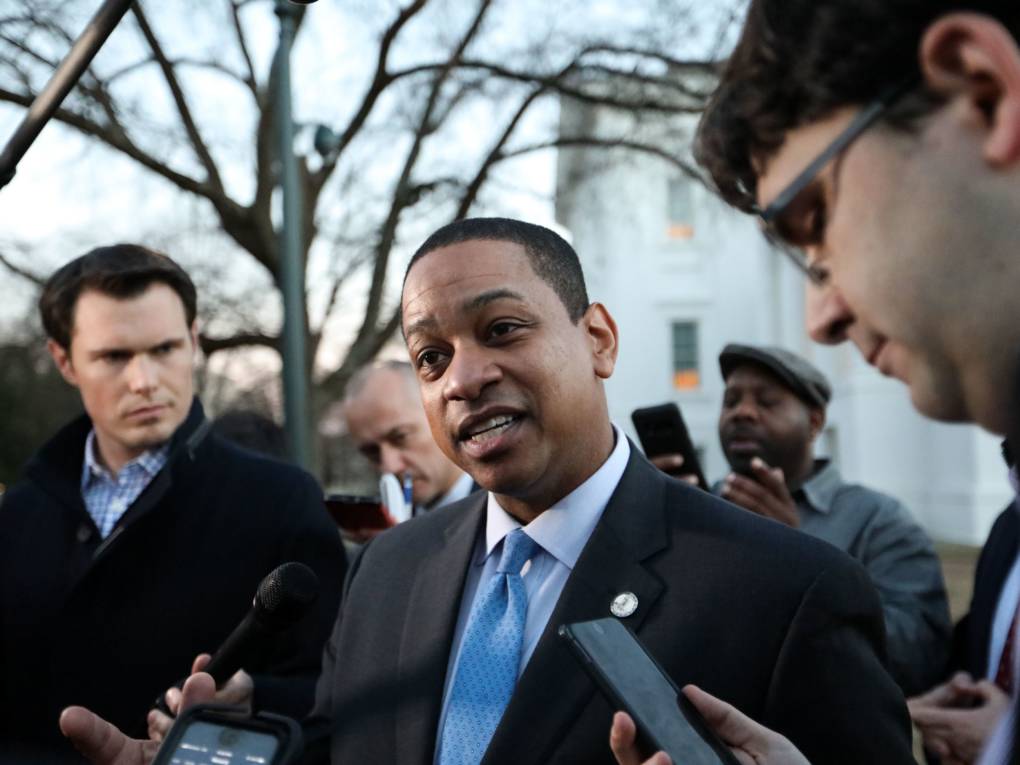
"caption": "Virginia Lt. Gov. Justin Fairfax speaks to the media on Monday in Richmond, Va., about the sexual assault allegation from 2004.",
"description": null,
"title": "Virginia Lt. Gov. Justin Fairfax speaks to the media Monday in Richmond, Va., about the sexual assault allegation from 2004.",
"credit": "Logan Cyrus/AFP/Getty Images",
"status": "inherit",
"isLoading": false,
"fetchFailed": false
},
"news_11719450": {
"type": "attachments",
"id": "news_11719450",
"meta": {
"index": "attachments_1716263798",
"site": "news",
"id": "11719450",
"found": true
},
"parent": 11719386,
"imgSizes": {
"twentyfourteen-full-width": {
"file": "https://ww2.kqed.org/app/uploads/sites/10/2019/01/e0e81fb2-screen-shot-2019-01-15-at-8.46.17-pm-1038x576.png",
"width": 1038,
"mimeType": "image/png",
"height": 576
},
"thumbnail": {
"file": "https://ww2.kqed.org/app/uploads/sites/10/2019/01/e0e81fb2-screen-shot-2019-01-15-at-8.46.17-pm-160x91.png",
"width": 160,
"mimeType": "image/png",
"height": 91
},
"post-thumbnail": {
"file": "https://ww2.kqed.org/app/uploads/sites/10/2019/01/e0e81fb2-screen-shot-2019-01-15-at-8.46.17-pm-672x372.png",
"width": 672,
"mimeType": "image/png",
"height": 372
},
"kqedFullSize": {
"file": "https://ww2.kqed.org/app/uploads/sites/10/2019/01/e0e81fb2-screen-shot-2019-01-15-at-8.46.17-pm.png",
"width": 1186,
"height": 672
},
"large": {
"file": "https://ww2.kqed.org/app/uploads/sites/10/2019/01/e0e81fb2-screen-shot-2019-01-15-at-8.46.17-pm-1020x578.png",
"width": 1020,
"mimeType": "image/png",
"height": 578
},
"guest-author-50": {
"file": "https://ww2.kqed.org/app/uploads/sites/10/2019/01/e0e81fb2-screen-shot-2019-01-15-at-8.46.17-pm-50x50.png",
"width": 50,
"mimeType": "image/png",
"height": 50
},
"guest-author-96": {
"file": "https://ww2.kqed.org/app/uploads/sites/10/2019/01/e0e81fb2-screen-shot-2019-01-15-at-8.46.17-pm-96x96.png",
"width": 96,
"mimeType": "image/png",
"height": 96
},
"medium": {
"file": "https://ww2.kqed.org/app/uploads/sites/10/2019/01/e0e81fb2-screen-shot-2019-01-15-at-8.46.17-pm-800x453.png",
"width": 800,
"mimeType": "image/png",
"height": 453
},
"guest-author-64": {
"file": "https://ww2.kqed.org/app/uploads/sites/10/2019/01/e0e81fb2-screen-shot-2019-01-15-at-8.46.17-pm-64x64.png",
"width": 64,
"mimeType": "image/png",
"height": 64
},
"detail": {
"file": "https://ww2.kqed.org/app/uploads/sites/10/2019/01/e0e81fb2-screen-shot-2019-01-15-at-8.46.17-pm-150x150.png",
"width": 150,
"mimeType": "image/png",
"height": 150
},
"guest-author-32": {
"file": "https://ww2.kqed.org/app/uploads/sites/10/2019/01/e0e81fb2-screen-shot-2019-01-15-at-8.46.17-pm-32x32.png",
"width": 32,
"mimeType": "image/png",
"height": 32
},
"guest-author-128": {
"file": "https://ww2.kqed.org/app/uploads/sites/10/2019/01/e0e81fb2-screen-shot-2019-01-15-at-8.46.17-pm-128x128.png",
"width": 128,
"mimeType": "image/png",
"height": 128
}
},
"publishDate": 1547855402,
"modified": 1579297915,
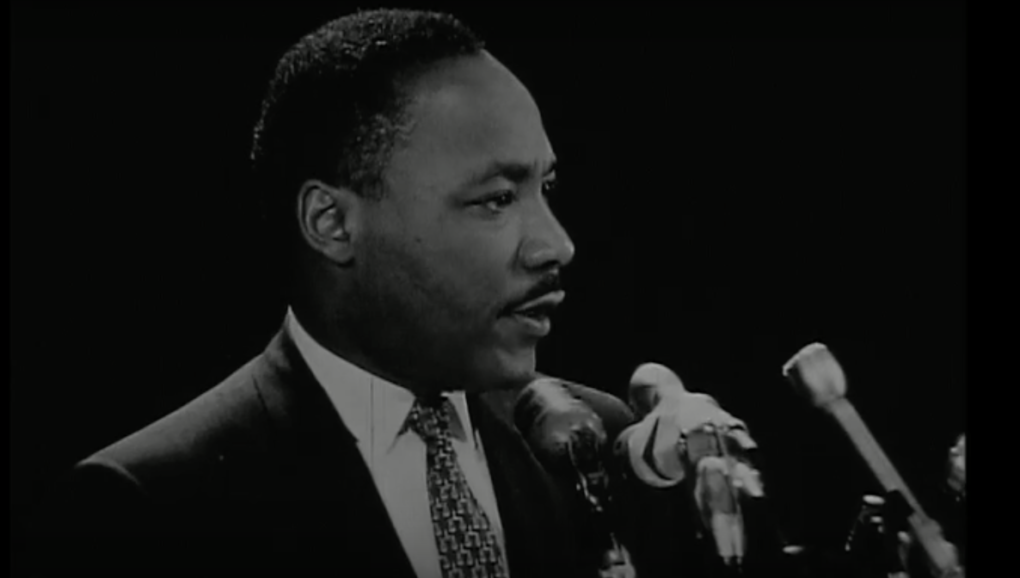
"caption": "Martin Luther King Jr. at Stanford on April 14, 1967. The University is now home to the Martin Luther King, Jr. Research and Education Institute, which has released recently discovered recordings of his speeches at Riverside Church in New York City.",
"description": "Martin Luther King Jr. at Stanford on April 14, 1967. The University is now home to the Martin Luther King, Jr. Research and Education Institute, which has released recently discovered recordings of his speeches at Riverside Church in New York City.",
"title": "Screen Shot 2019-01-15 at 8.46.17 PM",
"credit": "Courtesy of Stanford University Libraries",
"status": "inherit",
"isLoading": false,
"fetchFailed": false
},
"news_11719577": {
"type": "attachments",
"id": "news_11719577",
"meta": {
"index": "attachments_1716263798",
"site": "news",
"id": "11719577",
"found": true
},
"parent": 11719472,
"imgSizes": {
"twentyfourteen-full-width": {
"file": "https://ww2.kqed.org/app/uploads/sites/10/2019/01/5c350cf6-screen-shot-2019-01-18-at-9.56.37-pm-1038x576.jpeg",
"width": 1038,
"mimeType": "image/jpeg",
"height": 576
},
"thumbnail": {
"file": "https://ww2.kqed.org/app/uploads/sites/10/2019/01/5c350cf6-screen-shot-2019-01-18-at-9.56.37-pm-160x77.jpeg",
"width": 160,
"mimeType": "image/jpeg",
"height": 77
},
"post-thumbnail": {
"file": "https://ww2.kqed.org/app/uploads/sites/10/2019/01/5c350cf6-screen-shot-2019-01-18-at-9.56.37-pm-672x372.jpeg",
"width": 672,
"mimeType": "image/jpeg",
"height": 372
},
"kqedFullSize": {
"file": "https://ww2.kqed.org/app/uploads/sites/10/2019/01/5c350cf6-screen-shot-2019-01-18-at-9.56.37-pm.jpeg",
"width": 1922,
"height": 926
},
"large": {
"file": "https://ww2.kqed.org/app/uploads/sites/10/2019/01/5c350cf6-screen-shot-2019-01-18-at-9.56.37-pm-1020x491.jpeg",
"width": 1020,
"mimeType": "image/jpeg",
"height": 491
},
"complete_open_graph": {
"file": "https://ww2.kqed.org/app/uploads/sites/10/2019/01/5c350cf6-screen-shot-2019-01-18-at-9.56.37-pm-1200x578.jpeg",
"width": 1200,
"mimeType": "image/jpeg",
"height": 578
},
"guest-author-50": {
"file": "https://ww2.kqed.org/app/uploads/sites/10/2019/01/5c350cf6-screen-shot-2019-01-18-at-9.56.37-pm-50x50.jpeg",
"width": 50,
"mimeType": "image/jpeg",
"height": 50
},
"guest-author-96": {
"file": "https://ww2.kqed.org/app/uploads/sites/10/2019/01/5c350cf6-screen-shot-2019-01-18-at-9.56.37-pm-96x96.jpeg",
"width": 96,
"mimeType": "image/jpeg",
"height": 96
},
"medium": {
"file": "https://ww2.kqed.org/app/uploads/sites/10/2019/01/5c350cf6-screen-shot-2019-01-18-at-9.56.37-pm-800x385.jpeg",
"width": 800,
"mimeType": "image/jpeg",
"height": 385
},
"guest-author-64": {
"file": "https://ww2.kqed.org/app/uploads/sites/10/2019/01/5c350cf6-screen-shot-2019-01-18-at-9.56.37-pm-64x64.jpeg",
"width": 64,
"mimeType": "image/jpeg",
"height": 64
},
"guest-author-32": {
"file": "https://ww2.kqed.org/app/uploads/sites/10/2019/01/5c350cf6-screen-shot-2019-01-18-at-9.56.37-pm-32x32.jpeg",
"width": 32,
"mimeType": "image/jpeg",
"height": 32
},
"full-width": {
"file": "https://ww2.kqed.org/app/uploads/sites/10/2019/01/5c350cf6-screen-shot-2019-01-18-at-9.56.37-pm-1920x925.jpeg",
"width": 1920,
"mimeType": "image/jpeg",
"height": 925
},
"detail": {
"file": "https://ww2.kqed.org/app/uploads/sites/10/2019/01/5c350cf6-screen-shot-2019-01-18-at-9.56.37-pm-150x150.jpeg",
"width": 150,
"mimeType": "image/jpeg",
"height": 150
},
"guest-author-128": {
"file": "https://ww2.kqed.org/app/uploads/sites/10/2019/01/5c350cf6-screen-shot-2019-01-18-at-9.56.37-pm-128x128.jpeg",
"width": 128,
"mimeType": "image/jpeg",
"height": 128
}
},
"publishDate": 1547910323,
"modified": 1547937054,
"caption": "The Reverend Dr. William Barber spoke at Stanford's Memorial Church on January 17th, 2019.",
"description": "The Reverend Dr. William Barber spoke at Stanford's Memorial Church on January 17th, 2019.",
"title": "Screen Shot 2019-01-18 at 9.56.37 PM",
"credit": "Courtesy of Stanford University Libraries",
"status": "inherit",
"isLoading": false,
"fetchFailed": false
},
"news_11685635": {
"type": "attachments",
"id": "news_11685635",
"meta": {
"index": "attachments_1716263798",
"site": "news",
"id": "11685635",
"found": true
},
"parent": 11685634,
"imgSizes": {
"small": {
"file": "https://ww2.kqed.org/app/uploads/sites/10/2018/08/gettyimages-157777285_wide-2007e471295adfece993732251df78f897108c65-520x292.jpg",
"width": 520,
"mimeType": "image/jpeg",
"height": 292
},
"twentyfourteen-full-width": {
"file": "https://ww2.kqed.org/app/uploads/sites/10/2018/08/gettyimages-157777285_wide-2007e471295adfece993732251df78f897108c65-1038x576.jpg",
"width": 1038,
"mimeType": "image/jpeg",
"height": 576
},
"thumbnail": {
"file": "https://ww2.kqed.org/app/uploads/sites/10/2018/08/gettyimages-157777285_wide-2007e471295adfece993732251df78f897108c65-160x90.jpg",
"width": 160,
"mimeType": "image/jpeg",
"height": 90
},
"fd-sm": {
"file": "https://ww2.kqed.org/app/uploads/sites/10/2018/08/gettyimages-157777285_wide-2007e471295adfece993732251df78f897108c65-960x540.jpg",
"width": 960,
"mimeType": "image/jpeg",
"height": 540
},
"post-thumbnail": {
"file": "https://ww2.kqed.org/app/uploads/sites/10/2018/08/gettyimages-157777285_wide-2007e471295adfece993732251df78f897108c65-672x372.jpg",
"width": 672,
"mimeType": "image/jpeg",
"height": 372
},
"xsmall": {
"file": "https://ww2.kqed.org/app/uploads/sites/10/2018/08/gettyimages-157777285_wide-2007e471295adfece993732251df78f897108c65-375x211.jpg",
"width": 375,
"mimeType": "image/jpeg",
"height": 211
},
"kqedFullSize": {
"file": "https://ww2.kqed.org/app/uploads/sites/10/2018/08/gettyimages-157777285_wide-2007e471295adfece993732251df78f897108c65.jpg",
"width": 3000,
"height": 1687
},
"large": {
"file": "https://ww2.kqed.org/app/uploads/sites/10/2018/08/gettyimages-157777285_wide-2007e471295adfece993732251df78f897108c65-1020x574.jpg",
"width": 1020,
"mimeType": "image/jpeg",
"height": 574
},
"xlarge": {
"file": "https://ww2.kqed.org/app/uploads/sites/10/2018/08/gettyimages-157777285_wide-2007e471295adfece993732251df78f897108c65-1180x664.jpg",
"width": 1180,
"mimeType": "image/jpeg",
"height": 664
},
"complete_open_graph": {
"file": "https://ww2.kqed.org/app/uploads/sites/10/2018/08/gettyimages-157777285_wide-2007e471295adfece993732251df78f897108c65-1200x675.jpg",
"width": 1200,
"mimeType": "image/jpeg",
"height": 675
},
"guest-author-50": {
"file": "https://ww2.kqed.org/app/uploads/sites/10/2018/08/gettyimages-157777285_wide-2007e471295adfece993732251df78f897108c65-50x50.jpg",
"width": 50,
"mimeType": "image/jpeg",
"height": 50
},
"guest-author-96": {
"file": "https://ww2.kqed.org/app/uploads/sites/10/2018/08/gettyimages-157777285_wide-2007e471295adfece993732251df78f897108c65-96x96.jpg",
"width": 96,
"mimeType": "image/jpeg",
"height": 96
},
"medium": {
"file": "https://ww2.kqed.org/app/uploads/sites/10/2018/08/gettyimages-157777285_wide-2007e471295adfece993732251df78f897108c65-800x450.jpg",
"width": 800,
"mimeType": "image/jpeg",
"height": 450
},
"guest-author-64": {
"file": "https://ww2.kqed.org/app/uploads/sites/10/2018/08/gettyimages-157777285_wide-2007e471295adfece993732251df78f897108c65-64x64.jpg",
"width": 64,
"mimeType": "image/jpeg",
"height": 64
},
"guest-author-32": {
"file": "https://ww2.kqed.org/app/uploads/sites/10/2018/08/gettyimages-157777285_wide-2007e471295adfece993732251df78f897108c65-32x32.jpg",
"width": 32,
"mimeType": "image/jpeg",
"height": 32
},
"fd-lrg": {
"file": "https://ww2.kqed.org/app/uploads/sites/10/2018/08/gettyimages-157777285_wide-2007e471295adfece993732251df78f897108c65-1920x1080.jpg",
"width": 1920,
"mimeType": "image/jpeg",
"height": 1080
},
"fd-med": {
"file": "https://ww2.kqed.org/app/uploads/sites/10/2018/08/gettyimages-157777285_wide-2007e471295adfece993732251df78f897108c65-1180x664.jpg",
"width": 1180,
"mimeType": "image/jpeg",
"height": 664
},
"full-width": {
"file": "https://ww2.kqed.org/app/uploads/sites/10/2018/08/gettyimages-157777285_wide-2007e471295adfece993732251df78f897108c65-1920x1080.jpg",
"width": 1920,
"mimeType": "image/jpeg",
"height": 1080
},
"detail": {
"file": "https://ww2.kqed.org/app/uploads/sites/10/2018/08/gettyimages-157777285_wide-2007e471295adfece993732251df78f897108c65-150x150.jpg",
"width": 150,
"mimeType": "image/jpeg",
"height": 150
},
"guest-author-128": {
"file": "https://ww2.kqed.org/app/uploads/sites/10/2018/08/gettyimages-157777285_wide-2007e471295adfece993732251df78f897108c65-128x128.jpg",
"width": 128,
"mimeType": "image/jpeg",
"height": 128
},
"xxsmall": {
"file": "https://ww2.kqed.org/app/uploads/sites/10/2018/08/gettyimages-157777285_wide-2007e471295adfece993732251df78f897108c65-240x135.jpg",
"width": 240,
"mimeType": "image/jpeg",
"height": 135
}
},
"publishDate": 1533744807,
"modified": 1533747457,
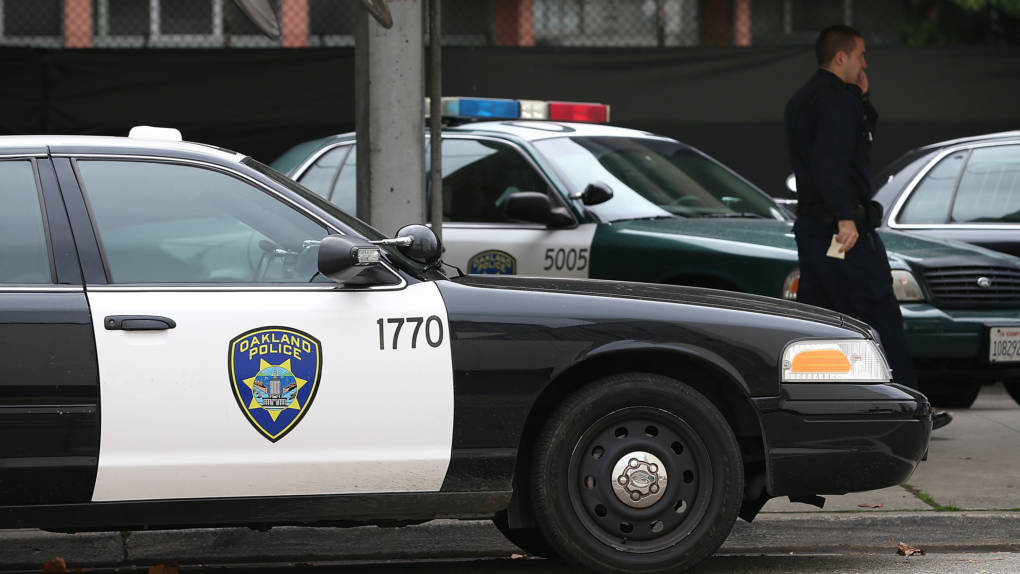
"caption": "The Oakland Police Department remains under federal oversight 15 years after settling a civil rights case against it.",
"description": "The Oakland Police Department remains under federal oversight 15 years after settling a civil rights case against it",
"title": "The Oakland Police Department remains under federal oversight 15 years after settling a civil rights case against it.",
"credit": "Justin Sullivan/Getty Images",
"status": "inherit",
"isLoading": false,
"fetchFailed": false
},
"news_11059993": {
"type": "attachments",
"id": "news_11059993",
"meta": {
"index": "attachments_1716263798",
"site": "news",
"id": "11059993",
"found": true
},
"parent": 11059918,
"imgSizes": {
"twentyfourteen-full-width": {
"file": "https://ww2.kqed.org/app/uploads/sites/10/2016/08/Persky-1038x576.jpg",
"width": 1038,
"mimeType": "image/jpeg",
"height": 576
},
"thumbnail": {
"file": "https://ww2.kqed.org/app/uploads/sites/10/2016/08/Persky-400x273.jpg",
"width": 400,
"mimeType": "image/jpeg",
"height": 273
},
"fd-sm": {
"file": "https://ww2.kqed.org/app/uploads/sites/10/2016/08/Persky-960x655.jpg",
"width": 960,
"mimeType": "image/jpeg",
"height": 655
},
"post-thumbnail": {
"file": "https://ww2.kqed.org/app/uploads/sites/10/2016/08/Persky-672x372.jpg",
"width": 672,
"mimeType": "image/jpeg",
"height": 372
},
"kqedFullSize": {
"file": "https://ww2.kqed.org/app/uploads/sites/10/2016/08/Persky.jpg",
"width": 1920,
"height": 1309
},
"large": {
"file": "https://ww2.kqed.org/app/uploads/sites/10/2016/08/Persky-1920x1309.jpg",
"width": 1920,
"mimeType": "image/jpeg",
"height": 1309
},
"guest-author-50": {
"file": "https://ww2.kqed.org/app/uploads/sites/10/2016/08/Persky-50x50.jpg",
"width": 50,
"mimeType": "image/jpeg",
"height": 50
},
"guest-author-96": {
"file": "https://ww2.kqed.org/app/uploads/sites/10/2016/08/Persky-96x96.jpg",
"width": 96,
"mimeType": "image/jpeg",
"height": 96
},
"medium": {
"file": "https://ww2.kqed.org/app/uploads/sites/10/2016/08/Persky-800x545.jpg",
"width": 800,
"mimeType": "image/jpeg",
"height": 545
},
"guest-author-64": {
"file": "https://ww2.kqed.org/app/uploads/sites/10/2016/08/Persky-64x64.jpg",
"width": 64,
"mimeType": "image/jpeg",
"height": 64
},
"guest-author-32": {
"file": "https://ww2.kqed.org/app/uploads/sites/10/2016/08/Persky-32x32.jpg",
"width": 32,
"mimeType": "image/jpeg",
"height": 32
},
"jmtc-small-thumb": {
"file": "https://ww2.kqed.org/app/uploads/sites/10/2016/08/Persky-280x150.jpg",
"width": 280,
"mimeType": "image/jpeg",
"height": 150
},
"fd-lrg": {
"file": "https://ww2.kqed.org/app/uploads/sites/10/2016/08/Persky-1920x1309.jpg",
"width": 1920,
"mimeType": "image/jpeg",
"height": 1309
},
"fd-med": {
"file": "https://ww2.kqed.org/app/uploads/sites/10/2016/08/Persky-1180x804.jpg",
"width": 1180,
"mimeType": "image/jpeg",
"height": 804
},
"detail": {
"file": "https://ww2.kqed.org/app/uploads/sites/10/2016/08/Persky-150x150.jpg",
"width": 150,
"mimeType": "image/jpeg",
"height": 150
},
"guest-author-128": {
"file": "https://ww2.kqed.org/app/uploads/sites/10/2016/08/Persky-128x128.jpg",
"width": 128,
"mimeType": "image/jpeg",
"height": 128
}
},
"publishDate": 1472075508,
"modified": 1529701886,
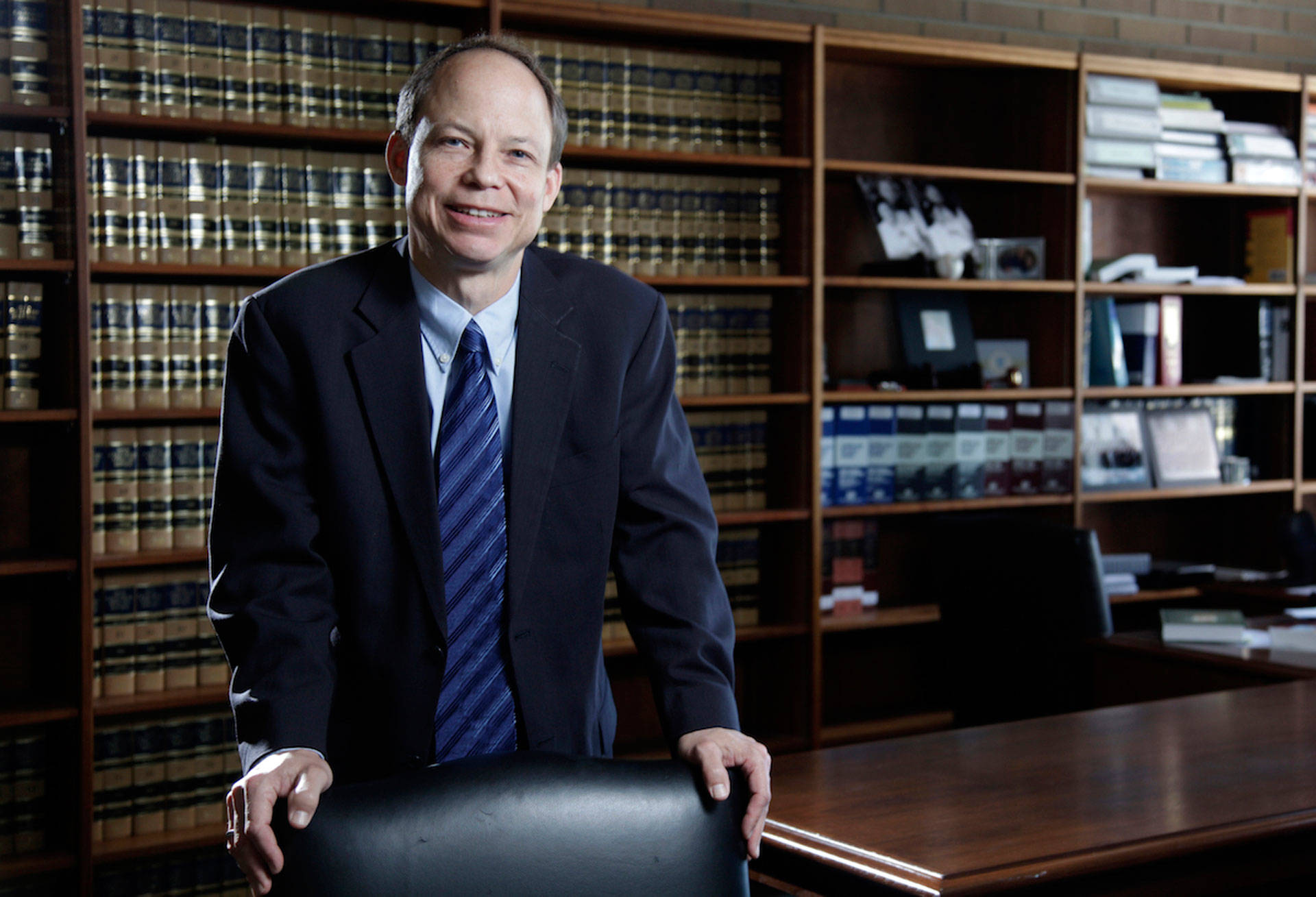
"caption": "Santa Clara County Judge Aaron Persky was recalled in an election June 2018 after he sentenced an ex-Stanford University swimmer to six months in jail for sexually assaulting an unconscious woman.",
"description": "Santa Clara County Judge Aaron Persky faces a potential recall after he sentenced an ex-Stanford University swimmer to six months in jail for sexually assaulting an unconscious woman.",
"title": "Persky",
"credit": "Jason Doiy/The Recorder",
"status": "inherit",
"isLoading": false,
"fetchFailed": false
},
"news_11635817": {
"type": "attachments",
"id": "news_11635817",
"meta": {
"index": "attachments_1716263798",
"site": "news",
"id": "11635817",
"found": true
},
"parent": 11633019,
"imgSizes": {
"small": {
"file": "https://ww2.kqed.org/app/uploads/sites/10/2017/12/ChuID-520x365.jpg",
"width": 520,
"mimeType": "image/jpeg",
"height": 365
},
"twentyfourteen-full-width": {
"file": "https://ww2.kqed.org/app/uploads/sites/10/2017/12/ChuID-1038x576.jpg",
"width": 1038,
"mimeType": "image/jpeg",
"height": 576
},
"thumbnail": {
"file": "https://ww2.kqed.org/app/uploads/sites/10/2017/12/ChuID-160x112.jpg",
"width": 160,
"mimeType": "image/jpeg",
"height": 112
},
"fd-sm": {
"file": "https://ww2.kqed.org/app/uploads/sites/10/2017/12/ChuID-960x673.jpg",
"width": 960,
"mimeType": "image/jpeg",
"height": 673
},
"post-thumbnail": {
"file": "https://ww2.kqed.org/app/uploads/sites/10/2017/12/ChuID-672x372.jpg",
"width": 672,
"mimeType": "image/jpeg",
"height": 372
},
"xsmall": {
"file": "https://ww2.kqed.org/app/uploads/sites/10/2017/12/ChuID-375x263.jpg",
"width": 375,
"mimeType": "image/jpeg",
"height": 263
},
"kqedFullSize": {
"file": "https://ww2.kqed.org/app/uploads/sites/10/2017/12/ChuID.jpg",
"width": 1920,
"height": 1346
},
"large": {
"file": "https://ww2.kqed.org/app/uploads/sites/10/2017/12/ChuID-1020x715.jpg",
"width": 1020,
"mimeType": "image/jpeg",
"height": 715
},
"xlarge": {
"file": "https://ww2.kqed.org/app/uploads/sites/10/2017/12/ChuID-1180x827.jpg",
"width": 1180,
"mimeType": "image/jpeg",
"height": 827
},
"guest-author-50": {
"file": "https://ww2.kqed.org/app/uploads/sites/10/2017/12/ChuID-50x50.jpg",
"width": 50,
"mimeType": "image/jpeg",
"height": 50
},
"guest-author-96": {
"file": "https://ww2.kqed.org/app/uploads/sites/10/2017/12/ChuID-96x96.jpg",
"width": 96,
"mimeType": "image/jpeg",
"height": 96
},
"medium": {
"file": "https://ww2.kqed.org/app/uploads/sites/10/2017/12/ChuID-800x561.jpg",
"width": 800,
"mimeType": "image/jpeg",
"height": 561
},
"guest-author-64": {
"file": "https://ww2.kqed.org/app/uploads/sites/10/2017/12/ChuID-64x64.jpg",
"width": 64,
"mimeType": "image/jpeg",
"height": 64
},
"guest-author-32": {
"file": "https://ww2.kqed.org/app/uploads/sites/10/2017/12/ChuID-32x32.jpg",
"width": 32,
"mimeType": "image/jpeg",
"height": 32
},
"fd-lrg": {
"file": "https://ww2.kqed.org/app/uploads/sites/10/2017/12/ChuID-1920x1346.jpg",
"width": 1920,
"mimeType": "image/jpeg",
"height": 1346
},
"fd-med": {
"file": "https://ww2.kqed.org/app/uploads/sites/10/2017/12/ChuID-1180x827.jpg",
"width": 1180,
"mimeType": "image/jpeg",
"height": 827
},
"full-width": {
"file": "https://ww2.kqed.org/app/uploads/sites/10/2017/12/ChuID-1920x1346.jpg",
"width": 1920,
"mimeType": "image/jpeg",
"height": 1346
},
"detail": {
"file": "https://ww2.kqed.org/app/uploads/sites/10/2017/12/ChuID-150x150.jpg",
"width": 150,
"mimeType": "image/jpeg",
"height": 150
},
"guest-author-128": {
"file": "https://ww2.kqed.org/app/uploads/sites/10/2017/12/ChuID-128x128.jpg",
"width": 128,
"mimeType": "image/jpeg",
"height": 128
},
"xxsmall": {
"file": "https://ww2.kqed.org/app/uploads/sites/10/2017/12/ChuID-240x168.jpg",
"width": 240,
"mimeType": "image/jpeg",
"height": 168
}
},
"publishDate": 1512764010,
"modified": 1512764091,
"caption": "Seo-Young Chu’s 1999 Stanford ID. \n",
"description": "Seo-Young Chu’s 1999 Stanford ID. \n",
"title": "ChuID",
"credit": "Courtesy Seo-Young Chu",
"status": "inherit",
"isLoading": false,
"fetchFailed": false
},
"news_11632152": {
"type": "attachments",
"id": "news_11632152",
"meta": {
"index": "attachments_1716263798",
"site": "news",
"id": "11632152",
"found": true
},
"parent": 11632130,
"imgSizes": {
"small": {
"file": "https://ww2.kqed.org/app/uploads/sites/10/2017/11/Image-uploaded-from-iOS-5-520x390.jpg",
"width": 520,
"mimeType": "image/jpeg",
"height": 390
},
"twentyfourteen-full-width": {
"file": "https://ww2.kqed.org/app/uploads/sites/10/2017/11/Image-uploaded-from-iOS-5-1038x576.jpg",
"width": 1038,
"mimeType": "image/jpeg",
"height": 576
},
"thumbnail": {
"file": "https://ww2.kqed.org/app/uploads/sites/10/2017/11/Image-uploaded-from-iOS-5-160x120.jpg",
"width": 160,
"mimeType": "image/jpeg",
"height": 120
},
"fd-sm": {
"file": "https://ww2.kqed.org/app/uploads/sites/10/2017/11/Image-uploaded-from-iOS-5-960x720.jpg",
"width": 960,
"mimeType": "image/jpeg",
"height": 720
},
"post-thumbnail": {
"file": "https://ww2.kqed.org/app/uploads/sites/10/2017/11/Image-uploaded-from-iOS-5-672x372.jpg",
"width": 672,
"mimeType": "image/jpeg",
"height": 372
},
"xsmall": {
"file": "https://ww2.kqed.org/app/uploads/sites/10/2017/11/Image-uploaded-from-iOS-5-375x281.jpg",
"width": 375,
"mimeType": "image/jpeg",
"height": 281
},
"kqedFullSize": {
"file": "https://ww2.kqed.org/app/uploads/sites/10/2017/11/Image-uploaded-from-iOS-5.jpg",
"width": 2048,
"height": 1536
},
"large": {
"file": "https://ww2.kqed.org/app/uploads/sites/10/2017/11/Image-uploaded-from-iOS-5-1020x765.jpg",
"width": 1020,
"mimeType": "image/jpeg",
"height": 765
},
"xlarge": {
"file": "https://ww2.kqed.org/app/uploads/sites/10/2017/11/Image-uploaded-from-iOS-5-1180x885.jpg",
"width": 1180,
"mimeType": "image/jpeg",
"height": 885
},
"guest-author-50": {
"file": "https://ww2.kqed.org/app/uploads/sites/10/2017/11/Image-uploaded-from-iOS-5-50x50.jpg",
"width": 50,
"mimeType": "image/jpeg",
"height": 50
},
"guest-author-96": {
"file": "https://ww2.kqed.org/app/uploads/sites/10/2017/11/Image-uploaded-from-iOS-5-96x96.jpg",
"width": 96,
"mimeType": "image/jpeg",
"height": 96
},
"medium": {
"file": "https://ww2.kqed.org/app/uploads/sites/10/2017/11/Image-uploaded-from-iOS-5-800x600.jpg",
"width": 800,
"mimeType": "image/jpeg",
"height": 600
},
"guest-author-64": {
"file": "https://ww2.kqed.org/app/uploads/sites/10/2017/11/Image-uploaded-from-iOS-5-64x64.jpg",
"width": 64,
"mimeType": "image/jpeg",
"height": 64
},
"guest-author-32": {
"file": "https://ww2.kqed.org/app/uploads/sites/10/2017/11/Image-uploaded-from-iOS-5-32x32.jpg",
"width": 32,
"mimeType": "image/jpeg",
"height": 32
},
"fd-lrg": {
"file": "https://ww2.kqed.org/app/uploads/sites/10/2017/11/Image-uploaded-from-iOS-5-1920x1440.jpg",
"width": 1920,
"mimeType": "image/jpeg",
"height": 1440
},
"fd-med": {
"file": "https://ww2.kqed.org/app/uploads/sites/10/2017/11/Image-uploaded-from-iOS-5-1180x885.jpg",
"width": 1180,
"mimeType": "image/jpeg",
"height": 885
},
"full-width": {
"file": "https://ww2.kqed.org/app/uploads/sites/10/2017/11/Image-uploaded-from-iOS-5-1920x1440.jpg",
"width": 1920,
"mimeType": "image/jpeg",
"height": 1440
},
"detail": {
"file": "https://ww2.kqed.org/app/uploads/sites/10/2017/11/Image-uploaded-from-iOS-5-150x150.jpg",
"width": 150,
"mimeType": "image/jpeg",
"height": 150
},
"guest-author-128": {
"file": "https://ww2.kqed.org/app/uploads/sites/10/2017/11/Image-uploaded-from-iOS-5-128x128.jpg",
"width": 128,
"mimeType": "image/jpeg",
"height": 128
},
"xxsmall": {
"file": "https://ww2.kqed.org/app/uploads/sites/10/2017/11/Image-uploaded-from-iOS-5-240x180.jpg",
"width": 240,
"mimeType": "image/jpeg",
"height": 180
}
},
"publishDate": 1511035698,
"modified": 1511036618,
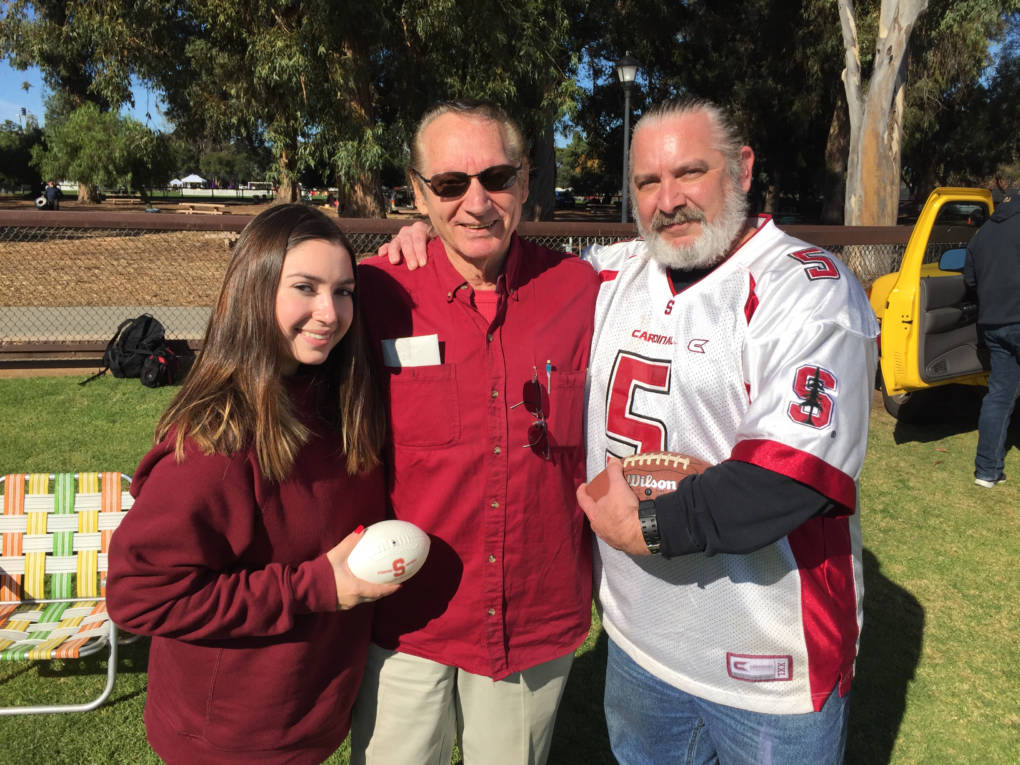
"caption": "Joe Ficarra (center) has been going to the Big Game for 60 years. His son Jeff (right) went to his first game in 1978. Jeff's daughter and Joe's granddaughter Alanis is at her first Stanford game today.",
"description": "Joe Ficarra (center) has been going to the Big Game for 60 years. His son Jeff (right) went to his first game in 1978. Jeff's daughter and Joe's granddaughter Alanis is at her first Stanford game today.",
"title": "Image uploaded from iOS (5)",
"credit": "Ryan Levi/KQED",
"status": "inherit",
"isLoading": false,
"fetchFailed": false
},
"arts_13113403": {
"type": "attachments",
"id": "arts_13113403",
"meta": {
"index": "attachments_1716263798",
"site": "arts",
"id": "13113403",
"found": true
},
"parent": 13113401,
"imgSizes": {
"small": {
"file": "https://ww2.kqed.org/app/uploads/sites/2/2017/04/RS25034_Enlow_Parent_Skit-017-qut-520x293.jpg",
"width": 520,
"mimeType": "image/jpeg",
"height": 293
},
"twentyfourteen-full-width": {
"file": "https://ww2.kqed.org/app/uploads/sites/2/2017/04/RS25034_Enlow_Parent_Skit-017-qut-1038x576.jpg",
"width": 1038,
"mimeType": "image/jpeg",
"height": 576
},
"thumbnail": {
"file": "https://ww2.kqed.org/app/uploads/sites/2/2017/04/RS25034_Enlow_Parent_Skit-017-qut-160x90.jpg",
"width": 160,
"mimeType": "image/jpeg",
"height": 90
},
"fd-sm": {
"file": "https://ww2.kqed.org/app/uploads/sites/2/2017/04/RS25034_Enlow_Parent_Skit-017-qut-960x541.jpg",
"width": 960,
"mimeType": "image/jpeg",
"height": 541
},
"post-thumbnail": {
"file": "https://ww2.kqed.org/app/uploads/sites/2/2017/04/RS25034_Enlow_Parent_Skit-017-qut-672x372.jpg",
"width": 672,
"mimeType": "image/jpeg",
"height": 372
},
"xsmall": {
"file": "https://ww2.kqed.org/app/uploads/sites/2/2017/04/RS25034_Enlow_Parent_Skit-017-qut-375x211.jpg",
"width": 375,
"mimeType": "image/jpeg",
"height": 211
},
"kqedFullSize": {
"file": "https://ww2.kqed.org/app/uploads/sites/2/2017/04/RS25034_Enlow_Parent_Skit-017-qut.jpg",
"width": 1920,
"height": 1082
},
"large": {
"file": "https://ww2.kqed.org/app/uploads/sites/2/2017/04/RS25034_Enlow_Parent_Skit-017-qut-1020x575.jpg",
"width": 1020,
"mimeType": "image/jpeg",
"height": 575
},
"xlarge": {
"file": "https://ww2.kqed.org/app/uploads/sites/2/2017/04/RS25034_Enlow_Parent_Skit-017-qut-1180x665.jpg",
"width": 1180,
"mimeType": "image/jpeg",
"height": 665
},
"guest-author-50": {
"file": "https://ww2.kqed.org/app/uploads/sites/2/2017/04/RS25034_Enlow_Parent_Skit-017-qut-50x50.jpg",
"width": 50,
"mimeType": "image/jpeg",
"height": 50
},
"guest-author-96": {
"file": "https://ww2.kqed.org/app/uploads/sites/2/2017/04/RS25034_Enlow_Parent_Skit-017-qut-96x96.jpg",
"width": 96,
"mimeType": "image/jpeg",
"height": 96
},
"medium": {
"file": "https://ww2.kqed.org/app/uploads/sites/2/2017/04/RS25034_Enlow_Parent_Skit-017-qut-800x451.jpg",
"width": 800,
"mimeType": "image/jpeg",
"height": 451
},
"guest-author-64": {
"file": "https://ww2.kqed.org/app/uploads/sites/2/2017/04/RS25034_Enlow_Parent_Skit-017-qut-64x64.jpg",
"width": 64,
"mimeType": "image/jpeg",
"height": 64
},
"guest-author-32": {
"file": "https://ww2.kqed.org/app/uploads/sites/2/2017/04/RS25034_Enlow_Parent_Skit-017-qut-32x32.jpg",
"width": 32,
"mimeType": "image/jpeg",
"height": 32
},
"fd-lrg": {
"file": "https://ww2.kqed.org/app/uploads/sites/2/2017/04/RS25034_Enlow_Parent_Skit-017-qut-1920x1082.jpg",
"width": 1920,
"mimeType": "image/jpeg",
"height": 1082
},
"fd-med": {
"file": "https://ww2.kqed.org/app/uploads/sites/2/2017/04/RS25034_Enlow_Parent_Skit-017-qut-1180x665.jpg",
"width": 1180,
"mimeType": "image/jpeg",
"height": 665
},
"full-width": {
"file": "https://ww2.kqed.org/app/uploads/sites/2/2017/04/RS25034_Enlow_Parent_Skit-017-qut-1920x1082.jpg",
"width": 1920,
"mimeType": "image/jpeg",
"height": 1082
},
"detail": {
"file": "https://ww2.kqed.org/app/uploads/sites/2/2017/04/RS25034_Enlow_Parent_Skit-017-qut-150x150.jpg",
"width": 150,
"mimeType": "image/jpeg",
"height": 150
},
"medium_large": {
"file": "https://ww2.kqed.org/app/uploads/sites/2/2017/04/RS25034_Enlow_Parent_Skit-017-qut-768x433.jpg",
"width": 768,
"mimeType": "image/jpeg",
"height": 433
},
"guest-author-128": {
"file": "https://ww2.kqed.org/app/uploads/sites/2/2017/04/RS25034_Enlow_Parent_Skit-017-qut-128x128.jpg",
"width": 128,
"mimeType": "image/jpeg",
"height": 128
},
"xxsmall": {
"file": "https://ww2.kqed.org/app/uploads/sites/2/2017/04/RS25034_Enlow_Parent_Skit-017-qut-240x135.jpg",
"width": 240,
"mimeType": "image/jpeg",
"height": 135
}
},
"publishDate": 1493234177,
"modified": 1493657392,
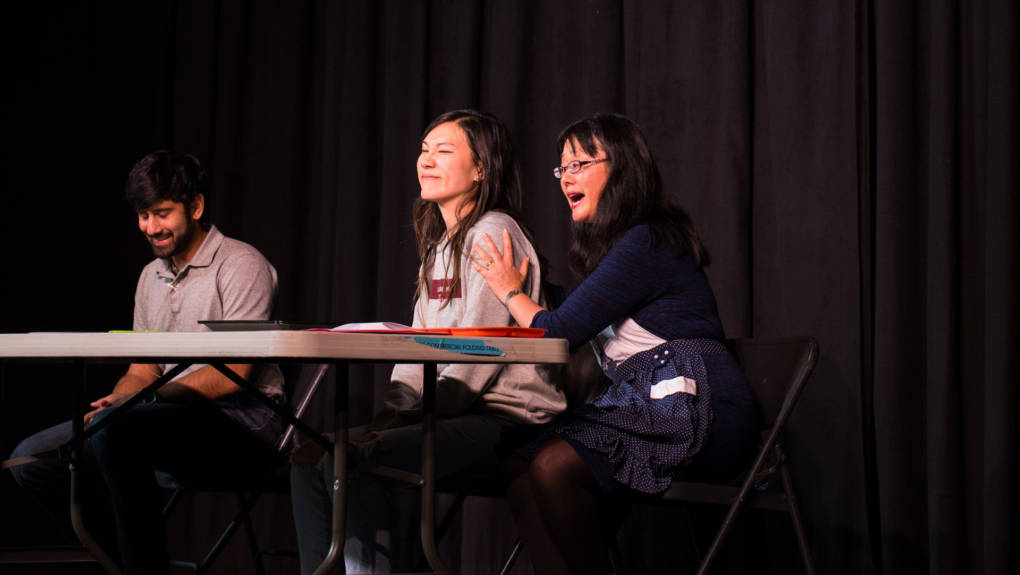
"caption": "Stanford psychiatrists use the maxim \"Show, don't tell,\" to demonstrate how parents can cultivate emotional closeness with their teenagers - or emotional distance. In this vignette, Dr. Rona Hu plays a mother who disapproves when her daughter, played by Dr. Grace Lee, brings home a non-Chinese boyfriend, playing by Dr. Francesco Dandekar.",
"description": "Stanford psychiatrists use the maxim \"Show, don't tell,\" to demonstrate how parents can cultivate emotional closeness with their teenagers - or emotional distance. In this vignette, Dr. Rona Hu plays a mother who disapproves when her daughter, played by Dr. Grace Lee, brings home a non-Chinese boyfriend, playing by Dr. Francesco Dandekar.",
"title": "RS25034_Enlow_Parent_Skit-017-qut",
"credit": "Photo: Jeff Enlow/KQED",
"status": "inherit",
"isLoading": false,
"fetchFailed": false
},
"news_10854509": {
"type": "attachments",
"id": "news_10854509",
"meta": {
"index": "attachments_1716263798",
"site": "news",
"id": "10854509",
"found": true
},
"parent": 10854456,
"imgSizes": {
"jmtc-small-thumb": {
"file": "https://ww2.kqed.org/app/uploads/sites/10/2016/02/mtl-banner-280x150.jpg",
"width": 280,
"mimeType": "image/jpeg",
"height": 150
},
"thumbnail": {
"file": "https://ww2.kqed.org/app/uploads/sites/10/2016/02/mtl-banner-400x200.jpg",
"width": 400,
"mimeType": "image/jpeg",
"height": 200
},
"fd-sm": {
"file": "https://ww2.kqed.org/app/uploads/sites/10/2016/02/mtl-banner-960x480.jpg",
"width": 960,
"mimeType": "image/jpeg",
"height": 480
},
"post-thumbnail": {
"file": "https://ww2.kqed.org/app/uploads/sites/10/2016/02/mtl-banner-672x372.jpg",
"width": 672,
"mimeType": "image/jpeg",
"height": 372
},
"kqedFullSize": {
"file": "https://ww2.kqed.org/app/uploads/sites/10/2016/02/mtl-banner.jpg",
"width": 1000,
"height": 500
},
"guest-author-96": {
"file": "https://ww2.kqed.org/app/uploads/sites/10/2016/02/mtl-banner-96x96.jpg",
"width": 96,
"mimeType": "image/jpeg",
"height": 96
},
"medium": {
"file": "https://ww2.kqed.org/app/uploads/sites/10/2016/02/mtl-banner-800x400.jpg",
"width": 800,
"mimeType": "image/jpeg",
"height": 400
},
"guest-author-64": {
"file": "https://ww2.kqed.org/app/uploads/sites/10/2016/02/mtl-banner-64x64.jpg",
"width": 64,
"mimeType": "image/jpeg",
"height": 64
},
"detail": {
"file": "https://ww2.kqed.org/app/uploads/sites/10/2016/02/mtl-banner-75x75.jpg",
"width": 75,
"mimeType": "image/jpeg",
"height": 75
},
"guest-author-32": {
"file": "https://ww2.kqed.org/app/uploads/sites/10/2016/02/mtl-banner-32x32.jpg",
"width": 32,
"mimeType": "image/jpeg",
"height": 32
},
"medium_large": {
"file": "https://ww2.kqed.org/app/uploads/sites/10/2016/02/mtl-banner-768x384.jpg",
"width": 768,
"mimeType": "image/jpeg",
"height": 384
},
"guest-author-128": {
"file": "https://ww2.kqed.org/app/uploads/sites/10/2016/02/mtl-banner-128x128.jpg",
"width": 128,
"mimeType": "image/jpeg",
"height": 128
}
},
"publishDate": 1454619871,
"modified": 1454619929,
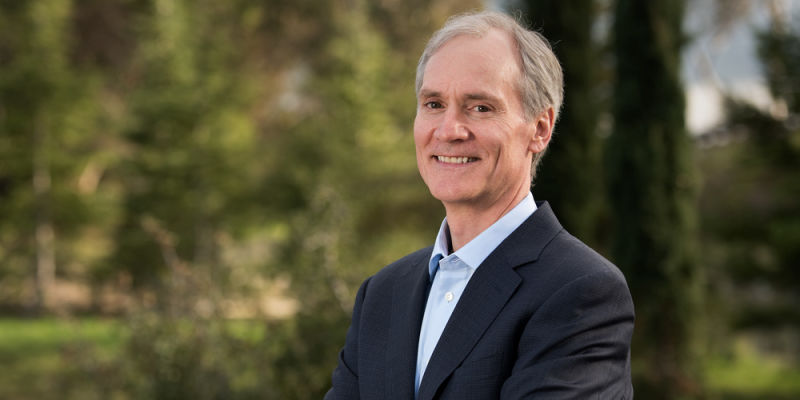
"caption": "Marc Tessier-Lavigne will be Stanford's new president.",
"description": null,
"title": "mtl-banner",
"credit": "L.A. Cicero/Stanford University",
"status": "inherit",
"isLoading": false,
"fetchFailed": false
},
"news_10439056": {
"type": "attachments",
"id": "news_10439056",
"meta": {
"index": "attachments_1716263798",
"site": "news",
"id": "10439056",
"found": true
},
"parent": 10438739,
"imgSizes": {
"twentyfourteen-full-width": {
"file": "https://ww2.kqed.org/app/uploads/sites/10/2015/02/463828486-1038x576.jpg",
"width": 1038,
"mimeType": "image/jpeg",
"height": 576
},
"thumbnail": {
"file": "https://ww2.kqed.org/app/uploads/sites/10/2015/02/463828486-400x698.jpg",
"width": 400,
"mimeType": "image/jpeg",
"height": 698
},
"post-thumbnail": {
"file": "https://ww2.kqed.org/app/uploads/sites/10/2015/02/463828486-672x372.jpg",
"width": 672,
"mimeType": "image/jpeg",
"height": 372
},
"kqedFullSize": {
"file": "https://ww2.kqed.org/app/uploads/sites/10/2015/02/463828486.jpg",
"width": 1719,
"height": 3000
},
"large": {
"file": "https://ww2.kqed.org/app/uploads/sites/10/2015/02/463828486-1440x2513.jpg",
"width": 1440,
"mimeType": "image/jpeg",
"height": 2513
},
"guest-author-96": {
"file": "https://ww2.kqed.org/app/uploads/sites/10/2015/02/463828486-96x96.jpg",
"width": 96,
"mimeType": "image/jpeg",
"height": 96
},
"medium": {
"file": "https://ww2.kqed.org/app/uploads/sites/10/2015/02/463828486-800x1396.jpg",
"width": 800,
"mimeType": "image/jpeg",
"height": 1396
},
"guest-author-64": {
"file": "https://ww2.kqed.org/app/uploads/sites/10/2015/02/463828486-64x64.jpg",
"width": 64,
"mimeType": "image/jpeg",
"height": 64
},
"detail": {
"file": "https://ww2.kqed.org/app/uploads/sites/10/2015/02/463828486-75x75.jpg",
"width": 75,
"mimeType": "image/jpeg",
"height": 75
},
"guest-author-32": {
"file": "https://ww2.kqed.org/app/uploads/sites/10/2015/02/463828486-32x32.jpg",
"width": 32,
"mimeType": "image/jpeg",
"height": 32
},
"guest-author-128": {
"file": "https://ww2.kqed.org/app/uploads/sites/10/2015/02/463828486-128x128.jpg",
"width": 128,
"mimeType": "image/jpeg",
"height": 128
}
},
"publishDate": 1424486250,
"modified": 1424486296,
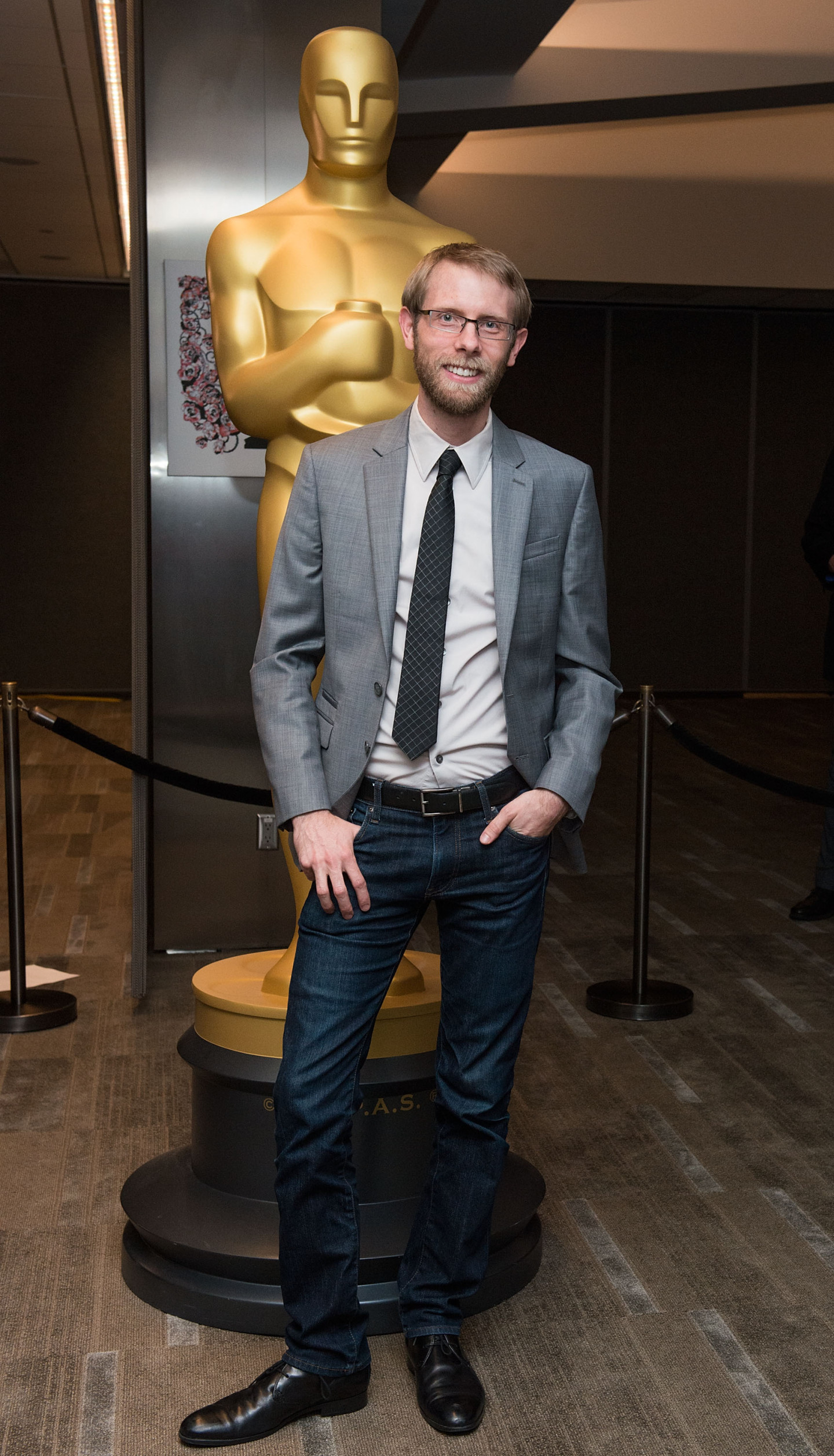
"caption": "J. Christian Jensen arrives at the 87th Annual Academy Awards Oscar Week Celebrates Documentaries at Samuel Goldwyn Theater on February 18, 2015 in Beverly Hills. ",
"description": "J. Christian Jensen arrives at the 87th Annual Academy Awards Oscar Week Celebrates Documentaries at Samuel Goldwyn Theater on February 18, 2015 in Beverly Hills. ",
"title": "463828486",
"credit": "Valerie Macon/Getty Images",
"status": "inherit",
"isLoading": false,
"fetchFailed": false
}
},
"audioPlayerReducer": {
"postId": "stream_live",
"isPaused": true,
"isPlaying": false,
"pfsActive": false,
"pledgeModalIsOpen": true,
"playerDrawerIsOpen": false,
"liveAudioPlayStartedAt": 0,
"liveAudioPlayContext": ""
},
"authorsReducer": {
"byline_news_11685634": {
"type": "authors",
"id": "byline_news_11685634",
"meta": {
"override": true
},
"slug": "byline_news_11685634",
"name": "Eric Westervelt\u003cbr>\u003cstrong>\u003ca href=\"https://www.npr.org/2018/08/08/636319870/in-oakland-more-data-hasnt-meant-less-racial-disparity-during-police-stops\">NPR\u003c/a>\u003c/strong>",
"isLoading": false
},
"byline_news_11643965": {
"type": "authors",
"id": "byline_news_11643965",
"meta": {
"override": true
},
"slug": "byline_news_11643965",
"name": "\u003cstrong>Paul Elias\u003cbr/>Associated Press\u003c/strong>",
"isLoading": false
},
"kqednewsstaffandwires": {
"type": "authors",
"id": "237",
"meta": {
"index": "authors_1716337520",
"id": "237",
"found": true
},
"name": "KQED News Staff and Wires",
"firstName": "KQED News Staff and Wires",
"lastName": null,
"slug": "kqednewsstaffandwires",
"email": "onlinenewsstaff@kqed.org",
"display_author_email": false,
"staff_mastheads": [],
"title": null,
"bio": null,
"avatar": "https://secure.gravatar.com/avatar/72295af8ebbfbd19a4948f5271285664?s=600&d=blank&r=g",
"twitter": null,
"facebook": null,
"instagram": null,
"linkedin": null,
"sites": [
{
"site": "arts",
"roles": [
"contributor"
]
},
{
"site": "news",
"roles": [
"contributor"
]
},
{
"site": "lowdown",
"roles": [
"author"
]
},
{
"site": "stateofhealth",
"roles": [
"contributor"
]
},
{
"site": "food",
"roles": [
"author"
]
}
],
"headData": {
"title": "KQED News Staff and Wires | KQED",
"description": null,
"ogImgSrc": "https://secure.gravatar.com/avatar/72295af8ebbfbd19a4948f5271285664?s=600&d=blank&r=g",
"twImgSrc": "https://secure.gravatar.com/avatar/72295af8ebbfbd19a4948f5271285664?s=600&d=blank&r=g"
},
"isLoading": false,
"link": "/author/kqednewsstaffandwires"
},
"rachael-myrow": {
"type": "authors",
"id": "251",
"meta": {
"index": "authors_1716337520",
"id": "251",
"found": true
},
"name": "Rachael Myrow",
"firstName": "Rachael",
"lastName": "Myrow",
"slug": "rachael-myrow",
"email": "rmyrow@kqed.org",
"display_author_email": true,
"staff_mastheads": [
"news"
],
"title": "Senior Editor of KQED's Silicon Valley News Desk",
"bio": "• I write and edit stories about how Silicon Valley power and policies shape everyday life in California. I’m also passionate about making Bay Area history and culture more accessible to a broad public. • I’ve been a journalist for most of my life, starting in high school with The Franklin Press in Los Angeles, where I grew up. While earning my first degree in English at UC Berkeley, I got my start in public radio at KALX-FM. After completing a second degree in journalism at Cal, I landed my first professional job at Marketplace, then moved on to KPCC (now LAist), and then KQED, where I hosted The California Report for more than seven years. • My reporting has appeared on NPR, The World, WBUR’s \u003ci>Here & Now\u003c/i>, and the BBC. I also guest host for KQED’s \u003ci>Forum\u003c/i>, as well as the Commonwealth Club in San Francisco. • I speak periodically on media, democracy and technology issues, and do voiceover work for documentaries and educational video projects. • Outside of the studio, you'll find me hiking Bay Area trails and whipping up Insta-ready meals in my kitchen. • I do not accept gifts, money, or favors from anyone connected to my reporting, I don't pay people for information, and I do not support or donate to political causes. • I strive to treat the people I report on with fairness, honesty, and respect. I also recognize there are often multiple sides to a story and work to verify information through multiple sources and documentation. If I get something wrong, I correct it.",
"avatar": "https://secure.gravatar.com/avatar/87bf8cb5874e045cdff430523a6d48b1?s=600&d=blank&r=g",
"twitter": "rachaelmyrow",
"facebook": null,
"instagram": null,
"linkedin": "https://www.linkedin.com/in/rachaelmyrow/",
"sites": [
{
"site": "arts",
"roles": [
"administrator"
]
},
{
"site": "news",
"roles": [
"edit_others_posts",
"editor"
]
},
{
"site": "futureofyou",
"roles": [
"editor"
]
},
{
"site": "bayareabites",
"roles": [
"editor"
]
},
{
"site": "stateofhealth",
"roles": [
"editor"
]
},
{
"site": "science",
"roles": [
"editor"
]
},
{
"site": "food",
"roles": [
"editor"
]
},
{
"site": "forum",
"roles": [
"editor"
]
},
{
"site": "liveblog",
"roles": [
"author"
]
}
],
"headData": {
"title": "Rachael Myrow | KQED",
"description": "Senior Editor of KQED's Silicon Valley News Desk",
"ogImgSrc": "https://secure.gravatar.com/avatar/87bf8cb5874e045cdff430523a6d48b1?s=600&d=blank&r=g",
"twImgSrc": "https://secure.gravatar.com/avatar/87bf8cb5874e045cdff430523a6d48b1?s=600&d=blank&r=g"
},
"isLoading": false,
"link": "/author/rachael-myrow"
},
"kdomara": {
"type": "authors",
"id": "1459",
"meta": {
"index": "authors_1716337520",
"id": "1459",
"found": true
},
"name": "Kelly O'Mara",
"firstName": "Kelly",
"lastName": "O'Mara",
"slug": "kdomara",
"email": "komara@kqed.org",
"display_author_email": false,
"staff_mastheads": [
"news"
],
"title": "KQED Contributor",
"bio": "Kelly O'Mara is a writer and reporter in the San Francisco Bay Area. She writes about food, health, sports, travel, business and California news. Her work has appeared on KQED, online for Outside Magazine, epsnW, VICE and in Competitor Magazine, among others. Follow Kelly on Twitter \u003ca href=\"https://twitter.com/kellydomara\">@kellydomara\u003c/a>.",
"avatar": "https://secure.gravatar.com/avatar/768fec7412028b72f13bdd0f5f9d8186?s=600&d=blank&r=g",
"twitter": null,
"facebook": null,
"instagram": null,
"linkedin": null,
"sites": [
{
"site": "arts",
"roles": []
},
{
"site": "news",
"roles": []
},
{
"site": "bayareabites",
"roles": []
},
{
"site": "stateofhealth",
"roles": []
},
{
"site": "science",
"roles": []
},
{
"site": "checkplease",
"roles": [
"editor"
]
},
{
"site": "food",
"roles": []
},
{
"site": "forum",
"roles": [
"editor"
]
},
{
"site": "liveblog",
"roles": [
"editor"
]
}
],
"headData": {
"title": "Kelly O'Mara | KQED",
"description": "KQED Contributor",
"ogImgSrc": "https://secure.gravatar.com/avatar/768fec7412028b72f13bdd0f5f9d8186?s=600&d=blank&r=g",
"twImgSrc": "https://secure.gravatar.com/avatar/768fec7412028b72f13bdd0f5f9d8186?s=600&d=blank&r=g"
},
"isLoading": false,
"link": "/author/kdomara"
},
"bwillon": {
"type": "authors",
"id": "3207",
"meta": {
"index": "authors_1716337520",
"id": "3207",
"found": true
},
"name": "Beth Willon",
"firstName": "Beth",
"lastName": "Willon",
"slug": "bwillon",
"email": "bwillon@kqed.org",
"display_author_email": false,
"staff_mastheads": [],
"title": "KQED Contributor",
"bio": "Beth Willon is a former senior reporter for KQED's Silicon Valley News Desk in San Jose. (@KQEDNews )\r\n\r\n@BethWillon",
"avatar": "https://secure.gravatar.com/avatar/3533b741c785d6a97e8b283e7f65606d?s=600&d=blank&r=g",
"twitter": null,
"facebook": null,
"instagram": null,
"linkedin": null,
"sites": [
{
"site": "news",
"roles": [
"subscriber"
]
}
],
"headData": {
"title": "Beth Willon | KQED",
"description": "KQED Contributor",
"ogImgSrc": "https://secure.gravatar.com/avatar/3533b741c785d6a97e8b283e7f65606d?s=600&d=blank&r=g",
"twImgSrc": "https://secure.gravatar.com/avatar/3533b741c785d6a97e8b283e7f65606d?s=600&d=blank&r=g"
},
"isLoading": false,
"link": "/author/bwillon"
},
"vrancano": {
"type": "authors",
"id": "11276",
"meta": {
"index": "authors_1716337520",
"id": "11276",
"found": true
},
"name": "Vanessa Rancaño",
"firstName": "Vanessa",
"lastName": "Rancaño",
"slug": "vrancano",
"email": "vrancano@kqed.org",
"display_author_email": false,
"staff_mastheads": [
"news"
],
"title": "Reporter, Housing",
"bio": "Vanessa Rancaño is a features reporter for KQED. She’s also covered homelessness and education for the station and reported from the Central Valley. Her work has aired across public radio, from flagship national news shows to longform narrative podcasts. Before taking up a mic, she worked as a freelance print journalist. She’s been recognized with a number of national and regional awards. Vanessa grew up in California's Central Valley. She's a former NPR Kroc Fellow, and a graduate of the UC Berkeley Graduate School of Journalism.",
"avatar": "https://secure.gravatar.com/avatar/b3a383dfb0e7ee1c17568f2cf067904ab654d6e3de9743fc661f3c788ade1bed?s=600&d=blank&r=g",
"twitter": "vanessarancano",
"bluesky": null,
"facebook": null,
"instagram": null,
"linkedin": null,
"sites": [
{
"site": "arts",
"roles": [
"editor"
]
},
{
"site": "news",
"roles": [
"editor"
]
},
{
"site": "liveblog",
"roles": [
"contributor"
]
}
],
"headData": {
"title": "Vanessa Rancaño | KQED",
"description": "Reporter, Housing",
"ogImgSrc": "https://secure.gravatar.com/avatar/b3a383dfb0e7ee1c17568f2cf067904ab654d6e3de9743fc661f3c788ade1bed?s=600&d=blank&r=g",
"twImgSrc": "https://secure.gravatar.com/avatar/b3a383dfb0e7ee1c17568f2cf067904ab654d6e3de9743fc661f3c788ade1bed?s=600&d=blank&r=g"
},
"isLoading": false,
"link": "/author/vrancano"
},
"mleitsinger": {
"type": "authors",
"id": "11310",
"meta": {
"index": "authors_1716337520",
"id": "11310",
"found": true
},
"name": "Miranda Leitsinger",
"firstName": "Miranda",
"lastName": "Leitsinger",
"slug": "mleitsinger",
"email": "mleitsinger@KQED.org",
"display_author_email": false,
"staff_mastheads": [
"news"
],
"title": "KQED Contributor",
"bio": "Miranda Leitsinger has worked in journalism as a reporter and editor since 2000, including seven years at The Associated Press in locales such as Cambodia and Puerto Rico, four years at NBC News Digital in New York and 2.5 years at CNN.com International in Hong Kong. Major stories she has covered included sexual abuse in the yoga community, the rise of women in local politics post-2016 election, the struggle over LGBTQ inclusion in the Boy Scouts, aftermath of the 2004 and 2011 tsunamis, the Aurora movie theater attack, the Newtown school shooting, Superstorm Sandy and the Boston Marathon bombing.",
"avatar": "https://secure.gravatar.com/avatar/cdd00de7be92aab3b7fd3d915e02033d?s=600&d=blank&r=g",
"twitter": "mimileitsinger",
"facebook": null,
"instagram": null,
"linkedin": null,
"sites": [
{
"site": "arts",
"roles": [
"author"
]
},
{
"site": "news",
"roles": [
"subscriber"
]
},
{
"site": "futureofyou",
"roles": [
"editor"
]
},
{
"site": "stateofhealth",
"roles": [
"editor"
]
}
],
"headData": {
"title": "Miranda Leitsinger | KQED",
"description": "KQED Contributor",
"ogImgSrc": "https://secure.gravatar.com/avatar/cdd00de7be92aab3b7fd3d915e02033d?s=600&d=blank&r=g",
"twImgSrc": "https://secure.gravatar.com/avatar/cdd00de7be92aab3b7fd3d915e02033d?s=600&d=blank&r=g"
},
"isLoading": false,
"link": "/author/mleitsinger"
},
"bhernandez": {
"type": "authors",
"id": "11359",
"meta": {
"index": "authors_1716337520",
"id": "11359",
"found": true
},
"name": "Bianca Hernandez",
"firstName": "Bianca",
"lastName": "Hernandez",
"slug": "bhernandez",
"email": "bhernandez@kqed.org",
"display_author_email": false,
"staff_mastheads": [],
"title": "KQED Contributor",
"bio": "Bianca Hernandez is a former Interactive Producer for KQED. She has produced at KGPE, KSEE24 and Sierra Magazine. In 2011 she received an undergraduate degree in Journalism and Anthropology from CSU, Chico . She earned a Master's from the University of Southern California in 2013, where she completed a documentary on teenage farmworkers. She is an avid Jane Austen fan and takes lightsaber combat class for fun.",
"avatar": "https://secure.gravatar.com/avatar/75b3424851e2f9fa131f2cb6a051aeac?s=600&d=blank&r=g",
"twitter": "bookhoarding",
"facebook": null,
"instagram": null,
"linkedin": null,
"sites": [
{
"site": "arts",
"roles": []
},
{
"site": "news",
"roles": []
},
{
"site": "science",
"roles": []
},
{
"site": "forum",
"roles": []
}
],
"headData": {
"title": "Bianca Hernandez | KQED",
"description": "KQED Contributor",
"ogImgSrc": "https://secure.gravatar.com/avatar/75b3424851e2f9fa131f2cb6a051aeac?s=600&d=blank&r=g",
"twImgSrc": "https://secure.gravatar.com/avatar/75b3424851e2f9fa131f2cb6a051aeac?s=600&d=blank&r=g"
},
"isLoading": false,
"link": "/author/bhernandez"
}
},
"pagesReducer": {
"news_tag_stanford-university": {
"type": "terms",
"id": "news_1928",
"meta": {
"index": "terms_1716263798",
"site": "news",
"id": "1928",
"score": 8.790994
},
"featImg": null,
"name": "Stanford University",
"description": null,
"taxonomy": "tag",
"headData": {
"twImgId": null,
"twTitle": null,
"ogTitle": null,
"ogImgId": null,
"twDescription": null,
"description": null,
"title": "Stanford University Archives | KQED News",
"ogDescription": null
},
"ttid": 1943,
"slug": "stanford-university",
"isLoading": false,
"title": "Stanford University",
"pageMeta": {
"site": "news",
"WpPageTemplate": "page-topic-editorial",
"currentPage": 6
},
"blocks": [
{
"blockName": "kqed/post-list",
"attrs": {
"layout": "cardArticle2",
"query": "posts/news?tag=stanford-university",
"seeMore": false,
"paginated": true,
"page": 6
}
},
{
"blockName": "kqed/ad"
}
]
}
},
"pfsSessionReducer": {},
"postsReducer": {
"stream_live": {
"type": "live",
"id": "stream_live",
"audioUrl": "https://streams.kqed.org/kqedradio",
"title": "Live Stream",
"excerpt": "Live Stream information currently unavailable.",
"link": "/radio",
"featImg": "",
"label": {
"name": "KQED Live",
"link": "/"
}
},
"stream_kqedNewscast": {
"type": "posts",
"id": "stream_kqedNewscast",
"audioUrl": "https://www.kqed.org/.stream/anon/radio/RDnews/newscast.mp3?_=1",
"title": "KQED Newscast",
"featImg": "",
"label": {
"name": "88.5 FM",
"link": "/"
}
},
"news_11729466": {
"type": "posts",
"id": "news_11729466",
"meta": {
"index": "posts_1716263798",
"site": "news",
"id": "11729466",
"score": null,
"sort": [
1551378493000
]
},
"guestAuthors": [],
"slug": "lead-by-example-says-california-professor-who-has-accused-virginias-fairfax-of-sexual-assault",
"title": "'Lead by Example,' Says California Professor Who Has Accused Virginia's Fairfax of Sexual Assault",
"publishDate": 1551378493,
"format": "standard",
"headTitle": "‘Lead by Example,’ Says California Professor Who Has Accused Virginia’s Fairfax of Sexual Assault | KQED",
"labelTerm": {
"term": 72,
"site": "news"
},
"content": "\u003cp>A loving daughter and supportive friend. A political junkie. A diehard Californian and Dodgers fan. And a committed scholar, also known for her advocacy work on behalf of sexual assault survivors.\u003c/p>\n\u003cp>That’s how colleagues and friends described Vanessa C. Tyson, an associate professor of politics at Scripps College in Claremont, California, who in early February alleged that Virginia Lt. Gov. Justin Fairfax sexually assaulted her in 2004 at the Democratic National Convention in Boston.\u003c/p>\n\u003cp>A second woman has since accused Fairfax of raping her in 2000 at a fraternity party at Duke University. He has denied both allegations and has called for a law enforcement investigation. Three people told KQED that Tyson — who declined to be interviewed for this story — had previously confided in them about the assault.\u003c/p>\n\u003cp>“Sometimes you have to lead by example, no matter how hard it is,” said Tyson, \u003ca href=\"http://www.scrippscollege.edu/academics/faculty/profile/vanessa-tyson\">a race politics scholar\u003c/a>, at a talk on Feb. 12 at Stanford University, when she was asked about speaking up about sexual assault.\u003c/p>\n\u003cp>Tyson’s lawyer has asked the Virginia General Assembly, where Fairfax, a Democrat, is the Senate president, to create a bipartisan process to investigate the allegations. On Friday, Virginia House Republicans said they would hold a hearing where Fairfax, Tyson and the other accuser, Meredith Watson, can testify, \u003ca href=\"https://apnews.com/aecb631183754924b9edb8f74a630b94\">The Associated Press\u003c/a> reported. A spokeswoman for Fairfax has described the Republican-led hearing as “partisan.”\u003c/p>\n\u003cp>[ad fullwidth]\u003c/p>\n\u003cp>\u003cstrong>Not Consensual\u003c/strong>\u003c/p>\n\u003cp>Tyson, who is 42, said she met Fairfax at the convention, where they were both working, on July 26, 2004. They crossed paths during the first few days, and their interaction was “cordial but not flirtatious,” Tyson said in a statement through her lawyer in early February.\u003c/p>\n\u003caside class=\"pullquote alignright\">‘I cannot believe, given my obvious distress, that Mr. Fairfax thought this forced sexual act was consensual.’\u003ccite>Professor Vanessa C. Tyson\u003c/cite>\u003c/aside>\n\u003cp>Two days later, Tyson said Fairfax invited her on an errand to pick up some documents from his hotel room. While there, she said Fairfax kissed her, but what “began as consensual kissing quickly turned into a sexual assault.”\u003c/p>\n\u003cp>“As I cried and gagged, Mr. Fairfax forced me to perform oral sex on him. I cannot believe, given my obvious distress, that Mr. Fairfax thought this forced sexual act was consensual,” Tyson said in the statement.\u003c/p>\n\u003cp>Afterward, Tyson said, she avoided Fairfax for the rest of the convention.\u003c/p>\n\u003cp>“After the assault, I suffered from both deep humiliation and shame. I did not speak about it for years, and I (like most survivors) suppressed those memories and emotions as a necessary means to continue my studies, and to pursue my goal of building a successful career as an academic,” she said in her statement. “At the time, I found this horrific incident especially degrading, given my regular volunteer work at a local rape crisis center.”\u003c/p>\n\u003cp>Tyson said her silence began to end when the #MeToo movement erupted in the fall of 2017, which was also when she learned Fairfax was running to be Virginia’s lieutenant governor.\u003c/p>\n\u003cp>“The passion and resolve of so many survivors, coupled with the job security that tenure afforded me, gave me the strength I simply did not have in 2004,” she said in the statement, noting she began to disclose details about the assault to friends in October 2017.\u003c/p>\n\u003cp>Lauren Burke, a spokeswoman for Fairfax, said the lieutenant governor has “consistently” denied the allegations and has requested a “full, fair, independent, impartial, and nonpolitical investigation” by law enforcement.\u003c/p>\n\u003cp>\u003cstrong>‘She Was Rattled, Frustrated’\u003c/strong>\u003c/p>\n\u003cp>Tyson had reached out to The Washington Post shortly after Fairfax won office in November 2017 to report the alleged attack, \u003ca href=\"https://www.washingtonpost.com/local/virginia-politics/2019/02/06/daed33aa-2a30-11e9-b2fc-721718903bfc_story.html?utm_term=.0ca03ab1b402\">the newspaper said\u003c/a>. But The Post said, in a piece it did about her on Feb. 6, 2019, that it “did not run a story at the time because it could not corroborate Tyson’s account or find similar complaints of sexual misconduct.”\u003c/p>\n\u003cp>A number of Tyson’s friends and colleagues told KQED that she’d spoken with them about the alleged attack within the last year. Dara Strolovitch, an \u003ca href=\"https://gss.princeton.edu/dara-z-strolovitch\">associate professor of gender and sexuality studies at Princeton University\u003c/a>, said Tyson, a longtime friend, shared details about the incident in March 2018 when they were attending a political science conference in San Francisco.\u003c/p>\n\u003caside class=\"pullquote alignright\">‘Everything about her story was consistent psychologically and structurally with dozens, if not hundreds, of other accounts I’ve heard.’\u003ccite>Professor Jennifer Freyd, who has studied sexual violence for more than 25 years\u003c/cite>\u003c/aside>\n\u003cp>Tyson was in disbelief that the man she said had attacked her had been elected lieutenant governor, said Strolovitch: “She was rattled. She was unhappy. She was frustrated.”\u003c/p>\n\u003cp>Kim Yi Dionne, an \u003ca href=\"https://sites.google.com/ucr.edu/kyd\">assistant professor of political science at UC Riverside\u003c/a>, said Tyson confided in her on July 11, 2018 — a date she remembers because that’s when she closed on her home. Tyson, a fellow Californian who she has known since 1998, came over that day with some housewarming gifts: wine, toilet paper, cereal and face masks.\u003c/p>\n\u003cp>“I worried that his continued success would take a toll on her,” Dionne said about Fairfax’s election. “I worried that there was no good solution for that problem.”\u003c/p>\n\u003cp>Dionne said she thought Tyson’s “experience with The Post left her really disappointed. And uncertain about whether there was a way forward.”\u003c/p>\n\u003cfigure id=\"attachment_11729487\" class=\"wp-caption alignnone\" style=\"max-width: 800px\">\u003cimg loading=\"lazy\" decoding=\"async\" class=\"size-medium wp-image-11729487\" src=\"https://ww2.kqed.org/news/wp-content/uploads/sites/10/2019/02/Fairfax_Getty-qut-800x533.jpg\" alt=\"\" width=\"800\" height=\"533\" srcset=\"https://cdn.kqed.org/wp-content/uploads/sites/10/2019/02/Fairfax_Getty-qut-800x533.jpg 800w, https://cdn.kqed.org/wp-content/uploads/sites/10/2019/02/Fairfax_Getty-qut-160x107.jpg 160w, https://cdn.kqed.org/wp-content/uploads/sites/10/2019/02/Fairfax_Getty-qut-1020x680.jpg 1020w, https://cdn.kqed.org/wp-content/uploads/sites/10/2019/02/Fairfax_Getty-qut-1200x800.jpg 1200w, https://cdn.kqed.org/wp-content/uploads/sites/10/2019/02/Fairfax_Getty-qut.jpg 1920w\" sizes=\"(max-width: 800px) 100vw, 800px\">\u003cfigcaption class=\"wp-caption-text\">Virginia Lt. Gov. Justin Fairfax presides over the Senate at the Virginia State Capitol, Feb. 7, 2019, in Richmond, Virginia. \u003ccite>(Drew Angerer/Getty Images)\u003c/cite>\u003c/figcaption>\u003c/figure>\n\u003cp>Jennifer Freyd, \u003ca href=\"https://dynamic.uoregon.edu/jjf/\">a professor of psychology\u003c/a> who has studied sexual violence for more than 25 years, said Tyson disclosed details about the encounter with her and a few other colleagues last fall at Stanford, where they are yearlong fellows at the \u003ca href=\"https://casbs.stanford.edu\">Center for Advanced Study in the Behavioral Sciences\u003c/a>.\u003c/p>\n\u003cp>Tyson described the “parameters of the event very clearly about what happened to her in that hotel room in 2004,” said Freyd, who didn’t recall if she’d named Fairfax as her attacker. “Everything about her story was consistent psychologically and structurally with dozens, if not hundreds, of other accounts I’ve heard,” she said.\u003c/p>\n\u003cfigure id=\"attachment_11729511\" class=\"wp-caption alignnone\" style=\"max-width: 800px\">\u003cimg loading=\"lazy\" decoding=\"async\" class=\"size-medium wp-image-11729511\" src=\"https://ww2.kqed.org/news/wp-content/uploads/sites/10/2019/02/CASBS_Freyd-qut-800x533.jpg\" alt=\"\" width=\"800\" height=\"533\" srcset=\"https://cdn.kqed.org/wp-content/uploads/sites/10/2019/02/CASBS_Freyd-qut-800x533.jpg 800w, https://cdn.kqed.org/wp-content/uploads/sites/10/2019/02/CASBS_Freyd-qut-160x107.jpg 160w, https://cdn.kqed.org/wp-content/uploads/sites/10/2019/02/CASBS_Freyd-qut-1020x680.jpg 1020w, https://cdn.kqed.org/wp-content/uploads/sites/10/2019/02/CASBS_Freyd-qut-1200x800.jpg 1200w, https://cdn.kqed.org/wp-content/uploads/sites/10/2019/02/CASBS_Freyd-qut.jpg 1920w\" sizes=\"(max-width: 800px) 100vw, 800px\">\u003cfigcaption class=\"wp-caption-text\">Professor Jennifer Freyd speaks as part of a talk, “Betrayal and Courage in the Age of #MeToo,” at Stanford University’s Center for Advanced Study in the Behavioral Sciences on Feb. 12, 2019. Professor Vanessa Tyson is sitting to her left. \u003ccite>(Nikki Ritcher/Center for Advanced Study in the Behavioral Sciences)\u003c/cite>\u003c/figcaption>\u003c/figure>\n\u003cp>Then, earlier this month, a racist photo surfaced in the 1984 yearbook page of Virginia Gov. Ralph Northam, \u003ca href=\"https://www.npr.org/2019/02/04/691002942/eyes-on-lt-gov-justin-fairfax-to-heal-va-as-northam-resists-calls-to-resign\">leading to calls for his resignation\u003c/a>. Tyson commented on the incident in a post on Facebook on Feb. 1, 2019, saying that a campaign staffer who had assaulted her during the 2004 DNC “was about to get a big promotion.” She did not directly refer to Northam or Fairfax — who is lieutenant governor to Northam.\u003c/p>\n\u003cp>“It was not my intention in that moment to inject myself into what has become a much larger political battle,” Tyson said in her public statement issued by her lawyer.\u003c/p>\n\u003cfigure id=\"attachment_11729502\" class=\"wp-caption alignnone\" style=\"max-width: 800px\">\u003cimg loading=\"lazy\" decoding=\"async\" class=\"size-medium wp-image-11729502\" src=\"https://ww2.kqed.org/news/wp-content/uploads/sites/10/2019/02/Newspapers_Fairfax_GettyImages-1096540330-qut-800x533.jpg\" alt=\"\" width=\"800\" height=\"533\" srcset=\"https://cdn.kqed.org/wp-content/uploads/sites/10/2019/02/Newspapers_Fairfax_GettyImages-1096540330-qut-800x533.jpg 800w, https://cdn.kqed.org/wp-content/uploads/sites/10/2019/02/Newspapers_Fairfax_GettyImages-1096540330-qut-160x107.jpg 160w, https://cdn.kqed.org/wp-content/uploads/sites/10/2019/02/Newspapers_Fairfax_GettyImages-1096540330-qut-1020x680.jpg 1020w, https://cdn.kqed.org/wp-content/uploads/sites/10/2019/02/Newspapers_Fairfax_GettyImages-1096540330-qut-1200x800.jpg 1200w, https://cdn.kqed.org/wp-content/uploads/sites/10/2019/02/Newspapers_Fairfax_GettyImages-1096540330-qut.jpg 1920w\" sizes=\"(max-width: 800px) 100vw, 800px\">\u003cfigcaption class=\"wp-caption-text\">The Richmond Free Press features top Virginia state officials embroiled in controversies on Feb. 9, 2019, in Richmond, Virginia. \u003ccite>(Drew Angerer/Getty Images)\u003c/cite>\u003c/figcaption>\u003c/figure>\n\u003cp>Before Tyson had decided whether she would go public, conservative website Big League Politics \u003ca href=\"https://bigleaguepolitics.com/stanford-fellow-hints-at-possible-justin-fairfax-sex-assault/\">published a screenshot\u003c/a> of her Facebook post, saying she had hinted at a possible sexual assault by the lieutenant governor.\u003c/p>\n\u003cp>Fairfax’s staff responded the next day, Feb. 4, \u003ca href=\"https://twitter.com/LGJustinFairfax/status/1092331277552898055\">via Twitter\u003c/a>, saying it was a “false claim” and that “he has never assaulted anyone — ever.”\u003c/p>\n\u003cp>https://twitter.com/LGJustinFairfax/status/1092331277552898055\u003c/p>\n\u003cp>On Feb. 6, Tyson issued her first public statement on the alleged assault in a three-page letter. She wrote that it was “with tremendous anguish” she was sharing her experience: “Given his false assertions, I’m compelled to make clear what happened.”\u003c/p>\n\u003cp>https://twitter.com/sarahmccammon/status/1093223842745647104\u003c/p>\n\u003cp>After Virginia state Republicans called for a hearing into the accusations against him, Fairfax likened what was happening to a political lynching.\u003c/p>\n\u003cp>“We talk about hundreds, at least a hundred, terror lynchings that have happened in the Commonwealth of Virginia under those very same auspices — and yet we stand here in a rush to judgment with nothing but accusations and no facts, and we decide that we are willing to do the same thing,” he said \u003ca href=\"https://www.youtube.com/channel/UCHBrkUWdOl1ZKe79mgK4NTQ\">during a speech\u003c/a> he made to the state Senate on Sunday.\u003c/p>\n\u003caside class=\"pullquote alignright\">‘We stand here in a rush to judgment with nothing but accusations and no facts …’\u003ccite>Lt. Gov. Justin Fairfax\u003c/cite>\u003c/aside>\n\u003cp>Tyson’s lawyer, Debra S. Katz, \u003ca href=\"https://www.kqed.org/news/11726050/california-professor-who-accused-virginia-lt-gov-of-assault-to-meet-with-prosecutors\">said in mid-February\u003c/a> that her client will meet with the prosecutor’s office in Suffolk County, Massachusetts, to detail her allegations.\u003c/p>\n\u003cp>\u003cstrong>A Survivor, Not a Victim\u003c/strong>\u003c/p>\n\u003cp>Tyson grew up in Whittier in Los Angeles County. She had \u003ca href=\"https://www.youtube.com/watch?v=8SD2iXOSKxg\">long been open\u003c/a> about being a survivor of childhood incest, several friends and colleagues told KQED. When she was 8 years old, she said, her father was convicted of molesting her.\u003c/p>\n\u003cp>“She is so honest and upfront and candid, and she owns her story,” said Nadia Brown, an \u003ca href=\"https://www.cla.purdue.edu/polsci/directory/?p=Nadia_Brown\">associate professor of political science and African-American studies\u003c/a> at Purdue University. “She is a survivor. She is not a victim.”\u003c/p>\n\u003cp>Ange-Marie Hancock Alfaro, a \u003ca href=\"https://dornsife.usc.edu/cf/faculty-and-staff/faculty.cfm?pid=1020016\">professor of political science and gender studies\u003c/a> at USC and a mentor to Tyson, said Tyson told her about the molestation in 2013 at a conference in Chicago. Hancock Alfaro recalled Tyson sharing a story from years earlier about when her father tried contacting her while she was an undergraduate student at Princeton University: “The fact that he was trying to reach out to her was too much.”\u003c/p>\n\u003caside class=\"pullquote alignright\">‘She owns her story. She is a survivor. She is not a victim.’\u003ccite>Professor Nadia Brown, Purdue University\u003c/cite>\u003c/aside>\n\u003cp> \u003c/p>\n\u003cp>Tyson said she lost legal protection from her father when she turned 18 during her first year at Princeton. Around this time, during late fall of 1994, Tyson said her panic attacks started.\u003c/p>\n\u003cp>“I willingly kissed someone for the first time, and this one small act unleashed a tidal wave of emotions, coupled with flashbacks to years of terror from my youth,” she wrote in October 2018 in an essay for the Journal of Women, Politics & Policy, publishing in March (Brown, the Purdue professor guest-editing the issue, shared a draft of the essay with KQED).\u003c/p>\n\u003cp>Tyson said she tried to “fix” herself while in college and graduate school, reading books on trauma and childhood sexual abuse and using available counseling resources, she said in the essay.\u003c/p>\n\u003cp>Then she turned to advocacy.\u003c/p>\n\u003cp>At 26, she began speaking publicly about child sex abuse, and soon after co-founded the Survivor Speakers’ Bureau of the Boston Area Rape Crisis Center, Tyson said in her essay. She also started a program teaching self-esteem and self-awareness at a girls detention center in Framingham, Massachusetts.\u003c/p>\n\u003cp>In sharing her story, she hoped to “help fellow survivors in the way that others’ stories had helped me,” she wrote in the essay. “My greatest inspiration, however, remained the deep-seeded belief that my efforts might help to reverse a cycle of abuse and trauma that seemed pervasive in our society.”\u003c/p>\n\u003cp>Tyson has also joined efforts to address sexual harassment in the political science community as part of the #MeTooPoliSci collective, said Brown and Strolovitch. In her latest work, she is shifting her focus from race and representation in Congress to \u003ca href=\"https://casbs.stanford.edu/people/current-fellows#222660\">sexual violence against women and children \u003c/a>— research she has been incubating for years, said her friends and colleagues.\u003c/p>\n\u003cp>Tyson wants to examine political discourse surrounding assault, corresponding policies and the unique identities of survivors.\u003c/p>\n\u003cp>Dionne said Tyson’s new project could also trigger her own trauma: “I think that that is really hard and that’s why I think what she’s done has been so brave — because it’s so hard.”\u003c/p>\n\u003cp>\u003cstrong>Political Junkie. Dodgers Fan. \u003c/strong>\u003c/p>\n\u003cp>The political science academic community, and others, have rallied around Tyson, using the hashtag \u003ca href=\"https://twitter.com/search?q=%23IBelieveVanessa&src=tyah\">#IBelieveVanessa\u003c/a>. A \u003ca href=\"https://www.gofundme.com/legal-defense-fund-for-dr-vanessa-tyson\">GoFundMe\u003c/a> account, set up to raise money for legal and security expenses, has raised more than $30,000 since it launched on Feb. 6. Some of \u003ca href=\"https://twitter.com/WomensCaucus_PS/status/1093200643165163522\">her supporters\u003c/a> have been circulating a \u003ca href=\"https://docs.google.com/forms/d/e/1FAIpQLSdxyJtQ-992MxfNSkUbSnQMqvahdIyOLk8G4gn-44iQZeCUwA/viewform\">statement of support\u003c/a> for Tyson.\u003c/p>\n\u003cfigure id=\"attachment_11724401\" class=\"wp-caption alignnone\" style=\"max-width: 800px\">\u003cimg loading=\"lazy\" decoding=\"async\" class=\"wp-image-11724401 size-medium\" src=\"https://ww2.kqed.org/news/wp-content/uploads/sites/10/2019/02/02062019_tysonmichelson-qut-800x492.jpg\" alt=\"\" width=\"800\" height=\"492\" srcset=\"https://cdn.kqed.org/wp-content/uploads/sites/10/2019/02/02062019_tysonmichelson-qut-800x492.jpg 800w, https://cdn.kqed.org/wp-content/uploads/sites/10/2019/02/02062019_tysonmichelson-qut-160x98.jpg 160w, https://cdn.kqed.org/wp-content/uploads/sites/10/2019/02/02062019_tysonmichelson-qut-1020x628.jpg 1020w, https://cdn.kqed.org/wp-content/uploads/sites/10/2019/02/02062019_tysonmichelson-qut-1200x738.jpg 1200w, https://cdn.kqed.org/wp-content/uploads/sites/10/2019/02/02062019_tysonmichelson-qut.jpg 1266w\" sizes=\"(max-width: 800px) 100vw, 800px\">\u003cfigcaption class=\"wp-caption-text\">Vanessa Tyson, left, with friend and fellow political science professor Melissa R. Michelson, in Vancouver, B.C., in April 2017. Michelson started a GoFundMe fundraiser to help raise money for Tyson’s security and legal expenses in the wake of her coming forward. \u003ccite>(Courtesy of Melissa R. Michelson)\u003c/cite>\u003c/figcaption>\u003c/figure>\n\u003cp>The surge in donations didn’t surprise Melissa R. Michelson, a professor of political science at Menlo College in Atherton who has known Tyson for many years and started the GoFundMe effort.\u003c/p>\n\u003cp>“It shows me how well loved and respected Vanessa is,” she said. “I think that’s testament to her reputation as a human being, as a scholar, as someone who is trustworthy, as someone who should be believed.”\u003c/p>\n\u003cp>Friends said they’ve communicated with Tyson since she went public, mostly by text or Facebook messages.\u003c/p>\n\u003cp>“She’s hanging in there,” said Purdue professor Brown, who noted that Tyson recently sent her an email to thank her for her support. “But this is hard. And she’s also reliving the past trauma from her father.”\u003c/p>\n\u003cp>“I think for the first little while she was clearly completely overwhelmed and trying to, as she put it, remember how to be a human in the midst of all of this,” said Strolovitch.\u003c/p>\n\u003caside class=\"pullquote alignright\">‘Don’t be afraid to see survivors for who they are.’\u003ccite>Professor Vanessa C. Tyson\u003c/cite>\u003c/aside>\n\u003cp>And that’s one thing friends wanted to stress about Tyson: “She’s also a normal person,” Dionne said. “She has a dog that she loves. She’s a big Dodger fan,” who has attended spring training, and is “super close” with her mom. Brown, like others, described Tyson as a political junkie, who knows a lot about California politics. And friends said she was a connoisseur of fine wine and champagne, sharing special bottles to mark important events, like birthdays and awards.\u003c/p>\n\u003cp>https://twitter.com/dadakim/status/1017280166425387008\u003c/p>\n\u003cp>“I hope people will be able to focus on the (her) research,” Dionne said. “And, going forward, I hope that that’s what she’s going to be known for — is that she’s doing really fantastic research and that we should all be reading it.”\u003c/p>\n\u003cp>During her \u003ca href=\"https://www.youtube.com/watch?v=dRxyVMzyTG0&t=3306s\">Stanford talk\u003c/a>, Tyson called on people to stand by survivors of sexual assault and not to “glance away” from such violence.\u003c/p>\n\u003cp>“Don’t be afraid to see survivors for who they are,” she said. “… And know that they didn’t deserve what happened to them. They have nothing to be ashamed of, and they are not alone.”\u003c/p>\n\u003cp>[ad floatright]\u003c/p>\n\u003cp>https://www.youtube.com/watch?v=dRxyVMzyTG0&t=3306s\u003c/p>\n\n",
"blocks": [],
"excerpt": "A political scientist, currently at Stanford, and another woman have alleged they were attacked by a man who became a top state official years later.",
"status": "publish",
"parent": 0,
"modified": 1721119658,
"stats": {
"hasAudio": false,
"hasVideo": true,
"hasChartOrMap": false,
"iframeSrcs": [],
"hasGoogleForm": false,
"hasGallery": false,
"hasHearkenModule": false,
"hasPolis": false,
"paragraphCount": 57,
"wordCount": 2598
},
"headData": {
"title": "'Lead by Example,' Says California Professor Who Has Accused Virginia's Fairfax of Sexual Assault | KQED",
"description": "A political scientist, currently at Stanford, and another woman have alleged they were attacked by a man who became a top state official years later.",
"ogTitle": "",
"ogDescription": "",
"ogImgId": "",
"twTitle": "",
"twDescription": "",
"twImgId": "",
"schema": {
"@context": "https://schema.org",
"@type": "NewsArticle",
"headline": "'Lead by Example,' Says California Professor Who Has Accused Virginia's Fairfax of Sexual Assault",
"datePublished": "2019-02-28T10:28:13-08:00",
"dateModified": "2024-07-16T01:47:38-07:00",
"image": "https://cdn.kqed.org/wp-content/uploads/2020/02/KQED-OG-Image@1x.png",
"isAccessibleForFree": "True",
"publisher": {
"@type": "NewsMediaOrganization",
"@id": "https://www.kqed.org/#organization",
"name": "KQED",
"logo": "https://cdn.kqed.org/wp-content/uploads/2020/02/KQED-OG-Image@1x.png",
"url": "https://www.kqed.org",
"sameAs": [
"https://www.facebook.com/KQED",
"https://twitter.com/KQED",
"https://www.instagram.com/kqed/",
"https://www.tiktok.com/@kqedofficial",
"https://www.linkedin.com/company/kqed",
"https://www.youtube.com/channel/UCeC0IOo7i1P_61zVUWbJ4nw"
]
}
}
},
"sticky": false,
"path": "/news/11729466/lead-by-example-says-california-professor-who-has-accused-virginias-fairfax-of-sexual-assault",
"audioTrackLength": null,
"parsedContent": [
{
"type": "contentString",
"content": "\u003cdiv class=\"post-body\">\u003cp>\u003cp>A loving daughter and supportive friend. A political junkie. A diehard Californian and Dodgers fan. And a committed scholar, also known for her advocacy work on behalf of sexual assault survivors.\u003c/p>\n\u003cp>That’s how colleagues and friends described Vanessa C. Tyson, an associate professor of politics at Scripps College in Claremont, California, who in early February alleged that Virginia Lt. Gov. Justin Fairfax sexually assaulted her in 2004 at the Democratic National Convention in Boston.\u003c/p>\n\u003cp>A second woman has since accused Fairfax of raping her in 2000 at a fraternity party at Duke University. He has denied both allegations and has called for a law enforcement investigation. Three people told KQED that Tyson — who declined to be interviewed for this story — had previously confided in them about the assault.\u003c/p>\n\u003cp>“Sometimes you have to lead by example, no matter how hard it is,” said Tyson, \u003ca href=\"http://www.scrippscollege.edu/academics/faculty/profile/vanessa-tyson\">a race politics scholar\u003c/a>, at a talk on Feb. 12 at Stanford University, when she was asked about speaking up about sexual assault.\u003c/p>\n\u003cp>Tyson’s lawyer has asked the Virginia General Assembly, where Fairfax, a Democrat, is the Senate president, to create a bipartisan process to investigate the allegations. On Friday, Virginia House Republicans said they would hold a hearing where Fairfax, Tyson and the other accuser, Meredith Watson, can testify, \u003ca href=\"https://apnews.com/aecb631183754924b9edb8f74a630b94\">The Associated Press\u003c/a> reported. A spokeswoman for Fairfax has described the Republican-led hearing as “partisan.”\u003c/p>\n\u003cp>\u003c/p>\u003c/div>",
"attributes": {
"named": {},
"numeric": []
}
},
{
"type": "component",
"content": "",
"name": "ad",
"attributes": {
"named": {
"label": "fullwidth"
},
"numeric": [
"fullwidth"
]
}
},
{
"type": "contentString",
"content": "\u003cdiv class=\"post-body\">\u003cp>\u003c/p>\n\u003cp>\u003cstrong>Not Consensual\u003c/strong>\u003c/p>\n\u003cp>Tyson, who is 42, said she met Fairfax at the convention, where they were both working, on July 26, 2004. They crossed paths during the first few days, and their interaction was “cordial but not flirtatious,” Tyson said in a statement through her lawyer in early February.\u003c/p>\n\u003caside class=\"pullquote alignright\">‘I cannot believe, given my obvious distress, that Mr. Fairfax thought this forced sexual act was consensual.’\u003ccite>Professor Vanessa C. Tyson\u003c/cite>\u003c/aside>\n\u003cp>Two days later, Tyson said Fairfax invited her on an errand to pick up some documents from his hotel room. While there, she said Fairfax kissed her, but what “began as consensual kissing quickly turned into a sexual assault.”\u003c/p>\n\u003cp>“As I cried and gagged, Mr. Fairfax forced me to perform oral sex on him. I cannot believe, given my obvious distress, that Mr. Fairfax thought this forced sexual act was consensual,” Tyson said in the statement.\u003c/p>\n\u003cp>Afterward, Tyson said, she avoided Fairfax for the rest of the convention.\u003c/p>\n\u003cp>“After the assault, I suffered from both deep humiliation and shame. I did not speak about it for years, and I (like most survivors) suppressed those memories and emotions as a necessary means to continue my studies, and to pursue my goal of building a successful career as an academic,” she said in her statement. “At the time, I found this horrific incident especially degrading, given my regular volunteer work at a local rape crisis center.”\u003c/p>\n\u003cp>Tyson said her silence began to end when the #MeToo movement erupted in the fall of 2017, which was also when she learned Fairfax was running to be Virginia’s lieutenant governor.\u003c/p>\n\u003cp>“The passion and resolve of so many survivors, coupled with the job security that tenure afforded me, gave me the strength I simply did not have in 2004,” she said in the statement, noting she began to disclose details about the assault to friends in October 2017.\u003c/p>\n\u003cp>Lauren Burke, a spokeswoman for Fairfax, said the lieutenant governor has “consistently” denied the allegations and has requested a “full, fair, independent, impartial, and nonpolitical investigation” by law enforcement.\u003c/p>\n\u003cp>\u003cstrong>‘She Was Rattled, Frustrated’\u003c/strong>\u003c/p>\n\u003cp>Tyson had reached out to The Washington Post shortly after Fairfax won office in November 2017 to report the alleged attack, \u003ca href=\"https://www.washingtonpost.com/local/virginia-politics/2019/02/06/daed33aa-2a30-11e9-b2fc-721718903bfc_story.html?utm_term=.0ca03ab1b402\">the newspaper said\u003c/a>. But The Post said, in a piece it did about her on Feb. 6, 2019, that it “did not run a story at the time because it could not corroborate Tyson’s account or find similar complaints of sexual misconduct.”\u003c/p>\n\u003cp>A number of Tyson’s friends and colleagues told KQED that she’d spoken with them about the alleged attack within the last year. Dara Strolovitch, an \u003ca href=\"https://gss.princeton.edu/dara-z-strolovitch\">associate professor of gender and sexuality studies at Princeton University\u003c/a>, said Tyson, a longtime friend, shared details about the incident in March 2018 when they were attending a political science conference in San Francisco.\u003c/p>\n\u003caside class=\"pullquote alignright\">‘Everything about her story was consistent psychologically and structurally with dozens, if not hundreds, of other accounts I’ve heard.’\u003ccite>Professor Jennifer Freyd, who has studied sexual violence for more than 25 years\u003c/cite>\u003c/aside>\n\u003cp>Tyson was in disbelief that the man she said had attacked her had been elected lieutenant governor, said Strolovitch: “She was rattled. She was unhappy. She was frustrated.”\u003c/p>\n\u003cp>Kim Yi Dionne, an \u003ca href=\"https://sites.google.com/ucr.edu/kyd\">assistant professor of political science at UC Riverside\u003c/a>, said Tyson confided in her on July 11, 2018 — a date she remembers because that’s when she closed on her home. Tyson, a fellow Californian who she has known since 1998, came over that day with some housewarming gifts: wine, toilet paper, cereal and face masks.\u003c/p>\n\u003cp>“I worried that his continued success would take a toll on her,” Dionne said about Fairfax’s election. “I worried that there was no good solution for that problem.”\u003c/p>\n\u003cp>Dionne said she thought Tyson’s “experience with The Post left her really disappointed. And uncertain about whether there was a way forward.”\u003c/p>\n\u003cfigure id=\"attachment_11729487\" class=\"wp-caption alignnone\" style=\"max-width: 800px\">\u003cimg loading=\"lazy\" decoding=\"async\" class=\"size-medium wp-image-11729487\" src=\"https://ww2.kqed.org/news/wp-content/uploads/sites/10/2019/02/Fairfax_Getty-qut-800x533.jpg\" alt=\"\" width=\"800\" height=\"533\" srcset=\"https://cdn.kqed.org/wp-content/uploads/sites/10/2019/02/Fairfax_Getty-qut-800x533.jpg 800w, https://cdn.kqed.org/wp-content/uploads/sites/10/2019/02/Fairfax_Getty-qut-160x107.jpg 160w, https://cdn.kqed.org/wp-content/uploads/sites/10/2019/02/Fairfax_Getty-qut-1020x680.jpg 1020w, https://cdn.kqed.org/wp-content/uploads/sites/10/2019/02/Fairfax_Getty-qut-1200x800.jpg 1200w, https://cdn.kqed.org/wp-content/uploads/sites/10/2019/02/Fairfax_Getty-qut.jpg 1920w\" sizes=\"(max-width: 800px) 100vw, 800px\">\u003cfigcaption class=\"wp-caption-text\">Virginia Lt. Gov. Justin Fairfax presides over the Senate at the Virginia State Capitol, Feb. 7, 2019, in Richmond, Virginia. \u003ccite>(Drew Angerer/Getty Images)\u003c/cite>\u003c/figcaption>\u003c/figure>\n\u003cp>Jennifer Freyd, \u003ca href=\"https://dynamic.uoregon.edu/jjf/\">a professor of psychology\u003c/a> who has studied sexual violence for more than 25 years, said Tyson disclosed details about the encounter with her and a few other colleagues last fall at Stanford, where they are yearlong fellows at the \u003ca href=\"https://casbs.stanford.edu\">Center for Advanced Study in the Behavioral Sciences\u003c/a>.\u003c/p>\n\u003cp>Tyson described the “parameters of the event very clearly about what happened to her in that hotel room in 2004,” said Freyd, who didn’t recall if she’d named Fairfax as her attacker. “Everything about her story was consistent psychologically and structurally with dozens, if not hundreds, of other accounts I’ve heard,” she said.\u003c/p>\n\u003cfigure id=\"attachment_11729511\" class=\"wp-caption alignnone\" style=\"max-width: 800px\">\u003cimg loading=\"lazy\" decoding=\"async\" class=\"size-medium wp-image-11729511\" src=\"https://ww2.kqed.org/news/wp-content/uploads/sites/10/2019/02/CASBS_Freyd-qut-800x533.jpg\" alt=\"\" width=\"800\" height=\"533\" srcset=\"https://cdn.kqed.org/wp-content/uploads/sites/10/2019/02/CASBS_Freyd-qut-800x533.jpg 800w, https://cdn.kqed.org/wp-content/uploads/sites/10/2019/02/CASBS_Freyd-qut-160x107.jpg 160w, https://cdn.kqed.org/wp-content/uploads/sites/10/2019/02/CASBS_Freyd-qut-1020x680.jpg 1020w, https://cdn.kqed.org/wp-content/uploads/sites/10/2019/02/CASBS_Freyd-qut-1200x800.jpg 1200w, https://cdn.kqed.org/wp-content/uploads/sites/10/2019/02/CASBS_Freyd-qut.jpg 1920w\" sizes=\"(max-width: 800px) 100vw, 800px\">\u003cfigcaption class=\"wp-caption-text\">Professor Jennifer Freyd speaks as part of a talk, “Betrayal and Courage in the Age of #MeToo,” at Stanford University’s Center for Advanced Study in the Behavioral Sciences on Feb. 12, 2019. Professor Vanessa Tyson is sitting to her left. \u003ccite>(Nikki Ritcher/Center for Advanced Study in the Behavioral Sciences)\u003c/cite>\u003c/figcaption>\u003c/figure>\n\u003cp>Then, earlier this month, a racist photo surfaced in the 1984 yearbook page of Virginia Gov. Ralph Northam, \u003ca href=\"https://www.npr.org/2019/02/04/691002942/eyes-on-lt-gov-justin-fairfax-to-heal-va-as-northam-resists-calls-to-resign\">leading to calls for his resignation\u003c/a>. Tyson commented on the incident in a post on Facebook on Feb. 1, 2019, saying that a campaign staffer who had assaulted her during the 2004 DNC “was about to get a big promotion.” She did not directly refer to Northam or Fairfax — who is lieutenant governor to Northam.\u003c/p>\n\u003cp>“It was not my intention in that moment to inject myself into what has become a much larger political battle,” Tyson said in her public statement issued by her lawyer.\u003c/p>\n\u003cfigure id=\"attachment_11729502\" class=\"wp-caption alignnone\" style=\"max-width: 800px\">\u003cimg loading=\"lazy\" decoding=\"async\" class=\"size-medium wp-image-11729502\" src=\"https://ww2.kqed.org/news/wp-content/uploads/sites/10/2019/02/Newspapers_Fairfax_GettyImages-1096540330-qut-800x533.jpg\" alt=\"\" width=\"800\" height=\"533\" srcset=\"https://cdn.kqed.org/wp-content/uploads/sites/10/2019/02/Newspapers_Fairfax_GettyImages-1096540330-qut-800x533.jpg 800w, https://cdn.kqed.org/wp-content/uploads/sites/10/2019/02/Newspapers_Fairfax_GettyImages-1096540330-qut-160x107.jpg 160w, https://cdn.kqed.org/wp-content/uploads/sites/10/2019/02/Newspapers_Fairfax_GettyImages-1096540330-qut-1020x680.jpg 1020w, https://cdn.kqed.org/wp-content/uploads/sites/10/2019/02/Newspapers_Fairfax_GettyImages-1096540330-qut-1200x800.jpg 1200w, https://cdn.kqed.org/wp-content/uploads/sites/10/2019/02/Newspapers_Fairfax_GettyImages-1096540330-qut.jpg 1920w\" sizes=\"(max-width: 800px) 100vw, 800px\">\u003cfigcaption class=\"wp-caption-text\">The Richmond Free Press features top Virginia state officials embroiled in controversies on Feb. 9, 2019, in Richmond, Virginia. \u003ccite>(Drew Angerer/Getty Images)\u003c/cite>\u003c/figcaption>\u003c/figure>\n\u003cp>Before Tyson had decided whether she would go public, conservative website Big League Politics \u003ca href=\"https://bigleaguepolitics.com/stanford-fellow-hints-at-possible-justin-fairfax-sex-assault/\">published a screenshot\u003c/a> of her Facebook post, saying she had hinted at a possible sexual assault by the lieutenant governor.\u003c/p>\n\u003cp>Fairfax’s staff responded the next day, Feb. 4, \u003ca href=\"https://twitter.com/LGJustinFairfax/status/1092331277552898055\">via Twitter\u003c/a>, saying it was a “false claim” and that “he has never assaulted anyone — ever.”\u003c/p>\u003c/p>\u003c/div>",
"attributes": {
"named": {},
"numeric": []
}
},
{
"type": "component",
"content": "",
"name": "singleTwitterStatus",
"attributes": {
"named": {
"id": "1092331277552898055"
},
"numeric": []
}
},
{
"type": "contentString",
"content": "\u003cdiv class=\"post-body\">\u003cp>\n\u003cp>On Feb. 6, Tyson issued her first public statement on the alleged assault in a three-page letter. She wrote that it was “with tremendous anguish” she was sharing her experience: “Given his false assertions, I’m compelled to make clear what happened.”\u003c/p>\u003c/p>\u003c/div>",
"attributes": {
"named": {},
"numeric": []
}
},
{
"type": "component",
"content": "",
"name": "singleTwitterStatus",
"attributes": {
"named": {
"id": "1093223842745647104"
},
"numeric": []
}
},
{
"type": "contentString",
"content": "\u003cdiv class=\"post-body\">\u003cp>\n\u003cp>After Virginia state Republicans called for a hearing into the accusations against him, Fairfax likened what was happening to a political lynching.\u003c/p>\n\u003cp>“We talk about hundreds, at least a hundred, terror lynchings that have happened in the Commonwealth of Virginia under those very same auspices — and yet we stand here in a rush to judgment with nothing but accusations and no facts, and we decide that we are willing to do the same thing,” he said \u003ca href=\"https://www.youtube.com/channel/UCHBrkUWdOl1ZKe79mgK4NTQ\">during a speech\u003c/a> he made to the state Senate on Sunday.\u003c/p>\n\u003caside class=\"pullquote alignright\">‘We stand here in a rush to judgment with nothing but accusations and no facts …’\u003ccite>Lt. Gov. Justin Fairfax\u003c/cite>\u003c/aside>\n\u003cp>Tyson’s lawyer, Debra S. Katz, \u003ca href=\"https://www.kqed.org/news/11726050/california-professor-who-accused-virginia-lt-gov-of-assault-to-meet-with-prosecutors\">said in mid-February\u003c/a> that her client will meet with the prosecutor’s office in Suffolk County, Massachusetts, to detail her allegations.\u003c/p>\n\u003cp>\u003cstrong>A Survivor, Not a Victim\u003c/strong>\u003c/p>\n\u003cp>Tyson grew up in Whittier in Los Angeles County. She had \u003ca href=\"https://www.youtube.com/watch?v=8SD2iXOSKxg\">long been open\u003c/a> about being a survivor of childhood incest, several friends and colleagues told KQED. When she was 8 years old, she said, her father was convicted of molesting her.\u003c/p>\n\u003cp>“She is so honest and upfront and candid, and she owns her story,” said Nadia Brown, an \u003ca href=\"https://www.cla.purdue.edu/polsci/directory/?p=Nadia_Brown\">associate professor of political science and African-American studies\u003c/a> at Purdue University. “She is a survivor. She is not a victim.”\u003c/p>\n\u003cp>Ange-Marie Hancock Alfaro, a \u003ca href=\"https://dornsife.usc.edu/cf/faculty-and-staff/faculty.cfm?pid=1020016\">professor of political science and gender studies\u003c/a> at USC and a mentor to Tyson, said Tyson told her about the molestation in 2013 at a conference in Chicago. Hancock Alfaro recalled Tyson sharing a story from years earlier about when her father tried contacting her while she was an undergraduate student at Princeton University: “The fact that he was trying to reach out to her was too much.”\u003c/p>\n\u003caside class=\"pullquote alignright\">‘She owns her story. She is a survivor. She is not a victim.’\u003ccite>Professor Nadia Brown, Purdue University\u003c/cite>\u003c/aside>\n\u003cp> \u003c/p>\n\u003cp>Tyson said she lost legal protection from her father when she turned 18 during her first year at Princeton. Around this time, during late fall of 1994, Tyson said her panic attacks started.\u003c/p>\n\u003cp>“I willingly kissed someone for the first time, and this one small act unleashed a tidal wave of emotions, coupled with flashbacks to years of terror from my youth,” she wrote in October 2018 in an essay for the Journal of Women, Politics & Policy, publishing in March (Brown, the Purdue professor guest-editing the issue, shared a draft of the essay with KQED).\u003c/p>\n\u003cp>Tyson said she tried to “fix” herself while in college and graduate school, reading books on trauma and childhood sexual abuse and using available counseling resources, she said in the essay.\u003c/p>\n\u003cp>Then she turned to advocacy.\u003c/p>\n\u003cp>At 26, she began speaking publicly about child sex abuse, and soon after co-founded the Survivor Speakers’ Bureau of the Boston Area Rape Crisis Center, Tyson said in her essay. She also started a program teaching self-esteem and self-awareness at a girls detention center in Framingham, Massachusetts.\u003c/p>\n\u003cp>In sharing her story, she hoped to “help fellow survivors in the way that others’ stories had helped me,” she wrote in the essay. “My greatest inspiration, however, remained the deep-seeded belief that my efforts might help to reverse a cycle of abuse and trauma that seemed pervasive in our society.”\u003c/p>\n\u003cp>Tyson has also joined efforts to address sexual harassment in the political science community as part of the #MeTooPoliSci collective, said Brown and Strolovitch. In her latest work, she is shifting her focus from race and representation in Congress to \u003ca href=\"https://casbs.stanford.edu/people/current-fellows#222660\">sexual violence against women and children \u003c/a>— research she has been incubating for years, said her friends and colleagues.\u003c/p>\n\u003cp>Tyson wants to examine political discourse surrounding assault, corresponding policies and the unique identities of survivors.\u003c/p>\n\u003cp>Dionne said Tyson’s new project could also trigger her own trauma: “I think that that is really hard and that’s why I think what she’s done has been so brave — because it’s so hard.”\u003c/p>\n\u003cp>\u003cstrong>Political Junkie. Dodgers Fan. \u003c/strong>\u003c/p>\n\u003cp>The political science academic community, and others, have rallied around Tyson, using the hashtag \u003ca href=\"https://twitter.com/search?q=%23IBelieveVanessa&src=tyah\">#IBelieveVanessa\u003c/a>. A \u003ca href=\"https://www.gofundme.com/legal-defense-fund-for-dr-vanessa-tyson\">GoFundMe\u003c/a> account, set up to raise money for legal and security expenses, has raised more than $30,000 since it launched on Feb. 6. Some of \u003ca href=\"https://twitter.com/WomensCaucus_PS/status/1093200643165163522\">her supporters\u003c/a> have been circulating a \u003ca href=\"https://docs.google.com/forms/d/e/1FAIpQLSdxyJtQ-992MxfNSkUbSnQMqvahdIyOLk8G4gn-44iQZeCUwA/viewform\">statement of support\u003c/a> for Tyson.\u003c/p>\n\u003cfigure id=\"attachment_11724401\" class=\"wp-caption alignnone\" style=\"max-width: 800px\">\u003cimg loading=\"lazy\" decoding=\"async\" class=\"wp-image-11724401 size-medium\" src=\"https://ww2.kqed.org/news/wp-content/uploads/sites/10/2019/02/02062019_tysonmichelson-qut-800x492.jpg\" alt=\"\" width=\"800\" height=\"492\" srcset=\"https://cdn.kqed.org/wp-content/uploads/sites/10/2019/02/02062019_tysonmichelson-qut-800x492.jpg 800w, https://cdn.kqed.org/wp-content/uploads/sites/10/2019/02/02062019_tysonmichelson-qut-160x98.jpg 160w, https://cdn.kqed.org/wp-content/uploads/sites/10/2019/02/02062019_tysonmichelson-qut-1020x628.jpg 1020w, https://cdn.kqed.org/wp-content/uploads/sites/10/2019/02/02062019_tysonmichelson-qut-1200x738.jpg 1200w, https://cdn.kqed.org/wp-content/uploads/sites/10/2019/02/02062019_tysonmichelson-qut.jpg 1266w\" sizes=\"(max-width: 800px) 100vw, 800px\">\u003cfigcaption class=\"wp-caption-text\">Vanessa Tyson, left, with friend and fellow political science professor Melissa R. Michelson, in Vancouver, B.C., in April 2017. Michelson started a GoFundMe fundraiser to help raise money for Tyson’s security and legal expenses in the wake of her coming forward. \u003ccite>(Courtesy of Melissa R. Michelson)\u003c/cite>\u003c/figcaption>\u003c/figure>\n\u003cp>The surge in donations didn’t surprise Melissa R. Michelson, a professor of political science at Menlo College in Atherton who has known Tyson for many years and started the GoFundMe effort.\u003c/p>\n\u003cp>“It shows me how well loved and respected Vanessa is,” she said. “I think that’s testament to her reputation as a human being, as a scholar, as someone who is trustworthy, as someone who should be believed.”\u003c/p>\n\u003cp>Friends said they’ve communicated with Tyson since she went public, mostly by text or Facebook messages.\u003c/p>\n\u003cp>“She’s hanging in there,” said Purdue professor Brown, who noted that Tyson recently sent her an email to thank her for her support. “But this is hard. And she’s also reliving the past trauma from her father.”\u003c/p>\n\u003cp>“I think for the first little while she was clearly completely overwhelmed and trying to, as she put it, remember how to be a human in the midst of all of this,” said Strolovitch.\u003c/p>\n\u003caside class=\"pullquote alignright\">‘Don’t be afraid to see survivors for who they are.’\u003ccite>Professor Vanessa C. Tyson\u003c/cite>\u003c/aside>\n\u003cp>And that’s one thing friends wanted to stress about Tyson: “She’s also a normal person,” Dionne said. “She has a dog that she loves. She’s a big Dodger fan,” who has attended spring training, and is “super close” with her mom. Brown, like others, described Tyson as a political junkie, who knows a lot about California politics. And friends said she was a connoisseur of fine wine and champagne, sharing special bottles to mark important events, like birthdays and awards.\u003c/p>\u003c/p>\u003c/div>",
"attributes": {
"named": {},
"numeric": []
}
},
{
"type": "component",
"content": "",
"name": "singleTwitterStatus",
"attributes": {
"named": {
"id": "1017280166425387008"
},
"numeric": []
}
},
{
"type": "contentString",
"content": "\u003cdiv class=\"post-body\">\u003cp>\n\u003cp>“I hope people will be able to focus on the (her) research,” Dionne said. “And, going forward, I hope that that’s what she’s going to be known for — is that she’s doing really fantastic research and that we should all be reading it.”\u003c/p>\n\u003cp>During her \u003ca href=\"https://www.youtube.com/watch?v=dRxyVMzyTG0&t=3306s\">Stanford talk\u003c/a>, Tyson called on people to stand by survivors of sexual assault and not to “glance away” from such violence.\u003c/p>\n\u003cp>“Don’t be afraid to see survivors for who they are,” she said. “… And know that they didn’t deserve what happened to them. They have nothing to be ashamed of, and they are not alone.”\u003c/p>\n\u003cp>\u003c/p>\u003c/div>",
"attributes": {
"named": {},
"numeric": []
}
},
{
"type": "component",
"content": "",
"name": "ad",
"attributes": {
"named": {
"label": "floatright"
},
"numeric": [
"floatright"
]
}
},
{
"type": "contentString",
"content": "\u003cdiv class=\"post-body\">\u003cp>\u003c/p>\u003c/p>\u003cp>\u003cspan class='utils-parseShortcode-shortcodes-__youtubeShortcode__embedYoutube'>\n \u003cspan class='utils-parseShortcode-shortcodes-__youtubeShortcode__embedYoutubeInside'>\n \u003ciframe\n loading='lazy'\n class='utils-parseShortcode-shortcodes-__youtubeShortcode__youtubePlayer'\n type='text/html'\n src='//www.youtube.com/embed/dRxyVMzyTG0'\n title='//www.youtube.com/embed/dRxyVMzyTG0'\n allowfullscreen='true'\n style='border:0;'>\u003c/iframe>\n \u003c/span>\n \u003c/span>\u003c/p>\u003cp>\n\u003c/div>\u003c/p>",
"attributes": {
"named": {},
"numeric": []
}
}
],
"link": "/news/11729466/lead-by-example-says-california-professor-who-has-accused-virginias-fairfax-of-sexual-assault",
"authors": [
"11310"
],
"programs": [
"news_72"
],
"categories": [
"news_8"
],
"tags": [
"news_21804",
"news_1527",
"news_1928"
],
"featImg": "news_11726054",
"label": "news_72"
},
"news_11726050": {
"type": "posts",
"id": "news_11726050",
"meta": {
"index": "posts_1716263798",
"site": "news",
"id": "11726050",
"score": null,
"sort": [
1550111121000
]
},
"guestAuthors": [],
"slug": "california-professor-who-accused-virginia-lt-gov-of-assault-to-meet-with-prosecutors",
"title": "California Professor Who Accused Virginia Lt. Gov. of Assault to Meet With Prosecutors",
"publishDate": 1550111121,
"format": "standard",
"headTitle": "California Professor Who Accused Virginia Lt. Gov. of Assault to Meet With Prosecutors | KQED",
"labelTerm": {
"site": "news"
},
"content": "\u003cp>Vanessa Tyson, the California professor who has accused Virginia Lt. Gov. Justin Fairfax of sexually assaulting her at the Democratic National Convention in 2004 in Boston, will meet with the prosecutor’s office in Massachusetts to detail her allegations, her lawyer said Wednesday.\u003c/p>\n\u003cp>Three people have told KQED that Tyson disclosed the alleged attack to them in the last year. A second woman has accused Fairfax of raping her when they were both students at Duke University in 2000; he has denied both allegations.\u003c/p>\n\u003cp>Suffolk County District Attorney Rachael Rollins said she was ready to investigate Tyson’s allegations, \u003ca href=\"https://www.bostonglobe.com/metro/2019/02/13/suffolk-district-attorney-says-she-ready-investigate-allegation-that-lieutenant-governor-assaulted-woman-boston/qZbUnSubIFrAoCdmDeCJyN/story.html\">The Boston Globe reported\u003c/a> Tuesday. The Globe also reported that a spokeswoman for Fairfax, Lauren Burke, said he would cooperate with an investigation if a criminal complaint is filed but may file his “own criminal complaint in response.”\u003c/p>\n\u003cp>Tyson’s attorney, Debra S. Katz, called Burke’s statement that Fairfax could initiate charges against Tyson “a shocking threat.”\u003c/p>\n\u003cp>“This is a clear effort to obstruct justice. Dr. Tyson will not be bullied and she will not be silenced by such threats,” Katz said in a statement.\u003c/p>\n\u003cp>[ad fullwidth]\u003c/p>\n\u003cp>Tyson’s decision to meet with authorities came one day after she gave her first public appearance since coming forward with her allegations a week ago. At a talk at Stanford University, “Betrayal and Courage in the Age of #MeToo,” Tyson was greeted with a standing ovation.\u003c/p>\n\u003cp>“Sometimes you have to lead by example, no matter how hard it is,” said Tyson, a professor of political science at Scripps College in Claremont who is doing a yearlong fellowship at Stanford’s \u003ca href=\"https://casbs.stanford.edu/\">Center for Advanced Study in the Behavioral Sciences.\u003c/a>\u003c/p>\n\u003cp>Organizers of the talk said Tyson’s allegations against Fairfax would not be discussed. But her talk, given together with psychology professor Jennifer Freyd, touched upon questions and issues circulating since she went public.\u003c/p>\n\u003cp>“Every woman matters. Every survivor matters. Regardless of their background,” Tyson said. “No one is disposable.”\u003c/p>\n\u003cp>Tyson began her talk by noting that some 65 percent of American women and girls will be raped or become a victim of some type of sexual assault during their lifetimes, citing Centers for Disease Control and Prevention figures.\u003c/p>\n\u003cp>“This is drastically shaping how we see and interact with the world around us,” she said. “It is a public and health issue. It is killing us.”\u003c/p>\n\u003cp>Tyson had long been open about being a survivor of childhood incest, friends — including Nadia Brown, an associate professor of political science and African American Studies at Purdue University — told KQED. But in her initial public statement, Tyson said she’d kept quiet about the alleged attack by Fairfax for years.\u003c/p>\n\u003cp>“After the assault, I suffered from both deep humiliation and shame. I did not speak about it for years, and I (like most survivors) suppressed those memories and emotions as a necessary means to continue my studies, and to pursue my goal of building a successful career as an academic,” she said in a statement issued by her lawyers last week. “At the time, I found this horrific incident especially degrading given my regular volunteer work at a local rape crisis center.”\u003c/p>\n\u003cp>Her silence began to end when the #MeToo movement erupted in the fall of 2017.\u003c/p>\n\u003cp>“The passion and resolve of so many survivors, coupled with the job security that tenure afforded me, gave me the strength I simply did not have in 2004,” she said in last week’s statement.\u003c/p>\n\u003cp>Two longtime friends, professors Dara Strolovitch and Kim Yi Dionne, said Tyson disclosed the alleged assault to them in 2018.\u003c/p>\n\u003cp>Freyd, who has studied sexual violence for more than 25 years, said Tyson also shared details about the encounter with her and a few other colleagues at Stanford last fall.\u003c/p>\n\u003cp>“Everything about her story was consistent psychologically and structurally with dozens, if not hundreds, of other accounts I’ve heard,” Freyd said.\u003c/p>\n\u003cp>Freyd said Fairfax’s initial response to Tyson’s allegations also followed a pattern, citing a term she coined: DARVO, or “deny, attack, and reverse victim and offender.”\u003c/p>\n\u003cp>“One of the biggest problems with these DARVO responses coming from people in positions of power is it really silences so many other people,” Freyd said. “Because once you see that response, you don’t want to subject yourself to that.”\u003c/p>\n\u003cp>Tyson’s lawyer said her client will cooperate with all “appropriate investigations,” and was awaiting further word from leadership in the Virginia Legislature about how it will proceed.\u003c/p>\n\u003cp>\u003c/p>\n\u003cp>\u003cem>Feb. 14: This story has been updated to include additional information about sources who gave interviews. \u003c/em>\u003c/p>\n\n",
"blocks": [],
"excerpt": "The development came one day after Tyson made her first public appearance since coming forward one week ago with allegations about an incident in 2004. ",
"status": "publish",
"parent": 0,
"modified": 1721119664,
"stats": {
"hasAudio": false,
"hasVideo": false,
"hasChartOrMap": false,
"iframeSrcs": [],
"hasGoogleForm": false,
"hasGallery": false,
"hasHearkenModule": false,
"hasPolis": false,
"paragraphCount": 24,
"wordCount": 817
},
"headData": {
"title": "California Professor Who Accused Virginia Lt. Gov. of Assault to Meet With Prosecutors | KQED",
"description": "The development came one day after Tyson made her first public appearance since coming forward one week ago with allegations about an incident in 2004. ",
"ogTitle": "",
"ogDescription": "",
"ogImgId": "",
"twTitle": "",
"twDescription": "",
"twImgId": "",
"schema": {
"@context": "https://schema.org",
"@type": "NewsArticle",
"headline": "California Professor Who Accused Virginia Lt. Gov. of Assault to Meet With Prosecutors",
"datePublished": "2019-02-13T18:25:21-08:00",
"dateModified": "2024-07-16T01:47:44-07:00",
"image": "https://cdn.kqed.org/wp-content/uploads/2020/02/KQED-OG-Image@1x.png",
"isAccessibleForFree": "True",
"publisher": {
"@type": "NewsMediaOrganization",
"@id": "https://www.kqed.org/#organization",
"name": "KQED",
"logo": "https://cdn.kqed.org/wp-content/uploads/2020/02/KQED-OG-Image@1x.png",
"url": "https://www.kqed.org",
"sameAs": [
"https://www.facebook.com/KQED",
"https://twitter.com/KQED",
"https://www.instagram.com/kqed/",
"https://www.tiktok.com/@kqedofficial",
"https://www.linkedin.com/company/kqed",
"https://www.youtube.com/channel/UCeC0IOo7i1P_61zVUWbJ4nw"
]
}
}
},
"sticky": false,
"path": "/news/11726050/california-professor-who-accused-virginia-lt-gov-of-assault-to-meet-with-prosecutors",
"audioTrackLength": null,
"parsedContent": [
{
"type": "contentString",
"content": "\u003cdiv class=\"post-body\">\u003cp>\u003cp>Vanessa Tyson, the California professor who has accused Virginia Lt. Gov. Justin Fairfax of sexually assaulting her at the Democratic National Convention in 2004 in Boston, will meet with the prosecutor’s office in Massachusetts to detail her allegations, her lawyer said Wednesday.\u003c/p>\n\u003cp>Three people have told KQED that Tyson disclosed the alleged attack to them in the last year. A second woman has accused Fairfax of raping her when they were both students at Duke University in 2000; he has denied both allegations.\u003c/p>\n\u003cp>Suffolk County District Attorney Rachael Rollins said she was ready to investigate Tyson’s allegations, \u003ca href=\"https://www.bostonglobe.com/metro/2019/02/13/suffolk-district-attorney-says-she-ready-investigate-allegation-that-lieutenant-governor-assaulted-woman-boston/qZbUnSubIFrAoCdmDeCJyN/story.html\">The Boston Globe reported\u003c/a> Tuesday. The Globe also reported that a spokeswoman for Fairfax, Lauren Burke, said he would cooperate with an investigation if a criminal complaint is filed but may file his “own criminal complaint in response.”\u003c/p>\n\u003cp>Tyson’s attorney, Debra S. Katz, called Burke’s statement that Fairfax could initiate charges against Tyson “a shocking threat.”\u003c/p>\n\u003cp>“This is a clear effort to obstruct justice. Dr. Tyson will not be bullied and she will not be silenced by such threats,” Katz said in a statement.\u003c/p>\n\u003cp>\u003c/p>\u003c/div>",
"attributes": {
"named": {},
"numeric": []
}
},
{
"type": "component",
"content": "",
"name": "ad",
"attributes": {
"named": {
"label": "fullwidth"
},
"numeric": [
"fullwidth"
]
}
},
{
"type": "contentString",
"content": "\u003cdiv class=\"post-body\">\u003cp>\u003c/p>\n\u003cp>Tyson’s decision to meet with authorities came one day after she gave her first public appearance since coming forward with her allegations a week ago. At a talk at Stanford University, “Betrayal and Courage in the Age of #MeToo,” Tyson was greeted with a standing ovation.\u003c/p>\n\u003cp>“Sometimes you have to lead by example, no matter how hard it is,” said Tyson, a professor of political science at Scripps College in Claremont who is doing a yearlong fellowship at Stanford’s \u003ca href=\"https://casbs.stanford.edu/\">Center for Advanced Study in the Behavioral Sciences.\u003c/a>\u003c/p>\n\u003cp>Organizers of the talk said Tyson’s allegations against Fairfax would not be discussed. But her talk, given together with psychology professor Jennifer Freyd, touched upon questions and issues circulating since she went public.\u003c/p>\n\u003cp>“Every woman matters. Every survivor matters. Regardless of their background,” Tyson said. “No one is disposable.”\u003c/p>\n\u003cp>Tyson began her talk by noting that some 65 percent of American women and girls will be raped or become a victim of some type of sexual assault during their lifetimes, citing Centers for Disease Control and Prevention figures.\u003c/p>\n\u003cp>“This is drastically shaping how we see and interact with the world around us,” she said. “It is a public and health issue. It is killing us.”\u003c/p>\n\u003cp>Tyson had long been open about being a survivor of childhood incest, friends — including Nadia Brown, an associate professor of political science and African American Studies at Purdue University — told KQED. But in her initial public statement, Tyson said she’d kept quiet about the alleged attack by Fairfax for years.\u003c/p>\n\u003cp>“After the assault, I suffered from both deep humiliation and shame. I did not speak about it for years, and I (like most survivors) suppressed those memories and emotions as a necessary means to continue my studies, and to pursue my goal of building a successful career as an academic,” she said in a statement issued by her lawyers last week. “At the time, I found this horrific incident especially degrading given my regular volunteer work at a local rape crisis center.”\u003c/p>\n\u003cp>Her silence began to end when the #MeToo movement erupted in the fall of 2017.\u003c/p>\n\u003cp>“The passion and resolve of so many survivors, coupled with the job security that tenure afforded me, gave me the strength I simply did not have in 2004,” she said in last week’s statement.\u003c/p>\n\u003cp>Two longtime friends, professors Dara Strolovitch and Kim Yi Dionne, said Tyson disclosed the alleged assault to them in 2018.\u003c/p>\n\u003cp>Freyd, who has studied sexual violence for more than 25 years, said Tyson also shared details about the encounter with her and a few other colleagues at Stanford last fall.\u003c/p>\n\u003cp>“Everything about her story was consistent psychologically and structurally with dozens, if not hundreds, of other accounts I’ve heard,” Freyd said.\u003c/p>\n\u003cp>Freyd said Fairfax’s initial response to Tyson’s allegations also followed a pattern, citing a term she coined: DARVO, or “deny, attack, and reverse victim and offender.”\u003c/p>\n\u003cp>“One of the biggest problems with these DARVO responses coming from people in positions of power is it really silences so many other people,” Freyd said. “Because once you see that response, you don’t want to subject yourself to that.”\u003c/p>\n\u003cp>Tyson’s lawyer said her client will cooperate with all “appropriate investigations,” and was awaiting further word from leadership in the Virginia Legislature about how it will proceed.\u003c/p>\n\u003cp>\u003c/p>\n\u003cp>\u003cem>Feb. 14: This story has been updated to include additional information about sources who gave interviews. \u003c/em>\u003c/p>\n\n\u003c/div>\u003c/p>",
"attributes": {
"named": {},
"numeric": []
}
}
],
"link": "/news/11726050/california-professor-who-accused-virginia-lt-gov-of-assault-to-meet-with-prosecutors",
"authors": [
"11310"
],
"categories": [
"news_8"
],
"tags": [
"news_1527",
"news_1928"
],
"featImg": "news_11726054",
"label": "news"
},
"news_11723939": {
"type": "posts",
"id": "news_11723939",
"meta": {
"index": "posts_1716263798",
"site": "news",
"id": "11723939",
"score": null,
"sort": [
1549503922000
]
},
"guestAuthors": [],
"slug": "california-prof-details-sexual-assault-allegations-against-virginia-lt-governor",
"title": "California Prof. Details Sexual Assault Allegations Against Virginia Lt. Governor",
"publishDate": 1549503922,
"format": "standard",
"headTitle": "California Prof. Details Sexual Assault Allegations Against Virginia Lt. Governor | KQED",
"labelTerm": {
"site": "news"
},
"content": "\u003cp>\u003cstrong>Updated Thursday, Feb. 7, 11:00 a.m.:\u003c/strong>\u003c/p>\n\u003cp>The California professor who accused Virginia Lt. Gov. Justin Fairfax of sexual assault has come forward with her name and her story, detailing the 2004 encounter when they attended the Democratic National Convention in Boston.\u003c/p>\n\u003cp>Vanessa Tyson, an associate professor in the politics department at Scripps College in Claremont who is currently a fellow at Stanford University, said she recently wrote in a private message on Facebook that she was assaulted by someone at the convention — but she didn’t name Fairfax. The conservative website Big League Politics published the message earlier this week, naming Fairfax as the alleged assailant.\u003c/p>\n\u003cp>Tyson, who next week is scheduled to give a talk — \u003ca href=\"https://www.eventbrite.com/e/casbs-symposium-betrayal-and-courage-in-the-age-of-metoo-tickets-54715313977\"> Betrayal and Courage in the Age of #MeToo\u003c/a> — at Stanford, said she decided to go public after Fairfax issued a statement and spoke with reporters to deny the allegations. He said the encounter was consensual.\u003c/p>\n\u003cp>“With tremendous anguish, I am now sharing this information about my experience and setting the record straight,” Tyson said in her statement shared by NPR. “Given his false assertions, I’m compelled to make clear what happened.”\u003c/p>\n\u003cp>[ad fullwidth]\u003c/p>\n\u003cp>The political science academic community, and others, have rallied around Tyson, using the hashtag \u003ca href=\"https://twitter.com/search?q=%23IBelieveVanessa&src=tyah\">#IBelieveVanessa\u003c/a>. A \u003ca href=\"https://www.gofundme.com/legal-defense-fund-for-dr-vanessa-tyson\">GoFundMe account\u003c/a> set up to raise money for legal and security expenses has raised more than $15,000 since it launched on Wednesday. A Slack group was formed \u003ca href=\"https://twitter.com/WomensCaucus_PS/status/1093200643165163522\">to help connect her supporters\u003c/a>, who were also asking people to \u003ca href=\"https://docs.google.com/forms/d/e/1FAIpQLSdxyJtQ-992MxfNSkUbSnQMqvahdIyOLk8G4gn-44iQZeCUwA/viewform\">sign a statement supporting Tyson\u003c/a>.\u003c/p>\n\u003cp>https://twitter.com/profmichelson/status/1093278551803981824\u003c/p>\n\u003cp>“Never underestimate the power of feminist political scientists,” wrote Nadia E. Brown, an associate professor of political science at Purdue University, \u003ca href=\"https://twitter.com/BrownPhDGirl/status/1093280204968157190\">on Twitter\u003c/a>.\u003c/p>\n\u003cp>https://twitter.com/brownphdgirl/status/1092945617351929856?s=12\u003c/p>\n\u003cp>Jennifer Freyd, who is a part of the Stanford fellowship at the Center for Advanced Study in the Behavioral Sciences, said Tyson told her and a few other colleagues about the 2004 incident, \u003ca href=\"https://www.mercurynews.com/2019/02/05/virginia-lt-gov-fairfax-accuser-told-friend-at-stanford-about-2004-sexual-assault/\">the Bay Area News Group\u003c/a> reported. Freyd doesn’t remember whether Tyson named Fairfax.\u003c/p>\n\u003cp>Melissa R. Michelson, a professor of political science at Menlo College in Atherton who has known Tyson for many years as a colleague and a friend, said she didn’t recall Tyson speaking to her about the alleged 2004 attack. Michelson said she reached out to Tyson via text message after news broke about the incident, but Tyson indicated she couldn’t communicate with her about it.\u003c/p>\n\u003cp>“I’m assuming … there are legal reasons why she can’t be in touch with me and the other folks who are doing what we can to support her,” she told KQED. (Debra Katz, a founding partner of the law firm representing Tyson, said she wouldn’t be doing interviews).\u003c/p>\n\u003cp>“I was really worried about her,” Michelson said. “I knew that Vanessa would need support. … And so her other friends and I started talking about what we could do to support her.”\u003c/p>\n\u003cp>Michelson, who started the GoFundMe fund, hasn’t been surprised by the donations — which surpassed the goal of $10,000.\u003c/p>\n\u003cp>\u003cb>\u003c/b>“It shows me how well loved and respected Vanessa is,” she said. “I think that’s testament to her reputation as a human being, as a scholar, as someone who is trustworthy, as someone who should be believed. … That’s the reputation that Vanessa has built up as the wonderful person that she is.”\u003c/p>\n\u003cfigure id=\"attachment_11724401\" class=\"wp-caption alignnone\" style=\"max-width: 800px\">\u003cimg loading=\"lazy\" decoding=\"async\" class=\"size-medium wp-image-11724401\" src=\"https://ww2.kqed.org/news/wp-content/uploads/sites/10/2019/02/02062019_tysonmichelson-qut-800x492.jpg\" alt=\"\" width=\"800\" height=\"492\" srcset=\"https://cdn.kqed.org/wp-content/uploads/sites/10/2019/02/02062019_tysonmichelson-qut-800x492.jpg 800w, https://cdn.kqed.org/wp-content/uploads/sites/10/2019/02/02062019_tysonmichelson-qut-160x98.jpg 160w, https://cdn.kqed.org/wp-content/uploads/sites/10/2019/02/02062019_tysonmichelson-qut-1020x628.jpg 1020w, https://cdn.kqed.org/wp-content/uploads/sites/10/2019/02/02062019_tysonmichelson-qut-1200x738.jpg 1200w, https://cdn.kqed.org/wp-content/uploads/sites/10/2019/02/02062019_tysonmichelson-qut.jpg 1266w\" sizes=\"(max-width: 800px) 100vw, 800px\">\u003cfigcaption class=\"wp-caption-text\">Vanessa Tyson, left, with friend and fellow political science professor, Melissa R. Michelson, in Vancouver in April 2017. Michelson started a GoFundMe fundraiser to help raise money for Tyson’s security and legal expenses in the wake of her coming forward. \u003ccite>(Courtesy of Melissa R. Michelson)\u003c/cite>\u003c/figcaption>\u003c/figure>\n\u003cp>Virginia politics has been rocked by a number of revelations in recent days.\u003c/p>\n\u003cp>A separate scandal has engulfed Gov. Ralph Northam’s administration since a racist photo from his 1984 medical school yearbook surfaced. Northam initially acknowledged he was in the photo and apologized. Then, a day later, he denied being in the photo but said he had appeared in blackface around the same time as part of a dance competition.\u003c/p>\n\u003cp>If Northam should resign, as many local and national politicians on both sides of the aisle have urged him to do, Fairfax would assume the governorship.\u003c/p>\n\u003cp>On Wednesday, Fairfax released another statement, NPR reported. He said Tyson’s allegation was “surprising and hurtful,” and he wanted to stress “how important it is for us to listen to women when they come forward with allegations of sexual assault or harassment.”\u003c/p>\n\u003cp>According to Tyson’s statement, she and Fairfax had struck up a “cordial, but not flirtatious” relationship by the third day of the convention in 2004. On July 28, Tyson said Fairfax invited her to his hotel room to retrieve documents, and upon their arrival, began to kiss her.\u003c/p>\n\u003cp>“What began as consensual kissing quickly turned into a sexual assault,” Tyson alleges in a statement \u003ca href=\"https://twitter.com/sarahmccammon/status/1093223842745647104\">released on her attorneys’ letterhead\u003c/a>. She says he forced her to perform oral sex on him despite her struggles against doing so.\u003c/p>\n\u003cp>“I cannot believe, given my obvious distress, that Mr. Fairfax thought this forced sexual act was consensual,” Tyson added. “To be very clear, I did not want to engage in oral sex with Mr. Fairfax and I never gave any form of consent. Quite the opposite. I consciously avoided Mr. Fairfax for the remainder of the Convention and I never spoke to him again.”\u003c/p>\n\u003cp>Fairfax has strongly rejected the allegation since it first surfaced publicly on Sunday. He pointed out that The Washington Post, though it was previously aware of the allegation, decided not to publish it last year (the Post said it decided not to publish the story because it couldn’t corroborate either party’s description of the events).\u003c/p>\n\u003cp>Tyson says she had been undecided about whether to come forward, but that her hand had been forced by the conservative blog. She \u003ca href=\"https://www.npr.org/2019/02/05/691530607/woman-alleging-sexual-assault-by-virginias-lt-gov-hires-washington-law-firm\">then retained\u003c/a> Katz, Marshall and Banks, the Washington, D.C.-based firm that represented Christine Blasey Ford — who accused Supreme Court Justice Brett Kavanaugh of sexual assault, which he denied.\u003c/p>\n\u003cp>Tyson is researching the politics and policies surrounding sexual violence against women and children in the U.S. during her fellowship year at Stanford, \u003ca href=\"https://casbs.stanford.edu/people/current-fellows#222660\">according to her biography\u003c/a>. She served as one of the founding members of the Boston Area Rape Crisis Center Survivor Speakers’ Bureau, and began a self-esteem/self-awareness program for female juvenile offenders in Massachusetts.\u003c/p>\n\u003cp>[ad floatright]\u003c/p>\n\u003cp>\u003cem>NPR and KQED News’ Miranda Leitsinger contributed to this report.\u003c/em>\u003c/p>\n\n",
"blocks": [],
"excerpt": "Vanessa Tyson released a detailed statement just days after her claim against Justin Fairfax surfaced. \"What began as consensual kissing quickly turned into a sexual assault,\" she says.",
"status": "publish",
"parent": 0,
"modified": 1721119668,
"stats": {
"hasAudio": false,
"hasVideo": false,
"hasChartOrMap": false,
"iframeSrcs": [],
"hasGoogleForm": false,
"hasGallery": false,
"hasHearkenModule": false,
"hasPolis": false,
"paragraphCount": 26,
"wordCount": 1146
},
"headData": {
"title": "California Prof. Details Sexual Assault Allegations Against Virginia Lt. Governor | KQED",
"description": "Vanessa Tyson released a detailed statement just days after her claim against Justin Fairfax surfaced. "What began as consensual kissing quickly turned into a sexual assault," she says.",
"ogTitle": "",
"ogDescription": "",
"ogImgId": "",
"twTitle": "",
"twDescription": "",
"twImgId": "",
"schema": {
"@context": "https://schema.org",
"@type": "NewsArticle",
"headline": "California Prof. Details Sexual Assault Allegations Against Virginia Lt. Governor",
"datePublished": "2019-02-06T17:45:22-08:00",
"dateModified": "2024-07-16T01:47:48-07:00",
"image": "https://cdn.kqed.org/wp-content/uploads/2020/02/KQED-OG-Image@1x.png",
"isAccessibleForFree": "True",
"publisher": {
"@type": "NewsMediaOrganization",
"@id": "https://www.kqed.org/#organization",
"name": "KQED",
"logo": "https://cdn.kqed.org/wp-content/uploads/2020/02/KQED-OG-Image@1x.png",
"url": "https://www.kqed.org",
"sameAs": [
"https://www.facebook.com/KQED",
"https://twitter.com/KQED",
"https://www.instagram.com/kqed/",
"https://www.tiktok.com/@kqedofficial",
"https://www.linkedin.com/company/kqed",
"https://www.youtube.com/channel/UCeC0IOo7i1P_61zVUWbJ4nw"
]
}
}
},
"sticky": false,
"nprImageCredit": "Logan Cyrus",
"nprImageAgency": "AFP/Getty Images",
"nprStoryId": "692060595",
"nprApiLink": "http://api.npr.org/query?id=692060595&apiKey=MDAxOTAwOTE4MDEyMTkxMDAzNjczZDljZA004",
"nprHtmlLink": "https://www.npr.org/2019/02/06/692060595/virginia-lt-governors-accuser-comes-forward-with-account-of-alleged-sexual-assau?ft=nprml&f=692060595",
"nprRetrievedStory": "1",
"nprPubDate": "Wed, 06 Feb 2019 17:24:00 -0500",
"nprStoryDate": "Wed, 06 Feb 2019 17:06:09 -0500",
"nprLastModifiedDate": "Wed, 06 Feb 2019 17:24:16 -0500",
"path": "/news/11723939/california-prof-details-sexual-assault-allegations-against-virginia-lt-governor",
"audioTrackLength": null,
"parsedContent": [
{
"type": "contentString",
"content": "\u003cdiv class=\"post-body\">\u003cp>\u003cp>\u003cstrong>Updated Thursday, Feb. 7, 11:00 a.m.:\u003c/strong>\u003c/p>\n\u003cp>The California professor who accused Virginia Lt. Gov. Justin Fairfax of sexual assault has come forward with her name and her story, detailing the 2004 encounter when they attended the Democratic National Convention in Boston.\u003c/p>\n\u003cp>Vanessa Tyson, an associate professor in the politics department at Scripps College in Claremont who is currently a fellow at Stanford University, said she recently wrote in a private message on Facebook that she was assaulted by someone at the convention — but she didn’t name Fairfax. The conservative website Big League Politics published the message earlier this week, naming Fairfax as the alleged assailant.\u003c/p>\n\u003cp>Tyson, who next week is scheduled to give a talk — \u003ca href=\"https://www.eventbrite.com/e/casbs-symposium-betrayal-and-courage-in-the-age-of-metoo-tickets-54715313977\"> Betrayal and Courage in the Age of #MeToo\u003c/a> — at Stanford, said she decided to go public after Fairfax issued a statement and spoke with reporters to deny the allegations. He said the encounter was consensual.\u003c/p>\n\u003cp>“With tremendous anguish, I am now sharing this information about my experience and setting the record straight,” Tyson said in her statement shared by NPR. “Given his false assertions, I’m compelled to make clear what happened.”\u003c/p>\n\u003cp>\u003c/p>\u003c/div>",
"attributes": {
"named": {},
"numeric": []
}
},
{
"type": "component",
"content": "",
"name": "ad",
"attributes": {
"named": {
"label": "fullwidth"
},
"numeric": [
"fullwidth"
]
}
},
{
"type": "contentString",
"content": "\u003cdiv class=\"post-body\">\u003cp>\u003c/p>\n\u003cp>The political science academic community, and others, have rallied around Tyson, using the hashtag \u003ca href=\"https://twitter.com/search?q=%23IBelieveVanessa&src=tyah\">#IBelieveVanessa\u003c/a>. A \u003ca href=\"https://www.gofundme.com/legal-defense-fund-for-dr-vanessa-tyson\">GoFundMe account\u003c/a> set up to raise money for legal and security expenses has raised more than $15,000 since it launched on Wednesday. A Slack group was formed \u003ca href=\"https://twitter.com/WomensCaucus_PS/status/1093200643165163522\">to help connect her supporters\u003c/a>, who were also asking people to \u003ca href=\"https://docs.google.com/forms/d/e/1FAIpQLSdxyJtQ-992MxfNSkUbSnQMqvahdIyOLk8G4gn-44iQZeCUwA/viewform\">sign a statement supporting Tyson\u003c/a>.\u003c/p>\u003c/p>\u003c/div>",
"attributes": {
"named": {},
"numeric": []
}
},
{
"type": "component",
"content": "",
"name": "singleTwitterStatus",
"attributes": {
"named": {
"id": "1093278551803981824"
},
"numeric": []
}
},
{
"type": "contentString",
"content": "\u003cdiv class=\"post-body\">\u003cp>\n\u003cp>“Never underestimate the power of feminist political scientists,” wrote Nadia E. Brown, an associate professor of political science at Purdue University, \u003ca href=\"https://twitter.com/BrownPhDGirl/status/1093280204968157190\">on Twitter\u003c/a>.\u003c/p>\u003c/p>\u003c/div>",
"attributes": {
"named": {},
"numeric": []
}
},
{
"type": "component",
"content": "",
"name": "singleTwitterStatus",
"attributes": {
"named": {
"id": "1092945617351929856"
},
"numeric": []
}
},
{
"type": "contentString",
"content": "\u003cdiv class=\"post-body\">\u003cp>\n\u003cp>Jennifer Freyd, who is a part of the Stanford fellowship at the Center for Advanced Study in the Behavioral Sciences, said Tyson told her and a few other colleagues about the 2004 incident, \u003ca href=\"https://www.mercurynews.com/2019/02/05/virginia-lt-gov-fairfax-accuser-told-friend-at-stanford-about-2004-sexual-assault/\">the Bay Area News Group\u003c/a> reported. Freyd doesn’t remember whether Tyson named Fairfax.\u003c/p>\n\u003cp>Melissa R. Michelson, a professor of political science at Menlo College in Atherton who has known Tyson for many years as a colleague and a friend, said she didn’t recall Tyson speaking to her about the alleged 2004 attack. Michelson said she reached out to Tyson via text message after news broke about the incident, but Tyson indicated she couldn’t communicate with her about it.\u003c/p>\n\u003cp>“I’m assuming … there are legal reasons why she can’t be in touch with me and the other folks who are doing what we can to support her,” she told KQED. (Debra Katz, a founding partner of the law firm representing Tyson, said she wouldn’t be doing interviews).\u003c/p>\n\u003cp>“I was really worried about her,” Michelson said. “I knew that Vanessa would need support. … And so her other friends and I started talking about what we could do to support her.”\u003c/p>\n\u003cp>Michelson, who started the GoFundMe fund, hasn’t been surprised by the donations — which surpassed the goal of $10,000.\u003c/p>\n\u003cp>\u003cb>\u003c/b>“It shows me how well loved and respected Vanessa is,” she said. “I think that’s testament to her reputation as a human being, as a scholar, as someone who is trustworthy, as someone who should be believed. … That’s the reputation that Vanessa has built up as the wonderful person that she is.”\u003c/p>\n\u003cfigure id=\"attachment_11724401\" class=\"wp-caption alignnone\" style=\"max-width: 800px\">\u003cimg loading=\"lazy\" decoding=\"async\" class=\"size-medium wp-image-11724401\" src=\"https://ww2.kqed.org/news/wp-content/uploads/sites/10/2019/02/02062019_tysonmichelson-qut-800x492.jpg\" alt=\"\" width=\"800\" height=\"492\" srcset=\"https://cdn.kqed.org/wp-content/uploads/sites/10/2019/02/02062019_tysonmichelson-qut-800x492.jpg 800w, https://cdn.kqed.org/wp-content/uploads/sites/10/2019/02/02062019_tysonmichelson-qut-160x98.jpg 160w, https://cdn.kqed.org/wp-content/uploads/sites/10/2019/02/02062019_tysonmichelson-qut-1020x628.jpg 1020w, https://cdn.kqed.org/wp-content/uploads/sites/10/2019/02/02062019_tysonmichelson-qut-1200x738.jpg 1200w, https://cdn.kqed.org/wp-content/uploads/sites/10/2019/02/02062019_tysonmichelson-qut.jpg 1266w\" sizes=\"(max-width: 800px) 100vw, 800px\">\u003cfigcaption class=\"wp-caption-text\">Vanessa Tyson, left, with friend and fellow political science professor, Melissa R. Michelson, in Vancouver in April 2017. Michelson started a GoFundMe fundraiser to help raise money for Tyson’s security and legal expenses in the wake of her coming forward. \u003ccite>(Courtesy of Melissa R. Michelson)\u003c/cite>\u003c/figcaption>\u003c/figure>\n\u003cp>Virginia politics has been rocked by a number of revelations in recent days.\u003c/p>\n\u003cp>A separate scandal has engulfed Gov. Ralph Northam’s administration since a racist photo from his 1984 medical school yearbook surfaced. Northam initially acknowledged he was in the photo and apologized. Then, a day later, he denied being in the photo but said he had appeared in blackface around the same time as part of a dance competition.\u003c/p>\n\u003cp>If Northam should resign, as many local and national politicians on both sides of the aisle have urged him to do, Fairfax would assume the governorship.\u003c/p>\n\u003cp>On Wednesday, Fairfax released another statement, NPR reported. He said Tyson’s allegation was “surprising and hurtful,” and he wanted to stress “how important it is for us to listen to women when they come forward with allegations of sexual assault or harassment.”\u003c/p>\n\u003cp>According to Tyson’s statement, she and Fairfax had struck up a “cordial, but not flirtatious” relationship by the third day of the convention in 2004. On July 28, Tyson said Fairfax invited her to his hotel room to retrieve documents, and upon their arrival, began to kiss her.\u003c/p>\n\u003cp>“What began as consensual kissing quickly turned into a sexual assault,” Tyson alleges in a statement \u003ca href=\"https://twitter.com/sarahmccammon/status/1093223842745647104\">released on her attorneys’ letterhead\u003c/a>. She says he forced her to perform oral sex on him despite her struggles against doing so.\u003c/p>\n\u003cp>“I cannot believe, given my obvious distress, that Mr. Fairfax thought this forced sexual act was consensual,” Tyson added. “To be very clear, I did not want to engage in oral sex with Mr. Fairfax and I never gave any form of consent. Quite the opposite. I consciously avoided Mr. Fairfax for the remainder of the Convention and I never spoke to him again.”\u003c/p>\n\u003cp>Fairfax has strongly rejected the allegation since it first surfaced publicly on Sunday. He pointed out that The Washington Post, though it was previously aware of the allegation, decided not to publish it last year (the Post said it decided not to publish the story because it couldn’t corroborate either party’s description of the events).\u003c/p>\n\u003cp>Tyson says she had been undecided about whether to come forward, but that her hand had been forced by the conservative blog. She \u003ca href=\"https://www.npr.org/2019/02/05/691530607/woman-alleging-sexual-assault-by-virginias-lt-gov-hires-washington-law-firm\">then retained\u003c/a> Katz, Marshall and Banks, the Washington, D.C.-based firm that represented Christine Blasey Ford — who accused Supreme Court Justice Brett Kavanaugh of sexual assault, which he denied.\u003c/p>\n\u003cp>Tyson is researching the politics and policies surrounding sexual violence against women and children in the U.S. during her fellowship year at Stanford, \u003ca href=\"https://casbs.stanford.edu/people/current-fellows#222660\">according to her biography\u003c/a>. She served as one of the founding members of the Boston Area Rape Crisis Center Survivor Speakers’ Bureau, and began a self-esteem/self-awareness program for female juvenile offenders in Massachusetts.\u003c/p>\n\u003cp>\u003c/p>\u003c/div>",
"attributes": {
"named": {},
"numeric": []
}
},
{
"type": "component",
"content": "",
"name": "ad",
"attributes": {
"named": {
"label": "floatright"
},
"numeric": [
"floatright"
]
}
},
{
"type": "contentString",
"content": "\u003cdiv class=\"post-body\">\u003cp>\u003c/p>\n\u003cp>\u003cem>NPR and KQED News’ Miranda Leitsinger contributed to this report.\u003c/em>\u003c/p>\n\n\u003c/div>\u003c/p>",
"attributes": {
"named": {},
"numeric": []
}
}
],
"link": "/news/11723939/california-prof-details-sexual-assault-allegations-against-virginia-lt-governor",
"authors": [
"237"
],
"categories": [
"news_8"
],
"tags": [
"news_24150",
"news_21804",
"news_1527",
"news_1928"
],
"featImg": "news_11723940",
"label": "news"
},
"news_11719386": {
"type": "posts",
"id": "news_11719386",
"meta": {
"index": "posts_1716263798",
"site": "news",
"id": "11719386",
"score": null,
"sort": [
1548109847000
]
},
"parent": 0,
"labelTerm": {
"site": "news"
},
"blocks": [],
"publishDate": 1548109847,
"format": "audio",
"disqusTitle": "Remembering Martin Luther King Jr.'s Fight Against Poverty and the Vietnam War",
"title": "Remembering Martin Luther King Jr.'s Fight Against Poverty and the Vietnam War",
"headTitle": "KQED News",
"content": "\u003cp>Martin Luther King Jr.'s stands on human rights issues including poverty were not as well known as his civil rights issues, but have been well worth noting in remembrance of him, an expert on King's achievements told KQED.\u003c/p>\n\u003cp>Clayborn Carson, Stanford history professor and founding director of the university’s \u003ca href=\"https://kinginstitute.stanford.edu\" target=\"_blank\" rel=\"noopener\">Martin Luther King, Jr. Research and Education Institute\u003c/a>, said King visited the San Francisco Bay Area numerous times to speak on human rights issues in the last years of his life.\u003c/p>\n\u003cp>Since 1985, when he was chosen by Coretta Scott King to edit and publish the papers of her late husband, Carson has devoted most of his professional life to the study of King and the movements he inspired. The \u003ca href=\"https://kinginstitute.stanford.edu/king-papers/about-papers-project\" target=\"_blank\" rel=\"noopener\">King Papers Project\u003c/a> has produced seven \u003ca href=\"https://kinginstitute.stanford.edu/publications/king-papers\" target=\"_blank\" rel=\"noopener\">volumes\u003c/a>, and Carson has edited four additional books on King.\u003c/p>\n\u003cp>Carson said King was always a social gospel minister, concerned with human rights as much as civil rights. \"He felt that basic citizenship rights were essential, but not sufficient,\" said Carson. \"Education, health care, employment: Those are basic concerns of most people.\"\u003c/p>\n\u003cp>King's visits to \u003ca href=\"https://diva.sfsu.edu/collections/sfbatv/bundles/231146\" target=\"_blank\" rel=\"noopener\">UC Berkeley\u003c/a> and \u003ca href=\"https://www.youtube.com/watch?v=so8kSH8IwIA\" target=\"_blank\" rel=\"noopener\">San Francisco\u003c/a> are well known but less so his 1967 talk at Stanford, entitled \"The Other America.” His speech focused primarily on the evils of systemic racism and economic inequality. \"Millions of young people grow up in the sunlight of opportunity, but tragically and unfortunately there is another America,\" said King. \"This other America has a daily ugliness about it that constantly transforms the buoyancy of hope into the fatigue of despair,\" he told a rapt audience of students and faculty.\u003c/p>\n\u003cp>[ad fullwidth]\u003c/p>\n\u003cp>[youtube https://www.youtube.com/watch?v=cYK9xGALPrU]While the Vietnam War was not the main subject of this speech, he had been talking about the conflict in \u003ca href=\"https://kinginstitute.stanford.edu/king-papers/documents/beyond-vietnam\" target=\"_blank\" rel=\"noopener\">others\u003c/a> across the county, and the long-time progressive could not help but turn to it again as he neared the end of his remarks. “I submit, if we spend $35 billion a year to fight an ill-considered war in Vietnam and $20 billion to put a man on the moon, our nation can spend billions of dollars to put God's children on their own two feet right here on earth,\" said King.\u003c/p>\n\u003cp>Carson said King saw the Vietnam War as a costly distraction, both in terms of human lives and resources that could have been devoted to President Lyndon Johnson’s Great Society programs. \"When we look back, I think King thought that was the great mistake of the 1960s, not focusing on these kinds of issues that are still troubling us now,\" Carson said.\u003c/p>\n\u003cp>King also showed up to support others protesting the Vietnam War, including local folk singer \u003ca href=\"http://www.joanbaez.com\" target=\"_blank\" rel=\"noopener\">Joan Baez\u003c/a>. She was a vocal critic of the war and the draft, and she was arrested with dozens of others in 1967 for blocking the entrance to an armed forces induction center in Oakland.\u003c/p>\n\u003cp>King went to visit her in jail and made a few extemporaneous remarks to a crowd of her supporters outside.\u003c/p>\n\u003cp>\"You know, when you go to jail for a righteous cause, you can accept the inconveniences of jail with a kind of innocence of calm and an inner sense of peace,\" said King. \"I want to make it very clear that I'm going to continue with all of my might, with all of my energy, and with all of my action, to oppose that abominable evil unjust war in Vietnam.\"\u003c/p>\n\u003cp>[youtube https://www.youtube.com/watch?v=Hhru_jN8M4E]King added: \"People ask me from time to time, aren’t you getting out of your field? Aren’t you supposed to be working in civil rights? They go on to say the two issues ought not to be mixed. My only answer is I have been working too long and too hard now to end up at this stage of my life segregating my moral concerns.\"\u003c/p>\n\u003cp>\u003c/p>\n\u003cp>He would go on mixing his moral concerns until he was assassinated a few months later in Memphis, Tennessee.\u003c/p>\n\n",
"disqusIdentifier": "11719386 https://ww2.kqed.org/news/?p=11719386",
"disqusUrl": "https://ww2.kqed.org/news/2019/01/21/remembering-martin-luther-king-jr-s-fight-against-poverty-and-the-vietnam-war/",
"stats": {
"hasVideo": true,
"hasChartOrMap": false,
"hasAudio": false,
"hasPolis": false,
"wordCount": 685,
"hasGoogleForm": false,
"hasGallery": false,
"hasHearkenModule": false,
"iframeSrcs": [],
"paragraphCount": 14
},
"modified": 1548113331,
"excerpt": "In his last years, Martin Luther King Jr. met with enthusiastic crowds in the San Francisco Bay Area several times.",
"headData": {
"twImgId": "",
"twTitle": "",
"ogTitle": "",
"ogImgId": "",
"twDescription": "",
"description": "In his last years, Martin Luther King Jr. met with enthusiastic crowds in the San Francisco Bay Area several times.",
"title": "Remembering Martin Luther King Jr.'s Fight Against Poverty and the Vietnam War | KQED",
"ogDescription": "",
"schema": {
"@context": "https://schema.org",
"@type": "NewsArticle",
"headline": "Remembering Martin Luther King Jr.'s Fight Against Poverty and the Vietnam War",
"datePublished": "2019-01-21T14:30:47-08:00",
"dateModified": "2019-01-21T15:28:51-08:00",
"image": "https://cdn.kqed.org/wp-content/uploads/2020/02/KQED-OG-Image@1x.png",
"isAccessibleForFree": "True",
"publisher": {
"@type": "NewsMediaOrganization",
"@id": "https://www.kqed.org/#organization",
"name": "KQED",
"logo": "https://cdn.kqed.org/wp-content/uploads/2020/02/KQED-OG-Image@1x.png",
"url": "https://www.kqed.org",
"sameAs": [
"https://www.facebook.com/KQED",
"https://twitter.com/KQED",
"https://www.instagram.com/kqed/",
"https://www.tiktok.com/@kqedofficial",
"https://www.linkedin.com/company/kqed",
"https://www.youtube.com/channel/UCeC0IOo7i1P_61zVUWbJ4nw"
]
}
}
},
"guestAuthors": [],
"slug": "remembering-martin-luther-king-jr-s-fight-against-poverty-and-the-vietnam-war",
"status": "publish",
"audioUrl": "https://www.kqed.org/.stream/anon/radio/RDnews/2019/01/MyrowMLK.mp3",
"audioTrackLength": 119,
"path": "/news/11719386/remembering-martin-luther-king-jr-s-fight-against-poverty-and-the-vietnam-war",
"parsedContent": [
{
"type": "contentString",
"content": "\u003cdiv class=\"post-body\">\u003cp>\u003cp>Martin Luther King Jr.'s stands on human rights issues including poverty were not as well known as his civil rights issues, but have been well worth noting in remembrance of him, an expert on King's achievements told KQED.\u003c/p>\n\u003cp>Clayborn Carson, Stanford history professor and founding director of the university’s \u003ca href=\"https://kinginstitute.stanford.edu\" target=\"_blank\" rel=\"noopener\">Martin Luther King, Jr. Research and Education Institute\u003c/a>, said King visited the San Francisco Bay Area numerous times to speak on human rights issues in the last years of his life.\u003c/p>\n\u003cp>Since 1985, when he was chosen by Coretta Scott King to edit and publish the papers of her late husband, Carson has devoted most of his professional life to the study of King and the movements he inspired. The \u003ca href=\"https://kinginstitute.stanford.edu/king-papers/about-papers-project\" target=\"_blank\" rel=\"noopener\">King Papers Project\u003c/a> has produced seven \u003ca href=\"https://kinginstitute.stanford.edu/publications/king-papers\" target=\"_blank\" rel=\"noopener\">volumes\u003c/a>, and Carson has edited four additional books on King.\u003c/p>\n\u003cp>Carson said King was always a social gospel minister, concerned with human rights as much as civil rights. \"He felt that basic citizenship rights were essential, but not sufficient,\" said Carson. \"Education, health care, employment: Those are basic concerns of most people.\"\u003c/p>\n\u003cp>King's visits to \u003ca href=\"https://diva.sfsu.edu/collections/sfbatv/bundles/231146\" target=\"_blank\" rel=\"noopener\">UC Berkeley\u003c/a> and \u003ca href=\"https://www.youtube.com/watch?v=so8kSH8IwIA\" target=\"_blank\" rel=\"noopener\">San Francisco\u003c/a> are well known but less so his 1967 talk at Stanford, entitled \"The Other America.” His speech focused primarily on the evils of systemic racism and economic inequality. \"Millions of young people grow up in the sunlight of opportunity, but tragically and unfortunately there is another America,\" said King. \"This other America has a daily ugliness about it that constantly transforms the buoyancy of hope into the fatigue of despair,\" he told a rapt audience of students and faculty.\u003c/p>\n\u003cp>\u003c/p>\u003c/div>",
"attributes": {
"named": {},
"numeric": []
}
},
{
"type": "component",
"content": "",
"name": "ad",
"attributes": {
"named": {
"label": "fullwidth"
},
"numeric": [
"fullwidth"
]
}
},
{
"type": "contentString",
"content": "\u003cdiv class=\"post-body\">\u003cp>\u003c/p>\n\u003cp>\u003c/p>\u003cp>\u003cspan class='utils-parseShortcode-shortcodes-__youtubeShortcode__embedYoutube'>\n \u003cspan class='utils-parseShortcode-shortcodes-__youtubeShortcode__embedYoutubeInside'>\n \u003ciframe\n loading='lazy'\n class='utils-parseShortcode-shortcodes-__youtubeShortcode__youtubePlayer'\n type='text/html'\n src='//www.youtube.com/embed/cYK9xGALPrU'\n title='//www.youtube.com/embed/cYK9xGALPrU'\n allowfullscreen='true'\n style='border:0;'>\u003c/iframe>\n \u003c/span>\n \u003c/span>\u003c/p>\u003cp>While the Vietnam War was not the main subject of this speech, he had been talking about the conflict in \u003ca href=\"https://kinginstitute.stanford.edu/king-papers/documents/beyond-vietnam\" target=\"_blank\" rel=\"noopener\">others\u003c/a> across the county, and the long-time progressive could not help but turn to it again as he neared the end of his remarks. “I submit, if we spend $35 billion a year to fight an ill-considered war in Vietnam and $20 billion to put a man on the moon, our nation can spend billions of dollars to put God's children on their own two feet right here on earth,\" said King.\u003c/p>\n\u003cp>Carson said King saw the Vietnam War as a costly distraction, both in terms of human lives and resources that could have been devoted to President Lyndon Johnson’s Great Society programs. \"When we look back, I think King thought that was the great mistake of the 1960s, not focusing on these kinds of issues that are still troubling us now,\" Carson said.\u003c/p>\n\u003cp>King also showed up to support others protesting the Vietnam War, including local folk singer \u003ca href=\"http://www.joanbaez.com\" target=\"_blank\" rel=\"noopener\">Joan Baez\u003c/a>. She was a vocal critic of the war and the draft, and she was arrested with dozens of others in 1967 for blocking the entrance to an armed forces induction center in Oakland.\u003c/p>\n\u003cp>King went to visit her in jail and made a few extemporaneous remarks to a crowd of her supporters outside.\u003c/p>\n\u003cp>\"You know, when you go to jail for a righteous cause, you can accept the inconveniences of jail with a kind of innocence of calm and an inner sense of peace,\" said King. \"I want to make it very clear that I'm going to continue with all of my might, with all of my energy, and with all of my action, to oppose that abominable evil unjust war in Vietnam.\"\u003c/p>\n\u003cp>\u003c/p>\u003cp>\u003cspan class='utils-parseShortcode-shortcodes-__youtubeShortcode__embedYoutube'>\n \u003cspan class='utils-parseShortcode-shortcodes-__youtubeShortcode__embedYoutubeInside'>\n \u003ciframe\n loading='lazy'\n class='utils-parseShortcode-shortcodes-__youtubeShortcode__youtubePlayer'\n type='text/html'\n src='//www.youtube.com/embed/Hhru_jN8M4E'\n title='//www.youtube.com/embed/Hhru_jN8M4E'\n allowfullscreen='true'\n style='border:0;'>\u003c/iframe>\n \u003c/span>\n \u003c/span>\u003c/p>\u003cp>King added: \"People ask me from time to time, aren’t you getting out of your field? Aren’t you supposed to be working in civil rights? They go on to say the two issues ought not to be mixed. My only answer is I have been working too long and too hard now to end up at this stage of my life segregating my moral concerns.\"\u003c/p>\n\u003cp>\u003c/p>\n\u003cp>He would go on mixing his moral concerns until he was assassinated a few months later in Memphis, Tennessee.\u003c/p>\n\n\u003c/div>\u003c/p>",
"attributes": {
"named": {},
"numeric": []
}
}
],
"link": "/news/11719386/remembering-martin-luther-king-jr-s-fight-against-poverty-and-the-vietnam-war",
"authors": [
"251"
],
"categories": [
"news_1758",
"news_8",
"news_13"
],
"tags": [
"news_4750",
"news_20755",
"news_854",
"news_2011",
"news_19216",
"news_16988",
"news_1928",
"news_22646",
"news_5067"
],
"featImg": "news_11719450",
"label": "news"
},
"news_11719472": {
"type": "posts",
"id": "news_11719472",
"meta": {
"index": "posts_1716263798",
"site": "news",
"id": "11719472",
"score": null,
"sort": [
1547986664000
]
},
"parent": 0,
"labelTerm": {
"site": "news"
},
"blocks": [],
"publishDate": 1547986664,
"format": "audio",
"disqusTitle": "Walking in the Footsteps of MLK, Rev. William Barber Brings Stanford Audience to its Feet",
"title": "Walking in the Footsteps of MLK, Rev. William Barber Brings Stanford Audience to its Feet",
"headTitle": "KQED News",
"content": "\u003cp>As we commemorate Martin Luther King Jr. this week, it's easy to fall into hero worship. He was so young when he ascended into leadership in the civil rights movement. He was so charged with spiritual righteousness of a kind we rarely see today. He was so eloquent.\u003c/p>\n\u003cp>Read just a little bit of his famous \u003ca href=\"https://kinginstitute.stanford.edu/king-papers/documents/ive-been-mountaintop-address-delivered-bishop-charles-mason-temple\" target=\"_blank\" rel=\"noopener\">last address\u003c/a> before he was assassinated, \"I've Been to the Mountaintop,\" delivered at Bishop Charles Mason Temple in Memphis, Tennessee:\u003c/p>\n\u003cblockquote>\u003cp>We've got some difficult days ahead. But it really doesn't matter with me now, because I've been to the mountaintop. And I don't mind. Like anybody, I would like to live a long life—longevity has its place. But I'm not concerned about that now. I just want to do God's will. And He's allowed me to go up to the mountain. And I've looked over, and I've seen the Promised Land. I may not get there with you. But I want you to know tonight that we, as a people, will get to the Promised Land. And so I'm happy tonight; I'm not worried about anything; I'm not fearing any man. Mine eyes have seen the glory of the coming of the Lord.\u003c/p>\u003c/blockquote>\n\u003cp>In the years that followed his death, King's commitment to spiritually based, non-violent civil disobedience has been ridiculed and vilified by some of those frustrated with what he failed to accomplish in his short life. But it's also true that year after year, we celebrate and idolize the man. History books written for children simplify the civil rights movement so that King stands alone, an iconic prophet standing by the Washington Monument, impossible to emulate.\u003c/p>\n\u003cp>\"King's agenda was fulfilled not during the 1960s. If he were here on his 90th birthday, this is what he would be telling us,\" said Clayborn Carson, Stanford history professor and founding director of the University’s \u003ca href=\"https://kinginstitute.stanford.edu\" target=\"_blank\" rel=\"noopener\">Martin Luther King, Jr. Research and Education Institute.\u003c/a>\u003c/p>\n\u003cp>To celebrate the 90th anniversary of King's birth, Carson reached out to a speaker some call the MLK of today, the \u003ca href=\"https://www.breachrepairers.org/about#rev-barber\" target=\"_blank\" rel=\"noopener\">Rev. Dr. William Barber II\u003c/a> of Greenleaf Christian Church in North Carolina.\u003c/p>\n\u003cp>[ad fullwidth]\u003c/p>\n\u003cp>\"I think, Rev. Barber, of all the contemporary leaders, comes closest to that kind of passion and deep sense of spiritual awareness of the problems of our society. It's almost like [King] is whispering in Rev. Barber's ear,\" Carson said.\u003c/p>\n\u003cp>Those are big words, but Barber delivered at Stanford’s Memorial Church Thursday night.\u003c/p>\n\u003cp>Barber limped to the podium with a knee injury sustained, he said, during a recent arrest in Washington DC. He also struggles with a medical condition that affects his mobility, but the overall effect of watching this former football player struggle to his feet elicits a rush of sympathy and concern from his audiences around the country when he rises to speak. It's something you don't see when you see him on television, seated on a panel on MSNBC or \u003ca href=\"https://www.youtube.com/watch?v=l-IV6kKWr1Q&t=136s\" target=\"_blank\" rel=\"noopener\">Real Time With Bill Maher\u003c/a>.\u003c/p>\n\u003cp>The capacity crowd of 1,500 rose to greet him with a standing ovation. Half the people in the pews looked old enough to have marched with Dr. King. Half looked just old enough to vote.\u003c/p>\n\u003cp>The pastor began by arguing against indulging in nostalgia for the glory days of the civil rights movement. \"I'm humbled to stand before you as we honor the legacy of Rev. Dr. Martin Luther King, and I will tell you, I don't do King celebrations. Because I think we're at a point where we do not need to celebrate as much as we need to engage.\"\u003c/p>\n\u003cp>Then he went on to say, \"To truly honor a martyr, we must go where they fell, pick up their baton, and carry it the rest the way.\"\u003c/p>\n\u003cp>Like Dr. King, Barber challenges his audiences to do something about systemic racism, poverty, the war economy and other injustices.\u003c/p>\n\u003cp>Like Dr. King, Barber employs many of the same political tools: marches, civil disobedience and voter registration drives. In recent years, he co-founded the \u003ca href=\"https://www.poorpeoplescampaign.org/demands/\" target=\"_blank\" rel=\"noopener\">Poor People’s Campaign: A National Call for Moral Revival\u003c/a>, a revival of the original launched by King and the Southern Christian Leadership Conference.\u003c/p>\n\u003cp>[youtube https://www.youtube.com/watch?v=aw3PUghqlAA]\u003c/p>\n\u003cp>Barber is firmly in the Democrats' camp, and beyond that, the progressive wing of it, but he rhetorically insists on a bi-partisan, historically rooted understanding of American politics, urging liberals to move past their current, obsessive hatred of President Donald Trump.\u003c/p>\n\u003cp>\"Let me say Trump is not America's biggest problem. Oh, I knew y'all wasn't going to clap. That's alright. Trump is a symptom!\"\u003c/p>\n\u003cp>Barber diagnoses instead a \"spiritual and moral sickness that has not been cleansed from the veins of this democracy still produces moral emergency we are facing as a democracy.\"\u003c/p>\n\u003cp>\"America needs more than a new president. We need a new moral revolution of values,\" he said, raising one eyebrow.\u003c/p>\n\u003cp>Barber has developed a reputation for his King-like ability to blend politics and theology in his speeches without it feeling forced, and he invoked King's last speech in Memphis to argue for practical action.\u003c/p>\n\u003cp>\"True preaching cannot rest on a page, sit in a song, or travel on a tweet alone. Absolutely nothing would be more tragic than for us to turn back now. It’s movement time,\" he roared as the crowd rose to its feet.\u003c/p>\n\u003cp>Those introducing him and Barber himself warned he was on a tight schedule. He would not be able to stay after the speech and personally respond to 1,500 people keen to shake his hand.\u003c/p>\n\u003cp>\u003c/p>\n\u003cp>As he left the stage, presumably headed straight to the airport, the iconic local folk singer \u003ca href=\"http://www.joanbaez.com\" target=\"_blank\" rel=\"noopener\">Joan Baez\u003c/a> joined an a cappella group of Stanford student singers, \u003ca href=\"http://www.stanfordtalisman.com\" target=\"_blank\" rel=\"noopener\">Talisman\u003c/a>, to sing an old civil rights standard, \u003cem>500 Miles\u003c/em>.\u003c/p>\n\n",
"disqusIdentifier": "11719472 https://ww2.kqed.org/news/?p=11719472",
"disqusUrl": "https://ww2.kqed.org/news/2019/01/20/walking-in-the-footsteps-of-mlk-reverend-william-barber-brings-a-stanford-audience-to-its-feet/",
"stats": {
"hasVideo": true,
"hasChartOrMap": false,
"hasAudio": false,
"hasPolis": false,
"wordCount": 1014,
"hasGoogleForm": false,
"hasGallery": false,
"hasHearkenModule": false,
"iframeSrcs": [],
"paragraphCount": 25
},
"modified": 1548031207,
"excerpt": "Rev. William Barber argues against indulging in nostalgia for the glory days of the civil rights movement.",
"headData": {
"twImgId": "",
"twTitle": "",
"ogTitle": "",
"ogImgId": "",
"twDescription": "",
"description": "Rev. William Barber argues against indulging in nostalgia for the glory days of the civil rights movement.",
"title": "Walking in the Footsteps of MLK, Rev. William Barber Brings Stanford Audience to its Feet | KQED",
"ogDescription": "",
"schema": {
"@context": "https://schema.org",
"@type": "NewsArticle",
"headline": "Walking in the Footsteps of MLK, Rev. William Barber Brings Stanford Audience to its Feet",
"datePublished": "2019-01-20T04:17:44-08:00",
"dateModified": "2019-01-20T16:40:07-08:00",
"image": "https://cdn.kqed.org/wp-content/uploads/2020/02/KQED-OG-Image@1x.png",
"isAccessibleForFree": "True",
"publisher": {
"@type": "NewsMediaOrganization",
"@id": "https://www.kqed.org/#organization",
"name": "KQED",
"logo": "https://cdn.kqed.org/wp-content/uploads/2020/02/KQED-OG-Image@1x.png",
"url": "https://www.kqed.org",
"sameAs": [
"https://www.facebook.com/KQED",
"https://twitter.com/KQED",
"https://www.instagram.com/kqed/",
"https://www.tiktok.com/@kqedofficial",
"https://www.linkedin.com/company/kqed",
"https://www.youtube.com/channel/UCeC0IOo7i1P_61zVUWbJ4nw"
]
}
}
},
"guestAuthors": [],
"slug": "walking-in-the-footsteps-of-mlk-reverend-william-barber-brings-a-stanford-audience-to-its-feet",
"status": "publish",
"audioUrl": "https://www.kqed.org/.stream/anon/radio/RDnews/2019/01/MyrowMLK.mp3",
"audioTrackLength": 119,
"path": "/news/11719472/walking-in-the-footsteps-of-mlk-reverend-william-barber-brings-a-stanford-audience-to-its-feet",
"parsedContent": [
{
"type": "contentString",
"content": "\u003cdiv class=\"post-body\">\u003cp>\u003cp>As we commemorate Martin Luther King Jr. this week, it's easy to fall into hero worship. He was so young when he ascended into leadership in the civil rights movement. He was so charged with spiritual righteousness of a kind we rarely see today. He was so eloquent.\u003c/p>\n\u003cp>Read just a little bit of his famous \u003ca href=\"https://kinginstitute.stanford.edu/king-papers/documents/ive-been-mountaintop-address-delivered-bishop-charles-mason-temple\" target=\"_blank\" rel=\"noopener\">last address\u003c/a> before he was assassinated, \"I've Been to the Mountaintop,\" delivered at Bishop Charles Mason Temple in Memphis, Tennessee:\u003c/p>\n\u003cblockquote>\u003cp>We've got some difficult days ahead. But it really doesn't matter with me now, because I've been to the mountaintop. And I don't mind. Like anybody, I would like to live a long life—longevity has its place. But I'm not concerned about that now. I just want to do God's will. And He's allowed me to go up to the mountain. And I've looked over, and I've seen the Promised Land. I may not get there with you. But I want you to know tonight that we, as a people, will get to the Promised Land. And so I'm happy tonight; I'm not worried about anything; I'm not fearing any man. Mine eyes have seen the glory of the coming of the Lord.\u003c/p>\u003c/blockquote>\n\u003cp>In the years that followed his death, King's commitment to spiritually based, non-violent civil disobedience has been ridiculed and vilified by some of those frustrated with what he failed to accomplish in his short life. But it's also true that year after year, we celebrate and idolize the man. History books written for children simplify the civil rights movement so that King stands alone, an iconic prophet standing by the Washington Monument, impossible to emulate.\u003c/p>\n\u003cp>\"King's agenda was fulfilled not during the 1960s. If he were here on his 90th birthday, this is what he would be telling us,\" said Clayborn Carson, Stanford history professor and founding director of the University’s \u003ca href=\"https://kinginstitute.stanford.edu\" target=\"_blank\" rel=\"noopener\">Martin Luther King, Jr. Research and Education Institute.\u003c/a>\u003c/p>\n\u003cp>To celebrate the 90th anniversary of King's birth, Carson reached out to a speaker some call the MLK of today, the \u003ca href=\"https://www.breachrepairers.org/about#rev-barber\" target=\"_blank\" rel=\"noopener\">Rev. Dr. William Barber II\u003c/a> of Greenleaf Christian Church in North Carolina.\u003c/p>\n\u003cp>\u003c/p>\u003c/div>",
"attributes": {
"named": {},
"numeric": []
}
},
{
"type": "component",
"content": "",
"name": "ad",
"attributes": {
"named": {
"label": "fullwidth"
},
"numeric": [
"fullwidth"
]
}
},
{
"type": "contentString",
"content": "\u003cdiv class=\"post-body\">\u003cp>\u003c/p>\n\u003cp>\"I think, Rev. Barber, of all the contemporary leaders, comes closest to that kind of passion and deep sense of spiritual awareness of the problems of our society. It's almost like [King] is whispering in Rev. Barber's ear,\" Carson said.\u003c/p>\n\u003cp>Those are big words, but Barber delivered at Stanford’s Memorial Church Thursday night.\u003c/p>\n\u003cp>Barber limped to the podium with a knee injury sustained, he said, during a recent arrest in Washington DC. He also struggles with a medical condition that affects his mobility, but the overall effect of watching this former football player struggle to his feet elicits a rush of sympathy and concern from his audiences around the country when he rises to speak. It's something you don't see when you see him on television, seated on a panel on MSNBC or \u003ca href=\"https://www.youtube.com/watch?v=l-IV6kKWr1Q&t=136s\" target=\"_blank\" rel=\"noopener\">Real Time With Bill Maher\u003c/a>.\u003c/p>\n\u003cp>The capacity crowd of 1,500 rose to greet him with a standing ovation. Half the people in the pews looked old enough to have marched with Dr. King. Half looked just old enough to vote.\u003c/p>\n\u003cp>The pastor began by arguing against indulging in nostalgia for the glory days of the civil rights movement. \"I'm humbled to stand before you as we honor the legacy of Rev. Dr. Martin Luther King, and I will tell you, I don't do King celebrations. Because I think we're at a point where we do not need to celebrate as much as we need to engage.\"\u003c/p>\n\u003cp>Then he went on to say, \"To truly honor a martyr, we must go where they fell, pick up their baton, and carry it the rest the way.\"\u003c/p>\n\u003cp>Like Dr. King, Barber challenges his audiences to do something about systemic racism, poverty, the war economy and other injustices.\u003c/p>\n\u003cp>Like Dr. King, Barber employs many of the same political tools: marches, civil disobedience and voter registration drives. In recent years, he co-founded the \u003ca href=\"https://www.poorpeoplescampaign.org/demands/\" target=\"_blank\" rel=\"noopener\">Poor People’s Campaign: A National Call for Moral Revival\u003c/a>, a revival of the original launched by King and the Southern Christian Leadership Conference.\u003c/p>\n\u003cp>\u003c/p>\u003cp>\u003cspan class='utils-parseShortcode-shortcodes-__youtubeShortcode__embedYoutube'>\n \u003cspan class='utils-parseShortcode-shortcodes-__youtubeShortcode__embedYoutubeInside'>\n \u003ciframe\n loading='lazy'\n class='utils-parseShortcode-shortcodes-__youtubeShortcode__youtubePlayer'\n type='text/html'\n src='//www.youtube.com/embed/aw3PUghqlAA'\n title='//www.youtube.com/embed/aw3PUghqlAA'\n allowfullscreen='true'\n style='border:0;'>\u003c/iframe>\n \u003c/span>\n \u003c/span>\u003c/p>\u003cp>\u003c/p>\n\u003cp>Barber is firmly in the Democrats' camp, and beyond that, the progressive wing of it, but he rhetorically insists on a bi-partisan, historically rooted understanding of American politics, urging liberals to move past their current, obsessive hatred of President Donald Trump.\u003c/p>\n\u003cp>\"Let me say Trump is not America's biggest problem. Oh, I knew y'all wasn't going to clap. That's alright. Trump is a symptom!\"\u003c/p>\n\u003cp>Barber diagnoses instead a \"spiritual and moral sickness that has not been cleansed from the veins of this democracy still produces moral emergency we are facing as a democracy.\"\u003c/p>\n\u003cp>\"America needs more than a new president. We need a new moral revolution of values,\" he said, raising one eyebrow.\u003c/p>\n\u003cp>Barber has developed a reputation for his King-like ability to blend politics and theology in his speeches without it feeling forced, and he invoked King's last speech in Memphis to argue for practical action.\u003c/p>\n\u003cp>\"True preaching cannot rest on a page, sit in a song, or travel on a tweet alone. Absolutely nothing would be more tragic than for us to turn back now. It’s movement time,\" he roared as the crowd rose to its feet.\u003c/p>\n\u003cp>Those introducing him and Barber himself warned he was on a tight schedule. He would not be able to stay after the speech and personally respond to 1,500 people keen to shake his hand.\u003c/p>\n\u003cp>\u003c/p>\n\u003cp>As he left the stage, presumably headed straight to the airport, the iconic local folk singer \u003ca href=\"http://www.joanbaez.com\" target=\"_blank\" rel=\"noopener\">Joan Baez\u003c/a> joined an a cappella group of Stanford student singers, \u003ca href=\"http://www.stanfordtalisman.com\" target=\"_blank\" rel=\"noopener\">Talisman\u003c/a>, to sing an old civil rights standard, \u003cem>500 Miles\u003c/em>.\u003c/p>\n\n\u003c/div>\u003c/p>",
"attributes": {
"named": {},
"numeric": []
}
}
],
"link": "/news/11719472/walking-in-the-footsteps-of-mlk-reverend-william-barber-brings-a-stanford-audience-to-its-feet",
"authors": [
"251"
],
"categories": [
"news_1758",
"news_8",
"news_13"
],
"tags": [
"news_19542",
"news_20755",
"news_2011",
"news_1928"
],
"featImg": "news_11719577",
"label": "news"
},
"news_11685634": {
"type": "posts",
"id": "news_11685634",
"meta": {
"index": "posts_1716263798",
"site": "news",
"id": "11685634",
"score": null,
"sort": [
1533747461000
]
},
"parent": 0,
"labelTerm": {},
"blocks": [],
"publishDate": 1533747461,
"format": "standard",
"disqusTitle": "In Oakland, More Data Hasn't Meant Less Racial Disparity During Police Stops",
"title": "In Oakland, More Data Hasn't Meant Less Racial Disparity During Police Stops",
"headTitle": "KQED News",
"content": "\u003cp>For more than 15 years, Oakland's police department has been under federal oversight following a police abuse and racial profiling scandal.\u003c/p>\n\u003cp>As part of a negotiated settlement in 2003, the city agreed to work toward sweeping police reforms. The Riders Settlement mandated ongoing monitoring of the department, including the collection of data on police stops and an end to discriminatory policing.\u003c/p>\n\u003cp>But there's mounting frustration that federal oversight and better data collection have not led to real change, despite a massive price tag.\u003c/p>\n\u003cp>For the past few years, Stanford University researchers have helped the Oakland Police Department analyze the data collected from every police stop and arrest. Studies carried out by the \u003ca href=\"https://sparq.stanford.edu/opd-reports\">Stanford team show\u003c/a> that Oakland officers are still far more likely to stop, search and handcuff black people than white people during a traffic or pedestrian stop.\u003c/p>\n\u003cp>Analysis of bodycam footage also showed that, during traffic stops, officers spoke less respectfully to black motorists than whites.\u003c/p>\n\u003cp>[ad fullwidth]\u003c/p>\n\u003cp>Despite this, Oakland's police department says the studies have proved invaluable.\u003c/p>\n\u003cp>\"A lot of agencies collect data. But we have gone and worked with Stanford to say 'teach us how to ask the questions of that data, teach us how to think.' I want a change of how we think about policing. And when you think differently you're going to have culture change,\" says Oakland police Chief Anne Kirkpatrick. \u003ca href=\"https://www.kqed.org/news/11253123/after-long-search-oakland-naming-new-police-chief\" rel=\"noopener\" target=\"_blank\">She was hired less than two years ago\u003c/a> in the wake of a different police scandal.\u003c/p>\n\u003cp>But what the police chief and the city's mayor had hoped would become a national model for a data-driven reduction in racially biased policing has become the latest flashpoint for Oakland's troubled department.\u003c/p>\n\u003caside class=\"alignright\">\n\u003cli>\n\u003ca href=\"https://www.kqed.org/forum/201409190930/stanford-psychologist-wins-genius-grant-for-work-on-racial-bias\" target=\"_blank\">Stanford Psychologist Wins 'Genius' Grant for Work on Racial Bias\u003c/a>\n\u003c/li>\n\u003c/aside>\n\u003cp>Activist residents and some local politicians protested the recent renewal of the Stanford professor, Jennifer Eberhardt's $500,000 two-year contract.\u003c/p>\n\u003cp>\"I don't understand why she needs to come back and ask for more money,\" says Cathy Leonard, founder of Oakland Neighborhoods for Equity. \"Fifteen years and a lot of money. We could have housed people, we could fix our streets. It's a waste of money and a waste of resources.\" Leonard says the department seems in love with big data and stuck on a hamster wheel of collection and analysis.\u003c/p>\n\u003cp>The cost of keeping the monitoring program ongoing is high. According to public records from the city of Oakland requested by the Coalition for Police Accountability, the annual cost of the monitoring program is estimated at $1.5 million.\u003c/p>\n\u003cp>Leonard says the new system hasn't worked to reduce racially biased police stops — a key aspect of the federal settlement more than 15 years ago. \"Black people are being forced out of the city of Oakland due to gentrification and other matters. And yet the police are still stopping black men at exponential rates. The only thing that can be explained by is racism, pure and simple.\"\u003c/p>\n\u003cp>Oakland City Councilwoman Desley Brooks also questions why the police chief needs an outside consultant to interpret data and help make policy. Brooks says neither the chief nor the professor has been able to move the needle on an issue they were hired to help fix.\u003c/p>\n\u003cp>\"The reality is that if you are the one that is stopped when there is no reason for you to be stopped except for the color of your skin, that is unacceptable. You know that it takes away a part of your dignity,\" Brooks says. \"The mayor said it, the chief of police said it, Dr. Eberhardt has said it: Racial profiling is unacceptable. Then why haven't you came up with anything that addresses racial profiling?\"\u003c/p>\n\u003cp>\"The disparities with respect to African-Americans particularly has remained constant throughout all of Dr. Eberhardt's work,\" Brooks says, adding \"the reason that we got into this contract was to help us reduce the disparities. They have not. It's not that difficult to understand.\"\u003c/p>\n\u003cp>Police Chief Anne Kirkpatrick defends her department, saying the total number of people stopped by police has gone down. But she acknowledges that the percentage of African Americans stopped remains higher than the number of white people stopped. \"Right. So we're starting first with the 'footprint,'\" she says. \"We still know that it's disproportionate. And it is that disparity, that lack of equity, that is now the target.\"\u003c/p>\n\u003cp>Kirkpatrick says the department has also reduced officer use of force and traffic stops for minor mechanical problems. The chief says the data collected so far helped her pivot when it revealed that pulling people over for things like a broken taillight was shown to be racially biased and provocative. Kirkpatrick has ordered a change.\u003c/p>\n\u003cp>\"We have said in the police department [and] we're saying culturally we don't value that kind of stop. So we've told the officers we want to reduce that because we also know that the more people you stop for mechanical problems, we end up stopping more people of color.\"\u003c/p>\n\u003cp>She cautions that data-driven change takes time. But with so much money spent and so little to show for it, the Oakland community may not share her patience. \u003c/p>\n\u003cp>\u003c/p>\n\u003cp>\u003cem>Copyright 2018 \u003ca href=\"http://www.npr.org/\" rel=\"noopener\" target=\"_blank\">NPR\u003c/a>. \u003c/em>\u003c/p>\n\n",
"disqusIdentifier": "11685634 https://ww2.kqed.org/news/?p=11685634",
"disqusUrl": "https://ww2.kqed.org/news/2018/08/08/in-oakland-more-data-hasnt-meant-less-racial-disparity-during-police-stops/",
"stats": {
"hasVideo": false,
"hasChartOrMap": false,
"hasAudio": false,
"hasPolis": false,
"wordCount": 875,
"hasGoogleForm": false,
"hasGallery": false,
"hasHearkenModule": false,
"iframeSrcs": [],
"paragraphCount": 22
},
"modified": 1533747461,
"excerpt": "Despite 15 years of federal oversight and data collection, the Oakland Police Department persists in racially biased policing. Community activists are frustrated that more has not changed.",
"headData": {
"twImgId": "",
"twTitle": "",
"ogTitle": "",
"ogImgId": "",
"twDescription": "",
"description": "Despite 15 years of federal oversight and data collection, the Oakland Police Department persists in racially biased policing. Community activists are frustrated that more has not changed.",
"title": "In Oakland, More Data Hasn't Meant Less Racial Disparity During Police Stops | KQED",
"ogDescription": "",
"schema": {
"@context": "https://schema.org",
"@type": "NewsArticle",
"headline": "In Oakland, More Data Hasn't Meant Less Racial Disparity During Police Stops",
"datePublished": "2018-08-08T09:57:41-07:00",
"dateModified": "2018-08-08T09:57:41-07:00",
"image": "https://cdn.kqed.org/wp-content/uploads/2020/02/KQED-OG-Image@1x.png",
"isAccessibleForFree": "True",
"publisher": {
"@type": "NewsMediaOrganization",
"@id": "https://www.kqed.org/#organization",
"name": "KQED",
"logo": "https://cdn.kqed.org/wp-content/uploads/2020/02/KQED-OG-Image@1x.png",
"url": "https://www.kqed.org",
"sameAs": [
"https://www.facebook.com/KQED",
"https://twitter.com/KQED",
"https://www.instagram.com/kqed/",
"https://www.tiktok.com/@kqedofficial",
"https://www.linkedin.com/company/kqed",
"https://www.youtube.com/channel/UCeC0IOo7i1P_61zVUWbJ4nw"
]
}
}
},
"guestAuthors": [],
"slug": "in-oakland-more-data-hasnt-meant-less-racial-disparity-during-police-stops",
"status": "publish",
"nprApiLink": "http://api.npr.org/query?id=636319870&apiKey=MDAxOTAwOTE4MDEyMTkxMDAzNjczZDljZA004",
"nprStoryDate": "Wed, 08 Aug 2018 07:17:00 -0400",
"nprLastModifiedDate": "Wed, 08 Aug 2018 10:17:09 -0400",
"nprHtmlLink": "https://www.npr.org/2018/08/08/636319870/in-oakland-more-data-hasnt-meant-less-racial-disparity-during-police-stops?ft=nprml&f=636319870",
"nprAudio": "https://ondemand.npr.org/anon.npr-mp3/npr/me/2018/08/20180808_me_racial_profiling-oakland.mp3?orgId=1&topicId=1003&d=243&p=3&story=636319870&ft=nprml&f=636319870",
"nprImageAgency": "Getty Images",
"source": "NPR",
"nprAudioM3u": "http://api.npr.org/m3u/1636622758-ac6fb4.m3u?orgId=1&topicId=1003&d=243&p=3&story=636319870&ft=nprml&f=636319870",
"nprStoryId": "636319870",
"sourceUrl": "https://www.npr.org/2018/08/08/636319870/in-oakland-more-data-hasnt-meant-less-racial-disparity-during-police-stops",
"nprByline": "Eric Westervelt\u003cbr>\u003cstrong>\u003ca href=\"https://www.npr.org/2018/08/08/636319870/in-oakland-more-data-hasnt-meant-less-racial-disparity-during-police-stops\">NPR\u003c/a>\u003c/strong>",
"audioTrackLength": 243,
"nprImageCredit": "Justin Sullivan",
"nprRetrievedStory": "1",
"nprPubDate": "Wed, 08 Aug 2018 10:17:00 -0400",
"path": "/news/11685634/in-oakland-more-data-hasnt-meant-less-racial-disparity-during-police-stops",
"audioUrl": "https://ondemand.npr.org/anon.npr-mp3/npr/me/2018/08/20180808_me_racial_profiling-oakland.mp3?orgId=1&topicId=1003&d=243&p=3&story=636319870&ft=nprml&f=636319870",
"parsedContent": [
{
"type": "contentString",
"content": "\u003cdiv class=\"post-body\">\u003cp>\u003cp>For more than 15 years, Oakland's police department has been under federal oversight following a police abuse and racial profiling scandal.\u003c/p>\n\u003cp>As part of a negotiated settlement in 2003, the city agreed to work toward sweeping police reforms. The Riders Settlement mandated ongoing monitoring of the department, including the collection of data on police stops and an end to discriminatory policing.\u003c/p>\n\u003cp>But there's mounting frustration that federal oversight and better data collection have not led to real change, despite a massive price tag.\u003c/p>\n\u003cp>For the past few years, Stanford University researchers have helped the Oakland Police Department analyze the data collected from every police stop and arrest. Studies carried out by the \u003ca href=\"https://sparq.stanford.edu/opd-reports\">Stanford team show\u003c/a> that Oakland officers are still far more likely to stop, search and handcuff black people than white people during a traffic or pedestrian stop.\u003c/p>\n\u003cp>Analysis of bodycam footage also showed that, during traffic stops, officers spoke less respectfully to black motorists than whites.\u003c/p>\n\u003cp>\u003c/p>\u003c/div>",
"attributes": {
"named": {},
"numeric": []
}
},
{
"type": "component",
"content": "",
"name": "ad",
"attributes": {
"named": {
"label": "fullwidth"
},
"numeric": [
"fullwidth"
]
}
},
{
"type": "contentString",
"content": "\u003cdiv class=\"post-body\">\u003cp>\u003c/p>\n\u003cp>Despite this, Oakland's police department says the studies have proved invaluable.\u003c/p>\n\u003cp>\"A lot of agencies collect data. But we have gone and worked with Stanford to say 'teach us how to ask the questions of that data, teach us how to think.' I want a change of how we think about policing. And when you think differently you're going to have culture change,\" says Oakland police Chief Anne Kirkpatrick. \u003ca href=\"https://www.kqed.org/news/11253123/after-long-search-oakland-naming-new-police-chief\" rel=\"noopener\" target=\"_blank\">She was hired less than two years ago\u003c/a> in the wake of a different police scandal.\u003c/p>\n\u003cp>But what the police chief and the city's mayor had hoped would become a national model for a data-driven reduction in racially biased policing has become the latest flashpoint for Oakland's troubled department.\u003c/p>\n\u003caside class=\"alignright\">\n\u003cli>\n\u003ca href=\"https://www.kqed.org/forum/201409190930/stanford-psychologist-wins-genius-grant-for-work-on-racial-bias\" target=\"_blank\">Stanford Psychologist Wins 'Genius' Grant for Work on Racial Bias\u003c/a>\n\u003c/li>\n\u003c/aside>\n\u003cp>Activist residents and some local politicians protested the recent renewal of the Stanford professor, Jennifer Eberhardt's $500,000 two-year contract.\u003c/p>\n\u003cp>\"I don't understand why she needs to come back and ask for more money,\" says Cathy Leonard, founder of Oakland Neighborhoods for Equity. \"Fifteen years and a lot of money. We could have housed people, we could fix our streets. It's a waste of money and a waste of resources.\" Leonard says the department seems in love with big data and stuck on a hamster wheel of collection and analysis.\u003c/p>\n\u003cp>The cost of keeping the monitoring program ongoing is high. According to public records from the city of Oakland requested by the Coalition for Police Accountability, the annual cost of the monitoring program is estimated at $1.5 million.\u003c/p>\n\u003cp>Leonard says the new system hasn't worked to reduce racially biased police stops — a key aspect of the federal settlement more than 15 years ago. \"Black people are being forced out of the city of Oakland due to gentrification and other matters. And yet the police are still stopping black men at exponential rates. The only thing that can be explained by is racism, pure and simple.\"\u003c/p>\n\u003cp>Oakland City Councilwoman Desley Brooks also questions why the police chief needs an outside consultant to interpret data and help make policy. Brooks says neither the chief nor the professor has been able to move the needle on an issue they were hired to help fix.\u003c/p>\n\u003cp>\"The reality is that if you are the one that is stopped when there is no reason for you to be stopped except for the color of your skin, that is unacceptable. You know that it takes away a part of your dignity,\" Brooks says. \"The mayor said it, the chief of police said it, Dr. Eberhardt has said it: Racial profiling is unacceptable. Then why haven't you came up with anything that addresses racial profiling?\"\u003c/p>\n\u003cp>\"The disparities with respect to African-Americans particularly has remained constant throughout all of Dr. Eberhardt's work,\" Brooks says, adding \"the reason that we got into this contract was to help us reduce the disparities. They have not. It's not that difficult to understand.\"\u003c/p>\n\u003cp>Police Chief Anne Kirkpatrick defends her department, saying the total number of people stopped by police has gone down. But she acknowledges that the percentage of African Americans stopped remains higher than the number of white people stopped. \"Right. So we're starting first with the 'footprint,'\" she says. \"We still know that it's disproportionate. And it is that disparity, that lack of equity, that is now the target.\"\u003c/p>\n\u003cp>Kirkpatrick says the department has also reduced officer use of force and traffic stops for minor mechanical problems. The chief says the data collected so far helped her pivot when it revealed that pulling people over for things like a broken taillight was shown to be racially biased and provocative. Kirkpatrick has ordered a change.\u003c/p>\n\u003cp>\"We have said in the police department [and] we're saying culturally we don't value that kind of stop. So we've told the officers we want to reduce that because we also know that the more people you stop for mechanical problems, we end up stopping more people of color.\"\u003c/p>\n\u003cp>She cautions that data-driven change takes time. But with so much money spent and so little to show for it, the Oakland community may not share her patience. \u003c/p>\n\u003cp>\u003c/p>\n\u003cp>\u003cem>Copyright 2018 \u003ca href=\"http://www.npr.org/\" rel=\"noopener\" target=\"_blank\">NPR\u003c/a>. \u003c/em>\u003c/p>\n\n\u003c/div>\u003c/p>",
"attributes": {
"named": {},
"numeric": []
}
}
],
"link": "/news/11685634/in-oakland-more-data-hasnt-meant-less-racial-disparity-during-police-stops",
"authors": [
"byline_news_11685634"
],
"categories": [
"news_6188",
"news_8",
"news_248"
],
"tags": [
"news_20361",
"news_416",
"news_1928"
],
"featImg": "news_11685635",
"label": "source_news_11685634"
},
"news_11643965": {
"type": "posts",
"id": "news_11643965",
"meta": {
"index": "posts_1716263798",
"site": "news",
"id": "11643965",
"score": null,
"sort": [
1516811534000
]
},
"parent": 0,
"labelTerm": {},
"blocks": [],
"publishDate": 1516811534,
"format": "standard",
"disqusTitle": "Recall of Judge in Brock Turner Case Headed for June Ballot",
"title": "Recall of Judge in Brock Turner Case Headed for June Ballot",
"headTitle": "News Fix | KQED News",
"content": "\u003cp>Silicon Valley voters will be able to decide in June whether to recall a judge criticized for his handling of the case of a former Stanford University swimmer convicted of sexual assault, officials announced Tuesday.\u003c/p>\n\u003cp>The Santa Clara County registrar of voters said enough of the valid signatures of registered voters had been collected to place the recall of Judge Aaron Persky on the June 5 ballot. The recall campaign submitted 94,539 signatures, and 58,634 are needed to make it onto the ballot.\u003c/p>\n\u003cp>Recall leaders began seeking to oust Persky after he sentenced Brock Turner to six months in jail. A jury convicted Turner of sexually assaulting an unconscious woman behind a trash bin after an on-campus party.\u003c/p>\n\u003cp>Persky cited Turner's previously spotless criminal record and adopted the recommendation of the county's probation office. Turner is also required to register as a sex offender for life.\u003c/p>\n\u003cp>Persky's critics argue the sentence was too light. Turner was released from jail after serving \u003ca href=\"https://ww2.kqed.org/news/2016/09/02/brock-turner-released-from-jail-after-three-months/\" rel=\"noopener\" target=\"_blank\">three months\u003c/a> with credit for good behavior.\u003c/p>\n\u003cp>[ad fullwidth]\u003c/p>\n\u003cp>The sentence ignited debate over judicial treatment of sexual assault victims and sentencing inequities between the poor and privileged.\u003c/p>\n\u003cp>\"This historic campaign is part of a national social movement to end impunity for athletes and other privileged perpetrators of sexual assault and violence against women,\" said Stanford University law professor, a recall campaign leader and friend of the victim.\u003c/p>\n\u003cp>Persky didn't respond to an email inquiry late Tuesday.\u003c/p>\n\u003cp>\"California law requires every judge to consider rehabilitation and probation for first-time offenders,\" Persky states on his \u003ca href=\"http://www.voicesagainstrecall.org/statement/\" rel=\"noopener\" target=\"_blank\">website\u003c/a> urging a no vote on the recall. \"It's not always popular, but it's the law, and I took an oath to follow it without regard to public opinion or any personal opinions I might have as a former prosecutor.\"\u003c/p>\n\u003cp>Persky is appealing the dismissal of a lawsuit seeking to stop the recall. Persky argues that judges are state officers and recall elections should be handled by the California secretary of state's office and not the county registrar of voters.\u003c/p>\n\u003cp>\"The recall effort does not comply with the California Constitution,\" said Elizabeth Pipkin, an attorney representing Persky. \"It's unlawful, and in defending the Constitution and the independence of judges, we are protecting the rights of all citizens.\"\u003c/p>\n\u003cp>According to the Santa Clara County registrar of voters, the vote to recall Persky will be paired with a vote to decide who will replace him if he is removed from office. \u003c/p>\n\u003cp>\u003c/p>\n\u003cp>\u003cem>This post has been updated.\u003c/em>\u003c/p>\n\n",
"disqusIdentifier": "11643965 https://ww2.kqed.org/news/?p=11643965",
"disqusUrl": "https://ww2.kqed.org/news/2018/01/24/recall-of-judge-in-brock-turner-case-headed-for-june-ballot/",
"stats": {
"hasVideo": false,
"hasChartOrMap": false,
"hasAudio": false,
"hasPolis": false,
"wordCount": 421,
"hasGoogleForm": false,
"hasGallery": false,
"hasHearkenModule": false,
"iframeSrcs": [],
"paragraphCount": 15
},
"modified": 1516846136,
"excerpt": "Recall advocates argue Judge Aaron Persky gave too light of a sentence to a Stanford swimmer convicted of sexual assault.",
"headData": {
"twImgId": "",
"twTitle": "",
"ogTitle": "",
"ogImgId": "",
"twDescription": "",
"description": "Recall advocates argue Judge Aaron Persky gave too light of a sentence to a Stanford swimmer convicted of sexual assault.",
"title": "Recall of Judge in Brock Turner Case Headed for June Ballot | KQED",
"ogDescription": "",
"schema": {
"@context": "https://schema.org",
"@type": "NewsArticle",
"headline": "Recall of Judge in Brock Turner Case Headed for June Ballot",
"datePublished": "2018-01-24T08:32:14-08:00",
"dateModified": "2018-01-24T18:08:56-08:00",
"image": "https://cdn.kqed.org/wp-content/uploads/2020/02/KQED-OG-Image@1x.png",
"isAccessibleForFree": "True",
"publisher": {
"@type": "NewsMediaOrganization",
"@id": "https://www.kqed.org/#organization",
"name": "KQED",
"logo": "https://cdn.kqed.org/wp-content/uploads/2020/02/KQED-OG-Image@1x.png",
"url": "https://www.kqed.org",
"sameAs": [
"https://www.facebook.com/KQED",
"https://twitter.com/KQED",
"https://www.instagram.com/kqed/",
"https://www.tiktok.com/@kqedofficial",
"https://www.linkedin.com/company/kqed",
"https://www.youtube.com/channel/UCeC0IOo7i1P_61zVUWbJ4nw"
]
}
}
},
"guestAuthors": [],
"slug": "recall-of-judge-in-brock-turner-case-headed-for-june-ballot",
"status": "publish",
"nprByline": "\u003cstrong>Paul Elias\u003cbr/>Associated Press\u003c/strong>",
"source": "Associated Press",
"path": "/news/11643965/recall-of-judge-in-brock-turner-case-headed-for-june-ballot",
"audioTrackLength": null,
"parsedContent": [
{
"type": "contentString",
"content": "\u003cdiv class=\"post-body\">\u003cp>\u003cp>Silicon Valley voters will be able to decide in June whether to recall a judge criticized for his handling of the case of a former Stanford University swimmer convicted of sexual assault, officials announced Tuesday.\u003c/p>\n\u003cp>The Santa Clara County registrar of voters said enough of the valid signatures of registered voters had been collected to place the recall of Judge Aaron Persky on the June 5 ballot. The recall campaign submitted 94,539 signatures, and 58,634 are needed to make it onto the ballot.\u003c/p>\n\u003cp>Recall leaders began seeking to oust Persky after he sentenced Brock Turner to six months in jail. A jury convicted Turner of sexually assaulting an unconscious woman behind a trash bin after an on-campus party.\u003c/p>\n\u003cp>Persky cited Turner's previously spotless criminal record and adopted the recommendation of the county's probation office. Turner is also required to register as a sex offender for life.\u003c/p>\n\u003cp>Persky's critics argue the sentence was too light. Turner was released from jail after serving \u003ca href=\"https://ww2.kqed.org/news/2016/09/02/brock-turner-released-from-jail-after-three-months/\" rel=\"noopener\" target=\"_blank\">three months\u003c/a> with credit for good behavior.\u003c/p>\n\u003cp>\u003c/p>\u003c/div>",
"attributes": {
"named": {},
"numeric": []
}
},
{
"type": "component",
"content": "",
"name": "ad",
"attributes": {
"named": {
"label": "fullwidth"
},
"numeric": [
"fullwidth"
]
}
},
{
"type": "contentString",
"content": "\u003cdiv class=\"post-body\">\u003cp>\u003c/p>\n\u003cp>The sentence ignited debate over judicial treatment of sexual assault victims and sentencing inequities between the poor and privileged.\u003c/p>\n\u003cp>\"This historic campaign is part of a national social movement to end impunity for athletes and other privileged perpetrators of sexual assault and violence against women,\" said Stanford University law professor, a recall campaign leader and friend of the victim.\u003c/p>\n\u003cp>Persky didn't respond to an email inquiry late Tuesday.\u003c/p>\n\u003cp>\"California law requires every judge to consider rehabilitation and probation for first-time offenders,\" Persky states on his \u003ca href=\"http://www.voicesagainstrecall.org/statement/\" rel=\"noopener\" target=\"_blank\">website\u003c/a> urging a no vote on the recall. \"It's not always popular, but it's the law, and I took an oath to follow it without regard to public opinion or any personal opinions I might have as a former prosecutor.\"\u003c/p>\n\u003cp>Persky is appealing the dismissal of a lawsuit seeking to stop the recall. Persky argues that judges are state officers and recall elections should be handled by the California secretary of state's office and not the county registrar of voters.\u003c/p>\n\u003cp>\"The recall effort does not comply with the California Constitution,\" said Elizabeth Pipkin, an attorney representing Persky. \"It's unlawful, and in defending the Constitution and the independence of judges, we are protecting the rights of all citizens.\"\u003c/p>\n\u003cp>According to the Santa Clara County registrar of voters, the vote to recall Persky will be paired with a vote to decide who will replace him if he is removed from office. \u003c/p>\n\u003cp>\u003c/p>\n\u003cp>\u003cem>This post has been updated.\u003c/em>\u003c/p>\n\n\u003c/div>\u003c/p>",
"attributes": {
"named": {},
"numeric": []
}
}
],
"link": "/news/11643965/recall-of-judge-in-brock-turner-case-headed-for-june-ballot",
"authors": [
"byline_news_11643965"
],
"programs": [
"news_6944"
],
"categories": [
"news_6188",
"news_8",
"news_13"
],
"tags": [
"news_19544",
"news_19543",
"news_1527",
"news_1928"
],
"featImg": "news_11059993",
"label": "source_news_11643965"
},
"news_11633019": {
"type": "posts",
"id": "news_11633019",
"meta": {
"index": "posts_1716263798",
"site": "news",
"id": "11633019",
"score": null,
"sort": [
1512680004000
]
},
"parent": 0,
"labelTerm": {
"site": "news",
"term": 72
},
"blocks": [],
"publishDate": 1512680004,
"format": "standard",
"disqusTitle": "Former Grad Students: Our Professors Raped Us",
"title": "Former Grad Students: Our Professors Raped Us",
"headTitle": "The California Report | KQED News",
"content": "\u003cp>It's not just Hollywood, politics and media where allegations of sexual misconduct are pouring in.\u003c/p>\n\u003cp>Women in academia are sharing in the #MeToo moment, opening up about the high-ranking professors they say abused their trust and violated their bodies when they were graduate students. The women describe experiences of being stalked, forcibly kissed and raped by men who were entrusted with shepherding them through their studies.\u003c/p>\n\u003cp>Advocates fighting to prevent sexual violence and harassment on college campuses say cases allegedly involving professors who taught at Stanford University and UC Berkeley point to a \u003ca href=\"https://newrepublic.com/article/146049/a-professor-kind-like-priest\" target=\"_blank\" rel=\"noopener\">culture in graduate schools\u003c/a> where powerful professors are protected and allowed to act with near impunity at the expense of the students who depend on them for advice, guidance and the recommendations they needed to advance their education and careers.\u003c/p>\n\u003ch2>An Election Stirs Uncomfortable Memories\u003c/h2>\n\u003cp>Last fall, as Seo-Young Chu watched Donald Trump ascend to the highest office in the country, she felt an eerie sense of familiarity. Maybe it was the crude language he used to describe women on the \"Access Hollywood\" videotape, or the women who came forward during the campaign alleging he'd sexually harassed them, but Chu felt she recognized those mannerisms of his, and they jogged ugly memories.\u003c/p>\n\u003cp>\"For a moment, I remember watching TV and thinking 'How could they elect Jay Fliegelman?'\"\u003c/p>\n\u003cp>[ad fullwidth]\u003c/p>\n\u003cp>Jay Fliegelman had been Chu's dissertation adviser at Stanford 17 years ago. Chu was a 21-year-old graduate student in the English Department who'd tried to commit suicide not long before and had been diagnosed with bipolar disorder. Fliegelman was a leading scholar and \u003ca href=\"https://news.stanford.edu/news/2007/august22/fliegelman-082207.html\" target=\"_blank\" rel=\"noopener\">American Literature professor\u003c/a>. He died in 2007.\u003c/p>\n\u003cp>Chu alleges Fliegelman harassed her, touched her and ultimately raped her.\u003c/p>\n\u003cfigure id=\"attachment_11635586\" class=\"wp-caption aligncenter\" style=\"max-width: 800px\">\u003cimg class=\"size-medium wp-image-11635586\" src=\"https://ww2.kqed.org/news/wp-content/uploads/sites/10/2017/12/StanfordID-800x617.jpg\" alt=\"Seo-Young Chu's 1999 Stanford ID.\" width=\"800\" height=\"617\" srcset=\"https://ww2.kqed.org/app/uploads/sites/10/2017/12/StanfordID-800x617.jpg 800w, https://ww2.kqed.org/app/uploads/sites/10/2017/12/StanfordID-160x123.jpg 160w, https://ww2.kqed.org/app/uploads/sites/10/2017/12/StanfordID-1020x786.jpg 1020w, https://ww2.kqed.org/app/uploads/sites/10/2017/12/StanfordID.jpg 1920w, https://ww2.kqed.org/app/uploads/sites/10/2017/12/StanfordID-1180x910.jpg 1180w, https://ww2.kqed.org/app/uploads/sites/10/2017/12/StanfordID-960x740.jpg 960w, https://ww2.kqed.org/app/uploads/sites/10/2017/12/StanfordID-240x185.jpg 240w, https://ww2.kqed.org/app/uploads/sites/10/2017/12/StanfordID-375x289.jpg 375w, https://ww2.kqed.org/app/uploads/sites/10/2017/12/StanfordID-520x401.jpg 520w\" sizes=\"(max-width: 800px) 100vw, 800px\">\u003cfigcaption class=\"wp-caption-text\">Seo-Young Chu's 1999 Stanford ID. \u003ccite>(Courtesy Seo-Young Chu)\u003c/cite>\u003c/figcaption>\u003c/figure>\n\u003cp>“It started with strange remarks,” Chu says. Then, she says, Fliegelman invited her to his house to see \u003ca href=\"https://news.stanford.edu/news/2008/march12/oldbooks-031208.html\" target=\"_blank\" rel=\"noopener\">his famous collection of rare books\u003c/a>.\u003c/p>\n\u003cp>\"We were in his living room,\" Chu says. \"I remember him telling me that his current project was about his books, and that reading his books meant feeling them and touching them and being emotional with them, possessive even, and that’s when he started touching me. I couldn’t move. I was petrified.”\u003c/p>\n\u003cp>The next day in class, she says, she didn’t know how to interact with him. Then, she says, he invited her back to his house. “This was the man who would be writing letters of recommendation for me and, in his words, controlling my future.”\u003c/p>\n\u003cp>She worried that if she declined his invitation, she’d be shunned. “He was so powerful,” she says. “He was this man who could get you jobs in a market where it’s difficult to get jobs.”\u003c/p>\n\u003cp>So she went back. “I thought, well, I’ll go to his house, but if he starts doing something I won’t let it happen. But he did something.”\u003c/p>\n\u003cp>Chu alleges Fliegelman raped her that night. She didn't report the assault. \"I didn't know what to do,\" she says. \"I felt powerless.\"\u003c/p>\n\u003cp>She says the harassment went on and, finally, she told him she was gay. It wasn’t exactly true, but it was the only way she could see to navigate what she calls his \"fragile ego\" and power over her future.\u003c/p>\n\u003cp>It was a forced coming out, one she still resents. Chu says she is bisexual but didn’t get a chance to fully explore her sexuality as a young person. She says she’d been a virgin before the assault.\u003c/p>\n\u003cfigure id=\"attachment_11635589\" class=\"wp-caption aligncenter\" style=\"max-width: 800px\">\u003cimg class=\"size-medium wp-image-11635589\" src=\"https://ww2.kqed.org/news/wp-content/uploads/sites/10/2017/12/Syllabus-800x1001.jpg\" alt=\"'I used to think my guest lecture for JF’s course (winter 2000) was a dream,' Chu posted on Instagram.\" width=\"800\" height=\"1001\" srcset=\"https://ww2.kqed.org/app/uploads/sites/10/2017/12/Syllabus-800x1001.jpg 800w, https://ww2.kqed.org/app/uploads/sites/10/2017/12/Syllabus-160x200.jpg 160w, https://ww2.kqed.org/app/uploads/sites/10/2017/12/Syllabus-1020x1276.jpg 1020w, https://ww2.kqed.org/app/uploads/sites/10/2017/12/Syllabus-1920x2402.jpg 1920w, https://ww2.kqed.org/app/uploads/sites/10/2017/12/Syllabus-1180x1476.jpg 1180w, https://ww2.kqed.org/app/uploads/sites/10/2017/12/Syllabus-960x1201.jpg 960w, https://ww2.kqed.org/app/uploads/sites/10/2017/12/Syllabus-240x300.jpg 240w, https://ww2.kqed.org/app/uploads/sites/10/2017/12/Syllabus-375x469.jpg 375w, https://ww2.kqed.org/app/uploads/sites/10/2017/12/Syllabus-520x651.jpg 520w, https://ww2.kqed.org/app/uploads/sites/10/2017/12/Syllabus.jpg 1637w\" sizes=\"(max-width: 800px) 100vw, 800px\">\u003cfigcaption class=\"wp-caption-text\">'I used to think my guest lecture for JF’s course (winter 2000) was a dream,' Chu posted on Instagram. \u003ccite>(Courtesy Seo-Young Chu)\u003c/cite>\u003c/figcaption>\u003c/figure>\n\u003cp>Eventually, Chu says, she fell apart. Seeing her pain, a friend started making calls on her behalf.\u003c/p>\n\u003cp>Exactly what happened next is hazy for Chu. But \u003ca href=\"https://english.stanford.edu/people/herbert-lindenberger\" target=\"_blank\" rel=\"noopener\">former Stanford English professor Herbert Lindenberger\u003c/a> said in an email he reported the misconduct to the chair of the English Department and a graduate student reported it to the dean's office.\u003c/p>\n\u003cp>In a supportive note on Chu’s Facebook page \u003ca href=\"https://www.facebook.com/photo.php?fbid=1518874364868885&set=a.606218539467810.1073741835.100002390091936&type=3&theater\" target=\"_blank\" rel=\"noopener\">responding to a post about her experience\u003c/a>, Lindenberger described how the campus community reacted when he spoke out: “Because I played a key role in instigating Fliegelman's punishment,\" he wrote, \"a number of my friends -- colleagues and students whom he mentored -- have held my role against me.\"\u003c/p>\n\u003cp>In an open letter last month on Facebook, Chu claims that others enabled \u003ca href=\"https://www.facebook.com/sj.chu.9/posts/1519896918099963\">Fliegelman's conduct\u003c/a>.\u003c/p>\n\u003ch2>Stanford Investigation Concludes There Was Harassment\u003c/h2>\n\u003cp>When the allegations first surfaced, Stanford University hired an outside lawyer to investigate. Stanford said it could not share the findings of that investigation due to privacy laws.\u003c/p>\n\u003cp>But just recently Chu herself managed to get a summary of the findings after repeatedly pressing the university. The two-page letter from Stanford's general counsel summarized the 2000 investigation.\u003c/p>\n\u003cp>[documentcloud url=\"http://www.documentcloud.org/documents/4323656-Debra-Zumwalt-Letter-to-Seo-Young-Chu-11-27-2017.html\" responsive=true sidebar=false text=false pdf=false]\u003c/p>\n\u003cp>It said the investigation found Fliegelman had called Chu repeatedly and left her messages with sexual content, showed her pornography and initiated oral sex.\u003c/p>\n\u003cp>\"You stated that the sexual contact was preceded by your stating that you were uncomfortable and wanted to leave,\" the letter reads. The summary says Fliegelman disputed that, but the letter continues, \"Although there were no other witnesses to this incident, the investigation found that you made contemporaneous reports to others that were consistent with your assertion that the contact was nonconsensual.\"\u003c/p>\n\u003cp>Based on the findings, the provost at the time, \u003ca href=\"https://news.stanford.edu/2017/01/24/provost-john-etchemendy-leaves-remarkable-legacy/\" target=\"_blank\" rel=\"noopener\">John Etchemendy\u003c/a>, concluded that Fliegelman \"engaged in a pattern of unwelcome verbal conduct of a sexual nature, and engaged in an incident of physical sexual contact under circumstances that were extremely inappropriate and in which your assent could be questioned.\"\u003c/p>\n\u003cp>Fliegelman was suspended for two years, barred from the department during that time and sent to mandatory counseling. Then he went back to teaching at Stanford.\u003c/p>\n\u003cp>He was later honored multiple times -- at a one-day conference at Stanford known as \"Jayfest\" put on by former grad students, \u003ca href=\"https://news.stanford.edu/news/2008/march12/oldbooks-031208.html\" target=\"_blank\" rel=\"noopener\">when the university acquired his rare book collection\u003c/a>, and when he died.\u003c/p>\n\u003caside class=\"pullquote alignright\">'This to me encapsulates the problem. The provost of Stanford University participated in a ceremony that praised an individual who had literally been banned from campus.'\u003ccite>Michele Dauber, Stanford Law School\u003c/cite>\u003c/aside>\n\u003cp>The university also named an award in his honor, a practice the university followed for other faculty but which it has since discontinued.\u003c/p>\n\u003cp>In 2016, the American Society for Eighteenth-Century Studies also named a mentorship award after Fliegelman. The society renamed it after hearing from Chu.\u003c/p>\n\u003cp>Fliegelman was honored even though his sexual misconduct case was well-known on campus.\u003c/p>\n\u003cp>When he died in 2007, following standard practice at Stanford, \u003ca href=\"https://news.stanford.edu/news/2008/april23/minutes-042308.html\" target=\"_blank\" rel=\"noopener\">a colleague read a memorial resolution\u003c/a> honoring him in the Faculty Senate.\u003c/p>\n\u003cp>The resolution \u003ca href=\"https://news.stanford.edu/news/2008/april23/memlflie-042308.html\" target=\"_blank\" rel=\"noopener\">described Fliegelman as a dedicated teacher and mentor\u003c/a>. \"On three occasions he won awards for teaching, including the Dean's Award for Outstanding Teaching and the Associated Students of Stanford University Teaching Award,\" it said. \"These honors do not begin to tell the story of his remarkable devotion to classroom instruction and to advising and reading dissertations.\"\u003c/p>\n\u003cp>Everyone there -- including Provost Etchemendy, who disciplined Fliegelman -- stood in tribute.\u003c/p>\n\u003cp>[documentcloud url=\"http://www.documentcloud.org/documents/4322446-Stanford-Faculty-Senate-Minutes.html\" responsive=true]\u003c/p>\n\u003cp>“This to me encapsulates the problem,\" says \u003ca href=\"https://www.stanforddaily.com/2016/10/02/woman-of-steel/\">Michele Dauber\u003c/a>, a professor at Stanford Law School and a vocal advocate for victims of sexual assault on campus. \"The provost of Stanford University participated in a ceremony that praised an individual who had literally been banned from campus.”\u003c/p>\n\u003cp>But for Dauber it’s not a surprise. “This is what has been my experience at Stanford: light consequences followed by a sense that this kind of conduct just isn’t bad enough to remove someone from this community. And that is the sense that really must change if we’re going to make any progress.\"\u003c/p>\n\u003cp>She says sexual misconduct occurs on many college campuses, but she argues an acute lack of transparency at private universities like Stanford contributes to a lack of accountability.\u003c/p>\n\u003cfigure id=\"attachment_11634644\" class=\"wp-caption aligncenter\" style=\"max-width: 630px\">\u003cimg class=\"size-full wp-image-11634644\" src=\"https://ww2.kqed.org/news/wp-content/uploads/sites/10/2017/12/dauber.jpg\" alt=\"\" width=\"630\" height=\"354\" srcset=\"https://ww2.kqed.org/app/uploads/sites/10/2017/12/dauber.jpg 630w, https://ww2.kqed.org/app/uploads/sites/10/2017/12/dauber-160x90.jpg 160w, https://ww2.kqed.org/app/uploads/sites/10/2017/12/dauber-240x135.jpg 240w, https://ww2.kqed.org/app/uploads/sites/10/2017/12/dauber-375x211.jpg 375w, https://ww2.kqed.org/app/uploads/sites/10/2017/12/dauber-520x292.jpg 520w\" sizes=\"(max-width: 630px) 100vw, 630px\">\u003cfigcaption class=\"wp-caption-text\">Stanford Law School professor Michele Dauber has been an advocate for victims of sexual assault on campus for the last decade. \u003ccite>(Courtesy Michele Dauber)\u003c/cite>\u003c/figcaption>\u003c/figure>\n\u003cp>Private schools aren't subject to public records laws, though they're \u003ca href=\"https://www.washingtonpost.com/news/grade-point/wp/2015/04/06/are-harvard-yale-and-stanford-really-public-universities/?utm_term=.b7b5ccdfaba0\" target=\"_blank\" rel=\"noopener\">heavily subsidized\u003c/a> by taxpayers. \u003ca href=\"http://www.chronicle.com/items/biz/pdf/Rich%20Schools%20Poor%20Students.pdf\" target=\"_blank\" rel=\"noopener\">A 2015 report\u003c/a> found Stanford receives $63,100 in tax subsidies per student, while UC Berkeley -- which is subject to public records laws -- receives $10,500 per student.\u003c/p>\n\u003cp>“They are literally awash in government money and yet they are not subject to the same kinds of transparency that we impose on public schools,\" Dauber says. \"It is contrary to the public interest to spend so much public money on a black box, particularly where sexual harassment and assault by faculty are concerned.”\u003c/p>\n\u003cp>Dauber has publicly called for the university to disavow the memorial resolution, and says she's putting together a formal request to the Faculty Senate in conjunction with other faculty.\u003c/p>\n\u003cp>Regarding Chu's case, Stanford University says the Title IX office is \"reviewing the allegations to see if there is an action for the university to take.\"\u003c/p>\n\u003cp>Over the years, Stanford has tried to make it easier for students to report sexual misconduct. The school has created \u003ca href=\"https://sexualviolencesupport.stanford.edu/reporting/review-my-options\" target=\"_blank\" rel=\"noopener\">confidential resources to provide support to students\u003c/a> and strengthened policies governing \u003ca href=\"https://adminguide.stanford.edu/chapter-1/subchapter-7/policy-1-7-2\" target=\"_blank\" rel=\"noopener\">relationships between faculty and students\u003c/a>.\u003c/p>\n\u003ch2>'Emily Doe's' Letter to Brock Turner Inspired Chu to Speak Out\u003c/h2>\n\u003cp>Chu is now \u003ca href=\"http://english.qc.cuny.edu/quick-links/seo-young-chu/\">an associate professor in the English Department\u003c/a> at Queens College CUNY. She started writing about her experience at Stanford on Facebook last summer, after she read \u003ca href=\"https://www.buzzfeed.com/katiejmbaker/heres-the-powerful-letter-the-stanford-victim-read-to-her-ra?utm_term=.at3agQyyP#.kn65ymeek\">Emily Doe’s letter to Brock Turner\u003c/a>, the Stanford student convicted for sexually assaulting Doe while she was unconscious.\u003c/p>\n\u003cp>She recently \u003ca href=\"https://entropymag.org/a-refuge-for-jae-in-doe-fugues-in-the-key-of-english-major/\" target=\"_blank\" rel=\"noopener\">published an essay\u003c/a> in Entropy magazine that has brought her considerable attention.\u003c/p>\n\u003cp>[contextly_sidebar id=\"AJzRscZwlRyHNOoaFCgbB6WhqWx4yXiJ\"]\u003c/p>\n\u003cp>Stanford did offer Chu an apology. In that Nov. 27 letter summarizing the investigation, the general counsel, Debra Zumwalt, wrote:\u003c/p>\n\u003cblockquote>\u003cp>On behalf of Stanford University, let me express how sorry I am that you have suffered as a result of a faculty member's misconduct. You did the right thing by bringing this issue forward back in 2000, and we are grateful to you for doing so.\u003c/p>\u003c/blockquote>\n\u003cp>It's the first apology Chu recalls getting from the university, but instead of bringing her closure, the letter raises more questions for her. She remembers being raped all too clearly, she says, and doesn't understand why the school found Fliegelman responsible only for harassment.\u003c/p>\n\u003cp>\"At this point what I really want is an explanation,\" Chu says. \"I want to move on, but first I need to understand what happened to me.\"\u003c/p>\n\u003cp>Chu requested a copy of the investigative report on her case from Stanford, but hasn't received it yet.\u003c/p>\n\u003ch2>UC Berkeley Grad Student Shares Familiar Story of Abuse\u003c/h2>\n\u003cp>A couple of days after Chu’s essay came out, another woman made public her own decades-old allegations against a professor.\u003c/p>\n\u003cp>Kimberly Latta was in her first semester of grad school at UC Berkeley in the mid-'80s when she took a class from a visiting professor: \u003ca href=\"https://english.stanford.edu/people/franco-moretti\">Franco Moretti\u003c/a>.\u003c/p>\n\u003cfigure id=\"attachment_11635209\" class=\"wp-caption aligncenter\" style=\"max-width: 800px\">\u003cimg class=\"size-medium wp-image-11635209\" src=\"https://ww2.kqed.org/news/wp-content/uploads/sites/10/2017/12/Latta5-800x1067.jpg\" alt=\"\" width=\"800\" height=\"1067\" srcset=\"https://ww2.kqed.org/app/uploads/sites/10/2017/12/Latta5-800x1067.jpg 800w, https://ww2.kqed.org/app/uploads/sites/10/2017/12/Latta5-160x213.jpg 160w, https://ww2.kqed.org/app/uploads/sites/10/2017/12/Latta5-1020x1360.jpg 1020w, https://ww2.kqed.org/app/uploads/sites/10/2017/12/Latta5-1920x2560.jpg 1920w, https://ww2.kqed.org/app/uploads/sites/10/2017/12/Latta5-1180x1573.jpg 1180w, https://ww2.kqed.org/app/uploads/sites/10/2017/12/Latta5-960x1280.jpg 960w, https://ww2.kqed.org/app/uploads/sites/10/2017/12/Latta5-240x320.jpg 240w, https://ww2.kqed.org/app/uploads/sites/10/2017/12/Latta5-375x500.jpg 375w, https://ww2.kqed.org/app/uploads/sites/10/2017/12/Latta5-520x693.jpg 520w, https://ww2.kqed.org/app/uploads/sites/10/2017/12/Latta5.jpg 1536w\" sizes=\"(max-width: 800px) 100vw, 800px\">\u003cfigcaption class=\"wp-caption-text\">Kimberly Latta during her first few weeks at UC Berkeley in 1985. \u003ccite>(Courtesy Kimberly Latta)\u003c/cite>\u003c/figcaption>\u003c/figure>\n\u003cp>\u003ca href=\"https://www.facebook.com/KimberlySuzannJoansdottir/posts/10155592416355202?pnref=story\">In a Nov. 5 letter posted on Facebook\u003c/a>, Latta writes that Moretti “sexually stalked,\" \"pressured\" and \"raped” her.\u003c/p>\n\u003cp>“I remember wanting him to stop and telling him I don’t like this, I'm not comfortable with this,\" she says in an interview. To which she remembers him responding, “‘You American women, when you say no you mean yes.’” Moretti is Italian.\u003c/p>\n\u003cp>She says the harassment continued for several months. During his office hours in the English Department, she remembers Moretti pushing her up against the wall and grabbing her breasts.\u003c/p>\n\u003cp>“I remember feeling kind of revolted and paralyzed and embarrassed and ashamed and deeply uncomfortable,” she says, “and yet totally and completely passive and unable to do anything. For the longest time I remember feeling so ashamed of myself for having allowed that to happen, as though it were somehow my fault.”\u003c/p>\n\u003cp>Eventually, Latta says, she became sick with anxiety.\u003c/p>\n\u003cp>She stopped going to Moretti’s class because she’d get sick to her stomach when she did. She went to Berkeley’s Title IX office to make a complaint.\u003c/p>\n\u003cp>\"I remember walking in and thinking, ‘Oh shit.’\" The officer at the time was Frances Ferguson, another professor in the English department. Latta remembers crying in Ferguson’s office and telling her she was being harassed. She doesn’t remember if she told Ferguson she’d been raped. “I was deeply ashamed of that,\" Latta says.\u003c/p>\n\u003cp>Latta says Ferguson actively discouraged her from reporting. \"Her demeanor and coldness led me to believe that if I were to go through with a formal process, there would be nobody at the university who would be on my side, who would believe me.”\u003c/p>\n\u003cp>She assumed it was because Ferguson and Moretti knew each other, and “they were on the same team and I wasn’t. I was an expendable graduate student.” Both professors deny they were friends at the time.\u003c/p>\n\u003cfigure id=\"attachment_11635211\" class=\"wp-caption aligncenter\" style=\"max-width: 800px\">\u003cimg class=\"size-medium wp-image-11635211\" src=\"https://ww2.kqed.org/news/wp-content/uploads/sites/10/2017/12/Latta1-800x642.jpg\" alt=\"\" width=\"800\" height=\"642\" srcset=\"https://ww2.kqed.org/app/uploads/sites/10/2017/12/Latta1-800x642.jpg 800w, https://ww2.kqed.org/app/uploads/sites/10/2017/12/Latta1-160x128.jpg 160w, https://ww2.kqed.org/app/uploads/sites/10/2017/12/Latta1-1020x819.jpg 1020w, https://ww2.kqed.org/app/uploads/sites/10/2017/12/Latta1.jpg 1920w, https://ww2.kqed.org/app/uploads/sites/10/2017/12/Latta1-1180x947.jpg 1180w, https://ww2.kqed.org/app/uploads/sites/10/2017/12/Latta1-960x771.jpg 960w, https://ww2.kqed.org/app/uploads/sites/10/2017/12/Latta1-240x193.jpg 240w, https://ww2.kqed.org/app/uploads/sites/10/2017/12/Latta1-375x301.jpg 375w, https://ww2.kqed.org/app/uploads/sites/10/2017/12/Latta1-520x417.jpg 520w\" sizes=\"(max-width: 800px) 100vw, 800px\">\u003cfigcaption class=\"wp-caption-text\">Kimberly Latta in Berkeley. \u003ccite>(Courtesy Kimberly Latta)\u003c/cite>\u003c/figcaption>\u003c/figure>\n\u003cp>In a statement, Ferguson said she hadn’t understood the misconduct to be so significant. She recalled Latta describing sexual harassment, not assault.\u003c/p>\n\u003cp>\"I respect that we remember some of these events differently,\" she said in the statement. \"Had any student at Berkeley brought a formal complaint concerning such allegations, I would have pursued it.\"\u003c/p>\n\u003cp>But that wasn’t Latta’s impression. So instead of going through with the formal process, Latta says, she told Moretti she’d reported him to the university. She says he threatened to destroy her reputation and end her career.\u003c/p>\n\u003cp>Moretti is now a professor emeritus at Stanford. He did not respond to a request for comment, but \u003ca href=\"https://www.stanforddaily.com/2017/11/09/two-women-accuse-former-stanford-professors-of-sexual-assault/\" target=\"_blank\" rel=\"noopener\">he told the Stanford Daily\u003c/a> he denies the rape allegation. He said Latta had been a consensual partner.\u003c/p>\n\u003cp>“We went out to dinner together one night and back to her apartment, where we had fully consensual sex and I spent the night,” Moretti told the campus paper. “I did not rape her, and am horrified by the accusation.”\u003c/p>\n\u003cp>He added that he and Latta kept meeting, and maintained their acquaintance until he left Berkeley. He also denied threatening Latta.\u003c/p>\n\u003cp>A friend of Latta’s, who was a fellow student in Moretti’s class, confirmed much of Latta’s account. She asked not to be named because she’s still in academia. She remembers Latta agreeing to go on a date with Moretti and having a bad experience, though she didn’t know the details. Afterward, she says, the professor wouldn’t stop pursuing Latta.\u003c/p>\n\u003cp>“Basically we would call it stalking,” she said. “She would leave his office and be very upset.”\u003c/p>\n\u003cp>The friend remembers Latta trying to make a complaint and later telling her that she’d been threatened with legal recrimination. The friend says Latta was a strong student, but ended up dropping out because of the episode.\u003c/p>\n\u003cp>Latta says that’s true. She didn’t finish her Ph.D. at Berkeley. “I had to leave academia for a long time because of what happened,” she says.\u003c/p>\n\u003cp>It wasn’t just the trauma of the alleged assault and harassment, or the way the university responded that affected her. She says the experience with Moretti undermined her sense of herself.\u003c/p>\n\u003cfigure id=\"attachment_11635208\" class=\"wp-caption aligncenter\" style=\"max-width: 800px\">\u003cimg class=\"size-medium wp-image-11635208\" src=\"https://ww2.kqed.org/news/wp-content/uploads/sites/10/2017/12/Latta4-800x600.jpg\" alt=\"\" width=\"800\" height=\"600\" srcset=\"https://ww2.kqed.org/app/uploads/sites/10/2017/12/Latta4-800x600.jpg 800w, https://ww2.kqed.org/app/uploads/sites/10/2017/12/Latta4-160x120.jpg 160w, https://ww2.kqed.org/app/uploads/sites/10/2017/12/Latta4-1020x765.jpg 1020w, https://ww2.kqed.org/app/uploads/sites/10/2017/12/Latta4.jpg 1920w, https://ww2.kqed.org/app/uploads/sites/10/2017/12/Latta4-1180x885.jpg 1180w, https://ww2.kqed.org/app/uploads/sites/10/2017/12/Latta4-960x720.jpg 960w, https://ww2.kqed.org/app/uploads/sites/10/2017/12/Latta4-240x180.jpg 240w, https://ww2.kqed.org/app/uploads/sites/10/2017/12/Latta4-375x281.jpg 375w, https://ww2.kqed.org/app/uploads/sites/10/2017/12/Latta4-520x390.jpg 520w\" sizes=\"(max-width: 800px) 100vw, 800px\">\u003cfigcaption class=\"wp-caption-text\">Kimberly Latta with family on her 25th birthday. \u003ccite>(Courtesy Kimberly Latta)\u003c/cite>\u003c/figcaption>\u003c/figure>\n\u003cp>\"At first I thought he was interested in me because he thought I had an interesting mind,” she says. “But then to find out it was only sex -- it really sapped me of my sense of myself as an intellectual. It took me a long time to gather myself together and feel like a competent scholar after that.”\u003c/p>\n\u003cp>Latta says she has wanted to tell this story for years, but it’s only because she feels buoyed by the recent wave of women's public testimonies that she’s doing it now.\u003c/p>\n\u003cp>“I don’t any longer feel like a single voice crying in the wilderness,” she says.\u003c/p>\n\u003cp>Stanford University says it is reviewing her allegations against Moretti.\u003c/p>\n\u003cp>In the days after Latta spoke out, \u003ca href=\"https://www.stanforddaily.com/2017/11/16/harassment-assault-allegations-against-moretti-span-three-campuses/\" target=\"_blank\" rel=\"noopener\">another allegation involving Moretti has surfaced\u003c/a> from Jane Penner, a woman who alleges he harassed her while she was attending a seminar at Dartmouth University.\u003c/p>\n\u003cp>Seeing women like Chu, Latta and Penner come forward as part of the #MeToo movement is heartening, says Stanford student Stephanie Pham, who founded the university’s Association of Students for Sexual Assault Prevention. But, she says, it's also upsetting.\u003c/p>\n\u003cp>\"What I’ve found most disappointing and scary is that if you compare what happened to these survivors decades -- generations -- ago, to what’s happening now, you see that nothing has really changed,” Pham says.\u003c/p>\n\u003cp>In 2015, about 40 percent of undergrad women who were surveyed said they had experienced sexual violence in some form at Stanford.\u003c/p>\n\u003cp>[ad floatright]\u003c/p>\n\u003cp>Pham says, “History continues to repeat itself.”\u003c/p>\n\n",
"disqusIdentifier": "11633019 https://ww2.kqed.org/news/?p=11633019",
"disqusUrl": "https://ww2.kqed.org/news/2017/12/07/years-later-women-find-their-voice-to-speak-out-against-sexual-misconduct-by-professors/",
"stats": {
"hasVideo": false,
"hasChartOrMap": false,
"hasAudio": false,
"hasPolis": false,
"wordCount": 2986,
"hasGoogleForm": false,
"hasGallery": false,
"hasHearkenModule": false,
"iframeSrcs": [],
"paragraphCount": 83
},
"modified": 1539282059,
"excerpt": "Years later, two women are speaking publicly about their allegations, saying Stanford and UC Berkeley campus culture protected powerful professors at their expense.",
"headData": {
"twImgId": "",
"twTitle": "",
"ogTitle": "",
"ogImgId": "",
"twDescription": "",
"description": "Years later, two women are speaking publicly about their allegations, saying Stanford and UC Berkeley campus culture protected powerful professors at their expense.",
"title": "Former Grad Students: Our Professors Raped Us | KQED",
"ogDescription": "",
"schema": {
"@context": "https://schema.org",
"@type": "NewsArticle",
"headline": "Former Grad Students: Our Professors Raped Us",
"datePublished": "2017-12-07T12:53:24-08:00",
"dateModified": "2018-10-11T11:20:59-07:00",
"image": "https://cdn.kqed.org/wp-content/uploads/2020/02/KQED-OG-Image@1x.png",
"isAccessibleForFree": "True",
"publisher": {
"@type": "NewsMediaOrganization",
"@id": "https://www.kqed.org/#organization",
"name": "KQED",
"logo": "https://cdn.kqed.org/wp-content/uploads/2020/02/KQED-OG-Image@1x.png",
"url": "https://www.kqed.org",
"sameAs": [
"https://www.facebook.com/KQED",
"https://twitter.com/KQED",
"https://www.instagram.com/kqed/",
"https://www.tiktok.com/@kqedofficial",
"https://www.linkedin.com/company/kqed",
"https://www.youtube.com/channel/UCeC0IOo7i1P_61zVUWbJ4nw"
]
}
}
},
"guestAuthors": [],
"slug": "years-later-women-find-their-voice-to-speak-out-against-sexual-misconduct-by-professors",
"status": "publish",
"path": "/news/11633019/years-later-women-find-their-voice-to-speak-out-against-sexual-misconduct-by-professors",
"audioTrackLength": null,
"parsedContent": [
{
"type": "contentString",
"content": "\u003cdiv class=\"post-body\">\u003cp>\u003cp>It's not just Hollywood, politics and media where allegations of sexual misconduct are pouring in.\u003c/p>\n\u003cp>Women in academia are sharing in the #MeToo moment, opening up about the high-ranking professors they say abused their trust and violated their bodies when they were graduate students. The women describe experiences of being stalked, forcibly kissed and raped by men who were entrusted with shepherding them through their studies.\u003c/p>\n\u003cp>Advocates fighting to prevent sexual violence and harassment on college campuses say cases allegedly involving professors who taught at Stanford University and UC Berkeley point to a \u003ca href=\"https://newrepublic.com/article/146049/a-professor-kind-like-priest\" target=\"_blank\" rel=\"noopener\">culture in graduate schools\u003c/a> where powerful professors are protected and allowed to act with near impunity at the expense of the students who depend on them for advice, guidance and the recommendations they needed to advance their education and careers.\u003c/p>\n\u003ch2>An Election Stirs Uncomfortable Memories\u003c/h2>\n\u003cp>Last fall, as Seo-Young Chu watched Donald Trump ascend to the highest office in the country, she felt an eerie sense of familiarity. Maybe it was the crude language he used to describe women on the \"Access Hollywood\" videotape, or the women who came forward during the campaign alleging he'd sexually harassed them, but Chu felt she recognized those mannerisms of his, and they jogged ugly memories.\u003c/p>\n\u003cp>\"For a moment, I remember watching TV and thinking 'How could they elect Jay Fliegelman?'\"\u003c/p>\n\u003cp>\u003c/p>\u003c/div>",
"attributes": {
"named": {},
"numeric": []
}
},
{
"type": "component",
"content": "",
"name": "ad",
"attributes": {
"named": {
"label": "fullwidth"
},
"numeric": [
"fullwidth"
]
}
},
{
"type": "contentString",
"content": "\u003cdiv class=\"post-body\">\u003cp>\u003c/p>\n\u003cp>Jay Fliegelman had been Chu's dissertation adviser at Stanford 17 years ago. Chu was a 21-year-old graduate student in the English Department who'd tried to commit suicide not long before and had been diagnosed with bipolar disorder. Fliegelman was a leading scholar and \u003ca href=\"https://news.stanford.edu/news/2007/august22/fliegelman-082207.html\" target=\"_blank\" rel=\"noopener\">American Literature professor\u003c/a>. He died in 2007.\u003c/p>\n\u003cp>Chu alleges Fliegelman harassed her, touched her and ultimately raped her.\u003c/p>\n\u003cfigure id=\"attachment_11635586\" class=\"wp-caption aligncenter\" style=\"max-width: 800px\">\u003cimg class=\"size-medium wp-image-11635586\" src=\"https://ww2.kqed.org/news/wp-content/uploads/sites/10/2017/12/StanfordID-800x617.jpg\" alt=\"Seo-Young Chu's 1999 Stanford ID.\" width=\"800\" height=\"617\" srcset=\"https://ww2.kqed.org/app/uploads/sites/10/2017/12/StanfordID-800x617.jpg 800w, https://ww2.kqed.org/app/uploads/sites/10/2017/12/StanfordID-160x123.jpg 160w, https://ww2.kqed.org/app/uploads/sites/10/2017/12/StanfordID-1020x786.jpg 1020w, https://ww2.kqed.org/app/uploads/sites/10/2017/12/StanfordID.jpg 1920w, https://ww2.kqed.org/app/uploads/sites/10/2017/12/StanfordID-1180x910.jpg 1180w, https://ww2.kqed.org/app/uploads/sites/10/2017/12/StanfordID-960x740.jpg 960w, https://ww2.kqed.org/app/uploads/sites/10/2017/12/StanfordID-240x185.jpg 240w, https://ww2.kqed.org/app/uploads/sites/10/2017/12/StanfordID-375x289.jpg 375w, https://ww2.kqed.org/app/uploads/sites/10/2017/12/StanfordID-520x401.jpg 520w\" sizes=\"(max-width: 800px) 100vw, 800px\">\u003cfigcaption class=\"wp-caption-text\">Seo-Young Chu's 1999 Stanford ID. \u003ccite>(Courtesy Seo-Young Chu)\u003c/cite>\u003c/figcaption>\u003c/figure>\n\u003cp>“It started with strange remarks,” Chu says. Then, she says, Fliegelman invited her to his house to see \u003ca href=\"https://news.stanford.edu/news/2008/march12/oldbooks-031208.html\" target=\"_blank\" rel=\"noopener\">his famous collection of rare books\u003c/a>.\u003c/p>\n\u003cp>\"We were in his living room,\" Chu says. \"I remember him telling me that his current project was about his books, and that reading his books meant feeling them and touching them and being emotional with them, possessive even, and that’s when he started touching me. I couldn’t move. I was petrified.”\u003c/p>\n\u003cp>The next day in class, she says, she didn’t know how to interact with him. Then, she says, he invited her back to his house. “This was the man who would be writing letters of recommendation for me and, in his words, controlling my future.”\u003c/p>\n\u003cp>She worried that if she declined his invitation, she’d be shunned. “He was so powerful,” she says. “He was this man who could get you jobs in a market where it’s difficult to get jobs.”\u003c/p>\n\u003cp>So she went back. “I thought, well, I’ll go to his house, but if he starts doing something I won’t let it happen. But he did something.”\u003c/p>\n\u003cp>Chu alleges Fliegelman raped her that night. She didn't report the assault. \"I didn't know what to do,\" she says. \"I felt powerless.\"\u003c/p>\n\u003cp>She says the harassment went on and, finally, she told him she was gay. It wasn’t exactly true, but it was the only way she could see to navigate what she calls his \"fragile ego\" and power over her future.\u003c/p>\n\u003cp>It was a forced coming out, one she still resents. Chu says she is bisexual but didn’t get a chance to fully explore her sexuality as a young person. She says she’d been a virgin before the assault.\u003c/p>\n\u003cfigure id=\"attachment_11635589\" class=\"wp-caption aligncenter\" style=\"max-width: 800px\">\u003cimg class=\"size-medium wp-image-11635589\" src=\"https://ww2.kqed.org/news/wp-content/uploads/sites/10/2017/12/Syllabus-800x1001.jpg\" alt=\"'I used to think my guest lecture for JF’s course (winter 2000) was a dream,' Chu posted on Instagram.\" width=\"800\" height=\"1001\" srcset=\"https://ww2.kqed.org/app/uploads/sites/10/2017/12/Syllabus-800x1001.jpg 800w, https://ww2.kqed.org/app/uploads/sites/10/2017/12/Syllabus-160x200.jpg 160w, https://ww2.kqed.org/app/uploads/sites/10/2017/12/Syllabus-1020x1276.jpg 1020w, https://ww2.kqed.org/app/uploads/sites/10/2017/12/Syllabus-1920x2402.jpg 1920w, https://ww2.kqed.org/app/uploads/sites/10/2017/12/Syllabus-1180x1476.jpg 1180w, https://ww2.kqed.org/app/uploads/sites/10/2017/12/Syllabus-960x1201.jpg 960w, https://ww2.kqed.org/app/uploads/sites/10/2017/12/Syllabus-240x300.jpg 240w, https://ww2.kqed.org/app/uploads/sites/10/2017/12/Syllabus-375x469.jpg 375w, https://ww2.kqed.org/app/uploads/sites/10/2017/12/Syllabus-520x651.jpg 520w, https://ww2.kqed.org/app/uploads/sites/10/2017/12/Syllabus.jpg 1637w\" sizes=\"(max-width: 800px) 100vw, 800px\">\u003cfigcaption class=\"wp-caption-text\">'I used to think my guest lecture for JF’s course (winter 2000) was a dream,' Chu posted on Instagram. \u003ccite>(Courtesy Seo-Young Chu)\u003c/cite>\u003c/figcaption>\u003c/figure>\n\u003cp>Eventually, Chu says, she fell apart. Seeing her pain, a friend started making calls on her behalf.\u003c/p>\n\u003cp>Exactly what happened next is hazy for Chu. But \u003ca href=\"https://english.stanford.edu/people/herbert-lindenberger\" target=\"_blank\" rel=\"noopener\">former Stanford English professor Herbert Lindenberger\u003c/a> said in an email he reported the misconduct to the chair of the English Department and a graduate student reported it to the dean's office.\u003c/p>\n\u003cp>In a supportive note on Chu’s Facebook page \u003ca href=\"https://www.facebook.com/photo.php?fbid=1518874364868885&set=a.606218539467810.1073741835.100002390091936&type=3&theater\" target=\"_blank\" rel=\"noopener\">responding to a post about her experience\u003c/a>, Lindenberger described how the campus community reacted when he spoke out: “Because I played a key role in instigating Fliegelman's punishment,\" he wrote, \"a number of my friends -- colleagues and students whom he mentored -- have held my role against me.\"\u003c/p>\n\u003cp>In an open letter last month on Facebook, Chu claims that others enabled \u003ca href=\"https://www.facebook.com/sj.chu.9/posts/1519896918099963\">Fliegelman's conduct\u003c/a>.\u003c/p>\n\u003ch2>Stanford Investigation Concludes There Was Harassment\u003c/h2>\n\u003cp>When the allegations first surfaced, Stanford University hired an outside lawyer to investigate. Stanford said it could not share the findings of that investigation due to privacy laws.\u003c/p>\n\u003cp>But just recently Chu herself managed to get a summary of the findings after repeatedly pressing the university. The two-page letter from Stanford's general counsel summarized the 2000 investigation.\u003c/p>\n\u003cp>\u003c/p>\u003c/div>",
"attributes": {
"named": {},
"numeric": []
}
},
{
"type": "component",
"content": "",
"name": "documentcloud",
"attributes": {
"named": {
"url": "http://www.documentcloud.org/documents/4323656-Debra-Zumwalt-Letter-to-Seo-Young-Chu-11-27-2017.html",
"responsive": "true",
"sidebar": "false",
"text": "false",
"pdf": "false",
"label": ""
},
"numeric": []
}
},
{
"type": "contentString",
"content": "\u003cdiv class=\"post-body\">\u003cp>\u003c/p>\n\u003cp>It said the investigation found Fliegelman had called Chu repeatedly and left her messages with sexual content, showed her pornography and initiated oral sex.\u003c/p>\n\u003cp>\"You stated that the sexual contact was preceded by your stating that you were uncomfortable and wanted to leave,\" the letter reads. The summary says Fliegelman disputed that, but the letter continues, \"Although there were no other witnesses to this incident, the investigation found that you made contemporaneous reports to others that were consistent with your assertion that the contact was nonconsensual.\"\u003c/p>\n\u003cp>Based on the findings, the provost at the time, \u003ca href=\"https://news.stanford.edu/2017/01/24/provost-john-etchemendy-leaves-remarkable-legacy/\" target=\"_blank\" rel=\"noopener\">John Etchemendy\u003c/a>, concluded that Fliegelman \"engaged in a pattern of unwelcome verbal conduct of a sexual nature, and engaged in an incident of physical sexual contact under circumstances that were extremely inappropriate and in which your assent could be questioned.\"\u003c/p>\n\u003cp>Fliegelman was suspended for two years, barred from the department during that time and sent to mandatory counseling. Then he went back to teaching at Stanford.\u003c/p>\n\u003cp>He was later honored multiple times -- at a one-day conference at Stanford known as \"Jayfest\" put on by former grad students, \u003ca href=\"https://news.stanford.edu/news/2008/march12/oldbooks-031208.html\" target=\"_blank\" rel=\"noopener\">when the university acquired his rare book collection\u003c/a>, and when he died.\u003c/p>\n\u003caside class=\"pullquote alignright\">'This to me encapsulates the problem. The provost of Stanford University participated in a ceremony that praised an individual who had literally been banned from campus.'\u003ccite>Michele Dauber, Stanford Law School\u003c/cite>\u003c/aside>\n\u003cp>The university also named an award in his honor, a practice the university followed for other faculty but which it has since discontinued.\u003c/p>\n\u003cp>In 2016, the American Society for Eighteenth-Century Studies also named a mentorship award after Fliegelman. The society renamed it after hearing from Chu.\u003c/p>\n\u003cp>Fliegelman was honored even though his sexual misconduct case was well-known on campus.\u003c/p>\n\u003cp>When he died in 2007, following standard practice at Stanford, \u003ca href=\"https://news.stanford.edu/news/2008/april23/minutes-042308.html\" target=\"_blank\" rel=\"noopener\">a colleague read a memorial resolution\u003c/a> honoring him in the Faculty Senate.\u003c/p>\n\u003cp>The resolution \u003ca href=\"https://news.stanford.edu/news/2008/april23/memlflie-042308.html\" target=\"_blank\" rel=\"noopener\">described Fliegelman as a dedicated teacher and mentor\u003c/a>. \"On three occasions he won awards for teaching, including the Dean's Award for Outstanding Teaching and the Associated Students of Stanford University Teaching Award,\" it said. \"These honors do not begin to tell the story of his remarkable devotion to classroom instruction and to advising and reading dissertations.\"\u003c/p>\n\u003cp>Everyone there -- including Provost Etchemendy, who disciplined Fliegelman -- stood in tribute.\u003c/p>\n\u003cp>\u003c/p>\u003c/div>",
"attributes": {
"named": {},
"numeric": []
}
},
{
"type": "component",
"content": "",
"name": "documentcloud",
"attributes": {
"named": {
"url": "http://www.documentcloud.org/documents/4322446-Stanford-Faculty-Senate-Minutes.html",
"responsive": "true",
"label": ""
},
"numeric": []
}
},
{
"type": "contentString",
"content": "\u003cdiv class=\"post-body\">\u003cp>\u003c/p>\n\u003cp>“This to me encapsulates the problem,\" says \u003ca href=\"https://www.stanforddaily.com/2016/10/02/woman-of-steel/\">Michele Dauber\u003c/a>, a professor at Stanford Law School and a vocal advocate for victims of sexual assault on campus. \"The provost of Stanford University participated in a ceremony that praised an individual who had literally been banned from campus.”\u003c/p>\n\u003cp>But for Dauber it’s not a surprise. “This is what has been my experience at Stanford: light consequences followed by a sense that this kind of conduct just isn’t bad enough to remove someone from this community. And that is the sense that really must change if we’re going to make any progress.\"\u003c/p>\n\u003cp>She says sexual misconduct occurs on many college campuses, but she argues an acute lack of transparency at private universities like Stanford contributes to a lack of accountability.\u003c/p>\n\u003cfigure id=\"attachment_11634644\" class=\"wp-caption aligncenter\" style=\"max-width: 630px\">\u003cimg class=\"size-full wp-image-11634644\" src=\"https://ww2.kqed.org/news/wp-content/uploads/sites/10/2017/12/dauber.jpg\" alt=\"\" width=\"630\" height=\"354\" srcset=\"https://ww2.kqed.org/app/uploads/sites/10/2017/12/dauber.jpg 630w, https://ww2.kqed.org/app/uploads/sites/10/2017/12/dauber-160x90.jpg 160w, https://ww2.kqed.org/app/uploads/sites/10/2017/12/dauber-240x135.jpg 240w, https://ww2.kqed.org/app/uploads/sites/10/2017/12/dauber-375x211.jpg 375w, https://ww2.kqed.org/app/uploads/sites/10/2017/12/dauber-520x292.jpg 520w\" sizes=\"(max-width: 630px) 100vw, 630px\">\u003cfigcaption class=\"wp-caption-text\">Stanford Law School professor Michele Dauber has been an advocate for victims of sexual assault on campus for the last decade. \u003ccite>(Courtesy Michele Dauber)\u003c/cite>\u003c/figcaption>\u003c/figure>\n\u003cp>Private schools aren't subject to public records laws, though they're \u003ca href=\"https://www.washingtonpost.com/news/grade-point/wp/2015/04/06/are-harvard-yale-and-stanford-really-public-universities/?utm_term=.b7b5ccdfaba0\" target=\"_blank\" rel=\"noopener\">heavily subsidized\u003c/a> by taxpayers. \u003ca href=\"http://www.chronicle.com/items/biz/pdf/Rich%20Schools%20Poor%20Students.pdf\" target=\"_blank\" rel=\"noopener\">A 2015 report\u003c/a> found Stanford receives $63,100 in tax subsidies per student, while UC Berkeley -- which is subject to public records laws -- receives $10,500 per student.\u003c/p>\n\u003cp>“They are literally awash in government money and yet they are not subject to the same kinds of transparency that we impose on public schools,\" Dauber says. \"It is contrary to the public interest to spend so much public money on a black box, particularly where sexual harassment and assault by faculty are concerned.”\u003c/p>\n\u003cp>Dauber has publicly called for the university to disavow the memorial resolution, and says she's putting together a formal request to the Faculty Senate in conjunction with other faculty.\u003c/p>\n\u003cp>Regarding Chu's case, Stanford University says the Title IX office is \"reviewing the allegations to see if there is an action for the university to take.\"\u003c/p>\n\u003cp>Over the years, Stanford has tried to make it easier for students to report sexual misconduct. The school has created \u003ca href=\"https://sexualviolencesupport.stanford.edu/reporting/review-my-options\" target=\"_blank\" rel=\"noopener\">confidential resources to provide support to students\u003c/a> and strengthened policies governing \u003ca href=\"https://adminguide.stanford.edu/chapter-1/subchapter-7/policy-1-7-2\" target=\"_blank\" rel=\"noopener\">relationships between faculty and students\u003c/a>.\u003c/p>\n\u003ch2>'Emily Doe's' Letter to Brock Turner Inspired Chu to Speak Out\u003c/h2>\n\u003cp>Chu is now \u003ca href=\"http://english.qc.cuny.edu/quick-links/seo-young-chu/\">an associate professor in the English Department\u003c/a> at Queens College CUNY. She started writing about her experience at Stanford on Facebook last summer, after she read \u003ca href=\"https://www.buzzfeed.com/katiejmbaker/heres-the-powerful-letter-the-stanford-victim-read-to-her-ra?utm_term=.at3agQyyP#.kn65ymeek\">Emily Doe’s letter to Brock Turner\u003c/a>, the Stanford student convicted for sexually assaulting Doe while she was unconscious.\u003c/p>\n\u003cp>She recently \u003ca href=\"https://entropymag.org/a-refuge-for-jae-in-doe-fugues-in-the-key-of-english-major/\" target=\"_blank\" rel=\"noopener\">published an essay\u003c/a> in Entropy magazine that has brought her considerable attention.\u003c/p>\n\u003cp>\u003c/p>\u003cp>\u003c/p>\u003cp>\u003c/p>\n\u003cp>Stanford did offer Chu an apology. In that Nov. 27 letter summarizing the investigation, the general counsel, Debra Zumwalt, wrote:\u003c/p>\n\u003cblockquote>\u003cp>On behalf of Stanford University, let me express how sorry I am that you have suffered as a result of a faculty member's misconduct. You did the right thing by bringing this issue forward back in 2000, and we are grateful to you for doing so.\u003c/p>\u003c/blockquote>\n\u003cp>It's the first apology Chu recalls getting from the university, but instead of bringing her closure, the letter raises more questions for her. She remembers being raped all too clearly, she says, and doesn't understand why the school found Fliegelman responsible only for harassment.\u003c/p>\n\u003cp>\"At this point what I really want is an explanation,\" Chu says. \"I want to move on, but first I need to understand what happened to me.\"\u003c/p>\n\u003cp>Chu requested a copy of the investigative report on her case from Stanford, but hasn't received it yet.\u003c/p>\n\u003ch2>UC Berkeley Grad Student Shares Familiar Story of Abuse\u003c/h2>\n\u003cp>A couple of days after Chu’s essay came out, another woman made public her own decades-old allegations against a professor.\u003c/p>\n\u003cp>Kimberly Latta was in her first semester of grad school at UC Berkeley in the mid-'80s when she took a class from a visiting professor: \u003ca href=\"https://english.stanford.edu/people/franco-moretti\">Franco Moretti\u003c/a>.\u003c/p>\n\u003cfigure id=\"attachment_11635209\" class=\"wp-caption aligncenter\" style=\"max-width: 800px\">\u003cimg class=\"size-medium wp-image-11635209\" src=\"https://ww2.kqed.org/news/wp-content/uploads/sites/10/2017/12/Latta5-800x1067.jpg\" alt=\"\" width=\"800\" height=\"1067\" srcset=\"https://ww2.kqed.org/app/uploads/sites/10/2017/12/Latta5-800x1067.jpg 800w, https://ww2.kqed.org/app/uploads/sites/10/2017/12/Latta5-160x213.jpg 160w, https://ww2.kqed.org/app/uploads/sites/10/2017/12/Latta5-1020x1360.jpg 1020w, https://ww2.kqed.org/app/uploads/sites/10/2017/12/Latta5-1920x2560.jpg 1920w, https://ww2.kqed.org/app/uploads/sites/10/2017/12/Latta5-1180x1573.jpg 1180w, https://ww2.kqed.org/app/uploads/sites/10/2017/12/Latta5-960x1280.jpg 960w, https://ww2.kqed.org/app/uploads/sites/10/2017/12/Latta5-240x320.jpg 240w, https://ww2.kqed.org/app/uploads/sites/10/2017/12/Latta5-375x500.jpg 375w, https://ww2.kqed.org/app/uploads/sites/10/2017/12/Latta5-520x693.jpg 520w, https://ww2.kqed.org/app/uploads/sites/10/2017/12/Latta5.jpg 1536w\" sizes=\"(max-width: 800px) 100vw, 800px\">\u003cfigcaption class=\"wp-caption-text\">Kimberly Latta during her first few weeks at UC Berkeley in 1985. \u003ccite>(Courtesy Kimberly Latta)\u003c/cite>\u003c/figcaption>\u003c/figure>\n\u003cp>\u003ca href=\"https://www.facebook.com/KimberlySuzannJoansdottir/posts/10155592416355202?pnref=story\">In a Nov. 5 letter posted on Facebook\u003c/a>, Latta writes that Moretti “sexually stalked,\" \"pressured\" and \"raped” her.\u003c/p>\n\u003cp>“I remember wanting him to stop and telling him I don’t like this, I'm not comfortable with this,\" she says in an interview. To which she remembers him responding, “‘You American women, when you say no you mean yes.’” Moretti is Italian.\u003c/p>\n\u003cp>She says the harassment continued for several months. During his office hours in the English Department, she remembers Moretti pushing her up against the wall and grabbing her breasts.\u003c/p>\n\u003cp>“I remember feeling kind of revolted and paralyzed and embarrassed and ashamed and deeply uncomfortable,” she says, “and yet totally and completely passive and unable to do anything. For the longest time I remember feeling so ashamed of myself for having allowed that to happen, as though it were somehow my fault.”\u003c/p>\n\u003cp>Eventually, Latta says, she became sick with anxiety.\u003c/p>\n\u003cp>She stopped going to Moretti’s class because she’d get sick to her stomach when she did. She went to Berkeley’s Title IX office to make a complaint.\u003c/p>\n\u003cp>\"I remember walking in and thinking, ‘Oh shit.’\" The officer at the time was Frances Ferguson, another professor in the English department. Latta remembers crying in Ferguson’s office and telling her she was being harassed. She doesn’t remember if she told Ferguson she’d been raped. “I was deeply ashamed of that,\" Latta says.\u003c/p>\n\u003cp>Latta says Ferguson actively discouraged her from reporting. \"Her demeanor and coldness led me to believe that if I were to go through with a formal process, there would be nobody at the university who would be on my side, who would believe me.”\u003c/p>\n\u003cp>She assumed it was because Ferguson and Moretti knew each other, and “they were on the same team and I wasn’t. I was an expendable graduate student.” Both professors deny they were friends at the time.\u003c/p>\n\u003cfigure id=\"attachment_11635211\" class=\"wp-caption aligncenter\" style=\"max-width: 800px\">\u003cimg class=\"size-medium wp-image-11635211\" src=\"https://ww2.kqed.org/news/wp-content/uploads/sites/10/2017/12/Latta1-800x642.jpg\" alt=\"\" width=\"800\" height=\"642\" srcset=\"https://ww2.kqed.org/app/uploads/sites/10/2017/12/Latta1-800x642.jpg 800w, https://ww2.kqed.org/app/uploads/sites/10/2017/12/Latta1-160x128.jpg 160w, https://ww2.kqed.org/app/uploads/sites/10/2017/12/Latta1-1020x819.jpg 1020w, https://ww2.kqed.org/app/uploads/sites/10/2017/12/Latta1.jpg 1920w, https://ww2.kqed.org/app/uploads/sites/10/2017/12/Latta1-1180x947.jpg 1180w, https://ww2.kqed.org/app/uploads/sites/10/2017/12/Latta1-960x771.jpg 960w, https://ww2.kqed.org/app/uploads/sites/10/2017/12/Latta1-240x193.jpg 240w, https://ww2.kqed.org/app/uploads/sites/10/2017/12/Latta1-375x301.jpg 375w, https://ww2.kqed.org/app/uploads/sites/10/2017/12/Latta1-520x417.jpg 520w\" sizes=\"(max-width: 800px) 100vw, 800px\">\u003cfigcaption class=\"wp-caption-text\">Kimberly Latta in Berkeley. \u003ccite>(Courtesy Kimberly Latta)\u003c/cite>\u003c/figcaption>\u003c/figure>\n\u003cp>In a statement, Ferguson said she hadn’t understood the misconduct to be so significant. She recalled Latta describing sexual harassment, not assault.\u003c/p>\n\u003cp>\"I respect that we remember some of these events differently,\" she said in the statement. \"Had any student at Berkeley brought a formal complaint concerning such allegations, I would have pursued it.\"\u003c/p>\n\u003cp>But that wasn’t Latta’s impression. So instead of going through with the formal process, Latta says, she told Moretti she’d reported him to the university. She says he threatened to destroy her reputation and end her career.\u003c/p>\n\u003cp>Moretti is now a professor emeritus at Stanford. He did not respond to a request for comment, but \u003ca href=\"https://www.stanforddaily.com/2017/11/09/two-women-accuse-former-stanford-professors-of-sexual-assault/\" target=\"_blank\" rel=\"noopener\">he told the Stanford Daily\u003c/a> he denies the rape allegation. He said Latta had been a consensual partner.\u003c/p>\n\u003cp>“We went out to dinner together one night and back to her apartment, where we had fully consensual sex and I spent the night,” Moretti told the campus paper. “I did not rape her, and am horrified by the accusation.”\u003c/p>\n\u003cp>He added that he and Latta kept meeting, and maintained their acquaintance until he left Berkeley. He also denied threatening Latta.\u003c/p>\n\u003cp>A friend of Latta’s, who was a fellow student in Moretti’s class, confirmed much of Latta’s account. She asked not to be named because she’s still in academia. She remembers Latta agreeing to go on a date with Moretti and having a bad experience, though she didn’t know the details. Afterward, she says, the professor wouldn’t stop pursuing Latta.\u003c/p>\n\u003cp>“Basically we would call it stalking,” she said. “She would leave his office and be very upset.”\u003c/p>\n\u003cp>The friend remembers Latta trying to make a complaint and later telling her that she’d been threatened with legal recrimination. The friend says Latta was a strong student, but ended up dropping out because of the episode.\u003c/p>\n\u003cp>Latta says that’s true. She didn’t finish her Ph.D. at Berkeley. “I had to leave academia for a long time because of what happened,” she says.\u003c/p>\n\u003cp>It wasn’t just the trauma of the alleged assault and harassment, or the way the university responded that affected her. She says the experience with Moretti undermined her sense of herself.\u003c/p>\n\u003cfigure id=\"attachment_11635208\" class=\"wp-caption aligncenter\" style=\"max-width: 800px\">\u003cimg class=\"size-medium wp-image-11635208\" src=\"https://ww2.kqed.org/news/wp-content/uploads/sites/10/2017/12/Latta4-800x600.jpg\" alt=\"\" width=\"800\" height=\"600\" srcset=\"https://ww2.kqed.org/app/uploads/sites/10/2017/12/Latta4-800x600.jpg 800w, https://ww2.kqed.org/app/uploads/sites/10/2017/12/Latta4-160x120.jpg 160w, https://ww2.kqed.org/app/uploads/sites/10/2017/12/Latta4-1020x765.jpg 1020w, https://ww2.kqed.org/app/uploads/sites/10/2017/12/Latta4.jpg 1920w, https://ww2.kqed.org/app/uploads/sites/10/2017/12/Latta4-1180x885.jpg 1180w, https://ww2.kqed.org/app/uploads/sites/10/2017/12/Latta4-960x720.jpg 960w, https://ww2.kqed.org/app/uploads/sites/10/2017/12/Latta4-240x180.jpg 240w, https://ww2.kqed.org/app/uploads/sites/10/2017/12/Latta4-375x281.jpg 375w, https://ww2.kqed.org/app/uploads/sites/10/2017/12/Latta4-520x390.jpg 520w\" sizes=\"(max-width: 800px) 100vw, 800px\">\u003cfigcaption class=\"wp-caption-text\">Kimberly Latta with family on her 25th birthday. \u003ccite>(Courtesy Kimberly Latta)\u003c/cite>\u003c/figcaption>\u003c/figure>\n\u003cp>\"At first I thought he was interested in me because he thought I had an interesting mind,” she says. “But then to find out it was only sex -- it really sapped me of my sense of myself as an intellectual. It took me a long time to gather myself together and feel like a competent scholar after that.”\u003c/p>\n\u003cp>Latta says she has wanted to tell this story for years, but it’s only because she feels buoyed by the recent wave of women's public testimonies that she’s doing it now.\u003c/p>\n\u003cp>“I don’t any longer feel like a single voice crying in the wilderness,” she says.\u003c/p>\n\u003cp>Stanford University says it is reviewing her allegations against Moretti.\u003c/p>\n\u003cp>In the days after Latta spoke out, \u003ca href=\"https://www.stanforddaily.com/2017/11/16/harassment-assault-allegations-against-moretti-span-three-campuses/\" target=\"_blank\" rel=\"noopener\">another allegation involving Moretti has surfaced\u003c/a> from Jane Penner, a woman who alleges he harassed her while she was attending a seminar at Dartmouth University.\u003c/p>\n\u003cp>Seeing women like Chu, Latta and Penner come forward as part of the #MeToo movement is heartening, says Stanford student Stephanie Pham, who founded the university’s Association of Students for Sexual Assault Prevention. But, she says, it's also upsetting.\u003c/p>\n\u003cp>\"What I’ve found most disappointing and scary is that if you compare what happened to these survivors decades -- generations -- ago, to what’s happening now, you see that nothing has really changed,” Pham says.\u003c/p>\n\u003cp>In 2015, about 40 percent of undergrad women who were surveyed said they had experienced sexual violence in some form at Stanford.\u003c/p>\n\u003cp>\u003c/p>\u003c/div>",
"attributes": {
"named": {},
"numeric": []
}
},
{
"type": "component",
"content": "",
"name": "ad",
"attributes": {
"named": {
"label": "floatright"
},
"numeric": [
"floatright"
]
}
},
{
"type": "contentString",
"content": "\u003cdiv class=\"post-body\">\u003cp>\u003c/p>\n\u003cp>Pham says, “History continues to repeat itself.”\u003c/p>\n\n\u003c/div>\u003c/p>",
"attributes": {
"named": {},
"numeric": []
}
}
],
"link": "/news/11633019/years-later-women-find-their-voice-to-speak-out-against-sexual-misconduct-by-professors",
"authors": [
"11276"
],
"programs": [
"news_6944",
"news_72"
],
"categories": [
"news_18540",
"news_6188",
"news_8"
],
"tags": [
"news_24284",
"news_21804",
"news_1527",
"news_2838",
"news_20618",
"news_1928",
"news_17286",
"news_17597"
],
"featImg": "news_11635817",
"label": "news_72"
},
"news_11632130": {
"type": "posts",
"id": "news_11632130",
"meta": {
"index": "posts_1716263798",
"site": "news",
"id": "11632130",
"score": null,
"sort": [
1511037195000
]
},
"guestAuthors": [],
"slug": "photos-fans-tailgates-and-football-at-the-big-game",
"title": "PHOTOS: Fans, Tailgates and Football at the Big Game",
"publishDate": 1511037195,
"format": "standard",
"headTitle": "PHOTOS: Fans, Tailgates and Football at the Big Game | KQED",
"labelTerm": {
"term": 72,
"site": "news"
},
"content": "\u003cp>Fans from all over the Bay Area, the state and the country converged in Palo Alto Saturday for the 120th playing of the Big Game between Stanford University and the University of California, Berkeley.\u003c/p>\n\u003cp>Some fans camped overnight, and by mid-day, the Stanford’s campus was full of music, food and excitement as generations of fans came together to celebrate the storied rivalry. Tailgaters set up across the sprawling Stanford campus. Some were more elaborate than others, but the common theme among fans was the excitement to socialize with friends before the game.\u003c/p>\n\u003cp>[audio src=\"https://ww2.kqed.org/news/wp-content/uploads/sites/10/2018/01/BIG-GAME-CAL-RITUALS-BIG-GAME.mp3\" title=\"Big Game Rituals\" program=\"The California Report\" image=\"https://ww2.kqed.org/news/wp-content/uploads/sites/10/2017/11/Image-uploaded-from-iOS-5-800x600.jpg\"]\u003c/p>\n\u003cp>Despite the long-standing rivalry, fans from both sides said that what made it unique was the respect the two teams and their fans had for the other university at the end of the day.\u003c/p>\n\u003cp>Stanford beat Cal 17-14 to claim its eighth straight victory in the rivalry. But there was a lot that happened before the teams took the field.\u003c/p>\n\u003cfigure id=\"attachment_11632172\" class=\"wp-caption aligncenter\" style=\"max-width: 800px\">\u003ca href=\"https://ww2.kqed.org/news/wp-content/uploads/sites/10/2017/11/RS28038_Image-uploaded-from-iOS-14-qut.jpg\">\u003cimg loading=\"lazy\" decoding=\"async\" src=\"https://ww2.kqed.org/news/wp-content/uploads/sites/10/2017/11/RS28038_Image-uploaded-from-iOS-14-qut-800x600.jpg\" alt=\"Members of the Stanford band parade through campus before the Big Game against Cal on Nov. 18, 2017.\" width=\"800\" height=\"600\" class=\"size-medium wp-image-11632172\" srcset=\"https://cdn.kqed.org/wp-content/uploads/sites/10/2017/11/RS28038_Image-uploaded-from-iOS-14-qut-800x600.jpg 800w, https://cdn.kqed.org/wp-content/uploads/sites/10/2017/11/RS28038_Image-uploaded-from-iOS-14-qut-160x120.jpg 160w, https://cdn.kqed.org/wp-content/uploads/sites/10/2017/11/RS28038_Image-uploaded-from-iOS-14-qut-1020x765.jpg 1020w, https://cdn.kqed.org/wp-content/uploads/sites/10/2017/11/RS28038_Image-uploaded-from-iOS-14-qut.jpg 1920w, https://cdn.kqed.org/wp-content/uploads/sites/10/2017/11/RS28038_Image-uploaded-from-iOS-14-qut-1180x885.jpg 1180w, https://cdn.kqed.org/wp-content/uploads/sites/10/2017/11/RS28038_Image-uploaded-from-iOS-14-qut-960x720.jpg 960w, https://cdn.kqed.org/wp-content/uploads/sites/10/2017/11/RS28038_Image-uploaded-from-iOS-14-qut-240x180.jpg 240w, https://cdn.kqed.org/wp-content/uploads/sites/10/2017/11/RS28038_Image-uploaded-from-iOS-14-qut-375x281.jpg 375w, https://cdn.kqed.org/wp-content/uploads/sites/10/2017/11/RS28038_Image-uploaded-from-iOS-14-qut-520x390.jpg 520w\" sizes=\"(max-width: 800px) 100vw, 800px\">\u003c/a>\u003cfigcaption class=\"wp-caption-text\">Members of the Stanford band parade through campus before the Big Game against Cal on Nov. 18, 2017. \u003ccite>(Ryan Levi/KQED)\u003c/cite>\u003c/figcaption>\u003c/figure>\n\u003cfigure id=\"attachment_11632156\" class=\"wp-caption aligncenter\" style=\"max-width: 800px\">\u003ca href=\"https://ww2.kqed.org/news/wp-content/uploads/sites/10/2017/11/Image-uploaded-from-iOS-4.jpg\">\u003cimg loading=\"lazy\" decoding=\"async\" class=\"size-medium wp-image-11632156\" src=\"https://ww2.kqed.org/news/wp-content/uploads/sites/10/2017/11/Image-uploaded-from-iOS-4-800x600.jpg\" alt=\"John and Chase Cranston (left) came from Colorado to join Christine and Eric Johnson (center) along with Chris and Clara Grim for the Big Game. \" width=\"800\" height=\"600\" srcset=\"https://cdn.kqed.org/wp-content/uploads/sites/10/2017/11/Image-uploaded-from-iOS-4-800x600.jpg 800w, https://cdn.kqed.org/wp-content/uploads/sites/10/2017/11/Image-uploaded-from-iOS-4-160x120.jpg 160w, https://cdn.kqed.org/wp-content/uploads/sites/10/2017/11/Image-uploaded-from-iOS-4-1020x765.jpg 1020w, https://cdn.kqed.org/wp-content/uploads/sites/10/2017/11/Image-uploaded-from-iOS-4-1920x1440.jpg 1920w, https://cdn.kqed.org/wp-content/uploads/sites/10/2017/11/Image-uploaded-from-iOS-4-1180x885.jpg 1180w, https://cdn.kqed.org/wp-content/uploads/sites/10/2017/11/Image-uploaded-from-iOS-4-960x720.jpg 960w, https://cdn.kqed.org/wp-content/uploads/sites/10/2017/11/Image-uploaded-from-iOS-4-240x180.jpg 240w, https://cdn.kqed.org/wp-content/uploads/sites/10/2017/11/Image-uploaded-from-iOS-4-375x281.jpg 375w, https://cdn.kqed.org/wp-content/uploads/sites/10/2017/11/Image-uploaded-from-iOS-4-520x390.jpg 520w, https://cdn.kqed.org/wp-content/uploads/sites/10/2017/11/Image-uploaded-from-iOS-4.jpg 2048w\" sizes=\"(max-width: 800px) 100vw, 800px\">\u003c/a>\u003cfigcaption class=\"wp-caption-text\">John and Chase Cranston (left) came from Colorado to join Christine and Eric Johnson (center) along with Chris and Clara Grim for the Big Game. \u003ccite>(Ryan Levi/KQED)\u003c/cite>\u003c/figcaption>\u003c/figure>\n\u003cp>https://twitter.com/KQEDnews/status/932039976346312704\u003c/p>\n\u003cfigure id=\"attachment_11632175\" class=\"wp-caption aligncenter\" style=\"max-width: 800px\">\u003ca href=\"https://ww2.kqed.org/news/wp-content/uploads/sites/10/2017/11/RS28041_Fred-qut.jpg\">\u003cimg loading=\"lazy\" decoding=\"async\" src=\"https://ww2.kqed.org/news/wp-content/uploads/sites/10/2017/11/RS28041_Fred-qut-800x1000.jpg\" alt=\"Tam Ma dressed her dog Fred up in honor of the Big Game against Stanford.\" width=\"800\" height=\"1000\" class=\"size-medium wp-image-11632175\" srcset=\"https://cdn.kqed.org/wp-content/uploads/sites/10/2017/11/RS28041_Fred-qut-800x1000.jpg 800w, https://cdn.kqed.org/wp-content/uploads/sites/10/2017/11/RS28041_Fred-qut-160x200.jpg 160w, https://cdn.kqed.org/wp-content/uploads/sites/10/2017/11/RS28041_Fred-qut-1020x1275.jpg 1020w, https://cdn.kqed.org/wp-content/uploads/sites/10/2017/11/RS28041_Fred-qut-1180x1475.jpg 1180w, https://cdn.kqed.org/wp-content/uploads/sites/10/2017/11/RS28041_Fred-qut-960x1200.jpg 960w, https://cdn.kqed.org/wp-content/uploads/sites/10/2017/11/RS28041_Fred-qut-240x300.jpg 240w, https://cdn.kqed.org/wp-content/uploads/sites/10/2017/11/RS28041_Fred-qut-375x469.jpg 375w, https://cdn.kqed.org/wp-content/uploads/sites/10/2017/11/RS28041_Fred-qut-520x650.jpg 520w, https://cdn.kqed.org/wp-content/uploads/sites/10/2017/11/RS28041_Fred-qut.jpg 1638w\" sizes=\"(max-width: 800px) 100vw, 800px\">\u003c/a>\u003cfigcaption class=\"wp-caption-text\">Tam Ma dressed her dog Fred up in honor of the Big Game against Stanford. \u003ccite>(Tam Ma)\u003c/cite>\u003c/figcaption>\u003c/figure>\n\u003cfigure id=\"attachment_11632163\" class=\"wp-caption aligncenter\" style=\"max-width: 800px\">\u003cimg loading=\"lazy\" decoding=\"async\" class=\"size-medium wp-image-11632163\" src=\"https://ww2.kqed.org/news/wp-content/uploads/sites/10/2017/11/Image-uploaded-from-iOS-61-800x600.jpg\" alt='Dean Sands, from Placerville, has been attending the Big Game for over 40 years. He got custom decorations for his camper to reflect his \"divided\" home. ' width=\"800\" height=\"600\" srcset=\"https://cdn.kqed.org/wp-content/uploads/sites/10/2017/11/Image-uploaded-from-iOS-61-800x600.jpg 800w, https://cdn.kqed.org/wp-content/uploads/sites/10/2017/11/Image-uploaded-from-iOS-61-160x120.jpg 160w, https://cdn.kqed.org/wp-content/uploads/sites/10/2017/11/Image-uploaded-from-iOS-61-1020x765.jpg 1020w, https://cdn.kqed.org/wp-content/uploads/sites/10/2017/11/Image-uploaded-from-iOS-61-1920x1440.jpg 1920w, https://cdn.kqed.org/wp-content/uploads/sites/10/2017/11/Image-uploaded-from-iOS-61-1180x885.jpg 1180w, https://cdn.kqed.org/wp-content/uploads/sites/10/2017/11/Image-uploaded-from-iOS-61-960x720.jpg 960w, https://cdn.kqed.org/wp-content/uploads/sites/10/2017/11/Image-uploaded-from-iOS-61-240x180.jpg 240w, https://cdn.kqed.org/wp-content/uploads/sites/10/2017/11/Image-uploaded-from-iOS-61-375x281.jpg 375w, https://cdn.kqed.org/wp-content/uploads/sites/10/2017/11/Image-uploaded-from-iOS-61-520x390.jpg 520w, https://cdn.kqed.org/wp-content/uploads/sites/10/2017/11/Image-uploaded-from-iOS-61.jpg 2048w\" sizes=\"(max-width: 800px) 100vw, 800px\">\u003cfigcaption class=\"wp-caption-text\">Dean Sands, from Placerville, has been attending the Big Game for over 40 years. He got custom decorations for his camper to reflect his “divided” home. \u003ccite>(Bianca Hernandez/KQED)\u003c/cite>\u003c/figcaption>\u003c/figure>\n\u003cfigure id=\"attachment_11632165\" class=\"wp-caption aligncenter\" style=\"max-width: 800px\">\u003cimg loading=\"lazy\" decoding=\"async\" class=\"size-medium wp-image-11632165\" src=\"https://ww2.kqed.org/news/wp-content/uploads/sites/10/2017/11/Image-uploaded-from-iOS-62-800x600.jpg\" alt=\"Tailgate decorations ranged from team helmets to colorful chandeliers. \" width=\"800\" height=\"600\" srcset=\"https://cdn.kqed.org/wp-content/uploads/sites/10/2017/11/Image-uploaded-from-iOS-62-800x600.jpg 800w, https://cdn.kqed.org/wp-content/uploads/sites/10/2017/11/Image-uploaded-from-iOS-62-160x120.jpg 160w, https://cdn.kqed.org/wp-content/uploads/sites/10/2017/11/Image-uploaded-from-iOS-62-1020x765.jpg 1020w, https://cdn.kqed.org/wp-content/uploads/sites/10/2017/11/Image-uploaded-from-iOS-62-1920x1440.jpg 1920w, https://cdn.kqed.org/wp-content/uploads/sites/10/2017/11/Image-uploaded-from-iOS-62-1180x885.jpg 1180w, https://cdn.kqed.org/wp-content/uploads/sites/10/2017/11/Image-uploaded-from-iOS-62-960x720.jpg 960w, https://cdn.kqed.org/wp-content/uploads/sites/10/2017/11/Image-uploaded-from-iOS-62-240x180.jpg 240w, https://cdn.kqed.org/wp-content/uploads/sites/10/2017/11/Image-uploaded-from-iOS-62-375x281.jpg 375w, https://cdn.kqed.org/wp-content/uploads/sites/10/2017/11/Image-uploaded-from-iOS-62-520x390.jpg 520w, https://cdn.kqed.org/wp-content/uploads/sites/10/2017/11/Image-uploaded-from-iOS-62.jpg 2048w\" sizes=\"(max-width: 800px) 100vw, 800px\">\u003cfigcaption class=\"wp-caption-text\">Tailgate decorations ranged from team helmets to colorful chandeliers. \u003ccite>(Bianca Hernandez/KQED)\u003c/cite>\u003c/figcaption>\u003c/figure>\n\u003cp>https://twitter.com/ryan_levi/status/931966456022970369\u003c/p>\n\u003cfigure id=\"attachment_11632142\" class=\"wp-caption aligncenter\" style=\"max-width: 800px\">\u003cimg loading=\"lazy\" decoding=\"async\" class=\"size-medium wp-image-11632142\" src=\"https://ww2.kqed.org/news/wp-content/uploads/sites/10/2017/11/23730941_10212360290735671_167230363_o-800x600.jpg\" alt=\"Some tailgates go all-out, with themed tablecloths, decorations and games. \" width=\"800\" height=\"600\" srcset=\"https://cdn.kqed.org/wp-content/uploads/sites/10/2017/11/23730941_10212360290735671_167230363_o-800x600.jpg 800w, https://cdn.kqed.org/wp-content/uploads/sites/10/2017/11/23730941_10212360290735671_167230363_o-160x120.jpg 160w, https://cdn.kqed.org/wp-content/uploads/sites/10/2017/11/23730941_10212360290735671_167230363_o-1020x765.jpg 1020w, https://cdn.kqed.org/wp-content/uploads/sites/10/2017/11/23730941_10212360290735671_167230363_o-1920x1440.jpg 1920w, https://cdn.kqed.org/wp-content/uploads/sites/10/2017/11/23730941_10212360290735671_167230363_o-1180x885.jpg 1180w, https://cdn.kqed.org/wp-content/uploads/sites/10/2017/11/23730941_10212360290735671_167230363_o-960x720.jpg 960w, https://cdn.kqed.org/wp-content/uploads/sites/10/2017/11/23730941_10212360290735671_167230363_o-240x180.jpg 240w, https://cdn.kqed.org/wp-content/uploads/sites/10/2017/11/23730941_10212360290735671_167230363_o-375x281.jpg 375w, https://cdn.kqed.org/wp-content/uploads/sites/10/2017/11/23730941_10212360290735671_167230363_o-520x390.jpg 520w, https://cdn.kqed.org/wp-content/uploads/sites/10/2017/11/23730941_10212360290735671_167230363_o.jpg 2048w\" sizes=\"(max-width: 800px) 100vw, 800px\">\u003cfigcaption class=\"wp-caption-text\">Some tailgates go all-out, with themed tablecloths, decorations and games. \u003ccite>(Bianca Hernandez/KQED)\u003c/cite>\u003c/figcaption>\u003c/figure>\n\u003cfigure id=\"attachment_11632136\" class=\"wp-caption aligncenter\" style=\"max-width: 800px\">\u003cimg loading=\"lazy\" decoding=\"async\" class=\"size-medium wp-image-11632136\" src=\"https://ww2.kqed.org/news/wp-content/uploads/sites/10/2017/11/23768827_10212360289415638_554309579_o-800x600.jpg\" alt=\"A lone Cal tailgate gets set up on game day. The grove was only empty for a little while before more people started arriving to set up. \" width=\"800\" height=\"600\" srcset=\"https://cdn.kqed.org/wp-content/uploads/sites/10/2017/11/23768827_10212360289415638_554309579_o-800x600.jpg 800w, https://cdn.kqed.org/wp-content/uploads/sites/10/2017/11/23768827_10212360289415638_554309579_o-160x120.jpg 160w, https://cdn.kqed.org/wp-content/uploads/sites/10/2017/11/23768827_10212360289415638_554309579_o-1020x765.jpg 1020w, https://cdn.kqed.org/wp-content/uploads/sites/10/2017/11/23768827_10212360289415638_554309579_o-1920x1440.jpg 1920w, https://cdn.kqed.org/wp-content/uploads/sites/10/2017/11/23768827_10212360289415638_554309579_o-1180x885.jpg 1180w, https://cdn.kqed.org/wp-content/uploads/sites/10/2017/11/23768827_10212360289415638_554309579_o-960x720.jpg 960w, https://cdn.kqed.org/wp-content/uploads/sites/10/2017/11/23768827_10212360289415638_554309579_o-240x180.jpg 240w, https://cdn.kqed.org/wp-content/uploads/sites/10/2017/11/23768827_10212360289415638_554309579_o-375x281.jpg 375w, https://cdn.kqed.org/wp-content/uploads/sites/10/2017/11/23768827_10212360289415638_554309579_o-520x390.jpg 520w, https://cdn.kqed.org/wp-content/uploads/sites/10/2017/11/23768827_10212360289415638_554309579_o.jpg 2048w\" sizes=\"(max-width: 800px) 100vw, 800px\">\u003cfigcaption class=\"wp-caption-text\">A lone Cal tailgate gets set up early on game day. The grove was only empty for a little while before more people started arriving to set up. \u003ccite>(Bianca Hernandez/KQED)\u003c/cite>\u003c/figcaption>\u003c/figure>\n\u003cp>https://twitter.com/KQEDnews/status/931990737939415040\u003c/p>\n\u003cfigure id=\"attachment_11632132\" class=\"wp-caption aligncenter\" style=\"max-width: 800px\">\u003cimg loading=\"lazy\" decoding=\"async\" class=\"size-medium wp-image-11632132\" src=\"https://ww2.kqed.org/news/wp-content/uploads/sites/10/2017/11/23768578_10212360289135631_824863050_o-800x600.jpg\" alt=\"Cal fans were also out to represent their team. Since Cal doesn't have the same space for tailgating at Stanford, some fans were excited for the opportunity to get together ahead of the Big Game.\" width=\"800\" height=\"600\" srcset=\"https://cdn.kqed.org/wp-content/uploads/sites/10/2017/11/23768578_10212360289135631_824863050_o-800x600.jpg 800w, https://cdn.kqed.org/wp-content/uploads/sites/10/2017/11/23768578_10212360289135631_824863050_o-160x120.jpg 160w, https://cdn.kqed.org/wp-content/uploads/sites/10/2017/11/23768578_10212360289135631_824863050_o-1020x765.jpg 1020w, https://cdn.kqed.org/wp-content/uploads/sites/10/2017/11/23768578_10212360289135631_824863050_o-1920x1440.jpg 1920w, https://cdn.kqed.org/wp-content/uploads/sites/10/2017/11/23768578_10212360289135631_824863050_o-1180x885.jpg 1180w, https://cdn.kqed.org/wp-content/uploads/sites/10/2017/11/23768578_10212360289135631_824863050_o-960x720.jpg 960w, https://cdn.kqed.org/wp-content/uploads/sites/10/2017/11/23768578_10212360289135631_824863050_o-240x180.jpg 240w, https://cdn.kqed.org/wp-content/uploads/sites/10/2017/11/23768578_10212360289135631_824863050_o-375x281.jpg 375w, https://cdn.kqed.org/wp-content/uploads/sites/10/2017/11/23768578_10212360289135631_824863050_o-520x390.jpg 520w\" sizes=\"(max-width: 800px) 100vw, 800px\">\u003cfigcaption class=\"wp-caption-text\">Cal fans were also out to represent their team. Since Cal doesn’t have the same space for tailgating at Stanford, some fans were excited for the opportunity to get together ahead of the Big Game. \u003ccite>(Bianca Hernandez/KQED)\u003c/cite>\u003c/figcaption>\u003c/figure>\n\u003cp>\u003cem>This post has been updated.\u003c/em>\u003c/p>\n\u003cp>[ad fullwidth]\u003c/p>\u003cp>\u003c/p>\n",
"blocks": [],
"excerpt": "Fans of UC Berkeley and Stanford celebrated all day ahead of the school's 120th meeting in the annual Big Game.",
"status": "publish",
"parent": 0,
"modified": 1721102902,
"stats": {
"hasAudio": true,
"hasVideo": false,
"hasChartOrMap": false,
"iframeSrcs": [],
"hasGoogleForm": false,
"hasGallery": false,
"hasHearkenModule": false,
"hasPolis": false,
"paragraphCount": 7,
"wordCount": 425
},
"headData": {
"title": "PHOTOS: Fans, Tailgates and Football at the Big Game | KQED",
"description": "Fans of UC Berkeley and Stanford celebrated all day ahead of the school's 120th meeting in the annual Big Game.",
"ogTitle": "",
"ogDescription": "",
"ogImgId": "",
"twTitle": "",
"twDescription": "",
"twImgId": "",
"schema": {
"@context": "https://schema.org",
"@type": "NewsArticle",
"headline": "PHOTOS: Fans, Tailgates and Football at the Big Game",
"datePublished": "2017-11-18T12:33:15-08:00",
"dateModified": "2024-07-15T21:08:22-07:00",
"image": "https://cdn.kqed.org/wp-content/uploads/2020/02/KQED-OG-Image@1x.png",
"isAccessibleForFree": "True",
"publisher": {
"@type": "NewsMediaOrganization",
"@id": "https://www.kqed.org/#organization",
"name": "KQED",
"logo": "https://cdn.kqed.org/wp-content/uploads/2020/02/KQED-OG-Image@1x.png",
"url": "https://www.kqed.org",
"sameAs": [
"https://www.facebook.com/KQED",
"https://twitter.com/KQED",
"https://www.instagram.com/kqed/",
"https://www.tiktok.com/@kqedofficial",
"https://www.linkedin.com/company/kqed",
"https://www.youtube.com/channel/UCeC0IOo7i1P_61zVUWbJ4nw"
]
}
}
},
"sticky": false,
"path": "/news/11632130/photos-fans-tailgates-and-football-at-the-big-game",
"audioTrackLength": null,
"parsedContent": [
{
"type": "contentString",
"content": "\u003cdiv class=\"post-body\">\u003cp>\u003cp>Fans from all over the Bay Area, the state and the country converged in Palo Alto Saturday for the 120th playing of the Big Game between Stanford University and the University of California, Berkeley.\u003c/p>\n\u003cp>Some fans camped overnight, and by mid-day, the Stanford’s campus was full of music, food and excitement as generations of fans came together to celebrate the storied rivalry. Tailgaters set up across the sprawling Stanford campus. Some were more elaborate than others, but the common theme among fans was the excitement to socialize with friends before the game.\u003c/p>\n\u003cp>\u003c/p>\u003c/div>",
"attributes": {
"named": {},
"numeric": []
}
},
{
"type": "component",
"content": "",
"name": "audio",
"attributes": {
"named": {
"src": "https://ww2.kqed.org/news/wp-content/uploads/sites/10/2018/01/BIG-GAME-CAL-RITUALS-BIG-GAME.mp3",
"title": "Big Game Rituals",
"program": "The California Report",
"image": "https://ww2.kqed.org/news/wp-content/uploads/sites/10/2017/11/Image-uploaded-from-iOS-5-800x600.jpg",
"label": ""
},
"numeric": []
}
},
{
"type": "contentString",
"content": "\u003cdiv class=\"post-body\">\u003cp>\u003c/p>\n\u003cp>Despite the long-standing rivalry, fans from both sides said that what made it unique was the respect the two teams and their fans had for the other university at the end of the day.\u003c/p>\n\u003cp>Stanford beat Cal 17-14 to claim its eighth straight victory in the rivalry. But there was a lot that happened before the teams took the field.\u003c/p>\n\u003cfigure id=\"attachment_11632172\" class=\"wp-caption aligncenter\" style=\"max-width: 800px\">\u003ca href=\"https://ww2.kqed.org/news/wp-content/uploads/sites/10/2017/11/RS28038_Image-uploaded-from-iOS-14-qut.jpg\">\u003cimg loading=\"lazy\" decoding=\"async\" src=\"https://ww2.kqed.org/news/wp-content/uploads/sites/10/2017/11/RS28038_Image-uploaded-from-iOS-14-qut-800x600.jpg\" alt=\"Members of the Stanford band parade through campus before the Big Game against Cal on Nov. 18, 2017.\" width=\"800\" height=\"600\" class=\"size-medium wp-image-11632172\" srcset=\"https://cdn.kqed.org/wp-content/uploads/sites/10/2017/11/RS28038_Image-uploaded-from-iOS-14-qut-800x600.jpg 800w, https://cdn.kqed.org/wp-content/uploads/sites/10/2017/11/RS28038_Image-uploaded-from-iOS-14-qut-160x120.jpg 160w, https://cdn.kqed.org/wp-content/uploads/sites/10/2017/11/RS28038_Image-uploaded-from-iOS-14-qut-1020x765.jpg 1020w, https://cdn.kqed.org/wp-content/uploads/sites/10/2017/11/RS28038_Image-uploaded-from-iOS-14-qut.jpg 1920w, https://cdn.kqed.org/wp-content/uploads/sites/10/2017/11/RS28038_Image-uploaded-from-iOS-14-qut-1180x885.jpg 1180w, https://cdn.kqed.org/wp-content/uploads/sites/10/2017/11/RS28038_Image-uploaded-from-iOS-14-qut-960x720.jpg 960w, https://cdn.kqed.org/wp-content/uploads/sites/10/2017/11/RS28038_Image-uploaded-from-iOS-14-qut-240x180.jpg 240w, https://cdn.kqed.org/wp-content/uploads/sites/10/2017/11/RS28038_Image-uploaded-from-iOS-14-qut-375x281.jpg 375w, https://cdn.kqed.org/wp-content/uploads/sites/10/2017/11/RS28038_Image-uploaded-from-iOS-14-qut-520x390.jpg 520w\" sizes=\"(max-width: 800px) 100vw, 800px\">\u003c/a>\u003cfigcaption class=\"wp-caption-text\">Members of the Stanford band parade through campus before the Big Game against Cal on Nov. 18, 2017. \u003ccite>(Ryan Levi/KQED)\u003c/cite>\u003c/figcaption>\u003c/figure>\n\u003cfigure id=\"attachment_11632156\" class=\"wp-caption aligncenter\" style=\"max-width: 800px\">\u003ca href=\"https://ww2.kqed.org/news/wp-content/uploads/sites/10/2017/11/Image-uploaded-from-iOS-4.jpg\">\u003cimg loading=\"lazy\" decoding=\"async\" class=\"size-medium wp-image-11632156\" src=\"https://ww2.kqed.org/news/wp-content/uploads/sites/10/2017/11/Image-uploaded-from-iOS-4-800x600.jpg\" alt=\"John and Chase Cranston (left) came from Colorado to join Christine and Eric Johnson (center) along with Chris and Clara Grim for the Big Game. \" width=\"800\" height=\"600\" srcset=\"https://cdn.kqed.org/wp-content/uploads/sites/10/2017/11/Image-uploaded-from-iOS-4-800x600.jpg 800w, https://cdn.kqed.org/wp-content/uploads/sites/10/2017/11/Image-uploaded-from-iOS-4-160x120.jpg 160w, https://cdn.kqed.org/wp-content/uploads/sites/10/2017/11/Image-uploaded-from-iOS-4-1020x765.jpg 1020w, https://cdn.kqed.org/wp-content/uploads/sites/10/2017/11/Image-uploaded-from-iOS-4-1920x1440.jpg 1920w, https://cdn.kqed.org/wp-content/uploads/sites/10/2017/11/Image-uploaded-from-iOS-4-1180x885.jpg 1180w, https://cdn.kqed.org/wp-content/uploads/sites/10/2017/11/Image-uploaded-from-iOS-4-960x720.jpg 960w, https://cdn.kqed.org/wp-content/uploads/sites/10/2017/11/Image-uploaded-from-iOS-4-240x180.jpg 240w, https://cdn.kqed.org/wp-content/uploads/sites/10/2017/11/Image-uploaded-from-iOS-4-375x281.jpg 375w, https://cdn.kqed.org/wp-content/uploads/sites/10/2017/11/Image-uploaded-from-iOS-4-520x390.jpg 520w, https://cdn.kqed.org/wp-content/uploads/sites/10/2017/11/Image-uploaded-from-iOS-4.jpg 2048w\" sizes=\"(max-width: 800px) 100vw, 800px\">\u003c/a>\u003cfigcaption class=\"wp-caption-text\">John and Chase Cranston (left) came from Colorado to join Christine and Eric Johnson (center) along with Chris and Clara Grim for the Big Game. \u003ccite>(Ryan Levi/KQED)\u003c/cite>\u003c/figcaption>\u003c/figure>\u003c/p>\u003c/div>",
"attributes": {
"named": {},
"numeric": []
}
},
{
"type": "component",
"content": "",
"name": "singleTwitterStatus",
"attributes": {
"named": {
"id": "932039976346312704"
},
"numeric": []
}
},
{
"type": "contentString",
"content": "\u003cdiv class=\"post-body\">\u003cp>\n\u003cfigure id=\"attachment_11632175\" class=\"wp-caption aligncenter\" style=\"max-width: 800px\">\u003ca href=\"https://ww2.kqed.org/news/wp-content/uploads/sites/10/2017/11/RS28041_Fred-qut.jpg\">\u003cimg loading=\"lazy\" decoding=\"async\" src=\"https://ww2.kqed.org/news/wp-content/uploads/sites/10/2017/11/RS28041_Fred-qut-800x1000.jpg\" alt=\"Tam Ma dressed her dog Fred up in honor of the Big Game against Stanford.\" width=\"800\" height=\"1000\" class=\"size-medium wp-image-11632175\" srcset=\"https://cdn.kqed.org/wp-content/uploads/sites/10/2017/11/RS28041_Fred-qut-800x1000.jpg 800w, https://cdn.kqed.org/wp-content/uploads/sites/10/2017/11/RS28041_Fred-qut-160x200.jpg 160w, https://cdn.kqed.org/wp-content/uploads/sites/10/2017/11/RS28041_Fred-qut-1020x1275.jpg 1020w, https://cdn.kqed.org/wp-content/uploads/sites/10/2017/11/RS28041_Fred-qut-1180x1475.jpg 1180w, https://cdn.kqed.org/wp-content/uploads/sites/10/2017/11/RS28041_Fred-qut-960x1200.jpg 960w, https://cdn.kqed.org/wp-content/uploads/sites/10/2017/11/RS28041_Fred-qut-240x300.jpg 240w, https://cdn.kqed.org/wp-content/uploads/sites/10/2017/11/RS28041_Fred-qut-375x469.jpg 375w, https://cdn.kqed.org/wp-content/uploads/sites/10/2017/11/RS28041_Fred-qut-520x650.jpg 520w, https://cdn.kqed.org/wp-content/uploads/sites/10/2017/11/RS28041_Fred-qut.jpg 1638w\" sizes=\"(max-width: 800px) 100vw, 800px\">\u003c/a>\u003cfigcaption class=\"wp-caption-text\">Tam Ma dressed her dog Fred up in honor of the Big Game against Stanford. \u003ccite>(Tam Ma)\u003c/cite>\u003c/figcaption>\u003c/figure>\n\u003cfigure id=\"attachment_11632163\" class=\"wp-caption aligncenter\" style=\"max-width: 800px\">\u003cimg loading=\"lazy\" decoding=\"async\" class=\"size-medium wp-image-11632163\" src=\"https://ww2.kqed.org/news/wp-content/uploads/sites/10/2017/11/Image-uploaded-from-iOS-61-800x600.jpg\" alt='Dean Sands, from Placerville, has been attending the Big Game for over 40 years. He got custom decorations for his camper to reflect his \"divided\" home. ' width=\"800\" height=\"600\" srcset=\"https://cdn.kqed.org/wp-content/uploads/sites/10/2017/11/Image-uploaded-from-iOS-61-800x600.jpg 800w, https://cdn.kqed.org/wp-content/uploads/sites/10/2017/11/Image-uploaded-from-iOS-61-160x120.jpg 160w, https://cdn.kqed.org/wp-content/uploads/sites/10/2017/11/Image-uploaded-from-iOS-61-1020x765.jpg 1020w, https://cdn.kqed.org/wp-content/uploads/sites/10/2017/11/Image-uploaded-from-iOS-61-1920x1440.jpg 1920w, https://cdn.kqed.org/wp-content/uploads/sites/10/2017/11/Image-uploaded-from-iOS-61-1180x885.jpg 1180w, https://cdn.kqed.org/wp-content/uploads/sites/10/2017/11/Image-uploaded-from-iOS-61-960x720.jpg 960w, https://cdn.kqed.org/wp-content/uploads/sites/10/2017/11/Image-uploaded-from-iOS-61-240x180.jpg 240w, https://cdn.kqed.org/wp-content/uploads/sites/10/2017/11/Image-uploaded-from-iOS-61-375x281.jpg 375w, https://cdn.kqed.org/wp-content/uploads/sites/10/2017/11/Image-uploaded-from-iOS-61-520x390.jpg 520w, https://cdn.kqed.org/wp-content/uploads/sites/10/2017/11/Image-uploaded-from-iOS-61.jpg 2048w\" sizes=\"(max-width: 800px) 100vw, 800px\">\u003cfigcaption class=\"wp-caption-text\">Dean Sands, from Placerville, has been attending the Big Game for over 40 years. He got custom decorations for his camper to reflect his “divided” home. \u003ccite>(Bianca Hernandez/KQED)\u003c/cite>\u003c/figcaption>\u003c/figure>\n\u003cfigure id=\"attachment_11632165\" class=\"wp-caption aligncenter\" style=\"max-width: 800px\">\u003cimg loading=\"lazy\" decoding=\"async\" class=\"size-medium wp-image-11632165\" src=\"https://ww2.kqed.org/news/wp-content/uploads/sites/10/2017/11/Image-uploaded-from-iOS-62-800x600.jpg\" alt=\"Tailgate decorations ranged from team helmets to colorful chandeliers. \" width=\"800\" height=\"600\" srcset=\"https://cdn.kqed.org/wp-content/uploads/sites/10/2017/11/Image-uploaded-from-iOS-62-800x600.jpg 800w, https://cdn.kqed.org/wp-content/uploads/sites/10/2017/11/Image-uploaded-from-iOS-62-160x120.jpg 160w, https://cdn.kqed.org/wp-content/uploads/sites/10/2017/11/Image-uploaded-from-iOS-62-1020x765.jpg 1020w, https://cdn.kqed.org/wp-content/uploads/sites/10/2017/11/Image-uploaded-from-iOS-62-1920x1440.jpg 1920w, https://cdn.kqed.org/wp-content/uploads/sites/10/2017/11/Image-uploaded-from-iOS-62-1180x885.jpg 1180w, https://cdn.kqed.org/wp-content/uploads/sites/10/2017/11/Image-uploaded-from-iOS-62-960x720.jpg 960w, https://cdn.kqed.org/wp-content/uploads/sites/10/2017/11/Image-uploaded-from-iOS-62-240x180.jpg 240w, https://cdn.kqed.org/wp-content/uploads/sites/10/2017/11/Image-uploaded-from-iOS-62-375x281.jpg 375w, https://cdn.kqed.org/wp-content/uploads/sites/10/2017/11/Image-uploaded-from-iOS-62-520x390.jpg 520w, https://cdn.kqed.org/wp-content/uploads/sites/10/2017/11/Image-uploaded-from-iOS-62.jpg 2048w\" sizes=\"(max-width: 800px) 100vw, 800px\">\u003cfigcaption class=\"wp-caption-text\">Tailgate decorations ranged from team helmets to colorful chandeliers. \u003ccite>(Bianca Hernandez/KQED)\u003c/cite>\u003c/figcaption>\u003c/figure>\u003c/p>\u003c/div>",
"attributes": {
"named": {},
"numeric": []
}
},
{
"type": "component",
"content": "",
"name": "singleTwitterStatus",
"attributes": {
"named": {
"id": "931966456022970369"
},
"numeric": []
}
},
{
"type": "contentString",
"content": "\u003cdiv class=\"post-body\">\u003cp>\n\u003cfigure id=\"attachment_11632142\" class=\"wp-caption aligncenter\" style=\"max-width: 800px\">\u003cimg loading=\"lazy\" decoding=\"async\" class=\"size-medium wp-image-11632142\" src=\"https://ww2.kqed.org/news/wp-content/uploads/sites/10/2017/11/23730941_10212360290735671_167230363_o-800x600.jpg\" alt=\"Some tailgates go all-out, with themed tablecloths, decorations and games. \" width=\"800\" height=\"600\" srcset=\"https://cdn.kqed.org/wp-content/uploads/sites/10/2017/11/23730941_10212360290735671_167230363_o-800x600.jpg 800w, https://cdn.kqed.org/wp-content/uploads/sites/10/2017/11/23730941_10212360290735671_167230363_o-160x120.jpg 160w, https://cdn.kqed.org/wp-content/uploads/sites/10/2017/11/23730941_10212360290735671_167230363_o-1020x765.jpg 1020w, https://cdn.kqed.org/wp-content/uploads/sites/10/2017/11/23730941_10212360290735671_167230363_o-1920x1440.jpg 1920w, https://cdn.kqed.org/wp-content/uploads/sites/10/2017/11/23730941_10212360290735671_167230363_o-1180x885.jpg 1180w, https://cdn.kqed.org/wp-content/uploads/sites/10/2017/11/23730941_10212360290735671_167230363_o-960x720.jpg 960w, https://cdn.kqed.org/wp-content/uploads/sites/10/2017/11/23730941_10212360290735671_167230363_o-240x180.jpg 240w, https://cdn.kqed.org/wp-content/uploads/sites/10/2017/11/23730941_10212360290735671_167230363_o-375x281.jpg 375w, https://cdn.kqed.org/wp-content/uploads/sites/10/2017/11/23730941_10212360290735671_167230363_o-520x390.jpg 520w, https://cdn.kqed.org/wp-content/uploads/sites/10/2017/11/23730941_10212360290735671_167230363_o.jpg 2048w\" sizes=\"(max-width: 800px) 100vw, 800px\">\u003cfigcaption class=\"wp-caption-text\">Some tailgates go all-out, with themed tablecloths, decorations and games. \u003ccite>(Bianca Hernandez/KQED)\u003c/cite>\u003c/figcaption>\u003c/figure>\n\u003cfigure id=\"attachment_11632136\" class=\"wp-caption aligncenter\" style=\"max-width: 800px\">\u003cimg loading=\"lazy\" decoding=\"async\" class=\"size-medium wp-image-11632136\" src=\"https://ww2.kqed.org/news/wp-content/uploads/sites/10/2017/11/23768827_10212360289415638_554309579_o-800x600.jpg\" alt=\"A lone Cal tailgate gets set up on game day. The grove was only empty for a little while before more people started arriving to set up. \" width=\"800\" height=\"600\" srcset=\"https://cdn.kqed.org/wp-content/uploads/sites/10/2017/11/23768827_10212360289415638_554309579_o-800x600.jpg 800w, https://cdn.kqed.org/wp-content/uploads/sites/10/2017/11/23768827_10212360289415638_554309579_o-160x120.jpg 160w, https://cdn.kqed.org/wp-content/uploads/sites/10/2017/11/23768827_10212360289415638_554309579_o-1020x765.jpg 1020w, https://cdn.kqed.org/wp-content/uploads/sites/10/2017/11/23768827_10212360289415638_554309579_o-1920x1440.jpg 1920w, https://cdn.kqed.org/wp-content/uploads/sites/10/2017/11/23768827_10212360289415638_554309579_o-1180x885.jpg 1180w, https://cdn.kqed.org/wp-content/uploads/sites/10/2017/11/23768827_10212360289415638_554309579_o-960x720.jpg 960w, https://cdn.kqed.org/wp-content/uploads/sites/10/2017/11/23768827_10212360289415638_554309579_o-240x180.jpg 240w, https://cdn.kqed.org/wp-content/uploads/sites/10/2017/11/23768827_10212360289415638_554309579_o-375x281.jpg 375w, https://cdn.kqed.org/wp-content/uploads/sites/10/2017/11/23768827_10212360289415638_554309579_o-520x390.jpg 520w, https://cdn.kqed.org/wp-content/uploads/sites/10/2017/11/23768827_10212360289415638_554309579_o.jpg 2048w\" sizes=\"(max-width: 800px) 100vw, 800px\">\u003cfigcaption class=\"wp-caption-text\">A lone Cal tailgate gets set up early on game day. The grove was only empty for a little while before more people started arriving to set up. \u003ccite>(Bianca Hernandez/KQED)\u003c/cite>\u003c/figcaption>\u003c/figure>\u003c/p>\u003c/div>",
"attributes": {
"named": {},
"numeric": []
}
},
{
"type": "component",
"content": "",
"name": "singleTwitterStatus",
"attributes": {
"named": {
"id": "931990737939415040"
},
"numeric": []
}
},
{
"type": "contentString",
"content": "\u003cdiv class=\"post-body\">\u003cp>\n\u003cfigure id=\"attachment_11632132\" class=\"wp-caption aligncenter\" style=\"max-width: 800px\">\u003cimg loading=\"lazy\" decoding=\"async\" class=\"size-medium wp-image-11632132\" src=\"https://ww2.kqed.org/news/wp-content/uploads/sites/10/2017/11/23768578_10212360289135631_824863050_o-800x600.jpg\" alt=\"Cal fans were also out to represent their team. Since Cal doesn't have the same space for tailgating at Stanford, some fans were excited for the opportunity to get together ahead of the Big Game.\" width=\"800\" height=\"600\" srcset=\"https://cdn.kqed.org/wp-content/uploads/sites/10/2017/11/23768578_10212360289135631_824863050_o-800x600.jpg 800w, https://cdn.kqed.org/wp-content/uploads/sites/10/2017/11/23768578_10212360289135631_824863050_o-160x120.jpg 160w, https://cdn.kqed.org/wp-content/uploads/sites/10/2017/11/23768578_10212360289135631_824863050_o-1020x765.jpg 1020w, https://cdn.kqed.org/wp-content/uploads/sites/10/2017/11/23768578_10212360289135631_824863050_o-1920x1440.jpg 1920w, https://cdn.kqed.org/wp-content/uploads/sites/10/2017/11/23768578_10212360289135631_824863050_o-1180x885.jpg 1180w, https://cdn.kqed.org/wp-content/uploads/sites/10/2017/11/23768578_10212360289135631_824863050_o-960x720.jpg 960w, https://cdn.kqed.org/wp-content/uploads/sites/10/2017/11/23768578_10212360289135631_824863050_o-240x180.jpg 240w, https://cdn.kqed.org/wp-content/uploads/sites/10/2017/11/23768578_10212360289135631_824863050_o-375x281.jpg 375w, https://cdn.kqed.org/wp-content/uploads/sites/10/2017/11/23768578_10212360289135631_824863050_o-520x390.jpg 520w\" sizes=\"(max-width: 800px) 100vw, 800px\">\u003cfigcaption class=\"wp-caption-text\">Cal fans were also out to represent their team. Since Cal doesn’t have the same space for tailgating at Stanford, some fans were excited for the opportunity to get together ahead of the Big Game. \u003ccite>(Bianca Hernandez/KQED)\u003c/cite>\u003c/figcaption>\u003c/figure>\n\u003cp>\u003cem>This post has been updated.\u003c/em>\u003c/p>\n\u003cp>\u003c/p>\u003c/div>",
"attributes": {
"named": {},
"numeric": []
}
},
{
"type": "component",
"content": "",
"name": "ad",
"attributes": {
"named": {
"label": "fullwidth"
},
"numeric": [
"fullwidth"
]
}
},
{
"type": "contentString",
"content": "\u003cdiv class=\"post-body\">\u003cp>\u003c/p>\u003cp>\u003c/p>\n\u003c/div>\u003c/p>",
"attributes": {
"named": {},
"numeric": []
}
}
],
"link": "/news/11632130/photos-fans-tailgates-and-football-at-the-big-game",
"authors": [
"11359"
],
"programs": [
"news_6944",
"news_72"
],
"categories": [
"news_8"
],
"tags": [
"news_2085",
"news_2231",
"news_34078",
"news_1928",
"news_17286",
"news_17597"
],
"featImg": "news_11632152",
"label": "news_72"
},
"arts_13113401": {
"type": "posts",
"id": "arts_13113401",
"meta": {
"index": "posts_1716263798",
"site": "arts",
"id": "13113401",
"score": null,
"sort": [
1493650851000
]
},
"guestAuthors": [],
"slug": "stanford-psychiatrists-take-to-the-stage",
"title": "Stanford Psychiatrists Take to the Stage",
"publishDate": 1493650851,
"format": "audio",
"headTitle": "Stanford Psychiatrists Take to the Stage | KQED",
"labelTerm": {
"site": "arts"
},
"content": "\u003cp>In Palo Alto, where Asian Americans make up nearly 40 percent of the \u003ca href=\"https://www.pausd.org/sites/default/files/pdn-news/attachments/Elementary%20Enrollment%20Demographics.pdf\" target=\"_blank\" rel=\"noopener\">student population\u003c/a>, they also make up roughly 40 percent of youth suicides over the last decade. And in just the last two years, four out of five teen suicides in Palo Alto have been East Asian kids.\u003c/p>\n\u003cp>But many parents are first-generation immigrants, leery of acknowledging and addressing mental health problems. So psychiatrists at \u003ca href=\"http://www.stanfordchipao.com/\" target=\"_blank\" rel=\"noopener\">Stanford University\u003c/a> are turning to an unlikely art form to start the conversation: theater.\u003c/p>\n\u003cp>“A lot of parents are reluctant to talk about their own feelings,” says \u003ca href=\"https://med.stanford.edu/profiles/rona-hu\" target=\"_blank\" rel=\"noopener\">Dr. Rona Hu\u003c/a>, a second-generation Chinese American Stanford psychiatrist and the main force behind a volunteer theater troupe whose job it is to model good parenting techniques informed by American psychiatry. “Immigrant parents often aren’t aware of or prepared for the way that their teenagers behave in this culture, because it’s so different from the way that they were raised.”\u003c/p>\n\u003cfigure id=\"attachment_13113614\" class=\"wp-caption aligncenter\" style=\"max-width: 800px\">\u003cimg loading=\"lazy\" decoding=\"async\" class=\"wp-image-13113614 size-medium\" src=\"https://ww2.kqed.org/arts/wp-content/uploads/sites/2/2017/04/RS25054_Enlow_Parent_Skit-005-qut-800x451.jpg\" alt=\"Each vignette is based on real life, and the psychiatrists channel their younger selves, as well as older relatives when performing on stage. Dr. Rona Hu says she draws on a combination of her mother and her aunt.\" width=\"800\" height=\"451\" srcset=\"https://cdn.kqed.org/wp-content/uploads/sites/2/2017/04/RS25054_Enlow_Parent_Skit-005-qut-800x451.jpg 800w, https://cdn.kqed.org/wp-content/uploads/sites/2/2017/04/RS25054_Enlow_Parent_Skit-005-qut-160x90.jpg 160w, https://cdn.kqed.org/wp-content/uploads/sites/2/2017/04/RS25054_Enlow_Parent_Skit-005-qut-768x433.jpg 768w, https://cdn.kqed.org/wp-content/uploads/sites/2/2017/04/RS25054_Enlow_Parent_Skit-005-qut-1020x575.jpg 1020w, https://cdn.kqed.org/wp-content/uploads/sites/2/2017/04/RS25054_Enlow_Parent_Skit-005-qut.jpg 1920w, https://cdn.kqed.org/wp-content/uploads/sites/2/2017/04/RS25054_Enlow_Parent_Skit-005-qut-1180x665.jpg 1180w, https://cdn.kqed.org/wp-content/uploads/sites/2/2017/04/RS25054_Enlow_Parent_Skit-005-qut-960x541.jpg 960w, https://cdn.kqed.org/wp-content/uploads/sites/2/2017/04/RS25054_Enlow_Parent_Skit-005-qut-240x135.jpg 240w, https://cdn.kqed.org/wp-content/uploads/sites/2/2017/04/RS25054_Enlow_Parent_Skit-005-qut-375x211.jpg 375w, https://cdn.kqed.org/wp-content/uploads/sites/2/2017/04/RS25054_Enlow_Parent_Skit-005-qut-520x293.jpg 520w\" sizes=\"(max-width: 800px) 100vw, 800px\">\u003cfigcaption class=\"wp-caption-text\">Each vignette is based on real life, and the psychiatrists channel their younger selves, as well as older relatives when performing on stage. Dr. Rona Hu says she draws on a combination of her mother and her aunt. \u003ccite>(Photo: Jeff Enlow/KQED)\u003c/cite>\u003c/figcaption>\u003c/figure>\n\u003cp>Hu, who has no performing arts training beyond one drama class in 9th grade, came up with the idea of theatrical, therapeutic vignettes in 2015 while making the rounds as a speaker on mental health at local schools. Parents would come up to her after lectures and panel discussions and ask for more practical help. “You can \u003cem>tell\u003c/em> us to communicate better with our teenagers,” Hu says of her interactions with parents. “But \u003cem>show\u003c/em> us. How do we do it?”\u003c/p>\n\u003cp>She was also inspired by her days as a resident at the University of California, San Francisco (UCSF), where faculty members used theatrical vignettes to help young doctors learn how to interact with difficult patients. During these sessions, teachers would act out a negative exchange, talk in character about what went wrong, and then reenact the scene to demonstrate a better outcome.\u003c/p>\n\u003cp>[ad fullwidth]\u003c/p>\n\u003cp>Hu’s theater troupe is comprised mostly of medical professionals who write and perform skits inspired by their first and second-generation immigrant experience. They’ve been performing since March of 2016.\u003c/p>\n\u003cfigure id=\"attachment_13113615\" class=\"wp-caption aligncenter\" style=\"max-width: 800px\">\u003cimg loading=\"lazy\" decoding=\"async\" class=\"size-medium wp-image-13113615\" src=\"https://ww2.kqed.org/arts/wp-content/uploads/sites/2/2017/04/RS25055_Enlow_Parent_Skit-007-qut-800x451.jpg\" alt='In \"Awkward Hug,\" a son, played by Stanford student Jason Li, has to beg for a physical expression of affection from his father, played by Dr. Steven Sust. ' width=\"800\" height=\"451\" srcset=\"https://cdn.kqed.org/wp-content/uploads/sites/2/2017/04/RS25055_Enlow_Parent_Skit-007-qut-800x451.jpg 800w, https://cdn.kqed.org/wp-content/uploads/sites/2/2017/04/RS25055_Enlow_Parent_Skit-007-qut-160x90.jpg 160w, https://cdn.kqed.org/wp-content/uploads/sites/2/2017/04/RS25055_Enlow_Parent_Skit-007-qut-768x433.jpg 768w, https://cdn.kqed.org/wp-content/uploads/sites/2/2017/04/RS25055_Enlow_Parent_Skit-007-qut-1020x575.jpg 1020w, https://cdn.kqed.org/wp-content/uploads/sites/2/2017/04/RS25055_Enlow_Parent_Skit-007-qut.jpg 1920w, https://cdn.kqed.org/wp-content/uploads/sites/2/2017/04/RS25055_Enlow_Parent_Skit-007-qut-1180x665.jpg 1180w, https://cdn.kqed.org/wp-content/uploads/sites/2/2017/04/RS25055_Enlow_Parent_Skit-007-qut-960x541.jpg 960w, https://cdn.kqed.org/wp-content/uploads/sites/2/2017/04/RS25055_Enlow_Parent_Skit-007-qut-240x135.jpg 240w, https://cdn.kqed.org/wp-content/uploads/sites/2/2017/04/RS25055_Enlow_Parent_Skit-007-qut-375x211.jpg 375w, https://cdn.kqed.org/wp-content/uploads/sites/2/2017/04/RS25055_Enlow_Parent_Skit-007-qut-520x293.jpg 520w\" sizes=\"(max-width: 800px) 100vw, 800px\">\u003cfigcaption class=\"wp-caption-text\">In “Awkward Hug,” a son, played by Stanford student Jason Li, has to beg for a physical expression of affection from his father, played by Dr. Steven Sust. \u003ccite>(Photo: Jeff Enlow/KQED)\u003c/cite>\u003c/figcaption>\u003c/figure>\n\u003cp>On a recent evening, the troupe performed at Jordan Middle School in Palo Alto for an audience of roughly 100 parents.\u003c/p>\n\u003cp>With the barest of sets and costumes, the cast – most of them medical professionals – played out six uncomfortable conversations, covering topics like bad language, poor test scores, and depression.\u003c/p>\n\u003cp>In the staged scenes, the parents all love their children, but their tendency to respond with shock, anger or denial drives an emotional wedge between the generations.\u003c/p>\n\u003cp>Though the scenes are often played broadly for laughs, they also reflect real-life experience. Hu says, “I’ve had any number of parents coming up to me with tears rolling down their cheeks, saying, ‘That vignette was my life.’”\u003c/p>\n\u003cp>\u003ciframe loading=\"lazy\" title=\"Vignettes for Asian Parents of Teens - "What's Wrong With You!"\" width=\"640\" height=\"360\" src=\"https://www.youtube.com/embed/3FFMhUEzB9A?feature=oembed\" frameborder=\"0\" allow=\"accelerometer; autoplay; clipboard-write; encrypted-media; gyroscope; picture-in-picture; web-share\" referrerpolicy=\"strict-origin-when-cross-origin\" allowfullscreen>\u003c/iframe>\u003c/p>\n\u003cp>As with the skits at UCSF, a moderator “interviews” the actors after their scene, so they can explain the psychological underpinnings of the argument. The audience also has an opportunity to weigh in with questions.\u003c/p>\n\u003cp>Then, the actor-psychiatrists model on stage what good parenting looks like. The father who first berated his son for failing another math test offers sympathy and practical solutions instead. The mother who first laughed off her daughter’s depression now agrees to help her consult a medical professional.\u003c/p>\n\u003cp>The overall idea of the theater project is to get parents talking about applying emotional intelligence to their daily interactions with their children. “’What’s wrong, sweetie?’ versus ‘What’s wrong with you?’ which sounds accusatory,” Hu says. “Especially if they’ve been raised in a culture where it was taboo to talk about feelings, these are skills that will take some work to acquire.”\u003c/p>\n\u003cfigure id=\"attachment_13113823\" class=\"wp-caption aligncenter\" style=\"max-width: 800px\">\u003cimg loading=\"lazy\" decoding=\"async\" class=\"wp-image-13113823 size-medium\" src=\"https://ww2.kqed.org/arts/wp-content/uploads/sites/2/2017/04/RS25037_Enlow_Parent_Skit-034-qut-800x450.jpg\" alt='In \"Just Be Happy,\" Dr. Bibi Das plays a mother struggling to talk to her daughter, played by Preeti Talwai, about depression.' width=\"800\" height=\"450\" srcset=\"https://cdn.kqed.org/wp-content/uploads/sites/2/2017/04/RS25037_Enlow_Parent_Skit-034-qut-800x450.jpg 800w, https://cdn.kqed.org/wp-content/uploads/sites/2/2017/04/RS25037_Enlow_Parent_Skit-034-qut-160x90.jpg 160w, https://cdn.kqed.org/wp-content/uploads/sites/2/2017/04/RS25037_Enlow_Parent_Skit-034-qut-768x432.jpg 768w, https://cdn.kqed.org/wp-content/uploads/sites/2/2017/04/RS25037_Enlow_Parent_Skit-034-qut-1020x574.jpg 1020w, https://cdn.kqed.org/wp-content/uploads/sites/2/2017/04/RS25037_Enlow_Parent_Skit-034-qut.jpg 1920w, https://cdn.kqed.org/wp-content/uploads/sites/2/2017/04/RS25037_Enlow_Parent_Skit-034-qut-1180x664.jpg 1180w, https://cdn.kqed.org/wp-content/uploads/sites/2/2017/04/RS25037_Enlow_Parent_Skit-034-qut-960x541.jpg 960w, https://cdn.kqed.org/wp-content/uploads/sites/2/2017/04/RS25037_Enlow_Parent_Skit-034-qut-240x135.jpg 240w, https://cdn.kqed.org/wp-content/uploads/sites/2/2017/04/RS25037_Enlow_Parent_Skit-034-qut-375x211.jpg 375w, https://cdn.kqed.org/wp-content/uploads/sites/2/2017/04/RS25037_Enlow_Parent_Skit-034-qut-520x293.jpg 520w\" sizes=\"(max-width: 800px) 100vw, 800px\">\u003cfigcaption class=\"wp-caption-text\">In “Just Be Happy,” Dr. Bibi Das plays a mother struggling to talk to her daughter, played by Preeti Talwai, about depression. \u003ccite>(Photo: Jeff Enlow/KQED)\u003c/cite>\u003c/figcaption>\u003c/figure>\n\u003cp>Federal researchers who \u003ca href=\"https://www.sccgov.org/sites/sccphd/en-us/Partners/collabproj/epi-aid/Pages/epi-aid.aspx\" target=\"_blank\" rel=\"noopener\">delved into the data\u003c/a> found many teen suicides in Palo Alto in recent years had underlying mental health issues. Each case is unique, but Hu says a child that feels his or her parent is an ally is less likely to hide problems that could develop into something serious, or even life-threatening.\u003c/p>\n\u003cp>“If the parent knows about the issue, then they can do something about it,” Hu says. “But if they don’t know, then there’s really nothing they can do.”\u003c/p>\n\u003cp>Gloria Zhang, a Palo Alto parent present at the Jordan Middle School event, says she doesn’t want to wait till there’s a crisis to develop a better relationship with her middle schooler. She says she feels like she could use more training to talk to her son without losing her temper. “I want to improve; communicate with him better, to let him to understand I love him,” Zhang says. “I want him healthy.”\u003c/p>\n\u003cfigure id=\"attachment_13113824\" class=\"wp-caption aligncenter\" style=\"max-width: 800px\">\u003cimg loading=\"lazy\" decoding=\"async\" class=\"wp-image-13113824 size-medium\" src=\"https://ww2.kqed.org/arts/wp-content/uploads/sites/2/2017/04/RS25035_Enlow_Parent_Skit-020-qut-800x451.jpg\" alt='In \"Party Dress,\" Jaime Jimenez, assistant nurse manager for inpatient psychiatry at Stanford, plays a dad shocked at what his teenage daughter, played by Dr. Renee Garcia, is wearing.' width=\"800\" height=\"451\" srcset=\"https://cdn.kqed.org/wp-content/uploads/sites/2/2017/04/RS25035_Enlow_Parent_Skit-020-qut-800x451.jpg 800w, https://cdn.kqed.org/wp-content/uploads/sites/2/2017/04/RS25035_Enlow_Parent_Skit-020-qut-160x90.jpg 160w, https://cdn.kqed.org/wp-content/uploads/sites/2/2017/04/RS25035_Enlow_Parent_Skit-020-qut-768x433.jpg 768w, https://cdn.kqed.org/wp-content/uploads/sites/2/2017/04/RS25035_Enlow_Parent_Skit-020-qut-1020x575.jpg 1020w, https://cdn.kqed.org/wp-content/uploads/sites/2/2017/04/RS25035_Enlow_Parent_Skit-020-qut.jpg 1920w, https://cdn.kqed.org/wp-content/uploads/sites/2/2017/04/RS25035_Enlow_Parent_Skit-020-qut-1180x665.jpg 1180w, https://cdn.kqed.org/wp-content/uploads/sites/2/2017/04/RS25035_Enlow_Parent_Skit-020-qut-960x541.jpg 960w, https://cdn.kqed.org/wp-content/uploads/sites/2/2017/04/RS25035_Enlow_Parent_Skit-020-qut-240x135.jpg 240w, https://cdn.kqed.org/wp-content/uploads/sites/2/2017/04/RS25035_Enlow_Parent_Skit-020-qut-375x211.jpg 375w, https://cdn.kqed.org/wp-content/uploads/sites/2/2017/04/RS25035_Enlow_Parent_Skit-020-qut-520x293.jpg 520w\" sizes=\"(max-width: 800px) 100vw, 800px\">\u003cfigcaption class=\"wp-caption-text\">In “Party Dress,” Jaime Jimenez, assistant nurse manager for inpatient psychiatry at Stanford, plays a dad shocked at what his teenage daughter, played by Dr. Renee Garcia, is wearing. \u003ccite>(Photo: Jeff Enlow/KQED)\u003c/cite>\u003c/figcaption>\u003c/figure>\n\u003cp>That feeling isn’t limited to East Asian parents. By popular demand, the troupe has expanded its audience base to include Latino and South Asian families.\u003c/p>\n\u003cp>The Stanford psychiatrists are currently applying for grants to study whether the skits work in a scientific sense — as well as a theatrical one.\u003c/p>\n\u003cp>\u003cimg loading=\"lazy\" decoding=\"async\" class=\"aligncenter size-medium wp-image-12127869\" src=\"https://ww2.kqed.org/arts/wp-content/uploads/sites/2/2016/09/Q.Logo_.Break_-800x78.jpg\" alt=\"Q.Logo.Break\" width=\"800\" height=\"78\" srcset=\"https://cdn.kqed.org/wp-content/uploads/sites/2/2016/09/Q.Logo_.Break_.jpg 800w, https://cdn.kqed.org/wp-content/uploads/sites/2/2016/09/Q.Logo_.Break_-400x39.jpg 400w, https://cdn.kqed.org/wp-content/uploads/sites/2/2016/09/Q.Logo_.Break_-768x75.jpg 768w\" sizes=\"(max-width: 800px) 100vw, 800px\">\u003c/p>\n\u003cp>\u003c/p>\n\u003cp>\u003cem>The Stanford psychiatrists perform next for the American Psychiatric Association Saturday, May 20, in San Diego. More info \u003ca href=\"https://www.psychiatry.org/psychiatrists/meetings/annual-meeting\" target=\"_blank\" rel=\"noopener\">\u003cstrong>here\u003c/strong>\u003c/a>.\u003c/em>\u003c/p>\n\n",
"blocks": [],
"excerpt": "In Palo Alto, where Asian Americans make up roughly 40 percent of youth suicides, Stanford psychiatrists are writing and performing skits aimed at educating parents to have more productive conversations with their children.",
"status": "publish",
"parent": 0,
"modified": 1729112036,
"stats": {
"hasAudio": false,
"hasVideo": true,
"hasChartOrMap": false,
"iframeSrcs": [],
"hasGoogleForm": false,
"hasGallery": false,
"hasHearkenModule": false,
"hasPolis": false,
"paragraphCount": 23,
"wordCount": 1023
},
"headData": {
"title": "Stanford Psychiatrists Take to the Stage | KQED",
"description": "In Palo Alto, where Asian Americans make up roughly 40 percent of youth suicides, Stanford psychiatrists are writing and performing skits aimed at educating parents to have more productive conversations with their children.",
"ogTitle": "",
"ogDescription": "",
"ogImgId": "",
"twTitle": "",
"twDescription": "",
"twImgId": "",
"schema": {
"@context": "https://schema.org",
"@type": "Article",
"headline": "Stanford Psychiatrists Take to the Stage",
"datePublished": "2017-05-01T08:00:51-07:00",
"dateModified": "2024-10-16T13:53:56-07:00",
"image": "https://cdn.kqed.org/wp-content/uploads/2020/02/KQED-OG-Image@1x.png"
}
},
"audioUrl": "http://www.kqed.org/.stream/anon/radio/tcr/2017/05/MentalHealthTheatre170501.mp3",
"sticky": false,
"path": "/arts/13113401/stanford-psychiatrists-take-to-the-stage",
"audioTrackLength": null,
"parsedContent": [
{
"type": "contentString",
"content": "\u003cdiv class=\"post-body\">\u003cp>\u003cp>In Palo Alto, where Asian Americans make up nearly 40 percent of the \u003ca href=\"https://www.pausd.org/sites/default/files/pdn-news/attachments/Elementary%20Enrollment%20Demographics.pdf\" target=\"_blank\" rel=\"noopener\">student population\u003c/a>, they also make up roughly 40 percent of youth suicides over the last decade. And in just the last two years, four out of five teen suicides in Palo Alto have been East Asian kids.\u003c/p>\n\u003cp>But many parents are first-generation immigrants, leery of acknowledging and addressing mental health problems. So psychiatrists at \u003ca href=\"http://www.stanfordchipao.com/\" target=\"_blank\" rel=\"noopener\">Stanford University\u003c/a> are turning to an unlikely art form to start the conversation: theater.\u003c/p>\n\u003cp>“A lot of parents are reluctant to talk about their own feelings,” says \u003ca href=\"https://med.stanford.edu/profiles/rona-hu\" target=\"_blank\" rel=\"noopener\">Dr. Rona Hu\u003c/a>, a second-generation Chinese American Stanford psychiatrist and the main force behind a volunteer theater troupe whose job it is to model good parenting techniques informed by American psychiatry. “Immigrant parents often aren’t aware of or prepared for the way that their teenagers behave in this culture, because it’s so different from the way that they were raised.”\u003c/p>\n\u003cfigure id=\"attachment_13113614\" class=\"wp-caption aligncenter\" style=\"max-width: 800px\">\u003cimg loading=\"lazy\" decoding=\"async\" class=\"wp-image-13113614 size-medium\" src=\"https://ww2.kqed.org/arts/wp-content/uploads/sites/2/2017/04/RS25054_Enlow_Parent_Skit-005-qut-800x451.jpg\" alt=\"Each vignette is based on real life, and the psychiatrists channel their younger selves, as well as older relatives when performing on stage. Dr. Rona Hu says she draws on a combination of her mother and her aunt.\" width=\"800\" height=\"451\" srcset=\"https://cdn.kqed.org/wp-content/uploads/sites/2/2017/04/RS25054_Enlow_Parent_Skit-005-qut-800x451.jpg 800w, https://cdn.kqed.org/wp-content/uploads/sites/2/2017/04/RS25054_Enlow_Parent_Skit-005-qut-160x90.jpg 160w, https://cdn.kqed.org/wp-content/uploads/sites/2/2017/04/RS25054_Enlow_Parent_Skit-005-qut-768x433.jpg 768w, https://cdn.kqed.org/wp-content/uploads/sites/2/2017/04/RS25054_Enlow_Parent_Skit-005-qut-1020x575.jpg 1020w, https://cdn.kqed.org/wp-content/uploads/sites/2/2017/04/RS25054_Enlow_Parent_Skit-005-qut.jpg 1920w, https://cdn.kqed.org/wp-content/uploads/sites/2/2017/04/RS25054_Enlow_Parent_Skit-005-qut-1180x665.jpg 1180w, https://cdn.kqed.org/wp-content/uploads/sites/2/2017/04/RS25054_Enlow_Parent_Skit-005-qut-960x541.jpg 960w, https://cdn.kqed.org/wp-content/uploads/sites/2/2017/04/RS25054_Enlow_Parent_Skit-005-qut-240x135.jpg 240w, https://cdn.kqed.org/wp-content/uploads/sites/2/2017/04/RS25054_Enlow_Parent_Skit-005-qut-375x211.jpg 375w, https://cdn.kqed.org/wp-content/uploads/sites/2/2017/04/RS25054_Enlow_Parent_Skit-005-qut-520x293.jpg 520w\" sizes=\"(max-width: 800px) 100vw, 800px\">\u003cfigcaption class=\"wp-caption-text\">Each vignette is based on real life, and the psychiatrists channel their younger selves, as well as older relatives when performing on stage. Dr. Rona Hu says she draws on a combination of her mother and her aunt. \u003ccite>(Photo: Jeff Enlow/KQED)\u003c/cite>\u003c/figcaption>\u003c/figure>\n\u003cp>Hu, who has no performing arts training beyond one drama class in 9th grade, came up with the idea of theatrical, therapeutic vignettes in 2015 while making the rounds as a speaker on mental health at local schools. Parents would come up to her after lectures and panel discussions and ask for more practical help. “You can \u003cem>tell\u003c/em> us to communicate better with our teenagers,” Hu says of her interactions with parents. “But \u003cem>show\u003c/em> us. How do we do it?”\u003c/p>\n\u003cp>She was also inspired by her days as a resident at the University of California, San Francisco (UCSF), where faculty members used theatrical vignettes to help young doctors learn how to interact with difficult patients. During these sessions, teachers would act out a negative exchange, talk in character about what went wrong, and then reenact the scene to demonstrate a better outcome.\u003c/p>\n\u003cp>\u003c/p>\u003c/div>",
"attributes": {
"named": {},
"numeric": []
}
},
{
"type": "component",
"content": "",
"name": "ad",
"attributes": {
"named": {
"label": "fullwidth"
},
"numeric": [
"fullwidth"
]
}
},
{
"type": "contentString",
"content": "\u003cdiv class=\"post-body\">\u003cp>\u003c/p>\n\u003cp>Hu’s theater troupe is comprised mostly of medical professionals who write and perform skits inspired by their first and second-generation immigrant experience. They’ve been performing since March of 2016.\u003c/p>\n\u003cfigure id=\"attachment_13113615\" class=\"wp-caption aligncenter\" style=\"max-width: 800px\">\u003cimg loading=\"lazy\" decoding=\"async\" class=\"size-medium wp-image-13113615\" src=\"https://ww2.kqed.org/arts/wp-content/uploads/sites/2/2017/04/RS25055_Enlow_Parent_Skit-007-qut-800x451.jpg\" alt='In \"Awkward Hug,\" a son, played by Stanford student Jason Li, has to beg for a physical expression of affection from his father, played by Dr. Steven Sust. ' width=\"800\" height=\"451\" srcset=\"https://cdn.kqed.org/wp-content/uploads/sites/2/2017/04/RS25055_Enlow_Parent_Skit-007-qut-800x451.jpg 800w, https://cdn.kqed.org/wp-content/uploads/sites/2/2017/04/RS25055_Enlow_Parent_Skit-007-qut-160x90.jpg 160w, https://cdn.kqed.org/wp-content/uploads/sites/2/2017/04/RS25055_Enlow_Parent_Skit-007-qut-768x433.jpg 768w, https://cdn.kqed.org/wp-content/uploads/sites/2/2017/04/RS25055_Enlow_Parent_Skit-007-qut-1020x575.jpg 1020w, https://cdn.kqed.org/wp-content/uploads/sites/2/2017/04/RS25055_Enlow_Parent_Skit-007-qut.jpg 1920w, https://cdn.kqed.org/wp-content/uploads/sites/2/2017/04/RS25055_Enlow_Parent_Skit-007-qut-1180x665.jpg 1180w, https://cdn.kqed.org/wp-content/uploads/sites/2/2017/04/RS25055_Enlow_Parent_Skit-007-qut-960x541.jpg 960w, https://cdn.kqed.org/wp-content/uploads/sites/2/2017/04/RS25055_Enlow_Parent_Skit-007-qut-240x135.jpg 240w, https://cdn.kqed.org/wp-content/uploads/sites/2/2017/04/RS25055_Enlow_Parent_Skit-007-qut-375x211.jpg 375w, https://cdn.kqed.org/wp-content/uploads/sites/2/2017/04/RS25055_Enlow_Parent_Skit-007-qut-520x293.jpg 520w\" sizes=\"(max-width: 800px) 100vw, 800px\">\u003cfigcaption class=\"wp-caption-text\">In “Awkward Hug,” a son, played by Stanford student Jason Li, has to beg for a physical expression of affection from his father, played by Dr. Steven Sust. \u003ccite>(Photo: Jeff Enlow/KQED)\u003c/cite>\u003c/figcaption>\u003c/figure>\n\u003cp>On a recent evening, the troupe performed at Jordan Middle School in Palo Alto for an audience of roughly 100 parents.\u003c/p>\n\u003cp>With the barest of sets and costumes, the cast – most of them medical professionals – played out six uncomfortable conversations, covering topics like bad language, poor test scores, and depression.\u003c/p>\n\u003cp>In the staged scenes, the parents all love their children, but their tendency to respond with shock, anger or denial drives an emotional wedge between the generations.\u003c/p>\n\u003cp>Though the scenes are often played broadly for laughs, they also reflect real-life experience. Hu says, “I’ve had any number of parents coming up to me with tears rolling down their cheeks, saying, ‘That vignette was my life.’”\u003c/p>\n\u003cp>\u003ciframe loading=\"lazy\" title=\"Vignettes for Asian Parents of Teens - "What's Wrong With You!"\" width=\"640\" height=\"360\" src=\"https://www.youtube.com/embed/3FFMhUEzB9A?feature=oembed\" frameborder=\"0\" allow=\"accelerometer; autoplay; clipboard-write; encrypted-media; gyroscope; picture-in-picture; web-share\" referrerpolicy=\"strict-origin-when-cross-origin\" allowfullscreen>\u003c/iframe>\u003c/p>\n\u003cp>As with the skits at UCSF, a moderator “interviews” the actors after their scene, so they can explain the psychological underpinnings of the argument. The audience also has an opportunity to weigh in with questions.\u003c/p>\n\u003cp>Then, the actor-psychiatrists model on stage what good parenting looks like. The father who first berated his son for failing another math test offers sympathy and practical solutions instead. The mother who first laughed off her daughter’s depression now agrees to help her consult a medical professional.\u003c/p>\n\u003cp>The overall idea of the theater project is to get parents talking about applying emotional intelligence to their daily interactions with their children. “’What’s wrong, sweetie?’ versus ‘What’s wrong with you?’ which sounds accusatory,” Hu says. “Especially if they’ve been raised in a culture where it was taboo to talk about feelings, these are skills that will take some work to acquire.”\u003c/p>\n\u003cfigure id=\"attachment_13113823\" class=\"wp-caption aligncenter\" style=\"max-width: 800px\">\u003cimg loading=\"lazy\" decoding=\"async\" class=\"wp-image-13113823 size-medium\" src=\"https://ww2.kqed.org/arts/wp-content/uploads/sites/2/2017/04/RS25037_Enlow_Parent_Skit-034-qut-800x450.jpg\" alt='In \"Just Be Happy,\" Dr. Bibi Das plays a mother struggling to talk to her daughter, played by Preeti Talwai, about depression.' width=\"800\" height=\"450\" srcset=\"https://cdn.kqed.org/wp-content/uploads/sites/2/2017/04/RS25037_Enlow_Parent_Skit-034-qut-800x450.jpg 800w, https://cdn.kqed.org/wp-content/uploads/sites/2/2017/04/RS25037_Enlow_Parent_Skit-034-qut-160x90.jpg 160w, https://cdn.kqed.org/wp-content/uploads/sites/2/2017/04/RS25037_Enlow_Parent_Skit-034-qut-768x432.jpg 768w, https://cdn.kqed.org/wp-content/uploads/sites/2/2017/04/RS25037_Enlow_Parent_Skit-034-qut-1020x574.jpg 1020w, https://cdn.kqed.org/wp-content/uploads/sites/2/2017/04/RS25037_Enlow_Parent_Skit-034-qut.jpg 1920w, https://cdn.kqed.org/wp-content/uploads/sites/2/2017/04/RS25037_Enlow_Parent_Skit-034-qut-1180x664.jpg 1180w, https://cdn.kqed.org/wp-content/uploads/sites/2/2017/04/RS25037_Enlow_Parent_Skit-034-qut-960x541.jpg 960w, https://cdn.kqed.org/wp-content/uploads/sites/2/2017/04/RS25037_Enlow_Parent_Skit-034-qut-240x135.jpg 240w, https://cdn.kqed.org/wp-content/uploads/sites/2/2017/04/RS25037_Enlow_Parent_Skit-034-qut-375x211.jpg 375w, https://cdn.kqed.org/wp-content/uploads/sites/2/2017/04/RS25037_Enlow_Parent_Skit-034-qut-520x293.jpg 520w\" sizes=\"(max-width: 800px) 100vw, 800px\">\u003cfigcaption class=\"wp-caption-text\">In “Just Be Happy,” Dr. Bibi Das plays a mother struggling to talk to her daughter, played by Preeti Talwai, about depression. \u003ccite>(Photo: Jeff Enlow/KQED)\u003c/cite>\u003c/figcaption>\u003c/figure>\n\u003cp>Federal researchers who \u003ca href=\"https://www.sccgov.org/sites/sccphd/en-us/Partners/collabproj/epi-aid/Pages/epi-aid.aspx\" target=\"_blank\" rel=\"noopener\">delved into the data\u003c/a> found many teen suicides in Palo Alto in recent years had underlying mental health issues. Each case is unique, but Hu says a child that feels his or her parent is an ally is less likely to hide problems that could develop into something serious, or even life-threatening.\u003c/p>\n\u003cp>“If the parent knows about the issue, then they can do something about it,” Hu says. “But if they don’t know, then there’s really nothing they can do.”\u003c/p>\n\u003cp>Gloria Zhang, a Palo Alto parent present at the Jordan Middle School event, says she doesn’t want to wait till there’s a crisis to develop a better relationship with her middle schooler. She says she feels like she could use more training to talk to her son without losing her temper. “I want to improve; communicate with him better, to let him to understand I love him,” Zhang says. “I want him healthy.”\u003c/p>\n\u003cfigure id=\"attachment_13113824\" class=\"wp-caption aligncenter\" style=\"max-width: 800px\">\u003cimg loading=\"lazy\" decoding=\"async\" class=\"wp-image-13113824 size-medium\" src=\"https://ww2.kqed.org/arts/wp-content/uploads/sites/2/2017/04/RS25035_Enlow_Parent_Skit-020-qut-800x451.jpg\" alt='In \"Party Dress,\" Jaime Jimenez, assistant nurse manager for inpatient psychiatry at Stanford, plays a dad shocked at what his teenage daughter, played by Dr. Renee Garcia, is wearing.' width=\"800\" height=\"451\" srcset=\"https://cdn.kqed.org/wp-content/uploads/sites/2/2017/04/RS25035_Enlow_Parent_Skit-020-qut-800x451.jpg 800w, https://cdn.kqed.org/wp-content/uploads/sites/2/2017/04/RS25035_Enlow_Parent_Skit-020-qut-160x90.jpg 160w, https://cdn.kqed.org/wp-content/uploads/sites/2/2017/04/RS25035_Enlow_Parent_Skit-020-qut-768x433.jpg 768w, https://cdn.kqed.org/wp-content/uploads/sites/2/2017/04/RS25035_Enlow_Parent_Skit-020-qut-1020x575.jpg 1020w, https://cdn.kqed.org/wp-content/uploads/sites/2/2017/04/RS25035_Enlow_Parent_Skit-020-qut.jpg 1920w, https://cdn.kqed.org/wp-content/uploads/sites/2/2017/04/RS25035_Enlow_Parent_Skit-020-qut-1180x665.jpg 1180w, https://cdn.kqed.org/wp-content/uploads/sites/2/2017/04/RS25035_Enlow_Parent_Skit-020-qut-960x541.jpg 960w, https://cdn.kqed.org/wp-content/uploads/sites/2/2017/04/RS25035_Enlow_Parent_Skit-020-qut-240x135.jpg 240w, https://cdn.kqed.org/wp-content/uploads/sites/2/2017/04/RS25035_Enlow_Parent_Skit-020-qut-375x211.jpg 375w, https://cdn.kqed.org/wp-content/uploads/sites/2/2017/04/RS25035_Enlow_Parent_Skit-020-qut-520x293.jpg 520w\" sizes=\"(max-width: 800px) 100vw, 800px\">\u003cfigcaption class=\"wp-caption-text\">In “Party Dress,” Jaime Jimenez, assistant nurse manager for inpatient psychiatry at Stanford, plays a dad shocked at what his teenage daughter, played by Dr. Renee Garcia, is wearing. \u003ccite>(Photo: Jeff Enlow/KQED)\u003c/cite>\u003c/figcaption>\u003c/figure>\n\u003cp>That feeling isn’t limited to East Asian parents. By popular demand, the troupe has expanded its audience base to include Latino and South Asian families.\u003c/p>\n\u003cp>The Stanford psychiatrists are currently applying for grants to study whether the skits work in a scientific sense — as well as a theatrical one.\u003c/p>\n\u003cp>\u003cimg loading=\"lazy\" decoding=\"async\" class=\"aligncenter size-medium wp-image-12127869\" src=\"https://ww2.kqed.org/arts/wp-content/uploads/sites/2/2016/09/Q.Logo_.Break_-800x78.jpg\" alt=\"Q.Logo.Break\" width=\"800\" height=\"78\" srcset=\"https://cdn.kqed.org/wp-content/uploads/sites/2/2016/09/Q.Logo_.Break_.jpg 800w, https://cdn.kqed.org/wp-content/uploads/sites/2/2016/09/Q.Logo_.Break_-400x39.jpg 400w, https://cdn.kqed.org/wp-content/uploads/sites/2/2016/09/Q.Logo_.Break_-768x75.jpg 768w\" sizes=\"(max-width: 800px) 100vw, 800px\">\u003c/p>\n\u003cp>\u003c/p>\n\u003cp>\u003cem>The Stanford psychiatrists perform next for the American Psychiatric Association Saturday, May 20, in San Diego. More info \u003ca href=\"https://www.psychiatry.org/psychiatrists/meetings/annual-meeting\" target=\"_blank\" rel=\"noopener\">\u003cstrong>here\u003c/strong>\u003c/a>.\u003c/em>\u003c/p>\n\n\u003c/div>\u003c/p>",
"attributes": {
"named": {},
"numeric": []
}
}
],
"link": "/arts/13113401/stanford-psychiatrists-take-to-the-stage",
"authors": [
"251"
],
"categories": [
"arts_22352",
"arts_235",
"arts_967"
],
"tags": [
"arts_4672",
"arts_5391",
"arts_1119",
"arts_1118",
"arts_1773",
"arts_4670",
"arts_596",
"arts_4642",
"arts_3001"
],
"featImg": "arts_13113403",
"label": "arts"
},
"news_10854456": {
"type": "posts",
"id": "news_10854456",
"meta": {
"index": "posts_1716263798",
"site": "news",
"id": "10854456",
"score": null,
"sort": [
1454620931000
]
},
"parent": 0,
"labelTerm": {
"site": "news",
"term": 6944
},
"blocks": [],
"publishDate": 1454620931,
"format": "standard",
"disqusTitle": "Stanford University Names New President",
"title": "Stanford University Names New President",
"headTitle": "News Fix | KQED News",
"content": "\u003cp>Stanford announced today that it has selected Marc Tessier-Lavigne as the new university president. Tessier-Lavigne, who is currently the president of Rockefeller University in New York City, will start Sept. 1.\u003c/p>\n\u003cp>The school began its search process to replace outgoing president John Hennessy in September, after Hennessy announced during the summer that he would be stepping down at the end of the 2015-16 year. Hennessy has served as head of the university for 16 years. The 19-person search committee started its search in the fall with \u003ca href=\"http://www.stanforddaily.com/2015/10/30/students-attend-presidential-search-committee-town-hall/\" target=\"_blank\">a series of community town hall meetings\u003c/a> before eventually unanimously selecting Tessier-Lavigne.\u003c/p>\n\u003cp>He is a Canadian neuroscientist, who grew up in Europe while his father served in the Canadian armed forces with NATO. Before taking over as president of Rockefeller University in 2011, Tessier-Lavigne was a senior vice president at Genentech, where he worked in drug research. His research focuses on the causes of and treatment for degenerative illnesses such as Alzheimer's and Parkinson's. In 2015, he co-founded biotech company Denali Therapeutics, based in South San Francisco. \u003ca href=\"http://news.stanford.edu/features/2016/president-named/\" target=\"_blank\">Read the full Stanford press release for more on his history\u003c/a>.\u003c/p>\n\u003cp>\"From his extensive experience as a faculty member and accomplished scientist, to leading 1,400 scientists at Genentech, to his most recent transformational accomplishments at Rockefeller University, his skills are both broad and deep,\" said Kathryn Moler in the press release.\u003c/p>\n\u003cp>Moler is a professor of physics, chair of the \u003ca href=\"https://facultysenate.stanford.edu/\">Faculty Senate\u003c/a> and a member of the Presidential Search Committee. \"All of us on the committee were impressed at how thoughtfully he addressed the many issues and opportunities for Stanford that were raised in our extensive conversations,\" she said.\u003c/p>\n\u003cp>[ad fullwidth]\u003c/p>\n\u003cp>Tessier-Lavigne previously taught at UCSF and at Stanford in the 1990s and early 2000s, and returning to the West Coast will be a homecoming of sorts.\u003c/p>\n\u003cp>\u003c/p>\n\u003cp>\"I look forward to rejoining the Stanford family next summer,\" he said in the statement. \"In coming months, I plan to listen and learn from faculty, students, staff, trustees and alumni, to understand more fully the many opportunities and challenges facing the university, and to hear their aspirations for this great institution.\"\u003c/p>\n\n",
"disqusIdentifier": "10854456 http://ww2.kqed.org/news/?p=10854456",
"disqusUrl": "https://ww2.kqed.org/news/2016/02/04/stanford-university-names-new-president/",
"stats": {
"hasVideo": false,
"hasChartOrMap": false,
"hasAudio": false,
"hasPolis": false,
"wordCount": 374,
"hasGoogleForm": false,
"hasGallery": false,
"hasHearkenModule": false,
"iframeSrcs": [],
"paragraphCount": 9
},
"modified": 1454625534,
"excerpt": "Stanford announced Marc Tessier-Lavigne was selected as the next president of the university.",
"headData": {
"twImgId": "",
"twTitle": "",
"ogTitle": "",
"ogImgId": "",
"twDescription": "",
"description": "Stanford announced Marc Tessier-Lavigne was selected as the next president of the university.",
"title": "Stanford University Names New President | KQED",
"ogDescription": "",
"schema": {
"@context": "https://schema.org",
"@type": "NewsArticle",
"headline": "Stanford University Names New President",
"datePublished": "2016-02-04T13:22:11-08:00",
"dateModified": "2016-02-04T14:38:54-08:00",
"image": "https://cdn.kqed.org/wp-content/uploads/2020/02/KQED-OG-Image@1x.png",
"isAccessibleForFree": "True",
"publisher": {
"@type": "NewsMediaOrganization",
"@id": "https://www.kqed.org/#organization",
"name": "KQED",
"logo": "https://cdn.kqed.org/wp-content/uploads/2020/02/KQED-OG-Image@1x.png",
"url": "https://www.kqed.org",
"sameAs": [
"https://www.facebook.com/KQED",
"https://twitter.com/KQED",
"https://www.instagram.com/kqed/",
"https://www.tiktok.com/@kqedofficial",
"https://www.linkedin.com/company/kqed",
"https://www.youtube.com/channel/UCeC0IOo7i1P_61zVUWbJ4nw"
]
}
}
},
"guestAuthors": [],
"slug": "stanford-university-names-new-president",
"status": "publish",
"nprStoryId": "465611800",
"path": "/news/10854456/stanford-university-names-new-president",
"audioTrackLength": null,
"parsedContent": [
{
"type": "contentString",
"content": "\u003cdiv class=\"post-body\">\u003cp>\u003cp>Stanford announced today that it has selected Marc Tessier-Lavigne as the new university president. Tessier-Lavigne, who is currently the president of Rockefeller University in New York City, will start Sept. 1.\u003c/p>\n\u003cp>The school began its search process to replace outgoing president John Hennessy in September, after Hennessy announced during the summer that he would be stepping down at the end of the 2015-16 year. Hennessy has served as head of the university for 16 years. The 19-person search committee started its search in the fall with \u003ca href=\"http://www.stanforddaily.com/2015/10/30/students-attend-presidential-search-committee-town-hall/\" target=\"_blank\">a series of community town hall meetings\u003c/a> before eventually unanimously selecting Tessier-Lavigne.\u003c/p>\n\u003cp>He is a Canadian neuroscientist, who grew up in Europe while his father served in the Canadian armed forces with NATO. Before taking over as president of Rockefeller University in 2011, Tessier-Lavigne was a senior vice president at Genentech, where he worked in drug research. His research focuses on the causes of and treatment for degenerative illnesses such as Alzheimer's and Parkinson's. In 2015, he co-founded biotech company Denali Therapeutics, based in South San Francisco. \u003ca href=\"http://news.stanford.edu/features/2016/president-named/\" target=\"_blank\">Read the full Stanford press release for more on his history\u003c/a>.\u003c/p>\n\u003cp>\"From his extensive experience as a faculty member and accomplished scientist, to leading 1,400 scientists at Genentech, to his most recent transformational accomplishments at Rockefeller University, his skills are both broad and deep,\" said Kathryn Moler in the press release.\u003c/p>\n\u003cp>Moler is a professor of physics, chair of the \u003ca href=\"https://facultysenate.stanford.edu/\">Faculty Senate\u003c/a> and a member of the Presidential Search Committee. \"All of us on the committee were impressed at how thoughtfully he addressed the many issues and opportunities for Stanford that were raised in our extensive conversations,\" she said.\u003c/p>\n\u003cp>\u003c/p>\u003c/div>",
"attributes": {
"named": {},
"numeric": []
}
},
{
"type": "component",
"content": "",
"name": "ad",
"attributes": {
"named": {
"label": "fullwidth"
},
"numeric": [
"fullwidth"
]
}
},
{
"type": "contentString",
"content": "\u003cdiv class=\"post-body\">\u003cp>\u003c/p>\n\u003cp>Tessier-Lavigne previously taught at UCSF and at Stanford in the 1990s and early 2000s, and returning to the West Coast will be a homecoming of sorts.\u003c/p>\n\u003cp>\u003c/p>\n\u003cp>\"I look forward to rejoining the Stanford family next summer,\" he said in the statement. \"In coming months, I plan to listen and learn from faculty, students, staff, trustees and alumni, to understand more fully the many opportunities and challenges facing the university, and to hear their aspirations for this great institution.\"\u003c/p>\n\n\u003c/div>\u003c/p>",
"attributes": {
"named": {},
"numeric": []
}
}
],
"link": "/news/10854456/stanford-university-names-new-president",
"authors": [
"1459"
],
"programs": [
"news_6944"
],
"categories": [
"news_18540",
"news_8"
],
"tags": [
"news_1928"
],
"featImg": "news_10854509",
"label": "news_6944"
},
"news_10438739": {
"type": "posts",
"id": "news_10438739",
"meta": {
"index": "posts_1716263798",
"site": "news",
"id": "10438739",
"score": null,
"sort": [
1424530802000
]
},
"parent": 0,
"labelTerm": {
"site": "news",
"term": 6944
},
"blocks": [],
"publishDate": 1424530802,
"format": "aside",
"disqusTitle": "Stanford Lecturer Goes for Gold at the Oscars Sunday Night",
"title": "Stanford Lecturer Goes for Gold at the Oscars Sunday Night",
"headTitle": "News Fix | KQED News",
"content": "\u003cp>Stanford lecturer and Oscar nominee J. Christian Jensen is getting Hollywood fever. Who wouldn't after mixing it up with Clint Eastwood at pre-Oscar parties this week in Los Angeles?\u003c/p>\n\u003cp>\"It was definitely a shock,\" said Jensen, who is nominated for an Oscar Sunday night for \"White Earth,\" his short documentary. \"I mean, it feels surreal to be in that environment where you're among great legends of cinema like Clint Eastwood.\"\u003c/p>\n\u003cp>[soundcloud url=\"https://api.soundcloud.com/tracks/192204578\" params=\"color=ff5500&auto_play=false&hide_related=false&show_comments=true&show_user=true&show_reposts=false\" width=\"100%\" height=\"166\" iframe=\"true\" /]\u003c/p>\n\u003cp>He also has a new respect for the film industry in Hollywood. After spending time in Los Angeles, he thinks less about glitz and glamour and more about passion and commitment.\u003c/p>\n\u003cp>\"I think the experience has caused me to reconsider some judgmental attitudes I've had about Hollywood,\" said Jensen.\u003c/p>\n\u003cfigure id=\"attachment_10439056\" class=\"wp-caption alignright\" style=\"max-width: 442px\">\u003ca href=\"http://ww2.kqed.org/news/wp-content/uploads/sites/10/2015/02/463828486.jpg\">\u003cimg class=\"wp-image-10439056 \" src=\"http://ww2.kqed.org/news/wp-content/uploads/sites/10/2015/02/463828486-1440x2513.jpg\" alt=\"J. Christian Jensen arrives at the 87th Annual Academy Awards Oscar Week Celebrates Documentaries at Samuel Goldwyn Theater on February 18, 2015 in Beverly Hills.\" width=\"442\" height=\"772\" srcset=\"https://ww2.kqed.org/app/uploads/sites/10/2015/02/463828486-1440x2513.jpg 1440w, https://ww2.kqed.org/app/uploads/sites/10/2015/02/463828486-400x698.jpg 400w, https://ww2.kqed.org/app/uploads/sites/10/2015/02/463828486-800x1396.jpg 800w, https://ww2.kqed.org/app/uploads/sites/10/2015/02/463828486.jpg 1719w\" sizes=\"(max-width: 442px) 100vw, 442px\">\u003c/a>\u003cfigcaption class=\"wp-caption-text\">J. Christian Jensen arrives at the 87th Annual Academy Awards Oscar Week Celebrates Documentaries at Samuel Goldwyn Theater on February 18, 2015 in Beverly Hills. \u003ccite>(Valerie Macon/Getty Images)\u003c/cite>\u003c/figcaption>\u003c/figure>\n\u003cp>Now Jensen and his wife will be walking the red carpet on Oscar night with the glamorous people.\u003c/p>\n\u003cp>[ad fullwidth]\u003c/p>\n\u003cp>His journey from academia to Hollywood started in 2012, when he began shooting the documentary for his graduate thesis. At the time he was getting a master's in fine arts at Stanford as a documentary filmmaker.\u003c/p>\n\u003cp>He wanted to focus on the oil boom in North Dakota after his father told him that financially strapped families were leaving his hometown of St. George, Utah, and flocking to White Earth, North Dakota, to make money.\u003c/p>\n\u003cp>\"The core of the film is a story about the American Dream,\" said Jensen. \"And it's a film about a loss of innocence, and about individuals and families who are part of something that's much bigger than them.\"\u003c/p>\n\u003cp>Jensen also wanted to tell the story through the eyes and voices of children living in White Earth while their parents worked on the oil rigs.\u003c/p>\n\u003cp>\"I think children have a way of cutting through some of the sugarcoating that we put in the things that we say,\" said Jensen. \"They have a way of speaking truth, because they're perhaps less invested in the answers or in the way their portraying themselves.\"\u003c/p>\n\u003cp>White Earth is primarily narrated by a then 13-year-old boy named James McClellan. Jensen was drawn to his compelling personality.\u003c/p>\n\u003cfigure id=\"attachment_10438950\" class=\"wp-caption alignleft\" style=\"max-width: 400px\">\u003ca href=\"http://ww2.kqed.org/news/wp-content/uploads/sites/10/2015/02/RS14335_IMG_0617-qut1.jpg\">\u003cimg class=\"size-thumbnail wp-image-10438950\" src=\"http://ww2.kqed.org/news/wp-content/uploads/sites/10/2015/02/RS14335_IMG_0617-qut1-400x225.jpg\" alt='The short documentary \"White Earth\" is narrated primarily by then 13-year-old James McClellan. Jensen wanted to tell the story through the eyes and voices of children.' width=\"400\" height=\"225\" srcset=\"https://ww2.kqed.org/app/uploads/sites/10/2015/02/RS14335_IMG_0617-qut1-400x225.jpg 400w, https://ww2.kqed.org/app/uploads/sites/10/2015/02/RS14335_IMG_0617-qut1-800x450.jpg 800w, https://ww2.kqed.org/app/uploads/sites/10/2015/02/RS14335_IMG_0617-qut1-1440x810.jpg 1440w, https://ww2.kqed.org/app/uploads/sites/10/2015/02/RS14335_IMG_0617-qut1.jpg 1920w\" sizes=\"(max-width: 400px) 100vw, 400px\">\u003c/a>\u003cfigcaption class=\"wp-caption-text\">The short documentary \"White Earth\" is narrated primarily by then-13-year-old James McClellan. Jensen wanted to tell the story through the eyes and voices of children. \u003ccite>(Christian Jensen/White Earth Director)\u003c/cite>\u003c/figcaption>\u003c/figure>\n\u003cp>\"He speaks so authoritatively about things. Sometimes it isn't actually true, but he speaks with great authority,\" said Jensen. \"At times he's very cynical about what's happening, but he's also very aware of the fact his father -- who was an oil worker -- was part of that world and he benefited from that.\"\u003c/p>\n\u003cp>Academy members nominated Jensen in the \"best short documentary\" category. The Stanford lecturer didn't bother to listen to the Oscar nominations, thinking he didn't have a chance. Then he got a call from his dad in Utah yelling, \"You're in. You're in.\"\u003c/p>\n\u003cp>His father and wife will go to the Academy Awards with him Sunday night while his mother and young son watch from a hotel.\u003c/p>\n\u003cp>\u003c/p>\n\u003cp>The competition in the short documentary category will be tough. But win or lose, Jensen says future film opportunities are already opening up.\u003c/p>\n\n",
"disqusIdentifier": "10438739 http://ww2.kqed.org/news/?p=10438739",
"disqusUrl": "https://ww2.kqed.org/news/2015/02/21/stanford-lecturer-goes-for-gold-at-the-oscars-sunday-night/",
"stats": {
"hasVideo": false,
"hasChartOrMap": false,
"hasAudio": false,
"hasPolis": false,
"wordCount": 601,
"hasGoogleForm": false,
"hasGallery": false,
"hasHearkenModule": false,
"iframeSrcs": [],
"paragraphCount": 18
},
"modified": 1424890312,
"excerpt": "The story is told through the eyes and voices of children living in White Earth, North Dakota.",
"headData": {
"twImgId": "",
"twTitle": "",
"ogTitle": "",
"ogImgId": "",
"twDescription": "",
"description": "The story is told through the eyes and voices of children living in White Earth, North Dakota.",
"title": "Stanford Lecturer Goes for Gold at the Oscars Sunday Night | KQED",
"ogDescription": "",
"schema": {
"@context": "https://schema.org",
"@type": "NewsArticle",
"headline": "Stanford Lecturer Goes for Gold at the Oscars Sunday Night",
"datePublished": "2015-02-21T07:00:02-08:00",
"dateModified": "2015-02-25T10:51:52-08:00",
"image": "https://cdn.kqed.org/wp-content/uploads/2020/02/KQED-OG-Image@1x.png",
"isAccessibleForFree": "True",
"publisher": {
"@type": "NewsMediaOrganization",
"@id": "https://www.kqed.org/#organization",
"name": "KQED",
"logo": "https://cdn.kqed.org/wp-content/uploads/2020/02/KQED-OG-Image@1x.png",
"url": "https://www.kqed.org",
"sameAs": [
"https://www.facebook.com/KQED",
"https://twitter.com/KQED",
"https://www.instagram.com/kqed/",
"https://www.tiktok.com/@kqedofficial",
"https://www.linkedin.com/company/kqed",
"https://www.youtube.com/channel/UCeC0IOo7i1P_61zVUWbJ4nw"
]
}
}
},
"guestAuthors": [],
"slug": "stanford-lecturer-goes-for-gold-at-the-oscars-sunday-night",
"status": "publish",
"customPermalink": "2015/02/21/stanford-lecturer-goes-for-gold-at-oscars-sunday-night/",
"path": "/news/10438739/stanford-lecturer-goes-for-gold-at-the-oscars-sunday-night",
"audioTrackLength": null,
"parsedContent": [
{
"type": "contentString",
"content": "\u003cdiv class=\"post-body\">\u003cp>\u003cp>Stanford lecturer and Oscar nominee J. Christian Jensen is getting Hollywood fever. Who wouldn't after mixing it up with Clint Eastwood at pre-Oscar parties this week in Los Angeles?\u003c/p>\n\u003cp>\"It was definitely a shock,\" said Jensen, who is nominated for an Oscar Sunday night for \"White Earth,\" his short documentary. \"I mean, it feels surreal to be in that environment where you're among great legends of cinema like Clint Eastwood.\"\u003c/p>\n\u003cp>\u003c/p>\u003cp>\u003cdiv class='utils-parseShortcode-shortcodes-__shortcodes__shortcodeWrapper'>\n \u003ciframe width='100%' height='166'\n scrolling='no' frameborder='no'\n src='https://w.soundcloud.com/player/?url=https://api.soundcloud.com/tracks/192204578&visual=true&color=ff5500&auto_play=false&hide_related=false&show_comments=true&show_user=true&show_reposts=false'\n title='https://api.soundcloud.com/tracks/192204578'>\n \u003c/iframe>\n \u003c/div>\u003c/p>\u003cp>\u003c/p>\n\u003cp>He also has a new respect for the film industry in Hollywood. After spending time in Los Angeles, he thinks less about glitz and glamour and more about passion and commitment.\u003c/p>\n\u003cp>\"I think the experience has caused me to reconsider some judgmental attitudes I've had about Hollywood,\" said Jensen.\u003c/p>\n\u003cfigure id=\"attachment_10439056\" class=\"wp-caption alignright\" style=\"max-width: 442px\">\u003ca href=\"http://ww2.kqed.org/news/wp-content/uploads/sites/10/2015/02/463828486.jpg\">\u003cimg class=\"wp-image-10439056 \" src=\"http://ww2.kqed.org/news/wp-content/uploads/sites/10/2015/02/463828486-1440x2513.jpg\" alt=\"J. Christian Jensen arrives at the 87th Annual Academy Awards Oscar Week Celebrates Documentaries at Samuel Goldwyn Theater on February 18, 2015 in Beverly Hills.\" width=\"442\" height=\"772\" srcset=\"https://ww2.kqed.org/app/uploads/sites/10/2015/02/463828486-1440x2513.jpg 1440w, https://ww2.kqed.org/app/uploads/sites/10/2015/02/463828486-400x698.jpg 400w, https://ww2.kqed.org/app/uploads/sites/10/2015/02/463828486-800x1396.jpg 800w, https://ww2.kqed.org/app/uploads/sites/10/2015/02/463828486.jpg 1719w\" sizes=\"(max-width: 442px) 100vw, 442px\">\u003c/a>\u003cfigcaption class=\"wp-caption-text\">J. Christian Jensen arrives at the 87th Annual Academy Awards Oscar Week Celebrates Documentaries at Samuel Goldwyn Theater on February 18, 2015 in Beverly Hills. \u003ccite>(Valerie Macon/Getty Images)\u003c/cite>\u003c/figcaption>\u003c/figure>\n\u003cp>Now Jensen and his wife will be walking the red carpet on Oscar night with the glamorous people.\u003c/p>\n\u003cp>\u003c/p>\u003c/div>",
"attributes": {
"named": {},
"numeric": []
}
},
{
"type": "component",
"content": "",
"name": "ad",
"attributes": {
"named": {
"label": "fullwidth"
},
"numeric": [
"fullwidth"
]
}
},
{
"type": "contentString",
"content": "\u003cdiv class=\"post-body\">\u003cp>\u003c/p>\n\u003cp>His journey from academia to Hollywood started in 2012, when he began shooting the documentary for his graduate thesis. At the time he was getting a master's in fine arts at Stanford as a documentary filmmaker.\u003c/p>\n\u003cp>He wanted to focus on the oil boom in North Dakota after his father told him that financially strapped families were leaving his hometown of St. George, Utah, and flocking to White Earth, North Dakota, to make money.\u003c/p>\n\u003cp>\"The core of the film is a story about the American Dream,\" said Jensen. \"And it's a film about a loss of innocence, and about individuals and families who are part of something that's much bigger than them.\"\u003c/p>\n\u003cp>Jensen also wanted to tell the story through the eyes and voices of children living in White Earth while their parents worked on the oil rigs.\u003c/p>\n\u003cp>\"I think children have a way of cutting through some of the sugarcoating that we put in the things that we say,\" said Jensen. \"They have a way of speaking truth, because they're perhaps less invested in the answers or in the way their portraying themselves.\"\u003c/p>\n\u003cp>White Earth is primarily narrated by a then 13-year-old boy named James McClellan. Jensen was drawn to his compelling personality.\u003c/p>\n\u003cfigure id=\"attachment_10438950\" class=\"wp-caption alignleft\" style=\"max-width: 400px\">\u003ca href=\"http://ww2.kqed.org/news/wp-content/uploads/sites/10/2015/02/RS14335_IMG_0617-qut1.jpg\">\u003cimg class=\"size-thumbnail wp-image-10438950\" src=\"http://ww2.kqed.org/news/wp-content/uploads/sites/10/2015/02/RS14335_IMG_0617-qut1-400x225.jpg\" alt='The short documentary \"White Earth\" is narrated primarily by then 13-year-old James McClellan. Jensen wanted to tell the story through the eyes and voices of children.' width=\"400\" height=\"225\" srcset=\"https://ww2.kqed.org/app/uploads/sites/10/2015/02/RS14335_IMG_0617-qut1-400x225.jpg 400w, https://ww2.kqed.org/app/uploads/sites/10/2015/02/RS14335_IMG_0617-qut1-800x450.jpg 800w, https://ww2.kqed.org/app/uploads/sites/10/2015/02/RS14335_IMG_0617-qut1-1440x810.jpg 1440w, https://ww2.kqed.org/app/uploads/sites/10/2015/02/RS14335_IMG_0617-qut1.jpg 1920w\" sizes=\"(max-width: 400px) 100vw, 400px\">\u003c/a>\u003cfigcaption class=\"wp-caption-text\">The short documentary \"White Earth\" is narrated primarily by then-13-year-old James McClellan. Jensen wanted to tell the story through the eyes and voices of children. \u003ccite>(Christian Jensen/White Earth Director)\u003c/cite>\u003c/figcaption>\u003c/figure>\n\u003cp>\"He speaks so authoritatively about things. Sometimes it isn't actually true, but he speaks with great authority,\" said Jensen. \"At times he's very cynical about what's happening, but he's also very aware of the fact his father -- who was an oil worker -- was part of that world and he benefited from that.\"\u003c/p>\n\u003cp>Academy members nominated Jensen in the \"best short documentary\" category. The Stanford lecturer didn't bother to listen to the Oscar nominations, thinking he didn't have a chance. Then he got a call from his dad in Utah yelling, \"You're in. You're in.\"\u003c/p>\n\u003cp>His father and wife will go to the Academy Awards with him Sunday night while his mother and young son watch from a hotel.\u003c/p>\n\u003cp>\u003c/p>\n\u003cp>The competition in the short documentary category will be tough. But win or lose, Jensen says future film opportunities are already opening up.\u003c/p>\n\n\u003c/div>\u003c/p>",
"attributes": {
"named": {},
"numeric": []
}
}
],
"link": "/news/10438739/stanford-lecturer-goes-for-gold-at-the-oscars-sunday-night",
"authors": [
"3207"
],
"programs": [
"news_6944"
],
"categories": [
"news_223",
"news_8"
],
"tags": [
"news_917",
"news_17719",
"news_2336",
"news_1928"
],
"featImg": "news_10439056",
"label": "news_6944"
}
},
"podcastsReducer": {
"isFetching": false,
"fetchFailed": false,
"hasFetched": false,
"podcasts": {}
},
"radioProgramsReducer": {
"isFetching": false,
"fetchFailed": false,
"hasFetched": false,
"radioPrograms": {}
},
"programsReducer": {
"all-things-considered": {
"id": "all-things-considered",
"title": "All Things Considered",
"info": "Every weekday, \u003cem>All Things Considered\u003c/em> hosts Robert Siegel, Audie Cornish, Ari Shapiro, and Kelly McEvers present the program's trademark mix of news, interviews, commentaries, reviews, and offbeat features. Michel Martin hosts on the weekends.",
"airtime": "MON-FRI 1pm-2pm, 4:30pm-6:30pm\u003cbr />SAT-SUN 5pm-6pm",
"imageSrc": "https://cdn.kqed.org/wp-content/uploads/2024/04/All-Things-Considered-Podcast-Tile-360x360-1.jpg",
"officialWebsiteLink": "https://www.npr.org/programs/all-things-considered/",
"meta": {
"site": "news",
"source": "npr"
},
"link": "/radio/program/all-things-considered"
},
"american-suburb-podcast": {
"id": "american-suburb-podcast",
"title": "American Suburb: The Podcast",
"tagline": "The flip side of gentrification, told through one town",
"info": "Gentrification is changing cities across America, forcing people from neighborhoods they have long called home. Call them the displaced. Now those priced out of the Bay Area are looking for a better life in an unlikely place. American Suburb follows this migration to one California town along the Delta, 45 miles from San Francisco. But is this once sleepy suburb ready for them?",
"imageSrc": "https://cdn.kqed.org/wp-content/uploads/2024/04/American-Suburb-Podcast-Tile-703x703-1.jpg",
"officialWebsiteLink": "/news/series/american-suburb-podcast",
"meta": {
"site": "news",
"source": "kqed",
"order": 19
},
"link": "/news/series/american-suburb-podcast/",
"subscribe": {
"npr": "https://rpb3r.app.goo.gl/RBrW",
"apple": "https://itunes.apple.com/WebObjects/MZStore.woa/wa/viewPodcast?mt=2&id=1287748328",
"tuneIn": "https://tunein.com/radio/American-Suburb-p1086805/",
"rss": "https://ww2.kqed.org/news/series/american-suburb-podcast/feed/podcast",
"google": "https://podcasts.google.com/feed/aHR0cHM6Ly9mZWVkcy5tZWdhcGhvbmUuZm0vS1FJTkMzMDExODgxNjA5"
}
},
"baycurious": {
"id": "baycurious",
"title": "Bay Curious",
"tagline": "Exploring the Bay Area, one question at a time",
"info": "KQED’s new podcast, Bay Curious, gets to the bottom of the mysteries — both profound and peculiar — that give the Bay Area its unique identity. And we’ll do it with your help! You ask the questions. You decide what Bay Curious investigates. And you join us on the journey to find the answers.",
"imageSrc": "https://cdn.kqed.org/wp-content/uploads/2024/04/Bay-Curious-Podcast-Tile-703x703-1.jpg",
"imageAlt": "KQED Bay Curious",
"officialWebsiteLink": "/news/series/baycurious",
"meta": {
"site": "news",
"source": "kqed",
"order": 3
},
"link": "/podcasts/baycurious",
"subscribe": {
"apple": "https://podcasts.apple.com/us/podcast/bay-curious/id1172473406",
"npr": "https://www.npr.org/podcasts/500557090/bay-curious",
"rss": "https://ww2.kqed.org/news/category/bay-curious-podcast/feed/podcast",
"amazon": "https://music.amazon.com/podcasts/9a90d476-aa04-455d-9a4c-0871ed6216d4/bay-curious",
"stitcher": "https://www.stitcher.com/podcast/kqed/bay-curious",
"spotify": "https://open.spotify.com/show/6O76IdmhixfijmhTZLIJ8k"
}
},
"bbc-world-service": {
"id": "bbc-world-service",
"title": "BBC World Service",
"info": "The day's top stories from BBC News compiled twice daily in the week, once at weekends.",
"airtime": "MON-FRI 9pm-10pm, TUE-FRI 1am-2am",
"imageSrc": "https://cdn.kqed.org/wp-content/uploads/2024/04/BBC-World-Service-Podcast-Tile-360x360-1.jpg",
"officialWebsiteLink": "https://www.bbc.co.uk/sounds/play/live:bbc_world_service",
"meta": {
"site": "news",
"source": "BBC World Service"
},
"link": "/radio/program/bbc-world-service",
"subscribe": {
"apple": "https://itunes.apple.com/us/podcast/global-news-podcast/id135067274?mt=2",
"tuneIn": "https://tunein.com/radio/BBC-World-Service-p455581/",
"rss": "https://podcasts.files.bbci.co.uk/p02nq0gn.rss"
}
},
"californiareport": {
"id": "californiareport",
"title": "The California Report",
"tagline": "California, day by day",
"info": "KQED’s statewide radio news program providing daily coverage of issues, trends and public policy decisions.",
"imageSrc": "https://cdn.kqed.org/wp-content/uploads/2024/04/The-California-Report-Podcast-Tile-703x703-1.jpg",
"imageAlt": "KQED The California Report",
"officialWebsiteLink": "/californiareport",
"meta": {
"site": "news",
"source": "kqed",
"order": 8
},
"link": "/californiareport",
"subscribe": {
"apple": "https://podcasts.apple.com/us/podcast/kqeds-the-california-report/id79681292",
"amazon": "https://music.amazon.com/podcasts/26099305-72af-4542-9dde-ac1807fe36d5/kqed-s-the-california-report",
"npr": "https://www.npr.org/podcasts/432285393/the-california-report",
"stitcher": "https://www.stitcher.com/podcast/kqedfm-kqeds-the-california-report-podcast-8838",
"rss": "https://ww2.kqed.org/news/tag/tcram/feed/podcast"
}
},
"californiareportmagazine": {
"id": "californiareportmagazine",
"title": "The California Report Magazine",
"tagline": "Your state, your stories",
"info": "Every week, The California Report Magazine takes you on a road trip for the ears: to visit the places and meet the people who make California unique. The in-depth storytelling podcast from the California Report.",
"airtime": "FRI 4:30pm-5pm, 6:30pm-7pm, 11pm-11:30pm",
"imageSrc": "https://cdn.kqed.org/wp-content/uploads/2024/04/The-California-Report-Magazine-Podcast-Tile-703x703-1.jpg",
"imageAlt": "KQED The California Report Magazine",
"officialWebsiteLink": "/californiareportmagazine",
"meta": {
"site": "news",
"source": "kqed",
"order": 10
},
"link": "/californiareportmagazine",
"subscribe": {
"apple": "https://podcasts.apple.com/us/podcast/the-california-report-magazine/id1314750545",
"google": "https://podcasts.google.com/feed/aHR0cHM6Ly9mZWVkcy5tZWdhcGhvbmUuZm0vS1FJTkM3NjkwNjk1OTAz",
"npr": "https://www.npr.org/podcasts/564733126/the-california-report-magazine",
"stitcher": "https://www.stitcher.com/podcast/kqed/the-california-report-magazine",
"rss": "https://ww2.kqed.org/news/tag/tcrmag/feed/podcast"
}
},
"city-arts": {
"id": "city-arts",
"title": "City Arts & Lectures",
"info": "A one-hour radio program to hear celebrated writers, artists and thinkers address contemporary ideas and values, often discussing the creative process. Please note: tapes or transcripts are not available",
"imageSrc": "https://ww2.kqed.org/radio/wp-content/uploads/sites/50/2018/05/cityartsandlecture-300x300.jpg",
"officialWebsiteLink": "https://www.cityarts.net/",
"airtime": "SUN 1pm-2pm, TUE 10pm, WED 1am",
"meta": {
"site": "news",
"source": "City Arts & Lectures"
},
"link": "https://www.cityarts.net",
"subscribe": {
"tuneIn": "https://tunein.com/radio/City-Arts-and-Lectures-p692/",
"rss": "https://www.cityarts.net/feed/"
}
},
"closealltabs": {
"id": "closealltabs",
"title": "Close All Tabs",
"tagline": "Your irreverent guide to the trends redefining our world",
"info": "Close All Tabs breaks down how digital culture shapes our world through thoughtful insights and irreverent humor.",
"imageSrc": "https://cdn.kqed.org/wp-content/uploads/2025/02/CAT_2_Tile-scaled.jpg",
"imageAlt": "KQED Close All Tabs",
"officialWebsiteLink": "/podcasts/closealltabs",
"meta": {
"site": "news",
"source": "kqed",
"order": 1
},
"link": "/podcasts/closealltabs",
"subscribe": {
"apple": "https://podcasts.apple.com/us/podcast/close-all-tabs/id214663465",
"rss": "https://feeds.megaphone.fm/KQINC6993880386",
"amazon": "https://music.amazon.com/podcasts/92d9d4ac-67a3-4eed-b10a-fb45d45b1ef2/close-all-tabs",
"spotify": "https://open.spotify.com/show/6LAJFHnGK1pYXYzv6SIol6?si=deb0cae19813417c"
}
},
"code-switch-life-kit": {
"id": "code-switch-life-kit",
"title": "Code Switch / Life Kit",
"info": "\u003cem>Code Switch\u003c/em>, which listeners will hear in the first part of the hour, has fearless and much-needed conversations about race. Hosted by journalists of color, the show tackles the subject of race head-on, exploring how it impacts every part of society — from politics and pop culture to history, sports and more.\u003cbr />\u003cbr />\u003cem>Life Kit\u003c/em>, which will be in the second part of the hour, guides you through spaces and feelings no one prepares you for — from finances to mental health, from workplace microaggressions to imposter syndrome, from relationships to parenting. The show features experts with real world experience and shares their knowledge. Because everyone needs a little help being human.\u003cbr />\u003cbr />\u003ca href=\"https://www.npr.org/podcasts/510312/codeswitch\">\u003cem>Code Switch\u003c/em> offical site and podcast\u003c/a>\u003cbr />\u003ca href=\"https://www.npr.org/lifekit\">\u003cem>Life Kit\u003c/em> offical site and podcast\u003c/a>\u003cbr />",
"airtime": "SUN 9pm-10pm",
"imageSrc": "https://cdn.kqed.org/wp-content/uploads/2024/04/Code-Switch-Life-Kit-Podcast-Tile-360x360-1.jpg",
"meta": {
"site": "radio",
"source": "npr"
},
"link": "/radio/program/code-switch-life-kit",
"subscribe": {
"apple": "https://podcasts.apple.com/podcast/1112190608?mt=2&at=11l79Y&ct=nprdirectory",
"google": "https://podcasts.google.com/feed/aHR0cHM6Ly93d3cubnByLm9yZy9yc3MvcG9kY2FzdC5waHA_aWQ9NTEwMzEy",
"spotify": "https://open.spotify.com/show/3bExJ9JQpkwNhoHvaIIuyV",
"rss": "https://feeds.npr.org/510312/podcast.xml"
}
},
"commonwealth-club": {
"id": "commonwealth-club",
"title": "Commonwealth Club of California Podcast",
"info": "The Commonwealth Club of California is the nation's oldest and largest public affairs forum. As a non-partisan forum, The Club brings to the public airwaves diverse viewpoints on important topics. The Club's weekly radio broadcast - the oldest in the U.S., dating back to 1924 - is carried across the nation on public radio stations and is now podcasting. Our website archive features audio of our recent programs, as well as selected speeches from our long and distinguished history. This podcast feed is usually updated twice a week and is always un-edited.",
"airtime": "THU 10pm, FRI 1am",
"imageSrc": "https://cdn.kqed.org/wp-content/uploads/2024/04/Commonwealth-Club-Podcast-Tile-360x360-1.jpg",
"officialWebsiteLink": "https://www.commonwealthclub.org/podcasts",
"meta": {
"site": "news",
"source": "Commonwealth Club of California"
},
"link": "/radio/program/commonwealth-club",
"subscribe": {
"apple": "https://itunes.apple.com/us/podcast/commonwealth-club-of-california-podcast/id976334034?mt=2",
"google": "https://podcasts.google.com/feed/aHR0cDovL3d3dy5jb21tb253ZWFsdGhjbHViLm9yZy9hdWRpby9wb2RjYXN0L3dlZWtseS54bWw",
"tuneIn": "https://tunein.com/radio/Commonwealth-Club-of-California-p1060/"
}
},
"forum": {
"id": "forum",
"title": "Forum",
"tagline": "The conversation starts here",
"info": "KQED’s live call-in program discussing local, state, national and international issues, as well as in-depth interviews.",
"airtime": "MON-FRI 9am-11am, 10pm-11pm",
"imageSrc": "https://cdn.kqed.org/wp-content/uploads/2024/04/Forum-Podcast-Tile-703x703-1.jpg",
"imageAlt": "KQED Forum with Mina Kim and Alexis Madrigal",
"officialWebsiteLink": "/forum",
"meta": {
"site": "news",
"source": "kqed",
"order": 9
},
"link": "/forum",
"subscribe": {
"apple": "https://podcasts.apple.com/us/podcast/kqeds-forum/id73329719",
"google": "https://podcasts.google.com/feed/aHR0cHM6Ly9mZWVkcy5tZWdhcGhvbmUuZm0vS1FJTkM5NTU3MzgxNjMz",
"npr": "https://www.npr.org/podcasts/432307980/forum",
"stitcher": "https://www.stitcher.com/podcast/kqedfm-kqeds-forum-podcast",
"rss": "https://feeds.megaphone.fm/KQINC9557381633"
}
},
"freakonomics-radio": {
"id": "freakonomics-radio",
"title": "Freakonomics Radio",
"info": "Freakonomics Radio is a one-hour award-winning podcast and public-radio project hosted by Stephen Dubner, with co-author Steve Levitt as a regular guest. It is produced in partnership with WNYC.",
"imageSrc": "https://ww2.kqed.org/news/wp-content/uploads/sites/10/2018/05/freakonomicsRadio.png",
"officialWebsiteLink": "http://freakonomics.com/",
"airtime": "SUN 1am-2am, SAT 3pm-4pm",
"meta": {
"site": "radio",
"source": "WNYC"
},
"link": "/radio/program/freakonomics-radio",
"subscribe": {
"npr": "https://rpb3r.app.goo.gl/4s8b",
"apple": "https://itunes.apple.com/us/podcast/freakonomics-radio/id354668519",
"tuneIn": "https://tunein.com/podcasts/WNYC-Podcasts/Freakonomics-Radio-p272293/",
"rss": "https://feeds.feedburner.com/freakonomicsradio"
}
},
"fresh-air": {
"id": "fresh-air",
"title": "Fresh Air",
"info": "Hosted by Terry Gross, \u003cem>Fresh Air from WHYY\u003c/em> is the Peabody Award-winning weekday magazine of contemporary arts and issues. One of public radio's most popular programs, Fresh Air features intimate conversations with today's biggest luminaries.",
"airtime": "MON-FRI 7pm-8pm",
"imageSrc": "https://cdn.kqed.org/wp-content/uploads/2024/04/Fresh-Air-Podcast-Tile-360x360-1.jpg",
"officialWebsiteLink": "https://www.npr.org/programs/fresh-air/",
"meta": {
"site": "radio",
"source": "npr"
},
"link": "/radio/program/fresh-air",
"subscribe": {
"npr": "https://rpb3r.app.goo.gl/4s8b",
"apple": "https://itunes.apple.com/WebObjects/MZStore.woa/wa/viewPodcast?s=143441&mt=2&id=214089682&at=11l79Y&ct=nprdirectory",
"tuneIn": "https://tunein.com/radio/Fresh-Air-p17/",
"rss": "https://feeds.npr.org/381444908/podcast.xml"
}
},
"here-and-now": {
"id": "here-and-now",
"title": "Here & Now",
"info": "A live production of NPR and WBUR Boston, in collaboration with stations across the country, Here & Now reflects the fluid world of news as it's happening in the middle of the day, with timely, in-depth news, interviews and conversation. Hosted by Robin Young, Jeremy Hobson and Tonya Mosley.",
"airtime": "MON-THU 11am-12pm",
"imageSrc": "https://cdn.kqed.org/wp-content/uploads/2024/04/Here-And-Now-Podcast-Tile-360x360-1.jpg",
"officialWebsiteLink": "http://www.wbur.org/hereandnow",
"meta": {
"site": "news",
"source": "npr"
},
"link": "/radio/program/here-and-now",
"subsdcribe": {
"apple": "https://itunes.apple.com/WebObjects/MZStore.woa/wa/viewPodcast?mt=2&id=426698661",
"tuneIn": "https://tunein.com/radio/Here--Now-p211/",
"rss": "https://feeds.npr.org/510051/podcast.xml"
}
},
"hidden-brain": {
"id": "hidden-brain",
"title": "Hidden Brain",
"info": "Shankar Vedantam uses science and storytelling to reveal the unconscious patterns that drive human behavior, shape our choices and direct our relationships.",
"imageSrc": "https://ww2.kqed.org/radio/wp-content/uploads/sites/50/2018/05/hiddenbrain.jpg",
"officialWebsiteLink": "https://www.npr.org/series/423302056/hidden-brain",
"airtime": "SUN 7pm-8pm",
"meta": {
"site": "news",
"source": "NPR"
},
"link": "/radio/program/hidden-brain",
"subscribe": {
"apple": "https://itunes.apple.com/us/podcast/hidden-brain/id1028908750?mt=2",
"tuneIn": "https://tunein.com/podcasts/Science-Podcasts/Hidden-Brain-p787503/",
"rss": "https://feeds.npr.org/510308/podcast.xml"
}
},
"how-i-built-this": {
"id": "how-i-built-this",
"title": "How I Built This with Guy Raz",
"info": "Guy Raz dives into the stories behind some of the world's best known companies. How I Built This weaves a narrative journey about innovators, entrepreneurs and idealists—and the movements they built.",
"imageSrc": "https://ww2.kqed.org/news/wp-content/uploads/sites/10/2018/05/howIBuiltThis.png",
"officialWebsiteLink": "https://www.npr.org/podcasts/510313/how-i-built-this",
"airtime": "SUN 7:30pm-8pm",
"meta": {
"site": "news",
"source": "npr"
},
"link": "/radio/program/how-i-built-this",
"subscribe": {
"npr": "https://rpb3r.app.goo.gl/3zxy",
"apple": "https://itunes.apple.com/us/podcast/how-i-built-this-with-guy-raz/id1150510297?mt=2",
"tuneIn": "https://tunein.com/podcasts/Arts--Culture-Podcasts/How-I-Built-This-p910896/",
"rss": "https://feeds.npr.org/510313/podcast.xml"
}
},
"hyphenacion": {
"id": "hyphenacion",
"title": "Hyphenación",
"tagline": "Where conversation and cultura meet",
"info": "What kind of no sabo word is Hyphenación? For us, it’s about living within a hyphenation. Like being a third-gen Mexican-American from the Texas border now living that Bay Area Chicano life. Like Xorje! Each week we bring together a couple of hyphenated Latinos to talk all about personal life choices: family, careers, relationships, belonging … everything is on the table. ",
"imageSrc": "https://cdn.kqed.org/wp-content/uploads/2025/03/Hyphenacion_FinalAssets_PodcastTile.png",
"imageAlt": "KQED Hyphenación",
"officialWebsiteLink": "/podcasts/hyphenacion",
"meta": {
"site": "news",
"source": "kqed",
"order": 15
},
"link": "/podcasts/hyphenacion",
"subscribe": {
"apple": "https://podcasts.apple.com/us/podcast/hyphenaci%C3%B3n/id1191591838",
"spotify": "https://open.spotify.com/show/2p3Fifq96nw9BPcmFdIq0o?si=39209f7b25774f38",
"youtube": "https://www.youtube.com/c/kqedarts",
"amazon": "https://music.amazon.com/podcasts/6c3dd23c-93fb-4aab-97ba-1725fa6315f1/hyphenaci%C3%B3n",
"rss": "https://feeds.megaphone.fm/KQINC2275451163"
}
},
"jerrybrown": {
"id": "jerrybrown",
"title": "The Political Mind of Jerry Brown",
"tagline": "Lessons from a lifetime in politics",
"info": "The Political Mind of Jerry Brown brings listeners the wisdom of the former Governor, Mayor, and presidential candidate. Scott Shafer interviewed Brown for more than 40 hours, covering the former governor's life and half-century in the political game – and Brown has some lessons he'd like to share. ",
"imageSrc": "https://cdn.kqed.org/wp-content/uploads/2024/04/The-Political-Mind-of-Jerry-Brown-Podcast-Tile-703x703-1.jpg",
"imageAlt": "KQED The Political Mind of Jerry Brown",
"officialWebsiteLink": "/podcasts/jerrybrown",
"meta": {
"site": "news",
"source": "kqed",
"order": 18
},
"link": "/podcasts/jerrybrown",
"subscribe": {
"npr": "https://www.npr.org/podcasts/790253322/the-political-mind-of-jerry-brown",
"apple": "https://itunes.apple.com/us/podcast/id1492194549",
"rss": "https://ww2.kqed.org/news/series/jerrybrown/feed/podcast/",
"tuneIn": "http://tun.in/pjGcK",
"stitcher": "https://www.stitcher.com/podcast/kqed/the-political-mind-of-jerry-brown",
"spotify": "https://open.spotify.com/show/54C1dmuyFyKMFttY6X2j6r?si=K8SgRCoISNK6ZbjpXrX5-w",
"amazon": "https://music.amazon.com/podcasts/44420f75-3b0e-4301-ab3b-16da6b09e543/the-political-mind-of-jerry-brown"
}
},
"latino-usa": {
"id": "latino-usa",
"title": "Latino USA",
"airtime": "MON 1am-2am, SUN 6pm-7pm",
"info": "Latino USA, the radio journal of news and culture, is the only national, English-language radio program produced from a Latino perspective.",
"imageSrc": "https://ww2.kqed.org/radio/wp-content/uploads/sites/50/2018/04/latinoUsa.jpg",
"officialWebsiteLink": "http://latinousa.org/",
"meta": {
"site": "news",
"source": "npr"
},
"link": "/radio/program/latino-usa",
"subscribe": {
"npr": "https://rpb3r.app.goo.gl/xtTd",
"apple": "https://itunes.apple.com/WebObjects/MZStore.woa/wa/viewPodcast?s=143441&mt=2&id=79681317&at=11l79Y&ct=nprdirectory",
"tuneIn": "https://tunein.com/radio/Latino-USA-p621/",
"rss": "https://feeds.npr.org/510016/podcast.xml"
}
},
"marketplace": {
"id": "marketplace",
"title": "Marketplace",
"info": "Our flagship program, helmed by Kai Ryssdal, examines what the day in money delivered, through stories, conversations, newsworthy numbers and more. Updated Monday through Friday at about 3:30 p.m. PT.",
"airtime": "MON-FRI 4pm-4:30pm, MON-WED 6:30pm-7pm",
"imageSrc": "https://cdn.kqed.org/wp-content/uploads/2024/04/Marketplace-Podcast-Tile-360x360-1.jpg",
"officialWebsiteLink": "https://www.marketplace.org/",
"meta": {
"site": "news",
"source": "American Public Media"
},
"link": "/radio/program/marketplace",
"subscribe": {
"apple": "https://itunes.apple.com/WebObjects/MZStore.woa/wa/viewPodcast?s=143441&mt=2&id=201853034&at=11l79Y&ct=nprdirectory",
"tuneIn": "https://tunein.com/radio/APM-Marketplace-p88/",
"rss": "https://feeds.publicradio.org/public_feeds/marketplace-pm/rss/rss"
}
},
"masters-of-scale": {
"id": "masters-of-scale",
"title": "Masters of Scale",
"info": "Masters of Scale is an original podcast in which LinkedIn co-founder and Greylock Partner Reid Hoffman sets out to describe and prove theories that explain how great entrepreneurs take their companies from zero to a gazillion in ingenious fashion.",
"airtime": "Every other Wednesday June 12 through October 16 at 8pm (repeats Thursdays at 2am)",
"imageSrc": "https://cdn.kqed.org/wp-content/uploads/2024/04/Masters-of-Scale-Podcast-Tile-360x360-1.jpg",
"officialWebsiteLink": "https://mastersofscale.com/",
"meta": {
"site": "radio",
"source": "WaitWhat"
},
"link": "/radio/program/masters-of-scale",
"subscribe": {
"apple": "http://mastersofscale.app.link/",
"rss": "https://rss.art19.com/masters-of-scale"
}
},
"mindshift": {
"id": "mindshift",
"title": "MindShift",
"tagline": "A podcast about the future of learning and how we raise our kids",
"info": "The MindShift podcast explores the innovations in education that are shaping how kids learn. Hosts Ki Sung and Katrina Schwartz introduce listeners to educators, researchers, parents and students who are developing effective ways to improve how kids learn. We cover topics like how fed-up administrators are developing surprising tactics to deal with classroom disruptions; how listening to podcasts are helping kids develop reading skills; the consequences of overparenting; and why interdisciplinary learning can engage students on all ends of the traditional achievement spectrum. This podcast is part of the MindShift education site, a division of KQED News. KQED is an NPR/PBS member station based in San Francisco. You can also visit the MindShift website for episodes and supplemental blog posts or tweet us \u003ca href=\"https://twitter.com/MindShiftKQED\">@MindShiftKQED\u003c/a> or visit us at \u003ca href=\"/mindshift\">MindShift.KQED.org\u003c/a>",
"imageSrc": "https://cdn.kqed.org/wp-content/uploads/2024/04/Mindshift-Podcast-Tile-703x703-1.jpg",
"imageAlt": "KQED MindShift: How We Will Learn",
"officialWebsiteLink": "/mindshift/",
"meta": {
"site": "news",
"source": "kqed",
"order": 12
},
"link": "/podcasts/mindshift",
"subscribe": {
"apple": "https://podcasts.apple.com/us/podcast/mindshift-podcast/id1078765985",
"google": "https://podcasts.google.com/feed/aHR0cHM6Ly9mZWVkcy5tZWdhcGhvbmUuZm0vS1FJTkM1NzY0NjAwNDI5",
"npr": "https://www.npr.org/podcasts/464615685/mind-shift-podcast",
"stitcher": "https://www.stitcher.com/podcast/kqed/stories-teachers-share",
"spotify": "https://open.spotify.com/show/0MxSpNYZKNprFLCl7eEtyx"
}
},
"morning-edition": {
"id": "morning-edition",
"title": "Morning Edition",
"info": "\u003cem>Morning Edition\u003c/em> takes listeners around the country and the world with multi-faceted stories and commentaries every weekday. Hosts Steve Inskeep, David Greene and Rachel Martin bring you the latest breaking news and features to prepare you for the day.",
"airtime": "MON-FRI 3am-9am",
"imageSrc": "https://cdn.kqed.org/wp-content/uploads/2024/04/Morning-Edition-Podcast-Tile-360x360-1.jpg",
"officialWebsiteLink": "https://www.npr.org/programs/morning-edition/",
"meta": {
"site": "news",
"source": "npr"
},
"link": "/radio/program/morning-edition"
},
"onourwatch": {
"id": "onourwatch",
"title": "On Our Watch",
"tagline": "Deeply-reported investigative journalism",
"info": "For decades, the process for how police police themselves has been inconsistent – if not opaque. In some states, like California, these proceedings were completely hidden. After a new police transparency law unsealed scores of internal affairs files, our reporters set out to examine these cases and the shadow world of police discipline. On Our Watch brings listeners into the rooms where officers are questioned and witnesses are interrogated to find out who this system is really protecting. Is it the officers, or the public they've sworn to serve?",
"imageSrc": "https://cdn.kqed.org/wp-content/uploads/2024/04/On-Our-Watch-Podcast-Tile-703x703-1.jpg",
"imageAlt": "On Our Watch from NPR and KQED",
"officialWebsiteLink": "/podcasts/onourwatch",
"meta": {
"site": "news",
"source": "kqed",
"order": 11
},
"link": "/podcasts/onourwatch",
"subscribe": {
"apple": "https://podcasts.apple.com/podcast/id1567098962",
"google": "https://podcasts.google.com/feed/aHR0cHM6Ly9mZWVkcy5ucHIub3JnLzUxMDM2MC9wb2RjYXN0LnhtbD9zYz1nb29nbGVwb2RjYXN0cw",
"npr": "https://rpb3r.app.goo.gl/onourwatch",
"spotify": "https://open.spotify.com/show/0OLWoyizopu6tY1XiuX70x",
"tuneIn": "https://tunein.com/radio/On-Our-Watch-p1436229/",
"stitcher": "https://www.stitcher.com/show/on-our-watch",
"rss": "https://feeds.npr.org/510360/podcast.xml"
}
},
"on-the-media": {
"id": "on-the-media",
"title": "On The Media",
"info": "Our weekly podcast explores how the media 'sausage' is made, casts an incisive eye on fluctuations in the marketplace of ideas, and examines threats to the freedom of information and expression in America and abroad. For one hour a week, the show tries to lift the veil from the process of \"making media,\" especially news media, because it's through that lens that we see the world and the world sees us",
"airtime": "SUN 2pm-3pm, MON 12am-1am",
"imageSrc": "https://ww2.kqed.org/radio/wp-content/uploads/sites/50/2018/04/onTheMedia.png",
"officialWebsiteLink": "https://www.wnycstudios.org/shows/otm",
"meta": {
"site": "news",
"source": "wnyc"
},
"link": "/radio/program/on-the-media",
"subscribe": {
"apple": "https://itunes.apple.com/us/podcast/on-the-media/id73330715?mt=2",
"tuneIn": "https://tunein.com/radio/On-the-Media-p69/",
"rss": "http://feeds.wnyc.org/onthemedia"
}
},
"pbs-newshour": {
"id": "pbs-newshour",
"title": "PBS NewsHour",
"info": "Analysis, background reports and updates from the PBS NewsHour putting today's news in context.",
"airtime": "MON-FRI 3pm-4pm",
"imageSrc": "https://cdn.kqed.org/wp-content/uploads/2024/04/PBS-News-Hour-Podcast-Tile-360x360-1.jpg",
"officialWebsiteLink": "https://www.pbs.org/newshour/",
"meta": {
"site": "news",
"source": "pbs"
},
"link": "/radio/program/pbs-newshour",
"subscribe": {
"apple": "https://itunes.apple.com/us/podcast/pbs-newshour-full-show/id394432287?mt=2",
"tuneIn": "https://tunein.com/radio/PBS-NewsHour---Full-Show-p425698/",
"rss": "https://www.pbs.org/newshour/feeds/rss/podcasts/show"
}
},
"perspectives": {
"id": "perspectives",
"title": "Perspectives",
"tagline": "KQED's series of daily listener commentaries since 1991",
"info": "KQED's series of daily listener commentaries since 1991.",
"imageSrc": "https://cdn.kqed.org/wp-content/uploads/2025/01/Perspectives_Tile_Final.jpg",
"imageAlt": "KQED Perspectives",
"officialWebsiteLink": "/perspectives/",
"meta": {
"site": "radio",
"source": "kqed",
"order": 14
},
"link": "/perspectives",
"subscribe": {
"apple": "https://podcasts.apple.com/us/podcast/id73801135",
"npr": "https://www.npr.org/podcasts/432309616/perspectives",
"rss": "https://ww2.kqed.org/perspectives/category/perspectives/feed/",
"google": "https://podcasts.google.com/feed/aHR0cHM6Ly93dzIua3FlZC5vcmcvcGVyc3BlY3RpdmVzL2NhdGVnb3J5L3BlcnNwZWN0aXZlcy9mZWVkLw"
}
},
"planet-money": {
"id": "planet-money",
"title": "Planet Money",
"info": "The economy explained. Imagine you could call up a friend and say, Meet me at the bar and tell me what's going on with the economy. Now imagine that's actually a fun evening.",
"airtime": "SUN 3pm-4pm",
"imageSrc": "https://ww2.kqed.org/radio/wp-content/uploads/sites/50/2018/04/planetmoney.jpg",
"officialWebsiteLink": "https://www.npr.org/sections/money/",
"meta": {
"site": "news",
"source": "npr"
},
"link": "/radio/program/planet-money",
"subscribe": {
"npr": "https://rpb3r.app.goo.gl/M4f5",
"apple": "https://itunes.apple.com/us/podcast/planet-money/id290783428?mt=2",
"tuneIn": "https://tunein.com/podcasts/Business--Economics-Podcasts/Planet-Money-p164680/",
"rss": "https://feeds.npr.org/510289/podcast.xml"
}
},
"politicalbreakdown": {
"id": "politicalbreakdown",
"title": "Political Breakdown",
"tagline": "Politics from a personal perspective",
"info": "Political Breakdown is a new series that explores the political intersection of California and the nation. Each week hosts Scott Shafer and Marisa Lagos are joined with a new special guest to unpack politics -- with personality — and offer an insider’s glimpse at how politics happens.",
"airtime": "THU 6:30pm-7pm",
"imageSrc": "https://cdn.kqed.org/wp-content/uploads/2024/04/Political-Breakdown-2024-Podcast-Tile-703x703-1.jpg",
"imageAlt": "KQED Political Breakdown",
"officialWebsiteLink": "/podcasts/politicalbreakdown",
"meta": {
"site": "radio",
"source": "kqed",
"order": 5
},
"link": "/podcasts/politicalbreakdown",
"subscribe": {
"apple": "https://podcasts.apple.com/us/podcast/political-breakdown/id1327641087",
"amazon": "https://music.amazon.com/podcasts/e0c2d153-ad36-4c8d-901d-f1da6a724824/political-breakdown",
"npr": "https://www.npr.org/podcasts/572155894/political-breakdown",
"stitcher": "https://www.stitcher.com/podcast/kqed/political-breakdown",
"spotify": "https://open.spotify.com/show/07RVyIjIdk2WDuVehvBMoN",
"rss": "https://ww2.kqed.org/news/tag/political-breakdown/feed/podcast"
}
},
"possible": {
"id": "possible",
"title": "Possible",
"info": "Possible is hosted by entrepreneur Reid Hoffman and writer Aria Finger. Together in Possible, Hoffman and Finger lead enlightening discussions about building a brighter collective future. The show features interviews with visionary guests like Trevor Noah, Sam Altman and Janette Sadik-Khan. Possible paints an optimistic portrait of the world we can create through science, policy, business, art and our shared humanity. It asks: What if everything goes right for once? How can we get there? Each episode also includes a short fiction story generated by advanced AI GPT-4, serving as a thought-provoking springboard to speculate how humanity could leverage technology for good.",
"airtime": "SUN 2pm",
"imageSrc": "https://cdn.kqed.org/wp-content/uploads/2024/04/Possible-Podcast-Tile-360x360-1.jpg",
"officialWebsiteLink": "https://www.possible.fm/",
"meta": {
"site": "news",
"source": "Possible"
},
"link": "/radio/program/possible",
"subscribe": {
"apple": "https://podcasts.apple.com/us/podcast/possible/id1677184070",
"spotify": "https://open.spotify.com/show/730YpdUSNlMyPQwNnyjp4k"
}
},
"pri-the-world": {
"id": "pri-the-world",
"title": "PRI's The World: Latest Edition",
"info": "Each weekday, host Marco Werman and his team of producers bring you the world's most interesting stories in an hour of radio that reminds us just how small our planet really is.",
"airtime": "MON-FRI 2pm-3pm",
"imageSrc": "https://cdn.kqed.org/wp-content/uploads/2024/04/The-World-Podcast-Tile-360x360-1.jpg",
"officialWebsiteLink": "https://www.pri.org/programs/the-world",
"meta": {
"site": "news",
"source": "PRI"
},
"link": "/radio/program/pri-the-world",
"subscribe": {
"apple": "https://itunes.apple.com/us/podcast/pris-the-world-latest-edition/id278196007?mt=2",
"tuneIn": "https://tunein.com/podcasts/News--Politics-Podcasts/PRIs-The-World-p24/",
"rss": "http://feeds.feedburner.com/pri/theworld"
}
},
"radiolab": {
"id": "radiolab",
"title": "Radiolab",
"info": "A two-time Peabody Award-winner, Radiolab is an investigation told through sounds and stories, and centered around one big idea. In the Radiolab world, information sounds like music and science and culture collide. Hosted by Jad Abumrad and Robert Krulwich, the show is designed for listeners who demand skepticism, but appreciate wonder. WNYC Studios is the producer of other leading podcasts including Freakonomics Radio, Death, Sex & Money, On the Media and many more.",
"airtime": "SUN 12am-1am, SAT 2pm-3pm",
"imageSrc": "https://ww2.kqed.org/radio/wp-content/uploads/sites/50/2018/04/radiolab1400.png",
"officialWebsiteLink": "https://www.wnycstudios.org/shows/radiolab/",
"meta": {
"site": "science",
"source": "WNYC"
},
"link": "/radio/program/radiolab",
"subscribe": {
"apple": "https://itunes.apple.com/us/podcast/radiolab/id152249110?mt=2",
"tuneIn": "https://tunein.com/radio/RadioLab-p68032/",
"rss": "https://feeds.wnyc.org/radiolab"
}
},
"reveal": {
"id": "reveal",
"title": "Reveal",
"info": "Created by The Center for Investigative Reporting and PRX, Reveal is public radios first one-hour weekly radio show and podcast dedicated to investigative reporting. Credible, fact based and without a partisan agenda, Reveal combines the power and artistry of driveway moment storytelling with data-rich reporting on critically important issues. The result is stories that inform and inspire, arming our listeners with information to right injustices, hold the powerful accountable and improve lives.Reveal is hosted by Al Letson and showcases the award-winning work of CIR and newsrooms large and small across the nation. In a radio and podcast market crowded with choices, Reveal focuses on important and often surprising stories that illuminate the world for our listeners.",
"airtime": "SAT 4pm-5pm",
"imageSrc": "https://ww2.kqed.org/radio/wp-content/uploads/sites/50/2018/04/reveal300px.png",
"officialWebsiteLink": "https://www.revealnews.org/episodes/",
"meta": {
"site": "news",
"source": "npr"
},
"link": "/radio/program/reveal",
"subscribe": {
"apple": "https://itunes.apple.com/us/podcast/reveal/id886009669",
"tuneIn": "https://tunein.com/radio/Reveal-p679597/",
"rss": "http://feeds.revealradio.org/revealpodcast"
}
},
"rightnowish": {
"id": "rightnowish",
"title": "Rightnowish",
"tagline": "Art is where you find it",
"info": "Rightnowish digs into life in the Bay Area right now… ish. Journalist Pendarvis Harshaw takes us to galleries painted on the sides of liquor stores in West Oakland. We'll dance in warehouses in the Bayview, make smoothies with kids in South Berkeley, and listen to classical music in a 1984 Cutlass Supreme in Richmond. Every week, Pen talks to movers and shakers about how the Bay Area shapes what they create, and how they shape the place we call home.",
"imageSrc": "https://cdn.kqed.org/wp-content/uploads/2024/04/Rightnowish-Podcast-Tile-500x500-1.jpg",
"imageAlt": "KQED Rightnowish with Pendarvis Harshaw",
"officialWebsiteLink": "/podcasts/rightnowish",
"meta": {
"site": "arts",
"source": "kqed",
"order": 16
},
"link": "/podcasts/rightnowish",
"subscribe": {
"npr": "https://www.npr.org/podcasts/721590300/rightnowish",
"rss": "https://ww2.kqed.org/arts/programs/rightnowish/feed/podcast",
"apple": "https://podcasts.apple.com/us/podcast/rightnowish/id1482187648",
"stitcher": "https://www.stitcher.com/podcast/kqed/rightnowish",
"google": "https://podcasts.google.com/feed/aHR0cHM6Ly9mZWVkcy5tZWdhcGhvbmUuZm0vS1FJTkMxMjU5MTY3NDc4",
"spotify": "https://open.spotify.com/show/7kEJuafTzTVan7B78ttz1I"
}
},
"science-friday": {
"id": "science-friday",
"title": "Science Friday",
"info": "Science Friday is a weekly science talk show, broadcast live over public radio stations nationwide. Each week, the show focuses on science topics that are in the news and tries to bring an educated, balanced discussion to bear on the scientific issues at hand. Panels of expert guests join host Ira Flatow, a veteran science journalist, to discuss science and to take questions from listeners during the call-in portion of the program.",
"airtime": "FRI 11am-1pm",
"imageSrc": "https://cdn.kqed.org/wp-content/uploads/2024/04/Science-Friday-Podcast-Tile-360x360-1.jpg",
"officialWebsiteLink": "https://www.wnycstudios.org/shows/science-friday",
"meta": {
"site": "news",
"source": "npr"
},
"link": "/radio/program/science-friday",
"subscribe": {
"apple": "https://itunes.apple.com/WebObjects/MZStore.woa/wa/viewPodcast?s=143441&mt=2&id=73329284&at=11l79Y&ct=nprdirectory",
"tuneIn": "https://tunein.com/radio/Science-Friday-p394/",
"rss": "http://feeds.wnyc.org/science-friday"
}
},
"snap-judgment": {
"id": "snap-judgment",
"title": "Snap Judgment",
"tagline": "Real stories with killer beats",
"info": "The Snap Judgment radio show and podcast mixes real stories with killer beats to produce cinematic, dramatic radio. Snap's musical brand of storytelling dares listeners to see the world through the eyes of another. This is storytelling... with a BEAT!! Snap first aired on public radio stations nationwide in July 2010. Today, Snap Judgment airs on over 450 public radio stations and is brought to the airwaves by KQED & PRX.",
"airtime": "SAT 1pm-2pm, 9pm-10pm",
"imageSrc": "https://cdn.kqed.org/wp-content/uploads/2024/05/Snap-Judgment-Podcast-Tile-703x703-1.jpg",
"imageAlt": "KQED Snap Judgment",
"officialWebsiteLink": "https://snapjudgment.org",
"meta": {
"site": "arts",
"source": "kqed",
"order": 4
},
"link": "https://snapjudgment.org",
"subscribe": {
"apple": "https://podcasts.apple.com/us/podcast/snap-judgment/id283657561",
"npr": "https://www.npr.org/podcasts/449018144/snap-judgment",
"stitcher": "https://www.pandora.com/podcast/snap-judgment/PC:241?source=stitcher-sunset",
"spotify": "https://open.spotify.com/show/3Cct7ZWmxHNAtLgBTqjC5v",
"rss": "https://snap.feed.snapjudgment.org/"
}
},
"soldout": {
"id": "soldout",
"title": "SOLD OUT: Rethinking Housing in America",
"tagline": "A new future for housing",
"info": "Sold Out: Rethinking Housing in America",
"imageSrc": "https://cdn.kqed.org/wp-content/uploads/2024/04/Sold-Out-Podcast-Tile-703x703-1.jpg",
"imageAlt": "KQED Sold Out: Rethinking Housing in America",
"officialWebsiteLink": "/podcasts/soldout",
"meta": {
"site": "news",
"source": "kqed",
"order": 13
},
"link": "/podcasts/soldout",
"subscribe": {
"npr": "https://www.npr.org/podcasts/911586047/s-o-l-d-o-u-t-a-new-future-for-housing",
"apple": "https://podcasts.apple.com/us/podcast/introducing-sold-out-rethinking-housing-in-america/id1531354937",
"rss": "https://feeds.megaphone.fm/soldout",
"spotify": "https://open.spotify.com/show/38dTBSk2ISFoPiyYNoKn1X",
"stitcher": "https://www.stitcher.com/podcast/kqed/sold-out-rethinking-housing-in-america",
"tunein": "https://tunein.com/radio/SOLD-OUT-Rethinking-Housing-in-America-p1365871/"
}
},
"spooked": {
"id": "spooked",
"title": "Spooked",
"tagline": "True-life supernatural stories",
"info": "",
"imageSrc": "https://cdn.kqed.org/wp-content/uploads/2024/10/Spooked-Podcast-Tile-703x703-1.jpg",
"imageAlt": "KQED Spooked",
"officialWebsiteLink": "https://spookedpodcast.org/",
"meta": {
"site": "news",
"source": "kqed",
"order": 7
},
"link": "https://spookedpodcast.org/",
"subscribe": {
"apple": "https://podcasts.apple.com/us/podcast/spooked/id1279361017",
"npr": "https://www.npr.org/podcasts/549547848/snap-judgment-presents-spooked",
"spotify": "https://open.spotify.com/show/76571Rfl3m7PLJQZKQIGCT",
"rss": "https://feeds.simplecast.com/TBotaapn"
}
},
"tech-nation": {
"id": "tech-nation",
"title": "Tech Nation Radio Podcast",
"info": "Tech Nation is a weekly public radio program, hosted by Dr. Moira Gunn. Founded in 1993, it has grown from a simple interview show to a multi-faceted production, featuring conversations with noted technology and science leaders, and a weekly science and technology-related commentary.",
"airtime": "FRI 10pm",
"imageSrc": "https://cdn.kqed.org/wp-content/uploads/2024/04/Tech-Nation-Radio-Podcast-Tile-360x360-1.jpg",
"officialWebsiteLink": "http://technation.podomatic.com/",
"meta": {
"site": "science",
"source": "Tech Nation Media"
},
"link": "/radio/program/tech-nation",
"subscribe": {
"rss": "https://technation.podomatic.com/rss2.xml"
}
},
"ted-radio-hour": {
"id": "ted-radio-hour",
"title": "TED Radio Hour",
"info": "The TED Radio Hour is a journey through fascinating ideas, astonishing inventions, fresh approaches to old problems, and new ways to think and create.",
"airtime": "SUN 3pm-4pm, SAT 10pm-11pm",
"imageSrc": "https://ww2.kqed.org/radio/wp-content/uploads/sites/50/2018/04/tedRadioHour.jpg",
"officialWebsiteLink": "https://www.npr.org/programs/ted-radio-hour/?showDate=2018-06-22",
"meta": {
"site": "news",
"source": "npr"
},
"link": "/radio/program/ted-radio-hour",
"subscribe": {
"npr": "https://rpb3r.app.goo.gl/8vsS",
"apple": "https://itunes.apple.com/WebObjects/MZStore.woa/wa/viewPodcast?s=143441&mt=2&id=523121474&at=11l79Y&ct=nprdirectory",
"tuneIn": "https://tunein.com/radio/TED-Radio-Hour-p418021/",
"rss": "https://feeds.npr.org/510298/podcast.xml"
}
},
"thebay": {
"id": "thebay",
"title": "The Bay",
"tagline": "Local news to keep you rooted",
"info": "Host Devin Katayama walks you through the biggest story of the day with reporters and newsmakers.",
"imageSrc": "https://cdn.kqed.org/wp-content/uploads/2024/04/The-Bay-Podcast-Tile-703x703-1.jpg",
"imageAlt": "KQED The Bay",
"officialWebsiteLink": "/podcasts/thebay",
"meta": {
"site": "radio",
"source": "kqed",
"order": 2
},
"link": "/podcasts/thebay",
"subscribe": {
"apple": "https://podcasts.apple.com/us/podcast/the-bay/id1350043452",
"amazon": "https://music.amazon.com/podcasts/d800ea4c-7a2c-42f2-b861-edaf78a5db0b/the-bay",
"npr": "https://www.npr.org/podcasts/586725995/the-bay",
"stitcher": "https://www.stitcher.com/podcast/kqed/the-bay",
"spotify": "https://open.spotify.com/show/4BIKBKIujizLHlIlBNaAqQ",
"rss": "https://feeds.megaphone.fm/KQINC8259786327"
}
},
"thelatest": {
"id": "thelatest",
"title": "The Latest",
"tagline": "Trusted local news in real time",
"info": "",
"imageSrc": "https://cdn.kqed.org/wp-content/uploads/2025/05/The-Latest-2025-Podcast-Tile-703x703-1.jpg",
"imageAlt": "KQED The Latest",
"officialWebsiteLink": "/thelatest",
"meta": {
"site": "news",
"source": "kqed",
"order": 6
},
"link": "/thelatest",
"subscribe": {
"apple": "https://podcasts.apple.com/us/podcast/the-latest-from-kqed/id1197721799",
"npr": "https://www.npr.org/podcasts/1257949365/the-latest-from-k-q-e-d",
"spotify": "https://open.spotify.com/show/5KIIXMgM9GTi5AepwOYvIZ?si=bd3053fec7244dba",
"rss": "https://feeds.megaphone.fm/KQINC9137121918"
}
},
"theleap": {
"id": "theleap",
"title": "The Leap",
"tagline": "What if you closed your eyes, and jumped?",
"info": "Stories about people making dramatic, risky changes, told by award-winning public radio reporter Judy Campbell.",
"imageSrc": "https://cdn.kqed.org/wp-content/uploads/2024/04/The-Leap-Podcast-Tile-703x703-1.jpg",
"imageAlt": "KQED The Leap",
"officialWebsiteLink": "/podcasts/theleap",
"meta": {
"site": "news",
"source": "kqed",
"order": 17
},
"link": "/podcasts/theleap",
"subscribe": {
"apple": "https://podcasts.apple.com/us/podcast/the-leap/id1046668171",
"npr": "https://www.npr.org/podcasts/447248267/the-leap",
"stitcher": "https://www.stitcher.com/podcast/kqed/the-leap",
"spotify": "https://open.spotify.com/show/3sSlVHHzU0ytLwuGs1SD1U",
"rss": "https://ww2.kqed.org/news/programs/the-leap/feed/podcast"
}
},
"the-moth-radio-hour": {
"id": "the-moth-radio-hour",
"title": "The Moth Radio Hour",
"info": "Since its launch in 1997, The Moth has presented thousands of true stories, told live and without notes, to standing-room-only crowds worldwide. Moth storytellers stand alone, under a spotlight, with only a microphone and a roomful of strangers. The storyteller and the audience embark on a high-wire act of shared experience which is both terrifying and exhilarating. Since 2008, The Moth podcast has featured many of our favorite stories told live on Moth stages around the country. For information on all of our programs and live events, visit themoth.org.",
"airtime": "SAT 8pm-9pm and SUN 11am-12pm",
"imageSrc": "https://ww2.kqed.org/radio/wp-content/uploads/sites/50/2018/04/theMoth.jpg",
"officialWebsiteLink": "https://themoth.org/",
"meta": {
"site": "arts",
"source": "prx"
},
"link": "/radio/program/the-moth-radio-hour",
"subscribe": {
"apple": "https://itunes.apple.com/us/podcast/the-moth-podcast/id275699983?mt=2",
"tuneIn": "https://tunein.com/radio/The-Moth-p273888/",
"rss": "http://feeds.themoth.org/themothpodcast"
}
},
"the-new-yorker-radio-hour": {
"id": "the-new-yorker-radio-hour",
"title": "The New Yorker Radio Hour",
"info": "The New Yorker Radio Hour is a weekly program presented by the magazine's editor, David Remnick, and produced by WNYC Studios and The New Yorker. Each episode features a diverse mix of interviews, profiles, storytelling, and an occasional burst of humor inspired by the magazine, and shaped by its writers, artists, and editors. This isn't a radio version of a magazine, but something all its own, reflecting the rich possibilities of audio storytelling and conversation. Theme music for the show was composed and performed by Merrill Garbus of tUnE-YArDs.",
"airtime": "SAT 10am-11am",
"imageSrc": "https://cdn.kqed.org/wp-content/uploads/2024/04/The-New-Yorker-Podcast-Tile-360x360-1.jpg",
"officialWebsiteLink": "https://www.wnycstudios.org/shows/tnyradiohour",
"meta": {
"site": "arts",
"source": "WNYC"
},
"link": "/radio/program/the-new-yorker-radio-hour",
"subscribe": {
"apple": "https://itunes.apple.com/us/podcast/id1050430296",
"tuneIn": "https://tunein.com/podcasts/WNYC-Podcasts/New-Yorker-Radio-Hour-p803804/",
"rss": "https://feeds.feedburner.com/newyorkerradiohour"
}
},
"the-sam-sanders-show": {
"id": "the-sam-sanders-show",
"title": "The Sam Sanders Show",
"info": "One of public radio's most dynamic voices, Sam Sanders helped launch The NPR Politics Podcast and hosted NPR's hit show It's Been A Minute. Now, the award-winning host returns with something brand new, The Sam Sanders Show. Every week, Sam Sanders and friends dig into the culture that shapes our lives: what's driving the biggest trends, how artists really think, and even the memes you can't stop scrolling past. Sam is beloved for his way of unpacking the world and bringing you up close to fresh currents and engaging conversations. The Sam Sanders Show is smart, funny and always a good time.",
"airtime": "FRI 12-1pm AND SAT 11am-12pm",
"imageSrc": "https://cdn.kqed.org/wp-content/uploads/2025/11/The-Sam-Sanders-Show-Podcast-Tile-400x400-1.jpg",
"officialWebsiteLink": "https://www.kcrw.com/shows/the-sam-sanders-show/latest",
"meta": {
"site": "arts",
"source": "KCRW"
},
"link": "https://www.kcrw.com/shows/the-sam-sanders-show/latest",
"subscribe": {
"rss": "https://feed.cdnstream1.com/zjb/feed/download/ac/28/59/ac28594c-e1d0-4231-8728-61865cdc80e8.xml"
}
},
"the-splendid-table": {
"id": "the-splendid-table",
"title": "The Splendid Table",
"info": "\u003cem>The Splendid Table\u003c/em> hosts our nation's conversations about cooking, sustainability and food culture.",
"imageSrc": "https://cdn.kqed.org/wp-content/uploads/2024/04/The-Splendid-Table-Podcast-Tile-360x360-1.jpg",
"officialWebsiteLink": "https://www.splendidtable.org/",
"airtime": "SUN 10-11 pm",
"meta": {
"site": "radio",
"source": "npr"
},
"link": "/radio/program/the-splendid-table"
},
"this-american-life": {
"id": "this-american-life",
"title": "This American Life",
"info": "This American Life is a weekly public radio show, heard by 2.2 million people on more than 500 stations. Another 2.5 million people download the weekly podcast. It is hosted by Ira Glass, produced in collaboration with Chicago Public Media, delivered to stations by PRX The Public Radio Exchange, and has won all of the major broadcasting awards.",
"airtime": "SAT 12pm-1pm, 7pm-8pm",
"imageSrc": "https://ww2.kqed.org/radio/wp-content/uploads/sites/50/2018/04/thisAmericanLife.png",
"officialWebsiteLink": "https://www.thisamericanlife.org/",
"meta": {
"site": "news",
"source": "wbez"
},
"link": "/radio/program/this-american-life",
"subscribe": {
"apple": "https://itunes.apple.com/WebObjects/MZStore.woa/wa/viewPodcast?s=143441&mt=2&id=201671138&at=11l79Y&ct=nprdirectory",
"rss": "https://www.thisamericanlife.org/podcast/rss.xml"
}
},
"tinydeskradio": {
"id": "tinydeskradio",
"title": "Tiny Desk Radio",
"info": "We're bringing the best of Tiny Desk to the airwaves, only on public radio.",
"airtime": "SUN 8pm and SAT 9pm",
"imageSrc": "https://cdn.kqed.org/wp-content/uploads/2025/04/300x300-For-Member-Station-Logo-Tiny-Desk-Radio-@2x.png",
"officialWebsiteLink": "https://www.npr.org/series/g-s1-52030/tiny-desk-radio",
"meta": {
"site": "news",
"source": "npr"
},
"link": "/radio/program/tinydeskradio",
"subscribe": {
"rss": "https://feeds.npr.org/g-s1-52030/rss.xml"
}
},
"wait-wait-dont-tell-me": {
"id": "wait-wait-dont-tell-me",
"title": "Wait Wait... Don't Tell Me!",
"info": "Peter Sagal and Bill Kurtis host the weekly NPR News quiz show alongside some of the best and brightest news and entertainment personalities.",
"airtime": "SUN 10am-11am, SAT 11am-12pm, SAT 6pm-7pm",
"imageSrc": "https://cdn.kqed.org/wp-content/uploads/2024/04/Wait-Wait-Podcast-Tile-300x300-1.jpg",
"officialWebsiteLink": "https://www.npr.org/programs/wait-wait-dont-tell-me/",
"meta": {
"site": "news",
"source": "npr"
},
"link": "/radio/program/wait-wait-dont-tell-me",
"subscribe": {
"npr": "https://rpb3r.app.goo.gl/Xogv",
"apple": "https://itunes.apple.com/WebObjects/MZStore.woa/wa/viewPodcast?s=143441&mt=2&id=121493804&at=11l79Y&ct=nprdirectory",
"tuneIn": "https://tunein.com/radio/Wait-Wait-Dont-Tell-Me-p46/",
"rss": "https://feeds.npr.org/344098539/podcast.xml"
}
},
"weekend-edition-saturday": {
"id": "weekend-edition-saturday",
"title": "Weekend Edition Saturday",
"info": "Weekend Edition Saturday wraps up the week's news and offers a mix of analysis and features on a wide range of topics, including arts, sports, entertainment, and human interest stories. The two-hour program is hosted by NPR's Peabody Award-winning Scott Simon.",
"airtime": "SAT 5am-10am",
"imageSrc": "https://cdn.kqed.org/wp-content/uploads/2024/04/Weekend-Edition-Podcast-Tile-360x360-1.jpg",
"officialWebsiteLink": "https://www.npr.org/programs/weekend-edition-saturday/",
"meta": {
"site": "news",
"source": "npr"
},
"link": "/radio/program/weekend-edition-saturday"
},
"weekend-edition-sunday": {
"id": "weekend-edition-sunday",
"title": "Weekend Edition Sunday",
"info": "Weekend Edition Sunday features interviews with newsmakers, artists, scientists, politicians, musicians, writers, theologians and historians. The program has covered news events from Nelson Mandela's 1990 release from a South African prison to the capture of Saddam Hussein.",
"airtime": "SUN 5am-10am",
"imageSrc": "https://cdn.kqed.org/wp-content/uploads/2024/04/Weekend-Edition-Podcast-Tile-360x360-1.jpg",
"officialWebsiteLink": "https://www.npr.org/programs/weekend-edition-sunday/",
"meta": {
"site": "news",
"source": "npr"
},
"link": "/radio/program/weekend-edition-sunday"
}
},
"racesReducer": {},
"racesGenElectionReducer": {},
"racesGenElection2026Reducer": {},
"radioSchedulesReducer": {},
"listsReducer": {
"posts/news?tag=stanford-university": {
"isFetching": false,
"latestQuery": {
"from": 60,
"size": 12
},
"vitalsOnly": false,
"totalRequested": 12,
"isLoading": false,
"isLoadingMore": true,
"total": {
"value": 79,
"relation": "eq"
},
"items": [
"news_11729466",
"news_11726050",
"news_11723939",
"news_11719386",
"news_11719472",
"news_11685634",
"news_11643965",
"news_11633019",
"news_11632130",
"arts_13113401",
"news_10854456",
"news_10438739"
],
"complete": true
}
},
"recallGuideReducer": {
"intros": {},
"policy": {},
"candidates": {}
},
"savedArticleReducer": {
"articles": [],
"status": {}
},
"newslettersReducer": {
"isFetching": false,
"fetchFailed": false,
"hasFetched": false,
"newsletters": {},
"isSubscribing": false,
"isUnsubscribing": false,
"subscribedNewsletters": {}
},
"termsReducer": {
"about": {
"name": "About",
"type": "terms",
"id": "about",
"slug": "about",
"link": "/about",
"taxonomy": "site"
},
"arts": {
"name": "Arts & Culture",
"grouping": [
"arts",
"pop",
"trulyca"
],
"description": "KQED Arts provides daily in-depth coverage of the Bay Area's music, art, film, performing arts, literature and arts news, as well as cultural commentary and criticism.",
"type": "terms",
"id": "arts",
"slug": "arts",
"link": "/arts",
"taxonomy": "site"
},
"artschool": {
"name": "Art School",
"parent": "arts",
"type": "terms",
"id": "artschool",
"slug": "artschool",
"link": "/artschool",
"taxonomy": "site"
},
"bayareabites": {
"name": "KQED food",
"grouping": [
"food",
"bayareabites",
"checkplease"
],
"parent": "food",
"type": "terms",
"id": "bayareabites",
"slug": "bayareabites",
"link": "/food",
"taxonomy": "site"
},
"bayareahiphop": {
"name": "Bay Area Hiphop",
"type": "terms",
"id": "bayareahiphop",
"slug": "bayareahiphop",
"link": "/bayareahiphop",
"taxonomy": "site"
},
"campaign21": {
"name": "Campaign 21",
"type": "terms",
"id": "campaign21",
"slug": "campaign21",
"link": "/campaign21",
"taxonomy": "site"
},
"careers": {
"name": "Careers",
"type": "terms",
"id": "careers",
"slug": "careers",
"link": "/careers",
"taxonomy": "site"
},
"checkplease": {
"name": "KQED food",
"grouping": [
"food",
"bayareabites",
"checkplease"
],
"parent": "food",
"type": "terms",
"id": "checkplease",
"slug": "checkplease",
"link": "/food",
"taxonomy": "site"
},
"education": {
"name": "Education",
"grouping": [
"education"
],
"type": "terms",
"id": "education",
"slug": "education",
"link": "/education",
"taxonomy": "site"
},
"elections": {
"name": "Elections",
"type": "terms",
"id": "elections",
"slug": "elections",
"link": "/elections",
"taxonomy": "site"
},
"events": {
"name": "Events",
"type": "terms",
"id": "events",
"slug": "events",
"link": "/events",
"taxonomy": "site"
},
"event": {
"name": "Event",
"alias": "events",
"type": "terms",
"id": "event",
"slug": "event",
"link": "/event",
"taxonomy": "site"
},
"filmschoolshorts": {
"name": "Film School Shorts",
"type": "terms",
"id": "filmschoolshorts",
"slug": "filmschoolshorts",
"link": "/filmschoolshorts",
"taxonomy": "site"
},
"food": {
"name": "KQED food",
"grouping": [
"food",
"bayareabites",
"checkplease"
],
"type": "terms",
"id": "food",
"slug": "food",
"link": "/food",
"taxonomy": "site"
},
"forum": {
"name": "Forum",
"relatedContentQuery": "posts/forum?",
"parent": "news",
"type": "terms",
"id": "forum",
"slug": "forum",
"link": "/forum",
"taxonomy": "site"
},
"futureofyou": {
"name": "Future of You",
"grouping": [
"science",
"futureofyou"
],
"parent": "science",
"type": "terms",
"id": "futureofyou",
"slug": "futureofyou",
"link": "/futureofyou",
"taxonomy": "site"
},
"jpepinheart": {
"name": "KQED food",
"relatedContentQuery": "posts/food,bayareabites,checkplease",
"parent": "food",
"type": "terms",
"id": "jpepinheart",
"slug": "jpepinheart",
"link": "/food",
"taxonomy": "site"
},
"liveblog": {
"name": "Live Blog",
"type": "terms",
"id": "liveblog",
"slug": "liveblog",
"link": "/liveblog",
"taxonomy": "site"
},
"livetv": {
"name": "Live TV",
"parent": "tv",
"type": "terms",
"id": "livetv",
"slug": "livetv",
"link": "/livetv",
"taxonomy": "site"
},
"lowdown": {
"name": "The Lowdown",
"relatedContentQuery": "posts/lowdown?",
"parent": "news",
"type": "terms",
"id": "lowdown",
"slug": "lowdown",
"link": "/lowdown",
"taxonomy": "site"
},
"mindshift": {
"name": "Mindshift",
"parent": "news",
"description": "MindShift explores the future of education by highlighting the innovative – and sometimes counterintuitive – ways educators and parents are helping all children succeed.",
"type": "terms",
"id": "mindshift",
"slug": "mindshift",
"link": "/mindshift",
"taxonomy": "site"
},
"news": {
"name": "News",
"grouping": [
"news",
"forum"
],
"type": "terms",
"id": "news",
"slug": "news",
"link": "/news",
"taxonomy": "site"
},
"newsletters": {
"name": "newsletters",
"type": "terms",
"id": "newsletters",
"slug": "newsletters",
"link": "/newsletters",
"taxonomy": "site"
},
"perspectives": {
"name": "Perspectives",
"parent": "radio",
"type": "terms",
"id": "perspectives",
"slug": "perspectives",
"link": "/perspectives",
"taxonomy": "site"
},
"podcasts": {
"name": "Podcasts",
"type": "terms",
"id": "podcasts",
"slug": "podcasts",
"link": "/podcasts",
"taxonomy": "site"
},
"pop": {
"name": "Pop",
"parent": "arts",
"type": "terms",
"id": "pop",
"slug": "pop",
"link": "/pop",
"taxonomy": "site"
},
"pressroom": {
"name": "Pressroom",
"type": "terms",
"id": "pressroom",
"slug": "pressroom",
"link": "/pressroom",
"taxonomy": "site"
},
"quest": {
"name": "Quest",
"parent": "science",
"type": "terms",
"id": "quest",
"slug": "quest",
"link": "/quest",
"taxonomy": "site"
},
"radio": {
"name": "Radio",
"grouping": [
"forum",
"perspectives"
],
"description": "Listen to KQED Public Radio – home of Forum and The California Report – on 88.5 FM in San Francisco, 89.3 FM in Sacramento, 88.3 FM in Santa Rosa and 88.1 FM in Martinez.",
"type": "terms",
"id": "radio",
"slug": "radio",
"link": "/radio",
"taxonomy": "site"
},
"root": {
"name": "KQED",
"image": "https://ww2.kqed.org/app/uploads/2020/02/KQED-OG-Image@1x.png",
"imageWidth": 1200,
"imageHeight": 630,
"headData": {
"title": "KQED | News, Radio, Podcasts, TV | Public Media for Northern California",
"description": "KQED provides public radio, television, and independent reporting on issues that matter to the Bay Area. We’re the NPR and PBS member station for Northern California."
},
"type": "terms",
"id": "root",
"slug": "root",
"link": "/root",
"taxonomy": "site"
},
"science": {
"name": "Science",
"grouping": [
"science",
"futureofyou"
],
"description": "KQED Science brings you award-winning science and environment coverage from the Bay Area and beyond.",
"type": "terms",
"id": "science",
"slug": "science",
"link": "/science",
"taxonomy": "site"
},
"stateofhealth": {
"name": "State of Health",
"parent": "science",
"type": "terms",
"id": "stateofhealth",
"slug": "stateofhealth",
"link": "/stateofhealth",
"taxonomy": "site"
},
"support": {
"name": "Support",
"type": "terms",
"id": "support",
"slug": "support",
"link": "/support",
"taxonomy": "site"
},
"thedolist": {
"name": "The Do List",
"parent": "arts",
"type": "terms",
"id": "thedolist",
"slug": "thedolist",
"link": "/thedolist",
"taxonomy": "site"
},
"trulyca": {
"name": "Truly CA",
"grouping": [
"arts",
"pop",
"trulyca"
],
"parent": "arts",
"type": "terms",
"id": "trulyca",
"slug": "trulyca",
"link": "/trulyca",
"taxonomy": "site"
},
"tv": {
"name": "TV",
"type": "terms",
"id": "tv",
"slug": "tv",
"link": "/tv",
"taxonomy": "site"
},
"voterguide": {
"name": "Voter Guide",
"parent": "elections",
"alias": "elections",
"type": "terms",
"id": "voterguide",
"slug": "voterguide",
"link": "/voterguide",
"taxonomy": "site"
},
"guiaelectoral": {
"name": "Guia Electoral",
"parent": "elections",
"alias": "elections",
"type": "terms",
"id": "guiaelectoral",
"slug": "guiaelectoral",
"link": "/guiaelectoral",
"taxonomy": "site"
},
"news_tag_stanford-university": {
"isLoading": true
},
"news_1928": {
"type": "terms",
"id": "news_1928",
"meta": {
"index": "terms_1716263798",
"site": "news",
"id": "1928",
"found": true
},
"relationships": {},
"featImg": null,
"name": "Stanford University",
"description": null,
"taxonomy": "tag",
"headData": {
"twImgId": null,
"twTitle": null,
"ogTitle": null,
"ogImgId": null,
"twDescription": null,
"description": null,
"title": "Stanford University Archives | KQED News",
"ogDescription": null
},
"ttid": 1943,
"slug": "stanford-university",
"isLoading": false,
"link": "/news/tag/stanford-university"
},
"source_news_11685634": {
"type": "terms",
"id": "source_news_11685634",
"meta": {
"override": true
},
"name": "NPR",
"link": "https://www.npr.org/2018/08/08/636319870/in-oakland-more-data-hasnt-meant-less-racial-disparity-during-police-stops",
"isLoading": false
},
"source_news_11643965": {
"type": "terms",
"id": "source_news_11643965",
"meta": {
"override": true
},
"name": "Associated Press",
"isLoading": false
},
"news_72": {
"type": "terms",
"id": "news_72",
"meta": {
"index": "terms_1716263798",
"site": "news",
"id": "72",
"found": true
},
"relationships": {},
"featImg": "https://ww2.kqed.org/app/uploads/sites/10/2014/10/TCR-2-Logo-Web-Banners-03.png",
"name": "The California Report",
"description": null,
"taxonomy": "program",
"headData": {
"twImgId": null,
"twTitle": null,
"ogTitle": null,
"ogImgId": null,
"twDescription": null,
"description": null,
"title": "The California Report Archives | KQED News",
"ogDescription": null
},
"ttid": 6969,
"slug": "the-california-report",
"isLoading": false,
"link": "/news/program/the-california-report"
},
"news_8": {
"type": "terms",
"id": "news_8",
"meta": {
"index": "terms_1716263798",
"site": "news",
"id": "8",
"found": true
},
"relationships": {},
"featImg": null,
"name": "News",
"description": null,
"taxonomy": "category",
"headData": {
"twImgId": null,
"twTitle": null,
"ogTitle": null,
"ogImgId": null,
"twDescription": null,
"description": null,
"title": "News Archives | KQED News",
"ogDescription": null
},
"ttid": 8,
"slug": "news",
"isLoading": false,
"link": "/news/category/news"
},
"news_21804": {
"type": "terms",
"id": "news_21804",
"meta": {
"index": "terms_1716263798",
"site": "news",
"id": "21804",
"found": true
},
"relationships": {},
"featImg": null,
"name": "MeToo",
"description": null,
"taxonomy": "tag",
"headData": {
"twImgId": null,
"twTitle": null,
"ogTitle": null,
"ogImgId": null,
"twDescription": null,
"description": null,
"title": "MeToo Archives | KQED News",
"ogDescription": null
},
"ttid": 21821,
"slug": "metoo",
"isLoading": false,
"link": "/news/tag/metoo"
},
"news_1527": {
"type": "terms",
"id": "news_1527",
"meta": {
"index": "terms_1716263798",
"site": "news",
"id": "1527",
"found": true
},
"relationships": {},
"featImg": null,
"name": "sexual assault",
"description": null,
"taxonomy": "tag",
"headData": {
"twImgId": null,
"twTitle": null,
"ogTitle": null,
"ogImgId": null,
"twDescription": null,
"description": null,
"title": "sexual assault Archives | KQED News",
"ogDescription": null
},
"ttid": 1539,
"slug": "sexual-assault",
"isLoading": false,
"link": "/news/tag/sexual-assault"
},
"news_24150": {
"type": "terms",
"id": "news_24150",
"meta": {
"index": "terms_1716263798",
"site": "news",
"id": "24150",
"found": true
},
"relationships": {},
"featImg": null,
"name": "Christine Blasey Ford",
"description": null,
"taxonomy": "tag",
"headData": {
"twImgId": null,
"twTitle": null,
"ogTitle": null,
"ogImgId": null,
"twDescription": null,
"description": null,
"title": "Christine Blasey Ford Archives | KQED News",
"ogDescription": null
},
"ttid": 24167,
"slug": "christine-blasey-ford",
"isLoading": false,
"link": "/news/tag/christine-blasey-ford"
},
"news_1758": {
"type": "terms",
"id": "news_1758",
"meta": {
"index": "terms_1716263798",
"site": "news",
"id": "1758",
"found": true
},
"relationships": {},
"featImg": null,
"name": "Economy",
"description": null,
"taxonomy": "category",
"headData": {
"twImgId": null,
"twTitle": null,
"ogTitle": null,
"ogImgId": null,
"twDescription": null,
"description": "Full coverage of the economy",
"title": "Economy Archives | KQED News",
"ogDescription": null
},
"ttid": 2648,
"slug": "economy",
"isLoading": false,
"link": "/news/category/economy"
},
"news_13": {
"type": "terms",
"id": "news_13",
"meta": {
"index": "terms_1716263798",
"site": "news",
"id": "13",
"found": true
},
"relationships": {},
"name": "Politics",
"slug": "politics",
"taxonomy": "category",
"description": null,
"featImg": null,
"headData": {
"title": "Politics | KQED News",
"description": null,
"ogTitle": null,
"ogDescription": null,
"ogImgId": null,
"twTitle": null,
"twDescription": null,
"twImgId": null
},
"ttid": 13,
"isLoading": false,
"link": "/news/category/politics"
},
"news_4750": {
"type": "terms",
"id": "news_4750",
"meta": {
"index": "terms_1716263798",
"site": "news",
"id": "4750",
"found": true
},
"relationships": {},
"featImg": null,
"name": "civil rights",
"description": null,
"taxonomy": "tag",
"headData": {
"twImgId": null,
"twTitle": null,
"ogTitle": null,
"ogImgId": null,
"twDescription": null,
"description": null,
"title": "civil rights Archives | KQED News",
"ogDescription": null
},
"ttid": 4769,
"slug": "civil-rights",
"isLoading": false,
"link": "/news/tag/civil-rights"
},
"news_20755": {
"type": "terms",
"id": "news_20755",
"meta": {
"index": "terms_1716263798",
"site": "news",
"id": "20755",
"found": true
},
"relationships": {},
"featImg": null,
"name": "Martin Luther King Jr.",
"description": null,
"taxonomy": "tag",
"headData": {
"twImgId": null,
"twTitle": null,
"ogTitle": null,
"ogImgId": null,
"twDescription": null,
"description": null,
"title": "Martin Luther King Jr. Archives | KQED News",
"ogDescription": null
},
"ttid": 20772,
"slug": "martin-luther-king-jr",
"isLoading": false,
"link": "/news/tag/martin-luther-king-jr"
},
"news_854": {
"type": "terms",
"id": "news_854",
"meta": {
"index": "terms_1716263798",
"site": "news",
"id": "854",
"found": true
},
"relationships": {},
"featImg": null,
"name": "Poverty Issues",
"description": null,
"taxonomy": "tag",
"headData": {
"twImgId": null,
"twTitle": null,
"ogTitle": null,
"ogImgId": null,
"twDescription": null,
"description": null,
"title": "Poverty Issues Archives | KQED News",
"ogDescription": null
},
"ttid": 864,
"slug": "poverty-issues",
"isLoading": false,
"link": "/news/tag/poverty-issues"
},
"news_2011": {
"type": "terms",
"id": "news_2011",
"meta": {
"index": "terms_1716263798",
"site": "news",
"id": "2011",
"found": true
},
"relationships": {},
"featImg": null,
"name": "Rachael Myrow",
"description": null,
"taxonomy": "tag",
"headData": {
"twImgId": null,
"twTitle": null,
"ogTitle": null,
"ogImgId": null,
"twDescription": null,
"description": null,
"title": "Rachael Myrow Archives | KQED News",
"ogDescription": null
},
"ttid": 2026,
"slug": "rachael-myrow-2",
"isLoading": false,
"link": "/news/tag/rachael-myrow-2"
},
"news_19216": {
"type": "terms",
"id": "news_19216",
"meta": {
"index": "terms_1716263798",
"site": "news",
"id": "19216",
"found": true
},
"relationships": {},
"featImg": null,
"name": "racism",
"description": null,
"taxonomy": "tag",
"headData": {
"twImgId": null,
"twTitle": null,
"ogTitle": null,
"ogImgId": null,
"twDescription": null,
"description": null,
"title": "racism Archives | KQED News",
"ogDescription": null
},
"ttid": 19233,
"slug": "racism",
"isLoading": false,
"link": "/news/tag/racism"
},
"news_16988": {
"type": "terms",
"id": "news_16988",
"meta": {
"index": "terms_1716263798",
"site": "news",
"id": "16988",
"found": true
},
"relationships": {},
"featImg": null,
"name": "social justice",
"description": null,
"taxonomy": "tag",
"headData": {
"twImgId": null,
"twTitle": null,
"ogTitle": null,
"ogImgId": null,
"twDescription": null,
"description": null,
"title": "social justice Archives | KQED News",
"ogDescription": null
},
"ttid": 17014,
"slug": "social-justice",
"isLoading": false,
"link": "/news/tag/social-justice"
},
"news_22646": {
"type": "terms",
"id": "news_22646",
"meta": {
"index": "terms_1716263798",
"site": "news",
"id": "22646",
"found": true
},
"relationships": {},
"featImg": null,
"name": "student activism",
"description": null,
"taxonomy": "tag",
"headData": {
"twImgId": null,
"twTitle": null,
"ogTitle": null,
"ogImgId": null,
"twDescription": null,
"description": null,
"title": "student activism Archives | KQED News",
"ogDescription": null
},
"ttid": 22663,
"slug": "student-activism",
"isLoading": false,
"link": "/news/tag/student-activism"
},
"news_5067": {
"type": "terms",
"id": "news_5067",
"meta": {
"index": "terms_1716263798",
"site": "news",
"id": "5067",
"found": true
},
"relationships": {},
"featImg": null,
"name": "Vietnam War",
"description": null,
"taxonomy": "tag",
"headData": {
"twImgId": null,
"twTitle": null,
"ogTitle": null,
"ogImgId": null,
"twDescription": null,
"description": null,
"title": "Vietnam War Archives | KQED News",
"ogDescription": null
},
"ttid": 5088,
"slug": "vietnam-war",
"isLoading": false,
"link": "/news/tag/vietnam-war"
},
"news_19542": {
"type": "terms",
"id": "news_19542",
"meta": {
"index": "terms_1716263798",
"site": "news",
"id": "19542",
"found": true
},
"relationships": {},
"featImg": null,
"name": "featured",
"description": null,
"taxonomy": "tag",
"headData": {
"twImgId": null,
"twTitle": null,
"ogTitle": null,
"ogImgId": null,
"twDescription": null,
"description": null,
"title": "featured Archives | KQED News",
"ogDescription": null
},
"ttid": 19559,
"slug": "featured",
"isLoading": false,
"link": "/news/tag/featured"
},
"news_6188": {
"type": "terms",
"id": "news_6188",
"meta": {
"index": "terms_1716263798",
"site": "news",
"id": "6188",
"found": true
},
"relationships": {},
"featImg": null,
"name": "Law and Justice",
"description": null,
"taxonomy": "category",
"headData": {
"twImgId": null,
"twTitle": null,
"ogTitle": null,
"ogImgId": null,
"twDescription": null,
"description": null,
"title": "Law and Justice Archives | KQED News",
"ogDescription": null
},
"ttid": 6212,
"slug": "law-and-justice",
"isLoading": false,
"link": "/news/category/law-and-justice"
},
"news_248": {
"type": "terms",
"id": "news_248",
"meta": {
"index": "terms_1716263798",
"site": "news",
"id": "248",
"found": true
},
"relationships": {},
"featImg": null,
"name": "Technology",
"description": null,
"taxonomy": "category",
"headData": {
"twImgId": null,
"twTitle": null,
"ogTitle": null,
"ogImgId": null,
"twDescription": null,
"description": null,
"title": "Technology Archives | KQED News",
"ogDescription": null
},
"ttid": 256,
"slug": "technology",
"isLoading": false,
"link": "/news/category/technology"
},
"news_20361": {
"type": "terms",
"id": "news_20361",
"meta": {
"index": "terms_1716263798",
"site": "news",
"id": "20361",
"found": true
},
"relationships": {},
"featImg": null,
"name": "Anne E. Kirkpatrick",
"description": null,
"taxonomy": "tag",
"headData": {
"twImgId": null,
"twTitle": null,
"ogTitle": null,
"ogImgId": null,
"twDescription": null,
"description": null,
"title": "Anne E. Kirkpatrick Archives | KQED News",
"ogDescription": null
},
"ttid": 20378,
"slug": "anne-e-kirkpatrick",
"isLoading": false,
"link": "/news/tag/anne-e-kirkpatrick"
},
"news_416": {
"type": "terms",
"id": "news_416",
"meta": {
"index": "terms_1716263798",
"site": "news",
"id": "416",
"found": true
},
"relationships": {},
"featImg": null,
"name": "Oakland Police Department",
"description": null,
"taxonomy": "tag",
"headData": {
"twImgId": null,
"twTitle": null,
"ogTitle": null,
"ogImgId": null,
"twDescription": null,
"description": null,
"title": "Oakland Police Department Archives | KQED News",
"ogDescription": null
},
"ttid": 425,
"slug": "oakland-police-department",
"isLoading": false,
"link": "/news/tag/oakland-police-department"
},
"news_6944": {
"type": "terms",
"id": "news_6944",
"meta": {
"index": "terms_1716263798",
"site": "news",
"id": "6944",
"found": true
},
"relationships": {},
"featImg": "https://ww2.kqed.org/app/uploads/sites/10/2014/10/News-Fix-Logo-Web-Banners-04.png",
"name": "News Fix",
"description": null,
"taxonomy": "program",
"headData": {
"twImgId": null,
"twTitle": null,
"ogTitle": null,
"ogImgId": null,
"twDescription": null,
"description": "The News Fix is a daily news podcast from KQED that breaks down the latest headlines and provides in-depth analysis of the stories that matter to the Bay Area.",
"title": "News Fix - Daily Dose of Bay Area News | KQED",
"ogDescription": null
},
"ttid": 6968,
"slug": "news-fix",
"isLoading": false,
"link": "/news/program/news-fix"
},
"news_19544": {
"type": "terms",
"id": "news_19544",
"meta": {
"index": "terms_1716263798",
"site": "news",
"id": "19544",
"found": true
},
"relationships": {},
"featImg": null,
"name": "Aaron Persky",
"description": null,
"taxonomy": "tag",
"headData": {
"twImgId": null,
"twTitle": null,
"ogTitle": null,
"ogImgId": null,
"twDescription": null,
"description": null,
"title": "Aaron Persky Archives | KQED News",
"ogDescription": null
},
"ttid": 19561,
"slug": "aaron-persky",
"isLoading": false,
"link": "/news/tag/aaron-persky"
},
"news_19543": {
"type": "terms",
"id": "news_19543",
"meta": {
"index": "terms_1716263798",
"site": "news",
"id": "19543",
"found": true
},
"relationships": {},
"featImg": null,
"name": "Brock Turner",
"description": null,
"taxonomy": "tag",
"headData": {
"twImgId": null,
"twTitle": null,
"ogTitle": null,
"ogImgId": null,
"twDescription": null,
"description": null,
"title": "Brock Turner Archives | KQED News",
"ogDescription": null
},
"ttid": 19560,
"slug": "brock-turner",
"isLoading": false,
"link": "/news/tag/brock-turner"
},
"news_18540": {
"type": "terms",
"id": "news_18540",
"meta": {
"index": "terms_1716263798",
"site": "news",
"id": "18540",
"found": true
},
"relationships": {},
"featImg": null,
"name": "Education",
"description": null,
"taxonomy": "category",
"headData": {
"twImgId": null,
"twTitle": null,
"ogTitle": null,
"ogImgId": null,
"twDescription": null,
"description": null,
"title": "Education Archives | KQED News",
"ogDescription": null
},
"ttid": 2595,
"slug": "education",
"isLoading": false,
"link": "/news/category/education"
},
"news_24284": {
"type": "terms",
"id": "news_24284",
"meta": {
"index": "terms_1716263798",
"site": "news",
"id": "24284",
"found": true
},
"relationships": {},
"featImg": null,
"name": "enterprise",
"description": null,
"taxonomy": "tag",
"headData": {
"twImgId": null,
"twTitle": null,
"ogTitle": null,
"ogImgId": null,
"twDescription": null,
"description": null,
"title": "enterprise Archives | KQED News",
"ogDescription": null
},
"ttid": 24301,
"slug": "enterprise",
"isLoading": false,
"link": "/news/tag/enterprise"
},
"news_2838": {
"type": "terms",
"id": "news_2838",
"meta": {
"index": "terms_1716263798",
"site": "news",
"id": "2838",
"found": true
},
"relationships": {},
"featImg": null,
"name": "sexual harassment",
"description": null,
"taxonomy": "tag",
"headData": {
"twImgId": null,
"twTitle": null,
"ogTitle": null,
"ogImgId": null,
"twDescription": null,
"description": null,
"title": "sexual harassment Archives | KQED News",
"ogDescription": null
},
"ttid": 2856,
"slug": "sexual-harassment",
"isLoading": false,
"link": "/news/tag/sexual-harassment"
},
"news_20618": {
"type": "terms",
"id": "news_20618",
"meta": {
"index": "terms_1716263798",
"site": "news",
"id": "20618",
"found": true
},
"relationships": {},
"featImg": null,
"name": "sexual misconduct",
"description": null,
"taxonomy": "tag",
"headData": {
"twImgId": null,
"twTitle": null,
"ogTitle": null,
"ogImgId": null,
"twDescription": null,
"description": null,
"title": "sexual misconduct Archives | KQED News",
"ogDescription": null
},
"ttid": 20635,
"slug": "sexual-misconduct",
"isLoading": false,
"link": "/news/tag/sexual-misconduct"
},
"news_17286": {
"type": "terms",
"id": "news_17286",
"meta": {
"index": "terms_1716263798",
"site": "news",
"id": "17286",
"found": true
},
"relationships": {},
"featImg": null,
"name": "tcr",
"description": null,
"taxonomy": "tag",
"headData": {
"twImgId": null,
"twTitle": null,
"ogTitle": null,
"ogImgId": null,
"twDescription": null,
"description": null,
"title": "tcr Archives | KQED News",
"ogDescription": null
},
"ttid": 17318,
"slug": "tcr",
"isLoading": false,
"link": "/news/tag/tcr"
},
"news_17597": {
"type": "terms",
"id": "news_17597",
"meta": {
"index": "terms_1716263798",
"site": "news",
"id": "17597",
"found": true
},
"relationships": {},
"featImg": null,
"name": "UC Berkeley",
"description": null,
"taxonomy": "tag",
"headData": {
"twImgId": null,
"twTitle": null,
"ogTitle": null,
"ogImgId": null,
"twDescription": null,
"description": null,
"title": "UC Berkeley Archives | KQED News",
"ogDescription": null
},
"ttid": 17631,
"slug": "uc-berkeley",
"isLoading": false,
"link": "/news/tag/uc-berkeley"
},
"news_2085": {
"type": "terms",
"id": "news_2085",
"meta": {
"index": "terms_1716263798",
"site": "news",
"id": "2085",
"found": true
},
"relationships": {},
"name": "Big Game",
"slug": "big-game",
"taxonomy": "tag",
"description": null,
"featImg": null,
"headData": {
"title": "Big Game | KQED News",
"description": null,
"ogTitle": null,
"ogDescription": null,
"ogImgId": null,
"twTitle": null,
"twDescription": null,
"twImgId": null,
"metaRobotsNoIndex": "noindex"
},
"ttid": 2100,
"isLoading": false,
"link": "/news/tag/big-game"
},
"news_2231": {
"type": "terms",
"id": "news_2231",
"meta": {
"index": "terms_1716263798",
"site": "news",
"id": "2231",
"found": true
},
"relationships": {},
"featImg": null,
"name": "Football",
"description": null,
"taxonomy": "tag",
"headData": {
"twImgId": null,
"twTitle": null,
"ogTitle": null,
"ogImgId": null,
"twDescription": null,
"description": null,
"title": "Football Archives | KQED News",
"ogDescription": null
},
"ttid": 2246,
"slug": "football",
"isLoading": false,
"link": "/news/tag/football"
},
"news_34078": {
"type": "terms",
"id": "news_34078",
"meta": {
"index": "terms_1716263798",
"site": "news",
"id": "34078",
"found": true
},
"relationships": {},
"featImg": null,
"name": "sports",
"description": null,
"taxonomy": "tag",
"headData": {
"twImgId": null,
"twTitle": null,
"ogTitle": null,
"ogImgId": null,
"twDescription": null,
"description": null,
"title": "sports Archives | KQED News",
"ogDescription": null
},
"ttid": 34095,
"slug": "sports",
"isLoading": false,
"link": "/news/tag/sports"
},
"arts_22352": {
"type": "terms",
"id": "arts_22352",
"meta": {
"index": "terms_1716263798",
"site": "arts",
"id": "22352",
"found": true
},
"relationships": {},
"name": "Immigration",
"slug": "immigration",
"taxonomy": "category",
"description": null,
"featImg": null,
"headData": {
"title": "Immigration | KQED Arts",
"description": null,
"ogTitle": null,
"ogDescription": null,
"ogImgId": null,
"twTitle": null,
"twDescription": null,
"twImgId": null
},
"ttid": 22364,
"isLoading": false,
"link": "/arts/category/immigration"
},
"arts_235": {
"type": "terms",
"id": "arts_235",
"meta": {
"index": "terms_1716263798",
"site": "arts",
"id": "235",
"found": true
},
"relationships": {},
"featImg": null,
"name": "News",
"description": null,
"taxonomy": "category",
"headData": {
"twImgId": null,
"twTitle": null,
"ogTitle": null,
"ogImgId": null,
"twDescription": null,
"description": null,
"title": "News Archives | KQED Arts",
"ogDescription": null
},
"ttid": 236,
"slug": "news",
"isLoading": false,
"link": "/arts/category/news"
},
"arts_967": {
"type": "terms",
"id": "arts_967",
"meta": {
"index": "terms_1716263798",
"site": "arts",
"id": "967",
"found": true
},
"relationships": {},
"featImg": null,
"name": "Theater",
"description": null,
"taxonomy": "category",
"headData": {
"twImgId": null,
"twTitle": null,
"ogTitle": null,
"ogImgId": null,
"twDescription": null,
"description": null,
"title": "Theater Archives | KQED Arts",
"ogDescription": null
},
"ttid": 985,
"slug": "theater",
"isLoading": false,
"link": "/arts/category/theater"
},
"arts_4672": {
"type": "terms",
"id": "arts_4672",
"meta": {
"index": "terms_1716263798",
"site": "arts",
"id": "4672",
"found": true
},
"relationships": {},
"featImg": null,
"name": "Asian American",
"description": null,
"taxonomy": "tag",
"headData": {
"twImgId": null,
"twTitle": null,
"ogTitle": null,
"ogImgId": null,
"twDescription": null,
"description": null,
"title": "Asian American Archives | KQED Arts",
"ogDescription": null
},
"ttid": 4684,
"slug": "asian-american",
"isLoading": false,
"link": "/arts/tag/asian-american"
},
"arts_5391": {
"type": "terms",
"id": "arts_5391",
"meta": {
"index": "terms_1716263798",
"site": "arts",
"id": "5391",
"found": true
},
"relationships": {},
"featImg": null,
"name": "china",
"description": null,
"taxonomy": "tag",
"headData": {
"twImgId": null,
"twTitle": null,
"ogTitle": null,
"ogImgId": null,
"twDescription": null,
"description": null,
"title": "china Archives | KQED Arts",
"ogDescription": null
},
"ttid": 5403,
"slug": "china",
"isLoading": false,
"link": "/arts/tag/china"
},
"arts_1119": {
"type": "terms",
"id": "arts_1119",
"meta": {
"index": "terms_1716263798",
"site": "arts",
"id": "1119",
"found": true
},
"relationships": {},
"featImg": null,
"name": "feature",
"description": null,
"taxonomy": "tag",
"headData": {
"twImgId": null,
"twTitle": null,
"ogTitle": null,
"ogImgId": null,
"twDescription": null,
"description": null,
"title": "feature Archives | KQED Arts",
"ogDescription": null
},
"ttid": 1136,
"slug": "feature",
"isLoading": false,
"link": "/arts/tag/feature"
},
"arts_1118": {
"type": "terms",
"id": "arts_1118",
"meta": {
"index": "terms_1716263798",
"site": "arts",
"id": "1118",
"found": true
},
"relationships": {},
"featImg": null,
"name": "featured",
"description": null,
"taxonomy": "tag",
"headData": {
"twImgId": null,
"twTitle": null,
"ogTitle": null,
"ogImgId": null,
"twDescription": null,
"description": null,
"title": "featured Archives | KQED Arts",
"ogDescription": null
},
"ttid": 1135,
"slug": "featured",
"isLoading": false,
"link": "/arts/tag/featured"
},
"arts_1773": {
"type": "terms",
"id": "arts_1773",
"meta": {
"index": "terms_1716263798",
"site": "arts",
"id": "1773",
"found": true
},
"relationships": {},
"featImg": null,
"name": "immigration",
"description": null,
"taxonomy": "tag",
"headData": {
"twImgId": null,
"twTitle": null,
"ogTitle": null,
"ogImgId": null,
"twDescription": null,
"description": null,
"title": "immigration Archives | KQED Arts",
"ogDescription": null
},
"ttid": 1785,
"slug": "immigration",
"isLoading": false,
"link": "/arts/tag/immigration"
},
"arts_4670": {
"type": "terms",
"id": "arts_4670",
"meta": {
"index": "terms_1716263798",
"site": "arts",
"id": "4670",
"found": true
},
"relationships": {},
"featImg": null,
"name": "Indian",
"description": null,
"taxonomy": "tag",
"headData": {
"twImgId": null,
"twTitle": null,
"ogTitle": null,
"ogImgId": null,
"twDescription": null,
"description": null,
"title": "Indian Archives | KQED Arts",
"ogDescription": null
},
"ttid": 4682,
"slug": "indian",
"isLoading": false,
"link": "/arts/tag/indian"
},
"arts_596": {
"type": "terms",
"id": "arts_596",
"meta": {
"index": "terms_1716263798",
"site": "arts",
"id": "596",
"found": true
},
"relationships": {},
"featImg": null,
"name": "ntv",
"description": null,
"taxonomy": "tag",
"headData": {
"twImgId": null,
"twTitle": null,
"ogTitle": null,
"ogImgId": null,
"twDescription": null,
"description": null,
"title": "ntv Archives | KQED Arts",
"ogDescription": null
},
"ttid": 602,
"slug": "ntv",
"isLoading": false,
"link": "/arts/tag/ntv"
},
"arts_4642": {
"type": "terms",
"id": "arts_4642",
"meta": {
"index": "terms_1716263798",
"site": "arts",
"id": "4642",
"found": true
},
"relationships": {},
"featImg": null,
"name": "Rachael Myrow",
"description": null,
"taxonomy": "tag",
"headData": {
"twImgId": null,
"twTitle": null,
"ogTitle": null,
"ogImgId": null,
"twDescription": null,
"description": null,
"title": "Rachael Myrow Archives | KQED Arts",
"ogDescription": null
},
"ttid": 4654,
"slug": "rachael-myrow",
"isLoading": false,
"link": "/arts/tag/rachael-myrow"
},
"arts_3001": {
"type": "terms",
"id": "arts_3001",
"meta": {
"index": "terms_1716263798",
"site": "arts",
"id": "3001",
"found": true
},
"relationships": {},
"featImg": null,
"name": "silicon valley",
"description": null,
"taxonomy": "tag",
"headData": {
"twImgId": null,
"twTitle": null,
"ogTitle": null,
"ogImgId": null,
"twDescription": null,
"description": null,
"title": "silicon valley Archives | KQED Arts",
"ogDescription": null
},
"ttid": 3013,
"slug": "silicon-valley",
"isLoading": false,
"link": "/arts/tag/silicon-valley"
},
"news_223": {
"type": "terms",
"id": "news_223",
"meta": {
"index": "terms_1716263798",
"site": "news",
"id": "223",
"found": true
},
"relationships": {},
"featImg": null,
"name": "Arts and Culture",
"description": null,
"taxonomy": "category",
"headData": {
"twImgId": null,
"twTitle": null,
"ogTitle": null,
"ogImgId": null,
"twDescription": null,
"description": null,
"title": "Arts and Culture Archives | KQED News",
"ogDescription": null
},
"ttid": 231,
"slug": "arts-and-culture",
"isLoading": false,
"link": "/news/category/arts-and-culture"
},
"news_917": {
"type": "terms",
"id": "news_917",
"meta": {
"index": "terms_1716263798",
"site": "news",
"id": "917",
"found": true
},
"relationships": {},
"name": "Academy Awards",
"slug": "academy-awards",
"taxonomy": "tag",
"description": null,
"featImg": null,
"headData": {
"title": "Academy Awards | KQED News",
"description": null,
"ogTitle": null,
"ogDescription": null,
"ogImgId": null,
"twTitle": null,
"twDescription": null,
"twImgId": null,
"metaRobotsNoIndex": "noindex"
},
"ttid": 927,
"isLoading": false,
"link": "/news/tag/academy-awards"
},
"news_17719": {
"type": "terms",
"id": "news_17719",
"meta": {
"index": "terms_1716263798",
"site": "news",
"id": "17719",
"found": true
},
"relationships": {},
"featImg": null,
"name": "film",
"description": null,
"taxonomy": "tag",
"headData": {
"twImgId": null,
"twTitle": null,
"ogTitle": null,
"ogImgId": null,
"twDescription": null,
"description": null,
"title": "film Archives | KQED News",
"ogDescription": null
},
"ttid": 17753,
"slug": "film",
"isLoading": false,
"link": "/news/tag/film"
},
"news_2336": {
"type": "terms",
"id": "news_2336",
"meta": {
"index": "terms_1716263798",
"site": "news",
"id": "2336",
"found": true
},
"relationships": {},
"featImg": null,
"name": "Oscars",
"description": null,
"taxonomy": "tag",
"headData": {
"twImgId": null,
"twTitle": null,
"ogTitle": null,
"ogImgId": null,
"twDescription": null,
"description": null,
"title": "Oscars Archives | KQED News",
"ogDescription": null
},
"ttid": 2351,
"slug": "oscars",
"isLoading": false,
"link": "/news/tag/oscars"
}
},
"userPermissionsReducer": {
"wpLoggedIn": false
},
"eventsReducer": {},
"fssReducer": {},
"tvDailyScheduleReducer": {},
"tvWeeklyScheduleReducer": {},
"tvPrimetimeScheduleReducer": {},
"tvMonthlyScheduleReducer": {},
"userAccountReducer": {
"user": {
"email": null,
"emailStatus": "EMAIL_UNVALIDATED",
"loggedStatus": "LOGGED_OUT",
"loggingChecked": false,
"articles": [],
"firstName": null,
"lastName": null,
"phoneNumber": null,
"fetchingMembership": false,
"membershipError": false,
"memberships": [
{
"id": null,
"startDate": null,
"firstName": null,
"lastName": null,
"familyNumber": null,
"memberNumber": null,
"memberSince": null,
"expirationDate": null,
"pfsEligible": false,
"isSustaining": false,
"membershipLevel": "Prospect",
"membershipStatus": "Non Member",
"lastGiftDate": null,
"renewalDate": null,
"lastDonationAmount": null
}
]
},
"authModal": {
"isOpen": false,
"view": "LANDING_VIEW"
},
"error": null
},
"youthMediaReducer": {},
"checkPleaseReducer": {
"filterData": {
"region": {
"key": "Restaurant Region",
"filters": [
"Any Region"
]
},
"cuisine": {
"key": "Restaurant Cuisine",
"filters": [
"Any Cuisine"
]
}
},
"restaurantDataById": {},
"restaurantIdsSorted": [],
"error": null
},
"userAgentReducer": {
"userAgent": "Mozilla/5.0 AppleWebKit/537.36 (KHTML, like Gecko; compatible; ClaudeBot/1.0; +claudebot@anthropic.com)",
"isBot": true
}
}