window.__IS_SSR__=true
window.__INITIAL_STATE__={
"attachmentsReducer": {
"audio_0": {
"type": "attachments",
"id": "audio_0",
"imgSizes": {
"kqedFullSize": {
"file": "https://ww2.kqed.org/news/wp-content/themes/KQED-unified/img/audio_bgs/background0.jpg"
}
}
},
"audio_1": {
"type": "attachments",
"id": "audio_1",
"imgSizes": {
"kqedFullSize": {
"file": "https://ww2.kqed.org/news/wp-content/themes/KQED-unified/img/audio_bgs/background1.jpg"
}
}
},
"audio_2": {
"type": "attachments",
"id": "audio_2",
"imgSizes": {
"kqedFullSize": {
"file": "https://ww2.kqed.org/news/wp-content/themes/KQED-unified/img/audio_bgs/background2.jpg"
}
}
},
"audio_3": {
"type": "attachments",
"id": "audio_3",
"imgSizes": {
"kqedFullSize": {
"file": "https://ww2.kqed.org/news/wp-content/themes/KQED-unified/img/audio_bgs/background3.jpg"
}
}
},
"audio_4": {
"type": "attachments",
"id": "audio_4",
"imgSizes": {
"kqedFullSize": {
"file": "https://ww2.kqed.org/news/wp-content/themes/KQED-unified/img/audio_bgs/background4.jpg"
}
}
},
"placeholder": {
"type": "attachments",
"id": "placeholder",
"imgSizes": {
"thumbnail": {
"file": "https://cdn.kqed.org/wp-content/uploads/2024/12/KQED-Default-Image-816638274-2000x1333-1-160x107.jpg",
"width": 160,
"height": 107,
"mimeType": "image/jpeg"
},
"medium": {
"file": "https://cdn.kqed.org/wp-content/uploads/2024/12/KQED-Default-Image-816638274-2000x1333-1-800x533.jpg",
"width": 800,
"height": 533,
"mimeType": "image/jpeg"
},
"medium_large": {
"file": "https://cdn.kqed.org/wp-content/uploads/2024/12/KQED-Default-Image-816638274-2000x1333-1-768x512.jpg",
"width": 768,
"height": 512,
"mimeType": "image/jpeg"
},
"large": {
"file": "https://cdn.kqed.org/wp-content/uploads/2024/12/KQED-Default-Image-816638274-2000x1333-1-1020x680.jpg",
"width": 1020,
"height": 680,
"mimeType": "image/jpeg"
},
"1536x1536": {
"file": "https://cdn.kqed.org/wp-content/uploads/2024/12/KQED-Default-Image-816638274-2000x1333-1-1536x1024.jpg",
"width": 1536,
"height": 1024,
"mimeType": "image/jpeg"
},
"fd-lrg": {
"file": "https://cdn.kqed.org/wp-content/uploads/2024/12/KQED-Default-Image-816638274-2000x1333-1-1536x1024.jpg",
"width": 1536,
"height": 1024,
"mimeType": "image/jpeg"
},
"fd-med": {
"file": "https://cdn.kqed.org/wp-content/uploads/2024/12/KQED-Default-Image-816638274-2000x1333-1-1020x680.jpg",
"width": 1020,
"height": 680,
"mimeType": "image/jpeg"
},
"fd-sm": {
"file": "https://cdn.kqed.org/wp-content/uploads/2024/12/KQED-Default-Image-816638274-2000x1333-1-800x533.jpg",
"width": 800,
"height": 533,
"mimeType": "image/jpeg"
},
"post-thumbnail": {
"file": "https://cdn.kqed.org/wp-content/uploads/2024/12/KQED-Default-Image-816638274-2000x1333-1-672x372.jpg",
"width": 672,
"height": 372,
"mimeType": "image/jpeg"
},
"twentyfourteen-full-width": {
"file": "https://cdn.kqed.org/wp-content/uploads/2024/12/KQED-Default-Image-816638274-2000x1333-1-1038x576.jpg",
"width": 1038,
"height": 576,
"mimeType": "image/jpeg"
},
"xxsmall": {
"file": "https://cdn.kqed.org/wp-content/uploads/2024/12/KQED-Default-Image-816638274-2000x1333-1-160x107.jpg",
"width": 160,
"height": 107,
"mimeType": "image/jpeg"
},
"xsmall": {
"file": "https://cdn.kqed.org/wp-content/uploads/2024/12/KQED-Default-Image-816638274-2000x1333-1-672x372.jpg",
"width": 672,
"height": 372,
"mimeType": "image/jpeg"
},
"small": {
"file": "https://cdn.kqed.org/wp-content/uploads/2024/12/KQED-Default-Image-816638274-2000x1333-1-672x372.jpg",
"width": 672,
"height": 372,
"mimeType": "image/jpeg"
},
"xlarge": {
"file": "https://cdn.kqed.org/wp-content/uploads/2024/12/KQED-Default-Image-816638274-2000x1333-1-1020x680.jpg",
"width": 1020,
"height": 680,
"mimeType": "image/jpeg"
},
"full-width": {
"file": "https://cdn.kqed.org/wp-content/uploads/2024/12/KQED-Default-Image-816638274-2000x1333-1-1920x1280.jpg",
"width": 1920,
"height": 1280,
"mimeType": "image/jpeg"
},
"guest-author-32": {
"file": "https://cdn.kqed.org/wp-content/uploads/2025/01/KQED-Default-Image-816638274-1333x1333-1-160x160.jpg",
"width": 32,
"height": 32,
"mimeType": "image/jpeg"
},
"guest-author-50": {
"file": "https://cdn.kqed.org/wp-content/uploads/2025/01/KQED-Default-Image-816638274-1333x1333-1-160x160.jpg",
"width": 50,
"height": 50,
"mimeType": "image/jpeg"
},
"guest-author-64": {
"file": "https://cdn.kqed.org/wp-content/uploads/2025/01/KQED-Default-Image-816638274-1333x1333-1-160x160.jpg",
"width": 64,
"height": 64,
"mimeType": "image/jpeg"
},
"guest-author-96": {
"file": "https://cdn.kqed.org/wp-content/uploads/2025/01/KQED-Default-Image-816638274-1333x1333-1-160x160.jpg",
"width": 96,
"height": 96,
"mimeType": "image/jpeg"
},
"guest-author-128": {
"file": "https://cdn.kqed.org/wp-content/uploads/2025/01/KQED-Default-Image-816638274-1333x1333-1-160x160.jpg",
"width": 128,
"height": 128,
"mimeType": "image/jpeg"
},
"detail": {
"file": "https://cdn.kqed.org/wp-content/uploads/2025/01/KQED-Default-Image-816638274-1333x1333-1-160x160.jpg",
"width": 160,
"height": 160,
"mimeType": "image/jpeg"
},
"kqedFullSize": {
"file": "https://cdn.kqed.org/wp-content/uploads/2024/12/KQED-Default-Image-816638274-2000x1333-1.jpg",
"width": 2000,
"height": 1333
}
}
},
"news_12047919": {
"type": "attachments",
"id": "news_12047919",
"meta": {
"index": "attachments_1716263798",
"site": "news",
"id": "12047919",
"found": true
},
"title": "Concepts Save The World and Environmental Issues, Garbage Bags Stacking Storage Against Green Trees Backgrounds. Waste Management",
"publishDate": 1752515742,
"status": "inherit",
"parent": 12047597,
"modified": 1752515766,
"caption": "Three days after Bay Area workers joined their East Coast counterparts in a nationwide strike, garbage pickups across several counties have been on pause, causing trash pileups.",
"credit": "KDP/iStock via Getty Images",
"altTag": null,
"description": null,
"imgSizes": {
"thumbnail": {
"file": "https://cdn.kqed.org/wp-content/uploads/sites/10/2025/07/GarbageBagsGetty-160x107.jpg",
"width": 160,
"height": 107,
"mimeType": "image/jpeg"
},
"1536x1536": {
"file": "https://cdn.kqed.org/wp-content/uploads/sites/10/2025/07/GarbageBagsGetty-1536x1025.jpg",
"width": 1536,
"height": 1025,
"mimeType": "image/jpeg"
},
"post-thumbnail": {
"file": "https://cdn.kqed.org/wp-content/uploads/sites/10/2025/07/GarbageBagsGetty-672x372.jpg",
"width": 672,
"height": 372,
"mimeType": "image/jpeg"
},
"twentyfourteen-full-width": {
"file": "https://cdn.kqed.org/wp-content/uploads/sites/10/2025/07/GarbageBagsGetty-1038x576.jpg",
"width": 1038,
"height": 576,
"mimeType": "image/jpeg"
},
"kqedFullSize": {
"file": "https://cdn.kqed.org/wp-content/uploads/sites/10/2025/07/GarbageBagsGetty.jpg",
"width": 2000,
"height": 1334
}
},
"isLoading": false,
"fetchFailed": false
},
"news_12010520": {
"type": "attachments",
"id": "news_12010520",
"meta": {
"index": "attachments_1716263798",
"site": "news",
"id": "12010520",
"found": true
},
"title": "491213158_af42d77b95_o_qed",
"publishDate": 1729616051,
"status": "inherit",
"parent": 12010518,
"modified": 1729616081,
"caption": "San José officials will name the city's next permanent police chief on Tuesday. ",
"credit": "Thomas Hawk/Flickr",
"altTag": null,
"description": null,
"imgSizes": {
"medium": {
"file": "https://cdn.kqed.org/wp-content/uploads/sites/10/2024/10/491213158_af42d77b95_o_qed-800x492.jpg",
"width": 800,
"height": 492,
"mimeType": "image/jpeg"
},
"large": {
"file": "https://cdn.kqed.org/wp-content/uploads/sites/10/2024/10/491213158_af42d77b95_o_qed-1020x627.jpg",
"width": 1020,
"height": 627,
"mimeType": "image/jpeg"
},
"thumbnail": {
"file": "https://cdn.kqed.org/wp-content/uploads/sites/10/2024/10/491213158_af42d77b95_o_qed-160x98.jpg",
"width": 160,
"height": 98,
"mimeType": "image/jpeg"
},
"1536x1536": {
"file": "https://cdn.kqed.org/wp-content/uploads/sites/10/2024/10/491213158_af42d77b95_o_qed-1536x944.jpg",
"width": 1536,
"height": 944,
"mimeType": "image/jpeg"
},
"post-thumbnail": {
"file": "https://cdn.kqed.org/wp-content/uploads/sites/10/2024/10/491213158_af42d77b95_o_qed-672x372.jpg",
"width": 672,
"height": 372,
"mimeType": "image/jpeg"
},
"twentyfourteen-full-width": {
"file": "https://cdn.kqed.org/wp-content/uploads/sites/10/2024/10/491213158_af42d77b95_o_qed-1038x576.jpg",
"width": 1038,
"height": 576,
"mimeType": "image/jpeg"
},
"full-width": {
"file": "https://cdn.kqed.org/wp-content/uploads/sites/10/2024/10/491213158_af42d77b95_o_qed-1920x1180.jpg",
"width": 1920,
"height": 1180,
"mimeType": "image/jpeg"
},
"kqedFullSize": {
"file": "https://cdn.kqed.org/wp-content/uploads/sites/10/2024/10/491213158_af42d77b95_o_qed.jpg",
"width": 2000,
"height": 1229
}
},
"isLoading": false,
"fetchFailed": false
},
"news_11989256": {
"type": "attachments",
"id": "news_11989256",
"meta": {
"index": "attachments_1716263798",
"site": "news",
"id": "11989256",
"found": true
},
"title": "240424-SJPD-MD-01-KQED",
"publishDate": 1717696223,
"status": "inherit",
"parent": 12064587,
"modified": 1763511370,
"caption": "A San José Police Department squad car in San José on April 18, 2024.",
"credit": "Martin do Nascimento/KQED",
"altTag": null,
"description": null,
"imgSizes": {
"medium": {
"file": "https://cdn.kqed.org/wp-content/uploads/sites/10/2024/06/240424-SJPD-MD-01-KQED-800x533.jpg",
"width": 800,
"height": 533,
"mimeType": "image/jpeg"
},
"large": {
"file": "https://cdn.kqed.org/wp-content/uploads/sites/10/2024/06/240424-SJPD-MD-01-KQED-1020x680.jpg",
"width": 1020,
"height": 680,
"mimeType": "image/jpeg"
},
"thumbnail": {
"file": "https://cdn.kqed.org/wp-content/uploads/sites/10/2024/06/240424-SJPD-MD-01-KQED-160x107.jpg",
"width": 160,
"height": 107,
"mimeType": "image/jpeg"
},
"1536x1536": {
"file": "https://cdn.kqed.org/wp-content/uploads/sites/10/2024/06/240424-SJPD-MD-01-KQED-1536x1024.jpg",
"width": 1536,
"height": 1024,
"mimeType": "image/jpeg"
},
"post-thumbnail": {
"file": "https://cdn.kqed.org/wp-content/uploads/sites/10/2024/06/240424-SJPD-MD-01-KQED-672x372.jpg",
"width": 672,
"height": 372,
"mimeType": "image/jpeg"
},
"twentyfourteen-full-width": {
"file": "https://cdn.kqed.org/wp-content/uploads/sites/10/2024/06/240424-SJPD-MD-01-KQED-1038x576.jpg",
"width": 1038,
"height": 576,
"mimeType": "image/jpeg"
},
"full-width": {
"file": "https://cdn.kqed.org/wp-content/uploads/sites/10/2024/06/240424-SJPD-MD-01-KQED-1920x1280.jpg",
"width": 1920,
"height": 1280,
"mimeType": "image/jpeg"
},
"kqedFullSize": {
"file": "https://cdn.kqed.org/wp-content/uploads/sites/10/2024/06/240424-SJPD-MD-01-KQED.jpg",
"width": 2000,
"height": 1333
}
},
"isLoading": false,
"fetchFailed": false
},
"news_12046694": {
"type": "attachments",
"id": "news_12046694",
"meta": {
"index": "attachments_1716263798",
"site": "news",
"id": "12046694",
"found": true
},
"title": "250630-LARRYSTONERETIREMENT-03-BL-KQED",
"publishDate": 1751392345,
"status": "inherit",
"parent": 0,
"modified": 1751392431,
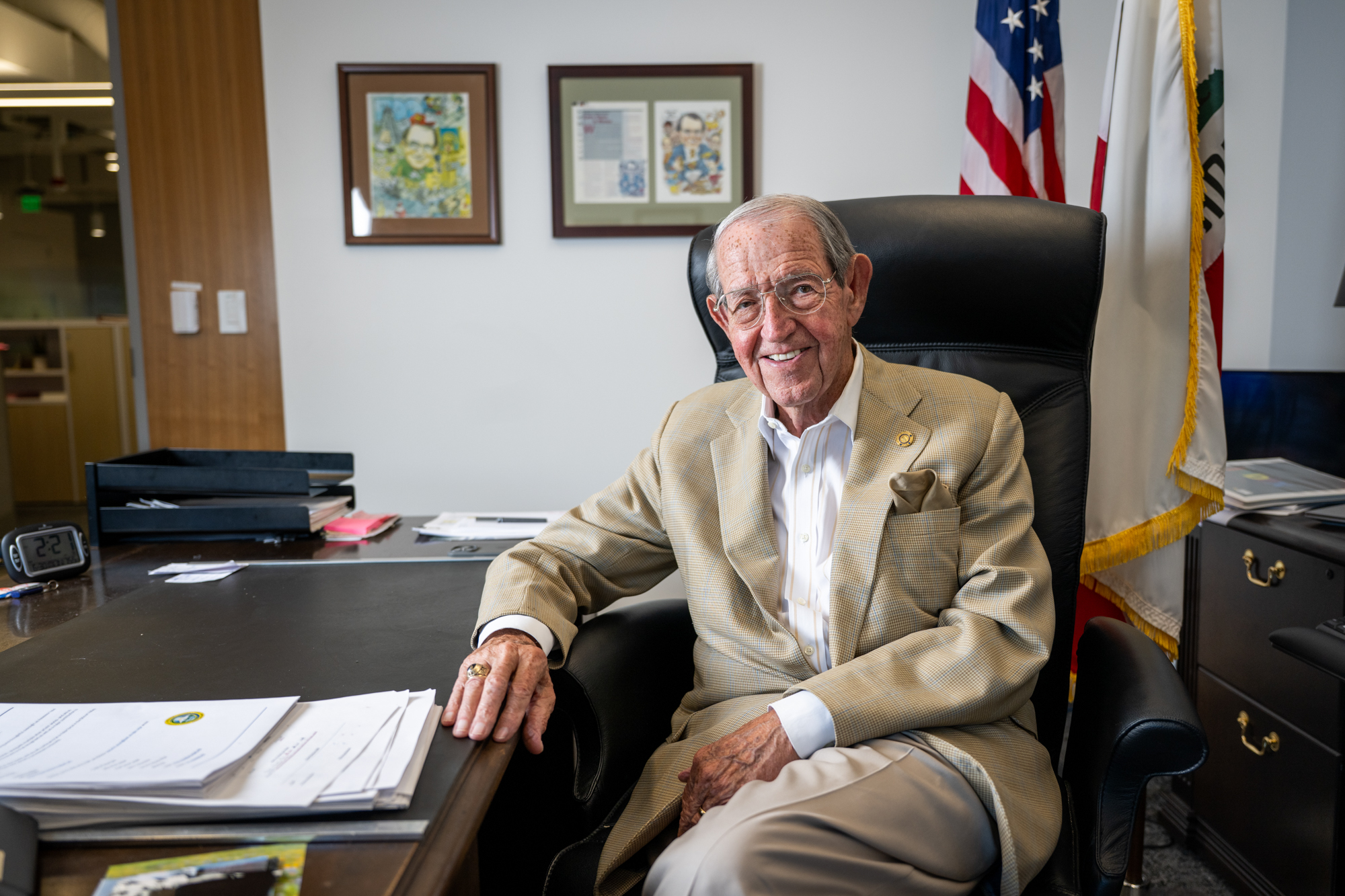
"caption": "Assessor Larry Stone sits in his office at the Santa Clara County Assessor’s Office in San José on June 30, 2025. He has held the position since 1995, overseeing property assessments across the region.",
"credit": "Beth LaBerge/KQED",
"altTag": null,
"description": null,
"imgSizes": {
"thumbnail": {
"file": "https://cdn.kqed.org/wp-content/uploads/sites/10/2025/07/250630-LARRYSTONERETIREMENT-03-BL-KQED-160x107.jpg",
"width": 160,
"height": 107,
"mimeType": "image/jpeg"
},
"1536x1536": {
"file": "https://cdn.kqed.org/wp-content/uploads/sites/10/2025/07/250630-LARRYSTONERETIREMENT-03-BL-KQED-1536x1024.jpg",
"width": 1536,
"height": 1024,
"mimeType": "image/jpeg"
},
"post-thumbnail": {
"file": "https://cdn.kqed.org/wp-content/uploads/sites/10/2025/07/250630-LARRYSTONERETIREMENT-03-BL-KQED-672x372.jpg",
"width": 672,
"height": 372,
"mimeType": "image/jpeg"
},
"twentyfourteen-full-width": {
"file": "https://cdn.kqed.org/wp-content/uploads/sites/10/2025/07/250630-LARRYSTONERETIREMENT-03-BL-KQED-1038x576.jpg",
"width": 1038,
"height": 576,
"mimeType": "image/jpeg"
},
"kqedFullSize": {
"file": "https://cdn.kqed.org/wp-content/uploads/sites/10/2025/07/250630-LARRYSTONERETIREMENT-03-BL-KQED.jpg",
"width": 2000,
"height": 1333
}
},
"isLoading": false,
"fetchFailed": false
},
"news_12044458": {
"type": "attachments",
"id": "news_12044458",
"meta": {
"index": "attachments_1716263798",
"site": "news",
"id": "12044458",
"found": true
},
"title": "250614-NO-KINGS-SAN-JOSE-AC-09-KQED",
"publishDate": 1749940367,
"status": "inherit",
"parent": 12044469,
"modified": 1749941467,
"caption": "Officers from the Santa Clara Sheriff's Department arrive on site to an anti-Trump protest in San Jose on June 14, 2025.",
"credit": "Aryk Copley for KQED",
"altTag": null,
"description": null,
"imgSizes": {
"thumbnail": {
"file": "https://cdn.kqed.org/wp-content/uploads/sites/10/2025/06/250614-NO-KINGS-SAN-JOSE-AC-09-KQED-160x107.jpg",
"width": 160,
"height": 107,
"mimeType": "image/jpeg"
},
"1536x1536": {
"file": "https://cdn.kqed.org/wp-content/uploads/sites/10/2025/06/250614-NO-KINGS-SAN-JOSE-AC-09-KQED-1536x1024.jpg",
"width": 1536,
"height": 1024,
"mimeType": "image/jpeg"
},
"post-thumbnail": {
"file": "https://cdn.kqed.org/wp-content/uploads/sites/10/2025/06/250614-NO-KINGS-SAN-JOSE-AC-09-KQED-672x372.jpg",
"width": 672,
"height": 372,
"mimeType": "image/jpeg"
},
"twentyfourteen-full-width": {
"file": "https://cdn.kqed.org/wp-content/uploads/sites/10/2025/06/250614-NO-KINGS-SAN-JOSE-AC-09-KQED-1038x576.jpg",
"width": 1038,
"height": 576,
"mimeType": "image/jpeg"
},
"kqedFullSize": {
"file": "https://cdn.kqed.org/wp-content/uploads/sites/10/2025/06/250614-NO-KINGS-SAN-JOSE-AC-09-KQED.jpg",
"width": 2000,
"height": 1333
}
},
"isLoading": false,
"fetchFailed": false
},
"news_11836992": {
"type": "attachments",
"id": "news_11836992",
"meta": {
"index": "attachments_1716263798",
"site": "news",
"id": "11836992",
"found": true
},
"title": "California Utility PG&E Cuts Power To Over 450,000 Residents Amid Wildfire Threat",
"publishDate": 1599578098,
"status": "inherit",
"parent": 11836990,
"modified": 1729104185,
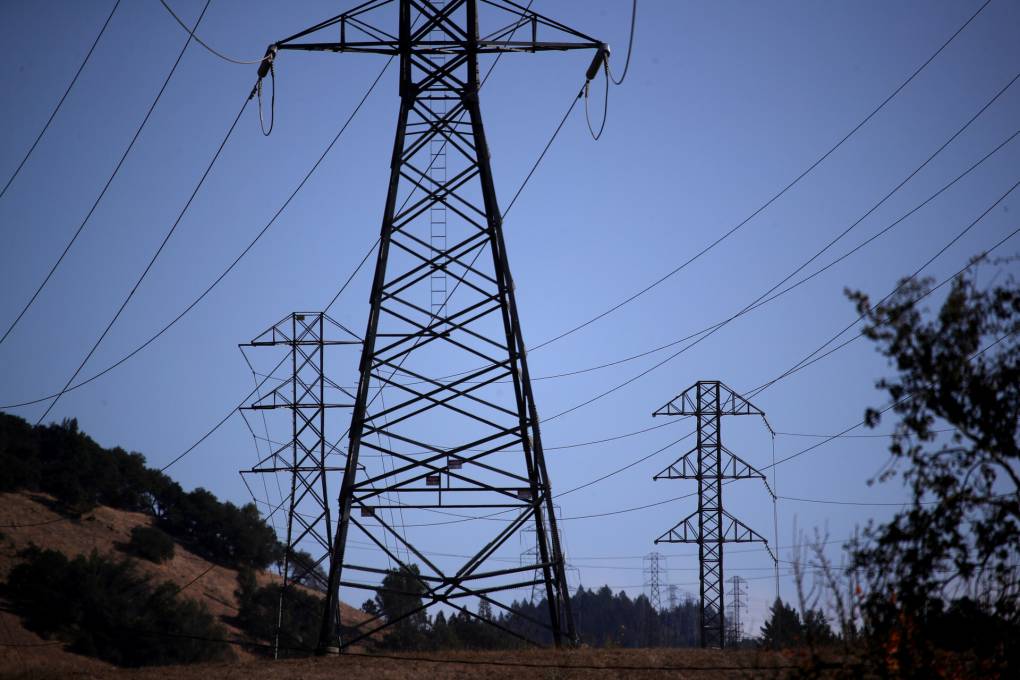
"caption": "Critical fire weather conditions can prompt utilities like PG&E to enact planned power outages in an effort to keep damaged power lines from sparking fires.",
"credit": "Justin Sullivan/Getty Images",
"altTag": "PG&E power lines",
"description": null,
"imgSizes": {
"medium": {
"file": "https://cdn.kqed.org/wp-content/uploads/sites/10/2020/09/RS43113_GettyImages-1188966941-qut-800x533.jpg",
"width": 800,
"height": 533,
"mimeType": "image/jpeg"
},
"large": {
"file": "https://cdn.kqed.org/wp-content/uploads/sites/10/2020/09/RS43113_GettyImages-1188966941-qut-1020x680.jpg",
"width": 1020,
"height": 680,
"mimeType": "image/jpeg"
},
"thumbnail": {
"file": "https://cdn.kqed.org/wp-content/uploads/sites/10/2020/09/RS43113_GettyImages-1188966941-qut-160x107.jpg",
"width": 160,
"height": 107,
"mimeType": "image/jpeg"
},
"1536x1536": {
"file": "https://cdn.kqed.org/wp-content/uploads/sites/10/2020/09/RS43113_GettyImages-1188966941-qut-1536x1024.jpg",
"width": 1536,
"height": 1024,
"mimeType": "image/jpeg"
},
"post-thumbnail": {
"file": "https://cdn.kqed.org/wp-content/uploads/sites/10/2020/09/RS43113_GettyImages-1188966941-qut-672x372.jpg",
"width": 672,
"height": 372,
"mimeType": "image/jpeg"
},
"twentyfourteen-full-width": {
"file": "https://cdn.kqed.org/wp-content/uploads/sites/10/2020/09/RS43113_GettyImages-1188966941-qut-1038x576.jpg",
"width": 1038,
"height": 576,
"mimeType": "image/jpeg"
},
"apple_news_ca_landscape_12_9": {
"file": "https://cdn.kqed.org/wp-content/uploads/sites/10/2020/09/RS43113_GettyImages-1188966941-qut-1832x1280.jpg",
"width": 1832,
"height": 1280,
"mimeType": "image/jpeg"
},
"apple_news_ca_landscape_9_7": {
"file": "https://cdn.kqed.org/wp-content/uploads/sites/10/2020/09/RS43113_GettyImages-1188966941-qut-1376x1032.jpg",
"width": 1376,
"height": 1032,
"mimeType": "image/jpeg"
},
"apple_news_ca_landscape_5_5": {
"file": "https://cdn.kqed.org/wp-content/uploads/sites/10/2020/09/RS43113_GettyImages-1188966941-qut-1044x783.jpg",
"width": 1044,
"height": 783,
"mimeType": "image/jpeg"
},
"apple_news_ca_landscape_4_7": {
"file": "https://cdn.kqed.org/wp-content/uploads/sites/10/2020/09/RS43113_GettyImages-1188966941-qut-632x474.jpg",
"width": 632,
"height": 474,
"mimeType": "image/jpeg"
},
"apple_news_ca_landscape_4_0": {
"file": "https://cdn.kqed.org/wp-content/uploads/sites/10/2020/09/RS43113_GettyImages-1188966941-qut-536x402.jpg",
"width": 536,
"height": 402,
"mimeType": "image/jpeg"
},
"apple_news_ca_portrait_12_9": {
"file": "https://cdn.kqed.org/wp-content/uploads/sites/10/2020/09/RS43113_GettyImages-1188966941-qut-1122x1280.jpg",
"width": 1122,
"height": 1280,
"mimeType": "image/jpeg"
},
"apple_news_ca_portrait_9_7": {
"file": "https://cdn.kqed.org/wp-content/uploads/sites/10/2020/09/RS43113_GettyImages-1188966941-qut-840x1120.jpg",
"width": 840,
"height": 1120,
"mimeType": "image/jpeg"
},
"apple_news_ca_portrait_5_5": {
"file": "https://cdn.kqed.org/wp-content/uploads/sites/10/2020/09/RS43113_GettyImages-1188966941-qut-687x916.jpg",
"width": 687,
"height": 916,
"mimeType": "image/jpeg"
},
"apple_news_ca_portrait_4_7": {
"file": "https://cdn.kqed.org/wp-content/uploads/sites/10/2020/09/RS43113_GettyImages-1188966941-qut-414x552.jpg",
"width": 414,
"height": 552,
"mimeType": "image/jpeg"
},
"apple_news_ca_portrait_4_0": {
"file": "https://cdn.kqed.org/wp-content/uploads/sites/10/2020/09/RS43113_GettyImages-1188966941-qut-354x472.jpg",
"width": 354,
"height": 472,
"mimeType": "image/jpeg"
},
"apple_news_ca_square_12_9": {
"file": "https://cdn.kqed.org/wp-content/uploads/sites/10/2020/09/RS43113_GettyImages-1188966941-qut-1472x1280.jpg",
"width": 1472,
"height": 1280,
"mimeType": "image/jpeg"
},
"apple_news_ca_square_9_7": {
"file": "https://cdn.kqed.org/wp-content/uploads/sites/10/2020/09/RS43113_GettyImages-1188966941-qut-1104x1104.jpg",
"width": 1104,
"height": 1104,
"mimeType": "image/jpeg"
},
"apple_news_ca_square_5_5": {
"file": "https://cdn.kqed.org/wp-content/uploads/sites/10/2020/09/RS43113_GettyImages-1188966941-qut-912x912.jpg",
"width": 912,
"height": 912,
"mimeType": "image/jpeg"
},
"apple_news_ca_square_4_7": {
"file": "https://cdn.kqed.org/wp-content/uploads/sites/10/2020/09/RS43113_GettyImages-1188966941-qut-550x550.jpg",
"width": 550,
"height": 550,
"mimeType": "image/jpeg"
},
"apple_news_ca_square_4_0": {
"file": "https://cdn.kqed.org/wp-content/uploads/sites/10/2020/09/RS43113_GettyImages-1188966941-qut-470x470.jpg",
"width": 470,
"height": 470,
"mimeType": "image/jpeg"
},
"kqedFullSize": {
"file": "https://cdn.kqed.org/wp-content/uploads/sites/10/2020/09/RS43113_GettyImages-1188966941-qut.jpg",
"width": 1920,
"height": 1280
}
},
"isLoading": false,
"fetchFailed": false
},
"news_12044141": {
"type": "attachments",
"id": "news_12044141",
"meta": {
"index": "attachments_1716263798",
"site": "news",
"id": "12044141",
"found": true
},
"title": "250610-HEADSTARTPROGRAMS-39-BL-KQED",
"publishDate": 1749833095,
"status": "inherit",
"parent": 0,
"modified": 1749833155,
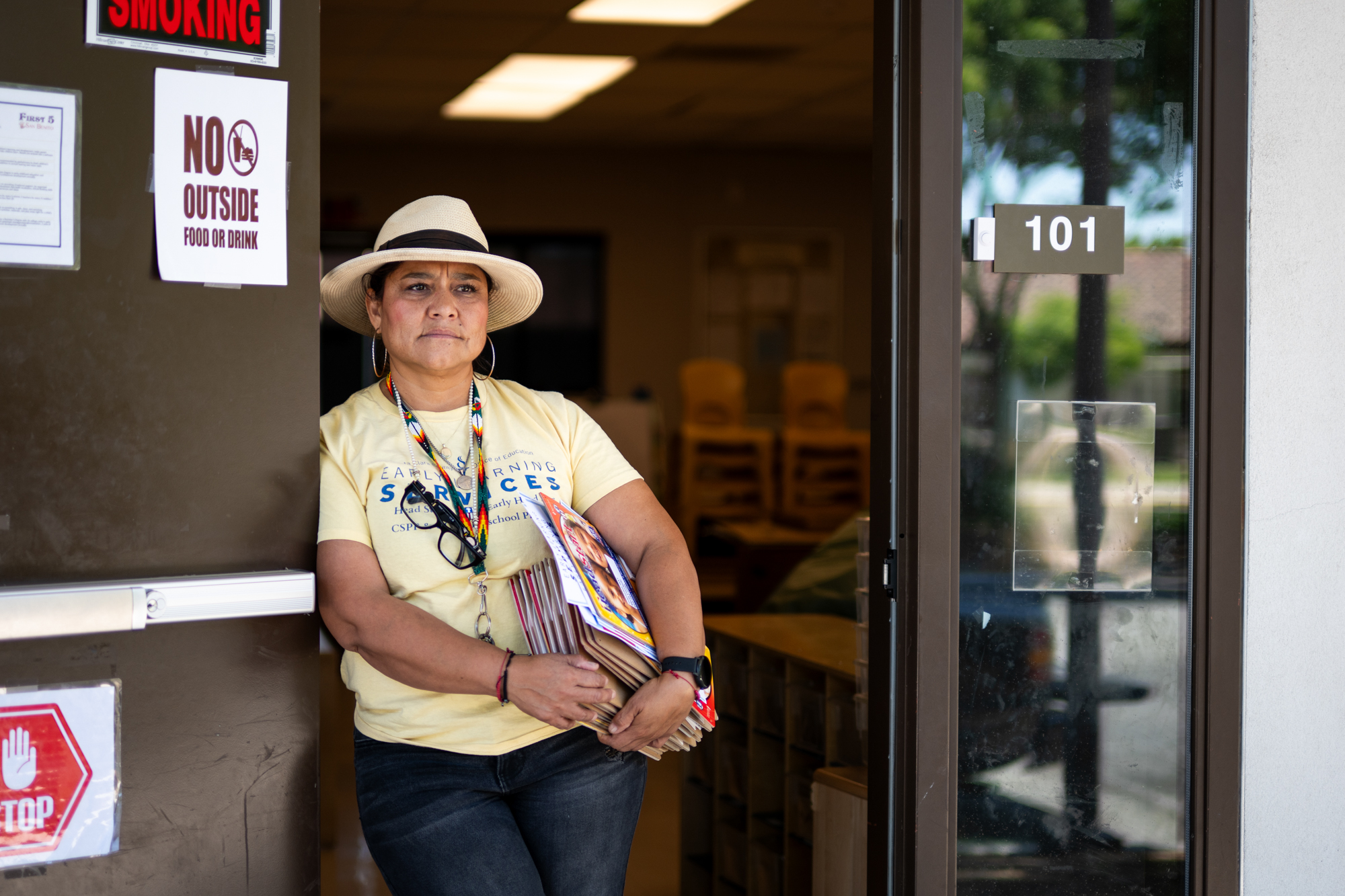
"caption": "Maria Corchado, a Head Start teacher, stands outside one of the classrooms in Hollister, San Benito County, on June 10, 2025.",
"credit": "Beth LaBerge/KQED",
"altTag": null,
"description": null,
"imgSizes": {
"thumbnail": {
"file": "https://cdn.kqed.org/wp-content/uploads/sites/10/2025/06/250610-HEADSTARTPROGRAMS-39-BL-KQED-160x107.jpg",
"width": 160,
"height": 107,
"mimeType": "image/jpeg"
},
"1536x1536": {
"file": "https://cdn.kqed.org/wp-content/uploads/sites/10/2025/06/250610-HEADSTARTPROGRAMS-39-BL-KQED-1536x1024.jpg",
"width": 1536,
"height": 1024,
"mimeType": "image/jpeg"
},
"post-thumbnail": {
"file": "https://cdn.kqed.org/wp-content/uploads/sites/10/2025/06/250610-HEADSTARTPROGRAMS-39-BL-KQED-672x372.jpg",
"width": 672,
"height": 372,
"mimeType": "image/jpeg"
},
"twentyfourteen-full-width": {
"file": "https://cdn.kqed.org/wp-content/uploads/sites/10/2025/06/250610-HEADSTARTPROGRAMS-39-BL-KQED-1038x576.jpg",
"width": 1038,
"height": 576,
"mimeType": "image/jpeg"
},
"kqedFullSize": {
"file": "https://cdn.kqed.org/wp-content/uploads/sites/10/2025/06/250610-HEADSTARTPROGRAMS-39-BL-KQED.jpg",
"width": 2000,
"height": 1333
}
},
"isLoading": false,
"fetchFailed": false
},
"news_12044077": {
"type": "attachments",
"id": "news_12044077",
"meta": {
"index": "attachments_1716263798",
"site": "news",
"id": "12044077",
"found": true
},
"title": "VermontHouse",
"publishDate": 1749772211,
"status": "inherit",
"parent": 12043926,
"modified": 1749772289,
"caption": null,
"credit": "Courtesy of Santa Clara County",
"altTag": null,
"description": null,
"imgSizes": {
"thumbnail": {
"file": "https://cdn.kqed.org/wp-content/uploads/sites/10/2025/06/VermontHouse-160x90.jpg",
"width": 160,
"height": 90,
"mimeType": "image/jpeg"
},
"1536x1536": {
"file": "https://cdn.kqed.org/wp-content/uploads/sites/10/2025/06/VermontHouse-1536x864.jpg",
"width": 1536,
"height": 864,
"mimeType": "image/jpeg"
},
"post-thumbnail": {
"file": "https://cdn.kqed.org/wp-content/uploads/sites/10/2025/06/VermontHouse-672x372.jpg",
"width": 672,
"height": 372,
"mimeType": "image/jpeg"
},
"twentyfourteen-full-width": {
"file": "https://cdn.kqed.org/wp-content/uploads/sites/10/2025/06/VermontHouse-1038x576.jpg",
"width": 1038,
"height": 576,
"mimeType": "image/jpeg"
},
"kqedFullSize": {
"file": "https://cdn.kqed.org/wp-content/uploads/sites/10/2025/06/VermontHouse.jpg",
"width": 2000,
"height": 1125
}
},
"isLoading": false,
"fetchFailed": false
},
"news_12042505": {
"type": "attachments",
"id": "news_12042505",
"meta": {
"index": "attachments_1716263798",
"site": "news",
"id": "12042505",
"found": true
},
"title": "250529-SJARRESTSHELTERVOTE-09-BL-KQED",
"publishDate": 1748970604,
"status": "inherit",
"parent": 12042370,
"modified": 1749155570,
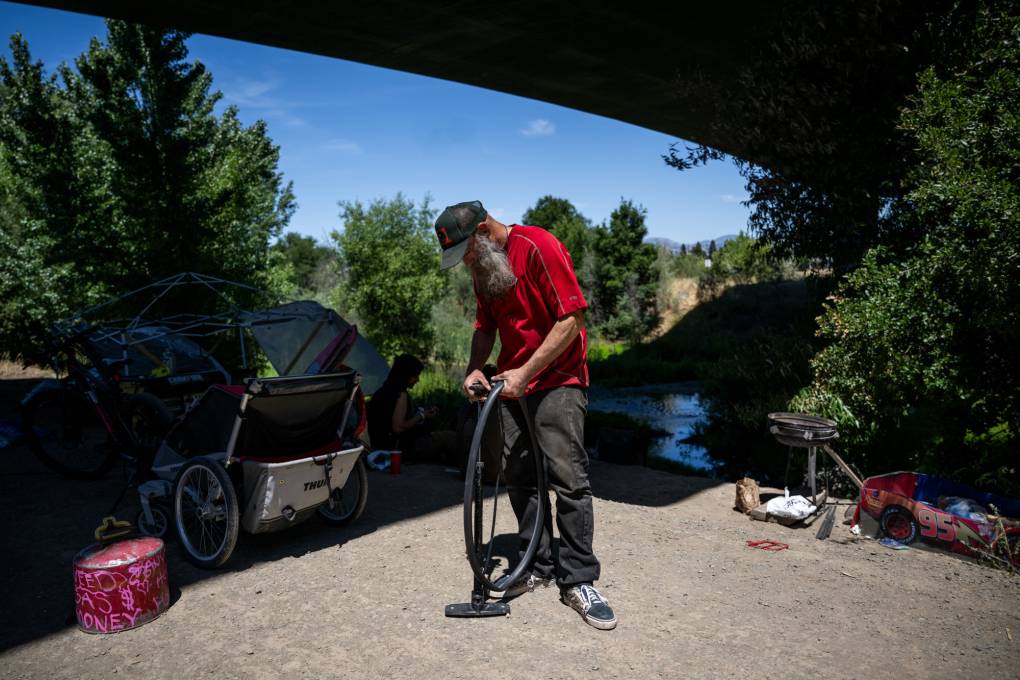
"caption": "Butch Larson repairs a bicycle near the place he lives along the Guadalupe River in San José on May 29, 2025.",
"credit": "Beth LaBerge/KQED",
"altTag": null,
"description": null,
"imgSizes": {
"medium": {
"file": "https://cdn.kqed.org/wp-content/uploads/sites/10/2025/06/250529-SJARRESTSHELTERVOTE-09-BL-KQED-800x533.jpg",
"width": 800,
"height": 533,
"mimeType": "image/jpeg"
},
"large": {
"file": "https://cdn.kqed.org/wp-content/uploads/sites/10/2025/06/250529-SJARRESTSHELTERVOTE-09-BL-KQED-1020x680.jpg",
"width": 1020,
"height": 680,
"mimeType": "image/jpeg"
},
"thumbnail": {
"file": "https://cdn.kqed.org/wp-content/uploads/sites/10/2025/06/250529-SJARRESTSHELTERVOTE-09-BL-KQED-160x107.jpg",
"width": 160,
"height": 107,
"mimeType": "image/jpeg"
},
"1536x1536": {
"file": "https://cdn.kqed.org/wp-content/uploads/sites/10/2025/06/250529-SJARRESTSHELTERVOTE-09-BL-KQED-1536x1024.jpg",
"width": 1536,
"height": 1024,
"mimeType": "image/jpeg"
},
"post-thumbnail": {
"file": "https://cdn.kqed.org/wp-content/uploads/sites/10/2025/06/250529-SJARRESTSHELTERVOTE-09-BL-KQED-672x372.jpg",
"width": 672,
"height": 372,
"mimeType": "image/jpeg"
},
"twentyfourteen-full-width": {
"file": "https://cdn.kqed.org/wp-content/uploads/sites/10/2025/06/250529-SJARRESTSHELTERVOTE-09-BL-KQED-1038x576.jpg",
"width": 1038,
"height": 576,
"mimeType": "image/jpeg"
},
"full-width": {
"file": "https://cdn.kqed.org/wp-content/uploads/sites/10/2025/06/250529-SJARRESTSHELTERVOTE-09-BL-KQED-1920x1280.jpg",
"width": 1920,
"height": 1280,
"mimeType": "image/jpeg"
},
"kqedFullSize": {
"file": "https://cdn.kqed.org/wp-content/uploads/sites/10/2025/06/250529-SJARRESTSHELTERVOTE-09-BL-KQED.jpg",
"width": 2000,
"height": 1333
}
},
"isLoading": false,
"fetchFailed": false
},
"news_12032416": {
"type": "attachments",
"id": "news_12032416",
"meta": {
"index": "attachments_1716263798",
"site": "news",
"id": "12032416",
"found": true
},
"title": "20250311_VTAStrikeDay2_GC-6_qed",
"publishDate": 1742573597,
"status": "inherit",
"parent": 12032033,
"modified": 1749057788,
"caption": "Hundreds of Santa Clara Valley Transportation Authority workers, represented by the Amalgamated Transit Union Local 265, raise fists during a second-day strike in front of the VTA headquarters on North First Street in San José, demanding a better contract and an increase in wages on March 11, 2025. ",
"credit": "Gina Castro/KQED",
"altTag": null,
"description": null,
"imgSizes": {
"medium": {
"file": "https://cdn.kqed.org/wp-content/uploads/sites/10/2025/03/20250311_VTAStrikeDay2_GC-6_qed-800x533.jpg",
"width": 800,
"height": 533,
"mimeType": "image/jpeg"
},
"large": {
"file": "https://cdn.kqed.org/wp-content/uploads/sites/10/2025/03/20250311_VTAStrikeDay2_GC-6_qed-1020x680.jpg",
"width": 1020,
"height": 680,
"mimeType": "image/jpeg"
},
"thumbnail": {
"file": "https://cdn.kqed.org/wp-content/uploads/sites/10/2025/03/20250311_VTAStrikeDay2_GC-6_qed-160x107.jpg",
"width": 160,
"height": 107,
"mimeType": "image/jpeg"
},
"1536x1536": {
"file": "https://cdn.kqed.org/wp-content/uploads/sites/10/2025/03/20250311_VTAStrikeDay2_GC-6_qed-1536x1024.jpg",
"width": 1536,
"height": 1024,
"mimeType": "image/jpeg"
},
"post-thumbnail": {
"file": "https://cdn.kqed.org/wp-content/uploads/sites/10/2025/03/20250311_VTAStrikeDay2_GC-6_qed-672x372.jpg",
"width": 672,
"height": 372,
"mimeType": "image/jpeg"
},
"twentyfourteen-full-width": {
"file": "https://cdn.kqed.org/wp-content/uploads/sites/10/2025/03/20250311_VTAStrikeDay2_GC-6_qed-1038x576.jpg",
"width": 1038,
"height": 576,
"mimeType": "image/jpeg"
},
"full-width": {
"file": "https://cdn.kqed.org/wp-content/uploads/sites/10/2025/03/20250311_VTAStrikeDay2_GC-6_qed-1920x1280.jpg",
"width": 1920,
"height": 1280,
"mimeType": "image/jpeg"
},
"kqedFullSize": {
"file": "https://cdn.kqed.org/wp-content/uploads/sites/10/2025/03/20250311_VTAStrikeDay2_GC-6_qed.jpg",
"width": 2000,
"height": 1333
}
},
"isLoading": false,
"fetchFailed": false
},
"news_12042202": {
"type": "attachments",
"id": "news_12042202",
"meta": {
"index": "attachments_1716263798",
"site": "news",
"id": "12042202",
"found": true
},
"title": "Measles virus, illustration",
"publishDate": 1748630661,
"status": "inherit",
"parent": 12042174,
"modified": 1748630706,
"caption": "Measles virus particle, illustration. This virus, from the Morbillivirus group of viruses, consists of an RNA (ribonucleic acid) core surrounded by an envelope studded with surface proteins haemagglutinin-neuraminidase and fusion protein, which are used to attach to and penetrate a host cell. Measles is a highly infectious itchy rash with a fever. It mainly affects children, but one attack usually gives life-long immunity.",
"credit": "Kateryna Kon/Science Photo Library",
"altTag": null,
"description": null,
"imgSizes": {
"medium": {
"file": "https://cdn.kqed.org/wp-content/uploads/sites/10/2025/05/measels-800x450.jpg",
"width": 800,
"height": 450,
"mimeType": "image/jpeg"
},
"large": {
"file": "https://cdn.kqed.org/wp-content/uploads/sites/10/2025/05/measels-1020x574.jpg",
"width": 1020,
"height": 574,
"mimeType": "image/jpeg"
},
"thumbnail": {
"file": "https://cdn.kqed.org/wp-content/uploads/sites/10/2025/05/measels-160x90.jpg",
"width": 160,
"height": 90,
"mimeType": "image/jpeg"
},
"1536x1536": {
"file": "https://cdn.kqed.org/wp-content/uploads/sites/10/2025/05/measels-1536x864.jpg",
"width": 1536,
"height": 864,
"mimeType": "image/jpeg"
},
"post-thumbnail": {
"file": "https://cdn.kqed.org/wp-content/uploads/sites/10/2025/05/measels-672x372.jpg",
"width": 672,
"height": 372,
"mimeType": "image/jpeg"
},
"twentyfourteen-full-width": {
"file": "https://cdn.kqed.org/wp-content/uploads/sites/10/2025/05/measels-1038x576.jpg",
"width": 1038,
"height": 576,
"mimeType": "image/jpeg"
},
"full-width": {
"file": "https://cdn.kqed.org/wp-content/uploads/sites/10/2025/05/measels-1920x1080.jpg",
"width": 1920,
"height": 1080,
"mimeType": "image/jpeg"
},
"kqedFullSize": {
"file": "https://cdn.kqed.org/wp-content/uploads/sites/10/2025/05/measels.jpg",
"width": 2000,
"height": 1125
}
},
"isLoading": false,
"fetchFailed": false
},
"news_12000413": {
"type": "attachments",
"id": "news_12000413",
"meta": {
"index": "attachments_1716263798",
"site": "news",
"id": "12000413",
"found": true
},
"title": "240815-CITYATTORNEYDEEPFAKES-06-BL-KQED",
"publishDate": 1723748842,
"status": "inherit",
"parent": 12046379,
"modified": 1751062554,
"caption": "City Attorney David Chiu speaks during a press conference at City Hall in San Francisco on Aug. 15, 2024.",
"credit": "Beth LaBerge/KQED",
"altTag": null,
"description": null,
"imgSizes": {
"medium": {
"file": "https://cdn.kqed.org/wp-content/uploads/sites/10/2024/08/240815-CITYATTORNEYDEEPFAKES-06-BL-KQED-800x533.jpg",
"width": 800,
"height": 533,
"mimeType": "image/jpeg"
},
"large": {
"file": "https://cdn.kqed.org/wp-content/uploads/sites/10/2024/08/240815-CITYATTORNEYDEEPFAKES-06-BL-KQED-1020x680.jpg",
"width": 1020,
"height": 680,
"mimeType": "image/jpeg"
},
"thumbnail": {
"file": "https://cdn.kqed.org/wp-content/uploads/sites/10/2024/08/240815-CITYATTORNEYDEEPFAKES-06-BL-KQED-160x107.jpg",
"width": 160,
"height": 107,
"mimeType": "image/jpeg"
},
"1536x1536": {
"file": "https://cdn.kqed.org/wp-content/uploads/sites/10/2024/08/240815-CITYATTORNEYDEEPFAKES-06-BL-KQED-1536x1024.jpg",
"width": 1536,
"height": 1024,
"mimeType": "image/jpeg"
},
"post-thumbnail": {
"file": "https://cdn.kqed.org/wp-content/uploads/sites/10/2024/08/240815-CITYATTORNEYDEEPFAKES-06-BL-KQED-672x372.jpg",
"width": 672,
"height": 372,
"mimeType": "image/jpeg"
},
"twentyfourteen-full-width": {
"file": "https://cdn.kqed.org/wp-content/uploads/sites/10/2024/08/240815-CITYATTORNEYDEEPFAKES-06-BL-KQED-1038x576.jpg",
"width": 1038,
"height": 576,
"mimeType": "image/jpeg"
},
"full-width": {
"file": "https://cdn.kqed.org/wp-content/uploads/sites/10/2024/08/240815-CITYATTORNEYDEEPFAKES-06-BL-KQED-1920x1280.jpg",
"width": 1920,
"height": 1280,
"mimeType": "image/jpeg"
},
"kqedFullSize": {
"file": "https://cdn.kqed.org/wp-content/uploads/sites/10/2024/08/240815-CITYATTORNEYDEEPFAKES-06-BL-KQED.jpg",
"width": 2000,
"height": 1333
}
},
"isLoading": false,
"fetchFailed": false
}
},
"audioPlayerReducer": {
"postId": "stream_live",
"isPaused": true,
"isPlaying": false,
"pfsActive": false,
"pledgeModalIsOpen": true,
"playerDrawerIsOpen": false,
"liveAudioPlayStartedAt": 0,
"liveAudioPlayContext": ""
},
"authorsReducer": {
"gmarzorati": {
"type": "authors",
"id": "227",
"meta": {
"index": "authors_1716337520",
"id": "227",
"found": true
},
"name": "Guy Marzorati",
"firstName": "Guy",
"lastName": "Marzorati",
"slug": "gmarzorati",
"email": "gmarzorati@KQED.org",
"display_author_email": true,
"staff_mastheads": [
"news"
],
"title": "Correspondent",
"bio": "Guy Marzorati is a correspondent on KQED's California Politics and Government Desk, based in San Jose. A graduate of Santa Clara University, Guy joined KQED in 2013. He reports on state and local politics and produces KQED's digital voter guide.",
"avatar": "https://secure.gravatar.com/avatar/e7038b8dbfd55b104369b76b1cd0b9de?s=600&d=blank&r=g",
"twitter": "guymarzorati",
"facebook": null,
"instagram": null,
"linkedin": null,
"sites": [
{
"site": "",
"roles": [
"editor"
]
},
{
"site": "news",
"roles": [
"editor"
]
},
{
"site": "science",
"roles": [
"editor"
]
},
{
"site": "forum",
"roles": [
"editor"
]
},
{
"site": "elections",
"roles": [
"editor"
]
},
{
"site": "liveblog",
"roles": [
"editor"
]
}
],
"headData": {
"title": "Guy Marzorati | KQED",
"description": "Correspondent",
"ogImgSrc": "https://secure.gravatar.com/avatar/e7038b8dbfd55b104369b76b1cd0b9de?s=600&d=blank&r=g",
"twImgSrc": "https://secure.gravatar.com/avatar/e7038b8dbfd55b104369b76b1cd0b9de?s=600&d=blank&r=g"
},
"isLoading": false,
"link": "/author/gmarzorati"
},
"ecruzguevarra": {
"type": "authors",
"id": "8654",
"meta": {
"index": "authors_1716337520",
"id": "8654",
"found": true
},
"name": "Ericka Cruz Guevarra",
"firstName": "Ericka",
"lastName": "Cruz Guevarra",
"slug": "ecruzguevarra",
"email": "ecruzguevarra@kqed.org",
"display_author_email": true,
"staff_mastheads": [
"news"
],
"title": "Producer, The Bay Podcast",
"bio": "Ericka Cruz Guevarra is host of \u003ca href=\"https://www.kqed.org/podcasts/thebay\">\u003cem>The Bay\u003c/em>\u003c/a> podcast at KQED. Before host, she was the show’s producer. Her work in that capacity includes a three-part reported series on policing in Vallejo, which won a 2020 excellence in journalism award from the Society of Professional Journalists. Ericka has worked as a breaking news reporter at Oregon Public Broadcasting, helped produce the Code Switch podcast, and was KQED’s inaugural Raul Ramirez Diversity Fund intern. She’s also an alumna of NPR’s Next Generation Radio program. Send her an email if you have strong feelings about whether Fairfield and Suisun City are the Bay. Ericka is represented by SAG-AFTRA.",
"avatar": "https://secure.gravatar.com/avatar/accefc1de4bafc7e234b69bcb9b6f6536c130fd84709bc3069ef11a78787e1bb?s=600&d=blank&r=g",
"twitter": "NotoriousECG",
"bluesky": null,
"facebook": null,
"instagram": null,
"linkedin": null,
"sites": [
{
"site": "arts",
"roles": [
"subscriber"
]
},
{
"site": "news",
"roles": [
"editor",
"manage_categories"
]
},
{
"site": "futureofyou",
"roles": [
"subscriber"
]
},
{
"site": "stateofhealth",
"roles": [
"subscriber"
]
},
{
"site": "science",
"roles": [
"editor"
]
},
{
"site": "forum",
"roles": [
"subscriber"
]
}
],
"headData": {
"title": "Ericka Cruz Guevarra | KQED",
"description": "Producer, The Bay Podcast",
"ogImgSrc": "https://secure.gravatar.com/avatar/accefc1de4bafc7e234b69bcb9b6f6536c130fd84709bc3069ef11a78787e1bb?s=600&d=blank&r=g",
"twImgSrc": "https://secure.gravatar.com/avatar/accefc1de4bafc7e234b69bcb9b6f6536c130fd84709bc3069ef11a78787e1bb?s=600&d=blank&r=g"
},
"isLoading": false,
"link": "/author/ecruzguevarra"
},
"amontecillo": {
"type": "authors",
"id": "11649",
"meta": {
"index": "authors_1716337520",
"id": "11649",
"found": true
},
"name": "Alan Montecillo",
"firstName": "Alan",
"lastName": "Montecillo",
"slug": "amontecillo",
"email": "amontecillo@kqed.org",
"display_author_email": false,
"staff_mastheads": [
"news"
],
"title": "KQED Contributor",
"bio": "Alan Montecillo is the senior editor of \u003cem>\u003ca href=\"http://kqed.org/thebay\">The Bay\u003c/a>, \u003c/em> KQED's local news podcast. Before moving to the Bay Area, he worked as a senior talk show producer for WILL in Champaign-Urbana, Illinois and at Oregon Public Broadcasting in Portland, Oregon. He has won journalism awards from the Society of Professional Journalists Northern California, the Public Media Journalists Association, The Signal Awards, and has also received a regional Edward R. Murrow award. Alan is a Filipino American from Hong Kong and a graduate of Reed College.",
"avatar": "https://secure.gravatar.com/avatar/268f53a2066899ea9efdd8a5900218b17c822d9862cbc9326cccec53ef41d349?s=600&d=blank&r=g",
"twitter": "alanmontecillo",
"bluesky": null,
"facebook": null,
"instagram": null,
"linkedin": null,
"sites": [
{
"site": "",
"roles": [
"editor"
]
},
{
"site": "news",
"roles": [
"editor",
"manage_categories"
]
}
],
"headData": {
"title": "Alan Montecillo | KQED",
"description": "KQED Contributor",
"ogImgSrc": "https://secure.gravatar.com/avatar/268f53a2066899ea9efdd8a5900218b17c822d9862cbc9326cccec53ef41d349?s=600&d=blank&r=g",
"twImgSrc": "https://secure.gravatar.com/avatar/268f53a2066899ea9efdd8a5900218b17c822d9862cbc9326cccec53ef41d349?s=600&d=blank&r=g"
},
"isLoading": false,
"link": "/author/amontecillo"
},
"daisynguyen": {
"type": "authors",
"id": "11829",
"meta": {
"index": "authors_1716337520",
"id": "11829",
"found": true
},
"name": "Daisy Nguyen",
"firstName": "Daisy",
"lastName": "Nguyen",
"slug": "daisynguyen",
"email": "daisynguyen@kqed.org",
"display_author_email": true,
"staff_mastheads": [
"news"
],
"title": "KQED Contributor",
"bio": "I have covered early childhood education and child care for KQED since 2022. I focus on policies aimed at increasing access to early care and education and how they shape individual lives. I've been a journalist for more than two decades, with most of that time devoted to covering breaking news throughout California for The Associated Press. I grew up in San Francisco and studied at UC Davis and Columbia University's Graduate School of Journalism. I live in Oakland with my husband and two kids.",
"avatar": "https://secure.gravatar.com/avatar/2da2127c27f7143b53ebd419800fd55f?s=600&d=blank&r=g",
"twitter": null,
"facebook": null,
"instagram": null,
"linkedin": "https://www.linkedin.com/in/daisynguyen/",
"sites": [
{
"site": "news",
"roles": [
"author"
]
},
{
"site": "liveblog",
"roles": [
"author"
]
}
],
"headData": {
"title": "Daisy Nguyen | KQED",
"description": "KQED Contributor",
"ogImgSrc": "https://secure.gravatar.com/avatar/2da2127c27f7143b53ebd419800fd55f?s=600&d=blank&r=g",
"twImgSrc": "https://secure.gravatar.com/avatar/2da2127c27f7143b53ebd419800fd55f?s=600&d=blank&r=g"
},
"isLoading": false,
"link": "/author/daisynguyen"
},
"jessicakariisa": {
"type": "authors",
"id": "11831",
"meta": {
"index": "authors_1716337520",
"id": "11831",
"found": true
},
"name": "Jessica Kariisa",
"firstName": "Jessica",
"lastName": "Kariisa",
"slug": "jessicakariisa",
"email": "jkariisa@kqed.org",
"display_author_email": false,
"staff_mastheads": [],
"title": "Producer, The Bay",
"bio": "Jessica Kariisa is the producer of The Bay. She first joined KQED as an intern for The California Report Magazine, after which she became an on-call producer. She reported a Bay Curious episode on the use of rap lyrics in criminal trials which won a Society of Professional Journalists award in 2023 for Excellence in Features Journalism and the 2023 Signal Award for Best Conversation Starter. She’s worked on podcasts for Snap Judgment and American Public Media. Before embarking on her audio career, she was a music journalist.\r\n\r\nJessica Kariisa is represented by SAG-AFTRA.",
"avatar": "https://secure.gravatar.com/avatar/522e97b28ac0b3d411621c0fde8f3419c7b71ea2c5c262c57c4bb600963f328c?s=600&d=blank&r=g",
"twitter": null,
"bluesky": null,
"facebook": null,
"instagram": null,
"linkedin": null,
"sites": [
{
"site": "arts",
"roles": [
"author"
]
},
{
"site": "news",
"roles": [
"editor",
"manage_categories"
]
}
],
"headData": {
"title": "Jessica Kariisa | KQED",
"description": "Producer, The Bay",
"ogImgSrc": "https://secure.gravatar.com/avatar/522e97b28ac0b3d411621c0fde8f3419c7b71ea2c5c262c57c4bb600963f328c?s=600&d=blank&r=g",
"twImgSrc": "https://secure.gravatar.com/avatar/522e97b28ac0b3d411621c0fde8f3419c7b71ea2c5c262c57c4bb600963f328c?s=600&d=blank&r=g"
},
"isLoading": false,
"link": "/author/jessicakariisa"
},
"jgeha": {
"type": "authors",
"id": "11906",
"meta": {
"index": "authors_1716337520",
"id": "11906",
"found": true
},
"name": "Joseph Geha",
"firstName": "Joseph",
"lastName": "Geha",
"slug": "jgeha",
"email": "jgeha@kqed.org",
"display_author_email": false,
"staff_mastheads": [
"news",
"science"
],
"title": "KQED Contributor",
"bio": null,
"avatar": "https://secure.gravatar.com/avatar/ea84d2b6dd93d6369d453edf19dd583f117cd1759d2d9c9c92f9de77017354fe?s=600&d=blank&r=g",
"twitter": null,
"bluesky": null,
"facebook": null,
"instagram": null,
"linkedin": null,
"sites": [
{
"site": "news",
"roles": [
"editor"
]
},
{
"site": "liveblog",
"roles": [
"author"
]
}
],
"headData": {
"title": "Joseph Geha | KQED",
"description": "KQED Contributor",
"ogImgSrc": "https://secure.gravatar.com/avatar/ea84d2b6dd93d6369d453edf19dd583f117cd1759d2d9c9c92f9de77017354fe?s=600&d=blank&r=g",
"twImgSrc": "https://secure.gravatar.com/avatar/ea84d2b6dd93d6369d453edf19dd583f117cd1759d2d9c9c92f9de77017354fe?s=600&d=blank&r=g"
},
"isLoading": false,
"link": "/author/jgeha"
},
"kdebenedetti": {
"type": "authors",
"id": "11913",
"meta": {
"index": "authors_1716337520",
"id": "11913",
"found": true
},
"name": "Katie DeBenedetti",
"firstName": "Katie",
"lastName": "DeBenedetti",
"slug": "kdebenedetti",
"email": "kdebenedetti@kqed.org",
"display_author_email": false,
"staff_mastheads": [
"news",
"science"
],
"title": "KQED Contributor",
"bio": "Katie DeBenedetti is a digital reporter covering daily news for the Express Desk. Prior to joining KQED as a culture reporting intern in January 2024, she covered education and city government for the Napa Valley Register.",
"avatar": "https://secure.gravatar.com/avatar/6e31073cb8f7e4214ab03f42771d0f45?s=600&d=blank&r=g",
"twitter": null,
"facebook": null,
"instagram": null,
"linkedin": null,
"sites": [
{
"site": "news",
"roles": [
"author"
]
},
{
"site": "science",
"roles": [
"author"
]
},
{
"site": "liveblog",
"roles": [
"author"
]
}
],
"headData": {
"title": "Katie DeBenedetti | KQED",
"description": "KQED Contributor",
"ogImgSrc": "https://secure.gravatar.com/avatar/6e31073cb8f7e4214ab03f42771d0f45?s=600&d=blank&r=g",
"twImgSrc": "https://secure.gravatar.com/avatar/6e31073cb8f7e4214ab03f42771d0f45?s=600&d=blank&r=g"
},
"isLoading": false,
"link": "/author/kdebenedetti"
},
"slim": {
"type": "authors",
"id": "11920",
"meta": {
"index": "authors_1716337520",
"id": "11920",
"found": true
},
"name": "Samantha Lim",
"firstName": "Samantha",
"lastName": "Lim",
"slug": "slim",
"email": "slim@KQED.org",
"display_author_email": false,
"staff_mastheads": [],
"title": "KQED Contributor",
"bio": null,
"avatar": "https://secure.gravatar.com/avatar/82e592e6c15fe1a04d385e8ad0fb0b4e?s=600&d=blank&r=g",
"twitter": null,
"facebook": null,
"instagram": null,
"linkedin": null,
"sites": [
{
"site": "news",
"roles": []
}
],
"headData": {
"title": "Samantha Lim | KQED",
"description": "KQED Contributor",
"ogImgSrc": "https://secure.gravatar.com/avatar/82e592e6c15fe1a04d385e8ad0fb0b4e?s=600&d=blank&r=g",
"twImgSrc": "https://secure.gravatar.com/avatar/82e592e6c15fe1a04d385e8ad0fb0b4e?s=600&d=blank&r=g"
},
"isLoading": false,
"link": "/author/slim"
},
"gzada": {
"type": "authors",
"id": "11929",
"meta": {
"index": "authors_1716337520",
"id": "11929",
"found": true
},
"name": "Gilare Zada",
"firstName": "Gilare",
"lastName": "Zada",
"slug": "gzada",
"email": "gzada@kqed.org",
"display_author_email": true,
"staff_mastheads": [
"news"
],
"title": null,
"bio": "Gilare Zada is a Kurdish-American from San Diego, CA. Storytelling, fitness, and binge reading are some of her passions outside of news reporting. Her work has appeared in Mission Local, the Peninsula Press, the San Francisco Press Club, and more. She also writes as a class correspondent for the Stanford Magazine - go Card!",
"avatar": "https://secure.gravatar.com/avatar/33a75f2b947669a488a805edec3fbf3838c1cedaedda710e983770633b4d6a75?s=600&d=blank&r=g",
"twitter": null,
"bluesky": null,
"facebook": null,
"instagram": null,
"linkedin": null,
"sites": [
{
"site": "arts",
"roles": [
"editor"
]
},
{
"site": "news",
"roles": [
"administrator"
]
},
{
"site": "science",
"roles": [
"editor"
]
}
],
"headData": {
"title": "Gilare Zada | KQED",
"description": null,
"ogImgSrc": "https://secure.gravatar.com/avatar/33a75f2b947669a488a805edec3fbf3838c1cedaedda710e983770633b4d6a75?s=600&d=blank&r=g",
"twImgSrc": "https://secure.gravatar.com/avatar/33a75f2b947669a488a805edec3fbf3838c1cedaedda710e983770633b4d6a75?s=600&d=blank&r=g"
},
"isLoading": false,
"link": "/author/gzada"
},
"skennedy": {
"type": "authors",
"id": "11935",
"meta": {
"index": "authors_1716337520",
"id": "11935",
"found": true
},
"name": "Samantha Kennedy",
"firstName": "Samantha",
"lastName": "Kennedy",
"slug": "skennedy",
"email": "SKennedy@kqed.org",
"display_author_email": false,
"staff_mastheads": [],
"title": "KQED Contributor",
"bio": null,
"avatar": "https://secure.gravatar.com/avatar/adc7b14bf1e801793202a156ecc864d4ad505b0fd63162a2f3da0e5ba57222d0?s=600&d=blank&r=g",
"twitter": null,
"bluesky": null,
"facebook": null,
"instagram": null,
"linkedin": null,
"sites": [
{
"site": "arts",
"roles": [
"author"
]
},
{
"site": "news",
"roles": [
"editor"
]
},
{
"site": "science",
"roles": [
"editor"
]
}
],
"headData": {
"title": "Samantha Kennedy | KQED",
"description": "KQED Contributor",
"ogImgSrc": "https://secure.gravatar.com/avatar/adc7b14bf1e801793202a156ecc864d4ad505b0fd63162a2f3da0e5ba57222d0?s=600&d=blank&r=g",
"twImgSrc": "https://secure.gravatar.com/avatar/adc7b14bf1e801793202a156ecc864d4ad505b0fd63162a2f3da0e5ba57222d0?s=600&d=blank&r=g"
},
"isLoading": false,
"link": "/author/skennedy"
}
},
"pagesReducer": {
"news_tag_santa-clara-county": {
"type": "terms",
"id": "news_18188",
"meta": {
"index": "terms_1716263798",
"site": "news",
"id": "18188",
"score": 9.10411
},
"featImg": null,
"name": "Santa Clara County",
"description": null,
"taxonomy": "tag",
"headData": {
"twImgId": null,
"twTitle": null,
"ogTitle": null,
"ogImgId": null,
"twDescription": null,
"description": null,
"title": "Santa Clara County Archives | KQED News",
"ogDescription": null
},
"ttid": 18222,
"slug": "santa-clara-county",
"isLoading": false,
"title": "Santa Clara County",
"pageMeta": {
"site": "news",
"WpPageTemplate": "page-topic-editorial",
"currentPage": 7
},
"blocks": [
{
"blockName": "kqed/post-list",
"attrs": {
"layout": "cardArticle2",
"query": "posts/news?tag=santa-clara-county",
"seeMore": false,
"paginated": true,
"page": 7
}
},
{
"blockName": "kqed/ad"
}
]
}
},
"pfsSessionReducer": {},
"postsReducer": {
"stream_live": {
"type": "live",
"id": "stream_live",
"audioUrl": "https://streams.kqed.org/kqedradio",
"title": "Live Stream",
"excerpt": "Live Stream information currently unavailable.",
"link": "/radio",
"featImg": "",
"label": {
"name": "KQED Live",
"link": "/"
}
},
"stream_kqedNewscast": {
"type": "posts",
"id": "stream_kqedNewscast",
"audioUrl": "https://www.kqed.org/.stream/anon/radio/RDnews/newscast.mp3?_=1",
"title": "KQED Newscast",
"featImg": "",
"label": {
"name": "88.5 FM",
"link": "/"
}
},
"news_12047597": {
"type": "posts",
"id": "news_12047597",
"meta": {
"index": "posts_1716263798",
"site": "news",
"id": "12047597",
"score": null,
"sort": [
1752187300000
]
},
"guestAuthors": [],
"slug": "bay-area-trash-pickups-stall-as-republic-services-workers-join-nationwide-strike",
"title": "Bay Area Trash Pickups Stall as Republic Services Workers Join Nationwide Strike",
"publishDate": 1752187300,
"format": "standard",
"headTitle": "Bay Area Trash Pickups Stall as Republic Services Workers Join Nationwide Strike | KQED",
"labelTerm": {
"site": "news"
},
"content": "\u003cp>After months of negotiations failed to produce a new contract, workers for Republic Services, the waste company servicing cities in the \u003ca href=\"https://www.kqed.org/news/tag/bay-area\">Bay Area\u003c/a>, have gone on a solidarity strike.\u003c/p>\n\u003cp>The International Brotherhood of Teamsters Union, which represents nearly 8,000 Republic Services workers nationwide, last week overwhelmingly \u003ca href=\"https://teamster.org/2025/07/teamsters-to-republic-services-end-subpar-compensation-to-resolve-strike/\">voted\u003c/a> in favor of walking the picket line to protest what it called “subpar compensation.”\u003c/p>\n\u003cp>Around 2,000 of those represented workers are actively on strike across five cities nationwide: Stockton, Boston, Atlanta, Ottawa, Illinois and Lacey, Washington.\u003c/p>\n\u003cp>[ad fullwidth]\u003c/p>\n\u003cp>According to the Teamsters, the strike vote, which passed by more than 90%, was fueled by Republic Services’ refusal to match workers’ wages and benefits to those offered by their competitors, like Capitol Waste and Star Waste Systems.\u003c/p>\n\u003cp>This week, Bay Area workers joined their East Coast counterparts in solidarity, causing a three-day pileup outside of countless homes and businesses.\u003c/p>\n\u003cp>“They drag for months, then they come back and offer nothing,” said Gilbert Gomez, a representative for Teamsters Local 439 in Stockton.\u003c/p>\n\u003cp>Gomez said watching the garbage service company rake in record profits, all while negotiations continue to stall, has only exacerbated workers’ frustration. Republic Services \u003ca href=\"https://investor.republicservices.com/news-releases/news-release-details/republic-services-inc-reports-fourth-quarter-and-full-year-2024\">reported\u003c/a> a net income of around $500 million for the first three months of 2025 alone.[aside postID=news_12046134 hero='https://cdn.kqed.org/wp-content/uploads/sites/10/2025/06/250626-SJBBB-JG-5-KQED.jpg']“Your management is getting these big bonuses and these guys want to come in and lowball you,” Gomez said. “And it’s pretty much like a slap in the face.”\u003c/p>\n\u003cp>A spokesperson for Republic Services responded in a statement, apologizing for “this inconvenience,” also stating that the company is “ready to continue discussions with the union to reach an agreement.”\u003c/p>\n\u003cp>Affected areas include Half Moon Bay, Daly City, San José and many cities in the East Bay, like Piedmont and Richmond.\u003c/p>\n\u003cp>Gomez said tangible impacts of the strike aren’t just from the absence of trash pickups alone, but also from drivers who are honoring the picket line by abstaining from transporting waste to landfills.\u003c/p>\n\u003cp>“The Bay Area is pretty solid when it comes to labor workers, and they’re real supportive,” Gomez said.\u003c/p>\n\u003cp>Regarding residents’ reactions to the garbage buildup, Gomez said, despite expressing concern, they have been supportive of the workers’ strike overall.\u003c/p>\n\u003cp>“I hope they get what they’re asking for,” said Michael Chang, a Daly City resident. His street’s regular trash pickup day is Wednesday.\u003c/p>\n\u003cp>Chang admitted his surprise when Thursday morning rolled around and his street was still lined with trash bins. But he believes “the real fundamental issue is with the company.”\u003c/p>\n\u003cp>“If there’s a strike or anything like that, I think it just kind of breaks the system,” Chang said. “And there’s no alternative option.”\u003c/p>\n\u003cp>Chang said that although the trash buildup hasn’t caused any significant smells or inconveniences, he can expect that to change should the strike persist through the week.\u003c/p>\n\u003cp>“It’s also going to start causing some parking issues, maybe people will have to start moving neighbors’ trash cans to park their cars,” Chang said.\u003c/p>\n\u003cp>He said he may end up taking his trash out to the landfill himself, but he’s trying to avoid that.\u003c/p>\n\u003cp>Brenda Muñoz is the UC Berkeley Labor Center’s executive director. She said this effort sheds an important light on the role that essential workers play, but also on the broader implications of private companies leveraging power over those workers.\u003c/p>\n\u003cp>She asked, “How do you boast about your company doing well if workers are being left behind, and not keeping up with the pace of that growth from the company?”\u003c/p>\n\u003cp>Muñoz emphasized the increasingly steep costs of living in California, particularly the Bay Area, as a driving force behind the necessity of striking.\u003c/p>\n\u003cp>She said that where essential workers are otherwise invisible, actions like this one bring their significance to light, and there exists the “valid concern that they should be making more in the face of increasing costs of living and the company making a good profit.”\u003c/p>\n\u003cp>Muñoz, like Chang, has also been directly impacted by the strike. She lives in Hercules, and said her area, rife with raccoons, has experienced trash pileup this week.\u003c/p>\n\u003cp>“Trash picked up is a benefit that we get,” Muñoz said. “But it doesn’t come to us without also seeing that the workers get their fair share.”\u003c/p>\n\u003cp>\u003c/p>\n",
"blocks": [],
"excerpt": "Three days after Bay Area workers joined their East Coast counterparts in a nationwide strike, garbage pickups across several counties have been on pause, causing trash pileups.",
"status": "publish",
"parent": 0,
"modified": 1752515780,
"stats": {
"hasAudio": false,
"hasVideo": false,
"hasChartOrMap": false,
"iframeSrcs": [],
"hasGoogleForm": false,
"hasGallery": false,
"hasHearkenModule": false,
"hasPolis": false,
"paragraphCount": 26,
"wordCount": 794
},
"headData": {
"title": "Bay Area Trash Pickups Stall as Republic Services Workers Join Nationwide Strike | KQED",
"description": "Three days after Bay Area workers joined their East Coast counterparts in a nationwide strike, garbage pickups across several counties have been on pause, causing trash pileups.",
"ogTitle": "",
"ogDescription": "",
"ogImgId": "",
"twTitle": "",
"twDescription": "",
"twImgId": "",
"schema": {
"@context": "https://schema.org",
"@type": "NewsArticle",
"headline": "Bay Area Trash Pickups Stall as Republic Services Workers Join Nationwide Strike",
"datePublished": "2025-07-10T15:41:40-07:00",
"dateModified": "2025-07-14T10:56:20-07:00",
"image": "https://cdn.kqed.org/wp-content/uploads/2020/02/KQED-OG-Image@1x.png",
"isAccessibleForFree": "True",
"publisher": {
"@type": "NewsMediaOrganization",
"@id": "https://www.kqed.org/#organization",
"name": "KQED",
"logo": "https://cdn.kqed.org/wp-content/uploads/2020/02/KQED-OG-Image@1x.png",
"url": "https://www.kqed.org",
"sameAs": [
"https://www.facebook.com/KQED",
"https://twitter.com/KQED",
"https://www.instagram.com/kqed/",
"https://www.tiktok.com/@kqedofficial",
"https://www.linkedin.com/company/kqed",
"https://www.youtube.com/channel/UCeC0IOo7i1P_61zVUWbJ4nw"
]
}
}
},
"primaryCategory": {
"termId": 8,
"slug": "news",
"name": "News"
},
"sticky": false,
"nprStoryId": "kqed-12047597",
"templateType": "standard",
"featuredImageType": "standard",
"excludeFromSiteSearch": "Include",
"articleAge": "0",
"path": "/news/12047597/bay-area-trash-pickups-stall-as-republic-services-workers-join-nationwide-strike",
"audioTrackLength": null,
"parsedContent": [
{
"type": "contentString",
"content": "\u003cdiv class=\"post-body\">\u003cp>\u003cp>After months of negotiations failed to produce a new contract, workers for Republic Services, the waste company servicing cities in the \u003ca href=\"https://www.kqed.org/news/tag/bay-area\">Bay Area\u003c/a>, have gone on a solidarity strike.\u003c/p>\n\u003cp>The International Brotherhood of Teamsters Union, which represents nearly 8,000 Republic Services workers nationwide, last week overwhelmingly \u003ca href=\"https://teamster.org/2025/07/teamsters-to-republic-services-end-subpar-compensation-to-resolve-strike/\">voted\u003c/a> in favor of walking the picket line to protest what it called “subpar compensation.”\u003c/p>\n\u003cp>Around 2,000 of those represented workers are actively on strike across five cities nationwide: Stockton, Boston, Atlanta, Ottawa, Illinois and Lacey, Washington.\u003c/p>\n\u003cp>\u003c/p>\u003c/div>",
"attributes": {
"named": {},
"numeric": []
}
},
{
"type": "component",
"content": "",
"name": "ad",
"attributes": {
"named": {
"label": "fullwidth"
},
"numeric": [
"fullwidth"
]
}
},
{
"type": "contentString",
"content": "\u003cdiv class=\"post-body\">\u003cp>\u003c/p>\n\u003cp>According to the Teamsters, the strike vote, which passed by more than 90%, was fueled by Republic Services’ refusal to match workers’ wages and benefits to those offered by their competitors, like Capitol Waste and Star Waste Systems.\u003c/p>\n\u003cp>This week, Bay Area workers joined their East Coast counterparts in solidarity, causing a three-day pileup outside of countless homes and businesses.\u003c/p>\n\u003cp>“They drag for months, then they come back and offer nothing,” said Gilbert Gomez, a representative for Teamsters Local 439 in Stockton.\u003c/p>\n\u003cp>Gomez said watching the garbage service company rake in record profits, all while negotiations continue to stall, has only exacerbated workers’ frustration. Republic Services \u003ca href=\"https://investor.republicservices.com/news-releases/news-release-details/republic-services-inc-reports-fourth-quarter-and-full-year-2024\">reported\u003c/a> a net income of around $500 million for the first three months of 2025 alone.\u003c/p>\u003c/div>",
"attributes": {
"named": {},
"numeric": []
}
},
{
"type": "component",
"content": "",
"name": "aside",
"attributes": {
"named": {
"postid": "news_12046134",
"hero": "https://cdn.kqed.org/wp-content/uploads/sites/10/2025/06/250626-SJBBB-JG-5-KQED.jpg",
"label": ""
},
"numeric": []
}
},
{
"type": "contentString",
"content": "\u003cdiv class=\"post-body\">\u003cp>“Your management is getting these big bonuses and these guys want to come in and lowball you,” Gomez said. “And it’s pretty much like a slap in the face.”\u003c/p>\n\u003cp>A spokesperson for Republic Services responded in a statement, apologizing for “this inconvenience,” also stating that the company is “ready to continue discussions with the union to reach an agreement.”\u003c/p>\n\u003cp>Affected areas include Half Moon Bay, Daly City, San José and many cities in the East Bay, like Piedmont and Richmond.\u003c/p>\n\u003cp>Gomez said tangible impacts of the strike aren’t just from the absence of trash pickups alone, but also from drivers who are honoring the picket line by abstaining from transporting waste to landfills.\u003c/p>\n\u003cp>“The Bay Area is pretty solid when it comes to labor workers, and they’re real supportive,” Gomez said.\u003c/p>\n\u003cp>Regarding residents’ reactions to the garbage buildup, Gomez said, despite expressing concern, they have been supportive of the workers’ strike overall.\u003c/p>\n\u003cp>“I hope they get what they’re asking for,” said Michael Chang, a Daly City resident. His street’s regular trash pickup day is Wednesday.\u003c/p>\n\u003cp>Chang admitted his surprise when Thursday morning rolled around and his street was still lined with trash bins. But he believes “the real fundamental issue is with the company.”\u003c/p>\n\u003cp>“If there’s a strike or anything like that, I think it just kind of breaks the system,” Chang said. “And there’s no alternative option.”\u003c/p>\n\u003cp>Chang said that although the trash buildup hasn’t caused any significant smells or inconveniences, he can expect that to change should the strike persist through the week.\u003c/p>\n\u003cp>“It’s also going to start causing some parking issues, maybe people will have to start moving neighbors’ trash cans to park their cars,” Chang said.\u003c/p>\n\u003cp>He said he may end up taking his trash out to the landfill himself, but he’s trying to avoid that.\u003c/p>\n\u003cp>Brenda Muñoz is the UC Berkeley Labor Center’s executive director. She said this effort sheds an important light on the role that essential workers play, but also on the broader implications of private companies leveraging power over those workers.\u003c/p>\n\u003cp>She asked, “How do you boast about your company doing well if workers are being left behind, and not keeping up with the pace of that growth from the company?”\u003c/p>\n\u003cp>Muñoz emphasized the increasingly steep costs of living in California, particularly the Bay Area, as a driving force behind the necessity of striking.\u003c/p>\n\u003cp>She said that where essential workers are otherwise invisible, actions like this one bring their significance to light, and there exists the “valid concern that they should be making more in the face of increasing costs of living and the company making a good profit.”\u003c/p>\n\u003cp>Muñoz, like Chang, has also been directly impacted by the strike. She lives in Hercules, and said her area, rife with raccoons, has experienced trash pileup this week.\u003c/p>\n\u003cp>“Trash picked up is a benefit that we get,” Muñoz said. “But it doesn’t come to us without also seeing that the workers get their fair share.”\u003c/p>\n\u003cp>\u003c/p>\n\u003c/div>\u003c/p>",
"attributes": {
"named": {},
"numeric": []
}
}
],
"link": "/news/12047597/bay-area-trash-pickups-stall-as-republic-services-workers-join-nationwide-strike",
"authors": [
"11929"
],
"categories": [
"news_31795",
"news_34551",
"news_28250",
"news_8"
],
"tags": [
"news_1386",
"news_18538",
"news_2567",
"news_4265",
"news_1164",
"news_19904",
"news_24590",
"news_20482",
"news_1749",
"news_18188",
"news_6579"
],
"featImg": "news_12047919",
"label": "news"
},
"news_12047370": {
"type": "posts",
"id": "news_12047370",
"meta": {
"index": "posts_1716263798",
"site": "news",
"id": "12047370",
"score": null,
"sort": [
1752020673000
]
},
"guestAuthors": [],
"slug": "san-jose-police-officer-arrested-on-charges-of-sexual-assault-of-a-teenager",
"title": "San José Police Officer Arrested on Charges of Sexual Assault of a Teenager",
"publishDate": 1752020673,
"format": "standard",
"headTitle": "San José Police Officer Arrested on Charges of Sexual Assault of a Teenager | KQED",
"labelTerm": {
"site": "news"
},
"content": "\u003cp>A \u003ca href=\"https://www.kqed.org/news/tag/san-jose\">San José\u003c/a> police officer is facing felony charges of sexual assault against a minor stemming from more than a decade ago, when he served as a facilitator in a county program aimed at supporting parents of troubled teens.\u003c/p>\n\u003cp>Officer Saul Duran was arrested Monday and booked into Santa Clara County Main Jail, before being released after posting $250,000 bail, officials said.\u003c/p>\n\u003cp>Police Chief Paul Joseph said Duran’s alleged actions violate the immense trust the public must place in police officers.\u003c/p>\n\u003cp>[ad fullwidth]\u003c/p>\n\u003cp>“No badge, no uniform, no title can shield you from answering for the crimes alleged and I will do everything in my power to ensure our ranks are free of anyone who breaks the law,” Joseph said during a press conference on Tuesday.\u003c/p>\n\u003cp>Joseph said two sisters contacted police in mid-June, who alleged they were sexually victimized by Duran when they were teenagers, between 2008 and 2012.\u003c/p>\n\u003cp>Investigators believe Duran met the two sisters, who were 14 and 15 years old at the time, when he was a facilitator with \u003ca href=\"https://www.sccoe.org/parent/Pages/Parent-Project.aspx\">The Parent Project\u003c/a>, a collaboration between the District Attorney’s Office, local law enforcement, schools and counseling agencies to support parents who are having difficulties with their children.[aside postID=news_12046733 hero='https://cdn.kqed.org/wp-content/uploads/sites/10/2025/07/250702-JOSEPHHUFFAKERTRIAL-02-BL-KQED.jpg']“He was perceived by their mother to be a positive influence for her family,” Joseph said. After gaining the family’s trust, he violated program policy by spending time with the sisters outside the program, with their mother’s knowledge, which is when the alleged misconduct occurred, Joseph said.\u003c/p>\n\u003cp>While Duran’s participation in the program was voluntary, he served in his “official capacity as a police officer,” Joseph noted.\u003c/p>\n\u003cp>Santa Clara County District Attorney Jeff Rosen said Duran is alleged to have assaulted both sisters at the time, but the extended statute of limitations allowed for charges based only on his actions against the younger sister.\u003c/p>\n\u003cp>Duran is charged with five counts of lewd and lascivious acts on a child who is 14 or 15 years old, Rosen said. \u003c/p>\n\u003cp>Rosen noted the alleged conduct with the older sister, and some alleged conduct when the younger sister later turned 18, “will be very relevant for a jury to hear.”\u003c/p>\n\u003cp>Rosen said Duran was fired from The Parent Project based on complaints that he was spending time with women and girls involved with the program outside of its normal hours. None of the complaints described actions that were “criminal in nature,” Rosen said, “but in hindsight, were concerning.”\u003c/p>\n\u003cp>Both Rosen and Joseph encouraged anyone else with similar stories to the sisters to come forward to police, even if they were afraid to do so.\u003c/p>\n\u003cp>“Afraid because the offender was a police officer because too much time had passed, or because they believed he would be protected by his fellow officers,” Joseph said. “Our actions today will hopefully show that there is no protection for any officer who is alleged to have committed such a serious crime or who has caused harm.”\u003c/p>\n\u003cp>Rosen defended The Parent Project as an “extremely successful program,” and said nothing like this has been reported before, but said his office is now reevaluating “how we vet and train the teachers of the program to try to make sure that nothing like this happens again.”\u003c/p>\n\u003cp>Joseph said he ordered an “immediate review of all policies and procedures for all specific programs involving minors.”\u003c/p>\n\u003cp>Under requirements from a state law passed in 2021, the department also forwarded information about the sexual misconduct investigation to the California Commission on Peace Officer Standards and Training, known as the POST Commission. The information could later be used in a process to decertify Duran, which would prohibit him from working as a police officer in the state.\u003c/p>\n\u003cp>Duran, who was placed on administrative leave by the police department about a week before his arrest, is next scheduled to appear in court on Aug. 7.\u003c/p>\n\u003cp>“I want to thank both of these young women for their courage. Without them, we would all still be in the dark,” Rosen said. “We will get justice for them and protect this community.”\u003c/p>\n\u003cp>\u003cem>The police department said anyone who wants to share information about this case or similar experiences should contact Detective Sergeant Kilmer #3723 or Detective Sergeant Sanchez #4126 of the SJPD Internal Affairs, Criminal Investigations Detail by email at 3723@sanjoseca.gov and/or 4126@sanjoseca.gov, or 408-277-4082. \u003c/em>\u003c/p>\n\u003cp>\u003c/p>\n",
"blocks": [],
"excerpt": "San José Police Department leaders say they arrested one of their own officers on suspicion of sexual assault of a minor. ",
"status": "publish",
"parent": 0,
"modified": 1752022685,
"stats": {
"hasAudio": false,
"hasVideo": false,
"hasChartOrMap": false,
"iframeSrcs": [],
"hasGoogleForm": false,
"hasGallery": false,
"hasHearkenModule": false,
"hasPolis": false,
"paragraphCount": 21,
"wordCount": 783
},
"headData": {
"title": "San José Police Officer Arrested on Charges of Sexual Assault of a Teenager | KQED",
"description": "San José Police Department leaders say they arrested one of their own officers on suspicion of sexual assault of a minor. ",
"ogTitle": "",
"ogDescription": "",
"ogImgId": "",
"twTitle": "",
"twDescription": "",
"twImgId": "",
"schema": {
"@context": "https://schema.org",
"@type": "NewsArticle",
"headline": "San José Police Officer Arrested on Charges of Sexual Assault of a Teenager",
"datePublished": "2025-07-08T17:24:33-07:00",
"dateModified": "2025-07-08T17:58:05-07:00",
"image": "https://cdn.kqed.org/wp-content/uploads/2020/02/KQED-OG-Image@1x.png",
"isAccessibleForFree": "True",
"publisher": {
"@type": "NewsMediaOrganization",
"@id": "https://www.kqed.org/#organization",
"name": "KQED",
"logo": "https://cdn.kqed.org/wp-content/uploads/2020/02/KQED-OG-Image@1x.png",
"url": "https://www.kqed.org",
"sameAs": [
"https://www.facebook.com/KQED",
"https://twitter.com/KQED",
"https://www.instagram.com/kqed/",
"https://www.tiktok.com/@kqedofficial",
"https://www.linkedin.com/company/kqed",
"https://www.youtube.com/channel/UCeC0IOo7i1P_61zVUWbJ4nw"
]
}
}
},
"primaryCategory": {
"termId": 8,
"slug": "news",
"name": "News"
},
"sticky": false,
"nprStoryId": "kqed-12047370",
"templateType": "standard",
"featuredImageType": "standard",
"excludeFromSiteSearch": "Include",
"articleAge": "0",
"path": "/news/12047370/san-jose-police-officer-arrested-on-charges-of-sexual-assault-of-a-teenager",
"audioTrackLength": null,
"parsedContent": [
{
"type": "contentString",
"content": "\u003cdiv class=\"post-body\">\u003cp>\u003cp>A \u003ca href=\"https://www.kqed.org/news/tag/san-jose\">San José\u003c/a> police officer is facing felony charges of sexual assault against a minor stemming from more than a decade ago, when he served as a facilitator in a county program aimed at supporting parents of troubled teens.\u003c/p>\n\u003cp>Officer Saul Duran was arrested Monday and booked into Santa Clara County Main Jail, before being released after posting $250,000 bail, officials said.\u003c/p>\n\u003cp>Police Chief Paul Joseph said Duran’s alleged actions violate the immense trust the public must place in police officers.\u003c/p>\n\u003cp>\u003c/p>\u003c/div>",
"attributes": {
"named": {},
"numeric": []
}
},
{
"type": "component",
"content": "",
"name": "ad",
"attributes": {
"named": {
"label": "fullwidth"
},
"numeric": [
"fullwidth"
]
}
},
{
"type": "contentString",
"content": "\u003cdiv class=\"post-body\">\u003cp>\u003c/p>\n\u003cp>“No badge, no uniform, no title can shield you from answering for the crimes alleged and I will do everything in my power to ensure our ranks are free of anyone who breaks the law,” Joseph said during a press conference on Tuesday.\u003c/p>\n\u003cp>Joseph said two sisters contacted police in mid-June, who alleged they were sexually victimized by Duran when they were teenagers, between 2008 and 2012.\u003c/p>\n\u003cp>Investigators believe Duran met the two sisters, who were 14 and 15 years old at the time, when he was a facilitator with \u003ca href=\"https://www.sccoe.org/parent/Pages/Parent-Project.aspx\">The Parent Project\u003c/a>, a collaboration between the District Attorney’s Office, local law enforcement, schools and counseling agencies to support parents who are having difficulties with their children.\u003c/p>\u003c/div>",
"attributes": {
"named": {},
"numeric": []
}
},
{
"type": "component",
"content": "",
"name": "aside",
"attributes": {
"named": {
"postid": "news_12046733",
"hero": "https://cdn.kqed.org/wp-content/uploads/sites/10/2025/07/250702-JOSEPHHUFFAKERTRIAL-02-BL-KQED.jpg",
"label": ""
},
"numeric": []
}
},
{
"type": "contentString",
"content": "\u003cdiv class=\"post-body\">\u003cp>“He was perceived by their mother to be a positive influence for her family,” Joseph said. After gaining the family’s trust, he violated program policy by spending time with the sisters outside the program, with their mother’s knowledge, which is when the alleged misconduct occurred, Joseph said.\u003c/p>\n\u003cp>While Duran’s participation in the program was voluntary, he served in his “official capacity as a police officer,” Joseph noted.\u003c/p>\n\u003cp>Santa Clara County District Attorney Jeff Rosen said Duran is alleged to have assaulted both sisters at the time, but the extended statute of limitations allowed for charges based only on his actions against the younger sister.\u003c/p>\n\u003cp>Duran is charged with five counts of lewd and lascivious acts on a child who is 14 or 15 years old, Rosen said. \u003c/p>\n\u003cp>Rosen noted the alleged conduct with the older sister, and some alleged conduct when the younger sister later turned 18, “will be very relevant for a jury to hear.”\u003c/p>\n\u003cp>Rosen said Duran was fired from The Parent Project based on complaints that he was spending time with women and girls involved with the program outside of its normal hours. None of the complaints described actions that were “criminal in nature,” Rosen said, “but in hindsight, were concerning.”\u003c/p>\n\u003cp>Both Rosen and Joseph encouraged anyone else with similar stories to the sisters to come forward to police, even if they were afraid to do so.\u003c/p>\n\u003cp>“Afraid because the offender was a police officer because too much time had passed, or because they believed he would be protected by his fellow officers,” Joseph said. “Our actions today will hopefully show that there is no protection for any officer who is alleged to have committed such a serious crime or who has caused harm.”\u003c/p>\n\u003cp>Rosen defended The Parent Project as an “extremely successful program,” and said nothing like this has been reported before, but said his office is now reevaluating “how we vet and train the teachers of the program to try to make sure that nothing like this happens again.”\u003c/p>\n\u003cp>Joseph said he ordered an “immediate review of all policies and procedures for all specific programs involving minors.”\u003c/p>\n\u003cp>Under requirements from a state law passed in 2021, the department also forwarded information about the sexual misconduct investigation to the California Commission on Peace Officer Standards and Training, known as the POST Commission. The information could later be used in a process to decertify Duran, which would prohibit him from working as a police officer in the state.\u003c/p>\n\u003cp>Duran, who was placed on administrative leave by the police department about a week before his arrest, is next scheduled to appear in court on Aug. 7.\u003c/p>\n\u003cp>“I want to thank both of these young women for their courage. Without them, we would all still be in the dark,” Rosen said. “We will get justice for them and protect this community.”\u003c/p>\n\u003cp>\u003cem>The police department said anyone who wants to share information about this case or similar experiences should contact Detective Sergeant Kilmer #3723 or Detective Sergeant Sanchez #4126 of the SJPD Internal Affairs, Criminal Investigations Detail by email at 3723@sanjoseca.gov and/or 4126@sanjoseca.gov, or 408-277-4082. \u003c/em>\u003c/p>\n\u003cp>\u003c/p>\n\u003c/div>\u003c/p>",
"attributes": {
"named": {},
"numeric": []
}
}
],
"link": "/news/12047370/san-jose-police-officer-arrested-on-charges-of-sexual-assault-of-a-teenager",
"authors": [
"11906"
],
"categories": [
"news_31795",
"news_34167",
"news_8"
],
"tags": [
"news_17626",
"news_17725",
"news_19954",
"news_19969",
"news_20338",
"news_18541",
"news_667",
"news_18188",
"news_2700",
"news_1527"
],
"featImg": "news_12010520",
"label": "news"
},
"news_12047170": {
"type": "posts",
"id": "news_12047170",
"meta": {
"index": "posts_1716263798",
"site": "news",
"id": "12047170",
"score": null,
"sort": [
1751929001000
]
},
"guestAuthors": [],
"slug": "heavily-armed-san-jose-man-fatally-shot-after-exchanging-fire-with-police-sjpd-says",
"title": "Heavily Armed San José Man Fatally Shot After Exchanging Fire With Police, SJPD Says",
"publishDate": 1751929001,
"format": "standard",
"headTitle": "Heavily Armed San José Man Fatally Shot After Exchanging Fire With Police, SJPD Says | KQED",
"labelTerm": {
"site": "news"
},
"content": "\u003cp>\u003ca href=\"https://www.kqed.org/news/tag/san-jose-police\">San José police\u003c/a> officers shot and killed a man on Sunday afternoon after he allegedly fired at law enforcement during a family disturbance call, according to the Police Department.\u003c/p>\n\u003cp>Gunfire was exchanged after Karim Kahn, 37, had opened fire at police officers who were responding to a call reporting a family disturbance in the area of Recife Way and Vargas Drive at around 2:30 p.m., Police Chief Paul Joseph said during a conference on Monday.\u003c/p>\n\u003cp>“This type of call … many times can be resolved by officers using their de-escalation skills and a little human compassion,” Joseph said. “This incident quickly took a different turn, ending tragically with an exchange of gunfire between officers and a heavily armed man.”\u003c/p>\n\u003cp>[ad fullwidth]\u003c/p>\n\u003cp>At the time of the call, Kahn had allegedly been physically aggressive with his parents, throwing items around the house and leading them to call for police assistance. Kahn was suffering from mental health issues and was off his medication, Joseph said.\u003c/p>\n\u003cp>Officers with crisis intervention mental health training were called to the scene. Kahn’s family members reported no weapons.\u003c/p>\n\u003cp>When law enforcement attempted to approach the additional dwelling unit that he lived in, Kahn emerged and pointed a long firearm at them before fleeing toward the rear of the residence, Joseph said. Officers immediately retreated before calling Kahn’s mobile device in an attempt to de-escalate the situation, the police chief added.\u003c/p>\n\u003cp>After 20 minutes of back and forth, Kahn reportedly hung up the phone and emerged from the side yard. He then fired at least one round at the officers, who were hiding behind a patrol vehicle, Joseph said. A bullet hole was left in the fender of the car, shown in a photograph the chief displayed at the conference.[aside postID=news_12047086 hero='https://cdn.kqed.org/wp-content/uploads/sites/10/2025/07/250530-DublinEmployees-62-BL_qed.jpg']Kahn then allegedly fled on foot, escaping by jumping the fence and entering into a neighbor’s backyard. Officers said that he was armed with a shotgun and rifle, and shots were exchanged between Kahn and the police. At least one shot fired by Kahn had struck the wall close to where officers were stationed, Joseph said.\u003c/p>\n\u003cp>When the gunfire ended, officers approached Kahn and found that he had been struck by at least one round. He was pronounced dead at the scene, and no officers were hurt.\u003c/p>\n\u003cp>Joseph did not reveal the name of the officer who shot Kahn, but said he had more than eight years of experience and was wearing a body camera at the time of the shooting.\u003c/p>\n\u003cp>Further investigation after Kahn’s death reportedly revealed that the man was in possession of four firearms and at least 50 rounds of ammunition. He was also allegedly wearing hearing protection, which Joseph speculated could mean he was expecting an armed altercation with the police.\u003c/p>\n\u003cp>“This incident is a tragedy primarily because there was such easy access to firearms during a mental health crisis,” Joseph said. “These calls are always unpredictable, but are too often among the most dangerous situations our officers face. They escalate without warning.”\u003c/p>\n\u003cp>The incident is currently under early investigation, and more information will be provided as it comes, Joseph said.\u003c/p>\n\u003cp>\u003c/p>\n",
"blocks": [],
"excerpt": "The shooting, which took place Sunday afternoon, followed a call to police reporting a man with mental health issues being physically violent with his parents.",
"status": "publish",
"parent": 0,
"modified": 1751929946,
"stats": {
"hasAudio": false,
"hasVideo": false,
"hasChartOrMap": false,
"iframeSrcs": [],
"hasGoogleForm": false,
"hasGallery": false,
"hasHearkenModule": false,
"hasPolis": false,
"paragraphCount": 14,
"wordCount": 558
},
"headData": {
"title": "Heavily Armed San José Man Fatally Shot After Exchanging Fire With Police, SJPD Says | KQED",
"description": "The shooting, which took place Sunday afternoon, followed a call to police reporting a man with mental health issues being physically violent with his parents.",
"ogTitle": "",
"ogDescription": "",
"ogImgId": "",
"twTitle": "",
"twDescription": "",
"twImgId": "",
"schema": {
"@context": "https://schema.org",
"@type": "NewsArticle",
"headline": "Heavily Armed San José Man Fatally Shot After Exchanging Fire With Police, SJPD Says",
"datePublished": "2025-07-07T15:56:41-07:00",
"dateModified": "2025-07-07T16:12:26-07:00",
"image": "https://cdn.kqed.org/wp-content/uploads/2020/02/KQED-OG-Image@1x.png",
"isAccessibleForFree": "True",
"publisher": {
"@type": "NewsMediaOrganization",
"@id": "https://www.kqed.org/#organization",
"name": "KQED",
"logo": "https://cdn.kqed.org/wp-content/uploads/2020/02/KQED-OG-Image@1x.png",
"url": "https://www.kqed.org",
"sameAs": [
"https://www.facebook.com/KQED",
"https://twitter.com/KQED",
"https://www.instagram.com/kqed/",
"https://www.tiktok.com/@kqedofficial",
"https://www.linkedin.com/company/kqed",
"https://www.youtube.com/channel/UCeC0IOo7i1P_61zVUWbJ4nw"
]
}
}
},
"primaryCategory": {
"termId": 8,
"slug": "news",
"name": "News"
},
"sticky": false,
"nprStoryId": "kqed-12047170",
"templateType": "standard",
"featuredImageType": "standard",
"excludeFromSiteSearch": "Include",
"articleAge": "0",
"path": "/news/12047170/heavily-armed-san-jose-man-fatally-shot-after-exchanging-fire-with-police-sjpd-says",
"audioTrackLength": null,
"parsedContent": [
{
"type": "contentString",
"content": "\u003cdiv class=\"post-body\">\u003cp>\u003cp>\u003ca href=\"https://www.kqed.org/news/tag/san-jose-police\">San José police\u003c/a> officers shot and killed a man on Sunday afternoon after he allegedly fired at law enforcement during a family disturbance call, according to the Police Department.\u003c/p>\n\u003cp>Gunfire was exchanged after Karim Kahn, 37, had opened fire at police officers who were responding to a call reporting a family disturbance in the area of Recife Way and Vargas Drive at around 2:30 p.m., Police Chief Paul Joseph said during a conference on Monday.\u003c/p>\n\u003cp>“This type of call … many times can be resolved by officers using their de-escalation skills and a little human compassion,” Joseph said. “This incident quickly took a different turn, ending tragically with an exchange of gunfire between officers and a heavily armed man.”\u003c/p>\n\u003cp>\u003c/p>\u003c/div>",
"attributes": {
"named": {},
"numeric": []
}
},
{
"type": "component",
"content": "",
"name": "ad",
"attributes": {
"named": {
"label": "fullwidth"
},
"numeric": [
"fullwidth"
]
}
},
{
"type": "contentString",
"content": "\u003cdiv class=\"post-body\">\u003cp>\u003c/p>\n\u003cp>At the time of the call, Kahn had allegedly been physically aggressive with his parents, throwing items around the house and leading them to call for police assistance. Kahn was suffering from mental health issues and was off his medication, Joseph said.\u003c/p>\n\u003cp>Officers with crisis intervention mental health training were called to the scene. Kahn’s family members reported no weapons.\u003c/p>\n\u003cp>When law enforcement attempted to approach the additional dwelling unit that he lived in, Kahn emerged and pointed a long firearm at them before fleeing toward the rear of the residence, Joseph said. Officers immediately retreated before calling Kahn’s mobile device in an attempt to de-escalate the situation, the police chief added.\u003c/p>\n\u003cp>After 20 minutes of back and forth, Kahn reportedly hung up the phone and emerged from the side yard. He then fired at least one round at the officers, who were hiding behind a patrol vehicle, Joseph said. A bullet hole was left in the fender of the car, shown in a photograph the chief displayed at the conference.\u003c/p>\u003c/div>",
"attributes": {
"named": {},
"numeric": []
}
},
{
"type": "component",
"content": "",
"name": "aside",
"attributes": {
"named": {
"postid": "news_12047086",
"hero": "https://cdn.kqed.org/wp-content/uploads/sites/10/2025/07/250530-DublinEmployees-62-BL_qed.jpg",
"label": ""
},
"numeric": []
}
},
{
"type": "contentString",
"content": "\u003cdiv class=\"post-body\">\u003cp>Kahn then allegedly fled on foot, escaping by jumping the fence and entering into a neighbor’s backyard. Officers said that he was armed with a shotgun and rifle, and shots were exchanged between Kahn and the police. At least one shot fired by Kahn had struck the wall close to where officers were stationed, Joseph said.\u003c/p>\n\u003cp>When the gunfire ended, officers approached Kahn and found that he had been struck by at least one round. He was pronounced dead at the scene, and no officers were hurt.\u003c/p>\n\u003cp>Joseph did not reveal the name of the officer who shot Kahn, but said he had more than eight years of experience and was wearing a body camera at the time of the shooting.\u003c/p>\n\u003cp>Further investigation after Kahn’s death reportedly revealed that the man was in possession of four firearms and at least 50 rounds of ammunition. He was also allegedly wearing hearing protection, which Joseph speculated could mean he was expecting an armed altercation with the police.\u003c/p>\n\u003cp>“This incident is a tragedy primarily because there was such easy access to firearms during a mental health crisis,” Joseph said. “These calls are always unpredictable, but are too often among the most dangerous situations our officers face. They escalate without warning.”\u003c/p>\n\u003cp>The incident is currently under early investigation, and more information will be provided as it comes, Joseph said.\u003c/p>\n\u003cp>\u003c/p>\n\u003c/div>\u003c/p>",
"attributes": {
"named": {},
"numeric": []
}
}
],
"link": "/news/12047170/heavily-armed-san-jose-man-fatally-shot-after-exchanging-fire-with-police-sjpd-says",
"authors": [
"11920"
],
"categories": [
"news_34167",
"news_28250",
"news_8"
],
"tags": [
"news_17626",
"news_17725",
"news_27626",
"news_19954",
"news_6104",
"news_20038",
"news_22850",
"news_18541",
"news_18188",
"news_34586",
"news_21285"
],
"featImg": "news_11989256",
"label": "news"
},
"news_12046338": {
"type": "posts",
"id": "news_12046338",
"meta": {
"index": "posts_1716263798",
"site": "news",
"id": "12046338",
"score": null,
"sort": [
1751558440000
]
},
"guestAuthors": [],
"slug": "larry-stone-rolls-on-santa-clara-countys-assessor-retires-after-30-years",
"title": "Larry Stone Rolls On: Santa Clara County’s Assessor Retires After 30 Years",
"publishDate": 1751558440,
"format": "standard",
"headTitle": "Larry Stone Rolls On: Santa Clara County’s Assessor Retires After 30 Years | KQED",
"labelTerm": {
"site": "news"
},
"content": "\u003cp>Santa Clara County Assessor Larry Stone — who has presided over three decades of massive taxable property value increases as \u003ca href=\"https://www.kqed.org/siliconvalley\">Silicon Valley’s industries\u003c/a> boomed, busted and boomed again — is retiring.\u003c/p>\n\u003cp>Stone, 84, announced last week he is stepping down on July 6, a little more than thirty years after he began running the assessor’s office, and nearly 50 years after he was first elected to public office. He is the longest-serving elected official in \u003ca href=\"https://www.kqed.org/news/tag/santa-clara-county\">Santa Clara County\u003c/a>.\u003c/p>\n\u003cp>“I think it’s my time,” Stone told KQED. “I don’t want to embarrass myself,” he said with a laugh.\u003c/p>\n\u003cp>[ad fullwidth]\u003c/p>\n\u003cp>Stone is a regional icon, not only because his name is on the property value assessment notices sent to hundreds of thousands of residents every year — “I call them love notes,” he said — but also because of his deep involvement in community building and political work outside of his day job.\u003c/p>\n\u003cp>He’s been on \u003ca href=\"https://www.sccassessor.org/images/k2%20article/2022CURRENTCURRICULUMVITAE-LarryStone.pdf\">dozens\u003c/a> of boards, commissions, councils, task forces and advisory groups, sharing his time, knowledge and money supporting the arts, education, professional sports, economic development and housing, and has long been recognized as one of the most powerful leaders in Silicon Valley.\u003c/p>\n\u003cfigure id=\"attachment_12046929\" class=\"wp-caption aligncenter\" style=\"max-width: 2000px\">\u003ca href=\"https://cdn.kqed.org/wp-content/uploads/sites/10/2025/07/Larry-Stone.jpg\">\u003cimg loading=\"lazy\" decoding=\"async\" class=\"size-full wp-image-12046929\" src=\"https://cdn.kqed.org/wp-content/uploads/sites/10/2025/07/Larry-Stone.jpg\" alt=\"\" width=\"2000\" height=\"1500\" srcset=\"https://cdn.kqed.org/wp-content/uploads/sites/10/2025/07/Larry-Stone.jpg 2000w, https://cdn.kqed.org/wp-content/uploads/sites/10/2025/07/Larry-Stone-160x120.jpg 160w, https://cdn.kqed.org/wp-content/uploads/sites/10/2025/07/Larry-Stone-1536x1152.jpg 1536w\" sizes=\"auto, (max-width: 2000px) 100vw, 2000px\">\u003c/a>\u003cfigcaption class=\"wp-caption-text\">Santa Clara County Assessor Larry Stone is seen in front of several pallets containing hundreds of thousands of this year’s property assessment notices on June 30, 2025. \u003ccite>(Photo courtesy of the Santa Clara County Assessor's Office.)\u003c/cite>\u003c/figcaption>\u003c/figure>\n\u003cp>“I’m not one to not be active. I mean, that’s not in my DNA, ever,” Stone said in his office this week, which even in the process of a move out, was still largely full of memorabilia from his life.\u003c/p>\n\u003cp>Walls and shelves are lined with framed photos of Stone with his family, or world leaders such as Fidel Castro, Barack Obama and Joe Biden, local politicians, as well as clippings from just some of the many news articles and features written about him through the decades.\u003c/p>\n\u003cp>One of them – a story published in the \u003cem>Sunnyvale Sun\u003c/em> 20 years ago – focused on Stone’s prominence and ubiquity in the region even then, and noted he “won the honor of being named the 2004 ‘Royal Schmoozer’ by the San Jose-Silicon Valley Chamber of Commerce.”\u003c/p>\n\u003cp>He also led campaigns to try to bring the San Francisco Giants to the South Bay in the 1980s, and later supported the effort to \u003ca href=\"https://www.kqed.org/news/61898/the-as-to-san-jose-san-joseans-speak-out-pro-and-con\">bring the then-Oakland A’s to San José\u003c/a>, neither of which materialized.\u003c/p>\n\u003cp>But his experience served the region well, as he would later help broker the deal that brought the San Francisco 49ers to Santa Clara and led the campaign to pass Measure J, which authorized the construction of Levi’s Stadium.[aside postID=news_12045682 hero='https://cdn.kqed.org/wp-content/uploads/sites/10/2025/03/20250306_SANJOSEDISTRICT3_GC-28-KQED-1020x680.jpg'] Inside the walls of the assessor’s office, Stone has presided over a greater than 500% increase in value of the assessment roll — the entire estimated value of all real property like land and buildings, and business personal property, like computers, machines and furniture — in Santa Clara County.\u003c/p>\n\u003cp>When he first stepped into the office in January 1995, the assessment roll was worth about $115 billion. But due in large part to the continued growth of the computing and technology industry, land, buildings and homes alike have grown in value, now worth about $725 billion altogether, Stone said.\u003c/p>\n\u003cp>That hasn’t changed Stone’s approach to the work, which he said is more of an art than a science, and requires an even keel.\u003c/p>\n\u003cp>Assessing property in California is already unique because of Proposition 13’s limitations on property taxes. But working in Silicon Valley, taking on tech behemoths and other private industry billionaires armed with benches of attorneys angling to pay less in property taxes can be a taxing game.\u003c/p>\n\u003cp>For example, Stone said, Apple’s spaceship campus in Cupertino is “the most unique property probably in the United States,” and not something that can easily be assessed with standard metrics.\u003c/p>\n\u003cp>A long time 49ers season ticket holder, Stone also vehemently disagreed with a decision by the county’s Assessment Appeals Board, which reduced the tax bill owed by the team for Levi’s Stadium by about half, from $12 million to $6 million annually, after the team appealed Stone’s assessment for the facility.\u003c/p>\n\u003cp>Stone argued the appeals board used an overly simplistic approach to value the stadium, not accounting for all the special events and concerts it hosts outside of football games, and he later sued the board, but lost in \u003ca href=\"https://sanjosespotlight.com/santa-clara-county-wont-appeal-san-francisco-49ers-nfl-tax-break-ruling/\">court\u003c/a> in late 2023.\u003c/p>\n\u003cfigure id=\"attachment_12046697\" class=\"wp-caption aligncenter\" style=\"max-width: 2000px\">\u003ca href=\"https://cdn.kqed.org/wp-content/uploads/sites/10/2025/07/250630-LARRYSTONERETIREMENT-16-BL-KQED.jpg\">\u003cimg loading=\"lazy\" decoding=\"async\" class=\"size-full wp-image-12046697\" src=\"https://cdn.kqed.org/wp-content/uploads/sites/10/2025/07/250630-LARRYSTONERETIREMENT-16-BL-KQED.jpg\" alt=\"\" width=\"2000\" height=\"1333\" srcset=\"https://cdn.kqed.org/wp-content/uploads/sites/10/2025/07/250630-LARRYSTONERETIREMENT-16-BL-KQED.jpg 2000w, https://cdn.kqed.org/wp-content/uploads/sites/10/2025/07/250630-LARRYSTONERETIREMENT-16-BL-KQED-160x107.jpg 160w, https://cdn.kqed.org/wp-content/uploads/sites/10/2025/07/250630-LARRYSTONERETIREMENT-16-BL-KQED-1536x1024.jpg 1536w\" sizes=\"auto, (max-width: 2000px) 100vw, 2000px\">\u003c/a>\u003cfigcaption class=\"wp-caption-text\">Photos of Assessor Larry Stone with politicians sit on a bookshelf at the Santa Clara County Assessor’s Office in San José on June 30, 2025. He has held the position since 1995, overseeing property assessments across the region. \u003ccite>(Beth LaBerge/KQED)\u003c/cite>\u003c/figcaption>\u003c/figure>\n\u003cp>“I believe that that building, the stadium, is not properly assessed. But I did all I could — my office did all we could — to arrive at an accurate value. The court disagreed,” Stone said, recalling the saga.\u003c/p>\n\u003cp>Stone didn’t grow up hoping to be an assessor, but there may have been signs early on that he’d be a good fit for the role. Sifting through a stack of personal photos, Stone pulled out a grade-school image of his smiling young face during his campaign for school secretary. His campaign promise to his classmates was written across the image: “Dependable and accurate records.”\u003c/p>\n\u003cp>As a young, single man, Stone started his professional career as an investment banker working on Wall Street in New York, living in an apartment on Manhattan’s east side with a coworker, a gig and a lifestyle he said was “heaven.”\u003c/p>\n\u003cp>After being transferred to the Bay Area, where he met his wife Carmen and had three children, Stone and two business partners started a real estate investment firm on Sand Hill Road, where the company neighbored Kleiner Perkins, one of the most prominent venture capital firms in Silicon Valley.[aside postID=news_12046134 hero='https://cdn.kqed.org/wp-content/uploads/sites/10/2025/06/250626-SJBBB-JG-5-KQED.jpg']He went on to develop very low-income housing — a San Francisco single-resident occupancy building — and an affordable apartment complex in San José, both of which he still has an ownership stake in today.\u003c/p>\n\u003cp>Stone, who has lived in Sunnyvale since 1970, started his political career at home, running for and being elected to the City Council there in 1975, and serving two four-year terms before terming out. After waiting a city-mandated two years off the council and running again, he won two more elections, serving a total of 16 years on the council, including two turns as mayor.\u003c/p>\n\u003cp>From City Council to Assessor, Stone has never lost an election, running largely unopposed in his eight races for assessor. He was elected to the assessor’s office in 1994, but emphasizes that the work is not political, even though it’s an elected role.\u003c/p>\n\u003cp>James Williams, county executive of Santa Clara County, said people in the county might not realize the intricacies and the complexity involved in the work of the assessor, but said Stone has done an “outstanding” job.\u003c/p>\n\u003cp>“Having confidence in the integrity and the efficacy of the property tax system is absolutely vital to every single service all of us take for granted from our local governments collectively,” Williams told KQED. “Schools, parks, roads — the list goes on and on.”\u003c/p>\n\u003cp>Property taxes, which are raised and spent locally, account for roughly 40% of the county’s general fund budget, according to the county, and the largest chunk of those funds, about 44%, goes toward K-12 schools in the region.\u003c/p>\n\u003cfigure id=\"attachment_12046963\" class=\"wp-caption aligncenter\" style=\"max-width: 1999px\">\u003ca href=\"https://cdn.kqed.org/wp-content/uploads/sites/10/2025/07/250630-LarryStoneRetirement-06-BL_qed-1.jpg\">\u003cimg loading=\"lazy\" decoding=\"async\" class=\"size-full wp-image-12046963\" src=\"https://cdn.kqed.org/wp-content/uploads/sites/10/2025/07/250630-LarryStoneRetirement-06-BL_qed-1.jpg\" alt=\"\" width=\"1999\" height=\"1333\" srcset=\"https://cdn.kqed.org/wp-content/uploads/sites/10/2025/07/250630-LarryStoneRetirement-06-BL_qed-1.jpg 1999w, https://cdn.kqed.org/wp-content/uploads/sites/10/2025/07/250630-LarryStoneRetirement-06-BL_qed-1-160x107.jpg 160w, https://cdn.kqed.org/wp-content/uploads/sites/10/2025/07/250630-LarryStoneRetirement-06-BL_qed-1-1536x1024.jpg 1536w\" sizes=\"auto, (max-width: 1999px) 100vw, 1999px\">\u003c/a>\u003cfigcaption class=\"wp-caption-text\">Assessor Larry Stone holds a grade school photo of himself that says, ‘Vote for Larry for Secretary’ in his office at the Santa Clara County Assessor’s Office in San José on June 30, 2025. He has held the position since 1995, overseeing property assessments across the region. \u003ccite>(Beth LaBerge/KQED)\u003c/cite>\u003c/figcaption>\u003c/figure>\n\u003cp>Stone said he’s happy with his track record, noting that during his run of assessing the homes of everyday residents, as well as the major campuses and buildings of world-beating tech companies, he’s only added one additional staff member than was on payroll when he started.\u003c/p>\n\u003cp>He said he’s “returned $35 million of my budget back to the general fund unspent” over his career.\u003c/p>\n\u003cp>What he’s most proud of, however, is what he said is a more than 90% customer satisfaction rate, based on surveys given to residents who call, email or visit the office.\u003c/p>\n\u003cp>“We’re a government tax office. We give people news that they don’t necessarily like. I submit that over 90% customer service satisfaction rating for the assessor’s office is unheard of,” Stone said.\u003c/p>\n\u003cp>With his high marks from residents, a finished assessment roll for 2025 and his office’s recent overhaul of its aging computer system software — a years-long effort — Stone felt now was as good a time to step away as any.\u003c/p>\n\u003cp>However, the timing of Stone’s departure has rankled some in the county. Stone has often been quoted questioning the qualifications of his potential challengers for assessor during past elections.[aside postID=news_12044954 hero='https://cdn.kqed.org/wp-content/uploads/sites/10/2025/06/SJEarthquakesGetty.jpg']After choosing to run again in 2022, only to retire in the midst of his term, Stone’s decision forced the Board of Supervisors to call for a special election to find a replacement to finish the term that runs through 2026, due to existing state and county laws.\u003c/p>\n\u003cp>The board \u003ca href=\"https://files.santaclaracounty.gov/exjcpb1296/2025-06/press-release-special-election-called-to-fill-the-vacancy-of-the-santa-clara-county-assessor.pdf?VersionId=1Jv0eFrLsu6xgDks7HC9jVbKRyGsntVm\">approved \u003c/a>the special election for Nov. 4 of this year. If a candidate in that race doesn’t win a majority of votes, there will be a runoff election between the top two candidates on Dec. 30. The cost to run the first special election will be roughly $13 million, and roughly $26 million total if a runoff is needed, due to the voting infrastructure that is required under state law, officials said.\u003c/p>\n\u003cp>Supervisor Margaret Abe-Koga, during the special June 25 meeting to approve the election, called the situation “very unfortunate.”\u003c/p>\n\u003cp>“It’s hard to stomach the cost of this, but we really have no legal options otherwise,” she said.\u003c/p>\n\u003cp>After Stone’s retirement, Assistant Assessor Greg Monteverde will serve as the acting assessor, and the Board of Supervisors will appoint an interim assessor later this year, likely in August, to run the office until the special election is complete.\u003c/p>\n\u003cp>In late 2026, the assessor’s seat will be up for a standard election.\u003c/p>\n\u003cp>Stone said he thinks the special election requirement is a “total waste of money” and said he plans to advocate for changes to requirements for such situations in the future.\u003c/p>\n\u003cp>In response to concerns about his choice to retire now, leading to the high costs for the county, Stone said, “I didn’t create the rules. I make life choices that are best for me and best for my office.”\u003c/p>\n\u003cfigure id=\"attachment_12046696\" class=\"wp-caption aligncenter\" style=\"max-width: 2000px\">\u003ca href=\"https://cdn.kqed.org/wp-content/uploads/sites/10/2025/07/250630-LARRYSTONERETIREMENT-14-BL-KQED.jpg\">\u003cimg loading=\"lazy\" decoding=\"async\" class=\"size-full wp-image-12046696\" src=\"https://cdn.kqed.org/wp-content/uploads/sites/10/2025/07/250630-LARRYSTONERETIREMENT-14-BL-KQED.jpg\" alt=\"\" width=\"2000\" height=\"1333\" srcset=\"https://cdn.kqed.org/wp-content/uploads/sites/10/2025/07/250630-LARRYSTONERETIREMENT-14-BL-KQED.jpg 2000w, https://cdn.kqed.org/wp-content/uploads/sites/10/2025/07/250630-LARRYSTONERETIREMENT-14-BL-KQED-160x107.jpg 160w, https://cdn.kqed.org/wp-content/uploads/sites/10/2025/07/250630-LARRYSTONERETIREMENT-14-BL-KQED-1536x1024.jpg 1536w\" sizes=\"auto, (max-width: 2000px) 100vw, 2000px\">\u003c/a>\u003cfigcaption class=\"wp-caption-text\">Assessor Larry Stone speaks with a colleague at the Santa Clara County Assessor’s Office in San José on June 30, 2025. He has held the position since 1995, overseeing property assessments across the region. \u003ccite>(Beth LaBerge/KQED)\u003c/cite>\u003c/figcaption>\u003c/figure>\n\u003cp>In the meantime, two candidates have announced their intention to run for the office in 2026, though they could also run in the special election.\u003c/p>\n\u003cp>One is Saratoga City Council Member Yan Zhao, and the other is Los Altos Vice Mayor Neysa Fligor, who are both terming out of their city roles next year. Fligor, who has worked with Stone to head up the software replacement project and previously worked in the county counsel’s office, has received Stone’s endorsement.\u003c/p>\n\u003cp>“Larry is a true public servant to his core,” Williams said of Stone’s decades of work, adding that whoever steps into the role next will need to carry that same passion.\u003c/p>\n\u003cp>“We’ve had an incredibly effective assessor office in Santa Clara County, and I’m absolutely confident that that will continue to be the case and that’s part of the legacy that Larry leaves us.”\u003c/p>\n\u003cp>[ad floatright]\u003c/p>\n",
"blocks": [],
"excerpt": "Larry Stone, who has held the role of Santa Clara County Assessor for 30 years, is retiring on July 6. ",
"status": "publish",
"parent": 0,
"modified": 1751566835,
"stats": {
"hasAudio": false,
"hasVideo": false,
"hasChartOrMap": false,
"iframeSrcs": [],
"hasGoogleForm": false,
"hasGallery": false,
"hasHearkenModule": false,
"hasPolis": false,
"paragraphCount": 44,
"wordCount": 2155
},
"headData": {
"title": "Larry Stone Rolls On: Santa Clara County’s Assessor Retires After 30 Years | KQED",
"description": "Larry Stone, who has held the role of Santa Clara County Assessor for 30 years, is retiring on July 6. ",
"ogTitle": "",
"ogDescription": "",
"ogImgId": "",
"twTitle": "",
"twDescription": "",
"twImgId": "",
"schema": {
"@context": "https://schema.org",
"@type": "NewsArticle",
"headline": "Larry Stone Rolls On: Santa Clara County’s Assessor Retires After 30 Years",
"datePublished": "2025-07-03T09:00:40-07:00",
"dateModified": "2025-07-03T11:20:35-07:00",
"image": "https://cdn.kqed.org/wp-content/uploads/2020/02/KQED-OG-Image@1x.png",
"isAccessibleForFree": "True",
"publisher": {
"@type": "NewsMediaOrganization",
"@id": "https://www.kqed.org/#organization",
"name": "KQED",
"logo": "https://cdn.kqed.org/wp-content/uploads/2020/02/KQED-OG-Image@1x.png",
"url": "https://www.kqed.org",
"sameAs": [
"https://www.facebook.com/KQED",
"https://twitter.com/KQED",
"https://www.instagram.com/kqed/",
"https://www.tiktok.com/@kqedofficial",
"https://www.linkedin.com/company/kqed",
"https://www.youtube.com/channel/UCeC0IOo7i1P_61zVUWbJ4nw"
]
}
}
},
"primaryCategory": {
"termId": 8,
"slug": "news",
"name": "News"
},
"sticky": false,
"nprStoryId": "kqed-12046338",
"templateType": "standard",
"featuredImageType": "standard",
"excludeFromSiteSearch": "Include",
"articleAge": "0",
"path": "/news/12046338/larry-stone-rolls-on-santa-clara-countys-assessor-retires-after-30-years",
"audioTrackLength": null,
"parsedContent": [
{
"type": "contentString",
"content": "\u003cdiv class=\"post-body\">\u003cp>\u003cp>Santa Clara County Assessor Larry Stone — who has presided over three decades of massive taxable property value increases as \u003ca href=\"https://www.kqed.org/siliconvalley\">Silicon Valley’s industries\u003c/a> boomed, busted and boomed again — is retiring.\u003c/p>\n\u003cp>Stone, 84, announced last week he is stepping down on July 6, a little more than thirty years after he began running the assessor’s office, and nearly 50 years after he was first elected to public office. He is the longest-serving elected official in \u003ca href=\"https://www.kqed.org/news/tag/santa-clara-county\">Santa Clara County\u003c/a>.\u003c/p>\n\u003cp>“I think it’s my time,” Stone told KQED. “I don’t want to embarrass myself,” he said with a laugh.\u003c/p>\n\u003cp>\u003c/p>\u003c/div>",
"attributes": {
"named": {},
"numeric": []
}
},
{
"type": "component",
"content": "",
"name": "ad",
"attributes": {
"named": {
"label": "fullwidth"
},
"numeric": [
"fullwidth"
]
}
},
{
"type": "contentString",
"content": "\u003cdiv class=\"post-body\">\u003cp>\u003c/p>\n\u003cp>Stone is a regional icon, not only because his name is on the property value assessment notices sent to hundreds of thousands of residents every year — “I call them love notes,” he said — but also because of his deep involvement in community building and political work outside of his day job.\u003c/p>\n\u003cp>He’s been on \u003ca href=\"https://www.sccassessor.org/images/k2%20article/2022CURRENTCURRICULUMVITAE-LarryStone.pdf\">dozens\u003c/a> of boards, commissions, councils, task forces and advisory groups, sharing his time, knowledge and money supporting the arts, education, professional sports, economic development and housing, and has long been recognized as one of the most powerful leaders in Silicon Valley.\u003c/p>\n\u003cfigure id=\"attachment_12046929\" class=\"wp-caption aligncenter\" style=\"max-width: 2000px\">\u003ca href=\"https://cdn.kqed.org/wp-content/uploads/sites/10/2025/07/Larry-Stone.jpg\">\u003cimg loading=\"lazy\" decoding=\"async\" class=\"size-full wp-image-12046929\" src=\"https://cdn.kqed.org/wp-content/uploads/sites/10/2025/07/Larry-Stone.jpg\" alt=\"\" width=\"2000\" height=\"1500\" srcset=\"https://cdn.kqed.org/wp-content/uploads/sites/10/2025/07/Larry-Stone.jpg 2000w, https://cdn.kqed.org/wp-content/uploads/sites/10/2025/07/Larry-Stone-160x120.jpg 160w, https://cdn.kqed.org/wp-content/uploads/sites/10/2025/07/Larry-Stone-1536x1152.jpg 1536w\" sizes=\"auto, (max-width: 2000px) 100vw, 2000px\">\u003c/a>\u003cfigcaption class=\"wp-caption-text\">Santa Clara County Assessor Larry Stone is seen in front of several pallets containing hundreds of thousands of this year’s property assessment notices on June 30, 2025. \u003ccite>(Photo courtesy of the Santa Clara County Assessor's Office.)\u003c/cite>\u003c/figcaption>\u003c/figure>\n\u003cp>“I’m not one to not be active. I mean, that’s not in my DNA, ever,” Stone said in his office this week, which even in the process of a move out, was still largely full of memorabilia from his life.\u003c/p>\n\u003cp>Walls and shelves are lined with framed photos of Stone with his family, or world leaders such as Fidel Castro, Barack Obama and Joe Biden, local politicians, as well as clippings from just some of the many news articles and features written about him through the decades.\u003c/p>\n\u003cp>One of them – a story published in the \u003cem>Sunnyvale Sun\u003c/em> 20 years ago – focused on Stone’s prominence and ubiquity in the region even then, and noted he “won the honor of being named the 2004 ‘Royal Schmoozer’ by the San Jose-Silicon Valley Chamber of Commerce.”\u003c/p>\n\u003cp>He also led campaigns to try to bring the San Francisco Giants to the South Bay in the 1980s, and later supported the effort to \u003ca href=\"https://www.kqed.org/news/61898/the-as-to-san-jose-san-joseans-speak-out-pro-and-con\">bring the then-Oakland A’s to San José\u003c/a>, neither of which materialized.\u003c/p>\n\u003cp>But his experience served the region well, as he would later help broker the deal that brought the San Francisco 49ers to Santa Clara and led the campaign to pass Measure J, which authorized the construction of Levi’s Stadium.\u003c/p>\u003c/div>",
"attributes": {
"named": {},
"numeric": []
}
},
{
"type": "component",
"content": "",
"name": "aside",
"attributes": {
"named": {
"postid": "news_12045682",
"hero": "https://cdn.kqed.org/wp-content/uploads/sites/10/2025/03/20250306_SANJOSEDISTRICT3_GC-28-KQED-1020x680.jpg",
"label": ""
},
"numeric": []
}
},
{
"type": "contentString",
"content": "\u003cdiv class=\"post-body\">\u003cp> Inside the walls of the assessor’s office, Stone has presided over a greater than 500% increase in value of the assessment roll — the entire estimated value of all real property like land and buildings, and business personal property, like computers, machines and furniture — in Santa Clara County.\u003c/p>\n\u003cp>When he first stepped into the office in January 1995, the assessment roll was worth about $115 billion. But due in large part to the continued growth of the computing and technology industry, land, buildings and homes alike have grown in value, now worth about $725 billion altogether, Stone said.\u003c/p>\n\u003cp>That hasn’t changed Stone’s approach to the work, which he said is more of an art than a science, and requires an even keel.\u003c/p>\n\u003cp>Assessing property in California is already unique because of Proposition 13’s limitations on property taxes. But working in Silicon Valley, taking on tech behemoths and other private industry billionaires armed with benches of attorneys angling to pay less in property taxes can be a taxing game.\u003c/p>\n\u003cp>For example, Stone said, Apple’s spaceship campus in Cupertino is “the most unique property probably in the United States,” and not something that can easily be assessed with standard metrics.\u003c/p>\n\u003cp>A long time 49ers season ticket holder, Stone also vehemently disagreed with a decision by the county’s Assessment Appeals Board, which reduced the tax bill owed by the team for Levi’s Stadium by about half, from $12 million to $6 million annually, after the team appealed Stone’s assessment for the facility.\u003c/p>\n\u003cp>Stone argued the appeals board used an overly simplistic approach to value the stadium, not accounting for all the special events and concerts it hosts outside of football games, and he later sued the board, but lost in \u003ca href=\"https://sanjosespotlight.com/santa-clara-county-wont-appeal-san-francisco-49ers-nfl-tax-break-ruling/\">court\u003c/a> in late 2023.\u003c/p>\n\u003cfigure id=\"attachment_12046697\" class=\"wp-caption aligncenter\" style=\"max-width: 2000px\">\u003ca href=\"https://cdn.kqed.org/wp-content/uploads/sites/10/2025/07/250630-LARRYSTONERETIREMENT-16-BL-KQED.jpg\">\u003cimg loading=\"lazy\" decoding=\"async\" class=\"size-full wp-image-12046697\" src=\"https://cdn.kqed.org/wp-content/uploads/sites/10/2025/07/250630-LARRYSTONERETIREMENT-16-BL-KQED.jpg\" alt=\"\" width=\"2000\" height=\"1333\" srcset=\"https://cdn.kqed.org/wp-content/uploads/sites/10/2025/07/250630-LARRYSTONERETIREMENT-16-BL-KQED.jpg 2000w, https://cdn.kqed.org/wp-content/uploads/sites/10/2025/07/250630-LARRYSTONERETIREMENT-16-BL-KQED-160x107.jpg 160w, https://cdn.kqed.org/wp-content/uploads/sites/10/2025/07/250630-LARRYSTONERETIREMENT-16-BL-KQED-1536x1024.jpg 1536w\" sizes=\"auto, (max-width: 2000px) 100vw, 2000px\">\u003c/a>\u003cfigcaption class=\"wp-caption-text\">Photos of Assessor Larry Stone with politicians sit on a bookshelf at the Santa Clara County Assessor’s Office in San José on June 30, 2025. He has held the position since 1995, overseeing property assessments across the region. \u003ccite>(Beth LaBerge/KQED)\u003c/cite>\u003c/figcaption>\u003c/figure>\n\u003cp>“I believe that that building, the stadium, is not properly assessed. But I did all I could — my office did all we could — to arrive at an accurate value. The court disagreed,” Stone said, recalling the saga.\u003c/p>\n\u003cp>Stone didn’t grow up hoping to be an assessor, but there may have been signs early on that he’d be a good fit for the role. Sifting through a stack of personal photos, Stone pulled out a grade-school image of his smiling young face during his campaign for school secretary. His campaign promise to his classmates was written across the image: “Dependable and accurate records.”\u003c/p>\n\u003cp>As a young, single man, Stone started his professional career as an investment banker working on Wall Street in New York, living in an apartment on Manhattan’s east side with a coworker, a gig and a lifestyle he said was “heaven.”\u003c/p>\n\u003cp>After being transferred to the Bay Area, where he met his wife Carmen and had three children, Stone and two business partners started a real estate investment firm on Sand Hill Road, where the company neighbored Kleiner Perkins, one of the most prominent venture capital firms in Silicon Valley.\u003c/p>\u003c/div>",
"attributes": {
"named": {},
"numeric": []
}
},
{
"type": "component",
"content": "",
"name": "aside",
"attributes": {
"named": {
"postid": "news_12046134",
"hero": "https://cdn.kqed.org/wp-content/uploads/sites/10/2025/06/250626-SJBBB-JG-5-KQED.jpg",
"label": ""
},
"numeric": []
}
},
{
"type": "contentString",
"content": "\u003cdiv class=\"post-body\">\u003cp>He went on to develop very low-income housing — a San Francisco single-resident occupancy building — and an affordable apartment complex in San José, both of which he still has an ownership stake in today.\u003c/p>\n\u003cp>Stone, who has lived in Sunnyvale since 1970, started his political career at home, running for and being elected to the City Council there in 1975, and serving two four-year terms before terming out. After waiting a city-mandated two years off the council and running again, he won two more elections, serving a total of 16 years on the council, including two turns as mayor.\u003c/p>\n\u003cp>From City Council to Assessor, Stone has never lost an election, running largely unopposed in his eight races for assessor. He was elected to the assessor’s office in 1994, but emphasizes that the work is not political, even though it’s an elected role.\u003c/p>\n\u003cp>James Williams, county executive of Santa Clara County, said people in the county might not realize the intricacies and the complexity involved in the work of the assessor, but said Stone has done an “outstanding” job.\u003c/p>\n\u003cp>“Having confidence in the integrity and the efficacy of the property tax system is absolutely vital to every single service all of us take for granted from our local governments collectively,” Williams told KQED. “Schools, parks, roads — the list goes on and on.”\u003c/p>\n\u003cp>Property taxes, which are raised and spent locally, account for roughly 40% of the county’s general fund budget, according to the county, and the largest chunk of those funds, about 44%, goes toward K-12 schools in the region.\u003c/p>\n\u003cfigure id=\"attachment_12046963\" class=\"wp-caption aligncenter\" style=\"max-width: 1999px\">\u003ca href=\"https://cdn.kqed.org/wp-content/uploads/sites/10/2025/07/250630-LarryStoneRetirement-06-BL_qed-1.jpg\">\u003cimg loading=\"lazy\" decoding=\"async\" class=\"size-full wp-image-12046963\" src=\"https://cdn.kqed.org/wp-content/uploads/sites/10/2025/07/250630-LarryStoneRetirement-06-BL_qed-1.jpg\" alt=\"\" width=\"1999\" height=\"1333\" srcset=\"https://cdn.kqed.org/wp-content/uploads/sites/10/2025/07/250630-LarryStoneRetirement-06-BL_qed-1.jpg 1999w, https://cdn.kqed.org/wp-content/uploads/sites/10/2025/07/250630-LarryStoneRetirement-06-BL_qed-1-160x107.jpg 160w, https://cdn.kqed.org/wp-content/uploads/sites/10/2025/07/250630-LarryStoneRetirement-06-BL_qed-1-1536x1024.jpg 1536w\" sizes=\"auto, (max-width: 1999px) 100vw, 1999px\">\u003c/a>\u003cfigcaption class=\"wp-caption-text\">Assessor Larry Stone holds a grade school photo of himself that says, ‘Vote for Larry for Secretary’ in his office at the Santa Clara County Assessor’s Office in San José on June 30, 2025. He has held the position since 1995, overseeing property assessments across the region. \u003ccite>(Beth LaBerge/KQED)\u003c/cite>\u003c/figcaption>\u003c/figure>\n\u003cp>Stone said he’s happy with his track record, noting that during his run of assessing the homes of everyday residents, as well as the major campuses and buildings of world-beating tech companies, he’s only added one additional staff member than was on payroll when he started.\u003c/p>\n\u003cp>He said he’s “returned $35 million of my budget back to the general fund unspent” over his career.\u003c/p>\n\u003cp>What he’s most proud of, however, is what he said is a more than 90% customer satisfaction rate, based on surveys given to residents who call, email or visit the office.\u003c/p>\n\u003cp>“We’re a government tax office. We give people news that they don’t necessarily like. I submit that over 90% customer service satisfaction rating for the assessor’s office is unheard of,” Stone said.\u003c/p>\n\u003cp>With his high marks from residents, a finished assessment roll for 2025 and his office’s recent overhaul of its aging computer system software — a years-long effort — Stone felt now was as good a time to step away as any.\u003c/p>\n\u003cp>However, the timing of Stone’s departure has rankled some in the county. Stone has often been quoted questioning the qualifications of his potential challengers for assessor during past elections.\u003c/p>\u003c/div>",
"attributes": {
"named": {},
"numeric": []
}
},
{
"type": "component",
"content": "",
"name": "aside",
"attributes": {
"named": {
"postid": "news_12044954",
"hero": "https://cdn.kqed.org/wp-content/uploads/sites/10/2025/06/SJEarthquakesGetty.jpg",
"label": ""
},
"numeric": []
}
},
{
"type": "contentString",
"content": "\u003cdiv class=\"post-body\">\u003cp>After choosing to run again in 2022, only to retire in the midst of his term, Stone’s decision forced the Board of Supervisors to call for a special election to find a replacement to finish the term that runs through 2026, due to existing state and county laws.\u003c/p>\n\u003cp>The board \u003ca href=\"https://files.santaclaracounty.gov/exjcpb1296/2025-06/press-release-special-election-called-to-fill-the-vacancy-of-the-santa-clara-county-assessor.pdf?VersionId=1Jv0eFrLsu6xgDks7HC9jVbKRyGsntVm\">approved \u003c/a>the special election for Nov. 4 of this year. If a candidate in that race doesn’t win a majority of votes, there will be a runoff election between the top two candidates on Dec. 30. The cost to run the first special election will be roughly $13 million, and roughly $26 million total if a runoff is needed, due to the voting infrastructure that is required under state law, officials said.\u003c/p>\n\u003cp>Supervisor Margaret Abe-Koga, during the special June 25 meeting to approve the election, called the situation “very unfortunate.”\u003c/p>\n\u003cp>“It’s hard to stomach the cost of this, but we really have no legal options otherwise,” she said.\u003c/p>\n\u003cp>After Stone’s retirement, Assistant Assessor Greg Monteverde will serve as the acting assessor, and the Board of Supervisors will appoint an interim assessor later this year, likely in August, to run the office until the special election is complete.\u003c/p>\n\u003cp>In late 2026, the assessor’s seat will be up for a standard election.\u003c/p>\n\u003cp>Stone said he thinks the special election requirement is a “total waste of money” and said he plans to advocate for changes to requirements for such situations in the future.\u003c/p>\n\u003cp>In response to concerns about his choice to retire now, leading to the high costs for the county, Stone said, “I didn’t create the rules. I make life choices that are best for me and best for my office.”\u003c/p>\n\u003cfigure id=\"attachment_12046696\" class=\"wp-caption aligncenter\" style=\"max-width: 2000px\">\u003ca href=\"https://cdn.kqed.org/wp-content/uploads/sites/10/2025/07/250630-LARRYSTONERETIREMENT-14-BL-KQED.jpg\">\u003cimg loading=\"lazy\" decoding=\"async\" class=\"size-full wp-image-12046696\" src=\"https://cdn.kqed.org/wp-content/uploads/sites/10/2025/07/250630-LARRYSTONERETIREMENT-14-BL-KQED.jpg\" alt=\"\" width=\"2000\" height=\"1333\" srcset=\"https://cdn.kqed.org/wp-content/uploads/sites/10/2025/07/250630-LARRYSTONERETIREMENT-14-BL-KQED.jpg 2000w, https://cdn.kqed.org/wp-content/uploads/sites/10/2025/07/250630-LARRYSTONERETIREMENT-14-BL-KQED-160x107.jpg 160w, https://cdn.kqed.org/wp-content/uploads/sites/10/2025/07/250630-LARRYSTONERETIREMENT-14-BL-KQED-1536x1024.jpg 1536w\" sizes=\"auto, (max-width: 2000px) 100vw, 2000px\">\u003c/a>\u003cfigcaption class=\"wp-caption-text\">Assessor Larry Stone speaks with a colleague at the Santa Clara County Assessor’s Office in San José on June 30, 2025. He has held the position since 1995, overseeing property assessments across the region. \u003ccite>(Beth LaBerge/KQED)\u003c/cite>\u003c/figcaption>\u003c/figure>\n\u003cp>In the meantime, two candidates have announced their intention to run for the office in 2026, though they could also run in the special election.\u003c/p>\n\u003cp>One is Saratoga City Council Member Yan Zhao, and the other is Los Altos Vice Mayor Neysa Fligor, who are both terming out of their city roles next year. Fligor, who has worked with Stone to head up the software replacement project and previously worked in the county counsel’s office, has received Stone’s endorsement.\u003c/p>\n\u003cp>“Larry is a true public servant to his core,” Williams said of Stone’s decades of work, adding that whoever steps into the role next will need to carry that same passion.\u003c/p>\n\u003cp>“We’ve had an incredibly effective assessor office in Santa Clara County, and I’m absolutely confident that that will continue to be the case and that’s part of the legacy that Larry leaves us.”\u003c/p>\n\u003cp>\u003c/p>\u003c/div>",
"attributes": {
"named": {},
"numeric": []
}
},
{
"type": "component",
"content": "",
"name": "ad",
"attributes": {
"named": {
"label": "floatright"
},
"numeric": [
"floatright"
]
}
},
{
"type": "contentString",
"content": "\u003cdiv class=\"post-body\">\u003cp>\u003c/p>\n\u003c/div>\u003c/p>",
"attributes": {
"named": {},
"numeric": []
}
}
],
"link": "/news/12046338/larry-stone-rolls-on-santa-clara-countys-assessor-retires-after-30-years",
"authors": [
"11906"
],
"categories": [
"news_31795",
"news_8",
"news_13"
],
"tags": [
"news_27626",
"news_17968",
"news_18188",
"news_34586",
"news_21285"
],
"featImg": "news_12046694",
"label": "news"
},
"news_12045336": {
"type": "posts",
"id": "news_12045336",
"meta": {
"index": "posts_1716263798",
"site": "news",
"id": "12045336",
"score": null,
"sort": [
1750514442000
]
},
"guestAuthors": [],
"slug": "growing-south-bay-ice-fears-lead-to-surge-in-immigrant-hotline-calls",
"title": "Growing South Bay ICE Fears Lead to Surge in Immigrant Hotline Calls",
"publishDate": 1750514442,
"format": "standard",
"headTitle": "Growing South Bay ICE Fears Lead to Surge in Immigrant Hotline Calls | KQED",
"labelTerm": {
"site": "news"
},
"content": "\u003cp>Uncertainty and fear are rising in the diverse \u003ca href=\"https://www.kqed.org/news/tag/south-bay\">South Bay\u003c/a> as federal immigration agents carry out increasingly brazen arrests across the state, according to local immigrant support networks.\u003c/p>\n\u003cp>The Rapid Response Network of Santa Clara County — a coalition that alerts communities to Immigration and Customs Enforcement activity, observes and verifies immigration enforcement actions and informs people of their rights — has seen a major surge in phone calls to its regional hotline, officials said.\u003c/p>\n\u003cp>“With all of the increased enforcement activity we’re seeing across California, we are seeing an uptick in phone calls from our community,” said Jeremy Barousse, head of policy and organizing with Amigos de Guadalupe, one of the organizations comprising the network. “It’s just sending palpable fear across the state.”\u003c/p>\n\u003cp>[ad fullwidth]\u003c/p>\n\u003cp>The network’s hotline has received 2,590 calls since Jan. 1, according to Barousse, with the still-incomplete month of June accounting for nearly a third of the calls.\u003c/p>\n\u003cp>The hotline received about 200 calls per month from March through May, while June saw more than quadruple that average, with roughly 840 to date, according to Barousse and Santa Clara County officials.\u003c/p>\n\u003cp>[aside postID=news_12025647 hero='https://cdn.kqed.org/wp-content/uploads/sites/10/2025/01/GettyImages-1243312873-1020x680.jpg']\u003c/p>\n\u003cp>The most common calls were people reporting suspected ICE activity, making requests for immediate legal assistance when a family member or friend was arrested, and residents looking for accompaniment or guidance before attending immigration check-in appointments or court hearings, the county said. The hotline also received calls with requests for Know Your Rights materials.\u003c/p>\n\u003cp>“We’re just seeing people on high alert. You know, someone sees a white van or they see a uniform, they automatically think ‘Could it be ICE?’,” Barousse said. “Just given the high volume of calls, it stretches our staff, but nonetheless, we’re here as the line of defense for our immigrant community.”\u003c/p>\n\u003cp>The network’s volunteers and staff respond to reports of potential ICE activity, attempt to verify enforcement actions and post alerts or informational updates on their \u003ca href=\"https://www.facebook.com/RRNSCC/about\">social media pages\u003c/a>.\u003c/p>\n\u003cp>The network often posts updates clarifying that suspected federal immigration activity was not founded, but rather that a local police or sheriff’s operation is underway and unrelated to immigration. Verifying when ICE isn’t present can be just as important to help quell fears, Barousse said.\u003c/p>\n\u003cp>Local advocates and support network leaders say concerns about where the Trump administration’s immigration authorities will pop up next, coupled with anxieties caused by \u003ca href=\"https://www.kqed.org/news/12043453/trump-mobilizes-marines-for-duty-in-los-angeles\">unprecedented deployment of the U.S. Marines\u003c/a> in Los Angeles during anti-ICE protests, are behind the spike in reports and calls in the South Bay.\u003c/p>\n\u003cp>“What happened in L.A. … I’ve never seen anything like this in my lifetime, and I’m pretty sure that’s true for everybody who’s calling,” said Huy Tran, executive director of Services, Immigrant Rights and Education Network, or SIREN, which is also a part of the Rapid Response Network.\u003c/p>\n\u003cfigure id=\"attachment_12045180\" class=\"wp-caption aligncenter\" style=\"max-width: 1999px\">\u003cimg loading=\"lazy\" decoding=\"async\" class=\"size-full wp-image-12045180\" src=\"https://cdn.kqed.org/wp-content/uploads/sites/10/2025/06/060825-SEIU-ICE-Protest-TS-29_qed.jpg\" alt=\"\" width=\"1999\" height=\"1333\" srcset=\"https://cdn.kqed.org/wp-content/uploads/sites/10/2025/06/060825-SEIU-ICE-Protest-TS-29_qed.jpg 1999w, https://cdn.kqed.org/wp-content/uploads/sites/10/2025/06/060825-SEIU-ICE-Protest-TS-29_qed-160x107.jpg 160w, https://cdn.kqed.org/wp-content/uploads/sites/10/2025/06/060825-SEIU-ICE-Protest-TS-29_qed-1536x1024.jpg 1536w\" sizes=\"auto, (max-width: 1999px) 100vw, 1999px\">\u003cfigcaption class=\"wp-caption-text\">Demonstrators protest against recent ICE immigration raids as National Guard officers stand guard in front of a federal building in Los Angeles on June 9, 2025. \u003ccite>(Ted Soqui for CalMatters)\u003c/cite>\u003c/figcaption>\u003c/figure>\n\u003cp>Tran said the group’s goals are to be proactive in planning for the most severe situations, like federal raids taking over portions of the community, but also to boost residents’ understanding of their rights and what to expect so they don’t feel like they have to lock themselves indoors.\u003c/p>\n\u003cp>“We’re trying to be creative, we’re trying to be prepared. We don’t want folks to panic. We’ve got to get people into a position where they can move past fear and concern and then be engaged,” Tran said.\u003c/p>\n\u003cp>Local governments in the South Bay have stepped up their contributions to organizations supporting Rapid Response Network and other immigrant defense efforts.\u003c/p>\n\u003cp>The San José City Council recently approved up to \u003ca href=\"https://www.kqed.org/news/12043787/as-ice-fears-grow-san-jose-approves-1-5-million-to-support-immigrants\">$1.5 million for immigrant support services\u003c/a>, the largest such allocation in the city’s history by a wide margin.[aside postID=news_12043787 hero='https://cdn.kqed.org/wp-content/uploads/sites/10/2025/06/250606-SJICEPROTEST-JG-5-KQED.jpg']In Santa Clara County, where about 40% of residents are foreign-born and Latinos make up roughly 1 in 4 people, supervisors have also increased spending and efforts to reassure the community.\u003c/p>\n\u003cp>Between late last year and this month, the county allocated more than $8 million for immigrant support, outreach and education services in its annual budget, surpassing the previous high of roughly $6 million annually.\u003c/p>\n\u003cp>“We’re an extraordinarily diverse community and that diversity is our strength,” County Executive James Williams said Friday. “Our county government is about taking care of those who are most in need, those who are more vulnerable, and ensuring that we have a thriving, safe and prosperous community for everyone.”\u003c/p>\n\u003cp>Barousse said with Congress preparing to allocate tens of billions for Trump’s “deportation machine,” the resources that are available locally will fall far short of what’s needed.\u003c/p>\n\u003cp>Williams agreed.\u003c/p>\n\u003cp>“We are standing up to do as much as we can and we’re doing more than anyone else to try to meet this need. But we do need everyone to step forward and do what they can, and that includes other governmental entities, as well as philanthropic and other partners,” Williams said.\u003c/p>\n\u003cp>“But there’s no question, the resources we’ve been able to dig deep and identify are not sufficient.”\u003c/p>\n\u003cp> \u003c/p>\n\u003cp>\u003c/p>\n",
"blocks": [],
"excerpt": "A South Bay hotline for residents to report suspected immigration enforcement is seeing a surge in calls as fears about ICE raids grow.",
"status": "publish",
"parent": 0,
"modified": 1750466190,
"stats": {
"hasAudio": false,
"hasVideo": false,
"hasChartOrMap": false,
"iframeSrcs": [],
"hasGoogleForm": false,
"hasGallery": false,
"hasHearkenModule": false,
"hasPolis": false,
"paragraphCount": 24,
"wordCount": 966
},
"headData": {
"title": "Growing South Bay ICE Fears Lead to Surge in Immigrant Hotline Calls | KQED",
"description": "A South Bay hotline for residents to report suspected immigration enforcement is seeing a surge in calls as fears about ICE raids grow.",
"ogTitle": "",
"ogDescription": "",
"ogImgId": "",
"twTitle": "",
"twDescription": "",
"twImgId": "",
"schema": {
"@context": "https://schema.org",
"@type": "NewsArticle",
"headline": "Growing South Bay ICE Fears Lead to Surge in Immigrant Hotline Calls",
"datePublished": "2025-06-21T07:00:42-07:00",
"dateModified": "2025-06-20T17:36:30-07:00",
"image": "https://cdn.kqed.org/wp-content/uploads/2020/02/KQED-OG-Image@1x.png",
"isAccessibleForFree": "True",
"publisher": {
"@type": "NewsMediaOrganization",
"@id": "https://www.kqed.org/#organization",
"name": "KQED",
"logo": "https://cdn.kqed.org/wp-content/uploads/2020/02/KQED-OG-Image@1x.png",
"url": "https://www.kqed.org",
"sameAs": [
"https://www.facebook.com/KQED",
"https://twitter.com/KQED",
"https://www.instagram.com/kqed/",
"https://www.tiktok.com/@kqedofficial",
"https://www.linkedin.com/company/kqed",
"https://www.youtube.com/channel/UCeC0IOo7i1P_61zVUWbJ4nw"
]
}
}
},
"sticky": false,
"templateType": "standard",
"featuredImageType": "standard",
"excludeFromSiteSearch": "Include",
"articleAge": "0",
"path": "/news/12045336/growing-south-bay-ice-fears-lead-to-surge-in-immigrant-hotline-calls",
"audioTrackLength": null,
"parsedContent": [
{
"type": "contentString",
"content": "\u003cdiv class=\"post-body\">\u003cp>\u003cp>Uncertainty and fear are rising in the diverse \u003ca href=\"https://www.kqed.org/news/tag/south-bay\">South Bay\u003c/a> as federal immigration agents carry out increasingly brazen arrests across the state, according to local immigrant support networks.\u003c/p>\n\u003cp>The Rapid Response Network of Santa Clara County — a coalition that alerts communities to Immigration and Customs Enforcement activity, observes and verifies immigration enforcement actions and informs people of their rights — has seen a major surge in phone calls to its regional hotline, officials said.\u003c/p>\n\u003cp>“With all of the increased enforcement activity we’re seeing across California, we are seeing an uptick in phone calls from our community,” said Jeremy Barousse, head of policy and organizing with Amigos de Guadalupe, one of the organizations comprising the network. “It’s just sending palpable fear across the state.”\u003c/p>\n\u003cp>\u003c/p>\u003c/div>",
"attributes": {
"named": {},
"numeric": []
}
},
{
"type": "component",
"content": "",
"name": "ad",
"attributes": {
"named": {
"label": "fullwidth"
},
"numeric": [
"fullwidth"
]
}
},
{
"type": "contentString",
"content": "\u003cdiv class=\"post-body\">\u003cp>\u003c/p>\n\u003cp>The network’s hotline has received 2,590 calls since Jan. 1, according to Barousse, with the still-incomplete month of June accounting for nearly a third of the calls.\u003c/p>\n\u003cp>The hotline received about 200 calls per month from March through May, while June saw more than quadruple that average, with roughly 840 to date, according to Barousse and Santa Clara County officials.\u003c/p>\n\u003cp>\u003c/p>\u003c/div>",
"attributes": {
"named": {},
"numeric": []
}
},
{
"type": "component",
"content": "",
"name": "aside",
"attributes": {
"named": {
"postid": "news_12025647",
"hero": "https://cdn.kqed.org/wp-content/uploads/sites/10/2025/01/GettyImages-1243312873-1020x680.jpg",
"label": ""
},
"numeric": []
}
},
{
"type": "contentString",
"content": "\u003cdiv class=\"post-body\">\u003cp>\u003c/p>\n\u003cp>The most common calls were people reporting suspected ICE activity, making requests for immediate legal assistance when a family member or friend was arrested, and residents looking for accompaniment or guidance before attending immigration check-in appointments or court hearings, the county said. The hotline also received calls with requests for Know Your Rights materials.\u003c/p>\n\u003cp>“We’re just seeing people on high alert. You know, someone sees a white van or they see a uniform, they automatically think ‘Could it be ICE?’,” Barousse said. “Just given the high volume of calls, it stretches our staff, but nonetheless, we’re here as the line of defense for our immigrant community.”\u003c/p>\n\u003cp>The network’s volunteers and staff respond to reports of potential ICE activity, attempt to verify enforcement actions and post alerts or informational updates on their \u003ca href=\"https://www.facebook.com/RRNSCC/about\">social media pages\u003c/a>.\u003c/p>\n\u003cp>The network often posts updates clarifying that suspected federal immigration activity was not founded, but rather that a local police or sheriff’s operation is underway and unrelated to immigration. Verifying when ICE isn’t present can be just as important to help quell fears, Barousse said.\u003c/p>\n\u003cp>Local advocates and support network leaders say concerns about where the Trump administration’s immigration authorities will pop up next, coupled with anxieties caused by \u003ca href=\"https://www.kqed.org/news/12043453/trump-mobilizes-marines-for-duty-in-los-angeles\">unprecedented deployment of the U.S. Marines\u003c/a> in Los Angeles during anti-ICE protests, are behind the spike in reports and calls in the South Bay.\u003c/p>\n\u003cp>“What happened in L.A. … I’ve never seen anything like this in my lifetime, and I’m pretty sure that’s true for everybody who’s calling,” said Huy Tran, executive director of Services, Immigrant Rights and Education Network, or SIREN, which is also a part of the Rapid Response Network.\u003c/p>\n\u003cfigure id=\"attachment_12045180\" class=\"wp-caption aligncenter\" style=\"max-width: 1999px\">\u003cimg loading=\"lazy\" decoding=\"async\" class=\"size-full wp-image-12045180\" src=\"https://cdn.kqed.org/wp-content/uploads/sites/10/2025/06/060825-SEIU-ICE-Protest-TS-29_qed.jpg\" alt=\"\" width=\"1999\" height=\"1333\" srcset=\"https://cdn.kqed.org/wp-content/uploads/sites/10/2025/06/060825-SEIU-ICE-Protest-TS-29_qed.jpg 1999w, https://cdn.kqed.org/wp-content/uploads/sites/10/2025/06/060825-SEIU-ICE-Protest-TS-29_qed-160x107.jpg 160w, https://cdn.kqed.org/wp-content/uploads/sites/10/2025/06/060825-SEIU-ICE-Protest-TS-29_qed-1536x1024.jpg 1536w\" sizes=\"auto, (max-width: 1999px) 100vw, 1999px\">\u003cfigcaption class=\"wp-caption-text\">Demonstrators protest against recent ICE immigration raids as National Guard officers stand guard in front of a federal building in Los Angeles on June 9, 2025. \u003ccite>(Ted Soqui for CalMatters)\u003c/cite>\u003c/figcaption>\u003c/figure>\n\u003cp>Tran said the group’s goals are to be proactive in planning for the most severe situations, like federal raids taking over portions of the community, but also to boost residents’ understanding of their rights and what to expect so they don’t feel like they have to lock themselves indoors.\u003c/p>\n\u003cp>“We’re trying to be creative, we’re trying to be prepared. We don’t want folks to panic. We’ve got to get people into a position where they can move past fear and concern and then be engaged,” Tran said.\u003c/p>\n\u003cp>Local governments in the South Bay have stepped up their contributions to organizations supporting Rapid Response Network and other immigrant defense efforts.\u003c/p>\n\u003cp>The San José City Council recently approved up to \u003ca href=\"https://www.kqed.org/news/12043787/as-ice-fears-grow-san-jose-approves-1-5-million-to-support-immigrants\">$1.5 million for immigrant support services\u003c/a>, the largest such allocation in the city’s history by a wide margin.\u003c/p>\u003c/div>",
"attributes": {
"named": {},
"numeric": []
}
},
{
"type": "component",
"content": "",
"name": "aside",
"attributes": {
"named": {
"postid": "news_12043787",
"hero": "https://cdn.kqed.org/wp-content/uploads/sites/10/2025/06/250606-SJICEPROTEST-JG-5-KQED.jpg",
"label": ""
},
"numeric": []
}
},
{
"type": "contentString",
"content": "\u003cdiv class=\"post-body\">\u003cp>In Santa Clara County, where about 40% of residents are foreign-born and Latinos make up roughly 1 in 4 people, supervisors have also increased spending and efforts to reassure the community.\u003c/p>\n\u003cp>Between late last year and this month, the county allocated more than $8 million for immigrant support, outreach and education services in its annual budget, surpassing the previous high of roughly $6 million annually.\u003c/p>\n\u003cp>“We’re an extraordinarily diverse community and that diversity is our strength,” County Executive James Williams said Friday. “Our county government is about taking care of those who are most in need, those who are more vulnerable, and ensuring that we have a thriving, safe and prosperous community for everyone.”\u003c/p>\n\u003cp>Barousse said with Congress preparing to allocate tens of billions for Trump’s “deportation machine,” the resources that are available locally will fall far short of what’s needed.\u003c/p>\n\u003cp>Williams agreed.\u003c/p>\n\u003cp>“We are standing up to do as much as we can and we’re doing more than anyone else to try to meet this need. But we do need everyone to step forward and do what they can, and that includes other governmental entities, as well as philanthropic and other partners,” Williams said.\u003c/p>\n\u003cp>“But there’s no question, the resources we’ve been able to dig deep and identify are not sufficient.”\u003c/p>\n\u003cp> \u003c/p>\n\u003cp>\u003c/p>\n\u003c/div>\u003c/p>",
"attributes": {
"named": {},
"numeric": []
}
}
],
"link": "/news/12045336/growing-south-bay-ice-fears-lead-to-surge-in-immigrant-hotline-calls",
"authors": [
"11906"
],
"categories": [
"news_1169",
"news_8",
"news_13"
],
"tags": [
"news_1323",
"news_20202",
"news_18188",
"news_35256",
"news_20529"
],
"featImg": "news_12044458",
"label": "news"
},
"news_12045203": {
"type": "posts",
"id": "news_12045203",
"meta": {
"index": "posts_1716263798",
"site": "news",
"id": "12045203",
"score": null,
"sort": [
1750449778000
]
},
"guestAuthors": [],
"slug": "high-winds-dry-conditions-raise-bay-area-fire-danger-and-force-pge-shut-offs",
"title": "High Winds, Dry Conditions Raise Bay Area Fire Danger and Force PG&E Shut-Offs",
"publishDate": 1750449778,
"format": "standard",
"headTitle": "High Winds, Dry Conditions Raise Bay Area Fire Danger and Force PG&E Shut-Offs | KQED",
"labelTerm": {
"site": "news"
},
"content": "\u003cp>Updated 1:51 p.m.\u003c/p>\n\u003cp>\u003ca href=\"https://www.kqed.org/news/11836990/pge-shutoffs-are-here-again-what-to-know-about-power-outages-today\">Power shut-offs\u003c/a> are planned around the Bay Area for the second day in a row Friday as windy, dry conditions that spurred a series of brush fires earlier this week persist across the region.\u003c/p>\n\u003cp>According to climate scientists, these shut-offs could become more common as Northern California grows hotter and drier on average.\u003c/p>\n\u003cp>PG&E said that it would keep power off Friday in parts of Alameda, Contra Costa and Santa Clara counties where there’s a high potential for wind-related damage and lower moisture content in the vegetation, both of which increase the risk of a fast-spreading blaze.\u003c/p>\n\u003cp>[ad fullwidth]\u003c/p>\n\u003cp>More than 100 of the utility’s customers have \u003ca href=\"https://www.kqed.org/science/1950931/map-potential-pge-power-outage-wednesday\">been without power\u003c/a> in inland parts of the counties since Thursday, when winds topped 40 mph at higher elevation. Most of the zones are expected to remain dark until Saturday afternoon, after gusty conditions peak midday Friday.\u003c/p>\n\u003cp>“Winds have increased significantly today in portions of the East Bay, Sacramento Valley and Salinas Valley, combined with lowering relative humidity, leading to elevated fire danger concerns,” PG&E said in a statement Thursday.\u003c/p>\n\u003cfigure id=\"attachment_11820077\" class=\"wp-caption aligncenter\" style=\"max-width: 1920px\">\u003ca href=\"https://cdn.kqed.org/wp-content/uploads/sites/10/2020/05/Camp-Fire-Aftermath.jpg\">\u003cimg loading=\"lazy\" decoding=\"async\" class=\"size-full wp-image-11820077\" src=\"https://cdn.kqed.org/wp-content/uploads/sites/10/2020/05/Camp-Fire-Aftermath.jpg\" alt=\"A man looks over his burned home, destroyed by the Camp Fire in Nov. 2018 in Paradise. The deadline for 70,000 survivors of numerous fires to vote on a multi-billion-dollar settlement deal with PG&E was May 15.\" width=\"1920\" height=\"1280\" srcset=\"https://cdn.kqed.org/wp-content/uploads/sites/10/2020/05/Camp-Fire-Aftermath.jpg 1920w, https://cdn.kqed.org/wp-content/uploads/sites/10/2020/05/Camp-Fire-Aftermath-160x107.jpg 160w, https://cdn.kqed.org/wp-content/uploads/sites/10/2020/05/Camp-Fire-Aftermath-800x533.jpg 800w, https://cdn.kqed.org/wp-content/uploads/sites/10/2020/05/Camp-Fire-Aftermath-1020x680.jpg 1020w\" sizes=\"auto, (max-width: 1920px) 100vw, 1920px\">\u003c/a>\u003cfigcaption class=\"wp-caption-text\">A man looks over his burned home, destroyed by the Camp Fire in Nov. 2018 in Paradise. The deadline for 70,000 survivors of numerous fires to vote on a multibillion-dollar settlement deal with PG&E was May 15. \u003ccite>(Justin Sullivan/KQED)\u003c/cite>\u003c/figcaption>\u003c/figure>\n\u003cp>The estimated two-day outages are affecting swaths of eastern and southern Livermore in the East Bay, areas surrounding Highway 152 in Santa Clara County, and Contra Costa County’s Los Vaqueros Reservoir and Black Diamond Mines Regional Park, near where a fast-moving brush fire threatened homes earlier this week.\u003c/p>\n\u003cp>The National Weather Service’s Bay Area office noted “\u003ca href=\"https://x.com/NWSBayArea/status/1936031139266711953\">elevated to near-critical fire weather concerns\u003c/a>” for Friday and Saturday in the interior East Bay, eastern Santa Clara Hills, and the Gabilan Range in San Benito and Monterey counties.\u003c/p>\n\u003cp>UCLA climate scientist Daniel Swain said in a post on his “Weather West” blog that these inland areas — especially at elevations up to 4,000 feet — are drier than usual for mid-June, and are covered with acres of brittle, dehydrated grass that can easily spark, putting them at an increased risk of wind-driven fires this week.\u003c/p>\n\u003cp>In Contra Costa County, the Somersville Fire adjacent to the outage area ignited Wednesday night and spread more than 350 acres.[aside postID=science_1997257 hero='https://cdn.kqed.org/wp-content/uploads/sites/35/2025/06/Prescribed-Burn_Penn-Valley_Nevada-County06_qed.jpg']Contra Costa County Battalion Chief Bob Atlas said the fire threatened about 150 homes before it was contained Thursday afternoon.\u003c/p>\n\u003cp>“What we’re battling is the significant winds,” he said. “As the season goes a little deeper, we’re definitely concerned about the humidity going down and the temperatures rising. That’s when it gets really dangerous.”\u003c/p>\n\u003cp>Smaller vegetation fires in Alameda and Santa Clara counties broke out Monday and Tuesday. \u003c/p>\n\u003cp>Mark Schwartz, a conservation scientist and professor of environmental science and policy at UC Davis, said that while the Bay Area’s peak fire season doesn’t come until late August and September, fire-prone conditions can begin as soon as May.\u003c/p>\n\u003cp>This spring was drier and hotter than the average, according to PG&E, and Schwartz said that climate modeling shows this could be a trend in the coming years, when periods of both dry and hot conditions are expected to extend. That could mean more fire risk — and preventive outages.\u003c/p>\n\u003cp>“What we’ve observed over the last few decades and what we should be expecting in the future is for rains to shut down earlier in the spring and start later in the fall on average,” he said. “That means we have a higher overlap of dry, warm weather with those high wind events.”\u003c/p>\n\u003cp>\u003cem>KQED’s Maria Fernanda Bernal contributed to this report. \u003c/em>\u003c/p>\n\u003cp>\u003c/p>\n",
"blocks": [],
"excerpt": "Power shut-offs are planned in parts of Alameda, Contra Costa and Santa Clara counties for the second day in a row as forecasters warn of 'near-critical fire weather concerns.'\r\n",
"status": "publish",
"parent": 0,
"modified": 1750452684,
"stats": {
"hasAudio": false,
"hasVideo": false,
"hasChartOrMap": false,
"iframeSrcs": [],
"hasGoogleForm": false,
"hasGallery": false,
"hasHearkenModule": false,
"hasPolis": false,
"paragraphCount": 18,
"wordCount": 681
},
"headData": {
"title": "High Winds, Dry Conditions Raise Bay Area Fire Danger and Force PG&E Shut-Offs | KQED",
"description": "Power shut-offs are planned in parts of Alameda, Contra Costa and Santa Clara counties for the second day in a row as forecasters warn of 'near-critical fire weather concerns.'\r\n",
"ogTitle": "",
"ogDescription": "",
"ogImgId": "",
"twTitle": "",
"twDescription": "",
"twImgId": "",
"schema": {
"@context": "https://schema.org",
"@type": "NewsArticle",
"headline": "High Winds, Dry Conditions Raise Bay Area Fire Danger and Force PG&E Shut-Offs",
"datePublished": "2025-06-20T13:02:58-07:00",
"dateModified": "2025-06-20T13:51:24-07:00",
"image": "https://cdn.kqed.org/wp-content/uploads/2020/02/KQED-OG-Image@1x.png",
"isAccessibleForFree": "True",
"publisher": {
"@type": "NewsMediaOrganization",
"@id": "https://www.kqed.org/#organization",
"name": "KQED",
"logo": "https://cdn.kqed.org/wp-content/uploads/2020/02/KQED-OG-Image@1x.png",
"url": "https://www.kqed.org",
"sameAs": [
"https://www.facebook.com/KQED",
"https://twitter.com/KQED",
"https://www.instagram.com/kqed/",
"https://www.tiktok.com/@kqedofficial",
"https://www.linkedin.com/company/kqed",
"https://www.youtube.com/channel/UCeC0IOo7i1P_61zVUWbJ4nw"
]
}
}
},
"sticky": false,
"nprStoryId": "kqed-12045203",
"templateType": "standard",
"featuredImageType": "standard",
"excludeFromSiteSearch": "Include",
"articleAge": "0",
"path": "/news/12045203/high-winds-dry-conditions-raise-bay-area-fire-danger-and-force-pge-shut-offs",
"audioTrackLength": null,
"parsedContent": [
{
"type": "contentString",
"content": "\u003cdiv class=\"post-body\">\u003cp>\u003cp>Updated 1:51 p.m.\u003c/p>\n\u003cp>\u003ca href=\"https://www.kqed.org/news/11836990/pge-shutoffs-are-here-again-what-to-know-about-power-outages-today\">Power shut-offs\u003c/a> are planned around the Bay Area for the second day in a row Friday as windy, dry conditions that spurred a series of brush fires earlier this week persist across the region.\u003c/p>\n\u003cp>According to climate scientists, these shut-offs could become more common as Northern California grows hotter and drier on average.\u003c/p>\n\u003cp>PG&E said that it would keep power off Friday in parts of Alameda, Contra Costa and Santa Clara counties where there’s a high potential for wind-related damage and lower moisture content in the vegetation, both of which increase the risk of a fast-spreading blaze.\u003c/p>\n\u003cp>\u003c/p>\u003c/div>",
"attributes": {
"named": {},
"numeric": []
}
},
{
"type": "component",
"content": "",
"name": "ad",
"attributes": {
"named": {
"label": "fullwidth"
},
"numeric": [
"fullwidth"
]
}
},
{
"type": "contentString",
"content": "\u003cdiv class=\"post-body\">\u003cp>\u003c/p>\n\u003cp>More than 100 of the utility’s customers have \u003ca href=\"https://www.kqed.org/science/1950931/map-potential-pge-power-outage-wednesday\">been without power\u003c/a> in inland parts of the counties since Thursday, when winds topped 40 mph at higher elevation. Most of the zones are expected to remain dark until Saturday afternoon, after gusty conditions peak midday Friday.\u003c/p>\n\u003cp>“Winds have increased significantly today in portions of the East Bay, Sacramento Valley and Salinas Valley, combined with lowering relative humidity, leading to elevated fire danger concerns,” PG&E said in a statement Thursday.\u003c/p>\n\u003cfigure id=\"attachment_11820077\" class=\"wp-caption aligncenter\" style=\"max-width: 1920px\">\u003ca href=\"https://cdn.kqed.org/wp-content/uploads/sites/10/2020/05/Camp-Fire-Aftermath.jpg\">\u003cimg loading=\"lazy\" decoding=\"async\" class=\"size-full wp-image-11820077\" src=\"https://cdn.kqed.org/wp-content/uploads/sites/10/2020/05/Camp-Fire-Aftermath.jpg\" alt=\"A man looks over his burned home, destroyed by the Camp Fire in Nov. 2018 in Paradise. The deadline for 70,000 survivors of numerous fires to vote on a multi-billion-dollar settlement deal with PG&E was May 15.\" width=\"1920\" height=\"1280\" srcset=\"https://cdn.kqed.org/wp-content/uploads/sites/10/2020/05/Camp-Fire-Aftermath.jpg 1920w, https://cdn.kqed.org/wp-content/uploads/sites/10/2020/05/Camp-Fire-Aftermath-160x107.jpg 160w, https://cdn.kqed.org/wp-content/uploads/sites/10/2020/05/Camp-Fire-Aftermath-800x533.jpg 800w, https://cdn.kqed.org/wp-content/uploads/sites/10/2020/05/Camp-Fire-Aftermath-1020x680.jpg 1020w\" sizes=\"auto, (max-width: 1920px) 100vw, 1920px\">\u003c/a>\u003cfigcaption class=\"wp-caption-text\">A man looks over his burned home, destroyed by the Camp Fire in Nov. 2018 in Paradise. The deadline for 70,000 survivors of numerous fires to vote on a multibillion-dollar settlement deal with PG&E was May 15. \u003ccite>(Justin Sullivan/KQED)\u003c/cite>\u003c/figcaption>\u003c/figure>\n\u003cp>The estimated two-day outages are affecting swaths of eastern and southern Livermore in the East Bay, areas surrounding Highway 152 in Santa Clara County, and Contra Costa County’s Los Vaqueros Reservoir and Black Diamond Mines Regional Park, near where a fast-moving brush fire threatened homes earlier this week.\u003c/p>\n\u003cp>The National Weather Service’s Bay Area office noted “\u003ca href=\"https://x.com/NWSBayArea/status/1936031139266711953\">elevated to near-critical fire weather concerns\u003c/a>” for Friday and Saturday in the interior East Bay, eastern Santa Clara Hills, and the Gabilan Range in San Benito and Monterey counties.\u003c/p>\n\u003cp>UCLA climate scientist Daniel Swain said in a post on his “Weather West” blog that these inland areas — especially at elevations up to 4,000 feet — are drier than usual for mid-June, and are covered with acres of brittle, dehydrated grass that can easily spark, putting them at an increased risk of wind-driven fires this week.\u003c/p>\n\u003cp>In Contra Costa County, the Somersville Fire adjacent to the outage area ignited Wednesday night and spread more than 350 acres.\u003c/p>\u003c/div>",
"attributes": {
"named": {},
"numeric": []
}
},
{
"type": "component",
"content": "",
"name": "aside",
"attributes": {
"named": {
"postid": "science_1997257",
"hero": "https://cdn.kqed.org/wp-content/uploads/sites/35/2025/06/Prescribed-Burn_Penn-Valley_Nevada-County06_qed.jpg",
"label": ""
},
"numeric": []
}
},
{
"type": "contentString",
"content": "\u003cdiv class=\"post-body\">\u003cp>Contra Costa County Battalion Chief Bob Atlas said the fire threatened about 150 homes before it was contained Thursday afternoon.\u003c/p>\n\u003cp>“What we’re battling is the significant winds,” he said. “As the season goes a little deeper, we’re definitely concerned about the humidity going down and the temperatures rising. That’s when it gets really dangerous.”\u003c/p>\n\u003cp>Smaller vegetation fires in Alameda and Santa Clara counties broke out Monday and Tuesday. \u003c/p>\n\u003cp>Mark Schwartz, a conservation scientist and professor of environmental science and policy at UC Davis, said that while the Bay Area’s peak fire season doesn’t come until late August and September, fire-prone conditions can begin as soon as May.\u003c/p>\n\u003cp>This spring was drier and hotter than the average, according to PG&E, and Schwartz said that climate modeling shows this could be a trend in the coming years, when periods of both dry and hot conditions are expected to extend. That could mean more fire risk — and preventive outages.\u003c/p>\n\u003cp>“What we’ve observed over the last few decades and what we should be expecting in the future is for rains to shut down earlier in the spring and start later in the fall on average,” he said. “That means we have a higher overlap of dry, warm weather with those high wind events.”\u003c/p>\n\u003cp>\u003cem>KQED’s Maria Fernanda Bernal contributed to this report. \u003c/em>\u003c/p>\n\u003cp>\u003c/p>\n\u003c/div>\u003c/p>",
"attributes": {
"named": {},
"numeric": []
}
}
],
"link": "/news/12045203/high-winds-dry-conditions-raise-bay-area-fire-danger-and-force-pge-shut-offs",
"authors": [
"11913"
],
"categories": [
"news_31795",
"news_19906",
"news_8"
],
"tags": [
"news_260",
"news_1386",
"news_18538",
"news_19204",
"news_1467",
"news_140",
"news_26868",
"news_18188",
"news_34684"
],
"featImg": "news_11836992",
"label": "news"
},
"news_12044082": {
"type": "posts",
"id": "news_12044082",
"meta": {
"index": "posts_1716263798",
"site": "news",
"id": "12044082",
"score": null,
"sort": [
1749834937000
]
},
"guestAuthors": [],
"slug": "layoff-threats-weigh-on-head-start-teachers-and-parents-in-hollister",
"title": "Layoff Threats Weigh on Head Start Teachers and Parents in Hollister",
"publishDate": 1749834937,
"format": "standard",
"headTitle": "Layoff Threats Weigh on Head Start Teachers and Parents in Hollister | KQED",
"labelTerm": {},
"content": "\u003cp>In a park steps away from their \u003ca href=\"https://www.kqed.org/news/tag/head-start\">Head Start\u003c/a> classrooms in Hollister, a group of kids marked the end of their preschool year with a moving-up ceremony. They wore colorful caps and gowns as they were called, one by one, to a balloon archway to receive their certificate of achievement.\u003c/p>\n\u003cp>The kids who are going to kindergarten were born during the pandemic. Though some of them had a challenging start to preschool, their teacher, Maricela Orozco, said they had the social-emotional skills for the next stage of schooling.\u003c/p>\n\u003cp>“They’re more than ready, I can say that, for elementary,” Orozco said.\u003c/p>\n\u003cp>[ad fullwidth]\u003c/p>\n\u003cp>But parents of 4-year-olds who just finished one year of preschool thought their kids would spend another year at Head Start, which uses federal funds to provide educational and other services to lower-income families with children up to 5 years old. They’re upset that the Santa Clara County Office of Education, which runs the Head Start center in this rural community 45 miles southeast of San José, still hasn’t gotten its $38 million federal grant renewed.\u003c/p>\n\u003cp>Without that guarantee, \u003ca href=\"https://acrobat.adobe.com/id/urn:aaid:sc:US:1b080735-7d1a-4549-bfac-3918fab447ac?viewer%21megaVerb=group-discover\">combined with reduced or expired funding\u003c/a> that supported the office’s early learning, migrant education and special education services, nearly 275 workers will be laid off June 30. Some 1200 families enrolled in Head Start will have to look for another child care option.\u003c/p>\n\u003cfigure id=\"attachment_12044137\" class=\"wp-caption aligncenter\" style=\"max-width: 2000px\">\u003cimg loading=\"lazy\" decoding=\"async\" class=\"size-full wp-image-12044137\" src=\"https://cdn.kqed.org/wp-content/uploads/sites/10/2025/06/250610-HEADSTARTPROGRAMS-15-BL-KQED.jpg\" alt=\"\" width=\"2000\" height=\"1333\" srcset=\"https://cdn.kqed.org/wp-content/uploads/sites/10/2025/06/250610-HEADSTARTPROGRAMS-15-BL-KQED.jpg 2000w, https://cdn.kqed.org/wp-content/uploads/sites/10/2025/06/250610-HEADSTARTPROGRAMS-15-BL-KQED-160x107.jpg 160w, https://cdn.kqed.org/wp-content/uploads/sites/10/2025/06/250610-HEADSTARTPROGRAMS-15-BL-KQED-1536x1024.jpg 1536w\" sizes=\"auto, (max-width: 2000px) 100vw, 2000px\">\u003cfigcaption class=\"wp-caption-text\">Maria Corchado, a Head Start teacher in Hollister, San Benito County, sits with parents and students outside the school on June 10, 2025. \u003ccite>(Beth LaBerge/KQED)\u003c/cite>\u003c/figcaption>\u003c/figure>\n\u003cp>In Hollister, where 10% of the population lives below the poverty line, parents rely on Head Start for full-time child care while they go to work.\u003c/p>\n\u003cp>“It’s very frustrating, it’s very hard. Just not knowing has been rough for us,” Vanessa Hernandez said.\u003c/p>\n\u003cp>Her son, Daniel, is old enough to begin transitional kindergarten at an elementary school, but Hernandez said he could benefit from another year at Head Start, where classroom sizes are smaller and students and their parents get more individualized support.[aside postID=news_12039626 hero='https://cdn.kqed.org/wp-content/uploads/sites/10/2025/05/250512-DAY-WITHOUT-CHILDCARE-MD-01-KQED-1020x680.jpg']“With Head Start, you get more time to grow and become more social. In TK, they already expect that of you,” she said. “He needs to be here longer because without the teachers helping him, I don’t know that he’ll succeed for the coming years.”\u003c/p>\n\u003cp>Evelyn Melchor said when her son started at Head Start, he only spoke Spanish and had a hard time communicating with teachers and classmates. But after his first full year of preschool, Melchor said her son “has done a complete 360.”\u003c/p>\n\u003cp>“If I ask him how he’s doing, how his day went, whatever he’s going through, he’s able to tell me everything in English and in Spanish,” she said. “Developmentally, so many things have just changed, and to me, it’s the best thing that could have happened to us.\u003cem>”\u003c/em>\u003c/p>\n\u003cp>Melchor was also counting on sending her younger son to Head Start when he’s old enough to enroll next year, so she could go back to work as a medical assistant. She said she stopped working when she had her second child because she couldn’t keep up with the rising cost of child care.\u003c/p>\n\u003cp>“We did take a hit financially, and it’s been rough,” she said.\u003c/p>\n\u003cp>The uncertainty of the Head Start program in Hollister makes it hard for Melchor to plan for her own future.\u003c/p>\n\u003cfigure id=\"attachment_12044135\" class=\"wp-caption aligncenter\" style=\"max-width: 2000px\">\u003cimg loading=\"lazy\" decoding=\"async\" class=\"size-full wp-image-12044135\" src=\"https://cdn.kqed.org/wp-content/uploads/sites/10/2025/06/250610-HEADSTARTPROGRAMS-01-BL-KQED.jpg\" alt=\"\" width=\"2000\" height=\"1333\" srcset=\"https://cdn.kqed.org/wp-content/uploads/sites/10/2025/06/250610-HEADSTARTPROGRAMS-01-BL-KQED.jpg 2000w, https://cdn.kqed.org/wp-content/uploads/sites/10/2025/06/250610-HEADSTARTPROGRAMS-01-BL-KQED-160x107.jpg 160w, https://cdn.kqed.org/wp-content/uploads/sites/10/2025/06/250610-HEADSTARTPROGRAMS-01-BL-KQED-1536x1024.jpg 1536w\" sizes=\"auto, (max-width: 2000px) 100vw, 2000px\">\u003cfigcaption class=\"wp-caption-text\">Janelle, 6, and Daniel, 4, a current student, play on the playground outside the Head Start in Hollister on June 10, 2025. \u003ccite>(Beth LaBerge/KQED)\u003c/cite>\u003c/figcaption>\u003c/figure>\n\u003cp>“How do I commit [to an employer] if I don’t know what’s gonna happen,” she said.\u003c/p>\n\u003cp>The situation is a fallout of cuts the Trump administration made to the federal workforce, including people who help administer Head Start grants to school districts, nonprofits and other agencies that operate the early childhood education program, said Ed Condon, executive director of the Region 9 Head Start Association, which represents agencies serving Head Start families in the western U.S.\u003c/p>\n\u003cp>He said ever since the Health and Human Services department \u003ca href=\"https://www.kqed.org/news/12035966/i-know-the-power-of-head-start-laid-off-worker-fears-for-programs-future\">closed half of its regional centers\u003c/a>, including one in San Francisco, local programs have faced long delays in getting help and receiving payments.\u003c/p>\n\u003cp>“We are in contact with people from all over the country, and this very unnecessary disruption and uncertainty has all been generated from the regional office consolidation,” Condon said.\u003c/p>\n\u003cfigure id=\"attachment_12044138\" class=\"wp-caption aligncenter\" style=\"max-width: 2000px\">\u003cimg loading=\"lazy\" decoding=\"async\" class=\"size-full wp-image-12044138\" src=\"https://cdn.kqed.org/wp-content/uploads/sites/10/2025/06/250610-HEADSTARTPROGRAMS-21-BL-KQED.jpg\" alt=\"\" width=\"2000\" height=\"1333\" srcset=\"https://cdn.kqed.org/wp-content/uploads/sites/10/2025/06/250610-HEADSTARTPROGRAMS-21-BL-KQED.jpg 2000w, https://cdn.kqed.org/wp-content/uploads/sites/10/2025/06/250610-HEADSTARTPROGRAMS-21-BL-KQED-160x107.jpg 160w, https://cdn.kqed.org/wp-content/uploads/sites/10/2025/06/250610-HEADSTARTPROGRAMS-21-BL-KQED-1536x1024.jpg 1536w\" sizes=\"auto, (max-width: 2000px) 100vw, 2000px\">\u003cfigcaption class=\"wp-caption-text\">Maria Corchado reads to Janelle, 6, on June 10, 2025, outside of the school. \u003ccite>(Beth LaBerge/KQED)\u003c/cite>\u003c/figcaption>\u003c/figure>\n\u003cp>But he said he has also seen the government come through with funding at the last minute, allowing Head Start programs to keep going.\u003c/p>\n\u003cp>“It’s not typical, and it creates a lot of angst for staff and parents in particular, but I think the most harmed are staff because they are left without the reality of a job,” Condon said\u003cem>.\u003c/em>\u003c/p>\n\u003cp>The Administration of Children and Families, which oversees Head Start and other childcare and child welfare programs, told KQED it’s processing the Santa Clara County Office of Education’s grant application and that funding “is being awarded as expeditiously as possible.”\u003c/p>\n\u003cp>In the meantime, teachers must clean out their classrooms and wait to hear their fate.\u003c/p>\n\u003cp>“We hope that we get some good news during the summertime and we can come back and keep serving a lot of families,” Orozco said.\u003c/p>\n\u003cfigure id=\"attachment_12044140\" class=\"wp-caption aligncenter\" style=\"max-width: 2000px\">\u003cimg loading=\"lazy\" decoding=\"async\" class=\"size-full wp-image-12044140\" src=\"https://cdn.kqed.org/wp-content/uploads/sites/10/2025/06/250610-HEADSTARTPROGRAMS-32-BL-KQED.jpg\" alt=\"\" width=\"2000\" height=\"1333\" srcset=\"https://cdn.kqed.org/wp-content/uploads/sites/10/2025/06/250610-HEADSTARTPROGRAMS-32-BL-KQED.jpg 2000w, https://cdn.kqed.org/wp-content/uploads/sites/10/2025/06/250610-HEADSTARTPROGRAMS-32-BL-KQED-160x107.jpg 160w, https://cdn.kqed.org/wp-content/uploads/sites/10/2025/06/250610-HEADSTARTPROGRAMS-32-BL-KQED-1536x1024.jpg 1536w\" sizes=\"auto, (max-width: 2000px) 100vw, 2000px\">\u003cfigcaption class=\"wp-caption-text\">Maria Corchado speaks to a community member while leaving flyers at local businesses on June 10, 2025, to help ensure preschool classes stay full. \u003ccite>(Beth LaBerge/KQED)\u003c/cite>\u003c/figcaption>\u003c/figure>\n\u003cp>Staffers like Maria Corchado said she planned to continue scouting for families with young kids at playgrounds, medical clinics, laundromats and resource centers around Hollister to tell them about Head Start and help them enroll in the program, should it receive more funding.\u003c/p>\n\u003cp>“I promised [the teachers], ‘hey, you guys go on break and I’m going to look for the kids that you need to fill the classrooms in the fall,’” Corchado said.\u003c/p>\n\u003cp>As a parent advocate, Corchado likens her job to being a last-resort safety net for families. She leads classes on financial literacy, mental health awareness and ways to support children as they transition to TK or kindergarten. As part of that, she ensures children undergo dental and health checkups before they enter public schools — going as far as helping parents make appointments and finding transportation to the closest pediatric dentist in Salinas, 25 miles away.\u003c/p>\n\u003cp>She said losing Head Start would hurt working-class families who are already bracing for cuts to Medicaid and food stamps, better known as CalFresh in California.\u003c/p>\n\u003cp>“It’s going to be harder for them to find medical facilities that will take them, and now they may not have a place to take their kids,” Corchado said. “It’s scary for a lot of people.”\u003c/p>\n\u003cp>[ad floatright]\u003c/p>\n",
"blocks": [],
"excerpt": "With funding running out on June 30 and no word on a new grant, parents and staff at a Head Start center in Hollister don’t know if they’ll have a classroom or job to return to in the fall.",
"status": "publish",
"parent": 0,
"modified": 1749836777,
"stats": {
"hasAudio": false,
"hasVideo": false,
"hasChartOrMap": false,
"iframeSrcs": [],
"hasGoogleForm": false,
"hasGallery": false,
"hasHearkenModule": false,
"hasPolis": false,
"paragraphCount": 29,
"wordCount": 1240
},
"headData": {
"title": "Layoff Threats Weigh on Head Start Teachers and Parents in Hollister | KQED",
"description": "With funding running out on June 30 and no word on a new grant, parents and staff at a Head Start center in Hollister don’t know if they’ll have a classroom or job to return to in the fall.",
"ogTitle": "",
"ogDescription": "",
"ogImgId": "",
"twTitle": "",
"twDescription": "",
"twImgId": "",
"schema": {
"@context": "https://schema.org",
"@type": "NewsArticle",
"headline": "Layoff Threats Weigh on Head Start Teachers and Parents in Hollister",
"datePublished": "2025-06-13T10:15:37-07:00",
"dateModified": "2025-06-13T10:46:17-07:00",
"image": "https://cdn.kqed.org/wp-content/uploads/2020/02/KQED-OG-Image@1x.png",
"isAccessibleForFree": "True",
"publisher": {
"@type": "NewsMediaOrganization",
"@id": "https://www.kqed.org/#organization",
"name": "KQED",
"logo": "https://cdn.kqed.org/wp-content/uploads/2020/02/KQED-OG-Image@1x.png",
"url": "https://www.kqed.org",
"sameAs": [
"https://www.facebook.com/KQED",
"https://twitter.com/KQED",
"https://www.instagram.com/kqed/",
"https://www.tiktok.com/@kqedofficial",
"https://www.linkedin.com/company/kqed",
"https://www.youtube.com/channel/UCeC0IOo7i1P_61zVUWbJ4nw"
]
}
}
},
"source": "News",
"audioUrl": "https://traffic.omny.fm/d/clips/0af137ef-751e-4b19-a055-aaef00d2d578/ffca7e9f-6831-41c5-bcaf-aaef00f5a073/605aaf56-1e4d-4ea3-8d64-b2fa010455f5/audio.mp3",
"sticky": false,
"nprStoryId": "kqed-12044082",
"templateType": "standard",
"featuredImageType": "standard",
"excludeFromSiteSearch": "Include",
"articleAge": "0",
"path": "/news/12044082/layoff-threats-weigh-on-head-start-teachers-and-parents-in-hollister",
"audioTrackLength": null,
"parsedContent": [
{
"type": "contentString",
"content": "\u003cdiv class=\"post-body\">\u003cp>\u003cp>In a park steps away from their \u003ca href=\"https://www.kqed.org/news/tag/head-start\">Head Start\u003c/a> classrooms in Hollister, a group of kids marked the end of their preschool year with a moving-up ceremony. They wore colorful caps and gowns as they were called, one by one, to a balloon archway to receive their certificate of achievement.\u003c/p>\n\u003cp>The kids who are going to kindergarten were born during the pandemic. Though some of them had a challenging start to preschool, their teacher, Maricela Orozco, said they had the social-emotional skills for the next stage of schooling.\u003c/p>\n\u003cp>“They’re more than ready, I can say that, for elementary,” Orozco said.\u003c/p>\n\u003cp>\u003c/p>\u003c/div>",
"attributes": {
"named": {},
"numeric": []
}
},
{
"type": "component",
"content": "",
"name": "ad",
"attributes": {
"named": {
"label": "fullwidth"
},
"numeric": [
"fullwidth"
]
}
},
{
"type": "contentString",
"content": "\u003cdiv class=\"post-body\">\u003cp>\u003c/p>\n\u003cp>But parents of 4-year-olds who just finished one year of preschool thought their kids would spend another year at Head Start, which uses federal funds to provide educational and other services to lower-income families with children up to 5 years old. They’re upset that the Santa Clara County Office of Education, which runs the Head Start center in this rural community 45 miles southeast of San José, still hasn’t gotten its $38 million federal grant renewed.\u003c/p>\n\u003cp>Without that guarantee, \u003ca href=\"https://acrobat.adobe.com/id/urn:aaid:sc:US:1b080735-7d1a-4549-bfac-3918fab447ac?viewer%21megaVerb=group-discover\">combined with reduced or expired funding\u003c/a> that supported the office’s early learning, migrant education and special education services, nearly 275 workers will be laid off June 30. Some 1200 families enrolled in Head Start will have to look for another child care option.\u003c/p>\n\u003cfigure id=\"attachment_12044137\" class=\"wp-caption aligncenter\" style=\"max-width: 2000px\">\u003cimg loading=\"lazy\" decoding=\"async\" class=\"size-full wp-image-12044137\" src=\"https://cdn.kqed.org/wp-content/uploads/sites/10/2025/06/250610-HEADSTARTPROGRAMS-15-BL-KQED.jpg\" alt=\"\" width=\"2000\" height=\"1333\" srcset=\"https://cdn.kqed.org/wp-content/uploads/sites/10/2025/06/250610-HEADSTARTPROGRAMS-15-BL-KQED.jpg 2000w, https://cdn.kqed.org/wp-content/uploads/sites/10/2025/06/250610-HEADSTARTPROGRAMS-15-BL-KQED-160x107.jpg 160w, https://cdn.kqed.org/wp-content/uploads/sites/10/2025/06/250610-HEADSTARTPROGRAMS-15-BL-KQED-1536x1024.jpg 1536w\" sizes=\"auto, (max-width: 2000px) 100vw, 2000px\">\u003cfigcaption class=\"wp-caption-text\">Maria Corchado, a Head Start teacher in Hollister, San Benito County, sits with parents and students outside the school on June 10, 2025. \u003ccite>(Beth LaBerge/KQED)\u003c/cite>\u003c/figcaption>\u003c/figure>\n\u003cp>In Hollister, where 10% of the population lives below the poverty line, parents rely on Head Start for full-time child care while they go to work.\u003c/p>\n\u003cp>“It’s very frustrating, it’s very hard. Just not knowing has been rough for us,” Vanessa Hernandez said.\u003c/p>\n\u003cp>Her son, Daniel, is old enough to begin transitional kindergarten at an elementary school, but Hernandez said he could benefit from another year at Head Start, where classroom sizes are smaller and students and their parents get more individualized support.\u003c/p>\u003c/div>",
"attributes": {
"named": {},
"numeric": []
}
},
{
"type": "component",
"content": "",
"name": "aside",
"attributes": {
"named": {
"postid": "news_12039626",
"hero": "https://cdn.kqed.org/wp-content/uploads/sites/10/2025/05/250512-DAY-WITHOUT-CHILDCARE-MD-01-KQED-1020x680.jpg",
"label": ""
},
"numeric": []
}
},
{
"type": "contentString",
"content": "\u003cdiv class=\"post-body\">\u003cp>“With Head Start, you get more time to grow and become more social. In TK, they already expect that of you,” she said. “He needs to be here longer because without the teachers helping him, I don’t know that he’ll succeed for the coming years.”\u003c/p>\n\u003cp>Evelyn Melchor said when her son started at Head Start, he only spoke Spanish and had a hard time communicating with teachers and classmates. But after his first full year of preschool, Melchor said her son “has done a complete 360.”\u003c/p>\n\u003cp>“If I ask him how he’s doing, how his day went, whatever he’s going through, he’s able to tell me everything in English and in Spanish,” she said. “Developmentally, so many things have just changed, and to me, it’s the best thing that could have happened to us.\u003cem>”\u003c/em>\u003c/p>\n\u003cp>Melchor was also counting on sending her younger son to Head Start when he’s old enough to enroll next year, so she could go back to work as a medical assistant. She said she stopped working when she had her second child because she couldn’t keep up with the rising cost of child care.\u003c/p>\n\u003cp>“We did take a hit financially, and it’s been rough,” she said.\u003c/p>\n\u003cp>The uncertainty of the Head Start program in Hollister makes it hard for Melchor to plan for her own future.\u003c/p>\n\u003cfigure id=\"attachment_12044135\" class=\"wp-caption aligncenter\" style=\"max-width: 2000px\">\u003cimg loading=\"lazy\" decoding=\"async\" class=\"size-full wp-image-12044135\" src=\"https://cdn.kqed.org/wp-content/uploads/sites/10/2025/06/250610-HEADSTARTPROGRAMS-01-BL-KQED.jpg\" alt=\"\" width=\"2000\" height=\"1333\" srcset=\"https://cdn.kqed.org/wp-content/uploads/sites/10/2025/06/250610-HEADSTARTPROGRAMS-01-BL-KQED.jpg 2000w, https://cdn.kqed.org/wp-content/uploads/sites/10/2025/06/250610-HEADSTARTPROGRAMS-01-BL-KQED-160x107.jpg 160w, https://cdn.kqed.org/wp-content/uploads/sites/10/2025/06/250610-HEADSTARTPROGRAMS-01-BL-KQED-1536x1024.jpg 1536w\" sizes=\"auto, (max-width: 2000px) 100vw, 2000px\">\u003cfigcaption class=\"wp-caption-text\">Janelle, 6, and Daniel, 4, a current student, play on the playground outside the Head Start in Hollister on June 10, 2025. \u003ccite>(Beth LaBerge/KQED)\u003c/cite>\u003c/figcaption>\u003c/figure>\n\u003cp>“How do I commit [to an employer] if I don’t know what’s gonna happen,” she said.\u003c/p>\n\u003cp>The situation is a fallout of cuts the Trump administration made to the federal workforce, including people who help administer Head Start grants to school districts, nonprofits and other agencies that operate the early childhood education program, said Ed Condon, executive director of the Region 9 Head Start Association, which represents agencies serving Head Start families in the western U.S.\u003c/p>\n\u003cp>He said ever since the Health and Human Services department \u003ca href=\"https://www.kqed.org/news/12035966/i-know-the-power-of-head-start-laid-off-worker-fears-for-programs-future\">closed half of its regional centers\u003c/a>, including one in San Francisco, local programs have faced long delays in getting help and receiving payments.\u003c/p>\n\u003cp>“We are in contact with people from all over the country, and this very unnecessary disruption and uncertainty has all been generated from the regional office consolidation,” Condon said.\u003c/p>\n\u003cfigure id=\"attachment_12044138\" class=\"wp-caption aligncenter\" style=\"max-width: 2000px\">\u003cimg loading=\"lazy\" decoding=\"async\" class=\"size-full wp-image-12044138\" src=\"https://cdn.kqed.org/wp-content/uploads/sites/10/2025/06/250610-HEADSTARTPROGRAMS-21-BL-KQED.jpg\" alt=\"\" width=\"2000\" height=\"1333\" srcset=\"https://cdn.kqed.org/wp-content/uploads/sites/10/2025/06/250610-HEADSTARTPROGRAMS-21-BL-KQED.jpg 2000w, https://cdn.kqed.org/wp-content/uploads/sites/10/2025/06/250610-HEADSTARTPROGRAMS-21-BL-KQED-160x107.jpg 160w, https://cdn.kqed.org/wp-content/uploads/sites/10/2025/06/250610-HEADSTARTPROGRAMS-21-BL-KQED-1536x1024.jpg 1536w\" sizes=\"auto, (max-width: 2000px) 100vw, 2000px\">\u003cfigcaption class=\"wp-caption-text\">Maria Corchado reads to Janelle, 6, on June 10, 2025, outside of the school. \u003ccite>(Beth LaBerge/KQED)\u003c/cite>\u003c/figcaption>\u003c/figure>\n\u003cp>But he said he has also seen the government come through with funding at the last minute, allowing Head Start programs to keep going.\u003c/p>\n\u003cp>“It’s not typical, and it creates a lot of angst for staff and parents in particular, but I think the most harmed are staff because they are left without the reality of a job,” Condon said\u003cem>.\u003c/em>\u003c/p>\n\u003cp>The Administration of Children and Families, which oversees Head Start and other childcare and child welfare programs, told KQED it’s processing the Santa Clara County Office of Education’s grant application and that funding “is being awarded as expeditiously as possible.”\u003c/p>\n\u003cp>In the meantime, teachers must clean out their classrooms and wait to hear their fate.\u003c/p>\n\u003cp>“We hope that we get some good news during the summertime and we can come back and keep serving a lot of families,” Orozco said.\u003c/p>\n\u003cfigure id=\"attachment_12044140\" class=\"wp-caption aligncenter\" style=\"max-width: 2000px\">\u003cimg loading=\"lazy\" decoding=\"async\" class=\"size-full wp-image-12044140\" src=\"https://cdn.kqed.org/wp-content/uploads/sites/10/2025/06/250610-HEADSTARTPROGRAMS-32-BL-KQED.jpg\" alt=\"\" width=\"2000\" height=\"1333\" srcset=\"https://cdn.kqed.org/wp-content/uploads/sites/10/2025/06/250610-HEADSTARTPROGRAMS-32-BL-KQED.jpg 2000w, https://cdn.kqed.org/wp-content/uploads/sites/10/2025/06/250610-HEADSTARTPROGRAMS-32-BL-KQED-160x107.jpg 160w, https://cdn.kqed.org/wp-content/uploads/sites/10/2025/06/250610-HEADSTARTPROGRAMS-32-BL-KQED-1536x1024.jpg 1536w\" sizes=\"auto, (max-width: 2000px) 100vw, 2000px\">\u003cfigcaption class=\"wp-caption-text\">Maria Corchado speaks to a community member while leaving flyers at local businesses on June 10, 2025, to help ensure preschool classes stay full. \u003ccite>(Beth LaBerge/KQED)\u003c/cite>\u003c/figcaption>\u003c/figure>\n\u003cp>Staffers like Maria Corchado said she planned to continue scouting for families with young kids at playgrounds, medical clinics, laundromats and resource centers around Hollister to tell them about Head Start and help them enroll in the program, should it receive more funding.\u003c/p>\n\u003cp>“I promised [the teachers], ‘hey, you guys go on break and I’m going to look for the kids that you need to fill the classrooms in the fall,’” Corchado said.\u003c/p>\n\u003cp>As a parent advocate, Corchado likens her job to being a last-resort safety net for families. She leads classes on financial literacy, mental health awareness and ways to support children as they transition to TK or kindergarten. As part of that, she ensures children undergo dental and health checkups before they enter public schools — going as far as helping parents make appointments and finding transportation to the closest pediatric dentist in Salinas, 25 miles away.\u003c/p>\n\u003cp>She said losing Head Start would hurt working-class families who are already bracing for cuts to Medicaid and food stamps, better known as CalFresh in California.\u003c/p>\n\u003cp>“It’s going to be harder for them to find medical facilities that will take them, and now they may not have a place to take their kids,” Corchado said. “It’s scary for a lot of people.”\u003c/p>\n\u003cp>\u003c/p>\u003c/div>",
"attributes": {
"named": {},
"numeric": []
}
},
{
"type": "component",
"content": "",
"name": "ad",
"attributes": {
"named": {
"label": "floatright"
},
"numeric": [
"floatright"
]
}
},
{
"type": "contentString",
"content": "\u003cdiv class=\"post-body\">\u003cp>\u003c/p>\n\u003c/div>\u003c/p>",
"attributes": {
"named": {},
"numeric": []
}
}
],
"link": "/news/12044082/layoff-threats-weigh-on-head-start-teachers-and-parents-in-hollister",
"authors": [
"11829"
],
"programs": [
"news_26731"
],
"categories": [
"news_31795",
"news_18540",
"news_8"
],
"tags": [
"news_1386",
"news_20754",
"news_1323",
"news_32102",
"news_32928",
"news_20013",
"news_35063",
"news_33388",
"news_17763",
"news_1749",
"news_18188",
"news_21998",
"news_34163"
],
"featImg": "news_12044141",
"label": "source_news_12044082"
},
"news_12043926": {
"type": "posts",
"id": "news_12043926",
"meta": {
"index": "posts_1716263798",
"site": "news",
"id": "12043926",
"score": null,
"sort": [
1749770715000
]
},
"guestAuthors": [],
"slug": "santa-clara-county-opens-new-mental-health-housing-in-san-jose",
"title": "Santa Clara County Opens New Mental Health Housing in San José",
"publishDate": 1749770715,
"format": "standard",
"headTitle": "Santa Clara County Opens New Mental Health Housing in San José | KQED",
"labelTerm": {
"site": "news"
},
"content": "\u003cp>\u003ca href=\"https://www.kqed.org/news/tag/santa-clara-county\">Santa Clara County officials\u003c/a> celebrated the opening of a new residential treatment facility in San José on Thursday that will provide shared living space for people in jail diversion programs with mental health treatment needs.\u003c/p>\n\u003cp>The opening of what’s known as the Vermont House, just off The Alameda, will add 15 beds to the county’s growing inventory of places for \u003ca href=\"https://www.kqed.org/news/11977258/despite-progress-santa-clara-county-sees-sharp-rise-in-first-time-homelessness\">people who need transitional housing\u003c/a> and different levels of treatment or services.\u003c/p>\n\u003cp>“Having a stable and secure roof over one’s head helps to diminish all of the other challenges one may face,” Board of Supervisors President Otto Lee said Thursday during an event marking the opening.\u003c/p>\n\u003cp>[ad fullwidth]\u003c/p>\n\u003cp>“By investing in these additional pathway-toward-treatment services, we can get more people toward care more quickly so that they can get the help they need. And by investing in these programs, we’re improving the quality of life for everyone in our community,” Lee said.\u003c/p>\n\u003cp>The Vermont House beds are spread across two homes, each of which will include a room for a live-in manager or site supervisor, and there will be “wraparound” services for tenants, including case management to help with things such as job placement or benefits applications. There will also be security on site during the week, at night and on weekends, officials said.\u003c/p>\n\u003cfigure id=\"attachment_12044069\" class=\"wp-caption aligncenter\" style=\"max-width: 1999px\">\u003cimg loading=\"lazy\" decoding=\"async\" class=\"size-full wp-image-12044069\" src=\"https://cdn.kqed.org/wp-content/uploads/sites/10/2025/06/250612-SCCVERMONT-JG-1_qed.jpg\" alt=\"\" width=\"1999\" height=\"1333\" srcset=\"https://cdn.kqed.org/wp-content/uploads/sites/10/2025/06/250612-SCCVERMONT-JG-1_qed.jpg 1999w, https://cdn.kqed.org/wp-content/uploads/sites/10/2025/06/250612-SCCVERMONT-JG-1_qed-160x107.jpg 160w, https://cdn.kqed.org/wp-content/uploads/sites/10/2025/06/250612-SCCVERMONT-JG-1_qed-1536x1024.jpg 1536w\" sizes=\"auto, (max-width: 1999px) 100vw, 1999px\">\u003cfigcaption class=\"wp-caption-text\">A private bedroom is seen on June 12, 2025, at Vermont House in San José, a newly opened residential treatment facility for people leaving jail with mental health needs. \u003ccite>(Joseph Geha/KQED)\u003c/cite>\u003c/figcaption>\u003c/figure>\n\u003cp>Melissa Santos, head of people and workforce development at Community Solutions, the contractor who operates Vermont House for the county, said the program’s clients also can receive support for shopping and meal planning and therapy sessions, among other services.\u003c/p>\n\u003cp>“Essentially, the idea is independent living. We’re building their skills, and we’re helping them to gain the skills that they need to then go on with the next chapter of their lives,” Santos said.[aside postID=news_12043787 hero='https://cdn.kqed.org/wp-content/uploads/sites/10/2025/06/250606-SJICEPROTEST-JG-5-KQED.jpg']The program aims to keep clients at the home for about six months to a year, and, during that time, works to find a permanent housing opportunity for them, whether it be an individual apartment or rejoining family or friends.\u003c/p>\n\u003cp>The county purchased the Vermont House property from San José in January using a California Health Facilities Financing Authority grant. The city previously ran a program for housing formerly homeless veterans at the site.\u003c/p>\n\u003cp>The house will now serve as a “middle ground for people leaving incarceration whose mental health does not require hospitalization or crisis stabilization, but would benefit from a structured treatment environment and support,” the county said in a statement.\u003c/p>\n\u003cp>“Everyone, every resident here will have their own bedroom, their own space, closet, bed, beautiful light, windows and a dresser and the ability to close the door and to have privacy and security while they are proceeding on their journey back toward health,” Supervisor Susan Ellenberg said Thursday.\u003c/p>\n\u003cfigure id=\"attachment_12044070\" class=\"wp-caption aligncenter\" style=\"max-width: 1999px\">\u003cimg loading=\"lazy\" decoding=\"async\" class=\"size-full wp-image-12044070\" src=\"https://cdn.kqed.org/wp-content/uploads/sites/10/2025/06/250612-SCCVERMONT-JG-4_qed.jpg\" alt=\"\" width=\"1999\" height=\"1333\" srcset=\"https://cdn.kqed.org/wp-content/uploads/sites/10/2025/06/250612-SCCVERMONT-JG-4_qed.jpg 1999w, https://cdn.kqed.org/wp-content/uploads/sites/10/2025/06/250612-SCCVERMONT-JG-4_qed-160x107.jpg 160w, https://cdn.kqed.org/wp-content/uploads/sites/10/2025/06/250612-SCCVERMONT-JG-4_qed-1536x1024.jpg 1536w\" sizes=\"auto, (max-width: 1999px) 100vw, 1999px\">\u003cfigcaption class=\"wp-caption-text\">Santa Clara County Supervisor Susan Ellenberg speaks during an event celebrating the opening of Vermont House, a new residential treatment facility in San José for people leaving jail with mental health needs. \u003ccite>(Joseph Geha/KQED)\u003c/cite>\u003c/figcaption>\u003c/figure>\n\u003cp>“When residents walk through here, my anticipation and hope is that they immediately feel at home, that they feel well taken care of, that they feel comfortable,” she said.\u003c/p>\n\u003cp>During the event on Thursday, Ellenberg and other supervisors appeared to allude to an ongoing war of words with \u003ca href=\"https://www.kqed.org/news/12042370/in-san-jose-a-controversial-choice-for-unhoused-shelter-or-arrest\">San José Mayor Matt Mahan\u003c/a>, with whom they have clashed over his recently approved \u003ca href=\"https://www.kqed.org/news/12043418/san-jose-council-approves-mahans-shelter-enforcement-plan\">Responsibility to Shelter plan\u003c/a>, which aims to get unhoused people into temporary housing by arresting them if they refuse shelter multiple times.\u003c/p>\n\u003cp>Mahan has called on the county to expand shelter and treatment services as part of his campaign around the program.\u003c/p>\n\u003cp>“Every level of government bears responsibility,” Ellenberg said in an interview. “So, of course, we need to expand services, and we are working with urgency to do so. We are literally moving at the fastest speed possible in order to expand these services. I would love to see all of our cities work at that same speed to expand the supply of housing at all levels of income.”\u003c/p>\n\u003cp>\u003ca href=\"https://www.kqed.org/news/12017754/meet-betty-duong-santa-clara-countys-first-vietnamese-american-supervisor\">Supervisor Betty Duong\u003c/a>, who represents the area where the Vermont House is located, said such facilities will be critical in the push to end homelessness.\u003c/p>\n\u003cfigure id=\"attachment_12044071\" class=\"wp-caption aligncenter\" style=\"max-width: 2000px\">\u003cimg loading=\"lazy\" decoding=\"async\" class=\"size-full wp-image-12044071\" src=\"https://cdn.kqed.org/wp-content/uploads/sites/10/2025/06/250612-SCCVERMONT-JG-3_qed.jpg\" alt=\"\" width=\"2000\" height=\"1333\" srcset=\"https://cdn.kqed.org/wp-content/uploads/sites/10/2025/06/250612-SCCVERMONT-JG-3_qed.jpg 2000w, https://cdn.kqed.org/wp-content/uploads/sites/10/2025/06/250612-SCCVERMONT-JG-3_qed-160x107.jpg 160w, https://cdn.kqed.org/wp-content/uploads/sites/10/2025/06/250612-SCCVERMONT-JG-3_qed-1536x1024.jpg 1536w\" sizes=\"auto, (max-width: 2000px) 100vw, 2000px\">\u003cfigcaption class=\"wp-caption-text\">Santa Clara County Supervisor Betty Duong speaks during an event marking the opening of Vermont House, a newly opened county-run residential treatment facility in San José for people leaving jail with mental health needs. \u003ccite>(Joseph Geha/KQED)\u003c/cite>\u003c/figcaption>\u003c/figure>\n\u003cp>“We know that true solutions require critical, clinical, true compassion and care. This is not a problem that we can incarcerate and criminalize our way out of,” Duong said during the event.\u003c/p>\n\u003cp>Under Ellenberg and Lee’s leadership, the county in 2022 declared a \u003ca href=\"https://www.kqed.org/news/11903644/santa-clara-county-considered-building-a-mental-health-facility-instead-of-a-new-jail-it-chose-the-jail\">mental health crisis\u003c/a> and set a goal to add 530 more beds for people with varying mental health needs by 2030, on top of the 1,060 the county oversaw at the time.\u003c/p>\n\u003cp>The county is nearly 40% toward the goal, officials said, having added 208 beds since July 1, 2022, including a mix of acute facilities, mental health community homes, substance use homes and withdrawal management centers.\u003c/p>\n\u003cp>Another 227 beds are in the pipeline, the county said, including 77 in development at the planned Behavioral Health Services Center on the Valley Medical Center campus.\u003c/p>\n\u003cp>Also on Thursday, supervisors were expected to approve the county’s annual budget, including about $870 million for behavioral health programs and services, the county said. The funds will go toward expanding treatment bed capacity, substance use treatment services and a new mobile narcotic treatment program, among other programs.\u003c/p>\n\u003cp>\u003c/p>\n",
"blocks": [],
"excerpt": "Santa Clara County’s new residential facility in San José will offer shared living spaces to people leaving jail with mental health needs. ",
"status": "publish",
"parent": 0,
"modified": 1749772336,
"stats": {
"hasAudio": false,
"hasVideo": false,
"hasChartOrMap": false,
"iframeSrcs": [],
"hasGoogleForm": false,
"hasGallery": false,
"hasHearkenModule": false,
"hasPolis": false,
"paragraphCount": 22,
"wordCount": 1006
},
"headData": {
"title": "Santa Clara County Opens New Mental Health Housing in San José | KQED",
"description": "Santa Clara County’s new residential facility in San José will offer shared living spaces to people leaving jail with mental health needs. ",
"ogTitle": "",
"ogDescription": "",
"ogImgId": "",
"twTitle": "",
"twDescription": "",
"twImgId": "",
"schema": {
"@context": "https://schema.org",
"@type": "NewsArticle",
"headline": "Santa Clara County Opens New Mental Health Housing in San José",
"datePublished": "2025-06-12T16:25:15-07:00",
"dateModified": "2025-06-12T16:52:16-07:00",
"image": "https://cdn.kqed.org/wp-content/uploads/2020/02/KQED-OG-Image@1x.png",
"isAccessibleForFree": "True",
"publisher": {
"@type": "NewsMediaOrganization",
"@id": "https://www.kqed.org/#organization",
"name": "KQED",
"logo": "https://cdn.kqed.org/wp-content/uploads/2020/02/KQED-OG-Image@1x.png",
"url": "https://www.kqed.org",
"sameAs": [
"https://www.facebook.com/KQED",
"https://twitter.com/KQED",
"https://www.instagram.com/kqed/",
"https://www.tiktok.com/@kqedofficial",
"https://www.linkedin.com/company/kqed",
"https://www.youtube.com/channel/UCeC0IOo7i1P_61zVUWbJ4nw"
]
}
}
},
"sticky": false,
"nprStoryId": "kqed-12043926",
"templateType": "standard",
"featuredImageType": "standard",
"excludeFromSiteSearch": "Include",
"articleAge": "0",
"path": "/news/12043926/santa-clara-county-opens-new-mental-health-housing-in-san-jose",
"audioTrackLength": null,
"parsedContent": [
{
"type": "contentString",
"content": "\u003cdiv class=\"post-body\">\u003cp>\u003cp>\u003ca href=\"https://www.kqed.org/news/tag/santa-clara-county\">Santa Clara County officials\u003c/a> celebrated the opening of a new residential treatment facility in San José on Thursday that will provide shared living space for people in jail diversion programs with mental health treatment needs.\u003c/p>\n\u003cp>The opening of what’s known as the Vermont House, just off The Alameda, will add 15 beds to the county’s growing inventory of places for \u003ca href=\"https://www.kqed.org/news/11977258/despite-progress-santa-clara-county-sees-sharp-rise-in-first-time-homelessness\">people who need transitional housing\u003c/a> and different levels of treatment or services.\u003c/p>\n\u003cp>“Having a stable and secure roof over one’s head helps to diminish all of the other challenges one may face,” Board of Supervisors President Otto Lee said Thursday during an event marking the opening.\u003c/p>\n\u003cp>\u003c/p>\u003c/div>",
"attributes": {
"named": {},
"numeric": []
}
},
{
"type": "component",
"content": "",
"name": "ad",
"attributes": {
"named": {
"label": "fullwidth"
},
"numeric": [
"fullwidth"
]
}
},
{
"type": "contentString",
"content": "\u003cdiv class=\"post-body\">\u003cp>\u003c/p>\n\u003cp>“By investing in these additional pathway-toward-treatment services, we can get more people toward care more quickly so that they can get the help they need. And by investing in these programs, we’re improving the quality of life for everyone in our community,” Lee said.\u003c/p>\n\u003cp>The Vermont House beds are spread across two homes, each of which will include a room for a live-in manager or site supervisor, and there will be “wraparound” services for tenants, including case management to help with things such as job placement or benefits applications. There will also be security on site during the week, at night and on weekends, officials said.\u003c/p>\n\u003cfigure id=\"attachment_12044069\" class=\"wp-caption aligncenter\" style=\"max-width: 1999px\">\u003cimg loading=\"lazy\" decoding=\"async\" class=\"size-full wp-image-12044069\" src=\"https://cdn.kqed.org/wp-content/uploads/sites/10/2025/06/250612-SCCVERMONT-JG-1_qed.jpg\" alt=\"\" width=\"1999\" height=\"1333\" srcset=\"https://cdn.kqed.org/wp-content/uploads/sites/10/2025/06/250612-SCCVERMONT-JG-1_qed.jpg 1999w, https://cdn.kqed.org/wp-content/uploads/sites/10/2025/06/250612-SCCVERMONT-JG-1_qed-160x107.jpg 160w, https://cdn.kqed.org/wp-content/uploads/sites/10/2025/06/250612-SCCVERMONT-JG-1_qed-1536x1024.jpg 1536w\" sizes=\"auto, (max-width: 1999px) 100vw, 1999px\">\u003cfigcaption class=\"wp-caption-text\">A private bedroom is seen on June 12, 2025, at Vermont House in San José, a newly opened residential treatment facility for people leaving jail with mental health needs. \u003ccite>(Joseph Geha/KQED)\u003c/cite>\u003c/figcaption>\u003c/figure>\n\u003cp>Melissa Santos, head of people and workforce development at Community Solutions, the contractor who operates Vermont House for the county, said the program’s clients also can receive support for shopping and meal planning and therapy sessions, among other services.\u003c/p>\n\u003cp>“Essentially, the idea is independent living. We’re building their skills, and we’re helping them to gain the skills that they need to then go on with the next chapter of their lives,” Santos said.\u003c/p>\u003c/div>",
"attributes": {
"named": {},
"numeric": []
}
},
{
"type": "component",
"content": "",
"name": "aside",
"attributes": {
"named": {
"postid": "news_12043787",
"hero": "https://cdn.kqed.org/wp-content/uploads/sites/10/2025/06/250606-SJICEPROTEST-JG-5-KQED.jpg",
"label": ""
},
"numeric": []
}
},
{
"type": "contentString",
"content": "\u003cdiv class=\"post-body\">\u003cp>The program aims to keep clients at the home for about six months to a year, and, during that time, works to find a permanent housing opportunity for them, whether it be an individual apartment or rejoining family or friends.\u003c/p>\n\u003cp>The county purchased the Vermont House property from San José in January using a California Health Facilities Financing Authority grant. The city previously ran a program for housing formerly homeless veterans at the site.\u003c/p>\n\u003cp>The house will now serve as a “middle ground for people leaving incarceration whose mental health does not require hospitalization or crisis stabilization, but would benefit from a structured treatment environment and support,” the county said in a statement.\u003c/p>\n\u003cp>“Everyone, every resident here will have their own bedroom, their own space, closet, bed, beautiful light, windows and a dresser and the ability to close the door and to have privacy and security while they are proceeding on their journey back toward health,” Supervisor Susan Ellenberg said Thursday.\u003c/p>\n\u003cfigure id=\"attachment_12044070\" class=\"wp-caption aligncenter\" style=\"max-width: 1999px\">\u003cimg loading=\"lazy\" decoding=\"async\" class=\"size-full wp-image-12044070\" src=\"https://cdn.kqed.org/wp-content/uploads/sites/10/2025/06/250612-SCCVERMONT-JG-4_qed.jpg\" alt=\"\" width=\"1999\" height=\"1333\" srcset=\"https://cdn.kqed.org/wp-content/uploads/sites/10/2025/06/250612-SCCVERMONT-JG-4_qed.jpg 1999w, https://cdn.kqed.org/wp-content/uploads/sites/10/2025/06/250612-SCCVERMONT-JG-4_qed-160x107.jpg 160w, https://cdn.kqed.org/wp-content/uploads/sites/10/2025/06/250612-SCCVERMONT-JG-4_qed-1536x1024.jpg 1536w\" sizes=\"auto, (max-width: 1999px) 100vw, 1999px\">\u003cfigcaption class=\"wp-caption-text\">Santa Clara County Supervisor Susan Ellenberg speaks during an event celebrating the opening of Vermont House, a new residential treatment facility in San José for people leaving jail with mental health needs. \u003ccite>(Joseph Geha/KQED)\u003c/cite>\u003c/figcaption>\u003c/figure>\n\u003cp>“When residents walk through here, my anticipation and hope is that they immediately feel at home, that they feel well taken care of, that they feel comfortable,” she said.\u003c/p>\n\u003cp>During the event on Thursday, Ellenberg and other supervisors appeared to allude to an ongoing war of words with \u003ca href=\"https://www.kqed.org/news/12042370/in-san-jose-a-controversial-choice-for-unhoused-shelter-or-arrest\">San José Mayor Matt Mahan\u003c/a>, with whom they have clashed over his recently approved \u003ca href=\"https://www.kqed.org/news/12043418/san-jose-council-approves-mahans-shelter-enforcement-plan\">Responsibility to Shelter plan\u003c/a>, which aims to get unhoused people into temporary housing by arresting them if they refuse shelter multiple times.\u003c/p>\n\u003cp>Mahan has called on the county to expand shelter and treatment services as part of his campaign around the program.\u003c/p>\n\u003cp>“Every level of government bears responsibility,” Ellenberg said in an interview. “So, of course, we need to expand services, and we are working with urgency to do so. We are literally moving at the fastest speed possible in order to expand these services. I would love to see all of our cities work at that same speed to expand the supply of housing at all levels of income.”\u003c/p>\n\u003cp>\u003ca href=\"https://www.kqed.org/news/12017754/meet-betty-duong-santa-clara-countys-first-vietnamese-american-supervisor\">Supervisor Betty Duong\u003c/a>, who represents the area where the Vermont House is located, said such facilities will be critical in the push to end homelessness.\u003c/p>\n\u003cfigure id=\"attachment_12044071\" class=\"wp-caption aligncenter\" style=\"max-width: 2000px\">\u003cimg loading=\"lazy\" decoding=\"async\" class=\"size-full wp-image-12044071\" src=\"https://cdn.kqed.org/wp-content/uploads/sites/10/2025/06/250612-SCCVERMONT-JG-3_qed.jpg\" alt=\"\" width=\"2000\" height=\"1333\" srcset=\"https://cdn.kqed.org/wp-content/uploads/sites/10/2025/06/250612-SCCVERMONT-JG-3_qed.jpg 2000w, https://cdn.kqed.org/wp-content/uploads/sites/10/2025/06/250612-SCCVERMONT-JG-3_qed-160x107.jpg 160w, https://cdn.kqed.org/wp-content/uploads/sites/10/2025/06/250612-SCCVERMONT-JG-3_qed-1536x1024.jpg 1536w\" sizes=\"auto, (max-width: 2000px) 100vw, 2000px\">\u003cfigcaption class=\"wp-caption-text\">Santa Clara County Supervisor Betty Duong speaks during an event marking the opening of Vermont House, a newly opened county-run residential treatment facility in San José for people leaving jail with mental health needs. \u003ccite>(Joseph Geha/KQED)\u003c/cite>\u003c/figcaption>\u003c/figure>\n\u003cp>“We know that true solutions require critical, clinical, true compassion and care. This is not a problem that we can incarcerate and criminalize our way out of,” Duong said during the event.\u003c/p>\n\u003cp>Under Ellenberg and Lee’s leadership, the county in 2022 declared a \u003ca href=\"https://www.kqed.org/news/11903644/santa-clara-county-considered-building-a-mental-health-facility-instead-of-a-new-jail-it-chose-the-jail\">mental health crisis\u003c/a> and set a goal to add 530 more beds for people with varying mental health needs by 2030, on top of the 1,060 the county oversaw at the time.\u003c/p>\n\u003cp>The county is nearly 40% toward the goal, officials said, having added 208 beds since July 1, 2022, including a mix of acute facilities, mental health community homes, substance use homes and withdrawal management centers.\u003c/p>\n\u003cp>Another 227 beds are in the pipeline, the county said, including 77 in development at the planned Behavioral Health Services Center on the Valley Medical Center campus.\u003c/p>\n\u003cp>Also on Thursday, supervisors were expected to approve the county’s annual budget, including about $870 million for behavioral health programs and services, the county said. The funds will go toward expanding treatment bed capacity, substance use treatment services and a new mobile narcotic treatment program, among other programs.\u003c/p>\n\u003cp>\u003c/p>\n\u003c/div>\u003c/p>",
"attributes": {
"named": {},
"numeric": []
}
}
],
"link": "/news/12043926/santa-clara-county-opens-new-mental-health-housing-in-san-jose",
"authors": [
"11906"
],
"categories": [
"news_457",
"news_28250",
"news_8"
],
"tags": [
"news_18543",
"news_35118",
"news_35077",
"news_2109",
"news_1749",
"news_18188",
"news_21285"
],
"featImg": "news_12044077",
"label": "news"
},
"news_12042960": {
"type": "posts",
"id": "news_12042960",
"meta": {
"index": "posts_1716263798",
"site": "news",
"id": "12042960",
"score": null,
"sort": [
1749204048000
]
},
"guestAuthors": [],
"slug": "soon-refusing-shelter-in-san-jose-could-get-you-arrested",
"title": "Soon, Refusing Shelter in San José Could Get You Arrested",
"publishDate": 1749204048,
"format": "audio",
"headTitle": "Soon, Refusing Shelter in San José Could Get You Arrested | KQED",
"labelTerm": {},
"content": "\u003cp>\u003cem>This episode contains explicit language.\u003c/em>\u003c/p>\n\u003cp>Next week, San Jose City Council will vote on a controversial plan that would threaten unhoused people with arrest if they refuse multiple offers of shelter. Mayor Matt Mahan says this approach could help open paths to treatment and increase support for more shelter construction. But Santa Clara County officials are skeptical.\u003c/p>\n\u003cp>\u003cstrong>Links:\u003c/strong>\u003c/p>\n\u003cul>\n\u003cli>\u003ca href=\"https://www.kqed.org/news/12042370/in-san-jose-a-controversial-choice-for-unhoused-shelter-or-arrest\">In San José, a Controversial Choice for Unhoused: Shelter or Arrest?\u003c/a>\u003c/li>\n\u003cli>\u003ca href=\"https://www.kqed.org/news/12042688/mahan-unveils-final-san-jose-budget-plan\">Mahan’s Final San José Budget Focused on Controversial Homelessness and Pay Plans\u003c/a>\u003c/li>\n\u003c/ul>\n\u003cp>\u003cem>\u003ci>Some members of the KQED podcast team are represented by The Screen Actors Guild, American Federation of Television and Radio Artists. San Francisco Northern California Local.\u003c/i>\u003c/em>\u003c/p>\n\u003cp>\u003c!-- iframe plugin v.4.3 wordpress.org/plugins/iframe/ -->\u003cbr>\n\u003ciframe loading=\"lazy\" frameborder=\"0\" height=\"200\" scrolling=\"no\" src=\"https://playlist.megaphone.fm?e=KQINC8586606765&light=true\" width=\"100%\" class=\"iframe-class\">\u003c/iframe>\u003c/p>\n\u003cp>[ad fullwidth]\u003c/p>\n\u003cp>\u003cem>This is a computer-generated transcript. While our team has reviewed it, there may be errors.\u003c/em>\u003c/p>\n\u003cp>\u003cstrong>Ericka Cruz Guevarra \u003c/strong>[00:01:05] I know you went to an encampment in San Jose. What did it look like and who did you meet when you were out there?\u003c/p>\n\u003cp>\u003cstrong>Guy Marzorati \u003c/strong>[00:01:13] So this is an encampment off of Cherry Avenue in South San Jose. It’s underneath Highway 85, kind of right on the banks of the Guadalupe River, and it’s behind this big Almaden Ranch shopping center.\u003c/p>\n\u003cp>\u003cstrong>Guy Marzorati \u003c/strong>[00:01:31] What really interested me about this encampment is right next to it, San Jose’s building a new tiny home community. And anyone who’s living in the encampament is getting offered kind of first dibs for moving into the site when it opens later this year. And so it raises the question of like, are people gonna take the offer? Why or why not? Since I first started visiting this camp, probably back in January, it has gotten in smaller and smaller. People have taken up offers of shelter, but some folks are still there.\u003c/p>\n\u003cp>\u003cstrong>Guy Marzorati \u003c/strong>[00:02:05] Have they said anything to you guys about giving you a spot there?\u003c/p>\n\u003cp>\u003cstrong>Butch Larson \u003c/strong>[00:02:09] No, they said it was backed already.\u003c/p>\n\u003cp>\u003cstrong>Guy Marzorati \u003c/strong>[00:02:11] Butch Larson and David Garcia are among them, and they’ve both been living at this camp near Cherry Avenue for years.\u003c/p>\n\u003cp>\u003cstrong>Ericka Cruz Guevarra \u003c/strong>[00:02:19] Yeah, I mean, do they have any interest in the tiny homes being built, the stone throw away?\u003c/p>\n\u003cp>\u003cstrong>Guy Marzorati \u003c/strong>[00:02:26] They don’t. They like to do repairs. They have a lot of tools with them. They’re concerned that they won’t be able to bring the tools into the tiny homes.\u003c/p>\n\u003cp>\u003cstrong>Butch Larson \u003c/strong>[00:02:45] Yeah, they tried to give me a tiny home. That was bulls–t. Couldn’t have any visitors, most of all, right? Even in jail, you get visitors.\u003c/p>\n\u003cp>\u003cstrong>Guy Marzorati \u003c/strong>[00:02:52] They don’t really feel comfortable moving in. And I think, look, the tiny homes are pretty low barrier. They don’t do drug testing there. You can bring in pets, you can come in and out. But at the end of the day, comfort is a feeling and they don’t feel comfortable making that move.\u003c/p>\n\u003cp>\u003cstrong>Butch Larson \u003c/strong>[00:03:12] I’ve been telling everybody out here about how you’re the first person to go to jail over this s–t, and I’ve been out here the longest.\u003c/p>\n\u003cp>\u003cstrong>Guy Marzorati \u003c/strong>[00:03:17] And others I’ve talked to at the encampment feel differently. They want a spot in the interim housing, but there are some folks like, like Butch Larson and David Garcia who say, no, they’re not going to accept that offer.\u003c/p>\n\u003cp>\u003cstrong>Ericka Cruz Guevarra \u003c/strong>[00:03:35] And it’s really that slice of folks who have come into focus for Mayor Matt Mahan in recent months, right? How has the city tried to answer this hesitation that we’re seeing from people like Butch and David to accept these sort of interim shelter offers?\u003c/p>\n\u003cp>\u003cstrong>Guy Marzorati \u003c/strong>[00:03:57] Yeah, it’s been a balance of kind of carrots and sticks. Like I said, you know, there’s this outreach and the people who are encamped immediately around these shelter sites are getting first priority. But they’re also setting up the city as a no encampment zone around the shelter sites. So ultimately these are the encampments that are going to be cleared first. And it’s really what’s at the center of this policy that the mayor is rolling out now, this responsibility to shelter policy.\u003c/p>\n\u003cp>\u003cstrong>Matt Mahan \u003c/strong>[00:04:25] I’ve come to believe that it is ineffective, politically infeasible, and frankly, cruel to those suffering from addiction and mental illness to only focus on the people who want help.\u003c/p>\n\u003cp>\u003cstrong>Guy Marzorati \u003c/strong>[00:04:37] He’s saying once we offer people shelter, heated times, multiple times, and they’re still turning it down, that’s when we’re gonna bring in the police to potentially make arrests.\u003c/p>\n\u003cp>\u003cstrong>Matt Mahan \u003c/strong>[00:04:48] I actually think the person who’s saying, no, I don’t want to come indoors, I don’t wanna help, I’d rather move down the block to the next neighborhood than come indoors is a real problem. Those are the folks who most need our help.\u003c/p>\n\u003cp>\u003cstrong>Ericka Cruz Guevarra \u003c/strong>[00:05:01] And this is sort of a way of like forcing people’s hands to accept this interim shelter, right? Why this approach? Why the threat of arrest?\u003c/p>\n\u003cp>\u003cstrong>Guy Marzorati \u003c/strong>[00:05:11] Yeah, I think he sees it as kind of a middle path between letting encampments proliferate in the city, but then also not the approach pursued by other Bay Area cities like Fremont, for example, or elsewhere in California, like in Fresno, cities that have banned camping without offering housing.\u003c/p>\n\u003cp>\u003cstrong>Matt Mahan \u003c/strong>[00:05:29] We don’t want to be cruel. The goal here is not to send anyone to jail, nor will that be the outcome of enforcing responsibility to shelter. The only point is when we’re doing everything we can and asking our community to invest millions, and ultimately, actually, it’s been billions of dollars statewide to end homelessness, people have got to, at a minimum, agree to come indoors.\u003c/p>\n\u003cp>\u003cstrong>Guy Marzorati \u003c/strong>[00:05:49] Mahan has tried to pitch responsibility to shelter. It’s like a middle ground between that. They’re gonna clear encampments, but they’re always gonna proceed that with an offer of shelter.\u003c/p>\n\u003cp>\u003cstrong>Ericka Cruz Guevarra \u003c/strong>[00:05:59] I mean, which kind of raises the question, does San Jose have enough shelter to offer?\u003c/p>\n\u003cp>\u003cstrong>Guy Marzorati \u003c/strong>[00:06:05] It doesn’t. There’s a city report that was out on this earlier this year that I think has a few really pertinent statistics. One is just the raw number of people experiencing unsheltered homelessness, which this report pegged at 5,477 people in San Jose. When you combine city shelter, interim housing, county shelter, there’s probably a little more than 3,000 units. There is not enough shelter for every person who is experiencing unsheltered homelessness. The second data point that I think is relevant here is how many people are actually resisting shelter and services. And this report says in San Jose, that’s around 10% of people who are experiencing unsheltered homelessness. Now, it’s a moving number, right? At some encampments, you’ll have a 20% of people say no, or 30, but I think this is really at the heart of the discussion here. And it’s difficult number to pin down because these are humans. There was a guy I talked to at the Cherry Ave encampment who said, you know, he’s been battling depression and an outreach worker came to him, offered a spot in interim housing, and he turned it down. And he said, I’ve regretted that ever since. Like I was just having a really bad day. And I told that person, I’m not interested, go away. And ever since then, I’ve been regretting that. And if they came back, I would say yes. So it’s a really difficult statistic to pin down, but I think it’s at the heart of this question of, how many people are actually refusing shelter and would be impacted by this initiative?\u003c/p>\n\u003cp>\u003cstrong>Ericka Cruz Guevarra \u003c/strong>[00:07:42] Right, and I feel like what’s interesting is that this policy that city council is voting on really puts to the center of the photo, I feel, like of what’s happening here. The people who aren’t accepting shelter, when it seems like there’s, I mean, there’s a demand issue, but also a supply issue here. If the stated goal is to try and compel unhoused people to accept help. Say you are arrested. I mean, what would happen to you next under this plan in an ideal world?\u003c/p>\n\u003cp>\u003cstrong>Guy Marzorati \u003c/strong>[00:08:17] Depends on whose ideal world, but I would say like the way the mayor has crafted this is once, you know, someone is arrested. The city’s plan is to take that person to this mission street recovery station. It’s a 24 hour drop off site. It’s run by the county for people who are having like a mental health crisis or honestly just for people to sober up. But there’s no agreement for that right now. So as of now, San Jose police would take this person experiencing homelessness to the county jail. Give them a citation, and then the sheriff’s office says they’ll be released right there. They’re not going to lock people up for this. Then this person would, you know, come back to court for their arraignment or for their first court appearance. You’d have someone from the San Jose City Attorney’s Office asking the judge, hey, can we place this person in a diversion court, court order treatment? You’d the public defender there, maybe they’re pushing back against the terms of a treatment plan or asking for the case to be dismissed. But if the person does make it that far, they’re gonna be in this rigorous behavioral health court. And I actually spent some time in one of those courts this week. And you know, clients there, they’re getting support from a judge, they’re get support from caseworker, but they have to show up to their appointments, to their counseling, and they have these constant check-ins with the judge to make sure that’s happening.\u003c/p>\n\u003cp>\u003cstrong>Ericka Cruz Guevarra \u003c/strong>[00:09:44] And there’s some people who don’t see that as a very realistic scenario, right?\u003c/p>\n\u003cp>\u003cstrong>Guy Marzorati \u003c/strong>[00:09:50] Yeah, that’s absolutely right. I mean, first of all, I think we should just predicate this with like, not everyone who’s refusing shelter has a behavioral health issue. If people are being routed in that direction, is that even going to capture the needs of everybody who is refusing shelter? I heard some skepticism on that front. There’s a lot of skepticism among people who work in county government. And ultimately, once someone is arrested by San Jose police, they’re then transferred over to the hands of the county government.\u003c/p>\n\u003cp>\u003cstrong>Damon Silver \u003c/strong>[00:10:19] I am quite kind of skeptical of the use of the criminal legal system to address the homelessness problem our community is kind of wrestling with.\u003c/p>\n\u003cp>\u003cstrong>Guy Marzorati \u003c/strong>[00:10:29] When I talked to, for example, the acting public defender in Santa Clara County, Damon Silver, he said, you know, after that person is arrested, taken to the jail, and then immediately released, he basically said, like, it’s wildly optimistic to expect them to then show up to even their first court hearing.\u003c/p>\n\u003cp>\u003cstrong>Damon Silver \u003c/strong>[00:10:46] They’re struggling to survive. For us to expect that they’re likely going to be able to manage both the transportation, the monitoring of when their court date is, and then successfully arriving at court, I think we’re going to anticipate a large failure to appear rate.\u003c/p>\n\u003cp>\u003cstrong>Guy Marzorati \u003c/strong>[00:11:03] And then if they don’t show up, the judge can say, no more citations, this person needs to be brought into custody. So then that does increases the chances that someone will spend time in jail.\u003c/p>\n\u003cp>\u003cstrong>Damon Silver \u003c/strong>[00:11:12] So what you create is this kind of negative cycle of arrest, re-arrest, detention, loss of property, loss of connection, and then all the resources it’s consuming to do that.\u003c/p>\n\u003cp>\u003cstrong>Guy Marzorati \u003c/strong>[00:11:30] Fundamentally, everyone I talked to who’s involved in this behavioral health treatment program said, if you don’t have housing, your treatment is not going to work. And Damon Silver, the public defender, says the county just doesn’t have enough of that housing for treatment right now.\u003c/p>\n\u003cp>\u003cstrong>Damon Silver \u003c/strong>[00:11:47] It will ultimately, in our opinion, result in a lot more harm and be counterproductive to the goals, which is, in essence, get people out of homelessness, than achieve what the stated goal is.\u003c/p>\n\u003cp>\u003cstrong>Ericka Cruz Guevarra \u003c/strong>[00:12:03] Coming up, why Mayor Matt Mahan thinks this policy will help unlock the rest of his homelessness agenda. Stay with us.\u003c/p>\n\u003cp>\u003cstrong>Ericka Cruz Guevarra \u003c/strong>[00:12:20] How am I supposed to make sense of all of this, Guy? I mean, if this policy that the city council is voting on next week is really about compelling people to accept help, but there’s actually not even enough help to offer, I mean what really is the goal here then?\u003c/p>\n\u003cp>\u003cstrong>Guy Marzorati \u003c/strong>[00:12:41] Yeah, I mean, I would lay out two other big pieces of this that I think is kind of through the lens that the mayor is thinking of it. One is to use these arrests to force action by the county government, to push judges to order people into mental health or substance use treatment, to push the county, the board of supervisors to build more housing for people who are going through treatment. I think Mahan sees like, look, the city is spending a lot of money and doing a lot to stand up these shelters. And for the people who are not accepting those, he wants the county to take on a greater role to provide that kind of housing. So part of this is a forcing function.\u003c/p>\n\u003cp>\u003cstrong>Matt Mahan \u003c/strong>[00:13:19] I don’t control what happens on the county side, and much of that is determined by the state. Counties are essentially subsidiaries of the state, but I’m not going to be silent on what’s needed there either.\u003c/p>\n\u003cp>\u003cstrong>Guy Marzorati \u003c/strong>[00:13:31] The other I would say is political. It’s been hard historically to get neighborhoods to accept homeless housing. It’s a big part of Mahan’s time as mayor to try to do that, to try and expand the shelter system, the interim housing system in San Jose.\u003c/p>\n\u003cp>\u003cstrong>Matt Mahan \u003c/strong>[00:13:47] The deal we’re making with the community is, if you allow us to build these solutions with your tax dollars, you are going to see a meaningful improvement. In fact, in the vicinity of the site, we’re going to end the era of encampments.\u003c/p>\n\u003cp>\u003cstrong>Guy Marzorati \u003c/strong>[00:14:01] And he’s saying if we spend the money and we open this interim housing and there’s still an encampment right outside of the interim housing, there’s no way that people are gonna continue to support these shelter sites being built in their neighborhoods. So that political piece I think is also key.\u003c/p>\n\u003cp>\u003cstrong>Issa Ajlouny \u003c/strong>[00:14:17] When you get that kind of thing that comes in your neighborhood, you say, what’s going on? But okay, they said they’re gonna spread it out through the rest of the city. Here we go, what, five years later, we have 50% of the tiny homes and the safe parking.\u003c/p>\n\u003cp>\u003cstrong>Guy Marzorati \u003c/strong>[00:14:30] One of the people I think has a real stake in this is this guy Issa Ajilouny. He lives in a South San Jose neighborhood that has taken on a lot of the shelter sites, a good proportion of the sites that the city has set up.\u003c/p>\n\u003cp>\u003cstrong>Issa Ajlouny \u003c/strong>[00:14:44] We want to be treated well and we don’t appreciate when they’re moving people in and then they’re taking from the community.\u003c/p>\n\u003cp>\u003cstrong>Guy Marzorati \u003c/strong>[00:14:49] Issa Ajlouny is the head of this local committee that was set up to kind of be a go between from the city to the neighborhoods around these shelter sites. And Issa says since the site has opened, you know, he does hear complaints from neighbors about there’s still encampments around or we’re hearing issues from going on at the\u003c/p>\n\u003cp>\u003cstrong>Issa Ajlouny \u003c/strong>[00:15:10] I’m trying to be the person that says, hey, neighborhood, we need to be good neighbors to them and try to help them. But in turn, we needed to be treated as good neighbors.\u003c/p>\n\u003cp>\u003cstrong>Guy Marzorati \u003c/strong>[00:15:23] He feels like neighbors are not completely satisfied with how things have gone since the site has opened. And in his opinion, it’s really incumbent upon the city to, in his words, like throw them a bone. And so he supports the mayor’s plan to kind of step up enforcement.\u003c/p>\n\u003cp>\u003cstrong>Issa Ajlouny \u003c/strong>[00:15:43] I’m one of those that feel like it’s okay to push someone a little bit to get help. Just like we do with our kids, we push them a little, we discipline them to help them grow up in the right way.\u003c/p>\n\u003cp>\u003cstrong>Ericka Cruz Guevarra \u003c/strong>[00:15:56] The final vote on this policy is coming soon. Obviously, Matt Mahan is for it. What would need to happen next? And who else has come out in support?\u003c/p>\n\u003cp>\u003cstrong>Guy Marzorati \u003c/strong>[00:16:08] Yeah, so the final vote is Tuesday, alongside the San Jose city budget. And in addition to his allies in the council, Mahan also has gotten the support of the police union in San Jose, the fire union in Santa Jose, and their leaders have argued that, you know, clearing encampments, getting people into the care of the county is gonna ease the burden on the work that kind of their officers have to do.\u003c/p>\n\u003cp>\u003cstrong>Ericka Cruz Guevarra \u003c/strong>[00:16:32] And who’s come out against this proposal?\u003c/p>\n\u003cp>\u003cstrong>Guy Marzorati \u003c/strong>[00:16:35] So you have some progressives on the city council who are opposed, and really, all of the county government leadership has been the biggest opponents of this plan. From the board of supervisors, then you have the sheriff, the district attorney, the county executive, they’ve all weighed in with criticism of Mahan’s plan, basically saying it’s not gonna be workable. They don’t feel like this is, A, the best use of law enforcement resources to have, you know, be arresting people, bringing them into the jail. Um, and they pointed back to the fact that the shortage of housing is ultimately going to be a factor that’s going to, you know, hurt any, any kind of effort. And nothing is going to successful until you have more housing.\u003c/p>\n\u003cp>\u003cstrong>Ericka Cruz Guevarra \u003c/strong>[00:17:18] I mean, what am I supposed to make of that Guy? The fact that the city and county officials are really split on whether this is the best and most effective way to address homelessness. I mean it kind of feels like a little bit of hot potato going on here.\u003c/p>\n\u003cp>\u003cstrong>Guy Marzorati \u003c/strong>[00:17:35] Yes, I mean, part of it is political, like on the council, you have a moderate more kind of business aligned majority led by mayhem. On the board of supervisors, it’s more of a progressive labor supportive majority. But I think also you have the fact that the homelessness crisis has blurred the traditional lines of responsibility between city government and county government. Historically it’s city deals with housing, county deals with health and human services. But this crisis clearly is an overlap between those two areas and so it’s jarring when you have, in this case, the city and county government at such loggerheads. Whether or not those two groups can work together and work it out, I think is gonna kind of play a key role in the success of this initiative and also future initiatives that overlap between housing and behavioral health.\u003c/p>\n\u003cp>\u003cstrong>Ericka Cruz Guevarra \u003c/strong>[00:18:31] And I mean, Guy, if this passes, how would we know if it’s working?\u003c/p>\n\u003cp>\u003cstrong>Guy Marzorati \u003c/strong>[00:18:37] I asked Mahan about this, like, what would success look like for responsibility to shelter? And he said, you know, getting everyone indoors is the goal, but specifically for people who are turning down shelter, getting them into treatment.\u003c/p>\n\u003cp>\u003cstrong>Matt Mahan \u003c/strong>[00:18:50] If we intervene earlier and get people connected to appropriate services, we have a much better shot at helping them turn their lives around and better manage an addiction or a mental illness.\u003c/p>\n\u003cp>\u003cstrong>Guy Marzorati \u003c/strong>[00:19:03] As we explored, that’s a complicated path. Will that happen? We’ll have to see. And then on the second piece of the political support for future interim housing, we’ll have see whether this can help the shelter program expand. If clearing encampments and showing to neighborhoods that have accepted shelter, that their neighborhood is gonna look a lot different and better after this plan goes into place, will that help the city expand interim housing into other areas? Does this help Mahan go to the whole West side of the city, which has no shelter and say, look, here’s my pitch for why you should accept it. Because I also think the other side of that coin is the people who live near shelters right now do feel like they’re taking on an outsized burden as far as having interim housing in their neighborhood. And if those projects and those facilities are spread out more throughout the city maybe you won’t have as much of a dynamic of residents feeling like I need something in return. For accepting this interim housing nearby.\u003c/p>\n\u003cp>\u003cstrong>Ericka Cruz Guevarra \u003c/strong>[00:20:03] I mean, it does seem worth pointing out that some of those metrics, like whether a neighborhood is open to shelter or whether someone who’s living on the streets eventually gets into more sort of permanent, stable housing, those are still going to take a lot of time, even if maybe someone is, in the immediate term, swept off of the streets and into jail for a little bit.\u003c/p>\n\u003cp>[ad floatright]\u003c/p>\n\u003cp>\u003cstrong>Guy Marzorati \u003c/strong>[00:20:33] Yeah, and like treatment, you know, the judge at the treatment court said like, this is not a linear process, there’s going to be ups and downs and, you know, people missing counseling and then coming back or maybe being arrested again. So that that part of it certainly is a long process. Even the encampment clearing is not just a one-off thing. You’ve seen the examples we have in San Jose where there have been RVs or encampments cleared is that oftentimes, yes, the immediate area where the clearing happens looks a lot different, but then a mile away, a few blocks away, then the encambment moves over there, the RVs move over there. So I don’t think anyone is under the illusion that this is gonna be like an overnight fix.\u003c/p>\n\n",
"blocks": [],
"excerpt": null,
"status": "publish",
"parent": 0,
"modified": 1749230674,
"stats": {
"hasAudio": true,
"hasVideo": false,
"hasChartOrMap": false,
"iframeSrcs": [],
"hasGoogleForm": false,
"hasGallery": false,
"hasHearkenModule": false,
"hasPolis": false,
"paragraphCount": 68,
"wordCount": 4115
},
"headData": {
"title": "Soon, Refusing Shelter in San José Could Get You Arrested | KQED",
"description": "This episode contains explicit language. Next week, San Jose City Council will vote on a controversial plan that would threaten unhoused people with arrest if they refuse multiple offers of shelter. Mayor Matt Mahan says this approach could help open paths to treatment and increase support for more shelter construction. But Santa Clara County officials are skeptical. Links: In San José, a Controversial Choice for Unhoused: Shelter or Arrest? Mahan's Final San José Budget Focused on Controversial Homelessness and Pay Plans Some members of the KQED podcast team are represented by The Screen Actors Guild, American Federation of Television and",
"ogTitle": "",
"ogDescription": "",
"ogImgId": "",
"twTitle": "",
"twDescription": "",
"twImgId": "",
"schema": {
"@context": "https://schema.org",
"@type": "NewsArticle",
"headline": "Soon, Refusing Shelter in San José Could Get You Arrested",
"datePublished": "2025-06-06T03:00:48-07:00",
"dateModified": "2025-06-06T10:24:34-07:00",
"image": "https://cdn.kqed.org/wp-content/uploads/2020/02/KQED-OG-Image@1x.png",
"isAccessibleForFree": "True",
"publisher": {
"@type": "NewsMediaOrganization",
"@id": "https://www.kqed.org/#organization",
"name": "KQED",
"logo": "https://cdn.kqed.org/wp-content/uploads/2020/02/KQED-OG-Image@1x.png",
"url": "https://www.kqed.org",
"sameAs": [
"https://www.facebook.com/KQED",
"https://twitter.com/KQED",
"https://www.instagram.com/kqed/",
"https://www.tiktok.com/@kqedofficial",
"https://www.linkedin.com/company/kqed",
"https://www.youtube.com/channel/UCeC0IOo7i1P_61zVUWbJ4nw"
]
}
}
},
"source": "The Bay",
"sourceUrl": "https://www.kqed.org/podcasts/thebay",
"audioUrl": "https://www.podtrac.com/pts/redirect.mp3/chrt.fm/track/G6C7C3/traffic.megaphone.fm/KQINC8586606765.mp3?updated=1749170079",
"sticky": false,
"nprStoryId": "kqed-12042960",
"templateType": "standard",
"featuredImageType": "standard",
"excludeFromSiteSearch": "Include",
"articleAge": "0",
"path": "/news/12042960/soon-refusing-shelter-in-san-jose-could-get-you-arrested",
"audioTrackLength": null,
"parsedContent": [
{
"type": "contentString",
"content": "\u003cdiv class=\"post-body\">\u003cp>\u003cp>\u003cem>This episode contains explicit language.\u003c/em>\u003c/p>\n\u003cp>Next week, San Jose City Council will vote on a controversial plan that would threaten unhoused people with arrest if they refuse multiple offers of shelter. Mayor Matt Mahan says this approach could help open paths to treatment and increase support for more shelter construction. But Santa Clara County officials are skeptical.\u003c/p>\n\u003cp>\u003cstrong>Links:\u003c/strong>\u003c/p>\n\u003cul>\n\u003cli>\u003ca href=\"https://www.kqed.org/news/12042370/in-san-jose-a-controversial-choice-for-unhoused-shelter-or-arrest\">In San José, a Controversial Choice for Unhoused: Shelter or Arrest?\u003c/a>\u003c/li>\n\u003cli>\u003ca href=\"https://www.kqed.org/news/12042688/mahan-unveils-final-san-jose-budget-plan\">Mahan’s Final San José Budget Focused on Controversial Homelessness and Pay Plans\u003c/a>\u003c/li>\n\u003c/ul>\n\u003cp>\u003cem>\u003ci>Some members of the KQED podcast team are represented by The Screen Actors Guild, American Federation of Television and Radio Artists. San Francisco Northern California Local.\u003c/i>\u003c/em>\u003c/p>\n\u003cp>\u003c!-- iframe plugin v.4.3 wordpress.org/plugins/iframe/ -->\u003cbr>\n\u003ciframe loading=\"lazy\" frameborder=\"0\" height=\"200\" scrolling=\"no\" src=\"https://playlist.megaphone.fm?e=KQINC8586606765&light=true\" width=\"100%\" class=\"iframe-class\">\u003c/iframe>\u003c/p>\n\u003cp>\u003c/p>\u003c/div>",
"attributes": {
"named": {},
"numeric": []
}
},
{
"type": "component",
"content": "",
"name": "ad",
"attributes": {
"named": {
"label": "fullwidth"
},
"numeric": [
"fullwidth"
]
}
},
{
"type": "contentString",
"content": "\u003cdiv class=\"post-body\">\u003cp>\u003c/p>\n\u003cp>\u003cem>This is a computer-generated transcript. While our team has reviewed it, there may be errors.\u003c/em>\u003c/p>\n\u003cp>\u003cstrong>Ericka Cruz Guevarra \u003c/strong>[00:01:05] I know you went to an encampment in San Jose. What did it look like and who did you meet when you were out there?\u003c/p>\n\u003cp>\u003cstrong>Guy Marzorati \u003c/strong>[00:01:13] So this is an encampment off of Cherry Avenue in South San Jose. It’s underneath Highway 85, kind of right on the banks of the Guadalupe River, and it’s behind this big Almaden Ranch shopping center.\u003c/p>\n\u003cp>\u003cstrong>Guy Marzorati \u003c/strong>[00:01:31] What really interested me about this encampment is right next to it, San Jose’s building a new tiny home community. And anyone who’s living in the encampament is getting offered kind of first dibs for moving into the site when it opens later this year. And so it raises the question of like, are people gonna take the offer? Why or why not? Since I first started visiting this camp, probably back in January, it has gotten in smaller and smaller. People have taken up offers of shelter, but some folks are still there.\u003c/p>\n\u003cp>\u003cstrong>Guy Marzorati \u003c/strong>[00:02:05] Have they said anything to you guys about giving you a spot there?\u003c/p>\n\u003cp>\u003cstrong>Butch Larson \u003c/strong>[00:02:09] No, they said it was backed already.\u003c/p>\n\u003cp>\u003cstrong>Guy Marzorati \u003c/strong>[00:02:11] Butch Larson and David Garcia are among them, and they’ve both been living at this camp near Cherry Avenue for years.\u003c/p>\n\u003cp>\u003cstrong>Ericka Cruz Guevarra \u003c/strong>[00:02:19] Yeah, I mean, do they have any interest in the tiny homes being built, the stone throw away?\u003c/p>\n\u003cp>\u003cstrong>Guy Marzorati \u003c/strong>[00:02:26] They don’t. They like to do repairs. They have a lot of tools with them. They’re concerned that they won’t be able to bring the tools into the tiny homes.\u003c/p>\n\u003cp>\u003cstrong>Butch Larson \u003c/strong>[00:02:45] Yeah, they tried to give me a tiny home. That was bulls–t. Couldn’t have any visitors, most of all, right? Even in jail, you get visitors.\u003c/p>\n\u003cp>\u003cstrong>Guy Marzorati \u003c/strong>[00:02:52] They don’t really feel comfortable moving in. And I think, look, the tiny homes are pretty low barrier. They don’t do drug testing there. You can bring in pets, you can come in and out. But at the end of the day, comfort is a feeling and they don’t feel comfortable making that move.\u003c/p>\n\u003cp>\u003cstrong>Butch Larson \u003c/strong>[00:03:12] I’ve been telling everybody out here about how you’re the first person to go to jail over this s–t, and I’ve been out here the longest.\u003c/p>\n\u003cp>\u003cstrong>Guy Marzorati \u003c/strong>[00:03:17] And others I’ve talked to at the encampment feel differently. They want a spot in the interim housing, but there are some folks like, like Butch Larson and David Garcia who say, no, they’re not going to accept that offer.\u003c/p>\n\u003cp>\u003cstrong>Ericka Cruz Guevarra \u003c/strong>[00:03:35] And it’s really that slice of folks who have come into focus for Mayor Matt Mahan in recent months, right? How has the city tried to answer this hesitation that we’re seeing from people like Butch and David to accept these sort of interim shelter offers?\u003c/p>\n\u003cp>\u003cstrong>Guy Marzorati \u003c/strong>[00:03:57] Yeah, it’s been a balance of kind of carrots and sticks. Like I said, you know, there’s this outreach and the people who are encamped immediately around these shelter sites are getting first priority. But they’re also setting up the city as a no encampment zone around the shelter sites. So ultimately these are the encampments that are going to be cleared first. And it’s really what’s at the center of this policy that the mayor is rolling out now, this responsibility to shelter policy.\u003c/p>\n\u003cp>\u003cstrong>Matt Mahan \u003c/strong>[00:04:25] I’ve come to believe that it is ineffective, politically infeasible, and frankly, cruel to those suffering from addiction and mental illness to only focus on the people who want help.\u003c/p>\n\u003cp>\u003cstrong>Guy Marzorati \u003c/strong>[00:04:37] He’s saying once we offer people shelter, heated times, multiple times, and they’re still turning it down, that’s when we’re gonna bring in the police to potentially make arrests.\u003c/p>\n\u003cp>\u003cstrong>Matt Mahan \u003c/strong>[00:04:48] I actually think the person who’s saying, no, I don’t want to come indoors, I don’t wanna help, I’d rather move down the block to the next neighborhood than come indoors is a real problem. Those are the folks who most need our help.\u003c/p>\n\u003cp>\u003cstrong>Ericka Cruz Guevarra \u003c/strong>[00:05:01] And this is sort of a way of like forcing people’s hands to accept this interim shelter, right? Why this approach? Why the threat of arrest?\u003c/p>\n\u003cp>\u003cstrong>Guy Marzorati \u003c/strong>[00:05:11] Yeah, I think he sees it as kind of a middle path between letting encampments proliferate in the city, but then also not the approach pursued by other Bay Area cities like Fremont, for example, or elsewhere in California, like in Fresno, cities that have banned camping without offering housing.\u003c/p>\n\u003cp>\u003cstrong>Matt Mahan \u003c/strong>[00:05:29] We don’t want to be cruel. The goal here is not to send anyone to jail, nor will that be the outcome of enforcing responsibility to shelter. The only point is when we’re doing everything we can and asking our community to invest millions, and ultimately, actually, it’s been billions of dollars statewide to end homelessness, people have got to, at a minimum, agree to come indoors.\u003c/p>\n\u003cp>\u003cstrong>Guy Marzorati \u003c/strong>[00:05:49] Mahan has tried to pitch responsibility to shelter. It’s like a middle ground between that. They’re gonna clear encampments, but they’re always gonna proceed that with an offer of shelter.\u003c/p>\n\u003cp>\u003cstrong>Ericka Cruz Guevarra \u003c/strong>[00:05:59] I mean, which kind of raises the question, does San Jose have enough shelter to offer?\u003c/p>\n\u003cp>\u003cstrong>Guy Marzorati \u003c/strong>[00:06:05] It doesn’t. There’s a city report that was out on this earlier this year that I think has a few really pertinent statistics. One is just the raw number of people experiencing unsheltered homelessness, which this report pegged at 5,477 people in San Jose. When you combine city shelter, interim housing, county shelter, there’s probably a little more than 3,000 units. There is not enough shelter for every person who is experiencing unsheltered homelessness. The second data point that I think is relevant here is how many people are actually resisting shelter and services. And this report says in San Jose, that’s around 10% of people who are experiencing unsheltered homelessness. Now, it’s a moving number, right? At some encampments, you’ll have a 20% of people say no, or 30, but I think this is really at the heart of the discussion here. And it’s difficult number to pin down because these are humans. There was a guy I talked to at the Cherry Ave encampment who said, you know, he’s been battling depression and an outreach worker came to him, offered a spot in interim housing, and he turned it down. And he said, I’ve regretted that ever since. Like I was just having a really bad day. And I told that person, I’m not interested, go away. And ever since then, I’ve been regretting that. And if they came back, I would say yes. So it’s a really difficult statistic to pin down, but I think it’s at the heart of this question of, how many people are actually refusing shelter and would be impacted by this initiative?\u003c/p>\n\u003cp>\u003cstrong>Ericka Cruz Guevarra \u003c/strong>[00:07:42] Right, and I feel like what’s interesting is that this policy that city council is voting on really puts to the center of the photo, I feel, like of what’s happening here. The people who aren’t accepting shelter, when it seems like there’s, I mean, there’s a demand issue, but also a supply issue here. If the stated goal is to try and compel unhoused people to accept help. Say you are arrested. I mean, what would happen to you next under this plan in an ideal world?\u003c/p>\n\u003cp>\u003cstrong>Guy Marzorati \u003c/strong>[00:08:17] Depends on whose ideal world, but I would say like the way the mayor has crafted this is once, you know, someone is arrested. The city’s plan is to take that person to this mission street recovery station. It’s a 24 hour drop off site. It’s run by the county for people who are having like a mental health crisis or honestly just for people to sober up. But there’s no agreement for that right now. So as of now, San Jose police would take this person experiencing homelessness to the county jail. Give them a citation, and then the sheriff’s office says they’ll be released right there. They’re not going to lock people up for this. Then this person would, you know, come back to court for their arraignment or for their first court appearance. You’d have someone from the San Jose City Attorney’s Office asking the judge, hey, can we place this person in a diversion court, court order treatment? You’d the public defender there, maybe they’re pushing back against the terms of a treatment plan or asking for the case to be dismissed. But if the person does make it that far, they’re gonna be in this rigorous behavioral health court. And I actually spent some time in one of those courts this week. And you know, clients there, they’re getting support from a judge, they’re get support from caseworker, but they have to show up to their appointments, to their counseling, and they have these constant check-ins with the judge to make sure that’s happening.\u003c/p>\n\u003cp>\u003cstrong>Ericka Cruz Guevarra \u003c/strong>[00:09:44] And there’s some people who don’t see that as a very realistic scenario, right?\u003c/p>\n\u003cp>\u003cstrong>Guy Marzorati \u003c/strong>[00:09:50] Yeah, that’s absolutely right. I mean, first of all, I think we should just predicate this with like, not everyone who’s refusing shelter has a behavioral health issue. If people are being routed in that direction, is that even going to capture the needs of everybody who is refusing shelter? I heard some skepticism on that front. There’s a lot of skepticism among people who work in county government. And ultimately, once someone is arrested by San Jose police, they’re then transferred over to the hands of the county government.\u003c/p>\n\u003cp>\u003cstrong>Damon Silver \u003c/strong>[00:10:19] I am quite kind of skeptical of the use of the criminal legal system to address the homelessness problem our community is kind of wrestling with.\u003c/p>\n\u003cp>\u003cstrong>Guy Marzorati \u003c/strong>[00:10:29] When I talked to, for example, the acting public defender in Santa Clara County, Damon Silver, he said, you know, after that person is arrested, taken to the jail, and then immediately released, he basically said, like, it’s wildly optimistic to expect them to then show up to even their first court hearing.\u003c/p>\n\u003cp>\u003cstrong>Damon Silver \u003c/strong>[00:10:46] They’re struggling to survive. For us to expect that they’re likely going to be able to manage both the transportation, the monitoring of when their court date is, and then successfully arriving at court, I think we’re going to anticipate a large failure to appear rate.\u003c/p>\n\u003cp>\u003cstrong>Guy Marzorati \u003c/strong>[00:11:03] And then if they don’t show up, the judge can say, no more citations, this person needs to be brought into custody. So then that does increases the chances that someone will spend time in jail.\u003c/p>\n\u003cp>\u003cstrong>Damon Silver \u003c/strong>[00:11:12] So what you create is this kind of negative cycle of arrest, re-arrest, detention, loss of property, loss of connection, and then all the resources it’s consuming to do that.\u003c/p>\n\u003cp>\u003cstrong>Guy Marzorati \u003c/strong>[00:11:30] Fundamentally, everyone I talked to who’s involved in this behavioral health treatment program said, if you don’t have housing, your treatment is not going to work. And Damon Silver, the public defender, says the county just doesn’t have enough of that housing for treatment right now.\u003c/p>\n\u003cp>\u003cstrong>Damon Silver \u003c/strong>[00:11:47] It will ultimately, in our opinion, result in a lot more harm and be counterproductive to the goals, which is, in essence, get people out of homelessness, than achieve what the stated goal is.\u003c/p>\n\u003cp>\u003cstrong>Ericka Cruz Guevarra \u003c/strong>[00:12:03] Coming up, why Mayor Matt Mahan thinks this policy will help unlock the rest of his homelessness agenda. Stay with us.\u003c/p>\n\u003cp>\u003cstrong>Ericka Cruz Guevarra \u003c/strong>[00:12:20] How am I supposed to make sense of all of this, Guy? I mean, if this policy that the city council is voting on next week is really about compelling people to accept help, but there’s actually not even enough help to offer, I mean what really is the goal here then?\u003c/p>\n\u003cp>\u003cstrong>Guy Marzorati \u003c/strong>[00:12:41] Yeah, I mean, I would lay out two other big pieces of this that I think is kind of through the lens that the mayor is thinking of it. One is to use these arrests to force action by the county government, to push judges to order people into mental health or substance use treatment, to push the county, the board of supervisors to build more housing for people who are going through treatment. I think Mahan sees like, look, the city is spending a lot of money and doing a lot to stand up these shelters. And for the people who are not accepting those, he wants the county to take on a greater role to provide that kind of housing. So part of this is a forcing function.\u003c/p>\n\u003cp>\u003cstrong>Matt Mahan \u003c/strong>[00:13:19] I don’t control what happens on the county side, and much of that is determined by the state. Counties are essentially subsidiaries of the state, but I’m not going to be silent on what’s needed there either.\u003c/p>\n\u003cp>\u003cstrong>Guy Marzorati \u003c/strong>[00:13:31] The other I would say is political. It’s been hard historically to get neighborhoods to accept homeless housing. It’s a big part of Mahan’s time as mayor to try to do that, to try and expand the shelter system, the interim housing system in San Jose.\u003c/p>\n\u003cp>\u003cstrong>Matt Mahan \u003c/strong>[00:13:47] The deal we’re making with the community is, if you allow us to build these solutions with your tax dollars, you are going to see a meaningful improvement. In fact, in the vicinity of the site, we’re going to end the era of encampments.\u003c/p>\n\u003cp>\u003cstrong>Guy Marzorati \u003c/strong>[00:14:01] And he’s saying if we spend the money and we open this interim housing and there’s still an encampment right outside of the interim housing, there’s no way that people are gonna continue to support these shelter sites being built in their neighborhoods. So that political piece I think is also key.\u003c/p>\n\u003cp>\u003cstrong>Issa Ajlouny \u003c/strong>[00:14:17] When you get that kind of thing that comes in your neighborhood, you say, what’s going on? But okay, they said they’re gonna spread it out through the rest of the city. Here we go, what, five years later, we have 50% of the tiny homes and the safe parking.\u003c/p>\n\u003cp>\u003cstrong>Guy Marzorati \u003c/strong>[00:14:30] One of the people I think has a real stake in this is this guy Issa Ajilouny. He lives in a South San Jose neighborhood that has taken on a lot of the shelter sites, a good proportion of the sites that the city has set up.\u003c/p>\n\u003cp>\u003cstrong>Issa Ajlouny \u003c/strong>[00:14:44] We want to be treated well and we don’t appreciate when they’re moving people in and then they’re taking from the community.\u003c/p>\n\u003cp>\u003cstrong>Guy Marzorati \u003c/strong>[00:14:49] Issa Ajlouny is the head of this local committee that was set up to kind of be a go between from the city to the neighborhoods around these shelter sites. And Issa says since the site has opened, you know, he does hear complaints from neighbors about there’s still encampments around or we’re hearing issues from going on at the\u003c/p>\n\u003cp>\u003cstrong>Issa Ajlouny \u003c/strong>[00:15:10] I’m trying to be the person that says, hey, neighborhood, we need to be good neighbors to them and try to help them. But in turn, we needed to be treated as good neighbors.\u003c/p>\n\u003cp>\u003cstrong>Guy Marzorati \u003c/strong>[00:15:23] He feels like neighbors are not completely satisfied with how things have gone since the site has opened. And in his opinion, it’s really incumbent upon the city to, in his words, like throw them a bone. And so he supports the mayor’s plan to kind of step up enforcement.\u003c/p>\n\u003cp>\u003cstrong>Issa Ajlouny \u003c/strong>[00:15:43] I’m one of those that feel like it’s okay to push someone a little bit to get help. Just like we do with our kids, we push them a little, we discipline them to help them grow up in the right way.\u003c/p>\n\u003cp>\u003cstrong>Ericka Cruz Guevarra \u003c/strong>[00:15:56] The final vote on this policy is coming soon. Obviously, Matt Mahan is for it. What would need to happen next? And who else has come out in support?\u003c/p>\n\u003cp>\u003cstrong>Guy Marzorati \u003c/strong>[00:16:08] Yeah, so the final vote is Tuesday, alongside the San Jose city budget. And in addition to his allies in the council, Mahan also has gotten the support of the police union in San Jose, the fire union in Santa Jose, and their leaders have argued that, you know, clearing encampments, getting people into the care of the county is gonna ease the burden on the work that kind of their officers have to do.\u003c/p>\n\u003cp>\u003cstrong>Ericka Cruz Guevarra \u003c/strong>[00:16:32] And who’s come out against this proposal?\u003c/p>\n\u003cp>\u003cstrong>Guy Marzorati \u003c/strong>[00:16:35] So you have some progressives on the city council who are opposed, and really, all of the county government leadership has been the biggest opponents of this plan. From the board of supervisors, then you have the sheriff, the district attorney, the county executive, they’ve all weighed in with criticism of Mahan’s plan, basically saying it’s not gonna be workable. They don’t feel like this is, A, the best use of law enforcement resources to have, you know, be arresting people, bringing them into the jail. Um, and they pointed back to the fact that the shortage of housing is ultimately going to be a factor that’s going to, you know, hurt any, any kind of effort. And nothing is going to successful until you have more housing.\u003c/p>\n\u003cp>\u003cstrong>Ericka Cruz Guevarra \u003c/strong>[00:17:18] I mean, what am I supposed to make of that Guy? The fact that the city and county officials are really split on whether this is the best and most effective way to address homelessness. I mean it kind of feels like a little bit of hot potato going on here.\u003c/p>\n\u003cp>\u003cstrong>Guy Marzorati \u003c/strong>[00:17:35] Yes, I mean, part of it is political, like on the council, you have a moderate more kind of business aligned majority led by mayhem. On the board of supervisors, it’s more of a progressive labor supportive majority. But I think also you have the fact that the homelessness crisis has blurred the traditional lines of responsibility between city government and county government. Historically it’s city deals with housing, county deals with health and human services. But this crisis clearly is an overlap between those two areas and so it’s jarring when you have, in this case, the city and county government at such loggerheads. Whether or not those two groups can work together and work it out, I think is gonna kind of play a key role in the success of this initiative and also future initiatives that overlap between housing and behavioral health.\u003c/p>\n\u003cp>\u003cstrong>Ericka Cruz Guevarra \u003c/strong>[00:18:31] And I mean, Guy, if this passes, how would we know if it’s working?\u003c/p>\n\u003cp>\u003cstrong>Guy Marzorati \u003c/strong>[00:18:37] I asked Mahan about this, like, what would success look like for responsibility to shelter? And he said, you know, getting everyone indoors is the goal, but specifically for people who are turning down shelter, getting them into treatment.\u003c/p>\n\u003cp>\u003cstrong>Matt Mahan \u003c/strong>[00:18:50] If we intervene earlier and get people connected to appropriate services, we have a much better shot at helping them turn their lives around and better manage an addiction or a mental illness.\u003c/p>\n\u003cp>\u003cstrong>Guy Marzorati \u003c/strong>[00:19:03] As we explored, that’s a complicated path. Will that happen? We’ll have to see. And then on the second piece of the political support for future interim housing, we’ll have see whether this can help the shelter program expand. If clearing encampments and showing to neighborhoods that have accepted shelter, that their neighborhood is gonna look a lot different and better after this plan goes into place, will that help the city expand interim housing into other areas? Does this help Mahan go to the whole West side of the city, which has no shelter and say, look, here’s my pitch for why you should accept it. Because I also think the other side of that coin is the people who live near shelters right now do feel like they’re taking on an outsized burden as far as having interim housing in their neighborhood. And if those projects and those facilities are spread out more throughout the city maybe you won’t have as much of a dynamic of residents feeling like I need something in return. For accepting this interim housing nearby.\u003c/p>\n\u003cp>\u003cstrong>Ericka Cruz Guevarra \u003c/strong>[00:20:03] I mean, it does seem worth pointing out that some of those metrics, like whether a neighborhood is open to shelter or whether someone who’s living on the streets eventually gets into more sort of permanent, stable housing, those are still going to take a lot of time, even if maybe someone is, in the immediate term, swept off of the streets and into jail for a little bit.\u003c/p>\n\u003cp>\u003c/p>\u003c/div>",
"attributes": {
"named": {},
"numeric": []
}
},
{
"type": "component",
"content": "",
"name": "ad",
"attributes": {
"named": {
"label": "floatright"
},
"numeric": [
"floatright"
]
}
},
{
"type": "contentString",
"content": "\u003cdiv class=\"post-body\">\u003cp>\u003c/p>\n\u003cp>\u003cstrong>Guy Marzorati \u003c/strong>[00:20:33] Yeah, and like treatment, you know, the judge at the treatment court said like, this is not a linear process, there’s going to be ups and downs and, you know, people missing counseling and then coming back or maybe being arrested again. So that that part of it certainly is a long process. Even the encampment clearing is not just a one-off thing. You’ve seen the examples we have in San Jose where there have been RVs or encampments cleared is that oftentimes, yes, the immediate area where the clearing happens looks a lot different, but then a mile away, a few blocks away, then the encambment moves over there, the RVs move over there. So I don’t think anyone is under the illusion that this is gonna be like an overnight fix.\u003c/p>\n\n\u003c/div>\u003c/p>",
"attributes": {
"named": {},
"numeric": []
}
}
],
"link": "/news/12042960/soon-refusing-shelter-in-san-jose-could-get-you-arrested",
"authors": [
"8654",
"227",
"11831",
"11649"
],
"categories": [
"news_8"
],
"tags": [
"news_35213",
"news_4020",
"news_33812",
"news_2687",
"news_31197",
"news_18541",
"news_667",
"news_18188",
"news_22598"
],
"featImg": "news_12042505",
"label": "source_news_12042960"
},
"news_12042546": {
"type": "posts",
"id": "news_12042546",
"meta": {
"index": "posts_1716263798",
"site": "news",
"id": "12042546",
"score": null,
"sort": [
1749056429000
]
},
"guestAuthors": [],
"slug": "south-bay-transit-workers-approve-new-vta-contract-ending-stalemate",
"title": "South Bay Transit Workers Approve New VTA Contract, Ending Stalemate",
"publishDate": 1749056429,
"format": "standard",
"headTitle": "South Bay Transit Workers Approve New VTA Contract, Ending Stalemate | KQED",
"labelTerm": {
"site": "news"
},
"content": "\u003cp>\u003cem>Updated 12:19 p.m. Wednesday\u003c/em>\u003c/p>\n\u003cp>The \u003ca href=\"https://www.kqed.org/news/tag/santa-clara-valley-transportation-authority\">Santa Clara Valley Transportation Authority\u003c/a>‘s largest labor union has approved the transit agency’s latest contract offer, bringing an end to nearly a year of negotiations that included a historic and disruptive 17-day strike in March.\u003c/p>\n\u003cp>Members of the Amalgamated Transit Union Local 265, including bus drivers, light rail operators, maintenance workers and dispatchers, voted 689-298 to ratify the \u003ca href=\"https://www.kqed.org/news/12042427/south-bay-transit-workers-to-vote-on-new-vta-contract-offer-after-historic-strike\">new proposal from the VTA\u003c/a>, which includes a 14.5% wage increase spread over four years. The voting took place all of Tuesday, and the results were tallied by the early morning hours on Wednesday.\u003c/p>\n\u003cp>Per the agreement, if the union returns the signed version of the contract to the agency by noon Wednesday, the VTA will present the contract to the agency’s board of directors for final approval at their meeting on Thursday afternoon.\u003c/p>\n\u003cp>[ad fullwidth]\u003c/p>\n\u003cp>Once approved by the board, the contract would go into effect on June 9 and run through June 4, 2029.\u003c/p>\n\u003cp>Greg Richardson, VTA’s deputy general manager, said at a press conference Wednesday morning that officials are “delighted” that the union supported the contract, which he said will allow for the agency to predictably manage labor costs.\u003c/p>\n\u003cp>“This agreement achieves an important and necessary balance to allow VTA to operate within the financial limits of declining sales tax-based revenue, while also providing meaningful wage increases that reflect the vital contributions of our employees,” Richardson said.\u003c/p>\n\u003cp>ATU Local 265 President Raj Singh was not immediately available for comment Wednesday morning.\u003c/p>\n\u003cp>In a letter to the union, Singh thanked members for voting and sharing their voices.\u003c/p>\n\u003cp>“We acknowledge and recognize that these past several months have been really difficult, that this offer did not completely address all of our needs. However, you, the majority, have spoken and the democratic process must be recognized,” Singh wrote.\u003c/p>\n\u003cfigure id=\"attachment_12032853\" class=\"wp-caption aligncenter\" style=\"max-width: 1999px\">\u003cimg loading=\"lazy\" decoding=\"async\" class=\"size-full wp-image-12032853\" src=\"https://cdn.kqed.org/wp-content/uploads/sites/10/2025/03/VTA-Day-15-Singh_qed.jpg\" alt=\"\" width=\"1999\" height=\"1333\" srcset=\"https://cdn.kqed.org/wp-content/uploads/sites/10/2025/03/VTA-Day-15-Singh_qed.jpg 1999w, https://cdn.kqed.org/wp-content/uploads/sites/10/2025/03/VTA-Day-15-Singh_qed-800x533.jpg 800w, https://cdn.kqed.org/wp-content/uploads/sites/10/2025/03/VTA-Day-15-Singh_qed-1020x680.jpg 1020w, https://cdn.kqed.org/wp-content/uploads/sites/10/2025/03/VTA-Day-15-Singh_qed-160x107.jpg 160w, https://cdn.kqed.org/wp-content/uploads/sites/10/2025/03/VTA-Day-15-Singh_qed-1536x1024.jpg 1536w, https://cdn.kqed.org/wp-content/uploads/sites/10/2025/03/VTA-Day-15-Singh_qed-1920x1280.jpg 1920w\" sizes=\"auto, (max-width: 1999px) 100vw, 1999px\">\u003cfigcaption class=\"wp-caption-text\">Amalgamated Transit Union Local 265 President Raj Singh shares the results of a vote on a contract offer from the Santa Clara Valley Transportation Authority in San José on March 24, 2025. \u003ccite>(Joseph Geha/KQED)\u003c/cite>\u003c/figcaption>\u003c/figure>\n\u003cp>The pact puts an end to months of tense and at times bitter contract talks between the agency and the union that began in August but didn’t result in a contract, leading to \u003ca href=\"https://www.kqed.org/news/12030584/santa-clara-county-transit-grinds-to-a-halt-as-vta-workers-strike\">a historic strike\u003c/a> on March 10.\u003c/p>\n\u003cp>The work stoppage by roughly 1,500 ATU members ground VTA services to a halt, leaving tens of thousands of riders across Santa Clara County without the buses and trains they rely on. Large proportions of VTA riders represent populations with fewer options for transportation, including many who \u003ca href=\"https://www.kqed.org/news/12030951/vta-strike-underscores-silicon-valleys-widening-income-inequality\">earn very low incomes\u003c/a> or are students.\u003c/p>\n\u003cp>The VTA almost immediately \u003ca href=\"https://www.kqed.org/news/12030759/vta-sues-to-end-historic-south-bay-transit-workers-strike\">sued the union\u003c/a>, claiming the action violated their contract’s “no-strike” clause. A county judge initially denied the agency’s request for \u003ca href=\"https://www.kqed.org/news/12031632/vtas-legal-challenge-ongoing-transit-strike-hits-snag\">a temporary restraining order\u003c/a> against the union, but he approved a preliminary injunction on March 26 that abruptly \u003ca href=\"https://www.kqed.org/news/12033248/vta-strike-will-end-after-judges-order\">brought the strike to an end\u003c/a>.\u003c/p>\n\u003cp>Following the ruling, workers were quickly ordered back to their roles, and service has run as normal for the past two months while negotiations continued.[aside postID=news_12042427 hero='https://cdn.kqed.org/wp-content/uploads/sites/10/2025/06/240409-VTAfile-02-BL_qed-1-1020x680.jpg']The union later filed an appeal of the county court’s decision, which is still pending. However, under the new contract, the VTA and the ATU agreed to drop their respective legal actions.\u003c/p>\n\u003cp>Prior to the court ruling, the union had \u003ca href=\"https://www.kqed.org/news/12032851/transit-standoff-continues-union-vta-blame-each-other-as-riders-struggle\">rejected the agency’s previous offer\u003c/a> on March 24, which proposed 11% raises spread over three years. The newly approved contract adds a fourth year but no additional increase in pay over each year of the deal, compared to the prior offer.\u003c/p>\n\u003cp>Sergio Lopez, the VTA’s board chair and the mayor of Campbell, acknowledged Wednesday that the drawn-out labor dispute and negotiations showed there is still work to be done on employee relations.\u003c/p>\n\u003cp>“I think it unearthed underlying tensions that came out through this process, and in my perspective, that added to some of the challenges in getting to resolution in the time that we would have hoped,” Lopez said.\u003c/p>\n\u003cp>Lopez noted there are complex issues from past grievances that won’t all be solved by one contract deal.\u003c/p>\n\u003cp>He said the agency is working to address the tensions on multiple fronts, including through a Culture and Climate Change Committee that will include board members, VTA management and union leadership collaborating to solve workplace issues.\u003c/p>\n\u003cp>VTA officials have emphasized throughout negotiations that the agency is contending with financial difficulties that don’t allow for higher increases, and characterized the current deal as competitive and fair, maintaining workers as the second-highest paid transit employees in the region.\u003c/p>\n\u003cp>VTA spokesperson Stacey Hendler Ross said Monday that the agency is dealing with a roughly $800,000 deficit in the coming year but could be facing a deficit as high as $14 million in the 2027 budget year, with sales tax revenue projections lagging.\u003c/p>\n\u003cp>In the new contract, the agency and union also agreed that VTA wouldn’t seek punishments or charges against the union members for their strike actions, which the prior contract offer didn’t include.\u003c/p>\n\u003cp>Singh, in his letter to members, also thanked them for their “perseverance” and their patience through the lengthy labor dispute.\u003c/p>\n\u003cp>“As we move forward, our hope is that the VTA and the Board of Directors appreciate our commitment, dedication and the value we all have brought and continue to bring to this Agency,” he wrote. “We are the backbone of this organization, we demand and deserve respect!”\u003c/p>\n\u003cp>\u003c/p>\n",
"blocks": [],
"excerpt": "Nearly a year after contract negotiations between the VTA and its largest labor union began, an agreement has been reached.",
"status": "publish",
"parent": 0,
"modified": 1749064851,
"stats": {
"hasAudio": false,
"hasVideo": false,
"hasChartOrMap": false,
"iframeSrcs": [],
"hasGoogleForm": false,
"hasGallery": false,
"hasHearkenModule": false,
"hasPolis": false,
"paragraphCount": 26,
"wordCount": 965
},
"headData": {
"title": "South Bay Transit Workers Approve New VTA Contract, Ending Stalemate | KQED",
"description": "Nearly a year after contract negotiations between the VTA and its largest labor union began, an agreement has been reached.",
"ogTitle": "",
"ogDescription": "",
"ogImgId": "",
"twTitle": "",
"twDescription": "",
"twImgId": "",
"schema": {
"@context": "https://schema.org",
"@type": "NewsArticle",
"headline": "South Bay Transit Workers Approve New VTA Contract, Ending Stalemate",
"datePublished": "2025-06-04T10:00:29-07:00",
"dateModified": "2025-06-04T12:20:51-07:00",
"image": "https://cdn.kqed.org/wp-content/uploads/2020/02/KQED-OG-Image@1x.png",
"isAccessibleForFree": "True",
"publisher": {
"@type": "NewsMediaOrganization",
"@id": "https://www.kqed.org/#organization",
"name": "KQED",
"logo": "https://cdn.kqed.org/wp-content/uploads/2020/02/KQED-OG-Image@1x.png",
"url": "https://www.kqed.org",
"sameAs": [
"https://www.facebook.com/KQED",
"https://twitter.com/KQED",
"https://www.instagram.com/kqed/",
"https://www.tiktok.com/@kqedofficial",
"https://www.linkedin.com/company/kqed",
"https://www.youtube.com/channel/UCeC0IOo7i1P_61zVUWbJ4nw"
]
}
}
},
"sticky": false,
"nprStoryId": "kqed-12042546",
"templateType": "standard",
"featuredImageType": "standard",
"excludeFromSiteSearch": "Include",
"articleAge": "0",
"path": "/news/12042546/south-bay-transit-workers-approve-new-vta-contract-ending-stalemate",
"audioTrackLength": null,
"parsedContent": [
{
"type": "contentString",
"content": "\u003cdiv class=\"post-body\">\u003cp>\u003cp>\u003cem>Updated 12:19 p.m. Wednesday\u003c/em>\u003c/p>\n\u003cp>The \u003ca href=\"https://www.kqed.org/news/tag/santa-clara-valley-transportation-authority\">Santa Clara Valley Transportation Authority\u003c/a>‘s largest labor union has approved the transit agency’s latest contract offer, bringing an end to nearly a year of negotiations that included a historic and disruptive 17-day strike in March.\u003c/p>\n\u003cp>Members of the Amalgamated Transit Union Local 265, including bus drivers, light rail operators, maintenance workers and dispatchers, voted 689-298 to ratify the \u003ca href=\"https://www.kqed.org/news/12042427/south-bay-transit-workers-to-vote-on-new-vta-contract-offer-after-historic-strike\">new proposal from the VTA\u003c/a>, which includes a 14.5% wage increase spread over four years. The voting took place all of Tuesday, and the results were tallied by the early morning hours on Wednesday.\u003c/p>\n\u003cp>Per the agreement, if the union returns the signed version of the contract to the agency by noon Wednesday, the VTA will present the contract to the agency’s board of directors for final approval at their meeting on Thursday afternoon.\u003c/p>\n\u003cp>\u003c/p>\u003c/div>",
"attributes": {
"named": {},
"numeric": []
}
},
{
"type": "component",
"content": "",
"name": "ad",
"attributes": {
"named": {
"label": "fullwidth"
},
"numeric": [
"fullwidth"
]
}
},
{
"type": "contentString",
"content": "\u003cdiv class=\"post-body\">\u003cp>\u003c/p>\n\u003cp>Once approved by the board, the contract would go into effect on June 9 and run through June 4, 2029.\u003c/p>\n\u003cp>Greg Richardson, VTA’s deputy general manager, said at a press conference Wednesday morning that officials are “delighted” that the union supported the contract, which he said will allow for the agency to predictably manage labor costs.\u003c/p>\n\u003cp>“This agreement achieves an important and necessary balance to allow VTA to operate within the financial limits of declining sales tax-based revenue, while also providing meaningful wage increases that reflect the vital contributions of our employees,” Richardson said.\u003c/p>\n\u003cp>ATU Local 265 President Raj Singh was not immediately available for comment Wednesday morning.\u003c/p>\n\u003cp>In a letter to the union, Singh thanked members for voting and sharing their voices.\u003c/p>\n\u003cp>“We acknowledge and recognize that these past several months have been really difficult, that this offer did not completely address all of our needs. However, you, the majority, have spoken and the democratic process must be recognized,” Singh wrote.\u003c/p>\n\u003cfigure id=\"attachment_12032853\" class=\"wp-caption aligncenter\" style=\"max-width: 1999px\">\u003cimg loading=\"lazy\" decoding=\"async\" class=\"size-full wp-image-12032853\" src=\"https://cdn.kqed.org/wp-content/uploads/sites/10/2025/03/VTA-Day-15-Singh_qed.jpg\" alt=\"\" width=\"1999\" height=\"1333\" srcset=\"https://cdn.kqed.org/wp-content/uploads/sites/10/2025/03/VTA-Day-15-Singh_qed.jpg 1999w, https://cdn.kqed.org/wp-content/uploads/sites/10/2025/03/VTA-Day-15-Singh_qed-800x533.jpg 800w, https://cdn.kqed.org/wp-content/uploads/sites/10/2025/03/VTA-Day-15-Singh_qed-1020x680.jpg 1020w, https://cdn.kqed.org/wp-content/uploads/sites/10/2025/03/VTA-Day-15-Singh_qed-160x107.jpg 160w, https://cdn.kqed.org/wp-content/uploads/sites/10/2025/03/VTA-Day-15-Singh_qed-1536x1024.jpg 1536w, https://cdn.kqed.org/wp-content/uploads/sites/10/2025/03/VTA-Day-15-Singh_qed-1920x1280.jpg 1920w\" sizes=\"auto, (max-width: 1999px) 100vw, 1999px\">\u003cfigcaption class=\"wp-caption-text\">Amalgamated Transit Union Local 265 President Raj Singh shares the results of a vote on a contract offer from the Santa Clara Valley Transportation Authority in San José on March 24, 2025. \u003ccite>(Joseph Geha/KQED)\u003c/cite>\u003c/figcaption>\u003c/figure>\n\u003cp>The pact puts an end to months of tense and at times bitter contract talks between the agency and the union that began in August but didn’t result in a contract, leading to \u003ca href=\"https://www.kqed.org/news/12030584/santa-clara-county-transit-grinds-to-a-halt-as-vta-workers-strike\">a historic strike\u003c/a> on March 10.\u003c/p>\n\u003cp>The work stoppage by roughly 1,500 ATU members ground VTA services to a halt, leaving tens of thousands of riders across Santa Clara County without the buses and trains they rely on. Large proportions of VTA riders represent populations with fewer options for transportation, including many who \u003ca href=\"https://www.kqed.org/news/12030951/vta-strike-underscores-silicon-valleys-widening-income-inequality\">earn very low incomes\u003c/a> or are students.\u003c/p>\n\u003cp>The VTA almost immediately \u003ca href=\"https://www.kqed.org/news/12030759/vta-sues-to-end-historic-south-bay-transit-workers-strike\">sued the union\u003c/a>, claiming the action violated their contract’s “no-strike” clause. A county judge initially denied the agency’s request for \u003ca href=\"https://www.kqed.org/news/12031632/vtas-legal-challenge-ongoing-transit-strike-hits-snag\">a temporary restraining order\u003c/a> against the union, but he approved a preliminary injunction on March 26 that abruptly \u003ca href=\"https://www.kqed.org/news/12033248/vta-strike-will-end-after-judges-order\">brought the strike to an end\u003c/a>.\u003c/p>\n\u003cp>Following the ruling, workers were quickly ordered back to their roles, and service has run as normal for the past two months while negotiations continued.\u003c/p>\u003c/div>",
"attributes": {
"named": {},
"numeric": []
}
},
{
"type": "component",
"content": "",
"name": "aside",
"attributes": {
"named": {
"postid": "news_12042427",
"hero": "https://cdn.kqed.org/wp-content/uploads/sites/10/2025/06/240409-VTAfile-02-BL_qed-1-1020x680.jpg",
"label": ""
},
"numeric": []
}
},
{
"type": "contentString",
"content": "\u003cdiv class=\"post-body\">\u003cp>The union later filed an appeal of the county court’s decision, which is still pending. However, under the new contract, the VTA and the ATU agreed to drop their respective legal actions.\u003c/p>\n\u003cp>Prior to the court ruling, the union had \u003ca href=\"https://www.kqed.org/news/12032851/transit-standoff-continues-union-vta-blame-each-other-as-riders-struggle\">rejected the agency’s previous offer\u003c/a> on March 24, which proposed 11% raises spread over three years. The newly approved contract adds a fourth year but no additional increase in pay over each year of the deal, compared to the prior offer.\u003c/p>\n\u003cp>Sergio Lopez, the VTA’s board chair and the mayor of Campbell, acknowledged Wednesday that the drawn-out labor dispute and negotiations showed there is still work to be done on employee relations.\u003c/p>\n\u003cp>“I think it unearthed underlying tensions that came out through this process, and in my perspective, that added to some of the challenges in getting to resolution in the time that we would have hoped,” Lopez said.\u003c/p>\n\u003cp>Lopez noted there are complex issues from past grievances that won’t all be solved by one contract deal.\u003c/p>\n\u003cp>He said the agency is working to address the tensions on multiple fronts, including through a Culture and Climate Change Committee that will include board members, VTA management and union leadership collaborating to solve workplace issues.\u003c/p>\n\u003cp>VTA officials have emphasized throughout negotiations that the agency is contending with financial difficulties that don’t allow for higher increases, and characterized the current deal as competitive and fair, maintaining workers as the second-highest paid transit employees in the region.\u003c/p>\n\u003cp>VTA spokesperson Stacey Hendler Ross said Monday that the agency is dealing with a roughly $800,000 deficit in the coming year but could be facing a deficit as high as $14 million in the 2027 budget year, with sales tax revenue projections lagging.\u003c/p>\n\u003cp>In the new contract, the agency and union also agreed that VTA wouldn’t seek punishments or charges against the union members for their strike actions, which the prior contract offer didn’t include.\u003c/p>\n\u003cp>Singh, in his letter to members, also thanked them for their “perseverance” and their patience through the lengthy labor dispute.\u003c/p>\n\u003cp>“As we move forward, our hope is that the VTA and the Board of Directors appreciate our commitment, dedication and the value we all have brought and continue to bring to this Agency,” he wrote. “We are the backbone of this organization, we demand and deserve respect!”\u003c/p>\n\u003cp>\u003c/p>\n\u003c/div>\u003c/p>",
"attributes": {
"named": {},
"numeric": []
}
}
],
"link": "/news/12042546/south-bay-transit-workers-approve-new-vta-contract-ending-stalemate",
"authors": [
"11906"
],
"categories": [
"news_34551",
"news_28250",
"news_8",
"news_1397"
],
"tags": [
"news_19904",
"news_20482",
"news_18188",
"news_29087",
"news_21285",
"news_20517",
"news_794",
"news_20675"
],
"featImg": "news_12032416",
"label": "news"
},
"news_12042174": {
"type": "posts",
"id": "news_12042174",
"meta": {
"index": "posts_1716263798",
"site": "news",
"id": "12042174",
"score": null,
"sort": [
1748636148000
]
},
"guestAuthors": [],
"slug": "bay-area-measles-case-spurs-warnings-of-possible-exposures-at-3-locations",
"title": "Bay Area Measles Case Spurs Warnings of Possible Exposures at 3 Locations",
"publishDate": 1748636148,
"format": "standard",
"headTitle": "Bay Area Measles Case Spurs Warnings of Possible Exposures at 3 Locations | KQED",
"labelTerm": {
"site": "news"
},
"content": "\u003cp>A confirmed measles case in the Bay Area this month has health officials in Alameda and Santa Clara counties calling on the public \u003ca href=\"https://www.kqed.org/science/1996377/do-i-need-measles-booster-mmr-vaccine-outbreak-cases\">to remain vigilant\u003c/a>, saying it could make all the difference in stopping potential exposures.\u003c/p>\n\u003cp>The person tested positive for measles after returning from traveling internationally. The trip included passing through a U.S. airport “where the person might have been exposed to measles,” officials said.\u003c/p>\n\u003cp>People who are \u003ca href=\"https://www.kqed.org/science/1996377/do-i-need-measles-booster-mmr-vaccine-outbreak-cases\">unvaccinated or unsure of their vaccination status\u003c/a> and went to one of the same locations as that person — in San José, Milpitas and Newark — are most at risk of developing the disease, officials said.\u003c/p>\n\u003cp>[ad fullwidth]\u003c/p>\n\u003cp>“We have a very highly vaccinated population, which is why we expect to contain the spread of this disease if everyone pays attention to their own vaccination status, stays up to date with their vaccinations and seeks the care we recommend today,” Dr. Sarah Rudman, the acting public health officer and director at Santa Clara County’s Department of Public Health, said during an announcement on Friday.\u003c/p>\n\u003cp>The person who tested positive for measles went to the following locations in Alameda and Santa Clara counties:\u003c/p>\n\u003cul>\n\u003cli>On May 21, between 7:15 p.m. and 9 p.m.: 1710 Oakland Rd., San José, CA 95131\u003c/li>\n\u003cli>On May 23, between 11:45 a.m. and 2 p.m.: 35040 Newark Blvd., Newark, CA 94560\u003c/li>\n\u003cli>On May 25, between 4:45 p.m. and 8 p.m.: 1306 Great Mall Pkwy., Milpitas, CA 95035\u003c/li>\n\u003c/ul>\n\u003cp>The businesses have posted notices to alert customers of the potential exposure, but Rudman and Dr. Kavita Trivedi, director of clinical guidance at the Alameda County Department of Public Health, said there is no risk in going to those locations now.\u003c/p>\n\u003cp>“We have no reason to believe there are other measles cases at these locations,” Rudman said. “And no reason to believe that going to these locations is of any greater risk than an average day in our very well vaccinated communities.”[aside postID=science_1996377 hero='https://cdn.kqed.org/wp-content/uploads/sites/35/2015/05/41314-thumb.jpg']Between 2020 to 2023, Santa Clara County kindergarteners had some of the highest vaccination rates in the state, according to the California Department of Public Health.\u003c/p>\n\u003cp>The case is the first Santa Clara County has had since a resident tested positive for measles in 2019, Rudman said. Other nonresidents who have tested positive have also traveled through the county.\u003c/p>\n\u003cp>Trivedi said Alameda County last had a confirmed measles case \u003ca href=\"https://www.kqed.org/news/11980260/alameda-county-measles-exposure-sons-of-liberty-san-leandro\">last year\u003c/a>.\u003c/p>\n\u003cp>Across California, 11 measles cases have been confirmed in seven counties this year, in addition to the one in Alameda and Santa Clara. San Mateo is the only other Bay Area county \u003ca href=\"https://www.kqed.org/news/12033049/san-mateo-county-measles-case-highlights-risk-for-unvaccinated-expert-says\">with a case\u003c/a>.\u003c/p>\n\u003cp>The most common symptoms of measles are fever, cough, rash, runny nose and red eyes. Symptoms can take between one to three weeks to appear after being exposed.\u003c/p>\n\u003cp>People who have an illness or take medications that weaken their immune system, those who are pregnant and infants are most at risk. Anyone in those groups who shows symptoms after a potential exposure should contact their health provider.\u003c/p>\n\u003cp>If planning on going to visit a health provider, officials said it’s important to call ahead to ensure the facility can protect against potential exposures.\u003c/p>\n\u003cp>\u003c/p>\n",
"blocks": [],
"excerpt": "Health officials in Alameda and Santa Clara counties are calling on the public to remain vigilant after a person with measles visited locations in San José, Milpitas and Newark.",
"status": "publish",
"parent": 0,
"modified": 1748640483,
"stats": {
"hasAudio": false,
"hasVideo": false,
"hasChartOrMap": false,
"iframeSrcs": [],
"hasGoogleForm": false,
"hasGallery": false,
"hasHearkenModule": false,
"hasPolis": false,
"paragraphCount": 15,
"wordCount": 561
},
"headData": {
"title": "Bay Area Measles Case Spurs Warnings of Possible Exposures at 3 Locations | KQED",
"description": "Health officials in Alameda and Santa Clara counties are calling on the public to remain vigilant after a person with measles visited locations in San José, Milpitas and Newark.",
"ogTitle": "",
"ogDescription": "",
"ogImgId": "",
"twTitle": "",
"twDescription": "",
"twImgId": "",
"schema": {
"@context": "https://schema.org",
"@type": "NewsArticle",
"headline": "Bay Area Measles Case Spurs Warnings of Possible Exposures at 3 Locations",
"datePublished": "2025-05-30T13:15:48-07:00",
"dateModified": "2025-05-30T14:28:03-07:00",
"image": "https://cdn.kqed.org/wp-content/uploads/2020/02/KQED-OG-Image@1x.png",
"isAccessibleForFree": "True",
"publisher": {
"@type": "NewsMediaOrganization",
"@id": "https://www.kqed.org/#organization",
"name": "KQED",
"logo": "https://cdn.kqed.org/wp-content/uploads/2020/02/KQED-OG-Image@1x.png",
"url": "https://www.kqed.org",
"sameAs": [
"https://www.facebook.com/KQED",
"https://twitter.com/KQED",
"https://www.instagram.com/kqed/",
"https://www.tiktok.com/@kqedofficial",
"https://www.linkedin.com/company/kqed",
"https://www.youtube.com/channel/UCeC0IOo7i1P_61zVUWbJ4nw"
]
}
}
},
"sticky": false,
"nprStoryId": "kqed-12042174",
"templateType": "standard",
"featuredImageType": "standard",
"excludeFromSiteSearch": "Include",
"articleAge": "0",
"path": "/news/12042174/bay-area-measles-case-spurs-warnings-of-possible-exposures-at-3-locations",
"audioTrackLength": null,
"parsedContent": [
{
"type": "contentString",
"content": "\u003cdiv class=\"post-body\">\u003cp>\u003cp>A confirmed measles case in the Bay Area this month has health officials in Alameda and Santa Clara counties calling on the public \u003ca href=\"https://www.kqed.org/science/1996377/do-i-need-measles-booster-mmr-vaccine-outbreak-cases\">to remain vigilant\u003c/a>, saying it could make all the difference in stopping potential exposures.\u003c/p>\n\u003cp>The person tested positive for measles after returning from traveling internationally. The trip included passing through a U.S. airport “where the person might have been exposed to measles,” officials said.\u003c/p>\n\u003cp>People who are \u003ca href=\"https://www.kqed.org/science/1996377/do-i-need-measles-booster-mmr-vaccine-outbreak-cases\">unvaccinated or unsure of their vaccination status\u003c/a> and went to one of the same locations as that person — in San José, Milpitas and Newark — are most at risk of developing the disease, officials said.\u003c/p>\n\u003cp>\u003c/p>\u003c/div>",
"attributes": {
"named": {},
"numeric": []
}
},
{
"type": "component",
"content": "",
"name": "ad",
"attributes": {
"named": {
"label": "fullwidth"
},
"numeric": [
"fullwidth"
]
}
},
{
"type": "contentString",
"content": "\u003cdiv class=\"post-body\">\u003cp>\u003c/p>\n\u003cp>“We have a very highly vaccinated population, which is why we expect to contain the spread of this disease if everyone pays attention to their own vaccination status, stays up to date with their vaccinations and seeks the care we recommend today,” Dr. Sarah Rudman, the acting public health officer and director at Santa Clara County’s Department of Public Health, said during an announcement on Friday.\u003c/p>\n\u003cp>The person who tested positive for measles went to the following locations in Alameda and Santa Clara counties:\u003c/p>\n\u003cul>\n\u003cli>On May 21, between 7:15 p.m. and 9 p.m.: 1710 Oakland Rd., San José, CA 95131\u003c/li>\n\u003cli>On May 23, between 11:45 a.m. and 2 p.m.: 35040 Newark Blvd., Newark, CA 94560\u003c/li>\n\u003cli>On May 25, between 4:45 p.m. and 8 p.m.: 1306 Great Mall Pkwy., Milpitas, CA 95035\u003c/li>\n\u003c/ul>\n\u003cp>The businesses have posted notices to alert customers of the potential exposure, but Rudman and Dr. Kavita Trivedi, director of clinical guidance at the Alameda County Department of Public Health, said there is no risk in going to those locations now.\u003c/p>\n\u003cp>“We have no reason to believe there are other measles cases at these locations,” Rudman said. “And no reason to believe that going to these locations is of any greater risk than an average day in our very well vaccinated communities.”\u003c/p>\u003c/div>",
"attributes": {
"named": {},
"numeric": []
}
},
{
"type": "component",
"content": "",
"name": "aside",
"attributes": {
"named": {
"postid": "science_1996377",
"hero": "https://cdn.kqed.org/wp-content/uploads/sites/35/2015/05/41314-thumb.jpg",
"label": ""
},
"numeric": []
}
},
{
"type": "contentString",
"content": "\u003cdiv class=\"post-body\">\u003cp>Between 2020 to 2023, Santa Clara County kindergarteners had some of the highest vaccination rates in the state, according to the California Department of Public Health.\u003c/p>\n\u003cp>The case is the first Santa Clara County has had since a resident tested positive for measles in 2019, Rudman said. Other nonresidents who have tested positive have also traveled through the county.\u003c/p>\n\u003cp>Trivedi said Alameda County last had a confirmed measles case \u003ca href=\"https://www.kqed.org/news/11980260/alameda-county-measles-exposure-sons-of-liberty-san-leandro\">last year\u003c/a>.\u003c/p>\n\u003cp>Across California, 11 measles cases have been confirmed in seven counties this year, in addition to the one in Alameda and Santa Clara. San Mateo is the only other Bay Area county \u003ca href=\"https://www.kqed.org/news/12033049/san-mateo-county-measles-case-highlights-risk-for-unvaccinated-expert-says\">with a case\u003c/a>.\u003c/p>\n\u003cp>The most common symptoms of measles are fever, cough, rash, runny nose and red eyes. Symptoms can take between one to three weeks to appear after being exposed.\u003c/p>\n\u003cp>People who have an illness or take medications that weaken their immune system, those who are pregnant and infants are most at risk. Anyone in those groups who shows symptoms after a potential exposure should contact their health provider.\u003c/p>\n\u003cp>If planning on going to visit a health provider, officials said it’s important to call ahead to ensure the facility can protect against potential exposures.\u003c/p>\n\u003cp>\u003c/p>\n\u003c/div>\u003c/p>",
"attributes": {
"named": {},
"numeric": []
}
}
],
"link": "/news/12042174/bay-area-measles-case-spurs-warnings-of-possible-exposures-at-3-locations",
"authors": [
"11935"
],
"categories": [
"news_31795",
"news_457",
"news_8"
],
"tags": [
"news_260",
"news_1386",
"news_18538",
"news_18543",
"news_17604",
"news_19960",
"news_18188"
],
"featImg": "news_12042202",
"label": "news"
},
"news_12038026": {
"type": "posts",
"id": "news_12038026",
"meta": {
"index": "posts_1716263798",
"site": "news",
"id": "12038026",
"score": null,
"sort": [
1745951361000
]
},
"guestAuthors": [],
"slug": "san-francisco-santa-clara-counties-sue-trump-over-mass-doge-led-firings",
"title": "San Francisco, Santa Clara Counties Sue Trump Over Mass DOGE-Led Firings",
"publishDate": 1745951361,
"format": "standard",
"headTitle": "San Francisco, Santa Clara Counties Sue Trump Over Mass DOGE-Led Firings | KQED",
"labelTerm": {
"site": "news"
},
"content": "\u003cp>\u003cem>Updated 1:05 p.m. Tuesday\u003c/em>\u003c/p>\n\u003cp>Two Bay Area counties are suing the \u003ca href=\"https://www.kqed.org/news/tag/donald-trump\">Trump administration\u003c/a> over its reorganization and \u003ca href=\"https://www.kqed.org/news/12034478/federal-workers-fired-thousands-california-wants-hire-them\">downsizing of the federal government\u003c/a> without congressional approval, their top attorneys announced Tuesday.\u003c/p>\n\u003cp>San Francisco City Attorney David Chiu and Santa Clara County Counsel Tony LoPresti joined cities and counties in Texas, Illinois, Washington and Maryland, as well as labor unions representing affected workers, to bring the suit alleging that the mass restructuring violates the constitutional principle of separation of powers.\u003c/p>\n\u003cp>The suit, which names President Donald Trump, the Department of Government Efficiency, the Office of Personnel Management and the Office of Management and Budget, was filed Monday evening in the U.S. District Court of Northern California.\u003c/p>\n\u003cp>[ad fullwidth]\u003c/p>\n\u003cp>“This case really boils down to the basic civics that we all learned in high school. There are three co-equal branches of government,” LoPresti said at a Tuesday press conference in San José. “The president’s job is to execute the laws, not to make the laws. When the president attempts to take the legislative power away from the legislative branch and claim it as his own, we are facing an existential threat to democracy.”\u003c/p>\n\u003cp>The plaintiffs allege that Trump’s executive orders, which demand reductions in the function and workforce of federal departments, exceed his executive authority and illegally take away Congress’ exclusive authority to create U.S. law.\u003c/p>\n\u003cp>Chiu and LoPresti argue that Trump needs the legislative branch’s permission to make these significant changes to the size and structure of the federal government — a rule he should know, the lawsuit said, since he “tried and failed to obtain that authorization during his first term in office.”\u003c/p>\n\u003cfigure id=\"attachment_12028373\" class=\"wp-caption aligncenter\" style=\"max-width: 2000px\">\u003cimg loading=\"lazy\" decoding=\"async\" class=\"size-full wp-image-12028373\" src=\"https://cdn.kqed.org/wp-content/uploads/sites/10/2025/02/GettyImages-2195560285-scaled-e1745951058371.jpg\" alt=\"\" width=\"2000\" height=\"1334\">\u003cfigcaption class=\"wp-caption-text\">President Donald Trump holds up a signed executive order in the Oval Office of the White House on Jan. 23. \u003ccite>(Anna Moneymaker/Getty Images)\u003c/cite>\u003c/figcaption>\u003c/figure>\n\u003cp>“President Trump determined that in his second term, he would proceed without Congress,” the lawsuit alleges.\u003c/p>\n\u003cp>In his first weeks in office, Trump created the \u003ca href=\"https://www.kqed.org/news/12033139/doge-says-it-needs-to-know-the-governments-most-sensitive-data-but-cant-say-why\">Department of Government Efficiency\u003c/a>, which, despite its name, is set up as a White House executive office, not an official Cabinet-level department. Headed by Elon Musk, DOGE was tasked with carrying out an 18-month agenda to reduce the government’s “waste, bloat, and insularity.”\u003c/p>\n\u003cp>In February, Trump introduced an \u003ca href=\"https://www.whitehouse.gov/presidential-actions/2025/02/implementing-the-presidents-department-of-government-efficiency-workforce-optimization-initiative/\">executive order on his “Workforce Optimization Initiative,”\u003c/a> which required all government agencies to submit downsizing plans to DOGE, along with the offices of Management and Budget, and Personnel Management.\u003c/p>\n\u003cp>So far, more than 58,000 employees have been fired as part of the DOGE-led restructuring, while 76,000 more took a buyout offered by the Trump administration in January, \u003ca href=\"https://www.nytimes.com/interactive/2025/03/28/us/politics/trump-doge-federal-job-cuts.html\">according to data tracked by the \u003cem>New York Times\u003c/em>\u003c/a>\u003cem>. \u003c/em>(The federal government has kept no official tally of the number of affected workers.)\u003cem> \u003c/em>\u003c/p>\n\u003cp>Planned cuts could hit more than 148,000 additional federal workers, according to the \u003cem>Times\u003c/em> tracker, and multiple government agencies have been all but shut down through hiring and funding freezes and executive orders from the president.\u003c/p>\n\u003cp>“Our federal government has been decimated and thrown into complete disarray,” Chiu said Tuesday. “These dramatic and illegal changes have made it extremely difficult for local communities and local governments to effectively deliver our programs and services, as massive layoffs and staffing shortages have ground intergovernmental work to a halt.”[aside postID=news_12037889 hero='https://cdn.kqed.org/wp-content/uploads/sites/10/2025/04/TravisAirForceBaseGetty-1020x602.jpg']This week’s lawsuit alleges that Trump’s executive order on the federal workforce and three others targeting a dozen specific government agencies — including the \u003ca href=\"https://www.kqed.org/mindshift/65308/the-education-department-is-being-cut-in-half-heres-whats-being-lost\">Department of Education\u003c/a>, the Institute of Peace, and the \u003ca href=\"https://www.kqed.org/news/12027864/trump-moves-slash-presidio-trust-agency-runs-historic-sf-park\">Presidio Trust\u003c/a> in San Francisco — violate the requirement for congressional approval.\u003c/p>\n\u003cp>“The Workforce Executive Order does not simply suggest or encourage agencies to exercise their own statutory authority to effectuate a government-wide reorganization: it orders them to act according to the President’s vision, regardless of that statutory authority,” the lawsuit reads.\u003c/p>\n\u003cp>The local governments and labor unions are requesting that a federal judge vacate the executive order to downsize the federal workforce and declare that Trump acted unconstitutionally. It also asks the judge to find that departments carrying out Trump’s requests have acted unlawfully and outside the authority granted to them by Congress.\u003c/p>\n\u003cp>“When the president takes for himself the legislative power of Congress to recreate federal agencies in the manner he sees fit, he violates the Constitution,” the suit said. “And when the president does so across every federal agency, he threatens the very constitutional foundation of this nation.”\u003c/p>\n\u003cp>If successful, the parties aim to halt future reduction-in-force plans at federal agencies and reverse cuts they say were made unconstitutionally, which have already affected Bay Area \u003ca href=\"https://www.kqed.org/news/12029178/trumps-mass-layoffs-noaa-cut-into-bay-area-weather-service\">National Oceanic and Atmospheric Administration\u003c/a> workers, \u003ca href=\"https://www.kqed.org/news/12033338/bay-area-air-traffic-control-is-down-to-1-meteorologist-after-trumps-hiring-freeze\">air traffic controllers\u003c/a>, and \u003ca href=\"https://www.kqed.org/news/12034527/meals-on-wheels-child-welfare-hhs-staff-sf-woke-up-our-jobs-gone\">Health and Human Services \u003c/a>employees.\u003c/p>\n\u003cp>“As far as I know, we still live in a democracy, and what is happening is illegal and authoritarian,” Chiu said. “This is why San Francisco stands with this coalition and this lawsuit to stand up for the constitution and our rule of law while it still exists.”\u003c/p>\n\u003cp>\u003c/p>\n",
"blocks": [],
"excerpt": "The Bay Area counties join other cities, counties and labor unions in the lawsuit alleging that the mass federal downsizing without congressional approval violates the Constitution.",
"status": "publish",
"parent": 0,
"modified": 1745960703,
"stats": {
"hasAudio": false,
"hasVideo": false,
"hasChartOrMap": false,
"iframeSrcs": [],
"hasGoogleForm": false,
"hasGallery": false,
"hasHearkenModule": false,
"hasPolis": false,
"paragraphCount": 20,
"wordCount": 886
},
"headData": {
"title": "San Francisco, Santa Clara Counties Sue Trump Over Mass DOGE-Led Firings | KQED",
"description": "The Bay Area counties join other cities, counties and labor unions in the lawsuit alleging that the mass federal downsizing without congressional approval violates the Constitution.",
"ogTitle": "",
"ogDescription": "",
"ogImgId": "",
"twTitle": "",
"twDescription": "",
"twImgId": "",
"schema": {
"@context": "https://schema.org",
"@type": "NewsArticle",
"headline": "San Francisco, Santa Clara Counties Sue Trump Over Mass DOGE-Led Firings",
"datePublished": "2025-04-29T11:29:21-07:00",
"dateModified": "2025-04-29T14:05:03-07:00",
"image": "https://cdn.kqed.org/wp-content/uploads/2020/02/KQED-OG-Image@1x.png",
"isAccessibleForFree": "True",
"publisher": {
"@type": "NewsMediaOrganization",
"@id": "https://www.kqed.org/#organization",
"name": "KQED",
"logo": "https://cdn.kqed.org/wp-content/uploads/2020/02/KQED-OG-Image@1x.png",
"url": "https://www.kqed.org",
"sameAs": [
"https://www.facebook.com/KQED",
"https://twitter.com/KQED",
"https://www.instagram.com/kqed/",
"https://www.tiktok.com/@kqedofficial",
"https://www.linkedin.com/company/kqed",
"https://www.youtube.com/channel/UCeC0IOo7i1P_61zVUWbJ4nw"
]
}
}
},
"sticky": false,
"nprStoryId": "kqed-12038026",
"templateType": "standard",
"featuredImageType": "standard",
"excludeFromSiteSearch": "Include",
"articleAge": "0",
"path": "/news/12038026/san-francisco-santa-clara-counties-sue-trump-over-mass-doge-led-firings",
"audioTrackLength": null,
"parsedContent": [
{
"type": "contentString",
"content": "\u003cdiv class=\"post-body\">\u003cp>\u003cp>\u003cem>Updated 1:05 p.m. Tuesday\u003c/em>\u003c/p>\n\u003cp>Two Bay Area counties are suing the \u003ca href=\"https://www.kqed.org/news/tag/donald-trump\">Trump administration\u003c/a> over its reorganization and \u003ca href=\"https://www.kqed.org/news/12034478/federal-workers-fired-thousands-california-wants-hire-them\">downsizing of the federal government\u003c/a> without congressional approval, their top attorneys announced Tuesday.\u003c/p>\n\u003cp>San Francisco City Attorney David Chiu and Santa Clara County Counsel Tony LoPresti joined cities and counties in Texas, Illinois, Washington and Maryland, as well as labor unions representing affected workers, to bring the suit alleging that the mass restructuring violates the constitutional principle of separation of powers.\u003c/p>\n\u003cp>The suit, which names President Donald Trump, the Department of Government Efficiency, the Office of Personnel Management and the Office of Management and Budget, was filed Monday evening in the U.S. District Court of Northern California.\u003c/p>\n\u003cp>\u003c/p>\u003c/div>",
"attributes": {
"named": {},
"numeric": []
}
},
{
"type": "component",
"content": "",
"name": "ad",
"attributes": {
"named": {
"label": "fullwidth"
},
"numeric": [
"fullwidth"
]
}
},
{
"type": "contentString",
"content": "\u003cdiv class=\"post-body\">\u003cp>\u003c/p>\n\u003cp>“This case really boils down to the basic civics that we all learned in high school. There are three co-equal branches of government,” LoPresti said at a Tuesday press conference in San José. “The president’s job is to execute the laws, not to make the laws. When the president attempts to take the legislative power away from the legislative branch and claim it as his own, we are facing an existential threat to democracy.”\u003c/p>\n\u003cp>The plaintiffs allege that Trump’s executive orders, which demand reductions in the function and workforce of federal departments, exceed his executive authority and illegally take away Congress’ exclusive authority to create U.S. law.\u003c/p>\n\u003cp>Chiu and LoPresti argue that Trump needs the legislative branch’s permission to make these significant changes to the size and structure of the federal government — a rule he should know, the lawsuit said, since he “tried and failed to obtain that authorization during his first term in office.”\u003c/p>\n\u003cfigure id=\"attachment_12028373\" class=\"wp-caption aligncenter\" style=\"max-width: 2000px\">\u003cimg loading=\"lazy\" decoding=\"async\" class=\"size-full wp-image-12028373\" src=\"https://cdn.kqed.org/wp-content/uploads/sites/10/2025/02/GettyImages-2195560285-scaled-e1745951058371.jpg\" alt=\"\" width=\"2000\" height=\"1334\">\u003cfigcaption class=\"wp-caption-text\">President Donald Trump holds up a signed executive order in the Oval Office of the White House on Jan. 23. \u003ccite>(Anna Moneymaker/Getty Images)\u003c/cite>\u003c/figcaption>\u003c/figure>\n\u003cp>“President Trump determined that in his second term, he would proceed without Congress,” the lawsuit alleges.\u003c/p>\n\u003cp>In his first weeks in office, Trump created the \u003ca href=\"https://www.kqed.org/news/12033139/doge-says-it-needs-to-know-the-governments-most-sensitive-data-but-cant-say-why\">Department of Government Efficiency\u003c/a>, which, despite its name, is set up as a White House executive office, not an official Cabinet-level department. Headed by Elon Musk, DOGE was tasked with carrying out an 18-month agenda to reduce the government’s “waste, bloat, and insularity.”\u003c/p>\n\u003cp>In February, Trump introduced an \u003ca href=\"https://www.whitehouse.gov/presidential-actions/2025/02/implementing-the-presidents-department-of-government-efficiency-workforce-optimization-initiative/\">executive order on his “Workforce Optimization Initiative,”\u003c/a> which required all government agencies to submit downsizing plans to DOGE, along with the offices of Management and Budget, and Personnel Management.\u003c/p>\n\u003cp>So far, more than 58,000 employees have been fired as part of the DOGE-led restructuring, while 76,000 more took a buyout offered by the Trump administration in January, \u003ca href=\"https://www.nytimes.com/interactive/2025/03/28/us/politics/trump-doge-federal-job-cuts.html\">according to data tracked by the \u003cem>New York Times\u003c/em>\u003c/a>\u003cem>. \u003c/em>(The federal government has kept no official tally of the number of affected workers.)\u003cem> \u003c/em>\u003c/p>\n\u003cp>Planned cuts could hit more than 148,000 additional federal workers, according to the \u003cem>Times\u003c/em> tracker, and multiple government agencies have been all but shut down through hiring and funding freezes and executive orders from the president.\u003c/p>\n\u003cp>“Our federal government has been decimated and thrown into complete disarray,” Chiu said Tuesday. “These dramatic and illegal changes have made it extremely difficult for local communities and local governments to effectively deliver our programs and services, as massive layoffs and staffing shortages have ground intergovernmental work to a halt.”\u003c/p>\u003c/div>",
"attributes": {
"named": {},
"numeric": []
}
},
{
"type": "component",
"content": "",
"name": "aside",
"attributes": {
"named": {
"postid": "news_12037889",
"hero": "https://cdn.kqed.org/wp-content/uploads/sites/10/2025/04/TravisAirForceBaseGetty-1020x602.jpg",
"label": ""
},
"numeric": []
}
},
{
"type": "contentString",
"content": "\u003cdiv class=\"post-body\">\u003cp>This week’s lawsuit alleges that Trump’s executive order on the federal workforce and three others targeting a dozen specific government agencies — including the \u003ca href=\"https://www.kqed.org/mindshift/65308/the-education-department-is-being-cut-in-half-heres-whats-being-lost\">Department of Education\u003c/a>, the Institute of Peace, and the \u003ca href=\"https://www.kqed.org/news/12027864/trump-moves-slash-presidio-trust-agency-runs-historic-sf-park\">Presidio Trust\u003c/a> in San Francisco — violate the requirement for congressional approval.\u003c/p>\n\u003cp>“The Workforce Executive Order does not simply suggest or encourage agencies to exercise their own statutory authority to effectuate a government-wide reorganization: it orders them to act according to the President’s vision, regardless of that statutory authority,” the lawsuit reads.\u003c/p>\n\u003cp>The local governments and labor unions are requesting that a federal judge vacate the executive order to downsize the federal workforce and declare that Trump acted unconstitutionally. It also asks the judge to find that departments carrying out Trump’s requests have acted unlawfully and outside the authority granted to them by Congress.\u003c/p>\n\u003cp>“When the president takes for himself the legislative power of Congress to recreate federal agencies in the manner he sees fit, he violates the Constitution,” the suit said. “And when the president does so across every federal agency, he threatens the very constitutional foundation of this nation.”\u003c/p>\n\u003cp>If successful, the parties aim to halt future reduction-in-force plans at federal agencies and reverse cuts they say were made unconstitutionally, which have already affected Bay Area \u003ca href=\"https://www.kqed.org/news/12029178/trumps-mass-layoffs-noaa-cut-into-bay-area-weather-service\">National Oceanic and Atmospheric Administration\u003c/a> workers, \u003ca href=\"https://www.kqed.org/news/12033338/bay-area-air-traffic-control-is-down-to-1-meteorologist-after-trumps-hiring-freeze\">air traffic controllers\u003c/a>, and \u003ca href=\"https://www.kqed.org/news/12034527/meals-on-wheels-child-welfare-hhs-staff-sf-woke-up-our-jobs-gone\">Health and Human Services \u003c/a>employees.\u003c/p>\n\u003cp>“As far as I know, we still live in a democracy, and what is happening is illegal and authoritarian,” Chiu said. “This is why San Francisco stands with this coalition and this lawsuit to stand up for the constitution and our rule of law while it still exists.”\u003c/p>\n\u003cp>\u003c/p>\n\u003c/div>\u003c/p>",
"attributes": {
"named": {},
"numeric": []
}
}
],
"link": "/news/12038026/san-francisco-santa-clara-counties-sue-trump-over-mass-doge-led-firings",
"authors": [
"11913"
],
"categories": [
"news_31795",
"news_34551",
"news_8",
"news_13"
],
"tags": [
"news_1386",
"news_167",
"news_34975",
"news_1323",
"news_3897",
"news_34377",
"news_34974",
"news_19904",
"news_21891",
"news_17968",
"news_38",
"news_18188"
],
"featImg": "news_12000413",
"label": "news"
}
},
"podcastsReducer": {
"isFetching": false,
"fetchFailed": false,
"hasFetched": false,
"podcasts": {}
},
"radioProgramsReducer": {
"isFetching": false,
"fetchFailed": false,
"hasFetched": false,
"radioPrograms": {}
},
"radioSearchSegmentsReducer": {},
"programsReducer": {
"all-things-considered": {
"id": "all-things-considered",
"title": "All Things Considered",
"info": "Every weekday, \u003cem>All Things Considered\u003c/em> hosts Robert Siegel, Audie Cornish, Ari Shapiro, and Kelly McEvers present the program's trademark mix of news, interviews, commentaries, reviews, and offbeat features. Michel Martin hosts on the weekends.",
"airtime": "MON-FRI 1pm-2pm, 4:30pm-6:30pm\u003cbr />SAT-SUN 5pm-6pm",
"imageSrc": "https://cdn.kqed.org/wp-content/uploads/2024/04/All-Things-Considered-Podcast-Tile-360x360-1.jpg",
"officialWebsiteLink": "https://www.npr.org/programs/all-things-considered/",
"meta": {
"site": "news",
"source": "npr"
},
"link": "/radio/program/all-things-considered"
},
"american-suburb-podcast": {
"id": "american-suburb-podcast",
"title": "American Suburb: The Podcast",
"tagline": "The flip side of gentrification, told through one town",
"info": "Gentrification is changing cities across America, forcing people from neighborhoods they have long called home. Call them the displaced. Now those priced out of the Bay Area are looking for a better life in an unlikely place. American Suburb follows this migration to one California town along the Delta, 45 miles from San Francisco. But is this once sleepy suburb ready for them?",
"imageSrc": "https://cdn.kqed.org/wp-content/uploads/2024/04/American-Suburb-Podcast-Tile-703x703-1.jpg",
"officialWebsiteLink": "/news/series/american-suburb-podcast",
"meta": {
"site": "news",
"source": "kqed",
"order": 19
},
"link": "/news/series/american-suburb-podcast/",
"subscribe": {
"npr": "https://rpb3r.app.goo.gl/RBrW",
"apple": "https://itunes.apple.com/WebObjects/MZStore.woa/wa/viewPodcast?mt=2&id=1287748328",
"tuneIn": "https://tunein.com/radio/American-Suburb-p1086805/",
"rss": "https://ww2.kqed.org/news/series/american-suburb-podcast/feed/podcast",
"google": "https://podcasts.google.com/feed/aHR0cHM6Ly9mZWVkcy5tZWdhcGhvbmUuZm0vS1FJTkMzMDExODgxNjA5"
}
},
"baycurious": {
"id": "baycurious",
"title": "Bay Curious",
"tagline": "Exploring the Bay Area, one question at a time",
"info": "KQED’s new podcast, Bay Curious, gets to the bottom of the mysteries — both profound and peculiar — that give the Bay Area its unique identity. And we’ll do it with your help! You ask the questions. You decide what Bay Curious investigates. And you join us on the journey to find the answers.",
"imageSrc": "https://cdn.kqed.org/wp-content/uploads/2024/04/Bay-Curious-Podcast-Tile-703x703-1.jpg",
"imageAlt": "KQED Bay Curious",
"officialWebsiteLink": "/news/series/baycurious",
"meta": {
"site": "news",
"source": "kqed",
"order": 3
},
"link": "/podcasts/baycurious",
"subscribe": {
"apple": "https://podcasts.apple.com/us/podcast/bay-curious/id1172473406",
"npr": "https://www.npr.org/podcasts/500557090/bay-curious",
"rss": "https://ww2.kqed.org/news/category/bay-curious-podcast/feed/podcast",
"amazon": "https://music.amazon.com/podcasts/9a90d476-aa04-455d-9a4c-0871ed6216d4/bay-curious",
"stitcher": "https://www.stitcher.com/podcast/kqed/bay-curious",
"spotify": "https://open.spotify.com/show/6O76IdmhixfijmhTZLIJ8k"
}
},
"bbc-world-service": {
"id": "bbc-world-service",
"title": "BBC World Service",
"info": "The day's top stories from BBC News compiled twice daily in the week, once at weekends.",
"airtime": "MON-FRI 9pm-10pm, TUE-FRI 1am-2am",
"imageSrc": "https://cdn.kqed.org/wp-content/uploads/2024/04/BBC-World-Service-Podcast-Tile-360x360-1.jpg",
"officialWebsiteLink": "https://www.bbc.co.uk/sounds/play/live:bbc_world_service",
"meta": {
"site": "news",
"source": "BBC World Service"
},
"link": "/radio/program/bbc-world-service",
"subscribe": {
"apple": "https://itunes.apple.com/us/podcast/global-news-podcast/id135067274?mt=2",
"tuneIn": "https://tunein.com/radio/BBC-World-Service-p455581/",
"rss": "https://podcasts.files.bbci.co.uk/p02nq0gn.rss"
}
},
"californiareport": {
"id": "californiareport",
"title": "The California Report",
"tagline": "California, day by day",
"info": "KQED’s statewide radio news program providing daily coverage of issues, trends and public policy decisions.",
"imageSrc": "https://cdn.kqed.org/wp-content/uploads/2024/04/The-California-Report-Podcast-Tile-703x703-1.jpg",
"imageAlt": "KQED The California Report",
"officialWebsiteLink": "/californiareport",
"meta": {
"site": "news",
"source": "kqed",
"order": 8
},
"link": "/californiareport",
"subscribe": {
"apple": "https://podcasts.apple.com/us/podcast/kqeds-the-california-report/id79681292",
"amazon": "https://music.amazon.com/podcasts/26099305-72af-4542-9dde-ac1807fe36d5/kqed-s-the-california-report",
"npr": "https://www.npr.org/podcasts/432285393/the-california-report",
"stitcher": "https://www.stitcher.com/podcast/kqedfm-kqeds-the-california-report-podcast-8838",
"rss": "https://ww2.kqed.org/news/tag/tcram/feed/podcast"
}
},
"californiareportmagazine": {
"id": "californiareportmagazine",
"title": "The California Report Magazine",
"tagline": "Your state, your stories",
"info": "Every week, The California Report Magazine takes you on a road trip for the ears: to visit the places and meet the people who make California unique. The in-depth storytelling podcast from the California Report.",
"airtime": "FRI 4:30pm-5pm, 6:30pm-7pm, 11pm-11:30pm",
"imageSrc": "https://cdn.kqed.org/wp-content/uploads/2024/04/The-California-Report-Magazine-Podcast-Tile-703x703-1.jpg",
"imageAlt": "KQED The California Report Magazine",
"officialWebsiteLink": "/californiareportmagazine",
"meta": {
"site": "news",
"source": "kqed",
"order": 10
},
"link": "/californiareportmagazine",
"subscribe": {
"apple": "https://podcasts.apple.com/us/podcast/the-california-report-magazine/id1314750545",
"google": "https://podcasts.google.com/feed/aHR0cHM6Ly9mZWVkcy5tZWdhcGhvbmUuZm0vS1FJTkM3NjkwNjk1OTAz",
"npr": "https://www.npr.org/podcasts/564733126/the-california-report-magazine",
"stitcher": "https://www.stitcher.com/podcast/kqed/the-california-report-magazine",
"rss": "https://ww2.kqed.org/news/tag/tcrmag/feed/podcast"
}
},
"city-arts": {
"id": "city-arts",
"title": "City Arts & Lectures",
"info": "A one-hour radio program to hear celebrated writers, artists and thinkers address contemporary ideas and values, often discussing the creative process. Please note: tapes or transcripts are not available",
"imageSrc": "https://ww2.kqed.org/radio/wp-content/uploads/sites/50/2018/05/cityartsandlecture-300x300.jpg",
"officialWebsiteLink": "https://www.cityarts.net/",
"airtime": "SUN 1pm-2pm, TUE 10pm, WED 1am",
"meta": {
"site": "news",
"source": "City Arts & Lectures"
},
"link": "https://www.cityarts.net",
"subscribe": {
"tuneIn": "https://tunein.com/radio/City-Arts-and-Lectures-p692/",
"rss": "https://www.cityarts.net/feed/"
}
},
"closealltabs": {
"id": "closealltabs",
"title": "Close All Tabs",
"tagline": "Your irreverent guide to the trends redefining our world",
"info": "Close All Tabs breaks down how digital culture shapes our world through thoughtful insights and irreverent humor.",
"imageSrc": "https://cdn.kqed.org/wp-content/uploads/2025/02/CAT_2_Tile-scaled.jpg",
"imageAlt": "KQED Close All Tabs",
"officialWebsiteLink": "/podcasts/closealltabs",
"meta": {
"site": "news",
"source": "kqed",
"order": 1
},
"link": "/podcasts/closealltabs",
"subscribe": {
"apple": "https://podcasts.apple.com/us/podcast/close-all-tabs/id214663465",
"rss": "https://feeds.megaphone.fm/KQINC6993880386",
"amazon": "https://music.amazon.com/podcasts/92d9d4ac-67a3-4eed-b10a-fb45d45b1ef2/close-all-tabs",
"spotify": "https://open.spotify.com/show/6LAJFHnGK1pYXYzv6SIol6?si=deb0cae19813417c"
}
},
"code-switch-life-kit": {
"id": "code-switch-life-kit",
"title": "Code Switch / Life Kit",
"info": "\u003cem>Code Switch\u003c/em>, which listeners will hear in the first part of the hour, has fearless and much-needed conversations about race. Hosted by journalists of color, the show tackles the subject of race head-on, exploring how it impacts every part of society — from politics and pop culture to history, sports and more.\u003cbr />\u003cbr />\u003cem>Life Kit\u003c/em>, which will be in the second part of the hour, guides you through spaces and feelings no one prepares you for — from finances to mental health, from workplace microaggressions to imposter syndrome, from relationships to parenting. The show features experts with real world experience and shares their knowledge. Because everyone needs a little help being human.\u003cbr />\u003cbr />\u003ca href=\"https://www.npr.org/podcasts/510312/codeswitch\">\u003cem>Code Switch\u003c/em> offical site and podcast\u003c/a>\u003cbr />\u003ca href=\"https://www.npr.org/lifekit\">\u003cem>Life Kit\u003c/em> offical site and podcast\u003c/a>\u003cbr />",
"airtime": "SUN 9pm-10pm",
"imageSrc": "https://cdn.kqed.org/wp-content/uploads/2024/04/Code-Switch-Life-Kit-Podcast-Tile-360x360-1.jpg",
"meta": {
"site": "radio",
"source": "npr"
},
"link": "/radio/program/code-switch-life-kit",
"subscribe": {
"apple": "https://podcasts.apple.com/podcast/1112190608?mt=2&at=11l79Y&ct=nprdirectory",
"google": "https://podcasts.google.com/feed/aHR0cHM6Ly93d3cubnByLm9yZy9yc3MvcG9kY2FzdC5waHA_aWQ9NTEwMzEy",
"spotify": "https://open.spotify.com/show/3bExJ9JQpkwNhoHvaIIuyV",
"rss": "https://feeds.npr.org/510312/podcast.xml"
}
},
"commonwealth-club": {
"id": "commonwealth-club",
"title": "Commonwealth Club of California Podcast",
"info": "The Commonwealth Club of California is the nation's oldest and largest public affairs forum. As a non-partisan forum, The Club brings to the public airwaves diverse viewpoints on important topics. The Club's weekly radio broadcast - the oldest in the U.S., dating back to 1924 - is carried across the nation on public radio stations and is now podcasting. Our website archive features audio of our recent programs, as well as selected speeches from our long and distinguished history. This podcast feed is usually updated twice a week and is always un-edited.",
"airtime": "THU 10pm, FRI 1am",
"imageSrc": "https://cdn.kqed.org/wp-content/uploads/2024/04/Commonwealth-Club-Podcast-Tile-360x360-1.jpg",
"officialWebsiteLink": "https://www.commonwealthclub.org/podcasts",
"meta": {
"site": "news",
"source": "Commonwealth Club of California"
},
"link": "/radio/program/commonwealth-club",
"subscribe": {
"apple": "https://itunes.apple.com/us/podcast/commonwealth-club-of-california-podcast/id976334034?mt=2",
"google": "https://podcasts.google.com/feed/aHR0cDovL3d3dy5jb21tb253ZWFsdGhjbHViLm9yZy9hdWRpby9wb2RjYXN0L3dlZWtseS54bWw",
"tuneIn": "https://tunein.com/radio/Commonwealth-Club-of-California-p1060/"
}
},
"forum": {
"id": "forum",
"title": "Forum",
"tagline": "The conversation starts here",
"info": "KQED’s live call-in program discussing local, state, national and international issues, as well as in-depth interviews.",
"airtime": "MON-FRI 9am-11am, 10pm-11pm",
"imageSrc": "https://cdn.kqed.org/wp-content/uploads/2024/04/Forum-Podcast-Tile-703x703-1.jpg",
"imageAlt": "KQED Forum with Mina Kim and Alexis Madrigal",
"officialWebsiteLink": "/forum",
"meta": {
"site": "news",
"source": "kqed",
"order": 9
},
"link": "/forum",
"subscribe": {
"apple": "https://podcasts.apple.com/us/podcast/kqeds-forum/id73329719",
"google": "https://podcasts.google.com/feed/aHR0cHM6Ly9mZWVkcy5tZWdhcGhvbmUuZm0vS1FJTkM5NTU3MzgxNjMz",
"npr": "https://www.npr.org/podcasts/432307980/forum",
"stitcher": "https://www.stitcher.com/podcast/kqedfm-kqeds-forum-podcast",
"rss": "https://feeds.megaphone.fm/KQINC9557381633"
}
},
"freakonomics-radio": {
"id": "freakonomics-radio",
"title": "Freakonomics Radio",
"info": "Freakonomics Radio is a one-hour award-winning podcast and public-radio project hosted by Stephen Dubner, with co-author Steve Levitt as a regular guest. It is produced in partnership with WNYC.",
"imageSrc": "https://ww2.kqed.org/news/wp-content/uploads/sites/10/2018/05/freakonomicsRadio.png",
"officialWebsiteLink": "http://freakonomics.com/",
"airtime": "SUN 1am-2am, SAT 3pm-4pm",
"meta": {
"site": "radio",
"source": "WNYC"
},
"link": "/radio/program/freakonomics-radio",
"subscribe": {
"npr": "https://rpb3r.app.goo.gl/4s8b",
"apple": "https://itunes.apple.com/us/podcast/freakonomics-radio/id354668519",
"tuneIn": "https://tunein.com/podcasts/WNYC-Podcasts/Freakonomics-Radio-p272293/",
"rss": "https://feeds.feedburner.com/freakonomicsradio"
}
},
"fresh-air": {
"id": "fresh-air",
"title": "Fresh Air",
"info": "Hosted by Terry Gross, \u003cem>Fresh Air from WHYY\u003c/em> is the Peabody Award-winning weekday magazine of contemporary arts and issues. One of public radio's most popular programs, Fresh Air features intimate conversations with today's biggest luminaries.",
"airtime": "MON-FRI 7pm-8pm",
"imageSrc": "https://cdn.kqed.org/wp-content/uploads/2024/04/Fresh-Air-Podcast-Tile-360x360-1.jpg",
"officialWebsiteLink": "https://www.npr.org/programs/fresh-air/",
"meta": {
"site": "radio",
"source": "npr"
},
"link": "/radio/program/fresh-air",
"subscribe": {
"npr": "https://rpb3r.app.goo.gl/4s8b",
"apple": "https://itunes.apple.com/WebObjects/MZStore.woa/wa/viewPodcast?s=143441&mt=2&id=214089682&at=11l79Y&ct=nprdirectory",
"tuneIn": "https://tunein.com/radio/Fresh-Air-p17/",
"rss": "https://feeds.npr.org/381444908/podcast.xml"
}
},
"here-and-now": {
"id": "here-and-now",
"title": "Here & Now",
"info": "A live production of NPR and WBUR Boston, in collaboration with stations across the country, Here & Now reflects the fluid world of news as it's happening in the middle of the day, with timely, in-depth news, interviews and conversation. Hosted by Robin Young, Jeremy Hobson and Tonya Mosley.",
"airtime": "MON-THU 11am-12pm",
"imageSrc": "https://cdn.kqed.org/wp-content/uploads/2024/04/Here-And-Now-Podcast-Tile-360x360-1.jpg",
"officialWebsiteLink": "http://www.wbur.org/hereandnow",
"meta": {
"site": "news",
"source": "npr"
},
"link": "/radio/program/here-and-now",
"subsdcribe": {
"apple": "https://itunes.apple.com/WebObjects/MZStore.woa/wa/viewPodcast?mt=2&id=426698661",
"tuneIn": "https://tunein.com/radio/Here--Now-p211/",
"rss": "https://feeds.npr.org/510051/podcast.xml"
}
},
"hidden-brain": {
"id": "hidden-brain",
"title": "Hidden Brain",
"info": "Shankar Vedantam uses science and storytelling to reveal the unconscious patterns that drive human behavior, shape our choices and direct our relationships.",
"imageSrc": "https://ww2.kqed.org/radio/wp-content/uploads/sites/50/2018/05/hiddenbrain.jpg",
"officialWebsiteLink": "https://www.npr.org/series/423302056/hidden-brain",
"airtime": "SUN 7pm-8pm",
"meta": {
"site": "news",
"source": "NPR"
},
"link": "/radio/program/hidden-brain",
"subscribe": {
"apple": "https://itunes.apple.com/us/podcast/hidden-brain/id1028908750?mt=2",
"tuneIn": "https://tunein.com/podcasts/Science-Podcasts/Hidden-Brain-p787503/",
"rss": "https://feeds.npr.org/510308/podcast.xml"
}
},
"how-i-built-this": {
"id": "how-i-built-this",
"title": "How I Built This with Guy Raz",
"info": "Guy Raz dives into the stories behind some of the world's best known companies. How I Built This weaves a narrative journey about innovators, entrepreneurs and idealists—and the movements they built.",
"imageSrc": "https://ww2.kqed.org/news/wp-content/uploads/sites/10/2018/05/howIBuiltThis.png",
"officialWebsiteLink": "https://www.npr.org/podcasts/510313/how-i-built-this",
"airtime": "SUN 7:30pm-8pm",
"meta": {
"site": "news",
"source": "npr"
},
"link": "/radio/program/how-i-built-this",
"subscribe": {
"npr": "https://rpb3r.app.goo.gl/3zxy",
"apple": "https://itunes.apple.com/us/podcast/how-i-built-this-with-guy-raz/id1150510297?mt=2",
"tuneIn": "https://tunein.com/podcasts/Arts--Culture-Podcasts/How-I-Built-This-p910896/",
"rss": "https://feeds.npr.org/510313/podcast.xml"
}
},
"hyphenacion": {
"id": "hyphenacion",
"title": "Hyphenación",
"tagline": "Where conversation and cultura meet",
"info": "What kind of no sabo word is Hyphenación? For us, it’s about living within a hyphenation. Like being a third-gen Mexican-American from the Texas border now living that Bay Area Chicano life. Like Xorje! Each week we bring together a couple of hyphenated Latinos to talk all about personal life choices: family, careers, relationships, belonging … everything is on the table. ",
"imageSrc": "https://cdn.kqed.org/wp-content/uploads/2025/03/Hyphenacion_FinalAssets_PodcastTile.png",
"imageAlt": "KQED Hyphenación",
"officialWebsiteLink": "/podcasts/hyphenacion",
"meta": {
"site": "news",
"source": "kqed",
"order": 15
},
"link": "/podcasts/hyphenacion",
"subscribe": {
"apple": "https://podcasts.apple.com/us/podcast/hyphenaci%C3%B3n/id1191591838",
"spotify": "https://open.spotify.com/show/2p3Fifq96nw9BPcmFdIq0o?si=39209f7b25774f38",
"youtube": "https://www.youtube.com/c/kqedarts",
"amazon": "https://music.amazon.com/podcasts/6c3dd23c-93fb-4aab-97ba-1725fa6315f1/hyphenaci%C3%B3n",
"rss": "https://feeds.megaphone.fm/KQINC2275451163"
}
},
"jerrybrown": {
"id": "jerrybrown",
"title": "The Political Mind of Jerry Brown",
"tagline": "Lessons from a lifetime in politics",
"info": "The Political Mind of Jerry Brown brings listeners the wisdom of the former Governor, Mayor, and presidential candidate. Scott Shafer interviewed Brown for more than 40 hours, covering the former governor's life and half-century in the political game – and Brown has some lessons he'd like to share. ",
"imageSrc": "https://cdn.kqed.org/wp-content/uploads/2024/04/The-Political-Mind-of-Jerry-Brown-Podcast-Tile-703x703-1.jpg",
"imageAlt": "KQED The Political Mind of Jerry Brown",
"officialWebsiteLink": "/podcasts/jerrybrown",
"meta": {
"site": "news",
"source": "kqed",
"order": 18
},
"link": "/podcasts/jerrybrown",
"subscribe": {
"npr": "https://www.npr.org/podcasts/790253322/the-political-mind-of-jerry-brown",
"apple": "https://itunes.apple.com/us/podcast/id1492194549",
"rss": "https://ww2.kqed.org/news/series/jerrybrown/feed/podcast/",
"tuneIn": "http://tun.in/pjGcK",
"stitcher": "https://www.stitcher.com/podcast/kqed/the-political-mind-of-jerry-brown",
"spotify": "https://open.spotify.com/show/54C1dmuyFyKMFttY6X2j6r?si=K8SgRCoISNK6ZbjpXrX5-w",
"amazon": "https://music.amazon.com/podcasts/44420f75-3b0e-4301-ab3b-16da6b09e543/the-political-mind-of-jerry-brown"
}
},
"latino-usa": {
"id": "latino-usa",
"title": "Latino USA",
"airtime": "MON 1am-2am, SUN 6pm-7pm",
"info": "Latino USA, the radio journal of news and culture, is the only national, English-language radio program produced from a Latino perspective.",
"imageSrc": "https://ww2.kqed.org/radio/wp-content/uploads/sites/50/2018/04/latinoUsa.jpg",
"officialWebsiteLink": "http://latinousa.org/",
"meta": {
"site": "news",
"source": "npr"
},
"link": "/radio/program/latino-usa",
"subscribe": {
"npr": "https://rpb3r.app.goo.gl/xtTd",
"apple": "https://itunes.apple.com/WebObjects/MZStore.woa/wa/viewPodcast?s=143441&mt=2&id=79681317&at=11l79Y&ct=nprdirectory",
"tuneIn": "https://tunein.com/radio/Latino-USA-p621/",
"rss": "https://feeds.npr.org/510016/podcast.xml"
}
},
"marketplace": {
"id": "marketplace",
"title": "Marketplace",
"info": "Our flagship program, helmed by Kai Ryssdal, examines what the day in money delivered, through stories, conversations, newsworthy numbers and more. Updated Monday through Friday at about 3:30 p.m. PT.",
"airtime": "MON-FRI 4pm-4:30pm, MON-WED 6:30pm-7pm",
"imageSrc": "https://cdn.kqed.org/wp-content/uploads/2024/04/Marketplace-Podcast-Tile-360x360-1.jpg",
"officialWebsiteLink": "https://www.marketplace.org/",
"meta": {
"site": "news",
"source": "American Public Media"
},
"link": "/radio/program/marketplace",
"subscribe": {
"apple": "https://itunes.apple.com/WebObjects/MZStore.woa/wa/viewPodcast?s=143441&mt=2&id=201853034&at=11l79Y&ct=nprdirectory",
"tuneIn": "https://tunein.com/radio/APM-Marketplace-p88/",
"rss": "https://feeds.publicradio.org/public_feeds/marketplace-pm/rss/rss"
}
},
"masters-of-scale": {
"id": "masters-of-scale",
"title": "Masters of Scale",
"info": "Masters of Scale is an original podcast in which LinkedIn co-founder and Greylock Partner Reid Hoffman sets out to describe and prove theories that explain how great entrepreneurs take their companies from zero to a gazillion in ingenious fashion.",
"airtime": "Every other Wednesday June 12 through October 16 at 8pm (repeats Thursdays at 2am)",
"imageSrc": "https://cdn.kqed.org/wp-content/uploads/2024/04/Masters-of-Scale-Podcast-Tile-360x360-1.jpg",
"officialWebsiteLink": "https://mastersofscale.com/",
"meta": {
"site": "radio",
"source": "WaitWhat"
},
"link": "/radio/program/masters-of-scale",
"subscribe": {
"apple": "http://mastersofscale.app.link/",
"rss": "https://rss.art19.com/masters-of-scale"
}
},
"mindshift": {
"id": "mindshift",
"title": "MindShift",
"tagline": "A podcast about the future of learning and how we raise our kids",
"info": "The MindShift podcast explores the innovations in education that are shaping how kids learn. Hosts Ki Sung and Katrina Schwartz introduce listeners to educators, researchers, parents and students who are developing effective ways to improve how kids learn. We cover topics like how fed-up administrators are developing surprising tactics to deal with classroom disruptions; how listening to podcasts are helping kids develop reading skills; the consequences of overparenting; and why interdisciplinary learning can engage students on all ends of the traditional achievement spectrum. This podcast is part of the MindShift education site, a division of KQED News. KQED is an NPR/PBS member station based in San Francisco. You can also visit the MindShift website for episodes and supplemental blog posts or tweet us \u003ca href=\"https://twitter.com/MindShiftKQED\">@MindShiftKQED\u003c/a> or visit us at \u003ca href=\"/mindshift\">MindShift.KQED.org\u003c/a>",
"imageSrc": "https://cdn.kqed.org/wp-content/uploads/2024/04/Mindshift-Podcast-Tile-703x703-1.jpg",
"imageAlt": "KQED MindShift: How We Will Learn",
"officialWebsiteLink": "/mindshift/",
"meta": {
"site": "news",
"source": "kqed",
"order": 12
},
"link": "/podcasts/mindshift",
"subscribe": {
"apple": "https://podcasts.apple.com/us/podcast/mindshift-podcast/id1078765985",
"google": "https://podcasts.google.com/feed/aHR0cHM6Ly9mZWVkcy5tZWdhcGhvbmUuZm0vS1FJTkM1NzY0NjAwNDI5",
"npr": "https://www.npr.org/podcasts/464615685/mind-shift-podcast",
"stitcher": "https://www.stitcher.com/podcast/kqed/stories-teachers-share",
"spotify": "https://open.spotify.com/show/0MxSpNYZKNprFLCl7eEtyx"
}
},
"morning-edition": {
"id": "morning-edition",
"title": "Morning Edition",
"info": "\u003cem>Morning Edition\u003c/em> takes listeners around the country and the world with multi-faceted stories and commentaries every weekday. Hosts Steve Inskeep, David Greene and Rachel Martin bring you the latest breaking news and features to prepare you for the day.",
"airtime": "MON-FRI 3am-9am",
"imageSrc": "https://cdn.kqed.org/wp-content/uploads/2024/04/Morning-Edition-Podcast-Tile-360x360-1.jpg",
"officialWebsiteLink": "https://www.npr.org/programs/morning-edition/",
"meta": {
"site": "news",
"source": "npr"
},
"link": "/radio/program/morning-edition"
},
"onourwatch": {
"id": "onourwatch",
"title": "On Our Watch",
"tagline": "Deeply-reported investigative journalism",
"info": "For decades, the process for how police police themselves has been inconsistent – if not opaque. In some states, like California, these proceedings were completely hidden. After a new police transparency law unsealed scores of internal affairs files, our reporters set out to examine these cases and the shadow world of police discipline. On Our Watch brings listeners into the rooms where officers are questioned and witnesses are interrogated to find out who this system is really protecting. Is it the officers, or the public they've sworn to serve?",
"imageSrc": "https://cdn.kqed.org/wp-content/uploads/2024/04/On-Our-Watch-Podcast-Tile-703x703-1.jpg",
"imageAlt": "On Our Watch from NPR and KQED",
"officialWebsiteLink": "/podcasts/onourwatch",
"meta": {
"site": "news",
"source": "kqed",
"order": 11
},
"link": "/podcasts/onourwatch",
"subscribe": {
"apple": "https://podcasts.apple.com/podcast/id1567098962",
"google": "https://podcasts.google.com/feed/aHR0cHM6Ly9mZWVkcy5ucHIub3JnLzUxMDM2MC9wb2RjYXN0LnhtbD9zYz1nb29nbGVwb2RjYXN0cw",
"npr": "https://rpb3r.app.goo.gl/onourwatch",
"spotify": "https://open.spotify.com/show/0OLWoyizopu6tY1XiuX70x",
"tuneIn": "https://tunein.com/radio/On-Our-Watch-p1436229/",
"stitcher": "https://www.stitcher.com/show/on-our-watch",
"rss": "https://feeds.npr.org/510360/podcast.xml"
}
},
"on-the-media": {
"id": "on-the-media",
"title": "On The Media",
"info": "Our weekly podcast explores how the media 'sausage' is made, casts an incisive eye on fluctuations in the marketplace of ideas, and examines threats to the freedom of information and expression in America and abroad. For one hour a week, the show tries to lift the veil from the process of \"making media,\" especially news media, because it's through that lens that we see the world and the world sees us",
"airtime": "SUN 2pm-3pm, MON 12am-1am",
"imageSrc": "https://ww2.kqed.org/radio/wp-content/uploads/sites/50/2018/04/onTheMedia.png",
"officialWebsiteLink": "https://www.wnycstudios.org/shows/otm",
"meta": {
"site": "news",
"source": "wnyc"
},
"link": "/radio/program/on-the-media",
"subscribe": {
"apple": "https://itunes.apple.com/us/podcast/on-the-media/id73330715?mt=2",
"tuneIn": "https://tunein.com/radio/On-the-Media-p69/",
"rss": "http://feeds.wnyc.org/onthemedia"
}
},
"pbs-newshour": {
"id": "pbs-newshour",
"title": "PBS NewsHour",
"info": "Analysis, background reports and updates from the PBS NewsHour putting today's news in context.",
"airtime": "MON-FRI 3pm-4pm",
"imageSrc": "https://cdn.kqed.org/wp-content/uploads/2024/04/PBS-News-Hour-Podcast-Tile-360x360-1.jpg",
"officialWebsiteLink": "https://www.pbs.org/newshour/",
"meta": {
"site": "news",
"source": "pbs"
},
"link": "/radio/program/pbs-newshour",
"subscribe": {
"apple": "https://itunes.apple.com/us/podcast/pbs-newshour-full-show/id394432287?mt=2",
"tuneIn": "https://tunein.com/radio/PBS-NewsHour---Full-Show-p425698/",
"rss": "https://www.pbs.org/newshour/feeds/rss/podcasts/show"
}
},
"perspectives": {
"id": "perspectives",
"title": "Perspectives",
"tagline": "KQED's series of daily listener commentaries since 1991",
"info": "KQED's series of daily listener commentaries since 1991.",
"imageSrc": "https://cdn.kqed.org/wp-content/uploads/2025/01/Perspectives_Tile_Final.jpg",
"imageAlt": "KQED Perspectives",
"officialWebsiteLink": "/perspectives/",
"meta": {
"site": "radio",
"source": "kqed",
"order": 14
},
"link": "/perspectives",
"subscribe": {
"apple": "https://podcasts.apple.com/us/podcast/id73801135",
"npr": "https://www.npr.org/podcasts/432309616/perspectives",
"rss": "https://ww2.kqed.org/perspectives/category/perspectives/feed/",
"google": "https://podcasts.google.com/feed/aHR0cHM6Ly93dzIua3FlZC5vcmcvcGVyc3BlY3RpdmVzL2NhdGVnb3J5L3BlcnNwZWN0aXZlcy9mZWVkLw"
}
},
"planet-money": {
"id": "planet-money",
"title": "Planet Money",
"info": "The economy explained. Imagine you could call up a friend and say, Meet me at the bar and tell me what's going on with the economy. Now imagine that's actually a fun evening.",
"airtime": "SUN 3pm-4pm",
"imageSrc": "https://ww2.kqed.org/radio/wp-content/uploads/sites/50/2018/04/planetmoney.jpg",
"officialWebsiteLink": "https://www.npr.org/sections/money/",
"meta": {
"site": "news",
"source": "npr"
},
"link": "/radio/program/planet-money",
"subscribe": {
"npr": "https://rpb3r.app.goo.gl/M4f5",
"apple": "https://itunes.apple.com/us/podcast/planet-money/id290783428?mt=2",
"tuneIn": "https://tunein.com/podcasts/Business--Economics-Podcasts/Planet-Money-p164680/",
"rss": "https://feeds.npr.org/510289/podcast.xml"
}
},
"politicalbreakdown": {
"id": "politicalbreakdown",
"title": "Political Breakdown",
"tagline": "Politics from a personal perspective",
"info": "Political Breakdown is a new series that explores the political intersection of California and the nation. Each week hosts Scott Shafer and Marisa Lagos are joined with a new special guest to unpack politics -- with personality — and offer an insider’s glimpse at how politics happens.",
"airtime": "THU 6:30pm-7pm",
"imageSrc": "https://cdn.kqed.org/wp-content/uploads/2024/04/Political-Breakdown-2024-Podcast-Tile-703x703-1.jpg",
"imageAlt": "KQED Political Breakdown",
"officialWebsiteLink": "/podcasts/politicalbreakdown",
"meta": {
"site": "radio",
"source": "kqed",
"order": 5
},
"link": "/podcasts/politicalbreakdown",
"subscribe": {
"apple": "https://podcasts.apple.com/us/podcast/political-breakdown/id1327641087",
"amazon": "https://music.amazon.com/podcasts/e0c2d153-ad36-4c8d-901d-f1da6a724824/political-breakdown",
"npr": "https://www.npr.org/podcasts/572155894/political-breakdown",
"stitcher": "https://www.stitcher.com/podcast/kqed/political-breakdown",
"spotify": "https://open.spotify.com/show/07RVyIjIdk2WDuVehvBMoN",
"rss": "https://ww2.kqed.org/news/tag/political-breakdown/feed/podcast"
}
},
"possible": {
"id": "possible",
"title": "Possible",
"info": "Possible is hosted by entrepreneur Reid Hoffman and writer Aria Finger. Together in Possible, Hoffman and Finger lead enlightening discussions about building a brighter collective future. The show features interviews with visionary guests like Trevor Noah, Sam Altman and Janette Sadik-Khan. Possible paints an optimistic portrait of the world we can create through science, policy, business, art and our shared humanity. It asks: What if everything goes right for once? How can we get there? Each episode also includes a short fiction story generated by advanced AI GPT-4, serving as a thought-provoking springboard to speculate how humanity could leverage technology for good.",
"airtime": "SUN 2pm",
"imageSrc": "https://cdn.kqed.org/wp-content/uploads/2024/04/Possible-Podcast-Tile-360x360-1.jpg",
"officialWebsiteLink": "https://www.possible.fm/",
"meta": {
"site": "news",
"source": "Possible"
},
"link": "/radio/program/possible",
"subscribe": {
"apple": "https://podcasts.apple.com/us/podcast/possible/id1677184070",
"spotify": "https://open.spotify.com/show/730YpdUSNlMyPQwNnyjp4k"
}
},
"pri-the-world": {
"id": "pri-the-world",
"title": "PRI's The World: Latest Edition",
"info": "Each weekday, host Marco Werman and his team of producers bring you the world's most interesting stories in an hour of radio that reminds us just how small our planet really is.",
"airtime": "MON-FRI 2pm-3pm",
"imageSrc": "https://cdn.kqed.org/wp-content/uploads/2024/04/The-World-Podcast-Tile-360x360-1.jpg",
"officialWebsiteLink": "https://www.pri.org/programs/the-world",
"meta": {
"site": "news",
"source": "PRI"
},
"link": "/radio/program/pri-the-world",
"subscribe": {
"apple": "https://itunes.apple.com/us/podcast/pris-the-world-latest-edition/id278196007?mt=2",
"tuneIn": "https://tunein.com/podcasts/News--Politics-Podcasts/PRIs-The-World-p24/",
"rss": "http://feeds.feedburner.com/pri/theworld"
}
},
"radiolab": {
"id": "radiolab",
"title": "Radiolab",
"info": "A two-time Peabody Award-winner, Radiolab is an investigation told through sounds and stories, and centered around one big idea. In the Radiolab world, information sounds like music and science and culture collide. Hosted by Jad Abumrad and Robert Krulwich, the show is designed for listeners who demand skepticism, but appreciate wonder. WNYC Studios is the producer of other leading podcasts including Freakonomics Radio, Death, Sex & Money, On the Media and many more.",
"airtime": "SUN 12am-1am, SAT 2pm-3pm",
"imageSrc": "https://ww2.kqed.org/radio/wp-content/uploads/sites/50/2018/04/radiolab1400.png",
"officialWebsiteLink": "https://www.wnycstudios.org/shows/radiolab/",
"meta": {
"site": "science",
"source": "WNYC"
},
"link": "/radio/program/radiolab",
"subscribe": {
"apple": "https://itunes.apple.com/us/podcast/radiolab/id152249110?mt=2",
"tuneIn": "https://tunein.com/radio/RadioLab-p68032/",
"rss": "https://feeds.wnyc.org/radiolab"
}
},
"reveal": {
"id": "reveal",
"title": "Reveal",
"info": "Created by The Center for Investigative Reporting and PRX, Reveal is public radios first one-hour weekly radio show and podcast dedicated to investigative reporting. Credible, fact based and without a partisan agenda, Reveal combines the power and artistry of driveway moment storytelling with data-rich reporting on critically important issues. The result is stories that inform and inspire, arming our listeners with information to right injustices, hold the powerful accountable and improve lives.Reveal is hosted by Al Letson and showcases the award-winning work of CIR and newsrooms large and small across the nation. In a radio and podcast market crowded with choices, Reveal focuses on important and often surprising stories that illuminate the world for our listeners.",
"airtime": "SAT 4pm-5pm",
"imageSrc": "https://ww2.kqed.org/radio/wp-content/uploads/sites/50/2018/04/reveal300px.png",
"officialWebsiteLink": "https://www.revealnews.org/episodes/",
"meta": {
"site": "news",
"source": "npr"
},
"link": "/radio/program/reveal",
"subscribe": {
"apple": "https://itunes.apple.com/us/podcast/reveal/id886009669",
"tuneIn": "https://tunein.com/radio/Reveal-p679597/",
"rss": "http://feeds.revealradio.org/revealpodcast"
}
},
"rightnowish": {
"id": "rightnowish",
"title": "Rightnowish",
"tagline": "Art is where you find it",
"info": "Rightnowish digs into life in the Bay Area right now… ish. Journalist Pendarvis Harshaw takes us to galleries painted on the sides of liquor stores in West Oakland. We'll dance in warehouses in the Bayview, make smoothies with kids in South Berkeley, and listen to classical music in a 1984 Cutlass Supreme in Richmond. Every week, Pen talks to movers and shakers about how the Bay Area shapes what they create, and how they shape the place we call home.",
"imageSrc": "https://cdn.kqed.org/wp-content/uploads/2024/04/Rightnowish-Podcast-Tile-500x500-1.jpg",
"imageAlt": "KQED Rightnowish with Pendarvis Harshaw",
"officialWebsiteLink": "/podcasts/rightnowish",
"meta": {
"site": "arts",
"source": "kqed",
"order": 16
},
"link": "/podcasts/rightnowish",
"subscribe": {
"npr": "https://www.npr.org/podcasts/721590300/rightnowish",
"rss": "https://ww2.kqed.org/arts/programs/rightnowish/feed/podcast",
"apple": "https://podcasts.apple.com/us/podcast/rightnowish/id1482187648",
"stitcher": "https://www.stitcher.com/podcast/kqed/rightnowish",
"google": "https://podcasts.google.com/feed/aHR0cHM6Ly9mZWVkcy5tZWdhcGhvbmUuZm0vS1FJTkMxMjU5MTY3NDc4",
"spotify": "https://open.spotify.com/show/7kEJuafTzTVan7B78ttz1I"
}
},
"science-friday": {
"id": "science-friday",
"title": "Science Friday",
"info": "Science Friday is a weekly science talk show, broadcast live over public radio stations nationwide. Each week, the show focuses on science topics that are in the news and tries to bring an educated, balanced discussion to bear on the scientific issues at hand. Panels of expert guests join host Ira Flatow, a veteran science journalist, to discuss science and to take questions from listeners during the call-in portion of the program.",
"airtime": "FRI 11am-1pm",
"imageSrc": "https://cdn.kqed.org/wp-content/uploads/2024/04/Science-Friday-Podcast-Tile-360x360-1.jpg",
"officialWebsiteLink": "https://www.wnycstudios.org/shows/science-friday",
"meta": {
"site": "news",
"source": "npr"
},
"link": "/radio/program/science-friday",
"subscribe": {
"apple": "https://itunes.apple.com/WebObjects/MZStore.woa/wa/viewPodcast?s=143441&mt=2&id=73329284&at=11l79Y&ct=nprdirectory",
"tuneIn": "https://tunein.com/radio/Science-Friday-p394/",
"rss": "http://feeds.wnyc.org/science-friday"
}
},
"snap-judgment": {
"id": "snap-judgment",
"title": "Snap Judgment",
"tagline": "Real stories with killer beats",
"info": "The Snap Judgment radio show and podcast mixes real stories with killer beats to produce cinematic, dramatic radio. Snap's musical brand of storytelling dares listeners to see the world through the eyes of another. This is storytelling... with a BEAT!! Snap first aired on public radio stations nationwide in July 2010. Today, Snap Judgment airs on over 450 public radio stations and is brought to the airwaves by KQED & PRX.",
"airtime": "SAT 1pm-2pm, 9pm-10pm",
"imageSrc": "https://cdn.kqed.org/wp-content/uploads/2024/05/Snap-Judgment-Podcast-Tile-703x703-1.jpg",
"imageAlt": "KQED Snap Judgment",
"officialWebsiteLink": "https://snapjudgment.org",
"meta": {
"site": "arts",
"source": "kqed",
"order": 4
},
"link": "https://snapjudgment.org",
"subscribe": {
"apple": "https://podcasts.apple.com/us/podcast/snap-judgment/id283657561",
"npr": "https://www.npr.org/podcasts/449018144/snap-judgment",
"stitcher": "https://www.pandora.com/podcast/snap-judgment/PC:241?source=stitcher-sunset",
"spotify": "https://open.spotify.com/show/3Cct7ZWmxHNAtLgBTqjC5v",
"rss": "https://snap.feed.snapjudgment.org/"
}
},
"soldout": {
"id": "soldout",
"title": "SOLD OUT: Rethinking Housing in America",
"tagline": "A new future for housing",
"info": "Sold Out: Rethinking Housing in America",
"imageSrc": "https://cdn.kqed.org/wp-content/uploads/2024/04/Sold-Out-Podcast-Tile-703x703-1.jpg",
"imageAlt": "KQED Sold Out: Rethinking Housing in America",
"officialWebsiteLink": "/podcasts/soldout",
"meta": {
"site": "news",
"source": "kqed",
"order": 13
},
"link": "/podcasts/soldout",
"subscribe": {
"npr": "https://www.npr.org/podcasts/911586047/s-o-l-d-o-u-t-a-new-future-for-housing",
"apple": "https://podcasts.apple.com/us/podcast/introducing-sold-out-rethinking-housing-in-america/id1531354937",
"rss": "https://feeds.megaphone.fm/soldout",
"spotify": "https://open.spotify.com/show/38dTBSk2ISFoPiyYNoKn1X",
"stitcher": "https://www.stitcher.com/podcast/kqed/sold-out-rethinking-housing-in-america",
"tunein": "https://tunein.com/radio/SOLD-OUT-Rethinking-Housing-in-America-p1365871/"
}
},
"spooked": {
"id": "spooked",
"title": "Spooked",
"tagline": "True-life supernatural stories",
"info": "",
"imageSrc": "https://cdn.kqed.org/wp-content/uploads/2024/10/Spooked-Podcast-Tile-703x703-1.jpg",
"imageAlt": "KQED Spooked",
"officialWebsiteLink": "https://spookedpodcast.org/",
"meta": {
"site": "news",
"source": "kqed",
"order": 7
},
"link": "https://spookedpodcast.org/",
"subscribe": {
"apple": "https://podcasts.apple.com/us/podcast/spooked/id1279361017",
"npr": "https://www.npr.org/podcasts/549547848/snap-judgment-presents-spooked",
"spotify": "https://open.spotify.com/show/76571Rfl3m7PLJQZKQIGCT",
"rss": "https://feeds.simplecast.com/TBotaapn"
}
},
"tech-nation": {
"id": "tech-nation",
"title": "Tech Nation Radio Podcast",
"info": "Tech Nation is a weekly public radio program, hosted by Dr. Moira Gunn. Founded in 1993, it has grown from a simple interview show to a multi-faceted production, featuring conversations with noted technology and science leaders, and a weekly science and technology-related commentary.",
"airtime": "FRI 10pm",
"imageSrc": "https://cdn.kqed.org/wp-content/uploads/2024/04/Tech-Nation-Radio-Podcast-Tile-360x360-1.jpg",
"officialWebsiteLink": "http://technation.podomatic.com/",
"meta": {
"site": "science",
"source": "Tech Nation Media"
},
"link": "/radio/program/tech-nation",
"subscribe": {
"rss": "https://technation.podomatic.com/rss2.xml"
}
},
"ted-radio-hour": {
"id": "ted-radio-hour",
"title": "TED Radio Hour",
"info": "The TED Radio Hour is a journey through fascinating ideas, astonishing inventions, fresh approaches to old problems, and new ways to think and create.",
"airtime": "SUN 3pm-4pm, SAT 10pm-11pm",
"imageSrc": "https://ww2.kqed.org/radio/wp-content/uploads/sites/50/2018/04/tedRadioHour.jpg",
"officialWebsiteLink": "https://www.npr.org/programs/ted-radio-hour/?showDate=2018-06-22",
"meta": {
"site": "news",
"source": "npr"
},
"link": "/radio/program/ted-radio-hour",
"subscribe": {
"npr": "https://rpb3r.app.goo.gl/8vsS",
"apple": "https://itunes.apple.com/WebObjects/MZStore.woa/wa/viewPodcast?s=143441&mt=2&id=523121474&at=11l79Y&ct=nprdirectory",
"tuneIn": "https://tunein.com/radio/TED-Radio-Hour-p418021/",
"rss": "https://feeds.npr.org/510298/podcast.xml"
}
},
"thebay": {
"id": "thebay",
"title": "The Bay",
"tagline": "Local news to keep you rooted",
"info": "Host Devin Katayama walks you through the biggest story of the day with reporters and newsmakers.",
"imageSrc": "https://cdn.kqed.org/wp-content/uploads/2024/04/The-Bay-Podcast-Tile-703x703-1.jpg",
"imageAlt": "KQED The Bay",
"officialWebsiteLink": "/podcasts/thebay",
"meta": {
"site": "radio",
"source": "kqed",
"order": 2
},
"link": "/podcasts/thebay",
"subscribe": {
"apple": "https://podcasts.apple.com/us/podcast/the-bay/id1350043452",
"amazon": "https://music.amazon.com/podcasts/d800ea4c-7a2c-42f2-b861-edaf78a5db0b/the-bay",
"npr": "https://www.npr.org/podcasts/586725995/the-bay",
"stitcher": "https://www.stitcher.com/podcast/kqed/the-bay",
"spotify": "https://open.spotify.com/show/4BIKBKIujizLHlIlBNaAqQ",
"rss": "https://feeds.megaphone.fm/KQINC8259786327"
}
},
"thelatest": {
"id": "thelatest",
"title": "The Latest",
"tagline": "Trusted local news in real time",
"info": "",
"imageSrc": "https://cdn.kqed.org/wp-content/uploads/2025/05/The-Latest-2025-Podcast-Tile-703x703-1.jpg",
"imageAlt": "KQED The Latest",
"officialWebsiteLink": "/thelatest",
"meta": {
"site": "news",
"source": "kqed",
"order": 6
},
"link": "/thelatest",
"subscribe": {
"apple": "https://podcasts.apple.com/us/podcast/the-latest-from-kqed/id1197721799",
"npr": "https://www.npr.org/podcasts/1257949365/the-latest-from-k-q-e-d",
"spotify": "https://open.spotify.com/show/5KIIXMgM9GTi5AepwOYvIZ?si=bd3053fec7244dba",
"rss": "https://feeds.megaphone.fm/KQINC9137121918"
}
},
"theleap": {
"id": "theleap",
"title": "The Leap",
"tagline": "What if you closed your eyes, and jumped?",
"info": "Stories about people making dramatic, risky changes, told by award-winning public radio reporter Judy Campbell.",
"imageSrc": "https://cdn.kqed.org/wp-content/uploads/2024/04/The-Leap-Podcast-Tile-703x703-1.jpg",
"imageAlt": "KQED The Leap",
"officialWebsiteLink": "/podcasts/theleap",
"meta": {
"site": "news",
"source": "kqed",
"order": 17
},
"link": "/podcasts/theleap",
"subscribe": {
"apple": "https://podcasts.apple.com/us/podcast/the-leap/id1046668171",
"npr": "https://www.npr.org/podcasts/447248267/the-leap",
"stitcher": "https://www.stitcher.com/podcast/kqed/the-leap",
"spotify": "https://open.spotify.com/show/3sSlVHHzU0ytLwuGs1SD1U",
"rss": "https://ww2.kqed.org/news/programs/the-leap/feed/podcast"
}
},
"the-moth-radio-hour": {
"id": "the-moth-radio-hour",
"title": "The Moth Radio Hour",
"info": "Since its launch in 1997, The Moth has presented thousands of true stories, told live and without notes, to standing-room-only crowds worldwide. Moth storytellers stand alone, under a spotlight, with only a microphone and a roomful of strangers. The storyteller and the audience embark on a high-wire act of shared experience which is both terrifying and exhilarating. Since 2008, The Moth podcast has featured many of our favorite stories told live on Moth stages around the country. For information on all of our programs and live events, visit themoth.org.",
"airtime": "SAT 8pm-9pm and SUN 11am-12pm",
"imageSrc": "https://ww2.kqed.org/radio/wp-content/uploads/sites/50/2018/04/theMoth.jpg",
"officialWebsiteLink": "https://themoth.org/",
"meta": {
"site": "arts",
"source": "prx"
},
"link": "/radio/program/the-moth-radio-hour",
"subscribe": {
"apple": "https://itunes.apple.com/us/podcast/the-moth-podcast/id275699983?mt=2",
"tuneIn": "https://tunein.com/radio/The-Moth-p273888/",
"rss": "http://feeds.themoth.org/themothpodcast"
}
},
"the-new-yorker-radio-hour": {
"id": "the-new-yorker-radio-hour",
"title": "The New Yorker Radio Hour",
"info": "The New Yorker Radio Hour is a weekly program presented by the magazine's editor, David Remnick, and produced by WNYC Studios and The New Yorker. Each episode features a diverse mix of interviews, profiles, storytelling, and an occasional burst of humor inspired by the magazine, and shaped by its writers, artists, and editors. This isn't a radio version of a magazine, but something all its own, reflecting the rich possibilities of audio storytelling and conversation. Theme music for the show was composed and performed by Merrill Garbus of tUnE-YArDs.",
"airtime": "SAT 10am-11am",
"imageSrc": "https://cdn.kqed.org/wp-content/uploads/2024/04/The-New-Yorker-Podcast-Tile-360x360-1.jpg",
"officialWebsiteLink": "https://www.wnycstudios.org/shows/tnyradiohour",
"meta": {
"site": "arts",
"source": "WNYC"
},
"link": "/radio/program/the-new-yorker-radio-hour",
"subscribe": {
"apple": "https://itunes.apple.com/us/podcast/id1050430296",
"tuneIn": "https://tunein.com/podcasts/WNYC-Podcasts/New-Yorker-Radio-Hour-p803804/",
"rss": "https://feeds.feedburner.com/newyorkerradiohour"
}
},
"the-sam-sanders-show": {
"id": "the-sam-sanders-show",
"title": "The Sam Sanders Show",
"info": "One of public radio's most dynamic voices, Sam Sanders helped launch The NPR Politics Podcast and hosted NPR's hit show It's Been A Minute. Now, the award-winning host returns with something brand new, The Sam Sanders Show. Every week, Sam Sanders and friends dig into the culture that shapes our lives: what's driving the biggest trends, how artists really think, and even the memes you can't stop scrolling past. Sam is beloved for his way of unpacking the world and bringing you up close to fresh currents and engaging conversations. The Sam Sanders Show is smart, funny and always a good time.",
"airtime": "FRI 12-1pm AND SAT 11am-12pm",
"imageSrc": "https://cdn.kqed.org/wp-content/uploads/2025/11/The-Sam-Sanders-Show-Podcast-Tile-400x400-1.jpg",
"officialWebsiteLink": "https://www.kcrw.com/shows/the-sam-sanders-show/latest",
"meta": {
"site": "arts",
"source": "KCRW"
},
"link": "https://www.kcrw.com/shows/the-sam-sanders-show/latest",
"subscribe": {
"rss": "https://feed.cdnstream1.com/zjb/feed/download/ac/28/59/ac28594c-e1d0-4231-8728-61865cdc80e8.xml"
}
},
"the-splendid-table": {
"id": "the-splendid-table",
"title": "The Splendid Table",
"info": "\u003cem>The Splendid Table\u003c/em> hosts our nation's conversations about cooking, sustainability and food culture.",
"imageSrc": "https://cdn.kqed.org/wp-content/uploads/2024/04/The-Splendid-Table-Podcast-Tile-360x360-1.jpg",
"officialWebsiteLink": "https://www.splendidtable.org/",
"airtime": "SUN 10-11 pm",
"meta": {
"site": "radio",
"source": "npr"
},
"link": "/radio/program/the-splendid-table"
},
"this-american-life": {
"id": "this-american-life",
"title": "This American Life",
"info": "This American Life is a weekly public radio show, heard by 2.2 million people on more than 500 stations. Another 2.5 million people download the weekly podcast. It is hosted by Ira Glass, produced in collaboration with Chicago Public Media, delivered to stations by PRX The Public Radio Exchange, and has won all of the major broadcasting awards.",
"airtime": "SAT 12pm-1pm, 7pm-8pm",
"imageSrc": "https://ww2.kqed.org/radio/wp-content/uploads/sites/50/2018/04/thisAmericanLife.png",
"officialWebsiteLink": "https://www.thisamericanlife.org/",
"meta": {
"site": "news",
"source": "wbez"
},
"link": "/radio/program/this-american-life",
"subscribe": {
"apple": "https://itunes.apple.com/WebObjects/MZStore.woa/wa/viewPodcast?s=143441&mt=2&id=201671138&at=11l79Y&ct=nprdirectory",
"rss": "https://www.thisamericanlife.org/podcast/rss.xml"
}
},
"tinydeskradio": {
"id": "tinydeskradio",
"title": "Tiny Desk Radio",
"info": "We're bringing the best of Tiny Desk to the airwaves, only on public radio.",
"airtime": "SUN 8pm and SAT 9pm",
"imageSrc": "https://cdn.kqed.org/wp-content/uploads/2025/04/300x300-For-Member-Station-Logo-Tiny-Desk-Radio-@2x.png",
"officialWebsiteLink": "https://www.npr.org/series/g-s1-52030/tiny-desk-radio",
"meta": {
"site": "news",
"source": "npr"
},
"link": "/radio/program/tinydeskradio",
"subscribe": {
"rss": "https://feeds.npr.org/g-s1-52030/rss.xml"
}
},
"wait-wait-dont-tell-me": {
"id": "wait-wait-dont-tell-me",
"title": "Wait Wait... Don't Tell Me!",
"info": "Peter Sagal and Bill Kurtis host the weekly NPR News quiz show alongside some of the best and brightest news and entertainment personalities.",
"airtime": "SUN 10am-11am, SAT 11am-12pm, SAT 6pm-7pm",
"imageSrc": "https://cdn.kqed.org/wp-content/uploads/2024/04/Wait-Wait-Podcast-Tile-300x300-1.jpg",
"officialWebsiteLink": "https://www.npr.org/programs/wait-wait-dont-tell-me/",
"meta": {
"site": "news",
"source": "npr"
},
"link": "/radio/program/wait-wait-dont-tell-me",
"subscribe": {
"npr": "https://rpb3r.app.goo.gl/Xogv",
"apple": "https://itunes.apple.com/WebObjects/MZStore.woa/wa/viewPodcast?s=143441&mt=2&id=121493804&at=11l79Y&ct=nprdirectory",
"tuneIn": "https://tunein.com/radio/Wait-Wait-Dont-Tell-Me-p46/",
"rss": "https://feeds.npr.org/344098539/podcast.xml"
}
},
"weekend-edition-saturday": {
"id": "weekend-edition-saturday",
"title": "Weekend Edition Saturday",
"info": "Weekend Edition Saturday wraps up the week's news and offers a mix of analysis and features on a wide range of topics, including arts, sports, entertainment, and human interest stories. The two-hour program is hosted by NPR's Peabody Award-winning Scott Simon.",
"airtime": "SAT 5am-10am",
"imageSrc": "https://cdn.kqed.org/wp-content/uploads/2024/04/Weekend-Edition-Podcast-Tile-360x360-1.jpg",
"officialWebsiteLink": "https://www.npr.org/programs/weekend-edition-saturday/",
"meta": {
"site": "news",
"source": "npr"
},
"link": "/radio/program/weekend-edition-saturday"
},
"weekend-edition-sunday": {
"id": "weekend-edition-sunday",
"title": "Weekend Edition Sunday",
"info": "Weekend Edition Sunday features interviews with newsmakers, artists, scientists, politicians, musicians, writers, theologians and historians. The program has covered news events from Nelson Mandela's 1990 release from a South African prison to the capture of Saddam Hussein.",
"airtime": "SUN 5am-10am",
"imageSrc": "https://cdn.kqed.org/wp-content/uploads/2024/04/Weekend-Edition-Podcast-Tile-360x360-1.jpg",
"officialWebsiteLink": "https://www.npr.org/programs/weekend-edition-sunday/",
"meta": {
"site": "news",
"source": "npr"
},
"link": "/radio/program/weekend-edition-sunday"
}
},
"racesReducer": {},
"racesGenElectionReducer": {},
"racesGenElection2026Reducer": {},
"radioSchedulesReducer": {},
"listsReducer": {
"posts/news?tag=santa-clara-county": {
"isFetching": false,
"latestQuery": {
"from": 72,
"size": 12
},
"vitalsOnly": false,
"totalRequested": 12,
"isLoading": false,
"isLoadingMore": true,
"total": {
"value": 191,
"relation": "eq"
},
"items": [
"news_12047597",
"news_12047370",
"news_12047170",
"news_12046338",
"news_12045336",
"news_12045203",
"news_12044082",
"news_12043926",
"news_12042960",
"news_12042546",
"news_12042174",
"news_12038026"
],
"complete": true
}
},
"recallGuideReducer": {
"intros": {},
"policy": {},
"candidates": {}
},
"savedArticleReducer": {
"articles": [],
"status": {}
},
"newslettersReducer": {
"isFetching": false,
"fetchFailed": false,
"hasFetched": false,
"newsletters": {},
"isSubscribing": false,
"isUnsubscribing": false,
"subscribedNewsletters": {}
},
"termsReducer": {
"about": {
"name": "About",
"type": "terms",
"id": "about",
"slug": "about",
"link": "/about",
"taxonomy": "site"
},
"arts": {
"name": "Arts & Culture",
"grouping": [
"arts",
"pop",
"trulyca"
],
"description": "KQED Arts provides daily in-depth coverage of the Bay Area's music, art, film, performing arts, literature and arts news, as well as cultural commentary and criticism.",
"type": "terms",
"id": "arts",
"slug": "arts",
"link": "/arts",
"taxonomy": "site"
},
"artschool": {
"name": "Art School",
"parent": "arts",
"type": "terms",
"id": "artschool",
"slug": "artschool",
"link": "/artschool",
"taxonomy": "site"
},
"bayareabites": {
"name": "KQED food",
"grouping": [
"food",
"bayareabites",
"checkplease"
],
"parent": "food",
"type": "terms",
"id": "bayareabites",
"slug": "bayareabites",
"link": "/food",
"taxonomy": "site"
},
"bayareahiphop": {
"name": "Bay Area Hiphop",
"type": "terms",
"id": "bayareahiphop",
"slug": "bayareahiphop",
"link": "/bayareahiphop",
"taxonomy": "site"
},
"campaign21": {
"name": "Campaign 21",
"type": "terms",
"id": "campaign21",
"slug": "campaign21",
"link": "/campaign21",
"taxonomy": "site"
},
"careers": {
"name": "Careers",
"type": "terms",
"id": "careers",
"slug": "careers",
"link": "/careers",
"taxonomy": "site"
},
"checkplease": {
"name": "KQED food",
"grouping": [
"food",
"bayareabites",
"checkplease"
],
"parent": "food",
"type": "terms",
"id": "checkplease",
"slug": "checkplease",
"link": "/food",
"taxonomy": "site"
},
"education": {
"name": "Education",
"grouping": [
"education"
],
"type": "terms",
"id": "education",
"slug": "education",
"link": "/education",
"taxonomy": "site"
},
"elections": {
"name": "Elections",
"type": "terms",
"id": "elections",
"slug": "elections",
"link": "/elections",
"taxonomy": "site"
},
"events": {
"name": "Events",
"type": "terms",
"id": "events",
"slug": "events",
"link": "/events",
"taxonomy": "site"
},
"event": {
"name": "Event",
"alias": "events",
"type": "terms",
"id": "event",
"slug": "event",
"link": "/event",
"taxonomy": "site"
},
"filmschoolshorts": {
"name": "Film School Shorts",
"type": "terms",
"id": "filmschoolshorts",
"slug": "filmschoolshorts",
"link": "/filmschoolshorts",
"taxonomy": "site"
},
"food": {
"name": "KQED food",
"grouping": [
"food",
"bayareabites",
"checkplease"
],
"type": "terms",
"id": "food",
"slug": "food",
"link": "/food",
"taxonomy": "site"
},
"forum": {
"name": "Forum",
"relatedContentQuery": "posts/forum?",
"parent": "news",
"type": "terms",
"id": "forum",
"slug": "forum",
"link": "/forum",
"taxonomy": "site"
},
"futureofyou": {
"name": "Future of You",
"grouping": [
"science",
"futureofyou"
],
"parent": "science",
"type": "terms",
"id": "futureofyou",
"slug": "futureofyou",
"link": "/futureofyou",
"taxonomy": "site"
},
"jpepinheart": {
"name": "KQED food",
"relatedContentQuery": "posts/food,bayareabites,checkplease",
"parent": "food",
"type": "terms",
"id": "jpepinheart",
"slug": "jpepinheart",
"link": "/food",
"taxonomy": "site"
},
"liveblog": {
"name": "Live Blog",
"type": "terms",
"id": "liveblog",
"slug": "liveblog",
"link": "/liveblog",
"taxonomy": "site"
},
"livetv": {
"name": "Live TV",
"parent": "tv",
"type": "terms",
"id": "livetv",
"slug": "livetv",
"link": "/livetv",
"taxonomy": "site"
},
"lowdown": {
"name": "The Lowdown",
"relatedContentQuery": "posts/lowdown?",
"parent": "news",
"type": "terms",
"id": "lowdown",
"slug": "lowdown",
"link": "/lowdown",
"taxonomy": "site"
},
"mindshift": {
"name": "Mindshift",
"parent": "news",
"description": "MindShift explores the future of education by highlighting the innovative – and sometimes counterintuitive – ways educators and parents are helping all children succeed.",
"type": "terms",
"id": "mindshift",
"slug": "mindshift",
"link": "/mindshift",
"taxonomy": "site"
},
"news": {
"name": "News",
"grouping": [
"news",
"forum"
],
"type": "terms",
"id": "news",
"slug": "news",
"link": "/news",
"taxonomy": "site"
},
"newsletters": {
"name": "newsletters",
"type": "terms",
"id": "newsletters",
"slug": "newsletters",
"link": "/newsletters",
"taxonomy": "site"
},
"perspectives": {
"name": "Perspectives",
"parent": "radio",
"type": "terms",
"id": "perspectives",
"slug": "perspectives",
"link": "/perspectives",
"taxonomy": "site"
},
"podcasts": {
"name": "Podcasts",
"type": "terms",
"id": "podcasts",
"slug": "podcasts",
"link": "/podcasts",
"taxonomy": "site"
},
"pop": {
"name": "Pop",
"parent": "arts",
"type": "terms",
"id": "pop",
"slug": "pop",
"link": "/pop",
"taxonomy": "site"
},
"pressroom": {
"name": "Pressroom",
"type": "terms",
"id": "pressroom",
"slug": "pressroom",
"link": "/pressroom",
"taxonomy": "site"
},
"quest": {
"name": "Quest",
"parent": "science",
"type": "terms",
"id": "quest",
"slug": "quest",
"link": "/quest",
"taxonomy": "site"
},
"radio": {
"name": "Radio",
"grouping": [
"forum",
"perspectives"
],
"description": "Listen to KQED Public Radio – home of Forum and The California Report – on 88.5 FM in San Francisco, 89.3 FM in Sacramento, 88.3 FM in Santa Rosa and 88.1 FM in Martinez.",
"type": "terms",
"id": "radio",
"slug": "radio",
"link": "/radio",
"taxonomy": "site"
},
"root": {
"name": "KQED",
"image": "https://ww2.kqed.org/app/uploads/2020/02/KQED-OG-Image@1x.png",
"imageWidth": 1200,
"imageHeight": 630,
"headData": {
"title": "KQED | News, Radio, Podcasts, TV | Public Media for Northern California",
"description": "KQED provides public radio, television, and independent reporting on issues that matter to the Bay Area. We’re the NPR and PBS member station for Northern California."
},
"type": "terms",
"id": "root",
"slug": "root",
"link": "/root",
"taxonomy": "site"
},
"science": {
"name": "Science",
"grouping": [
"science",
"futureofyou"
],
"description": "KQED Science brings you award-winning science and environment coverage from the Bay Area and beyond.",
"type": "terms",
"id": "science",
"slug": "science",
"link": "/science",
"taxonomy": "site"
},
"stateofhealth": {
"name": "State of Health",
"parent": "science",
"type": "terms",
"id": "stateofhealth",
"slug": "stateofhealth",
"link": "/stateofhealth",
"taxonomy": "site"
},
"support": {
"name": "Support",
"type": "terms",
"id": "support",
"slug": "support",
"link": "/support",
"taxonomy": "site"
},
"thedolist": {
"name": "The Do List",
"parent": "arts",
"type": "terms",
"id": "thedolist",
"slug": "thedolist",
"link": "/thedolist",
"taxonomy": "site"
},
"trulyca": {
"name": "Truly CA",
"grouping": [
"arts",
"pop",
"trulyca"
],
"parent": "arts",
"type": "terms",
"id": "trulyca",
"slug": "trulyca",
"link": "/trulyca",
"taxonomy": "site"
},
"tv": {
"name": "TV",
"type": "terms",
"id": "tv",
"slug": "tv",
"link": "/tv",
"taxonomy": "site"
},
"voterguide": {
"name": "Voter Guide",
"parent": "elections",
"alias": "elections",
"type": "terms",
"id": "voterguide",
"slug": "voterguide",
"link": "/voterguide",
"taxonomy": "site"
},
"guiaelectoral": {
"name": "Guia Electoral",
"parent": "elections",
"alias": "elections",
"type": "terms",
"id": "guiaelectoral",
"slug": "guiaelectoral",
"link": "/guiaelectoral",
"taxonomy": "site"
},
"news_tag_santa-clara-county": {
"isLoading": true
},
"news_18188": {
"type": "terms",
"id": "news_18188",
"meta": {
"index": "terms_1716263798",
"site": "news",
"id": "18188",
"found": true
},
"relationships": {},
"featImg": null,
"name": "Santa Clara County",
"description": null,
"taxonomy": "tag",
"headData": {
"twImgId": null,
"twTitle": null,
"ogTitle": null,
"ogImgId": null,
"twDescription": null,
"description": null,
"title": "Santa Clara County Archives | KQED News",
"ogDescription": null
},
"ttid": 18222,
"slug": "santa-clara-county",
"isLoading": false,
"link": "/news/tag/santa-clara-county"
},
"source_news_12044082": {
"type": "terms",
"id": "source_news_12044082",
"meta": {
"override": true
},
"name": "News",
"isLoading": false
},
"source_news_12042960": {
"type": "terms",
"id": "source_news_12042960",
"meta": {
"override": true
},
"name": "The Bay",
"link": "https://www.kqed.org/podcasts/thebay",
"isLoading": false
},
"news_31795": {
"type": "terms",
"id": "news_31795",
"meta": {
"index": "terms_1716263798",
"site": "news",
"id": "31795",
"found": true
},
"relationships": {},
"featImg": null,
"name": "California",
"description": null,
"taxonomy": "category",
"headData": {
"twImgId": null,
"twTitle": null,
"ogTitle": null,
"ogImgId": null,
"twDescription": null,
"description": null,
"title": "California Archives | KQED News",
"ogDescription": null
},
"ttid": 31812,
"slug": "california",
"isLoading": false,
"link": "/news/category/california"
},
"news_34551": {
"type": "terms",
"id": "news_34551",
"meta": {
"index": "terms_1716263798",
"site": "news",
"id": "34551",
"found": true
},
"relationships": {},
"name": "Labor",
"slug": "labor",
"taxonomy": "category",
"description": "We examine worker safety, workplace regulation, employment trends and union organizing.",
"featImg": null,
"headData": {
"title": "Labor | KQED News",
"description": "We examine worker safety, workplace regulation, employment trends and union organizing.",
"ogTitle": null,
"ogDescription": null,
"ogImgId": null,
"twTitle": null,
"twDescription": null,
"twImgId": null
},
"ttid": 34568,
"isLoading": false,
"link": "/news/category/labor"
},
"news_28250": {
"type": "terms",
"id": "news_28250",
"meta": {
"index": "terms_1716263798",
"site": "news",
"id": "28250",
"found": true
},
"relationships": {},
"featImg": null,
"name": "Local",
"description": null,
"taxonomy": "category",
"headData": {
"twImgId": null,
"twTitle": null,
"ogTitle": null,
"ogImgId": null,
"twDescription": null,
"description": null,
"title": "Local Archives | KQED News",
"ogDescription": null
},
"ttid": 28267,
"slug": "local",
"isLoading": false,
"link": "/news/category/local"
},
"news_8": {
"type": "terms",
"id": "news_8",
"meta": {
"index": "terms_1716263798",
"site": "news",
"id": "8",
"found": true
},
"relationships": {},
"featImg": null,
"name": "News",
"description": null,
"taxonomy": "category",
"headData": {
"twImgId": null,
"twTitle": null,
"ogTitle": null,
"ogImgId": null,
"twDescription": null,
"description": null,
"title": "News Archives | KQED News",
"ogDescription": null
},
"ttid": 8,
"slug": "news",
"isLoading": false,
"link": "/news/category/news"
},
"news_1386": {
"type": "terms",
"id": "news_1386",
"meta": {
"index": "terms_1716263798",
"site": "news",
"id": "1386",
"found": true
},
"relationships": {},
"featImg": null,
"name": "Bay Area",
"description": null,
"taxonomy": "tag",
"headData": {
"twImgId": null,
"twTitle": null,
"ogTitle": null,
"ogImgId": null,
"twDescription": null,
"description": null,
"title": "Bay Area Archives | KQED News",
"ogDescription": null
},
"ttid": 1398,
"slug": "bay-area",
"isLoading": false,
"link": "/news/tag/bay-area"
},
"news_18538": {
"type": "terms",
"id": "news_18538",
"meta": {
"index": "terms_1716263798",
"site": "news",
"id": "18538",
"found": true
},
"relationships": {},
"featImg": null,
"name": "California",
"description": null,
"taxonomy": "tag",
"headData": {
"twImgId": null,
"twTitle": null,
"ogTitle": null,
"ogImgId": null,
"twDescription": null,
"description": null,
"title": "California Archives | KQED News",
"ogDescription": null
},
"ttid": 31,
"slug": "california",
"isLoading": false,
"link": "/news/tag/california"
},
"news_2567": {
"type": "terms",
"id": "news_2567",
"meta": {
"index": "terms_1716263798",
"site": "news",
"id": "2567",
"found": true
},
"relationships": {},
"featImg": null,
"name": "Daly City",
"description": null,
"taxonomy": "tag",
"headData": {
"twImgId": null,
"twTitle": null,
"ogTitle": null,
"ogImgId": null,
"twDescription": null,
"description": null,
"title": "Daly City Archives | KQED News",
"ogDescription": null
},
"ttid": 2582,
"slug": "daly-city",
"isLoading": false,
"link": "/news/tag/daly-city"
},
"news_4265": {
"type": "terms",
"id": "news_4265",
"meta": {
"index": "terms_1716263798",
"site": "news",
"id": "4265",
"found": true
},
"relationships": {},
"featImg": null,
"name": "garbage",
"description": null,
"taxonomy": "tag",
"headData": {
"twImgId": null,
"twTitle": null,
"ogTitle": null,
"ogImgId": null,
"twDescription": null,
"description": null,
"title": "garbage Archives | KQED News",
"ogDescription": null
},
"ttid": 4284,
"slug": "garbage",
"isLoading": false,
"link": "/news/tag/garbage"
},
"news_1164": {
"type": "terms",
"id": "news_1164",
"meta": {
"index": "terms_1716263798",
"site": "news",
"id": "1164",
"found": true
},
"relationships": {},
"featImg": null,
"name": "Half Moon Bay",
"description": null,
"taxonomy": "tag",
"headData": {
"twImgId": null,
"twTitle": null,
"ogTitle": null,
"ogImgId": null,
"twDescription": null,
"description": null,
"title": "Half Moon Bay Archives | KQED News",
"ogDescription": null
},
"ttid": 1175,
"slug": "half-moon-bay",
"isLoading": false,
"link": "/news/tag/half-moon-bay"
},
"news_19904": {
"type": "terms",
"id": "news_19904",
"meta": {
"index": "terms_1716263798",
"site": "news",
"id": "19904",
"found": true
},
"relationships": {},
"name": "Labor",
"slug": "labor",
"taxonomy": "tag",
"description": null,
"featImg": null,
"headData": {
"title": "Labor | KQED News",
"description": null,
"ogTitle": null,
"ogDescription": null,
"ogImgId": null,
"twTitle": null,
"twDescription": null,
"twImgId": null
},
"ttid": 19921,
"isLoading": false,
"link": "/news/tag/labor"
},
"news_24590": {
"type": "terms",
"id": "news_24590",
"meta": {
"index": "terms_1716263798",
"site": "news",
"id": "24590",
"found": true
},
"relationships": {},
"featImg": null,
"name": "labor strikes",
"description": null,
"taxonomy": "tag",
"headData": {
"twImgId": null,
"twTitle": null,
"ogTitle": null,
"ogImgId": null,
"twDescription": null,
"description": null,
"title": "labor strikes Archives | KQED News",
"ogDescription": null
},
"ttid": 24607,
"slug": "labor-strikes",
"isLoading": false,
"link": "/news/tag/labor-strikes"
},
"news_20482": {
"type": "terms",
"id": "news_20482",
"meta": {
"index": "terms_1716263798",
"site": "news",
"id": "20482",
"found": true
},
"relationships": {},
"featImg": null,
"name": "labor unions",
"description": null,
"taxonomy": "tag",
"headData": {
"twImgId": null,
"twTitle": null,
"ogTitle": null,
"ogImgId": null,
"twDescription": null,
"description": null,
"title": "labor unions Archives | KQED News",
"ogDescription": null
},
"ttid": 20499,
"slug": "labor-unions",
"isLoading": false,
"link": "/news/tag/labor-unions"
},
"news_1749": {
"type": "terms",
"id": "news_1749",
"meta": {
"index": "terms_1716263798",
"site": "news",
"id": "1749",
"found": true
},
"relationships": {},
"featImg": null,
"name": "Santa Clara",
"description": null,
"taxonomy": "tag",
"headData": {
"twImgId": null,
"twTitle": null,
"ogTitle": null,
"ogImgId": null,
"twDescription": null,
"description": null,
"title": "Santa Clara Archives | KQED News",
"ogDescription": null
},
"ttid": 1761,
"slug": "santa-clara",
"isLoading": false,
"link": "/news/tag/santa-clara"
},
"news_6579": {
"type": "terms",
"id": "news_6579",
"meta": {
"index": "terms_1716263798",
"site": "news",
"id": "6579",
"found": true
},
"relationships": {},
"featImg": null,
"name": "Waste Disposal",
"description": null,
"taxonomy": "tag",
"headData": {
"twImgId": null,
"twTitle": null,
"ogTitle": null,
"ogImgId": null,
"twDescription": null,
"description": null,
"title": "Waste Disposal Archives | KQED News",
"ogDescription": null
},
"ttid": 6603,
"slug": "waste-disposal",
"isLoading": false,
"link": "/news/tag/waste-disposal"
},
"news_33738": {
"type": "terms",
"id": "news_33738",
"meta": {
"index": "terms_1716263798",
"site": "news",
"id": "33738",
"found": true
},
"relationships": {},
"featImg": null,
"name": "California",
"description": null,
"taxonomy": "interest",
"headData": {
"twImgId": null,
"twTitle": null,
"ogTitle": null,
"ogImgId": null,
"twDescription": null,
"description": null,
"title": "California Archives | KQED News",
"ogDescription": null
},
"ttid": 33755,
"slug": "california",
"isLoading": false,
"link": "/news/interest/california"
},
"news_33733": {
"type": "terms",
"id": "news_33733",
"meta": {
"index": "terms_1716263798",
"site": "news",
"id": "33733",
"found": true
},
"relationships": {},
"featImg": null,
"name": "News",
"description": null,
"taxonomy": "interest",
"headData": {
"twImgId": null,
"twTitle": null,
"ogTitle": null,
"ogImgId": null,
"twDescription": null,
"description": null,
"title": "News Archives | KQED News",
"ogDescription": null
},
"ttid": 33750,
"slug": "news",
"isLoading": false,
"link": "/news/interest/news"
},
"news_33731": {
"type": "terms",
"id": "news_33731",
"meta": {
"index": "terms_1716263798",
"site": "news",
"id": "33731",
"found": true
},
"relationships": {},
"featImg": null,
"name": "South Bay",
"description": null,
"taxonomy": "interest",
"headData": {
"twImgId": null,
"twTitle": null,
"ogTitle": null,
"ogImgId": null,
"twDescription": null,
"description": null,
"title": "South Bay Archives | KQED News",
"ogDescription": null
},
"ttid": 33748,
"slug": "south-bay",
"isLoading": false,
"link": "/news/interest/south-bay"
},
"news_34167": {
"type": "terms",
"id": "news_34167",
"meta": {
"index": "terms_1716263798",
"site": "news",
"id": "34167",
"found": true
},
"relationships": {},
"name": "Criminal Justice",
"slug": "criminal-justice",
"taxonomy": "category",
"description": null,
"featImg": null,
"headData": {
"title": "Criminal Justice Archives | KQED News",
"description": null,
"ogTitle": null,
"ogDescription": null,
"ogImgId": null,
"twTitle": null,
"twDescription": null,
"twImgId": null
},
"ttid": 34184,
"isLoading": false,
"link": "/news/category/criminal-justice"
},
"news_17626": {
"type": "terms",
"id": "news_17626",
"meta": {
"index": "terms_1716263798",
"site": "news",
"id": "17626",
"found": true
},
"relationships": {},
"featImg": null,
"name": "crime",
"description": null,
"taxonomy": "tag",
"headData": {
"twImgId": null,
"twTitle": null,
"ogTitle": null,
"ogImgId": null,
"twDescription": null,
"description": null,
"title": "crime Archives | KQED News",
"ogDescription": null
},
"ttid": 17660,
"slug": "crime",
"isLoading": false,
"link": "/news/tag/crime"
},
"news_17725": {
"type": "terms",
"id": "news_17725",
"meta": {
"index": "terms_1716263798",
"site": "news",
"id": "17725",
"found": true
},
"relationships": {},
"featImg": null,
"name": "criminal justice",
"description": null,
"taxonomy": "tag",
"headData": {
"twImgId": null,
"twTitle": null,
"ogTitle": null,
"ogImgId": null,
"twDescription": null,
"description": null,
"title": "criminal justice Archives | KQED News",
"ogDescription": null
},
"ttid": 17759,
"slug": "criminal-justice",
"isLoading": false,
"link": "/news/tag/criminal-justice"
},
"news_19954": {
"type": "terms",
"id": "news_19954",
"meta": {
"index": "terms_1716263798",
"site": "news",
"id": "19954",
"found": true
},
"relationships": {},
"featImg": null,
"name": "Law and Justice",
"description": null,
"taxonomy": "tag",
"headData": {
"twImgId": null,
"twTitle": null,
"ogTitle": null,
"ogImgId": null,
"twDescription": null,
"description": null,
"title": "Law and Justice Archives | KQED News",
"ogDescription": null
},
"ttid": 19971,
"slug": "law-and-justice",
"isLoading": false,
"link": "/news/tag/law-and-justice"
},
"news_19969": {
"type": "terms",
"id": "news_19969",
"meta": {
"index": "terms_1716263798",
"site": "news",
"id": "19969",
"found": true
},
"relationships": {},
"featImg": null,
"name": "police sexual exploitation",
"description": null,
"taxonomy": "tag",
"headData": {
"twImgId": null,
"twTitle": null,
"ogTitle": null,
"ogImgId": null,
"twDescription": null,
"description": null,
"title": "police sexual exploitation Archives | KQED News",
"ogDescription": null
},
"ttid": 19986,
"slug": "police-sexual-exploitation",
"isLoading": false,
"link": "/news/tag/police-sexual-exploitation"
},
"news_20338": {
"type": "terms",
"id": "news_20338",
"meta": {
"index": "terms_1716263798",
"site": "news",
"id": "20338",
"found": true
},
"relationships": {},
"featImg": null,
"name": "Police sexual misconduct",
"description": null,
"taxonomy": "tag",
"headData": {
"twImgId": null,
"twTitle": null,
"ogTitle": null,
"ogImgId": null,
"twDescription": null,
"description": null,
"title": "Police sexual misconduct Archives | KQED News",
"ogDescription": null
},
"ttid": 20355,
"slug": "police-sexual-misconduct",
"isLoading": false,
"link": "/news/tag/police-sexual-misconduct"
},
"news_18541": {
"type": "terms",
"id": "news_18541",
"meta": {
"index": "terms_1716263798",
"site": "news",
"id": "18541",
"found": true
},
"relationships": {},
"featImg": null,
"name": "San Jose",
"description": null,
"taxonomy": "tag",
"headData": {
"twImgId": null,
"twTitle": null,
"ogTitle": null,
"ogImgId": null,
"twDescription": null,
"description": null,
"title": "San Jose Archives | KQED News",
"ogDescription": null
},
"ttid": 91,
"slug": "san-jose",
"isLoading": false,
"link": "/news/tag/san-jose"
},
"news_667": {
"type": "terms",
"id": "news_667",
"meta": {
"index": "terms_1716263798",
"site": "news",
"id": "667",
"found": true
},
"relationships": {},
"featImg": null,
"name": "San Jose police",
"description": null,
"taxonomy": "tag",
"headData": {
"twImgId": null,
"twTitle": null,
"ogTitle": null,
"ogImgId": null,
"twDescription": null,
"description": null,
"title": "San Jose police Archives | KQED News",
"ogDescription": null
},
"ttid": 676,
"slug": "san-jose-police",
"isLoading": false,
"link": "/news/tag/san-jose-police"
},
"news_2700": {
"type": "terms",
"id": "news_2700",
"meta": {
"index": "terms_1716263798",
"site": "news",
"id": "2700",
"found": true
},
"relationships": {},
"featImg": null,
"name": "sexual abuse",
"description": null,
"taxonomy": "tag",
"headData": {
"twImgId": null,
"twTitle": null,
"ogTitle": null,
"ogImgId": null,
"twDescription": null,
"description": null,
"title": "sexual abuse Archives | KQED News",
"ogDescription": null
},
"ttid": 2718,
"slug": "sexual-abuse",
"isLoading": false,
"link": "/news/tag/sexual-abuse"
},
"news_1527": {
"type": "terms",
"id": "news_1527",
"meta": {
"index": "terms_1716263798",
"site": "news",
"id": "1527",
"found": true
},
"relationships": {},
"featImg": null,
"name": "sexual assault",
"description": null,
"taxonomy": "tag",
"headData": {
"twImgId": null,
"twTitle": null,
"ogTitle": null,
"ogImgId": null,
"twDescription": null,
"description": null,
"title": "sexual assault Archives | KQED News",
"ogDescription": null
},
"ttid": 1539,
"slug": "sexual-assault",
"isLoading": false,
"link": "/news/tag/sexual-assault"
},
"news_33745": {
"type": "terms",
"id": "news_33745",
"meta": {
"index": "terms_1716263798",
"site": "news",
"id": "33745",
"found": true
},
"relationships": {},
"featImg": null,
"name": "Criminal Justice",
"description": null,
"taxonomy": "interest",
"headData": {
"twImgId": null,
"twTitle": null,
"ogTitle": null,
"ogImgId": null,
"twDescription": null,
"description": null,
"title": "Criminal Justice Archives | KQED News",
"ogDescription": null
},
"ttid": 33762,
"slug": "criminal-justice",
"isLoading": false,
"link": "/news/interest/criminal-justice"
},
"news_27626": {
"type": "terms",
"id": "news_27626",
"meta": {
"index": "terms_1716263798",
"site": "news",
"id": "27626",
"found": true
},
"relationships": {},
"featImg": null,
"name": "featured-news",
"description": null,
"taxonomy": "tag",
"headData": {
"twImgId": null,
"twTitle": null,
"ogTitle": null,
"ogImgId": null,
"twDescription": null,
"description": null,
"title": "featured-news Archives | KQED News",
"ogDescription": null
},
"ttid": 27643,
"slug": "featured-news",
"isLoading": false,
"link": "/news/tag/featured-news"
},
"news_6104": {
"type": "terms",
"id": "news_6104",
"meta": {
"index": "terms_1716263798",
"site": "news",
"id": "6104",
"found": true
},
"relationships": {},
"featImg": null,
"name": "officer involved shootings",
"description": null,
"taxonomy": "tag",
"headData": {
"twImgId": null,
"twTitle": null,
"ogTitle": null,
"ogImgId": null,
"twDescription": null,
"description": null,
"title": "officer involved shootings Archives | KQED News",
"ogDescription": null
},
"ttid": 6128,
"slug": "officer-involved-shootings",
"isLoading": false,
"link": "/news/tag/officer-involved-shootings"
},
"news_20038": {
"type": "terms",
"id": "news_20038",
"meta": {
"index": "terms_1716263798",
"site": "news",
"id": "20038",
"found": true
},
"relationships": {},
"featImg": null,
"name": "officer-involed shooting",
"description": null,
"taxonomy": "tag",
"headData": {
"twImgId": null,
"twTitle": null,
"ogTitle": null,
"ogImgId": null,
"twDescription": null,
"description": null,
"title": "officer-involed shooting Archives | KQED News",
"ogDescription": null
},
"ttid": 20055,
"slug": "officer-involed-shooting",
"isLoading": false,
"link": "/news/tag/officer-involed-shooting"
},
"news_22850": {
"type": "terms",
"id": "news_22850",
"meta": {
"index": "terms_1716263798",
"site": "news",
"id": "22850",
"found": true
},
"relationships": {},
"featImg": null,
"name": "Police shooting",
"description": null,
"taxonomy": "tag",
"headData": {
"twImgId": null,
"twTitle": null,
"ogTitle": null,
"ogImgId": null,
"twDescription": null,
"description": null,
"title": "Police shooting Archives | KQED News",
"ogDescription": null
},
"ttid": 22867,
"slug": "police-shooting",
"isLoading": false,
"link": "/news/tag/police-shooting"
},
"news_34586": {
"type": "terms",
"id": "news_34586",
"meta": {
"index": "terms_1716263798",
"site": "news",
"id": "34586",
"found": true
},
"relationships": {},
"name": "Silicon Valley",
"slug": "silicon-valley",
"taxonomy": "tag",
"description": null,
"featImg": null,
"headData": {
"title": "Silicon Valley | KQED News",
"description": null,
"ogTitle": null,
"ogDescription": null,
"ogImgId": null,
"twTitle": null,
"twDescription": null,
"twImgId": null
},
"ttid": 34603,
"isLoading": false,
"link": "/news/tag/silicon-valley"
},
"news_21285": {
"type": "terms",
"id": "news_21285",
"meta": {
"index": "terms_1716263798",
"site": "news",
"id": "21285",
"found": true
},
"relationships": {},
"featImg": null,
"name": "South Bay",
"description": null,
"taxonomy": "tag",
"headData": {
"twImgId": null,
"twTitle": null,
"ogTitle": null,
"ogImgId": null,
"twDescription": null,
"description": null,
"title": "South Bay Archives | KQED News",
"ogDescription": null
},
"ttid": 21302,
"slug": "south-bay",
"isLoading": false,
"link": "/news/tag/south-bay"
},
"news_13": {
"type": "terms",
"id": "news_13",
"meta": {
"index": "terms_1716263798",
"site": "news",
"id": "13",
"found": true
},
"relationships": {},
"name": "Politics",
"slug": "politics",
"taxonomy": "category",
"description": null,
"featImg": null,
"headData": {
"title": "Politics | KQED News",
"description": null,
"ogTitle": null,
"ogDescription": null,
"ogImgId": null,
"twTitle": null,
"twDescription": null,
"twImgId": null
},
"ttid": 13,
"isLoading": false,
"link": "/news/category/politics"
},
"news_17968": {
"type": "terms",
"id": "news_17968",
"meta": {
"index": "terms_1716263798",
"site": "news",
"id": "17968",
"found": true
},
"relationships": {},
"name": "Politics",
"slug": "politics",
"taxonomy": "tag",
"description": null,
"featImg": null,
"headData": {
"title": "Politics | KQED News",
"description": null,
"ogTitle": null,
"ogDescription": null,
"ogImgId": null,
"twTitle": null,
"twDescription": null,
"twImgId": null
},
"ttid": 18002,
"isLoading": false,
"link": "/news/tag/politics"
},
"news_33734": {
"type": "terms",
"id": "news_33734",
"meta": {
"index": "terms_1716263798",
"site": "news",
"id": "33734",
"found": true
},
"relationships": {},
"featImg": null,
"name": "Local Politics",
"description": null,
"taxonomy": "interest",
"headData": {
"twImgId": null,
"twTitle": null,
"ogTitle": null,
"ogImgId": null,
"twDescription": null,
"description": null,
"title": "Local Politics Archives | KQED News",
"ogDescription": null
},
"ttid": 33751,
"slug": "local-politics",
"isLoading": false,
"link": "/news/interest/local-politics"
},
"news_1169": {
"type": "terms",
"id": "news_1169",
"meta": {
"index": "terms_1716263798",
"site": "news",
"id": "1169",
"found": true
},
"relationships": {},
"featImg": null,
"name": "Immigration",
"description": null,
"taxonomy": "category",
"headData": {
"twImgId": null,
"twTitle": null,
"ogTitle": null,
"ogImgId": null,
"twDescription": null,
"description": null,
"title": "Immigration Archives | KQED News",
"ogDescription": null
},
"ttid": 1180,
"slug": "immigration",
"isLoading": false,
"link": "/news/category/immigration"
},
"news_1323": {
"type": "terms",
"id": "news_1323",
"meta": {
"index": "terms_1716263798",
"site": "news",
"id": "1323",
"found": true
},
"relationships": {},
"featImg": null,
"name": "Donald Trump",
"description": null,
"taxonomy": "tag",
"headData": {
"twImgId": null,
"twTitle": null,
"ogTitle": null,
"ogImgId": null,
"twDescription": null,
"description": null,
"title": "Donald Trump Archives | KQED News",
"ogDescription": null
},
"ttid": 1335,
"slug": "donald-trump",
"isLoading": false,
"link": "/news/tag/donald-trump"
},
"news_20202": {
"type": "terms",
"id": "news_20202",
"meta": {
"index": "terms_1716263798",
"site": "news",
"id": "20202",
"found": true
},
"relationships": {},
"featImg": null,
"name": "immigration",
"description": null,
"taxonomy": "tag",
"headData": {
"twImgId": null,
"twTitle": null,
"ogTitle": null,
"ogImgId": null,
"twDescription": null,
"description": null,
"title": "immigration Archives | KQED News",
"ogDescription": null
},
"ttid": 20219,
"slug": "immigration",
"isLoading": false,
"link": "/news/tag/immigration"
},
"news_35256": {
"type": "terms",
"id": "news_35256",
"meta": {
"index": "terms_1716263798",
"site": "news",
"id": "35256",
"found": true
},
"relationships": {},
"name": "Trump Administration",
"slug": "trump-administration",
"taxonomy": "tag",
"description": null,
"featImg": null,
"headData": {
"title": "Trump Administration | KQED News",
"description": null,
"ogTitle": null,
"ogDescription": null,
"ogImgId": null,
"twTitle": null,
"twDescription": null,
"twImgId": null
},
"ttid": 35273,
"isLoading": false,
"link": "/news/tag/trump-administration"
},
"news_20529": {
"type": "terms",
"id": "news_20529",
"meta": {
"index": "terms_1716263798",
"site": "news",
"id": "20529",
"found": true
},
"relationships": {},
"featImg": null,
"name": "U.S. Immigration and Customs Enforcement",
"description": null,
"taxonomy": "tag",
"headData": {
"twImgId": null,
"twTitle": null,
"ogTitle": null,
"ogImgId": null,
"twDescription": null,
"description": null,
"title": "U.S. Immigration and Customs Enforcement Archives | KQED News",
"ogDescription": null
},
"ttid": 20546,
"slug": "u-s-immigration-and-customs-enforcement",
"isLoading": false,
"link": "/news/tag/u-s-immigration-and-customs-enforcement"
},
"news_33748": {
"type": "terms",
"id": "news_33748",
"meta": {
"index": "terms_1716263798",
"site": "news",
"id": "33748",
"found": true
},
"relationships": {},
"featImg": null,
"name": "Immigration",
"description": null,
"taxonomy": "interest",
"headData": {
"twImgId": null,
"twTitle": null,
"ogTitle": null,
"ogImgId": null,
"twDescription": null,
"description": null,
"title": "Immigration Archives | KQED News",
"ogDescription": null
},
"ttid": 33765,
"slug": "immigration",
"isLoading": false,
"link": "/news/interest/immigration"
},
"news_19906": {
"type": "terms",
"id": "news_19906",
"meta": {
"index": "terms_1716263798",
"site": "news",
"id": "19906",
"found": true
},
"relationships": {},
"featImg": null,
"name": "Environment",
"description": null,
"taxonomy": "category",
"headData": {
"twImgId": null,
"twTitle": null,
"ogTitle": null,
"ogImgId": null,
"twDescription": null,
"description": null,
"title": "Environment Archives | KQED News",
"ogDescription": null
},
"ttid": 19923,
"slug": "environment",
"isLoading": false,
"link": "/news/category/environment"
},
"news_260": {
"type": "terms",
"id": "news_260",
"meta": {
"index": "terms_1716263798",
"site": "news",
"id": "260",
"found": true
},
"relationships": {},
"featImg": null,
"name": "Alameda County",
"description": null,
"taxonomy": "tag",
"headData": {
"twImgId": null,
"twTitle": null,
"ogTitle": null,
"ogImgId": null,
"twDescription": null,
"description": null,
"title": "Alameda County Archives | KQED News",
"ogDescription": null
},
"ttid": 268,
"slug": "alameda-county",
"isLoading": false,
"link": "/news/tag/alameda-county"
},
"news_19204": {
"type": "terms",
"id": "news_19204",
"meta": {
"index": "terms_1716263798",
"site": "news",
"id": "19204",
"found": true
},
"relationships": {},
"featImg": null,
"name": "climate",
"description": null,
"taxonomy": "tag",
"headData": {
"twImgId": null,
"twTitle": null,
"ogTitle": null,
"ogImgId": null,
"twDescription": null,
"description": null,
"title": "climate Archives | KQED News",
"ogDescription": null
},
"ttid": 19221,
"slug": "climate",
"isLoading": false,
"link": "/news/tag/climate"
},
"news_1467": {
"type": "terms",
"id": "news_1467",
"meta": {
"index": "terms_1716263798",
"site": "news",
"id": "1467",
"found": true
},
"relationships": {},
"featImg": null,
"name": "Contra Costa County",
"description": null,
"taxonomy": "tag",
"headData": {
"twImgId": null,
"twTitle": null,
"ogTitle": null,
"ogImgId": null,
"twDescription": null,
"description": null,
"title": "Contra Costa County Archives | KQED News",
"ogDescription": null
},
"ttid": 1479,
"slug": "contra-costa-county",
"isLoading": false,
"link": "/news/tag/contra-costa-county"
},
"news_140": {
"type": "terms",
"id": "news_140",
"meta": {
"index": "terms_1716263798",
"site": "news",
"id": "140",
"found": true
},
"relationships": {},
"featImg": null,
"name": "PG&E",
"description": null,
"taxonomy": "tag",
"headData": {
"twImgId": null,
"twTitle": null,
"ogTitle": null,
"ogImgId": null,
"twDescription": null,
"description": null,
"title": "PG&E Archives | KQED News",
"ogDescription": null
},
"ttid": 144,
"slug": "pge",
"isLoading": false,
"link": "/news/tag/pge"
},
"news_26868": {
"type": "terms",
"id": "news_26868",
"meta": {
"index": "terms_1716263798",
"site": "news",
"id": "26868",
"found": true
},
"relationships": {},
"featImg": null,
"name": "PG&E power shutoffs",
"description": null,
"taxonomy": "tag",
"headData": {
"twImgId": null,
"twTitle": null,
"ogTitle": null,
"ogImgId": null,
"twDescription": null,
"description": null,
"title": "PG&E power shutoffs Archives | KQED News",
"ogDescription": null
},
"ttid": 26885,
"slug": "pge-power-shutoffs",
"isLoading": false,
"link": "/news/tag/pge-power-shutoffs"
},
"news_34684": {
"type": "terms",
"id": "news_34684",
"meta": {
"index": "terms_1716263798",
"site": "news",
"id": "34684",
"found": true
},
"relationships": {},
"name": "wildfire",
"slug": "wildfire",
"taxonomy": "tag",
"description": null,
"featImg": null,
"headData": {
"title": "wildfire | KQED News",
"description": null,
"ogTitle": null,
"ogDescription": null,
"ogImgId": null,
"twTitle": null,
"twDescription": null,
"twImgId": null
},
"ttid": 34701,
"isLoading": false,
"link": "/news/tag/wildfire"
},
"news_33750": {
"type": "terms",
"id": "news_33750",
"meta": {
"index": "terms_1716263798",
"site": "news",
"id": "33750",
"found": true
},
"relationships": {},
"featImg": null,
"name": "Climate",
"description": null,
"taxonomy": "interest",
"headData": {
"twImgId": null,
"twTitle": null,
"ogTitle": null,
"ogImgId": null,
"twDescription": null,
"description": null,
"title": "Climate Archives | KQED News",
"ogDescription": null
},
"ttid": 33767,
"slug": "climate",
"isLoading": false,
"link": "/news/interest/climate"
},
"news_26731": {
"type": "terms",
"id": "news_26731",
"meta": {
"index": "terms_1716263798",
"site": "news",
"id": "26731",
"found": true
},
"relationships": {},
"featImg": null,
"name": "The California Report Magazine",
"description": null,
"taxonomy": "program",
"headData": {
"twImgId": null,
"twTitle": null,
"ogTitle": null,
"ogImgId": null,
"twDescription": null,
"description": null,
"title": "The California Report Magazine Archives | KQED News",
"ogDescription": null
},
"ttid": 26748,
"slug": "the-california-report-magazine",
"isLoading": false,
"link": "/news/program/the-california-report-magazine"
},
"news_18540": {
"type": "terms",
"id": "news_18540",
"meta": {
"index": "terms_1716263798",
"site": "news",
"id": "18540",
"found": true
},
"relationships": {},
"featImg": null,
"name": "Education",
"description": null,
"taxonomy": "category",
"headData": {
"twImgId": null,
"twTitle": null,
"ogTitle": null,
"ogImgId": null,
"twDescription": null,
"description": null,
"title": "Education Archives | KQED News",
"ogDescription": null
},
"ttid": 2595,
"slug": "education",
"isLoading": false,
"link": "/news/category/education"
},
"news_20754": {
"type": "terms",
"id": "news_20754",
"meta": {
"index": "terms_1716263798",
"site": "news",
"id": "20754",
"found": true
},
"relationships": {},
"featImg": null,
"name": "child care",
"description": null,
"taxonomy": "tag",
"headData": {
"twImgId": null,
"twTitle": null,
"ogTitle": null,
"ogImgId": null,
"twDescription": null,
"description": null,
"title": "child care Archives | KQED News",
"ogDescription": null
},
"ttid": 20771,
"slug": "child-care",
"isLoading": false,
"link": "/news/tag/child-care"
},
"news_32102": {
"type": "terms",
"id": "news_32102",
"meta": {
"index": "terms_1716263798",
"site": "news",
"id": "32102",
"found": true
},
"relationships": {},
"featImg": null,
"name": "early childhood education and care",
"description": null,
"taxonomy": "tag",
"headData": {
"twImgId": null,
"twTitle": null,
"ogTitle": null,
"ogImgId": null,
"twDescription": null,
"description": null,
"title": "early childhood education and care Archives | KQED News",
"ogDescription": null
},
"ttid": 32119,
"slug": "early-childhood-education-and-care",
"isLoading": false,
"link": "/news/tag/early-childhood-education-and-care"
},
"news_32928": {
"type": "terms",
"id": "news_32928",
"meta": {
"index": "terms_1716263798",
"site": "news",
"id": "32928",
"found": true
},
"relationships": {},
"featImg": null,
"name": "early childhood services",
"description": null,
"taxonomy": "tag",
"headData": {
"twImgId": null,
"twTitle": null,
"ogTitle": null,
"ogImgId": null,
"twDescription": null,
"description": null,
"title": "early childhood services Archives | KQED News",
"ogDescription": null
},
"ttid": 32945,
"slug": "early-childhood-services",
"isLoading": false,
"link": "/news/tag/early-childhood-services"
},
"news_20013": {
"type": "terms",
"id": "news_20013",
"meta": {
"index": "terms_1716263798",
"site": "news",
"id": "20013",
"found": true
},
"relationships": {},
"featImg": null,
"name": "education",
"description": null,
"taxonomy": "tag",
"headData": {
"twImgId": null,
"twTitle": null,
"ogTitle": null,
"ogImgId": null,
"twDescription": null,
"description": null,
"title": "education Archives | KQED News",
"ogDescription": null
},
"ttid": 20030,
"slug": "education",
"isLoading": false,
"link": "/news/tag/education"
},
"news_35063": {
"type": "terms",
"id": "news_35063",
"meta": {
"index": "terms_1716263798",
"site": "news",
"id": "35063",
"found": true
},
"relationships": {},
"name": "federal funding",
"slug": "federal-funding",
"taxonomy": "tag",
"description": null,
"featImg": null,
"headData": {
"title": "federal funding | KQED News",
"description": null,
"ogTitle": null,
"ogDescription": null,
"ogImgId": null,
"twTitle": null,
"twDescription": null,
"twImgId": null
},
"ttid": 35080,
"isLoading": false,
"link": "/news/tag/federal-funding"
},
"news_33388": {
"type": "terms",
"id": "news_33388",
"meta": {
"index": "terms_1716263798",
"site": "news",
"id": "33388",
"found": true
},
"relationships": {},
"featImg": null,
"name": "Head Start",
"description": null,
"taxonomy": "tag",
"headData": {
"twImgId": null,
"twTitle": null,
"ogTitle": null,
"ogImgId": null,
"twDescription": null,
"description": null,
"title": "Head Start Archives | KQED News",
"ogDescription": null
},
"ttid": 33405,
"slug": "head-start",
"isLoading": false,
"link": "/news/tag/head-start"
},
"news_17763": {
"type": "terms",
"id": "news_17763",
"meta": {
"index": "terms_1716263798",
"site": "news",
"id": "17763",
"found": true
},
"relationships": {},
"featImg": null,
"name": "preschool",
"description": null,
"taxonomy": "tag",
"headData": {
"twImgId": null,
"twTitle": null,
"ogTitle": null,
"ogImgId": null,
"twDescription": null,
"description": null,
"title": "preschool Archives | KQED News",
"ogDescription": null
},
"ttid": 17797,
"slug": "preschool",
"isLoading": false,
"link": "/news/tag/preschool"
},
"news_21998": {
"type": "terms",
"id": "news_21998",
"meta": {
"index": "terms_1716263798",
"site": "news",
"id": "21998",
"found": true
},
"relationships": {},
"featImg": null,
"name": "TCRAM",
"description": null,
"taxonomy": "tag",
"headData": {
"twImgId": null,
"twTitle": null,
"ogTitle": null,
"ogImgId": null,
"twDescription": null,
"description": null,
"title": "TCRAM Archives | KQED News",
"ogDescription": null
},
"ttid": 22015,
"slug": "tcram",
"isLoading": false,
"link": "/news/tag/tcram"
},
"news_34163": {
"type": "terms",
"id": "news_34163",
"meta": {
"index": "terms_1716263798",
"site": "news",
"id": "34163",
"found": true
},
"relationships": {},
"name": "TK",
"slug": "tk",
"taxonomy": "tag",
"description": null,
"featImg": null,
"headData": {
"title": "TK Archives | KQED News",
"description": null,
"ogTitle": null,
"ogDescription": null,
"ogImgId": null,
"twTitle": null,
"twDescription": null,
"twImgId": null
},
"ttid": 34180,
"isLoading": false,
"link": "/news/tag/tk"
},
"news_33746": {
"type": "terms",
"id": "news_33746",
"meta": {
"index": "terms_1716263798",
"site": "news",
"id": "33746",
"found": true
},
"relationships": {},
"featImg": null,
"name": "Education",
"description": null,
"taxonomy": "interest",
"headData": {
"twImgId": null,
"twTitle": null,
"ogTitle": null,
"ogImgId": null,
"twDescription": null,
"description": null,
"title": "Education Archives | KQED News",
"ogDescription": null
},
"ttid": 33763,
"slug": "education",
"isLoading": false,
"link": "/news/interest/education"
},
"news_457": {
"type": "terms",
"id": "news_457",
"meta": {
"index": "terms_1716263798",
"site": "news",
"id": "457",
"found": true
},
"relationships": {},
"featImg": null,
"name": "Health",
"description": null,
"taxonomy": "category",
"headData": {
"twImgId": null,
"twTitle": null,
"ogTitle": null,
"ogImgId": null,
"twDescription": null,
"description": null,
"title": "Health Archives | KQED News",
"ogDescription": null
},
"ttid": 16998,
"slug": "health",
"isLoading": false,
"link": "/news/category/health"
},
"news_18543": {
"type": "terms",
"id": "news_18543",
"meta": {
"index": "terms_1716263798",
"site": "news",
"id": "18543",
"found": true
},
"relationships": {},
"featImg": null,
"name": "Health",
"description": null,
"taxonomy": "tag",
"headData": {
"twImgId": null,
"twTitle": null,
"ogTitle": null,
"ogImgId": null,
"twDescription": null,
"description": null,
"title": "Health Archives | KQED News",
"ogDescription": null
},
"ttid": 466,
"slug": "health",
"isLoading": false,
"link": "/news/tag/health"
},
"news_35118": {
"type": "terms",
"id": "news_35118",
"meta": {
"index": "terms_1716263798",
"site": "news",
"id": "35118",
"found": true
},
"relationships": {},
"name": "health care",
"slug": "health-care",
"taxonomy": "tag",
"description": null,
"featImg": null,
"headData": {
"title": "health care | KQED News",
"description": null,
"ogTitle": null,
"ogDescription": null,
"ogImgId": null,
"twTitle": null,
"twDescription": null,
"twImgId": null
},
"ttid": 35135,
"isLoading": false,
"link": "/news/tag/health-care"
},
"news_35077": {
"type": "terms",
"id": "news_35077",
"meta": {
"index": "terms_1716263798",
"site": "news",
"id": "35077",
"found": true
},
"relationships": {},
"name": "health centers",
"slug": "health-centers",
"taxonomy": "tag",
"description": null,
"featImg": null,
"headData": {
"title": "health centers | KQED News",
"description": null,
"ogTitle": null,
"ogDescription": null,
"ogImgId": null,
"twTitle": null,
"twDescription": null,
"twImgId": null
},
"ttid": 35094,
"isLoading": false,
"link": "/news/tag/health-centers"
},
"news_2109": {
"type": "terms",
"id": "news_2109",
"meta": {
"index": "terms_1716263798",
"site": "news",
"id": "2109",
"found": true
},
"relationships": {},
"featImg": null,
"name": "mental health",
"description": null,
"taxonomy": "tag",
"headData": {
"twImgId": null,
"twTitle": null,
"ogTitle": null,
"ogImgId": null,
"twDescription": null,
"description": null,
"title": "mental health Archives | KQED News",
"ogDescription": null
},
"ttid": 2124,
"slug": "mental-health",
"isLoading": false,
"link": "/news/tag/mental-health"
},
"news_33747": {
"type": "terms",
"id": "news_33747",
"meta": {
"index": "terms_1716263798",
"site": "news",
"id": "33747",
"found": true
},
"relationships": {},
"featImg": null,
"name": "Health",
"description": null,
"taxonomy": "interest",
"headData": {
"twImgId": null,
"twTitle": null,
"ogTitle": null,
"ogImgId": null,
"twDescription": null,
"description": null,
"title": "Health Archives | KQED News",
"ogDescription": null
},
"ttid": 33764,
"slug": "health",
"isLoading": false,
"link": "/news/interest/health"
},
"news_35213": {
"type": "terms",
"id": "news_35213",
"meta": {
"index": "terms_1716263798",
"site": "news",
"id": "35213",
"found": true
},
"relationships": {},
"name": "homeless shelters",
"slug": "homeless-shelters",
"taxonomy": "tag",
"description": null,
"featImg": null,
"headData": {
"title": "homeless shelters | KQED News",
"description": null,
"ogTitle": null,
"ogDescription": null,
"ogImgId": null,
"twTitle": null,
"twDescription": null,
"twImgId": null
},
"ttid": 35230,
"isLoading": false,
"link": "/news/tag/homeless-shelters"
},
"news_4020": {
"type": "terms",
"id": "news_4020",
"meta": {
"index": "terms_1716263798",
"site": "news",
"id": "4020",
"found": true
},
"relationships": {},
"name": "Homelessness",
"slug": "homelessness",
"taxonomy": "tag",
"description": null,
"featImg": null,
"headData": {
"title": "Homelessness | KQED News",
"description": null,
"ogTitle": null,
"ogDescription": null,
"ogImgId": null,
"twTitle": null,
"twDescription": null,
"twImgId": null,
"metaRobotsNoIndex": "index"
},
"ttid": 4039,
"isLoading": false,
"link": "/news/tag/homelessness"
},
"news_33812": {
"type": "terms",
"id": "news_33812",
"meta": {
"index": "terms_1716263798",
"site": "news",
"id": "33812",
"found": true
},
"relationships": {},
"featImg": null,
"name": "Interests",
"description": null,
"taxonomy": "tag",
"headData": {
"twImgId": null,
"twTitle": null,
"ogTitle": null,
"ogImgId": null,
"twDescription": null,
"description": null,
"title": "Interests Archives | KQED News",
"ogDescription": null
},
"ttid": 33829,
"slug": "interests",
"isLoading": false,
"link": "/news/tag/interests"
},
"news_2687": {
"type": "terms",
"id": "news_2687",
"meta": {
"index": "terms_1716263798",
"site": "news",
"id": "2687",
"found": true
},
"relationships": {},
"featImg": null,
"name": "jail",
"description": null,
"taxonomy": "tag",
"headData": {
"twImgId": null,
"twTitle": null,
"ogTitle": null,
"ogImgId": null,
"twDescription": null,
"description": null,
"title": "jail Archives | KQED News",
"ogDescription": null
},
"ttid": 2704,
"slug": "jail",
"isLoading": false,
"link": "/news/tag/jail"
},
"news_31197": {
"type": "terms",
"id": "news_31197",
"meta": {
"index": "terms_1716263798",
"site": "news",
"id": "31197",
"found": true
},
"relationships": {},
"name": "Matt Mahan",
"slug": "matt-mahan",
"taxonomy": "tag",
"description": null,
"featImg": null,
"headData": {
"title": "Matt Mahan | KQED News",
"description": null,
"ogTitle": null,
"ogDescription": null,
"ogImgId": null,
"twTitle": null,
"twDescription": null,
"twImgId": null
},
"ttid": 31214,
"isLoading": false,
"link": "/news/tag/matt-mahan"
},
"news_22598": {
"type": "terms",
"id": "news_22598",
"meta": {
"index": "terms_1716263798",
"site": "news",
"id": "22598",
"found": true
},
"relationships": {},
"featImg": null,
"name": "The Bay",
"description": "\u003cimg class=\"alignnone size-medium wp-image-11638190\" src=\"https://ww2.kqed.org/news/wp-content/uploads/sites/10/2018/02/TheBay_1200x6301.png\" alt=\"\" />\r\n\u003cbr/>\r\n\r\nEvery good story starts local. So that’s where we start. \u003ci>The Bay\u003c/i> is storytelling for daily news. KQED host Devin Katayama talks with reporters to help us make sense of what’s happening in the Bay Area. One story. One conversation. One idea.\r\n\r\n\u003cstrong>Subscribe to The Bay:\u003c/strong>\r\n\r\n\u003ca href=\"https://itunes.apple.com/us/podcast/the-bay/id1350043452?mt=2\">\u003cimg src=\"https://ww2.kqed.org/news/wp-content/uploads/sites/10/2018/01/Listen_on_Apple_Podcasts_sRGB_US-e1515635079510.png\" />\u003c/a>",
"taxonomy": "tag",
"headData": {
"twImgId": null,
"twTitle": null,
"ogTitle": null,
"ogImgId": null,
"twDescription": null,
"description": "Every good story starts local. So that’s where we start. The Bay is storytelling for daily news. KQED host Devin Katayama talks with reporters to help us make sense of what’s happening in the Bay Area. One story. One conversation. One idea. Subscribe to The Bay:",
"title": "The Bay Archives | KQED News",
"ogDescription": null
},
"ttid": 22615,
"slug": "the-bay",
"isLoading": false,
"link": "/news/tag/the-bay"
},
"news_1397": {
"type": "terms",
"id": "news_1397",
"meta": {
"index": "terms_1716263798",
"site": "news",
"id": "1397",
"found": true
},
"relationships": {},
"featImg": null,
"name": "Transportation",
"description": null,
"taxonomy": "category",
"headData": {
"twImgId": null,
"twTitle": null,
"ogTitle": null,
"ogImgId": null,
"twDescription": null,
"description": null,
"title": "Transportation Archives | KQED News",
"ogDescription": null
},
"ttid": 1409,
"slug": "transportation",
"isLoading": false,
"link": "/news/category/transportation"
},
"news_29087": {
"type": "terms",
"id": "news_29087",
"meta": {
"index": "terms_1716263798",
"site": "news",
"id": "29087",
"found": true
},
"relationships": {},
"featImg": null,
"name": "Santa Clara Valley Transportation Authority",
"description": null,
"taxonomy": "tag",
"headData": {
"twImgId": null,
"twTitle": null,
"ogTitle": null,
"ogImgId": null,
"twDescription": null,
"description": null,
"title": "Santa Clara Valley Transportation Authority Archives | KQED News",
"ogDescription": null
},
"ttid": 29104,
"slug": "santa-clara-valley-transportation-authority",
"isLoading": false,
"link": "/news/tag/santa-clara-valley-transportation-authority"
},
"news_20517": {
"type": "terms",
"id": "news_20517",
"meta": {
"index": "terms_1716263798",
"site": "news",
"id": "20517",
"found": true
},
"relationships": {},
"featImg": null,
"name": "transportation",
"description": null,
"taxonomy": "tag",
"headData": {
"twImgId": null,
"twTitle": null,
"ogTitle": null,
"ogImgId": null,
"twDescription": null,
"description": null,
"title": "transportation Archives | KQED News",
"ogDescription": null
},
"ttid": 20534,
"slug": "transportation",
"isLoading": false,
"link": "/news/tag/transportation"
},
"news_794": {
"type": "terms",
"id": "news_794",
"meta": {
"index": "terms_1716263798",
"site": "news",
"id": "794",
"found": true
},
"relationships": {},
"name": "Unions",
"slug": "unions",
"taxonomy": "tag",
"description": null,
"featImg": null,
"headData": {
"title": "Unions | KQED News",
"description": null,
"ogTitle": null,
"ogDescription": null,
"ogImgId": null,
"twTitle": null,
"twDescription": null,
"twImgId": null
},
"ttid": 804,
"isLoading": false,
"link": "/news/tag/unions"
},
"news_20675": {
"type": "terms",
"id": "news_20675",
"meta": {
"index": "terms_1716263798",
"site": "news",
"id": "20675",
"found": true
},
"relationships": {},
"featImg": null,
"name": "VTA",
"description": null,
"taxonomy": "tag",
"headData": {
"twImgId": null,
"twTitle": null,
"ogTitle": null,
"ogImgId": null,
"twDescription": null,
"description": null,
"title": "VTA Archives | KQED News",
"ogDescription": null
},
"ttid": 20692,
"slug": "vta",
"isLoading": false,
"link": "/news/tag/vta"
},
"news_17604": {
"type": "terms",
"id": "news_17604",
"meta": {
"index": "terms_1716263798",
"site": "news",
"id": "17604",
"found": true
},
"relationships": {},
"featImg": null,
"name": "measles",
"description": null,
"taxonomy": "tag",
"headData": {
"twImgId": null,
"twTitle": null,
"ogTitle": null,
"ogImgId": null,
"twDescription": null,
"description": null,
"title": "measles Archives | KQED News",
"ogDescription": null
},
"ttid": 17638,
"slug": "measles",
"isLoading": false,
"link": "/news/tag/measles"
},
"news_19960": {
"type": "terms",
"id": "news_19960",
"meta": {
"index": "terms_1716263798",
"site": "news",
"id": "19960",
"found": true
},
"relationships": {},
"featImg": null,
"name": "public health",
"description": null,
"taxonomy": "tag",
"headData": {
"twImgId": null,
"twTitle": null,
"ogTitle": null,
"ogImgId": null,
"twDescription": null,
"description": null,
"title": "public health Archives | KQED News",
"ogDescription": null
},
"ttid": 19977,
"slug": "public-health",
"isLoading": false,
"link": "/news/tag/public-health"
},
"news_167": {
"type": "terms",
"id": "news_167",
"meta": {
"index": "terms_1716263798",
"site": "news",
"id": "167",
"found": true
},
"relationships": {},
"featImg": null,
"name": "David Chiu",
"description": null,
"taxonomy": "tag",
"headData": {
"twImgId": null,
"twTitle": null,
"ogTitle": null,
"ogImgId": null,
"twDescription": null,
"description": null,
"title": "David Chiu Archives | KQED News",
"ogDescription": null
},
"ttid": 174,
"slug": "david-chiu",
"isLoading": false,
"link": "/news/tag/david-chiu"
},
"news_34975": {
"type": "terms",
"id": "news_34975",
"meta": {
"index": "terms_1716263798",
"site": "news",
"id": "34975",
"found": true
},
"relationships": {},
"name": "doge",
"slug": "doge",
"taxonomy": "tag",
"description": null,
"featImg": null,
"headData": {
"title": "doge | KQED News",
"description": null,
"ogTitle": null,
"ogDescription": null,
"ogImgId": null,
"twTitle": null,
"twDescription": null,
"twImgId": null
},
"ttid": 34992,
"isLoading": false,
"link": "/news/tag/doge"
},
"news_3897": {
"type": "terms",
"id": "news_3897",
"meta": {
"index": "terms_1716263798",
"site": "news",
"id": "3897",
"found": true
},
"relationships": {},
"featImg": null,
"name": "Elon Musk",
"description": null,
"taxonomy": "tag",
"headData": {
"twImgId": null,
"twTitle": null,
"ogTitle": null,
"ogImgId": null,
"twDescription": null,
"description": null,
"title": "Elon Musk Archives | KQED News",
"ogDescription": null
},
"ttid": 3916,
"slug": "elon-musk",
"isLoading": false,
"link": "/news/tag/elon-musk"
},
"news_34377": {
"type": "terms",
"id": "news_34377",
"meta": {
"index": "terms_1716263798",
"site": "news",
"id": "34377",
"found": true
},
"relationships": {},
"name": "featured-politics",
"slug": "featured-politics",
"taxonomy": "tag",
"description": null,
"featImg": null,
"headData": {
"title": "featured-politics Archives | KQED News",
"description": null,
"ogTitle": null,
"ogDescription": null,
"ogImgId": null,
"twTitle": null,
"twDescription": null,
"twImgId": null
},
"ttid": 34394,
"isLoading": false,
"link": "/news/tag/featured-politics"
},
"news_34974": {
"type": "terms",
"id": "news_34974",
"meta": {
"index": "terms_1716263798",
"site": "news",
"id": "34974",
"found": true
},
"relationships": {},
"name": "federal workers",
"slug": "federal-workers",
"taxonomy": "tag",
"description": null,
"featImg": null,
"headData": {
"title": "federal workers | KQED News",
"description": null,
"ogTitle": null,
"ogDescription": null,
"ogImgId": null,
"twTitle": null,
"twDescription": null,
"twImgId": null
},
"ttid": 34991,
"isLoading": false,
"link": "/news/tag/federal-workers"
},
"news_21891": {
"type": "terms",
"id": "news_21891",
"meta": {
"index": "terms_1716263798",
"site": "news",
"id": "21891",
"found": true
},
"relationships": {},
"featImg": null,
"name": "lawsuits",
"description": null,
"taxonomy": "tag",
"headData": {
"twImgId": null,
"twTitle": null,
"ogTitle": null,
"ogImgId": null,
"twDescription": null,
"description": null,
"title": "lawsuits Archives | KQED News",
"ogDescription": null
},
"ttid": 21908,
"slug": "lawsuits",
"isLoading": false,
"link": "/news/tag/lawsuits"
},
"news_38": {
"type": "terms",
"id": "news_38",
"meta": {
"index": "terms_1716263798",
"site": "news",
"id": "38",
"found": true
},
"relationships": {},
"featImg": null,
"name": "San Francisco",
"description": null,
"taxonomy": "tag",
"headData": {
"twImgId": null,
"twTitle": null,
"ogTitle": null,
"ogImgId": null,
"twDescription": null,
"description": null,
"title": "San Francisco Archives | KQED News",
"ogDescription": null
},
"ttid": 58,
"slug": "san-francisco",
"isLoading": false,
"link": "/news/tag/san-francisco"
},
"news_33729": {
"type": "terms",
"id": "news_33729",
"meta": {
"index": "terms_1716263798",
"site": "news",
"id": "33729",
"found": true
},
"relationships": {},
"featImg": null,
"name": "San Francisco",
"description": null,
"taxonomy": "interest",
"headData": {
"twImgId": null,
"twTitle": null,
"ogTitle": null,
"ogImgId": null,
"twDescription": null,
"description": null,
"title": "San Francisco Archives | KQED News",
"ogDescription": null
},
"ttid": 33746,
"slug": "san-francisco",
"isLoading": false,
"link": "/news/interest/san-francisco"
}
},
"userPermissionsReducer": {
"wpLoggedIn": false
},
"eventsReducer": {},
"fssReducer": {},
"tvDailyScheduleReducer": {},
"tvWeeklyScheduleReducer": {},
"tvPrimetimeScheduleReducer": {},
"tvMonthlyScheduleReducer": {},
"userAccountReducer": {
"user": {
"email": null,
"emailStatus": "EMAIL_UNVALIDATED",
"loggedStatus": "LOGGED_OUT",
"loggingChecked": false,
"articles": [],
"firstName": null,
"lastName": null,
"phoneNumber": null,
"fetchingMembership": false,
"membershipError": false,
"memberships": [
{
"id": null,
"startDate": null,
"firstName": null,
"lastName": null,
"familyNumber": null,
"memberNumber": null,
"memberSince": null,
"expirationDate": null,
"pfsEligible": false,
"isSustaining": false,
"membershipLevel": "Prospect",
"membershipStatus": "Non Member",
"lastGiftDate": null,
"renewalDate": null,
"lastDonationAmount": null
}
]
},
"authModal": {
"isOpen": false,
"view": "LANDING_VIEW"
},
"error": null
},
"youthMediaReducer": {},
"checkPleaseReducer": {
"filterData": {
"region": {
"key": "Restaurant Region",
"filters": [
"Any Region"
]
},
"cuisine": {
"key": "Restaurant Cuisine",
"filters": [
"Any Cuisine"
]
}
},
"restaurantDataById": {},
"restaurantIdsSorted": [],
"error": null
},
"userAgentReducer": {
"userAgent": "Mozilla/5.0 AppleWebKit/537.36 (KHTML, like Gecko; compatible; ClaudeBot/1.0; +claudebot@anthropic.com)",
"isBot": true
},
"requestOutcomesReducer": {
"notFound": []
}
}