window.__IS_SSR__=true
window.__INITIAL_STATE__={
"attachmentsReducer": {
"audio_0": {
"type": "attachments",
"id": "audio_0",
"imgSizes": {
"kqedFullSize": {
"file": "https://ww2.kqed.org/news/wp-content/themes/KQED-unified/img/audio_bgs/background0.jpg"
}
}
},
"audio_1": {
"type": "attachments",
"id": "audio_1",
"imgSizes": {
"kqedFullSize": {
"file": "https://ww2.kqed.org/news/wp-content/themes/KQED-unified/img/audio_bgs/background1.jpg"
}
}
},
"audio_2": {
"type": "attachments",
"id": "audio_2",
"imgSizes": {
"kqedFullSize": {
"file": "https://ww2.kqed.org/news/wp-content/themes/KQED-unified/img/audio_bgs/background2.jpg"
}
}
},
"audio_3": {
"type": "attachments",
"id": "audio_3",
"imgSizes": {
"kqedFullSize": {
"file": "https://ww2.kqed.org/news/wp-content/themes/KQED-unified/img/audio_bgs/background3.jpg"
}
}
},
"audio_4": {
"type": "attachments",
"id": "audio_4",
"imgSizes": {
"kqedFullSize": {
"file": "https://ww2.kqed.org/news/wp-content/themes/KQED-unified/img/audio_bgs/background4.jpg"
}
}
},
"placeholder": {
"type": "attachments",
"id": "placeholder",
"imgSizes": {
"thumbnail": {
"file": "https://cdn.kqed.org/wp-content/uploads/2024/12/KQED-Default-Image-816638274-2000x1333-1-160x107.jpg",
"width": 160,
"height": 107,
"mimeType": "image/jpeg"
},
"medium": {
"file": "https://cdn.kqed.org/wp-content/uploads/2024/12/KQED-Default-Image-816638274-2000x1333-1-800x533.jpg",
"width": 800,
"height": 533,
"mimeType": "image/jpeg"
},
"medium_large": {
"file": "https://cdn.kqed.org/wp-content/uploads/2024/12/KQED-Default-Image-816638274-2000x1333-1-768x512.jpg",
"width": 768,
"height": 512,
"mimeType": "image/jpeg"
},
"large": {
"file": "https://cdn.kqed.org/wp-content/uploads/2024/12/KQED-Default-Image-816638274-2000x1333-1-1020x680.jpg",
"width": 1020,
"height": 680,
"mimeType": "image/jpeg"
},
"1536x1536": {
"file": "https://cdn.kqed.org/wp-content/uploads/2024/12/KQED-Default-Image-816638274-2000x1333-1-1536x1024.jpg",
"width": 1536,
"height": 1024,
"mimeType": "image/jpeg"
},
"fd-lrg": {
"file": "https://cdn.kqed.org/wp-content/uploads/2024/12/KQED-Default-Image-816638274-2000x1333-1-1536x1024.jpg",
"width": 1536,
"height": 1024,
"mimeType": "image/jpeg"
},
"fd-med": {
"file": "https://cdn.kqed.org/wp-content/uploads/2024/12/KQED-Default-Image-816638274-2000x1333-1-1020x680.jpg",
"width": 1020,
"height": 680,
"mimeType": "image/jpeg"
},
"fd-sm": {
"file": "https://cdn.kqed.org/wp-content/uploads/2024/12/KQED-Default-Image-816638274-2000x1333-1-800x533.jpg",
"width": 800,
"height": 533,
"mimeType": "image/jpeg"
},
"post-thumbnail": {
"file": "https://cdn.kqed.org/wp-content/uploads/2024/12/KQED-Default-Image-816638274-2000x1333-1-672x372.jpg",
"width": 672,
"height": 372,
"mimeType": "image/jpeg"
},
"twentyfourteen-full-width": {
"file": "https://cdn.kqed.org/wp-content/uploads/2024/12/KQED-Default-Image-816638274-2000x1333-1-1038x576.jpg",
"width": 1038,
"height": 576,
"mimeType": "image/jpeg"
},
"xxsmall": {
"file": "https://cdn.kqed.org/wp-content/uploads/2024/12/KQED-Default-Image-816638274-2000x1333-1-160x107.jpg",
"width": 160,
"height": 107,
"mimeType": "image/jpeg"
},
"xsmall": {
"file": "https://cdn.kqed.org/wp-content/uploads/2024/12/KQED-Default-Image-816638274-2000x1333-1-672x372.jpg",
"width": 672,
"height": 372,
"mimeType": "image/jpeg"
},
"small": {
"file": "https://cdn.kqed.org/wp-content/uploads/2024/12/KQED-Default-Image-816638274-2000x1333-1-672x372.jpg",
"width": 672,
"height": 372,
"mimeType": "image/jpeg"
},
"xlarge": {
"file": "https://cdn.kqed.org/wp-content/uploads/2024/12/KQED-Default-Image-816638274-2000x1333-1-1020x680.jpg",
"width": 1020,
"height": 680,
"mimeType": "image/jpeg"
},
"full-width": {
"file": "https://cdn.kqed.org/wp-content/uploads/2024/12/KQED-Default-Image-816638274-2000x1333-1-1920x1280.jpg",
"width": 1920,
"height": 1280,
"mimeType": "image/jpeg"
},
"guest-author-32": {
"file": "https://cdn.kqed.org/wp-content/uploads/2025/01/KQED-Default-Image-816638274-1333x1333-1-160x160.jpg",
"width": 32,
"height": 32,
"mimeType": "image/jpeg"
},
"guest-author-50": {
"file": "https://cdn.kqed.org/wp-content/uploads/2025/01/KQED-Default-Image-816638274-1333x1333-1-160x160.jpg",
"width": 50,
"height": 50,
"mimeType": "image/jpeg"
},
"guest-author-64": {
"file": "https://cdn.kqed.org/wp-content/uploads/2025/01/KQED-Default-Image-816638274-1333x1333-1-160x160.jpg",
"width": 64,
"height": 64,
"mimeType": "image/jpeg"
},
"guest-author-96": {
"file": "https://cdn.kqed.org/wp-content/uploads/2025/01/KQED-Default-Image-816638274-1333x1333-1-160x160.jpg",
"width": 96,
"height": 96,
"mimeType": "image/jpeg"
},
"guest-author-128": {
"file": "https://cdn.kqed.org/wp-content/uploads/2025/01/KQED-Default-Image-816638274-1333x1333-1-160x160.jpg",
"width": 128,
"height": 128,
"mimeType": "image/jpeg"
},
"detail": {
"file": "https://cdn.kqed.org/wp-content/uploads/2025/01/KQED-Default-Image-816638274-1333x1333-1-160x160.jpg",
"width": 160,
"height": 160,
"mimeType": "image/jpeg"
},
"kqedFullSize": {
"file": "https://cdn.kqed.org/wp-content/uploads/2024/12/KQED-Default-Image-816638274-2000x1333-1.jpg",
"width": 2000,
"height": 1333
}
}
},
"news_12060145": {
"type": "attachments",
"id": "news_12060145",
"meta": {
"index": "attachments_1716263798",
"site": "news",
"id": "12060145",
"found": true
},
"title": "251016-MEASURE A MAILER-01-KQED-KQED",
"publishDate": 1760641314,
"status": "inherit",
"parent": 0,
"modified": 1760641326,
"caption": "A mailer sent out by Santa Clara County photographed on Oct. 16, 2025. Santa Clara County Executive James Williams warned in the mailers that looming federal cuts could shut down hospitals — just as voters weigh a proposed sales tax increase.",
"credit": "Martin do Nascimento/KQED",
"altTag": null,
"description": null,
"imgSizes": {
"thumbnail": {
"file": "https://cdn.kqed.org/wp-content/uploads/sites/10/2025/10/251016-MEASURE-A-MAILER-01-KQED-KQED-160x107.jpg",
"width": 160,
"height": 107,
"mimeType": "image/jpeg"
},
"1536x1536": {
"file": "https://cdn.kqed.org/wp-content/uploads/sites/10/2025/10/251016-MEASURE-A-MAILER-01-KQED-KQED-1536x1025.jpg",
"width": 1536,
"height": 1025,
"mimeType": "image/jpeg"
},
"post-thumbnail": {
"file": "https://cdn.kqed.org/wp-content/uploads/sites/10/2025/10/251016-MEASURE-A-MAILER-01-KQED-KQED-672x372.jpg",
"width": 672,
"height": 372,
"mimeType": "image/jpeg"
},
"twentyfourteen-full-width": {
"file": "https://cdn.kqed.org/wp-content/uploads/sites/10/2025/10/251016-MEASURE-A-MAILER-01-KQED-KQED-1038x576.jpg",
"width": 1038,
"height": 576,
"mimeType": "image/jpeg"
},
"kqedFullSize": {
"file": "https://cdn.kqed.org/wp-content/uploads/sites/10/2025/10/251016-MEASURE-A-MAILER-01-KQED-KQED.jpg",
"width": 2000,
"height": 1334
}
},
"isLoading": false,
"fetchFailed": false
},
"news_12058486": {
"type": "attachments",
"id": "news_12058486",
"meta": {
"index": "attachments_1716263798",
"site": "news",
"id": "12058486",
"found": true
},
"title": "250924-ELECTION SJ MEASURE A_00662_TV-KQED",
"publishDate": 1759447264,
"status": "inherit",
"parent": 12058418,
"modified": 1778014372,
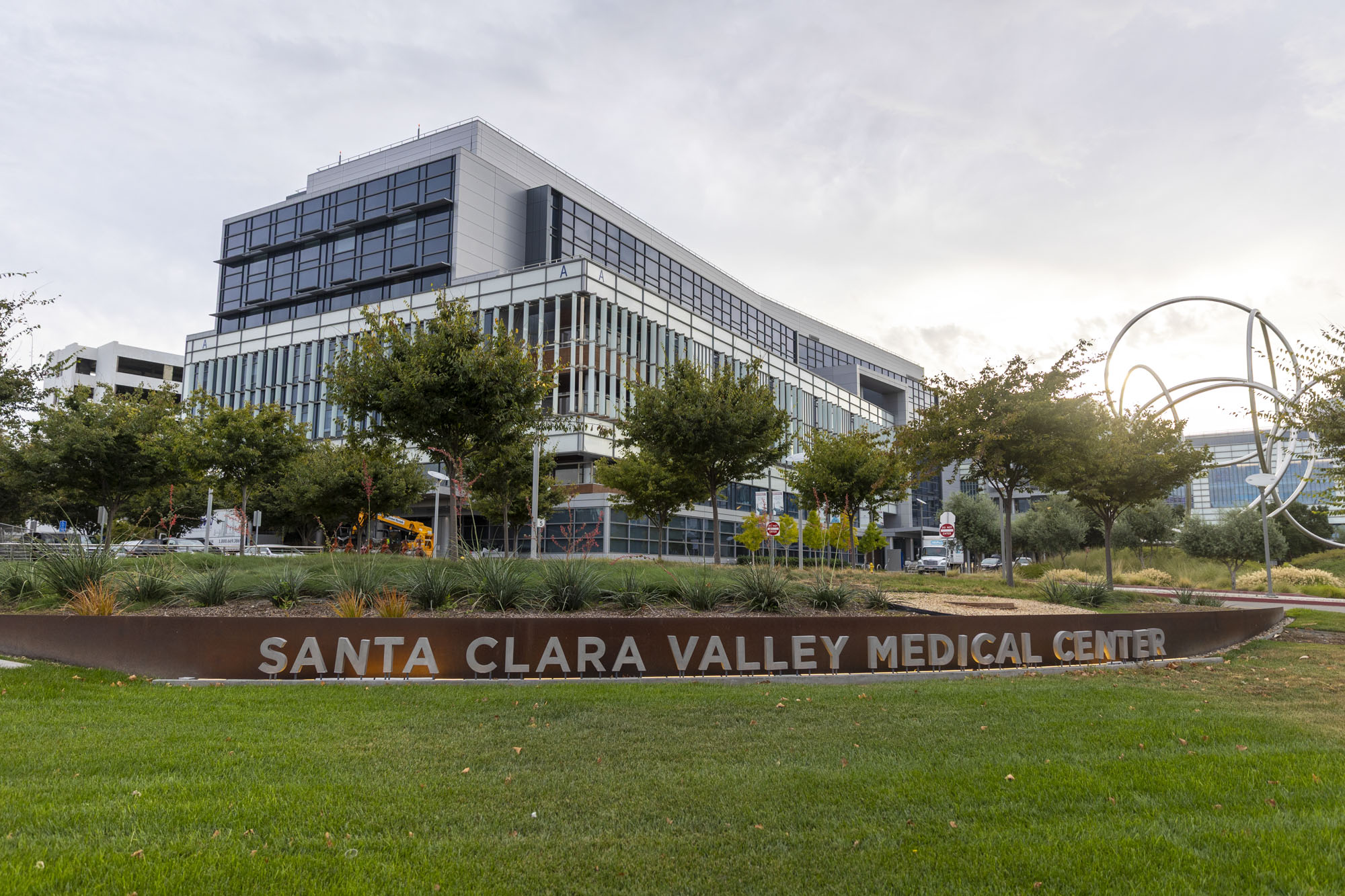
"caption": "Santa Clara Valley Medical Center stands on 751 South Bascom Avenue in San José on Sept. 29, 2025. ",
"credit": "Tâm Vũ/KQED",
"altTag": null,
"description": null,
"imgSizes": {
"thumbnail": {
"file": "https://cdn.kqed.org/wp-content/uploads/sites/10/2025/10/250924-ELECTION-SJ-MEASURE-A_00662_TV-KQED-160x107.jpg",
"width": 160,
"height": 107,
"mimeType": "image/jpeg"
},
"1536x1536": {
"file": "https://cdn.kqed.org/wp-content/uploads/sites/10/2025/10/250924-ELECTION-SJ-MEASURE-A_00662_TV-KQED-1536x1024.jpg",
"width": 1536,
"height": 1024,
"mimeType": "image/jpeg"
},
"post-thumbnail": {
"file": "https://cdn.kqed.org/wp-content/uploads/sites/10/2025/10/250924-ELECTION-SJ-MEASURE-A_00662_TV-KQED-672x372.jpg",
"width": 672,
"height": 372,
"mimeType": "image/jpeg"
},
"twentyfourteen-full-width": {
"file": "https://cdn.kqed.org/wp-content/uploads/sites/10/2025/10/250924-ELECTION-SJ-MEASURE-A_00662_TV-KQED-1038x576.jpg",
"width": 1038,
"height": 576,
"mimeType": "image/jpeg"
},
"kqedFullSize": {
"file": "https://cdn.kqed.org/wp-content/uploads/sites/10/2025/10/250924-ELECTION-SJ-MEASURE-A_00662_TV-KQED.jpg",
"width": 2000,
"height": 1333
}
},
"isLoading": false,
"fetchFailed": false
},
"news_12058485": {
"type": "attachments",
"id": "news_12058485",
"meta": {
"index": "attachments_1716263798",
"site": "news",
"id": "12058485",
"found": true
},
"title": "250924-ELECTION SJ MEASURE A_00613_TV-KQED",
"publishDate": 1759447261,
"status": "inherit",
"parent": 12060326,
"modified": 1760729538,
"caption": "A sign reads, “Vote yes on A, nurses and doctors agree,” outside Santa Clara Valley Medical Center in San José on Sept. 29, 2025. ",
"credit": "Tâm Vũ/KQED",
"altTag": null,
"description": null,
"imgSizes": {
"thumbnail": {
"file": "https://cdn.kqed.org/wp-content/uploads/sites/10/2025/10/250924-ELECTION-SJ-MEASURE-A_00613_TV-KQED-160x107.jpg",
"width": 160,
"height": 107,
"mimeType": "image/jpeg"
},
"1536x1536": {
"file": "https://cdn.kqed.org/wp-content/uploads/sites/10/2025/10/250924-ELECTION-SJ-MEASURE-A_00613_TV-KQED-1536x1024.jpg",
"width": 1536,
"height": 1024,
"mimeType": "image/jpeg"
},
"post-thumbnail": {
"file": "https://cdn.kqed.org/wp-content/uploads/sites/10/2025/10/250924-ELECTION-SJ-MEASURE-A_00613_TV-KQED-672x372.jpg",
"width": 672,
"height": 372,
"mimeType": "image/jpeg"
},
"twentyfourteen-full-width": {
"file": "https://cdn.kqed.org/wp-content/uploads/sites/10/2025/10/250924-ELECTION-SJ-MEASURE-A_00613_TV-KQED-1038x576.jpg",
"width": 1038,
"height": 576,
"mimeType": "image/jpeg"
},
"kqedFullSize": {
"file": "https://cdn.kqed.org/wp-content/uploads/sites/10/2025/10/250924-ELECTION-SJ-MEASURE-A_00613_TV-KQED.jpg",
"width": 2000,
"height": 1333
}
},
"isLoading": false,
"fetchFailed": false
},
"news_12037905": {
"type": "attachments",
"id": "news_12037905",
"meta": {
"index": "attachments_1716263798",
"site": "news",
"id": "12037905",
"found": true
},
"title": "Santa Clara County Superior Court in San Jose on March 24, 2025.",
"publishDate": 1745862778,
"status": "inherit",
"parent": 12060893,
"modified": 1761091215,
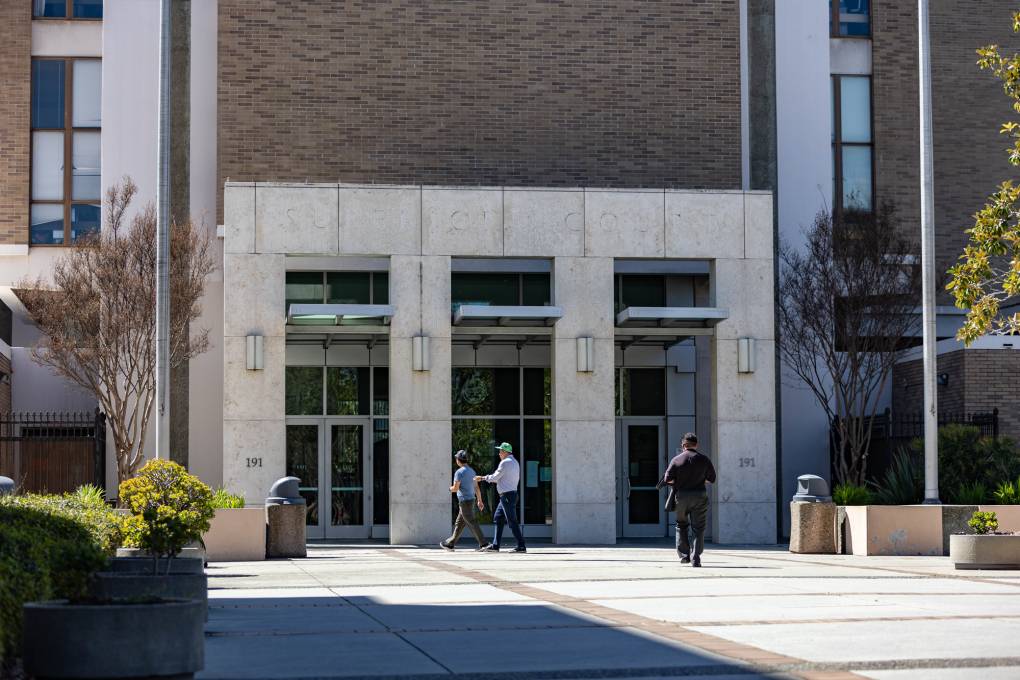
"caption": "Santa Clara County Superior Court in San José on March 24, 2025.",
"credit": "Gina Castro/KQED",
"altTag": null,
"description": null,
"imgSizes": {
"medium": {
"file": "https://cdn.kqed.org/wp-content/uploads/sites/10/2025/04/20240324_SANTACLARASUPERIORCOURT_GC-2-KQED-800x533.jpg",
"width": 800,
"height": 533,
"mimeType": "image/jpeg"
},
"large": {
"file": "https://cdn.kqed.org/wp-content/uploads/sites/10/2025/04/20240324_SANTACLARASUPERIORCOURT_GC-2-KQED-1020x680.jpg",
"width": 1020,
"height": 680,
"mimeType": "image/jpeg"
},
"thumbnail": {
"file": "https://cdn.kqed.org/wp-content/uploads/sites/10/2025/04/20240324_SANTACLARASUPERIORCOURT_GC-2-KQED-160x107.jpg",
"width": 160,
"height": 107,
"mimeType": "image/jpeg"
},
"1536x1536": {
"file": "https://cdn.kqed.org/wp-content/uploads/sites/10/2025/04/20240324_SANTACLARASUPERIORCOURT_GC-2-KQED-1536x1024.jpg",
"width": 1536,
"height": 1024,
"mimeType": "image/jpeg"
},
"post-thumbnail": {
"file": "https://cdn.kqed.org/wp-content/uploads/sites/10/2025/04/20240324_SANTACLARASUPERIORCOURT_GC-2-KQED-672x372.jpg",
"width": 672,
"height": 372,
"mimeType": "image/jpeg"
},
"twentyfourteen-full-width": {
"file": "https://cdn.kqed.org/wp-content/uploads/sites/10/2025/04/20240324_SANTACLARASUPERIORCOURT_GC-2-KQED-1038x576.jpg",
"width": 1038,
"height": 576,
"mimeType": "image/jpeg"
},
"full-width": {
"file": "https://cdn.kqed.org/wp-content/uploads/sites/10/2025/04/20240324_SANTACLARASUPERIORCOURT_GC-2-KQED-1920x1280.jpg",
"width": 1920,
"height": 1280,
"mimeType": "image/jpeg"
},
"kqedFullSize": {
"file": "https://cdn.kqed.org/wp-content/uploads/sites/10/2025/04/20240324_SANTACLARASUPERIORCOURT_GC-2-KQED.jpg",
"width": 2000,
"height": 1333
}
},
"isLoading": false,
"fetchFailed": false
},
"news_12057152": {
"type": "attachments",
"id": "news_12057152",
"meta": {
"index": "attachments_1716263798",
"site": "news",
"id": "12057152",
"found": true
},
"title": "250626-VTAFILE-JG-4_qed",
"publishDate": 1758577878,
"status": "inherit",
"parent": 12057095,
"modified": 1758577955,
"caption": "A VTA light rail train rolls down the tracks on San Carlos Street in San José on June 26, 2025.",
"credit": "Joseph Geha/ KQED",
"altTag": null,
"description": null,
"imgSizes": {
"thumbnail": {
"file": "https://cdn.kqed.org/wp-content/uploads/sites/10/2025/09/250626-VTAFILE-JG-4_qed-160x107.jpg",
"width": 160,
"height": 107,
"mimeType": "image/jpeg"
},
"1536x1536": {
"file": "https://cdn.kqed.org/wp-content/uploads/sites/10/2025/09/250626-VTAFILE-JG-4_qed-1536x1024.jpg",
"width": 1536,
"height": 1024,
"mimeType": "image/jpeg"
},
"post-thumbnail": {
"file": "https://cdn.kqed.org/wp-content/uploads/sites/10/2025/09/250626-VTAFILE-JG-4_qed-672x372.jpg",
"width": 672,
"height": 372,
"mimeType": "image/jpeg"
},
"twentyfourteen-full-width": {
"file": "https://cdn.kqed.org/wp-content/uploads/sites/10/2025/09/250626-VTAFILE-JG-4_qed-1038x576.jpg",
"width": 1038,
"height": 576,
"mimeType": "image/jpeg"
},
"kqedFullSize": {
"file": "https://cdn.kqed.org/wp-content/uploads/sites/10/2025/09/250626-VTAFILE-JG-4_qed.jpg",
"width": 2000,
"height": 1333
}
},
"isLoading": false,
"fetchFailed": false
},
"news_12056929": {
"type": "attachments",
"id": "news_12056929",
"meta": {
"index": "attachments_1716263798",
"site": "news",
"id": "12056929",
"found": true
},
"title": "250730-COMMUNITYFARM-10-KQED",
"publishDate": 1758314851,
"status": "inherit",
"parent": 12056927,
"modified": 1758314884,
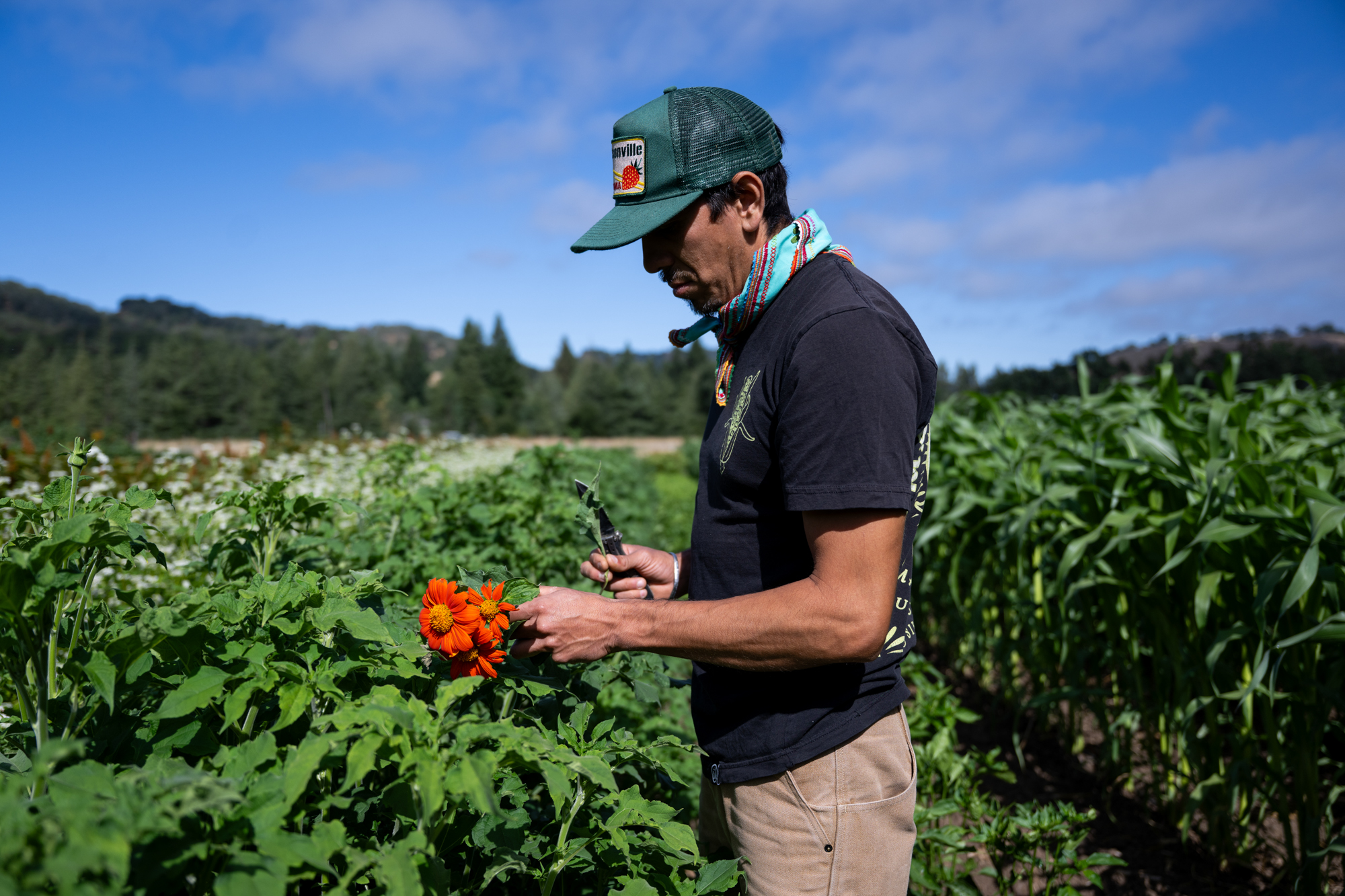
"caption": "Héktor Calderón-Victoria picks flowers at Three Feathers Farm in Morgan Hill on July 30, 2025, the five-acre organic farm he co-founded in 2022. Calderón-Victoria cultivates culturally significant crops and partners with schools, restaurants, and nonprofits to support and connect underserved communities throughout Northern California.",
"credit": "Beth LaBerge/KQED",
"altTag": null,
"description": null,
"imgSizes": {
"thumbnail": {
"file": "https://cdn.kqed.org/wp-content/uploads/sites/10/2025/09/250730-COMMUNITYFARM-10-KQED-160x107.jpg",
"width": 160,
"height": 107,
"mimeType": "image/jpeg"
},
"1536x1536": {
"file": "https://cdn.kqed.org/wp-content/uploads/sites/10/2025/09/250730-COMMUNITYFARM-10-KQED-1536x1024.jpg",
"width": 1536,
"height": 1024,
"mimeType": "image/jpeg"
},
"post-thumbnail": {
"file": "https://cdn.kqed.org/wp-content/uploads/sites/10/2025/09/250730-COMMUNITYFARM-10-KQED-672x372.jpg",
"width": 672,
"height": 372,
"mimeType": "image/jpeg"
},
"twentyfourteen-full-width": {
"file": "https://cdn.kqed.org/wp-content/uploads/sites/10/2025/09/250730-COMMUNITYFARM-10-KQED-1038x576.jpg",
"width": 1038,
"height": 576,
"mimeType": "image/jpeg"
},
"kqedFullSize": {
"file": "https://cdn.kqed.org/wp-content/uploads/sites/10/2025/09/250730-COMMUNITYFARM-10-KQED.jpg",
"width": 2000,
"height": 1333
}
},
"isLoading": false,
"fetchFailed": false
},
"news_12054579": {
"type": "attachments",
"id": "news_12054579",
"meta": {
"index": "attachments_1716263798",
"site": "news",
"id": "12054579",
"found": true
},
"title": "Mexico v Honduras - Gold Cup 2025: Semifinal",
"publishDate": 1756943543,
"status": "inherit",
"parent": 12054576,
"modified": 1756943610,
"caption": "A Santa Clara Police patch on July 2, 2025, in Santa Clara, California. ",
"credit": "Robbie Jay Barratt/AMA via Getty Images",
"altTag": null,
"description": null,
"imgSizes": {
"thumbnail": {
"file": "https://cdn.kqed.org/wp-content/uploads/sites/10/2025/09/SantaClaraPoliceDepartmentGetty-160x107.jpg",
"width": 160,
"height": 107,
"mimeType": "image/jpeg"
},
"1536x1536": {
"file": "https://cdn.kqed.org/wp-content/uploads/sites/10/2025/09/SantaClaraPoliceDepartmentGetty-1536x1024.jpg",
"width": 1536,
"height": 1024,
"mimeType": "image/jpeg"
},
"post-thumbnail": {
"file": "https://cdn.kqed.org/wp-content/uploads/sites/10/2025/09/SantaClaraPoliceDepartmentGetty-672x372.jpg",
"width": 672,
"height": 372,
"mimeType": "image/jpeg"
},
"twentyfourteen-full-width": {
"file": "https://cdn.kqed.org/wp-content/uploads/sites/10/2025/09/SantaClaraPoliceDepartmentGetty-1038x576.jpg",
"width": 1038,
"height": 576,
"mimeType": "image/jpeg"
},
"kqedFullSize": {
"file": "https://cdn.kqed.org/wp-content/uploads/sites/10/2025/09/SantaClaraPoliceDepartmentGetty.jpg",
"width": 2000,
"height": 1333
}
},
"isLoading": false,
"fetchFailed": false
},
"news_12051898": {
"type": "attachments",
"id": "news_12051898",
"meta": {
"index": "attachments_1716263798",
"site": "news",
"id": "12051898",
"found": true
},
"title": "250623-VTAWESTPORTAL-JG-4_qed",
"publishDate": 1755026156,
"status": "inherit",
"parent": 12051730,
"modified": 1755037592,
"caption": "An excavator operator moves material during early work on VTA’s BART to Silicon Valley Phase II Extension project at the West Portal construction site in San José on June 23, 2025.",
"credit": "Joseph Geha/KQED",
"altTag": null,
"description": null,
"imgSizes": {
"thumbnail": {
"file": "https://cdn.kqed.org/wp-content/uploads/sites/10/2025/08/250623-VTAWESTPORTAL-JG-4_qed-160x107.jpg",
"width": 160,
"height": 107,
"mimeType": "image/jpeg"
},
"1536x1536": {
"file": "https://cdn.kqed.org/wp-content/uploads/sites/10/2025/08/250623-VTAWESTPORTAL-JG-4_qed-1536x1024.jpg",
"width": 1536,
"height": 1024,
"mimeType": "image/jpeg"
},
"post-thumbnail": {
"file": "https://cdn.kqed.org/wp-content/uploads/sites/10/2025/08/250623-VTAWESTPORTAL-JG-4_qed-672x372.jpg",
"width": 672,
"height": 372,
"mimeType": "image/jpeg"
},
"twentyfourteen-full-width": {
"file": "https://cdn.kqed.org/wp-content/uploads/sites/10/2025/08/250623-VTAWESTPORTAL-JG-4_qed-1038x576.jpg",
"width": 1038,
"height": 576,
"mimeType": "image/jpeg"
},
"kqedFullSize": {
"file": "https://cdn.kqed.org/wp-content/uploads/sites/10/2025/08/250623-VTAWESTPORTAL-JG-4_qed.jpg",
"width": 1999,
"height": 1333
}
},
"isLoading": false,
"fetchFailed": false
},
"news_12051253": {
"type": "attachments",
"id": "news_12051253",
"meta": {
"index": "attachments_1716263798",
"site": "news",
"id": "12051253",
"found": true
},
"title": "The Santa Clara Valley Medical Center campus in San Jose on March 24, 2025.",
"publishDate": 1754587405,
"status": "inherit",
"parent": 12051250,
"modified": 1754587502,
"caption": "The Santa Clara Valley Medical Center campus in San José on March 24, 2025.",
"credit": "Gina Castro/KQED",
"altTag": null,
"description": null,
"imgSizes": {
"thumbnail": {
"file": "https://cdn.kqed.org/wp-content/uploads/sites/10/2025/08/20240324_SantaClaraMedicalStrike_GC-33_qed-160x107.jpg",
"width": 160,
"height": 107,
"mimeType": "image/jpeg"
},
"1536x1536": {
"file": "https://cdn.kqed.org/wp-content/uploads/sites/10/2025/08/20240324_SantaClaraMedicalStrike_GC-33_qed-1536x1024.jpg",
"width": 1536,
"height": 1024,
"mimeType": "image/jpeg"
},
"post-thumbnail": {
"file": "https://cdn.kqed.org/wp-content/uploads/sites/10/2025/08/20240324_SantaClaraMedicalStrike_GC-33_qed-672x372.jpg",
"width": 672,
"height": 372,
"mimeType": "image/jpeg"
},
"twentyfourteen-full-width": {
"file": "https://cdn.kqed.org/wp-content/uploads/sites/10/2025/08/20240324_SantaClaraMedicalStrike_GC-33_qed-1038x576.jpg",
"width": 1038,
"height": 576,
"mimeType": "image/jpeg"
},
"kqedFullSize": {
"file": "https://cdn.kqed.org/wp-content/uploads/sites/10/2025/08/20240324_SantaClaraMedicalStrike_GC-33_qed.jpg",
"width": 2000,
"height": 1333
}
},
"isLoading": false,
"fetchFailed": false
},
"news_12050999": {
"type": "attachments",
"id": "news_12050999",
"meta": {
"index": "attachments_1716263798",
"site": "news",
"id": "12050999",
"found": true
},
"title": "250805-SANTA CLARA DOG PARK-01-KQED",
"publishDate": 1754425820,
"status": "inherit",
"parent": 0,
"modified": 1754425845,
"caption": "Tony Wang's dog, Boba, receives treatment in mid-July after experiencing a seizure following a visit to Nuevo Dog Park in Santa Clara. Boba is one of several dogs who got sick after visiting the park before city officials temporarily closed the site. ",
"credit": "Courtesy of Tony Wang",
"altTag": null,
"description": null,
"imgSizes": {
"thumbnail": {
"file": "https://cdn.kqed.org/wp-content/uploads/sites/10/2025/08/250805-SANTA-CLARA-DOG-PARK-01-KQED-160x107.jpg",
"width": 160,
"height": 107,
"mimeType": "image/jpeg"
},
"1536x1536": {
"file": "https://cdn.kqed.org/wp-content/uploads/sites/10/2025/08/250805-SANTA-CLARA-DOG-PARK-01-KQED-1536x1024.jpg",
"width": 1536,
"height": 1024,
"mimeType": "image/jpeg"
},
"post-thumbnail": {
"file": "https://cdn.kqed.org/wp-content/uploads/sites/10/2025/08/250805-SANTA-CLARA-DOG-PARK-01-KQED-672x372.jpg",
"width": 672,
"height": 372,
"mimeType": "image/jpeg"
},
"twentyfourteen-full-width": {
"file": "https://cdn.kqed.org/wp-content/uploads/sites/10/2025/08/250805-SANTA-CLARA-DOG-PARK-01-KQED-1038x576.jpg",
"width": 1038,
"height": 576,
"mimeType": "image/jpeg"
},
"kqedFullSize": {
"file": "https://cdn.kqed.org/wp-content/uploads/sites/10/2025/08/250805-SANTA-CLARA-DOG-PARK-01-KQED.jpg",
"width": 2000,
"height": 1333
}
},
"isLoading": false,
"fetchFailed": false
},
"news_11716638": {
"type": "attachments",
"id": "news_11716638",
"meta": {
"index": "attachments_1716263798",
"site": "news",
"id": "11716638",
"found": true
},
"parent": 0,
"imgSizes": {
"twentyfourteen-full-width": {
"file": "https://ww2.kqed.org/app/uploads/sites/10/2019/01/wagstaffe-newsroom-1920-1038x576.jpg",
"width": 1038,
"mimeType": "image/jpeg",
"height": 576
},
"thumbnail": {
"file": "https://ww2.kqed.org/app/uploads/sites/10/2019/01/wagstaffe-newsroom-1920-160x90.jpg",
"width": 160,
"mimeType": "image/jpeg",
"height": 90
},
"post-thumbnail": {
"file": "https://ww2.kqed.org/app/uploads/sites/10/2019/01/wagstaffe-newsroom-1920-672x372.jpg",
"width": 672,
"mimeType": "image/jpeg",
"height": 372
},
"kqedFullSize": {
"file": "https://ww2.kqed.org/app/uploads/sites/10/2019/01/wagstaffe-newsroom-1920.jpg",
"width": 1920,
"height": 1080
},
"large": {
"file": "https://ww2.kqed.org/app/uploads/sites/10/2019/01/wagstaffe-newsroom-1920-1020x574.jpg",
"width": 1020,
"mimeType": "image/jpeg",
"height": 574
},
"complete_open_graph": {
"file": "https://ww2.kqed.org/app/uploads/sites/10/2019/01/wagstaffe-newsroom-1920-1200x675.jpg",
"width": 1200,
"mimeType": "image/jpeg",
"height": 675
},
"guest-author-50": {
"file": "https://ww2.kqed.org/app/uploads/sites/10/2019/01/wagstaffe-newsroom-1920-50x50.jpg",
"width": 50,
"mimeType": "image/jpeg",
"height": 50
},
"guest-author-96": {
"file": "https://ww2.kqed.org/app/uploads/sites/10/2019/01/wagstaffe-newsroom-1920-96x96.jpg",
"width": 96,
"mimeType": "image/jpeg",
"height": 96
},
"medium": {
"file": "https://ww2.kqed.org/app/uploads/sites/10/2019/01/wagstaffe-newsroom-1920-800x450.jpg",
"width": 800,
"mimeType": "image/jpeg",
"height": 450
},
"guest-author-64": {
"file": "https://ww2.kqed.org/app/uploads/sites/10/2019/01/wagstaffe-newsroom-1920-64x64.jpg",
"width": 64,
"mimeType": "image/jpeg",
"height": 64
},
"guest-author-32": {
"file": "https://ww2.kqed.org/app/uploads/sites/10/2019/01/wagstaffe-newsroom-1920-32x32.jpg",
"width": 32,
"mimeType": "image/jpeg",
"height": 32
},
"full-width": {
"file": "https://ww2.kqed.org/app/uploads/sites/10/2019/01/wagstaffe-newsroom-1920-1920x1080.jpg",
"width": 1920,
"mimeType": "image/jpeg",
"height": 1080
},
"detail": {
"file": "https://ww2.kqed.org/app/uploads/sites/10/2019/01/wagstaffe-newsroom-1920-150x150.jpg",
"width": 150,
"mimeType": "image/jpeg",
"height": 150
},
"guest-author-128": {
"file": "https://ww2.kqed.org/app/uploads/sites/10/2019/01/wagstaffe-newsroom-1920-128x128.jpg",
"width": 128,
"mimeType": "image/jpeg",
"height": 128
}
},
"publishDate": 1546966103,
"modified": 1546971236,
"caption": "San Mateo County District Attorney Steve Wagstaffe said Tuesday his office would likely never have known about additional allegations against ex-Burlingame police Officer David Granucci if not for the new law and a collaborative reporting effort that published information about the case.",
"description": "San Mateo County District Attorney Steve Wagstaffe said Tuesday his office would likely never have known about additional allegations against ex-Burlingame police Officer David Granucci if not for the new law and a collaborative reporting effort that published information about the case.",
"title": "wagstaffe-newsroom-1920",
"credit": "KQED Newsroom",
"status": "inherit",
"isLoading": false,
"fetchFailed": false
},
"news_12047614": {
"type": "attachments",
"id": "news_12047614",
"meta": {
"index": "attachments_1716263798",
"site": "news",
"id": "12047614",
"found": true
},
"title": "Traffic is congested in both directions during the peak morning commute on Highway 101 at the southbound Poplar Avenue exit in San Mateo, Calif. on Wednesday, July 13, 2016. Regional transit officials have gathered the necessary funding to begin work on a",
"publishDate": 1752184312,
"status": "inherit",
"parent": 12047579,
"modified": 1752185251,
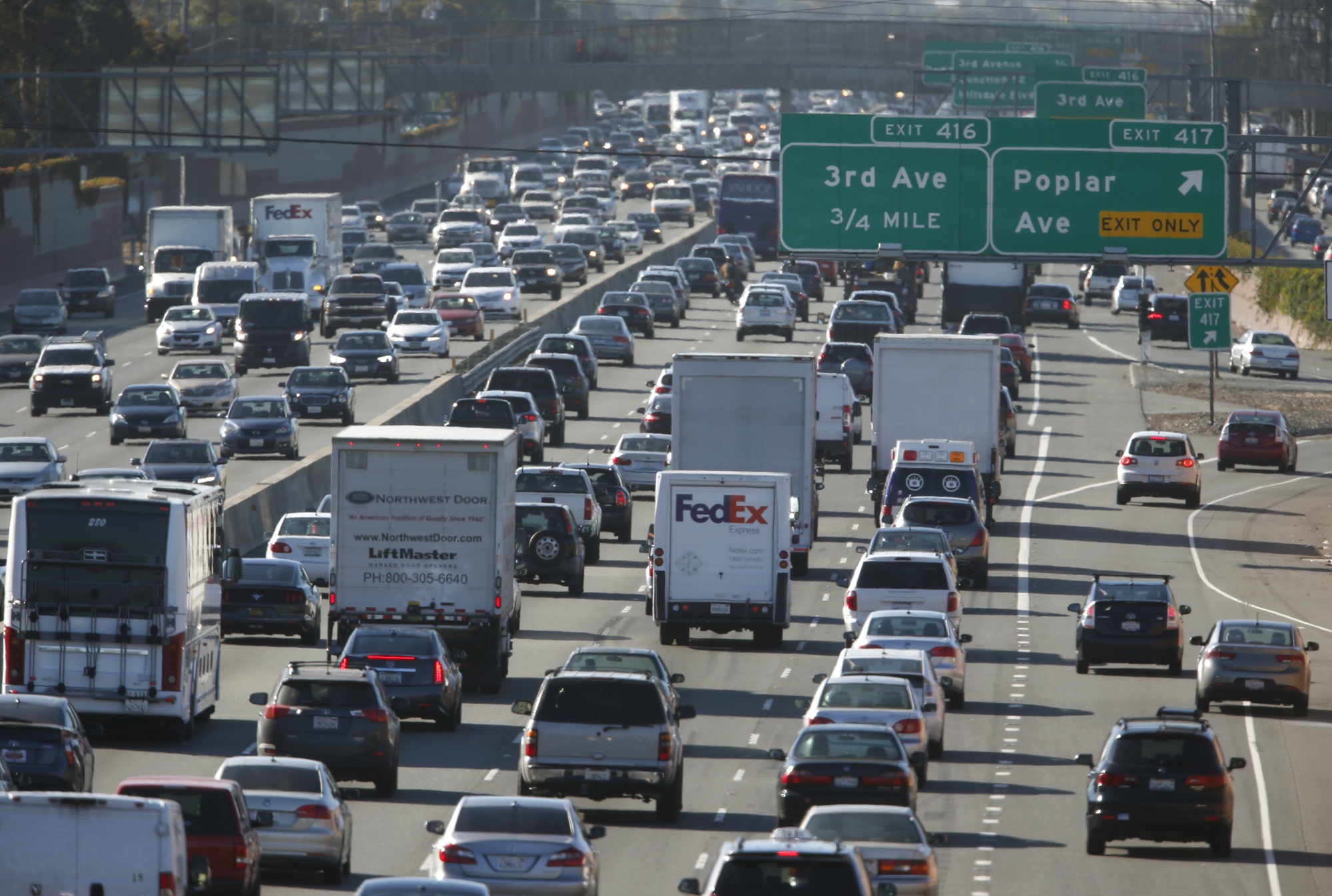
"caption": "Traffic is congested in both directions during the peak morning commute on Highway 101 at the southbound Poplar Avenue exit in San Mateo, California, on July 13, 2016. ",
"credit": "Paul Chinn/The San Francisco Chronicle via Getty Images",
"altTag": null,
"description": null,
"imgSizes": {
"thumbnail": {
"file": "https://cdn.kqed.org/wp-content/uploads/sites/10/2025/07/Highway101SanMateoGetty-160x108.jpg",
"width": 160,
"height": 108,
"mimeType": "image/jpeg"
},
"1536x1536": {
"file": "https://cdn.kqed.org/wp-content/uploads/sites/10/2025/07/Highway101SanMateoGetty-1536x1034.jpg",
"width": 1536,
"height": 1034,
"mimeType": "image/jpeg"
},
"post-thumbnail": {
"file": "https://cdn.kqed.org/wp-content/uploads/sites/10/2025/07/Highway101SanMateoGetty-672x372.jpg",
"width": 672,
"height": 372,
"mimeType": "image/jpeg"
},
"twentyfourteen-full-width": {
"file": "https://cdn.kqed.org/wp-content/uploads/sites/10/2025/07/Highway101SanMateoGetty-1038x576.jpg",
"width": 1038,
"height": 576,
"mimeType": "image/jpeg"
},
"kqedFullSize": {
"file": "https://cdn.kqed.org/wp-content/uploads/sites/10/2025/07/Highway101SanMateoGetty.jpg",
"width": 2000,
"height": 1346
}
},
"isLoading": false,
"fetchFailed": false
}
},
"audioPlayerReducer": {
"postId": "stream_live",
"isPaused": true,
"isPlaying": false,
"pfsActive": false,
"pledgeModalIsOpen": true,
"playerDrawerIsOpen": false,
"liveAudioPlayStartedAt": 0,
"liveAudioPlayContext": ""
},
"authorsReducer": {
"gmarzorati": {
"type": "authors",
"id": "227",
"meta": {
"index": "authors_1716337520",
"id": "227",
"found": true
},
"name": "Guy Marzorati",
"firstName": "Guy",
"lastName": "Marzorati",
"slug": "gmarzorati",
"email": "gmarzorati@KQED.org",
"display_author_email": true,
"staff_mastheads": [
"news"
],
"title": "Correspondent",
"bio": "Guy Marzorati is a correspondent on KQED's California Politics and Government Desk, based in San Jose. A graduate of Santa Clara University, Guy joined KQED in 2013. He reports on state and local politics and produces KQED's digital voter guide.",
"avatar": "https://secure.gravatar.com/avatar/e7038b8dbfd55b104369b76b1cd0b9de?s=600&d=blank&r=g",
"twitter": "guymarzorati",
"facebook": null,
"instagram": null,
"linkedin": null,
"sites": [
{
"site": "",
"roles": [
"editor"
]
},
{
"site": "news",
"roles": [
"editor"
]
},
{
"site": "science",
"roles": [
"editor"
]
},
{
"site": "forum",
"roles": [
"editor"
]
},
{
"site": "elections",
"roles": [
"editor"
]
},
{
"site": "liveblog",
"roles": [
"editor"
]
}
],
"headData": {
"title": "Guy Marzorati | KQED",
"description": "Correspondent",
"ogImgSrc": "https://secure.gravatar.com/avatar/e7038b8dbfd55b104369b76b1cd0b9de?s=600&d=blank&r=g",
"twImgSrc": "https://secure.gravatar.com/avatar/e7038b8dbfd55b104369b76b1cd0b9de?s=600&d=blank&r=g"
},
"isLoading": false,
"link": "/author/gmarzorati"
},
"ecruzguevarra": {
"type": "authors",
"id": "8654",
"meta": {
"index": "authors_1716337520",
"id": "8654",
"found": true
},
"name": "Ericka Cruz Guevarra",
"firstName": "Ericka",
"lastName": "Cruz Guevarra",
"slug": "ecruzguevarra",
"email": "ecruzguevarra@kqed.org",
"display_author_email": true,
"staff_mastheads": [
"news"
],
"title": "Producer, The Bay Podcast",
"bio": "Ericka Cruz Guevarra is host of \u003ca href=\"https://www.kqed.org/podcasts/thebay\">\u003cem>The Bay\u003c/em>\u003c/a> podcast at KQED. Before host, she was the show’s producer. Her work in that capacity includes a three-part reported series on policing in Vallejo, which won a 2020 excellence in journalism award from the Society of Professional Journalists. Ericka has worked as a breaking news reporter at Oregon Public Broadcasting, helped produce the Code Switch podcast, and was KQED’s inaugural Raul Ramirez Diversity Fund intern. She’s also an alumna of NPR’s Next Generation Radio program. Send her an email if you have strong feelings about whether Fairfield and Suisun City are the Bay. Ericka is represented by SAG-AFTRA.",
"avatar": "https://secure.gravatar.com/avatar/accefc1de4bafc7e234b69bcb9b6f6536c130fd84709bc3069ef11a78787e1bb?s=600&d=blank&r=g",
"twitter": "NotoriousECG",
"bluesky": null,
"facebook": null,
"instagram": null,
"linkedin": null,
"sites": [
{
"site": "arts",
"roles": [
"subscriber"
]
},
{
"site": "news",
"roles": [
"editor",
"manage_categories"
]
},
{
"site": "futureofyou",
"roles": [
"subscriber"
]
},
{
"site": "stateofhealth",
"roles": [
"subscriber"
]
},
{
"site": "science",
"roles": [
"editor"
]
},
{
"site": "forum",
"roles": [
"subscriber"
]
}
],
"headData": {
"title": "Ericka Cruz Guevarra | KQED",
"description": "Producer, The Bay Podcast",
"ogImgSrc": "https://secure.gravatar.com/avatar/accefc1de4bafc7e234b69bcb9b6f6536c130fd84709bc3069ef11a78787e1bb?s=600&d=blank&r=g",
"twImgSrc": "https://secure.gravatar.com/avatar/accefc1de4bafc7e234b69bcb9b6f6536c130fd84709bc3069ef11a78787e1bb?s=600&d=blank&r=g"
},
"isLoading": false,
"link": "/author/ecruzguevarra"
},
"smohamad": {
"type": "authors",
"id": "11631",
"meta": {
"index": "authors_1716337520",
"id": "11631",
"found": true
},
"name": "Sarah Mohamad",
"firstName": "Sarah",
"lastName": "Mohamad",
"slug": "smohamad",
"email": "smohamad@KQED.org",
"display_author_email": true,
"staff_mastheads": [],
"title": "Engagement Producer and Reporter, KQED Science",
"bio": "Sarah Mohamad is an audience engagement reporter and producer for KQED Science. She reports on audience-focused science and environment stories and manages the team's social media, newsletter, and engagement efforts. Prior to this role, she played a key role as project manager for NSF's \u003ca href=\"https://www.kqed.org/crackingthecode\">\u003cem>Cracking the Code: Influencing Millennial Science Engagement\u003c/em> \u003c/a>audience research.",
"avatar": "https://secure.gravatar.com/avatar/e6224957cd82d015183756ddde1f928013a563d7ca2e4565f8c4de1ec64886c5?s=600&d=blank&r=g",
"twitter": "sarahkmohamad",
"bluesky": null,
"facebook": null,
"instagram": null,
"linkedin": null,
"sites": [
{
"site": "",
"roles": [
"editor"
]
},
{
"site": "arts",
"roles": [
"editor"
]
},
{
"site": "news",
"roles": [
"editor"
]
},
{
"site": "about",
"roles": [
"editor"
]
},
{
"site": "science",
"roles": [
"editor"
]
}
],
"headData": {
"title": "Sarah Mohamad | KQED",
"description": "Engagement Producer and Reporter, KQED Science",
"ogImgSrc": "https://secure.gravatar.com/avatar/e6224957cd82d015183756ddde1f928013a563d7ca2e4565f8c4de1ec64886c5?s=600&d=blank&r=g",
"twImgSrc": "https://secure.gravatar.com/avatar/e6224957cd82d015183756ddde1f928013a563d7ca2e4565f8c4de1ec64886c5?s=600&d=blank&r=g"
},
"isLoading": false,
"link": "/author/smohamad"
},
"amontecillo": {
"type": "authors",
"id": "11649",
"meta": {
"index": "authors_1716337520",
"id": "11649",
"found": true
},
"name": "Alan Montecillo",
"firstName": "Alan",
"lastName": "Montecillo",
"slug": "amontecillo",
"email": "amontecillo@kqed.org",
"display_author_email": false,
"staff_mastheads": [
"news"
],
"title": "KQED Contributor",
"bio": "Alan Montecillo is the senior editor of \u003cem>\u003ca href=\"http://kqed.org/thebay\">The Bay\u003c/a>, \u003c/em> KQED's local news podcast. Before moving to the Bay Area, he worked as a senior talk show producer for WILL in Champaign-Urbana, Illinois and at Oregon Public Broadcasting in Portland, Oregon. He has won journalism awards from the Society of Professional Journalists Northern California, the Public Media Journalists Association, The Signal Awards, and has also received a regional Edward R. Murrow award. Alan is a Filipino American from Hong Kong and a graduate of Reed College.",
"avatar": "https://secure.gravatar.com/avatar/268f53a2066899ea9efdd8a5900218b17c822d9862cbc9326cccec53ef41d349?s=600&d=blank&r=g",
"twitter": "alanmontecillo",
"bluesky": null,
"facebook": null,
"instagram": null,
"linkedin": null,
"sites": [
{
"site": "",
"roles": [
"editor"
]
},
{
"site": "news",
"roles": [
"editor",
"manage_categories"
]
}
],
"headData": {
"title": "Alan Montecillo | KQED",
"description": "KQED Contributor",
"ogImgSrc": "https://secure.gravatar.com/avatar/268f53a2066899ea9efdd8a5900218b17c822d9862cbc9326cccec53ef41d349?s=600&d=blank&r=g",
"twImgSrc": "https://secure.gravatar.com/avatar/268f53a2066899ea9efdd8a5900218b17c822d9862cbc9326cccec53ef41d349?s=600&d=blank&r=g"
},
"isLoading": false,
"link": "/author/amontecillo"
},
"jessicakariisa": {
"type": "authors",
"id": "11831",
"meta": {
"index": "authors_1716337520",
"id": "11831",
"found": true
},
"name": "Jessica Kariisa",
"firstName": "Jessica",
"lastName": "Kariisa",
"slug": "jessicakariisa",
"email": "jkariisa@kqed.org",
"display_author_email": false,
"staff_mastheads": [],
"title": "Producer, The Bay",
"bio": "Jessica Kariisa is the producer of The Bay. She first joined KQED as an intern for The California Report Magazine, after which she became an on-call producer. She reported a Bay Curious episode on the use of rap lyrics in criminal trials which won a Society of Professional Journalists award in 2023 for Excellence in Features Journalism and the 2023 Signal Award for Best Conversation Starter. She’s worked on podcasts for Snap Judgment and American Public Media. Before embarking on her audio career, she was a music journalist.\r\n\r\nJessica Kariisa is represented by SAG-AFTRA.",
"avatar": "https://secure.gravatar.com/avatar/522e97b28ac0b3d411621c0fde8f3419c7b71ea2c5c262c57c4bb600963f328c?s=600&d=blank&r=g",
"twitter": null,
"bluesky": null,
"facebook": null,
"instagram": null,
"linkedin": null,
"sites": [
{
"site": "arts",
"roles": [
"author"
]
},
{
"site": "news",
"roles": [
"editor",
"manage_categories"
]
}
],
"headData": {
"title": "Jessica Kariisa | KQED",
"description": "Producer, The Bay",
"ogImgSrc": "https://secure.gravatar.com/avatar/522e97b28ac0b3d411621c0fde8f3419c7b71ea2c5c262c57c4bb600963f328c?s=600&d=blank&r=g",
"twImgSrc": "https://secure.gravatar.com/avatar/522e97b28ac0b3d411621c0fde8f3419c7b71ea2c5c262c57c4bb600963f328c?s=600&d=blank&r=g"
},
"isLoading": false,
"link": "/author/jessicakariisa"
},
"jgeha": {
"type": "authors",
"id": "11906",
"meta": {
"index": "authors_1716337520",
"id": "11906",
"found": true
},
"name": "Joseph Geha",
"firstName": "Joseph",
"lastName": "Geha",
"slug": "jgeha",
"email": "jgeha@kqed.org",
"display_author_email": false,
"staff_mastheads": [
"news",
"science"
],
"title": "KQED Contributor",
"bio": null,
"avatar": "https://secure.gravatar.com/avatar/ea84d2b6dd93d6369d453edf19dd583f117cd1759d2d9c9c92f9de77017354fe?s=600&d=blank&r=g",
"twitter": null,
"bluesky": null,
"facebook": null,
"instagram": null,
"linkedin": null,
"sites": [
{
"site": "news",
"roles": [
"editor"
]
},
{
"site": "liveblog",
"roles": [
"author"
]
}
],
"headData": {
"title": "Joseph Geha | KQED",
"description": "KQED Contributor",
"ogImgSrc": "https://secure.gravatar.com/avatar/ea84d2b6dd93d6369d453edf19dd583f117cd1759d2d9c9c92f9de77017354fe?s=600&d=blank&r=g",
"twImgSrc": "https://secure.gravatar.com/avatar/ea84d2b6dd93d6369d453edf19dd583f117cd1759d2d9c9c92f9de77017354fe?s=600&d=blank&r=g"
},
"isLoading": false,
"link": "/author/jgeha"
},
"emanoukian": {
"type": "authors",
"id": "11925",
"meta": {
"index": "authors_1716337520",
"id": "11925",
"found": true
},
"name": "Elize Manoukian",
"firstName": "Elize",
"lastName": "Manoukian",
"slug": "emanoukian",
"email": "emanoukian@KQED.org",
"display_author_email": false,
"staff_mastheads": [
"news"
],
"title": "Digital News Editor",
"bio": "Elize Manoukian is an award-winning audio producer and Senior Editor on the Express Desk, KQED's digital news platform. Her work has appeared on KPFA, Interlochen Public Radio, Oregon Public Broadcast, the New York Daily News, LA Times and the San Diego Union-Tribune.",
"avatar": "https://secure.gravatar.com/avatar/4525f1a8e46ccb30933b32653d9772064cfefe3fa655eb45b3b3a80341f6bdad?s=600&d=blank&r=g",
"twitter": null,
"bluesky": null,
"facebook": null,
"instagram": null,
"linkedin": null,
"sites": [
{
"site": "arts",
"roles": [
"editor"
]
},
{
"site": "news",
"roles": [
"editor"
]
},
{
"site": "science",
"roles": [
"editor"
]
}
],
"headData": {
"title": "Elize Manoukian | KQED",
"description": "Digital News Editor",
"ogImgSrc": "https://secure.gravatar.com/avatar/4525f1a8e46ccb30933b32653d9772064cfefe3fa655eb45b3b3a80341f6bdad?s=600&d=blank&r=g",
"twImgSrc": "https://secure.gravatar.com/avatar/4525f1a8e46ccb30933b32653d9772064cfefe3fa655eb45b3b3a80341f6bdad?s=600&d=blank&r=g"
},
"isLoading": false,
"link": "/author/emanoukian"
},
"skennedy": {
"type": "authors",
"id": "11935",
"meta": {
"index": "authors_1716337520",
"id": "11935",
"found": true
},
"name": "Samantha Kennedy",
"firstName": "Samantha",
"lastName": "Kennedy",
"slug": "skennedy",
"email": "SKennedy@kqed.org",
"display_author_email": false,
"staff_mastheads": [],
"title": "KQED Contributor",
"bio": null,
"avatar": "https://secure.gravatar.com/avatar/adc7b14bf1e801793202a156ecc864d4ad505b0fd63162a2f3da0e5ba57222d0?s=600&d=blank&r=g",
"twitter": null,
"bluesky": null,
"facebook": null,
"instagram": null,
"linkedin": null,
"sites": [
{
"site": "arts",
"roles": [
"author"
]
},
{
"site": "news",
"roles": [
"editor"
]
},
{
"site": "science",
"roles": [
"editor"
]
}
],
"headData": {
"title": "Samantha Kennedy | KQED",
"description": "KQED Contributor",
"ogImgSrc": "https://secure.gravatar.com/avatar/adc7b14bf1e801793202a156ecc864d4ad505b0fd63162a2f3da0e5ba57222d0?s=600&d=blank&r=g",
"twImgSrc": "https://secure.gravatar.com/avatar/adc7b14bf1e801793202a156ecc864d4ad505b0fd63162a2f3da0e5ba57222d0?s=600&d=blank&r=g"
},
"isLoading": false,
"link": "/author/skennedy"
}
},
"pagesReducer": {
"news_tag_santa-clara-county": {
"type": "terms",
"id": "news_18188",
"meta": {
"index": "terms_1716263798",
"site": "news",
"id": "18188",
"score": 9.104131
},
"featImg": null,
"name": "Santa Clara County",
"description": null,
"taxonomy": "tag",
"headData": {
"twImgId": null,
"twTitle": null,
"ogTitle": null,
"ogImgId": null,
"twDescription": null,
"description": null,
"title": "Santa Clara County Archives | KQED News",
"ogDescription": null
},
"ttid": 18222,
"slug": "santa-clara-county",
"isLoading": false,
"title": "Santa Clara County",
"pageMeta": {
"site": "news",
"WpPageTemplate": "page-topic-editorial",
"currentPage": 6
},
"blocks": [
{
"blockName": "kqed/post-list",
"attrs": {
"layout": "cardArticle2",
"query": "posts/news?tag=santa-clara-county",
"seeMore": false,
"paginated": true,
"page": 6
}
},
{
"blockName": "kqed/ad"
}
]
}
},
"pfsSessionReducer": {},
"postsReducer": {
"stream_live": {
"type": "live",
"id": "stream_live",
"audioUrl": "https://streams.kqed.org/kqedradio",
"title": "Live Stream",
"excerpt": "Live Stream information currently unavailable.",
"link": "/radio",
"featImg": "",
"label": {
"name": "KQED Live",
"link": "/"
}
},
"stream_kqedNewscast": {
"type": "posts",
"id": "stream_kqedNewscast",
"audioUrl": "https://www.kqed.org/.stream/anon/radio/RDnews/newscast.mp3?_=1",
"title": "KQED Newscast",
"featImg": "",
"label": {
"name": "88.5 FM",
"link": "/"
}
},
"news_12060326": {
"type": "posts",
"id": "news_12060326",
"meta": {
"index": "posts_1716263798",
"site": "news",
"id": "12060326",
"score": null,
"sort": [
1760729704000
]
},
"guestAuthors": [],
"slug": "measure-a-opponents-criticize-county-mailer-ahead-of-election",
"title": "Measure A Opponents Criticize County Mailer Ahead of Election",
"publishDate": 1760729704,
"format": "standard",
"headTitle": "Measure A Opponents Criticize County Mailer Ahead of Election | KQED",
"labelTerm": {
"site": "news"
},
"content": "\u003cp>Opponents of a sales tax measure on the November ballot have accused Santa Clara County leaders of improperly urging a yes vote on \u003ca href=\"https://www.kqed.org/measure-a\">Measure A\u003c/a>, through a taxpayer-funded mailer sent to every household in the county.\u003c/p>\n\u003cp>At issue is a letter from Santa Clara County Executive James Williams to residents that warned local hospitals and clinics could close as a result of the federal budget cuts approved by President Donald Trump earlier this year. The letter arrived in mailboxes last week — just as \u003ca href=\"https://www.kqed.org/news/12058418/santa-clara-county-sales-tax-measure-a-pitched-to-offset-deep-medicaid-cuts-measure-a\">voters are deciding on Measure A\u003c/a>, a 0.625% sales tax increase touted by county leaders as a way to keep hospitals open and soften the blow of those federal cuts.\u003c/p>\n\u003cp>“It’s a covert, sleight of hand campaign that they’re running,” said Rishi Kumar, a former Saratoga councilmember who is chairing the No on Measure A campaign. “They are spending taxpayer dollars trying to influence people with messaging, which is a doom-and-gloom messaging about health care.”\u003c/p>\n\u003cp>[ad fullwidth]\u003c/p>\n\u003cp>Kumar said the campaign was considering legal action against the county, which is barred from using public resources to promote or oppose any measure on the ballot.\u003c/p>\n\u003cp>In an interview, Williams defended the mailer as part of a legal information campaign and said the county has a responsibility to tell residents about such a large drop in revenue.\u003c/p>\n\u003cp>“We are in a fiscal crisis that’s been caused by these federal cuts,” Williams said. “That’s something that people need to know about.”\u003c/p>\n\u003cfigure id=\"attachment_12058485\" class=\"wp-caption aligncenter\" style=\"max-width: 2000px\">\u003cimg loading=\"lazy\" decoding=\"async\" class=\"size-full wp-image-12058485\" src=\"https://cdn.kqed.org/wp-content/uploads/sites/10/2025/10/250924-ELECTION-SJ-MEASURE-A_00613_TV-KQED.jpg\" alt=\"\" width=\"2000\" height=\"1333\" srcset=\"https://cdn.kqed.org/wp-content/uploads/sites/10/2025/10/250924-ELECTION-SJ-MEASURE-A_00613_TV-KQED.jpg 2000w, https://cdn.kqed.org/wp-content/uploads/sites/10/2025/10/250924-ELECTION-SJ-MEASURE-A_00613_TV-KQED-160x107.jpg 160w, https://cdn.kqed.org/wp-content/uploads/sites/10/2025/10/250924-ELECTION-SJ-MEASURE-A_00613_TV-KQED-1536x1024.jpg 1536w\" sizes=\"auto, (max-width: 2000px) 100vw, 2000px\">\u003cfigcaption class=\"wp-caption-text\">A sign reads, “Vote yes on A, nurses and doctors agree,” outside Santa Clara Valley Medical Center in San José on Sept. 29, 2025. \u003ccite>(Tâm Vũ/KQED)\u003c/cite>\u003c/figcaption>\u003c/figure>\n\u003cp>County officials estimate that the reductions to Medicaid (known as Medi-Cal in California) and SNAP food assistance included in the One Big Beautiful Bill Act will result in losses of over $1 billion annually to the county by the end of the decade. The Board of Supervisors \u003ca href=\"https://www.kqed.org/news/12051250/santa-clara-county-voters-could-pay-more-sales-tax-due-to-trump-cuts\">voted unanimously\u003c/a> in August to place Measure A on the ballot, which will raise an estimated $330 million a year.\u003c/p>\n\u003cp>Williams said the mailer cost roughly $250,000 to send to over 700,000 households in the county. Under the headline “An Important Update from Santa Clara County,” Williams wrote that “due to the federal Medi-Cal cuts, our County-run hospitals and clinics are at risk of closure.”\u003c/p>\n\u003cp>The county currently operates four public hospitals: O’Connor Hospital, Regional Medical Center and Valley Medical Center in San José, and Saint Louise Regional Hospital in Gilroy. The Yes on A campaign has \u003ca href=\"https://www.kqed.org/news/12059539/with-measure-a-santa-clara-county-hopes-to-keep-hospitals-afloat\">run on a message\u003c/a> of “Save Our Local Hospitals,” leaning heavily on the potential threat to these medical centers.[aside label=\"2025 California Special Election\" link1='https://www.kqed.org/measure-a,Learn about Measure A in Santa Clara County' hero=https://cdn.kqed.org/wp-content/uploads/2025/09/Aside-2025-Special-Election-Voter-Guide-Santa-Clara-County-Measure-A-1200x675-1.png]Local government officials are not allowed to use taxpayer dollars to explicitly advocate for or against a ballot measure or candidate, but they can provide residents with informational materials about issues on the ballot.\u003c/p>\n\u003cp>“This doesn’t even do that — it doesn’t mention the measure,” Williams said. “This is talking about the federal cuts, and we unquestionably have the ability to do that, but more importantly, the responsibility.”\u003c/p>\n\u003cp>California’s Supreme Court has ruled that judges should evaluate claims of illegal electioneering by analyzing whether the \u003ca href=\"https://scocal.stanford.edu/opinion/stanson-v-mott-27987\">“style, tenor, and timing”\u003c/a> of the communication makes it campaign-related or informational.\u003c/p>\n\u003cp>Davina Hurt, director of government ethics at the Markkula Center for Applied Ethics at Santa Clara University, said the Santa Clara County mailer “gets right up to the borderline” between ethical and unethical behavior.\u003c/p>\n\u003cp>“The timing and the tone truly matter,” she said. “And here, there are definitely language and words used that make you question whether this is more advocacy rather than informing.”\u003c/p>\n\u003cp>Hurt, the former mayor of Belmont, said it is also important to consider whether similar community updates are regularly sent to residents.\u003c/p>\n\u003cp>Williams said the county has generally provided updates alongside property tax bills. But he said the unprecedented nature of the federal cuts required broader communication — including the creation of a web page with information on the funding loss and multiple town hall meetings.\u003c/p>\n\u003cp>Still, Hurt said it’s important for government officials to take extra care when their messaging overlaps with an election issue.\u003c/p>\n\u003cp>“Even the perception of advocacy undermines confidence in the process,” she said.\u003c/p>\n\u003cp>\u003c/p>\n",
"blocks": [],
"excerpt": "A letter from Santa Clara County Executive James Williams warning that federal cuts could close hospitals landed in mailboxes just as voters are considering a sales tax increase. ",
"status": "publish",
"parent": 0,
"modified": 1760741919,
"stats": {
"hasAudio": false,
"hasVideo": false,
"hasChartOrMap": false,
"iframeSrcs": [],
"hasGoogleForm": false,
"hasGallery": false,
"hasHearkenModule": false,
"hasPolis": false,
"paragraphCount": 19,
"wordCount": 798
},
"headData": {
"title": "Measure A Opponents Criticize County Mailer Ahead of Election | KQED",
"description": "A letter from Santa Clara County Executive James Williams warning that federal cuts could close hospitals landed in mailboxes just as voters are considering a sales tax increase. ",
"ogTitle": "",
"ogDescription": "",
"ogImgId": "",
"twTitle": "",
"twDescription": "",
"twImgId": "",
"schema": {
"@context": "https://schema.org",
"@type": "NewsArticle",
"headline": "Measure A Opponents Criticize County Mailer Ahead of Election",
"datePublished": "2025-10-17T12:35:04-07:00",
"dateModified": "2025-10-17T15:58:39-07:00",
"image": "https://cdn.kqed.org/wp-content/uploads/2020/02/KQED-OG-Image@1x.png",
"isAccessibleForFree": "True",
"publisher": {
"@type": "NewsMediaOrganization",
"@id": "https://www.kqed.org/#organization",
"name": "KQED",
"logo": "https://cdn.kqed.org/wp-content/uploads/2020/02/KQED-OG-Image@1x.png",
"url": "https://www.kqed.org",
"sameAs": [
"https://www.facebook.com/KQED",
"https://twitter.com/KQED",
"https://www.instagram.com/kqed/",
"https://www.tiktok.com/@kqedofficial",
"https://www.linkedin.com/company/kqed",
"https://www.youtube.com/channel/UCeC0IOo7i1P_61zVUWbJ4nw"
]
}
}
},
"primaryCategory": {
"termId": 13,
"slug": "politics",
"name": "Politics"
},
"sticky": false,
"nprStoryId": "kqed-12060326",
"templateType": "standard",
"featuredImageType": "standard",
"excludeFromSiteSearch": "Include",
"articleAge": "0",
"path": "/news/12060326/measure-a-opponents-criticize-county-mailer-ahead-of-election",
"audioTrackLength": null,
"parsedContent": [
{
"type": "contentString",
"content": "\u003cdiv class=\"post-body\">\u003cp>\u003cp>Opponents of a sales tax measure on the November ballot have accused Santa Clara County leaders of improperly urging a yes vote on \u003ca href=\"https://www.kqed.org/measure-a\">Measure A\u003c/a>, through a taxpayer-funded mailer sent to every household in the county.\u003c/p>\n\u003cp>At issue is a letter from Santa Clara County Executive James Williams to residents that warned local hospitals and clinics could close as a result of the federal budget cuts approved by President Donald Trump earlier this year. The letter arrived in mailboxes last week — just as \u003ca href=\"https://www.kqed.org/news/12058418/santa-clara-county-sales-tax-measure-a-pitched-to-offset-deep-medicaid-cuts-measure-a\">voters are deciding on Measure A\u003c/a>, a 0.625% sales tax increase touted by county leaders as a way to keep hospitals open and soften the blow of those federal cuts.\u003c/p>\n\u003cp>“It’s a covert, sleight of hand campaign that they’re running,” said Rishi Kumar, a former Saratoga councilmember who is chairing the No on Measure A campaign. “They are spending taxpayer dollars trying to influence people with messaging, which is a doom-and-gloom messaging about health care.”\u003c/p>\n\u003cp>\u003c/p>\u003c/div>",
"attributes": {
"named": {},
"numeric": []
}
},
{
"type": "component",
"content": "",
"name": "ad",
"attributes": {
"named": {
"label": "fullwidth"
},
"numeric": [
"fullwidth"
]
}
},
{
"type": "contentString",
"content": "\u003cdiv class=\"post-body\">\u003cp>\u003c/p>\n\u003cp>Kumar said the campaign was considering legal action against the county, which is barred from using public resources to promote or oppose any measure on the ballot.\u003c/p>\n\u003cp>In an interview, Williams defended the mailer as part of a legal information campaign and said the county has a responsibility to tell residents about such a large drop in revenue.\u003c/p>\n\u003cp>“We are in a fiscal crisis that’s been caused by these federal cuts,” Williams said. “That’s something that people need to know about.”\u003c/p>\n\u003cfigure id=\"attachment_12058485\" class=\"wp-caption aligncenter\" style=\"max-width: 2000px\">\u003cimg loading=\"lazy\" decoding=\"async\" class=\"size-full wp-image-12058485\" src=\"https://cdn.kqed.org/wp-content/uploads/sites/10/2025/10/250924-ELECTION-SJ-MEASURE-A_00613_TV-KQED.jpg\" alt=\"\" width=\"2000\" height=\"1333\" srcset=\"https://cdn.kqed.org/wp-content/uploads/sites/10/2025/10/250924-ELECTION-SJ-MEASURE-A_00613_TV-KQED.jpg 2000w, https://cdn.kqed.org/wp-content/uploads/sites/10/2025/10/250924-ELECTION-SJ-MEASURE-A_00613_TV-KQED-160x107.jpg 160w, https://cdn.kqed.org/wp-content/uploads/sites/10/2025/10/250924-ELECTION-SJ-MEASURE-A_00613_TV-KQED-1536x1024.jpg 1536w\" sizes=\"auto, (max-width: 2000px) 100vw, 2000px\">\u003cfigcaption class=\"wp-caption-text\">A sign reads, “Vote yes on A, nurses and doctors agree,” outside Santa Clara Valley Medical Center in San José on Sept. 29, 2025. \u003ccite>(Tâm Vũ/KQED)\u003c/cite>\u003c/figcaption>\u003c/figure>\n\u003cp>County officials estimate that the reductions to Medicaid (known as Medi-Cal in California) and SNAP food assistance included in the One Big Beautiful Bill Act will result in losses of over $1 billion annually to the county by the end of the decade. The Board of Supervisors \u003ca href=\"https://www.kqed.org/news/12051250/santa-clara-county-voters-could-pay-more-sales-tax-due-to-trump-cuts\">voted unanimously\u003c/a> in August to place Measure A on the ballot, which will raise an estimated $330 million a year.\u003c/p>\n\u003cp>Williams said the mailer cost roughly $250,000 to send to over 700,000 households in the county. Under the headline “An Important Update from Santa Clara County,” Williams wrote that “due to the federal Medi-Cal cuts, our County-run hospitals and clinics are at risk of closure.”\u003c/p>\n\u003cp>The county currently operates four public hospitals: O’Connor Hospital, Regional Medical Center and Valley Medical Center in San José, and Saint Louise Regional Hospital in Gilroy. The Yes on A campaign has \u003ca href=\"https://www.kqed.org/news/12059539/with-measure-a-santa-clara-county-hopes-to-keep-hospitals-afloat\">run on a message\u003c/a> of “Save Our Local Hospitals,” leaning heavily on the potential threat to these medical centers.\u003c/p>\u003c/div>",
"attributes": {
"named": {},
"numeric": []
}
},
{
"type": "component",
"content": "",
"name": "aside",
"attributes": {
"named": {
"label": "2025 California Special Election ",
"link1": "https://www.kqed.org/measure-a,Learn about Measure A in Santa Clara County",
"hero": "https://cdn.kqed.org/wp-content/uploads/2025/09/Aside-2025-Special-Election-Voter-Guide-Santa-Clara-County-Measure-A-1200x675-1.png"
},
"numeric": []
}
},
{
"type": "contentString",
"content": "\u003cdiv class=\"post-body\">\u003cp>Local government officials are not allowed to use taxpayer dollars to explicitly advocate for or against a ballot measure or candidate, but they can provide residents with informational materials about issues on the ballot.\u003c/p>\n\u003cp>“This doesn’t even do that — it doesn’t mention the measure,” Williams said. “This is talking about the federal cuts, and we unquestionably have the ability to do that, but more importantly, the responsibility.”\u003c/p>\n\u003cp>California’s Supreme Court has ruled that judges should evaluate claims of illegal electioneering by analyzing whether the \u003ca href=\"https://scocal.stanford.edu/opinion/stanson-v-mott-27987\">“style, tenor, and timing”\u003c/a> of the communication makes it campaign-related or informational.\u003c/p>\n\u003cp>Davina Hurt, director of government ethics at the Markkula Center for Applied Ethics at Santa Clara University, said the Santa Clara County mailer “gets right up to the borderline” between ethical and unethical behavior.\u003c/p>\n\u003cp>“The timing and the tone truly matter,” she said. “And here, there are definitely language and words used that make you question whether this is more advocacy rather than informing.”\u003c/p>\n\u003cp>Hurt, the former mayor of Belmont, said it is also important to consider whether similar community updates are regularly sent to residents.\u003c/p>\n\u003cp>Williams said the county has generally provided updates alongside property tax bills. But he said the unprecedented nature of the federal cuts required broader communication — including the creation of a web page with information on the funding loss and multiple town hall meetings.\u003c/p>\n\u003cp>Still, Hurt said it’s important for government officials to take extra care when their messaging overlaps with an election issue.\u003c/p>\n\u003cp>“Even the perception of advocacy undermines confidence in the process,” she said.\u003c/p>\n\u003cp>\u003c/p>\n\u003c/div>\u003c/p>",
"attributes": {
"named": {},
"numeric": []
}
}
],
"link": "/news/12060326/measure-a-opponents-criticize-county-mailer-ahead-of-election",
"authors": [
"227"
],
"categories": [
"news_31795",
"news_457",
"news_8",
"news_13"
],
"tags": [
"news_18538",
"news_35929",
"news_18543",
"news_35118",
"news_17968",
"news_1749",
"news_18188",
"news_35930",
"news_34586",
"news_21285"
],
"featImg": "news_12060145",
"label": "news"
},
"news_12059539": {
"type": "posts",
"id": "news_12059539",
"meta": {
"index": "posts_1716263798",
"site": "news",
"id": "12059539",
"score": null,
"sort": [
1760349642000
]
},
"guestAuthors": [],
"slug": "with-measure-a-santa-clara-county-hopes-to-keep-hospitals-afloat",
"title": "With Measure A, Santa Clara County Hopes to Keep Hospitals Afloat",
"publishDate": 1760349642,
"format": "audio",
"headTitle": "With Measure A, Santa Clara County Hopes to Keep Hospitals Afloat | KQED",
"labelTerm": {},
"content": "\u003cp>Santa Clara County officials are worried about how big cuts to Medicaid under President Trump’s One Big Beautiful Bill Act will hurt the area’s four county-run hospitals, which rely heavily on Medicaid reimbursements. \u003ca href=\"https://www.kqed.org/electionsnews\">\u003cbr>\n\u003c/a>\u003c/p>\n\u003cp>Now, voters are being asked to weigh in on Measure A, which would increase the county sales tax by 0.625% over 5 years to fill in roughly one-third of the county’s projected annual losses from federal cuts.\u003ca href=\"https://www.kqed.org/electionsnews\">\u003cbr>\n\u003c/a>\u003c/p>\n\u003cp>\u003cb>Links:\u003c/b>\u003c/p>\n\u003cul>\n\u003cli>\u003ca href=\"https://www.kqed.org/measure-a\">Measure A voter guide\u003c/a>\u003c/li>\n\u003c/ul>\n\u003cp>\u003c!-- iframe plugin v.4.3 wordpress.org/plugins/iframe/ -->\u003cbr>\n\u003ciframe loading=\"lazy\" frameborder=\"0\" height=\"200\" scrolling=\"no\" src=\"https://playlist.megaphone.fm?e=KQINC4103737000\" width=\"100%\" class=\"iframe-class\">\u003c/iframe>\u003c/p>\n\u003cp>\u003cem>\u003ci>Some members of the KQED podcast team are represented by The Screen Actors Guild, American Federation of Television and Radio Artists. San Francisco Northern California Local.\u003c/i>\u003c/em>\u003c/p>\n\u003cp>[ad fullwidth]\u003c/p>\n\u003cp>\u003cem>This transcript is computer-generated. While our team has reviewed it, there may be errors.\u003c/em>\u003c/p>\n\u003cp>\u003cstrong>Ericka Cruz Guevarra \u003c/strong>[00:00:00] I’m Ericka Cruz-Guevarra and welcome to The Bay, local news to keep you rooted. The Santa Clara Valley Medical Center is unique. It’s one of the few certified burn centers in Northern California, treating patients from Santa Clara County and beyond. But thanks to President Trump’s Big Beautiful Bill, staff at public hospitals like Valley Medical are on edge. Huge federal cuts to Medicaid are expected to put public hospitals like it in big financial trouble, enough to risk shutting down.\u003c/p>\n\u003cp>\u003cstrong>Betty Duong \u003c/strong>[00:00:43] We can’t go down without a fight. This is our way of fighting. We’re turning to our voters, and I have every confidence that the legacy and the history and the values of this community will be to protect each other.\u003c/p>\n\u003cp>\u003cstrong>Ericka Cruz Guevarra \u003c/strong>[00:01:00] Santa Clara County voters will decide on Measure A, an increase in the county sales tax that proponents say will help keep hospitals afloat. But opponents say it’s time to reimagine the role of the area’s public hospitals entirely.\u003c/p>\n\u003cp>\u003cstrong>Liang Chao \u003c/strong>[00:01:20] This is like a knee-jerk reaction to something happening on federal government and kind of taking advantage of the federal cut as an excuse to tax the voters more.\u003c/p>\n\u003cp>\u003cstrong>Ericka Cruz Guevarra \u003c/strong>[00:01:36] Today, we break down Measure A and Santa Clara County’s unprecedented approach to saving local hospitals.\u003c/p>\n\u003cp>\u003cstrong>Ericka Cruz Guevarra \u003c/strong>[00:01:51] Why is what’s happening at the federal level and these cuts to Medicaid expected to be so devastating for Santa Clara County?\u003c/p>\n\u003cp>\u003cstrong>Guy Marzorati \u003c/strong>[00:01:58] Yeah, I think in particular with Santa Clara County, you’re talking about a public health care system.\u003c/p>\n\u003cp>\u003cstrong>Ericka Cruz Guevarra \u003c/strong>[00:02:06] Guy Marzorati is a politics and government correspondent for KQED.\u003c/p>\n\u003cp>\u003cstrong>Guy Marzorati \u003c/strong>[00:02:11] So these are public hospitals, and public hospitals in California serve an overwhelming share of patients who are on Medi-Cal, which is our state’s version of Medicaid. This is health insurance for people with low incomes, with disabilities, and so these hospitals end up caring for a large share of those patients, and the way the hospitals get paid for providing those services is largely through reimbursements and payments from the federal government. What we’re seeing through the one Big Beautiful Bill Act that President Trump signed this summer is a huge reduction in federal funding for Medicaid and also an expectation going forward that there will be fewer people on Medicaid, so fewer people with this kind of health insurance, but if those people show up at the hospital, they’re still gonna get treatment. What’s gonna change is there’s not gonna be necessarily the payments to go along with that.\u003c/p>\n\u003cp>\u003cstrong>Ericka Cruz Guevarra \u003c/strong>[00:03:08] And you mentioned these county run hospitals. Can you tell me a little bit more about them and what they do and who they really serve?\u003c/p>\n\u003cp>\u003cstrong>Guy Marzorati \u003c/strong>[00:03:18] Yeah, so Santa Clara is unique in that the county has these four publicly run hospitals. Valley Med right in San Jose is kind of the flagship of the hospital system. But what we’ve seen in Santa Clara County in recent years is the county has acquired hospitals. They’ve bought hospitals that are struggling financially. We saw that just recently, last year, with Regional Medical Center. And this really is a case of hospitals that, in a lot of other counties, would have just closed their doors. They wouldn’t have had enough money to operate. They would have shut down. Santa Clara County is in a really unique position because it’s a relatively wealthy county compared to others in California. But there’s also huge disparities in income, so there are huge proportions of residents who rely on public hospitals. And so the county has stepped in in these cases and said, we’re actually gonna take on the cost. We’re gonna purchase these hospitals. But all of that was done with an expectation of this existing model where the federal government through Medicaid is helping to support the cause. Now that that doesn’t exist anymore in its previous form, that’s why you have all this uncertainty.\u003c/p>\n\u003cp>\u003cstrong>Ericka Cruz Guevarra \u003c/strong>[00:04:39] And I know you spoke with a nurse who works at one of these county-run hospitals. Can you tell me about Emiko Rivera and what she tells you about what it’s like to be working at these hospitals right now and the uncertainty that must be hanging over everything?\u003c/p>\n\u003cp>\u003cstrong>Guy Marzorati \u003c/strong>[00:04:58] Yeah, so Emiko Rivera is a nurse at the burn center at Valley Medical Center.\u003c/p>\n\u003cp>\u003cstrong>Emiko Rivera \u003c/strong>[00:05:07] I started in the Burn Center about 17 years ago as a new grad. I graduated from San Jose State.\u003c/p>\n\u003cp>\u003cstrong>Guy Marzorati \u003c/strong>[00:05:14] You know, with her, I think it’s a lot of uncertainty, like with a lot of other I think healthcare workers, because we don’t know exactly what the ramifications of the cuts are going to be.\u003c/p>\n\u003cp>\u003cstrong>Emiko Rivera \u003c/strong>[00:05:25] Because the burn center is vital for our community and for the region. So personally, I wanna make sure that we maintain our burn services.\u003c/p>\n\u003cp>\u003cstrong>Guy Marzorati \u003c/strong>[00:05:37] In Rivera’s case, you know, the burn center that she works at treats patients from really all across the region. There aren’t many burn centers like this in California that are connected to trauma centers and that are able to serve in this kind of emergency capacity. So they are actually treating patients beyond Santa Clara County’s borders. And so what she talks about is ramifications that will actually go beyond the county and could end up affecting really people throughout the Bay Area.\u003c/p>\n\u003cp>\u003cstrong>Emiko Rivera \u003c/strong>[00:06:06] Nobody is immune to a burn injury. It doesn’t matter if you are houseless or if you have millions of dollars, everybody’s going to the same place and that’s our burn center.\u003c/p>\n\u003cp>\u003cstrong>Guy Marzorati \u003c/strong>[00:06:22] These cuts have largely not taken effect yet. This is something that’s gonna play out in the coming years. So I think there’s concern, you know, do hospitals stay open? Is there staffing issues? Can clinics operate as they currently do? But we don’t have any hard answers as to what actually is going to happen.\u003c/p>\n\u003cp>\u003cstrong>Ericka Cruz Guevarra \u003c/strong>[00:06:46] So how does Santa Clara County plan to address this problem?\u003c/p>\n\u003cp>\u003cstrong>Guy Marzorati \u003c/strong>[00:06:51] What Santa Clara County is facing is not unique. Hospitals across California have been struggling, especially in rural areas in recent years, even before these Medicaid cuts. But now we’ve seen that crisis spread to a wealthy county in Silicon Valley. And what makes the response different in Santa Clara county is that they’re going to the voters and asking for money to help kind of bridge these cuts.\u003c/p>\n\u003cp>\u003cstrong>Ericka Cruz Guevarra \u003c/strong>[00:07:18] And that is, of course, why we’re talking today. You’re talking about measure A. Tell me a little bit more about it, Guy. What would it do and how much is it expected to raise?\u003c/p>\n\u003cp>\u003cstrong>Guy Marzorati \u003c/strong>[00:07:31] So measure A is an increase in the county sales tax of about 0.6% for five years. And that’s paid on goods that people buy at stores. There’s certain goods that are exempted, I believe, like groceries, and is expected to bring in $330 million. Now, that is well short of the amount of money the county is expecting to lose because of these federal cuts. So this alone will not solve the issue that the county has facing. There will still probably have to be some cutbacks. There’s still going to be a lot of advocacy, I think, from county leaders asking the state government for more money in this realm. But what supporters of Measure A have, the picture that they have painted is that passing this sales tax, bringing in this 300 plus million dollars every year will allow them to avoid the worst consequences of the federal cuts. And what they’ve billed this as is save the hospitals.\u003c/p>\n\u003cp>\u003cstrong>Ericka Cruz Guevarra \u003c/strong>[00:08:48] Tell me a little bit more about the people who are really backing Measure A in Santa Clara County right now. Who is for it and what is the argument that they’re making?\u003c/p>\n\u003cp>\u003cstrong>Guy Marzorati \u003c/strong>[00:08:58] The board of supervisors voted unanimously five to zero in August to put Measure A on the ballot. So they’ve really been the biggest supporters of this idea from the beginning to put this sales tax in front of voters.\u003c/p>\n\u003cp>\u003cstrong>Betty Duong \u003c/strong>[00:09:11] Other counties, their response to this to close the gap, the budget gap, is to close down their hospitals. This county cannot let that happen without a fight.\u003c/p>\n\u003cp>\u003cstrong>Guy Marzorati \u003c/strong>[00:09:20] I talked with Betty Duong, she’s a supervisor in District 2 in San Jose. She was born at a county hospital. She said that these are facilities that her family has used throughout her entire life and are kind of bedrocks of the community. She doesn’t want to see the hospitals closed. That’s why she’s putting her support behind Measure A.\u003c/p>\n\u003cp>\u003cstrong>Betty Duong \u003c/strong>[00:09:40] There is no other hole in the budget this big, so this $330 million that’s projected to be generated on an annual basis covers one-third of the $1 billion plus gap that we have.\u003c/p>\n\u003cp>\u003cstrong>Guy Marzorati \u003c/strong>[00:09:57] And you’ve seen across the board that the county district attorney, the county sheriff, local congress members, local members of the state legislature, Matt Mahan, the mayor of San Jose, other local officials all putting their support behind Measure A, because I think there is concern that, look, there are hospitals in Santa Clara County that are not run by the county, but there’s a fear that if you start to see cutbacks at these public facilities, they’re going to be ripple effects and, you know, that will spill over to other health care. Facilities, other hospitals in terms of crowding, in terms of lack of services in certain parts of the county. And so I think that’s what all these folks who are supporting measure A are trying to avoid.\u003c/p>\n\u003cp>\u003cstrong>Ericka Cruz Guevarra \u003c/strong>[00:10:41] Is there anyone against Measure A? What’s the argument they’re making?\u003c/p>\n\u003cp>\u003cstrong>Guy Marzorati \u003c/strong>[00:10:46] We have seen some local elected officials come out against Measure A in Santa Clara County.\u003c/p>\n\u003cp>\u003cstrong>Liang Chao \u003c/strong>[00:10:51] I think this is like a knee-jerk reaction to something happening on federal government.\u003c/p>\n\u003cp>\u003cstrong>Guy Marzorati \u003c/strong>[00:11:00] Liang Chao is the mayor of Cupertino. You know, she points out to begin with that Measure A is just a general sales tax. So while the campaign for Measure A might say, this is about bringing in money for the healthcare system and saving the hospitals, she makes the point which is true, technically this money could be spent on anything.\u003c/p>\n\u003cp>\u003cstrong>Liang Chao \u003c/strong>[00:11:18] So that’s kind of not very honest. So many people agree it’s important to provide healthcare for everyone. But is sales tax at this point in the special election the right thing to do at the last moment?\u003c/p>\n\u003cp>\u003cstrong>Guy Marzorati \u003c/strong>[00:11:38] And I think that the larger point that Chao brings up and other opponents of Measure A have brought up is that the status quo for the county running these four hospitals is simply not sustainable. That with the lack of money coming in from the federal government through Medicaid going forward into the future, that it’s just not possible for the county to be operating these hospitals. We’ve seen since the county has purchased some of these hospitals, healthcare costs have become a huge part of the county budget. And Chow and others have made the argument that this is the time not to go back to the well and bring in more money into the system, but this is time to reevaluate whether the system as it exists really can be maintained.\u003c/p>\n\u003cp>\u003cstrong>Liang Chao \u003c/strong>[00:12:22] I think if they don’t reform the hospitals, they will have the hospitals closing anyway, no matter how much money you throw at it. And we also need to decide, do we need all four hospitals, right? And maybe we can have a really good plan for a smaller number, but really well successfully run.\u003c/p>\n\u003cp>\u003cstrong>Ericka Cruz Guevarra \u003c/strong>[00:12:43] Do we have any sense, really, of how likely voters are to pass this?\u003c/p>\n\u003cp>\u003cstrong>Guy Marzorati \u003c/strong>[00:12:47] You know, I don’t have any really concrete public polling that’s been done in recent weeks since this campaign has really gotten underway. I will say the yes side on Measure A has a massive financial advantage. They have raised over $2 million and there really hasn’t been any fundraising on the no side. So if you drive around the South Bay, you’re going to see these yes on A placards in people’s lawns. There’s been a lot of mail pieces that I’ve gotten in my mailbox in support of Measure A and you’re not seeing that as much on the no side, you know, a lot of the messaging for Measure A has been framed as giving voters an opportunity to push back against what Trump did. And you’re seeing that a lot of those themes echoed in the statewide campaign for Proposition 50 about redistricting. These two measures will appear right next to each other on the ballot in November. And so I think if you’re in this space where especially democratic voters have an appetite for measures and proposals that they feel like gives them some sense of agency and pushing back against some of the things that have happened at the federal level. Measure A fits right into that lane.\u003c/p>\n\u003cp>\u003cstrong>Ericka Cruz Guevarra \u003c/strong>[00:13:56] And Guy, if this were to pass, you mentioned it doesn’t fully cover the losses that are expected to be incurred by the big, beautiful bill. And so it sounds like this is really just one piece of the conversation and that more conversations will have to be had about how to really keep these hospitals afloat, even if Measure A is passed.\u003c/p>\n\u003cp>\u003cstrong>Guy Marzorati \u003c/strong>[00:14:20] That’s exactly right. Because the loss to the county, when you add in the Medicaid cuts, cuts to CalFresh food assistance that all came through that federal bill, you’re talking about a hit that’s gonna be over a billion dollars a year by the end of this decade. So $330 million a year is not gonna completely solve that. There’s still gonna have to be some really difficult budget negotiations to try to figure this out. Officials say measure a is basically just our stopgap. It’s our ability to you know, keep the system going as is and again I think opponents would say you’re just you know Scooping water out of a sinking ocean liner like there needs to be a larger conversation here beyond just pouring a little bit more money in the system.\u003c/p>\n\u003cp>\u003cstrong>Ericka Cruz Guevarra \u003c/strong>[00:15:08] Well, Guy, thank you so much for breaking this down. I appreciate it.\u003c/p>\n\u003cp>[ad floatright]\u003c/p>\n\u003cp>\u003cstrong>Guy Marzorati \u003c/strong>[00:15:11] Yeah, thank you for having me.\u003c/p>\n\n",
"blocks": [],
"excerpt": "Santa Clara County officials are worried about what big cuts to Medicaid will mean for the area’s public hospitals",
"status": "publish",
"parent": 0,
"modified": 1760725060,
"stats": {
"hasAudio": true,
"hasVideo": false,
"hasChartOrMap": false,
"iframeSrcs": [],
"hasGoogleForm": false,
"hasGallery": false,
"hasHearkenModule": false,
"hasPolis": false,
"paragraphCount": 50,
"wordCount": 2852
},
"headData": {
"title": "With Measure A, Santa Clara County Hopes to Keep Hospitals Afloat | KQED",
"description": "Santa Clara County officials are worried about what big cuts to Medicaid will mean for the area’s public hospitals",
"ogTitle": "",
"ogDescription": "",
"ogImgId": "",
"twTitle": "",
"twDescription": "",
"twImgId": "",
"schema": {
"@context": "https://schema.org",
"@type": "NewsArticle",
"headline": "With Measure A, Santa Clara County Hopes to Keep Hospitals Afloat",
"datePublished": "2025-10-13T03:00:42-07:00",
"dateModified": "2025-10-17T11:17:40-07:00",
"image": "https://cdn.kqed.org/wp-content/uploads/2020/02/KQED-OG-Image@1x.png",
"isAccessibleForFree": "True",
"publisher": {
"@type": "NewsMediaOrganization",
"@id": "https://www.kqed.org/#organization",
"name": "KQED",
"logo": "https://cdn.kqed.org/wp-content/uploads/2020/02/KQED-OG-Image@1x.png",
"url": "https://www.kqed.org",
"sameAs": [
"https://www.facebook.com/KQED",
"https://twitter.com/KQED",
"https://www.instagram.com/kqed/",
"https://www.tiktok.com/@kqedofficial",
"https://www.linkedin.com/company/kqed",
"https://www.youtube.com/channel/UCeC0IOo7i1P_61zVUWbJ4nw"
]
}
}
},
"primaryCategory": {
"termId": 457,
"slug": "health",
"name": "Health"
},
"source": "The Bay",
"sourceUrl": "https://www.kqed.org/podcasts/thebay",
"audioUrl": "https://www.podtrac.com/pts/redirect.mp3/chrt.fm/track/G6C7C3/traffic.megaphone.fm/KQINC4103737000.mp3",
"sticky": false,
"nprStoryId": "kqed-12059539",
"templateType": "standard",
"featuredImageType": "standard",
"excludeFromSiteSearch": "Include",
"articleAge": "0",
"path": "/news/12059539/with-measure-a-santa-clara-county-hopes-to-keep-hospitals-afloat",
"audioTrackLength": null,
"parsedContent": [
{
"type": "contentString",
"content": "\u003cdiv class=\"post-body\">\u003cp>\u003cp>Santa Clara County officials are worried about how big cuts to Medicaid under President Trump’s One Big Beautiful Bill Act will hurt the area’s four county-run hospitals, which rely heavily on Medicaid reimbursements. \u003ca href=\"https://www.kqed.org/electionsnews\">\u003cbr>\n\u003c/a>\u003c/p>\n\u003cp>Now, voters are being asked to weigh in on Measure A, which would increase the county sales tax by 0.625% over 5 years to fill in roughly one-third of the county’s projected annual losses from federal cuts.\u003ca href=\"https://www.kqed.org/electionsnews\">\u003cbr>\n\u003c/a>\u003c/p>\n\u003cp>\u003cb>Links:\u003c/b>\u003c/p>\n\u003cul>\n\u003cli>\u003ca href=\"https://www.kqed.org/measure-a\">Measure A voter guide\u003c/a>\u003c/li>\n\u003c/ul>\n\u003cp>\u003c!-- iframe plugin v.4.3 wordpress.org/plugins/iframe/ -->\u003cbr>\n\u003ciframe loading=\"lazy\" frameborder=\"0\" height=\"200\" scrolling=\"no\" src=\"https://playlist.megaphone.fm?e=KQINC4103737000\" width=\"100%\" class=\"iframe-class\">\u003c/iframe>\u003c/p>\n\u003cp>\u003cem>\u003ci>Some members of the KQED podcast team are represented by The Screen Actors Guild, American Federation of Television and Radio Artists. San Francisco Northern California Local.\u003c/i>\u003c/em>\u003c/p>\n\u003cp>\u003c/p>\u003c/div>",
"attributes": {
"named": {},
"numeric": []
}
},
{
"type": "component",
"content": "",
"name": "ad",
"attributes": {
"named": {
"label": "fullwidth"
},
"numeric": [
"fullwidth"
]
}
},
{
"type": "contentString",
"content": "\u003cdiv class=\"post-body\">\u003cp>\u003c/p>\n\u003cp>\u003cem>This transcript is computer-generated. While our team has reviewed it, there may be errors.\u003c/em>\u003c/p>\n\u003cp>\u003cstrong>Ericka Cruz Guevarra \u003c/strong>[00:00:00] I’m Ericka Cruz-Guevarra and welcome to The Bay, local news to keep you rooted. The Santa Clara Valley Medical Center is unique. It’s one of the few certified burn centers in Northern California, treating patients from Santa Clara County and beyond. But thanks to President Trump’s Big Beautiful Bill, staff at public hospitals like Valley Medical are on edge. Huge federal cuts to Medicaid are expected to put public hospitals like it in big financial trouble, enough to risk shutting down.\u003c/p>\n\u003cp>\u003cstrong>Betty Duong \u003c/strong>[00:00:43] We can’t go down without a fight. This is our way of fighting. We’re turning to our voters, and I have every confidence that the legacy and the history and the values of this community will be to protect each other.\u003c/p>\n\u003cp>\u003cstrong>Ericka Cruz Guevarra \u003c/strong>[00:01:00] Santa Clara County voters will decide on Measure A, an increase in the county sales tax that proponents say will help keep hospitals afloat. But opponents say it’s time to reimagine the role of the area’s public hospitals entirely.\u003c/p>\n\u003cp>\u003cstrong>Liang Chao \u003c/strong>[00:01:20] This is like a knee-jerk reaction to something happening on federal government and kind of taking advantage of the federal cut as an excuse to tax the voters more.\u003c/p>\n\u003cp>\u003cstrong>Ericka Cruz Guevarra \u003c/strong>[00:01:36] Today, we break down Measure A and Santa Clara County’s unprecedented approach to saving local hospitals.\u003c/p>\n\u003cp>\u003cstrong>Ericka Cruz Guevarra \u003c/strong>[00:01:51] Why is what’s happening at the federal level and these cuts to Medicaid expected to be so devastating for Santa Clara County?\u003c/p>\n\u003cp>\u003cstrong>Guy Marzorati \u003c/strong>[00:01:58] Yeah, I think in particular with Santa Clara County, you’re talking about a public health care system.\u003c/p>\n\u003cp>\u003cstrong>Ericka Cruz Guevarra \u003c/strong>[00:02:06] Guy Marzorati is a politics and government correspondent for KQED.\u003c/p>\n\u003cp>\u003cstrong>Guy Marzorati \u003c/strong>[00:02:11] So these are public hospitals, and public hospitals in California serve an overwhelming share of patients who are on Medi-Cal, which is our state’s version of Medicaid. This is health insurance for people with low incomes, with disabilities, and so these hospitals end up caring for a large share of those patients, and the way the hospitals get paid for providing those services is largely through reimbursements and payments from the federal government. What we’re seeing through the one Big Beautiful Bill Act that President Trump signed this summer is a huge reduction in federal funding for Medicaid and also an expectation going forward that there will be fewer people on Medicaid, so fewer people with this kind of health insurance, but if those people show up at the hospital, they’re still gonna get treatment. What’s gonna change is there’s not gonna be necessarily the payments to go along with that.\u003c/p>\n\u003cp>\u003cstrong>Ericka Cruz Guevarra \u003c/strong>[00:03:08] And you mentioned these county run hospitals. Can you tell me a little bit more about them and what they do and who they really serve?\u003c/p>\n\u003cp>\u003cstrong>Guy Marzorati \u003c/strong>[00:03:18] Yeah, so Santa Clara is unique in that the county has these four publicly run hospitals. Valley Med right in San Jose is kind of the flagship of the hospital system. But what we’ve seen in Santa Clara County in recent years is the county has acquired hospitals. They’ve bought hospitals that are struggling financially. We saw that just recently, last year, with Regional Medical Center. And this really is a case of hospitals that, in a lot of other counties, would have just closed their doors. They wouldn’t have had enough money to operate. They would have shut down. Santa Clara County is in a really unique position because it’s a relatively wealthy county compared to others in California. But there’s also huge disparities in income, so there are huge proportions of residents who rely on public hospitals. And so the county has stepped in in these cases and said, we’re actually gonna take on the cost. We’re gonna purchase these hospitals. But all of that was done with an expectation of this existing model where the federal government through Medicaid is helping to support the cause. Now that that doesn’t exist anymore in its previous form, that’s why you have all this uncertainty.\u003c/p>\n\u003cp>\u003cstrong>Ericka Cruz Guevarra \u003c/strong>[00:04:39] And I know you spoke with a nurse who works at one of these county-run hospitals. Can you tell me about Emiko Rivera and what she tells you about what it’s like to be working at these hospitals right now and the uncertainty that must be hanging over everything?\u003c/p>\n\u003cp>\u003cstrong>Guy Marzorati \u003c/strong>[00:04:58] Yeah, so Emiko Rivera is a nurse at the burn center at Valley Medical Center.\u003c/p>\n\u003cp>\u003cstrong>Emiko Rivera \u003c/strong>[00:05:07] I started in the Burn Center about 17 years ago as a new grad. I graduated from San Jose State.\u003c/p>\n\u003cp>\u003cstrong>Guy Marzorati \u003c/strong>[00:05:14] You know, with her, I think it’s a lot of uncertainty, like with a lot of other I think healthcare workers, because we don’t know exactly what the ramifications of the cuts are going to be.\u003c/p>\n\u003cp>\u003cstrong>Emiko Rivera \u003c/strong>[00:05:25] Because the burn center is vital for our community and for the region. So personally, I wanna make sure that we maintain our burn services.\u003c/p>\n\u003cp>\u003cstrong>Guy Marzorati \u003c/strong>[00:05:37] In Rivera’s case, you know, the burn center that she works at treats patients from really all across the region. There aren’t many burn centers like this in California that are connected to trauma centers and that are able to serve in this kind of emergency capacity. So they are actually treating patients beyond Santa Clara County’s borders. And so what she talks about is ramifications that will actually go beyond the county and could end up affecting really people throughout the Bay Area.\u003c/p>\n\u003cp>\u003cstrong>Emiko Rivera \u003c/strong>[00:06:06] Nobody is immune to a burn injury. It doesn’t matter if you are houseless or if you have millions of dollars, everybody’s going to the same place and that’s our burn center.\u003c/p>\n\u003cp>\u003cstrong>Guy Marzorati \u003c/strong>[00:06:22] These cuts have largely not taken effect yet. This is something that’s gonna play out in the coming years. So I think there’s concern, you know, do hospitals stay open? Is there staffing issues? Can clinics operate as they currently do? But we don’t have any hard answers as to what actually is going to happen.\u003c/p>\n\u003cp>\u003cstrong>Ericka Cruz Guevarra \u003c/strong>[00:06:46] So how does Santa Clara County plan to address this problem?\u003c/p>\n\u003cp>\u003cstrong>Guy Marzorati \u003c/strong>[00:06:51] What Santa Clara County is facing is not unique. Hospitals across California have been struggling, especially in rural areas in recent years, even before these Medicaid cuts. But now we’ve seen that crisis spread to a wealthy county in Silicon Valley. And what makes the response different in Santa Clara county is that they’re going to the voters and asking for money to help kind of bridge these cuts.\u003c/p>\n\u003cp>\u003cstrong>Ericka Cruz Guevarra \u003c/strong>[00:07:18] And that is, of course, why we’re talking today. You’re talking about measure A. Tell me a little bit more about it, Guy. What would it do and how much is it expected to raise?\u003c/p>\n\u003cp>\u003cstrong>Guy Marzorati \u003c/strong>[00:07:31] So measure A is an increase in the county sales tax of about 0.6% for five years. And that’s paid on goods that people buy at stores. There’s certain goods that are exempted, I believe, like groceries, and is expected to bring in $330 million. Now, that is well short of the amount of money the county is expecting to lose because of these federal cuts. So this alone will not solve the issue that the county has facing. There will still probably have to be some cutbacks. There’s still going to be a lot of advocacy, I think, from county leaders asking the state government for more money in this realm. But what supporters of Measure A have, the picture that they have painted is that passing this sales tax, bringing in this 300 plus million dollars every year will allow them to avoid the worst consequences of the federal cuts. And what they’ve billed this as is save the hospitals.\u003c/p>\n\u003cp>\u003cstrong>Ericka Cruz Guevarra \u003c/strong>[00:08:48] Tell me a little bit more about the people who are really backing Measure A in Santa Clara County right now. Who is for it and what is the argument that they’re making?\u003c/p>\n\u003cp>\u003cstrong>Guy Marzorati \u003c/strong>[00:08:58] The board of supervisors voted unanimously five to zero in August to put Measure A on the ballot. So they’ve really been the biggest supporters of this idea from the beginning to put this sales tax in front of voters.\u003c/p>\n\u003cp>\u003cstrong>Betty Duong \u003c/strong>[00:09:11] Other counties, their response to this to close the gap, the budget gap, is to close down their hospitals. This county cannot let that happen without a fight.\u003c/p>\n\u003cp>\u003cstrong>Guy Marzorati \u003c/strong>[00:09:20] I talked with Betty Duong, she’s a supervisor in District 2 in San Jose. She was born at a county hospital. She said that these are facilities that her family has used throughout her entire life and are kind of bedrocks of the community. She doesn’t want to see the hospitals closed. That’s why she’s putting her support behind Measure A.\u003c/p>\n\u003cp>\u003cstrong>Betty Duong \u003c/strong>[00:09:40] There is no other hole in the budget this big, so this $330 million that’s projected to be generated on an annual basis covers one-third of the $1 billion plus gap that we have.\u003c/p>\n\u003cp>\u003cstrong>Guy Marzorati \u003c/strong>[00:09:57] And you’ve seen across the board that the county district attorney, the county sheriff, local congress members, local members of the state legislature, Matt Mahan, the mayor of San Jose, other local officials all putting their support behind Measure A, because I think there is concern that, look, there are hospitals in Santa Clara County that are not run by the county, but there’s a fear that if you start to see cutbacks at these public facilities, they’re going to be ripple effects and, you know, that will spill over to other health care. Facilities, other hospitals in terms of crowding, in terms of lack of services in certain parts of the county. And so I think that’s what all these folks who are supporting measure A are trying to avoid.\u003c/p>\n\u003cp>\u003cstrong>Ericka Cruz Guevarra \u003c/strong>[00:10:41] Is there anyone against Measure A? What’s the argument they’re making?\u003c/p>\n\u003cp>\u003cstrong>Guy Marzorati \u003c/strong>[00:10:46] We have seen some local elected officials come out against Measure A in Santa Clara County.\u003c/p>\n\u003cp>\u003cstrong>Liang Chao \u003c/strong>[00:10:51] I think this is like a knee-jerk reaction to something happening on federal government.\u003c/p>\n\u003cp>\u003cstrong>Guy Marzorati \u003c/strong>[00:11:00] Liang Chao is the mayor of Cupertino. You know, she points out to begin with that Measure A is just a general sales tax. So while the campaign for Measure A might say, this is about bringing in money for the healthcare system and saving the hospitals, she makes the point which is true, technically this money could be spent on anything.\u003c/p>\n\u003cp>\u003cstrong>Liang Chao \u003c/strong>[00:11:18] So that’s kind of not very honest. So many people agree it’s important to provide healthcare for everyone. But is sales tax at this point in the special election the right thing to do at the last moment?\u003c/p>\n\u003cp>\u003cstrong>Guy Marzorati \u003c/strong>[00:11:38] And I think that the larger point that Chao brings up and other opponents of Measure A have brought up is that the status quo for the county running these four hospitals is simply not sustainable. That with the lack of money coming in from the federal government through Medicaid going forward into the future, that it’s just not possible for the county to be operating these hospitals. We’ve seen since the county has purchased some of these hospitals, healthcare costs have become a huge part of the county budget. And Chow and others have made the argument that this is the time not to go back to the well and bring in more money into the system, but this is time to reevaluate whether the system as it exists really can be maintained.\u003c/p>\n\u003cp>\u003cstrong>Liang Chao \u003c/strong>[00:12:22] I think if they don’t reform the hospitals, they will have the hospitals closing anyway, no matter how much money you throw at it. And we also need to decide, do we need all four hospitals, right? And maybe we can have a really good plan for a smaller number, but really well successfully run.\u003c/p>\n\u003cp>\u003cstrong>Ericka Cruz Guevarra \u003c/strong>[00:12:43] Do we have any sense, really, of how likely voters are to pass this?\u003c/p>\n\u003cp>\u003cstrong>Guy Marzorati \u003c/strong>[00:12:47] You know, I don’t have any really concrete public polling that’s been done in recent weeks since this campaign has really gotten underway. I will say the yes side on Measure A has a massive financial advantage. They have raised over $2 million and there really hasn’t been any fundraising on the no side. So if you drive around the South Bay, you’re going to see these yes on A placards in people’s lawns. There’s been a lot of mail pieces that I’ve gotten in my mailbox in support of Measure A and you’re not seeing that as much on the no side, you know, a lot of the messaging for Measure A has been framed as giving voters an opportunity to push back against what Trump did. And you’re seeing that a lot of those themes echoed in the statewide campaign for Proposition 50 about redistricting. These two measures will appear right next to each other on the ballot in November. And so I think if you’re in this space where especially democratic voters have an appetite for measures and proposals that they feel like gives them some sense of agency and pushing back against some of the things that have happened at the federal level. Measure A fits right into that lane.\u003c/p>\n\u003cp>\u003cstrong>Ericka Cruz Guevarra \u003c/strong>[00:13:56] And Guy, if this were to pass, you mentioned it doesn’t fully cover the losses that are expected to be incurred by the big, beautiful bill. And so it sounds like this is really just one piece of the conversation and that more conversations will have to be had about how to really keep these hospitals afloat, even if Measure A is passed.\u003c/p>\n\u003cp>\u003cstrong>Guy Marzorati \u003c/strong>[00:14:20] That’s exactly right. Because the loss to the county, when you add in the Medicaid cuts, cuts to CalFresh food assistance that all came through that federal bill, you’re talking about a hit that’s gonna be over a billion dollars a year by the end of this decade. So $330 million a year is not gonna completely solve that. There’s still gonna have to be some really difficult budget negotiations to try to figure this out. Officials say measure a is basically just our stopgap. It’s our ability to you know, keep the system going as is and again I think opponents would say you’re just you know Scooping water out of a sinking ocean liner like there needs to be a larger conversation here beyond just pouring a little bit more money in the system.\u003c/p>\n\u003cp>\u003cstrong>Ericka Cruz Guevarra \u003c/strong>[00:15:08] Well, Guy, thank you so much for breaking this down. I appreciate it.\u003c/p>\n\u003cp>\u003c/p>\u003c/div>",
"attributes": {
"named": {},
"numeric": []
}
},
{
"type": "component",
"content": "",
"name": "ad",
"attributes": {
"named": {
"label": "floatright"
},
"numeric": [
"floatright"
]
}
},
{
"type": "contentString",
"content": "\u003cdiv class=\"post-body\">\u003cp>\u003c/p>\n\u003cp>\u003cstrong>Guy Marzorati \u003c/strong>[00:15:11] Yeah, thank you for having me.\u003c/p>\n\n\u003c/div>\u003c/p>",
"attributes": {
"named": {},
"numeric": []
}
}
],
"link": "/news/12059539/with-measure-a-santa-clara-county-hopes-to-keep-hospitals-afloat",
"authors": [
"8654",
"227",
"11831",
"11649"
],
"categories": [
"news_457",
"news_8"
],
"tags": [
"news_1323",
"news_35929",
"news_33812",
"news_35619",
"news_26763",
"news_18188",
"news_35930",
"news_22598"
],
"featImg": "news_12058486",
"label": "source_news_12059539"
},
"news_12058418": {
"type": "posts",
"id": "news_12058418",
"meta": {
"index": "posts_1716263798",
"site": "news",
"id": "12058418",
"score": null,
"sort": [
1759759219000
]
},
"guestAuthors": [],
"slug": "santa-clara-county-sales-tax-measure-a-pitched-to-offset-deep-medicaid-cuts-measure-a",
"title": "Santa Clara County Sales Tax, Measure A, Pitched to Offset Deep Medicaid Cuts",
"publishDate": 1759759219,
"format": "standard",
"headTitle": "Santa Clara County Sales Tax, Measure A, Pitched to Offset Deep Medicaid Cuts | KQED",
"labelTerm": {
"site": "news"
},
"content": "\u003cp>The sun was just rising over \u003ca href=\"https://www.kqed.org/news/tag/santa-clara-county\">Santa Clara\u003c/a> Valley Medical Center when nurse Emiko Rivera arrived to begin her shift at the hospital’s burn center.\u003c/p>\n\u003cp>As one of the few certified burn centers in Northern California, Rivera’s team treats patients from across the region, caring for their wounds while also providing counseling and support to help them return to their jobs or schools.\u003c/p>\n\u003cp>“Our burn patients come in and sometimes are with us for months at a time with their injuries,” she said. “As a burn nurse, it is being with them day by day, being with their families, providing support in addition to providing their care and building those relationships so that we can have a successful recovery.”\u003c/p>\n\u003cp>[ad fullwidth]\u003c/p>\n\u003cp>Lately, a pall of uncertainty has spread over the sprawling Santa Clara Valley Medical Center campus. The One Big Beautiful Bill Act, signed by President Donald Trump in July, enacted \u003ca href=\"https://www.kqed.org/news/12033802/how-cuts-medicaid-republican-gains-california\">historic cuts\u003c/a> to Medicaid, the health care program for people with low incomes and disabilities. Medicaid — known as Medi-Cal in California — is the single largest revenue source for Santa Clara Valley Healthcare, the county health system that serves patients regardless of their ability to pay.\u003c/p>\n\u003cp>“The thing about burn injuries is that nobody is immune to a burn injury,” Rivera said. “It doesn’t matter if you are houseless or if you have millions of dollars. Everybody’s going to the same place, and that’s our burn center.”\u003c/p>\n\u003cfigure id=\"attachment_12058628\" class=\"wp-caption aligncenter\" style=\"max-width: 2000px\">\u003cimg loading=\"lazy\" decoding=\"async\" class=\"size-full wp-image-12058628\" src=\"https://cdn.kqed.org/wp-content/uploads/sites/10/2025/10/EmikoRivera1.jpg\" alt=\"\" width=\"2000\" height=\"1500\" srcset=\"https://cdn.kqed.org/wp-content/uploads/sites/10/2025/10/EmikoRivera1.jpg 2000w, https://cdn.kqed.org/wp-content/uploads/sites/10/2025/10/EmikoRivera1-160x120.jpg 160w, https://cdn.kqed.org/wp-content/uploads/sites/10/2025/10/EmikoRivera1-1536x1152.jpg 1536w\" sizes=\"auto, (max-width: 2000px) 100vw, 2000px\">\u003cfigcaption class=\"wp-caption-text\">Burn nurse Emiko Rivera treats patients at one of the region’s few certified burn centers. \u003ccite>(Guy Marzorati/KQED)\u003c/cite>\u003c/figcaption>\u003c/figure>\n\u003cp>For years, hospitals providing expensive emergency services to Medicaid patients have struggled to balance their books, especially in rural areas. But the latest federal cuts have spread the crisis to Silicon Valley, where local leaders are now \u003ca href=\"https://www.kqed.org/news/12051250/santa-clara-county-voters-could-pay-more-sales-tax-due-to-trump-cuts\">asking voters to provide a lifeline\u003c/a> in the form of Measure A, a sales tax increase on the ballot in November.\u003c/p>\n\u003cp>“This is the single largest revenue loss for the county organization, and therefore the services that we’re able to provide to the community, since the passage of Proposition 13,” Santa Clara County Executive James Williams told the Board of Supervisors in August.\u003c/p>\n\u003cp>The comparison to Proposition 13 is chilling for government finance officials. The 1978 ballot measure limited property tax increases and severely constricted local revenues. County leaders fear the Medicaid cuts could devastate California hospitals in the same way Proposition 13 decimated funding for the state’s public schools.[aside postID=news_12033802 hero='https://cdn.kqed.org/wp-content/uploads/sites/10/2025/03/250323-DEM-TOWN-HALLS-MD-14-KQED-1-1020x680.jpg']That’s especially true for public hospitals like Santa Clara Valley Medical Center. Facilities such as Zuckerberg San Francisco General Hospital and San Mateo Medical Center make up just 6% of hospitals in the state, but they operate more than half of California’s trauma and burn centers — and provide more than a third of hospital care for Medicaid patients or those without insurance, according to the California Association of Public Hospitals and Health Systems.\u003c/p>\n\u003cp>“The bottom line is this: Medicaid is the most significant revenue source for our health and hospital system,” Williams said.\u003c/p>\n\u003cp>After Williams’ warning, the Board of Supervisors voted unanimously to place Measure A on the Nov. 4 ballot.\u003c/p>\n\u003cp>The measure would raise the county sales tax by 0.625% for five years, bringing in an estimated $330 million annually. Supporters say that money is vital to avoid hospital closures, though it won’t make up for cuts projected to reach over $1 billion annually for Santa Clara County by the end of the decade.\u003c/p>\n\u003cp>Opponents of Measure A argue that the absence of federal support should force the county to re-evaluate whether it needs to operate four hospitals.\u003c/p>\n\u003ch2>Federal cuts reverberate statewide\u003c/h2>\n\u003cp>Across California, the Medicaid cuts are hitting struggling hospital systems.\u003c/p>\n\u003cp>Near Death Valley, the last hospital providing emergency care in southern Inyo County \u003ca href=\"https://calmatters.org/health/2025/09/inyo-hospital-closure-financial/\">has run out\u003c/a> of money. In Riverside, leaders of the Palo Verde Hospital recently \u003ca href=\"https://www.desertsun.com/story/news/health/2025/10/01/palo-verde-healthcare-district-files-for-bankruptcy-notifies-state-of-blythe-hospital-closure/86467143007/?gnt-cfr=1&gca-cat=p&gca-uir=true&gca-epti=z115501p117650c117650e006800v115501b0035xxd003565&gca-ft=147&gca-ds=sophi\">filed for bankruptcy\u003c/a>. And in Modoc County, the CEO of California’s smallest hospital, Surprise Valley Community Hospital, said its one emergency bed \u003ca href=\"https://www.chcf.org/resource/federal-medicaid-cuts-would-devastate-health-care-systems-californias-vast-rural-north/\">could close\u003c/a> because of the cuts.\u003c/p>\n\u003cfigure id=\"attachment_12058486\" class=\"wp-caption aligncenter\" style=\"max-width: 2000px\">\u003cimg loading=\"lazy\" decoding=\"async\" class=\"size-full wp-image-12058486\" src=\"https://cdn.kqed.org/wp-content/uploads/sites/10/2025/10/250924-ELECTION-SJ-MEASURE-A_00662_TV-KQED.jpg\" alt=\"\" width=\"2000\" height=\"1333\" srcset=\"https://cdn.kqed.org/wp-content/uploads/sites/10/2025/10/250924-ELECTION-SJ-MEASURE-A_00662_TV-KQED.jpg 2000w, https://cdn.kqed.org/wp-content/uploads/sites/10/2025/10/250924-ELECTION-SJ-MEASURE-A_00662_TV-KQED-160x107.jpg 160w, https://cdn.kqed.org/wp-content/uploads/sites/10/2025/10/250924-ELECTION-SJ-MEASURE-A_00662_TV-KQED-1536x1024.jpg 1536w\" sizes=\"auto, (max-width: 2000px) 100vw, 2000px\">\u003cfigcaption class=\"wp-caption-text\">Santa Clara Valley Medical Center stands on 751 South Bascom Avenue in San José on Sept. 29, 2025. Nurses and doctors such as Emiko Rivera from Santa Clara Valley Medical Center are supporting Measure A, a sales tax to raise county revenue in the face of Medicaid cuts. \u003ccite>(Tâm Vũ/KQED)\u003c/cite>\u003c/figcaption>\u003c/figure>\n\u003cp>“There’s no magic way to print money to offset the federal government backing away from their promise to be a partner for those that are most fragile in our community,” said Graham Knaus, CEO of the California State Association of Counties. “It makes the whole system collapse, and that’s exactly what we’re starting to see — first in some of these rural areas, but it’s not going to be limited to those areas.”\u003c/p>\n\u003cp>The One Big Beautiful Bill Act, formally known as H.R. 1, requires adult Medicaid recipients to prove they are working, volunteering or going to school. County workers will have to process the new eligibility checks, adding workloads that could cost counties hundreds of millions of dollars annually, according to the California State Association of Counties.\u003c/p>\n\u003cp>If Medicaid recipients lose eligibility, as expected, counties such as Santa Clara will receive fewer direct payments and reimbursements for services. Additionally, the federal share of emergency services for certain undocumented adults without children will drop from 90% to 50%.\u003c/p>\n\u003cp>“That too will be upwards of a $200 million-plus cost shift,” Knaus said. “And in health settings where they’re barely making it today before all this is happening.”\u003c/p>\n\u003cp>He said many counties could backfill health care funding by cutting from other parts of their budgets. Other hospitals could limit services or close altogether.\u003c/p>\n\u003ch2>A fight to keep hospitals open\u003c/h2>\n\u003cp>In Santa Clara County, officials say Measure A is the only way to keep all four public hospitals and 13 clinics open.\u003c/p>\n\u003cp>“Other counties, their response to this — to close the budget gap — is to close down their hospitals, close down emergency departments,” Supervisor Betty Duong said. “This county cannot let that happen without a fight.”\u003c/p>\n\u003cp>Duong said cutbacks to Santa Clara Valley Healthcare could also strain private hospitals, which would suddenly face increased demand for emergency services.\u003c/p>\n\u003cfigure id=\"attachment_12032773\" class=\"wp-caption aligncenter\" style=\"max-width: 2000px\">\u003cimg loading=\"lazy\" decoding=\"async\" class=\"size-full wp-image-12032773\" src=\"https://cdn.kqed.org/wp-content/uploads/sites/10/2025/03/20240324_SANTACLARAMEDICALSTRIKE_GC-20-KQED.jpg\" alt=\"\" width=\"2000\" height=\"1333\" srcset=\"https://cdn.kqed.org/wp-content/uploads/sites/10/2025/03/20240324_SANTACLARAMEDICALSTRIKE_GC-20-KQED.jpg 2000w, https://cdn.kqed.org/wp-content/uploads/sites/10/2025/03/20240324_SANTACLARAMEDICALSTRIKE_GC-20-KQED-800x533.jpg 800w, https://cdn.kqed.org/wp-content/uploads/sites/10/2025/03/20240324_SANTACLARAMEDICALSTRIKE_GC-20-KQED-1020x680.jpg 1020w, https://cdn.kqed.org/wp-content/uploads/sites/10/2025/03/20240324_SANTACLARAMEDICALSTRIKE_GC-20-KQED-160x107.jpg 160w, https://cdn.kqed.org/wp-content/uploads/sites/10/2025/03/20240324_SANTACLARAMEDICALSTRIKE_GC-20-KQED-1536x1024.jpg 1536w, https://cdn.kqed.org/wp-content/uploads/sites/10/2025/03/20240324_SANTACLARAMEDICALSTRIKE_GC-20-KQED-1920x1280.jpg 1920w\" sizes=\"auto, (max-width: 2000px) 100vw, 2000px\">\u003cfigcaption class=\"wp-caption-text\">The Santa Clara Valley Medical Center campus in San José on March 24, 2025. \u003ccite>(Gina Castro/KQED)\u003c/cite>\u003c/figcaption>\u003c/figure>\n\u003cp>Measure A has been endorsed by dozens of South Bay elected officials and labor groups.\u003c/p>\n\u003cp>The Yes on A campaign has raised over $2 million, with the largest contribution of $300,000 coming from SEIU 521, the union representing county health care workers. The Silicon Valley Community Foundation, developer and philanthropist John Sobrato, and the Valley Physicians Group have also each contributed more than $200,000.\u003c/p>\n\u003cp>Those donations have funded a campaign leaning into anti-Trump messaging. A recent Yes on A mailer declared, “Trump’s Cuts = Local Crisis.” Supporters hope turnout for Proposition 50, the redistricting measure also on the November ballot, boosts Democratic participation in reliably blue Santa Clara County.\u003c/p>\n\u003cp>“It is a chance for the residents of this county to say, ‘Hey, federal administration, we’re not going to take this lying down,’” Duong said.[aside postID=news_12051250 hero='https://cdn.kqed.org/wp-content/uploads/sites/10/2025/08/20240324_SantaClaraMedicalStrike_GC-33_qed.jpg']Opponents question whether county leaders are bailing water out of a sinking ocean liner. Over the past six years, the county purchased three private hospitals on the brink of closure — O’Connor Hospital and \u003ca href=\"https://www.kqed.org/news/12001214/santa-clara-county-plans-to-buy-east-san-jose-hospital-to-reverse-cuts-to-care\">Regional Medical Center in San José\u003c/a> and St. Louise Regional Hospital in Gilroy — to prevent a loss of emergency access that would have sent patients streaming to Valley Medical Center.\u003c/p>\n\u003cp>But those purchases significantly ballooned county payroll costs, a \u003ca href=\"https://www.mercurynews.com/2024/09/14/4-charts-that-shows-how-california-counties-spent-45-billion-on-employees-last-year/\">Bay Area News Group analysis\u003c/a> found. And the expansion was predicated on federal Medicaid funding that no longer exists.\u003c/p>\n\u003cp>“We need to decide — do we need all four hospitals?” said Cupertino Mayor Liang Chao, who opposes Measure A.\u003c/p>\n\u003cp>Chao said a sales tax increase will fall disproportionately on lower-income residents, and as a general-purpose tax, the revenue could technically be spent for any purpose.\u003c/p>\n\u003cp>“They are saying [Measure A] is targeted for health care, but it could be spent on anything,” Chao said. “So that’s kind of not very honest.”\u003c/p>\n\u003cp>The campaign against Measure A has not reported any financial contributions, but several former mayors — including Lydia Kou of Palo Alto, Rishi Kumar of Saratoga and Liz Lawler of Monte Sereno — have aligned against it.\u003c/p>\n\u003cp>“I think this is like a knee-jerk reaction to something happening in the federal government,” Chao said. “It’s kind of taking advantage of the federal cut as an excuse to tax the voters, rather than really looking at how do we solve a problem.”\u003c/p>\n\u003cp>Meanwhile, nearby hospitals are already buckling. Hazel Hawkins Memorial Hospital in San Benito is teetering after a private buyer \u003ca href=\"https://www.hazelhawkins.com/news/2025/august/insight-health-steps-away-from-lease-to-purchase/\">backed away\u003c/a> from a rescue deal, citing uncertainty in the wake of federal cuts. Williams, the Santa Clara County executive, predicts that could push more patients to Santa Clara’s hospitals.\u003c/p>\n\u003cp>At Valley Med, a $40 million burn unit expansion is underway to expand the unit from eight beds to 14. Rivera, the nurse, said she’s worried about how the cuts will affect the unit she has worked in for the last 17 years.\u003c/p>\n\u003cp>“There’s a lot of unknowns right now and uncertainty,” Rivera said. “But we will all be directly impacted in some way.”\u003c/p>\n\u003cp>[ad floatright]\u003c/p>\n",
"blocks": [],
"excerpt": "Public hospitals across California warn of closures as federal Medicaid cuts strain county budgets, leaving Santa Clara County leaders banking on Measure A to keep facilities open. ",
"status": "publish",
"parent": 0,
"modified": 1760380909,
"stats": {
"hasAudio": false,
"hasVideo": false,
"hasChartOrMap": false,
"iframeSrcs": [],
"hasGoogleForm": false,
"hasGallery": false,
"hasHearkenModule": false,
"hasPolis": false,
"paragraphCount": 37,
"wordCount": 1686
},
"headData": {
"title": "Santa Clara County Sales Tax, Measure A, Pitched to Offset Deep Medicaid Cuts | KQED",
"description": "Public hospitals across California warn of closures as federal Medicaid cuts strain county budgets, leaving Santa Clara County leaders banking on Measure A to keep facilities open. ",
"ogTitle": "",
"ogDescription": "",
"ogImgId": "",
"twTitle": "",
"twDescription": "",
"twImgId": "",
"schema": {
"@context": "https://schema.org",
"@type": "NewsArticle",
"headline": "Santa Clara County Sales Tax, Measure A, Pitched to Offset Deep Medicaid Cuts",
"datePublished": "2025-10-06T07:00:19-07:00",
"dateModified": "2025-10-13T11:41:49-07:00",
"image": "https://cdn.kqed.org/wp-content/uploads/2020/02/KQED-OG-Image@1x.png",
"isAccessibleForFree": "True",
"publisher": {
"@type": "NewsMediaOrganization",
"@id": "https://www.kqed.org/#organization",
"name": "KQED",
"logo": "https://cdn.kqed.org/wp-content/uploads/2020/02/KQED-OG-Image@1x.png",
"url": "https://www.kqed.org",
"sameAs": [
"https://www.facebook.com/KQED",
"https://twitter.com/KQED",
"https://www.instagram.com/kqed/",
"https://www.tiktok.com/@kqedofficial",
"https://www.linkedin.com/company/kqed",
"https://www.youtube.com/channel/UCeC0IOo7i1P_61zVUWbJ4nw"
]
}
}
},
"primaryCategory": {
"termId": 13,
"slug": "politics",
"name": "Politics"
},
"audioUrl": "https://traffic.omny.fm/d/clips/0af137ef-751e-4b19-a055-aaef00d2d578/ffca7e9f-6831-41c5-bcaf-aaef00f5a073/51dcaef2-e276-43c1-b88b-b37501147098/audio.mp3",
"sticky": false,
"nprStoryId": "kqed-12058418",
"templateType": "standard",
"featuredImageType": "standard",
"excludeFromSiteSearch": "Include",
"articleAge": "0",
"path": "/news/12058418/santa-clara-county-sales-tax-measure-a-pitched-to-offset-deep-medicaid-cuts-measure-a",
"audioTrackLength": null,
"parsedContent": [
{
"type": "contentString",
"content": "\u003cdiv class=\"post-body\">\u003cp>\u003cp>The sun was just rising over \u003ca href=\"https://www.kqed.org/news/tag/santa-clara-county\">Santa Clara\u003c/a> Valley Medical Center when nurse Emiko Rivera arrived to begin her shift at the hospital’s burn center.\u003c/p>\n\u003cp>As one of the few certified burn centers in Northern California, Rivera’s team treats patients from across the region, caring for their wounds while also providing counseling and support to help them return to their jobs or schools.\u003c/p>\n\u003cp>“Our burn patients come in and sometimes are with us for months at a time with their injuries,” she said. “As a burn nurse, it is being with them day by day, being with their families, providing support in addition to providing their care and building those relationships so that we can have a successful recovery.”\u003c/p>\n\u003cp>\u003c/p>\u003c/div>",
"attributes": {
"named": {},
"numeric": []
}
},
{
"type": "component",
"content": "",
"name": "ad",
"attributes": {
"named": {
"label": "fullwidth"
},
"numeric": [
"fullwidth"
]
}
},
{
"type": "contentString",
"content": "\u003cdiv class=\"post-body\">\u003cp>\u003c/p>\n\u003cp>Lately, a pall of uncertainty has spread over the sprawling Santa Clara Valley Medical Center campus. The One Big Beautiful Bill Act, signed by President Donald Trump in July, enacted \u003ca href=\"https://www.kqed.org/news/12033802/how-cuts-medicaid-republican-gains-california\">historic cuts\u003c/a> to Medicaid, the health care program for people with low incomes and disabilities. Medicaid — known as Medi-Cal in California — is the single largest revenue source for Santa Clara Valley Healthcare, the county health system that serves patients regardless of their ability to pay.\u003c/p>\n\u003cp>“The thing about burn injuries is that nobody is immune to a burn injury,” Rivera said. “It doesn’t matter if you are houseless or if you have millions of dollars. Everybody’s going to the same place, and that’s our burn center.”\u003c/p>\n\u003cfigure id=\"attachment_12058628\" class=\"wp-caption aligncenter\" style=\"max-width: 2000px\">\u003cimg loading=\"lazy\" decoding=\"async\" class=\"size-full wp-image-12058628\" src=\"https://cdn.kqed.org/wp-content/uploads/sites/10/2025/10/EmikoRivera1.jpg\" alt=\"\" width=\"2000\" height=\"1500\" srcset=\"https://cdn.kqed.org/wp-content/uploads/sites/10/2025/10/EmikoRivera1.jpg 2000w, https://cdn.kqed.org/wp-content/uploads/sites/10/2025/10/EmikoRivera1-160x120.jpg 160w, https://cdn.kqed.org/wp-content/uploads/sites/10/2025/10/EmikoRivera1-1536x1152.jpg 1536w\" sizes=\"auto, (max-width: 2000px) 100vw, 2000px\">\u003cfigcaption class=\"wp-caption-text\">Burn nurse Emiko Rivera treats patients at one of the region’s few certified burn centers. \u003ccite>(Guy Marzorati/KQED)\u003c/cite>\u003c/figcaption>\u003c/figure>\n\u003cp>For years, hospitals providing expensive emergency services to Medicaid patients have struggled to balance their books, especially in rural areas. But the latest federal cuts have spread the crisis to Silicon Valley, where local leaders are now \u003ca href=\"https://www.kqed.org/news/12051250/santa-clara-county-voters-could-pay-more-sales-tax-due-to-trump-cuts\">asking voters to provide a lifeline\u003c/a> in the form of Measure A, a sales tax increase on the ballot in November.\u003c/p>\n\u003cp>“This is the single largest revenue loss for the county organization, and therefore the services that we’re able to provide to the community, since the passage of Proposition 13,” Santa Clara County Executive James Williams told the Board of Supervisors in August.\u003c/p>\n\u003cp>The comparison to Proposition 13 is chilling for government finance officials. The 1978 ballot measure limited property tax increases and severely constricted local revenues. County leaders fear the Medicaid cuts could devastate California hospitals in the same way Proposition 13 decimated funding for the state’s public schools.\u003c/p>\u003c/div>",
"attributes": {
"named": {},
"numeric": []
}
},
{
"type": "component",
"content": "",
"name": "aside",
"attributes": {
"named": {
"postid": "news_12033802",
"hero": "https://cdn.kqed.org/wp-content/uploads/sites/10/2025/03/250323-DEM-TOWN-HALLS-MD-14-KQED-1-1020x680.jpg",
"label": ""
},
"numeric": []
}
},
{
"type": "contentString",
"content": "\u003cdiv class=\"post-body\">\u003cp>That’s especially true for public hospitals like Santa Clara Valley Medical Center. Facilities such as Zuckerberg San Francisco General Hospital and San Mateo Medical Center make up just 6% of hospitals in the state, but they operate more than half of California’s trauma and burn centers — and provide more than a third of hospital care for Medicaid patients or those without insurance, according to the California Association of Public Hospitals and Health Systems.\u003c/p>\n\u003cp>“The bottom line is this: Medicaid is the most significant revenue source for our health and hospital system,” Williams said.\u003c/p>\n\u003cp>After Williams’ warning, the Board of Supervisors voted unanimously to place Measure A on the Nov. 4 ballot.\u003c/p>\n\u003cp>The measure would raise the county sales tax by 0.625% for five years, bringing in an estimated $330 million annually. Supporters say that money is vital to avoid hospital closures, though it won’t make up for cuts projected to reach over $1 billion annually for Santa Clara County by the end of the decade.\u003c/p>\n\u003cp>Opponents of Measure A argue that the absence of federal support should force the county to re-evaluate whether it needs to operate four hospitals.\u003c/p>\n\u003ch2>Federal cuts reverberate statewide\u003c/h2>\n\u003cp>Across California, the Medicaid cuts are hitting struggling hospital systems.\u003c/p>\n\u003cp>Near Death Valley, the last hospital providing emergency care in southern Inyo County \u003ca href=\"https://calmatters.org/health/2025/09/inyo-hospital-closure-financial/\">has run out\u003c/a> of money. In Riverside, leaders of the Palo Verde Hospital recently \u003ca href=\"https://www.desertsun.com/story/news/health/2025/10/01/palo-verde-healthcare-district-files-for-bankruptcy-notifies-state-of-blythe-hospital-closure/86467143007/?gnt-cfr=1&gca-cat=p&gca-uir=true&gca-epti=z115501p117650c117650e006800v115501b0035xxd003565&gca-ft=147&gca-ds=sophi\">filed for bankruptcy\u003c/a>. And in Modoc County, the CEO of California’s smallest hospital, Surprise Valley Community Hospital, said its one emergency bed \u003ca href=\"https://www.chcf.org/resource/federal-medicaid-cuts-would-devastate-health-care-systems-californias-vast-rural-north/\">could close\u003c/a> because of the cuts.\u003c/p>\n\u003cfigure id=\"attachment_12058486\" class=\"wp-caption aligncenter\" style=\"max-width: 2000px\">\u003cimg loading=\"lazy\" decoding=\"async\" class=\"size-full wp-image-12058486\" src=\"https://cdn.kqed.org/wp-content/uploads/sites/10/2025/10/250924-ELECTION-SJ-MEASURE-A_00662_TV-KQED.jpg\" alt=\"\" width=\"2000\" height=\"1333\" srcset=\"https://cdn.kqed.org/wp-content/uploads/sites/10/2025/10/250924-ELECTION-SJ-MEASURE-A_00662_TV-KQED.jpg 2000w, https://cdn.kqed.org/wp-content/uploads/sites/10/2025/10/250924-ELECTION-SJ-MEASURE-A_00662_TV-KQED-160x107.jpg 160w, https://cdn.kqed.org/wp-content/uploads/sites/10/2025/10/250924-ELECTION-SJ-MEASURE-A_00662_TV-KQED-1536x1024.jpg 1536w\" sizes=\"auto, (max-width: 2000px) 100vw, 2000px\">\u003cfigcaption class=\"wp-caption-text\">Santa Clara Valley Medical Center stands on 751 South Bascom Avenue in San José on Sept. 29, 2025. Nurses and doctors such as Emiko Rivera from Santa Clara Valley Medical Center are supporting Measure A, a sales tax to raise county revenue in the face of Medicaid cuts. \u003ccite>(Tâm Vũ/KQED)\u003c/cite>\u003c/figcaption>\u003c/figure>\n\u003cp>“There’s no magic way to print money to offset the federal government backing away from their promise to be a partner for those that are most fragile in our community,” said Graham Knaus, CEO of the California State Association of Counties. “It makes the whole system collapse, and that’s exactly what we’re starting to see — first in some of these rural areas, but it’s not going to be limited to those areas.”\u003c/p>\n\u003cp>The One Big Beautiful Bill Act, formally known as H.R. 1, requires adult Medicaid recipients to prove they are working, volunteering or going to school. County workers will have to process the new eligibility checks, adding workloads that could cost counties hundreds of millions of dollars annually, according to the California State Association of Counties.\u003c/p>\n\u003cp>If Medicaid recipients lose eligibility, as expected, counties such as Santa Clara will receive fewer direct payments and reimbursements for services. Additionally, the federal share of emergency services for certain undocumented adults without children will drop from 90% to 50%.\u003c/p>\n\u003cp>“That too will be upwards of a $200 million-plus cost shift,” Knaus said. “And in health settings where they’re barely making it today before all this is happening.”\u003c/p>\n\u003cp>He said many counties could backfill health care funding by cutting from other parts of their budgets. Other hospitals could limit services or close altogether.\u003c/p>\n\u003ch2>A fight to keep hospitals open\u003c/h2>\n\u003cp>In Santa Clara County, officials say Measure A is the only way to keep all four public hospitals and 13 clinics open.\u003c/p>\n\u003cp>“Other counties, their response to this — to close the budget gap — is to close down their hospitals, close down emergency departments,” Supervisor Betty Duong said. “This county cannot let that happen without a fight.”\u003c/p>\n\u003cp>Duong said cutbacks to Santa Clara Valley Healthcare could also strain private hospitals, which would suddenly face increased demand for emergency services.\u003c/p>\n\u003cfigure id=\"attachment_12032773\" class=\"wp-caption aligncenter\" style=\"max-width: 2000px\">\u003cimg loading=\"lazy\" decoding=\"async\" class=\"size-full wp-image-12032773\" src=\"https://cdn.kqed.org/wp-content/uploads/sites/10/2025/03/20240324_SANTACLARAMEDICALSTRIKE_GC-20-KQED.jpg\" alt=\"\" width=\"2000\" height=\"1333\" srcset=\"https://cdn.kqed.org/wp-content/uploads/sites/10/2025/03/20240324_SANTACLARAMEDICALSTRIKE_GC-20-KQED.jpg 2000w, https://cdn.kqed.org/wp-content/uploads/sites/10/2025/03/20240324_SANTACLARAMEDICALSTRIKE_GC-20-KQED-800x533.jpg 800w, https://cdn.kqed.org/wp-content/uploads/sites/10/2025/03/20240324_SANTACLARAMEDICALSTRIKE_GC-20-KQED-1020x680.jpg 1020w, https://cdn.kqed.org/wp-content/uploads/sites/10/2025/03/20240324_SANTACLARAMEDICALSTRIKE_GC-20-KQED-160x107.jpg 160w, https://cdn.kqed.org/wp-content/uploads/sites/10/2025/03/20240324_SANTACLARAMEDICALSTRIKE_GC-20-KQED-1536x1024.jpg 1536w, https://cdn.kqed.org/wp-content/uploads/sites/10/2025/03/20240324_SANTACLARAMEDICALSTRIKE_GC-20-KQED-1920x1280.jpg 1920w\" sizes=\"auto, (max-width: 2000px) 100vw, 2000px\">\u003cfigcaption class=\"wp-caption-text\">The Santa Clara Valley Medical Center campus in San José on March 24, 2025. \u003ccite>(Gina Castro/KQED)\u003c/cite>\u003c/figcaption>\u003c/figure>\n\u003cp>Measure A has been endorsed by dozens of South Bay elected officials and labor groups.\u003c/p>\n\u003cp>The Yes on A campaign has raised over $2 million, with the largest contribution of $300,000 coming from SEIU 521, the union representing county health care workers. The Silicon Valley Community Foundation, developer and philanthropist John Sobrato, and the Valley Physicians Group have also each contributed more than $200,000.\u003c/p>\n\u003cp>Those donations have funded a campaign leaning into anti-Trump messaging. A recent Yes on A mailer declared, “Trump’s Cuts = Local Crisis.” Supporters hope turnout for Proposition 50, the redistricting measure also on the November ballot, boosts Democratic participation in reliably blue Santa Clara County.\u003c/p>\n\u003cp>“It is a chance for the residents of this county to say, ‘Hey, federal administration, we’re not going to take this lying down,’” Duong said.\u003c/p>\u003c/div>",
"attributes": {
"named": {},
"numeric": []
}
},
{
"type": "component",
"content": "",
"name": "aside",
"attributes": {
"named": {
"postid": "news_12051250",
"hero": "https://cdn.kqed.org/wp-content/uploads/sites/10/2025/08/20240324_SantaClaraMedicalStrike_GC-33_qed.jpg",
"label": ""
},
"numeric": []
}
},
{
"type": "contentString",
"content": "\u003cdiv class=\"post-body\">\u003cp>Opponents question whether county leaders are bailing water out of a sinking ocean liner. Over the past six years, the county purchased three private hospitals on the brink of closure — O’Connor Hospital and \u003ca href=\"https://www.kqed.org/news/12001214/santa-clara-county-plans-to-buy-east-san-jose-hospital-to-reverse-cuts-to-care\">Regional Medical Center in San José\u003c/a> and St. Louise Regional Hospital in Gilroy — to prevent a loss of emergency access that would have sent patients streaming to Valley Medical Center.\u003c/p>\n\u003cp>But those purchases significantly ballooned county payroll costs, a \u003ca href=\"https://www.mercurynews.com/2024/09/14/4-charts-that-shows-how-california-counties-spent-45-billion-on-employees-last-year/\">Bay Area News Group analysis\u003c/a> found. And the expansion was predicated on federal Medicaid funding that no longer exists.\u003c/p>\n\u003cp>“We need to decide — do we need all four hospitals?” said Cupertino Mayor Liang Chao, who opposes Measure A.\u003c/p>\n\u003cp>Chao said a sales tax increase will fall disproportionately on lower-income residents, and as a general-purpose tax, the revenue could technically be spent for any purpose.\u003c/p>\n\u003cp>“They are saying [Measure A] is targeted for health care, but it could be spent on anything,” Chao said. “So that’s kind of not very honest.”\u003c/p>\n\u003cp>The campaign against Measure A has not reported any financial contributions, but several former mayors — including Lydia Kou of Palo Alto, Rishi Kumar of Saratoga and Liz Lawler of Monte Sereno — have aligned against it.\u003c/p>\n\u003cp>“I think this is like a knee-jerk reaction to something happening in the federal government,” Chao said. “It’s kind of taking advantage of the federal cut as an excuse to tax the voters, rather than really looking at how do we solve a problem.”\u003c/p>\n\u003cp>Meanwhile, nearby hospitals are already buckling. Hazel Hawkins Memorial Hospital in San Benito is teetering after a private buyer \u003ca href=\"https://www.hazelhawkins.com/news/2025/august/insight-health-steps-away-from-lease-to-purchase/\">backed away\u003c/a> from a rescue deal, citing uncertainty in the wake of federal cuts. Williams, the Santa Clara County executive, predicts that could push more patients to Santa Clara’s hospitals.\u003c/p>\n\u003cp>At Valley Med, a $40 million burn unit expansion is underway to expand the unit from eight beds to 14. Rivera, the nurse, said she’s worried about how the cuts will affect the unit she has worked in for the last 17 years.\u003c/p>\n\u003cp>“There’s a lot of unknowns right now and uncertainty,” Rivera said. “But we will all be directly impacted in some way.”\u003c/p>\n\u003cp>\u003c/p>\u003c/div>",
"attributes": {
"named": {},
"numeric": []
}
},
{
"type": "component",
"content": "",
"name": "ad",
"attributes": {
"named": {
"label": "floatright"
},
"numeric": [
"floatright"
]
}
},
{
"type": "contentString",
"content": "\u003cdiv class=\"post-body\">\u003cp>\u003c/p>\n\u003c/div>\u003c/p>",
"attributes": {
"named": {},
"numeric": []
}
}
],
"link": "/news/12058418/santa-clara-county-sales-tax-measure-a-pitched-to-offset-deep-medicaid-cuts-measure-a",
"authors": [
"227"
],
"categories": [
"news_31795",
"news_28250",
"news_8",
"news_13"
],
"tags": [
"news_1323",
"news_35929",
"news_27626",
"news_34377",
"news_18543",
"news_35118",
"news_18659",
"news_20666",
"news_26763",
"news_17968",
"news_19960",
"news_18188",
"news_35930"
],
"featImg": "news_12058485",
"label": "news"
},
"news_12058280": {
"type": "posts",
"id": "news_12058280",
"meta": {
"index": "posts_1716263798",
"site": "news",
"id": "12058280",
"score": null,
"sort": [
1759359158000
]
},
"guestAuthors": [],
"slug": "stanford-pro-palestine-protestors-indicted-for-barricading-presidents-office",
"title": "Stanford Pro-Palestine Protestors Indicted for Barricading President’s Office",
"publishDate": 1759359158,
"format": "standard",
"headTitle": "Stanford Pro-Palestine Protestors Indicted for Barricading President’s Office | KQED",
"labelTerm": {
"site": "news"
},
"content": "\u003cp>A Santa Clara County grand jury has indicted a group of pro-Palestinian Stanford University students on felony vandalism and trespassing charges, stemming from a June 2024 incident in which they broke into the campus president’s office and \u003ca href=\"https://www.kqed.org/news/11989050/pro-palestinian-stanford-protesters-detained-after-occupying-presidents-office\">barricaded\u003c/a> themselves.\u003c/p>\n\u003cp>Prosecutors with the District Attorney’s office secured the indictment against 11 students on Sept. 29, pushing the case toward a trial and rankling defense attorneys who say the move shunts key elements of a thus far public prosecution into secrecy.\u003c/p>\n\u003cp>“They made this a very public case. They decided to charge felonies, they decided to hold a press conference, they decided to seek national media coverage of this charging decision,” Jeff Wozniak, a defense attorney in the case, told KQED on Wednesday. “And now to hold a secret non-public hearing to secure an indictment is just outrageous to me.”\u003c/p>\n\u003cp>[ad fullwidth]\u003c/p>\n\u003cp>The group of students were previously arraigned on identical felony charges from the DA’s office in the spring, a little less than a year after their action, which marked one piece of a broader campaign pushing Stanford to divest from companies or industries supporting Israel’s military offensive of Gaza.\u003c/p>\n\u003cp>Wozniak and a group of other attorneys representing the students were seeking a preliminary hearing regarding those charges in open court, where a judge and defense attorneys can hear and question the validity of evidence from prosecutors before a case can head to a trial.\u003c/p>\n\u003cfigure id=\"attachment_11989124\" class=\"wp-caption aligncenter\" style=\"max-width: 2000px\">\u003ca href=\"https://cdn.kqed.org/wp-content/uploads/sites/10/2024/06/240605-STANFORD-JG-10-KQED.jpg\">\u003cimg loading=\"lazy\" decoding=\"async\" src=\"https://cdn.kqed.org/wp-content/uploads/sites/10/2024/06/240605-STANFORD-JG-10-KQED.jpg\" alt=\"\" width=\"2000\" height=\"1333\" class=\"size-full wp-image-11989124\" srcset=\"https://cdn.kqed.org/wp-content/uploads/sites/10/2024/06/240605-STANFORD-JG-10-KQED.jpg 2000w, https://cdn.kqed.org/wp-content/uploads/sites/10/2024/06/240605-STANFORD-JG-10-KQED-800x533.jpg 800w, https://cdn.kqed.org/wp-content/uploads/sites/10/2024/06/240605-STANFORD-JG-10-KQED-1020x680.jpg 1020w, https://cdn.kqed.org/wp-content/uploads/sites/10/2024/06/240605-STANFORD-JG-10-KQED-160x107.jpg 160w, https://cdn.kqed.org/wp-content/uploads/sites/10/2024/06/240605-STANFORD-JG-10-KQED-1536x1024.jpg 1536w, https://cdn.kqed.org/wp-content/uploads/sites/10/2024/06/240605-STANFORD-JG-10-KQED-1920x1280.jpg 1920w\" sizes=\"auto, (max-width: 2000px) 100vw, 2000px\">\u003c/a>\u003cfigcaption class=\"wp-caption-text\">Santa Clara County Sheriff’s Office Deputies stand guard outside Building 10 at Stanford University, where pro-Palestinian protesters broke into the university president’s office and occupied it before being arrested on June 5, 2024. \u003ccite>(Joseph Geha/KQED)\u003c/cite>\u003c/figcaption>\u003c/figure>\n\u003cp>This week’s indictment, however, supersedes the prior charges, and allows the DA’s office to circumvent the preliminary hearing process. In indictment proceedings, prosecutors are the only people presenting evidence and witness testimony to a grand jury panel, which then privately deliberates to reach a decision on whether to bring charges.\u003c/p>\n\u003cp>“I think that they’re scared to have a public hearing and to be held accountable for what they’re alleging in this case. I think they’ve overcharged it. I don’t think that these are felony cases,” Wozniak said.\u003c/p>\n\u003cp>Robert Baker, a deputy district attorney heading up the case, disagreed with Wozniak’s characterization, and said the decision to use an indictment was for efficiency.\u003c/p>\n\u003cp>“We presented the case to the grand jury to get the case to trial as soon as possible and conserve judicial resources,” Baker told KQED. “We feel confident that the evidence is strong and that we can prove our case to a jury beyond a reasonable doubt.”\u003c/p>\n\u003cp>Baker said trying to coordinate the schedules of 11 defendants and several defense attorneys for the preliminary hearing process would cause significant “logistical issues” and could take weeks of a courtroom’s time.[aside postID=news_12058155 hero='https://cdn.kqed.org/wp-content/uploads/sites/10/2025/07/GettyImages-2220045842-2000x1334.jpg']In this case, the grand jury heard testimony from two Stanford employees, including Caesar Campos, a public safety lieutenant, and Mitchell Bousson, the director of facilities. One other witness, John Richardson, was not a student but took part in the action in June 2024, but has since testified for the prosecution.\u003c/p>\n\u003cp>Richardson pleaded no contest to both felony charges earlier this year under a deferred judgement program for young people, and if he completes a probationary period without any other legal trouble, the charges against him will be dismissed, Baker said.\u003c/p>\n\u003cp>District Attorney Jeff Rosen, in \u003ca href=\"https://www.kqed.org/news/12035346/santa-clara-da-charges-12-pro-palestinian-protesters-took-over-stanford-university-presidents-office\">announcing\u003c/a> the initial felony charges in April, said the students crossed a line with their actions.\u003c/p>\n\u003cp>“Dissent is American, vandalism is criminal,” Rosen said.\u003c/p>\n\u003cp>The high-profile case is being prosecuted as the university itself has come under investigation by the Trump administration’s Department of Education, along with dozens of other schools, for alleged antisemitic discrimination and harassment, putting pressure on the schools to quell pro-Palestinian Gaza War protests on their campuses.\u003c/p>\n\u003cp>Pro-Palestinian demonstrations roiled college campuses across the country last year, and while thousands of students were arrested, many saw charges dropped or faced misdemeanors.\u003c/p>\n\u003cp>Baker, when asked if he has been pressured at all in the case, said “absolutely not.”\u003c/p>\n\u003cp>“The decisions in this case were made entirely by the district attorney’s office without any outside pressure from Stanford, the Stanford Police Department or any other federal or state agency,” he said.\u003c/p>\n\u003cfigure id=\"attachment_12007721\" class=\"wp-caption aligncenter\" style=\"max-width: 1920px\">\u003ca href=\"https://cdn.kqed.org/wp-content/uploads/sites/10/2024/10/240425-StanfordGazaProtest-009-BL.jpg\">\u003cimg loading=\"lazy\" decoding=\"async\" src=\"https://cdn.kqed.org/wp-content/uploads/sites/10/2024/10/240425-StanfordGazaProtest-009-BL.jpg\" alt=\"\" width=\"1920\" height=\"1280\" class=\"size-full wp-image-12007721\" srcset=\"https://cdn.kqed.org/wp-content/uploads/sites/10/2024/10/240425-StanfordGazaProtest-009-BL.jpg 1920w, https://cdn.kqed.org/wp-content/uploads/sites/10/2024/10/240425-StanfordGazaProtest-009-BL-800x533.jpg 800w, https://cdn.kqed.org/wp-content/uploads/sites/10/2024/10/240425-StanfordGazaProtest-009-BL-1020x680.jpg 1020w, https://cdn.kqed.org/wp-content/uploads/sites/10/2024/10/240425-StanfordGazaProtest-009-BL-160x107.jpg 160w, https://cdn.kqed.org/wp-content/uploads/sites/10/2024/10/240425-StanfordGazaProtest-009-BL-1536x1024.jpg 1536w\" sizes=\"auto, (max-width: 1920px) 100vw, 1920px\">\u003c/a>\u003cfigcaption class=\"wp-caption-text\">Pro-Palestinian demonstrators march through the Stanford University campus in Stanford on April 25, 2024, calling for the university to divest from Israel. The rally took place during Stanford’s Admit Weekend, a time for incoming students to tour the university. \u003ccite>(Beth LaBerge/KQED)\u003c/cite>\u003c/figcaption>\u003c/figure>\n\u003cp>Stanford did not immediately respond to a request for comment. The university levied its own sanctions against the students, including two-quarter suspensions.\u003c/p>\n\u003cp>Wozniak said the students engaged in a “direct action” in line with many that have come before them at Stanford, and that the university’s claim for restitution of hundreds of thousands of dollars, and the felony charges from the DA’s office, are purposefully overblown.\u003c/p>\n\u003cp>“They are trying to chill the student’s speech and trying to scare other students from demanding divestment from genocide, divestment from apartheid,” he said, “and they’re not going to accomplish those goals of chilling these students’ political actions.”\u003c/p>\n\u003cp>The students are set to be arraigned on the indictment on Oct. 6 at 9 a.m. at the Hall of Justice in San José.\u003c/p>\n\u003cp>\u003c/p>\n",
"blocks": [],
"excerpt": "Prosecutors have secured an indictment against a group of pro-Palestine students who broke into the Stanford University president’s office as part of a protest. \r\n\r\n",
"status": "publish",
"parent": 0,
"modified": 1759359158,
"stats": {
"hasAudio": false,
"hasVideo": false,
"hasChartOrMap": false,
"iframeSrcs": [],
"hasGoogleForm": false,
"hasGallery": false,
"hasHearkenModule": false,
"hasPolis": false,
"paragraphCount": 23,
"wordCount": 966
},
"headData": {
"title": "Stanford Pro-Palestine Protestors Indicted for Barricading President’s Office | KQED",
"description": "Prosecutors have secured an indictment against a group of pro-Palestine students who broke into the Stanford University president’s office as part of a protest. \r\n\r\n",
"ogTitle": "",
"ogDescription": "",
"ogImgId": "",
"twTitle": "",
"twDescription": "",
"twImgId": "",
"schema": {
"@context": "https://schema.org",
"@type": "NewsArticle",
"headline": "Stanford Pro-Palestine Protestors Indicted for Barricading President’s Office",
"datePublished": "2025-10-01T15:52:38-07:00",
"dateModified": "2025-10-01T15:52:38-07:00",
"image": "https://cdn.kqed.org/wp-content/uploads/2020/02/KQED-OG-Image@1x.png",
"isAccessibleForFree": "True",
"publisher": {
"@type": "NewsMediaOrganization",
"@id": "https://www.kqed.org/#organization",
"name": "KQED",
"logo": "https://cdn.kqed.org/wp-content/uploads/2020/02/KQED-OG-Image@1x.png",
"url": "https://www.kqed.org",
"sameAs": [
"https://www.facebook.com/KQED",
"https://twitter.com/KQED",
"https://www.instagram.com/kqed/",
"https://www.tiktok.com/@kqedofficial",
"https://www.linkedin.com/company/kqed",
"https://www.youtube.com/channel/UCeC0IOo7i1P_61zVUWbJ4nw"
]
}
}
},
"primaryCategory": {
"termId": 34167,
"slug": "criminal-justice",
"name": "Criminal Justice"
},
"sticky": false,
"nprStoryId": "kqed-12058280",
"templateType": "standard",
"featuredImageType": "standard",
"excludeFromSiteSearch": "Include",
"articleAge": "0",
"path": "/news/12058280/stanford-pro-palestine-protestors-indicted-for-barricading-presidents-office",
"audioTrackLength": null,
"parsedContent": [
{
"type": "contentString",
"content": "\u003cdiv class=\"post-body\">\u003cp>\u003cp>A Santa Clara County grand jury has indicted a group of pro-Palestinian Stanford University students on felony vandalism and trespassing charges, stemming from a June 2024 incident in which they broke into the campus president’s office and \u003ca href=\"https://www.kqed.org/news/11989050/pro-palestinian-stanford-protesters-detained-after-occupying-presidents-office\">barricaded\u003c/a> themselves.\u003c/p>\n\u003cp>Prosecutors with the District Attorney’s office secured the indictment against 11 students on Sept. 29, pushing the case toward a trial and rankling defense attorneys who say the move shunts key elements of a thus far public prosecution into secrecy.\u003c/p>\n\u003cp>“They made this a very public case. They decided to charge felonies, they decided to hold a press conference, they decided to seek national media coverage of this charging decision,” Jeff Wozniak, a defense attorney in the case, told KQED on Wednesday. “And now to hold a secret non-public hearing to secure an indictment is just outrageous to me.”\u003c/p>\n\u003cp>\u003c/p>\u003c/div>",
"attributes": {
"named": {},
"numeric": []
}
},
{
"type": "component",
"content": "",
"name": "ad",
"attributes": {
"named": {
"label": "fullwidth"
},
"numeric": [
"fullwidth"
]
}
},
{
"type": "contentString",
"content": "\u003cdiv class=\"post-body\">\u003cp>\u003c/p>\n\u003cp>The group of students were previously arraigned on identical felony charges from the DA’s office in the spring, a little less than a year after their action, which marked one piece of a broader campaign pushing Stanford to divest from companies or industries supporting Israel’s military offensive of Gaza.\u003c/p>\n\u003cp>Wozniak and a group of other attorneys representing the students were seeking a preliminary hearing regarding those charges in open court, where a judge and defense attorneys can hear and question the validity of evidence from prosecutors before a case can head to a trial.\u003c/p>\n\u003cfigure id=\"attachment_11989124\" class=\"wp-caption aligncenter\" style=\"max-width: 2000px\">\u003ca href=\"https://cdn.kqed.org/wp-content/uploads/sites/10/2024/06/240605-STANFORD-JG-10-KQED.jpg\">\u003cimg loading=\"lazy\" decoding=\"async\" src=\"https://cdn.kqed.org/wp-content/uploads/sites/10/2024/06/240605-STANFORD-JG-10-KQED.jpg\" alt=\"\" width=\"2000\" height=\"1333\" class=\"size-full wp-image-11989124\" srcset=\"https://cdn.kqed.org/wp-content/uploads/sites/10/2024/06/240605-STANFORD-JG-10-KQED.jpg 2000w, https://cdn.kqed.org/wp-content/uploads/sites/10/2024/06/240605-STANFORD-JG-10-KQED-800x533.jpg 800w, https://cdn.kqed.org/wp-content/uploads/sites/10/2024/06/240605-STANFORD-JG-10-KQED-1020x680.jpg 1020w, https://cdn.kqed.org/wp-content/uploads/sites/10/2024/06/240605-STANFORD-JG-10-KQED-160x107.jpg 160w, https://cdn.kqed.org/wp-content/uploads/sites/10/2024/06/240605-STANFORD-JG-10-KQED-1536x1024.jpg 1536w, https://cdn.kqed.org/wp-content/uploads/sites/10/2024/06/240605-STANFORD-JG-10-KQED-1920x1280.jpg 1920w\" sizes=\"auto, (max-width: 2000px) 100vw, 2000px\">\u003c/a>\u003cfigcaption class=\"wp-caption-text\">Santa Clara County Sheriff’s Office Deputies stand guard outside Building 10 at Stanford University, where pro-Palestinian protesters broke into the university president’s office and occupied it before being arrested on June 5, 2024. \u003ccite>(Joseph Geha/KQED)\u003c/cite>\u003c/figcaption>\u003c/figure>\n\u003cp>This week’s indictment, however, supersedes the prior charges, and allows the DA’s office to circumvent the preliminary hearing process. In indictment proceedings, prosecutors are the only people presenting evidence and witness testimony to a grand jury panel, which then privately deliberates to reach a decision on whether to bring charges.\u003c/p>\n\u003cp>“I think that they’re scared to have a public hearing and to be held accountable for what they’re alleging in this case. I think they’ve overcharged it. I don’t think that these are felony cases,” Wozniak said.\u003c/p>\n\u003cp>Robert Baker, a deputy district attorney heading up the case, disagreed with Wozniak’s characterization, and said the decision to use an indictment was for efficiency.\u003c/p>\n\u003cp>“We presented the case to the grand jury to get the case to trial as soon as possible and conserve judicial resources,” Baker told KQED. “We feel confident that the evidence is strong and that we can prove our case to a jury beyond a reasonable doubt.”\u003c/p>\n\u003cp>Baker said trying to coordinate the schedules of 11 defendants and several defense attorneys for the preliminary hearing process would cause significant “logistical issues” and could take weeks of a courtroom’s time.\u003c/p>\u003c/div>",
"attributes": {
"named": {},
"numeric": []
}
},
{
"type": "component",
"content": "",
"name": "aside",
"attributes": {
"named": {
"postid": "news_12058155",
"hero": "https://cdn.kqed.org/wp-content/uploads/sites/10/2025/07/GettyImages-2220045842-2000x1334.jpg",
"label": ""
},
"numeric": []
}
},
{
"type": "contentString",
"content": "\u003cdiv class=\"post-body\">\u003cp>In this case, the grand jury heard testimony from two Stanford employees, including Caesar Campos, a public safety lieutenant, and Mitchell Bousson, the director of facilities. One other witness, John Richardson, was not a student but took part in the action in June 2024, but has since testified for the prosecution.\u003c/p>\n\u003cp>Richardson pleaded no contest to both felony charges earlier this year under a deferred judgement program for young people, and if he completes a probationary period without any other legal trouble, the charges against him will be dismissed, Baker said.\u003c/p>\n\u003cp>District Attorney Jeff Rosen, in \u003ca href=\"https://www.kqed.org/news/12035346/santa-clara-da-charges-12-pro-palestinian-protesters-took-over-stanford-university-presidents-office\">announcing\u003c/a> the initial felony charges in April, said the students crossed a line with their actions.\u003c/p>\n\u003cp>“Dissent is American, vandalism is criminal,” Rosen said.\u003c/p>\n\u003cp>The high-profile case is being prosecuted as the university itself has come under investigation by the Trump administration’s Department of Education, along with dozens of other schools, for alleged antisemitic discrimination and harassment, putting pressure on the schools to quell pro-Palestinian Gaza War protests on their campuses.\u003c/p>\n\u003cp>Pro-Palestinian demonstrations roiled college campuses across the country last year, and while thousands of students were arrested, many saw charges dropped or faced misdemeanors.\u003c/p>\n\u003cp>Baker, when asked if he has been pressured at all in the case, said “absolutely not.”\u003c/p>\n\u003cp>“The decisions in this case were made entirely by the district attorney’s office without any outside pressure from Stanford, the Stanford Police Department or any other federal or state agency,” he said.\u003c/p>\n\u003cfigure id=\"attachment_12007721\" class=\"wp-caption aligncenter\" style=\"max-width: 1920px\">\u003ca href=\"https://cdn.kqed.org/wp-content/uploads/sites/10/2024/10/240425-StanfordGazaProtest-009-BL.jpg\">\u003cimg loading=\"lazy\" decoding=\"async\" src=\"https://cdn.kqed.org/wp-content/uploads/sites/10/2024/10/240425-StanfordGazaProtest-009-BL.jpg\" alt=\"\" width=\"1920\" height=\"1280\" class=\"size-full wp-image-12007721\" srcset=\"https://cdn.kqed.org/wp-content/uploads/sites/10/2024/10/240425-StanfordGazaProtest-009-BL.jpg 1920w, https://cdn.kqed.org/wp-content/uploads/sites/10/2024/10/240425-StanfordGazaProtest-009-BL-800x533.jpg 800w, https://cdn.kqed.org/wp-content/uploads/sites/10/2024/10/240425-StanfordGazaProtest-009-BL-1020x680.jpg 1020w, https://cdn.kqed.org/wp-content/uploads/sites/10/2024/10/240425-StanfordGazaProtest-009-BL-160x107.jpg 160w, https://cdn.kqed.org/wp-content/uploads/sites/10/2024/10/240425-StanfordGazaProtest-009-BL-1536x1024.jpg 1536w\" sizes=\"auto, (max-width: 1920px) 100vw, 1920px\">\u003c/a>\u003cfigcaption class=\"wp-caption-text\">Pro-Palestinian demonstrators march through the Stanford University campus in Stanford on April 25, 2024, calling for the university to divest from Israel. The rally took place during Stanford’s Admit Weekend, a time for incoming students to tour the university. \u003ccite>(Beth LaBerge/KQED)\u003c/cite>\u003c/figcaption>\u003c/figure>\n\u003cp>Stanford did not immediately respond to a request for comment. The university levied its own sanctions against the students, including two-quarter suspensions.\u003c/p>\n\u003cp>Wozniak said the students engaged in a “direct action” in line with many that have come before them at Stanford, and that the university’s claim for restitution of hundreds of thousands of dollars, and the felony charges from the DA’s office, are purposefully overblown.\u003c/p>\n\u003cp>“They are trying to chill the student’s speech and trying to scare other students from demanding divestment from genocide, divestment from apartheid,” he said, “and they’re not going to accomplish those goals of chilling these students’ political actions.”\u003c/p>\n\u003cp>The students are set to be arraigned on the indictment on Oct. 6 at 9 a.m. at the Hall of Justice in San José.\u003c/p>\n\u003cp>\u003c/p>\n\u003c/div>\u003c/p>",
"attributes": {
"named": {},
"numeric": []
}
}
],
"link": "/news/12058280/stanford-pro-palestine-protestors-indicted-for-barricading-presidents-office",
"authors": [
"11906"
],
"categories": [
"news_34167",
"news_28250",
"news_8",
"news_13"
],
"tags": [
"news_6631",
"news_33333",
"news_29475",
"news_17968",
"news_18188",
"news_21285",
"news_1928"
],
"featImg": "news_12037905",
"label": "news"
},
"news_12057095": {
"type": "posts",
"id": "news_12057095",
"meta": {
"index": "posts_1716263798",
"site": "news",
"id": "12057095",
"score": null,
"sort": [
1758578414000
]
},
"guestAuthors": [],
"slug": "free-fare-day-in-the-south-bay-on-tuesday",
"title": "Free Fare Day in the South Bay on Tuesday",
"publishDate": 1758578414,
"format": "standard",
"headTitle": "Free Fare Day in the South Bay on Tuesday | KQED",
"labelTerm": {
"site": "news"
},
"content": "\u003cp>The \u003ca href=\"https://www.kqed.org/news/tag/santa-clara\">Santa Clara\u003c/a> Valley Transportation Authority is offering free rides on its buses and trains all day Tuesday.\u003c/p>\n\u003cp>“Free Fare Day,” as the VTA is calling the event, starts at the beginning of service in the early morning hours of Tuesday, Sept. 23, and will run through 3 a.m. Wednesday, Sept. 24, the agency said.\u003c/p>\n\u003cp>Stacey Hendler Ross, a VTA spokesperson, said Free Fare Day is a way for the agency to thank existing riders, and a way to attract potential new riders with the hope of reviving sluggish train ridership figures and boosting revenue during its current multi-year budget deficit.\u003c/p>\n\u003cp>[ad fullwidth]\u003c/p>\n\u003cp>“They may say, ‘OK, well I’ll take the train this day, or I’ll take the bus this particular day because I don’t have to pay,’ and that may turn them into a new regular customer,” Hendler Ross said.\u003c/p>\n\u003cp>The daylong free rides also coincide with All Aboard Transit Day, part of the larger \u003ca href=\"https://sftransitriders.org/transitmonth/\">Transit Month \u003c/a>celebrations in September by more than 20 of the region’s public transit agencies.\u003c/p>\n\u003cfigure id=\"attachment_12057154\" class=\"wp-caption aligncenter\" style=\"max-width: 1999px\">\u003cimg loading=\"lazy\" decoding=\"async\" class=\"size-full wp-image-12057154\" src=\"https://cdn.kqed.org/wp-content/uploads/sites/10/2025/09/250626-VTAFILE-JG-3_qed.jpg\" alt=\"\" width=\"1999\" height=\"1333\" srcset=\"https://cdn.kqed.org/wp-content/uploads/sites/10/2025/09/250626-VTAFILE-JG-3_qed.jpg 1999w, https://cdn.kqed.org/wp-content/uploads/sites/10/2025/09/250626-VTAFILE-JG-3_qed-160x107.jpg 160w, https://cdn.kqed.org/wp-content/uploads/sites/10/2025/09/250626-VTAFILE-JG-3_qed-1536x1024.jpg 1536w\" sizes=\"auto, (max-width: 1999px) 100vw, 1999px\">\u003cfigcaption class=\"wp-caption-text\">A VTA bus rolls down First Street in San José on June 26, 2025. \u003ccite>(Joseph Geha/ KQED)\u003c/cite>\u003c/figcaption>\u003c/figure>\n\u003cp>During \u003ca href=\"https://allaboardbayarea.com/\">All Aboard Transit Day\u003c/a>, various agencies are hosting events, participating in panel discussions and giving away transit-branded swag, among other efforts, to drum up interest and boost transit use.\u003c/p>\n\u003cp>“Transit Month is something to just raise the consciousness of transit in people’s minds, to let them know that it’s here, to remind them that it is environmentally a great way to get around the Bay Area,” Hendler Ross said.\u003c/p>\n\u003cp>VTA buses and light rail trains move tens of thousands of people around the South Bay each day, but the agency has faced major challenges, including the tightening financial picture and a 17-day \u003ca href=\"https://www.kqed.org/news/12030584/santa-clara-county-transit-grinds-to-a-halt-as-vta-workers-strike\">strike\u003c/a> by its bus drivers and train operators in March that only came to an end by \u003ca href=\"https://www.kqed.org/news/12033248/vta-strike-will-end-after-judges-order\">order of a judge\u003c/a>.[aside postID=news_12053738 hero='https://cdn.kqed.org/wp-content/uploads/sites/10/2025/08/250623-VTAWESTPORTAL-JG-4_qed.jpg']The agency has seen steady growth in its bus ridership after the pandemic, and currently sits at about 90% of pre-pandemic levels, with some days exceeding those prior totals, Hendler Ross said.\u003c/p>\n\u003cp>Light rail trains, however, have faced a harder road to recovery, remaining about 60% as full as they were before the pandemic, which she attributed to the rise in remote work and partial shutdowns for improvements in recent years.\u003c/p>\n\u003cp>The agency’s board approved a two-year budget earlier this summer that includes using reserves to cover a roughly $868,000 hole in fiscal year 2026, and millions more in reserves, along with cost-saving measures, to patch a nearly \u003ca href=\"https://www.vta.org/sites/default/files/2025-09/Biennial-Budget-FY26-FY27.pdf\">$15 million gap\u003c/a> in 2027.\u003c/p>\n\u003cp>The agency is also heading up the effort to build a 6-mile, four-station \u003ca href=\"https://www.kqed.org/news/12051730/the-vta-is-all-in-on-one-tunnel-to-connect-san-jose-by-bart\">extension\u003c/a> of the BART system through downtown San José and into Santa Clara. That project, expected to be finished in 2037, would complete a long-held vision to encircle the Bay with transit options.\u003c/p>\n\u003cp>The extension project is currently expected to cost roughly $12.7 billion.\u003c/p>\n\u003cp>Riders can plan trips on \u003ca href=\"https://www.vta.org/\">VTA\u003c/a> buses and light rail trains through the agency’s \u003ca href=\"https://www.vta.org/trip-planner\">Trip Planner \u003c/a>or on the agency’s \u003ca href=\"https://www.vta.org/go/transit-app\">app\u003c/a>.\u003c/p>\n\u003cp>\u003c/p>\n",
"blocks": [],
"excerpt": "The VTA is holding Free Fare Day on Tuesday in an effort to thank existing riders and attract new ones.",
"status": "publish",
"parent": 0,
"modified": 1758579269,
"stats": {
"hasAudio": false,
"hasVideo": false,
"hasChartOrMap": false,
"iframeSrcs": [],
"hasGoogleForm": false,
"hasGallery": false,
"hasHearkenModule": false,
"hasPolis": false,
"paragraphCount": 15,
"wordCount": 563
},
"headData": {
"title": "Free Fare Day in the South Bay on Tuesday | KQED",
"description": "The VTA is holding Free Fare Day on Tuesday in an effort to thank existing riders and attract new ones.",
"ogTitle": "",
"ogDescription": "",
"ogImgId": "",
"twTitle": "",
"twDescription": "",
"twImgId": "",
"schema": {
"@context": "https://schema.org",
"@type": "NewsArticle",
"headline": "Free Fare Day in the South Bay on Tuesday",
"datePublished": "2025-09-22T15:00:14-07:00",
"dateModified": "2025-09-22T15:14:29-07:00",
"image": "https://cdn.kqed.org/wp-content/uploads/2020/02/KQED-OG-Image@1x.png",
"isAccessibleForFree": "True",
"publisher": {
"@type": "NewsMediaOrganization",
"@id": "https://www.kqed.org/#organization",
"name": "KQED",
"logo": "https://cdn.kqed.org/wp-content/uploads/2020/02/KQED-OG-Image@1x.png",
"url": "https://www.kqed.org",
"sameAs": [
"https://www.facebook.com/KQED",
"https://twitter.com/KQED",
"https://www.instagram.com/kqed/",
"https://www.tiktok.com/@kqedofficial",
"https://www.linkedin.com/company/kqed",
"https://www.youtube.com/channel/UCeC0IOo7i1P_61zVUWbJ4nw"
]
}
}
},
"primaryCategory": {
"termId": 1397,
"slug": "transportation",
"name": "Transportation"
},
"sticky": false,
"nprStoryId": "kqed-12057095",
"templateType": "standard",
"featuredImageType": "standard",
"excludeFromSiteSearch": "Include",
"articleAge": "0",
"path": "/news/12057095/free-fare-day-in-the-south-bay-on-tuesday",
"audioTrackLength": null,
"parsedContent": [
{
"type": "contentString",
"content": "\u003cdiv class=\"post-body\">\u003cp>\u003cp>The \u003ca href=\"https://www.kqed.org/news/tag/santa-clara\">Santa Clara\u003c/a> Valley Transportation Authority is offering free rides on its buses and trains all day Tuesday.\u003c/p>\n\u003cp>“Free Fare Day,” as the VTA is calling the event, starts at the beginning of service in the early morning hours of Tuesday, Sept. 23, and will run through 3 a.m. Wednesday, Sept. 24, the agency said.\u003c/p>\n\u003cp>Stacey Hendler Ross, a VTA spokesperson, said Free Fare Day is a way for the agency to thank existing riders, and a way to attract potential new riders with the hope of reviving sluggish train ridership figures and boosting revenue during its current multi-year budget deficit.\u003c/p>\n\u003cp>\u003c/p>\u003c/div>",
"attributes": {
"named": {},
"numeric": []
}
},
{
"type": "component",
"content": "",
"name": "ad",
"attributes": {
"named": {
"label": "fullwidth"
},
"numeric": [
"fullwidth"
]
}
},
{
"type": "contentString",
"content": "\u003cdiv class=\"post-body\">\u003cp>\u003c/p>\n\u003cp>“They may say, ‘OK, well I’ll take the train this day, or I’ll take the bus this particular day because I don’t have to pay,’ and that may turn them into a new regular customer,” Hendler Ross said.\u003c/p>\n\u003cp>The daylong free rides also coincide with All Aboard Transit Day, part of the larger \u003ca href=\"https://sftransitriders.org/transitmonth/\">Transit Month \u003c/a>celebrations in September by more than 20 of the region’s public transit agencies.\u003c/p>\n\u003cfigure id=\"attachment_12057154\" class=\"wp-caption aligncenter\" style=\"max-width: 1999px\">\u003cimg loading=\"lazy\" decoding=\"async\" class=\"size-full wp-image-12057154\" src=\"https://cdn.kqed.org/wp-content/uploads/sites/10/2025/09/250626-VTAFILE-JG-3_qed.jpg\" alt=\"\" width=\"1999\" height=\"1333\" srcset=\"https://cdn.kqed.org/wp-content/uploads/sites/10/2025/09/250626-VTAFILE-JG-3_qed.jpg 1999w, https://cdn.kqed.org/wp-content/uploads/sites/10/2025/09/250626-VTAFILE-JG-3_qed-160x107.jpg 160w, https://cdn.kqed.org/wp-content/uploads/sites/10/2025/09/250626-VTAFILE-JG-3_qed-1536x1024.jpg 1536w\" sizes=\"auto, (max-width: 1999px) 100vw, 1999px\">\u003cfigcaption class=\"wp-caption-text\">A VTA bus rolls down First Street in San José on June 26, 2025. \u003ccite>(Joseph Geha/ KQED)\u003c/cite>\u003c/figcaption>\u003c/figure>\n\u003cp>During \u003ca href=\"https://allaboardbayarea.com/\">All Aboard Transit Day\u003c/a>, various agencies are hosting events, participating in panel discussions and giving away transit-branded swag, among other efforts, to drum up interest and boost transit use.\u003c/p>\n\u003cp>“Transit Month is something to just raise the consciousness of transit in people’s minds, to let them know that it’s here, to remind them that it is environmentally a great way to get around the Bay Area,” Hendler Ross said.\u003c/p>\n\u003cp>VTA buses and light rail trains move tens of thousands of people around the South Bay each day, but the agency has faced major challenges, including the tightening financial picture and a 17-day \u003ca href=\"https://www.kqed.org/news/12030584/santa-clara-county-transit-grinds-to-a-halt-as-vta-workers-strike\">strike\u003c/a> by its bus drivers and train operators in March that only came to an end by \u003ca href=\"https://www.kqed.org/news/12033248/vta-strike-will-end-after-judges-order\">order of a judge\u003c/a>.\u003c/p>\u003c/div>",
"attributes": {
"named": {},
"numeric": []
}
},
{
"type": "component",
"content": "",
"name": "aside",
"attributes": {
"named": {
"postid": "news_12053738",
"hero": "https://cdn.kqed.org/wp-content/uploads/sites/10/2025/08/250623-VTAWESTPORTAL-JG-4_qed.jpg",
"label": ""
},
"numeric": []
}
},
{
"type": "contentString",
"content": "\u003cdiv class=\"post-body\">\u003cp>The agency has seen steady growth in its bus ridership after the pandemic, and currently sits at about 90% of pre-pandemic levels, with some days exceeding those prior totals, Hendler Ross said.\u003c/p>\n\u003cp>Light rail trains, however, have faced a harder road to recovery, remaining about 60% as full as they were before the pandemic, which she attributed to the rise in remote work and partial shutdowns for improvements in recent years.\u003c/p>\n\u003cp>The agency’s board approved a two-year budget earlier this summer that includes using reserves to cover a roughly $868,000 hole in fiscal year 2026, and millions more in reserves, along with cost-saving measures, to patch a nearly \u003ca href=\"https://www.vta.org/sites/default/files/2025-09/Biennial-Budget-FY26-FY27.pdf\">$15 million gap\u003c/a> in 2027.\u003c/p>\n\u003cp>The agency is also heading up the effort to build a 6-mile, four-station \u003ca href=\"https://www.kqed.org/news/12051730/the-vta-is-all-in-on-one-tunnel-to-connect-san-jose-by-bart\">extension\u003c/a> of the BART system through downtown San José and into Santa Clara. That project, expected to be finished in 2037, would complete a long-held vision to encircle the Bay with transit options.\u003c/p>\n\u003cp>The extension project is currently expected to cost roughly $12.7 billion.\u003c/p>\n\u003cp>Riders can plan trips on \u003ca href=\"https://www.vta.org/\">VTA\u003c/a> buses and light rail trains through the agency’s \u003ca href=\"https://www.vta.org/trip-planner\">Trip Planner \u003c/a>or on the agency’s \u003ca href=\"https://www.vta.org/go/transit-app\">app\u003c/a>.\u003c/p>\n\u003cp>\u003c/p>\n\u003c/div>\u003c/p>",
"attributes": {
"named": {},
"numeric": []
}
}
],
"link": "/news/12057095/free-fare-day-in-the-south-bay-on-tuesday",
"authors": [
"11906"
],
"categories": [
"news_1758",
"news_8",
"news_1397"
],
"tags": [
"news_1764",
"news_1533",
"news_3197",
"news_18183",
"news_18188",
"news_29087",
"news_21285",
"news_3237",
"news_20517",
"news_20675"
],
"featImg": "news_12057152",
"label": "news"
},
"news_12056927": {
"type": "posts",
"id": "news_12056927",
"meta": {
"index": "posts_1716263798",
"site": "news",
"id": "12056927",
"score": null,
"sort": [
1758535213000
]
},
"guestAuthors": [],
"slug": "as-federal-funds-end-for-small-farms-local-food-banks-will-take-a-big-hit",
"title": "As Small Farms Face Federal Cuts, Local Food Banks Will Take a Big Hit",
"publishDate": 1758535213,
"format": "audio",
"headTitle": "As Small Farms Face Federal Cuts, Local Food Banks Will Take a Big Hit | KQED",
"labelTerm": {},
"content": "\u003cp>\u003cspan style=\"font-weight: 400\">Local food banks are about to lose a key source of fresh, local produce after the Department of Agriculture ended the Local Food Purchase Assistance Cooperative Agreement Program or LFPA. The program was a key source of revenue for small, local farms that played a major role in keeping people fed during the pandemic. \u003c/span>\u003c/p>\n\u003cp>\u003c!-- iframe plugin v.4.3 wordpress.org/plugins/iframe/ -->\u003cbr>\n\u003ciframe loading=\"lazy\" frameborder=\"0\" height=\"200\" scrolling=\"no\" src=\"https://playlist.megaphone.fm?e=KQINC9625817863\" width=\"100%\" class=\"iframe-class\">\u003c/iframe>\u003c/p>\n\u003cp>\u003cspan style=\"font-weight: 400\">Links:\u003c/span>\u003c/p>\n\u003cul>\n\u003cli style=\"font-weight: 400\">\u003ca href=\"https://www.kqed.org/science/1998136/small-farms-fed-the-bay-area-during-covid-but-now-face-federal-cuts\">\u003cspan style=\"font-weight: 400\">Small Farms Fed the Bay Area During COVID. But Now Face Federal Cuts\u003c/span>\u003c/a>\u003c/li>\n\u003c/ul>\n\u003cp class=\"e-91036-text encore-text-body-medium\" data-encore-id=\"text\" data-slate-node=\"element\" data-slate-fragment=\"JTVCJTdCJTIydHlwZSUyMiUzQSUyMnBhcmFncmFwaCUyMiUyQyUyMmNoaWxkcmVuJTIyJTNBJTVCJTdCJTIydGV4dCUyMiUzQSUyMkVhcmxpZXIlMjB0aGlzJTIwU3ByaW5nJTJDJTIwdGhlJTIwVHJ1bXAlMjBBZG1pbmlzdHJhdGlvbiUyMGlzc3VlZCUyMGFuJTIwRXhlY3V0aXZlJTIwT3JkZXIlMjB0ZWxsaW5nJTIwVS5TLiUyME5hdGlvbmFsJTIwUGFyayUyMFNlcnZpY2UlMjBzdGFmZiUyQyUyMGluY2x1ZGluZyUyMHRob3NlJTIwaW4lMjBDYWxpZm9ybmlhJTJDJTIwdG8lMjBzY3J1YiUyMHBhcmtzJTIwb2YlMjBhbnklMjBtYXRlcmlhbHMlMjB0aGF0JTIwJUUyJTgwJTlDaW5hcHByb3ByaWF0ZWx5JTIwZGlzcGFyYWdlJTIwQW1lcmljYW5zJTIwcGFzdCUyMG9yJTIwbGl2aW5nLiVFMiU4MCU5RCUyMEFkdm9jYXRlcyUyMGFuZCUyMHBhcmslMjB3b3JrZXJzJTIwc2F5JTIwZm9sbG93aW5nJTIwdGhyb3VnaCUyMGhhcyUyMGJlZW4lMjBjb25mdXNpbmclMjBhbmQlMjBjaGFvdGljJTJDJTIwYW5kJTIwbWFueSUyMHdvcnJ5JTIwdGhhdCUyMGElMjB0cnVlJTIwcmVjb3JkJTIwb2YlMjBDYWxpZm9ybmlhJUUyJTgwJTk5cyUyMGhpc3RvcnklMjBpcyUyMGF0JTIwc3Rha2UuJUMyJUEwJTIyJTdEJTVEJTdEJTJDJTdCJTIydHlwZSUyMiUzQSUyMnBhcmFncmFwaCUyMiUyQyUyMmNoaWxkcmVuJTIyJTNBJTVCJTdCJTIydGV4dCUyMiUzQSUyMiUyMiUyQyUyMmJyJTIyJTNBdHJ1ZSU3RCU1RCU3RCUyQyU3QiUyMnR5cGUlMjIlM0ElMjJwYXJhZ3JhcGglMjIlMkMlMjJjaGlsZHJlbiUyMiUzQSU1QiU3QiUyMnRleHQlMjIlM0ElMjJUaGlzJTIwZXBpc29kZSUyMHdhcyUyMGhvc3RlZCUyMGJ5JTIwRXJpY2thJTIwQ3J1eiUyMEd1ZXZhcnJhJTIwYW5kJTIwcHJvZHVjZWQlMjBieSUyMEplc3NpY2ElMjBLYXJpaXNhJTIwYW5kJTIwQWxhbiUyME1vbnRlY2lsbG8lMjIlMkMlMjJiciUyMiUzQXRydWUlMkMlMjJpdGFsaWMlMjIlM0F0cnVlJTdEJTJDJTdCJTIyYnIlMjIlM0F0cnVlJTJDJTIydGV4dCUyMiUzQSUyMiU1Q24lNUNuJTIyJTdEJTVEJTdEJTVE\">\u003cem>\u003ci>Some members of the KQED podcast team are represented by The Screen Actors Guild, American Federation of Television and Radio Artists. San Francisco Northern California Local.\u003c/i>\u003c/em>\u003c/p>\n\u003cp>\u003cstrong>Sarah Mohamad \u003c/strong>[00:02:04] Small farms are absolutely vital and they are deeply embedded in their communities. During the pandemic when industrial supply chains broke down, when communities couldn’t rely on produce shipping from halfway around the world, many small farms stepped in to keep fresh food flowing to families and especially to families who are in low income communities.\u003c/p>\n\u003cp>[ad fullwidth]\u003c/p>\n\u003cp>\u003cstrong>Ericka Cruz Guevarra \u003c/strong>[00:02:31] And you went to go visit one such farm out in Morgan Hill. Can you tell me a little bit more about where you went and who you met when you went out there?\u003c/p>\n\u003cp>\u003cstrong>Sarah Mohamad \u003c/strong>[00:02:43] Yeah, I went to visit a small farm called Three Feathers in Morgan Hill.\u003c/p>\n\u003cp>\u003cstrong>Héktor Calderón-Victoria \u003c/strong>[00:02:49] We’re on about five acres here with the house included, and like I said, we try to utilize this space for several…\u003c/p>\n\u003cp>\u003cstrong>Sarah Mohamad \u003c/strong>[00:02:57] I met the co-owner, Héktor Calderón-Victoria, who’s also a farmer there. He co-founded this farm with his business partner Dilip Sharma, and together they’re growing crops from their Mexican and Indian heritages for communities in the Bay Area.\u003c/p>\n\u003cp>\u003cstrong>Héktor Calderón-Victoria \u003c/strong>[00:03:12] This beautiful corn that we planted this year is a green Oaxacan.\u003c/p>\n\u003cp>\u003cstrong>Sarah Mohamad \u003c/strong>[00:03:20] Beans and squash alongside okra, garlic, tomatoes, cucumbers, flowers.\u003c/p>\n\u003cp>\u003cstrong>Sarah Mohamad \u003c/strong>[00:03:30] Hose sunflowers are really, really beautiful. How long does it take to grow that big, by the way, to keep them seed?\u003c/p>\n\u003cp>\u003cstrong>Héktor Calderón-Victoria \u003c/strong>[00:03:34] I mean, we put those in like a month and a half ago.\u003c/p>\n\u003cp>\u003cstrong>Sarah Mohamad \u003c/strong>[00:03:40] It was really nice, you know, I was there in Morgan Hill early in the day and it was one of those odd days where it was really foggy and I felt like stepping into my grandfather’s garden from my childhood.\u003c/p>\n\u003cp>\u003cstrong>Ericka Cruz Guevarra \u003c/strong>[00:03:54] Tell me a little bit more about Héktor and his story. How did he get to starting Three Feathers Farm? Like, what is his story?\u003c/p>\n\u003cp>\u003cstrong>Sarah Mohamad \u003c/strong>[00:04:05] So Hector actually has about almost a decade experience of farming. He’s never owned a farm before until about three or four years ago, but he’s really inspired by his great grandfather, the main person in his community in Mexico, providing food.\u003c/p>\n\u003cp>\u003cstrong>Héktor Calderón-Victoria \u003c/strong>[00:04:22] He grew corn and had silos of corn that would be provided to the community. He was also the rancher that provided milk and cheese and meat products.\u003c/p>\n\u003cp>\u003cstrong>Sarah Mohamad \u003c/strong>[00:04:34] And so he wants to continue that legacy of farming in his family and sort of provide for the communities he’s living with now.\u003c/p>\n\u003cp>\u003cstrong>Ericka Cruz Guevarra \u003c/strong>[00:04:43] When you say small, give me a sense of like the size of a small form, I guess.\u003c/p>\n\u003cp>\u003cstrong>Sarah Mohamad \u003c/strong>[00:04:51] In regions like where Morgan Hill is in Santa Clara County, like half of all farmland are on parcels of 40 acres or less. And so that’s like the definition of a small farm. Three Feathers in itself was five acres. So we’re talking about a very small space that can grow, you know, just a limited variety of crops.\u003c/p>\n\u003cp>\u003cstrong>Ericka Cruz Guevarra \u003c/strong>[00:05:11] Well, you mentioned that Héktor and his business partner are growing things from their traditional Indian and Mexican heritages. So what is typically done with the food that is grown?\u003c/p>\n\u003cp>\u003cstrong>Sarah Mohamad \u003c/strong>[00:05:27] So like many small farms in the Bay Area, a lot of the food is supporting under-resourced communities through food banks, schools, or food hubs.\u003c/p>\n\u003cp>\u003cstrong>Héktor Calderón-Victoria \u003c/strong>[00:05:39] Normally distribute a lot of our produce to food banks, food hubs, and also unified school districts, which is one that we do here is the Morgan Hill Unified. And yeah, this is, this\u003c/p>\n\u003cp>\u003cstrong>Sarah Mohamad \u003c/strong>[00:05:55] But a lot of these programs are dependent on federal or state level support in order to get them to these underserved communities.\u003c/p>\n\u003cp>\u003cstrong>Ericka Cruz Guevarra \u003c/strong>[00:06:10] For small farms like Héktor’s, federal funding has played a huge role in ensuring that food banks and schools can actually buy his produce at a fair price. But in March, President Trump’s Department of Agriculture canceled more than a billion dollars worth of funding for programs that help schools and food banks buy local produce. One of them is called the Local Food Purchase Assistance Program, or LFPA. And over the last few years, it made a big difference.\u003c/p>\n\u003cp>\u003cstrong>Sarah Mohamad \u003c/strong>[00:06:49] The LFPA program was initiated by the Biden administration in 2021 as part of the American Rescue Plan to really support local farms and food systems impacted by the pandemic. The program which ran through the USDA purchased local foods from small and underserved farmers and then distributed them to food banks, schools and other nutritional assistance programs. So this started in 2021, but it went on. A little bit beyond the height of the pandemic to just make sure that the food system is still stable. The Farms Together program, part of the local food purchasing assistance has supported over 500 farms in California, 35 participating food hubs, and have distributed overall over 8 million pounds of fruit and vegetables through food hubs. So we can really see from these numbers how much of an impact the money has had to really support. Our local small farms and also provide fresh produce to communities that really need it. And so now for farmers like Hector who have relied on this funding to really build those relationships with food banks, the absence of this money will be a loss of income and also market opportunity for them.\u003c/p>\n\u003cp>\u003cstrong>Ericka Cruz Guevarra \u003c/strong>[00:08:08] I mean, Sarah, why is the U.S. Department of Agriculture, which ran this program, why are they no longer choosing to fund it?\u003c/p>\n\u003cp>\u003cstrong>Sarah Mohamad \u003c/strong>[00:08:18] A USDA spokesperson said a few months ago in a statement that these programs created under the former administration no longer effectuate the goals of the agency.\u003c/p>\n\u003cp>\u003cstrong>Ericka Cruz Guevarra \u003c/strong>[00:08:36] I know you talked with a farmer in Pescadero about what the LFPA really allowed small farms to do. Can you introduce me to Veronica and tell me what she says about that?\u003c/p>\n\u003cp>\u003cstrong>Sarah Mohamad \u003c/strong>[00:09:04] Yeah, I spoke with Veronica Mazariegos-Anastassiou. She runs Brisa Ranch in Pescadero, and she told me how precarious it all feels now that that program has been terminated.\u003c/p>\n\u003cp>\u003cstrong>Veronica Mazariegos-Anastassiou \u003c/strong>[00:09:16] It meant a lot to know that the food that we were growing was going to a community that probably would not be able to access the food otherwise.\u003c/p>\n\u003cp>\u003cstrong>Sarah Mohamad \u003c/strong>[00:09:26] The funding she shares allowed them to really work with food banks like SF Marin, Second Harvest of Silicon Valley and other Bay Area food banks.\u003c/p>\n\u003cp>\u003cstrong>Veronica Mazariegos-Anastassiou \u003c/strong>[00:09:37] And so right now there’s a lot of work to try to figure out if there is a way of appropriating funding for this. And I think the institutions having seen the value in working with farms and food hubs like ours are also trying to figure out like if there are alternative sources of funding.\u003c/p>\n\u003cp>\u003cstrong>Ericka Cruz Guevarra \u003c/strong>[00:09:58] I mean, is there any help on the way for small farms, Sarah, either at the state level or at the federal level?\u003c/p>\n\u003cp>\u003cstrong>Sarah Mohamad \u003c/strong>[00:10:07] So, AB 524 is a brand new bill in the state legislature, and it’s called the Farmland Access and Conservation for Thriving Communities Act. The bill basically sets up a program to help small, beginning, and historically underserved farmers get access to long-term farmland leases or ownership. And this is huge, right? One of the biggest barriers we’ve heard about from farmers like Hector and Veronica is land access. So if farm owners don’t know You know, if they can stay on the land for more than a year or two, it’s nearly impossible to invest in infrastructure or build healthy soil. So AB 524 is the first real statewide attempt to fix that. Advocates are hopeful that because of the strong bipartisan support for programs like these that there will be more funding in the future. It all depends on Congress, but it’s hard to tell right now.\u003c/p>\n\u003cp>\u003cstrong>Ericka Cruz Guevarra \u003c/strong>[00:11:00] Well, I wanna go back to Héktor at three feathers here. How does his farm plan to deal with this loss in funding?\u003c/p>\n\u003cp>\u003cstrong>Sarah Mohamad \u003c/strong>[00:11:11] Héktor is really hopeful. He is hoping that in the future, there’s more support on both the federal and state levels for small farms to really grow their business and to flourish in their communities.\u003c/p>\n\u003cp>\u003cstrong>Héktor Calderón-Victoria \u003c/strong>[00:11:25] It’s a public service that farmers provide, and how do we change that paradigm amongst our larger community and our society so that our younger generation will say, yeah, I want to become a farmer. It’s not romanticizing it either, right? It is hard work. Nothing really comes out of doing something that’s easy. It really is out of something that is hard that you gotta keep doing day in, day out.\u003c/p>\n\u003cp>[ad floatright]\u003c/p>\n\u003cp>\u003cstrong>Sarah Mohamad \u003c/strong>[00:11:55] We’ve talked a little bit about how small farms can really help grow local economies if given the right resources. So he hopes that there are opportunities for funding to help farms with market outreach and connecting with communities in need.\u003c/p>\n\n",
"blocks": [],
"excerpt": "The USDA is ending a program for small, local farms that played a major role in keeping people fed during the pandemic. ",
"status": "publish",
"parent": 0,
"modified": 1758567141,
"stats": {
"hasAudio": true,
"hasVideo": false,
"hasChartOrMap": false,
"iframeSrcs": [],
"hasGoogleForm": false,
"hasGallery": false,
"hasHearkenModule": false,
"hasPolis": false,
"paragraphCount": 40,
"wordCount": 1795
},
"headData": {
"title": "As Small Farms Face Federal Cuts, Local Food Banks Will Take a Big Hit | KQED",
"description": "The USDA is ending a program for small, local farms that played a major role in keeping people fed during the pandemic. ",
"ogTitle": "",
"ogDescription": "",
"ogImgId": "",
"twTitle": "",
"twDescription": "",
"twImgId": "",
"schema": {
"@context": "https://schema.org",
"@type": "NewsArticle",
"headline": "As Small Farms Face Federal Cuts, Local Food Banks Will Take a Big Hit",
"datePublished": "2025-09-22T03:00:13-07:00",
"dateModified": "2025-09-22T11:52:21-07:00",
"image": "https://cdn.kqed.org/wp-content/uploads/2020/02/KQED-OG-Image@1x.png",
"isAccessibleForFree": "True",
"publisher": {
"@type": "NewsMediaOrganization",
"@id": "https://www.kqed.org/#organization",
"name": "KQED",
"logo": "https://cdn.kqed.org/wp-content/uploads/2020/02/KQED-OG-Image@1x.png",
"url": "https://www.kqed.org",
"sameAs": [
"https://www.facebook.com/KQED",
"https://twitter.com/KQED",
"https://www.instagram.com/kqed/",
"https://www.tiktok.com/@kqedofficial",
"https://www.linkedin.com/company/kqed",
"https://www.youtube.com/channel/UCeC0IOo7i1P_61zVUWbJ4nw"
]
}
}
},
"primaryCategory": {
"termId": 8,
"slug": "news",
"name": "News"
},
"source": "The Bay",
"sourceUrl": "https://www.kqed.org/podcasts/thebay",
"audioUrl": "https://www.podtrac.com/pts/redirect.mp3/chrt.fm/track/G6C7C3/traffic.megaphone.fm/KQINC9625817863.mp3",
"sticky": false,
"nprStoryId": "kqed-12056927",
"templateType": "standard",
"featuredImageType": "standard",
"excludeFromSiteSearch": "Include",
"articleAge": "0",
"path": "/news/12056927/as-federal-funds-end-for-small-farms-local-food-banks-will-take-a-big-hit",
"audioTrackLength": null,
"parsedContent": [
{
"type": "contentString",
"content": "\u003cdiv class=\"post-body\">\u003cp>\u003cp>\u003cspan style=\"font-weight: 400\">Local food banks are about to lose a key source of fresh, local produce after the Department of Agriculture ended the Local Food Purchase Assistance Cooperative Agreement Program or LFPA. The program was a key source of revenue for small, local farms that played a major role in keeping people fed during the pandemic. \u003c/span>\u003c/p>\n\u003cp>\u003c!-- iframe plugin v.4.3 wordpress.org/plugins/iframe/ -->\u003cbr>\n\u003ciframe loading=\"lazy\" frameborder=\"0\" height=\"200\" scrolling=\"no\" src=\"https://playlist.megaphone.fm?e=KQINC9625817863\" width=\"100%\" class=\"iframe-class\">\u003c/iframe>\u003c/p>\n\u003cp>\u003cspan style=\"font-weight: 400\">Links:\u003c/span>\u003c/p>\n\u003cul>\n\u003cli style=\"font-weight: 400\">\u003ca href=\"https://www.kqed.org/science/1998136/small-farms-fed-the-bay-area-during-covid-but-now-face-federal-cuts\">\u003cspan style=\"font-weight: 400\">Small Farms Fed the Bay Area During COVID. But Now Face Federal Cuts\u003c/span>\u003c/a>\u003c/li>\n\u003c/ul>\n\u003cp class=\"e-91036-text encore-text-body-medium\" data-encore-id=\"text\" data-slate-node=\"element\" data-slate-fragment=\"JTVCJTdCJTIydHlwZSUyMiUzQSUyMnBhcmFncmFwaCUyMiUyQyUyMmNoaWxkcmVuJTIyJTNBJTVCJTdCJTIydGV4dCUyMiUzQSUyMkVhcmxpZXIlMjB0aGlzJTIwU3ByaW5nJTJDJTIwdGhlJTIwVHJ1bXAlMjBBZG1pbmlzdHJhdGlvbiUyMGlzc3VlZCUyMGFuJTIwRXhlY3V0aXZlJTIwT3JkZXIlMjB0ZWxsaW5nJTIwVS5TLiUyME5hdGlvbmFsJTIwUGFyayUyMFNlcnZpY2UlMjBzdGFmZiUyQyUyMGluY2x1ZGluZyUyMHRob3NlJTIwaW4lMjBDYWxpZm9ybmlhJTJDJTIwdG8lMjBzY3J1YiUyMHBhcmtzJTIwb2YlMjBhbnklMjBtYXRlcmlhbHMlMjB0aGF0JTIwJUUyJTgwJTlDaW5hcHByb3ByaWF0ZWx5JTIwZGlzcGFyYWdlJTIwQW1lcmljYW5zJTIwcGFzdCUyMG9yJTIwbGl2aW5nLiVFMiU4MCU5RCUyMEFkdm9jYXRlcyUyMGFuZCUyMHBhcmslMjB3b3JrZXJzJTIwc2F5JTIwZm9sbG93aW5nJTIwdGhyb3VnaCUyMGhhcyUyMGJlZW4lMjBjb25mdXNpbmclMjBhbmQlMjBjaGFvdGljJTJDJTIwYW5kJTIwbWFueSUyMHdvcnJ5JTIwdGhhdCUyMGElMjB0cnVlJTIwcmVjb3JkJTIwb2YlMjBDYWxpZm9ybmlhJUUyJTgwJTk5cyUyMGhpc3RvcnklMjBpcyUyMGF0JTIwc3Rha2UuJUMyJUEwJTIyJTdEJTVEJTdEJTJDJTdCJTIydHlwZSUyMiUzQSUyMnBhcmFncmFwaCUyMiUyQyUyMmNoaWxkcmVuJTIyJTNBJTVCJTdCJTIydGV4dCUyMiUzQSUyMiUyMiUyQyUyMmJyJTIyJTNBdHJ1ZSU3RCU1RCU3RCUyQyU3QiUyMnR5cGUlMjIlM0ElMjJwYXJhZ3JhcGglMjIlMkMlMjJjaGlsZHJlbiUyMiUzQSU1QiU3QiUyMnRleHQlMjIlM0ElMjJUaGlzJTIwZXBpc29kZSUyMHdhcyUyMGhvc3RlZCUyMGJ5JTIwRXJpY2thJTIwQ3J1eiUyMEd1ZXZhcnJhJTIwYW5kJTIwcHJvZHVjZWQlMjBieSUyMEplc3NpY2ElMjBLYXJpaXNhJTIwYW5kJTIwQWxhbiUyME1vbnRlY2lsbG8lMjIlMkMlMjJiciUyMiUzQXRydWUlMkMlMjJpdGFsaWMlMjIlM0F0cnVlJTdEJTJDJTdCJTIyYnIlMjIlM0F0cnVlJTJDJTIydGV4dCUyMiUzQSUyMiU1Q24lNUNuJTIyJTdEJTVEJTdEJTVE\">\u003cem>\u003ci>Some members of the KQED podcast team are represented by The Screen Actors Guild, American Federation of Television and Radio Artists. San Francisco Northern California Local.\u003c/i>\u003c/em>\u003c/p>\n\u003cp>\u003cstrong>Sarah Mohamad \u003c/strong>[00:02:04] Small farms are absolutely vital and they are deeply embedded in their communities. During the pandemic when industrial supply chains broke down, when communities couldn’t rely on produce shipping from halfway around the world, many small farms stepped in to keep fresh food flowing to families and especially to families who are in low income communities.\u003c/p>\n\u003cp>\u003c/p>\u003c/div>",
"attributes": {
"named": {},
"numeric": []
}
},
{
"type": "component",
"content": "",
"name": "ad",
"attributes": {
"named": {
"label": "fullwidth"
},
"numeric": [
"fullwidth"
]
}
},
{
"type": "contentString",
"content": "\u003cdiv class=\"post-body\">\u003cp>\u003c/p>\n\u003cp>\u003cstrong>Ericka Cruz Guevarra \u003c/strong>[00:02:31] And you went to go visit one such farm out in Morgan Hill. Can you tell me a little bit more about where you went and who you met when you went out there?\u003c/p>\n\u003cp>\u003cstrong>Sarah Mohamad \u003c/strong>[00:02:43] Yeah, I went to visit a small farm called Three Feathers in Morgan Hill.\u003c/p>\n\u003cp>\u003cstrong>Héktor Calderón-Victoria \u003c/strong>[00:02:49] We’re on about five acres here with the house included, and like I said, we try to utilize this space for several…\u003c/p>\n\u003cp>\u003cstrong>Sarah Mohamad \u003c/strong>[00:02:57] I met the co-owner, Héktor Calderón-Victoria, who’s also a farmer there. He co-founded this farm with his business partner Dilip Sharma, and together they’re growing crops from their Mexican and Indian heritages for communities in the Bay Area.\u003c/p>\n\u003cp>\u003cstrong>Héktor Calderón-Victoria \u003c/strong>[00:03:12] This beautiful corn that we planted this year is a green Oaxacan.\u003c/p>\n\u003cp>\u003cstrong>Sarah Mohamad \u003c/strong>[00:03:20] Beans and squash alongside okra, garlic, tomatoes, cucumbers, flowers.\u003c/p>\n\u003cp>\u003cstrong>Sarah Mohamad \u003c/strong>[00:03:30] Hose sunflowers are really, really beautiful. How long does it take to grow that big, by the way, to keep them seed?\u003c/p>\n\u003cp>\u003cstrong>Héktor Calderón-Victoria \u003c/strong>[00:03:34] I mean, we put those in like a month and a half ago.\u003c/p>\n\u003cp>\u003cstrong>Sarah Mohamad \u003c/strong>[00:03:40] It was really nice, you know, I was there in Morgan Hill early in the day and it was one of those odd days where it was really foggy and I felt like stepping into my grandfather’s garden from my childhood.\u003c/p>\n\u003cp>\u003cstrong>Ericka Cruz Guevarra \u003c/strong>[00:03:54] Tell me a little bit more about Héktor and his story. How did he get to starting Three Feathers Farm? Like, what is his story?\u003c/p>\n\u003cp>\u003cstrong>Sarah Mohamad \u003c/strong>[00:04:05] So Hector actually has about almost a decade experience of farming. He’s never owned a farm before until about three or four years ago, but he’s really inspired by his great grandfather, the main person in his community in Mexico, providing food.\u003c/p>\n\u003cp>\u003cstrong>Héktor Calderón-Victoria \u003c/strong>[00:04:22] He grew corn and had silos of corn that would be provided to the community. He was also the rancher that provided milk and cheese and meat products.\u003c/p>\n\u003cp>\u003cstrong>Sarah Mohamad \u003c/strong>[00:04:34] And so he wants to continue that legacy of farming in his family and sort of provide for the communities he’s living with now.\u003c/p>\n\u003cp>\u003cstrong>Ericka Cruz Guevarra \u003c/strong>[00:04:43] When you say small, give me a sense of like the size of a small form, I guess.\u003c/p>\n\u003cp>\u003cstrong>Sarah Mohamad \u003c/strong>[00:04:51] In regions like where Morgan Hill is in Santa Clara County, like half of all farmland are on parcels of 40 acres or less. And so that’s like the definition of a small farm. Three Feathers in itself was five acres. So we’re talking about a very small space that can grow, you know, just a limited variety of crops.\u003c/p>\n\u003cp>\u003cstrong>Ericka Cruz Guevarra \u003c/strong>[00:05:11] Well, you mentioned that Héktor and his business partner are growing things from their traditional Indian and Mexican heritages. So what is typically done with the food that is grown?\u003c/p>\n\u003cp>\u003cstrong>Sarah Mohamad \u003c/strong>[00:05:27] So like many small farms in the Bay Area, a lot of the food is supporting under-resourced communities through food banks, schools, or food hubs.\u003c/p>\n\u003cp>\u003cstrong>Héktor Calderón-Victoria \u003c/strong>[00:05:39] Normally distribute a lot of our produce to food banks, food hubs, and also unified school districts, which is one that we do here is the Morgan Hill Unified. And yeah, this is, this\u003c/p>\n\u003cp>\u003cstrong>Sarah Mohamad \u003c/strong>[00:05:55] But a lot of these programs are dependent on federal or state level support in order to get them to these underserved communities.\u003c/p>\n\u003cp>\u003cstrong>Ericka Cruz Guevarra \u003c/strong>[00:06:10] For small farms like Héktor’s, federal funding has played a huge role in ensuring that food banks and schools can actually buy his produce at a fair price. But in March, President Trump’s Department of Agriculture canceled more than a billion dollars worth of funding for programs that help schools and food banks buy local produce. One of them is called the Local Food Purchase Assistance Program, or LFPA. And over the last few years, it made a big difference.\u003c/p>\n\u003cp>\u003cstrong>Sarah Mohamad \u003c/strong>[00:06:49] The LFPA program was initiated by the Biden administration in 2021 as part of the American Rescue Plan to really support local farms and food systems impacted by the pandemic. The program which ran through the USDA purchased local foods from small and underserved farmers and then distributed them to food banks, schools and other nutritional assistance programs. So this started in 2021, but it went on. A little bit beyond the height of the pandemic to just make sure that the food system is still stable. The Farms Together program, part of the local food purchasing assistance has supported over 500 farms in California, 35 participating food hubs, and have distributed overall over 8 million pounds of fruit and vegetables through food hubs. So we can really see from these numbers how much of an impact the money has had to really support. Our local small farms and also provide fresh produce to communities that really need it. And so now for farmers like Hector who have relied on this funding to really build those relationships with food banks, the absence of this money will be a loss of income and also market opportunity for them.\u003c/p>\n\u003cp>\u003cstrong>Ericka Cruz Guevarra \u003c/strong>[00:08:08] I mean, Sarah, why is the U.S. Department of Agriculture, which ran this program, why are they no longer choosing to fund it?\u003c/p>\n\u003cp>\u003cstrong>Sarah Mohamad \u003c/strong>[00:08:18] A USDA spokesperson said a few months ago in a statement that these programs created under the former administration no longer effectuate the goals of the agency.\u003c/p>\n\u003cp>\u003cstrong>Ericka Cruz Guevarra \u003c/strong>[00:08:36] I know you talked with a farmer in Pescadero about what the LFPA really allowed small farms to do. Can you introduce me to Veronica and tell me what she says about that?\u003c/p>\n\u003cp>\u003cstrong>Sarah Mohamad \u003c/strong>[00:09:04] Yeah, I spoke with Veronica Mazariegos-Anastassiou. She runs Brisa Ranch in Pescadero, and she told me how precarious it all feels now that that program has been terminated.\u003c/p>\n\u003cp>\u003cstrong>Veronica Mazariegos-Anastassiou \u003c/strong>[00:09:16] It meant a lot to know that the food that we were growing was going to a community that probably would not be able to access the food otherwise.\u003c/p>\n\u003cp>\u003cstrong>Sarah Mohamad \u003c/strong>[00:09:26] The funding she shares allowed them to really work with food banks like SF Marin, Second Harvest of Silicon Valley and other Bay Area food banks.\u003c/p>\n\u003cp>\u003cstrong>Veronica Mazariegos-Anastassiou \u003c/strong>[00:09:37] And so right now there’s a lot of work to try to figure out if there is a way of appropriating funding for this. And I think the institutions having seen the value in working with farms and food hubs like ours are also trying to figure out like if there are alternative sources of funding.\u003c/p>\n\u003cp>\u003cstrong>Ericka Cruz Guevarra \u003c/strong>[00:09:58] I mean, is there any help on the way for small farms, Sarah, either at the state level or at the federal level?\u003c/p>\n\u003cp>\u003cstrong>Sarah Mohamad \u003c/strong>[00:10:07] So, AB 524 is a brand new bill in the state legislature, and it’s called the Farmland Access and Conservation for Thriving Communities Act. The bill basically sets up a program to help small, beginning, and historically underserved farmers get access to long-term farmland leases or ownership. And this is huge, right? One of the biggest barriers we’ve heard about from farmers like Hector and Veronica is land access. So if farm owners don’t know You know, if they can stay on the land for more than a year or two, it’s nearly impossible to invest in infrastructure or build healthy soil. So AB 524 is the first real statewide attempt to fix that. Advocates are hopeful that because of the strong bipartisan support for programs like these that there will be more funding in the future. It all depends on Congress, but it’s hard to tell right now.\u003c/p>\n\u003cp>\u003cstrong>Ericka Cruz Guevarra \u003c/strong>[00:11:00] Well, I wanna go back to Héktor at three feathers here. How does his farm plan to deal with this loss in funding?\u003c/p>\n\u003cp>\u003cstrong>Sarah Mohamad \u003c/strong>[00:11:11] Héktor is really hopeful. He is hoping that in the future, there’s more support on both the federal and state levels for small farms to really grow their business and to flourish in their communities.\u003c/p>\n\u003cp>\u003cstrong>Héktor Calderón-Victoria \u003c/strong>[00:11:25] It’s a public service that farmers provide, and how do we change that paradigm amongst our larger community and our society so that our younger generation will say, yeah, I want to become a farmer. It’s not romanticizing it either, right? It is hard work. Nothing really comes out of doing something that’s easy. It really is out of something that is hard that you gotta keep doing day in, day out.\u003c/p>\n\u003cp>\u003c/p>\u003c/div>",
"attributes": {
"named": {},
"numeric": []
}
},
{
"type": "component",
"content": "",
"name": "ad",
"attributes": {
"named": {
"label": "floatright"
},
"numeric": [
"floatright"
]
}
},
{
"type": "contentString",
"content": "\u003cdiv class=\"post-body\">\u003cp>\u003c/p>\n\u003cp>\u003cstrong>Sarah Mohamad \u003c/strong>[00:11:55] We’ve talked a little bit about how small farms can really help grow local economies if given the right resources. So he hopes that there are opportunities for funding to help farms with market outreach and connecting with communities in need.\u003c/p>\n\n\u003c/div>\u003c/p>",
"attributes": {
"named": {},
"numeric": []
}
}
],
"link": "/news/12056927/as-federal-funds-end-for-small-farms-local-food-banks-will-take-a-big-hit",
"authors": [
"8654",
"11631",
"11649",
"11831"
],
"categories": [
"news_8"
],
"tags": [
"news_20337",
"news_21602",
"news_33812",
"news_2538",
"news_18188",
"news_35624",
"news_22598"
],
"featImg": "news_12056929",
"label": "source_news_12056927"
},
"news_12054576": {
"type": "posts",
"id": "news_12054576",
"meta": {
"index": "posts_1716263798",
"site": "news",
"id": "12054576",
"score": null,
"sort": [
1756944949000
]
},
"guestAuthors": [],
"slug": "santa-clara-police-fatally-shoot-stabbing-suspect",
"title": "Santa Clara Police Fatally Shoot Stabbing Suspect",
"publishDate": 1756944949,
"format": "standard",
"headTitle": "Santa Clara Police Fatally Shoot Stabbing Suspect | KQED",
"labelTerm": {
"site": "news"
},
"content": "\u003cp>\u003ca href=\"https://www.kqed.org/news/tag/santa-clara\">Santa Clara\u003c/a> police fatally shot someone while responding to a report of a stabbing on Wednesday morning, according to the department.\u003c/p>\n\u003cp>Officers responded to a home in the 1800 block of Eisenhower Drive in north Santa Clara around 6:18 a.m., after someone called police to report a stabbing in the home.\u003c/p>\n\u003cp>[ad fullwidth]\u003c/p>\n\u003cp>Officers arrived and shot the suspect. The person was taken to a hospital and later pronounced deceased, police said in a press release on Wednesday.\u003c/p>\n\u003cp>“The officer was not injured as a result of the incident,” the statement said. The victim of the stabbing was hospitalized and is being treated for their injuries.\u003c/p>\n\u003cp>Police released no other details, but department officials said they expect to provide an update on the incident on Thursday afternoon.\u003c/p>\n\u003cp>The Santa Clara County District Attorney’s Office and the Santa Clara Police Department are conducting a joint investigation.\u003c/p>\n\u003cp>\u003c/p>\n",
"blocks": [],
"excerpt": "A person shot by Santa Clara police was transported to a hospital and pronounced dead. ",
"status": "publish",
"parent": 0,
"modified": 1756946754,
"stats": {
"hasAudio": false,
"hasVideo": false,
"hasChartOrMap": false,
"iframeSrcs": [],
"hasGoogleForm": false,
"hasGallery": false,
"hasHearkenModule": false,
"hasPolis": false,
"paragraphCount": 8,
"wordCount": 151
},
"headData": {
"title": "Santa Clara Police Fatally Shoot Stabbing Suspect | KQED",
"description": "A person shot by Santa Clara police was transported to a hospital and pronounced dead. ",
"ogTitle": "",
"ogDescription": "",
"ogImgId": "",
"twTitle": "",
"twDescription": "",
"twImgId": "",
"schema": {
"@context": "https://schema.org",
"@type": "NewsArticle",
"headline": "Santa Clara Police Fatally Shoot Stabbing Suspect",
"datePublished": "2025-09-03T17:15:49-07:00",
"dateModified": "2025-09-03T17:45:54-07:00",
"image": "https://cdn.kqed.org/wp-content/uploads/2020/02/KQED-OG-Image@1x.png",
"isAccessibleForFree": "True",
"publisher": {
"@type": "NewsMediaOrganization",
"@id": "https://www.kqed.org/#organization",
"name": "KQED",
"logo": "https://cdn.kqed.org/wp-content/uploads/2020/02/KQED-OG-Image@1x.png",
"url": "https://www.kqed.org",
"sameAs": [
"https://www.facebook.com/KQED",
"https://twitter.com/KQED",
"https://www.instagram.com/kqed/",
"https://www.tiktok.com/@kqedofficial",
"https://www.linkedin.com/company/kqed",
"https://www.youtube.com/channel/UCeC0IOo7i1P_61zVUWbJ4nw"
]
}
}
},
"primaryCategory": {
"termId": 34167,
"slug": "criminal-justice",
"name": "Criminal Justice"
},
"sticky": false,
"nprStoryId": "kqed-12054576",
"templateType": "standard",
"featuredImageType": "standard",
"excludeFromSiteSearch": "Include",
"articleAge": "0",
"path": "/news/12054576/santa-clara-police-fatally-shoot-stabbing-suspect",
"audioTrackLength": null,
"parsedContent": [
{
"type": "contentString",
"content": "\u003cdiv class=\"post-body\">\u003cp>\u003cp>\u003ca href=\"https://www.kqed.org/news/tag/santa-clara\">Santa Clara\u003c/a> police fatally shot someone while responding to a report of a stabbing on Wednesday morning, according to the department.\u003c/p>\n\u003cp>Officers responded to a home in the 1800 block of Eisenhower Drive in north Santa Clara around 6:18 a.m., after someone called police to report a stabbing in the home.\u003c/p>\n\u003cp>\u003c/p>\u003c/div>",
"attributes": {
"named": {},
"numeric": []
}
},
{
"type": "component",
"content": "",
"name": "ad",
"attributes": {
"named": {
"label": "fullwidth"
},
"numeric": [
"fullwidth"
]
}
},
{
"type": "contentString",
"content": "\u003cdiv class=\"post-body\">\u003cp>\u003c/p>\n\u003cp>Officers arrived and shot the suspect. The person was taken to a hospital and later pronounced deceased, police said in a press release on Wednesday.\u003c/p>\n\u003cp>“The officer was not injured as a result of the incident,” the statement said. The victim of the stabbing was hospitalized and is being treated for their injuries.\u003c/p>\n\u003cp>Police released no other details, but department officials said they expect to provide an update on the incident on Thursday afternoon.\u003c/p>\n\u003cp>The Santa Clara County District Attorney’s Office and the Santa Clara Police Department are conducting a joint investigation.\u003c/p>\n\u003cp>\u003c/p>\n\u003c/div>\u003c/p>",
"attributes": {
"named": {},
"numeric": []
}
}
],
"link": "/news/12054576/santa-clara-police-fatally-shoot-stabbing-suspect",
"authors": [
"11906"
],
"categories": [
"news_34167",
"news_28250",
"news_8"
],
"tags": [
"news_1386",
"news_17725",
"news_19954",
"news_22850",
"news_22456",
"news_1749",
"news_18188",
"news_21285"
],
"featImg": "news_12054579",
"label": "news"
},
"news_12053738": {
"type": "posts",
"id": "news_12053738",
"meta": {
"index": "posts_1716263798",
"site": "news",
"id": "12053738",
"score": null,
"sort": [
1756243545000
]
},
"guestAuthors": [],
"slug": "bart-slams-vta-for-cost-cutting-secrecy-in-12-7b-silicon-valley-extension",
"title": "BART Slams VTA for Cost-Cutting Secrecy in $12.7 Billion Silicon Valley Extension",
"publishDate": 1756243545,
"format": "standard",
"headTitle": "BART Slams VTA for Cost-Cutting Secrecy in $12.7 Billion Silicon Valley Extension | KQED",
"labelTerm": {
"site": "news"
},
"content": "\u003cp>In the midst of a critical moment for BART’s long-delayed $12.7 billion Silicon Valley extension, the agency’s leadership is calling out \u003ca href=\"https://www.kqed.org/news/tag/south-bay\">South Bay\u003c/a> transit officials for a lack of communication about cost-cutting measures and other key elements of the project.\u003c/p>\n\u003cp>Shane Edwards, BART’s assistant general manager, wrote a scathing Aug. 15 letter to Carolyn Gonot, general manager of the Santa Clara Valley Transportation Authority, which is building the six-mile extension through downtown San José and into Santa Clara for BART.\u003c/p>\n\u003cp>Edwards wrote that his agency is “gravely concerned” that VTA failed to alert BART of an Aug. 11 press release about a report of the costs of a potential twin-tunnel design for the extension. VTA managers used the report to justify \u003ca href=\"https://www.kqed.org/news/12051730/the-vta-is-all-in-on-one-tunnel-to-connect-san-jose-by-bart\">doubling down\u003c/a> on a single-tunnel approach for the project, despite concerns from some independent experts.\u003c/p>\n\u003cp>[ad fullwidth]\u003c/p>\n\u003cp>Edwards also said VTA publicly presented the project’s oversight committee board members with a cost-saving proposal to significantly scale down the planned Newhall Yard in Santa Clara without having advanced discussions with BART.\u003c/p>\n\u003cp>“Both actions violate established protocols, undermine the trust and coordination that have guided this partnership, and represent serious breaches of process,” Edwards wrote in a letter obtained by KQED. \u003ca href=\"https://sanjosespotlight.com/bart-voices-frustrations-about-lack-of-transparency-from-vta/\">\u003cem>San José Spotlight \u003c/em>first reported \u003c/a>news of the letter to VTA.\u003c/p>\n\u003cfigure id=\"attachment_12051900\" class=\"wp-caption aligncenter\" style=\"max-width: 2000px\">\u003cimg loading=\"lazy\" decoding=\"async\" class=\"size-full wp-image-12051900\" src=\"https://cdn.kqed.org/wp-content/uploads/sites/10/2025/08/250623-VTAWESTPORTAL-JG-3_qed.jpg\" alt=\"\" width=\"2000\" height=\"1333\" srcset=\"https://cdn.kqed.org/wp-content/uploads/sites/10/2025/08/250623-VTAWESTPORTAL-JG-3_qed.jpg 2000w, https://cdn.kqed.org/wp-content/uploads/sites/10/2025/08/250623-VTAWESTPORTAL-JG-3_qed-160x107.jpg 160w, https://cdn.kqed.org/wp-content/uploads/sites/10/2025/08/250623-VTAWESTPORTAL-JG-3_qed-1536x1024.jpg 1536w\" sizes=\"auto, (max-width: 2000px) 100vw, 2000px\">\u003cfigcaption class=\"wp-caption-text\">Workers and machinery are seen at VTA’s West Portal construction site in San José on June 23, 2025. \u003ccite>(Joseph Geha/KQED)\u003c/cite>\u003c/figcaption>\u003c/figure>\n\u003cp>“These lapses are incompatible with the level of transparency and cooperation expected between primary project partners,” Edwards continued, saying VTA’s actions could affect BART’s ability to safely operate the extension.\u003c/p>\n\u003cp>“Given the scale, complexity, and visibility of this project, these failures are not minor oversights; they are unacceptable breaches of trust,” he said.\u003c/p>\n\u003cp>The VTA is nearing the final stages of a nearly yearlong process to look for ways to cut as much as $1 billion off its total project cost, to bring the extension in line with an approximately $12.1 billion budget, including a \u003ca href=\"https://www.kqed.org/news/11998646/feds-commit-5-1-billion-to-south-bay-bart-extension\">$5 billion pledge\u003c/a> from the federal government. The agency originally hoped to receive as much as $6.3 billion in federal money.\u003c/p>\n\u003cp>The agency also announced earlier this summer that it \u003ca href=\"https://www.kqed.org/news/12043328/vta-officials-want-to-ditch-contractor-on-south-bay-bart-extension\">plans to ditch\u003c/a> its primary tunneling and trackwork contractor to find a new one, due to a dispute over cost.[aside postID=news_12051730 hero='https://cdn.kqed.org/wp-content/uploads/sites/10/2025/08/250623-VTAWESTPORTAL-JG-5_qed.jpg']Edwards also said he was “formally notifying VTA” that BART rejected the yard redesign that was floated at the oversight meeting.\u003c/p>\n\u003cp>In an emailed statement, VTA said it “remains committed to a strong partnership with BART and to delivering the BART Silicon Valley Phase II project to the highest standards of safety, efficiency, and fiscal responsibility.”\u003c/p>\n\u003cp>The statement said VTA takes communication concerns seriously, and highlighted regular updates made to its oversight committee and detailed monthly reports on the progress and finances of the project.\u003c/p>\n\u003cp>“We are addressing the concerns raised in BART’s August 15 letter and are ensuring the Newhall yard design fully supports BART’s safe and efficient operations,” the statement said.\u003c/p>\n\u003cp>Barney Smits, a retired engineer who worked for BART for 25 years, said “it’s about time that BART management stepped up” to raise concerns about communication, transparency and the apparently stressed partnership between the two agencies.\u003c/p>\n\u003cp>“They always, for either political reasons or whatever, paint it as they’re getting along,” Smits told KQED. “But VTA has not followed the BART standards, and does not comply with the comprehensive agreement” between the two agencies focused on safety, convenience and customer service standards.\u003c/p>\n\u003cp>“Assistant General Manager Edwards slammed them, but unfortunately, it’s too little too late, if you ask me,” he said, adding that BART’s rejection of the Newhall Yard redesign is significant.\u003c/p>\n\u003cp>“That’s a pretty strong stand from this partner that supposedly you always work with hand in hand,” Smits said.\u003c/p>\n\u003cp>VTA, in its statement, said the two agencies “continue to work closely, with BART staff embedded in the project office and BART has been actively involved in the design process.”\u003c/p>\n\u003cp>\u003c/p>\n",
"blocks": [],
"excerpt": "A new letter reveals growing tension between BART and the Santa Clara Valley Transportation Authority over design changes, cost-cutting measures and transparency in the Silicon Valley extension project.",
"status": "publish",
"parent": 0,
"modified": 1756252468,
"stats": {
"hasAudio": false,
"hasVideo": false,
"hasChartOrMap": false,
"iframeSrcs": [],
"hasGoogleForm": false,
"hasGallery": false,
"hasHearkenModule": false,
"hasPolis": false,
"paragraphCount": 19,
"wordCount": 736
},
"headData": {
"title": "BART Slams VTA for Cost-Cutting Secrecy in $12.7 Billion Silicon Valley Extension | KQED",
"description": "A new letter reveals growing tension between BART and the Santa Clara Valley Transportation Authority over design changes, cost-cutting measures and transparency in the Silicon Valley extension project.",
"ogTitle": "",
"ogDescription": "",
"ogImgId": "",
"twTitle": "",
"twDescription": "",
"twImgId": "",
"schema": {
"@context": "https://schema.org",
"@type": "NewsArticle",
"headline": "BART Slams VTA for Cost-Cutting Secrecy in $12.7 Billion Silicon Valley Extension",
"datePublished": "2025-08-26T14:25:45-07:00",
"dateModified": "2025-08-26T16:54:28-07:00",
"image": "https://cdn.kqed.org/wp-content/uploads/2020/02/KQED-OG-Image@1x.png",
"isAccessibleForFree": "True",
"publisher": {
"@type": "NewsMediaOrganization",
"@id": "https://www.kqed.org/#organization",
"name": "KQED",
"logo": "https://cdn.kqed.org/wp-content/uploads/2020/02/KQED-OG-Image@1x.png",
"url": "https://www.kqed.org",
"sameAs": [
"https://www.facebook.com/KQED",
"https://twitter.com/KQED",
"https://www.instagram.com/kqed/",
"https://www.tiktok.com/@kqedofficial",
"https://www.linkedin.com/company/kqed",
"https://www.youtube.com/channel/UCeC0IOo7i1P_61zVUWbJ4nw"
]
}
}
},
"primaryCategory": {
"termId": 8,
"slug": "news",
"name": "News"
},
"sticky": false,
"nprStoryId": "kqed-12053738",
"templateType": "standard",
"featuredImageType": "standard",
"excludeFromSiteSearch": "Include",
"articleAge": "0",
"path": "/news/12053738/bart-slams-vta-for-cost-cutting-secrecy-in-12-7b-silicon-valley-extension",
"audioTrackLength": null,
"parsedContent": [
{
"type": "contentString",
"content": "\u003cdiv class=\"post-body\">\u003cp>\u003cp>In the midst of a critical moment for BART’s long-delayed $12.7 billion Silicon Valley extension, the agency’s leadership is calling out \u003ca href=\"https://www.kqed.org/news/tag/south-bay\">South Bay\u003c/a> transit officials for a lack of communication about cost-cutting measures and other key elements of the project.\u003c/p>\n\u003cp>Shane Edwards, BART’s assistant general manager, wrote a scathing Aug. 15 letter to Carolyn Gonot, general manager of the Santa Clara Valley Transportation Authority, which is building the six-mile extension through downtown San José and into Santa Clara for BART.\u003c/p>\n\u003cp>Edwards wrote that his agency is “gravely concerned” that VTA failed to alert BART of an Aug. 11 press release about a report of the costs of a potential twin-tunnel design for the extension. VTA managers used the report to justify \u003ca href=\"https://www.kqed.org/news/12051730/the-vta-is-all-in-on-one-tunnel-to-connect-san-jose-by-bart\">doubling down\u003c/a> on a single-tunnel approach for the project, despite concerns from some independent experts.\u003c/p>\n\u003cp>\u003c/p>\u003c/div>",
"attributes": {
"named": {},
"numeric": []
}
},
{
"type": "component",
"content": "",
"name": "ad",
"attributes": {
"named": {
"label": "fullwidth"
},
"numeric": [
"fullwidth"
]
}
},
{
"type": "contentString",
"content": "\u003cdiv class=\"post-body\">\u003cp>\u003c/p>\n\u003cp>Edwards also said VTA publicly presented the project’s oversight committee board members with a cost-saving proposal to significantly scale down the planned Newhall Yard in Santa Clara without having advanced discussions with BART.\u003c/p>\n\u003cp>“Both actions violate established protocols, undermine the trust and coordination that have guided this partnership, and represent serious breaches of process,” Edwards wrote in a letter obtained by KQED. \u003ca href=\"https://sanjosespotlight.com/bart-voices-frustrations-about-lack-of-transparency-from-vta/\">\u003cem>San José Spotlight \u003c/em>first reported \u003c/a>news of the letter to VTA.\u003c/p>\n\u003cfigure id=\"attachment_12051900\" class=\"wp-caption aligncenter\" style=\"max-width: 2000px\">\u003cimg loading=\"lazy\" decoding=\"async\" class=\"size-full wp-image-12051900\" src=\"https://cdn.kqed.org/wp-content/uploads/sites/10/2025/08/250623-VTAWESTPORTAL-JG-3_qed.jpg\" alt=\"\" width=\"2000\" height=\"1333\" srcset=\"https://cdn.kqed.org/wp-content/uploads/sites/10/2025/08/250623-VTAWESTPORTAL-JG-3_qed.jpg 2000w, https://cdn.kqed.org/wp-content/uploads/sites/10/2025/08/250623-VTAWESTPORTAL-JG-3_qed-160x107.jpg 160w, https://cdn.kqed.org/wp-content/uploads/sites/10/2025/08/250623-VTAWESTPORTAL-JG-3_qed-1536x1024.jpg 1536w\" sizes=\"auto, (max-width: 2000px) 100vw, 2000px\">\u003cfigcaption class=\"wp-caption-text\">Workers and machinery are seen at VTA’s West Portal construction site in San José on June 23, 2025. \u003ccite>(Joseph Geha/KQED)\u003c/cite>\u003c/figcaption>\u003c/figure>\n\u003cp>“These lapses are incompatible with the level of transparency and cooperation expected between primary project partners,” Edwards continued, saying VTA’s actions could affect BART’s ability to safely operate the extension.\u003c/p>\n\u003cp>“Given the scale, complexity, and visibility of this project, these failures are not minor oversights; they are unacceptable breaches of trust,” he said.\u003c/p>\n\u003cp>The VTA is nearing the final stages of a nearly yearlong process to look for ways to cut as much as $1 billion off its total project cost, to bring the extension in line with an approximately $12.1 billion budget, including a \u003ca href=\"https://www.kqed.org/news/11998646/feds-commit-5-1-billion-to-south-bay-bart-extension\">$5 billion pledge\u003c/a> from the federal government. The agency originally hoped to receive as much as $6.3 billion in federal money.\u003c/p>\n\u003cp>The agency also announced earlier this summer that it \u003ca href=\"https://www.kqed.org/news/12043328/vta-officials-want-to-ditch-contractor-on-south-bay-bart-extension\">plans to ditch\u003c/a> its primary tunneling and trackwork contractor to find a new one, due to a dispute over cost.\u003c/p>\u003c/div>",
"attributes": {
"named": {},
"numeric": []
}
},
{
"type": "component",
"content": "",
"name": "aside",
"attributes": {
"named": {
"postid": "news_12051730",
"hero": "https://cdn.kqed.org/wp-content/uploads/sites/10/2025/08/250623-VTAWESTPORTAL-JG-5_qed.jpg",
"label": ""
},
"numeric": []
}
},
{
"type": "contentString",
"content": "\u003cdiv class=\"post-body\">\u003cp>Edwards also said he was “formally notifying VTA” that BART rejected the yard redesign that was floated at the oversight meeting.\u003c/p>\n\u003cp>In an emailed statement, VTA said it “remains committed to a strong partnership with BART and to delivering the BART Silicon Valley Phase II project to the highest standards of safety, efficiency, and fiscal responsibility.”\u003c/p>\n\u003cp>The statement said VTA takes communication concerns seriously, and highlighted regular updates made to its oversight committee and detailed monthly reports on the progress and finances of the project.\u003c/p>\n\u003cp>“We are addressing the concerns raised in BART’s August 15 letter and are ensuring the Newhall yard design fully supports BART’s safe and efficient operations,” the statement said.\u003c/p>\n\u003cp>Barney Smits, a retired engineer who worked for BART for 25 years, said “it’s about time that BART management stepped up” to raise concerns about communication, transparency and the apparently stressed partnership between the two agencies.\u003c/p>\n\u003cp>“They always, for either political reasons or whatever, paint it as they’re getting along,” Smits told KQED. “But VTA has not followed the BART standards, and does not comply with the comprehensive agreement” between the two agencies focused on safety, convenience and customer service standards.\u003c/p>\n\u003cp>“Assistant General Manager Edwards slammed them, but unfortunately, it’s too little too late, if you ask me,” he said, adding that BART’s rejection of the Newhall Yard redesign is significant.\u003c/p>\n\u003cp>“That’s a pretty strong stand from this partner that supposedly you always work with hand in hand,” Smits said.\u003c/p>\n\u003cp>VTA, in its statement, said the two agencies “continue to work closely, with BART staff embedded in the project office and BART has been actively involved in the design process.”\u003c/p>\n\u003cp>\u003c/p>\n\u003c/div>\u003c/p>",
"attributes": {
"named": {},
"numeric": []
}
}
],
"link": "/news/12053738/bart-slams-vta-for-cost-cutting-secrecy-in-12-7b-silicon-valley-extension",
"authors": [
"11906"
],
"categories": [
"news_28250",
"news_8",
"news_1397"
],
"tags": [
"news_269",
"news_17768",
"news_27626",
"news_1764",
"news_1533",
"news_18188",
"news_29087",
"news_34586",
"news_21285",
"news_20517",
"news_20675"
],
"featImg": "news_12051898",
"label": "news"
},
"news_12051250": {
"type": "posts",
"id": "news_12051250",
"meta": {
"index": "posts_1716263798",
"site": "news",
"id": "12051250",
"score": null,
"sort": [
1754599463000
]
},
"guestAuthors": [],
"slug": "santa-clara-county-voters-could-pay-more-sales-tax-due-to-trump-cuts",
"title": "Santa Clara County Voters Could Pay More Sales Tax Due to Trump Cuts",
"publishDate": 1754599463,
"format": "standard",
"headTitle": "Santa Clara County Voters Could Pay More Sales Tax Due to Trump Cuts | KQED",
"labelTerm": {
"site": "news"
},
"content": "\u003cp>\u003ca href=\"https://www.kqed.org/news/tag/santa-clara-county\">Santa Clara County\u003c/a> leaders voted Thursday to rush a sales tax measure onto a November special election ballot to help fill major funding holes created by devastating federal cuts.\u003c/p>\n\u003cp>The Board of Supervisors Thursday unanimously decided to ask voters to approve a sales tax increase of five-eighths of a cent for five years, which officials expect would raise about $330 million annually to shore up the county’s general fund budget.\u003c/p>\n\u003cp>In November, Santa Clara County voters will already have a special election to select a new county assessor to fill out the \u003ca href=\"https://www.kqed.org/news/12046338/larry-stone-rolls-on-santa-clara-countys-assessor-retires-after-30-years\">remainder of Larry Stone’s term\u003c/a>, who retired last month. The supervisors’ vote on Thursday means the sales tax measure will be placed on that same special election ballot.\u003c/p>\n\u003cp>[ad fullwidth]\u003c/p>\n\u003cp>If approved by voters, the measure would add 0.625% to sales tax everywhere in the county beginning in April 2026\u003cstrong>. \u003c/strong>The tax rate is currently 9.125% in the county overall, but is higher in cities within the county where other tax measures have been approved locally. For example, San José’s current tax rate is 9.375%.\u003c/p>\n\u003cp>Officials say the county, which has already been dealing with budget deficits of hundreds of millions of dollars, is expecting to lose more than $1 billion in state and federal funding over the next few years due to the passage of H.R. 1 — known as the “Big Beautiful Bill” — President Donald Trump’s wide-ranging legislation that provides tax cuts for wealthy and slashes safety net programs supporting health care and food assistance.\u003c/p>\n\u003cp>Otto Lee, the president of the board of supervisors, told KQED ahead of the vote that the magnitude of the federal cuts leaves the county with no other option but to ask voters to tax themselves to help raise revenue.\u003c/p>\n\u003cfigure id=\"attachment_12047349\" class=\"wp-caption aligncenter\" style=\"max-width: 2560px\">\u003cimg loading=\"lazy\" decoding=\"async\" class=\"size-full wp-image-12047349\" src=\"https://cdn.kqed.org/wp-content/uploads/sites/10/2025/07/GettyImages-2216476723-scaled.jpg\" alt=\"\" width=\"2560\" height=\"1745\" srcset=\"https://cdn.kqed.org/wp-content/uploads/sites/10/2025/07/GettyImages-2216476723-scaled.jpg 2560w, https://cdn.kqed.org/wp-content/uploads/sites/10/2025/07/GettyImages-2216476723-2000x1363.jpg 2000w, https://cdn.kqed.org/wp-content/uploads/sites/10/2025/07/GettyImages-2216476723-160x109.jpg 160w, https://cdn.kqed.org/wp-content/uploads/sites/10/2025/07/GettyImages-2216476723-1536x1047.jpg 1536w, https://cdn.kqed.org/wp-content/uploads/sites/10/2025/07/GettyImages-2216476723-2048x1396.jpg 2048w\" sizes=\"auto, (max-width: 2560px) 100vw, 2560px\">\u003cfigcaption class=\"wp-caption-text\">U.S. Speaker of the House Mike Johnson, R-Louisiana, speaks to the media after the House narrowly passed a bill forwarding President Donald Trump’s agenda at the U.S. Capitol on May 22, 2025, in Washington, D.C. The tax and spending legislation, called the “One, Big, Beautiful Bill” Act, redirects money to the military and border security and includes cuts to Medicaid, education and other domestic programs. Johnson was flanked by House Committee chairs who helped craft the legislation. \u003ccite>(Kevin Dietsch/Getty Images)\u003c/cite>\u003c/figcaption>\u003c/figure>\n\u003cp>“The proverbial words are, ‘Hey, let’s cut the fat first,’ right? Well, we’ve been doing that for a couple of years now. At this point, we are already cutting the meat,” Lee said.\u003c/p>\n\u003cp>“What we are facing in front of us with H.R.1, that some call the\u003ca href=\"https://www.kqed.org/news/12046831/cruel-ugly-nasty-immoral-democrats-slam-mega-bill-ahead-of-house-vote\"> big ugly bill from Congress\u003c/a>, is something that in many ways is really self-inflicted cruelty and chaos.”\u003c/p>\n\u003cp>County leaders say the additional sales tax revenue is badly needed to help support the county’s health care system, Santa Clara Valley Healthcare, which includes four hospitals and 15 clinics that collectively serve about one of every four county residents.\u003c/p>\n\u003cp>The system is the main provider of healthcare services for lower-income people enrolled in Medi-Cal, the state’s version of the federal Medicaid insurance program, and also the largest provider of hospital services to patients with Medicare, the federal insurance program for people age 65 and older.\u003c/p>\n\u003cp>Under H.R. 1, Medicaid will see a cut of roughly $1 trillion over a decade, in large part due to eligibility changes that could force many who receive such benefits off their coverage.[aside postID=news_12051129 hero='https://cdn.kqed.org/wp-content/uploads/sites/10/2024/03/GettyImages-1244095544-1020x619.jpg']Santa Clara County CEO James Williams made his case for the sales tax measure during Thursday’s board meeting, saying the federal cuts represent an “extraordinary loss of revenue” for the county’s work in providing care to thousands of people.\u003c/p>\n\u003cp>“This strategy will help give us a little breathing room,” he said.\u003c/p>\n\u003cp>“It’s also a tangible and concrete way for us to say we will not just sit idly by as the federal government pulls the rug out from critical access to core services, but that we will together, and in a multifaceted effort, bring the pieces of our community in alignment to ensure that the things that make Santa Clara County special continue,” he added.\u003c/p>\n\u003cp>The county has already cut many vacant positions and implemented a hiring freeze to reduce its deficits, in part caused by the slow growth of its property tax funds. But Lee said without help from an additional sales tax measure, the federal cuts put the county in a “dire” situation.\u003c/p>\n\u003cp>“What we’re talking about is not just cutting to the bone or bone marrow. If you continue with this type of cut, people will be harmed seriously,” Lee said. “I would say it’s like cutting off the limb is what we’ll be having to do, like closing clinics, closing hospitals.”\u003c/p>\n\u003cp>Estimates from a county staff report say the tax measure would fill about a third of the estimated funding gap from the federal cuts, and would stave off the “harshest impacts of that law on county services.”\u003c/p>\n\u003cp>However, even with the additional funds, the county will still need to seek help from the state to help cover cuts to programs like CalFresh, the state’s food stamps program, and will need to continue to make budget cuts to county programs, including potentially laying off staff.\u003c/p>\n\u003cfigure id=\"attachment_12044068\" class=\"wp-caption aligncenter\" style=\"max-width: 1999px\">\u003cimg loading=\"lazy\" decoding=\"async\" class=\"size-full wp-image-12044068\" src=\"https://cdn.kqed.org/wp-content/uploads/sites/10/2025/06/250612-SCCVERMONT-JG-6_qed.jpg\" alt=\"\" width=\"1999\" height=\"1333\" srcset=\"https://cdn.kqed.org/wp-content/uploads/sites/10/2025/06/250612-SCCVERMONT-JG-6_qed.jpg 1999w, https://cdn.kqed.org/wp-content/uploads/sites/10/2025/06/250612-SCCVERMONT-JG-6_qed-160x107.jpg 160w, https://cdn.kqed.org/wp-content/uploads/sites/10/2025/06/250612-SCCVERMONT-JG-6_qed-1536x1024.jpg 1536w\" sizes=\"auto, (max-width: 1999px) 100vw, 1999px\">\u003cfigcaption class=\"wp-caption-text\">Santa Clara County Board of Supervisors President Otto Lee speaks during an event celebrating the opening of Vermont House, a new residential treatment facility in San José for people leaving jail with mental health needs. \u003ccite>(Joseph Geha/KQED)\u003c/cite>\u003c/figcaption>\u003c/figure>\n\u003cp>The cuts from the Trump administration and Congress pose a “major risk to all county services, from public safety to homeless services, since programs directly funded by Medi-Cal will be unable to absorb this level of cuts on their own,” the county report said.\u003c/p>\n\u003cp>“The reality is that every resident in our community will feel the consequences of these devastating federal funding cuts,” Supervisor Susan Ellenberg said during the meeting.\u003c/p>\n\u003cp>“We cannot afford to sit back and tell ourselves that it won’t be that bad, because believe me, it will be for all of us,” she said. “And while no one is excited about new taxes, particularly in this volatile time, my view is that this is a direct and necessary response to the enormous threats to a vast array of county services, both direct and indirect.”\u003c/p>\n\u003cp>Sales tax measures are generally debated and discussed in multiple public meetings over weeks or months, before elected leaders vote on whether to put one on a ballot. In the case of the current proposal, supervisors did it all in one hastily called meeting.\u003c/p>\n\u003cp>Lee said many people in the county may be wary with a potential recession looming, along with impacts from inflation and federal tariffs. But with the federal budget cuts “punching this hole in our public safety net,” he hopes voters will support the sales tax measure on their ballot.\u003c/p>\n\u003cp>“I want people to understand how big this is,” he said. “This affects everybody.”\u003c/p>\n\u003cp>[ad floatright]\u003c/p>\n",
"blocks": [],
"excerpt": "Santa Clara County leaders voted to rush a sales tax measure onto November’s ballot, saying its large hospital and clinic network is at risk of collapsing due to major federal cuts. ",
"status": "publish",
"parent": 0,
"modified": 1759503725,
"stats": {
"hasAudio": false,
"hasVideo": false,
"hasChartOrMap": false,
"iframeSrcs": [],
"hasGoogleForm": false,
"hasGallery": false,
"hasHearkenModule": false,
"hasPolis": false,
"paragraphCount": 25,
"wordCount": 1247
},
"headData": {
"title": "Santa Clara County Voters Could Pay More Sales Tax Due to Trump Cuts | KQED",
"description": "Santa Clara County leaders voted to rush a sales tax measure onto November’s ballot, saying its large hospital and clinic network is at risk of collapsing due to major federal cuts. ",
"ogTitle": "",
"ogDescription": "",
"ogImgId": "",
"twTitle": "",
"twDescription": "",
"twImgId": "",
"schema": {
"@context": "https://schema.org",
"@type": "NewsArticle",
"headline": "Santa Clara County Voters Could Pay More Sales Tax Due to Trump Cuts",
"datePublished": "2025-08-07T13:44:23-07:00",
"dateModified": "2025-10-03T08:02:05-07:00",
"image": "https://cdn.kqed.org/wp-content/uploads/2020/02/KQED-OG-Image@1x.png",
"isAccessibleForFree": "True",
"publisher": {
"@type": "NewsMediaOrganization",
"@id": "https://www.kqed.org/#organization",
"name": "KQED",
"logo": "https://cdn.kqed.org/wp-content/uploads/2020/02/KQED-OG-Image@1x.png",
"url": "https://www.kqed.org",
"sameAs": [
"https://www.facebook.com/KQED",
"https://twitter.com/KQED",
"https://www.instagram.com/kqed/",
"https://www.tiktok.com/@kqedofficial",
"https://www.linkedin.com/company/kqed",
"https://www.youtube.com/channel/UCeC0IOo7i1P_61zVUWbJ4nw"
]
}
}
},
"primaryCategory": {
"termId": 8,
"slug": "news",
"name": "News"
},
"sticky": false,
"nprStoryId": "kqed-12051250",
"templateType": "standard",
"featuredImageType": "standard",
"excludeFromSiteSearch": "Include",
"articleAge": "0",
"path": "/news/12051250/santa-clara-county-voters-could-pay-more-sales-tax-due-to-trump-cuts",
"audioTrackLength": null,
"parsedContent": [
{
"type": "contentString",
"content": "\u003cdiv class=\"post-body\">\u003cp>\u003cp>\u003ca href=\"https://www.kqed.org/news/tag/santa-clara-county\">Santa Clara County\u003c/a> leaders voted Thursday to rush a sales tax measure onto a November special election ballot to help fill major funding holes created by devastating federal cuts.\u003c/p>\n\u003cp>The Board of Supervisors Thursday unanimously decided to ask voters to approve a sales tax increase of five-eighths of a cent for five years, which officials expect would raise about $330 million annually to shore up the county’s general fund budget.\u003c/p>\n\u003cp>In November, Santa Clara County voters will already have a special election to select a new county assessor to fill out the \u003ca href=\"https://www.kqed.org/news/12046338/larry-stone-rolls-on-santa-clara-countys-assessor-retires-after-30-years\">remainder of Larry Stone’s term\u003c/a>, who retired last month. The supervisors’ vote on Thursday means the sales tax measure will be placed on that same special election ballot.\u003c/p>\n\u003cp>\u003c/p>\u003c/div>",
"attributes": {
"named": {},
"numeric": []
}
},
{
"type": "component",
"content": "",
"name": "ad",
"attributes": {
"named": {
"label": "fullwidth"
},
"numeric": [
"fullwidth"
]
}
},
{
"type": "contentString",
"content": "\u003cdiv class=\"post-body\">\u003cp>\u003c/p>\n\u003cp>If approved by voters, the measure would add 0.625% to sales tax everywhere in the county beginning in April 2026\u003cstrong>. \u003c/strong>The tax rate is currently 9.125% in the county overall, but is higher in cities within the county where other tax measures have been approved locally. For example, San José’s current tax rate is 9.375%.\u003c/p>\n\u003cp>Officials say the county, which has already been dealing with budget deficits of hundreds of millions of dollars, is expecting to lose more than $1 billion in state and federal funding over the next few years due to the passage of H.R. 1 — known as the “Big Beautiful Bill” — President Donald Trump’s wide-ranging legislation that provides tax cuts for wealthy and slashes safety net programs supporting health care and food assistance.\u003c/p>\n\u003cp>Otto Lee, the president of the board of supervisors, told KQED ahead of the vote that the magnitude of the federal cuts leaves the county with no other option but to ask voters to tax themselves to help raise revenue.\u003c/p>\n\u003cfigure id=\"attachment_12047349\" class=\"wp-caption aligncenter\" style=\"max-width: 2560px\">\u003cimg loading=\"lazy\" decoding=\"async\" class=\"size-full wp-image-12047349\" src=\"https://cdn.kqed.org/wp-content/uploads/sites/10/2025/07/GettyImages-2216476723-scaled.jpg\" alt=\"\" width=\"2560\" height=\"1745\" srcset=\"https://cdn.kqed.org/wp-content/uploads/sites/10/2025/07/GettyImages-2216476723-scaled.jpg 2560w, https://cdn.kqed.org/wp-content/uploads/sites/10/2025/07/GettyImages-2216476723-2000x1363.jpg 2000w, https://cdn.kqed.org/wp-content/uploads/sites/10/2025/07/GettyImages-2216476723-160x109.jpg 160w, https://cdn.kqed.org/wp-content/uploads/sites/10/2025/07/GettyImages-2216476723-1536x1047.jpg 1536w, https://cdn.kqed.org/wp-content/uploads/sites/10/2025/07/GettyImages-2216476723-2048x1396.jpg 2048w\" sizes=\"auto, (max-width: 2560px) 100vw, 2560px\">\u003cfigcaption class=\"wp-caption-text\">U.S. Speaker of the House Mike Johnson, R-Louisiana, speaks to the media after the House narrowly passed a bill forwarding President Donald Trump’s agenda at the U.S. Capitol on May 22, 2025, in Washington, D.C. The tax and spending legislation, called the “One, Big, Beautiful Bill” Act, redirects money to the military and border security and includes cuts to Medicaid, education and other domestic programs. Johnson was flanked by House Committee chairs who helped craft the legislation. \u003ccite>(Kevin Dietsch/Getty Images)\u003c/cite>\u003c/figcaption>\u003c/figure>\n\u003cp>“The proverbial words are, ‘Hey, let’s cut the fat first,’ right? Well, we’ve been doing that for a couple of years now. At this point, we are already cutting the meat,” Lee said.\u003c/p>\n\u003cp>“What we are facing in front of us with H.R.1, that some call the\u003ca href=\"https://www.kqed.org/news/12046831/cruel-ugly-nasty-immoral-democrats-slam-mega-bill-ahead-of-house-vote\"> big ugly bill from Congress\u003c/a>, is something that in many ways is really self-inflicted cruelty and chaos.”\u003c/p>\n\u003cp>County leaders say the additional sales tax revenue is badly needed to help support the county’s health care system, Santa Clara Valley Healthcare, which includes four hospitals and 15 clinics that collectively serve about one of every four county residents.\u003c/p>\n\u003cp>The system is the main provider of healthcare services for lower-income people enrolled in Medi-Cal, the state’s version of the federal Medicaid insurance program, and also the largest provider of hospital services to patients with Medicare, the federal insurance program for people age 65 and older.\u003c/p>\n\u003cp>Under H.R. 1, Medicaid will see a cut of roughly $1 trillion over a decade, in large part due to eligibility changes that could force many who receive such benefits off their coverage.\u003c/p>\u003c/div>",
"attributes": {
"named": {},
"numeric": []
}
},
{
"type": "component",
"content": "",
"name": "aside",
"attributes": {
"named": {
"postid": "news_12051129",
"hero": "https://cdn.kqed.org/wp-content/uploads/sites/10/2024/03/GettyImages-1244095544-1020x619.jpg",
"label": ""
},
"numeric": []
}
},
{
"type": "contentString",
"content": "\u003cdiv class=\"post-body\">\u003cp>Santa Clara County CEO James Williams made his case for the sales tax measure during Thursday’s board meeting, saying the federal cuts represent an “extraordinary loss of revenue” for the county’s work in providing care to thousands of people.\u003c/p>\n\u003cp>“This strategy will help give us a little breathing room,” he said.\u003c/p>\n\u003cp>“It’s also a tangible and concrete way for us to say we will not just sit idly by as the federal government pulls the rug out from critical access to core services, but that we will together, and in a multifaceted effort, bring the pieces of our community in alignment to ensure that the things that make Santa Clara County special continue,” he added.\u003c/p>\n\u003cp>The county has already cut many vacant positions and implemented a hiring freeze to reduce its deficits, in part caused by the slow growth of its property tax funds. But Lee said without help from an additional sales tax measure, the federal cuts put the county in a “dire” situation.\u003c/p>\n\u003cp>“What we’re talking about is not just cutting to the bone or bone marrow. If you continue with this type of cut, people will be harmed seriously,” Lee said. “I would say it’s like cutting off the limb is what we’ll be having to do, like closing clinics, closing hospitals.”\u003c/p>\n\u003cp>Estimates from a county staff report say the tax measure would fill about a third of the estimated funding gap from the federal cuts, and would stave off the “harshest impacts of that law on county services.”\u003c/p>\n\u003cp>However, even with the additional funds, the county will still need to seek help from the state to help cover cuts to programs like CalFresh, the state’s food stamps program, and will need to continue to make budget cuts to county programs, including potentially laying off staff.\u003c/p>\n\u003cfigure id=\"attachment_12044068\" class=\"wp-caption aligncenter\" style=\"max-width: 1999px\">\u003cimg loading=\"lazy\" decoding=\"async\" class=\"size-full wp-image-12044068\" src=\"https://cdn.kqed.org/wp-content/uploads/sites/10/2025/06/250612-SCCVERMONT-JG-6_qed.jpg\" alt=\"\" width=\"1999\" height=\"1333\" srcset=\"https://cdn.kqed.org/wp-content/uploads/sites/10/2025/06/250612-SCCVERMONT-JG-6_qed.jpg 1999w, https://cdn.kqed.org/wp-content/uploads/sites/10/2025/06/250612-SCCVERMONT-JG-6_qed-160x107.jpg 160w, https://cdn.kqed.org/wp-content/uploads/sites/10/2025/06/250612-SCCVERMONT-JG-6_qed-1536x1024.jpg 1536w\" sizes=\"auto, (max-width: 1999px) 100vw, 1999px\">\u003cfigcaption class=\"wp-caption-text\">Santa Clara County Board of Supervisors President Otto Lee speaks during an event celebrating the opening of Vermont House, a new residential treatment facility in San José for people leaving jail with mental health needs. \u003ccite>(Joseph Geha/KQED)\u003c/cite>\u003c/figcaption>\u003c/figure>\n\u003cp>The cuts from the Trump administration and Congress pose a “major risk to all county services, from public safety to homeless services, since programs directly funded by Medi-Cal will be unable to absorb this level of cuts on their own,” the county report said.\u003c/p>\n\u003cp>“The reality is that every resident in our community will feel the consequences of these devastating federal funding cuts,” Supervisor Susan Ellenberg said during the meeting.\u003c/p>\n\u003cp>“We cannot afford to sit back and tell ourselves that it won’t be that bad, because believe me, it will be for all of us,” she said. “And while no one is excited about new taxes, particularly in this volatile time, my view is that this is a direct and necessary response to the enormous threats to a vast array of county services, both direct and indirect.”\u003c/p>\n\u003cp>Sales tax measures are generally debated and discussed in multiple public meetings over weeks or months, before elected leaders vote on whether to put one on a ballot. In the case of the current proposal, supervisors did it all in one hastily called meeting.\u003c/p>\n\u003cp>Lee said many people in the county may be wary with a potential recession looming, along with impacts from inflation and federal tariffs. But with the federal budget cuts “punching this hole in our public safety net,” he hopes voters will support the sales tax measure on their ballot.\u003c/p>\n\u003cp>“I want people to understand how big this is,” he said. “This affects everybody.”\u003c/p>\n\u003cp>\u003c/p>\u003c/div>",
"attributes": {
"named": {},
"numeric": []
}
},
{
"type": "component",
"content": "",
"name": "ad",
"attributes": {
"named": {
"label": "floatright"
},
"numeric": [
"floatright"
]
}
},
{
"type": "contentString",
"content": "\u003cdiv class=\"post-body\">\u003cp>\u003c/p>\n\u003c/div>\u003c/p>",
"attributes": {
"named": {},
"numeric": []
}
}
],
"link": "/news/12051250/santa-clara-county-voters-could-pay-more-sales-tax-due-to-trump-cuts",
"authors": [
"11906"
],
"categories": [
"news_28250",
"news_8",
"news_13"
],
"tags": [
"news_1323",
"news_35929",
"news_35063",
"news_34388",
"news_35118",
"news_17968",
"news_18188",
"news_25766",
"news_35930",
"news_21285",
"news_2679"
],
"featImg": "news_12051253",
"label": "news"
},
"news_12050932": {
"type": "posts",
"id": "news_12050932",
"meta": {
"index": "posts_1716263798",
"site": "news",
"id": "12050932",
"score": null,
"sort": [
1754432477000
]
},
"guestAuthors": [],
"slug": "owners-upset-after-dog-illnesses-death-linked-to-santa-clara-dog-park",
"title": "Owners Upset After Dog Illnesses, Death Linked to Santa Clara Dog Park",
"publishDate": 1754432477,
"format": "standard",
"headTitle": "Owners Upset After Dog Illnesses, Death Linked to Santa Clara Dog Park | KQED",
"labelTerm": {
"site": "news"
},
"content": "\u003cp>Some dog owners are criticizing \u003ca href=\"https://www.kqed.org/news/tag/santa-clara\">Santa Clara\u003c/a>’s response to several reports of dogs becoming sick — and one dying — after visiting a local dog park, which has been temporarily closed while officials investigate.\u003c/p>\n\u003cp>The city closed Nuevo Dog Park, located at Ryder Street and La Rambla Avenue, and started a “thorough environmental assessment” after receiving reports over the past two months, officials said Monday night. The park will remain closed while testing is completed.\u003c/p>\n\u003cp>“The health and safety of Santa Clara residents, and their four-legged companions, is a top priority,” the city said. “We are taking these concerns seriously.”\u003c/p>\n\u003cp>[ad fullwidth]\u003c/p>\n\u003cp>Tony Wang, the owner of a Samoyed named Boba who had a seizure following a visit to the park back in July, said he felt the city missed its chance to properly investigate the illnesses.\u003c/p>\n\u003cp>“[The city] missed the perfect window of opportunity when the first dog had seizures,” Wang told KQED. “I don’t feel confident they will find anything.”\u003c/p>\n\u003cp>Yuxi Wu, Wang’s girlfriend, said in a GoFundMe raising funds for Boba’s treatment in mid-July that costs were totaling nearly $20,000 following “a severe seizure, which led to a heatstroke causing multiple damages internally.”\u003c/p>\n\u003cp>Wang said he and other dog owners first had concerns about dogs, including Boba, having bouts of diarrhea after visiting the park in May. Wang said he got in touch with animal control in the city, who reportedly did not find any “health issue,” but instead that the entrance to the park was broken.[aside postID=news_12050803 hero='https://cdn.kqed.org/wp-content/uploads/sites/10/2025/08/npr.brightspotcdn-copy.jpg']“This is not just one or two dogs having diarrhea,” Wang said. “This is almost every dog having diarrhea and symptoms starting in May.”\u003c/p>\n\u003cp>An unidentified resident also placed a note to other dog owners, warning them to stay away from the dog park “until further notice” and to report symptoms of seizures, diarrhea or vomiting in dogs to the California Department of Pesticide Regulation.\u003c/p>\n\u003cp>“We want to alert all dog owners: Multiple dogs have experienced seizures after visiting this park,” the notice placed at the park read. “Let’s keep our pets safe and support each other in getting answers.”\u003c/p>\n\u003cp>A similar notice, which only identified the park as being located at the intersection of Ryder Street and Central Expressway, was posted about a week ago at a nearby dog daycare, according to residents.\u003c/p>\n\u003cp>The California Department of Pesticide Regulation and Silicon Valley Animal Control Authority, which provides services to the city, did not immediately respond to requests for comment.\u003c/p>\n\u003cp>For its part, the city of Santa Clara said it doesn’t use harmful pesticides in dog parks.\u003c/p>\n\u003cp>“We do not use pesticides in any of our dog parks, and all are regularly cleaned with pet- and eco-friendly products. We are taking these concerns seriously,” the city said in the Monday statement.\u003c/p>\n\u003cp>Officials did not comment on requests for additional information related to the investigation.\u003c/p>\n\u003cp>\u003c/p>\n",
"blocks": [],
"excerpt": "The city has closed Nuevo Dog Park for a “thorough environmental assessment” after receiving several reports of dogs becoming sick — and one dying — following visits there.",
"status": "publish",
"parent": 0,
"modified": 1754433326,
"stats": {
"hasAudio": false,
"hasVideo": false,
"hasChartOrMap": false,
"iframeSrcs": [],
"hasGoogleForm": false,
"hasGallery": false,
"hasHearkenModule": false,
"hasPolis": false,
"paragraphCount": 16,
"wordCount": 535
},
"headData": {
"title": "Owners Upset After Dog Illnesses, Death Linked to Santa Clara Dog Park | KQED",
"description": "The city has closed Nuevo Dog Park for a “thorough environmental assessment” after receiving several reports of dogs becoming sick — and one dying — following visits there.",
"ogTitle": "",
"ogDescription": "",
"ogImgId": "",
"twTitle": "",
"twDescription": "",
"twImgId": "",
"schema": {
"@context": "https://schema.org",
"@type": "NewsArticle",
"headline": "Owners Upset After Dog Illnesses, Death Linked to Santa Clara Dog Park",
"datePublished": "2025-08-05T15:21:17-07:00",
"dateModified": "2025-08-05T15:35:26-07:00",
"image": "https://cdn.kqed.org/wp-content/uploads/2020/02/KQED-OG-Image@1x.png",
"isAccessibleForFree": "True",
"publisher": {
"@type": "NewsMediaOrganization",
"@id": "https://www.kqed.org/#organization",
"name": "KQED",
"logo": "https://cdn.kqed.org/wp-content/uploads/2020/02/KQED-OG-Image@1x.png",
"url": "https://www.kqed.org",
"sameAs": [
"https://www.facebook.com/KQED",
"https://twitter.com/KQED",
"https://www.instagram.com/kqed/",
"https://www.tiktok.com/@kqedofficial",
"https://www.linkedin.com/company/kqed",
"https://www.youtube.com/channel/UCeC0IOo7i1P_61zVUWbJ4nw"
]
}
}
},
"primaryCategory": {
"termId": 8,
"slug": "news",
"name": "News"
},
"sticky": false,
"nprStoryId": "kqed-12050932",
"templateType": "standard",
"featuredImageType": "standard",
"excludeFromSiteSearch": "Include",
"articleAge": "0",
"path": "/news/12050932/owners-upset-after-dog-illnesses-death-linked-to-santa-clara-dog-park",
"audioTrackLength": null,
"parsedContent": [
{
"type": "contentString",
"content": "\u003cdiv class=\"post-body\">\u003cp>\u003cp>Some dog owners are criticizing \u003ca href=\"https://www.kqed.org/news/tag/santa-clara\">Santa Clara\u003c/a>’s response to several reports of dogs becoming sick — and one dying — after visiting a local dog park, which has been temporarily closed while officials investigate.\u003c/p>\n\u003cp>The city closed Nuevo Dog Park, located at Ryder Street and La Rambla Avenue, and started a “thorough environmental assessment” after receiving reports over the past two months, officials said Monday night. The park will remain closed while testing is completed.\u003c/p>\n\u003cp>“The health and safety of Santa Clara residents, and their four-legged companions, is a top priority,” the city said. “We are taking these concerns seriously.”\u003c/p>\n\u003cp>\u003c/p>\u003c/div>",
"attributes": {
"named": {},
"numeric": []
}
},
{
"type": "component",
"content": "",
"name": "ad",
"attributes": {
"named": {
"label": "fullwidth"
},
"numeric": [
"fullwidth"
]
}
},
{
"type": "contentString",
"content": "\u003cdiv class=\"post-body\">\u003cp>\u003c/p>\n\u003cp>Tony Wang, the owner of a Samoyed named Boba who had a seizure following a visit to the park back in July, said he felt the city missed its chance to properly investigate the illnesses.\u003c/p>\n\u003cp>“[The city] missed the perfect window of opportunity when the first dog had seizures,” Wang told KQED. “I don’t feel confident they will find anything.”\u003c/p>\n\u003cp>Yuxi Wu, Wang’s girlfriend, said in a GoFundMe raising funds for Boba’s treatment in mid-July that costs were totaling nearly $20,000 following “a severe seizure, which led to a heatstroke causing multiple damages internally.”\u003c/p>\n\u003cp>Wang said he and other dog owners first had concerns about dogs, including Boba, having bouts of diarrhea after visiting the park in May. Wang said he got in touch with animal control in the city, who reportedly did not find any “health issue,” but instead that the entrance to the park was broken.\u003c/p>\u003c/div>",
"attributes": {
"named": {},
"numeric": []
}
},
{
"type": "component",
"content": "",
"name": "aside",
"attributes": {
"named": {
"postid": "news_12050803",
"hero": "https://cdn.kqed.org/wp-content/uploads/sites/10/2025/08/npr.brightspotcdn-copy.jpg",
"label": ""
},
"numeric": []
}
},
{
"type": "contentString",
"content": "\u003cdiv class=\"post-body\">\u003cp>“This is not just one or two dogs having diarrhea,” Wang said. “This is almost every dog having diarrhea and symptoms starting in May.”\u003c/p>\n\u003cp>An unidentified resident also placed a note to other dog owners, warning them to stay away from the dog park “until further notice” and to report symptoms of seizures, diarrhea or vomiting in dogs to the California Department of Pesticide Regulation.\u003c/p>\n\u003cp>“We want to alert all dog owners: Multiple dogs have experienced seizures after visiting this park,” the notice placed at the park read. “Let’s keep our pets safe and support each other in getting answers.”\u003c/p>\n\u003cp>A similar notice, which only identified the park as being located at the intersection of Ryder Street and Central Expressway, was posted about a week ago at a nearby dog daycare, according to residents.\u003c/p>\n\u003cp>The California Department of Pesticide Regulation and Silicon Valley Animal Control Authority, which provides services to the city, did not immediately respond to requests for comment.\u003c/p>\n\u003cp>For its part, the city of Santa Clara said it doesn’t use harmful pesticides in dog parks.\u003c/p>\n\u003cp>“We do not use pesticides in any of our dog parks, and all are regularly cleaned with pet- and eco-friendly products. We are taking these concerns seriously,” the city said in the Monday statement.\u003c/p>\n\u003cp>Officials did not comment on requests for additional information related to the investigation.\u003c/p>\n\u003cp>\u003c/p>\n\u003c/div>\u003c/p>",
"attributes": {
"named": {},
"numeric": []
}
}
],
"link": "/news/12050932/owners-upset-after-dog-illnesses-death-linked-to-santa-clara-dog-park",
"authors": [
"11935"
],
"categories": [
"news_28250",
"news_8"
],
"tags": [
"news_18132",
"news_1386",
"news_19201",
"news_20023",
"news_18543",
"news_2905",
"news_6244",
"news_19960",
"news_22456",
"news_1749",
"news_18188"
],
"featImg": "news_12050999",
"label": "news"
},
"news_12050865": {
"type": "posts",
"id": "news_12050865",
"meta": {
"index": "posts_1716263798",
"site": "news",
"id": "12050865",
"score": null,
"sort": [
1754345547000
]
},
"guestAuthors": [],
"slug": "san-mateo-county-da-will-fight-parole-for-man-convicted-in-1989-mountain-view-cold-case",
"title": "San Mateo County DA Will Fight Parole for Man Convicted in 1989 Mountain View Cold Case",
"publishDate": 1754345547,
"format": "standard",
"headTitle": "San Mateo County DA Will Fight Parole for Man Convicted in 1989 Mountain View Cold Case | KQED",
"labelTerm": {
"site": "news"
},
"content": "\u003cp>Prosecutors and family members of Kathleen Noble said Monday that they will fight parole suitability for the man convicted of her 1989 murder.\u003c/p>\n\u003cp>\u003ca href=\"https://www.kqed.org/news/tag/san-mateo-county\">San Mateo County\u003c/a> District Attorney Steve Wagstaffe told KQED that Mark Hensley, 55, still constitutes a risk to public safety 23 years after his conviction. Hensley was found suitable for parole on Friday.\u003c/p>\n\u003cp>The case went unsolved for 10 years until Noble’s family asked the San Mateo County Sheriff’s Office to reopen it, said Wagstaffe, who has a framed photo of Noble in his office — a gift from her family, for obtaining a guilty verdict in 2002.\u003c/p>\n\u003cp>[ad fullwidth]\u003c/p>\n\u003cp>Noble’s bludgeoned body was found in her car in East Palo Alto on March 5, 1989, more than a week after the 23-year-old was reported missing by her family.\u003c/p>\n\u003cp>Suspicion fell strongly on Hensley, Noble’s 19-year-old co-worker and roommate. In his interview with East Palo Alto police, he kept changing his story about whether Noble had come home to their shared apartment on the night she went missing, Wagstaffe said.\u003c/p>\n\u003cp>But soon after, the investigation went cold, as a huge volume of other cases strained the “barebones staff” of East Palo Alto police, Wagstaffe said. In a flood of 18 other murders in the small city that year, Noble’s case drifted.\u003c/p>\n\u003cfigure id=\"attachment_12045700\" class=\"wp-caption aligncenter\" style=\"max-width: 2000px\">\u003cimg loading=\"lazy\" decoding=\"async\" class=\"size-full wp-image-12045700\" src=\"https://cdn.kqed.org/wp-content/uploads/sites/10/2025/06/20231211-San-Mateo-Sheriff-021-JY_qed.jpg\" alt=\"\" width=\"2000\" height=\"1333\" srcset=\"https://cdn.kqed.org/wp-content/uploads/sites/10/2025/06/20231211-San-Mateo-Sheriff-021-JY_qed.jpg 2000w, https://cdn.kqed.org/wp-content/uploads/sites/10/2025/06/20231211-San-Mateo-Sheriff-021-JY_qed-160x107.jpg 160w, https://cdn.kqed.org/wp-content/uploads/sites/10/2025/06/20231211-San-Mateo-Sheriff-021-JY_qed-1536x1024.jpg 1536w\" sizes=\"auto, (max-width: 2000px) 100vw, 2000px\">\u003cfigcaption class=\"wp-caption-text\">A San Mateo County Sheriff’s Department squad car is seen in Redwood City, California, on Dec. 11, 2023. \u003ccite>(Juliana Yamada/KQED)\u003c/cite>\u003c/figcaption>\u003c/figure>\n\u003cp>Then, 10 years after the murder, San Mateo County Sheriff Don Horsley received a letter from Noble’s parents asking for the case to be reopened, the \u003ca href=\"https://www.rwcpulse.com/blogs/from-the-crime-files/2022/06/16/blog-slow-justice-for-kathleen-noble/\">Redwood City Pulse\u003c/a> reported.\u003c/p>\n\u003cp>“It was such a poignant letter,” Horsley told the true crime television show \u003ca href=\"https://www.oxygen.com/murdered-by-morning/crime-news/kathleen-noble-mark-hensley-killer-cold-case\">\u003cem>Murdered by Morning\u003c/em>\u003c/a>, “that I thought we should reinvestigate it.”\u003c/p>\n\u003cp>Significant pieces of evidence from the 1989 investigation into Noble’s death were missing — including police reports, witness interviews and a polygraph taken by Noble’s boyfriend, with whom she reportedly quarreled shortly before her death, \u003ca href=\"https://www.mv-voice.com/crime/2025/08/04/man-convicted-of-1989-mountain-view-murder-found-suitable-for-parole/\">Bay City News\u003c/a> reported.\u003c/p>\n\u003cp>It appeared clear to investigators, however, from blood in and around the apartment, that Noble was killed there. With no forced entry and Hensley holding the only other key to the apartment, he became a prime suspect.[aside postID=news_12050640 hero='https://cdn.kqed.org/wp-content/uploads/sites/10/2025/08/250801-BERKELEY-OSHA-DEATH-MD-05-KQED.jpg']“It was a thorough reexamination,” Wagstaffe said.\u003c/p>\n\u003cp>Hensley, who had moved to Virginia but was originally from Los Altos Hills, was arrested on Dec. 20, 1999.\u003c/p>\n\u003cp>Prosecutors argued that Hensley made romantic overtures to Noble, which were rejected.\u003c/p>\n\u003cp>“He made an effort one night to get romantic with her, to get physical with her. She declined it and he beat her to death,” Wagstaffe said.\u003c/p>\n\u003cp>According to Wagstaffe, the jurors were most impressed by the testimony of Dana Margulies, Hensley’s ex-fiancée in Virginia. She told the court that Hensley choked her “almost to unconsciousness” when she broke up with him, several years after Noble’s death.\u003c/p>\n\u003cp>Her graphic testimony, plus circumstantial evidence, clinched a guilty verdict of first-degree murder and a sentence of 25 years to life. Hensley \u003ca href=\"https://www.rwcpulse.com/blogs/from-the-crime-files/2022/06/16/blog-slow-justice-for-kathleen-noble/\">successfully appealed\u003c/a> and changed the conviction to second-degree murder, with a sentence of 15 years to life.\u003c/p>\n\u003cp>Hensley appeared to \u003ca href=\"https://www.eastbaytimes.com/2009/10/29/murderer-deemed-not-suitable-for-parole/\">admit responsibility\u003c/a> for Noble’s death in 2016, when he told a parole board that he hit his roommate with a champagne bottle.\u003c/p>\n\u003cp>The Thursday parole hearing was attended by Noble’s sister and two brothers, all of whom strongly opposed his release.\u003c/p>\n\u003cp>Mike Noble, Kathleen’s twin brother, who did not attend the hearing, said the news was both a “painful shock” but something the family also expected, after attending multiple parole hearings over the years.\u003c/p>\n\u003cp>“It was a cold case,” he told KQED. “He had 10 years of freedom. That time should be added onto his sentence.”\u003c/p>\n\u003cp>Wagstaffe said the parole board considered the Youthful Offender Law and the Elder Parole Law, which allows for early parole consideration for people 50 or older who have served 20 or more years of their sentence. The board also noted that Hensley had not had any recent rule violations at San Quentin Rehabilitation Center state prison, ultimately finding him suitable for release.\u003c/p>\n\u003cp>Data released by the California Department of Corrections and Rehabilitation in 2019 showed that people 55 and older make up about \u003ca href=\"https://www.cdcr.ca.gov/research/wp-content/uploads/sites/174/2021/11/201912_DataPoints.pdf\">16% of California’s incarcerated population\u003c/a>.\u003c/p>\n\u003cp>On average, it costs California a little more than \u003ca href=\"https://lao.ca.gov/policyareas/cj/6_cj_inmatecost\">$106,000 per year\u003c/a> to keep someone in prison, according to the state Legislative Analyst’s Office. While the agency doesn’t track expenses by age group, the nonpartisan office \u003ca href=\"https://lao.ca.gov/handouts/crimjust/2010/Elderly_Inmates_05_11_10.pdf\">reported\u003c/a> that in other states, it can cost two to three times more to incarcerate an older person.\u003c/p>\n\u003cp>Su Kim, senior policy manager for parole justice nonprofit UnCommon Law, said elderly parole has been successful “in releasing elderly people who do not pose a danger and reducing exorbitant incarceration costs, all without any trade-off in public safety.”\u003c/p>\n\u003cp>Kim cited \u003ca href=\"https://www.cdcr.ca.gov/research/wp-content/uploads/sites/174/2024/11/FY-2018-19-BPH-Supplemental-Recidivism-Report.pdf\">a CDCR report\u003c/a> that showed an elderly parole recidivism rate of just 2.4%, and less than 1% for crimes against a person — 20 times lower than the overall CDCR recidivism rate.\u003c/p>\n\u003cp>“If parole consideration is concerned primarily with public safety,” Kim said, “then advanced age absolutely needs to be taken into consideration given the indisputable evidence that people age out of crime and violence.”\u003c/p>\n\u003cp>As a murder conviction, Hensley’s case must now go through an administrative review and then must be approved or reversed by Gov. Gavin Newsom, Wagstaffe said.\u003c/p>\n\u003cp>Mike Noble and Wagstaffe both said they would write letters to Newsom to encourage him to reverse the decision.\u003c/p>\n\u003cp>The effort, however, “doesn’t bring Kathleen back,” Noble said.\u003c/p>\n\u003cp>\u003cem>KQED’s \u003c/em>\u003ca href=\"https://www.kqed.org/author/shossaini\">\u003cem>Sara Hossaini\u003c/em>\u003c/a>\u003cem> contributed to this report. \u003c/em>\u003c/p>\n\u003cp>\u003c/p>\n",
"blocks": [],
"excerpt": "The gruesome death of Kathleen Noble was unsolved for 10 years before prosecutors charged Mark Hensley, Noble’s roommate and a former Santa Clara County resident.",
"status": "publish",
"parent": 0,
"modified": 1754345995,
"stats": {
"hasAudio": false,
"hasVideo": false,
"hasChartOrMap": false,
"iframeSrcs": [],
"hasGoogleForm": false,
"hasGallery": false,
"hasHearkenModule": false,
"hasPolis": false,
"paragraphCount": 31,
"wordCount": 1019
},
"headData": {
"title": "San Mateo County DA Will Fight Parole for Man Convicted in 1989 Mountain View Cold Case | KQED",
"description": "The gruesome death of Kathleen Noble was unsolved for 10 years before prosecutors charged Mark Hensley, Noble’s roommate and a former Santa Clara County resident.",
"ogTitle": "",
"ogDescription": "",
"ogImgId": "",
"twTitle": "",
"twDescription": "",
"twImgId": "",
"schema": {
"@context": "https://schema.org",
"@type": "NewsArticle",
"headline": "San Mateo County DA Will Fight Parole for Man Convicted in 1989 Mountain View Cold Case",
"datePublished": "2025-08-04T15:12:27-07:00",
"dateModified": "2025-08-04T15:19:55-07:00",
"image": "https://cdn.kqed.org/wp-content/uploads/2020/02/KQED-OG-Image@1x.png",
"isAccessibleForFree": "True",
"publisher": {
"@type": "NewsMediaOrganization",
"@id": "https://www.kqed.org/#organization",
"name": "KQED",
"logo": "https://cdn.kqed.org/wp-content/uploads/2020/02/KQED-OG-Image@1x.png",
"url": "https://www.kqed.org",
"sameAs": [
"https://www.facebook.com/KQED",
"https://twitter.com/KQED",
"https://www.instagram.com/kqed/",
"https://www.tiktok.com/@kqedofficial",
"https://www.linkedin.com/company/kqed",
"https://www.youtube.com/channel/UCeC0IOo7i1P_61zVUWbJ4nw"
]
}
}
},
"primaryCategory": {
"termId": 8,
"slug": "news",
"name": "News"
},
"sticky": false,
"nprStoryId": "kqed-12050865",
"templateType": "standard",
"featuredImageType": "standard",
"excludeFromSiteSearch": "Include",
"articleAge": "0",
"path": "/news/12050865/san-mateo-county-da-will-fight-parole-for-man-convicted-in-1989-mountain-view-cold-case",
"audioTrackLength": null,
"parsedContent": [
{
"type": "contentString",
"content": "\u003cdiv class=\"post-body\">\u003cp>\u003cp>Prosecutors and family members of Kathleen Noble said Monday that they will fight parole suitability for the man convicted of her 1989 murder.\u003c/p>\n\u003cp>\u003ca href=\"https://www.kqed.org/news/tag/san-mateo-county\">San Mateo County\u003c/a> District Attorney Steve Wagstaffe told KQED that Mark Hensley, 55, still constitutes a risk to public safety 23 years after his conviction. Hensley was found suitable for parole on Friday.\u003c/p>\n\u003cp>The case went unsolved for 10 years until Noble’s family asked the San Mateo County Sheriff’s Office to reopen it, said Wagstaffe, who has a framed photo of Noble in his office — a gift from her family, for obtaining a guilty verdict in 2002.\u003c/p>\n\u003cp>\u003c/p>\u003c/div>",
"attributes": {
"named": {},
"numeric": []
}
},
{
"type": "component",
"content": "",
"name": "ad",
"attributes": {
"named": {
"label": "fullwidth"
},
"numeric": [
"fullwidth"
]
}
},
{
"type": "contentString",
"content": "\u003cdiv class=\"post-body\">\u003cp>\u003c/p>\n\u003cp>Noble’s bludgeoned body was found in her car in East Palo Alto on March 5, 1989, more than a week after the 23-year-old was reported missing by her family.\u003c/p>\n\u003cp>Suspicion fell strongly on Hensley, Noble’s 19-year-old co-worker and roommate. In his interview with East Palo Alto police, he kept changing his story about whether Noble had come home to their shared apartment on the night she went missing, Wagstaffe said.\u003c/p>\n\u003cp>But soon after, the investigation went cold, as a huge volume of other cases strained the “barebones staff” of East Palo Alto police, Wagstaffe said. In a flood of 18 other murders in the small city that year, Noble’s case drifted.\u003c/p>\n\u003cfigure id=\"attachment_12045700\" class=\"wp-caption aligncenter\" style=\"max-width: 2000px\">\u003cimg loading=\"lazy\" decoding=\"async\" class=\"size-full wp-image-12045700\" src=\"https://cdn.kqed.org/wp-content/uploads/sites/10/2025/06/20231211-San-Mateo-Sheriff-021-JY_qed.jpg\" alt=\"\" width=\"2000\" height=\"1333\" srcset=\"https://cdn.kqed.org/wp-content/uploads/sites/10/2025/06/20231211-San-Mateo-Sheriff-021-JY_qed.jpg 2000w, https://cdn.kqed.org/wp-content/uploads/sites/10/2025/06/20231211-San-Mateo-Sheriff-021-JY_qed-160x107.jpg 160w, https://cdn.kqed.org/wp-content/uploads/sites/10/2025/06/20231211-San-Mateo-Sheriff-021-JY_qed-1536x1024.jpg 1536w\" sizes=\"auto, (max-width: 2000px) 100vw, 2000px\">\u003cfigcaption class=\"wp-caption-text\">A San Mateo County Sheriff’s Department squad car is seen in Redwood City, California, on Dec. 11, 2023. \u003ccite>(Juliana Yamada/KQED)\u003c/cite>\u003c/figcaption>\u003c/figure>\n\u003cp>Then, 10 years after the murder, San Mateo County Sheriff Don Horsley received a letter from Noble’s parents asking for the case to be reopened, the \u003ca href=\"https://www.rwcpulse.com/blogs/from-the-crime-files/2022/06/16/blog-slow-justice-for-kathleen-noble/\">Redwood City Pulse\u003c/a> reported.\u003c/p>\n\u003cp>“It was such a poignant letter,” Horsley told the true crime television show \u003ca href=\"https://www.oxygen.com/murdered-by-morning/crime-news/kathleen-noble-mark-hensley-killer-cold-case\">\u003cem>Murdered by Morning\u003c/em>\u003c/a>, “that I thought we should reinvestigate it.”\u003c/p>\n\u003cp>Significant pieces of evidence from the 1989 investigation into Noble’s death were missing — including police reports, witness interviews and a polygraph taken by Noble’s boyfriend, with whom she reportedly quarreled shortly before her death, \u003ca href=\"https://www.mv-voice.com/crime/2025/08/04/man-convicted-of-1989-mountain-view-murder-found-suitable-for-parole/\">Bay City News\u003c/a> reported.\u003c/p>\n\u003cp>It appeared clear to investigators, however, from blood in and around the apartment, that Noble was killed there. With no forced entry and Hensley holding the only other key to the apartment, he became a prime suspect.\u003c/p>\u003c/div>",
"attributes": {
"named": {},
"numeric": []
}
},
{
"type": "component",
"content": "",
"name": "aside",
"attributes": {
"named": {
"postid": "news_12050640",
"hero": "https://cdn.kqed.org/wp-content/uploads/sites/10/2025/08/250801-BERKELEY-OSHA-DEATH-MD-05-KQED.jpg",
"label": ""
},
"numeric": []
}
},
{
"type": "contentString",
"content": "\u003cdiv class=\"post-body\">\u003cp>“It was a thorough reexamination,” Wagstaffe said.\u003c/p>\n\u003cp>Hensley, who had moved to Virginia but was originally from Los Altos Hills, was arrested on Dec. 20, 1999.\u003c/p>\n\u003cp>Prosecutors argued that Hensley made romantic overtures to Noble, which were rejected.\u003c/p>\n\u003cp>“He made an effort one night to get romantic with her, to get physical with her. She declined it and he beat her to death,” Wagstaffe said.\u003c/p>\n\u003cp>According to Wagstaffe, the jurors were most impressed by the testimony of Dana Margulies, Hensley’s ex-fiancée in Virginia. She told the court that Hensley choked her “almost to unconsciousness” when she broke up with him, several years after Noble’s death.\u003c/p>\n\u003cp>Her graphic testimony, plus circumstantial evidence, clinched a guilty verdict of first-degree murder and a sentence of 25 years to life. Hensley \u003ca href=\"https://www.rwcpulse.com/blogs/from-the-crime-files/2022/06/16/blog-slow-justice-for-kathleen-noble/\">successfully appealed\u003c/a> and changed the conviction to second-degree murder, with a sentence of 15 years to life.\u003c/p>\n\u003cp>Hensley appeared to \u003ca href=\"https://www.eastbaytimes.com/2009/10/29/murderer-deemed-not-suitable-for-parole/\">admit responsibility\u003c/a> for Noble’s death in 2016, when he told a parole board that he hit his roommate with a champagne bottle.\u003c/p>\n\u003cp>The Thursday parole hearing was attended by Noble’s sister and two brothers, all of whom strongly opposed his release.\u003c/p>\n\u003cp>Mike Noble, Kathleen’s twin brother, who did not attend the hearing, said the news was both a “painful shock” but something the family also expected, after attending multiple parole hearings over the years.\u003c/p>\n\u003cp>“It was a cold case,” he told KQED. “He had 10 years of freedom. That time should be added onto his sentence.”\u003c/p>\n\u003cp>Wagstaffe said the parole board considered the Youthful Offender Law and the Elder Parole Law, which allows for early parole consideration for people 50 or older who have served 20 or more years of their sentence. The board also noted that Hensley had not had any recent rule violations at San Quentin Rehabilitation Center state prison, ultimately finding him suitable for release.\u003c/p>\n\u003cp>Data released by the California Department of Corrections and Rehabilitation in 2019 showed that people 55 and older make up about \u003ca href=\"https://www.cdcr.ca.gov/research/wp-content/uploads/sites/174/2021/11/201912_DataPoints.pdf\">16% of California’s incarcerated population\u003c/a>.\u003c/p>\n\u003cp>On average, it costs California a little more than \u003ca href=\"https://lao.ca.gov/policyareas/cj/6_cj_inmatecost\">$106,000 per year\u003c/a> to keep someone in prison, according to the state Legislative Analyst’s Office. While the agency doesn’t track expenses by age group, the nonpartisan office \u003ca href=\"https://lao.ca.gov/handouts/crimjust/2010/Elderly_Inmates_05_11_10.pdf\">reported\u003c/a> that in other states, it can cost two to three times more to incarcerate an older person.\u003c/p>\n\u003cp>Su Kim, senior policy manager for parole justice nonprofit UnCommon Law, said elderly parole has been successful “in releasing elderly people who do not pose a danger and reducing exorbitant incarceration costs, all without any trade-off in public safety.”\u003c/p>\n\u003cp>Kim cited \u003ca href=\"https://www.cdcr.ca.gov/research/wp-content/uploads/sites/174/2024/11/FY-2018-19-BPH-Supplemental-Recidivism-Report.pdf\">a CDCR report\u003c/a> that showed an elderly parole recidivism rate of just 2.4%, and less than 1% for crimes against a person — 20 times lower than the overall CDCR recidivism rate.\u003c/p>\n\u003cp>“If parole consideration is concerned primarily with public safety,” Kim said, “then advanced age absolutely needs to be taken into consideration given the indisputable evidence that people age out of crime and violence.”\u003c/p>\n\u003cp>As a murder conviction, Hensley’s case must now go through an administrative review and then must be approved or reversed by Gov. Gavin Newsom, Wagstaffe said.\u003c/p>\n\u003cp>Mike Noble and Wagstaffe both said they would write letters to Newsom to encourage him to reverse the decision.\u003c/p>\n\u003cp>The effort, however, “doesn’t bring Kathleen back,” Noble said.\u003c/p>\n\u003cp>\u003cem>KQED’s \u003c/em>\u003ca href=\"https://www.kqed.org/author/shossaini\">\u003cem>Sara Hossaini\u003c/em>\u003c/a>\u003cem> contributed to this report. \u003c/em>\u003c/p>\n\u003cp>\u003c/p>\n\u003c/div>\u003c/p>",
"attributes": {
"named": {},
"numeric": []
}
}
],
"link": "/news/12050865/san-mateo-county-da-will-fight-parole-for-man-convicted-in-1989-mountain-view-cold-case",
"authors": [
"11925"
],
"categories": [
"news_31795",
"news_34167",
"news_6188",
"news_28250",
"news_8"
],
"tags": [
"news_1386",
"news_18538",
"news_616",
"news_17626",
"news_35573",
"news_17725",
"news_22434",
"news_28654",
"news_638",
"news_17835",
"news_24020",
"news_1471",
"news_18188"
],
"featImg": "news_11716638",
"label": "news"
},
"news_12047579": {
"type": "posts",
"id": "news_12047579",
"meta": {
"index": "posts_1716263798",
"site": "news",
"id": "12047579",
"score": null,
"sort": [
1752262040000
]
},
"guestAuthors": [],
"slug": "san-mateo-climate-advocate-could-be-booted-from-transportation-committee",
"title": "Critic of San Mateo Highway Widening Keeps Role on Transportation Committee",
"publishDate": 1752262040,
"format": "standard",
"headTitle": "Critic of San Mateo Highway Widening Keeps Role on Transportation Committee | KQED",
"labelTerm": {
"site": "news"
},
"content": "\u003cp>In a surprising turn, a \u003ca href=\"https://www.kqed.org/news/tag/san-mateo\">San Mateo\u003c/a> climate advocate was named to another term on a transportation advisory committee on Thursday evening after residents and some elected officials had raised concerns he could be pushed out due to his advocacy.\u003c/p>\n\u003cp>Mike Swire, who is currently vice chair of the Community Advisory Committee for the San Mateo County Transportation Authority, was reappointed for another three years in a 4–2 vote by the Transportation Authority board.\u003c/p>\n\u003cp>Before the vote, Swire had said two board members were leading a push to oppose his reappointment, at least in part because of his advocacy against highway widening projects in San Mateo County. He has also pressed for increased safety measures for bicyclists and pedestrians.\u003c/p>\n\u003cp>[ad fullwidth]\u003c/p>\n\u003cp>“I’m very excited, of course, for myself and my ability to continue to serve on the CAC and be able to speak out on behalf of San Mateo residents, but I also think it’s a victory for San Mateo County residents,” Swire said. “The vote affirms our advisory committee’s role as an independent watchdog.”\u003c/p>\n\u003cp>The discussion over whether Swire should be reappointed ended up largely focused on fresh concerns about a lack of transparency in the process of interviewing and selecting committee members.\u003c/p>\n\u003cp>Board members Rico Medina, who is also the mayor of San Bruno, and Mark Nagales, a council member in South San Francisco, voted against renewing Swire’s term, saying they had concerns that his advocacy work didn’t fit with his role as an advisory body member.\u003c/p>\n\u003cfigure id=\"attachment_11946829\" class=\"wp-caption aligncenter\" style=\"max-width: 2000px\">\u003cimg loading=\"lazy\" decoding=\"async\" class=\"wp-image-11946829 size-full\" src=\"https://cdn.kqed.org/wp-content/uploads/sites/10/2023/04/IMG_2751-scaled-e1752264067878.jpg\" alt=\"Ten people stand in a row with a freeway behind them as they cut a blue ribbon and smile.\" width=\"2000\" height=\"1500\">\u003cfigcaption class=\"wp-caption-text\">The ribbon-cutting ceremony officially inaugurating the San Mateo 101 express lanes, with (sixth from left) San Bruno Mayor Rico Medina, Assemblymember Diane Papan (third from right) and Rep. Kevin Mullin (fourth from right), on April 15, 2023, in San Mateo. \u003ccite>(Elize Manoukian/KQED)\u003c/cite>\u003c/figcaption>\u003c/figure>\n\u003cp>“There’s been times where those lines have been blurred and I’ve been really concerned about that,” Nagales said during the board meeting.\u003c/p>\n\u003cp>Medina and Nagales sit on a three-member nominating subcommittee and recommended to the board that Swire not be renewed. The third member of the subcommittee, Board Chair Carlos Romero, a council member in East Palo Alto, supported Swire.\u003c/p>\n\u003cp>Swire said that Romero told him one of the reasons he was targeted in the nominating subcommittee is that he showed up to a 2023 event celebrating the completion of a Highway 101 widening and express lane project to \u003ca href=\"https://www.kqed.org/news/11946820/san-mateo-101-express-lanes-officially-opened-with-ceremony-but-critics-say-traffic-and-pollution-will-be-worse\">voice his opposition\u003c/a>.\u003c/p>\n\u003cp>That project added a new express lane to 22 miles of 101 between the Santa Clara County line and Interstate 380, near the San Francisco International Airport. Swire has also opposed a continuation of that work, which would extend the new lanes and widen north of 380.[aside postID=news_12046673 hero='https://cdn.kqed.org/wp-content/uploads/sites/10/2024/11/ChristinaCorpusGetty-1020x678.jpg']He has also spoken out at San Mateo City Council meetings against a project that would add a direct connector from the 101 express lane to Highway 92. Swire said much of his opposition is rooted in equity concerns, as more highway lanes could lead to more traffic, and more polluted air for lower-income and disadvantaged communities near highways.\u003c/p>\n\u003cp>Swire said he felt some board members were trying to remove him because of his advocacy and, in doing so, were stifling differing viewpoints on how to improve transportation locally.\u003c/p>\n\u003cp>Everyone who volunteers for a county committee or board is an advocate in one way or another, Swire said.\u003c/p>\n\u003cp>“Everybody advocates, and when you advocate for things that certain people like, it doesn’t seem to be a problem. But when you advocate for minority opinions or things that other people like, that is questioned. So, you can’t have that inconsistency,” he said after the vote.\u003c/p>\n\u003cp>Medina and Nagales did not respond to requests for comment on Thursday, but during the board meeting, they sought to emphasize that diversity of opinion is something they value, and they said the recommendation to not reappoint Swire wasn’t based on disagreement with his views.\u003c/p>\n\u003cp>But other board members questioned the reasoning behind the recommendation against Swire and said he is a plus to the community.\u003c/p>\n\u003cp>“I have not heard any specific rule that was violated or even a timeline. I was honestly surprised to hear that this was even a recommendation,” board member Noelia Corzo, a county supervisor, said at the meeting.\u003c/p>\n\u003cfigure id=\"attachment_11898222\" class=\"wp-caption aligncenter\" style=\"max-width: 1920px\">\u003cimg loading=\"lazy\" decoding=\"async\" class=\"size-full wp-image-11898222\" src=\"https://cdn.kqed.org/wp-content/uploads/sites/10/2021/12/RS52798_IMG_3713-qut.jpg\" alt='A woman in a pink suit jacket stands at a podium that reads \"Kevin Mullin\" on the front. There are several people standing behind her wearing masks and holding \"Kevin Mullin\" signs.' width=\"1920\" height=\"1440\" srcset=\"https://cdn.kqed.org/wp-content/uploads/sites/10/2021/12/RS52798_IMG_3713-qut.jpg 1920w, https://cdn.kqed.org/wp-content/uploads/sites/10/2021/12/RS52798_IMG_3713-qut-800x600.jpg 800w, https://cdn.kqed.org/wp-content/uploads/sites/10/2021/12/RS52798_IMG_3713-qut-1020x765.jpg 1020w, https://cdn.kqed.org/wp-content/uploads/sites/10/2021/12/RS52798_IMG_3713-qut-160x120.jpg 160w, https://cdn.kqed.org/wp-content/uploads/sites/10/2021/12/RS52798_IMG_3713-qut-1536x1152.jpg 1536w\" sizes=\"auto, (max-width: 1920px) 100vw, 1920px\">\u003cfigcaption class=\"wp-caption-text\">Jackie Speier announces her endorsement of Assemblymember Kevin Mullin (behind Speier, in red tie) to succeed her in Congress, on Dec. 6, 2021, in South San Francisco. \u003ccite>(Guy Marzorati/KQED)\u003c/cite>\u003c/figcaption>\u003c/figure>\n\u003cp>Jackie Speier, a board member and county supervisor who previously served in Congress, said Swire “has galvanized a lot of interest from people in the community. And I’m particularly impressed by the fact that he has ignited in young people an interest in being participatory.”\u003c/p>\n\u003cp>Board member Julia Mates, the mayor of Belmont, abstained from voting because she didn’t have enough information about the interview process by the subcommittee.\u003c/p>\n\u003cp>Swire said hundreds of people sent letters to the board in his support, and about 15 people spoke about the issue during the meeting, mostly in favor of reappointing him.\u003c/p>\n\u003cp>“This kind of censorship is very worrying to me,” Mollie Carter, a new member of the Congestion Management and Environmental Quality Committee in San Mateo County, said to the board. “It sets a really harmful precedent to remove committee members because of their views or because it may cause some confusion.”\u003c/p>\n\u003cp>The Community Advisory Committee’s charge is to act “as a liaison between the public and the Board of directors, providing valuable input to the board on the projects and programs,” funded through two different countywide sales tax measures, according to its \u003ca href=\"https://www.smcta.com/whats-happening/community-advisory-committee\">website\u003c/a>.\u003c/p>\n\u003cp>While it is intended to have 15 members from around the county, in recent months it’s been operating with 12. In addition to reappointing Swire and two other members on Thursday night, the board also appointed two new members to replace two who stepped down at its last meeting.\u003c/p>\n\u003cp>\u003c/p>\n",
"blocks": [],
"excerpt": "A San Mateo climate advocate was reappointed to another term after some had raised concerns that the board could push him out due to his advocacy.\r\n",
"status": "publish",
"parent": 0,
"modified": 1752860550,
"stats": {
"hasAudio": false,
"hasVideo": false,
"hasChartOrMap": false,
"iframeSrcs": [],
"hasGoogleForm": false,
"hasGallery": false,
"hasHearkenModule": false,
"hasPolis": false,
"paragraphCount": 24,
"wordCount": 1038
},
"headData": {
"title": "Critic of San Mateo Highway Widening Keeps Role on Transportation Committee | KQED",
"description": "A San Mateo climate advocate was reappointed to another term after some had raised concerns that the board could push him out due to his advocacy.\r\n",
"ogTitle": "",
"ogDescription": "",
"ogImgId": "",
"twTitle": "",
"twDescription": "",
"twImgId": "",
"schema": {
"@context": "https://schema.org",
"@type": "NewsArticle",
"headline": "Critic of San Mateo Highway Widening Keeps Role on Transportation Committee",
"datePublished": "2025-07-11T12:27:20-07:00",
"dateModified": "2025-07-18T10:42:30-07:00",
"image": "https://cdn.kqed.org/wp-content/uploads/2020/02/KQED-OG-Image@1x.png",
"isAccessibleForFree": "True",
"publisher": {
"@type": "NewsMediaOrganization",
"@id": "https://www.kqed.org/#organization",
"name": "KQED",
"logo": "https://cdn.kqed.org/wp-content/uploads/2020/02/KQED-OG-Image@1x.png",
"url": "https://www.kqed.org",
"sameAs": [
"https://www.facebook.com/KQED",
"https://twitter.com/KQED",
"https://www.instagram.com/kqed/",
"https://www.tiktok.com/@kqedofficial",
"https://www.linkedin.com/company/kqed",
"https://www.youtube.com/channel/UCeC0IOo7i1P_61zVUWbJ4nw"
]
}
}
},
"primaryCategory": {
"termId": 8,
"slug": "news",
"name": "News"
},
"sticky": false,
"nprStoryId": "kqed-12047579",
"templateType": "standard",
"featuredImageType": "standard",
"excludeFromSiteSearch": "Include",
"articleAge": "0",
"path": "/news/12047579/san-mateo-climate-advocate-could-be-booted-from-transportation-committee",
"audioTrackLength": null,
"parsedContent": [
{
"type": "contentString",
"content": "\u003cdiv class=\"post-body\">\u003cp>\u003cp>In a surprising turn, a \u003ca href=\"https://www.kqed.org/news/tag/san-mateo\">San Mateo\u003c/a> climate advocate was named to another term on a transportation advisory committee on Thursday evening after residents and some elected officials had raised concerns he could be pushed out due to his advocacy.\u003c/p>\n\u003cp>Mike Swire, who is currently vice chair of the Community Advisory Committee for the San Mateo County Transportation Authority, was reappointed for another three years in a 4–2 vote by the Transportation Authority board.\u003c/p>\n\u003cp>Before the vote, Swire had said two board members were leading a push to oppose his reappointment, at least in part because of his advocacy against highway widening projects in San Mateo County. He has also pressed for increased safety measures for bicyclists and pedestrians.\u003c/p>\n\u003cp>\u003c/p>\u003c/div>",
"attributes": {
"named": {},
"numeric": []
}
},
{
"type": "component",
"content": "",
"name": "ad",
"attributes": {
"named": {
"label": "fullwidth"
},
"numeric": [
"fullwidth"
]
}
},
{
"type": "contentString",
"content": "\u003cdiv class=\"post-body\">\u003cp>\u003c/p>\n\u003cp>“I’m very excited, of course, for myself and my ability to continue to serve on the CAC and be able to speak out on behalf of San Mateo residents, but I also think it’s a victory for San Mateo County residents,” Swire said. “The vote affirms our advisory committee’s role as an independent watchdog.”\u003c/p>\n\u003cp>The discussion over whether Swire should be reappointed ended up largely focused on fresh concerns about a lack of transparency in the process of interviewing and selecting committee members.\u003c/p>\n\u003cp>Board members Rico Medina, who is also the mayor of San Bruno, and Mark Nagales, a council member in South San Francisco, voted against renewing Swire’s term, saying they had concerns that his advocacy work didn’t fit with his role as an advisory body member.\u003c/p>\n\u003cfigure id=\"attachment_11946829\" class=\"wp-caption aligncenter\" style=\"max-width: 2000px\">\u003cimg loading=\"lazy\" decoding=\"async\" class=\"wp-image-11946829 size-full\" src=\"https://cdn.kqed.org/wp-content/uploads/sites/10/2023/04/IMG_2751-scaled-e1752264067878.jpg\" alt=\"Ten people stand in a row with a freeway behind them as they cut a blue ribbon and smile.\" width=\"2000\" height=\"1500\">\u003cfigcaption class=\"wp-caption-text\">The ribbon-cutting ceremony officially inaugurating the San Mateo 101 express lanes, with (sixth from left) San Bruno Mayor Rico Medina, Assemblymember Diane Papan (third from right) and Rep. Kevin Mullin (fourth from right), on April 15, 2023, in San Mateo. \u003ccite>(Elize Manoukian/KQED)\u003c/cite>\u003c/figcaption>\u003c/figure>\n\u003cp>“There’s been times where those lines have been blurred and I’ve been really concerned about that,” Nagales said during the board meeting.\u003c/p>\n\u003cp>Medina and Nagales sit on a three-member nominating subcommittee and recommended to the board that Swire not be renewed. The third member of the subcommittee, Board Chair Carlos Romero, a council member in East Palo Alto, supported Swire.\u003c/p>\n\u003cp>Swire said that Romero told him one of the reasons he was targeted in the nominating subcommittee is that he showed up to a 2023 event celebrating the completion of a Highway 101 widening and express lane project to \u003ca href=\"https://www.kqed.org/news/11946820/san-mateo-101-express-lanes-officially-opened-with-ceremony-but-critics-say-traffic-and-pollution-will-be-worse\">voice his opposition\u003c/a>.\u003c/p>\n\u003cp>That project added a new express lane to 22 miles of 101 between the Santa Clara County line and Interstate 380, near the San Francisco International Airport. Swire has also opposed a continuation of that work, which would extend the new lanes and widen north of 380.\u003c/p>\u003c/div>",
"attributes": {
"named": {},
"numeric": []
}
},
{
"type": "component",
"content": "",
"name": "aside",
"attributes": {
"named": {
"postid": "news_12046673",
"hero": "https://cdn.kqed.org/wp-content/uploads/sites/10/2024/11/ChristinaCorpusGetty-1020x678.jpg",
"label": ""
},
"numeric": []
}
},
{
"type": "contentString",
"content": "\u003cdiv class=\"post-body\">\u003cp>He has also spoken out at San Mateo City Council meetings against a project that would add a direct connector from the 101 express lane to Highway 92. Swire said much of his opposition is rooted in equity concerns, as more highway lanes could lead to more traffic, and more polluted air for lower-income and disadvantaged communities near highways.\u003c/p>\n\u003cp>Swire said he felt some board members were trying to remove him because of his advocacy and, in doing so, were stifling differing viewpoints on how to improve transportation locally.\u003c/p>\n\u003cp>Everyone who volunteers for a county committee or board is an advocate in one way or another, Swire said.\u003c/p>\n\u003cp>“Everybody advocates, and when you advocate for things that certain people like, it doesn’t seem to be a problem. But when you advocate for minority opinions or things that other people like, that is questioned. So, you can’t have that inconsistency,” he said after the vote.\u003c/p>\n\u003cp>Medina and Nagales did not respond to requests for comment on Thursday, but during the board meeting, they sought to emphasize that diversity of opinion is something they value, and they said the recommendation to not reappoint Swire wasn’t based on disagreement with his views.\u003c/p>\n\u003cp>But other board members questioned the reasoning behind the recommendation against Swire and said he is a plus to the community.\u003c/p>\n\u003cp>“I have not heard any specific rule that was violated or even a timeline. I was honestly surprised to hear that this was even a recommendation,” board member Noelia Corzo, a county supervisor, said at the meeting.\u003c/p>\n\u003cfigure id=\"attachment_11898222\" class=\"wp-caption aligncenter\" style=\"max-width: 1920px\">\u003cimg loading=\"lazy\" decoding=\"async\" class=\"size-full wp-image-11898222\" src=\"https://cdn.kqed.org/wp-content/uploads/sites/10/2021/12/RS52798_IMG_3713-qut.jpg\" alt='A woman in a pink suit jacket stands at a podium that reads \"Kevin Mullin\" on the front. There are several people standing behind her wearing masks and holding \"Kevin Mullin\" signs.' width=\"1920\" height=\"1440\" srcset=\"https://cdn.kqed.org/wp-content/uploads/sites/10/2021/12/RS52798_IMG_3713-qut.jpg 1920w, https://cdn.kqed.org/wp-content/uploads/sites/10/2021/12/RS52798_IMG_3713-qut-800x600.jpg 800w, https://cdn.kqed.org/wp-content/uploads/sites/10/2021/12/RS52798_IMG_3713-qut-1020x765.jpg 1020w, https://cdn.kqed.org/wp-content/uploads/sites/10/2021/12/RS52798_IMG_3713-qut-160x120.jpg 160w, https://cdn.kqed.org/wp-content/uploads/sites/10/2021/12/RS52798_IMG_3713-qut-1536x1152.jpg 1536w\" sizes=\"auto, (max-width: 1920px) 100vw, 1920px\">\u003cfigcaption class=\"wp-caption-text\">Jackie Speier announces her endorsement of Assemblymember Kevin Mullin (behind Speier, in red tie) to succeed her in Congress, on Dec. 6, 2021, in South San Francisco. \u003ccite>(Guy Marzorati/KQED)\u003c/cite>\u003c/figcaption>\u003c/figure>\n\u003cp>Jackie Speier, a board member and county supervisor who previously served in Congress, said Swire “has galvanized a lot of interest from people in the community. And I’m particularly impressed by the fact that he has ignited in young people an interest in being participatory.”\u003c/p>\n\u003cp>Board member Julia Mates, the mayor of Belmont, abstained from voting because she didn’t have enough information about the interview process by the subcommittee.\u003c/p>\n\u003cp>Swire said hundreds of people sent letters to the board in his support, and about 15 people spoke about the issue during the meeting, mostly in favor of reappointing him.\u003c/p>\n\u003cp>“This kind of censorship is very worrying to me,” Mollie Carter, a new member of the Congestion Management and Environmental Quality Committee in San Mateo County, said to the board. “It sets a really harmful precedent to remove committee members because of their views or because it may cause some confusion.”\u003c/p>\n\u003cp>The Community Advisory Committee’s charge is to act “as a liaison between the public and the Board of directors, providing valuable input to the board on the projects and programs,” funded through two different countywide sales tax measures, according to its \u003ca href=\"https://www.smcta.com/whats-happening/community-advisory-committee\">website\u003c/a>.\u003c/p>\n\u003cp>While it is intended to have 15 members from around the county, in recent months it’s been operating with 12. In addition to reappointing Swire and two other members on Thursday night, the board also appointed two new members to replace two who stepped down at its last meeting.\u003c/p>\n\u003cp>\u003c/p>\n\u003c/div>\u003c/p>",
"attributes": {
"named": {},
"numeric": []
}
}
],
"link": "/news/12047579/san-mateo-climate-advocate-could-be-booted-from-transportation-committee",
"authors": [
"11906"
],
"categories": [
"news_31795",
"news_28250",
"news_8"
],
"tags": [
"news_19204",
"news_1164",
"news_19192",
"news_551",
"news_1749",
"news_18188",
"news_21285",
"news_20517"
],
"featImg": "news_12047614",
"label": "news"
}
},
"podcastsReducer": {
"isFetching": false,
"fetchFailed": false,
"hasFetched": false,
"podcasts": {}
},
"radioProgramsReducer": {
"isFetching": false,
"fetchFailed": false,
"hasFetched": false,
"radioPrograms": {}
},
"radioSearchSegmentsReducer": {},
"programsReducer": {
"all-things-considered": {
"id": "all-things-considered",
"title": "All Things Considered",
"info": "Every weekday, \u003cem>All Things Considered\u003c/em> hosts Robert Siegel, Audie Cornish, Ari Shapiro, and Kelly McEvers present the program's trademark mix of news, interviews, commentaries, reviews, and offbeat features. Michel Martin hosts on the weekends.",
"airtime": "MON-FRI 1pm-2pm, 4:30pm-6:30pm\u003cbr />SAT-SUN 5pm-6pm",
"imageSrc": "https://cdn.kqed.org/wp-content/uploads/2024/04/All-Things-Considered-Podcast-Tile-360x360-1.jpg",
"officialWebsiteLink": "https://www.npr.org/programs/all-things-considered/",
"meta": {
"site": "news",
"source": "npr"
},
"link": "/radio/program/all-things-considered"
},
"american-suburb-podcast": {
"id": "american-suburb-podcast",
"title": "American Suburb: The Podcast",
"tagline": "The flip side of gentrification, told through one town",
"info": "Gentrification is changing cities across America, forcing people from neighborhoods they have long called home. Call them the displaced. Now those priced out of the Bay Area are looking for a better life in an unlikely place. American Suburb follows this migration to one California town along the Delta, 45 miles from San Francisco. But is this once sleepy suburb ready for them?",
"imageSrc": "https://cdn.kqed.org/wp-content/uploads/2024/04/American-Suburb-Podcast-Tile-703x703-1.jpg",
"officialWebsiteLink": "/news/series/american-suburb-podcast",
"meta": {
"site": "news",
"source": "kqed",
"order": 19
},
"link": "/news/series/american-suburb-podcast/",
"subscribe": {
"npr": "https://rpb3r.app.goo.gl/RBrW",
"apple": "https://itunes.apple.com/WebObjects/MZStore.woa/wa/viewPodcast?mt=2&id=1287748328",
"tuneIn": "https://tunein.com/radio/American-Suburb-p1086805/",
"rss": "https://ww2.kqed.org/news/series/american-suburb-podcast/feed/podcast",
"google": "https://podcasts.google.com/feed/aHR0cHM6Ly9mZWVkcy5tZWdhcGhvbmUuZm0vS1FJTkMzMDExODgxNjA5"
}
},
"baycurious": {
"id": "baycurious",
"title": "Bay Curious",
"tagline": "Exploring the Bay Area, one question at a time",
"info": "KQED’s new podcast, Bay Curious, gets to the bottom of the mysteries — both profound and peculiar — that give the Bay Area its unique identity. And we’ll do it with your help! You ask the questions. You decide what Bay Curious investigates. And you join us on the journey to find the answers.",
"imageSrc": "https://cdn.kqed.org/wp-content/uploads/2024/04/Bay-Curious-Podcast-Tile-703x703-1.jpg",
"imageAlt": "KQED Bay Curious",
"officialWebsiteLink": "/news/series/baycurious",
"meta": {
"site": "news",
"source": "kqed",
"order": 3
},
"link": "/podcasts/baycurious",
"subscribe": {
"apple": "https://podcasts.apple.com/us/podcast/bay-curious/id1172473406",
"npr": "https://www.npr.org/podcasts/500557090/bay-curious",
"rss": "https://ww2.kqed.org/news/category/bay-curious-podcast/feed/podcast",
"amazon": "https://music.amazon.com/podcasts/9a90d476-aa04-455d-9a4c-0871ed6216d4/bay-curious",
"stitcher": "https://www.stitcher.com/podcast/kqed/bay-curious",
"spotify": "https://open.spotify.com/show/6O76IdmhixfijmhTZLIJ8k"
}
},
"bbc-world-service": {
"id": "bbc-world-service",
"title": "BBC World Service",
"info": "The day's top stories from BBC News compiled twice daily in the week, once at weekends.",
"airtime": "MON-FRI 9pm-10pm, TUE-FRI 1am-2am",
"imageSrc": "https://cdn.kqed.org/wp-content/uploads/2024/04/BBC-World-Service-Podcast-Tile-360x360-1.jpg",
"officialWebsiteLink": "https://www.bbc.co.uk/sounds/play/live:bbc_world_service",
"meta": {
"site": "news",
"source": "BBC World Service"
},
"link": "/radio/program/bbc-world-service",
"subscribe": {
"apple": "https://itunes.apple.com/us/podcast/global-news-podcast/id135067274?mt=2",
"tuneIn": "https://tunein.com/radio/BBC-World-Service-p455581/",
"rss": "https://podcasts.files.bbci.co.uk/p02nq0gn.rss"
}
},
"californiareport": {
"id": "californiareport",
"title": "The California Report",
"tagline": "California, day by day",
"info": "KQED’s statewide radio news program providing daily coverage of issues, trends and public policy decisions.",
"imageSrc": "https://cdn.kqed.org/wp-content/uploads/2024/04/The-California-Report-Podcast-Tile-703x703-1.jpg",
"imageAlt": "KQED The California Report",
"officialWebsiteLink": "/californiareport",
"meta": {
"site": "news",
"source": "kqed",
"order": 8
},
"link": "/californiareport",
"subscribe": {
"apple": "https://podcasts.apple.com/us/podcast/kqeds-the-california-report/id79681292",
"amazon": "https://music.amazon.com/podcasts/26099305-72af-4542-9dde-ac1807fe36d5/kqed-s-the-california-report",
"npr": "https://www.npr.org/podcasts/432285393/the-california-report",
"stitcher": "https://www.stitcher.com/podcast/kqedfm-kqeds-the-california-report-podcast-8838",
"rss": "https://ww2.kqed.org/news/tag/tcram/feed/podcast"
}
},
"californiareportmagazine": {
"id": "californiareportmagazine",
"title": "The California Report Magazine",
"tagline": "Your state, your stories",
"info": "Every week, The California Report Magazine takes you on a road trip for the ears: to visit the places and meet the people who make California unique. The in-depth storytelling podcast from the California Report.",
"airtime": "FRI 4:30pm-5pm, 6:30pm-7pm, 11pm-11:30pm",
"imageSrc": "https://cdn.kqed.org/wp-content/uploads/2024/04/The-California-Report-Magazine-Podcast-Tile-703x703-1.jpg",
"imageAlt": "KQED The California Report Magazine",
"officialWebsiteLink": "/californiareportmagazine",
"meta": {
"site": "news",
"source": "kqed",
"order": 10
},
"link": "/californiareportmagazine",
"subscribe": {
"apple": "https://podcasts.apple.com/us/podcast/the-california-report-magazine/id1314750545",
"google": "https://podcasts.google.com/feed/aHR0cHM6Ly9mZWVkcy5tZWdhcGhvbmUuZm0vS1FJTkM3NjkwNjk1OTAz",
"npr": "https://www.npr.org/podcasts/564733126/the-california-report-magazine",
"stitcher": "https://www.stitcher.com/podcast/kqed/the-california-report-magazine",
"rss": "https://ww2.kqed.org/news/tag/tcrmag/feed/podcast"
}
},
"city-arts": {
"id": "city-arts",
"title": "City Arts & Lectures",
"info": "A one-hour radio program to hear celebrated writers, artists and thinkers address contemporary ideas and values, often discussing the creative process. Please note: tapes or transcripts are not available",
"imageSrc": "https://ww2.kqed.org/radio/wp-content/uploads/sites/50/2018/05/cityartsandlecture-300x300.jpg",
"officialWebsiteLink": "https://www.cityarts.net/",
"airtime": "SUN 1pm-2pm, TUE 10pm, WED 1am",
"meta": {
"site": "news",
"source": "City Arts & Lectures"
},
"link": "https://www.cityarts.net",
"subscribe": {
"tuneIn": "https://tunein.com/radio/City-Arts-and-Lectures-p692/",
"rss": "https://www.cityarts.net/feed/"
}
},
"closealltabs": {
"id": "closealltabs",
"title": "Close All Tabs",
"tagline": "Your irreverent guide to the trends redefining our world",
"info": "Close All Tabs breaks down how digital culture shapes our world through thoughtful insights and irreverent humor.",
"imageSrc": "https://cdn.kqed.org/wp-content/uploads/2025/02/CAT_2_Tile-scaled.jpg",
"imageAlt": "KQED Close All Tabs",
"officialWebsiteLink": "/podcasts/closealltabs",
"meta": {
"site": "news",
"source": "kqed",
"order": 1
},
"link": "/podcasts/closealltabs",
"subscribe": {
"apple": "https://podcasts.apple.com/us/podcast/close-all-tabs/id214663465",
"rss": "https://feeds.megaphone.fm/KQINC6993880386",
"amazon": "https://music.amazon.com/podcasts/92d9d4ac-67a3-4eed-b10a-fb45d45b1ef2/close-all-tabs",
"spotify": "https://open.spotify.com/show/6LAJFHnGK1pYXYzv6SIol6?si=deb0cae19813417c"
}
},
"code-switch-life-kit": {
"id": "code-switch-life-kit",
"title": "Code Switch / Life Kit",
"info": "\u003cem>Code Switch\u003c/em>, which listeners will hear in the first part of the hour, has fearless and much-needed conversations about race. Hosted by journalists of color, the show tackles the subject of race head-on, exploring how it impacts every part of society — from politics and pop culture to history, sports and more.\u003cbr />\u003cbr />\u003cem>Life Kit\u003c/em>, which will be in the second part of the hour, guides you through spaces and feelings no one prepares you for — from finances to mental health, from workplace microaggressions to imposter syndrome, from relationships to parenting. The show features experts with real world experience and shares their knowledge. Because everyone needs a little help being human.\u003cbr />\u003cbr />\u003ca href=\"https://www.npr.org/podcasts/510312/codeswitch\">\u003cem>Code Switch\u003c/em> offical site and podcast\u003c/a>\u003cbr />\u003ca href=\"https://www.npr.org/lifekit\">\u003cem>Life Kit\u003c/em> offical site and podcast\u003c/a>\u003cbr />",
"airtime": "SUN 9pm-10pm",
"imageSrc": "https://cdn.kqed.org/wp-content/uploads/2024/04/Code-Switch-Life-Kit-Podcast-Tile-360x360-1.jpg",
"meta": {
"site": "radio",
"source": "npr"
},
"link": "/radio/program/code-switch-life-kit",
"subscribe": {
"apple": "https://podcasts.apple.com/podcast/1112190608?mt=2&at=11l79Y&ct=nprdirectory",
"google": "https://podcasts.google.com/feed/aHR0cHM6Ly93d3cubnByLm9yZy9yc3MvcG9kY2FzdC5waHA_aWQ9NTEwMzEy",
"spotify": "https://open.spotify.com/show/3bExJ9JQpkwNhoHvaIIuyV",
"rss": "https://feeds.npr.org/510312/podcast.xml"
}
},
"commonwealth-club": {
"id": "commonwealth-club",
"title": "Commonwealth Club of California Podcast",
"info": "The Commonwealth Club of California is the nation's oldest and largest public affairs forum. As a non-partisan forum, The Club brings to the public airwaves diverse viewpoints on important topics. The Club's weekly radio broadcast - the oldest in the U.S., dating back to 1924 - is carried across the nation on public radio stations and is now podcasting. Our website archive features audio of our recent programs, as well as selected speeches from our long and distinguished history. This podcast feed is usually updated twice a week and is always un-edited.",
"airtime": "THU 10pm, FRI 1am",
"imageSrc": "https://cdn.kqed.org/wp-content/uploads/2024/04/Commonwealth-Club-Podcast-Tile-360x360-1.jpg",
"officialWebsiteLink": "https://www.commonwealthclub.org/podcasts",
"meta": {
"site": "news",
"source": "Commonwealth Club of California"
},
"link": "/radio/program/commonwealth-club",
"subscribe": {
"apple": "https://itunes.apple.com/us/podcast/commonwealth-club-of-california-podcast/id976334034?mt=2",
"google": "https://podcasts.google.com/feed/aHR0cDovL3d3dy5jb21tb253ZWFsdGhjbHViLm9yZy9hdWRpby9wb2RjYXN0L3dlZWtseS54bWw",
"tuneIn": "https://tunein.com/radio/Commonwealth-Club-of-California-p1060/"
}
},
"forum": {
"id": "forum",
"title": "Forum",
"tagline": "The conversation starts here",
"info": "KQED’s live call-in program discussing local, state, national and international issues, as well as in-depth interviews.",
"airtime": "MON-FRI 9am-11am, 10pm-11pm",
"imageSrc": "https://cdn.kqed.org/wp-content/uploads/2024/04/Forum-Podcast-Tile-703x703-1.jpg",
"imageAlt": "KQED Forum with Mina Kim and Alexis Madrigal",
"officialWebsiteLink": "/forum",
"meta": {
"site": "news",
"source": "kqed",
"order": 9
},
"link": "/forum",
"subscribe": {
"apple": "https://podcasts.apple.com/us/podcast/kqeds-forum/id73329719",
"google": "https://podcasts.google.com/feed/aHR0cHM6Ly9mZWVkcy5tZWdhcGhvbmUuZm0vS1FJTkM5NTU3MzgxNjMz",
"npr": "https://www.npr.org/podcasts/432307980/forum",
"stitcher": "https://www.stitcher.com/podcast/kqedfm-kqeds-forum-podcast",
"rss": "https://feeds.megaphone.fm/KQINC9557381633"
}
},
"freakonomics-radio": {
"id": "freakonomics-radio",
"title": "Freakonomics Radio",
"info": "Freakonomics Radio is a one-hour award-winning podcast and public-radio project hosted by Stephen Dubner, with co-author Steve Levitt as a regular guest. It is produced in partnership with WNYC.",
"imageSrc": "https://ww2.kqed.org/news/wp-content/uploads/sites/10/2018/05/freakonomicsRadio.png",
"officialWebsiteLink": "http://freakonomics.com/",
"airtime": "SUN 1am-2am, SAT 3pm-4pm",
"meta": {
"site": "radio",
"source": "WNYC"
},
"link": "/radio/program/freakonomics-radio",
"subscribe": {
"npr": "https://rpb3r.app.goo.gl/4s8b",
"apple": "https://itunes.apple.com/us/podcast/freakonomics-radio/id354668519",
"tuneIn": "https://tunein.com/podcasts/WNYC-Podcasts/Freakonomics-Radio-p272293/",
"rss": "https://feeds.feedburner.com/freakonomicsradio"
}
},
"fresh-air": {
"id": "fresh-air",
"title": "Fresh Air",
"info": "Hosted by Terry Gross, \u003cem>Fresh Air from WHYY\u003c/em> is the Peabody Award-winning weekday magazine of contemporary arts and issues. One of public radio's most popular programs, Fresh Air features intimate conversations with today's biggest luminaries.",
"airtime": "MON-FRI 7pm-8pm",
"imageSrc": "https://cdn.kqed.org/wp-content/uploads/2024/04/Fresh-Air-Podcast-Tile-360x360-1.jpg",
"officialWebsiteLink": "https://www.npr.org/programs/fresh-air/",
"meta": {
"site": "radio",
"source": "npr"
},
"link": "/radio/program/fresh-air",
"subscribe": {
"npr": "https://rpb3r.app.goo.gl/4s8b",
"apple": "https://itunes.apple.com/WebObjects/MZStore.woa/wa/viewPodcast?s=143441&mt=2&id=214089682&at=11l79Y&ct=nprdirectory",
"tuneIn": "https://tunein.com/radio/Fresh-Air-p17/",
"rss": "https://feeds.npr.org/381444908/podcast.xml"
}
},
"here-and-now": {
"id": "here-and-now",
"title": "Here & Now",
"info": "A live production of NPR and WBUR Boston, in collaboration with stations across the country, Here & Now reflects the fluid world of news as it's happening in the middle of the day, with timely, in-depth news, interviews and conversation. Hosted by Robin Young, Jeremy Hobson and Tonya Mosley.",
"airtime": "MON-THU 11am-12pm",
"imageSrc": "https://cdn.kqed.org/wp-content/uploads/2024/04/Here-And-Now-Podcast-Tile-360x360-1.jpg",
"officialWebsiteLink": "http://www.wbur.org/hereandnow",
"meta": {
"site": "news",
"source": "npr"
},
"link": "/radio/program/here-and-now",
"subsdcribe": {
"apple": "https://itunes.apple.com/WebObjects/MZStore.woa/wa/viewPodcast?mt=2&id=426698661",
"tuneIn": "https://tunein.com/radio/Here--Now-p211/",
"rss": "https://feeds.npr.org/510051/podcast.xml"
}
},
"hidden-brain": {
"id": "hidden-brain",
"title": "Hidden Brain",
"info": "Shankar Vedantam uses science and storytelling to reveal the unconscious patterns that drive human behavior, shape our choices and direct our relationships.",
"imageSrc": "https://ww2.kqed.org/radio/wp-content/uploads/sites/50/2018/05/hiddenbrain.jpg",
"officialWebsiteLink": "https://www.npr.org/series/423302056/hidden-brain",
"airtime": "SUN 7pm-8pm",
"meta": {
"site": "news",
"source": "NPR"
},
"link": "/radio/program/hidden-brain",
"subscribe": {
"apple": "https://itunes.apple.com/us/podcast/hidden-brain/id1028908750?mt=2",
"tuneIn": "https://tunein.com/podcasts/Science-Podcasts/Hidden-Brain-p787503/",
"rss": "https://feeds.npr.org/510308/podcast.xml"
}
},
"how-i-built-this": {
"id": "how-i-built-this",
"title": "How I Built This with Guy Raz",
"info": "Guy Raz dives into the stories behind some of the world's best known companies. How I Built This weaves a narrative journey about innovators, entrepreneurs and idealists—and the movements they built.",
"imageSrc": "https://ww2.kqed.org/news/wp-content/uploads/sites/10/2018/05/howIBuiltThis.png",
"officialWebsiteLink": "https://www.npr.org/podcasts/510313/how-i-built-this",
"airtime": "SUN 7:30pm-8pm",
"meta": {
"site": "news",
"source": "npr"
},
"link": "/radio/program/how-i-built-this",
"subscribe": {
"npr": "https://rpb3r.app.goo.gl/3zxy",
"apple": "https://itunes.apple.com/us/podcast/how-i-built-this-with-guy-raz/id1150510297?mt=2",
"tuneIn": "https://tunein.com/podcasts/Arts--Culture-Podcasts/How-I-Built-This-p910896/",
"rss": "https://feeds.npr.org/510313/podcast.xml"
}
},
"hyphenacion": {
"id": "hyphenacion",
"title": "Hyphenación",
"tagline": "Where conversation and cultura meet",
"info": "What kind of no sabo word is Hyphenación? For us, it’s about living within a hyphenation. Like being a third-gen Mexican-American from the Texas border now living that Bay Area Chicano life. Like Xorje! Each week we bring together a couple of hyphenated Latinos to talk all about personal life choices: family, careers, relationships, belonging … everything is on the table. ",
"imageSrc": "https://cdn.kqed.org/wp-content/uploads/2025/03/Hyphenacion_FinalAssets_PodcastTile.png",
"imageAlt": "KQED Hyphenación",
"officialWebsiteLink": "/podcasts/hyphenacion",
"meta": {
"site": "news",
"source": "kqed",
"order": 15
},
"link": "/podcasts/hyphenacion",
"subscribe": {
"apple": "https://podcasts.apple.com/us/podcast/hyphenaci%C3%B3n/id1191591838",
"spotify": "https://open.spotify.com/show/2p3Fifq96nw9BPcmFdIq0o?si=39209f7b25774f38",
"youtube": "https://www.youtube.com/c/kqedarts",
"amazon": "https://music.amazon.com/podcasts/6c3dd23c-93fb-4aab-97ba-1725fa6315f1/hyphenaci%C3%B3n",
"rss": "https://feeds.megaphone.fm/KQINC2275451163"
}
},
"jerrybrown": {
"id": "jerrybrown",
"title": "The Political Mind of Jerry Brown",
"tagline": "Lessons from a lifetime in politics",
"info": "The Political Mind of Jerry Brown brings listeners the wisdom of the former Governor, Mayor, and presidential candidate. Scott Shafer interviewed Brown for more than 40 hours, covering the former governor's life and half-century in the political game – and Brown has some lessons he'd like to share. ",
"imageSrc": "https://cdn.kqed.org/wp-content/uploads/2024/04/The-Political-Mind-of-Jerry-Brown-Podcast-Tile-703x703-1.jpg",
"imageAlt": "KQED The Political Mind of Jerry Brown",
"officialWebsiteLink": "/podcasts/jerrybrown",
"meta": {
"site": "news",
"source": "kqed",
"order": 18
},
"link": "/podcasts/jerrybrown",
"subscribe": {
"npr": "https://www.npr.org/podcasts/790253322/the-political-mind-of-jerry-brown",
"apple": "https://itunes.apple.com/us/podcast/id1492194549",
"rss": "https://ww2.kqed.org/news/series/jerrybrown/feed/podcast/",
"tuneIn": "http://tun.in/pjGcK",
"stitcher": "https://www.stitcher.com/podcast/kqed/the-political-mind-of-jerry-brown",
"spotify": "https://open.spotify.com/show/54C1dmuyFyKMFttY6X2j6r?si=K8SgRCoISNK6ZbjpXrX5-w",
"amazon": "https://music.amazon.com/podcasts/44420f75-3b0e-4301-ab3b-16da6b09e543/the-political-mind-of-jerry-brown"
}
},
"latino-usa": {
"id": "latino-usa",
"title": "Latino USA",
"airtime": "MON 1am-2am, SUN 6pm-7pm",
"info": "Latino USA, the radio journal of news and culture, is the only national, English-language radio program produced from a Latino perspective.",
"imageSrc": "https://ww2.kqed.org/radio/wp-content/uploads/sites/50/2018/04/latinoUsa.jpg",
"officialWebsiteLink": "http://latinousa.org/",
"meta": {
"site": "news",
"source": "npr"
},
"link": "/radio/program/latino-usa",
"subscribe": {
"npr": "https://rpb3r.app.goo.gl/xtTd",
"apple": "https://itunes.apple.com/WebObjects/MZStore.woa/wa/viewPodcast?s=143441&mt=2&id=79681317&at=11l79Y&ct=nprdirectory",
"tuneIn": "https://tunein.com/radio/Latino-USA-p621/",
"rss": "https://feeds.npr.org/510016/podcast.xml"
}
},
"marketplace": {
"id": "marketplace",
"title": "Marketplace",
"info": "Our flagship program, helmed by Kai Ryssdal, examines what the day in money delivered, through stories, conversations, newsworthy numbers and more. Updated Monday through Friday at about 3:30 p.m. PT.",
"airtime": "MON-FRI 4pm-4:30pm, MON-WED 6:30pm-7pm",
"imageSrc": "https://cdn.kqed.org/wp-content/uploads/2024/04/Marketplace-Podcast-Tile-360x360-1.jpg",
"officialWebsiteLink": "https://www.marketplace.org/",
"meta": {
"site": "news",
"source": "American Public Media"
},
"link": "/radio/program/marketplace",
"subscribe": {
"apple": "https://itunes.apple.com/WebObjects/MZStore.woa/wa/viewPodcast?s=143441&mt=2&id=201853034&at=11l79Y&ct=nprdirectory",
"tuneIn": "https://tunein.com/radio/APM-Marketplace-p88/",
"rss": "https://feeds.publicradio.org/public_feeds/marketplace-pm/rss/rss"
}
},
"masters-of-scale": {
"id": "masters-of-scale",
"title": "Masters of Scale",
"info": "Masters of Scale is an original podcast in which LinkedIn co-founder and Greylock Partner Reid Hoffman sets out to describe and prove theories that explain how great entrepreneurs take their companies from zero to a gazillion in ingenious fashion.",
"airtime": "Every other Wednesday June 12 through October 16 at 8pm (repeats Thursdays at 2am)",
"imageSrc": "https://cdn.kqed.org/wp-content/uploads/2024/04/Masters-of-Scale-Podcast-Tile-360x360-1.jpg",
"officialWebsiteLink": "https://mastersofscale.com/",
"meta": {
"site": "radio",
"source": "WaitWhat"
},
"link": "/radio/program/masters-of-scale",
"subscribe": {
"apple": "http://mastersofscale.app.link/",
"rss": "https://rss.art19.com/masters-of-scale"
}
},
"mindshift": {
"id": "mindshift",
"title": "MindShift",
"tagline": "A podcast about the future of learning and how we raise our kids",
"info": "The MindShift podcast explores the innovations in education that are shaping how kids learn. Hosts Ki Sung and Katrina Schwartz introduce listeners to educators, researchers, parents and students who are developing effective ways to improve how kids learn. We cover topics like how fed-up administrators are developing surprising tactics to deal with classroom disruptions; how listening to podcasts are helping kids develop reading skills; the consequences of overparenting; and why interdisciplinary learning can engage students on all ends of the traditional achievement spectrum. This podcast is part of the MindShift education site, a division of KQED News. KQED is an NPR/PBS member station based in San Francisco. You can also visit the MindShift website for episodes and supplemental blog posts or tweet us \u003ca href=\"https://twitter.com/MindShiftKQED\">@MindShiftKQED\u003c/a> or visit us at \u003ca href=\"/mindshift\">MindShift.KQED.org\u003c/a>",
"imageSrc": "https://cdn.kqed.org/wp-content/uploads/2024/04/Mindshift-Podcast-Tile-703x703-1.jpg",
"imageAlt": "KQED MindShift: How We Will Learn",
"officialWebsiteLink": "/mindshift/",
"meta": {
"site": "news",
"source": "kqed",
"order": 12
},
"link": "/podcasts/mindshift",
"subscribe": {
"apple": "https://podcasts.apple.com/us/podcast/mindshift-podcast/id1078765985",
"google": "https://podcasts.google.com/feed/aHR0cHM6Ly9mZWVkcy5tZWdhcGhvbmUuZm0vS1FJTkM1NzY0NjAwNDI5",
"npr": "https://www.npr.org/podcasts/464615685/mind-shift-podcast",
"stitcher": "https://www.stitcher.com/podcast/kqed/stories-teachers-share",
"spotify": "https://open.spotify.com/show/0MxSpNYZKNprFLCl7eEtyx"
}
},
"morning-edition": {
"id": "morning-edition",
"title": "Morning Edition",
"info": "\u003cem>Morning Edition\u003c/em> takes listeners around the country and the world with multi-faceted stories and commentaries every weekday. Hosts Steve Inskeep, David Greene and Rachel Martin bring you the latest breaking news and features to prepare you for the day.",
"airtime": "MON-FRI 3am-9am",
"imageSrc": "https://cdn.kqed.org/wp-content/uploads/2024/04/Morning-Edition-Podcast-Tile-360x360-1.jpg",
"officialWebsiteLink": "https://www.npr.org/programs/morning-edition/",
"meta": {
"site": "news",
"source": "npr"
},
"link": "/radio/program/morning-edition"
},
"onourwatch": {
"id": "onourwatch",
"title": "On Our Watch",
"tagline": "Deeply-reported investigative journalism",
"info": "For decades, the process for how police police themselves has been inconsistent – if not opaque. In some states, like California, these proceedings were completely hidden. After a new police transparency law unsealed scores of internal affairs files, our reporters set out to examine these cases and the shadow world of police discipline. On Our Watch brings listeners into the rooms where officers are questioned and witnesses are interrogated to find out who this system is really protecting. Is it the officers, or the public they've sworn to serve?",
"imageSrc": "https://cdn.kqed.org/wp-content/uploads/2024/04/On-Our-Watch-Podcast-Tile-703x703-1.jpg",
"imageAlt": "On Our Watch from NPR and KQED",
"officialWebsiteLink": "/podcasts/onourwatch",
"meta": {
"site": "news",
"source": "kqed",
"order": 11
},
"link": "/podcasts/onourwatch",
"subscribe": {
"apple": "https://podcasts.apple.com/podcast/id1567098962",
"google": "https://podcasts.google.com/feed/aHR0cHM6Ly9mZWVkcy5ucHIub3JnLzUxMDM2MC9wb2RjYXN0LnhtbD9zYz1nb29nbGVwb2RjYXN0cw",
"npr": "https://rpb3r.app.goo.gl/onourwatch",
"spotify": "https://open.spotify.com/show/0OLWoyizopu6tY1XiuX70x",
"tuneIn": "https://tunein.com/radio/On-Our-Watch-p1436229/",
"stitcher": "https://www.stitcher.com/show/on-our-watch",
"rss": "https://feeds.npr.org/510360/podcast.xml"
}
},
"on-the-media": {
"id": "on-the-media",
"title": "On The Media",
"info": "Our weekly podcast explores how the media 'sausage' is made, casts an incisive eye on fluctuations in the marketplace of ideas, and examines threats to the freedom of information and expression in America and abroad. For one hour a week, the show tries to lift the veil from the process of \"making media,\" especially news media, because it's through that lens that we see the world and the world sees us",
"airtime": "SUN 2pm-3pm, MON 12am-1am",
"imageSrc": "https://ww2.kqed.org/radio/wp-content/uploads/sites/50/2018/04/onTheMedia.png",
"officialWebsiteLink": "https://www.wnycstudios.org/shows/otm",
"meta": {
"site": "news",
"source": "wnyc"
},
"link": "/radio/program/on-the-media",
"subscribe": {
"apple": "https://itunes.apple.com/us/podcast/on-the-media/id73330715?mt=2",
"tuneIn": "https://tunein.com/radio/On-the-Media-p69/",
"rss": "http://feeds.wnyc.org/onthemedia"
}
},
"pbs-newshour": {
"id": "pbs-newshour",
"title": "PBS NewsHour",
"info": "Analysis, background reports and updates from the PBS NewsHour putting today's news in context.",
"airtime": "MON-FRI 3pm-4pm",
"imageSrc": "https://cdn.kqed.org/wp-content/uploads/2024/04/PBS-News-Hour-Podcast-Tile-360x360-1.jpg",
"officialWebsiteLink": "https://www.pbs.org/newshour/",
"meta": {
"site": "news",
"source": "pbs"
},
"link": "/radio/program/pbs-newshour",
"subscribe": {
"apple": "https://itunes.apple.com/us/podcast/pbs-newshour-full-show/id394432287?mt=2",
"tuneIn": "https://tunein.com/radio/PBS-NewsHour---Full-Show-p425698/",
"rss": "https://www.pbs.org/newshour/feeds/rss/podcasts/show"
}
},
"perspectives": {
"id": "perspectives",
"title": "Perspectives",
"tagline": "KQED's series of daily listener commentaries since 1991",
"info": "KQED's series of daily listener commentaries since 1991.",
"imageSrc": "https://cdn.kqed.org/wp-content/uploads/2025/01/Perspectives_Tile_Final.jpg",
"imageAlt": "KQED Perspectives",
"officialWebsiteLink": "/perspectives/",
"meta": {
"site": "radio",
"source": "kqed",
"order": 14
},
"link": "/perspectives",
"subscribe": {
"apple": "https://podcasts.apple.com/us/podcast/id73801135",
"npr": "https://www.npr.org/podcasts/432309616/perspectives",
"rss": "https://ww2.kqed.org/perspectives/category/perspectives/feed/",
"google": "https://podcasts.google.com/feed/aHR0cHM6Ly93dzIua3FlZC5vcmcvcGVyc3BlY3RpdmVzL2NhdGVnb3J5L3BlcnNwZWN0aXZlcy9mZWVkLw"
}
},
"planet-money": {
"id": "planet-money",
"title": "Planet Money",
"info": "The economy explained. Imagine you could call up a friend and say, Meet me at the bar and tell me what's going on with the economy. Now imagine that's actually a fun evening.",
"airtime": "SUN 3pm-4pm",
"imageSrc": "https://ww2.kqed.org/radio/wp-content/uploads/sites/50/2018/04/planetmoney.jpg",
"officialWebsiteLink": "https://www.npr.org/sections/money/",
"meta": {
"site": "news",
"source": "npr"
},
"link": "/radio/program/planet-money",
"subscribe": {
"npr": "https://rpb3r.app.goo.gl/M4f5",
"apple": "https://itunes.apple.com/us/podcast/planet-money/id290783428?mt=2",
"tuneIn": "https://tunein.com/podcasts/Business--Economics-Podcasts/Planet-Money-p164680/",
"rss": "https://feeds.npr.org/510289/podcast.xml"
}
},
"politicalbreakdown": {
"id": "politicalbreakdown",
"title": "Political Breakdown",
"tagline": "Politics from a personal perspective",
"info": "Political Breakdown is a new series that explores the political intersection of California and the nation. Each week hosts Scott Shafer and Marisa Lagos are joined with a new special guest to unpack politics -- with personality — and offer an insider’s glimpse at how politics happens.",
"airtime": "THU 6:30pm-7pm",
"imageSrc": "https://cdn.kqed.org/wp-content/uploads/2024/04/Political-Breakdown-2024-Podcast-Tile-703x703-1.jpg",
"imageAlt": "KQED Political Breakdown",
"officialWebsiteLink": "/podcasts/politicalbreakdown",
"meta": {
"site": "radio",
"source": "kqed",
"order": 5
},
"link": "/podcasts/politicalbreakdown",
"subscribe": {
"apple": "https://podcasts.apple.com/us/podcast/political-breakdown/id1327641087",
"amazon": "https://music.amazon.com/podcasts/e0c2d153-ad36-4c8d-901d-f1da6a724824/political-breakdown",
"npr": "https://www.npr.org/podcasts/572155894/political-breakdown",
"stitcher": "https://www.stitcher.com/podcast/kqed/political-breakdown",
"spotify": "https://open.spotify.com/show/07RVyIjIdk2WDuVehvBMoN",
"rss": "https://ww2.kqed.org/news/tag/political-breakdown/feed/podcast"
}
},
"possible": {
"id": "possible",
"title": "Possible",
"info": "Possible is hosted by entrepreneur Reid Hoffman and writer Aria Finger. Together in Possible, Hoffman and Finger lead enlightening discussions about building a brighter collective future. The show features interviews with visionary guests like Trevor Noah, Sam Altman and Janette Sadik-Khan. Possible paints an optimistic portrait of the world we can create through science, policy, business, art and our shared humanity. It asks: What if everything goes right for once? How can we get there? Each episode also includes a short fiction story generated by advanced AI GPT-4, serving as a thought-provoking springboard to speculate how humanity could leverage technology for good.",
"airtime": "SUN 2pm",
"imageSrc": "https://cdn.kqed.org/wp-content/uploads/2024/04/Possible-Podcast-Tile-360x360-1.jpg",
"officialWebsiteLink": "https://www.possible.fm/",
"meta": {
"site": "news",
"source": "Possible"
},
"link": "/radio/program/possible",
"subscribe": {
"apple": "https://podcasts.apple.com/us/podcast/possible/id1677184070",
"spotify": "https://open.spotify.com/show/730YpdUSNlMyPQwNnyjp4k"
}
},
"pri-the-world": {
"id": "pri-the-world",
"title": "PRI's The World: Latest Edition",
"info": "Each weekday, host Marco Werman and his team of producers bring you the world's most interesting stories in an hour of radio that reminds us just how small our planet really is.",
"airtime": "MON-FRI 2pm-3pm",
"imageSrc": "https://cdn.kqed.org/wp-content/uploads/2024/04/The-World-Podcast-Tile-360x360-1.jpg",
"officialWebsiteLink": "https://www.pri.org/programs/the-world",
"meta": {
"site": "news",
"source": "PRI"
},
"link": "/radio/program/pri-the-world",
"subscribe": {
"apple": "https://itunes.apple.com/us/podcast/pris-the-world-latest-edition/id278196007?mt=2",
"tuneIn": "https://tunein.com/podcasts/News--Politics-Podcasts/PRIs-The-World-p24/",
"rss": "http://feeds.feedburner.com/pri/theworld"
}
},
"radiolab": {
"id": "radiolab",
"title": "Radiolab",
"info": "A two-time Peabody Award-winner, Radiolab is an investigation told through sounds and stories, and centered around one big idea. In the Radiolab world, information sounds like music and science and culture collide. Hosted by Jad Abumrad and Robert Krulwich, the show is designed for listeners who demand skepticism, but appreciate wonder. WNYC Studios is the producer of other leading podcasts including Freakonomics Radio, Death, Sex & Money, On the Media and many more.",
"airtime": "SUN 12am-1am, SAT 2pm-3pm",
"imageSrc": "https://ww2.kqed.org/radio/wp-content/uploads/sites/50/2018/04/radiolab1400.png",
"officialWebsiteLink": "https://www.wnycstudios.org/shows/radiolab/",
"meta": {
"site": "science",
"source": "WNYC"
},
"link": "/radio/program/radiolab",
"subscribe": {
"apple": "https://itunes.apple.com/us/podcast/radiolab/id152249110?mt=2",
"tuneIn": "https://tunein.com/radio/RadioLab-p68032/",
"rss": "https://feeds.wnyc.org/radiolab"
}
},
"reveal": {
"id": "reveal",
"title": "Reveal",
"info": "Created by The Center for Investigative Reporting and PRX, Reveal is public radios first one-hour weekly radio show and podcast dedicated to investigative reporting. Credible, fact based and without a partisan agenda, Reveal combines the power and artistry of driveway moment storytelling with data-rich reporting on critically important issues. The result is stories that inform and inspire, arming our listeners with information to right injustices, hold the powerful accountable and improve lives.Reveal is hosted by Al Letson and showcases the award-winning work of CIR and newsrooms large and small across the nation. In a radio and podcast market crowded with choices, Reveal focuses on important and often surprising stories that illuminate the world for our listeners.",
"airtime": "SAT 4pm-5pm",
"imageSrc": "https://ww2.kqed.org/radio/wp-content/uploads/sites/50/2018/04/reveal300px.png",
"officialWebsiteLink": "https://www.revealnews.org/episodes/",
"meta": {
"site": "news",
"source": "npr"
},
"link": "/radio/program/reveal",
"subscribe": {
"apple": "https://itunes.apple.com/us/podcast/reveal/id886009669",
"tuneIn": "https://tunein.com/radio/Reveal-p679597/",
"rss": "http://feeds.revealradio.org/revealpodcast"
}
},
"rightnowish": {
"id": "rightnowish",
"title": "Rightnowish",
"tagline": "Art is where you find it",
"info": "Rightnowish digs into life in the Bay Area right now… ish. Journalist Pendarvis Harshaw takes us to galleries painted on the sides of liquor stores in West Oakland. We'll dance in warehouses in the Bayview, make smoothies with kids in South Berkeley, and listen to classical music in a 1984 Cutlass Supreme in Richmond. Every week, Pen talks to movers and shakers about how the Bay Area shapes what they create, and how they shape the place we call home.",
"imageSrc": "https://cdn.kqed.org/wp-content/uploads/2024/04/Rightnowish-Podcast-Tile-500x500-1.jpg",
"imageAlt": "KQED Rightnowish with Pendarvis Harshaw",
"officialWebsiteLink": "/podcasts/rightnowish",
"meta": {
"site": "arts",
"source": "kqed",
"order": 16
},
"link": "/podcasts/rightnowish",
"subscribe": {
"npr": "https://www.npr.org/podcasts/721590300/rightnowish",
"rss": "https://ww2.kqed.org/arts/programs/rightnowish/feed/podcast",
"apple": "https://podcasts.apple.com/us/podcast/rightnowish/id1482187648",
"stitcher": "https://www.stitcher.com/podcast/kqed/rightnowish",
"google": "https://podcasts.google.com/feed/aHR0cHM6Ly9mZWVkcy5tZWdhcGhvbmUuZm0vS1FJTkMxMjU5MTY3NDc4",
"spotify": "https://open.spotify.com/show/7kEJuafTzTVan7B78ttz1I"
}
},
"science-friday": {
"id": "science-friday",
"title": "Science Friday",
"info": "Science Friday is a weekly science talk show, broadcast live over public radio stations nationwide. Each week, the show focuses on science topics that are in the news and tries to bring an educated, balanced discussion to bear on the scientific issues at hand. Panels of expert guests join host Ira Flatow, a veteran science journalist, to discuss science and to take questions from listeners during the call-in portion of the program.",
"airtime": "FRI 11am-1pm",
"imageSrc": "https://cdn.kqed.org/wp-content/uploads/2024/04/Science-Friday-Podcast-Tile-360x360-1.jpg",
"officialWebsiteLink": "https://www.wnycstudios.org/shows/science-friday",
"meta": {
"site": "news",
"source": "npr"
},
"link": "/radio/program/science-friday",
"subscribe": {
"apple": "https://itunes.apple.com/WebObjects/MZStore.woa/wa/viewPodcast?s=143441&mt=2&id=73329284&at=11l79Y&ct=nprdirectory",
"tuneIn": "https://tunein.com/radio/Science-Friday-p394/",
"rss": "http://feeds.wnyc.org/science-friday"
}
},
"snap-judgment": {
"id": "snap-judgment",
"title": "Snap Judgment",
"tagline": "Real stories with killer beats",
"info": "The Snap Judgment radio show and podcast mixes real stories with killer beats to produce cinematic, dramatic radio. Snap's musical brand of storytelling dares listeners to see the world through the eyes of another. This is storytelling... with a BEAT!! Snap first aired on public radio stations nationwide in July 2010. Today, Snap Judgment airs on over 450 public radio stations and is brought to the airwaves by KQED & PRX.",
"airtime": "SAT 1pm-2pm, 9pm-10pm",
"imageSrc": "https://cdn.kqed.org/wp-content/uploads/2024/05/Snap-Judgment-Podcast-Tile-703x703-1.jpg",
"imageAlt": "KQED Snap Judgment",
"officialWebsiteLink": "https://snapjudgment.org",
"meta": {
"site": "arts",
"source": "kqed",
"order": 4
},
"link": "https://snapjudgment.org",
"subscribe": {
"apple": "https://podcasts.apple.com/us/podcast/snap-judgment/id283657561",
"npr": "https://www.npr.org/podcasts/449018144/snap-judgment",
"stitcher": "https://www.pandora.com/podcast/snap-judgment/PC:241?source=stitcher-sunset",
"spotify": "https://open.spotify.com/show/3Cct7ZWmxHNAtLgBTqjC5v",
"rss": "https://snap.feed.snapjudgment.org/"
}
},
"soldout": {
"id": "soldout",
"title": "SOLD OUT: Rethinking Housing in America",
"tagline": "A new future for housing",
"info": "Sold Out: Rethinking Housing in America",
"imageSrc": "https://cdn.kqed.org/wp-content/uploads/2024/04/Sold-Out-Podcast-Tile-703x703-1.jpg",
"imageAlt": "KQED Sold Out: Rethinking Housing in America",
"officialWebsiteLink": "/podcasts/soldout",
"meta": {
"site": "news",
"source": "kqed",
"order": 13
},
"link": "/podcasts/soldout",
"subscribe": {
"npr": "https://www.npr.org/podcasts/911586047/s-o-l-d-o-u-t-a-new-future-for-housing",
"apple": "https://podcasts.apple.com/us/podcast/introducing-sold-out-rethinking-housing-in-america/id1531354937",
"rss": "https://feeds.megaphone.fm/soldout",
"spotify": "https://open.spotify.com/show/38dTBSk2ISFoPiyYNoKn1X",
"stitcher": "https://www.stitcher.com/podcast/kqed/sold-out-rethinking-housing-in-america",
"tunein": "https://tunein.com/radio/SOLD-OUT-Rethinking-Housing-in-America-p1365871/"
}
},
"spooked": {
"id": "spooked",
"title": "Spooked",
"tagline": "True-life supernatural stories",
"info": "",
"imageSrc": "https://cdn.kqed.org/wp-content/uploads/2024/10/Spooked-Podcast-Tile-703x703-1.jpg",
"imageAlt": "KQED Spooked",
"officialWebsiteLink": "https://spookedpodcast.org/",
"meta": {
"site": "news",
"source": "kqed",
"order": 7
},
"link": "https://spookedpodcast.org/",
"subscribe": {
"apple": "https://podcasts.apple.com/us/podcast/spooked/id1279361017",
"npr": "https://www.npr.org/podcasts/549547848/snap-judgment-presents-spooked",
"spotify": "https://open.spotify.com/show/76571Rfl3m7PLJQZKQIGCT",
"rss": "https://feeds.simplecast.com/TBotaapn"
}
},
"tech-nation": {
"id": "tech-nation",
"title": "Tech Nation Radio Podcast",
"info": "Tech Nation is a weekly public radio program, hosted by Dr. Moira Gunn. Founded in 1993, it has grown from a simple interview show to a multi-faceted production, featuring conversations with noted technology and science leaders, and a weekly science and technology-related commentary.",
"airtime": "FRI 10pm",
"imageSrc": "https://cdn.kqed.org/wp-content/uploads/2024/04/Tech-Nation-Radio-Podcast-Tile-360x360-1.jpg",
"officialWebsiteLink": "http://technation.podomatic.com/",
"meta": {
"site": "science",
"source": "Tech Nation Media"
},
"link": "/radio/program/tech-nation",
"subscribe": {
"rss": "https://technation.podomatic.com/rss2.xml"
}
},
"ted-radio-hour": {
"id": "ted-radio-hour",
"title": "TED Radio Hour",
"info": "The TED Radio Hour is a journey through fascinating ideas, astonishing inventions, fresh approaches to old problems, and new ways to think and create.",
"airtime": "SUN 3pm-4pm, SAT 10pm-11pm",
"imageSrc": "https://ww2.kqed.org/radio/wp-content/uploads/sites/50/2018/04/tedRadioHour.jpg",
"officialWebsiteLink": "https://www.npr.org/programs/ted-radio-hour/?showDate=2018-06-22",
"meta": {
"site": "news",
"source": "npr"
},
"link": "/radio/program/ted-radio-hour",
"subscribe": {
"npr": "https://rpb3r.app.goo.gl/8vsS",
"apple": "https://itunes.apple.com/WebObjects/MZStore.woa/wa/viewPodcast?s=143441&mt=2&id=523121474&at=11l79Y&ct=nprdirectory",
"tuneIn": "https://tunein.com/radio/TED-Radio-Hour-p418021/",
"rss": "https://feeds.npr.org/510298/podcast.xml"
}
},
"thebay": {
"id": "thebay",
"title": "The Bay",
"tagline": "Local news to keep you rooted",
"info": "Host Devin Katayama walks you through the biggest story of the day with reporters and newsmakers.",
"imageSrc": "https://cdn.kqed.org/wp-content/uploads/2024/04/The-Bay-Podcast-Tile-703x703-1.jpg",
"imageAlt": "KQED The Bay",
"officialWebsiteLink": "/podcasts/thebay",
"meta": {
"site": "radio",
"source": "kqed",
"order": 2
},
"link": "/podcasts/thebay",
"subscribe": {
"apple": "https://podcasts.apple.com/us/podcast/the-bay/id1350043452",
"amazon": "https://music.amazon.com/podcasts/d800ea4c-7a2c-42f2-b861-edaf78a5db0b/the-bay",
"npr": "https://www.npr.org/podcasts/586725995/the-bay",
"stitcher": "https://www.stitcher.com/podcast/kqed/the-bay",
"spotify": "https://open.spotify.com/show/4BIKBKIujizLHlIlBNaAqQ",
"rss": "https://feeds.megaphone.fm/KQINC8259786327"
}
},
"thelatest": {
"id": "thelatest",
"title": "The Latest",
"tagline": "Trusted local news in real time",
"info": "",
"imageSrc": "https://cdn.kqed.org/wp-content/uploads/2025/05/The-Latest-2025-Podcast-Tile-703x703-1.jpg",
"imageAlt": "KQED The Latest",
"officialWebsiteLink": "/thelatest",
"meta": {
"site": "news",
"source": "kqed",
"order": 6
},
"link": "/thelatest",
"subscribe": {
"apple": "https://podcasts.apple.com/us/podcast/the-latest-from-kqed/id1197721799",
"npr": "https://www.npr.org/podcasts/1257949365/the-latest-from-k-q-e-d",
"spotify": "https://open.spotify.com/show/5KIIXMgM9GTi5AepwOYvIZ?si=bd3053fec7244dba",
"rss": "https://feeds.megaphone.fm/KQINC9137121918"
}
},
"theleap": {
"id": "theleap",
"title": "The Leap",
"tagline": "What if you closed your eyes, and jumped?",
"info": "Stories about people making dramatic, risky changes, told by award-winning public radio reporter Judy Campbell.",
"imageSrc": "https://cdn.kqed.org/wp-content/uploads/2024/04/The-Leap-Podcast-Tile-703x703-1.jpg",
"imageAlt": "KQED The Leap",
"officialWebsiteLink": "/podcasts/theleap",
"meta": {
"site": "news",
"source": "kqed",
"order": 17
},
"link": "/podcasts/theleap",
"subscribe": {
"apple": "https://podcasts.apple.com/us/podcast/the-leap/id1046668171",
"npr": "https://www.npr.org/podcasts/447248267/the-leap",
"stitcher": "https://www.stitcher.com/podcast/kqed/the-leap",
"spotify": "https://open.spotify.com/show/3sSlVHHzU0ytLwuGs1SD1U",
"rss": "https://ww2.kqed.org/news/programs/the-leap/feed/podcast"
}
},
"the-moth-radio-hour": {
"id": "the-moth-radio-hour",
"title": "The Moth Radio Hour",
"info": "Since its launch in 1997, The Moth has presented thousands of true stories, told live and without notes, to standing-room-only crowds worldwide. Moth storytellers stand alone, under a spotlight, with only a microphone and a roomful of strangers. The storyteller and the audience embark on a high-wire act of shared experience which is both terrifying and exhilarating. Since 2008, The Moth podcast has featured many of our favorite stories told live on Moth stages around the country. For information on all of our programs and live events, visit themoth.org.",
"airtime": "SAT 8pm-9pm and SUN 11am-12pm",
"imageSrc": "https://ww2.kqed.org/radio/wp-content/uploads/sites/50/2018/04/theMoth.jpg",
"officialWebsiteLink": "https://themoth.org/",
"meta": {
"site": "arts",
"source": "prx"
},
"link": "/radio/program/the-moth-radio-hour",
"subscribe": {
"apple": "https://itunes.apple.com/us/podcast/the-moth-podcast/id275699983?mt=2",
"tuneIn": "https://tunein.com/radio/The-Moth-p273888/",
"rss": "http://feeds.themoth.org/themothpodcast"
}
},
"the-new-yorker-radio-hour": {
"id": "the-new-yorker-radio-hour",
"title": "The New Yorker Radio Hour",
"info": "The New Yorker Radio Hour is a weekly program presented by the magazine's editor, David Remnick, and produced by WNYC Studios and The New Yorker. Each episode features a diverse mix of interviews, profiles, storytelling, and an occasional burst of humor inspired by the magazine, and shaped by its writers, artists, and editors. This isn't a radio version of a magazine, but something all its own, reflecting the rich possibilities of audio storytelling and conversation. Theme music for the show was composed and performed by Merrill Garbus of tUnE-YArDs.",
"airtime": "SAT 10am-11am",
"imageSrc": "https://cdn.kqed.org/wp-content/uploads/2024/04/The-New-Yorker-Podcast-Tile-360x360-1.jpg",
"officialWebsiteLink": "https://www.wnycstudios.org/shows/tnyradiohour",
"meta": {
"site": "arts",
"source": "WNYC"
},
"link": "/radio/program/the-new-yorker-radio-hour",
"subscribe": {
"apple": "https://itunes.apple.com/us/podcast/id1050430296",
"tuneIn": "https://tunein.com/podcasts/WNYC-Podcasts/New-Yorker-Radio-Hour-p803804/",
"rss": "https://feeds.feedburner.com/newyorkerradiohour"
}
},
"the-sam-sanders-show": {
"id": "the-sam-sanders-show",
"title": "The Sam Sanders Show",
"info": "One of public radio's most dynamic voices, Sam Sanders helped launch The NPR Politics Podcast and hosted NPR's hit show It's Been A Minute. Now, the award-winning host returns with something brand new, The Sam Sanders Show. Every week, Sam Sanders and friends dig into the culture that shapes our lives: what's driving the biggest trends, how artists really think, and even the memes you can't stop scrolling past. Sam is beloved for his way of unpacking the world and bringing you up close to fresh currents and engaging conversations. The Sam Sanders Show is smart, funny and always a good time.",
"airtime": "FRI 12-1pm AND SAT 11am-12pm",
"imageSrc": "https://cdn.kqed.org/wp-content/uploads/2025/11/The-Sam-Sanders-Show-Podcast-Tile-400x400-1.jpg",
"officialWebsiteLink": "https://www.kcrw.com/shows/the-sam-sanders-show/latest",
"meta": {
"site": "arts",
"source": "KCRW"
},
"link": "https://www.kcrw.com/shows/the-sam-sanders-show/latest",
"subscribe": {
"rss": "https://feed.cdnstream1.com/zjb/feed/download/ac/28/59/ac28594c-e1d0-4231-8728-61865cdc80e8.xml"
}
},
"the-splendid-table": {
"id": "the-splendid-table",
"title": "The Splendid Table",
"info": "\u003cem>The Splendid Table\u003c/em> hosts our nation's conversations about cooking, sustainability and food culture.",
"imageSrc": "https://cdn.kqed.org/wp-content/uploads/2024/04/The-Splendid-Table-Podcast-Tile-360x360-1.jpg",
"officialWebsiteLink": "https://www.splendidtable.org/",
"airtime": "SUN 10-11 pm",
"meta": {
"site": "radio",
"source": "npr"
},
"link": "/radio/program/the-splendid-table"
},
"this-american-life": {
"id": "this-american-life",
"title": "This American Life",
"info": "This American Life is a weekly public radio show, heard by 2.2 million people on more than 500 stations. Another 2.5 million people download the weekly podcast. It is hosted by Ira Glass, produced in collaboration with Chicago Public Media, delivered to stations by PRX The Public Radio Exchange, and has won all of the major broadcasting awards.",
"airtime": "SAT 12pm-1pm, 7pm-8pm",
"imageSrc": "https://ww2.kqed.org/radio/wp-content/uploads/sites/50/2018/04/thisAmericanLife.png",
"officialWebsiteLink": "https://www.thisamericanlife.org/",
"meta": {
"site": "news",
"source": "wbez"
},
"link": "/radio/program/this-american-life",
"subscribe": {
"apple": "https://itunes.apple.com/WebObjects/MZStore.woa/wa/viewPodcast?s=143441&mt=2&id=201671138&at=11l79Y&ct=nprdirectory",
"rss": "https://www.thisamericanlife.org/podcast/rss.xml"
}
},
"tinydeskradio": {
"id": "tinydeskradio",
"title": "Tiny Desk Radio",
"info": "We're bringing the best of Tiny Desk to the airwaves, only on public radio.",
"airtime": "SUN 8pm and SAT 9pm",
"imageSrc": "https://cdn.kqed.org/wp-content/uploads/2025/04/300x300-For-Member-Station-Logo-Tiny-Desk-Radio-@2x.png",
"officialWebsiteLink": "https://www.npr.org/series/g-s1-52030/tiny-desk-radio",
"meta": {
"site": "news",
"source": "npr"
},
"link": "/radio/program/tinydeskradio",
"subscribe": {
"rss": "https://feeds.npr.org/g-s1-52030/rss.xml"
}
},
"wait-wait-dont-tell-me": {
"id": "wait-wait-dont-tell-me",
"title": "Wait Wait... Don't Tell Me!",
"info": "Peter Sagal and Bill Kurtis host the weekly NPR News quiz show alongside some of the best and brightest news and entertainment personalities.",
"airtime": "SUN 10am-11am, SAT 11am-12pm, SAT 6pm-7pm",
"imageSrc": "https://cdn.kqed.org/wp-content/uploads/2024/04/Wait-Wait-Podcast-Tile-300x300-1.jpg",
"officialWebsiteLink": "https://www.npr.org/programs/wait-wait-dont-tell-me/",
"meta": {
"site": "news",
"source": "npr"
},
"link": "/radio/program/wait-wait-dont-tell-me",
"subscribe": {
"npr": "https://rpb3r.app.goo.gl/Xogv",
"apple": "https://itunes.apple.com/WebObjects/MZStore.woa/wa/viewPodcast?s=143441&mt=2&id=121493804&at=11l79Y&ct=nprdirectory",
"tuneIn": "https://tunein.com/radio/Wait-Wait-Dont-Tell-Me-p46/",
"rss": "https://feeds.npr.org/344098539/podcast.xml"
}
},
"weekend-edition-saturday": {
"id": "weekend-edition-saturday",
"title": "Weekend Edition Saturday",
"info": "Weekend Edition Saturday wraps up the week's news and offers a mix of analysis and features on a wide range of topics, including arts, sports, entertainment, and human interest stories. The two-hour program is hosted by NPR's Peabody Award-winning Scott Simon.",
"airtime": "SAT 5am-10am",
"imageSrc": "https://cdn.kqed.org/wp-content/uploads/2024/04/Weekend-Edition-Podcast-Tile-360x360-1.jpg",
"officialWebsiteLink": "https://www.npr.org/programs/weekend-edition-saturday/",
"meta": {
"site": "news",
"source": "npr"
},
"link": "/radio/program/weekend-edition-saturday"
},
"weekend-edition-sunday": {
"id": "weekend-edition-sunday",
"title": "Weekend Edition Sunday",
"info": "Weekend Edition Sunday features interviews with newsmakers, artists, scientists, politicians, musicians, writers, theologians and historians. The program has covered news events from Nelson Mandela's 1990 release from a South African prison to the capture of Saddam Hussein.",
"airtime": "SUN 5am-10am",
"imageSrc": "https://cdn.kqed.org/wp-content/uploads/2024/04/Weekend-Edition-Podcast-Tile-360x360-1.jpg",
"officialWebsiteLink": "https://www.npr.org/programs/weekend-edition-sunday/",
"meta": {
"site": "news",
"source": "npr"
},
"link": "/radio/program/weekend-edition-sunday"
}
},
"racesReducer": {},
"racesGenElectionReducer": {},
"racesGenElection2026Reducer": {},
"radioSchedulesReducer": {},
"listsReducer": {
"posts/news?tag=santa-clara-county": {
"isFetching": false,
"latestQuery": {
"from": 60,
"size": 12
},
"vitalsOnly": false,
"totalRequested": 12,
"isLoading": false,
"isLoadingMore": true,
"total": {
"value": 191,
"relation": "eq"
},
"items": [
"news_12060326",
"news_12059539",
"news_12058418",
"news_12058280",
"news_12057095",
"news_12056927",
"news_12054576",
"news_12053738",
"news_12051250",
"news_12050932",
"news_12050865",
"news_12047579"
],
"complete": true
}
},
"recallGuideReducer": {
"intros": {},
"policy": {},
"candidates": {}
},
"savedArticleReducer": {
"articles": [],
"status": {}
},
"newslettersReducer": {
"isFetching": false,
"fetchFailed": false,
"hasFetched": false,
"newsletters": {},
"isSubscribing": false,
"isUnsubscribing": false,
"subscribedNewsletters": {}
},
"termsReducer": {
"about": {
"name": "About",
"type": "terms",
"id": "about",
"slug": "about",
"link": "/about",
"taxonomy": "site"
},
"arts": {
"name": "Arts & Culture",
"grouping": [
"arts",
"pop",
"trulyca"
],
"description": "KQED Arts provides daily in-depth coverage of the Bay Area's music, art, film, performing arts, literature and arts news, as well as cultural commentary and criticism.",
"type": "terms",
"id": "arts",
"slug": "arts",
"link": "/arts",
"taxonomy": "site"
},
"artschool": {
"name": "Art School",
"parent": "arts",
"type": "terms",
"id": "artschool",
"slug": "artschool",
"link": "/artschool",
"taxonomy": "site"
},
"bayareabites": {
"name": "KQED food",
"grouping": [
"food",
"bayareabites",
"checkplease"
],
"parent": "food",
"type": "terms",
"id": "bayareabites",
"slug": "bayareabites",
"link": "/food",
"taxonomy": "site"
},
"bayareahiphop": {
"name": "Bay Area Hiphop",
"type": "terms",
"id": "bayareahiphop",
"slug": "bayareahiphop",
"link": "/bayareahiphop",
"taxonomy": "site"
},
"campaign21": {
"name": "Campaign 21",
"type": "terms",
"id": "campaign21",
"slug": "campaign21",
"link": "/campaign21",
"taxonomy": "site"
},
"careers": {
"name": "Careers",
"type": "terms",
"id": "careers",
"slug": "careers",
"link": "/careers",
"taxonomy": "site"
},
"checkplease": {
"name": "KQED food",
"grouping": [
"food",
"bayareabites",
"checkplease"
],
"parent": "food",
"type": "terms",
"id": "checkplease",
"slug": "checkplease",
"link": "/food",
"taxonomy": "site"
},
"education": {
"name": "Education",
"grouping": [
"education"
],
"type": "terms",
"id": "education",
"slug": "education",
"link": "/education",
"taxonomy": "site"
},
"elections": {
"name": "Elections",
"type": "terms",
"id": "elections",
"slug": "elections",
"link": "/elections",
"taxonomy": "site"
},
"events": {
"name": "Events",
"type": "terms",
"id": "events",
"slug": "events",
"link": "/events",
"taxonomy": "site"
},
"event": {
"name": "Event",
"alias": "events",
"type": "terms",
"id": "event",
"slug": "event",
"link": "/event",
"taxonomy": "site"
},
"filmschoolshorts": {
"name": "Film School Shorts",
"type": "terms",
"id": "filmschoolshorts",
"slug": "filmschoolshorts",
"link": "/filmschoolshorts",
"taxonomy": "site"
},
"food": {
"name": "KQED food",
"grouping": [
"food",
"bayareabites",
"checkplease"
],
"type": "terms",
"id": "food",
"slug": "food",
"link": "/food",
"taxonomy": "site"
},
"forum": {
"name": "Forum",
"relatedContentQuery": "posts/forum?",
"parent": "news",
"type": "terms",
"id": "forum",
"slug": "forum",
"link": "/forum",
"taxonomy": "site"
},
"futureofyou": {
"name": "Future of You",
"grouping": [
"science",
"futureofyou"
],
"parent": "science",
"type": "terms",
"id": "futureofyou",
"slug": "futureofyou",
"link": "/futureofyou",
"taxonomy": "site"
},
"jpepinheart": {
"name": "KQED food",
"relatedContentQuery": "posts/food,bayareabites,checkplease",
"parent": "food",
"type": "terms",
"id": "jpepinheart",
"slug": "jpepinheart",
"link": "/food",
"taxonomy": "site"
},
"liveblog": {
"name": "Live Blog",
"type": "terms",
"id": "liveblog",
"slug": "liveblog",
"link": "/liveblog",
"taxonomy": "site"
},
"livetv": {
"name": "Live TV",
"parent": "tv",
"type": "terms",
"id": "livetv",
"slug": "livetv",
"link": "/livetv",
"taxonomy": "site"
},
"lowdown": {
"name": "The Lowdown",
"relatedContentQuery": "posts/lowdown?",
"parent": "news",
"type": "terms",
"id": "lowdown",
"slug": "lowdown",
"link": "/lowdown",
"taxonomy": "site"
},
"mindshift": {
"name": "Mindshift",
"parent": "news",
"description": "MindShift explores the future of education by highlighting the innovative – and sometimes counterintuitive – ways educators and parents are helping all children succeed.",
"type": "terms",
"id": "mindshift",
"slug": "mindshift",
"link": "/mindshift",
"taxonomy": "site"
},
"news": {
"name": "News",
"grouping": [
"news",
"forum"
],
"type": "terms",
"id": "news",
"slug": "news",
"link": "/news",
"taxonomy": "site"
},
"newsletters": {
"name": "newsletters",
"type": "terms",
"id": "newsletters",
"slug": "newsletters",
"link": "/newsletters",
"taxonomy": "site"
},
"perspectives": {
"name": "Perspectives",
"parent": "radio",
"type": "terms",
"id": "perspectives",
"slug": "perspectives",
"link": "/perspectives",
"taxonomy": "site"
},
"podcasts": {
"name": "Podcasts",
"type": "terms",
"id": "podcasts",
"slug": "podcasts",
"link": "/podcasts",
"taxonomy": "site"
},
"pop": {
"name": "Pop",
"parent": "arts",
"type": "terms",
"id": "pop",
"slug": "pop",
"link": "/pop",
"taxonomy": "site"
},
"pressroom": {
"name": "Pressroom",
"type": "terms",
"id": "pressroom",
"slug": "pressroom",
"link": "/pressroom",
"taxonomy": "site"
},
"quest": {
"name": "Quest",
"parent": "science",
"type": "terms",
"id": "quest",
"slug": "quest",
"link": "/quest",
"taxonomy": "site"
},
"radio": {
"name": "Radio",
"grouping": [
"forum",
"perspectives"
],
"description": "Listen to KQED Public Radio – home of Forum and The California Report – on 88.5 FM in San Francisco, 89.3 FM in Sacramento, 88.3 FM in Santa Rosa and 88.1 FM in Martinez.",
"type": "terms",
"id": "radio",
"slug": "radio",
"link": "/radio",
"taxonomy": "site"
},
"root": {
"name": "KQED",
"image": "https://ww2.kqed.org/app/uploads/2020/02/KQED-OG-Image@1x.png",
"imageWidth": 1200,
"imageHeight": 630,
"headData": {
"title": "KQED | News, Radio, Podcasts, TV | Public Media for Northern California",
"description": "KQED provides public radio, television, and independent reporting on issues that matter to the Bay Area. We’re the NPR and PBS member station for Northern California."
},
"type": "terms",
"id": "root",
"slug": "root",
"link": "/root",
"taxonomy": "site"
},
"science": {
"name": "Science",
"grouping": [
"science",
"futureofyou"
],
"description": "KQED Science brings you award-winning science and environment coverage from the Bay Area and beyond.",
"type": "terms",
"id": "science",
"slug": "science",
"link": "/science",
"taxonomy": "site"
},
"stateofhealth": {
"name": "State of Health",
"parent": "science",
"type": "terms",
"id": "stateofhealth",
"slug": "stateofhealth",
"link": "/stateofhealth",
"taxonomy": "site"
},
"support": {
"name": "Support",
"type": "terms",
"id": "support",
"slug": "support",
"link": "/support",
"taxonomy": "site"
},
"thedolist": {
"name": "The Do List",
"parent": "arts",
"type": "terms",
"id": "thedolist",
"slug": "thedolist",
"link": "/thedolist",
"taxonomy": "site"
},
"trulyca": {
"name": "Truly CA",
"grouping": [
"arts",
"pop",
"trulyca"
],
"parent": "arts",
"type": "terms",
"id": "trulyca",
"slug": "trulyca",
"link": "/trulyca",
"taxonomy": "site"
},
"tv": {
"name": "TV",
"type": "terms",
"id": "tv",
"slug": "tv",
"link": "/tv",
"taxonomy": "site"
},
"voterguide": {
"name": "Voter Guide",
"parent": "elections",
"alias": "elections",
"type": "terms",
"id": "voterguide",
"slug": "voterguide",
"link": "/voterguide",
"taxonomy": "site"
},
"guiaelectoral": {
"name": "Guia Electoral",
"parent": "elections",
"alias": "elections",
"type": "terms",
"id": "guiaelectoral",
"slug": "guiaelectoral",
"link": "/guiaelectoral",
"taxonomy": "site"
},
"news_tag_santa-clara-county": {
"isLoading": true
},
"news_18188": {
"type": "terms",
"id": "news_18188",
"meta": {
"index": "terms_1716263798",
"site": "news",
"id": "18188",
"found": true
},
"relationships": {},
"featImg": null,
"name": "Santa Clara County",
"description": null,
"taxonomy": "tag",
"headData": {
"twImgId": null,
"twTitle": null,
"ogTitle": null,
"ogImgId": null,
"twDescription": null,
"description": null,
"title": "Santa Clara County Archives | KQED News",
"ogDescription": null
},
"ttid": 18222,
"slug": "santa-clara-county",
"isLoading": false,
"link": "/news/tag/santa-clara-county"
},
"source_news_12059539": {
"type": "terms",
"id": "source_news_12059539",
"meta": {
"override": true
},
"name": "The Bay",
"link": "https://www.kqed.org/podcasts/thebay",
"isLoading": false
},
"source_news_12056927": {
"type": "terms",
"id": "source_news_12056927",
"meta": {
"override": true
},
"name": "The Bay",
"link": "https://www.kqed.org/podcasts/thebay",
"isLoading": false
},
"news_31795": {
"type": "terms",
"id": "news_31795",
"meta": {
"index": "terms_1716263798",
"site": "news",
"id": "31795",
"found": true
},
"relationships": {},
"featImg": null,
"name": "California",
"description": null,
"taxonomy": "category",
"headData": {
"twImgId": null,
"twTitle": null,
"ogTitle": null,
"ogImgId": null,
"twDescription": null,
"description": null,
"title": "California Archives | KQED News",
"ogDescription": null
},
"ttid": 31812,
"slug": "california",
"isLoading": false,
"link": "/news/category/california"
},
"news_457": {
"type": "terms",
"id": "news_457",
"meta": {
"index": "terms_1716263798",
"site": "news",
"id": "457",
"found": true
},
"relationships": {},
"featImg": null,
"name": "Health",
"description": null,
"taxonomy": "category",
"headData": {
"twImgId": null,
"twTitle": null,
"ogTitle": null,
"ogImgId": null,
"twDescription": null,
"description": null,
"title": "Health Archives | KQED News",
"ogDescription": null
},
"ttid": 16998,
"slug": "health",
"isLoading": false,
"link": "/news/category/health"
},
"news_8": {
"type": "terms",
"id": "news_8",
"meta": {
"index": "terms_1716263798",
"site": "news",
"id": "8",
"found": true
},
"relationships": {},
"featImg": null,
"name": "News",
"description": null,
"taxonomy": "category",
"headData": {
"twImgId": null,
"twTitle": null,
"ogTitle": null,
"ogImgId": null,
"twDescription": null,
"description": null,
"title": "News Archives | KQED News",
"ogDescription": null
},
"ttid": 8,
"slug": "news",
"isLoading": false,
"link": "/news/category/news"
},
"news_13": {
"type": "terms",
"id": "news_13",
"meta": {
"index": "terms_1716263798",
"site": "news",
"id": "13",
"found": true
},
"relationships": {},
"name": "Politics",
"slug": "politics",
"taxonomy": "category",
"description": null,
"featImg": null,
"headData": {
"title": "Politics | KQED News",
"description": null,
"ogTitle": null,
"ogDescription": null,
"ogImgId": null,
"twTitle": null,
"twDescription": null,
"twImgId": null
},
"ttid": 13,
"isLoading": false,
"link": "/news/category/politics"
},
"news_18538": {
"type": "terms",
"id": "news_18538",
"meta": {
"index": "terms_1716263798",
"site": "news",
"id": "18538",
"found": true
},
"relationships": {},
"featImg": null,
"name": "California",
"description": null,
"taxonomy": "tag",
"headData": {
"twImgId": null,
"twTitle": null,
"ogTitle": null,
"ogImgId": null,
"twDescription": null,
"description": null,
"title": "California Archives | KQED News",
"ogDescription": null
},
"ttid": 31,
"slug": "california",
"isLoading": false,
"link": "/news/tag/california"
},
"news_35929": {
"type": "terms",
"id": "news_35929",
"meta": {
"index": "terms_1716263798",
"site": "news",
"id": "35929",
"found": true
},
"relationships": {},
"name": "Election 2025",
"slug": "election-2025",
"taxonomy": "tag",
"description": null,
"featImg": null,
"headData": {
"title": "Election 2025 | KQED News",
"description": null,
"ogTitle": null,
"ogDescription": null,
"ogImgId": null,
"twTitle": null,
"twDescription": null,
"twImgId": null
},
"ttid": 35946,
"isLoading": false,
"link": "/news/tag/election-2025"
},
"news_18543": {
"type": "terms",
"id": "news_18543",
"meta": {
"index": "terms_1716263798",
"site": "news",
"id": "18543",
"found": true
},
"relationships": {},
"featImg": null,
"name": "Health",
"description": null,
"taxonomy": "tag",
"headData": {
"twImgId": null,
"twTitle": null,
"ogTitle": null,
"ogImgId": null,
"twDescription": null,
"description": null,
"title": "Health Archives | KQED News",
"ogDescription": null
},
"ttid": 466,
"slug": "health",
"isLoading": false,
"link": "/news/tag/health"
},
"news_35118": {
"type": "terms",
"id": "news_35118",
"meta": {
"index": "terms_1716263798",
"site": "news",
"id": "35118",
"found": true
},
"relationships": {},
"name": "health care",
"slug": "health-care",
"taxonomy": "tag",
"description": null,
"featImg": null,
"headData": {
"title": "health care | KQED News",
"description": null,
"ogTitle": null,
"ogDescription": null,
"ogImgId": null,
"twTitle": null,
"twDescription": null,
"twImgId": null
},
"ttid": 35135,
"isLoading": false,
"link": "/news/tag/health-care"
},
"news_17968": {
"type": "terms",
"id": "news_17968",
"meta": {
"index": "terms_1716263798",
"site": "news",
"id": "17968",
"found": true
},
"relationships": {},
"name": "Politics",
"slug": "politics",
"taxonomy": "tag",
"description": null,
"featImg": null,
"headData": {
"title": "Politics | KQED News",
"description": null,
"ogTitle": null,
"ogDescription": null,
"ogImgId": null,
"twTitle": null,
"twDescription": null,
"twImgId": null
},
"ttid": 18002,
"isLoading": false,
"link": "/news/tag/politics"
},
"news_1749": {
"type": "terms",
"id": "news_1749",
"meta": {
"index": "terms_1716263798",
"site": "news",
"id": "1749",
"found": true
},
"relationships": {},
"featImg": null,
"name": "Santa Clara",
"description": null,
"taxonomy": "tag",
"headData": {
"twImgId": null,
"twTitle": null,
"ogTitle": null,
"ogImgId": null,
"twDescription": null,
"description": null,
"title": "Santa Clara Archives | KQED News",
"ogDescription": null
},
"ttid": 1761,
"slug": "santa-clara",
"isLoading": false,
"link": "/news/tag/santa-clara"
},
"news_35930": {
"type": "terms",
"id": "news_35930",
"meta": {
"index": "terms_1716263798",
"site": "news",
"id": "35930",
"found": true
},
"relationships": {},
"name": "Santa Clara Measure A",
"slug": "santa-clara-measure-a",
"taxonomy": "tag",
"description": null,
"featImg": null,
"headData": {
"title": "Santa Clara Measure A | KQED News",
"description": null,
"ogTitle": null,
"ogDescription": null,
"ogImgId": null,
"twTitle": null,
"twDescription": null,
"twImgId": null
},
"ttid": 35947,
"isLoading": false,
"link": "/news/tag/santa-clara-measure-a"
},
"news_34586": {
"type": "terms",
"id": "news_34586",
"meta": {
"index": "terms_1716263798",
"site": "news",
"id": "34586",
"found": true
},
"relationships": {},
"name": "Silicon Valley",
"slug": "silicon-valley",
"taxonomy": "tag",
"description": null,
"featImg": null,
"headData": {
"title": "Silicon Valley | KQED News",
"description": null,
"ogTitle": null,
"ogDescription": null,
"ogImgId": null,
"twTitle": null,
"twDescription": null,
"twImgId": null
},
"ttid": 34603,
"isLoading": false,
"link": "/news/tag/silicon-valley"
},
"news_21285": {
"type": "terms",
"id": "news_21285",
"meta": {
"index": "terms_1716263798",
"site": "news",
"id": "21285",
"found": true
},
"relationships": {},
"featImg": null,
"name": "South Bay",
"description": null,
"taxonomy": "tag",
"headData": {
"twImgId": null,
"twTitle": null,
"ogTitle": null,
"ogImgId": null,
"twDescription": null,
"description": null,
"title": "South Bay Archives | KQED News",
"ogDescription": null
},
"ttid": 21302,
"slug": "south-bay",
"isLoading": false,
"link": "/news/tag/south-bay"
},
"news_33734": {
"type": "terms",
"id": "news_33734",
"meta": {
"index": "terms_1716263798",
"site": "news",
"id": "33734",
"found": true
},
"relationships": {},
"featImg": null,
"name": "Local Politics",
"description": null,
"taxonomy": "interest",
"headData": {
"twImgId": null,
"twTitle": null,
"ogTitle": null,
"ogImgId": null,
"twDescription": null,
"description": null,
"title": "Local Politics Archives | KQED News",
"ogDescription": null
},
"ttid": 33751,
"slug": "local-politics",
"isLoading": false,
"link": "/news/interest/local-politics"
},
"news_33733": {
"type": "terms",
"id": "news_33733",
"meta": {
"index": "terms_1716263798",
"site": "news",
"id": "33733",
"found": true
},
"relationships": {},
"featImg": null,
"name": "News",
"description": null,
"taxonomy": "interest",
"headData": {
"twImgId": null,
"twTitle": null,
"ogTitle": null,
"ogImgId": null,
"twDescription": null,
"description": null,
"title": "News Archives | KQED News",
"ogDescription": null
},
"ttid": 33750,
"slug": "news",
"isLoading": false,
"link": "/news/interest/news"
},
"news_33731": {
"type": "terms",
"id": "news_33731",
"meta": {
"index": "terms_1716263798",
"site": "news",
"id": "33731",
"found": true
},
"relationships": {},
"featImg": null,
"name": "South Bay",
"description": null,
"taxonomy": "interest",
"headData": {
"twImgId": null,
"twTitle": null,
"ogTitle": null,
"ogImgId": null,
"twDescription": null,
"description": null,
"title": "South Bay Archives | KQED News",
"ogDescription": null
},
"ttid": 33748,
"slug": "south-bay",
"isLoading": false,
"link": "/news/interest/south-bay"
},
"news_1323": {
"type": "terms",
"id": "news_1323",
"meta": {
"index": "terms_1716263798",
"site": "news",
"id": "1323",
"found": true
},
"relationships": {},
"featImg": null,
"name": "Donald Trump",
"description": null,
"taxonomy": "tag",
"headData": {
"twImgId": null,
"twTitle": null,
"ogTitle": null,
"ogImgId": null,
"twDescription": null,
"description": null,
"title": "Donald Trump Archives | KQED News",
"ogDescription": null
},
"ttid": 1335,
"slug": "donald-trump",
"isLoading": false,
"link": "/news/tag/donald-trump"
},
"news_33812": {
"type": "terms",
"id": "news_33812",
"meta": {
"index": "terms_1716263798",
"site": "news",
"id": "33812",
"found": true
},
"relationships": {},
"featImg": null,
"name": "Interests",
"description": null,
"taxonomy": "tag",
"headData": {
"twImgId": null,
"twTitle": null,
"ogTitle": null,
"ogImgId": null,
"twDescription": null,
"description": null,
"title": "Interests Archives | KQED News",
"ogDescription": null
},
"ttid": 33829,
"slug": "interests",
"isLoading": false,
"link": "/news/tag/interests"
},
"news_35619": {
"type": "terms",
"id": "news_35619",
"meta": {
"index": "terms_1716263798",
"site": "news",
"id": "35619",
"found": true
},
"relationships": {},
"name": "medical",
"slug": "medical",
"taxonomy": "tag",
"description": null,
"featImg": null,
"headData": {
"title": "medical | KQED News",
"description": null,
"ogTitle": null,
"ogDescription": null,
"ogImgId": null,
"twTitle": null,
"twDescription": null,
"twImgId": null
},
"ttid": 35636,
"isLoading": false,
"link": "/news/tag/medical"
},
"news_26763": {
"type": "terms",
"id": "news_26763",
"meta": {
"index": "terms_1716263798",
"site": "news",
"id": "26763",
"found": true
},
"relationships": {},
"featImg": null,
"name": "Medicare",
"description": null,
"taxonomy": "tag",
"headData": {
"twImgId": null,
"twTitle": null,
"ogTitle": null,
"ogImgId": null,
"twDescription": null,
"description": null,
"title": "Medicare Archives | KQED News",
"ogDescription": null
},
"ttid": 26780,
"slug": "medicare",
"isLoading": false,
"link": "/news/tag/medicare"
},
"news_22598": {
"type": "terms",
"id": "news_22598",
"meta": {
"index": "terms_1716263798",
"site": "news",
"id": "22598",
"found": true
},
"relationships": {},
"featImg": null,
"name": "The Bay",
"description": "\u003cimg class=\"alignnone size-medium wp-image-11638190\" src=\"https://ww2.kqed.org/news/wp-content/uploads/sites/10/2018/02/TheBay_1200x6301.png\" alt=\"\" />\r\n\u003cbr/>\r\n\r\nEvery good story starts local. So that’s where we start. \u003ci>The Bay\u003c/i> is storytelling for daily news. KQED host Devin Katayama talks with reporters to help us make sense of what’s happening in the Bay Area. One story. One conversation. One idea.\r\n\r\n\u003cstrong>Subscribe to The Bay:\u003c/strong>\r\n\r\n\u003ca href=\"https://itunes.apple.com/us/podcast/the-bay/id1350043452?mt=2\">\u003cimg src=\"https://ww2.kqed.org/news/wp-content/uploads/sites/10/2018/01/Listen_on_Apple_Podcasts_sRGB_US-e1515635079510.png\" />\u003c/a>",
"taxonomy": "tag",
"headData": {
"twImgId": null,
"twTitle": null,
"ogTitle": null,
"ogImgId": null,
"twDescription": null,
"description": "Every good story starts local. So that’s where we start. The Bay is storytelling for daily news. KQED host Devin Katayama talks with reporters to help us make sense of what’s happening in the Bay Area. One story. One conversation. One idea. Subscribe to The Bay:",
"title": "The Bay Archives | KQED News",
"ogDescription": null
},
"ttid": 22615,
"slug": "the-bay",
"isLoading": false,
"link": "/news/tag/the-bay"
},
"news_28250": {
"type": "terms",
"id": "news_28250",
"meta": {
"index": "terms_1716263798",
"site": "news",
"id": "28250",
"found": true
},
"relationships": {},
"featImg": null,
"name": "Local",
"description": null,
"taxonomy": "category",
"headData": {
"twImgId": null,
"twTitle": null,
"ogTitle": null,
"ogImgId": null,
"twDescription": null,
"description": null,
"title": "Local Archives | KQED News",
"ogDescription": null
},
"ttid": 28267,
"slug": "local",
"isLoading": false,
"link": "/news/category/local"
},
"news_27626": {
"type": "terms",
"id": "news_27626",
"meta": {
"index": "terms_1716263798",
"site": "news",
"id": "27626",
"found": true
},
"relationships": {},
"featImg": null,
"name": "featured-news",
"description": null,
"taxonomy": "tag",
"headData": {
"twImgId": null,
"twTitle": null,
"ogTitle": null,
"ogImgId": null,
"twDescription": null,
"description": null,
"title": "featured-news Archives | KQED News",
"ogDescription": null
},
"ttid": 27643,
"slug": "featured-news",
"isLoading": false,
"link": "/news/tag/featured-news"
},
"news_34377": {
"type": "terms",
"id": "news_34377",
"meta": {
"index": "terms_1716263798",
"site": "news",
"id": "34377",
"found": true
},
"relationships": {},
"name": "featured-politics",
"slug": "featured-politics",
"taxonomy": "tag",
"description": null,
"featImg": null,
"headData": {
"title": "featured-politics Archives | KQED News",
"description": null,
"ogTitle": null,
"ogDescription": null,
"ogImgId": null,
"twTitle": null,
"twDescription": null,
"twImgId": null
},
"ttid": 34394,
"isLoading": false,
"link": "/news/tag/featured-politics"
},
"news_18659": {
"type": "terms",
"id": "news_18659",
"meta": {
"index": "terms_1716263798",
"site": "news",
"id": "18659",
"found": true
},
"relationships": {},
"featImg": null,
"name": "hospitals",
"description": null,
"taxonomy": "tag",
"headData": {
"twImgId": null,
"twTitle": null,
"ogTitle": null,
"ogImgId": null,
"twDescription": null,
"description": null,
"title": "hospitals Archives | KQED News",
"ogDescription": null
},
"ttid": 18676,
"slug": "hospitals",
"isLoading": false,
"link": "/news/tag/hospitals"
},
"news_20666": {
"type": "terms",
"id": "news_20666",
"meta": {
"index": "terms_1716263798",
"site": "news",
"id": "20666",
"found": true
},
"relationships": {},
"featImg": null,
"name": "Medicaid",
"description": null,
"taxonomy": "tag",
"headData": {
"twImgId": null,
"twTitle": null,
"ogTitle": null,
"ogImgId": null,
"twDescription": null,
"description": null,
"title": "Medicaid Archives | KQED News",
"ogDescription": null
},
"ttid": 20683,
"slug": "medicaid",
"isLoading": false,
"link": "/news/tag/medicaid"
},
"news_19960": {
"type": "terms",
"id": "news_19960",
"meta": {
"index": "terms_1716263798",
"site": "news",
"id": "19960",
"found": true
},
"relationships": {},
"featImg": null,
"name": "public health",
"description": null,
"taxonomy": "tag",
"headData": {
"twImgId": null,
"twTitle": null,
"ogTitle": null,
"ogImgId": null,
"twDescription": null,
"description": null,
"title": "public health Archives | KQED News",
"ogDescription": null
},
"ttid": 19977,
"slug": "public-health",
"isLoading": false,
"link": "/news/tag/public-health"
},
"news_33738": {
"type": "terms",
"id": "news_33738",
"meta": {
"index": "terms_1716263798",
"site": "news",
"id": "33738",
"found": true
},
"relationships": {},
"featImg": null,
"name": "California",
"description": null,
"taxonomy": "interest",
"headData": {
"twImgId": null,
"twTitle": null,
"ogTitle": null,
"ogImgId": null,
"twDescription": null,
"description": null,
"title": "California Archives | KQED News",
"ogDescription": null
},
"ttid": 33755,
"slug": "california",
"isLoading": false,
"link": "/news/interest/california"
},
"news_34167": {
"type": "terms",
"id": "news_34167",
"meta": {
"index": "terms_1716263798",
"site": "news",
"id": "34167",
"found": true
},
"relationships": {},
"name": "Criminal Justice",
"slug": "criminal-justice",
"taxonomy": "category",
"description": null,
"featImg": null,
"headData": {
"title": "Criminal Justice Archives | KQED News",
"description": null,
"ogTitle": null,
"ogDescription": null,
"ogImgId": null,
"twTitle": null,
"twDescription": null,
"twImgId": null
},
"ttid": 34184,
"isLoading": false,
"link": "/news/category/criminal-justice"
},
"news_6631": {
"type": "terms",
"id": "news_6631",
"meta": {
"index": "terms_1716263798",
"site": "news",
"id": "6631",
"found": true
},
"relationships": {},
"featImg": null,
"name": "Gaza",
"description": null,
"taxonomy": "tag",
"headData": {
"twImgId": null,
"twTitle": null,
"ogTitle": null,
"ogImgId": null,
"twDescription": null,
"description": null,
"title": "Gaza Archives | KQED News",
"ogDescription": null
},
"ttid": 6655,
"slug": "gaza",
"isLoading": false,
"link": "/news/tag/gaza"
},
"news_33333": {
"type": "terms",
"id": "news_33333",
"meta": {
"index": "terms_1716263798",
"site": "news",
"id": "33333",
"found": true
},
"relationships": {},
"featImg": null,
"name": "Israel-Hamas War",
"description": null,
"taxonomy": "tag",
"headData": {
"twImgId": null,
"twTitle": null,
"ogTitle": null,
"ogImgId": null,
"twDescription": null,
"description": null,
"title": "Israel-Hamas War Archives | KQED News",
"ogDescription": null
},
"ttid": 33350,
"slug": "israel-hamas-war",
"isLoading": false,
"link": "/news/tag/israel-hamas-war"
},
"news_29475": {
"type": "terms",
"id": "news_29475",
"meta": {
"index": "terms_1716263798",
"site": "news",
"id": "29475",
"found": true
},
"relationships": {},
"featImg": null,
"name": "palestine",
"description": null,
"taxonomy": "tag",
"headData": {
"twImgId": null,
"twTitle": null,
"ogTitle": null,
"ogImgId": null,
"twDescription": null,
"description": null,
"title": "palestine Archives | KQED News",
"ogDescription": null
},
"ttid": 29492,
"slug": "palestine",
"isLoading": false,
"link": "/news/tag/palestine"
},
"news_1928": {
"type": "terms",
"id": "news_1928",
"meta": {
"index": "terms_1716263798",
"site": "news",
"id": "1928",
"found": true
},
"relationships": {},
"featImg": null,
"name": "Stanford University",
"description": null,
"taxonomy": "tag",
"headData": {
"twImgId": null,
"twTitle": null,
"ogTitle": null,
"ogImgId": null,
"twDescription": null,
"description": null,
"title": "Stanford University Archives | KQED News",
"ogDescription": null
},
"ttid": 1943,
"slug": "stanford-university",
"isLoading": false,
"link": "/news/tag/stanford-university"
},
"news_33745": {
"type": "terms",
"id": "news_33745",
"meta": {
"index": "terms_1716263798",
"site": "news",
"id": "33745",
"found": true
},
"relationships": {},
"featImg": null,
"name": "Criminal Justice",
"description": null,
"taxonomy": "interest",
"headData": {
"twImgId": null,
"twTitle": null,
"ogTitle": null,
"ogImgId": null,
"twDescription": null,
"description": null,
"title": "Criminal Justice Archives | KQED News",
"ogDescription": null
},
"ttid": 33762,
"slug": "criminal-justice",
"isLoading": false,
"link": "/news/interest/criminal-justice"
},
"news_1758": {
"type": "terms",
"id": "news_1758",
"meta": {
"index": "terms_1716263798",
"site": "news",
"id": "1758",
"found": true
},
"relationships": {},
"featImg": null,
"name": "Economy",
"description": null,
"taxonomy": "category",
"headData": {
"twImgId": null,
"twTitle": null,
"ogTitle": null,
"ogImgId": null,
"twDescription": null,
"description": "Full coverage of the economy",
"title": "Economy Archives | KQED News",
"ogDescription": null
},
"ttid": 2648,
"slug": "economy",
"isLoading": false,
"link": "/news/category/economy"
},
"news_1397": {
"type": "terms",
"id": "news_1397",
"meta": {
"index": "terms_1716263798",
"site": "news",
"id": "1397",
"found": true
},
"relationships": {},
"featImg": null,
"name": "Transportation",
"description": null,
"taxonomy": "category",
"headData": {
"twImgId": null,
"twTitle": null,
"ogTitle": null,
"ogImgId": null,
"twDescription": null,
"description": null,
"title": "Transportation Archives | KQED News",
"ogDescription": null
},
"ttid": 1409,
"slug": "transportation",
"isLoading": false,
"link": "/news/category/transportation"
},
"news_1764": {
"type": "terms",
"id": "news_1764",
"meta": {
"index": "terms_1716263798",
"site": "news",
"id": "1764",
"found": true
},
"relationships": {},
"featImg": null,
"name": "public transit",
"description": null,
"taxonomy": "tag",
"headData": {
"twImgId": null,
"twTitle": null,
"ogTitle": null,
"ogImgId": null,
"twDescription": null,
"description": null,
"title": "public transit Archives | KQED News",
"ogDescription": null
},
"ttid": 1777,
"slug": "public-transit",
"isLoading": false,
"link": "/news/tag/public-transit"
},
"news_1533": {
"type": "terms",
"id": "news_1533",
"meta": {
"index": "terms_1716263798",
"site": "news",
"id": "1533",
"found": true
},
"relationships": {},
"featImg": null,
"name": "public transportation",
"description": null,
"taxonomy": "tag",
"headData": {
"twImgId": null,
"twTitle": null,
"ogTitle": null,
"ogImgId": null,
"twDescription": null,
"description": null,
"title": "public transportation Archives | KQED News",
"ogDescription": null
},
"ttid": 1545,
"slug": "public-transportation",
"isLoading": false,
"link": "/news/tag/public-transportation"
},
"news_3197": {
"type": "terms",
"id": "news_3197",
"meta": {
"index": "terms_1716263798",
"site": "news",
"id": "3197",
"found": true
},
"relationships": {},
"name": "ride",
"slug": "ride",
"taxonomy": "tag",
"description": null,
"featImg": null,
"headData": {
"title": "ride | KQED News",
"description": null,
"ogTitle": null,
"ogDescription": null,
"ogImgId": null,
"twTitle": null,
"twDescription": null,
"twImgId": null,
"metaRobotsNoIndex": "noindex"
},
"ttid": 3215,
"isLoading": false,
"link": "/news/tag/ride"
},
"news_18183": {
"type": "terms",
"id": "news_18183",
"meta": {
"index": "terms_1716263798",
"site": "news",
"id": "18183",
"found": true
},
"relationships": {},
"featImg": null,
"name": "ride services",
"description": null,
"taxonomy": "tag",
"headData": {
"twImgId": null,
"twTitle": null,
"ogTitle": null,
"ogImgId": null,
"twDescription": null,
"description": null,
"title": "ride services Archives | KQED News",
"ogDescription": null
},
"ttid": 18217,
"slug": "ride-services",
"isLoading": false,
"link": "/news/tag/ride-services"
},
"news_29087": {
"type": "terms",
"id": "news_29087",
"meta": {
"index": "terms_1716263798",
"site": "news",
"id": "29087",
"found": true
},
"relationships": {},
"featImg": null,
"name": "Santa Clara Valley Transportation Authority",
"description": null,
"taxonomy": "tag",
"headData": {
"twImgId": null,
"twTitle": null,
"ogTitle": null,
"ogImgId": null,
"twDescription": null,
"description": null,
"title": "Santa Clara Valley Transportation Authority Archives | KQED News",
"ogDescription": null
},
"ttid": 29104,
"slug": "santa-clara-valley-transportation-authority",
"isLoading": false,
"link": "/news/tag/santa-clara-valley-transportation-authority"
},
"news_3237": {
"type": "terms",
"id": "news_3237",
"meta": {
"index": "terms_1716263798",
"site": "news",
"id": "3237",
"found": true
},
"relationships": {},
"featImg": null,
"name": "tranist",
"description": null,
"taxonomy": "tag",
"headData": {
"twImgId": null,
"twTitle": null,
"ogTitle": null,
"ogImgId": null,
"twDescription": null,
"description": null,
"title": "tranist Archives | KQED News",
"ogDescription": null
},
"ttid": 3255,
"slug": "tranist",
"isLoading": false,
"link": "/news/tag/tranist"
},
"news_20517": {
"type": "terms",
"id": "news_20517",
"meta": {
"index": "terms_1716263798",
"site": "news",
"id": "20517",
"found": true
},
"relationships": {},
"featImg": null,
"name": "transportation",
"description": null,
"taxonomy": "tag",
"headData": {
"twImgId": null,
"twTitle": null,
"ogTitle": null,
"ogImgId": null,
"twDescription": null,
"description": null,
"title": "transportation Archives | KQED News",
"ogDescription": null
},
"ttid": 20534,
"slug": "transportation",
"isLoading": false,
"link": "/news/tag/transportation"
},
"news_20675": {
"type": "terms",
"id": "news_20675",
"meta": {
"index": "terms_1716263798",
"site": "news",
"id": "20675",
"found": true
},
"relationships": {},
"featImg": null,
"name": "VTA",
"description": null,
"taxonomy": "tag",
"headData": {
"twImgId": null,
"twTitle": null,
"ogTitle": null,
"ogImgId": null,
"twDescription": null,
"description": null,
"title": "VTA Archives | KQED News",
"ogDescription": null
},
"ttid": 20692,
"slug": "vta",
"isLoading": false,
"link": "/news/tag/vta"
},
"news_33740": {
"type": "terms",
"id": "news_33740",
"meta": {
"index": "terms_1716263798",
"site": "news",
"id": "33740",
"found": true
},
"relationships": {},
"featImg": null,
"name": "Events",
"description": null,
"taxonomy": "interest",
"headData": {
"twImgId": null,
"twTitle": null,
"ogTitle": null,
"ogImgId": null,
"twDescription": null,
"description": null,
"title": "Events Archives | KQED News",
"ogDescription": null
},
"ttid": 33757,
"slug": "events",
"isLoading": false,
"link": "/news/interest/events"
},
"news_20337": {
"type": "terms",
"id": "news_20337",
"meta": {
"index": "terms_1716263798",
"site": "news",
"id": "20337",
"found": true
},
"relationships": {},
"featImg": null,
"name": "food banks",
"description": null,
"taxonomy": "tag",
"headData": {
"twImgId": null,
"twTitle": null,
"ogTitle": null,
"ogImgId": null,
"twDescription": null,
"description": null,
"title": "food banks Archives | KQED News",
"ogDescription": null
},
"ttid": 20354,
"slug": "food-banks",
"isLoading": false,
"link": "/news/tag/food-banks"
},
"news_21602": {
"type": "terms",
"id": "news_21602",
"meta": {
"index": "terms_1716263798",
"site": "news",
"id": "21602",
"found": true
},
"relationships": {},
"featImg": null,
"name": "food insecurity",
"description": null,
"taxonomy": "tag",
"headData": {
"twImgId": null,
"twTitle": null,
"ogTitle": null,
"ogImgId": null,
"twDescription": null,
"description": null,
"title": "food insecurity Archives | KQED News",
"ogDescription": null
},
"ttid": 21619,
"slug": "food-insecurity",
"isLoading": false,
"link": "/news/tag/food-insecurity"
},
"news_2538": {
"type": "terms",
"id": "news_2538",
"meta": {
"index": "terms_1716263798",
"site": "news",
"id": "2538",
"found": true
},
"relationships": {},
"featImg": null,
"name": "morgan hill",
"description": null,
"taxonomy": "tag",
"headData": {
"twImgId": null,
"twTitle": null,
"ogTitle": null,
"ogImgId": null,
"twDescription": null,
"description": null,
"title": "morgan hill Archives | KQED News",
"ogDescription": null
},
"ttid": 2553,
"slug": "morgan-hill",
"isLoading": false,
"link": "/news/tag/morgan-hill"
},
"news_35624": {
"type": "terms",
"id": "news_35624",
"meta": {
"index": "terms_1716263798",
"site": "news",
"id": "35624",
"found": true
},
"relationships": {},
"name": "small farms",
"slug": "small-farms",
"taxonomy": "tag",
"description": null,
"featImg": null,
"headData": {
"title": "small farms | KQED News",
"description": null,
"ogTitle": null,
"ogDescription": null,
"ogImgId": null,
"twTitle": null,
"twDescription": null,
"twImgId": null
},
"ttid": 35641,
"isLoading": false,
"link": "/news/tag/small-farms"
},
"news_1386": {
"type": "terms",
"id": "news_1386",
"meta": {
"index": "terms_1716263798",
"site": "news",
"id": "1386",
"found": true
},
"relationships": {},
"featImg": null,
"name": "Bay Area",
"description": null,
"taxonomy": "tag",
"headData": {
"twImgId": null,
"twTitle": null,
"ogTitle": null,
"ogImgId": null,
"twDescription": null,
"description": null,
"title": "Bay Area Archives | KQED News",
"ogDescription": null
},
"ttid": 1398,
"slug": "bay-area",
"isLoading": false,
"link": "/news/tag/bay-area"
},
"news_17725": {
"type": "terms",
"id": "news_17725",
"meta": {
"index": "terms_1716263798",
"site": "news",
"id": "17725",
"found": true
},
"relationships": {},
"featImg": null,
"name": "criminal justice",
"description": null,
"taxonomy": "tag",
"headData": {
"twImgId": null,
"twTitle": null,
"ogTitle": null,
"ogImgId": null,
"twDescription": null,
"description": null,
"title": "criminal justice Archives | KQED News",
"ogDescription": null
},
"ttid": 17759,
"slug": "criminal-justice",
"isLoading": false,
"link": "/news/tag/criminal-justice"
},
"news_19954": {
"type": "terms",
"id": "news_19954",
"meta": {
"index": "terms_1716263798",
"site": "news",
"id": "19954",
"found": true
},
"relationships": {},
"featImg": null,
"name": "Law and Justice",
"description": null,
"taxonomy": "tag",
"headData": {
"twImgId": null,
"twTitle": null,
"ogTitle": null,
"ogImgId": null,
"twDescription": null,
"description": null,
"title": "Law and Justice Archives | KQED News",
"ogDescription": null
},
"ttid": 19971,
"slug": "law-and-justice",
"isLoading": false,
"link": "/news/tag/law-and-justice"
},
"news_22850": {
"type": "terms",
"id": "news_22850",
"meta": {
"index": "terms_1716263798",
"site": "news",
"id": "22850",
"found": true
},
"relationships": {},
"featImg": null,
"name": "Police shooting",
"description": null,
"taxonomy": "tag",
"headData": {
"twImgId": null,
"twTitle": null,
"ogTitle": null,
"ogImgId": null,
"twDescription": null,
"description": null,
"title": "Police shooting Archives | KQED News",
"ogDescription": null
},
"ttid": 22867,
"slug": "police-shooting",
"isLoading": false,
"link": "/news/tag/police-shooting"
},
"news_22456": {
"type": "terms",
"id": "news_22456",
"meta": {
"index": "terms_1716263798",
"site": "news",
"id": "22456",
"found": true
},
"relationships": {},
"featImg": null,
"name": "public safety",
"description": null,
"taxonomy": "tag",
"headData": {
"twImgId": null,
"twTitle": null,
"ogTitle": null,
"ogImgId": null,
"twDescription": null,
"description": null,
"title": "public safety Archives | KQED News",
"ogDescription": null
},
"ttid": 22473,
"slug": "public-safety",
"isLoading": false,
"link": "/news/tag/public-safety"
},
"news_269": {
"type": "terms",
"id": "news_269",
"meta": {
"index": "terms_1716263798",
"site": "news",
"id": "269",
"found": true
},
"relationships": {},
"featImg": null,
"name": "BART",
"description": null,
"taxonomy": "tag",
"headData": {
"twImgId": null,
"twTitle": null,
"ogTitle": null,
"ogImgId": null,
"twDescription": null,
"description": null,
"title": "BART Archives | KQED News",
"ogDescription": null
},
"ttid": 277,
"slug": "bart",
"isLoading": false,
"link": "/news/tag/bart"
},
"news_17768": {
"type": "terms",
"id": "news_17768",
"meta": {
"index": "terms_1716263798",
"site": "news",
"id": "17768",
"found": true
},
"relationships": {},
"featImg": null,
"name": "commuting",
"description": null,
"taxonomy": "tag",
"headData": {
"twImgId": null,
"twTitle": null,
"ogTitle": null,
"ogImgId": null,
"twDescription": null,
"description": null,
"title": "commuting Archives | KQED News",
"ogDescription": null
},
"ttid": 17802,
"slug": "commuting",
"isLoading": false,
"link": "/news/tag/commuting"
},
"news_35063": {
"type": "terms",
"id": "news_35063",
"meta": {
"index": "terms_1716263798",
"site": "news",
"id": "35063",
"found": true
},
"relationships": {},
"name": "federal funding",
"slug": "federal-funding",
"taxonomy": "tag",
"description": null,
"featImg": null,
"headData": {
"title": "federal funding | KQED News",
"description": null,
"ogTitle": null,
"ogDescription": null,
"ogImgId": null,
"twTitle": null,
"twDescription": null,
"twImgId": null
},
"ttid": 35080,
"isLoading": false,
"link": "/news/tag/federal-funding"
},
"news_34388": {
"type": "terms",
"id": "news_34388",
"meta": {
"index": "terms_1716263798",
"site": "news",
"id": "34388",
"found": true
},
"relationships": {},
"name": "funding",
"slug": "funding",
"taxonomy": "tag",
"description": null,
"featImg": null,
"headData": {
"title": "funding Archives | KQED News",
"description": null,
"ogTitle": null,
"ogDescription": null,
"ogImgId": null,
"twTitle": null,
"twDescription": null,
"twImgId": null
},
"ttid": 34405,
"isLoading": false,
"link": "/news/tag/funding"
},
"news_25766": {
"type": "terms",
"id": "news_25766",
"meta": {
"index": "terms_1716263798",
"site": "news",
"id": "25766",
"found": true
},
"relationships": {},
"featImg": null,
"name": "Santa Clara County Board of Supervisors",
"description": null,
"taxonomy": "tag",
"headData": {
"twImgId": null,
"twTitle": null,
"ogTitle": null,
"ogImgId": null,
"twDescription": null,
"description": null,
"title": "Santa Clara County Board of Supervisors Archives | KQED News",
"ogDescription": null
},
"ttid": 25783,
"slug": "santa-clara-county-board-of-supervisors",
"isLoading": false,
"link": "/news/tag/santa-clara-county-board-of-supervisors"
},
"news_2679": {
"type": "terms",
"id": "news_2679",
"meta": {
"index": "terms_1716263798",
"site": "news",
"id": "2679",
"found": true
},
"relationships": {},
"featImg": null,
"name": "tax",
"description": null,
"taxonomy": "tag",
"headData": {
"twImgId": null,
"twTitle": null,
"ogTitle": null,
"ogImgId": null,
"twDescription": null,
"description": null,
"title": "tax Archives | KQED News",
"ogDescription": null
},
"ttid": 2696,
"slug": "tax",
"isLoading": false,
"link": "/news/tag/tax"
},
"news_18132": {
"type": "terms",
"id": "news_18132",
"meta": {
"index": "terms_1716263798",
"site": "news",
"id": "18132",
"found": true
},
"relationships": {},
"featImg": null,
"name": "animals",
"description": null,
"taxonomy": "tag",
"headData": {
"twImgId": null,
"twTitle": null,
"ogTitle": null,
"ogImgId": null,
"twDescription": null,
"description": null,
"title": "animals Archives | KQED News",
"ogDescription": null
},
"ttid": 18166,
"slug": "animals",
"isLoading": false,
"link": "/news/tag/animals"
},
"news_19201": {
"type": "terms",
"id": "news_19201",
"meta": {
"index": "terms_1716263798",
"site": "news",
"id": "19201",
"found": true
},
"relationships": {},
"featImg": null,
"name": "Dogs",
"description": null,
"taxonomy": "tag",
"headData": {
"twImgId": null,
"twTitle": null,
"ogTitle": null,
"ogImgId": null,
"twDescription": null,
"description": null,
"title": "Dogs Archives | KQED News",
"ogDescription": null
},
"ttid": 19218,
"slug": "dogs",
"isLoading": false,
"link": "/news/tag/dogs"
},
"news_20023": {
"type": "terms",
"id": "news_20023",
"meta": {
"index": "terms_1716263798",
"site": "news",
"id": "20023",
"found": true
},
"relationships": {},
"featImg": null,
"name": "environment",
"description": null,
"taxonomy": "tag",
"headData": {
"twImgId": null,
"twTitle": null,
"ogTitle": null,
"ogImgId": null,
"twDescription": null,
"description": null,
"title": "environment Archives | KQED News",
"ogDescription": null
},
"ttid": 20040,
"slug": "environment",
"isLoading": false,
"link": "/news/tag/environment"
},
"news_2905": {
"type": "terms",
"id": "news_2905",
"meta": {
"index": "terms_1716263798",
"site": "news",
"id": "2905",
"found": true
},
"relationships": {},
"featImg": null,
"name": "parks",
"description": null,
"taxonomy": "tag",
"headData": {
"twImgId": null,
"twTitle": null,
"ogTitle": null,
"ogImgId": null,
"twDescription": null,
"description": null,
"title": "parks Archives | KQED News",
"ogDescription": null
},
"ttid": 2923,
"slug": "parks",
"isLoading": false,
"link": "/news/tag/parks"
},
"news_6244": {
"type": "terms",
"id": "news_6244",
"meta": {
"index": "terms_1716263798",
"site": "news",
"id": "6244",
"found": true
},
"relationships": {},
"featImg": null,
"name": "pets",
"description": null,
"taxonomy": "tag",
"headData": {
"twImgId": null,
"twTitle": null,
"ogTitle": null,
"ogImgId": null,
"twDescription": null,
"description": null,
"title": "pets Archives | KQED News",
"ogDescription": null
},
"ttid": 6268,
"slug": "pets",
"isLoading": false,
"link": "/news/tag/pets"
},
"news_6188": {
"type": "terms",
"id": "news_6188",
"meta": {
"index": "terms_1716263798",
"site": "news",
"id": "6188",
"found": true
},
"relationships": {},
"featImg": null,
"name": "Law and Justice",
"description": null,
"taxonomy": "category",
"headData": {
"twImgId": null,
"twTitle": null,
"ogTitle": null,
"ogImgId": null,
"twDescription": null,
"description": null,
"title": "Law and Justice Archives | KQED News",
"ogDescription": null
},
"ttid": 6212,
"slug": "law-and-justice",
"isLoading": false,
"link": "/news/category/law-and-justice"
},
"news_616": {
"type": "terms",
"id": "news_616",
"meta": {
"index": "terms_1716263798",
"site": "news",
"id": "616",
"found": true
},
"relationships": {},
"featImg": null,
"name": "California prisons",
"description": null,
"taxonomy": "tag",
"headData": {
"twImgId": null,
"twTitle": null,
"ogTitle": null,
"ogImgId": null,
"twDescription": null,
"description": null,
"title": "California prisons Archives | KQED News",
"ogDescription": null
},
"ttid": 625,
"slug": "california-prisons",
"isLoading": false,
"link": "/news/tag/california-prisons"
},
"news_17626": {
"type": "terms",
"id": "news_17626",
"meta": {
"index": "terms_1716263798",
"site": "news",
"id": "17626",
"found": true
},
"relationships": {},
"featImg": null,
"name": "crime",
"description": null,
"taxonomy": "tag",
"headData": {
"twImgId": null,
"twTitle": null,
"ogTitle": null,
"ogImgId": null,
"twDescription": null,
"description": null,
"title": "crime Archives | KQED News",
"ogDescription": null
},
"ttid": 17660,
"slug": "crime",
"isLoading": false,
"link": "/news/tag/crime"
},
"news_35573": {
"type": "terms",
"id": "news_35573",
"meta": {
"index": "terms_1716263798",
"site": "news",
"id": "35573",
"found": true
},
"relationships": {},
"name": "crime victims",
"slug": "crime-victims",
"taxonomy": "tag",
"description": null,
"featImg": null,
"headData": {
"title": "crime victims | KQED News",
"description": null,
"ogTitle": null,
"ogDescription": null,
"ogImgId": null,
"twTitle": null,
"twDescription": null,
"twImgId": null
},
"ttid": 35590,
"isLoading": false,
"link": "/news/tag/crime-victims"
},
"news_22434": {
"type": "terms",
"id": "news_22434",
"meta": {
"index": "terms_1716263798",
"site": "news",
"id": "22434",
"found": true
},
"relationships": {},
"featImg": null,
"name": "death",
"description": null,
"taxonomy": "tag",
"headData": {
"twImgId": null,
"twTitle": null,
"ogTitle": null,
"ogImgId": null,
"twDescription": null,
"description": null,
"title": "death Archives | KQED News",
"ogDescription": null
},
"ttid": 22451,
"slug": "death",
"isLoading": false,
"link": "/news/tag/death"
},
"news_28654": {
"type": "terms",
"id": "news_28654",
"meta": {
"index": "terms_1716263798",
"site": "news",
"id": "28654",
"found": true
},
"relationships": {},
"featImg": null,
"name": "incarcerated",
"description": null,
"taxonomy": "tag",
"headData": {
"twImgId": null,
"twTitle": null,
"ogTitle": null,
"ogImgId": null,
"twDescription": null,
"description": null,
"title": "incarcerated Archives | KQED News",
"ogDescription": null
},
"ttid": 28671,
"slug": "incarcerated",
"isLoading": false,
"link": "/news/tag/incarcerated"
},
"news_638": {
"type": "terms",
"id": "news_638",
"meta": {
"index": "terms_1716263798",
"site": "news",
"id": "638",
"found": true
},
"relationships": {},
"featImg": null,
"name": "Mountain View",
"description": null,
"taxonomy": "tag",
"headData": {
"twImgId": null,
"twTitle": null,
"ogTitle": null,
"ogImgId": null,
"twDescription": null,
"description": null,
"title": "Mountain View Archives | KQED News",
"ogDescription": null
},
"ttid": 647,
"slug": "mountain-view",
"isLoading": false,
"link": "/news/tag/mountain-view"
},
"news_17835": {
"type": "terms",
"id": "news_17835",
"meta": {
"index": "terms_1716263798",
"site": "news",
"id": "17835",
"found": true
},
"relationships": {},
"featImg": null,
"name": "parole",
"description": null,
"taxonomy": "tag",
"headData": {
"twImgId": null,
"twTitle": null,
"ogTitle": null,
"ogImgId": null,
"twDescription": null,
"description": null,
"title": "parole Archives | KQED News",
"ogDescription": null
},
"ttid": 17869,
"slug": "parole",
"isLoading": false,
"link": "/news/tag/parole"
},
"news_24020": {
"type": "terms",
"id": "news_24020",
"meta": {
"index": "terms_1716263798",
"site": "news",
"id": "24020",
"found": true
},
"relationships": {},
"featImg": null,
"name": "prison reform",
"description": null,
"taxonomy": "tag",
"headData": {
"twImgId": null,
"twTitle": null,
"ogTitle": null,
"ogImgId": null,
"twDescription": null,
"description": null,
"title": "prison reform Archives | KQED News",
"ogDescription": null
},
"ttid": 24037,
"slug": "prison-reform",
"isLoading": false,
"link": "/news/tag/prison-reform"
},
"news_1471": {
"type": "terms",
"id": "news_1471",
"meta": {
"index": "terms_1716263798",
"site": "news",
"id": "1471",
"found": true
},
"relationships": {},
"featImg": null,
"name": "prisons",
"description": null,
"taxonomy": "tag",
"headData": {
"twImgId": null,
"twTitle": null,
"ogTitle": null,
"ogImgId": null,
"twDescription": null,
"description": null,
"title": "prisons Archives | KQED News",
"ogDescription": null
},
"ttid": 1483,
"slug": "prisons",
"isLoading": false,
"link": "/news/tag/prisons"
},
"news_19204": {
"type": "terms",
"id": "news_19204",
"meta": {
"index": "terms_1716263798",
"site": "news",
"id": "19204",
"found": true
},
"relationships": {},
"featImg": null,
"name": "climate",
"description": null,
"taxonomy": "tag",
"headData": {
"twImgId": null,
"twTitle": null,
"ogTitle": null,
"ogImgId": null,
"twDescription": null,
"description": null,
"title": "climate Archives | KQED News",
"ogDescription": null
},
"ttid": 19221,
"slug": "climate",
"isLoading": false,
"link": "/news/tag/climate"
},
"news_1164": {
"type": "terms",
"id": "news_1164",
"meta": {
"index": "terms_1716263798",
"site": "news",
"id": "1164",
"found": true
},
"relationships": {},
"featImg": null,
"name": "Half Moon Bay",
"description": null,
"taxonomy": "tag",
"headData": {
"twImgId": null,
"twTitle": null,
"ogTitle": null,
"ogImgId": null,
"twDescription": null,
"description": null,
"title": "Half Moon Bay Archives | KQED News",
"ogDescription": null
},
"ttid": 1175,
"slug": "half-moon-bay",
"isLoading": false,
"link": "/news/tag/half-moon-bay"
},
"news_19192": {
"type": "terms",
"id": "news_19192",
"meta": {
"index": "terms_1716263798",
"site": "news",
"id": "19192",
"found": true
},
"relationships": {},
"featImg": null,
"name": "San Mateo",
"description": null,
"taxonomy": "tag",
"headData": {
"twImgId": null,
"twTitle": null,
"ogTitle": null,
"ogImgId": null,
"twDescription": null,
"description": null,
"title": "San Mateo Archives | KQED News",
"ogDescription": null
},
"ttid": 19209,
"slug": "san-mateo",
"isLoading": false,
"link": "/news/tag/san-mateo"
},
"news_551": {
"type": "terms",
"id": "news_551",
"meta": {
"index": "terms_1716263798",
"site": "news",
"id": "551",
"found": true
},
"relationships": {},
"featImg": null,
"name": "San Mateo County",
"description": null,
"taxonomy": "tag",
"headData": {
"twImgId": null,
"twTitle": null,
"ogTitle": null,
"ogImgId": null,
"twDescription": null,
"description": null,
"title": "San Mateo County Archives | KQED News",
"ogDescription": null
},
"ttid": 560,
"slug": "san-mateo-county",
"isLoading": false,
"link": "/news/tag/san-mateo-county"
}
},
"userPermissionsReducer": {
"wpLoggedIn": false
},
"eventsReducer": {},
"fssReducer": {},
"tvDailyScheduleReducer": {},
"tvWeeklyScheduleReducer": {},
"tvPrimetimeScheduleReducer": {},
"tvMonthlyScheduleReducer": {},
"userAccountReducer": {
"user": {
"email": null,
"emailStatus": "EMAIL_UNVALIDATED",
"loggedStatus": "LOGGED_OUT",
"loggingChecked": false,
"articles": [],
"firstName": null,
"lastName": null,
"phoneNumber": null,
"fetchingMembership": false,
"membershipError": false,
"memberships": [
{
"id": null,
"startDate": null,
"firstName": null,
"lastName": null,
"familyNumber": null,
"memberNumber": null,
"memberSince": null,
"expirationDate": null,
"pfsEligible": false,
"isSustaining": false,
"membershipLevel": "Prospect",
"membershipStatus": "Non Member",
"lastGiftDate": null,
"renewalDate": null,
"lastDonationAmount": null
}
]
},
"authModal": {
"isOpen": false,
"view": "LANDING_VIEW"
},
"error": null
},
"youthMediaReducer": {},
"checkPleaseReducer": {
"filterData": {
"region": {
"key": "Restaurant Region",
"filters": [
"Any Region"
]
},
"cuisine": {
"key": "Restaurant Cuisine",
"filters": [
"Any Cuisine"
]
}
},
"restaurantDataById": {},
"restaurantIdsSorted": [],
"error": null
},
"userAgentReducer": {
"userAgent": "Mozilla/5.0 AppleWebKit/537.36 (KHTML, like Gecko; compatible; ClaudeBot/1.0; +claudebot@anthropic.com)",
"isBot": true
},
"requestOutcomesReducer": {
"notFound": []
}
}