window.__IS_SSR__=true
window.__INITIAL_STATE__={
"attachmentsReducer": {
"audio_0": {
"type": "attachments",
"id": "audio_0",
"imgSizes": {
"kqedFullSize": {
"file": "https://ww2.kqed.org/news/wp-content/themes/KQED-unified/img/audio_bgs/background0.jpg"
}
}
},
"audio_1": {
"type": "attachments",
"id": "audio_1",
"imgSizes": {
"kqedFullSize": {
"file": "https://ww2.kqed.org/news/wp-content/themes/KQED-unified/img/audio_bgs/background1.jpg"
}
}
},
"audio_2": {
"type": "attachments",
"id": "audio_2",
"imgSizes": {
"kqedFullSize": {
"file": "https://ww2.kqed.org/news/wp-content/themes/KQED-unified/img/audio_bgs/background2.jpg"
}
}
},
"audio_3": {
"type": "attachments",
"id": "audio_3",
"imgSizes": {
"kqedFullSize": {
"file": "https://ww2.kqed.org/news/wp-content/themes/KQED-unified/img/audio_bgs/background3.jpg"
}
}
},
"audio_4": {
"type": "attachments",
"id": "audio_4",
"imgSizes": {
"kqedFullSize": {
"file": "https://ww2.kqed.org/news/wp-content/themes/KQED-unified/img/audio_bgs/background4.jpg"
}
}
},
"placeholder": {
"type": "attachments",
"id": "placeholder",
"imgSizes": {
"thumbnail": {
"file": "https://cdn.kqed.org/wp-content/uploads/2024/12/KQED-Default-Image-816638274-2000x1333-1-160x107.jpg",
"width": 160,
"height": 107,
"mimeType": "image/jpeg"
},
"medium": {
"file": "https://cdn.kqed.org/wp-content/uploads/2024/12/KQED-Default-Image-816638274-2000x1333-1-800x533.jpg",
"width": 800,
"height": 533,
"mimeType": "image/jpeg"
},
"medium_large": {
"file": "https://cdn.kqed.org/wp-content/uploads/2024/12/KQED-Default-Image-816638274-2000x1333-1-768x512.jpg",
"width": 768,
"height": 512,
"mimeType": "image/jpeg"
},
"large": {
"file": "https://cdn.kqed.org/wp-content/uploads/2024/12/KQED-Default-Image-816638274-2000x1333-1-1020x680.jpg",
"width": 1020,
"height": 680,
"mimeType": "image/jpeg"
},
"1536x1536": {
"file": "https://cdn.kqed.org/wp-content/uploads/2024/12/KQED-Default-Image-816638274-2000x1333-1-1536x1024.jpg",
"width": 1536,
"height": 1024,
"mimeType": "image/jpeg"
},
"fd-lrg": {
"file": "https://cdn.kqed.org/wp-content/uploads/2024/12/KQED-Default-Image-816638274-2000x1333-1-1536x1024.jpg",
"width": 1536,
"height": 1024,
"mimeType": "image/jpeg"
},
"fd-med": {
"file": "https://cdn.kqed.org/wp-content/uploads/2024/12/KQED-Default-Image-816638274-2000x1333-1-1020x680.jpg",
"width": 1020,
"height": 680,
"mimeType": "image/jpeg"
},
"fd-sm": {
"file": "https://cdn.kqed.org/wp-content/uploads/2024/12/KQED-Default-Image-816638274-2000x1333-1-800x533.jpg",
"width": 800,
"height": 533,
"mimeType": "image/jpeg"
},
"post-thumbnail": {
"file": "https://cdn.kqed.org/wp-content/uploads/2024/12/KQED-Default-Image-816638274-2000x1333-1-672x372.jpg",
"width": 672,
"height": 372,
"mimeType": "image/jpeg"
},
"twentyfourteen-full-width": {
"file": "https://cdn.kqed.org/wp-content/uploads/2024/12/KQED-Default-Image-816638274-2000x1333-1-1038x576.jpg",
"width": 1038,
"height": 576,
"mimeType": "image/jpeg"
},
"xxsmall": {
"file": "https://cdn.kqed.org/wp-content/uploads/2024/12/KQED-Default-Image-816638274-2000x1333-1-160x107.jpg",
"width": 160,
"height": 107,
"mimeType": "image/jpeg"
},
"xsmall": {
"file": "https://cdn.kqed.org/wp-content/uploads/2024/12/KQED-Default-Image-816638274-2000x1333-1-672x372.jpg",
"width": 672,
"height": 372,
"mimeType": "image/jpeg"
},
"small": {
"file": "https://cdn.kqed.org/wp-content/uploads/2024/12/KQED-Default-Image-816638274-2000x1333-1-672x372.jpg",
"width": 672,
"height": 372,
"mimeType": "image/jpeg"
},
"xlarge": {
"file": "https://cdn.kqed.org/wp-content/uploads/2024/12/KQED-Default-Image-816638274-2000x1333-1-1020x680.jpg",
"width": 1020,
"height": 680,
"mimeType": "image/jpeg"
},
"full-width": {
"file": "https://cdn.kqed.org/wp-content/uploads/2024/12/KQED-Default-Image-816638274-2000x1333-1-1920x1280.jpg",
"width": 1920,
"height": 1280,
"mimeType": "image/jpeg"
},
"guest-author-32": {
"file": "https://cdn.kqed.org/wp-content/uploads/2025/01/KQED-Default-Image-816638274-1333x1333-1-160x160.jpg",
"width": 32,
"height": 32,
"mimeType": "image/jpeg"
},
"guest-author-50": {
"file": "https://cdn.kqed.org/wp-content/uploads/2025/01/KQED-Default-Image-816638274-1333x1333-1-160x160.jpg",
"width": 50,
"height": 50,
"mimeType": "image/jpeg"
},
"guest-author-64": {
"file": "https://cdn.kqed.org/wp-content/uploads/2025/01/KQED-Default-Image-816638274-1333x1333-1-160x160.jpg",
"width": 64,
"height": 64,
"mimeType": "image/jpeg"
},
"guest-author-96": {
"file": "https://cdn.kqed.org/wp-content/uploads/2025/01/KQED-Default-Image-816638274-1333x1333-1-160x160.jpg",
"width": 96,
"height": 96,
"mimeType": "image/jpeg"
},
"guest-author-128": {
"file": "https://cdn.kqed.org/wp-content/uploads/2025/01/KQED-Default-Image-816638274-1333x1333-1-160x160.jpg",
"width": 128,
"height": 128,
"mimeType": "image/jpeg"
},
"detail": {
"file": "https://cdn.kqed.org/wp-content/uploads/2025/01/KQED-Default-Image-816638274-1333x1333-1-160x160.jpg",
"width": 160,
"height": 160,
"mimeType": "image/jpeg"
},
"kqedFullSize": {
"file": "https://cdn.kqed.org/wp-content/uploads/2024/12/KQED-Default-Image-816638274-2000x1333-1.jpg",
"width": 2000,
"height": 1333
}
}
},
"news_11785197": {
"type": "attachments",
"id": "news_11785197",
"meta": {
"index": "attachments_1716263798",
"site": "news",
"id": "11785197",
"found": true
},
"parent": 11785144,
"imgSizes": {
"apple_news_ca_landscape_5_5": {
"file": "https://ww2.kqed.org/app/uploads/sites/10/2019/11/RS40112__M6A1787-qut-1044x783.jpg",
"width": 1044,
"mimeType": "image/jpeg",
"height": 783
},
"apple_news_ca_square_4_0": {
"file": "https://ww2.kqed.org/app/uploads/sites/10/2019/11/RS40112__M6A1787-qut-470x470.jpg",
"width": 470,
"mimeType": "image/jpeg",
"height": 470
},
"twentyfourteen-full-width": {
"file": "https://ww2.kqed.org/app/uploads/sites/10/2019/11/RS40112__M6A1787-qut-1038x576.jpg",
"width": 1038,
"mimeType": "image/jpeg",
"height": 576
},
"thumbnail": {
"file": "https://ww2.kqed.org/app/uploads/sites/10/2019/11/RS40112__M6A1787-qut-160x107.jpg",
"width": 160,
"mimeType": "image/jpeg",
"height": 107
},
"post-thumbnail": {
"file": "https://ww2.kqed.org/app/uploads/sites/10/2019/11/RS40112__M6A1787-qut-672x372.jpg",
"width": 672,
"mimeType": "image/jpeg",
"height": 372
},
"kqedFullSize": {
"file": "https://ww2.kqed.org/app/uploads/sites/10/2019/11/RS40112__M6A1787-qut.jpg",
"width": 1920,
"height": 1280
},
"apple_news_ca_landscape_4_7": {
"file": "https://ww2.kqed.org/app/uploads/sites/10/2019/11/RS40112__M6A1787-qut-632x474.jpg",
"width": 632,
"mimeType": "image/jpeg",
"height": 474
},
"large": {
"file": "https://ww2.kqed.org/app/uploads/sites/10/2019/11/RS40112__M6A1787-qut-1020x680.jpg",
"width": 1020,
"mimeType": "image/jpeg",
"height": 680
},
"complete_open_graph": {
"file": "https://ww2.kqed.org/app/uploads/sites/10/2019/11/RS40112__M6A1787-qut-1200x800.jpg",
"width": 1200,
"mimeType": "image/jpeg",
"height": 800
},
"apple_news_ca_landscape_4_0": {
"file": "https://ww2.kqed.org/app/uploads/sites/10/2019/11/RS40112__M6A1787-qut-536x402.jpg",
"width": 536,
"mimeType": "image/jpeg",
"height": 402
},
"apple_news_ca_portrait_12_9": {
"file": "https://ww2.kqed.org/app/uploads/sites/10/2019/11/RS40112__M6A1787-qut-1122x1280.jpg",
"width": 1122,
"mimeType": "image/jpeg",
"height": 1280
},
"medium": {
"file": "https://ww2.kqed.org/app/uploads/sites/10/2019/11/RS40112__M6A1787-qut-800x533.jpg",
"width": 800,
"mimeType": "image/jpeg",
"height": 533
},
"apple_news_ca_portrait_4_0": {
"file": "https://ww2.kqed.org/app/uploads/sites/10/2019/11/RS40112__M6A1787-qut-354x472.jpg",
"width": 354,
"mimeType": "image/jpeg",
"height": 472
},
"apple_news_ca_portrait_9_7": {
"file": "https://ww2.kqed.org/app/uploads/sites/10/2019/11/RS40112__M6A1787-qut-840x1120.jpg",
"width": 840,
"mimeType": "image/jpeg",
"height": 1120
},
"apple_news_ca_landscape_12_9": {
"file": "https://ww2.kqed.org/app/uploads/sites/10/2019/11/RS40112__M6A1787-qut-1832x1280.jpg",
"width": 1832,
"mimeType": "image/jpeg",
"height": 1280
},
"apple_news_ca_square_9_7": {
"file": "https://ww2.kqed.org/app/uploads/sites/10/2019/11/RS40112__M6A1787-qut-1104x1104.jpg",
"width": 1104,
"mimeType": "image/jpeg",
"height": 1104
},
"apple_news_ca_portrait_4_7": {
"file": "https://ww2.kqed.org/app/uploads/sites/10/2019/11/RS40112__M6A1787-qut-414x552.jpg",
"width": 414,
"mimeType": "image/jpeg",
"height": 552
},
"apple_news_ca_square_12_9": {
"file": "https://ww2.kqed.org/app/uploads/sites/10/2019/11/RS40112__M6A1787-qut-1472x1280.jpg",
"width": 1472,
"mimeType": "image/jpeg",
"height": 1280
},
"apple_news_ca_portrait_5_5": {
"file": "https://ww2.kqed.org/app/uploads/sites/10/2019/11/RS40112__M6A1787-qut-687x916.jpg",
"width": 687,
"mimeType": "image/jpeg",
"height": 916
},
"full-width": {
"file": "https://ww2.kqed.org/app/uploads/sites/10/2019/11/RS40112__M6A1787-qut-1920x1280.jpg",
"width": 1920,
"mimeType": "image/jpeg",
"height": 1280
},
"apple_news_ca_square_4_7": {
"file": "https://ww2.kqed.org/app/uploads/sites/10/2019/11/RS40112__M6A1787-qut-550x550.jpg",
"width": 550,
"mimeType": "image/jpeg",
"height": 550
},
"apple_news_ca_landscape_9_7": {
"file": "https://ww2.kqed.org/app/uploads/sites/10/2019/11/RS40112__M6A1787-qut-1376x1032.jpg",
"width": 1376,
"mimeType": "image/jpeg",
"height": 1032
},
"apple_news_ca_square_5_5": {
"file": "https://ww2.kqed.org/app/uploads/sites/10/2019/11/RS40112__M6A1787-qut-912x912.jpg",
"width": 912,
"mimeType": "image/jpeg",
"height": 912
}
},
"publishDate": 1573027922,
"modified": 1578858960,
"caption": "On Friday, San Francisco District Attorney Chesa Boudin fired seven attorneys within his office.",
"description": "On Friday, San Francisco District Attorney Chesa Boudin fired seven attorneys within his office.",
"title": "RS40112__M6A1787-qut",
"credit": "Stephanie Lister/KQED",
"status": "inherit",
"isLoading": false,
"fetchFailed": false
},
"arts_13873094": {
"type": "attachments",
"id": "arts_13873094",
"meta": {
"index": "attachments_1716263798",
"site": "arts",
"id": "13873094",
"found": true
},
"parent": 13873092,
"imgSizes": {
"thumbnail": {
"file": "https://ww2.kqed.org/app/uploads/sites/2/2020/01/Beefeater1-160x90.jpg",
"width": 160,
"mimeType": "image/jpeg",
"height": 90
},
"post-thumbnail": {
"file": "https://ww2.kqed.org/app/uploads/sites/2/2020/01/Beefeater1-672x372.jpg",
"width": 672,
"mimeType": "image/jpeg",
"height": 372
},
"kqedFullSize": {
"file": "https://ww2.kqed.org/app/uploads/sites/2/2020/01/Beefeater1.jpg",
"width": 800,
"height": 450
},
"medium": {
"file": "https://ww2.kqed.org/app/uploads/sites/2/2020/01/Beefeater1-800x450.jpg",
"width": 800,
"mimeType": "image/jpeg",
"height": 450
},
"medium_large": {
"file": "https://ww2.kqed.org/app/uploads/sites/2/2020/01/Beefeater1-768x432.jpg",
"width": 768,
"mimeType": "image/jpeg",
"height": 432
}
},
"publishDate": 1578684914,
"modified": 1578684948,
"caption": "Beefeater doorman Tom Sweeney points up Powell Street while standing outside the Sir Francis Drake Hotel in San Francisco. Sweeney has opened doors for movie stars and shaken hands with every U.S. president since Gerald Ford, with the exception of Donald Trump. He's taken photos with countless visitors from around the world, often after telling them where to catch the cable car and how to get to Fisherman's Wharf. The man known as a \"San Francisco original\" and \"living landmark\" retires Sunday, Jan. 12, 2020, after 43 years. ",
"description": "Beefeater doorman Tom Sweeney.",
"title": "Beefeater1",
"credit": "AP Photo/Eric Risberg",
"status": "inherit",
"isLoading": false,
"fetchFailed": false
},
"news_11795015": {
"type": "attachments",
"id": "news_11795015",
"meta": {
"index": "attachments_1716263798",
"site": "news",
"id": "11795015",
"found": true
},
"parent": 11795009,
"imgSizes": {
"apple_news_ca_square_4_0": {
"file": "https://ww2.kqed.org/app/uploads/sites/10/2020/01/1024px-PedestrianSignalPushButton-470x470.jpg",
"width": 470,
"mimeType": "image/jpeg",
"height": 470
},
"twentyfourteen-full-width": {
"file": "https://ww2.kqed.org/app/uploads/sites/10/2020/01/1024px-PedestrianSignalPushButton-1024x576.jpg",
"width": 1024,
"mimeType": "image/jpeg",
"height": 576
},
"thumbnail": {
"file": "https://ww2.kqed.org/app/uploads/sites/10/2020/01/1024px-PedestrianSignalPushButton-160x106.jpg",
"width": 160,
"mimeType": "image/jpeg",
"height": 106
},
"post-thumbnail": {
"file": "https://ww2.kqed.org/app/uploads/sites/10/2020/01/1024px-PedestrianSignalPushButton-672x372.jpg",
"width": 672,
"mimeType": "image/jpeg",
"height": 372
},
"kqedFullSize": {
"file": "https://ww2.kqed.org/app/uploads/sites/10/2020/01/1024px-PedestrianSignalPushButton.jpg",
"width": 1024,
"height": 678
},
"apple_news_ca_landscape_4_7": {
"file": "https://ww2.kqed.org/app/uploads/sites/10/2020/01/1024px-PedestrianSignalPushButton-632x474.jpg",
"width": 632,
"mimeType": "image/jpeg",
"height": 474
},
"large": {
"file": "https://ww2.kqed.org/app/uploads/sites/10/2020/01/1024px-PedestrianSignalPushButton-1020x675.jpg",
"width": 1020,
"mimeType": "image/jpeg",
"height": 675
},
"apple_news_ca_landscape_4_0": {
"file": "https://ww2.kqed.org/app/uploads/sites/10/2020/01/1024px-PedestrianSignalPushButton-536x402.jpg",
"width": 536,
"mimeType": "image/jpeg",
"height": 402
},
"medium": {
"file": "https://ww2.kqed.org/app/uploads/sites/10/2020/01/1024px-PedestrianSignalPushButton-800x530.jpg",
"width": 800,
"mimeType": "image/jpeg",
"height": 530
},
"apple_news_ca_portrait_4_0": {
"file": "https://ww2.kqed.org/app/uploads/sites/10/2020/01/1024px-PedestrianSignalPushButton-354x472.jpg",
"width": 354,
"mimeType": "image/jpeg",
"height": 472
},
"apple_news_ca_portrait_9_7": {
"file": "https://ww2.kqed.org/app/uploads/sites/10/2020/01/1024px-PedestrianSignalPushButton-840x678.jpg",
"width": 840,
"mimeType": "image/jpeg",
"height": 678
},
"apple_news_ca_portrait_4_7": {
"file": "https://ww2.kqed.org/app/uploads/sites/10/2020/01/1024px-PedestrianSignalPushButton-414x552.jpg",
"width": 414,
"mimeType": "image/jpeg",
"height": 552
},
"apple_news_ca_portrait_5_5": {
"file": "https://ww2.kqed.org/app/uploads/sites/10/2020/01/1024px-PedestrianSignalPushButton-687x678.jpg",
"width": 687,
"mimeType": "image/jpeg",
"height": 678
},
"apple_news_ca_square_4_7": {
"file": "https://ww2.kqed.org/app/uploads/sites/10/2020/01/1024px-PedestrianSignalPushButton-550x550.jpg",
"width": 550,
"mimeType": "image/jpeg",
"height": 550
},
"apple_news_ca_square_5_5": {
"file": "https://ww2.kqed.org/app/uploads/sites/10/2020/01/1024px-PedestrianSignalPushButton-912x678.jpg",
"width": 912,
"mimeType": "image/jpeg",
"height": 678
}
},
"publishDate": 1578595091,
"modified": 1643396048,
"caption": "Many of the accessible pedestrian signals in San Francisco look like this. ",
"description": "Many of the accessible pedestrian signals in San Francisco look like this. ",
"title": "1024px-PedestrianSignalPushButton",
"credit": "Raysonho @ Open Grid Scheduler/Grid Engine",
"status": "inherit",
"altTag": null,
"isLoading": false,
"fetchFailed": false
},
"science_1955869": {
"type": "attachments",
"id": "science_1955869",
"meta": {
"index": "attachments_1716263798",
"site": "science",
"id": "1955869",
"found": true
},
"parent": 0,
"imgSizes": {
"twentyfourteen-full-width": {
"file": "https://ww2.kqed.org/app/uploads/sites/35/2020/01/KingTides_005-2-1038x576.jpg",
"width": 1038,
"mimeType": "image/jpeg",
"height": 576
},
"thumbnail": {
"file": "https://ww2.kqed.org/app/uploads/sites/35/2020/01/KingTides_005-2-160x103.jpg",
"width": 160,
"mimeType": "image/jpeg",
"height": 103
},
"post-thumbnail": {
"file": "https://ww2.kqed.org/app/uploads/sites/35/2020/01/KingTides_005-2-672x372.jpg",
"width": 672,
"mimeType": "image/jpeg",
"height": 372
},
"kqedFullSize": {
"file": "https://ww2.kqed.org/app/uploads/sites/35/2020/01/KingTides_005-2.jpg",
"width": 1920,
"height": 1233
},
"large": {
"file": "https://ww2.kqed.org/app/uploads/sites/35/2020/01/KingTides_005-2-1020x655.jpg",
"width": 1020,
"mimeType": "image/jpeg",
"height": 655
},
"complete_open_graph": {
"file": "https://ww2.kqed.org/app/uploads/sites/35/2020/01/KingTides_005-2-1200x771.jpg",
"width": 1200,
"mimeType": "image/jpeg",
"height": 771
},
"full-width": {
"file": "https://ww2.kqed.org/app/uploads/sites/35/2020/01/KingTides_005-2-1920x1233.jpg",
"width": 1920,
"mimeType": "image/jpeg",
"height": 1233
},
"medium": {
"file": "https://ww2.kqed.org/app/uploads/sites/35/2020/01/KingTides_005-2-800x514.jpg",
"width": 800,
"mimeType": "image/jpeg",
"height": 514
},
"medium_large": {
"file": "https://ww2.kqed.org/app/uploads/sites/35/2020/01/KingTides_005-2-768x493.jpg",
"width": 768,
"mimeType": "image/jpeg",
"height": 493
}
},
"publishDate": 1579206301,
"modified": 1579206418,
"caption": "King Tides pour onto the sidewalk as people walk by and watch at Rincon Point in downtown San Francisco on Jan. 11, 2019.",
"description": null,
"title": "KingTides_005 2",
"credit": "Lindsey Moore/KQED",
"status": "inherit",
"isLoading": false,
"fetchFailed": false
},
"arts_13828601": {
"type": "attachments",
"id": "arts_13828601",
"meta": {
"index": "attachments_1716263798",
"site": "arts",
"id": "13828601",
"found": true
},
"parent": 13828581,
"imgSizes": {
"small": {
"file": "https://ww2.kqed.org/app/uploads/sites/2/2018/04/tom-decaigny-520x390.jpg",
"width": 520,
"mimeType": "image/jpeg",
"height": 390
},
"twentyfourteen-full-width": {
"file": "https://ww2.kqed.org/app/uploads/sites/2/2018/04/tom-decaigny-1038x576.jpg",
"width": 1038,
"mimeType": "image/jpeg",
"height": 576
},
"thumbnail": {
"file": "https://ww2.kqed.org/app/uploads/sites/2/2018/04/tom-decaigny-160x120.jpg",
"width": 160,
"mimeType": "image/jpeg",
"height": 120
},
"fd-sm": {
"file": "https://ww2.kqed.org/app/uploads/sites/2/2018/04/tom-decaigny-960x720.jpg",
"width": 960,
"mimeType": "image/jpeg",
"height": 720
},
"post-thumbnail": {
"file": "https://ww2.kqed.org/app/uploads/sites/2/2018/04/tom-decaigny-672x372.jpg",
"width": 672,
"mimeType": "image/jpeg",
"height": 372
},
"xsmall": {
"file": "https://ww2.kqed.org/app/uploads/sites/2/2018/04/tom-decaigny-375x281.jpg",
"width": 375,
"mimeType": "image/jpeg",
"height": 281
},
"kqedFullSize": {
"file": "https://ww2.kqed.org/app/uploads/sites/2/2018/04/tom-decaigny.jpg",
"width": 2048,
"height": 1536
},
"large": {
"file": "https://ww2.kqed.org/app/uploads/sites/2/2018/04/tom-decaigny-1020x765.jpg",
"width": 1020,
"mimeType": "image/jpeg",
"height": 765
},
"xlarge": {
"file": "https://ww2.kqed.org/app/uploads/sites/2/2018/04/tom-decaigny-1180x885.jpg",
"width": 1180,
"mimeType": "image/jpeg",
"height": 885
},
"guest-author-50": {
"file": "https://ww2.kqed.org/app/uploads/sites/2/2018/04/tom-decaigny-50x50.jpg",
"width": 50,
"mimeType": "image/jpeg",
"height": 50
},
"guest-author-96": {
"file": "https://ww2.kqed.org/app/uploads/sites/2/2018/04/tom-decaigny-96x96.jpg",
"width": 96,
"mimeType": "image/jpeg",
"height": 96
},
"medium": {
"file": "https://ww2.kqed.org/app/uploads/sites/2/2018/04/tom-decaigny-800x600.jpg",
"width": 800,
"mimeType": "image/jpeg",
"height": 600
},
"guest-author-64": {
"file": "https://ww2.kqed.org/app/uploads/sites/2/2018/04/tom-decaigny-64x64.jpg",
"width": 64,
"mimeType": "image/jpeg",
"height": 64
},
"guest-author-32": {
"file": "https://ww2.kqed.org/app/uploads/sites/2/2018/04/tom-decaigny-32x32.jpg",
"width": 32,
"mimeType": "image/jpeg",
"height": 32
},
"fd-lrg": {
"file": "https://ww2.kqed.org/app/uploads/sites/2/2018/04/tom-decaigny-1920x1440.jpg",
"width": 1920,
"mimeType": "image/jpeg",
"height": 1440
},
"fd-med": {
"file": "https://ww2.kqed.org/app/uploads/sites/2/2018/04/tom-decaigny-1180x885.jpg",
"width": 1180,
"mimeType": "image/jpeg",
"height": 885
},
"full-width": {
"file": "https://ww2.kqed.org/app/uploads/sites/2/2018/04/tom-decaigny-1920x1440.jpg",
"width": 1920,
"mimeType": "image/jpeg",
"height": 1440
},
"detail": {
"file": "https://ww2.kqed.org/app/uploads/sites/2/2018/04/tom-decaigny-150x150.jpg",
"width": 150,
"mimeType": "image/jpeg",
"height": 150
},
"medium_large": {
"file": "https://ww2.kqed.org/app/uploads/sites/2/2018/04/tom-decaigny-768x576.jpg",
"width": 768,
"mimeType": "image/jpeg",
"height": 576
},
"guest-author-128": {
"file": "https://ww2.kqed.org/app/uploads/sites/2/2018/04/tom-decaigny-128x128.jpg",
"width": 128,
"mimeType": "image/jpeg",
"height": 128
},
"xxsmall": {
"file": "https://ww2.kqed.org/app/uploads/sites/2/2018/04/tom-decaigny-240x180.jpg",
"width": 240,
"mimeType": "image/jpeg",
"height": 180
}
},
"publishDate": 1522805612,
"modified": 1522805662,
"caption": "San Francisco Director of Cultural Affairs Tom DeCaigny",
"description": "San Francisco Director of Cultural Affairs Tom DeCaigny",
"title": "tom decaigny",
"credit": "Photo: Chloe Veltman/KQED",
"status": "inherit",
"isLoading": false,
"fetchFailed": false
},
"news_11786759": {
"type": "attachments",
"id": "news_11786759",
"meta": {
"index": "attachments_1716263798",
"site": "news",
"id": "11786759",
"found": true
},
"parent": 11786689,
"imgSizes": {
"apple_news_ca_landscape_5_5": {
"file": "https://ww2.kqed.org/app/uploads/sites/10/2019/11/chesa-boudin-1044x783.jpg",
"width": 1044,
"mimeType": "image/jpeg",
"height": 783
},
"apple_news_ca_square_4_0": {
"file": "https://ww2.kqed.org/app/uploads/sites/10/2019/11/chesa-boudin-470x470.jpg",
"width": 470,
"mimeType": "image/jpeg",
"height": 470
},
"twentyfourteen-full-width": {
"file": "https://ww2.kqed.org/app/uploads/sites/10/2019/11/chesa-boudin-1038x576.jpg",
"width": 1038,
"mimeType": "image/jpeg",
"height": 576
},
"thumbnail": {
"file": "https://ww2.kqed.org/app/uploads/sites/10/2019/11/chesa-boudin-160x107.jpg",
"width": 160,
"mimeType": "image/jpeg",
"height": 107
},
"post-thumbnail": {
"file": "https://ww2.kqed.org/app/uploads/sites/10/2019/11/chesa-boudin-672x372.jpg",
"width": 672,
"mimeType": "image/jpeg",
"height": 372
},
"kqedFullSize": {
"file": "https://ww2.kqed.org/app/uploads/sites/10/2019/11/chesa-boudin.jpg",
"width": 1920,
"height": 1280
},
"apple_news_ca_landscape_4_7": {
"file": "https://ww2.kqed.org/app/uploads/sites/10/2019/11/chesa-boudin-632x474.jpg",
"width": 632,
"mimeType": "image/jpeg",
"height": 474
},
"large": {
"file": "https://ww2.kqed.org/app/uploads/sites/10/2019/11/chesa-boudin-1020x680.jpg",
"width": 1020,
"mimeType": "image/jpeg",
"height": 680
},
"complete_open_graph": {
"file": "https://ww2.kqed.org/app/uploads/sites/10/2019/11/chesa-boudin-1200x800.jpg",
"width": 1200,
"mimeType": "image/jpeg",
"height": 800
},
"apple_news_ca_landscape_4_0": {
"file": "https://ww2.kqed.org/app/uploads/sites/10/2019/11/chesa-boudin-536x402.jpg",
"width": 536,
"mimeType": "image/jpeg",
"height": 402
},
"apple_news_ca_portrait_12_9": {
"file": "https://ww2.kqed.org/app/uploads/sites/10/2019/11/chesa-boudin-1122x1280.jpg",
"width": 1122,
"mimeType": "image/jpeg",
"height": 1280
},
"medium": {
"file": "https://ww2.kqed.org/app/uploads/sites/10/2019/11/chesa-boudin-800x533.jpg",
"width": 800,
"mimeType": "image/jpeg",
"height": 533
},
"apple_news_ca_portrait_4_0": {
"file": "https://ww2.kqed.org/app/uploads/sites/10/2019/11/chesa-boudin-354x472.jpg",
"width": 354,
"mimeType": "image/jpeg",
"height": 472
},
"apple_news_ca_portrait_9_7": {
"file": "https://ww2.kqed.org/app/uploads/sites/10/2019/11/chesa-boudin-840x1120.jpg",
"width": 840,
"mimeType": "image/jpeg",
"height": 1120
},
"apple_news_ca_landscape_12_9": {
"file": "https://ww2.kqed.org/app/uploads/sites/10/2019/11/chesa-boudin-1832x1280.jpg",
"width": 1832,
"mimeType": "image/jpeg",
"height": 1280
},
"apple_news_ca_square_9_7": {
"file": "https://ww2.kqed.org/app/uploads/sites/10/2019/11/chesa-boudin-1104x1104.jpg",
"width": 1104,
"mimeType": "image/jpeg",
"height": 1104
},
"apple_news_ca_portrait_4_7": {
"file": "https://ww2.kqed.org/app/uploads/sites/10/2019/11/chesa-boudin-414x552.jpg",
"width": 414,
"mimeType": "image/jpeg",
"height": 552
},
"apple_news_ca_square_12_9": {
"file": "https://ww2.kqed.org/app/uploads/sites/10/2019/11/chesa-boudin-1472x1280.jpg",
"width": 1472,
"mimeType": "image/jpeg",
"height": 1280
},
"apple_news_ca_portrait_5_5": {
"file": "https://ww2.kqed.org/app/uploads/sites/10/2019/11/chesa-boudin-687x916.jpg",
"width": 687,
"mimeType": "image/jpeg",
"height": 916
},
"full-width": {
"file": "https://ww2.kqed.org/app/uploads/sites/10/2019/11/chesa-boudin-1920x1280.jpg",
"width": 1920,
"mimeType": "image/jpeg",
"height": 1280
},
"apple_news_ca_square_4_7": {
"file": "https://ww2.kqed.org/app/uploads/sites/10/2019/11/chesa-boudin-550x550.jpg",
"width": 550,
"mimeType": "image/jpeg",
"height": 550
},
"apple_news_ca_landscape_9_7": {
"file": "https://ww2.kqed.org/app/uploads/sites/10/2019/11/chesa-boudin-1376x1032.jpg",
"width": 1376,
"mimeType": "image/jpeg",
"height": 1032
},
"apple_news_ca_square_5_5": {
"file": "https://ww2.kqed.org/app/uploads/sites/10/2019/11/chesa-boudin-912x912.jpg",
"width": 912,
"mimeType": "image/jpeg",
"height": 912
}
},
"publishDate": 1573832885,
"modified": 1573832952,
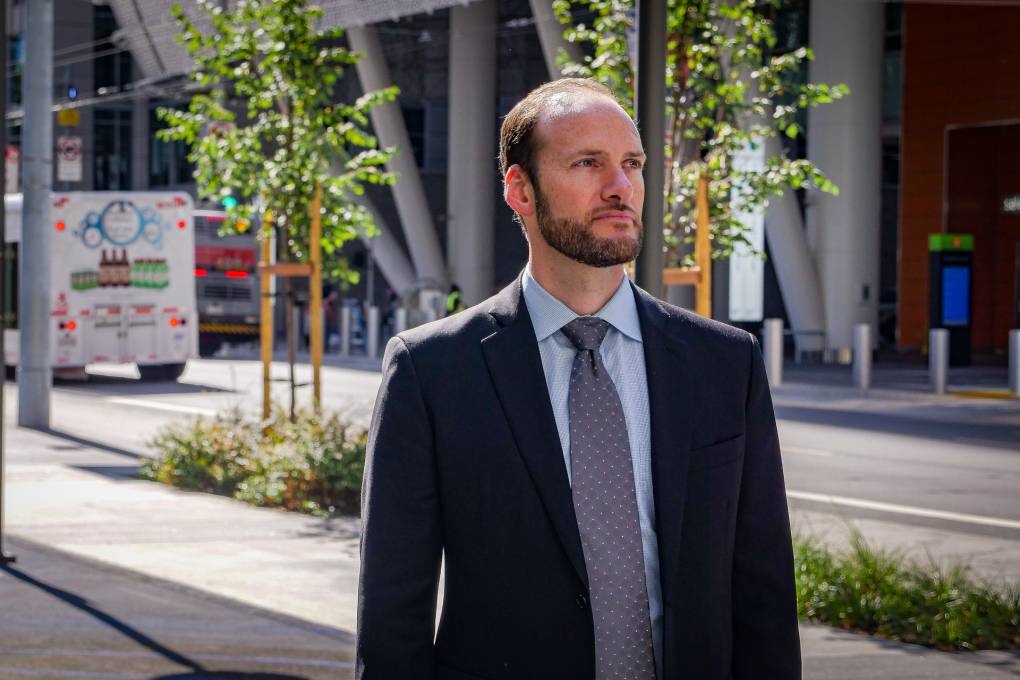
"caption": "San Francisco District Attorney-elect Chesa Boudin in downtown San Francisco.",
"description": null,
"title": "chesa-boudin",
"credit": "Sheraz Sadiq/KQED",
"status": "inherit",
"isLoading": false,
"fetchFailed": false
},
"news_11794333": {
"type": "attachments",
"id": "news_11794333",
"meta": {
"index": "attachments_1716263798",
"site": "news",
"id": "11794333",
"found": true
},
"parent": 11794216,
"imgSizes": {
"apple_news_ca_landscape_5_5": {
"file": "https://ww2.kqed.org/app/uploads/sites/10/2020/01/harrisonstreet-1044x783.jpg",
"width": 1044,
"mimeType": "image/jpeg",
"height": 783
},
"apple_news_ca_square_4_0": {
"file": "https://ww2.kqed.org/app/uploads/sites/10/2020/01/harrisonstreet-470x470.jpg",
"width": 470,
"mimeType": "image/jpeg",
"height": 470
},
"twentyfourteen-full-width": {
"file": "https://ww2.kqed.org/app/uploads/sites/10/2020/01/harrisonstreet-1038x576.jpg",
"width": 1038,
"mimeType": "image/jpeg",
"height": 576
},
"thumbnail": {
"file": "https://ww2.kqed.org/app/uploads/sites/10/2020/01/harrisonstreet-160x100.jpg",
"width": 160,
"mimeType": "image/jpeg",
"height": 100
},
"post-thumbnail": {
"file": "https://ww2.kqed.org/app/uploads/sites/10/2020/01/harrisonstreet-672x372.jpg",
"width": 672,
"mimeType": "image/jpeg",
"height": 372
},
"kqedFullSize": {
"file": "https://ww2.kqed.org/app/uploads/sites/10/2020/01/harrisonstreet.jpg",
"width": 1920,
"height": 1199
},
"apple_news_ca_landscape_4_7": {
"file": "https://ww2.kqed.org/app/uploads/sites/10/2020/01/harrisonstreet-632x474.jpg",
"width": 632,
"mimeType": "image/jpeg",
"height": 474
},
"large": {
"file": "https://ww2.kqed.org/app/uploads/sites/10/2020/01/harrisonstreet-1020x637.jpg",
"width": 1020,
"mimeType": "image/jpeg",
"height": 637
},
"complete_open_graph": {
"file": "https://ww2.kqed.org/app/uploads/sites/10/2020/01/harrisonstreet-1200x749.jpg",
"width": 1200,
"mimeType": "image/jpeg",
"height": 749
},
"apple_news_ca_landscape_4_0": {
"file": "https://ww2.kqed.org/app/uploads/sites/10/2020/01/harrisonstreet-536x402.jpg",
"width": 536,
"mimeType": "image/jpeg",
"height": 402
},
"apple_news_ca_portrait_12_9": {
"file": "https://ww2.kqed.org/app/uploads/sites/10/2020/01/harrisonstreet-1122x1199.jpg",
"width": 1122,
"mimeType": "image/jpeg",
"height": 1199
},
"medium": {
"file": "https://ww2.kqed.org/app/uploads/sites/10/2020/01/harrisonstreet-800x500.jpg",
"width": 800,
"mimeType": "image/jpeg",
"height": 500
},
"apple_news_ca_portrait_4_0": {
"file": "https://ww2.kqed.org/app/uploads/sites/10/2020/01/harrisonstreet-354x472.jpg",
"width": 354,
"mimeType": "image/jpeg",
"height": 472
},
"apple_news_ca_portrait_9_7": {
"file": "https://ww2.kqed.org/app/uploads/sites/10/2020/01/harrisonstreet-840x1120.jpg",
"width": 840,
"mimeType": "image/jpeg",
"height": 1120
},
"apple_news_ca_landscape_12_9": {
"file": "https://ww2.kqed.org/app/uploads/sites/10/2020/01/harrisonstreet-1832x1199.jpg",
"width": 1832,
"mimeType": "image/jpeg",
"height": 1199
},
"apple_news_ca_square_9_7": {
"file": "https://ww2.kqed.org/app/uploads/sites/10/2020/01/harrisonstreet-1104x1104.jpg",
"width": 1104,
"mimeType": "image/jpeg",
"height": 1104
},
"apple_news_ca_portrait_4_7": {
"file": "https://ww2.kqed.org/app/uploads/sites/10/2020/01/harrisonstreet-414x552.jpg",
"width": 414,
"mimeType": "image/jpeg",
"height": 552
},
"apple_news_ca_square_12_9": {
"file": "https://ww2.kqed.org/app/uploads/sites/10/2020/01/harrisonstreet-1472x1199.jpg",
"width": 1472,
"mimeType": "image/jpeg",
"height": 1199
},
"apple_news_ca_portrait_5_5": {
"file": "https://ww2.kqed.org/app/uploads/sites/10/2020/01/harrisonstreet-687x916.jpg",
"width": 687,
"mimeType": "image/jpeg",
"height": 916
},
"full-width": {
"file": "https://ww2.kqed.org/app/uploads/sites/10/2020/01/harrisonstreet-1920x1199.jpg",
"width": 1920,
"mimeType": "image/jpeg",
"height": 1199
},
"apple_news_ca_square_4_7": {
"file": "https://ww2.kqed.org/app/uploads/sites/10/2020/01/harrisonstreet-550x550.jpg",
"width": 550,
"mimeType": "image/jpeg",
"height": 550
},
"apple_news_ca_landscape_9_7": {
"file": "https://ww2.kqed.org/app/uploads/sites/10/2020/01/harrisonstreet-1376x1032.jpg",
"width": 1376,
"mimeType": "image/jpeg",
"height": 1032
},
"apple_news_ca_square_5_5": {
"file": "https://ww2.kqed.org/app/uploads/sites/10/2020/01/harrisonstreet-912x912.jpg",
"width": 912,
"mimeType": "image/jpeg",
"height": 912
}
},
"publishDate": 1578393630,
"modified": 1578394229,
"caption": "Residential development on San Francisco's Harrison Street, July 2015.",
"description": null,
"title": "San Francisco Development",
"credit": "Dan Brekke/KQED",
"status": "inherit",
"isLoading": false,
"fetchFailed": false
},
"news_11794027": {
"type": "attachments",
"id": "news_11794027",
"meta": {
"index": "attachments_1716263798",
"site": "news",
"id": "11794027",
"found": true
},
"parent": 11794018,
"imgSizes": {
"apple_news_ca_landscape_5_5": {
"file": "https://ww2.kqed.org/app/uploads/sites/10/2020/01/2395454616_32ea5d4be8_o-1-1-1044x783.jpg",
"width": 1044,
"mimeType": "image/jpeg",
"height": 783
},
"apple_news_ca_square_4_0": {
"file": "https://ww2.kqed.org/app/uploads/sites/10/2020/01/2395454616_32ea5d4be8_o-1-1-470x470.jpg",
"width": 470,
"mimeType": "image/jpeg",
"height": 470
},
"twentyfourteen-full-width": {
"file": "https://ww2.kqed.org/app/uploads/sites/10/2020/01/2395454616_32ea5d4be8_o-1-1-1038x576.jpg",
"width": 1038,
"mimeType": "image/jpeg",
"height": 576
},
"thumbnail": {
"file": "https://ww2.kqed.org/app/uploads/sites/10/2020/01/2395454616_32ea5d4be8_o-1-1-160x120.jpg",
"width": 160,
"mimeType": "image/jpeg",
"height": 120
},
"post-thumbnail": {
"file": "https://ww2.kqed.org/app/uploads/sites/10/2020/01/2395454616_32ea5d4be8_o-1-1-672x372.jpg",
"width": 672,
"mimeType": "image/jpeg",
"height": 372
},
"kqedFullSize": {
"file": "https://ww2.kqed.org/app/uploads/sites/10/2020/01/2395454616_32ea5d4be8_o-1-1.jpg",
"width": 1920,
"height": 1440
},
"apple_news_ca_landscape_4_7": {
"file": "https://ww2.kqed.org/app/uploads/sites/10/2020/01/2395454616_32ea5d4be8_o-1-1-632x474.jpg",
"width": 632,
"mimeType": "image/jpeg",
"height": 474
},
"large": {
"file": "https://ww2.kqed.org/app/uploads/sites/10/2020/01/2395454616_32ea5d4be8_o-1-1-1020x765.jpg",
"width": 1020,
"mimeType": "image/jpeg",
"height": 765
},
"complete_open_graph": {
"file": "https://ww2.kqed.org/app/uploads/sites/10/2020/01/2395454616_32ea5d4be8_o-1-1-1200x900.jpg",
"width": 1200,
"mimeType": "image/jpeg",
"height": 900
},
"apple_news_ca_landscape_4_0": {
"file": "https://ww2.kqed.org/app/uploads/sites/10/2020/01/2395454616_32ea5d4be8_o-1-1-536x402.jpg",
"width": 536,
"mimeType": "image/jpeg",
"height": 402
},
"apple_news_ca_portrait_12_9": {
"file": "https://ww2.kqed.org/app/uploads/sites/10/2020/01/2395454616_32ea5d4be8_o-1-1-1122x1440.jpg",
"width": 1122,
"mimeType": "image/jpeg",
"height": 1440
},
"medium": {
"file": "https://ww2.kqed.org/app/uploads/sites/10/2020/01/2395454616_32ea5d4be8_o-1-1-800x600.jpg",
"width": 800,
"mimeType": "image/jpeg",
"height": 600
},
"apple_news_ca_portrait_4_0": {
"file": "https://ww2.kqed.org/app/uploads/sites/10/2020/01/2395454616_32ea5d4be8_o-1-1-354x472.jpg",
"width": 354,
"mimeType": "image/jpeg",
"height": 472
},
"apple_news_ca_portrait_9_7": {
"file": "https://ww2.kqed.org/app/uploads/sites/10/2020/01/2395454616_32ea5d4be8_o-1-1-840x1120.jpg",
"width": 840,
"mimeType": "image/jpeg",
"height": 1120
},
"apple_news_ca_landscape_12_9": {
"file": "https://ww2.kqed.org/app/uploads/sites/10/2020/01/2395454616_32ea5d4be8_o-1-1-1832x1374.jpg",
"width": 1832,
"mimeType": "image/jpeg",
"height": 1374
},
"apple_news_ca_square_9_7": {
"file": "https://ww2.kqed.org/app/uploads/sites/10/2020/01/2395454616_32ea5d4be8_o-1-1-1104x1104.jpg",
"width": 1104,
"mimeType": "image/jpeg",
"height": 1104
},
"apple_news_ca_portrait_4_7": {
"file": "https://ww2.kqed.org/app/uploads/sites/10/2020/01/2395454616_32ea5d4be8_o-1-1-414x552.jpg",
"width": 414,
"mimeType": "image/jpeg",
"height": 552
},
"apple_news_ca_square_12_9": {
"file": "https://ww2.kqed.org/app/uploads/sites/10/2020/01/2395454616_32ea5d4be8_o-1-1-1472x1440.jpg",
"width": 1472,
"mimeType": "image/jpeg",
"height": 1440
},
"apple_news_ca_portrait_5_5": {
"file": "https://ww2.kqed.org/app/uploads/sites/10/2020/01/2395454616_32ea5d4be8_o-1-1-687x916.jpg",
"width": 687,
"mimeType": "image/jpeg",
"height": 916
},
"full-width": {
"file": "https://ww2.kqed.org/app/uploads/sites/10/2020/01/2395454616_32ea5d4be8_o-1-1-1920x1440.jpg",
"width": 1920,
"mimeType": "image/jpeg",
"height": 1440
},
"apple_news_ca_square_4_7": {
"file": "https://ww2.kqed.org/app/uploads/sites/10/2020/01/2395454616_32ea5d4be8_o-1-1-550x550.jpg",
"width": 550,
"mimeType": "image/jpeg",
"height": 550
},
"apple_news_ca_landscape_9_7": {
"file": "https://ww2.kqed.org/app/uploads/sites/10/2020/01/2395454616_32ea5d4be8_o-1-1-1376x1032.jpg",
"width": 1376,
"mimeType": "image/jpeg",
"height": 1032
},
"apple_news_ca_square_5_5": {
"file": "https://ww2.kqed.org/app/uploads/sites/10/2020/01/2395454616_32ea5d4be8_o-1-1-912x912.jpg",
"width": 912,
"mimeType": "image/jpeg",
"height": 912
}
},
"publishDate": 1578188939,
"modified": 1578260681,
"caption": "Rosa Parks Lane in San Francisco's Mission District. A report by the city's Department on the Status of Women found a large disparity in the number of public spaces named after women.",
"description": "Rosa Parks Lane in San Francisco's Mission District. A report by the city's Department on the Status of Women found a large disparity in the number of public spaces named after women.",
"title": "2395454616_32ea5d4be8_o (1) (1)",
"credit": "Eric Fischer/Flickr",
"status": "inherit",
"isLoading": false,
"fetchFailed": false
},
"news_11792627": {
"type": "attachments",
"id": "news_11792627",
"meta": {
"index": "attachments_1716263798",
"site": "news",
"id": "11792627",
"found": true
},
"parent": 11792625,
"imgSizes": {
"apple_news_ca_landscape_5_5": {
"file": "https://ww2.kqed.org/app/uploads/sites/10/2019/12/BBB_Gallery_Mary-Poppins-1044x783.jpg",
"width": 1044,
"mimeType": "image/jpeg",
"height": 783
},
"apple_news_ca_square_4_0": {
"file": "https://ww2.kqed.org/app/uploads/sites/10/2019/12/BBB_Gallery_Mary-Poppins-470x470.jpg",
"width": 470,
"mimeType": "image/jpeg",
"height": 470
},
"twentyfourteen-full-width": {
"file": "https://ww2.kqed.org/app/uploads/sites/10/2019/12/BBB_Gallery_Mary-Poppins-1038x576.jpg",
"width": 1038,
"mimeType": "image/jpeg",
"height": 576
},
"thumbnail": {
"file": "https://ww2.kqed.org/app/uploads/sites/10/2019/12/BBB_Gallery_Mary-Poppins-160x84.jpg",
"width": 160,
"mimeType": "image/jpeg",
"height": 84
},
"post-thumbnail": {
"file": "https://ww2.kqed.org/app/uploads/sites/10/2019/12/BBB_Gallery_Mary-Poppins-672x372.jpg",
"width": 672,
"mimeType": "image/jpeg",
"height": 372
},
"kqedFullSize": {
"file": "https://ww2.kqed.org/app/uploads/sites/10/2019/12/BBB_Gallery_Mary-Poppins.jpg",
"width": 1600,
"height": 840
},
"apple_news_ca_landscape_4_7": {
"file": "https://ww2.kqed.org/app/uploads/sites/10/2019/12/BBB_Gallery_Mary-Poppins-632x474.jpg",
"width": 632,
"mimeType": "image/jpeg",
"height": 474
},
"large": {
"file": "https://ww2.kqed.org/app/uploads/sites/10/2019/12/BBB_Gallery_Mary-Poppins-1020x536.jpg",
"width": 1020,
"mimeType": "image/jpeg",
"height": 536
},
"complete_open_graph": {
"file": "https://ww2.kqed.org/app/uploads/sites/10/2019/12/BBB_Gallery_Mary-Poppins-1200x630.jpg",
"width": 1200,
"mimeType": "image/jpeg",
"height": 630
},
"apple_news_ca_landscape_4_0": {
"file": "https://ww2.kqed.org/app/uploads/sites/10/2019/12/BBB_Gallery_Mary-Poppins-536x402.jpg",
"width": 536,
"mimeType": "image/jpeg",
"height": 402
},
"apple_news_ca_portrait_12_9": {
"file": "https://ww2.kqed.org/app/uploads/sites/10/2019/12/BBB_Gallery_Mary-Poppins-1122x840.jpg",
"width": 1122,
"mimeType": "image/jpeg",
"height": 840
},
"medium": {
"file": "https://ww2.kqed.org/app/uploads/sites/10/2019/12/BBB_Gallery_Mary-Poppins-800x420.jpg",
"width": 800,
"mimeType": "image/jpeg",
"height": 420
},
"apple_news_ca_portrait_4_0": {
"file": "https://ww2.kqed.org/app/uploads/sites/10/2019/12/BBB_Gallery_Mary-Poppins-354x472.jpg",
"width": 354,
"mimeType": "image/jpeg",
"height": 472
},
"apple_news_ca_portrait_9_7": {
"file": "https://ww2.kqed.org/app/uploads/sites/10/2019/12/BBB_Gallery_Mary-Poppins-840x840.jpg",
"width": 840,
"mimeType": "image/jpeg",
"height": 840
},
"apple_news_ca_square_9_7": {
"file": "https://ww2.kqed.org/app/uploads/sites/10/2019/12/BBB_Gallery_Mary-Poppins-1104x840.jpg",
"width": 1104,
"mimeType": "image/jpeg",
"height": 840
},
"apple_news_ca_portrait_4_7": {
"file": "https://ww2.kqed.org/app/uploads/sites/10/2019/12/BBB_Gallery_Mary-Poppins-414x552.jpg",
"width": 414,
"mimeType": "image/jpeg",
"height": 552
},
"apple_news_ca_square_12_9": {
"file": "https://ww2.kqed.org/app/uploads/sites/10/2019/12/BBB_Gallery_Mary-Poppins-1472x840.jpg",
"width": 1472,
"mimeType": "image/jpeg",
"height": 840
},
"apple_news_ca_portrait_5_5": {
"file": "https://ww2.kqed.org/app/uploads/sites/10/2019/12/BBB_Gallery_Mary-Poppins-687x840.jpg",
"width": 687,
"mimeType": "image/jpeg",
"height": 840
},
"apple_news_ca_square_4_7": {
"file": "https://ww2.kqed.org/app/uploads/sites/10/2019/12/BBB_Gallery_Mary-Poppins-550x550.jpg",
"width": 550,
"mimeType": "image/jpeg",
"height": 550
},
"apple_news_ca_landscape_9_7": {
"file": "https://ww2.kqed.org/app/uploads/sites/10/2019/12/BBB_Gallery_Mary-Poppins-1376x840.jpg",
"width": 1376,
"mimeType": "image/jpeg",
"height": 840
},
"apple_news_ca_square_5_5": {
"file": "https://ww2.kqed.org/app/uploads/sites/10/2019/12/BBB_Gallery_Mary-Poppins-912x840.jpg",
"width": 912,
"mimeType": "image/jpeg",
"height": 840
}
},
"publishDate": 1576955889,
"modified": 1576955930,
"caption": "The curtain is closing on America's longest continuously running musical, a San Francisco show that's been a must-see for tourists and locals for more than 45 years. ",
"description": "The curtain is closing on America's longest continuously running musical, a San Francisco show that's been a must-see for tourists and locals for more than 45 years. ",
"title": "BBB_Gallery_Mary-Poppins",
"credit": "Courtesy of Beach Blanket Babylon",
"status": "inherit",
"isLoading": false,
"fetchFailed": false
},
"news_123595": {
"type": "attachments",
"id": "news_123595",
"meta": {
"index": "attachments_1716263798",
"site": "news",
"id": "123595",
"found": true
},
"parent": 123584,
"imgSizes": {
"kqedFullSize": {
"file": "https://ww2.kqed.org/app/uploads/sites/10/2014/01/RS8142_006-hpf.jpg",
"width": 640,
"height": 427
}
},
"publishDate": 1389899305,
"modified": 1575335886,
"caption": "Demonstrators marched down Mission Street in January 2014 to protest a rise in evictions. ",
"description": "Demonstrators marched down Mission Street in January 2014 to protest a rise in evictions. ",
"title": "RS8142_006-hpf",
"credit": "(Deborah Svoboda/KQED)",
"status": "inherit",
"isLoading": false,
"fetchFailed": false
},
"news_11764382": {
"type": "attachments",
"id": "news_11764382",
"meta": {
"index": "attachments_1716263798",
"site": "news",
"id": "11764382",
"found": true
},
"parent": 11764275,
"imgSizes": {
"apple_news_ca_landscape_5_5": {
"file": "https://ww2.kqed.org/app/uploads/sites/10/2019/07/RS38251_FGF12332-qut-1044x783.jpg",
"width": 1044,
"mimeType": "image/jpeg",
"height": 783
},
"apple_news_ca_square_4_0": {
"file": "https://ww2.kqed.org/app/uploads/sites/10/2019/07/RS38251_FGF12332-qut-470x470.jpg",
"width": 470,
"mimeType": "image/jpeg",
"height": 470
},
"twentyfourteen-full-width": {
"file": "https://ww2.kqed.org/app/uploads/sites/10/2019/07/RS38251_FGF12332-qut-1038x576.jpg",
"width": 1038,
"mimeType": "image/jpeg",
"height": 576
},
"thumbnail": {
"file": "https://ww2.kqed.org/app/uploads/sites/10/2019/07/RS38251_FGF12332-qut-160x107.jpg",
"width": 160,
"mimeType": "image/jpeg",
"height": 107
},
"post-thumbnail": {
"file": "https://ww2.kqed.org/app/uploads/sites/10/2019/07/RS38251_FGF12332-qut-672x372.jpg",
"width": 672,
"mimeType": "image/jpeg",
"height": 372
},
"kqedFullSize": {
"file": "https://ww2.kqed.org/app/uploads/sites/10/2019/07/RS38251_FGF12332-qut.jpg",
"width": 1920,
"height": 1280
},
"apple_news_ca_landscape_4_7": {
"file": "https://ww2.kqed.org/app/uploads/sites/10/2019/07/RS38251_FGF12332-qut-632x474.jpg",
"width": 632,
"mimeType": "image/jpeg",
"height": 474
},
"large": {
"file": "https://ww2.kqed.org/app/uploads/sites/10/2019/07/RS38251_FGF12332-qut-1020x680.jpg",
"width": 1020,
"mimeType": "image/jpeg",
"height": 680
},
"complete_open_graph": {
"file": "https://ww2.kqed.org/app/uploads/sites/10/2019/07/RS38251_FGF12332-qut-1200x800.jpg",
"width": 1200,
"mimeType": "image/jpeg",
"height": 800
},
"apple_news_ca_landscape_4_0": {
"file": "https://ww2.kqed.org/app/uploads/sites/10/2019/07/RS38251_FGF12332-qut-536x402.jpg",
"width": 536,
"mimeType": "image/jpeg",
"height": 402
},
"apple_news_ca_portrait_12_9": {
"file": "https://ww2.kqed.org/app/uploads/sites/10/2019/07/RS38251_FGF12332-qut-1122x1280.jpg",
"width": 1122,
"mimeType": "image/jpeg",
"height": 1280
},
"medium": {
"file": "https://ww2.kqed.org/app/uploads/sites/10/2019/07/RS38251_FGF12332-qut-800x533.jpg",
"width": 800,
"mimeType": "image/jpeg",
"height": 533
},
"apple_news_ca_portrait_4_0": {
"file": "https://ww2.kqed.org/app/uploads/sites/10/2019/07/RS38251_FGF12332-qut-354x472.jpg",
"width": 354,
"mimeType": "image/jpeg",
"height": 472
},
"apple_news_ca_portrait_9_7": {
"file": "https://ww2.kqed.org/app/uploads/sites/10/2019/07/RS38251_FGF12332-qut-840x1120.jpg",
"width": 840,
"mimeType": "image/jpeg",
"height": 1120
},
"apple_news_ca_landscape_12_9": {
"file": "https://ww2.kqed.org/app/uploads/sites/10/2019/07/RS38251_FGF12332-qut-1832x1280.jpg",
"width": 1832,
"mimeType": "image/jpeg",
"height": 1280
},
"apple_news_ca_square_9_7": {
"file": "https://ww2.kqed.org/app/uploads/sites/10/2019/07/RS38251_FGF12332-qut-1104x1104.jpg",
"width": 1104,
"mimeType": "image/jpeg",
"height": 1104
},
"apple_news_ca_portrait_4_7": {
"file": "https://ww2.kqed.org/app/uploads/sites/10/2019/07/RS38251_FGF12332-qut-414x552.jpg",
"width": 414,
"mimeType": "image/jpeg",
"height": 552
},
"apple_news_ca_square_12_9": {
"file": "https://ww2.kqed.org/app/uploads/sites/10/2019/07/RS38251_FGF12332-qut-1472x1280.jpg",
"width": 1472,
"mimeType": "image/jpeg",
"height": 1280
},
"apple_news_ca_portrait_5_5": {
"file": "https://ww2.kqed.org/app/uploads/sites/10/2019/07/RS38251_FGF12332-qut-687x916.jpg",
"width": 687,
"mimeType": "image/jpeg",
"height": 916
},
"full-width": {
"file": "https://ww2.kqed.org/app/uploads/sites/10/2019/07/RS38251_FGF12332-qut-1920x1280.jpg",
"width": 1920,
"mimeType": "image/jpeg",
"height": 1280
},
"apple_news_ca_square_4_7": {
"file": "https://ww2.kqed.org/app/uploads/sites/10/2019/07/RS38251_FGF12332-qut-550x550.jpg",
"width": 550,
"mimeType": "image/jpeg",
"height": 550
},
"apple_news_ca_landscape_9_7": {
"file": "https://ww2.kqed.org/app/uploads/sites/10/2019/07/RS38251_FGF12332-qut-1376x1032.jpg",
"width": 1376,
"mimeType": "image/jpeg",
"height": 1032
},
"apple_news_ca_square_5_5": {
"file": "https://ww2.kqed.org/app/uploads/sites/10/2019/07/RS38251_FGF12332-qut-912x912.jpg",
"width": 912,
"mimeType": "image/jpeg",
"height": 912
}
},
"publishDate": 1564524934,
"modified": 1564534209,
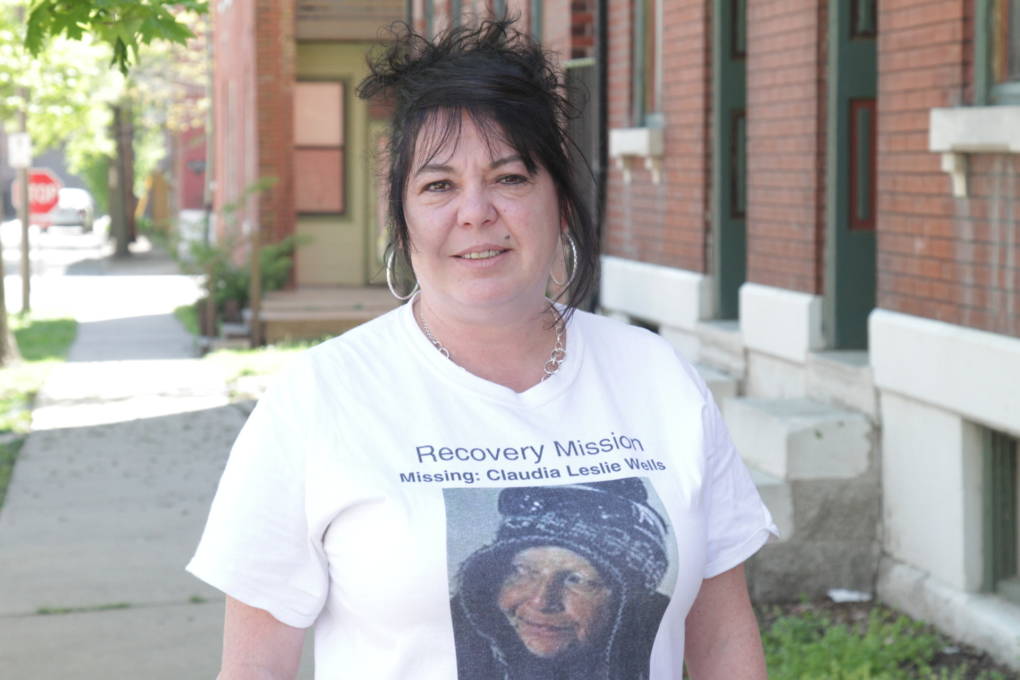
"caption": "Robin Burton's search for her mother, presumed homeless in California, has morphed into a mission to serve as a guide for other families looking for their loved ones. She started a Facebook group called Missing & Homeless, followed by more than 60,000 people.",
"description": "Robin Burton's search for her mother, presumed homeless in California, has morphed into a mission to serve as a guide for other families looking for their loved ones. She started a Facebook group called \"Missing & Homeless\" followed by more than 60,000 people.",
"title": "RS38251_FGF12332-qut",
"credit": "Courtesy of Fritz Faerber",
"status": "inherit",
"isLoading": false,
"fetchFailed": false
}
},
"audioPlayerReducer": {
"postId": "stream_live",
"isPaused": true,
"isPlaying": false,
"pfsActive": false,
"pledgeModalIsOpen": true,
"playerDrawerIsOpen": false,
"liveAudioPlayStartedAt": 0,
"liveAudioPlayContext": ""
},
"authorsReducer": {
"byline_arts_13873092": {
"type": "authors",
"id": "byline_arts_13873092",
"meta": {
"override": true
},
"slug": "byline_arts_13873092",
"name": "Janie Har, Associated Press",
"isLoading": false
},
"byline_news_11794018": {
"type": "authors",
"id": "byline_news_11794018",
"meta": {
"override": true
},
"slug": "byline_news_11794018",
"name": "Gabriel Greschler",
"isLoading": false
},
"byline_news_11792625": {
"type": "authors",
"id": "byline_news_11792625",
"meta": {
"override": true
},
"slug": "byline_news_11792625",
"name": "\u003cstrong>Haven Daley\u003cbr />Associated Press\u003c/strong>",
"isLoading": false
},
"byline_news_11789210": {
"type": "authors",
"id": "byline_news_11789210",
"meta": {
"override": true
},
"slug": "byline_news_11789210",
"name": "\u003cstrong>Holly McDede\u003c/strong>",
"isLoading": false
},
"ohubertallen": {
"type": "authors",
"id": "102",
"meta": {
"index": "authors_1716337520",
"id": "102",
"found": true
},
"name": "Olivia Allen-Price",
"firstName": "Olivia",
"lastName": "Allen-Price",
"slug": "ohubertallen",
"email": "oallenprice@kqed.org",
"display_author_email": false,
"staff_mastheads": [
"news"
],
"title": "Senior Editor",
"bio": "Olivia Allen-Price is senior editor and host of the award-winning Bay Curious podcast. Prior to joining KQED in 2013, Olivia worked at The Baltimore Sun and The Virginian-Pilot in Norfolk, Va. She holds degrees in journalism and political science from Elon University. Her work has earned awards from the Society of Professional Journalists, the Hearst Foundation and Hearken. She loves to talk about running and curly hair.\r\n\r\nFollow: \u003ca href=\"https://twitter.com/oallenprice\">@oallenprice\u003c/a>\r\nEmail: \u003ca href=\"mailto:oallenprice@kqed.org\">oallenprice@kqed.org\u003c/a>",
"avatar": "https://secure.gravatar.com/avatar/07f7803c1f6be56f3be58ef276dfa64dce898502e0554408ef4858451a8294f7?s=600&d=blank&r=g",
"twitter": "oallenprice",
"bluesky": null,
"facebook": null,
"instagram": null,
"linkedin": null,
"sites": [
{
"site": "",
"roles": [
"editor"
]
},
{
"site": "arts",
"roles": [
"subscriber"
]
},
{
"site": "news",
"roles": [
"administrator"
]
},
{
"site": "pop",
"roles": [
"administrator"
]
},
{
"site": "bayareabites",
"roles": [
"contributor"
]
},
{
"site": "stateofhealth",
"roles": [
"administrator"
]
},
{
"site": "science",
"roles": [
"editor"
]
}
],
"headData": {
"title": "Olivia Allen-Price | KQED",
"description": "Senior Editor",
"ogImgSrc": "https://secure.gravatar.com/avatar/07f7803c1f6be56f3be58ef276dfa64dce898502e0554408ef4858451a8294f7?s=600&d=blank&r=g",
"twImgSrc": "https://secure.gravatar.com/avatar/07f7803c1f6be56f3be58ef276dfa64dce898502e0554408ef4858451a8294f7?s=600&d=blank&r=g"
},
"isLoading": false,
"link": "/author/ohubertallen"
},
"danbrekke": {
"type": "authors",
"id": "222",
"meta": {
"index": "authors_1716337520",
"id": "222",
"found": true
},
"name": "Dan Brekke",
"firstName": "Dan",
"lastName": "Brekke",
"slug": "danbrekke",
"email": "dbrekke@kqed.org",
"display_author_email": true,
"staff_mastheads": [
"news",
"science"
],
"title": "KQED Editor and Reporter",
"bio": "Dan Brekke is a reporter and editor for KQED News, responsible for coverage of topics ranging from California water issues to the Bay Area's transportation challenges. In a newsroom career that began in Chicago in 1972, Dan has worked for \u003cem>The San Francisco Examiner,\u003c/em> Wired and TechTV and has been published in The New York Times, The New York Times Magazine, Business 2.0, Salon and elsewhere.\r\n\r\nSince joining KQED in 2007, Dan has reported, edited and produced both radio and online features and breaking news pieces. He has shared as both editor and reporter in four Society of Professional Journalists Norcal Excellence in Journalism awards and one Edward R. Murrow regional award. He was chosen for a spring 2017 residency at the Mesa Refuge to advance his research on California salmon.\r\n\r\nEmail Dan at: \u003ca href=\"mailto:dbrekke@kqed.org\">dbrekke@kqed.org\u003c/a>\r\n\r\n\u003cstrong>Twitter:\u003c/strong> \u003ca href=\"https://twitter.com/danbrekke\" rel=\"noopener noreferrer\">twitter.com/danbrekke\u003c/a>\r\n\u003cstrong>Facebook:\u003c/strong> \u003ca href=\"https://www.facebook.com/danbrekke\" rel=\"noopener noreferrer\">www.facebook.com/danbrekke\u003c/a>\r\n\u003cstrong>LinkedIn:\u003c/strong> \u003ca href=\"https://www.linkedin.com/in/danbrekke\" rel=\"noopener noreferrer\">www.linkedin.com/in/danbrekke\u003c/a>",
"avatar": "https://secure.gravatar.com/avatar/c8126230345efca3f7aa89b1a402be45?s=600&d=mm&r=g",
"twitter": "danbrekke",
"facebook": null,
"instagram": "https://www.instagram.com/dan.brekke/",
"linkedin": "https://www.linkedin.com/in/danbrekke/",
"sites": [
{
"site": "news",
"roles": [
"administrator",
"create_posts"
]
},
{
"site": "stateofhealth",
"roles": [
"editor"
]
},
{
"site": "science",
"roles": [
"editor"
]
},
{
"site": "quest",
"roles": [
"contributor"
]
},
{
"site": "food",
"roles": [
"contributor"
]
},
{
"site": "forum",
"roles": [
"contributor"
]
},
{
"site": "liveblog",
"roles": [
"editor"
]
}
],
"headData": {
"title": "Dan Brekke | KQED",
"description": "KQED Editor and Reporter",
"ogImgSrc": "https://secure.gravatar.com/avatar/c8126230345efca3f7aa89b1a402be45?s=600&d=mm&r=g",
"twImgSrc": "https://secure.gravatar.com/avatar/c8126230345efca3f7aa89b1a402be45?s=600&d=mm&r=g"
},
"isLoading": false,
"link": "/author/danbrekke"
},
"rachael-myrow": {
"type": "authors",
"id": "251",
"meta": {
"index": "authors_1716337520",
"id": "251",
"found": true
},
"name": "Rachael Myrow",
"firstName": "Rachael",
"lastName": "Myrow",
"slug": "rachael-myrow",
"email": "rmyrow@kqed.org",
"display_author_email": true,
"staff_mastheads": [
"news"
],
"title": "Senior Editor of KQED's Silicon Valley News Desk",
"bio": "• I write and edit stories about how Silicon Valley power and policies shape everyday life in California. I’m also passionate about making Bay Area history and culture more accessible to a broad public. • I’ve been a journalist for most of my life, starting in high school with The Franklin Press in Los Angeles, where I grew up. While earning my first degree in English at UC Berkeley, I got my start in public radio at KALX-FM. After completing a second degree in journalism at Cal, I landed my first professional job at Marketplace, then moved on to KPCC (now LAist), and then KQED, where I hosted The California Report for more than seven years. • My reporting has appeared on NPR, The World, WBUR’s \u003ci>Here & Now\u003c/i>, and the BBC. I also guest host for KQED’s \u003ci>Forum\u003c/i>, as well as the Commonwealth Club in San Francisco. • I speak periodically on media, democracy and technology issues, and do voiceover work for documentaries and educational video projects. • Outside of the studio, you'll find me hiking Bay Area trails and whipping up Insta-ready meals in my kitchen. • I do not accept gifts, money, or favors from anyone connected to my reporting, I don't pay people for information, and I do not support or donate to political causes. • I strive to treat the people I report on with fairness, honesty, and respect. I also recognize there are often multiple sides to a story and work to verify information through multiple sources and documentation. If I get something wrong, I correct it.",
"avatar": "https://secure.gravatar.com/avatar/3ed8a3c5f26025e4a805ba634cda8cd764906b97438a6d9ce216b044e340da4e?s=600&d=blank&r=g",
"twitter": "rachaelmyrow",
"bluesky": null,
"facebook": null,
"instagram": null,
"linkedin": "https://www.linkedin.com/in/rachaelmyrow/",
"sites": [
{
"site": "arts",
"roles": [
"administrator"
]
},
{
"site": "news",
"roles": [
"edit_others_posts",
"editor"
]
},
{
"site": "futureofyou",
"roles": [
"editor"
]
},
{
"site": "bayareabites",
"roles": [
"editor"
]
},
{
"site": "stateofhealth",
"roles": [
"editor"
]
},
{
"site": "science",
"roles": [
"editor"
]
},
{
"site": "food",
"roles": [
"editor"
]
},
{
"site": "forum",
"roles": [
"editor"
]
},
{
"site": "liveblog",
"roles": [
"author"
]
}
],
"headData": {
"title": "Rachael Myrow | KQED",
"description": "Senior Editor of KQED's Silicon Valley News Desk",
"ogImgSrc": "https://secure.gravatar.com/avatar/3ed8a3c5f26025e4a805ba634cda8cd764906b97438a6d9ce216b044e340da4e?s=600&d=blank&r=g",
"twImgSrc": "https://secure.gravatar.com/avatar/3ed8a3c5f26025e4a805ba634cda8cd764906b97438a6d9ce216b044e340da4e?s=600&d=blank&r=g"
},
"isLoading": false,
"link": "/author/rachael-myrow"
},
"matthewgreen": {
"type": "authors",
"id": "1263",
"meta": {
"index": "authors_1716337520",
"id": "1263",
"found": true
},
"name": "Matthew Green",
"firstName": "Matthew",
"lastName": "Green",
"slug": "matthewgreen",
"email": "mgreen@kqed.org",
"display_author_email": false,
"staff_mastheads": [],
"title": "KQED Editor/Reporter",
"bio": "Matthew Green is a digital media producer for KQED News. He previously produced \u003ca href=\"http://www.kqed.org/lowdown\">The Lowdown\u003c/a>, KQED’s multimedia news education blog. Matthew's written for numerous Bay Area publications, including the Oakland Tribune and San Francisco Chronicle. He also taught journalism classes at Fremont High School in East Oakland.\r\n\r\nEmail: mgreen@kqed.org; Twitter: @MGreenKQED",
"avatar": "https://secure.gravatar.com/avatar/3bf498d1267ca02c8494f33d8cfc575e?s=600&d=blank&r=g",
"twitter": "MGreenKQED",
"facebook": null,
"instagram": null,
"linkedin": null,
"sites": [
{
"site": "news",
"roles": []
},
{
"site": "lowdown",
"roles": []
},
{
"site": "science",
"roles": []
},
{
"site": "education",
"roles": []
},
{
"site": "quest",
"roles": []
},
{
"site": "liveblog",
"roles": []
}
],
"headData": {
"title": "Matthew Green | KQED",
"description": "KQED Editor/Reporter",
"ogImgSrc": "https://secure.gravatar.com/avatar/3bf498d1267ca02c8494f33d8cfc575e?s=600&d=blank&r=g",
"twImgSrc": "https://secure.gravatar.com/avatar/3bf498d1267ca02c8494f33d8cfc575e?s=600&d=blank&r=g"
},
"isLoading": false,
"link": "/author/matthewgreen"
},
"cveltman": {
"type": "authors",
"id": "8608",
"meta": {
"index": "authors_1716337520",
"id": "8608",
"found": true
},
"name": "Chloe Veltman",
"firstName": "Chloe",
"lastName": "Veltman",
"slug": "cveltman",
"email": "cveltman@kqed.org",
"display_author_email": true,
"staff_mastheads": [],
"title": "Arts and Culture Reporter",
"bio": "Chloe Veltman is a former arts and culture reporter for KQED. Prior to joining the organization, she launched and led the arts bureau at Colorado Public Radio, served as the Bay Area's culture columnist for the New York Times, and was the founder, host and executive producer of VoiceBox, a national award-winning weekly podcast/radio show and live events series all about the human voice. Chloe is the recipient of numerous prizes, grants and fellowships including a Webby Award for her work on interactive storytelling, both the John S Knight Journalism Fellowship and Humanities Center Fellowship at Stanford University, the Sundance Arts Writing Fellowship and a Library of Congress Research Fellowship. She is the author of the book \"On Acting\" and has appeared as a guest lecturer at Yale University and the San Francisco Conservatory of Music among other institutions. She holds a BA in english literature from King's College, Cambridge, and a Masters in Dramaturgy from the Central School of Speech and Drama/Harvard Institute for Advanced Theater Training.\r\n\u003ca href=\"https://www.chloeveltman.com\">www.chloeveltman.com\u003c/a>",
"avatar": "https://secure.gravatar.com/avatar/55403394b00a1ddab683952c2eb2cf85?s=600&d=blank&r=g",
"twitter": "chloeveltman",
"facebook": null,
"instagram": null,
"linkedin": null,
"sites": [
{
"site": "arts",
"roles": []
},
{
"site": "news",
"roles": [
"author"
]
},
{
"site": "pop",
"roles": [
"editor"
]
},
{
"site": "science",
"roles": []
}
],
"headData": {
"title": "Chloe Veltman | KQED",
"description": "Arts and Culture Reporter",
"ogImgSrc": "https://secure.gravatar.com/avatar/55403394b00a1ddab683952c2eb2cf85?s=600&d=blank&r=g",
"twImgSrc": "https://secure.gravatar.com/avatar/55403394b00a1ddab683952c2eb2cf85?s=600&d=blank&r=g"
},
"isLoading": false,
"link": "/author/cveltman"
},
"parcuni": {
"type": "authors",
"id": "11368",
"meta": {
"index": "authors_1716337520",
"id": "11368",
"found": true
},
"name": "Peter Arcuni",
"firstName": "Peter",
"lastName": "Arcuni",
"slug": "parcuni",
"email": "parcuni@KQED.org",
"display_author_email": false,
"staff_mastheads": [
"science"
],
"title": "Reporter",
"bio": "Peter reports radio and online stories for \u003cem>KQED Science\u003c/em>. His work has also appeared on the \u003cem>The California Report\u003c/em> morning show and \u003cem>KQED News\u003c/em>. His production credits include \u003cem>The California Report, The California Report Magazine\u003c/em> and KQED's local news podcast \u003cem>The Bay\u003c/em>. Other credits include NPR's \u003cem>All Things Considered\u003c/em>, WNYC's \u003cem>Science Friday\u003c/em>, WBUR's \u003cem>Here & Now\u003c/em>, WIRED and SFGate. Peter graduated from Brown University and earned a master's degree in journalism from Stanford. He's covered everything from homelessness to wildfires, health, the environment, arts and Thanksgiving in San Quentin prison. In other lives, he played rock n roll music and studied neuroscience. You can email him at: parcuni@kqed.org",
"avatar": "https://secure.gravatar.com/avatar/d5032f6f27199d478af34ad2e1d98732?s=600&d=blank&r=g",
"twitter": "peterarcuni",
"facebook": null,
"instagram": null,
"linkedin": null,
"sites": [
{
"site": "news",
"roles": [
"editor"
]
},
{
"site": "science",
"roles": [
"editor"
]
}
],
"headData": {
"title": "Peter Arcuni | KQED",
"description": "Reporter",
"ogImgSrc": "https://secure.gravatar.com/avatar/d5032f6f27199d478af34ad2e1d98732?s=600&d=blank&r=g",
"twImgSrc": "https://secure.gravatar.com/avatar/d5032f6f27199d478af34ad2e1d98732?s=600&d=blank&r=g"
},
"isLoading": false,
"link": "/author/parcuni"
},
"mfharvin": {
"type": "authors",
"id": "11583",
"meta": {
"index": "authors_1716337520",
"id": "11583",
"found": true
},
"name": "Mary Franklin Harvin",
"firstName": "Mary Franklin",
"lastName": "Harvin",
"slug": "mfharvin",
"email": "mfharvin@KQED.org",
"display_author_email": false,
"staff_mastheads": [
"news"
],
"title": "KQED Contributor",
"bio": null,
"avatar": "https://secure.gravatar.com/avatar/0e53510a7d48cfbdebfc9b11357d845f?s=600&d=blank&r=g",
"twitter": "EmEffHarvin",
"facebook": null,
"instagram": null,
"linkedin": null,
"sites": [
{
"site": "news",
"roles": [
"author",
"edit_others_posts"
]
},
{
"site": "science",
"roles": [
"editor"
]
}
],
"headData": {
"title": "Mary Franklin Harvin | KQED",
"description": "KQED Contributor",
"ogImgSrc": "https://secure.gravatar.com/avatar/0e53510a7d48cfbdebfc9b11357d845f?s=600&d=blank&r=g",
"twImgSrc": "https://secure.gravatar.com/avatar/0e53510a7d48cfbdebfc9b11357d845f?s=600&d=blank&r=g"
},
"isLoading": false,
"link": "/author/mfharvin"
},
"ggreschler": {
"type": "authors",
"id": "11647",
"meta": {
"index": "authors_1716337520",
"id": "11647",
"found": true
},
"name": "Gabe Greschler",
"firstName": "Gabe",
"lastName": "Greschler",
"slug": "ggreschler",
"email": "ggreschler@KQED.org",
"display_author_email": false,
"staff_mastheads": [],
"title": "KQED Contributor",
"bio": null,
"avatar": "https://secure.gravatar.com/avatar/8bd5de335b7e37aabeaf326c05538f44?s=600&d=blank&r=g",
"twitter": null,
"facebook": null,
"instagram": null,
"linkedin": null,
"sites": [
{
"site": "news",
"roles": [
"author"
]
},
{
"site": "science",
"roles": [
"editor"
]
}
],
"headData": {
"title": "Gabe Greschler | KQED",
"description": "KQED Contributor",
"ogImgSrc": "https://secure.gravatar.com/avatar/8bd5de335b7e37aabeaf326c05538f44?s=600&d=blank&r=g",
"twImgSrc": "https://secure.gravatar.com/avatar/8bd5de335b7e37aabeaf326c05538f44?s=600&d=blank&r=g"
},
"isLoading": false,
"link": "/author/ggreschler"
}
},
"pagesReducer": {
"news_tag_san-francisco": {
"type": "terms",
"id": "news_38",
"meta": {
"index": "terms_1716263798",
"site": "news",
"id": "38",
"score": 6.723227
},
"featImg": null,
"name": "San Francisco",
"description": null,
"taxonomy": "tag",
"headData": {
"twImgId": null,
"twTitle": null,
"ogTitle": null,
"ogImgId": null,
"twDescription": null,
"description": null,
"title": "San Francisco Archives | KQED News",
"ogDescription": null
},
"ttid": 58,
"slug": "san-francisco",
"isLoading": false,
"title": "San Francisco",
"pageMeta": {
"site": "news",
"WpPageTemplate": "page-topic-editorial",
"currentPage": 143
},
"blocks": [
{
"blockName": "kqed/post-list",
"attrs": {
"layout": "cardArticle2",
"query": "posts/news?tag=san-francisco",
"seeMore": false,
"paginated": true,
"page": 143
}
},
{
"blockName": "kqed/ad"
}
]
}
},
"pfsSessionReducer": {},
"postsReducer": {
"stream_live": {
"type": "live",
"id": "stream_live",
"audioUrl": "https://streams.kqed.org/kqedradio",
"title": "Live Stream",
"excerpt": "Live Stream information currently unavailable.",
"link": "/radio",
"featImg": "",
"label": {
"name": "KQED Live",
"link": "/"
}
},
"stream_kqedNewscast": {
"type": "posts",
"id": "stream_kqedNewscast",
"audioUrl": "https://www.kqed.org/.stream/anon/radio/RDnews/newscast.mp3?_=1",
"title": "KQED Newscast",
"featImg": "",
"label": {
"name": "88.5 FM",
"link": "/"
}
},
"news_11795676": {
"type": "posts",
"id": "news_11795676",
"meta": {
"index": "posts_1716263798",
"site": "news",
"id": "11795676",
"score": null,
"sort": [
1578860190000
]
},
"parent": 0,
"labelTerm": {
"site": "news"
},
"blocks": [],
"publishDate": 1578860190,
"format": "standard",
"disqusTitle": "Why Did San Francisco's New District Attorney Fire Seven Prosecutors?",
"title": "Why Did San Francisco's New District Attorney Fire Seven Prosecutors?",
"headTitle": "KQED News",
"content": "\u003cp>Just two days into his tenure as San Francisco's District Attorney, Chesa Boudin fired at least seven prosecuting attorneys. Boudin said the actions were necessary to carry out the progressive policies he campaigned on.\u003c/p>\n\u003cp>“I had to make difficult staffing decisions [Friday] in order to put in place a management team that will help me accomplish the work I committed to do for San Francisco,\" Boudin said in a statement.\u003c/p>\n\u003cp>It’s not unusual for a newly elected district attorney to restructure the management team, said Lara Bazelon, a law professor at the University of San Francisco. The attorneys are at-will employees, which means they can be fired without reason.\u003c/p>\n\u003cp>Bazelon was a member of Boudin’s policy team during his campaign.\u003c/p>\n\u003cp>\"It's common to fire people who are in management at the top level who are not going to be enthusiastic about the new agenda,\" Bazelon explained.\u003c/p>\n\u003cp>Bazelon gave the example of Philadelphia District Attorney Larry Krasner, another progressive prosecutor who campaigned on criminal justice reform.\u003ca href=\"https://www.inquirer.com/philly/news/crime/larry-krasner-philly-da-firing-prosecutors-20180105.html-2\" target=\"_blank\" rel=\"noopener noreferrer\"> Krasner fired 31 members of his staff\u003c/a> in 2018, three days after he was sworn in.\u003c/p>\n\u003cp>[aside tag='chesa-boudin' label='More Coverage']The attorneys, who were given the news at one-on-one meetings or over the phone with Boudin on Friday, are Kara Lacy, a felony trial lawyer, Ana Gonzalez, managing attorney in the office’s Gang Unit, Linda Allen and Todd Barrett, managing attorneys in the General Felonies Unit, Michael Swart, managing attorney of the office’s Homicide Unit and Tom Ostly, a trial attorney in the Crime Strategies Unit, \u003ca href=\"https://www.sfchronicle.com/bayarea/article/New-SF-District-Attorney-fires-multiple-14966620.php\" target=\"_blank\" rel=\"noopener noreferrer\">according to the San Francisco Chronicle\u003c/a>.\u003c/p>\n\u003cp>KQED has learned a seventh attorney — Craig Menchin in the Writs and Appeals Unit — was also fired, according to a person directly familiar with the matter. The district attorney's office employs over 200 staff members, according to the department's \u003ca href=\"https://sfdistrictattorney.org/departments\" target=\"_blank\" rel=\"noopener noreferrer\">website\u003c/a>.\u003c/p>\n\u003cp>\"To be fired in this way was devastating for me,\" said one of the attorneys who was let go. The attorney spoke on the condition of anonymity out of fear of retaliation from the Boudin administration, and that it could impact future job opportunities.\u003c/p>\n\u003cp>\"It's hard to guess Mr. Boudin's reasoning,\" the attorney said. \"I think the impact on morale is going to be devastating.\"\u003c/p>\n\u003cp>[ad fullwidth]\u003c/p>\n\u003cp>Boudin \u003ca href=\"https://www.kqed.org/news/11793457/can-s-f-s-chesa-boudin-flip-the-script-for-progressive-das-across-the-country\" target=\"_blank\" rel=\"noopener noreferrer\">ran on an anti-incarceration platform\u003c/a> — including the creation of a \u003ca href=\"https://www.chesaboudin.com/wrongful_convictions\" target=\"_blank\" rel=\"noopener noreferrer\">Wrongful Conviction Unit\u003c/a> and an Innocence Commission — a vision that may have conflicted with the priorities of the fired attorneys.\u003c/p>\n\u003cp>But the attorney who was fired said they were “absolutely willing” to follow Boudin's new policy directives.\u003c/p>\n\u003cp>\"For someone who ran on a platform of second chances, I know I never got a first,\" the attorney said.\u003c/p>\n\u003cp>Bazelon believes some of the attorneys who were fired had \"problematic\" histories.\u003c/p>\n\u003cp>She mentioned the example of attorney Linda Allen, who convicted Jamal Truelove for a 2007 murder only to see the case overturned. In 2014, the California Court of Appeals \u003ca href=\"https://www.sfgate.com/crime/article/Ex-reality-TV-show-contestant-acquitted-of-murder-6128811.php\" target=\"_blank\" rel=\"noopener noreferrer\">reversed Trulove's conviction\u003c/a> after finding fault with Allen's assertions in the case.\u003c/p>\n\u003cp>Last year, San Francisco paid $13.1 million to Trulove after an Oakland jury \u003ca href=\"https://www.kqed.org/news/11734209/san-francisco-to-pay-13-1-million-to-man-framed-by-police-for-murder\" target=\"_blank\" rel=\"noopener noreferrer\">found that two police officers on the case fabricated evidence\u003c/a> and failed to disclose exculpatory material.\u003c/p>\n\u003cp>\"I think [Allen] should have been let go years ago,\" Bazelon said.\u003c/p>\n\u003cp>The Municipal Attorneys Association, the bargaining group that represents the seven fired attorneys, said in a statement that Boudin’s actions should be reversed. \u003c/p>\n\u003cp>“Rash decision-making such as this will not help build trust in an office that is already suffering from years of recruitment and retention problems,\" the statement said. \u003c/p>\n\u003cp>According to the Chronicle, at least some of the fired attorneys plan on pursuing legal action. The attorney who spoke on the condition of anonymity declined to comment on whether they would do so.\u003c/p>\n\u003cp>\u003cem>This story has been updated.\u003c/em>\u003c/p>\n\u003cp>\u003c/p>\n",
"disqusIdentifier": "11795676 https://ww2.kqed.org/news/?p=11795676",
"disqusUrl": "https://ww2.kqed.org/news/2020/01/12/why-did-san-franciscos-new-district-attorney-fire-seven-prosecutors/",
"stats": {
"hasVideo": false,
"hasChartOrMap": false,
"hasAudio": false,
"hasPolis": false,
"wordCount": 652,
"hasGoogleForm": false,
"hasGallery": false,
"hasHearkenModule": false,
"iframeSrcs": [],
"paragraphCount": 23
},
"modified": 1579988716,
"excerpt": "A lawyer fired by the new district attorney said they were shocked by his management decision. But USF Law Professor Lara Bazelon says that Boudin's actions are not out of the ordinary.",
"headData": {
"twImgId": "",
"twTitle": "",
"ogTitle": "",
"ogImgId": "",
"twDescription": "",
"description": "A lawyer fired by the new district attorney said they were shocked by his management decision. But USF Law Professor Lara Bazelon says that Boudin's actions are not out of the ordinary.",
"title": "Why Did San Francisco's New District Attorney Fire Seven Prosecutors? | KQED",
"ogDescription": "",
"schema": {
"@context": "https://schema.org",
"@type": "NewsArticle",
"headline": "Why Did San Francisco's New District Attorney Fire Seven Prosecutors?",
"datePublished": "2020-01-12T12:16:30-08:00",
"dateModified": "2020-01-25T13:45:16-08:00",
"image": "https://cdn.kqed.org/wp-content/uploads/2020/02/KQED-OG-Image@1x.png",
"isAccessibleForFree": "True",
"publisher": {
"@type": "NewsMediaOrganization",
"@id": "https://www.kqed.org/#organization",
"name": "KQED",
"logo": "https://cdn.kqed.org/wp-content/uploads/2020/02/KQED-OG-Image@1x.png",
"url": "https://www.kqed.org",
"sameAs": [
"https://www.facebook.com/KQED",
"https://twitter.com/KQED",
"https://www.instagram.com/kqed/",
"https://www.tiktok.com/@kqedofficial",
"https://www.linkedin.com/company/kqed",
"https://www.youtube.com/channel/UCeC0IOo7i1P_61zVUWbJ4nw"
]
}
}
},
"guestAuthors": [],
"slug": "why-did-san-franciscos-new-district-attorney-fire-seven-prosecutors",
"status": "publish",
"path": "/news/11795676/why-did-san-franciscos-new-district-attorney-fire-seven-prosecutors",
"audioTrackLength": null,
"parsedContent": [
{
"type": "contentString",
"content": "\u003cdiv class=\"post-body\">\u003cp>\u003cp>Just two days into his tenure as San Francisco's District Attorney, Chesa Boudin fired at least seven prosecuting attorneys. Boudin said the actions were necessary to carry out the progressive policies he campaigned on.\u003c/p>\n\u003cp>“I had to make difficult staffing decisions [Friday] in order to put in place a management team that will help me accomplish the work I committed to do for San Francisco,\" Boudin said in a statement.\u003c/p>\n\u003cp>It’s not unusual for a newly elected district attorney to restructure the management team, said Lara Bazelon, a law professor at the University of San Francisco. The attorneys are at-will employees, which means they can be fired without reason.\u003c/p>\n\u003cp>Bazelon was a member of Boudin’s policy team during his campaign.\u003c/p>\n\u003cp>\"It's common to fire people who are in management at the top level who are not going to be enthusiastic about the new agenda,\" Bazelon explained.\u003c/p>\n\u003cp>Bazelon gave the example of Philadelphia District Attorney Larry Krasner, another progressive prosecutor who campaigned on criminal justice reform.\u003ca href=\"https://www.inquirer.com/philly/news/crime/larry-krasner-philly-da-firing-prosecutors-20180105.html-2\" target=\"_blank\" rel=\"noopener noreferrer\"> Krasner fired 31 members of his staff\u003c/a> in 2018, three days after he was sworn in.\u003c/p>\n\u003cp>\u003c/p>\u003c/div>",
"attributes": {
"named": {},
"numeric": []
}
},
{
"type": "component",
"content": "",
"name": "aside",
"attributes": {
"named": {
"tag": "chesa-boudin",
"label": "More Coverage "
},
"numeric": []
}
},
{
"type": "contentString",
"content": "\u003cdiv class=\"post-body\">\u003cp>The attorneys, who were given the news at one-on-one meetings or over the phone with Boudin on Friday, are Kara Lacy, a felony trial lawyer, Ana Gonzalez, managing attorney in the office’s Gang Unit, Linda Allen and Todd Barrett, managing attorneys in the General Felonies Unit, Michael Swart, managing attorney of the office’s Homicide Unit and Tom Ostly, a trial attorney in the Crime Strategies Unit, \u003ca href=\"https://www.sfchronicle.com/bayarea/article/New-SF-District-Attorney-fires-multiple-14966620.php\" target=\"_blank\" rel=\"noopener noreferrer\">according to the San Francisco Chronicle\u003c/a>.\u003c/p>\n\u003cp>KQED has learned a seventh attorney — Craig Menchin in the Writs and Appeals Unit — was also fired, according to a person directly familiar with the matter. The district attorney's office employs over 200 staff members, according to the department's \u003ca href=\"https://sfdistrictattorney.org/departments\" target=\"_blank\" rel=\"noopener noreferrer\">website\u003c/a>.\u003c/p>\n\u003cp>\"To be fired in this way was devastating for me,\" said one of the attorneys who was let go. The attorney spoke on the condition of anonymity out of fear of retaliation from the Boudin administration, and that it could impact future job opportunities.\u003c/p>\n\u003cp>\"It's hard to guess Mr. Boudin's reasoning,\" the attorney said. \"I think the impact on morale is going to be devastating.\"\u003c/p>\n\u003cp>\u003c/p>\u003c/div>",
"attributes": {
"named": {},
"numeric": []
}
},
{
"type": "component",
"content": "",
"name": "ad",
"attributes": {
"named": {
"label": "fullwidth"
},
"numeric": [
"fullwidth"
]
}
},
{
"type": "contentString",
"content": "\u003cdiv class=\"post-body\">\u003cp>\u003c/p>\n\u003cp>Boudin \u003ca href=\"https://www.kqed.org/news/11793457/can-s-f-s-chesa-boudin-flip-the-script-for-progressive-das-across-the-country\" target=\"_blank\" rel=\"noopener noreferrer\">ran on an anti-incarceration platform\u003c/a> — including the creation of a \u003ca href=\"https://www.chesaboudin.com/wrongful_convictions\" target=\"_blank\" rel=\"noopener noreferrer\">Wrongful Conviction Unit\u003c/a> and an Innocence Commission — a vision that may have conflicted with the priorities of the fired attorneys.\u003c/p>\n\u003cp>But the attorney who was fired said they were “absolutely willing” to follow Boudin's new policy directives.\u003c/p>\n\u003cp>\"For someone who ran on a platform of second chances, I know I never got a first,\" the attorney said.\u003c/p>\n\u003cp>Bazelon believes some of the attorneys who were fired had \"problematic\" histories.\u003c/p>\n\u003cp>She mentioned the example of attorney Linda Allen, who convicted Jamal Truelove for a 2007 murder only to see the case overturned. In 2014, the California Court of Appeals \u003ca href=\"https://www.sfgate.com/crime/article/Ex-reality-TV-show-contestant-acquitted-of-murder-6128811.php\" target=\"_blank\" rel=\"noopener noreferrer\">reversed Trulove's conviction\u003c/a> after finding fault with Allen's assertions in the case.\u003c/p>\n\u003cp>Last year, San Francisco paid $13.1 million to Trulove after an Oakland jury \u003ca href=\"https://www.kqed.org/news/11734209/san-francisco-to-pay-13-1-million-to-man-framed-by-police-for-murder\" target=\"_blank\" rel=\"noopener noreferrer\">found that two police officers on the case fabricated evidence\u003c/a> and failed to disclose exculpatory material.\u003c/p>\n\u003cp>\"I think [Allen] should have been let go years ago,\" Bazelon said.\u003c/p>\n\u003cp>The Municipal Attorneys Association, the bargaining group that represents the seven fired attorneys, said in a statement that Boudin’s actions should be reversed. \u003c/p>\n\u003cp>“Rash decision-making such as this will not help build trust in an office that is already suffering from years of recruitment and retention problems,\" the statement said. \u003c/p>\n\u003cp>According to the Chronicle, at least some of the fired attorneys plan on pursuing legal action. The attorney who spoke on the condition of anonymity declined to comment on whether they would do so.\u003c/p>\n\u003cp>\u003cem>This story has been updated.\u003c/em>\u003c/p>\n\u003cp>\u003c/p>\n\u003c/div>\u003c/p>",
"attributes": {
"named": {},
"numeric": []
}
}
],
"link": "/news/11795676/why-did-san-franciscos-new-district-attorney-fire-seven-prosecutors",
"authors": [
"11647"
],
"categories": [
"news_6188",
"news_8",
"news_13"
],
"tags": [
"news_24162",
"news_21479",
"news_19542",
"news_2842",
"news_38"
],
"featImg": "news_11785197",
"label": "news"
},
"arts_13873092": {
"type": "posts",
"id": "arts_13873092",
"meta": {
"index": "posts_1716263798",
"site": "arts",
"id": "13873092",
"score": null,
"sort": [
1578685218000
]
},
"guestAuthors": [],
"slug": "san-franciscos-beloved-beefeater-doorman-to-retire-after-43-years",
"title": "San Francisco’s Beloved Beefeater Doorman to Retire After 43 Years",
"publishDate": 1578685218,
"format": "standard",
"headTitle": "San Francisco’s Beloved Beefeater Doorman to Retire After 43 Years | KQED",
"labelTerm": {
"site": "arts"
},
"content": "\u003cp>Another bit of old, quirky San Francisco will be no more when Tom Sweeney finally hangs up his white pressed collar and signature Beefeater jacket this weekend after more than four decades of opening doors at the Sir Francis Drake Hotel downtown.\u003c/p>\n\u003cp>Sweeney has taken the luggage of movie stars and shaken hands with every U.S. president from Gerald Ford to Barack Obama. Visitors from around the world have had their photos taken with him, often after he’s told them where to catch the cable car and how to get to Fisherman’s Wharf.\u003c/p>\n\u003cp>“It’s one of the best jobs in San Francisco,” says Sweeney, 62, as a cable car clanks by. “Working outside a landmark hotel, cable cars come by every nine minutes, it doesn’t get much better than that.”\u003c/p>\n\u003cp>The man known as a “San Francisco original” and “living landmark” retires Sunday after 43 years in a changed city. San Francisco continues to grapple with homelessness, aggressive panhandling and vehicle break-ins even as some residents have become wealthier amid a tech boom. The hospitality industry has also changed dramatically, making Sweeney a throwback to an era when doormen hailed cabs and wrangled wheel-less suitcases.\u003c/p>\n\u003cp>Today, most people hail rides via smartphone, and hardly anyone carries cash for tips.\u003c/p>\n\u003cp>[ad fullwidth]\u003c/p>\n\u003cp>Joe D’Alessandro, president and CEO of the San Francisco Travel Association, said Sweeney “has been not just an ambassador but the embodiment of San Francisco’s spirit — cheerful, helpful, upbeat, welcoming. He made visitors from around the world feel like instant friends.”\u003c/p>\n\u003cp>This week, Sweeney stood guard outside the Sir Francis Drake, near Union Square, in his elaborate British-style Beefeater jacket and knickers, red socks pulled to the knees and black hat decorated with red and white flowers.\u003c/p>\n\u003cfigure id=\"attachment_13873096\" class=\"wp-caption aligncenter\" style=\"max-width: 800px\">\u003cimg loading=\"lazy\" decoding=\"async\" src=\"https://ww2.kqed.org/app/uploads/sites/2/2020/01/1000-800x533.jpeg\" alt=\"Sweeney greets a group of girls riding a cable car outside the Sir Francis Drake Hotel. \" width=\"800\" height=\"533\" class=\"size-medium wp-image-13873096\" srcset=\"https://cdn.kqed.org/wp-content/uploads/sites/2/2020/01/1000-800x533.jpeg 800w, https://cdn.kqed.org/wp-content/uploads/sites/2/2020/01/1000-160x107.jpeg 160w, https://cdn.kqed.org/wp-content/uploads/sites/2/2020/01/1000-768x511.jpeg 768w, https://cdn.kqed.org/wp-content/uploads/sites/2/2020/01/1000.jpeg 1000w\" sizes=\"(max-width: 800px) 100vw, 800px\">\u003cfigcaption class=\"wp-caption-text\">Sweeney greets a group of girls riding a cable car outside the Sir Francis Drake Hotel. \u003ccite>(AP Photo/Eric Risberg)\u003c/cite>\u003c/figcaption>\u003c/figure>\n\u003cp>The 1928 hotel, named for the Elizabethan-era English explorer, has the costumes for its doormen custom-made. Sweeney’s latest gold- and black-trimmed suit cost $3,000 and weighs about 40 pounds.\u003c/p>\n\u003cp>He tags luggage, waves to cable car passengers and grins for photos. Every now and then, Sweeney shoots his signature move: a finger snap accompanied by an “Oh, yeah.”\u003c/p>\n\u003cp>“I love your hat,” says a boy checking into the hotel with his family.\u003c/p>\n\u003cp>“I love the flowers around it,” says his sister, carrying a glittery pink backpack and a doll.\u003c/p>\n\u003cp>Jennifer Emperador, a 39-year-old hotel concierge at Fisherman’s Wharf, stopped by after her shift, determined to take a photo with Sweeney before he’s gone. She lamented the loss of another fixture in a city where beloved businesses have shut down because of rising rents and changing consumer tastes. Luxury retailer Gump’s, for example, closed its downtown doors in 2018, although new ownership may revive the store.\u003c/p>\n\u003cp>“It’s almost like, ‘What else is leaving in San Francisco?’ ” she said. “It’s just not the same.”\u003c/p>\n\u003cp>Sweeney is not the hotel’s only Beefeater doorman, although he is the best-known and the longest-lasting doorman in a city with about 100 of them. The \u003cem>San Francisco Chronicle\u003c/em> toasted his 40th year on the job on its front page; he has his own plaque on the sidewalk in front of the hotel.\u003c/p>\n\u003cp>The third-generation San Franciscan never dreamed he’d make such a mark impersonating a British guard when he took the job at 19 because his mother knew the hotel’s general manager and they needed a doorman for the summer.\u003c/p>\n\u003cp>He fell in love with the job, and San Francisco treated him like royalty.\u003c/p>\n\u003cp>Then-Mayor Dianne Feinstein honored him with a special award in 1982 after he tackled — in full costume — two robbers fleeing with stolen suitcases. The other “Nick of Time” award winners that year were San Francisco 49ers quarterback Joe Montana and nimble-fingered receiver Dwight Clark for their role in “The Catch,” which led to the team’s first Super Bowl win.\u003c/p>\n\u003cp>Sweeney was frequently mentioned in the columns of Chronicle journalist and humorist Herb Caen, who memorialized San Francisco for decades. Getting a call from Caen, who died in 1997, was like getting a call from God, Sweeney said.\u003c/p>\n\u003cp>At his San Francisco home, Sweeney stores news clippings, Beefeater memorabilia from fans, and previous costumes — he’s had 46, one for every year plus some spares. The term “Beefeater” may refer to the guards who taste-tested food for French kings, or to the Beefeaters who still stand guard at the Tower of London, allegedly paid in beef chunks at one point.\u003c/p>\n\u003cfigure id=\"attachment_13873095\" class=\"wp-caption aligncenter\" style=\"max-width: 800px\">\u003cimg loading=\"lazy\" decoding=\"async\" src=\"https://ww2.kqed.org/app/uploads/sites/2/2020/01/1000-1-800x533.jpeg\" alt=\"Photographs and memorabilia cover a table at Sweeney's home. \" width=\"800\" height=\"533\" class=\"size-medium wp-image-13873095\" srcset=\"https://cdn.kqed.org/wp-content/uploads/sites/2/2020/01/1000-1-800x533.jpeg 800w, https://cdn.kqed.org/wp-content/uploads/sites/2/2020/01/1000-1-160x107.jpeg 160w, https://cdn.kqed.org/wp-content/uploads/sites/2/2020/01/1000-1-768x511.jpeg 768w, https://cdn.kqed.org/wp-content/uploads/sites/2/2020/01/1000-1.jpeg 1000w\" sizes=\"(max-width: 800px) 100vw, 800px\">\u003cfigcaption class=\"wp-caption-text\">Photographs and memorabilia cover a table at Sweeney’s home. \u003ccite>(AP Photo/Eric Risberg)\u003c/cite>\u003c/figcaption>\u003c/figure>\n\u003cp>Sweeney is an avid marathoner who regularly runs San Francisco’s annual “Bay to Breakers” race in costume. He has photos of himself with former British Prime Minister Tony Blair, actress Sharon Stone and U.S. House Speaker Nancy Pelosi. Dolly Parton was “really cool,” he recalls, and Prince had purple suitcases.\u003c/p>\n\u003cp>And it’s not just the famous he remembers. Sweeney still cracks up over the guest from Texas who double-parked outside the hotel and waved at a cable car — which runs on fixed rails — “to go around” her.\u003c/p>\n\u003cp>“As a doorman, you’re a greeter, a porter, a guide, a ringmaster, a constable, a valet and a concierge all in one gig,” he said. “I’ll miss it, the people. You’re dealing with positive people all day.”\u003c/p>\n\u003cp>He marvels at how San Francisco has grown, from 11,000 hotel rooms when he started to more than three times that today. He’s not as enchanted, however, with the panhandlers who trail after tourists.\u003c/p>\n\u003cp>“The homeless problem is out of control, car break-ins, we never saw that growing up here,” he said. “It’s just so sad to see this happening.”\u003c/p>\n\u003cp>Sweeney has been working since he was 14, selling soda alongside Tom Hanks at the Oakland Coliseum. He’s up for spending more time with his wife, Cindy, a hospitality executive whom he chatted up at a cable car stop about a quarter-century ago, and their four grandchildren.\u003c/p>\n\u003cp>Outside the hotel, cable car training instructor Tsombe Wolfe hopped off for his own photo with Sweeney.\u003c/p>\n\u003cp>[ad floatright]\u003c/p>\n\u003cp>“Tom’s the guy. Man, he’s the staple,” he says. “He’s an ambassador to the city, just like the cable cars.”\u003c/p>\n\n",
"blocks": [],
"excerpt": "Tom Sweeney finally hangs up his red outfit this weekend after more than four decades of opening doors at the Sir Francis Drake Hotel near Union Square.",
"status": "publish",
"parent": 0,
"modified": 1726764470,
"stats": {
"hasAudio": false,
"hasVideo": false,
"hasChartOrMap": false,
"iframeSrcs": [],
"hasGoogleForm": false,
"hasGallery": false,
"hasHearkenModule": false,
"hasPolis": false,
"paragraphCount": 29,
"wordCount": 1157
},
"headData": {
"title": "San Francisco’s Beloved Beefeater Doorman to Retire After 43 Years | KQED",
"description": "Tom Sweeney finally hangs up his red outfit this weekend after more than four decades of opening doors at the Sir Francis Drake Hotel near Union Square.",
"ogTitle": "",
"ogDescription": "",
"ogImgId": "",
"twTitle": "",
"twDescription": "",
"twImgId": "",
"schema": {
"@context": "https://schema.org",
"@type": "Article",
"headline": "San Francisco’s Beloved Beefeater Doorman to Retire After 43 Years",
"datePublished": "2020-01-10T11:40:18-08:00",
"dateModified": "2024-09-19T09:47:50-07:00",
"image": "https://cdn.kqed.org/wp-content/uploads/2020/02/KQED-OG-Image@1x.png"
}
},
"sticky": false,
"nprByline": "Janie Har, Associated Press",
"templateType": "standard",
"featuredImageType": "standard",
"path": "/arts/13873092/san-franciscos-beloved-beefeater-doorman-to-retire-after-43-years",
"audioTrackLength": null,
"parsedContent": [
{
"type": "contentString",
"content": "\u003cdiv class=\"post-body\">\u003cp>\u003cp>Another bit of old, quirky San Francisco will be no more when Tom Sweeney finally hangs up his white pressed collar and signature Beefeater jacket this weekend after more than four decades of opening doors at the Sir Francis Drake Hotel downtown.\u003c/p>\n\u003cp>Sweeney has taken the luggage of movie stars and shaken hands with every U.S. president from Gerald Ford to Barack Obama. Visitors from around the world have had their photos taken with him, often after he’s told them where to catch the cable car and how to get to Fisherman’s Wharf.\u003c/p>\n\u003cp>“It’s one of the best jobs in San Francisco,” says Sweeney, 62, as a cable car clanks by. “Working outside a landmark hotel, cable cars come by every nine minutes, it doesn’t get much better than that.”\u003c/p>\n\u003cp>The man known as a “San Francisco original” and “living landmark” retires Sunday after 43 years in a changed city. San Francisco continues to grapple with homelessness, aggressive panhandling and vehicle break-ins even as some residents have become wealthier amid a tech boom. The hospitality industry has also changed dramatically, making Sweeney a throwback to an era when doormen hailed cabs and wrangled wheel-less suitcases.\u003c/p>\n\u003cp>Today, most people hail rides via smartphone, and hardly anyone carries cash for tips.\u003c/p>\n\u003cp>\u003c/p>\u003c/div>",
"attributes": {
"named": {},
"numeric": []
}
},
{
"type": "component",
"content": "",
"name": "ad",
"attributes": {
"named": {
"label": "fullwidth"
},
"numeric": [
"fullwidth"
]
}
},
{
"type": "contentString",
"content": "\u003cdiv class=\"post-body\">\u003cp>\u003c/p>\n\u003cp>Joe D’Alessandro, president and CEO of the San Francisco Travel Association, said Sweeney “has been not just an ambassador but the embodiment of San Francisco’s spirit — cheerful, helpful, upbeat, welcoming. He made visitors from around the world feel like instant friends.”\u003c/p>\n\u003cp>This week, Sweeney stood guard outside the Sir Francis Drake, near Union Square, in his elaborate British-style Beefeater jacket and knickers, red socks pulled to the knees and black hat decorated with red and white flowers.\u003c/p>\n\u003cfigure id=\"attachment_13873096\" class=\"wp-caption aligncenter\" style=\"max-width: 800px\">\u003cimg loading=\"lazy\" decoding=\"async\" src=\"https://ww2.kqed.org/app/uploads/sites/2/2020/01/1000-800x533.jpeg\" alt=\"Sweeney greets a group of girls riding a cable car outside the Sir Francis Drake Hotel. \" width=\"800\" height=\"533\" class=\"size-medium wp-image-13873096\" srcset=\"https://cdn.kqed.org/wp-content/uploads/sites/2/2020/01/1000-800x533.jpeg 800w, https://cdn.kqed.org/wp-content/uploads/sites/2/2020/01/1000-160x107.jpeg 160w, https://cdn.kqed.org/wp-content/uploads/sites/2/2020/01/1000-768x511.jpeg 768w, https://cdn.kqed.org/wp-content/uploads/sites/2/2020/01/1000.jpeg 1000w\" sizes=\"(max-width: 800px) 100vw, 800px\">\u003cfigcaption class=\"wp-caption-text\">Sweeney greets a group of girls riding a cable car outside the Sir Francis Drake Hotel. \u003ccite>(AP Photo/Eric Risberg)\u003c/cite>\u003c/figcaption>\u003c/figure>\n\u003cp>The 1928 hotel, named for the Elizabethan-era English explorer, has the costumes for its doormen custom-made. Sweeney’s latest gold- and black-trimmed suit cost $3,000 and weighs about 40 pounds.\u003c/p>\n\u003cp>He tags luggage, waves to cable car passengers and grins for photos. Every now and then, Sweeney shoots his signature move: a finger snap accompanied by an “Oh, yeah.”\u003c/p>\n\u003cp>“I love your hat,” says a boy checking into the hotel with his family.\u003c/p>\n\u003cp>“I love the flowers around it,” says his sister, carrying a glittery pink backpack and a doll.\u003c/p>\n\u003cp>Jennifer Emperador, a 39-year-old hotel concierge at Fisherman’s Wharf, stopped by after her shift, determined to take a photo with Sweeney before he’s gone. She lamented the loss of another fixture in a city where beloved businesses have shut down because of rising rents and changing consumer tastes. Luxury retailer Gump’s, for example, closed its downtown doors in 2018, although new ownership may revive the store.\u003c/p>\n\u003cp>“It’s almost like, ‘What else is leaving in San Francisco?’ ” she said. “It’s just not the same.”\u003c/p>\n\u003cp>Sweeney is not the hotel’s only Beefeater doorman, although he is the best-known and the longest-lasting doorman in a city with about 100 of them. The \u003cem>San Francisco Chronicle\u003c/em> toasted his 40th year on the job on its front page; he has his own plaque on the sidewalk in front of the hotel.\u003c/p>\n\u003cp>The third-generation San Franciscan never dreamed he’d make such a mark impersonating a British guard when he took the job at 19 because his mother knew the hotel’s general manager and they needed a doorman for the summer.\u003c/p>\n\u003cp>He fell in love with the job, and San Francisco treated him like royalty.\u003c/p>\n\u003cp>Then-Mayor Dianne Feinstein honored him with a special award in 1982 after he tackled — in full costume — two robbers fleeing with stolen suitcases. The other “Nick of Time” award winners that year were San Francisco 49ers quarterback Joe Montana and nimble-fingered receiver Dwight Clark for their role in “The Catch,” which led to the team’s first Super Bowl win.\u003c/p>\n\u003cp>Sweeney was frequently mentioned in the columns of Chronicle journalist and humorist Herb Caen, who memorialized San Francisco for decades. Getting a call from Caen, who died in 1997, was like getting a call from God, Sweeney said.\u003c/p>\n\u003cp>At his San Francisco home, Sweeney stores news clippings, Beefeater memorabilia from fans, and previous costumes — he’s had 46, one for every year plus some spares. The term “Beefeater” may refer to the guards who taste-tested food for French kings, or to the Beefeaters who still stand guard at the Tower of London, allegedly paid in beef chunks at one point.\u003c/p>\n\u003cfigure id=\"attachment_13873095\" class=\"wp-caption aligncenter\" style=\"max-width: 800px\">\u003cimg loading=\"lazy\" decoding=\"async\" src=\"https://ww2.kqed.org/app/uploads/sites/2/2020/01/1000-1-800x533.jpeg\" alt=\"Photographs and memorabilia cover a table at Sweeney's home. \" width=\"800\" height=\"533\" class=\"size-medium wp-image-13873095\" srcset=\"https://cdn.kqed.org/wp-content/uploads/sites/2/2020/01/1000-1-800x533.jpeg 800w, https://cdn.kqed.org/wp-content/uploads/sites/2/2020/01/1000-1-160x107.jpeg 160w, https://cdn.kqed.org/wp-content/uploads/sites/2/2020/01/1000-1-768x511.jpeg 768w, https://cdn.kqed.org/wp-content/uploads/sites/2/2020/01/1000-1.jpeg 1000w\" sizes=\"(max-width: 800px) 100vw, 800px\">\u003cfigcaption class=\"wp-caption-text\">Photographs and memorabilia cover a table at Sweeney’s home. \u003ccite>(AP Photo/Eric Risberg)\u003c/cite>\u003c/figcaption>\u003c/figure>\n\u003cp>Sweeney is an avid marathoner who regularly runs San Francisco’s annual “Bay to Breakers” race in costume. He has photos of himself with former British Prime Minister Tony Blair, actress Sharon Stone and U.S. House Speaker Nancy Pelosi. Dolly Parton was “really cool,” he recalls, and Prince had purple suitcases.\u003c/p>\n\u003cp>And it’s not just the famous he remembers. Sweeney still cracks up over the guest from Texas who double-parked outside the hotel and waved at a cable car — which runs on fixed rails — “to go around” her.\u003c/p>\n\u003cp>“As a doorman, you’re a greeter, a porter, a guide, a ringmaster, a constable, a valet and a concierge all in one gig,” he said. “I’ll miss it, the people. You’re dealing with positive people all day.”\u003c/p>\n\u003cp>He marvels at how San Francisco has grown, from 11,000 hotel rooms when he started to more than three times that today. He’s not as enchanted, however, with the panhandlers who trail after tourists.\u003c/p>\n\u003cp>“The homeless problem is out of control, car break-ins, we never saw that growing up here,” he said. “It’s just so sad to see this happening.”\u003c/p>\n\u003cp>Sweeney has been working since he was 14, selling soda alongside Tom Hanks at the Oakland Coliseum. He’s up for spending more time with his wife, Cindy, a hospitality executive whom he chatted up at a cable car stop about a quarter-century ago, and their four grandchildren.\u003c/p>\n\u003cp>Outside the hotel, cable car training instructor Tsombe Wolfe hopped off for his own photo with Sweeney.\u003c/p>\n\u003cp>\u003c/p>\u003c/div>",
"attributes": {
"named": {},
"numeric": []
}
},
{
"type": "component",
"content": "",
"name": "ad",
"attributes": {
"named": {
"label": "floatright"
},
"numeric": [
"floatright"
]
}
},
{
"type": "contentString",
"content": "\u003cdiv class=\"post-body\">\u003cp>\u003c/p>\n\u003cp>“Tom’s the guy. Man, he’s the staple,” he says. “He’s an ambassador to the city, just like the cable cars.”\u003c/p>\n\n\u003c/div>\u003c/p>",
"attributes": {
"named": {},
"numeric": []
}
}
],
"link": "/arts/13873092/san-franciscos-beloved-beefeater-doorman-to-retire-after-43-years",
"authors": [
"byline_arts_13873092"
],
"categories": [
"arts_7862",
"arts_235"
],
"tags": [
"arts_1146"
],
"featImg": "arts_13873094",
"label": "arts"
},
"news_11795009": {
"type": "posts",
"id": "news_11795009",
"meta": {
"index": "posts_1716263798",
"site": "news",
"id": "11795009",
"score": null,
"sort": [
1578599715000
]
},
"parent": 0,
"labelTerm": {},
"blocks": [],
"publishDate": 1578599715,
"format": "standard",
"title": "Why Do Some Crosswalks Make a Machine Gun Sound?",
"headTitle": "Why Do Some Crosswalks Make a Machine Gun Sound? | KQED",
"content": "\u003cp>Whether you realize it or not, you’ve almost certainly interacted with an accessible pedestrian signal, or APS. These are the crosswalk systems designed with sonic and tactile cues to help blind and visually impaired pedestrians know when they can cross the street. The sounds and buttons tell them when the “walk” sign is lit up. You’ll find these APS systems installed at hundreds of intersections around San Francisco, and thousands more across the country. In San Francisco, most are framed in a yellow casing and have a raised arrow on the pedestrian crossing button.\u003c/p>\n\u003cp>[baycuriouspodcastinfo]\u003c/p>\n\u003cp>One \u003ca href=\"https://www.kqed.org/podcasts/baycurious\">Bay Curious \u003c/a>listener had some questions about why they sound the way they do and how they work. Here’s what we found.\u003c/p>\n\u003ch3>Why does San Francisco’s crosswalk system make a machine gun sound?\u003c/h3>\n\u003cp>That sound has an official name: the rapid tick. It’s the sound currently \u003ca href=\"https://acb.org/content/accessible-pedestrian-signals-aps\">recommended by federal and state guidelines.\u003c/a>\u003c/p>\n\u003cp>In the 1980s and ’90s, research was done on which APS signals were most effective. The overhead cuckoo-chirp signals, which are installed in many parts of the U.S., did not fare particularly well.\u003c/p>\n\u003cp>“People got confused and felt they needed to know the orientation of a cuckoo or chirp,” says Gene Lozano, a retired rehabilitation counselor from California State University, Sacramento, whose been involved in transportation accessibility for decades.\u003c/p>\n\u003cp>“Cuckoos” sounded for the north-south direction of travel. And the “chirp-chirp” was for east-west.\u003c/p>\n\u003cp>“People who were blind or had low vision felt they had to know the compass direction of an intersection, and people got intimidated by that,” Lozano says.\u003c/p>\n\u003cp>And there was another problem with the bird sounds.\u003c/p>\n\u003cp>“In some parts of the country there were reports that some birds, like mockingbirds, were able to replicate that sound,” he says.\u003c/p>\n\u003cp>The study found the rapid tick sound, instead, helped pedestrians make faster, more accurate decisions when at a crosswalk. It is now the recommended sound, except in certain cases. When the crosswalk heads are less than 10 feet apart — for example when the buttons for intersecting streets are mounted on a single pole — a verbal announcement is preferred to help people differentiate which street’s “walk” sign is lit. While the verbal announcement seems like it would be a superior option in all cases, it requires the pedestrian to speak the language in which the message is delivered.\u003c/p>\n\u003cp>If you come across an intersection with the cuckoos and chirps, it’s likely an older system that hasn’t been updated.\u003c/p>\n\u003ch3>What other features are built into San Francisco’s accessible pedestrian systems?\u003c/h3>\n\u003cp>To learn the ins and outs of how the system is used, we got a demonstration from Frank Welte, a senior braille and accessible media specialist at the\u003ca href=\"https://lighthouse-sf.org/\"> LightHouse for the Blind and Visually Impaired\u003c/a> in San Francisco.\u003c/p>\n\u003cp>We met outside a Civic Center BART entrance, on the south side of Market Street, between 7th and 8th streets.\u003c/p>\n\u003cp>“I’m walking up to the crosswalk here, and you’ll hear the locator tone,” Welte said as he approached the street pole where the crosswalk system was mounted. It was emitting a beeping sound about once per second.\u003c/p>\n\u003cp>“And I’m positioning myself so the signal is to my right,” he says, as he presses the crosswalk button. “On the button is a little arrow that points in the way that you’re supposed to cross. It’s a tactile arrow you can feel. When the signal goes off that tactile arrow starts to vibrate. So if I were deaf-blind or hard of hearing, by holding the tactile button I know when the signal goes off. I often do that anyway just because it’s a confirmation on a noisy day like today that I’m reading the signal correctly.”\u003c/p>\n\u003cp>The signal changes to “walk,” and the rapid tick sound plays. Welte walks through the intersection, listening for the speaker on the opposite side of the street to help guide him to where the curb is cut. In a matter of seconds, we’re across the street and in UN Plaza.\u003c/p>\n\u003cp>One final tip Welte shows me: If you press the crosswalk button for a few seconds, an announcement plays telling you what street you are set up to cross or the intersection you’re standing at.\u003c/p>\n\u003ch3>How do blind people cross the street without audible signals?\u003c/h3>\n\u003cp>“We follow the traffic patterns,” Welte says. “When one set of traffic goes, I go, and when that traffic isn’t going, I stay still. So when you come to a traffic light, that’s one more reason you don’t want to run a red light. It’s because I am assuming that if you’re not moving, the light is doing a certain thing.”\u003c/p>\n\u003cp>Still, Welte prefers the confirmation that an accessible pedestrian signal provides.\u003c/p>\n\u003cp>“When you have complicated intersections, for example all these angled streets we have coming into Market Street, that can make the pattern more complicated and harder to read. So having that accessible signal is a huge help.”\u003c/p>\n\u003cp>According to the \u003ca href=\"https://www.sfmta.com/getting-around/walk/accessible-pedestrian-signals\">San Francisco Municipal Transportation Agency website\u003c/a>, there are 283 APS intersections in San Francisco and 85 more that have been requested.\u003c/p>\n\u003cp>Further reading:\u003c/p>\n\u003cul>\n\u003cli>\u003ca href=\"https://files.eric.ed.gov/fulltext/EJ720653.pdf\" target=\"_blank\" rel=\"noopener noreferrer\">Crossroads: Modern Interactive Intersections and Accessible Pedestrian Signals\u003c/a>\u003c/li>\n\u003cli>\u003ca href=\"https://www.kqed.org/news/11771686/california-sounds-an-architect-who-listens-to-buildings\" target=\"_blank\" rel=\"noopener noreferrer\">An Architect Who Listens to Buildings\u003c/a>\u003c/li>\n\u003c/ul>\n\u003cp>\u003cem>Annika Cline contributed to this story.\u003c/em>\u003c/p>\n\u003cp>[baycuriousquestion]\u003c/p>\n\u003cp>[ad fullwidth]\u003c/p>\n\u003cp>\u003c/p>\n",
"stats": {
"hasVideo": false,
"hasChartOrMap": false,
"hasAudio": false,
"hasPolis": false,
"wordCount": 945,
"hasGoogleForm": false,
"hasGallery": false,
"hasHearkenModule": true,
"iframeSrcs": [],
"paragraphCount": 27
},
"modified": 1700590847,
"excerpt": "That sound has an official name: the rapid tick. And it's the new standard for crosswalks in the United States.",
"headData": {
"twImgId": "",
"twTitle": "",
"ogTitle": "",
"ogImgId": "",
"twDescription": "",
"description": "That sound has an official name: the rapid tick. And it's the new standard for crosswalks in the United States.",
"title": "Why Do Some Crosswalks Make a Machine Gun Sound? | KQED",
"ogDescription": "",
"schema": {
"@context": "https://schema.org",
"@type": "NewsArticle",
"headline": "Why Do Some Crosswalks Make a Machine Gun Sound?",
"datePublished": "2020-01-09T11:55:15-08:00",
"dateModified": "2023-11-21T10:20:47-08:00",
"image": "https://cdn.kqed.org/wp-content/uploads/2020/02/KQED-OG-Image@1x.png",
"isAccessibleForFree": "True",
"publisher": {
"@type": "NewsMediaOrganization",
"@id": "https://www.kqed.org/#organization",
"name": "KQED",
"logo": "https://cdn.kqed.org/wp-content/uploads/2020/02/KQED-OG-Image@1x.png",
"url": "https://www.kqed.org",
"sameAs": [
"https://www.facebook.com/KQED",
"https://twitter.com/KQED",
"https://www.instagram.com/kqed/",
"https://www.tiktok.com/@kqedofficial",
"https://www.linkedin.com/company/kqed",
"https://www.youtube.com/channel/UCeC0IOo7i1P_61zVUWbJ4nw"
]
}
}
},
"guestAuthors": [],
"slug": "why-do-some-crosswalks-make-a-machine-gun-sound",
"status": "publish",
"sourceUrl": "https://www.kqed.org/podcasts/baycurious",
"audioUrl": "https://traffic.megaphone.fm/KQINC9152550659.mp3",
"audioTrackLength": 637,
"source": "Bay Curious",
"path": "/news/11795009/why-do-some-crosswalks-make-a-machine-gun-sound",
"parsedContent": [
{
"type": "contentString",
"content": "\u003cdiv class=\"post-body\">\u003cp>\u003cp>Whether you realize it or not, you’ve almost certainly interacted with an accessible pedestrian signal, or APS. These are the crosswalk systems designed with sonic and tactile cues to help blind and visually impaired pedestrians know when they can cross the street. The sounds and buttons tell them when the “walk” sign is lit up. You’ll find these APS systems installed at hundreds of intersections around San Francisco, and thousands more across the country. In San Francisco, most are framed in a yellow casing and have a raised arrow on the pedestrian crossing button.\u003c/p>\n\u003cp>\u003c/p>\u003cp>\u003caside class=\"alignleft utils-parseShortcode-shortcodes-__bayCuriousPodcastShortcode__bayCurious\">\u003cimg src=https://cdn.kqed.org/wp-content/uploads/2023/02/bayCuriousLogo.png alt=\"Bay Curious Podcast\" loading=\"lazy\" />\n \u003ca href=\"/news/series/baycurious\">Bay Curious\u003c/a> is a podcast that answers your questions about the Bay Area.\n Subscribe on \u003ca href=\"https://itunes.apple.com/us/podcast/bay-curious/id1172473406\" target=\"_blank\" rel=\"noopener noreferrer\">Apple Podcasts\u003c/a>,\n \u003ca href=\"http://www.npr.org/podcasts/500557090/bay-curious\" target=\"_blank\" rel=\"noopener noreferrer\">NPR One\u003c/a> or your favorite podcast platform.\u003c/aside>\u003c/p>\u003cp>\u003c/p>\n\u003cp>One \u003ca href=\"https://www.kqed.org/podcasts/baycurious\">Bay Curious \u003c/a>listener had some questions about why they sound the way they do and how they work. Here’s what we found.\u003c/p>\n\u003ch3>Why does San Francisco’s crosswalk system make a machine gun sound?\u003c/h3>\n\u003cp>That sound has an official name: the rapid tick. It’s the sound currently \u003ca href=\"https://acb.org/content/accessible-pedestrian-signals-aps\">recommended by federal and state guidelines.\u003c/a>\u003c/p>\n\u003cp>In the 1980s and ’90s, research was done on which APS signals were most effective. The overhead cuckoo-chirp signals, which are installed in many parts of the U.S., did not fare particularly well.\u003c/p>\n\u003cp>“People got confused and felt they needed to know the orientation of a cuckoo or chirp,” says Gene Lozano, a retired rehabilitation counselor from California State University, Sacramento, whose been involved in transportation accessibility for decades.\u003c/p>\n\u003cp>“Cuckoos” sounded for the north-south direction of travel. And the “chirp-chirp” was for east-west.\u003c/p>\n\u003cp>“People who were blind or had low vision felt they had to know the compass direction of an intersection, and people got intimidated by that,” Lozano says.\u003c/p>\n\u003cp>And there was another problem with the bird sounds.\u003c/p>\n\u003cp>“In some parts of the country there were reports that some birds, like mockingbirds, were able to replicate that sound,” he says.\u003c/p>\n\u003cp>The study found the rapid tick sound, instead, helped pedestrians make faster, more accurate decisions when at a crosswalk. It is now the recommended sound, except in certain cases. When the crosswalk heads are less than 10 feet apart — for example when the buttons for intersecting streets are mounted on a single pole — a verbal announcement is preferred to help people differentiate which street’s “walk” sign is lit. While the verbal announcement seems like it would be a superior option in all cases, it requires the pedestrian to speak the language in which the message is delivered.\u003c/p>\n\u003cp>If you come across an intersection with the cuckoos and chirps, it’s likely an older system that hasn’t been updated.\u003c/p>\n\u003ch3>What other features are built into San Francisco’s accessible pedestrian systems?\u003c/h3>\n\u003cp>To learn the ins and outs of how the system is used, we got a demonstration from Frank Welte, a senior braille and accessible media specialist at the\u003ca href=\"https://lighthouse-sf.org/\"> LightHouse for the Blind and Visually Impaired\u003c/a> in San Francisco.\u003c/p>\n\u003cp>We met outside a Civic Center BART entrance, on the south side of Market Street, between 7th and 8th streets.\u003c/p>\n\u003cp>“I’m walking up to the crosswalk here, and you’ll hear the locator tone,” Welte said as he approached the street pole where the crosswalk system was mounted. It was emitting a beeping sound about once per second.\u003c/p>\n\u003cp>“And I’m positioning myself so the signal is to my right,” he says, as he presses the crosswalk button. “On the button is a little arrow that points in the way that you’re supposed to cross. It’s a tactile arrow you can feel. When the signal goes off that tactile arrow starts to vibrate. So if I were deaf-blind or hard of hearing, by holding the tactile button I know when the signal goes off. I often do that anyway just because it’s a confirmation on a noisy day like today that I’m reading the signal correctly.”\u003c/p>\n\u003cp>The signal changes to “walk,” and the rapid tick sound plays. Welte walks through the intersection, listening for the speaker on the opposite side of the street to help guide him to where the curb is cut. In a matter of seconds, we’re across the street and in UN Plaza.\u003c/p>\n\u003cp>One final tip Welte shows me: If you press the crosswalk button for a few seconds, an announcement plays telling you what street you are set up to cross or the intersection you’re standing at.\u003c/p>\n\u003ch3>How do blind people cross the street without audible signals?\u003c/h3>\n\u003cp>“We follow the traffic patterns,” Welte says. “When one set of traffic goes, I go, and when that traffic isn’t going, I stay still. So when you come to a traffic light, that’s one more reason you don’t want to run a red light. It’s because I am assuming that if you’re not moving, the light is doing a certain thing.”\u003c/p>\n\u003cp>Still, Welte prefers the confirmation that an accessible pedestrian signal provides.\u003c/p>\n\u003cp>“When you have complicated intersections, for example all these angled streets we have coming into Market Street, that can make the pattern more complicated and harder to read. So having that accessible signal is a huge help.”\u003c/p>\n\u003cp>According to the \u003ca href=\"https://www.sfmta.com/getting-around/walk/accessible-pedestrian-signals\">San Francisco Municipal Transportation Agency website\u003c/a>, there are 283 APS intersections in San Francisco and 85 more that have been requested.\u003c/p>\n\u003cp>Further reading:\u003c/p>\n\u003cul>\n\u003cli>\u003ca href=\"https://files.eric.ed.gov/fulltext/EJ720653.pdf\" target=\"_blank\" rel=\"noopener noreferrer\">Crossroads: Modern Interactive Intersections and Accessible Pedestrian Signals\u003c/a>\u003c/li>\n\u003cli>\u003ca href=\"https://www.kqed.org/news/11771686/california-sounds-an-architect-who-listens-to-buildings\" target=\"_blank\" rel=\"noopener noreferrer\">An Architect Who Listens to Buildings\u003c/a>\u003c/li>\n\u003c/ul>\n\u003cp>\u003cem>Annika Cline contributed to this story.\u003c/em>\u003c/p>\n\u003cp>\u003c/p>\u003c/div>",
"attributes": {
"named": {},
"numeric": []
}
},
{
"type": "component",
"content": "",
"name": "baycuriousquestion",
"attributes": {
"named": {
"label": ""
},
"numeric": []
}
},
{
"type": "contentString",
"content": "\u003cdiv class=\"post-body\">\u003cp>\u003c/p>\n\u003cp>\u003c/p>\u003c/div>",
"attributes": {
"named": {},
"numeric": []
}
},
{
"type": "component",
"content": "",
"name": "ad",
"attributes": {
"named": {
"label": "fullwidth"
},
"numeric": [
"fullwidth"
]
}
},
{
"type": "contentString",
"content": "\u003cdiv class=\"post-body\">\u003cp>\u003c/p>\n\u003cp>\u003c/p>\n\u003c/div>\u003c/p>",
"attributes": {
"named": {},
"numeric": []
}
}
],
"link": "/news/11795009/why-do-some-crosswalks-make-a-machine-gun-sound",
"authors": [
"102"
],
"programs": [
"news_33523"
],
"series": [
"news_17986"
],
"categories": [
"news_8",
"news_33520",
"news_1397"
],
"tags": [
"news_1730",
"news_38",
"news_20517"
],
"featImg": "news_11795015",
"label": "source_news_11795009"
},
"science_1954745": {
"type": "posts",
"id": "science_1954745",
"meta": {
"index": "posts_1716263798",
"site": "science",
"id": "1954745",
"score": null,
"sort": [
1578593838000
]
},
"guestAuthors": [],
"slug": "where-and-when-to-see-king-tides-in-the-bay-area-this-weekend",
"title": "Where and When to See King Tides in the Bay Area This Winter",
"publishDate": 1578593838,
"format": "standard",
"headTitle": "Where and When to See King Tides in the Bay Area This Winter | KQED",
"labelTerm": {},
"content": "\u003cp>Another round of the year’s highest tides is set to roll into the Bay Area in early February.\u003c/p>\n\u003cp>These \u003ca href=\"https://www.coastal.ca.gov/kingtides/learn.html\" target=\"_blank\" rel=\"noopener noreferrer\">king tides\u003c/a>, as they are colloquially known, occur when the sun and moon are aligned so that their gravitational pull tugs Earth’s waters a few feet higher than usual.\u003c/p>\n\u003cp>Along San Francisco’s Embarcadero, for example, at Rincon Point near the Bay Bridge, the forecast calls for a high tide of 7.26 feet on Sunday, Feb. 9, at 11:20 a.m.\u003c/p>\n\u003cp>[aside postID=\"science_1955598\"]These days, the tides are frequently observed as a preview of a climate-change-driven rise in sea level, and how it might affect coastal communities.\u003c/p>\n\u003cp>The\u003ca href=\"https://www.coastal.ca.gov/kingtides/index.html\" target=\"_blank\" rel=\"noopener noreferrer\"> California King Tides Project\u003c/a> lists more than dozen viewing events in the Bay Area and throughout the state, taking place Saturday, Feb. 8 and Sunday, Feb. 9.\u003c/p>\n\u003cp>Activities include a guided birding tour of Oakland’s Arrowhead Marsh with the Golden Gate Audubon Society, a beach cleanup at Bodega Bay, and a hike through the wetlands of Marin’s China Camp State Park.\u003c/p>\n\u003cp>This link contains a \u003ca href=\"https://www.coastal.ca.gov/kingtides/index.html\" target=\"_blank\" rel=\"noopener noreferrer\">full list of events.\u003c/a> Below is an interactive map showing the times and locations of the February king tides. Use the plus and minus signs on the lower left side of the map to zoom in and out.\u003c/p>\n\u003cp>[googlemaps https://www.google.com/maps/d/embed?mid=1lS8SEF6LfcWqRErr-g2hngubrL_IoX42&w=640&h=480]\u003c/p>\n\u003cp>February will mark the second wave of king tides to hit the Bay Area this year.\u003c/p>\n\u003cfigure id=\"attachment_1955870\" class=\"wp-caption alignright\" style=\"max-width: 800px\">\u003cimg loading=\"lazy\" decoding=\"async\" class=\"size-medium wp-image-1955870\" src=\"https://ww2.kqed.org/app/uploads/sites/35/2020/01/KingTides_007-2-800x559.jpg\" alt=\"\" width=\"800\" height=\"559\" srcset=\"https://cdn.kqed.org/wp-content/uploads/sites/35/2020/01/KingTides_007-2-800x559.jpg 800w, https://cdn.kqed.org/wp-content/uploads/sites/35/2020/01/KingTides_007-2-160x112.jpg 160w, https://cdn.kqed.org/wp-content/uploads/sites/35/2020/01/KingTides_007-2-768x537.jpg 768w, https://cdn.kqed.org/wp-content/uploads/sites/35/2020/01/KingTides_007-2-1020x713.jpg 1020w, https://cdn.kqed.org/wp-content/uploads/sites/35/2020/01/KingTides_007-2-1200x839.jpg 1200w, https://cdn.kqed.org/wp-content/uploads/sites/35/2020/01/KingTides_007-2.jpg 1920w\" sizes=\"(max-width: 800px) 100vw, 800px\">\u003cfigcaption class=\"wp-caption-text\">Sebastian Jasper plays in the pools of water resulting from the spilling of king tides onto the sidewalk at Rincon Point in downtown San Francisco on Jan. 11, 2019. \u003ccite>(Lindsey Moore/KQED)\u003c/cite>\u003c/figcaption>\u003c/figure>\n\u003cp>People who want to see the tides in person can \u003ca href=\"https://www.coastal.ca.gov/kingtides/participate.html\" target=\"_blank\" rel=\"noopener noreferrer\">upload their photos\u003c/a> to the California King Tides Project’s interactive map. The project’s website also reminds folks to watch their footing when they view or photograph the high water:\u003c/p>\n\u003cp>\u003ci>“The most important thing to remember is to \u003c/i>\u003cb>\u003ci>be safe\u003c/i>\u003c/b>\u003ci>! Take extra precautions when you walk on slippery areas or near big waves, and always be conscious of your surroundings and the weather conditions. Don’t turn your back on the ocean!”\u003c/i>\u003c/p>\n\u003cp>These \u003ca href=\"https://www.google.com/url?sa=t&rct=j&q=&esrc=s&source=web&cd=11&cad=rja&uact=8&ved=2ahUKEwiovvLqm_LmAhUXHzQIHQcpCBQQFjAKegQIBBAC&url=https%3A%2F%2Fwww.epa.gov%2Fsites%2Fproduction%2Ffiles%2F2014-04%2Fdocuments%2Fking_tides_factsheet.pdf&usg=AOvVaw28ml8wKBDkbo8JGjO25_1Q\" target=\"_blank\" rel=\"noopener noreferrer\">extreme high tides\u003c/a> occur several times a year. After February, the next chance to spot king tides in California will be in June.\u003c/p>\n\u003cp>[ad fullwidth]\u003c/p>\n\u003cp>\u003c/p>\n",
"blocks": [],
"excerpt": "Some of the year's highest tides will roll into the Bay Area this winter. Here's where to view them. ",
"status": "publish",
"parent": 0,
"modified": 1721117584,
"stats": {
"hasAudio": false,
"hasVideo": false,
"hasChartOrMap": true,
"iframeSrcs": [
"https://www.google.com/maps/d/embed"
],
"hasGoogleForm": false,
"hasGallery": false,
"hasHearkenModule": false,
"hasPolis": false,
"paragraphCount": 14,
"wordCount": 403
},
"headData": {
"title": "Where and When to See King Tides in the Bay Area This Winter | KQED",
"description": "Some of the year's highest tides will roll into the Bay Area this winter. Here's where to view them. ",
"ogTitle": "",
"ogDescription": "",
"ogImgId": "",
"twTitle": "",
"twDescription": "",
"twImgId": "",
"schema": {
"@context": "https://schema.org",
"@type": "Article",
"headline": "Where and When to See King Tides in the Bay Area This Winter",
"datePublished": "2020-01-09T10:17:18-08:00",
"dateModified": "2024-07-16T01:13:04-07:00",
"image": "https://cdn.kqed.org/wp-content/uploads/2020/02/KQED-OG-Image@1x.png"
}
},
"source": "Environment",
"sticky": false,
"audioTrackLength": 169,
"templateType": "standard",
"featuredImageType": "standard",
"path": "/science/1954745/where-and-when-to-see-king-tides-in-the-bay-area-this-weekend",
"audioUrl": "https://www.kqed.org/.stream/anon/radio/tcr/2020/01/ventonKingTides.mp3",
"audioDuration": 165000,
"parsedContent": [
{
"type": "contentString",
"content": "\u003cdiv class=\"post-body\">\u003cp>\u003cp>Another round of the year’s highest tides is set to roll into the Bay Area in early February.\u003c/p>\n\u003cp>These \u003ca href=\"https://www.coastal.ca.gov/kingtides/learn.html\" target=\"_blank\" rel=\"noopener noreferrer\">king tides\u003c/a>, as they are colloquially known, occur when the sun and moon are aligned so that their gravitational pull tugs Earth’s waters a few feet higher than usual.\u003c/p>\n\u003cp>Along San Francisco’s Embarcadero, for example, at Rincon Point near the Bay Bridge, the forecast calls for a high tide of 7.26 feet on Sunday, Feb. 9, at 11:20 a.m.\u003c/p>\n\u003cp>\u003c/p>\u003c/div>",
"attributes": {
"named": {},
"numeric": []
}
},
{
"type": "component",
"content": "",
"name": "aside",
"attributes": {
"named": {
"postid": "science_1955598",
"label": ""
},
"numeric": []
}
},
{
"type": "contentString",
"content": "\u003cdiv class=\"post-body\">\u003cp>These days, the tides are frequently observed as a preview of a climate-change-driven rise in sea level, and how it might affect coastal communities.\u003c/p>\n\u003cp>The\u003ca href=\"https://www.coastal.ca.gov/kingtides/index.html\" target=\"_blank\" rel=\"noopener noreferrer\"> California King Tides Project\u003c/a> lists more than dozen viewing events in the Bay Area and throughout the state, taking place Saturday, Feb. 8 and Sunday, Feb. 9.\u003c/p>\n\u003cp>Activities include a guided birding tour of Oakland’s Arrowhead Marsh with the Golden Gate Audubon Society, a beach cleanup at Bodega Bay, and a hike through the wetlands of Marin’s China Camp State Park.\u003c/p>\n\u003cp>This link contains a \u003ca href=\"https://www.coastal.ca.gov/kingtides/index.html\" target=\"_blank\" rel=\"noopener noreferrer\">full list of events.\u003c/a> Below is an interactive map showing the times and locations of the February king tides. Use the plus and minus signs on the lower left side of the map to zoom in and out.\u003c/p>\n\u003cp>\u003c/p>\u003cp>\u003ciframe\n src='https://www.google.com/maps/d/embed?mid=1lS8SEF6LfcWqRErr-g2hngubrL_IoX42&w=640&h=480'\n title='https://www.google.com/maps/d/embed?mid=1lS8SEF6LfcWqRErr-g2hngubrL_IoX42&w=640&h=480'\n width='640'\n height='480'\n scrolling='no'\n frameborder='no'>\u003c/iframe>\u003c/p>\u003cp>\u003c/p>\n\u003cp>February will mark the second wave of king tides to hit the Bay Area this year.\u003c/p>\n\u003cfigure id=\"attachment_1955870\" class=\"wp-caption alignright\" style=\"max-width: 800px\">\u003cimg loading=\"lazy\" decoding=\"async\" class=\"size-medium wp-image-1955870\" src=\"https://ww2.kqed.org/app/uploads/sites/35/2020/01/KingTides_007-2-800x559.jpg\" alt=\"\" width=\"800\" height=\"559\" srcset=\"https://cdn.kqed.org/wp-content/uploads/sites/35/2020/01/KingTides_007-2-800x559.jpg 800w, https://cdn.kqed.org/wp-content/uploads/sites/35/2020/01/KingTides_007-2-160x112.jpg 160w, https://cdn.kqed.org/wp-content/uploads/sites/35/2020/01/KingTides_007-2-768x537.jpg 768w, https://cdn.kqed.org/wp-content/uploads/sites/35/2020/01/KingTides_007-2-1020x713.jpg 1020w, https://cdn.kqed.org/wp-content/uploads/sites/35/2020/01/KingTides_007-2-1200x839.jpg 1200w, https://cdn.kqed.org/wp-content/uploads/sites/35/2020/01/KingTides_007-2.jpg 1920w\" sizes=\"(max-width: 800px) 100vw, 800px\">\u003cfigcaption class=\"wp-caption-text\">Sebastian Jasper plays in the pools of water resulting from the spilling of king tides onto the sidewalk at Rincon Point in downtown San Francisco on Jan. 11, 2019. \u003ccite>(Lindsey Moore/KQED)\u003c/cite>\u003c/figcaption>\u003c/figure>\n\u003cp>People who want to see the tides in person can \u003ca href=\"https://www.coastal.ca.gov/kingtides/participate.html\" target=\"_blank\" rel=\"noopener noreferrer\">upload their photos\u003c/a> to the California King Tides Project’s interactive map. The project’s website also reminds folks to watch their footing when they view or photograph the high water:\u003c/p>\n\u003cp>\u003ci>“The most important thing to remember is to \u003c/i>\u003cb>\u003ci>be safe\u003c/i>\u003c/b>\u003ci>! Take extra precautions when you walk on slippery areas or near big waves, and always be conscious of your surroundings and the weather conditions. Don’t turn your back on the ocean!”\u003c/i>\u003c/p>\n\u003cp>These \u003ca href=\"https://www.google.com/url?sa=t&rct=j&q=&esrc=s&source=web&cd=11&cad=rja&uact=8&ved=2ahUKEwiovvLqm_LmAhUXHzQIHQcpCBQQFjAKegQIBBAC&url=https%3A%2F%2Fwww.epa.gov%2Fsites%2Fproduction%2Ffiles%2F2014-04%2Fdocuments%2Fking_tides_factsheet.pdf&usg=AOvVaw28ml8wKBDkbo8JGjO25_1Q\" target=\"_blank\" rel=\"noopener noreferrer\">extreme high tides\u003c/a> occur several times a year. After February, the next chance to spot king tides in California will be in June.\u003c/p>\n\u003cp>\u003c/p>\u003c/div>",
"attributes": {
"named": {},
"numeric": []
}
},
{
"type": "component",
"content": "",
"name": "ad",
"attributes": {
"named": {
"label": "fullwidth"
},
"numeric": [
"fullwidth"
]
}
},
{
"type": "contentString",
"content": "\u003cdiv class=\"post-body\">\u003cp>\u003c/p>\n\u003cp>\u003c/p>\n\u003c/div>\u003c/p>",
"attributes": {
"named": {},
"numeric": []
}
}
],
"link": "/science/1954745/where-and-when-to-see-king-tides-in-the-bay-area-this-weekend",
"authors": [
"11368"
],
"categories": [
"science_28",
"science_31",
"science_32",
"science_35",
"science_40",
"science_2873",
"science_98"
],
"tags": [
"science_1241",
"science_2773",
"science_351",
"science_206",
"science_934"
],
"featImg": "science_1955869",
"label": "source_science_1954745"
},
"arts_13872482": {
"type": "posts",
"id": "arts_13872482",
"meta": {
"index": "posts_1716263798",
"site": "arts",
"id": "13872482",
"score": null,
"sort": [
1578502857000
]
},
"guestAuthors": [],
"slug": "sf-begins-search-for-new-head-of-cultural-affairs",
"title": "SF Begins Search for New Head of Cultural Affairs",
"publishDate": 1578502857,
"format": "audio",
"headTitle": "SF Begins Search for New Head of Cultural Affairs | KQED",
"labelTerm": {
"site": "arts"
},
"content": "\u003cp>The City of San Francisco is on the hunt for a new director of cultural affairs, since the person whose been running the city’s \u003ca href=\"https://sfgov.org/arts/\" target=\"_blank\" rel=\"noopener noreferrer\">arts commission\u003c/a> for the past eight years, \u003ca href=\"https://www.sfartscommission.org/our-role-impact/about-commission/the-commission\" target=\"_blank\" rel=\"noopener noreferrer\">Tom DeCaigny\u003c/a>, announced he is stepping down late last week.\u003c/p>\n\u003cp>The San Francisco Arts Commission will be working with Mayor London Breed’s office to hire DeCaigny’s replacement over the coming months.\u003c/p>\n\u003cp>In the meantime, the city has appointed Rebekah Krell as acting director. Krell is currently the arts commission’s deputy director of finance and administration, and previously served as a legislative aide and mayor’s office budget analyst.\u003c/p>\n\u003cp>In a phone interview, DeCaigny said he is leaving the job to take a new position as executive director of the \u003ca href=\"https://www.artsed411.org/\" target=\"_blank\" rel=\"noopener noreferrer\">California Alliance for Arts Education\u003c/a> (CAAE).\u003c/p>\n\u003cp>“It’s bittersweet,” said DeCaigny of his decision to leave the arts commission. “But I have an amazing opportunity to work at the state level.”\u003c/p>\n\u003cp>[ad fullwidth]\u003c/p>\n\u003cp>The director of cultural affairs oversees many aspects of the city’s artistic output from commissioning public artworks to giving out grants.\u003c/p>\n\u003cp>“It’s a difficult, multifaceted job,” said former head of \u003ca href=\"https://sfgfta.org/\" target=\"_blank\" rel=\"noopener noreferrer\">San Francisco Grants for the Arts\u003c/a>, Kary Schulman. She worked with DeCaigny and “six or seven” of his predecessors over the decades before retiring last year.\u003c/p>\n\u003cp>“Tom brought a consistent management style based on the needs of the agency that was not capricious or ideological,” said Schulman. “He brought a public service lens to the arts commission, really seeing it as serving the public. He also brought kindness to the job.” \u003c/p>\n\u003cp>During his tenure, DeCaigny doubled the arts commission’s annual budget to $40 million. He helped to pass Proposition E, which secured funds from the city’s hotel tax revenue for arts and culture purposes in perpetuity. He adopted the arts commission’s first Racial Equity Plan, and removed the contentious, colonialist \u003ci>Early Days\u003c/i> statue from San Francisco’s Civic Center, among other accomplishments.\u003c/p>\n\u003cp>“What made Tom a great leader and highly respected colleague was that he could play nice in the sandbox while still fiercely advocating for the arts,” said City Librarian Michael Lambert. “His strong support of the removal of the \u003ci>Early Days\u003c/i> sculpture will have a lasting positive impact for years to come.”\u003c/p>\n\u003cp>But DeCaigny regrets his inability to secure federal funding to create affordable housing for artists.\u003c/p>\n\u003cp>“Artists are a protected class for affordable housing,” DeCaigny said. “But we have not gotten political commitment to get federal dollars for this. So we haven’t yet been able to break ground on any projects, though we do have some sites identified.”\u003c/p>\n\u003cp>DeCaigny said he hopes his successor will make obtaining affordable housing for artists a priority.\u003c/p>\n\u003cp>He also had to deal with fraught city hall politics, most recently around the the city’s stalled plans to build a monument to Maya Angelou outside the main branch of the public library. DeCaigny said his team is working through the issues. He said he expects the new callout to artists for the commission to go out before his last day, on Friday, Jan. 24.\u003c/p>\n\u003cp>Life has arguably become tougher for artists and arts organizations in San Francisco since DeCaigny took office in 2012. Although the Prop E win will secure more dollars for cultural activities in the city going forwards, the increasing out-migration of the cultural community owing to ever-escalating rents, as well as growing disparities between the haves and have-nots, is likely make the next director of cultural affairs’ job particularly challenging.\u003c/p>\n\u003cp>Members of the local arts community agree the new hire will have their work cut out for them.\u003c/p>\n\u003cp>“It’s my hope that the next director will take steps to address and support affordable space,” said Moy Eng, who runs the Community Arts Stabilization Trust (CAST), a San Francisco-based affordable art-space development nonprofit.\u003c/p>\n\u003cp>\u003c/p>\n\u003cp>“Without a clear vision for the city—not just the arts—we are so fragile,” said Yerba Buena Center for the Arts CEO, Deborah Cullinan. “The arts community is so critical and also decimated. We need a bold leader who can engage city leadership around vision and the critical role that artists play in any vibrant city.”\u003c/p>\n\n",
"blocks": [],
"excerpt": "The city has appointed arts commission staffer Rebekah Krell as acting director while it undertakes its search.",
"status": "publish",
"parent": 0,
"modified": 1726764495,
"stats": {
"hasAudio": false,
"hasVideo": false,
"hasChartOrMap": false,
"iframeSrcs": [],
"hasGoogleForm": false,
"hasGallery": false,
"hasHearkenModule": false,
"hasPolis": false,
"paragraphCount": 20,
"wordCount": 746
},
"headData": {
"title": "SF Begins Search for New Head of Cultural Affairs | KQED",
"description": "The city has appointed arts commission staffer Rebekah Krell as acting director while it undertakes its search.",
"ogTitle": "",
"ogDescription": "",
"ogImgId": "",
"twTitle": "",
"twDescription": "",
"twImgId": "",
"schema": {
"@context": "https://schema.org",
"@type": "Article",
"headline": "SF Begins Search for New Head of Cultural Affairs",
"datePublished": "2020-01-08T09:00:57-08:00",
"dateModified": "2024-09-19T09:48:15-07:00",
"image": "https://cdn.kqed.org/wp-content/uploads/2020/02/KQED-OG-Image@1x.png"
}
},
"audioUrl": "https://www.kqed.org/.stream/anon/radio/RDnews/2020/01/VeltmanSFCulturalAffairsDir.mp3",
"sticky": false,
"templateType": "standard",
"featuredImageType": "standard",
"path": "/arts/13872482/sf-begins-search-for-new-head-of-cultural-affairs",
"audioTrackLength": null,
"parsedContent": [
{
"type": "contentString",
"content": "\u003cdiv class=\"post-body\">\u003cp>\u003cp>The City of San Francisco is on the hunt for a new director of cultural affairs, since the person whose been running the city’s \u003ca href=\"https://sfgov.org/arts/\" target=\"_blank\" rel=\"noopener noreferrer\">arts commission\u003c/a> for the past eight years, \u003ca href=\"https://www.sfartscommission.org/our-role-impact/about-commission/the-commission\" target=\"_blank\" rel=\"noopener noreferrer\">Tom DeCaigny\u003c/a>, announced he is stepping down late last week.\u003c/p>\n\u003cp>The San Francisco Arts Commission will be working with Mayor London Breed’s office to hire DeCaigny’s replacement over the coming months.\u003c/p>\n\u003cp>In the meantime, the city has appointed Rebekah Krell as acting director. Krell is currently the arts commission’s deputy director of finance and administration, and previously served as a legislative aide and mayor’s office budget analyst.\u003c/p>\n\u003cp>In a phone interview, DeCaigny said he is leaving the job to take a new position as executive director of the \u003ca href=\"https://www.artsed411.org/\" target=\"_blank\" rel=\"noopener noreferrer\">California Alliance for Arts Education\u003c/a> (CAAE).\u003c/p>\n\u003cp>“It’s bittersweet,” said DeCaigny of his decision to leave the arts commission. “But I have an amazing opportunity to work at the state level.”\u003c/p>\n\u003cp>\u003c/p>\u003c/div>",
"attributes": {
"named": {},
"numeric": []
}
},
{
"type": "component",
"content": "",
"name": "ad",
"attributes": {
"named": {
"label": "fullwidth"
},
"numeric": [
"fullwidth"
]
}
},
{
"type": "contentString",
"content": "\u003cdiv class=\"post-body\">\u003cp>\u003c/p>\n\u003cp>The director of cultural affairs oversees many aspects of the city’s artistic output from commissioning public artworks to giving out grants.\u003c/p>\n\u003cp>“It’s a difficult, multifaceted job,” said former head of \u003ca href=\"https://sfgfta.org/\" target=\"_blank\" rel=\"noopener noreferrer\">San Francisco Grants for the Arts\u003c/a>, Kary Schulman. She worked with DeCaigny and “six or seven” of his predecessors over the decades before retiring last year.\u003c/p>\n\u003cp>“Tom brought a consistent management style based on the needs of the agency that was not capricious or ideological,” said Schulman. “He brought a public service lens to the arts commission, really seeing it as serving the public. He also brought kindness to the job.” \u003c/p>\n\u003cp>During his tenure, DeCaigny doubled the arts commission’s annual budget to $40 million. He helped to pass Proposition E, which secured funds from the city’s hotel tax revenue for arts and culture purposes in perpetuity. He adopted the arts commission’s first Racial Equity Plan, and removed the contentious, colonialist \u003ci>Early Days\u003c/i> statue from San Francisco’s Civic Center, among other accomplishments.\u003c/p>\n\u003cp>“What made Tom a great leader and highly respected colleague was that he could play nice in the sandbox while still fiercely advocating for the arts,” said City Librarian Michael Lambert. “His strong support of the removal of the \u003ci>Early Days\u003c/i> sculpture will have a lasting positive impact for years to come.”\u003c/p>\n\u003cp>But DeCaigny regrets his inability to secure federal funding to create affordable housing for artists.\u003c/p>\n\u003cp>“Artists are a protected class for affordable housing,” DeCaigny said. “But we have not gotten political commitment to get federal dollars for this. So we haven’t yet been able to break ground on any projects, though we do have some sites identified.”\u003c/p>\n\u003cp>DeCaigny said he hopes his successor will make obtaining affordable housing for artists a priority.\u003c/p>\n\u003cp>He also had to deal with fraught city hall politics, most recently around the the city’s stalled plans to build a monument to Maya Angelou outside the main branch of the public library. DeCaigny said his team is working through the issues. He said he expects the new callout to artists for the commission to go out before his last day, on Friday, Jan. 24.\u003c/p>\n\u003cp>Life has arguably become tougher for artists and arts organizations in San Francisco since DeCaigny took office in 2012. Although the Prop E win will secure more dollars for cultural activities in the city going forwards, the increasing out-migration of the cultural community owing to ever-escalating rents, as well as growing disparities between the haves and have-nots, is likely make the next director of cultural affairs’ job particularly challenging.\u003c/p>\n\u003cp>Members of the local arts community agree the new hire will have their work cut out for them.\u003c/p>\n\u003cp>“It’s my hope that the next director will take steps to address and support affordable space,” said Moy Eng, who runs the Community Arts Stabilization Trust (CAST), a San Francisco-based affordable art-space development nonprofit.\u003c/p>\n\u003cp>\u003c/p>\n\u003cp>“Without a clear vision for the city—not just the arts—we are so fragile,” said Yerba Buena Center for the Arts CEO, Deborah Cullinan. “The arts community is so critical and also decimated. We need a bold leader who can engage city leadership around vision and the critical role that artists play in any vibrant city.”\u003c/p>\n\n\u003c/div>\u003c/p>",
"attributes": {
"named": {},
"numeric": []
}
}
],
"link": "/arts/13872482/sf-begins-search-for-new-head-of-cultural-affairs",
"authors": [
"8608"
],
"categories": [
"arts_1",
"arts_235"
],
"tags": [
"arts_1118",
"arts_596",
"arts_1879"
],
"featImg": "arts_13828601",
"label": "arts"
},
"news_11793457": {
"type": "posts",
"id": "news_11793457",
"meta": {
"index": "posts_1716263798",
"site": "news",
"id": "11793457",
"score": null,
"sort": [
1578431137000
]
},
"guestAuthors": [],
"slug": "can-s-f-s-chesa-boudin-flip-the-script-for-progressive-das-across-the-country",
"title": "Can SF's Chesa Boudin Flip the Script for the Nation's Progressive DAs?",
"publishDate": 1578431137,
"format": "audio",
"headTitle": "Can SF’s Chesa Boudin Flip the Script for the Nation’s Progressive DAs? | KQED",
"labelTerm": {
"site": "news"
},
"content": "\u003cp>After he’s sworn in on Wednesday as San Francisco’s new district attorney, Chesa Boudin will need to get straight to work building relationships with city and law enforcement leaders if he wants a shot at turning his anti-establishment campaign promises into action.\u003c/p>\n\u003cp>Boudin joins a \u003ca href=\"https://www.theguardian.com/us-news/2019/jul/23/us-justice-system-progressive-prosecutors-mass-incarceration-death-penalty\" target=\"_blank\" rel=\"noopener noreferrer\">new guard of progressive prosecutors\u003c/a> across the country who have taken office in recent years. Although many \u003ca href=\"https://www.nytimes.com/2019/11/25/us/prosecutors-criminal-justice.html\" target=\"_blank\" rel=\"noopener noreferrer\">have faced pushback\u003c/a> as they’ve tried to implement reforms, scholars and politicos say Boudin may have better odds putting his platform into place in a liberal stronghold like San Francisco. Still, he’s likely to encounter divisiveness as residents here grapple with a desire to both improve the quality of life on the street and tamp down incarceration.\u003c/p>\n\u003cp>https://twitter.com/chesaboudin/status/1206101292679983105\u003c/p>\n\u003ch3>A Movement at a Crossroads\u003c/h3>\n\u003cp>In an \u003ca href=\"https://www.kqed.org/news/11786680/chesa-boudin-on-his-district-attorney-victory-parents-incarceration-and-travels-in-south-america\" target=\"_blank\" rel=\"noopener noreferrer\">interview following his win\u003c/a>, Boudin told KQED he was inspired to run for DA after seeing the success of progressive candidates in other cities who also sought to rethink local criminal justice policies.\u003c/p>\n\u003cp>“I watched with amazement and awe as people like Larry Krasner in Philadelphia and Rachael Rollins in Boston and Kim Foxx in Chicago, and so many more across the country, ran for district attorney and won with a platform focused on decarceration,” he said.\u003c/p>\n\u003cp>“Were we gonna look back in five or 10 years and see the work that those folks achieved as the pinnacle of what this reform movement could accomplish? Or were we going to see that as a critical foundation and starting point for a much more wide-reaching and broad reform effort?”\u003c/p>\n\u003cp>[pullquote size=\"medium\" align=\"right\" citation=\"Nathan Ballard, Political Consultant\"]“Never before in our history have we had so many DAs who are explicitly running on an anti-incarceration message and winning.”[/pullquote]\u003c/p>\n\u003cp>Boudin campaigned on a number of specific criminal justice reforms, including creating a \u003ca href=\"https://www.chesaboudin.com/wrongful_convictions\" target=\"_blank\" rel=\"noopener noreferrer\">Wrongful Conviction Unit\u003c/a> and an Innocence Commission.\u003c/p>\n\u003cp>But not everyone saw reform written in the stars. During the election, Boudin fought the more politically centrist San Francisco political establishment to narrowly clinch the election. When then-DA George Gascón decided to step down early in October, Mayor London Breed appointed DA candidate Suzy Loftus as interim DA.\u003c/p>\n\u003cp>Many thought the move \u003ca href=\"https://www.kqed.org/news/11778248/s-f-mayor-breed-picks-suzy-loftus-as-interim-da-to-replace-gascon-one-month-before-election\" target=\"_blank\" rel=\"noopener noreferrer\">gave Loftus an unfair advantage\u003c/a>, and her opponents accused her of cronyism.\u003c/p>\n\u003cp>“The San Francisco centrist establishment did everything they could to crush [Boudin],” said University of San Francisco Law School professor Lara Bazelon. “And that included the mayor installing Suzy Loftus as the interim DA as a way to put her thumb on the election.”\u003c/p>\n\u003cp>California political heavyweights like Gov. Gavin Newsom and Sens. Dianne Feinstein and Kamala Harris also endorsed Loftus, while the San Francisco Police Officers Association \u003ca href=\"https://www.ktvu.com/news/sf-police-officers-association-accused-of-trying-to-buy-district-attorney-race\" target=\"_blank\" rel=\"noopener noreferrer\">spent over $600,000\u003c/a> on negative campaign ads targeting Boudin in the lead-up to the election.\u003c/p>\n\u003cp>https://www.youtube.com/watch?v=09f60G0JObY\u003c/p>\n\u003cp>“To me, the POA was not only challenging the candidate, [it was] challenging the legitimacy of the movement nationally,” said Corey Cook, a political scientist at St. Mary’s College.\u003c/p>\n\u003cp>Cook said local DA races have become the foreground of the national movement against mass incarceration.\u003c/p>\n\u003cp>Nathan Ballard, a longtime political consultant in San Francisco, said the uptick in the number of new liberal prosecutors across the country is notable.\u003c/p>\n\u003cp>“Never before in our history have we had so many DAs who are explicitly running on an anti-incarceration message and winning,” Ballard said.\u003c/p>\n\u003cp>But even with the support of a majority of voters, this new class of DAs will still have to work within a framework that might be more resistant to major change. \u003c/p>\n\u003cp>“In other cities and states, state attorneys general are intervening with a more tough-on-crime law and order approach,” Ballard said. “And they are interfering with the DAs’ more progressive inclinations.”\u003c/p>\n\u003ch3>Rethinking the Roots of Incarceration\u003c/h3>\n\u003cp>During San Francisco’s heated DA’s race, the candidates’ platforms often boiled down to quality of life fixes versus major criminal justice reform, explained Cook. Residents’ frustrations with things like drug paraphernalia and car break-ins, he noted, are butting up against their desires for a more thoughtful approach to crime.\u003c/p>\n\u003cp>“It becomes very difficult to find nuance when the stakes are perceived on both sides as being so high,” Cook said. “And the much likelier result is that the divide will become hardened rather than that you have room for people to sort of reach common ground.”\u003c/p>\n\u003cp>Reducing crime and recidivism rates are goals shared by criminal justice agencies across the state said former San Francisco Sheriff Ross Mirkarimi. What’s missing, he said, is a leader to create a consensus about how to achieve those goals.\u003c/p>\n\u003cp>“There is not a new era that has been articulated yet by Sacramento,” Mirkarimi said. “Boudin can help fill that void and answer the question for San Francisco and for the state, ‘What [does] criminal justice reform look like?’ ”\u003c/p>\n\u003cfigure id=\"attachment_11651244\" class=\"wp-caption alignnone\" style=\"max-width: 800px\">\u003cimg loading=\"lazy\" decoding=\"async\" class=\"size-medium wp-image-11651244\" src=\"https://ww2.kqed.org/app/uploads/sites/10/2018/02/RS29496_alt_690-800x612.jpg\" alt=\"San Francisco Deputy Public Defender Chesa Boudin discusses bail reform on Feb. 20, 2018, at the city's Hall of Justice. A recent California appellate court ruling requires judges to consider a defendant's ability to pay when setting bail.\" width=\"800\" height=\"612\" srcset=\"https://cdn.kqed.org/wp-content/uploads/sites/10/2018/02/RS29496_alt_690-800x612.jpg 800w, https://cdn.kqed.org/wp-content/uploads/sites/10/2018/02/RS29496_alt_690-160x122.jpg 160w, https://cdn.kqed.org/wp-content/uploads/sites/10/2018/02/RS29496_alt_690-1020x780.jpg 1020w, https://cdn.kqed.org/wp-content/uploads/sites/10/2018/02/RS29496_alt_690.jpg 1920w, https://cdn.kqed.org/wp-content/uploads/sites/10/2018/02/RS29496_alt_690-1180x902.jpg 1180w, https://cdn.kqed.org/wp-content/uploads/sites/10/2018/02/RS29496_alt_690-960x734.jpg 960w, https://cdn.kqed.org/wp-content/uploads/sites/10/2018/02/RS29496_alt_690-240x184.jpg 240w, https://cdn.kqed.org/wp-content/uploads/sites/10/2018/02/RS29496_alt_690-375x287.jpg 375w, https://cdn.kqed.org/wp-content/uploads/sites/10/2018/02/RS29496_alt_690-520x398.jpg 520w\" sizes=\"(max-width: 800px) 100vw, 800px\">\u003cfigcaption class=\"wp-caption-text\">Chesa Boudin, then San Francisco’s deputy public defender, discusses bail reform at the city’s Hall of Justice in early 2018. \u003ccite>(Alex Emslie/KQED)\u003c/cite>\u003c/figcaption>\u003c/figure>\n\u003cp>Even if Boudin does get pushback, his election — and the victories of his peers — still sends a strong message that people are fed up with mass incarceration as a cure-all, said USF’s Lara Bazelon.\u003c/p>\n\u003cp>“People have used the criminal justice system as essentially this dumping ground,” she said. “And there is this extremely unrealistic expectation that it’s a hospital, that it’s a school. It’s none of those things.”\u003c/p>\n\u003cp>To make real change, it’s not just the DAs who will need to re-envision the way they approach law enforcement, Bazelon said. “You have to look to people like the mayor and ask yourself, if we have the homeless crisis … and people commit crimes out of dire poverty and mental illness, it’s time for other officials in the city to step up and realize that this is a problem that is vastly beyond the scope of the district attorney.”\u003c/p>\n\u003cp>Boudin has told KQED he’s committed to working with officials who opposed him during the election — but whether he can succeed in creating a DA’s office like none other in the country remains to be seen.\u003c/p>\n\u003cp>[ad fullwidth]\u003c/p>\n\u003cp>[ad floatright]\u003c/p>\n",
"blocks": [],
"excerpt": "When he takes office Wednesday, Chesa Boudin will join a new guard of recently elected progressive district attorneys across the country, many of whom have faced pushback from the political establishment.",
"status": "publish",
"parent": 0,
"modified": 1730494552,
"stats": {
"hasAudio": false,
"hasVideo": true,
"hasChartOrMap": false,
"iframeSrcs": [],
"hasGoogleForm": false,
"hasGallery": false,
"hasHearkenModule": false,
"hasPolis": false,
"paragraphCount": 27,
"wordCount": 1103
},
"headData": {
"title": "Can SF's Chesa Boudin Flip the Script for the Nation's Progressive DAs? | KQED",
"description": "When he takes office Wednesday, Chesa Boudin will join a new guard of recently elected progressive district attorneys across the country, many of whom have faced pushback from the political establishment.",
"ogTitle": "",
"ogDescription": "",
"ogImgId": "",
"twTitle": "",
"twDescription": "",
"twImgId": "",
"schema": {
"@context": "https://schema.org",
"@type": "NewsArticle",
"headline": "Can SF's Chesa Boudin Flip the Script for the Nation's Progressive DAs?",
"datePublished": "2020-01-07T13:05:37-08:00",
"dateModified": "2024-11-01T13:55:52-07:00",
"image": "https://cdn.kqed.org/wp-content/uploads/2020/02/KQED-OG-Image@1x.png",
"isAccessibleForFree": "True",
"publisher": {
"@type": "NewsMediaOrganization",
"@id": "https://www.kqed.org/#organization",
"name": "KQED",
"logo": "https://cdn.kqed.org/wp-content/uploads/2020/02/KQED-OG-Image@1x.png",
"url": "https://www.kqed.org",
"sameAs": [
"https://www.facebook.com/KQED",
"https://twitter.com/KQED",
"https://www.instagram.com/kqed/",
"https://www.tiktok.com/@kqedofficial",
"https://www.linkedin.com/company/kqed",
"https://www.youtube.com/channel/UCeC0IOo7i1P_61zVUWbJ4nw"
]
}
}
},
"audioUrl": "https://www.kqed.org/.stream/anon/radio/RDnews/2020/01/HarvinChesaBoudin.mp3",
"sticky": false,
"audioTrackLength": 250,
"path": "/news/11793457/can-s-f-s-chesa-boudin-flip-the-script-for-progressive-das-across-the-country",
"parsedContent": [
{
"type": "contentString",
"content": "\u003cdiv class=\"post-body\">\u003cp>\u003cp>After he’s sworn in on Wednesday as San Francisco’s new district attorney, Chesa Boudin will need to get straight to work building relationships with city and law enforcement leaders if he wants a shot at turning his anti-establishment campaign promises into action.\u003c/p>\n\u003cp>Boudin joins a \u003ca href=\"https://www.theguardian.com/us-news/2019/jul/23/us-justice-system-progressive-prosecutors-mass-incarceration-death-penalty\" target=\"_blank\" rel=\"noopener noreferrer\">new guard of progressive prosecutors\u003c/a> across the country who have taken office in recent years. Although many \u003ca href=\"https://www.nytimes.com/2019/11/25/us/prosecutors-criminal-justice.html\" target=\"_blank\" rel=\"noopener noreferrer\">have faced pushback\u003c/a> as they’ve tried to implement reforms, scholars and politicos say Boudin may have better odds putting his platform into place in a liberal stronghold like San Francisco. Still, he’s likely to encounter divisiveness as residents here grapple with a desire to both improve the quality of life on the street and tamp down incarceration.\u003c/p>\u003c/p>\u003c/div>",
"attributes": {
"named": {},
"numeric": []
}
},
{
"type": "component",
"content": "",
"name": "singleTwitterStatus",
"attributes": {
"named": {
"id": "1206101292679983105"
},
"numeric": []
}
},
{
"type": "contentString",
"content": "\u003cdiv class=\"post-body\">\u003cp>\n\u003ch3>A Movement at a Crossroads\u003c/h3>\n\u003cp>In an \u003ca href=\"https://www.kqed.org/news/11786680/chesa-boudin-on-his-district-attorney-victory-parents-incarceration-and-travels-in-south-america\" target=\"_blank\" rel=\"noopener noreferrer\">interview following his win\u003c/a>, Boudin told KQED he was inspired to run for DA after seeing the success of progressive candidates in other cities who also sought to rethink local criminal justice policies.\u003c/p>\n\u003cp>“I watched with amazement and awe as people like Larry Krasner in Philadelphia and Rachael Rollins in Boston and Kim Foxx in Chicago, and so many more across the country, ran for district attorney and won with a platform focused on decarceration,” he said.\u003c/p>\n\u003cp>“Were we gonna look back in five or 10 years and see the work that those folks achieved as the pinnacle of what this reform movement could accomplish? Or were we going to see that as a critical foundation and starting point for a much more wide-reaching and broad reform effort?”\u003c/p>\n\u003cp>\u003c/p>\u003c/div>",
"attributes": {
"named": {},
"numeric": []
}
},
{
"type": "component",
"content": "“Never before in our history have we had so many DAs who are explicitly running on an anti-incarceration message and winning.”",
"name": "pullquote",
"attributes": {
"named": {
"size": "medium",
"align": "right",
"citation": "Nathan Ballard, Political Consultant",
"label": ""
},
"numeric": []
}
},
{
"type": "contentString",
"content": "\u003cdiv class=\"post-body\">\u003cp>\u003c/p>\n\u003cp>Boudin campaigned on a number of specific criminal justice reforms, including creating a \u003ca href=\"https://www.chesaboudin.com/wrongful_convictions\" target=\"_blank\" rel=\"noopener noreferrer\">Wrongful Conviction Unit\u003c/a> and an Innocence Commission.\u003c/p>\n\u003cp>But not everyone saw reform written in the stars. During the election, Boudin fought the more politically centrist San Francisco political establishment to narrowly clinch the election. When then-DA George Gascón decided to step down early in October, Mayor London Breed appointed DA candidate Suzy Loftus as interim DA.\u003c/p>\n\u003cp>Many thought the move \u003ca href=\"https://www.kqed.org/news/11778248/s-f-mayor-breed-picks-suzy-loftus-as-interim-da-to-replace-gascon-one-month-before-election\" target=\"_blank\" rel=\"noopener noreferrer\">gave Loftus an unfair advantage\u003c/a>, and her opponents accused her of cronyism.\u003c/p>\n\u003cp>“The San Francisco centrist establishment did everything they could to crush [Boudin],” said University of San Francisco Law School professor Lara Bazelon. “And that included the mayor installing Suzy Loftus as the interim DA as a way to put her thumb on the election.”\u003c/p>\n\u003cp>California political heavyweights like Gov. Gavin Newsom and Sens. Dianne Feinstein and Kamala Harris also endorsed Loftus, while the San Francisco Police Officers Association \u003ca href=\"https://www.ktvu.com/news/sf-police-officers-association-accused-of-trying-to-buy-district-attorney-race\" target=\"_blank\" rel=\"noopener noreferrer\">spent over $600,000\u003c/a> on negative campaign ads targeting Boudin in the lead-up to the election.\u003c/p>\u003c/p>\u003cp>\u003cspan class='utils-parseShortcode-shortcodes-__youtubeShortcode__embedYoutube'>\n \u003cspan class='utils-parseShortcode-shortcodes-__youtubeShortcode__embedYoutubeInside'>\n \u003ciframe\n loading='lazy'\n class='utils-parseShortcode-shortcodes-__youtubeShortcode__youtubePlayer'\n type='text/html'\n src='//www.youtube.com/embed/09f60G0JObY'\n title='//www.youtube.com/embed/09f60G0JObY'\n allowfullscreen='true'\n style='border:0;'>\u003c/iframe>\n \u003c/span>\n \u003c/span>\u003c/p>\u003cp>\u003cp>“To me, the POA was not only challenging the candidate, [it was] challenging the legitimacy of the movement nationally,” said Corey Cook, a political scientist at St. Mary’s College.\u003c/p>\n\u003cp>Cook said local DA races have become the foreground of the national movement against mass incarceration.\u003c/p>\n\u003cp>Nathan Ballard, a longtime political consultant in San Francisco, said the uptick in the number of new liberal prosecutors across the country is notable.\u003c/p>\n\u003cp>“Never before in our history have we had so many DAs who are explicitly running on an anti-incarceration message and winning,” Ballard said.\u003c/p>\n\u003cp>But even with the support of a majority of voters, this new class of DAs will still have to work within a framework that might be more resistant to major change. \u003c/p>\n\u003cp>“In other cities and states, state attorneys general are intervening with a more tough-on-crime law and order approach,” Ballard said. “And they are interfering with the DAs’ more progressive inclinations.”\u003c/p>\n\u003ch3>Rethinking the Roots of Incarceration\u003c/h3>\n\u003cp>During San Francisco’s heated DA’s race, the candidates’ platforms often boiled down to quality of life fixes versus major criminal justice reform, explained Cook. Residents’ frustrations with things like drug paraphernalia and car break-ins, he noted, are butting up against their desires for a more thoughtful approach to crime.\u003c/p>\n\u003cp>“It becomes very difficult to find nuance when the stakes are perceived on both sides as being so high,” Cook said. “And the much likelier result is that the divide will become hardened rather than that you have room for people to sort of reach common ground.”\u003c/p>\n\u003cp>Reducing crime and recidivism rates are goals shared by criminal justice agencies across the state said former San Francisco Sheriff Ross Mirkarimi. What’s missing, he said, is a leader to create a consensus about how to achieve those goals.\u003c/p>\n\u003cp>“There is not a new era that has been articulated yet by Sacramento,” Mirkarimi said. “Boudin can help fill that void and answer the question for San Francisco and for the state, ‘What [does] criminal justice reform look like?’ ”\u003c/p>\n\u003cfigure id=\"attachment_11651244\" class=\"wp-caption alignnone\" style=\"max-width: 800px\">\u003cimg loading=\"lazy\" decoding=\"async\" class=\"size-medium wp-image-11651244\" src=\"https://ww2.kqed.org/app/uploads/sites/10/2018/02/RS29496_alt_690-800x612.jpg\" alt=\"San Francisco Deputy Public Defender Chesa Boudin discusses bail reform on Feb. 20, 2018, at the city's Hall of Justice. A recent California appellate court ruling requires judges to consider a defendant's ability to pay when setting bail.\" width=\"800\" height=\"612\" srcset=\"https://cdn.kqed.org/wp-content/uploads/sites/10/2018/02/RS29496_alt_690-800x612.jpg 800w, https://cdn.kqed.org/wp-content/uploads/sites/10/2018/02/RS29496_alt_690-160x122.jpg 160w, https://cdn.kqed.org/wp-content/uploads/sites/10/2018/02/RS29496_alt_690-1020x780.jpg 1020w, https://cdn.kqed.org/wp-content/uploads/sites/10/2018/02/RS29496_alt_690.jpg 1920w, https://cdn.kqed.org/wp-content/uploads/sites/10/2018/02/RS29496_alt_690-1180x902.jpg 1180w, https://cdn.kqed.org/wp-content/uploads/sites/10/2018/02/RS29496_alt_690-960x734.jpg 960w, https://cdn.kqed.org/wp-content/uploads/sites/10/2018/02/RS29496_alt_690-240x184.jpg 240w, https://cdn.kqed.org/wp-content/uploads/sites/10/2018/02/RS29496_alt_690-375x287.jpg 375w, https://cdn.kqed.org/wp-content/uploads/sites/10/2018/02/RS29496_alt_690-520x398.jpg 520w\" sizes=\"(max-width: 800px) 100vw, 800px\">\u003cfigcaption class=\"wp-caption-text\">Chesa Boudin, then San Francisco’s deputy public defender, discusses bail reform at the city’s Hall of Justice in early 2018. \u003ccite>(Alex Emslie/KQED)\u003c/cite>\u003c/figcaption>\u003c/figure>\n\u003cp>Even if Boudin does get pushback, his election — and the victories of his peers — still sends a strong message that people are fed up with mass incarceration as a cure-all, said USF’s Lara Bazelon.\u003c/p>\n\u003cp>“People have used the criminal justice system as essentially this dumping ground,” she said. “And there is this extremely unrealistic expectation that it’s a hospital, that it’s a school. It’s none of those things.”\u003c/p>\n\u003cp>To make real change, it’s not just the DAs who will need to re-envision the way they approach law enforcement, Bazelon said. “You have to look to people like the mayor and ask yourself, if we have the homeless crisis … and people commit crimes out of dire poverty and mental illness, it’s time for other officials in the city to step up and realize that this is a problem that is vastly beyond the scope of the district attorney.”\u003c/p>\n\u003cp>Boudin has told KQED he’s committed to working with officials who opposed him during the election — but whether he can succeed in creating a DA’s office like none other in the country remains to be seen.\u003c/p>\n\u003cp>\u003c/p>\u003c/div>",
"attributes": {
"named": {},
"numeric": []
}
},
{
"type": "component",
"content": "",
"name": "ad",
"attributes": {
"named": {
"label": "fullwidth"
},
"numeric": [
"fullwidth"
]
}
},
{
"type": "contentString",
"content": "\u003cdiv class=\"post-body\">\u003cp>\u003c/p>\n\u003cp>\u003c/p>\u003c/div>",
"attributes": {
"named": {},
"numeric": []
}
},
{
"type": "component",
"content": "",
"name": "ad",
"attributes": {
"named": {
"label": "floatright"
},
"numeric": [
"floatright"
]
}
},
{
"type": "contentString",
"content": "\u003cdiv class=\"post-body\">\u003cp>\u003c/p>\n\u003c/div>\u003c/p>",
"attributes": {
"named": {},
"numeric": []
}
}
],
"link": "/news/11793457/can-s-f-s-chesa-boudin-flip-the-script-for-progressive-das-across-the-country",
"authors": [
"11583"
],
"categories": [
"news_6188",
"news_8",
"news_13"
],
"tags": [
"news_24162",
"news_17626",
"news_17725",
"news_21479",
"news_19542",
"news_17968",
"news_38"
],
"featImg": "news_11786759",
"label": "news"
},
"news_11794216": {
"type": "posts",
"id": "news_11794216",
"meta": {
"index": "posts_1716263798",
"site": "news",
"id": "11794216",
"score": null,
"sort": [
1578424540000
]
},
"guestAuthors": [],
"slug": "its-round-3-for-sb-50-s-f-senators-controversial-transit-housing-bill",
"title": "It's Round 3 for SB 50, S.F. Senator's Controversial Transit Housing Bill",
"publishDate": 1578424540,
"format": "image",
"headTitle": "It’s Round 3 for SB 50, S.F. Senator’s Controversial Transit Housing Bill | KQED",
"labelTerm": {
"term": 72,
"site": "news"
},
"content": "\u003cp>The Legislature’s battle over a bill that would bring sweeping changes to urban land use and housing development across California is resuming with the introduction of a series of amendments that seek to calm opposition from a diverse array of interests — from towns jealous of their power to set zoning rules to community activists concerned that the legislation will increase displacement and gentrification in the state’s biggest cities.\u003c/p>\n\u003cp>The bill, \u003ca href=\"https://leginfo.legislature.ca.gov/faces/billCompareClient.xhtml?bill_id=201920200SB50\" target=\"_blank\" rel=\"noopener noreferrer\">SB 50\u003c/a>, by San Francisco state Sen. Scott Wiener and a host of co-authors, aims to tackle California’s housing crisis by requiring cities to allow dramatically intensified development near “high-quality” transit stops such as BART and Caltrain stations and along corridors served by frequent commute bus service. The bill also includes new development requirements for job centers not yet served by rapid transit.\u003c/p>\n\u003cp>The impact would border on the revolutionary. Both major cities and surrounding suburbs would face a state mandate to allow multistory, multifamily developments in many neighborhoods long zoned predominantly for single-family housing.\u003c/p>\n\u003cp>Wiener and the bill’s sponsors, led by the California YIMBY pro-development group and including the California Association of Realtors and the Nonprofit Housing Association of Northern California, argue the legislation would help ease the state’s estimated 3.5 million-unit housing deficit and is crucial to meet its ambitious goals to cut greenhouse gas emissions.\u003c/p>\n\u003cp>The proposal has been derailed twice, first as SB 827, when it failed its first committee vote, and then last May, when state Sen. Anthony Portantino, D-La Cañada-Flintridge, used his authority as chair of the upper chamber’s Appropriations Committee to defer action on the bill until this year.\u003c/p>\n\u003cp>[ad fullwidth]\u003c/p>\n\u003cp>In shelving the bill, Portantino called it “a well-intentioned effort to help solve our state’s housing crisis” but one that might trigger a chain of unintended consequences, including discouraging cities from developing new transit systems that would require higher-density zoning along their routes.\u003cbr>\n[aside tag=\"sb-50\" label=\"More on SB 50\"]\u003c/p>\n\u003cp>Portantino said he preferred offering cities incentives rather than imposing mandates and hoped delaying Wiener’s bill until 2020 would “result in a more targeted legislative effort.”\u003c/p>\n\u003cp>The amendments Wiener and his allies formally introduced late Monday night attempt to answer concerns heard from cities and advocates for lower-income Californians: first by offering local governments some flexibility in how they implement SB 50’s requirements, and second by including a clause that would ensure low-income residents are given priority for the new housing units the bill requires in their neighborhoods.\u003c/p>\n\u003cp>The bill’s new language on local flexibility would give cities the option of crafting their own housing plans as long as those blueprints create at least the same number of new units as SB 50 would. To ensure that housing commitment is met, city plans would be subject to review by the state Department of Housing and Community Development and the Governor’s Office of Planning and Research.\u003c/p>\n\u003cp>Cities’ plans would also be barred from resulting in increased vehicle travel and would be required to distribute new housing equally among affluent and lower-income areas.\u003c/p>\n\u003cp>“A city could not just push all of its development into some remote area that’s not connected to jobs or transit,” Wiener said in a Monday media call on the amendments. “And a city could not say we’re going to put all of our density into low-income neighborhoods and communities of color but maintain more low-density zoning in more affluent areas.”\u003c/p>\n\u003cp>The “neighborhood preference” provision in the amended bill would give local residents priority for 40% of new units developed under the law and designated for low, very low and extremely low income households.\u003c/p>\n\u003cp>Those provisions leave the heart of SB 50, most of which would take effect Jan. 1, 2023, largely unchanged. The bill’s central proposal — requiring cities in the 15 counties with populations of 600,000 or more to approve buildings in the four- to five-story range near train stations and along the busiest bus lines — is intact. In the Bay Area, that requirement would apply in Alameda, Contra Costa, San Francisco, San Mateo and Santa Clara counties.\u003c/p>\n\u003cp>In less populous counties, cities with 50,000 or more residents would be required to allow buildings 15 feet higher than the current maximum for residential or mixed-use structures. Bay Area municipalities that could be affected include San Rafael, Santa Rosa, Vallejo, Fairfield and Vacaville.\u003c/p>\n\u003cp>The bill leaves in place a provision that would end single-family zoning throughout the state by allowing property owners to build up to four units of housing on vacant parcels or to convert existing buildings into fourplexes.\u003c/p>\n\u003cp>The proposal would require projects approved under the bill to include 15% to 25% lower-income units, depending on the project size. The bill would also seek to prevent tenant displacement by restricting demolition of existing rental housing.\u003c/p>\n\u003cp>The bill also continues to grant a five-year delay for implementation, until 2026, for areas designated as “sensitive communities” — those peopled mostly by renters and low-income residents and which may have experienced high rates of racial segregation, poverty and exposure to environmental hazards.\u003c/p>\n\u003cp>Wiener said Monday the changes in the bill reflect intensive consultation with local government officials “who have said, ‘We understand what you’re trying to do with this bill, we support what you’re trying to do with this bill, but can you please give us some additional flexibility, because every city has unique features.’ ”\u003c/p>\n\u003cp>The legislation will come up for a final vote in the state Senate by the end of January and will still face a series of hurdles, including a lengthy Assembly amendment process, before becoming law.\u003c/p>\n\u003cp>Wiener said he is confident that with an increasingly diverse collection of supporters — including business, labor, community groups, affordable housing groups, environmental groups, senior organizations and college student associations — the bill is gaining momentum.\u003cbr>\n[aside postID=\"news_11793596,news_11793325,news_11793117\" label=\"Bay Area transportation coverage\"]\u003cbr>\n“I think what it says is that more and more people understand that while SB 50 is not a silver bullet … it’s a big part of addressing our housing crisis,” Wiener said.\u003c/p>\n\u003cp>It remains to be seen whether the SB 50 amendments will win over local officials and their constituents who have fought Wiener’s proposal from the beginning and hold sway with his legislative colleagues. One test will come in San Francisco, where Wiener served on the Board of Supervisors.\u003c/p>\n\u003cp>The board voted 10-1 last month to call for major changes to the bill that went well beyond the amendments that Wiener unveiled Monday.\u003c/p>\n\u003cp>Separately, the San Francisco County Transportation Authority board — which is comprised of the full Board of Supervisors — called on Wiener to address concerns about SB 50’s impact on transportation and infrastructure needs.\u003c/p>\n\u003cp>Wiener acknowledged Monday that he still hasn’t reached agreement with community housing activists on language that would better protect vulnerable communities from gentrification and displacement. He said negotiations are continuing.\u003c/p>\n\u003cp>He’ll hear Tuesday from one group of activists when he appears at Oakland City Hall for a formal unveiling of his updated bill.\u003c/p>\n\u003cp>Moms 4 Housing, \u003ca href=\"https://www.kqed.org/news/11793299/moms-4-housing-in-oakland-vow-to-fight-potential-eviction\" target=\"_blank\" rel=\"noopener noreferrer\">a group supporting two women\u003c/a> who have taken up residence in a vacant West Oakland building without the owner’s permission, has called for a protest at the event.\u003c/p>\n\u003cp>[ad floatright]\u003c/p>\n\u003cp>“Join us if you agree we need deeply affordable housing, not more luxury towers,” the group’s announcement said.\u003c/p>\n\n",
"blocks": [],
"excerpt": "San Francisco state Sen. Scott Wiener offers amendments that will give cities more control over how they implement a bill designed to dramatically intensify development near commuter train and bus lines. ",
"status": "publish",
"parent": 0,
"modified": 1721114868,
"stats": {
"hasAudio": false,
"hasVideo": false,
"hasChartOrMap": false,
"iframeSrcs": [],
"hasGoogleForm": false,
"hasGallery": false,
"hasHearkenModule": false,
"hasPolis": false,
"paragraphCount": 29,
"wordCount": 1307
},
"headData": {
"title": "It's Round 3 for SB 50, S.F. Senator's Controversial Transit Housing Bill | KQED",
"description": "San Francisco state Sen. Scott Wiener offers amendments that will give cities more control over how they implement a bill designed to dramatically intensify development near commuter train and bus lines. ",
"ogTitle": "",
"ogDescription": "",
"ogImgId": "",
"twTitle": "",
"twDescription": "",
"twImgId": "",
"schema": {
"@context": "https://schema.org",
"@type": "NewsArticle",
"headline": "It's Round 3 for SB 50, S.F. Senator's Controversial Transit Housing Bill",
"datePublished": "2020-01-07T11:15:40-08:00",
"dateModified": "2024-07-16T00:27:48-07:00",
"image": "https://cdn.kqed.org/wp-content/uploads/2020/02/KQED-OG-Image@1x.png",
"isAccessibleForFree": "True",
"publisher": {
"@type": "NewsMediaOrganization",
"@id": "https://www.kqed.org/#organization",
"name": "KQED",
"logo": "https://cdn.kqed.org/wp-content/uploads/2020/02/KQED-OG-Image@1x.png",
"url": "https://www.kqed.org",
"sameAs": [
"https://www.facebook.com/KQED",
"https://twitter.com/KQED",
"https://www.instagram.com/kqed/",
"https://www.tiktok.com/@kqedofficial",
"https://www.linkedin.com/company/kqed",
"https://www.youtube.com/channel/UCeC0IOo7i1P_61zVUWbJ4nw"
]
}
}
},
"audioUrl": "https://www.kqed.org/.stream/anon/radio/RDnews/2020/01/2waySB50Amendments.mp3",
"sticky": false,
"audioTrackLength": 187,
"path": "/news/11794216/its-round-3-for-sb-50-s-f-senators-controversial-transit-housing-bill",
"audioDuration": 183000,
"parsedContent": [
{
"type": "contentString",
"content": "\u003cdiv class=\"post-body\">\u003cp>\u003cp>The Legislature’s battle over a bill that would bring sweeping changes to urban land use and housing development across California is resuming with the introduction of a series of amendments that seek to calm opposition from a diverse array of interests — from towns jealous of their power to set zoning rules to community activists concerned that the legislation will increase displacement and gentrification in the state’s biggest cities.\u003c/p>\n\u003cp>The bill, \u003ca href=\"https://leginfo.legislature.ca.gov/faces/billCompareClient.xhtml?bill_id=201920200SB50\" target=\"_blank\" rel=\"noopener noreferrer\">SB 50\u003c/a>, by San Francisco state Sen. Scott Wiener and a host of co-authors, aims to tackle California’s housing crisis by requiring cities to allow dramatically intensified development near “high-quality” transit stops such as BART and Caltrain stations and along corridors served by frequent commute bus service. The bill also includes new development requirements for job centers not yet served by rapid transit.\u003c/p>\n\u003cp>The impact would border on the revolutionary. Both major cities and surrounding suburbs would face a state mandate to allow multistory, multifamily developments in many neighborhoods long zoned predominantly for single-family housing.\u003c/p>\n\u003cp>Wiener and the bill’s sponsors, led by the California YIMBY pro-development group and including the California Association of Realtors and the Nonprofit Housing Association of Northern California, argue the legislation would help ease the state’s estimated 3.5 million-unit housing deficit and is crucial to meet its ambitious goals to cut greenhouse gas emissions.\u003c/p>\n\u003cp>The proposal has been derailed twice, first as SB 827, when it failed its first committee vote, and then last May, when state Sen. Anthony Portantino, D-La Cañada-Flintridge, used his authority as chair of the upper chamber’s Appropriations Committee to defer action on the bill until this year.\u003c/p>\n\u003cp>\u003c/p>\u003c/div>",
"attributes": {
"named": {},
"numeric": []
}
},
{
"type": "component",
"content": "",
"name": "ad",
"attributes": {
"named": {
"label": "fullwidth"
},
"numeric": [
"fullwidth"
]
}
},
{
"type": "contentString",
"content": "\u003cdiv class=\"post-body\">\u003cp>\u003c/p>\n\u003cp>In shelving the bill, Portantino called it “a well-intentioned effort to help solve our state’s housing crisis” but one that might trigger a chain of unintended consequences, including discouraging cities from developing new transit systems that would require higher-density zoning along their routes.\u003cbr>\n\u003c/p>\u003c/div>",
"attributes": {
"named": {},
"numeric": []
}
},
{
"type": "component",
"content": "",
"name": "aside",
"attributes": {
"named": {
"tag": "sb-50",
"label": "More on SB 50 "
},
"numeric": []
}
},
{
"type": "contentString",
"content": "\u003cdiv class=\"post-body\">\u003cp>\u003c/p>\n\u003cp>Portantino said he preferred offering cities incentives rather than imposing mandates and hoped delaying Wiener’s bill until 2020 would “result in a more targeted legislative effort.”\u003c/p>\n\u003cp>The amendments Wiener and his allies formally introduced late Monday night attempt to answer concerns heard from cities and advocates for lower-income Californians: first by offering local governments some flexibility in how they implement SB 50’s requirements, and second by including a clause that would ensure low-income residents are given priority for the new housing units the bill requires in their neighborhoods.\u003c/p>\n\u003cp>The bill’s new language on local flexibility would give cities the option of crafting their own housing plans as long as those blueprints create at least the same number of new units as SB 50 would. To ensure that housing commitment is met, city plans would be subject to review by the state Department of Housing and Community Development and the Governor’s Office of Planning and Research.\u003c/p>\n\u003cp>Cities’ plans would also be barred from resulting in increased vehicle travel and would be required to distribute new housing equally among affluent and lower-income areas.\u003c/p>\n\u003cp>“A city could not just push all of its development into some remote area that’s not connected to jobs or transit,” Wiener said in a Monday media call on the amendments. “And a city could not say we’re going to put all of our density into low-income neighborhoods and communities of color but maintain more low-density zoning in more affluent areas.”\u003c/p>\n\u003cp>The “neighborhood preference” provision in the amended bill would give local residents priority for 40% of new units developed under the law and designated for low, very low and extremely low income households.\u003c/p>\n\u003cp>Those provisions leave the heart of SB 50, most of which would take effect Jan. 1, 2023, largely unchanged. The bill’s central proposal — requiring cities in the 15 counties with populations of 600,000 or more to approve buildings in the four- to five-story range near train stations and along the busiest bus lines — is intact. In the Bay Area, that requirement would apply in Alameda, Contra Costa, San Francisco, San Mateo and Santa Clara counties.\u003c/p>\n\u003cp>In less populous counties, cities with 50,000 or more residents would be required to allow buildings 15 feet higher than the current maximum for residential or mixed-use structures. Bay Area municipalities that could be affected include San Rafael, Santa Rosa, Vallejo, Fairfield and Vacaville.\u003c/p>\n\u003cp>The bill leaves in place a provision that would end single-family zoning throughout the state by allowing property owners to build up to four units of housing on vacant parcels or to convert existing buildings into fourplexes.\u003c/p>\n\u003cp>The proposal would require projects approved under the bill to include 15% to 25% lower-income units, depending on the project size. The bill would also seek to prevent tenant displacement by restricting demolition of existing rental housing.\u003c/p>\n\u003cp>The bill also continues to grant a five-year delay for implementation, until 2026, for areas designated as “sensitive communities” — those peopled mostly by renters and low-income residents and which may have experienced high rates of racial segregation, poverty and exposure to environmental hazards.\u003c/p>\n\u003cp>Wiener said Monday the changes in the bill reflect intensive consultation with local government officials “who have said, ‘We understand what you’re trying to do with this bill, we support what you’re trying to do with this bill, but can you please give us some additional flexibility, because every city has unique features.’ ”\u003c/p>\n\u003cp>The legislation will come up for a final vote in the state Senate by the end of January and will still face a series of hurdles, including a lengthy Assembly amendment process, before becoming law.\u003c/p>\n\u003cp>Wiener said he is confident that with an increasingly diverse collection of supporters — including business, labor, community groups, affordable housing groups, environmental groups, senior organizations and college student associations — the bill is gaining momentum.\u003cbr>\n\u003c/p>\u003c/div>",
"attributes": {
"named": {},
"numeric": []
}
},
{
"type": "component",
"content": "",
"name": "aside",
"attributes": {
"named": {
"postid": "news_11793596,news_11793325,news_11793117",
"label": "Bay Area transportation coverage "
},
"numeric": []
}
},
{
"type": "contentString",
"content": "\u003cdiv class=\"post-body\">\u003cp>\u003cbr>\n“I think what it says is that more and more people understand that while SB 50 is not a silver bullet … it’s a big part of addressing our housing crisis,” Wiener said.\u003c/p>\n\u003cp>It remains to be seen whether the SB 50 amendments will win over local officials and their constituents who have fought Wiener’s proposal from the beginning and hold sway with his legislative colleagues. One test will come in San Francisco, where Wiener served on the Board of Supervisors.\u003c/p>\n\u003cp>The board voted 10-1 last month to call for major changes to the bill that went well beyond the amendments that Wiener unveiled Monday.\u003c/p>\n\u003cp>Separately, the San Francisco County Transportation Authority board — which is comprised of the full Board of Supervisors — called on Wiener to address concerns about SB 50’s impact on transportation and infrastructure needs.\u003c/p>\n\u003cp>Wiener acknowledged Monday that he still hasn’t reached agreement with community housing activists on language that would better protect vulnerable communities from gentrification and displacement. He said negotiations are continuing.\u003c/p>\n\u003cp>He’ll hear Tuesday from one group of activists when he appears at Oakland City Hall for a formal unveiling of his updated bill.\u003c/p>\n\u003cp>Moms 4 Housing, \u003ca href=\"https://www.kqed.org/news/11793299/moms-4-housing-in-oakland-vow-to-fight-potential-eviction\" target=\"_blank\" rel=\"noopener noreferrer\">a group supporting two women\u003c/a> who have taken up residence in a vacant West Oakland building without the owner’s permission, has called for a protest at the event.\u003c/p>\n\u003cp>\u003c/p>\u003c/div>",
"attributes": {
"named": {},
"numeric": []
}
},
{
"type": "component",
"content": "",
"name": "ad",
"attributes": {
"named": {
"label": "floatright"
},
"numeric": [
"floatright"
]
}
},
{
"type": "contentString",
"content": "\u003cdiv class=\"post-body\">\u003cp>\u003c/p>\n\u003cp>“Join us if you agree we need deeply affordable housing, not more luxury towers,” the group’s announcement said.\u003c/p>\n\n\u003c/div>\u003c/p>",
"attributes": {
"named": {},
"numeric": []
}
}
],
"link": "/news/11794216/its-round-3-for-sb-50-s-f-senators-controversial-transit-housing-bill",
"authors": [
"222"
],
"programs": [
"news_72"
],
"categories": [
"news_6266",
"news_8",
"news_1397"
],
"tags": [
"news_19542",
"news_17968",
"news_38",
"news_24601",
"news_1217",
"news_2684"
],
"featImg": "news_11794333",
"label": "news_72"
},
"news_11794018": {
"type": "posts",
"id": "news_11794018",
"meta": {
"index": "posts_1716263798",
"site": "news",
"id": "11794018",
"score": null,
"sort": [
1578262916000
]
},
"parent": 0,
"labelTerm": {
"site": "news"
},
"blocks": [],
"publishDate": 1578262916,
"format": "standard",
"disqusTitle": "San Francisco Report Reveals Large Discrepancy of Public Spaces Named After Women",
"title": "San Francisco Report Reveals Large Discrepancy of Public Spaces Named After Women",
"headTitle": "KQED News",
"content": "\u003cp>Out of all of San Francisco's parks, buildings, streets and art named after people, just 13 percent are women, according to \u003ca href=\"https://sfgov.org/dosw/sites/default/files/DOSW%202019%20Report%20Representation%20of%20Women%20in%20City%20Property.pdf\" target=\"_blank\" rel=\"noopener noreferrer\">a report\u003c/a> published by the Department on the Status of Women last month.\u003c/p>\n\u003cp>It's the first time the city has completed a comprehensive analysis of who public spaces are named after and their gender, according to the report's authors, and may lead to increased pressure for lawmakers to reconsider who is named on city property.\u003c/p>\n\u003cp>\"This is not a good ratio,\" said the department's Public Policy Fellow Micaela Leonarte, who led the research for the study. \"[It's] a huge disparity.\"\u003c/p>\n\u003ch3>Diving Into the Numbers\u003c/h3>\n\u003cp>City streets named after people represent the largest gender gap in the report.\u003c/p>\n\u003cul>\n\u003cli>Out of 596 streets, only seven percent are named after women. (Leonarte noted that a large majority of women-named streets are clustered in the Bayview-Hunters Point and Lake Merced neighborhoods.)\u003c/li>\n\u003c/ul>\n\u003cfigure id=\"attachment_11794073\" class=\"wp-caption aligncenter\" style=\"max-width: 1494px\">\u003cimg class=\"size-full wp-image-11794073\" src=\"https://ww2.kqed.org/app/uploads/sites/10/2020/01/Capture.png\" alt=\"\" width=\"1494\" height=\"725\" srcset=\"https://ww2.kqed.org/app/uploads/sites/10/2020/01/Capture.png 1494w, https://ww2.kqed.org/app/uploads/sites/10/2020/01/Capture-160x78.png 160w, https://ww2.kqed.org/app/uploads/sites/10/2020/01/Capture-800x388.png 800w, https://ww2.kqed.org/app/uploads/sites/10/2020/01/Capture-1020x495.png 1020w, https://ww2.kqed.org/app/uploads/sites/10/2020/01/Capture-1200x582.png 1200w\" sizes=\"(max-width: 1494px) 100vw, 1494px\">\u003cfigcaption class=\"wp-caption-text\">Out of 596 streets named after people in San Francisco, only seven percent are named after women. \u003ccite>(Courtesy of Department on the Status of Women)\u003c/cite>\u003c/figcaption>\u003c/figure>\n\u003cul>\n\u003cli>Next is public art, where out of 68 monuments or memorials, only nine percent are female.\u003c/li>\n\u003cli>Buildings fared slightly better; out of 106 buildings, 14 percent represent women.\u003c/li>\n\u003cli>Parks, which include gardens, playgrounds, golf courses and other spaces, had the highest representation of women. Out of 128 spots, 22 percent are named after women.\u003c/li>\n\u003c/ul>\n\u003cp>Department on the Status of Women Director Emily Murase said that the results of the study are neither good or bad. \"I think this report was really bench marking, saying, 'Here are the facts,'\" she said. \"It's an artifact of old thinking.\"\u003c/p>\n\u003cp>Established in 1975, the Department on the Status of Women \"promotes equitable treatment and fosters the advancement of women and girls throughout San Francisco through policies, legislation, and programs,\" \u003ca href=\"https://sfgov.org/dosw/\" target=\"_blank\" rel=\"noopener noreferrer\">according to their website\u003c/a>. The department's 2018-19 budget was close to \u003ca href=\"https://sfmayor.org/sites/default/files/CSF_Budget_Book_June_2019_Final_Web_REV2.pdf\" target=\"_blank\" rel=\"noopener noreferrer\">$10 million\u003c/a>.\u003c/p>\n\u003cp>\"I wasn't too surprised [with the results],\" said Breanna Zwart, who serves as the president of the Department on the Status of Women's commission. \"When you look at public spaces, who do we choose to exalt? And who do we not? This report takes a hard look at trying to correct that.\"\u003c/p>\n\u003ch3>Increasing Representation\u003c/h3>\n\u003cp>The findings of the report are the result of \u003ca href=\"https://sfbos.org/sites/default/files/o0243-18.pdf\" target=\"_blank\" rel=\"noopener noreferrer\">Ordinance 243-18\u003c/a>, a piece of legislation \u003ca href=\"https://www.kqed.org/news/11695768/s-f-moves-toward-requiring-more-representation-of-women-in-public-spaces\" target=\"_blank\" rel=\"noopener noreferrer\">passed in Oct. 2018\u003c/a> that required the study and ultimately seeks to increase women's representation in San Francisco's public spaces to 30 percent total.\u003c/p>\n\u003cp>The ordinance cites research that suggests once the 30 percent number is reached, \"voices of the minority group become heard in their own right, rather than simply representing the minority.\"\u003c/p>\n\u003cp>Both Leonarte and Murase said they hope that this new report serves as a guide for San Francisco's city supervisors to either create new spaces named after women, or \u003ca href=\"https://www.kqed.org/news/11710877/san-francisco-unveils-frida-kahlo-way-renaming-phelan-avenue\" target=\"_blank\" rel=\"noopener noreferrer\">rename existing ones\u003c/a>.\u003c/p>\n\u003cp>[pullquote size='medium' align='right' citation='Department on the Status of Women Commission President Breanna Zwart']'When you look at public spaces, who do we choose to exalt? And who do we not? This report takes a hard look at trying to correct that.'[/pullquote]\u003c/p>\n\u003cp>\"That's always controversial,\" Murase said, referring to the renaming process. \"There is going to be pros and cons to taking someone's name [away].\"\u003c/p>\n\u003cp>City supervisors have the final vote on renaming buildings, streets and art, while a seven-member Parks Department commission votes on renaming parks.\u003c/p>\n\u003cp>In a statement, the Parks Department said they were \"committed to rectifying\" the lack of female representation.\u003c/p>\n\u003cp>\"Women's accomplishments must be celebrated and honored in public spaces, just as men's have been recognized throughout history, and we will work with the parks community and City officials to continue to right this wrong,\" the department said.\u003c/p>\n\u003cfigure id=\"attachment_11794032\" class=\"wp-caption aligncenter\" style=\"max-width: 1020px\">\u003cimg class=\"wp-image-11794032 size-full\" src=\"https://ww2.kqed.org/app/uploads/sites/10/2020/01/LavaThomas_MayaAngelouSculpture_Front_COVER-1020x574.jpg\" alt=\"\" width=\"1020\" height=\"574\" srcset=\"https://ww2.kqed.org/app/uploads/sites/10/2020/01/LavaThomas_MayaAngelouSculpture_Front_COVER-1020x574.jpg 1020w, https://ww2.kqed.org/app/uploads/sites/10/2020/01/LavaThomas_MayaAngelouSculpture_Front_COVER-1020x574-160x90.jpg 160w, https://ww2.kqed.org/app/uploads/sites/10/2020/01/LavaThomas_MayaAngelouSculpture_Front_COVER-1020x574-800x450.jpg 800w\" sizes=\"(max-width: 1020px) 100vw, 1020px\">\u003cfigcaption class=\"wp-caption-text\">A rendering of a proposed monument to Maya Angelou, \"Portrait of a Phenomenal Woman,\" outside San Francisco's main library branch. (Courtesy of Eren Hebert)\u003c/figcaption>\u003c/figure>\n\u003cp>Efforts to build new spaces with female representation are already underway in San Francisco.\u003c/p>\n\u003cp>Part of Ordinance 243-18 calls for a work of public art in front of the city's main library depicting poet and civil rights activist Maya Angelou, who was the \u003ca href=\"https://sfist.com/2014/05/28/how_maya_angelou_became_san_francis/\" target=\"_blank\" rel=\"noopener noreferrer\">city's first African-American female streetcar conductor\u003c/a> in 1944. There is disagreement, however, between the city's Arts Department and local arts community \u003ca href=\"https://www.kqed.org/news/11789064/the-debate-in-s-f-over-representing-women-in-public-art\" target=\"_blank\" rel=\"noopener noreferrer\">over how Angelou should be depicted\u003c/a>.\u003c/p>\n\u003cp>Supervisor Catherine Stefani, who helped author the ordinance, did not provide a comment in time for publication.\u003c/p>\n\u003cp>[ad fullwidth]\u003c/p>\n\u003cp>\u003c/p>\n",
"disqusIdentifier": "11794018 https://ww2.kqed.org/news/?p=11794018",
"disqusUrl": "https://ww2.kqed.org/news/2020/01/05/san-francisco-report-reveals-large-discrepancy-of-public-spaces-named-after-women/",
"stats": {
"hasVideo": false,
"hasChartOrMap": false,
"hasAudio": false,
"hasPolis": false,
"wordCount": 752,
"hasGoogleForm": false,
"hasGallery": false,
"hasHearkenModule": false,
"iframeSrcs": [],
"paragraphCount": 20
},
"modified": 1578430606,
"excerpt": "\"When you look at public spaces, who do we choose to exalt?\" Department on the Status of Women Commission President Breanna Zwart said. \"And who do we not? This report takes a hard look at trying to correct that.\"",
"headData": {
"twImgId": "",
"twTitle": "",
"ogTitle": "",
"ogImgId": "",
"twDescription": "",
"description": ""When you look at public spaces, who do we choose to exalt?" Department on the Status of Women Commission President Breanna Zwart said. "And who do we not? This report takes a hard look at trying to correct that."",
"title": "San Francisco Report Reveals Large Discrepancy of Public Spaces Named After Women | KQED",
"ogDescription": "",
"schema": {
"@context": "https://schema.org",
"@type": "NewsArticle",
"headline": "San Francisco Report Reveals Large Discrepancy of Public Spaces Named After Women",
"datePublished": "2020-01-05T14:21:56-08:00",
"dateModified": "2020-01-07T12:56:46-08:00",
"image": "https://cdn.kqed.org/wp-content/uploads/2020/02/KQED-OG-Image@1x.png",
"isAccessibleForFree": "True",
"publisher": {
"@type": "NewsMediaOrganization",
"@id": "https://www.kqed.org/#organization",
"name": "KQED",
"logo": "https://cdn.kqed.org/wp-content/uploads/2020/02/KQED-OG-Image@1x.png",
"url": "https://www.kqed.org",
"sameAs": [
"https://www.facebook.com/KQED",
"https://twitter.com/KQED",
"https://www.instagram.com/kqed/",
"https://www.tiktok.com/@kqedofficial",
"https://www.linkedin.com/company/kqed",
"https://www.youtube.com/channel/UCeC0IOo7i1P_61zVUWbJ4nw"
]
}
}
},
"guestAuthors": [],
"slug": "san-francisco-report-reveals-large-discrepancy-of-public-spaces-named-after-women",
"status": "publish",
"templateType": "standard",
"nprByline": "Gabriel Greschler",
"featuredImageType": "standard",
"path": "/news/11794018/san-francisco-report-reveals-large-discrepancy-of-public-spaces-named-after-women",
"audioTrackLength": null,
"parsedContent": [
{
"type": "contentString",
"content": "\u003cdiv class=\"post-body\">\u003cp>\u003cp>Out of all of San Francisco's parks, buildings, streets and art named after people, just 13 percent are women, according to \u003ca href=\"https://sfgov.org/dosw/sites/default/files/DOSW%202019%20Report%20Representation%20of%20Women%20in%20City%20Property.pdf\" target=\"_blank\" rel=\"noopener noreferrer\">a report\u003c/a> published by the Department on the Status of Women last month.\u003c/p>\n\u003cp>It's the first time the city has completed a comprehensive analysis of who public spaces are named after and their gender, according to the report's authors, and may lead to increased pressure for lawmakers to reconsider who is named on city property.\u003c/p>\n\u003cp>\"This is not a good ratio,\" said the department's Public Policy Fellow Micaela Leonarte, who led the research for the study. \"[It's] a huge disparity.\"\u003c/p>\n\u003ch3>Diving Into the Numbers\u003c/h3>\n\u003cp>City streets named after people represent the largest gender gap in the report.\u003c/p>\n\u003cul>\n\u003cli>Out of 596 streets, only seven percent are named after women. (Leonarte noted that a large majority of women-named streets are clustered in the Bayview-Hunters Point and Lake Merced neighborhoods.)\u003c/li>\n\u003c/ul>\n\u003cfigure id=\"attachment_11794073\" class=\"wp-caption aligncenter\" style=\"max-width: 1494px\">\u003cimg class=\"size-full wp-image-11794073\" src=\"https://ww2.kqed.org/app/uploads/sites/10/2020/01/Capture.png\" alt=\"\" width=\"1494\" height=\"725\" srcset=\"https://ww2.kqed.org/app/uploads/sites/10/2020/01/Capture.png 1494w, https://ww2.kqed.org/app/uploads/sites/10/2020/01/Capture-160x78.png 160w, https://ww2.kqed.org/app/uploads/sites/10/2020/01/Capture-800x388.png 800w, https://ww2.kqed.org/app/uploads/sites/10/2020/01/Capture-1020x495.png 1020w, https://ww2.kqed.org/app/uploads/sites/10/2020/01/Capture-1200x582.png 1200w\" sizes=\"(max-width: 1494px) 100vw, 1494px\">\u003cfigcaption class=\"wp-caption-text\">Out of 596 streets named after people in San Francisco, only seven percent are named after women. \u003ccite>(Courtesy of Department on the Status of Women)\u003c/cite>\u003c/figcaption>\u003c/figure>\n\u003cul>\n\u003cli>Next is public art, where out of 68 monuments or memorials, only nine percent are female.\u003c/li>\n\u003cli>Buildings fared slightly better; out of 106 buildings, 14 percent represent women.\u003c/li>\n\u003cli>Parks, which include gardens, playgrounds, golf courses and other spaces, had the highest representation of women. Out of 128 spots, 22 percent are named after women.\u003c/li>\n\u003c/ul>\n\u003cp>Department on the Status of Women Director Emily Murase said that the results of the study are neither good or bad. \"I think this report was really bench marking, saying, 'Here are the facts,'\" she said. \"It's an artifact of old thinking.\"\u003c/p>\n\u003cp>Established in 1975, the Department on the Status of Women \"promotes equitable treatment and fosters the advancement of women and girls throughout San Francisco through policies, legislation, and programs,\" \u003ca href=\"https://sfgov.org/dosw/\" target=\"_blank\" rel=\"noopener noreferrer\">according to their website\u003c/a>. The department's 2018-19 budget was close to \u003ca href=\"https://sfmayor.org/sites/default/files/CSF_Budget_Book_June_2019_Final_Web_REV2.pdf\" target=\"_blank\" rel=\"noopener noreferrer\">$10 million\u003c/a>.\u003c/p>\n\u003cp>\"I wasn't too surprised [with the results],\" said Breanna Zwart, who serves as the president of the Department on the Status of Women's commission. \"When you look at public spaces, who do we choose to exalt? And who do we not? This report takes a hard look at trying to correct that.\"\u003c/p>\n\u003ch3>Increasing Representation\u003c/h3>\n\u003cp>The findings of the report are the result of \u003ca href=\"https://sfbos.org/sites/default/files/o0243-18.pdf\" target=\"_blank\" rel=\"noopener noreferrer\">Ordinance 243-18\u003c/a>, a piece of legislation \u003ca href=\"https://www.kqed.org/news/11695768/s-f-moves-toward-requiring-more-representation-of-women-in-public-spaces\" target=\"_blank\" rel=\"noopener noreferrer\">passed in Oct. 2018\u003c/a> that required the study and ultimately seeks to increase women's representation in San Francisco's public spaces to 30 percent total.\u003c/p>\n\u003cp>The ordinance cites research that suggests once the 30 percent number is reached, \"voices of the minority group become heard in their own right, rather than simply representing the minority.\"\u003c/p>\n\u003cp>Both Leonarte and Murase said they hope that this new report serves as a guide for San Francisco's city supervisors to either create new spaces named after women, or \u003ca href=\"https://www.kqed.org/news/11710877/san-francisco-unveils-frida-kahlo-way-renaming-phelan-avenue\" target=\"_blank\" rel=\"noopener noreferrer\">rename existing ones\u003c/a>.\u003c/p>\n\u003cp>\u003c/p>\u003c/div>",
"attributes": {
"named": {},
"numeric": []
}
},
{
"type": "component",
"content": "'When you look at public spaces, who do we choose to exalt? And who do we not? This report takes a hard look at trying to correct that.'",
"name": "pullquote",
"attributes": {
"named": {
"size": "medium",
"align": "right",
"citation": "Department on the Status of Women Commission President Breanna Zwart",
"label": ""
},
"numeric": []
}
},
{
"type": "contentString",
"content": "\u003cdiv class=\"post-body\">\u003cp>\u003c/p>\n\u003cp>\"That's always controversial,\" Murase said, referring to the renaming process. \"There is going to be pros and cons to taking someone's name [away].\"\u003c/p>\n\u003cp>City supervisors have the final vote on renaming buildings, streets and art, while a seven-member Parks Department commission votes on renaming parks.\u003c/p>\n\u003cp>In a statement, the Parks Department said they were \"committed to rectifying\" the lack of female representation.\u003c/p>\n\u003cp>\"Women's accomplishments must be celebrated and honored in public spaces, just as men's have been recognized throughout history, and we will work with the parks community and City officials to continue to right this wrong,\" the department said.\u003c/p>\n\u003cfigure id=\"attachment_11794032\" class=\"wp-caption aligncenter\" style=\"max-width: 1020px\">\u003cimg class=\"wp-image-11794032 size-full\" src=\"https://ww2.kqed.org/app/uploads/sites/10/2020/01/LavaThomas_MayaAngelouSculpture_Front_COVER-1020x574.jpg\" alt=\"\" width=\"1020\" height=\"574\" srcset=\"https://ww2.kqed.org/app/uploads/sites/10/2020/01/LavaThomas_MayaAngelouSculpture_Front_COVER-1020x574.jpg 1020w, https://ww2.kqed.org/app/uploads/sites/10/2020/01/LavaThomas_MayaAngelouSculpture_Front_COVER-1020x574-160x90.jpg 160w, https://ww2.kqed.org/app/uploads/sites/10/2020/01/LavaThomas_MayaAngelouSculpture_Front_COVER-1020x574-800x450.jpg 800w\" sizes=\"(max-width: 1020px) 100vw, 1020px\">\u003cfigcaption class=\"wp-caption-text\">A rendering of a proposed monument to Maya Angelou, \"Portrait of a Phenomenal Woman,\" outside San Francisco's main library branch. (Courtesy of Eren Hebert)\u003c/figcaption>\u003c/figure>\n\u003cp>Efforts to build new spaces with female representation are already underway in San Francisco.\u003c/p>\n\u003cp>Part of Ordinance 243-18 calls for a work of public art in front of the city's main library depicting poet and civil rights activist Maya Angelou, who was the \u003ca href=\"https://sfist.com/2014/05/28/how_maya_angelou_became_san_francis/\" target=\"_blank\" rel=\"noopener noreferrer\">city's first African-American female streetcar conductor\u003c/a> in 1944. There is disagreement, however, between the city's Arts Department and local arts community \u003ca href=\"https://www.kqed.org/news/11789064/the-debate-in-s-f-over-representing-women-in-public-art\" target=\"_blank\" rel=\"noopener noreferrer\">over how Angelou should be depicted\u003c/a>.\u003c/p>\n\u003cp>Supervisor Catherine Stefani, who helped author the ordinance, did not provide a comment in time for publication.\u003c/p>\n\u003cp>\u003c/p>\u003c/div>",
"attributes": {
"named": {},
"numeric": []
}
},
{
"type": "component",
"content": "",
"name": "ad",
"attributes": {
"named": {
"label": "fullwidth"
},
"numeric": [
"fullwidth"
]
}
},
{
"type": "contentString",
"content": "\u003cdiv class=\"post-body\">\u003cp>\u003c/p>\n\u003cp>\u003c/p>\n\u003c/div>\u003c/p>",
"attributes": {
"named": {},
"numeric": []
}
}
],
"link": "/news/11794018/san-francisco-report-reveals-large-discrepancy-of-public-spaces-named-after-women",
"authors": [
"byline_news_11794018"
],
"categories": [
"news_223",
"news_8",
"news_13"
],
"tags": [
"news_38",
"news_2833"
],
"featImg": "news_11794027",
"label": "news"
},
"news_11792625": {
"type": "posts",
"id": "news_11792625",
"meta": {
"index": "posts_1716263798",
"site": "news",
"id": "11792625",
"score": null,
"sort": [
1576957144000
]
},
"guestAuthors": [],
"slug": "san-francisco-musical-longest-running-in-us-to-hang-up-hat",
"title": "San Francisco Musical, Longest Running in US, to Hang Up Hat",
"publishDate": 1576957144,
"format": "standard",
"headTitle": "San Francisco Musical, Longest Running in US, to Hang Up Hat | KQED",
"labelTerm": {},
"content": "\u003cp>When you think of America’s longest-running musicals, Broadway favorites such as “The Lion King” or “Chicago” may come to mind.\u003c/p>\n\u003cp>But there’s a small San Francisco show that’s been a must-see for tourists and locals alike for more than 45 years — and now the curtain is closing.\u003c/p>\n\u003cp>[aside tag='theatre' label='More Coverage.']\u003c/p>\n\u003cp>The campy “Beach Blanket Babylon” debuted in 1974, making it the nation’s longest continuously running musical revue. Its final performance is set for New Year’s Eve.\u003c/p>\n\u003cp>“It’s going to be so bittersweet,” said Curt Branom, one of its longtime performers. “We’re all moving on to other things, but we all know that a magical moment, really, in time that this place has been for all of us.”\u003c/p>\n\u003cp>The show spoofs politics and pop culture and features performers in colorful costumes and massive hats, including one featuring San Francisco’s entire skyline. It was originally scheduled to run for only six weeks, but word spread, and it quickly became a quintessential San Francisco experience.\u003c/p>\n\u003cp>“Beach Blanket Babylon” has since been performed more than 17,000 times in front of 6.5 million people, including Queen Elizabeth II, Prince Charles, David Bowie and Robin Williams. \u003c/p>\n\u003cp>The plot follows Snow White around the world as she searches for her Prince Charming. Along the way, she encounters an ever-changing lineup of political and pop culture figures. Recent characters have included Donald and Melania Trump, Nancy Pelosi, Vladimir Putin, Bernie Sanders and Oprah Winfrey.\u003c/p>\n\u003cp>[pullquote size='medium' align='right' citation='Longtime \"Beach Blanket Babylon\" performer Curt Branom']‘We’re all moving on to other things, but we all know that a magical moment, really, in time that this place has been for all of us.’[/pullquote]\u003c/p>\n\u003cp>Producer Jo Schuman Silver said the show is ending not for financial reasons but because she wanted it to go out on a high note and felt the time was right. \u003c/p>\n\u003cp>Cast and crew, most of whom have worked with “Beach Blanket Babylon” for decades, say the remaining performances are bound to be emotional.\u003c/p>\n\u003cp>Stage Manager John Camajani, who joined the musical in 1979, says his wife will be at the final show.\u003c/p>\n\u003cp>“She’ll be crying, and all of us will be crying because it’s the end of an era,” he said.\u003c/p>\n\u003cp>It’s believed that “Phantom of the Opera,” which premiered in 1988 and has continuously run on Broadway since, will now become the longest-running musical still being performed in the U.S.\u003c/p>\n\u003cp>[ad fullwidth]\u003c/p>\n\u003cp>\u003c/p>\n",
"blocks": [],
"excerpt": "The show was originally scheduled to run for only six weeks. But word spread, and it quickly became a quintessential San Francisco experience.",
"status": "publish",
"parent": 0,
"modified": 1721154652,
"stats": {
"hasAudio": false,
"hasVideo": false,
"hasChartOrMap": false,
"iframeSrcs": [],
"hasGoogleForm": false,
"hasGallery": false,
"hasHearkenModule": false,
"hasPolis": false,
"paragraphCount": 16,
"wordCount": 456
},
"headData": {
"title": "San Francisco Musical, Longest Running in US, to Hang Up Hat | KQED",
"description": "The show was originally scheduled to run for only six weeks. But word spread, and it quickly became a quintessential San Francisco experience.",
"ogTitle": "",
"ogDescription": "",
"ogImgId": "",
"twTitle": "",
"twDescription": "",
"twImgId": "",
"schema": {
"@context": "https://schema.org",
"@type": "NewsArticle",
"headline": "San Francisco Musical, Longest Running in US, to Hang Up Hat",
"datePublished": "2019-12-21T11:39:04-08:00",
"dateModified": "2024-07-16T11:30:52-07:00",
"image": "https://cdn.kqed.org/wp-content/uploads/2020/02/KQED-OG-Image@1x.png",
"isAccessibleForFree": "True",
"publisher": {
"@type": "NewsMediaOrganization",
"@id": "https://www.kqed.org/#organization",
"name": "KQED",
"logo": "https://cdn.kqed.org/wp-content/uploads/2020/02/KQED-OG-Image@1x.png",
"url": "https://www.kqed.org",
"sameAs": [
"https://www.facebook.com/KQED",
"https://twitter.com/KQED",
"https://www.instagram.com/kqed/",
"https://www.tiktok.com/@kqedofficial",
"https://www.linkedin.com/company/kqed",
"https://www.youtube.com/channel/UCeC0IOo7i1P_61zVUWbJ4nw"
]
}
}
},
"source": "Associated Press",
"sourceUrl": "https://apnews.com/",
"sticky": false,
"nprByline": "\u003cstrong>Haven Daley\u003cbr />Associated Press\u003c/strong>",
"path": "/news/11792625/san-francisco-musical-longest-running-in-us-to-hang-up-hat",
"audioTrackLength": null,
"parsedContent": [
{
"type": "contentString",
"content": "\u003cdiv class=\"post-body\">\u003cp>\u003cp>When you think of America’s longest-running musicals, Broadway favorites such as “The Lion King” or “Chicago” may come to mind.\u003c/p>\n\u003cp>But there’s a small San Francisco show that’s been a must-see for tourists and locals alike for more than 45 years — and now the curtain is closing.\u003c/p>\n\u003cp>\u003c/p>\u003c/div>",
"attributes": {
"named": {},
"numeric": []
}
},
{
"type": "component",
"content": "",
"name": "aside",
"attributes": {
"named": {
"tag": "theatre",
"label": "More Coverage. "
},
"numeric": []
}
},
{
"type": "contentString",
"content": "\u003cdiv class=\"post-body\">\u003cp>\u003c/p>\n\u003cp>The campy “Beach Blanket Babylon” debuted in 1974, making it the nation’s longest continuously running musical revue. Its final performance is set for New Year’s Eve.\u003c/p>\n\u003cp>“It’s going to be so bittersweet,” said Curt Branom, one of its longtime performers. “We’re all moving on to other things, but we all know that a magical moment, really, in time that this place has been for all of us.”\u003c/p>\n\u003cp>The show spoofs politics and pop culture and features performers in colorful costumes and massive hats, including one featuring San Francisco’s entire skyline. It was originally scheduled to run for only six weeks, but word spread, and it quickly became a quintessential San Francisco experience.\u003c/p>\n\u003cp>“Beach Blanket Babylon” has since been performed more than 17,000 times in front of 6.5 million people, including Queen Elizabeth II, Prince Charles, David Bowie and Robin Williams. \u003c/p>\n\u003cp>The plot follows Snow White around the world as she searches for her Prince Charming. Along the way, she encounters an ever-changing lineup of political and pop culture figures. Recent characters have included Donald and Melania Trump, Nancy Pelosi, Vladimir Putin, Bernie Sanders and Oprah Winfrey.\u003c/p>\n\u003cp>\u003c/p>\u003c/div>",
"attributes": {
"named": {},
"numeric": []
}
},
{
"type": "component",
"content": "‘We’re all moving on to other things, but we all know that a magical moment, really, in time that this place has been for all of us.’",
"name": "pullquote",
"attributes": {
"named": {
"size": "medium",
"align": "right",
"citation": "Longtime \"Beach Blanket Babylon\" performer Curt Branom",
"label": ""
},
"numeric": []
}
},
{
"type": "contentString",
"content": "\u003cdiv class=\"post-body\">\u003cp>\u003c/p>\n\u003cp>Producer Jo Schuman Silver said the show is ending not for financial reasons but because she wanted it to go out on a high note and felt the time was right. \u003c/p>\n\u003cp>Cast and crew, most of whom have worked with “Beach Blanket Babylon” for decades, say the remaining performances are bound to be emotional.\u003c/p>\n\u003cp>Stage Manager John Camajani, who joined the musical in 1979, says his wife will be at the final show.\u003c/p>\n\u003cp>“She’ll be crying, and all of us will be crying because it’s the end of an era,” he said.\u003c/p>\n\u003cp>It’s believed that “Phantom of the Opera,” which premiered in 1988 and has continuously run on Broadway since, will now become the longest-running musical still being performed in the U.S.\u003c/p>\n\u003cp>\u003c/p>\u003c/div>",
"attributes": {
"named": {},
"numeric": []
}
},
{
"type": "component",
"content": "",
"name": "ad",
"attributes": {
"named": {
"label": "fullwidth"
},
"numeric": [
"fullwidth"
]
}
},
{
"type": "contentString",
"content": "\u003cdiv class=\"post-body\">\u003cp>\u003c/p>\n\u003cp>\u003c/p>\n\u003c/div>\u003c/p>",
"attributes": {
"named": {},
"numeric": []
}
}
],
"link": "/news/11792625/san-francisco-musical-longest-running-in-us-to-hang-up-hat",
"authors": [
"byline_news_11792625"
],
"categories": [
"news_223",
"news_8"
],
"tags": [
"news_38"
],
"featImg": "news_11792627",
"label": "source_news_11792625"
},
"news_11790131": {
"type": "posts",
"id": "news_11790131",
"meta": {
"index": "posts_1716263798",
"site": "news",
"id": "11790131",
"score": null,
"sort": [
1575727209000
]
},
"guestAuthors": [],
"slug": "youth-activists-demonstrate-in-downtown-san-francisco-as-part-of-national-climate-strike",
"title": "PHOTOS: Youth Climate Activists Protest Investment Giant BlackRock in San Francisco",
"publishDate": 1575727209,
"format": "standard",
"headTitle": "PHOTOS: Youth Climate Activists Protest Investment Giant BlackRock in San Francisco | KQED",
"labelTerm": {
"site": "news"
},
"content": "\u003cp>Young climate activists and their allies demonstrated Friday morning outside the downtown San Francisco offices of global investment company BlackRock, accusing the firm of investing hundreds of millions of dollars in fossil fuel industries.\u003c/p>\n\u003cp>The action, one of many demonstrations in cities across the country, coincides with the United Nations Climate Change Conference in Spain.\u003c/p>\n\u003cfigure id=\"attachment_11790165\" class=\"wp-caption alignnone\" style=\"max-width: 1920px\">\u003ca href=\"https://ww2.kqed.org/app/uploads/sites/10/2019/12/img_0136-1.jpg\">\u003cimg loading=\"lazy\" decoding=\"async\" class=\"size-full wp-image-11790165\" src=\"https://ww2.kqed.org/app/uploads/sites/10/2019/12/img_0136-1.jpg\" alt=\"\" width=\"1920\" height=\"1229\" srcset=\"https://cdn.kqed.org/wp-content/uploads/sites/10/2019/12/img_0136-1.jpg 1920w, https://cdn.kqed.org/wp-content/uploads/sites/10/2019/12/img_0136-1-160x102.jpg 160w, https://cdn.kqed.org/wp-content/uploads/sites/10/2019/12/img_0136-1-800x512.jpg 800w, https://cdn.kqed.org/wp-content/uploads/sites/10/2019/12/img_0136-1-1020x653.jpg 1020w, https://cdn.kqed.org/wp-content/uploads/sites/10/2019/12/img_0136-1-1200x768.jpg 1200w\" sizes=\"(max-width: 1920px) 100vw, 1920px\">\u003c/a>\u003cfigcaption class=\"wp-caption-text\">Climate activists with the group Youth vs. Apocalypse demonstrate in front of BlackRock’s San Francisco offices. \u003ccite>(Matthew Green/KQED)\u003c/cite>\u003c/figcaption>\u003c/figure>\n\u003cp> \u003c/p>\n\u003cfigure id=\"attachment_11790141\" class=\"wp-caption alignnone\" style=\"max-width: 1913px\">\u003ca href=\"https://ww2.kqed.org/app/uploads/sites/10/2019/12/Image-from-iOS-1-e1575681909337.jpg\">\u003cimg loading=\"lazy\" decoding=\"async\" class=\"size-full wp-image-11790141\" src=\"https://ww2.kqed.org/app/uploads/sites/10/2019/12/Image-from-iOS-1-e1575681909337.jpg\" alt=\"\" width=\"1913\" height=\"1728\" srcset=\"https://cdn.kqed.org/wp-content/uploads/sites/10/2019/12/Image-from-iOS-1-e1575681909337.jpg 1913w, https://cdn.kqed.org/wp-content/uploads/sites/10/2019/12/Image-from-iOS-1-e1575681909337-160x145.jpg 160w, https://cdn.kqed.org/wp-content/uploads/sites/10/2019/12/Image-from-iOS-1-e1575681909337-800x723.jpg 800w, https://cdn.kqed.org/wp-content/uploads/sites/10/2019/12/Image-from-iOS-1-e1575681909337-1020x921.jpg 1020w, https://cdn.kqed.org/wp-content/uploads/sites/10/2019/12/Image-from-iOS-1-e1575681909337-1200x1084.jpg 1200w\" sizes=\"(max-width: 1913px) 100vw, 1913px\">\u003c/a>\u003cfigcaption class=\"wp-caption-text\">“For me to lead a chant and have a crowd of people respond is more than empowering,” said Carrie Ramirez, 18, from San Francisco. “All we’re doing right now is giving youth of color a voice, and we’re mobilizing and uniting them. That’s powerful.” \u003ccite>(Mary Harvin Franklin/KQED)\u003c/cite>\u003c/figcaption>\u003c/figure>\n\u003cp> \u003c/p>\n\u003cfigure id=\"attachment_11790146\" class=\"wp-caption alignnone\" style=\"max-width: 1920px\">\u003ca href=\"https://ww2.kqed.org/app/uploads/sites/10/2019/12/IMG_0152.jpg\">\u003cimg loading=\"lazy\" decoding=\"async\" class=\"size-full wp-image-11790146\" src=\"https://ww2.kqed.org/app/uploads/sites/10/2019/12/IMG_0152.jpg\" alt=\"\" width=\"1920\" height=\"1440\" srcset=\"https://cdn.kqed.org/wp-content/uploads/sites/10/2019/12/IMG_0152.jpg 1920w, https://cdn.kqed.org/wp-content/uploads/sites/10/2019/12/IMG_0152-160x120.jpg 160w, https://cdn.kqed.org/wp-content/uploads/sites/10/2019/12/IMG_0152-800x600.jpg 800w, https://cdn.kqed.org/wp-content/uploads/sites/10/2019/12/IMG_0152-1020x765.jpg 1020w, https://cdn.kqed.org/wp-content/uploads/sites/10/2019/12/IMG_0152-1200x900.jpg 1200w, https://cdn.kqed.org/wp-content/uploads/sites/10/2019/12/IMG_0152-1832x1374.jpg 1832w, https://cdn.kqed.org/wp-content/uploads/sites/10/2019/12/IMG_0152-1376x1032.jpg 1376w, https://cdn.kqed.org/wp-content/uploads/sites/10/2019/12/IMG_0152-1044x783.jpg 1044w, https://cdn.kqed.org/wp-content/uploads/sites/10/2019/12/IMG_0152-632x474.jpg 632w, https://cdn.kqed.org/wp-content/uploads/sites/10/2019/12/IMG_0152-536x402.jpg 536w\" sizes=\"(max-width: 1920px) 100vw, 1920px\">\u003c/a>\u003cfigcaption class=\"wp-caption-text\">Dr. Janice Kirsch, who worked for much of her career as an oncologist at UCSF, said she has spent the last few years as a full-time climate activist. “We’re in a period of abrupt climate change.” she said. “Anything that I do now will do more for people in the future than 100 careers in medicine. We’re faced with something that could lead to human extinction, let alone extinction of the natural world.” \u003ccite>(Matthew Green/KQED)\u003c/cite>\u003c/figcaption>\u003c/figure>\n\u003cp> \u003c/p>\n\u003cfigure id=\"attachment_11790145\" class=\"wp-caption alignnone\" style=\"max-width: 1920px\">\u003ca href=\"https://ww2.kqed.org/app/uploads/sites/10/2019/12/img_0142.jpg\">\u003cimg loading=\"lazy\" decoding=\"async\" class=\"size-full wp-image-11790145\" src=\"https://ww2.kqed.org/app/uploads/sites/10/2019/12/img_0142.jpg\" alt=\"\" width=\"1920\" height=\"1440\" srcset=\"https://cdn.kqed.org/wp-content/uploads/sites/10/2019/12/img_0142.jpg 1920w, https://cdn.kqed.org/wp-content/uploads/sites/10/2019/12/img_0142-160x120.jpg 160w, https://cdn.kqed.org/wp-content/uploads/sites/10/2019/12/img_0142-800x600.jpg 800w, https://cdn.kqed.org/wp-content/uploads/sites/10/2019/12/img_0142-1020x765.jpg 1020w, https://cdn.kqed.org/wp-content/uploads/sites/10/2019/12/img_0142-1200x900.jpg 1200w, https://cdn.kqed.org/wp-content/uploads/sites/10/2019/12/img_0142-1832x1374.jpg 1832w, https://cdn.kqed.org/wp-content/uploads/sites/10/2019/12/img_0142-1376x1032.jpg 1376w, https://cdn.kqed.org/wp-content/uploads/sites/10/2019/12/img_0142-1044x783.jpg 1044w, https://cdn.kqed.org/wp-content/uploads/sites/10/2019/12/img_0142-632x474.jpg 632w, https://cdn.kqed.org/wp-content/uploads/sites/10/2019/12/img_0142-536x402.jpg 536w\" sizes=\"(max-width: 1920px) 100vw, 1920px\">\u003c/a>\u003cfigcaption class=\"wp-caption-text\">Students from El Camino High School in South San Francisco at Friday’s climate strike in downtown San Francisco. \u003ccite>(Matthew Green/KQED)\u003c/cite>\u003c/figcaption>\u003c/figure>\n\u003cp> \u003c/p>\n\u003cfigure id=\"attachment_11790148\" class=\"wp-caption alignnone\" style=\"max-width: 1920px\">\u003ca href=\"https://ww2.kqed.org/app/uploads/sites/10/2019/12/IMG_0147.jpg\">\u003cimg loading=\"lazy\" decoding=\"async\" class=\"size-full wp-image-11790148\" src=\"https://ww2.kqed.org/app/uploads/sites/10/2019/12/IMG_0147.jpg\" alt=\"\" width=\"1920\" height=\"1440\" srcset=\"https://cdn.kqed.org/wp-content/uploads/sites/10/2019/12/IMG_0147.jpg 1920w, https://cdn.kqed.org/wp-content/uploads/sites/10/2019/12/IMG_0147-160x120.jpg 160w, https://cdn.kqed.org/wp-content/uploads/sites/10/2019/12/IMG_0147-800x600.jpg 800w, https://cdn.kqed.org/wp-content/uploads/sites/10/2019/12/IMG_0147-1020x765.jpg 1020w, https://cdn.kqed.org/wp-content/uploads/sites/10/2019/12/IMG_0147-1200x900.jpg 1200w, https://cdn.kqed.org/wp-content/uploads/sites/10/2019/12/IMG_0147-1832x1374.jpg 1832w, https://cdn.kqed.org/wp-content/uploads/sites/10/2019/12/IMG_0147-1376x1032.jpg 1376w, https://cdn.kqed.org/wp-content/uploads/sites/10/2019/12/IMG_0147-1044x783.jpg 1044w, https://cdn.kqed.org/wp-content/uploads/sites/10/2019/12/IMG_0147-632x474.jpg 632w, https://cdn.kqed.org/wp-content/uploads/sites/10/2019/12/IMG_0147-536x402.jpg 536w\" sizes=\"(max-width: 1920px) 100vw, 1920px\">\u003c/a>\u003cfigcaption class=\"wp-caption-text\">As youth climate activists led the protest in front of BlackRock, older demonstrators blocked off Howard Street, drawing attention to the rally. \u003ccite>(Matthew Green/KQED)\u003c/cite>\u003c/figcaption>\u003c/figure>\n\u003cp> \u003c/p>\n\u003cfigure id=\"attachment_11790164\" class=\"wp-caption alignnone\" style=\"max-width: 1920px\">\u003ca href=\"https://ww2.kqed.org/app/uploads/sites/10/2019/12/IMG_0139.jpg\">\u003cimg loading=\"lazy\" decoding=\"async\" class=\"size-full wp-image-11790164\" src=\"https://ww2.kqed.org/app/uploads/sites/10/2019/12/IMG_0139.jpg\" alt=\"\" width=\"1920\" height=\"1440\" srcset=\"https://cdn.kqed.org/wp-content/uploads/sites/10/2019/12/IMG_0139.jpg 1920w, https://cdn.kqed.org/wp-content/uploads/sites/10/2019/12/IMG_0139-160x120.jpg 160w, https://cdn.kqed.org/wp-content/uploads/sites/10/2019/12/IMG_0139-800x600.jpg 800w, https://cdn.kqed.org/wp-content/uploads/sites/10/2019/12/IMG_0139-1020x765.jpg 1020w, https://cdn.kqed.org/wp-content/uploads/sites/10/2019/12/IMG_0139-1200x900.jpg 1200w, https://cdn.kqed.org/wp-content/uploads/sites/10/2019/12/IMG_0139-1832x1374.jpg 1832w, https://cdn.kqed.org/wp-content/uploads/sites/10/2019/12/IMG_0139-1376x1032.jpg 1376w, https://cdn.kqed.org/wp-content/uploads/sites/10/2019/12/IMG_0139-1044x783.jpg 1044w, https://cdn.kqed.org/wp-content/uploads/sites/10/2019/12/IMG_0139-632x474.jpg 632w, https://cdn.kqed.org/wp-content/uploads/sites/10/2019/12/IMG_0139-536x402.jpg 536w\" sizes=\"(max-width: 1920px) 100vw, 1920px\">\u003c/a>\u003cfigcaption class=\"wp-caption-text\">Physicians joined the climate rally in front of BlackRock, making the case that climate change is a public health emergency. \u003ccite>(Matthew Green/KQED)\u003c/cite>\u003c/figcaption>\u003c/figure>\n\u003cp>[ad fullwidth]\u003c/p>\u003cp>\u003c/p>\n",
"blocks": [],
"excerpt": "The action was part of a national climate strike, with demonstrations in cities across the country.",
"status": "publish",
"parent": 0,
"modified": 1727905653,
"stats": {
"hasAudio": false,
"hasVideo": false,
"hasChartOrMap": false,
"iframeSrcs": [],
"hasGoogleForm": false,
"hasGallery": false,
"hasHearkenModule": false,
"hasPolis": false,
"paragraphCount": 4,
"wordCount": 297
},
"headData": {
"title": "PHOTOS: Youth Climate Activists Protest Investment Giant BlackRock in San Francisco | KQED",
"description": "The action was part of a national climate strike, with demonstrations in cities across the country.",
"ogTitle": "",
"ogDescription": "",
"ogImgId": "",
"twTitle": "",
"twDescription": "",
"twImgId": "",
"schema": {
"@context": "https://schema.org",
"@type": "NewsArticle",
"headline": "PHOTOS: Youth Climate Activists Protest Investment Giant BlackRock in San Francisco",
"datePublished": "2019-12-07T06:00:09-08:00",
"dateModified": "2024-10-02T14:47:33-07:00",
"image": "https://cdn.kqed.org/wp-content/uploads/2020/02/KQED-OG-Image@1x.png",
"isAccessibleForFree": "True",
"publisher": {
"@type": "NewsMediaOrganization",
"@id": "https://www.kqed.org/#organization",
"name": "KQED",
"logo": "https://cdn.kqed.org/wp-content/uploads/2020/02/KQED-OG-Image@1x.png",
"url": "https://www.kqed.org",
"sameAs": [
"https://www.facebook.com/KQED",
"https://twitter.com/KQED",
"https://www.instagram.com/kqed/",
"https://www.tiktok.com/@kqedofficial",
"https://www.linkedin.com/company/kqed",
"https://www.youtube.com/channel/UCeC0IOo7i1P_61zVUWbJ4nw"
]
}
}
},
"sticky": false,
"path": "/news/11790131/youth-activists-demonstrate-in-downtown-san-francisco-as-part-of-national-climate-strike",
"audioTrackLength": null,
"parsedContent": [
{
"type": "contentString",
"content": "\u003cdiv class=\"post-body\">\u003cp>\u003cp>Young climate activists and their allies demonstrated Friday morning outside the downtown San Francisco offices of global investment company BlackRock, accusing the firm of investing hundreds of millions of dollars in fossil fuel industries.\u003c/p>\n\u003cp>The action, one of many demonstrations in cities across the country, coincides with the United Nations Climate Change Conference in Spain.\u003c/p>\n\u003cfigure id=\"attachment_11790165\" class=\"wp-caption alignnone\" style=\"max-width: 1920px\">\u003ca href=\"https://ww2.kqed.org/app/uploads/sites/10/2019/12/img_0136-1.jpg\">\u003cimg loading=\"lazy\" decoding=\"async\" class=\"size-full wp-image-11790165\" src=\"https://ww2.kqed.org/app/uploads/sites/10/2019/12/img_0136-1.jpg\" alt=\"\" width=\"1920\" height=\"1229\" srcset=\"https://cdn.kqed.org/wp-content/uploads/sites/10/2019/12/img_0136-1.jpg 1920w, https://cdn.kqed.org/wp-content/uploads/sites/10/2019/12/img_0136-1-160x102.jpg 160w, https://cdn.kqed.org/wp-content/uploads/sites/10/2019/12/img_0136-1-800x512.jpg 800w, https://cdn.kqed.org/wp-content/uploads/sites/10/2019/12/img_0136-1-1020x653.jpg 1020w, https://cdn.kqed.org/wp-content/uploads/sites/10/2019/12/img_0136-1-1200x768.jpg 1200w\" sizes=\"(max-width: 1920px) 100vw, 1920px\">\u003c/a>\u003cfigcaption class=\"wp-caption-text\">Climate activists with the group Youth vs. Apocalypse demonstrate in front of BlackRock’s San Francisco offices. \u003ccite>(Matthew Green/KQED)\u003c/cite>\u003c/figcaption>\u003c/figure>\n\u003cp> \u003c/p>\n\u003cfigure id=\"attachment_11790141\" class=\"wp-caption alignnone\" style=\"max-width: 1913px\">\u003ca href=\"https://ww2.kqed.org/app/uploads/sites/10/2019/12/Image-from-iOS-1-e1575681909337.jpg\">\u003cimg loading=\"lazy\" decoding=\"async\" class=\"size-full wp-image-11790141\" src=\"https://ww2.kqed.org/app/uploads/sites/10/2019/12/Image-from-iOS-1-e1575681909337.jpg\" alt=\"\" width=\"1913\" height=\"1728\" srcset=\"https://cdn.kqed.org/wp-content/uploads/sites/10/2019/12/Image-from-iOS-1-e1575681909337.jpg 1913w, https://cdn.kqed.org/wp-content/uploads/sites/10/2019/12/Image-from-iOS-1-e1575681909337-160x145.jpg 160w, https://cdn.kqed.org/wp-content/uploads/sites/10/2019/12/Image-from-iOS-1-e1575681909337-800x723.jpg 800w, https://cdn.kqed.org/wp-content/uploads/sites/10/2019/12/Image-from-iOS-1-e1575681909337-1020x921.jpg 1020w, https://cdn.kqed.org/wp-content/uploads/sites/10/2019/12/Image-from-iOS-1-e1575681909337-1200x1084.jpg 1200w\" sizes=\"(max-width: 1913px) 100vw, 1913px\">\u003c/a>\u003cfigcaption class=\"wp-caption-text\">“For me to lead a chant and have a crowd of people respond is more than empowering,” said Carrie Ramirez, 18, from San Francisco. “All we’re doing right now is giving youth of color a voice, and we’re mobilizing and uniting them. That’s powerful.” \u003ccite>(Mary Harvin Franklin/KQED)\u003c/cite>\u003c/figcaption>\u003c/figure>\n\u003cp> \u003c/p>\n\u003cfigure id=\"attachment_11790146\" class=\"wp-caption alignnone\" style=\"max-width: 1920px\">\u003ca href=\"https://ww2.kqed.org/app/uploads/sites/10/2019/12/IMG_0152.jpg\">\u003cimg loading=\"lazy\" decoding=\"async\" class=\"size-full wp-image-11790146\" src=\"https://ww2.kqed.org/app/uploads/sites/10/2019/12/IMG_0152.jpg\" alt=\"\" width=\"1920\" height=\"1440\" srcset=\"https://cdn.kqed.org/wp-content/uploads/sites/10/2019/12/IMG_0152.jpg 1920w, https://cdn.kqed.org/wp-content/uploads/sites/10/2019/12/IMG_0152-160x120.jpg 160w, https://cdn.kqed.org/wp-content/uploads/sites/10/2019/12/IMG_0152-800x600.jpg 800w, https://cdn.kqed.org/wp-content/uploads/sites/10/2019/12/IMG_0152-1020x765.jpg 1020w, https://cdn.kqed.org/wp-content/uploads/sites/10/2019/12/IMG_0152-1200x900.jpg 1200w, https://cdn.kqed.org/wp-content/uploads/sites/10/2019/12/IMG_0152-1832x1374.jpg 1832w, https://cdn.kqed.org/wp-content/uploads/sites/10/2019/12/IMG_0152-1376x1032.jpg 1376w, https://cdn.kqed.org/wp-content/uploads/sites/10/2019/12/IMG_0152-1044x783.jpg 1044w, https://cdn.kqed.org/wp-content/uploads/sites/10/2019/12/IMG_0152-632x474.jpg 632w, https://cdn.kqed.org/wp-content/uploads/sites/10/2019/12/IMG_0152-536x402.jpg 536w\" sizes=\"(max-width: 1920px) 100vw, 1920px\">\u003c/a>\u003cfigcaption class=\"wp-caption-text\">Dr. Janice Kirsch, who worked for much of her career as an oncologist at UCSF, said she has spent the last few years as a full-time climate activist. “We’re in a period of abrupt climate change.” she said. “Anything that I do now will do more for people in the future than 100 careers in medicine. We’re faced with something that could lead to human extinction, let alone extinction of the natural world.” \u003ccite>(Matthew Green/KQED)\u003c/cite>\u003c/figcaption>\u003c/figure>\n\u003cp> \u003c/p>\n\u003cfigure id=\"attachment_11790145\" class=\"wp-caption alignnone\" style=\"max-width: 1920px\">\u003ca href=\"https://ww2.kqed.org/app/uploads/sites/10/2019/12/img_0142.jpg\">\u003cimg loading=\"lazy\" decoding=\"async\" class=\"size-full wp-image-11790145\" src=\"https://ww2.kqed.org/app/uploads/sites/10/2019/12/img_0142.jpg\" alt=\"\" width=\"1920\" height=\"1440\" srcset=\"https://cdn.kqed.org/wp-content/uploads/sites/10/2019/12/img_0142.jpg 1920w, https://cdn.kqed.org/wp-content/uploads/sites/10/2019/12/img_0142-160x120.jpg 160w, https://cdn.kqed.org/wp-content/uploads/sites/10/2019/12/img_0142-800x600.jpg 800w, https://cdn.kqed.org/wp-content/uploads/sites/10/2019/12/img_0142-1020x765.jpg 1020w, https://cdn.kqed.org/wp-content/uploads/sites/10/2019/12/img_0142-1200x900.jpg 1200w, https://cdn.kqed.org/wp-content/uploads/sites/10/2019/12/img_0142-1832x1374.jpg 1832w, https://cdn.kqed.org/wp-content/uploads/sites/10/2019/12/img_0142-1376x1032.jpg 1376w, https://cdn.kqed.org/wp-content/uploads/sites/10/2019/12/img_0142-1044x783.jpg 1044w, https://cdn.kqed.org/wp-content/uploads/sites/10/2019/12/img_0142-632x474.jpg 632w, https://cdn.kqed.org/wp-content/uploads/sites/10/2019/12/img_0142-536x402.jpg 536w\" sizes=\"(max-width: 1920px) 100vw, 1920px\">\u003c/a>\u003cfigcaption class=\"wp-caption-text\">Students from El Camino High School in South San Francisco at Friday’s climate strike in downtown San Francisco. \u003ccite>(Matthew Green/KQED)\u003c/cite>\u003c/figcaption>\u003c/figure>\n\u003cp> \u003c/p>\n\u003cfigure id=\"attachment_11790148\" class=\"wp-caption alignnone\" style=\"max-width: 1920px\">\u003ca href=\"https://ww2.kqed.org/app/uploads/sites/10/2019/12/IMG_0147.jpg\">\u003cimg loading=\"lazy\" decoding=\"async\" class=\"size-full wp-image-11790148\" src=\"https://ww2.kqed.org/app/uploads/sites/10/2019/12/IMG_0147.jpg\" alt=\"\" width=\"1920\" height=\"1440\" srcset=\"https://cdn.kqed.org/wp-content/uploads/sites/10/2019/12/IMG_0147.jpg 1920w, https://cdn.kqed.org/wp-content/uploads/sites/10/2019/12/IMG_0147-160x120.jpg 160w, https://cdn.kqed.org/wp-content/uploads/sites/10/2019/12/IMG_0147-800x600.jpg 800w, https://cdn.kqed.org/wp-content/uploads/sites/10/2019/12/IMG_0147-1020x765.jpg 1020w, https://cdn.kqed.org/wp-content/uploads/sites/10/2019/12/IMG_0147-1200x900.jpg 1200w, https://cdn.kqed.org/wp-content/uploads/sites/10/2019/12/IMG_0147-1832x1374.jpg 1832w, https://cdn.kqed.org/wp-content/uploads/sites/10/2019/12/IMG_0147-1376x1032.jpg 1376w, https://cdn.kqed.org/wp-content/uploads/sites/10/2019/12/IMG_0147-1044x783.jpg 1044w, https://cdn.kqed.org/wp-content/uploads/sites/10/2019/12/IMG_0147-632x474.jpg 632w, https://cdn.kqed.org/wp-content/uploads/sites/10/2019/12/IMG_0147-536x402.jpg 536w\" sizes=\"(max-width: 1920px) 100vw, 1920px\">\u003c/a>\u003cfigcaption class=\"wp-caption-text\">As youth climate activists led the protest in front of BlackRock, older demonstrators blocked off Howard Street, drawing attention to the rally. \u003ccite>(Matthew Green/KQED)\u003c/cite>\u003c/figcaption>\u003c/figure>\n\u003cp> \u003c/p>\n\u003cfigure id=\"attachment_11790164\" class=\"wp-caption alignnone\" style=\"max-width: 1920px\">\u003ca href=\"https://ww2.kqed.org/app/uploads/sites/10/2019/12/IMG_0139.jpg\">\u003cimg loading=\"lazy\" decoding=\"async\" class=\"size-full wp-image-11790164\" src=\"https://ww2.kqed.org/app/uploads/sites/10/2019/12/IMG_0139.jpg\" alt=\"\" width=\"1920\" height=\"1440\" srcset=\"https://cdn.kqed.org/wp-content/uploads/sites/10/2019/12/IMG_0139.jpg 1920w, https://cdn.kqed.org/wp-content/uploads/sites/10/2019/12/IMG_0139-160x120.jpg 160w, https://cdn.kqed.org/wp-content/uploads/sites/10/2019/12/IMG_0139-800x600.jpg 800w, https://cdn.kqed.org/wp-content/uploads/sites/10/2019/12/IMG_0139-1020x765.jpg 1020w, https://cdn.kqed.org/wp-content/uploads/sites/10/2019/12/IMG_0139-1200x900.jpg 1200w, https://cdn.kqed.org/wp-content/uploads/sites/10/2019/12/IMG_0139-1832x1374.jpg 1832w, https://cdn.kqed.org/wp-content/uploads/sites/10/2019/12/IMG_0139-1376x1032.jpg 1376w, https://cdn.kqed.org/wp-content/uploads/sites/10/2019/12/IMG_0139-1044x783.jpg 1044w, https://cdn.kqed.org/wp-content/uploads/sites/10/2019/12/IMG_0139-632x474.jpg 632w, https://cdn.kqed.org/wp-content/uploads/sites/10/2019/12/IMG_0139-536x402.jpg 536w\" sizes=\"(max-width: 1920px) 100vw, 1920px\">\u003c/a>\u003cfigcaption class=\"wp-caption-text\">Physicians joined the climate rally in front of BlackRock, making the case that climate change is a public health emergency. \u003ccite>(Matthew Green/KQED)\u003c/cite>\u003c/figcaption>\u003c/figure>\n\u003cp>\u003c/p>\u003c/div>",
"attributes": {
"named": {},
"numeric": []
}
},
{
"type": "component",
"content": "",
"name": "ad",
"attributes": {
"named": {
"label": "fullwidth"
},
"numeric": [
"fullwidth"
]
}
},
{
"type": "contentString",
"content": "\u003cdiv class=\"post-body\">\u003cp>\u003c/p>\u003cp>\u003c/p>\n\u003c/div>\u003c/p>",
"attributes": {
"named": {},
"numeric": []
}
}
],
"link": "/news/11790131/youth-activists-demonstrate-in-downtown-san-francisco-as-part-of-national-climate-strike",
"authors": [
"11583",
"1263"
],
"categories": [
"news_34165",
"news_19906",
"news_8",
"news_356"
],
"tags": [
"news_19204",
"news_38"
],
"featImg": "news_11790163",
"label": "news"
},
"news_11789210": {
"type": "posts",
"id": "news_11789210",
"meta": {
"index": "posts_1716263798",
"site": "news",
"id": "11789210",
"score": null,
"sort": [
1575337979000
]
},
"parent": 0,
"labelTerm": {
"site": "news"
},
"blocks": [],
"publishDate": 1575337979,
"format": "standard",
"disqusTitle": "Will San Francisco OK Further Limits on Evictions? Board of Supervisors to Decide",
"title": "Will San Francisco OK Further Limits on Evictions? Board of Supervisors to Decide",
"headTitle": "KQED News",
"content": "\u003cp>A proposal to limit evictions in San Francisco, which would expand just-cause requirements to all rental units in the city, was approved by a Board of Supervisors committee on Monday.\u003c/p>\n\u003cp>Housing advocates said the \u003ca href=\"https://sfgov.legistar.com/View.ashx?M=F&ID=7924403&GUID=F8F4F5B0-A886-4D9B-8E9C-8BD0659631C4\">measure\u003c/a> goes further than \u003ca href=\"https://www.kqed.org/news/11773508/california-senate-approves-bill-to-cap-rent-increases\">a new state law\u003c/a>, \u003ca href=\"https://leginfo.legislature.ca.gov/faces/billTextClient.xhtml?bill_id=201920200AB1482\">AB 1482\u003c/a>, which requires landlords to give \u003ca href=\"https://www.sftu.org/justcauses/\">just cause,\u003c/a> or a legitimate reason as defined by law, for evicting renters. AB 1482 applies only to housing built in the last 15 years.\u003c/p>\n\u003cp>San Francisco’s measure would apply to all rental units in the city — which number 35,000, including single room occupancies (or SROs) — regardless of when they were built. Today in San Francisco, only landlords with apartments built before 1979 must provide just cause for evicting tenants.\u003c/p>\n\u003cp>The measure limits the reasons for terminating a residential tenancy, offers more relocation funds and provides additional tenant protections. It’s the latest \u003ca href=\"https://sf.curbed.com/2018/6/7/17437548/san-francisco-prop-election-eviction-lawyer\">effort\u003c/a> to limit evictions in the last few years amid a growing affordable housing crisis, Supervisor Matt Haney and housing advocates say.\u003c/p>\n\u003cp>“Now is the time to correct this inequity and treat all units the same. This legislation will provide protections that will ensure that nobody is under threat of an arbitrary eviction in San Francisco,” said Haney, who drafted the legislation. “This is something activists have been fighting for.”\u003c/p>\n\u003cp>[ad fullwidth]\u003c/p>\n\u003cp>Haney said the ordinance would not affect Ellis Act evictions, which occur when landlords evict tenants if they want to leave the rental business.\u003c/p>\n\u003cp>Most cities in California don’t require landlords to give just cause before evicting tenants, according to \u003ca href=\"http://www.tenantstogether.org/resources/list-rent-control-ordinances-city\">Tenants Together\u003c/a>, a statewide coalition of local tenant organizations.\u003c/p>\n\u003cp>“In San Francisco, you see all these protests because tenants have some rights here. In most of the state, the landlord can evict you for any reason at any time,” said Sarah Sherburn-Zimmer, executive director of the Housing Rights Committee of San Francisco.\u003c/p>\n\u003cp>Fifteen percent of renters were threatened with eviction over a five-year period, according to a 2018 \u003ca href=\"https://default.sfplanning.org/publications_reports/Housing-Needs-and-Trends-Report-2018.pdf\">survey\u003c/a> by the San Francisco Planning Commission.\u003c/p>\n\u003cp>Several homeless and housing advocates spoke Monday before the Rules Committee of the Board of Supervisors in support of the measure.\u003c/p>\n\u003cp>[aside tag='evictions' label='Related Coverage']“Whether or not someone stays in their home should not depend on when that home is built,” said Cynthia Fong, a community organizer at the Housing Rights Committee of San Francisco. “Every single interaction in our tenant counseling clinic begins with: ‘What year was your home built?’ And that should not be the way that it is.”\u003c/p>\n\u003cp>Janan New, executive director of the San Francisco Apartment Association, said she questions whether the ordinance would hold up to legal scrutiny and thought the measure would likely make it more difficult for landlords to manage their properties.\u003c/p>\n\u003cp>Landlord groups have \u003ca href=\"https://www.kqed.org/news/11786677/evictions-continue-to-surge-as-tenants-wait-for-california-rent-cap-law-to-take-effect\">said\u003c/a> the state measure to curb evictions has made it more difficult for building owners to maintain and renovate their buildings.\u003c/p>\n\u003cp>\u003c/p>\n\u003cp>The full Board of Supervisors will vote on the measure on Dec. 10. If it passes and Mayor London Breed signs it into law, it is expected to go into effect 30 days later.\u003c/p>\n\n",
"disqusIdentifier": "11789210 https://ww2.kqed.org/news/?p=11789210",
"disqusUrl": "https://ww2.kqed.org/news/2019/12/02/will-san-francisco-ok-further-limits-on-evictions-board-of-supervisors-to-decide/",
"stats": {
"hasVideo": false,
"hasChartOrMap": false,
"hasAudio": false,
"hasPolis": false,
"wordCount": 533,
"hasGoogleForm": false,
"hasGallery": false,
"hasHearkenModule": false,
"iframeSrcs": [],
"paragraphCount": 16
},
"modified": 1576039481,
"excerpt": "Measure would expand just-cause requirements for evictions to all privately owned rental units in the city. It goes further than new state law that applies only to housing built in last 15 years.",
"headData": {
"twImgId": "",
"twTitle": "",
"ogTitle": "",
"ogImgId": "",
"twDescription": "",
"description": "Measure would expand just-cause requirements for evictions to all privately owned rental units in the city. It goes further than new state law that applies only to housing built in last 15 years.",
"title": "Will San Francisco OK Further Limits on Evictions? Board of Supervisors to Decide | KQED",
"ogDescription": "",
"schema": {
"@context": "https://schema.org",
"@type": "NewsArticle",
"headline": "Will San Francisco OK Further Limits on Evictions? Board of Supervisors to Decide",
"datePublished": "2019-12-02T17:52:59-08:00",
"dateModified": "2019-12-10T20:44:41-08:00",
"image": "https://cdn.kqed.org/wp-content/uploads/2020/02/KQED-OG-Image@1x.png",
"isAccessibleForFree": "True",
"publisher": {
"@type": "NewsMediaOrganization",
"@id": "https://www.kqed.org/#organization",
"name": "KQED",
"logo": "https://cdn.kqed.org/wp-content/uploads/2020/02/KQED-OG-Image@1x.png",
"url": "https://www.kqed.org",
"sameAs": [
"https://www.facebook.com/KQED",
"https://twitter.com/KQED",
"https://www.instagram.com/kqed/",
"https://www.tiktok.com/@kqedofficial",
"https://www.linkedin.com/company/kqed",
"https://www.youtube.com/channel/UCeC0IOo7i1P_61zVUWbJ4nw"
]
}
}
},
"guestAuthors": [],
"slug": "will-san-francisco-ok-further-limits-on-evictions-board-of-supervisors-to-decide",
"status": "publish",
"nprByline": "\u003cstrong>Holly McDede\u003c/strong>",
"path": "/news/11789210/will-san-francisco-ok-further-limits-on-evictions-board-of-supervisors-to-decide",
"audioTrackLength": null,
"parsedContent": [
{
"type": "contentString",
"content": "\u003cdiv class=\"post-body\">\u003cp>\u003cp>A proposal to limit evictions in San Francisco, which would expand just-cause requirements to all rental units in the city, was approved by a Board of Supervisors committee on Monday.\u003c/p>\n\u003cp>Housing advocates said the \u003ca href=\"https://sfgov.legistar.com/View.ashx?M=F&ID=7924403&GUID=F8F4F5B0-A886-4D9B-8E9C-8BD0659631C4\">measure\u003c/a> goes further than \u003ca href=\"https://www.kqed.org/news/11773508/california-senate-approves-bill-to-cap-rent-increases\">a new state law\u003c/a>, \u003ca href=\"https://leginfo.legislature.ca.gov/faces/billTextClient.xhtml?bill_id=201920200AB1482\">AB 1482\u003c/a>, which requires landlords to give \u003ca href=\"https://www.sftu.org/justcauses/\">just cause,\u003c/a> or a legitimate reason as defined by law, for evicting renters. AB 1482 applies only to housing built in the last 15 years.\u003c/p>\n\u003cp>San Francisco’s measure would apply to all rental units in the city — which number 35,000, including single room occupancies (or SROs) — regardless of when they were built. Today in San Francisco, only landlords with apartments built before 1979 must provide just cause for evicting tenants.\u003c/p>\n\u003cp>The measure limits the reasons for terminating a residential tenancy, offers more relocation funds and provides additional tenant protections. It’s the latest \u003ca href=\"https://sf.curbed.com/2018/6/7/17437548/san-francisco-prop-election-eviction-lawyer\">effort\u003c/a> to limit evictions in the last few years amid a growing affordable housing crisis, Supervisor Matt Haney and housing advocates say.\u003c/p>\n\u003cp>“Now is the time to correct this inequity and treat all units the same. This legislation will provide protections that will ensure that nobody is under threat of an arbitrary eviction in San Francisco,” said Haney, who drafted the legislation. “This is something activists have been fighting for.”\u003c/p>\n\u003cp>\u003c/p>\u003c/div>",
"attributes": {
"named": {},
"numeric": []
}
},
{
"type": "component",
"content": "",
"name": "ad",
"attributes": {
"named": {
"label": "fullwidth"
},
"numeric": [
"fullwidth"
]
}
},
{
"type": "contentString",
"content": "\u003cdiv class=\"post-body\">\u003cp>\u003c/p>\n\u003cp>Haney said the ordinance would not affect Ellis Act evictions, which occur when landlords evict tenants if they want to leave the rental business.\u003c/p>\n\u003cp>Most cities in California don’t require landlords to give just cause before evicting tenants, according to \u003ca href=\"http://www.tenantstogether.org/resources/list-rent-control-ordinances-city\">Tenants Together\u003c/a>, a statewide coalition of local tenant organizations.\u003c/p>\n\u003cp>“In San Francisco, you see all these protests because tenants have some rights here. In most of the state, the landlord can evict you for any reason at any time,” said Sarah Sherburn-Zimmer, executive director of the Housing Rights Committee of San Francisco.\u003c/p>\n\u003cp>Fifteen percent of renters were threatened with eviction over a five-year period, according to a 2018 \u003ca href=\"https://default.sfplanning.org/publications_reports/Housing-Needs-and-Trends-Report-2018.pdf\">survey\u003c/a> by the San Francisco Planning Commission.\u003c/p>\n\u003cp>Several homeless and housing advocates spoke Monday before the Rules Committee of the Board of Supervisors in support of the measure.\u003c/p>\n\u003cp>\u003c/p>\u003c/div>",
"attributes": {
"named": {},
"numeric": []
}
},
{
"type": "component",
"content": "",
"name": "aside",
"attributes": {
"named": {
"tag": "evictions",
"label": "Related Coverage "
},
"numeric": []
}
},
{
"type": "contentString",
"content": "\u003cdiv class=\"post-body\">\u003cp>“Whether or not someone stays in their home should not depend on when that home is built,” said Cynthia Fong, a community organizer at the Housing Rights Committee of San Francisco. “Every single interaction in our tenant counseling clinic begins with: ‘What year was your home built?’ And that should not be the way that it is.”\u003c/p>\n\u003cp>Janan New, executive director of the San Francisco Apartment Association, said she questions whether the ordinance would hold up to legal scrutiny and thought the measure would likely make it more difficult for landlords to manage their properties.\u003c/p>\n\u003cp>Landlord groups have \u003ca href=\"https://www.kqed.org/news/11786677/evictions-continue-to-surge-as-tenants-wait-for-california-rent-cap-law-to-take-effect\">said\u003c/a> the state measure to curb evictions has made it more difficult for building owners to maintain and renovate their buildings.\u003c/p>\n\u003cp>\u003c/p>\n\u003cp>The full Board of Supervisors will vote on the measure on Dec. 10. If it passes and Mayor London Breed signs it into law, it is expected to go into effect 30 days later.\u003c/p>\n\n\u003c/div>\u003c/p>",
"attributes": {
"named": {},
"numeric": []
}
}
],
"link": "/news/11789210/will-san-francisco-ok-further-limits-on-evictions-board-of-supervisors-to-decide",
"authors": [
"byline_news_11789210"
],
"categories": [
"news_6266",
"news_8",
"news_13"
],
"tags": [
"news_18372",
"news_19542",
"news_1775",
"news_38",
"news_6142"
],
"featImg": "news_123595",
"label": "news"
},
"news_11764275": {
"type": "posts",
"id": "news_11764275",
"meta": {
"index": "posts_1716263798",
"site": "news",
"id": "11764275",
"score": null,
"sort": [
1575066623000
]
},
"guestAuthors": [],
"slug": "how-one-womans-search-for-her-homeless-mother-became-a-mission-to-help-others",
"title": "How One Woman's Search for Her Homeless Mother Became a Mission to Help Others",
"publishDate": 1575066623,
"format": "audio",
"headTitle": "How One Woman’s Search for Her Homeless Mother Became a Mission to Help Others | KQED",
"labelTerm": {},
"content": "\u003cp>\u003cem>This story was originally published on July 31, 2019.\u003c/em>\u003c/p>\n\u003cp>[dropcap]G[/dropcap]rowing up, Robin Burton didn’t really know much about her mother, Cloudia Leslie Wells. “I was never told that my mom was mentally ill. My grandparents raised me, her mom and dad, and my mom would come home for a couple months and she’d be gone for a couple of years, and this was normal to me growing up,” she said.\u003c/p>\n\u003cp>[pullquote size='medium' align='right' citation='Robin Burton, founder of the Facebook group Missing & Homeless']‘The only thing that I want to say to my mom whenever I find her is, “I love you.” That means more to me than anything else in the world, is just for her to hear those three words: “I love you.”‘[/pullquote]\u003c/p>\n\u003cp>Burton was an adult by the time she learned her mom had been diagnosed with paranoid schizophrenia. That finally answered questions unanswered when her mom was breezing in and out of her life. Like many kids who don’t understand what they’re looking at when they’re looking at severe mental illness, little Robin came up with a story.\u003c/p>\n\u003cp>“I thought that she was living the life of the rich and famous, and didn’t have time for me. That was so far from the truth,” she said.\u003c/p>\n\u003cp>That was a sadness she learned to live with early in life. But when Burton was in her 20s, she lost her mom in a new and different way. First, her grandparents died. Then, when her mom swung through town, sometime around Christmas in 1994, and learned about their deaths, she left and didn’t come back. Ever.\u003c/p>\n\u003cp>“I was 23 whenever she went missing, and I’m 48 years old now,” Burton said.\u003c/p>\n\u003cp>Schizophrenia can be a debilitating disease. There’s no known cure, though medications can help. “We don’t know what it is. We don’t know what causes it. I don’t even know what the meaning of a cure would be,” said \u003ca href=\"https://medicine.yale.edu/psychiatry/people/robert_rosenheck.profile\" target=\"_blank\" rel=\"noopener noreferrer\">Robert Rosenheck\u003c/a>, professor of psychiatry and of health policy at the Yale School of Medicine.\u003c/p>\n\u003cfigure id=\"attachment_11764368\" class=\"wp-caption aligncenter\" style=\"max-width: 720px\">\u003cimg loading=\"lazy\" decoding=\"async\" class=\"size-full wp-image-11764368\" src=\"https://ww2.kqed.org/news/wp-content/uploads/sites/10/2019/07/FB_IMG_1558461841538.jpg\" alt=\"A rare family photo of young Robin Burton with her mother, Cloudia Leslie Wells.\" width=\"720\" height=\"540\" srcset=\"https://cdn.kqed.org/wp-content/uploads/sites/10/2019/07/FB_IMG_1558461841538.jpg 720w, https://cdn.kqed.org/wp-content/uploads/sites/10/2019/07/FB_IMG_1558461841538-160x120.jpg 160w, https://cdn.kqed.org/wp-content/uploads/sites/10/2019/07/FB_IMG_1558461841538-632x474.jpg 632w, https://cdn.kqed.org/wp-content/uploads/sites/10/2019/07/FB_IMG_1558461841538-536x402.jpg 536w\" sizes=\"auto, (max-width: 720px) 100vw, 720px\">\u003cfigcaption class=\"wp-caption-text\">A rare family photo of young Robin Burton with her mother, Cloudia Leslie Wells. \u003ccite>(Courtesy of Robin Burton)\u003c/cite>\u003c/figcaption>\u003c/figure>\n\u003cp>Scientists do know schizophrenia affects people of every race, culture and economic class. Common symptoms include delusions, social withdrawal and an inability to cope with strong emotions. “Schizophrenia interferes with all areas of mental life. It makes it hard to think clearly. It makes people fearful, angry sometimes, and sometimes numb,” Rosenheck added.\u003c/p>\n\u003cp>That’s why you see so many homeless people with schizophrenia. It’s hard for other people to connect with them and stay connected.\u003c/p>\n\u003cp>As the years wore on, Burton hired a private investigator to find Cloudia, though a lot of people told her to let it go. A lot of people tell her that now. But Burton won’t give up on the hope that Cloudia is still alive, and that there might be some benefit to seeing her again.\u003c/p>\n\u003cp>“I’m not here to judge my mom, and I’m not here to ask her any questions on why she didn’t come home, or where she’s been, because she has her own reasons. The only thing that I want to say to my mom whenever I find her is, ‘I love you.’ That means more to me than anything else in the world, is just for her to hear those three words: ‘I love you.’ ”\u003c/p>\n\u003cp>The question is, how to find her?\u003c/p>\n\u003ch2>The First Trip to California\u003c/h2>\n\u003cp>Burton lives in Collinsville, Illinois. “I work at Geico. I’m an insurance agent. I also bartend on the weekends,” at a popular local watering hole called Ardie and Tiny’s.\u003c/p>\n\u003cp>[pullquote size='medium' align='right' citation='Robin Burton, founder of the Facebook group Missing & Homeless']‘You know, the question that I get asked a lot, and most families do that are looking for their missing loved ones that are living homeless, is maybe they don’t want to be found.’[/pullquote]One evening, almost five years ago, Burton was working at that bar, “and it was a slow night, and I had a phone call from my private investigator, and he had told me that he doesn’t know how he missed it. But my mom’s Social Security number was used at a homeless shelter in 2013.”\u003c/p>\n\u003cp>It was a homeless shelter in Santa Monica, California, roughly 2,000 miles from Collinsville.\u003c/p>\n\u003cp>Burton explained, “I didn’t think a whole lot of it because I’ve been on wild goose chases before. I told a customer, just for small talk, about the phone call conversation. Unbeknownst to me, that customer went home and started Googling the Web. Two days later, he called me on the phone and he said, ‘Robin, I need your email address. There’s something I want you to look at.’ ”\u003c/p>\n\u003cp>It was a 2014 article from the Los Angeles Times, talking about the annual point-in-time count of the local homeless population. There was one photograph up top, of a homeless woman on the street. “I knew immediately that it was her. Because your eyes don’t change.”\u003c/p>\n\u003cp>Burton called up the L.A. Times, and the reporter put Burton in touch with the photographer, who said the photo was taken one year before the article was written.\u003c/p>\n\u003cp>“January 2013 in Santa Monica, California, the exact same place and area my mom’s Social Security number was used. In the same year. And that was all the confirmation I needed, ’cause I already knew it was her,” Burton said.\u003c/p>\n\u003cp>That tip was 2 years old, but she decided to chase it down anyway. She set up a Go Fund Me page to get help paying for a rental car to get to California, and for a motel room to stay in when she got there.\u003c/p>\n\u003cp>A local \u003ca href=\"https://fox2now.com/2015/02/17/collinsville-woman-heads-to-la-to-find-her-mother-after-spotting-her-in-la-times-picture/\" target=\"_blank\" rel=\"noopener noreferrer\">Fox News\u003c/a> outlet broadcast a set-up story the night before Burton left for L.A. By then, Burton had talked with a police officer at the LAPD, who told her Cloudia had been sighted on L.A.’s skid row. Burton told Fox, “I’m not scared of skid row. That’s not my biggest fear. My biggest fear is my mom not wanting to come back with me. Alls I know is I have to find her. I gotta let her know I love her.”\u003c/p>\n\u003ch2>Lessons Learned on Skid Row\u003c/h2>\n\u003cfigure id=\"attachment_11764385\" class=\"wp-caption aligncenter\" style=\"max-width: 1920px\">\u003cimg loading=\"lazy\" decoding=\"async\" class=\"wp-image-11764385 size-full\" src=\"https://ww2.kqed.org/news/wp-content/uploads/sites/10/2019/07/RS27189_GettyImages-691243686-qut.jpg\" alt=\"\" width=\"1920\" height=\"1280\" srcset=\"https://cdn.kqed.org/wp-content/uploads/sites/10/2019/07/RS27189_GettyImages-691243686-qut.jpg 1920w, https://cdn.kqed.org/wp-content/uploads/sites/10/2019/07/RS27189_GettyImages-691243686-qut-160x107.jpg 160w, https://cdn.kqed.org/wp-content/uploads/sites/10/2019/07/RS27189_GettyImages-691243686-qut-800x533.jpg 800w, https://cdn.kqed.org/wp-content/uploads/sites/10/2019/07/RS27189_GettyImages-691243686-qut-1020x680.jpg 1020w, https://cdn.kqed.org/wp-content/uploads/sites/10/2019/07/RS27189_GettyImages-691243686-qut-1200x800.jpg 1200w\" sizes=\"auto, (max-width: 1920px) 100vw, 1920px\">\u003cfigcaption class=\"wp-caption-text\">A woman passes a wheelchair-bound homeless man on Spring Street on May 1, 2017, in Los Angeles. The 2017 Greater Los Angeles Homeless Count indicated a dramatic jump of 20 percent in the city of Los Angeles, while Los Angeles County has spiked 23 percent. \u003ccite>(David McNew/Getty Images)\u003c/cite>\u003c/figcaption>\u003c/figure>\n\u003cp>There has been a skid row in Los Angeles since the late 19th century. There have been attempts to clear out the poverty and crime from this square mile in the heart of downtown since the 1950s.\u003c/p>\n\u003cp>But it’s never looked as bad as it does in modern times: a tent city of roughly 4,000 people has sprung up on these sun-baked concrete sidewalks, crawling with rats and bedbugs, reeking with the smell of human urine and feces.\u003c/p>\n\u003cp>Robin arrived in 2015 carrying a box of candy bars wrapped with her mom’s picture, but she made a critical mistake. She brought along another TV camera crew.\u003c/p>\n\u003cp>People on the streets were not happy to see that, or her. “The very first day out there was very scary and emotional for me. I broke down crying. I had to leave. I had to leave and I had to go back to my motel and take a deep breath and re-evaluate.”\u003c/p>\n\u003cp>Back in the motel room, Burton decided she needed to try again, in a different way. “Without the cameras, everything was so different. and it was actually the homeless that was helping me look for my mom. It was them that was telling me, ‘You know I wish I had somebody looking for me.’ ”\u003c/p>\n\u003cp>You could imagine Cloudia visiting a place like the \u003ca href=\"https://www.downtownwomenscenter.org\" target=\"_blank\" rel=\"noopener noreferrer\">Downtown Women’s Center\u003c/a>. Homeless and near-homeless women from all over Southern California come here looking for help for a range of problems.\u003c/p>\n\u003cp>“We serve about 4,000 women a year and it’s very fairly infrequent that we see them reunify. It’s really probably only about five a year,” said chief program officer Erika Hartman, who betrays in her voice a certain exhaustion at the very idea of what sounds like a much desired fairy-tale ending.\u003c/p>\n\u003cp>[pullquote size='medium' align='right' citation='Robin Burton, founder of the Facebook group Missing & Homeless']‘I was very, very angry at God. How could you send me a picture after 20 years? How could I go out there and not find her? And it wasn’t until I came home and I realized I’m not alone. There are other families just like me.’[/pullquote]“Usually, at the point that they have come to skid row, they have really run out of other connections that they can turn to. Sometimes, it’s because they’ve really exhausted their relationships with people who are trying support them. Or who have set boundaries due to substance use. Lots of women report experiencing shame about homelessness,” Hartman said.\u003c/p>\n\u003cp>Even with help, three weeks passed with no sign of Cloudia. Some people told Burton they believed Cloudia must be dead. Whatever the case, Burton needed to go back home and get back to work.\u003c/p>\n\u003cp>That spring, Burton started a Facebook group called \u003ca href=\"https://www.facebook.com/MissingHomelessOrg/\" target=\"_blank\" rel=\"noopener noreferrer\">Missing & Homeless\u003c/a>. The concept is simple: post a person’s story, with enough details and photos, in the hopes somebody in the group will recognize that missing person and help put them in touch with the family looking for them.\u003c/p>\n\u003cp>“They’re not a piece of garbage, you know. They’re somebody’s mother. They’re somebody son. They’re somebody’s sister.”\u003c/p>\n\u003cfigure id=\"attachment_11764316\" class=\"wp-caption aligncenter\" style=\"max-width: 742px\">\u003cimg loading=\"lazy\" decoding=\"async\" class=\"size-full wp-image-11764316\" src=\"https://ww2.kqed.org/news/wp-content/uploads/sites/10/2019/07/1485734303999.jpeg\" alt=\"One of numerous posters Robin Burton has drawn up over the years in the search for her mother, believed to be homeless somewhere in California.\" width=\"742\" height=\"960\" srcset=\"https://cdn.kqed.org/wp-content/uploads/sites/10/2019/07/1485734303999.jpeg 742w, https://cdn.kqed.org/wp-content/uploads/sites/10/2019/07/1485734303999-160x207.jpeg 160w\" sizes=\"auto, (max-width: 742px) 100vw, 742px\">\u003cfigcaption class=\"wp-caption-text\">One of numerous posters Robin Burton has drawn up over the years in the search for her mother, believed to be homeless somewhere in California. \u003ccite>(Courtesy of Robin Burton)\u003c/cite>\u003c/figcaption>\u003c/figure>\n\u003ch2>An Education in Finding People\u003c/h2>\n\u003cp>Robin said she functions like a reporter when a family contacts her for help. She presses them for more information. Where, exactly, did the person go missing? Are there any distinguishing characteristics, like eye color or tattoos? Do they suffer from mental illness or addiction?\u003c/p>\n\u003cp>The details make it easier to find somebody, but they also emotionally engage the Facebook group members. As opposed to say, some generic post about a Jane Doe.\u003c/p>\n\u003cp>“I had no idea when I started ‘Missing & Homeless’ what it was going to become, and how many followers and supporters that we were gonna have. Then we started finding people. Four years later, we have probably found 70 or 80 people,” Burton said.\u003c/p>\n\u003cp>It turns out a lot of the group’s 63,000 members are homeless themselves, typically logging into Facebook at public libraries — in part because they don’t have any barriers precluding them from getting involved.\u003c/p>\n\u003cp>[aside tag='homelessness' label='More on Homelessness']\u003c/p>\n\u003cp>Burton has had a number of frustrating conversations with health care providers and social service workers who won’t say boo about someone who friends and family are searching for.\u003c/p>\n\u003cp>“You can walk into a homeless shelter or a soup kitchen and they will not tell you if they’re there. My mom could be in the same building as me and I would never even know it. It’s heartbreaking, whenever you have a family member that is missing and living homeless, the lack of help that you get because of it,” Burton said.\u003c/p>\n\u003cp>There’s a very big reason why most social workers and health care providers would not tell Robin if her mom was in a particular building. It’s against federal law, specifically, the \u003ca href=\"https://www.hhs.gov/hipaa/for-professionals/privacy/laws-regulations/index.html\" target=\"_blank\" rel=\"noopener noreferrer\">Health Insurance Portability and Accountability Act of 1996\u003c/a>. HIPAA, as most people call it, has a provision that protects the privacy of individuals’ medical records, including the fact of a person’s presence in a facility.\u003c/p>\n\u003cp>Hartman of the Downtown Women’s Center explained staff are happy to take a message and pass it on. But it’s the homeless person’s choice whether to connect. Always. In part, because they can’t presume the best about people who say they’re searching for a loved one.\u003c/p>\n\u003cp>“We have women who have been trafficked or abused or exploited by family members,” Hartman said. “Many of them don’t list an emergency contact. We have women who pass and we don’t know how to find a next of kin.”\u003c/p>\n\u003cp>In other words, many of these women have good reasons they don’t want to be found. Burton gets that. She’s also seen enough to know some people are just too far gone into the abyss of mental illness, or addiction, or both.\u003c/p>\n\u003cp>“I had a lady that was looking for her son that was schizophrenic, and he was found after, after five or six years, and she didn’t recognize him at first. You know, because the streets weather you. You change drastically. He didn’t recognize her either, and he said, ‘You’re not my mom.’ He’s missing again,” Burton said.\u003c/p>\n\u003cp>So far, we’ve been presuming that the right homeless person has been correctly identified. Sometimes, people eager to help say they’ve seen someone they actually haven’t.\u003c/p>\n\u003cp>It happened to Burton, just weeks after she returned home from skid row that first time. A volunteer from the Downtown Women’s Center called Burton to say Cloudia was there.\u003c/p>\n\u003cp>Burton bought a plane ticket. She was sitting on that plane ahead of takeoff, when she got another call saying the volunteer was mistaken. The timing was such that Burton flew to L.A. and back: an expensive, useless and emotionally painful trip.\u003c/p>\n\u003cp>Now, that wouldn’t stop Burton from recommending families make every effort to file missing person reports, and take all the other recommended steps. Because the wins, when they happen, are so satisfying.\u003c/p>\n\u003cfigure id=\"attachment_11764346\" class=\"wp-caption aligncenter\" style=\"max-width: 1920px\">\u003cimg loading=\"lazy\" decoding=\"async\" class=\"size-full wp-image-11764346\" src=\"https://ww2.kqed.org/news/wp-content/uploads/sites/10/2019/07/RS38248_Corey-qut.jpg\" alt=\"A former workmate of Corey Abernathy's asked his parents for permission to post this on the Facebook group "Missing & Homeless." That's how a housemate of Abernathy's in San Francisco spotted it, and told him, and he called his parents after a radio silence of two years.\" width=\"1920\" height=\"1246\" srcset=\"https://cdn.kqed.org/wp-content/uploads/sites/10/2019/07/RS38248_Corey-qut.jpg 1920w, https://cdn.kqed.org/wp-content/uploads/sites/10/2019/07/RS38248_Corey-qut-160x104.jpg 160w, https://cdn.kqed.org/wp-content/uploads/sites/10/2019/07/RS38248_Corey-qut-800x519.jpg 800w, https://cdn.kqed.org/wp-content/uploads/sites/10/2019/07/RS38248_Corey-qut-1020x662.jpg 1020w, https://cdn.kqed.org/wp-content/uploads/sites/10/2019/07/RS38248_Corey-qut-1200x779.jpg 1200w\" sizes=\"auto, (max-width: 1920px) 100vw, 1920px\">\u003cfigcaption class=\"wp-caption-text\">A former workmate of Corey Abernathy asked his parents for permission to post this on the Facebook group “Missing & Homeless.” That’s how a housemate of Abernathy’s in San Francisco spotted it, and told him, and he called his parents after a radio silence of two years. \u003ccite>(Courtesy of Corey Abernathy)\u003c/cite>\u003c/figcaption>\u003c/figure>\n\u003ch2>A Win in San Francisco\u003c/h2>\n\u003cp>Corey Abernathy, and his parents, Cathy and Robert Abernathy, agreed to meet me on a bright, breezy day at one of his favorite haunts in San Francisco: Crissy Field. When he was homeless, Corey used to camp in the Presidio, not far from where tourists whiz by on their rented bicycles and children eat ice cream while wearing fleece jackets.\u003c/p>\n\u003cp>“I just thought too much about life. I felt a lot of pressure,” Corey said. He’s 5-foot-9. About 160 pounds. Hair and beard close-cropped. His blue eyes twinkle in the sun. He looks like he’s gotten a lot of sun in recent years, but nothing that seems out of the ordinary for an athletic white man in his early 30s.\u003c/p>\n\u003cp>Corey was 28 when he decided to throw on a backpack one day and leave his parents’ home in Willits in Mendocino County. With no warning, or explanation — though there were signs when the family looks back on it — that he wasn’t happy. That he was drifting.\u003c/p>\n\u003cp>“I just remember that there was like a weird amount of anxiety on me,” Abernathy said. “I always tried to make sense of everything. I put too much pressure on myself that wasn’t really there. Yeah, the way I dealt with it was just drinking a lot.”\u003c/p>\n\u003cp>He’d struggled with anxiety since childhood. He didn’t seem to have a strong idea for a career the way his older brother had. He dropped out of Sacramento State almost as soon as he got there. He lost a job in retail, then switched to a local casino. But there, he was surrounded by alcohol, and the consequences were predictable.\u003c/p>\n\u003cp>Corey started reading about people who dropped out of society for a different kind of life. “So it wasn’t like one single moment. It was something I was thinking about for probably like a year,” he explained.\u003c/p>\n\u003cp>Then Corey got a DUI, something he was really ashamed about. He thought to himself, if he had no money, he wouldn’t be able to buy alcohol. And if he had nothing to worry about, he wouldn’t want to buy alcohol.\u003c/p>\n\u003cp>He explained, “My car got towed and I just said, ‘I’m done.’ At the time, it was a good feeling. I don’t have to deal with problems I can’t figure out anymore.”\u003c/p>\n\u003cp>But remember, he was living with his parents at the time. And when he walked out that front door, he left no note. No explanation. His mom, Cathy, is a registered nurse. His dad, Robert, is a retired custom cabinetmaker.\u003c/p>\n\u003cp>His father recalled the day, “Got home and the house was empty. To me, it looked like he’d just walked out the door to go out for a walk. Everything was still in his room. Nothing disturbed. He just disappeared.”\u003c/p>\n\u003cp>They called the police and filed a missing person’s report. Only to discover the police in Mendocino County have a loose attitude about adults who disappear, given the local marijuana growing industry’s reliance on seasonal workers. In this business, pruning is called “trimming,” and many of the trimmers come and go.\u003c/p>\n\u003cp>“In Mendocino County, Sonoma County if a adult is missing, they’re out trimming,” Cathy said. “It was October and it was trimming season. They took the report, but they weren’t doing anything with it.”\u003c/p>\n\u003cp>So Robert and Cathy had to start looking on their own. Corey’s friends helped. A former workmate tacking up a poster in Ukiah met a homeless person who directed them to Fort Bragg, where Robert and Cathy found Corey in a park, about six weeks after he disappeared. But Corey wouldn’t come back.\u003c/p>\n\u003cp>“I wasn’t ready to see them,” he said.\u003c/p>\n\u003cp>[pullquote size='medium' align='right' citation='Corey Abernathy, building a new life for himself in San Francisco after more than three years homeless']‘I gave everything up, you know. It was like, I don’t know if I’m ever going to have a room again. I don’t know if I’m ever going to have a relationship again. I distinctively classified myself aside from society.’[/pullquote]\u003c/p>\n\u003cp>Robert described his thinking in that moment, “As much as I wanted to grab him and throw him in the car, I knew he’d be gone again. So that was the hardest decision I’ve ever had to make was to let him go.”\u003c/p>\n\u003cp>So they did, and Corey kept hitchhiking, to Point Arena, Gualala and finally San Francisco — where he proceeded to bounce from sleeping rough in the Presidio to side streets and shelters, sporadically sending his parents Facebook messages from public libraries. Until he stopped doing that. The last one was in February 2016.\u003c/p>\n\u003cp>“I felt regret and guilt. I knew I was going to have to figure out a way to speak to them, and yeah, apologize,” Corey said.\u003c/p>\n\u003cp>Every now and then, his parents would get a lead and take off to follow it, only to find it mistaken. Often, from somebody overcome with wishful thinking. A lot of guys on the street look like Corey. “OK, he’s here. He’s in Yuba City. He’s in Sacramento. Manteca. Denver. I mean, you name it, he was there,” Robert said.\u003c/p>\n\u003cp>Weeks turned into months, and then years. Corey’s last messages came from San Francisco. So Robert and Cathy drove south repeatedly to scour the city’s Tenderloin on foot. “He could be on the next block over headed in the opposite direction, and we’d never know it. You know, there were days when we walked 25 miles,” Robert said.\u003c/p>\n\u003cp>The night before Corey left his parents’ home in Willits, Cathy started having this recurring dream — nightmare, really.\u003c/p>\n\u003cp>In it, she keeps getting woken up by her nephew, Bobby, who committed suicide in 2010. It’s like he was a contact from the underworld, trying to tell her something about her son.\u003c/p>\n\u003cp>“He’d wake me up that, ‘We gotta get going.’ I was on the hard ground. I was cold. I wasn’t safe. I had to get moving. You know, we had to get moving,” she recalled.\u003c/p>\n\u003cp>Then, at some point, the nightmares abruptly stopped. Cathy had two theories about what happened to Corey. “Maybe, you know, he’s getting his life together. Or he wasn’t on this earth anymore. You know, it was one of the two.”\u003c/p>\n\u003cp>As it happened, this was right around the time Corey was ready for rehab. He got involved with \u003ca href=\"https://www.aa.org\" target=\"_blank\" rel=\"noopener noreferrer\">Alcoholics Anonymous\u003c/a>. He got into a sober living facility.\u003c/p>\n\u003cp>But he didn’t reconnect with his parents. And two years passed. That’s when, early this year, one of Corey’s old workmates posted on “Missing & Homeless.” And someone Corey lives with recognized him. And told Corey. And Corey called home.\u003c/p>\n\u003cp>[pullquote size='medium' align='right' citation='Robert Abernathy, whose son went missing for more than three years']‘You see the homeless. You hear about people missing family. And that’s supposed to happen to other people. It’s not supposed to happen to you. With Corey missing, I am much, much, much more aware of how it’s happening everywhere. Man, this is an epidemic.’[/pullquote]\u003c/p>\n\u003cp>“I don’t even remember the drive down here. You know, we sat down, and he talked about why — some of the things that made him leave. And him realizing that the DUI, everybody gets one and it’s nothing to run from, but this is something he’s been thinking about, and it’s something he needed to finish. And it’s like, he’s part of our family, and as I told him, he’s going to be my son forever, no matter what. I still love him,” Robert said.\u003c/p>\n\u003cp>These days, Robert and Cathy come down from Willits periodically to visit Corey in San Francisco.\u003c/p>\n\u003cp>Corey doesn’t have a strong answer as to why he didn’t call his parents before a prompt from the acquaintance who spotted him on “Missing & Homeless.” What Corey can say is that he was ready when he got the nudge.\u003c/p>\n\u003ch2>The Kind of Story Robin Burton Lives For\u003c/h2>\n\u003cp>“A lot of homeless are afraid to contact their family because they don’t know if they’re going to be turned away,” Burton said. “Some, you know, it’s just they’ve been gone for so long they don’t even know what to say to families anymore. Those are our miracle stories. There was a reason he was supposed to be found, and there was closure.”\u003c/p>\n\u003cp>The search for Cloudia morphed into something else for Burton. She’s found a mission, a purpose in life, as a guide for others in need. The story about Burton’s search for her mom has become an invitation for people to trust her. “The same people have probably heard it a thousand times. Well, now they’re coming to me for help and we’re finding their families.”\u003c/p>\n\u003cp>That’s not to say there haven’t been personal wins for Burton, too. She never knew who her father was. But this summer, she found him. She was told as a kid that her mom got pregnant at 17, and had her at 18. But her grandparents didn’t know who her father was.\u003c/p>\n\u003cp>Recently, Burton took a DNA test and it led to Kansas and her 71- year-old dad. He doesn’t profess to remember Cloudia, but has met with Burton once already — and she’s going to Kansas soon to spend some vacation time with him.\u003c/p>\n\u003cp>Burton’s got a new lead for Cloudia, by the way, from someone in San Francisco who thought they saw her back in June. She would be 66 years old now. White woman, round face that’s probably slouched somewhat with age, presumed shoulder-length gray hair. Might still answer to the name of Cloudia. Or Leslie. Or Diane. Or some other name we don’t know about. Yet.\u003c/p>\n\u003cp>[ad fullwidth]\u003c/p>\n\u003cp>[ad floatright]\u003c/p>\n",
"blocks": [],
"excerpt": "With the Missing & Homeless Facebook group, homeless people around the world help reunite families with their loved ones.",
"status": "publish",
"parent": 0,
"modified": 1740612077,
"stats": {
"hasAudio": false,
"hasVideo": false,
"hasChartOrMap": false,
"iframeSrcs": [],
"hasGoogleForm": false,
"hasGallery": false,
"hasHearkenModule": false,
"hasPolis": false,
"paragraphCount": 86,
"wordCount": 4392
},
"headData": {
"title": "How One Woman's Search for Her Homeless Mother Became a Mission to Help Others | KQED",
"description": "With the Missing & Homeless Facebook group, homeless people around the world help reunite families with their loved ones.",
"ogTitle": "",
"ogDescription": "",
"ogImgId": "",
"twTitle": "",
"twDescription": "",
"twImgId": "",
"schema": {
"@context": "https://schema.org",
"@type": "NewsArticle",
"headline": "How One Woman's Search for Her Homeless Mother Became a Mission to Help Others",
"datePublished": "2019-11-29T14:30:23-08:00",
"dateModified": "2025-02-26T15:21:17-08:00",
"image": "https://cdn.kqed.org/wp-content/uploads/2020/02/KQED-OG-Image@1x.png",
"isAccessibleForFree": "True",
"publisher": {
"@type": "NewsMediaOrganization",
"@id": "https://www.kqed.org/#organization",
"name": "KQED",
"logo": "https://cdn.kqed.org/wp-content/uploads/2020/02/KQED-OG-Image@1x.png",
"url": "https://www.kqed.org",
"sameAs": [
"https://www.facebook.com/KQED",
"https://twitter.com/KQED",
"https://www.instagram.com/kqed/",
"https://www.tiktok.com/@kqedofficial",
"https://www.linkedin.com/company/kqed",
"https://www.youtube.com/channel/UCeC0IOo7i1P_61zVUWbJ4nw"
]
}
}
},
"source": "News",
"sourceUrl": "https://www.kqed.org/news/",
"audioUrl": "https://www.kqed.org/.stream/anon/radio/tcrmag/2019/08/TCRMAG20190802.mp3",
"sticky": false,
"audioTrackLength": 436,
"path": "/news/11764275/how-one-womans-search-for-her-homeless-mother-became-a-mission-to-help-others",
"parsedContent": [
{
"type": "contentString",
"content": "\u003cdiv class=\"post-body\">\u003cp>\u003cp>\u003cem>This story was originally published on July 31, 2019.\u003c/em>\u003c/p>\n\u003cp>\u003c/p>\u003cp>\u003cspan class=\"utils-parseShortcode-shortcodes-__dropcapShortcode__dropcap\">G\u003c/span>\u003c/p>\u003cp>rowing up, Robin Burton didn’t really know much about her mother, Cloudia Leslie Wells. “I was never told that my mom was mentally ill. My grandparents raised me, her mom and dad, and my mom would come home for a couple months and she’d be gone for a couple of years, and this was normal to me growing up,” she said.\u003c/p>\n\u003cp>\u003c/p>\u003c/div>",
"attributes": {
"named": {},
"numeric": []
}
},
{
"type": "component",
"content": "‘The only thing that I want to say to my mom whenever I find her is, “I love you.” That means more to me than anything else in the world, is just for her to hear those three words: “I love you.”‘",
"name": "pullquote",
"attributes": {
"named": {
"size": "medium",
"align": "right",
"citation": "Robin Burton, founder of the Facebook group Missing & Homeless",
"label": ""
},
"numeric": []
}
},
{
"type": "contentString",
"content": "\u003cdiv class=\"post-body\">\u003cp>\u003c/p>\n\u003cp>Burton was an adult by the time she learned her mom had been diagnosed with paranoid schizophrenia. That finally answered questions unanswered when her mom was breezing in and out of her life. Like many kids who don’t understand what they’re looking at when they’re looking at severe mental illness, little Robin came up with a story.\u003c/p>\n\u003cp>“I thought that she was living the life of the rich and famous, and didn’t have time for me. That was so far from the truth,” she said.\u003c/p>\n\u003cp>That was a sadness she learned to live with early in life. But when Burton was in her 20s, she lost her mom in a new and different way. First, her grandparents died. Then, when her mom swung through town, sometime around Christmas in 1994, and learned about their deaths, she left and didn’t come back. Ever.\u003c/p>\n\u003cp>“I was 23 whenever she went missing, and I’m 48 years old now,” Burton said.\u003c/p>\n\u003cp>Schizophrenia can be a debilitating disease. There’s no known cure, though medications can help. “We don’t know what it is. We don’t know what causes it. I don’t even know what the meaning of a cure would be,” said \u003ca href=\"https://medicine.yale.edu/psychiatry/people/robert_rosenheck.profile\" target=\"_blank\" rel=\"noopener noreferrer\">Robert Rosenheck\u003c/a>, professor of psychiatry and of health policy at the Yale School of Medicine.\u003c/p>\n\u003cfigure id=\"attachment_11764368\" class=\"wp-caption aligncenter\" style=\"max-width: 720px\">\u003cimg loading=\"lazy\" decoding=\"async\" class=\"size-full wp-image-11764368\" src=\"https://ww2.kqed.org/news/wp-content/uploads/sites/10/2019/07/FB_IMG_1558461841538.jpg\" alt=\"A rare family photo of young Robin Burton with her mother, Cloudia Leslie Wells.\" width=\"720\" height=\"540\" srcset=\"https://cdn.kqed.org/wp-content/uploads/sites/10/2019/07/FB_IMG_1558461841538.jpg 720w, https://cdn.kqed.org/wp-content/uploads/sites/10/2019/07/FB_IMG_1558461841538-160x120.jpg 160w, https://cdn.kqed.org/wp-content/uploads/sites/10/2019/07/FB_IMG_1558461841538-632x474.jpg 632w, https://cdn.kqed.org/wp-content/uploads/sites/10/2019/07/FB_IMG_1558461841538-536x402.jpg 536w\" sizes=\"auto, (max-width: 720px) 100vw, 720px\">\u003cfigcaption class=\"wp-caption-text\">A rare family photo of young Robin Burton with her mother, Cloudia Leslie Wells. \u003ccite>(Courtesy of Robin Burton)\u003c/cite>\u003c/figcaption>\u003c/figure>\n\u003cp>Scientists do know schizophrenia affects people of every race, culture and economic class. Common symptoms include delusions, social withdrawal and an inability to cope with strong emotions. “Schizophrenia interferes with all areas of mental life. It makes it hard to think clearly. It makes people fearful, angry sometimes, and sometimes numb,” Rosenheck added.\u003c/p>\n\u003cp>That’s why you see so many homeless people with schizophrenia. It’s hard for other people to connect with them and stay connected.\u003c/p>\n\u003cp>As the years wore on, Burton hired a private investigator to find Cloudia, though a lot of people told her to let it go. A lot of people tell her that now. But Burton won’t give up on the hope that Cloudia is still alive, and that there might be some benefit to seeing her again.\u003c/p>\n\u003cp>“I’m not here to judge my mom, and I’m not here to ask her any questions on why she didn’t come home, or where she’s been, because she has her own reasons. The only thing that I want to say to my mom whenever I find her is, ‘I love you.’ That means more to me than anything else in the world, is just for her to hear those three words: ‘I love you.’ ”\u003c/p>\n\u003cp>The question is, how to find her?\u003c/p>\n\u003ch2>The First Trip to California\u003c/h2>\n\u003cp>Burton lives in Collinsville, Illinois. “I work at Geico. I’m an insurance agent. I also bartend on the weekends,” at a popular local watering hole called Ardie and Tiny’s.\u003c/p>\n\u003cp>\u003c/p>\u003c/div>",
"attributes": {
"named": {},
"numeric": []
}
},
{
"type": "component",
"content": "‘You know, the question that I get asked a lot, and most families do that are looking for their missing loved ones that are living homeless, is maybe they don’t want to be found.’",
"name": "pullquote",
"attributes": {
"named": {
"size": "medium",
"align": "right",
"citation": "Robin Burton, founder of the Facebook group Missing & Homeless",
"label": ""
},
"numeric": []
}
},
{
"type": "contentString",
"content": "\u003cdiv class=\"post-body\">\u003cp>One evening, almost five years ago, Burton was working at that bar, “and it was a slow night, and I had a phone call from my private investigator, and he had told me that he doesn’t know how he missed it. But my mom’s Social Security number was used at a homeless shelter in 2013.”\u003c/p>\n\u003cp>It was a homeless shelter in Santa Monica, California, roughly 2,000 miles from Collinsville.\u003c/p>\n\u003cp>Burton explained, “I didn’t think a whole lot of it because I’ve been on wild goose chases before. I told a customer, just for small talk, about the phone call conversation. Unbeknownst to me, that customer went home and started Googling the Web. Two days later, he called me on the phone and he said, ‘Robin, I need your email address. There’s something I want you to look at.’ ”\u003c/p>\n\u003cp>It was a 2014 article from the Los Angeles Times, talking about the annual point-in-time count of the local homeless population. There was one photograph up top, of a homeless woman on the street. “I knew immediately that it was her. Because your eyes don’t change.”\u003c/p>\n\u003cp>Burton called up the L.A. Times, and the reporter put Burton in touch with the photographer, who said the photo was taken one year before the article was written.\u003c/p>\n\u003cp>“January 2013 in Santa Monica, California, the exact same place and area my mom’s Social Security number was used. In the same year. And that was all the confirmation I needed, ’cause I already knew it was her,” Burton said.\u003c/p>\n\u003cp>That tip was 2 years old, but she decided to chase it down anyway. She set up a Go Fund Me page to get help paying for a rental car to get to California, and for a motel room to stay in when she got there.\u003c/p>\n\u003cp>A local \u003ca href=\"https://fox2now.com/2015/02/17/collinsville-woman-heads-to-la-to-find-her-mother-after-spotting-her-in-la-times-picture/\" target=\"_blank\" rel=\"noopener noreferrer\">Fox News\u003c/a> outlet broadcast a set-up story the night before Burton left for L.A. By then, Burton had talked with a police officer at the LAPD, who told her Cloudia had been sighted on L.A.’s skid row. Burton told Fox, “I’m not scared of skid row. That’s not my biggest fear. My biggest fear is my mom not wanting to come back with me. Alls I know is I have to find her. I gotta let her know I love her.”\u003c/p>\n\u003ch2>Lessons Learned on Skid Row\u003c/h2>\n\u003cfigure id=\"attachment_11764385\" class=\"wp-caption aligncenter\" style=\"max-width: 1920px\">\u003cimg loading=\"lazy\" decoding=\"async\" class=\"wp-image-11764385 size-full\" src=\"https://ww2.kqed.org/news/wp-content/uploads/sites/10/2019/07/RS27189_GettyImages-691243686-qut.jpg\" alt=\"\" width=\"1920\" height=\"1280\" srcset=\"https://cdn.kqed.org/wp-content/uploads/sites/10/2019/07/RS27189_GettyImages-691243686-qut.jpg 1920w, https://cdn.kqed.org/wp-content/uploads/sites/10/2019/07/RS27189_GettyImages-691243686-qut-160x107.jpg 160w, https://cdn.kqed.org/wp-content/uploads/sites/10/2019/07/RS27189_GettyImages-691243686-qut-800x533.jpg 800w, https://cdn.kqed.org/wp-content/uploads/sites/10/2019/07/RS27189_GettyImages-691243686-qut-1020x680.jpg 1020w, https://cdn.kqed.org/wp-content/uploads/sites/10/2019/07/RS27189_GettyImages-691243686-qut-1200x800.jpg 1200w\" sizes=\"auto, (max-width: 1920px) 100vw, 1920px\">\u003cfigcaption class=\"wp-caption-text\">A woman passes a wheelchair-bound homeless man on Spring Street on May 1, 2017, in Los Angeles. The 2017 Greater Los Angeles Homeless Count indicated a dramatic jump of 20 percent in the city of Los Angeles, while Los Angeles County has spiked 23 percent. \u003ccite>(David McNew/Getty Images)\u003c/cite>\u003c/figcaption>\u003c/figure>\n\u003cp>There has been a skid row in Los Angeles since the late 19th century. There have been attempts to clear out the poverty and crime from this square mile in the heart of downtown since the 1950s.\u003c/p>\n\u003cp>But it’s never looked as bad as it does in modern times: a tent city of roughly 4,000 people has sprung up on these sun-baked concrete sidewalks, crawling with rats and bedbugs, reeking with the smell of human urine and feces.\u003c/p>\n\u003cp>Robin arrived in 2015 carrying a box of candy bars wrapped with her mom’s picture, but she made a critical mistake. She brought along another TV camera crew.\u003c/p>\n\u003cp>People on the streets were not happy to see that, or her. “The very first day out there was very scary and emotional for me. I broke down crying. I had to leave. I had to leave and I had to go back to my motel and take a deep breath and re-evaluate.”\u003c/p>\n\u003cp>Back in the motel room, Burton decided she needed to try again, in a different way. “Without the cameras, everything was so different. and it was actually the homeless that was helping me look for my mom. It was them that was telling me, ‘You know I wish I had somebody looking for me.’ ”\u003c/p>\n\u003cp>You could imagine Cloudia visiting a place like the \u003ca href=\"https://www.downtownwomenscenter.org\" target=\"_blank\" rel=\"noopener noreferrer\">Downtown Women’s Center\u003c/a>. Homeless and near-homeless women from all over Southern California come here looking for help for a range of problems.\u003c/p>\n\u003cp>“We serve about 4,000 women a year and it’s very fairly infrequent that we see them reunify. It’s really probably only about five a year,” said chief program officer Erika Hartman, who betrays in her voice a certain exhaustion at the very idea of what sounds like a much desired fairy-tale ending.\u003c/p>\n\u003cp>\u003c/p>\u003c/div>",
"attributes": {
"named": {},
"numeric": []
}
},
{
"type": "component",
"content": "‘I was very, very angry at God. How could you send me a picture after 20 years? How could I go out there and not find her? And it wasn’t until I came home and I realized I’m not alone. There are other families just like me.’",
"name": "pullquote",
"attributes": {
"named": {
"size": "medium",
"align": "right",
"citation": "Robin Burton, founder of the Facebook group Missing & Homeless",
"label": ""
},
"numeric": []
}
},
{
"type": "contentString",
"content": "\u003cdiv class=\"post-body\">\u003cp>“Usually, at the point that they have come to skid row, they have really run out of other connections that they can turn to. Sometimes, it’s because they’ve really exhausted their relationships with people who are trying support them. Or who have set boundaries due to substance use. Lots of women report experiencing shame about homelessness,” Hartman said.\u003c/p>\n\u003cp>Even with help, three weeks passed with no sign of Cloudia. Some people told Burton they believed Cloudia must be dead. Whatever the case, Burton needed to go back home and get back to work.\u003c/p>\n\u003cp>That spring, Burton started a Facebook group called \u003ca href=\"https://www.facebook.com/MissingHomelessOrg/\" target=\"_blank\" rel=\"noopener noreferrer\">Missing & Homeless\u003c/a>. The concept is simple: post a person’s story, with enough details and photos, in the hopes somebody in the group will recognize that missing person and help put them in touch with the family looking for them.\u003c/p>\n\u003cp>“They’re not a piece of garbage, you know. They’re somebody’s mother. They’re somebody son. They’re somebody’s sister.”\u003c/p>\n\u003cfigure id=\"attachment_11764316\" class=\"wp-caption aligncenter\" style=\"max-width: 742px\">\u003cimg loading=\"lazy\" decoding=\"async\" class=\"size-full wp-image-11764316\" src=\"https://ww2.kqed.org/news/wp-content/uploads/sites/10/2019/07/1485734303999.jpeg\" alt=\"One of numerous posters Robin Burton has drawn up over the years in the search for her mother, believed to be homeless somewhere in California.\" width=\"742\" height=\"960\" srcset=\"https://cdn.kqed.org/wp-content/uploads/sites/10/2019/07/1485734303999.jpeg 742w, https://cdn.kqed.org/wp-content/uploads/sites/10/2019/07/1485734303999-160x207.jpeg 160w\" sizes=\"auto, (max-width: 742px) 100vw, 742px\">\u003cfigcaption class=\"wp-caption-text\">One of numerous posters Robin Burton has drawn up over the years in the search for her mother, believed to be homeless somewhere in California. \u003ccite>(Courtesy of Robin Burton)\u003c/cite>\u003c/figcaption>\u003c/figure>\n\u003ch2>An Education in Finding People\u003c/h2>\n\u003cp>Robin said she functions like a reporter when a family contacts her for help. She presses them for more information. Where, exactly, did the person go missing? Are there any distinguishing characteristics, like eye color or tattoos? Do they suffer from mental illness or addiction?\u003c/p>\n\u003cp>The details make it easier to find somebody, but they also emotionally engage the Facebook group members. As opposed to say, some generic post about a Jane Doe.\u003c/p>\n\u003cp>“I had no idea when I started ‘Missing & Homeless’ what it was going to become, and how many followers and supporters that we were gonna have. Then we started finding people. Four years later, we have probably found 70 or 80 people,” Burton said.\u003c/p>\n\u003cp>It turns out a lot of the group’s 63,000 members are homeless themselves, typically logging into Facebook at public libraries — in part because they don’t have any barriers precluding them from getting involved.\u003c/p>\n\u003cp>\u003c/p>\u003c/div>",
"attributes": {
"named": {},
"numeric": []
}
},
{
"type": "component",
"content": "",
"name": "aside",
"attributes": {
"named": {
"tag": "homelessness",
"label": "More on Homelessness "
},
"numeric": []
}
},
{
"type": "contentString",
"content": "\u003cdiv class=\"post-body\">\u003cp>\u003c/p>\n\u003cp>Burton has had a number of frustrating conversations with health care providers and social service workers who won’t say boo about someone who friends and family are searching for.\u003c/p>\n\u003cp>“You can walk into a homeless shelter or a soup kitchen and they will not tell you if they’re there. My mom could be in the same building as me and I would never even know it. It’s heartbreaking, whenever you have a family member that is missing and living homeless, the lack of help that you get because of it,” Burton said.\u003c/p>\n\u003cp>There’s a very big reason why most social workers and health care providers would not tell Robin if her mom was in a particular building. It’s against federal law, specifically, the \u003ca href=\"https://www.hhs.gov/hipaa/for-professionals/privacy/laws-regulations/index.html\" target=\"_blank\" rel=\"noopener noreferrer\">Health Insurance Portability and Accountability Act of 1996\u003c/a>. HIPAA, as most people call it, has a provision that protects the privacy of individuals’ medical records, including the fact of a person’s presence in a facility.\u003c/p>\n\u003cp>Hartman of the Downtown Women’s Center explained staff are happy to take a message and pass it on. But it’s the homeless person’s choice whether to connect. Always. In part, because they can’t presume the best about people who say they’re searching for a loved one.\u003c/p>\n\u003cp>“We have women who have been trafficked or abused or exploited by family members,” Hartman said. “Many of them don’t list an emergency contact. We have women who pass and we don’t know how to find a next of kin.”\u003c/p>\n\u003cp>In other words, many of these women have good reasons they don’t want to be found. Burton gets that. She’s also seen enough to know some people are just too far gone into the abyss of mental illness, or addiction, or both.\u003c/p>\n\u003cp>“I had a lady that was looking for her son that was schizophrenic, and he was found after, after five or six years, and she didn’t recognize him at first. You know, because the streets weather you. You change drastically. He didn’t recognize her either, and he said, ‘You’re not my mom.’ He’s missing again,” Burton said.\u003c/p>\n\u003cp>So far, we’ve been presuming that the right homeless person has been correctly identified. Sometimes, people eager to help say they’ve seen someone they actually haven’t.\u003c/p>\n\u003cp>It happened to Burton, just weeks after she returned home from skid row that first time. A volunteer from the Downtown Women’s Center called Burton to say Cloudia was there.\u003c/p>\n\u003cp>Burton bought a plane ticket. She was sitting on that plane ahead of takeoff, when she got another call saying the volunteer was mistaken. The timing was such that Burton flew to L.A. and back: an expensive, useless and emotionally painful trip.\u003c/p>\n\u003cp>Now, that wouldn’t stop Burton from recommending families make every effort to file missing person reports, and take all the other recommended steps. Because the wins, when they happen, are so satisfying.\u003c/p>\n\u003cfigure id=\"attachment_11764346\" class=\"wp-caption aligncenter\" style=\"max-width: 1920px\">\u003cimg loading=\"lazy\" decoding=\"async\" class=\"size-full wp-image-11764346\" src=\"https://ww2.kqed.org/news/wp-content/uploads/sites/10/2019/07/RS38248_Corey-qut.jpg\" alt=\"A former workmate of Corey Abernathy's asked his parents for permission to post this on the Facebook group "Missing & Homeless." That's how a housemate of Abernathy's in San Francisco spotted it, and told him, and he called his parents after a radio silence of two years.\" width=\"1920\" height=\"1246\" srcset=\"https://cdn.kqed.org/wp-content/uploads/sites/10/2019/07/RS38248_Corey-qut.jpg 1920w, https://cdn.kqed.org/wp-content/uploads/sites/10/2019/07/RS38248_Corey-qut-160x104.jpg 160w, https://cdn.kqed.org/wp-content/uploads/sites/10/2019/07/RS38248_Corey-qut-800x519.jpg 800w, https://cdn.kqed.org/wp-content/uploads/sites/10/2019/07/RS38248_Corey-qut-1020x662.jpg 1020w, https://cdn.kqed.org/wp-content/uploads/sites/10/2019/07/RS38248_Corey-qut-1200x779.jpg 1200w\" sizes=\"auto, (max-width: 1920px) 100vw, 1920px\">\u003cfigcaption class=\"wp-caption-text\">A former workmate of Corey Abernathy asked his parents for permission to post this on the Facebook group “Missing & Homeless.” That’s how a housemate of Abernathy’s in San Francisco spotted it, and told him, and he called his parents after a radio silence of two years. \u003ccite>(Courtesy of Corey Abernathy)\u003c/cite>\u003c/figcaption>\u003c/figure>\n\u003ch2>A Win in San Francisco\u003c/h2>\n\u003cp>Corey Abernathy, and his parents, Cathy and Robert Abernathy, agreed to meet me on a bright, breezy day at one of his favorite haunts in San Francisco: Crissy Field. When he was homeless, Corey used to camp in the Presidio, not far from where tourists whiz by on their rented bicycles and children eat ice cream while wearing fleece jackets.\u003c/p>\n\u003cp>“I just thought too much about life. I felt a lot of pressure,” Corey said. He’s 5-foot-9. About 160 pounds. Hair and beard close-cropped. His blue eyes twinkle in the sun. He looks like he’s gotten a lot of sun in recent years, but nothing that seems out of the ordinary for an athletic white man in his early 30s.\u003c/p>\n\u003cp>Corey was 28 when he decided to throw on a backpack one day and leave his parents’ home in Willits in Mendocino County. With no warning, or explanation — though there were signs when the family looks back on it — that he wasn’t happy. That he was drifting.\u003c/p>\n\u003cp>“I just remember that there was like a weird amount of anxiety on me,” Abernathy said. “I always tried to make sense of everything. I put too much pressure on myself that wasn’t really there. Yeah, the way I dealt with it was just drinking a lot.”\u003c/p>\n\u003cp>He’d struggled with anxiety since childhood. He didn’t seem to have a strong idea for a career the way his older brother had. He dropped out of Sacramento State almost as soon as he got there. He lost a job in retail, then switched to a local casino. But there, he was surrounded by alcohol, and the consequences were predictable.\u003c/p>\n\u003cp>Corey started reading about people who dropped out of society for a different kind of life. “So it wasn’t like one single moment. It was something I was thinking about for probably like a year,” he explained.\u003c/p>\n\u003cp>Then Corey got a DUI, something he was really ashamed about. He thought to himself, if he had no money, he wouldn’t be able to buy alcohol. And if he had nothing to worry about, he wouldn’t want to buy alcohol.\u003c/p>\n\u003cp>He explained, “My car got towed and I just said, ‘I’m done.’ At the time, it was a good feeling. I don’t have to deal with problems I can’t figure out anymore.”\u003c/p>\n\u003cp>But remember, he was living with his parents at the time. And when he walked out that front door, he left no note. No explanation. His mom, Cathy, is a registered nurse. His dad, Robert, is a retired custom cabinetmaker.\u003c/p>\n\u003cp>His father recalled the day, “Got home and the house was empty. To me, it looked like he’d just walked out the door to go out for a walk. Everything was still in his room. Nothing disturbed. He just disappeared.”\u003c/p>\n\u003cp>They called the police and filed a missing person’s report. Only to discover the police in Mendocino County have a loose attitude about adults who disappear, given the local marijuana growing industry’s reliance on seasonal workers. In this business, pruning is called “trimming,” and many of the trimmers come and go.\u003c/p>\n\u003cp>“In Mendocino County, Sonoma County if a adult is missing, they’re out trimming,” Cathy said. “It was October and it was trimming season. They took the report, but they weren’t doing anything with it.”\u003c/p>\n\u003cp>So Robert and Cathy had to start looking on their own. Corey’s friends helped. A former workmate tacking up a poster in Ukiah met a homeless person who directed them to Fort Bragg, where Robert and Cathy found Corey in a park, about six weeks after he disappeared. But Corey wouldn’t come back.\u003c/p>\n\u003cp>“I wasn’t ready to see them,” he said.\u003c/p>\n\u003cp>\u003c/p>\u003c/div>",
"attributes": {
"named": {},
"numeric": []
}
},
{
"type": "component",
"content": "‘I gave everything up, you know. It was like, I don’t know if I’m ever going to have a room again. I don’t know if I’m ever going to have a relationship again. I distinctively classified myself aside from society.’",
"name": "pullquote",
"attributes": {
"named": {
"size": "medium",
"align": "right",
"citation": "Corey Abernathy, building a new life for himself in San Francisco after more than three years homeless",
"label": ""
},
"numeric": []
}
},
{
"type": "contentString",
"content": "\u003cdiv class=\"post-body\">\u003cp>\u003c/p>\n\u003cp>Robert described his thinking in that moment, “As much as I wanted to grab him and throw him in the car, I knew he’d be gone again. So that was the hardest decision I’ve ever had to make was to let him go.”\u003c/p>\n\u003cp>So they did, and Corey kept hitchhiking, to Point Arena, Gualala and finally San Francisco — where he proceeded to bounce from sleeping rough in the Presidio to side streets and shelters, sporadically sending his parents Facebook messages from public libraries. Until he stopped doing that. The last one was in February 2016.\u003c/p>\n\u003cp>“I felt regret and guilt. I knew I was going to have to figure out a way to speak to them, and yeah, apologize,” Corey said.\u003c/p>\n\u003cp>Every now and then, his parents would get a lead and take off to follow it, only to find it mistaken. Often, from somebody overcome with wishful thinking. A lot of guys on the street look like Corey. “OK, he’s here. He’s in Yuba City. He’s in Sacramento. Manteca. Denver. I mean, you name it, he was there,” Robert said.\u003c/p>\n\u003cp>Weeks turned into months, and then years. Corey’s last messages came from San Francisco. So Robert and Cathy drove south repeatedly to scour the city’s Tenderloin on foot. “He could be on the next block over headed in the opposite direction, and we’d never know it. You know, there were days when we walked 25 miles,” Robert said.\u003c/p>\n\u003cp>The night before Corey left his parents’ home in Willits, Cathy started having this recurring dream — nightmare, really.\u003c/p>\n\u003cp>In it, she keeps getting woken up by her nephew, Bobby, who committed suicide in 2010. It’s like he was a contact from the underworld, trying to tell her something about her son.\u003c/p>\n\u003cp>“He’d wake me up that, ‘We gotta get going.’ I was on the hard ground. I was cold. I wasn’t safe. I had to get moving. You know, we had to get moving,” she recalled.\u003c/p>\n\u003cp>Then, at some point, the nightmares abruptly stopped. Cathy had two theories about what happened to Corey. “Maybe, you know, he’s getting his life together. Or he wasn’t on this earth anymore. You know, it was one of the two.”\u003c/p>\n\u003cp>As it happened, this was right around the time Corey was ready for rehab. He got involved with \u003ca href=\"https://www.aa.org\" target=\"_blank\" rel=\"noopener noreferrer\">Alcoholics Anonymous\u003c/a>. He got into a sober living facility.\u003c/p>\n\u003cp>But he didn’t reconnect with his parents. And two years passed. That’s when, early this year, one of Corey’s old workmates posted on “Missing & Homeless.” And someone Corey lives with recognized him. And told Corey. And Corey called home.\u003c/p>\n\u003cp>\u003c/p>\u003c/div>",
"attributes": {
"named": {},
"numeric": []
}
},
{
"type": "component",
"content": "‘You see the homeless. You hear about people missing family. And that’s supposed to happen to other people. It’s not supposed to happen to you. With Corey missing, I am much, much, much more aware of how it’s happening everywhere. Man, this is an epidemic.’",
"name": "pullquote",
"attributes": {
"named": {
"size": "medium",
"align": "right",
"citation": "Robert Abernathy, whose son went missing for more than three years",
"label": ""
},
"numeric": []
}
},
{
"type": "contentString",
"content": "\u003cdiv class=\"post-body\">\u003cp>\u003c/p>\n\u003cp>“I don’t even remember the drive down here. You know, we sat down, and he talked about why — some of the things that made him leave. And him realizing that the DUI, everybody gets one and it’s nothing to run from, but this is something he’s been thinking about, and it’s something he needed to finish. And it’s like, he’s part of our family, and as I told him, he’s going to be my son forever, no matter what. I still love him,” Robert said.\u003c/p>\n\u003cp>These days, Robert and Cathy come down from Willits periodically to visit Corey in San Francisco.\u003c/p>\n\u003cp>Corey doesn’t have a strong answer as to why he didn’t call his parents before a prompt from the acquaintance who spotted him on “Missing & Homeless.” What Corey can say is that he was ready when he got the nudge.\u003c/p>\n\u003ch2>The Kind of Story Robin Burton Lives For\u003c/h2>\n\u003cp>“A lot of homeless are afraid to contact their family because they don’t know if they’re going to be turned away,” Burton said. “Some, you know, it’s just they’ve been gone for so long they don’t even know what to say to families anymore. Those are our miracle stories. There was a reason he was supposed to be found, and there was closure.”\u003c/p>\n\u003cp>The search for Cloudia morphed into something else for Burton. She’s found a mission, a purpose in life, as a guide for others in need. The story about Burton’s search for her mom has become an invitation for people to trust her. “The same people have probably heard it a thousand times. Well, now they’re coming to me for help and we’re finding their families.”\u003c/p>\n\u003cp>That’s not to say there haven’t been personal wins for Burton, too. She never knew who her father was. But this summer, she found him. She was told as a kid that her mom got pregnant at 17, and had her at 18. But her grandparents didn’t know who her father was.\u003c/p>\n\u003cp>Recently, Burton took a DNA test and it led to Kansas and her 71- year-old dad. He doesn’t profess to remember Cloudia, but has met with Burton once already — and she’s going to Kansas soon to spend some vacation time with him.\u003c/p>\n\u003cp>Burton’s got a new lead for Cloudia, by the way, from someone in San Francisco who thought they saw her back in June. She would be 66 years old now. White woman, round face that’s probably slouched somewhat with age, presumed shoulder-length gray hair. Might still answer to the name of Cloudia. Or Leslie. Or Diane. Or some other name we don’t know about. Yet.\u003c/p>\n\u003cp>\u003c/p>\u003c/div>",
"attributes": {
"named": {},
"numeric": []
}
},
{
"type": "component",
"content": "",
"name": "ad",
"attributes": {
"named": {
"label": "fullwidth"
},
"numeric": [
"fullwidth"
]
}
},
{
"type": "contentString",
"content": "\u003cdiv class=\"post-body\">\u003cp>\u003c/p>\n\u003cp>\u003c/p>\u003c/div>",
"attributes": {
"named": {},
"numeric": []
}
},
{
"type": "component",
"content": "",
"name": "ad",
"attributes": {
"named": {
"label": "floatright"
},
"numeric": [
"floatright"
]
}
},
{
"type": "contentString",
"content": "\u003cdiv class=\"post-body\">\u003cp>\u003c/p>\n\u003c/div>\u003c/p>",
"attributes": {
"named": {},
"numeric": []
}
}
],
"link": "/news/11764275/how-one-womans-search-for-her-homeless-mother-became-a-mission-to-help-others",
"authors": [
"251"
],
"programs": [
"news_72"
],
"categories": [
"news_1758",
"news_457",
"news_6266",
"news_8",
"news_33520",
"news_248"
],
"tags": [
"news_249",
"news_18543",
"news_4020",
"news_4",
"news_2011",
"news_38",
"news_17954",
"news_3181"
],
"featImg": "news_11764382",
"label": "source_news_11764275"
}
},
"podcastsReducer": {
"isFetching": false,
"fetchFailed": false,
"hasFetched": false,
"podcasts": {}
},
"radioProgramsReducer": {
"isFetching": false,
"fetchFailed": false,
"hasFetched": false,
"radioPrograms": {}
},
"radioSearchSegmentsReducer": {},
"programsReducer": {
"all-things-considered": {
"id": "all-things-considered",
"title": "All Things Considered",
"info": "Every weekday, \u003cem>All Things Considered\u003c/em> hosts Robert Siegel, Audie Cornish, Ari Shapiro, and Kelly McEvers present the program's trademark mix of news, interviews, commentaries, reviews, and offbeat features. Michel Martin hosts on the weekends.",
"airtime": "MON-FRI 1pm-2pm, 4:30pm-6:30pm\u003cbr />SAT-SUN 5pm-6pm",
"imageSrc": "https://cdn.kqed.org/wp-content/uploads/2024/04/All-Things-Considered-Podcast-Tile-360x360-1.jpg",
"officialWebsiteLink": "https://www.npr.org/programs/all-things-considered/",
"meta": {
"site": "news",
"source": "npr"
},
"link": "/radio/program/all-things-considered"
},
"american-suburb-podcast": {
"id": "american-suburb-podcast",
"title": "American Suburb: The Podcast",
"tagline": "The flip side of gentrification, told through one town",
"info": "Gentrification is changing cities across America, forcing people from neighborhoods they have long called home. Call them the displaced. Now those priced out of the Bay Area are looking for a better life in an unlikely place. American Suburb follows this migration to one California town along the Delta, 45 miles from San Francisco. But is this once sleepy suburb ready for them?",
"imageSrc": "https://cdn.kqed.org/wp-content/uploads/2024/04/American-Suburb-Podcast-Tile-703x703-1.jpg",
"officialWebsiteLink": "/news/series/american-suburb-podcast",
"meta": {
"site": "news",
"source": "kqed",
"order": 19
},
"link": "/news/series/american-suburb-podcast/",
"subscribe": {
"npr": "https://rpb3r.app.goo.gl/RBrW",
"apple": "https://itunes.apple.com/WebObjects/MZStore.woa/wa/viewPodcast?mt=2&id=1287748328",
"tuneIn": "https://tunein.com/radio/American-Suburb-p1086805/",
"rss": "https://ww2.kqed.org/news/series/american-suburb-podcast/feed/podcast",
"google": "https://podcasts.google.com/feed/aHR0cHM6Ly9mZWVkcy5tZWdhcGhvbmUuZm0vS1FJTkMzMDExODgxNjA5"
}
},
"baycurious": {
"id": "baycurious",
"title": "Bay Curious",
"tagline": "Exploring the Bay Area, one question at a time",
"info": "KQED’s new podcast, Bay Curious, gets to the bottom of the mysteries — both profound and peculiar — that give the Bay Area its unique identity. And we’ll do it with your help! You ask the questions. You decide what Bay Curious investigates. And you join us on the journey to find the answers.",
"imageSrc": "https://cdn.kqed.org/wp-content/uploads/2024/04/Bay-Curious-Podcast-Tile-703x703-1.jpg",
"imageAlt": "KQED Bay Curious",
"officialWebsiteLink": "/news/series/baycurious",
"meta": {
"site": "news",
"source": "kqed",
"order": 3
},
"link": "/podcasts/baycurious",
"subscribe": {
"apple": "https://podcasts.apple.com/us/podcast/bay-curious/id1172473406",
"npr": "https://www.npr.org/podcasts/500557090/bay-curious",
"rss": "https://ww2.kqed.org/news/category/bay-curious-podcast/feed/podcast",
"amazon": "https://music.amazon.com/podcasts/9a90d476-aa04-455d-9a4c-0871ed6216d4/bay-curious",
"stitcher": "https://www.stitcher.com/podcast/kqed/bay-curious",
"spotify": "https://open.spotify.com/show/6O76IdmhixfijmhTZLIJ8k"
}
},
"bbc-world-service": {
"id": "bbc-world-service",
"title": "BBC World Service",
"info": "The day's top stories from BBC News compiled twice daily in the week, once at weekends.",
"airtime": "MON-FRI 9pm-10pm, TUE-FRI 1am-2am",
"imageSrc": "https://cdn.kqed.org/wp-content/uploads/2024/04/BBC-World-Service-Podcast-Tile-360x360-1.jpg",
"officialWebsiteLink": "https://www.bbc.co.uk/sounds/play/live:bbc_world_service",
"meta": {
"site": "news",
"source": "BBC World Service"
},
"link": "/radio/program/bbc-world-service",
"subscribe": {
"apple": "https://itunes.apple.com/us/podcast/global-news-podcast/id135067274?mt=2",
"tuneIn": "https://tunein.com/radio/BBC-World-Service-p455581/",
"rss": "https://podcasts.files.bbci.co.uk/p02nq0gn.rss"
}
},
"californiareport": {
"id": "californiareport",
"title": "The California Report",
"tagline": "California, day by day",
"info": "KQED’s statewide radio news program providing daily coverage of issues, trends and public policy decisions.",
"imageSrc": "https://cdn.kqed.org/wp-content/uploads/2024/04/The-California-Report-Podcast-Tile-703x703-1.jpg",
"imageAlt": "KQED The California Report",
"officialWebsiteLink": "/californiareport",
"meta": {
"site": "news",
"source": "kqed",
"order": 8
},
"link": "/californiareport",
"subscribe": {
"apple": "https://podcasts.apple.com/us/podcast/kqeds-the-california-report/id79681292",
"amazon": "https://music.amazon.com/podcasts/26099305-72af-4542-9dde-ac1807fe36d5/kqed-s-the-california-report",
"npr": "https://www.npr.org/podcasts/432285393/the-california-report",
"stitcher": "https://www.stitcher.com/podcast/kqedfm-kqeds-the-california-report-podcast-8838",
"rss": "https://ww2.kqed.org/news/tag/tcram/feed/podcast"
}
},
"californiareportmagazine": {
"id": "californiareportmagazine",
"title": "The California Report Magazine",
"tagline": "Your state, your stories",
"info": "Every week, The California Report Magazine takes you on a road trip for the ears: to visit the places and meet the people who make California unique. The in-depth storytelling podcast from the California Report.",
"airtime": "FRI 4:30pm-5pm, 6:30pm-7pm, 11pm-11:30pm",
"imageSrc": "https://cdn.kqed.org/wp-content/uploads/2024/04/The-California-Report-Magazine-Podcast-Tile-703x703-1.jpg",
"imageAlt": "KQED The California Report Magazine",
"officialWebsiteLink": "/californiareportmagazine",
"meta": {
"site": "news",
"source": "kqed",
"order": 10
},
"link": "/californiareportmagazine",
"subscribe": {
"apple": "https://podcasts.apple.com/us/podcast/the-california-report-magazine/id1314750545",
"google": "https://podcasts.google.com/feed/aHR0cHM6Ly9mZWVkcy5tZWdhcGhvbmUuZm0vS1FJTkM3NjkwNjk1OTAz",
"npr": "https://www.npr.org/podcasts/564733126/the-california-report-magazine",
"stitcher": "https://www.stitcher.com/podcast/kqed/the-california-report-magazine",
"rss": "https://ww2.kqed.org/news/tag/tcrmag/feed/podcast"
}
},
"city-arts": {
"id": "city-arts",
"title": "City Arts & Lectures",
"info": "A one-hour radio program to hear celebrated writers, artists and thinkers address contemporary ideas and values, often discussing the creative process. Please note: tapes or transcripts are not available",
"imageSrc": "https://ww2.kqed.org/radio/wp-content/uploads/sites/50/2018/05/cityartsandlecture-300x300.jpg",
"officialWebsiteLink": "https://www.cityarts.net/",
"airtime": "SUN 1pm-2pm, TUE 10pm, WED 1am",
"meta": {
"site": "news",
"source": "City Arts & Lectures"
},
"link": "https://www.cityarts.net",
"subscribe": {
"tuneIn": "https://tunein.com/radio/City-Arts-and-Lectures-p692/",
"rss": "https://www.cityarts.net/feed/"
}
},
"closealltabs": {
"id": "closealltabs",
"title": "Close All Tabs",
"tagline": "Your irreverent guide to the trends redefining our world",
"info": "Close All Tabs breaks down how digital culture shapes our world through thoughtful insights and irreverent humor.",
"imageSrc": "https://cdn.kqed.org/wp-content/uploads/2025/02/CAT_2_Tile-scaled.jpg",
"imageAlt": "KQED Close All Tabs",
"officialWebsiteLink": "/podcasts/closealltabs",
"meta": {
"site": "news",
"source": "kqed",
"order": 1
},
"link": "/podcasts/closealltabs",
"subscribe": {
"apple": "https://podcasts.apple.com/us/podcast/close-all-tabs/id214663465",
"rss": "https://feeds.megaphone.fm/KQINC6993880386",
"amazon": "https://music.amazon.com/podcasts/92d9d4ac-67a3-4eed-b10a-fb45d45b1ef2/close-all-tabs",
"spotify": "https://open.spotify.com/show/6LAJFHnGK1pYXYzv6SIol6?si=deb0cae19813417c"
}
},
"code-switch-life-kit": {
"id": "code-switch-life-kit",
"title": "Code Switch / Life Kit",
"info": "\u003cem>Code Switch\u003c/em>, which listeners will hear in the first part of the hour, has fearless and much-needed conversations about race. Hosted by journalists of color, the show tackles the subject of race head-on, exploring how it impacts every part of society — from politics and pop culture to history, sports and more.\u003cbr />\u003cbr />\u003cem>Life Kit\u003c/em>, which will be in the second part of the hour, guides you through spaces and feelings no one prepares you for — from finances to mental health, from workplace microaggressions to imposter syndrome, from relationships to parenting. The show features experts with real world experience and shares their knowledge. Because everyone needs a little help being human.\u003cbr />\u003cbr />\u003ca href=\"https://www.npr.org/podcasts/510312/codeswitch\">\u003cem>Code Switch\u003c/em> offical site and podcast\u003c/a>\u003cbr />\u003ca href=\"https://www.npr.org/lifekit\">\u003cem>Life Kit\u003c/em> offical site and podcast\u003c/a>\u003cbr />",
"airtime": "SUN 9pm-10pm",
"imageSrc": "https://cdn.kqed.org/wp-content/uploads/2024/04/Code-Switch-Life-Kit-Podcast-Tile-360x360-1.jpg",
"meta": {
"site": "radio",
"source": "npr"
},
"link": "/radio/program/code-switch-life-kit",
"subscribe": {
"apple": "https://podcasts.apple.com/podcast/1112190608?mt=2&at=11l79Y&ct=nprdirectory",
"google": "https://podcasts.google.com/feed/aHR0cHM6Ly93d3cubnByLm9yZy9yc3MvcG9kY2FzdC5waHA_aWQ9NTEwMzEy",
"spotify": "https://open.spotify.com/show/3bExJ9JQpkwNhoHvaIIuyV",
"rss": "https://feeds.npr.org/510312/podcast.xml"
}
},
"commonwealth-club": {
"id": "commonwealth-club",
"title": "Commonwealth Club of California Podcast",
"info": "The Commonwealth Club of California is the nation's oldest and largest public affairs forum. As a non-partisan forum, The Club brings to the public airwaves diverse viewpoints on important topics. The Club's weekly radio broadcast - the oldest in the U.S., dating back to 1924 - is carried across the nation on public radio stations and is now podcasting. Our website archive features audio of our recent programs, as well as selected speeches from our long and distinguished history. This podcast feed is usually updated twice a week and is always un-edited.",
"airtime": "THU 10pm, FRI 1am",
"imageSrc": "https://cdn.kqed.org/wp-content/uploads/2024/04/Commonwealth-Club-Podcast-Tile-360x360-1.jpg",
"officialWebsiteLink": "https://www.commonwealthclub.org/podcasts",
"meta": {
"site": "news",
"source": "Commonwealth Club of California"
},
"link": "/radio/program/commonwealth-club",
"subscribe": {
"apple": "https://itunes.apple.com/us/podcast/commonwealth-club-of-california-podcast/id976334034?mt=2",
"google": "https://podcasts.google.com/feed/aHR0cDovL3d3dy5jb21tb253ZWFsdGhjbHViLm9yZy9hdWRpby9wb2RjYXN0L3dlZWtseS54bWw",
"tuneIn": "https://tunein.com/radio/Commonwealth-Club-of-California-p1060/"
}
},
"forum": {
"id": "forum",
"title": "Forum",
"tagline": "The conversation starts here",
"info": "KQED’s live call-in program discussing local, state, national and international issues, as well as in-depth interviews.",
"airtime": "MON-FRI 9am-11am, 10pm-11pm",
"imageSrc": "https://cdn.kqed.org/wp-content/uploads/2024/04/Forum-Podcast-Tile-703x703-1.jpg",
"imageAlt": "KQED Forum with Mina Kim and Alexis Madrigal",
"officialWebsiteLink": "/forum",
"meta": {
"site": "news",
"source": "kqed",
"order": 9
},
"link": "/forum",
"subscribe": {
"apple": "https://podcasts.apple.com/us/podcast/kqeds-forum/id73329719",
"google": "https://podcasts.google.com/feed/aHR0cHM6Ly9mZWVkcy5tZWdhcGhvbmUuZm0vS1FJTkM5NTU3MzgxNjMz",
"npr": "https://www.npr.org/podcasts/432307980/forum",
"stitcher": "https://www.stitcher.com/podcast/kqedfm-kqeds-forum-podcast",
"rss": "https://feeds.megaphone.fm/KQINC9557381633"
}
},
"freakonomics-radio": {
"id": "freakonomics-radio",
"title": "Freakonomics Radio",
"info": "Freakonomics Radio is a one-hour award-winning podcast and public-radio project hosted by Stephen Dubner, with co-author Steve Levitt as a regular guest. It is produced in partnership with WNYC.",
"imageSrc": "https://ww2.kqed.org/news/wp-content/uploads/sites/10/2018/05/freakonomicsRadio.png",
"officialWebsiteLink": "http://freakonomics.com/",
"airtime": "SUN 1am-2am, SAT 3pm-4pm",
"meta": {
"site": "radio",
"source": "WNYC"
},
"link": "/radio/program/freakonomics-radio",
"subscribe": {
"npr": "https://rpb3r.app.goo.gl/4s8b",
"apple": "https://itunes.apple.com/us/podcast/freakonomics-radio/id354668519",
"tuneIn": "https://tunein.com/podcasts/WNYC-Podcasts/Freakonomics-Radio-p272293/",
"rss": "https://feeds.feedburner.com/freakonomicsradio"
}
},
"fresh-air": {
"id": "fresh-air",
"title": "Fresh Air",
"info": "Hosted by Terry Gross, \u003cem>Fresh Air from WHYY\u003c/em> is the Peabody Award-winning weekday magazine of contemporary arts and issues. One of public radio's most popular programs, Fresh Air features intimate conversations with today's biggest luminaries.",
"airtime": "MON-FRI 7pm-8pm",
"imageSrc": "https://cdn.kqed.org/wp-content/uploads/2024/04/Fresh-Air-Podcast-Tile-360x360-1.jpg",
"officialWebsiteLink": "https://www.npr.org/programs/fresh-air/",
"meta": {
"site": "radio",
"source": "npr"
},
"link": "/radio/program/fresh-air",
"subscribe": {
"npr": "https://rpb3r.app.goo.gl/4s8b",
"apple": "https://itunes.apple.com/WebObjects/MZStore.woa/wa/viewPodcast?s=143441&mt=2&id=214089682&at=11l79Y&ct=nprdirectory",
"tuneIn": "https://tunein.com/radio/Fresh-Air-p17/",
"rss": "https://feeds.npr.org/381444908/podcast.xml"
}
},
"here-and-now": {
"id": "here-and-now",
"title": "Here & Now",
"info": "A live production of NPR and WBUR Boston, in collaboration with stations across the country, Here & Now reflects the fluid world of news as it's happening in the middle of the day, with timely, in-depth news, interviews and conversation. Hosted by Robin Young, Jeremy Hobson and Tonya Mosley.",
"airtime": "MON-THU 11am-12pm",
"imageSrc": "https://cdn.kqed.org/wp-content/uploads/2024/04/Here-And-Now-Podcast-Tile-360x360-1.jpg",
"officialWebsiteLink": "http://www.wbur.org/hereandnow",
"meta": {
"site": "news",
"source": "npr"
},
"link": "/radio/program/here-and-now",
"subsdcribe": {
"apple": "https://itunes.apple.com/WebObjects/MZStore.woa/wa/viewPodcast?mt=2&id=426698661",
"tuneIn": "https://tunein.com/radio/Here--Now-p211/",
"rss": "https://feeds.npr.org/510051/podcast.xml"
}
},
"hidden-brain": {
"id": "hidden-brain",
"title": "Hidden Brain",
"info": "Shankar Vedantam uses science and storytelling to reveal the unconscious patterns that drive human behavior, shape our choices and direct our relationships.",
"imageSrc": "https://ww2.kqed.org/radio/wp-content/uploads/sites/50/2018/05/hiddenbrain.jpg",
"officialWebsiteLink": "https://www.npr.org/series/423302056/hidden-brain",
"airtime": "SUN 7pm-8pm",
"meta": {
"site": "news",
"source": "NPR"
},
"link": "/radio/program/hidden-brain",
"subscribe": {
"apple": "https://itunes.apple.com/us/podcast/hidden-brain/id1028908750?mt=2",
"tuneIn": "https://tunein.com/podcasts/Science-Podcasts/Hidden-Brain-p787503/",
"rss": "https://feeds.npr.org/510308/podcast.xml"
}
},
"how-i-built-this": {
"id": "how-i-built-this",
"title": "How I Built This with Guy Raz",
"info": "Guy Raz dives into the stories behind some of the world's best known companies. How I Built This weaves a narrative journey about innovators, entrepreneurs and idealists—and the movements they built.",
"imageSrc": "https://ww2.kqed.org/news/wp-content/uploads/sites/10/2018/05/howIBuiltThis.png",
"officialWebsiteLink": "https://www.npr.org/podcasts/510313/how-i-built-this",
"airtime": "SUN 7:30pm-8pm",
"meta": {
"site": "news",
"source": "npr"
},
"link": "/radio/program/how-i-built-this",
"subscribe": {
"npr": "https://rpb3r.app.goo.gl/3zxy",
"apple": "https://itunes.apple.com/us/podcast/how-i-built-this-with-guy-raz/id1150510297?mt=2",
"tuneIn": "https://tunein.com/podcasts/Arts--Culture-Podcasts/How-I-Built-This-p910896/",
"rss": "https://feeds.npr.org/510313/podcast.xml"
}
},
"hyphenacion": {
"id": "hyphenacion",
"title": "Hyphenación",
"tagline": "Where conversation and cultura meet",
"info": "What kind of no sabo word is Hyphenación? For us, it’s about living within a hyphenation. Like being a third-gen Mexican-American from the Texas border now living that Bay Area Chicano life. Like Xorje! Each week we bring together a couple of hyphenated Latinos to talk all about personal life choices: family, careers, relationships, belonging … everything is on the table. ",
"imageSrc": "https://cdn.kqed.org/wp-content/uploads/2025/03/Hyphenacion_FinalAssets_PodcastTile.png",
"imageAlt": "KQED Hyphenación",
"officialWebsiteLink": "/podcasts/hyphenacion",
"meta": {
"site": "news",
"source": "kqed",
"order": 15
},
"link": "/podcasts/hyphenacion",
"subscribe": {
"apple": "https://podcasts.apple.com/us/podcast/hyphenaci%C3%B3n/id1191591838",
"spotify": "https://open.spotify.com/show/2p3Fifq96nw9BPcmFdIq0o?si=39209f7b25774f38",
"youtube": "https://www.youtube.com/c/kqedarts",
"amazon": "https://music.amazon.com/podcasts/6c3dd23c-93fb-4aab-97ba-1725fa6315f1/hyphenaci%C3%B3n",
"rss": "https://feeds.megaphone.fm/KQINC2275451163"
}
},
"jerrybrown": {
"id": "jerrybrown",
"title": "The Political Mind of Jerry Brown",
"tagline": "Lessons from a lifetime in politics",
"info": "The Political Mind of Jerry Brown brings listeners the wisdom of the former Governor, Mayor, and presidential candidate. Scott Shafer interviewed Brown for more than 40 hours, covering the former governor's life and half-century in the political game – and Brown has some lessons he'd like to share. ",
"imageSrc": "https://cdn.kqed.org/wp-content/uploads/2024/04/The-Political-Mind-of-Jerry-Brown-Podcast-Tile-703x703-1.jpg",
"imageAlt": "KQED The Political Mind of Jerry Brown",
"officialWebsiteLink": "/podcasts/jerrybrown",
"meta": {
"site": "news",
"source": "kqed",
"order": 18
},
"link": "/podcasts/jerrybrown",
"subscribe": {
"npr": "https://www.npr.org/podcasts/790253322/the-political-mind-of-jerry-brown",
"apple": "https://itunes.apple.com/us/podcast/id1492194549",
"rss": "https://ww2.kqed.org/news/series/jerrybrown/feed/podcast/",
"tuneIn": "http://tun.in/pjGcK",
"stitcher": "https://www.stitcher.com/podcast/kqed/the-political-mind-of-jerry-brown",
"spotify": "https://open.spotify.com/show/54C1dmuyFyKMFttY6X2j6r?si=K8SgRCoISNK6ZbjpXrX5-w",
"amazon": "https://music.amazon.com/podcasts/44420f75-3b0e-4301-ab3b-16da6b09e543/the-political-mind-of-jerry-brown"
}
},
"latino-usa": {
"id": "latino-usa",
"title": "Latino USA",
"airtime": "MON 1am-2am, SUN 6pm-7pm",
"info": "Latino USA, the radio journal of news and culture, is the only national, English-language radio program produced from a Latino perspective.",
"imageSrc": "https://ww2.kqed.org/radio/wp-content/uploads/sites/50/2018/04/latinoUsa.jpg",
"officialWebsiteLink": "http://latinousa.org/",
"meta": {
"site": "news",
"source": "npr"
},
"link": "/radio/program/latino-usa",
"subscribe": {
"npr": "https://rpb3r.app.goo.gl/xtTd",
"apple": "https://itunes.apple.com/WebObjects/MZStore.woa/wa/viewPodcast?s=143441&mt=2&id=79681317&at=11l79Y&ct=nprdirectory",
"tuneIn": "https://tunein.com/radio/Latino-USA-p621/",
"rss": "https://feeds.npr.org/510016/podcast.xml"
}
},
"marketplace": {
"id": "marketplace",
"title": "Marketplace",
"info": "Our flagship program, helmed by Kai Ryssdal, examines what the day in money delivered, through stories, conversations, newsworthy numbers and more. Updated Monday through Friday at about 3:30 p.m. PT.",
"airtime": "MON-FRI 4pm-4:30pm, MON-WED 6:30pm-7pm",
"imageSrc": "https://cdn.kqed.org/wp-content/uploads/2024/04/Marketplace-Podcast-Tile-360x360-1.jpg",
"officialWebsiteLink": "https://www.marketplace.org/",
"meta": {
"site": "news",
"source": "American Public Media"
},
"link": "/radio/program/marketplace",
"subscribe": {
"apple": "https://itunes.apple.com/WebObjects/MZStore.woa/wa/viewPodcast?s=143441&mt=2&id=201853034&at=11l79Y&ct=nprdirectory",
"tuneIn": "https://tunein.com/radio/APM-Marketplace-p88/",
"rss": "https://feeds.publicradio.org/public_feeds/marketplace-pm/rss/rss"
}
},
"masters-of-scale": {
"id": "masters-of-scale",
"title": "Masters of Scale",
"info": "Masters of Scale is an original podcast in which LinkedIn co-founder and Greylock Partner Reid Hoffman sets out to describe and prove theories that explain how great entrepreneurs take their companies from zero to a gazillion in ingenious fashion.",
"airtime": "Every other Wednesday June 12 through October 16 at 8pm (repeats Thursdays at 2am)",
"imageSrc": "https://cdn.kqed.org/wp-content/uploads/2024/04/Masters-of-Scale-Podcast-Tile-360x360-1.jpg",
"officialWebsiteLink": "https://mastersofscale.com/",
"meta": {
"site": "radio",
"source": "WaitWhat"
},
"link": "/radio/program/masters-of-scale",
"subscribe": {
"apple": "http://mastersofscale.app.link/",
"rss": "https://rss.art19.com/masters-of-scale"
}
},
"mindshift": {
"id": "mindshift",
"title": "MindShift",
"tagline": "A podcast about the future of learning and how we raise our kids",
"info": "The MindShift podcast explores the innovations in education that are shaping how kids learn. Hosts Ki Sung and Katrina Schwartz introduce listeners to educators, researchers, parents and students who are developing effective ways to improve how kids learn. We cover topics like how fed-up administrators are developing surprising tactics to deal with classroom disruptions; how listening to podcasts are helping kids develop reading skills; the consequences of overparenting; and why interdisciplinary learning can engage students on all ends of the traditional achievement spectrum. This podcast is part of the MindShift education site, a division of KQED News. KQED is an NPR/PBS member station based in San Francisco. You can also visit the MindShift website for episodes and supplemental blog posts or tweet us \u003ca href=\"https://twitter.com/MindShiftKQED\">@MindShiftKQED\u003c/a> or visit us at \u003ca href=\"/mindshift\">MindShift.KQED.org\u003c/a>",
"imageSrc": "https://cdn.kqed.org/wp-content/uploads/2024/04/Mindshift-Podcast-Tile-703x703-1.jpg",
"imageAlt": "KQED MindShift: How We Will Learn",
"officialWebsiteLink": "/mindshift/",
"meta": {
"site": "news",
"source": "kqed",
"order": 12
},
"link": "/podcasts/mindshift",
"subscribe": {
"apple": "https://podcasts.apple.com/us/podcast/mindshift-podcast/id1078765985",
"google": "https://podcasts.google.com/feed/aHR0cHM6Ly9mZWVkcy5tZWdhcGhvbmUuZm0vS1FJTkM1NzY0NjAwNDI5",
"npr": "https://www.npr.org/podcasts/464615685/mind-shift-podcast",
"stitcher": "https://www.stitcher.com/podcast/kqed/stories-teachers-share",
"spotify": "https://open.spotify.com/show/0MxSpNYZKNprFLCl7eEtyx"
}
},
"morning-edition": {
"id": "morning-edition",
"title": "Morning Edition",
"info": "\u003cem>Morning Edition\u003c/em> takes listeners around the country and the world with multi-faceted stories and commentaries every weekday. Hosts Steve Inskeep, David Greene and Rachel Martin bring you the latest breaking news and features to prepare you for the day.",
"airtime": "MON-FRI 3am-9am",
"imageSrc": "https://cdn.kqed.org/wp-content/uploads/2024/04/Morning-Edition-Podcast-Tile-360x360-1.jpg",
"officialWebsiteLink": "https://www.npr.org/programs/morning-edition/",
"meta": {
"site": "news",
"source": "npr"
},
"link": "/radio/program/morning-edition"
},
"onourwatch": {
"id": "onourwatch",
"title": "On Our Watch",
"tagline": "Deeply-reported investigative journalism",
"info": "For decades, the process for how police police themselves has been inconsistent – if not opaque. In some states, like California, these proceedings were completely hidden. After a new police transparency law unsealed scores of internal affairs files, our reporters set out to examine these cases and the shadow world of police discipline. On Our Watch brings listeners into the rooms where officers are questioned and witnesses are interrogated to find out who this system is really protecting. Is it the officers, or the public they've sworn to serve?",
"imageSrc": "https://cdn.kqed.org/wp-content/uploads/2024/04/On-Our-Watch-Podcast-Tile-703x703-1.jpg",
"imageAlt": "On Our Watch from NPR and KQED",
"officialWebsiteLink": "/podcasts/onourwatch",
"meta": {
"site": "news",
"source": "kqed",
"order": 11
},
"link": "/podcasts/onourwatch",
"subscribe": {
"apple": "https://podcasts.apple.com/podcast/id1567098962",
"google": "https://podcasts.google.com/feed/aHR0cHM6Ly9mZWVkcy5ucHIub3JnLzUxMDM2MC9wb2RjYXN0LnhtbD9zYz1nb29nbGVwb2RjYXN0cw",
"npr": "https://rpb3r.app.goo.gl/onourwatch",
"spotify": "https://open.spotify.com/show/0OLWoyizopu6tY1XiuX70x",
"tuneIn": "https://tunein.com/radio/On-Our-Watch-p1436229/",
"stitcher": "https://www.stitcher.com/show/on-our-watch",
"rss": "https://feeds.npr.org/510360/podcast.xml"
}
},
"on-the-media": {
"id": "on-the-media",
"title": "On The Media",
"info": "Our weekly podcast explores how the media 'sausage' is made, casts an incisive eye on fluctuations in the marketplace of ideas, and examines threats to the freedom of information and expression in America and abroad. For one hour a week, the show tries to lift the veil from the process of \"making media,\" especially news media, because it's through that lens that we see the world and the world sees us",
"airtime": "SUN 2pm-3pm, MON 12am-1am",
"imageSrc": "https://ww2.kqed.org/radio/wp-content/uploads/sites/50/2018/04/onTheMedia.png",
"officialWebsiteLink": "https://www.wnycstudios.org/shows/otm",
"meta": {
"site": "news",
"source": "wnyc"
},
"link": "/radio/program/on-the-media",
"subscribe": {
"apple": "https://itunes.apple.com/us/podcast/on-the-media/id73330715?mt=2",
"tuneIn": "https://tunein.com/radio/On-the-Media-p69/",
"rss": "http://feeds.wnyc.org/onthemedia"
}
},
"pbs-newshour": {
"id": "pbs-newshour",
"title": "PBS NewsHour",
"info": "Analysis, background reports and updates from the PBS NewsHour putting today's news in context.",
"airtime": "MON-FRI 3pm-4pm",
"imageSrc": "https://cdn.kqed.org/wp-content/uploads/2024/04/PBS-News-Hour-Podcast-Tile-360x360-1.jpg",
"officialWebsiteLink": "https://www.pbs.org/newshour/",
"meta": {
"site": "news",
"source": "pbs"
},
"link": "/radio/program/pbs-newshour",
"subscribe": {
"apple": "https://itunes.apple.com/us/podcast/pbs-newshour-full-show/id394432287?mt=2",
"tuneIn": "https://tunein.com/radio/PBS-NewsHour---Full-Show-p425698/",
"rss": "https://www.pbs.org/newshour/feeds/rss/podcasts/show"
}
},
"perspectives": {
"id": "perspectives",
"title": "Perspectives",
"tagline": "KQED's series of daily listener commentaries since 1991",
"info": "KQED's series of daily listener commentaries since 1991.",
"imageSrc": "https://cdn.kqed.org/wp-content/uploads/2025/01/Perspectives_Tile_Final.jpg",
"imageAlt": "KQED Perspectives",
"officialWebsiteLink": "/perspectives/",
"meta": {
"site": "radio",
"source": "kqed",
"order": 14
},
"link": "/perspectives",
"subscribe": {
"apple": "https://podcasts.apple.com/us/podcast/id73801135",
"npr": "https://www.npr.org/podcasts/432309616/perspectives",
"rss": "https://ww2.kqed.org/perspectives/category/perspectives/feed/",
"google": "https://podcasts.google.com/feed/aHR0cHM6Ly93dzIua3FlZC5vcmcvcGVyc3BlY3RpdmVzL2NhdGVnb3J5L3BlcnNwZWN0aXZlcy9mZWVkLw"
}
},
"planet-money": {
"id": "planet-money",
"title": "Planet Money",
"info": "The economy explained. Imagine you could call up a friend and say, Meet me at the bar and tell me what's going on with the economy. Now imagine that's actually a fun evening.",
"airtime": "SUN 3pm-4pm",
"imageSrc": "https://ww2.kqed.org/radio/wp-content/uploads/sites/50/2018/04/planetmoney.jpg",
"officialWebsiteLink": "https://www.npr.org/sections/money/",
"meta": {
"site": "news",
"source": "npr"
},
"link": "/radio/program/planet-money",
"subscribe": {
"npr": "https://rpb3r.app.goo.gl/M4f5",
"apple": "https://itunes.apple.com/us/podcast/planet-money/id290783428?mt=2",
"tuneIn": "https://tunein.com/podcasts/Business--Economics-Podcasts/Planet-Money-p164680/",
"rss": "https://feeds.npr.org/510289/podcast.xml"
}
},
"politicalbreakdown": {
"id": "politicalbreakdown",
"title": "Political Breakdown",
"tagline": "Politics from a personal perspective",
"info": "Political Breakdown is a new series that explores the political intersection of California and the nation. Each week hosts Scott Shafer and Marisa Lagos are joined with a new special guest to unpack politics -- with personality — and offer an insider’s glimpse at how politics happens.",
"airtime": "THU 6:30pm-7pm",
"imageSrc": "https://cdn.kqed.org/wp-content/uploads/2024/04/Political-Breakdown-2024-Podcast-Tile-703x703-1.jpg",
"imageAlt": "KQED Political Breakdown",
"officialWebsiteLink": "/podcasts/politicalbreakdown",
"meta": {
"site": "radio",
"source": "kqed",
"order": 5
},
"link": "/podcasts/politicalbreakdown",
"subscribe": {
"apple": "https://podcasts.apple.com/us/podcast/political-breakdown/id1327641087",
"amazon": "https://music.amazon.com/podcasts/e0c2d153-ad36-4c8d-901d-f1da6a724824/political-breakdown",
"npr": "https://www.npr.org/podcasts/572155894/political-breakdown",
"stitcher": "https://www.stitcher.com/podcast/kqed/political-breakdown",
"spotify": "https://open.spotify.com/show/07RVyIjIdk2WDuVehvBMoN",
"rss": "https://ww2.kqed.org/news/tag/political-breakdown/feed/podcast"
}
},
"possible": {
"id": "possible",
"title": "Possible",
"info": "Possible is hosted by entrepreneur Reid Hoffman and writer Aria Finger. Together in Possible, Hoffman and Finger lead enlightening discussions about building a brighter collective future. The show features interviews with visionary guests like Trevor Noah, Sam Altman and Janette Sadik-Khan. Possible paints an optimistic portrait of the world we can create through science, policy, business, art and our shared humanity. It asks: What if everything goes right for once? How can we get there? Each episode also includes a short fiction story generated by advanced AI GPT-4, serving as a thought-provoking springboard to speculate how humanity could leverage technology for good.",
"airtime": "SUN 2pm",
"imageSrc": "https://cdn.kqed.org/wp-content/uploads/2024/04/Possible-Podcast-Tile-360x360-1.jpg",
"officialWebsiteLink": "https://www.possible.fm/",
"meta": {
"site": "news",
"source": "Possible"
},
"link": "/radio/program/possible",
"subscribe": {
"apple": "https://podcasts.apple.com/us/podcast/possible/id1677184070",
"spotify": "https://open.spotify.com/show/730YpdUSNlMyPQwNnyjp4k"
}
},
"pri-the-world": {
"id": "pri-the-world",
"title": "PRI's The World: Latest Edition",
"info": "Each weekday, host Marco Werman and his team of producers bring you the world's most interesting stories in an hour of radio that reminds us just how small our planet really is.",
"airtime": "MON-FRI 2pm-3pm",
"imageSrc": "https://cdn.kqed.org/wp-content/uploads/2024/04/The-World-Podcast-Tile-360x360-1.jpg",
"officialWebsiteLink": "https://www.pri.org/programs/the-world",
"meta": {
"site": "news",
"source": "PRI"
},
"link": "/radio/program/pri-the-world",
"subscribe": {
"apple": "https://itunes.apple.com/us/podcast/pris-the-world-latest-edition/id278196007?mt=2",
"tuneIn": "https://tunein.com/podcasts/News--Politics-Podcasts/PRIs-The-World-p24/",
"rss": "http://feeds.feedburner.com/pri/theworld"
}
},
"radiolab": {
"id": "radiolab",
"title": "Radiolab",
"info": "A two-time Peabody Award-winner, Radiolab is an investigation told through sounds and stories, and centered around one big idea. In the Radiolab world, information sounds like music and science and culture collide. Hosted by Jad Abumrad and Robert Krulwich, the show is designed for listeners who demand skepticism, but appreciate wonder. WNYC Studios is the producer of other leading podcasts including Freakonomics Radio, Death, Sex & Money, On the Media and many more.",
"airtime": "SUN 12am-1am, SAT 2pm-3pm",
"imageSrc": "https://ww2.kqed.org/radio/wp-content/uploads/sites/50/2018/04/radiolab1400.png",
"officialWebsiteLink": "https://www.wnycstudios.org/shows/radiolab/",
"meta": {
"site": "science",
"source": "WNYC"
},
"link": "/radio/program/radiolab",
"subscribe": {
"apple": "https://itunes.apple.com/us/podcast/radiolab/id152249110?mt=2",
"tuneIn": "https://tunein.com/radio/RadioLab-p68032/",
"rss": "https://feeds.wnyc.org/radiolab"
}
},
"reveal": {
"id": "reveal",
"title": "Reveal",
"info": "Created by The Center for Investigative Reporting and PRX, Reveal is public radios first one-hour weekly radio show and podcast dedicated to investigative reporting. Credible, fact based and without a partisan agenda, Reveal combines the power and artistry of driveway moment storytelling with data-rich reporting on critically important issues. The result is stories that inform and inspire, arming our listeners with information to right injustices, hold the powerful accountable and improve lives.Reveal is hosted by Al Letson and showcases the award-winning work of CIR and newsrooms large and small across the nation. In a radio and podcast market crowded with choices, Reveal focuses on important and often surprising stories that illuminate the world for our listeners.",
"airtime": "SAT 4pm-5pm",
"imageSrc": "https://ww2.kqed.org/radio/wp-content/uploads/sites/50/2018/04/reveal300px.png",
"officialWebsiteLink": "https://www.revealnews.org/episodes/",
"meta": {
"site": "news",
"source": "npr"
},
"link": "/radio/program/reveal",
"subscribe": {
"apple": "https://itunes.apple.com/us/podcast/reveal/id886009669",
"tuneIn": "https://tunein.com/radio/Reveal-p679597/",
"rss": "http://feeds.revealradio.org/revealpodcast"
}
},
"rightnowish": {
"id": "rightnowish",
"title": "Rightnowish",
"tagline": "Art is where you find it",
"info": "Rightnowish digs into life in the Bay Area right now… ish. Journalist Pendarvis Harshaw takes us to galleries painted on the sides of liquor stores in West Oakland. We'll dance in warehouses in the Bayview, make smoothies with kids in South Berkeley, and listen to classical music in a 1984 Cutlass Supreme in Richmond. Every week, Pen talks to movers and shakers about how the Bay Area shapes what they create, and how they shape the place we call home.",
"imageSrc": "https://cdn.kqed.org/wp-content/uploads/2024/04/Rightnowish-Podcast-Tile-500x500-1.jpg",
"imageAlt": "KQED Rightnowish with Pendarvis Harshaw",
"officialWebsiteLink": "/podcasts/rightnowish",
"meta": {
"site": "arts",
"source": "kqed",
"order": 16
},
"link": "/podcasts/rightnowish",
"subscribe": {
"npr": "https://www.npr.org/podcasts/721590300/rightnowish",
"rss": "https://ww2.kqed.org/arts/programs/rightnowish/feed/podcast",
"apple": "https://podcasts.apple.com/us/podcast/rightnowish/id1482187648",
"stitcher": "https://www.stitcher.com/podcast/kqed/rightnowish",
"google": "https://podcasts.google.com/feed/aHR0cHM6Ly9mZWVkcy5tZWdhcGhvbmUuZm0vS1FJTkMxMjU5MTY3NDc4",
"spotify": "https://open.spotify.com/show/7kEJuafTzTVan7B78ttz1I"
}
},
"science-friday": {
"id": "science-friday",
"title": "Science Friday",
"info": "Science Friday is a weekly science talk show, broadcast live over public radio stations nationwide. Each week, the show focuses on science topics that are in the news and tries to bring an educated, balanced discussion to bear on the scientific issues at hand. Panels of expert guests join host Ira Flatow, a veteran science journalist, to discuss science and to take questions from listeners during the call-in portion of the program.",
"airtime": "FRI 11am-1pm",
"imageSrc": "https://cdn.kqed.org/wp-content/uploads/2024/04/Science-Friday-Podcast-Tile-360x360-1.jpg",
"officialWebsiteLink": "https://www.wnycstudios.org/shows/science-friday",
"meta": {
"site": "news",
"source": "npr"
},
"link": "/radio/program/science-friday",
"subscribe": {
"apple": "https://itunes.apple.com/WebObjects/MZStore.woa/wa/viewPodcast?s=143441&mt=2&id=73329284&at=11l79Y&ct=nprdirectory",
"tuneIn": "https://tunein.com/radio/Science-Friday-p394/",
"rss": "http://feeds.wnyc.org/science-friday"
}
},
"snap-judgment": {
"id": "snap-judgment",
"title": "Snap Judgment",
"tagline": "Real stories with killer beats",
"info": "The Snap Judgment radio show and podcast mixes real stories with killer beats to produce cinematic, dramatic radio. Snap's musical brand of storytelling dares listeners to see the world through the eyes of another. This is storytelling... with a BEAT!! Snap first aired on public radio stations nationwide in July 2010. Today, Snap Judgment airs on over 450 public radio stations and is brought to the airwaves by KQED & PRX.",
"airtime": "SAT 1pm-2pm, 9pm-10pm",
"imageSrc": "https://cdn.kqed.org/wp-content/uploads/2024/05/Snap-Judgment-Podcast-Tile-703x703-1.jpg",
"imageAlt": "KQED Snap Judgment",
"officialWebsiteLink": "https://snapjudgment.org",
"meta": {
"site": "arts",
"source": "kqed",
"order": 4
},
"link": "https://snapjudgment.org",
"subscribe": {
"apple": "https://podcasts.apple.com/us/podcast/snap-judgment/id283657561",
"npr": "https://www.npr.org/podcasts/449018144/snap-judgment",
"stitcher": "https://www.pandora.com/podcast/snap-judgment/PC:241?source=stitcher-sunset",
"spotify": "https://open.spotify.com/show/3Cct7ZWmxHNAtLgBTqjC5v",
"rss": "https://snap.feed.snapjudgment.org/"
}
},
"soldout": {
"id": "soldout",
"title": "SOLD OUT: Rethinking Housing in America",
"tagline": "A new future for housing",
"info": "Sold Out: Rethinking Housing in America",
"imageSrc": "https://cdn.kqed.org/wp-content/uploads/2024/04/Sold-Out-Podcast-Tile-703x703-1.jpg",
"imageAlt": "KQED Sold Out: Rethinking Housing in America",
"officialWebsiteLink": "/podcasts/soldout",
"meta": {
"site": "news",
"source": "kqed",
"order": 13
},
"link": "/podcasts/soldout",
"subscribe": {
"npr": "https://www.npr.org/podcasts/911586047/s-o-l-d-o-u-t-a-new-future-for-housing",
"apple": "https://podcasts.apple.com/us/podcast/introducing-sold-out-rethinking-housing-in-america/id1531354937",
"rss": "https://feeds.megaphone.fm/soldout",
"spotify": "https://open.spotify.com/show/38dTBSk2ISFoPiyYNoKn1X",
"stitcher": "https://www.stitcher.com/podcast/kqed/sold-out-rethinking-housing-in-america",
"tunein": "https://tunein.com/radio/SOLD-OUT-Rethinking-Housing-in-America-p1365871/"
}
},
"spooked": {
"id": "spooked",
"title": "Spooked",
"tagline": "True-life supernatural stories",
"info": "",
"imageSrc": "https://cdn.kqed.org/wp-content/uploads/2024/10/Spooked-Podcast-Tile-703x703-1.jpg",
"imageAlt": "KQED Spooked",
"officialWebsiteLink": "https://spookedpodcast.org/",
"meta": {
"site": "news",
"source": "kqed",
"order": 7
},
"link": "https://spookedpodcast.org/",
"subscribe": {
"apple": "https://podcasts.apple.com/us/podcast/spooked/id1279361017",
"npr": "https://www.npr.org/podcasts/549547848/snap-judgment-presents-spooked",
"spotify": "https://open.spotify.com/show/76571Rfl3m7PLJQZKQIGCT",
"rss": "https://feeds.simplecast.com/TBotaapn"
}
},
"tech-nation": {
"id": "tech-nation",
"title": "Tech Nation Radio Podcast",
"info": "Tech Nation is a weekly public radio program, hosted by Dr. Moira Gunn. Founded in 1993, it has grown from a simple interview show to a multi-faceted production, featuring conversations with noted technology and science leaders, and a weekly science and technology-related commentary.",
"airtime": "FRI 10pm",
"imageSrc": "https://cdn.kqed.org/wp-content/uploads/2024/04/Tech-Nation-Radio-Podcast-Tile-360x360-1.jpg",
"officialWebsiteLink": "http://technation.podomatic.com/",
"meta": {
"site": "science",
"source": "Tech Nation Media"
},
"link": "/radio/program/tech-nation",
"subscribe": {
"rss": "https://technation.podomatic.com/rss2.xml"
}
},
"ted-radio-hour": {
"id": "ted-radio-hour",
"title": "TED Radio Hour",
"info": "The TED Radio Hour is a journey through fascinating ideas, astonishing inventions, fresh approaches to old problems, and new ways to think and create.",
"airtime": "SUN 3pm-4pm, SAT 10pm-11pm",
"imageSrc": "https://ww2.kqed.org/radio/wp-content/uploads/sites/50/2018/04/tedRadioHour.jpg",
"officialWebsiteLink": "https://www.npr.org/programs/ted-radio-hour/?showDate=2018-06-22",
"meta": {
"site": "news",
"source": "npr"
},
"link": "/radio/program/ted-radio-hour",
"subscribe": {
"npr": "https://rpb3r.app.goo.gl/8vsS",
"apple": "https://itunes.apple.com/WebObjects/MZStore.woa/wa/viewPodcast?s=143441&mt=2&id=523121474&at=11l79Y&ct=nprdirectory",
"tuneIn": "https://tunein.com/radio/TED-Radio-Hour-p418021/",
"rss": "https://feeds.npr.org/510298/podcast.xml"
}
},
"thebay": {
"id": "thebay",
"title": "The Bay",
"tagline": "Local news to keep you rooted",
"info": "Host Devin Katayama walks you through the biggest story of the day with reporters and newsmakers.",
"imageSrc": "https://cdn.kqed.org/wp-content/uploads/2024/04/The-Bay-Podcast-Tile-703x703-1.jpg",
"imageAlt": "KQED The Bay",
"officialWebsiteLink": "/podcasts/thebay",
"meta": {
"site": "radio",
"source": "kqed",
"order": 2
},
"link": "/podcasts/thebay",
"subscribe": {
"apple": "https://podcasts.apple.com/us/podcast/the-bay/id1350043452",
"amazon": "https://music.amazon.com/podcasts/d800ea4c-7a2c-42f2-b861-edaf78a5db0b/the-bay",
"npr": "https://www.npr.org/podcasts/586725995/the-bay",
"stitcher": "https://www.stitcher.com/podcast/kqed/the-bay",
"spotify": "https://open.spotify.com/show/4BIKBKIujizLHlIlBNaAqQ",
"rss": "https://feeds.megaphone.fm/KQINC8259786327"
}
},
"thelatest": {
"id": "thelatest",
"title": "The Latest",
"tagline": "Trusted local news in real time",
"info": "",
"imageSrc": "https://cdn.kqed.org/wp-content/uploads/2025/05/The-Latest-2025-Podcast-Tile-703x703-1.jpg",
"imageAlt": "KQED The Latest",
"officialWebsiteLink": "/thelatest",
"meta": {
"site": "news",
"source": "kqed",
"order": 6
},
"link": "/thelatest",
"subscribe": {
"apple": "https://podcasts.apple.com/us/podcast/the-latest-from-kqed/id1197721799",
"npr": "https://www.npr.org/podcasts/1257949365/the-latest-from-k-q-e-d",
"spotify": "https://open.spotify.com/show/5KIIXMgM9GTi5AepwOYvIZ?si=bd3053fec7244dba",
"rss": "https://feeds.megaphone.fm/KQINC9137121918"
}
},
"theleap": {
"id": "theleap",
"title": "The Leap",
"tagline": "What if you closed your eyes, and jumped?",
"info": "Stories about people making dramatic, risky changes, told by award-winning public radio reporter Judy Campbell.",
"imageSrc": "https://cdn.kqed.org/wp-content/uploads/2024/04/The-Leap-Podcast-Tile-703x703-1.jpg",
"imageAlt": "KQED The Leap",
"officialWebsiteLink": "/podcasts/theleap",
"meta": {
"site": "news",
"source": "kqed",
"order": 17
},
"link": "/podcasts/theleap",
"subscribe": {
"apple": "https://podcasts.apple.com/us/podcast/the-leap/id1046668171",
"npr": "https://www.npr.org/podcasts/447248267/the-leap",
"stitcher": "https://www.stitcher.com/podcast/kqed/the-leap",
"spotify": "https://open.spotify.com/show/3sSlVHHzU0ytLwuGs1SD1U",
"rss": "https://ww2.kqed.org/news/programs/the-leap/feed/podcast"
}
},
"the-moth-radio-hour": {
"id": "the-moth-radio-hour",
"title": "The Moth Radio Hour",
"info": "Since its launch in 1997, The Moth has presented thousands of true stories, told live and without notes, to standing-room-only crowds worldwide. Moth storytellers stand alone, under a spotlight, with only a microphone and a roomful of strangers. The storyteller and the audience embark on a high-wire act of shared experience which is both terrifying and exhilarating. Since 2008, The Moth podcast has featured many of our favorite stories told live on Moth stages around the country. For information on all of our programs and live events, visit themoth.org.",
"airtime": "SAT 8pm-9pm and SUN 11am-12pm",
"imageSrc": "https://ww2.kqed.org/radio/wp-content/uploads/sites/50/2018/04/theMoth.jpg",
"officialWebsiteLink": "https://themoth.org/",
"meta": {
"site": "arts",
"source": "prx"
},
"link": "/radio/program/the-moth-radio-hour",
"subscribe": {
"apple": "https://itunes.apple.com/us/podcast/the-moth-podcast/id275699983?mt=2",
"tuneIn": "https://tunein.com/radio/The-Moth-p273888/",
"rss": "http://feeds.themoth.org/themothpodcast"
}
},
"the-new-yorker-radio-hour": {
"id": "the-new-yorker-radio-hour",
"title": "The New Yorker Radio Hour",
"info": "The New Yorker Radio Hour is a weekly program presented by the magazine's editor, David Remnick, and produced by WNYC Studios and The New Yorker. Each episode features a diverse mix of interviews, profiles, storytelling, and an occasional burst of humor inspired by the magazine, and shaped by its writers, artists, and editors. This isn't a radio version of a magazine, but something all its own, reflecting the rich possibilities of audio storytelling and conversation. Theme music for the show was composed and performed by Merrill Garbus of tUnE-YArDs.",
"airtime": "SAT 10am-11am",
"imageSrc": "https://cdn.kqed.org/wp-content/uploads/2024/04/The-New-Yorker-Podcast-Tile-360x360-1.jpg",
"officialWebsiteLink": "https://www.wnycstudios.org/shows/tnyradiohour",
"meta": {
"site": "arts",
"source": "WNYC"
},
"link": "/radio/program/the-new-yorker-radio-hour",
"subscribe": {
"apple": "https://itunes.apple.com/us/podcast/id1050430296",
"tuneIn": "https://tunein.com/podcasts/WNYC-Podcasts/New-Yorker-Radio-Hour-p803804/",
"rss": "https://feeds.feedburner.com/newyorkerradiohour"
}
},
"the-sam-sanders-show": {
"id": "the-sam-sanders-show",
"title": "The Sam Sanders Show",
"info": "One of public radio's most dynamic voices, Sam Sanders helped launch The NPR Politics Podcast and hosted NPR's hit show It's Been A Minute. Now, the award-winning host returns with something brand new, The Sam Sanders Show. Every week, Sam Sanders and friends dig into the culture that shapes our lives: what's driving the biggest trends, how artists really think, and even the memes you can't stop scrolling past. Sam is beloved for his way of unpacking the world and bringing you up close to fresh currents and engaging conversations. The Sam Sanders Show is smart, funny and always a good time.",
"airtime": "FRI 12-1pm AND SAT 11am-12pm",
"imageSrc": "https://cdn.kqed.org/wp-content/uploads/2025/11/The-Sam-Sanders-Show-Podcast-Tile-400x400-1.jpg",
"officialWebsiteLink": "https://www.kcrw.com/shows/the-sam-sanders-show/latest",
"meta": {
"site": "arts",
"source": "KCRW"
},
"link": "https://www.kcrw.com/shows/the-sam-sanders-show/latest",
"subscribe": {
"rss": "https://feed.cdnstream1.com/zjb/feed/download/ac/28/59/ac28594c-e1d0-4231-8728-61865cdc80e8.xml"
}
},
"the-splendid-table": {
"id": "the-splendid-table",
"title": "The Splendid Table",
"info": "\u003cem>The Splendid Table\u003c/em> hosts our nation's conversations about cooking, sustainability and food culture.",
"imageSrc": "https://cdn.kqed.org/wp-content/uploads/2024/04/The-Splendid-Table-Podcast-Tile-360x360-1.jpg",
"officialWebsiteLink": "https://www.splendidtable.org/",
"airtime": "SUN 10-11 pm",
"meta": {
"site": "radio",
"source": "npr"
},
"link": "/radio/program/the-splendid-table"
},
"this-american-life": {
"id": "this-american-life",
"title": "This American Life",
"info": "This American Life is a weekly public radio show, heard by 2.2 million people on more than 500 stations. Another 2.5 million people download the weekly podcast. It is hosted by Ira Glass, produced in collaboration with Chicago Public Media, delivered to stations by PRX The Public Radio Exchange, and has won all of the major broadcasting awards.",
"airtime": "SAT 12pm-1pm, 7pm-8pm",
"imageSrc": "https://ww2.kqed.org/radio/wp-content/uploads/sites/50/2018/04/thisAmericanLife.png",
"officialWebsiteLink": "https://www.thisamericanlife.org/",
"meta": {
"site": "news",
"source": "wbez"
},
"link": "/radio/program/this-american-life",
"subscribe": {
"apple": "https://itunes.apple.com/WebObjects/MZStore.woa/wa/viewPodcast?s=143441&mt=2&id=201671138&at=11l79Y&ct=nprdirectory",
"rss": "https://www.thisamericanlife.org/podcast/rss.xml"
}
},
"tinydeskradio": {
"id": "tinydeskradio",
"title": "Tiny Desk Radio",
"info": "We're bringing the best of Tiny Desk to the airwaves, only on public radio.",
"airtime": "SUN 8pm and SAT 9pm",
"imageSrc": "https://cdn.kqed.org/wp-content/uploads/2025/04/300x300-For-Member-Station-Logo-Tiny-Desk-Radio-@2x.png",
"officialWebsiteLink": "https://www.npr.org/series/g-s1-52030/tiny-desk-radio",
"meta": {
"site": "news",
"source": "npr"
},
"link": "/radio/program/tinydeskradio",
"subscribe": {
"rss": "https://feeds.npr.org/g-s1-52030/rss.xml"
}
},
"wait-wait-dont-tell-me": {
"id": "wait-wait-dont-tell-me",
"title": "Wait Wait... Don't Tell Me!",
"info": "Peter Sagal and Bill Kurtis host the weekly NPR News quiz show alongside some of the best and brightest news and entertainment personalities.",
"airtime": "SUN 10am-11am, SAT 11am-12pm, SAT 6pm-7pm",
"imageSrc": "https://cdn.kqed.org/wp-content/uploads/2024/04/Wait-Wait-Podcast-Tile-300x300-1.jpg",
"officialWebsiteLink": "https://www.npr.org/programs/wait-wait-dont-tell-me/",
"meta": {
"site": "news",
"source": "npr"
},
"link": "/radio/program/wait-wait-dont-tell-me",
"subscribe": {
"npr": "https://rpb3r.app.goo.gl/Xogv",
"apple": "https://itunes.apple.com/WebObjects/MZStore.woa/wa/viewPodcast?s=143441&mt=2&id=121493804&at=11l79Y&ct=nprdirectory",
"tuneIn": "https://tunein.com/radio/Wait-Wait-Dont-Tell-Me-p46/",
"rss": "https://feeds.npr.org/344098539/podcast.xml"
}
},
"weekend-edition-saturday": {
"id": "weekend-edition-saturday",
"title": "Weekend Edition Saturday",
"info": "Weekend Edition Saturday wraps up the week's news and offers a mix of analysis and features on a wide range of topics, including arts, sports, entertainment, and human interest stories. The two-hour program is hosted by NPR's Peabody Award-winning Scott Simon.",
"airtime": "SAT 5am-10am",
"imageSrc": "https://cdn.kqed.org/wp-content/uploads/2024/04/Weekend-Edition-Podcast-Tile-360x360-1.jpg",
"officialWebsiteLink": "https://www.npr.org/programs/weekend-edition-saturday/",
"meta": {
"site": "news",
"source": "npr"
},
"link": "/radio/program/weekend-edition-saturday"
},
"weekend-edition-sunday": {
"id": "weekend-edition-sunday",
"title": "Weekend Edition Sunday",
"info": "Weekend Edition Sunday features interviews with newsmakers, artists, scientists, politicians, musicians, writers, theologians and historians. The program has covered news events from Nelson Mandela's 1990 release from a South African prison to the capture of Saddam Hussein.",
"airtime": "SUN 5am-10am",
"imageSrc": "https://cdn.kqed.org/wp-content/uploads/2024/04/Weekend-Edition-Podcast-Tile-360x360-1.jpg",
"officialWebsiteLink": "https://www.npr.org/programs/weekend-edition-sunday/",
"meta": {
"site": "news",
"source": "npr"
},
"link": "/radio/program/weekend-edition-sunday"
}
},
"racesReducer": {},
"racesGenElectionReducer": {},
"racesGenElection2026Reducer": {},
"radioSchedulesReducer": {},
"listsReducer": {
"posts/news?tag=san-francisco": {
"isFetching": false,
"latestQuery": {
"from": 1704,
"size": 12
},
"vitalsOnly": false,
"totalRequested": 12,
"isLoading": false,
"isLoadingMore": true,
"total": {
"value": 3225,
"relation": "eq"
},
"items": [
"news_11795676",
"arts_13873092",
"news_11795009",
"science_1954745",
"arts_13872482",
"news_11793457",
"news_11794216",
"news_11794018",
"news_11792625",
"news_11790131",
"news_11789210",
"news_11764275"
],
"complete": true
}
},
"recallGuideReducer": {
"intros": {},
"policy": {},
"candidates": {}
},
"savedArticleReducer": {
"articles": [],
"status": {}
},
"newslettersReducer": {
"isFetching": false,
"fetchFailed": false,
"hasFetched": false,
"newsletters": {},
"isSubscribing": false,
"isUnsubscribing": false,
"subscribedNewsletters": {}
},
"termsReducer": {
"about": {
"name": "About",
"type": "terms",
"id": "about",
"slug": "about",
"link": "/about",
"taxonomy": "site"
},
"arts": {
"name": "Arts & Culture",
"grouping": [
"arts",
"pop",
"trulyca"
],
"description": "KQED Arts provides daily in-depth coverage of the Bay Area's music, art, film, performing arts, literature and arts news, as well as cultural commentary and criticism.",
"type": "terms",
"id": "arts",
"slug": "arts",
"link": "/arts",
"taxonomy": "site"
},
"artschool": {
"name": "Art School",
"parent": "arts",
"type": "terms",
"id": "artschool",
"slug": "artschool",
"link": "/artschool",
"taxonomy": "site"
},
"bayareabites": {
"name": "KQED food",
"grouping": [
"food",
"bayareabites",
"checkplease"
],
"parent": "food",
"type": "terms",
"id": "bayareabites",
"slug": "bayareabites",
"link": "/food",
"taxonomy": "site"
},
"bayareahiphop": {
"name": "Bay Area Hiphop",
"type": "terms",
"id": "bayareahiphop",
"slug": "bayareahiphop",
"link": "/bayareahiphop",
"taxonomy": "site"
},
"campaign21": {
"name": "Campaign 21",
"type": "terms",
"id": "campaign21",
"slug": "campaign21",
"link": "/campaign21",
"taxonomy": "site"
},
"careers": {
"name": "Careers",
"type": "terms",
"id": "careers",
"slug": "careers",
"link": "/careers",
"taxonomy": "site"
},
"checkplease": {
"name": "KQED food",
"grouping": [
"food",
"bayareabites",
"checkplease"
],
"parent": "food",
"type": "terms",
"id": "checkplease",
"slug": "checkplease",
"link": "/food",
"taxonomy": "site"
},
"education": {
"name": "Education",
"grouping": [
"education"
],
"type": "terms",
"id": "education",
"slug": "education",
"link": "/education",
"taxonomy": "site"
},
"elections": {
"name": "Elections",
"type": "terms",
"id": "elections",
"slug": "elections",
"link": "/elections",
"taxonomy": "site"
},
"events": {
"name": "Events",
"type": "terms",
"id": "events",
"slug": "events",
"link": "/events",
"taxonomy": "site"
},
"event": {
"name": "Event",
"alias": "events",
"type": "terms",
"id": "event",
"slug": "event",
"link": "/event",
"taxonomy": "site"
},
"filmschoolshorts": {
"name": "Film School Shorts",
"type": "terms",
"id": "filmschoolshorts",
"slug": "filmschoolshorts",
"link": "/filmschoolshorts",
"taxonomy": "site"
},
"food": {
"name": "KQED food",
"grouping": [
"food",
"bayareabites",
"checkplease"
],
"type": "terms",
"id": "food",
"slug": "food",
"link": "/food",
"taxonomy": "site"
},
"forum": {
"name": "Forum",
"relatedContentQuery": "posts/forum?",
"parent": "news",
"type": "terms",
"id": "forum",
"slug": "forum",
"link": "/forum",
"taxonomy": "site"
},
"futureofyou": {
"name": "Future of You",
"grouping": [
"science",
"futureofyou"
],
"parent": "science",
"type": "terms",
"id": "futureofyou",
"slug": "futureofyou",
"link": "/futureofyou",
"taxonomy": "site"
},
"jpepinheart": {
"name": "KQED food",
"relatedContentQuery": "posts/food,bayareabites,checkplease",
"parent": "food",
"type": "terms",
"id": "jpepinheart",
"slug": "jpepinheart",
"link": "/food",
"taxonomy": "site"
},
"liveblog": {
"name": "Live Blog",
"type": "terms",
"id": "liveblog",
"slug": "liveblog",
"link": "/liveblog",
"taxonomy": "site"
},
"livetv": {
"name": "Live TV",
"parent": "tv",
"type": "terms",
"id": "livetv",
"slug": "livetv",
"link": "/livetv",
"taxonomy": "site"
},
"lowdown": {
"name": "The Lowdown",
"relatedContentQuery": "posts/lowdown?",
"parent": "news",
"type": "terms",
"id": "lowdown",
"slug": "lowdown",
"link": "/lowdown",
"taxonomy": "site"
},
"mindshift": {
"name": "Mindshift",
"parent": "news",
"description": "MindShift explores the future of education by highlighting the innovative – and sometimes counterintuitive – ways educators and parents are helping all children succeed.",
"type": "terms",
"id": "mindshift",
"slug": "mindshift",
"link": "/mindshift",
"taxonomy": "site"
},
"news": {
"name": "News",
"grouping": [
"news",
"forum"
],
"type": "terms",
"id": "news",
"slug": "news",
"link": "/news",
"taxonomy": "site"
},
"newsletters": {
"name": "newsletters",
"type": "terms",
"id": "newsletters",
"slug": "newsletters",
"link": "/newsletters",
"taxonomy": "site"
},
"perspectives": {
"name": "Perspectives",
"parent": "radio",
"type": "terms",
"id": "perspectives",
"slug": "perspectives",
"link": "/perspectives",
"taxonomy": "site"
},
"podcasts": {
"name": "Podcasts",
"type": "terms",
"id": "podcasts",
"slug": "podcasts",
"link": "/podcasts",
"taxonomy": "site"
},
"pop": {
"name": "Pop",
"parent": "arts",
"type": "terms",
"id": "pop",
"slug": "pop",
"link": "/pop",
"taxonomy": "site"
},
"pressroom": {
"name": "Pressroom",
"type": "terms",
"id": "pressroom",
"slug": "pressroom",
"link": "/pressroom",
"taxonomy": "site"
},
"quest": {
"name": "Quest",
"parent": "science",
"type": "terms",
"id": "quest",
"slug": "quest",
"link": "/quest",
"taxonomy": "site"
},
"radio": {
"name": "Radio",
"grouping": [
"forum",
"perspectives"
],
"description": "Listen to KQED Public Radio – home of Forum and The California Report – on 88.5 FM in San Francisco, 89.3 FM in Sacramento, 88.3 FM in Santa Rosa and 88.1 FM in Martinez.",
"type": "terms",
"id": "radio",
"slug": "radio",
"link": "/radio",
"taxonomy": "site"
},
"root": {
"name": "KQED",
"image": "https://ww2.kqed.org/app/uploads/2020/02/KQED-OG-Image@1x.png",
"imageWidth": 1200,
"imageHeight": 630,
"headData": {
"title": "KQED | News, Radio, Podcasts, TV | Public Media for Northern California",
"description": "KQED provides public radio, television, and independent reporting on issues that matter to the Bay Area. We’re the NPR and PBS member station for Northern California."
},
"type": "terms",
"id": "root",
"slug": "root",
"link": "/root",
"taxonomy": "site"
},
"science": {
"name": "Science",
"grouping": [
"science",
"futureofyou"
],
"description": "KQED Science brings you award-winning science and environment coverage from the Bay Area and beyond.",
"type": "terms",
"id": "science",
"slug": "science",
"link": "/science",
"taxonomy": "site"
},
"stateofhealth": {
"name": "State of Health",
"parent": "science",
"type": "terms",
"id": "stateofhealth",
"slug": "stateofhealth",
"link": "/stateofhealth",
"taxonomy": "site"
},
"support": {
"name": "Support",
"type": "terms",
"id": "support",
"slug": "support",
"link": "/support",
"taxonomy": "site"
},
"thedolist": {
"name": "The Do List",
"parent": "arts",
"type": "terms",
"id": "thedolist",
"slug": "thedolist",
"link": "/thedolist",
"taxonomy": "site"
},
"trulyca": {
"name": "Truly CA",
"grouping": [
"arts",
"pop",
"trulyca"
],
"parent": "arts",
"type": "terms",
"id": "trulyca",
"slug": "trulyca",
"link": "/trulyca",
"taxonomy": "site"
},
"tv": {
"name": "TV",
"type": "terms",
"id": "tv",
"slug": "tv",
"link": "/tv",
"taxonomy": "site"
},
"voterguide": {
"name": "Voter Guide",
"parent": "elections",
"alias": "elections",
"type": "terms",
"id": "voterguide",
"slug": "voterguide",
"link": "/voterguide",
"taxonomy": "site"
},
"guiaelectoral": {
"name": "Guia Electoral",
"parent": "elections",
"alias": "elections",
"type": "terms",
"id": "guiaelectoral",
"slug": "guiaelectoral",
"link": "/guiaelectoral",
"taxonomy": "site"
},
"news_tag_san-francisco": {
"isLoading": true
},
"news_38": {
"type": "terms",
"id": "news_38",
"meta": {
"index": "terms_1716263798",
"site": "news",
"id": "38",
"found": true
},
"relationships": {},
"featImg": null,
"name": "San Francisco",
"description": null,
"taxonomy": "tag",
"headData": {
"twImgId": null,
"twTitle": null,
"ogTitle": null,
"ogImgId": null,
"twDescription": null,
"description": null,
"title": "San Francisco Archives | KQED News",
"ogDescription": null
},
"ttid": 58,
"slug": "san-francisco",
"isLoading": false,
"link": "/news/tag/san-francisco"
},
"source_news_11795009": {
"type": "terms",
"id": "source_news_11795009",
"meta": {
"override": true
},
"name": "Bay Curious",
"link": "https://www.kqed.org/podcasts/baycurious",
"isLoading": false
},
"source_science_1954745": {
"type": "terms",
"id": "source_science_1954745",
"meta": {
"override": true
},
"name": "Environment",
"isLoading": false
},
"source_news_11792625": {
"type": "terms",
"id": "source_news_11792625",
"meta": {
"override": true
},
"name": "Associated Press",
"link": "https://apnews.com/",
"isLoading": false
},
"source_news_11764275": {
"type": "terms",
"id": "source_news_11764275",
"meta": {
"override": true
},
"name": "News",
"link": "https://www.kqed.org/news/",
"isLoading": false
},
"news_6188": {
"type": "terms",
"id": "news_6188",
"meta": {
"index": "terms_1716263798",
"site": "news",
"id": "6188",
"found": true
},
"relationships": {},
"featImg": null,
"name": "Law and Justice",
"description": null,
"taxonomy": "category",
"headData": {
"twImgId": null,
"twTitle": null,
"ogTitle": null,
"ogImgId": null,
"twDescription": null,
"description": null,
"title": "Law and Justice Archives | KQED News",
"ogDescription": null
},
"ttid": 6212,
"slug": "law-and-justice",
"isLoading": false,
"link": "/news/category/law-and-justice"
},
"news_8": {
"type": "terms",
"id": "news_8",
"meta": {
"index": "terms_1716263798",
"site": "news",
"id": "8",
"found": true
},
"relationships": {},
"featImg": null,
"name": "News",
"description": null,
"taxonomy": "category",
"headData": {
"twImgId": null,
"twTitle": null,
"ogTitle": null,
"ogImgId": null,
"twDescription": null,
"description": null,
"title": "News Archives | KQED News",
"ogDescription": null
},
"ttid": 8,
"slug": "news",
"isLoading": false,
"link": "/news/category/news"
},
"news_13": {
"type": "terms",
"id": "news_13",
"meta": {
"index": "terms_1716263798",
"site": "news",
"id": "13",
"found": true
},
"relationships": {},
"name": "Politics",
"slug": "politics",
"taxonomy": "category",
"description": null,
"featImg": null,
"headData": {
"title": "Politics | KQED News",
"description": null,
"ogTitle": null,
"ogDescription": null,
"ogImgId": null,
"twTitle": null,
"twDescription": null,
"twImgId": null
},
"ttid": 13,
"isLoading": false,
"link": "/news/category/politics"
},
"news_24162": {
"type": "terms",
"id": "news_24162",
"meta": {
"index": "terms_1716263798",
"site": "news",
"id": "24162",
"found": true
},
"relationships": {},
"featImg": null,
"name": "Chesa Boudin",
"description": null,
"taxonomy": "tag",
"headData": {
"twImgId": null,
"twTitle": null,
"ogTitle": null,
"ogImgId": null,
"twDescription": null,
"description": null,
"title": "Chesa Boudin Archives | KQED News",
"ogDescription": null
},
"ttid": 24179,
"slug": "chesa-boudin",
"isLoading": false,
"link": "/news/tag/chesa-boudin"
},
"news_21479": {
"type": "terms",
"id": "news_21479",
"meta": {
"index": "terms_1716263798",
"site": "news",
"id": "21479",
"found": true
},
"relationships": {},
"featImg": null,
"name": "District Attorney",
"description": null,
"taxonomy": "tag",
"headData": {
"twImgId": null,
"twTitle": null,
"ogTitle": null,
"ogImgId": null,
"twDescription": null,
"description": null,
"title": "District Attorney Archives | KQED News",
"ogDescription": null
},
"ttid": 21496,
"slug": "district-attorney",
"isLoading": false,
"link": "/news/tag/district-attorney"
},
"news_19542": {
"type": "terms",
"id": "news_19542",
"meta": {
"index": "terms_1716263798",
"site": "news",
"id": "19542",
"found": true
},
"relationships": {},
"featImg": null,
"name": "featured",
"description": null,
"taxonomy": "tag",
"headData": {
"twImgId": null,
"twTitle": null,
"ogTitle": null,
"ogImgId": null,
"twDescription": null,
"description": null,
"title": "featured Archives | KQED News",
"ogDescription": null
},
"ttid": 19559,
"slug": "featured",
"isLoading": false,
"link": "/news/tag/featured"
},
"news_2842": {
"type": "terms",
"id": "news_2842",
"meta": {
"index": "terms_1716263798",
"site": "news",
"id": "2842",
"found": true
},
"relationships": {},
"featImg": null,
"name": "incarceration",
"description": null,
"taxonomy": "tag",
"headData": {
"twImgId": null,
"twTitle": null,
"ogTitle": null,
"ogImgId": null,
"twDescription": null,
"description": null,
"title": "incarceration Archives | KQED News",
"ogDescription": null
},
"ttid": 2860,
"slug": "incarceration",
"isLoading": false,
"link": "/news/tag/incarceration"
},
"arts_7862": {
"type": "terms",
"id": "arts_7862",
"meta": {
"index": "terms_1716263798",
"site": "arts",
"id": "7862",
"found": true
},
"relationships": {},
"featImg": null,
"name": "History",
"description": null,
"taxonomy": "category",
"headData": {
"twImgId": null,
"twTitle": null,
"ogTitle": null,
"ogImgId": null,
"twDescription": null,
"description": null,
"title": "History Archives | KQED Arts",
"ogDescription": null
},
"ttid": 7874,
"slug": "history",
"isLoading": false,
"link": "/arts/category/history"
},
"arts_235": {
"type": "terms",
"id": "arts_235",
"meta": {
"index": "terms_1716263798",
"site": "arts",
"id": "235",
"found": true
},
"relationships": {},
"featImg": null,
"name": "News",
"description": null,
"taxonomy": "category",
"headData": {
"twImgId": null,
"twTitle": null,
"ogTitle": null,
"ogImgId": null,
"twDescription": null,
"description": null,
"title": "News Archives | KQED Arts",
"ogDescription": null
},
"ttid": 236,
"slug": "news",
"isLoading": false,
"link": "/arts/category/news"
},
"arts_1146": {
"type": "terms",
"id": "arts_1146",
"meta": {
"index": "terms_1716263798",
"site": "arts",
"id": "1146",
"found": true
},
"relationships": {},
"featImg": null,
"name": "San Francisco",
"description": null,
"taxonomy": "tag",
"headData": {
"twImgId": null,
"twTitle": null,
"ogTitle": null,
"ogImgId": null,
"twDescription": null,
"description": null,
"title": "San Francisco Archives | KQED Arts",
"ogDescription": null
},
"ttid": 701,
"slug": "san-francisco",
"isLoading": false,
"link": "/arts/tag/san-francisco"
},
"news_33523": {
"type": "terms",
"id": "news_33523",
"meta": {
"index": "terms_1716263798",
"site": "news",
"id": "33523",
"found": true
},
"relationships": {},
"featImg": null,
"name": "Bay Curious",
"description": null,
"taxonomy": "program",
"headData": {
"twImgId": null,
"twTitle": null,
"ogTitle": null,
"ogImgId": null,
"twDescription": null,
"description": null,
"title": "Bay Curious Archives | KQED News",
"ogDescription": null
},
"ttid": 33540,
"slug": "bay-curious",
"isLoading": false,
"link": "/news/program/bay-curious"
},
"news_17986": {
"type": "terms",
"id": "news_17986",
"meta": {
"index": "terms_1716263798",
"site": "news",
"id": "17986",
"found": true
},
"relationships": {},
"featImg": "https://ww2.kqed.org/app/uploads/sites/10/2016/11/BayCuriousLogoFinal01-e1493662037229.png",
"name": "Bay Curious",
"description": "\u003ch2>A podcast exploring the Bay Area one question at a time\u003c/h2>\r\n\r\n\u003caside>\r\n\u003cdiv style=\"width: 100%; padding-right: 20px;\">\r\n\r\nKQED’s \u003cstrong>Bay Curious\u003c/strong> gets to the bottom of the mysteries — both profound and peculiar — that give the Bay Area its unique identity. And we’ll do it with your help! You ask the questions. You decide what Bay Curious investigates. And you join us on the journey to find the answers.\r\n\u003cbr />\r\n\u003cspan class=\"alignleft\">\u003ca href=\"https://itunes.apple.com/us/podcast/id1172473406\">\u003cimg width=\"75px\" src=\"https://ww2.kqed.org/news/wp-content/uploads/sites/10/2016/11/DownloadOniTunes_100x100.png\">\u003c/a> \u003ca href=\"https://goo.gl/app/playmusic?ibi=com.google.PlayMusic&isi=691797987&ius=googleplaymusic&link=https://play.google.com/music/m/Ipi2mc5aqfen4nr2daayiziiyuy?t%3DBay_Curious\">\u003cimg width=\"75px\" src=\"https://ww2.kqed.org/news/wp-content/uploads/sites/10/2016/11/Google_Play_100x100.png\">\u003c/a>\u003c/span>\u003c/div>\r\n\u003c/aside> \r\n\u003ch2>What's your question?\u003c/h2>\r\n\u003cdiv id=\"huxq6\" class=\"curiosity-module\" data-pym-src=\"//modules.wearehearken.com/kqed/curiosity_modules/133\">\u003c/div>\r\n\u003cscript src=\"//assets.wearehearken.com/production/thirdparty/p.m.js\">\u003c/script>\r\n\u003ch2>Bay Curious monthly newsletter\u003c/h2>\r\nWe're launching it soon! \u003ca href=\"https://docs.google.com/forms/d/e/1FAIpQLSdEtzbyNbSQkRHCCAkKhoGiAl3Bd0zWxhk0ZseJ1KH_o_ZDjQ/viewform\" target=\"_blank\">Sign up\u003c/a> so you don't miss it when it drops.\r\n",
"taxonomy": "series",
"headData": {
"twImgId": null,
"twTitle": null,
"ogTitle": null,
"ogImgId": null,
"twDescription": null,
"description": "A podcast exploring the Bay Area one question at a time KQED’s Bay Curious gets to the bottom of the mysteries — both profound and peculiar — that give the Bay Area its unique identity. And we’ll do it with your help! You ask the questions. You decide what Bay Curious investigates. And you join us on the journey to find the answers. What's your question? Bay Curious monthly newsletter We're launching it soon! Sign up so you don't miss it when it drops.",
"title": "Bay Curious Archives | KQED News",
"ogDescription": null
},
"ttid": 18020,
"slug": "baycurious",
"isLoading": false,
"link": "/news/series/baycurious"
},
"news_33520": {
"type": "terms",
"id": "news_33520",
"meta": {
"index": "terms_1716263798",
"site": "news",
"id": "33520",
"found": true
},
"relationships": {},
"featImg": null,
"name": "Podcast",
"description": null,
"taxonomy": "category",
"headData": {
"twImgId": null,
"twTitle": null,
"ogTitle": null,
"ogImgId": null,
"twDescription": null,
"description": null,
"title": "Podcast Archives | KQED News",
"ogDescription": null
},
"ttid": 33537,
"slug": "podcast",
"isLoading": false,
"link": "/news/category/podcast"
},
"news_1397": {
"type": "terms",
"id": "news_1397",
"meta": {
"index": "terms_1716263798",
"site": "news",
"id": "1397",
"found": true
},
"relationships": {},
"featImg": null,
"name": "Transportation",
"description": null,
"taxonomy": "category",
"headData": {
"twImgId": null,
"twTitle": null,
"ogTitle": null,
"ogImgId": null,
"twDescription": null,
"description": null,
"title": "Transportation Archives | KQED News",
"ogDescription": null
},
"ttid": 1409,
"slug": "transportation",
"isLoading": false,
"link": "/news/category/transportation"
},
"news_1730": {
"type": "terms",
"id": "news_1730",
"meta": {
"index": "terms_1716263798",
"site": "news",
"id": "1730",
"found": true
},
"relationships": {},
"featImg": null,
"name": "infrastructure",
"description": null,
"taxonomy": "tag",
"headData": {
"twImgId": null,
"twTitle": null,
"ogTitle": null,
"ogImgId": null,
"twDescription": null,
"description": null,
"title": "infrastructure Archives | KQED News",
"ogDescription": null
},
"ttid": 1742,
"slug": "infrastructure",
"isLoading": false,
"link": "/news/tag/infrastructure"
},
"news_20517": {
"type": "terms",
"id": "news_20517",
"meta": {
"index": "terms_1716263798",
"site": "news",
"id": "20517",
"found": true
},
"relationships": {},
"featImg": null,
"name": "transportation",
"description": null,
"taxonomy": "tag",
"headData": {
"twImgId": null,
"twTitle": null,
"ogTitle": null,
"ogImgId": null,
"twDescription": null,
"description": null,
"title": "transportation Archives | KQED News",
"ogDescription": null
},
"ttid": 20534,
"slug": "transportation",
"isLoading": false,
"link": "/news/tag/transportation"
},
"science_28": {
"type": "terms",
"id": "science_28",
"meta": {
"index": "terms_1716263798",
"site": "science",
"id": "28",
"found": true
},
"relationships": {},
"featImg": null,
"name": "Astronomy",
"description": "Explore the universe with KQED Science! Dive into the latest astronomy news, discover celestial events, and unravel the mysteries of outer space.",
"taxonomy": "category",
"headData": {
"twImgId": null,
"twTitle": null,
"ogTitle": null,
"ogImgId": null,
"twDescription": null,
"description": "Explore the universe with KQED Science! Dive into the latest astronomy news, discover celestial events, and unravel the mysteries of outer space.",
"title": "Astronomy Articles | KQED Science",
"ogDescription": null
},
"ttid": 30,
"slug": "astronomy",
"isLoading": false,
"link": "/science/category/astronomy"
},
"science_31": {
"type": "terms",
"id": "science_31",
"meta": {
"index": "terms_1716263798",
"site": "science",
"id": "31",
"found": true
},
"relationships": {},
"featImg": null,
"name": "Climate",
"description": null,
"taxonomy": "category",
"headData": {
"twImgId": null,
"twTitle": null,
"ogTitle": null,
"ogImgId": null,
"twDescription": null,
"description": null,
"title": "Climate Archives | KQED Science",
"ogDescription": null
},
"ttid": 33,
"slug": "climate",
"isLoading": false,
"link": "/science/category/climate"
},
"science_32": {
"type": "terms",
"id": "science_32",
"meta": {
"index": "terms_1716263798",
"site": "science",
"id": "32",
"found": true
},
"relationships": {},
"featImg": null,
"name": "Education",
"description": null,
"taxonomy": "category",
"headData": {
"twImgId": null,
"twTitle": null,
"ogTitle": null,
"ogImgId": null,
"twDescription": null,
"description": null,
"title": "Education Archives | KQED Science",
"ogDescription": null
},
"ttid": 34,
"slug": "education",
"isLoading": false,
"link": "/science/category/education"
},
"science_35": {
"type": "terms",
"id": "science_35",
"meta": {
"index": "terms_1716263798",
"site": "science",
"id": "35",
"found": true
},
"relationships": {},
"featImg": null,
"name": "Environment",
"description": null,
"taxonomy": "category",
"headData": {
"twImgId": null,
"twTitle": null,
"ogTitle": null,
"ogImgId": null,
"twDescription": null,
"description": null,
"title": "Environment Archives | KQED Science",
"ogDescription": null
},
"ttid": 37,
"slug": "environment",
"isLoading": false,
"link": "/science/category/environment"
},
"science_40": {
"type": "terms",
"id": "science_40",
"meta": {
"index": "terms_1716263798",
"site": "science",
"id": "40",
"found": true
},
"relationships": {},
"featImg": null,
"name": "News",
"description": null,
"taxonomy": "category",
"headData": {
"twImgId": null,
"twTitle": null,
"ogTitle": null,
"ogImgId": null,
"twDescription": null,
"description": null,
"title": "News Archives | KQED Science",
"ogDescription": null
},
"ttid": 42,
"slug": "news",
"isLoading": false,
"link": "/science/category/news"
},
"science_2873": {
"type": "terms",
"id": "science_2873",
"meta": {
"index": "terms_1716263798",
"site": "science",
"id": "2873",
"found": true
},
"relationships": {},
"featImg": null,
"name": "Oceans",
"description": null,
"taxonomy": "category",
"headData": {
"twImgId": null,
"twTitle": null,
"ogTitle": null,
"ogImgId": null,
"twDescription": null,
"description": null,
"title": "Oceans Archives | KQED Science",
"ogDescription": null
},
"ttid": 2873,
"slug": "oceans",
"isLoading": false,
"link": "/science/category/oceans"
},
"science_98": {
"type": "terms",
"id": "science_98",
"meta": {
"index": "terms_1716263798",
"site": "science",
"id": "98",
"found": true
},
"relationships": {},
"featImg": null,
"name": "Water",
"description": null,
"taxonomy": "category",
"headData": {
"twImgId": null,
"twTitle": null,
"ogTitle": null,
"ogImgId": null,
"twDescription": null,
"description": null,
"title": "Water Archives | KQED Science",
"ogDescription": null
},
"ttid": 102,
"slug": "water",
"isLoading": false,
"link": "/science/category/water"
},
"science_1241": {
"type": "terms",
"id": "science_1241",
"meta": {
"index": "terms_1716263798",
"site": "science",
"id": "1241",
"found": true
},
"relationships": {},
"featImg": null,
"name": "king tides",
"description": null,
"taxonomy": "tag",
"headData": {
"twImgId": null,
"twTitle": null,
"ogTitle": null,
"ogImgId": null,
"twDescription": null,
"description": null,
"title": "king tides Archives | KQED Science",
"ogDescription": null
},
"ttid": 1250,
"slug": "king-tides",
"isLoading": false,
"link": "/science/tag/king-tides"
},
"science_2773": {
"type": "terms",
"id": "science_2773",
"meta": {
"index": "terms_1716263798",
"site": "science",
"id": "2773",
"found": true
},
"relationships": {},
"featImg": null,
"name": "map",
"description": null,
"taxonomy": "tag",
"headData": {
"twImgId": null,
"twTitle": null,
"ogTitle": null,
"ogImgId": null,
"twDescription": null,
"description": null,
"title": "map Archives | KQED Science",
"ogDescription": null
},
"ttid": 2773,
"slug": "map",
"isLoading": false,
"link": "/science/tag/map"
},
"science_351": {
"type": "terms",
"id": "science_351",
"meta": {
"index": "terms_1716263798",
"site": "science",
"id": "351",
"found": true
},
"relationships": {},
"featImg": null,
"name": "moon",
"description": null,
"taxonomy": "tag",
"headData": {
"twImgId": null,
"twTitle": null,
"ogTitle": null,
"ogImgId": null,
"twDescription": null,
"description": null,
"title": "moon Archives | KQED Science",
"ogDescription": null
},
"ttid": 357,
"slug": "moon",
"isLoading": false,
"link": "/science/tag/moon"
},
"science_206": {
"type": "terms",
"id": "science_206",
"meta": {
"index": "terms_1716263798",
"site": "science",
"id": "206",
"found": true
},
"relationships": {},
"featImg": null,
"name": "sea level rise",
"description": null,
"taxonomy": "tag",
"headData": {
"twImgId": null,
"twTitle": null,
"ogTitle": null,
"ogImgId": null,
"twDescription": null,
"description": null,
"title": "sea level rise Archives | KQED Science",
"ogDescription": null
},
"ttid": 210,
"slug": "sea-level-rise",
"isLoading": false,
"link": "/science/tag/sea-level-rise"
},
"science_934": {
"type": "terms",
"id": "science_934",
"meta": {
"index": "terms_1716263798",
"site": "science",
"id": "934",
"found": true
},
"relationships": {},
"featImg": null,
"name": "sun",
"description": null,
"taxonomy": "tag",
"headData": {
"twImgId": null,
"twTitle": null,
"ogTitle": null,
"ogImgId": null,
"twDescription": null,
"description": null,
"title": "sun Archives | KQED Science",
"ogDescription": null
},
"ttid": 941,
"slug": "sun",
"isLoading": false,
"link": "/science/tag/sun"
},
"arts_1": {
"type": "terms",
"id": "arts_1",
"meta": {
"index": "terms_1716263798",
"site": "arts",
"id": "1",
"found": true
},
"relationships": {},
"featImg": null,
"name": "Arts",
"description": null,
"taxonomy": "category",
"headData": {
"twImgId": null,
"twTitle": null,
"ogTitle": null,
"ogImgId": null,
"twDescription": null,
"description": null,
"title": "Arts Archives | KQED Arts",
"ogDescription": null
},
"ttid": 1,
"slug": "arts",
"isLoading": false,
"link": "/arts/category/arts"
},
"arts_1118": {
"type": "terms",
"id": "arts_1118",
"meta": {
"index": "terms_1716263798",
"site": "arts",
"id": "1118",
"found": true
},
"relationships": {},
"featImg": null,
"name": "featured",
"description": null,
"taxonomy": "tag",
"headData": {
"twImgId": null,
"twTitle": null,
"ogTitle": null,
"ogImgId": null,
"twDescription": null,
"description": null,
"title": "featured Archives | KQED Arts",
"ogDescription": null
},
"ttid": 1135,
"slug": "featured",
"isLoading": false,
"link": "/arts/tag/featured"
},
"arts_596": {
"type": "terms",
"id": "arts_596",
"meta": {
"index": "terms_1716263798",
"site": "arts",
"id": "596",
"found": true
},
"relationships": {},
"featImg": null,
"name": "ntv",
"description": null,
"taxonomy": "tag",
"headData": {
"twImgId": null,
"twTitle": null,
"ogTitle": null,
"ogImgId": null,
"twDescription": null,
"description": null,
"title": "ntv Archives | KQED Arts",
"ogDescription": null
},
"ttid": 602,
"slug": "ntv",
"isLoading": false,
"link": "/arts/tag/ntv"
},
"arts_1879": {
"type": "terms",
"id": "arts_1879",
"meta": {
"index": "terms_1716263798",
"site": "arts",
"id": "1879",
"found": true
},
"relationships": {},
"featImg": null,
"name": "sfac",
"description": null,
"taxonomy": "tag",
"headData": {
"twImgId": null,
"twTitle": null,
"ogTitle": null,
"ogImgId": null,
"twDescription": null,
"description": null,
"title": "sfac Archives | KQED Arts",
"ogDescription": null
},
"ttid": 1891,
"slug": "sfac",
"isLoading": false,
"link": "/arts/tag/sfac"
},
"news_17626": {
"type": "terms",
"id": "news_17626",
"meta": {
"index": "terms_1716263798",
"site": "news",
"id": "17626",
"found": true
},
"relationships": {},
"featImg": null,
"name": "crime",
"description": null,
"taxonomy": "tag",
"headData": {
"twImgId": null,
"twTitle": null,
"ogTitle": null,
"ogImgId": null,
"twDescription": null,
"description": null,
"title": "crime Archives | KQED News",
"ogDescription": null
},
"ttid": 17660,
"slug": "crime",
"isLoading": false,
"link": "/news/tag/crime"
},
"news_17725": {
"type": "terms",
"id": "news_17725",
"meta": {
"index": "terms_1716263798",
"site": "news",
"id": "17725",
"found": true
},
"relationships": {},
"featImg": null,
"name": "criminal justice",
"description": null,
"taxonomy": "tag",
"headData": {
"twImgId": null,
"twTitle": null,
"ogTitle": null,
"ogImgId": null,
"twDescription": null,
"description": null,
"title": "criminal justice Archives | KQED News",
"ogDescription": null
},
"ttid": 17759,
"slug": "criminal-justice",
"isLoading": false,
"link": "/news/tag/criminal-justice"
},
"news_17968": {
"type": "terms",
"id": "news_17968",
"meta": {
"index": "terms_1716263798",
"site": "news",
"id": "17968",
"found": true
},
"relationships": {},
"name": "Politics",
"slug": "politics",
"taxonomy": "tag",
"description": null,
"featImg": null,
"headData": {
"title": "Politics | KQED News",
"description": null,
"ogTitle": null,
"ogDescription": null,
"ogImgId": null,
"twTitle": null,
"twDescription": null,
"twImgId": null
},
"ttid": 18002,
"isLoading": false,
"link": "/news/tag/politics"
},
"news_72": {
"type": "terms",
"id": "news_72",
"meta": {
"index": "terms_1716263798",
"site": "news",
"id": "72",
"found": true
},
"relationships": {},
"featImg": "https://ww2.kqed.org/app/uploads/sites/10/2014/10/TCR-2-Logo-Web-Banners-03.png",
"name": "The California Report",
"description": null,
"taxonomy": "program",
"headData": {
"twImgId": null,
"twTitle": null,
"ogTitle": null,
"ogImgId": null,
"twDescription": null,
"description": null,
"title": "The California Report Archives | KQED News",
"ogDescription": null
},
"ttid": 6969,
"slug": "the-california-report",
"isLoading": false,
"link": "/news/program/the-california-report"
},
"news_6266": {
"type": "terms",
"id": "news_6266",
"meta": {
"index": "terms_1716263798",
"site": "news",
"id": "6266",
"found": true
},
"relationships": {},
"featImg": null,
"name": "Housing",
"description": null,
"taxonomy": "category",
"headData": {
"twImgId": null,
"twTitle": null,
"ogTitle": null,
"ogImgId": null,
"twDescription": null,
"description": null,
"title": "Housing Archives | KQED News",
"ogDescription": null
},
"ttid": 6290,
"slug": "housing",
"isLoading": false,
"link": "/news/category/housing"
},
"news_24601": {
"type": "terms",
"id": "news_24601",
"meta": {
"index": "terms_1716263798",
"site": "news",
"id": "24601",
"found": true
},
"relationships": {},
"featImg": null,
"name": "SB 50",
"description": null,
"taxonomy": "tag",
"headData": {
"twImgId": null,
"twTitle": null,
"ogTitle": null,
"ogImgId": null,
"twDescription": null,
"description": null,
"title": "SB 50 Archives | KQED News",
"ogDescription": null
},
"ttid": 24618,
"slug": "sb-50",
"isLoading": false,
"link": "/news/tag/sb-50"
},
"news_1217": {
"type": "terms",
"id": "news_1217",
"meta": {
"index": "terms_1716263798",
"site": "news",
"id": "1217",
"found": true
},
"relationships": {},
"featImg": null,
"name": "Scott Wiener",
"description": null,
"taxonomy": "tag",
"headData": {
"twImgId": null,
"twTitle": null,
"ogTitle": null,
"ogImgId": null,
"twDescription": null,
"description": null,
"title": "Scott Wiener Archives | KQED News",
"ogDescription": null
},
"ttid": 1229,
"slug": "scott-wiener",
"isLoading": false,
"link": "/news/tag/scott-wiener"
},
"news_2684": {
"type": "terms",
"id": "news_2684",
"meta": {
"index": "terms_1716263798",
"site": "news",
"id": "2684",
"found": true
},
"relationships": {},
"featImg": null,
"name": "transit",
"description": null,
"taxonomy": "tag",
"headData": {
"twImgId": null,
"twTitle": null,
"ogTitle": null,
"ogImgId": null,
"twDescription": null,
"description": null,
"title": "transit Archives | KQED News",
"ogDescription": null
},
"ttid": 2701,
"slug": "transit",
"isLoading": false,
"link": "/news/tag/transit"
},
"news_223": {
"type": "terms",
"id": "news_223",
"meta": {
"index": "terms_1716263798",
"site": "news",
"id": "223",
"found": true
},
"relationships": {},
"featImg": null,
"name": "Arts and Culture",
"description": null,
"taxonomy": "category",
"headData": {
"twImgId": null,
"twTitle": null,
"ogTitle": null,
"ogImgId": null,
"twDescription": null,
"description": null,
"title": "Arts and Culture Archives | KQED News",
"ogDescription": null
},
"ttid": 231,
"slug": "arts-and-culture",
"isLoading": false,
"link": "/news/category/arts-and-culture"
},
"news_2833": {
"type": "terms",
"id": "news_2833",
"meta": {
"index": "terms_1716263798",
"site": "news",
"id": "2833",
"found": true
},
"relationships": {},
"featImg": null,
"name": "women",
"description": null,
"taxonomy": "tag",
"headData": {
"twImgId": null,
"twTitle": null,
"ogTitle": null,
"ogImgId": null,
"twDescription": null,
"description": null,
"title": "women Archives | KQED News",
"ogDescription": null
},
"ttid": 2851,
"slug": "women",
"isLoading": false,
"link": "/news/tag/women"
},
"news_34165": {
"type": "terms",
"id": "news_34165",
"meta": {
"index": "terms_1716263798",
"site": "news",
"id": "34165",
"found": true
},
"relationships": {},
"name": "Climate",
"slug": "climate",
"taxonomy": "category",
"description": null,
"featImg": null,
"headData": {
"title": "Climate Archives | KQED News",
"description": null,
"ogTitle": null,
"ogDescription": null,
"ogImgId": null,
"twTitle": null,
"twDescription": null,
"twImgId": null
},
"ttid": 34182,
"isLoading": false,
"link": "/news/category/climate"
},
"news_19906": {
"type": "terms",
"id": "news_19906",
"meta": {
"index": "terms_1716263798",
"site": "news",
"id": "19906",
"found": true
},
"relationships": {},
"featImg": null,
"name": "Environment",
"description": null,
"taxonomy": "category",
"headData": {
"twImgId": null,
"twTitle": null,
"ogTitle": null,
"ogImgId": null,
"twDescription": null,
"description": null,
"title": "Environment Archives | KQED News",
"ogDescription": null
},
"ttid": 19923,
"slug": "environment",
"isLoading": false,
"link": "/news/category/environment"
},
"news_356": {
"type": "terms",
"id": "news_356",
"meta": {
"index": "terms_1716263798",
"site": "news",
"id": "356",
"found": true
},
"relationships": {},
"featImg": null,
"name": "Science",
"description": null,
"taxonomy": "category",
"headData": {
"twImgId": null,
"twTitle": null,
"ogTitle": null,
"ogImgId": null,
"twDescription": null,
"description": null,
"title": "Science Archives | KQED News",
"ogDescription": null
},
"ttid": 364,
"slug": "science",
"isLoading": false,
"link": "/news/category/science"
},
"news_19204": {
"type": "terms",
"id": "news_19204",
"meta": {
"index": "terms_1716263798",
"site": "news",
"id": "19204",
"found": true
},
"relationships": {},
"featImg": null,
"name": "climate",
"description": null,
"taxonomy": "tag",
"headData": {
"twImgId": null,
"twTitle": null,
"ogTitle": null,
"ogImgId": null,
"twDescription": null,
"description": null,
"title": "climate Archives | KQED News",
"ogDescription": null
},
"ttid": 19221,
"slug": "climate",
"isLoading": false,
"link": "/news/tag/climate"
},
"news_18372": {
"type": "terms",
"id": "news_18372",
"meta": {
"index": "terms_1716263798",
"site": "news",
"id": "18372",
"found": true
},
"relationships": {},
"featImg": null,
"name": "evictions",
"description": null,
"taxonomy": "tag",
"headData": {
"twImgId": null,
"twTitle": null,
"ogTitle": null,
"ogImgId": null,
"twDescription": null,
"description": null,
"title": "evictions Archives | KQED News",
"ogDescription": null
},
"ttid": 18406,
"slug": "evictions",
"isLoading": false,
"link": "/news/tag/evictions"
},
"news_1775": {
"type": "terms",
"id": "news_1775",
"meta": {
"index": "terms_1716263798",
"site": "news",
"id": "1775",
"found": true
},
"relationships": {},
"featImg": null,
"name": "housing",
"description": null,
"taxonomy": "tag",
"headData": {
"twImgId": null,
"twTitle": null,
"ogTitle": null,
"ogImgId": null,
"twDescription": null,
"description": null,
"title": "housing Archives | KQED News",
"ogDescription": null
},
"ttid": 1790,
"slug": "housing",
"isLoading": false,
"link": "/news/tag/housing"
},
"news_6142": {
"type": "terms",
"id": "news_6142",
"meta": {
"index": "terms_1716263798",
"site": "news",
"id": "6142",
"found": true
},
"relationships": {},
"featImg": null,
"name": "San Francisco evictions",
"description": null,
"taxonomy": "tag",
"headData": {
"twImgId": null,
"twTitle": null,
"ogTitle": null,
"ogImgId": null,
"twDescription": null,
"description": null,
"title": "San Francisco evictions Archives | KQED News",
"ogDescription": null
},
"ttid": 6166,
"slug": "san-francisco-evictions",
"isLoading": false,
"link": "/news/tag/san-francisco-evictions"
},
"news_1758": {
"type": "terms",
"id": "news_1758",
"meta": {
"index": "terms_1716263798",
"site": "news",
"id": "1758",
"found": true
},
"relationships": {},
"featImg": null,
"name": "Economy",
"description": null,
"taxonomy": "category",
"headData": {
"twImgId": null,
"twTitle": null,
"ogTitle": null,
"ogImgId": null,
"twDescription": null,
"description": "Full coverage of the economy",
"title": "Economy Archives | KQED News",
"ogDescription": null
},
"ttid": 2648,
"slug": "economy",
"isLoading": false,
"link": "/news/category/economy"
},
"news_457": {
"type": "terms",
"id": "news_457",
"meta": {
"index": "terms_1716263798",
"site": "news",
"id": "457",
"found": true
},
"relationships": {},
"featImg": null,
"name": "Health",
"description": null,
"taxonomy": "category",
"headData": {
"twImgId": null,
"twTitle": null,
"ogTitle": null,
"ogImgId": null,
"twDescription": null,
"description": null,
"title": "Health Archives | KQED News",
"ogDescription": null
},
"ttid": 16998,
"slug": "health",
"isLoading": false,
"link": "/news/category/health"
},
"news_248": {
"type": "terms",
"id": "news_248",
"meta": {
"index": "terms_1716263798",
"site": "news",
"id": "248",
"found": true
},
"relationships": {},
"featImg": null,
"name": "Technology",
"description": null,
"taxonomy": "category",
"headData": {
"twImgId": null,
"twTitle": null,
"ogTitle": null,
"ogImgId": null,
"twDescription": null,
"description": null,
"title": "Technology Archives | KQED News",
"ogDescription": null
},
"ttid": 256,
"slug": "technology",
"isLoading": false,
"link": "/news/category/technology"
},
"news_249": {
"type": "terms",
"id": "news_249",
"meta": {
"index": "terms_1716263798",
"site": "news",
"id": "249",
"found": true
},
"relationships": {},
"featImg": null,
"name": "Facebook",
"description": null,
"taxonomy": "tag",
"headData": {
"twImgId": null,
"twTitle": null,
"ogTitle": null,
"ogImgId": null,
"twDescription": null,
"description": null,
"title": "Facebook Archives | KQED News",
"ogDescription": null
},
"ttid": 257,
"slug": "facebook",
"isLoading": false,
"link": "/news/tag/facebook"
},
"news_18543": {
"type": "terms",
"id": "news_18543",
"meta": {
"index": "terms_1716263798",
"site": "news",
"id": "18543",
"found": true
},
"relationships": {},
"featImg": null,
"name": "Health",
"description": null,
"taxonomy": "tag",
"headData": {
"twImgId": null,
"twTitle": null,
"ogTitle": null,
"ogImgId": null,
"twDescription": null,
"description": null,
"title": "Health Archives | KQED News",
"ogDescription": null
},
"ttid": 466,
"slug": "health",
"isLoading": false,
"link": "/news/tag/health"
},
"news_4020": {
"type": "terms",
"id": "news_4020",
"meta": {
"index": "terms_1716263798",
"site": "news",
"id": "4020",
"found": true
},
"relationships": {},
"name": "Homelessness",
"slug": "homelessness",
"taxonomy": "tag",
"description": null,
"featImg": null,
"headData": {
"title": "Homelessness | KQED News",
"description": null,
"ogTitle": null,
"ogDescription": null,
"ogImgId": null,
"twTitle": null,
"twDescription": null,
"twImgId": null,
"metaRobotsNoIndex": "index"
},
"ttid": 4039,
"isLoading": false,
"link": "/news/tag/homelessness"
},
"news_4": {
"type": "terms",
"id": "news_4",
"meta": {
"index": "terms_1716263798",
"site": "news",
"id": "4",
"found": true
},
"relationships": {},
"featImg": null,
"name": "los angeles",
"description": null,
"taxonomy": "tag",
"headData": {
"twImgId": null,
"twTitle": null,
"ogTitle": null,
"ogImgId": null,
"twDescription": null,
"description": null,
"title": "los angeles Archives | KQED News",
"ogDescription": null
},
"ttid": 4,
"slug": "los-angeles",
"isLoading": false,
"link": "/news/tag/los-angeles"
},
"news_2011": {
"type": "terms",
"id": "news_2011",
"meta": {
"index": "terms_1716263798",
"site": "news",
"id": "2011",
"found": true
},
"relationships": {},
"featImg": null,
"name": "Rachael Myrow",
"description": null,
"taxonomy": "tag",
"headData": {
"twImgId": null,
"twTitle": null,
"ogTitle": null,
"ogImgId": null,
"twDescription": null,
"description": null,
"title": "Rachael Myrow Archives | KQED News",
"ogDescription": null
},
"ttid": 2026,
"slug": "rachael-myrow-2",
"isLoading": false,
"link": "/news/tag/rachael-myrow-2"
},
"news_17954": {
"type": "terms",
"id": "news_17954",
"meta": {
"index": "terms_1716263798",
"site": "news",
"id": "17954",
"found": true
},
"relationships": {},
"featImg": null,
"name": "Skid Row",
"description": null,
"taxonomy": "tag",
"headData": {
"twImgId": null,
"twTitle": null,
"ogTitle": null,
"ogImgId": null,
"twDescription": null,
"description": null,
"title": "Skid Row Archives | KQED News",
"ogDescription": null
},
"ttid": 17988,
"slug": "skid-row",
"isLoading": false,
"link": "/news/tag/skid-row"
},
"news_3181": {
"type": "terms",
"id": "news_3181",
"meta": {
"index": "terms_1716263798",
"site": "news",
"id": "3181",
"found": true
},
"relationships": {},
"featImg": null,
"name": "Tenderloin",
"description": null,
"taxonomy": "tag",
"headData": {
"twImgId": null,
"twTitle": null,
"ogTitle": null,
"ogImgId": null,
"twDescription": null,
"description": null,
"title": "Tenderloin Archives | KQED News",
"ogDescription": null
},
"ttid": 3199,
"slug": "tenderloin",
"isLoading": false,
"link": "/news/tag/tenderloin"
}
},
"userPermissionsReducer": {
"wpLoggedIn": false
},
"eventsReducer": {},
"fssReducer": {},
"tvDailyScheduleReducer": {},
"tvWeeklyScheduleReducer": {},
"tvPrimetimeScheduleReducer": {},
"tvMonthlyScheduleReducer": {},
"userAccountReducer": {
"user": {
"email": null,
"emailStatus": "EMAIL_UNVALIDATED",
"loggedStatus": "LOGGED_OUT",
"loggingChecked": false,
"articles": [],
"firstName": null,
"lastName": null,
"phoneNumber": null,
"fetchingMembership": false,
"membershipError": false,
"memberships": [
{
"id": null,
"startDate": null,
"firstName": null,
"lastName": null,
"familyNumber": null,
"memberNumber": null,
"memberSince": null,
"expirationDate": null,
"pfsEligible": false,
"isSustaining": false,
"membershipLevel": "Prospect",
"membershipStatus": "Non Member",
"lastGiftDate": null,
"renewalDate": null,
"lastDonationAmount": null
}
]
},
"authModal": {
"isOpen": false,
"view": "LANDING_VIEW"
},
"error": null
},
"youthMediaReducer": {},
"checkPleaseReducer": {
"filterData": {
"region": {
"key": "Restaurant Region",
"filters": [
"Any Region"
]
},
"cuisine": {
"key": "Restaurant Cuisine",
"filters": [
"Any Cuisine"
]
}
},
"restaurantDataById": {},
"restaurantIdsSorted": [],
"error": null
},
"userAgentReducer": {
"userAgent": "Mozilla/5.0 AppleWebKit/537.36 (KHTML, like Gecko; compatible; ClaudeBot/1.0; +claudebot@anthropic.com)",
"isBot": true
},
"requestOutcomesReducer": {
"notFound": []
}
}